Empathetic skill development through emotion recognition, cultural diversity appreciation, and bias confrontation. Targets multi-perspective analysis to support respectful interactions and complex social responses.
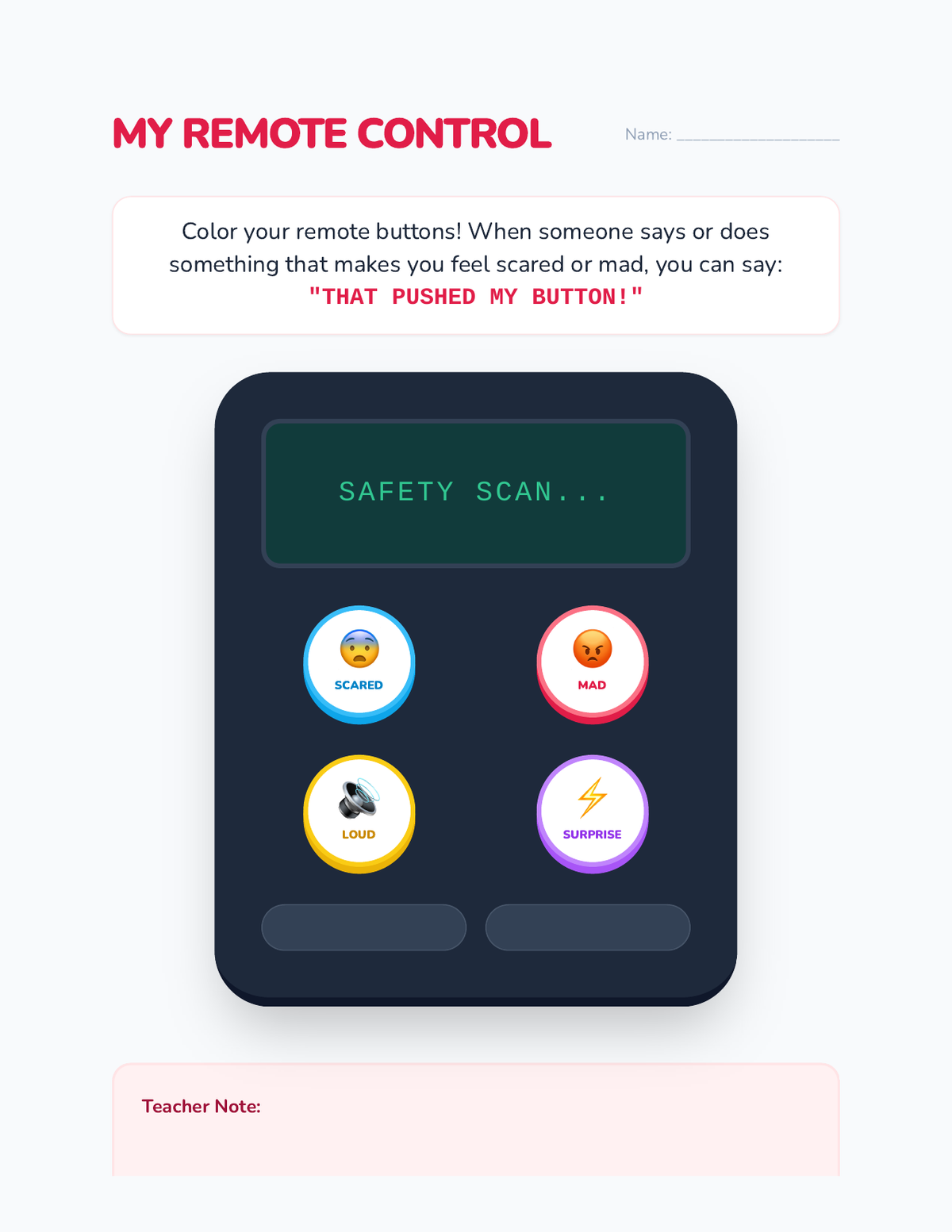
Visual aids for Lesson 5, introducing the 'remote control' and 'buttons' metaphor for communicating triggers.
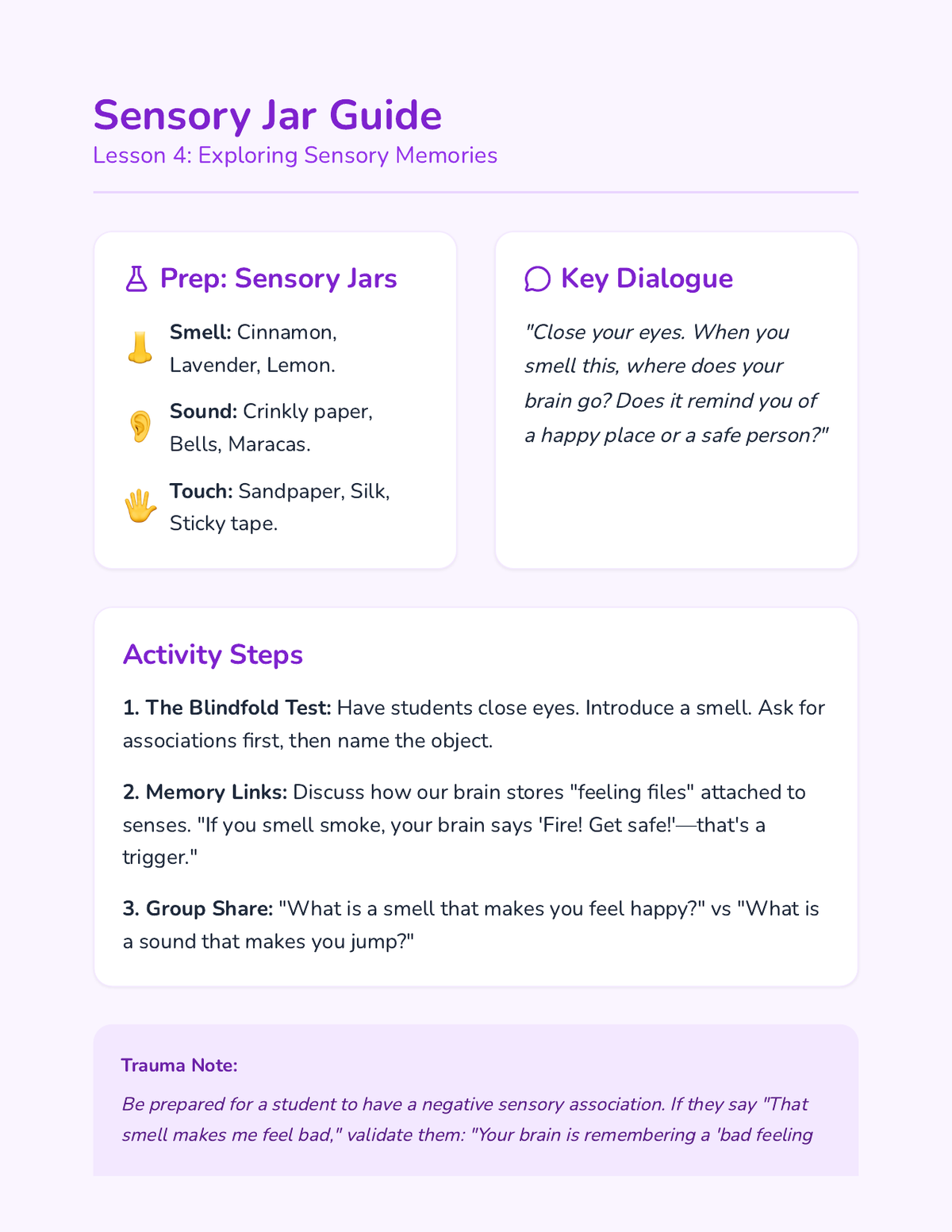
A teacher guide for Lesson 4, explaining how to set up and facilitate the sensory memory exploration activity.
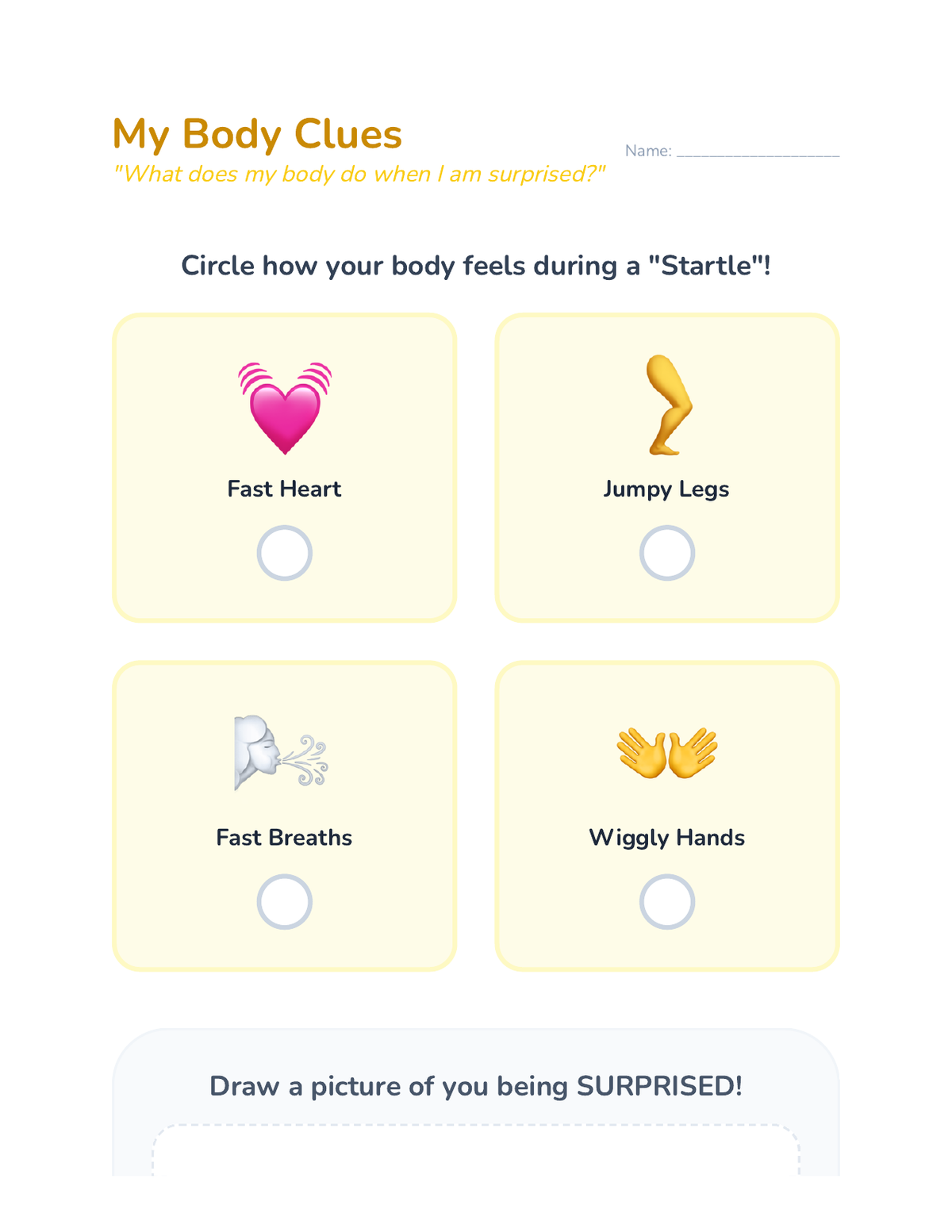
A student worksheet for Lesson 2 to help them recognize physical sensations associated with the startle response.
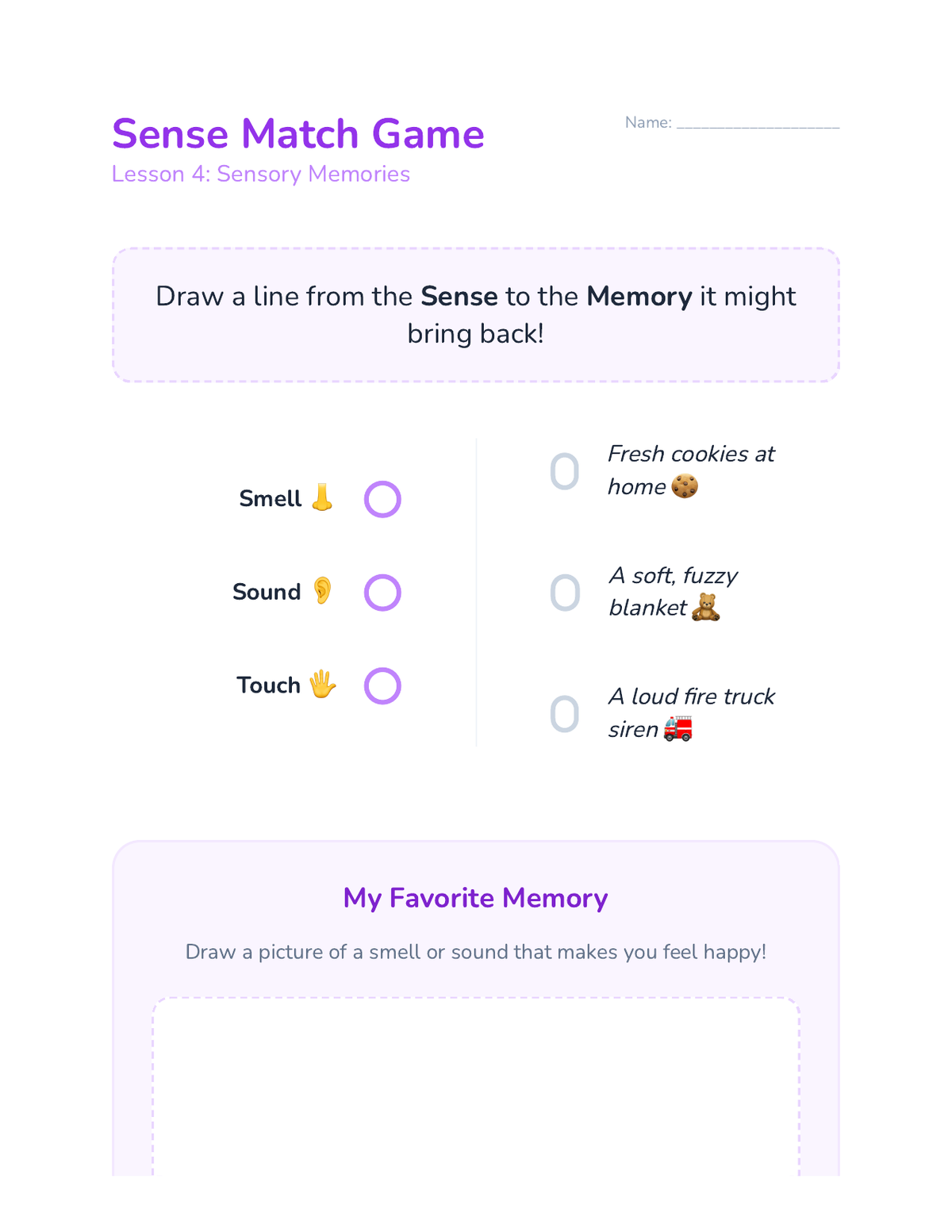
A student matching activity for Lesson 4 that connects the five senses to specific emotional memories.
Visual aids for Lesson 3 to accompany the puppet show, helping students visualize the difference between past memories and present safety.
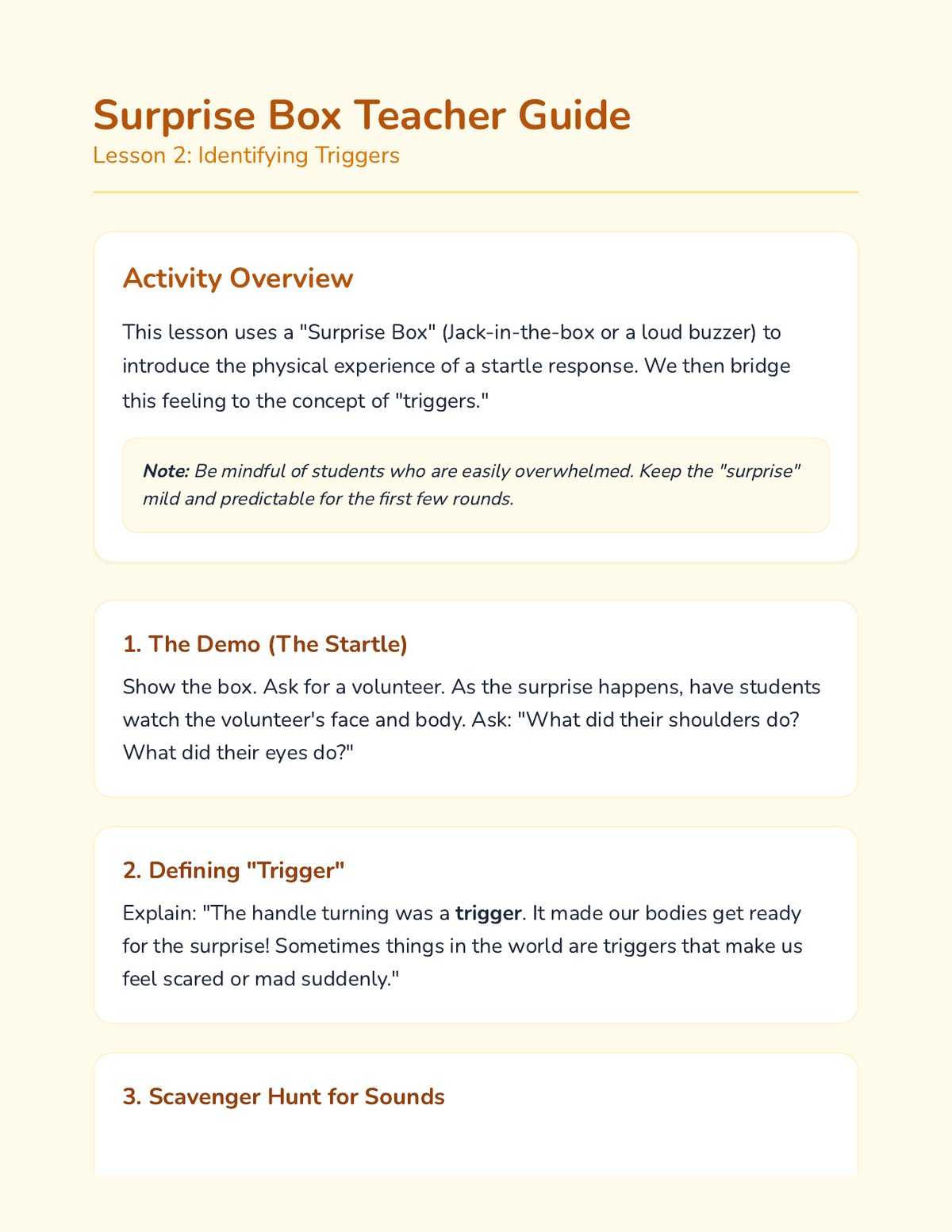
A teacher guide for Lesson 2, providing instructions on how to use the "Surprise Box" activity to teach startle responses and triggers.
Visual aids for Lesson 2 to explain startle responses and the concept of triggers using simple language and icons.
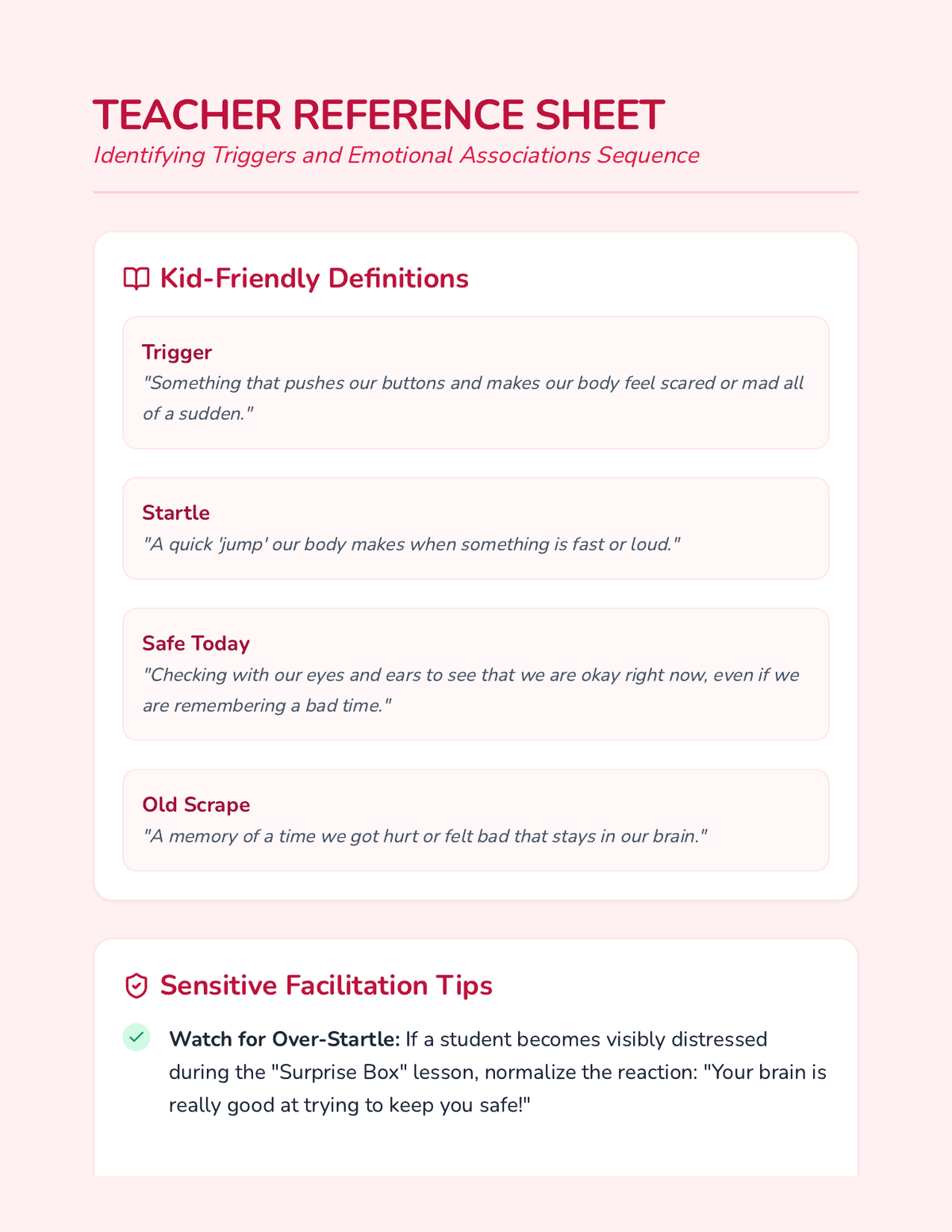
A comprehensive teacher reference sheet providing vocabulary definitions, trauma-informed tips, and instructional strategies for the entire sequence.
A student activity worksheet for Lesson 5 where they color and 'use' a remote control to identify their emotional buttons. Buttons have light backgrounds for coloring.
Slides for Lesson 4 exploring how the five senses can trigger memories and emotional responses.
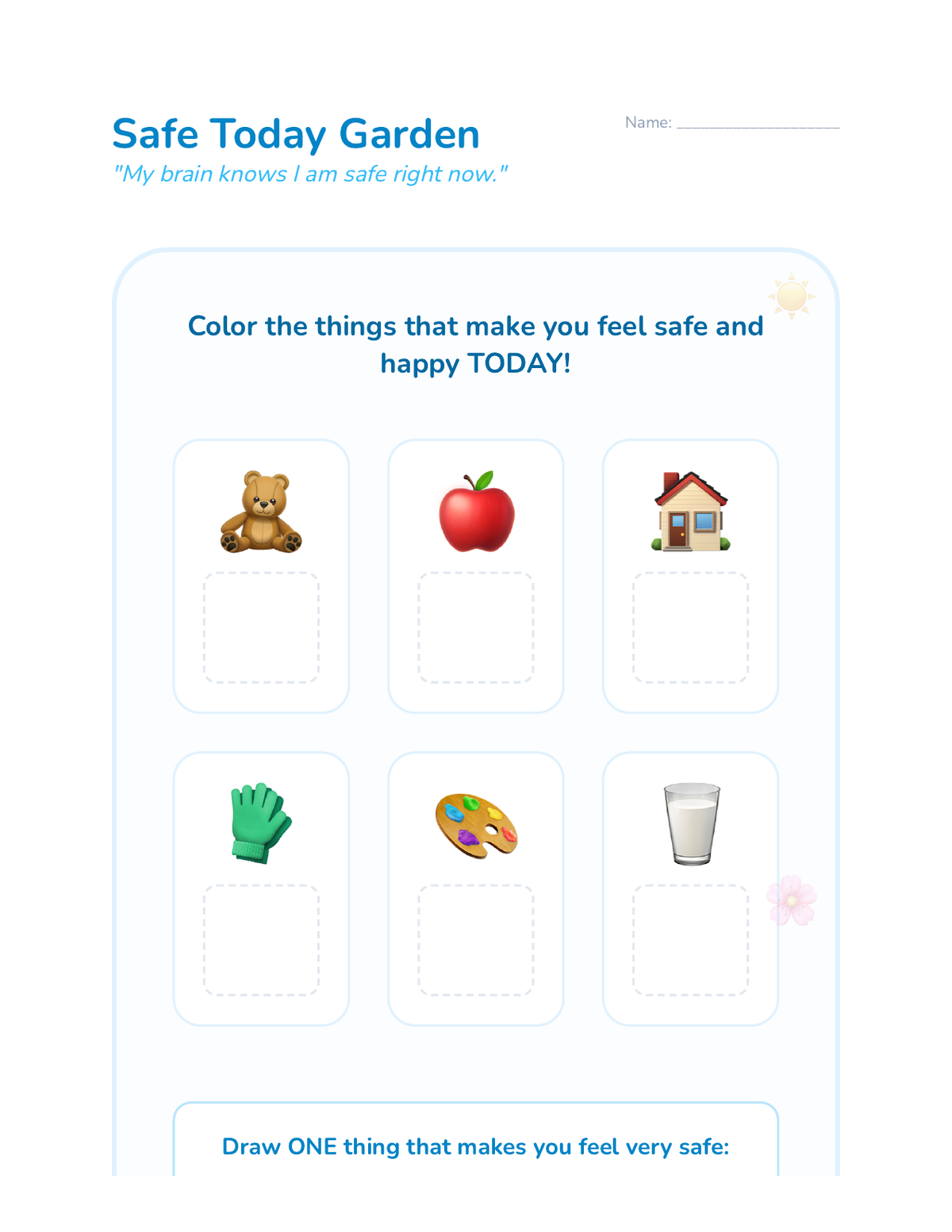
A student worksheet for Lesson 3 focusing on identifying safe, grounding objects in the present moment.
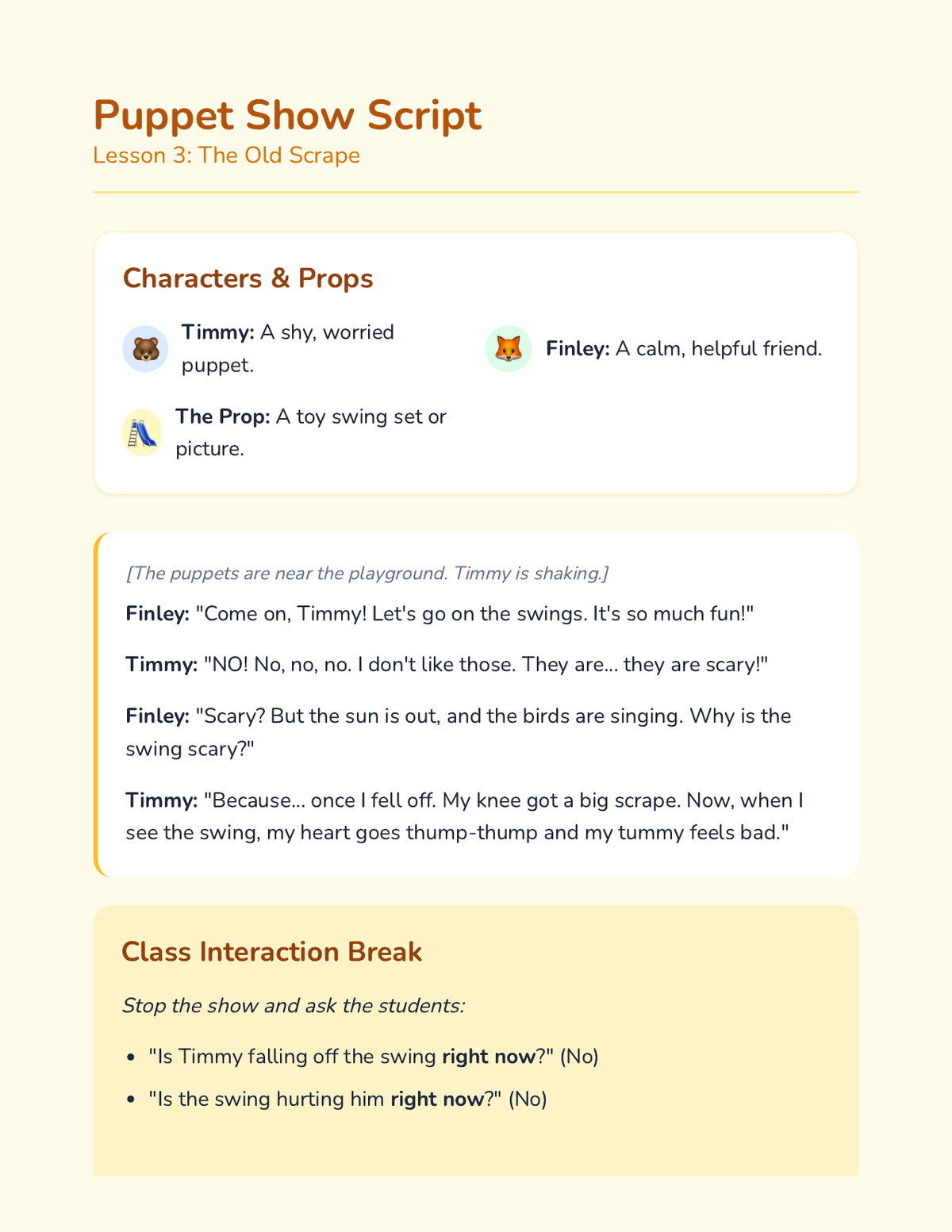
A puppet show script for Lesson 3 to help students differentiate between past memories (trauma/hurt) and present safety.
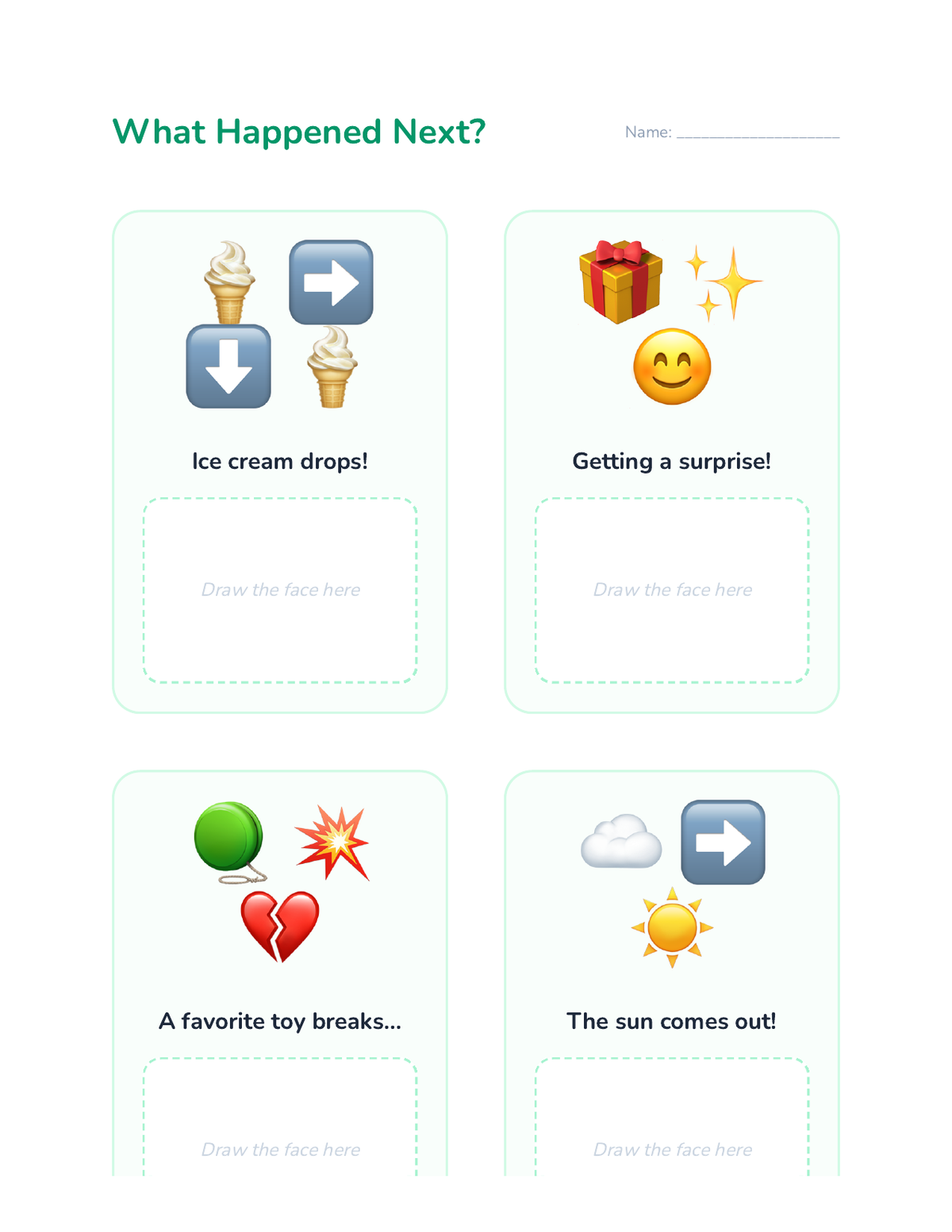
A student worksheet with simple emoji-based cause-and-effect scenarios where they draw the resulting emotional expression.
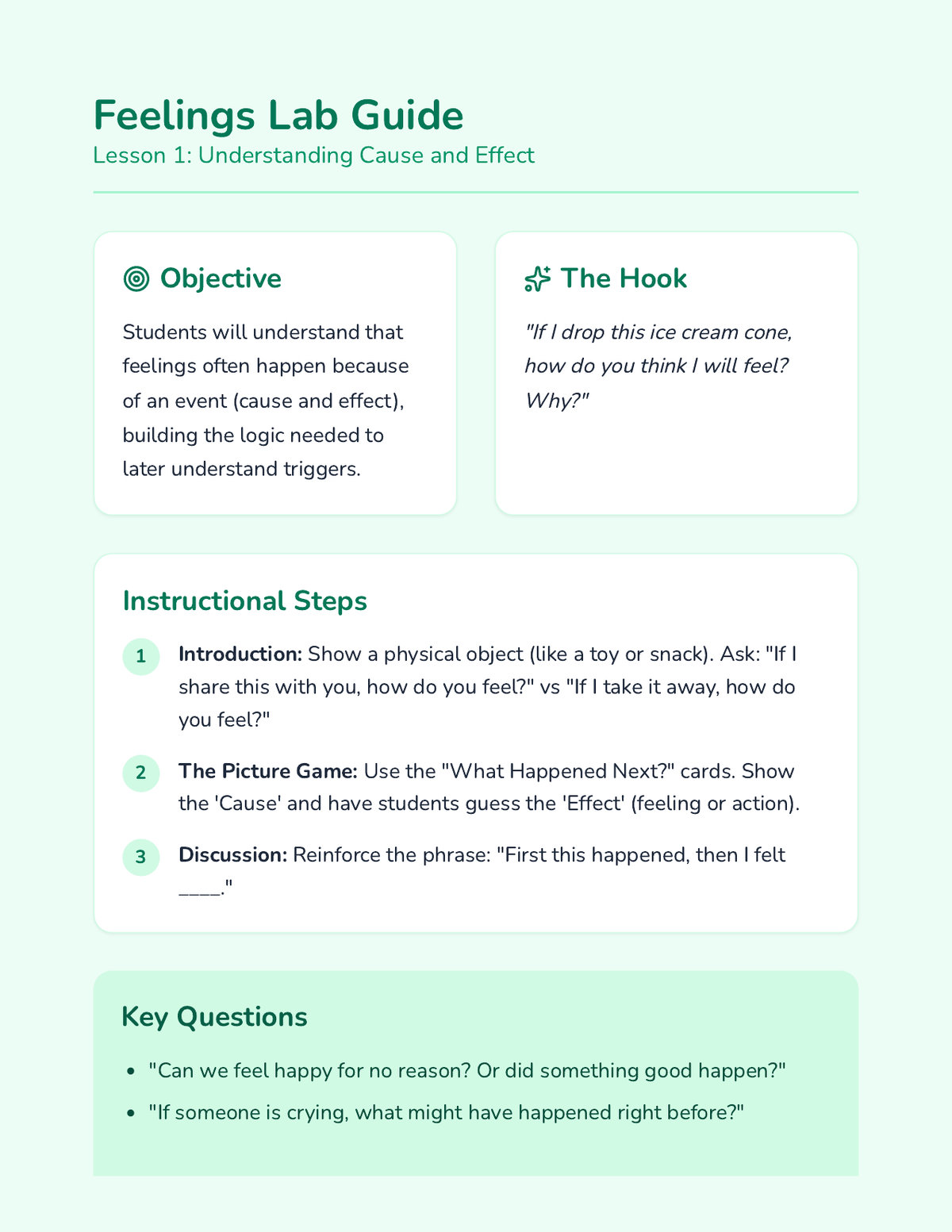
A teacher's guide for Lesson 1, focusing on establishing the concept of cause and effect through simple, relatable scenarios.
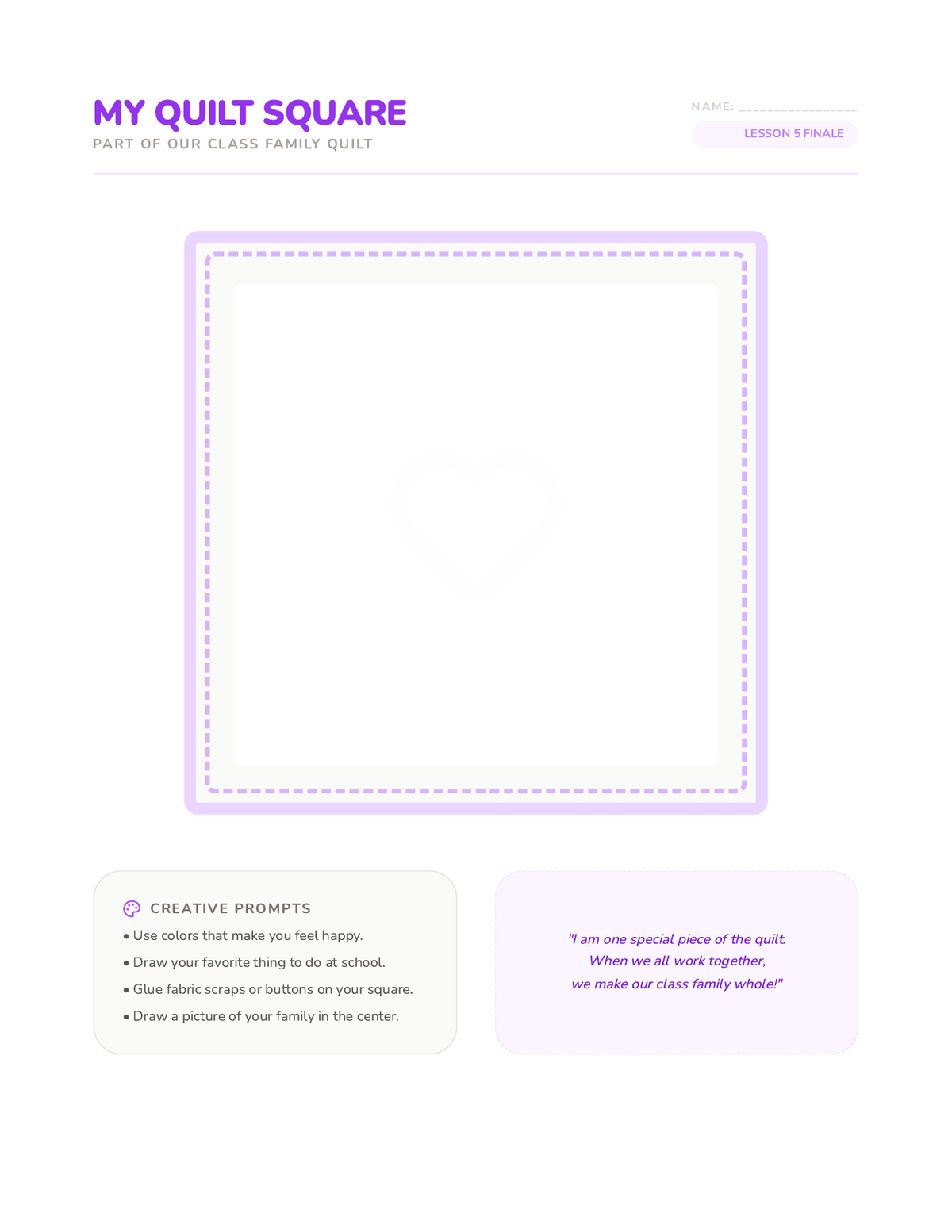
A printable quilt square template for students to decorate, intended to be combined with others to create a classroom community display.
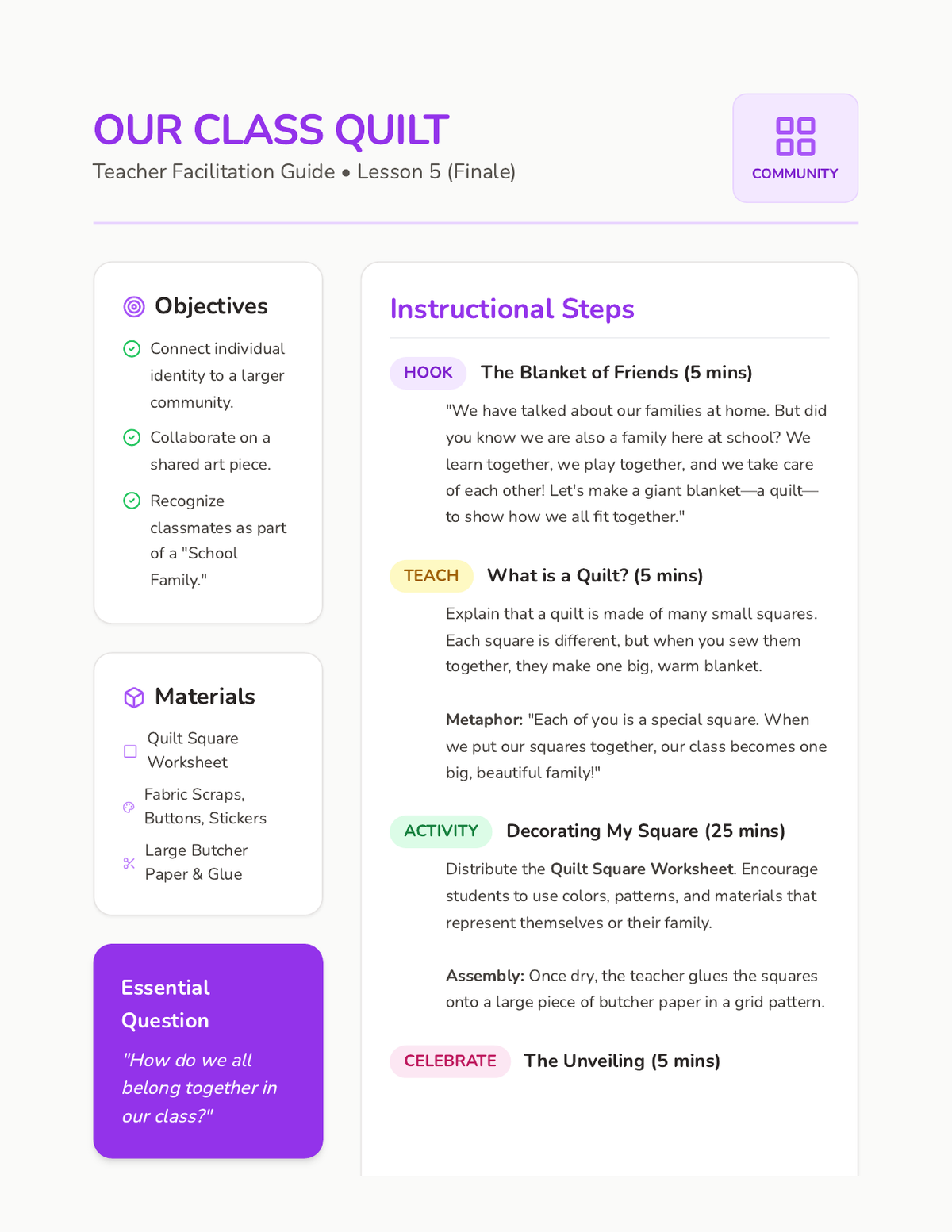
Teacher guide for Lesson 5, focusing on facilitating the "Our Class Quilt" project to symbolize classroom community.
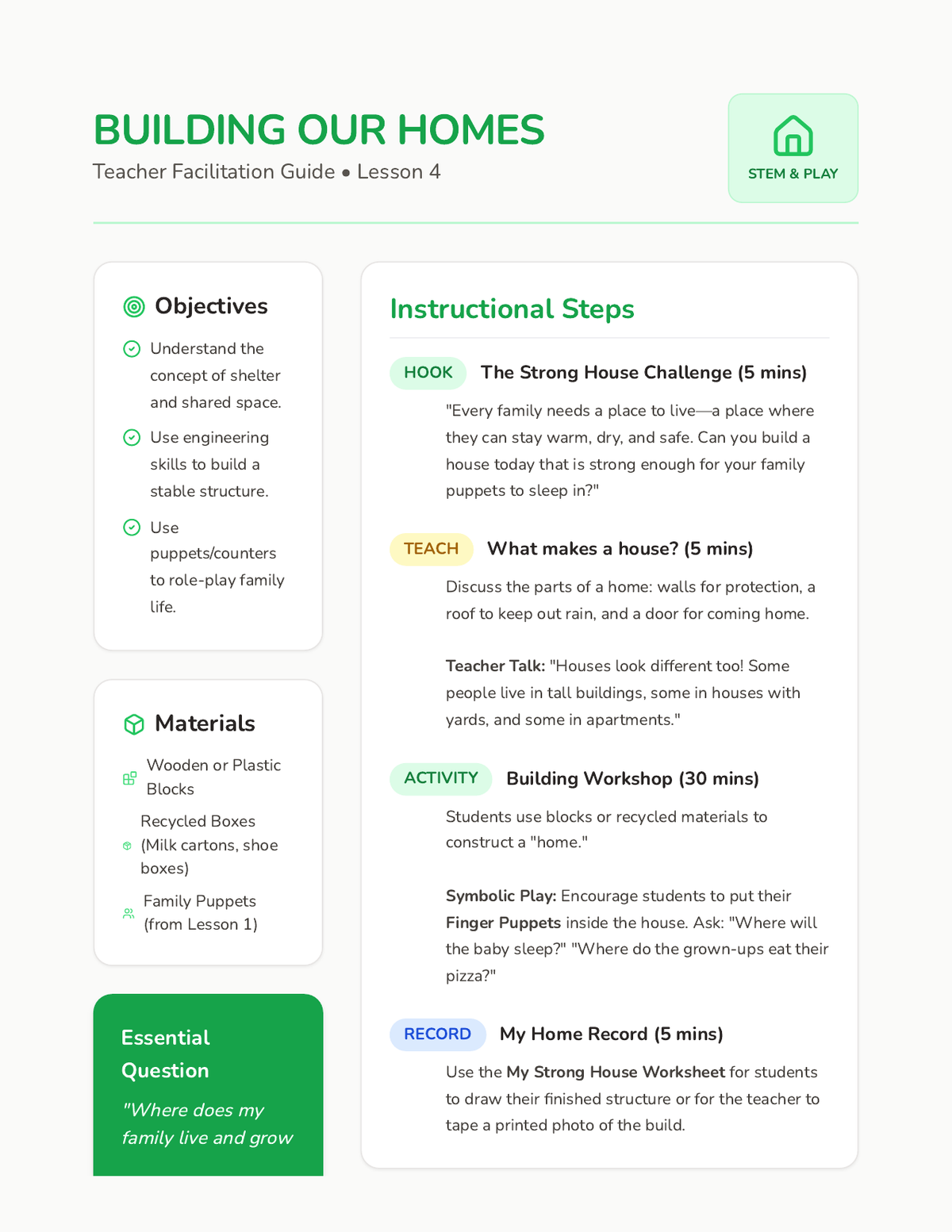
Teacher guide for Lesson 4, focusing on facilitating the "Building Our Homes" activity using blocks and recycled materials.
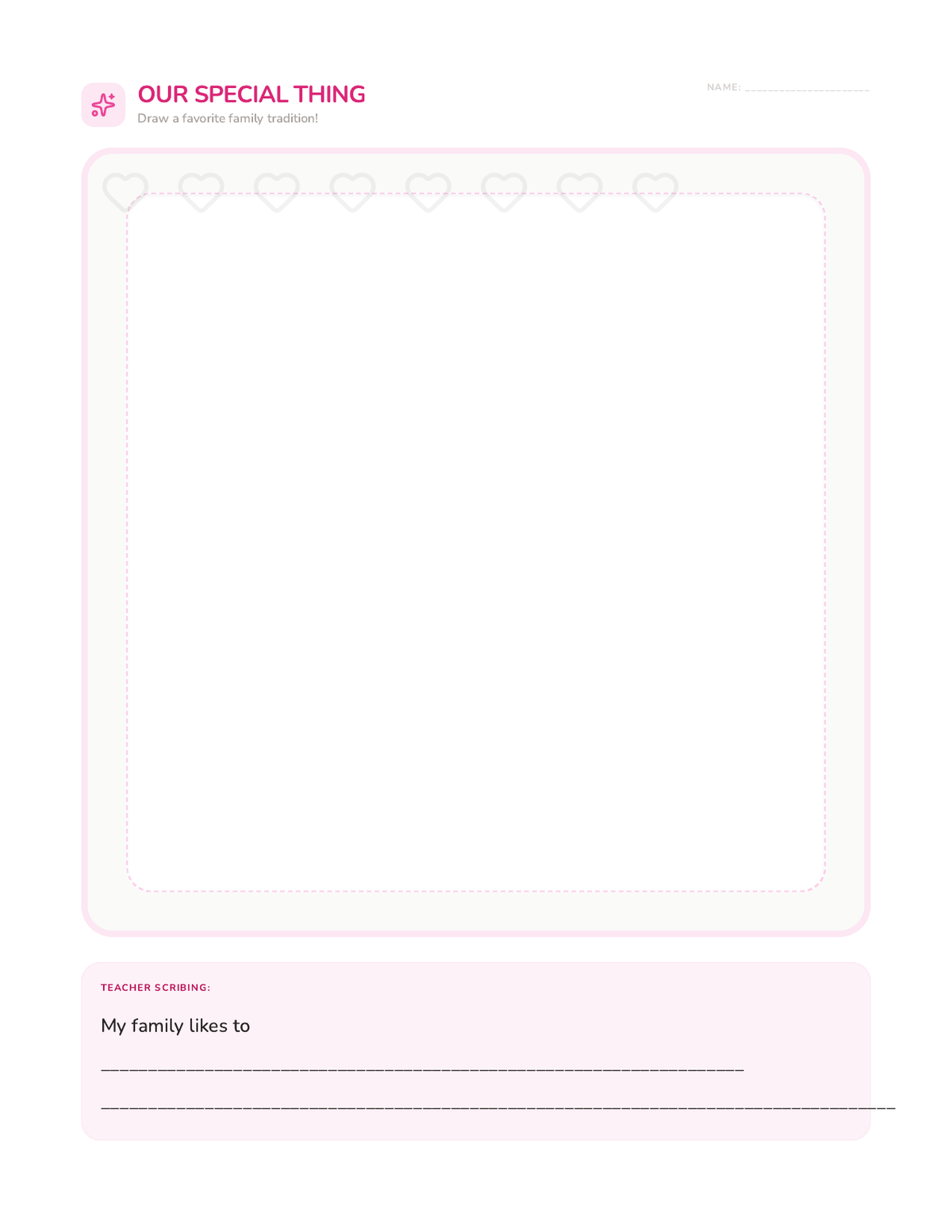
A drawing worksheet for students to illustrate a family tradition or routine, with a dedicated space for teacher scribing.
Visual aids with examples of various family traditions and routines to spark classroom discussion.
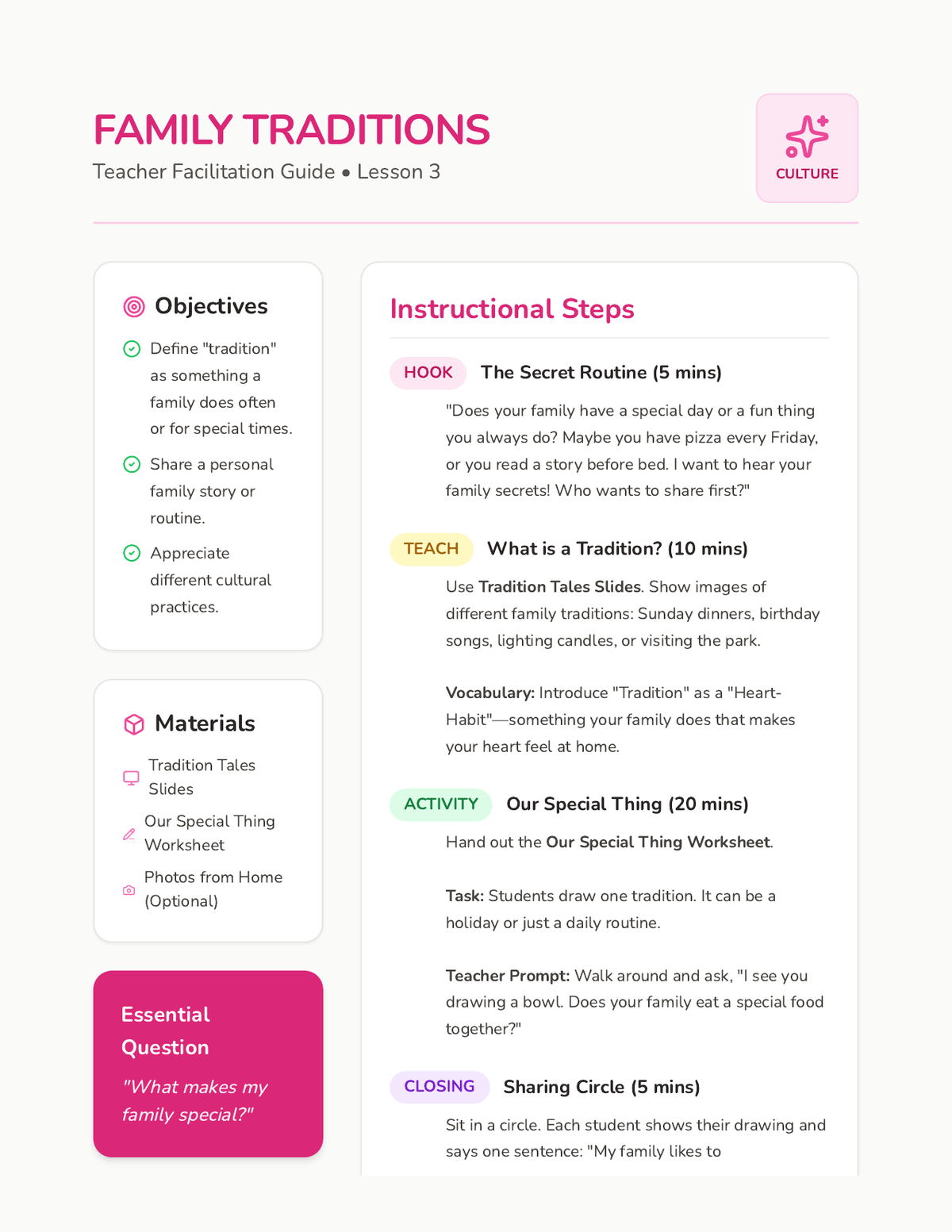
Teacher guide for Lesson 3, focusing on facilitating discussions about family traditions and routines while fostering cultural awareness.
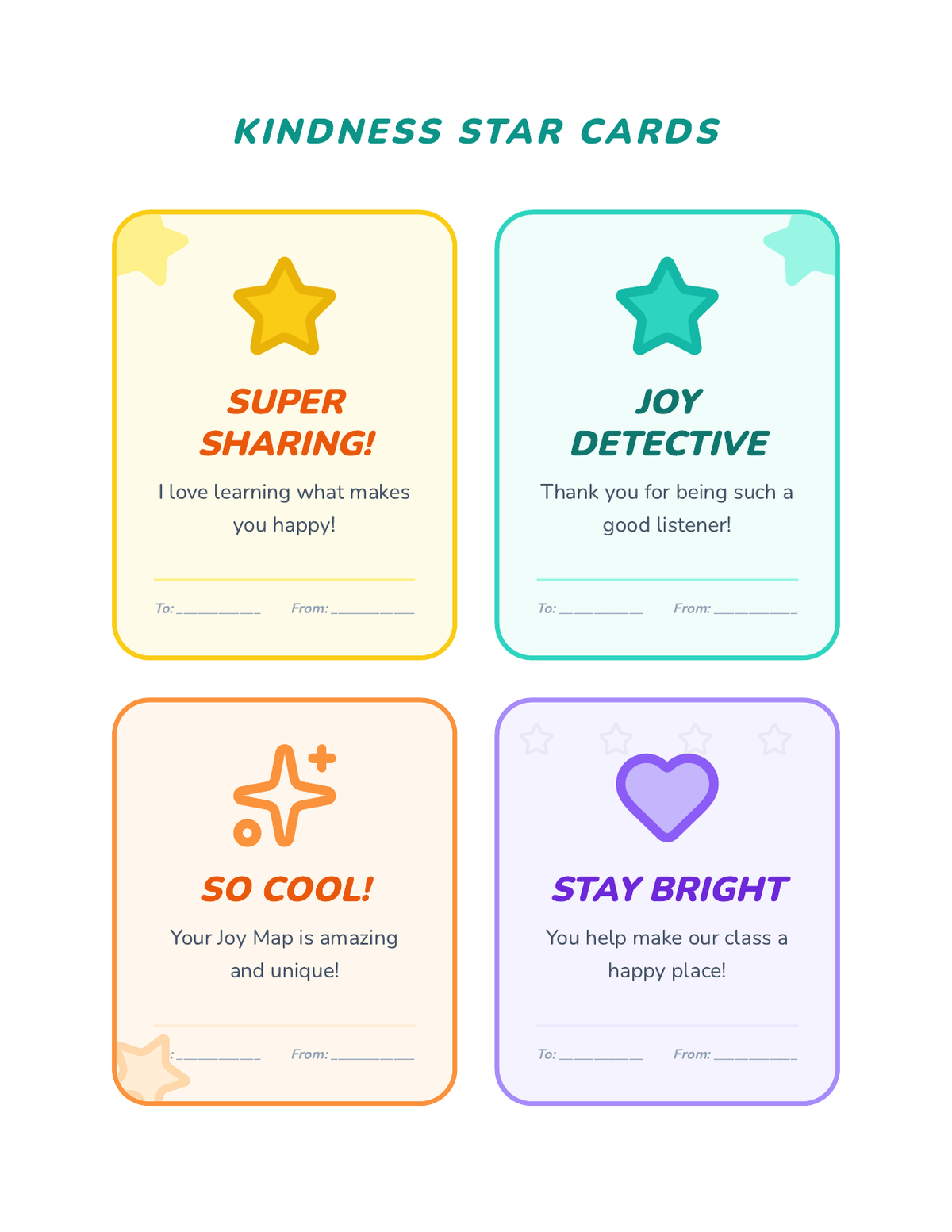
Small affirmation cards for students to give to peers during the Joy Map sharing circle, reinforcing positive social interactions and peer support.
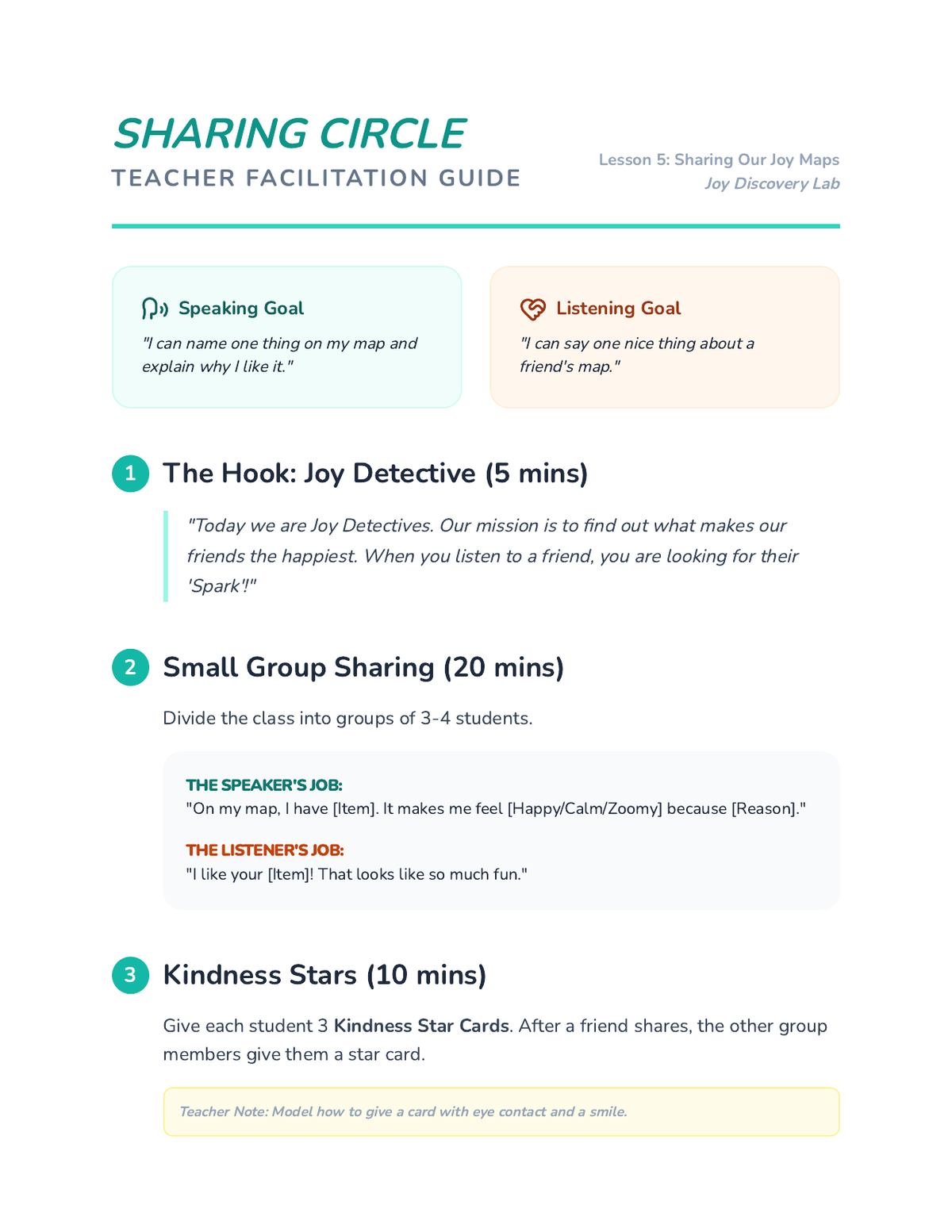
A facilitation guide for the final sharing circle, emphasizing active listening, positive feedback, and peer affirmation.
A Kindergarten presentation focused on social skills, teaching students how to present their Joy Maps and offer positive affirmations to peers.
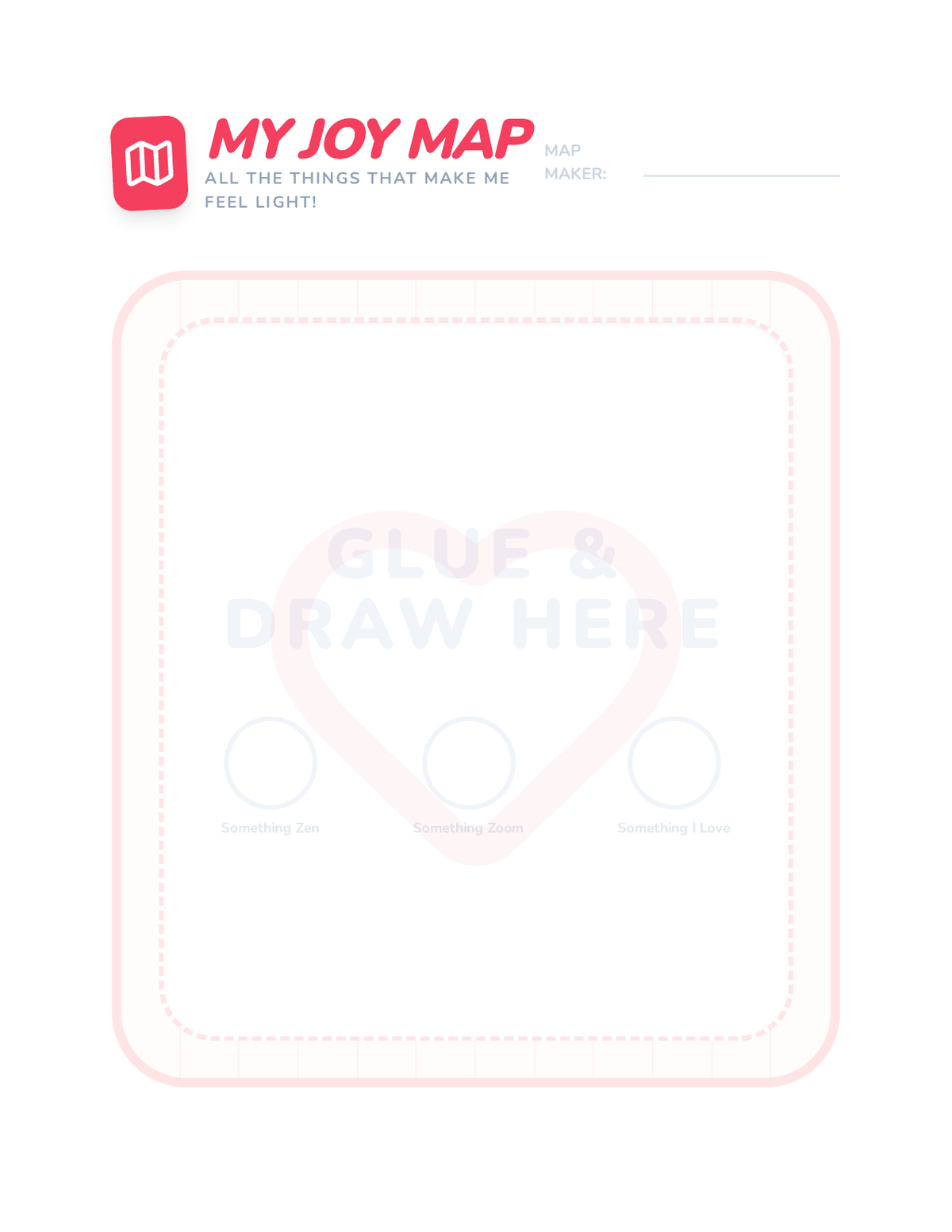
A large-format template for students to create a collage of their favorite things, serving as a visual reference for emotional regulation.
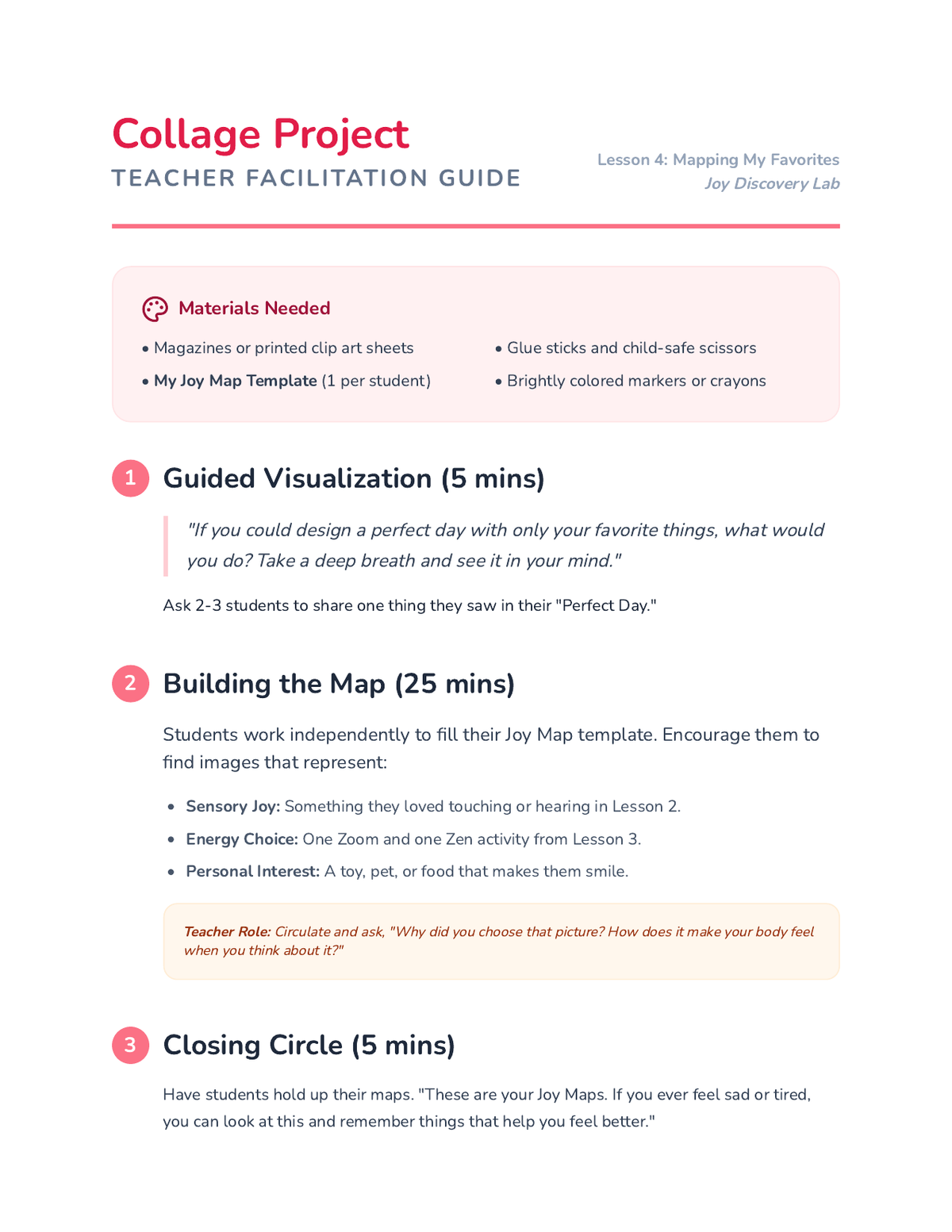
A teacher's guide for facilitating the Joy Map collage project, including prompts for guided visualization and creative support.
A Kindergarten presentation introducing the concept of a 'Joy Map'—a visual reference tool of personal interests used for mood regulation.
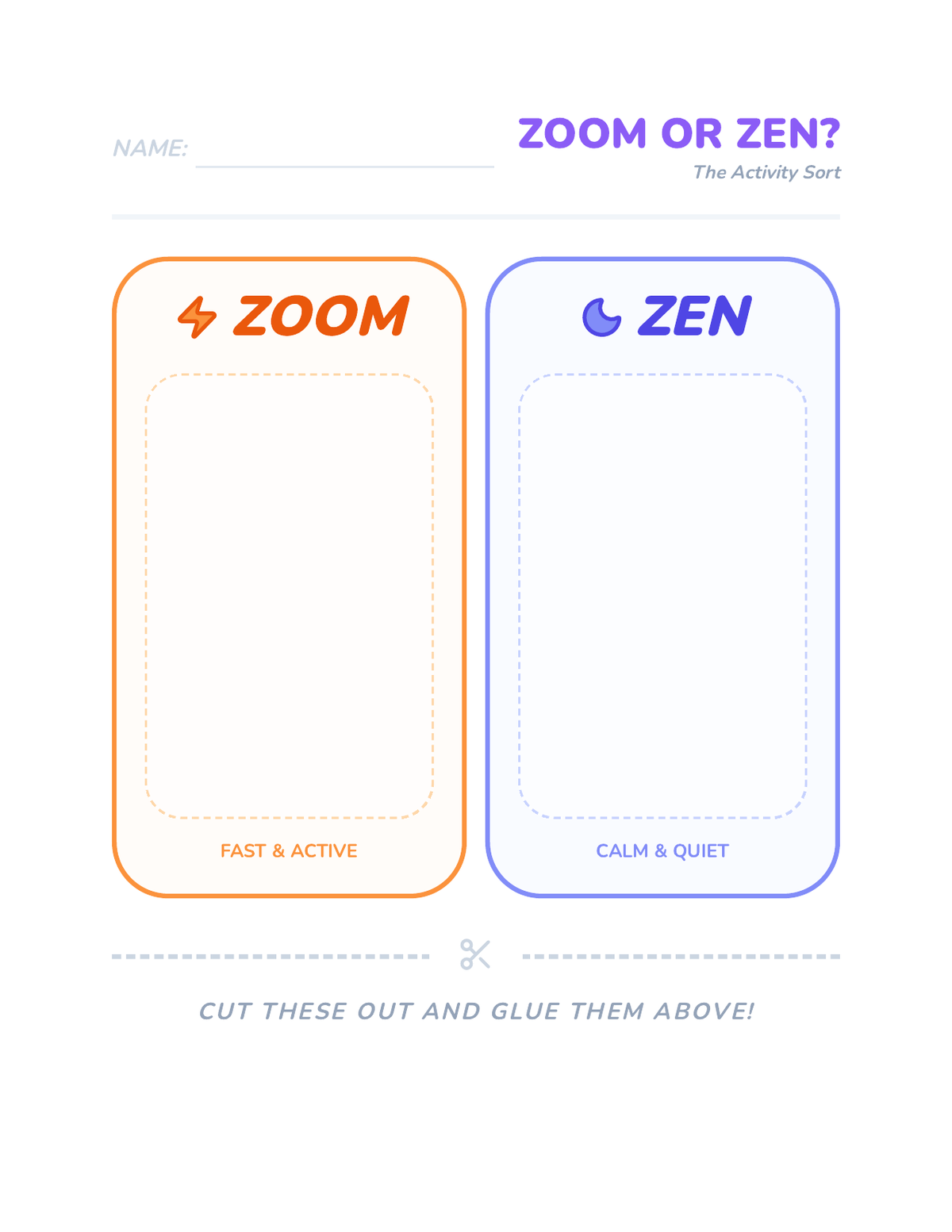
A cut-and-paste sorting activity where Kindergarteners categorize activities like running, reading, and dancing into 'Zoom' or 'Zen' energy levels.
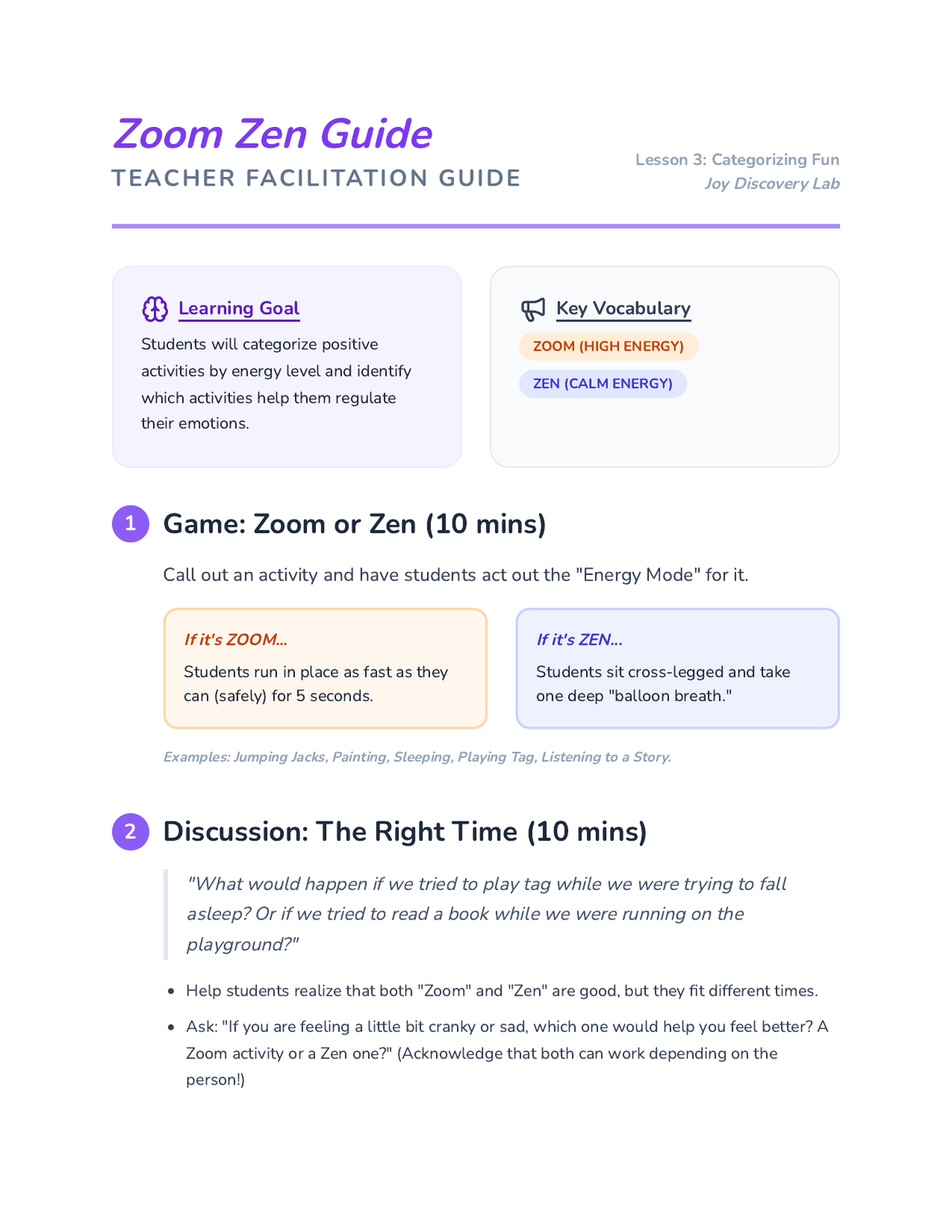
A facilitation guide for the 'Zoom or Zen' lesson, including game instructions, discussion prompts about timing, and regulation strategies.
A Kindergarten slide deck teaching the difference between high-energy (Zoom) and low-energy (Zen) activities and identifying appropriate times for each.
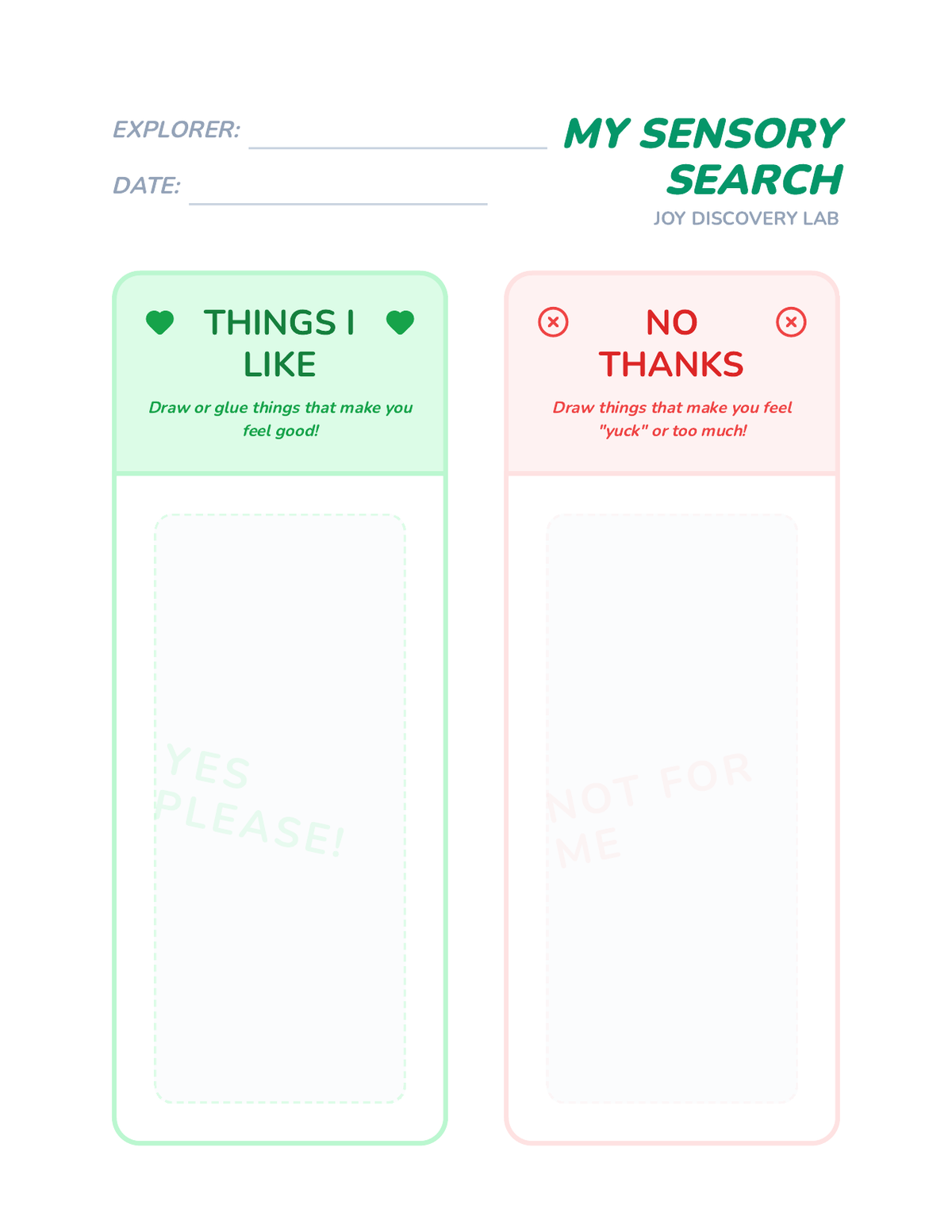
A sorting worksheet for students to draw or glue images of sensory experiences they like versus those they find unpleasant.
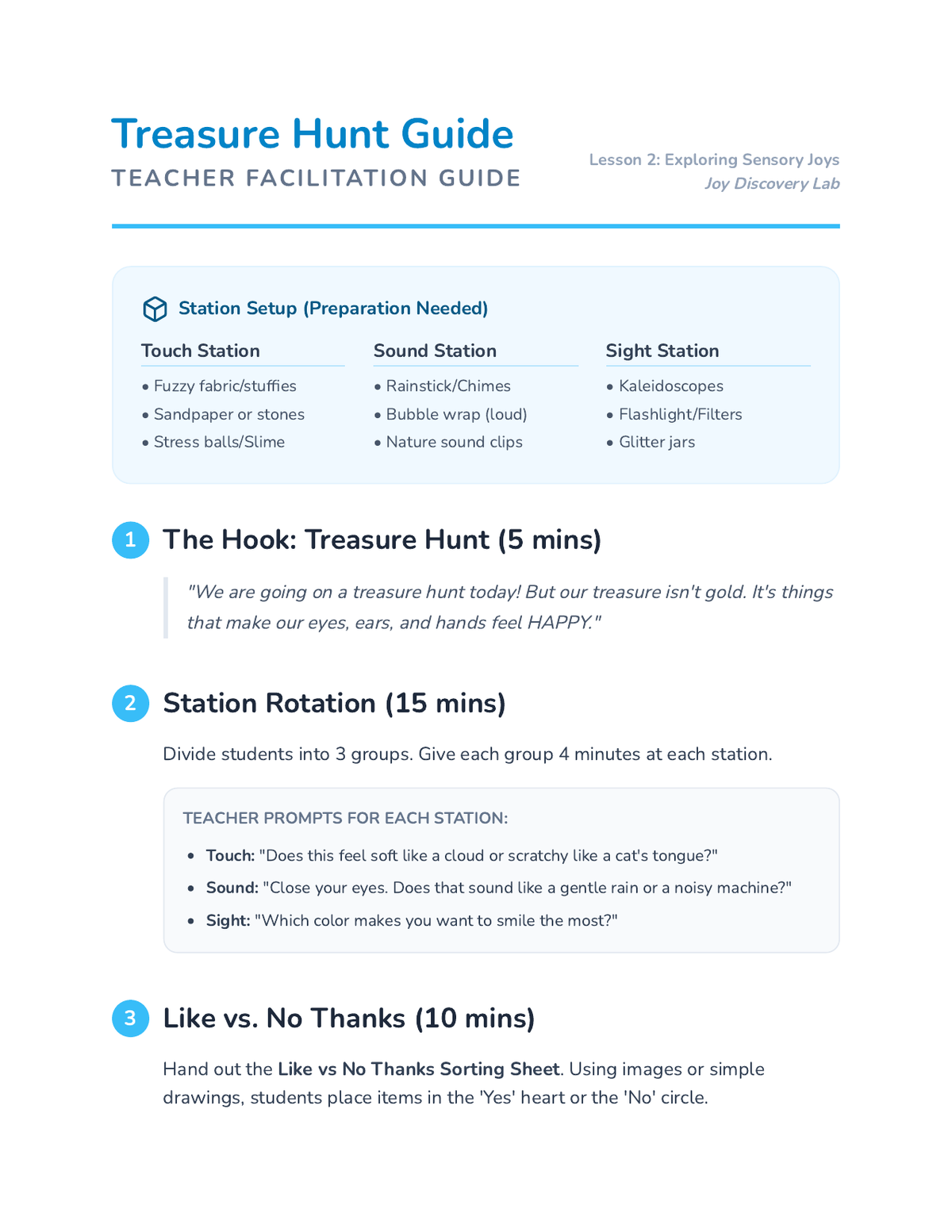
A teacher's guide for managing sensory stations, including setup tips for touch, sound, and sight activities and reflection prompts.
A Kindergarten presentation for exploring sensory preferences, introducing 'Things I Like' vs 'No Thank You' and highlighting individual differences in sensory joy.
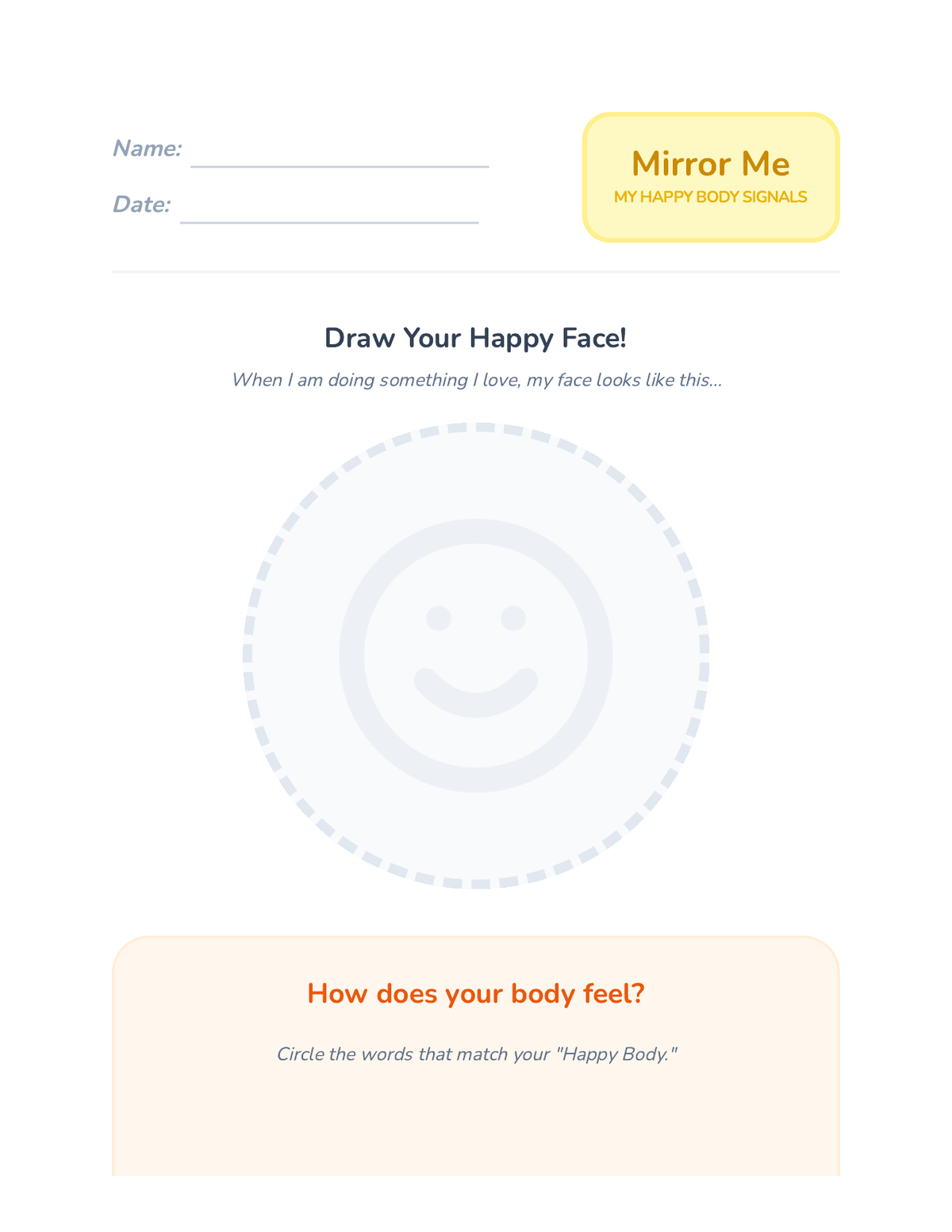
A student worksheet for Kindergarteners to draw their happy facial expression and identify physical sensations like 'wiggly' or 'light' by circling choices.
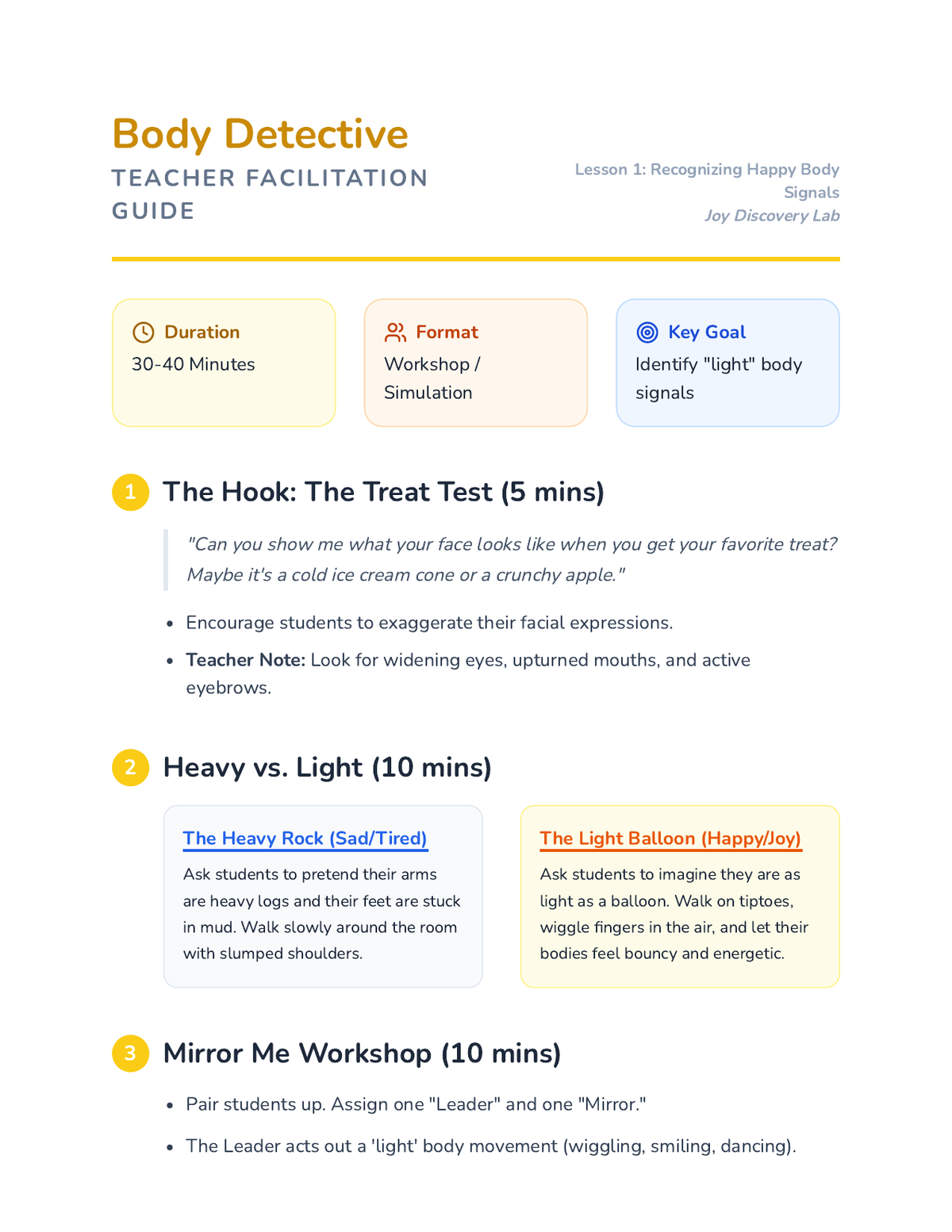
A detailed facilitation guide for teachers to lead students through movement exercises and reflections on how happiness feels in the body.
A visual presentation for Kindergarten students to identify physical sensations of happiness, featuring 'light vs heavy' body concepts and interactive mirror exercises.
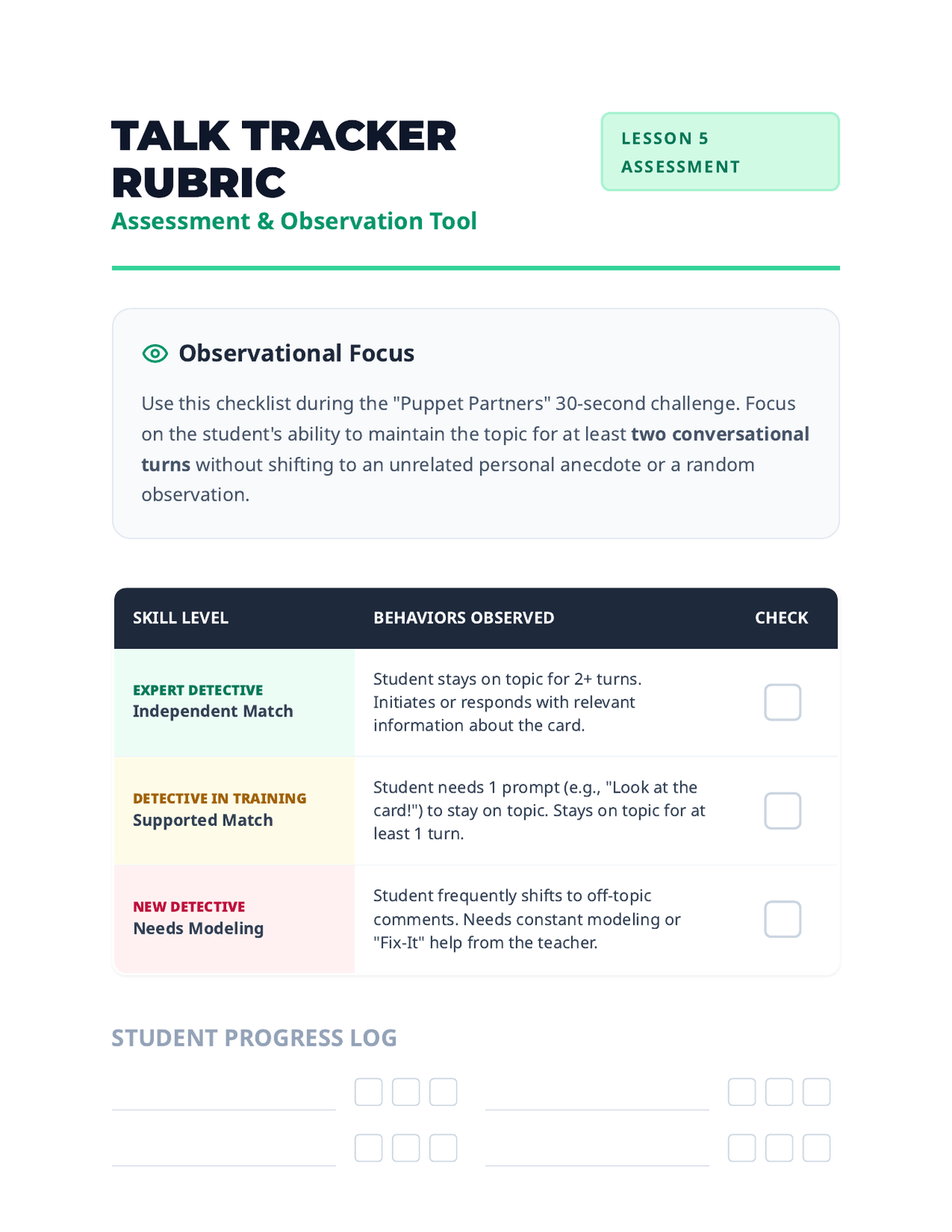
A teacher assessment rubric and observation log for the final 'Puppet Partners' lesson. Helps educators track student progress in topic maintenance using a simple 3-tier skill level system.
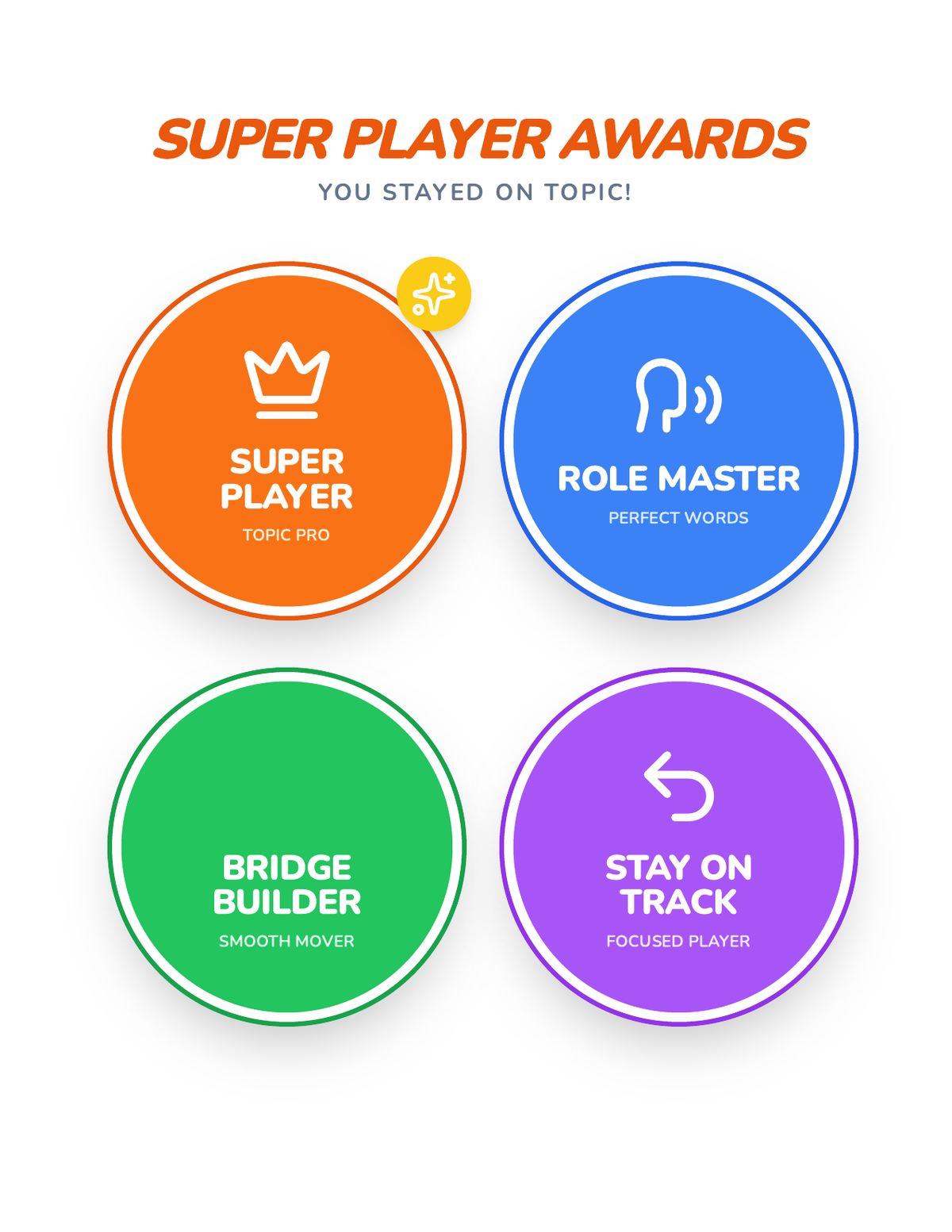
Reward badges for students who demonstrate mastery of topic maintenance skills during the final play session.
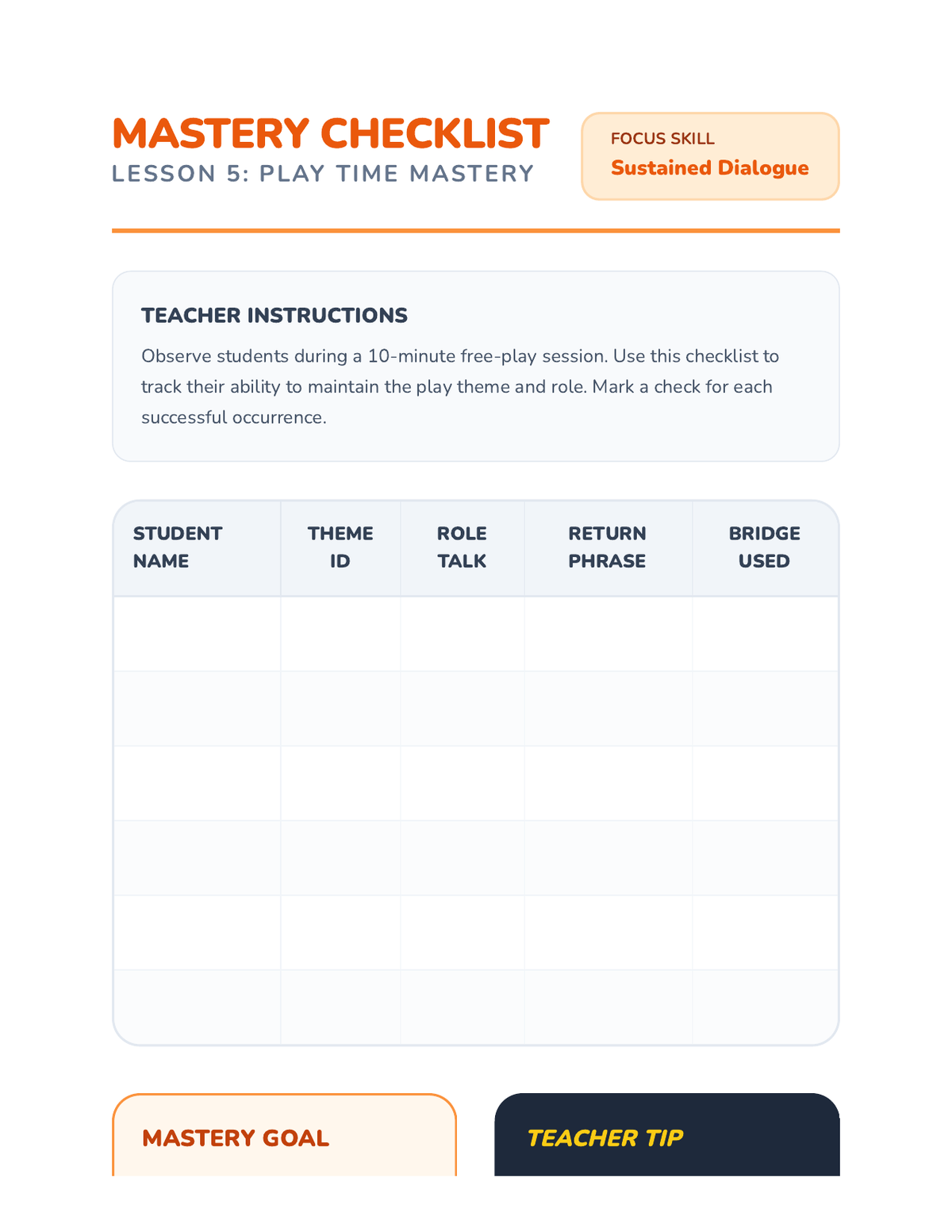
A teacher observation checklist for the final mastery lesson, allowing for real-time tracking of theme identification, role speech, and topic transitions.
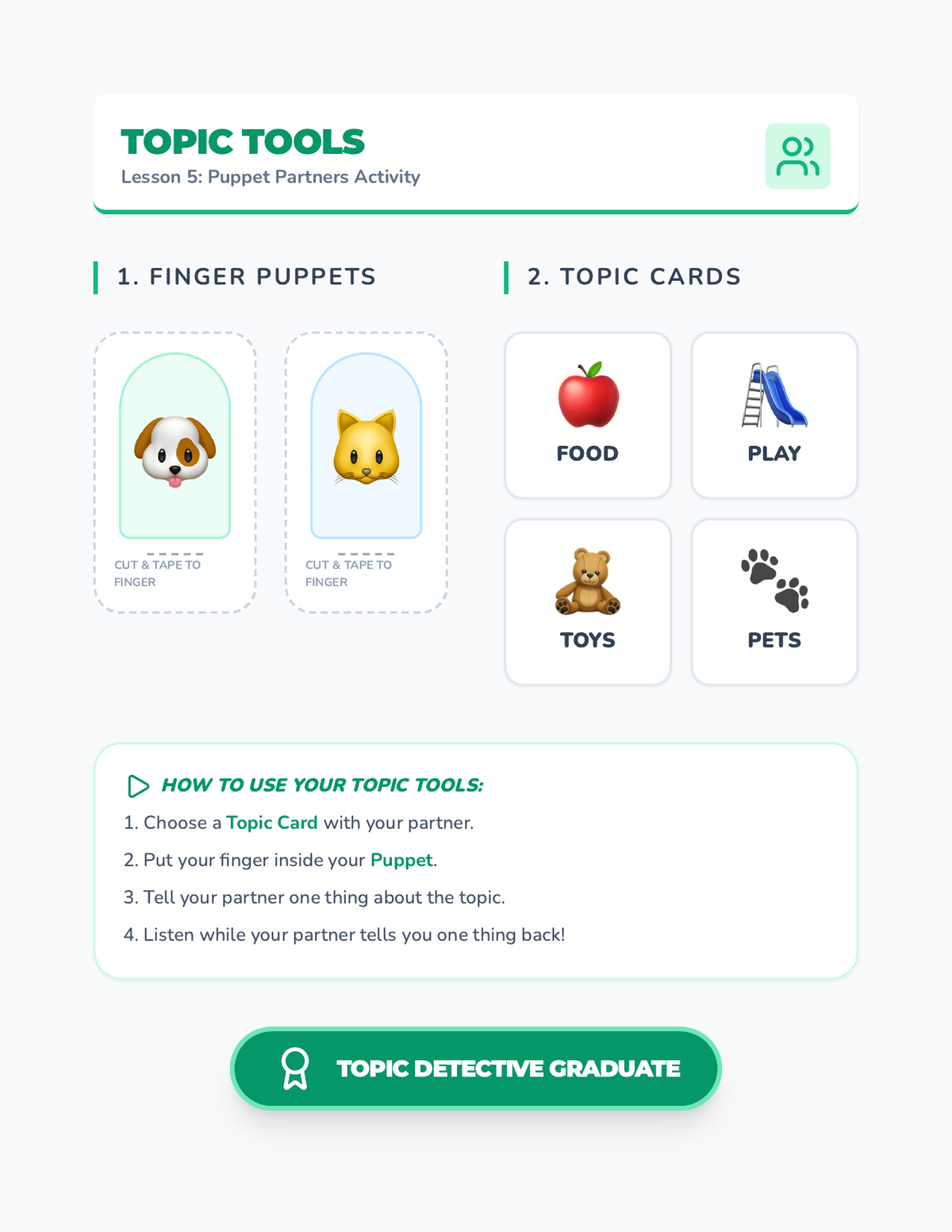
A printable set of finger puppet templates and topic cards for Lesson 5. These tools facilitate short peer-to-peer conversations where Pre-K students practice staying on a designated topic for 30 seconds.
Final slides for Lesson 5, reviewing all topic maintenance skills and introducing the final mastery challenge and reward ceremony.
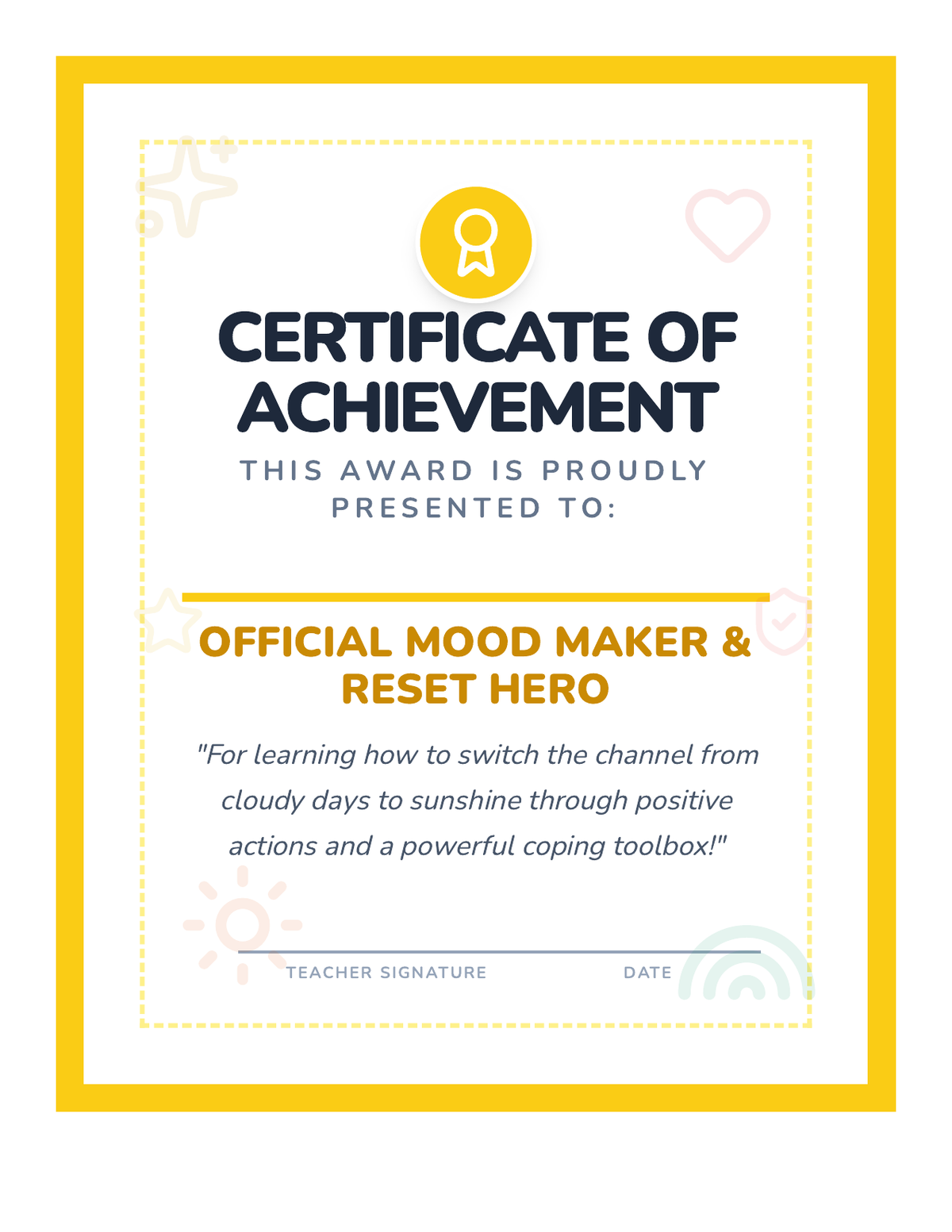
A celebratory completion certificate for students who have finished the 'Mood Makers' sequence, recognizing them as 'official Mood Makers and Reset Heroes'.
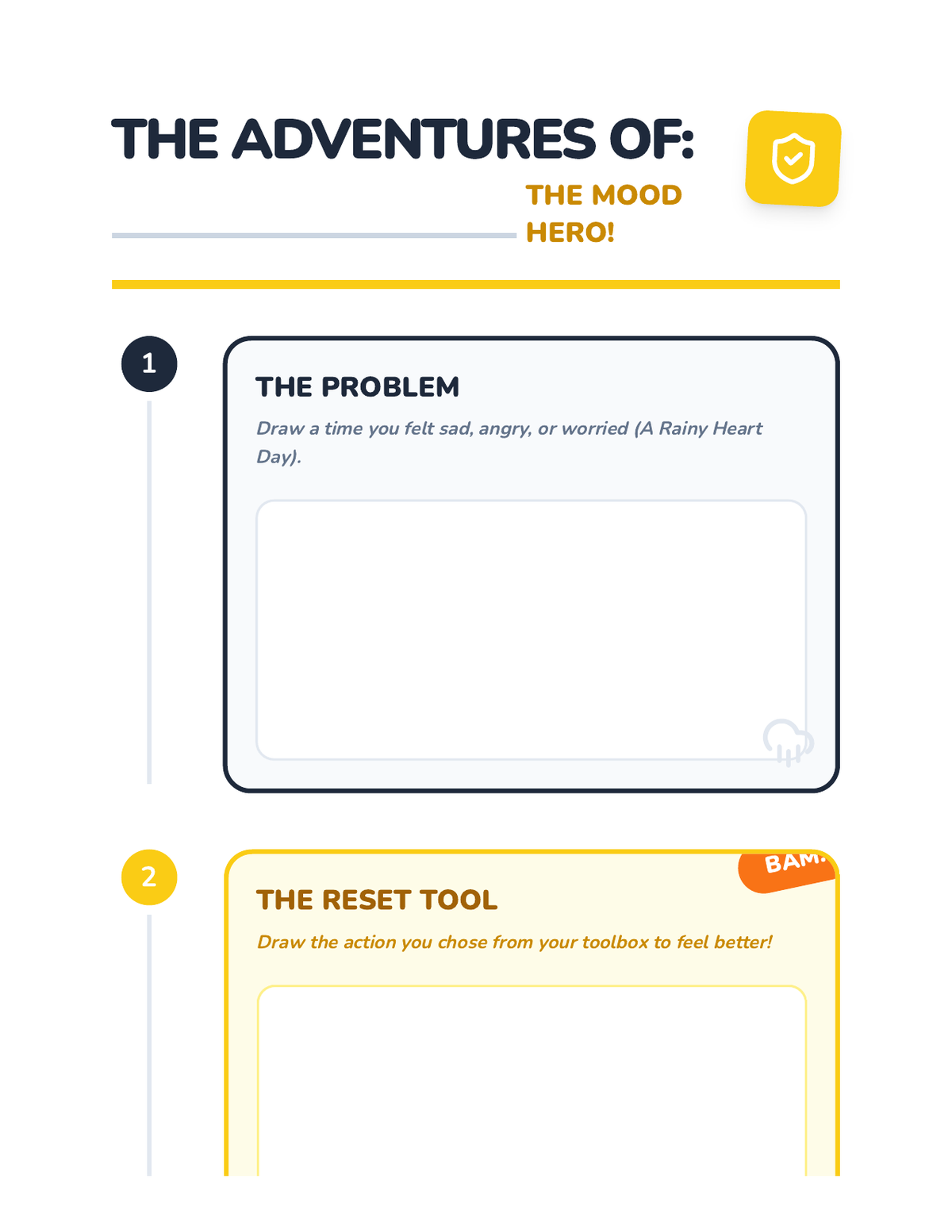
A student worksheet for reflecting on emotional change by creating a visual comic story of identifying a problem, choosing a tool, and achieving a positive mood shift.
Instructional slides for Lesson 5, reviewing the key concepts of internal weather, movement experiments, and the coping toolbox.
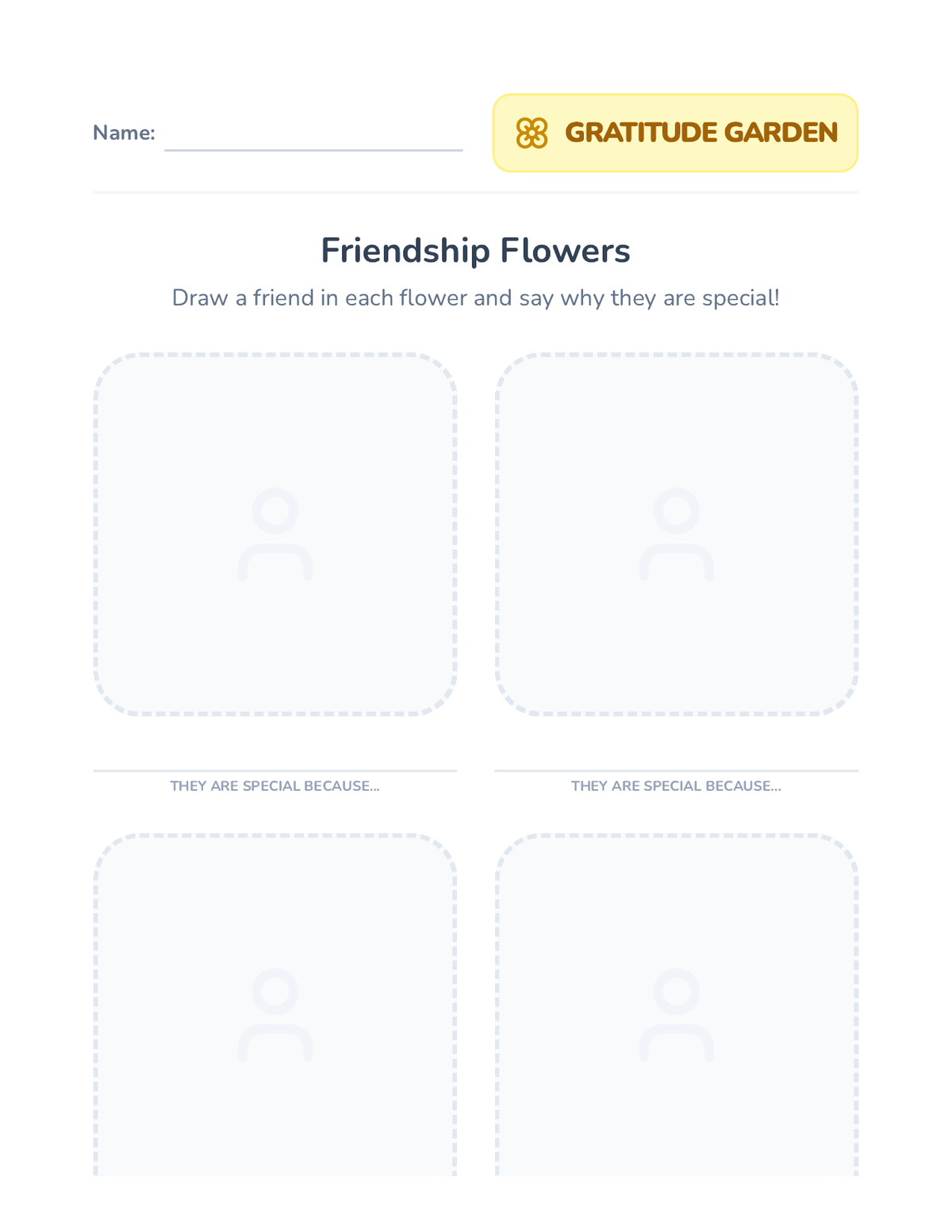
A Kindergarten reflection and gratitude worksheet for the final lesson, where students identify traits they appreciate in their peers.
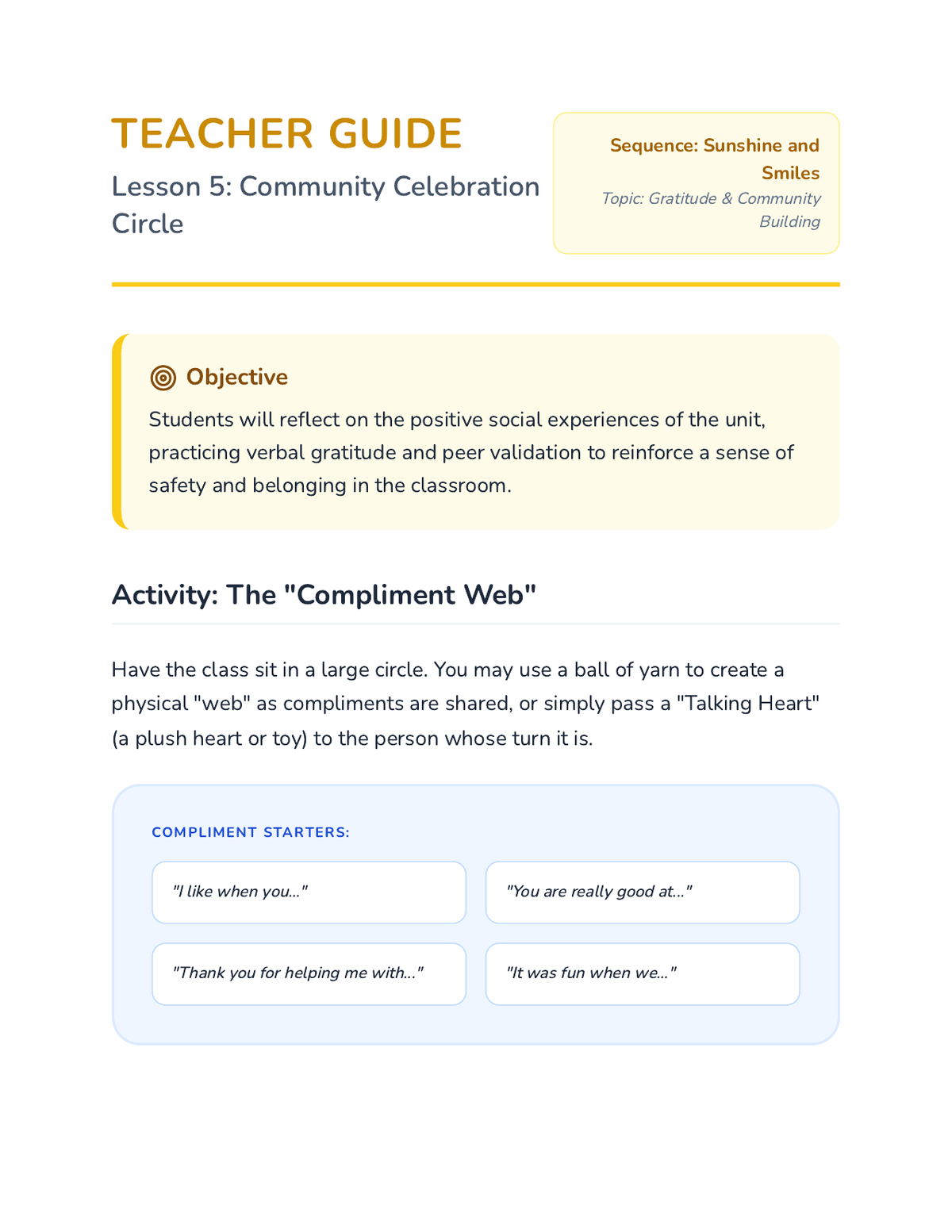
A teacher guide for the Community Celebration Circle, facilitating a concluding reflection and peer-compliment activity.
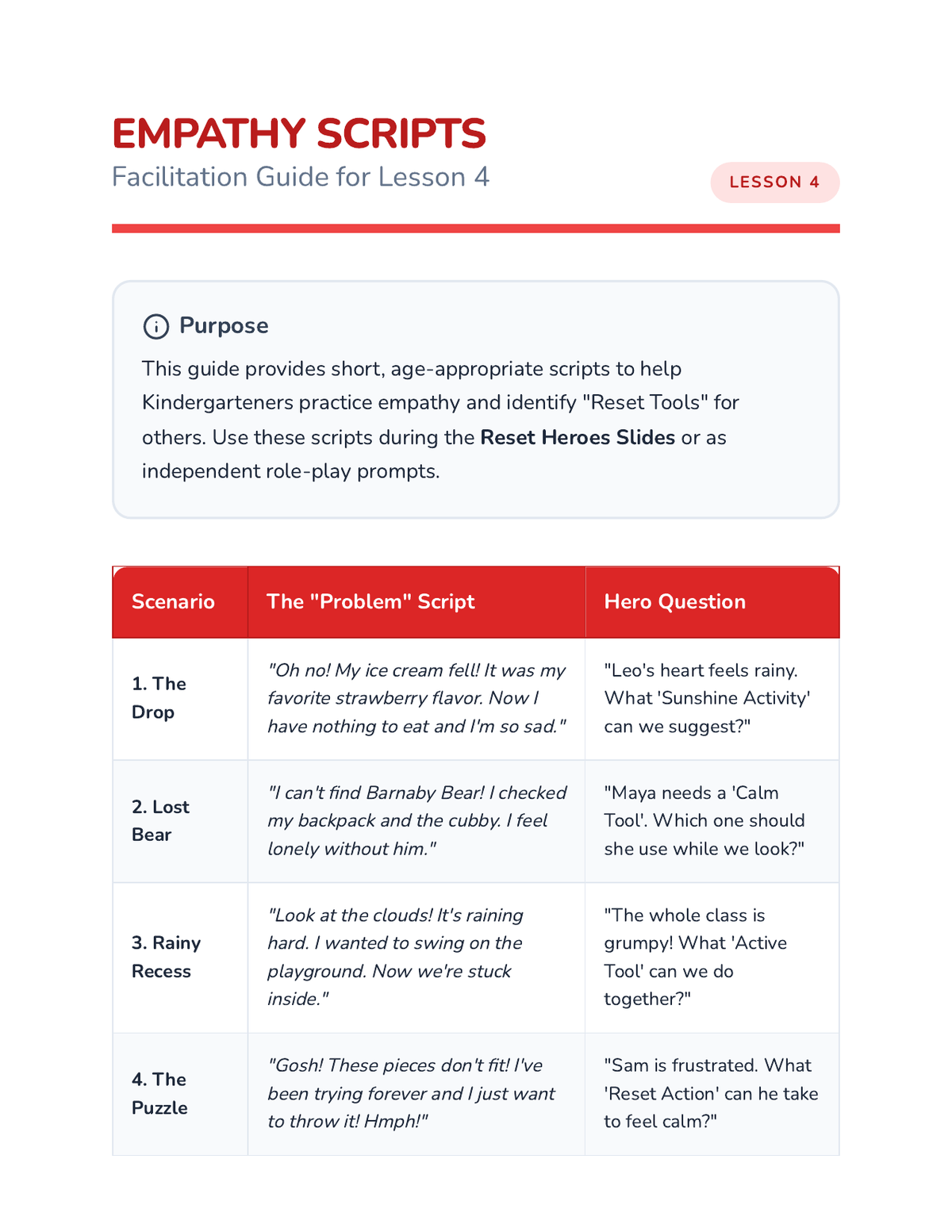
A teacher guide with scripted scenarios and facilitation prompts for role-playing emotional resets and building empathy.
A slide deck for a concluding celebration, reinforcing gratitude and the social bonds formed throughout the sequence.
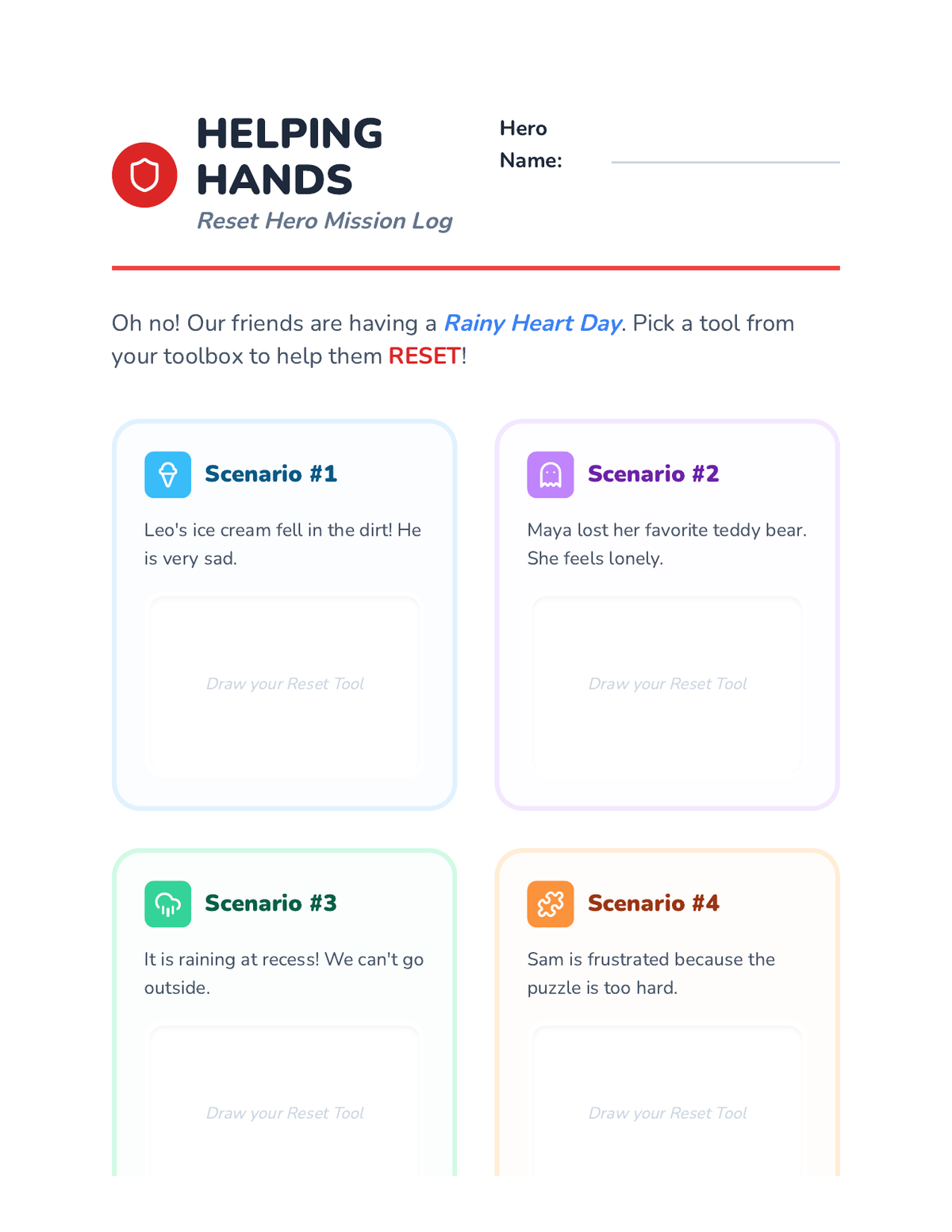
A student worksheet to select and draw 'Reset Tools' for characters facing emotional disappointments.
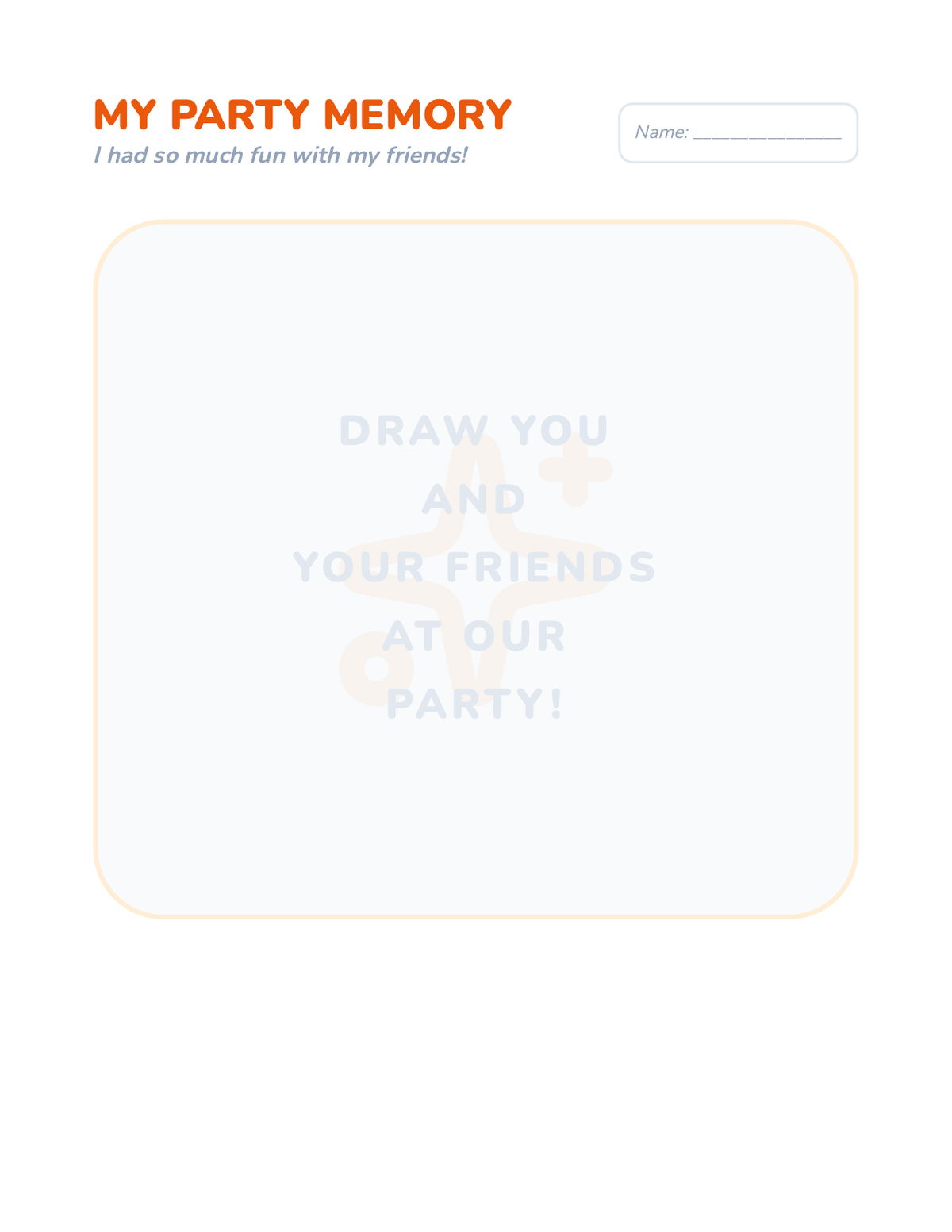
A student reflection sheet for Lesson 5 where they draw a memory from the Friendship Party and identify their feelings about the experience.
Visual presentation for Lesson 5, focusing on party rituals and a final reflection on the power of collective joy and friendship.
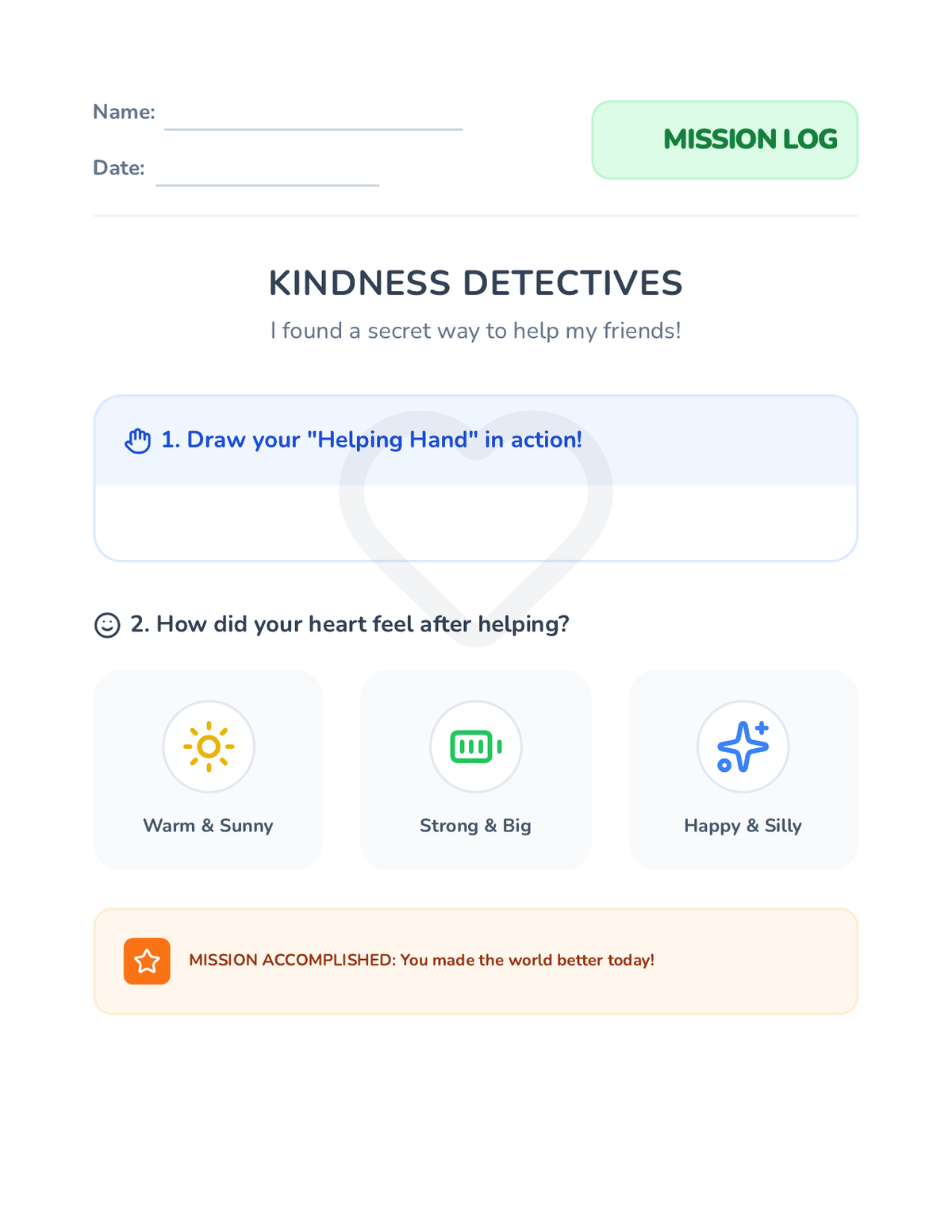
A Kindergarten reflection worksheet for the "Helping Hands" activity, allowing students to draw their act of kindness and identify their emotional response.
Instructional slides for Lesson 4, presenting 'Reset Hero' scenarios to practice empathy and behavioral activation.
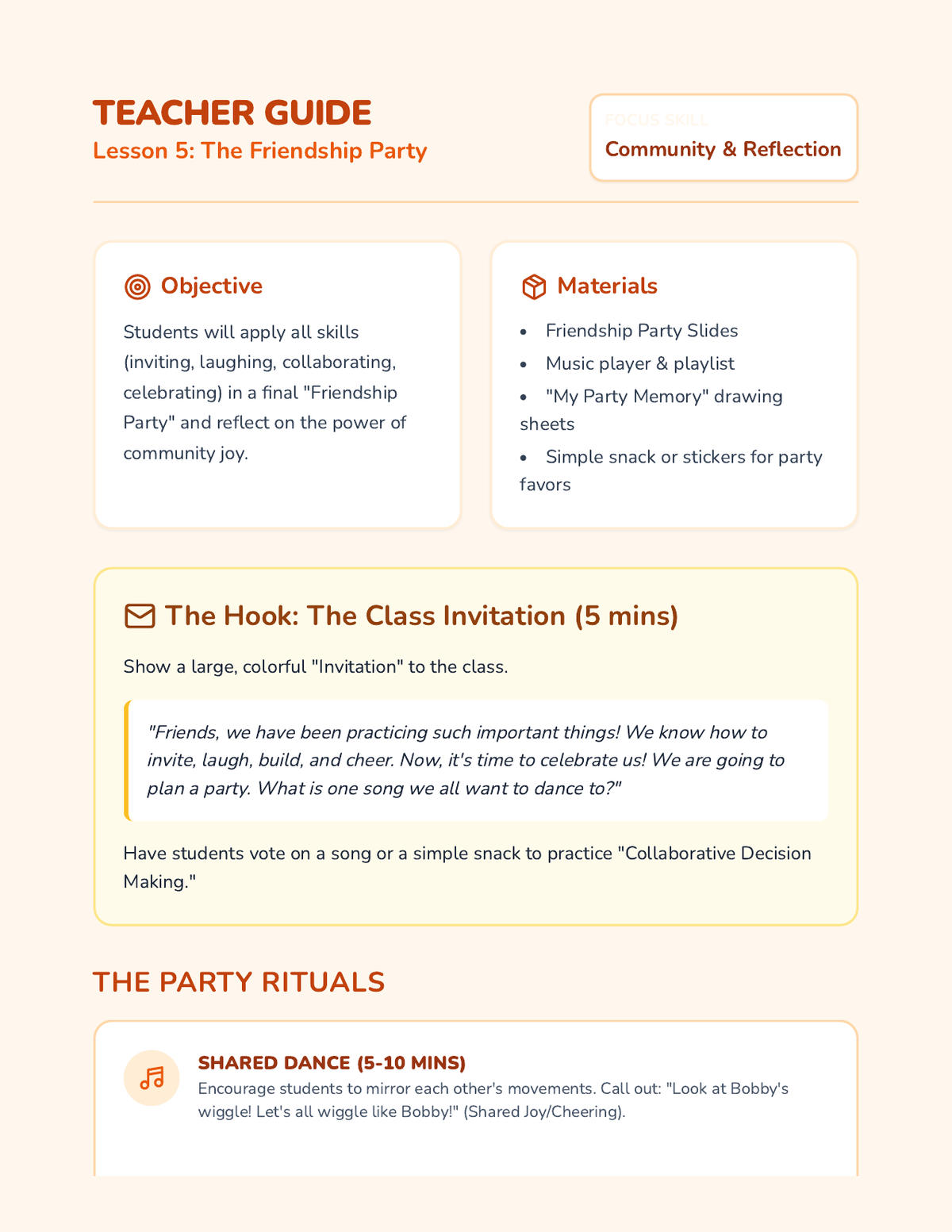
Event logistics and teacher guide for the culminating Lesson 5 'Friendship Party', featuring rituals for shared joy and guided reflection prompts.
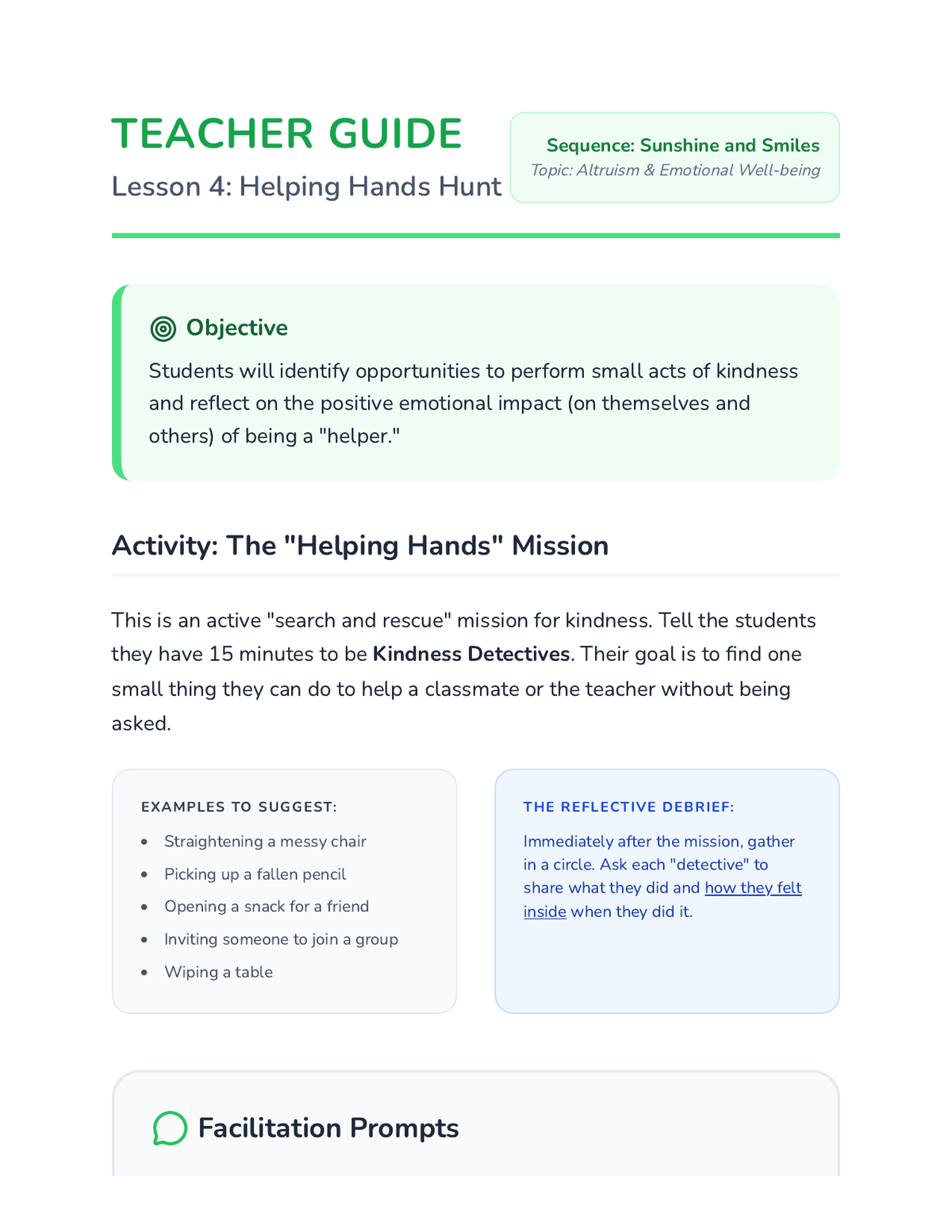
A teacher guide for the Helping Hands Mission, focusing on identifying small acts of service and facilitating reflections on the "helper's high."
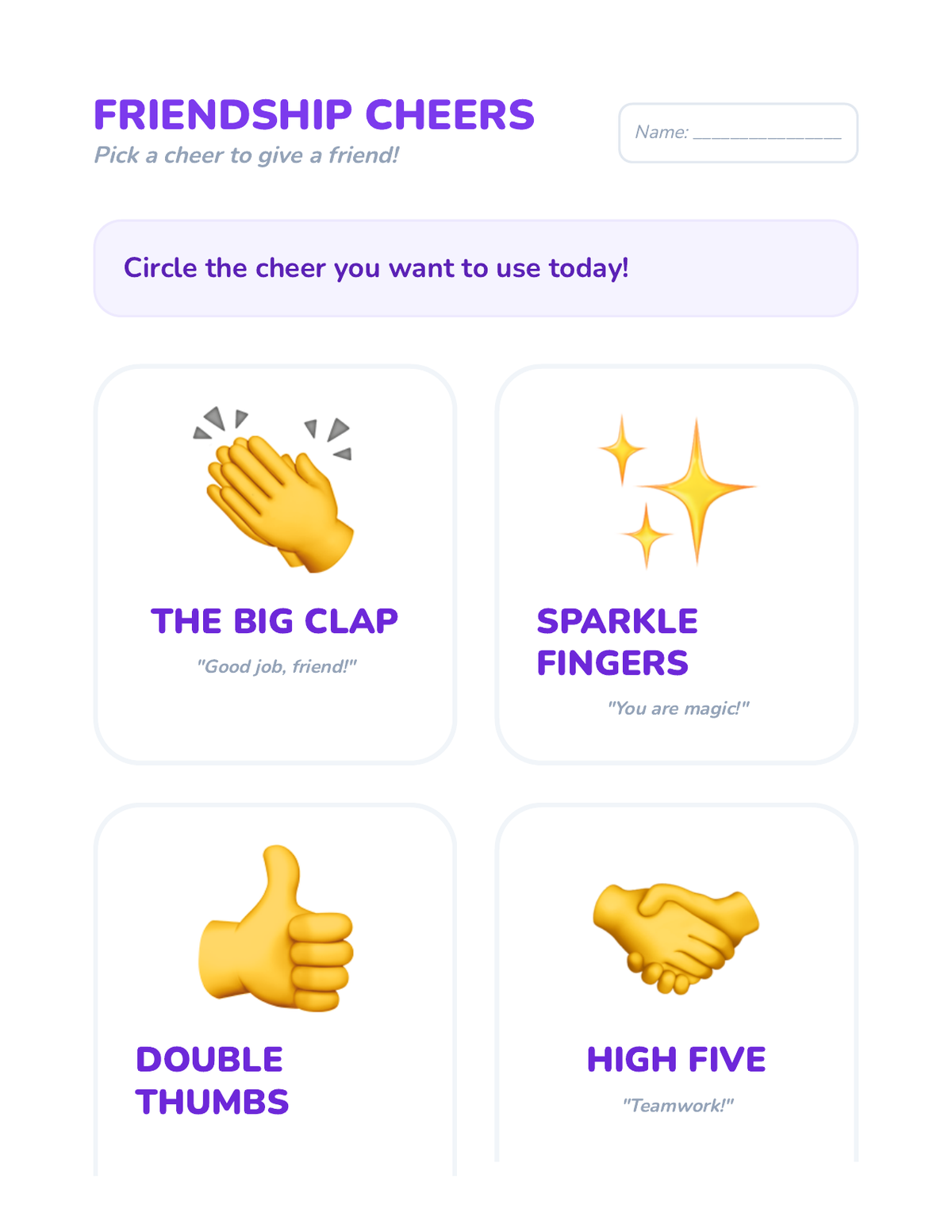
Student activity sheet for Lesson 4 that presents four different ways to celebrate a friend (Big Clap, Sparkle Fingers, Double Thumbs, High Five) for students to choose and practice.
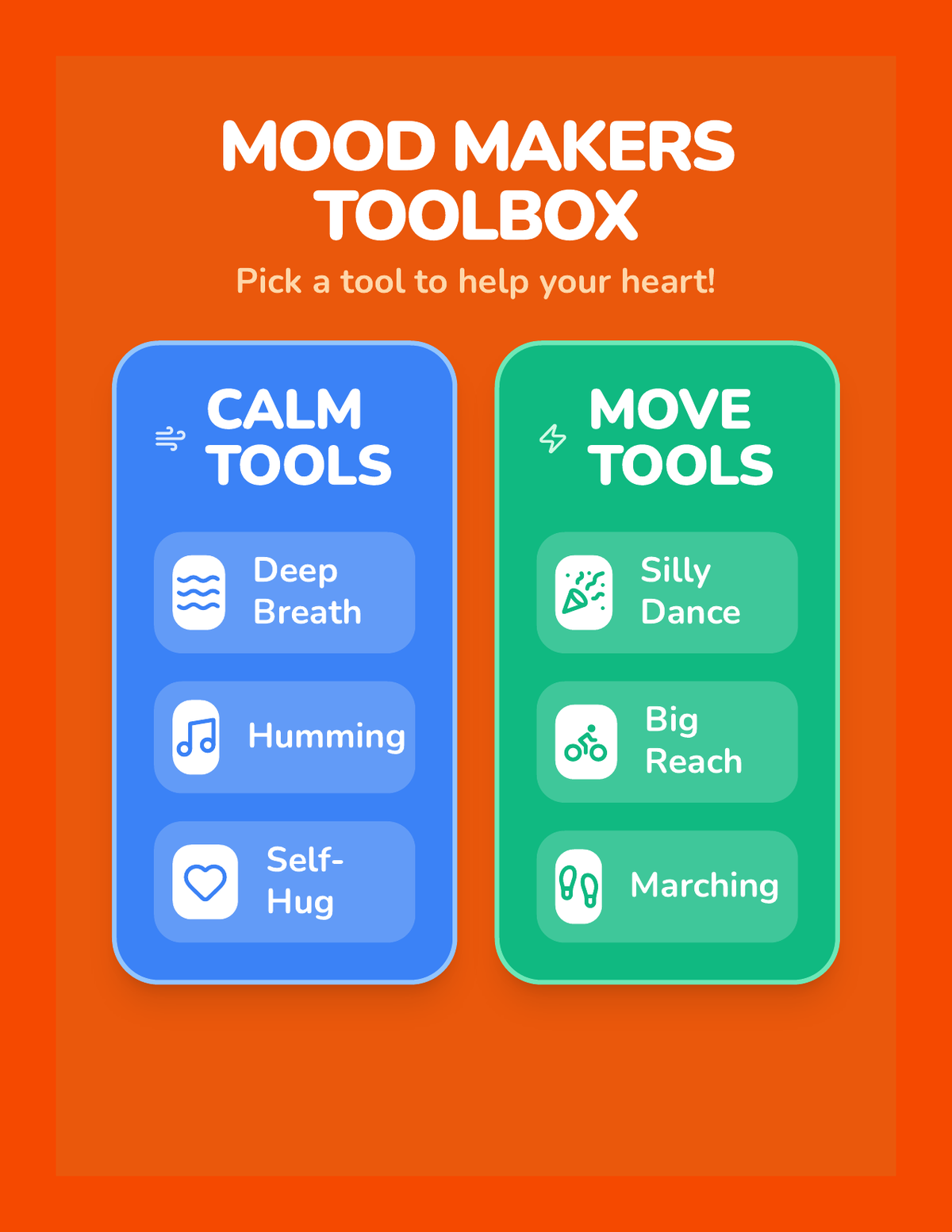
A classroom reference poster visualizing the 'Calm' and 'Move' tools for emotional regulation.
A slide deck for a "Kindness Hunt" activity, focusing on identifying small acts of service and their emotional benefits.
Visual presentation for Lesson 4, teaching students how to identify positive actions in others and providing visual cues for various ways to cheer.
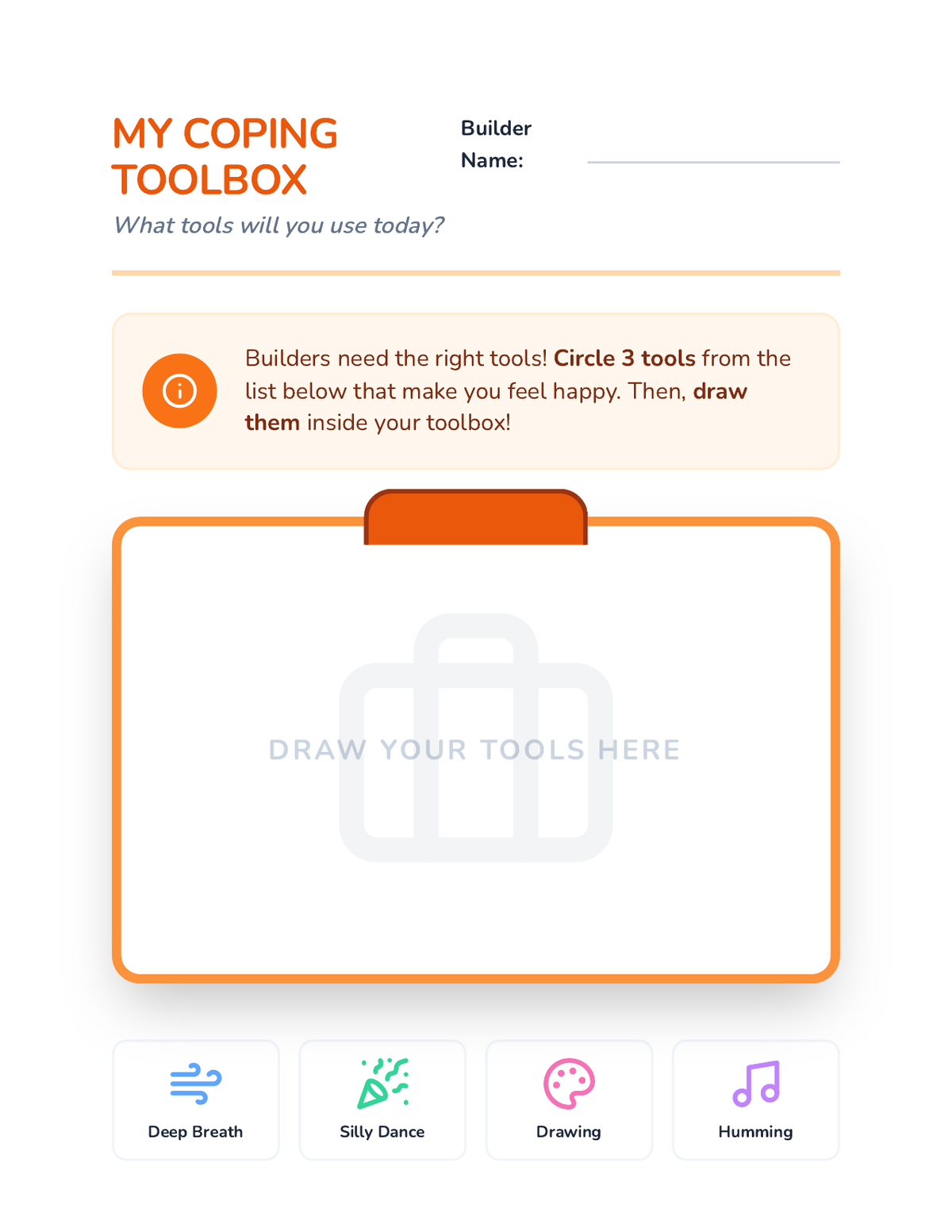
A student worksheet to select and draw 'coping tools' into a personal toolbox illustration.
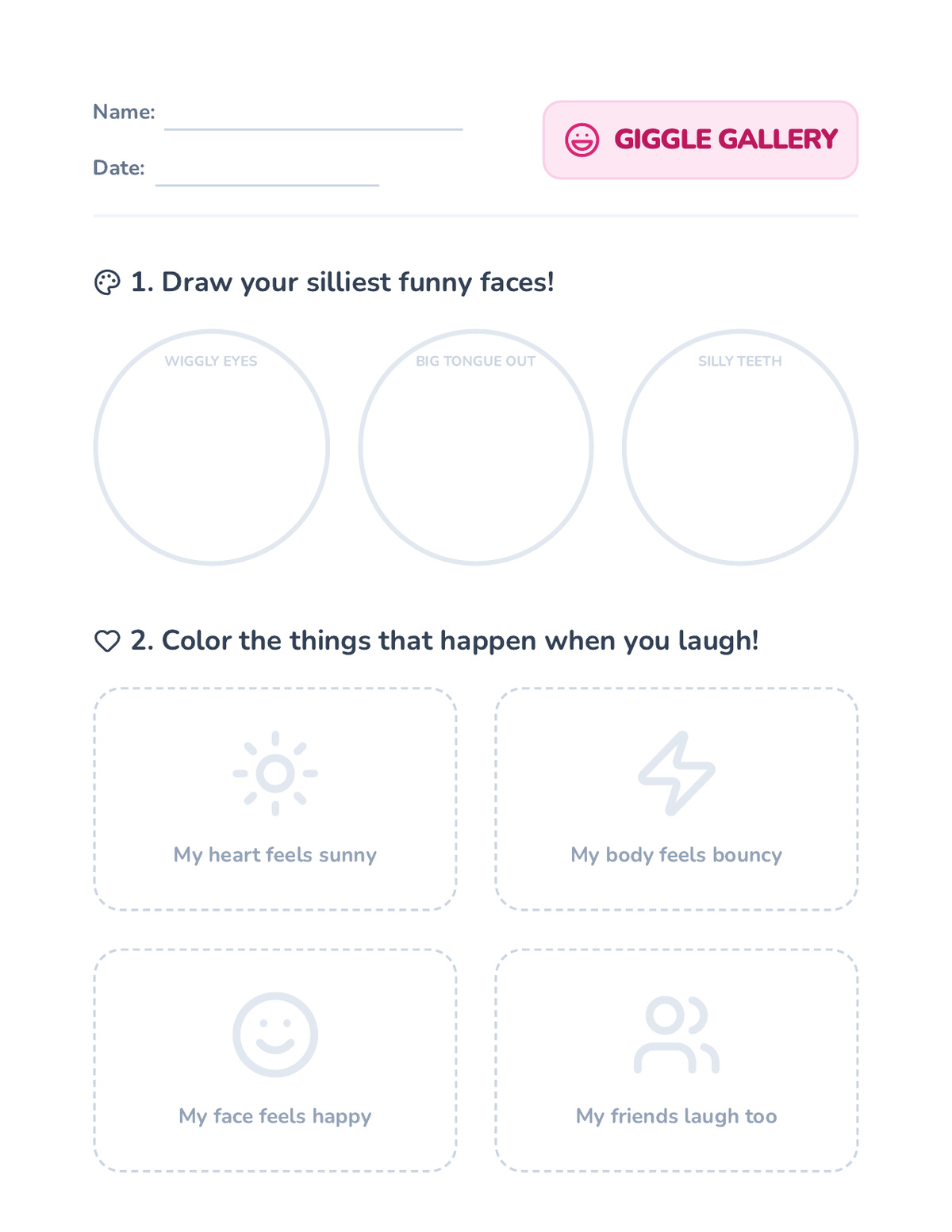
A Kindergarten drawing and coloring worksheet for Lesson 3, exploring funny faces and the physical feelings of laughter.