Stop-and-think strategies, impulse management, and SMART goal setting for personal growth. Develops internal motivation, stress reduction techniques, and resilience through proactive planning and monitoring.
An individual student sticker chart to track work stamina minutes, themed around a rocket ship 'blast off'.
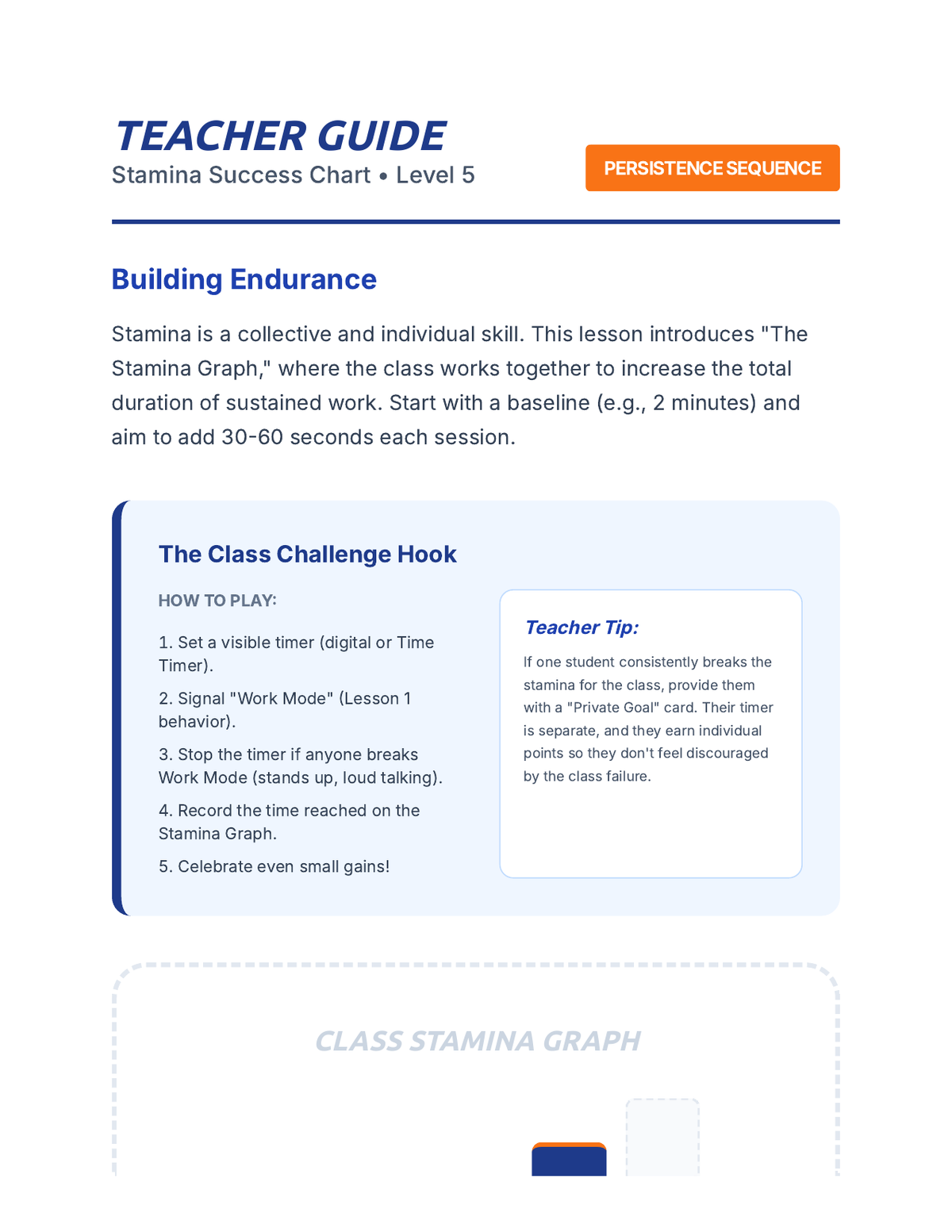
A teacher-facing guide for tracking class stamina building, featuring game rules, graphing tips, and synthesis strategies.
A visual presentation for students focusing on building stamina (endurance) through synthesis of previous task management tools.
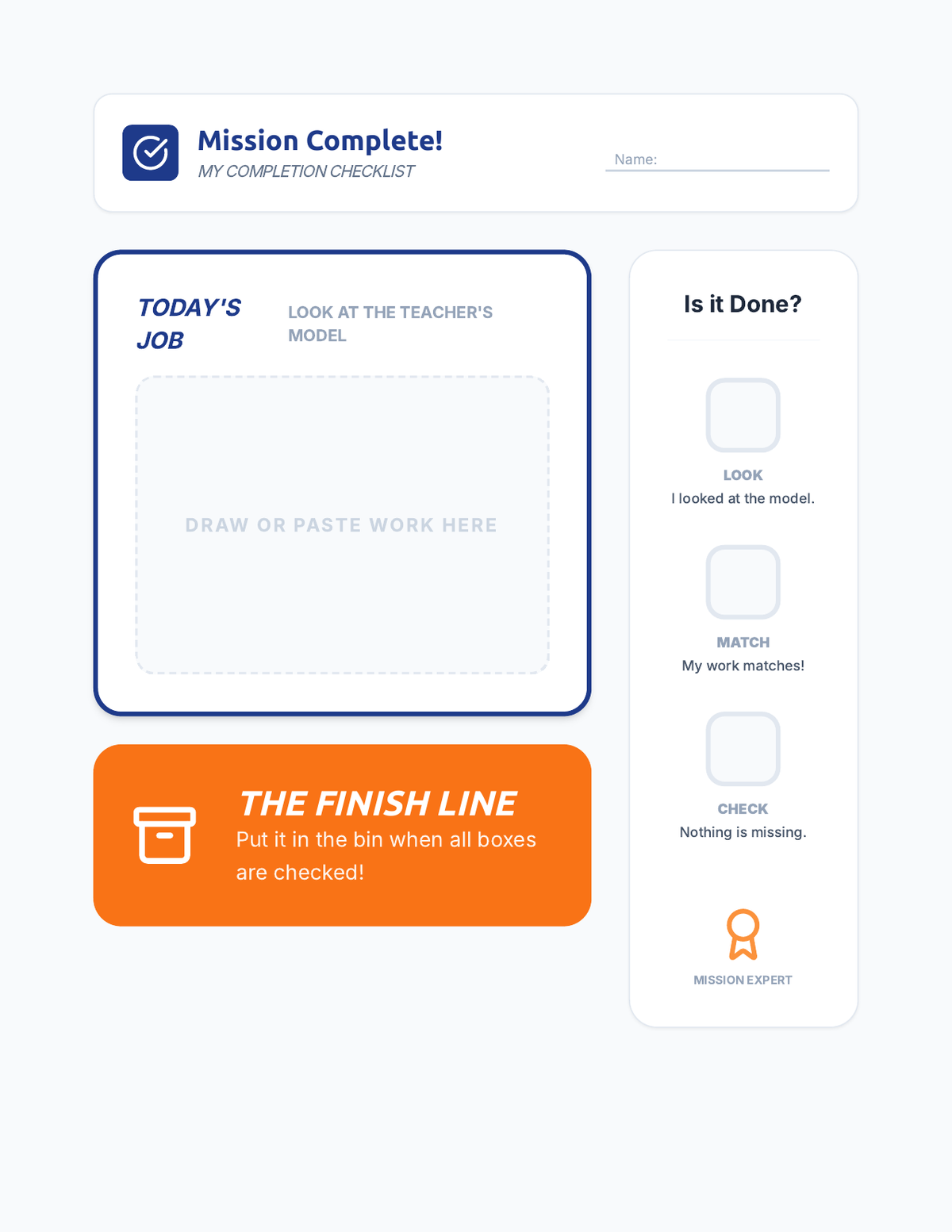
A visual checklist for Kindergarten students to self-monitor their work completion by comparing their efforts to a model.
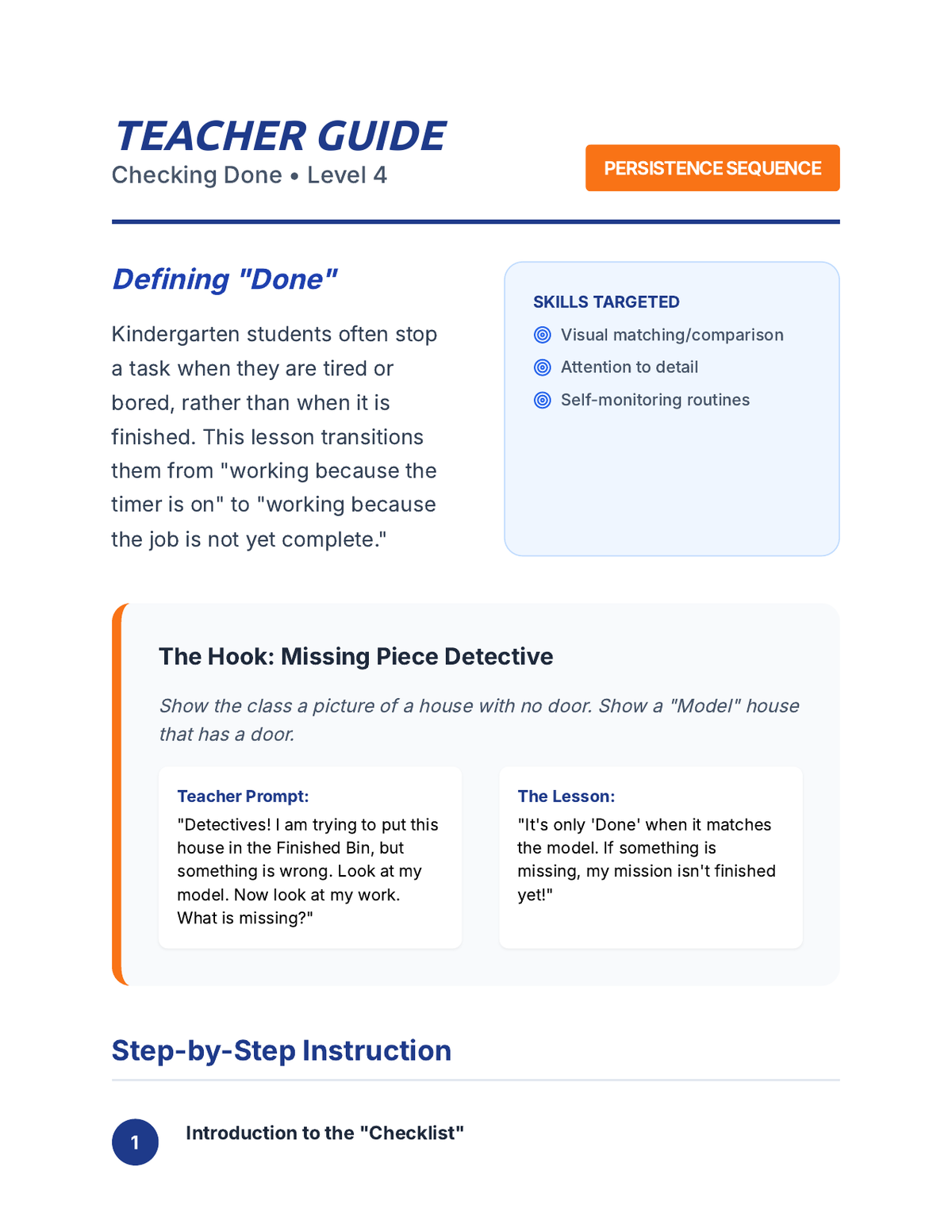
A teacher-facing guide for teaching the concept of task completion, using visual models and 'Finished Bin' routines.
A visual presentation teaching students how to identify task completion by comparing their work to a model and utilizing a 'finished' bin.
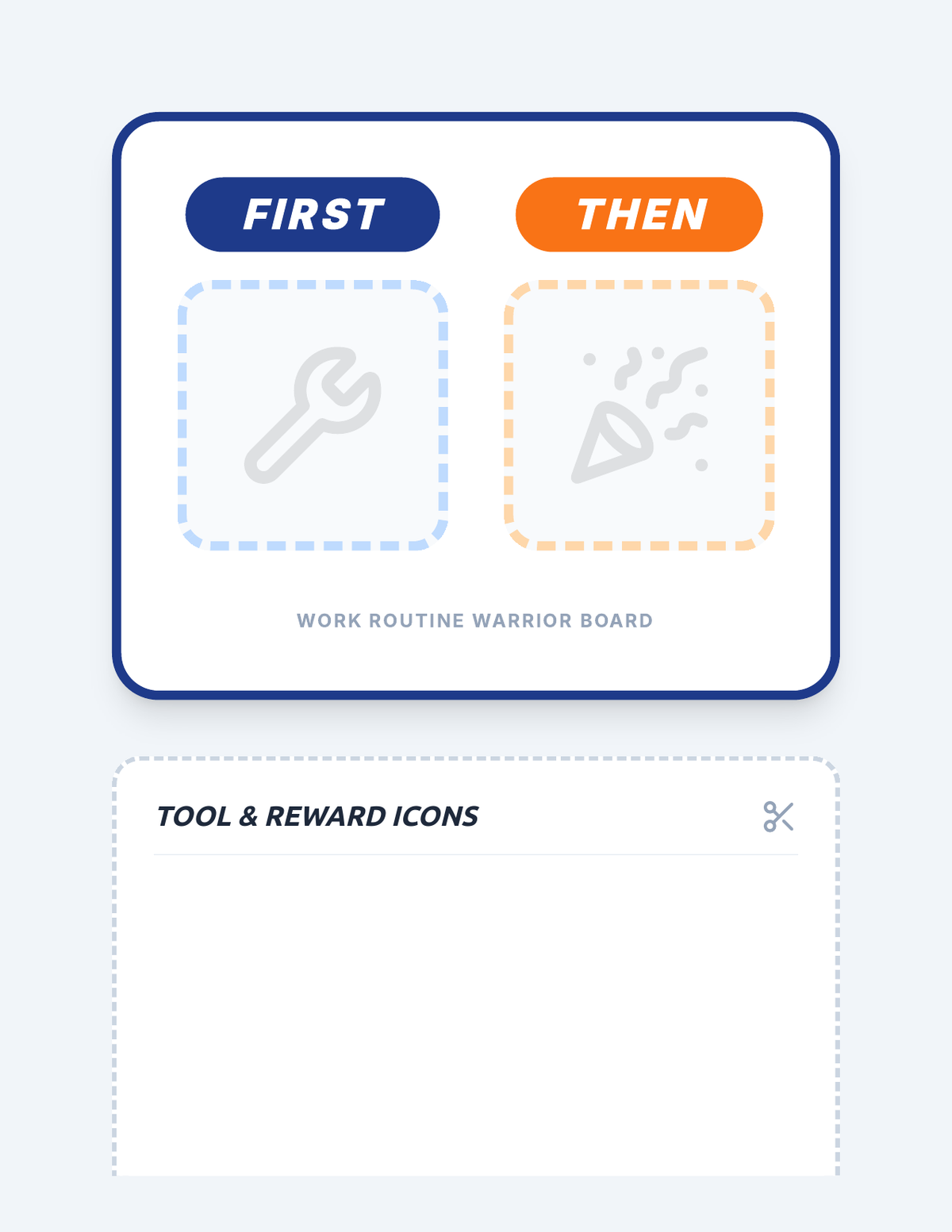
A printable First/Then visual board for Kindergarten students, including a variety of task and reward icons for customization.
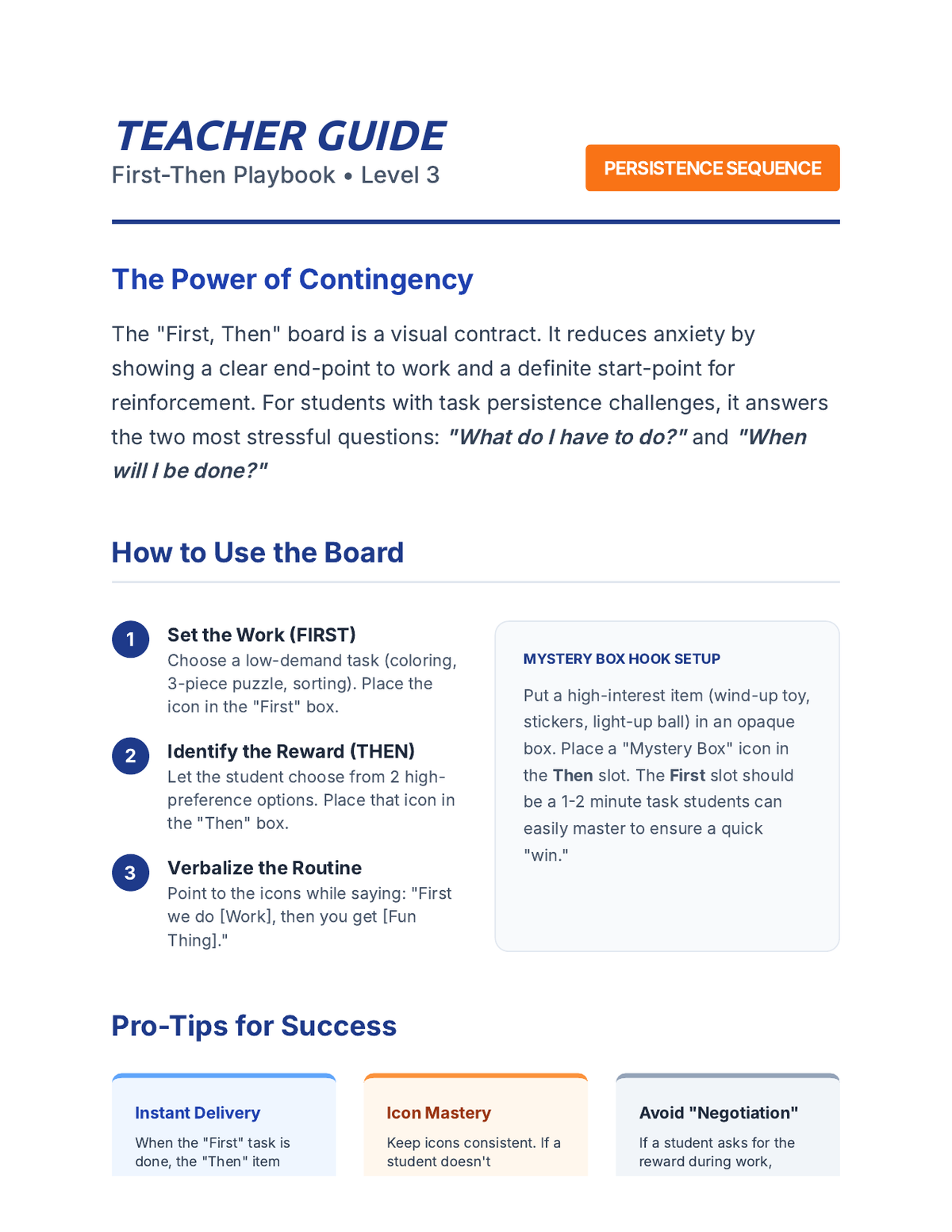
A teacher-facing guide for implementing First-Then contingencies, including setup for the Mystery Box hook and tips for reinforcement delivery.
A visual presentation teaching the logic of 'First/Then' contingencies for task completion and reward.
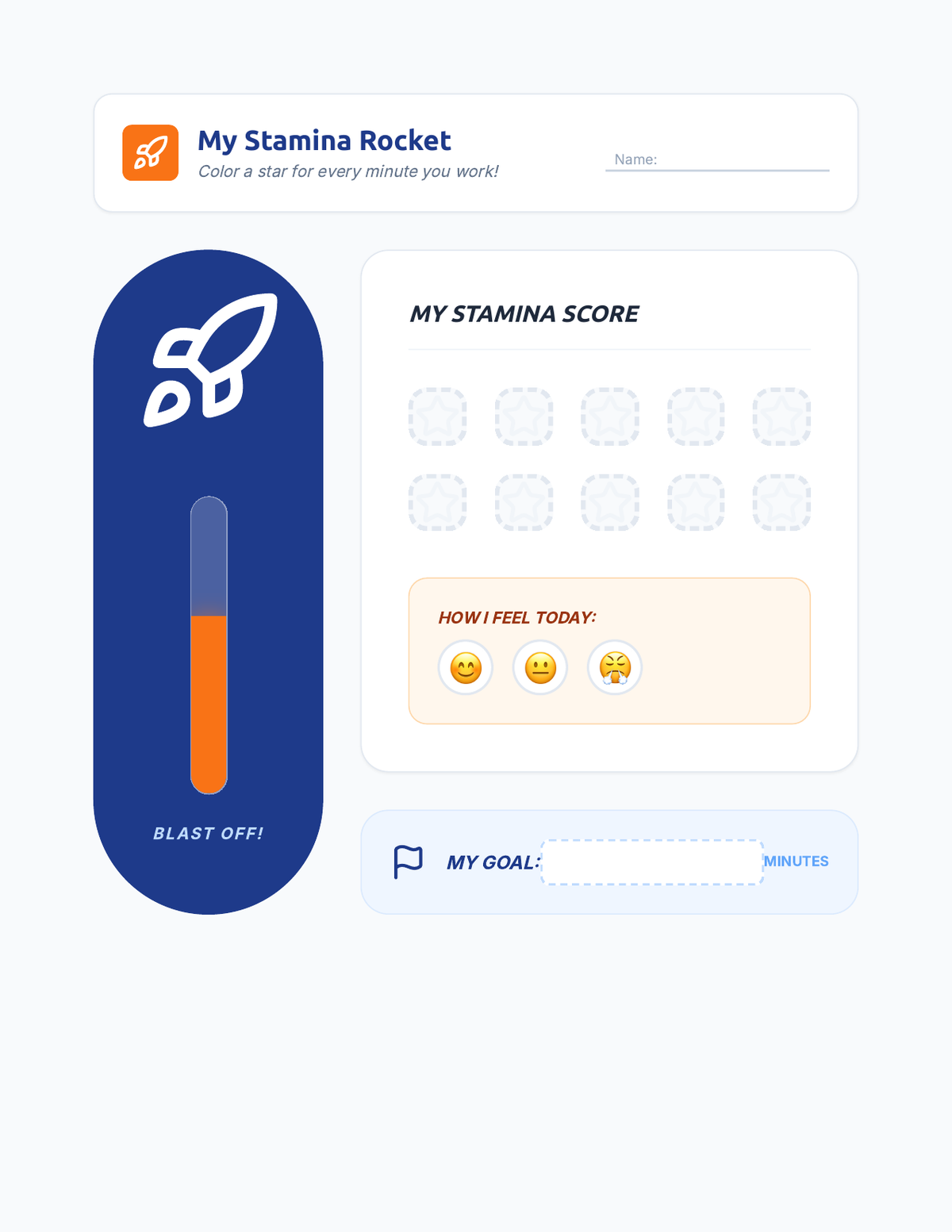
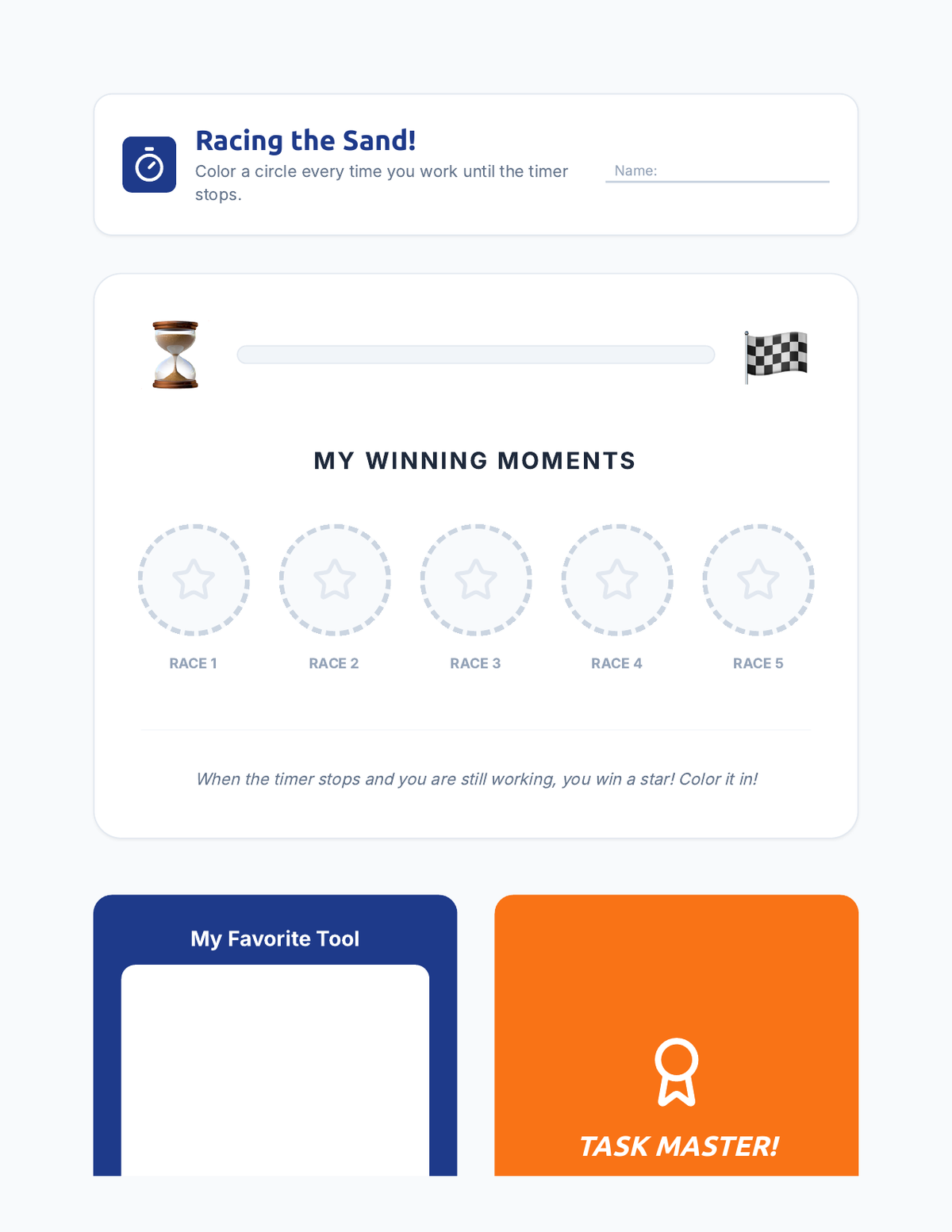
A student tracking sheet to record successful completion of timed work intervals, encouraging visual self-monitoring of stamina.
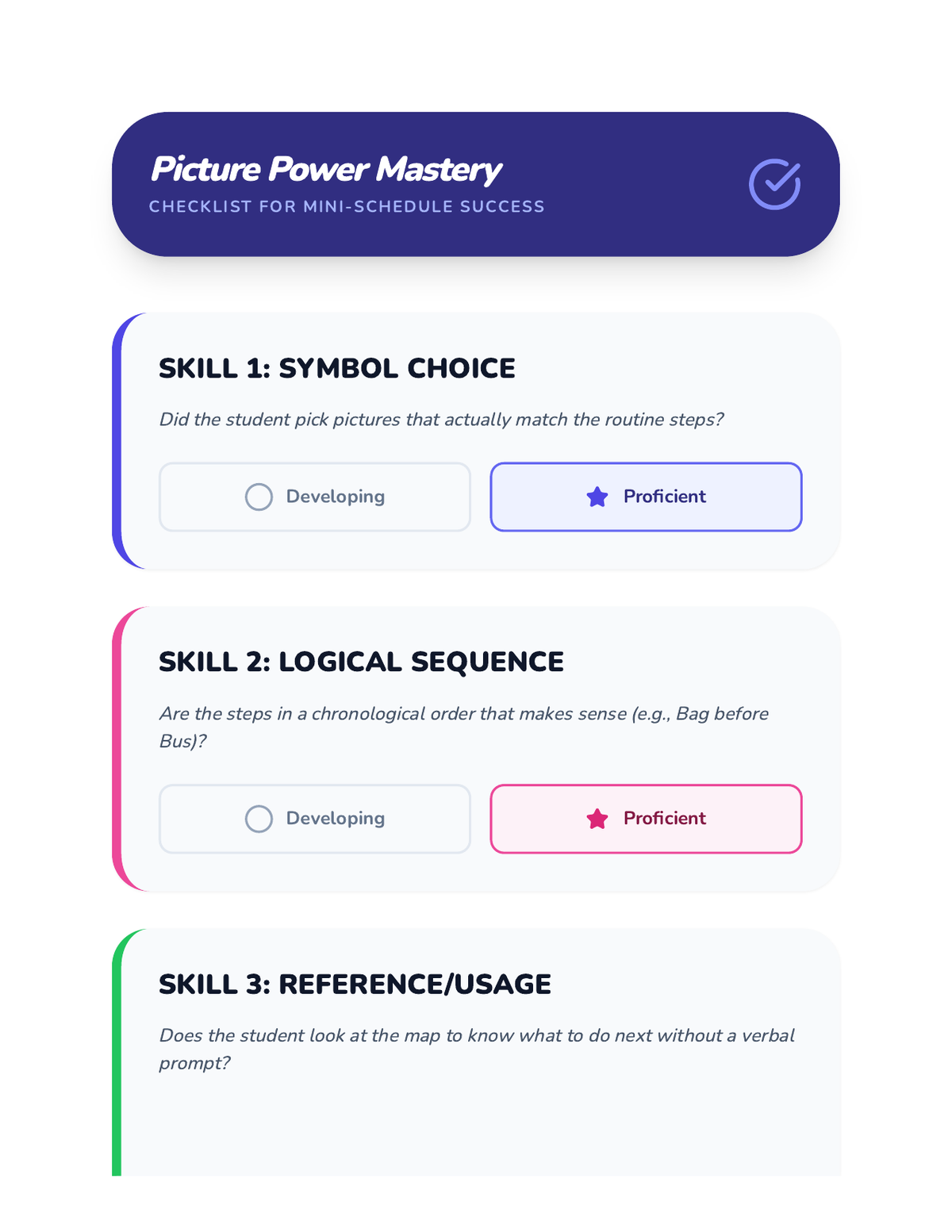
A teacher rubric and observation checklist for assessing mastery of the personal mini-schedule project. Evaluates symbol choice, logical sequencing, and independent usage of the visual aid.
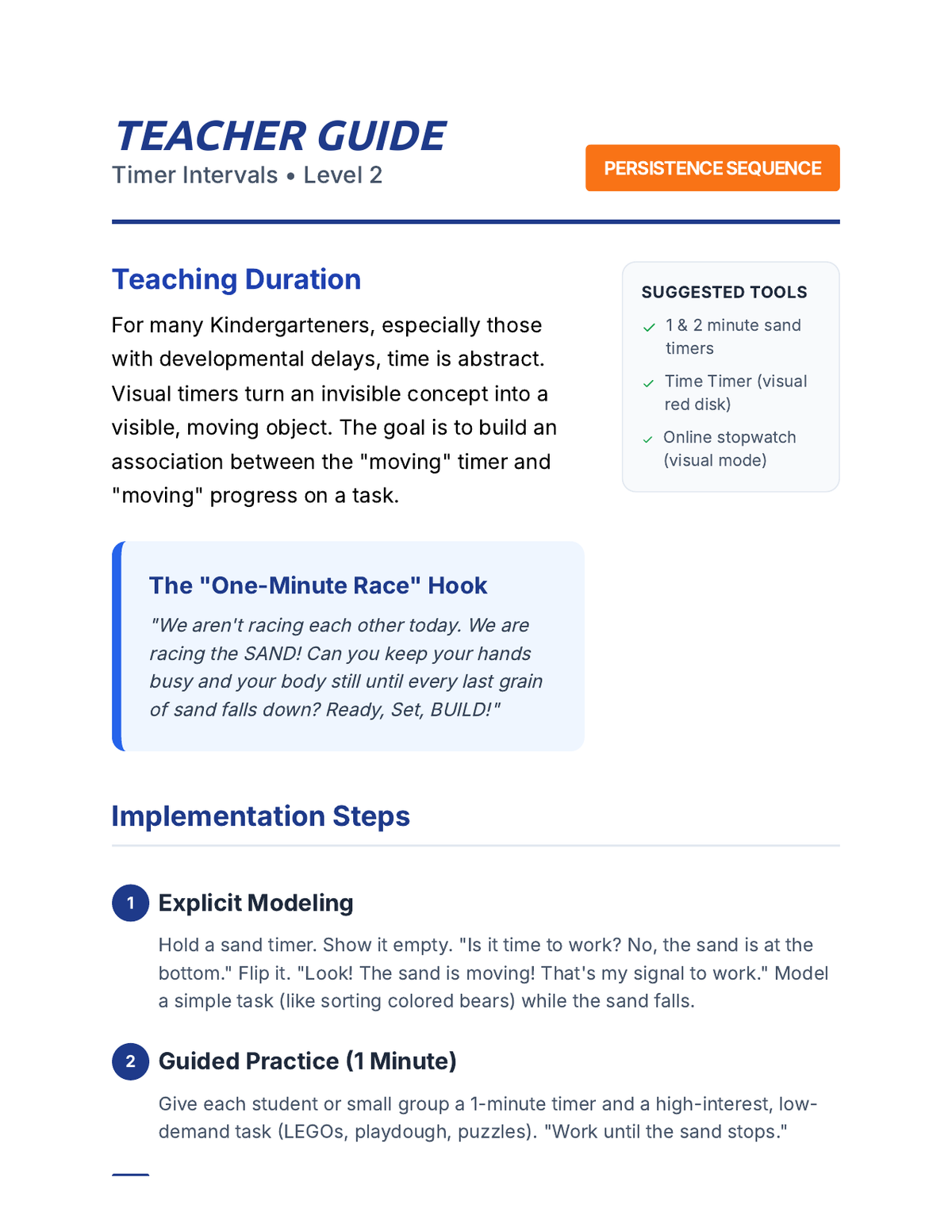
A facilitation guide for teachers to help students understand the concept of time duration using visual timers, featuring modeling tips and common misconceptions.
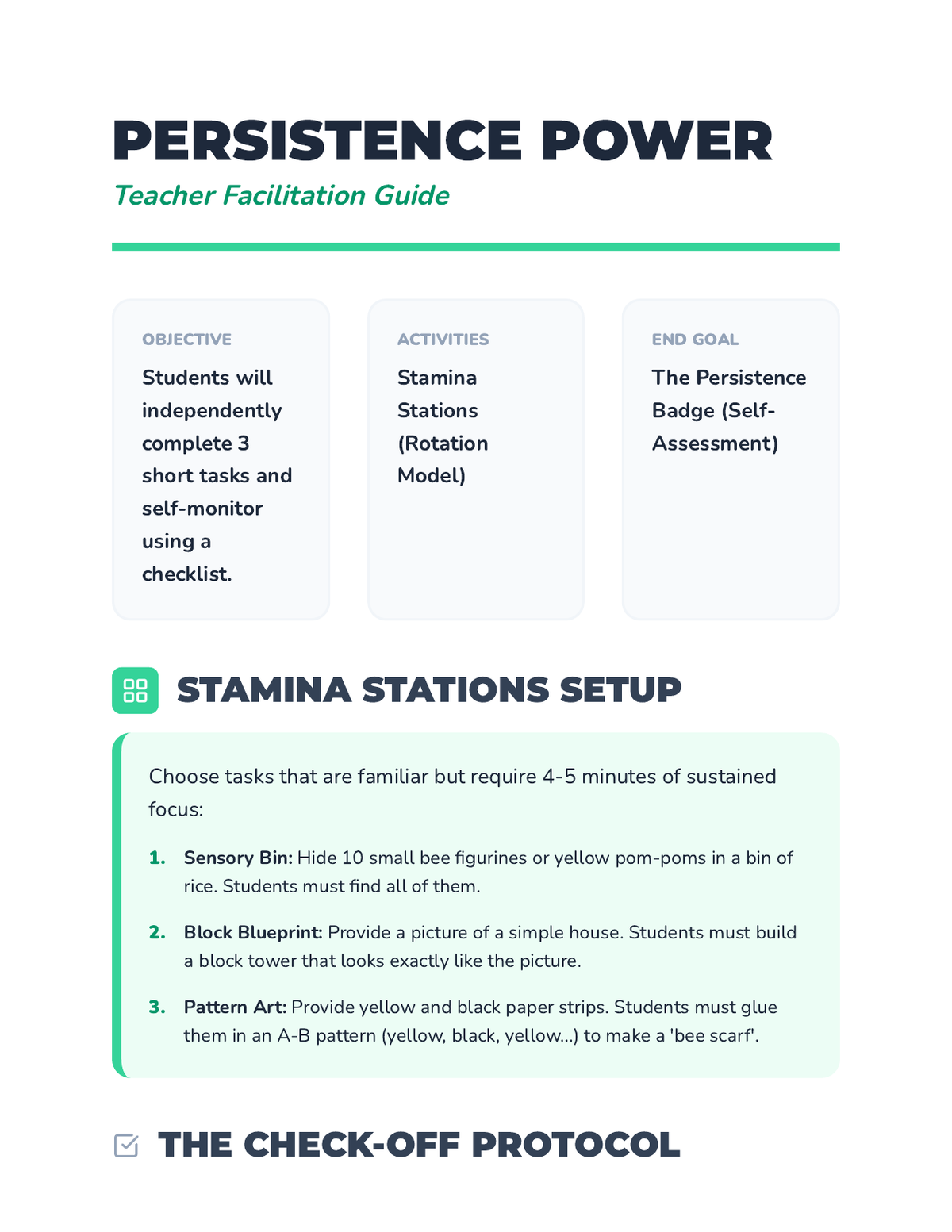
Teacher guide for the final lesson, including setup instructions for Stamina Stations and strategies for fostering self-monitoring habits.
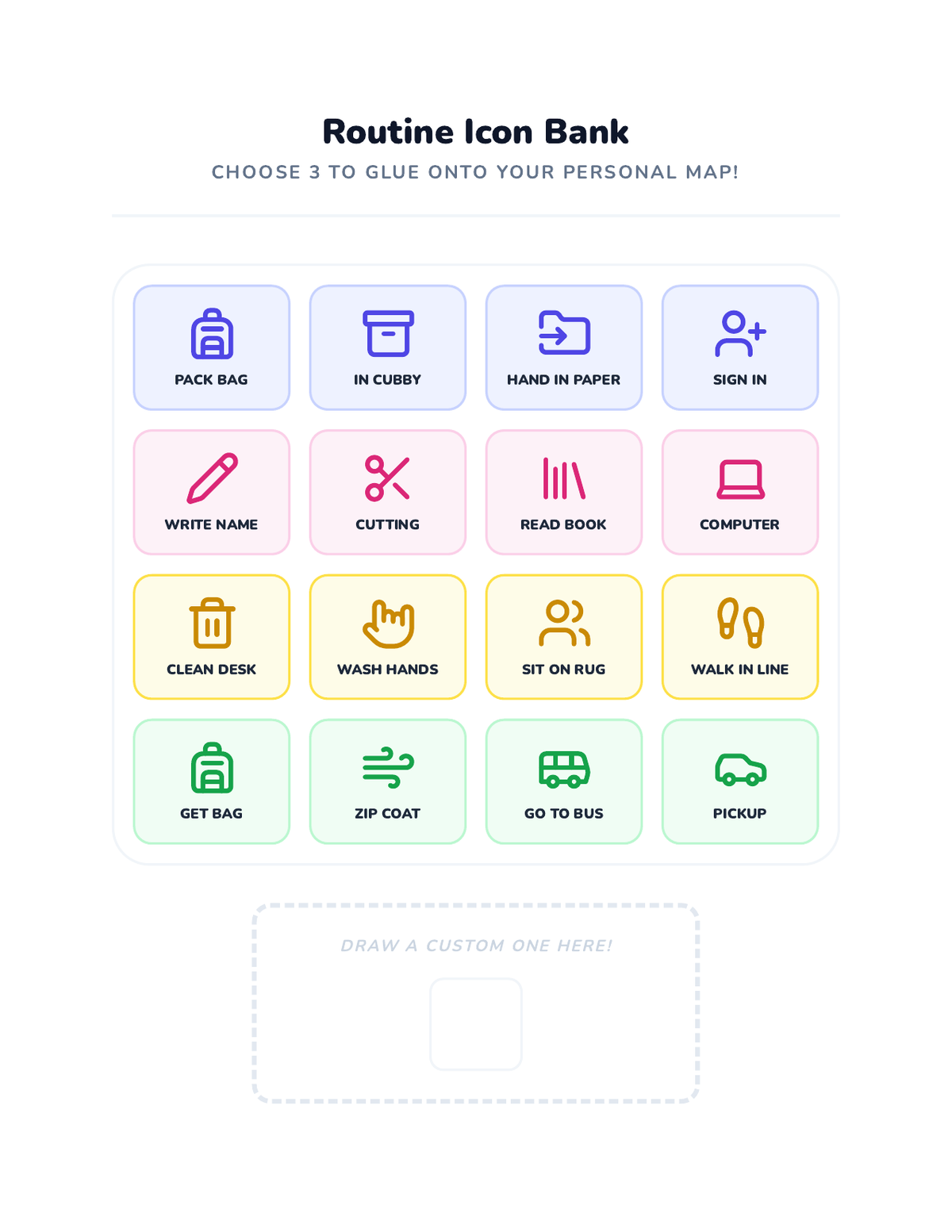
A collection of small icons for students to cut and glue onto their personal mini-schedules. Organized by daily phase (Arrival, Work, Transitions, End of Day) to help students build specific routines.
A visual presentation introducing visual timers and how students can use them to monitor their own work duration.
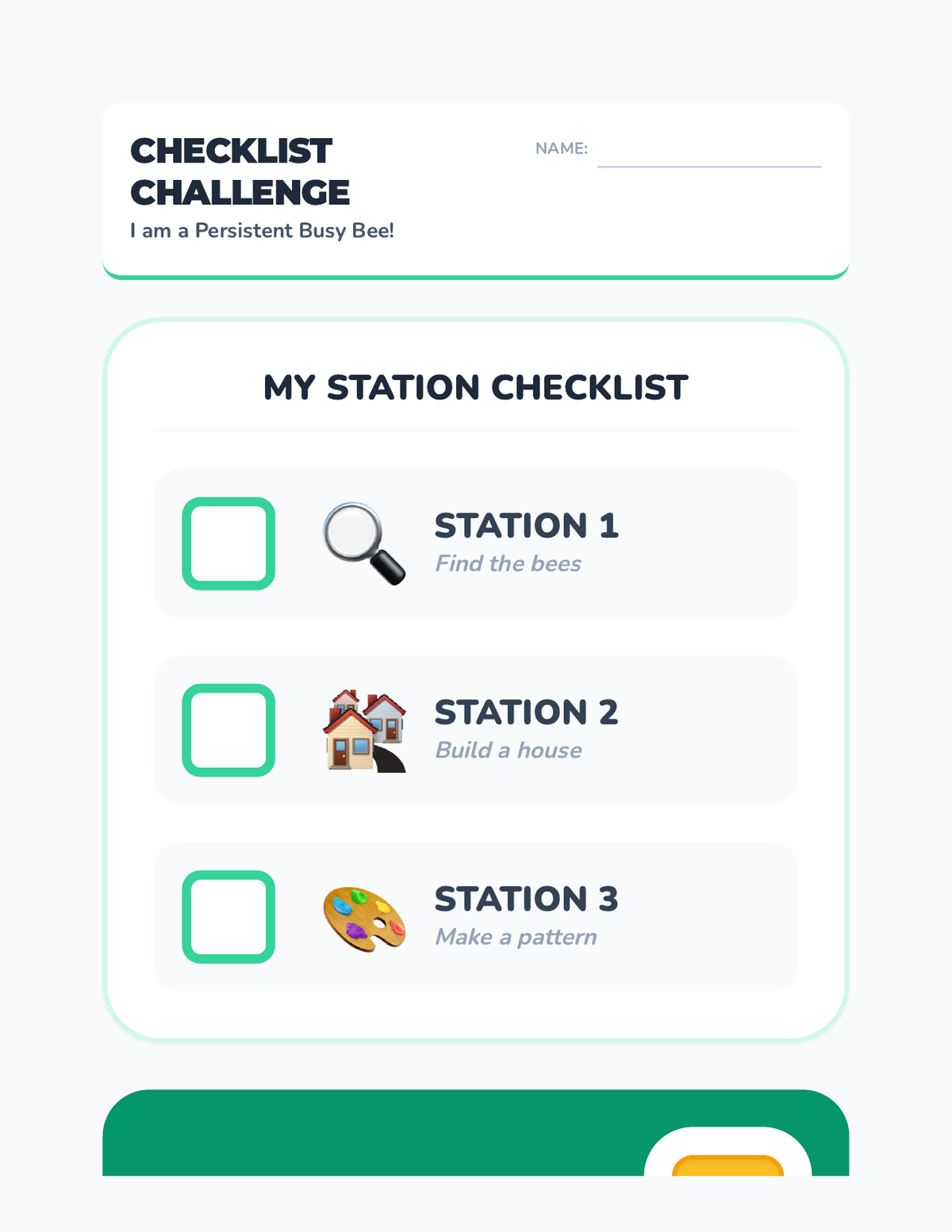
A visual checklist for the Stamina Stations activity, allowing students to self-monitor their progress and earn a 'Persistence Badge'.
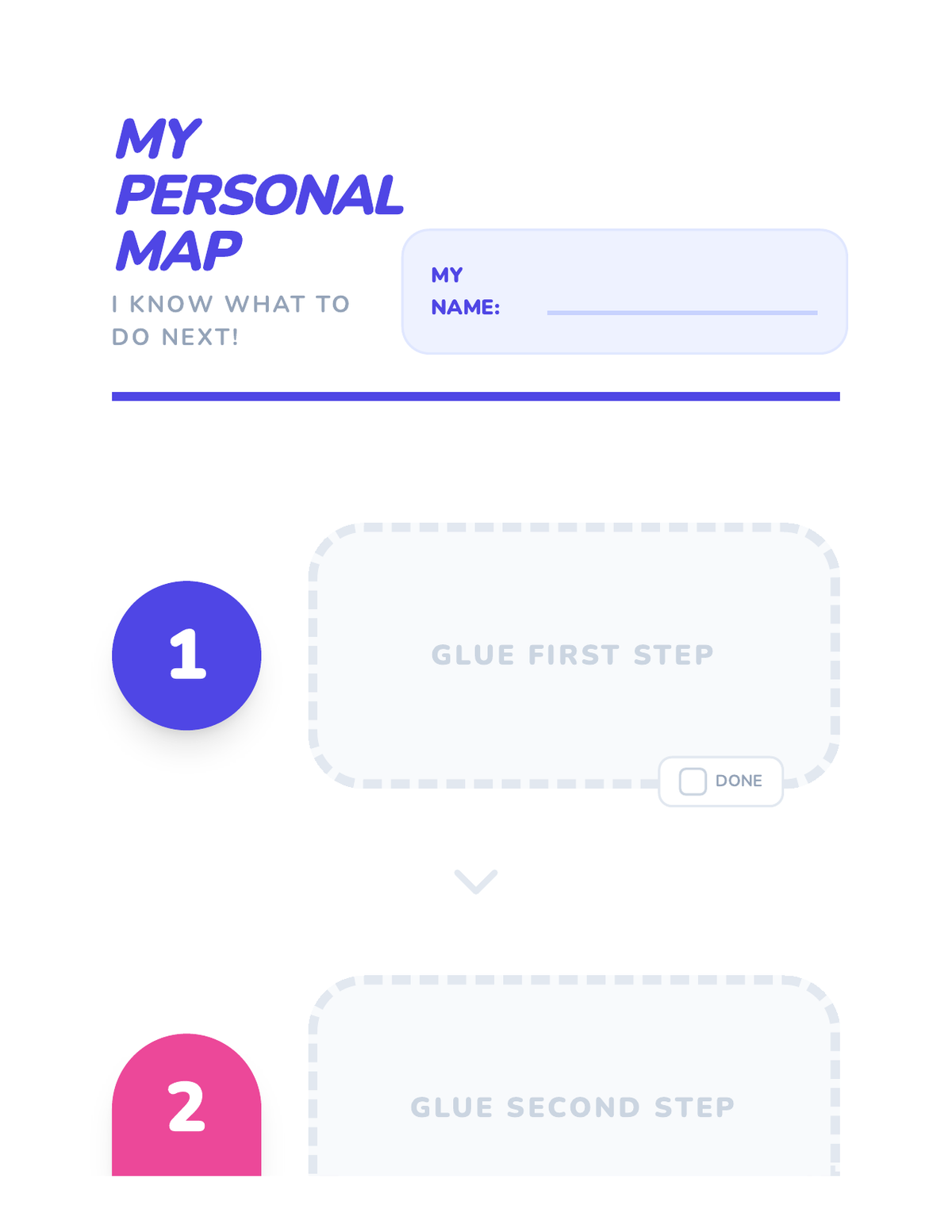
The project template for a personal 3-step mini-schedule. Students glue icons into the numbered slots to create a customized routine for a specific part of their day. Includes check-boxes for self-monitoring.
This slide deck introduces the concept of self-monitoring using checklists and outlines the 'Stamina Stations' activity for the culminating lesson.
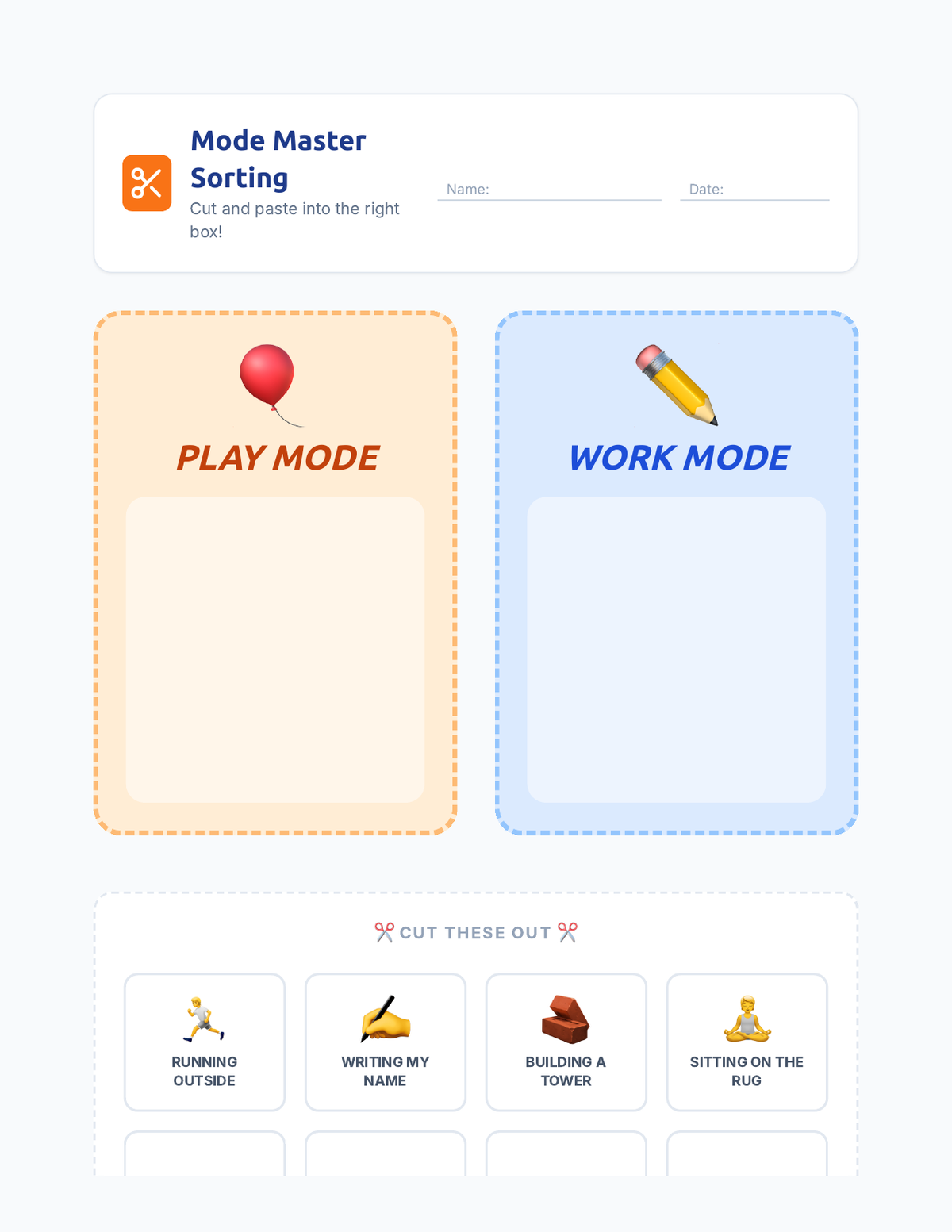
A cut-and-paste sorting activity for Kindergarten students to categorize behaviors into 'Work Mode' and 'Play Mode'.
Slides for the final lesson in the sequence. Guides students through the process of creating their own personal mini-schedule, emphasizing the benefits of independence and reduced anxiety.
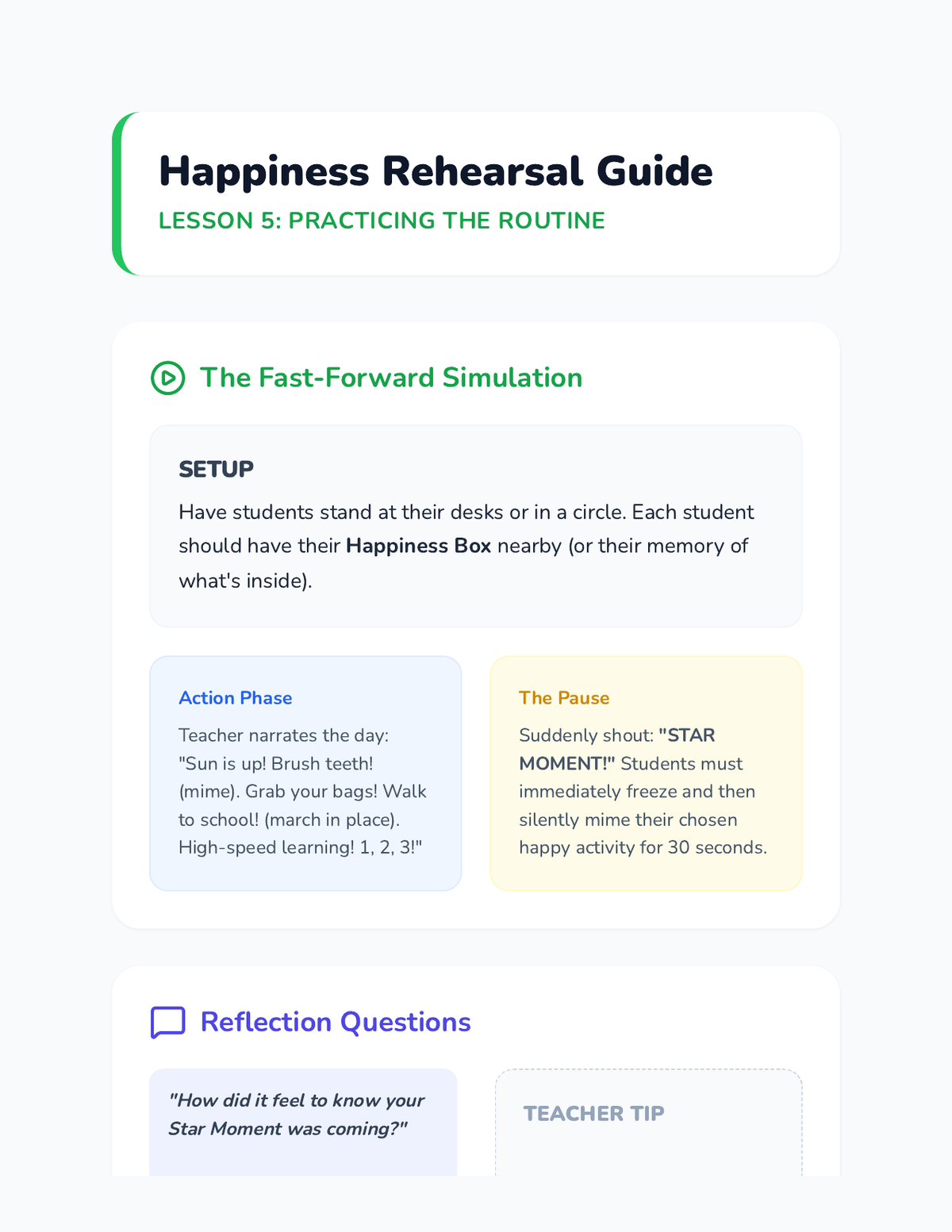
A teacher's guide for facilitating the final simulation and reflection of the "Daily Dose of Happiness" unit.
Slides for the final lesson simulating the daily routine and reflecting on the emotional benefits of anticipation and planned happiness.
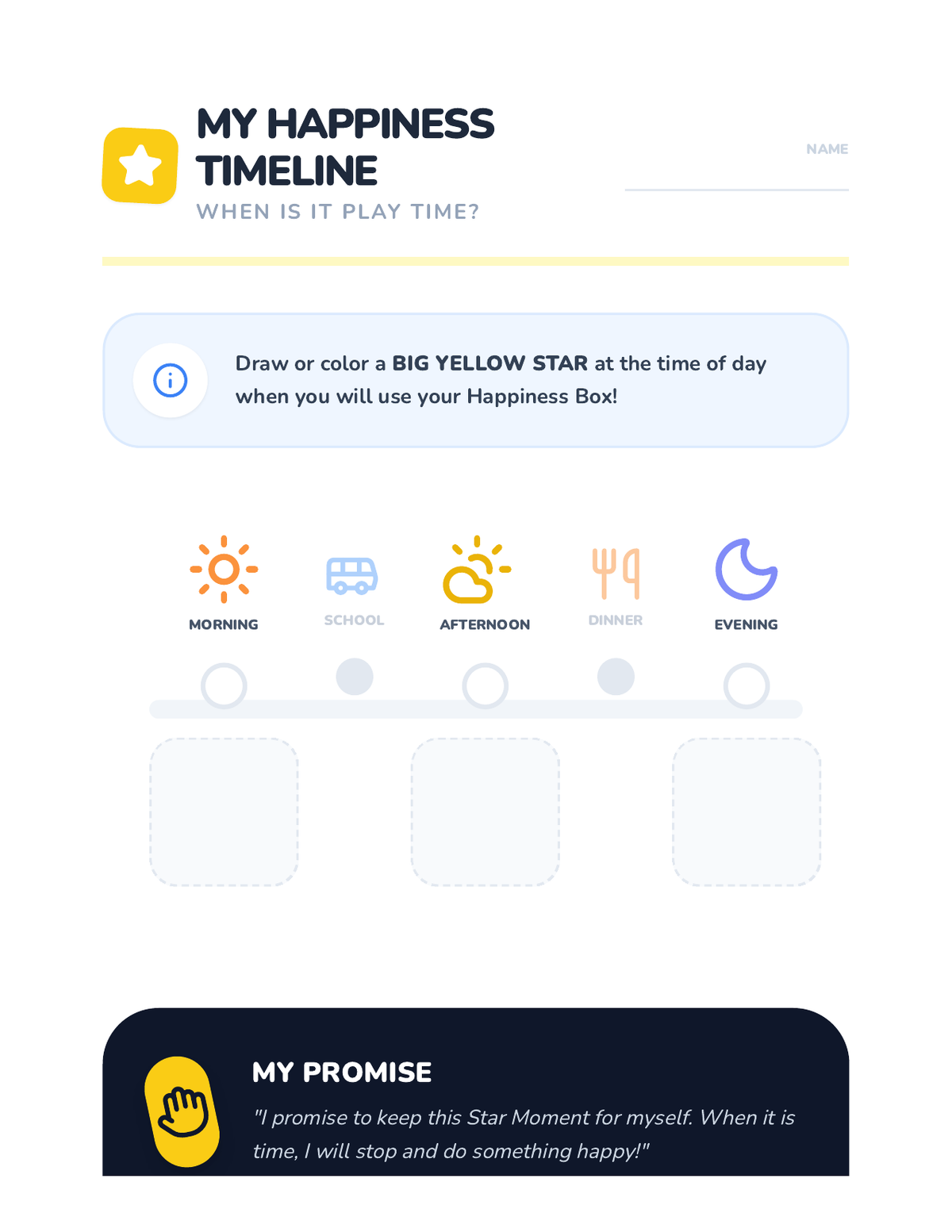
A visual daily timeline worksheet where students choose and mark their "Star Moment" for positive engagement.
Slides for Lesson 4 teaching Kindergarteners the importance of goal-setting and scheduling specific times for positive activities.
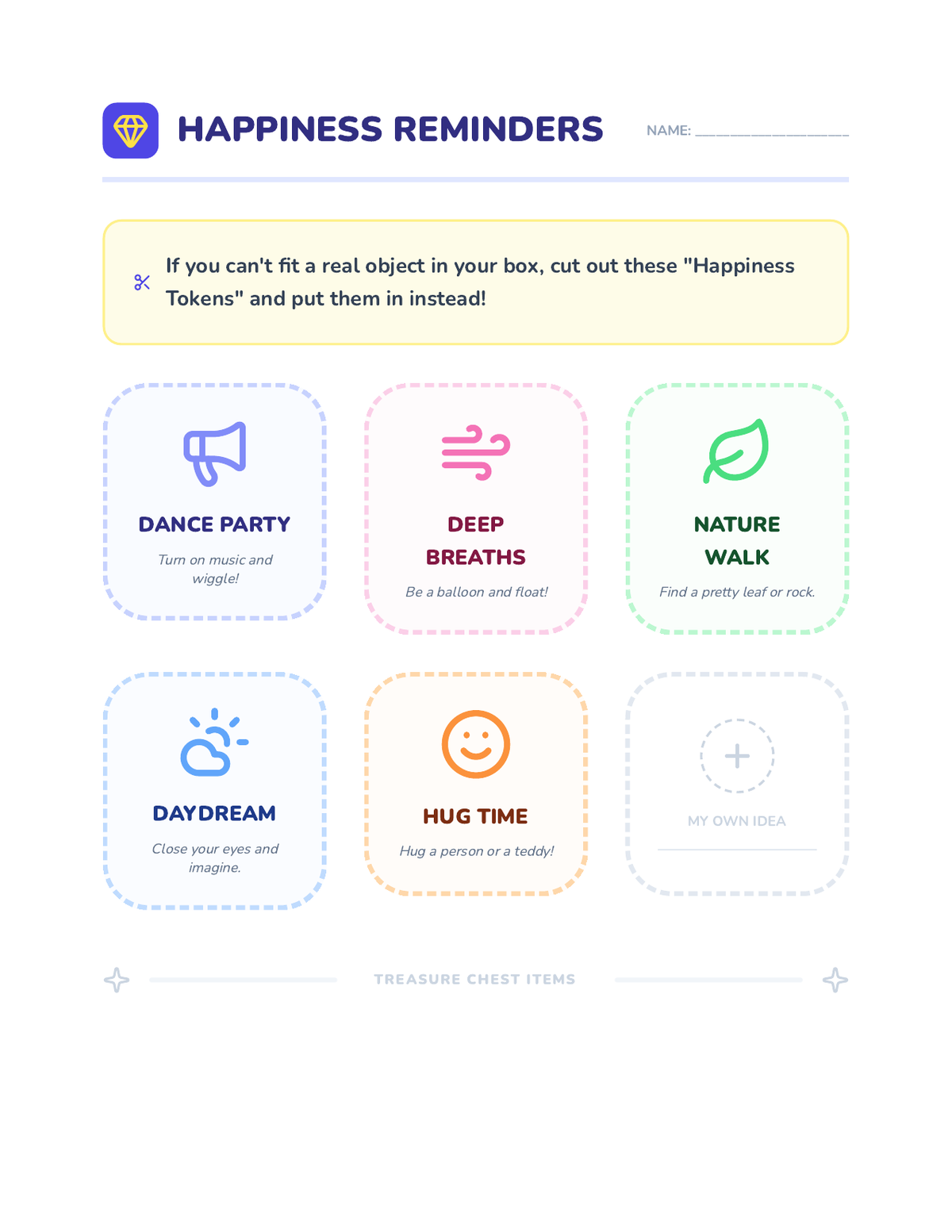
Cut-out tokens representing various positive activities that students can place in their Happiness Box as reminders.
Slides for Lesson 3 detailing the purpose and creation of a physical "Happiness Box" or Treasure Chest for positive reminders.
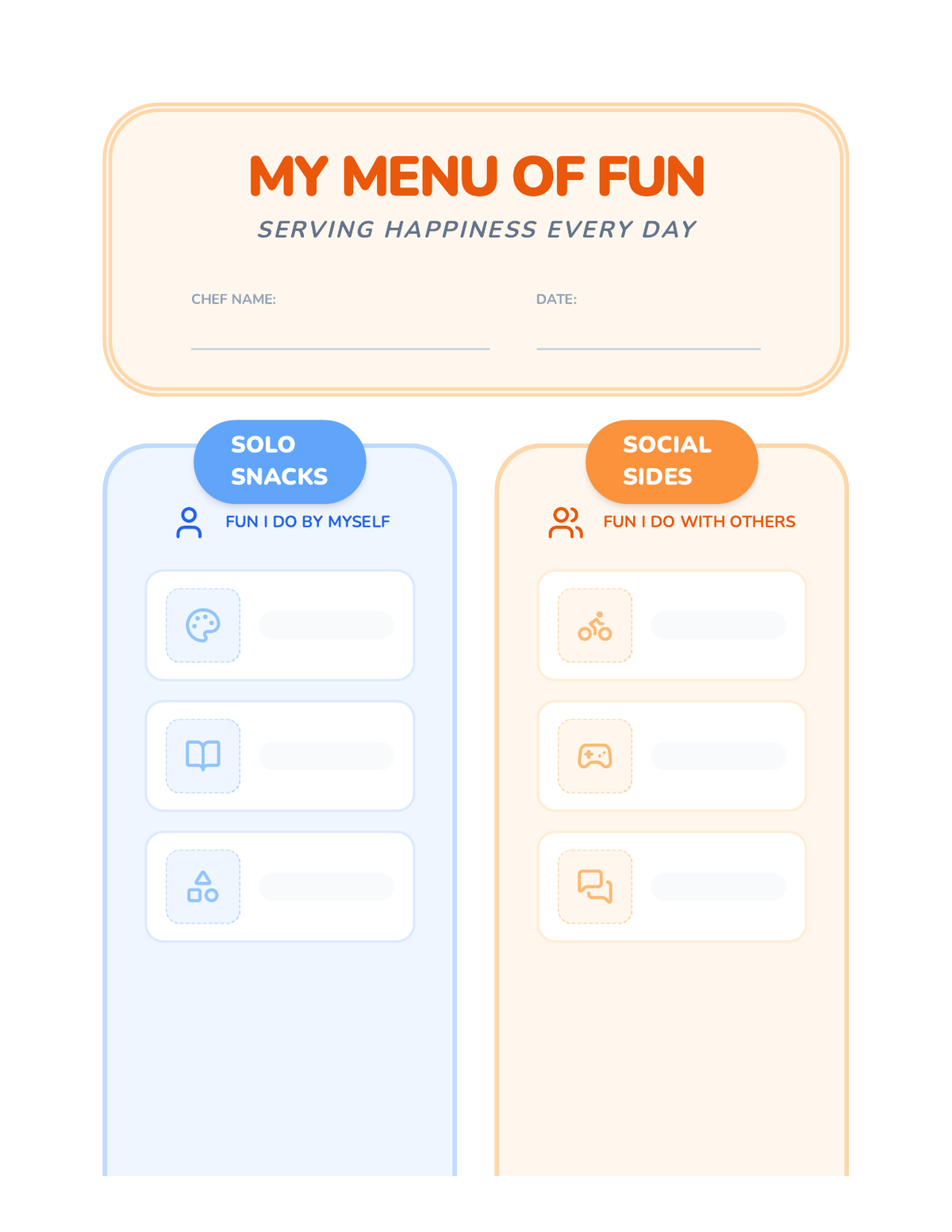
A menu-themed worksheet where Kindergarteners brainstorm and categorize fun activities they can do alone or with friends.
Slides for Lesson 2 focusing on brainstorming and categorizing positive activities into "solo" and "together" fun.
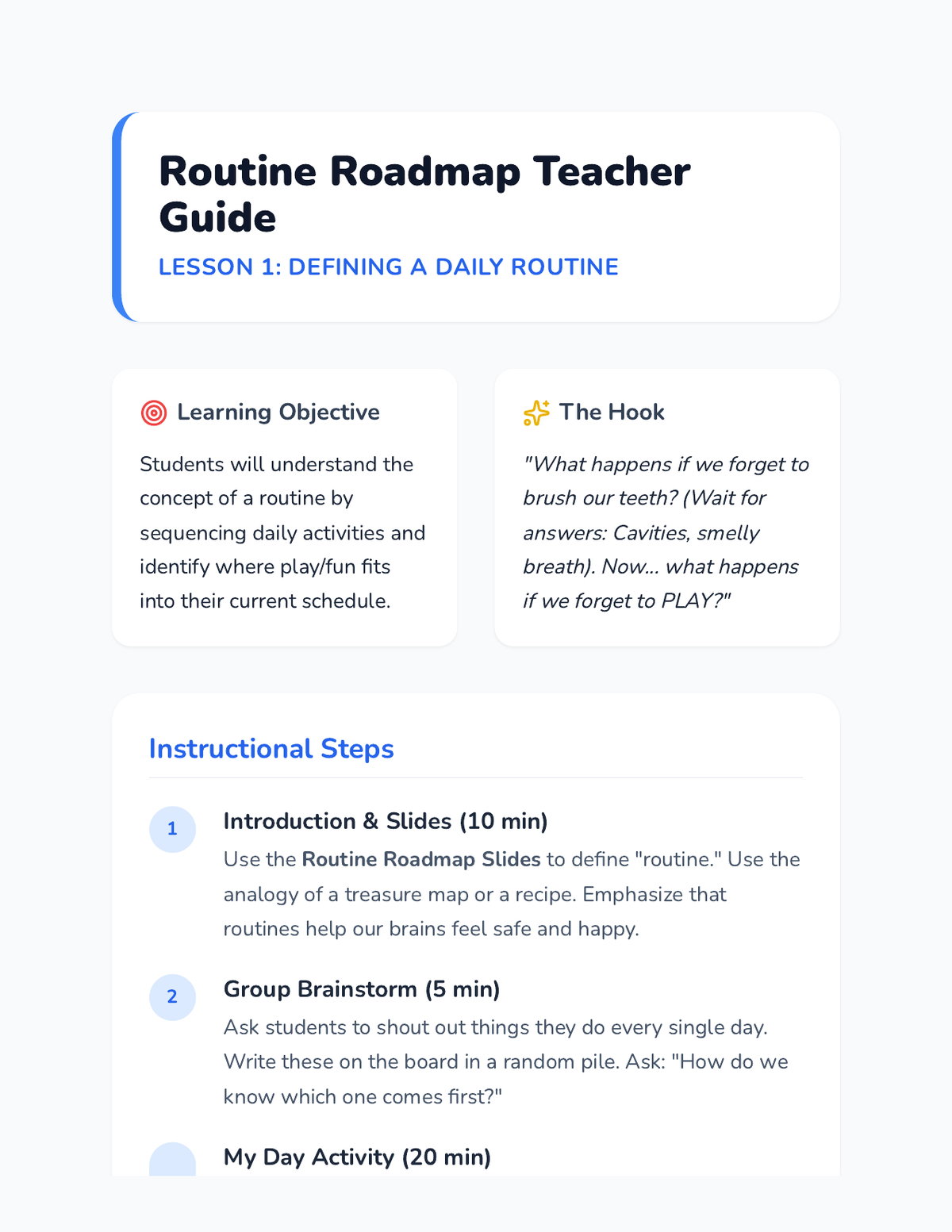
A guide for teachers to lead the first lesson of the happiness routine sequence, including discussion prompts and step-by-step instructions.
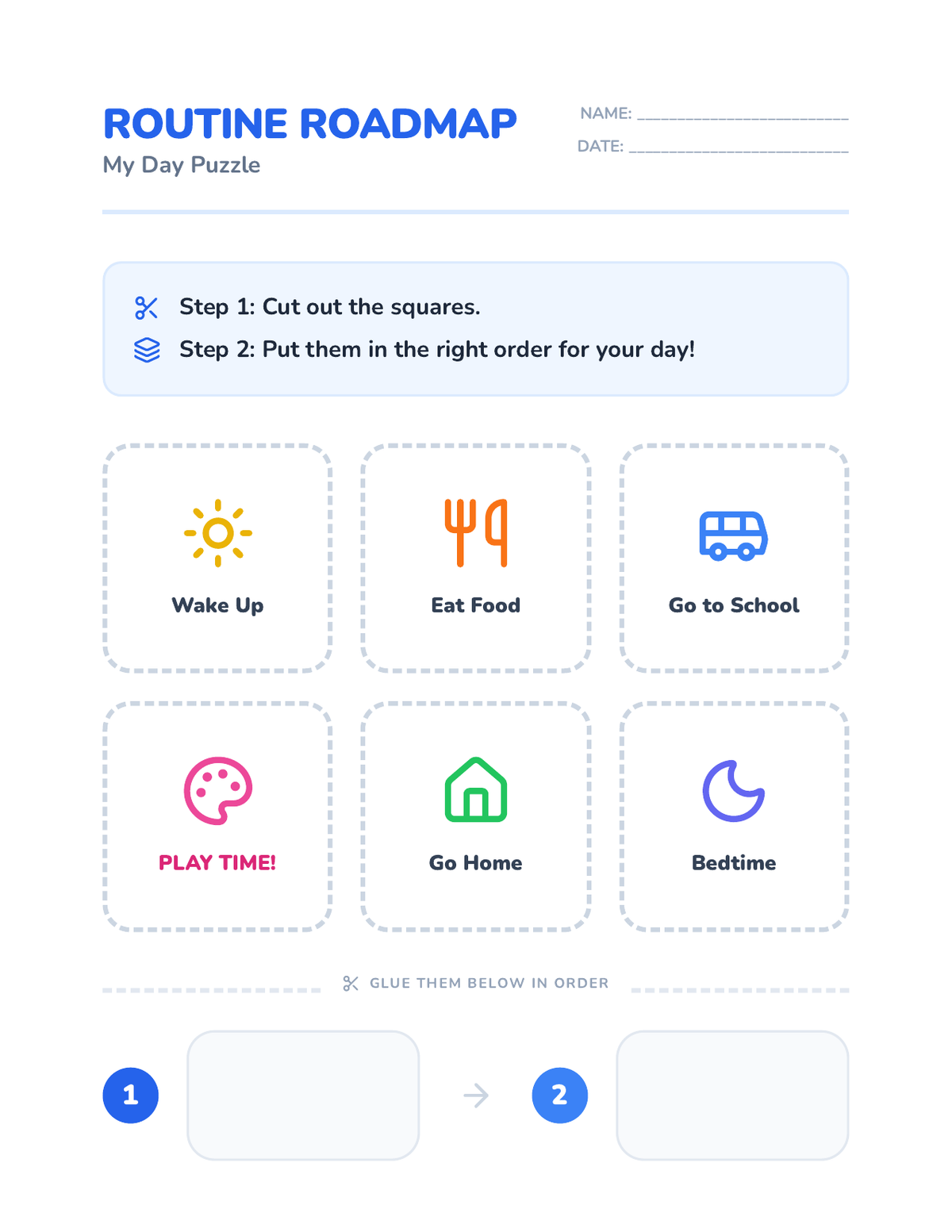
A cut-and-paste sequencing worksheet for Kindergarteners to practice ordering daily events, including play time.
Visual presentation introducing the concept of daily routines to Kindergarteners, emphasizing the importance of scheduling play and fun.
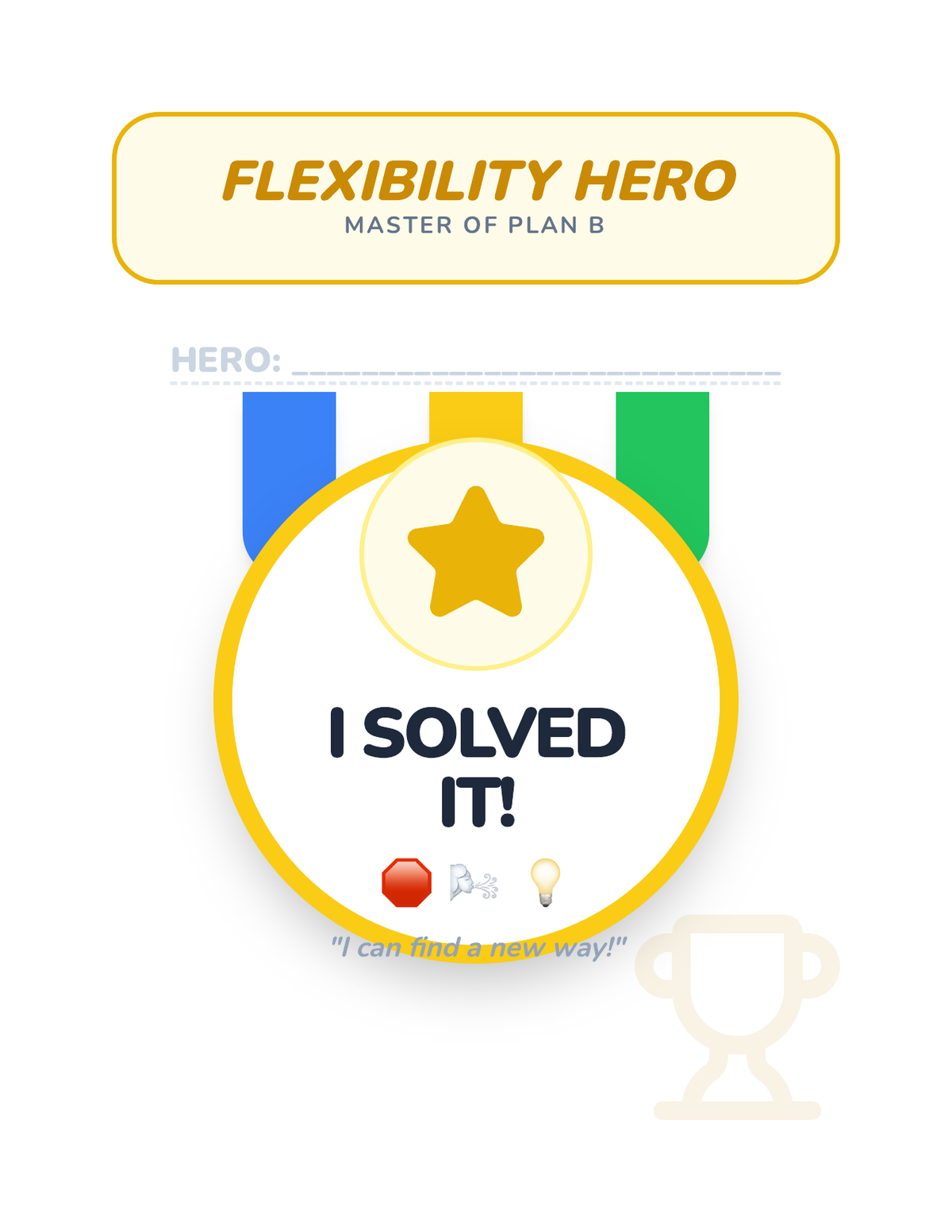
A printable 'Flexibility Hero Medal' for students to color and wear after completing the sequence, serving as a positive reinforcement tool.
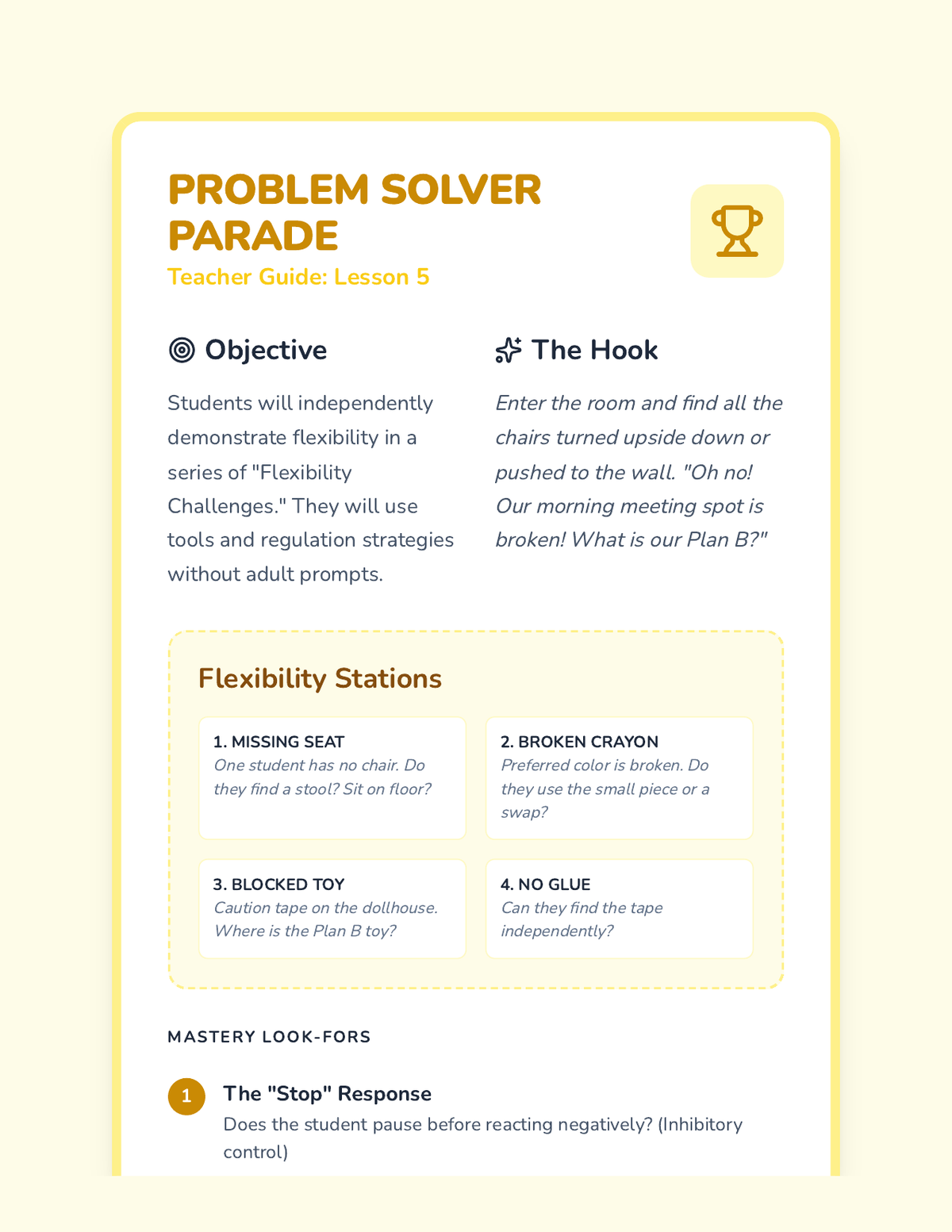
Final visual presentation for the sequence, presenting students with cumulative challenges to solve independently using their new skills.
Teacher guide for the final lesson in the sequence, outlining cumulative challenges and independent mastery assessment.
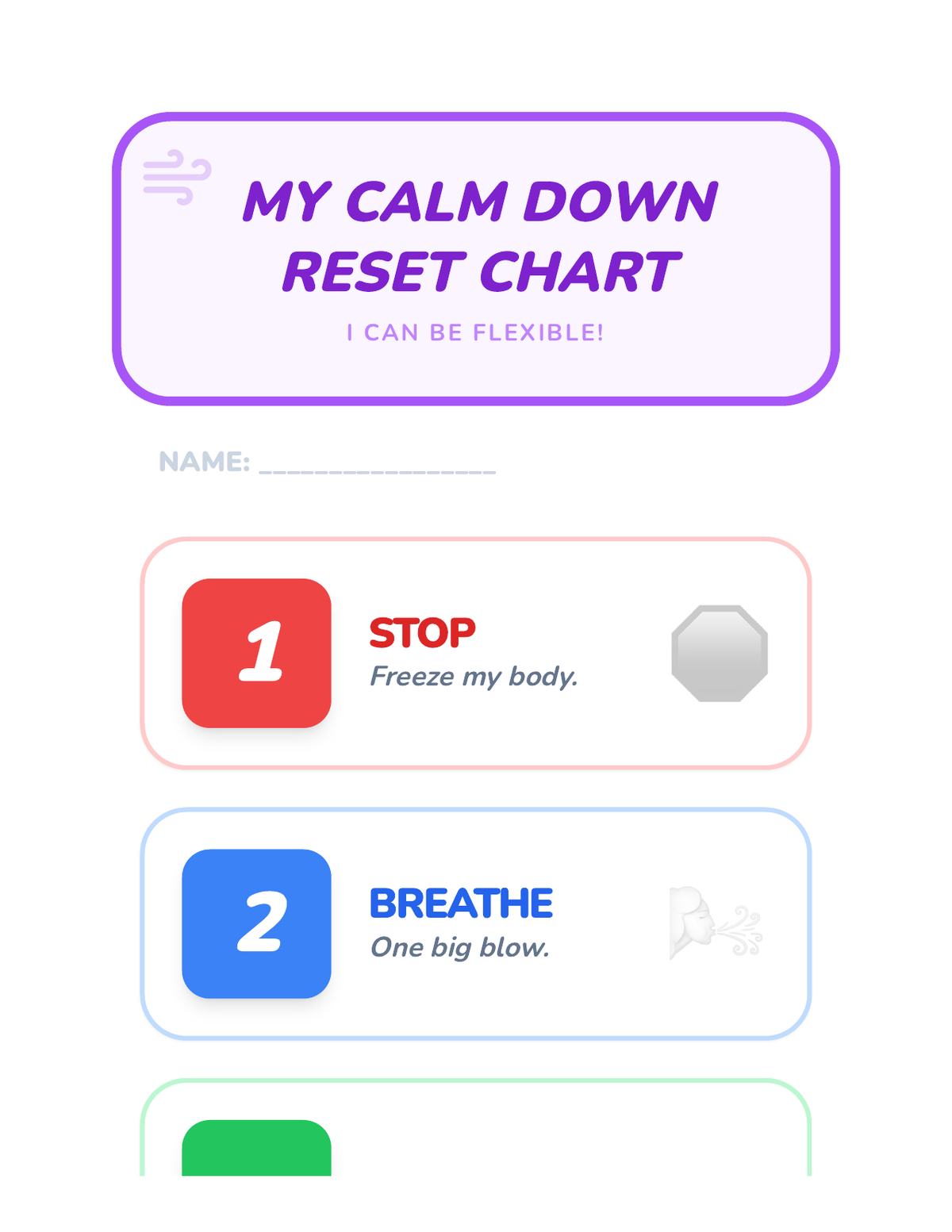
A visual anchor chart for Pre-K students to take home or keep at their desk, reminding them of the three steps to emotional regulation.
Visual presentation for Lesson 4, guiding students through the three-step emotional regulation process for problem-solving.
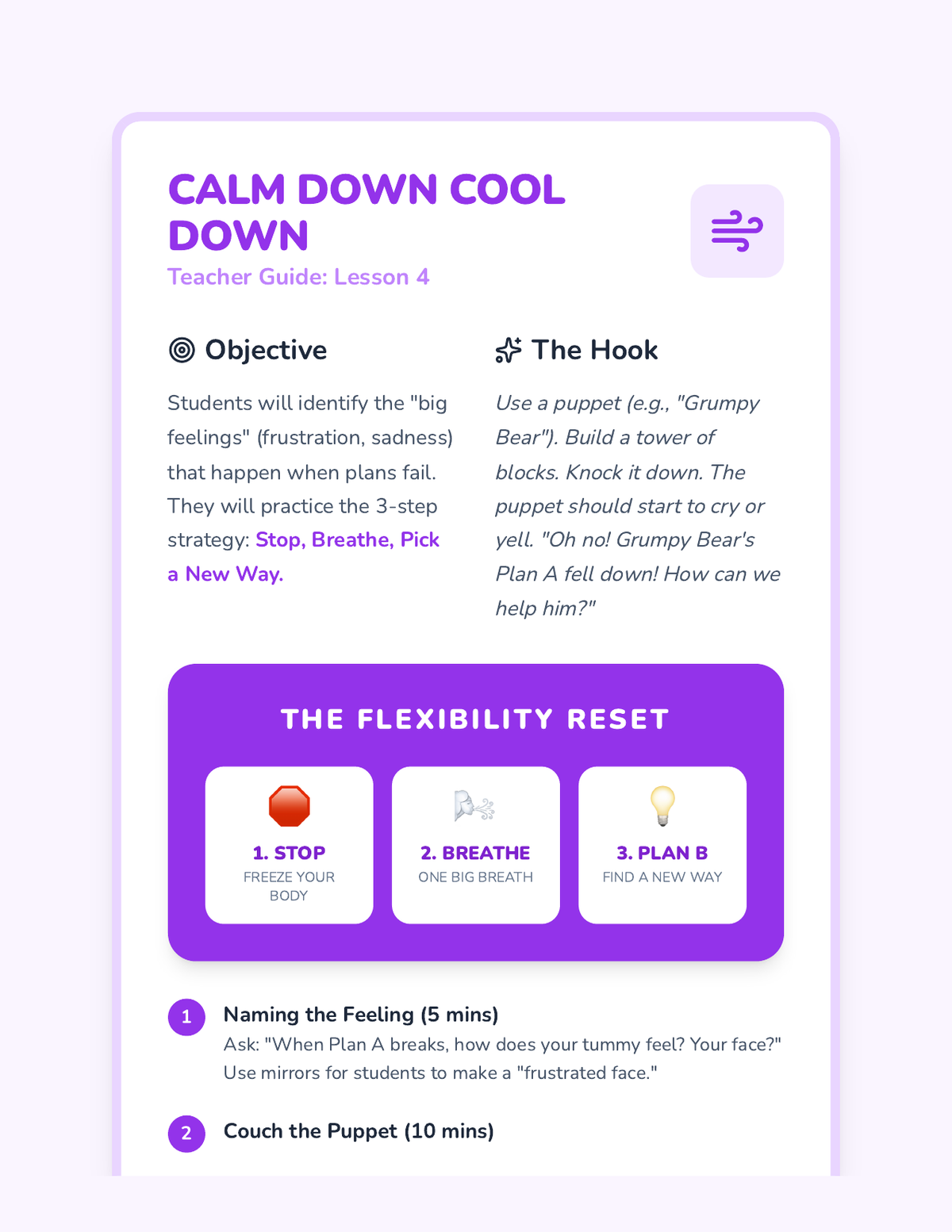
Teacher guide for Lesson 4, teaching emotional regulation steps (Stop, Breathe, Plan B) when students face frustration from blocked plans.
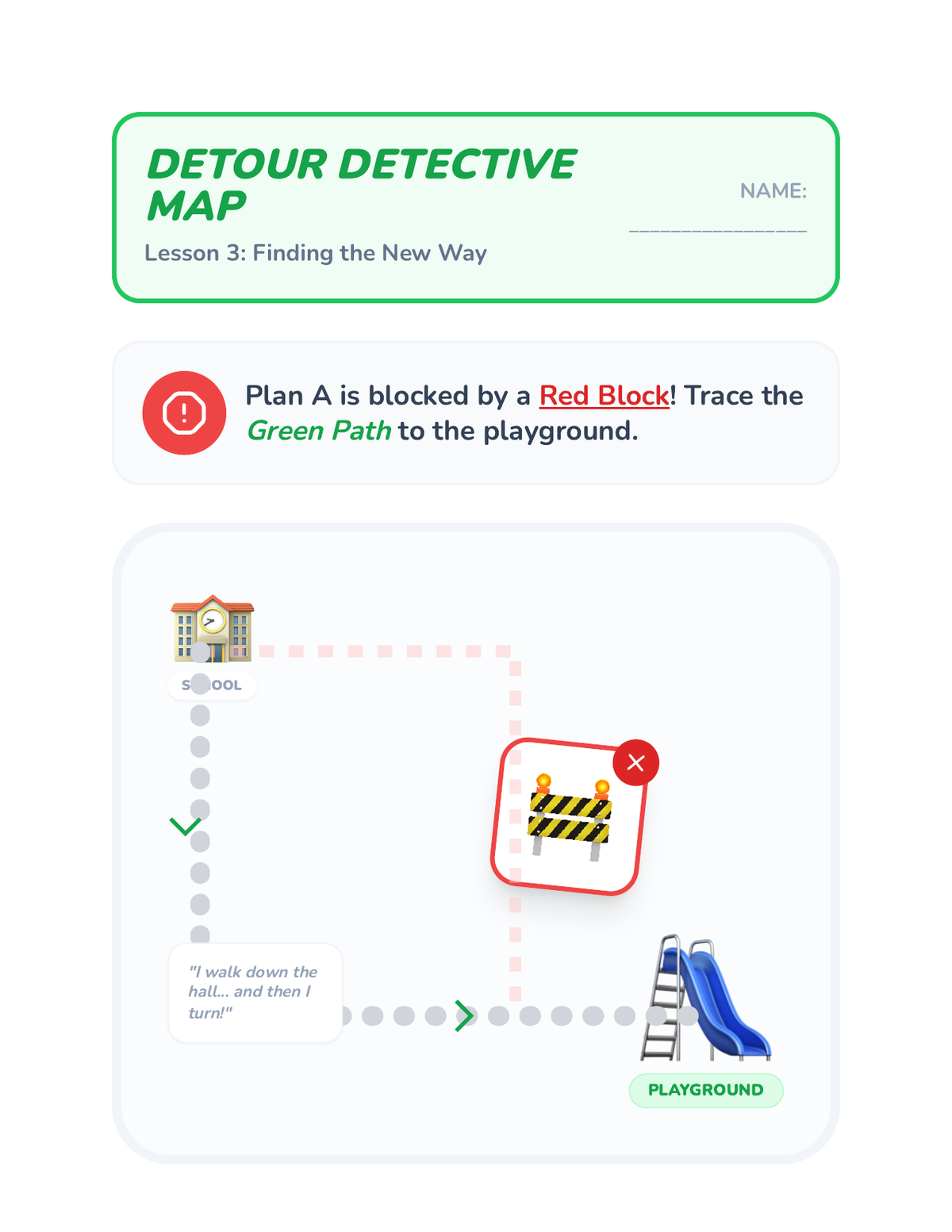
A simple maze/tracing activity for Pre-K students to visualize and map out a detour route to a goal.
Visual presentation for Lesson 3, teaching students how to scan for alternative routes when their usual path is blocked.
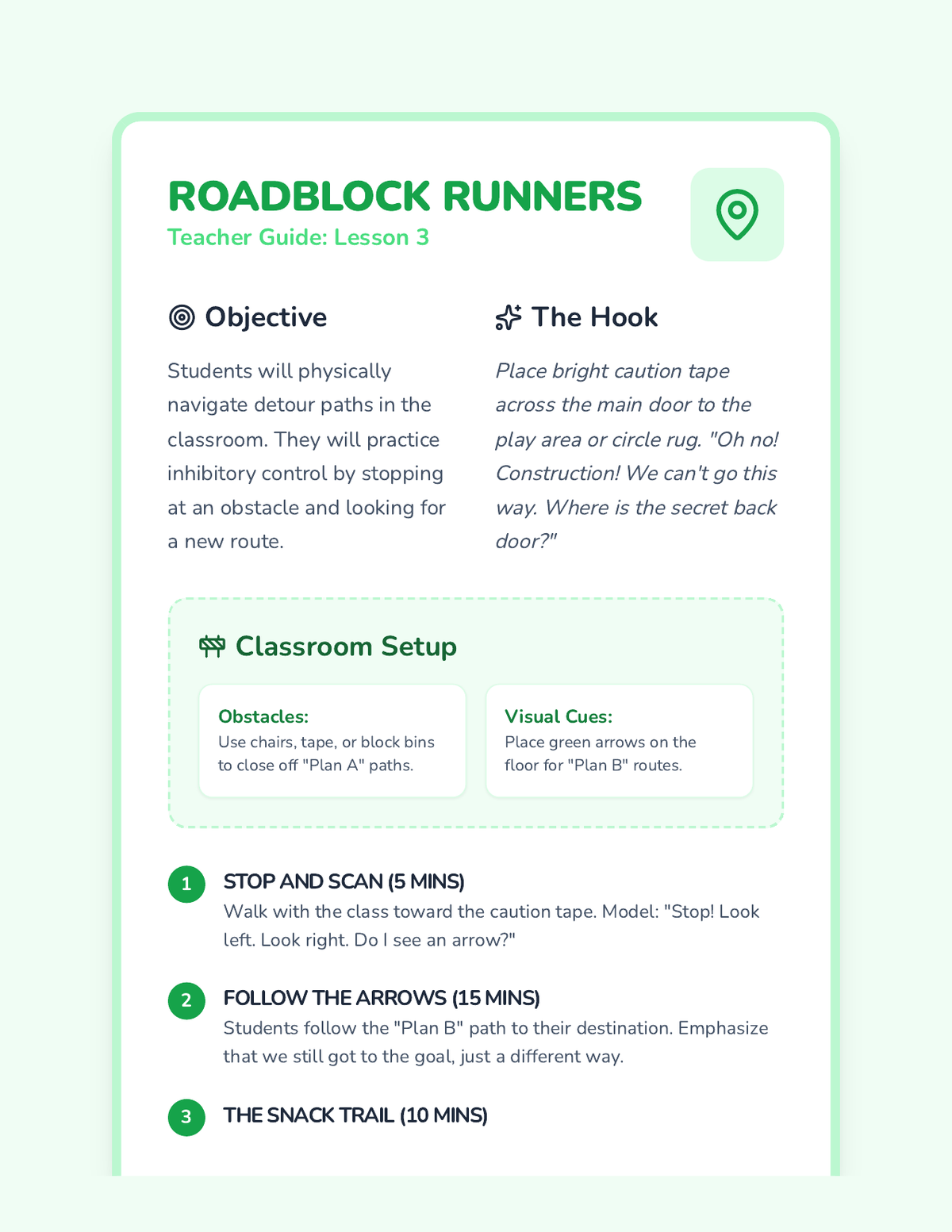
Teacher guide for Lesson 3, focusing on physical navigation and detours in the classroom to build spatial flexibility.
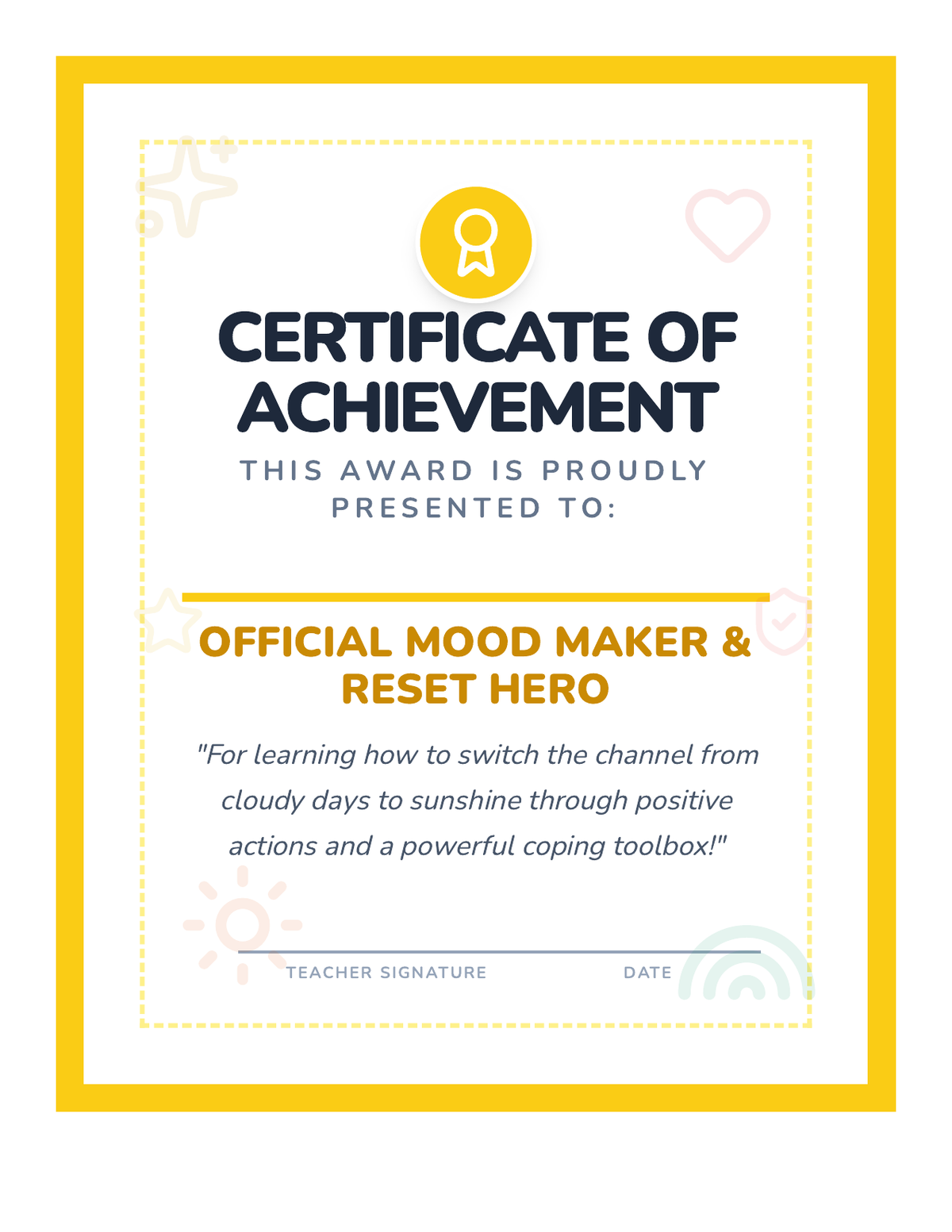
A celebratory completion certificate for students who have finished the 'Mood Makers' sequence, recognizing them as 'official Mood Makers and Reset Heroes'.
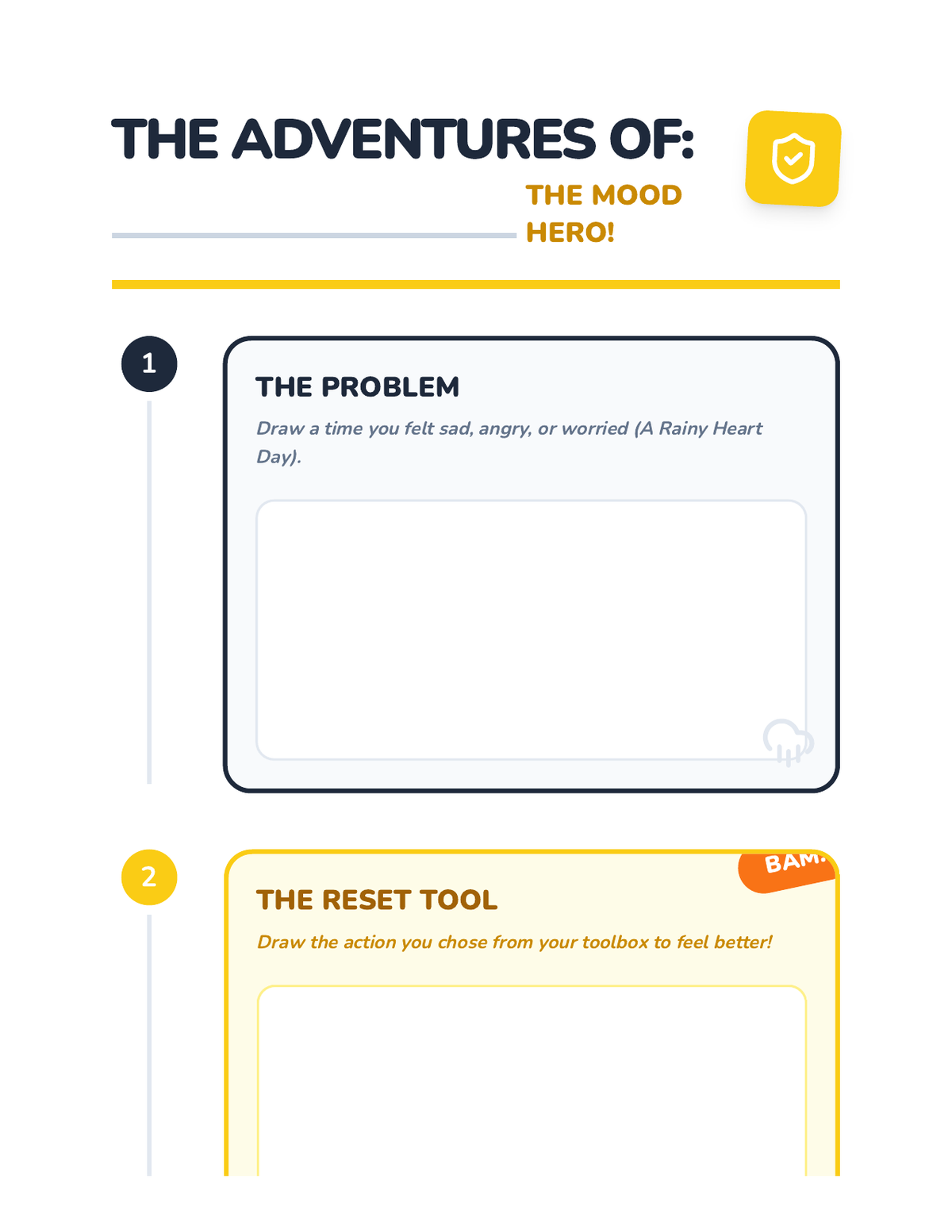
A student worksheet for reflecting on emotional change by creating a visual comic story of identifying a problem, choosing a tool, and achieving a positive mood shift.
Instructional slides for Lesson 5, reviewing the key concepts of internal weather, movement experiments, and the coping toolbox.
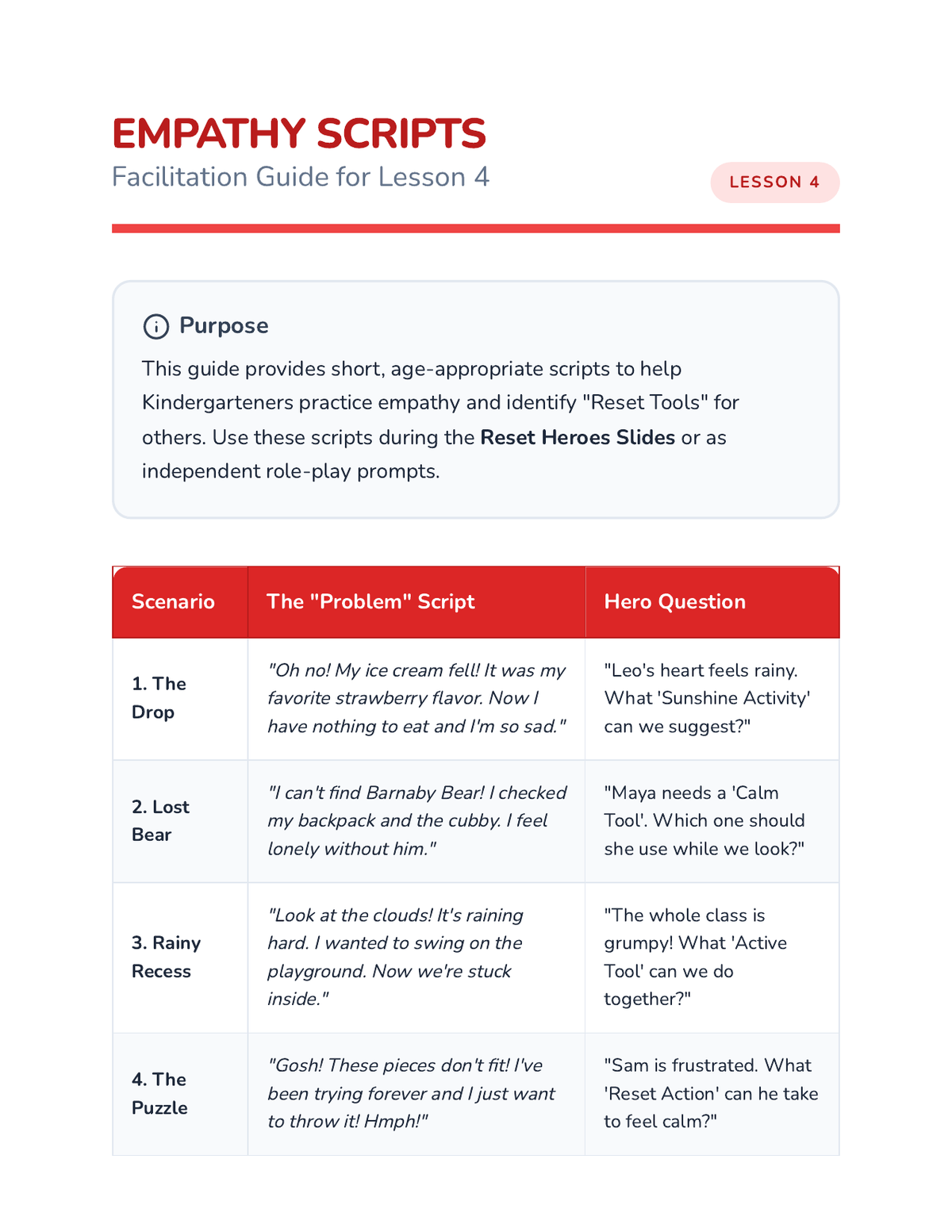
A teacher guide with scripted scenarios and facilitation prompts for role-playing emotional resets and building empathy.
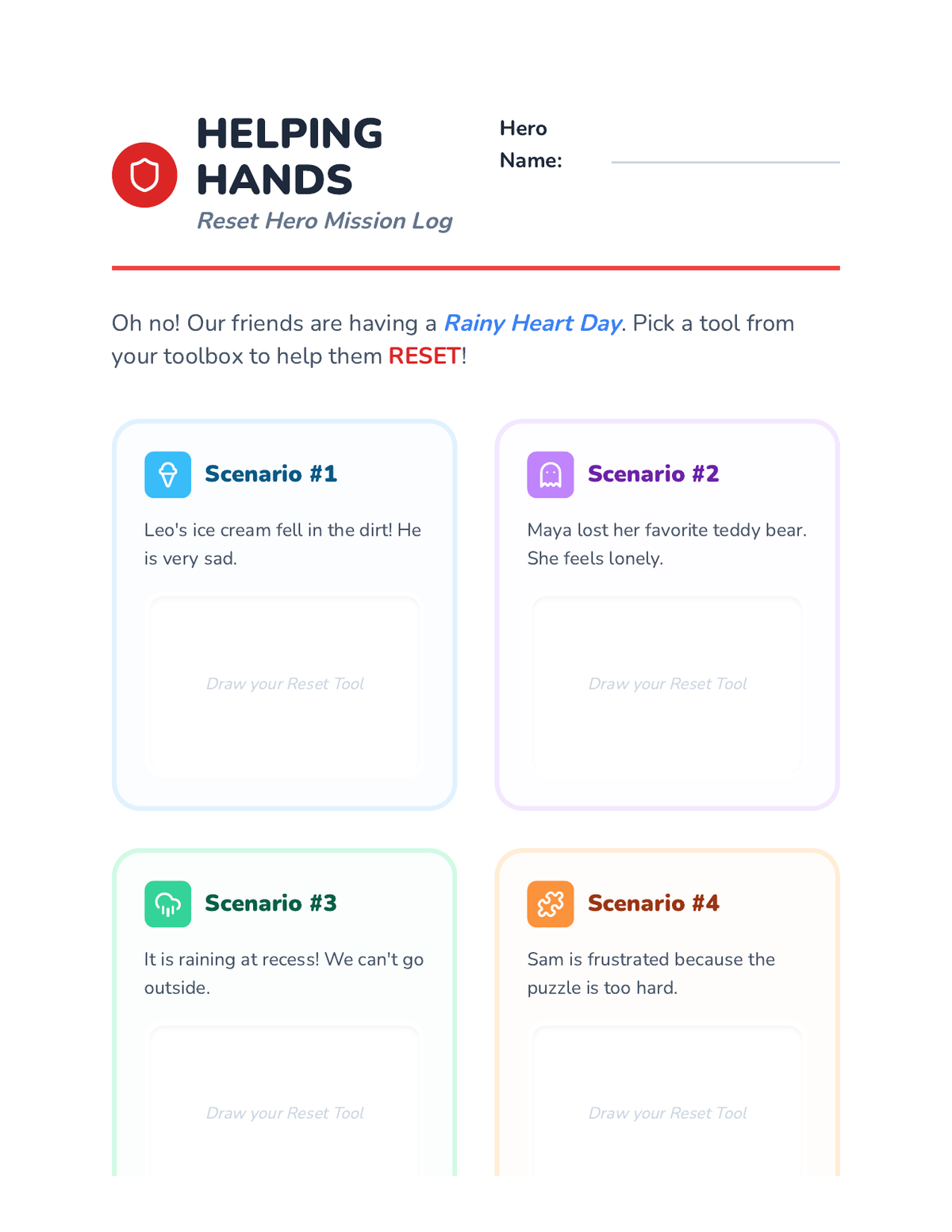
A student worksheet to select and draw 'Reset Tools' for characters facing emotional disappointments.
Instructional slides for Lesson 4, presenting 'Reset Hero' scenarios to practice empathy and behavioral activation.
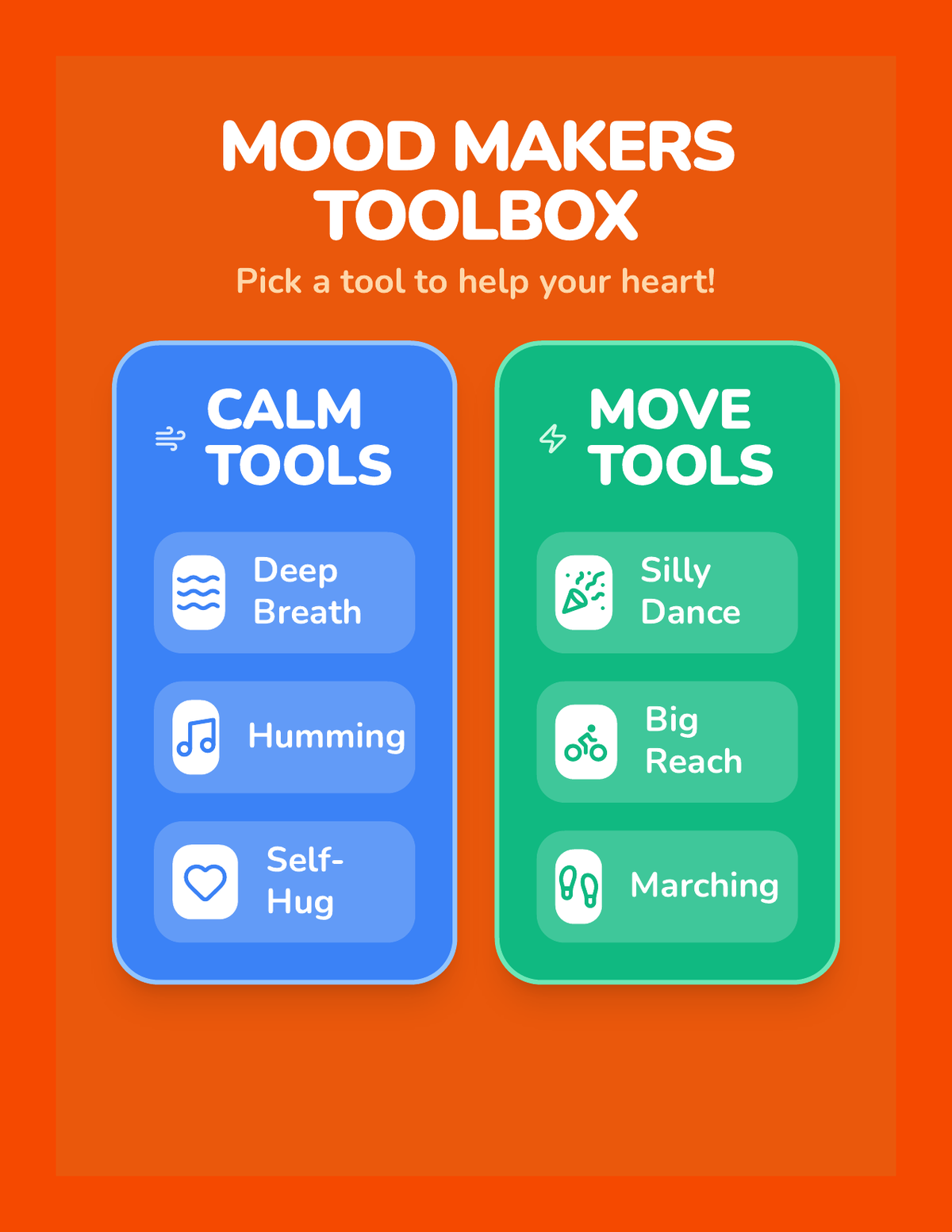
A classroom reference poster visualizing the 'Calm' and 'Move' tools for emotional regulation.
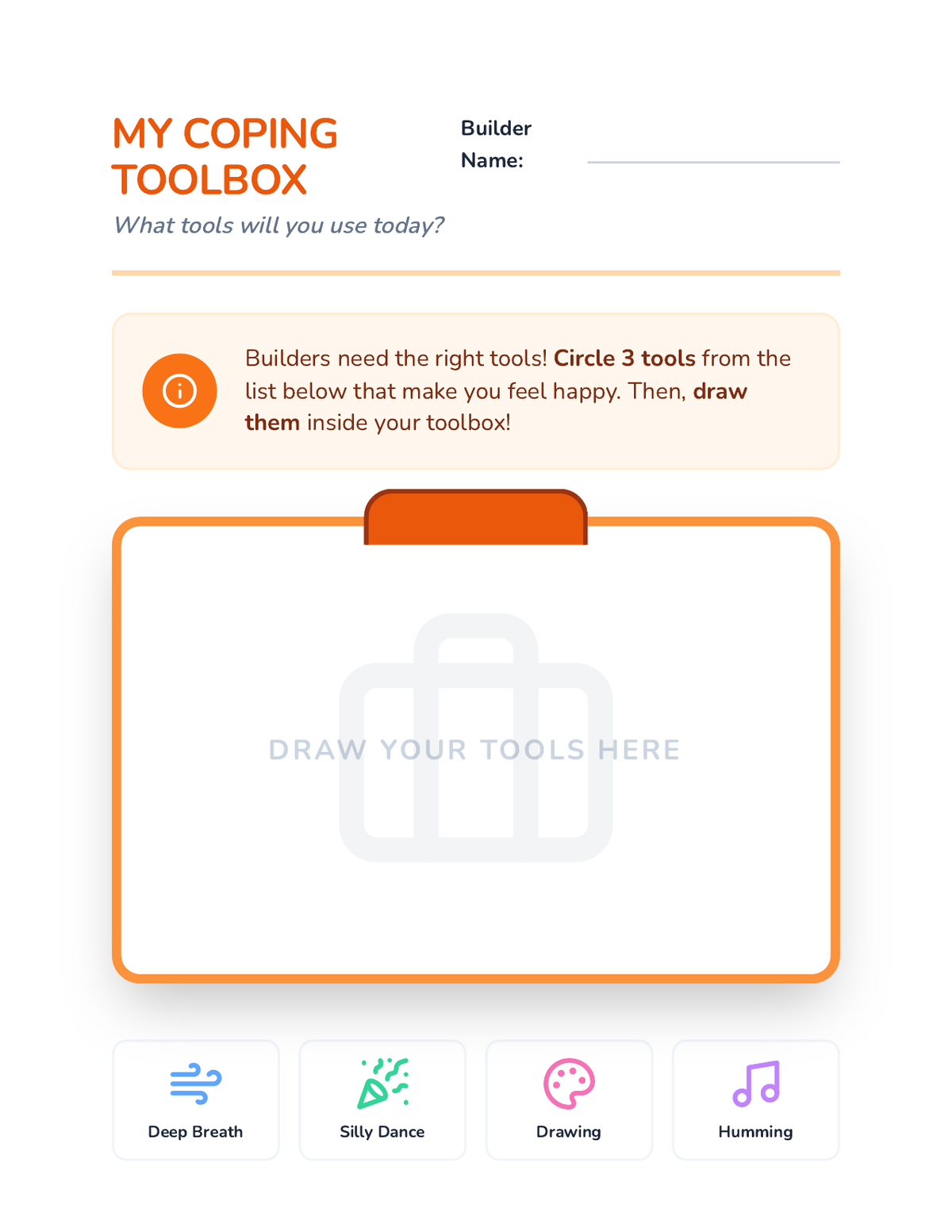
A student worksheet to select and draw 'coping tools' into a personal toolbox illustration.
Instructional slides for Lesson 3, introducing the 'Toolkit' concept and categorizing actions into 'Calm' and 'Active' tools.
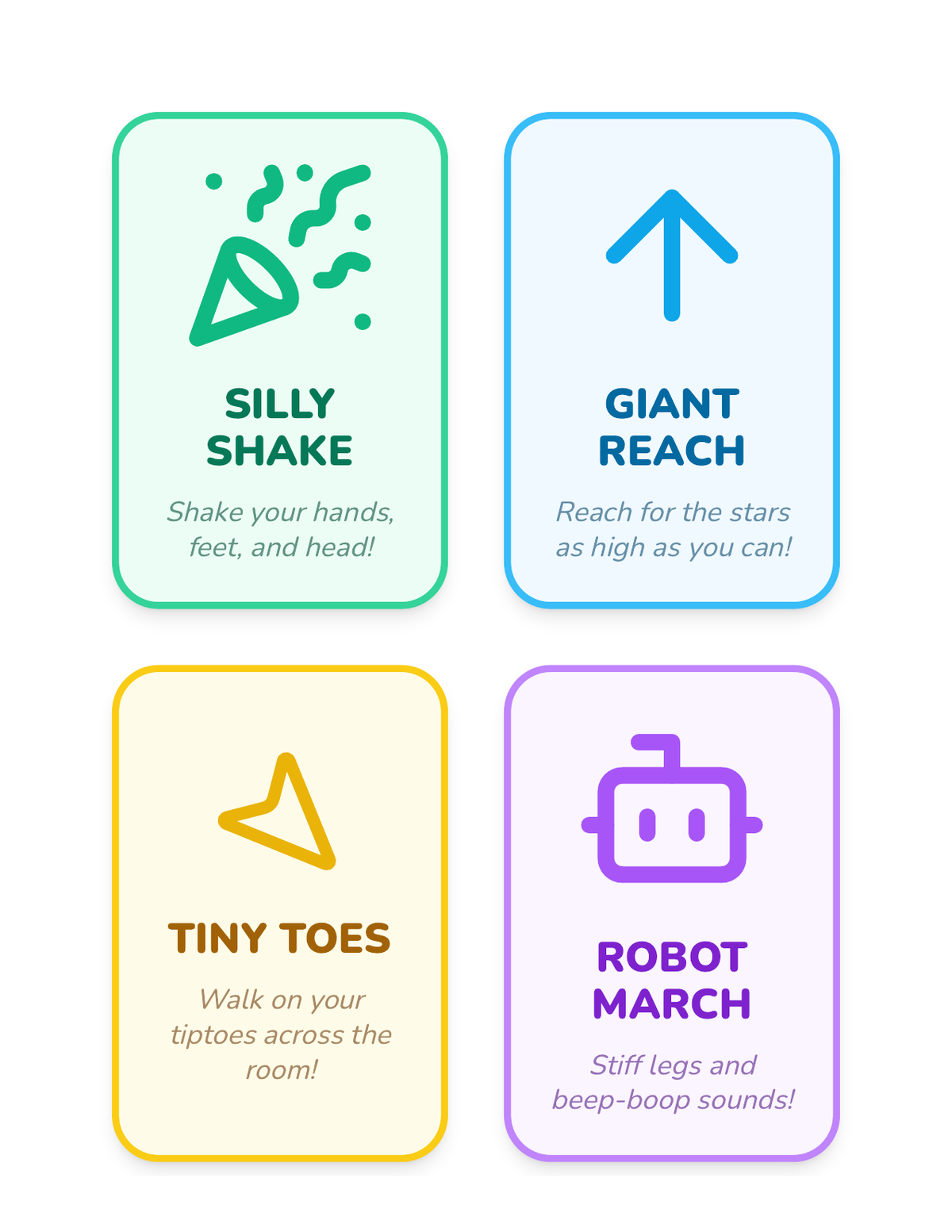
Activity cards for different movements (Silly Dance, Giant Stretches, Humming, etc.) to be used during the 'Action Reaction Experiment'.
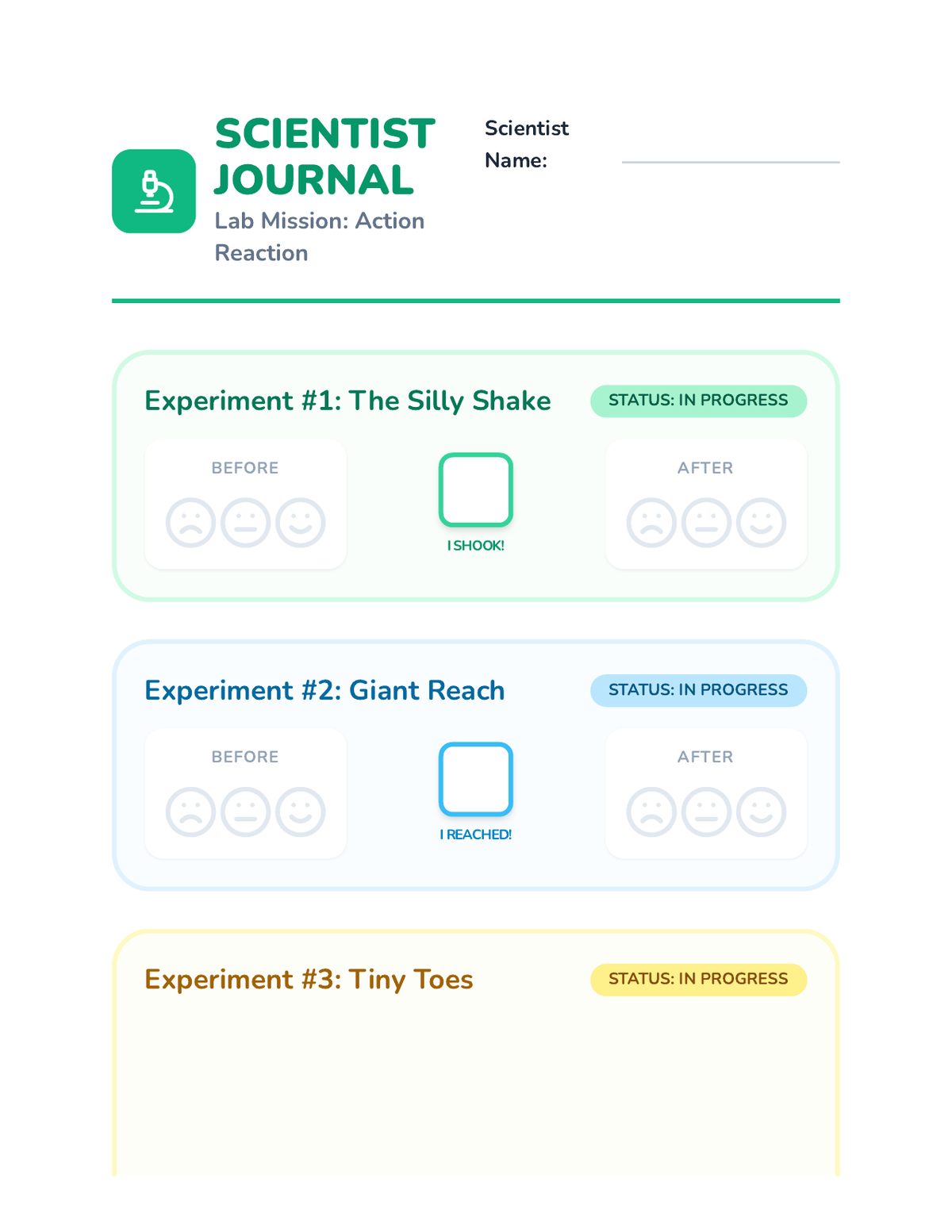
A student journal to record 'before' and 'after' feelings during movement experiments, using emoji icons for identification.
Visual slide deck for the final project, detailing the detective oath, the mission brief, and the reporting process.
Instructional slides for Lesson 2, presenting the 'Mood Scientist' mission and guiding students through a movement experiment.
Visual slide deck for Lesson 4, introducing the concept of "Debugging" through the "Program Your Teacher" game and identifying glitches in sequences.
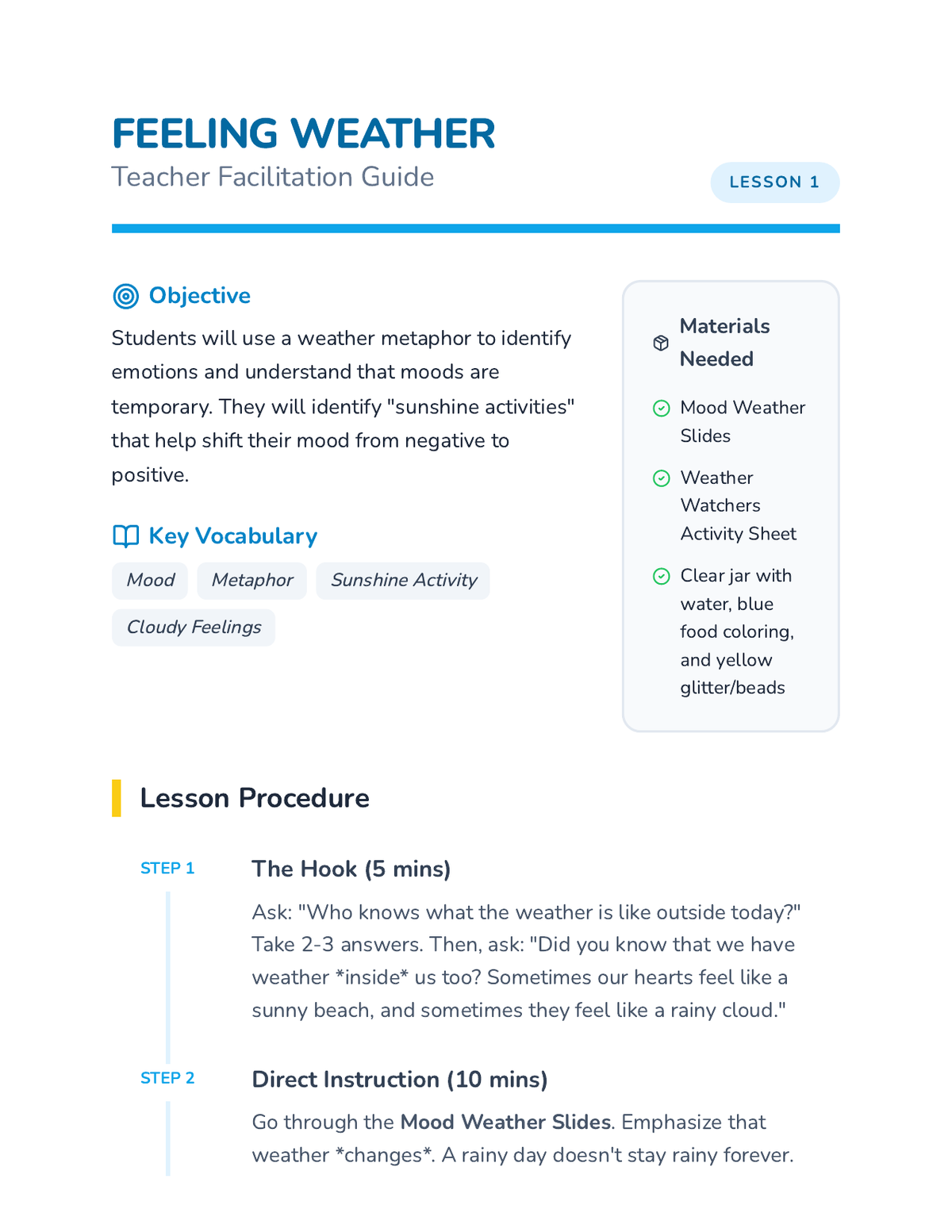
A teacher facilitation guide for Lesson 1, including a 'Sunshine Drop' demonstration and step-by-step instructions.
Printable detective badges for students to wear during their culminating project, featuring space for names and the Solution Squad motto.
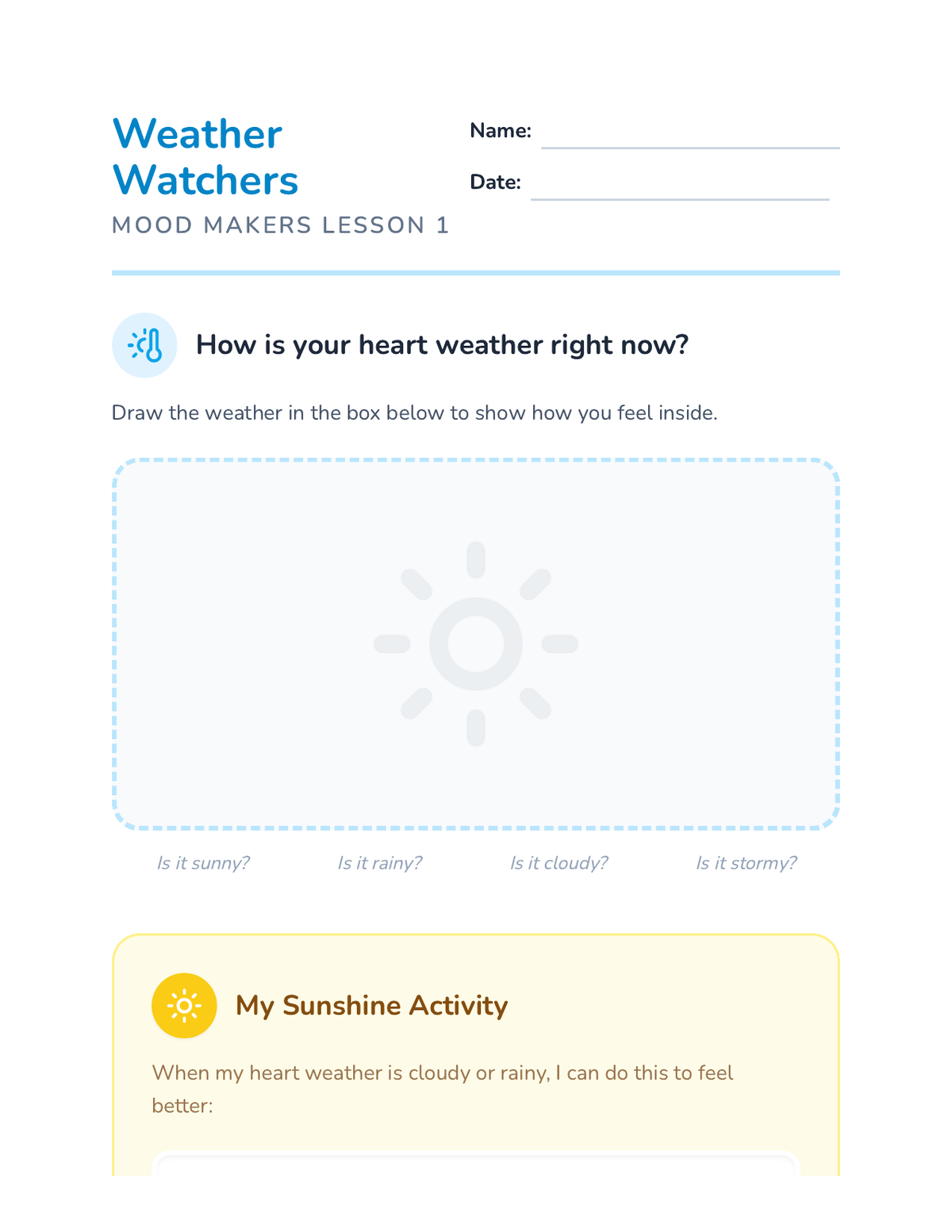
A student worksheet for identifying current 'mood weather' and drawing a 'sunshine activity' to shift from negative to positive emotions.
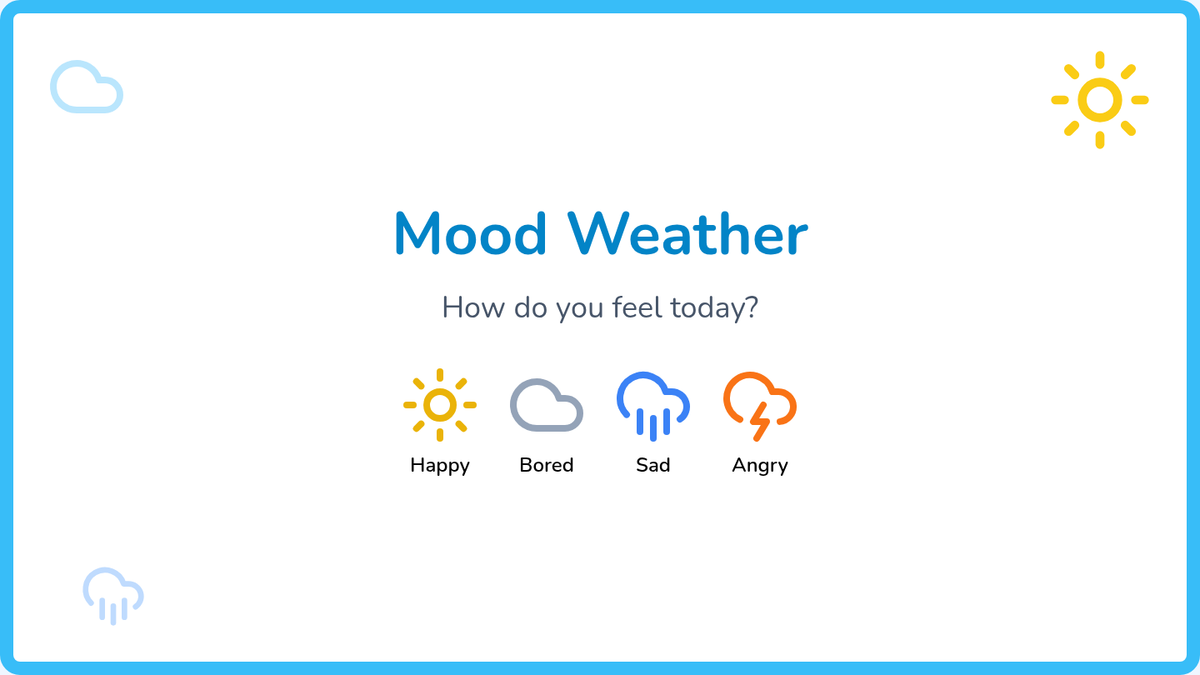
Colorful slides introducing the weather metaphor for feelings and 'sunshine' activities to shift moods.
Visual slide deck for Lesson 3, practicing the prediction of consequences using "If-Then" thinking and evaluating solution safety.
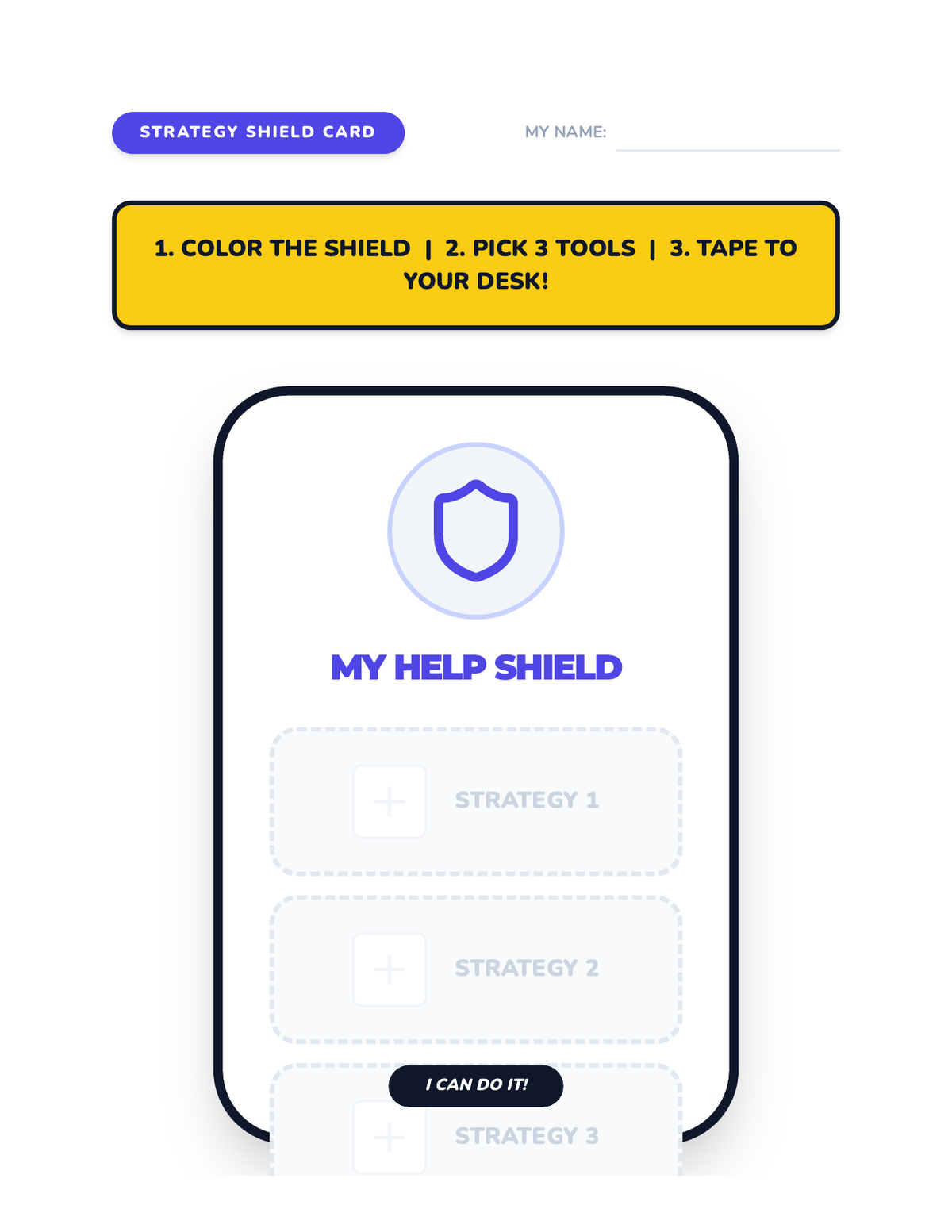
A student project template for creating a personalized 'Strategy Shield' desk card. Includes cut-out strategy icons for visual choice-making.