Root cause analysis and brainstorming techniques for everyday problem-solving. Equips learners with ethical frameworks and risk-benefit evaluation skills to predict consequences and make informed choices.
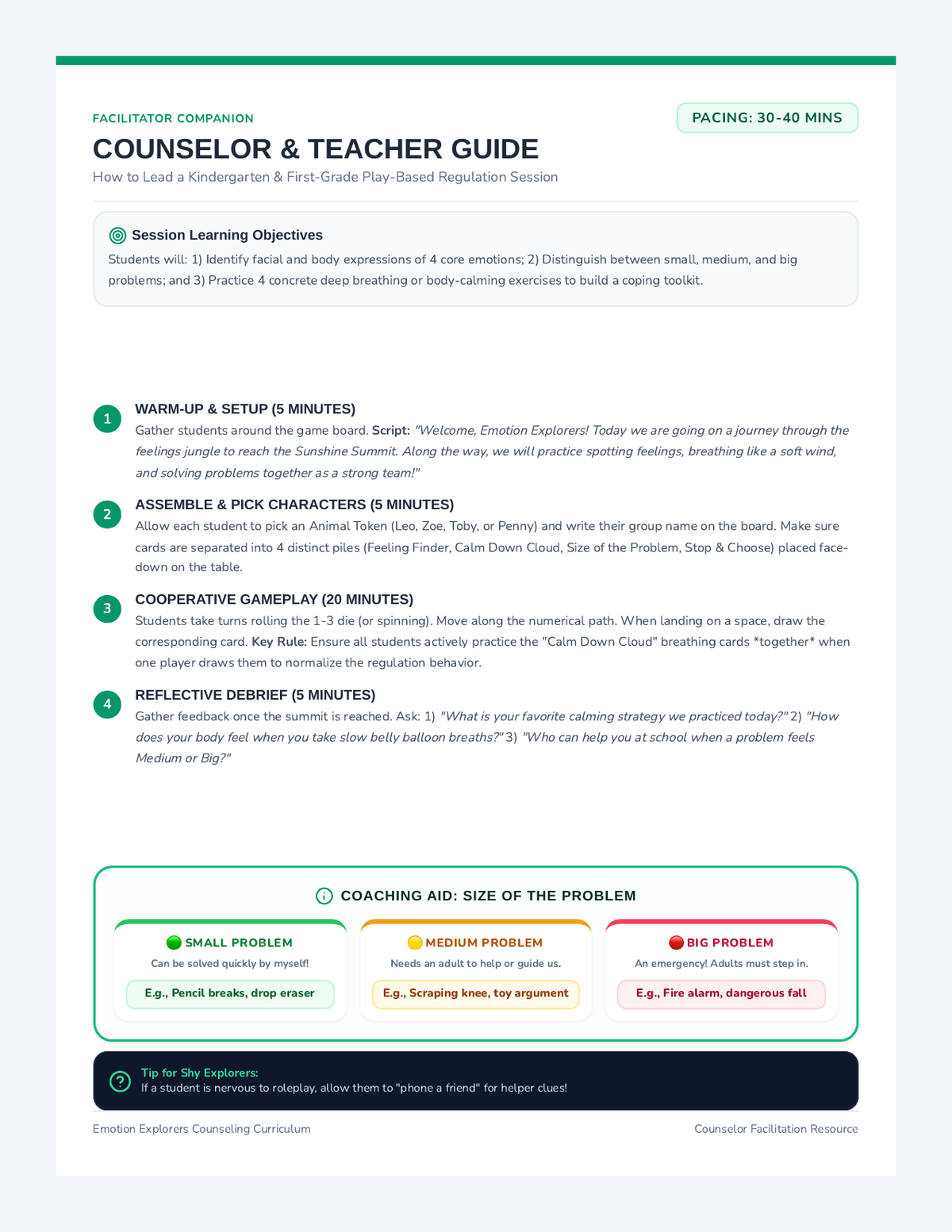
A highly professional, one-page printable counselor and teacher guide for conducting the game session. Includes session pacing, warm-up script, rules of play, debrief questions, and a visual Size of the Problem scale.
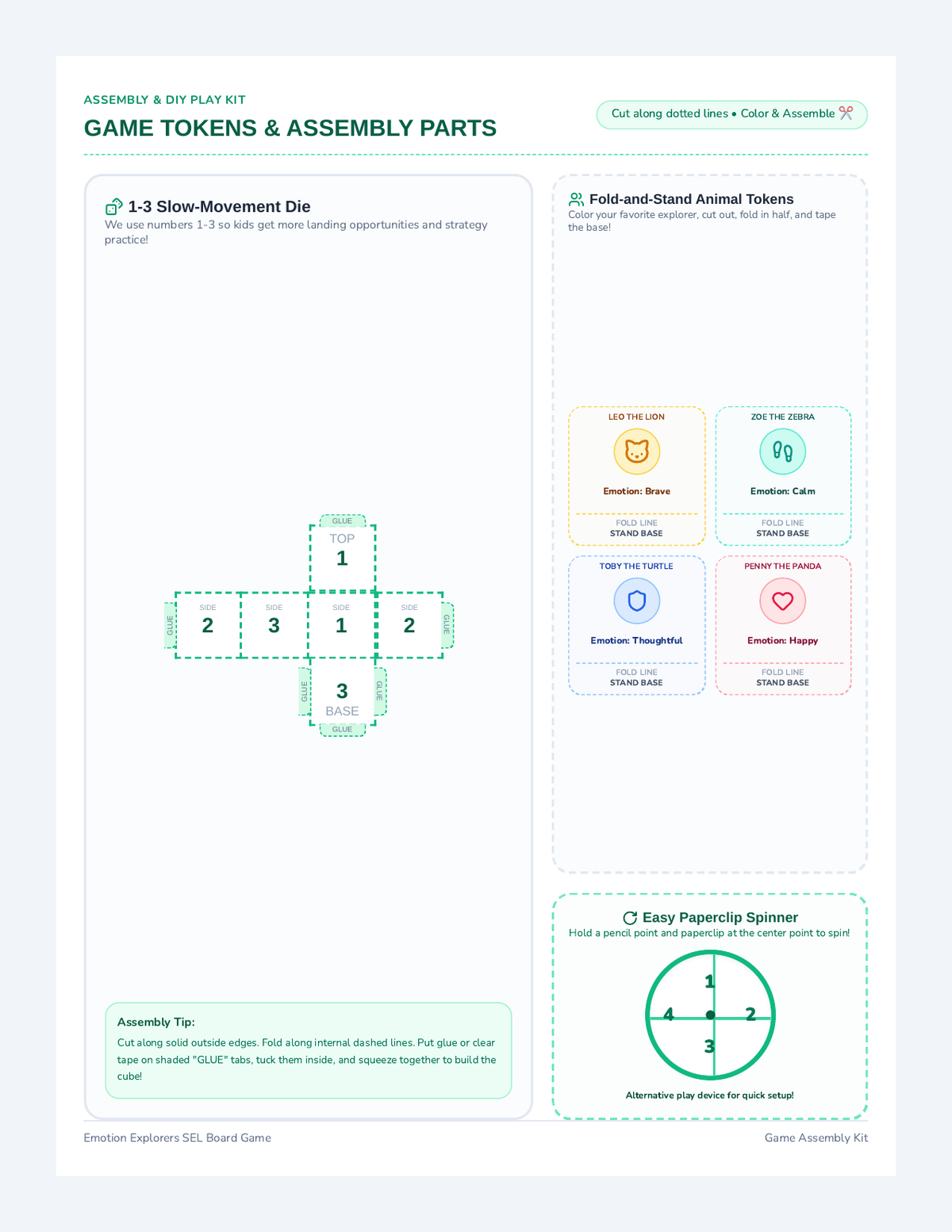
A printable workspace containing 4 fold-over character tokens, a slow-movement 1-3 game die, and an alternative 1-4 paperclip spinner. Features fold/cut guidelines ideal for craft development.
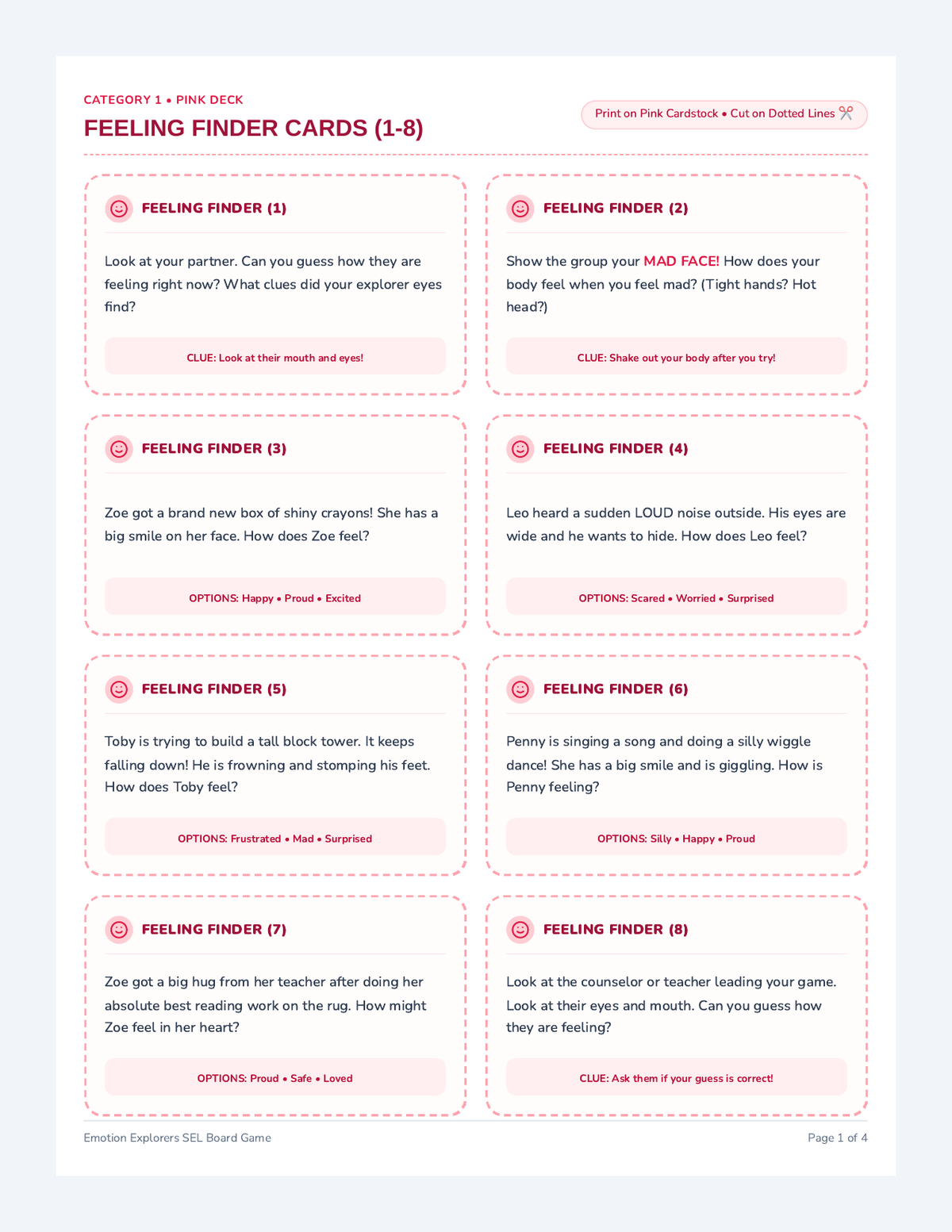
A 4-page print-and-cut card deck containing 32 situation and action cards specifically designed for K-1 developmental levels. Each page is dedicated entirely to a single category (8 cards each of Feeling Finder, Calm Down Cloud, Size of the Problem, and Stop & Choose) to allow for color-coded printing.
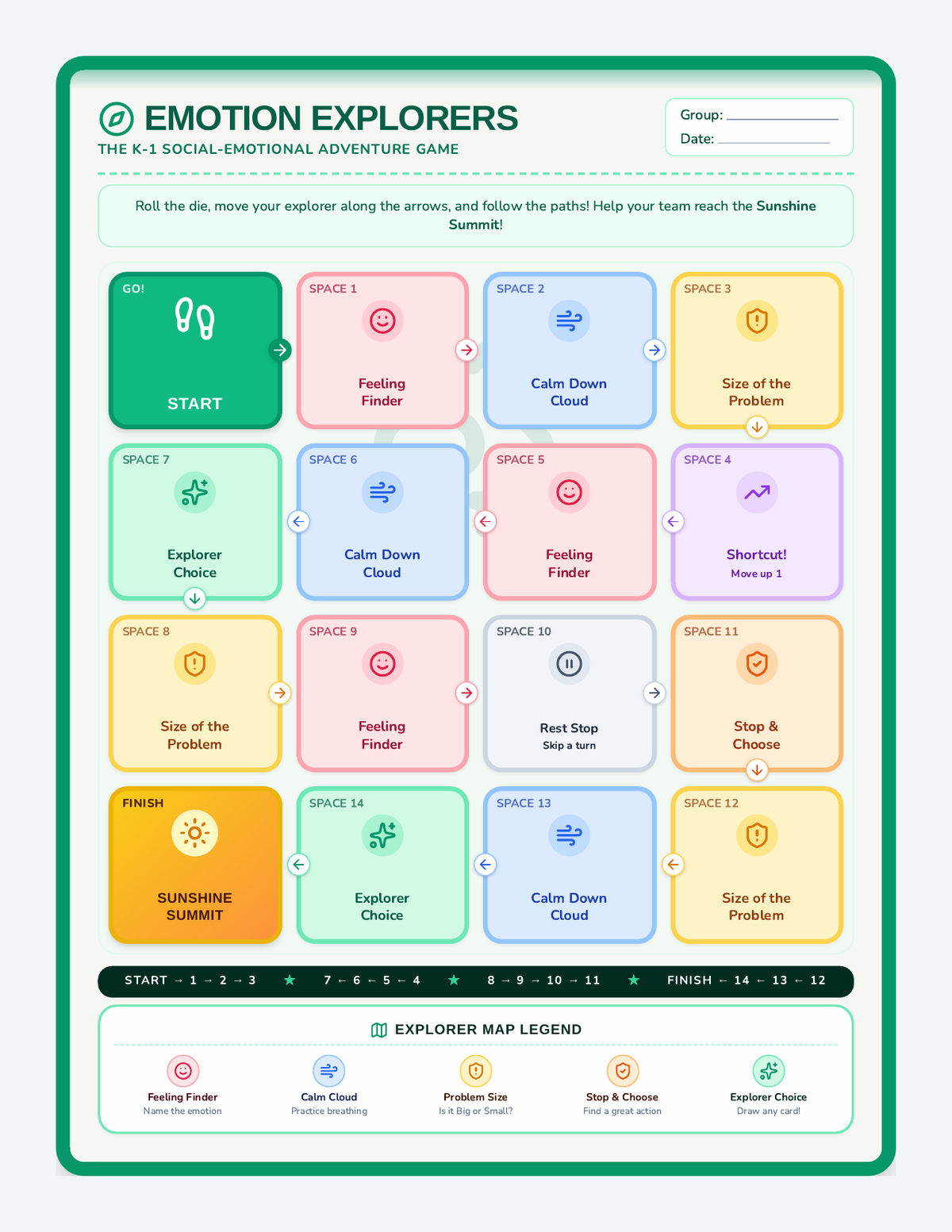
A printable, colorful portrait-format board game for K-1 students featuring a winding jungle pathway with directional arrows. Students land on action spaces to practice identifying feelings, breathing deeply, scaling problems, and making helpful choices.
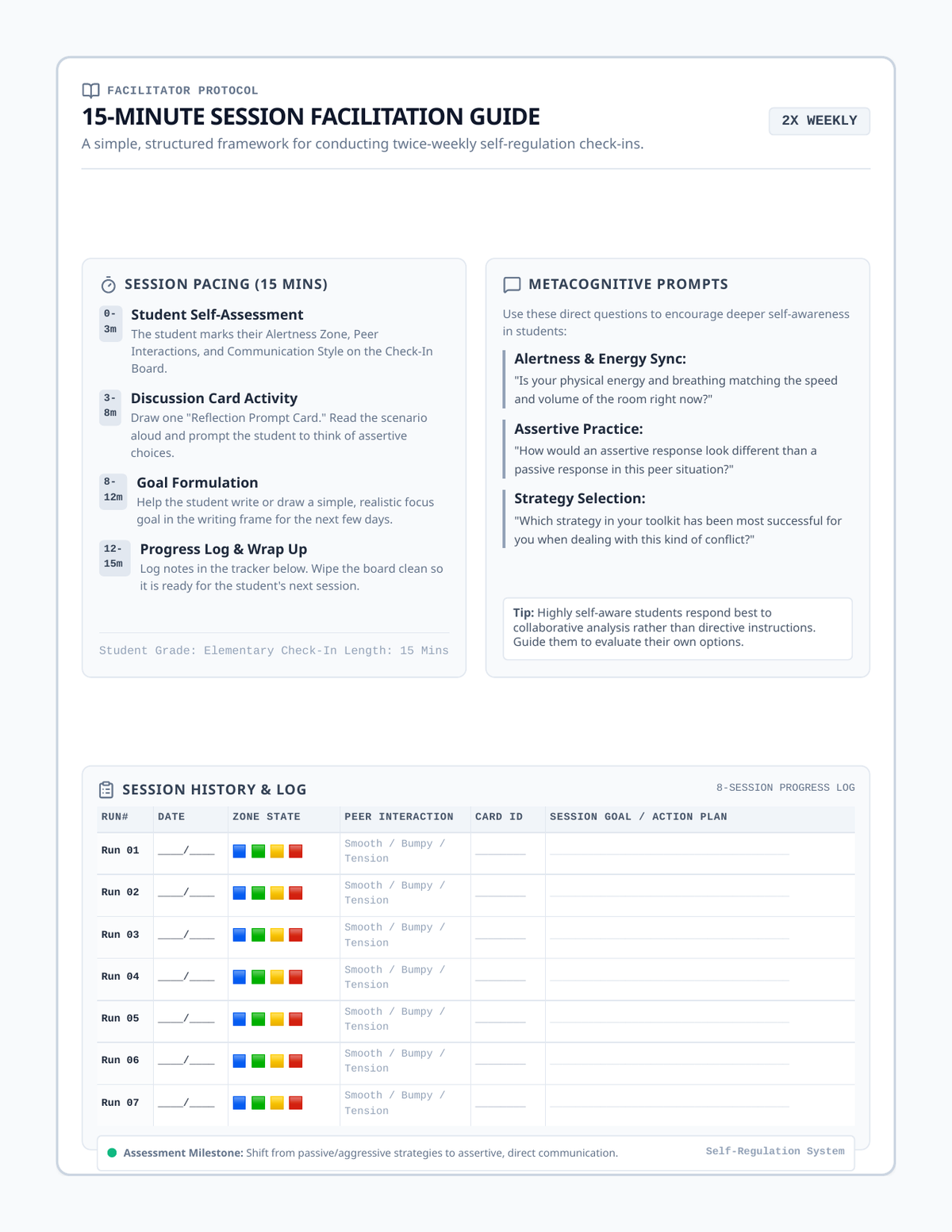
A teacher-facing pacing guide and tracking sheet for conducting rapid 15-minute 1-on-1 self-regulation sessions. Includes a minute-by-minute protocol, facilitation scripts, and a printable 8-session log.
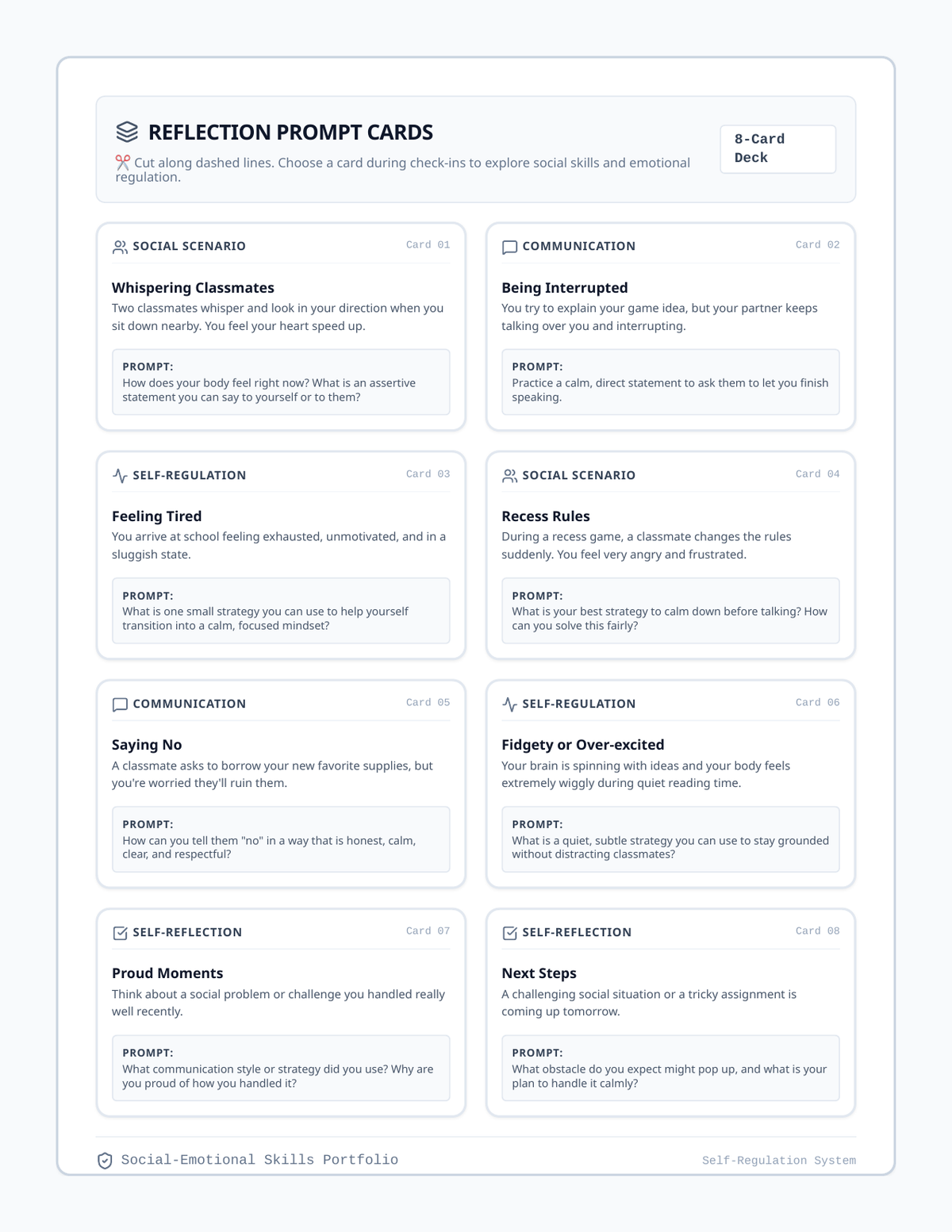
A set of 8 clean, non-themed discussion cards categorized into Social Scenarios, Self-Regulation, Assertive Communication, and Self-Reflection. Perfect for structured 1-on-1 counseling or check-ins.
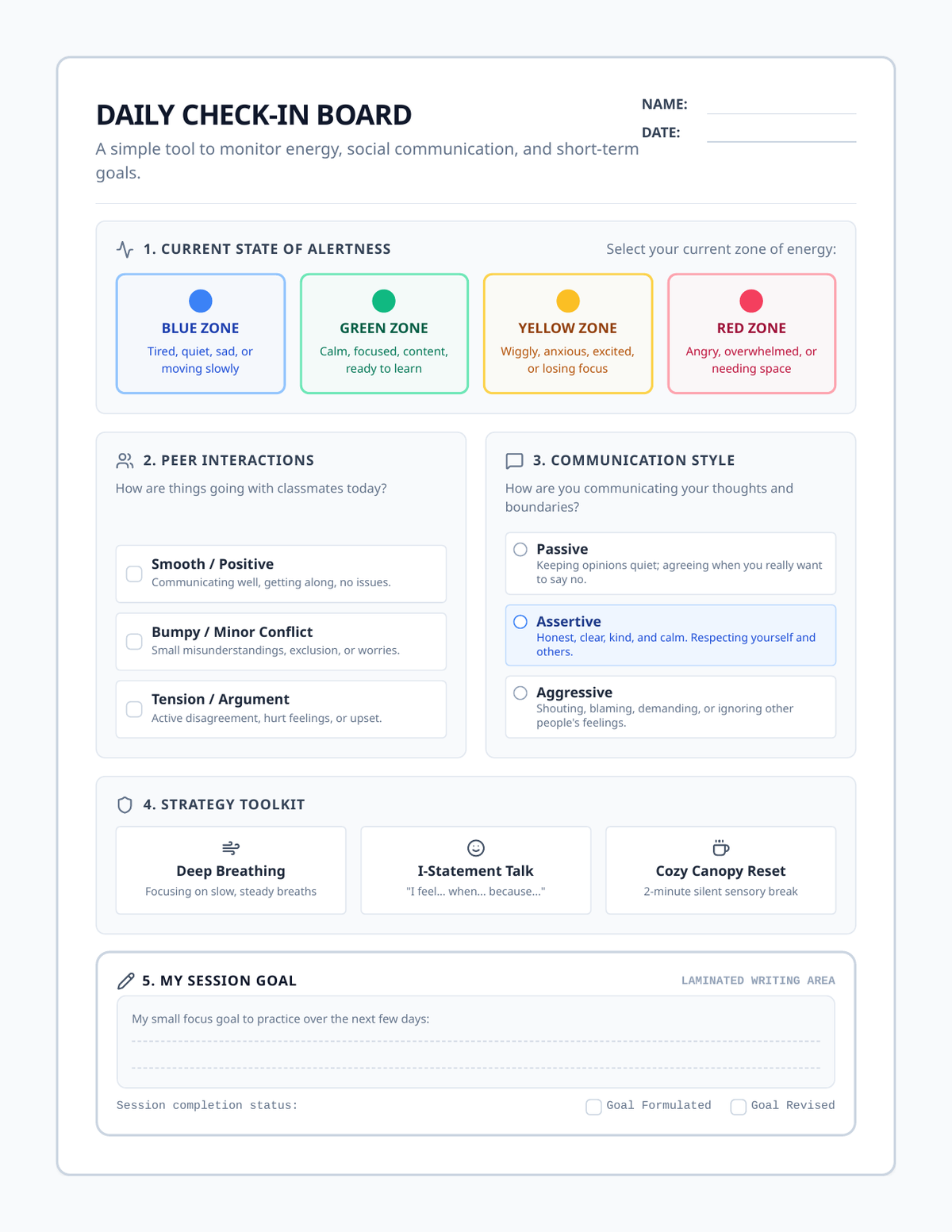
A highly visual, printer-friendly check-in board designed for lamination and dry-erase marker use. Optimized with a white background and clean, professional borders for everyday classroom use.
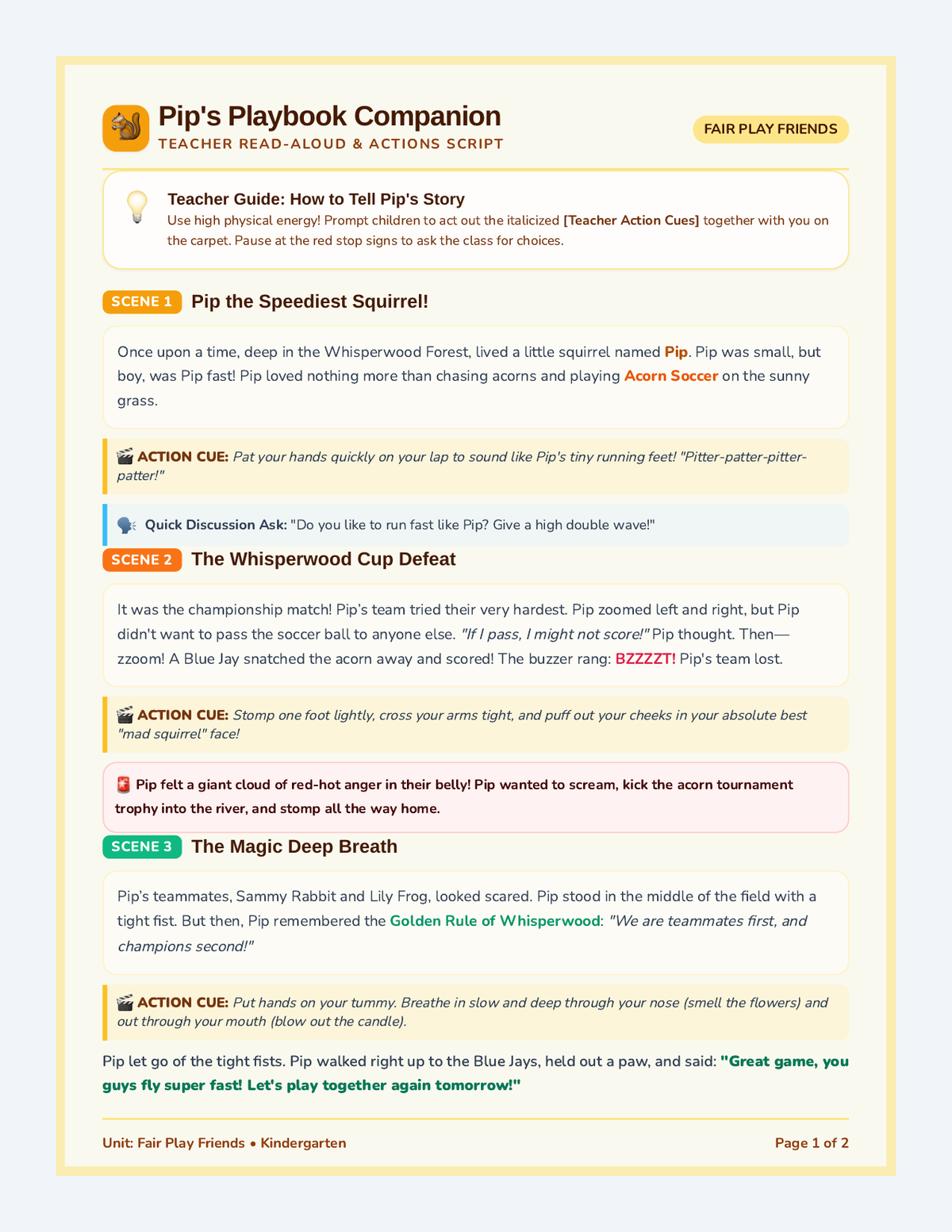
A highly structured, 2-page printable teacher read-aloud script and discussion companion guide for 'The Story of Pip the Squirrel'. Features full storytelling text, physical teacher-action prompts, and tiered questions for before, during, and after reading.
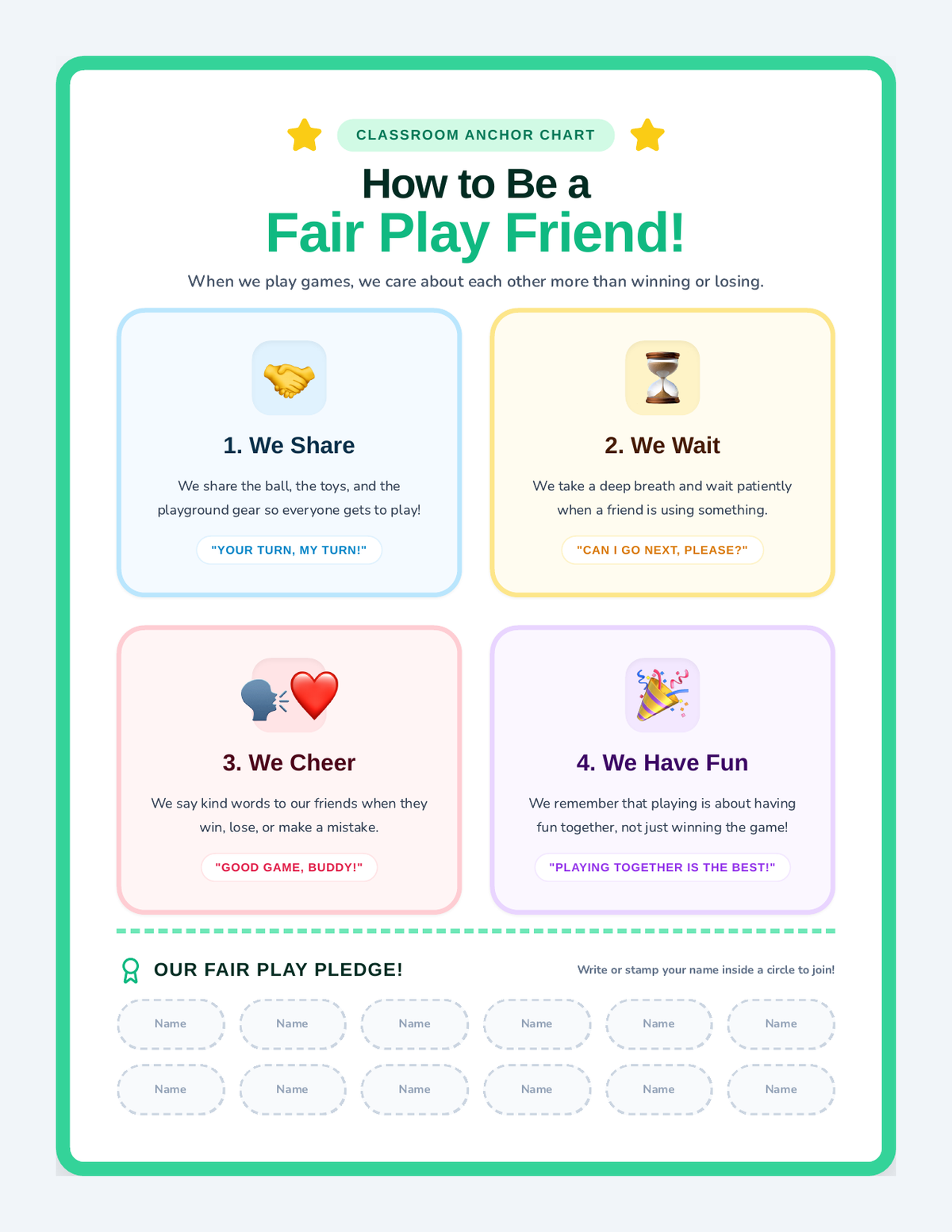
A single-page printable visual anchor chart for the classroom wall. Highlights 4 main 'Fair Play' values using cheerful icons and includes a interactive student pledge signature zone with empty circles for student names.
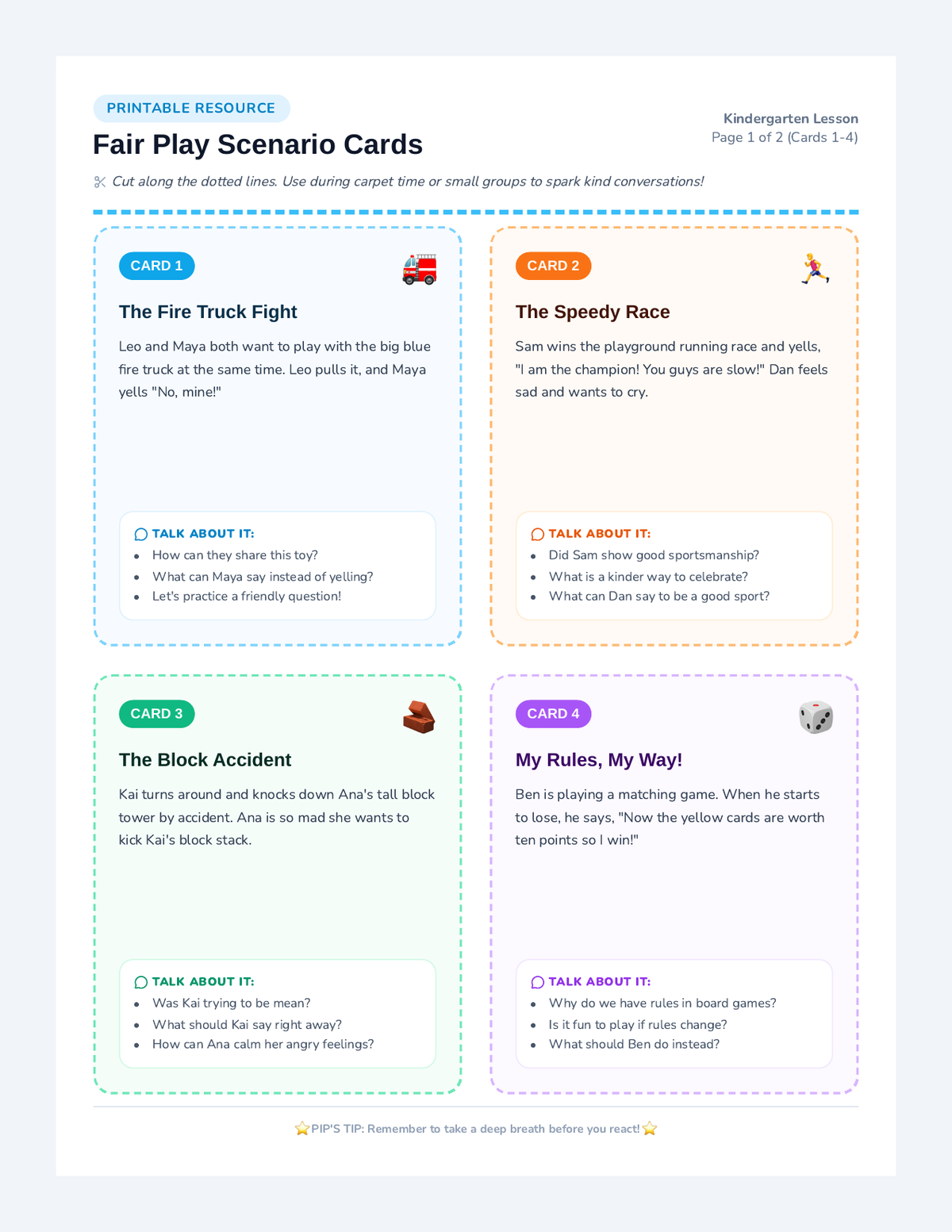
Printable, double-sided scenario discussion cards for quick-fire small group or carpet talks. Includes 8 distinct playground scenarios with guided discussion prompts and adorable visual icons.
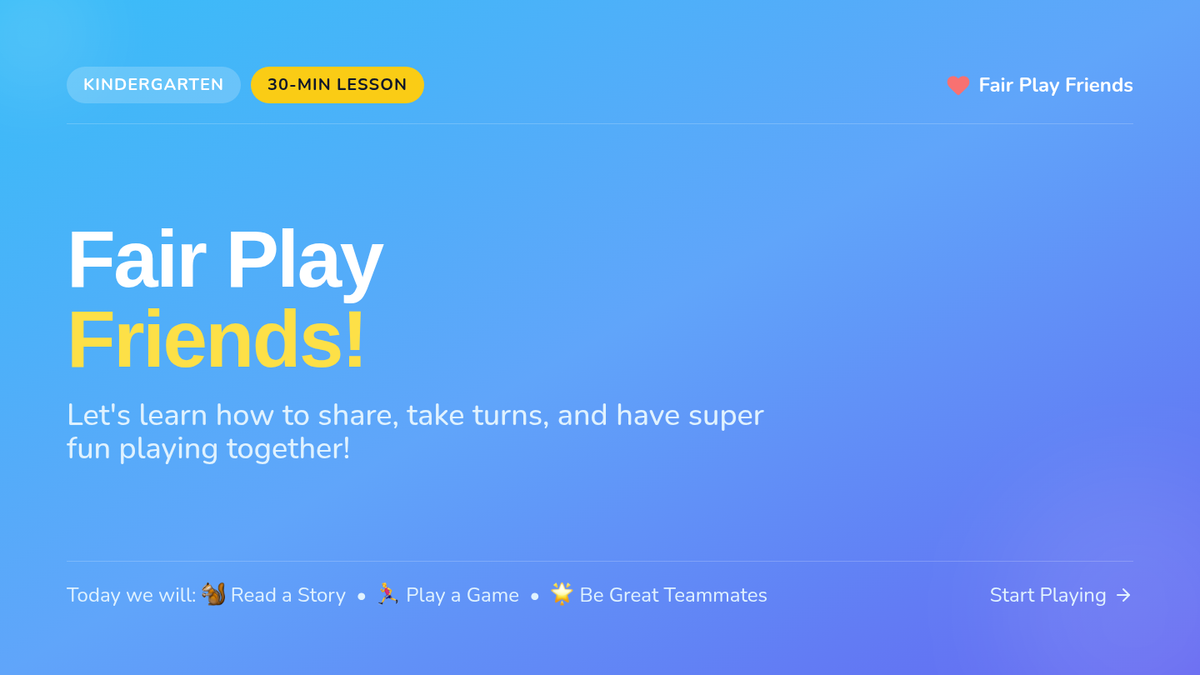
An interactive 16:9 slide presentation for Kindergarten. Introduces the story of Pip the Squirrel, features the 'Fair Play Moves' movement voting game, and outlines core sportsmanship values with large, friendly typography.
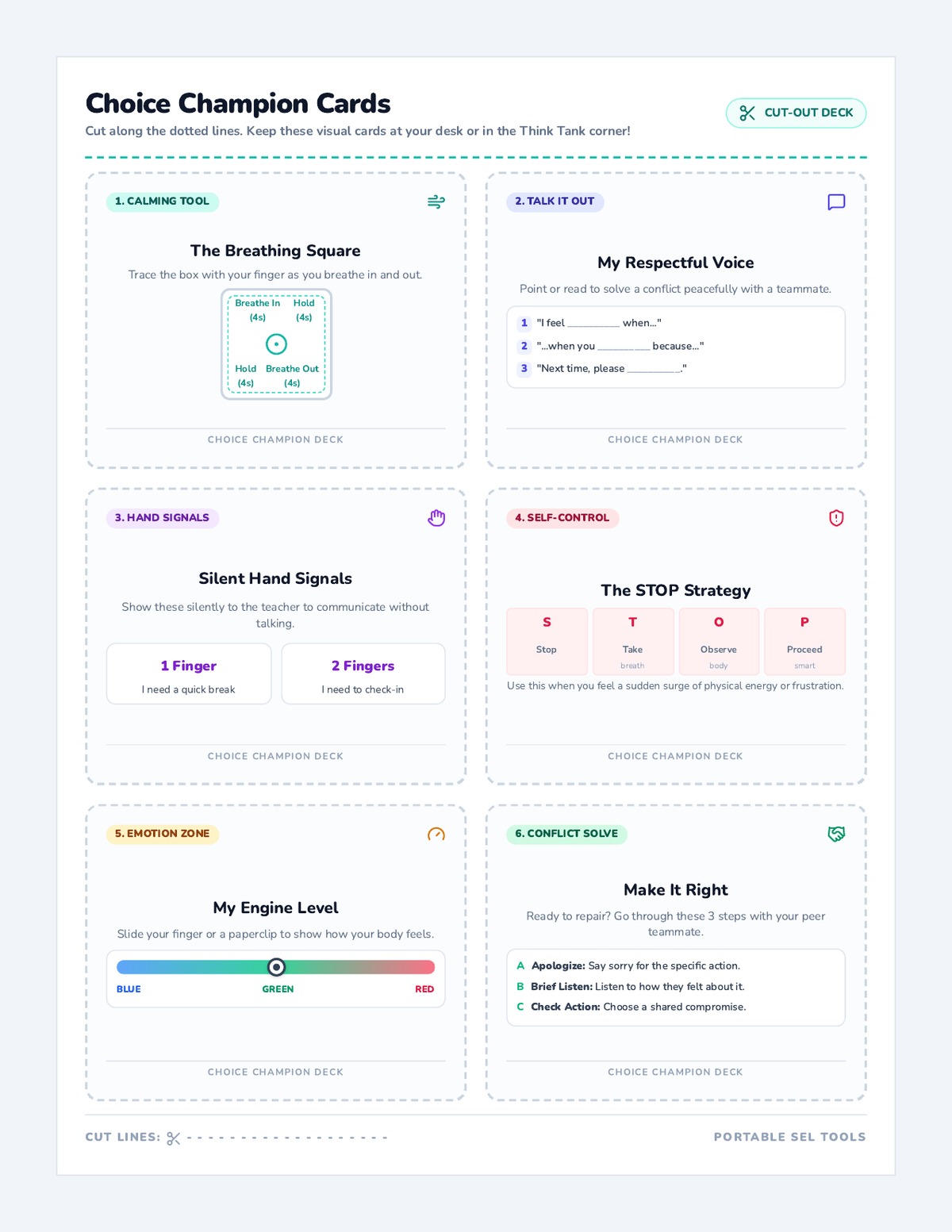
A printable set of 6 pocket-sized visual choice cards. Features guided breathing, I-statement scaffolding, hand-signals, the STOP strategy, and zone checkers to give students concrete, portable self-regulation support.
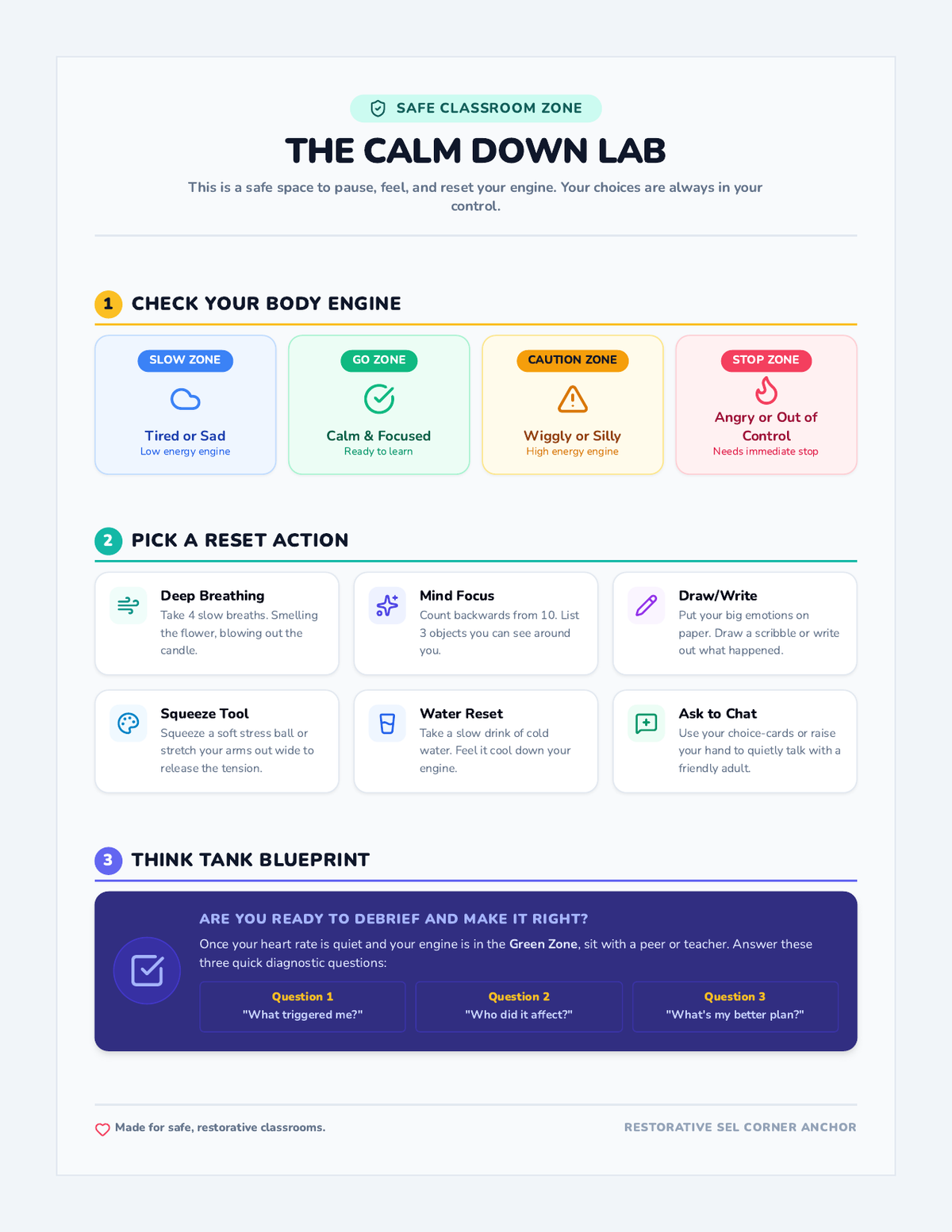
A high-visibility classroom anchor chart for the Think Tank reflection corner. Outlines a simple three-step calming protocol, visual emotional energy zones, and concrete self-regulation strategies to support independent conflict resolution.
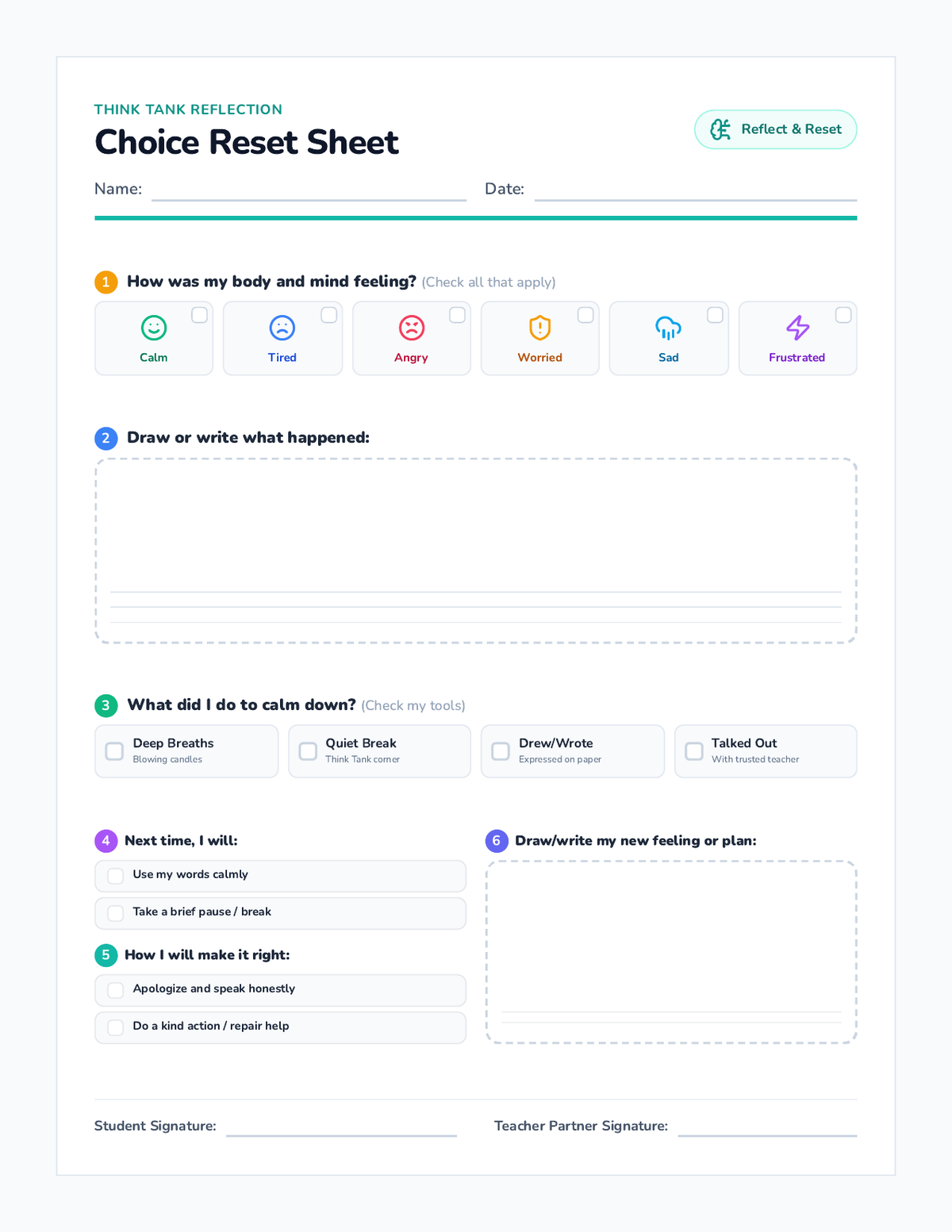
A visual, student-facing behavior reflection sheet designed for elementary and struggling writers. Features emoji feelings charts, a dedicated white canvas area for drawing or writing, and simple visual check-boxes for tracking calming strategies and future positive choices.
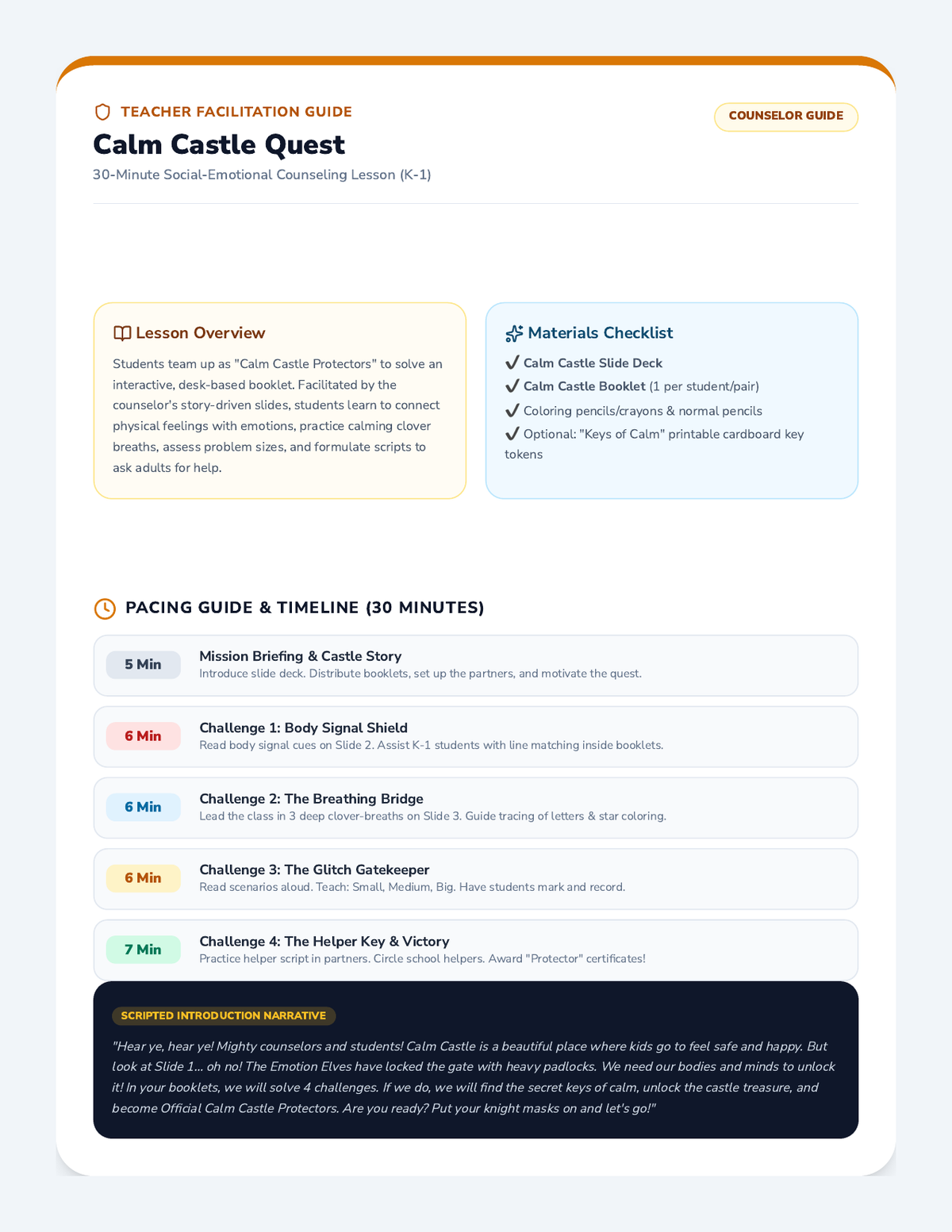
A 2-page print-ready lesson plan and facilitation guide for counseling teachers. Includes pacing, scripted narratives, answer key, and K-1 modifications.
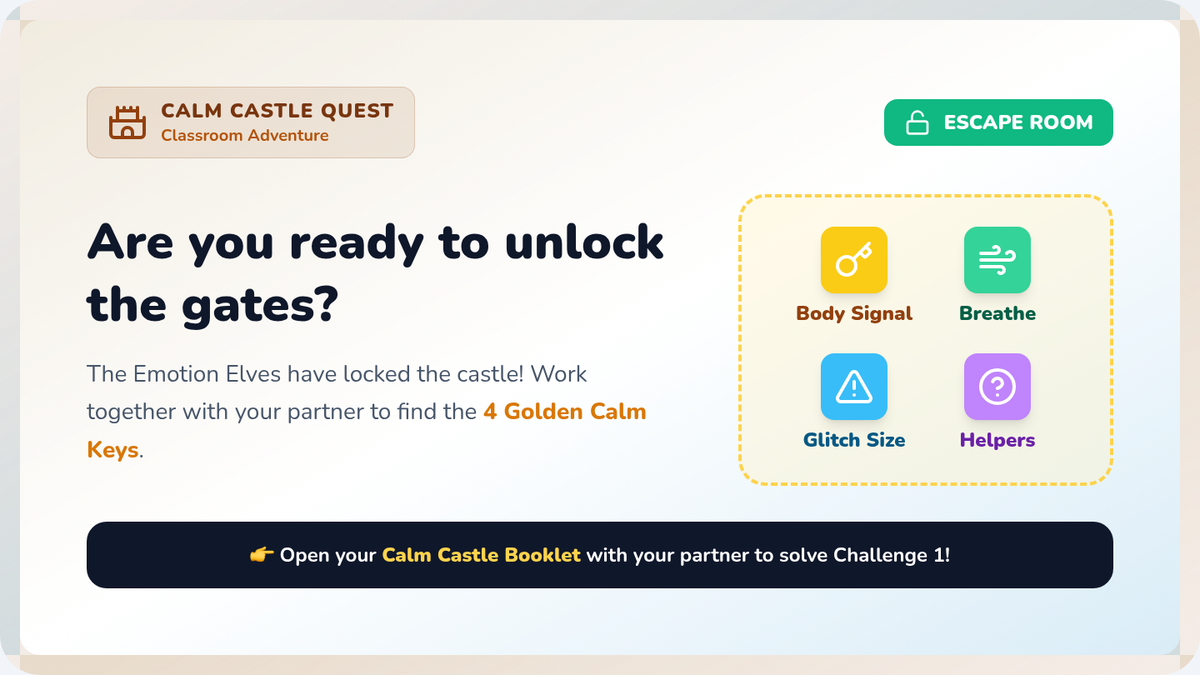
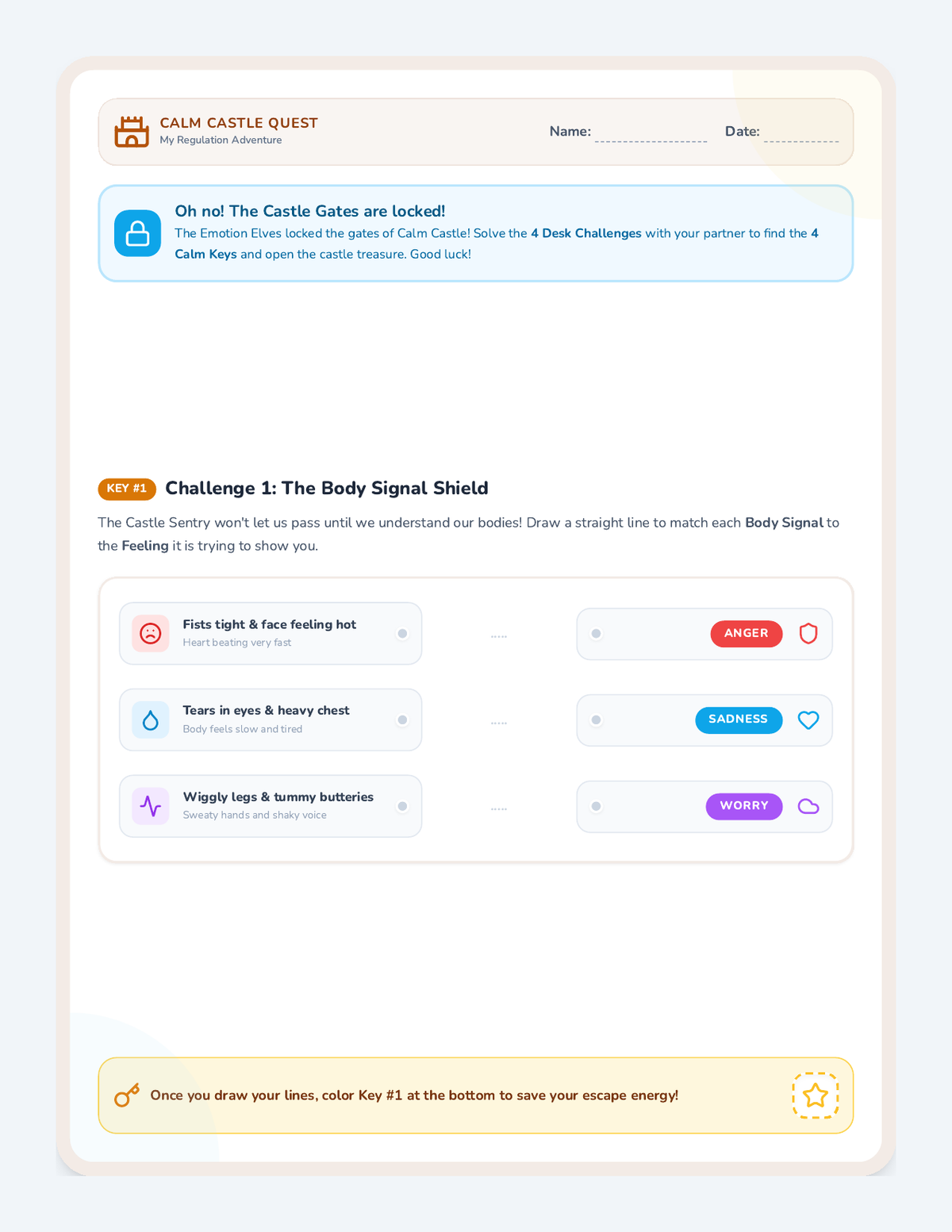
A 6-slide presentation deck to guide Kindergarten and 1st-grade students through the Calm Castle Quest. Includes large text, engaging medieval visuals, and breathing prompts to guide the classroom escape room.
A 4-page printable individual/partner escape room booklet for K-1 students. It contains 4 engaging desk-based challenges covering body signals, clover breathing tracing, size of problems, and a helper communication script, ending with a Calm Castle Protector certificate.
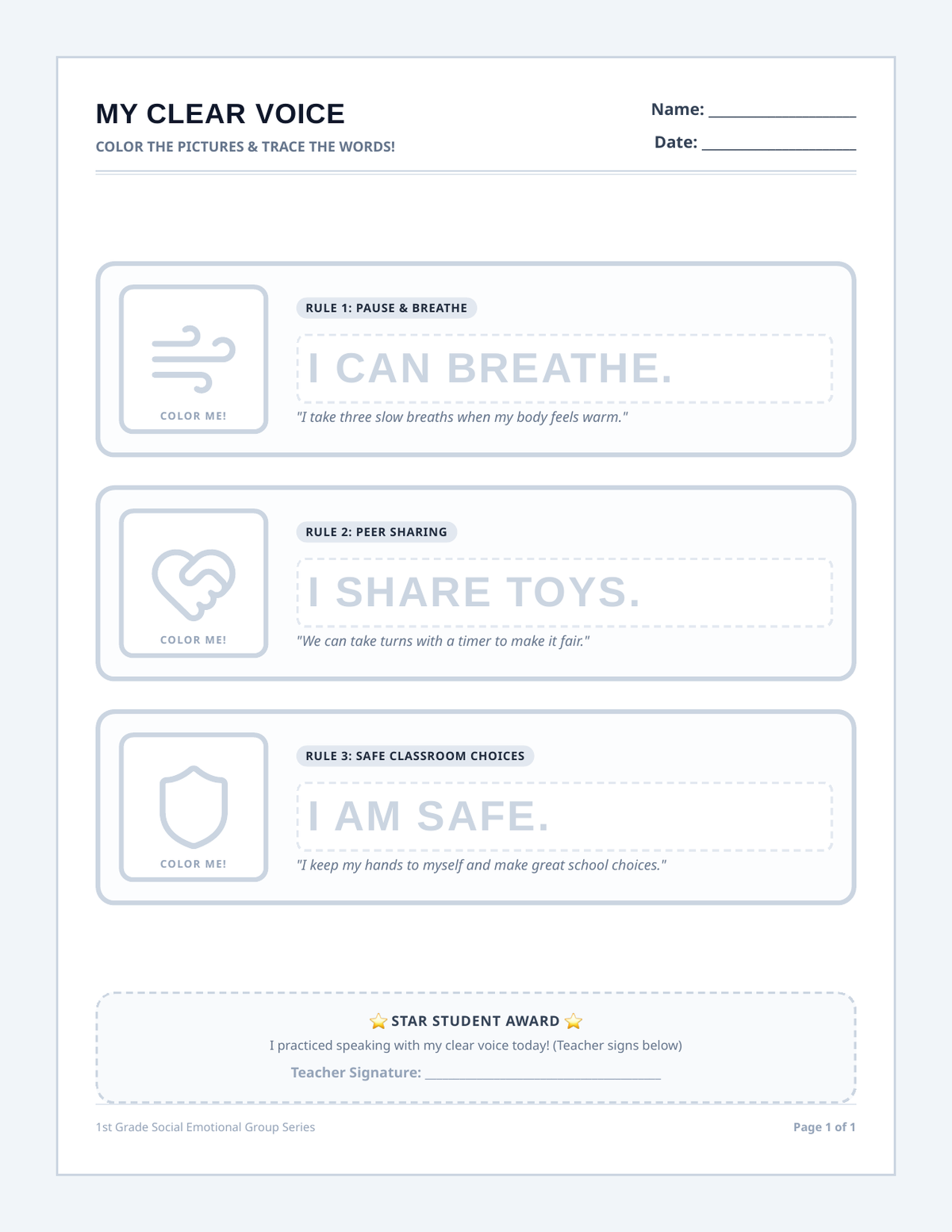
A high-utility, 1-page coloring and handwriting tracing activity sheet for 1st-grade students. Features bold, clean graphics for coloring and traceable self-advocacy prompts focusing on safe classroom choices.
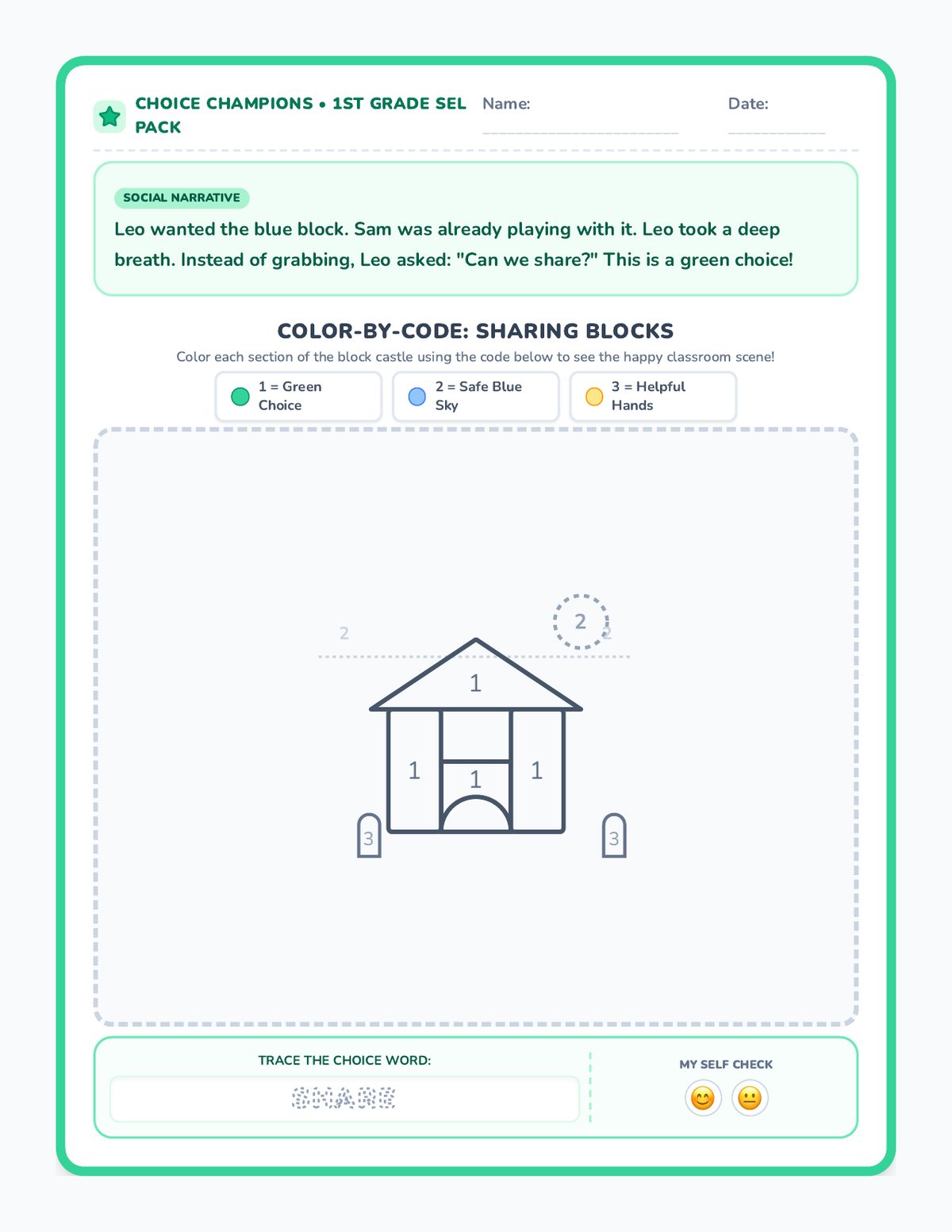
A multi-page 1st-grade coloring and handwriting activity pack featuring traceable words, color-by-code peer scenarios, visual choice boards, and social narratives for early learners.
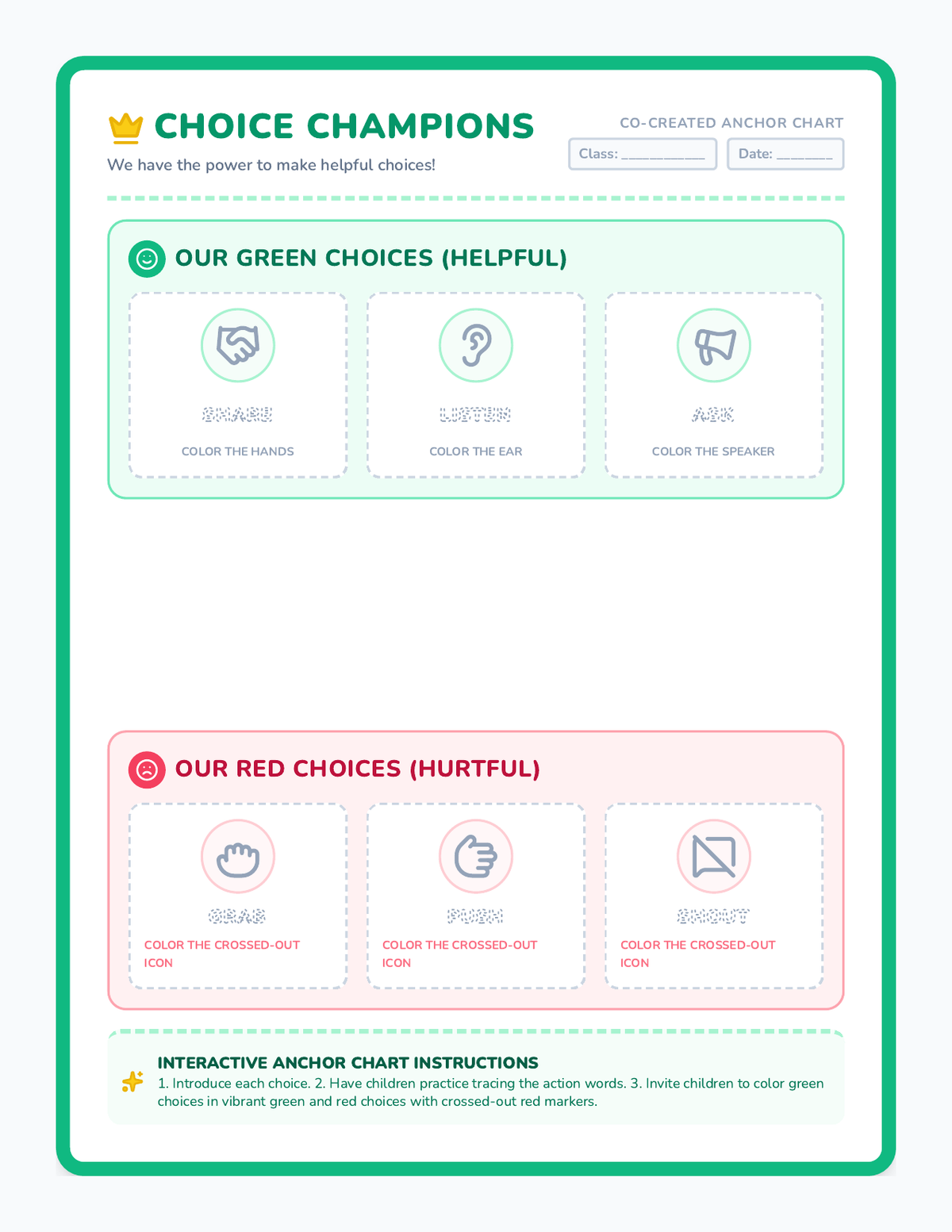
A co-created visual poster template for classroom anchor charts, featuring a green choice vs. red choice visual comparison with traceable action labels and clean coloring areas.
Visual slide deck for the final project, detailing the detective oath, the mission brief, and the reporting process.
Visual slide deck for Lesson 4, introducing the concept of "Debugging" through the "Program Your Teacher" game and identifying glitches in sequences.
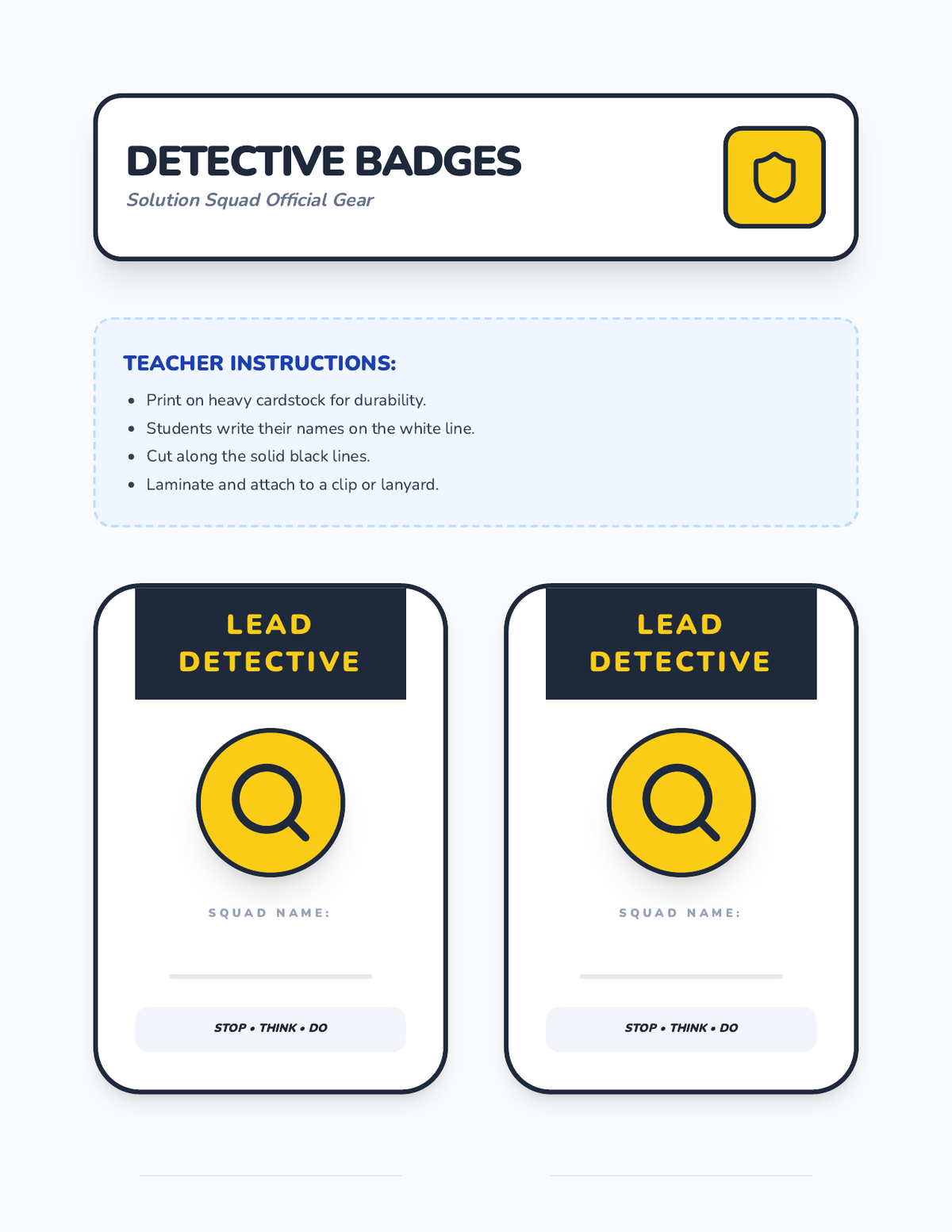
Printable detective badges for students to wear during their culminating project, featuring space for names and the Solution Squad motto.
Visual slide deck for Lesson 3, practicing the prediction of consequences using "If-Then" thinking and evaluating solution safety.
Visual slide deck for Lesson 2, practicing the logical sequencing of problems and solutions using "First, Next, Last" thinking.
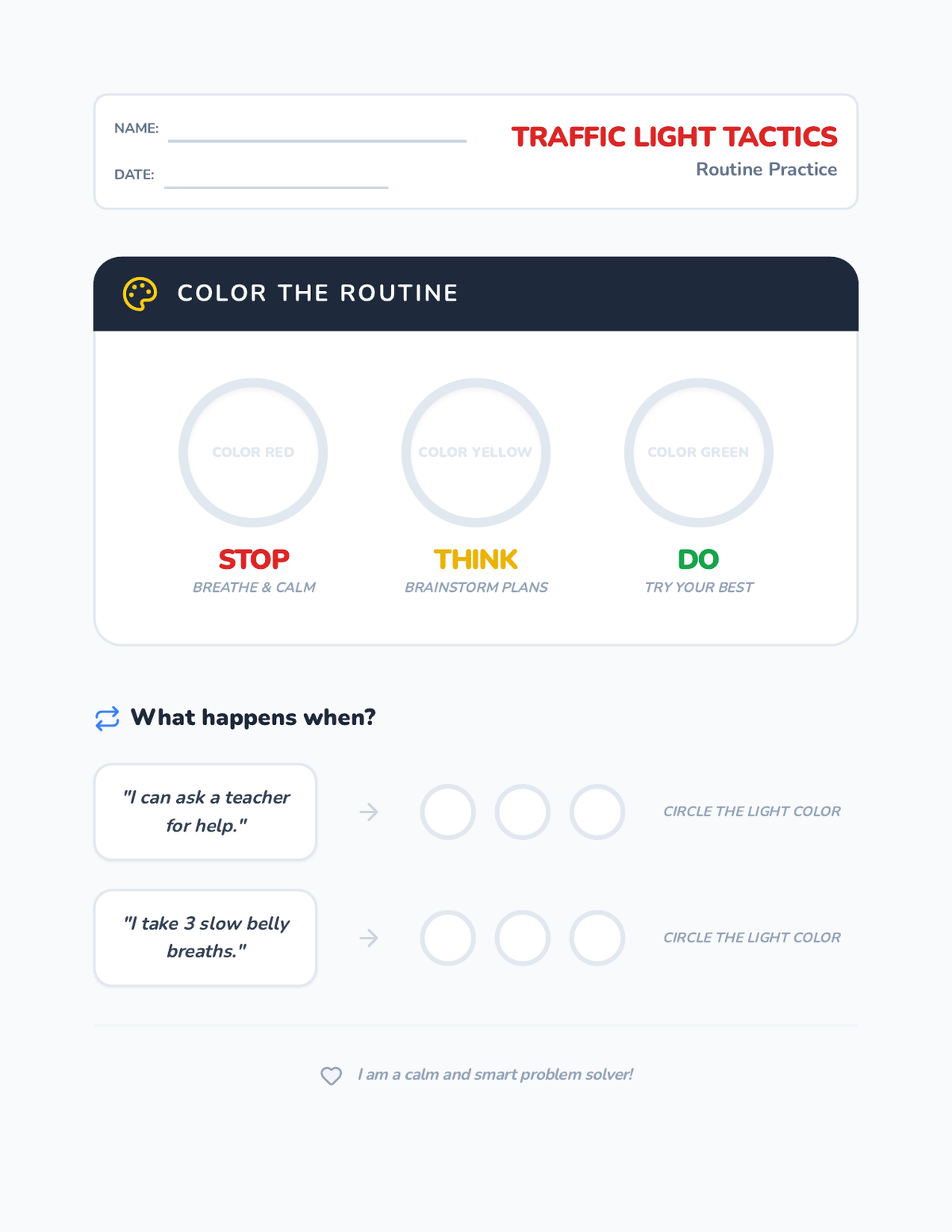
Student activity sheet for Lesson 1 where students color the traffic light routine and identify which light color corresponds to specific problem-solving actions.
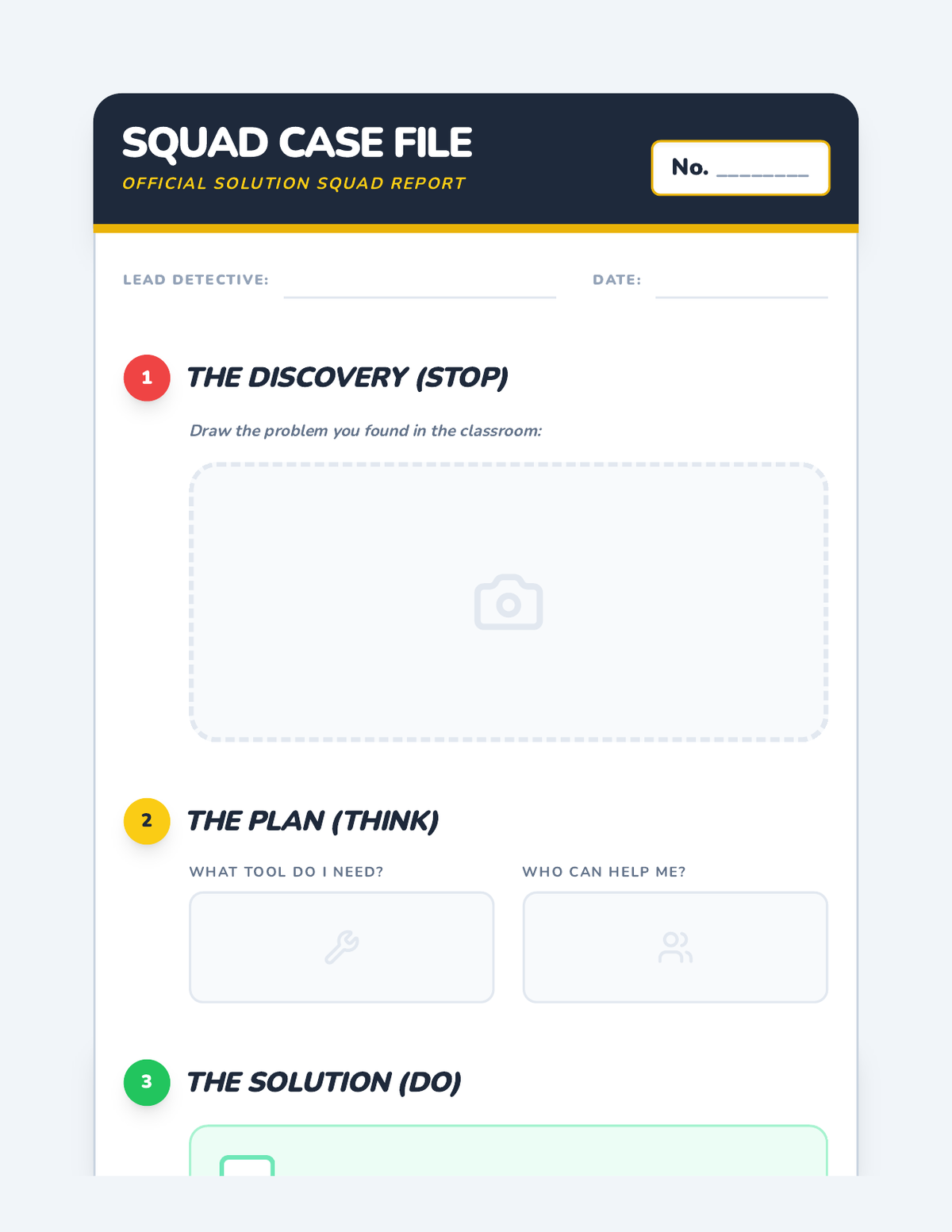
Student activity sheet for the final project where students document their found problem, their plan, and confirm the solution.
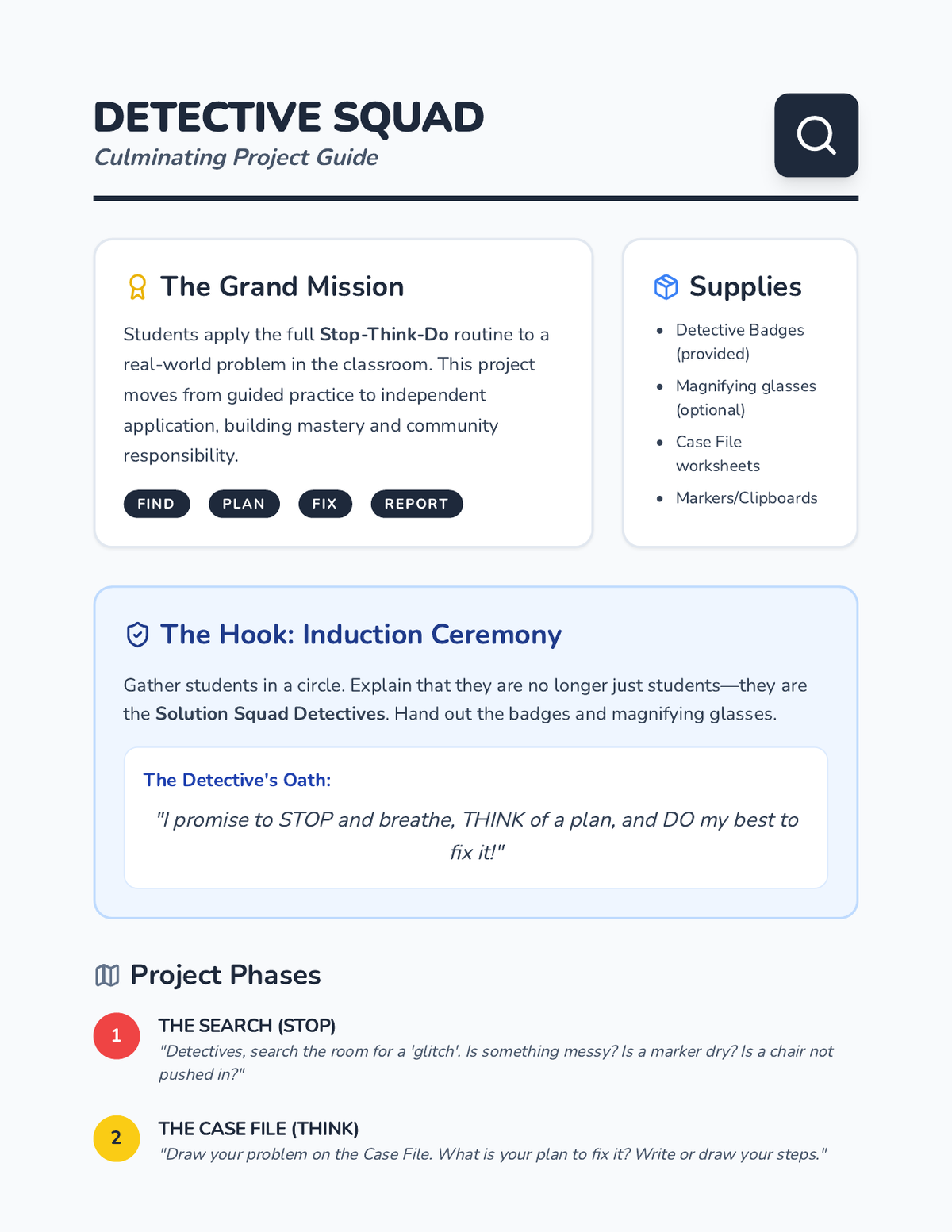
Teacher project guide for the culminating Detective Squad project, providing the induction ceremony script and project phase instructions.
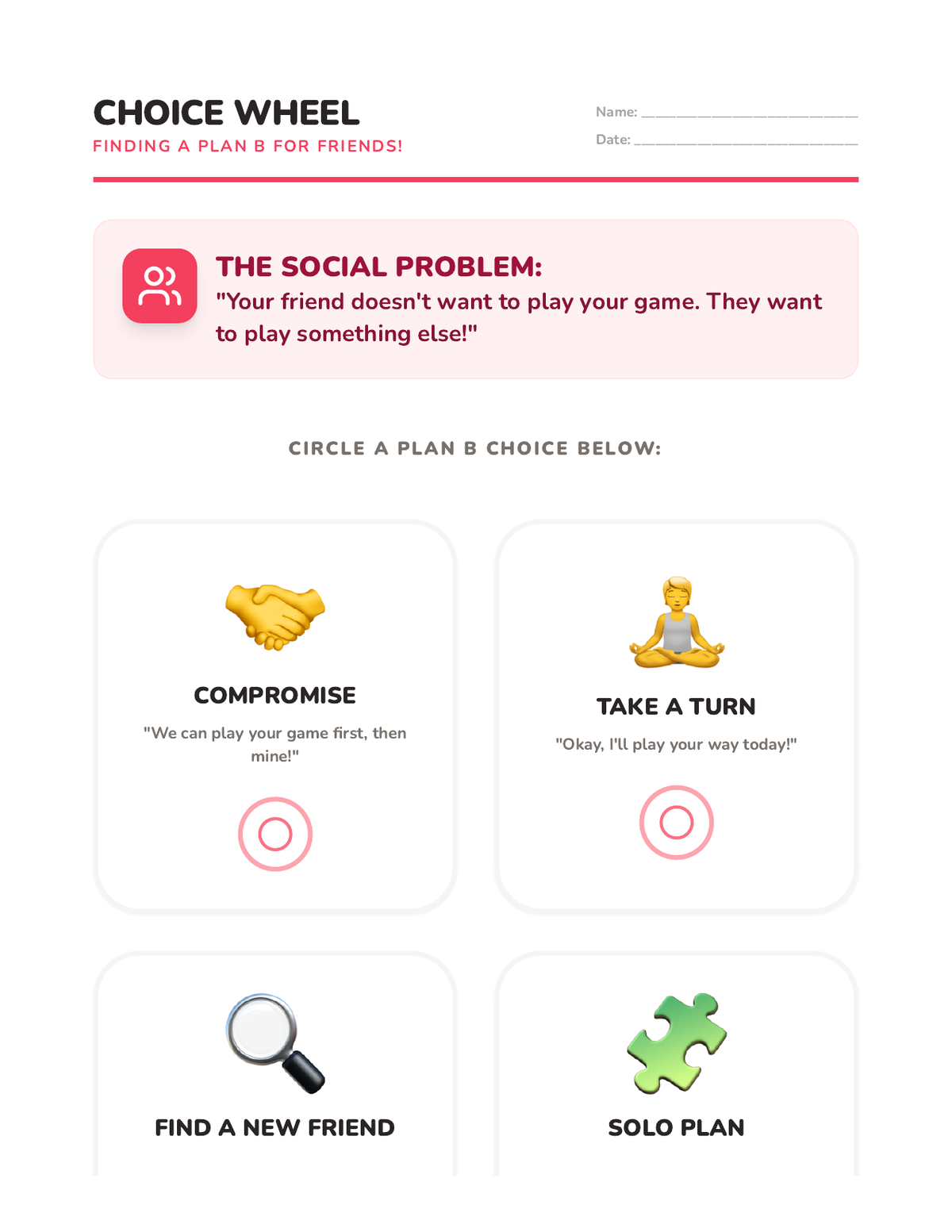
A visual choice sheet where students select a flexible Plan B for common social conflicts.
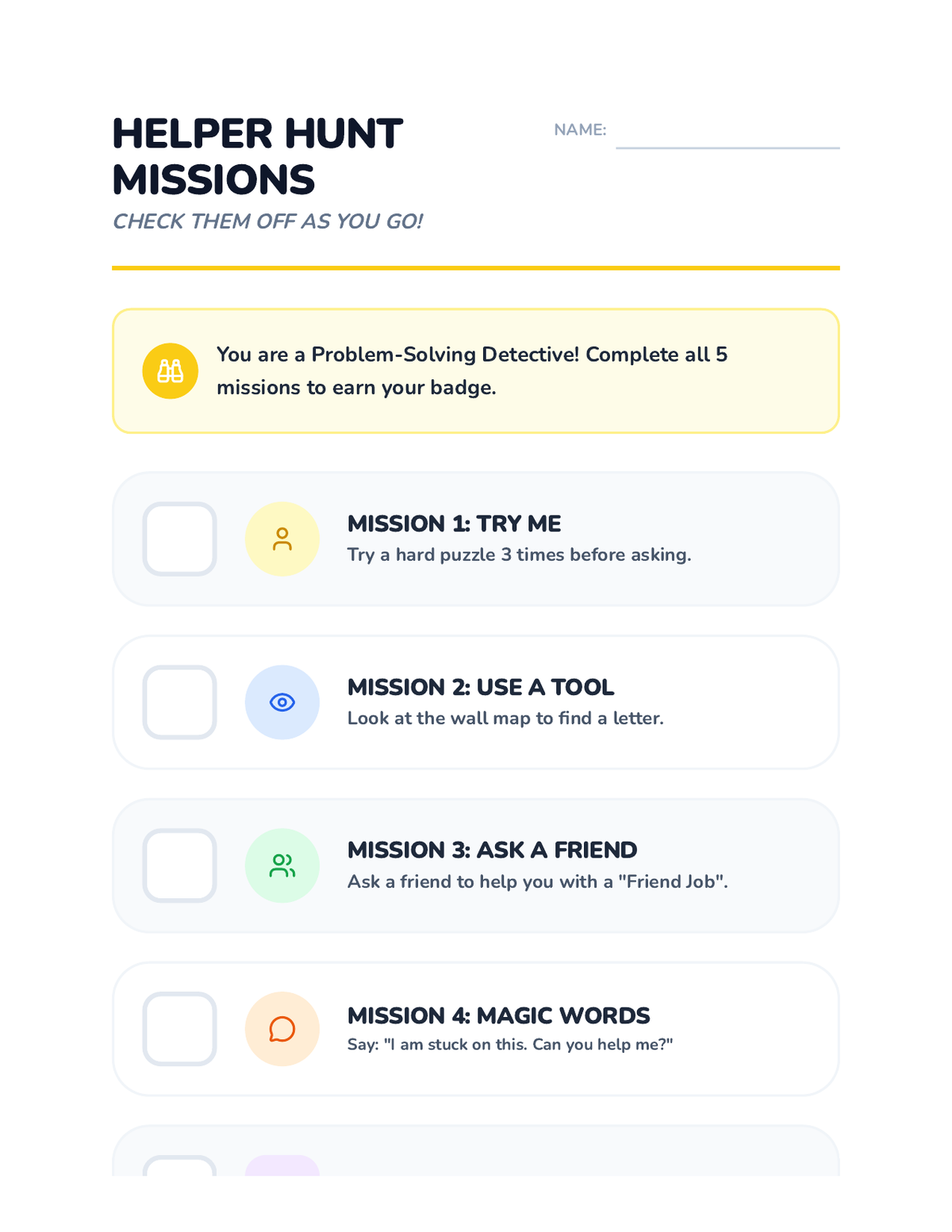
A scavenger hunt mission checklist for Kindergarten students to practice self-advocacy skills like trying three times, using tools, asking friends, and requesting specific support.
Real-world social scenarios focusing on adapting to friend choices and routine changes with a Plan B mindset.
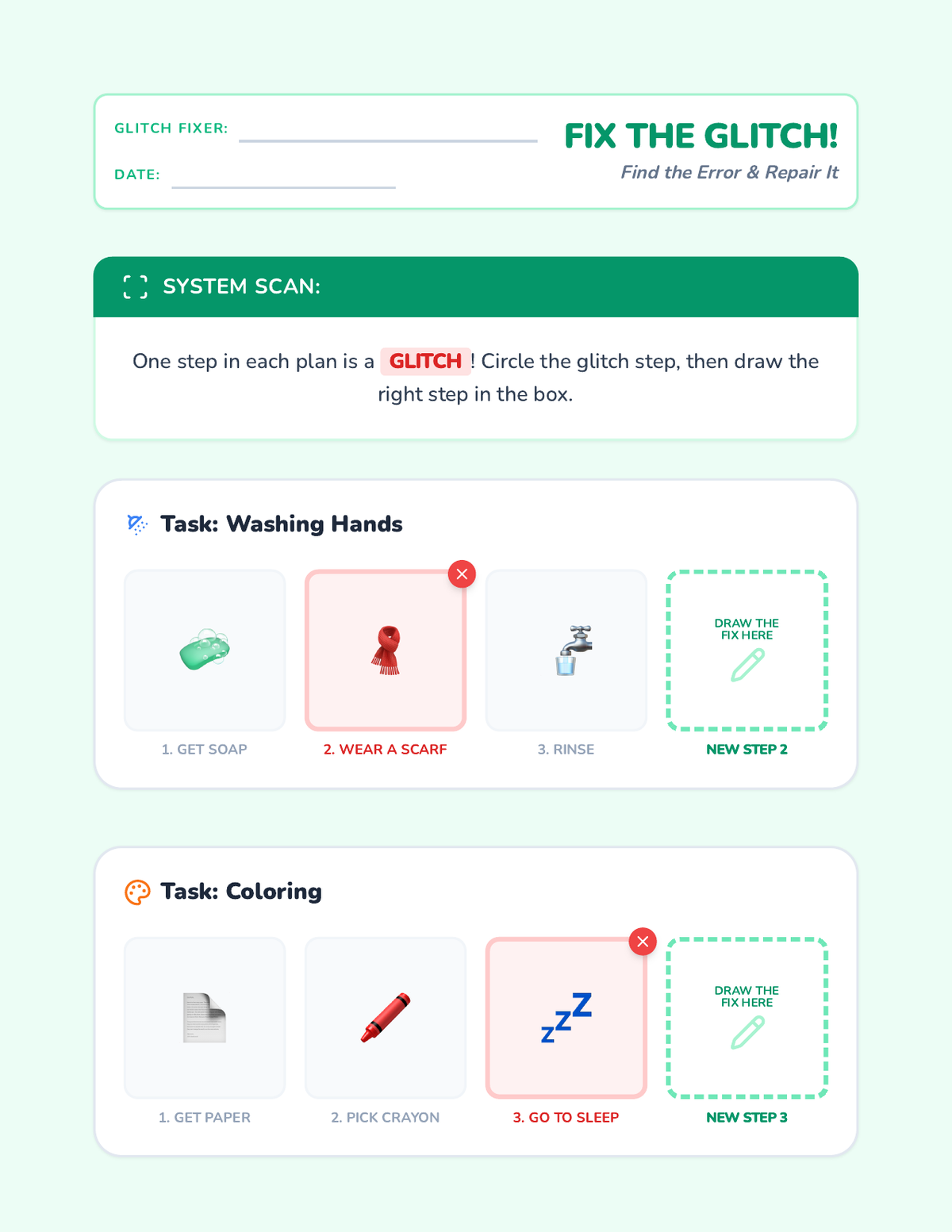
Student activity sheet for Lesson 4 where students identify errors in 3-step sequences and draw the corrected step.
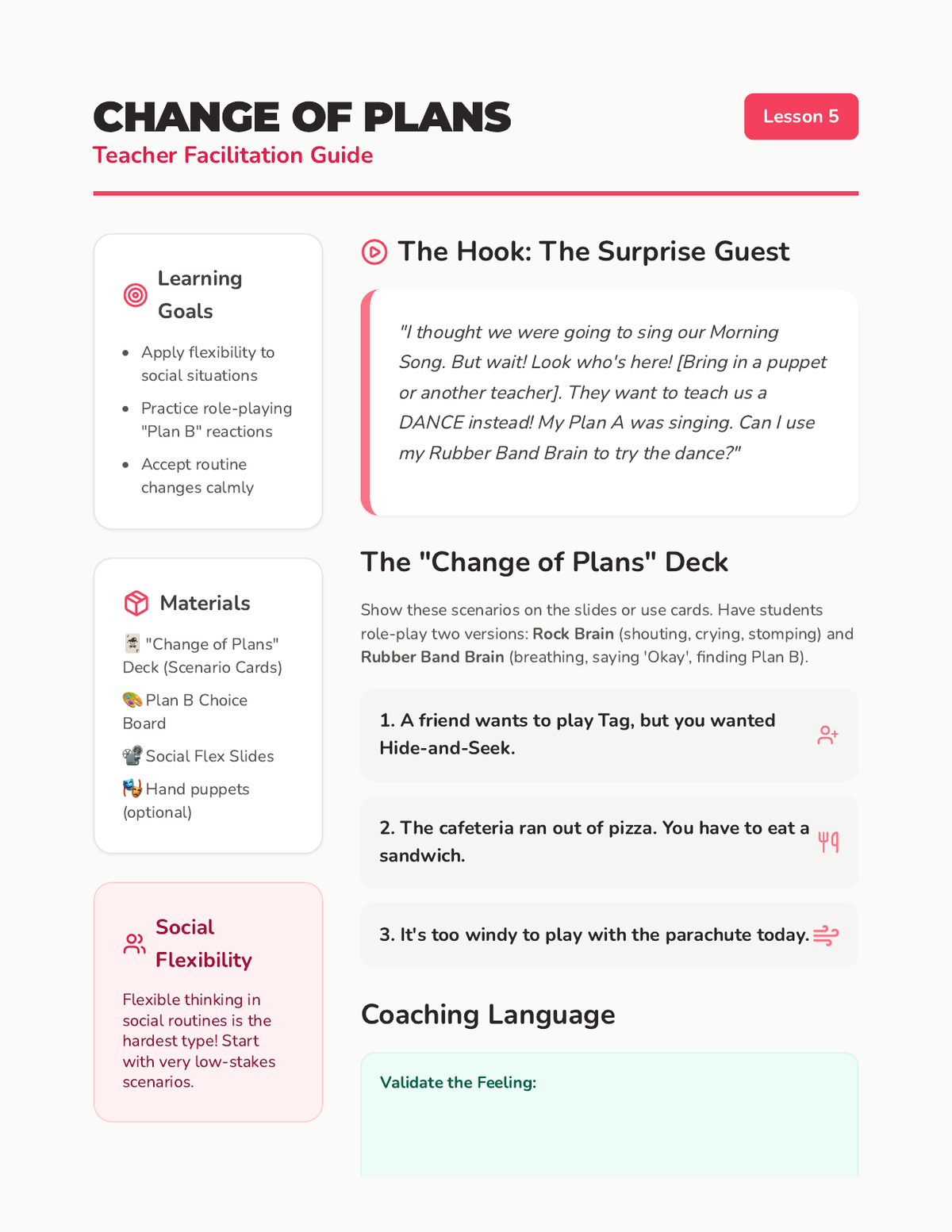
A teacher guide for Lesson 5 focusing on social flexibility and role-playing reactions to routine changes.
A slide deck explaining the 'Helper Hunt' activity where Kindergarten students practice all their self-advocacy skills in a gamified scavenger hunt.
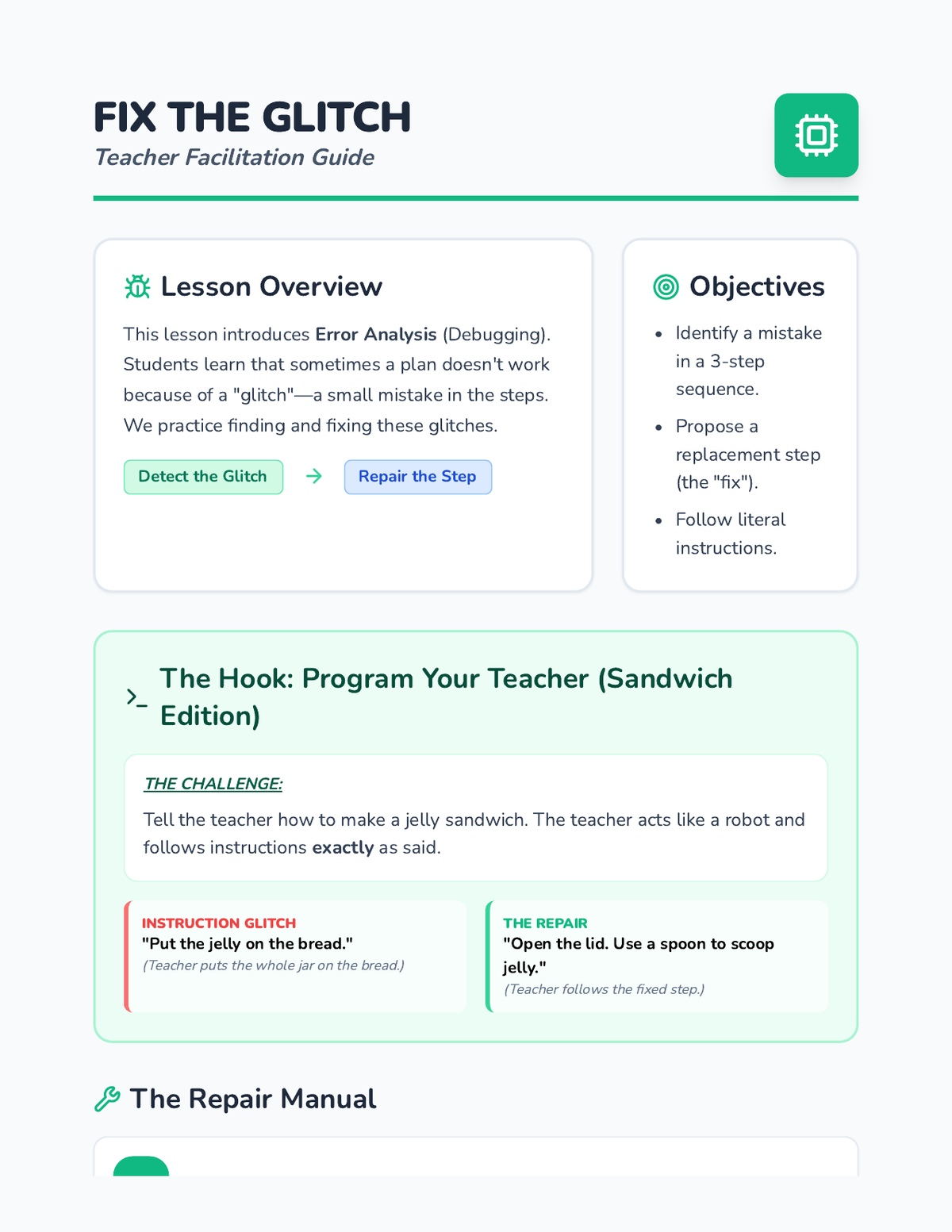
Teacher guide for Lesson 4 of the Solution Squad routine, focusing on identifying errors in step-by-step instructions through the "Program Your Teacher" game and debugging strategies.
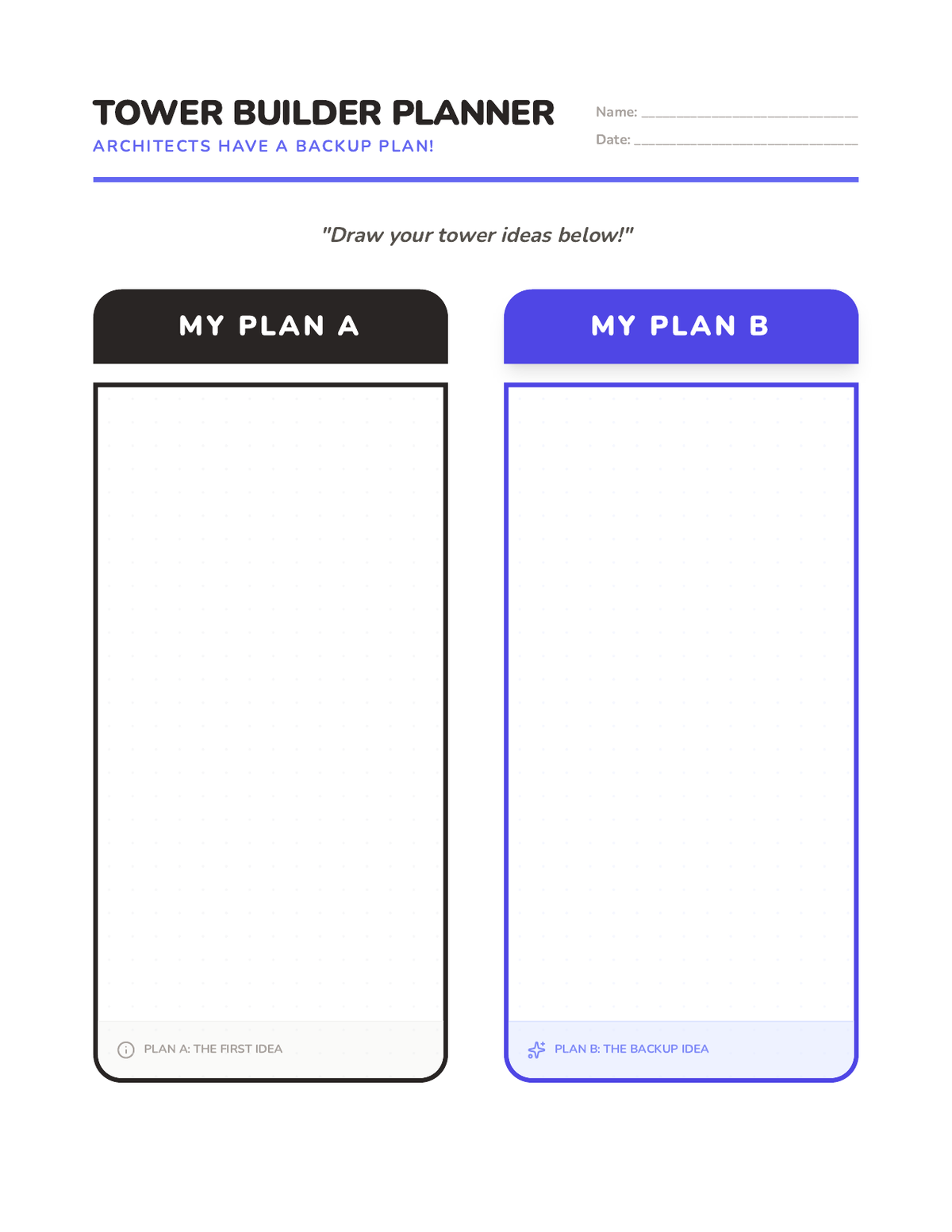
A simple visual planning sheet for the tower activity where students draw their Plan A and Plan B.
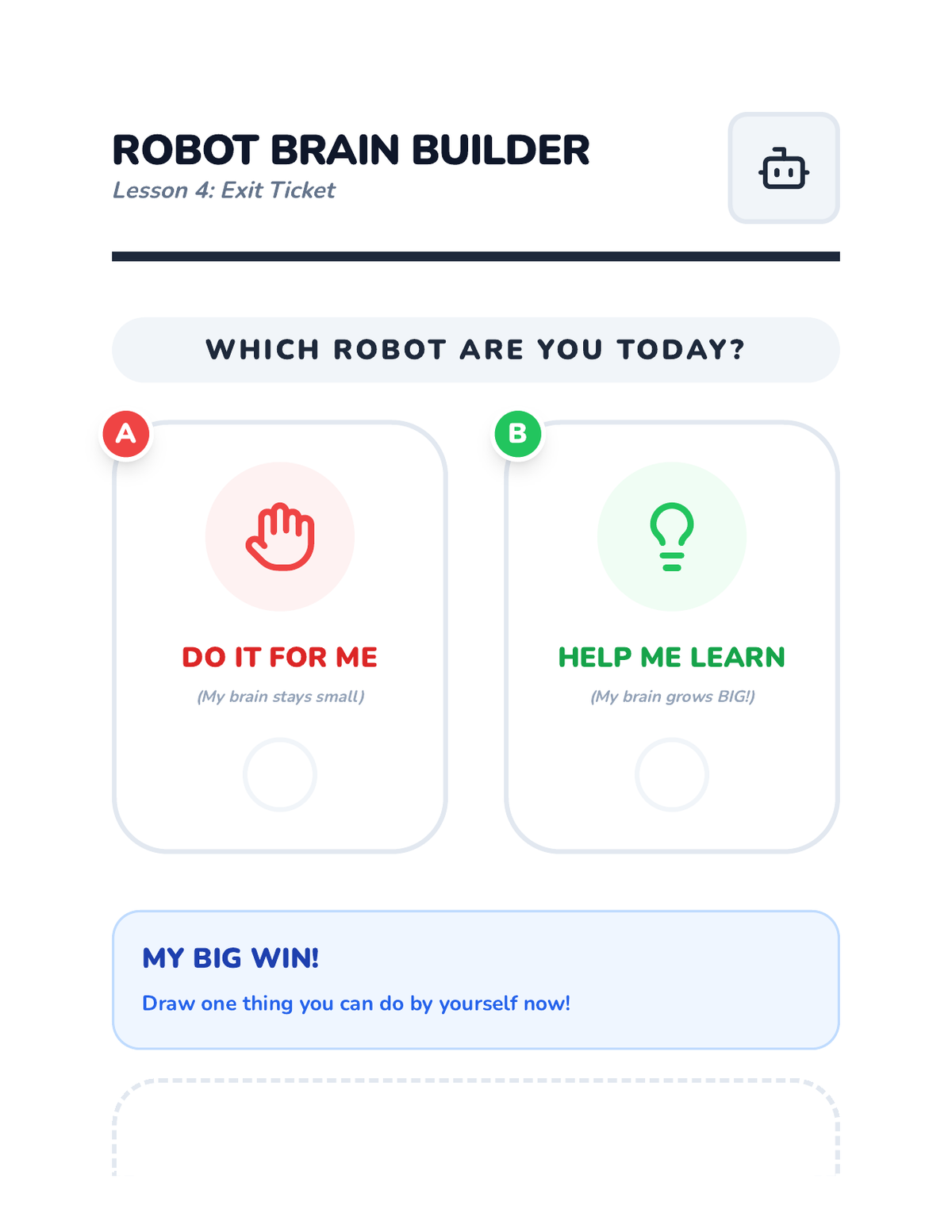
A simple exit ticket for Kindergarten students to self-reflect on whether they asked for someone to 'Do it for me' or 'Help me learn'. Includes a drawing space for an independent achievement.
Defining Plan A and Plan B with visual icons and the explicit 'Pivot Sentence' for students to practice.
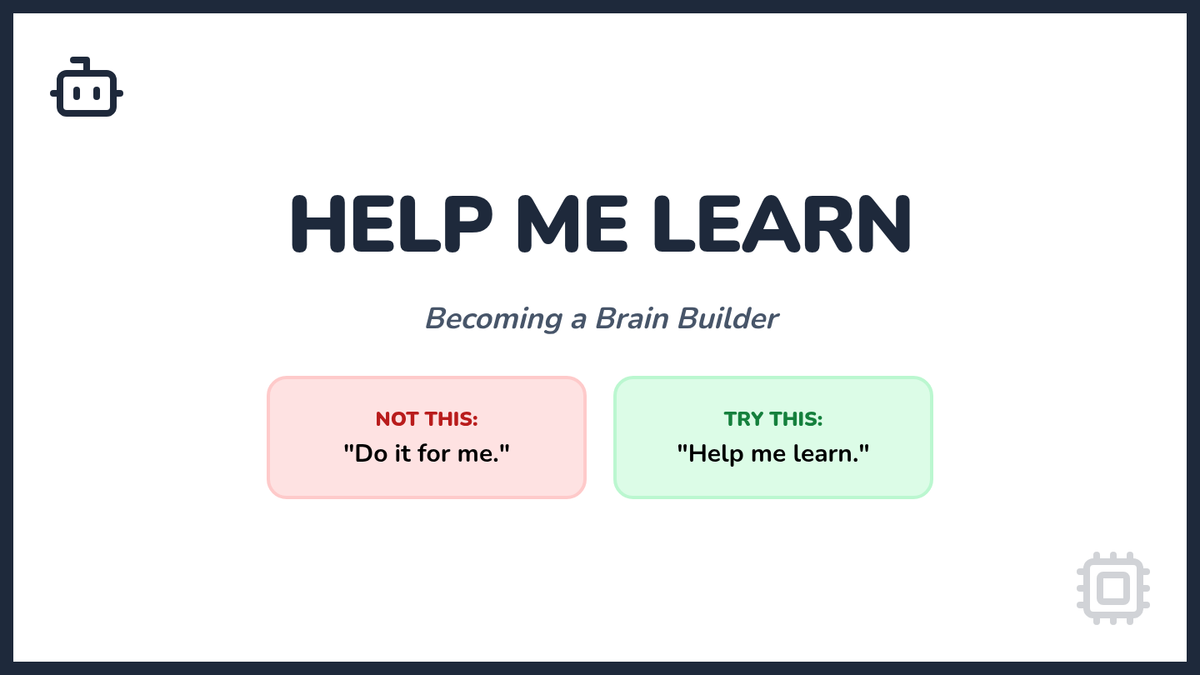
A slide deck introducing Kindergarten students to the difference between 'Do it for me' and 'Help me learn'. Uses a robot metaphor to explain the value of asking for clues and steps.
A teacher guide for Lesson 4 focusing on the explicit transition from 'Plan A' to 'Plan B' during collaborative building tasks.
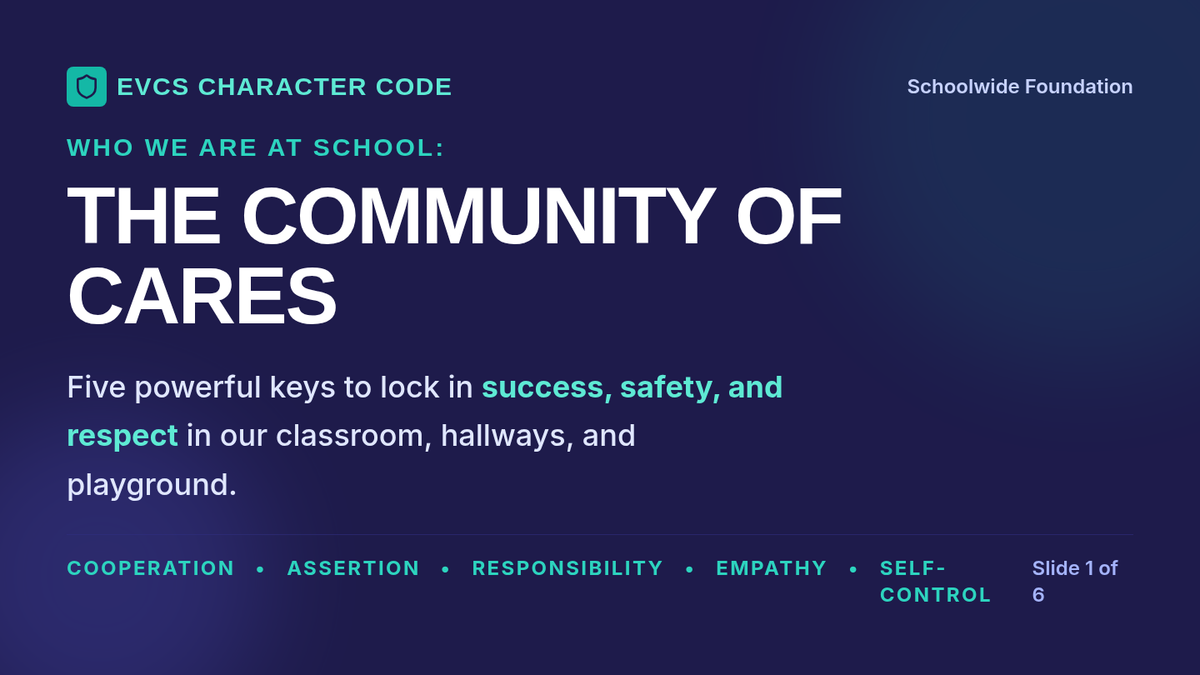
A comprehensive and vibrant presentation slide deck that introduces each of the five EVCS CARES characteristics (Cooperation, Assertion, Responsibility, Empathy, and Self-Control) in isolation with key deep-dive strategies.
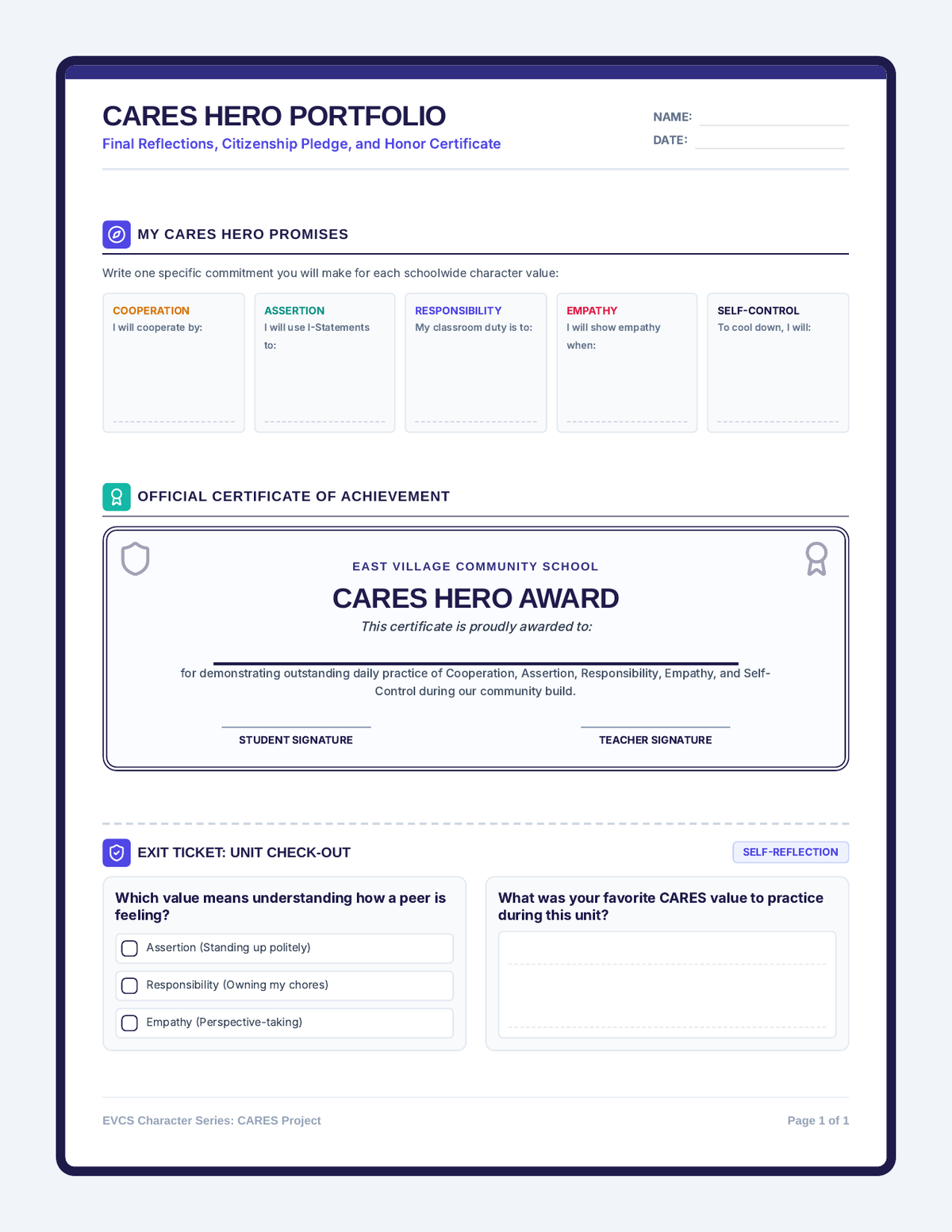
A printable student portfolio and official CARES Hero certificate of achievement, featuring a values synthesis map, a signed pledge card, and a final units reflection exit ticket.
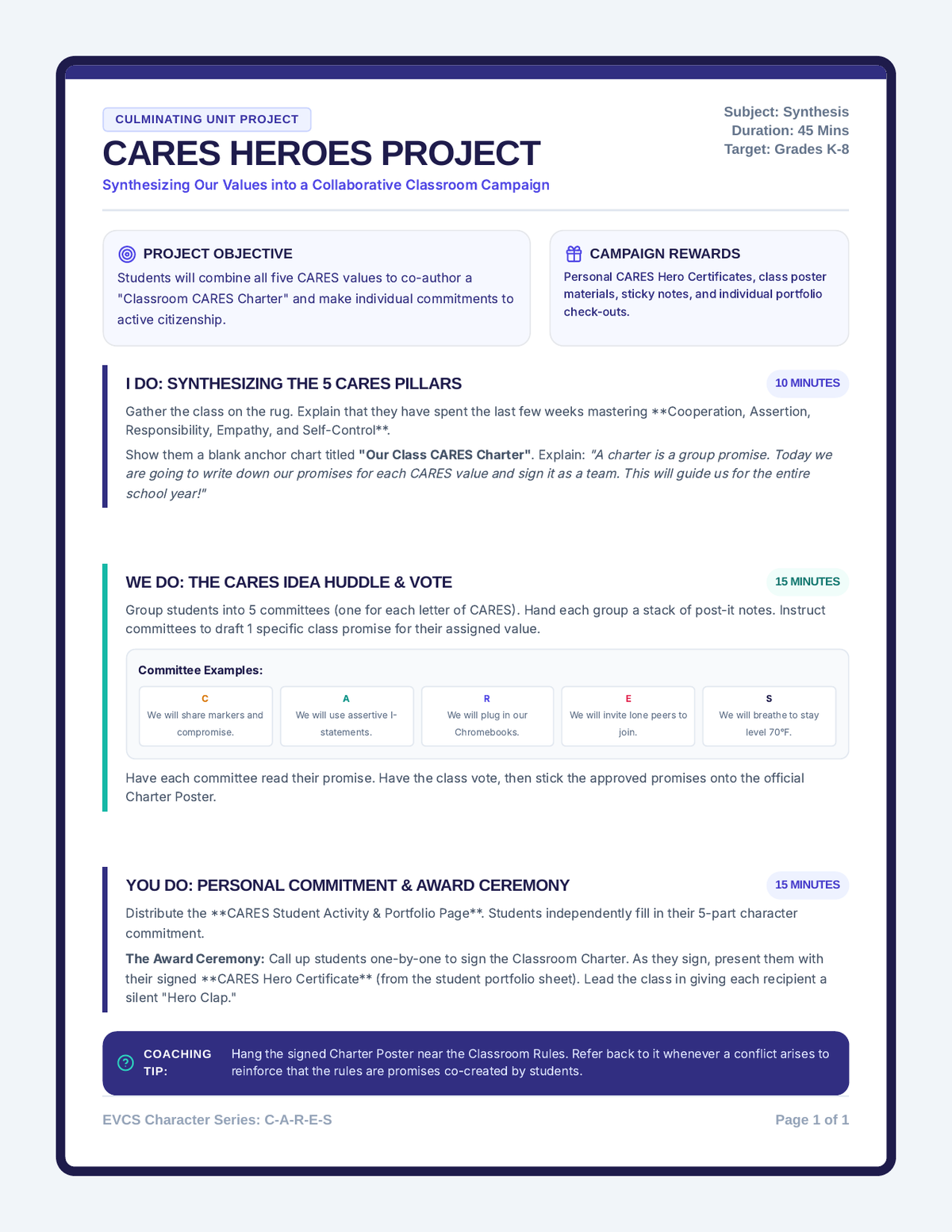
A teacher guide for facilitating the culminating CARES Heroes Project, outlining a step-by-step collaborative class charter co-creation and schoolwide kindness campaign.
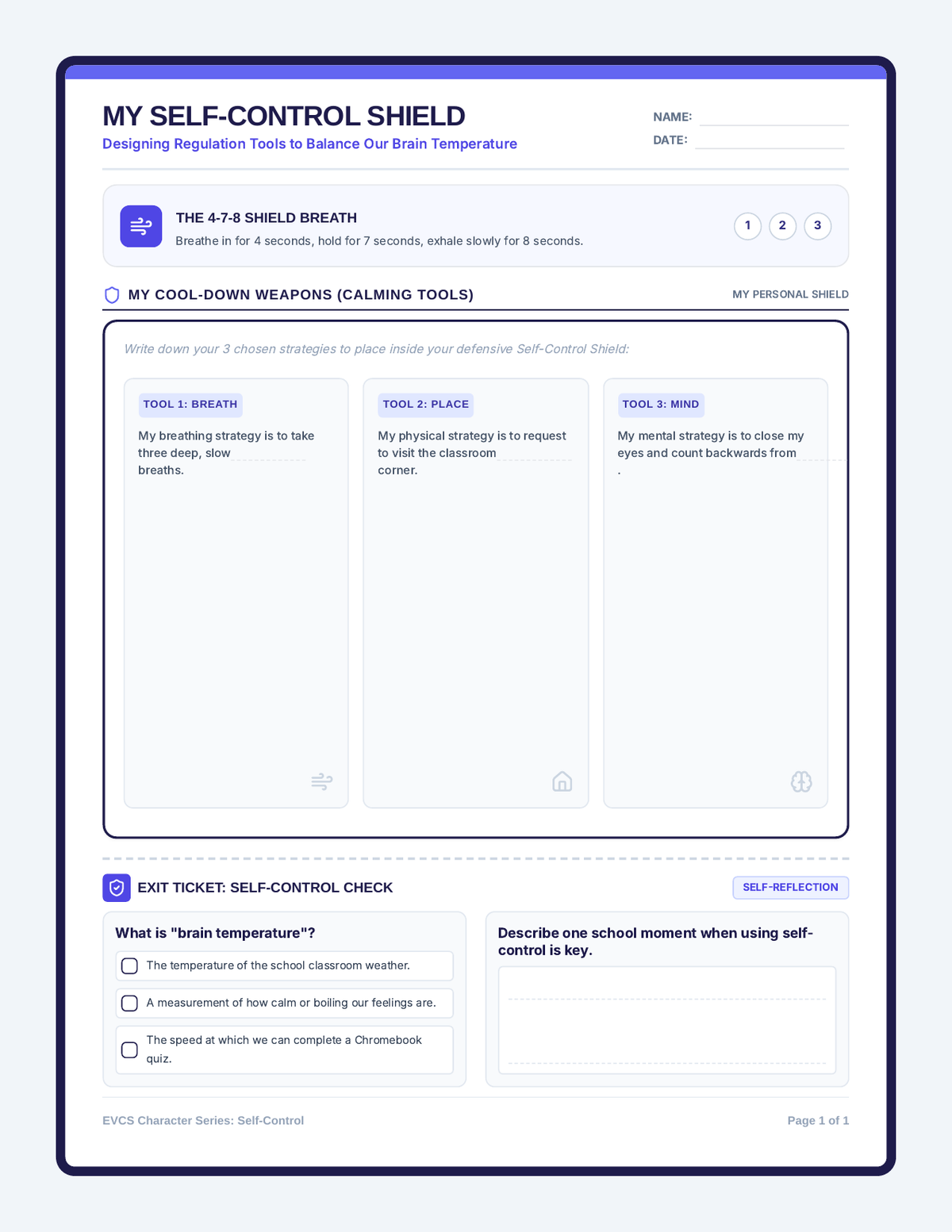
A student worksheet and interactive cool-down shield mapper for planning self-regulation and breathing techniques during emotional challenges. Includes a self-assessment exit ticket.
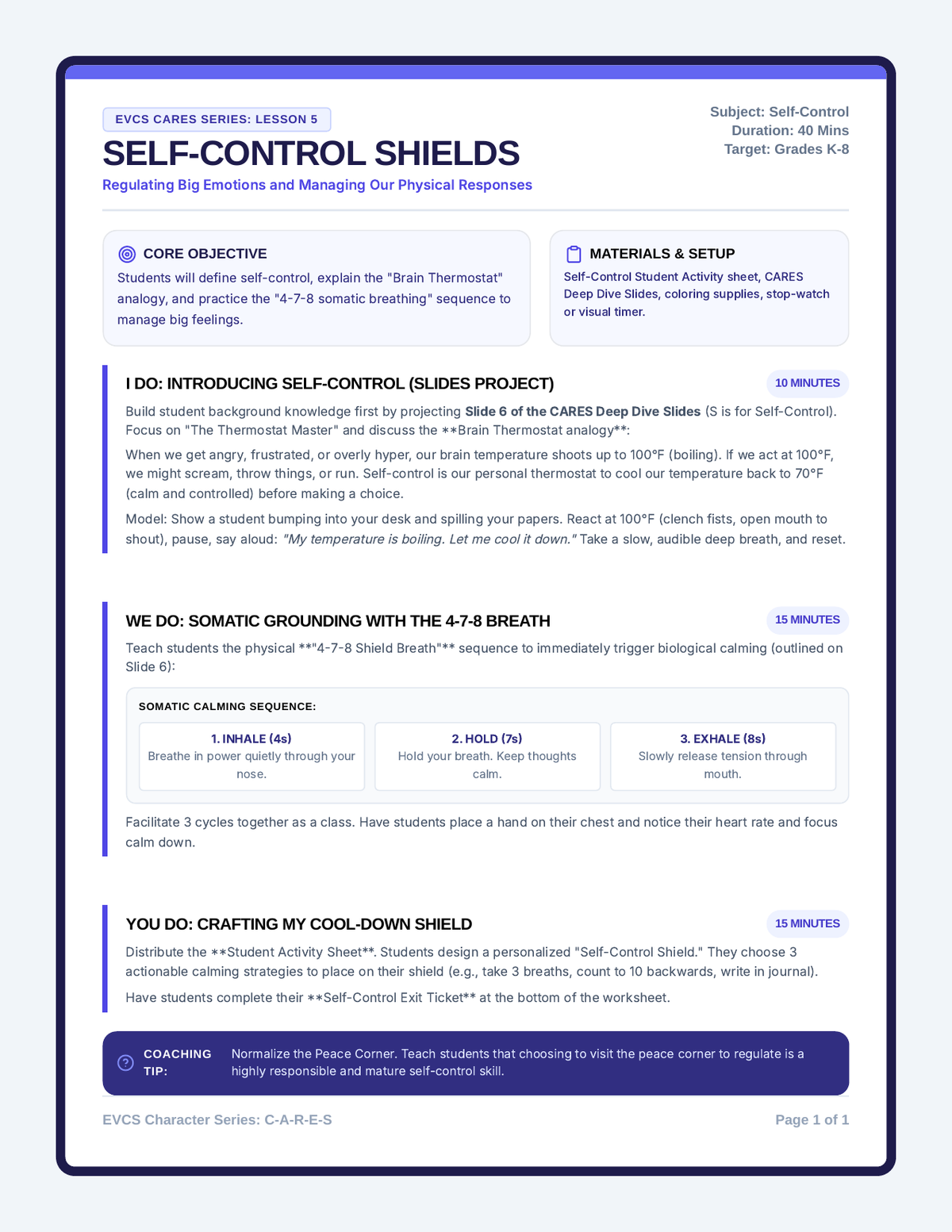
A complete teacher lesson plan for teaching Self-Control. Guides educators on instructing the 'Brain Temperature' analogy, somatic grounding breathing techniques, and peace corner routines.
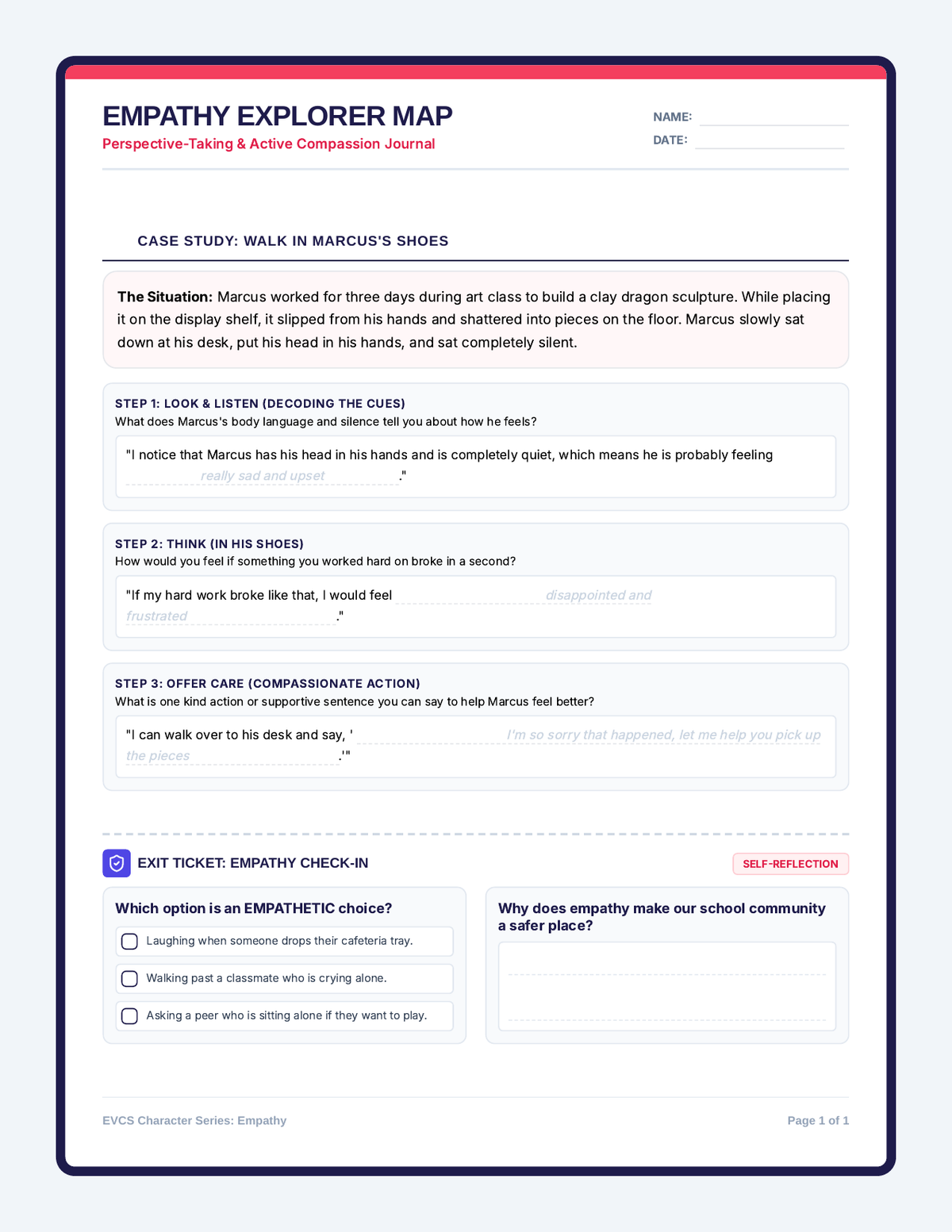
A student worksheet and interactive perspective-taking activity labeled 'Walk in My Shoes' for analyzing emotional situations and expressing supportive care. Includes an integrated exit ticket.
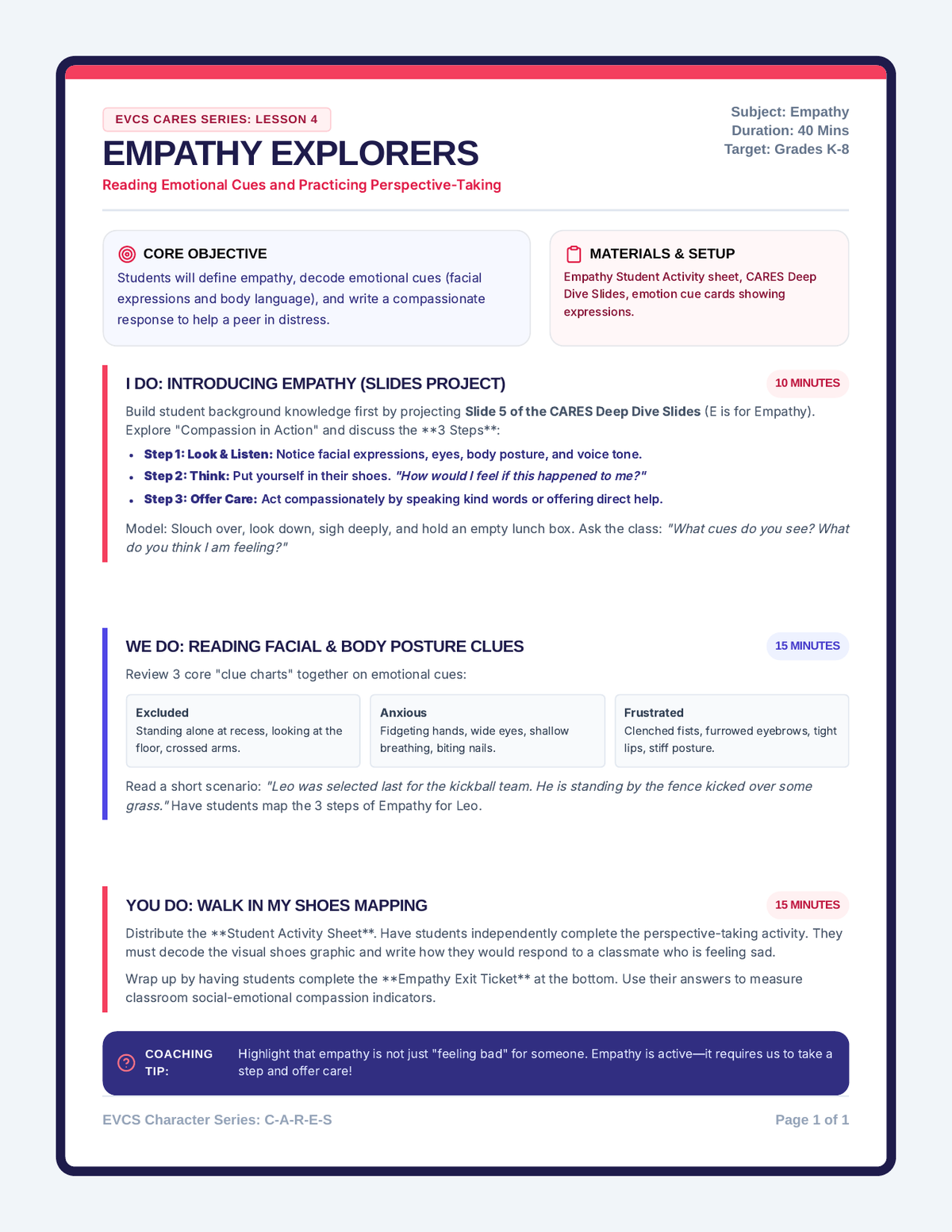
A complete teacher lesson plan for teaching Empathy. Guides teachers on instructing perspective-taking, identifying facial/body emotion cues, and facilitating supportive partner debriefs.
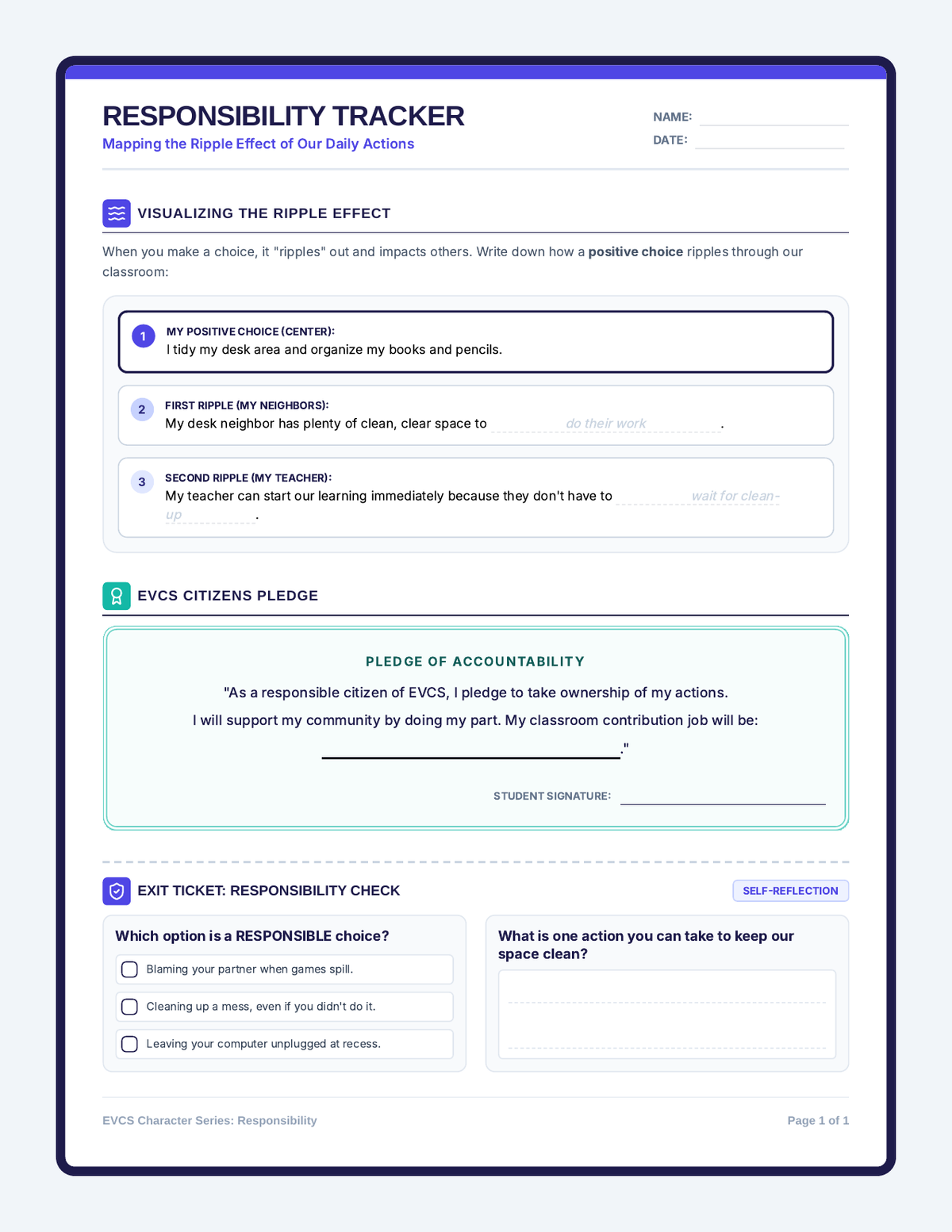
A student worksheet and Ripple Effect visual diagram mapper for exploring how individual actions impact the classroom community. Includes a citizenship pledge and an exit ticket.
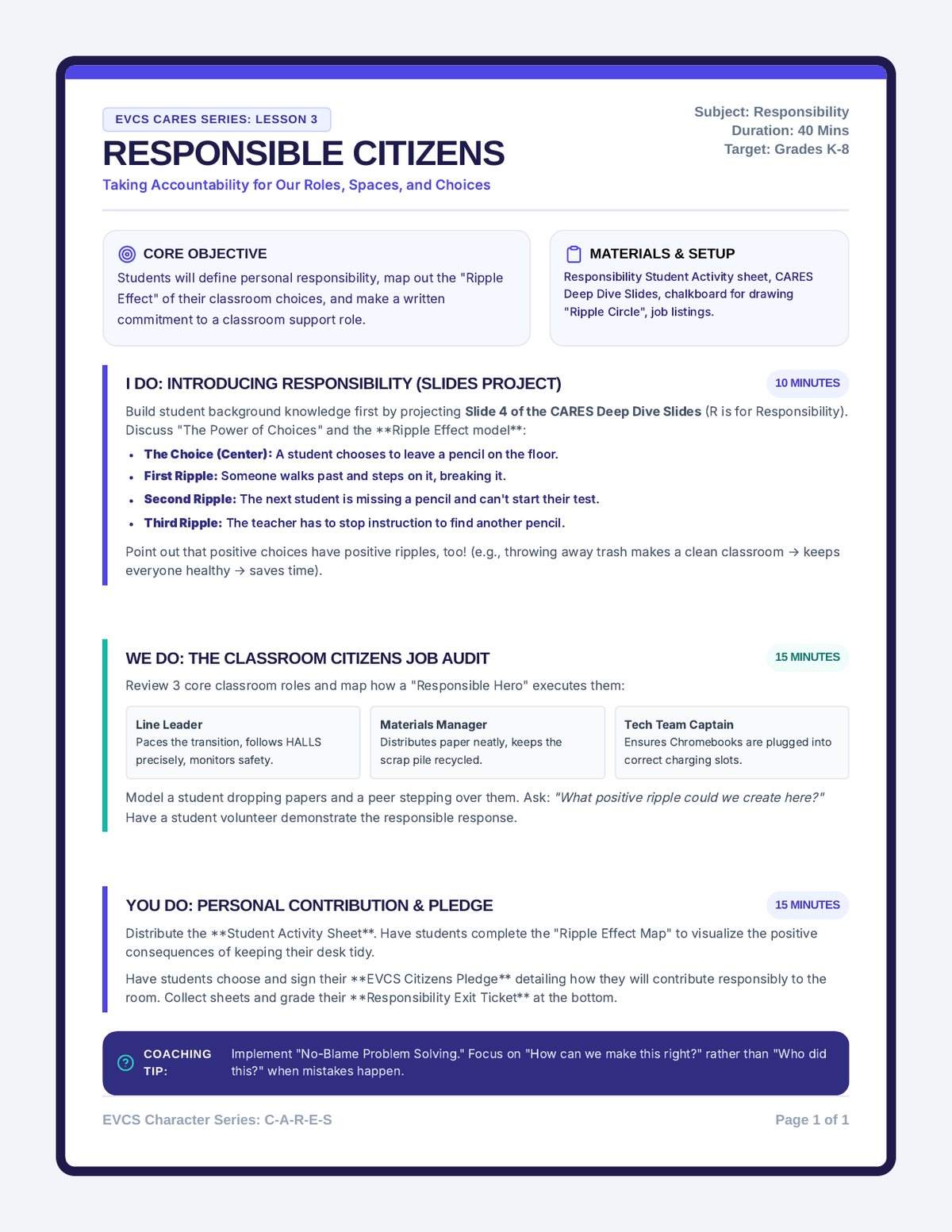
A comprehensive teacher lesson plan for teaching Responsibility. Outlines the 'Ripple Effect' of personal choices, class roles, and pacing for direct instruction and active modeling.
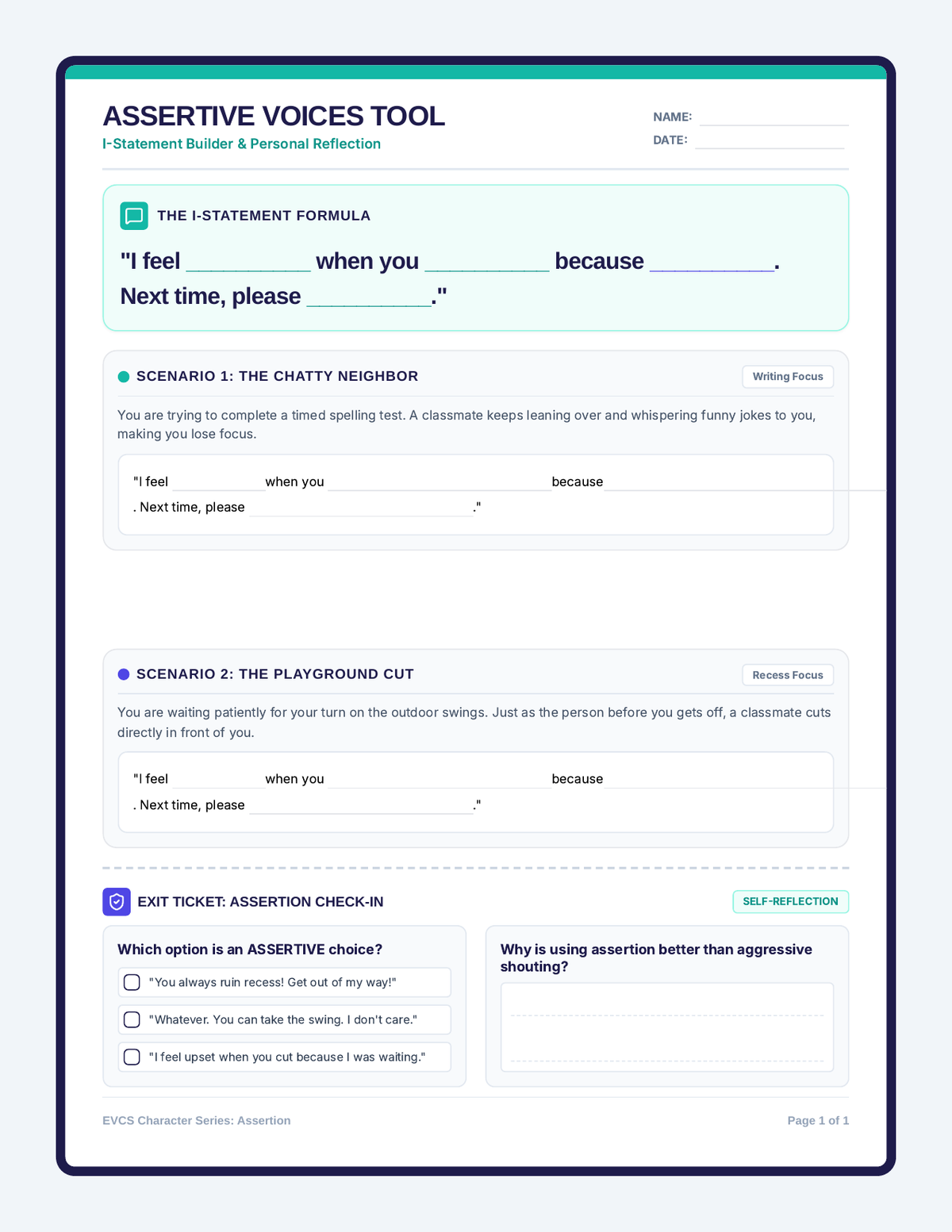
A student worksheet and interactive scenario-builder for using assertive "I-Statements" to establish healthy boundaries. Includes a quick self-assessment exit ticket.
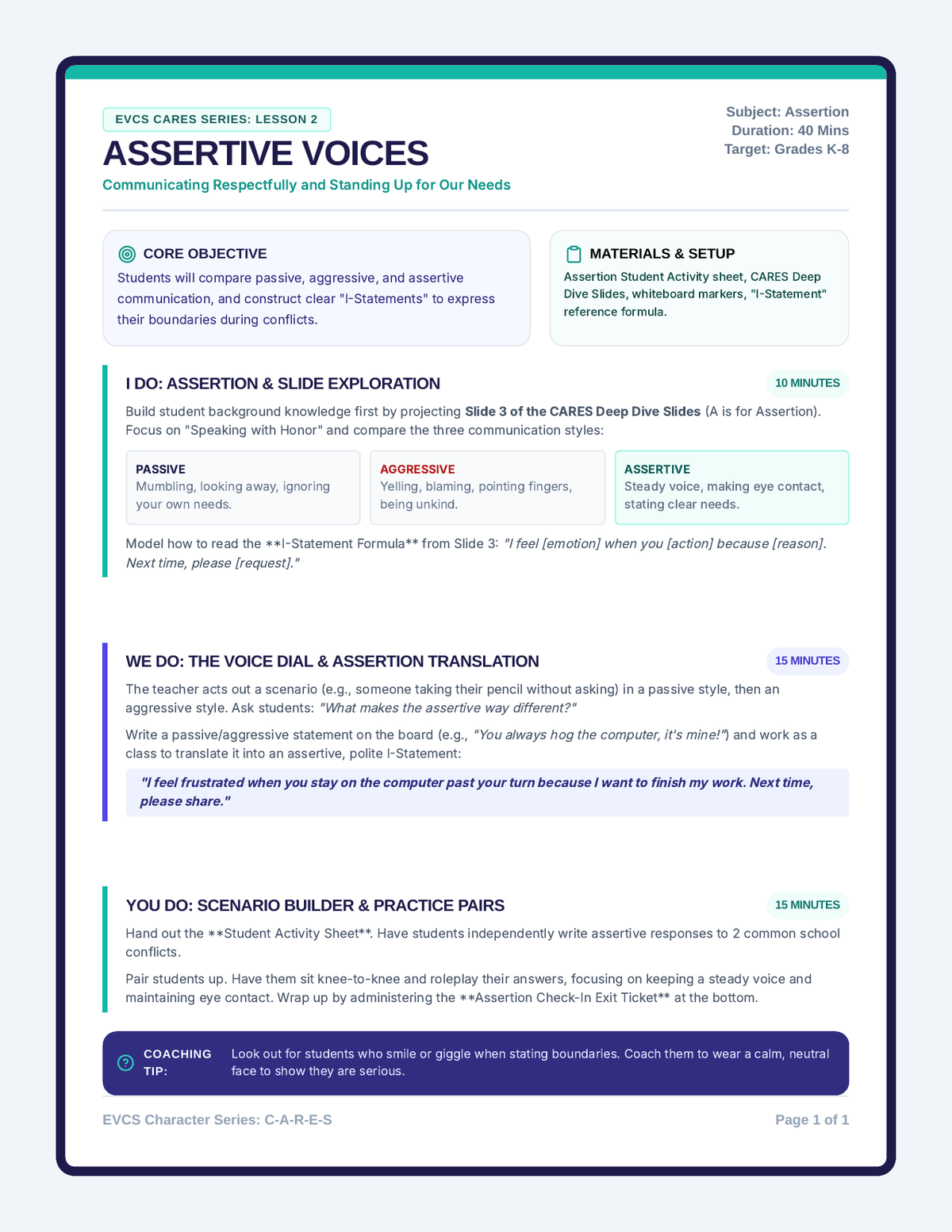
A comprehensive teacher lesson plan for teaching Assertion. Guides educators on instructing passive vs. aggressive vs. assertive communication using the 'I-Statement' formula, featuring an active modeling block.
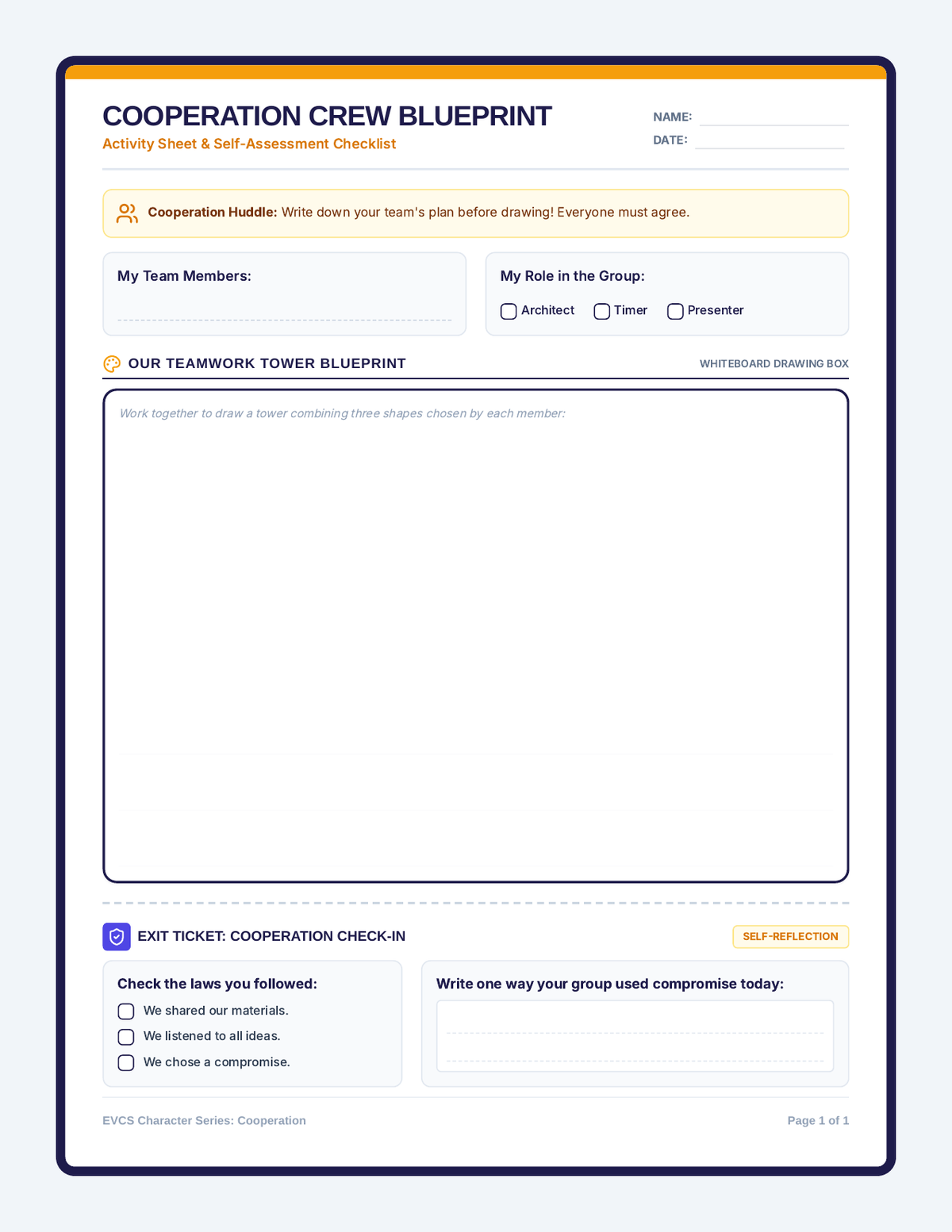
A student worksheet and collaborative blueprint drawing activity for the Cooperation lesson, featuring a class cooperation checklist and an integrated personal reflection exit ticket.
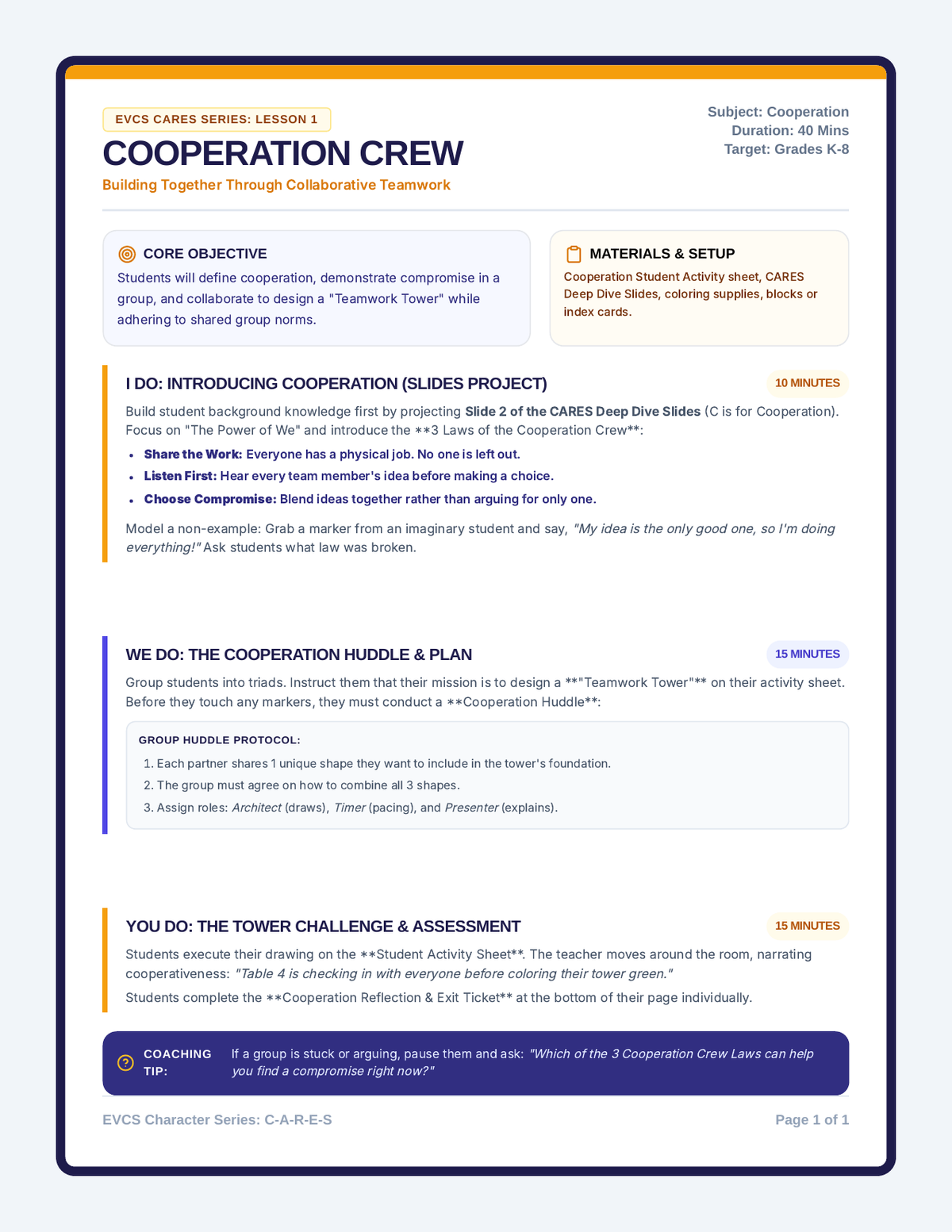
A complete teacher lesson plan for teaching Cooperation. Features an I Do, We Do, You Do structure focused on collaborative problem-solving, along with facilitator scripts and pacing guidelines.
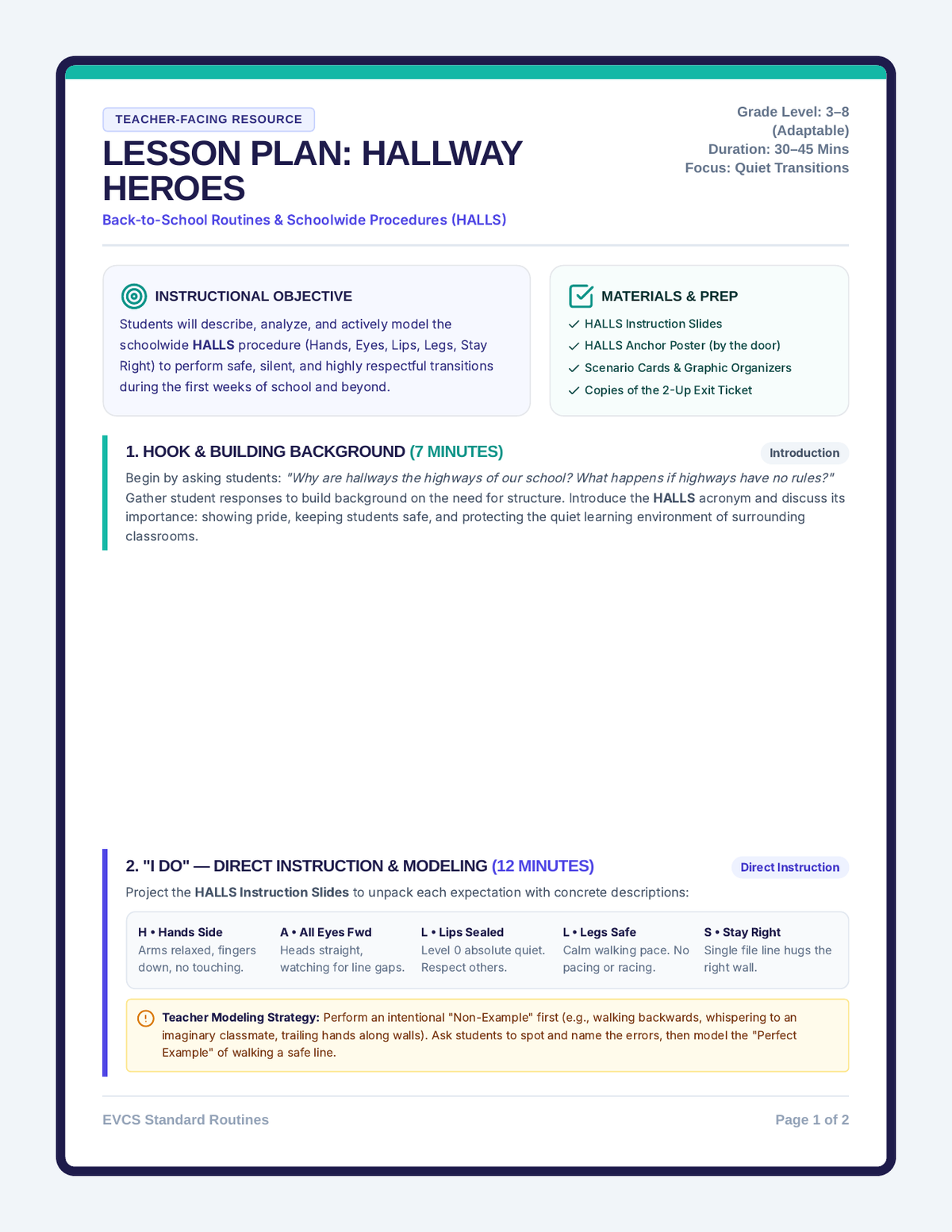
A comprehensive 2-page teacher's guide and lesson plan outlining the direct instruction, active modeling, guided roleplay, and independent practice phases of the schoolwide HALLS transition procedure.
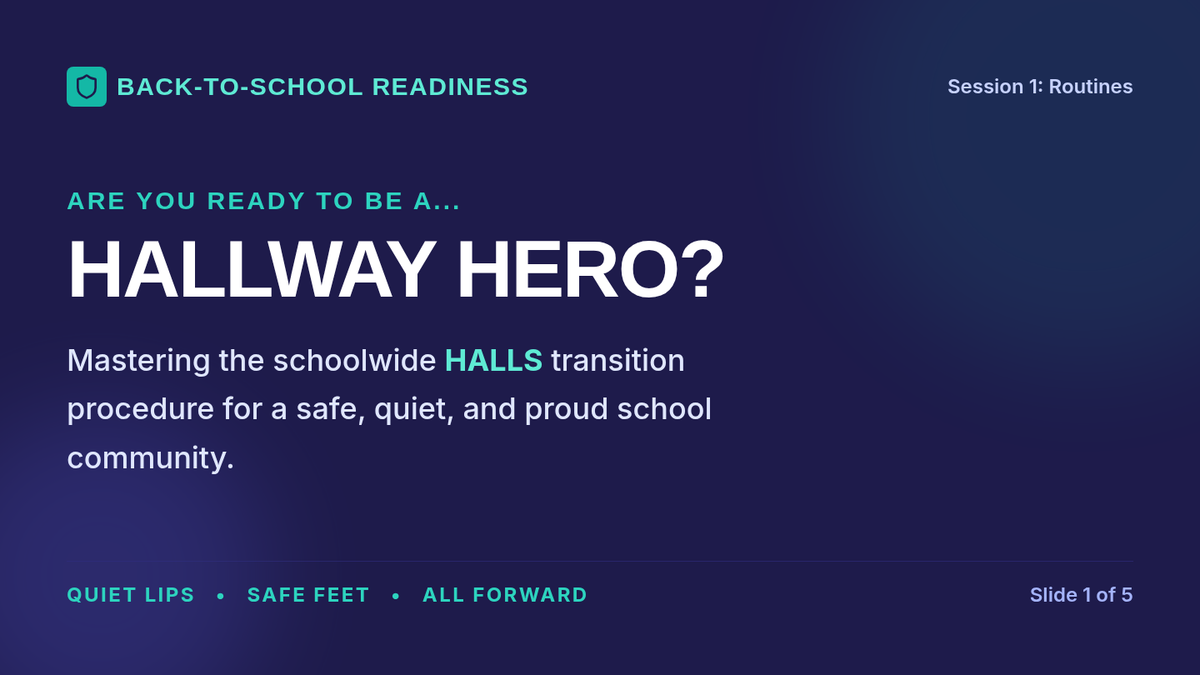
A structured presentation slide deck for direct instruction of the schoolwide HALLS expectations. Features clear breakdowns of each letter in the acronym and sets up interactive student roleplaying.
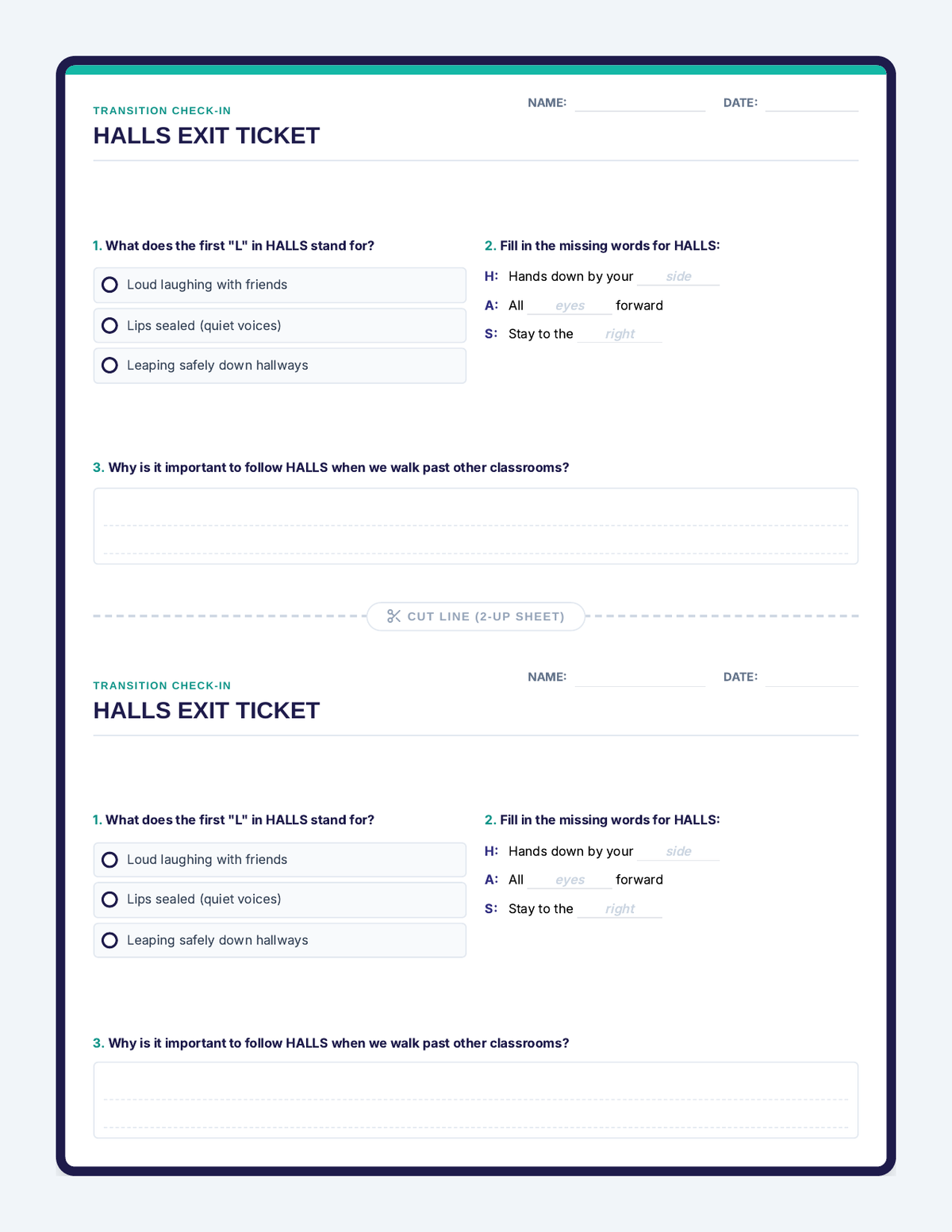
A 2-up printable student exit ticket to quickly assess individual understanding of the HALLS procedure. Designed to be cut in half to save paper, it features multiple choice, fill-in-the-blank, and brief reflection questions.
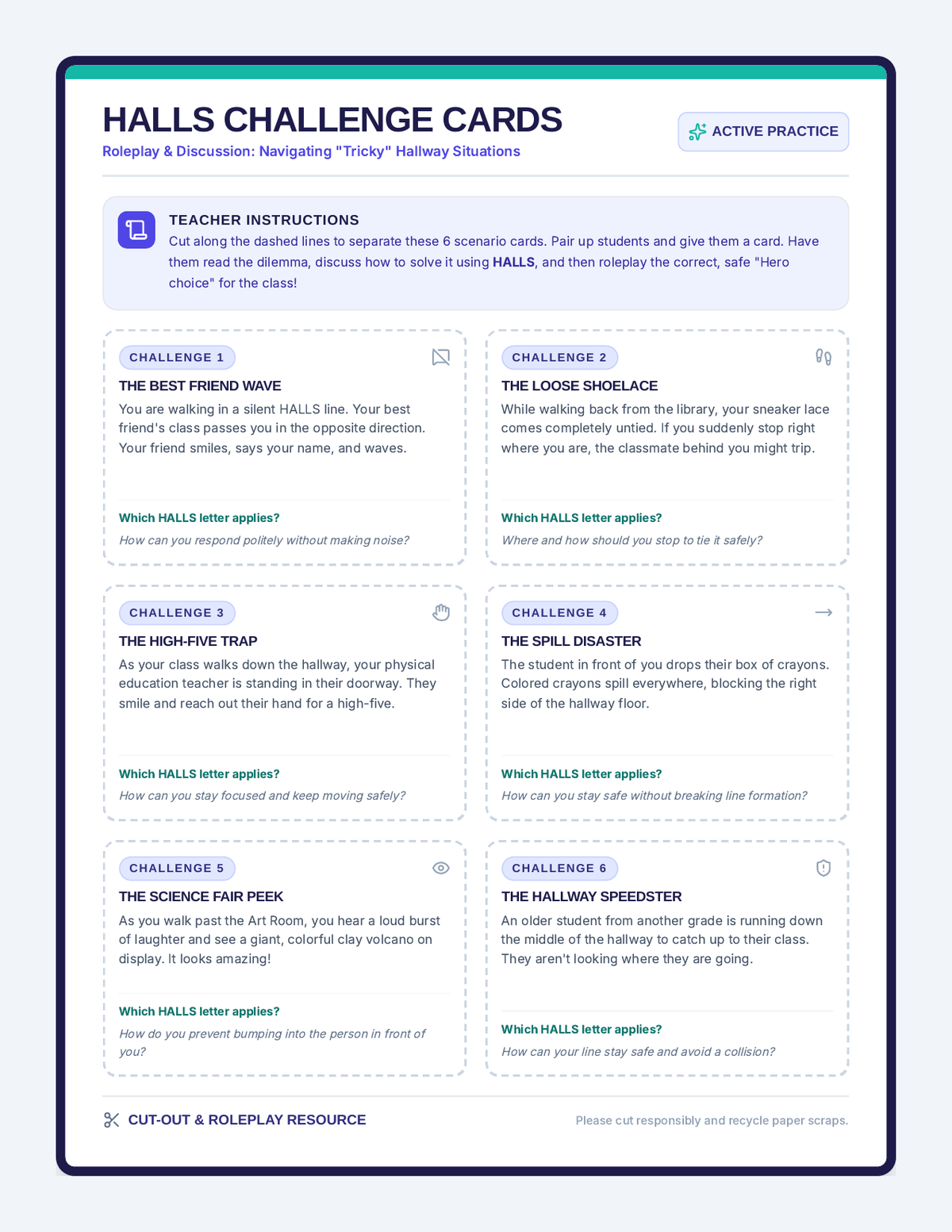
A printable set of 6 scenario cards to help students practice and roleplay "tricky" hallway transitions. Each card presents a common hallway dilemma with prompts to apply the schoolwide HALLS expectations.
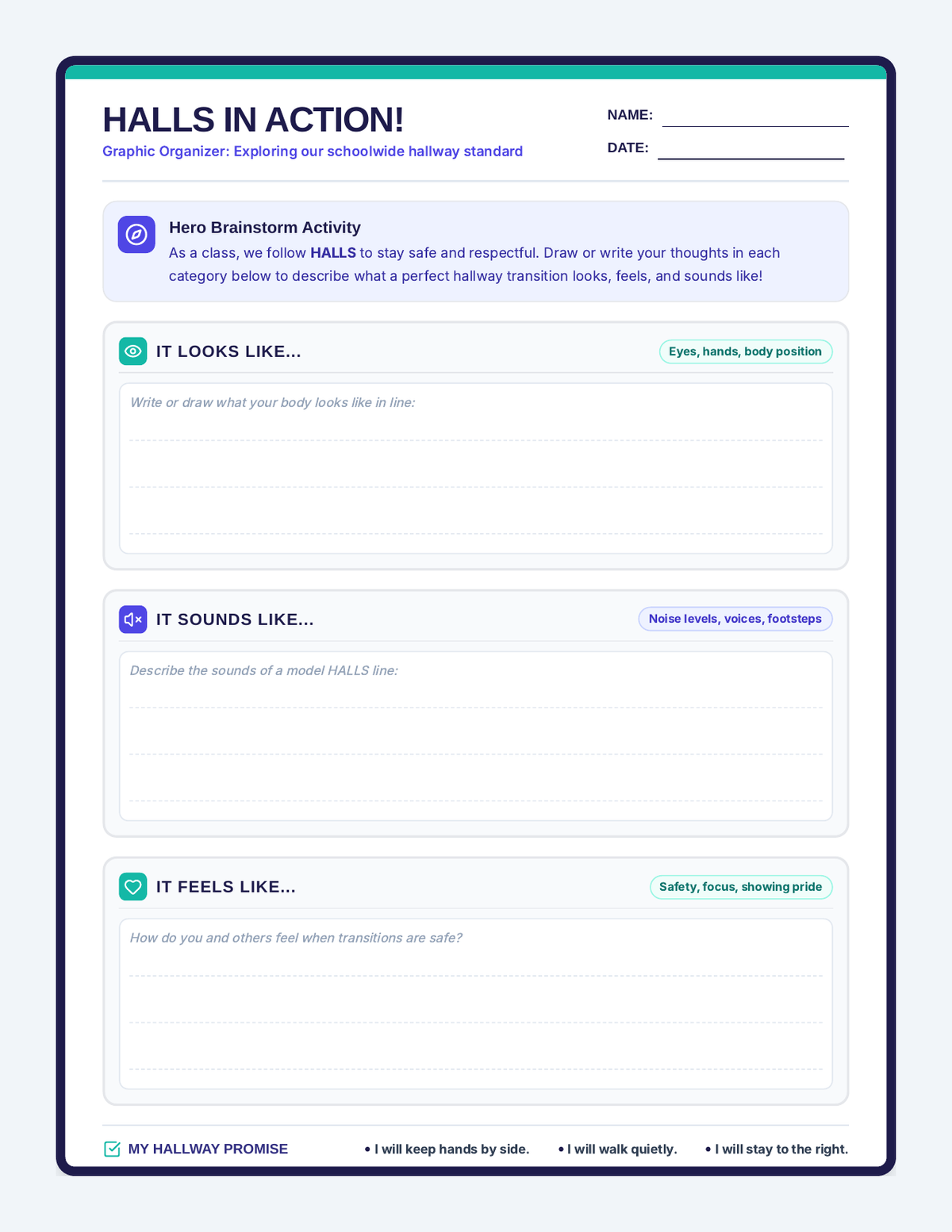
A printable graphic organizer for students to brainstorm and write down what the schoolwide HALLS procedure looks like, sounds like, and feels like. Includes custom writing blocks with clear guidance prompts.
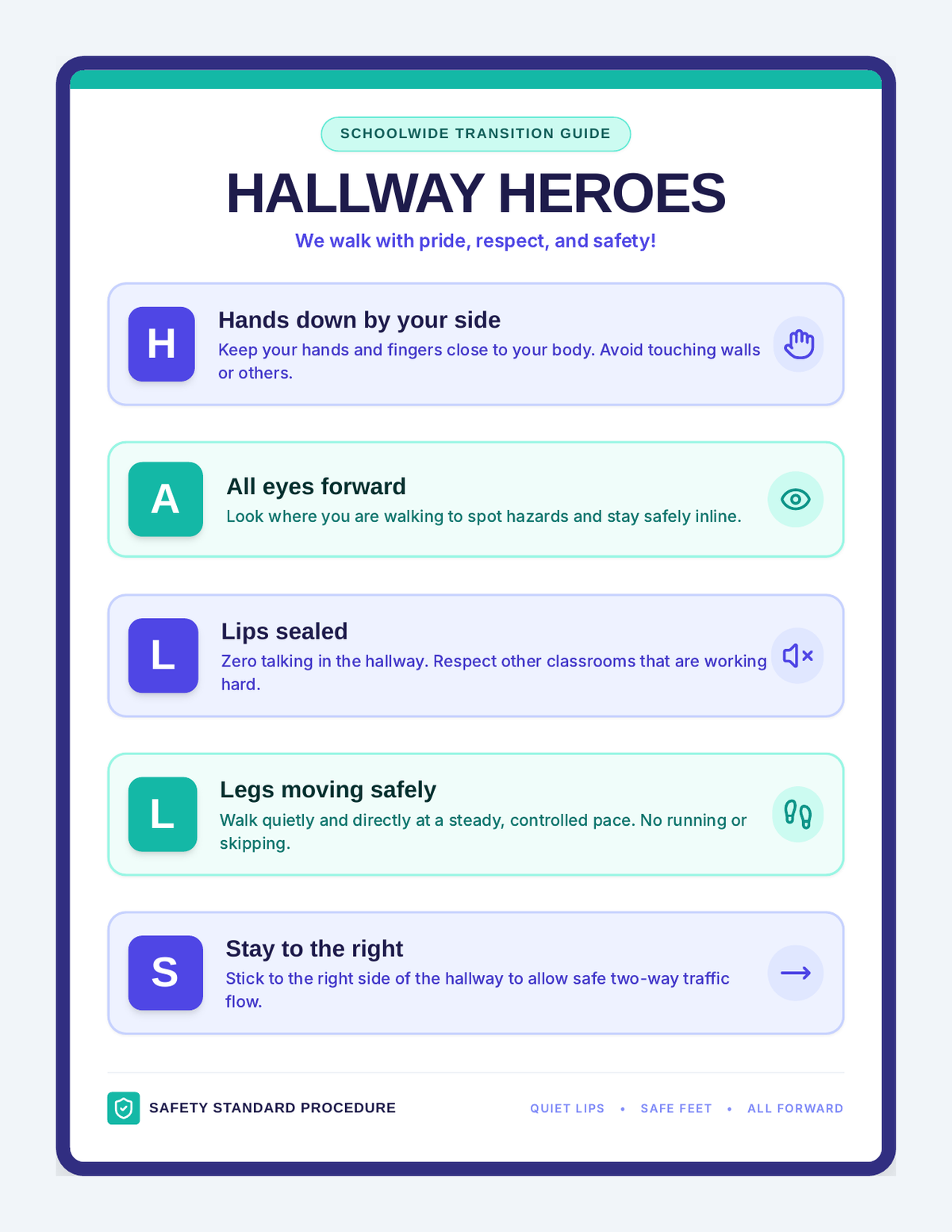
A vibrant and high-visibility classroom poster featuring the HALLS acronym. Designed to be printed and hung near the classroom exit, it provides students with clear visual reminders of hallway expectations before transitioning.
A high-impact, superhero-themed 11-slide presentation for the 6-8 grade-band Classroom STAR expectations. Designed in Marley Park green and yellow colors, with minimum 24px font size for back-of-the-room legibility, heavy comic-book borders, and structured Hook-Discover-Practice-Commit routines.
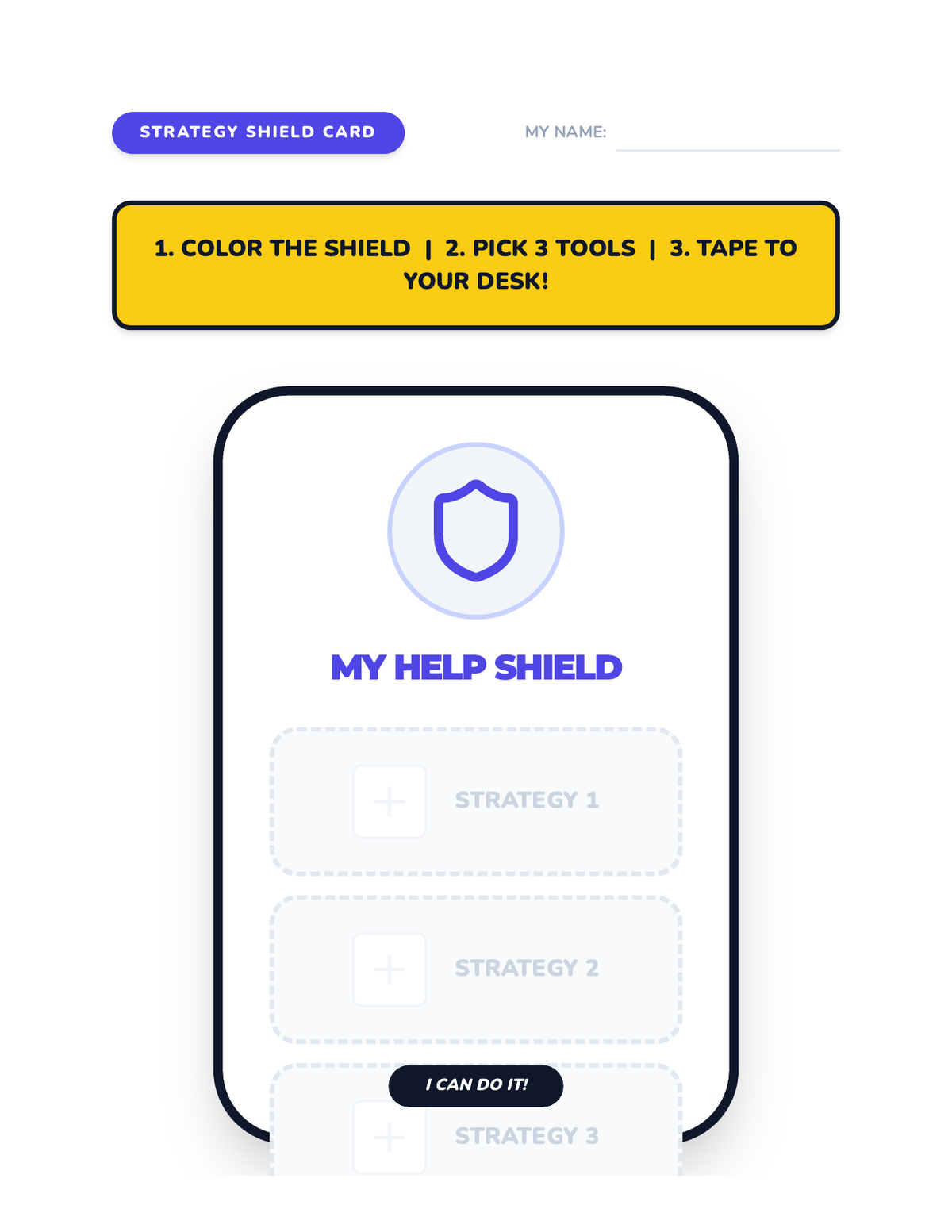
A student project template for creating a personalized 'Strategy Shield' desk card. Includes cut-out strategy icons for visual choice-making.
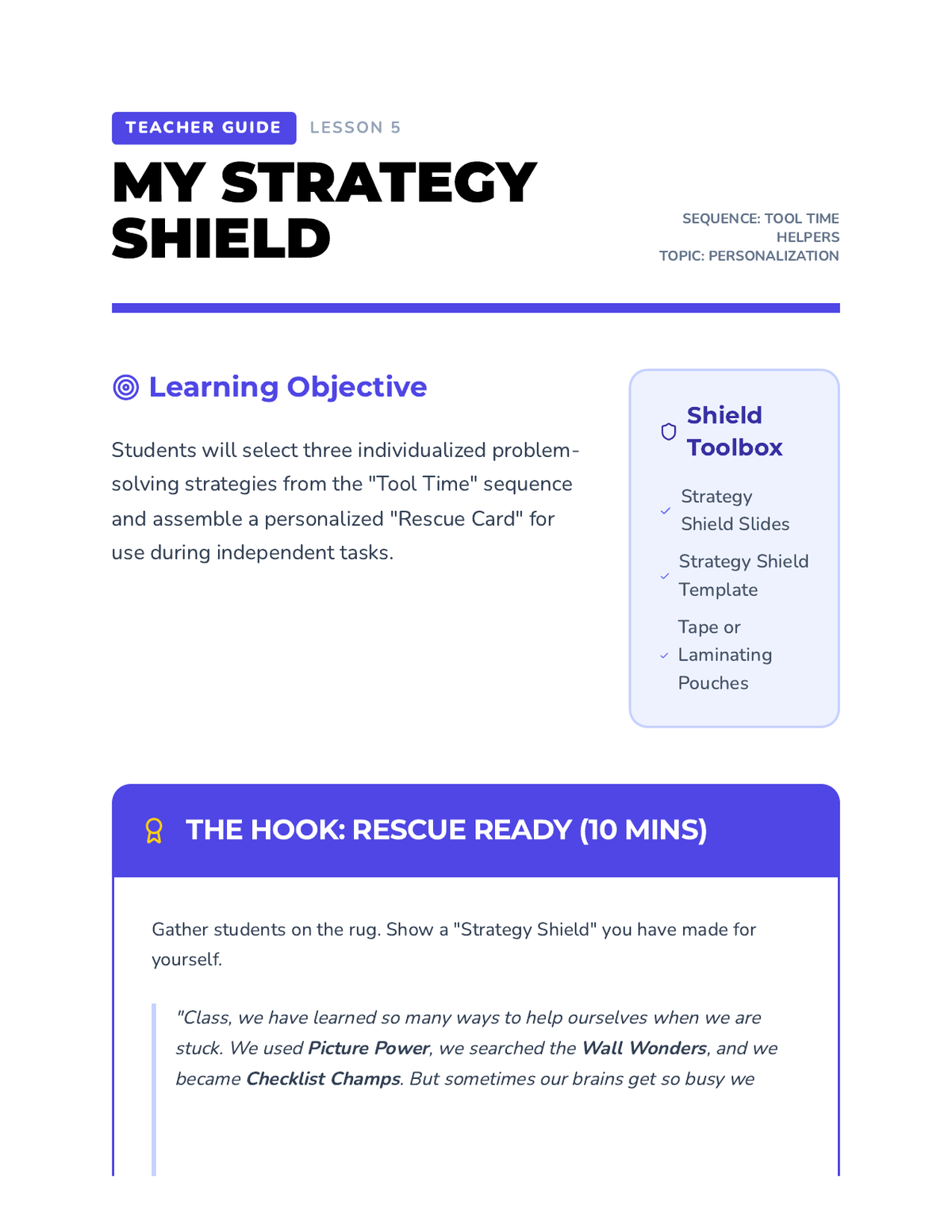
Instructional guide for teaching Kindergarteners how to help students select their personalized 'Rescue Tools' and synthesize the sequence.
Introductory slides for Kindergarteners on picking favorite task-management strategies. Features a 'Strategy Shield' theme and reviews all previous tools.
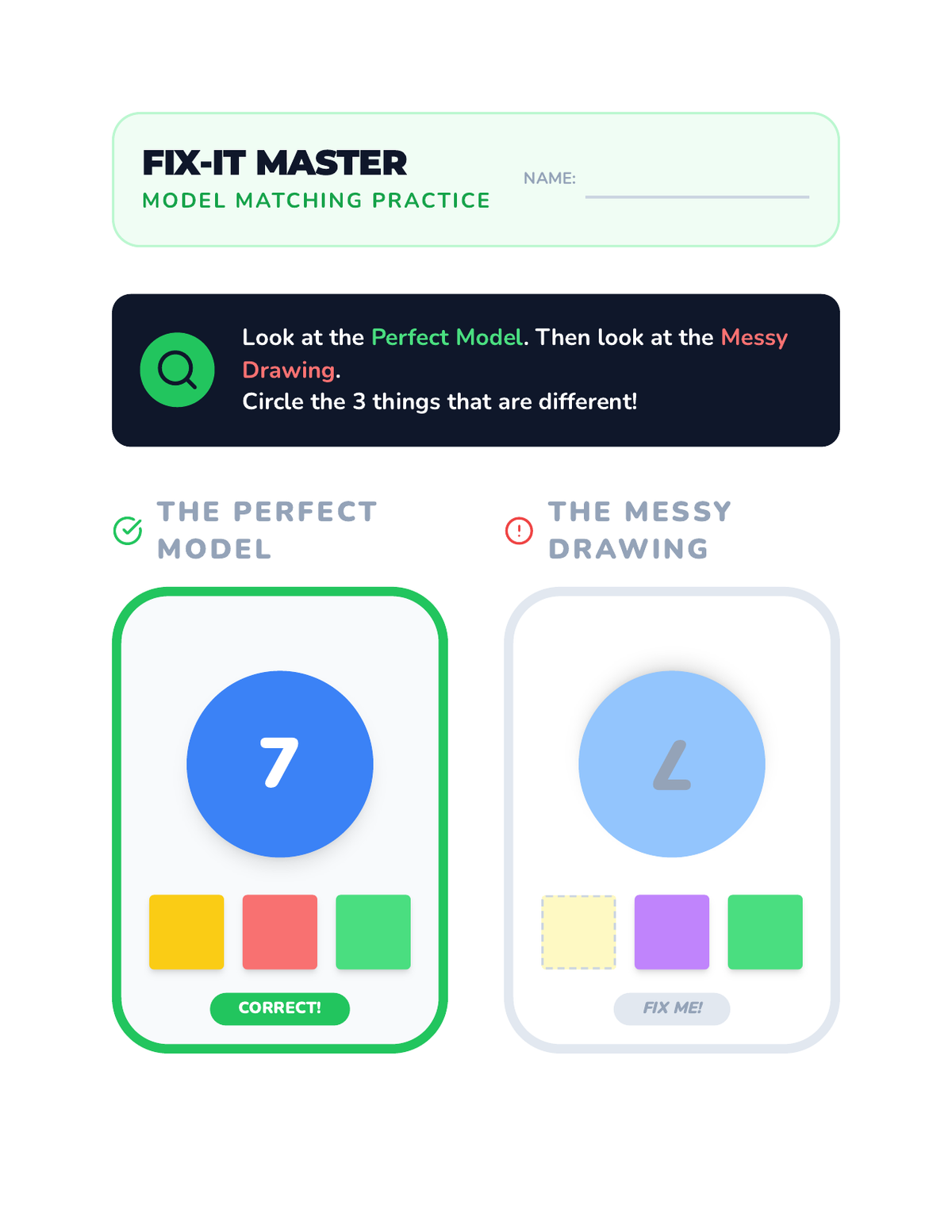
A student worksheet for practicing troubleshooting by comparing their work to a 'finished model' to identify and self-correct errors.
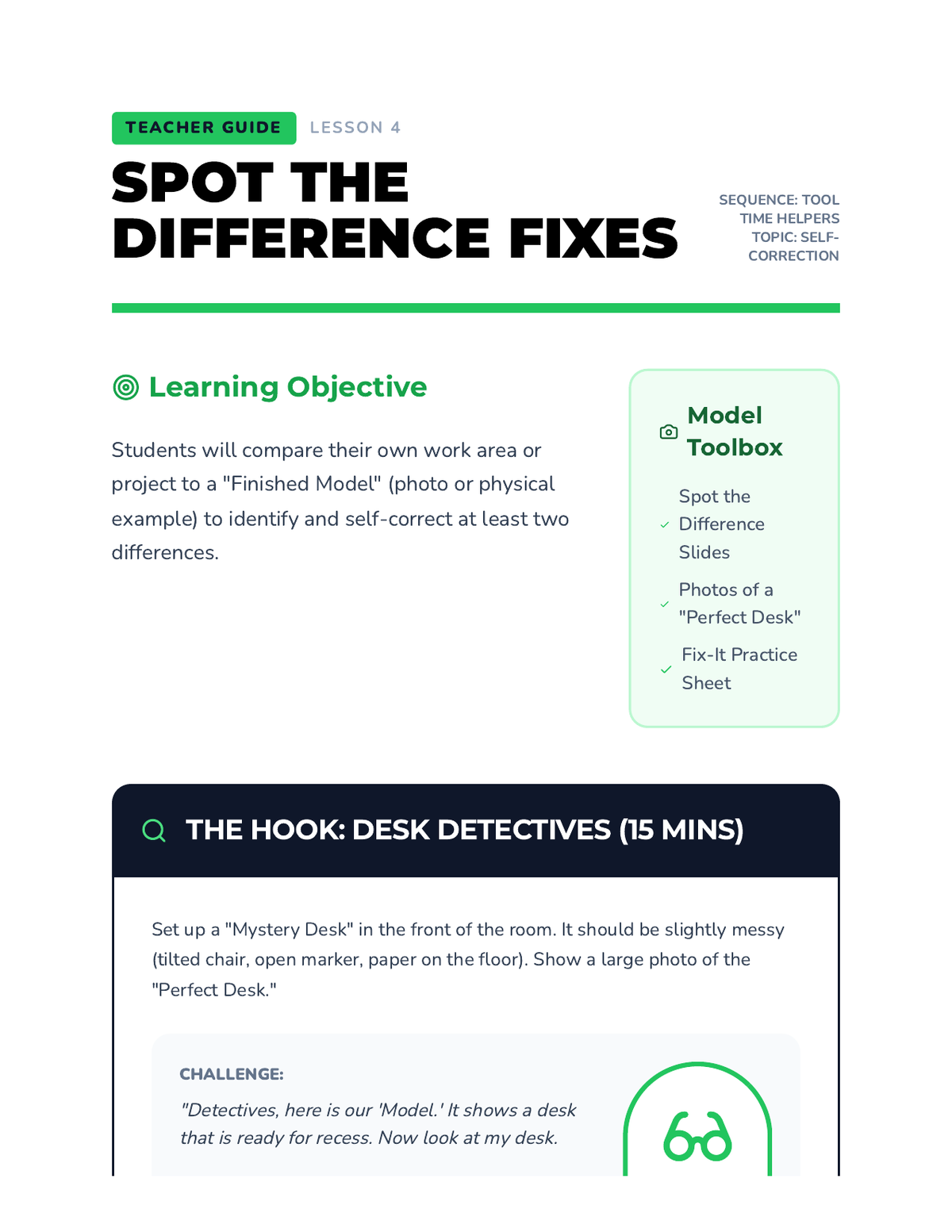
Instructional guide for teaching Kindergarteners how to use a 'finished model' to compare their work, featuring the 'Finger Match' method and 'Desk Detectives' hook.
Introductory slides for Kindergarteners on using a 'finished model' to compare their work and identify errors. Features side-by-side comparisons of 'messy' vs 'clean' desks.
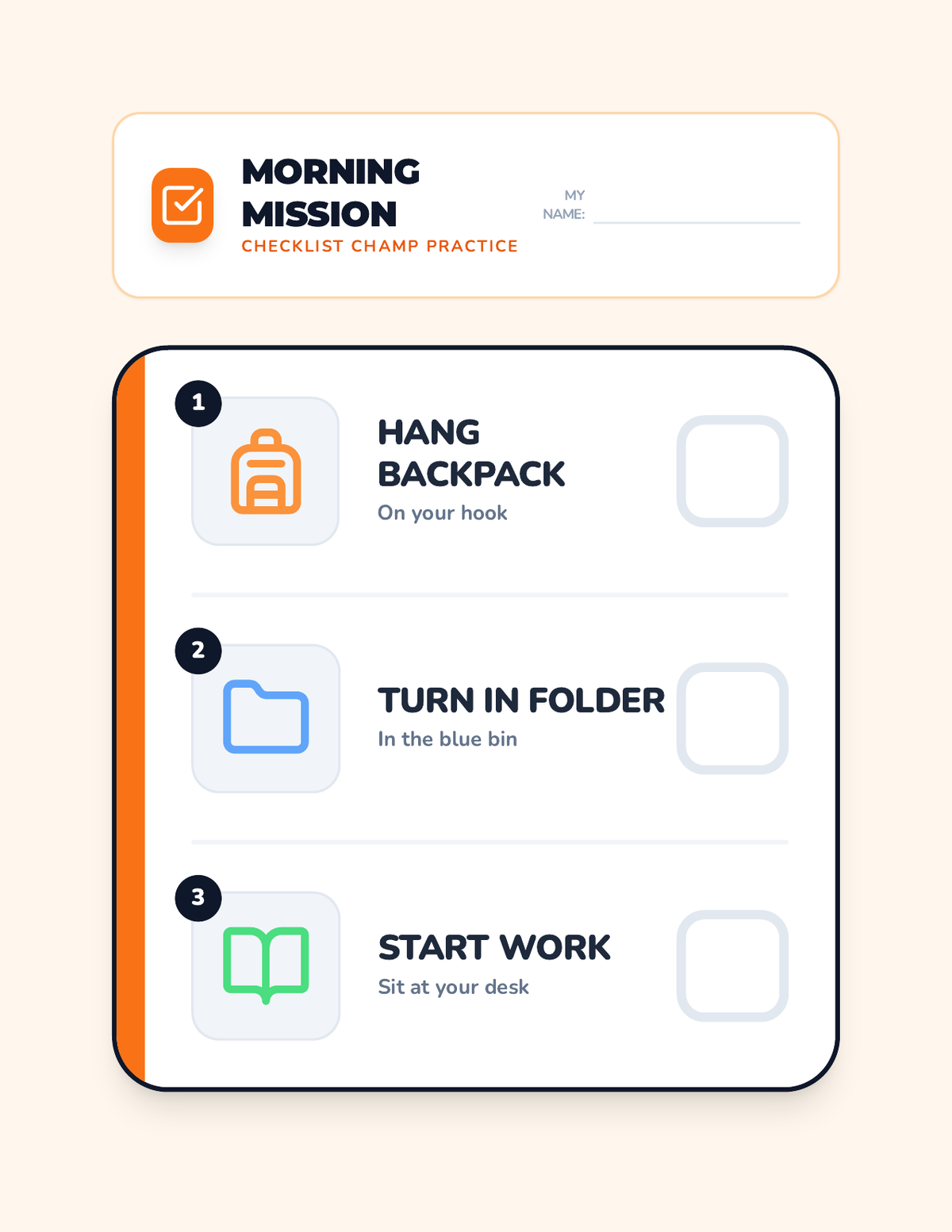
A practice morning routine checklist for Kindergarteners with 3 simple tasks (Backpack, Folder, Work). Features large check-off boxes and clear icons.