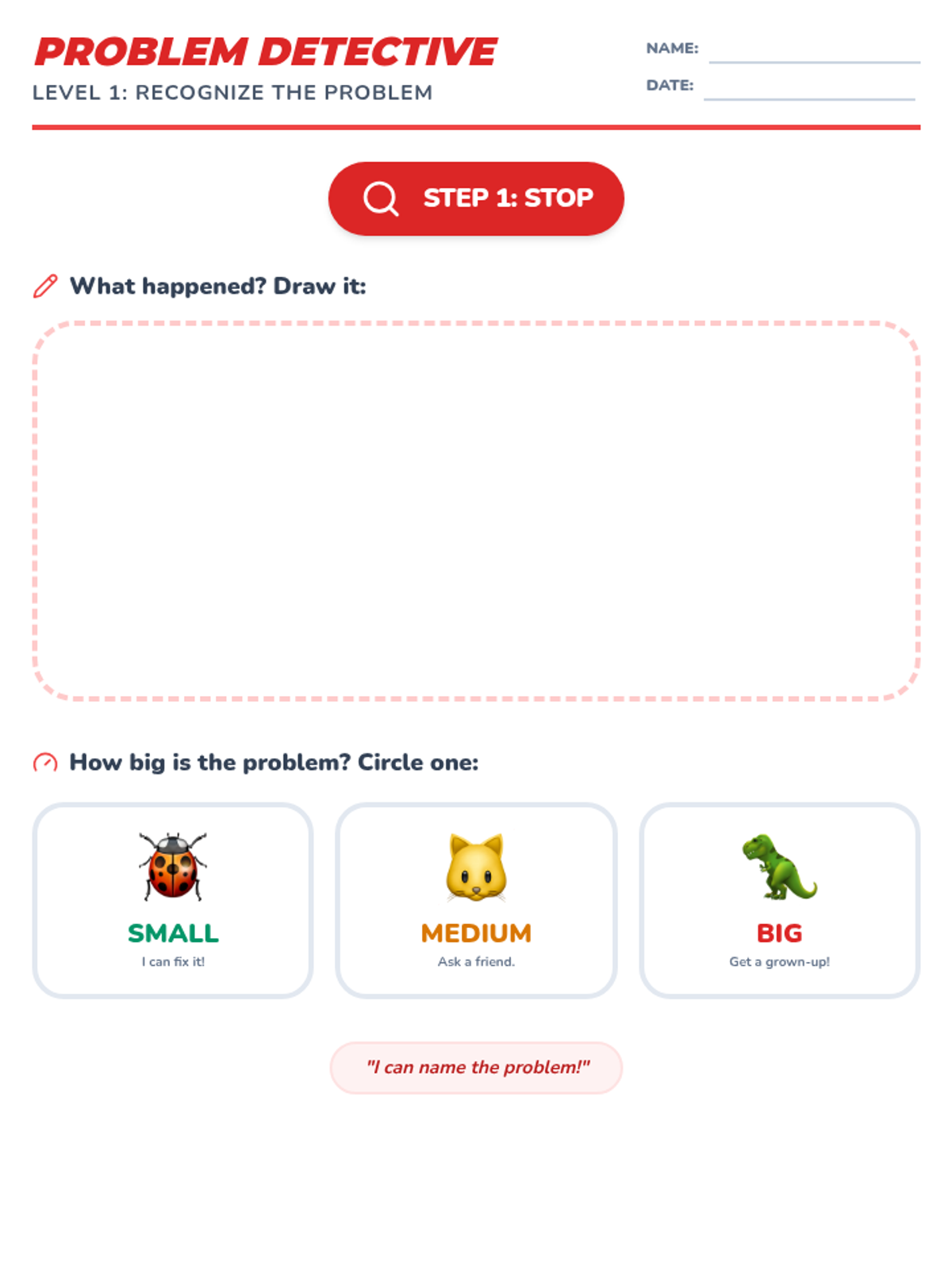
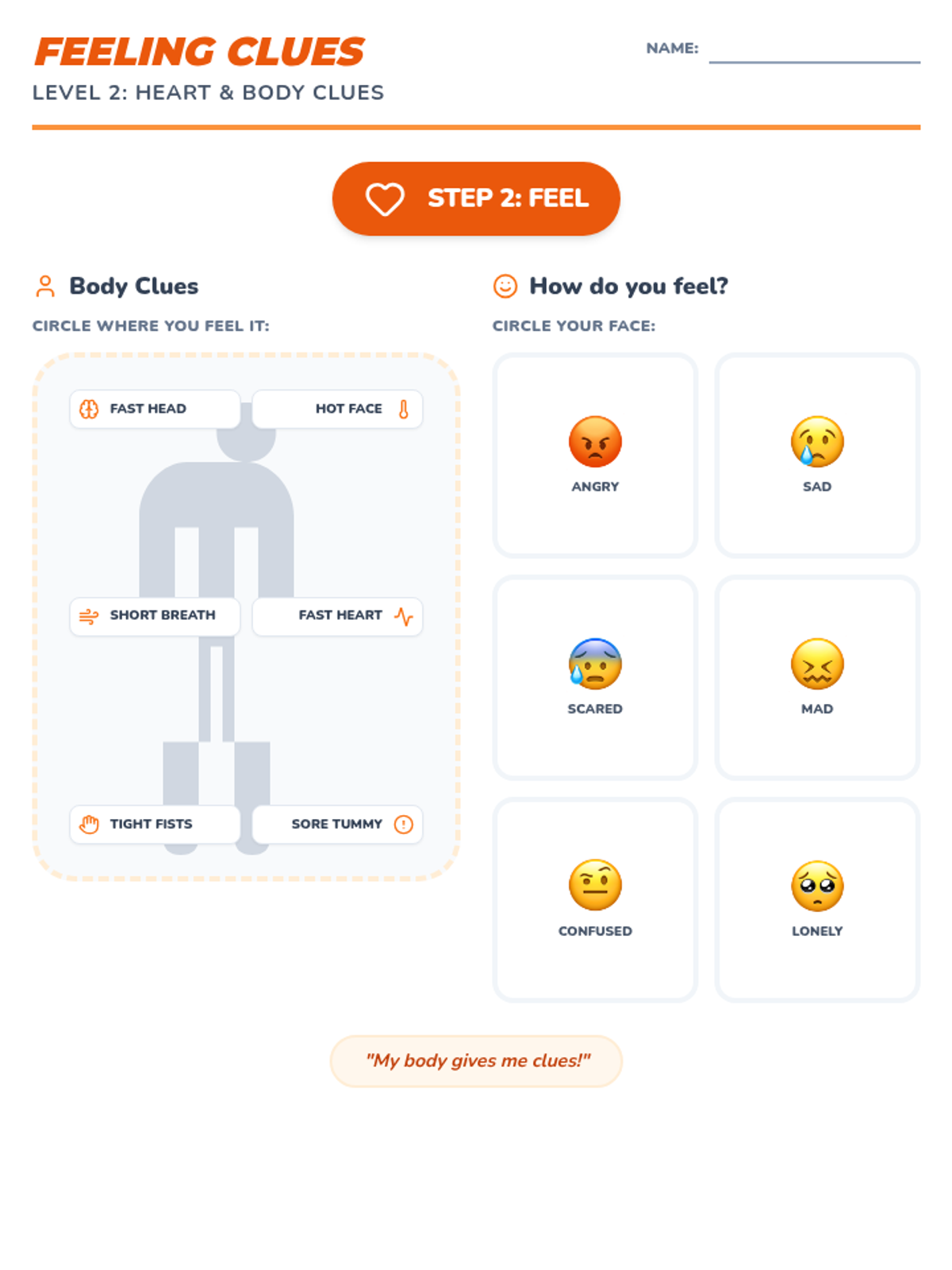
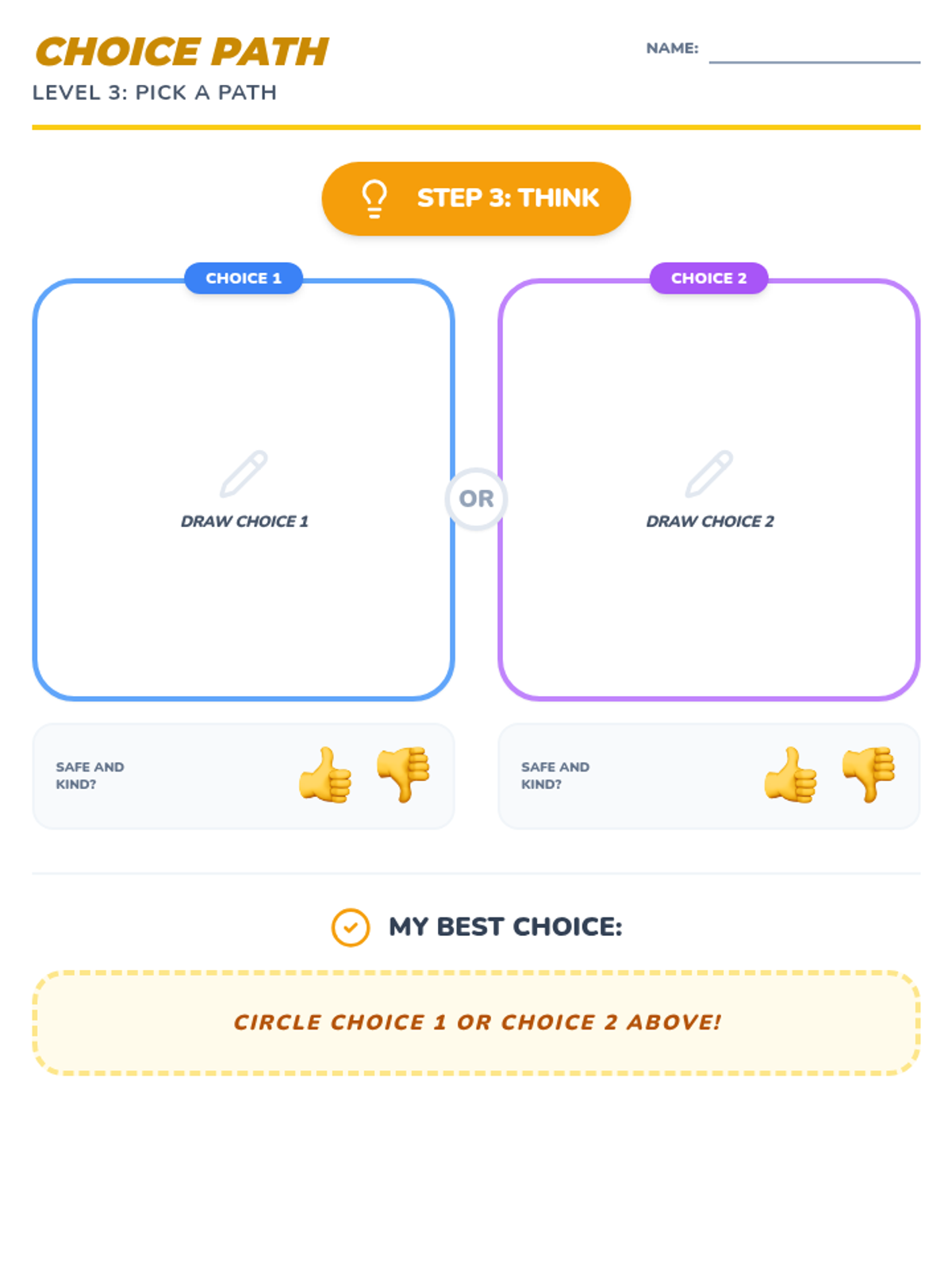
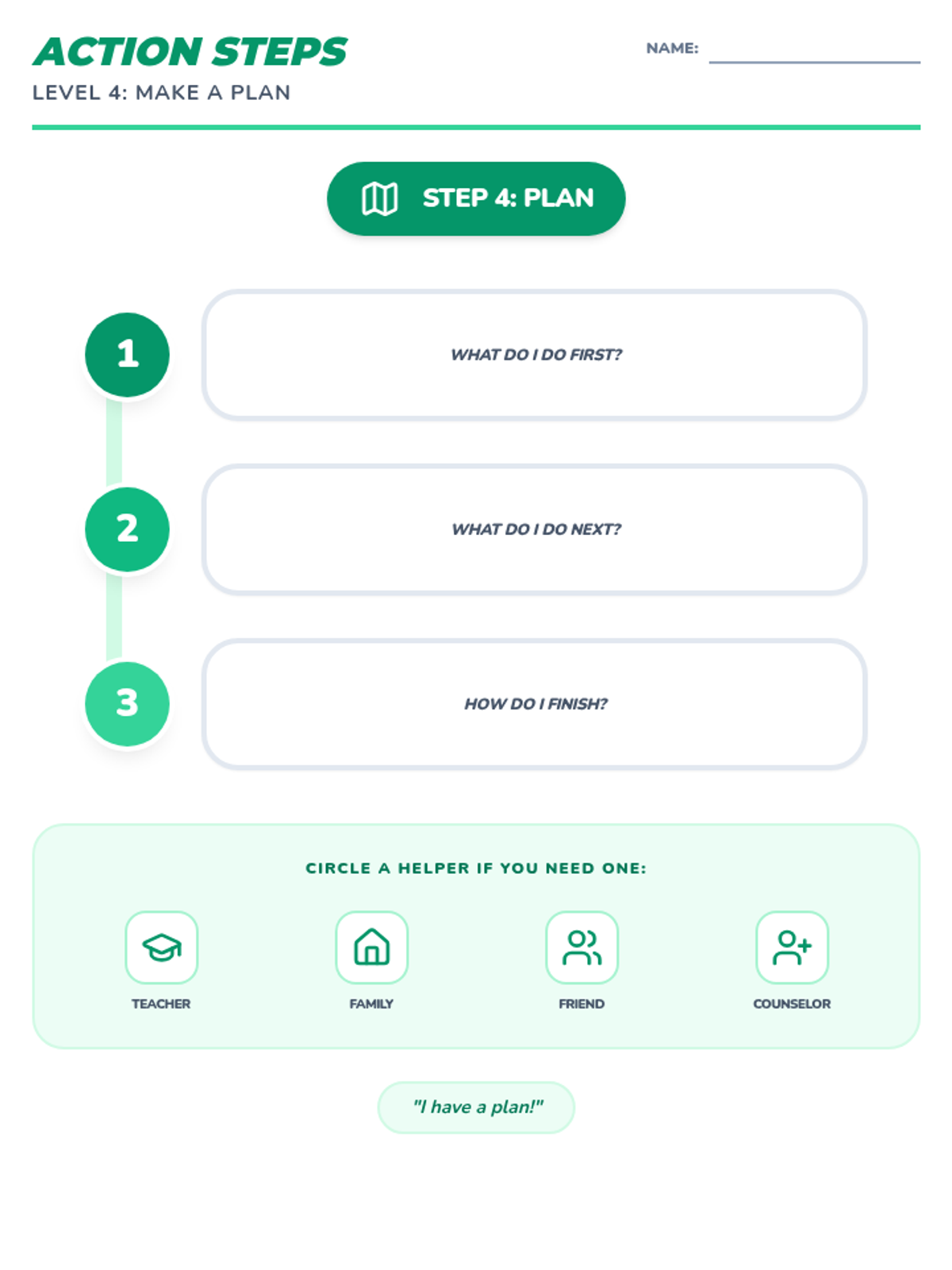
Root cause analysis and brainstorming techniques for everyday problem-solving. Equips learners with ethical frameworks and risk-benefit evaluation skills to predict consequences and make informed choices.
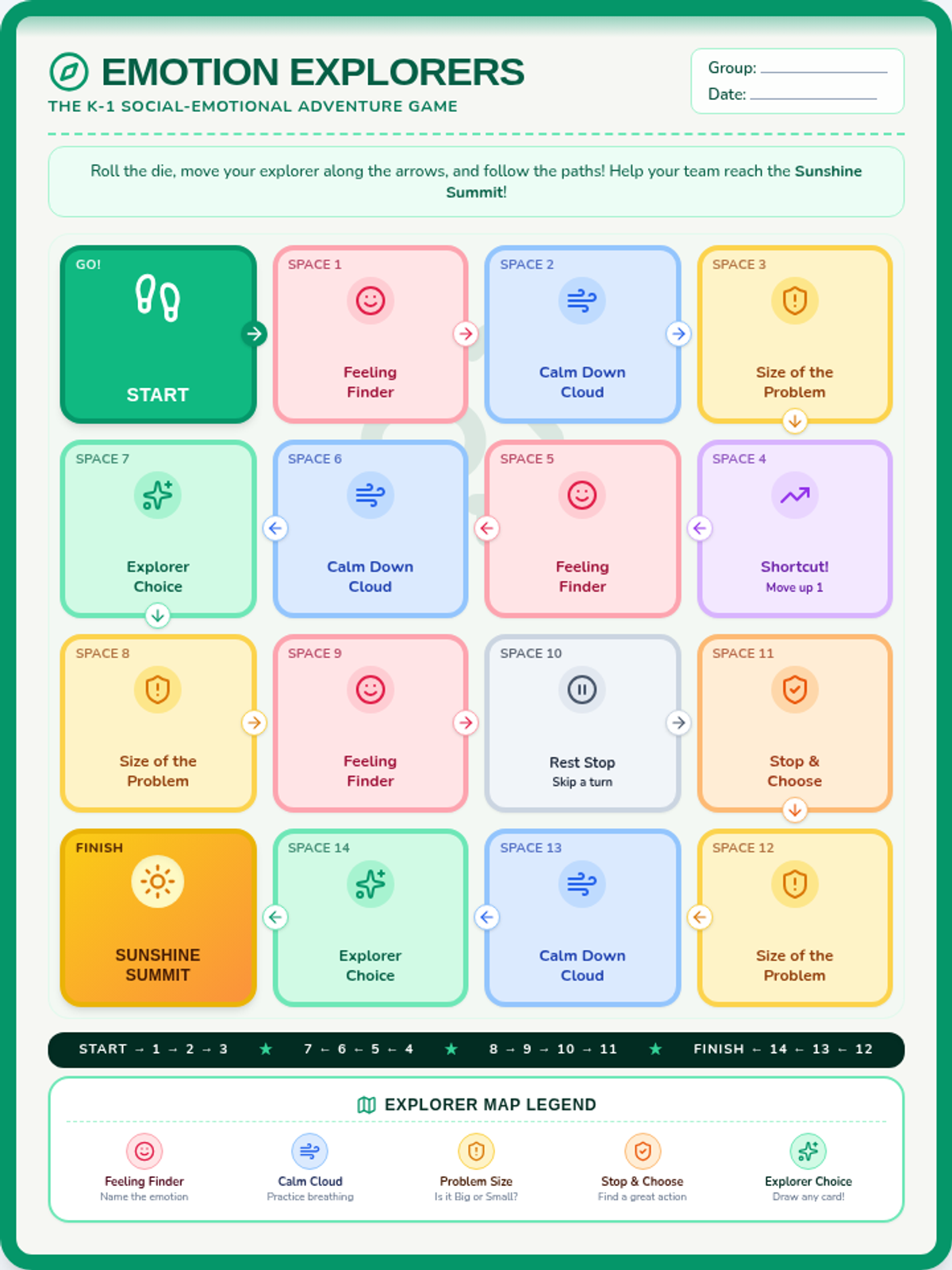
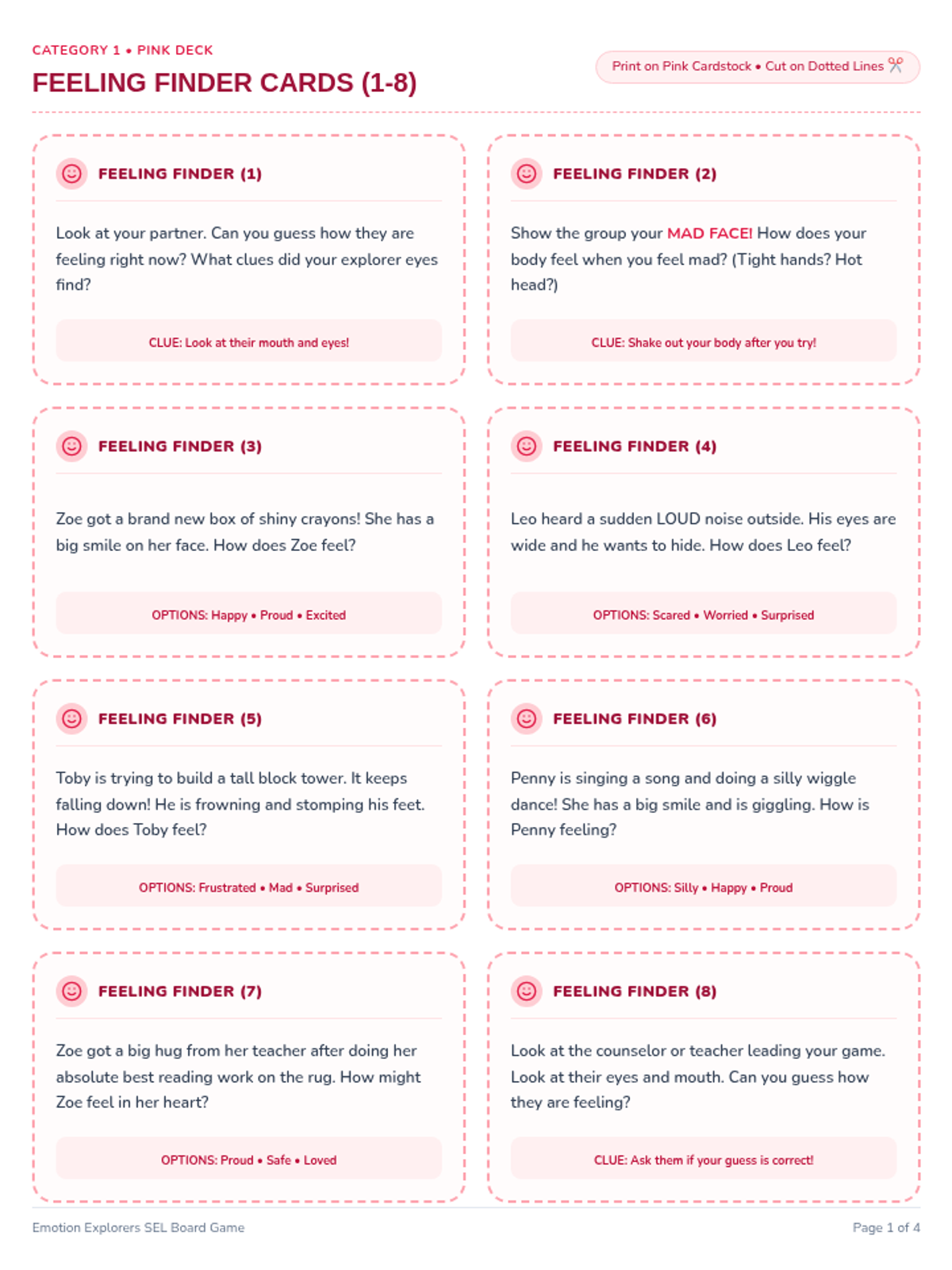
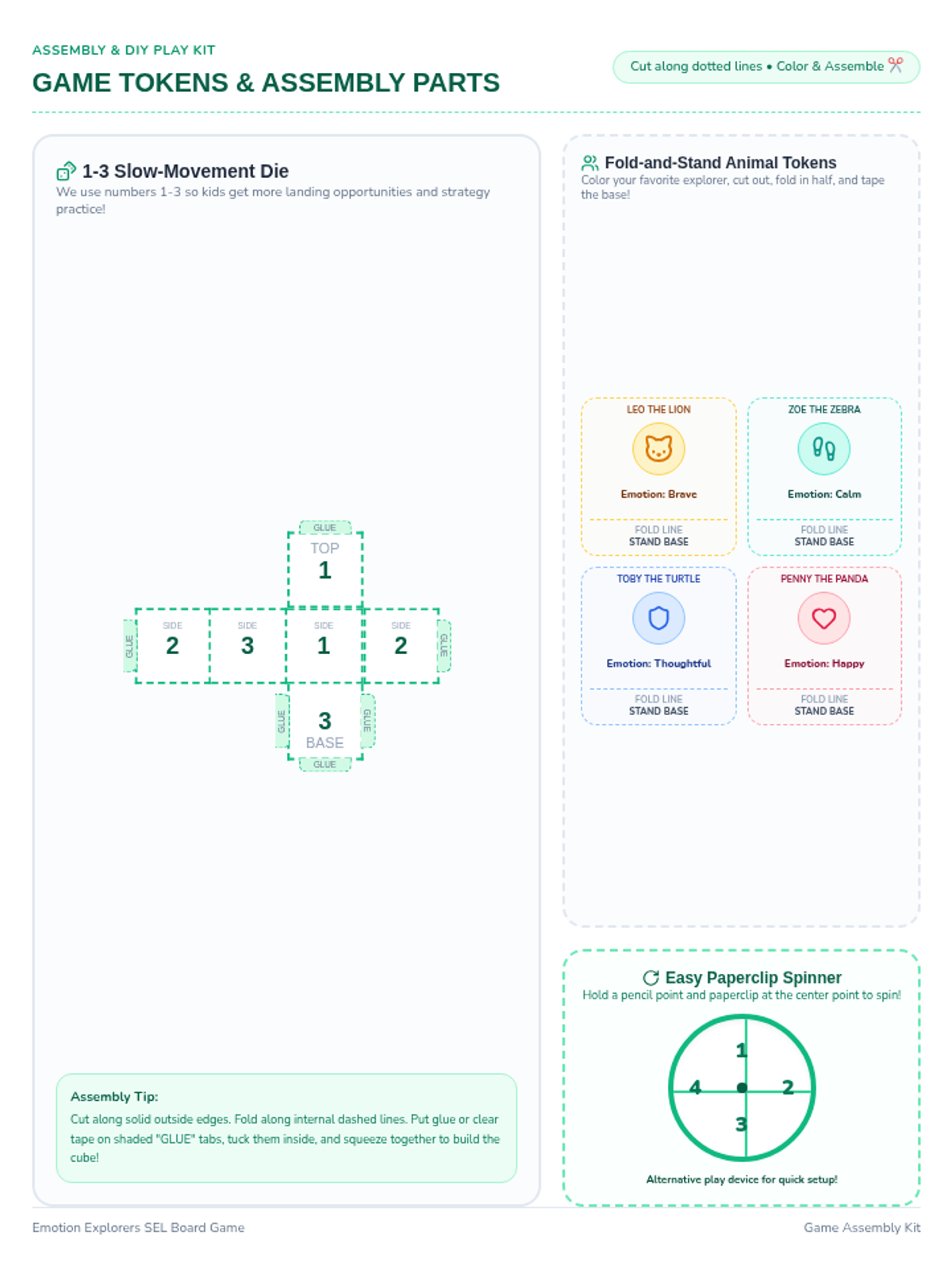
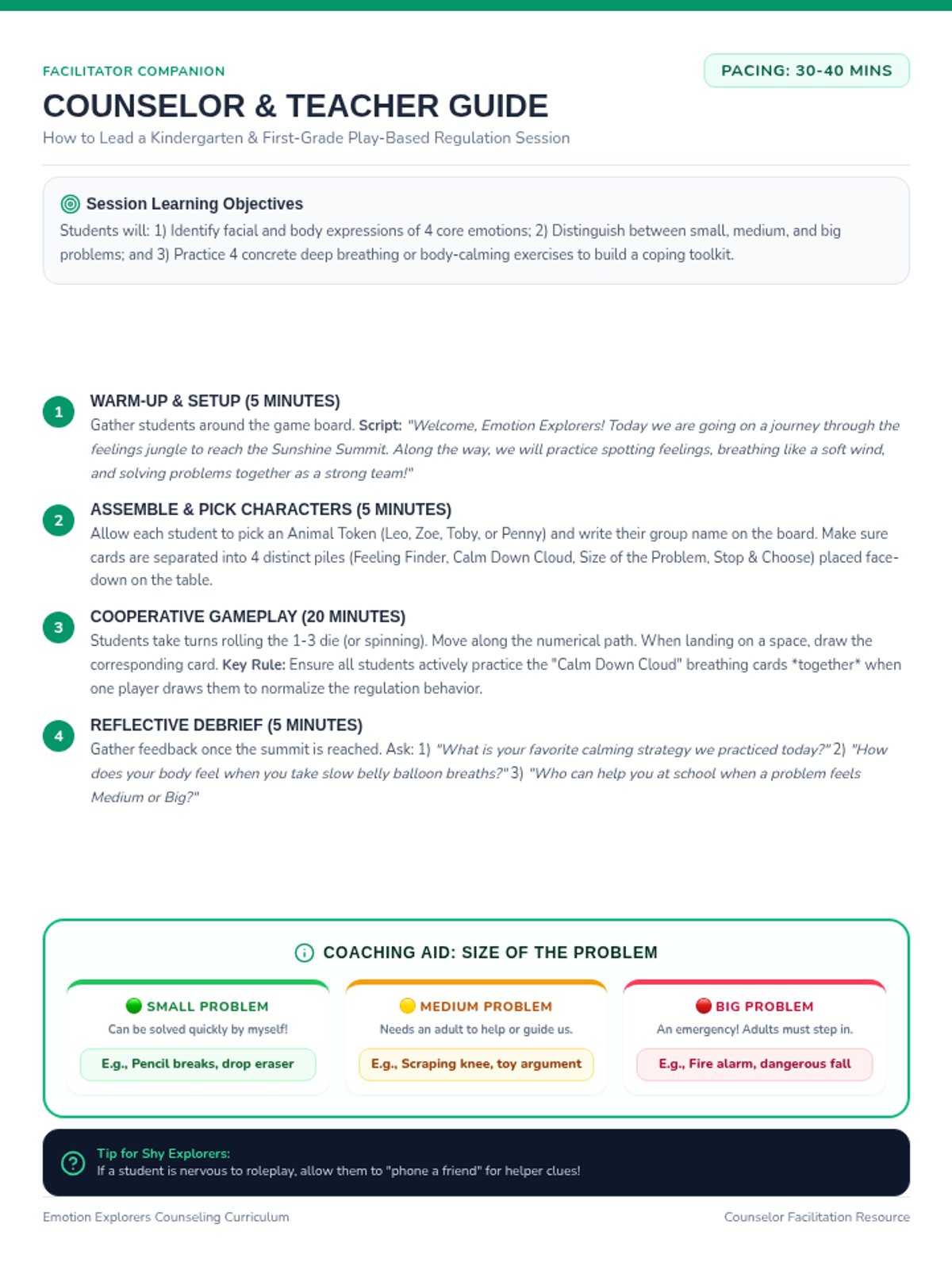
An interactive SEL board game session for Kindergarten and First-Grade students, focusing on identifying emotions, understanding the size of problems, and practicing calming breathing strategies. Includes a printable game board, situation cards, assembly parts, and a comprehensive counselor guide.
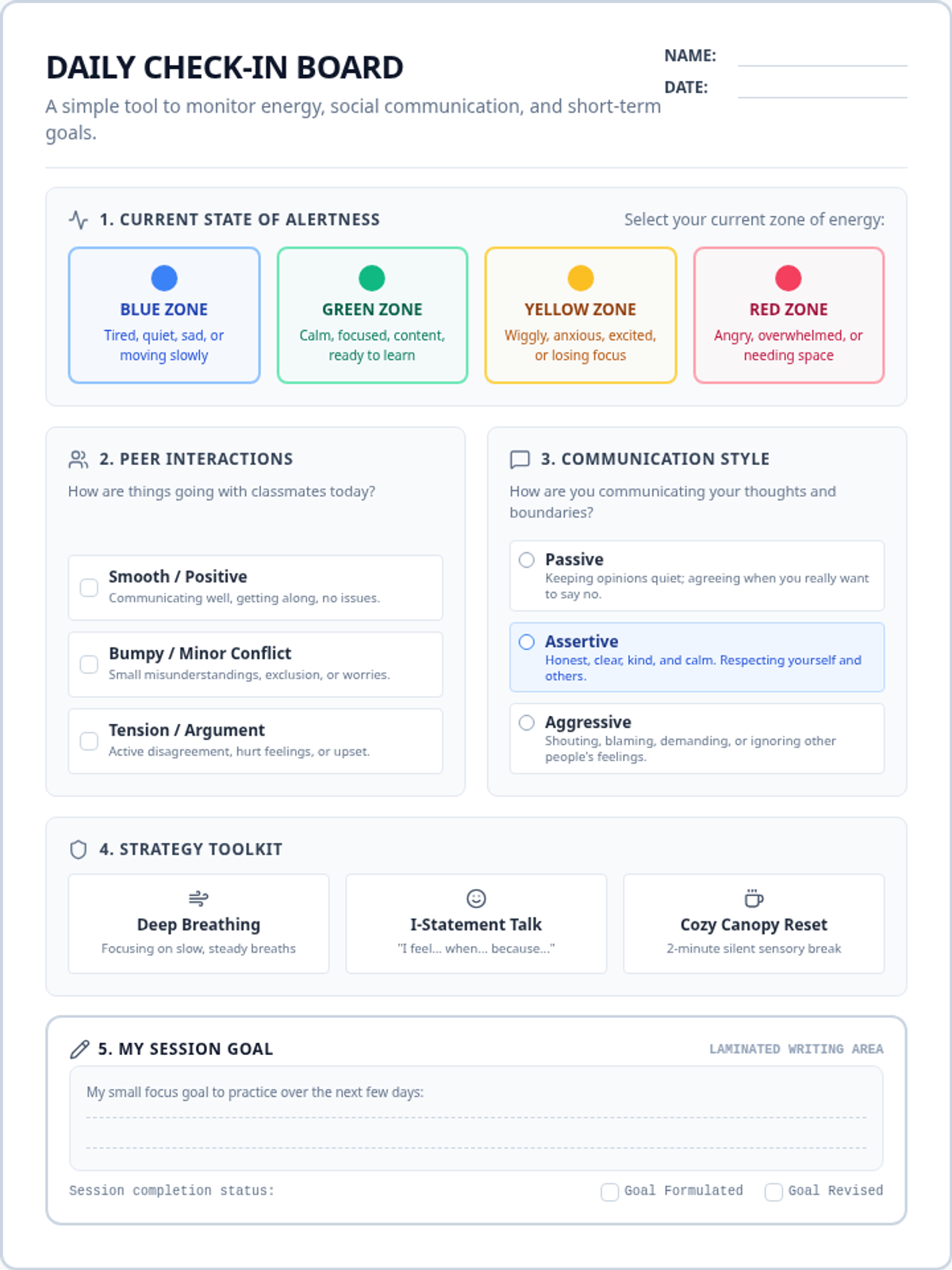
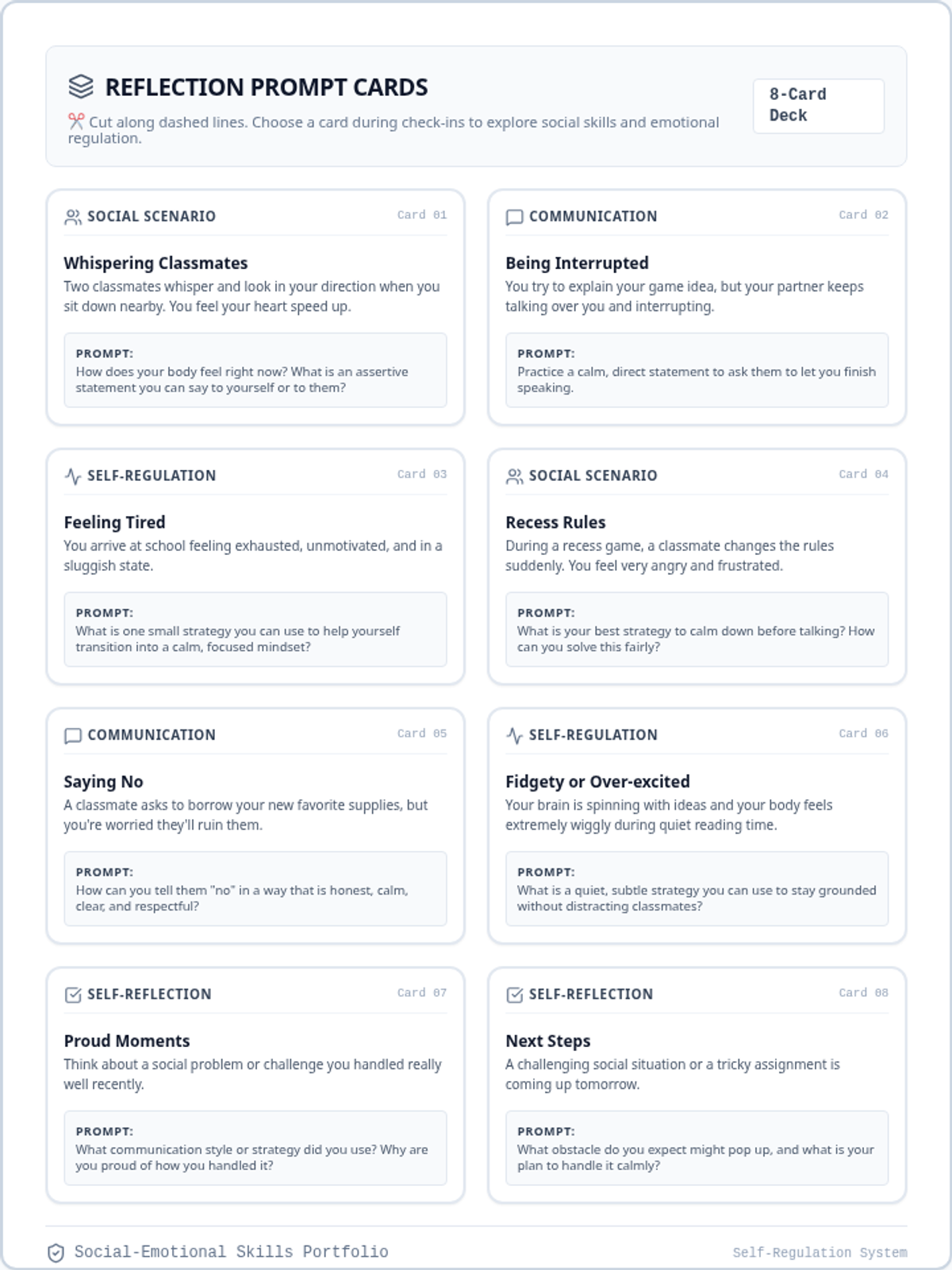
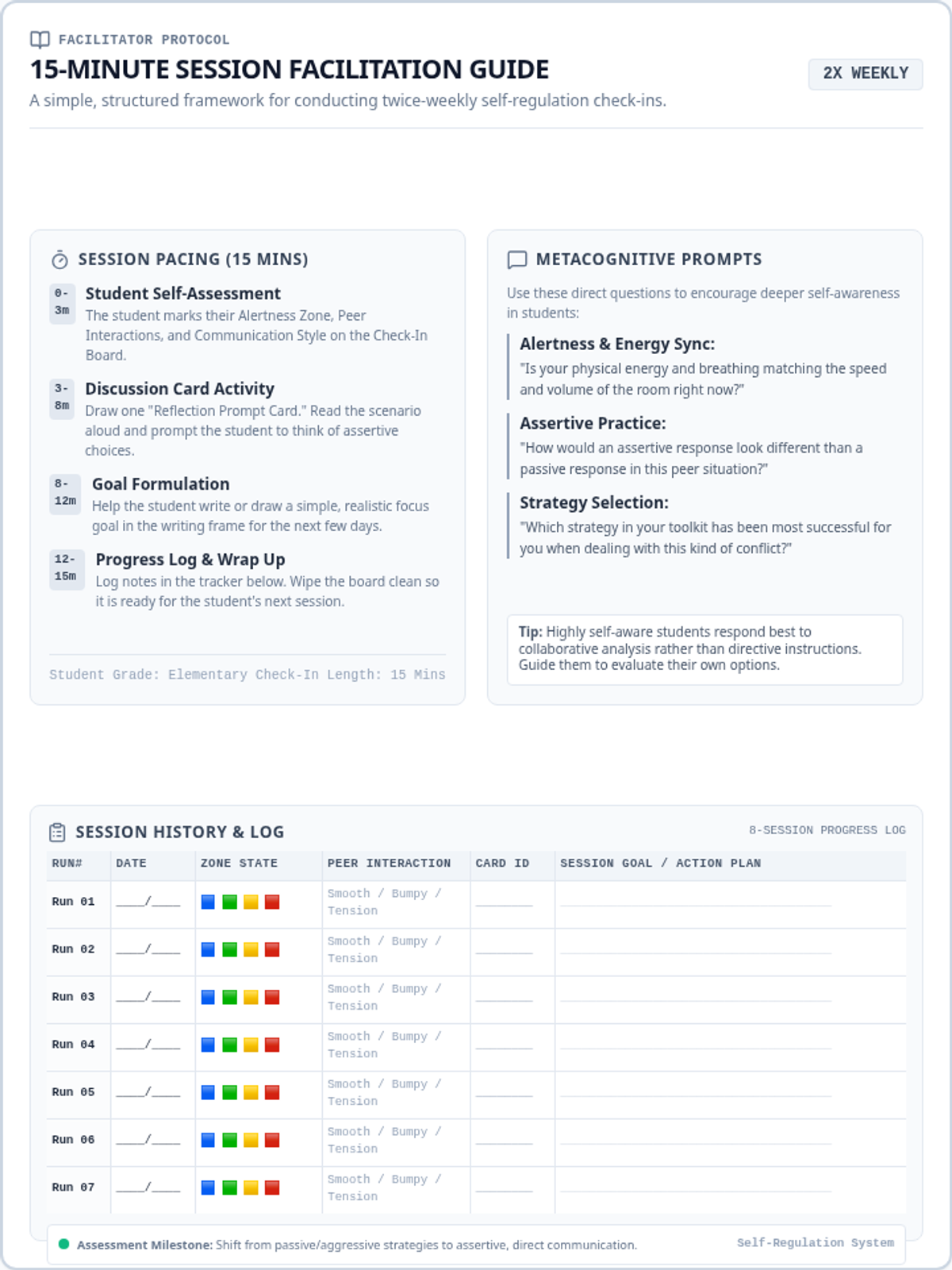
A clean, straightforward self-regulation and social communication support system for rapid 1-on-1 check-ins. Features a visual tracking sheet, scenario cards, and a facilitation guide.
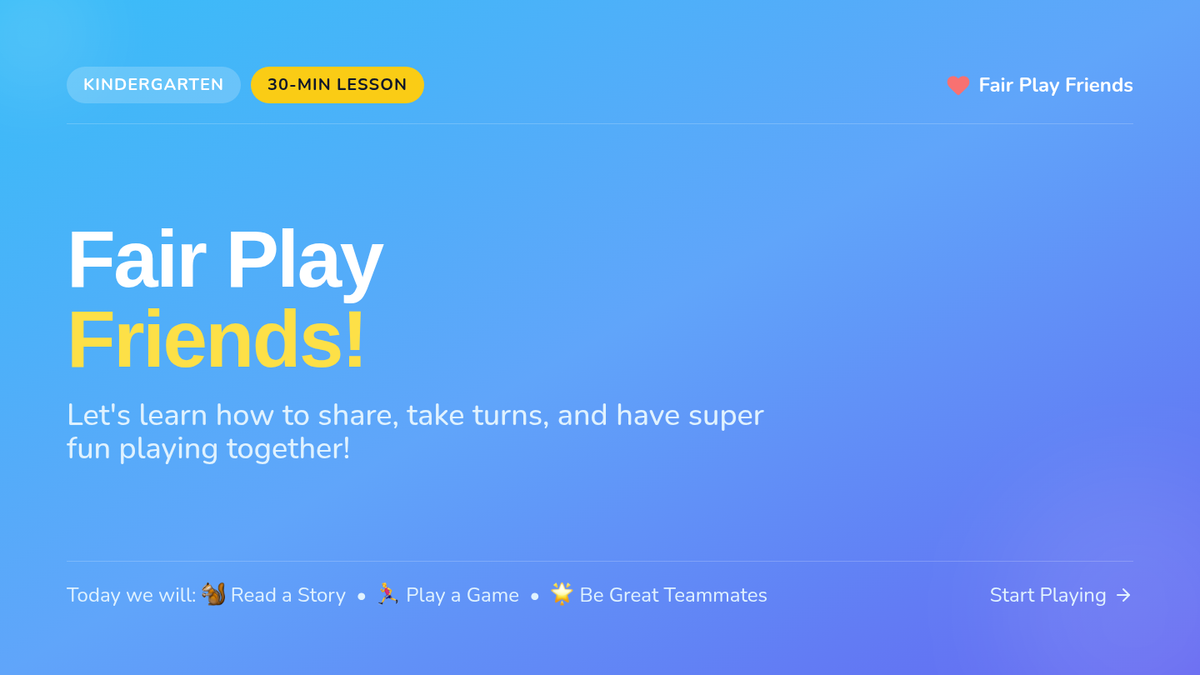
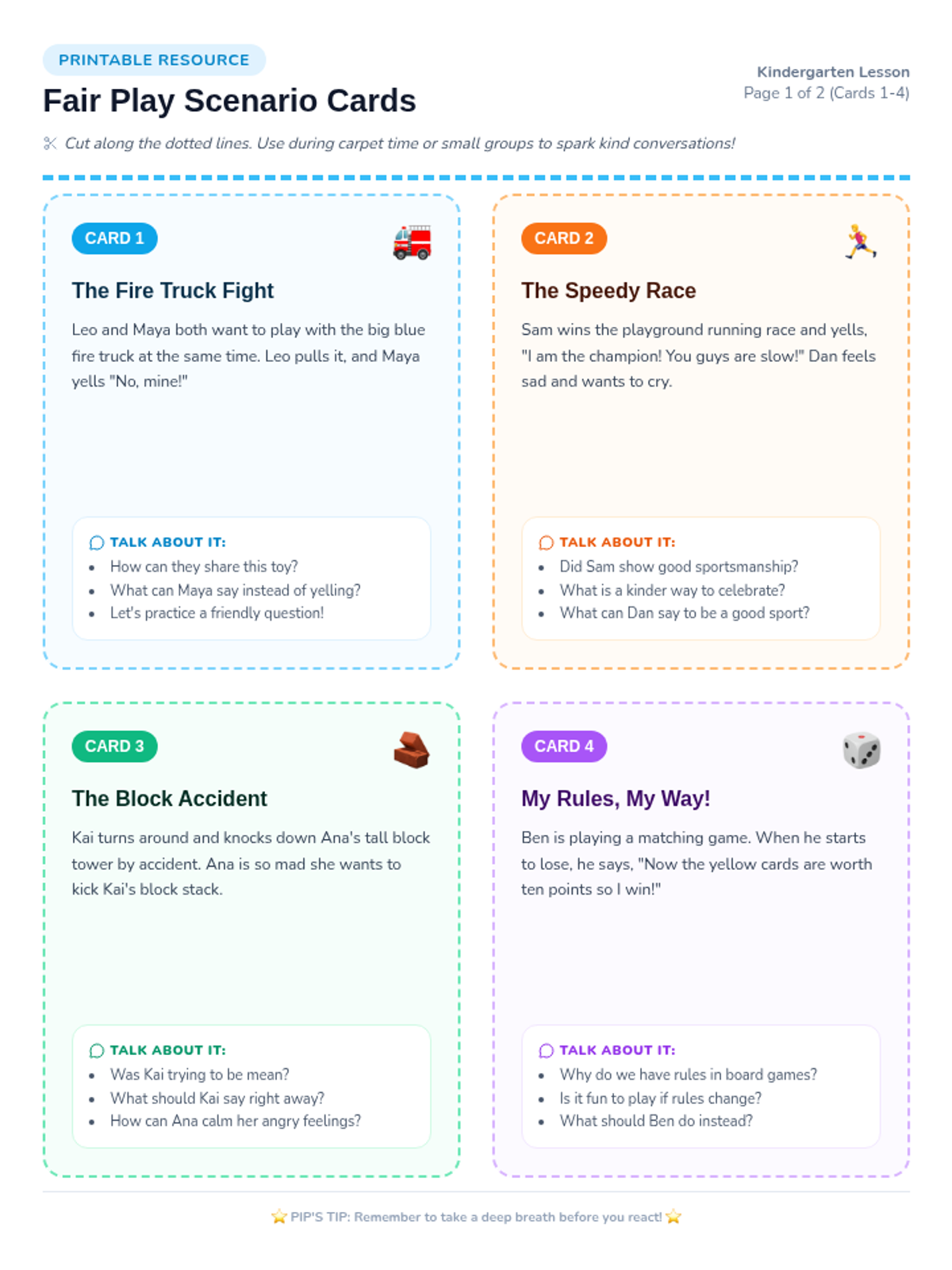
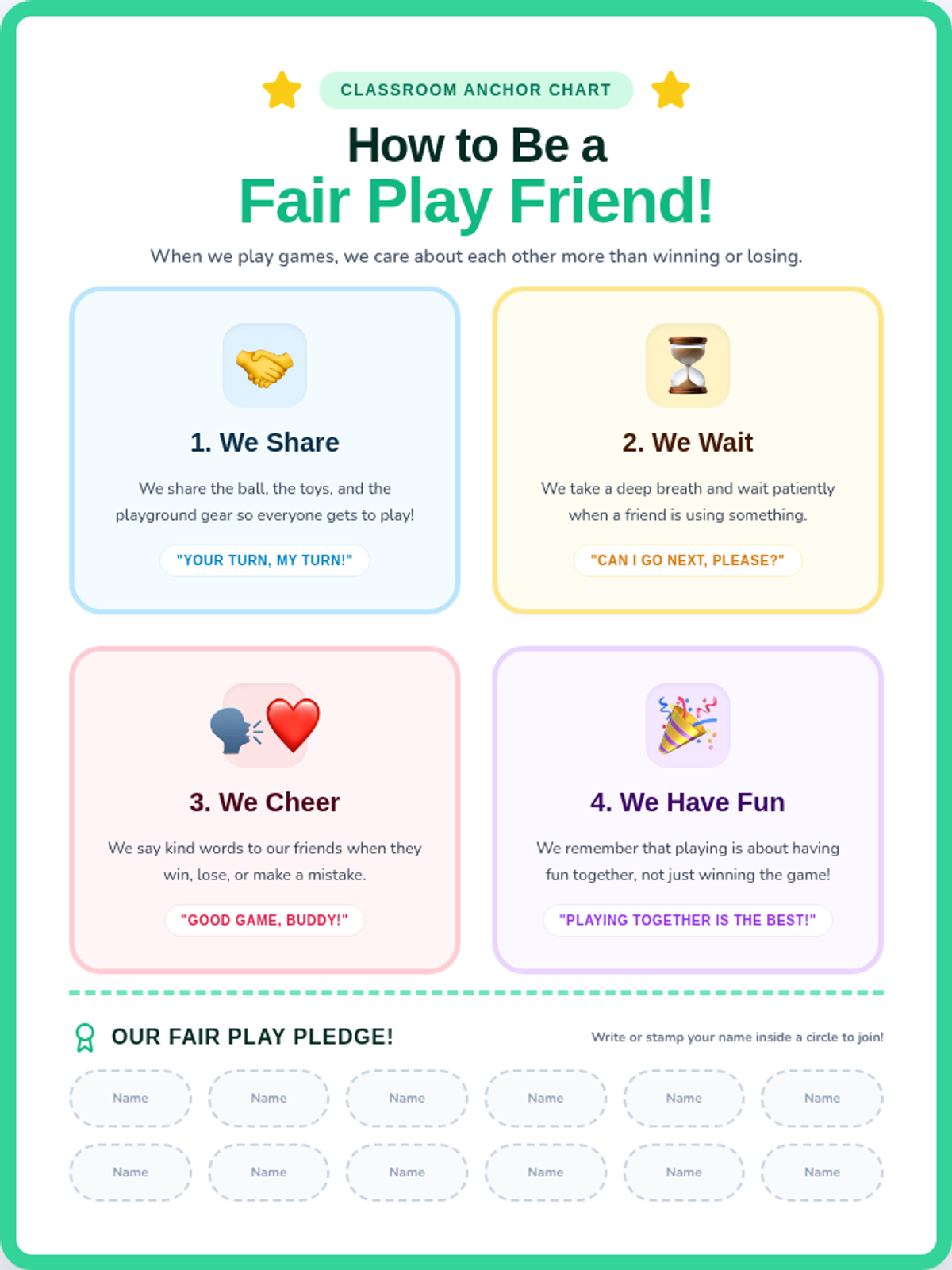
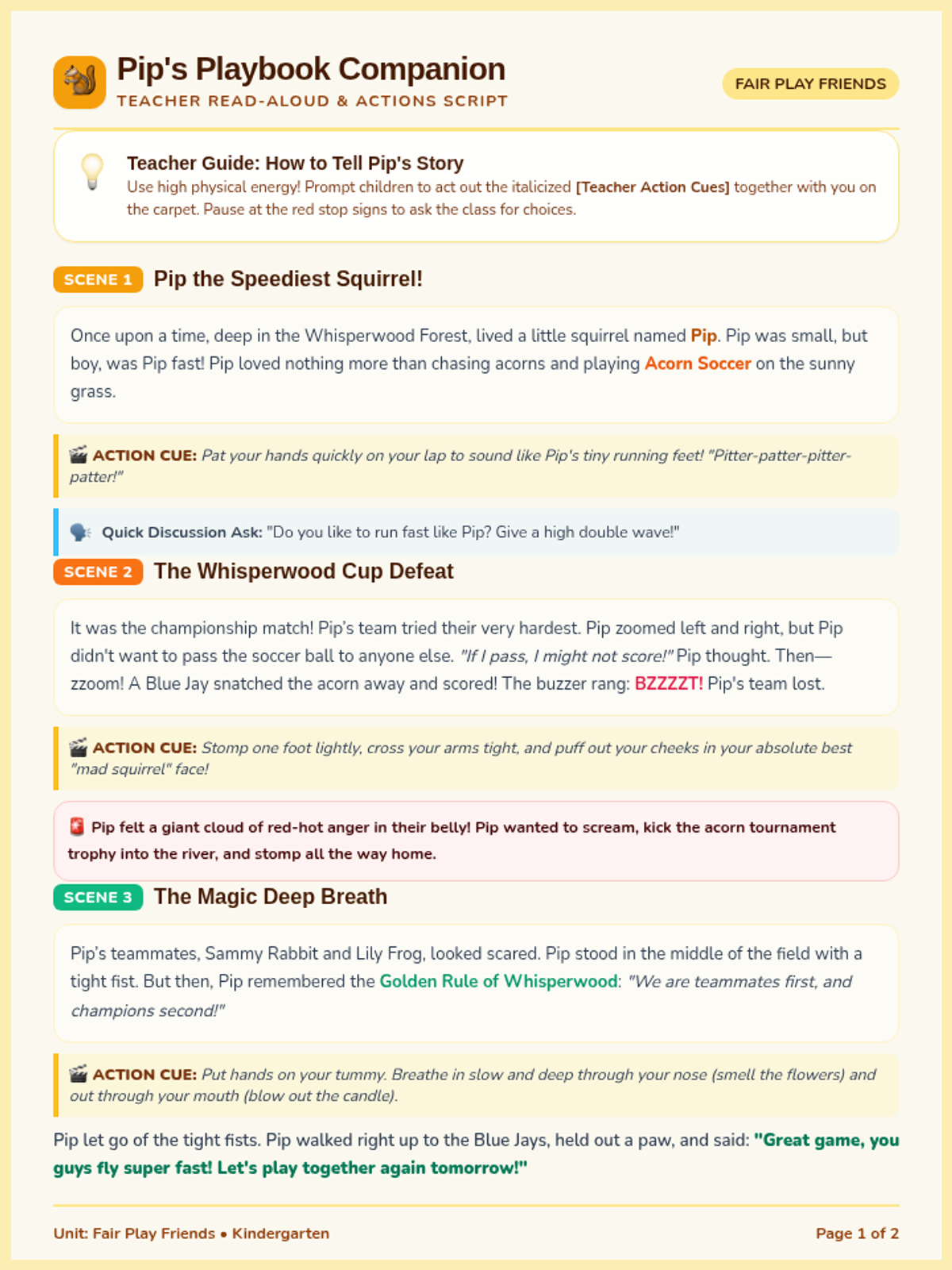
A 30-minute interactive lesson for Kindergarteners focusing on the fundamentals of good sportsmanship, including sharing, taking turns, and handling winning or losing with grace. It features a character-driven story, a movement-based voting game, small-group scenario discussion cards, and a visual anchor chart.
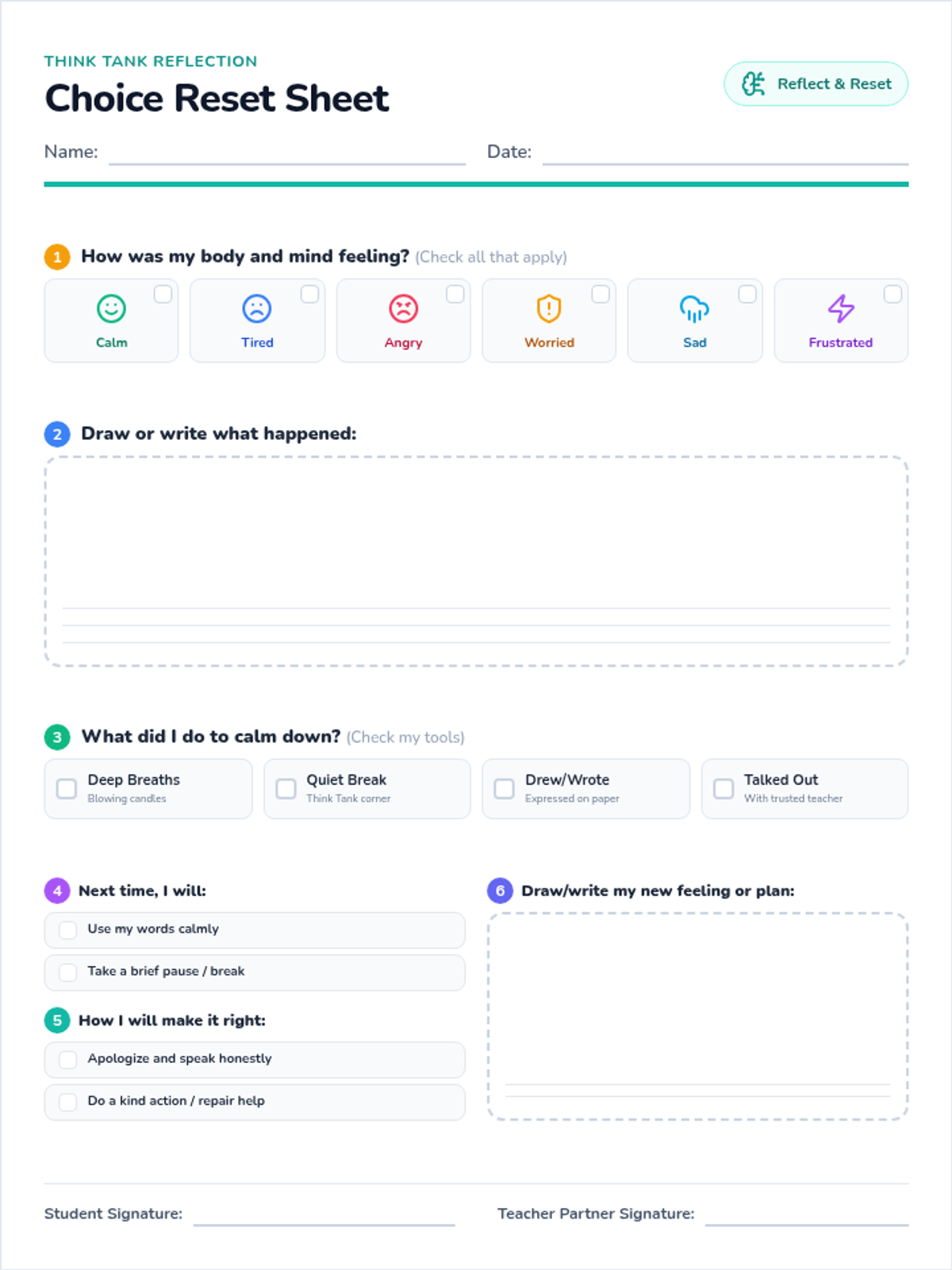
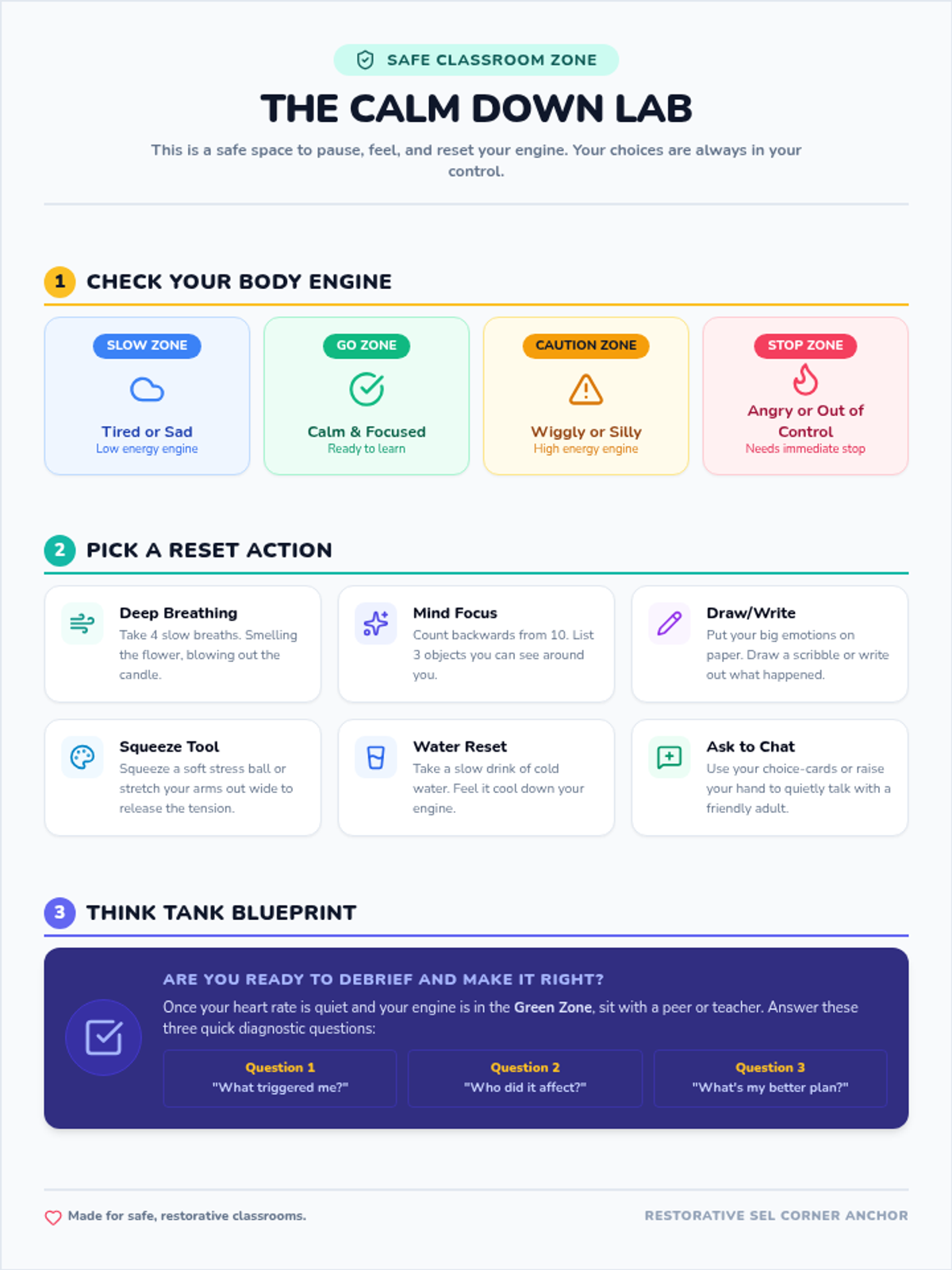
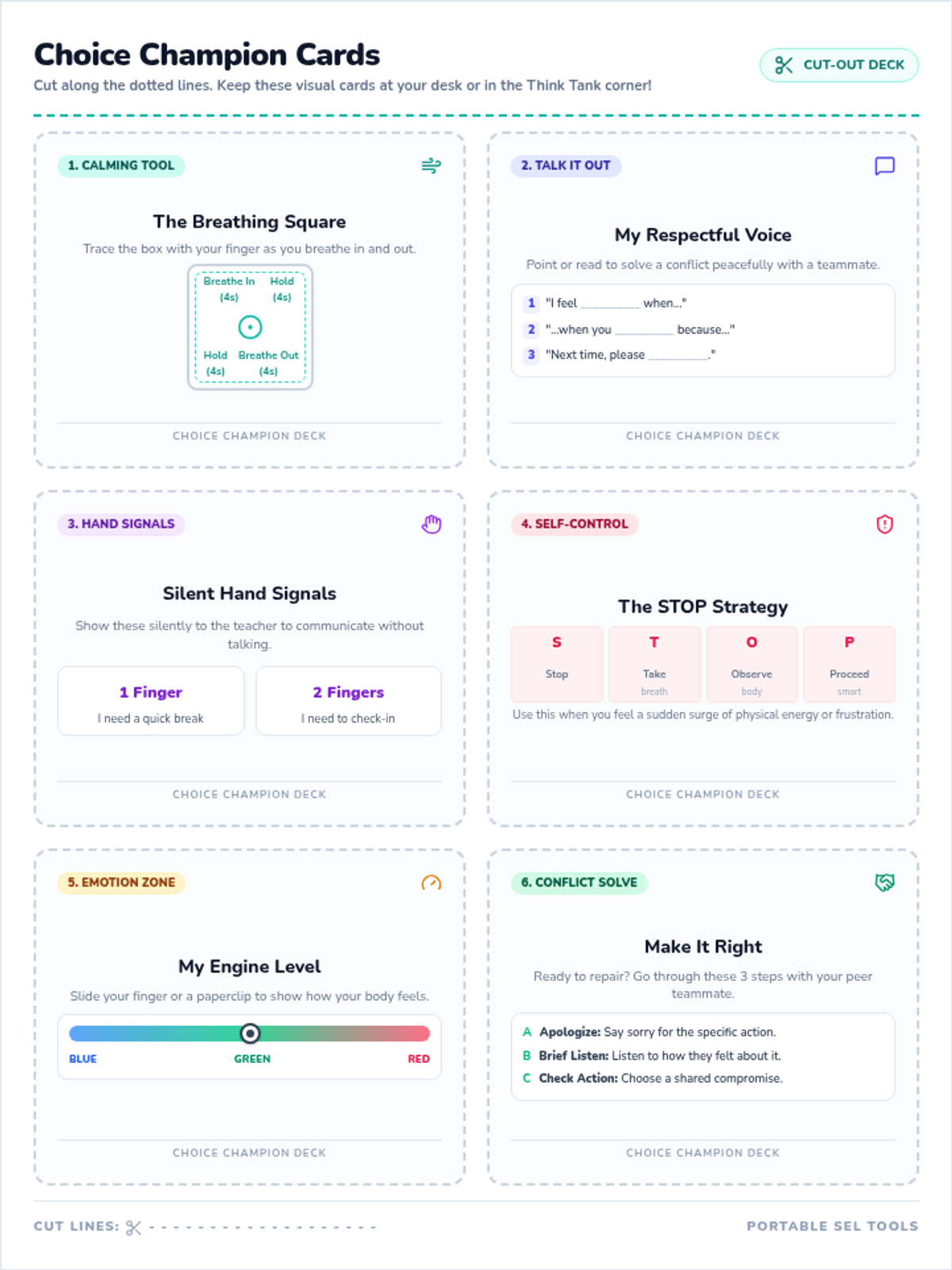
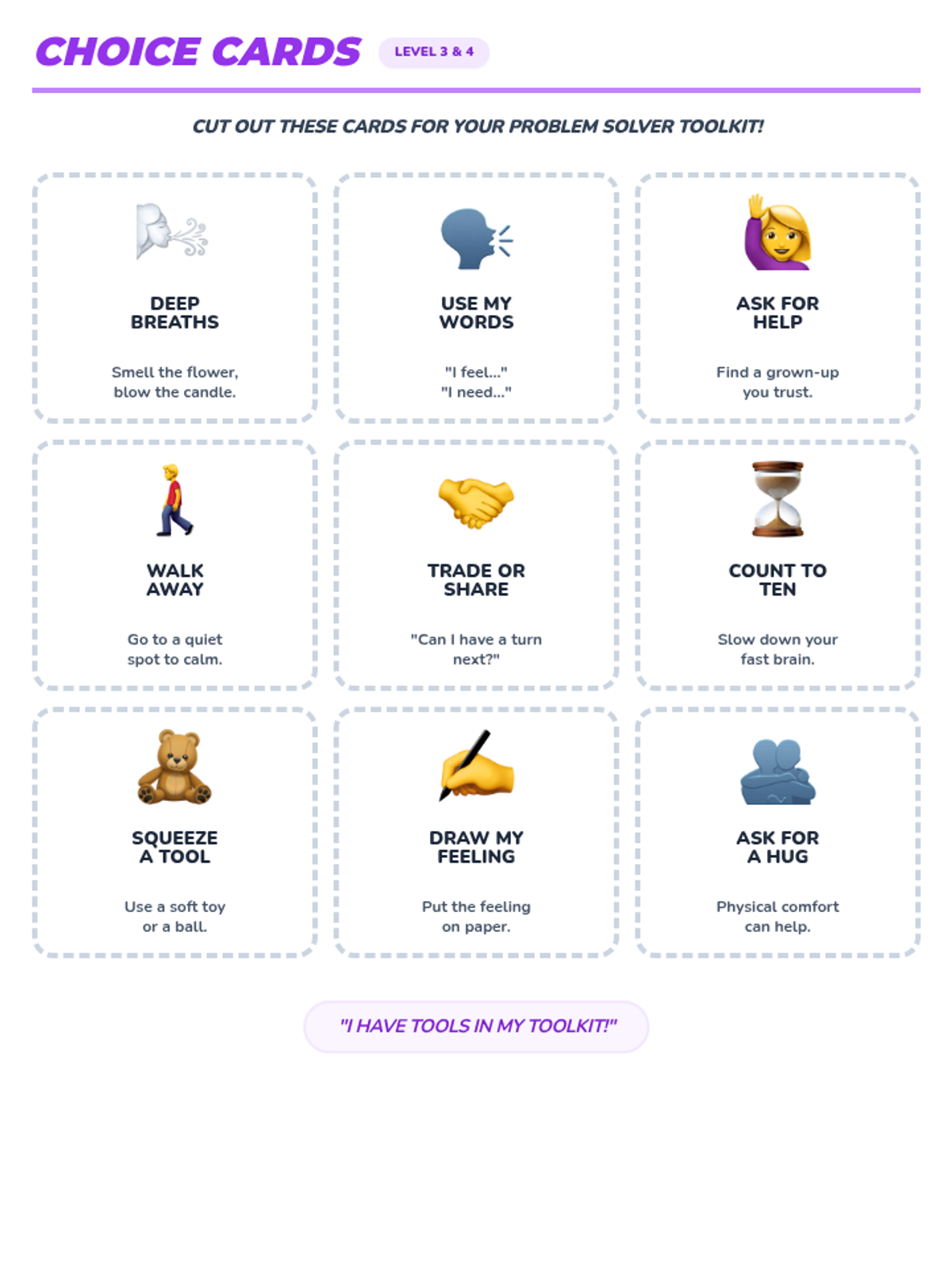
A comprehensive social-emotional toolkit for a classroom 'Think Tank' reflection corner. Includes a visual reflection sheet, a calming strategies poster, and portable visual choice cards to guide students in emotional self-regulation and positive conflict resolution.
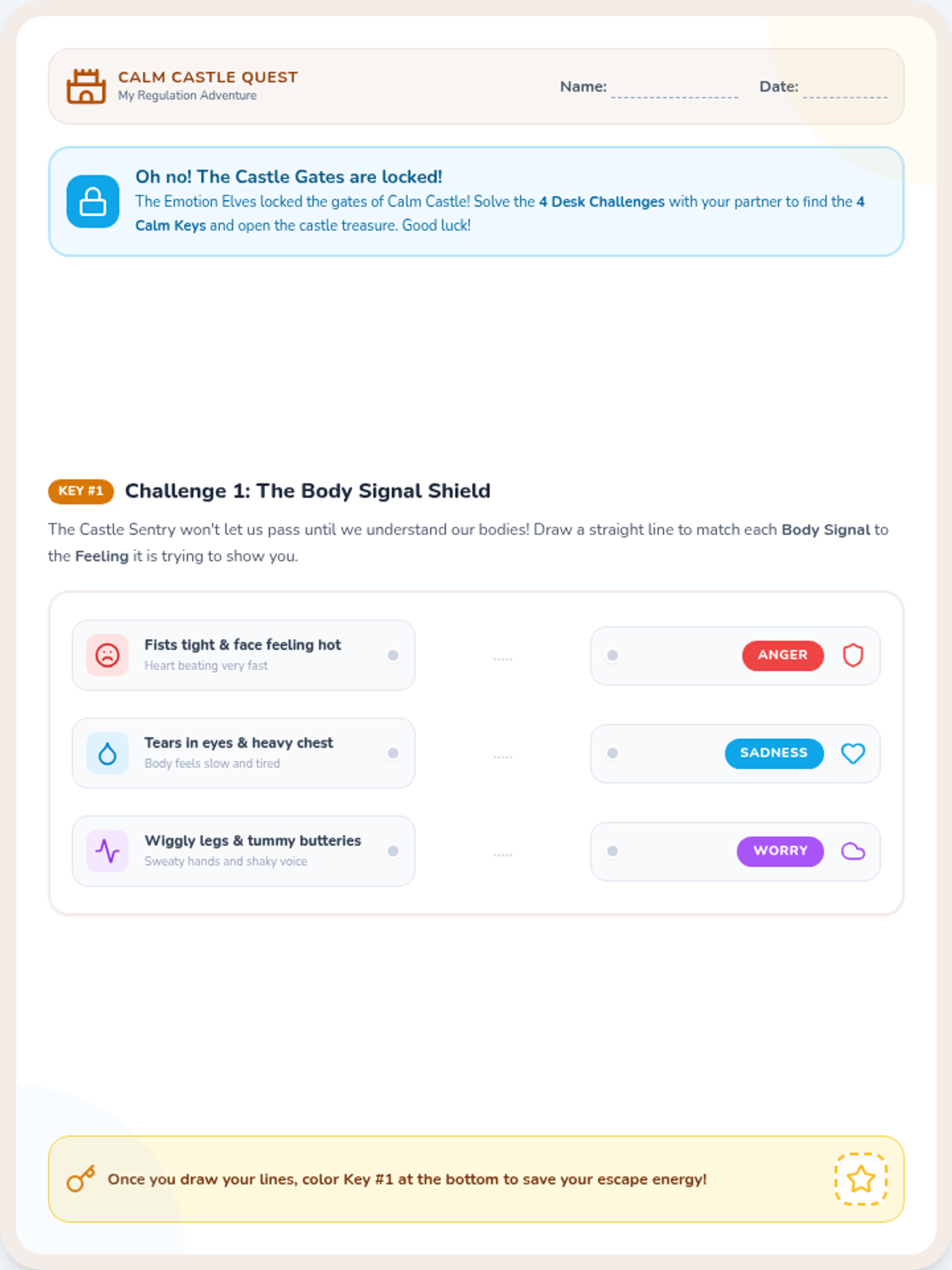
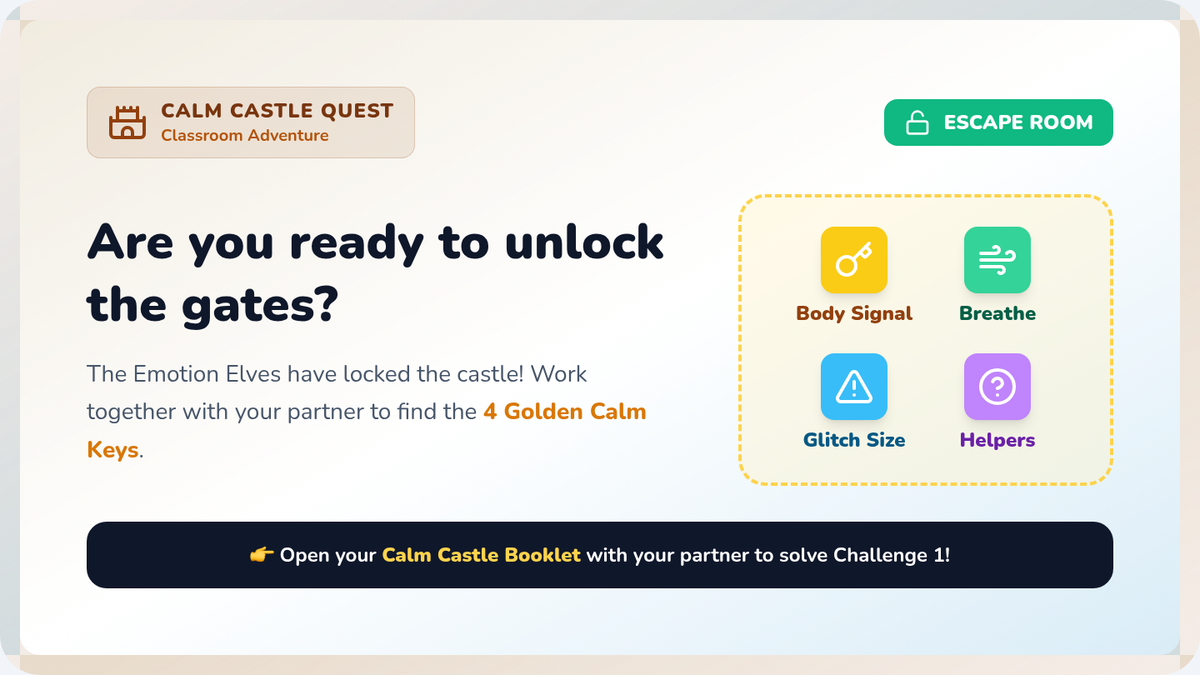
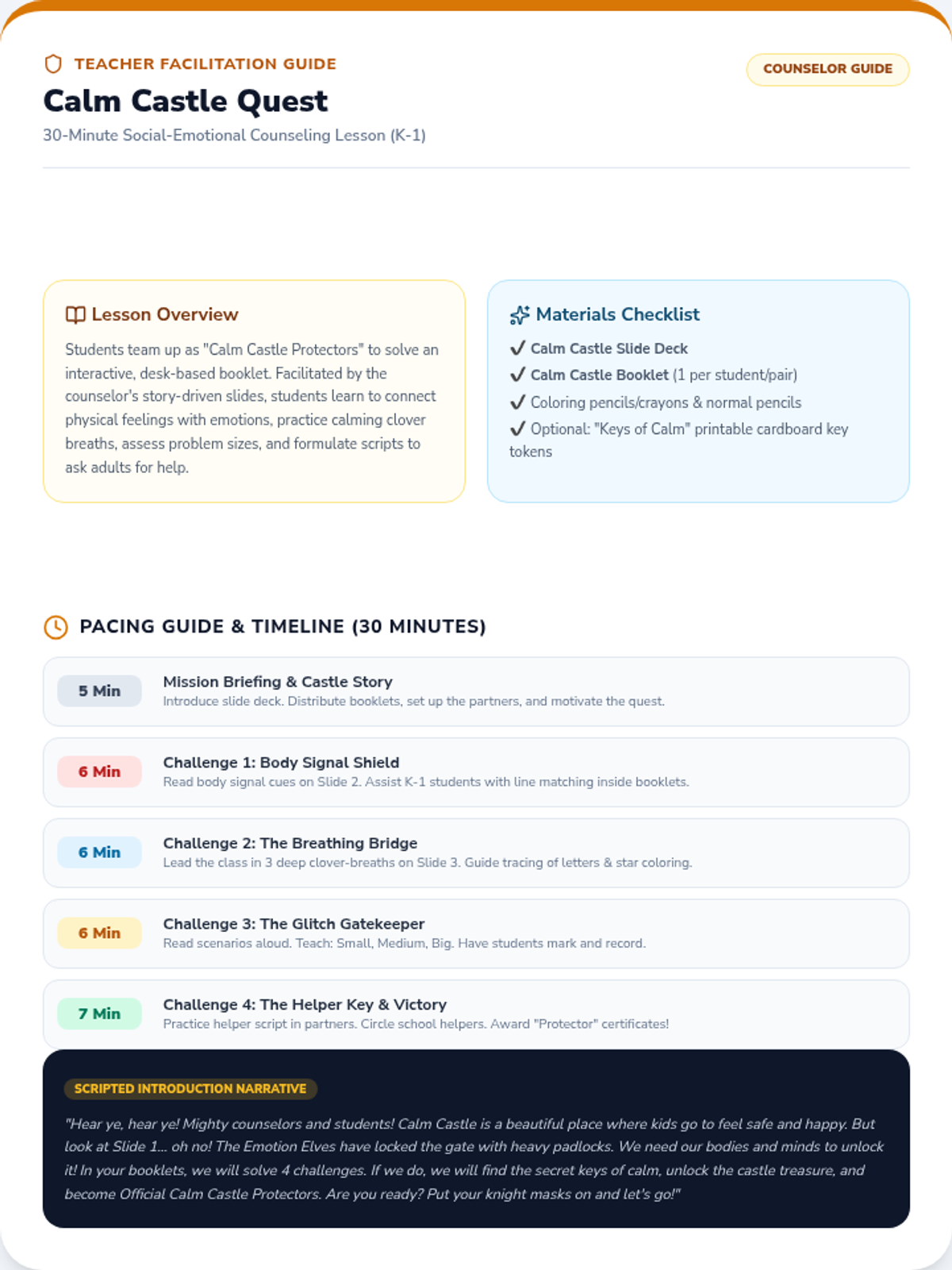
A 30-minute high-engagement emotional regulation escape adventure for Kindergarten and 1st-grade students. Through a series of interactive desk-based challenges in a printable booklet, students practice identifying body signals, deep breathing, sorting the size of problems, and asking for help to 'unlock' the gates of Calm Castle.
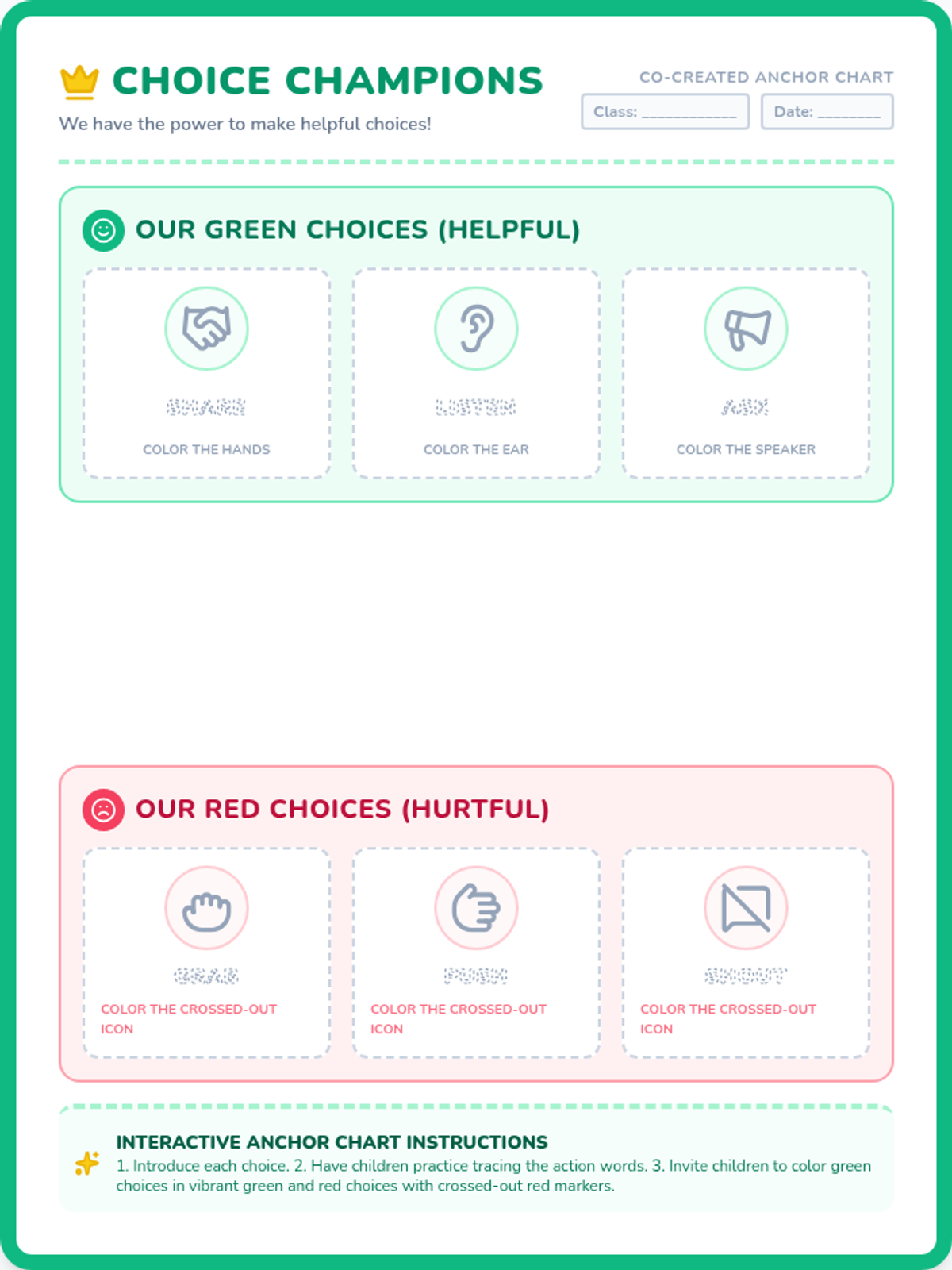
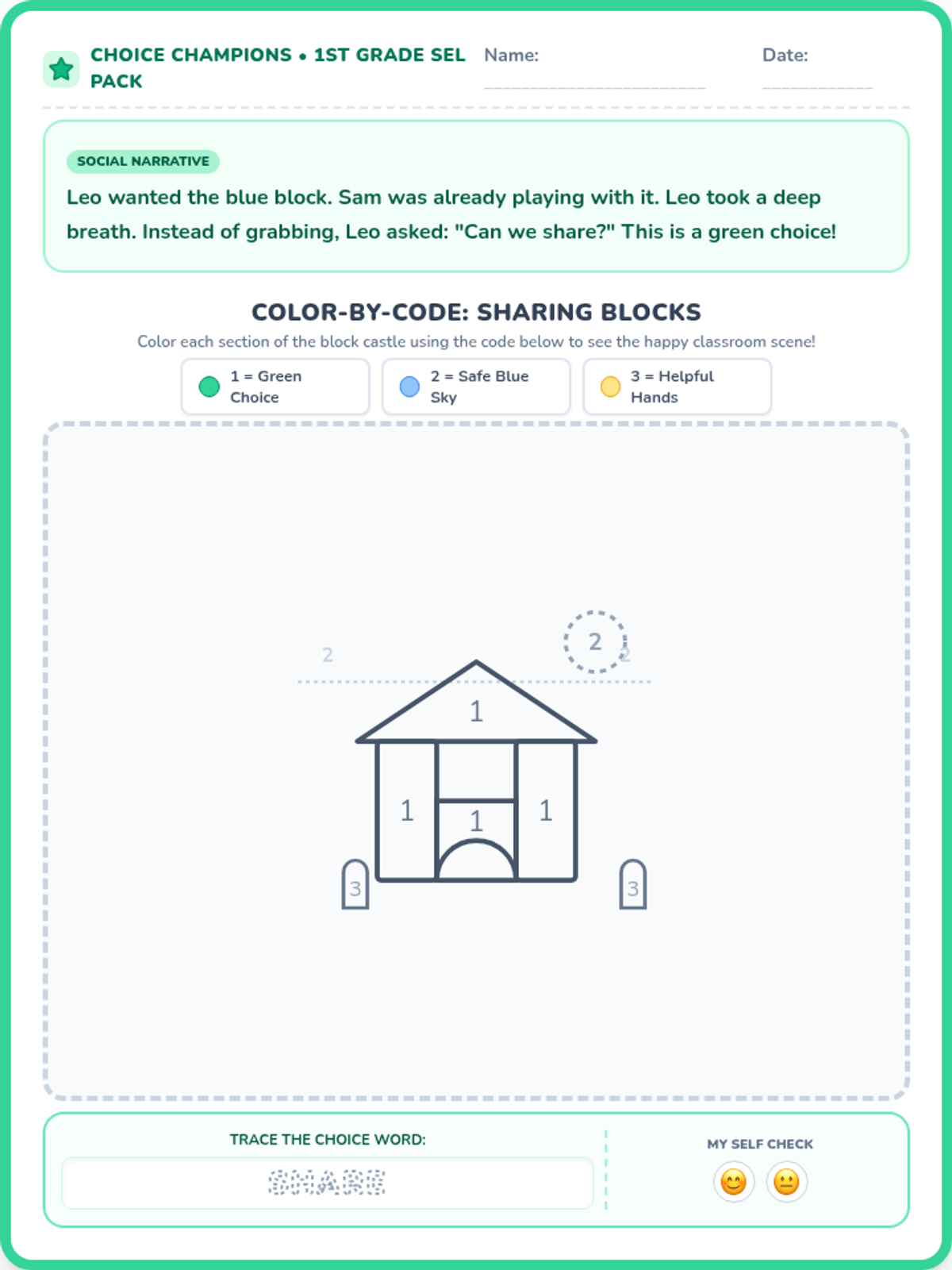
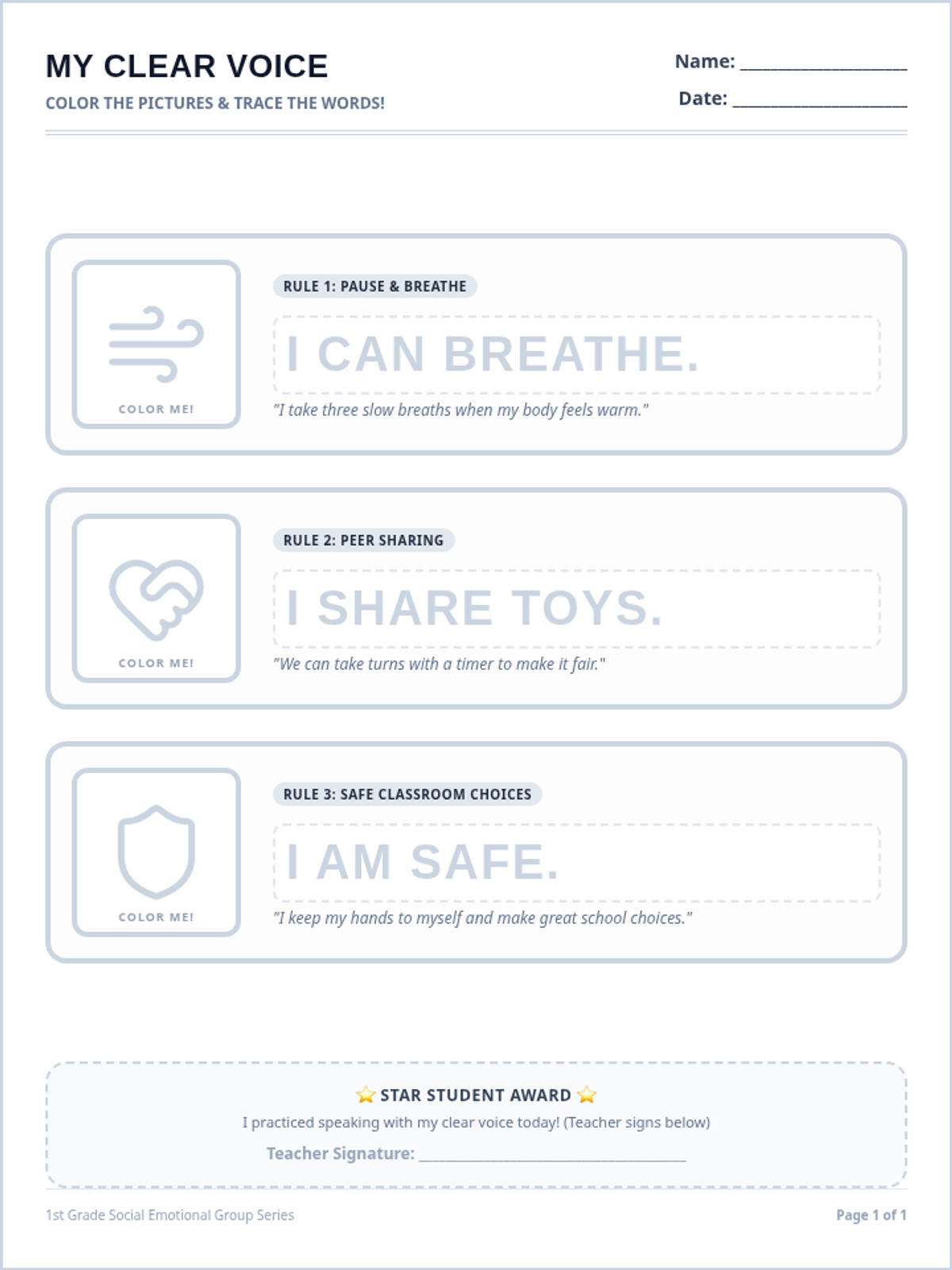
A social-emotional learning lesson focused on helping early childhood and special education students make positive choices and resolve peer conflicts using visual supports, traceable words, and coloring activities.
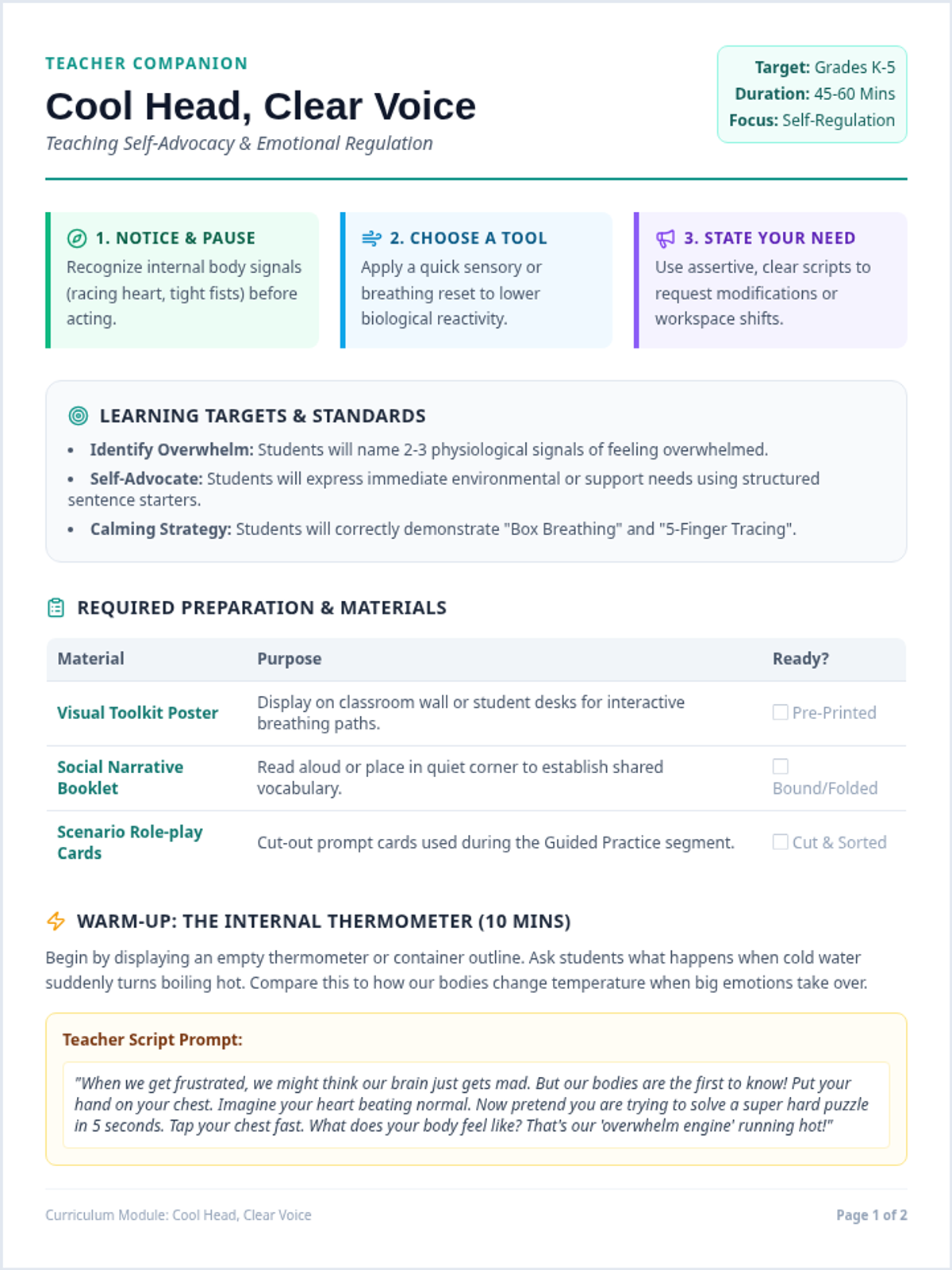
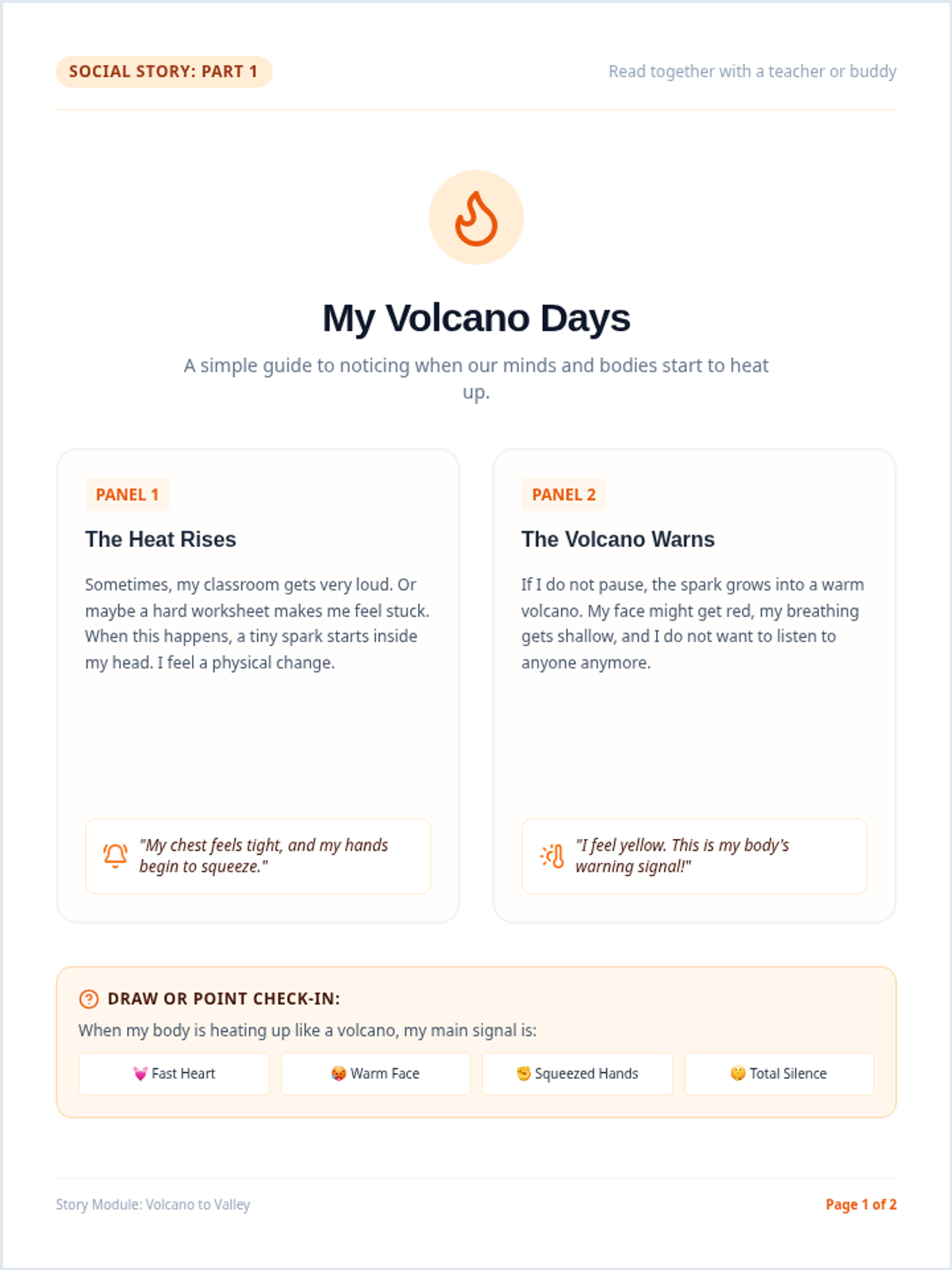
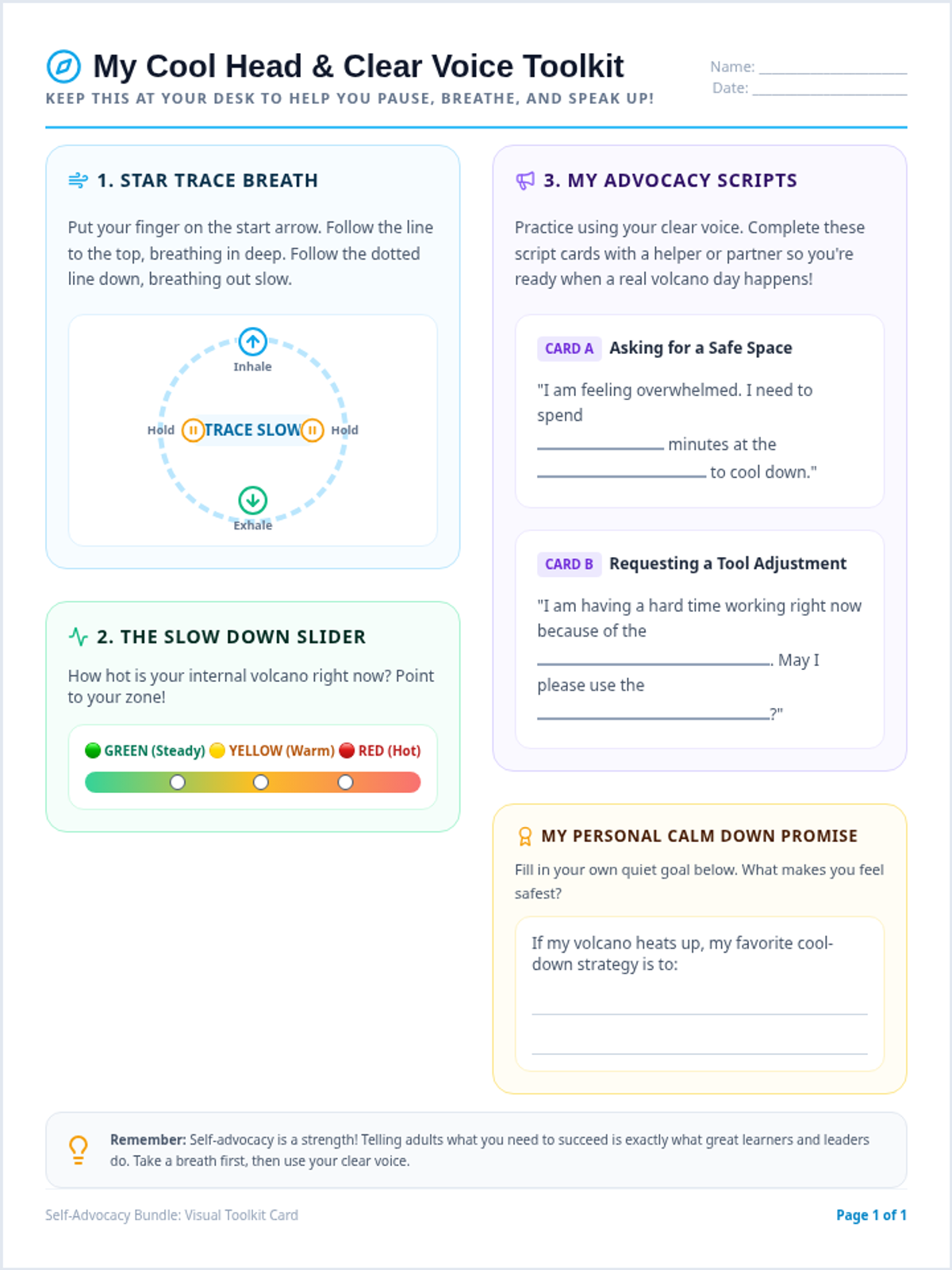
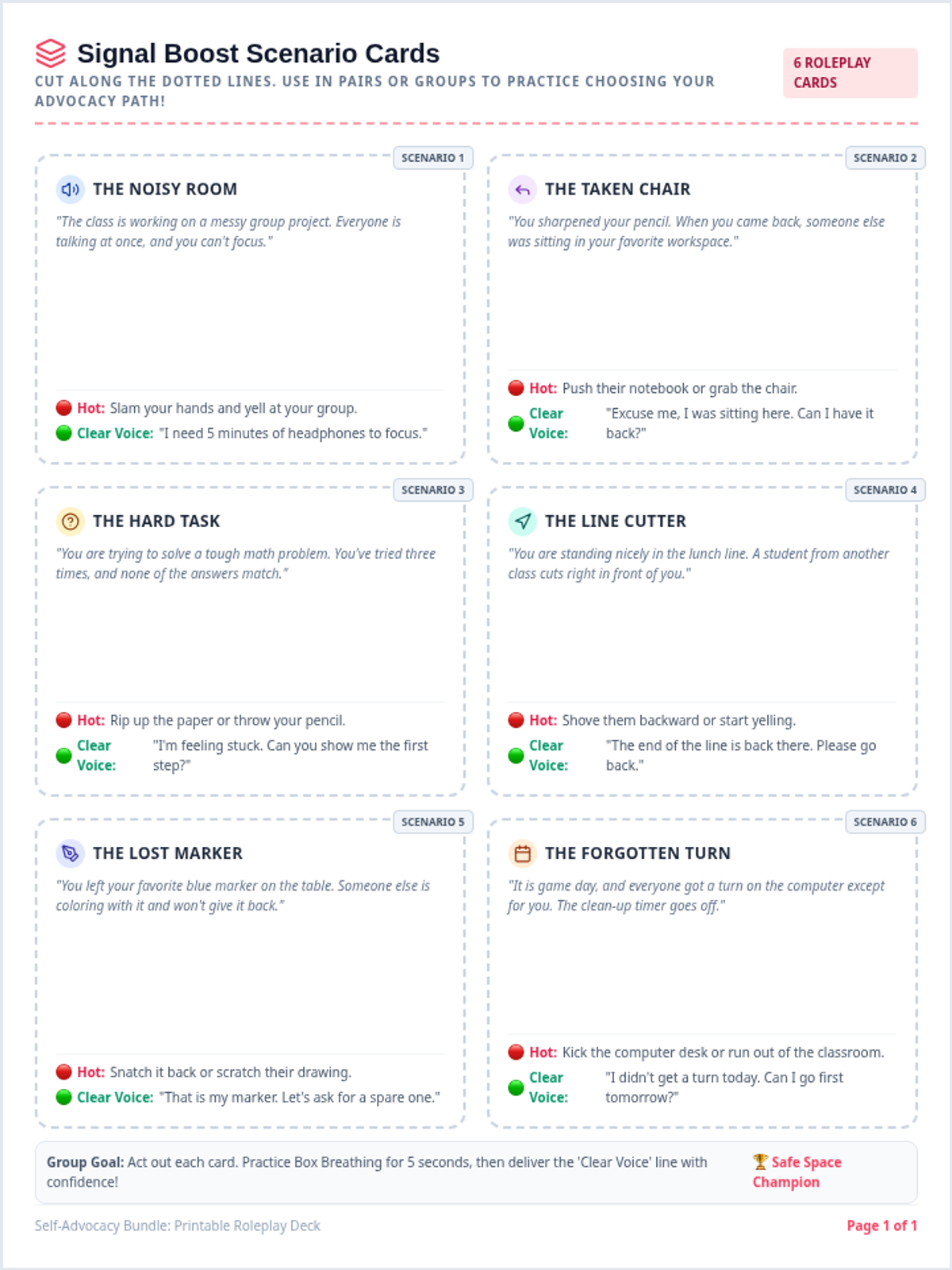
A complete lesson bundle on emotional regulation, self-advocacy, and calming strategies. Includes a comprehensive teacher's guide, a visual toolkit, a social narrative book, and interactive role-playing scenario cards.
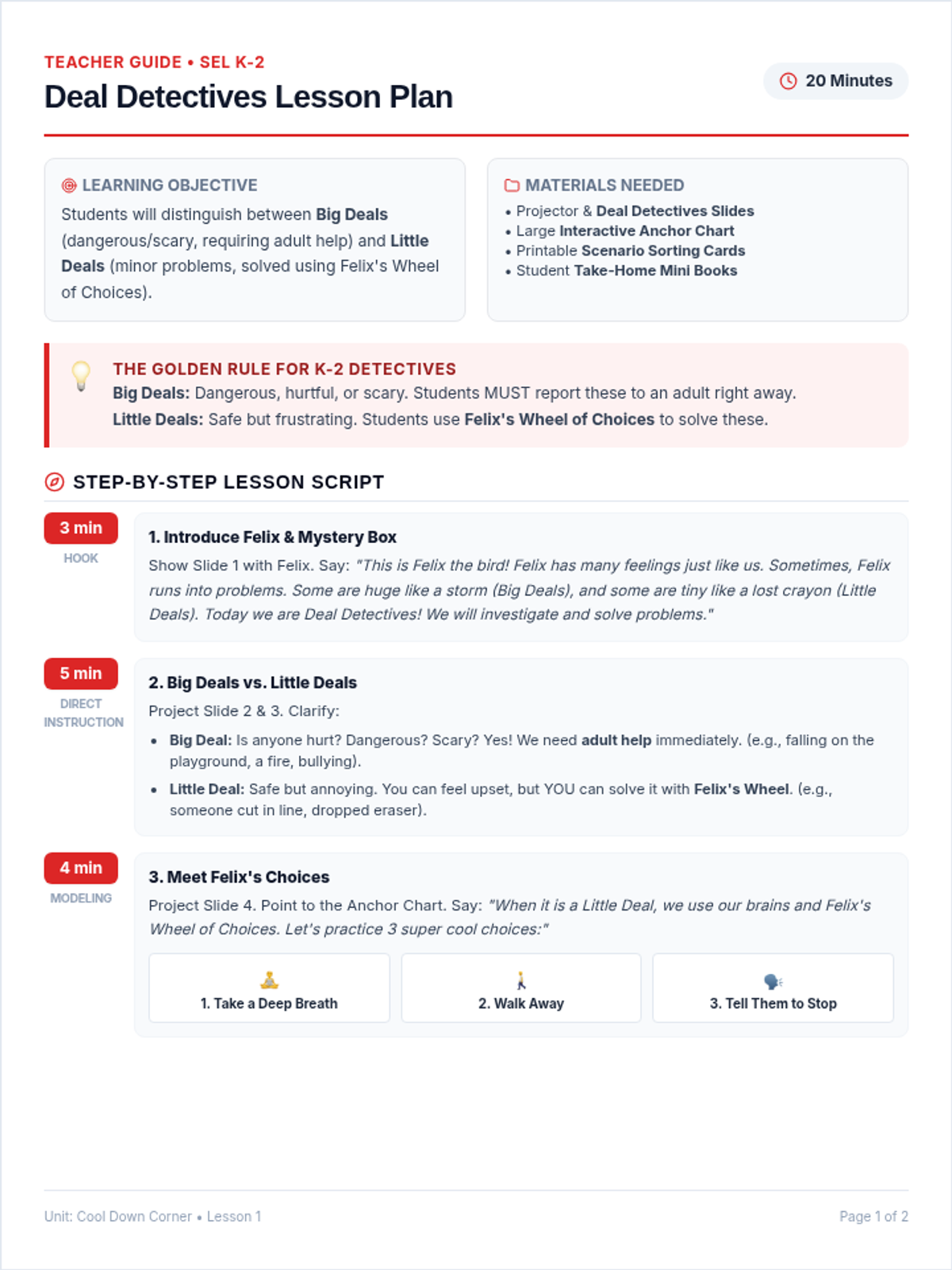
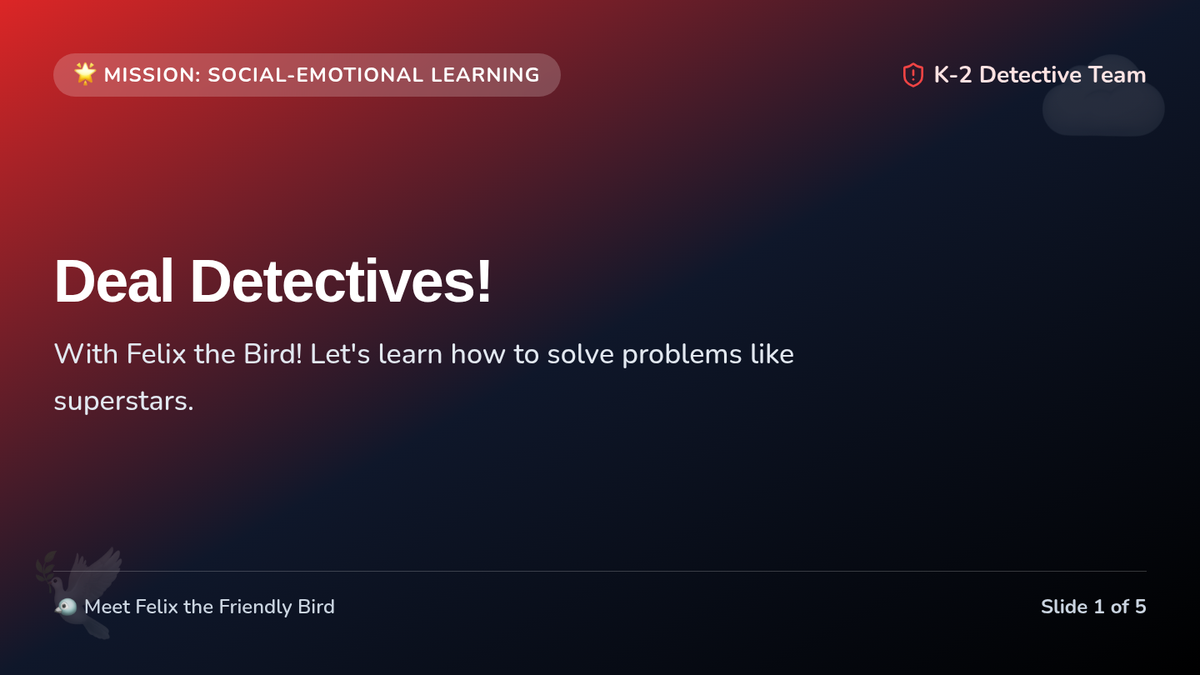
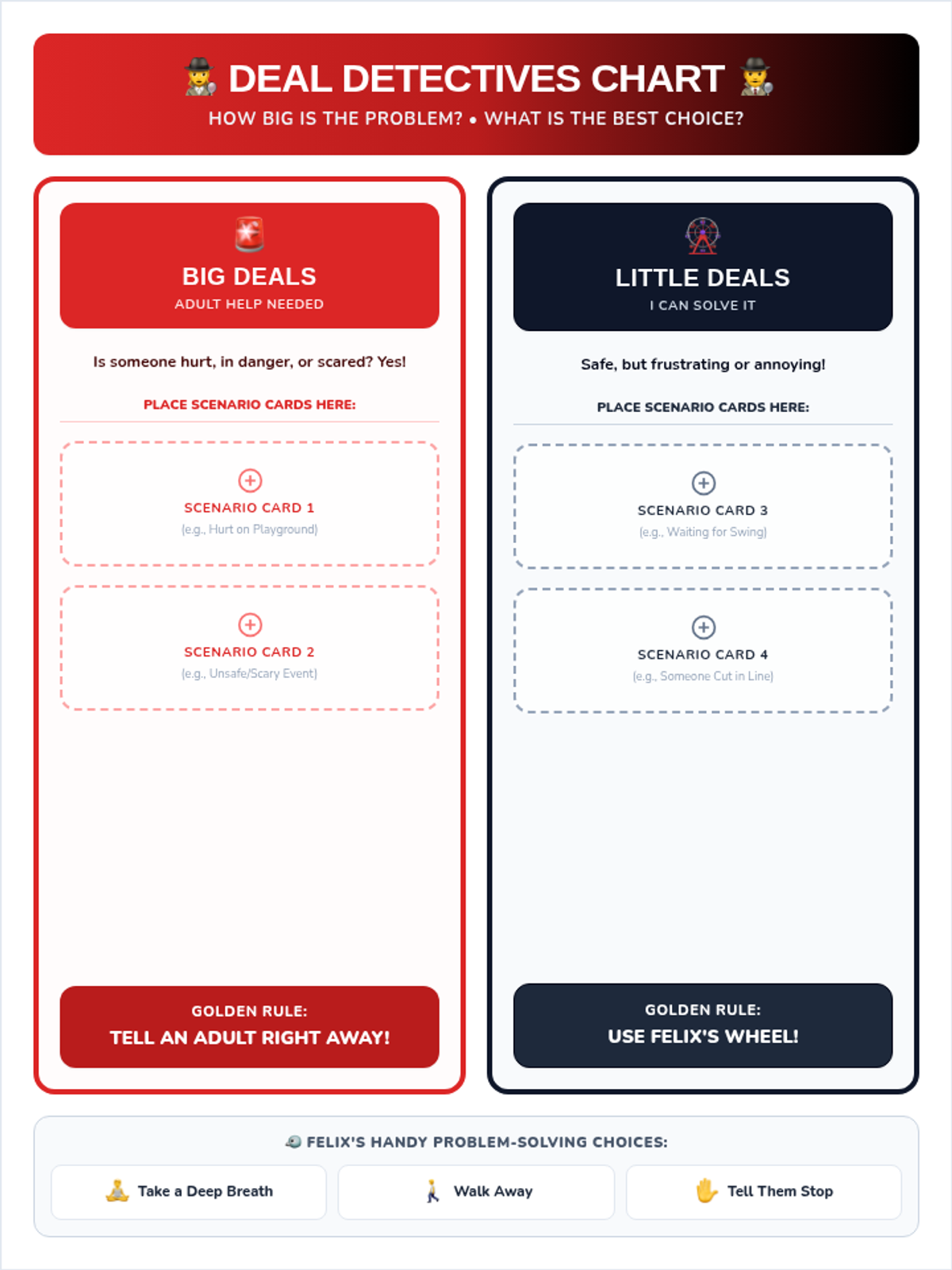
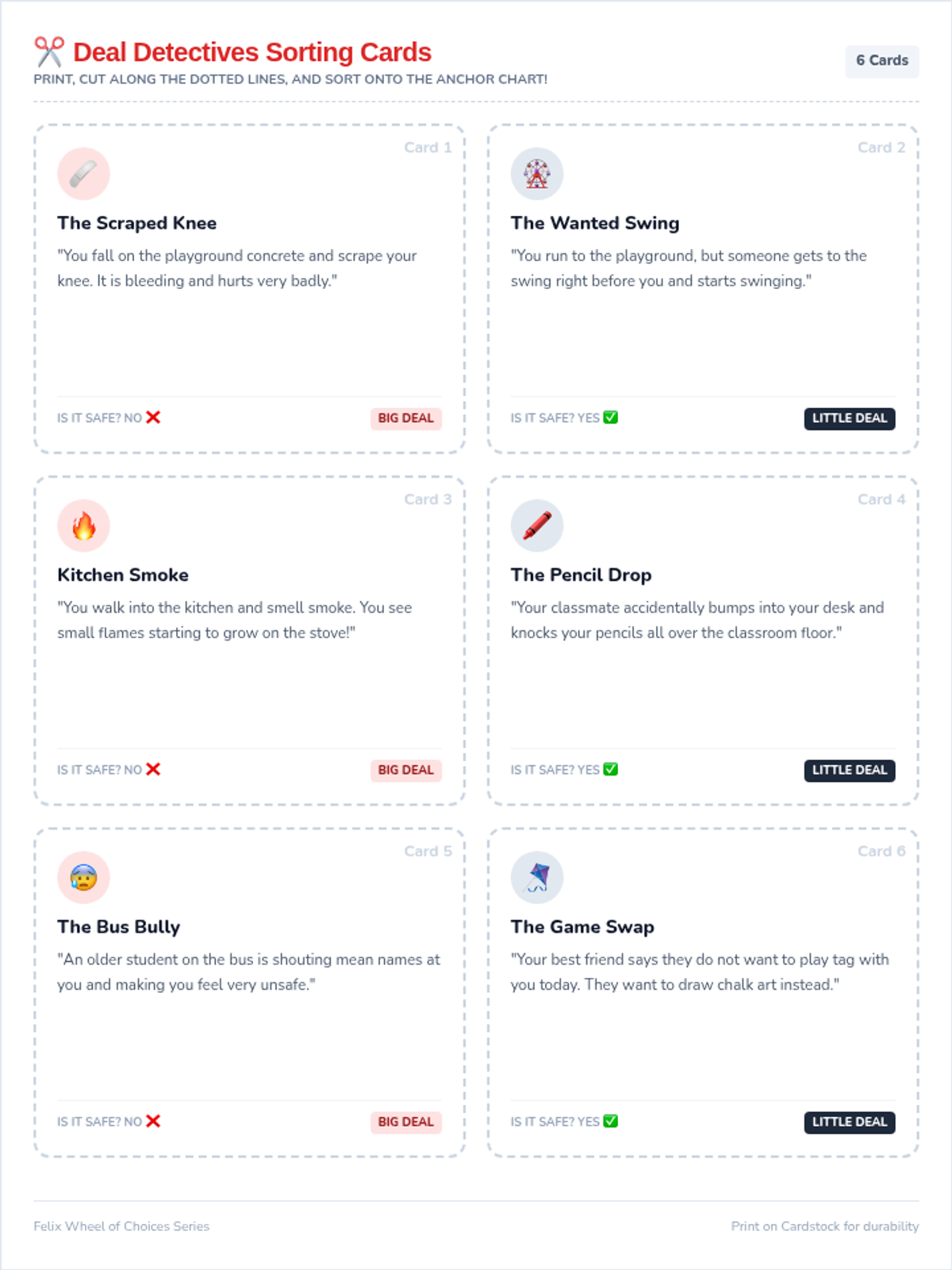
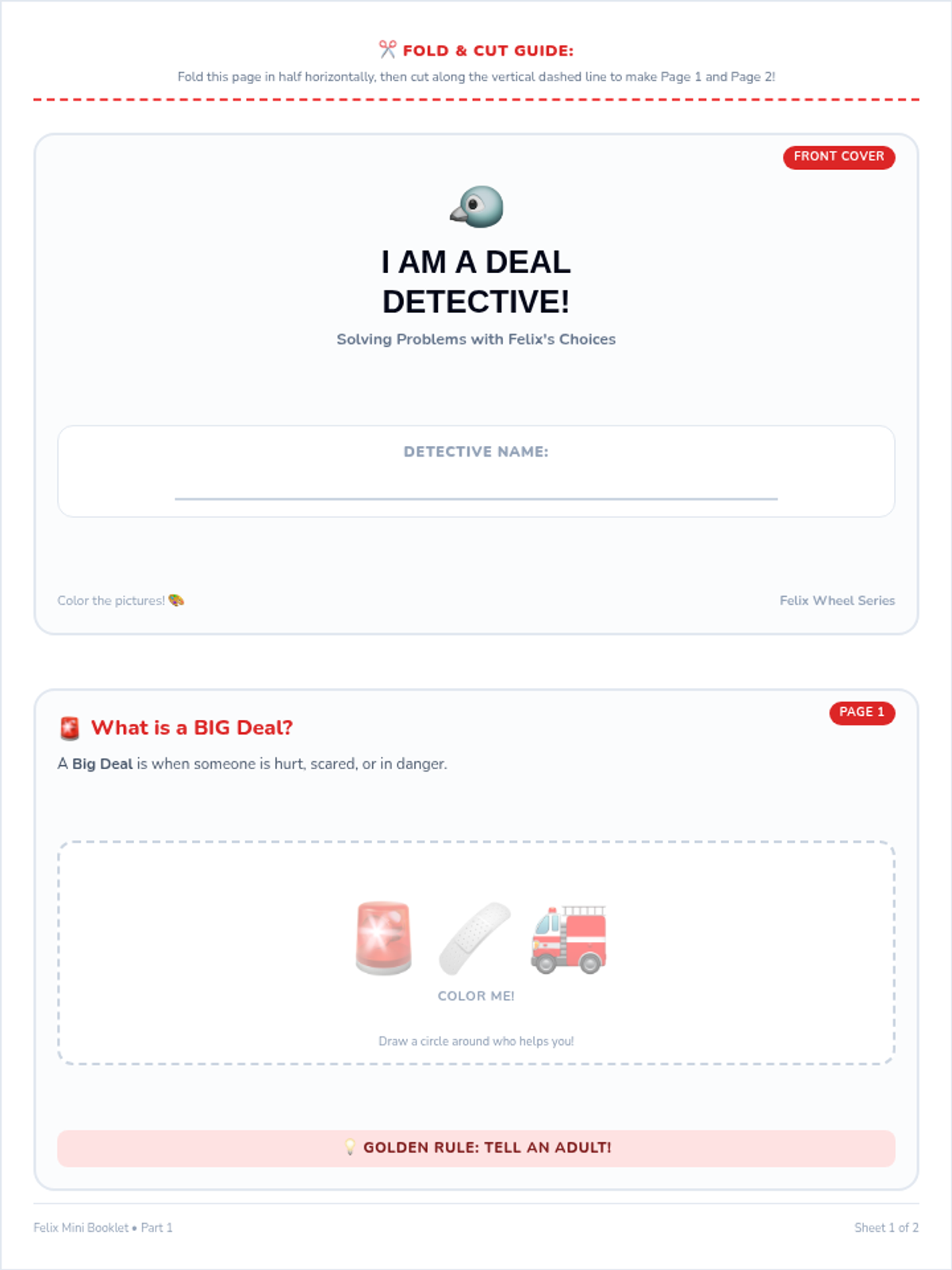
A 20-minute SEL lesson for K-2 students to distinguish between Big Deals (requiring adult help) and Little Deals (solved using Felix's Wheel of Choices), focusing on key coping strategies.
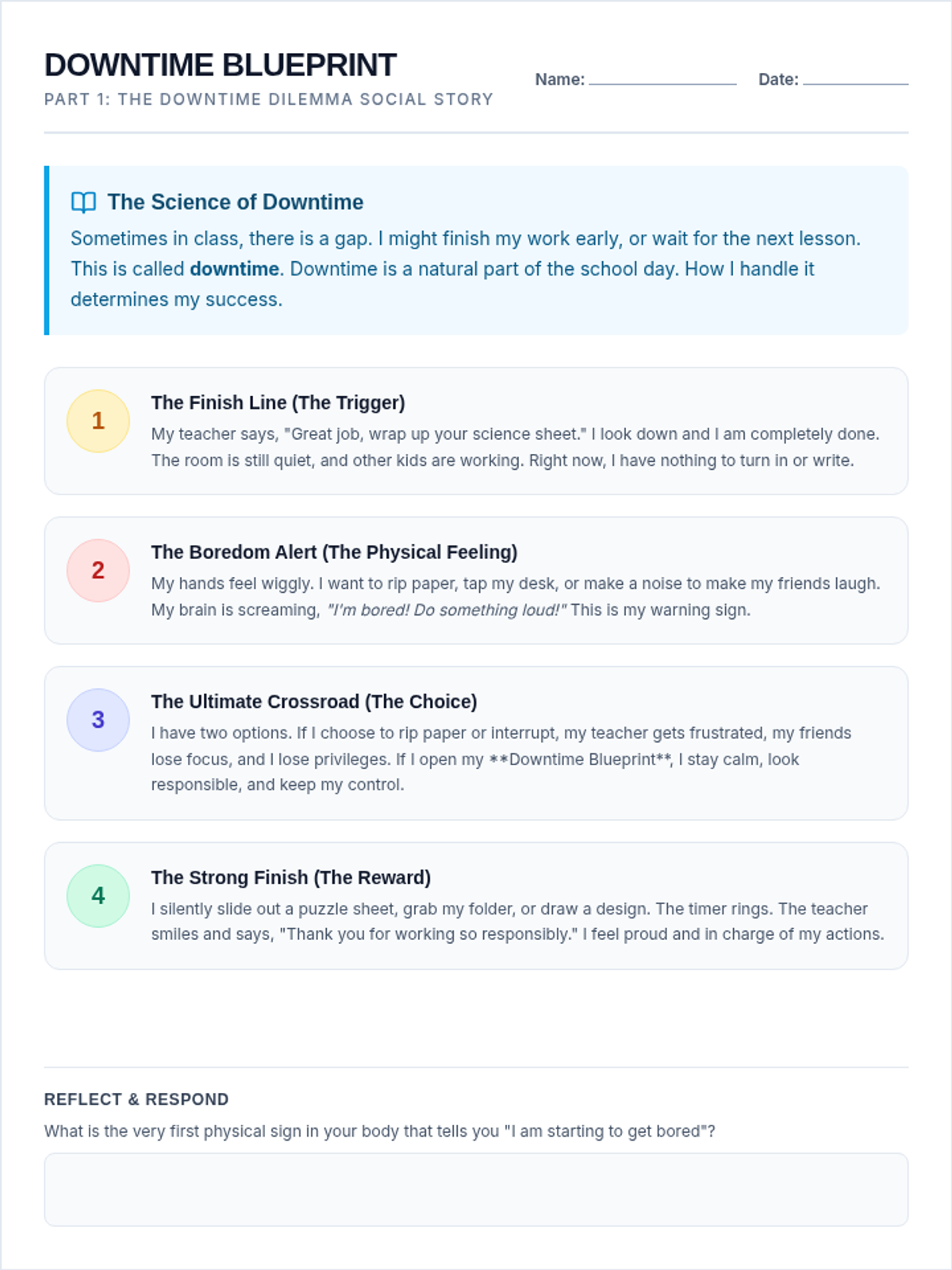
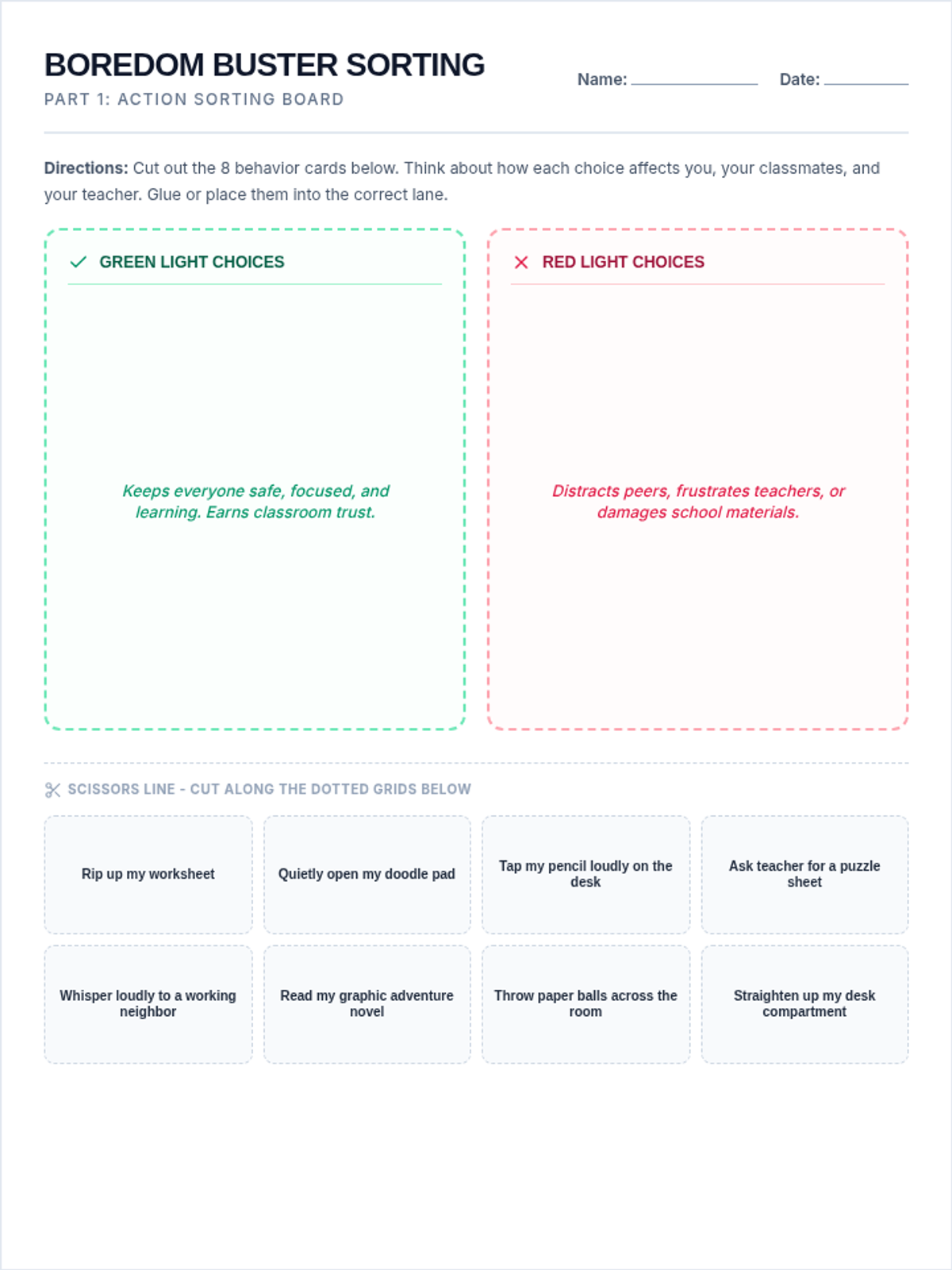
A targeted 30-minute counseling lesson that teaches a student to identify the physical signs of boredom, understand the impact of disruptive behaviors, and construct a highly visual, personalized downtime choice board to use in the classroom.
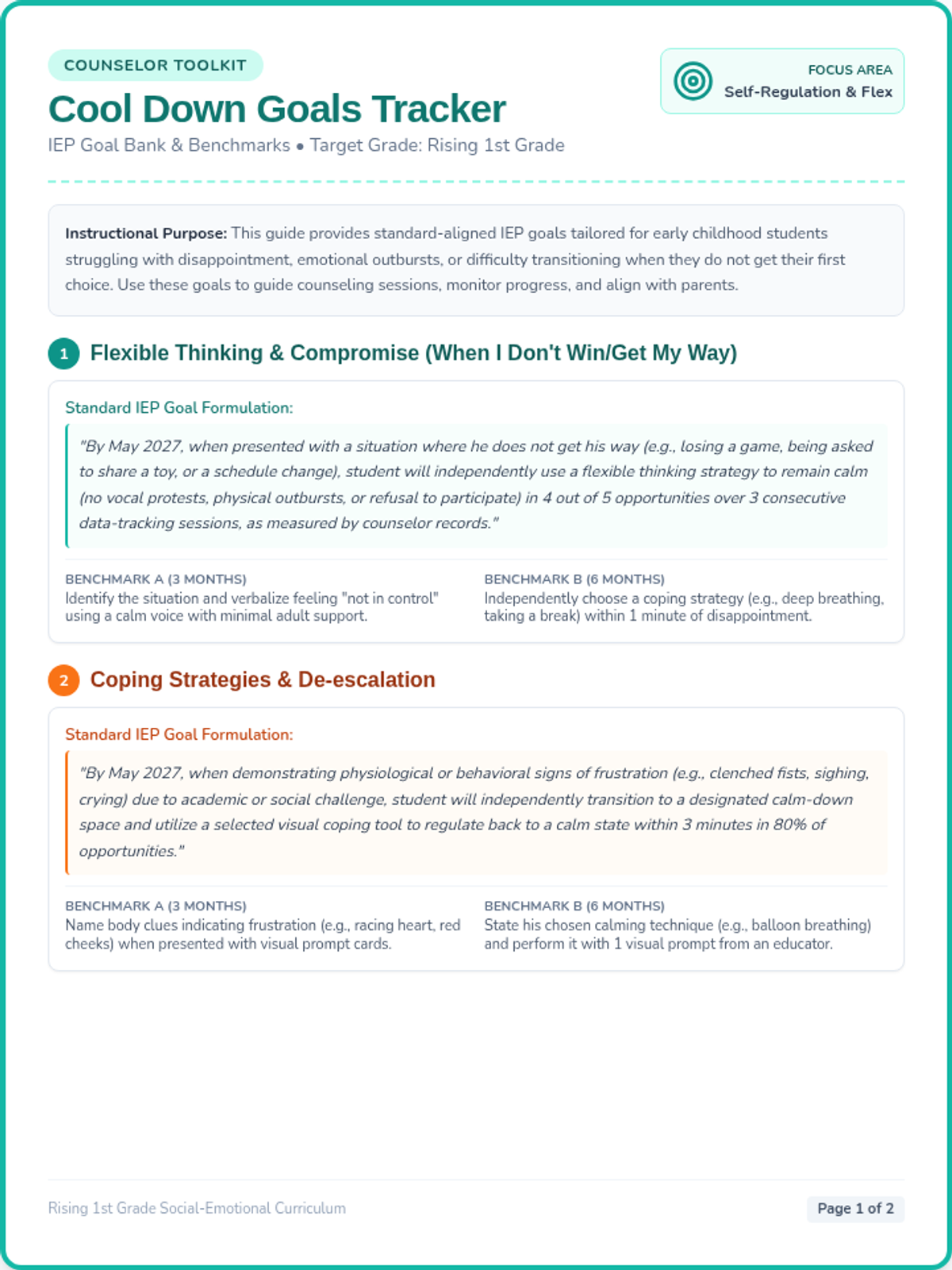
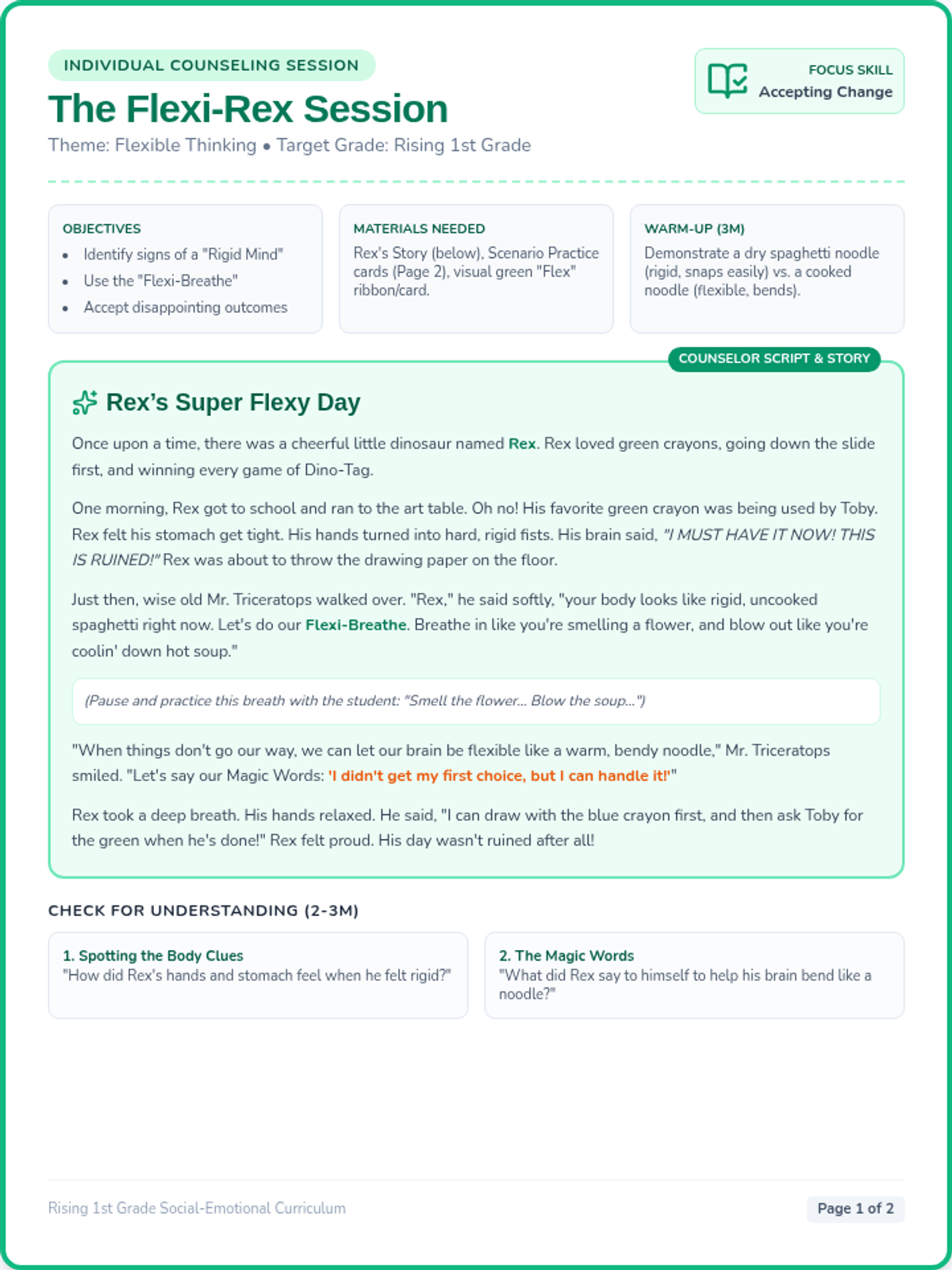
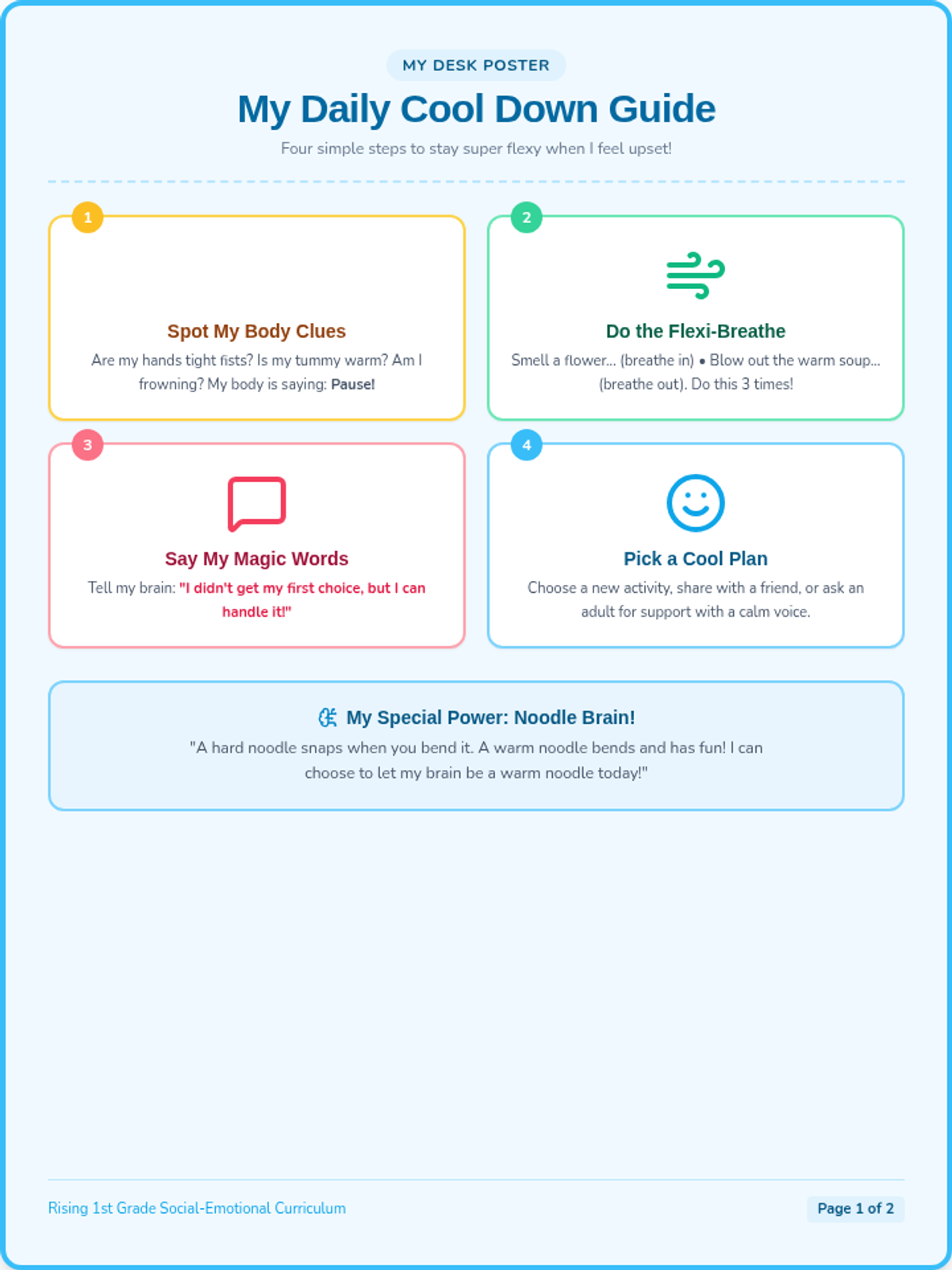
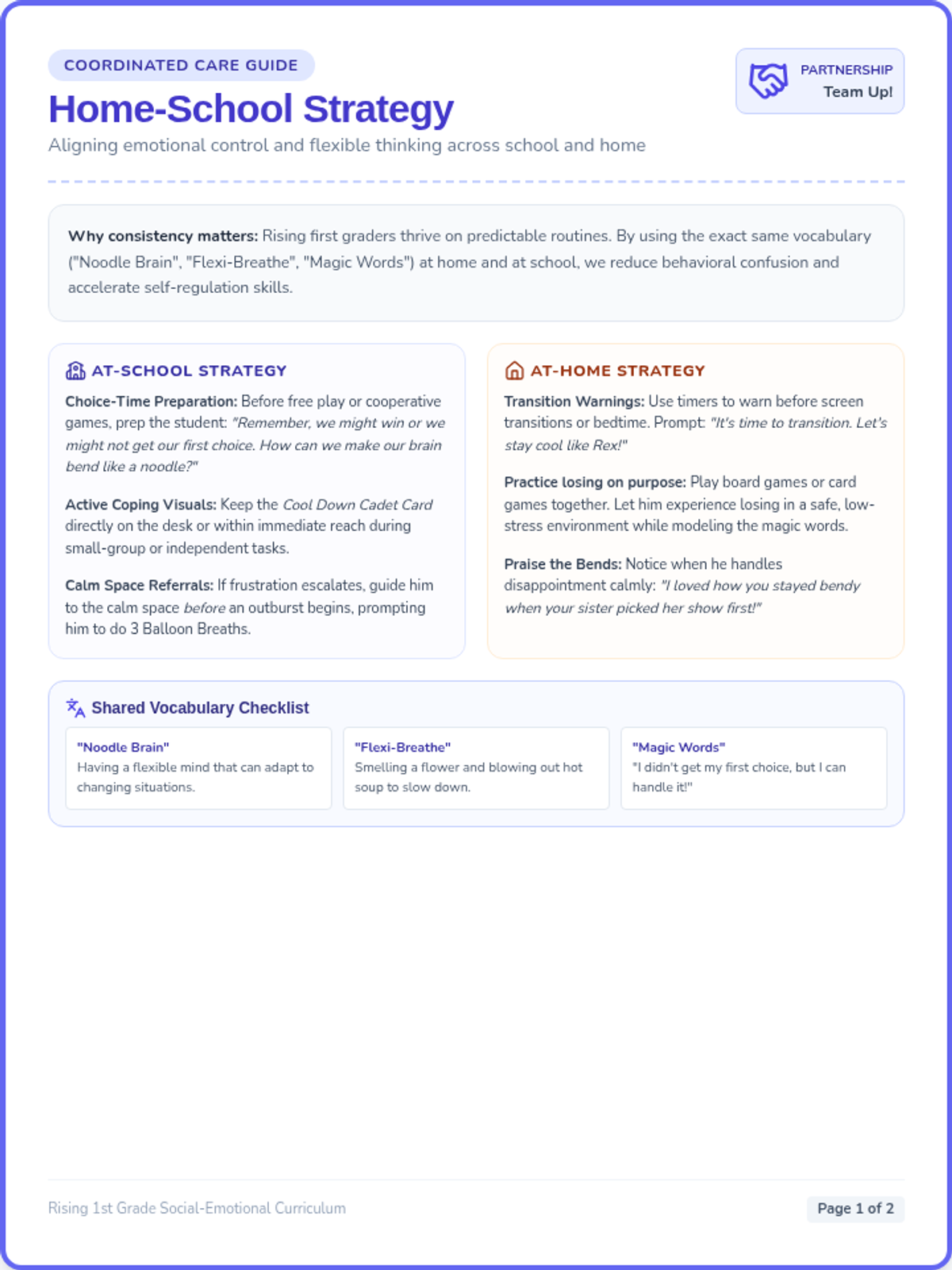
A comprehensive counseling bundle designed for a rising first grader struggling with social interactions and emotional regulation when things do not go their way. Includes targeted IEP goals, data trackers, a story-based counseling lesson, visual coping tools, and a home-school strategy guide.
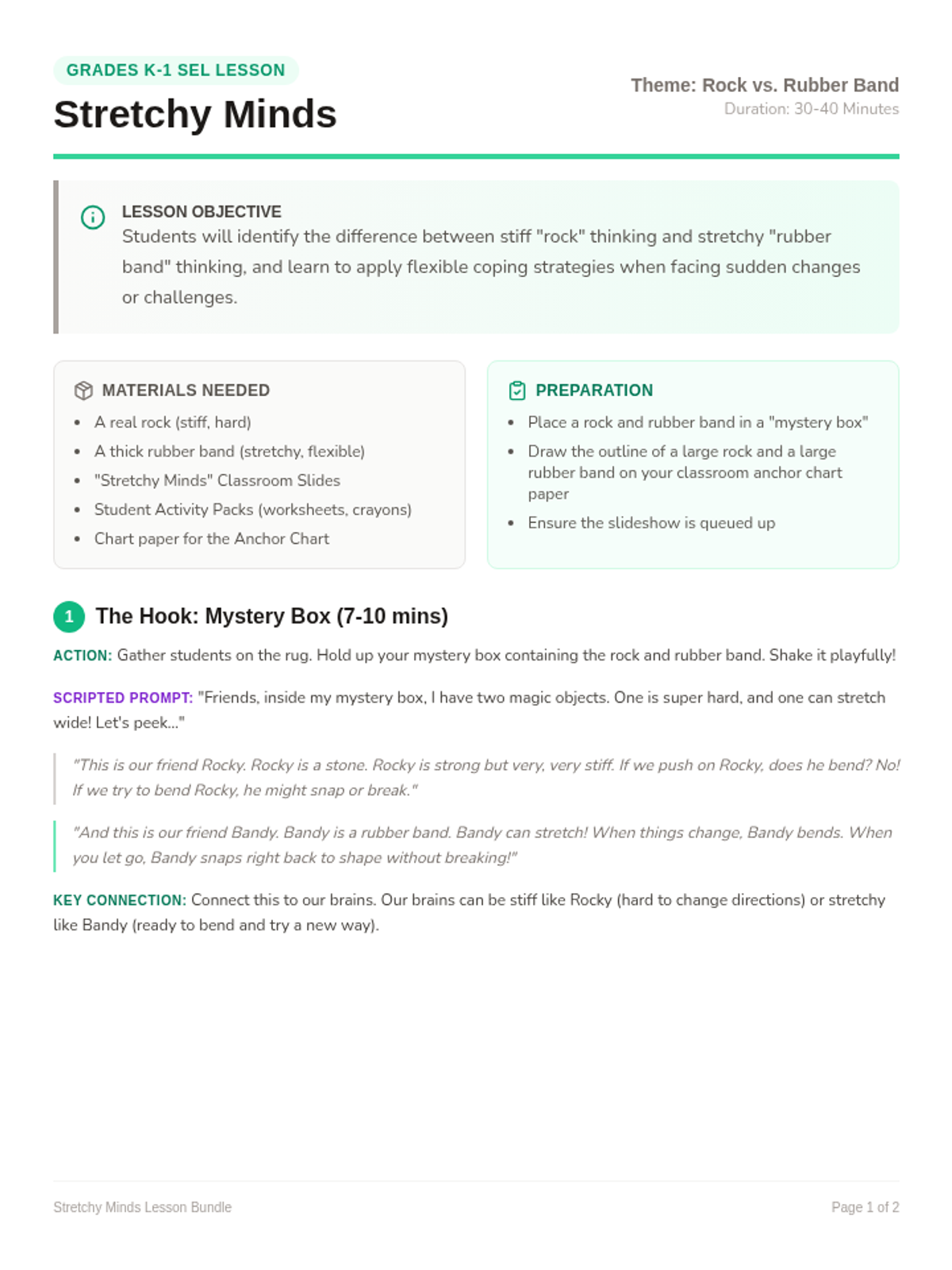
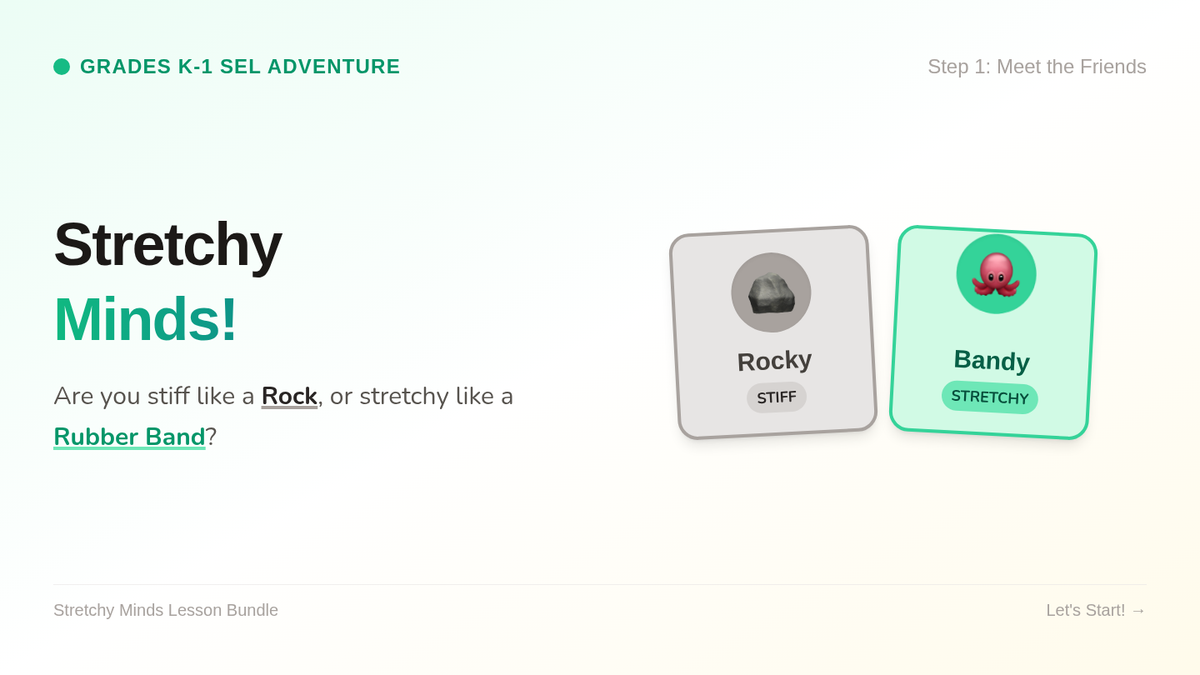
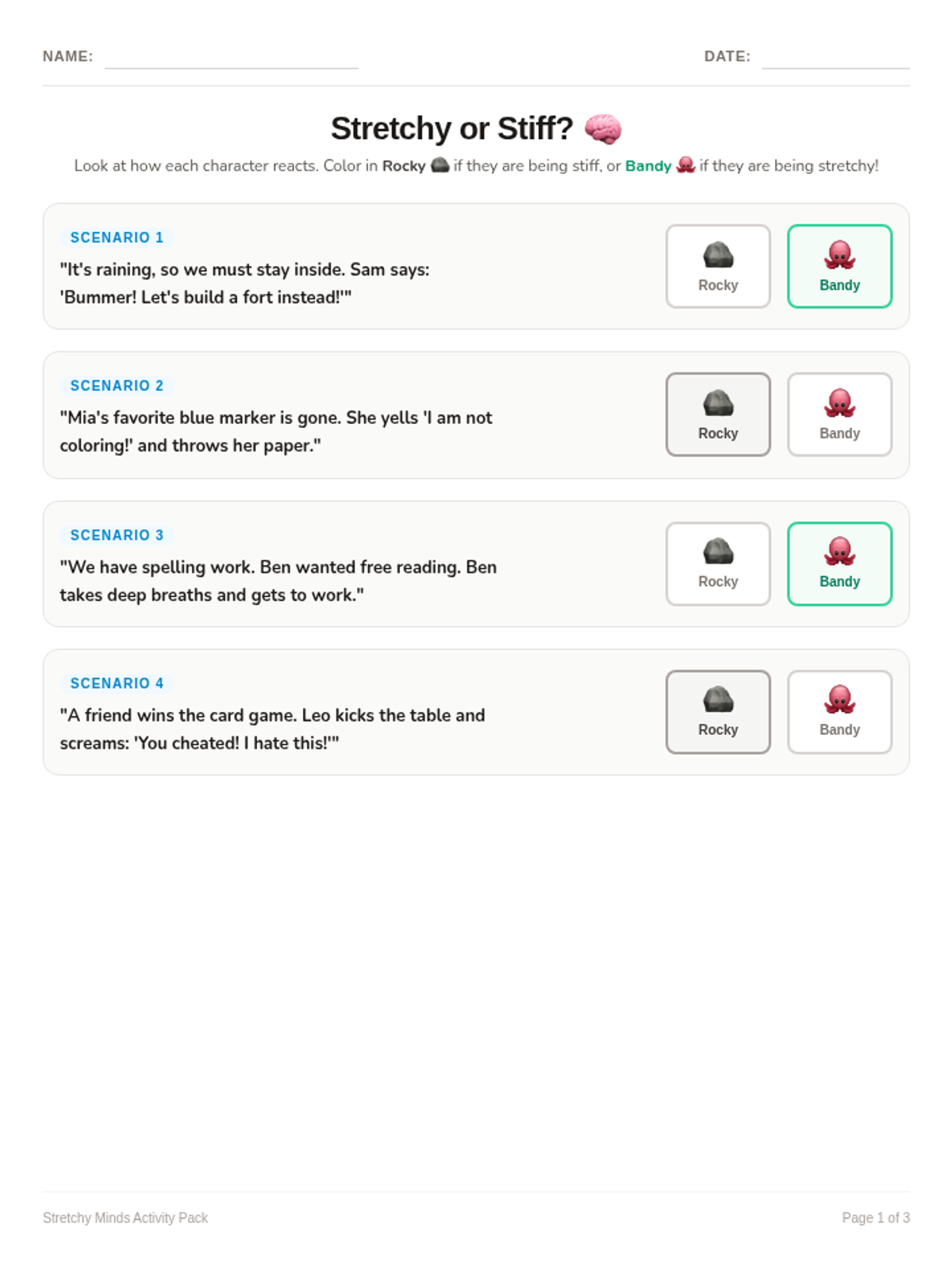
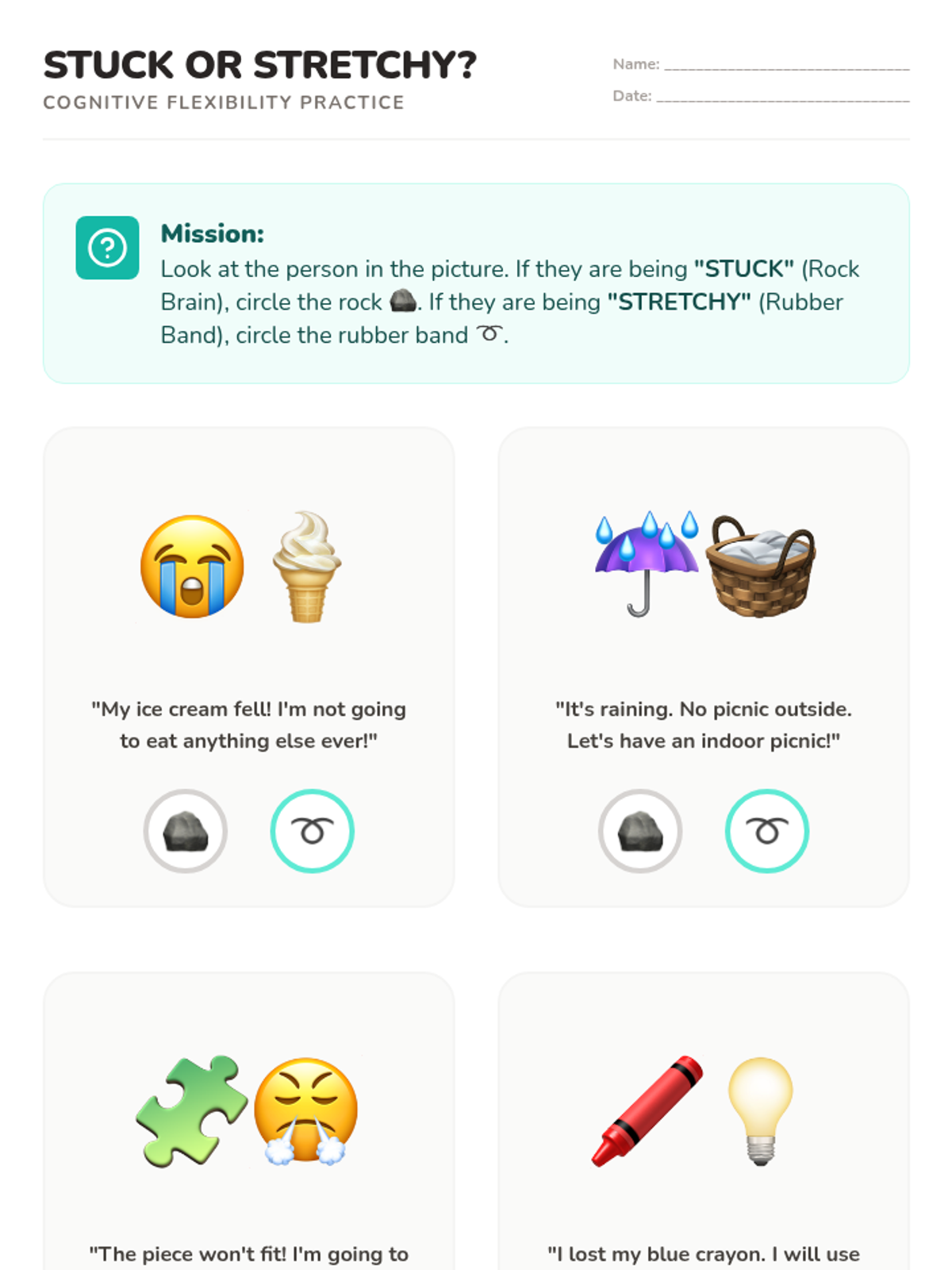
A social-emotional learning lesson for grades K-1 introducing flexible thinking through the metaphor of a stiff rock versus a stretchy rubber band.
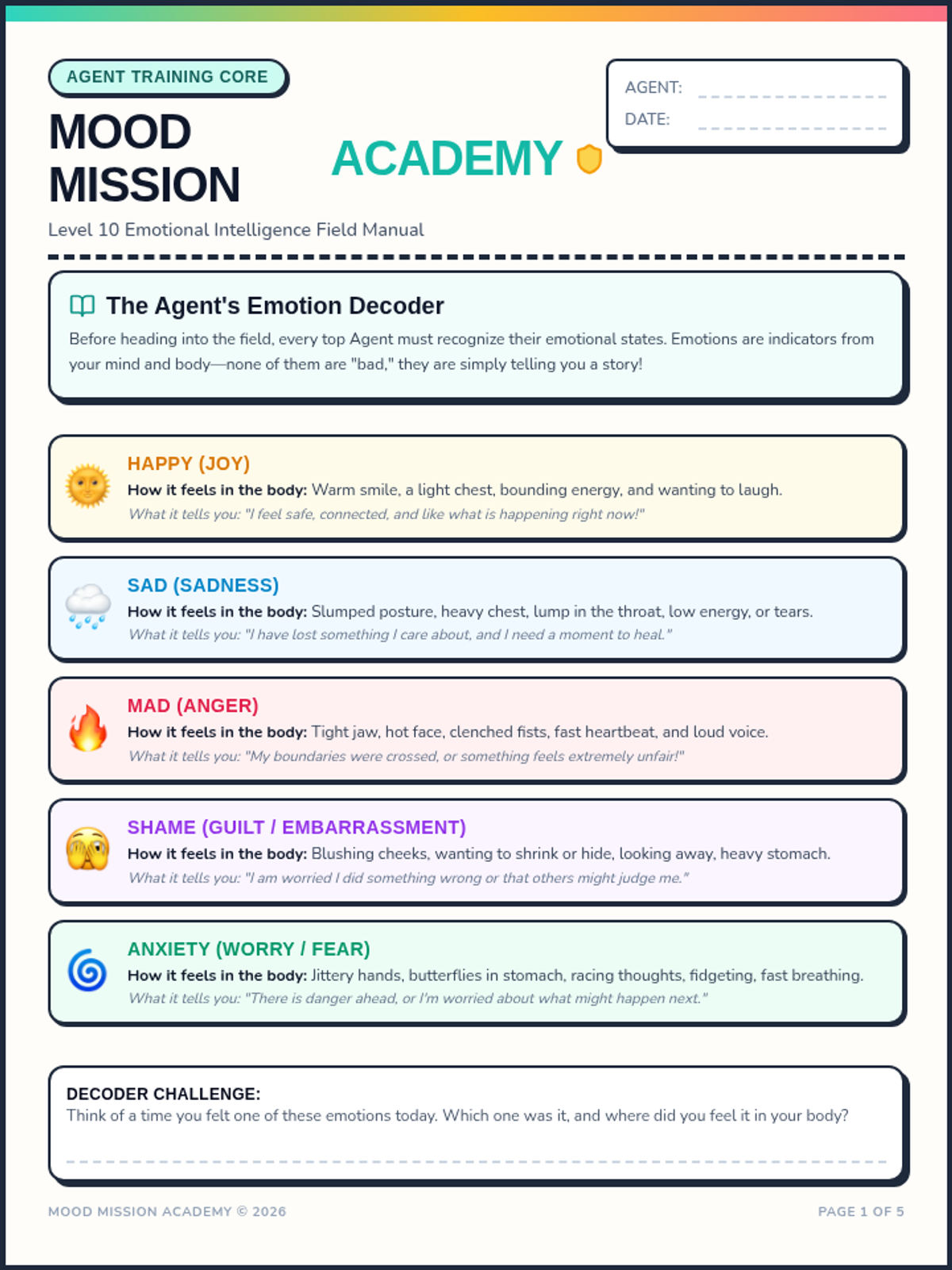
A playful social-emotional learning lesson focusing on identifying emotions, somatic regulation, cognitive reframing, and assertive communication through engaging social stories.
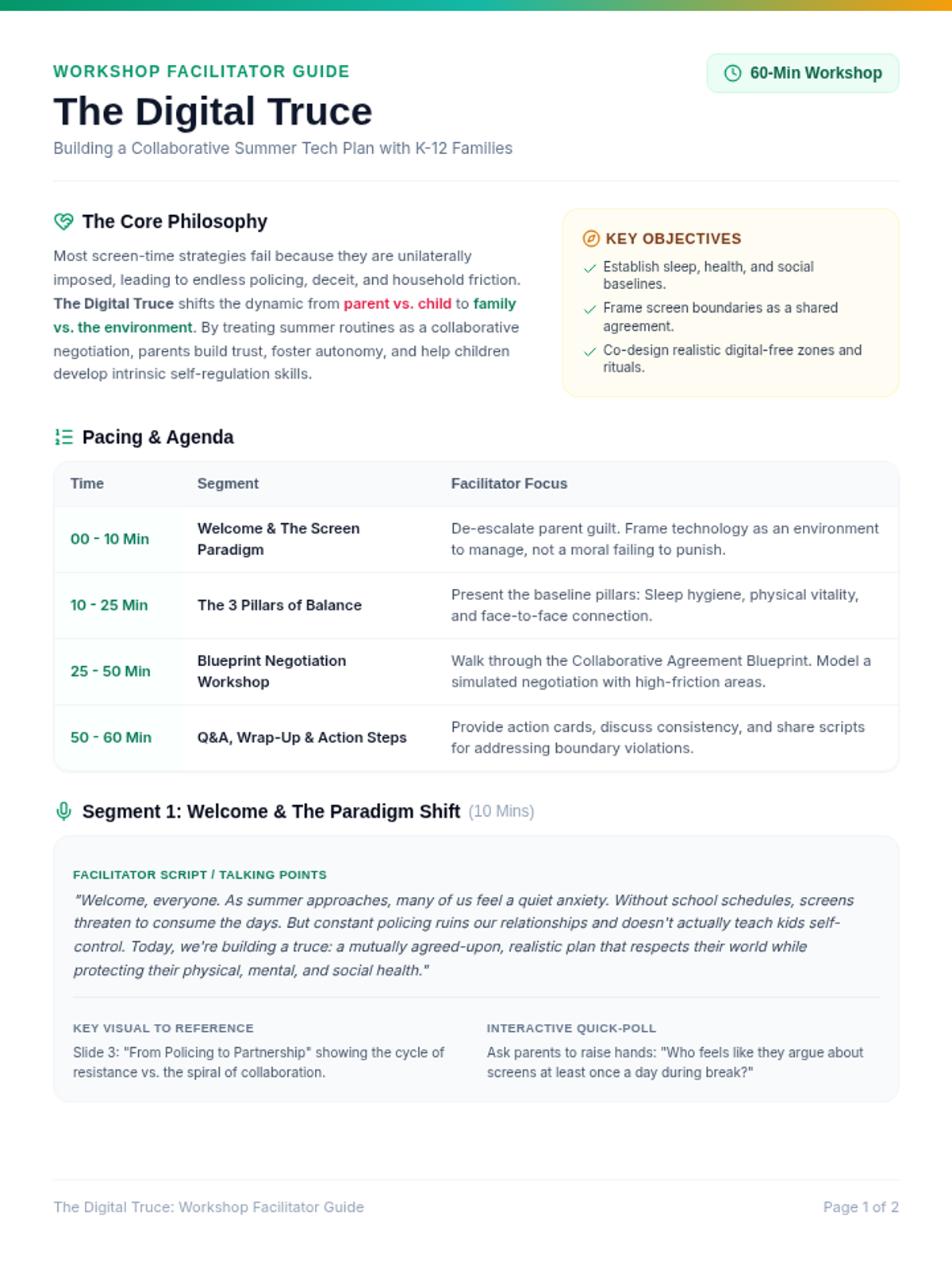
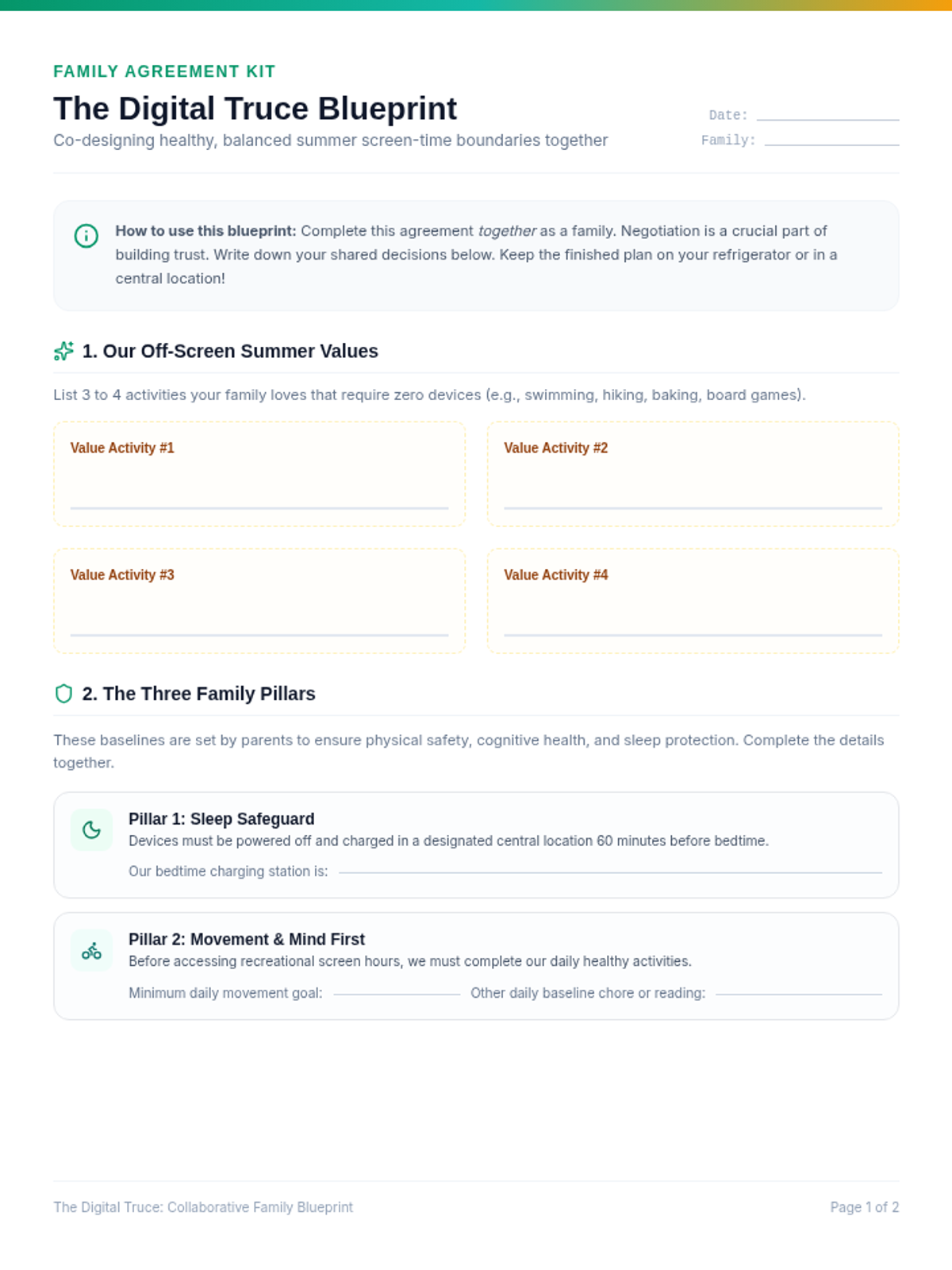
A parent workshop and planning kit to build collaborative, negotiated summer screen-time agreements that protect sleep, physical activity, and family connection.
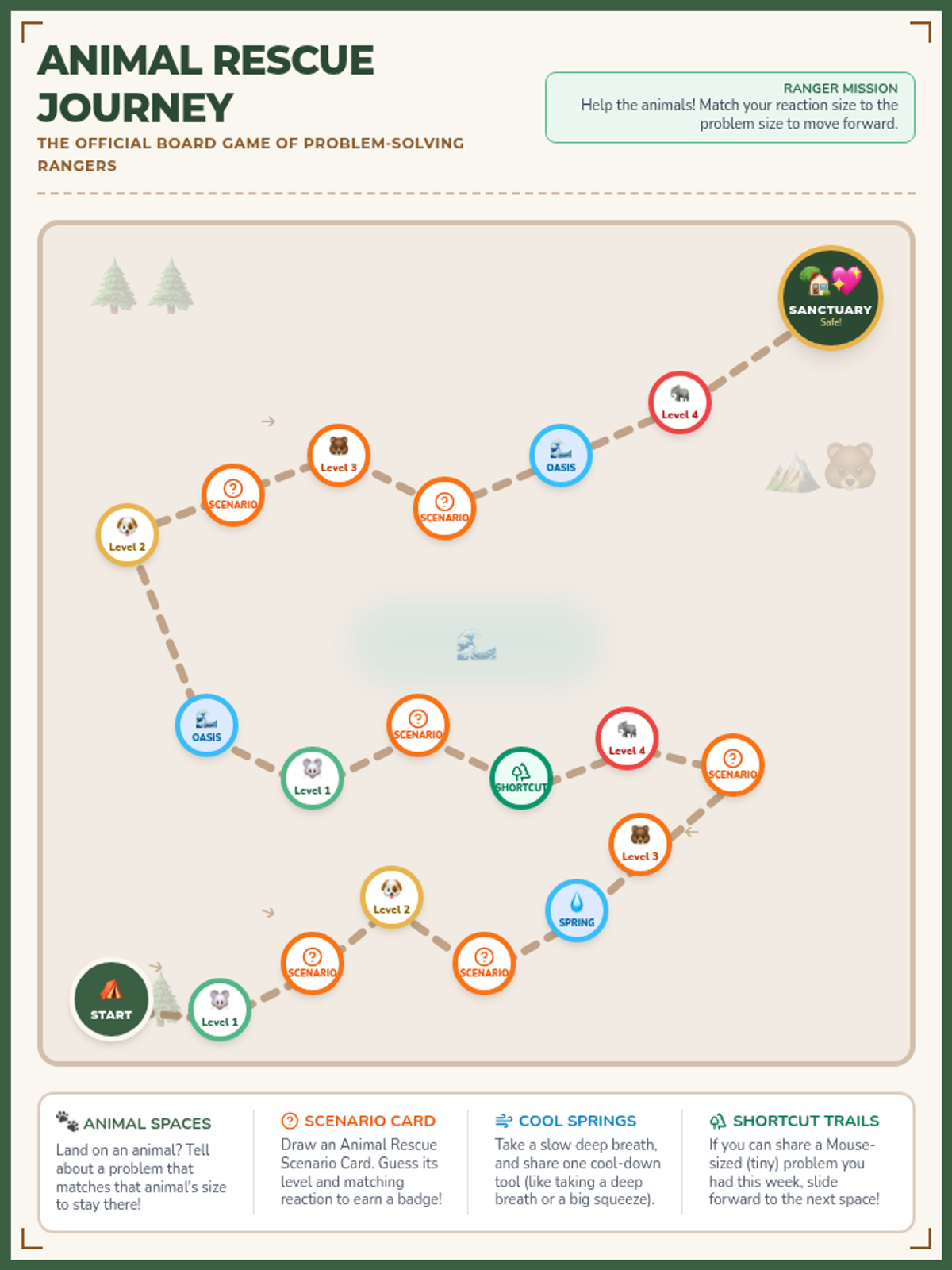
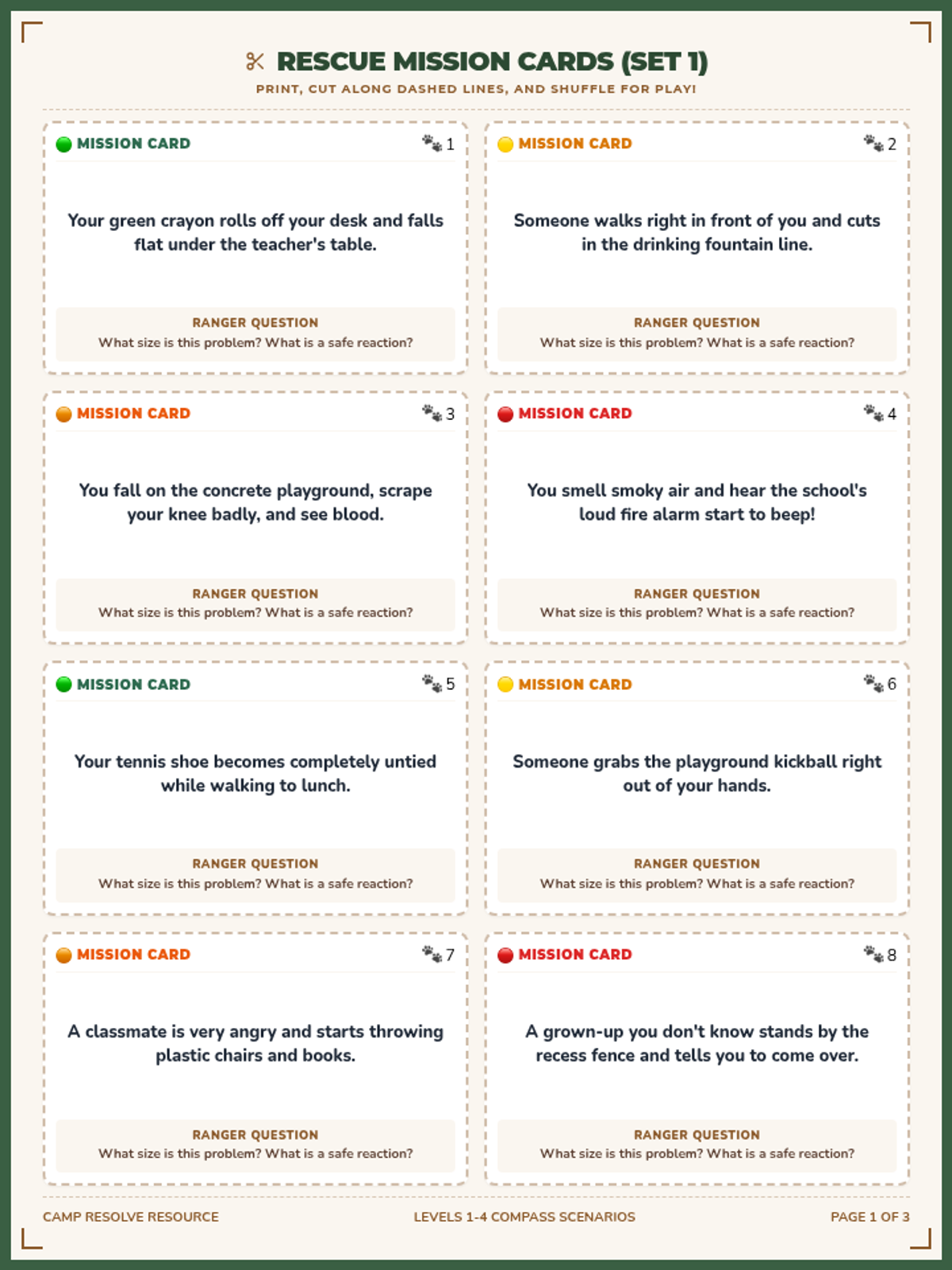
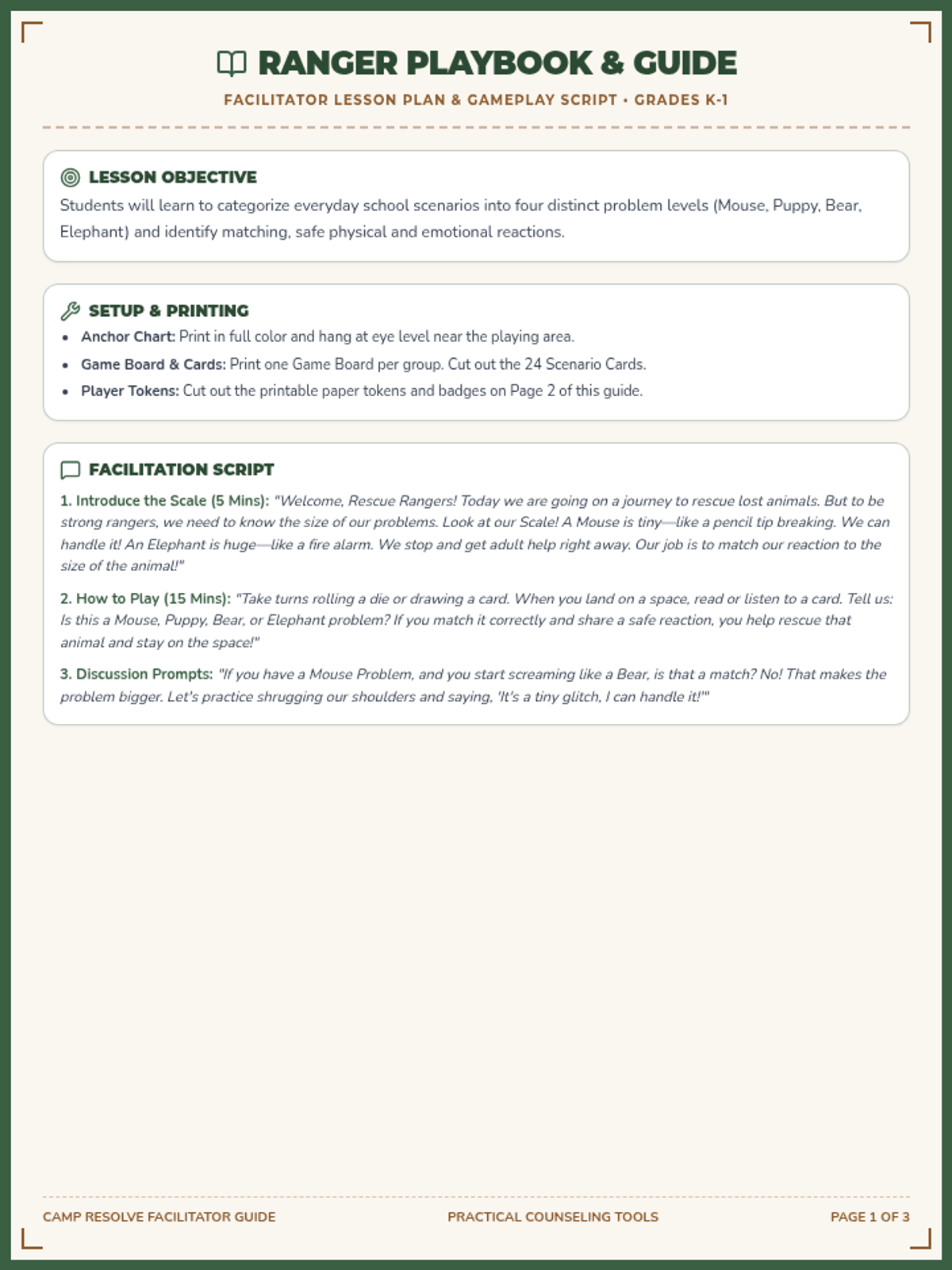
A complete printable board game kit for kindergarten and first-grade students, designed to teach the 'Size of the Problem' emotional regulation concept through an engaging animal rescue theme. Includes a visual anchor chart, printable board, scenario cards, and a comprehensive facilitator guide.
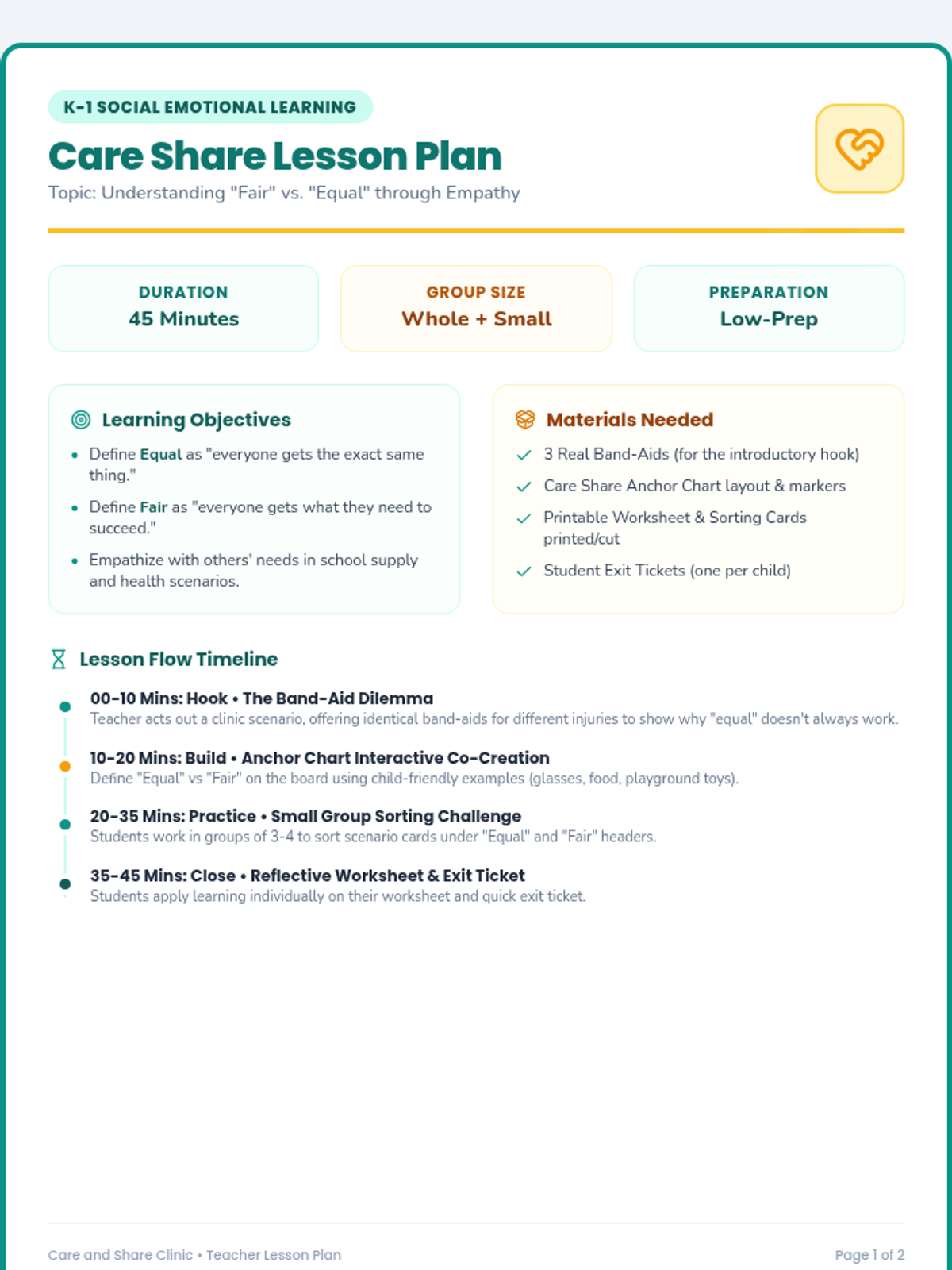
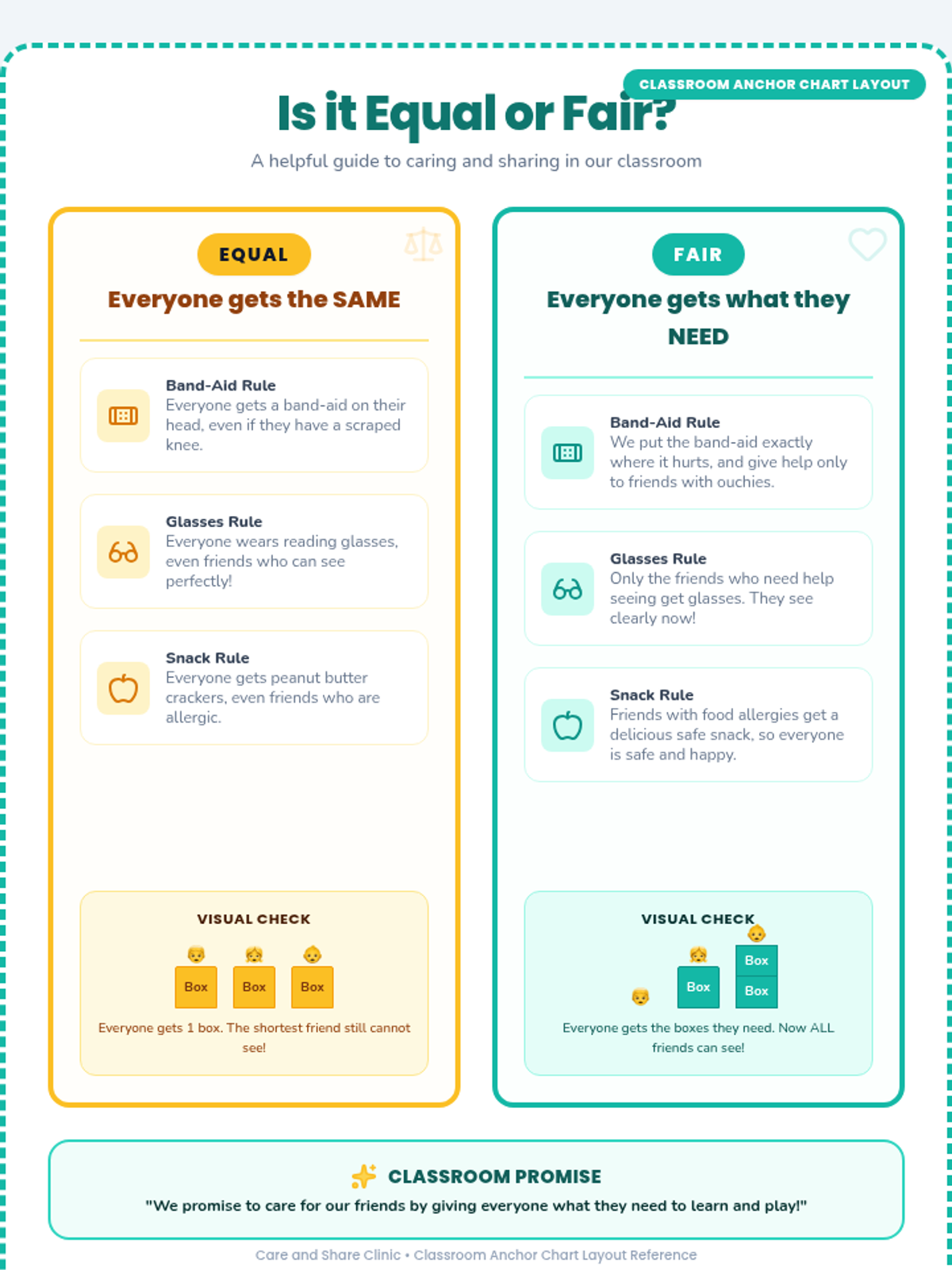
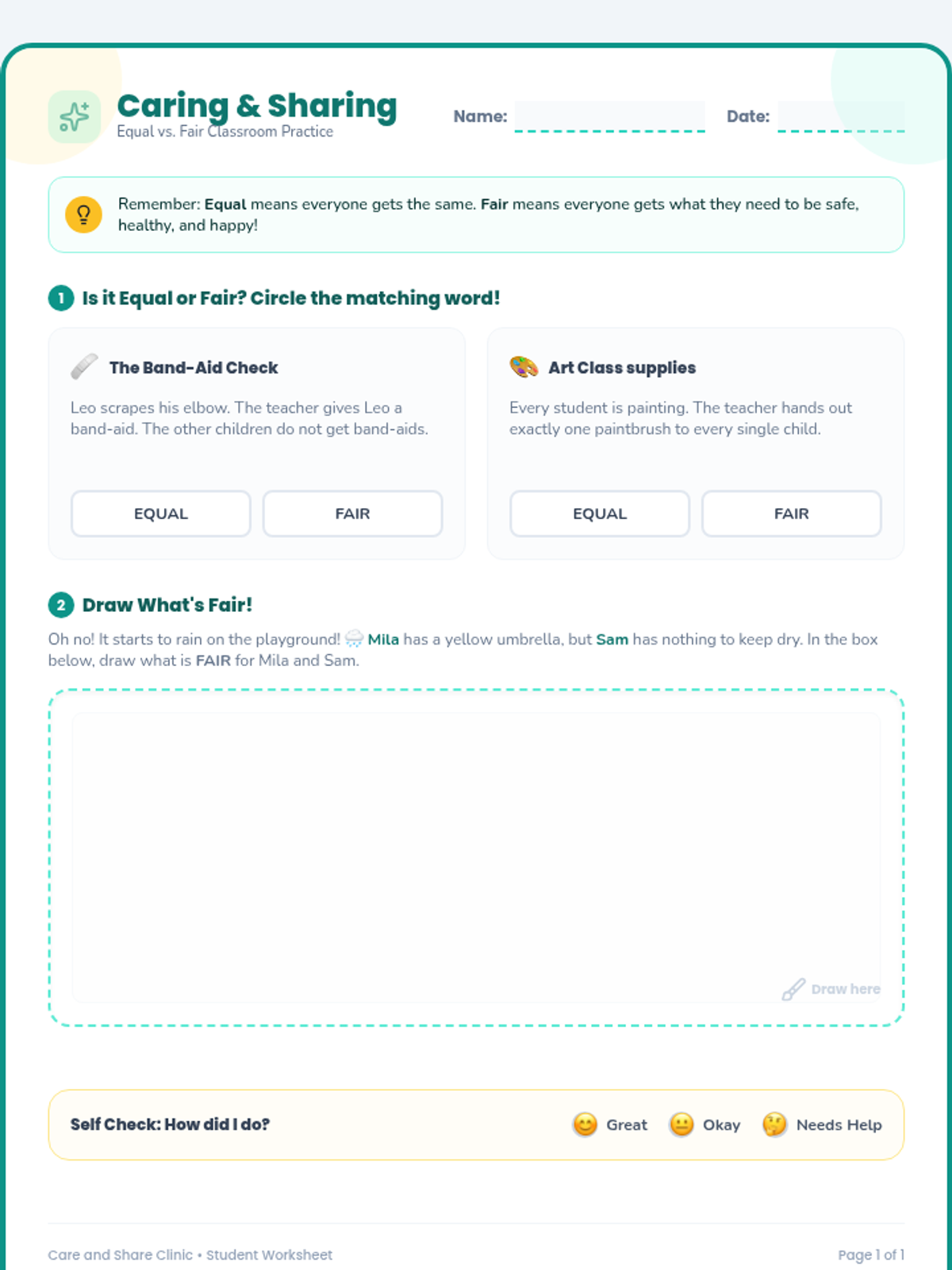
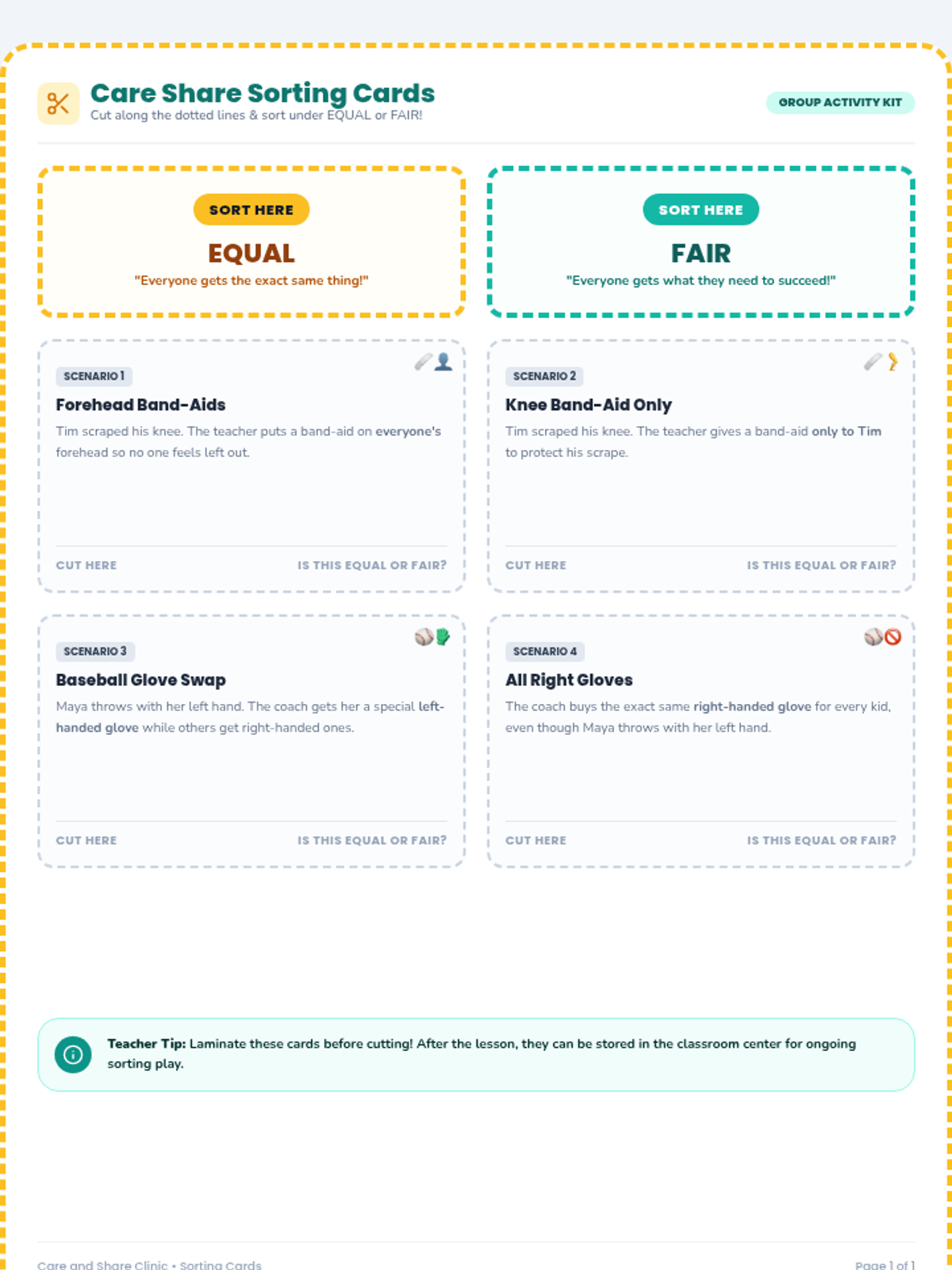
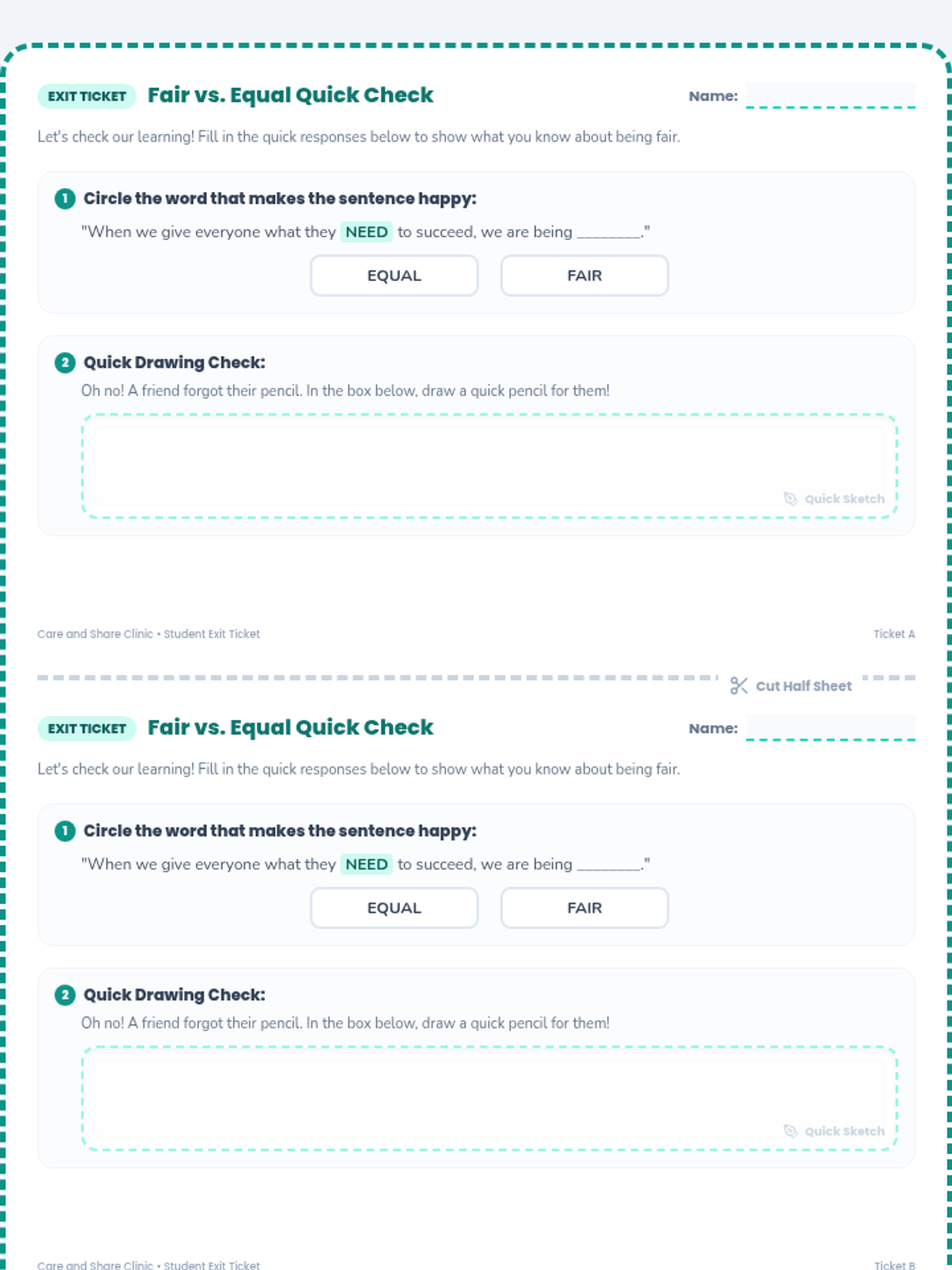
A hands-on, high-engagement lesson for Kindergarten and 1st-grade students to master the difference between 'equal' (everyone gets the same) and 'fair' (everyone gets what they need). Utilizing the famous band-aid analogy, interactive snack-sharing, and practical school supply scenarios, students learn empathy and equity.
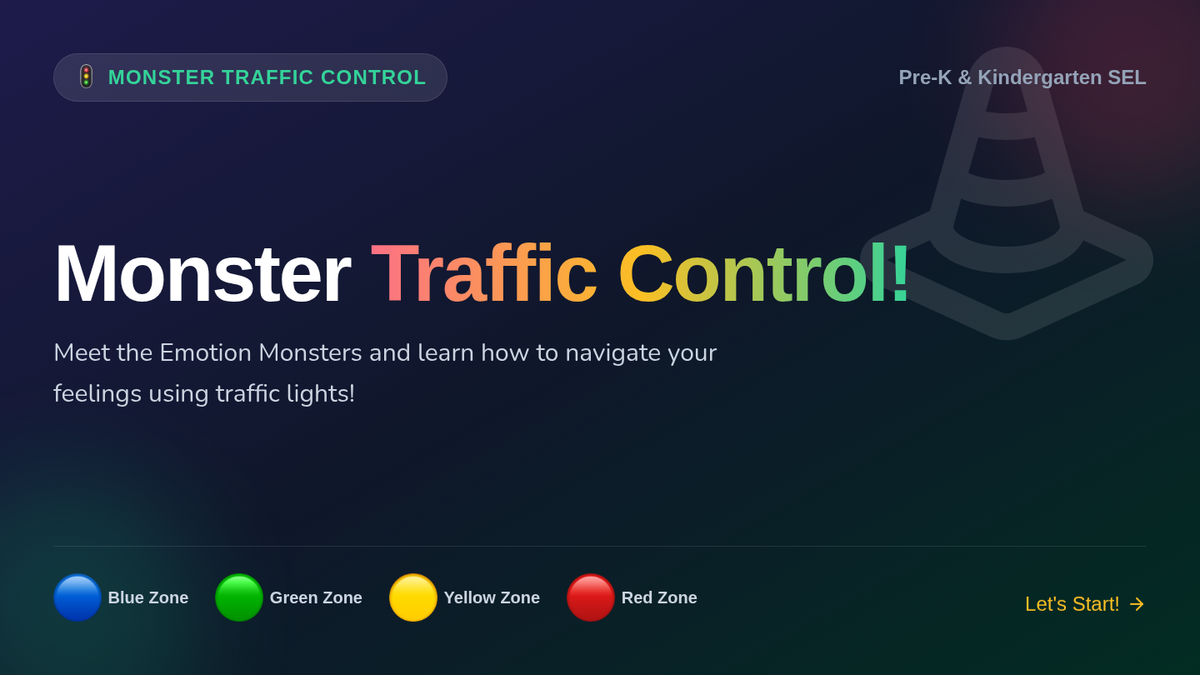
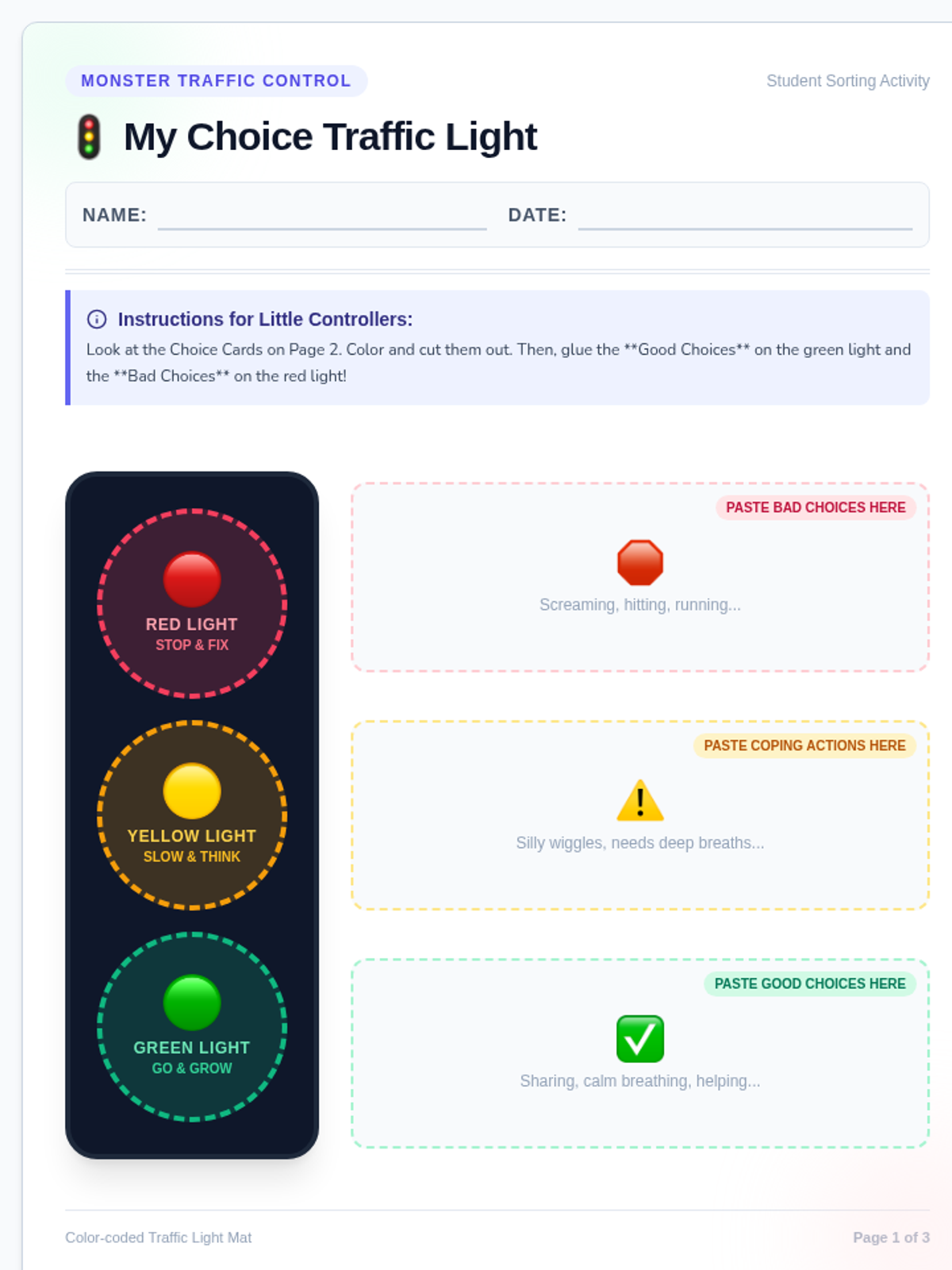
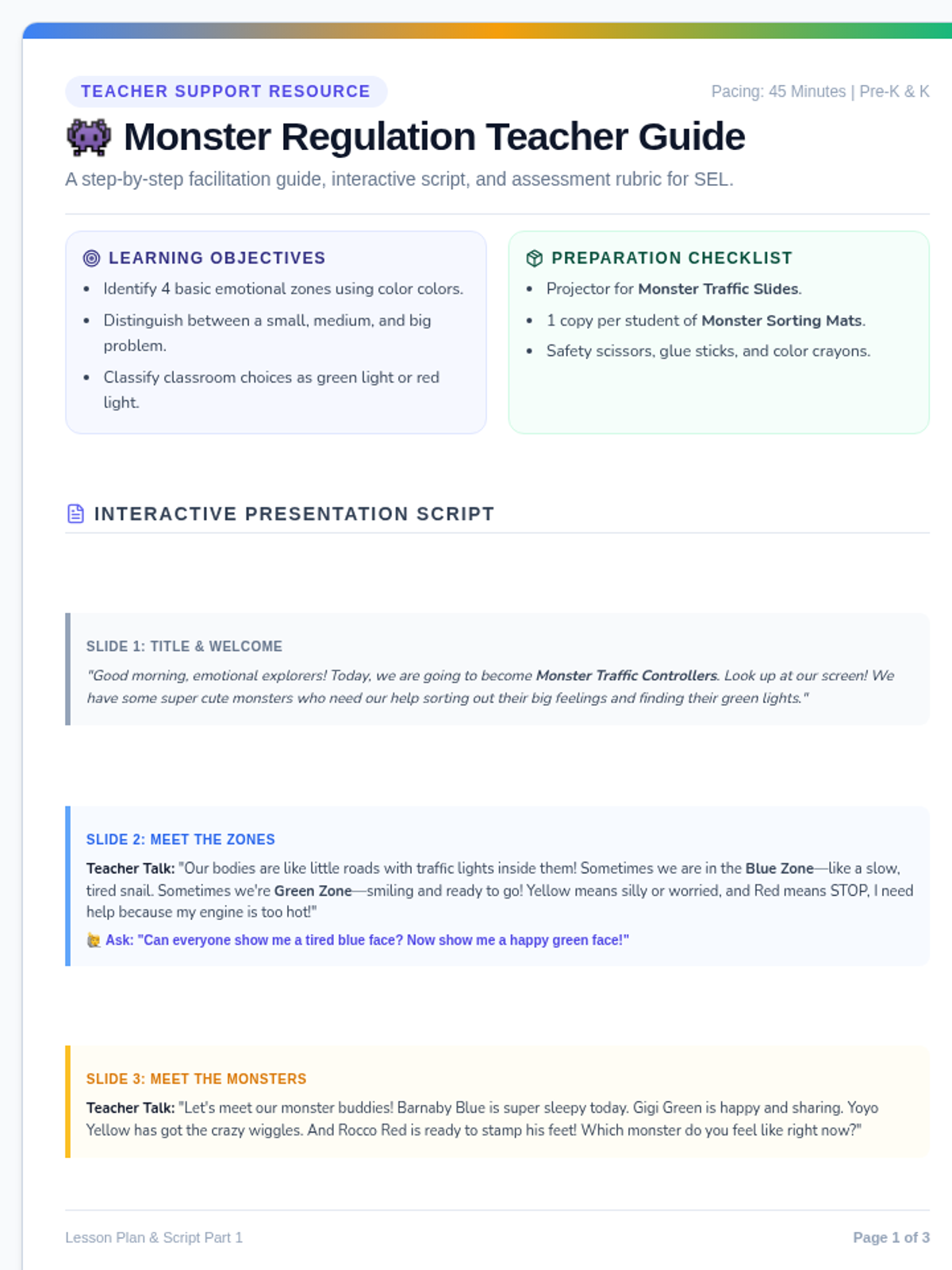
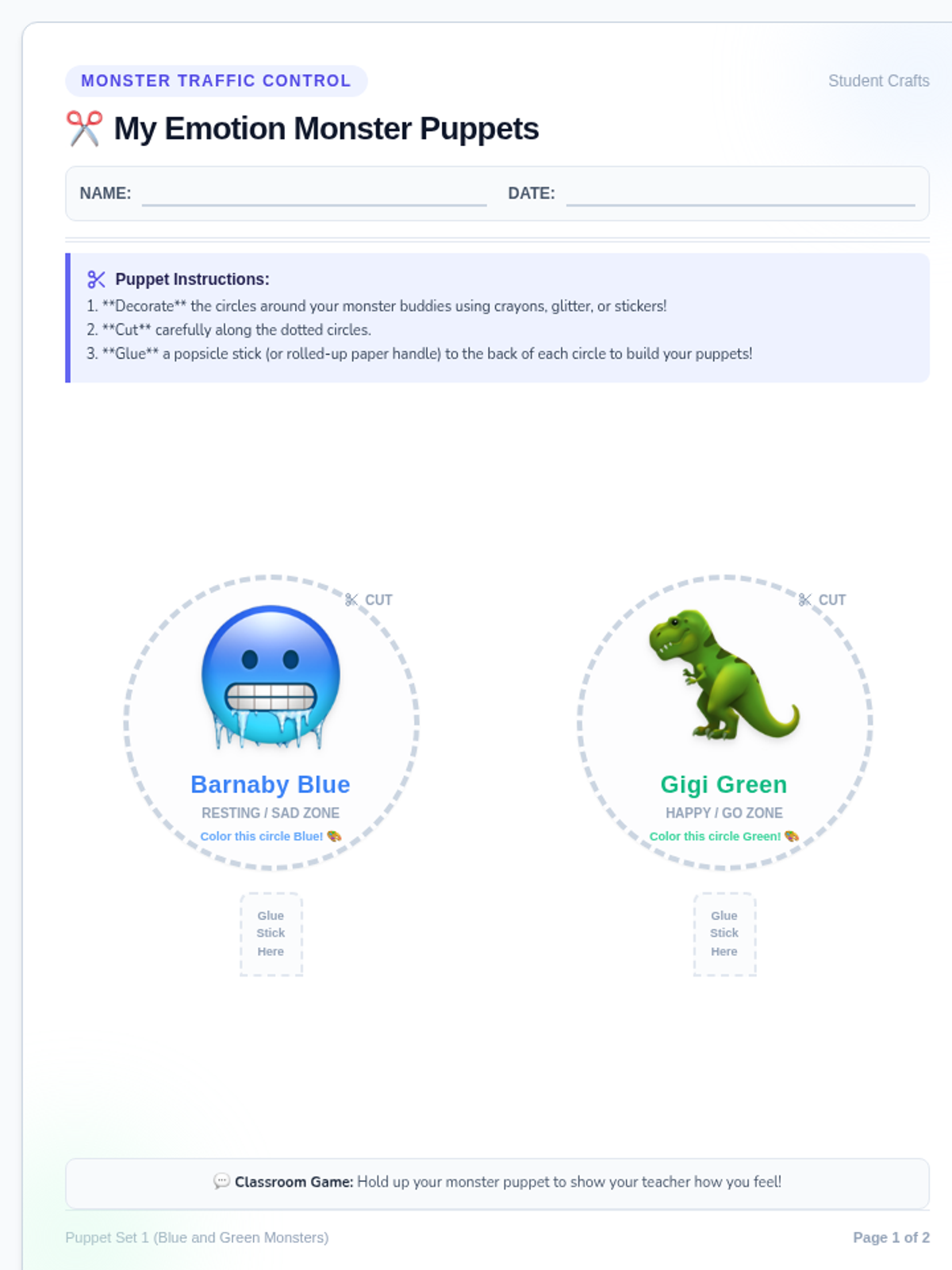
An interactive, hands-on social-emotional learning lesson for Pre-K and Kindergarten. Students explore their feelings through color-coded traffic lights and friendly emotion monsters, learning to identify the 'Size of the Problem' and sort good versus bad choices.
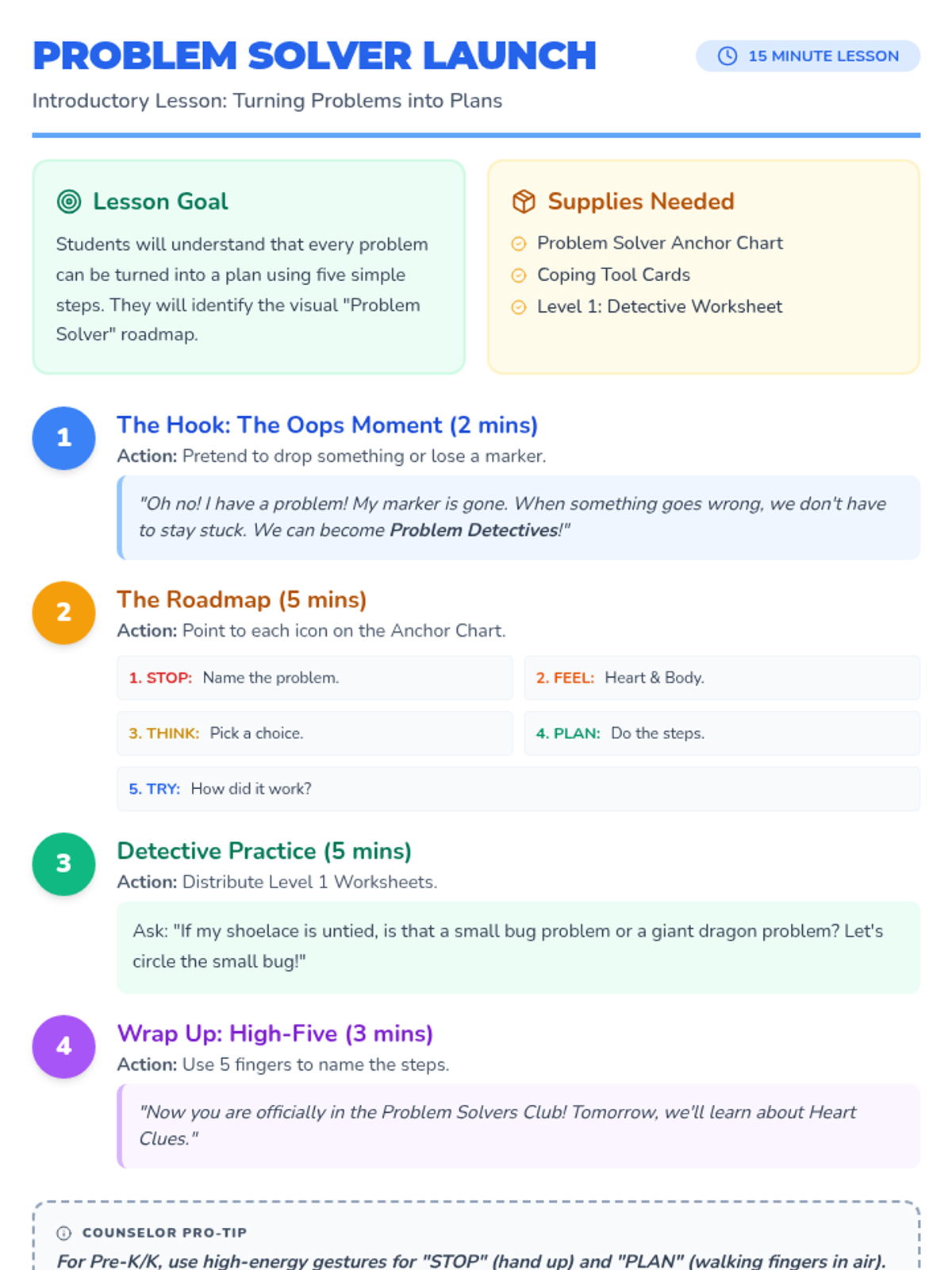
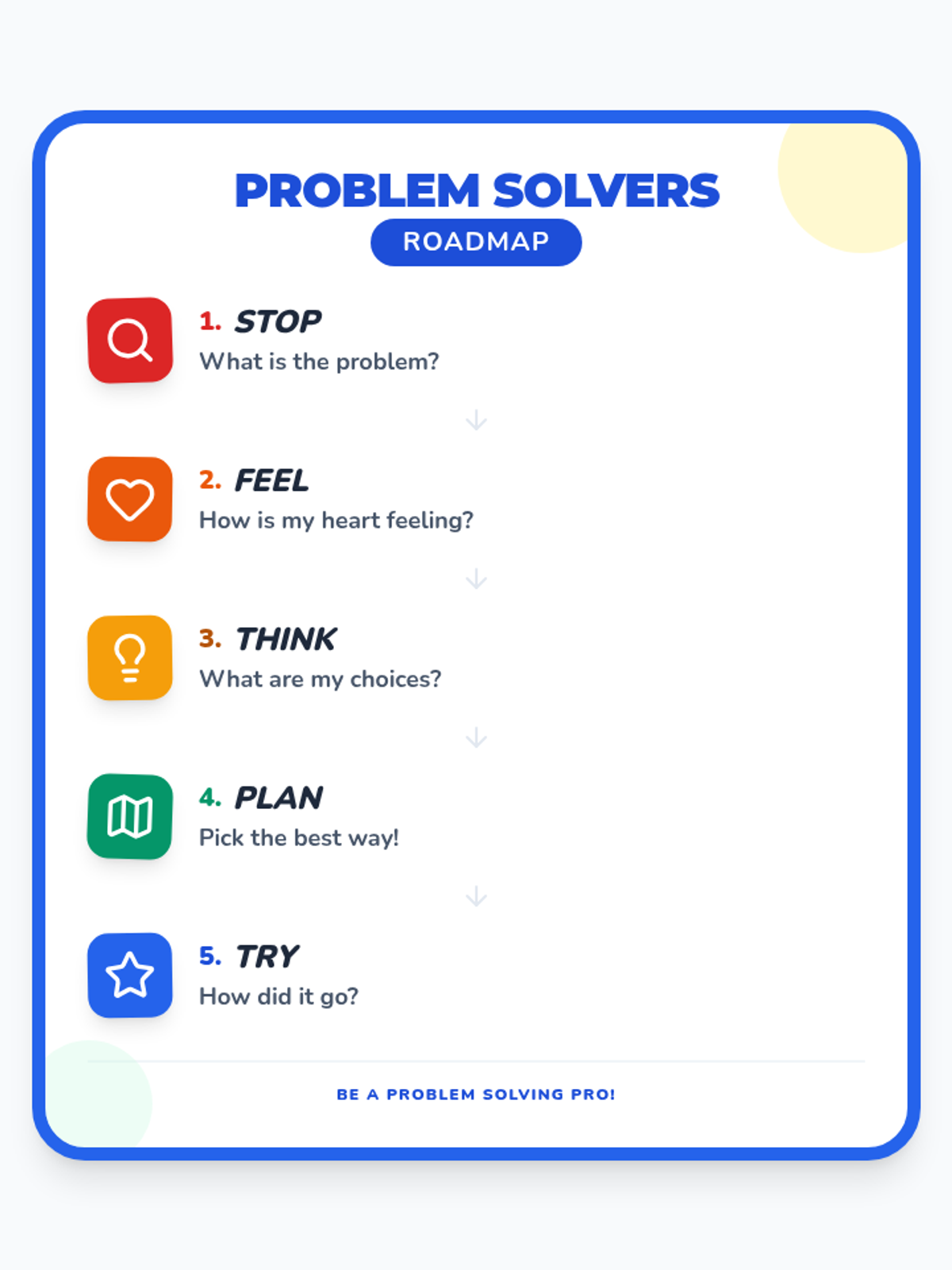
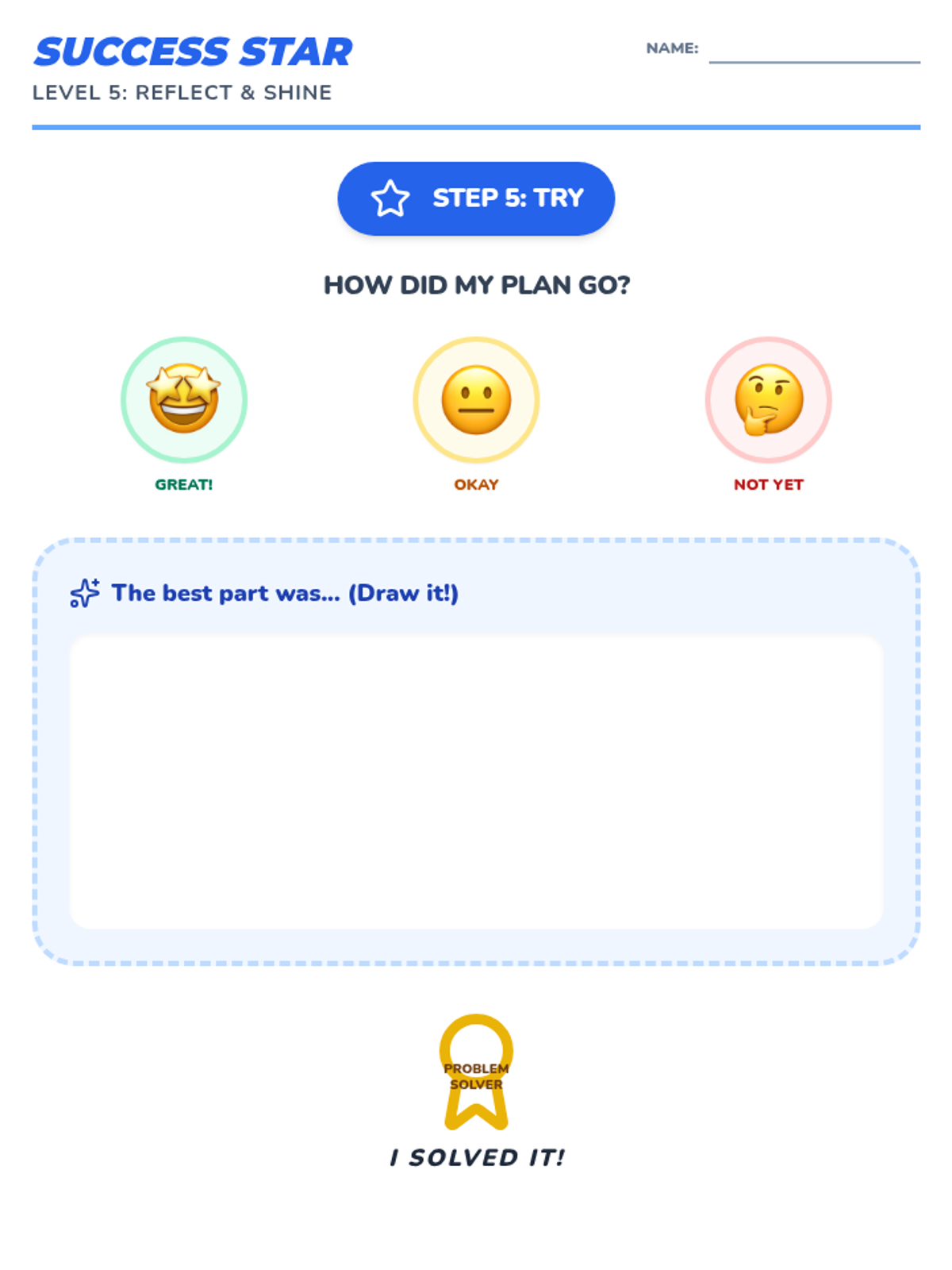
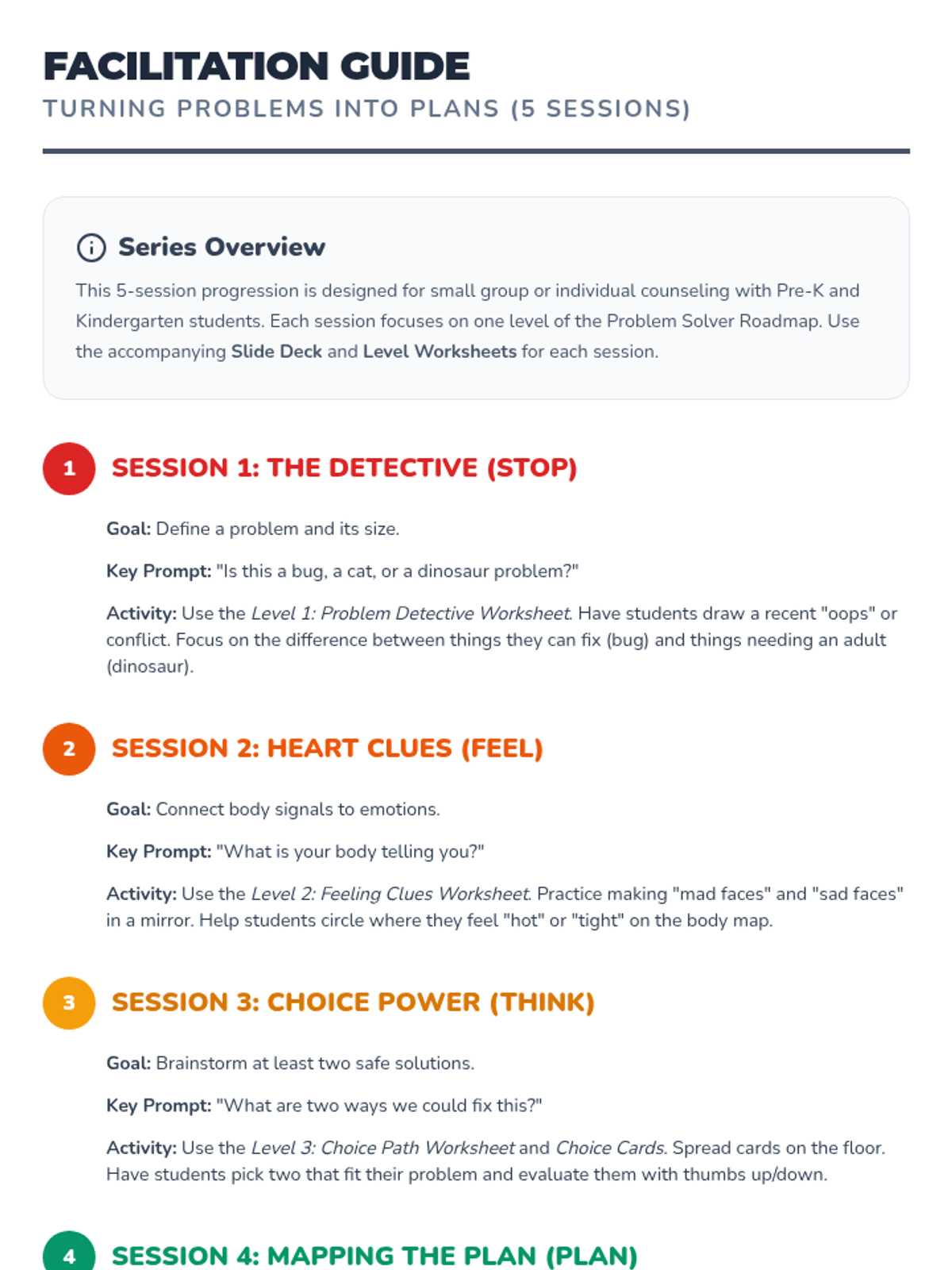
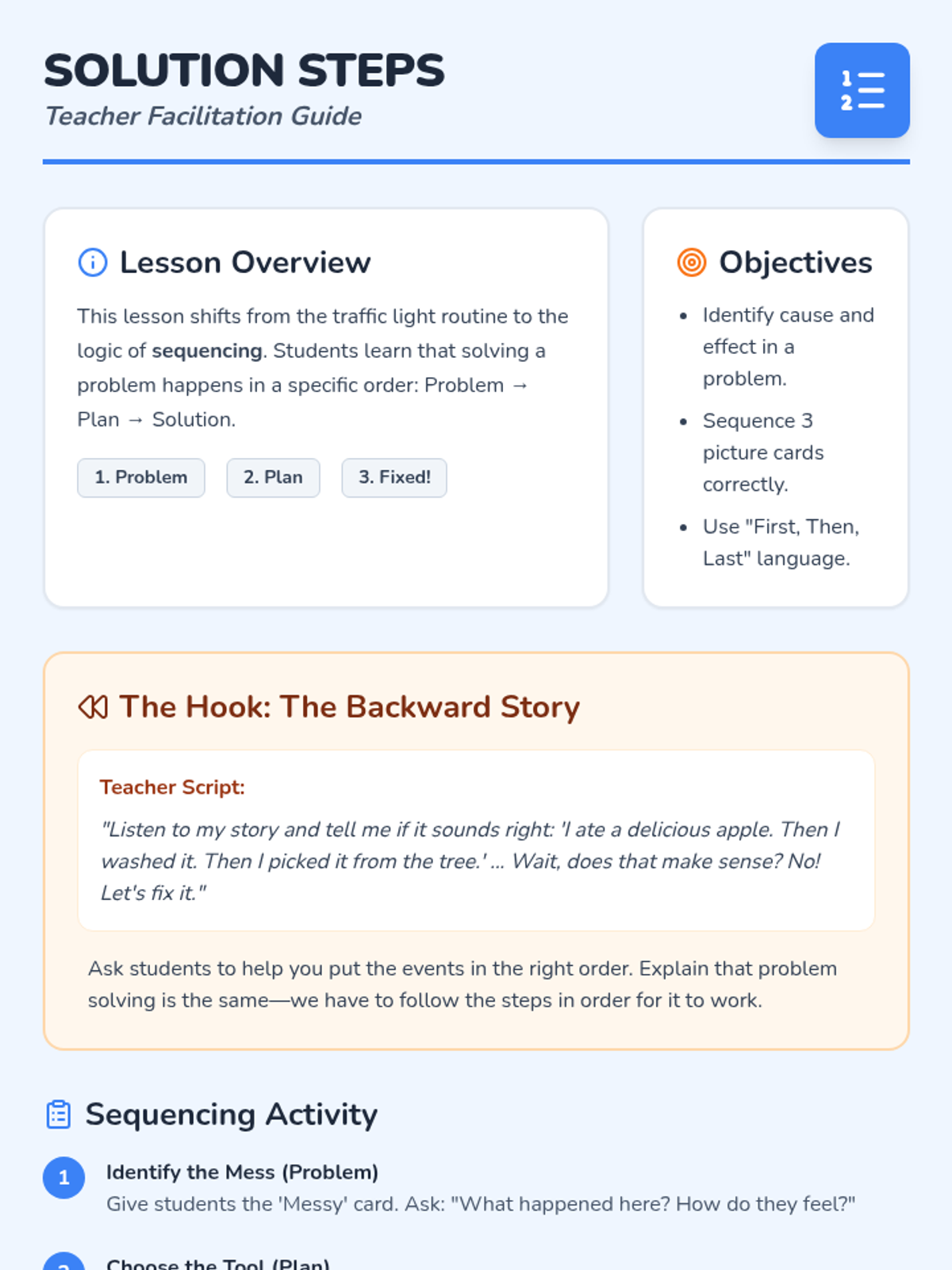
A foundational lesson to introduce young students to the concept of turning problems into plans using visual cues and simple steps.
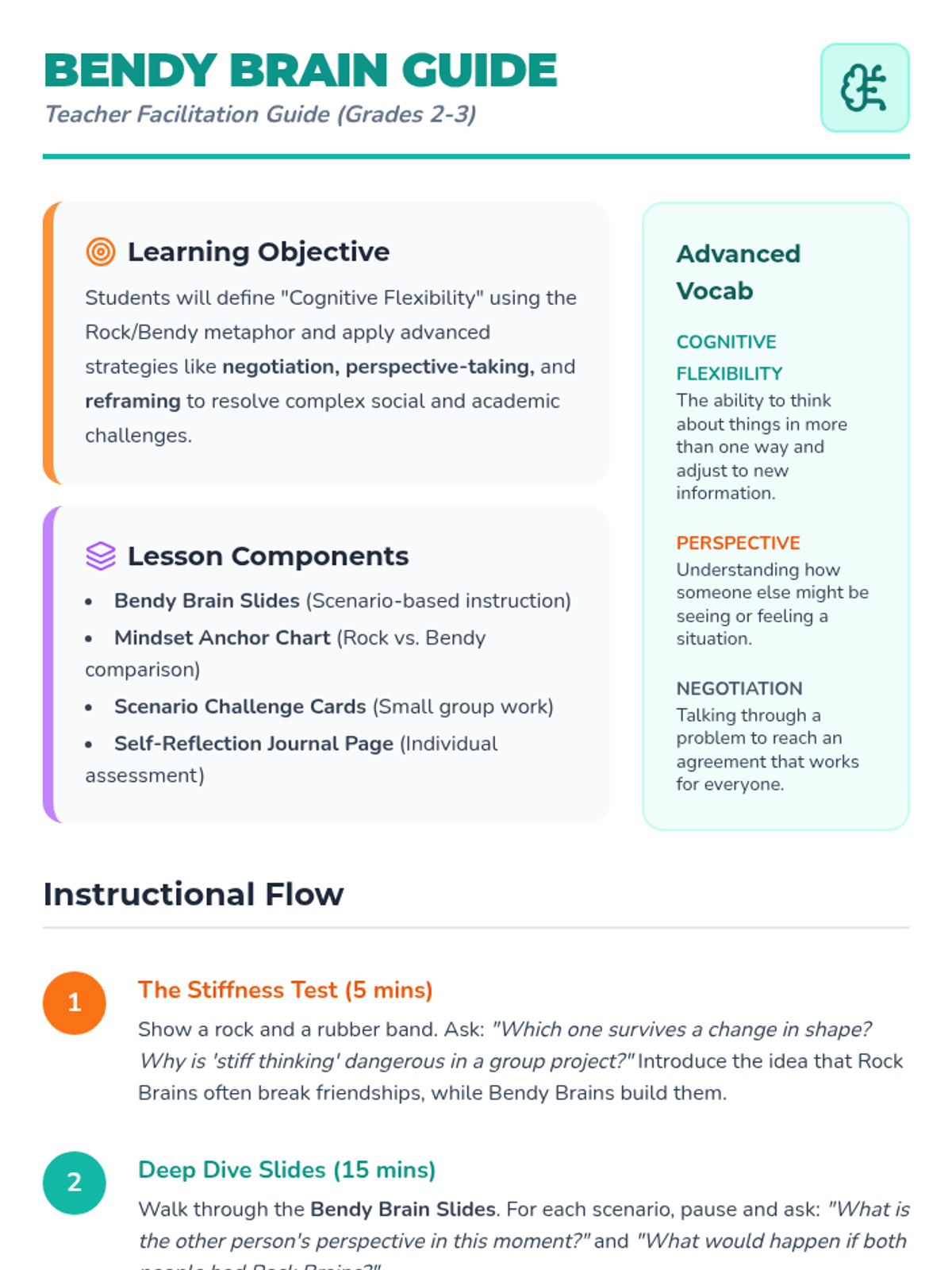
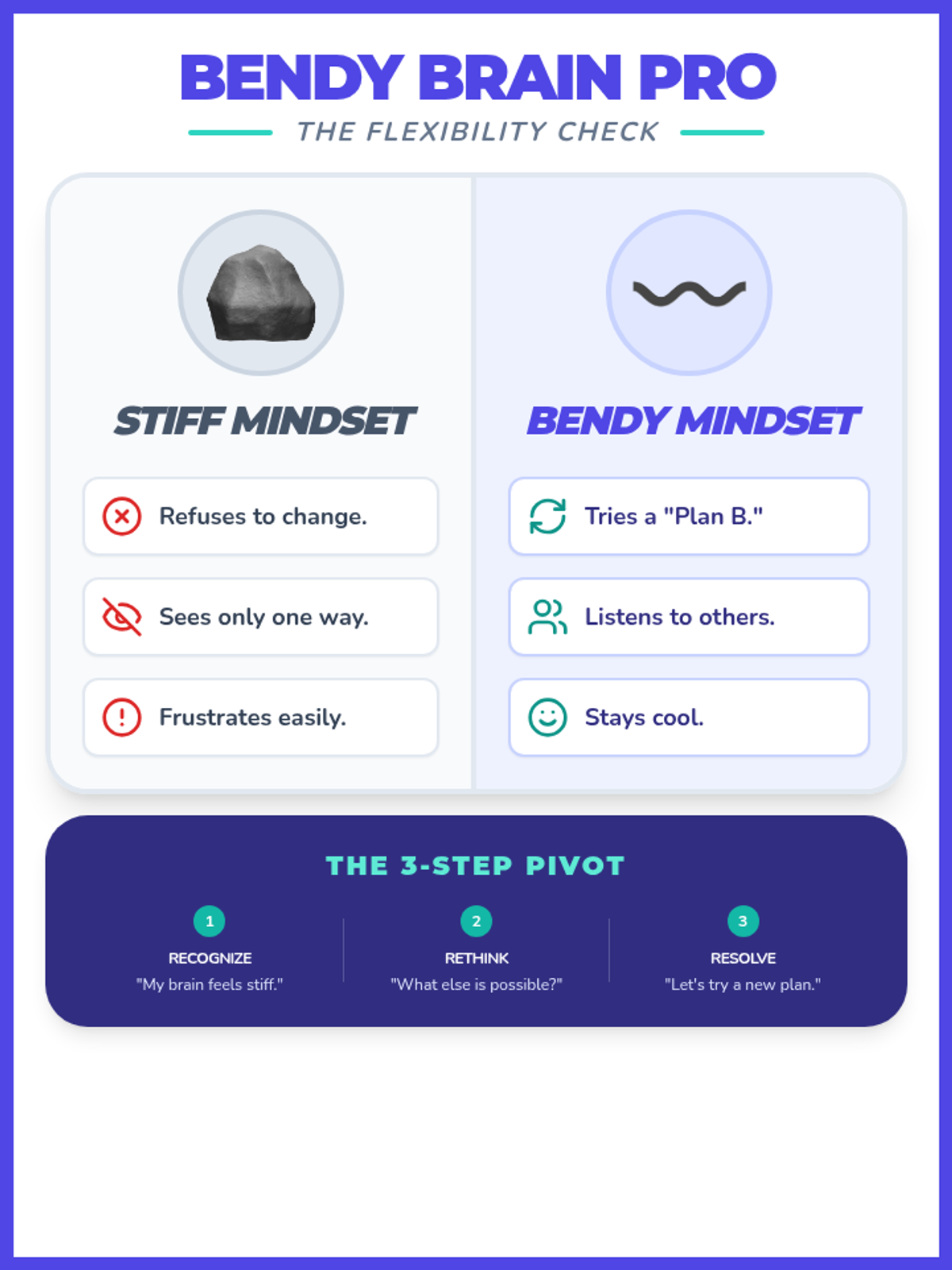
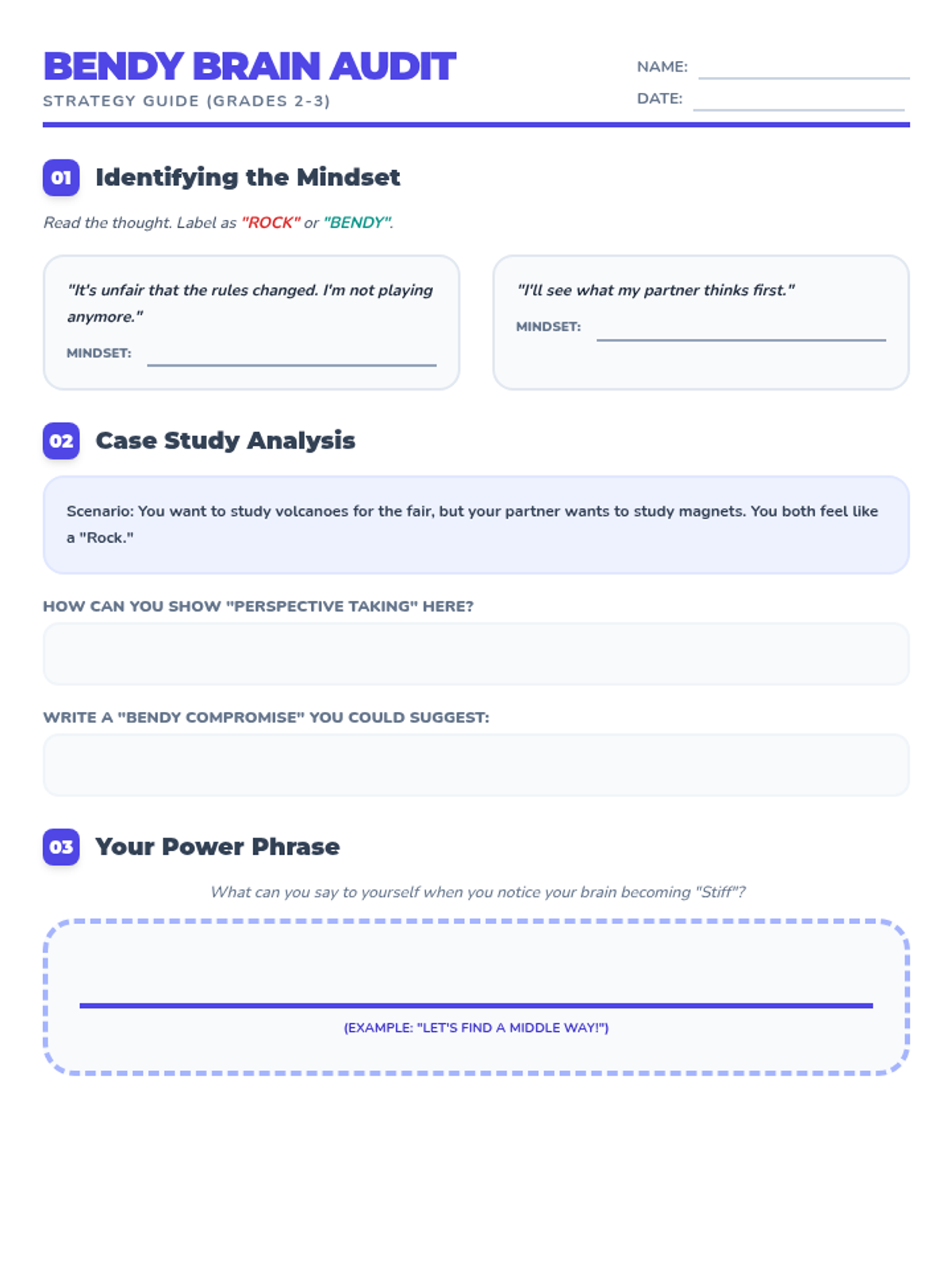
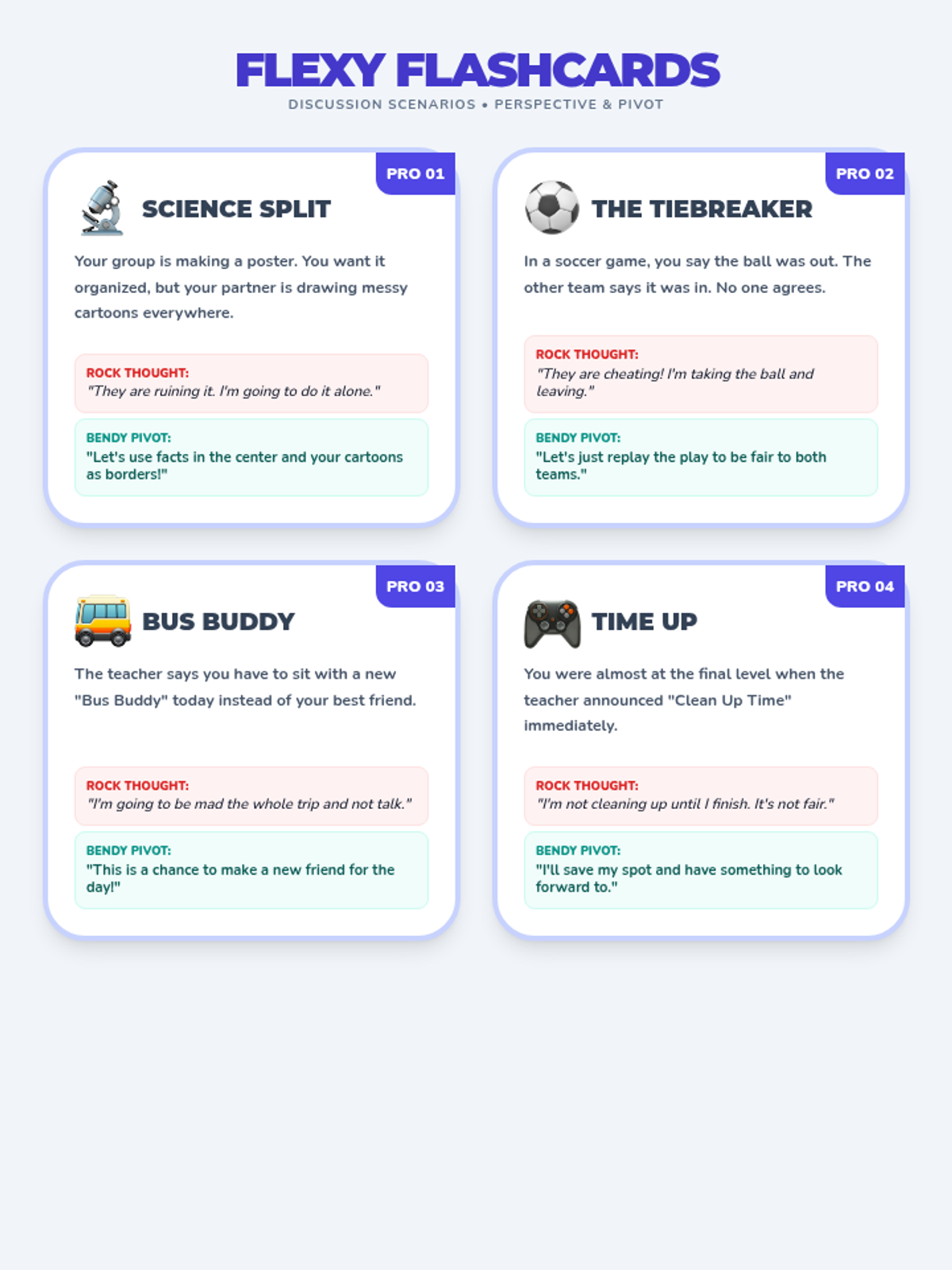
A foundational social-emotional learning lesson for K-1 students that introduces the concept of cognitive flexibility using the 'Rock Brain' vs. 'Bendy Brain' metaphor. Students learn to identify when they are stuck and practice 'stretching' their thinking in response to changes and challenges.
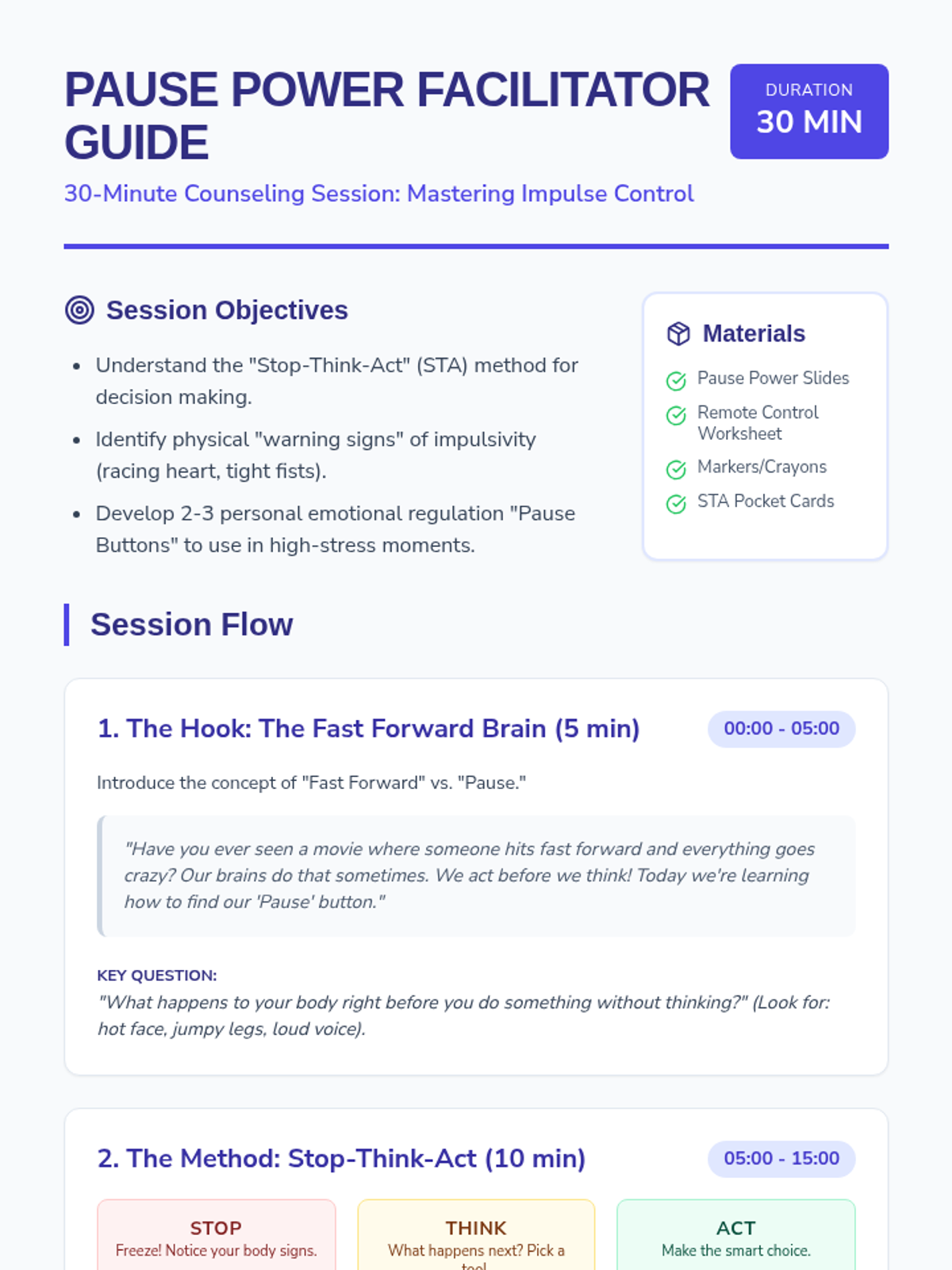
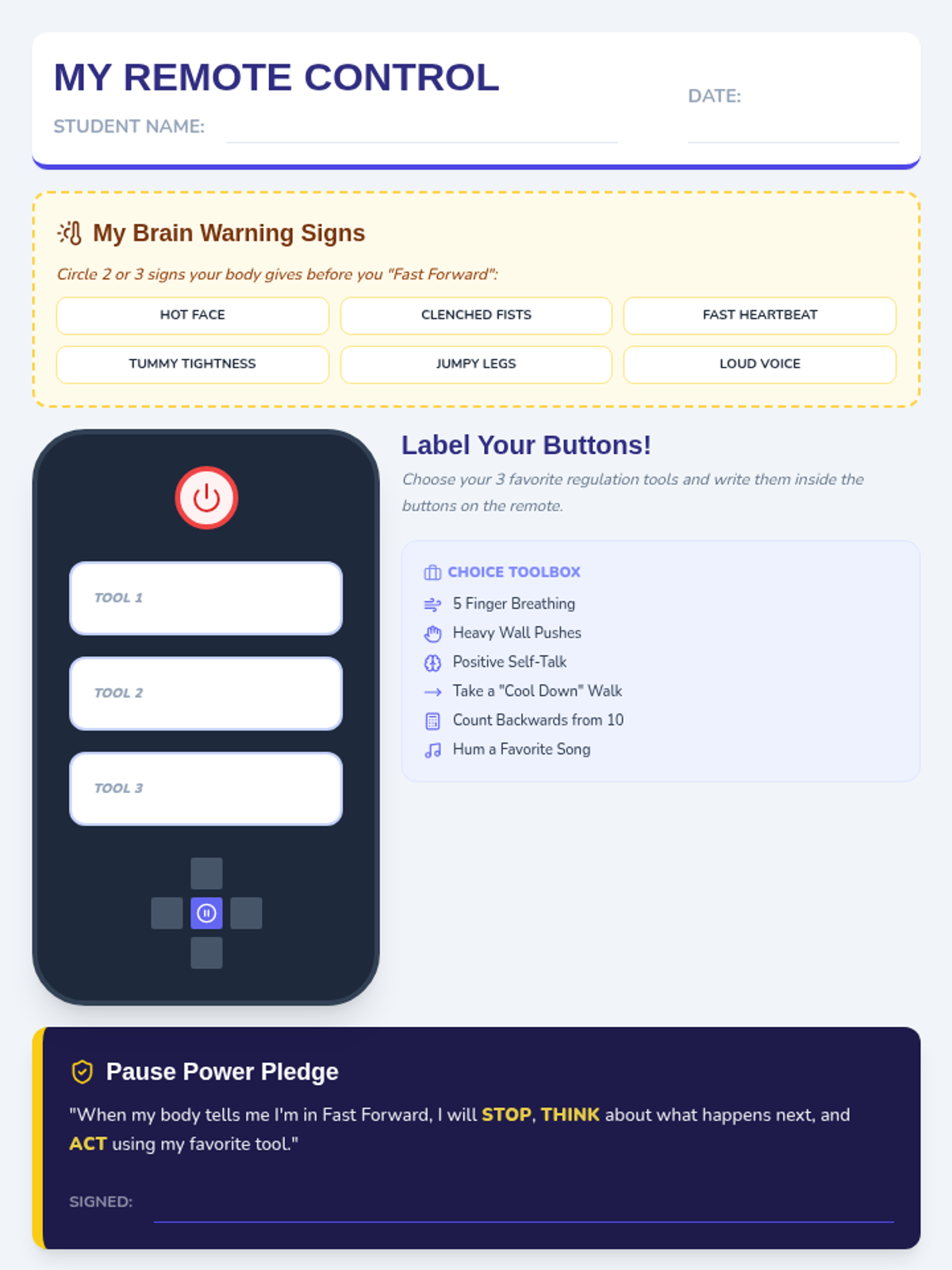
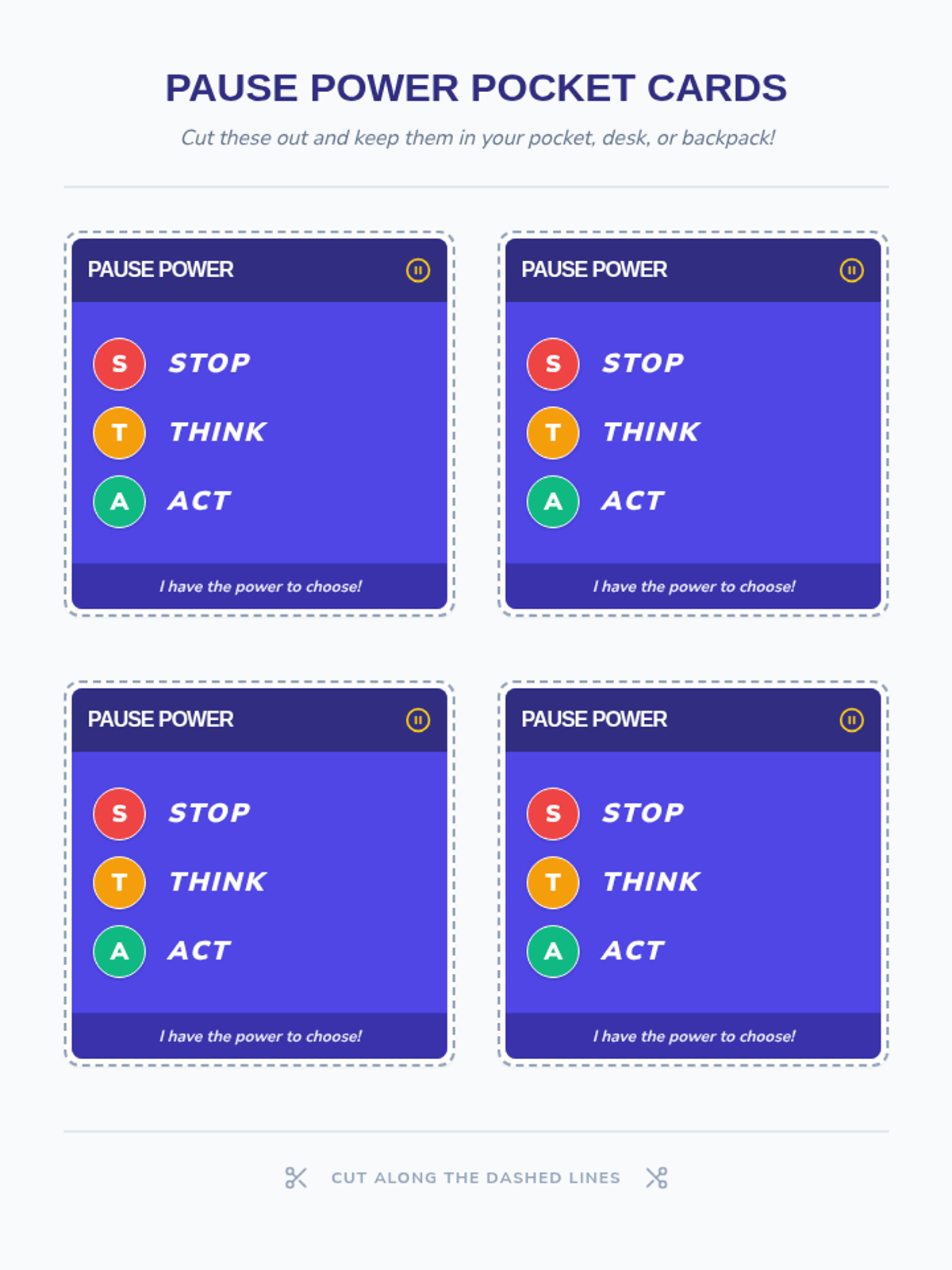
A 30-minute counseling session focused on the Stop-Think-Act method and emotional regulation tools to help students master impulse control.
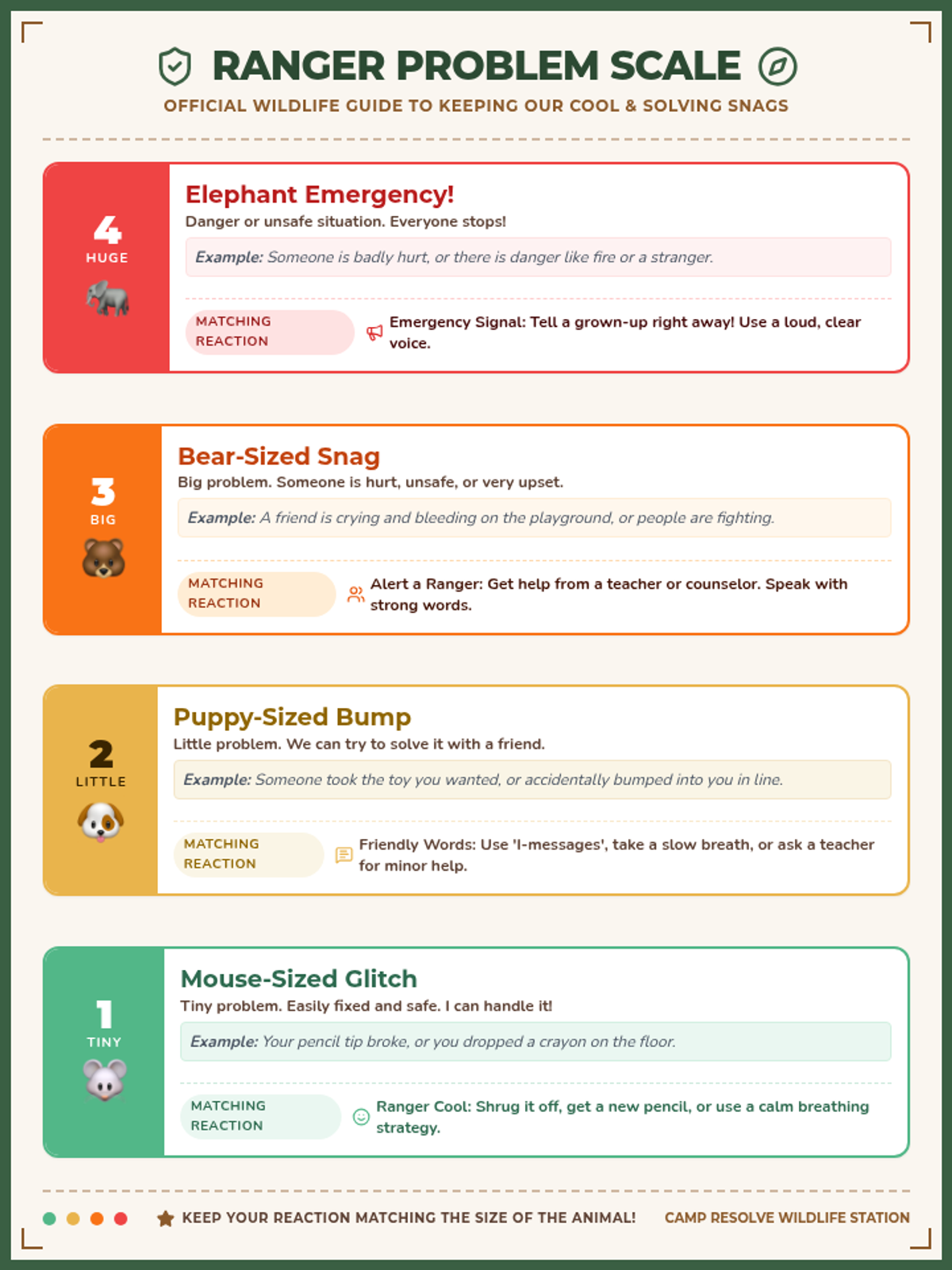
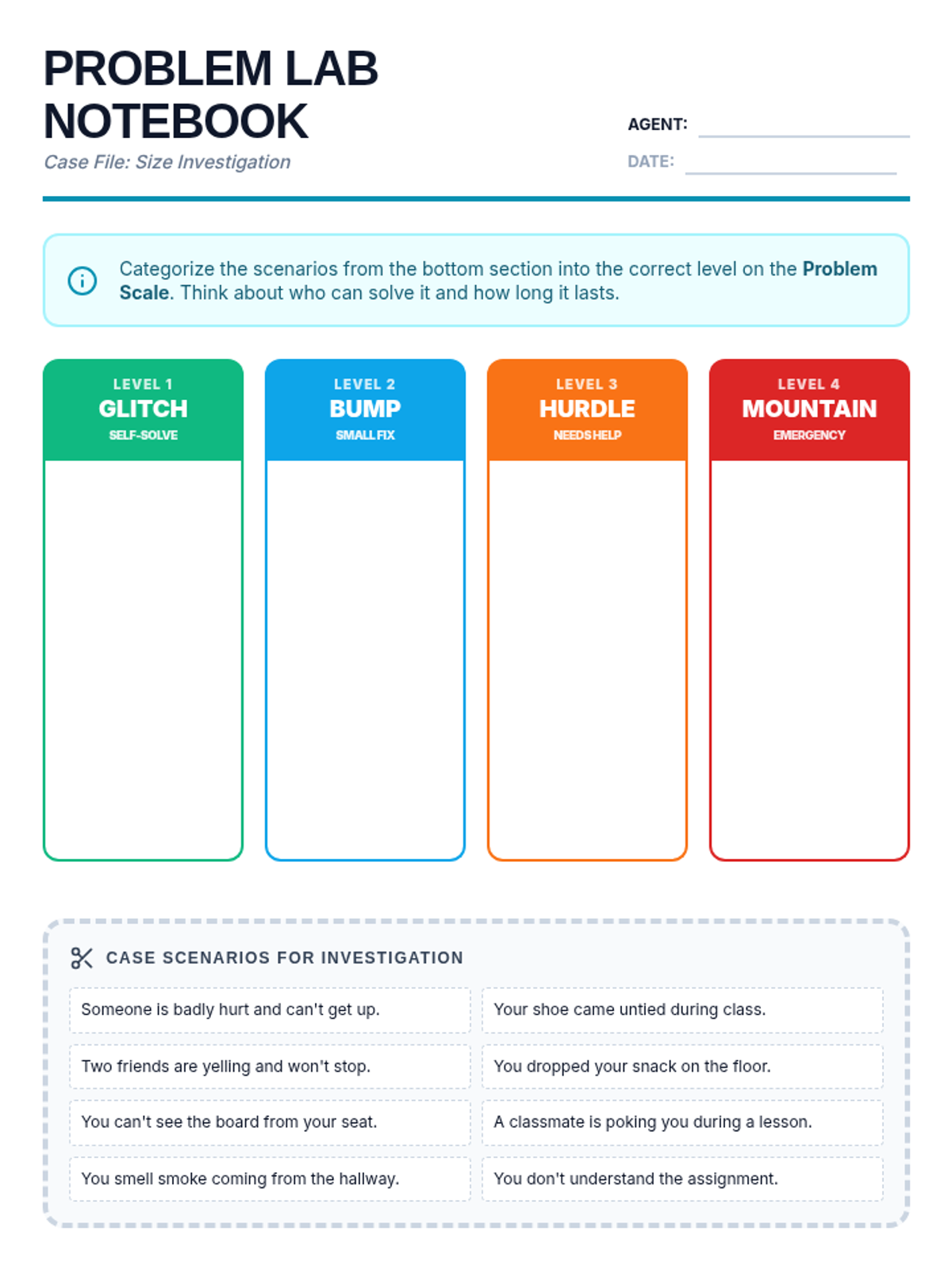
A lesson designed to help students categorize the magnitude of various problems and determine appropriate emotional and behavioral responses. Students will explore a four-level scale ranging from tiny 'glitches' to emergency 'mountains'.
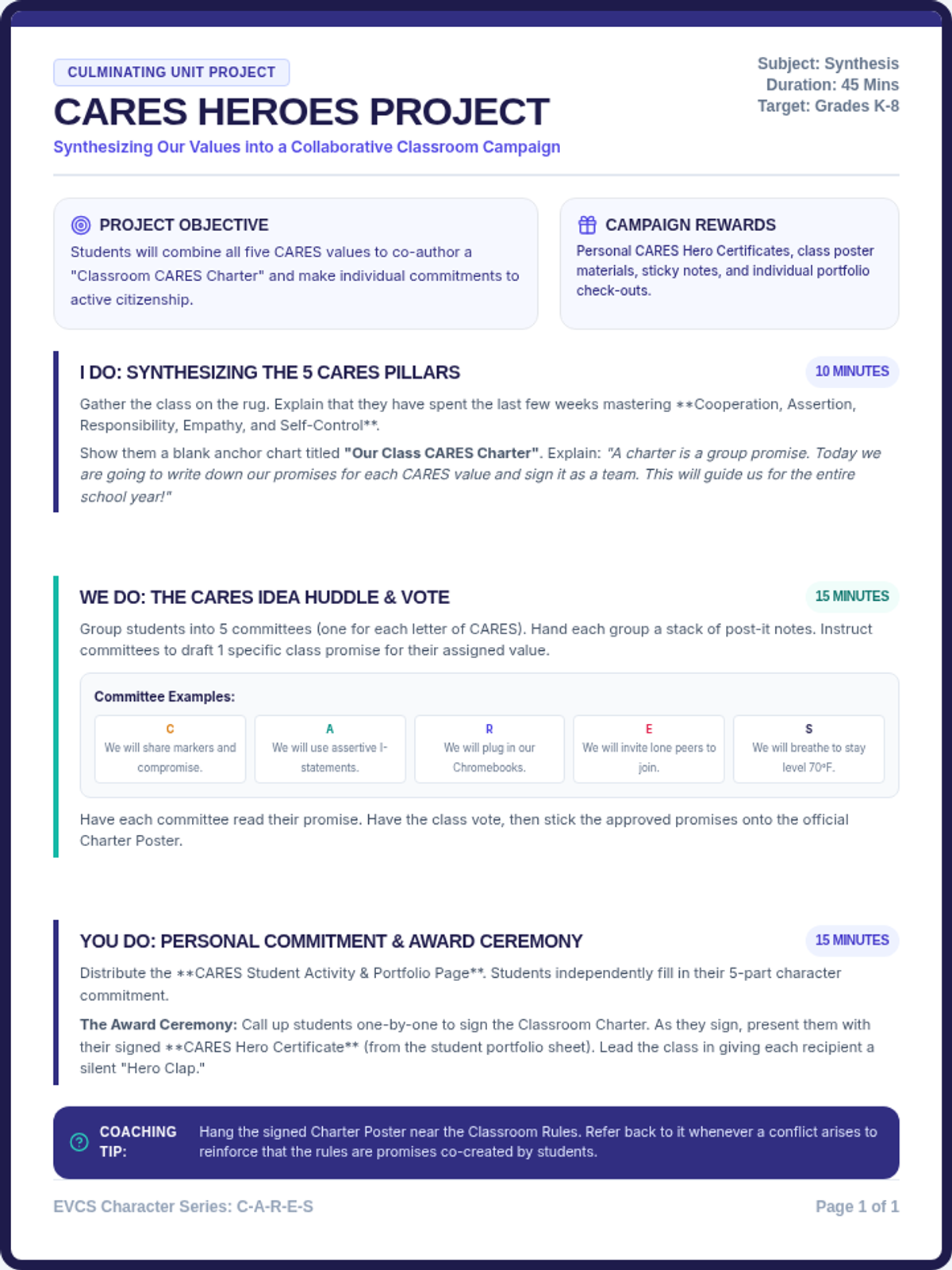
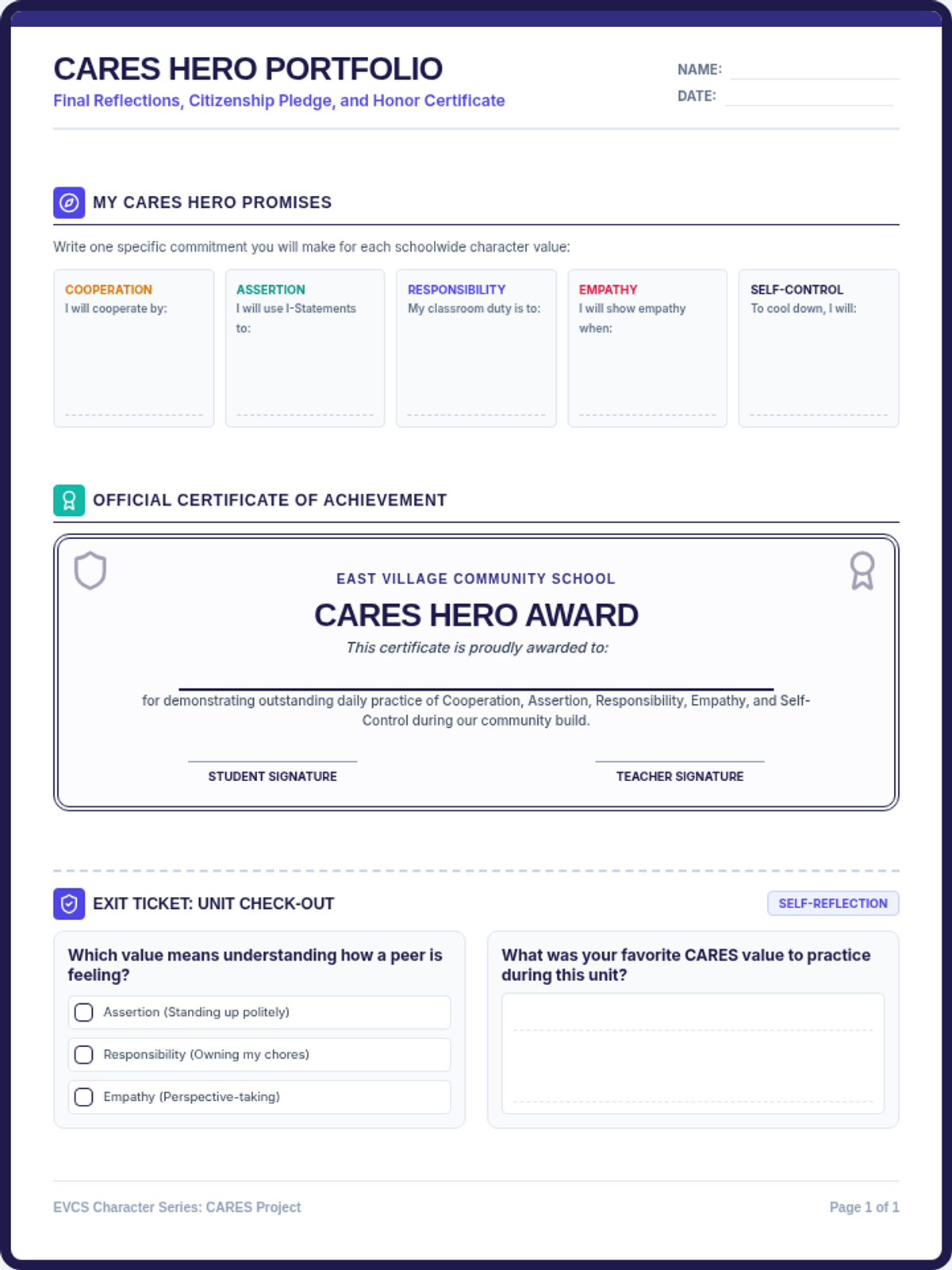
A culminating reflection and community project lesson where students synthesize all five CARES values. Students create a class pledge, award certificates, and design a community action project to show their learning.
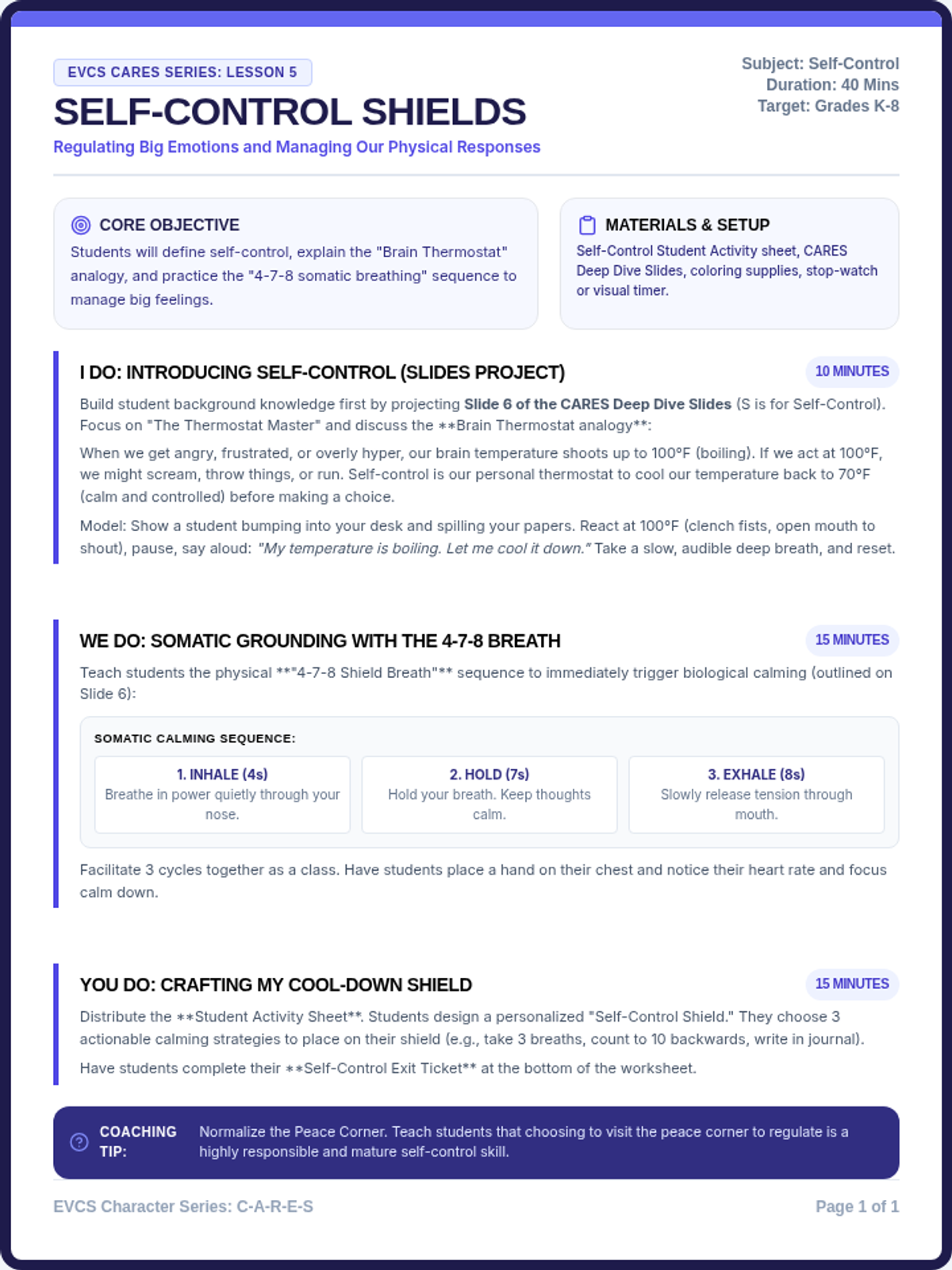
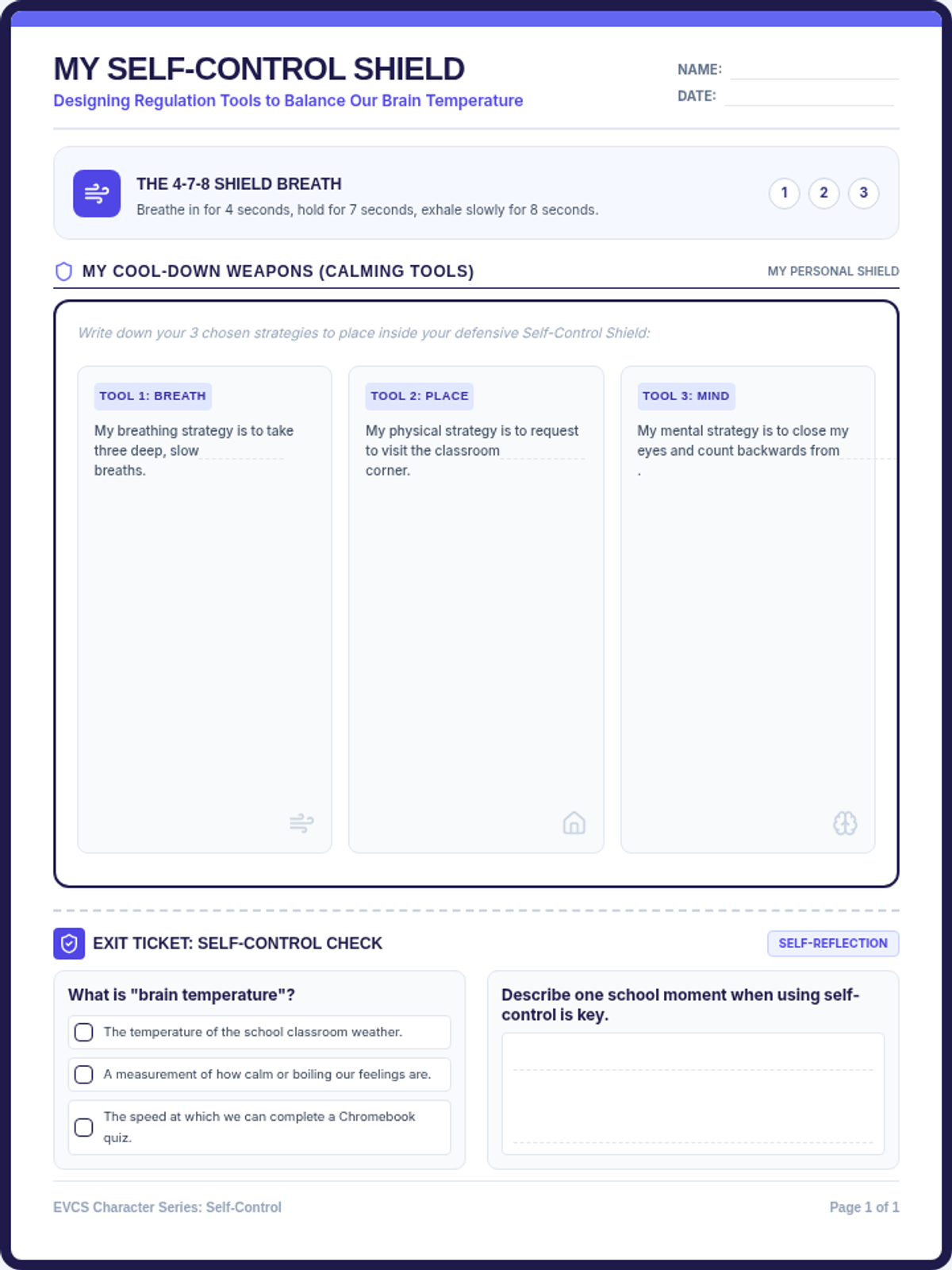
A social-emotional learning lesson centered on self-control, emotional regulation, and mindfulness. Students practice somatic grounding and cool-down techniques to manage big emotions in real-time.
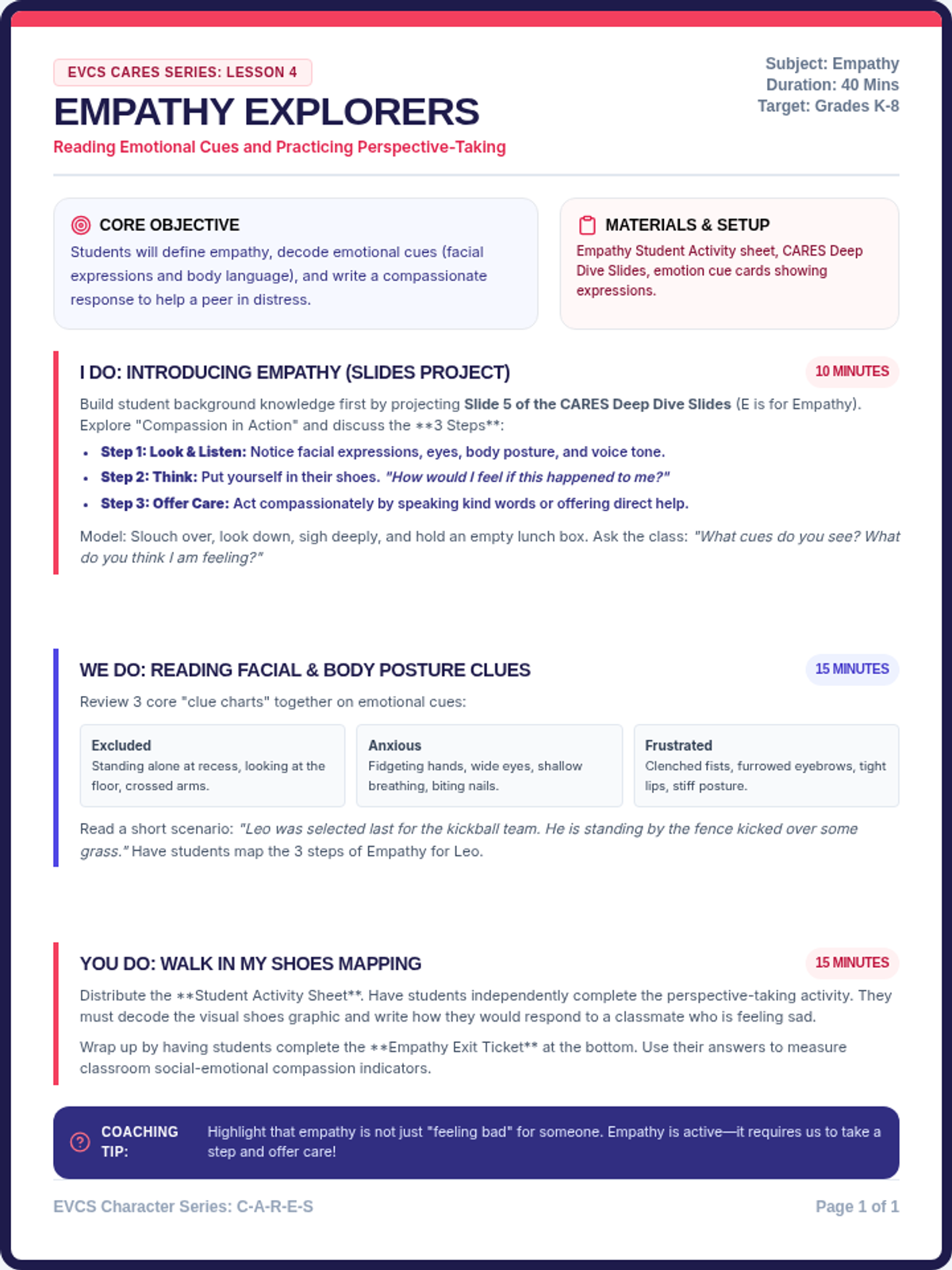
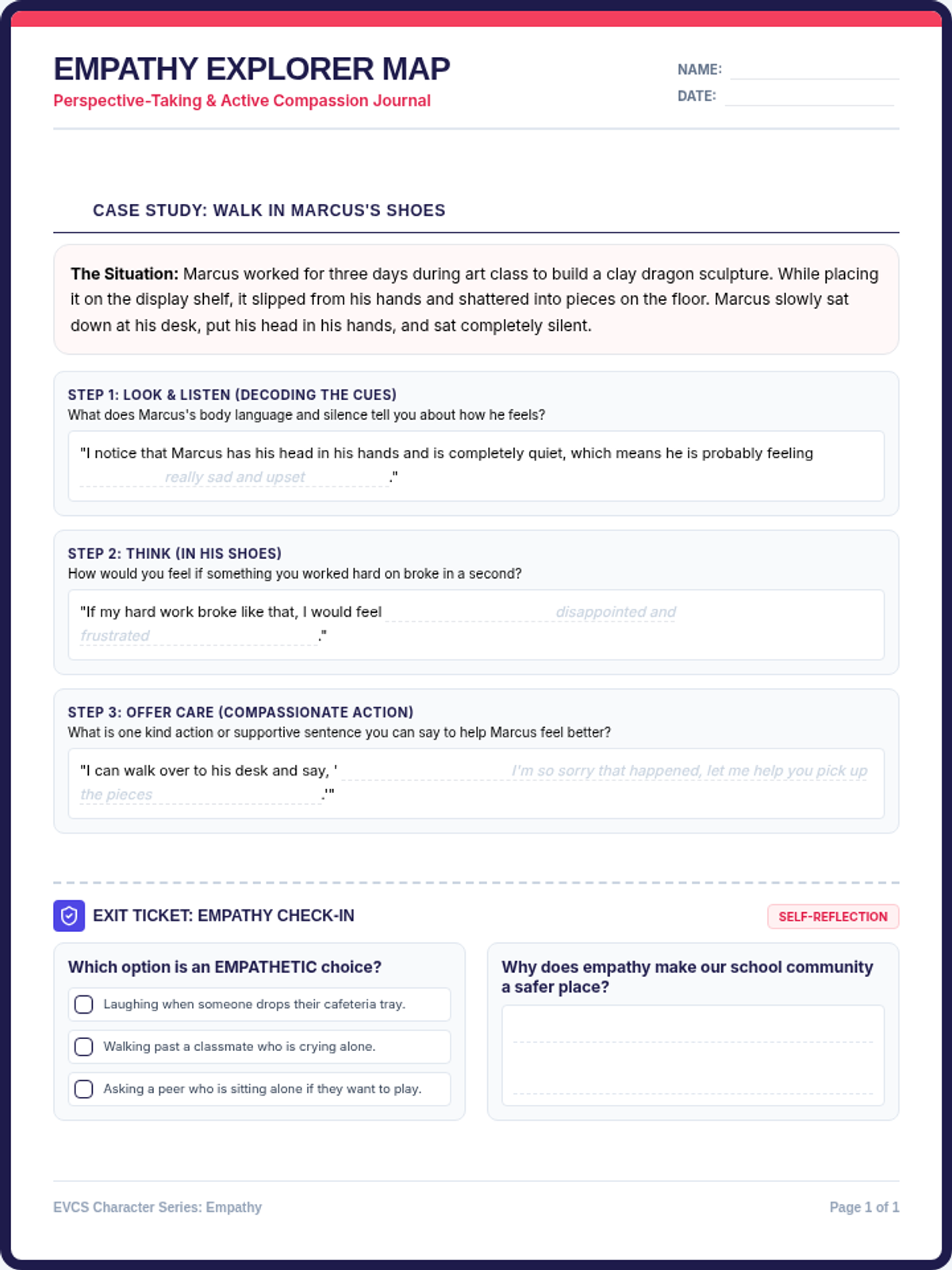
A social-emotional learning lesson on empathy, active compassion, and perspective-taking. Students learn to recognize emotional cues in others and practice walking in someone else's shoes to solve social dilemmas.
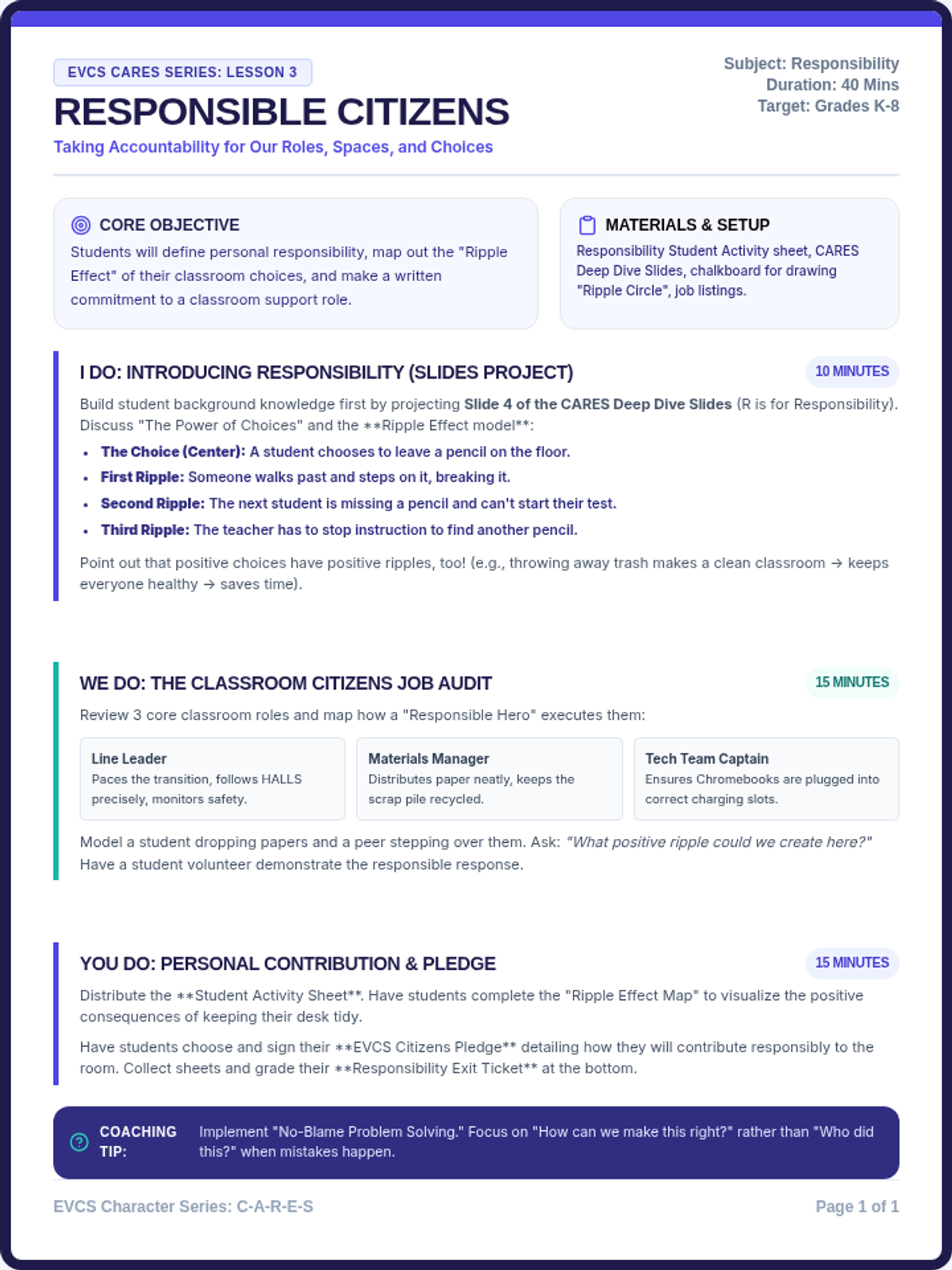
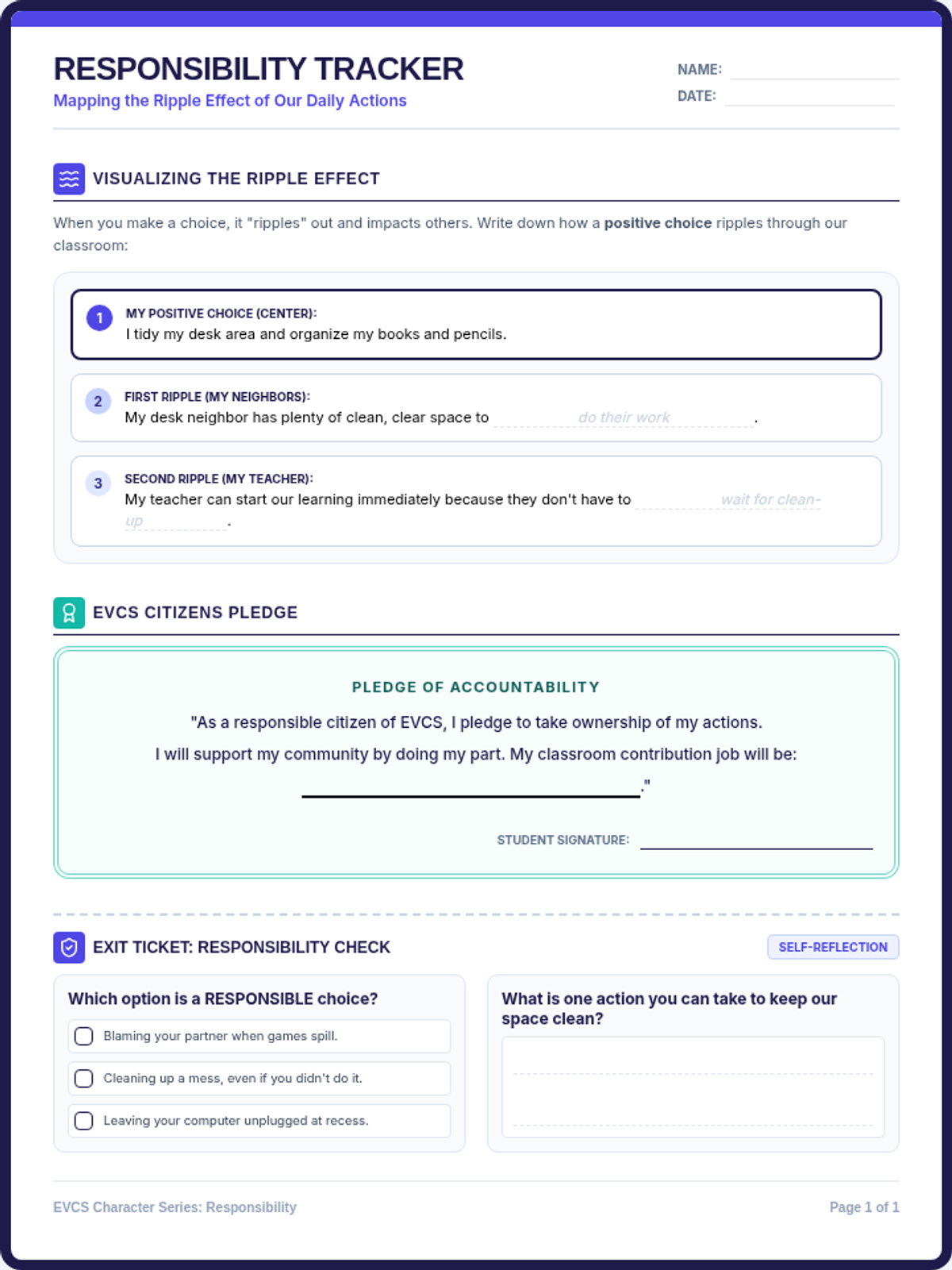
A social-emotional learning lesson teaching personal accountability, civic responsibility, and classroom roles. Students identify how their individual choices affect the safety and success of the whole community.
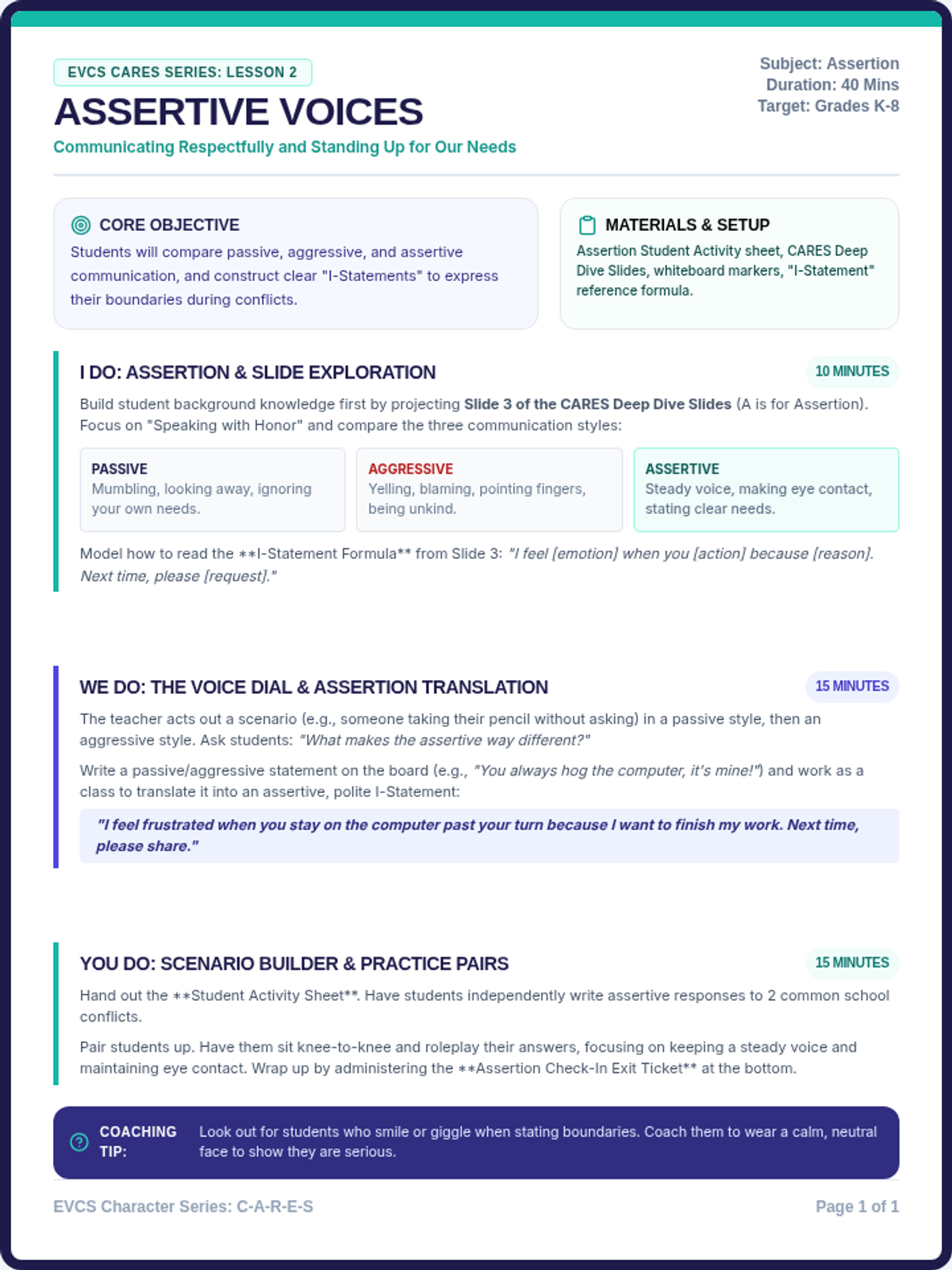
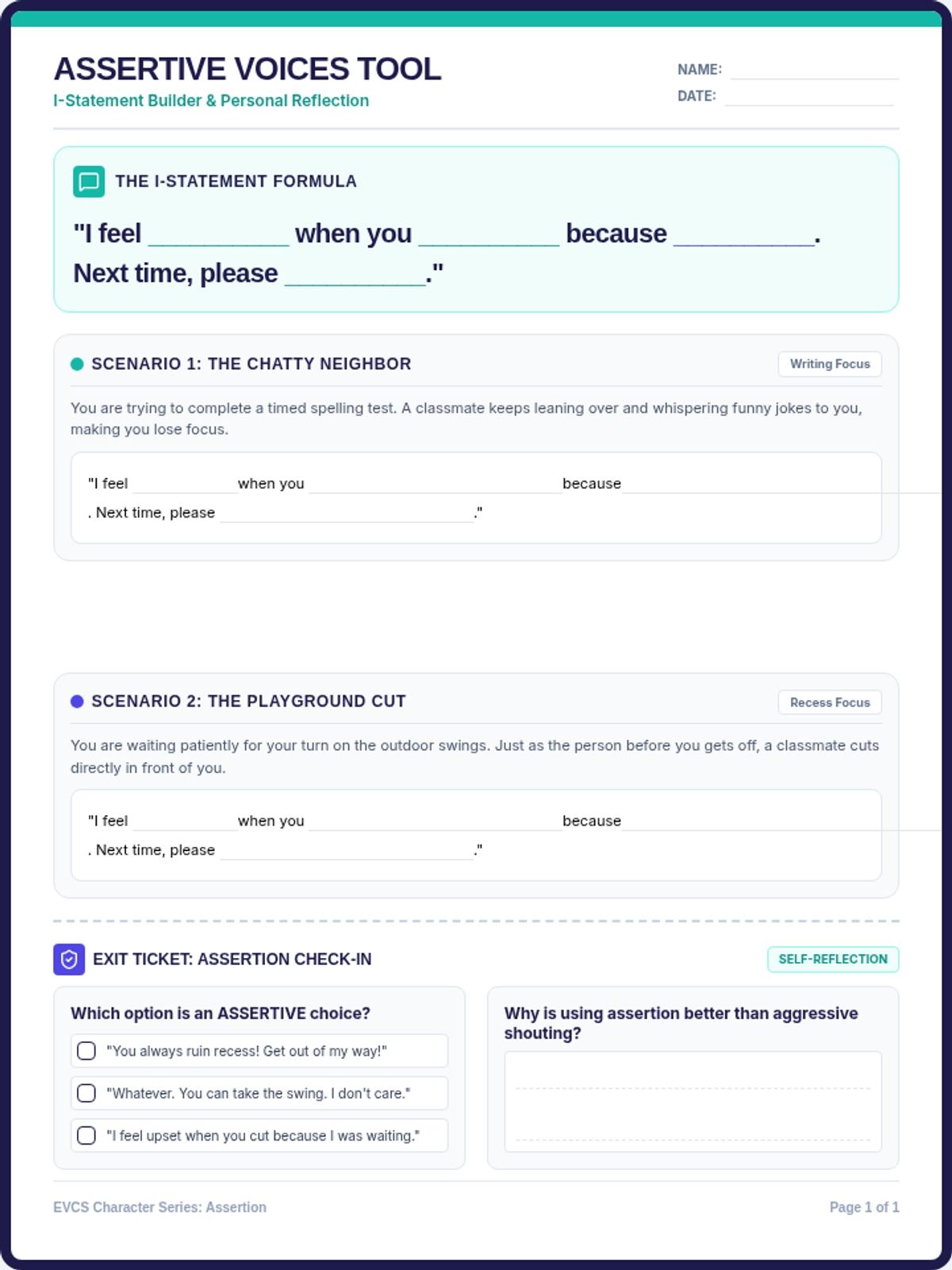
A social-emotional learning lesson focused on assertive communication, active listening, and setting respectful boundaries. Students practice using "I-Statements" to express their needs and opinions respectfully.
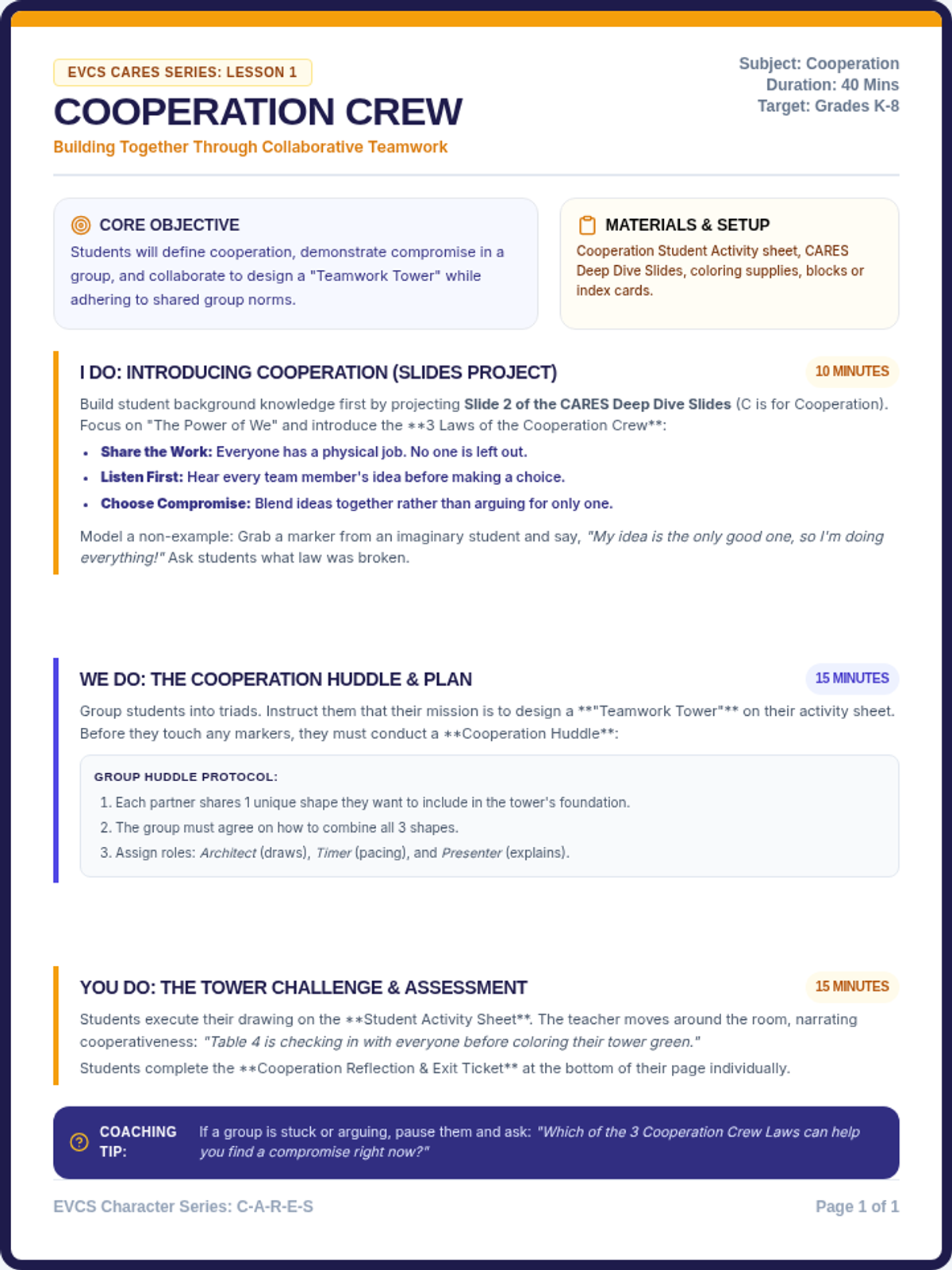
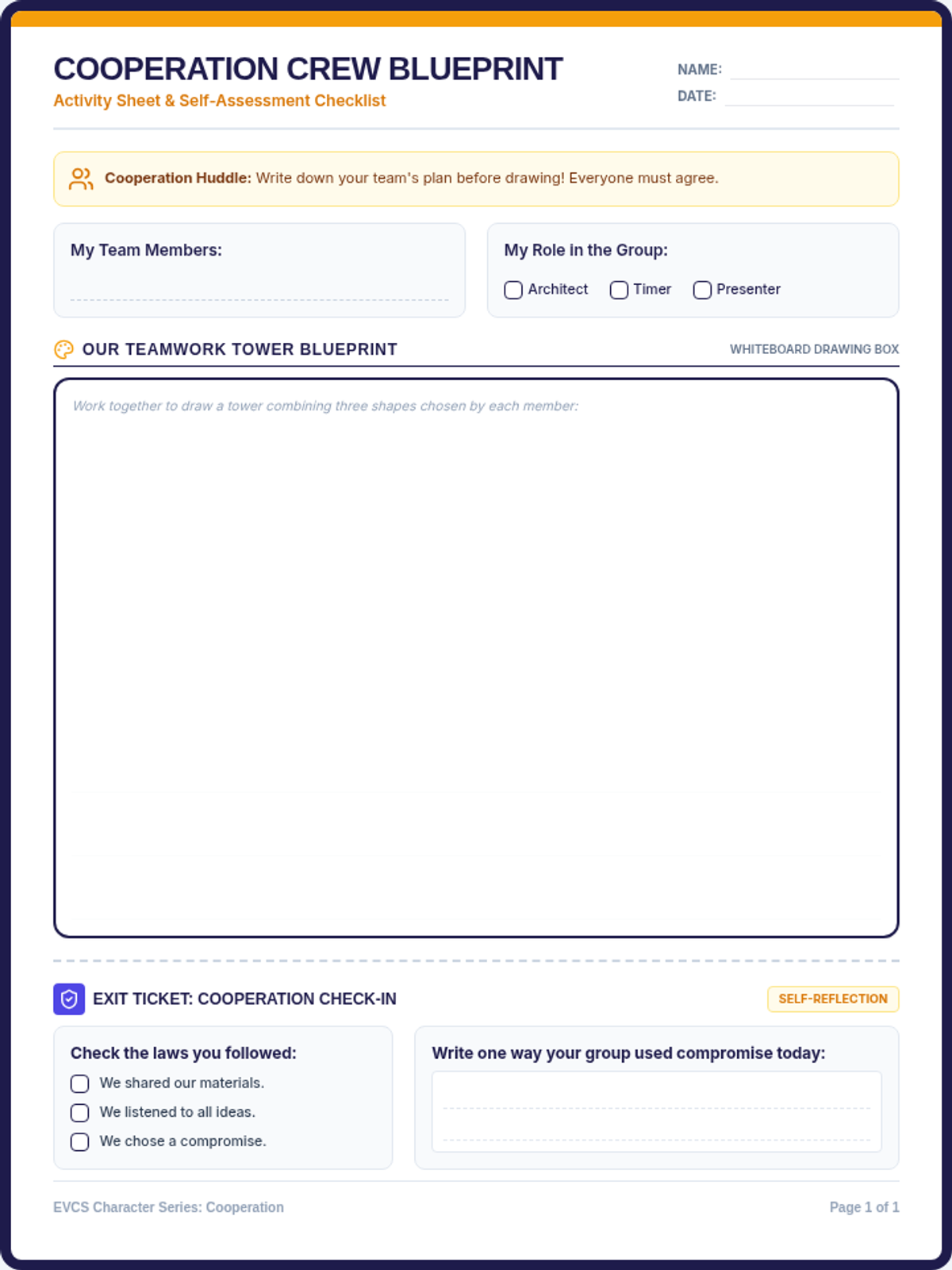
A social-emotional learning lesson focusing on cooperation, collaborative problem solving, and group agreement. Students explore how to share ideas, compromise, and build together as a team.
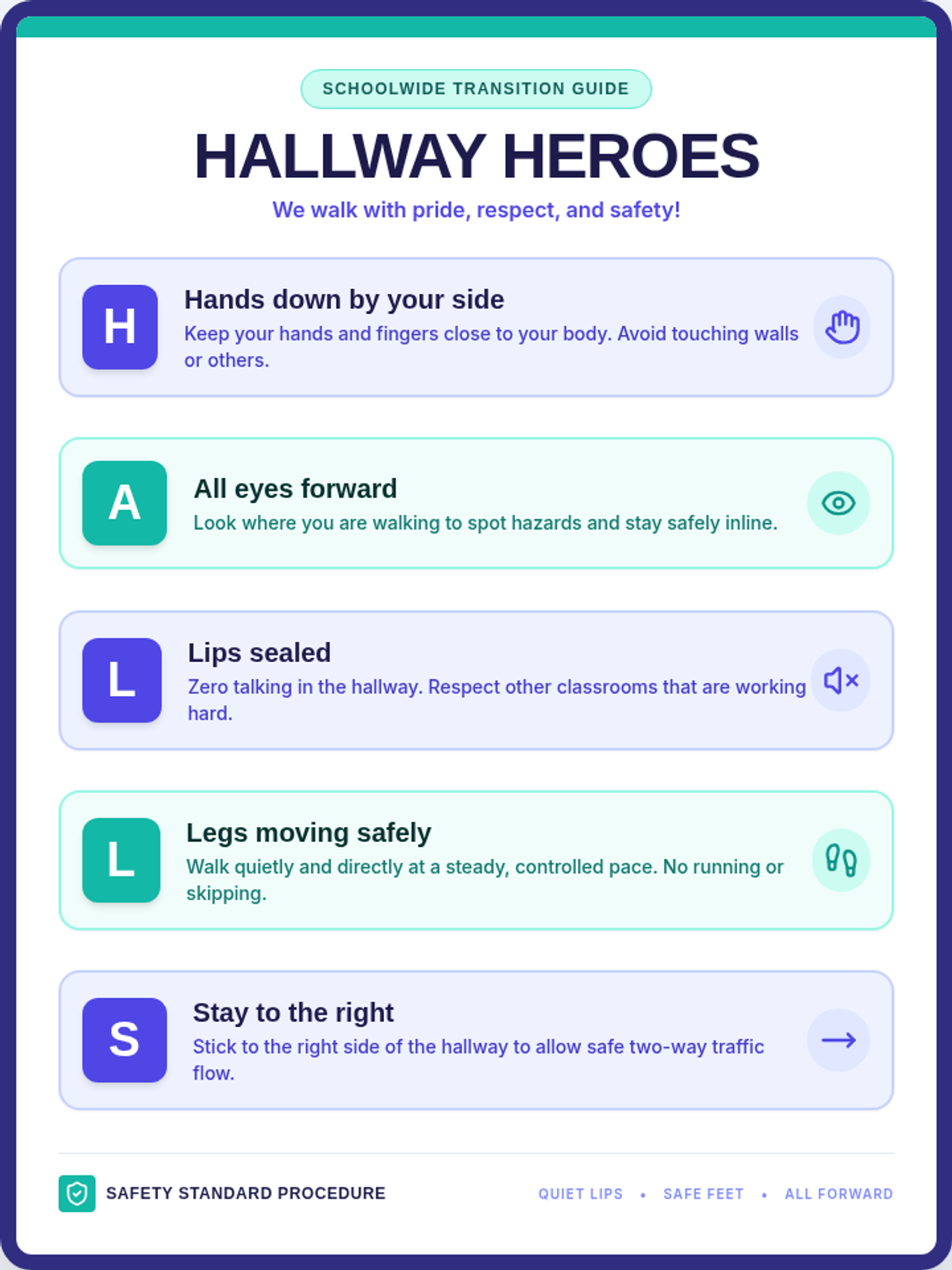
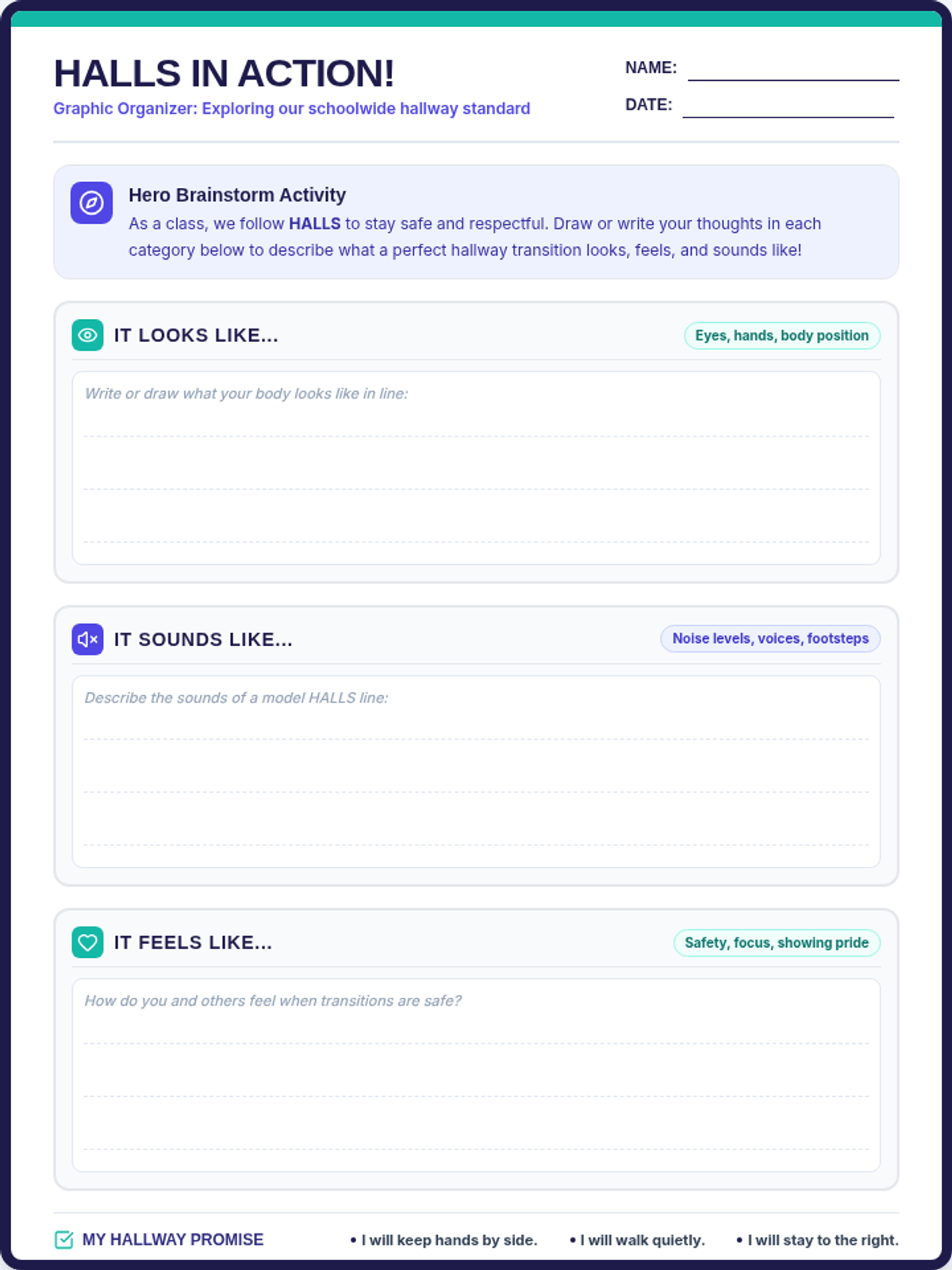
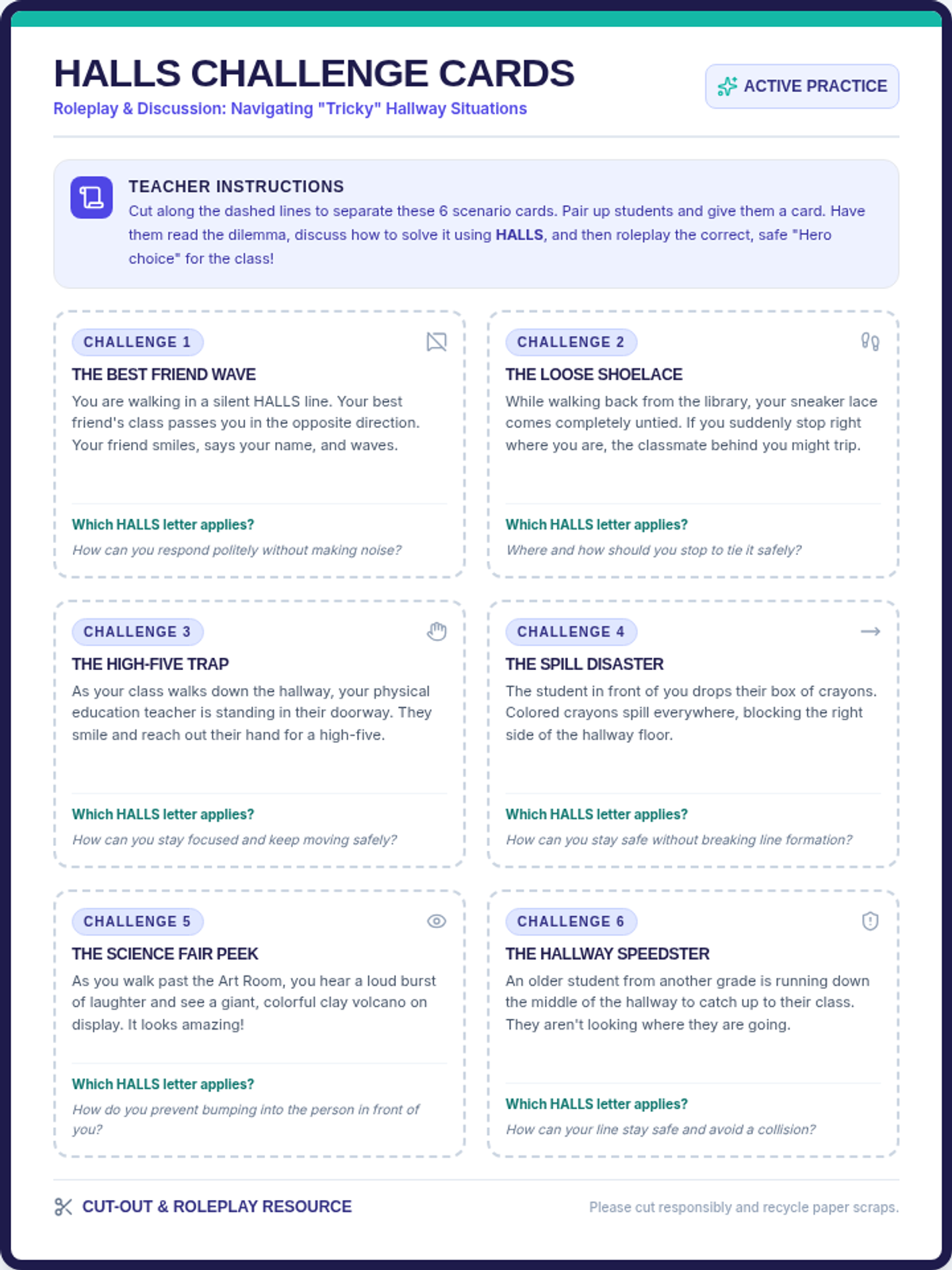
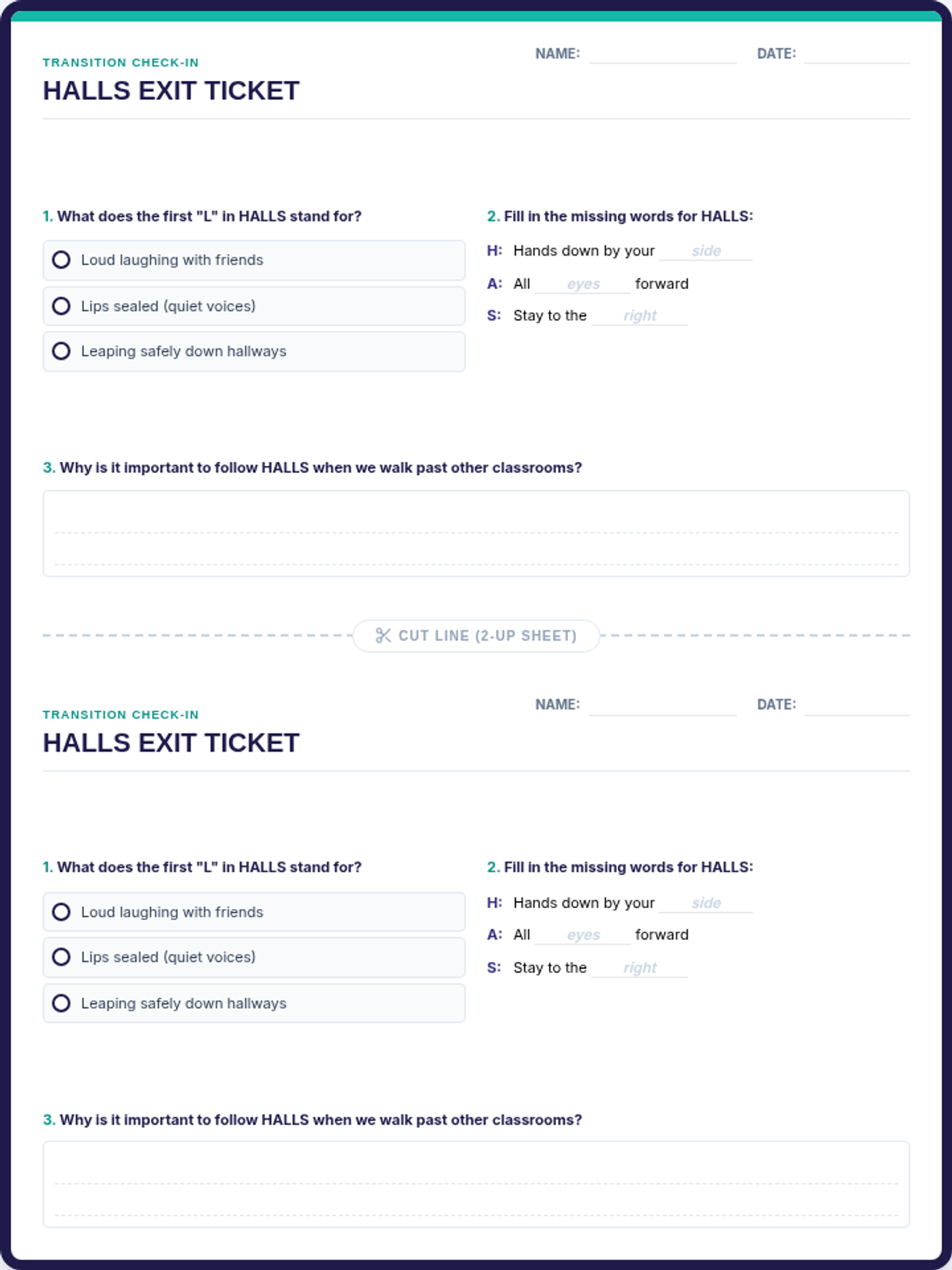
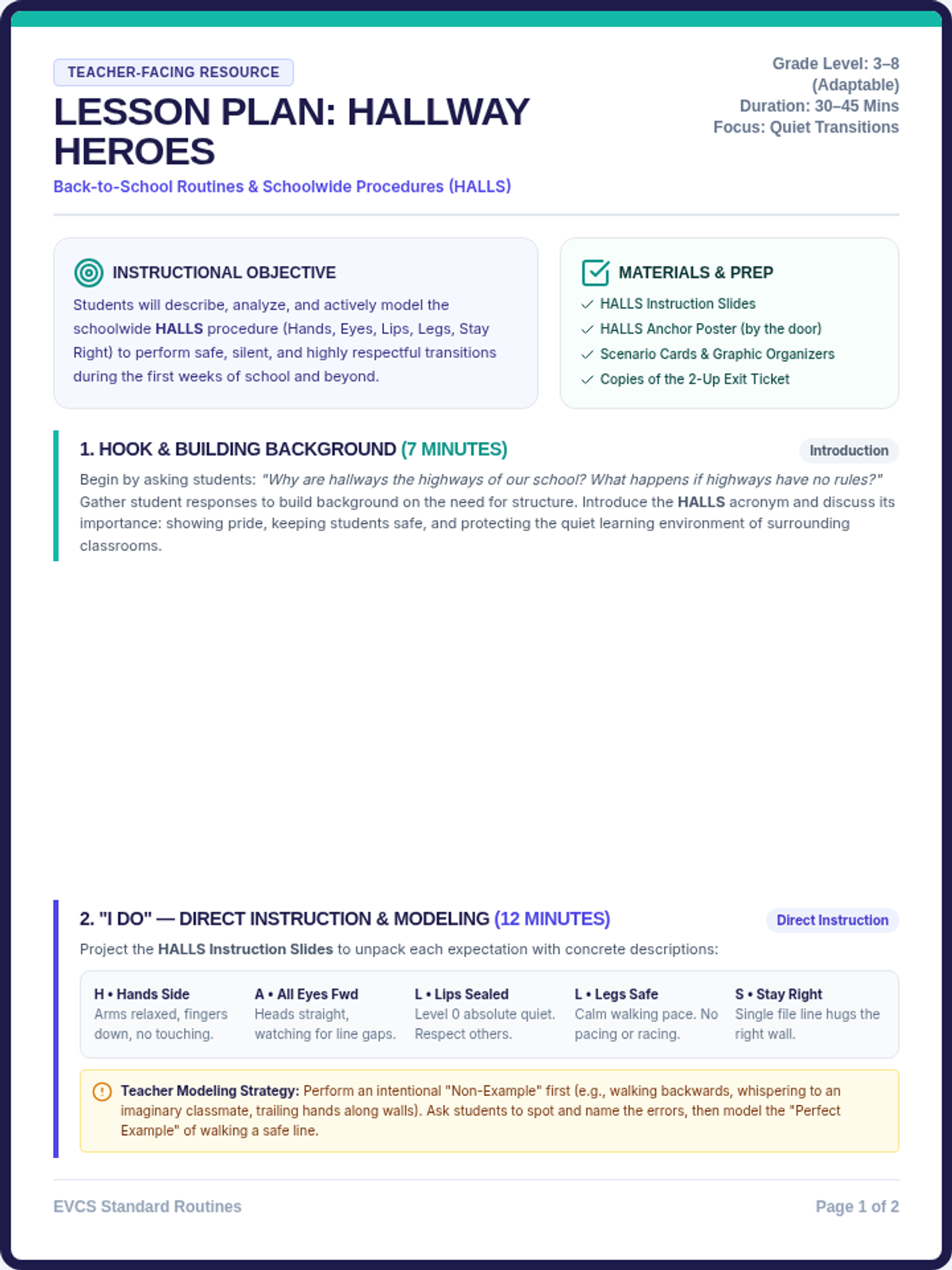
A beginning-of-the-year lesson teaching students the schoolwide HALLS procedure for safe and respectful hallway transitions. This lesson covers explicit teacher modeling, interactive student roleplay, and self-assessment of the HALLS expectations.
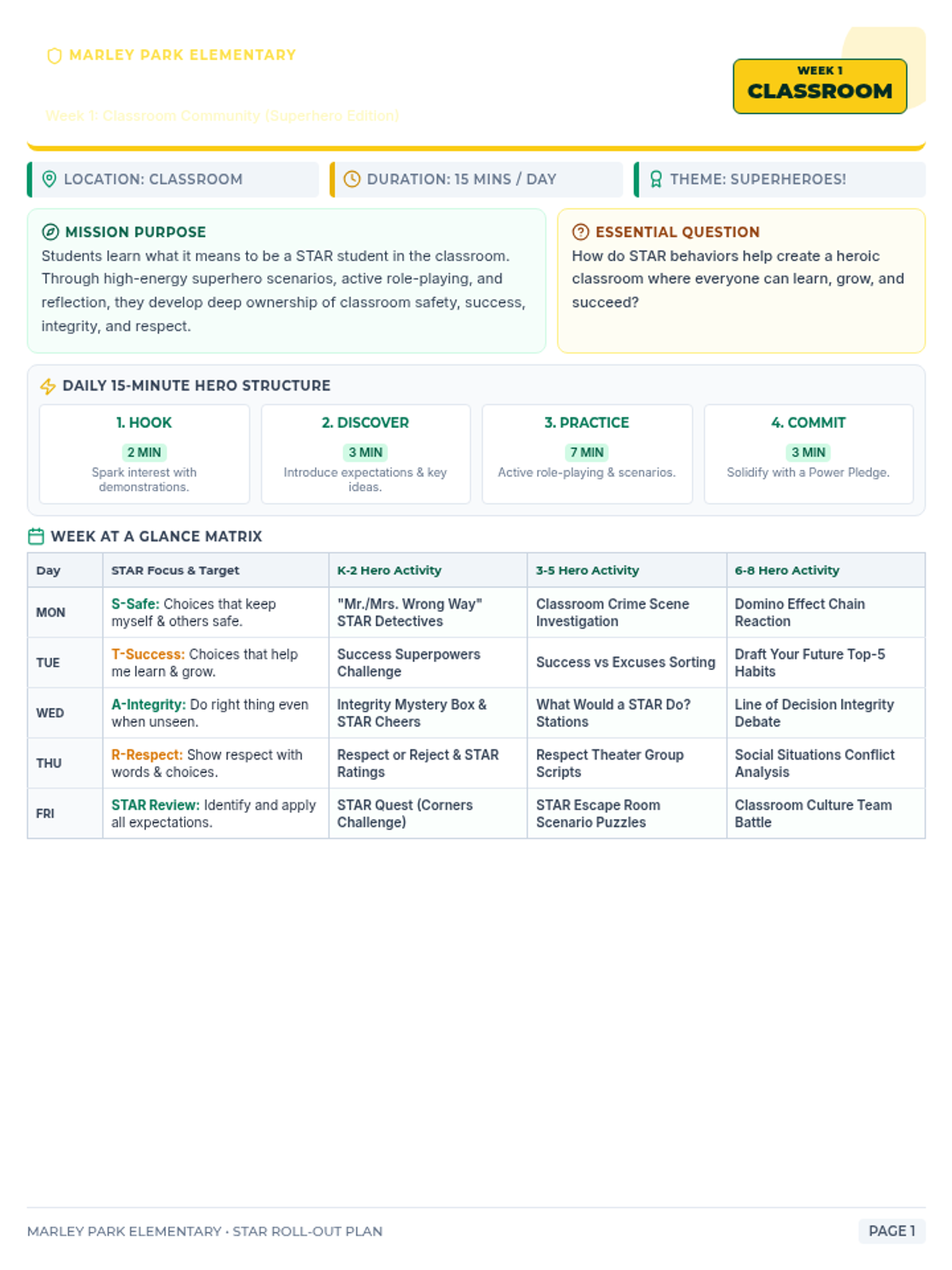
A comprehensive classroom expectations rollout for Week 1 of the school year. Includes a teacher guide and three separate grade-band slide decks (K-2, 3-5, 6-8) designed with a Marley Park green and yellow superhero theme.
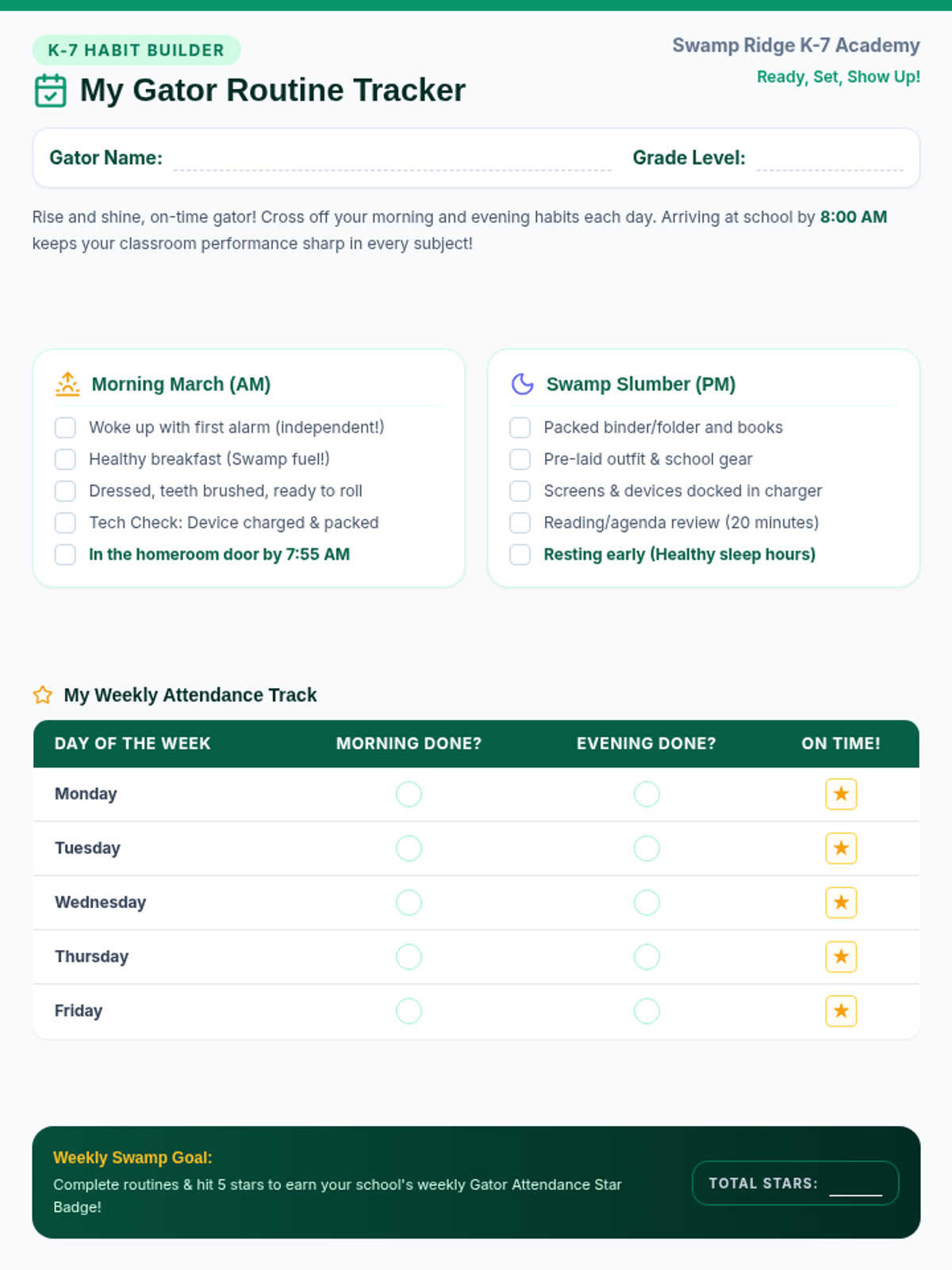
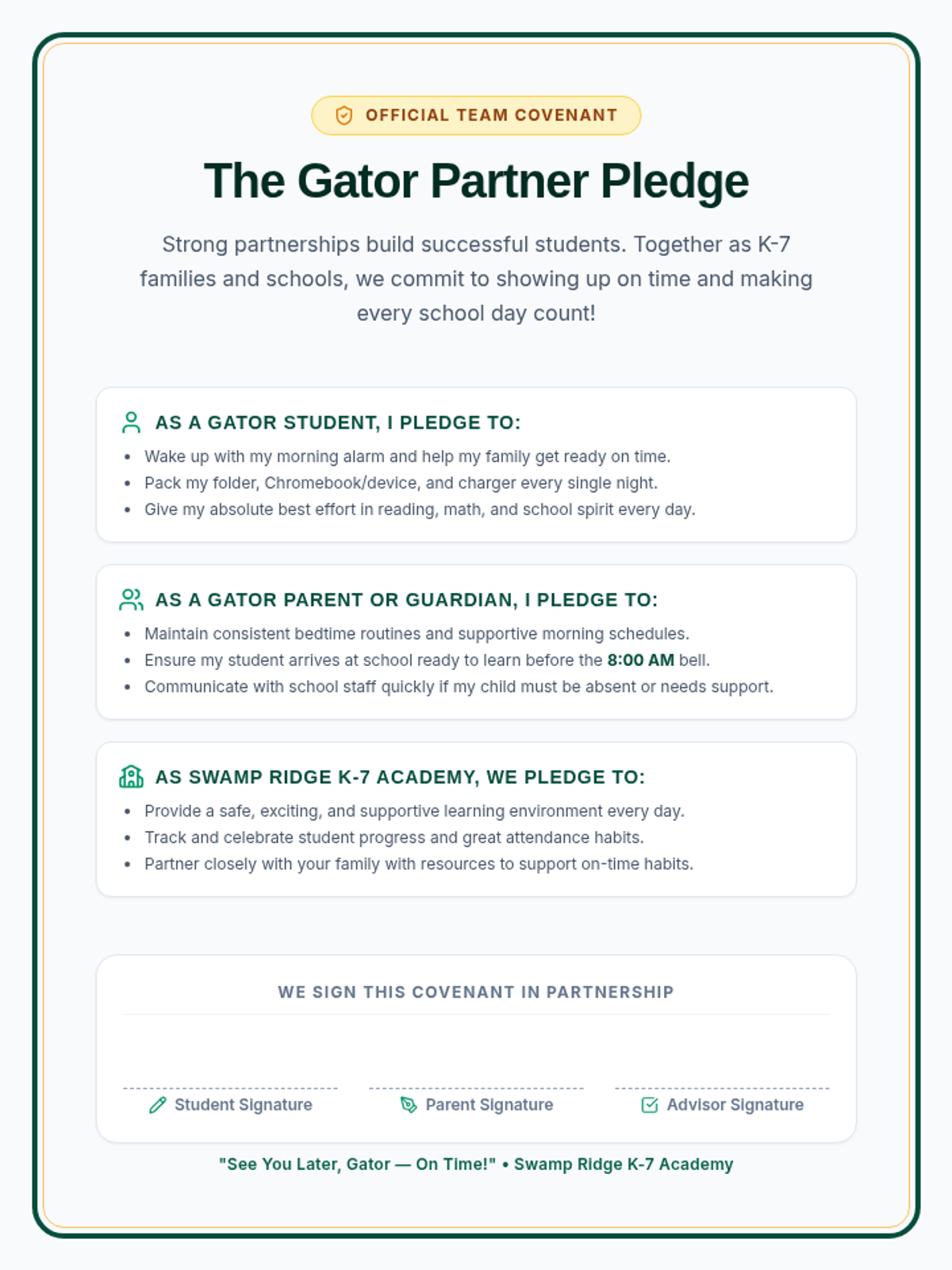
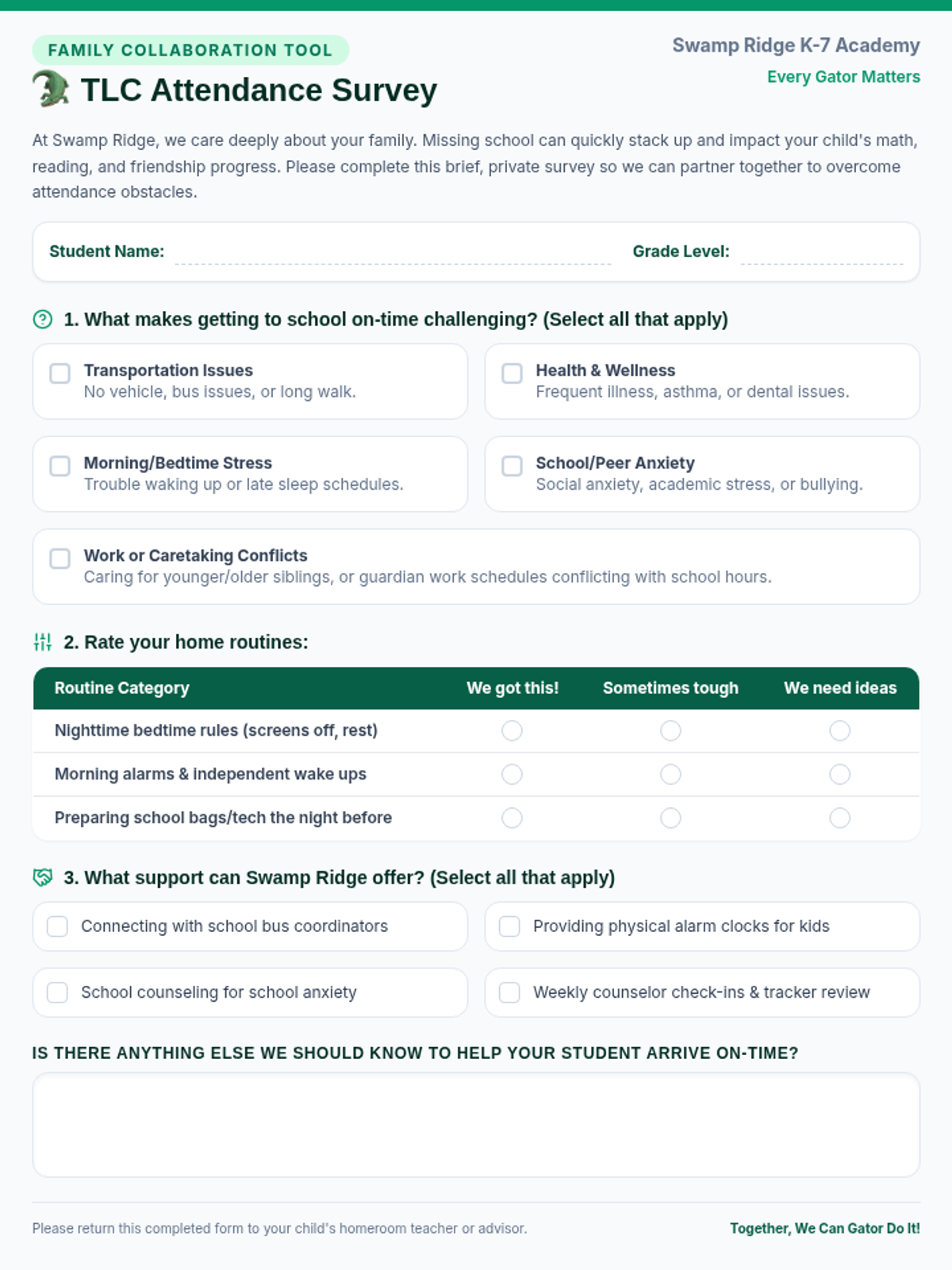
A family-focused guide to building daily routines and understanding the academic impact of school attendance. Includes a presentation for parent meetings, a student-friendly routine tracker, and a family partnership pledge.
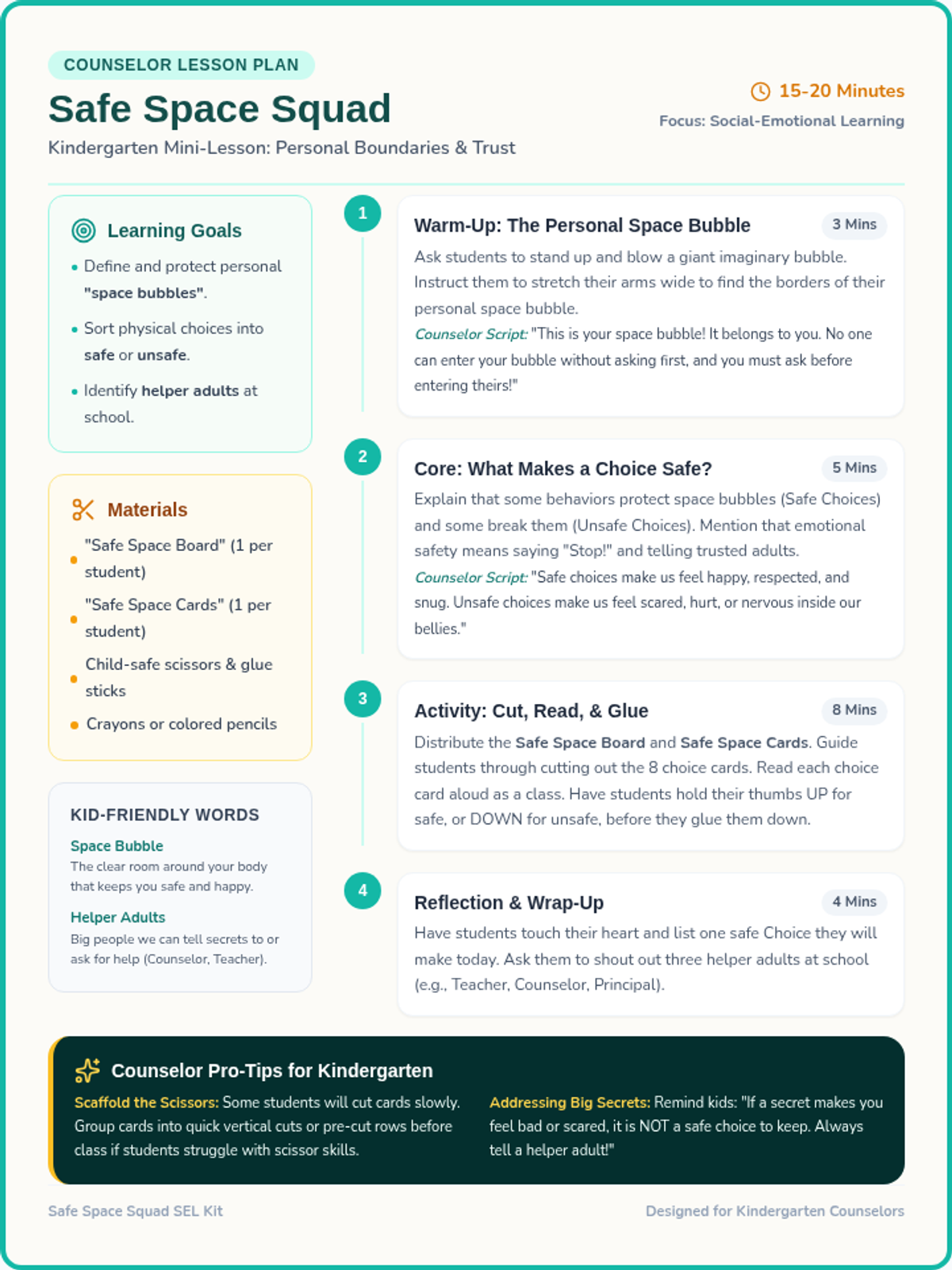
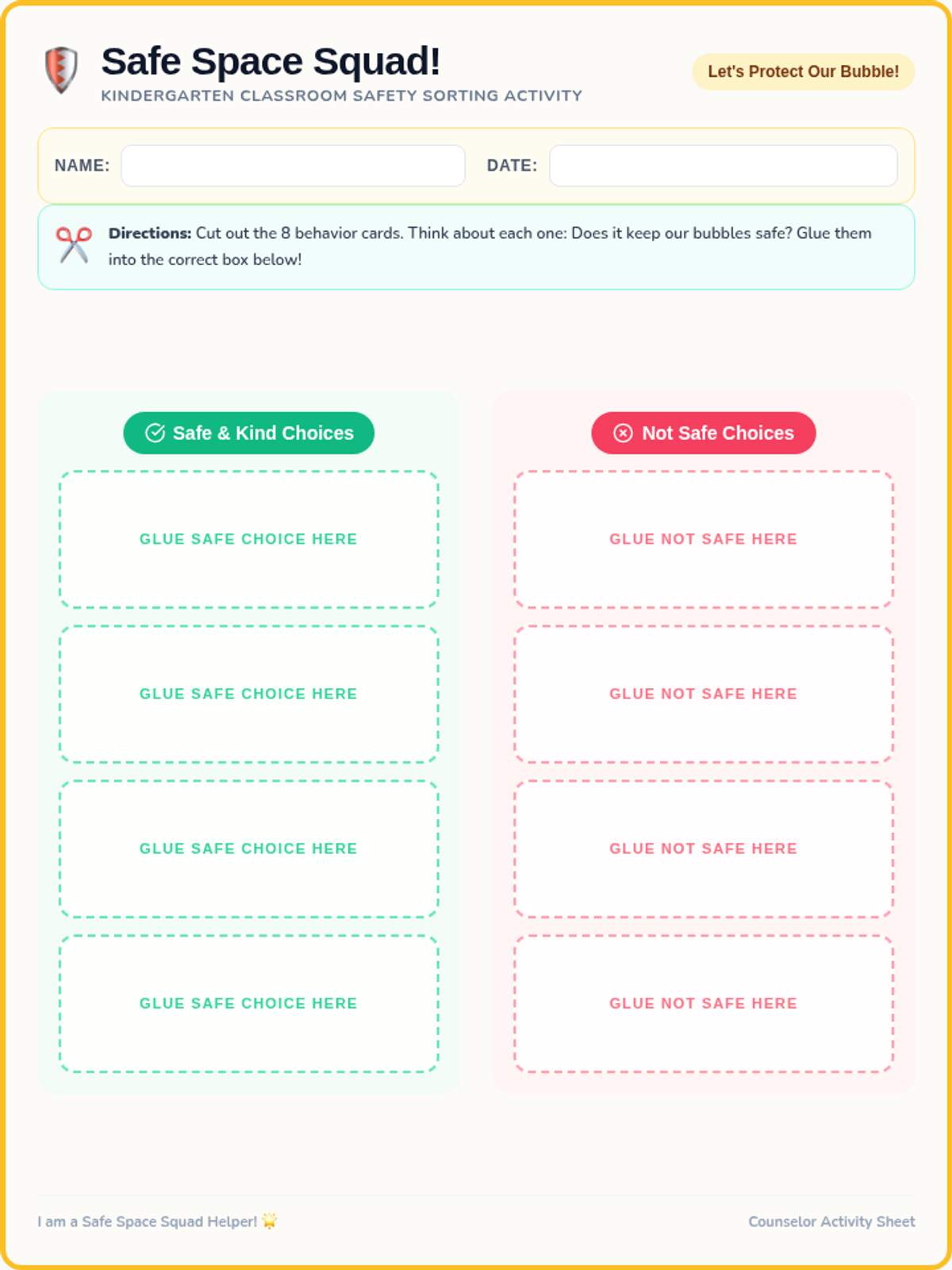
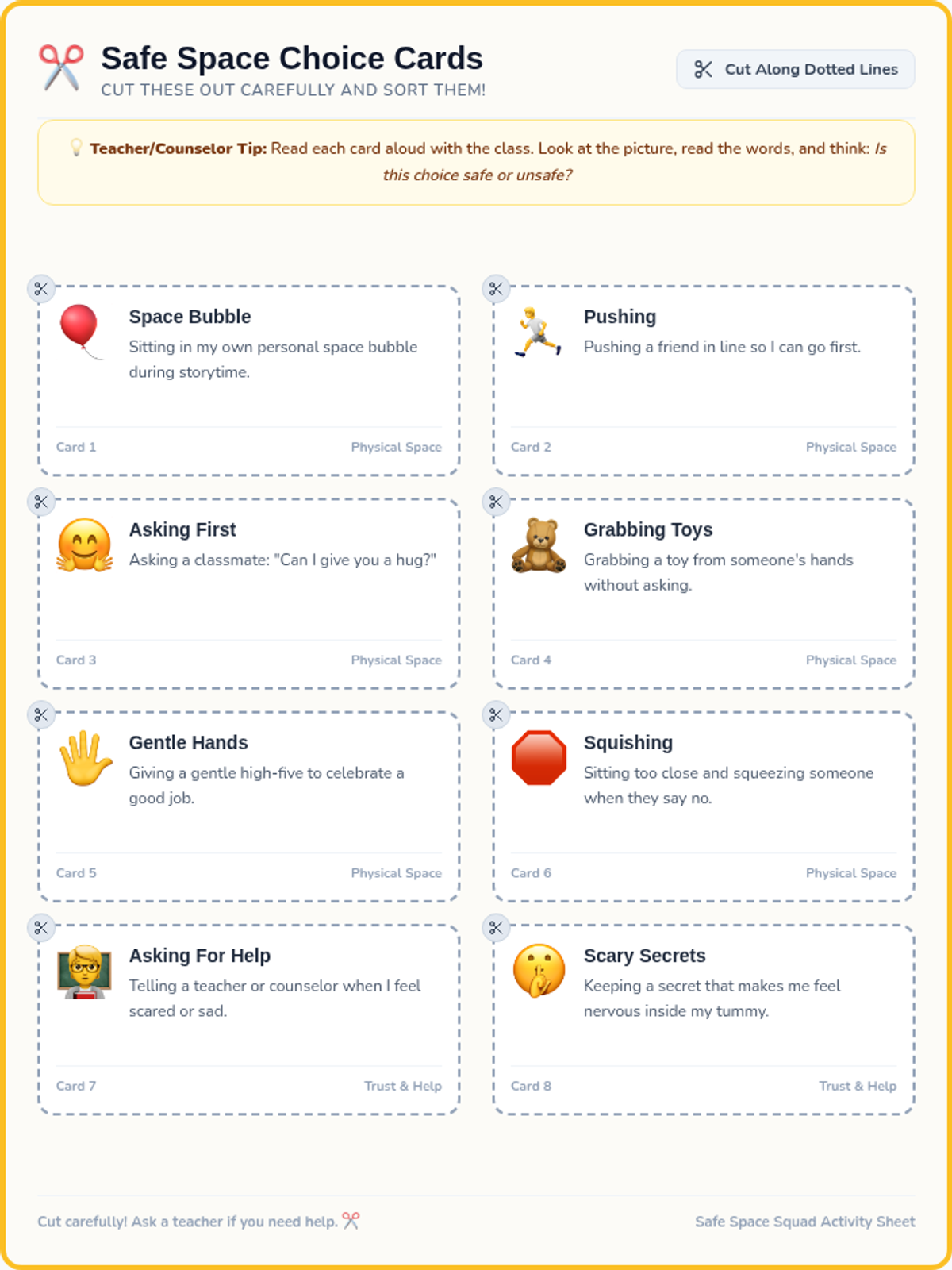
A counselor-led mini-lesson on classroom safety, physical boundaries, and emotional trust for kindergarten students, featuring a visual cut-and-paste sorting activity.
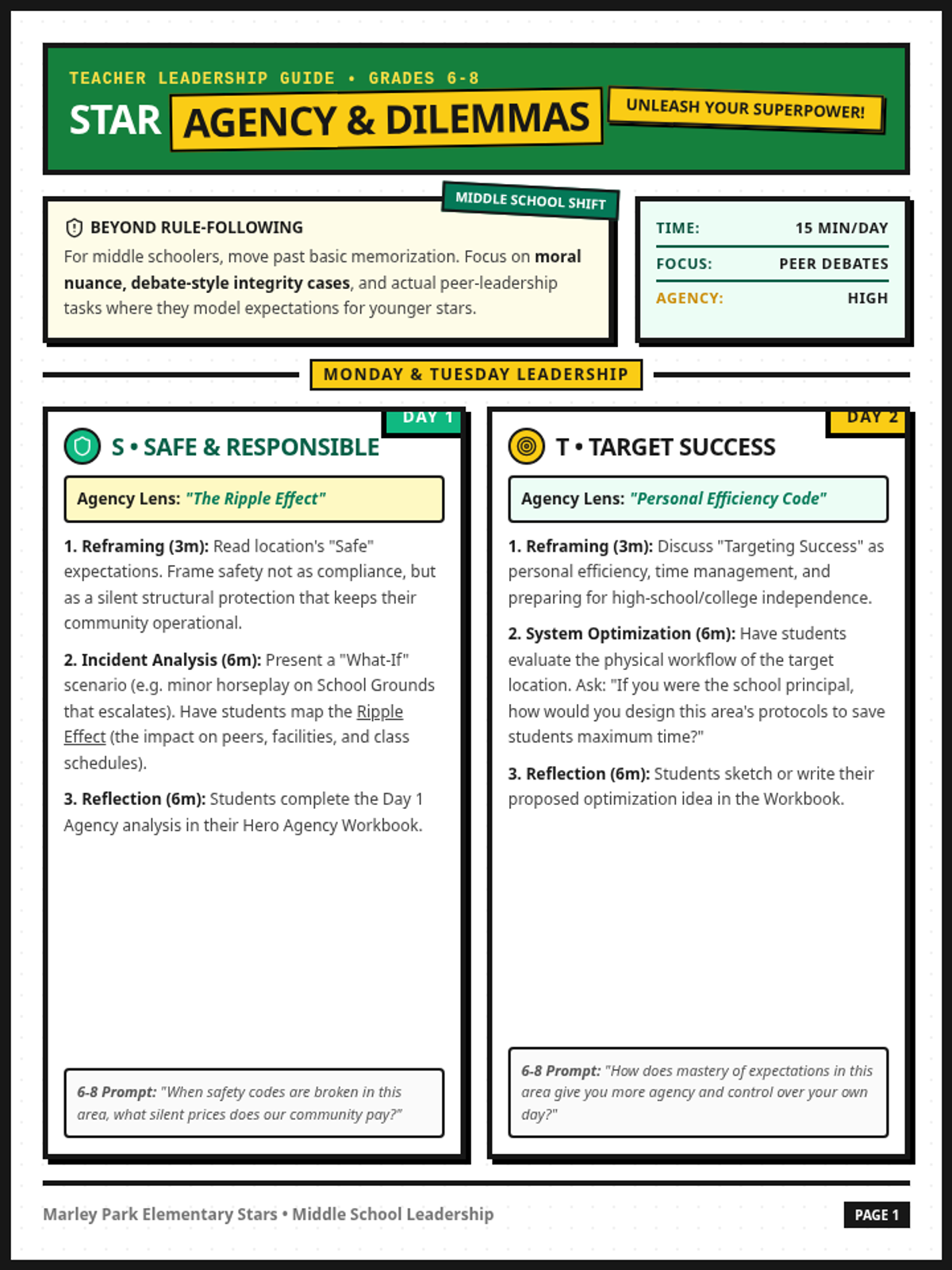
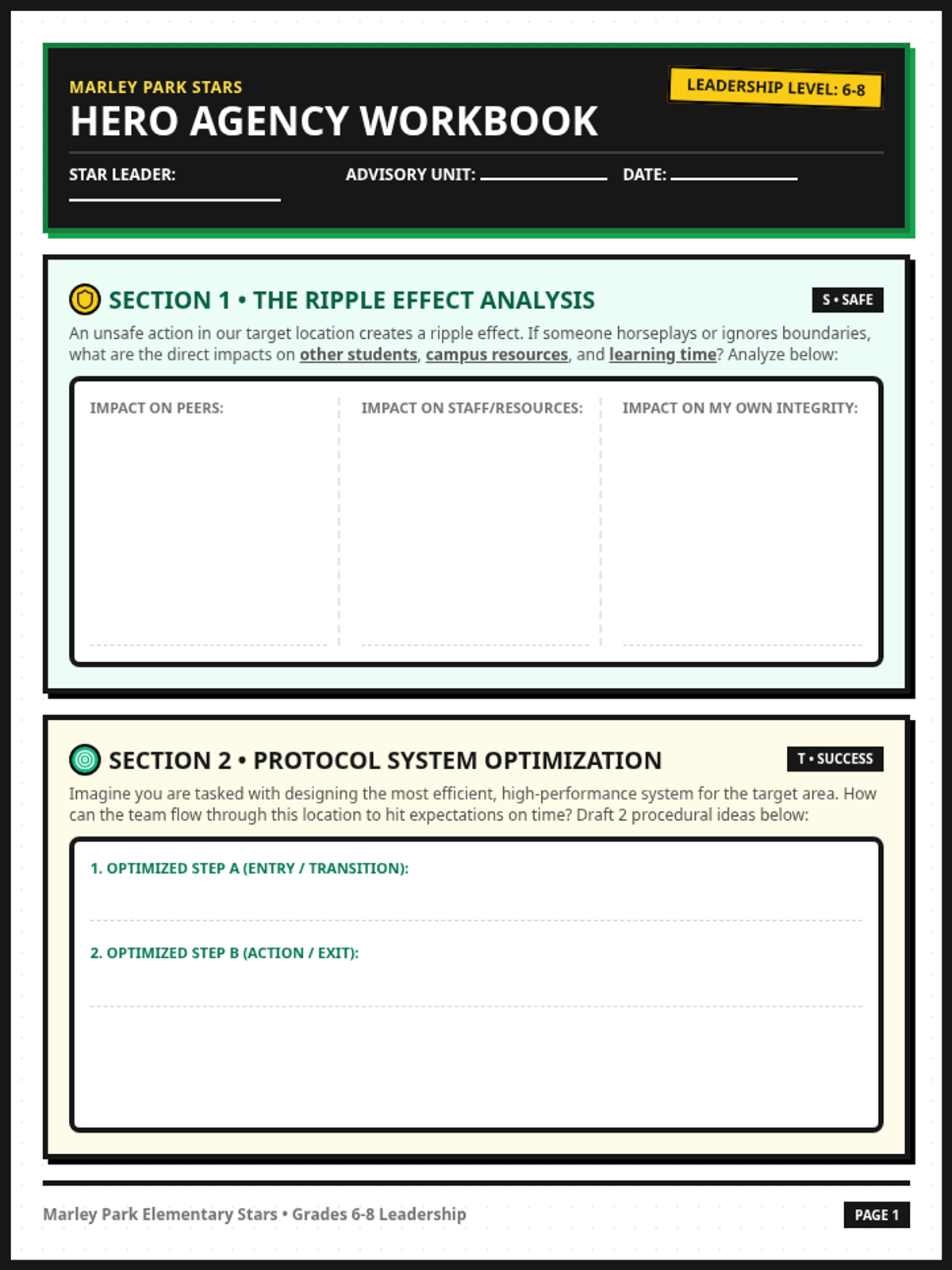
A universal 5-day lesson set for middle school (grades 6-8) that leverages peer leadership, debate-style moral dilemmas (exploring the nuance of integrity), and self-guided agency projects to cultivate respect and responsibility across campus.
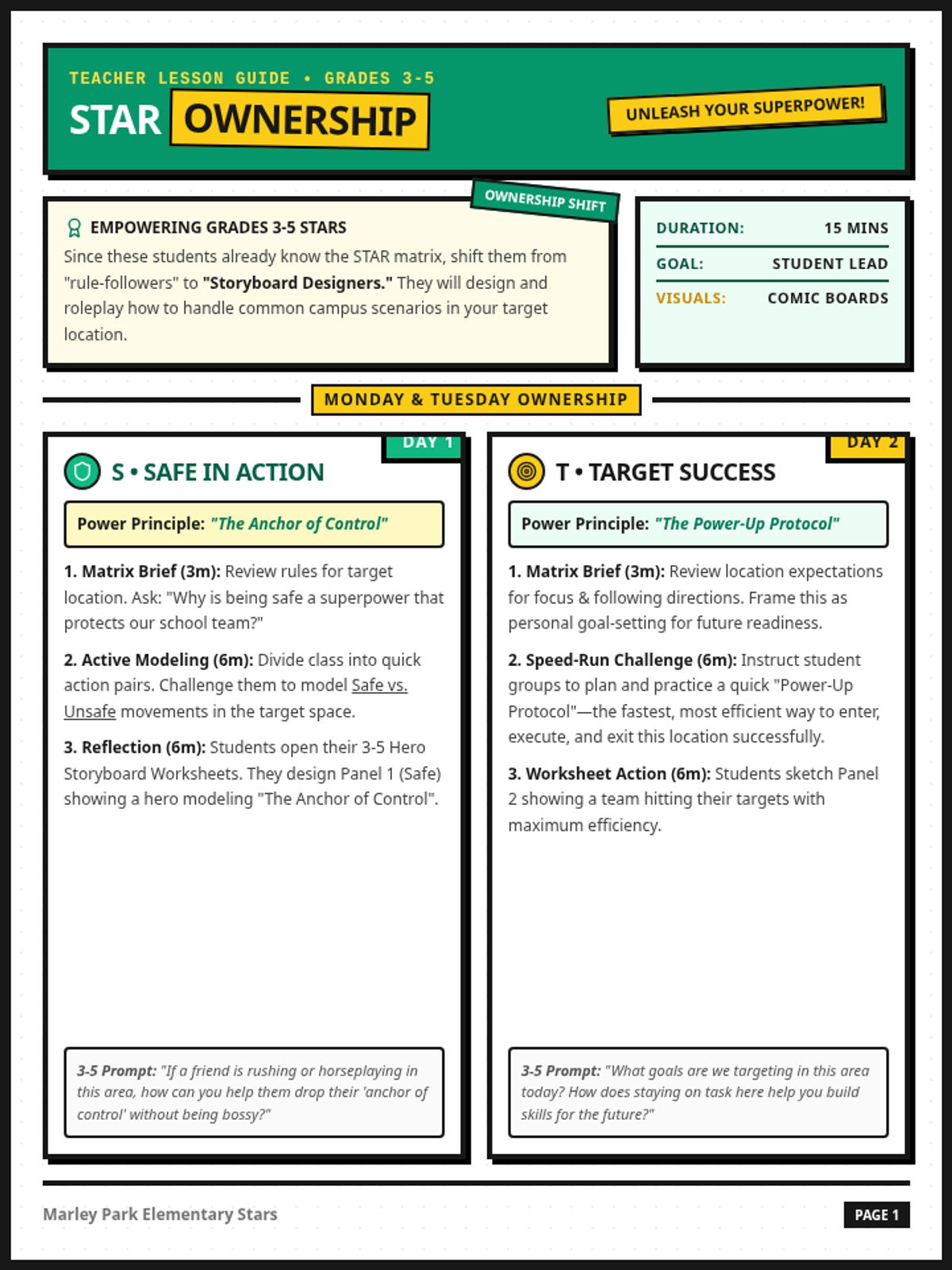
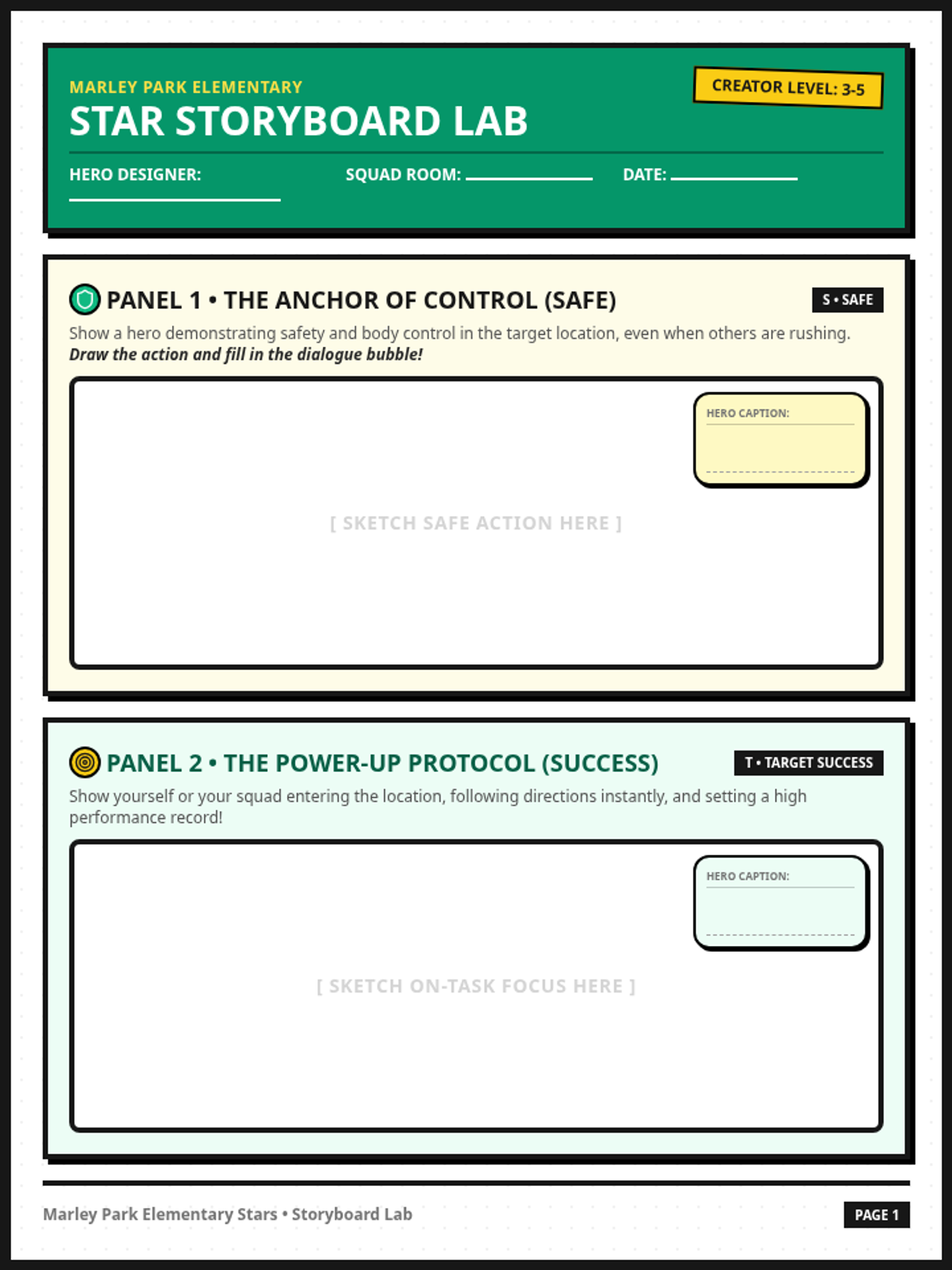
A universal 5-day lesson set for grades 3-5 that shifts focus toward student ownership, comic storyboard creation, and scenario-based problem solving to understand STAR expectations in any school setting.
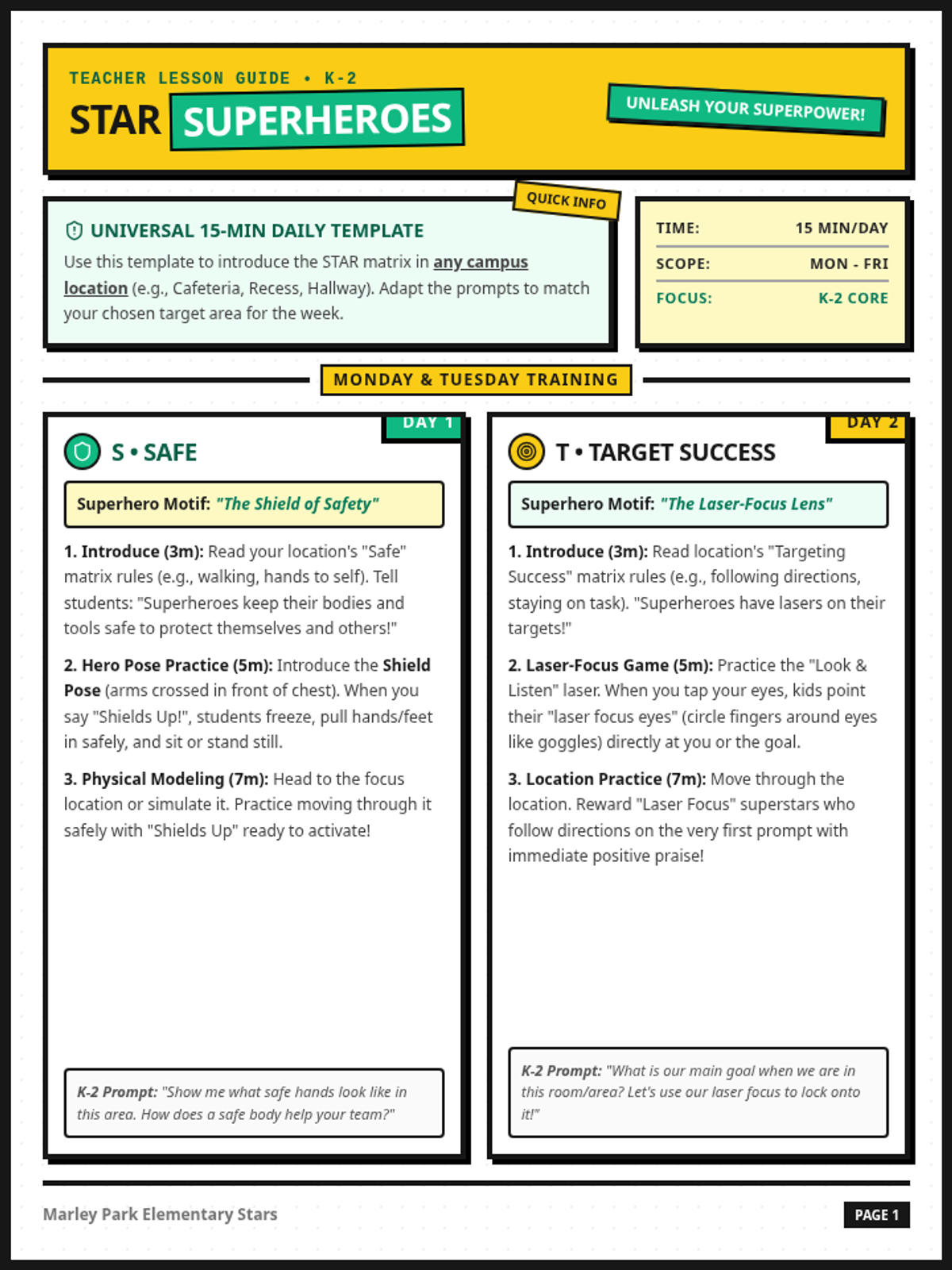
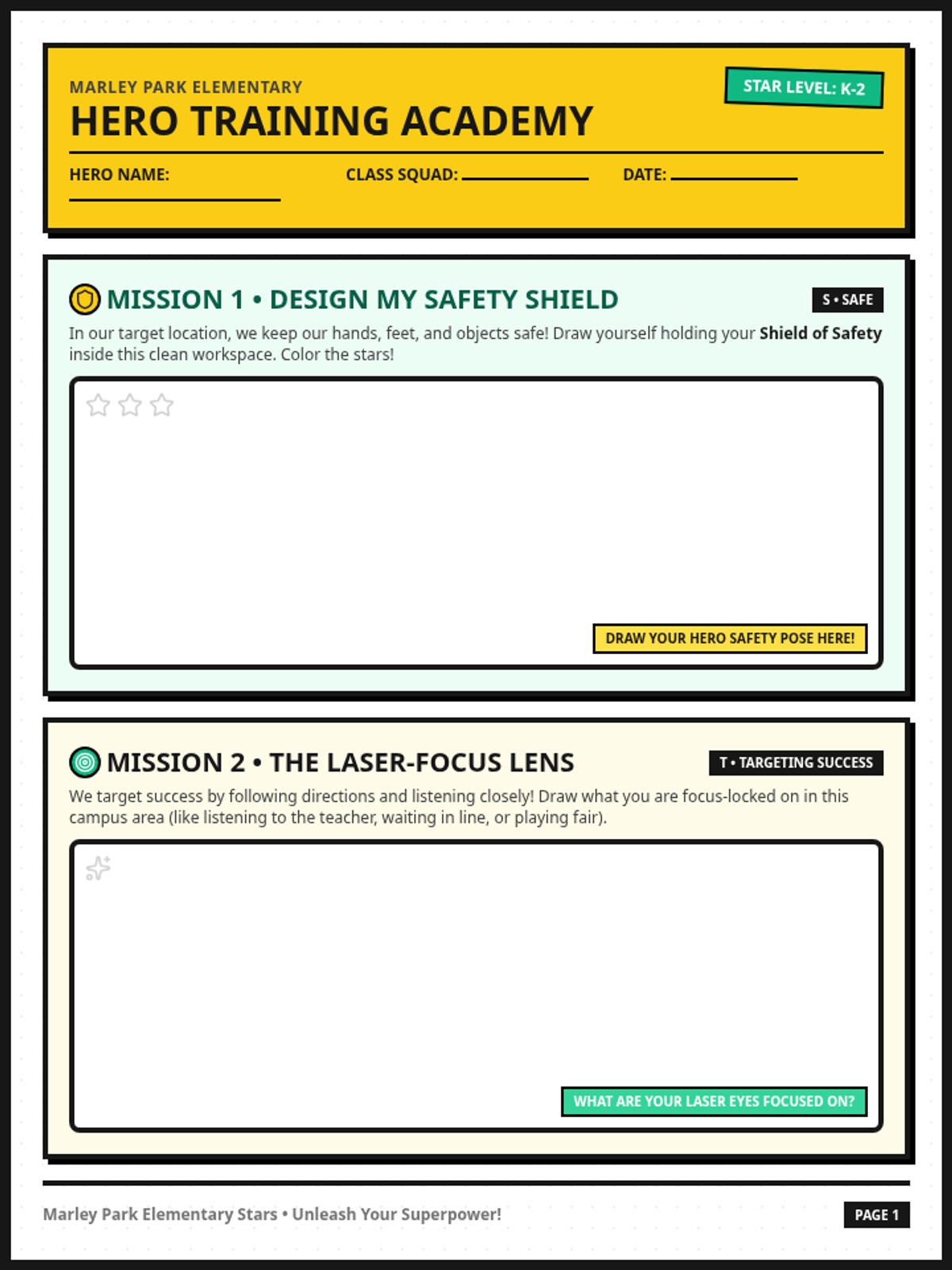
A universal 5-day lesson set for K-2 students focused on introducing STAR expectations (Safe, Targeting Success, Acting with Integrity, Respectful & Responsible) in any campus location through physical modeling, simple superhero analogies, and an interactive superhero-themed student activity guide.
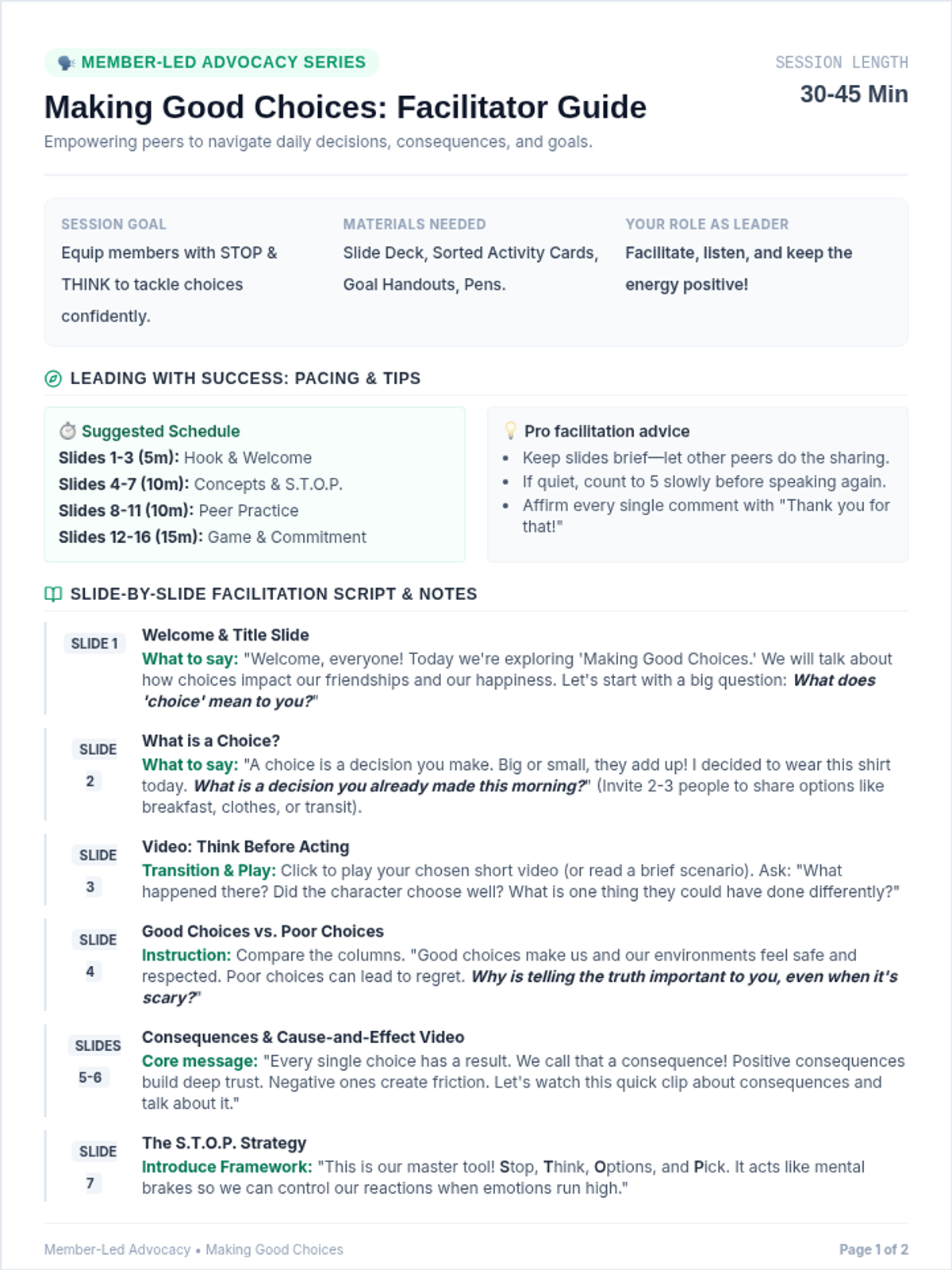
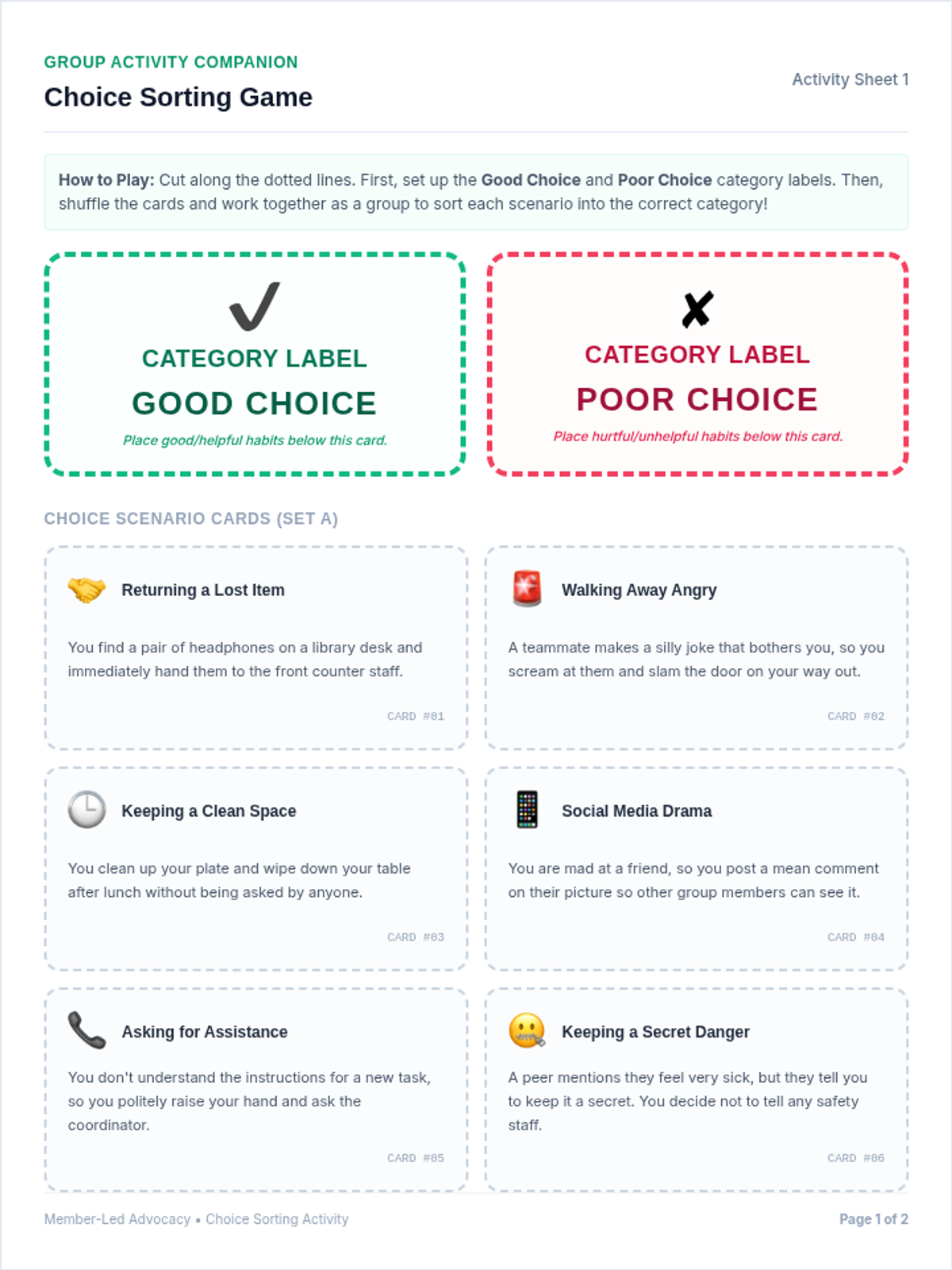
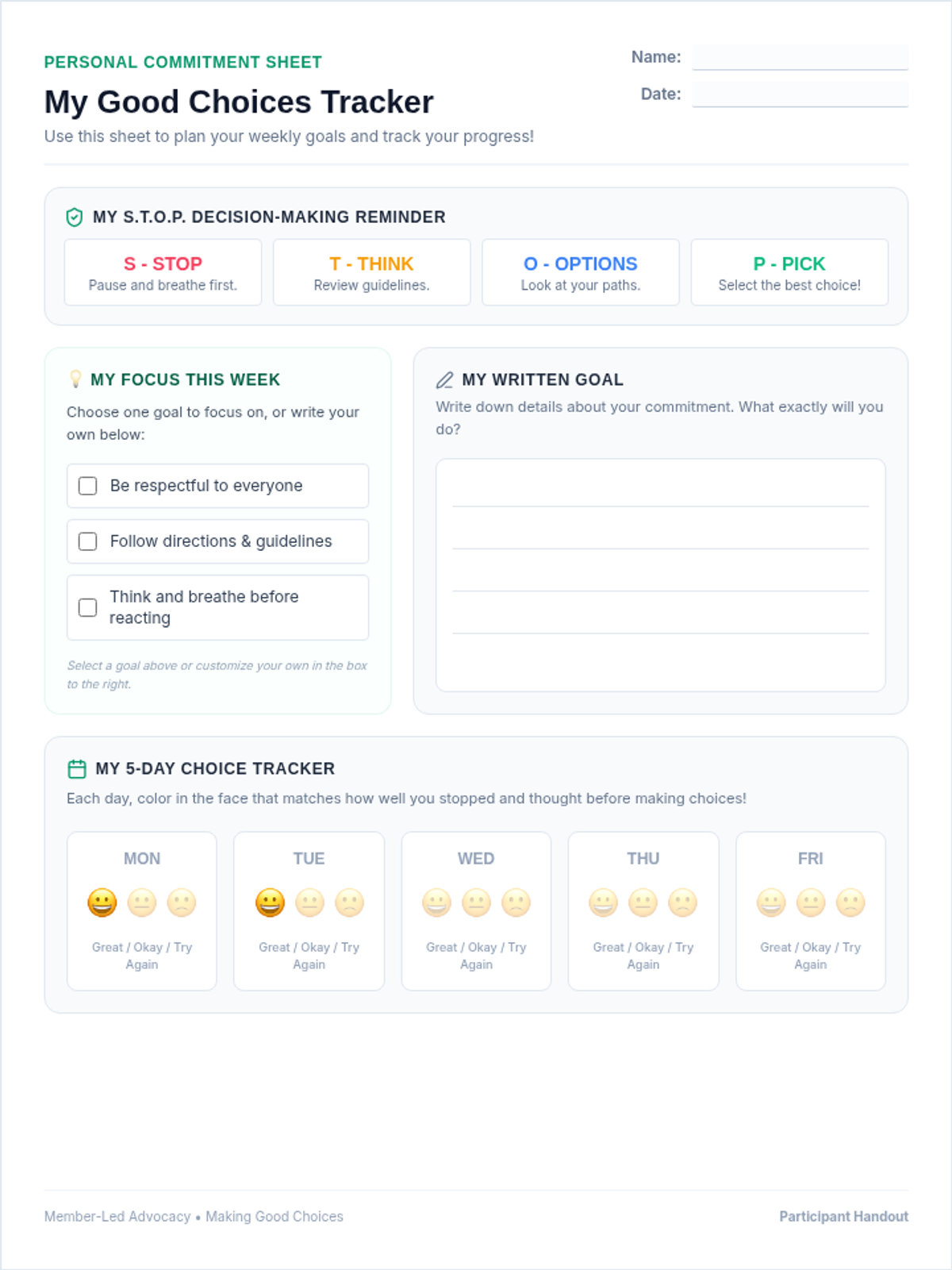
An interactive, peer-led advocacy lesson designed to empower members to lead discussions on personal choices, consequences, decision-making strategies, and peer influence.
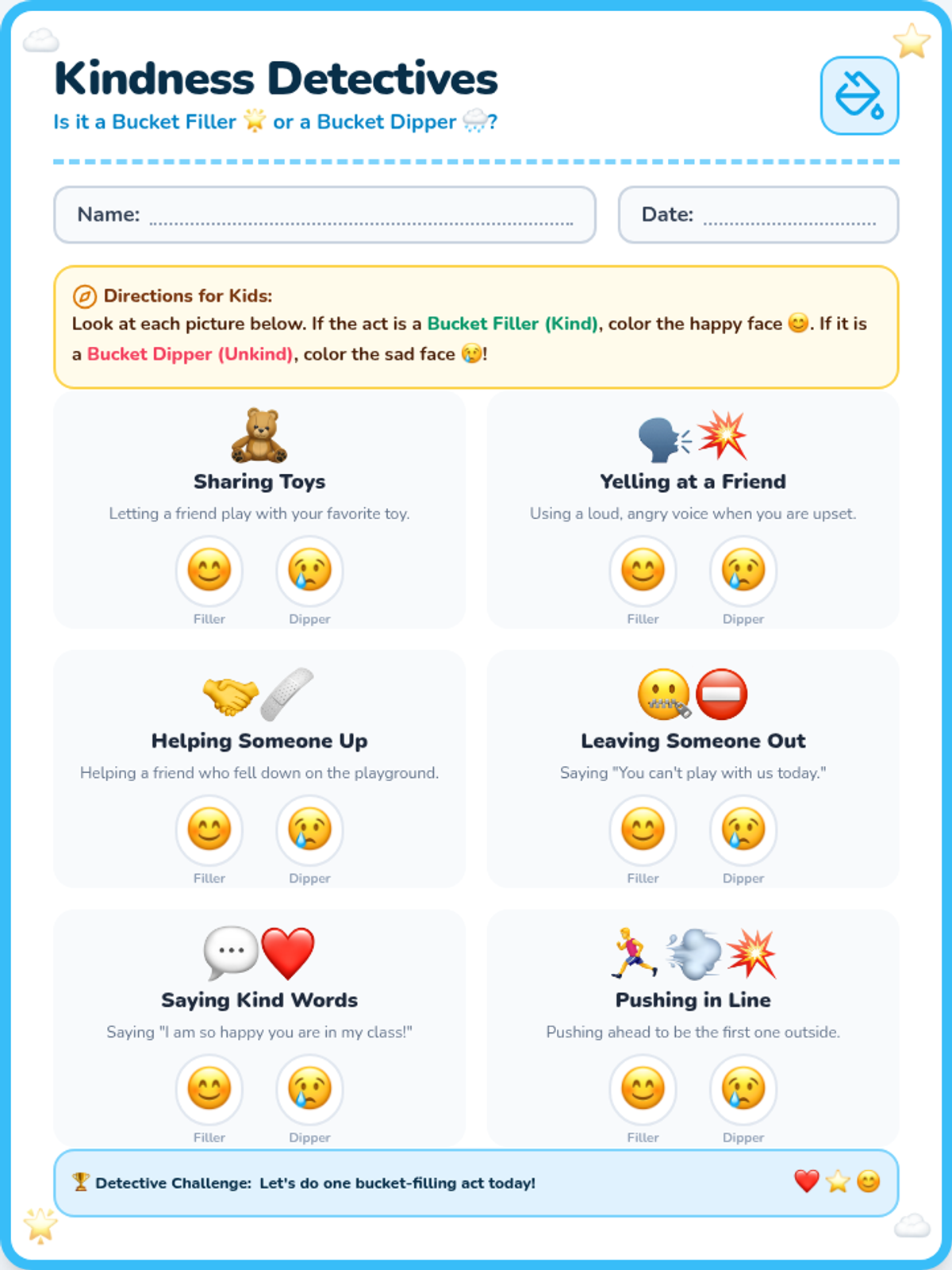
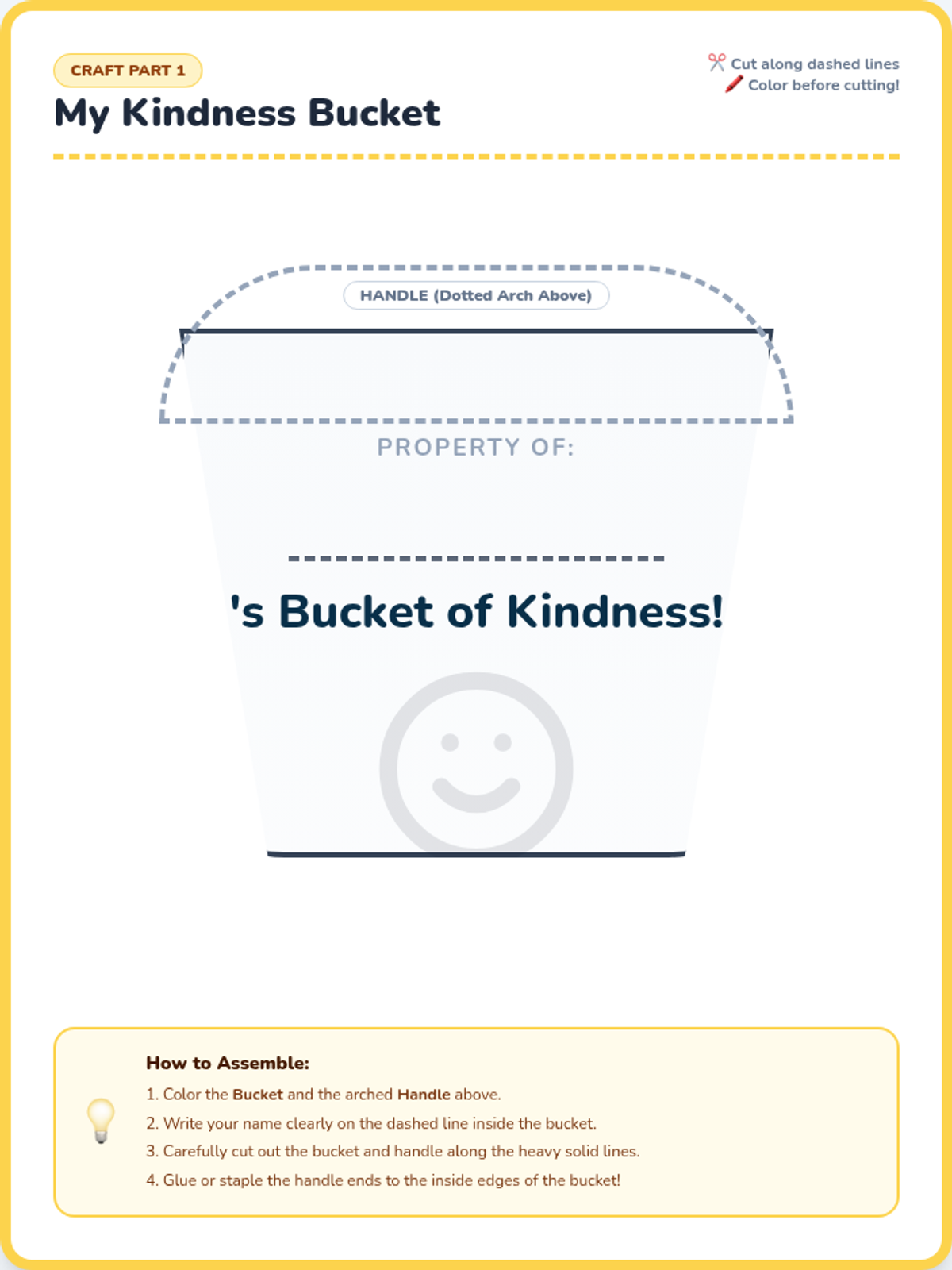
An interactive introduction to empathy, kindness, and emotional awareness for Kindergarteners. Students learn about bucket filling through cooperative discussion, a hands-on bucket craft, a sorting worksheet, and a themed coloring page.
In a structured activity, students are given tasks with intentional barriers and must navigate the classroom to find the correct peer or resource to help them solve it, synthesizing the sequence's skills.
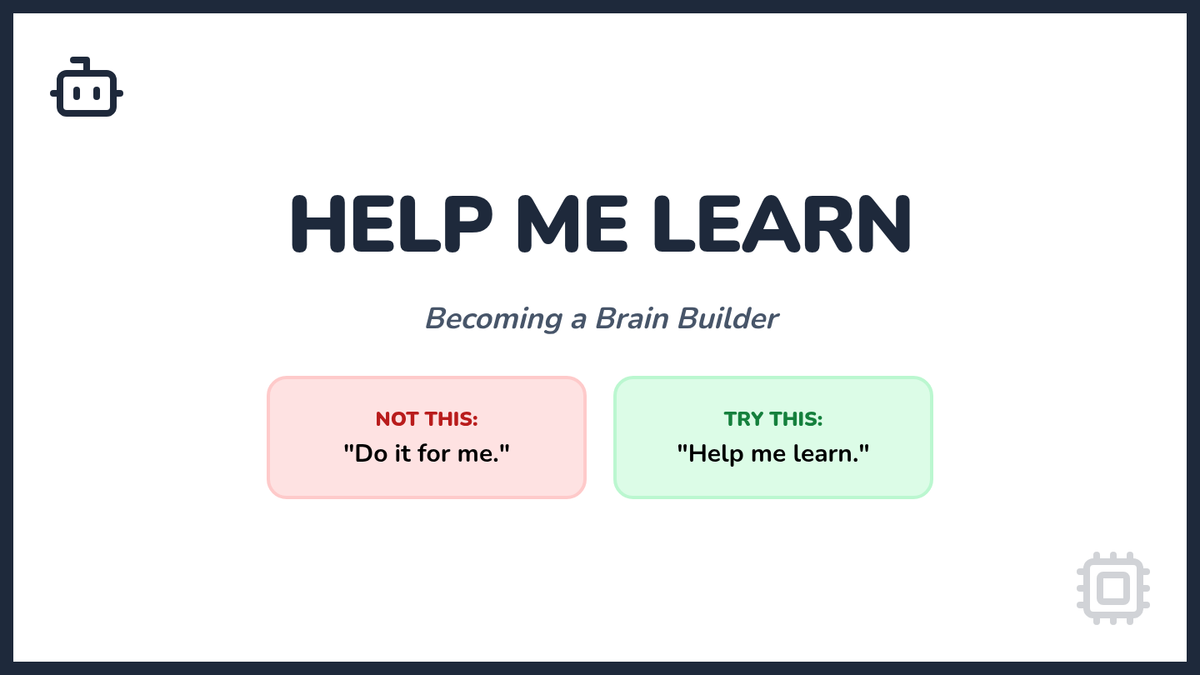
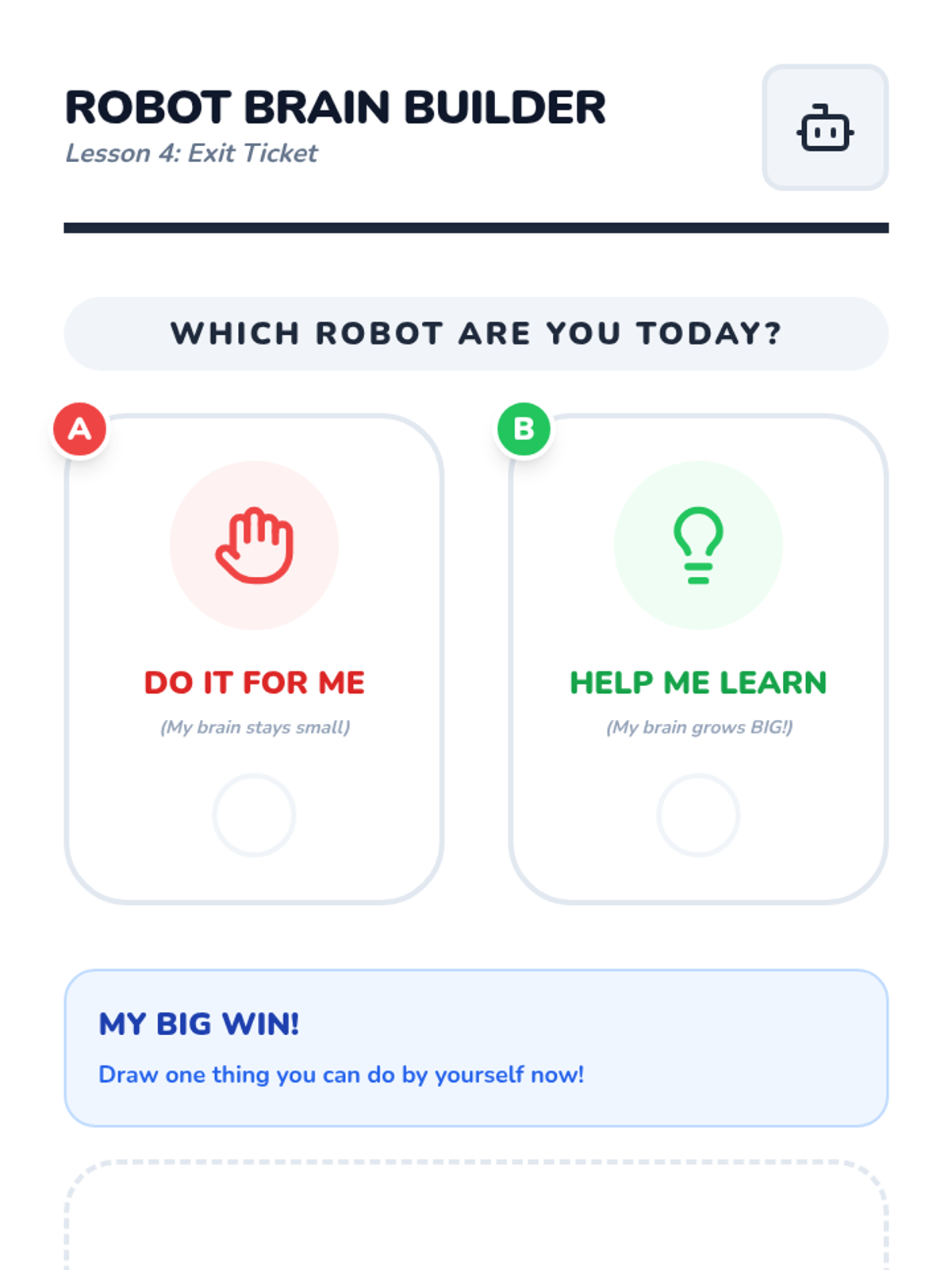
Students learn to distinguish between 'Do it for me' and 'Help me learn.' The lesson focuses on asking for clues, steps, or watching a demonstration rather than handing over the task completely.
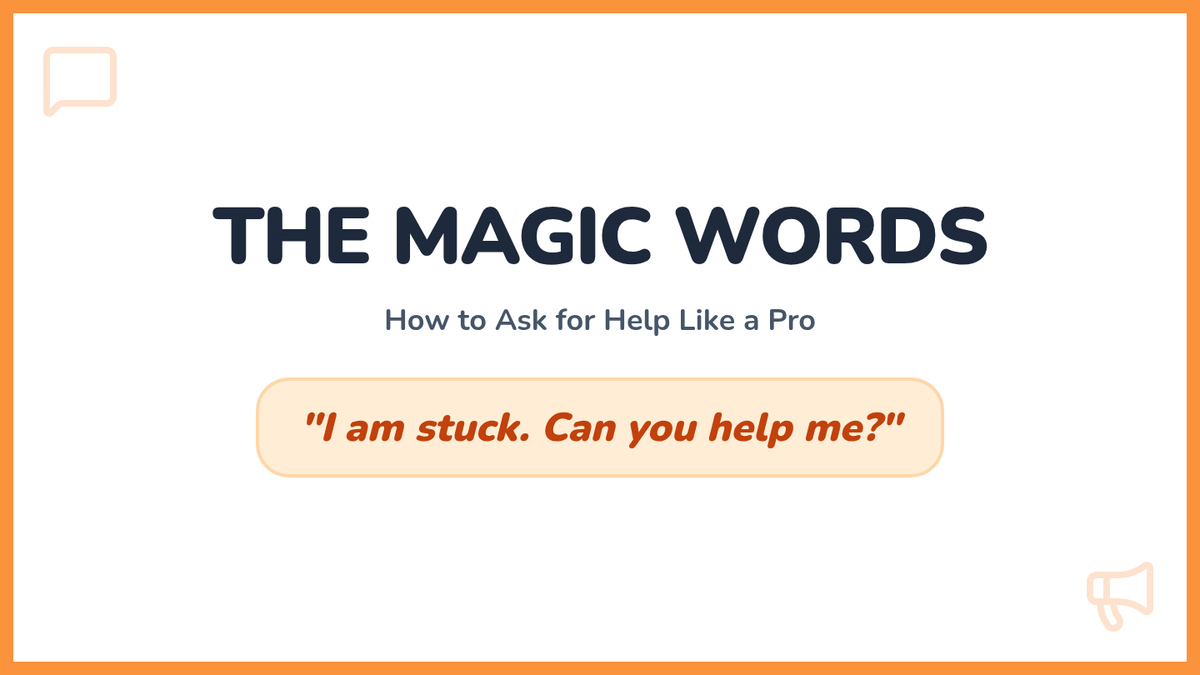
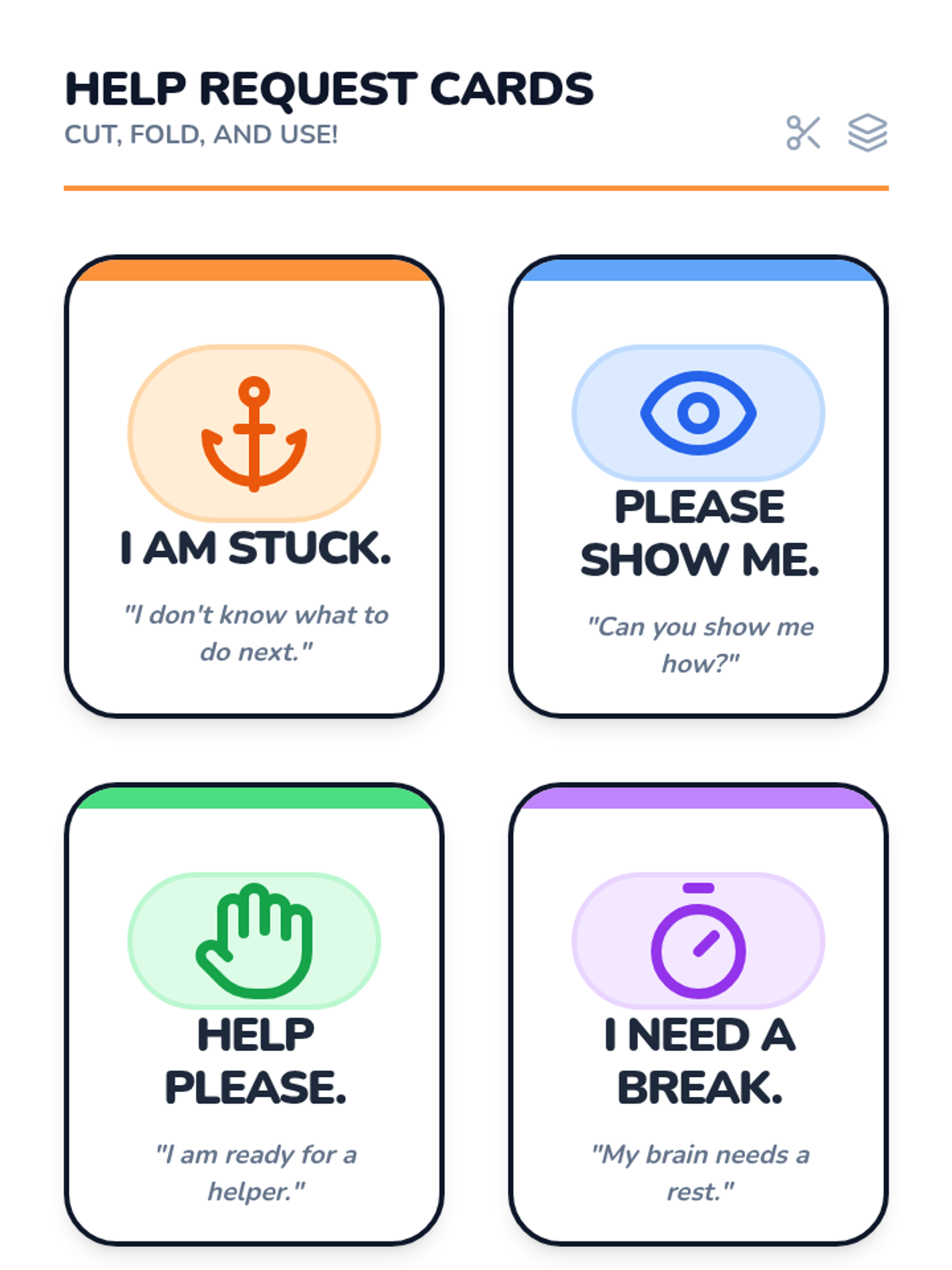
Students practice specific sentence starters or using communication cards to ask for help (e.g., 'I am stuck on...' or 'Please show me...'). This reduces anxiety for students who struggle with verbal initiation during stress.
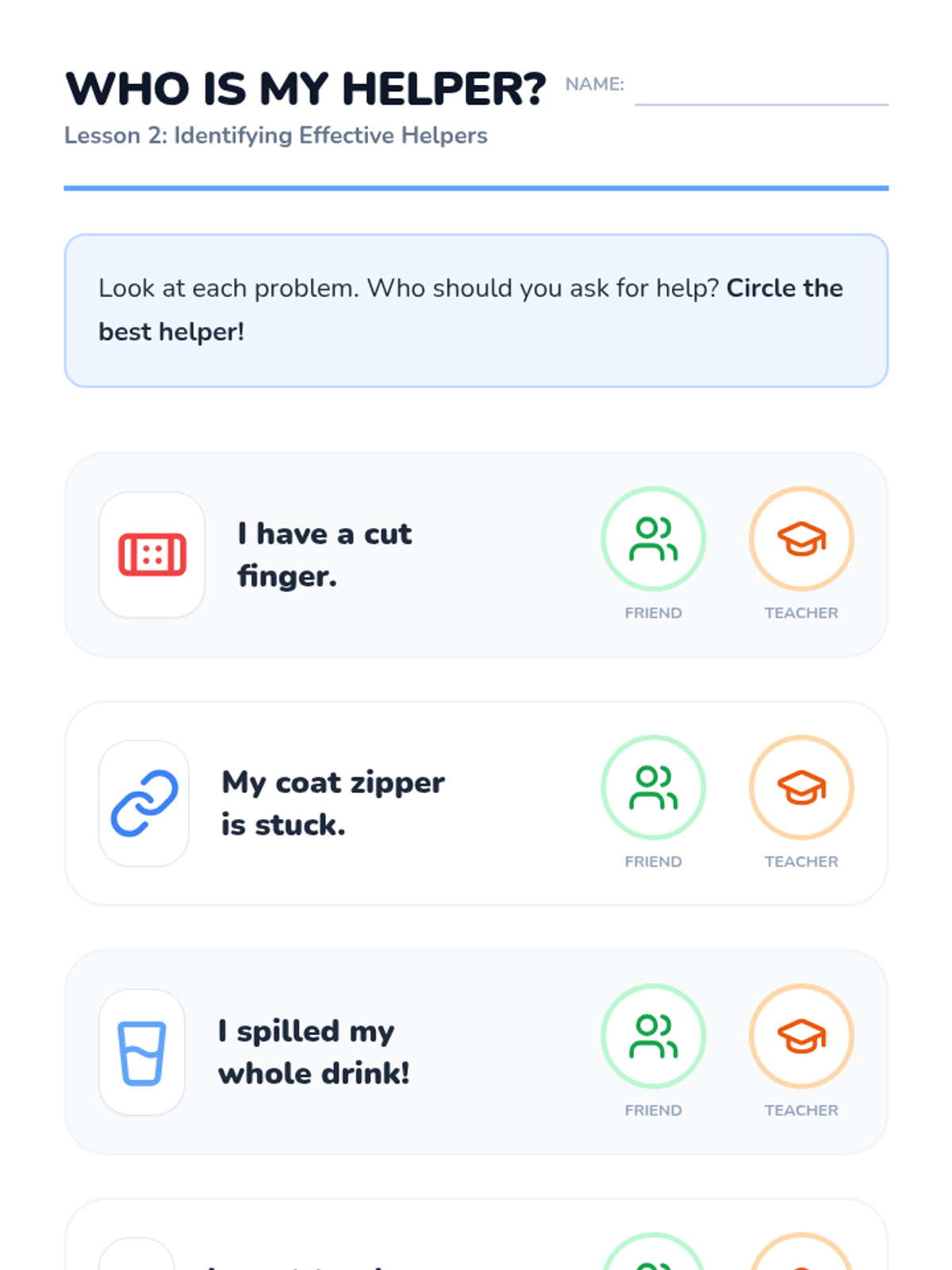
Students map out the classroom to identify who can help with different types with problems (e.g., a friend can help with a zipper, but only a teacher can help with a cut). This builds discernment in seeking support.
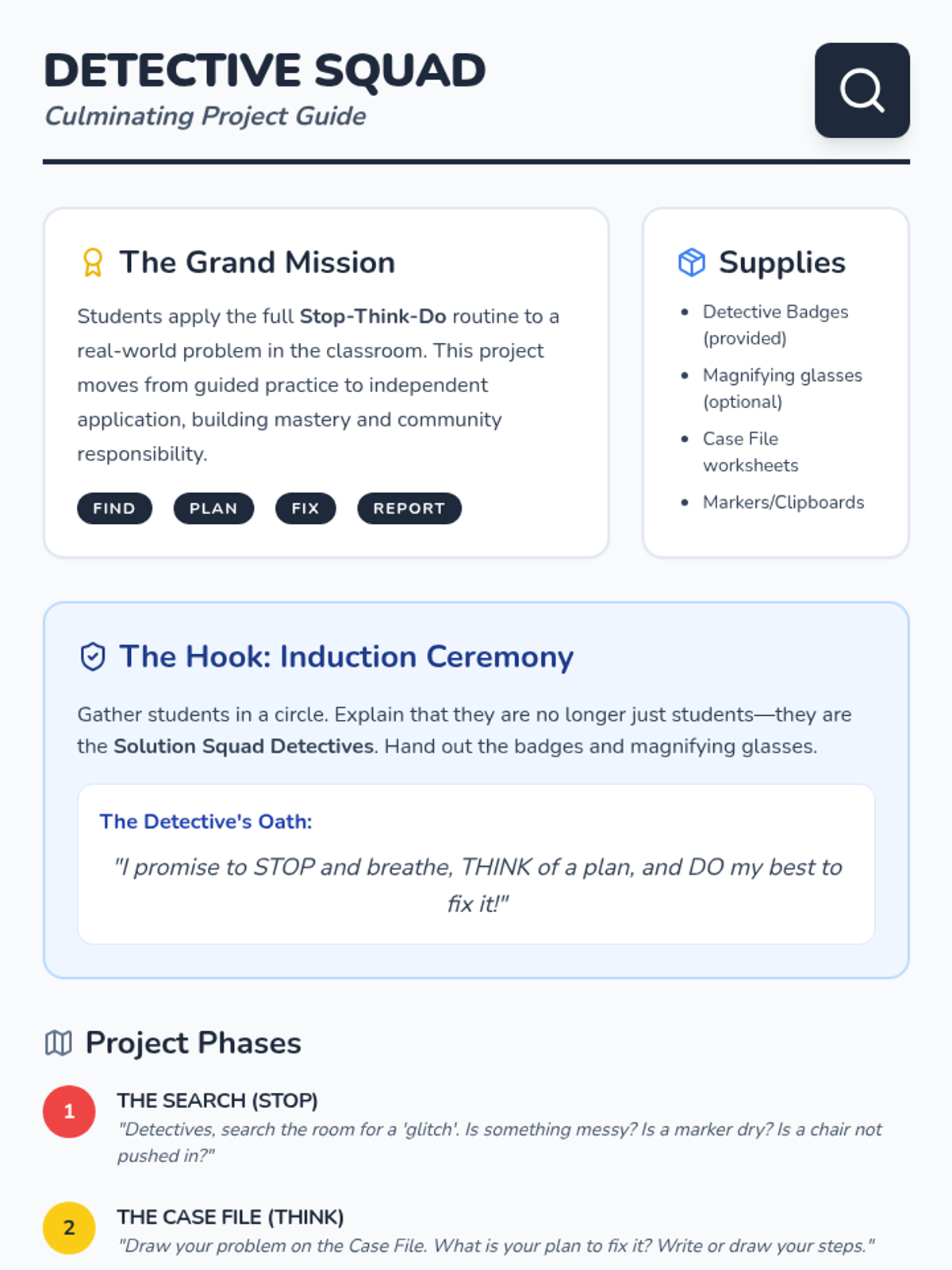
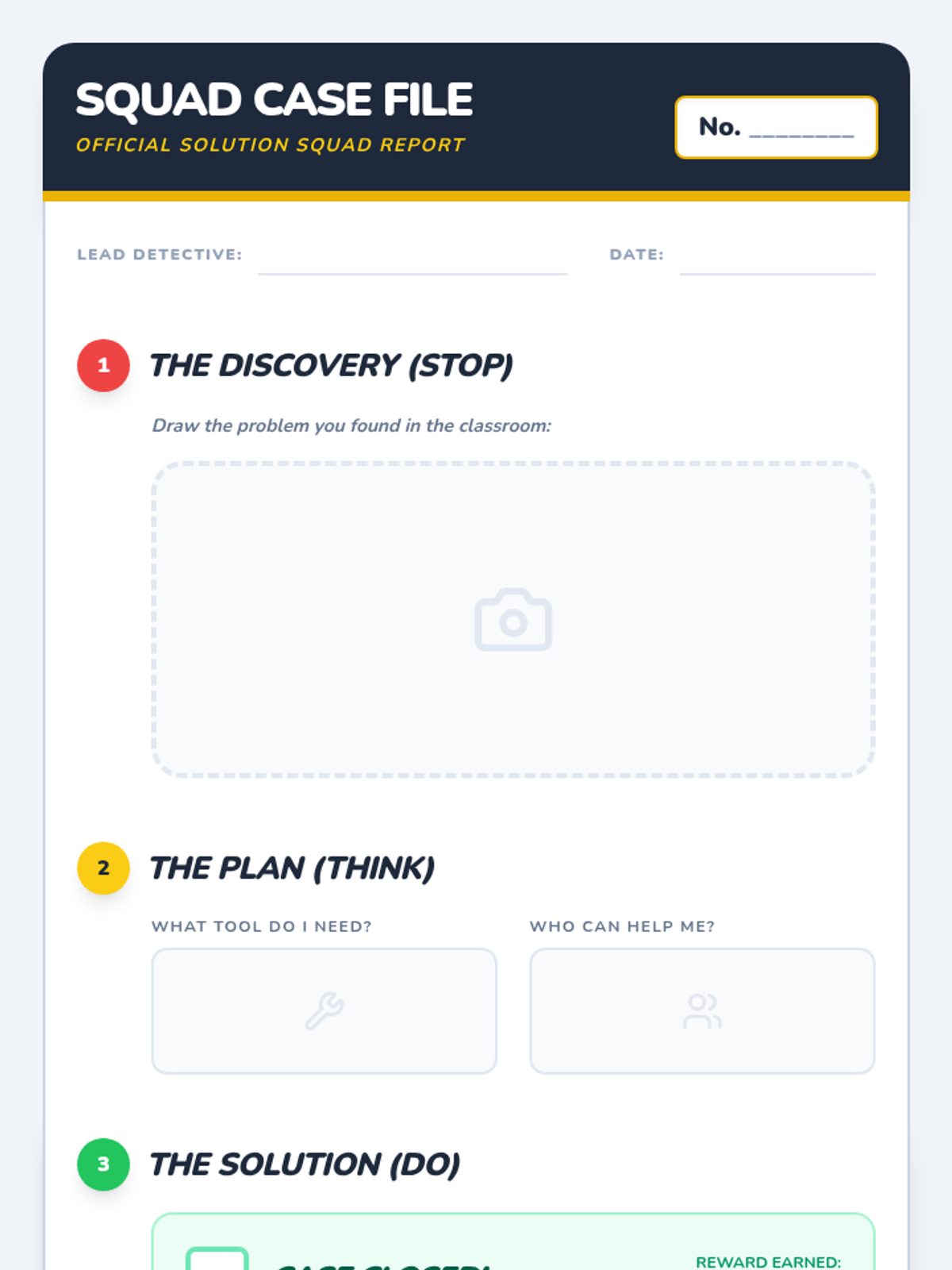
A culminating project where students use their problem-solving skills to find and fix small issues in the classroom.
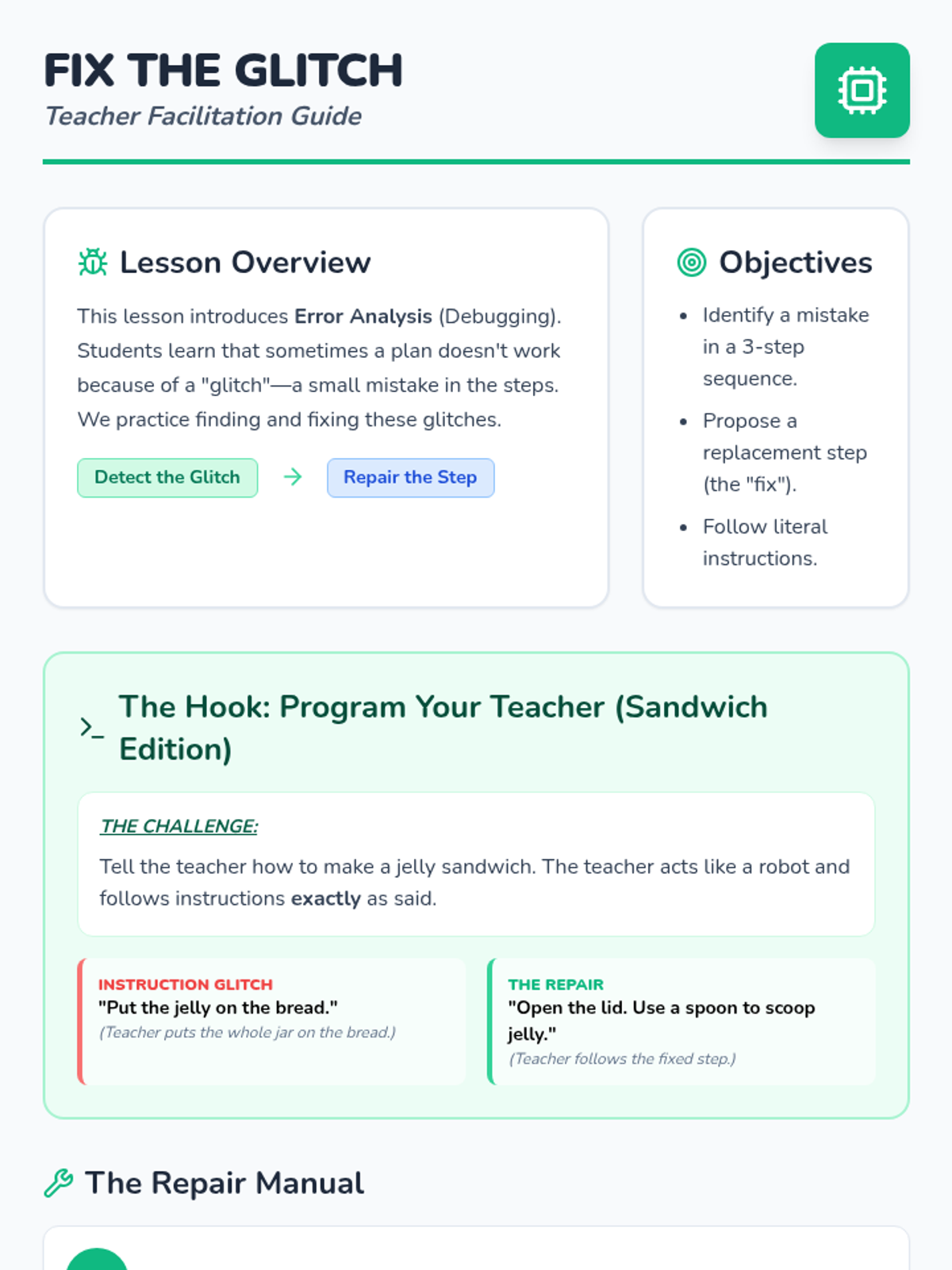
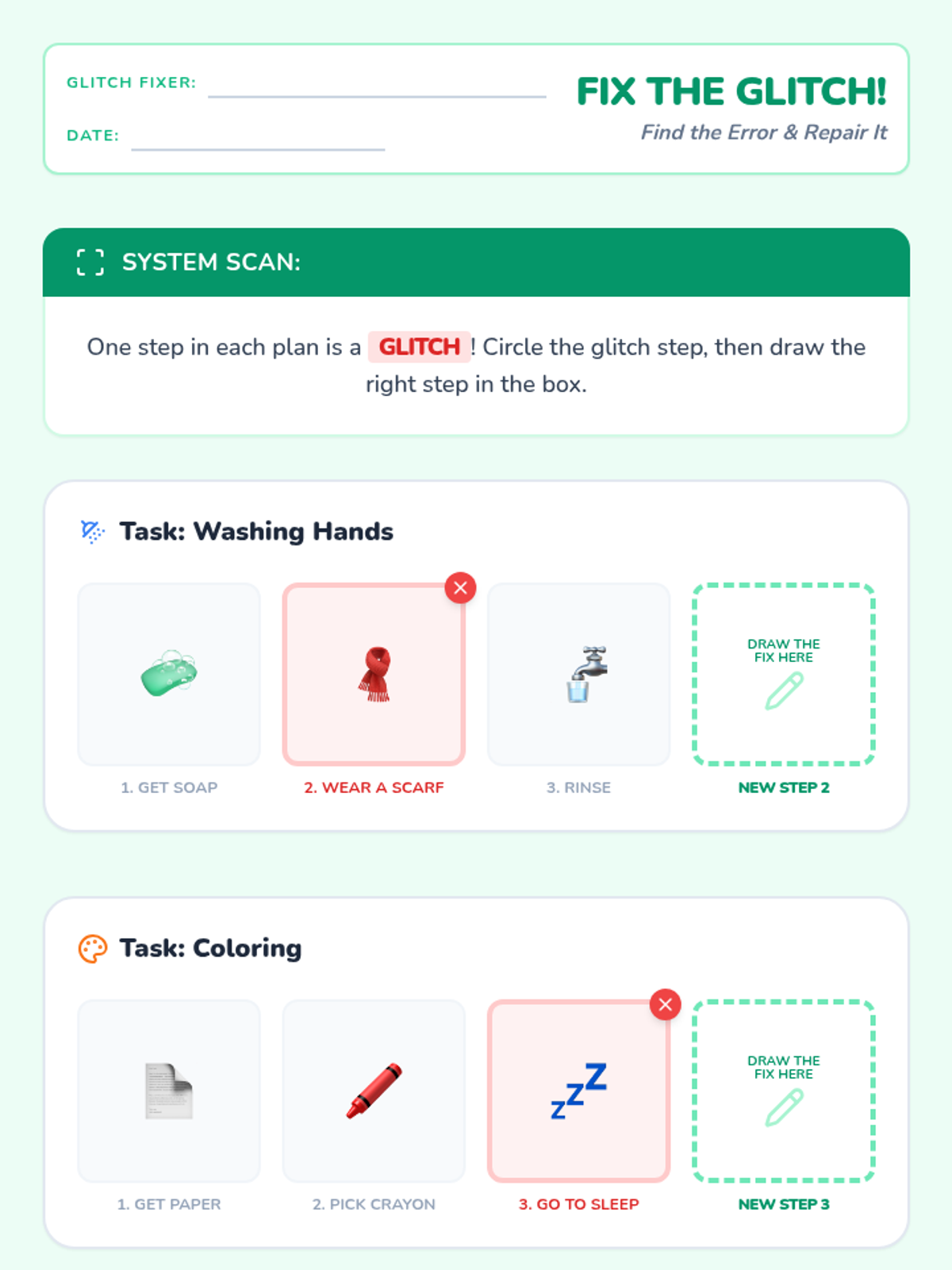
Students identify and fix errors in step-by-step instructions through coding-style games and error analysis.
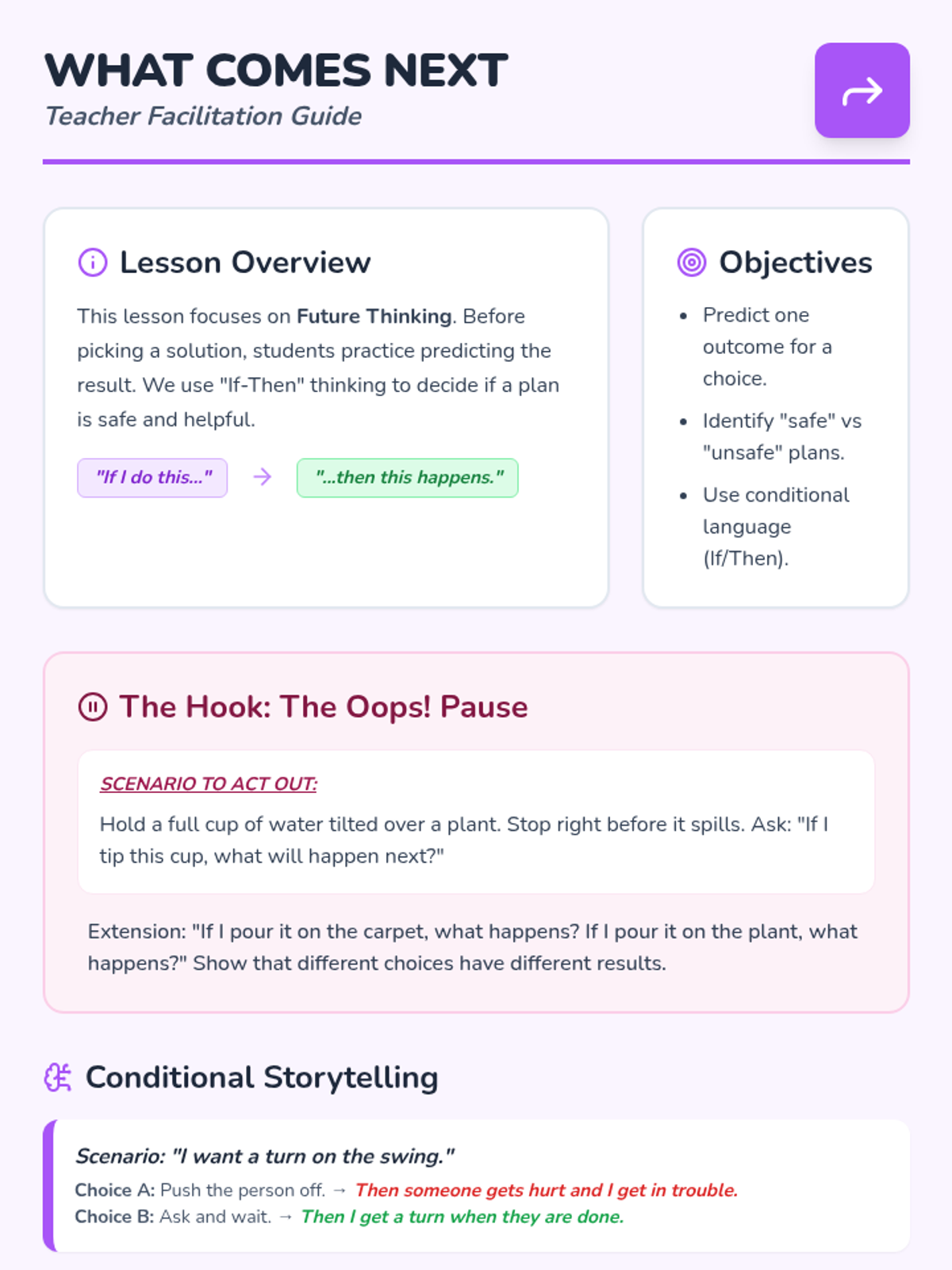
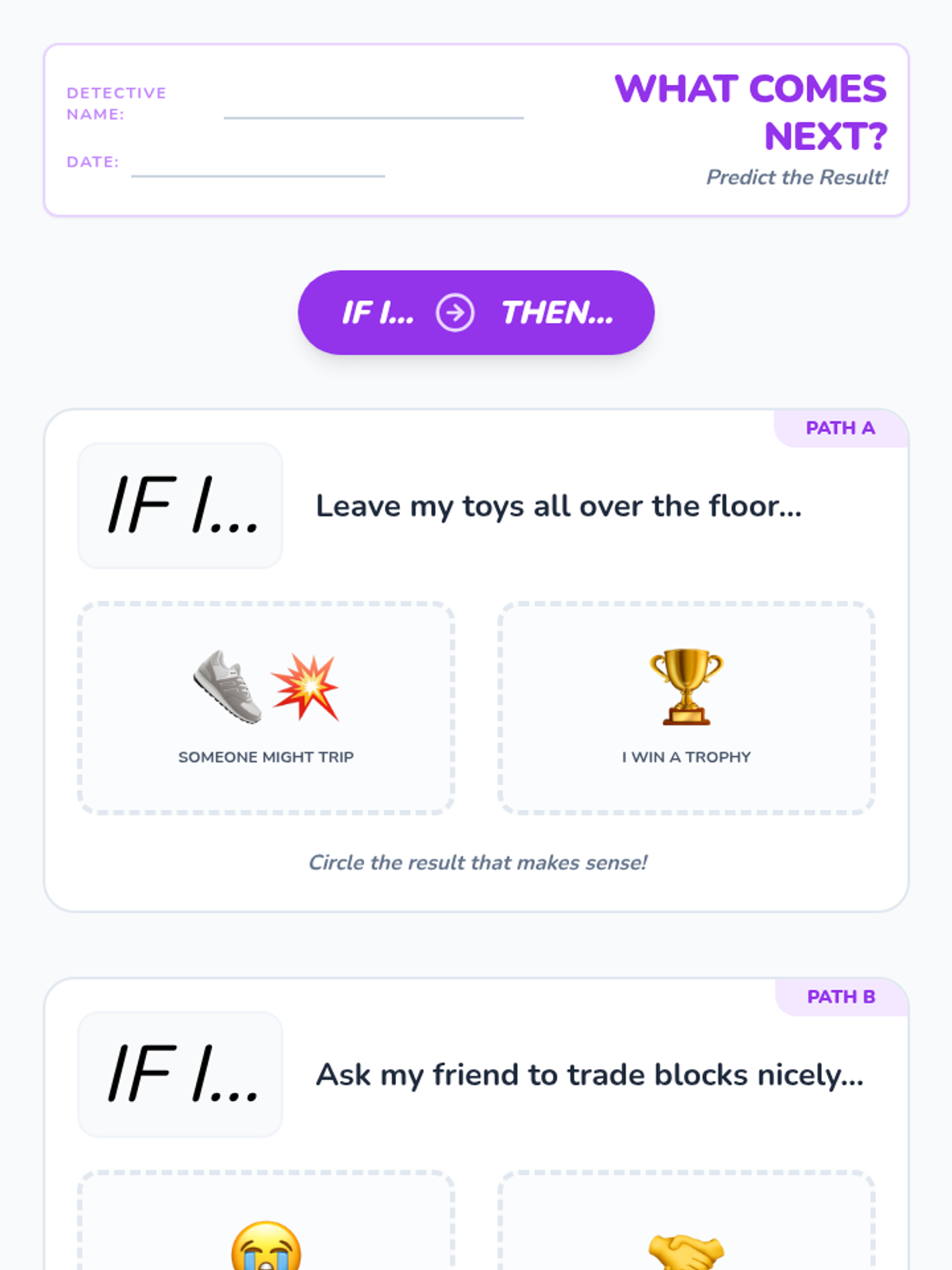
Students predict outcomes of different solutions using 'If-Then' thinking to evaluate safety and effectiveness.
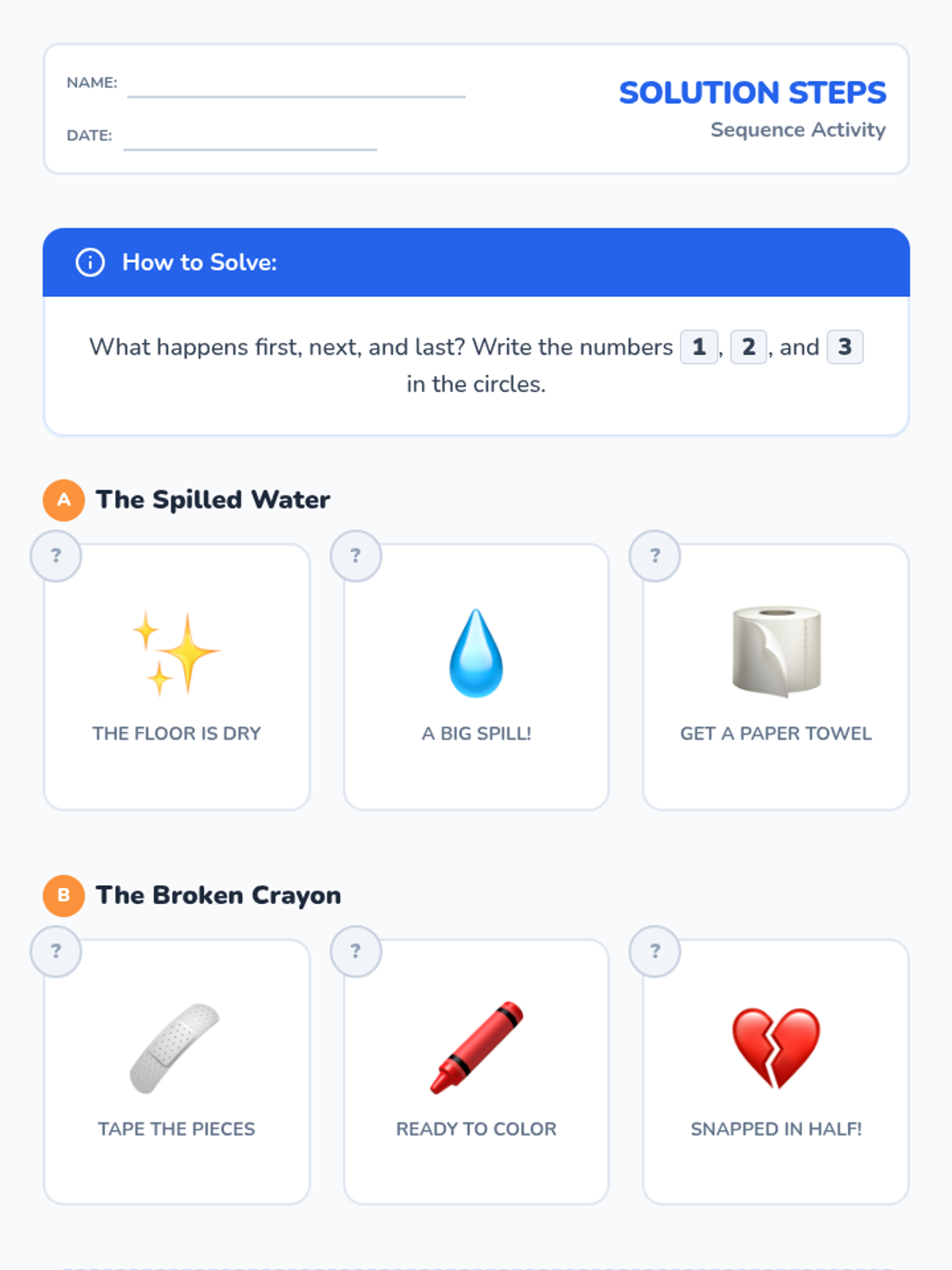
Students practice arranging picture cards in logical order to show cause, effect, and resolution in problem scenarios.
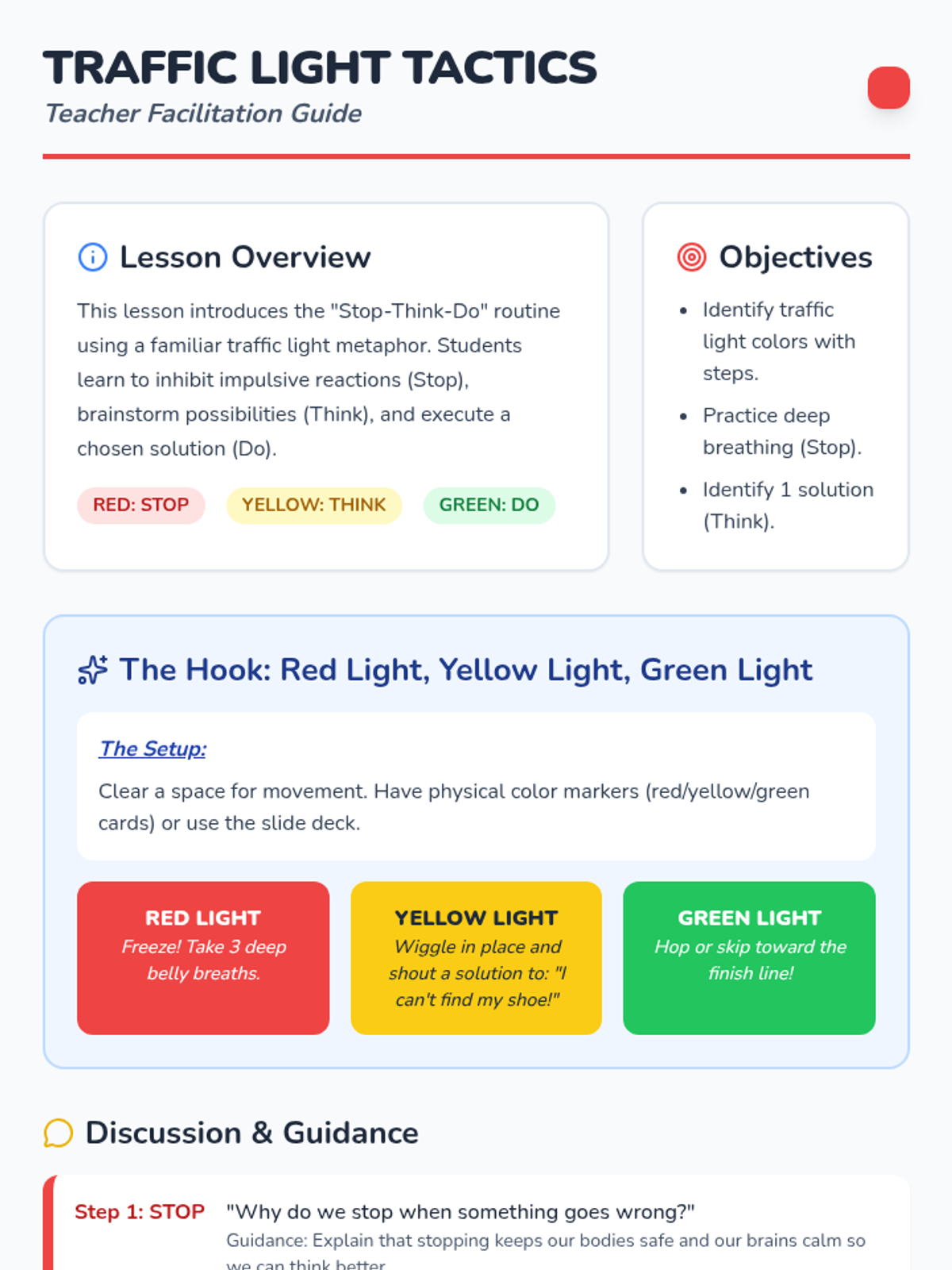
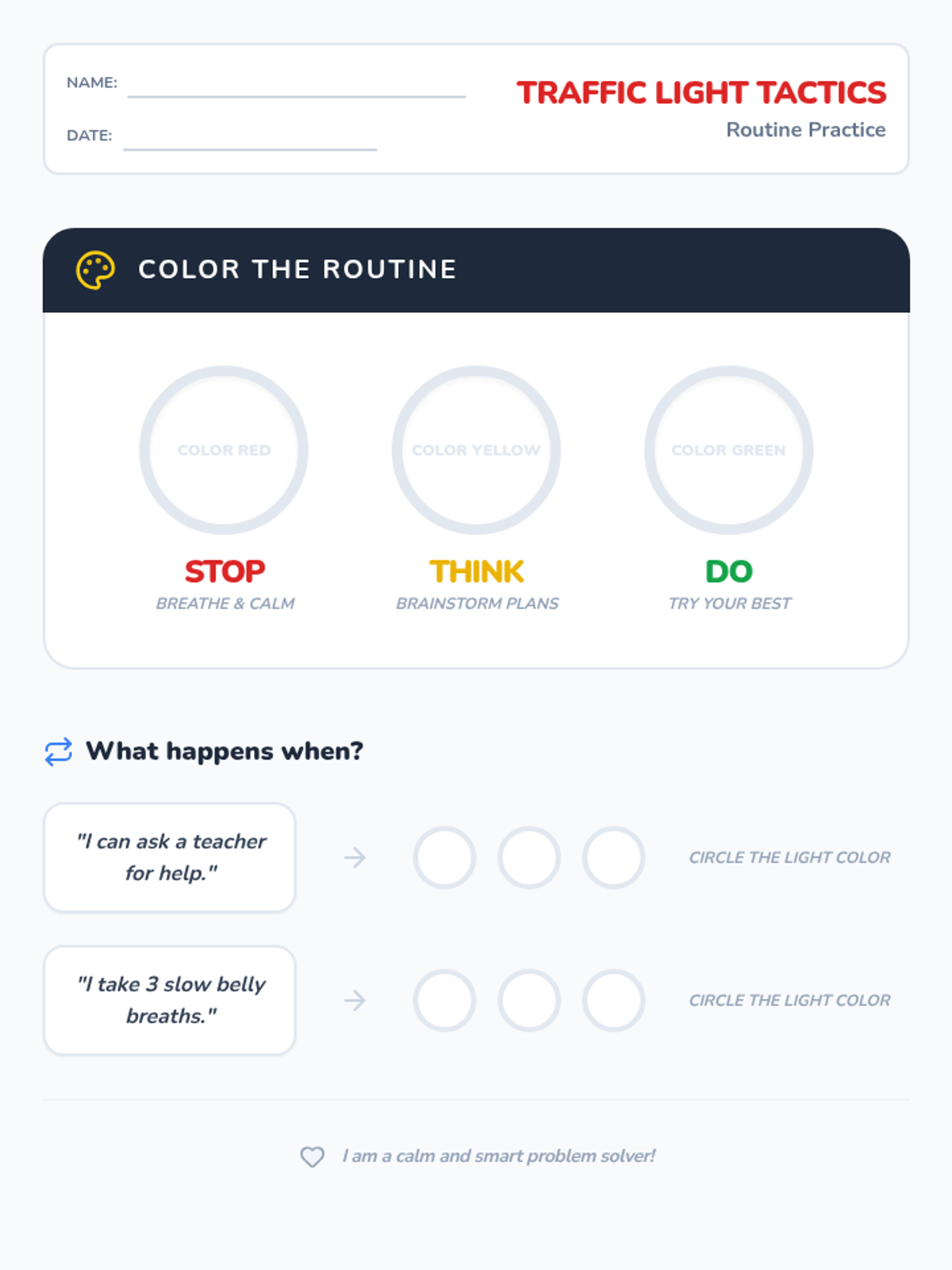
Students learn a traffic light system for problem solving: Red (Stop/Calm down), Yellow (Think of options), Green (Do/Try it) using simulations and games.
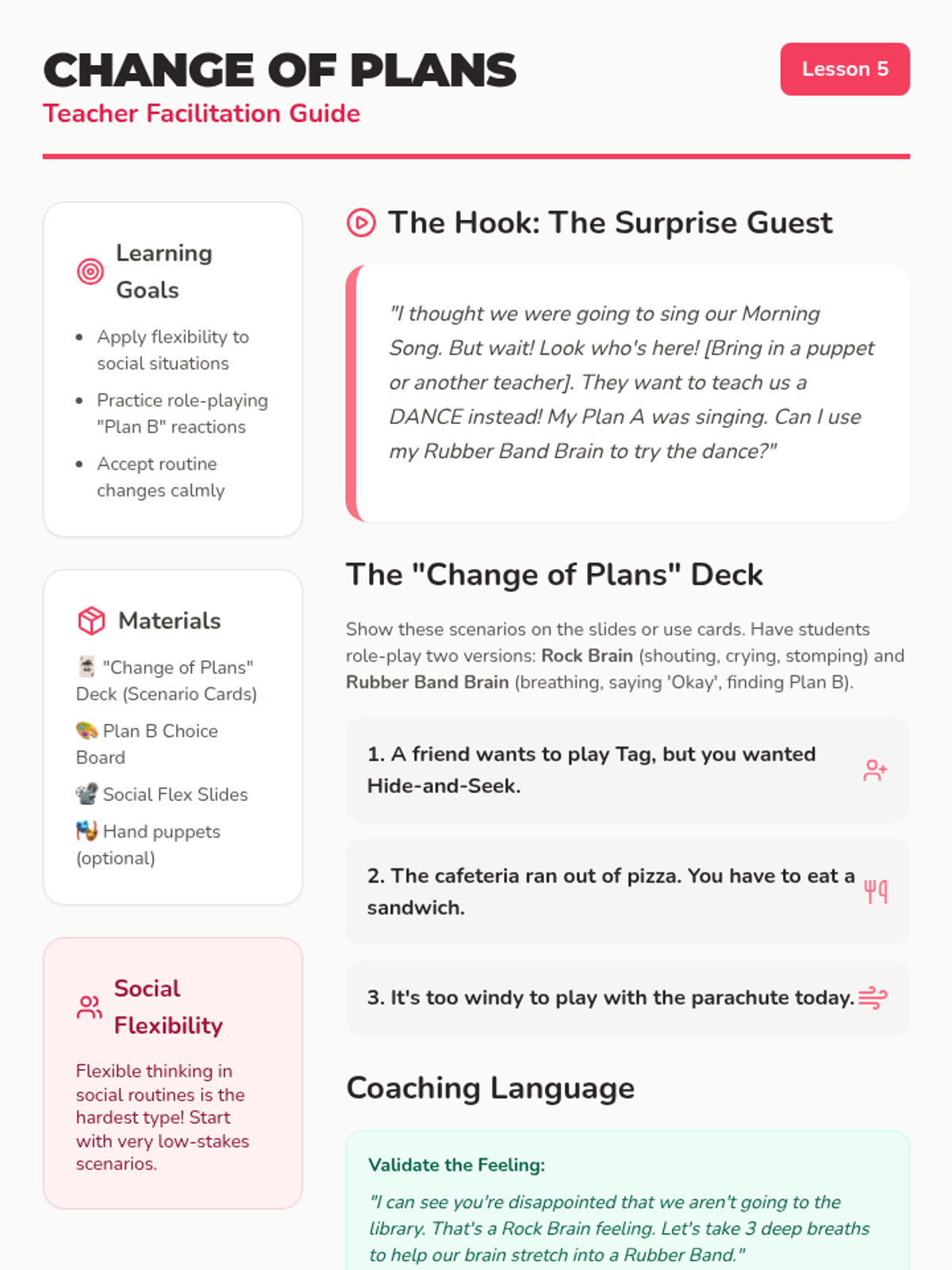
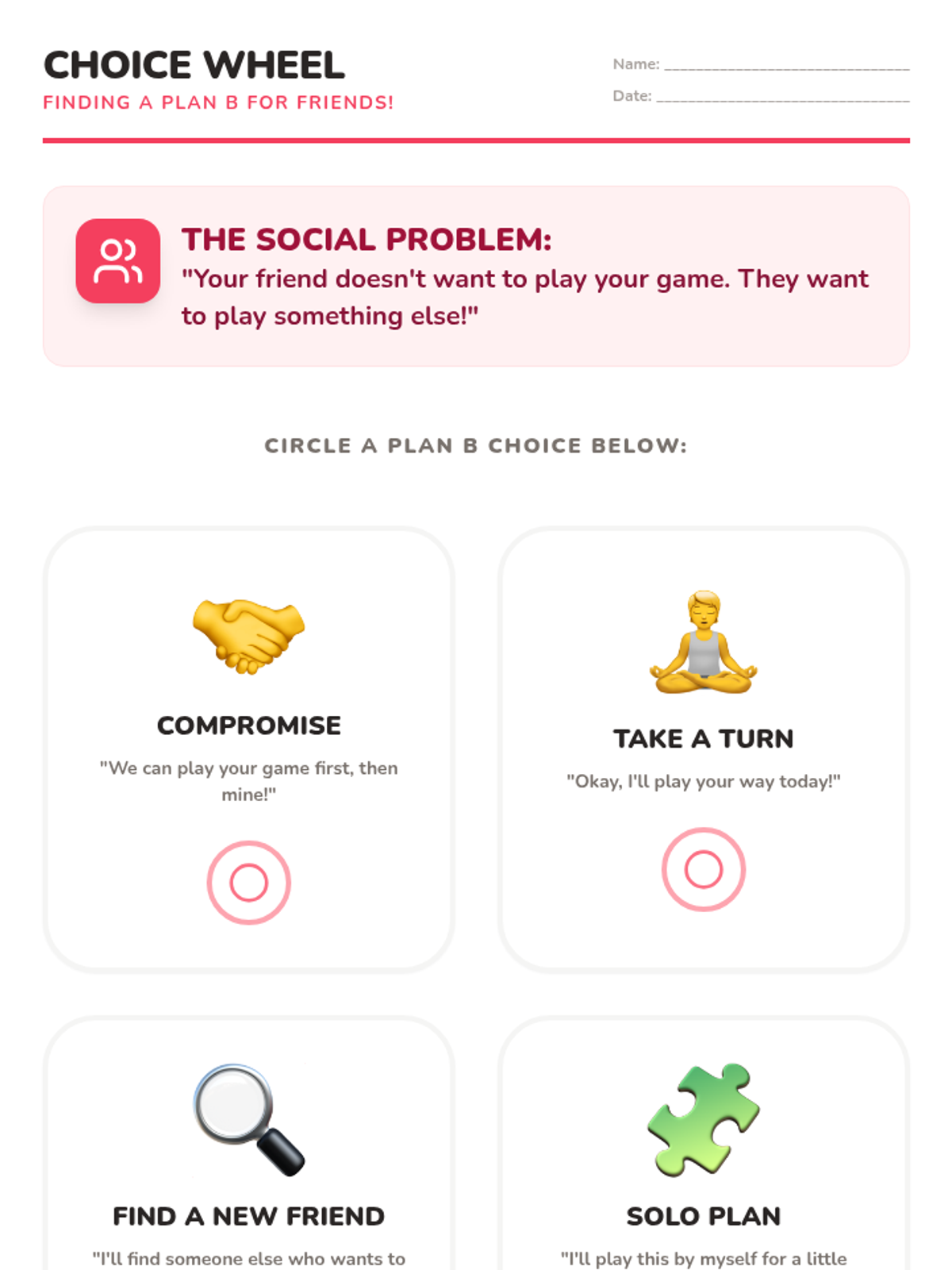
Students apply flexibility to social disruptions and routine changes, role-playing positive reactions to unexpected shifts in their day.
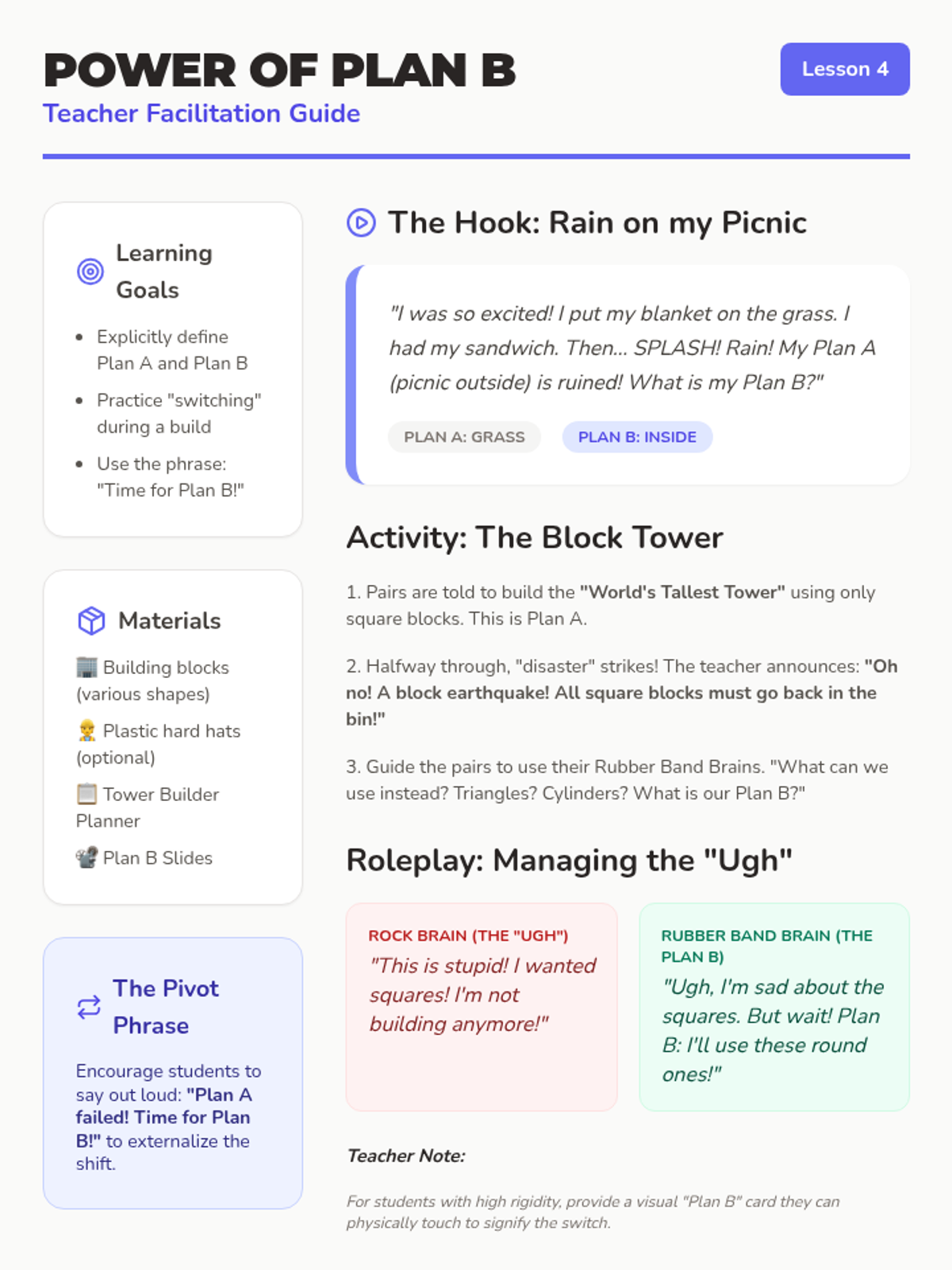
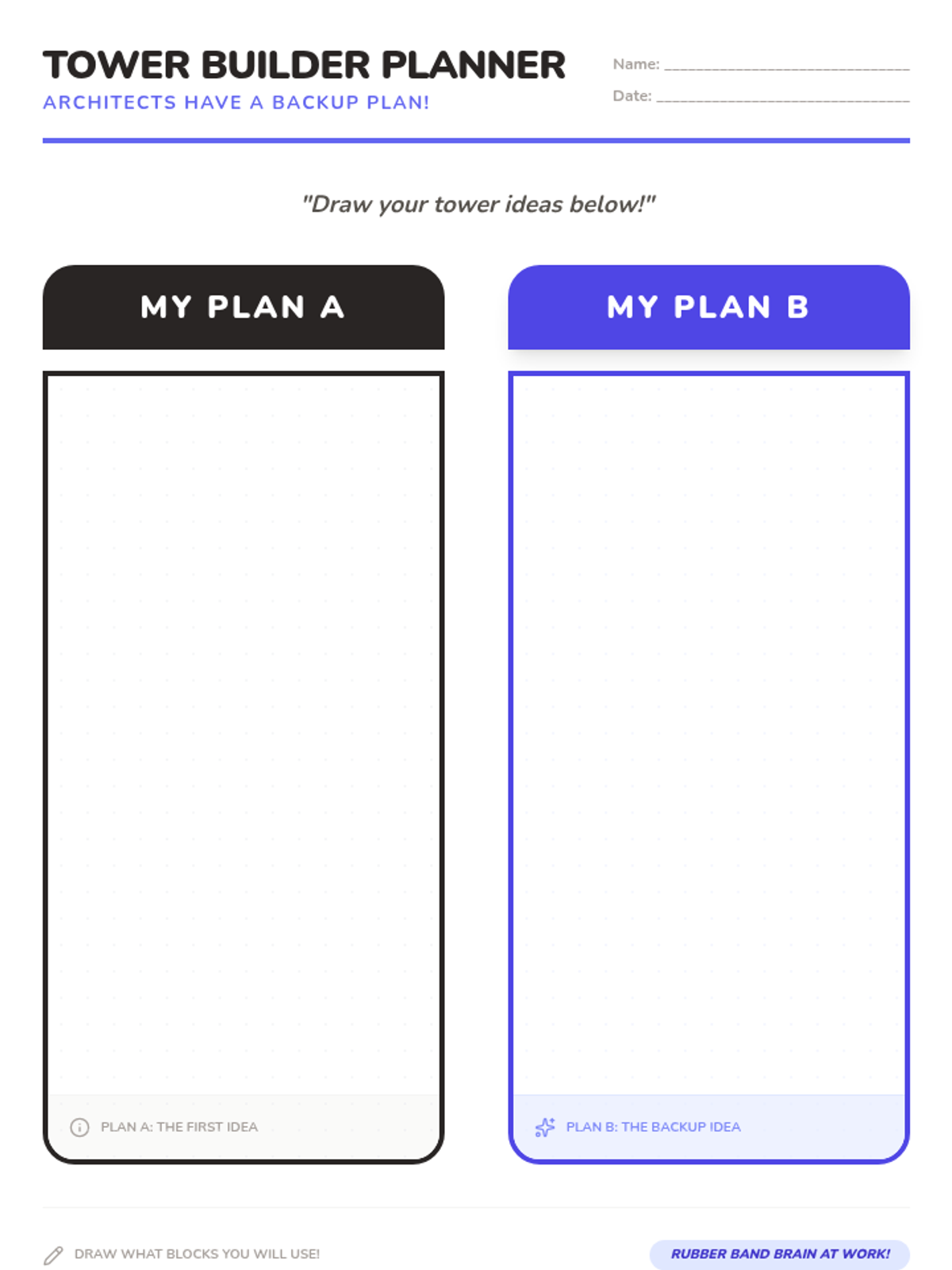
Students practice the explicit transition from 'Plan A' to 'Plan B' during collaborative building tasks, learning to pivot without emotional distress.
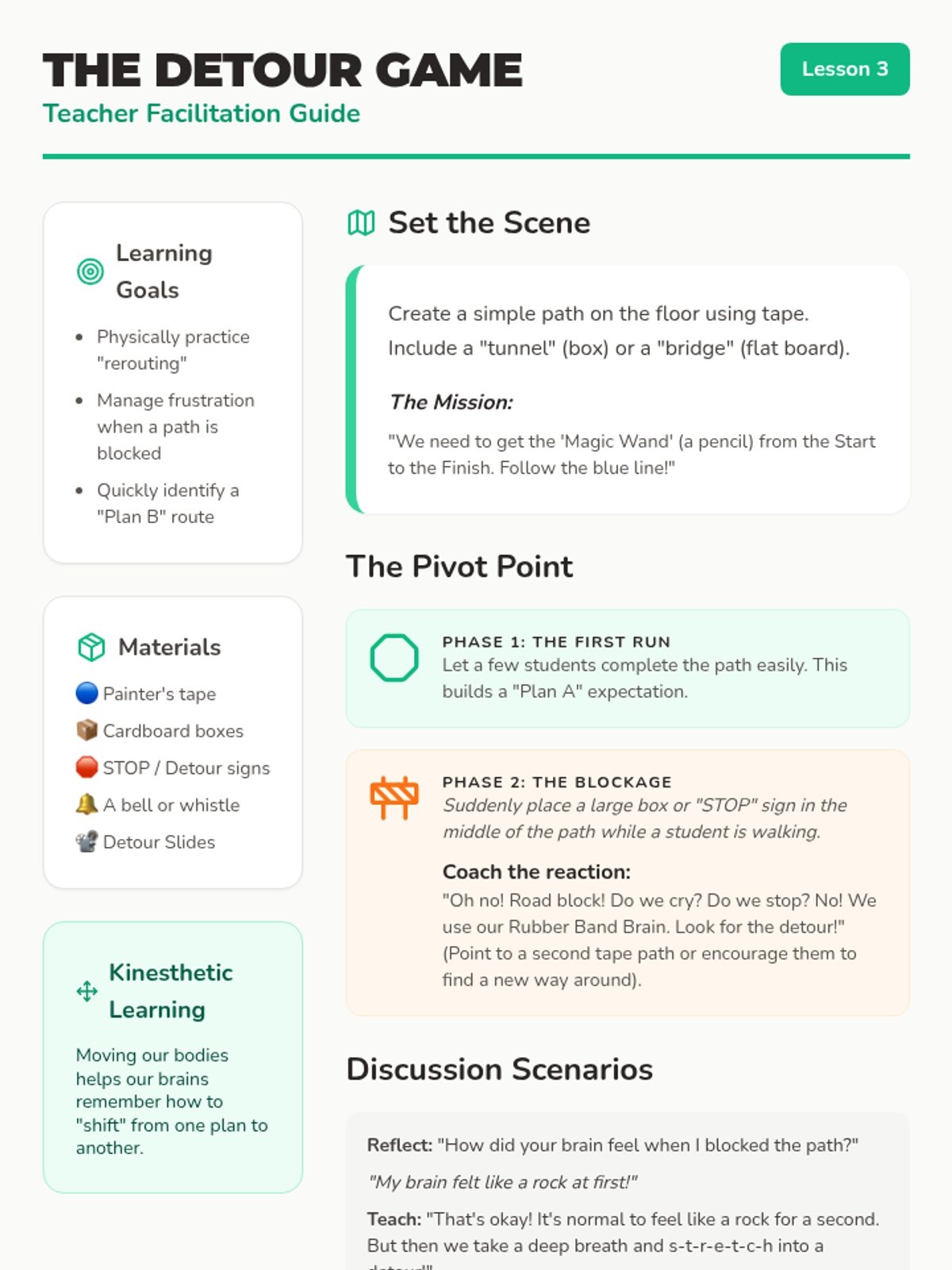
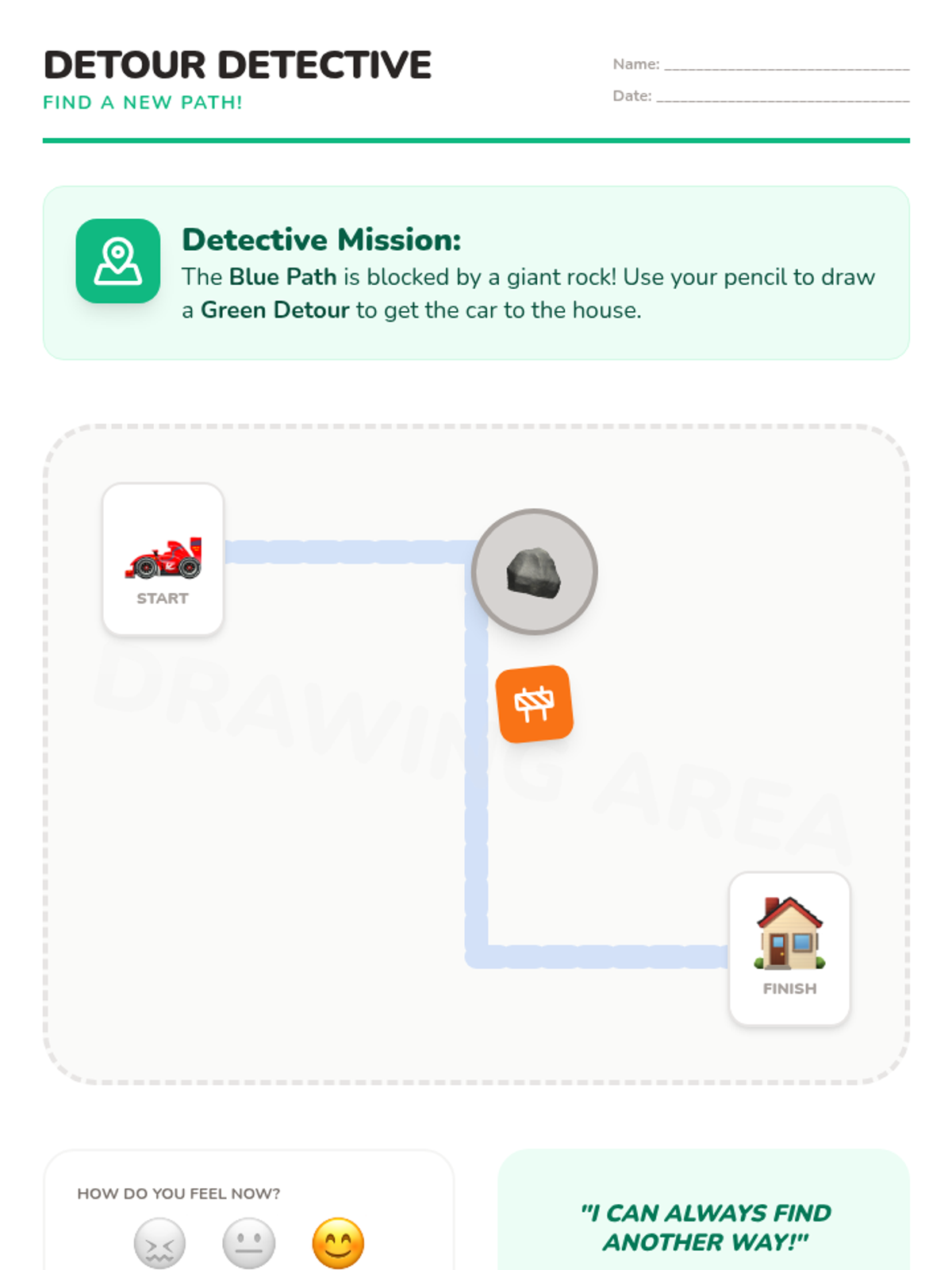
A physical obstacle course lesson where students must kinesthetically practice rerouting when their primary path is suddenly blocked.
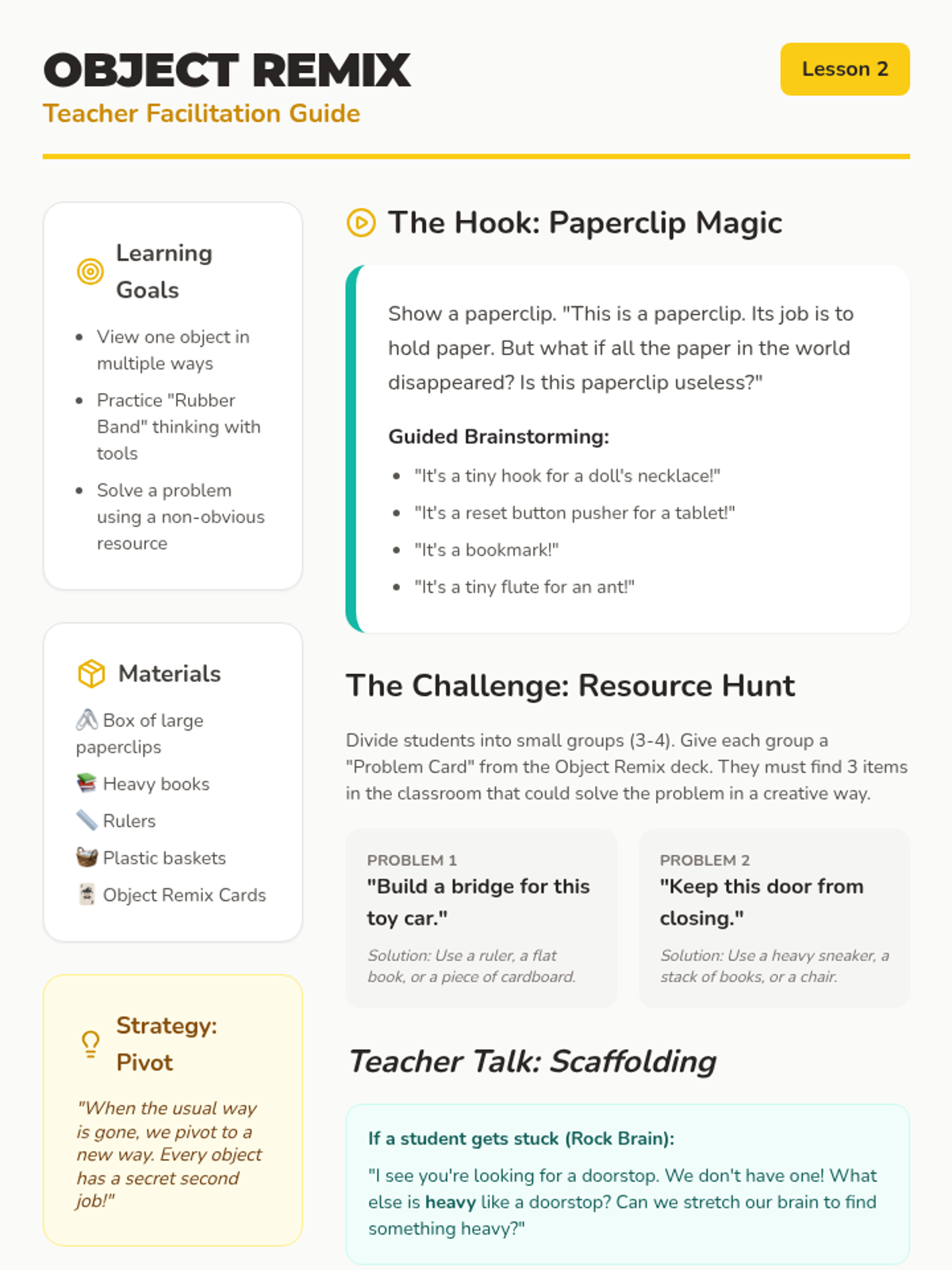
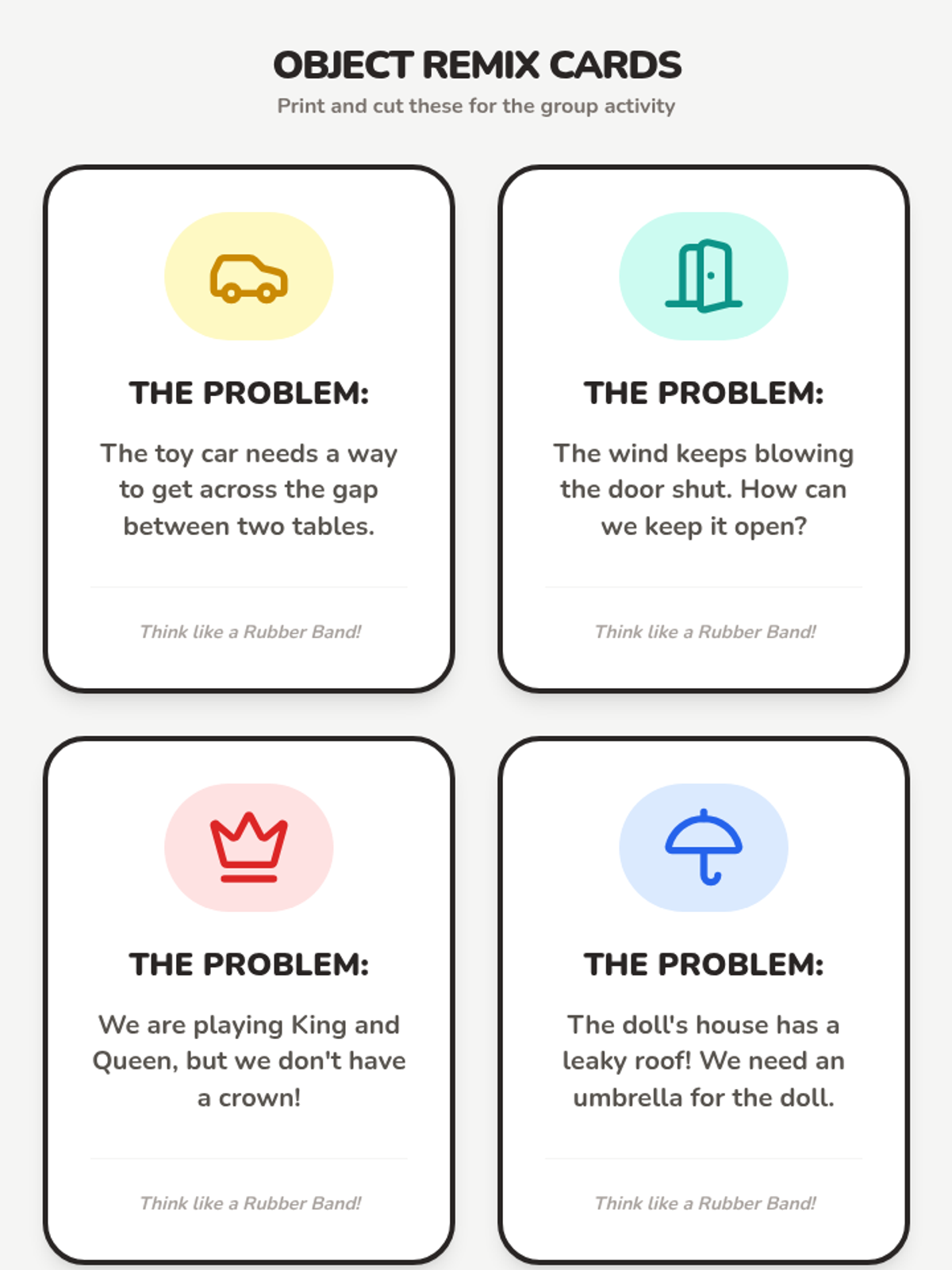
Students practice viewing resources flexibly by generating alternative uses for everyday classroom objects, fostering creative problem-solving skills.
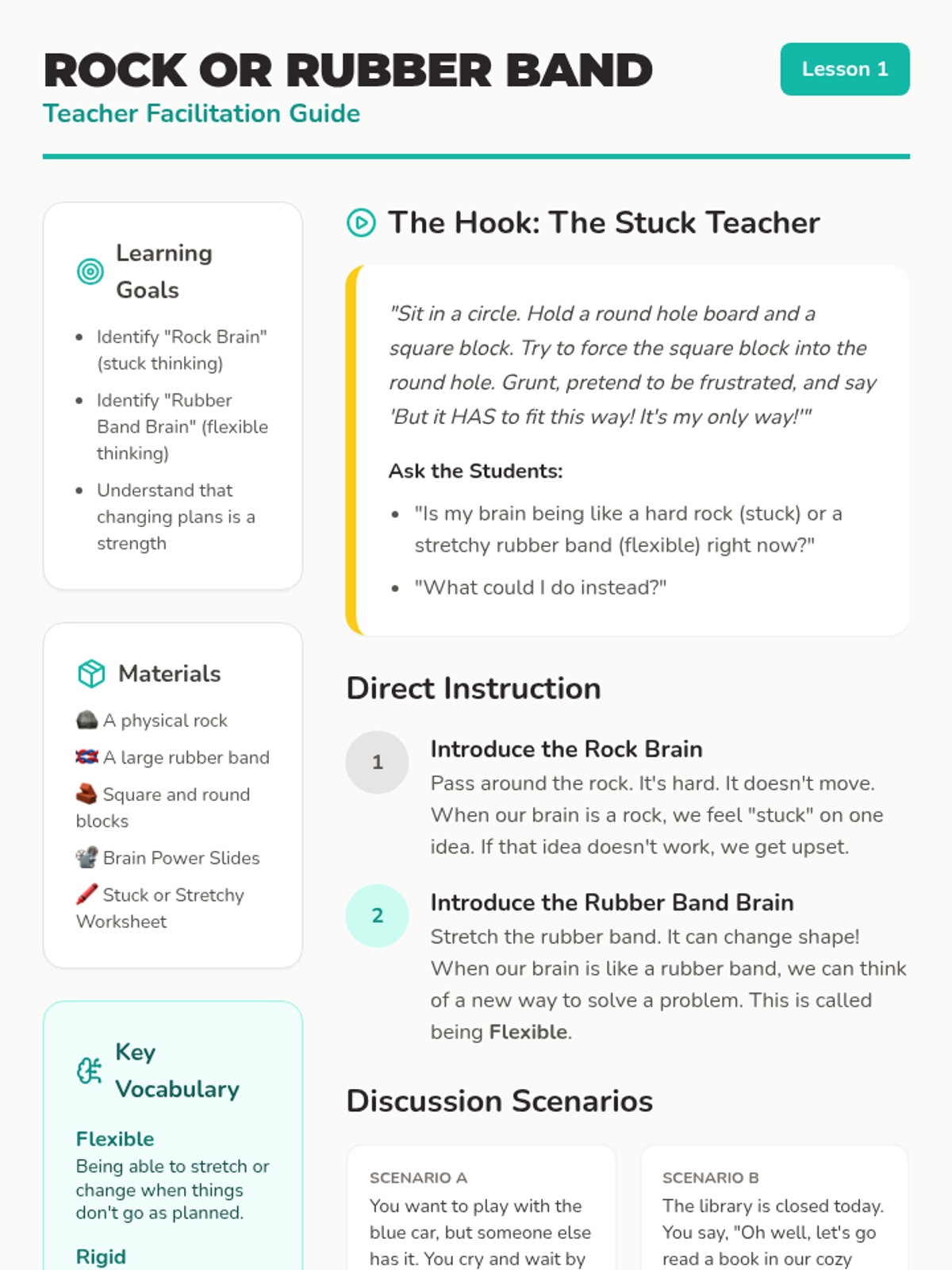
Students are introduced to the concepts of 'Rock Brain' and 'Rubber Band Brain' to distinguish between rigid and flexible thinking using physical props and simple scenarios.
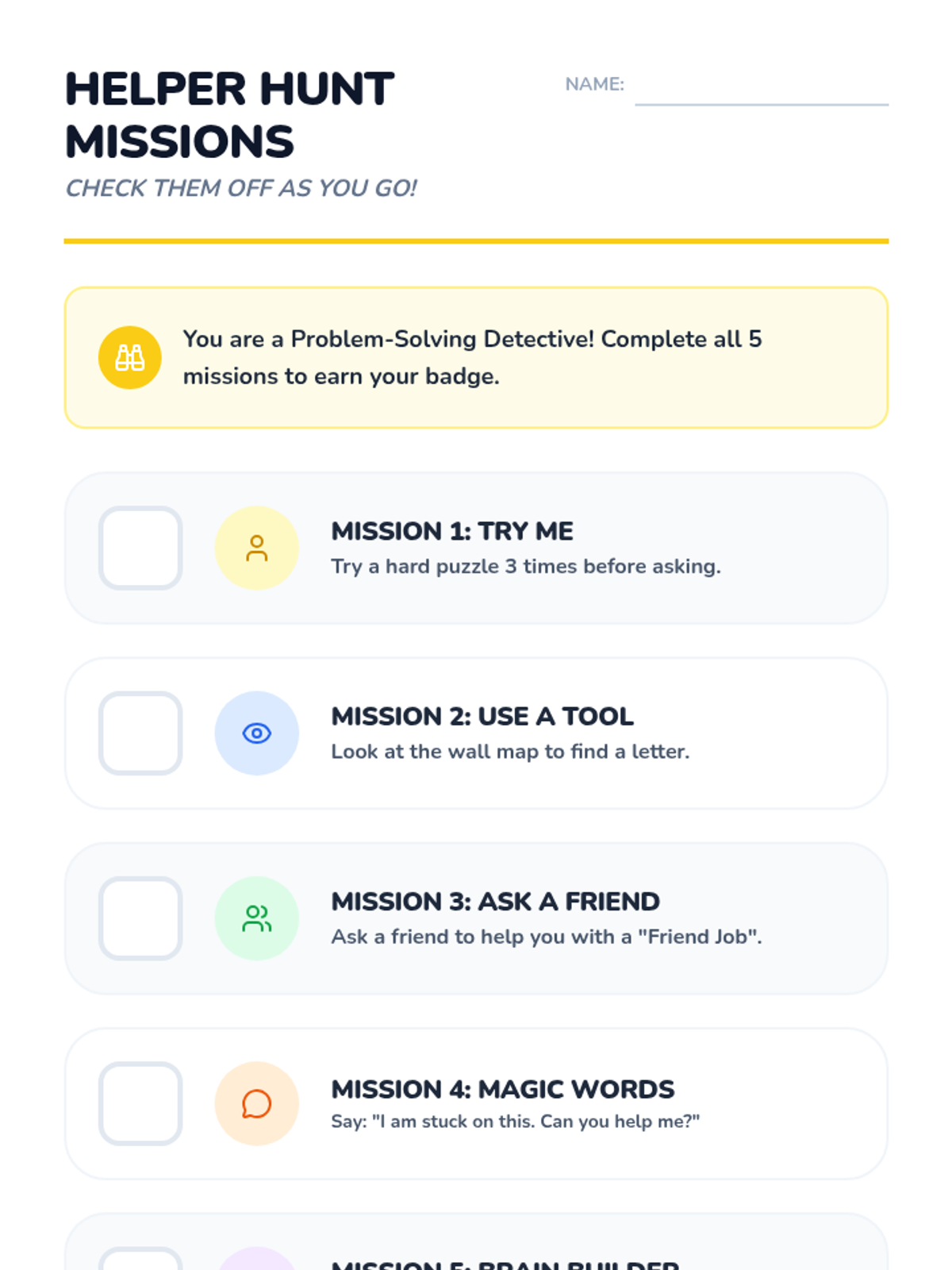
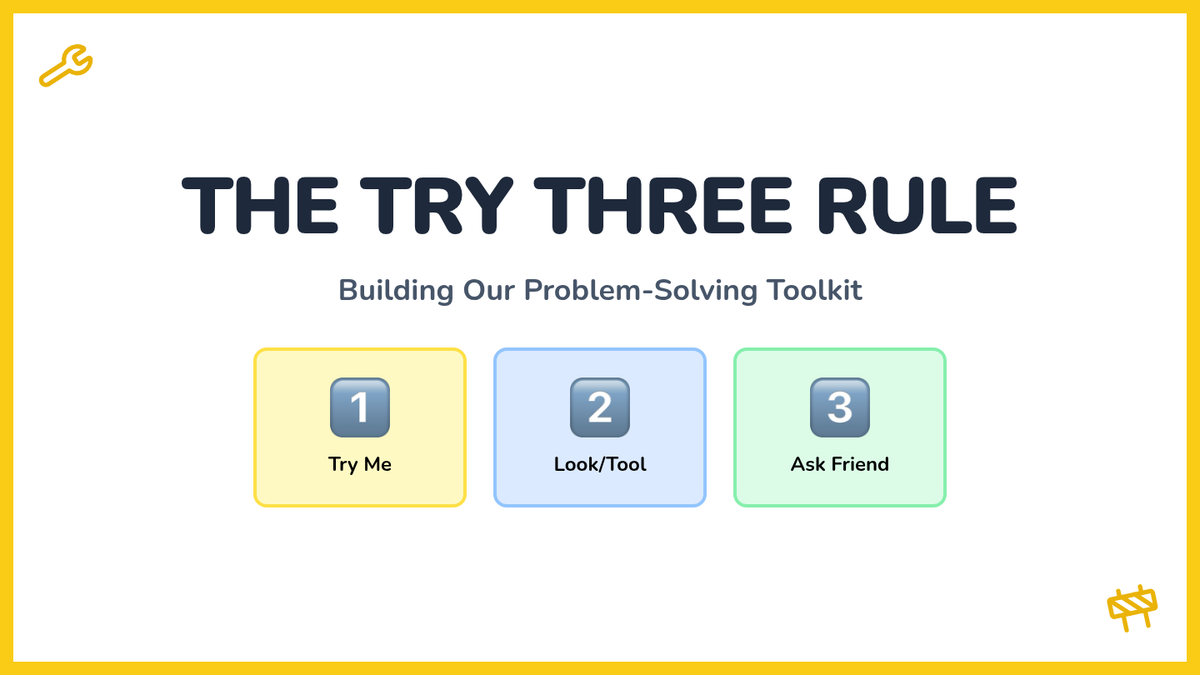
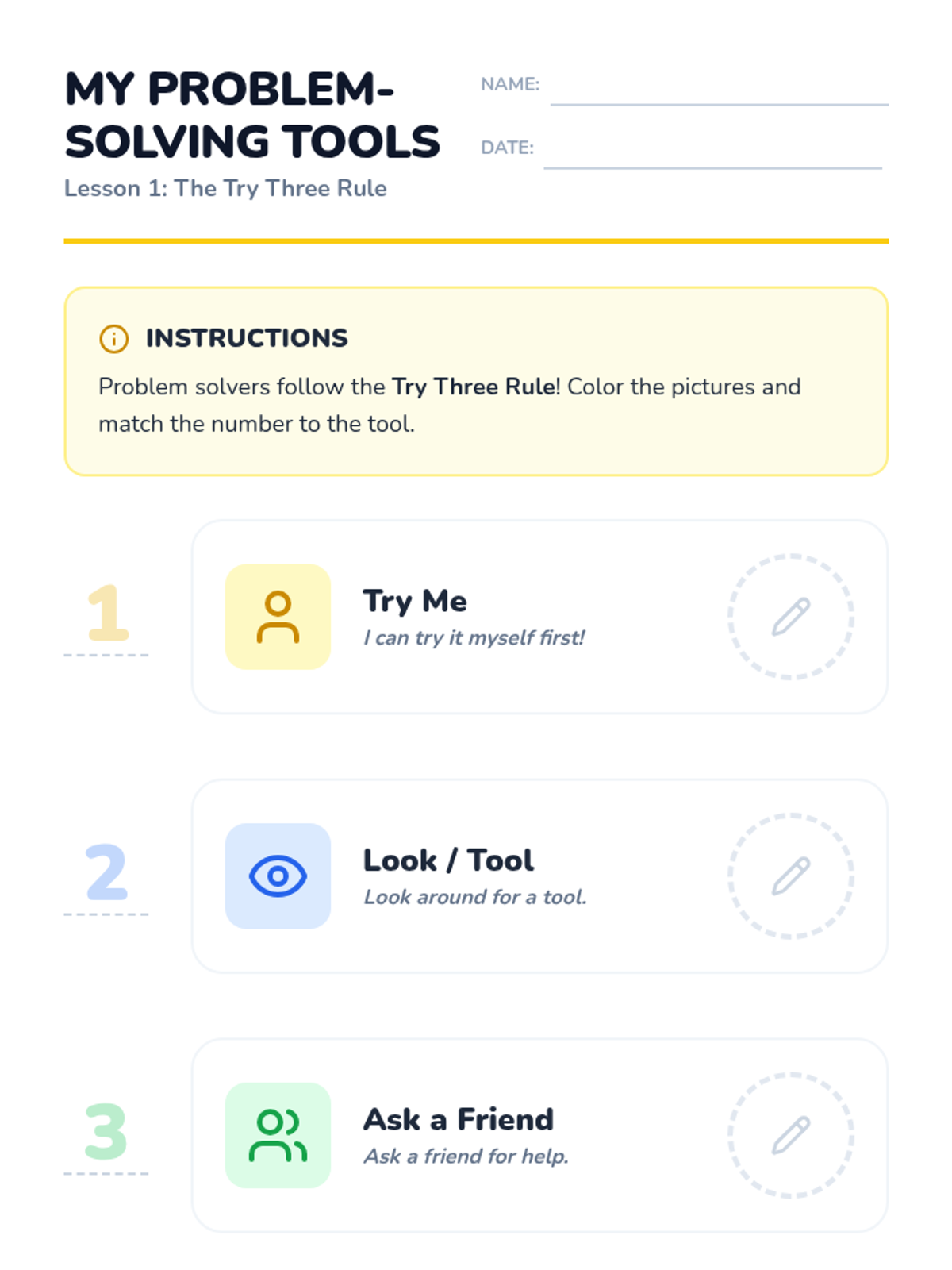
Students learn the 'Three Before Me' strategy: Try it yourself, Look around/Use a tool, and Ask a friend. This reduces immediate dependency on adult support.
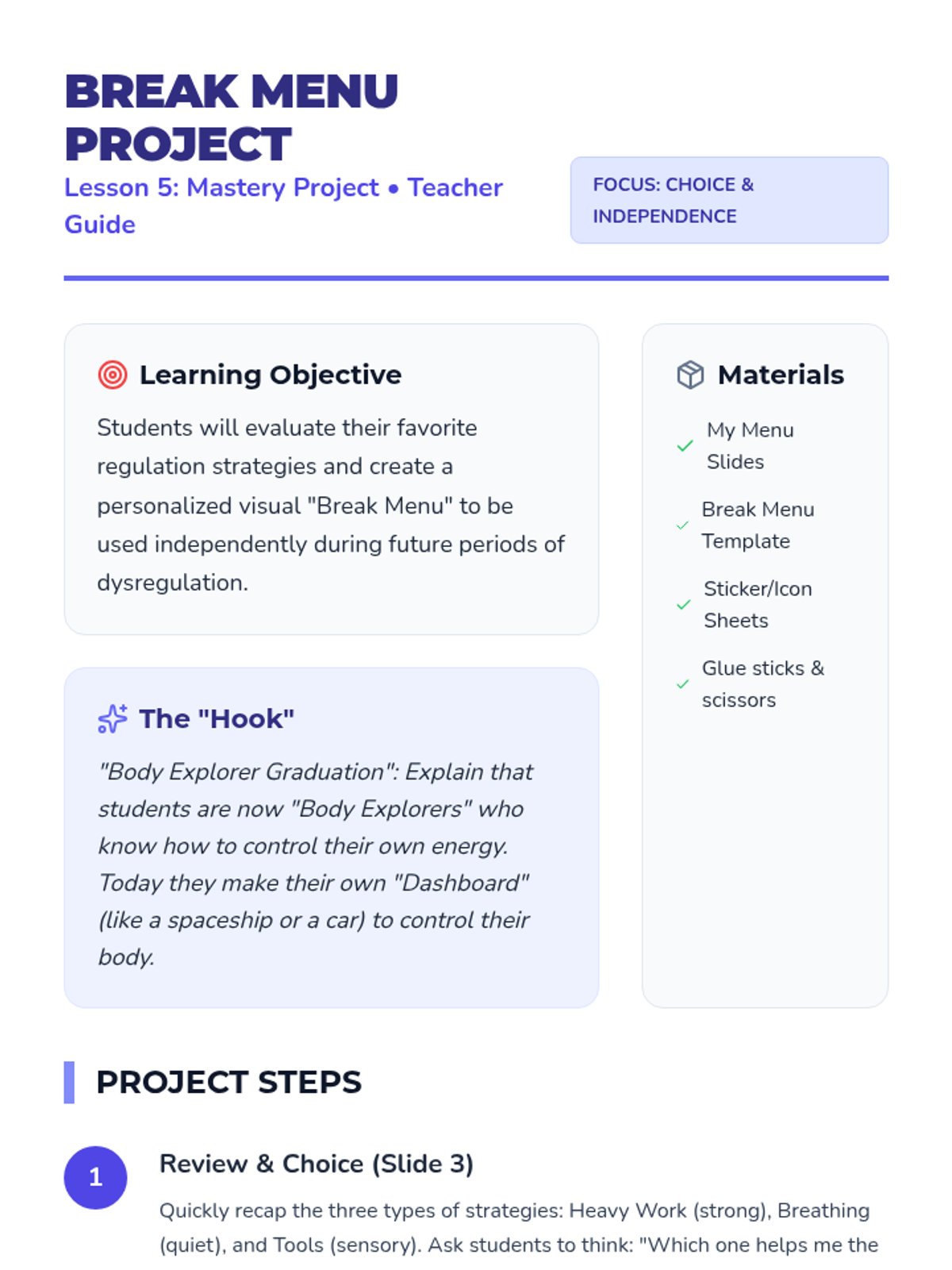
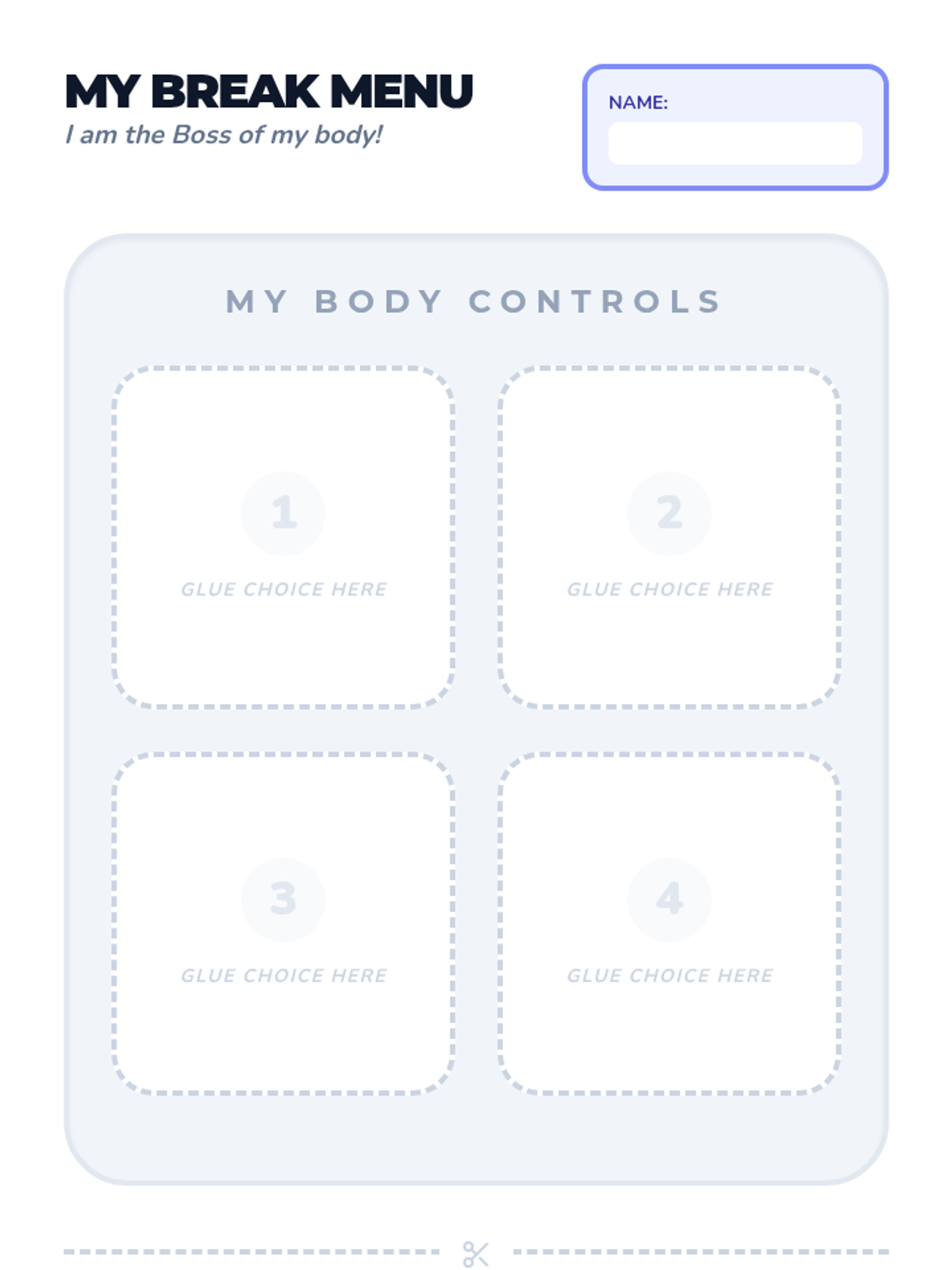
Students select their favorite regulation strategies to create a personalized visual 'Break Menu,' providing them with a permanent resource for self-regulation.
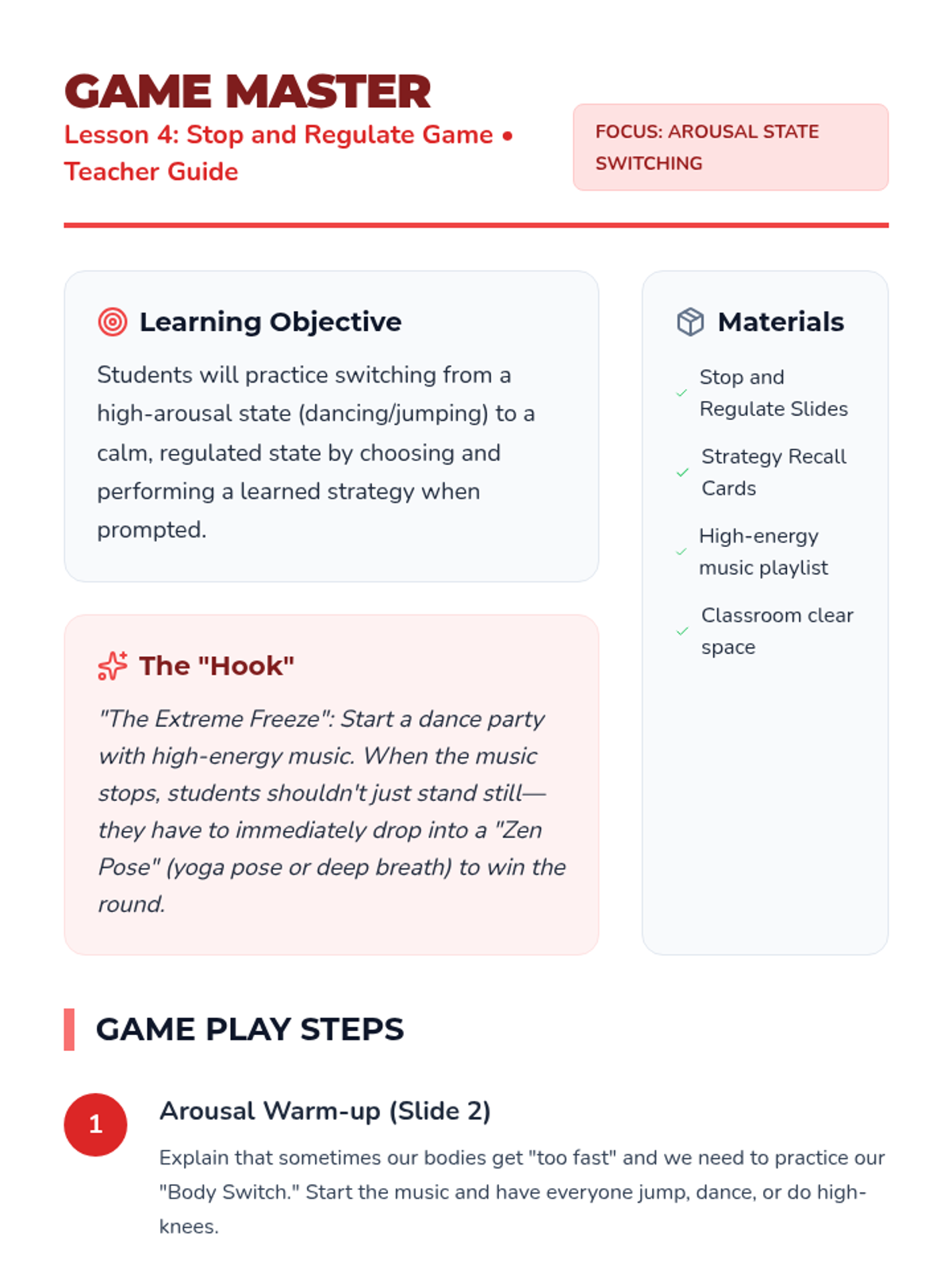
A structured game practicing the switch from high energy to calm regulation, simulating the real-time need for strategic breaks.
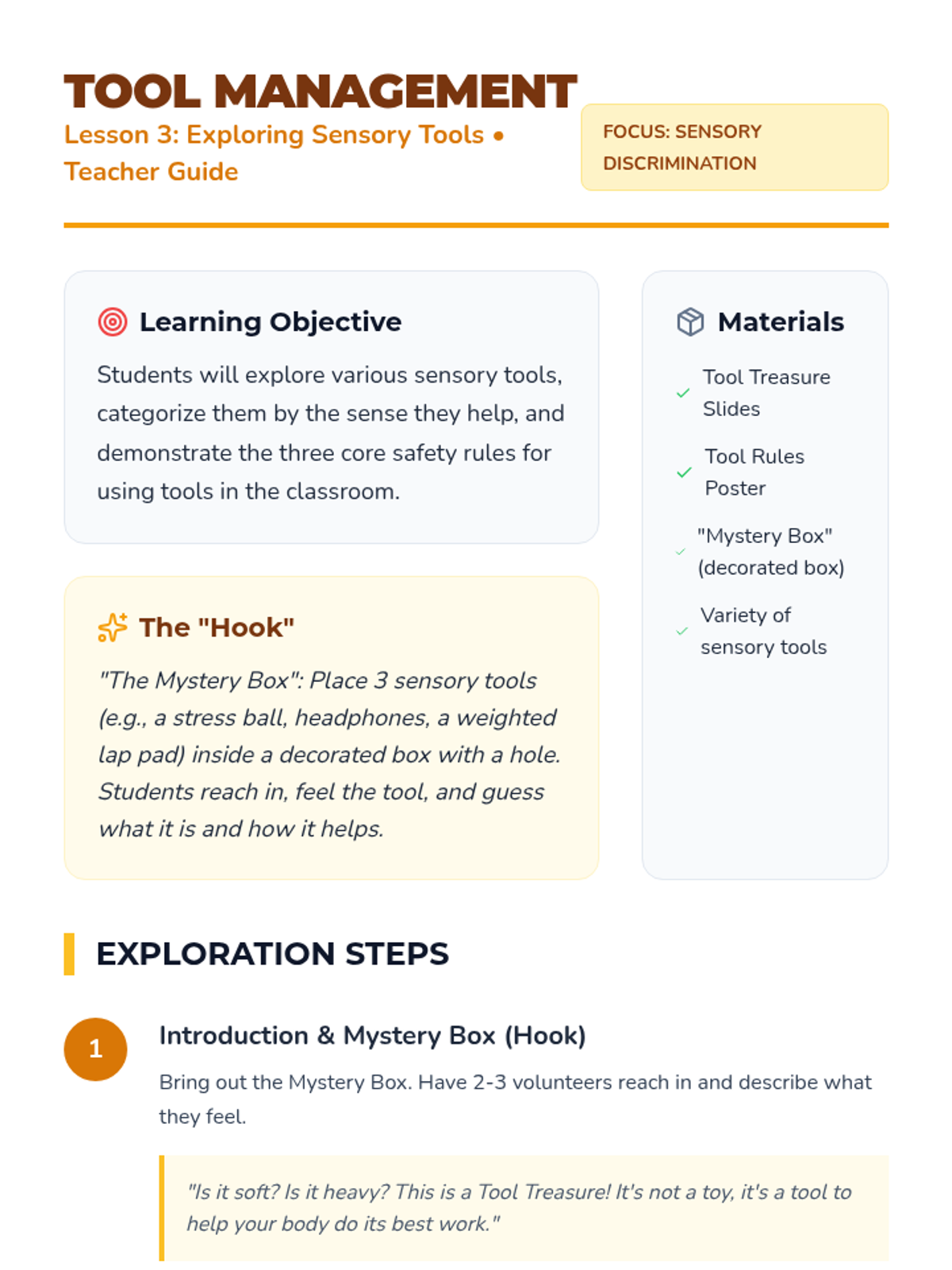
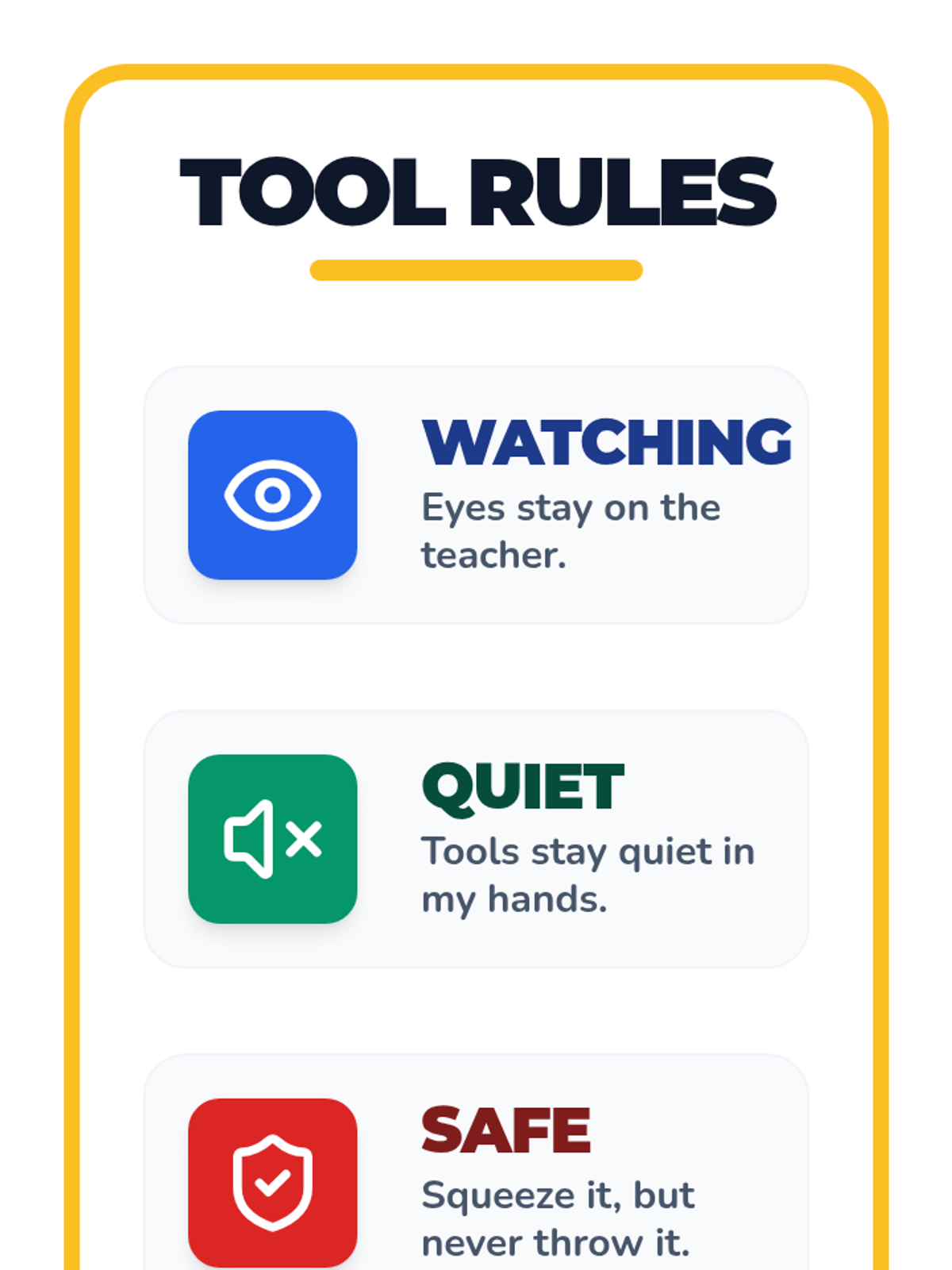
Students explore sensory tools like fidgets and noise-canceling headphones, learning the appropriate ways to use them safely for regulation.
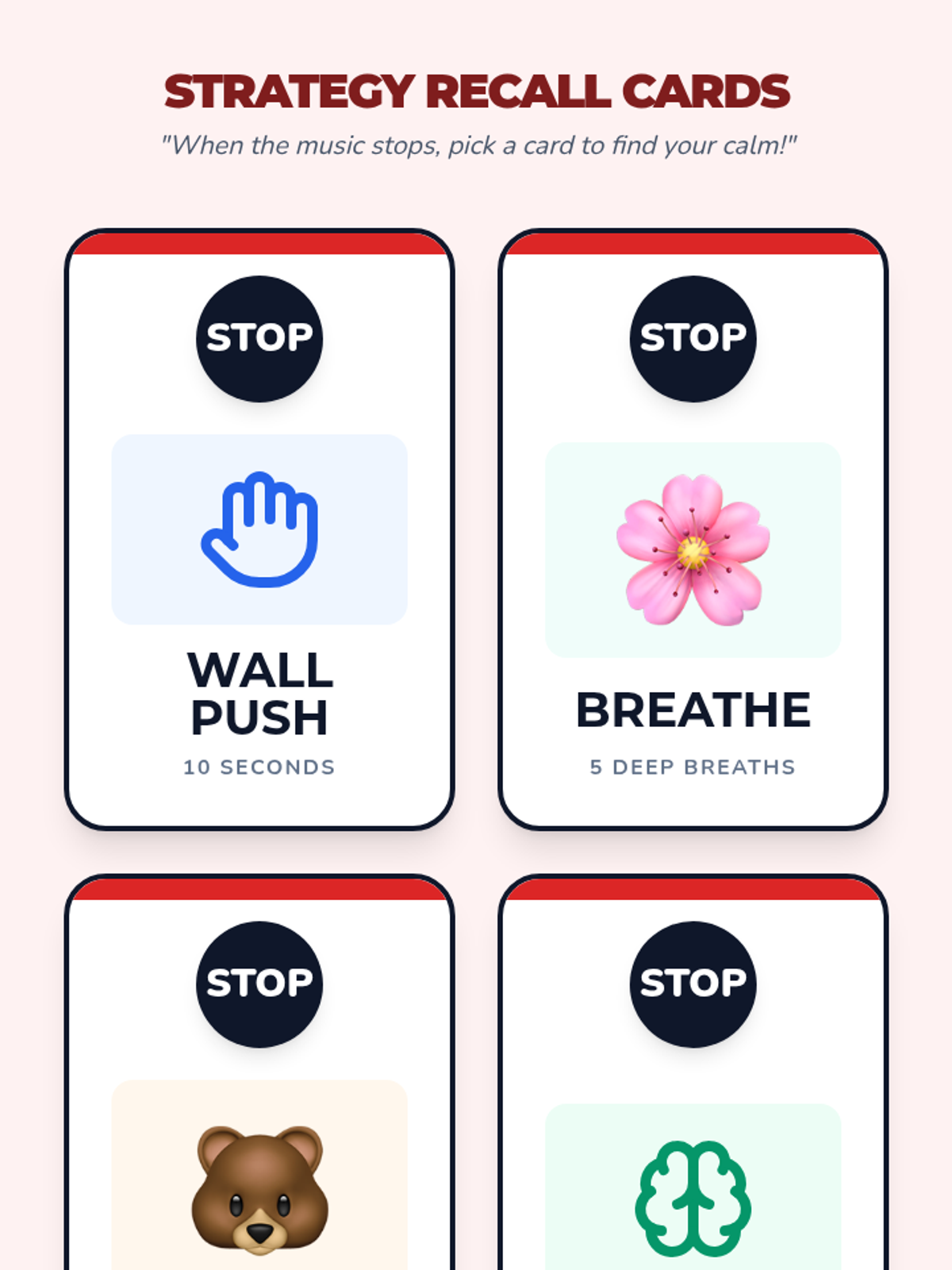
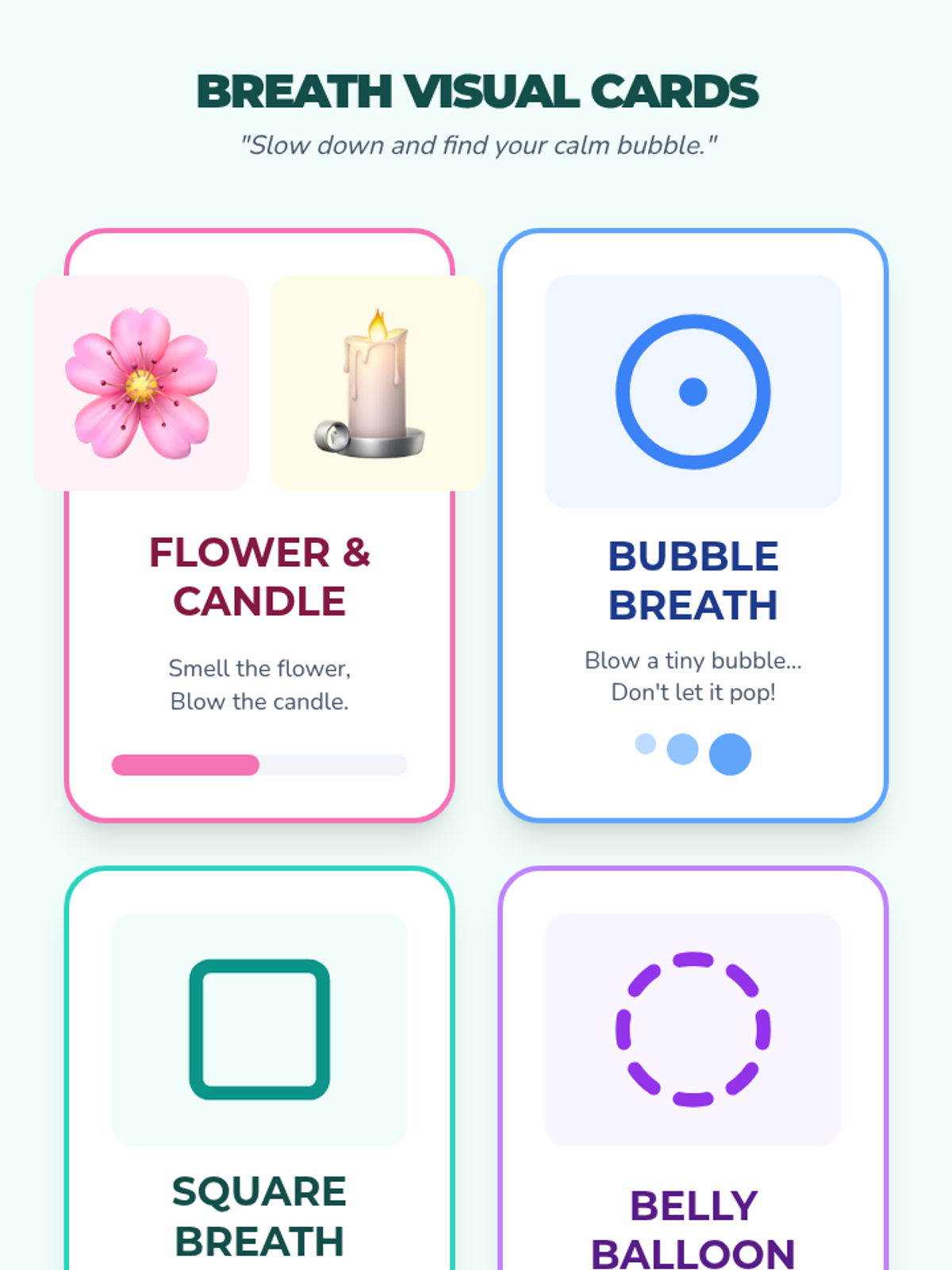
Students learn and practice deep breathing techniques using visual aids to help slow their heart rate and calm their physical bodies.
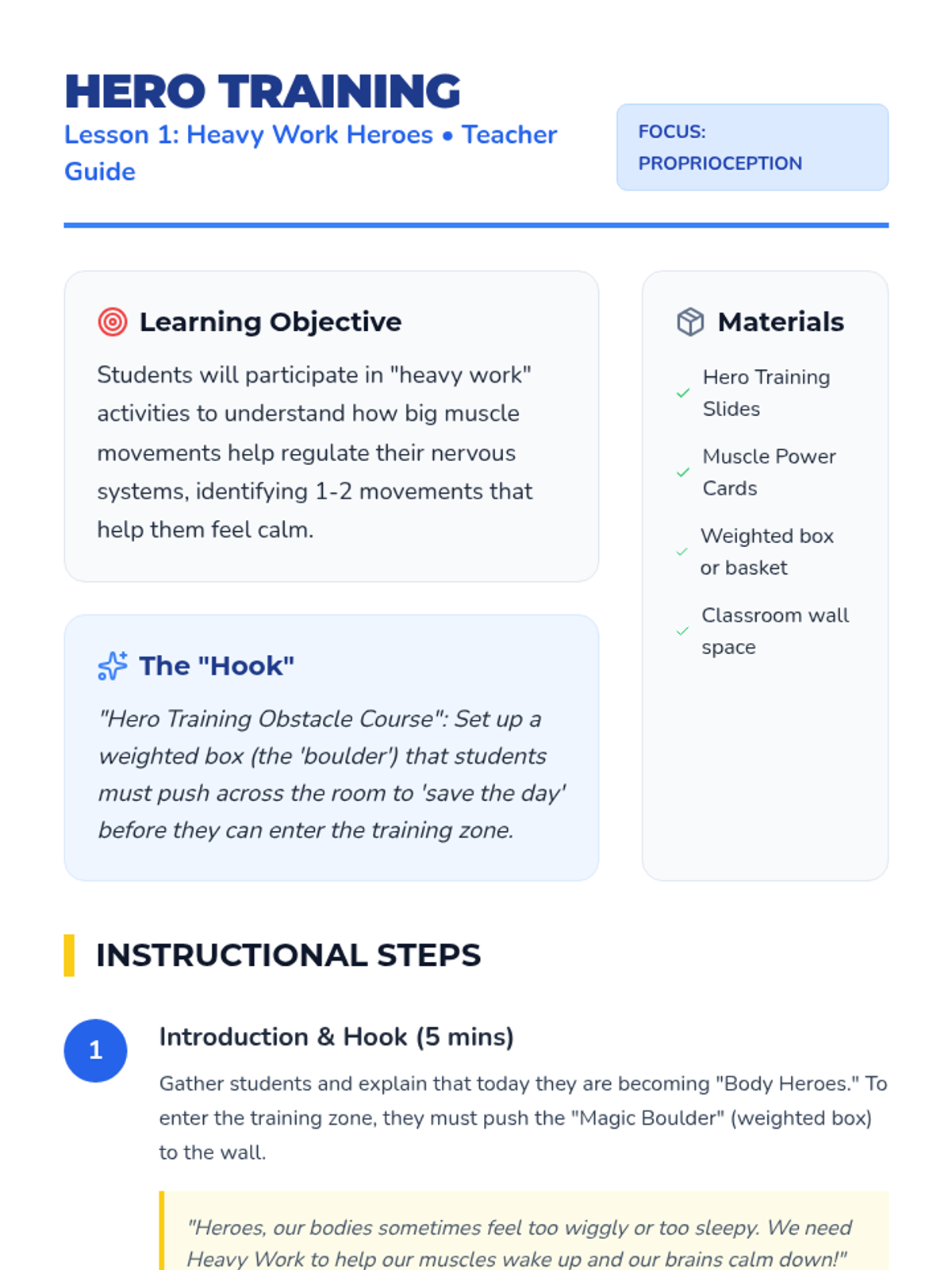
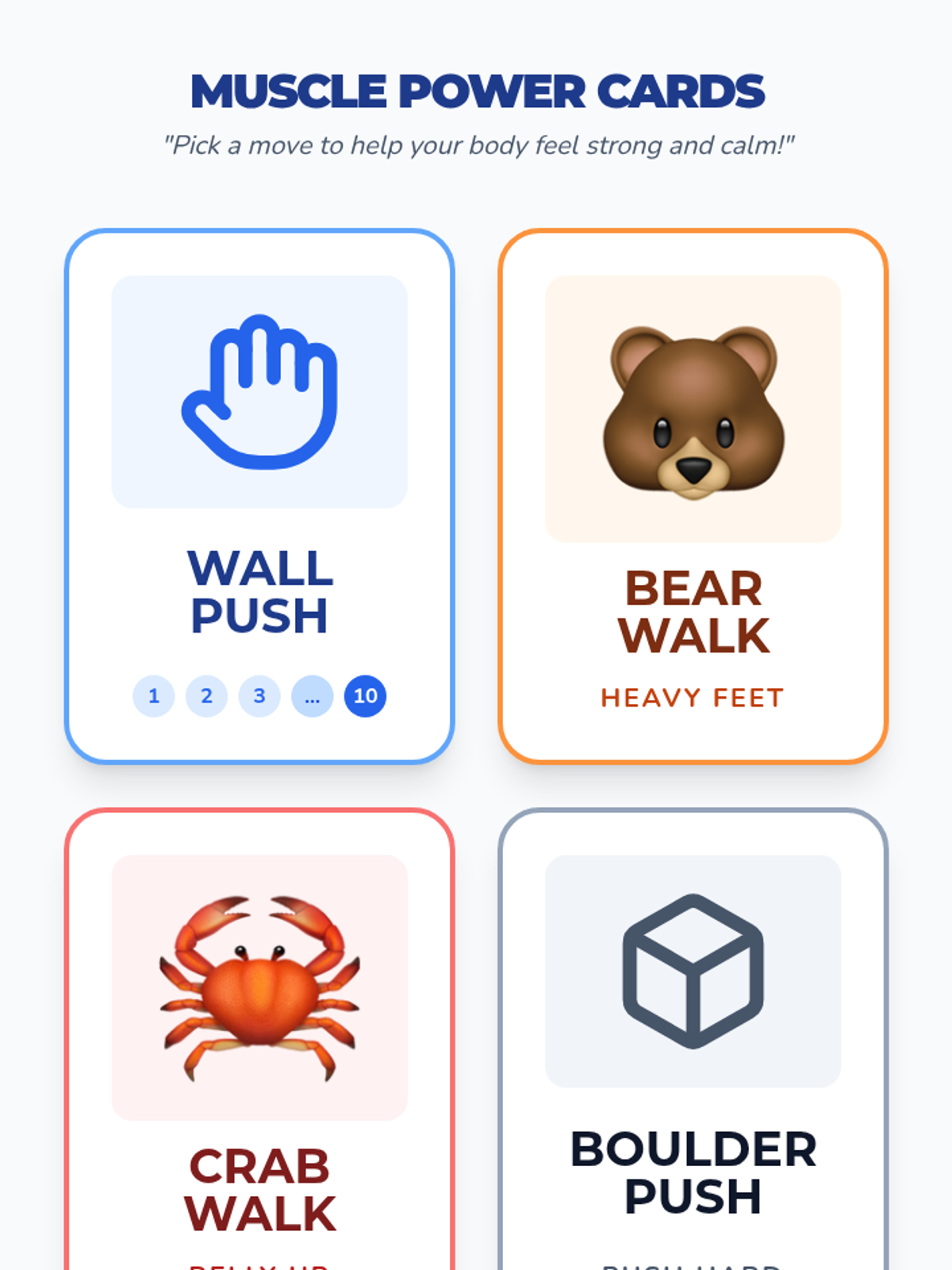
Students engage in proprioceptive 'heavy work' activities like wall pushes and animal walks to understand how strong movements help calm the brain and wake up muscles.
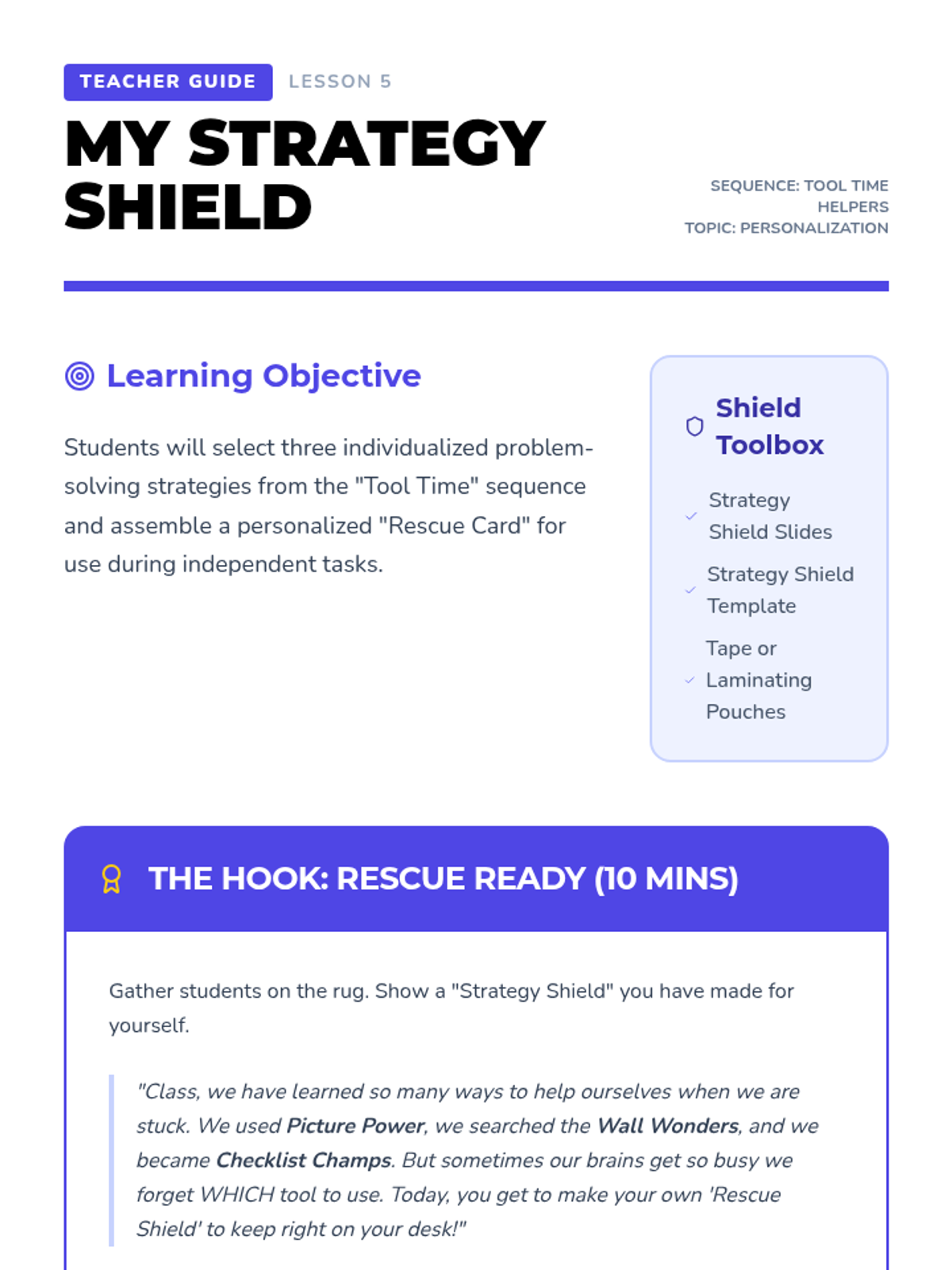
Students create a personalized 'Rescue Card' with pictures of their favorite strategies to use as a desk-side reference during independent work.
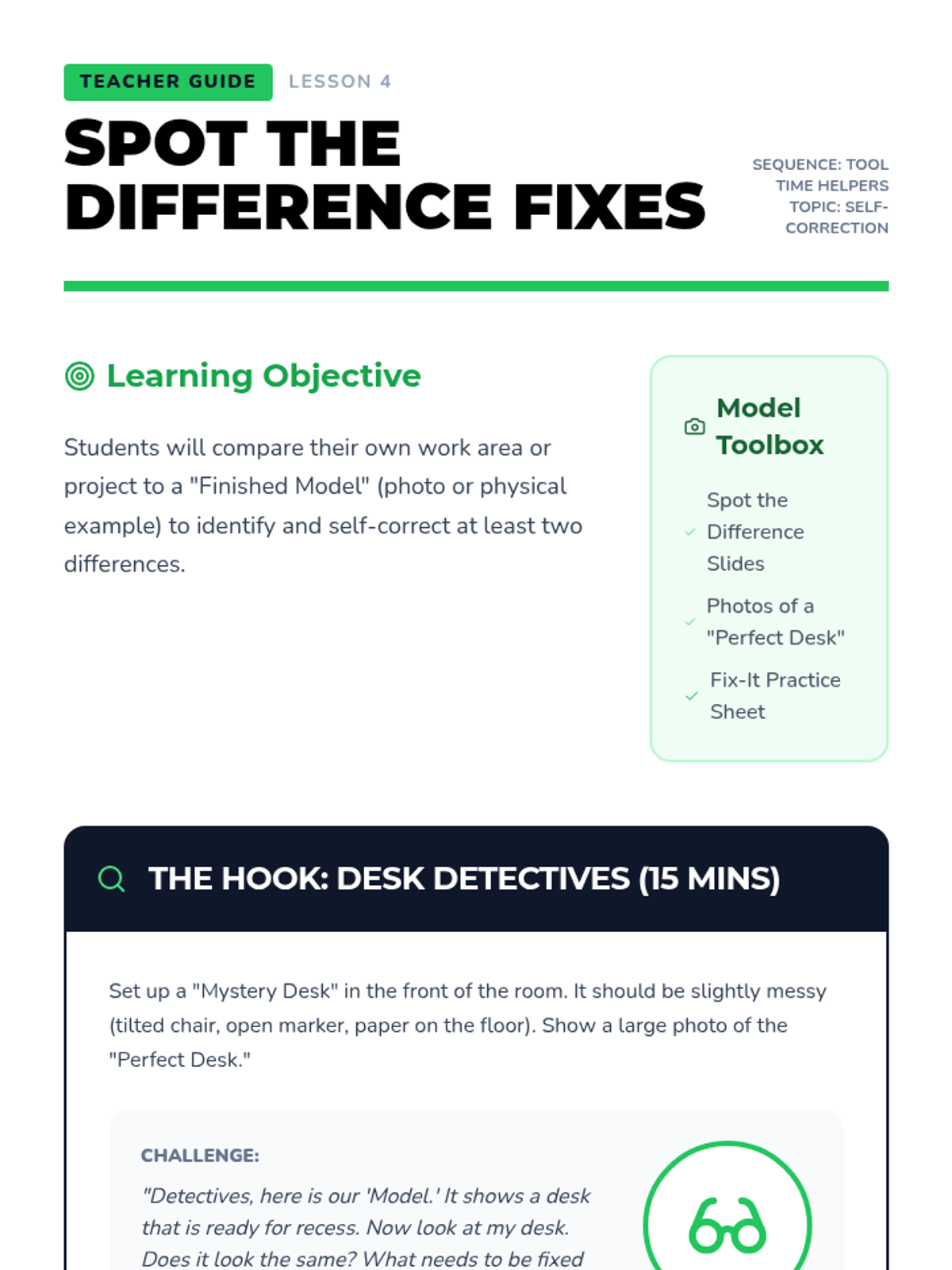
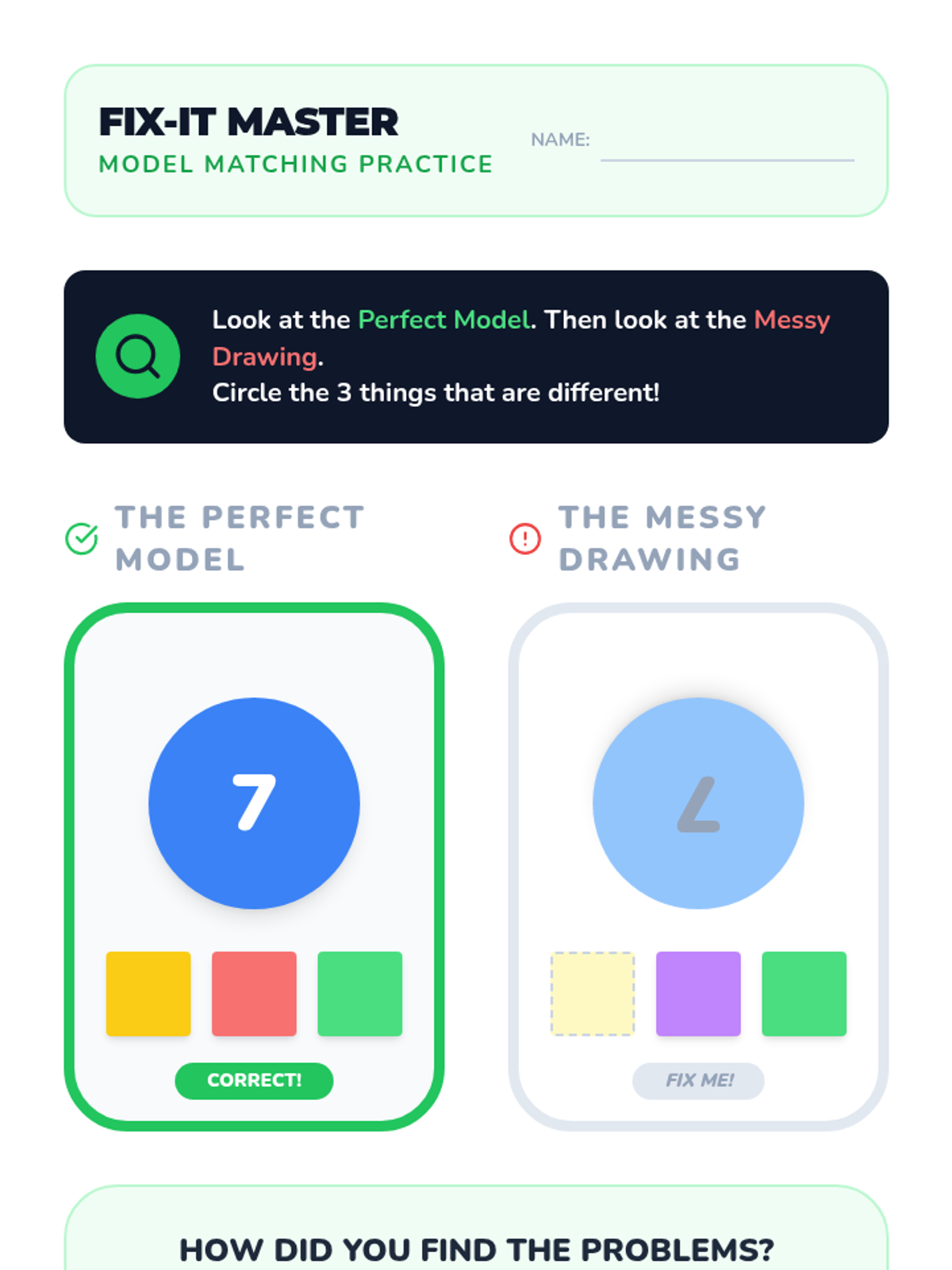
Students learn to compare their work to a 'finished model' to identify and self-correct errors in their own task execution.
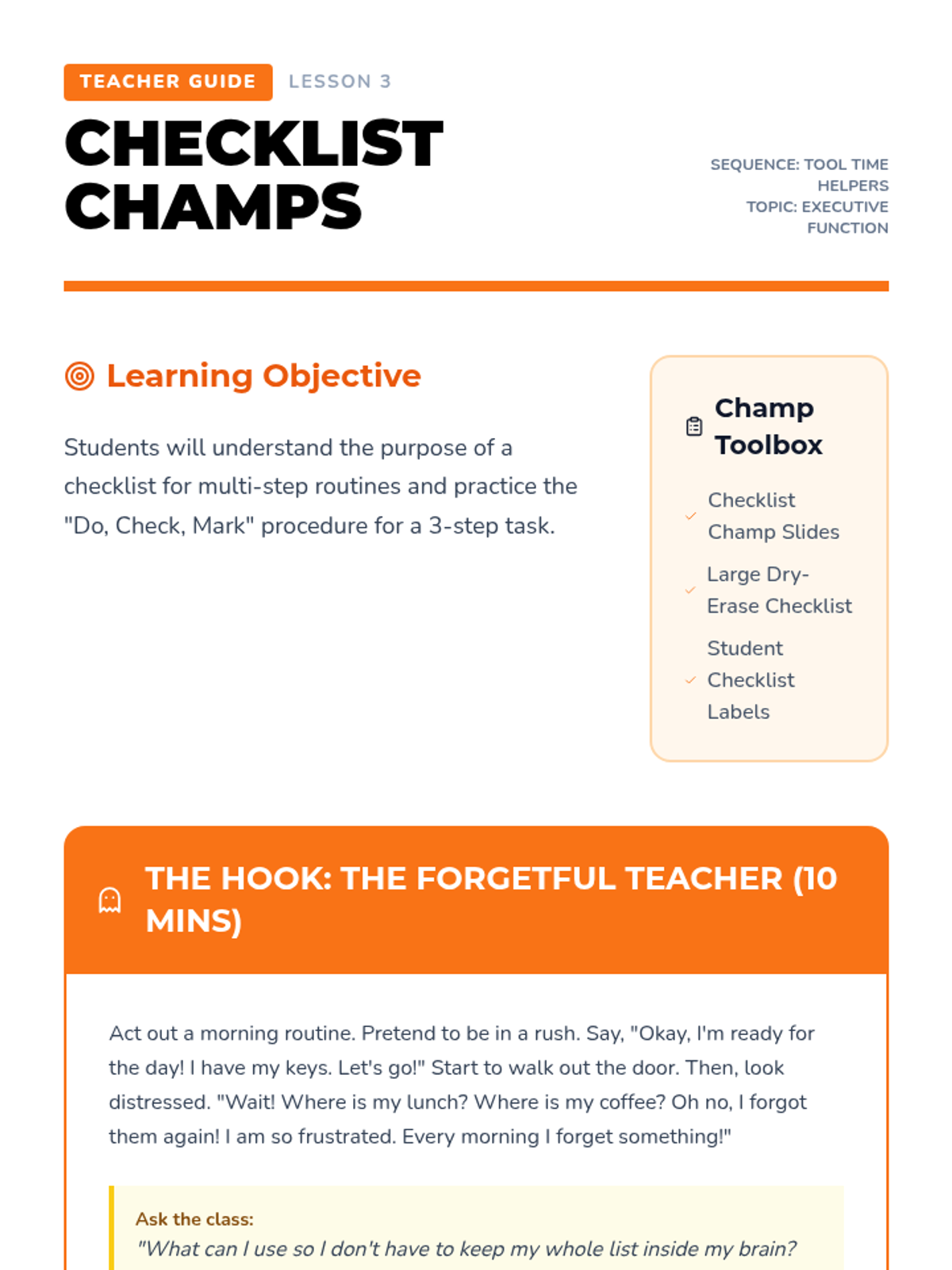
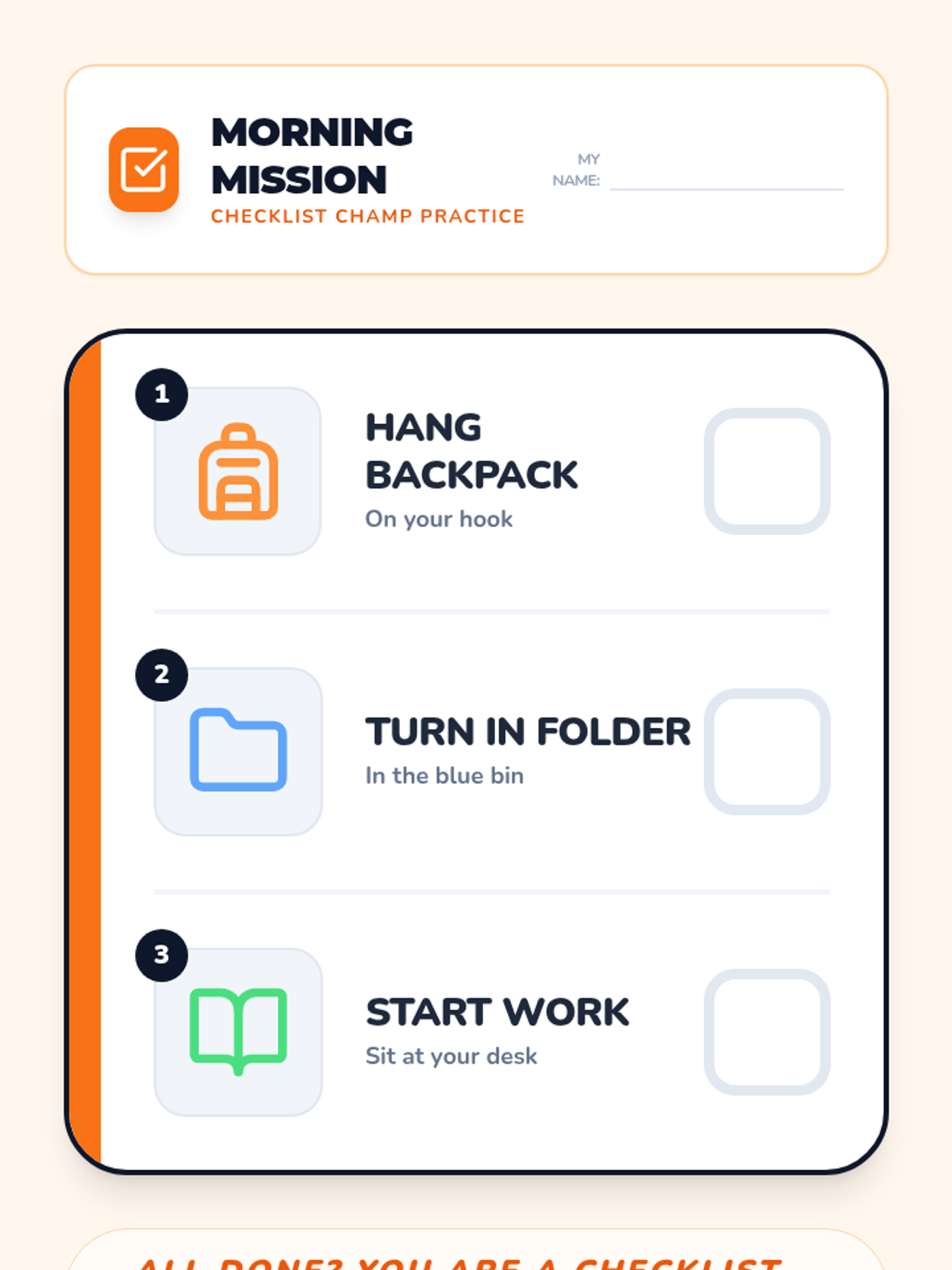
Introduction to simple 3-item checklists for common routines, teaching the executive function skill of tracking task completion.
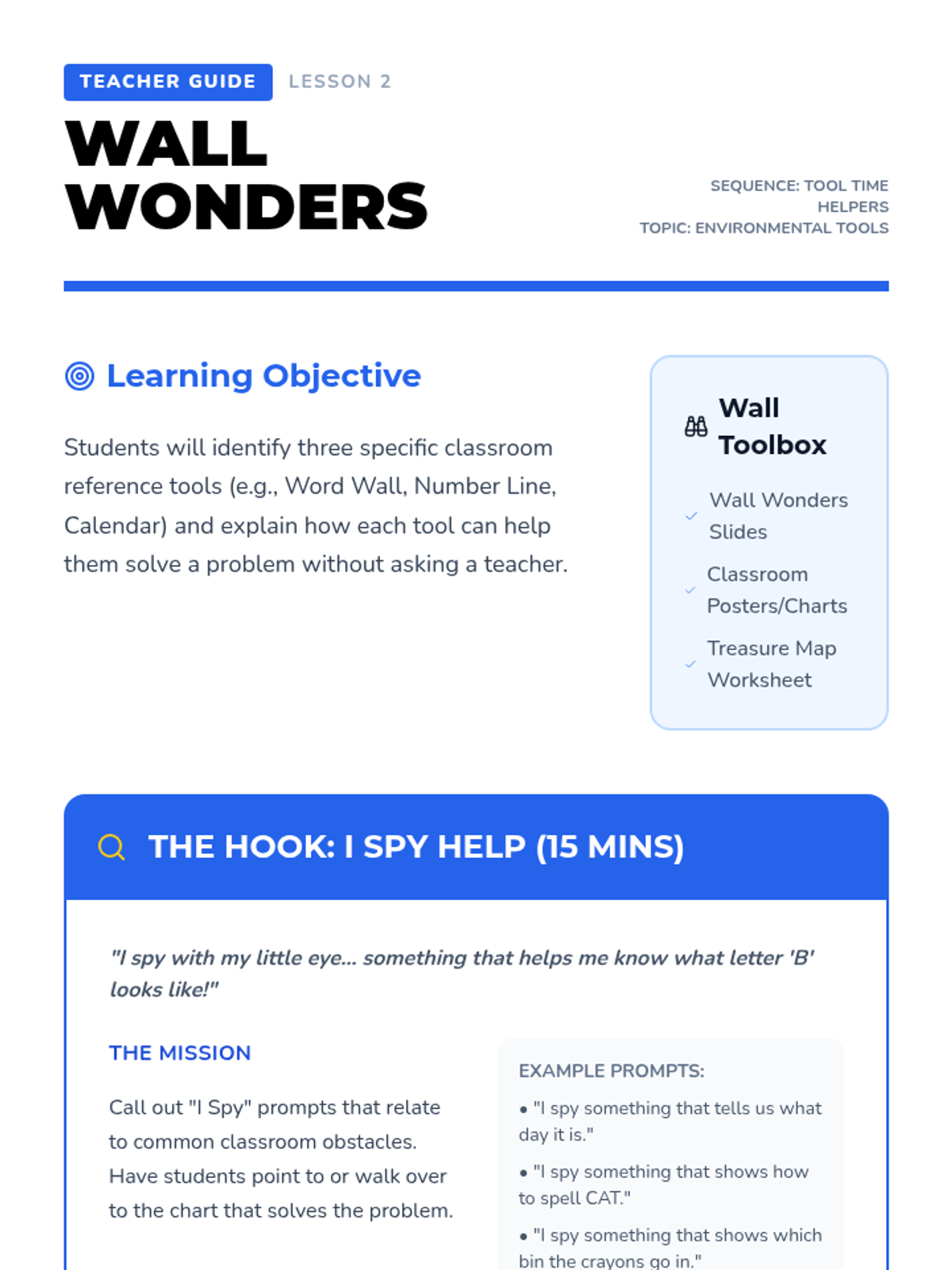
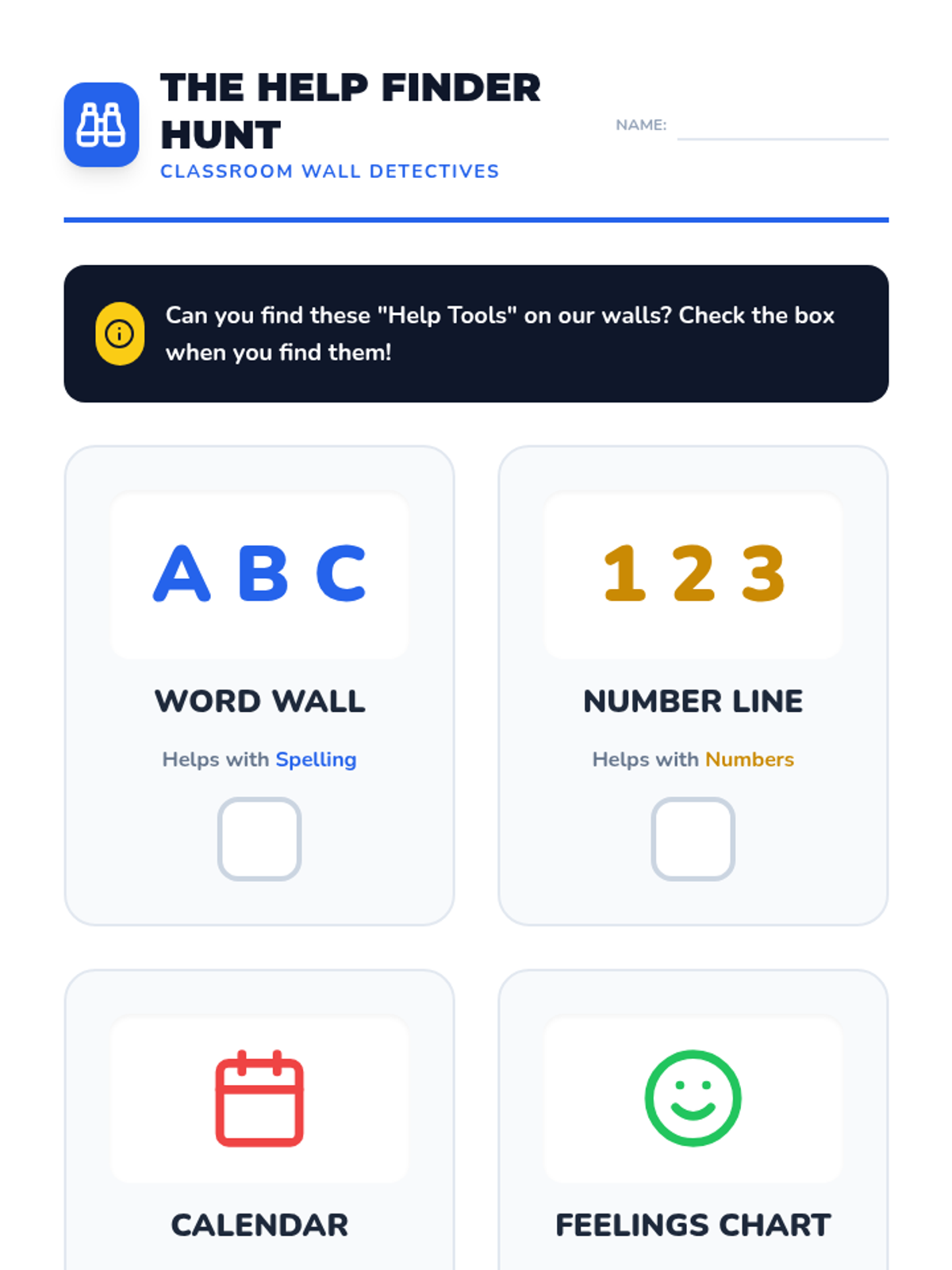
Students explore classroom 'Toolbox' items like alphabet charts and number lines to find information independently rather than asking a person.
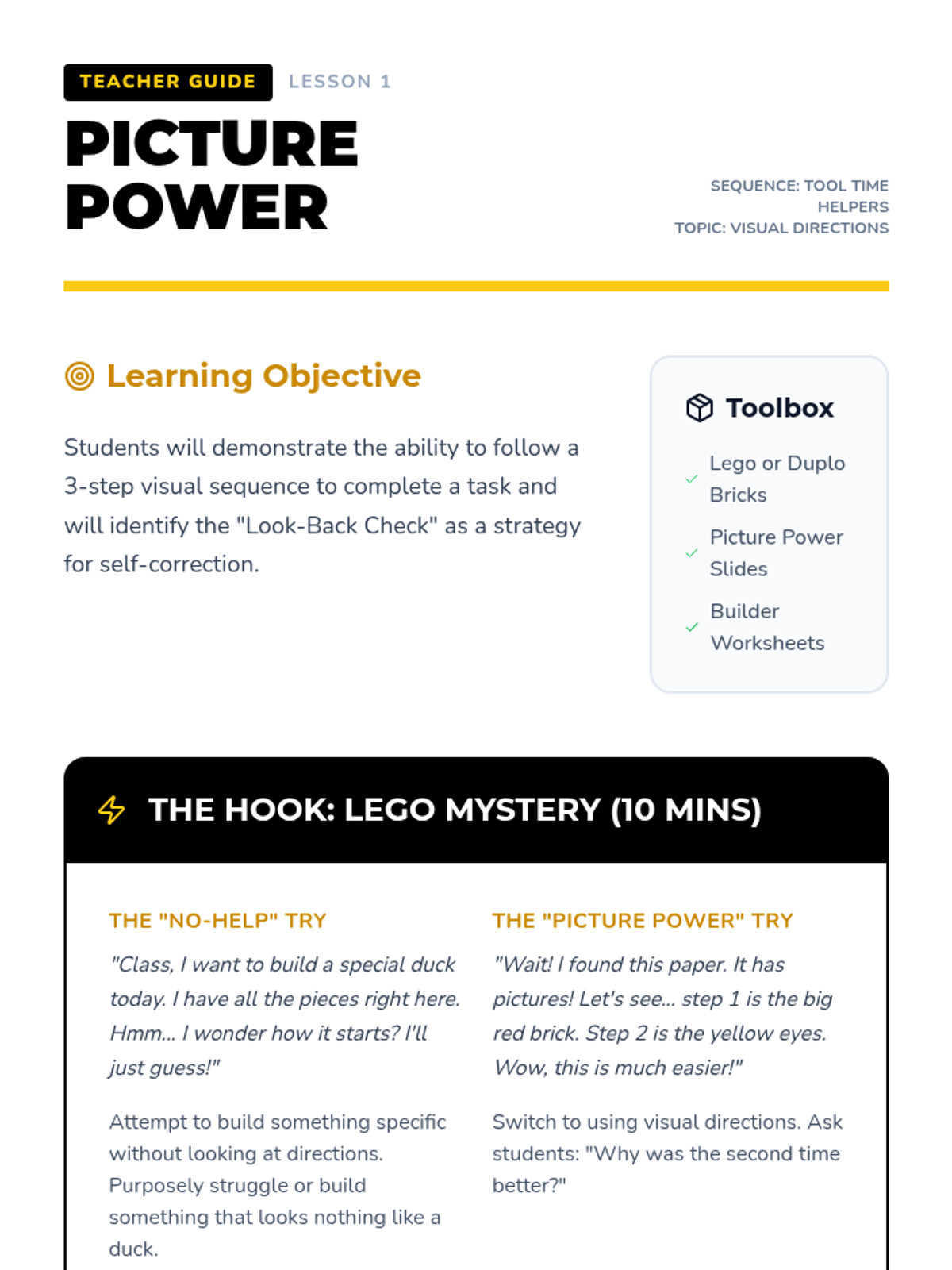
Students learn to interpret step-by-step visual instructions and practice checking their own progress against pictures to identify next steps or errors.