Active listening, assertive expression, and boundary-setting strategies for interpersonal success. Develops proficiency in conflict mediation, cooperative teamwork, and the cultivation of healthy romantic and platonic connections.
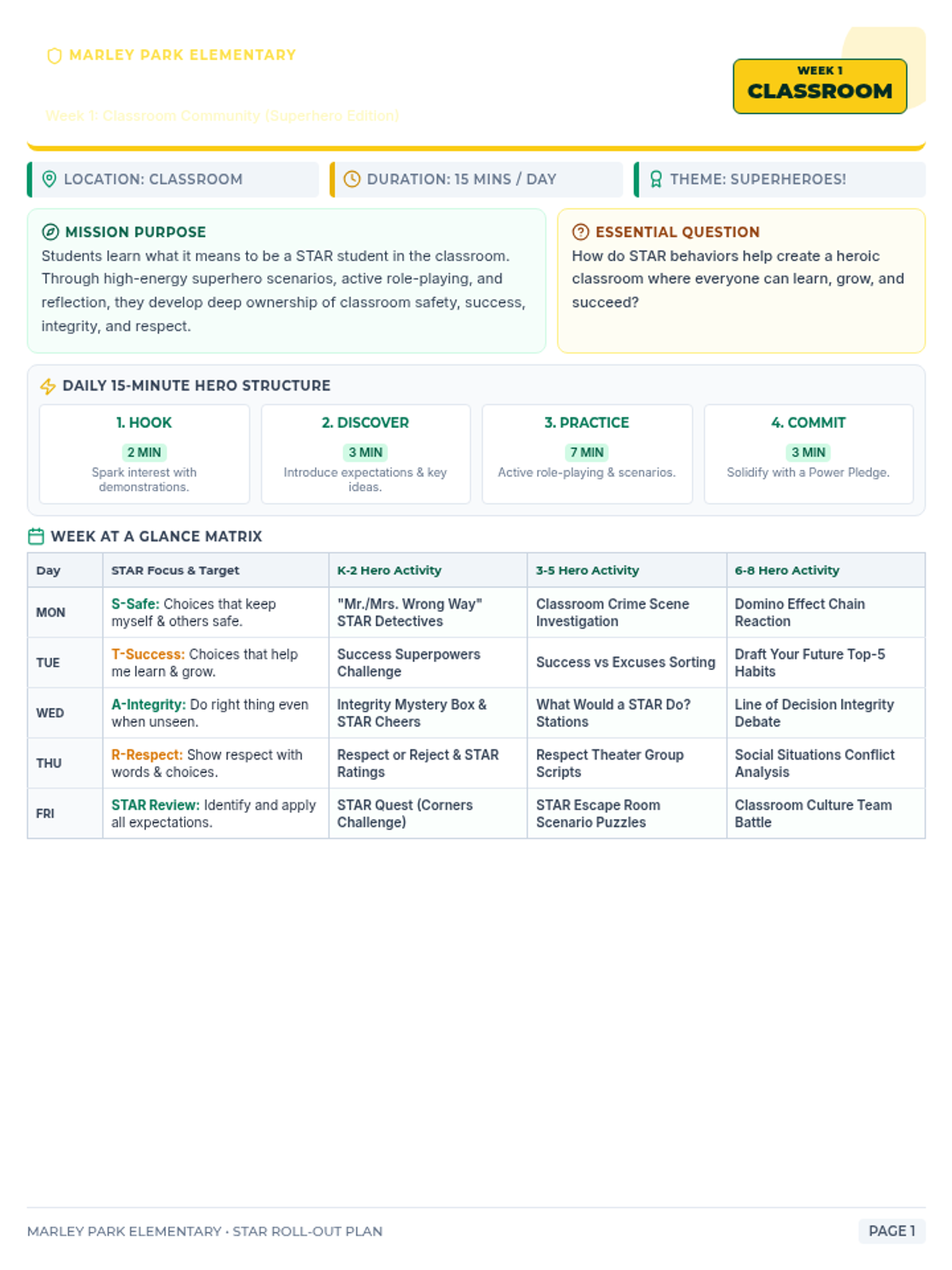
A comprehensive classroom expectations rollout for Week 1 of the school year. Includes a teacher guide and three separate grade-band slide decks (K-2, 3-5, 6-8) designed with a Marley Park green and yellow superhero theme.
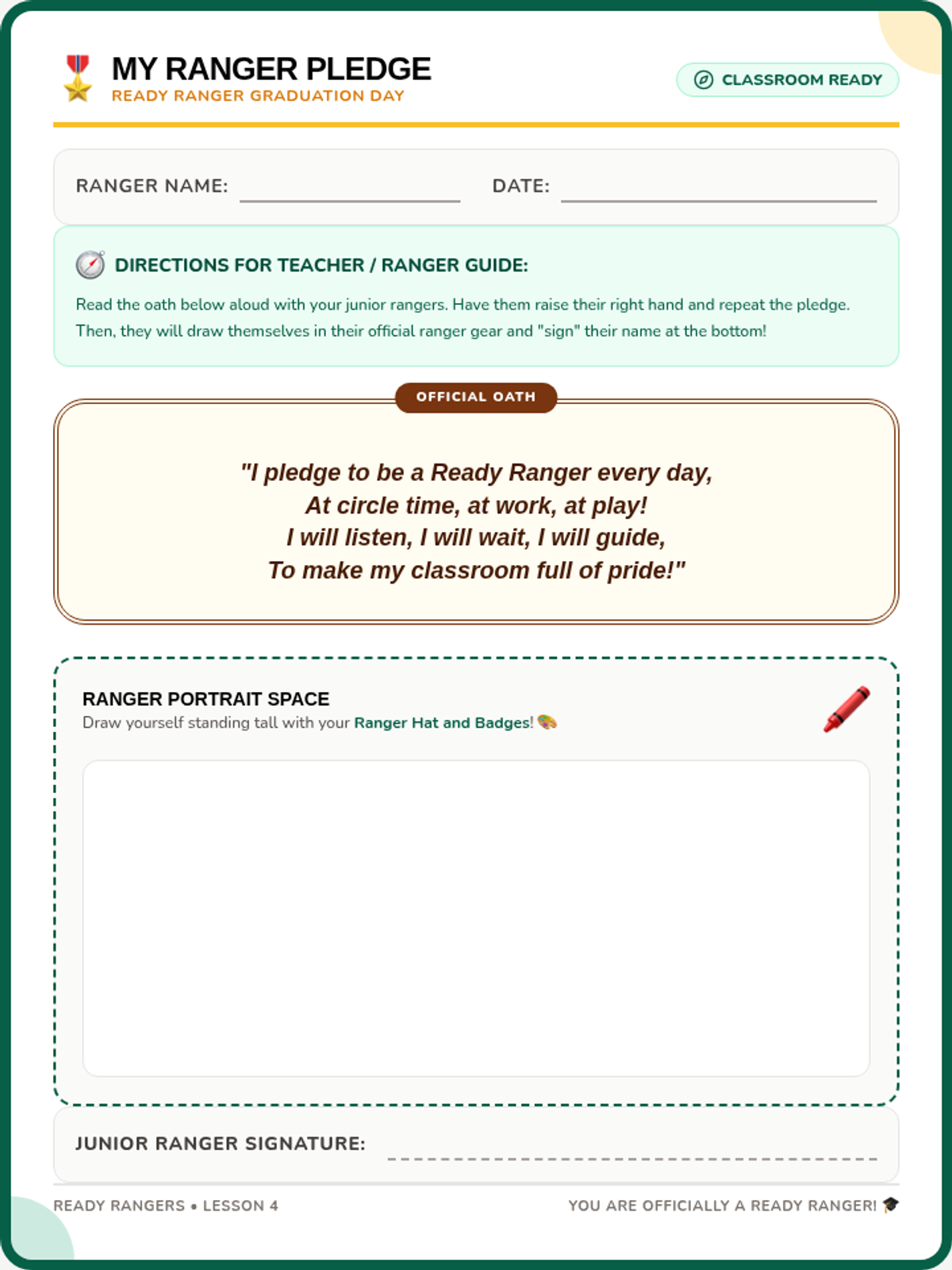
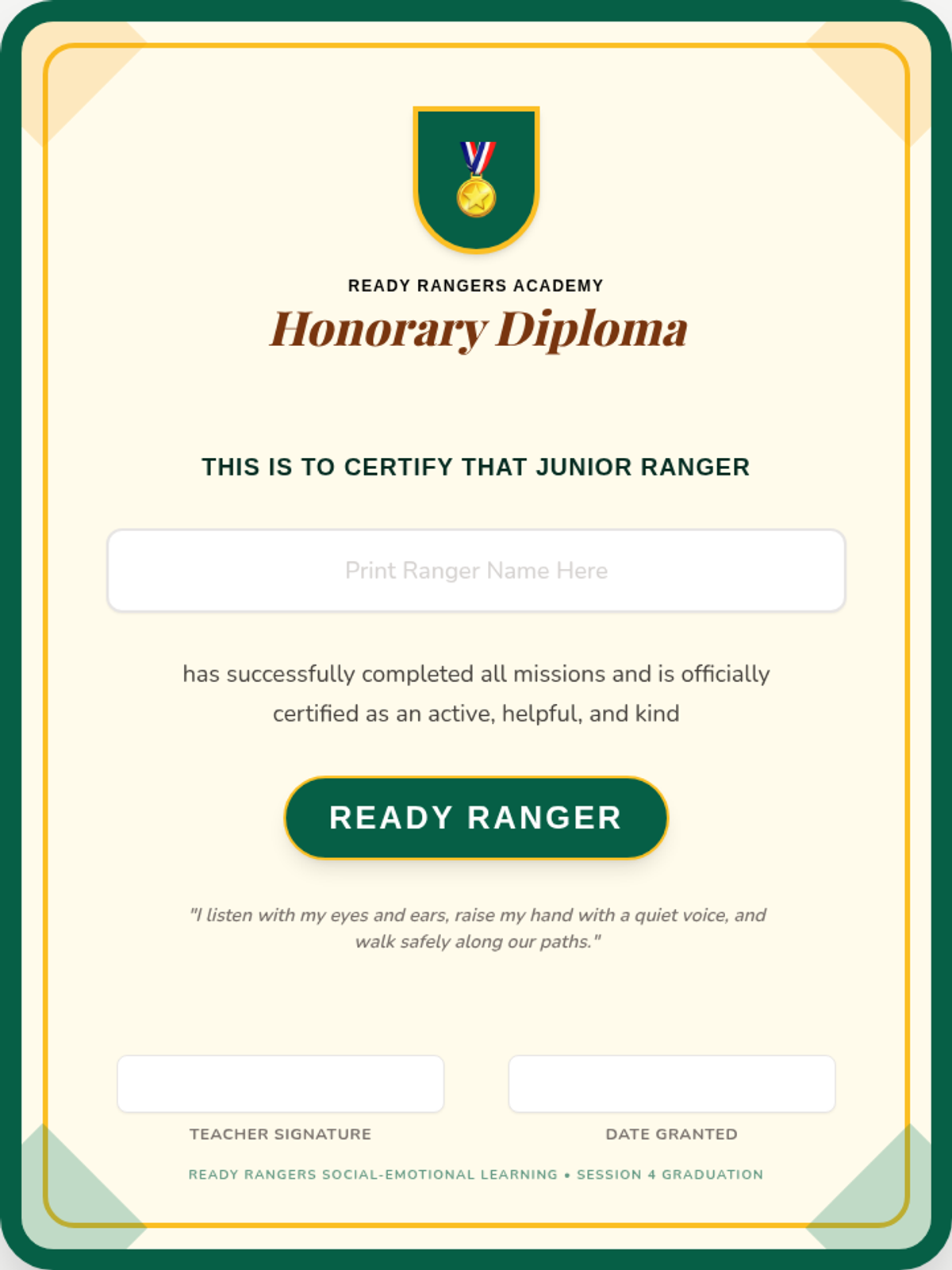
A celebratory final session where students review all three ranger skills, sign a Ranger Pledge, and receive their graduation certificates.
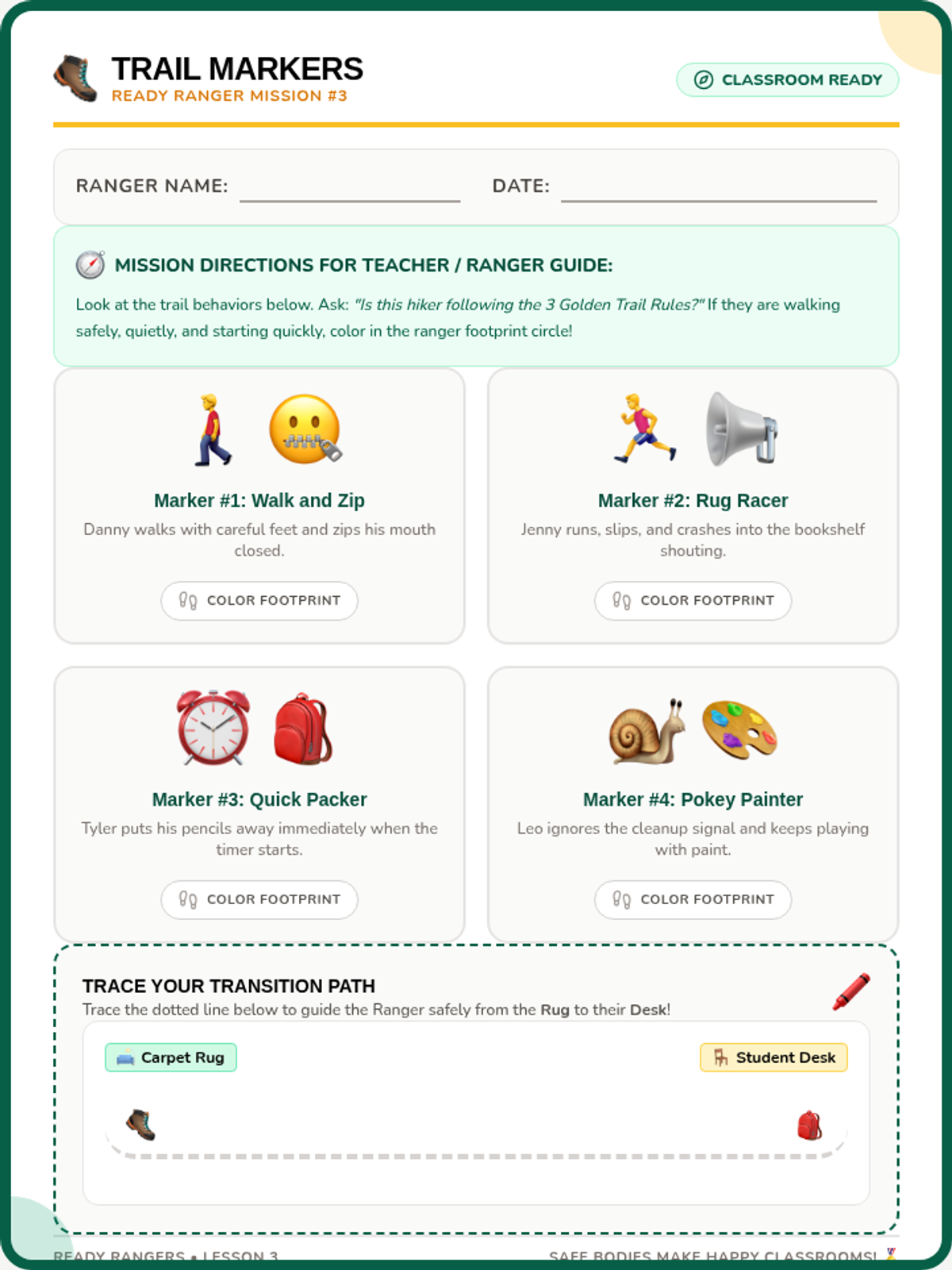
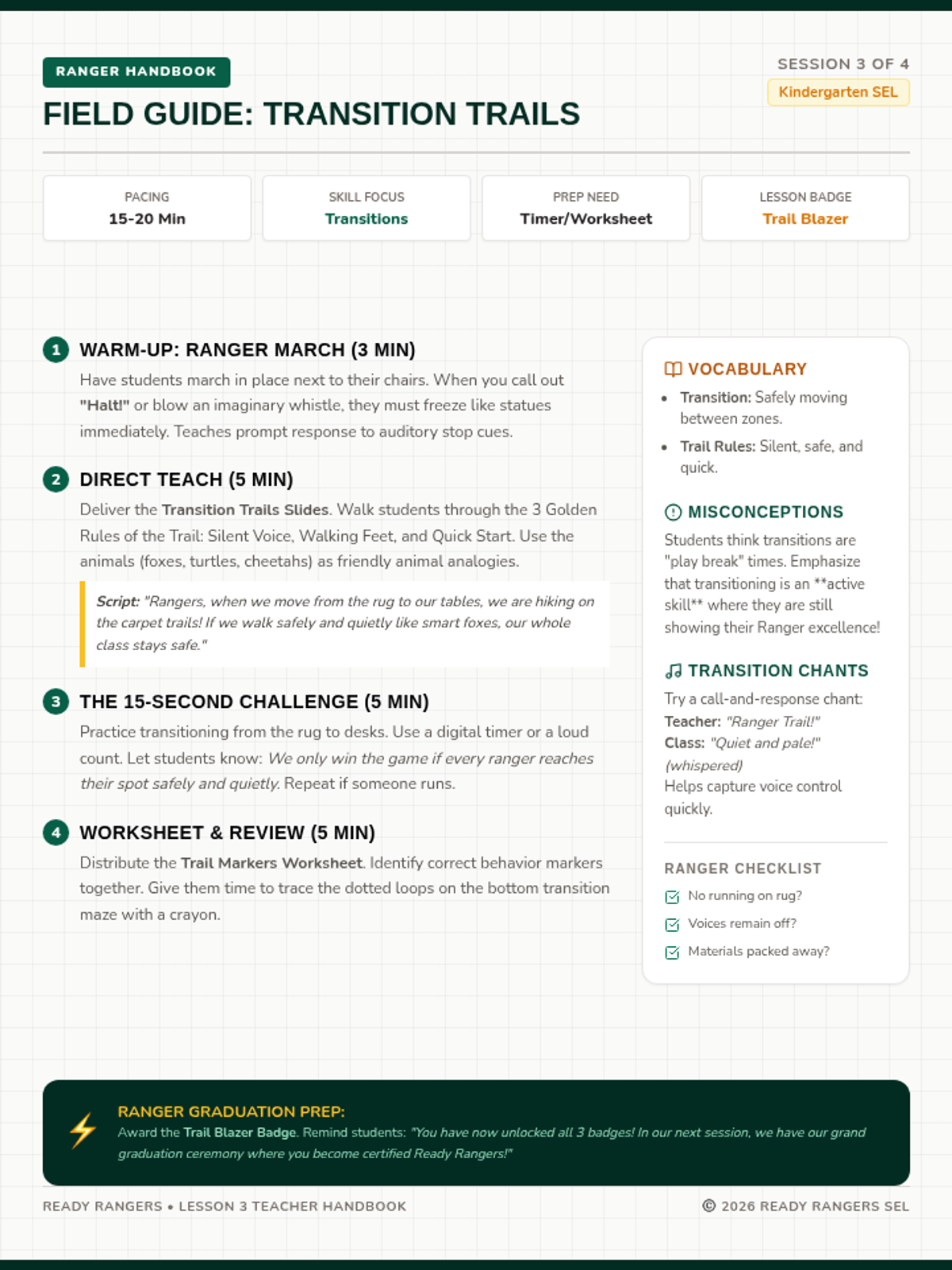
Students practice moving safely, quickly, and quietly between activities using the concept of classroom ranger trails.
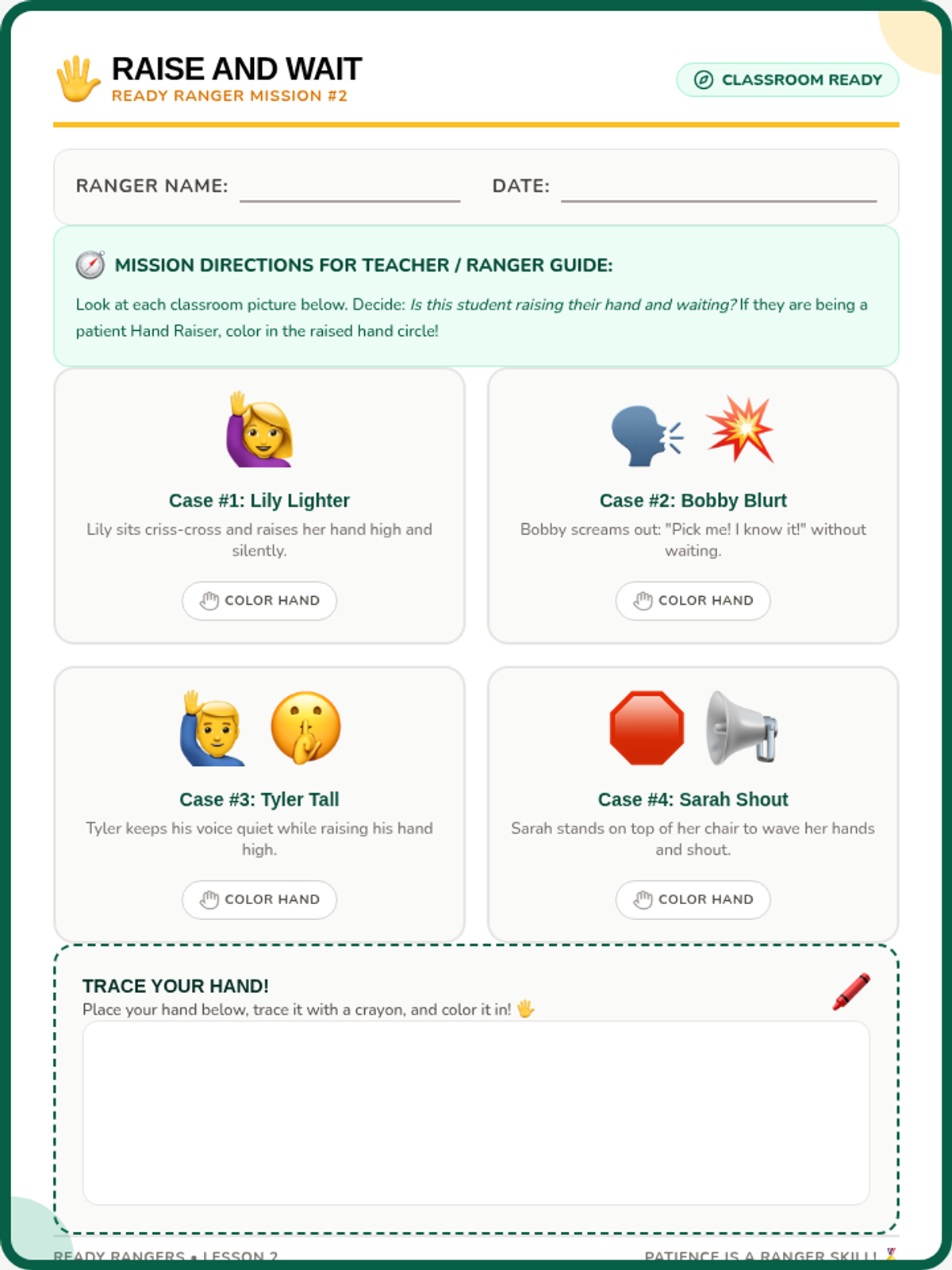
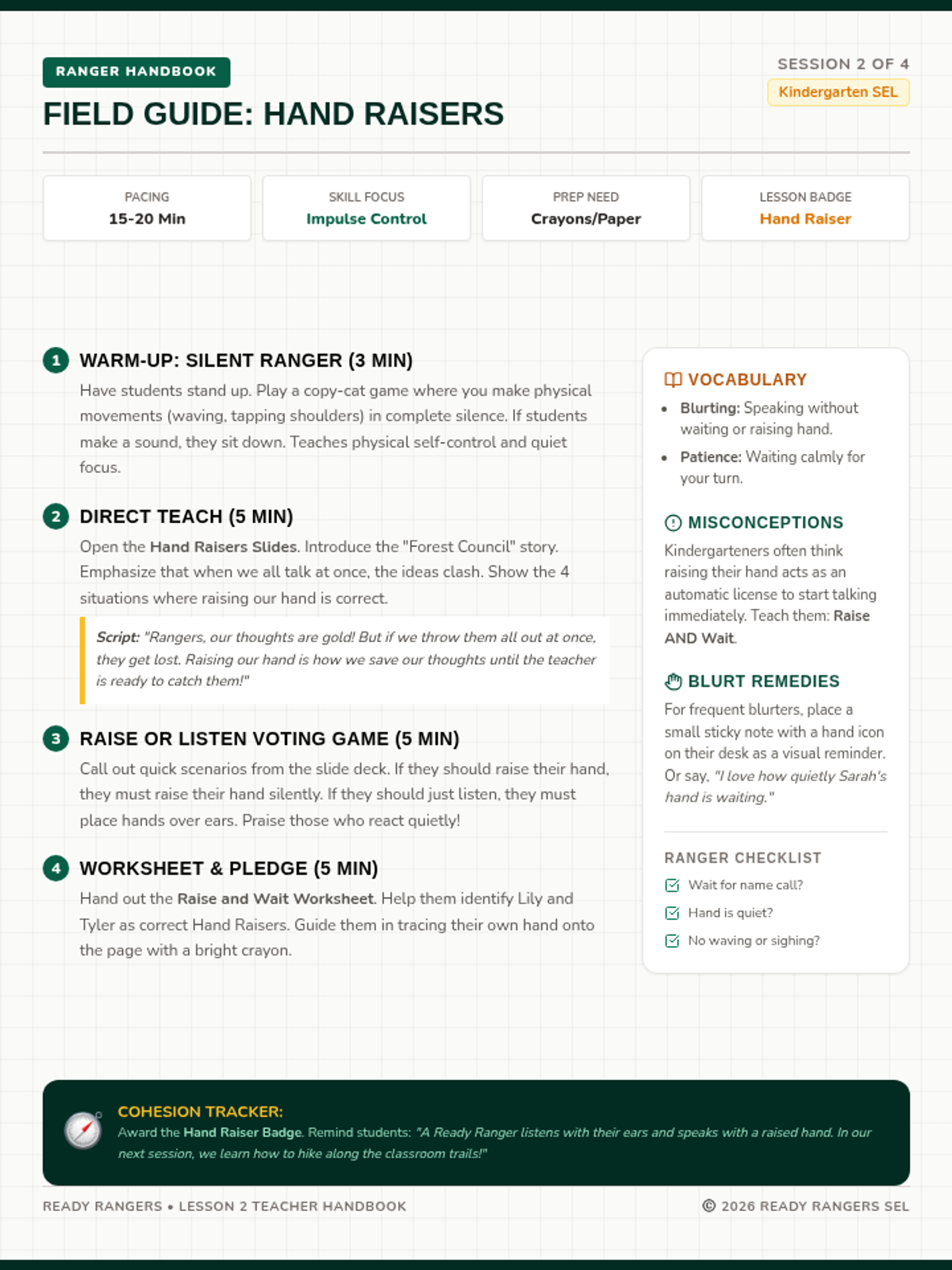
Students learn when and how to raise their hands to speak or ask for help, practicing impulse control and patience.
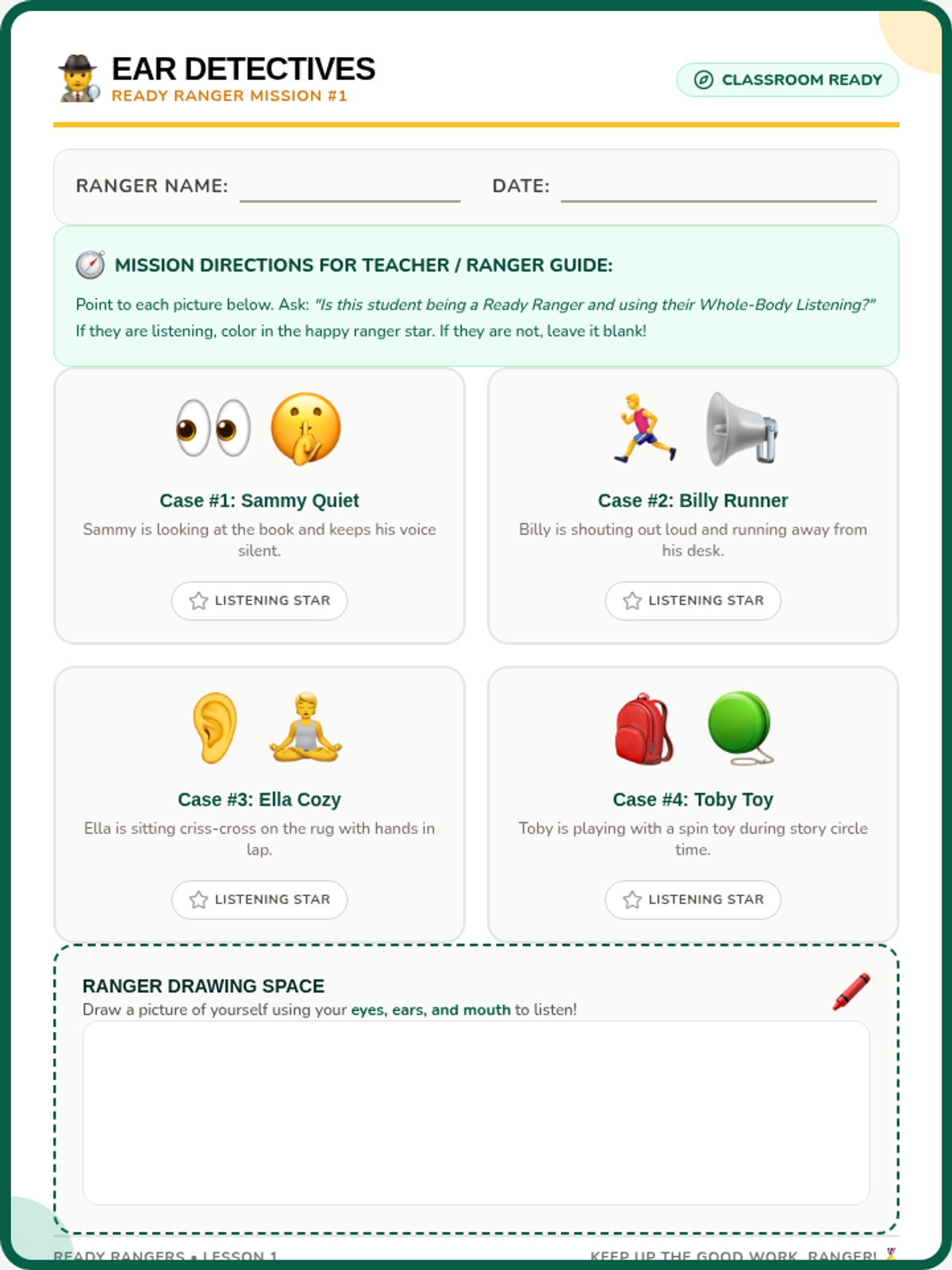
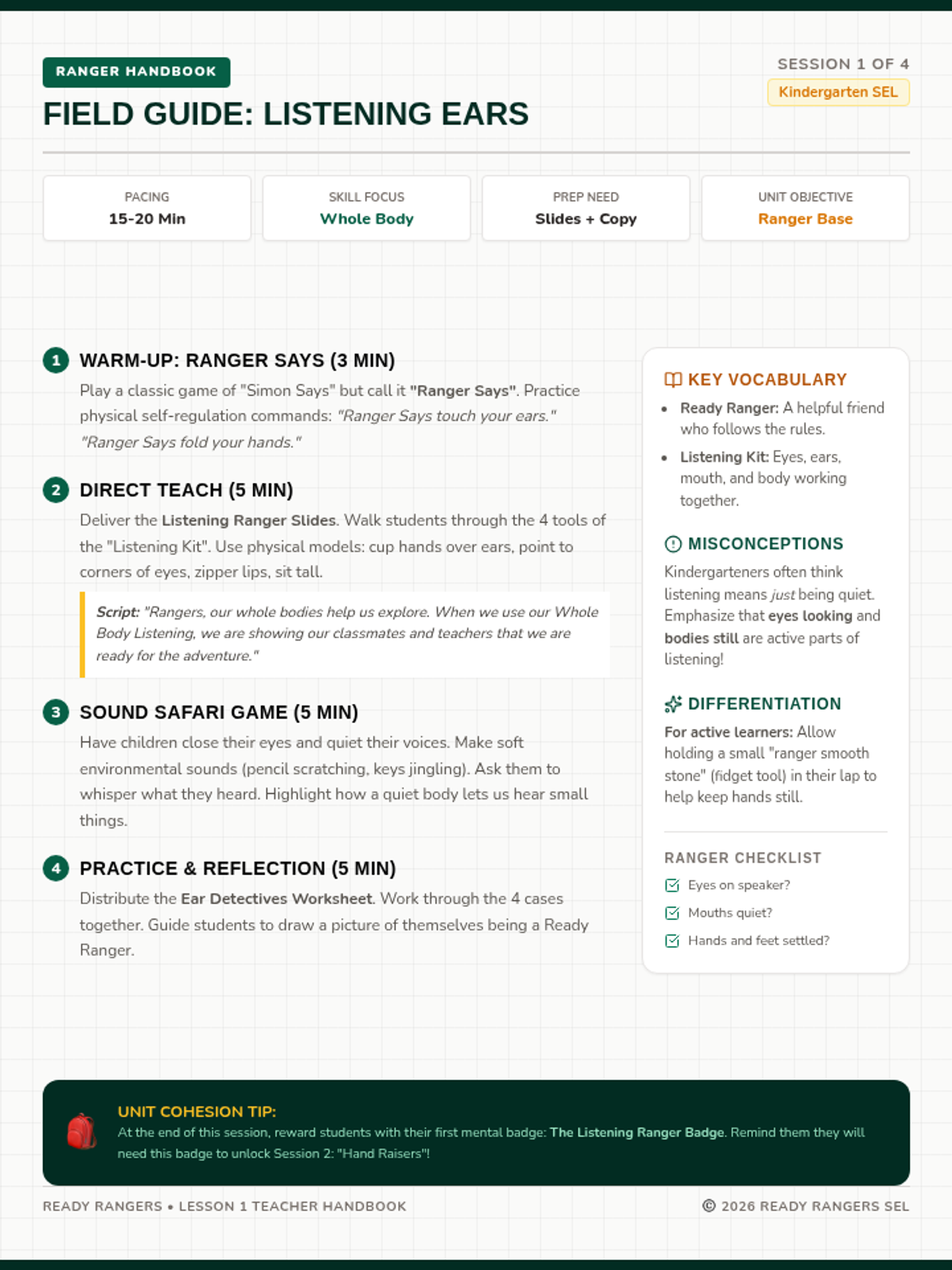
Students learn the concept of whole-body listening (eyes watching, ears listening, mouth quiet, body still) through a ranger-themed adventure.
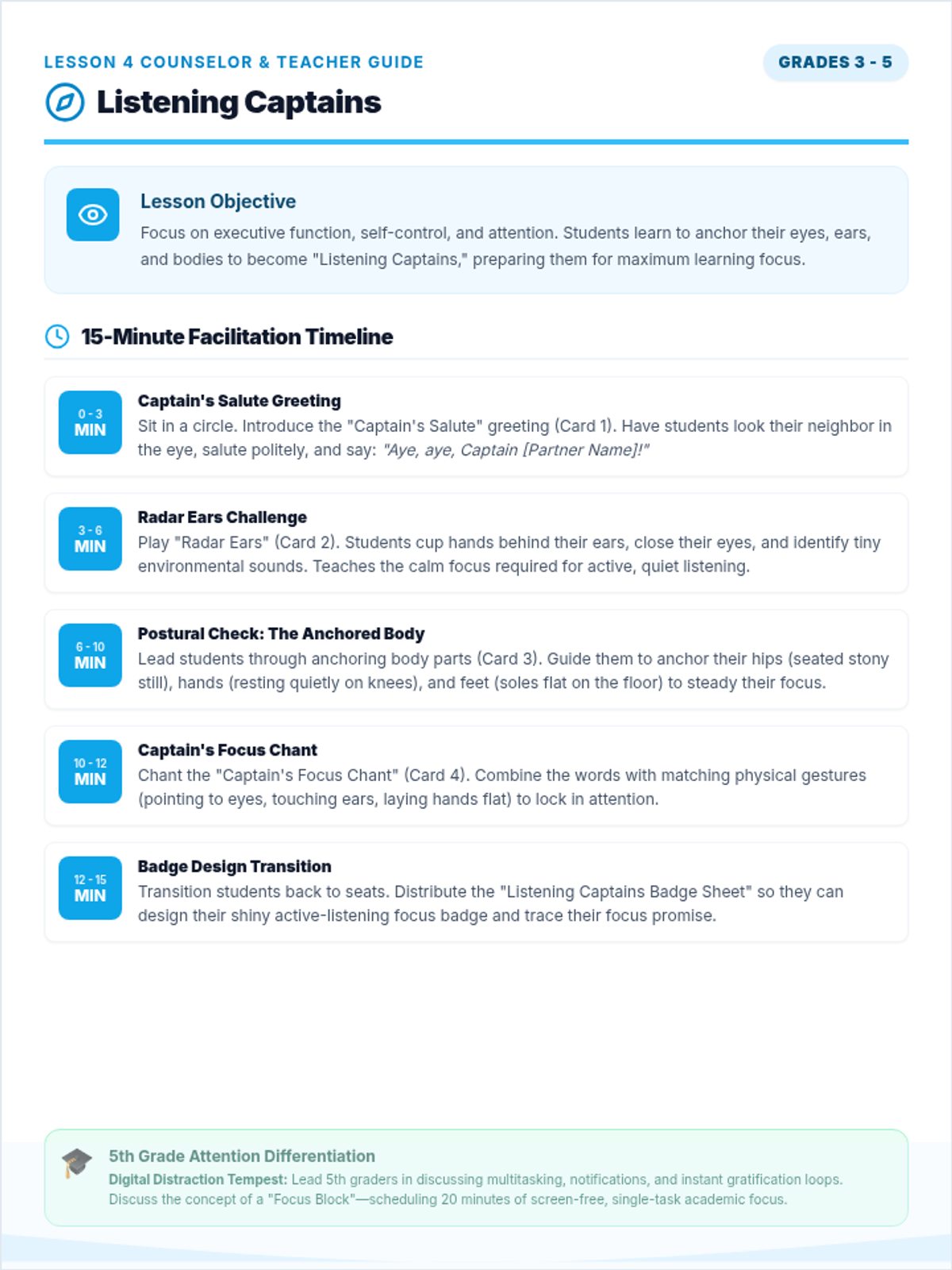
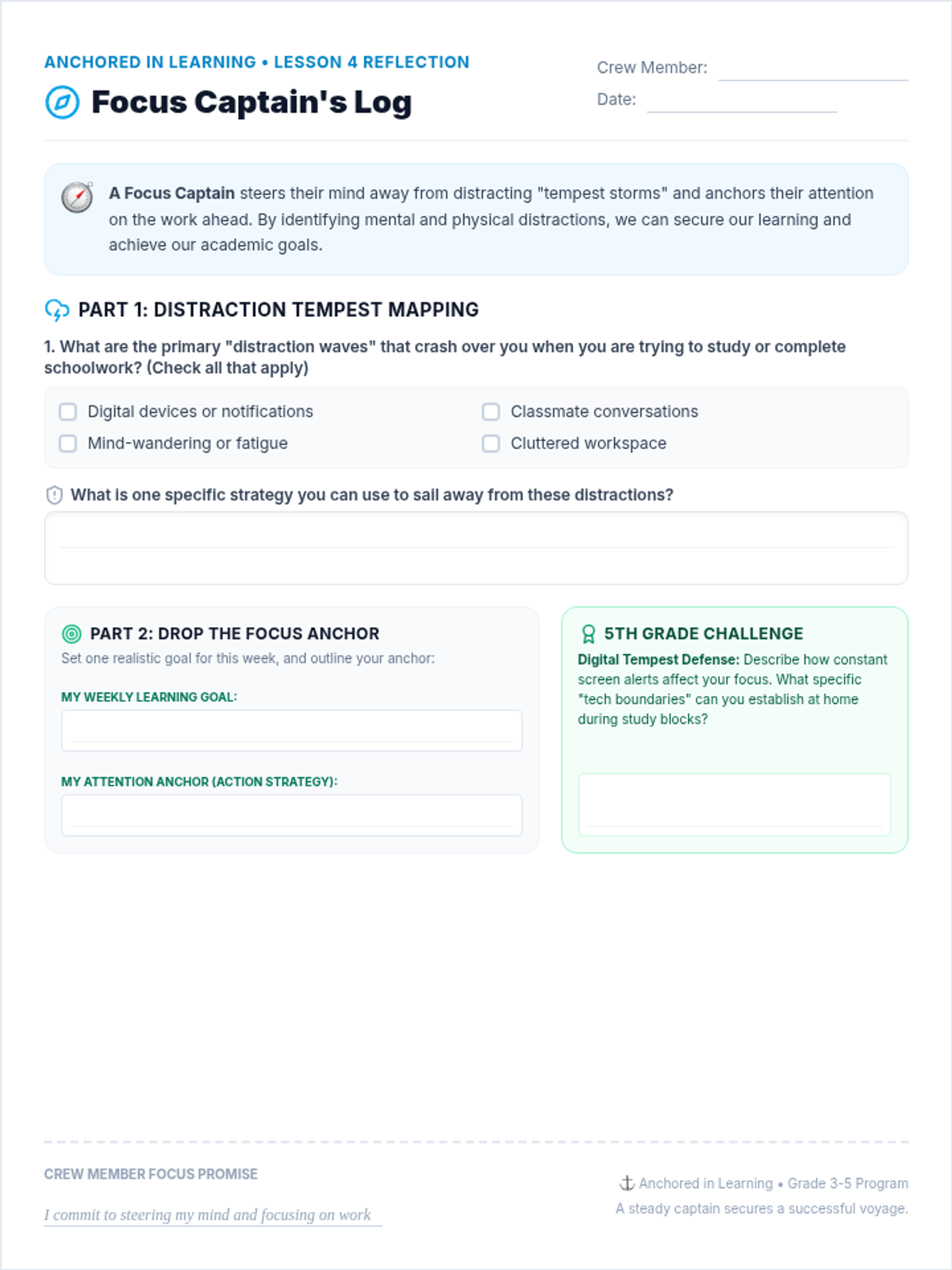
Lesson 4 of the SEL sequence. A complete, ready-to-go 15-minute lesson for 3rd-5th Grade students on focusing attention, managing digital/mental distractions, and anchoring executive attention.
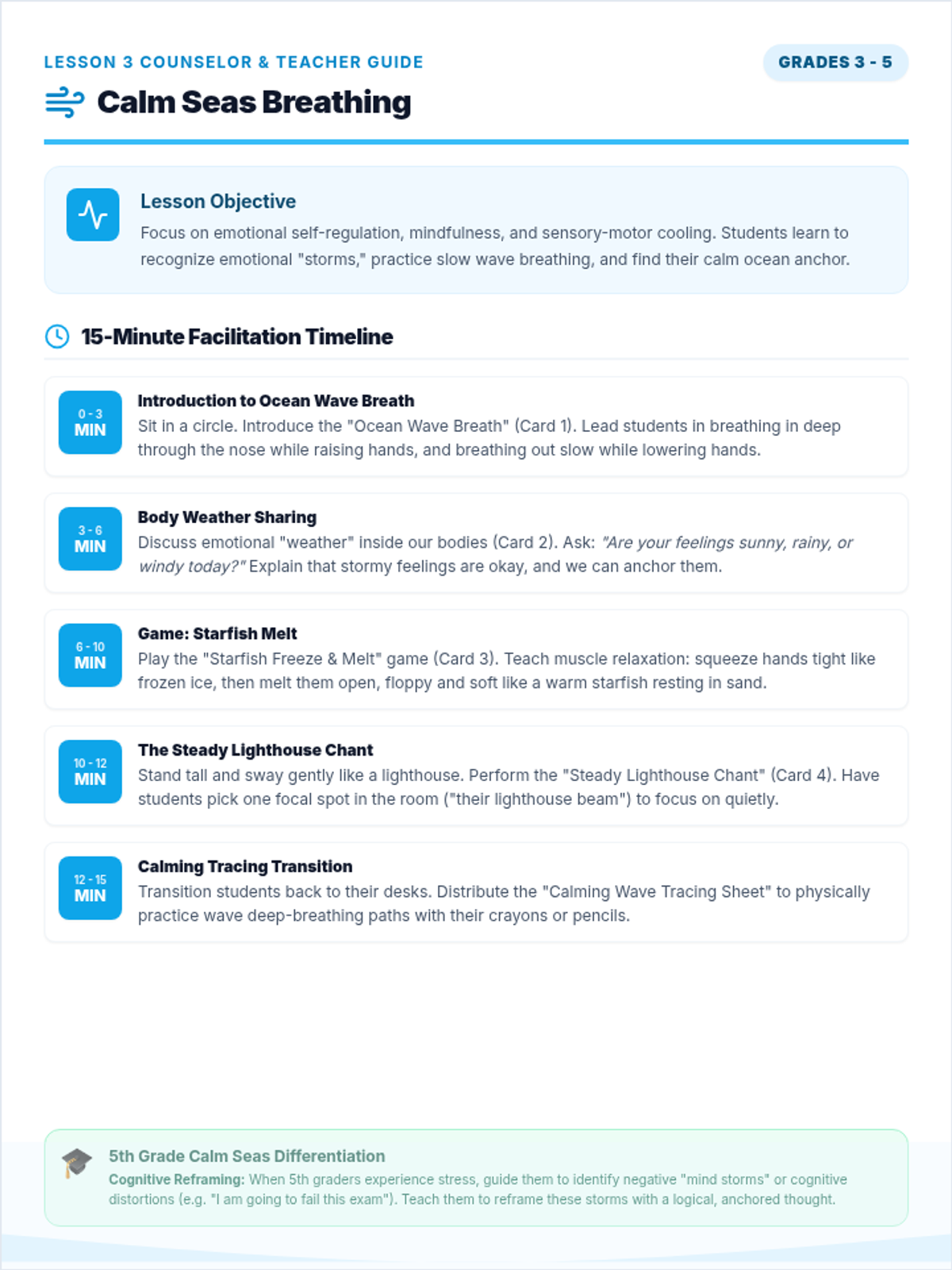
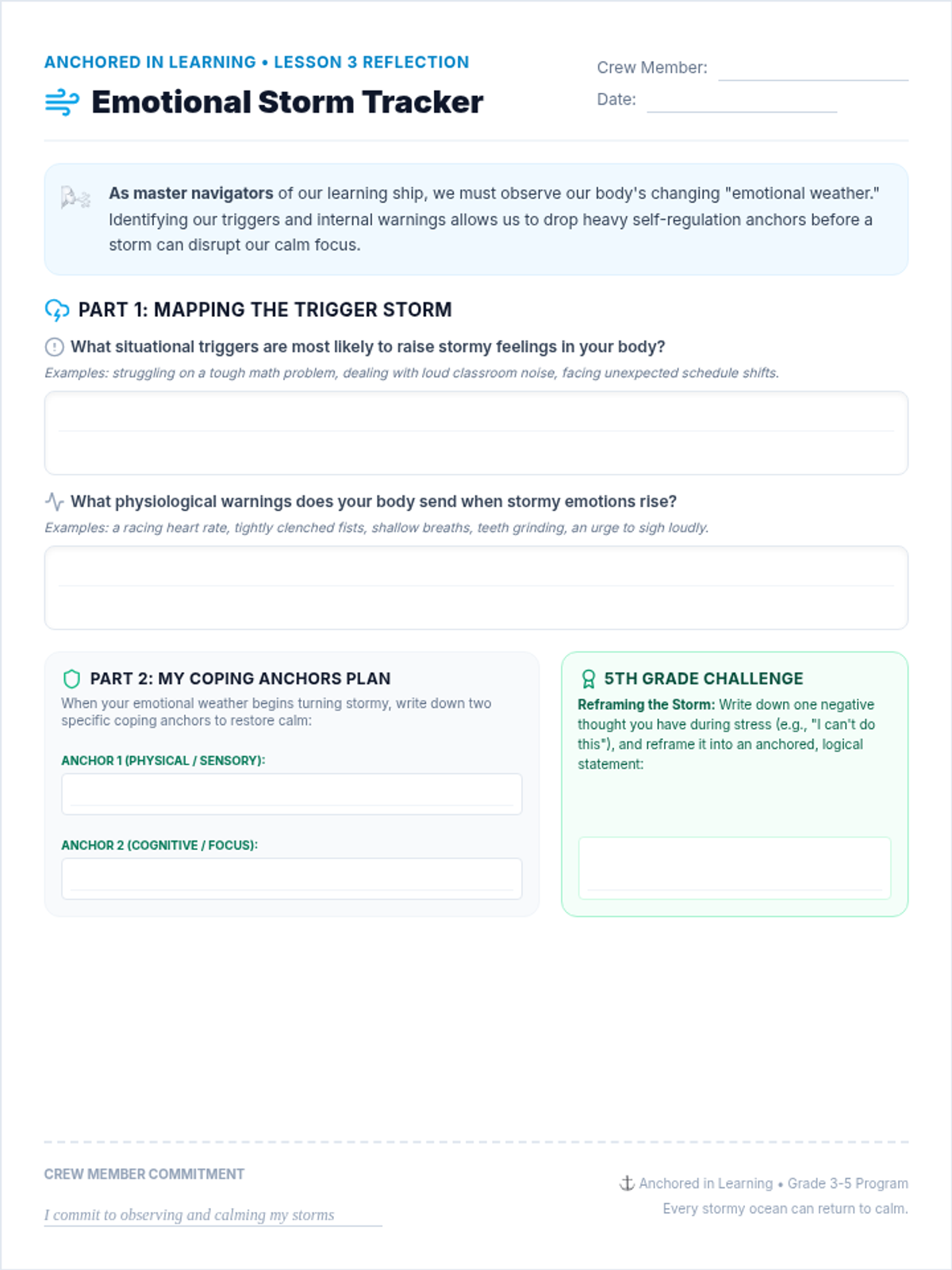
Lesson 3 of the SEL sequence. A complete, ready-to-go 15-minute lesson for 3rd-5th Grade students on emotional self-regulation, recognizing trigger storms, and physical calming strategies.
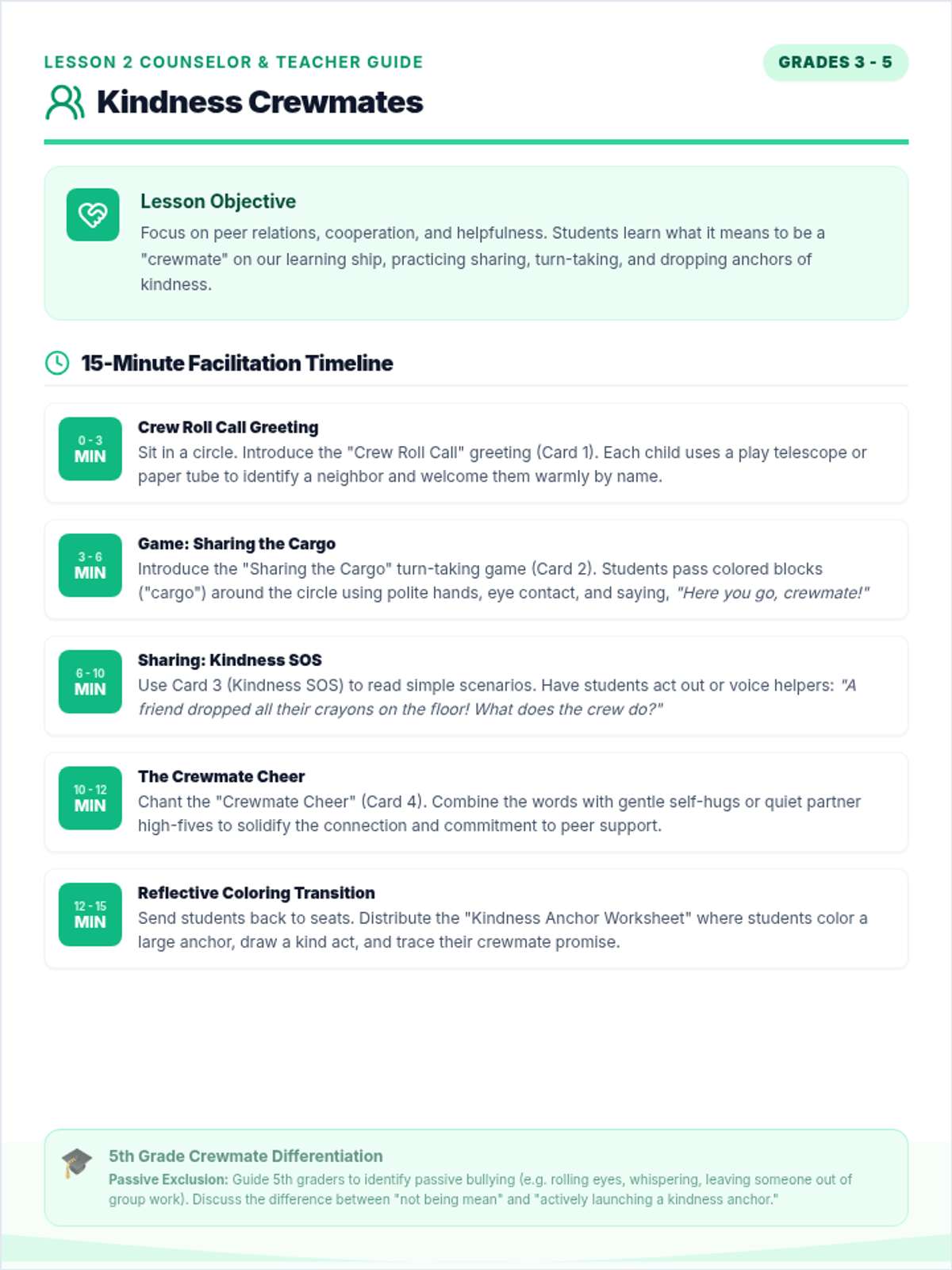
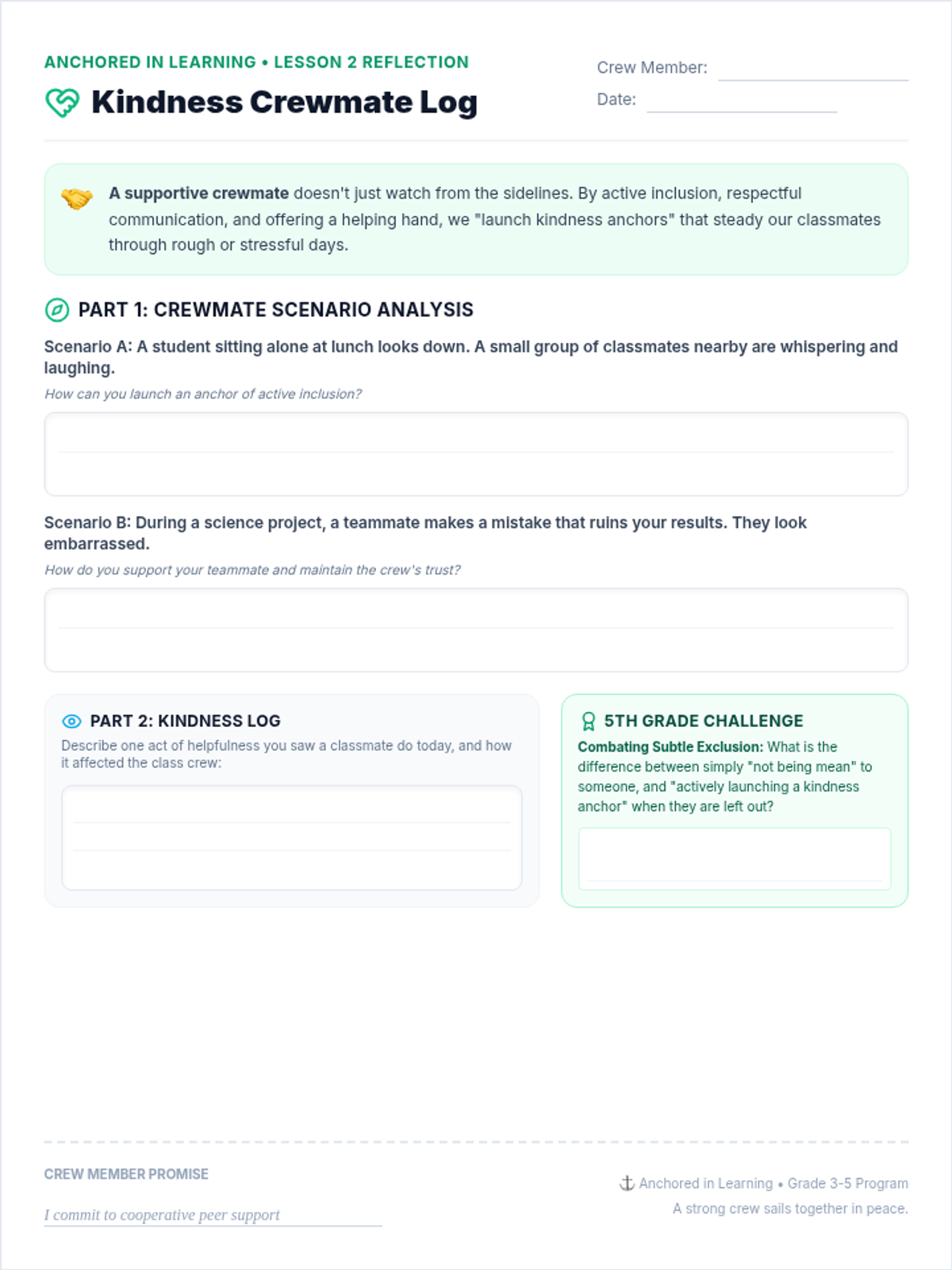
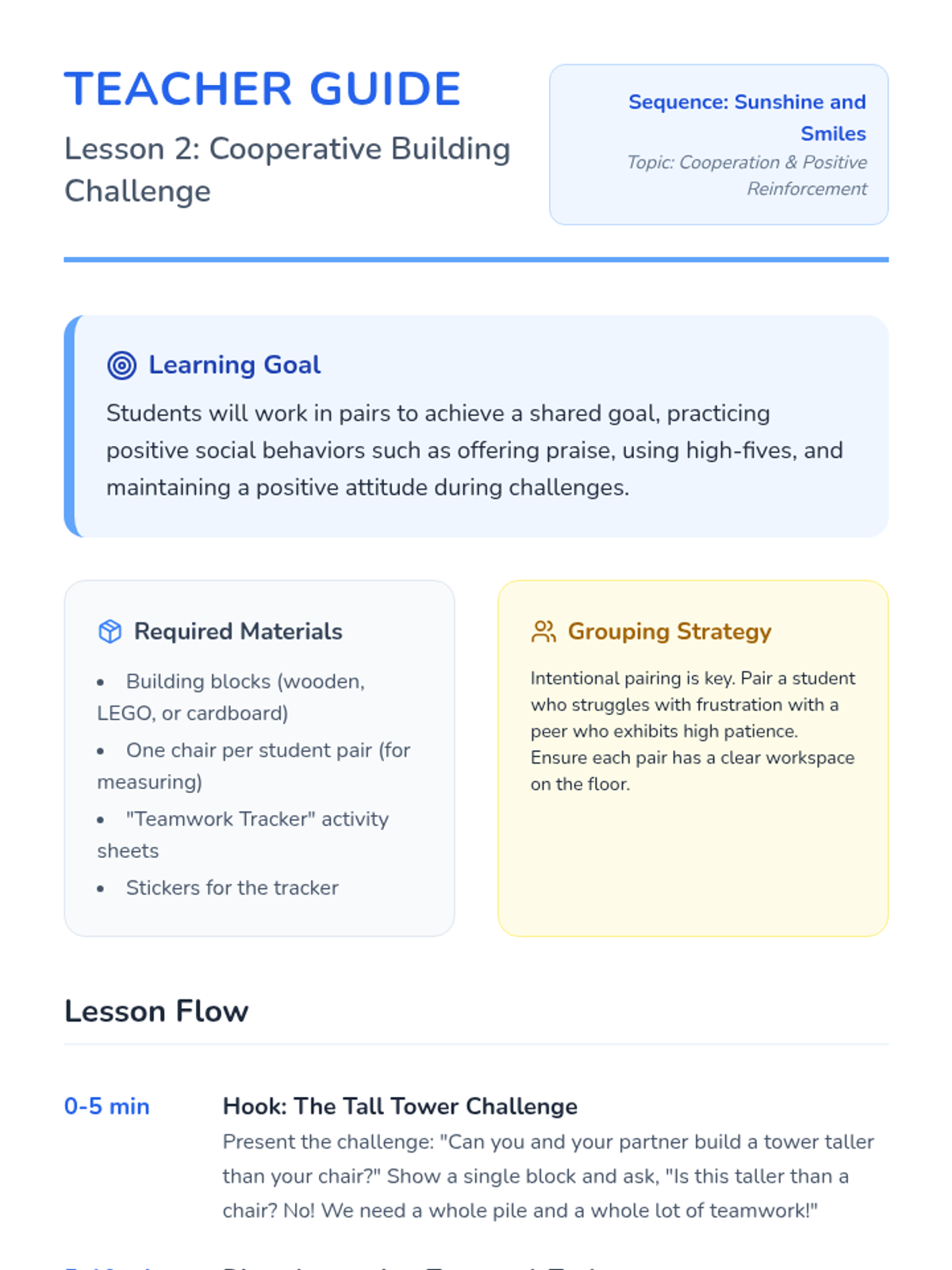
Lesson 2 of the SEL sequence. A complete, ready-to-go 15-minute lesson for 3rd-5th Grade students on cooperative peer relations, active inclusion, and launching kindness anchors.
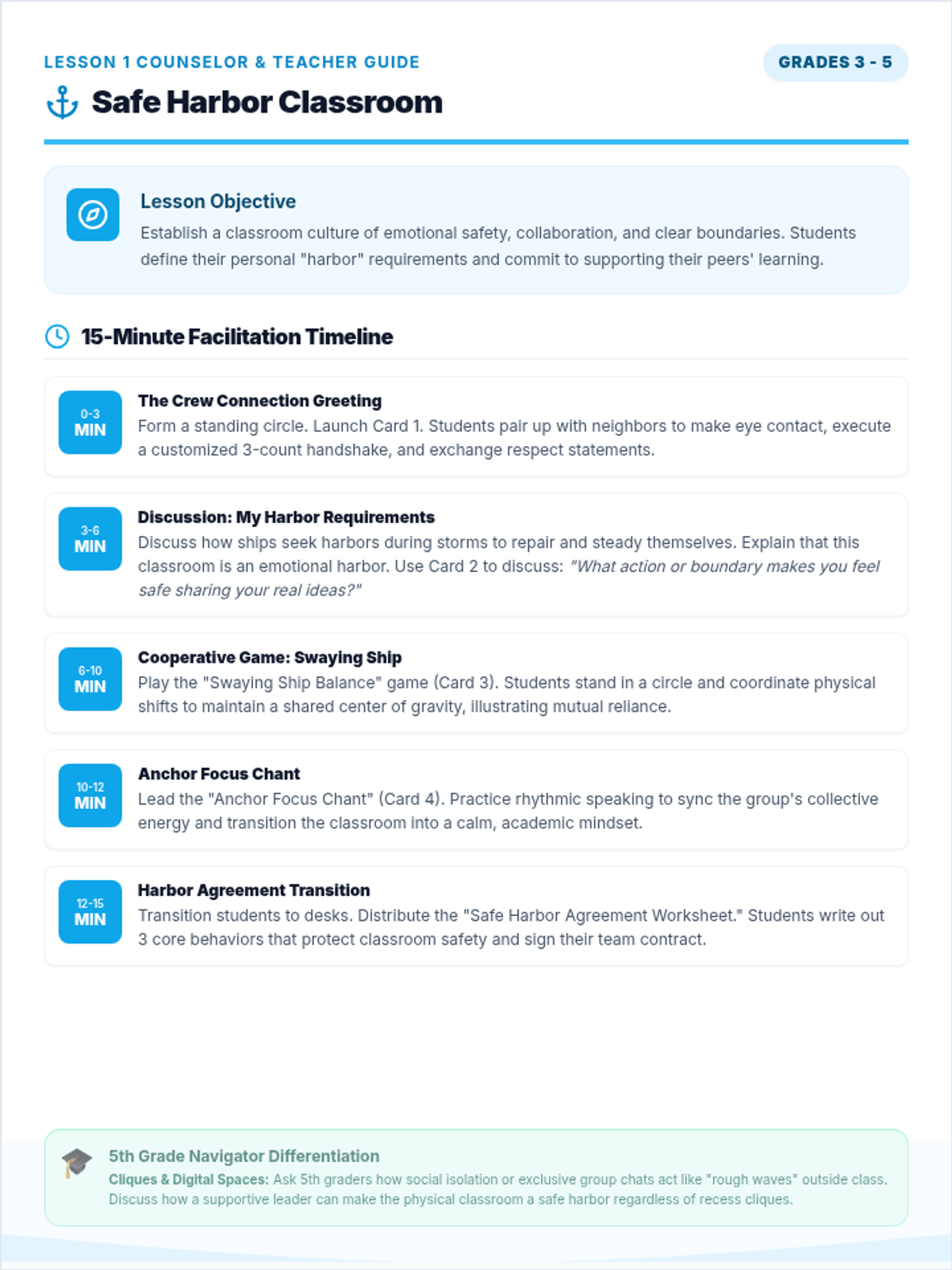
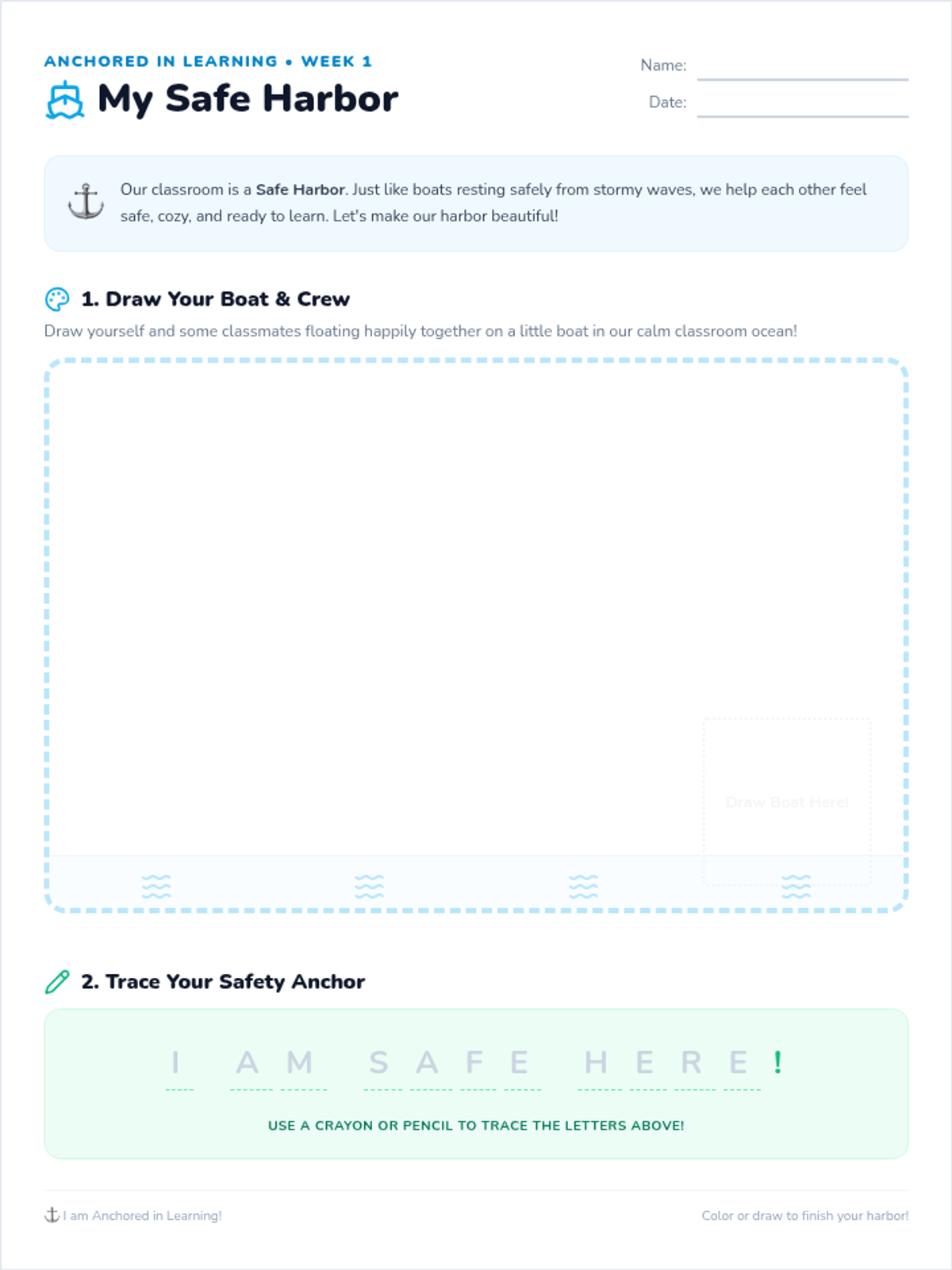
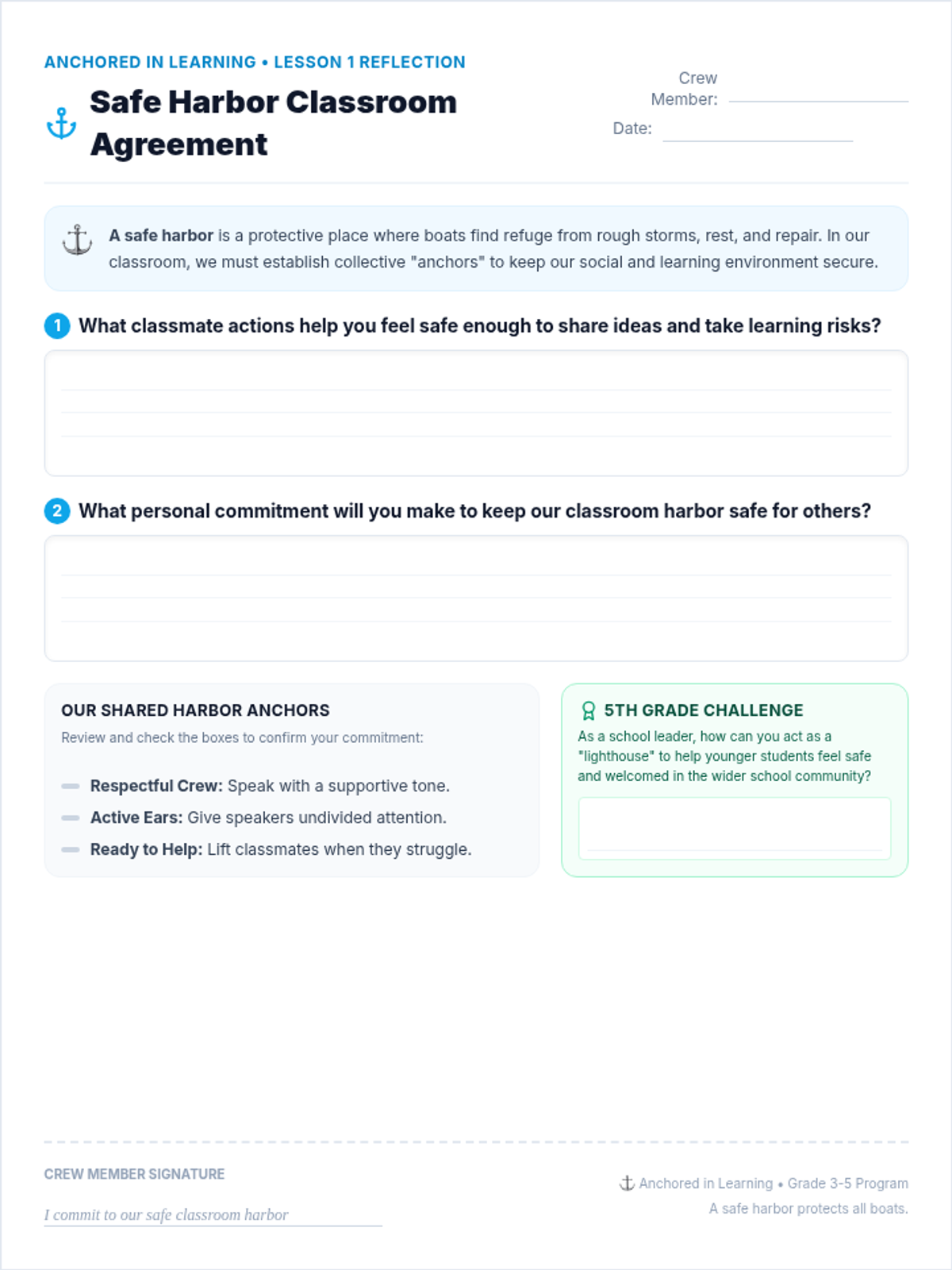
Lesson 1 of the SEL sequence. A complete, ready-to-go 15-minute lesson for 3rd-5th Grade students on building an emotionally safe classroom harbor and establishing mutual support anchors.
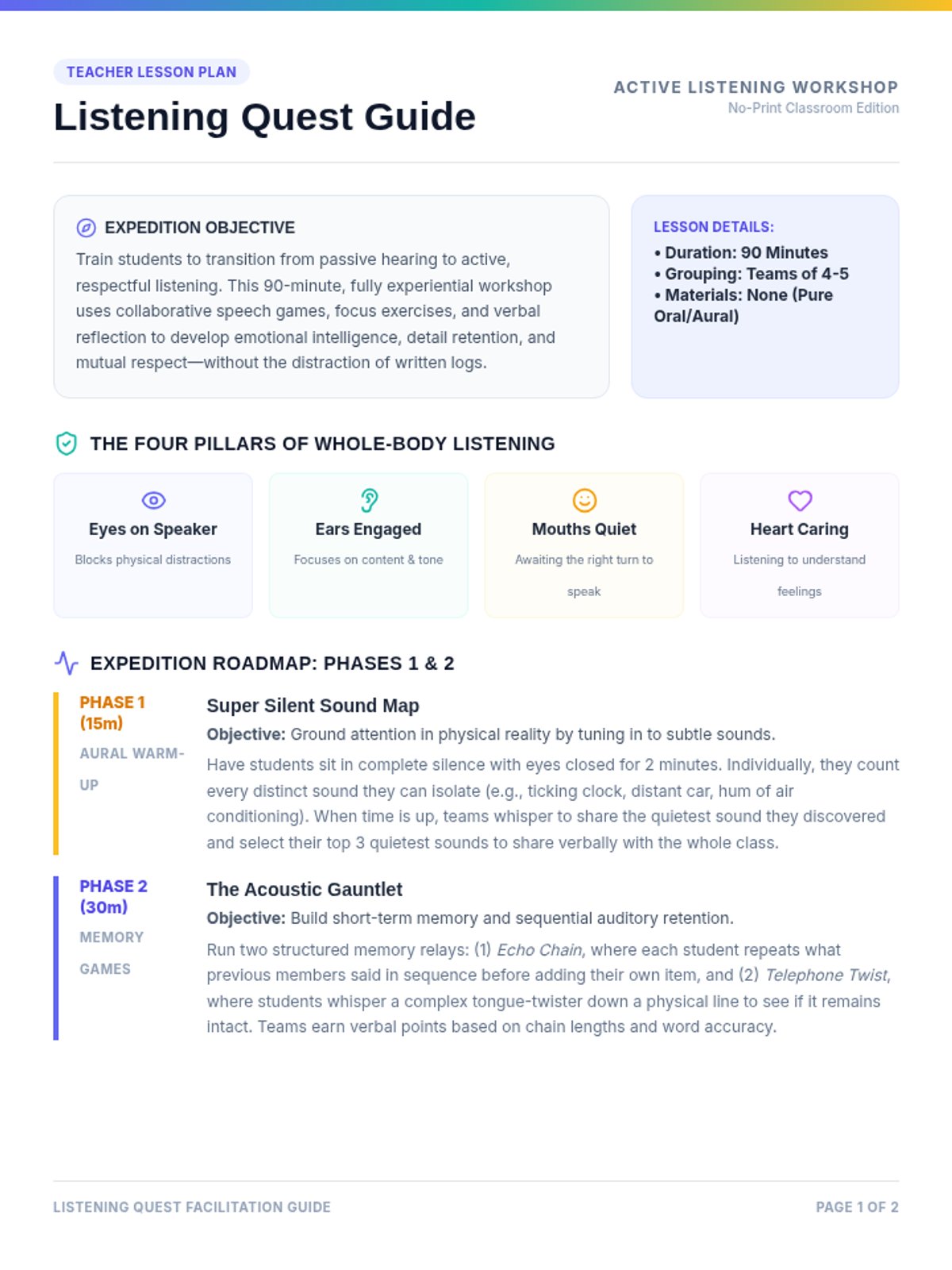
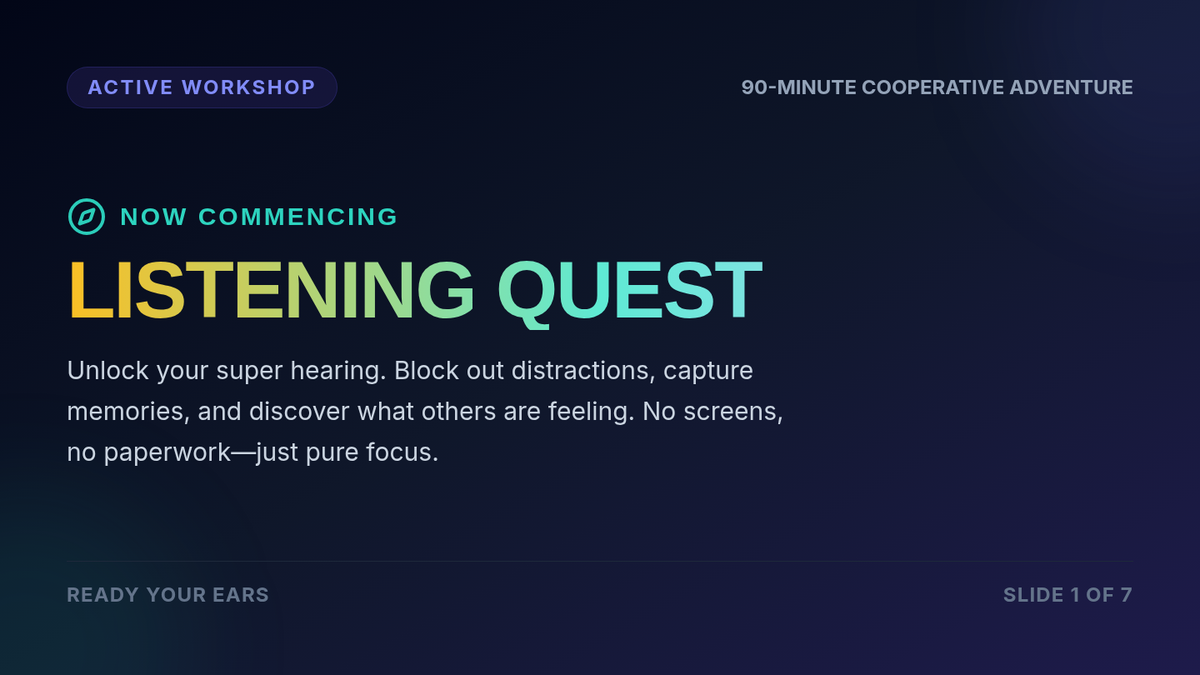
A 90-minute active learning lesson designed to build respectful, cooperative listening habits through engaging classroom challenges, without the distraction of physical worksheets.
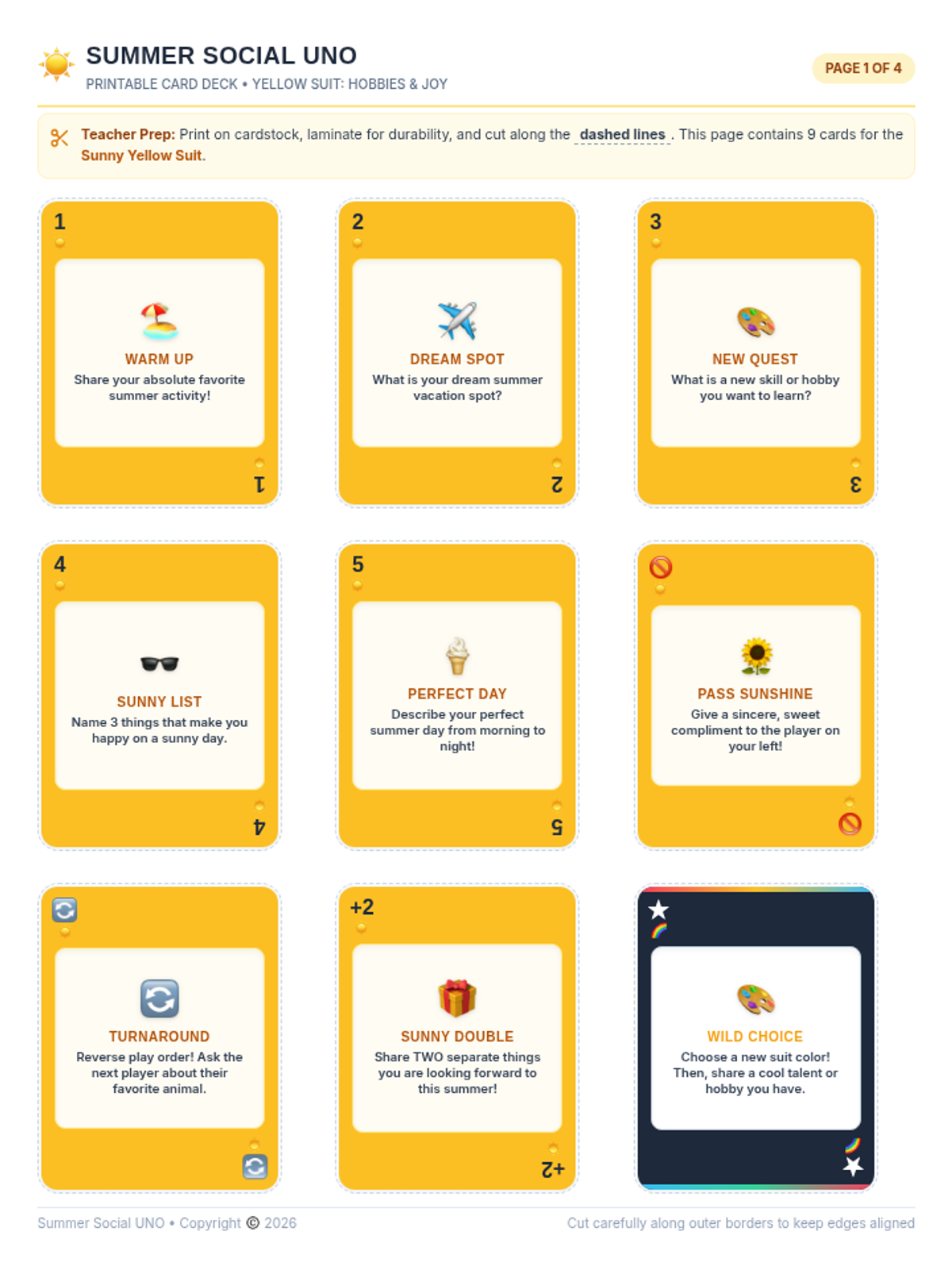
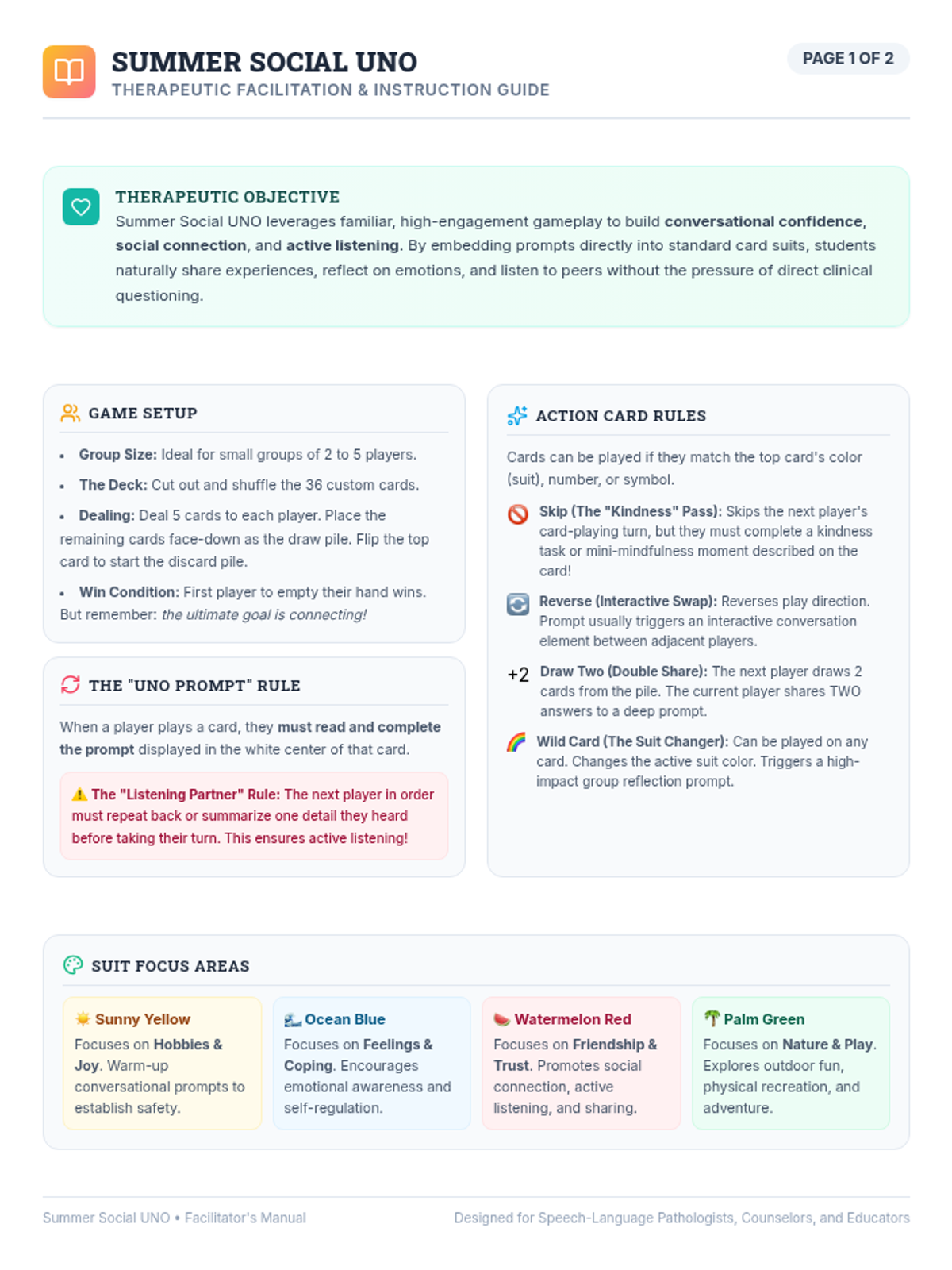
A therapeutic gameplay experience using a customized, summer-themed UNO card deck. Students practice conversational prompts, active listening, turn-taking, and relationship building in a fun, structured environment.
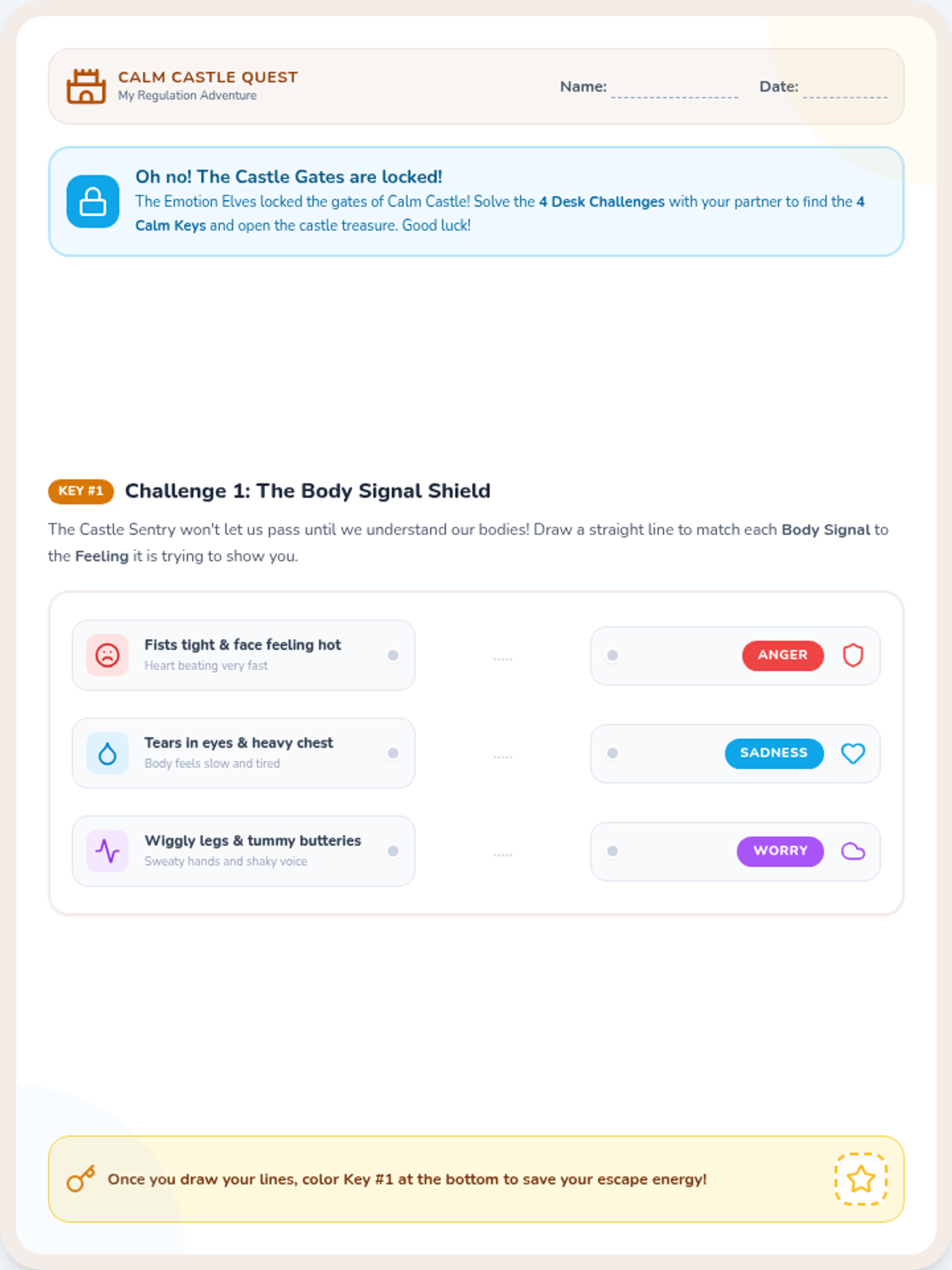
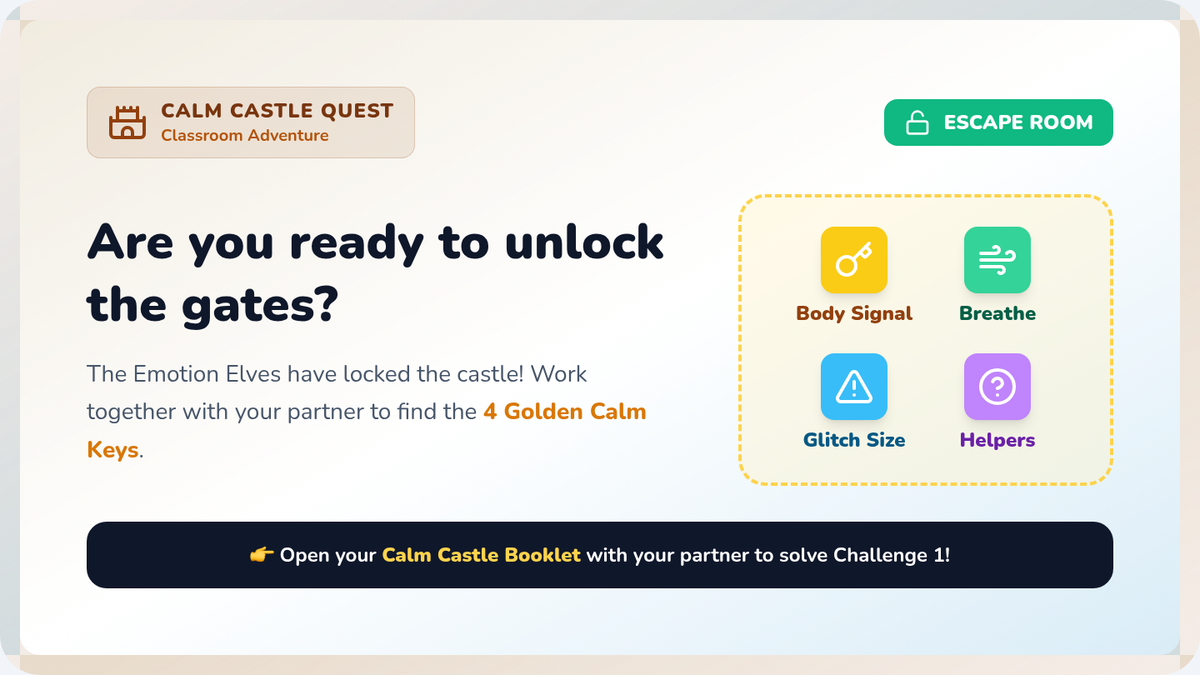
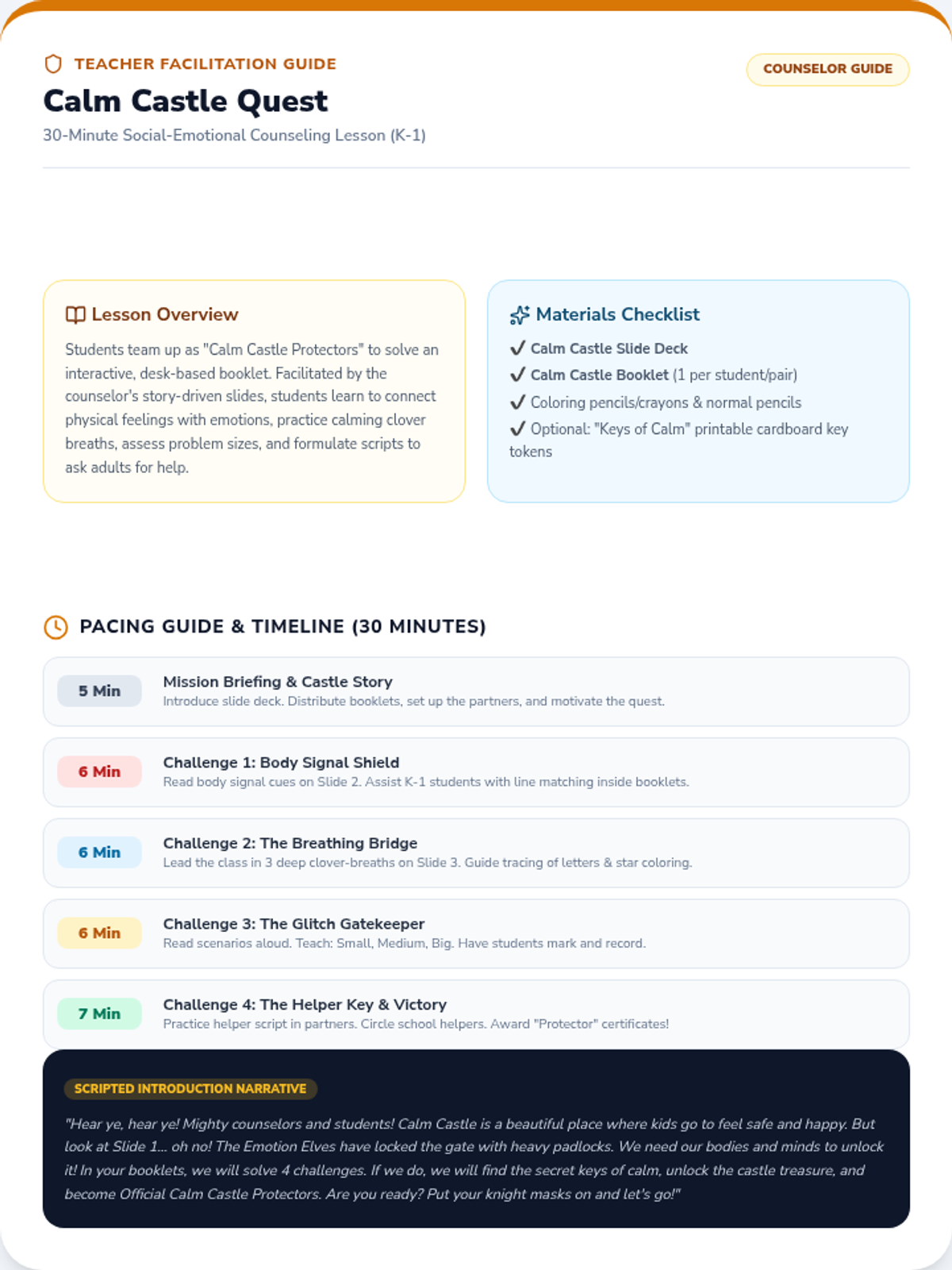
A 30-minute high-engagement emotional regulation escape adventure for Kindergarten and 1st-grade students. Through a series of interactive desk-based challenges in a printable booklet, students practice identifying body signals, deep breathing, sorting the size of problems, and asking for help to 'unlock' the gates of Calm Castle.
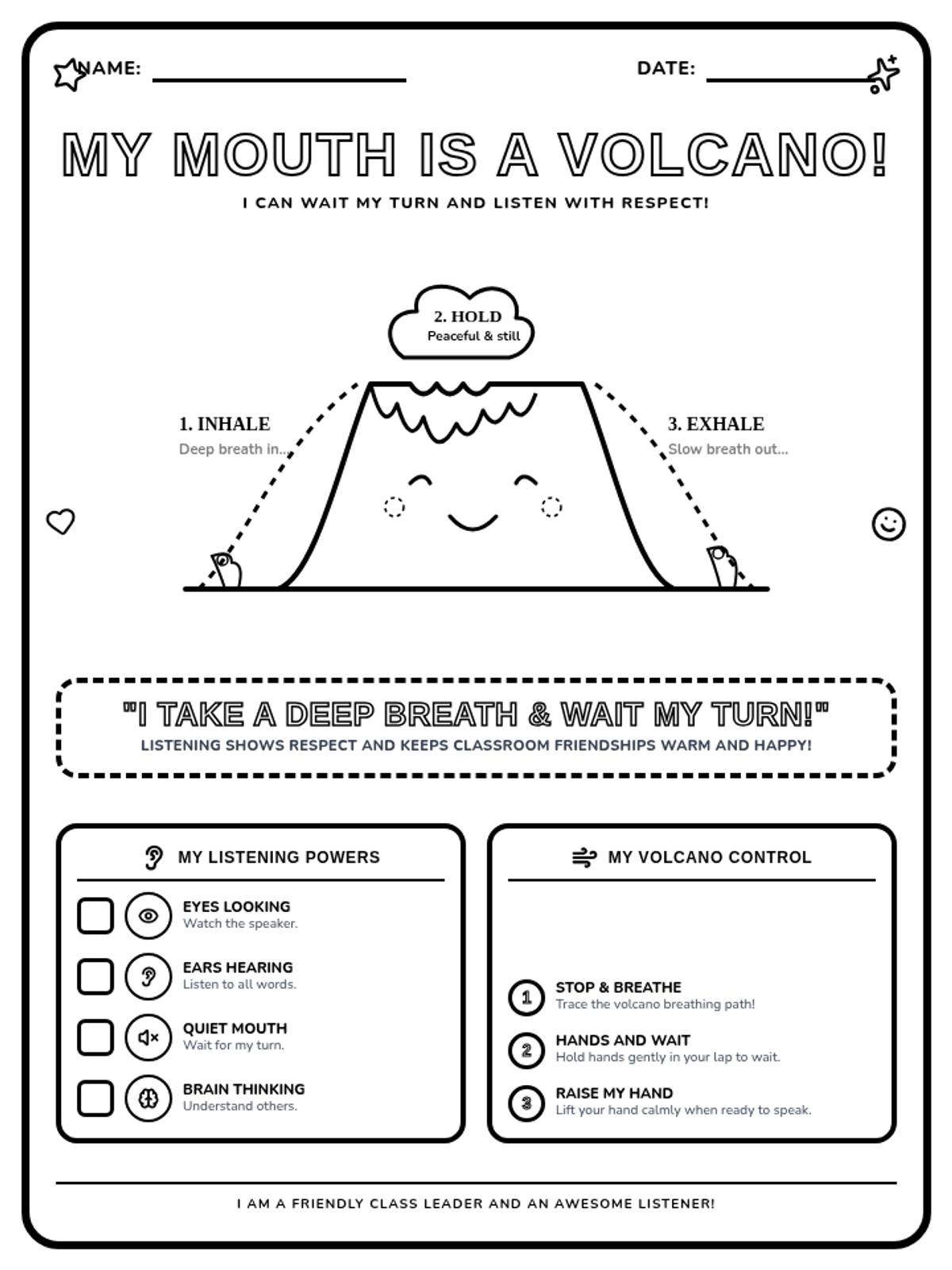
A social-emotional learning lesson focused on self-regulation, respectful listening, and turn-taking in the classroom, inspired by the children's book 'My Mouth Is a Volcano'.
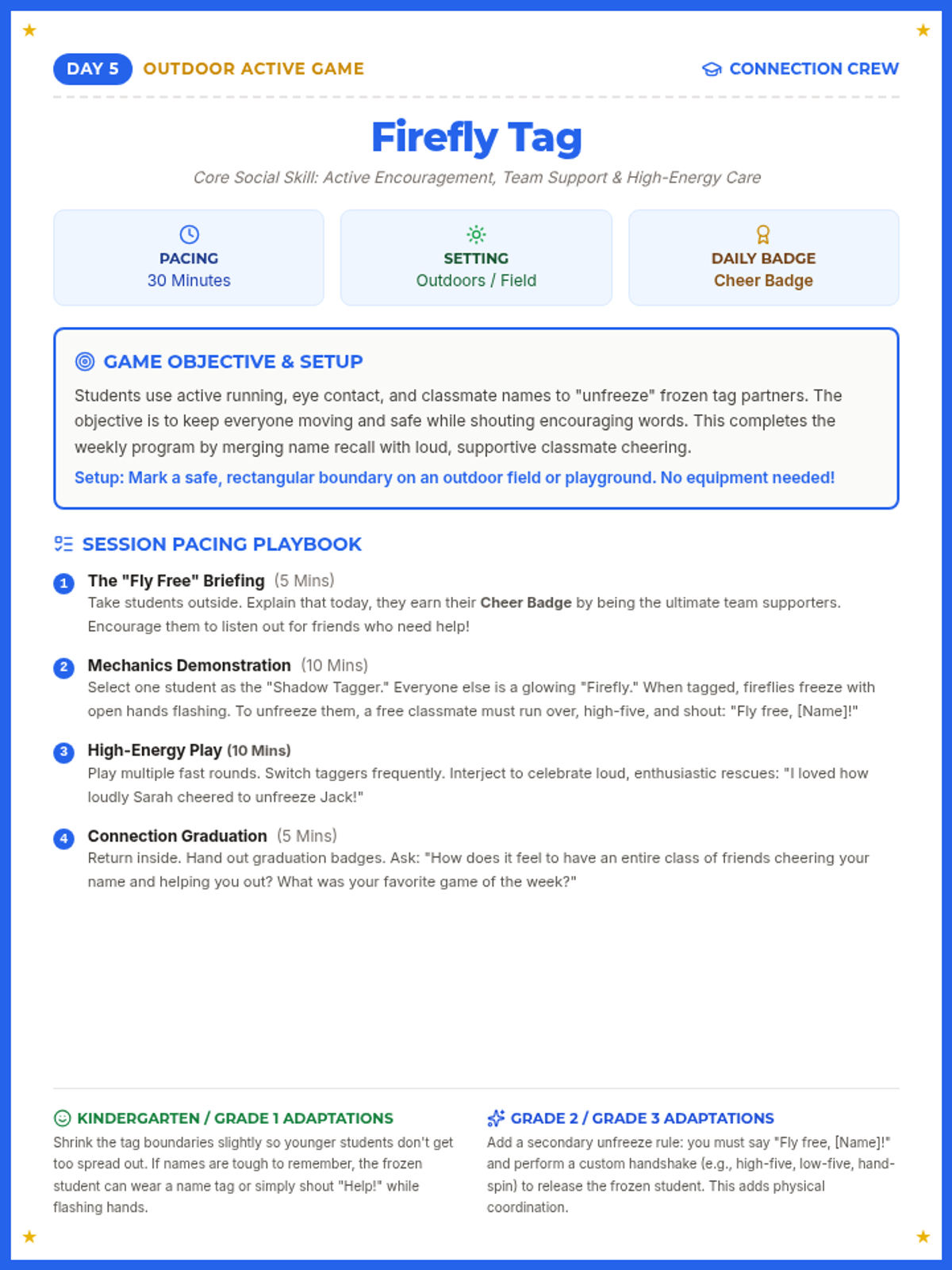
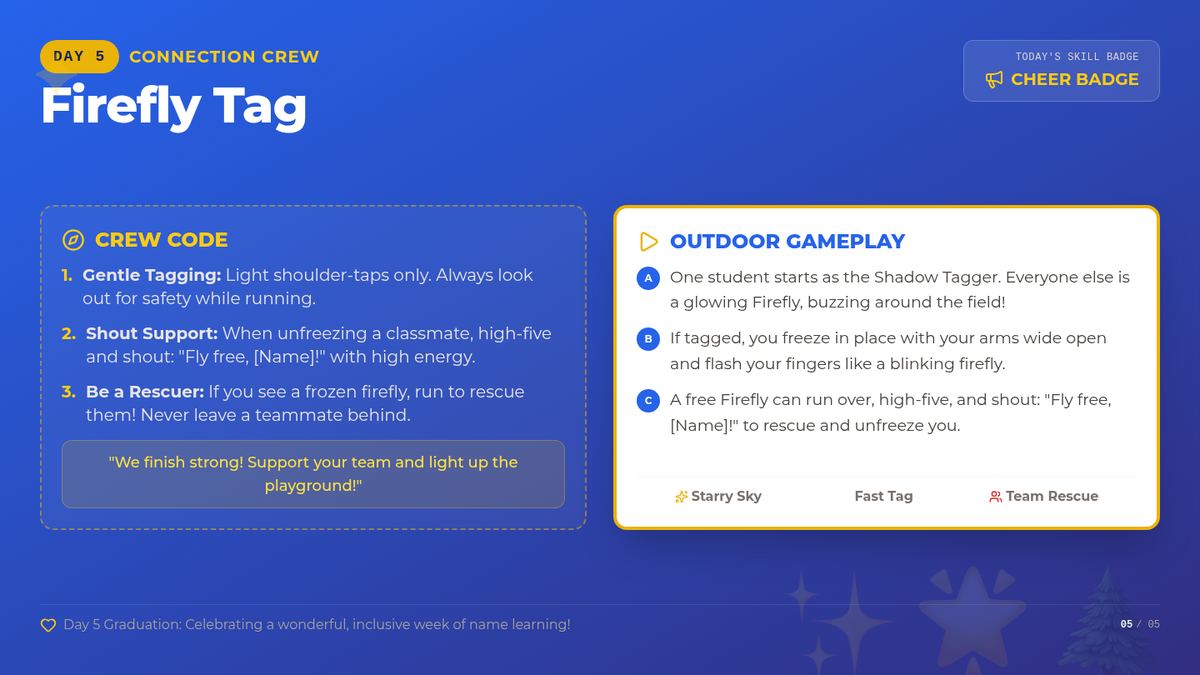
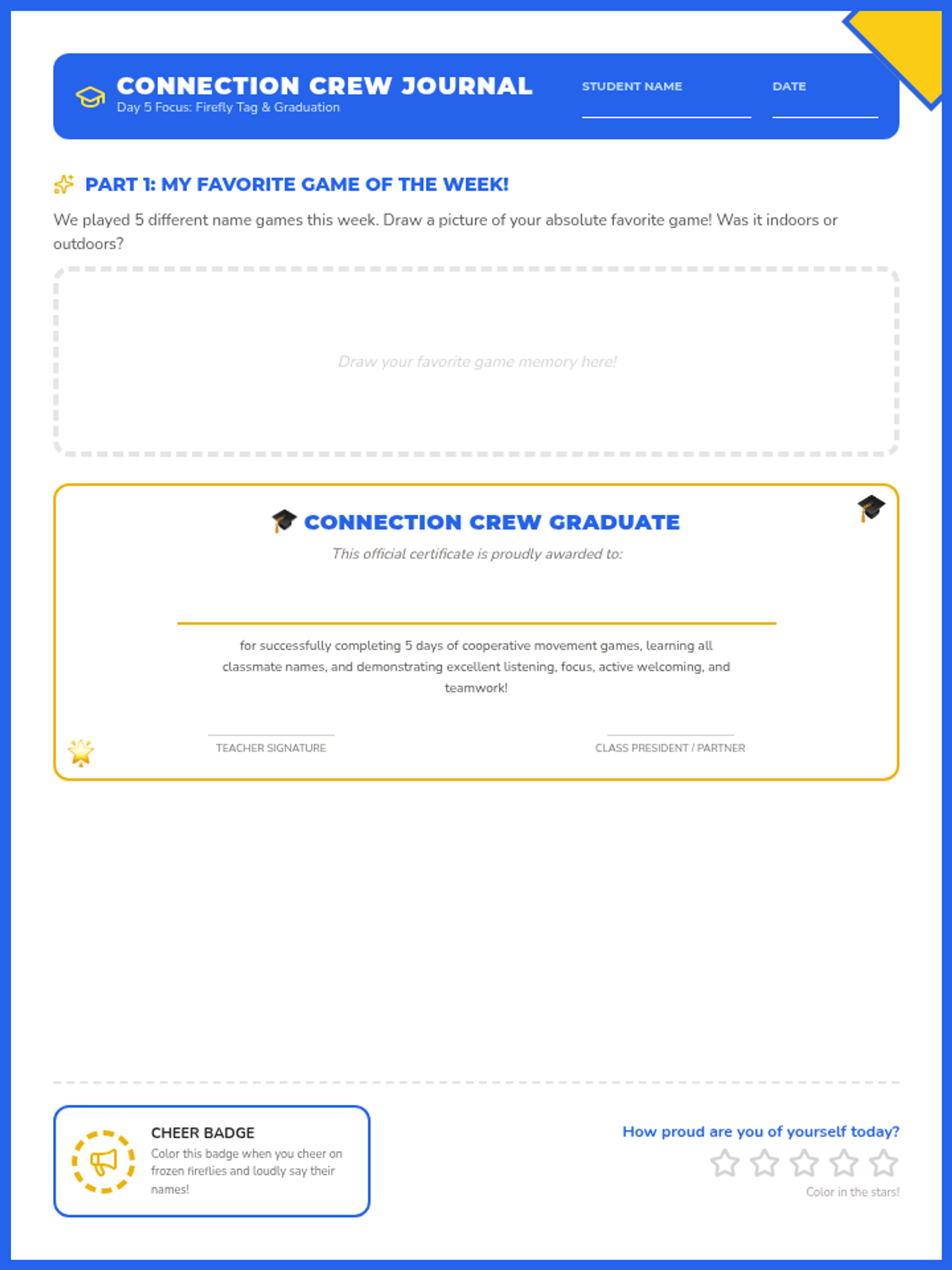
Day 5 of Connection Crew. An outdoor tag game focusing on encouragement and speed, where students must use classmate names and handshakes/high-fives to "unfreeze" them.
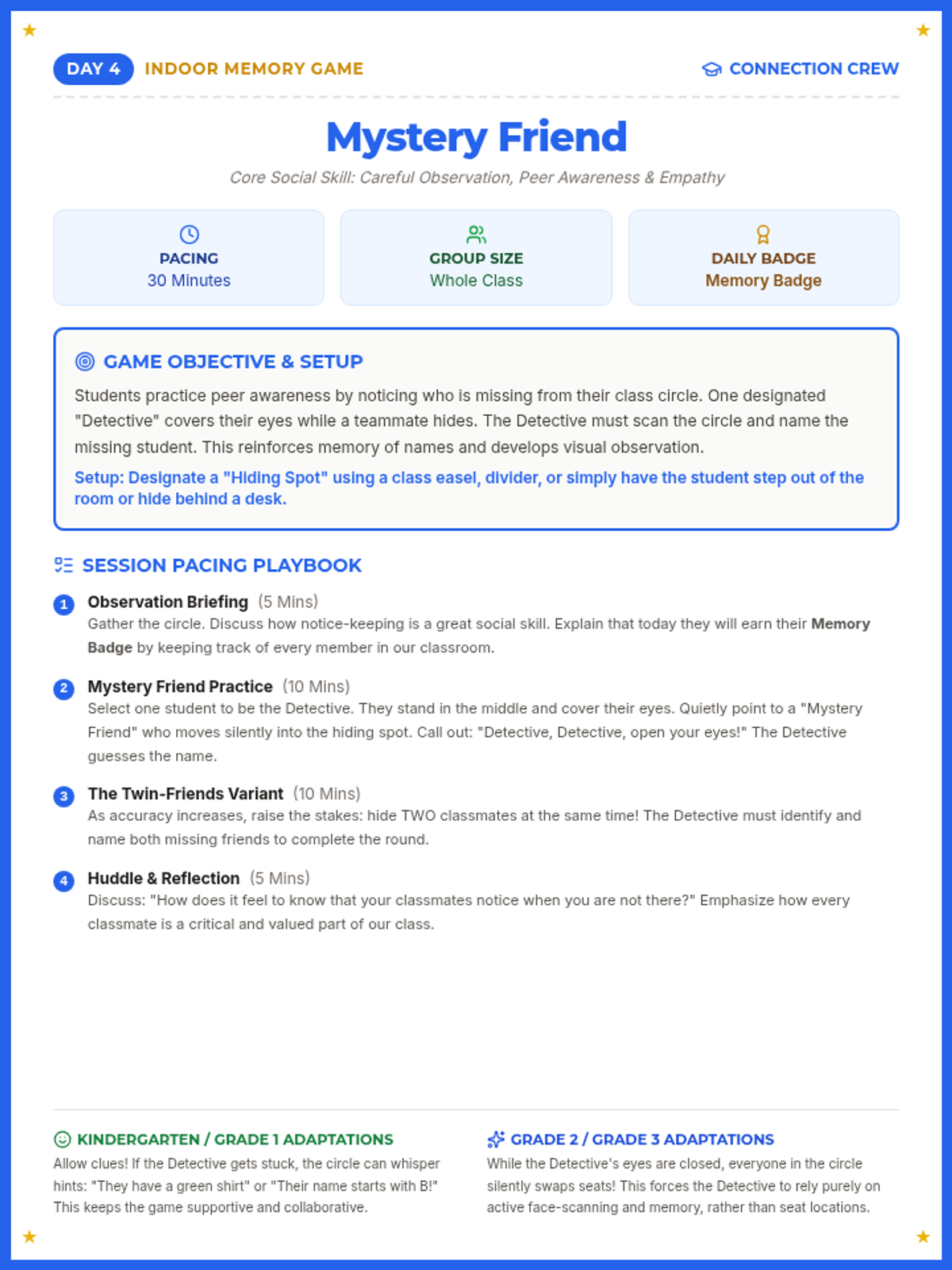
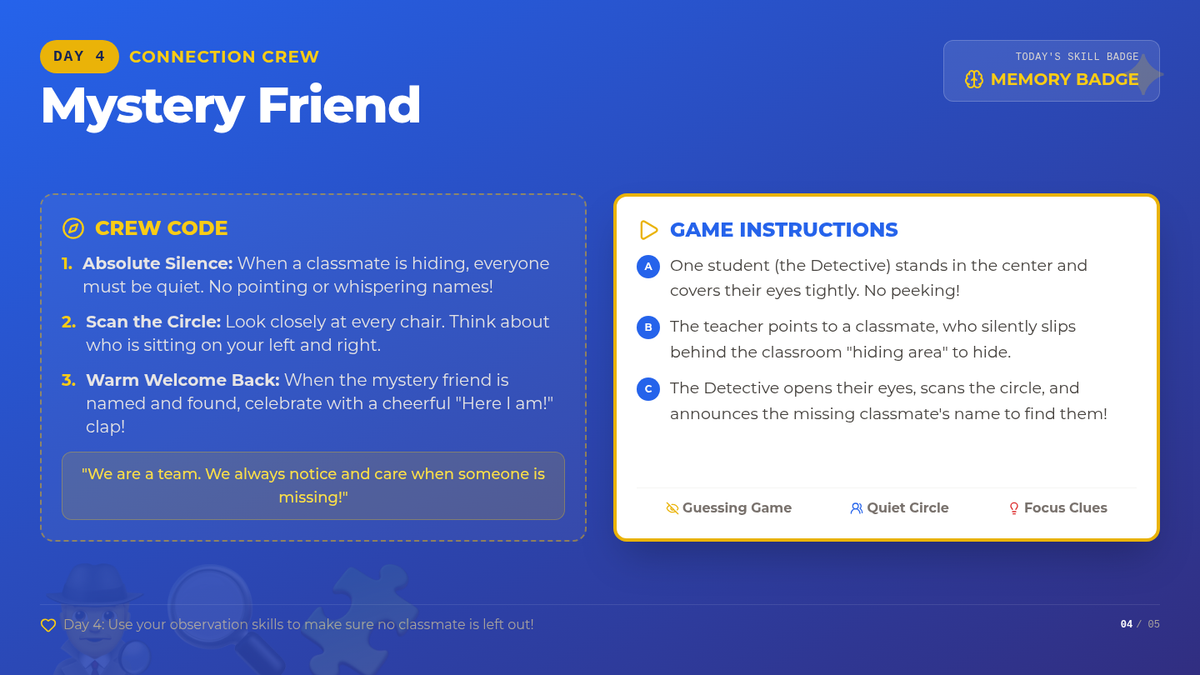
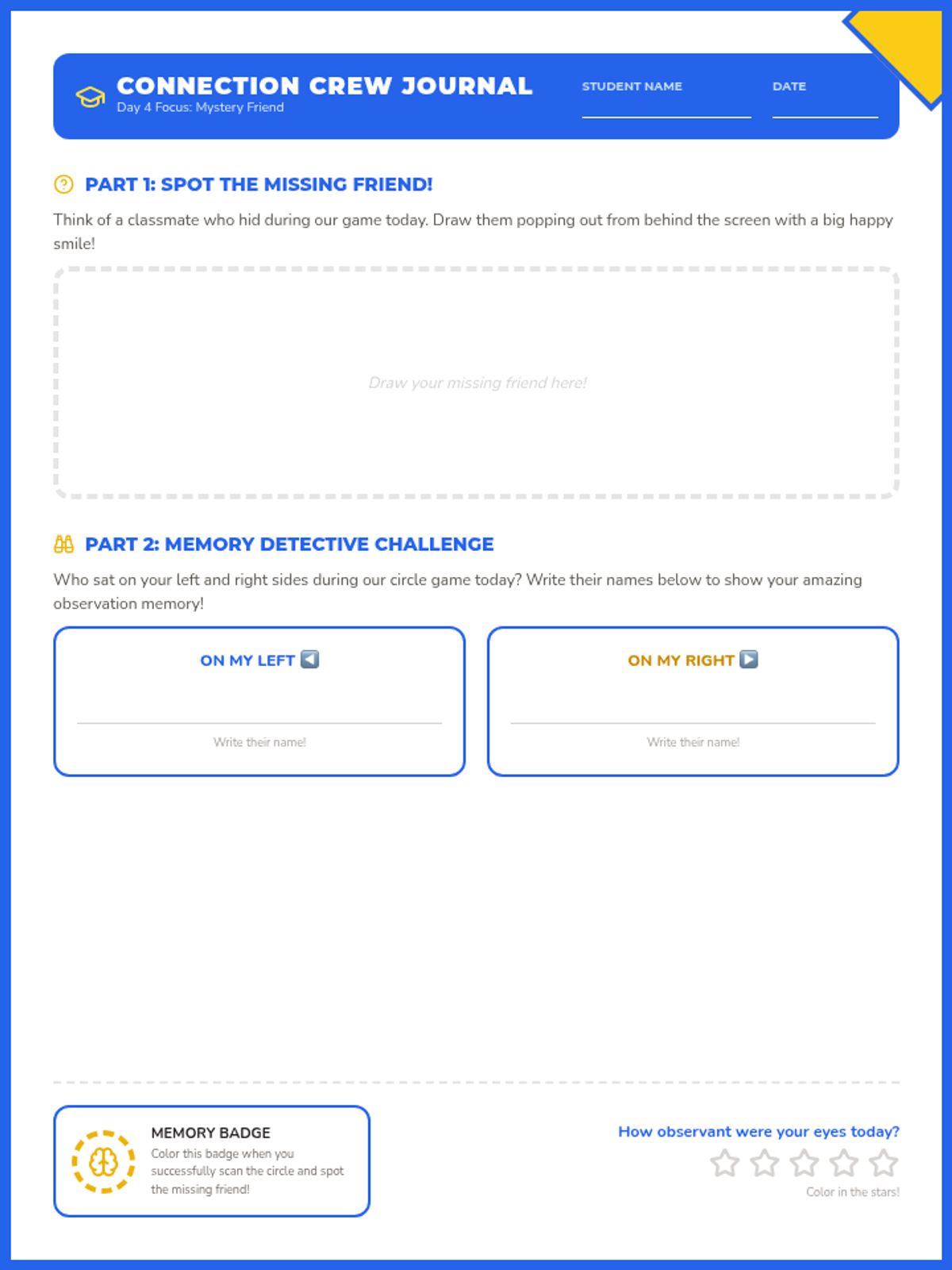
Day 4 of Connection Crew. An indoor sensory and memory game where students work together to identify which classmate is hidden in the "tent," reinforcing observation and recall.
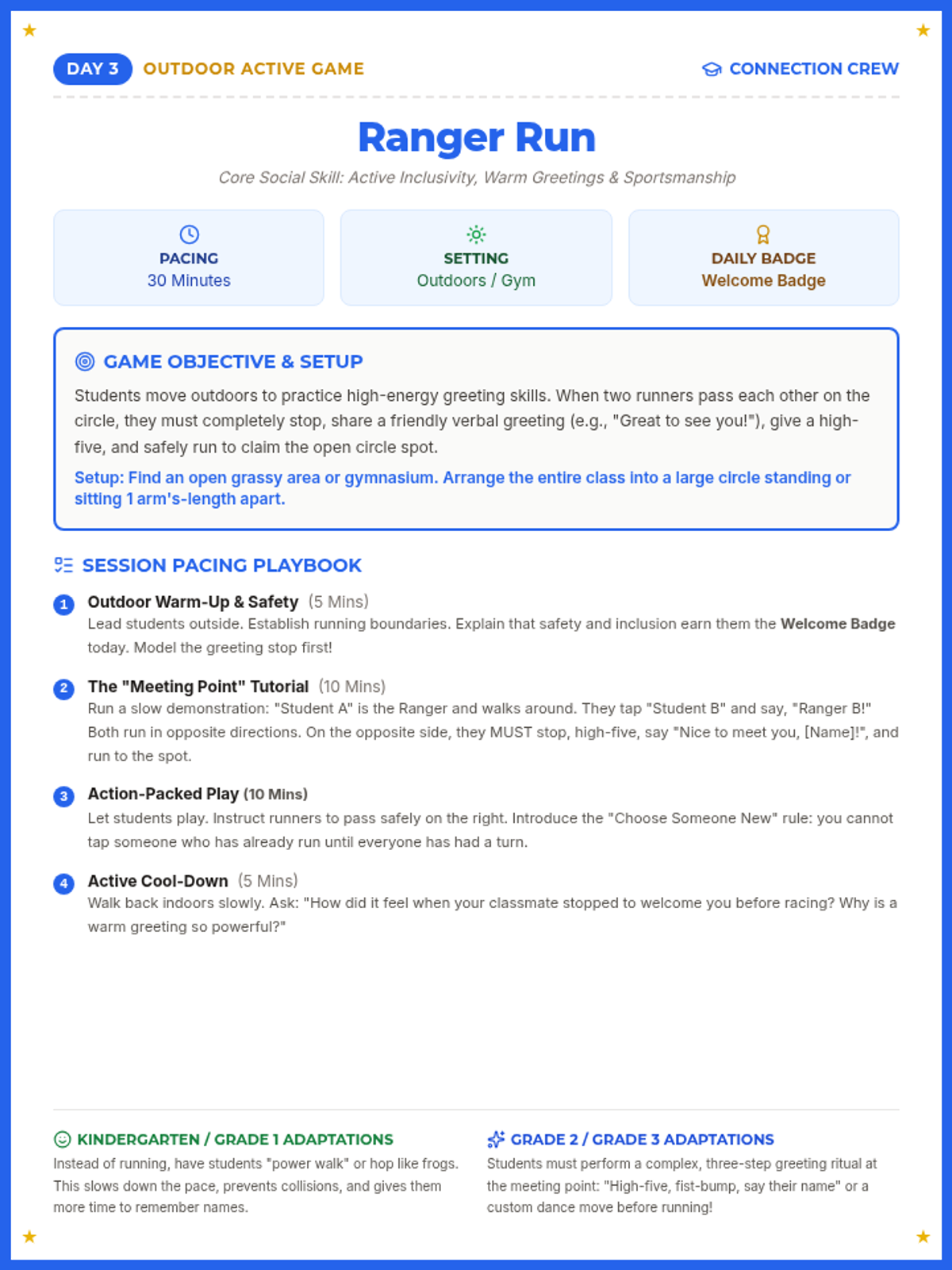
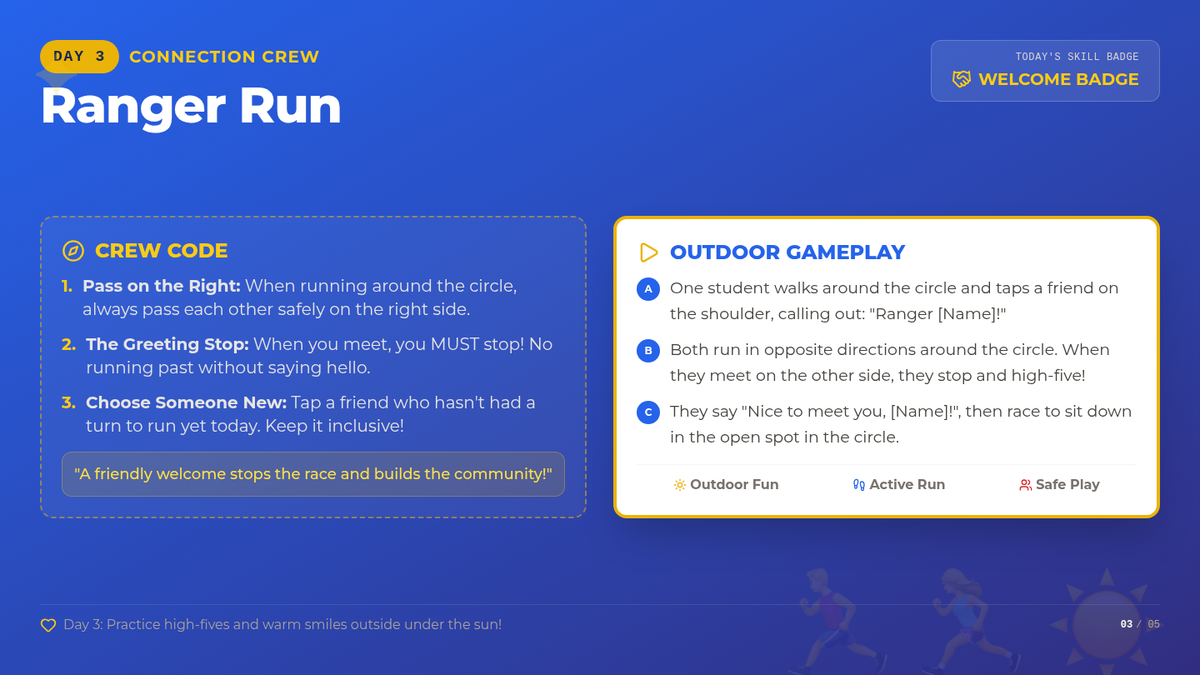
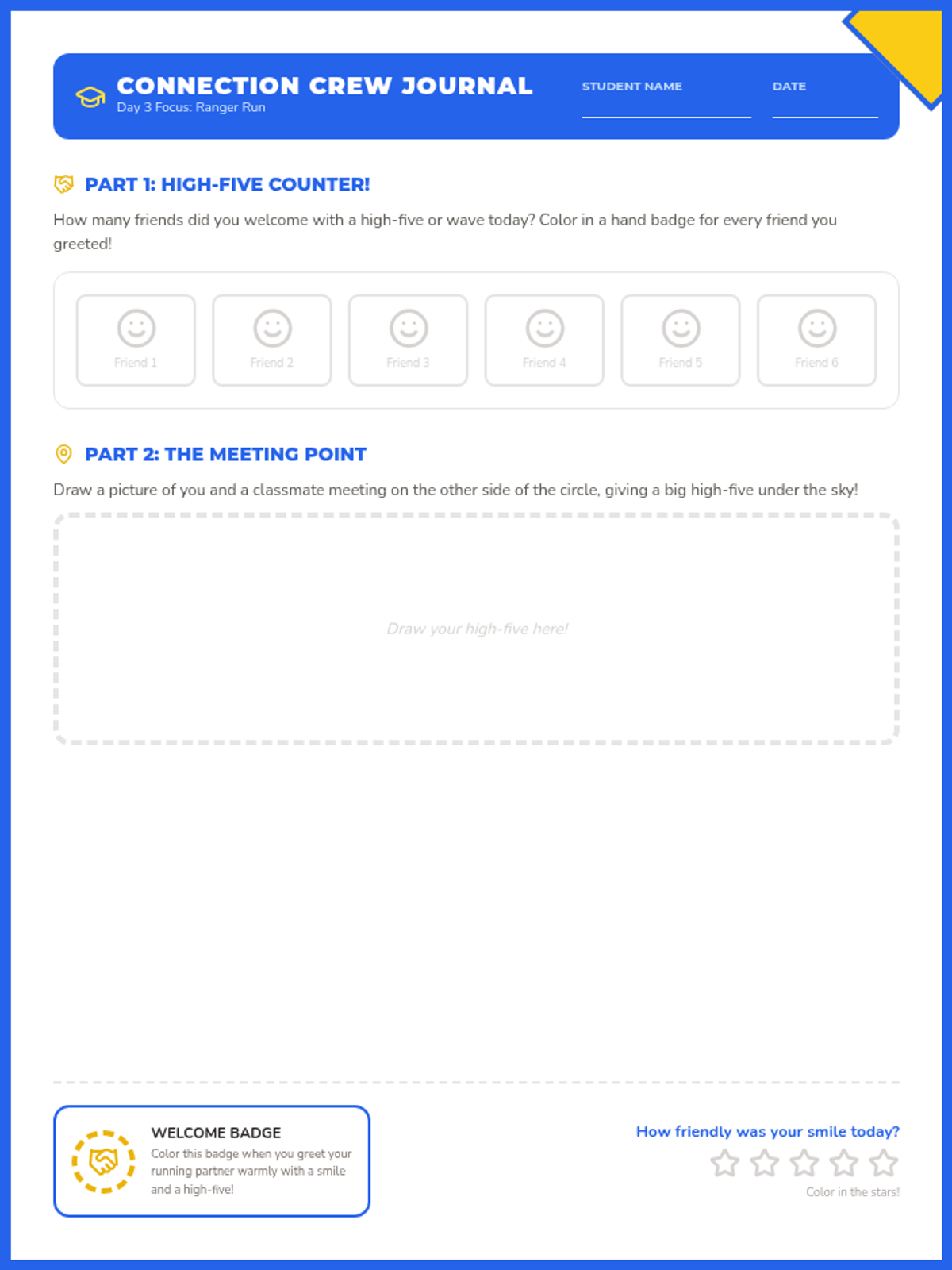
Day 3 of Connection Crew. An outdoor, highly active running circle game that combines physical exercise, name-learning, and warm welcomes under the sky.
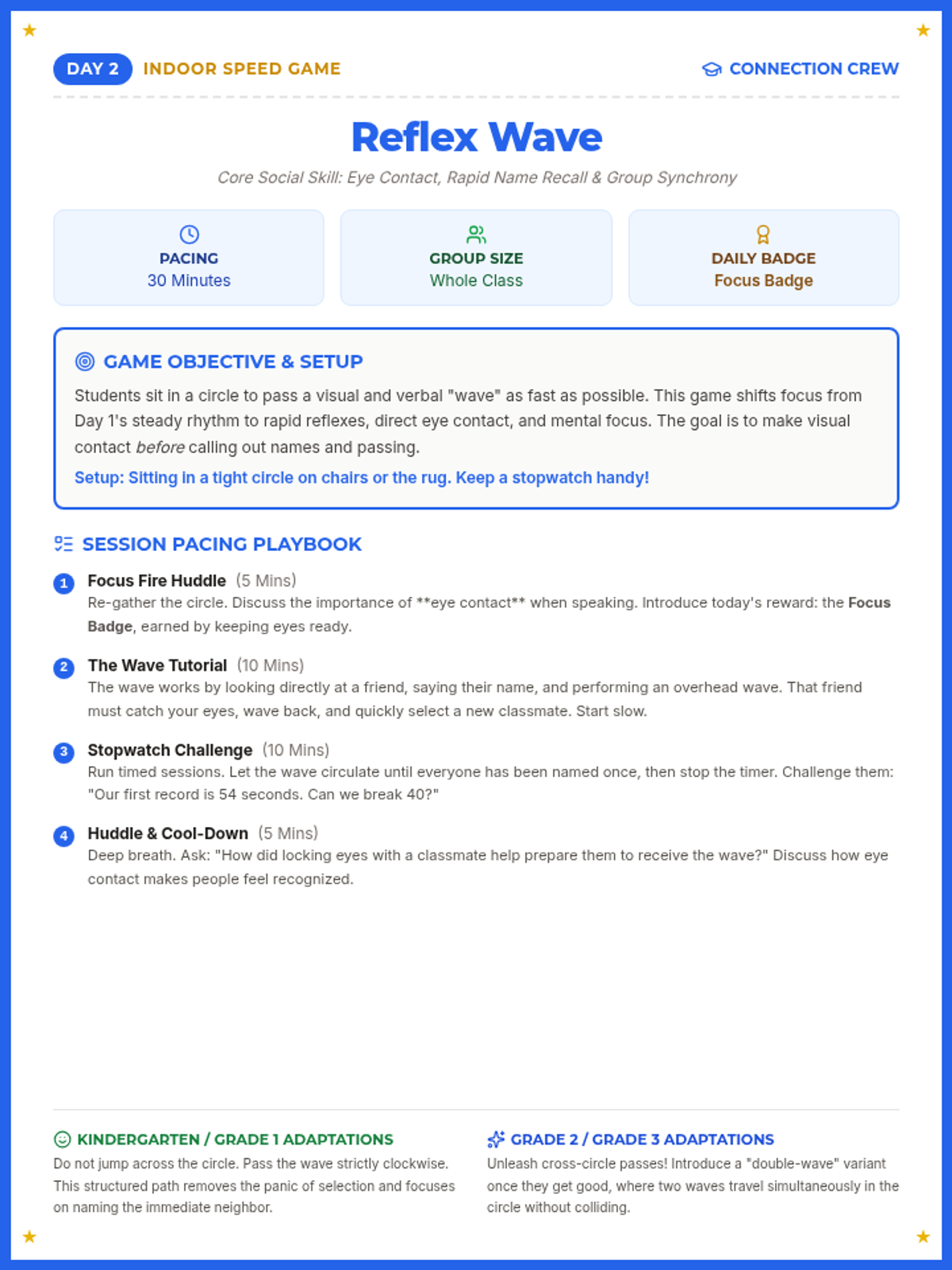
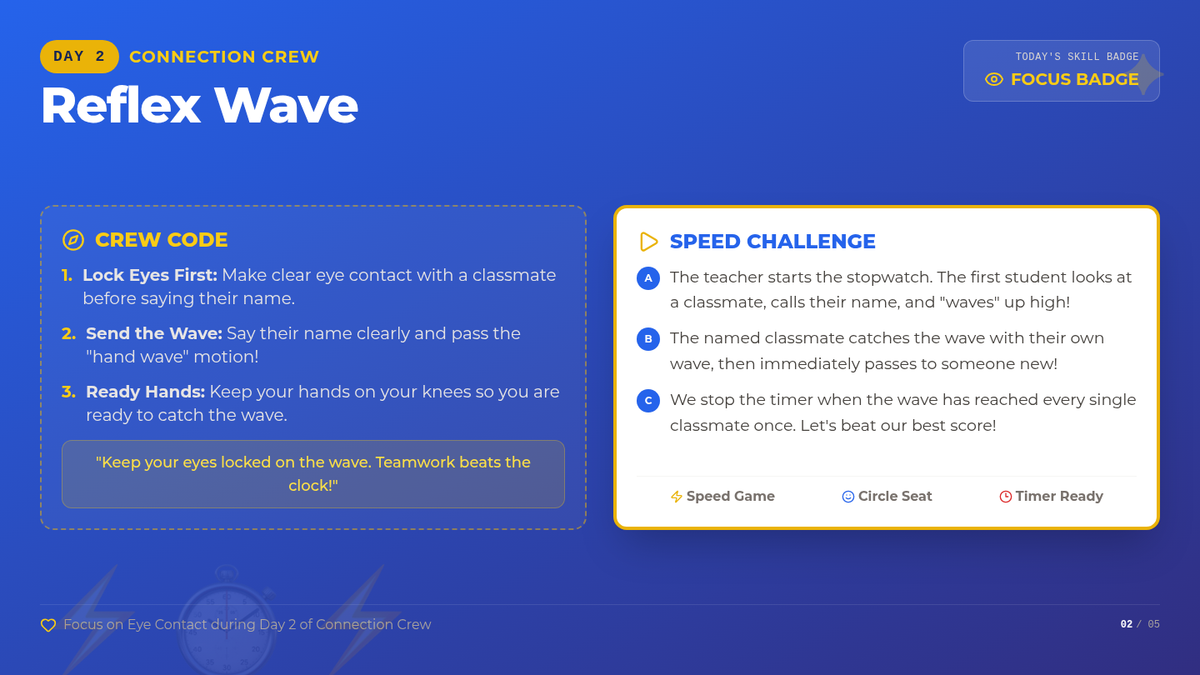
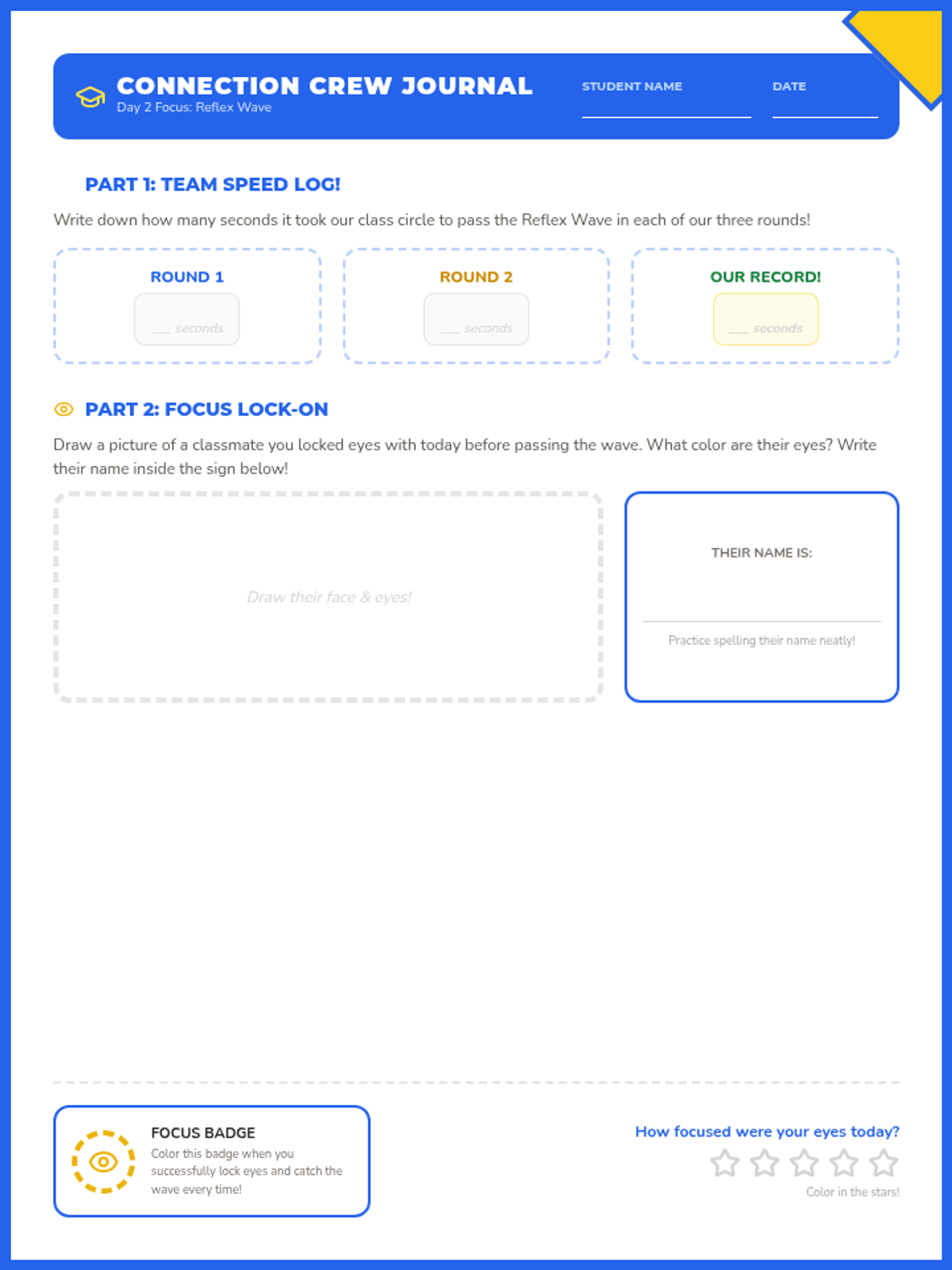
Day 2 of Connection Crew. An indoor speed-focus name game that builds reflexes, eye contact, and collective teamwork as the class tries to beat their own "Reflex Wave" time-record.
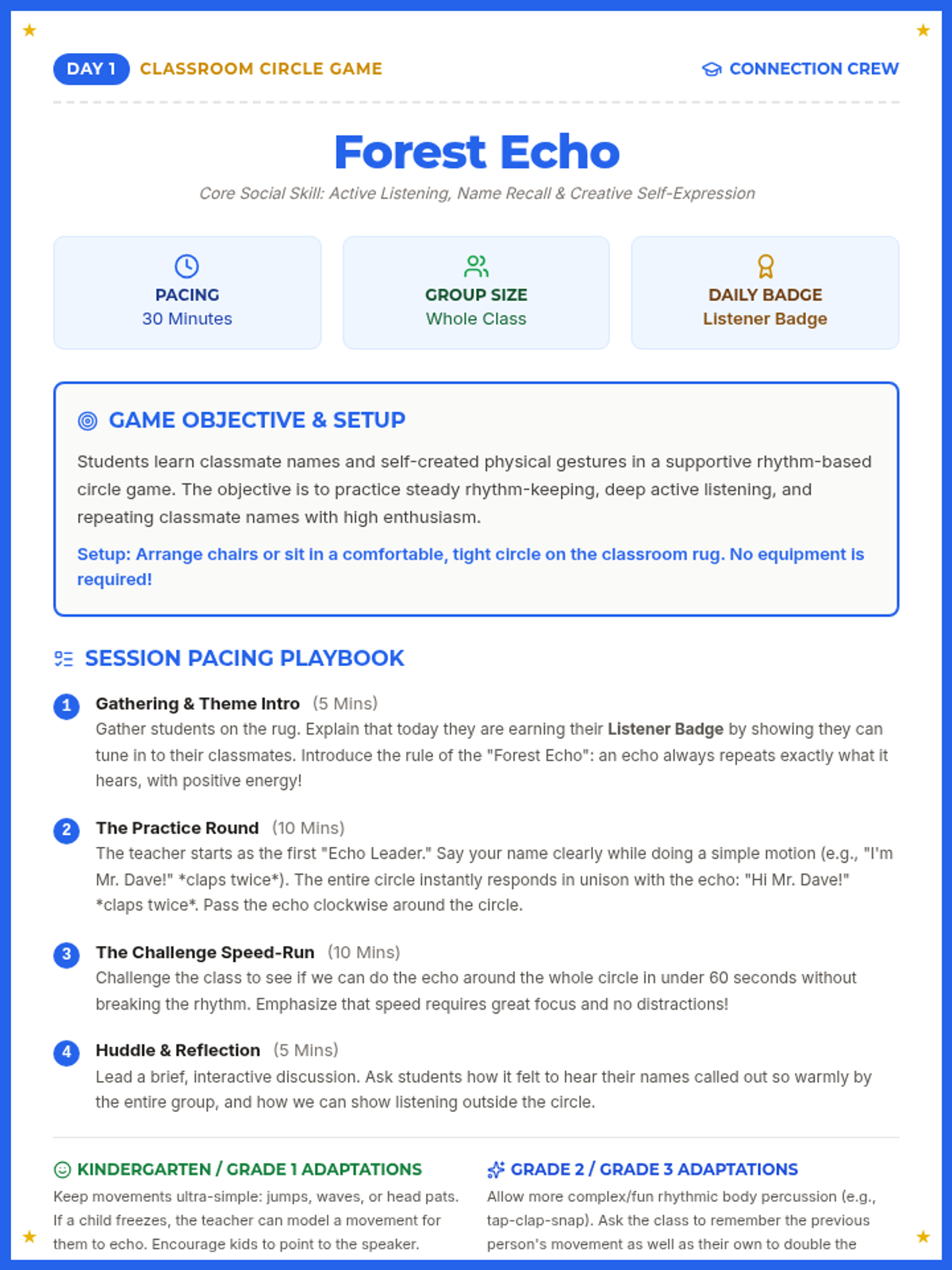
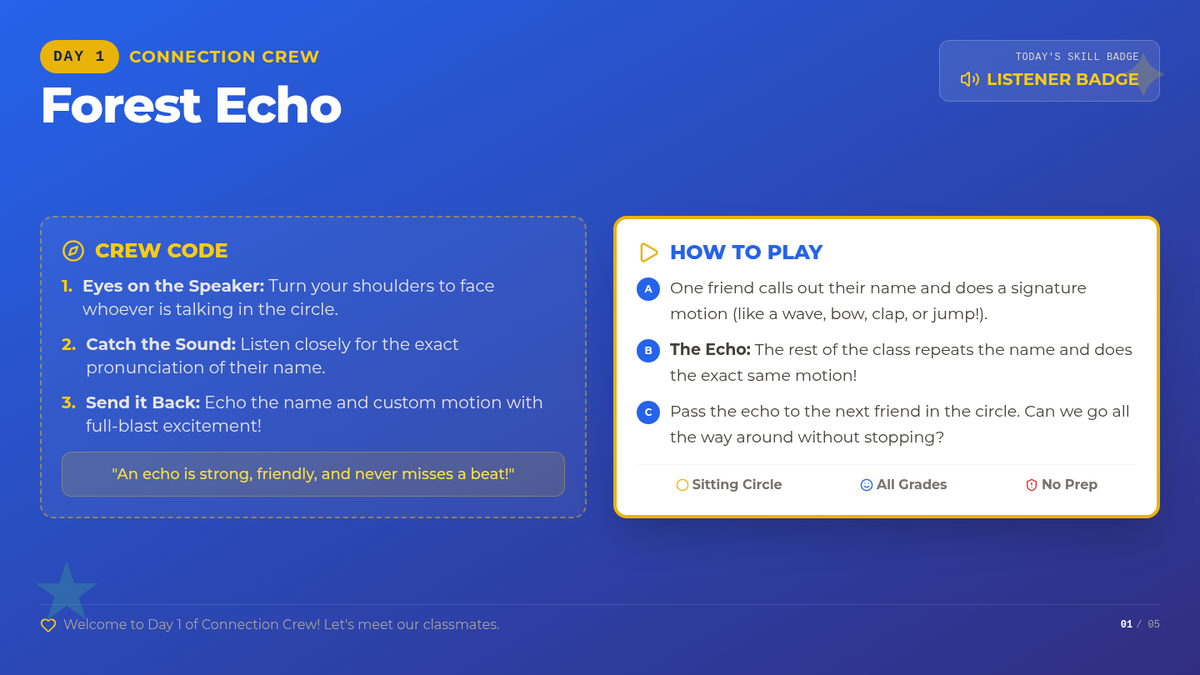
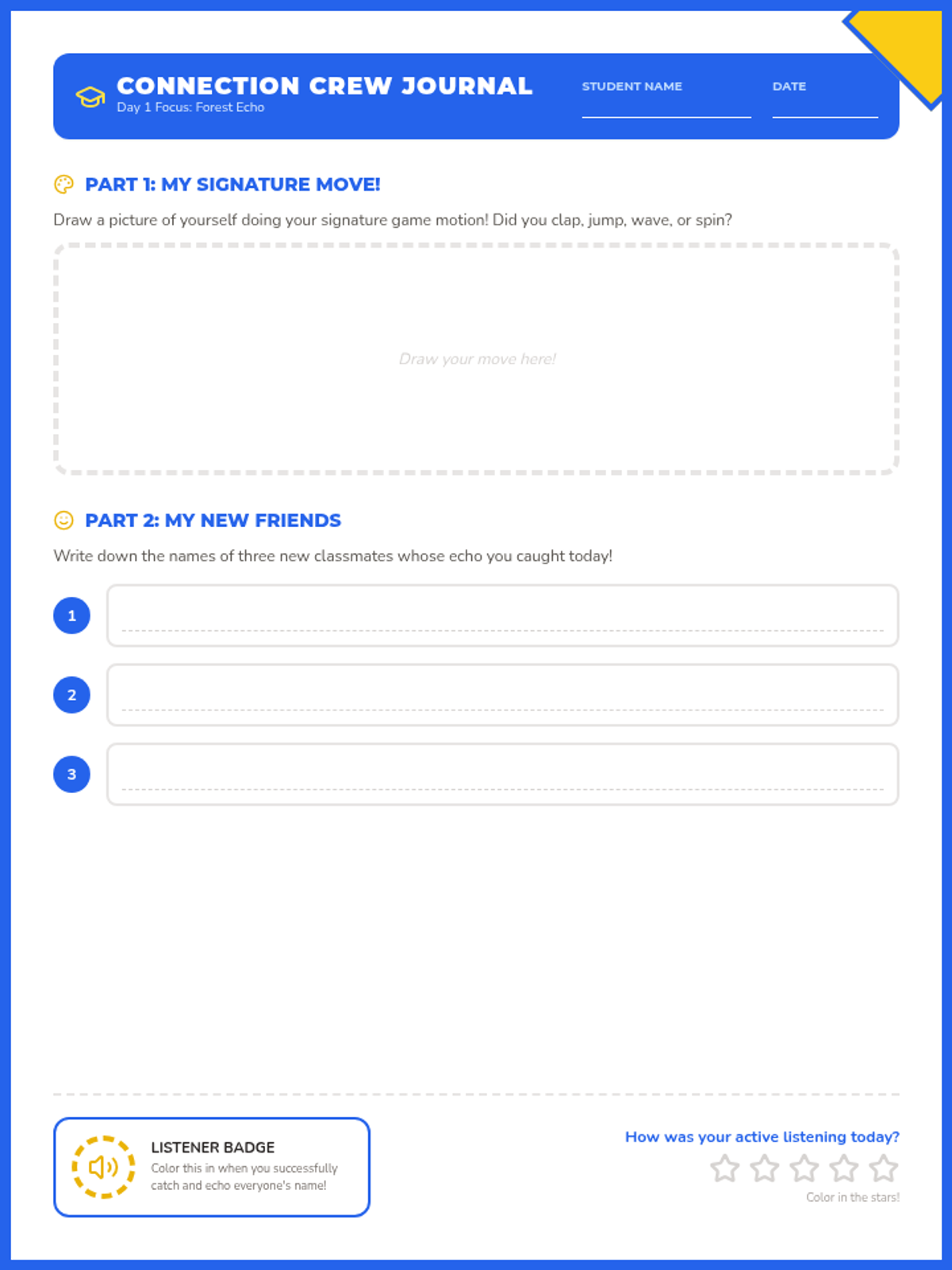
Day 1 of Connection Crew. Students gather in a classroom circle for a rhythmic echo game where they learn classmate names, share custom movements, and practice active listening in a 30-minute indoor session.
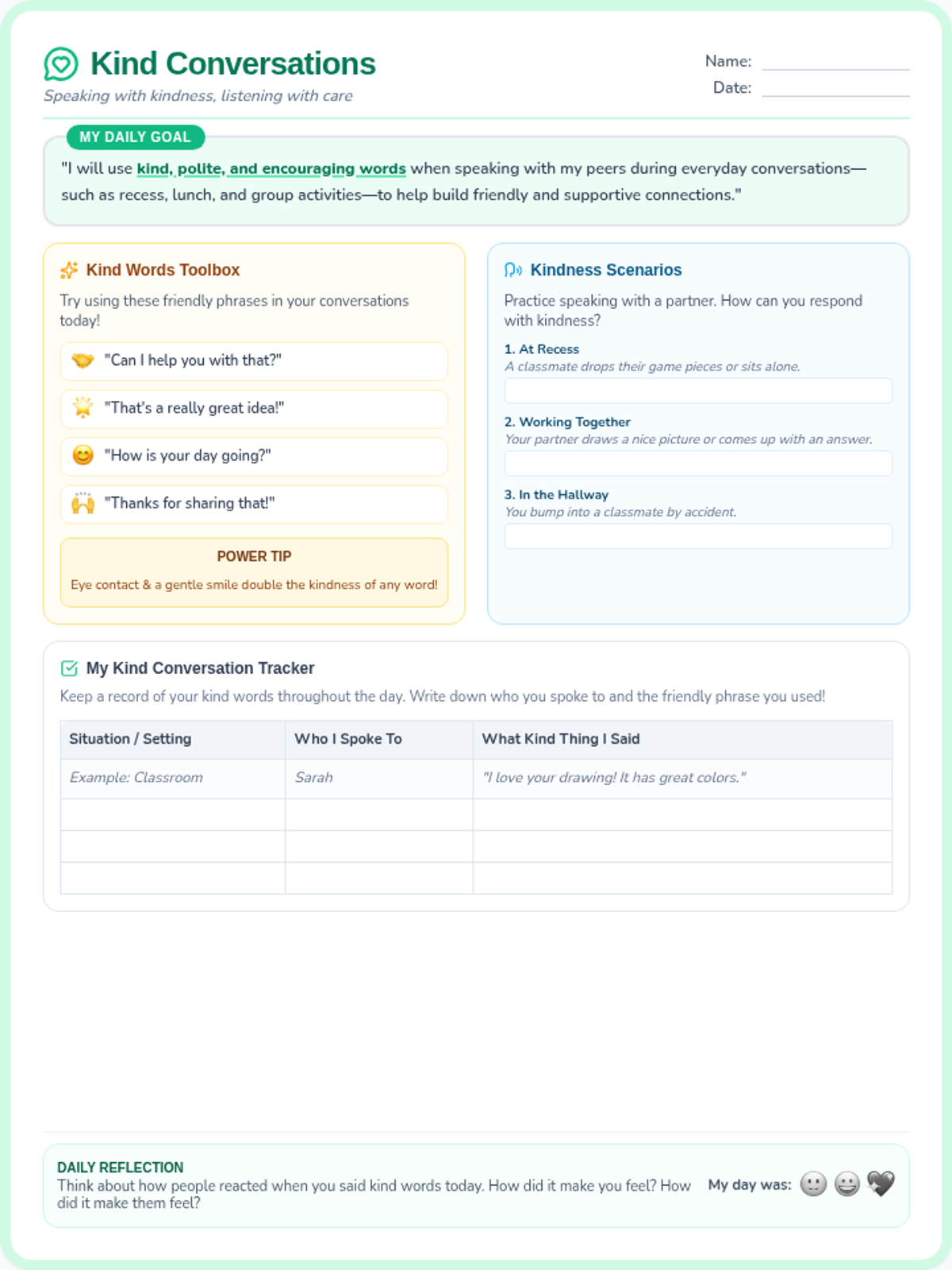
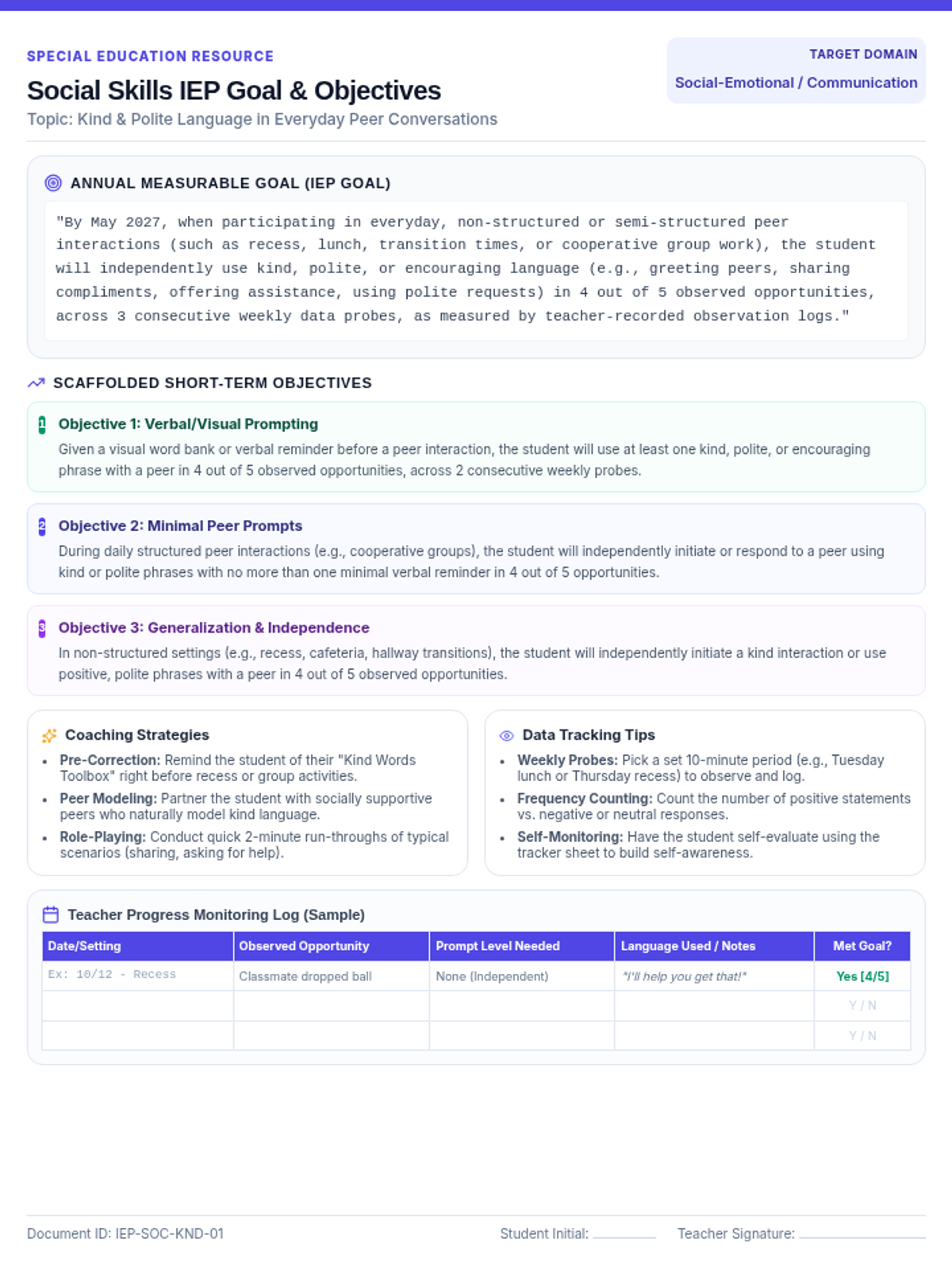
A social skills lesson designed to help students learn and apply kind, polite, and encouraging language during daily peer interactions. Includes clear visual objectives, structured discussion cards, and a reflection tracker.
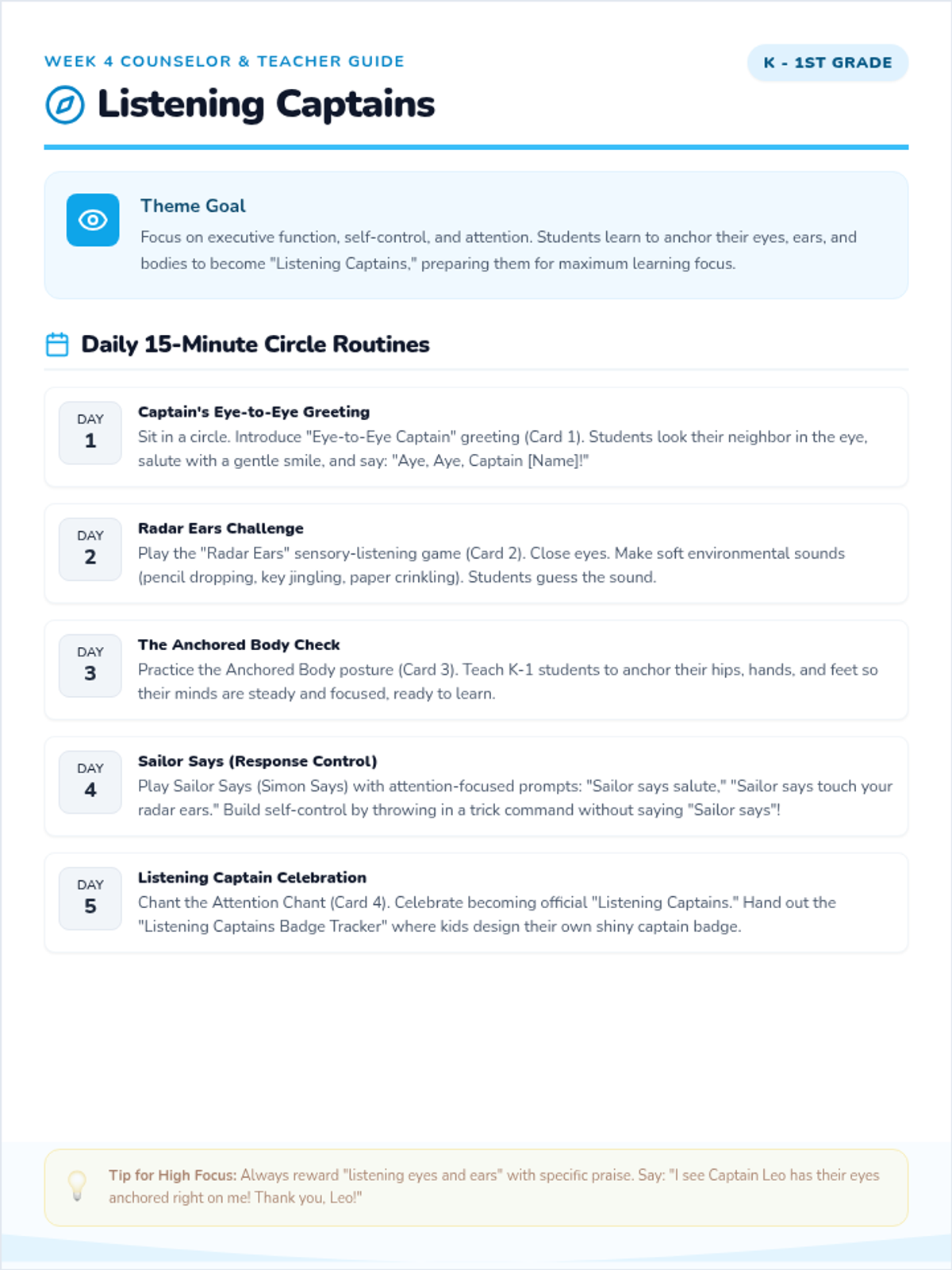
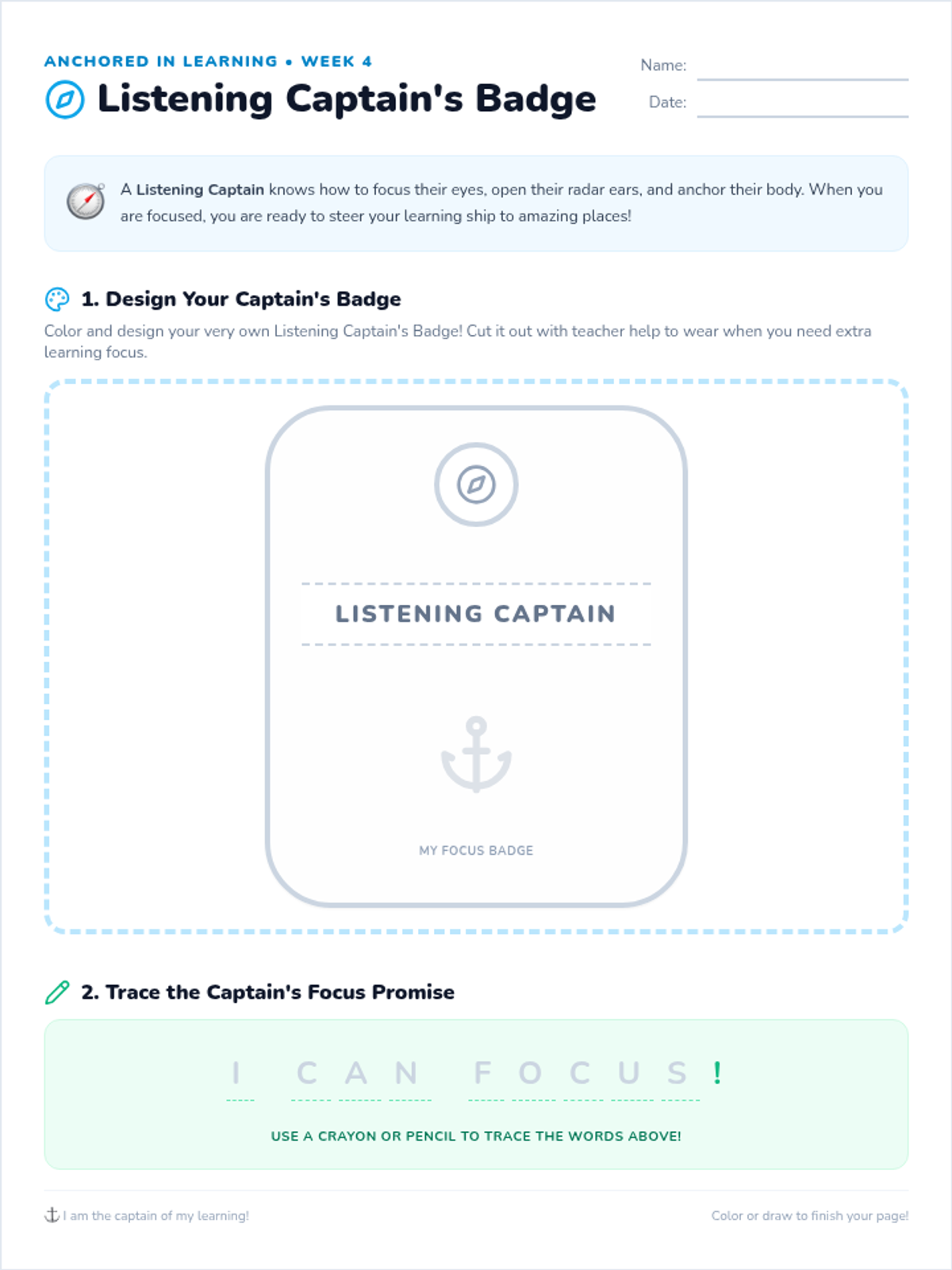
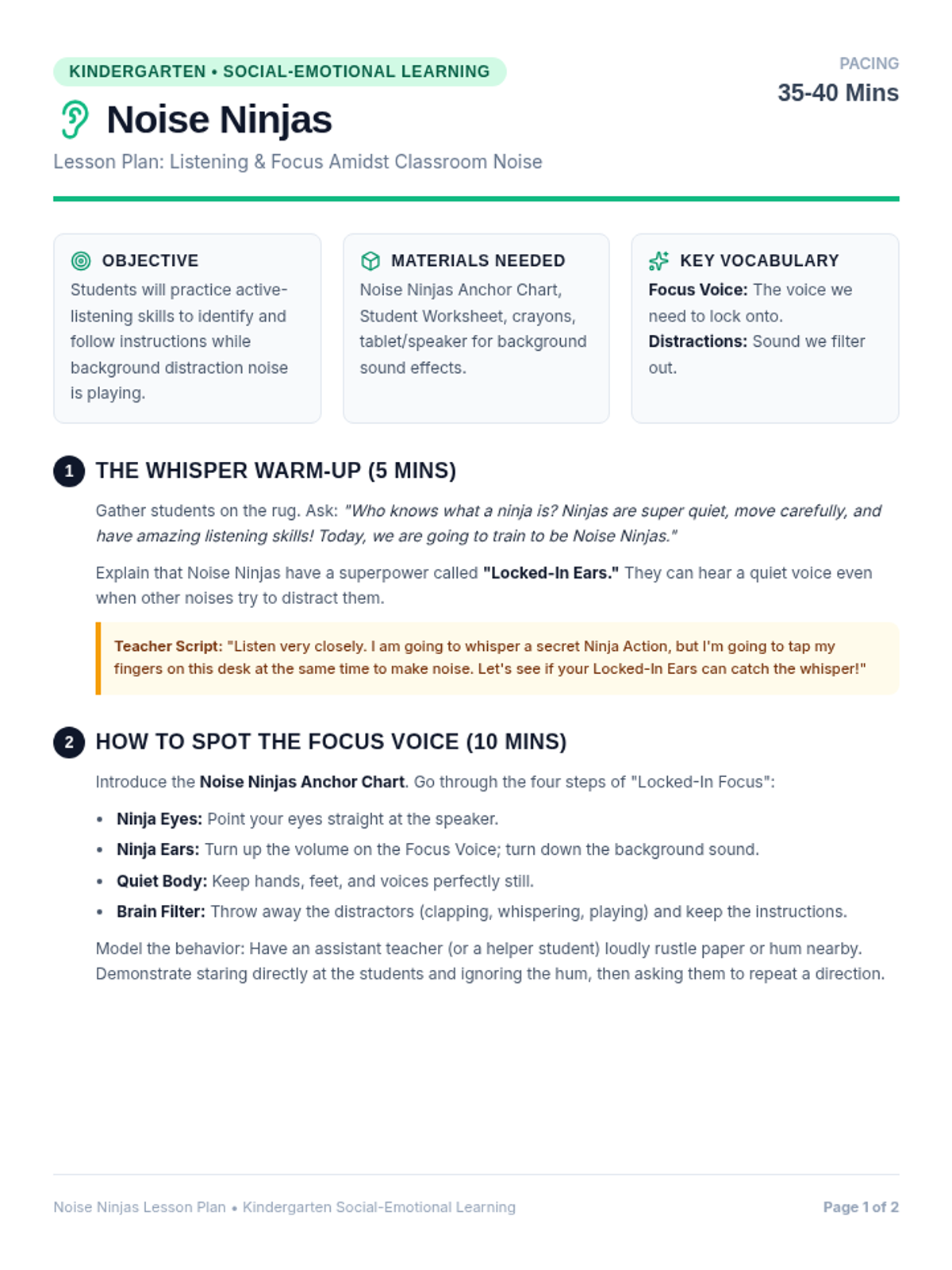
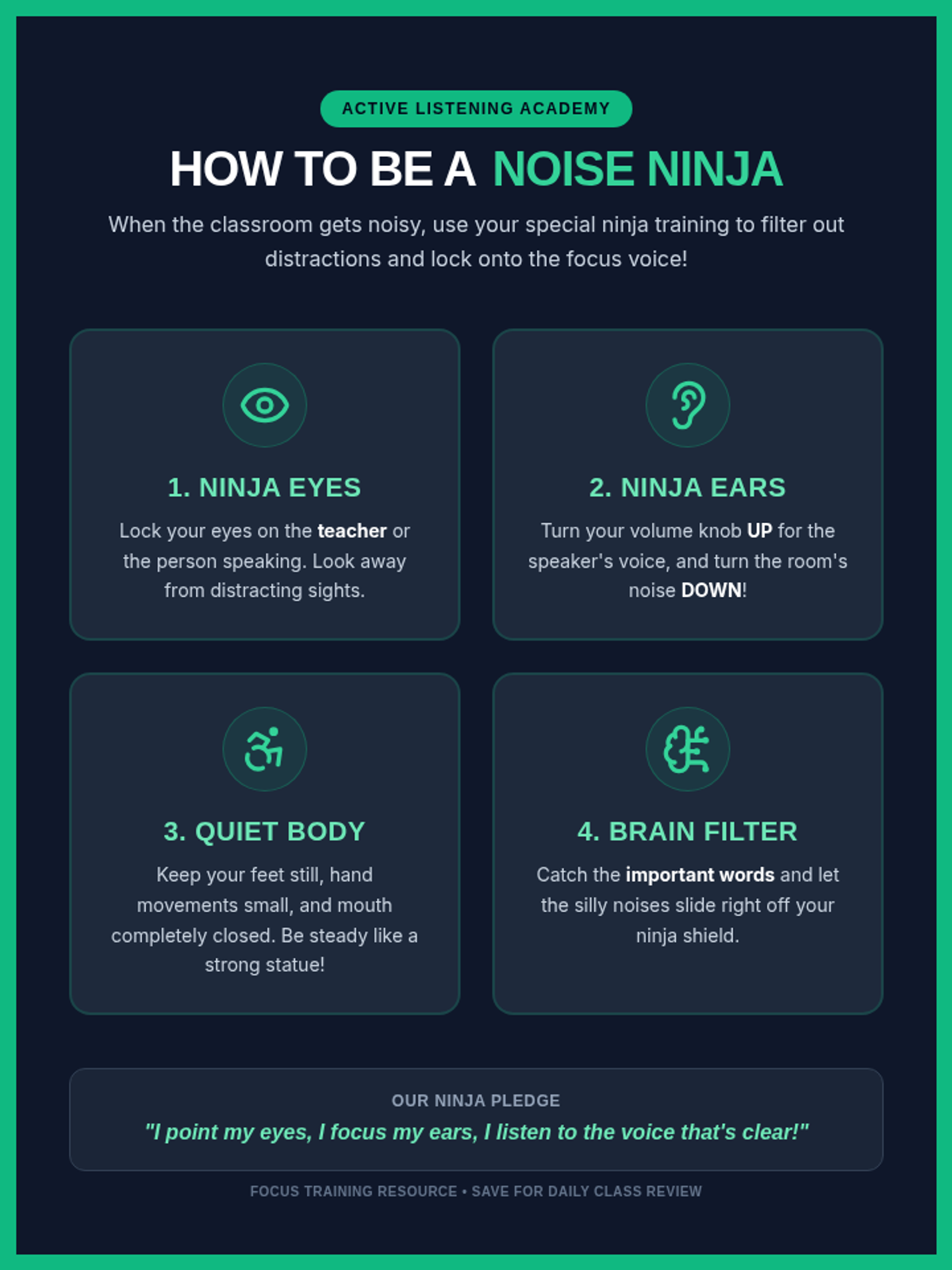
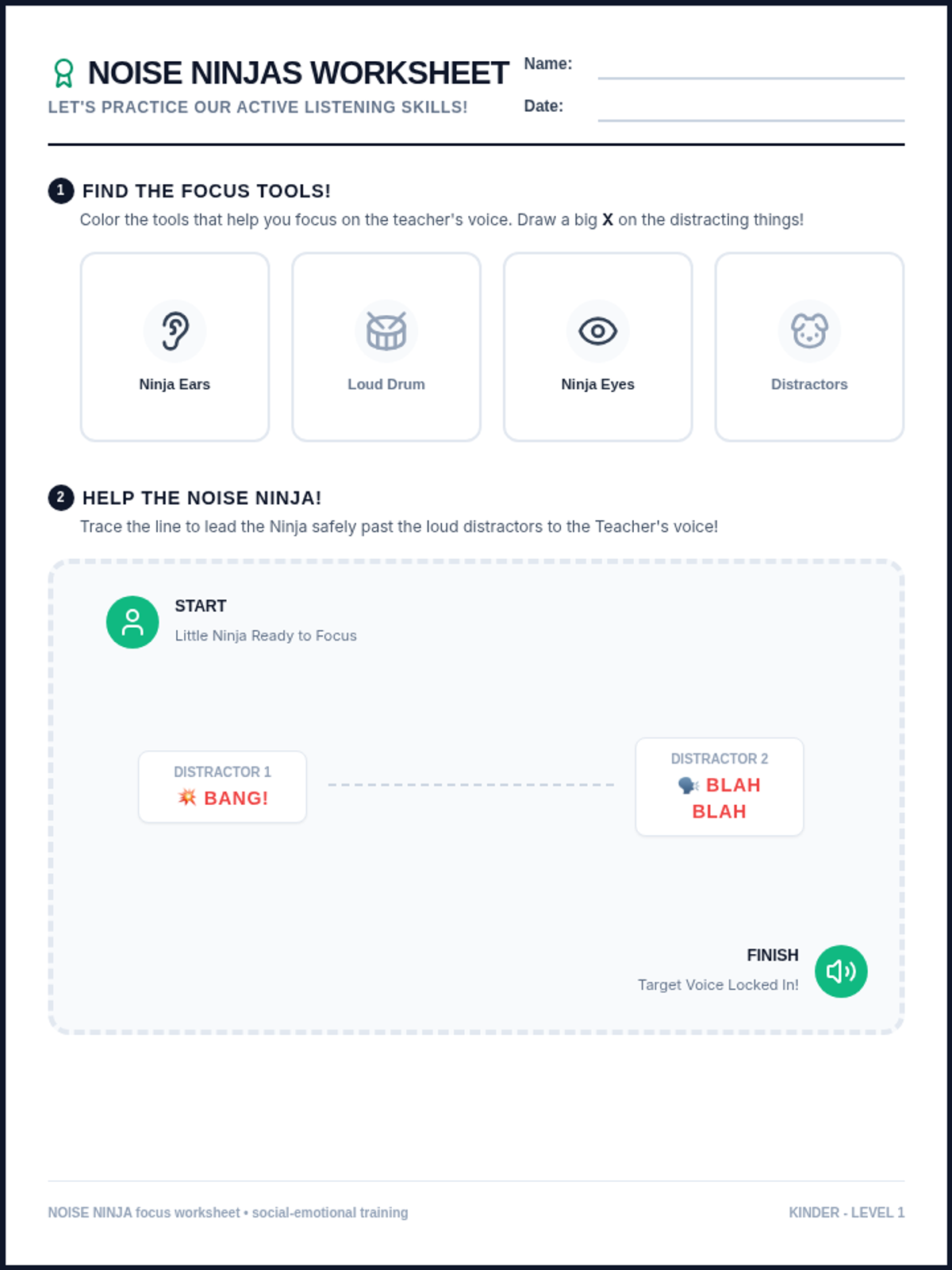
A active-listening and focus lesson designed for Kindergarteners to practice filtering out classroom background noise and following directions. Includes an interactive auditory game, an anchor chart of focus strategies, and a simple hands-on worksheet.
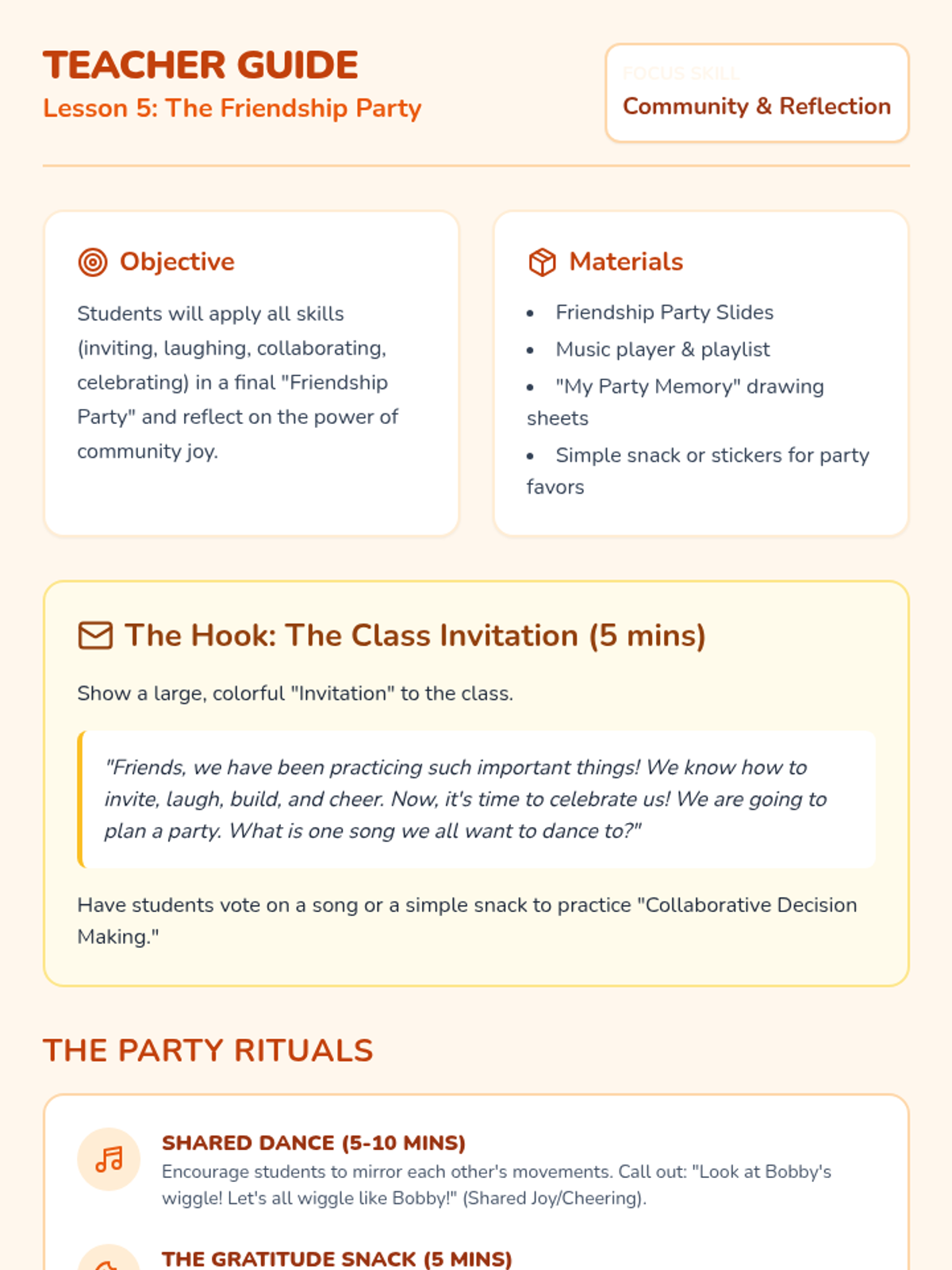
A culminating event where students plan and execute a simple shared activity (like a dance party or snack share). They reflect on how doing things together feels different than doing them alone.
Students present their collages to small groups, articulating why they chose specific activities. Peer listeners practice affirming others' choices.
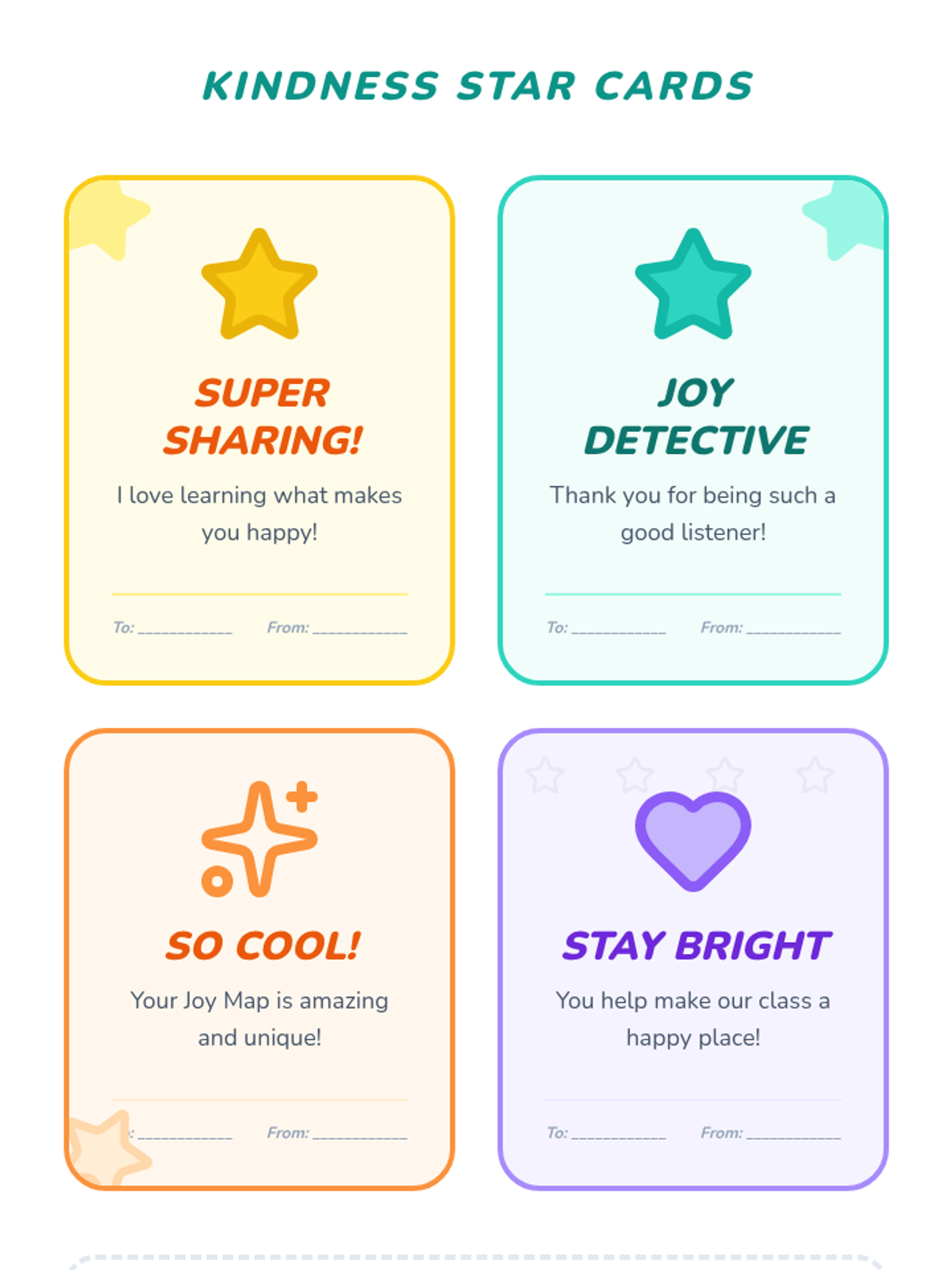
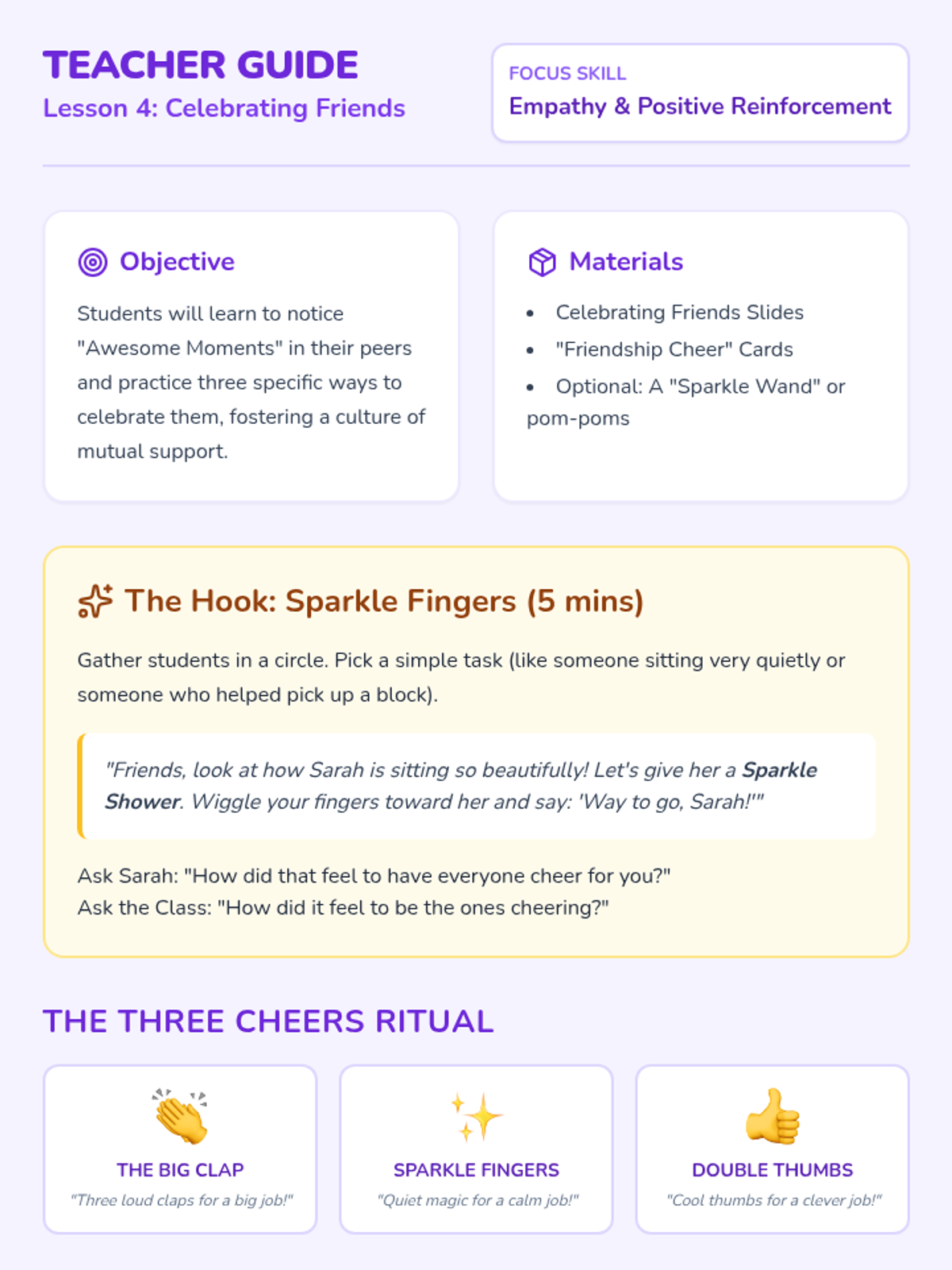
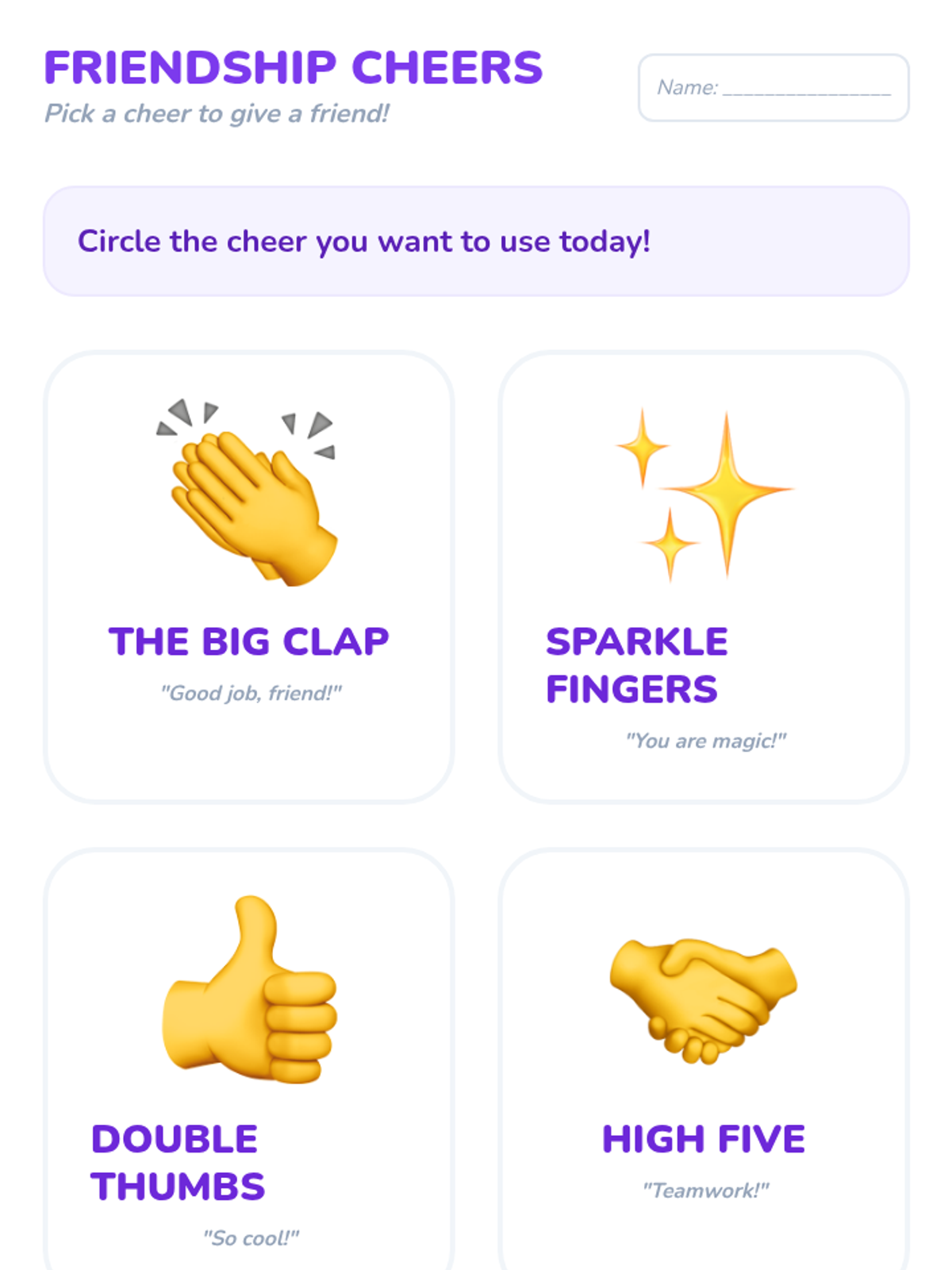
Students learn to identify when a friend does something good and how to celebrate them (clapping, cheering). This shifts focus from self-gratification to finding joy in others' success.
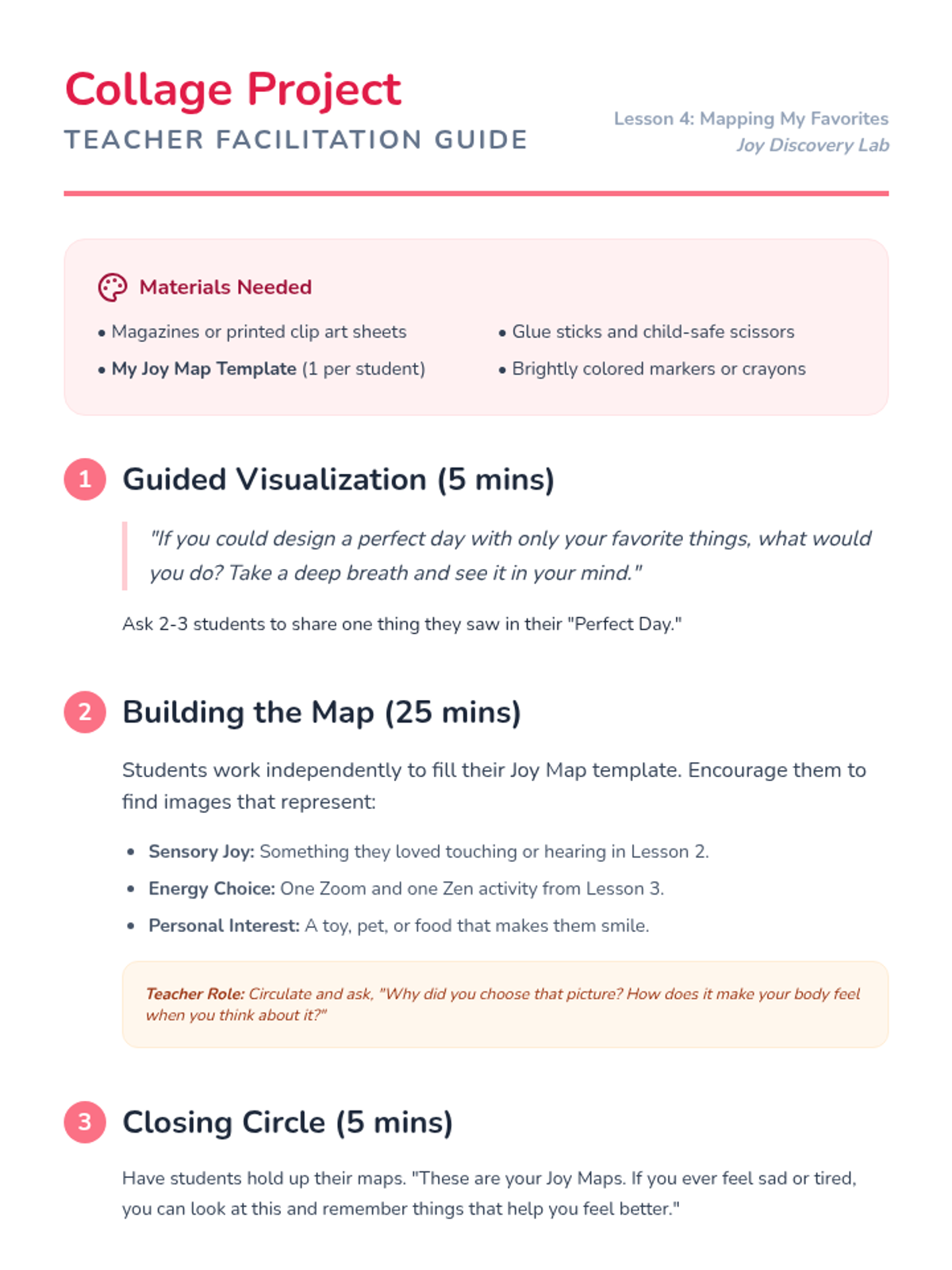
Using a collage format, students select and paste images of their favorite activities onto a personal poster. This visual aid serves as a concrete reference tool.
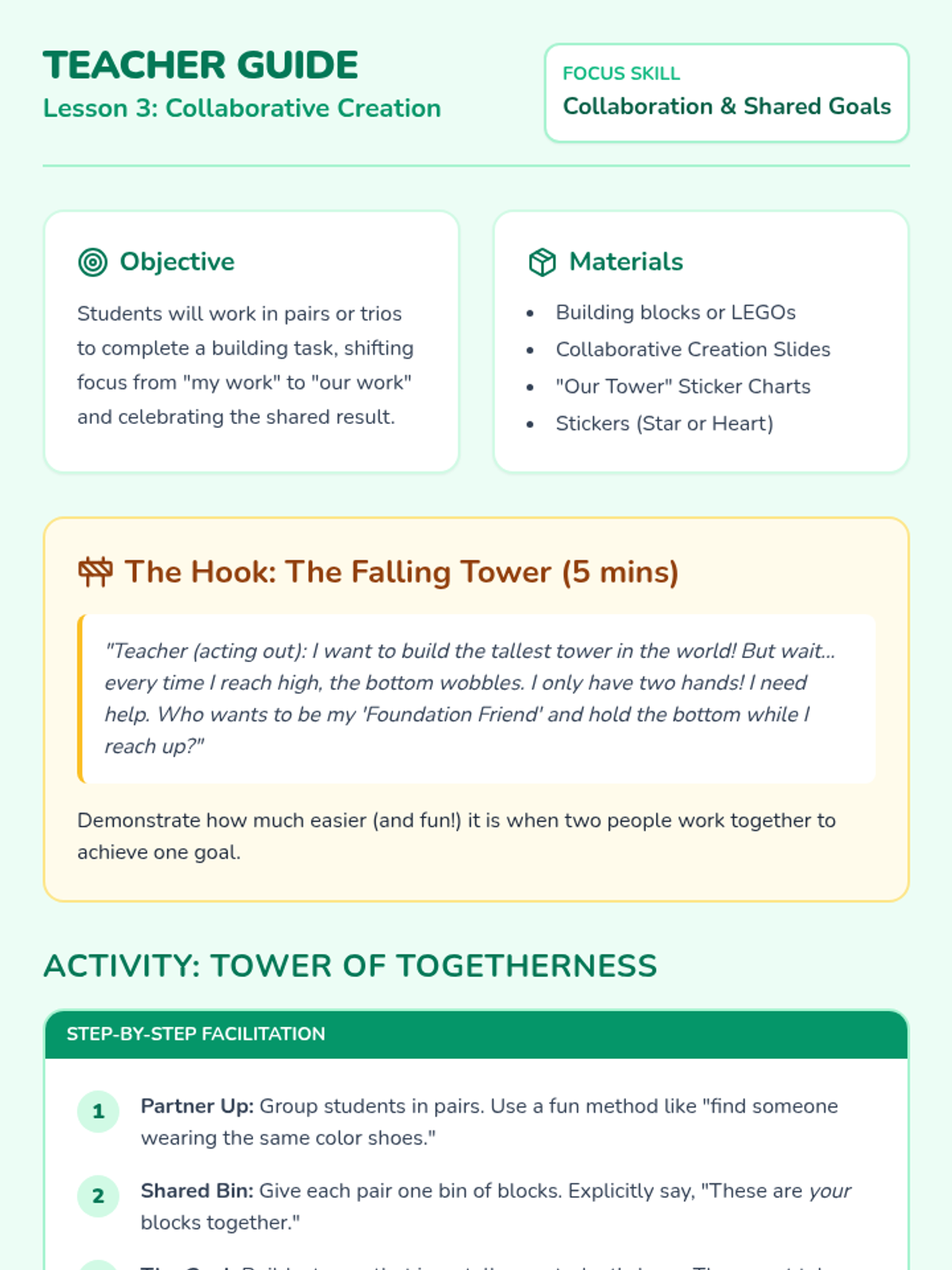
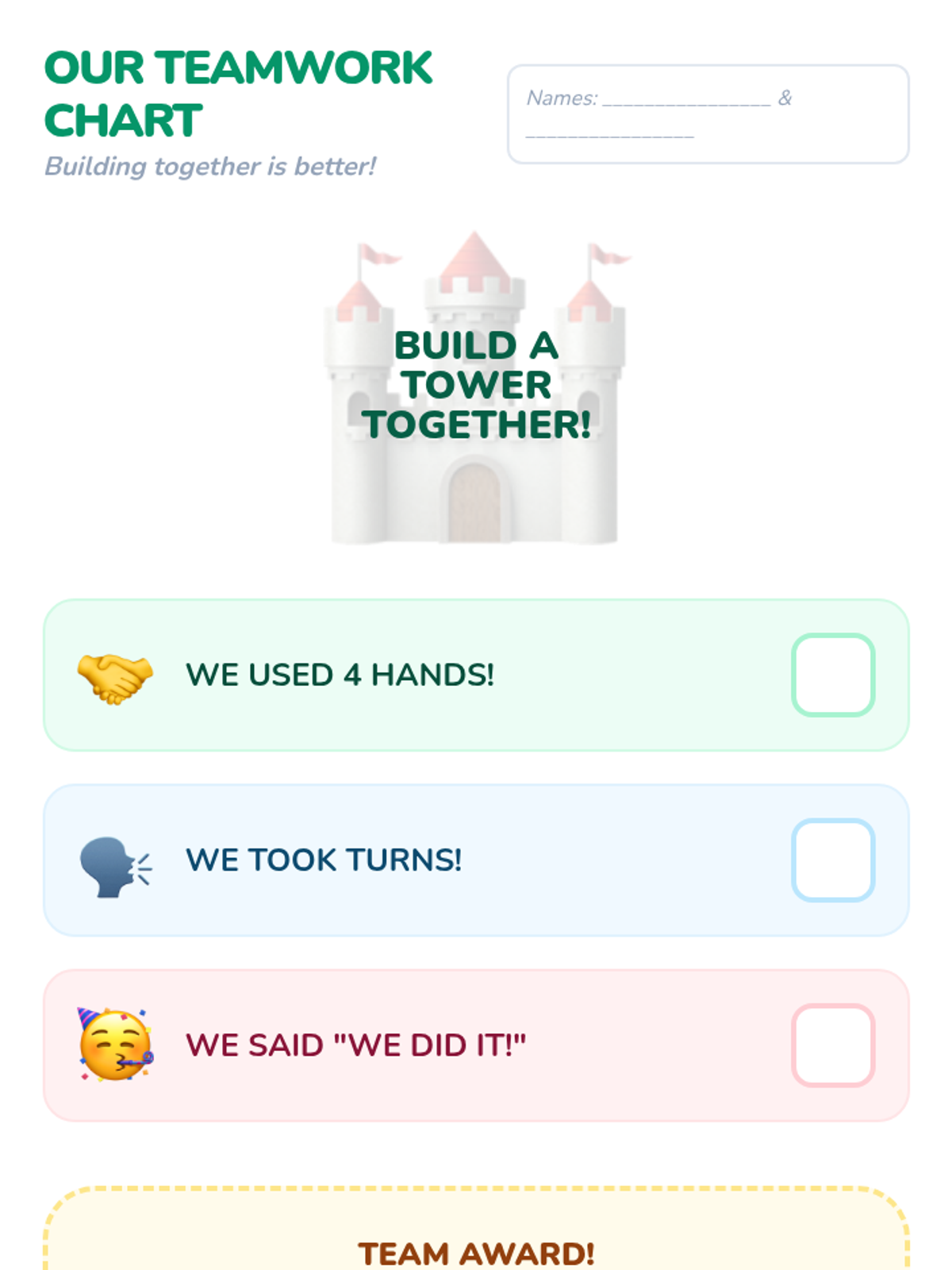
Small groups work together to build something (block tower, art piece). The focus is on the positive feeling of achieving a goal together rather than the final product.
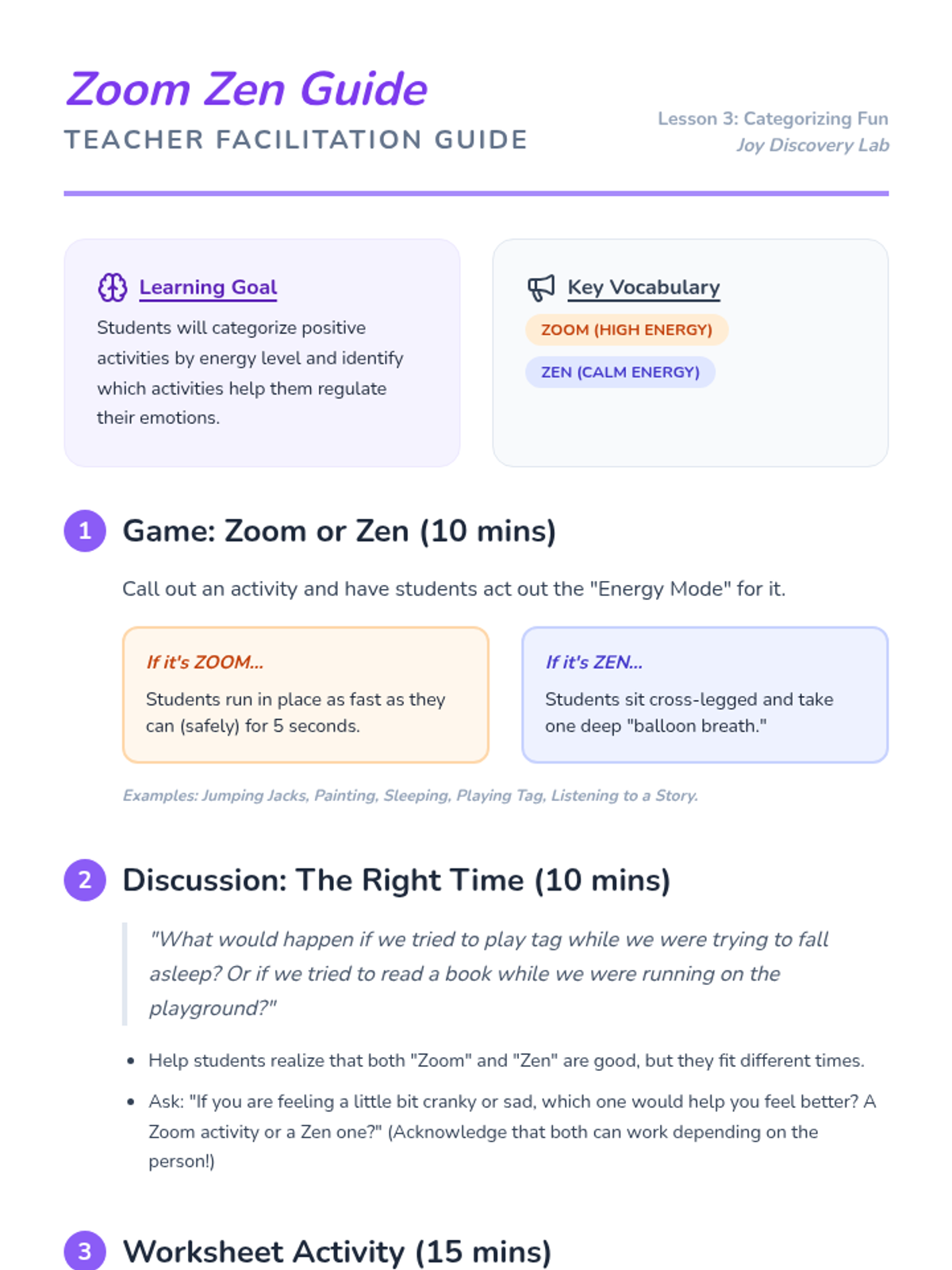
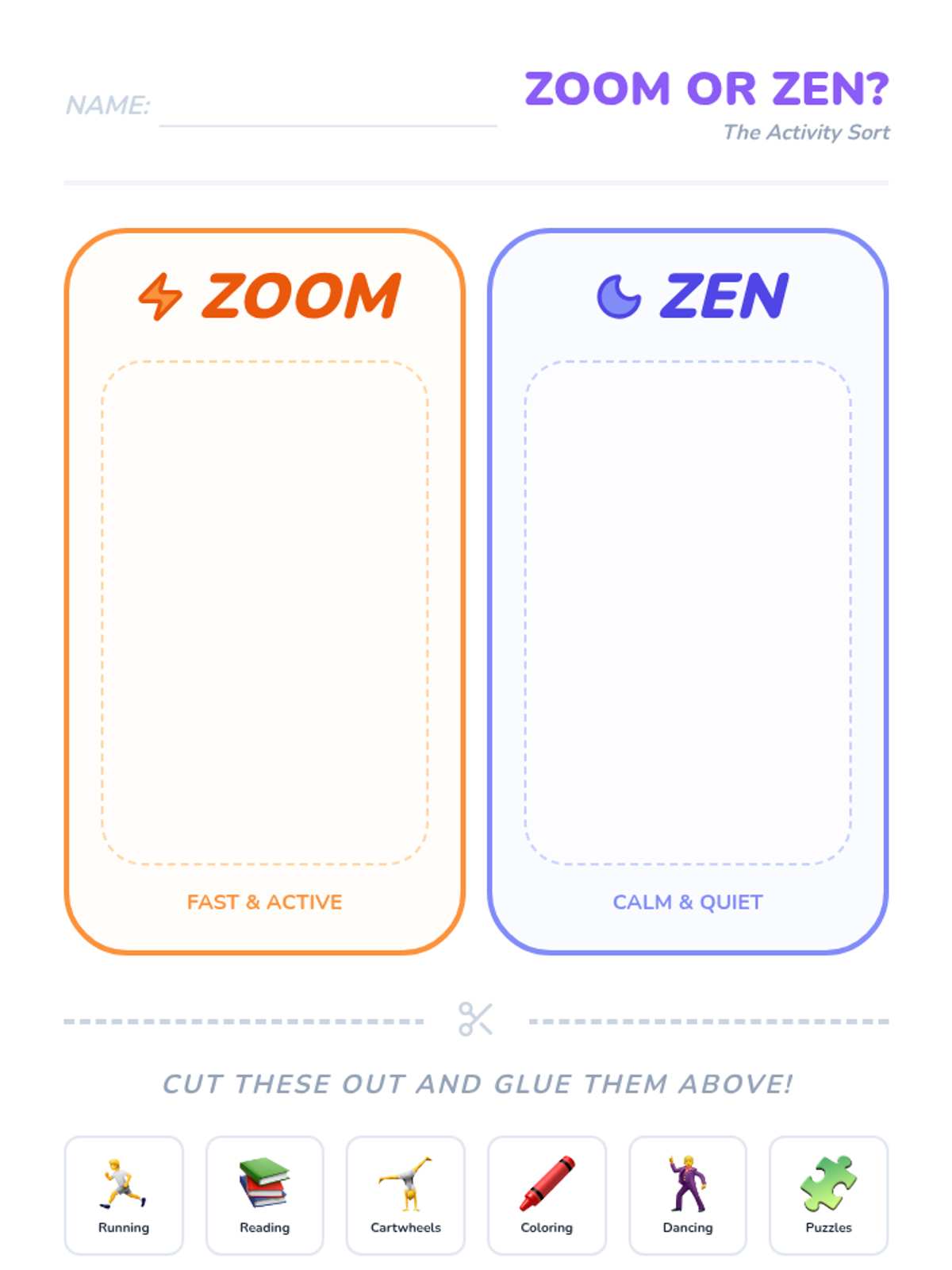
Students sort images of activities into 'high energy' fun (running, dancing) and 'calm' fun (reading, coloring). The class discusses how different times of day might need different types of positive activities.
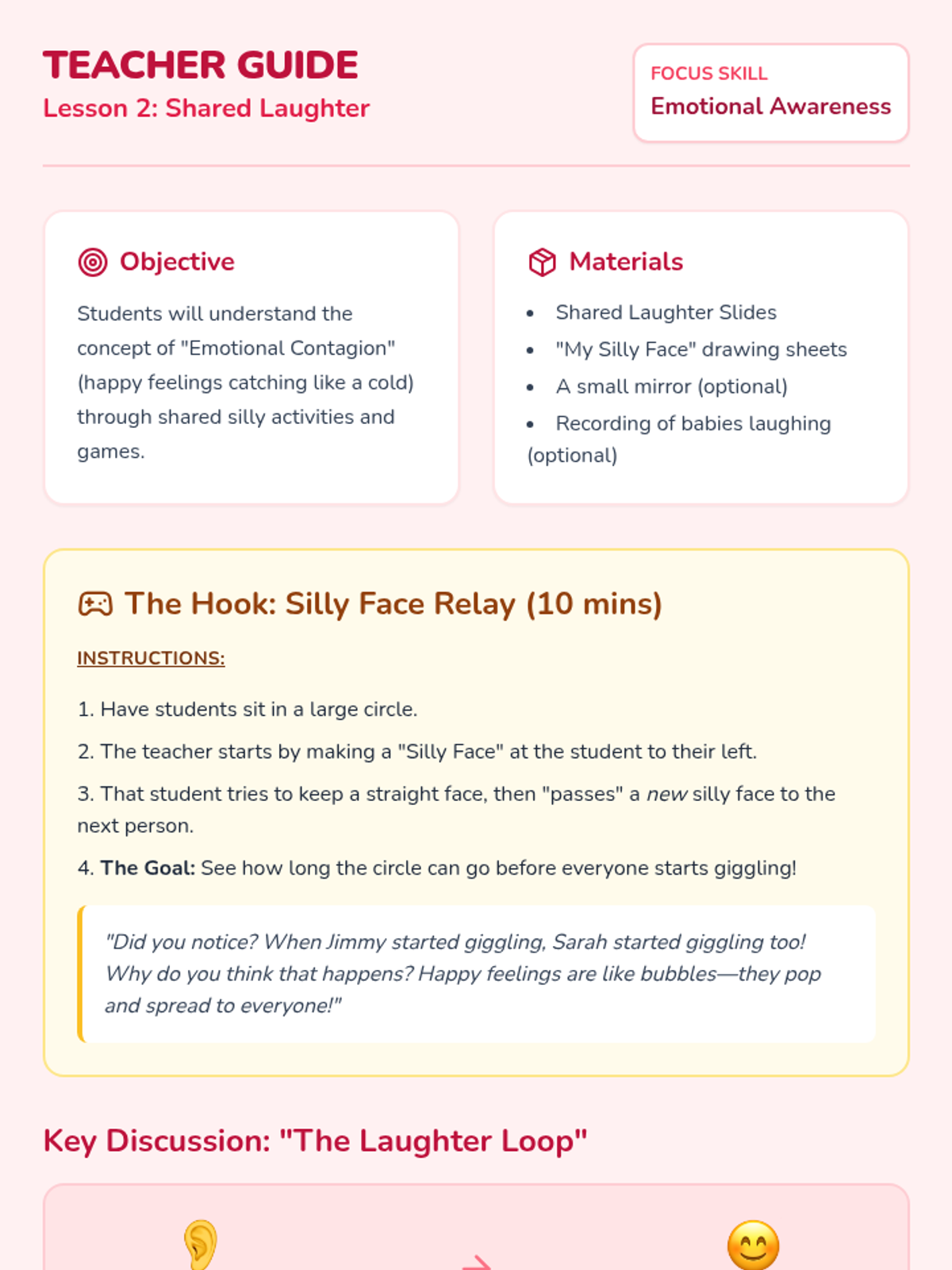
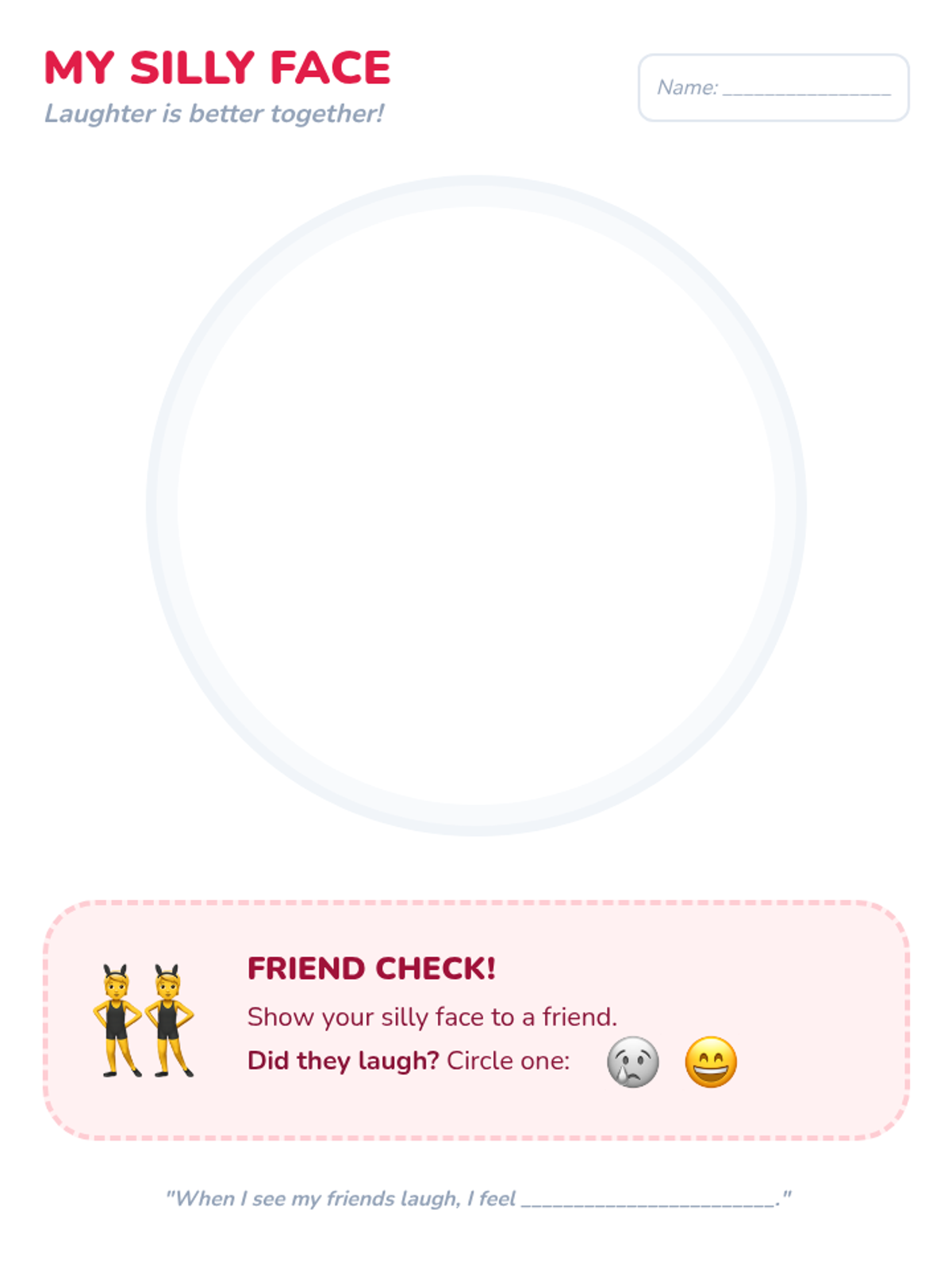
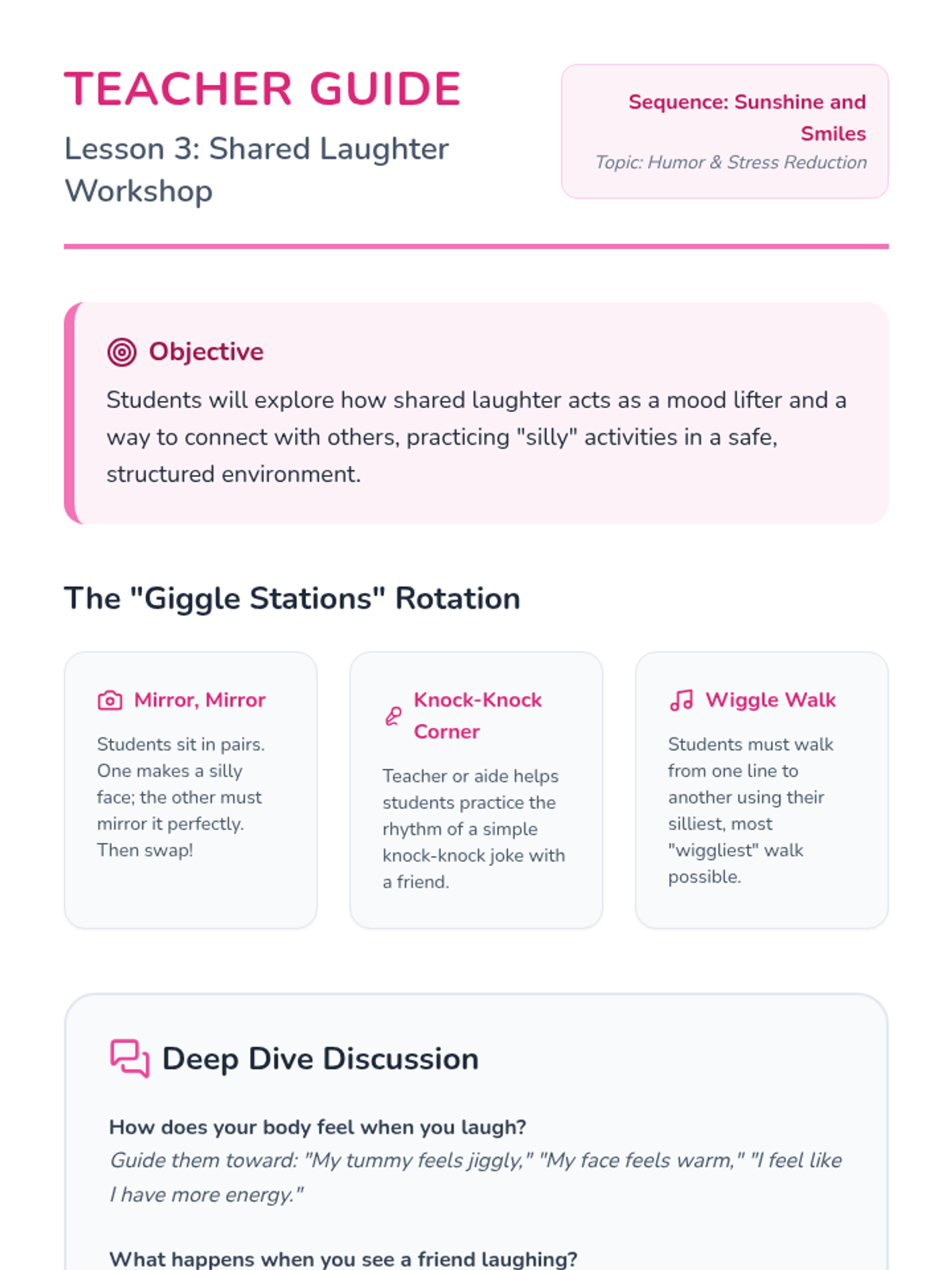
The class engages in silly activities designed solely to produce shared laughter. They discuss how hearing others laugh makes them want to laugh too, introducing the concept of emotional contagion.
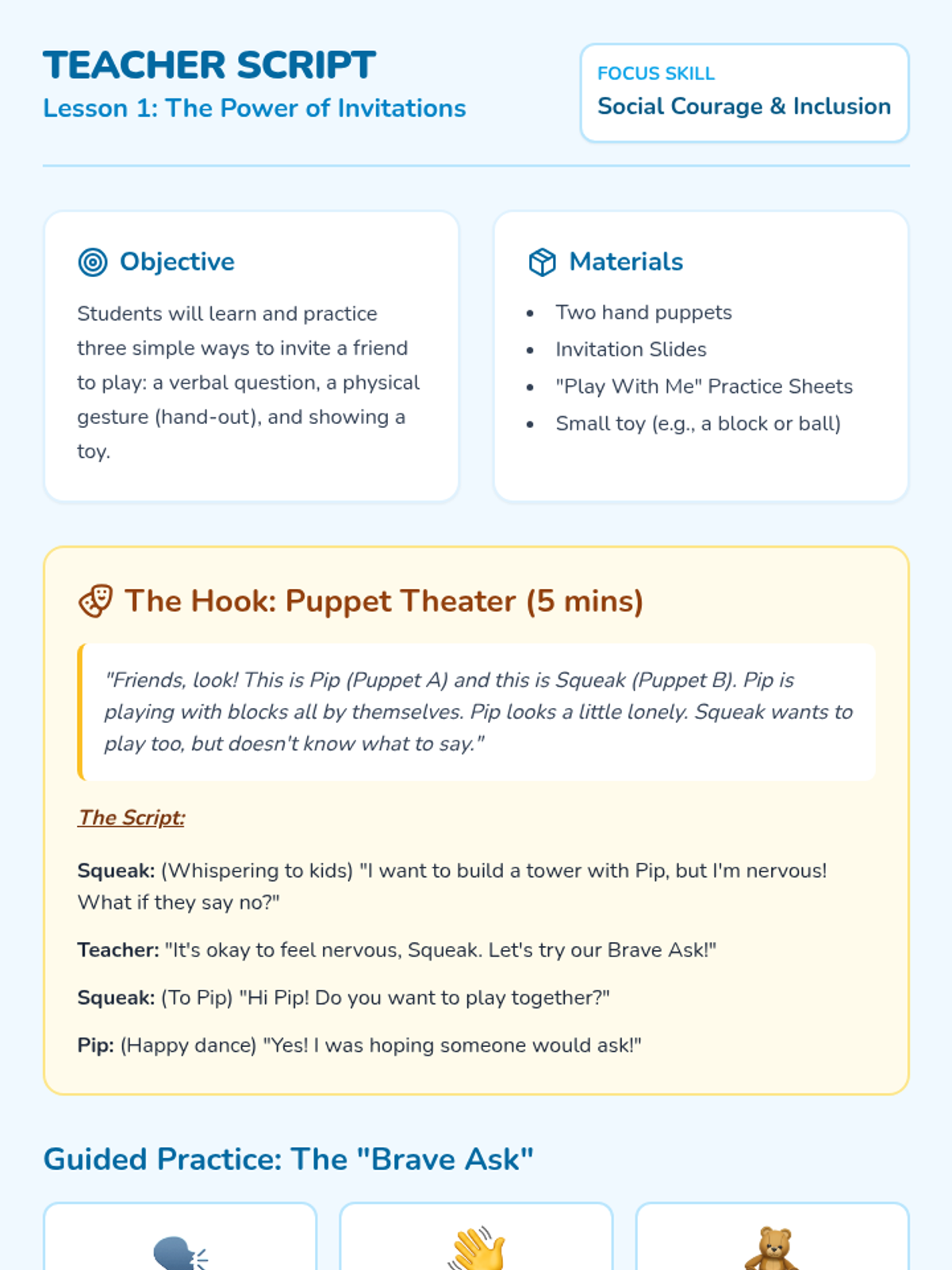
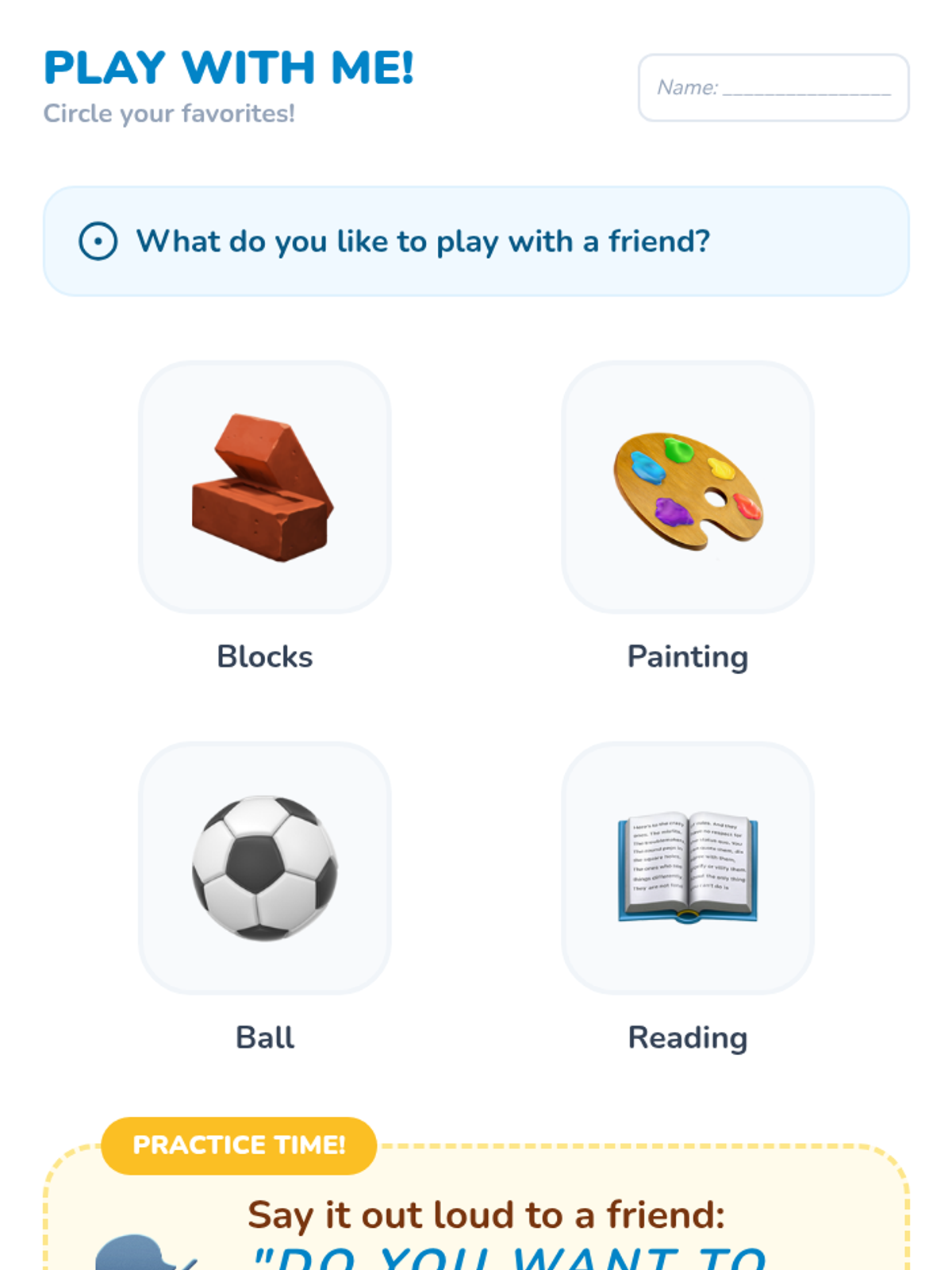
Students learn simple scripts and gestures to invite peers to join a positive activity, practicing inclusion and social courage.
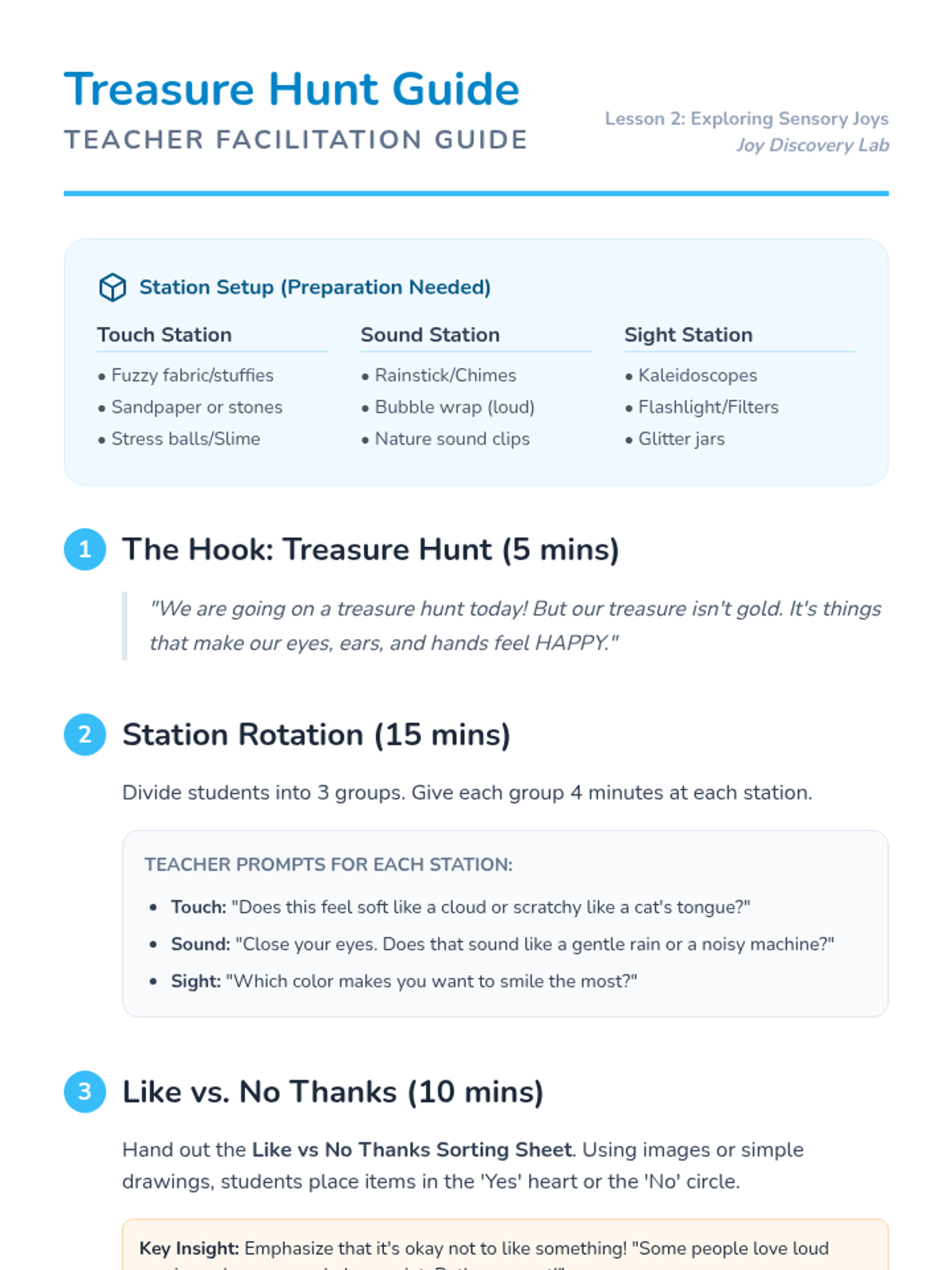
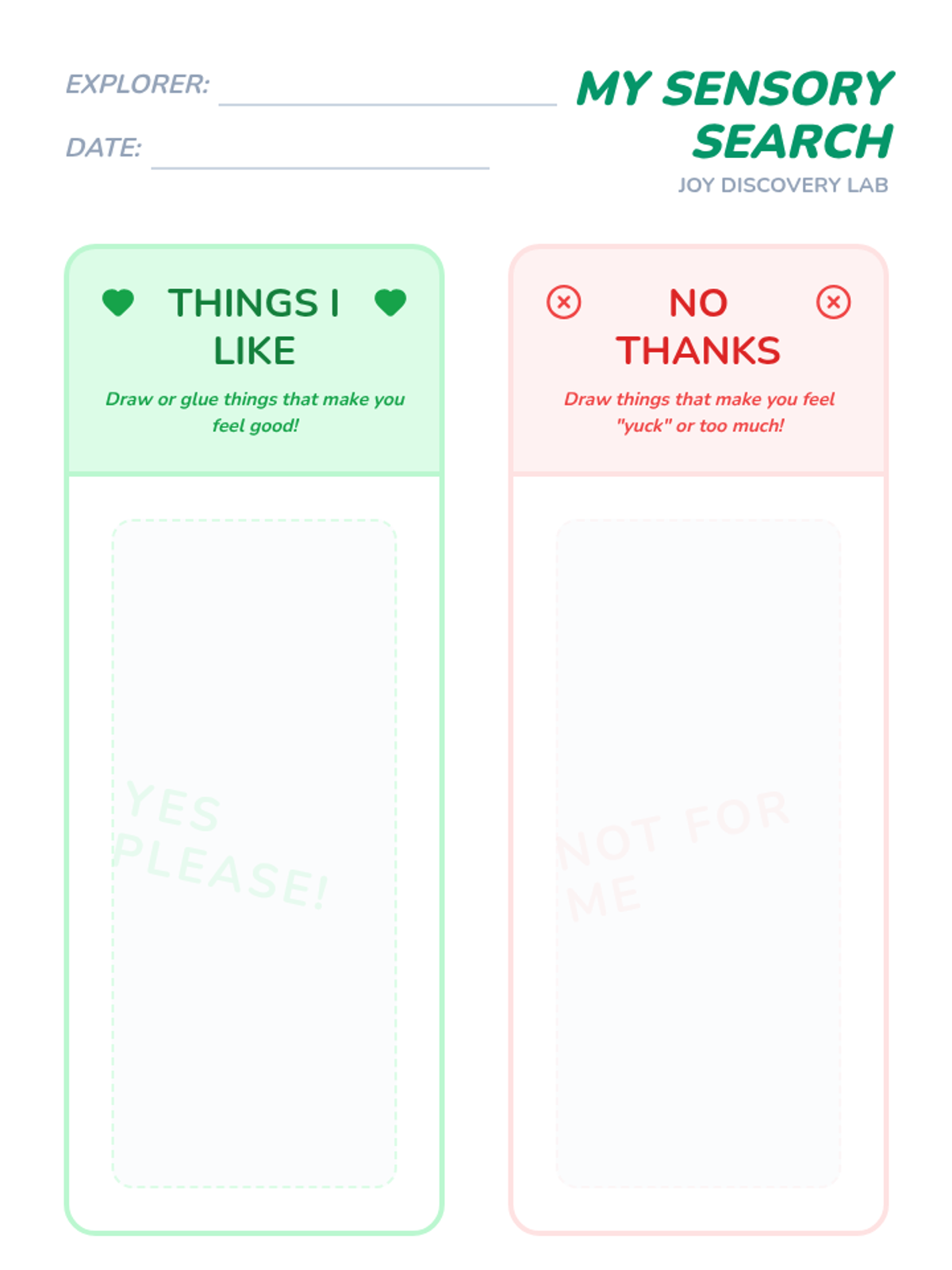
Learners engage in a sensory station rotation to discover which sights, sounds, and textures make them feel good. They classify experiences as 'things I like' versus 'things I do not like'.
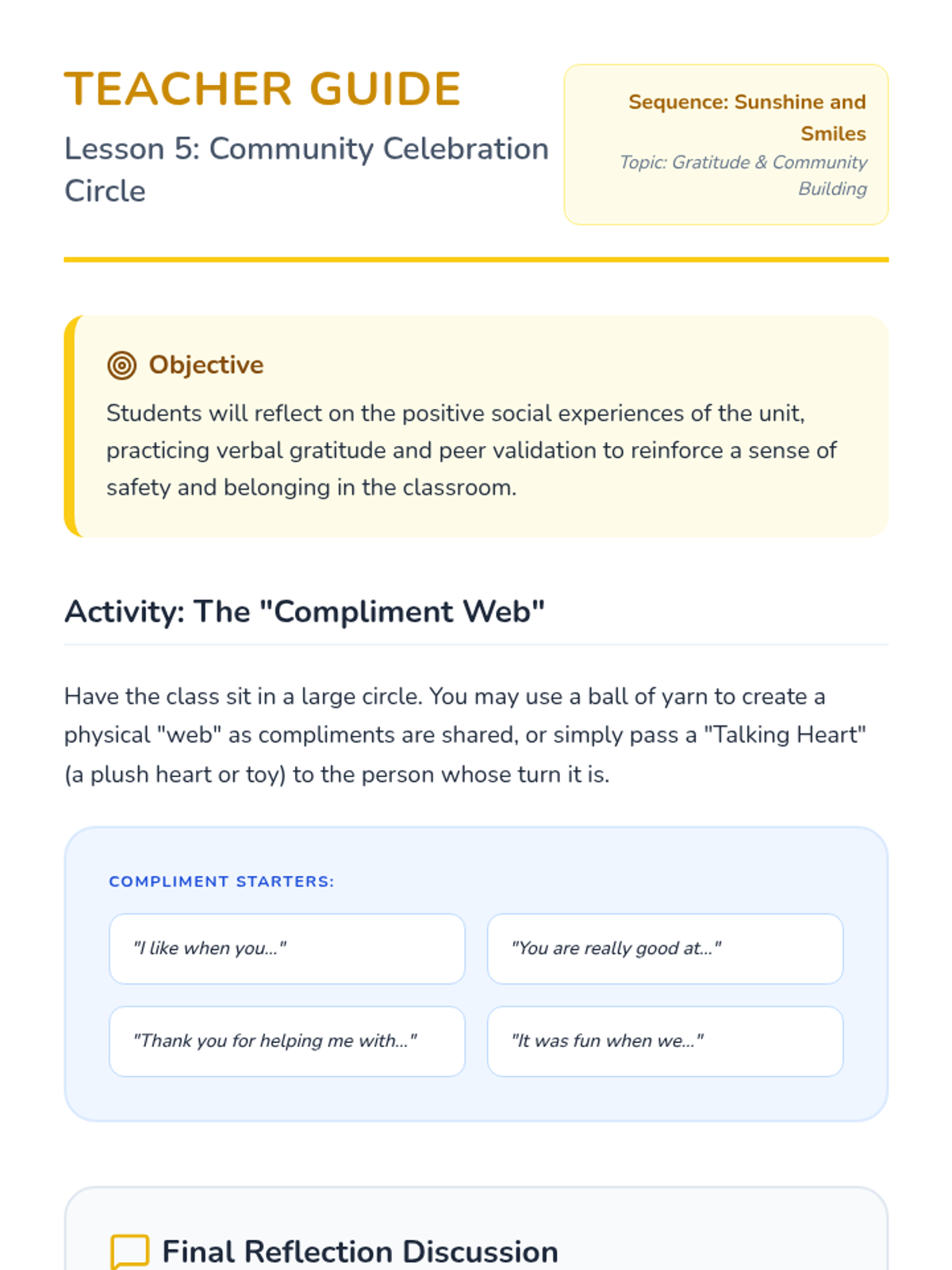
A concluding circle time where students share compliments and favorite memories to reinforce their community bond.
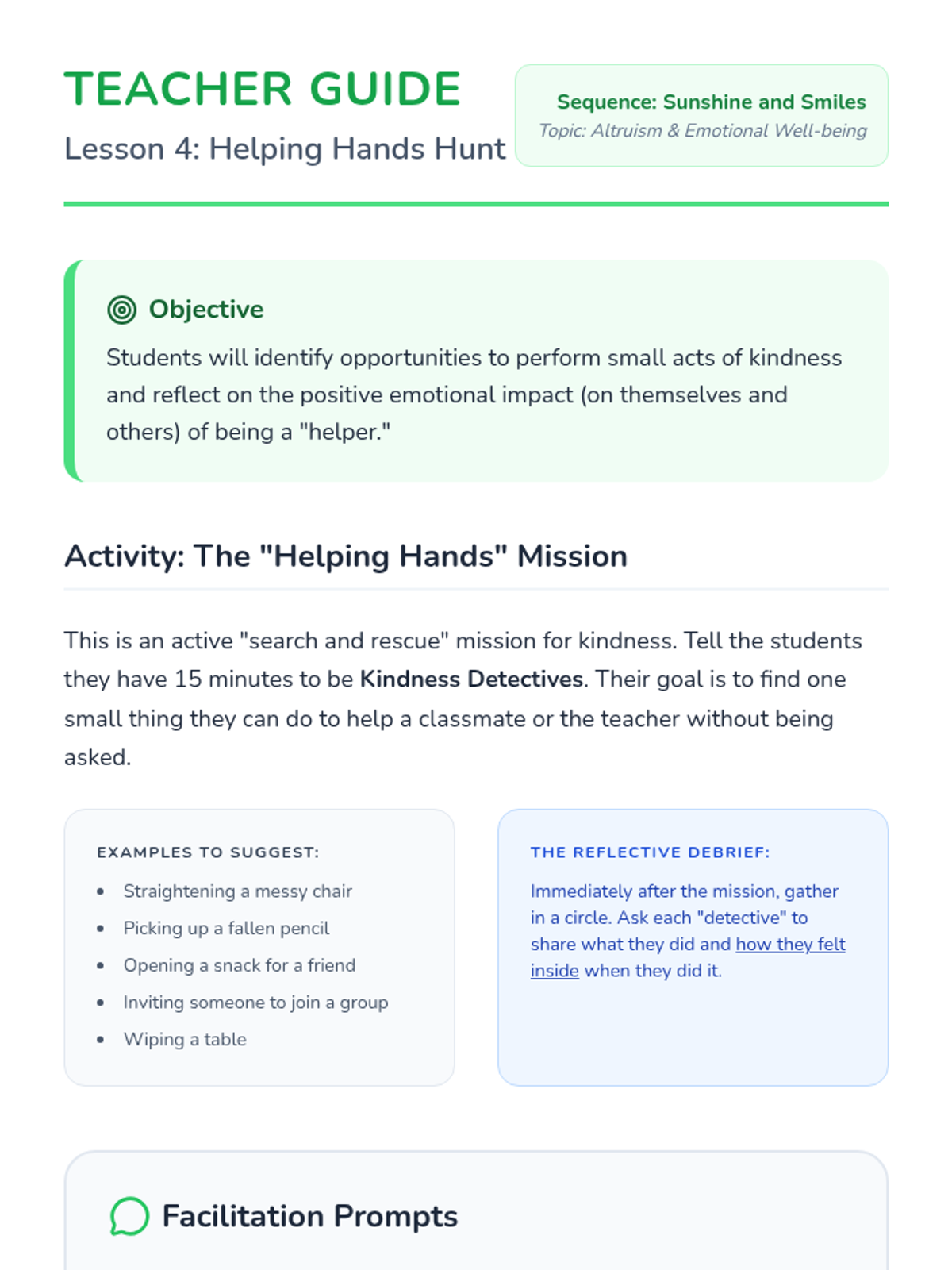
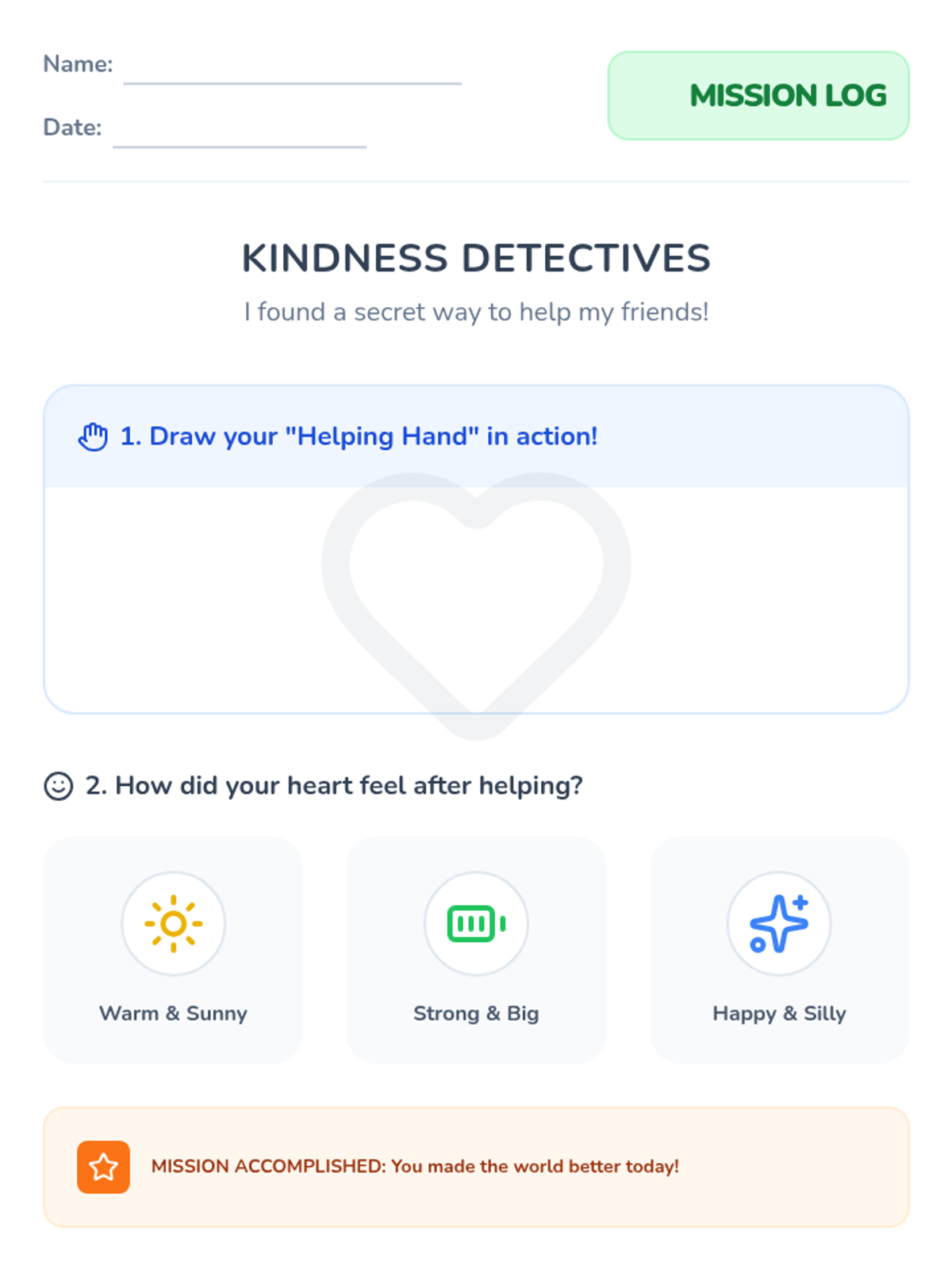
Students look for small ways to help others and reflect on how acts of kindness improve their own emotional well-being.
Students engage in silly activities to discover how shared laughter acts as a physical release and mood booster.
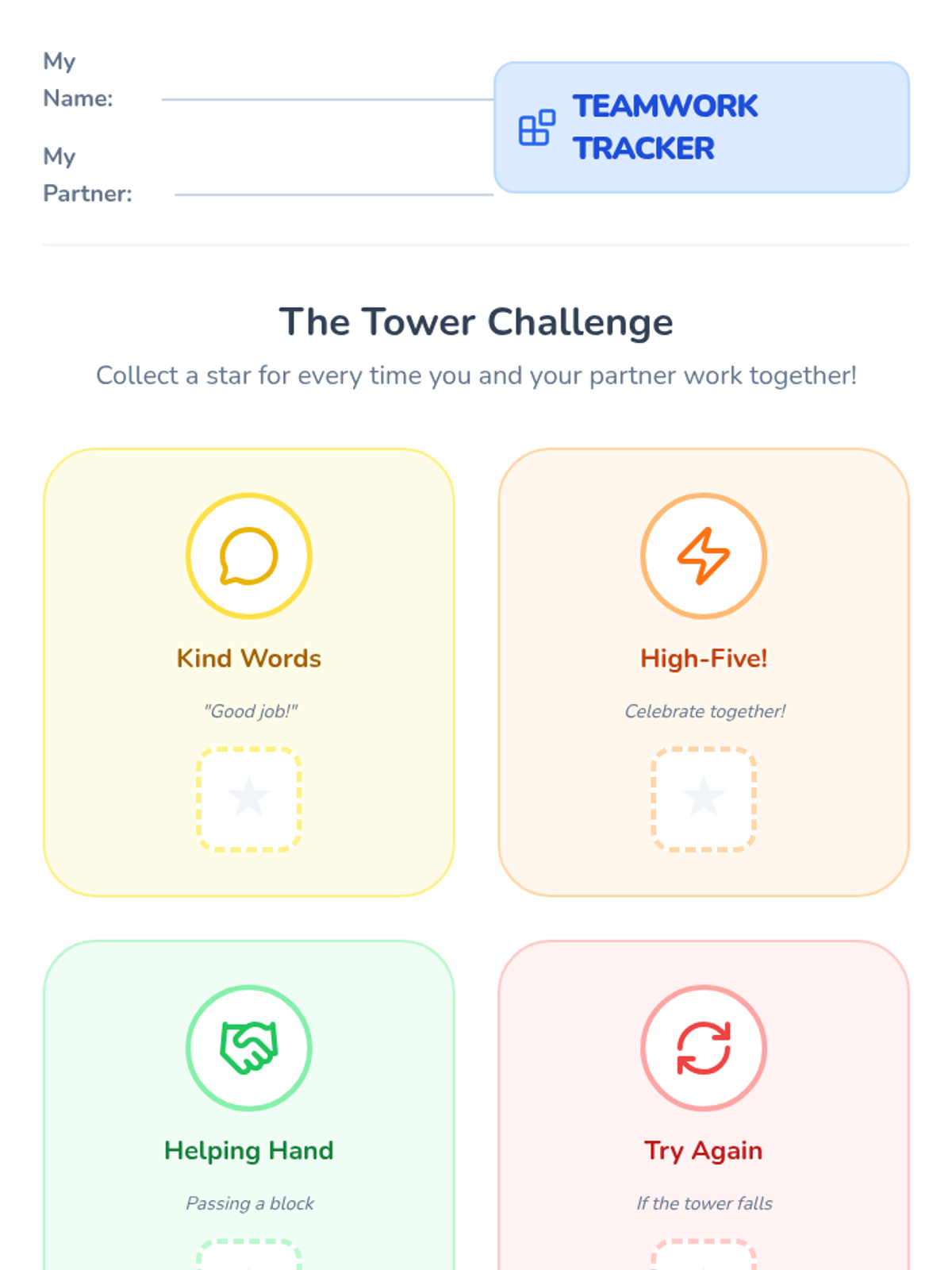
Pairs of students work together to build blocks while focusing on positive interactions like high-fives and encouraging words.
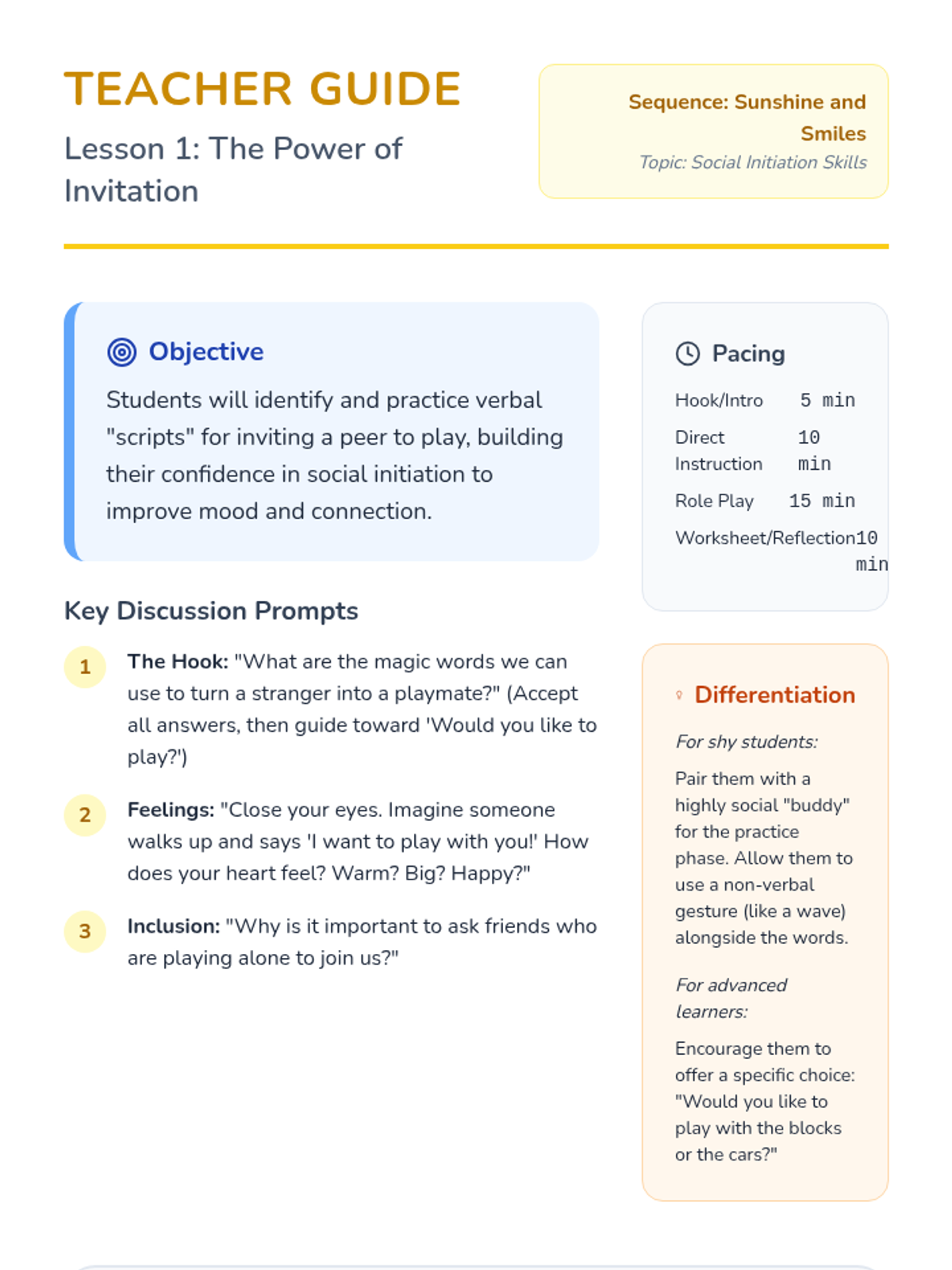
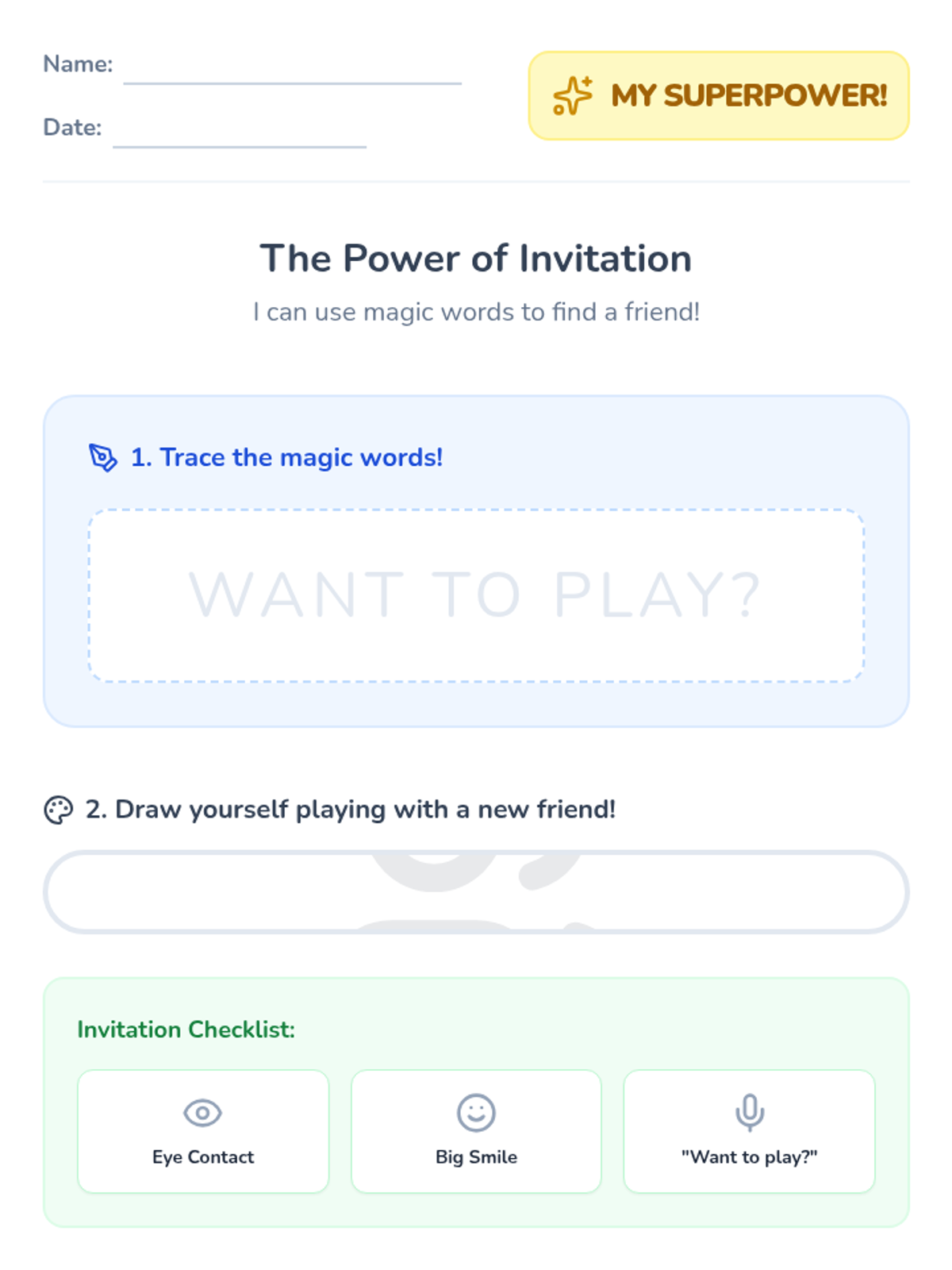
Students learn and practice simple scripts for asking a peer to play, exploring the feelings associated with inclusion.
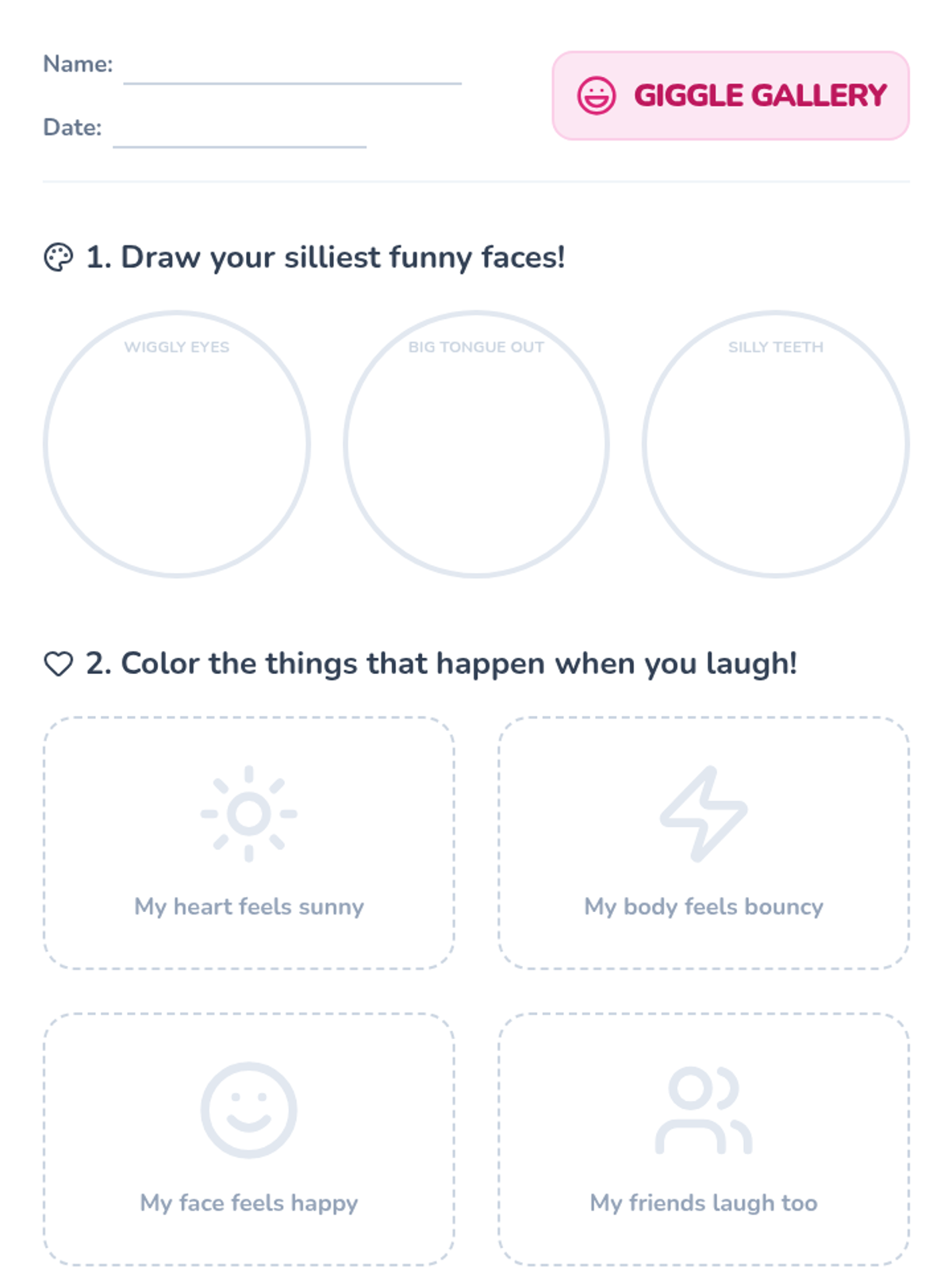
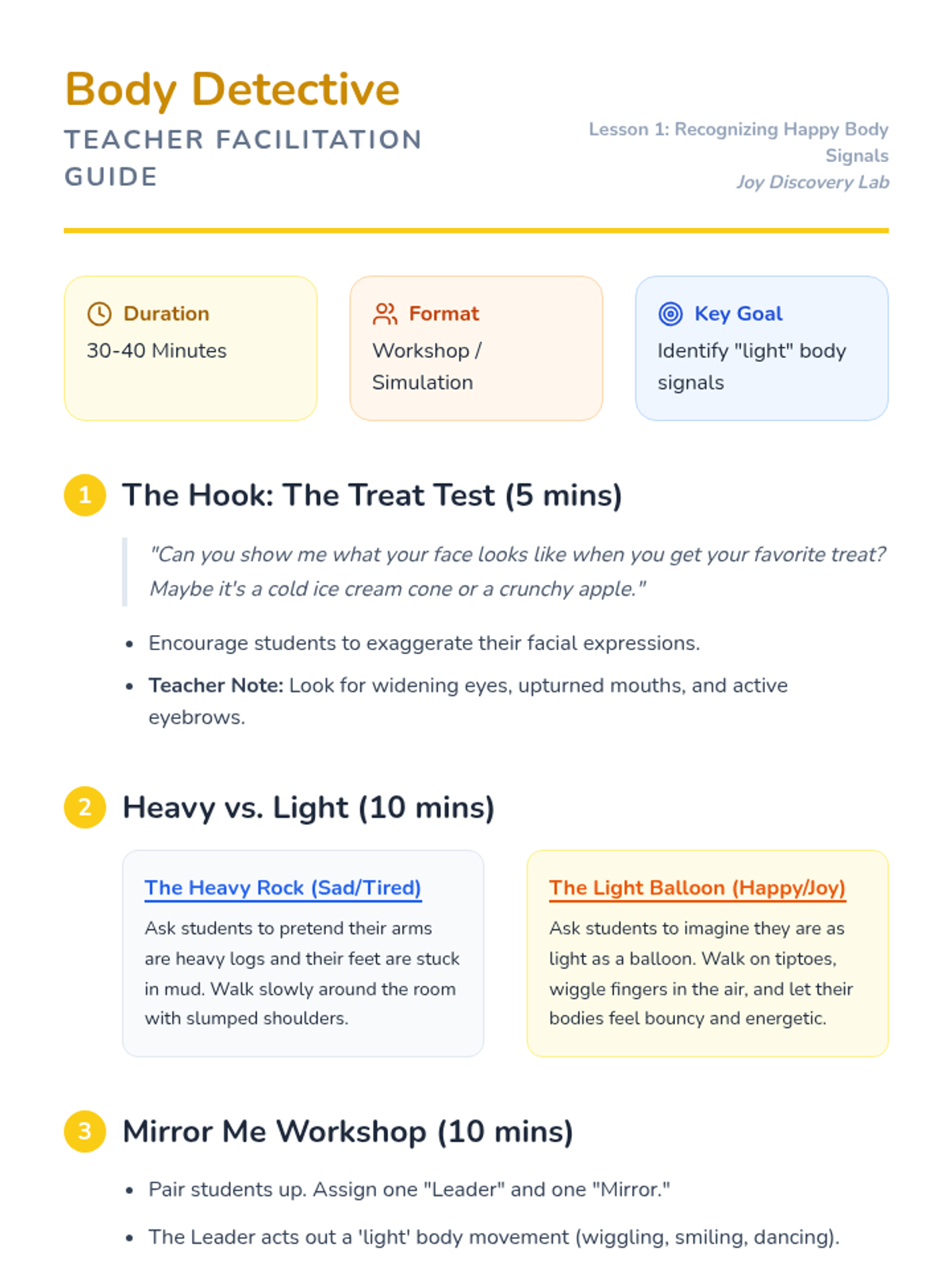
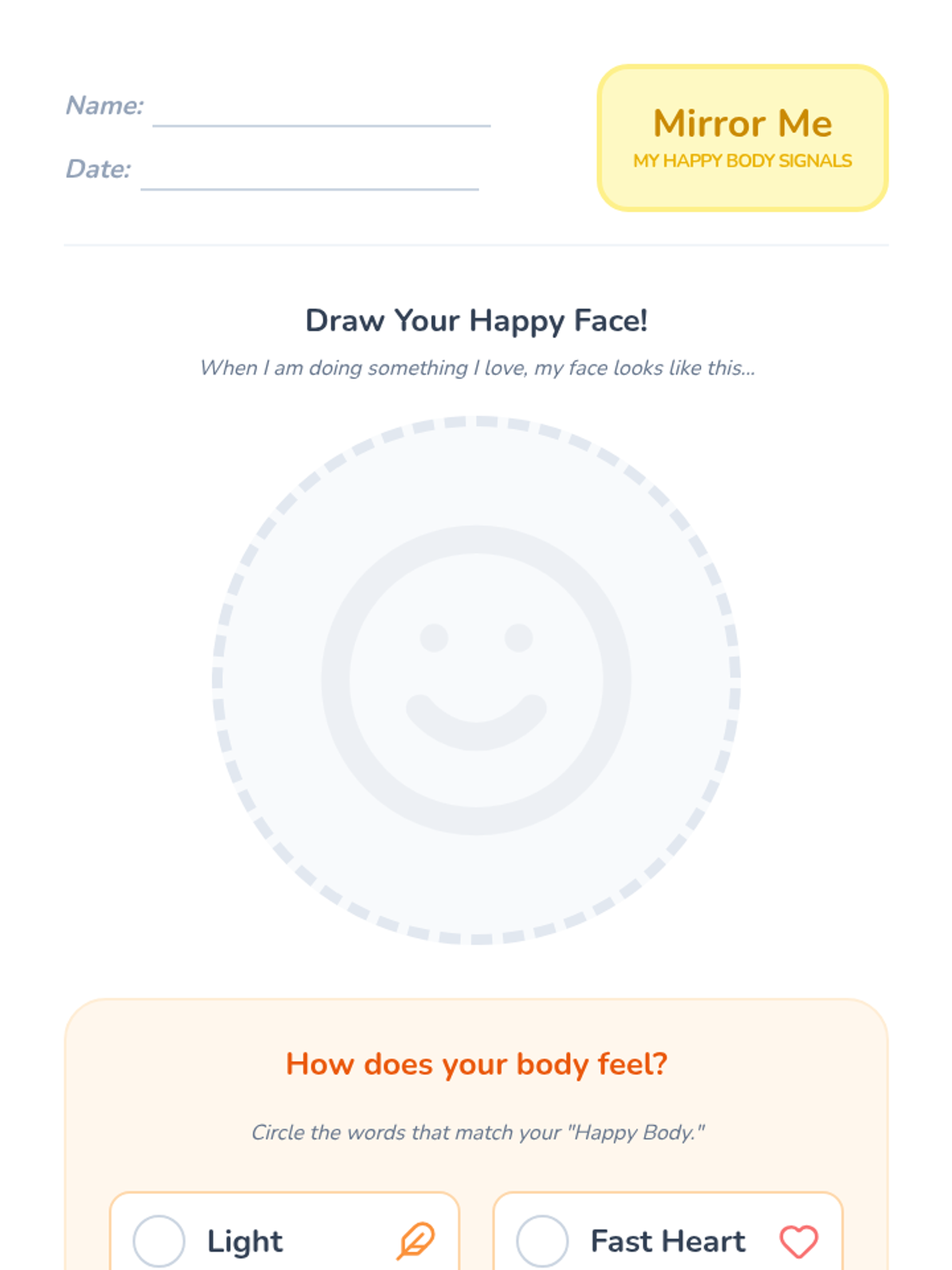
Students learn to identify the physical sensations associated with happiness and excitement through guided movement and mirror exercises.
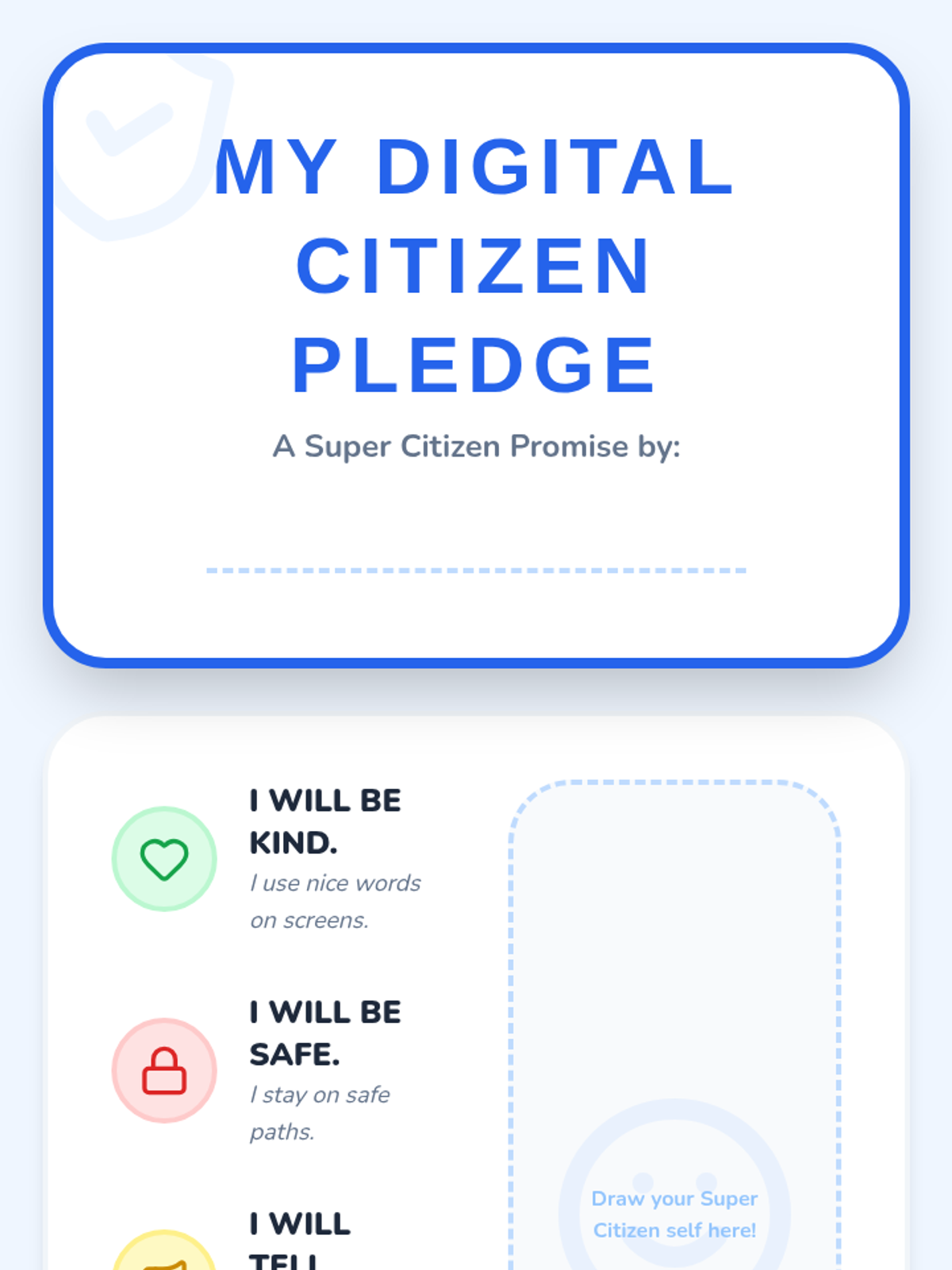
Students synthesize their learning by creating a personal Digital Citizen Pledge and earning their Super Citizen badges.
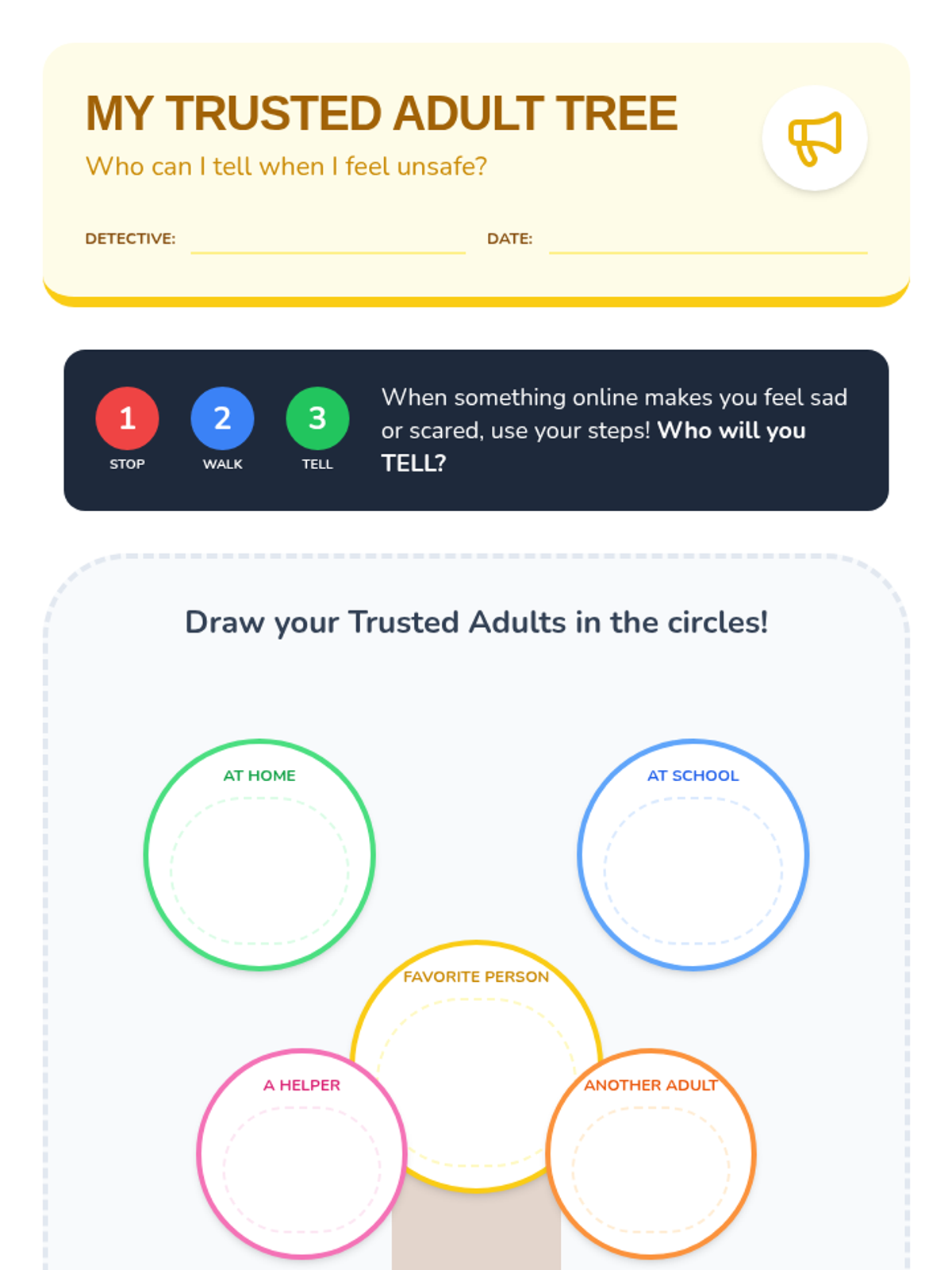
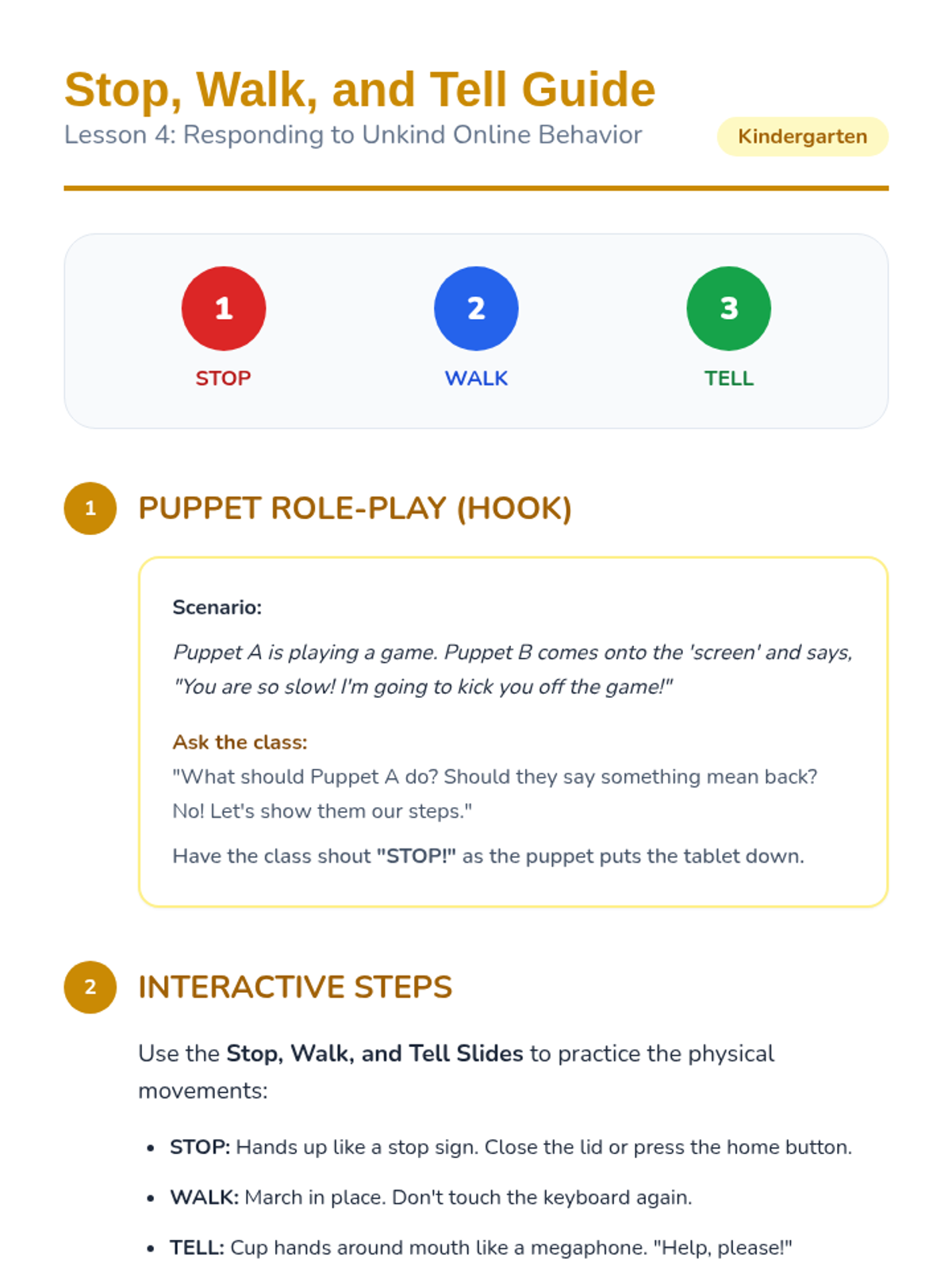
Students practice the "Stop, Walk, and Tell" strategy to respond to unkind behavior or scary content online, focusing on seeking help from trusted adults.
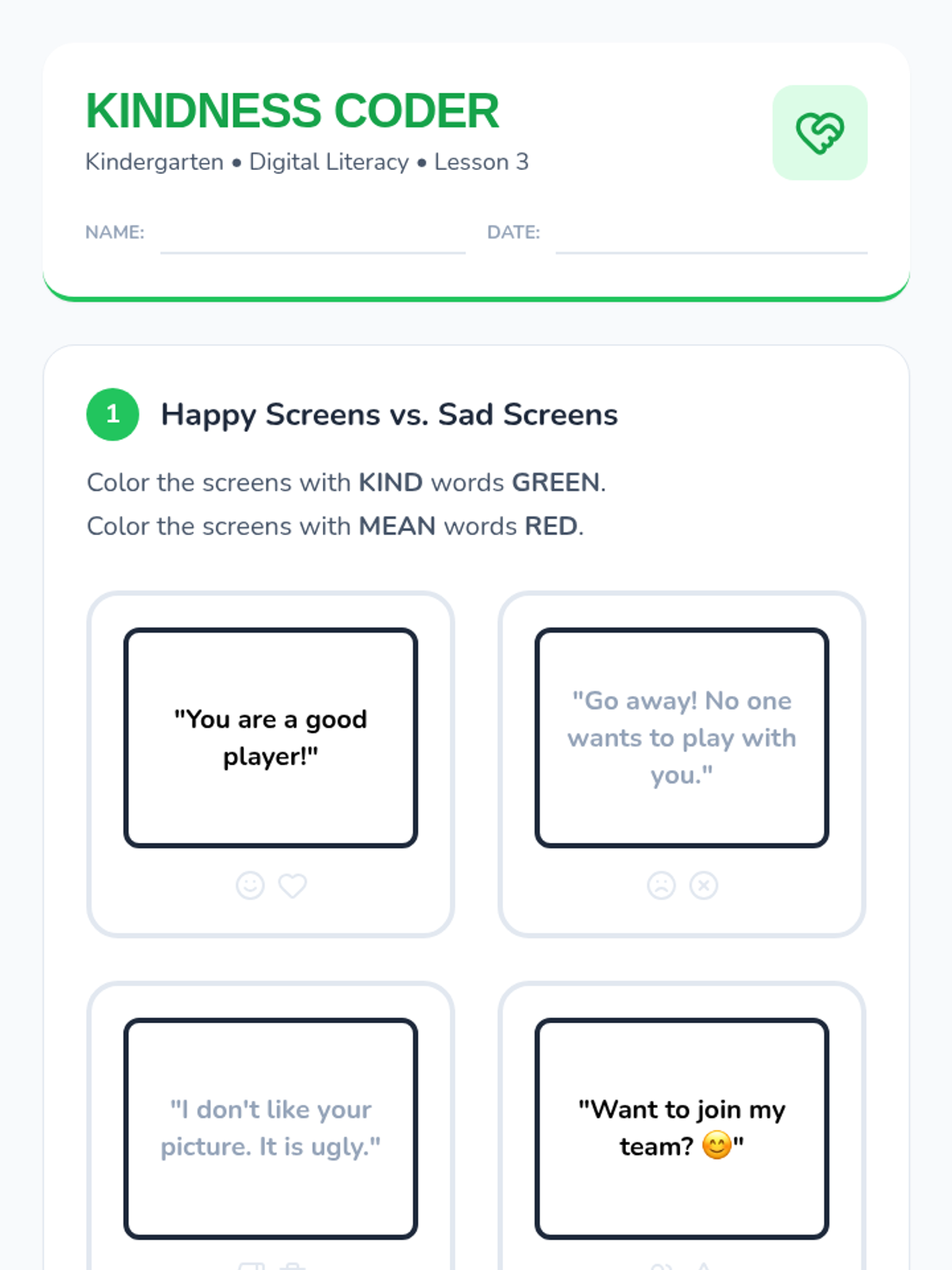
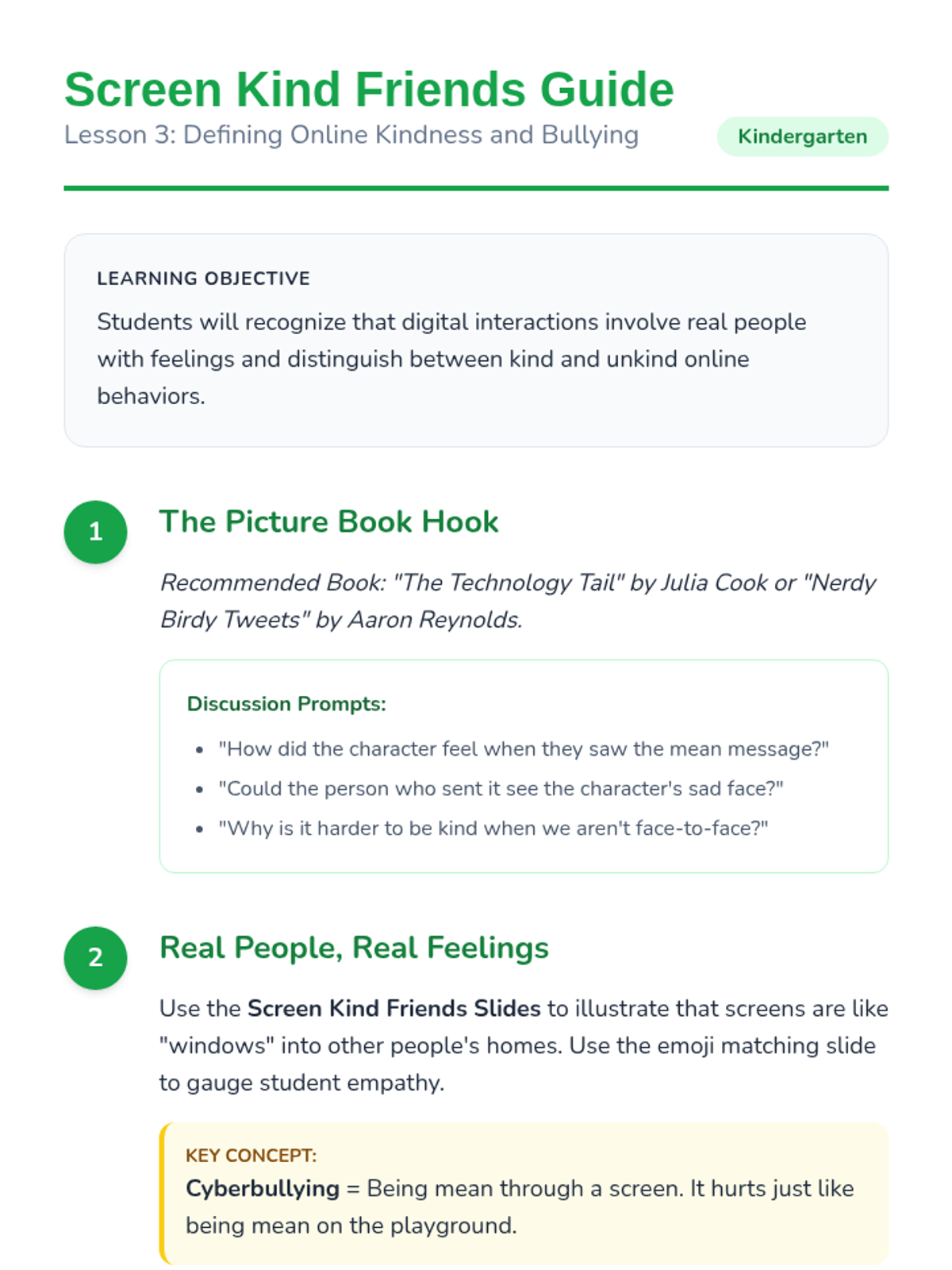
Students learn to identify kind and unkind digital behaviors, focusing on the feelings of others behind the screen and the basics of cyberbullying prevention.
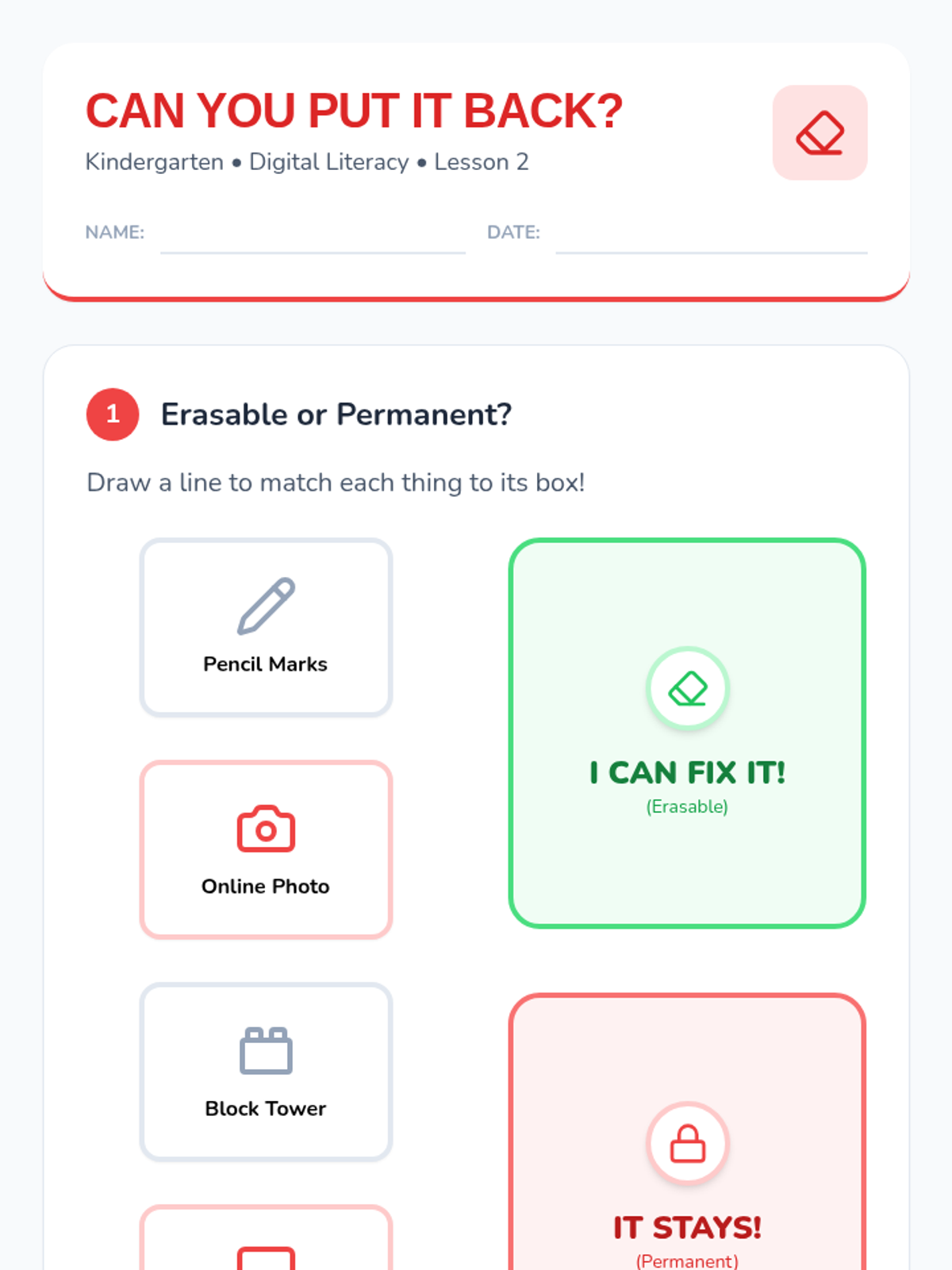
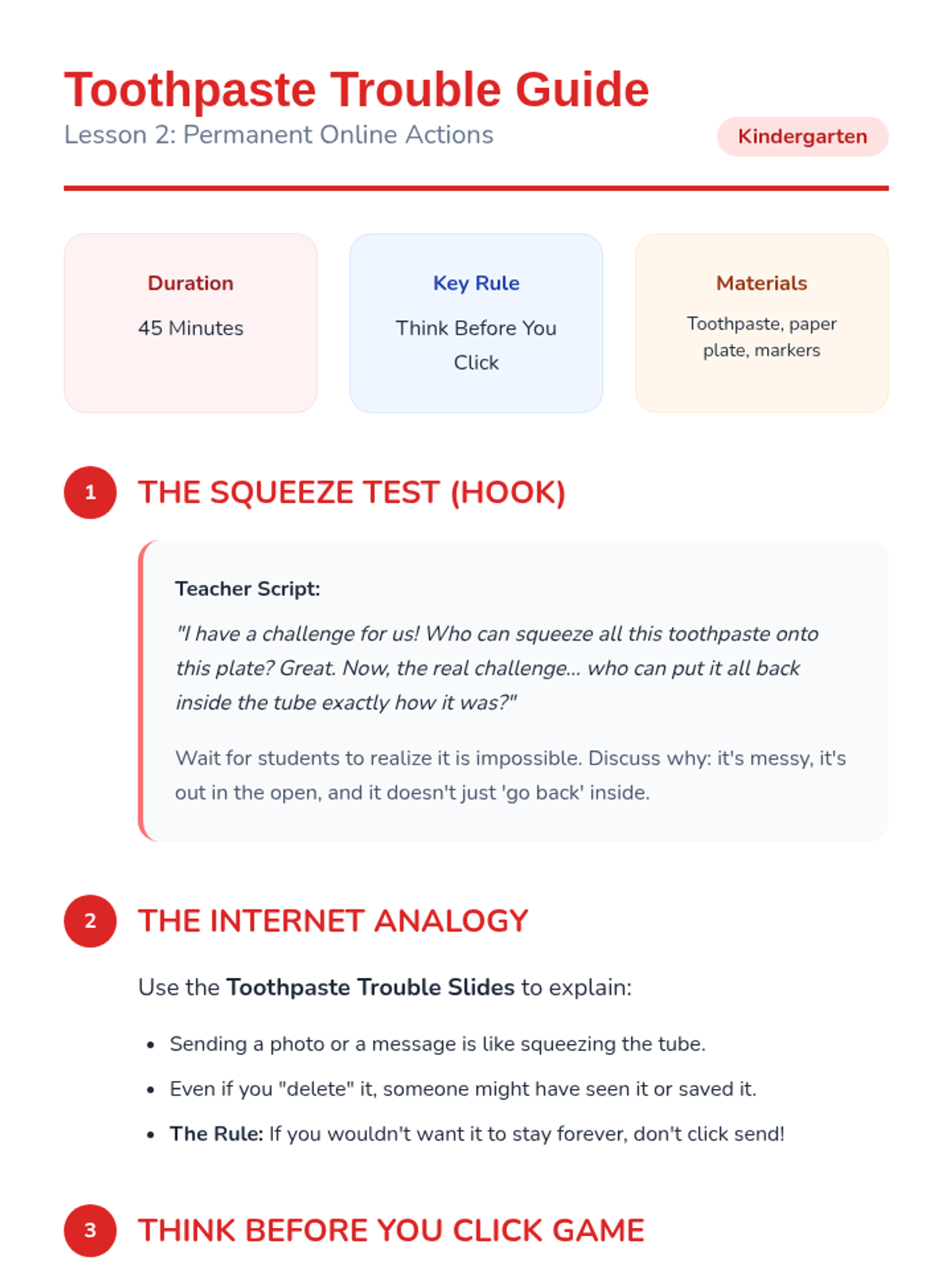
Using the toothpaste analogy, students learn that online actions are permanent and practice the "Think Before You Click" strategy to manage their digital presence.
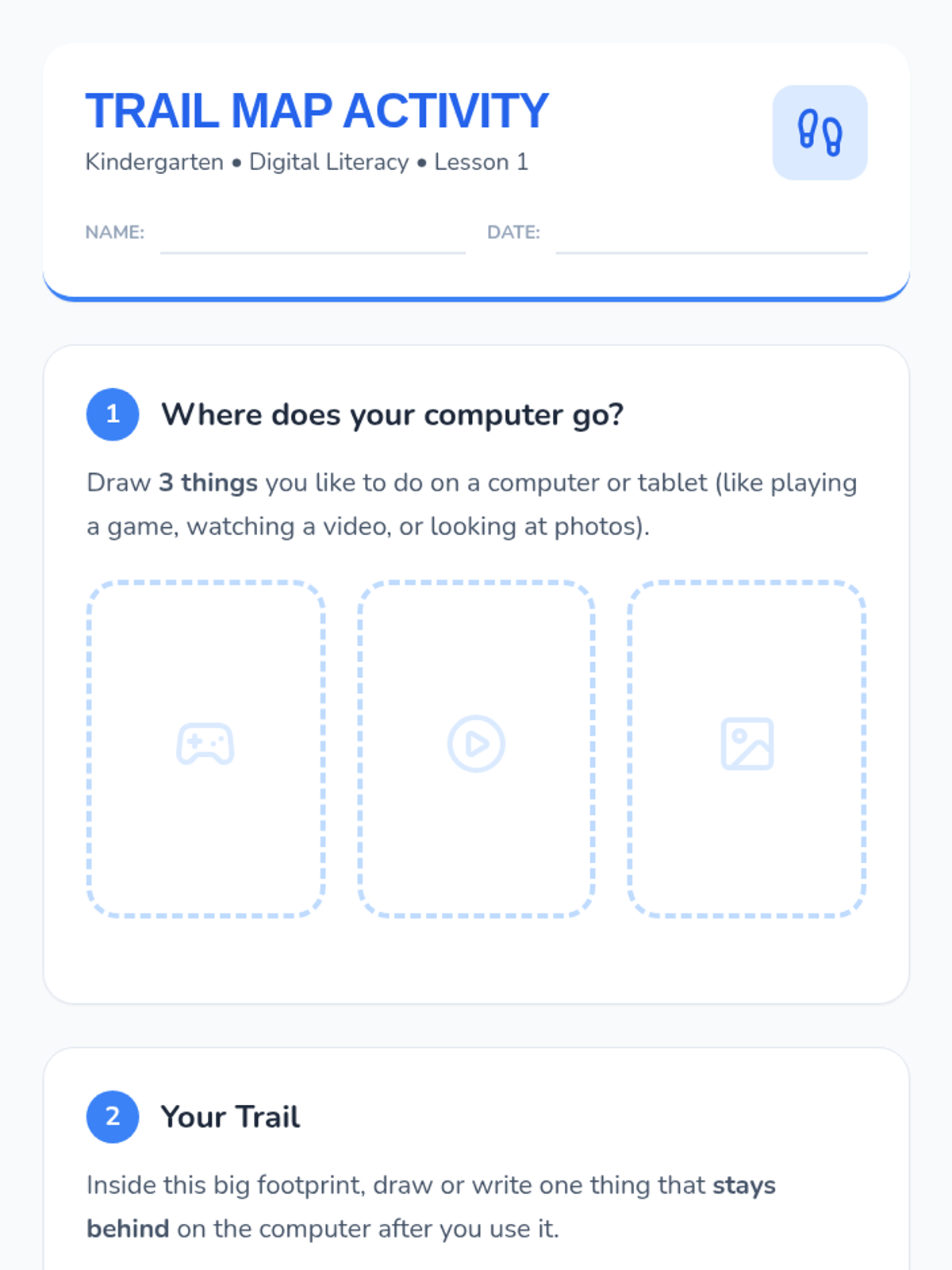
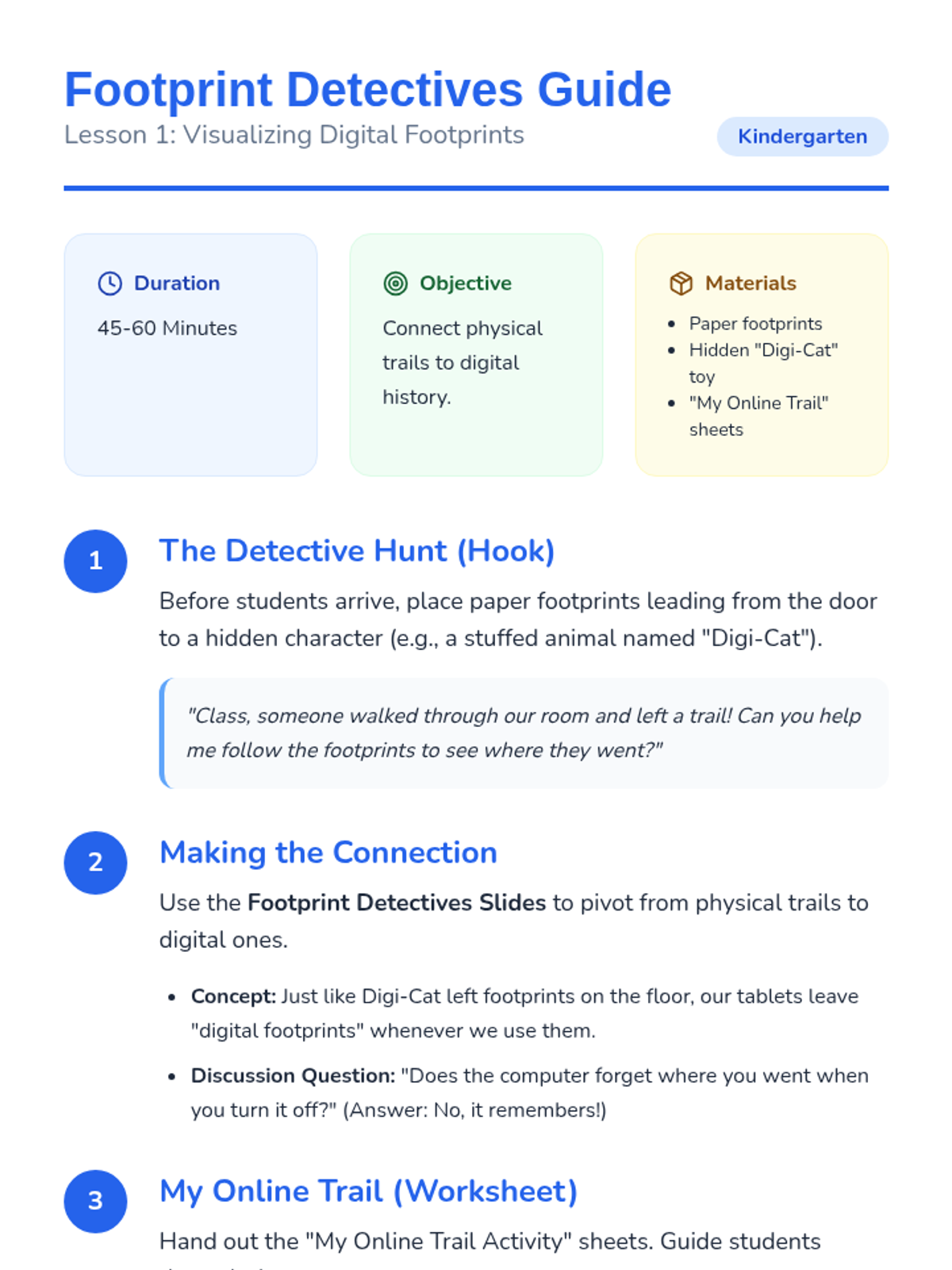
Students explore how digital actions leave trails by connecting physical footprints to their digital history, emphasizing that computers remember our paths.
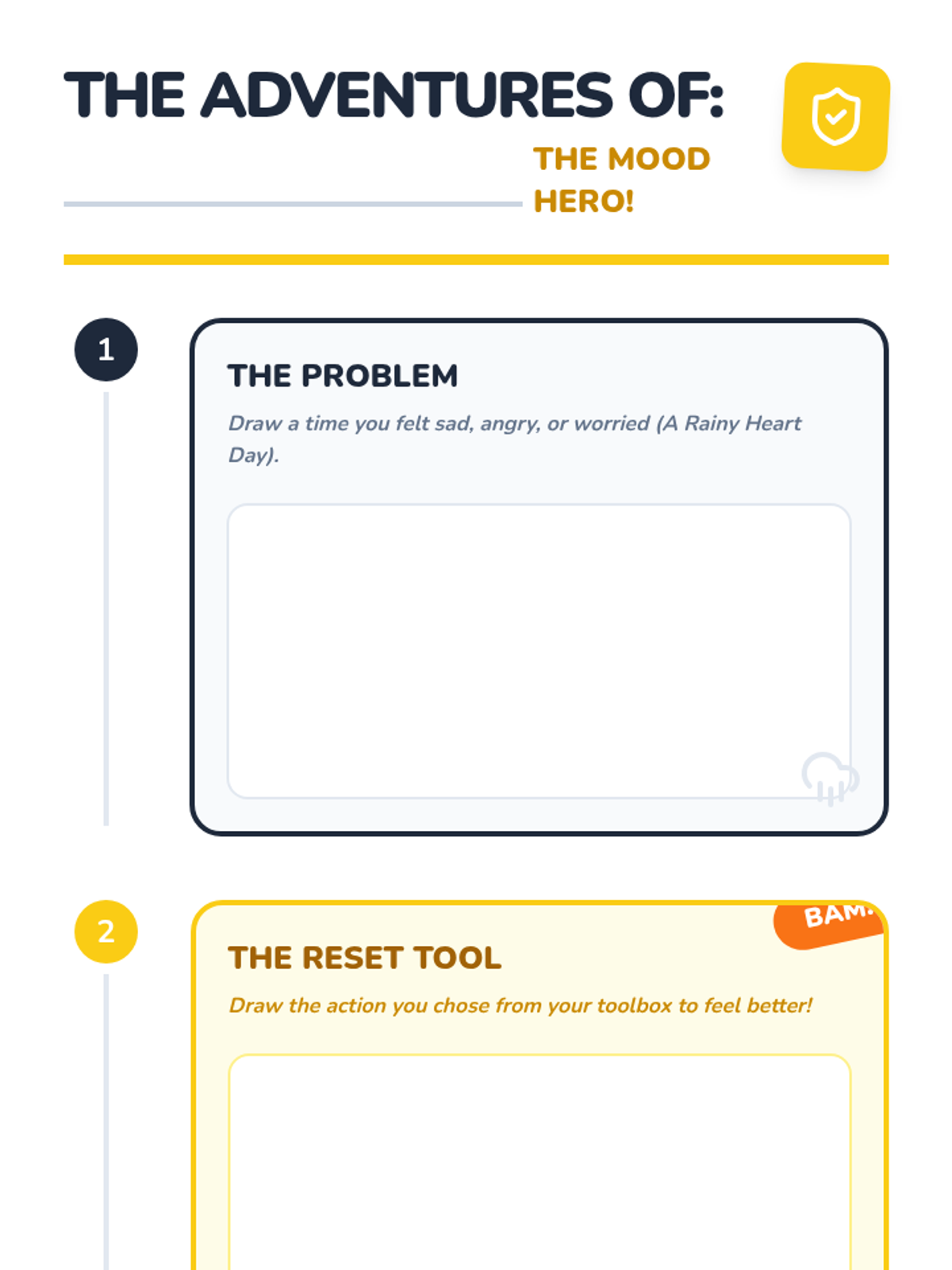
Students reflect on their learning by creating a visual narrative of emotional change. They celebrate their new skills as 'Mood Heroes' who can help themselves feel better.
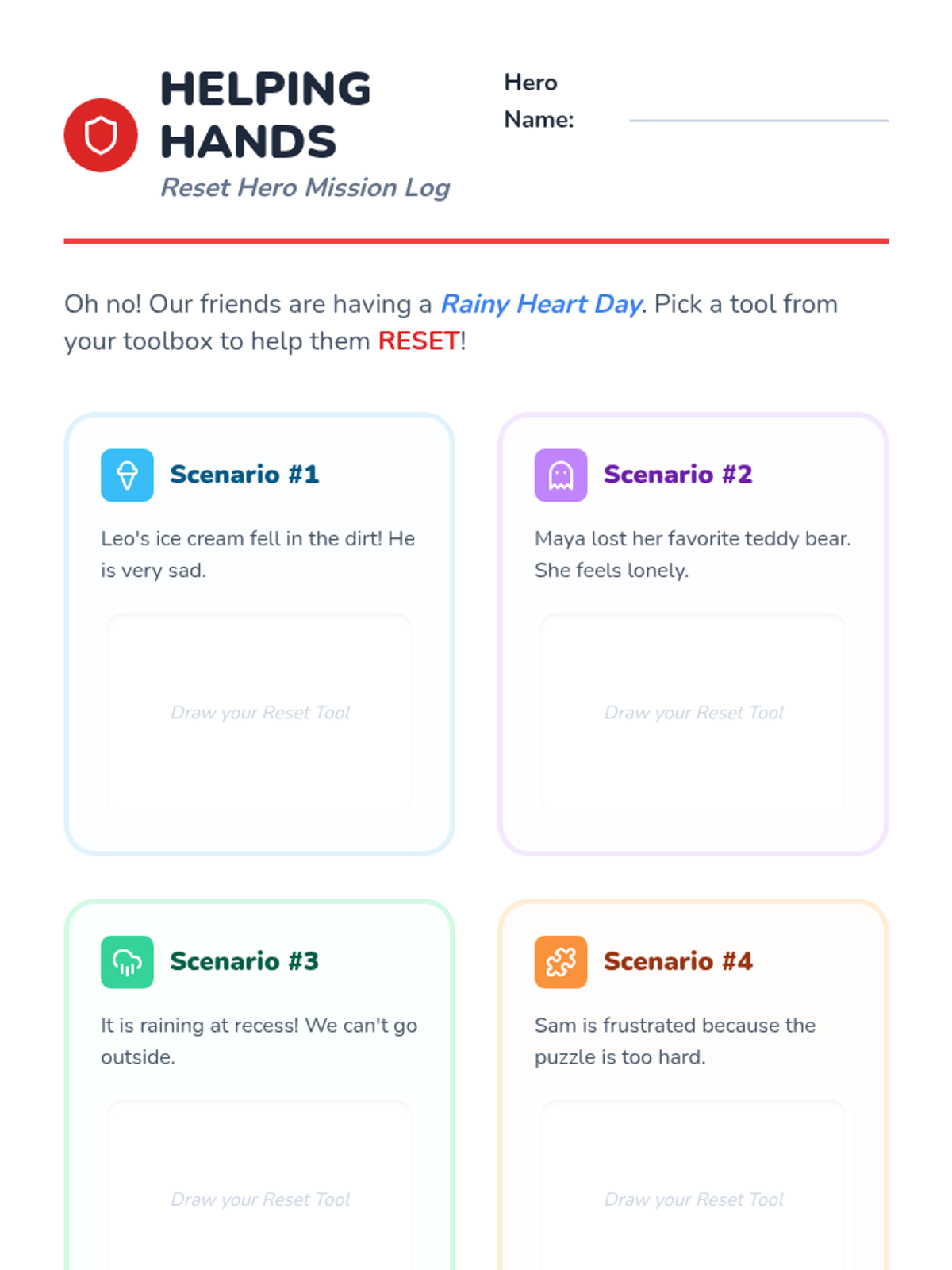
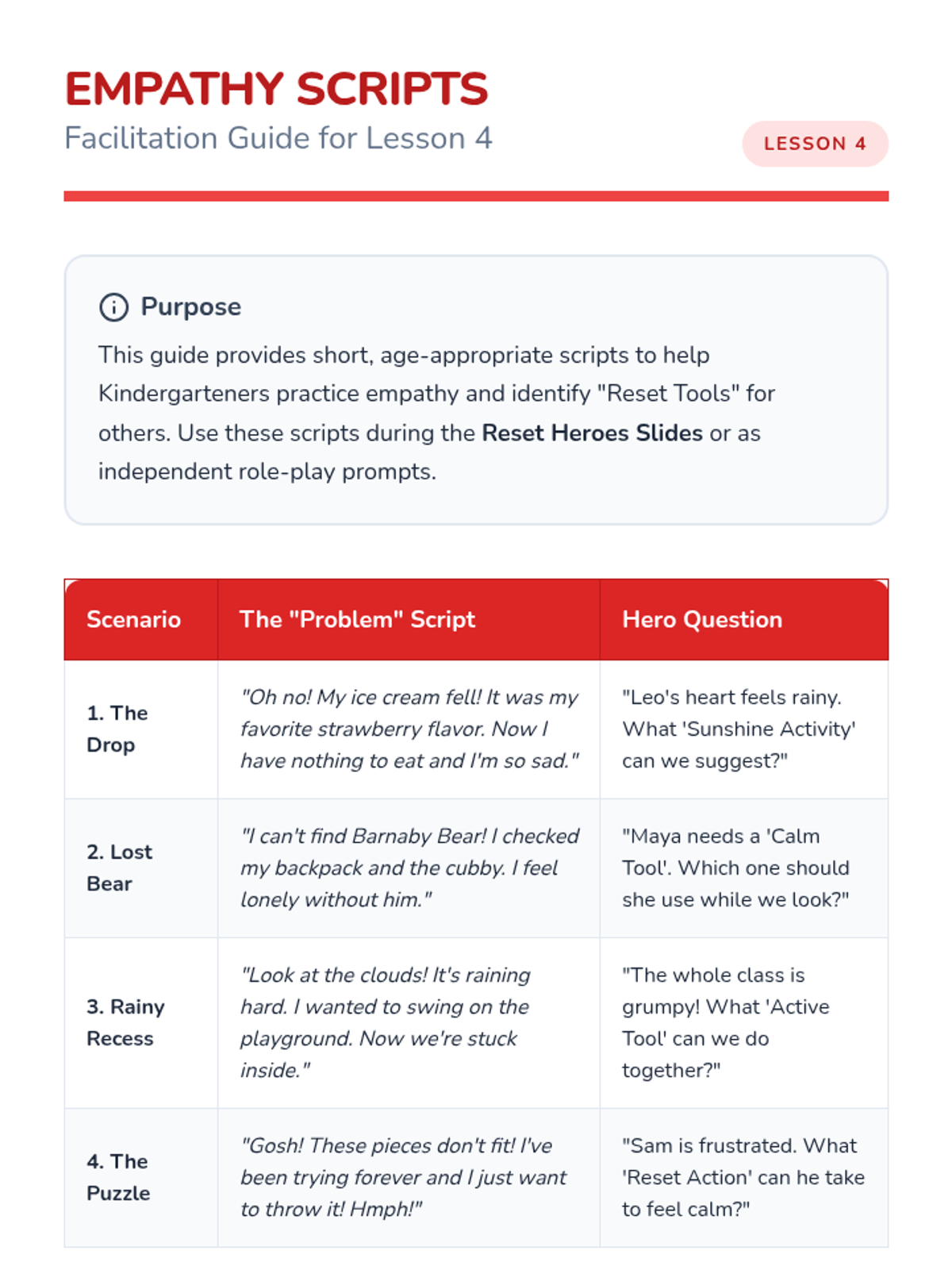
Using role-play and scenarios, students practice empathy and behavioral activation by helping characters navigate disappointments through positive activity choices.
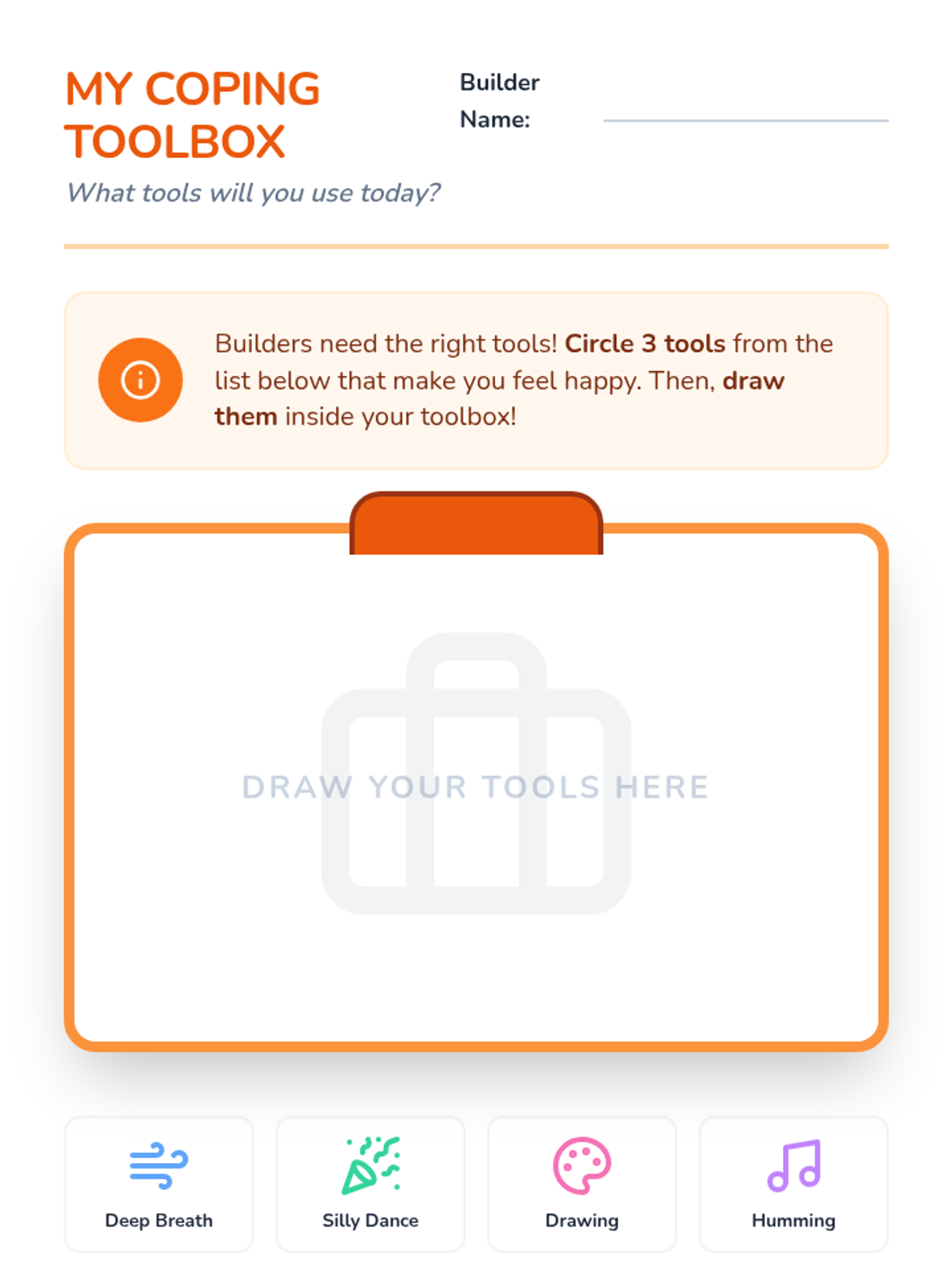
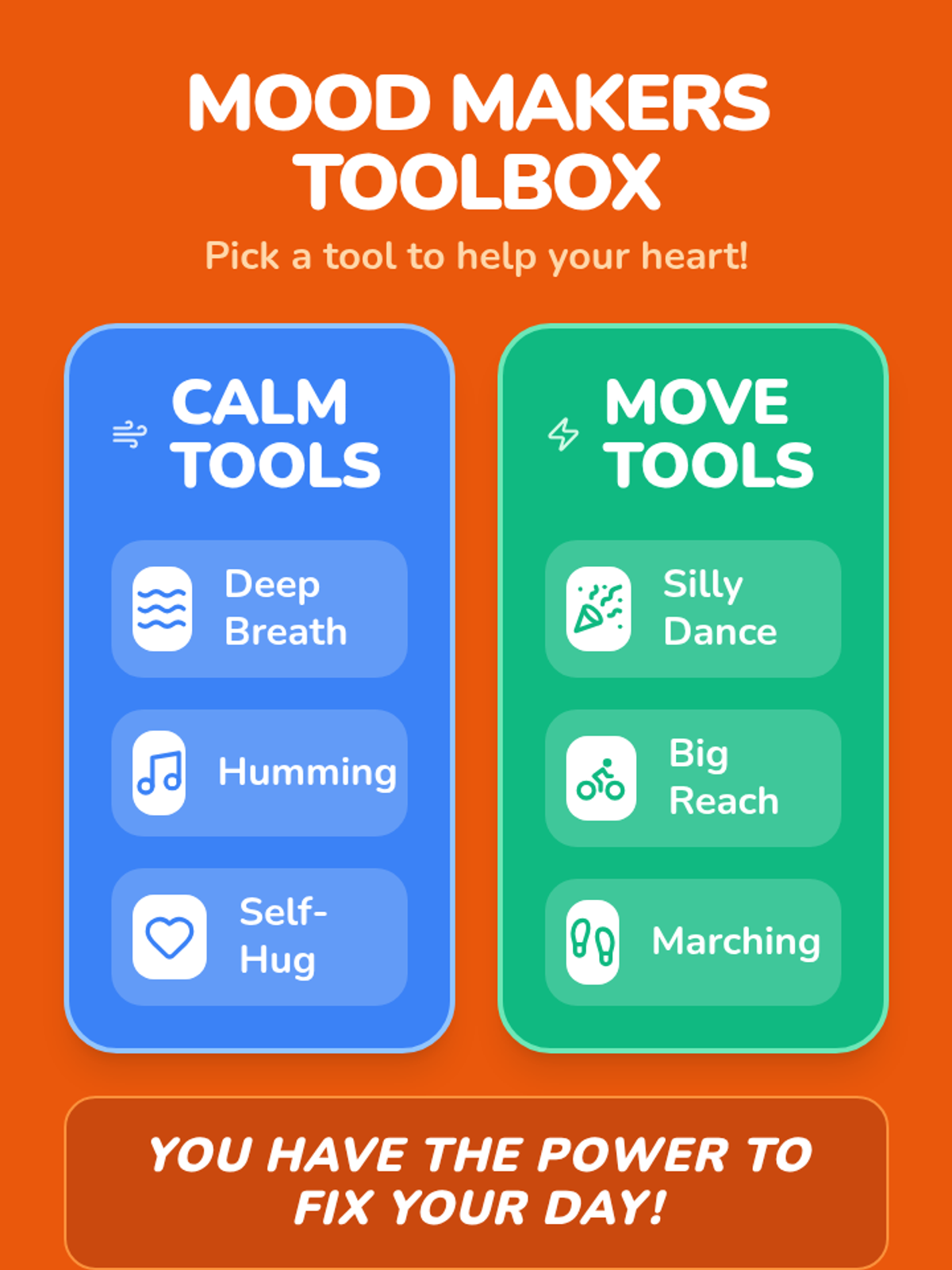
Students identify and select specific actions to include in a personal 'coping toolkit.' They practice retrieving these 'tools' to handle common stressors or worries.
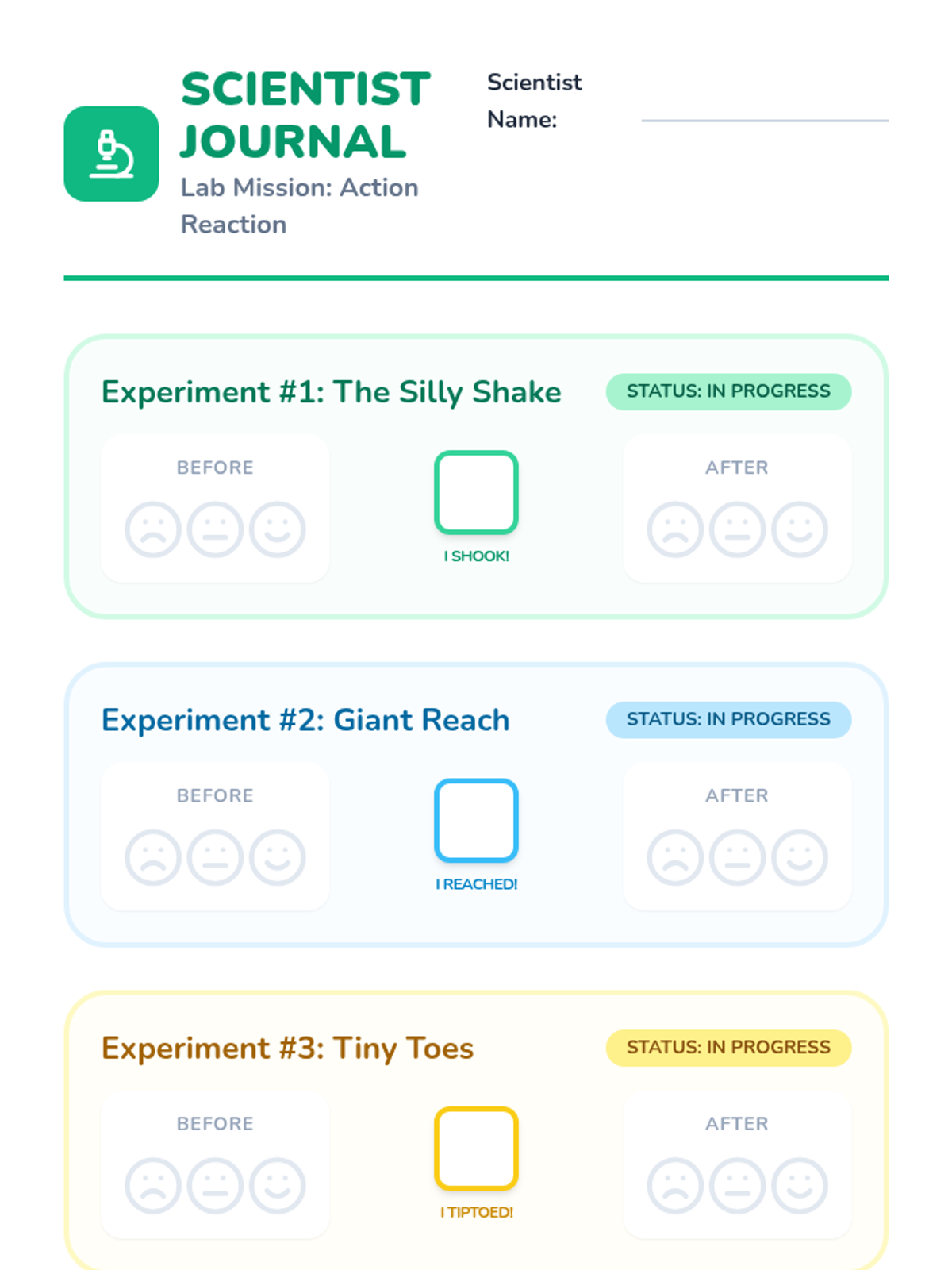
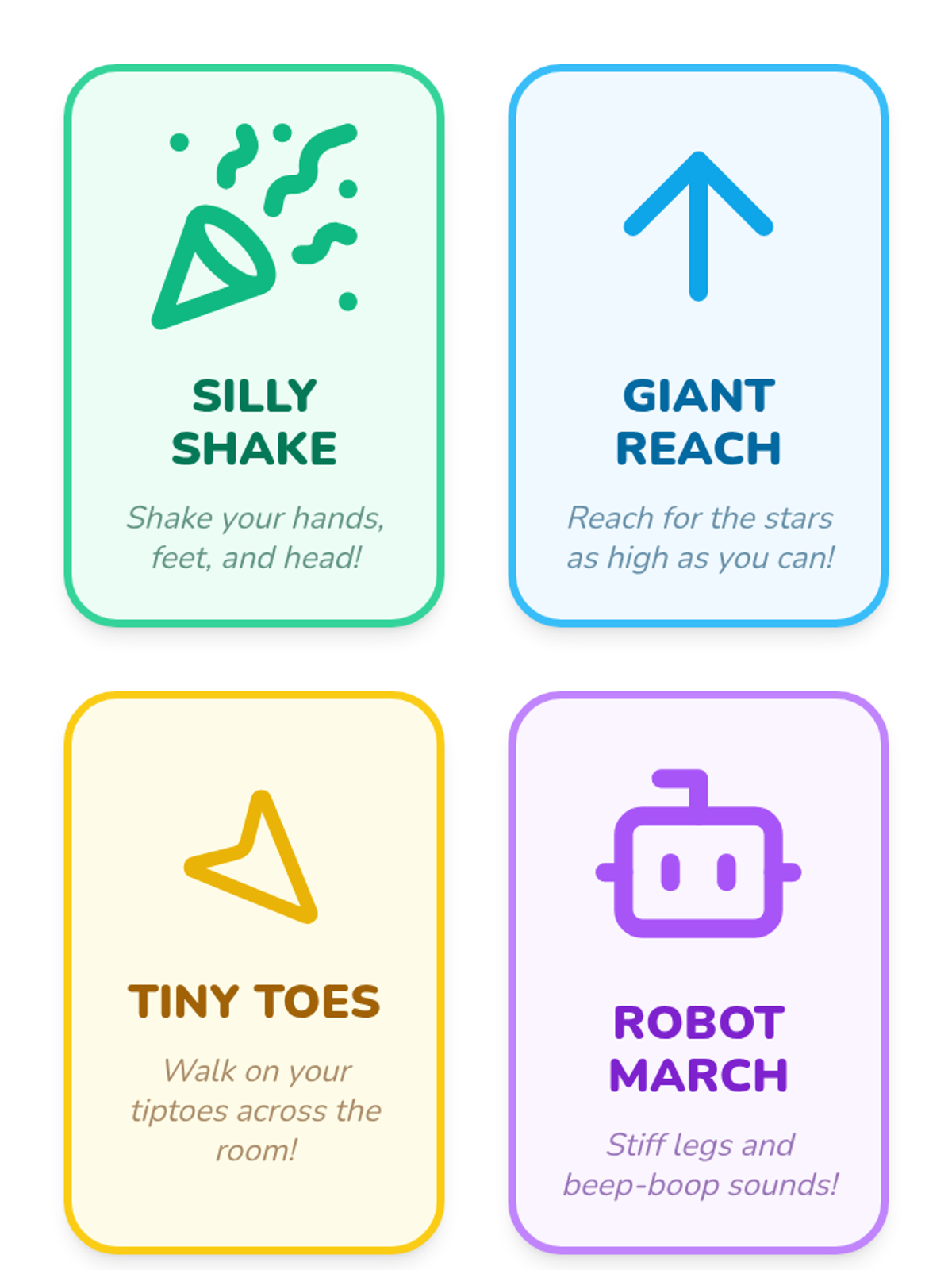
Students act as scientists to test how physical movement and silly actions change their internal energy and mood. They observe the immediate cause-and-effect relationship between action and emotion.
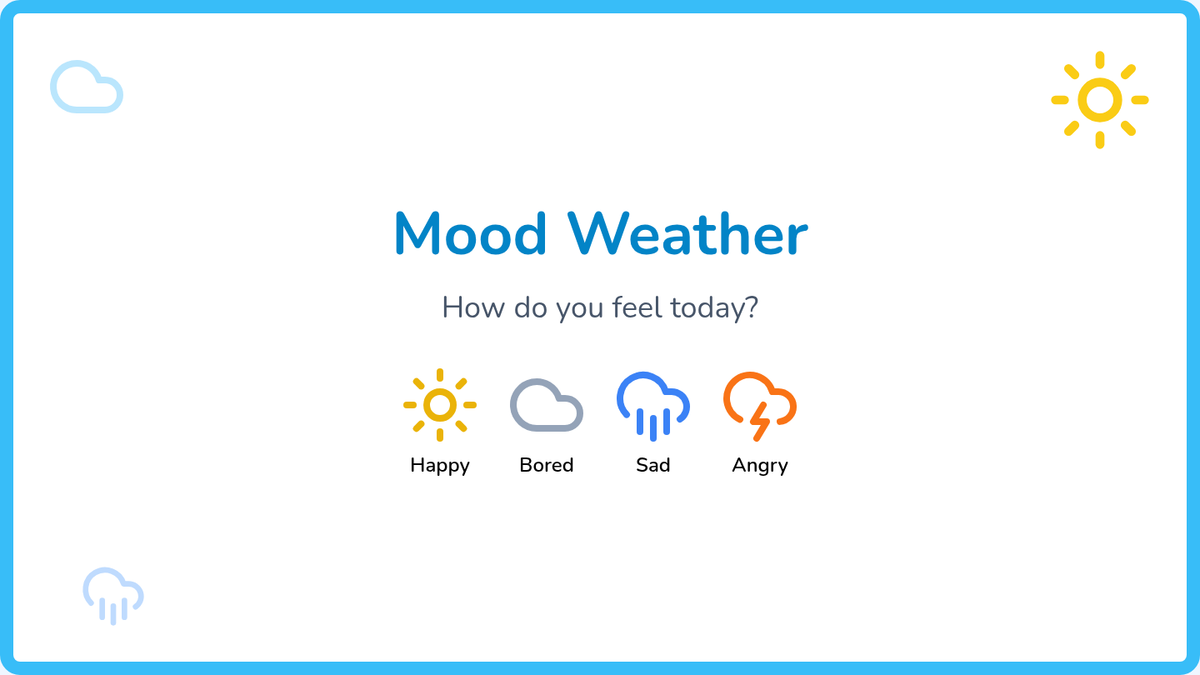
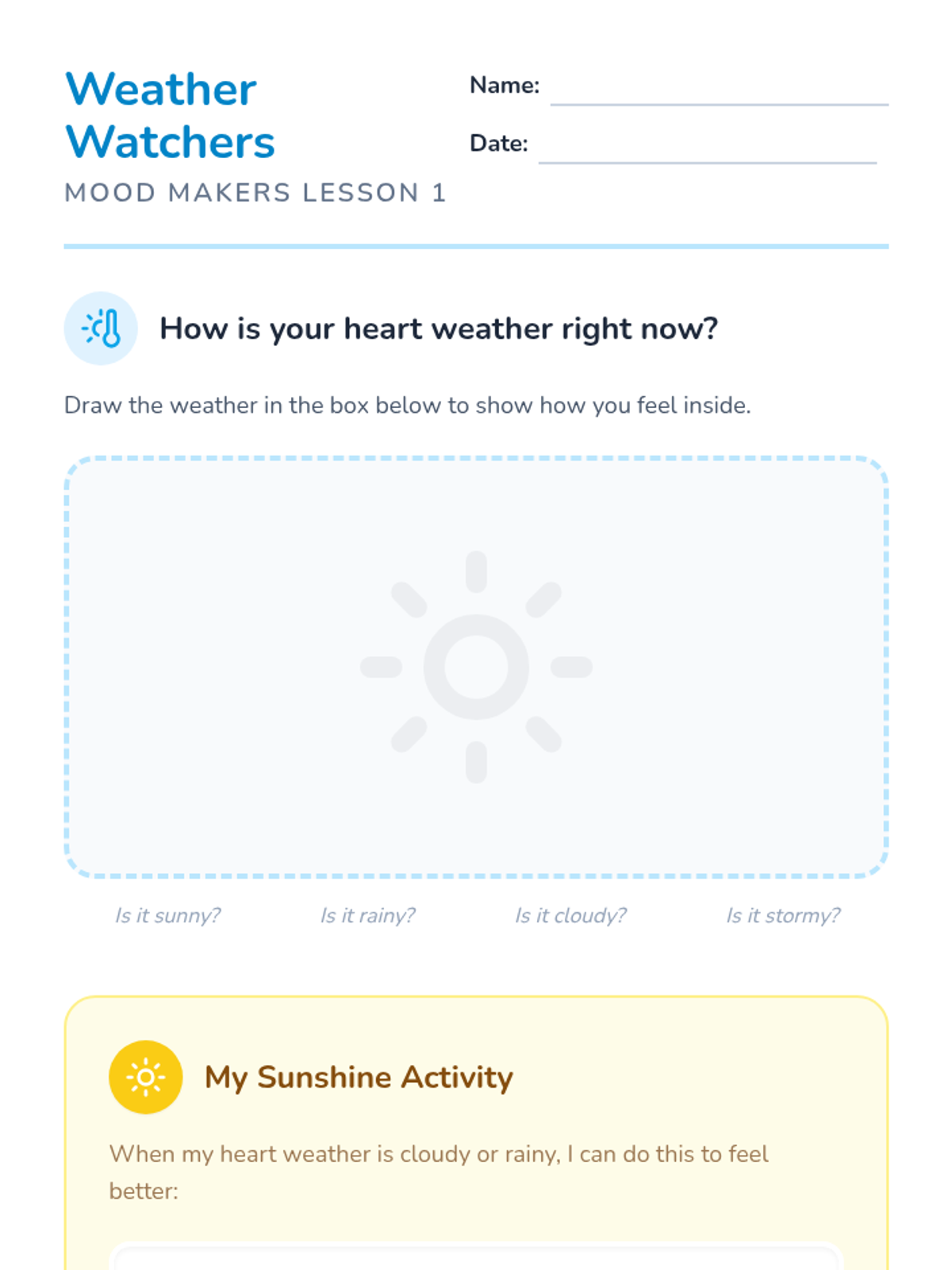
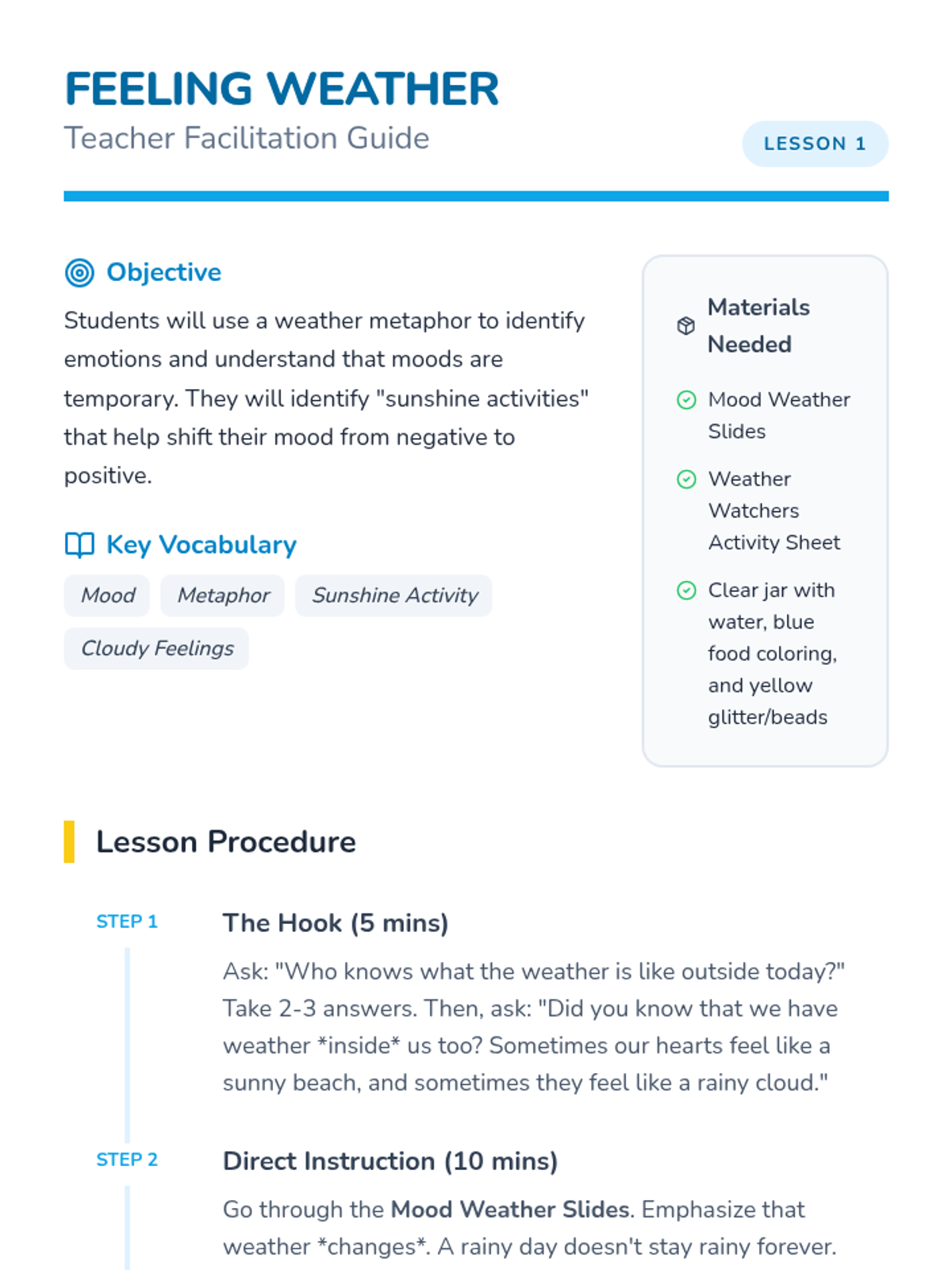
Students explore the metaphor of feelings as weather and learn that just as weather changes, so can their moods. They observe how 'sunshine' activities can help clear away 'cloudy' feelings.
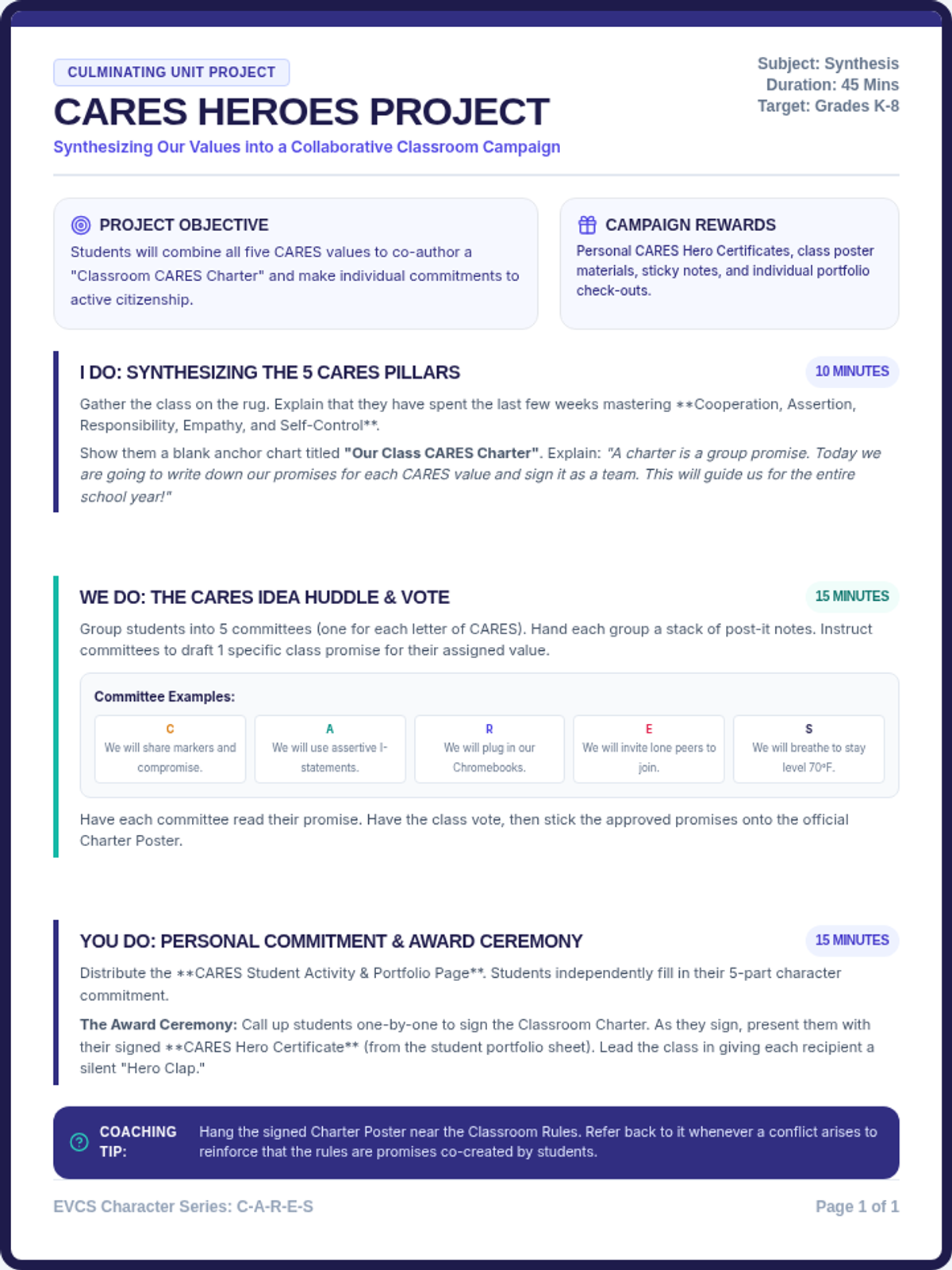
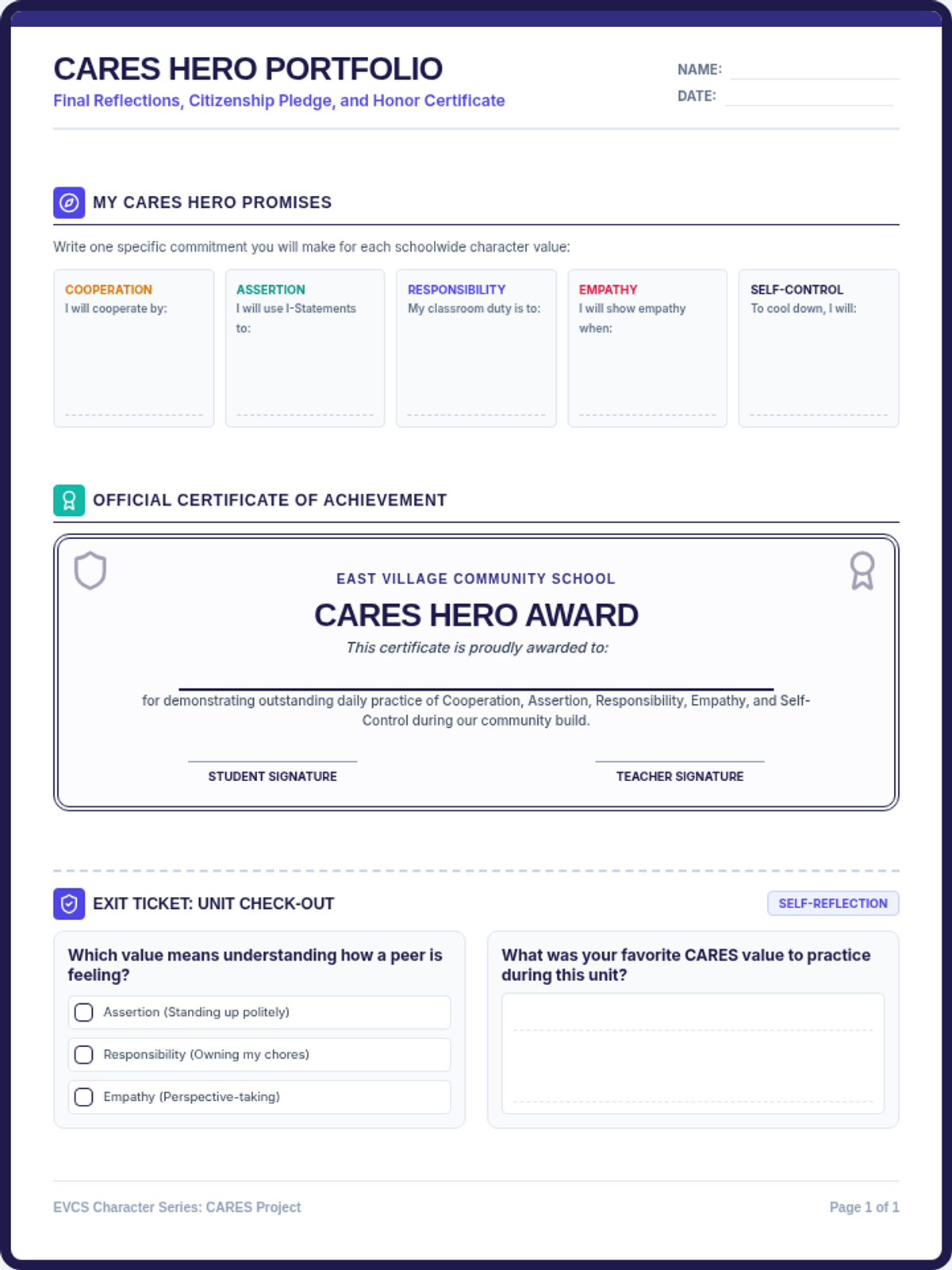
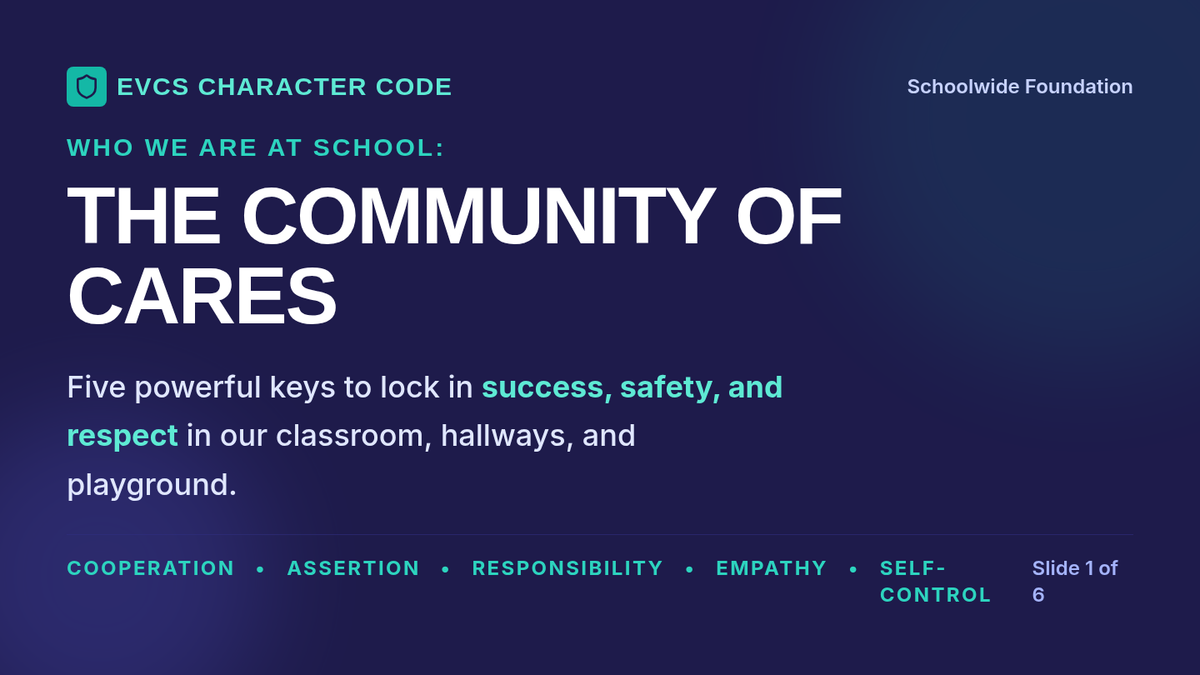
A culminating reflection and community project lesson where students synthesize all five CARES values. Students create a class pledge, award certificates, and design a community action project to show their learning.
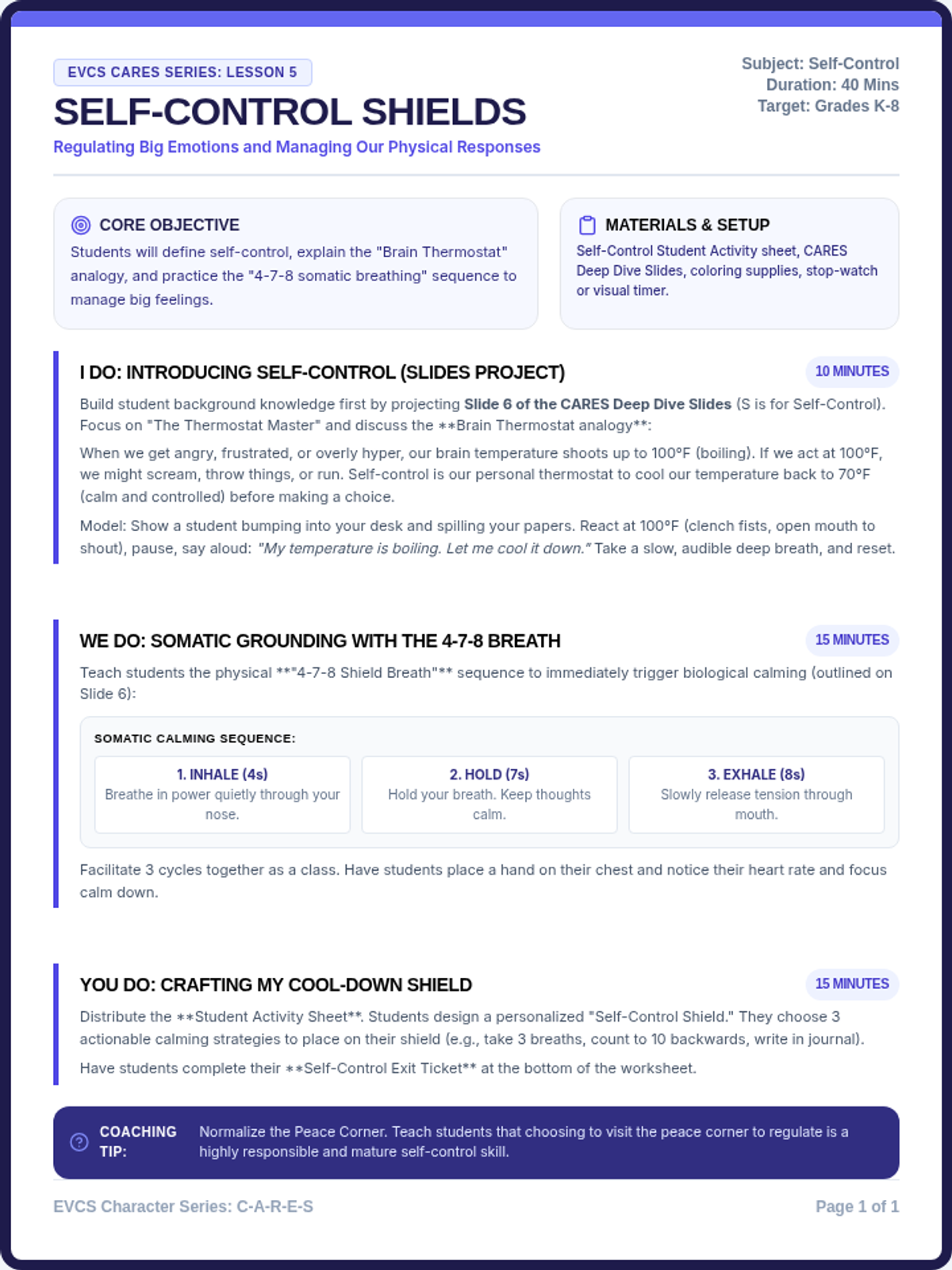
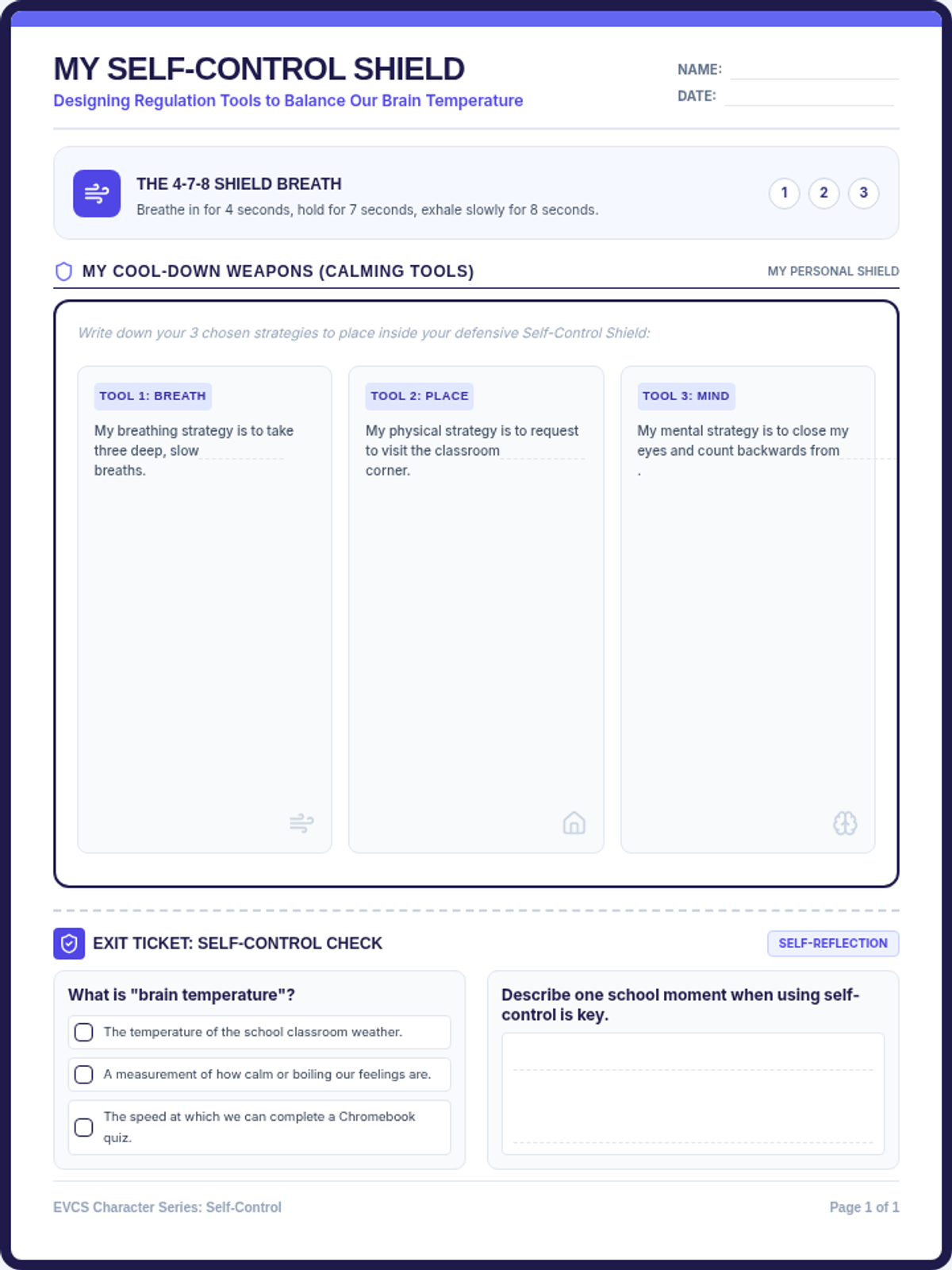
A social-emotional learning lesson centered on self-control, emotional regulation, and mindfulness. Students practice somatic grounding and cool-down techniques to manage big emotions in real-time.
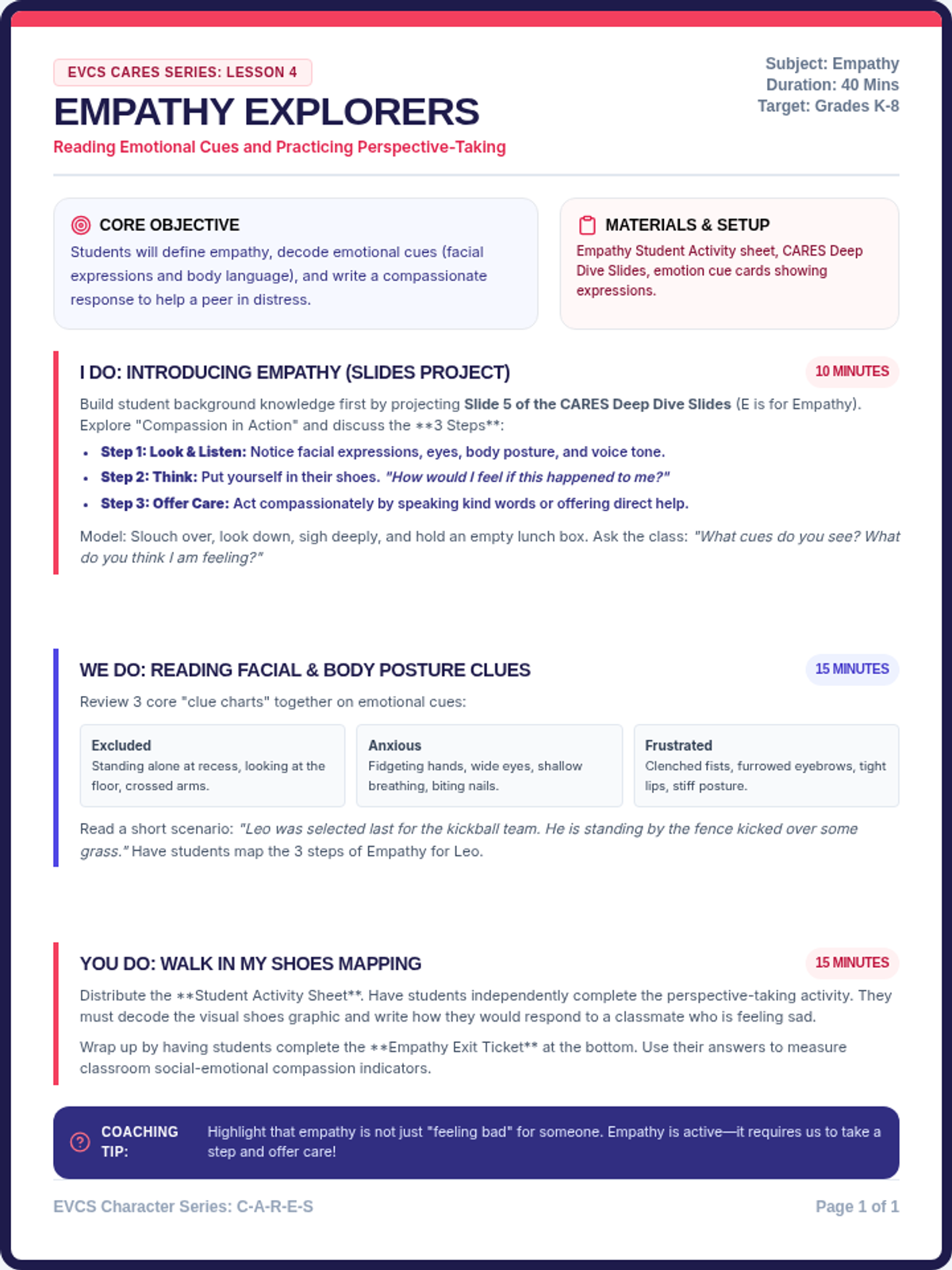
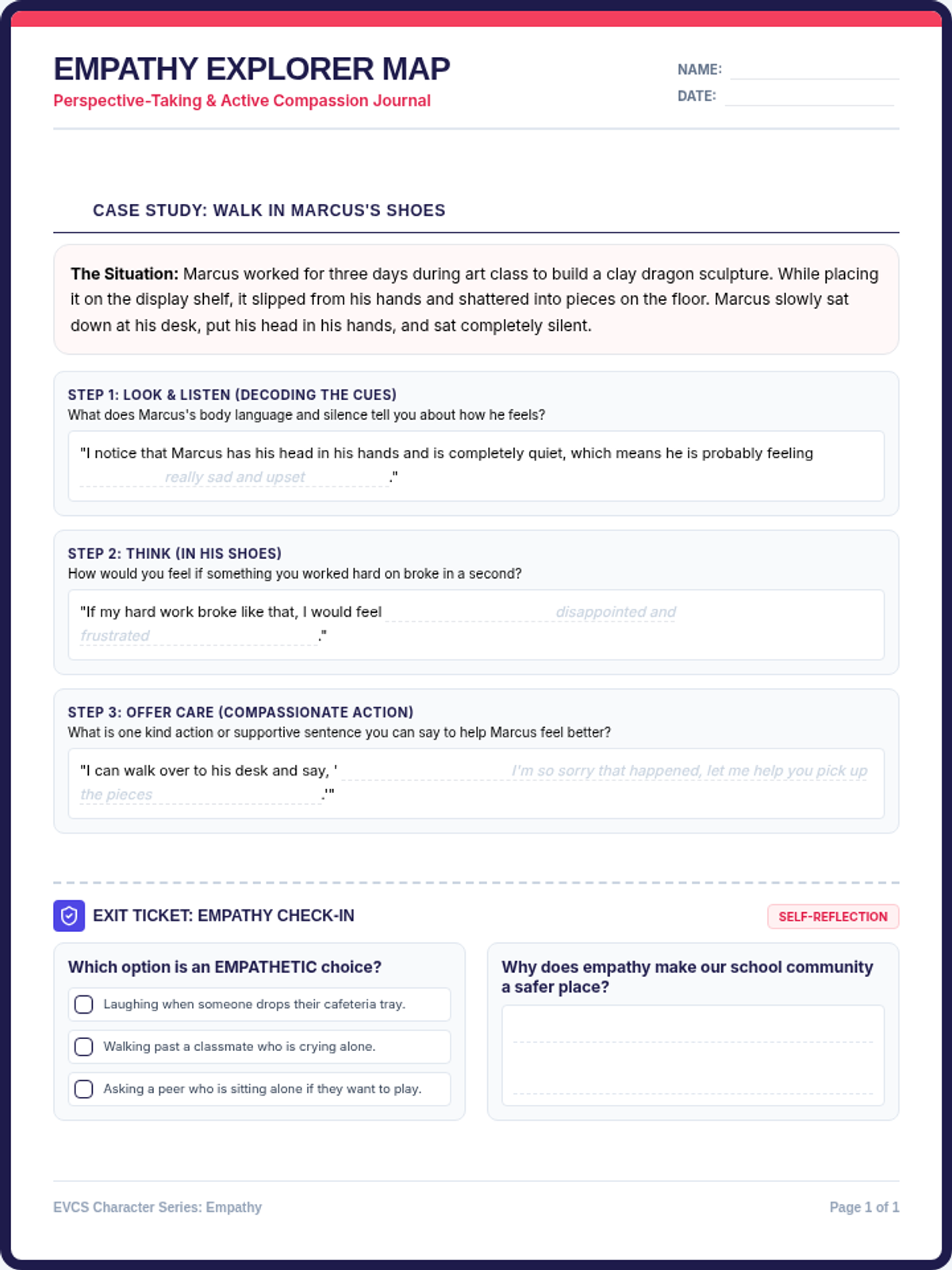
A social-emotional learning lesson on empathy, active compassion, and perspective-taking. Students learn to recognize emotional cues in others and practice walking in someone else's shoes to solve social dilemmas.
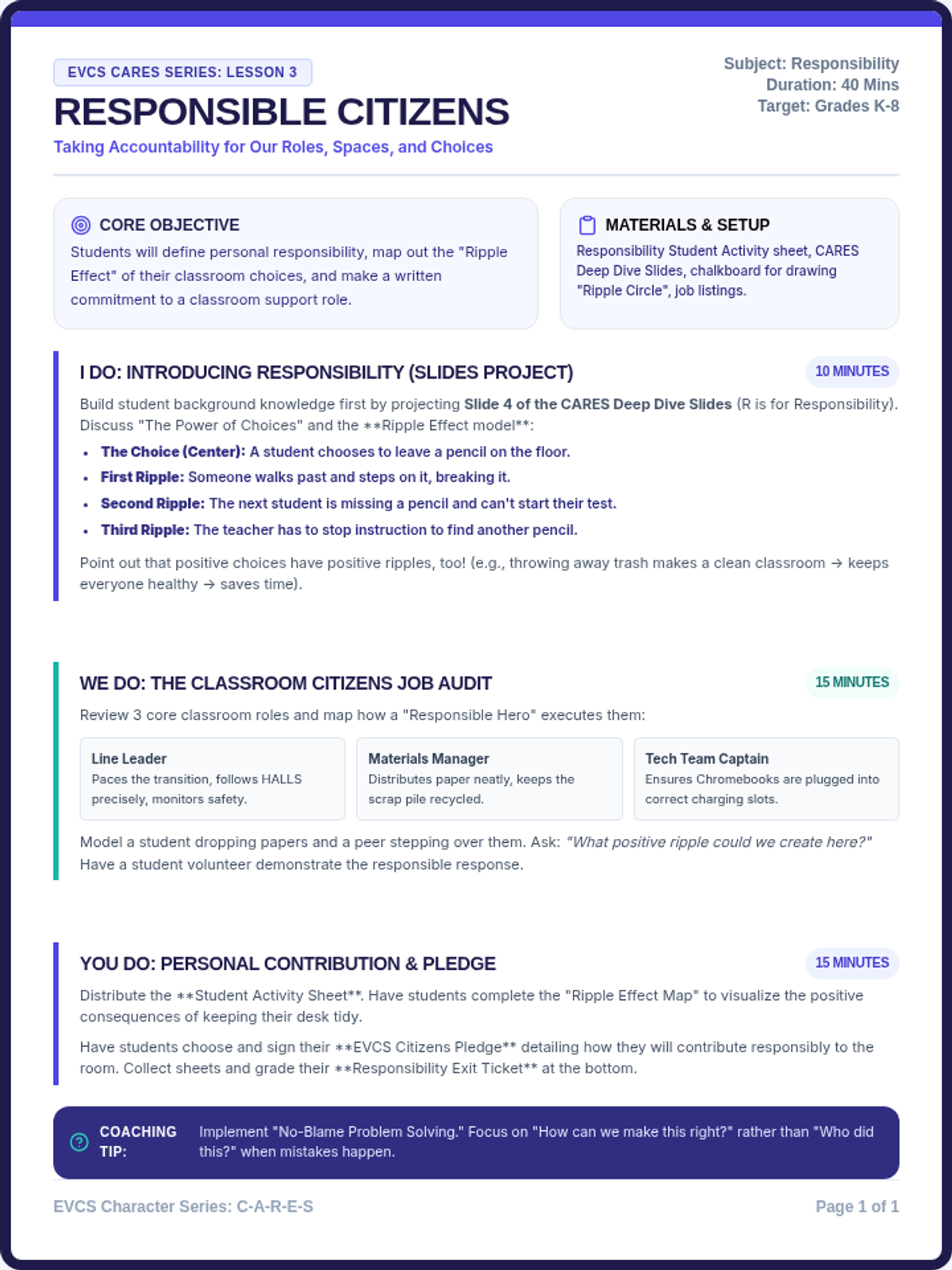
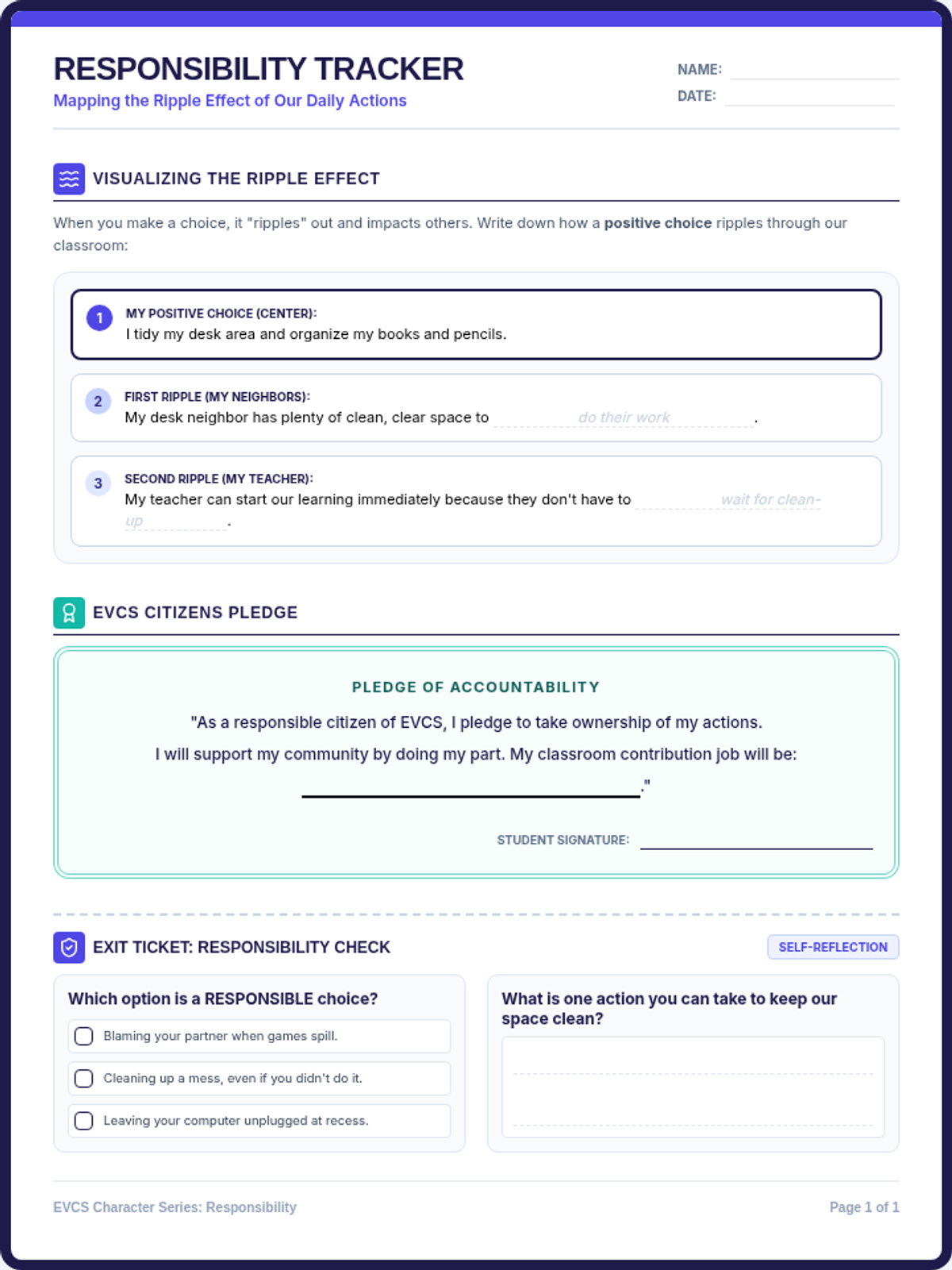
A social-emotional learning lesson teaching personal accountability, civic responsibility, and classroom roles. Students identify how their individual choices affect the safety and success of the whole community.
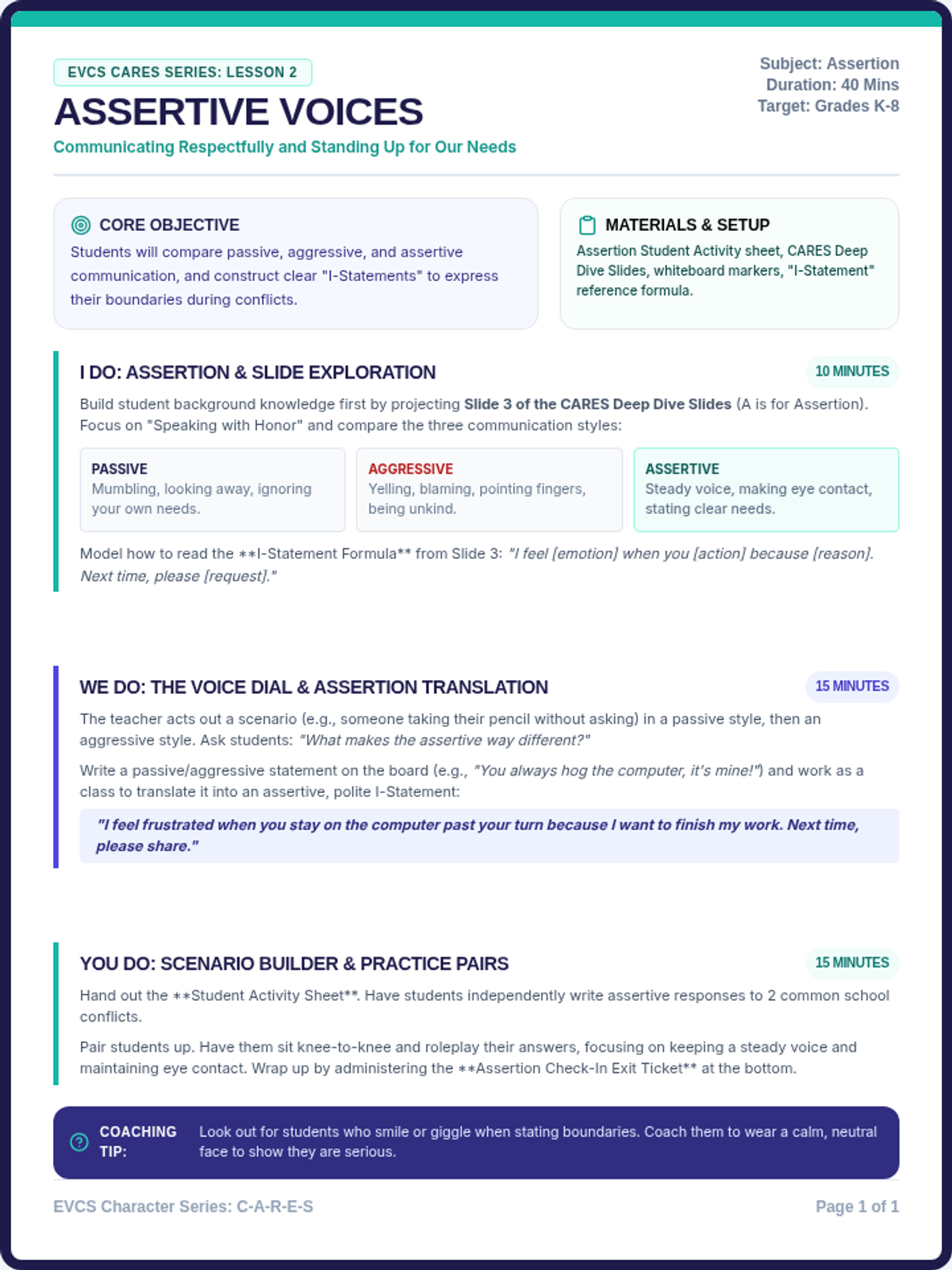
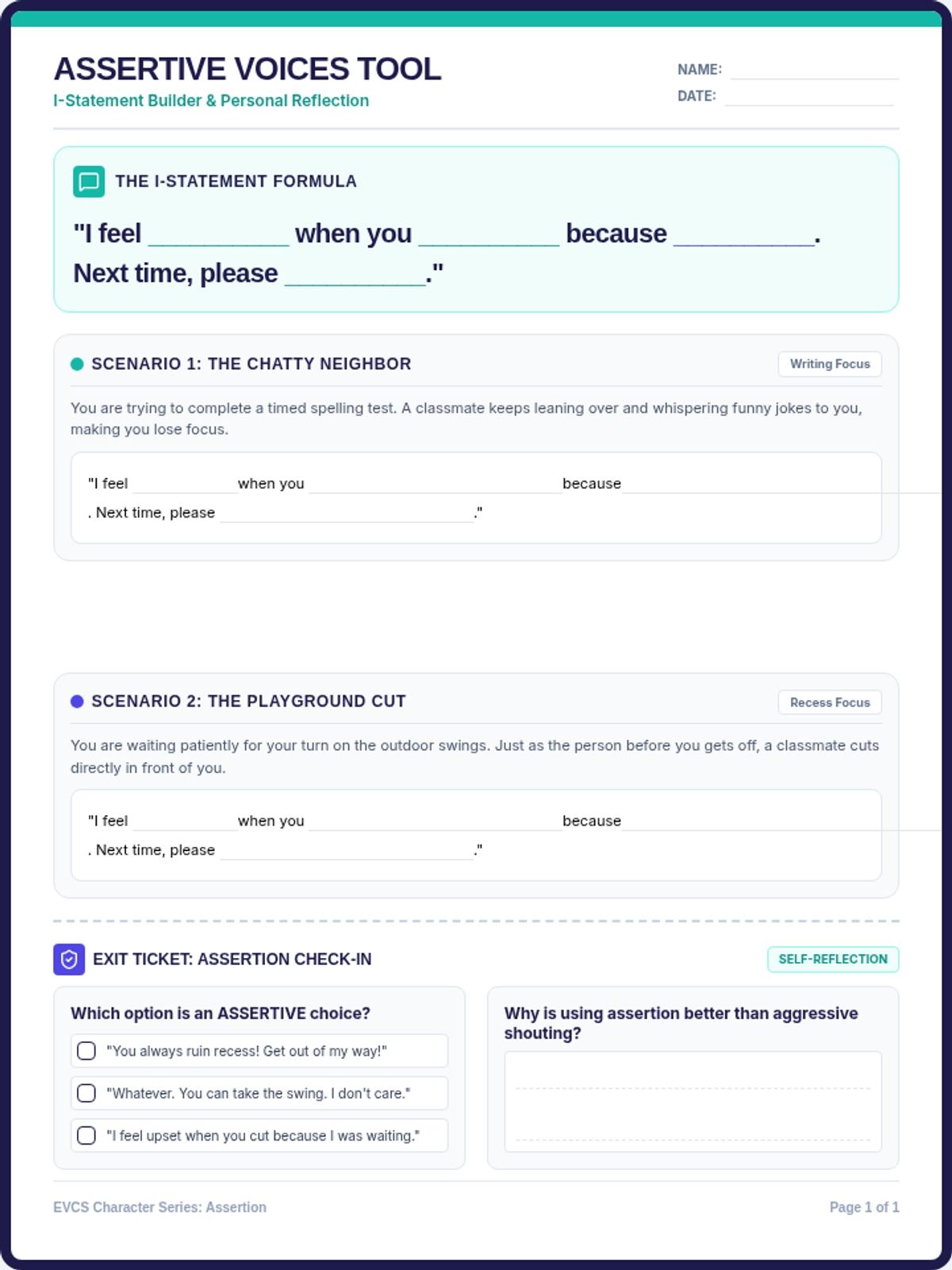
A social-emotional learning lesson focused on assertive communication, active listening, and setting respectful boundaries. Students practice using "I-Statements" to express their needs and opinions respectfully.
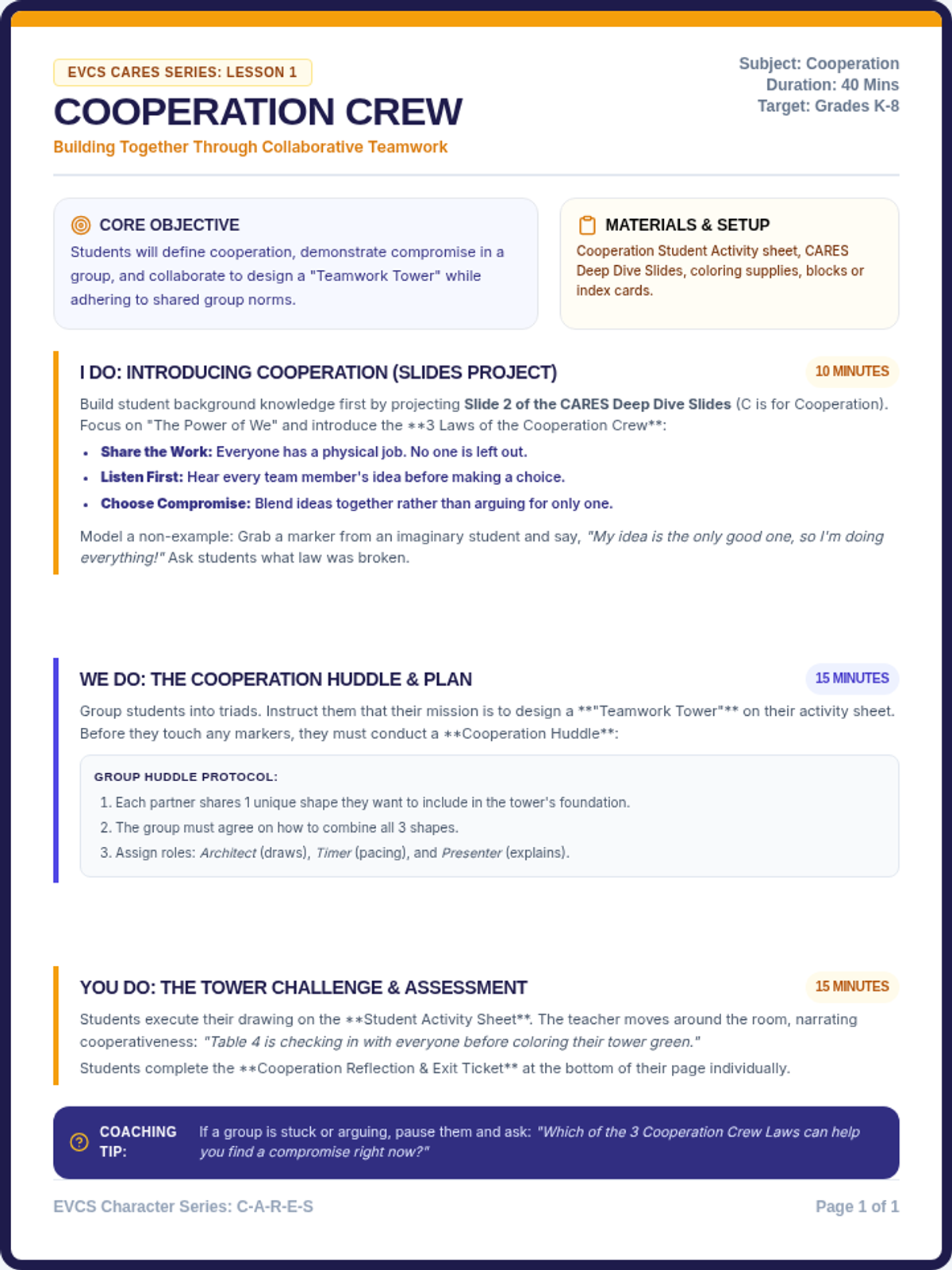
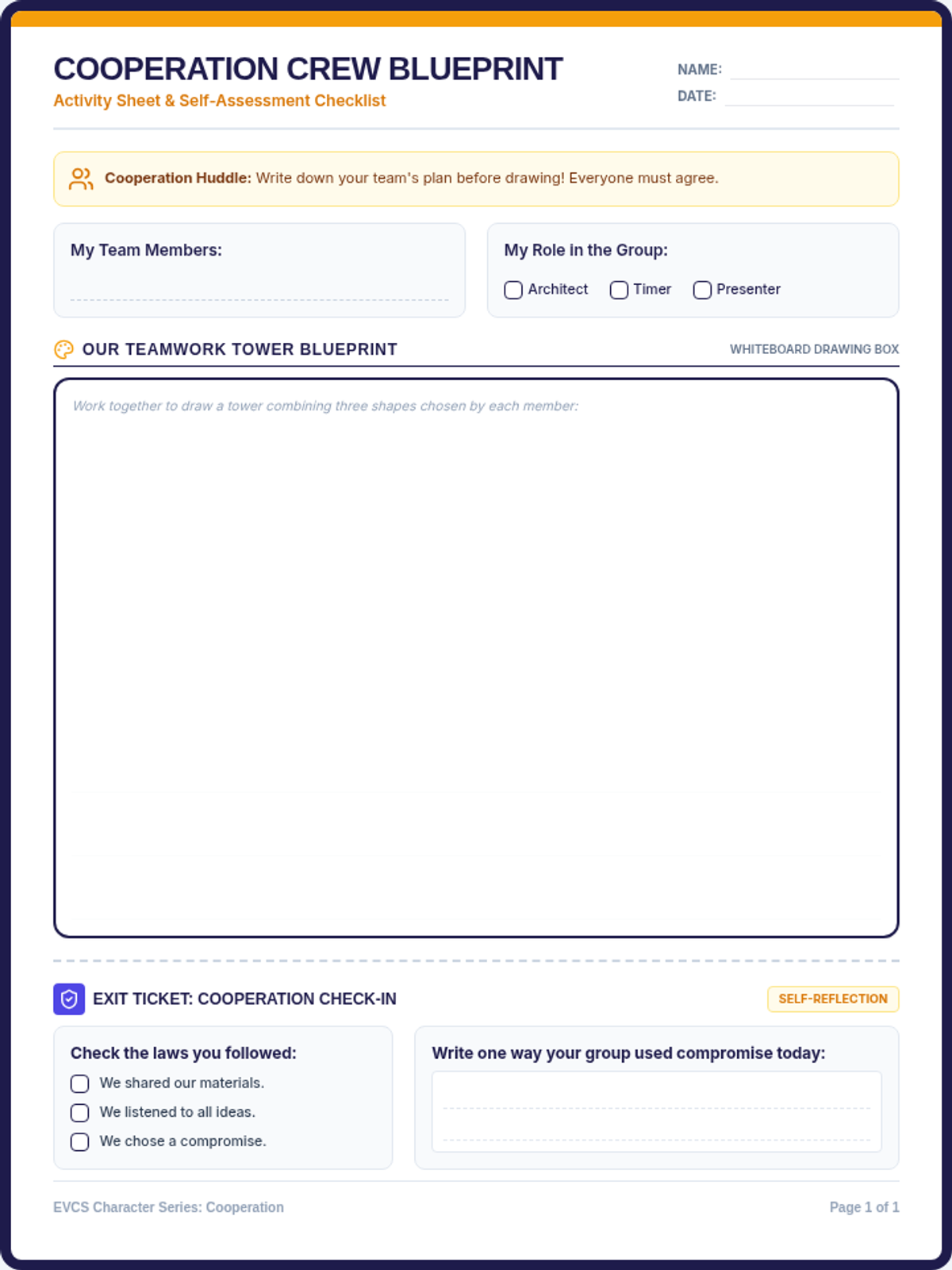
A social-emotional learning lesson focusing on cooperation, collaborative problem solving, and group agreement. Students explore how to share ideas, compromise, and build together as a team.
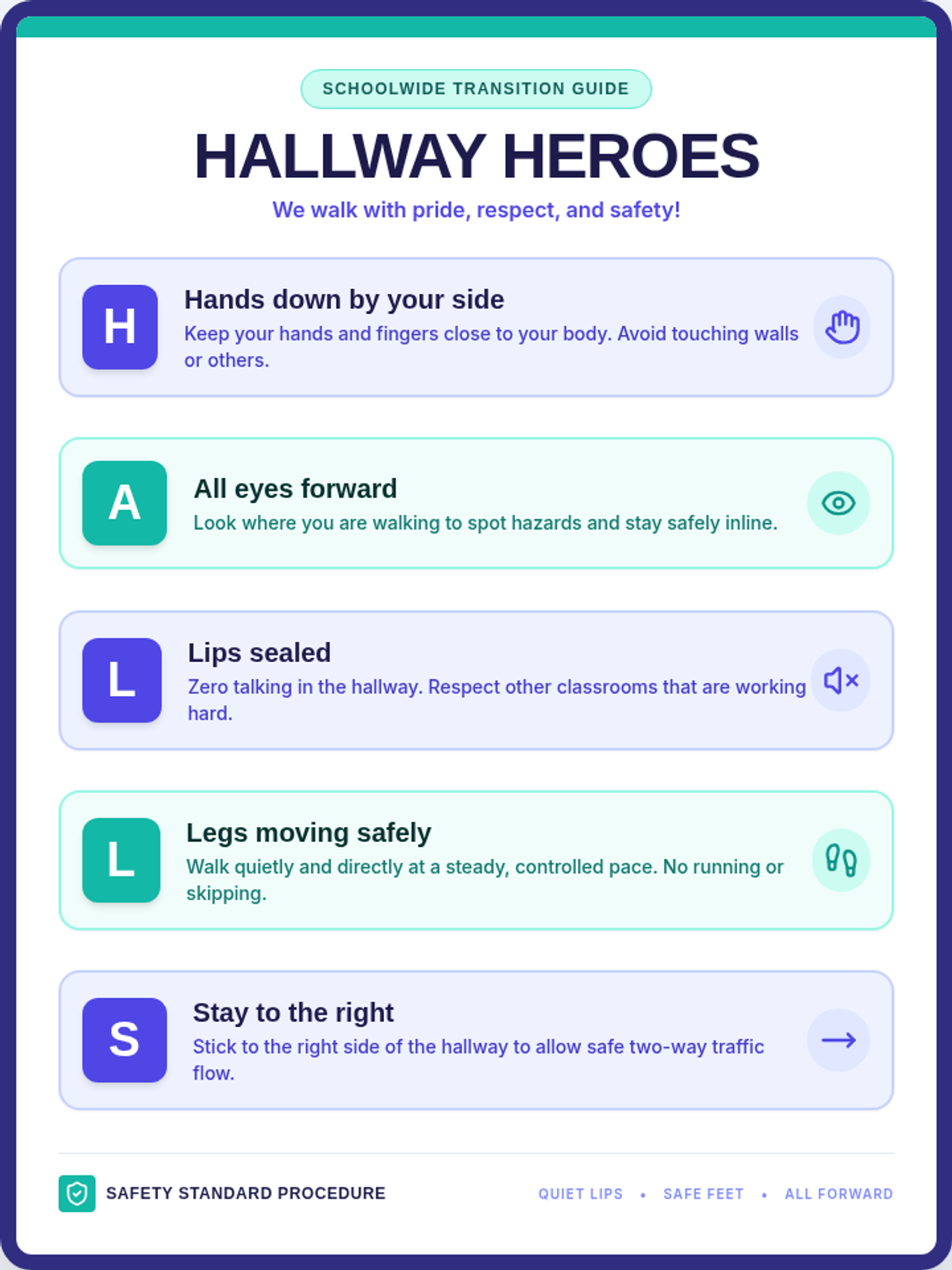
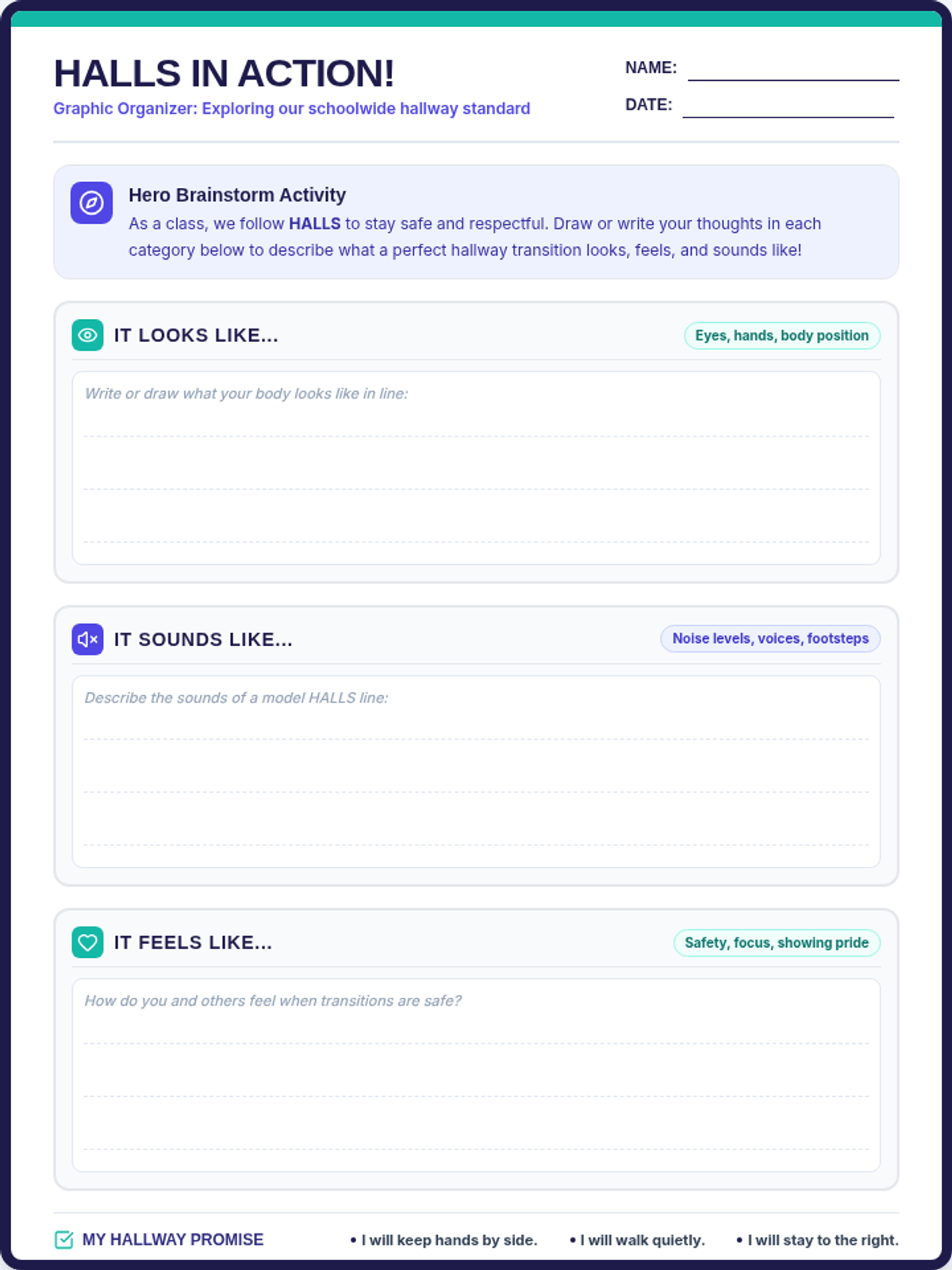
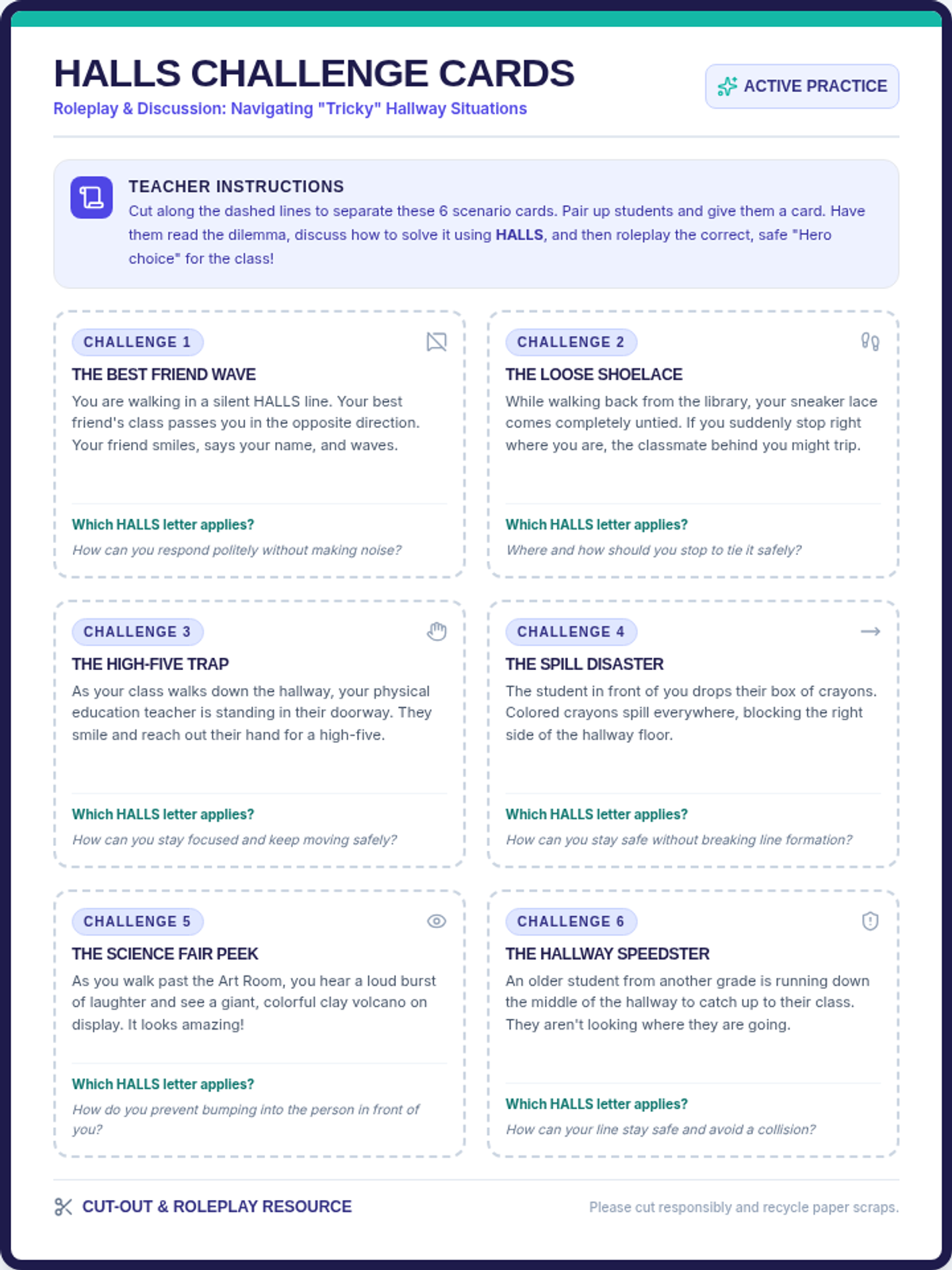
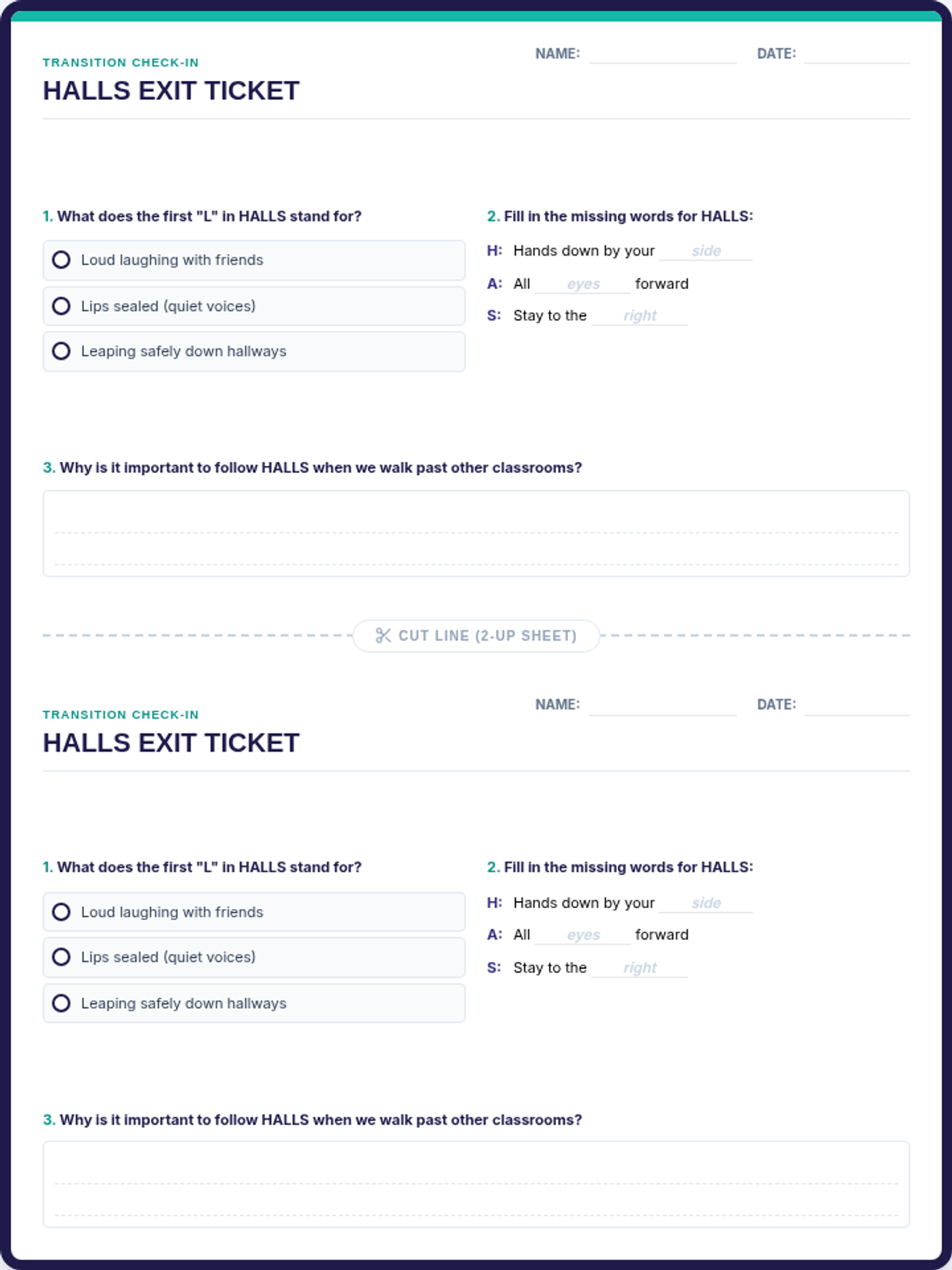
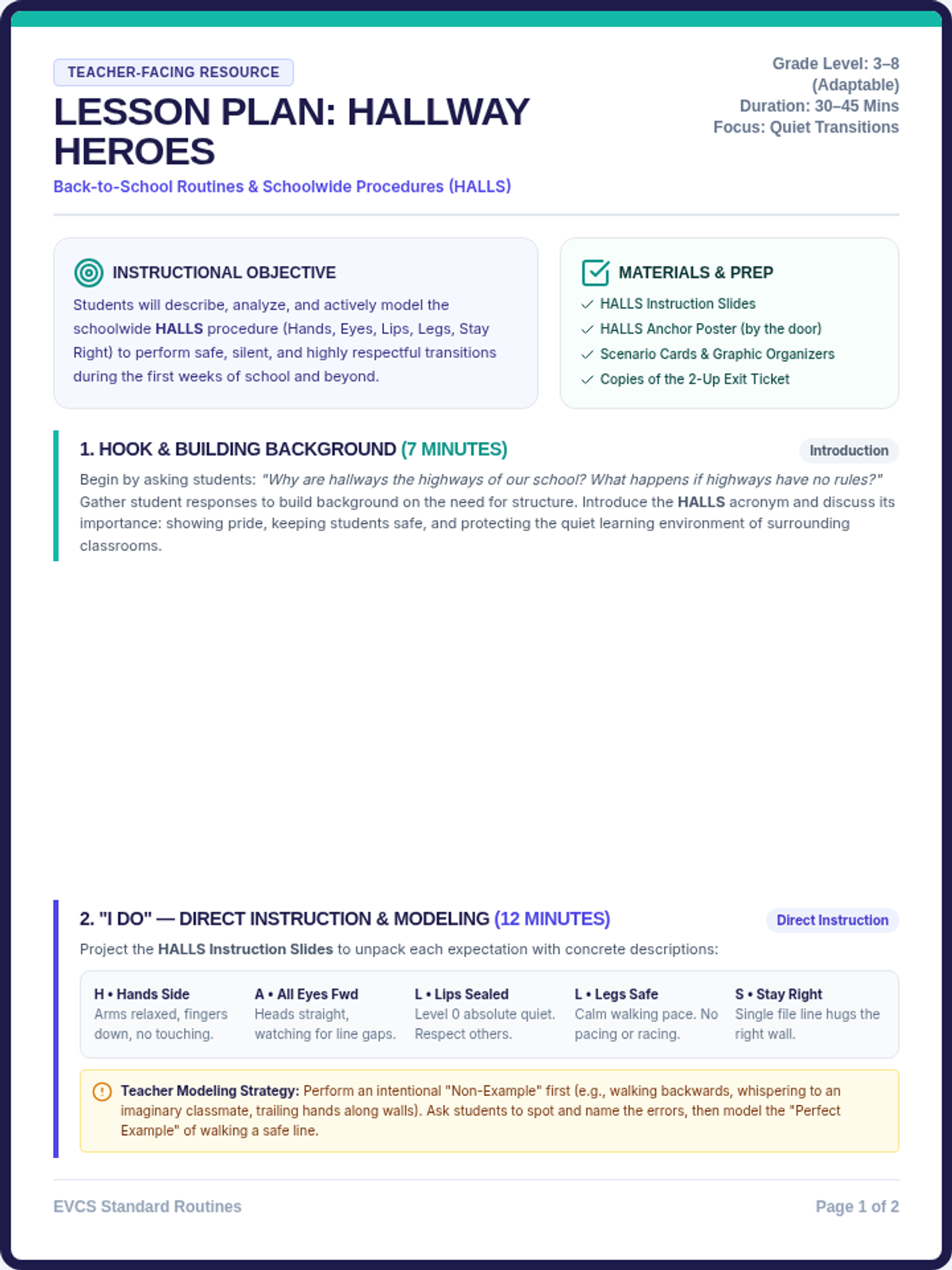
A beginning-of-the-year lesson teaching students the schoolwide HALLS procedure for safe and respectful hallway transitions. This lesson covers explicit teacher modeling, interactive student roleplay, and self-assessment of the HALLS expectations.
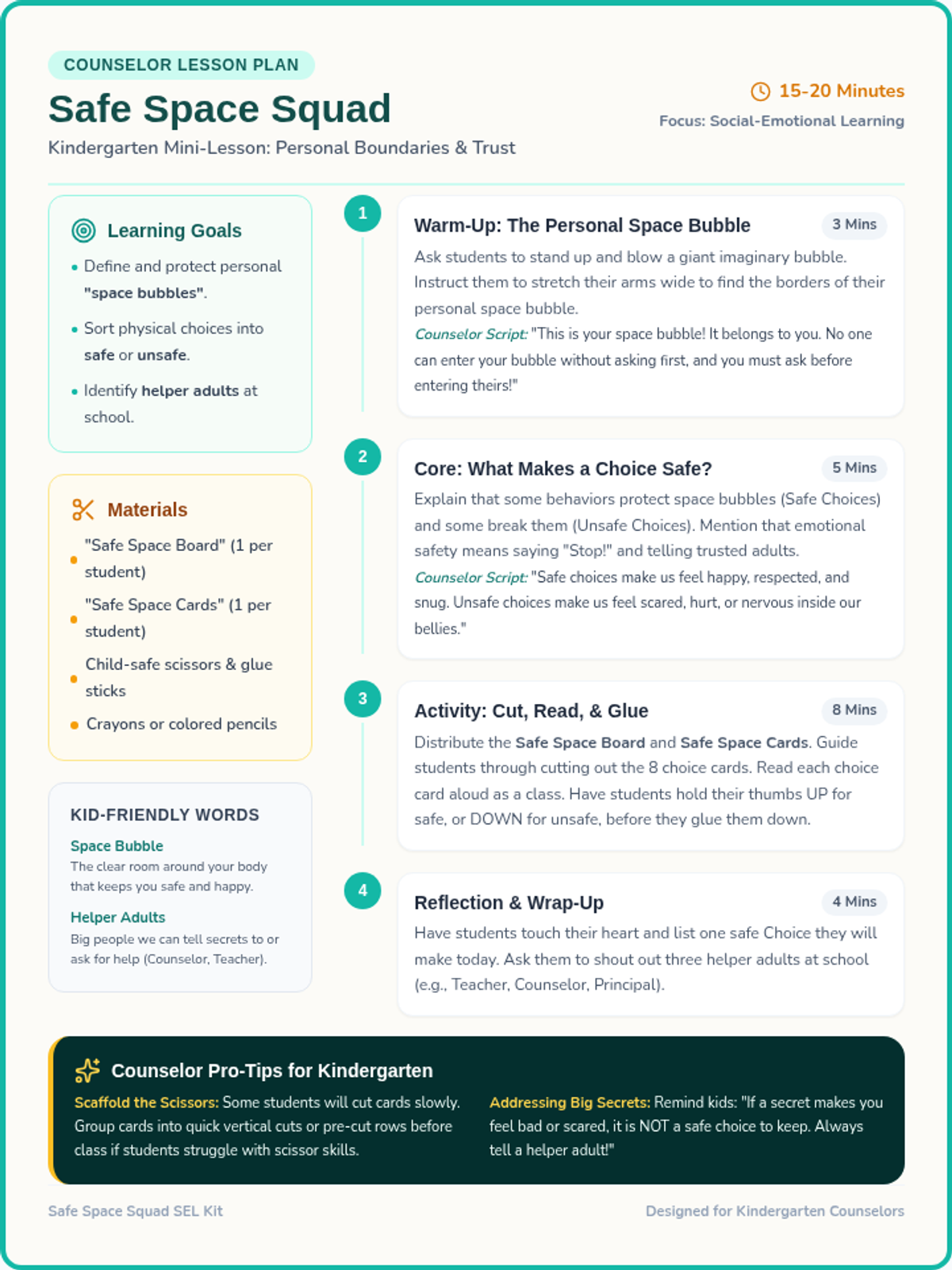
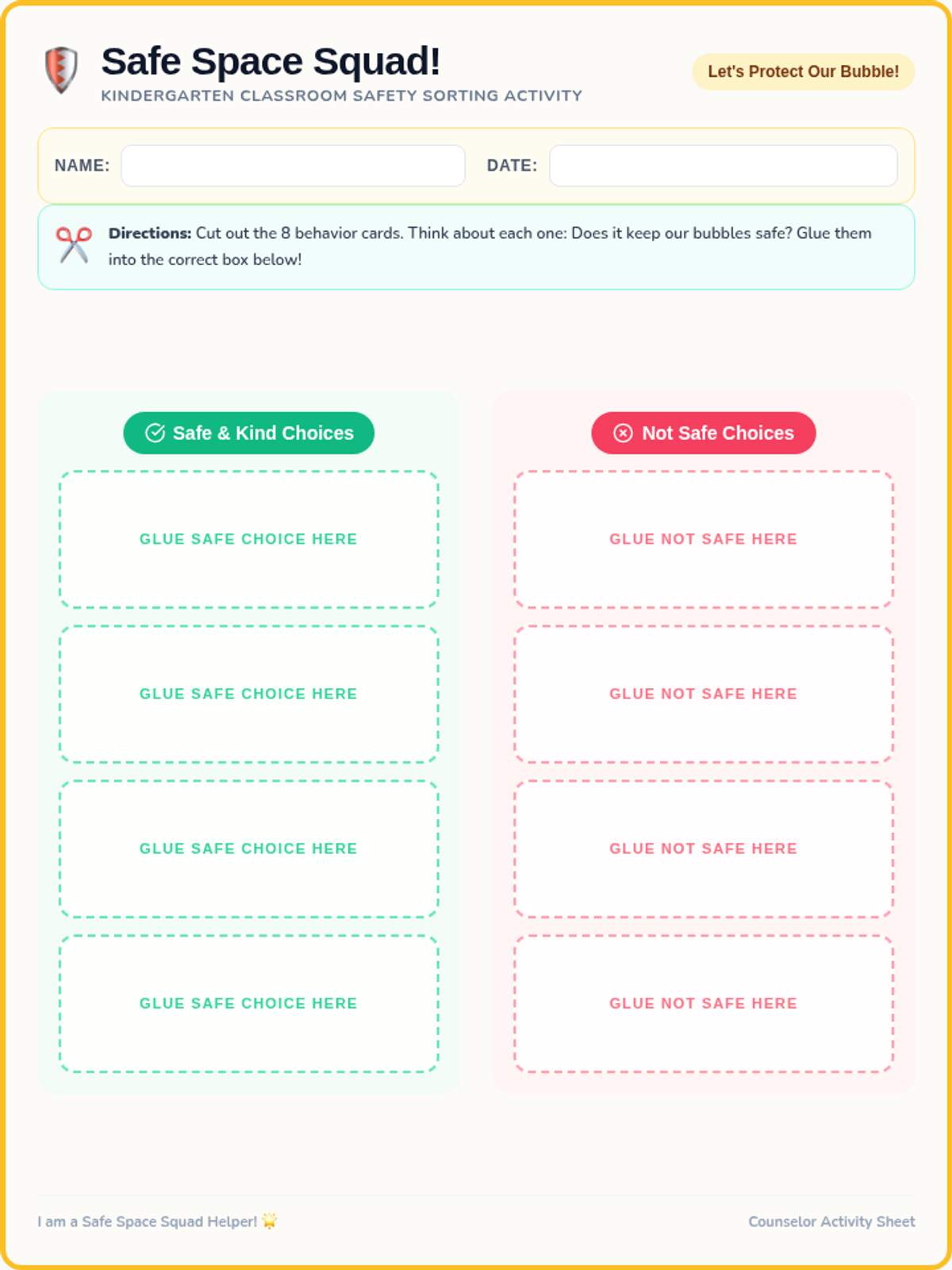
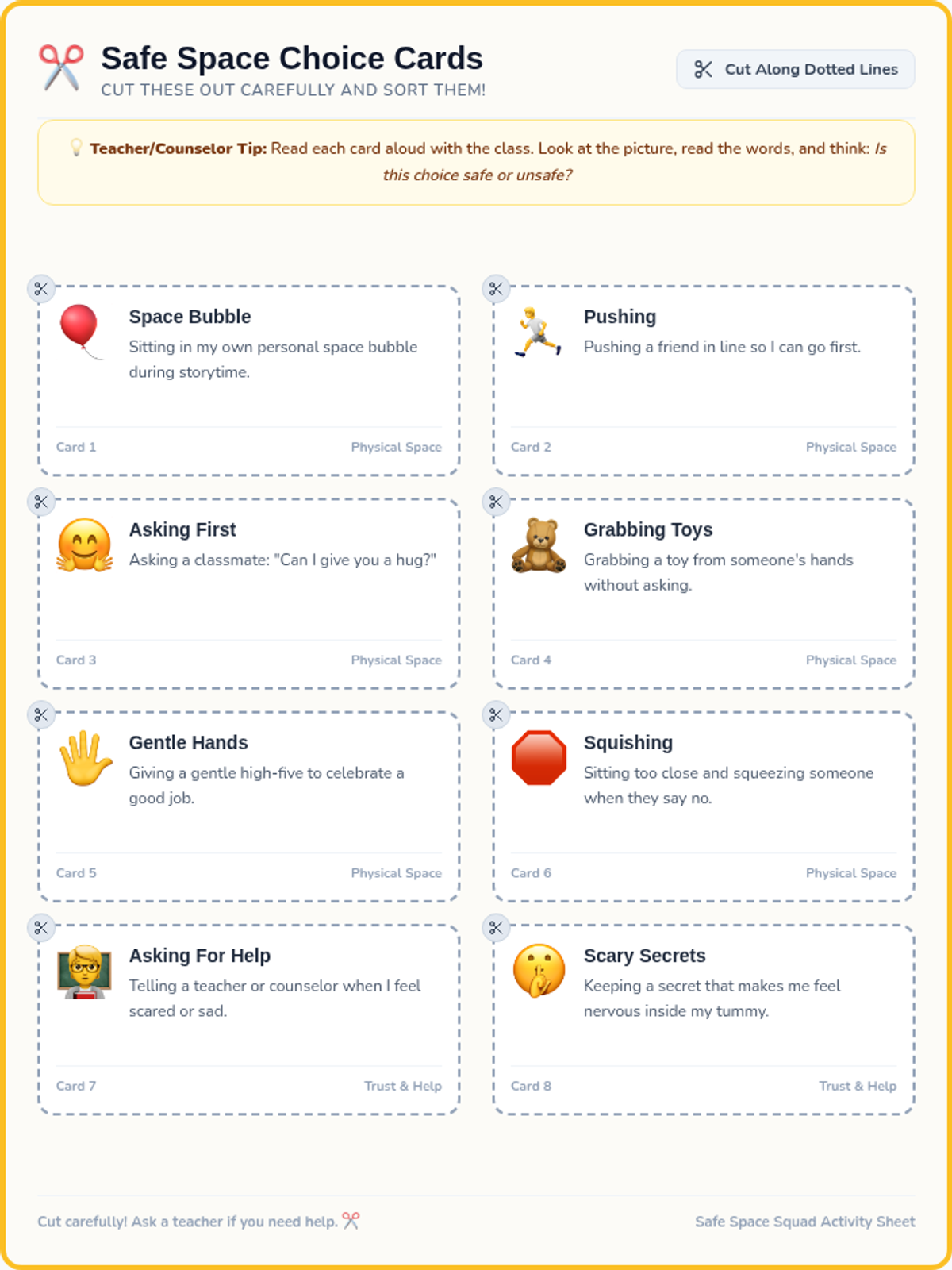
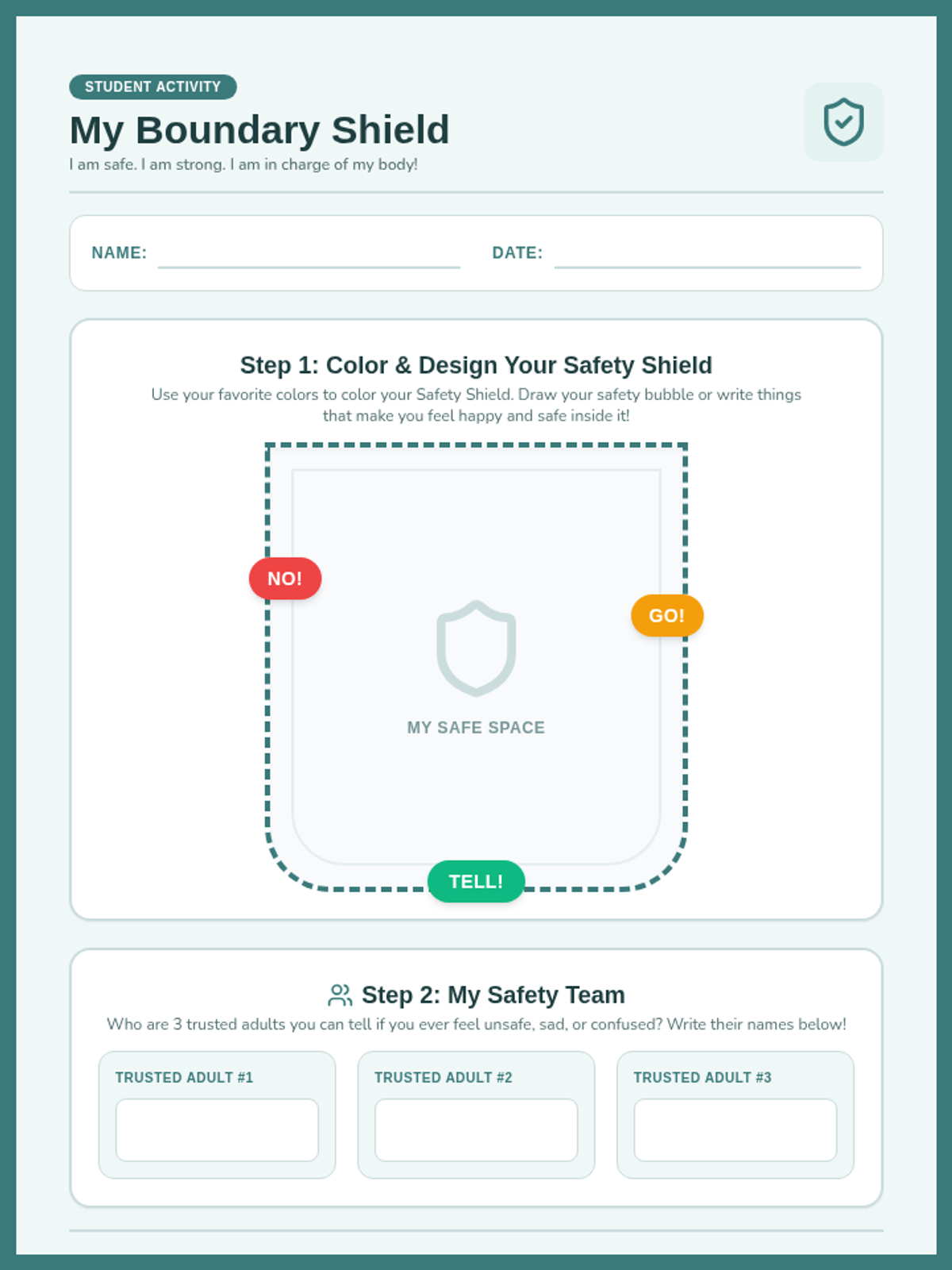
A counselor-led mini-lesson on classroom safety, physical boundaries, and emotional trust for kindergarten students, featuring a visual cut-and-paste sorting activity.
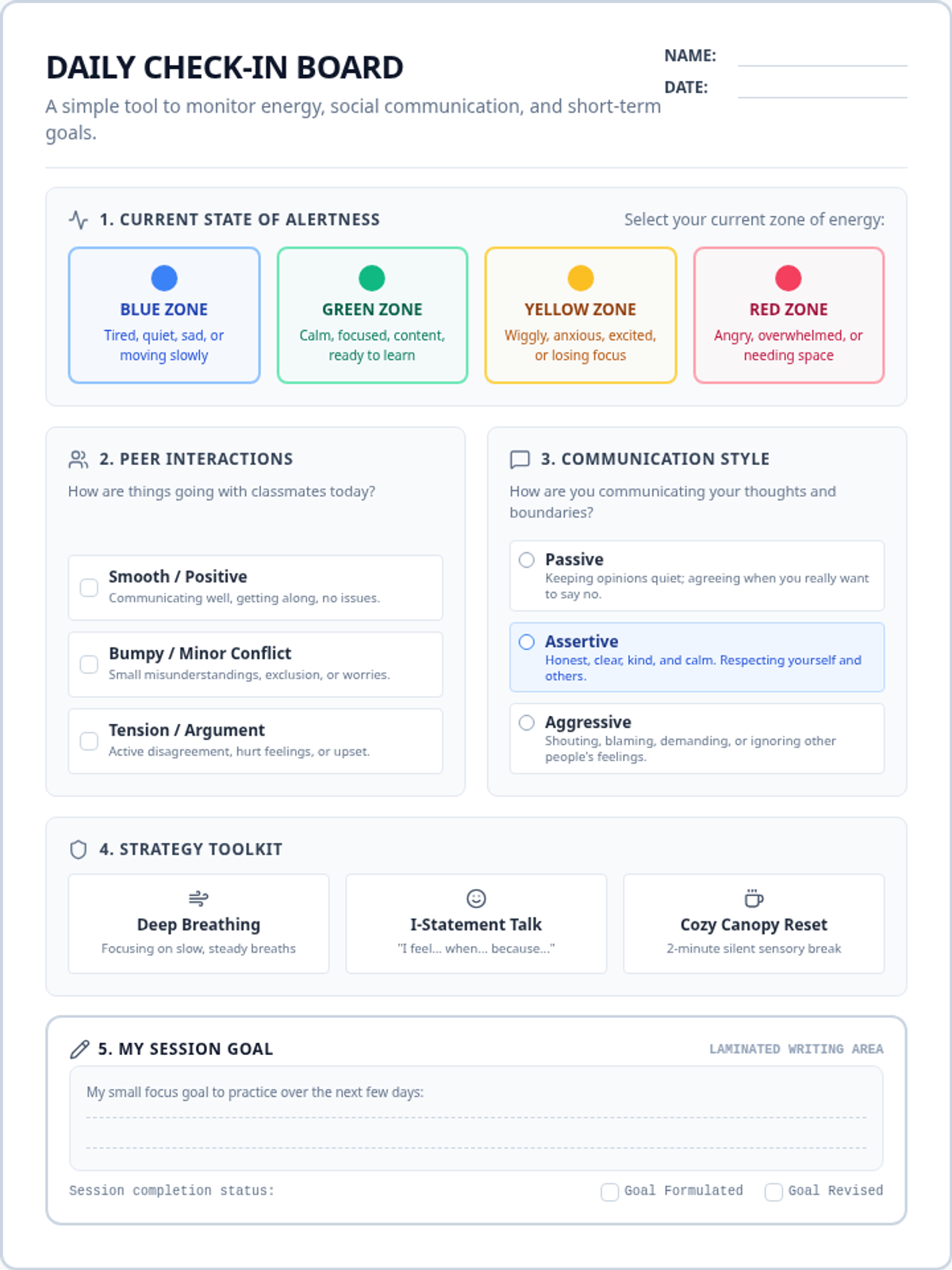
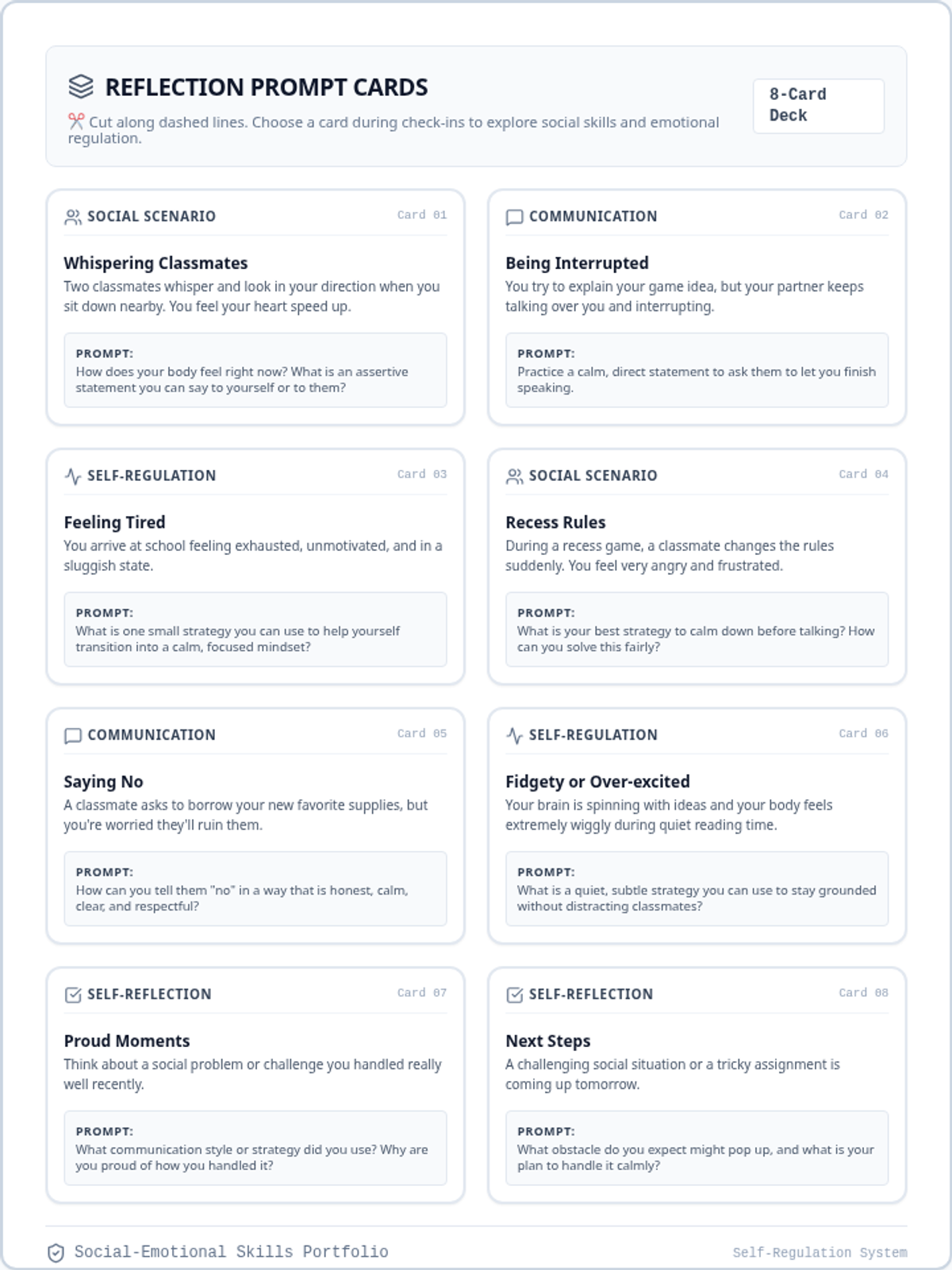
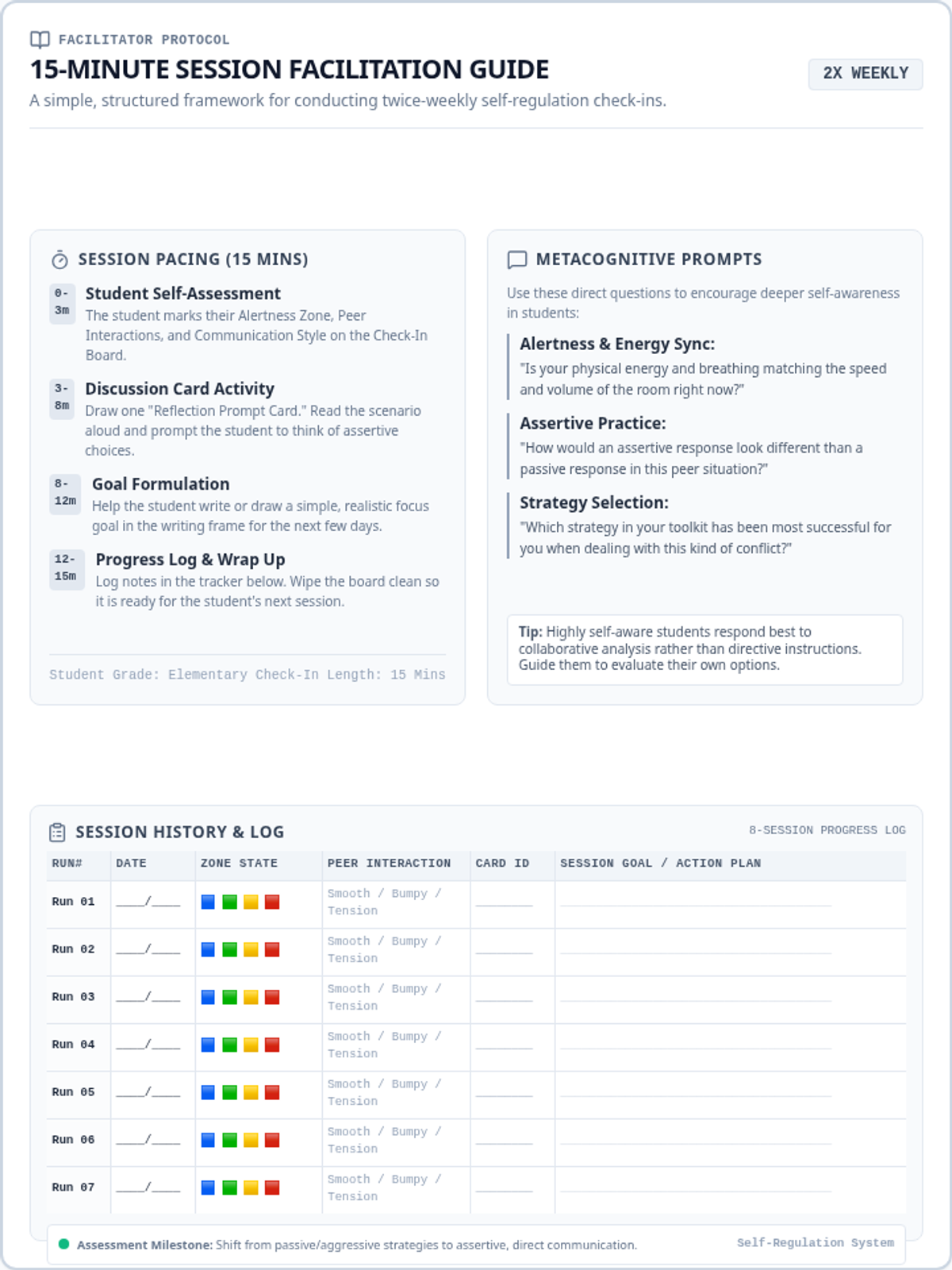
A clean, straightforward self-regulation and social communication support system for rapid 1-on-1 check-ins. Features a visual tracking sheet, scenario cards, and a facilitation guide.
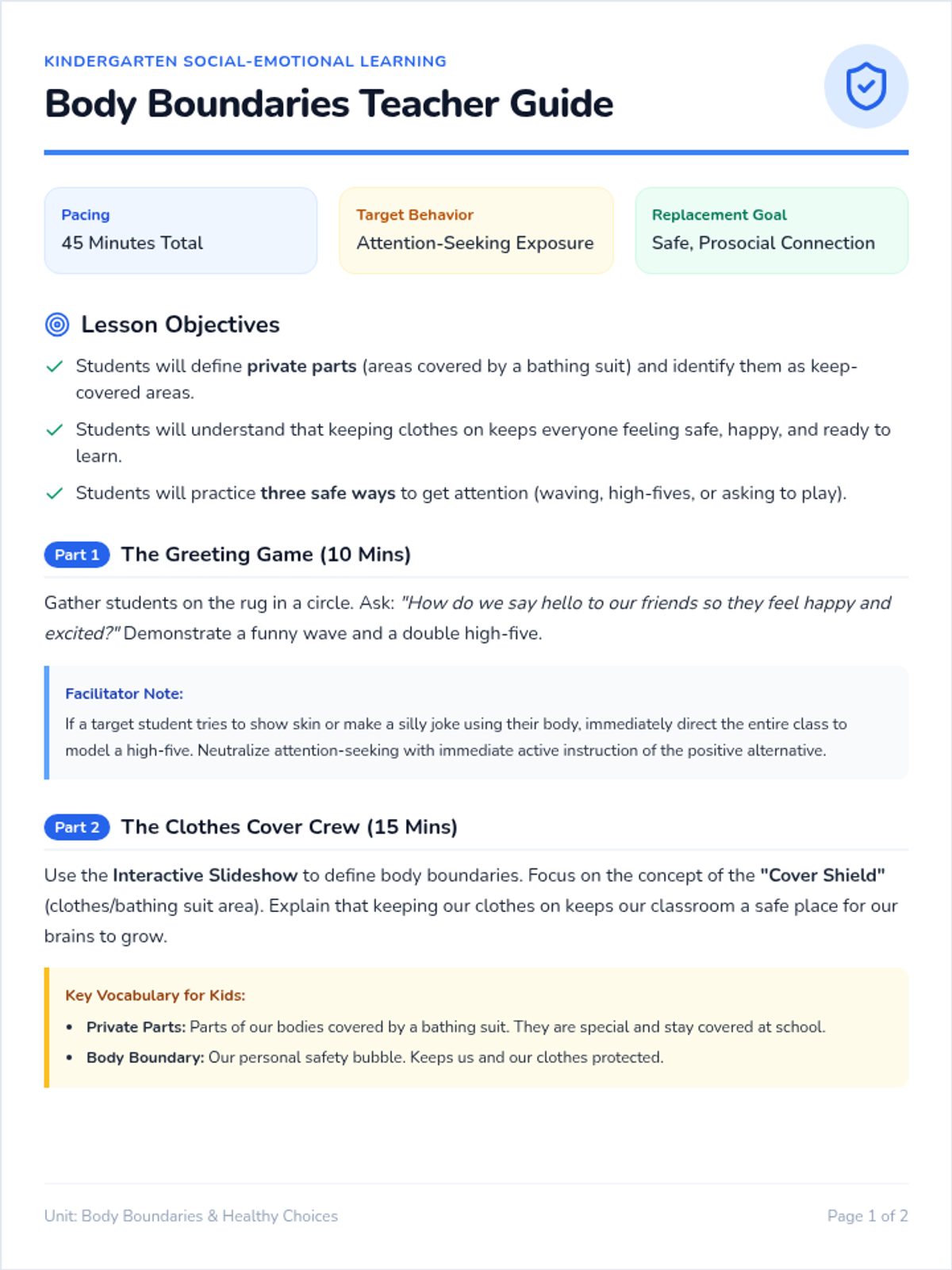
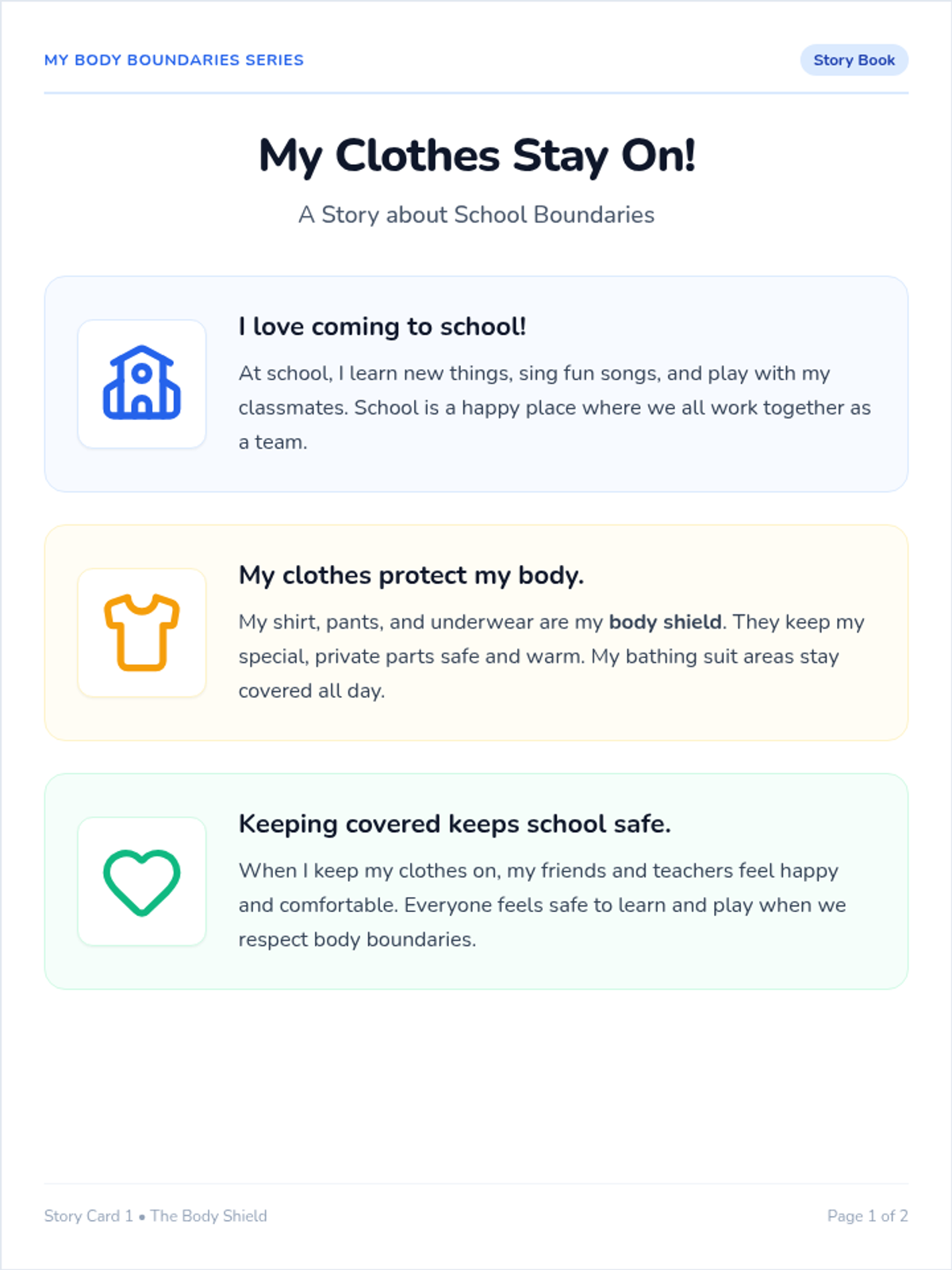
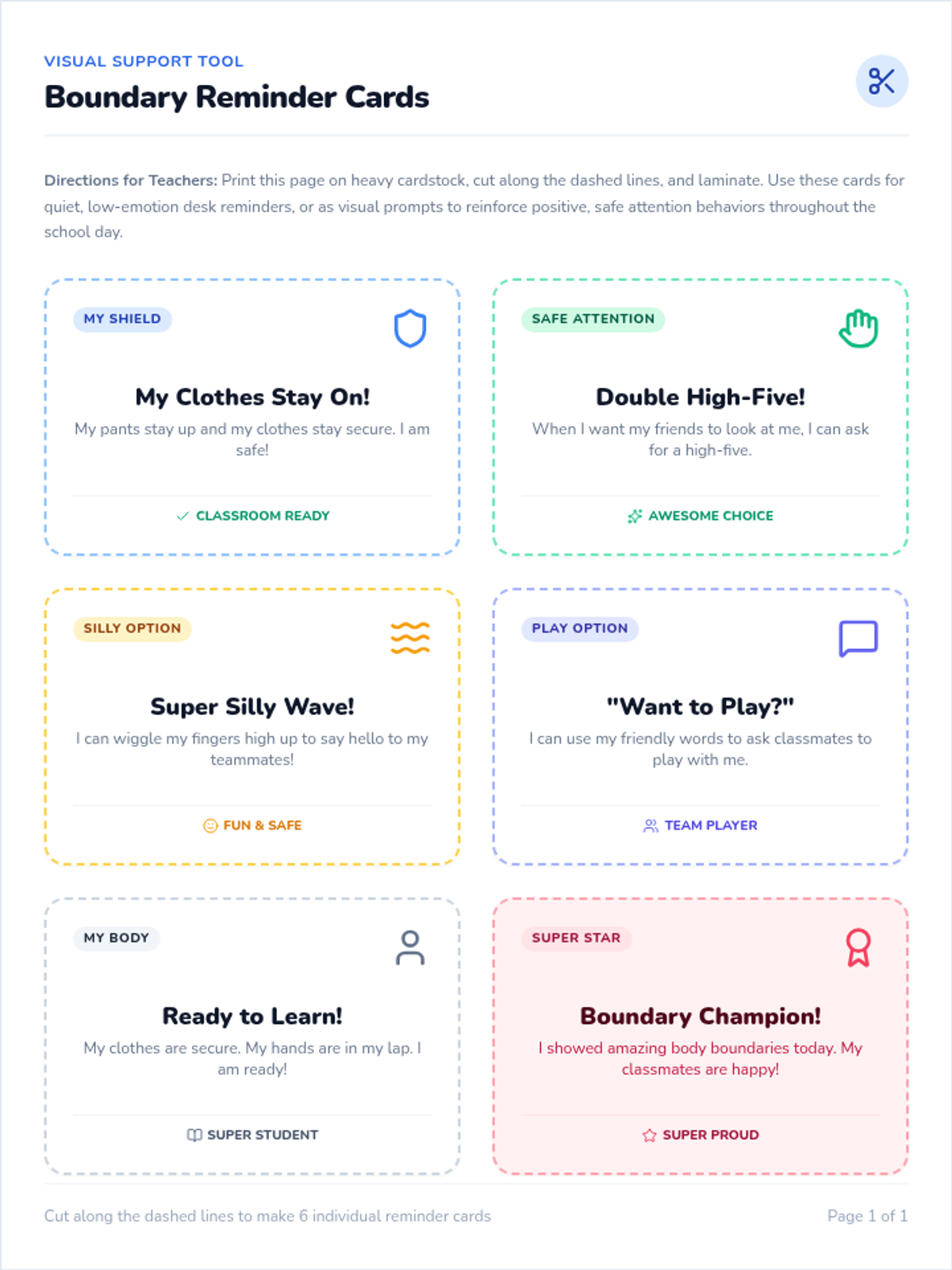
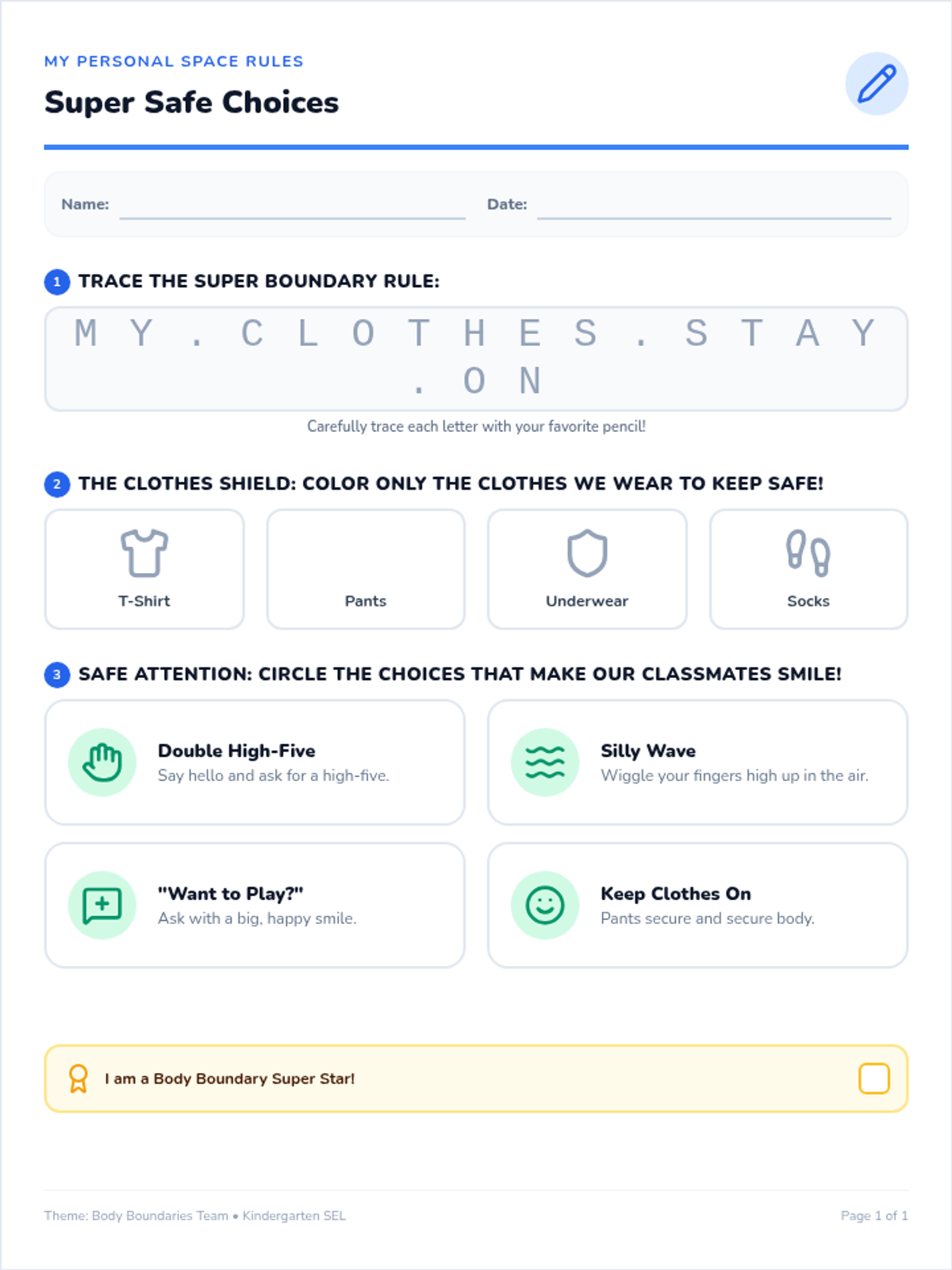
A positive, proactive kindergarten lesson designed to address attention-seeking private part exposure by teaching clear body boundaries and positive ways to get attention.
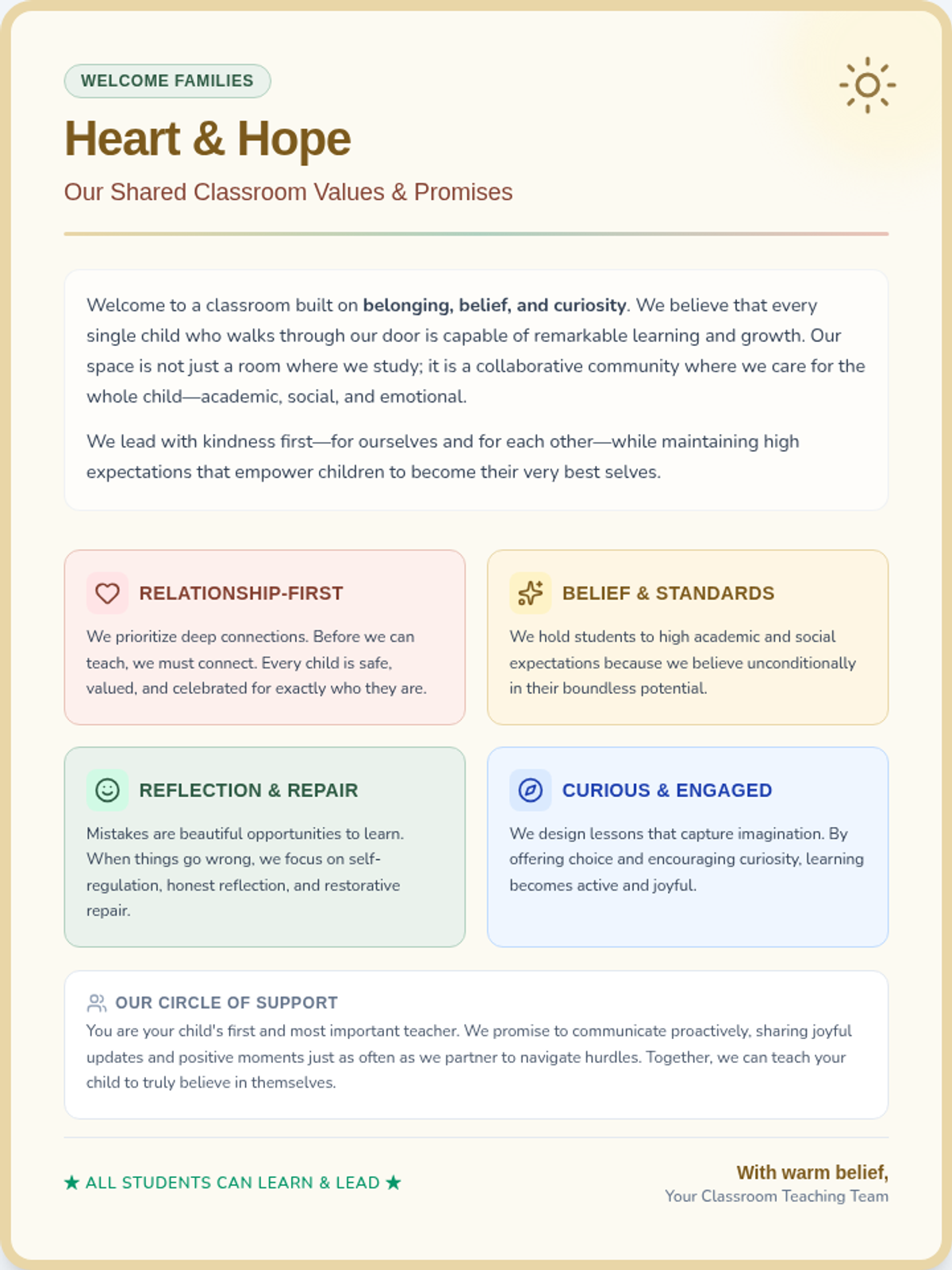
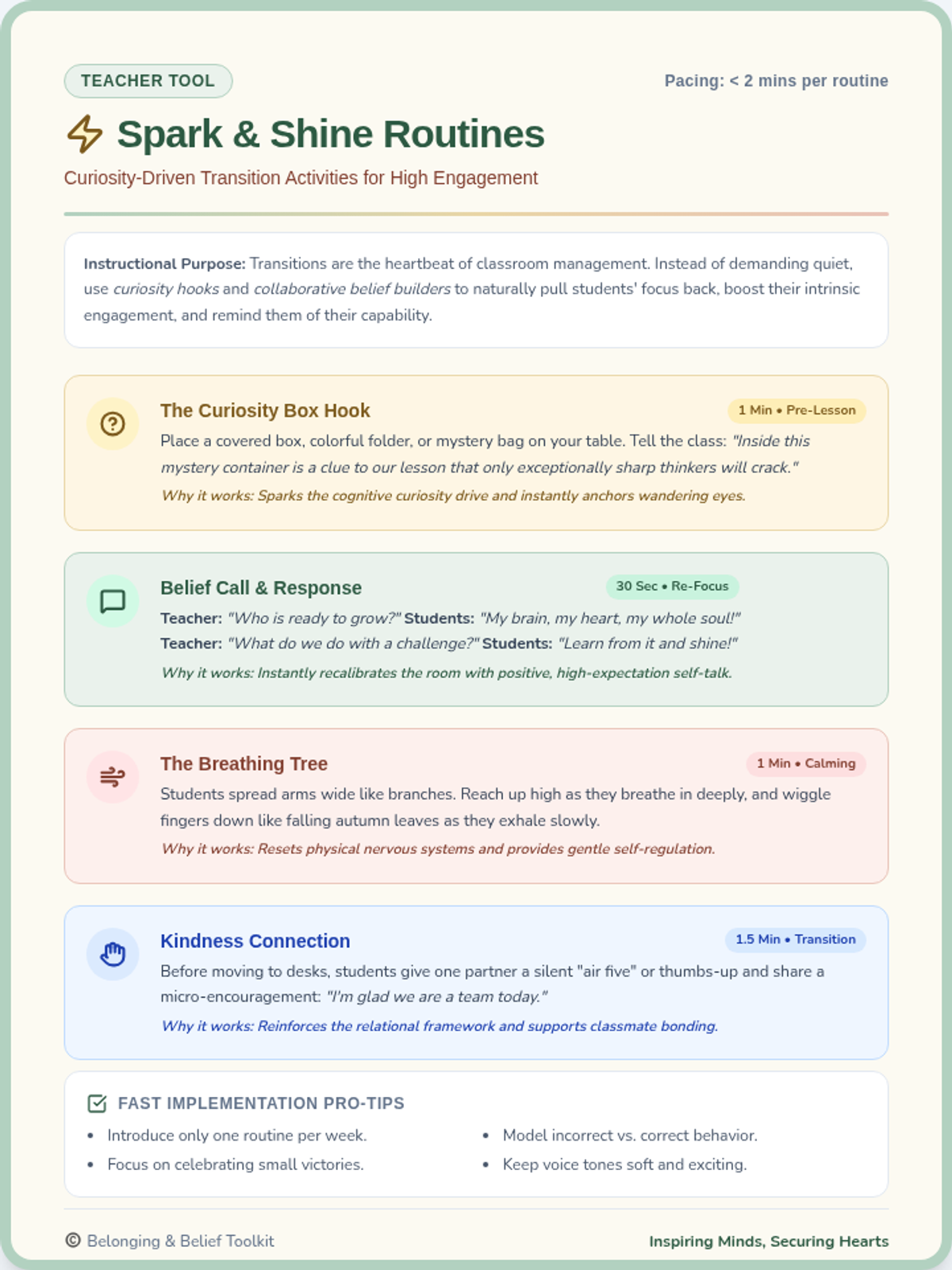
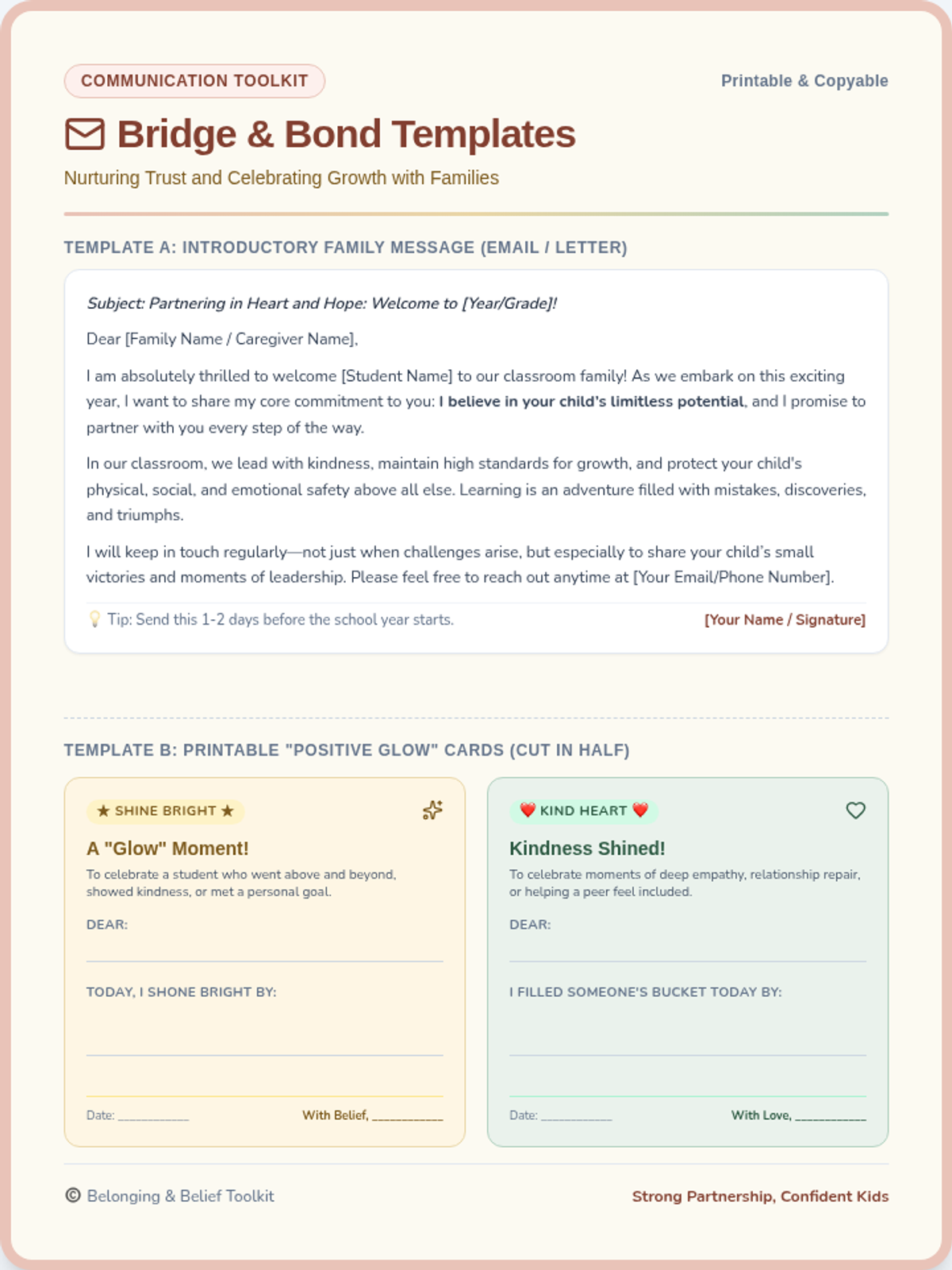
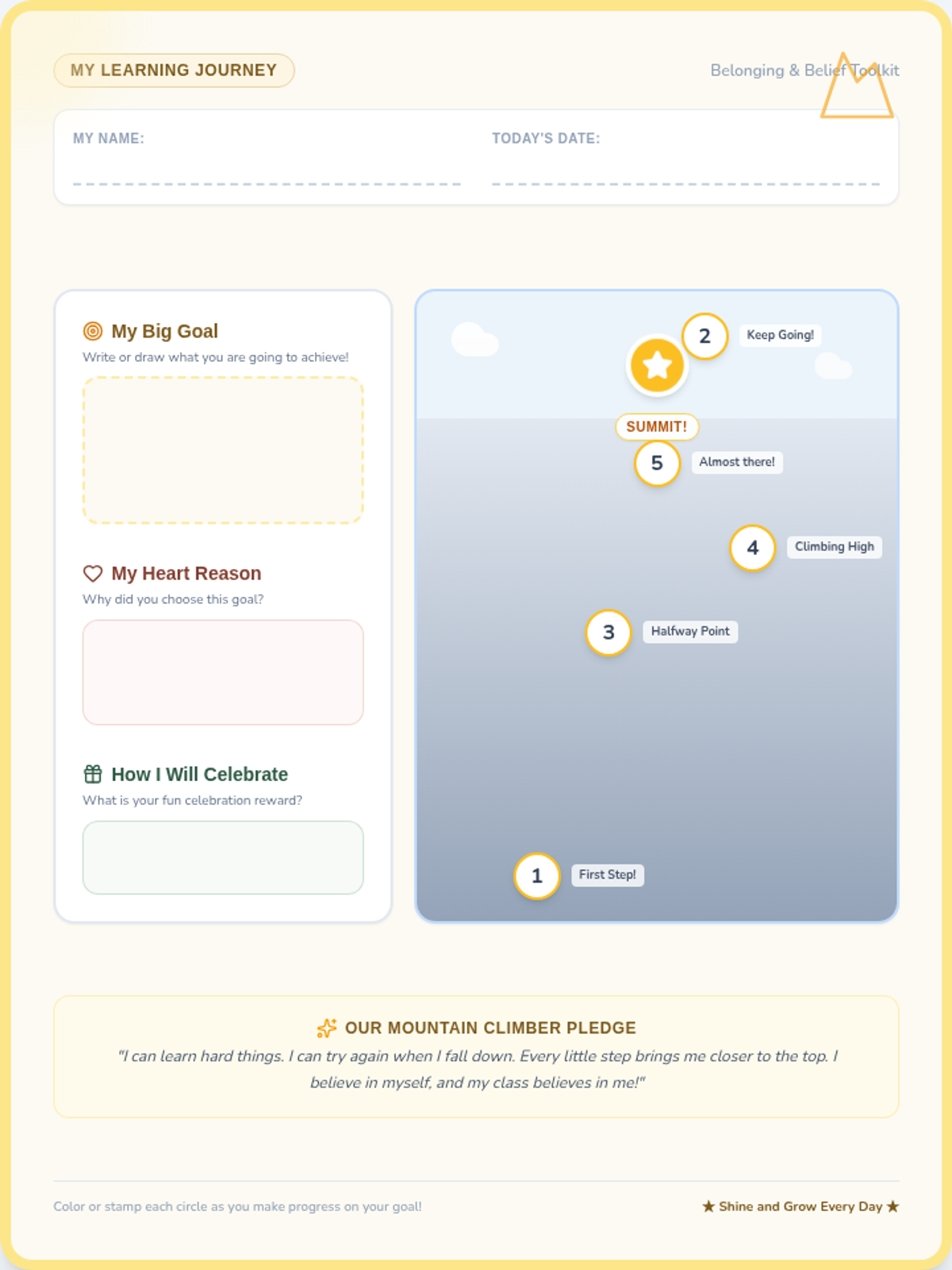
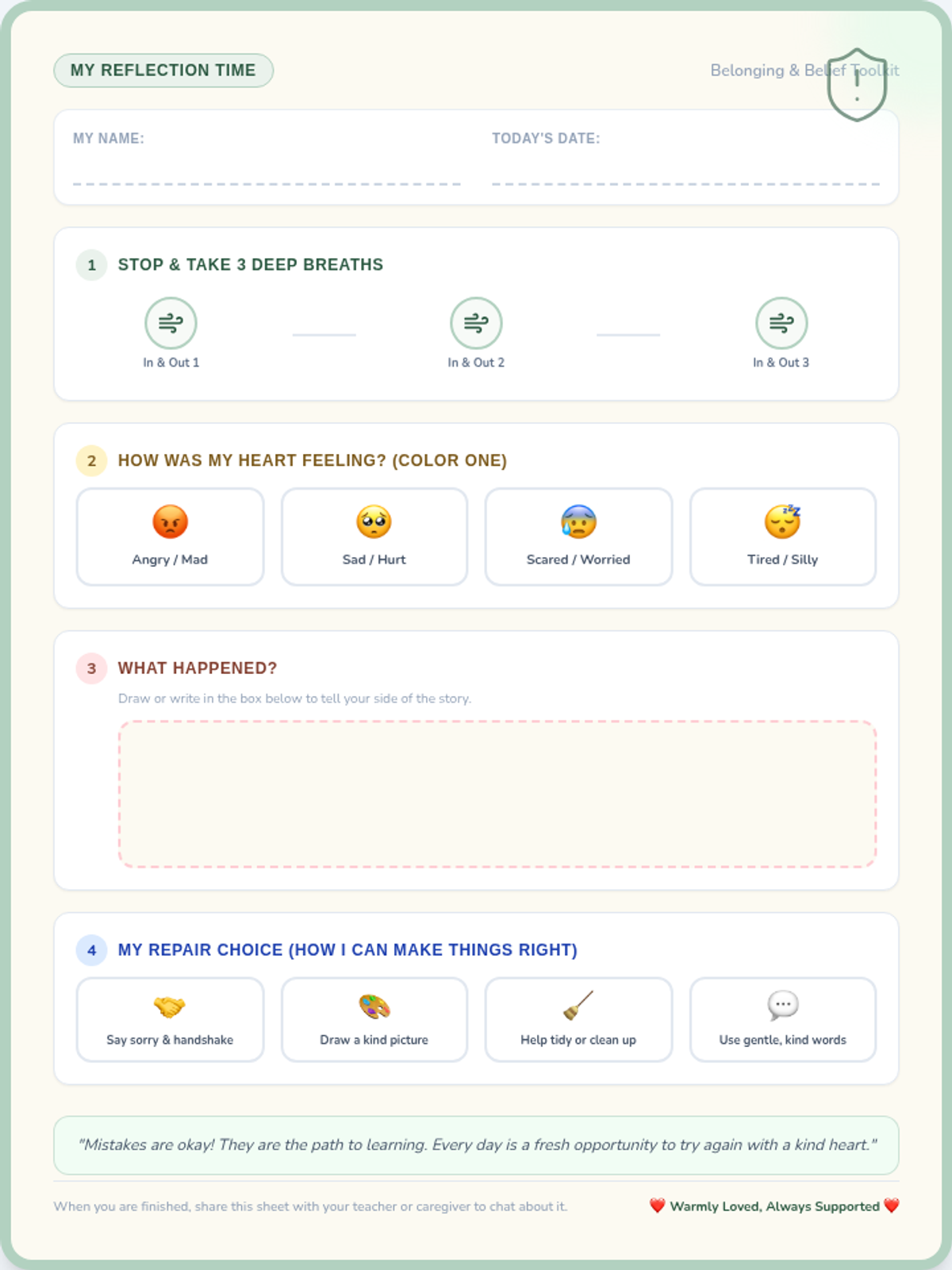
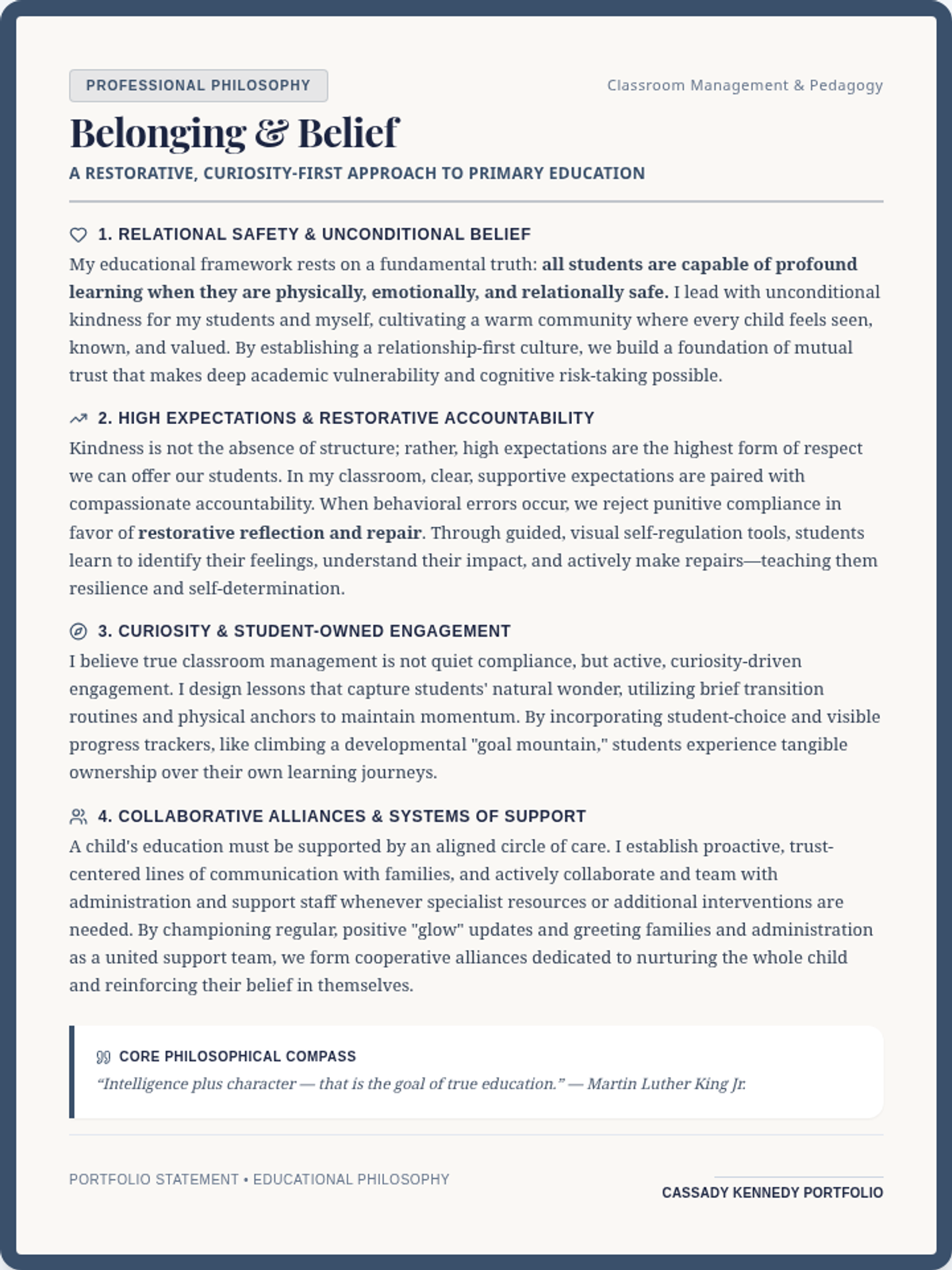
A comprehensive classroom management and family partnership kit designed to cultivate a warm, high-expectation, relationship-first classroom environment. It contains a warm family handbook introduction, positive outreach templates, student goal-tracking charts, curiosity-driven transition routines, and visual reflection/repair sheets for self-regulation.
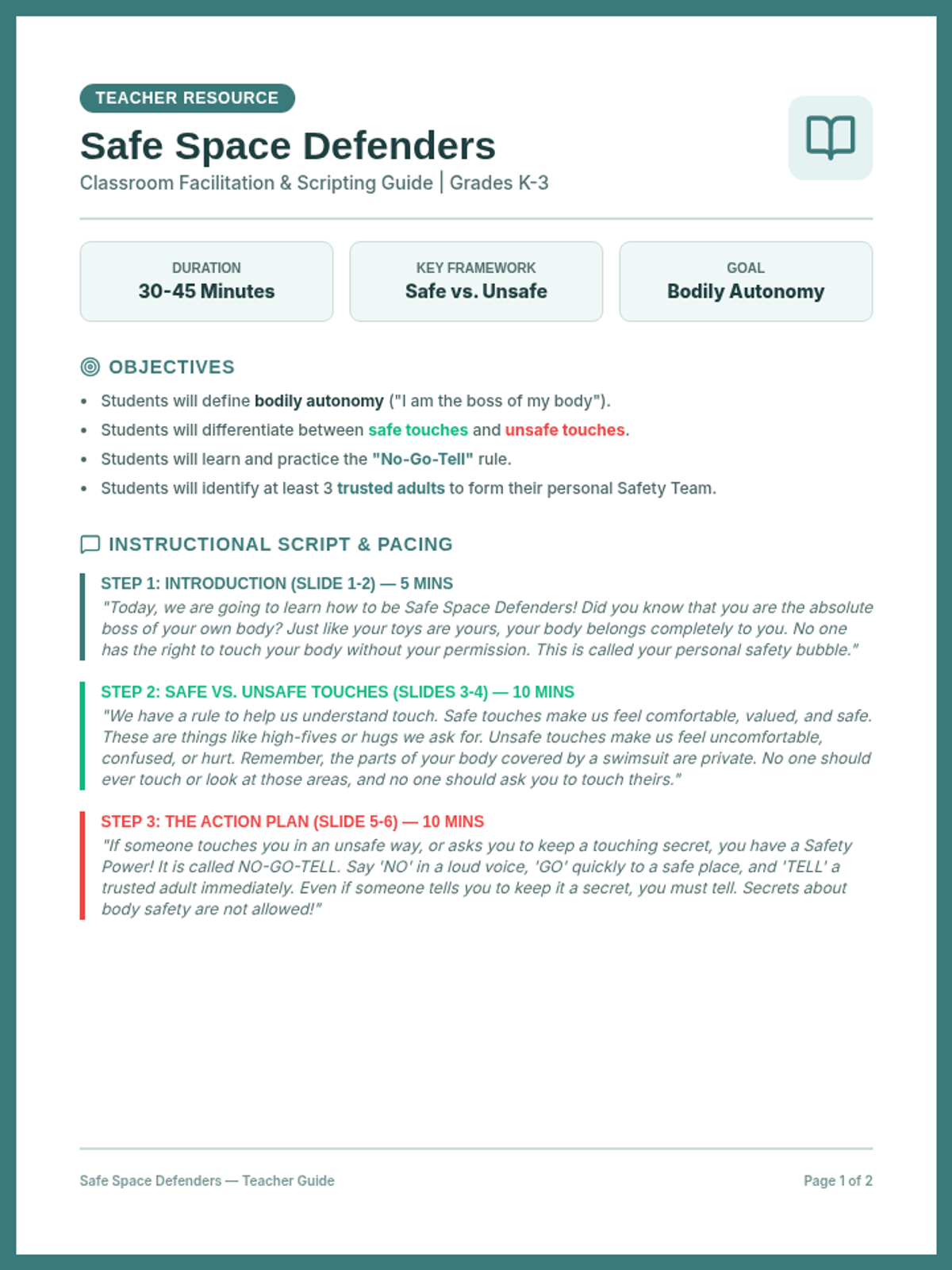
A sensitive and empowering Social-Emotional Learning (SEL) lesson designed to teach elementary students the concepts of safe versus unsafe touches, bodily autonomy, and how to identify and communicate boundaries with trusted adults.
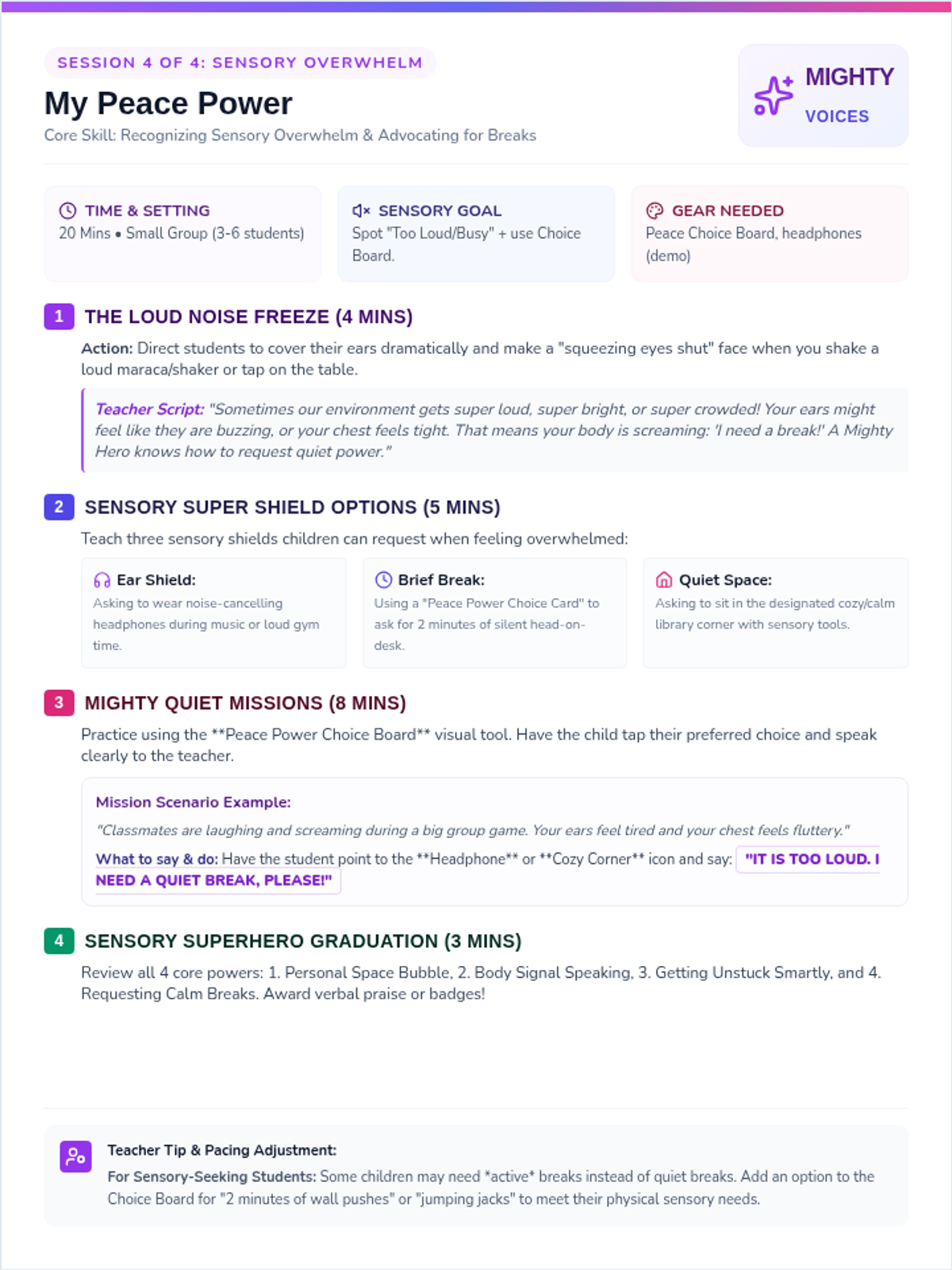
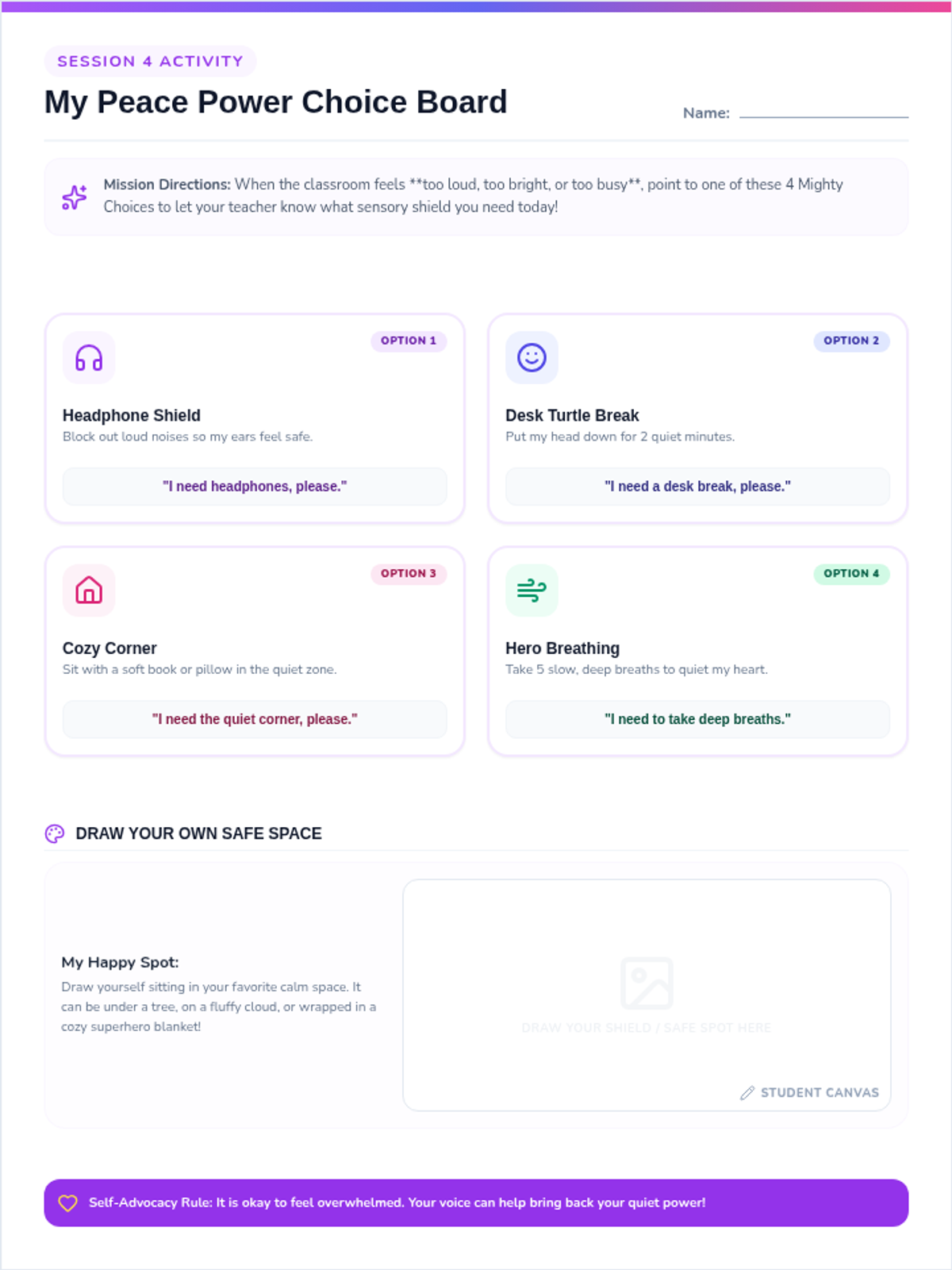
Students learn to recognize when environmental noises or visual stimuli feel too loud or crowded, practicing how to request headphones, a visual break, or a quiet space.
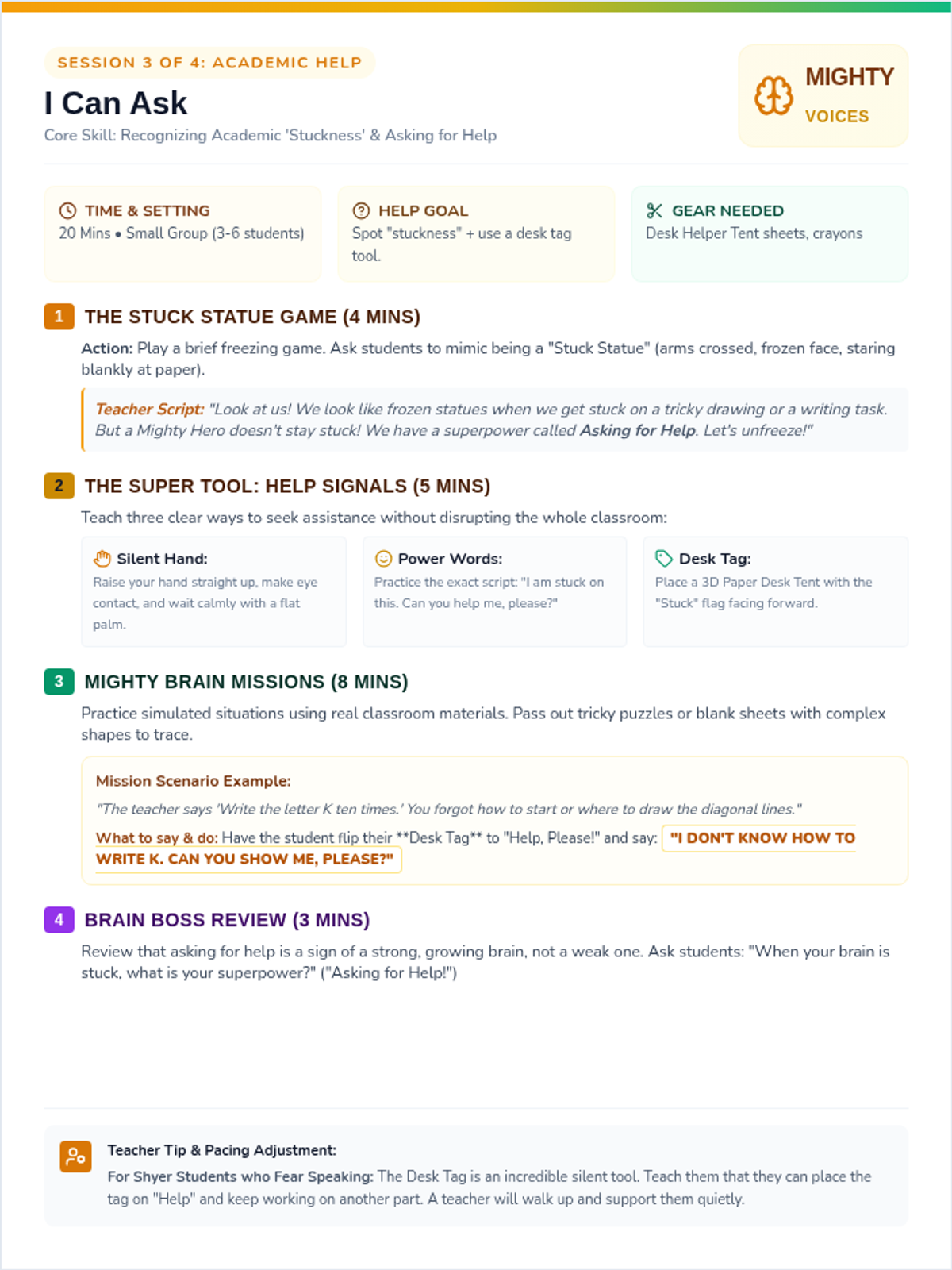
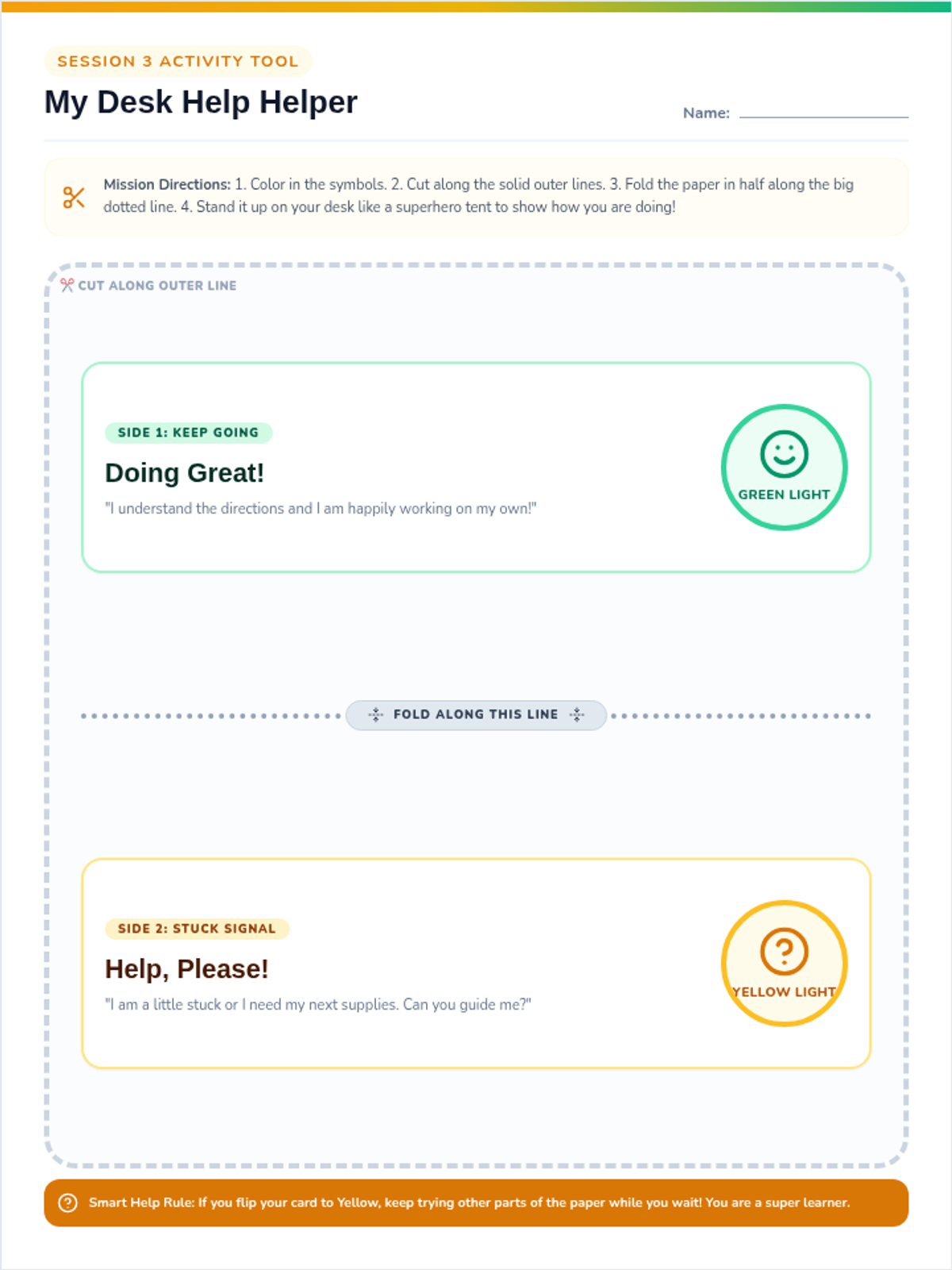
Students discover how to identify when their brain feels 'stuck' or confused and practice three clear ways to ask for academic help using words and hand signals.
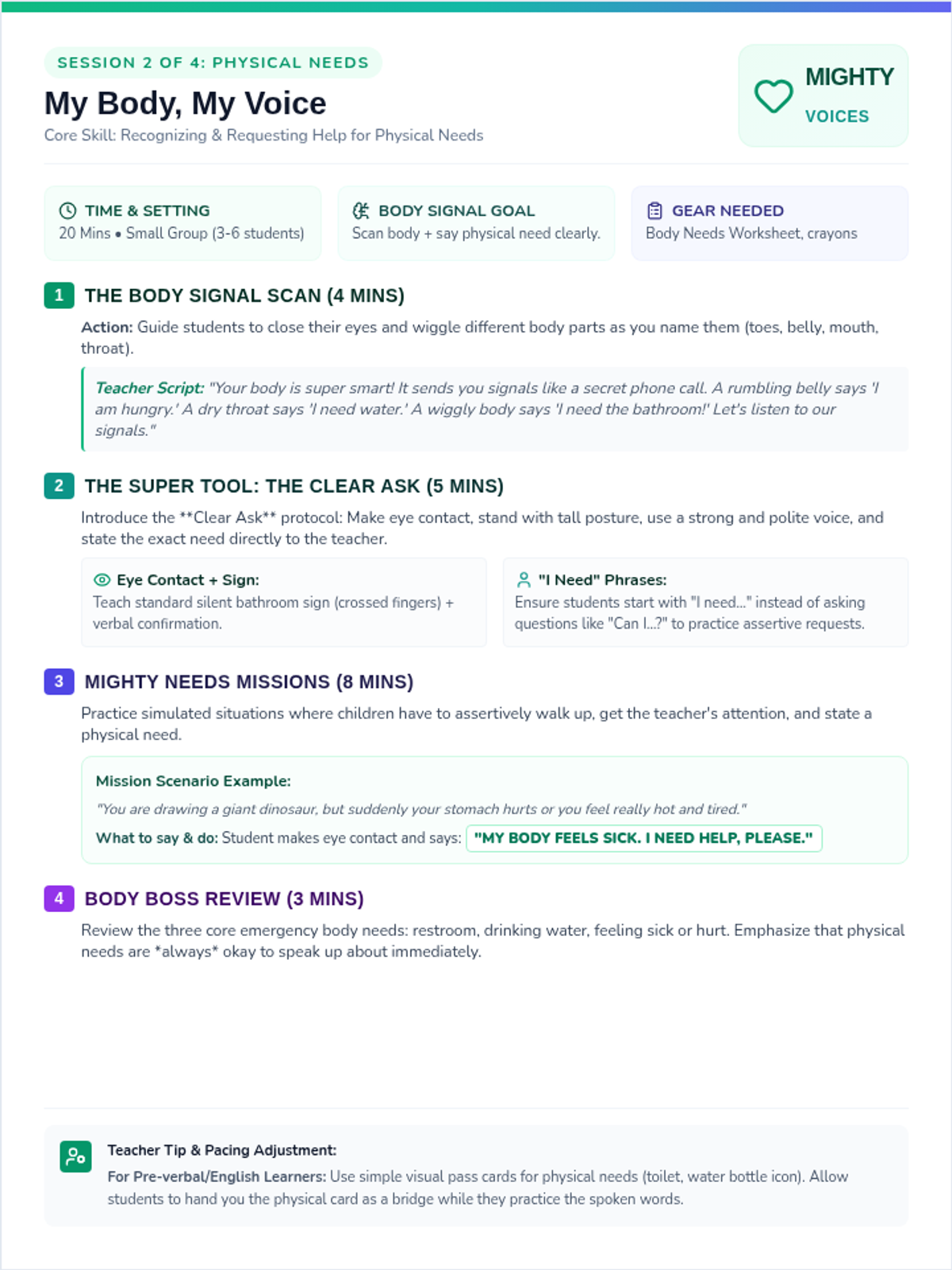
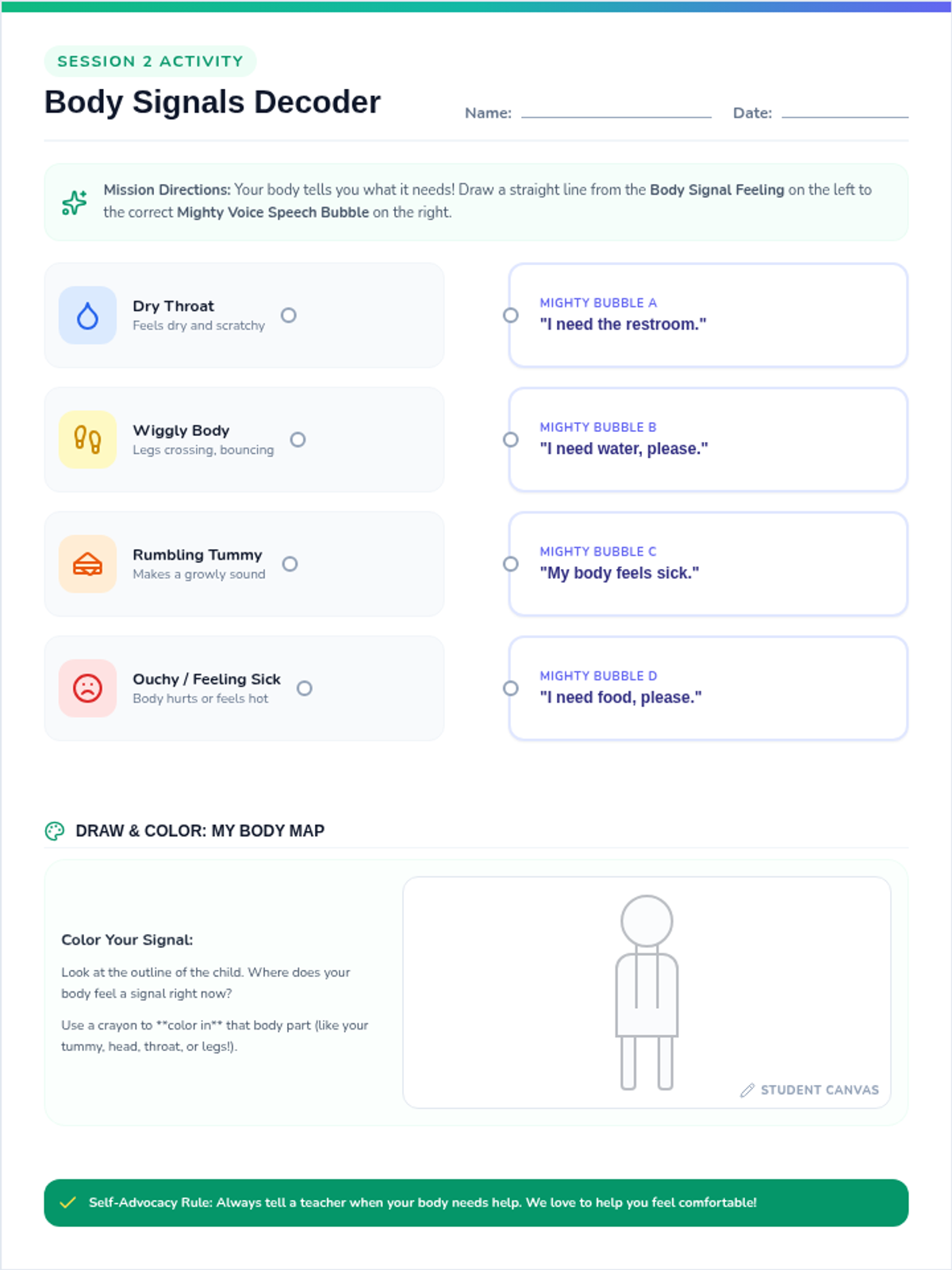
Students learn to identify physical signals in their bodies (hunger, thirst, bathroom needs, or pain) and practice expressing these needs directly and clearly to adults.
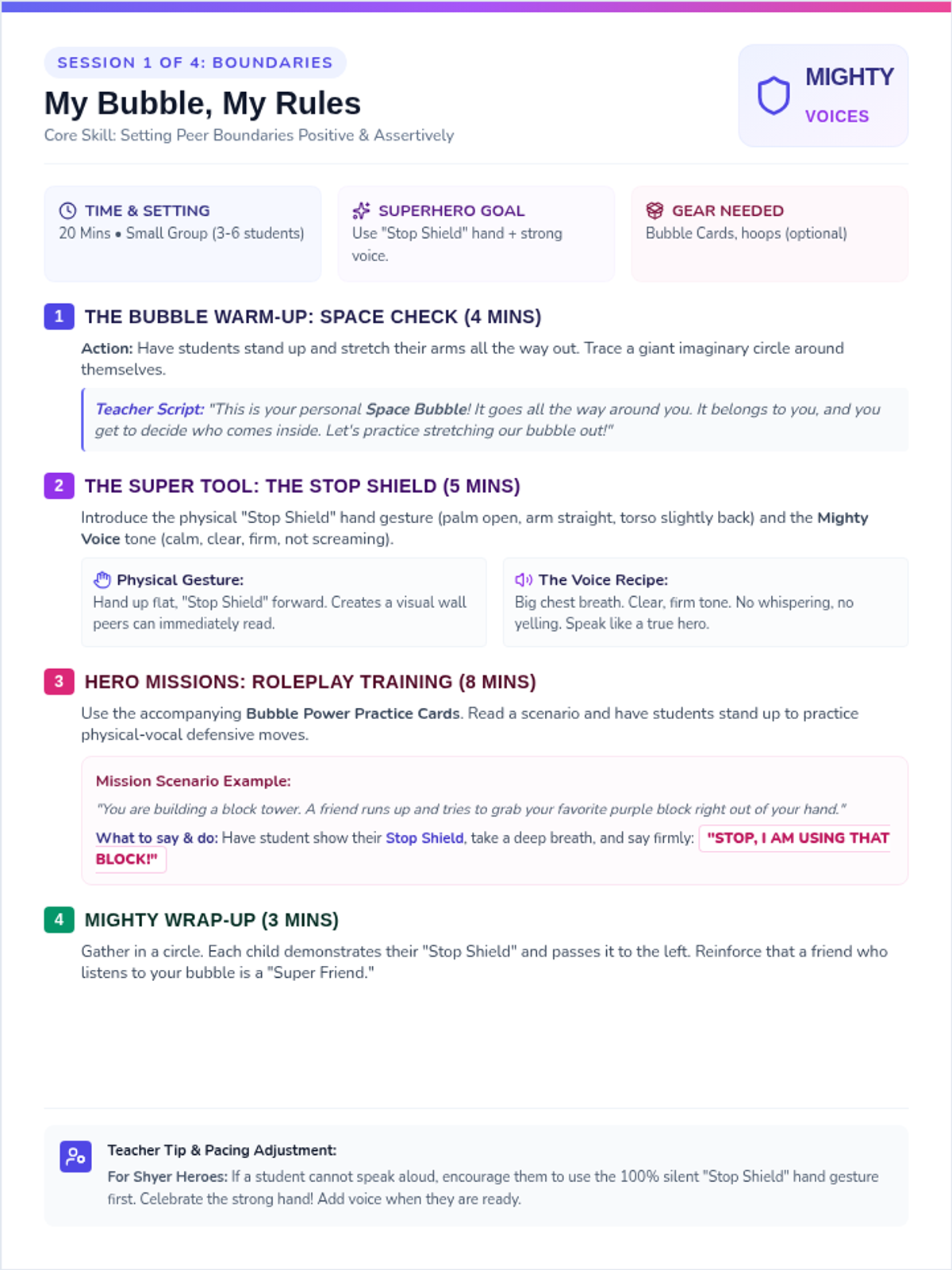
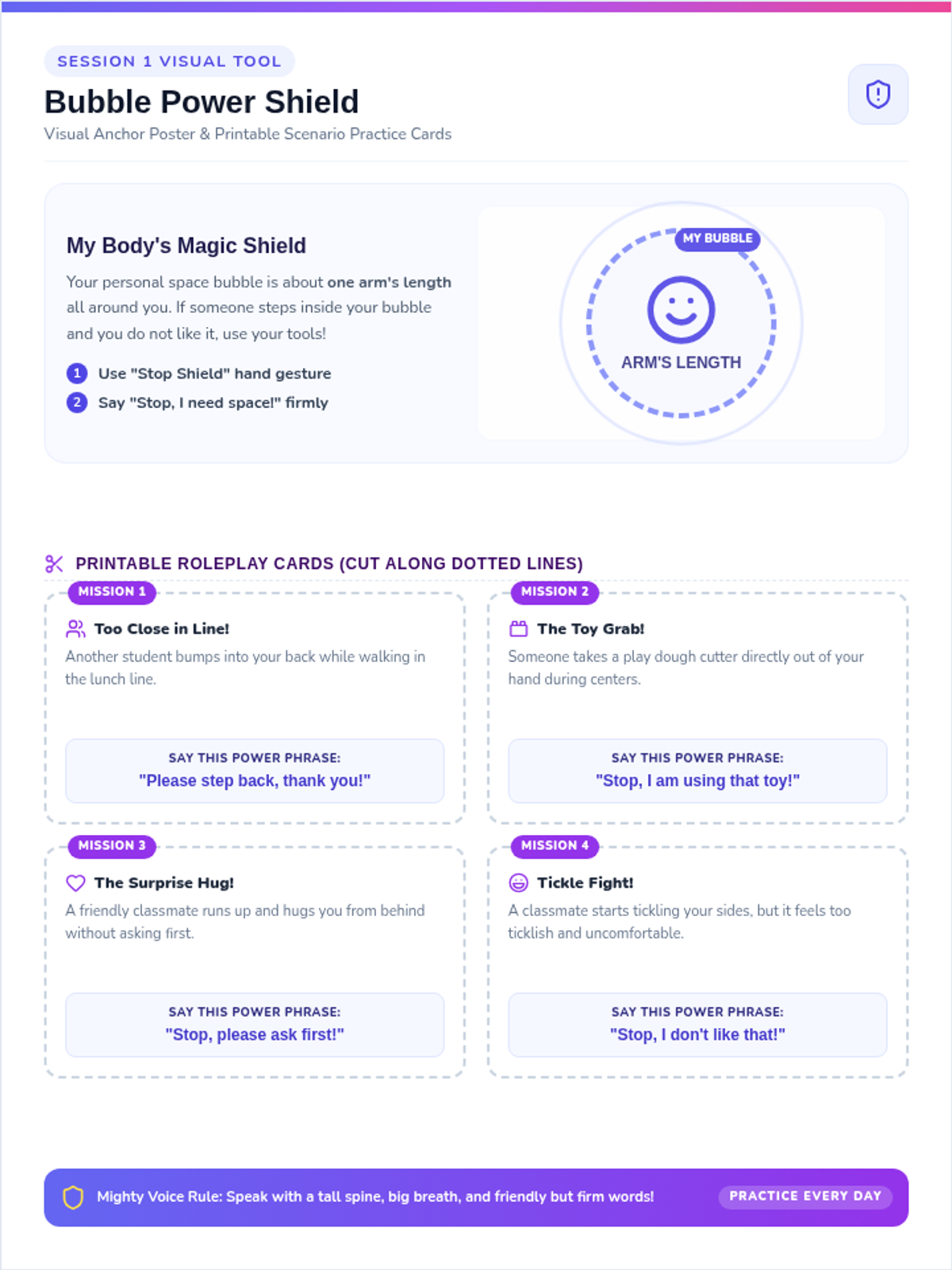
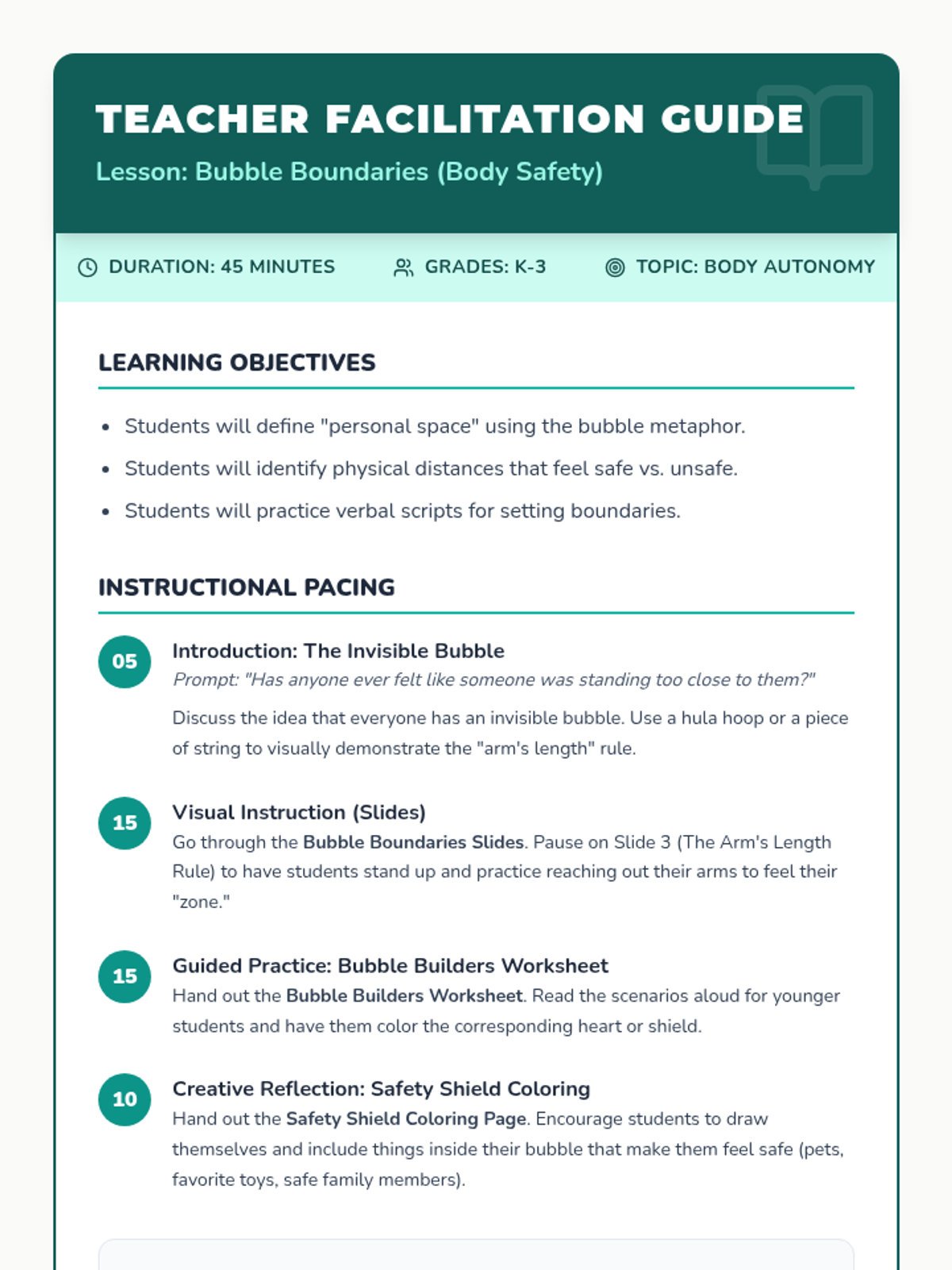
Students learn about their personal space 'bubble' and practice using a strong voice and clear hand signals to set social boundaries with peers.
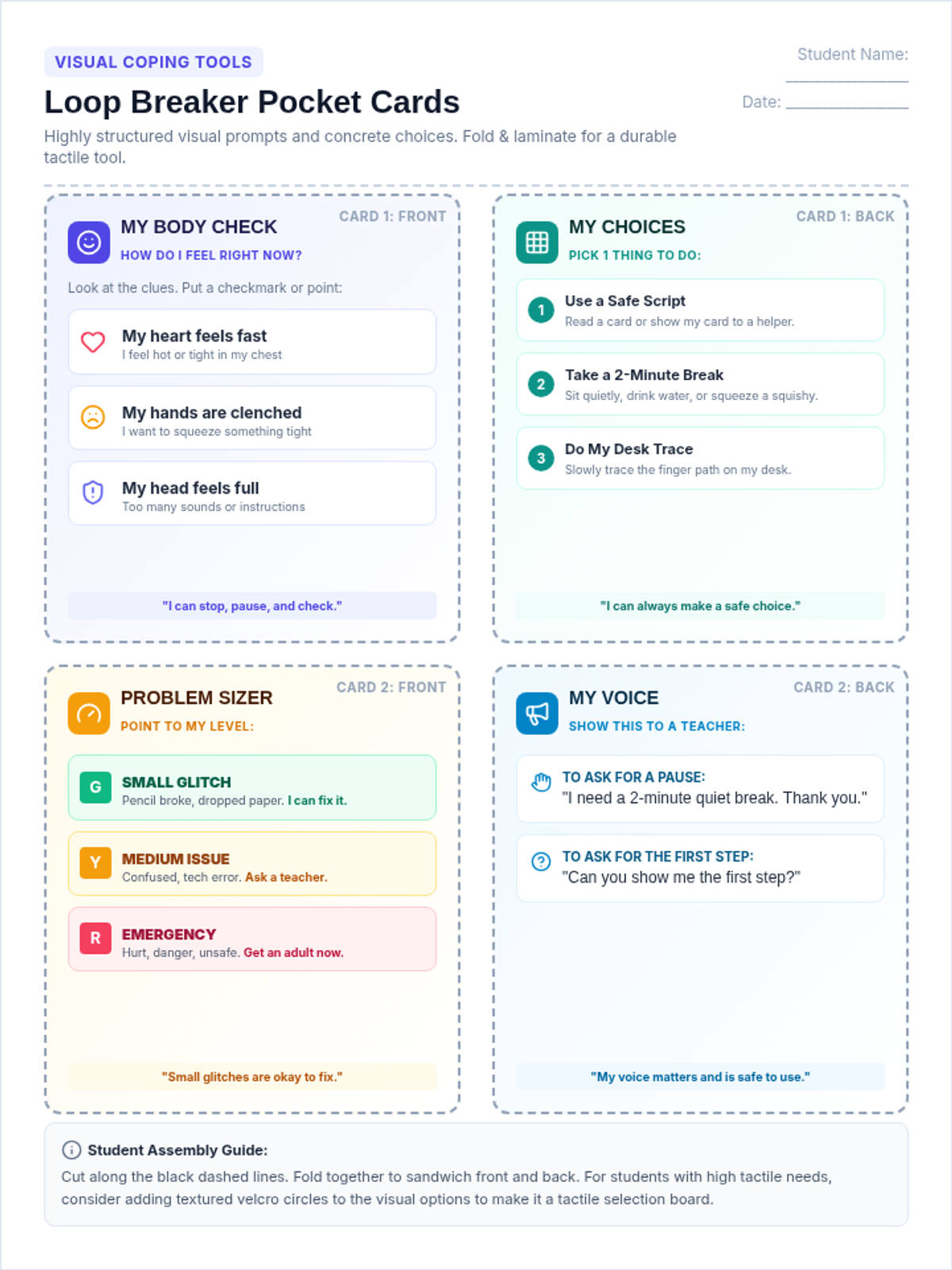
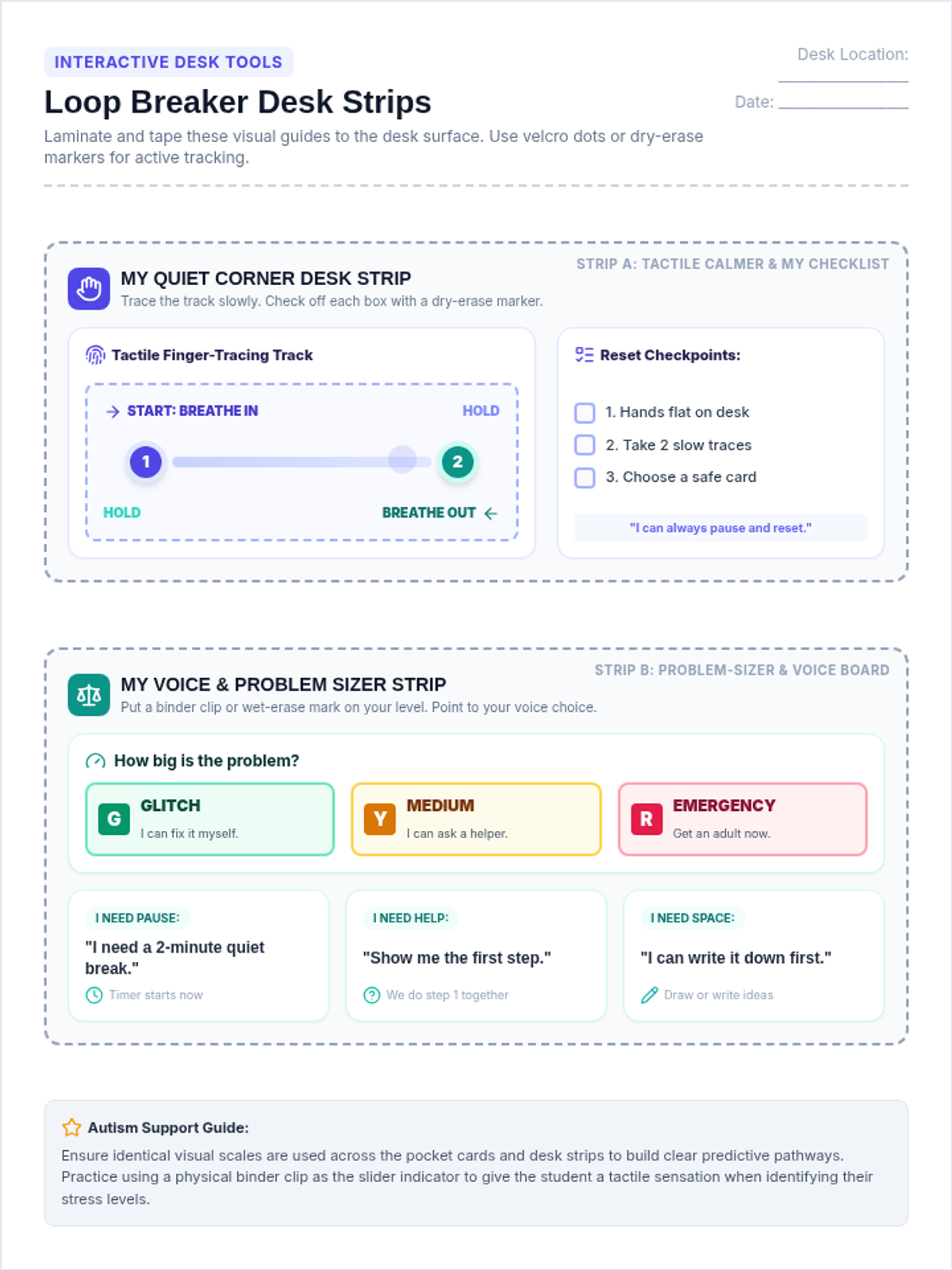
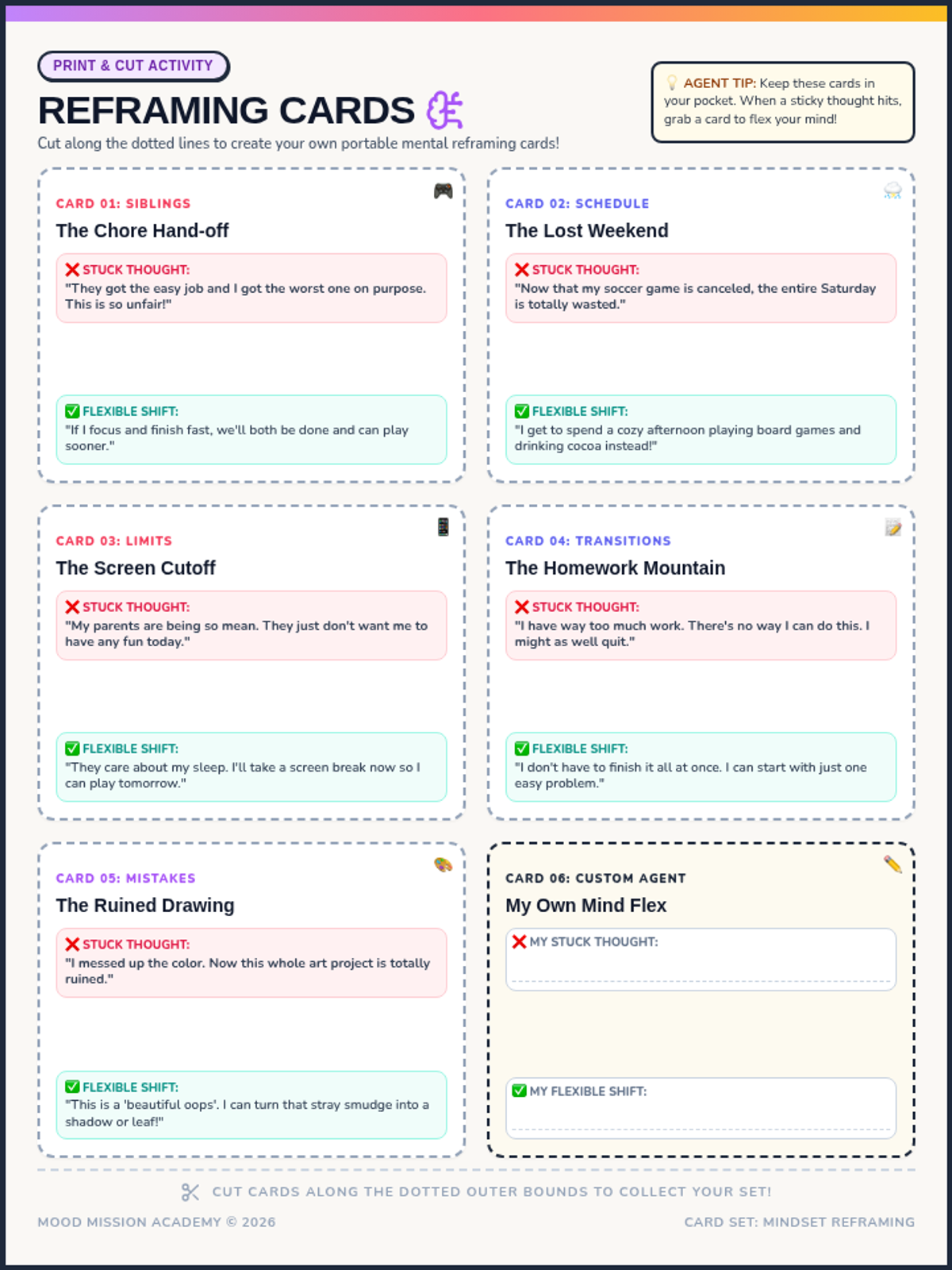
A set of portable, visual cognitive behavioral tools to help students disrupt automatic negative thoughts and set constructive boundaries when feeling overwhelmed by tasks.
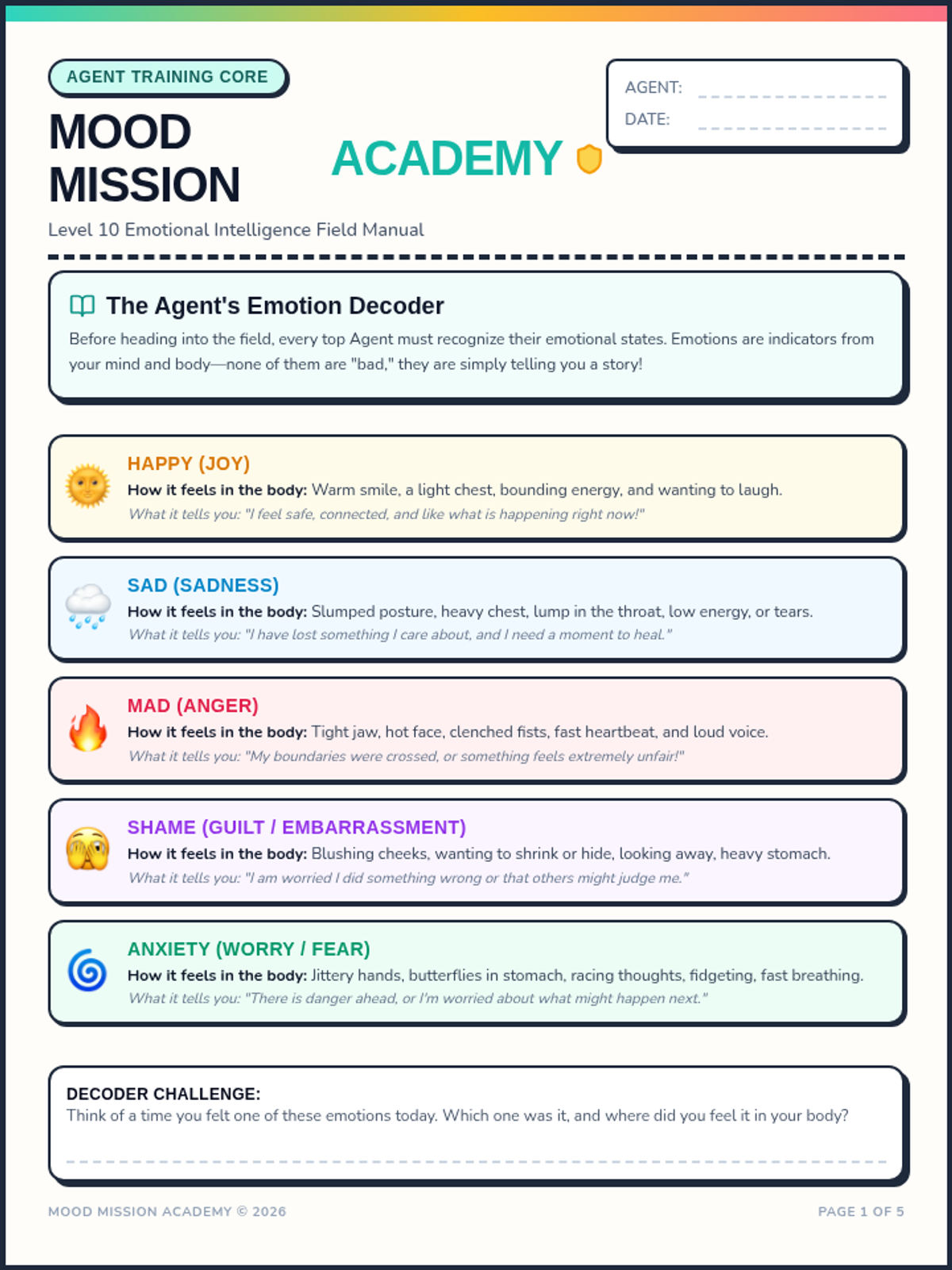
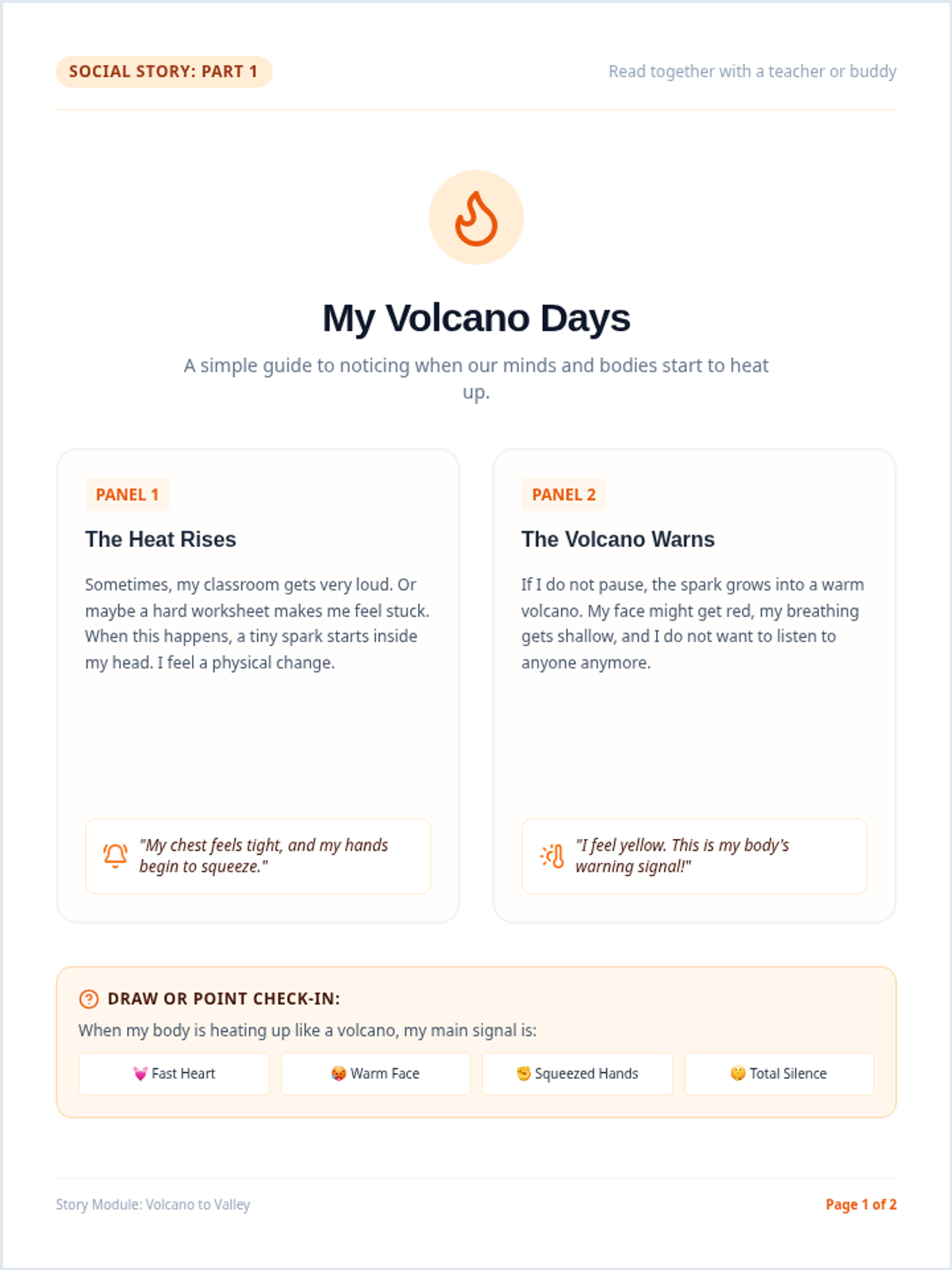
A playful social-emotional learning lesson focusing on identifying emotions, somatic regulation, cognitive reframing, and assertive communication through engaging social stories.
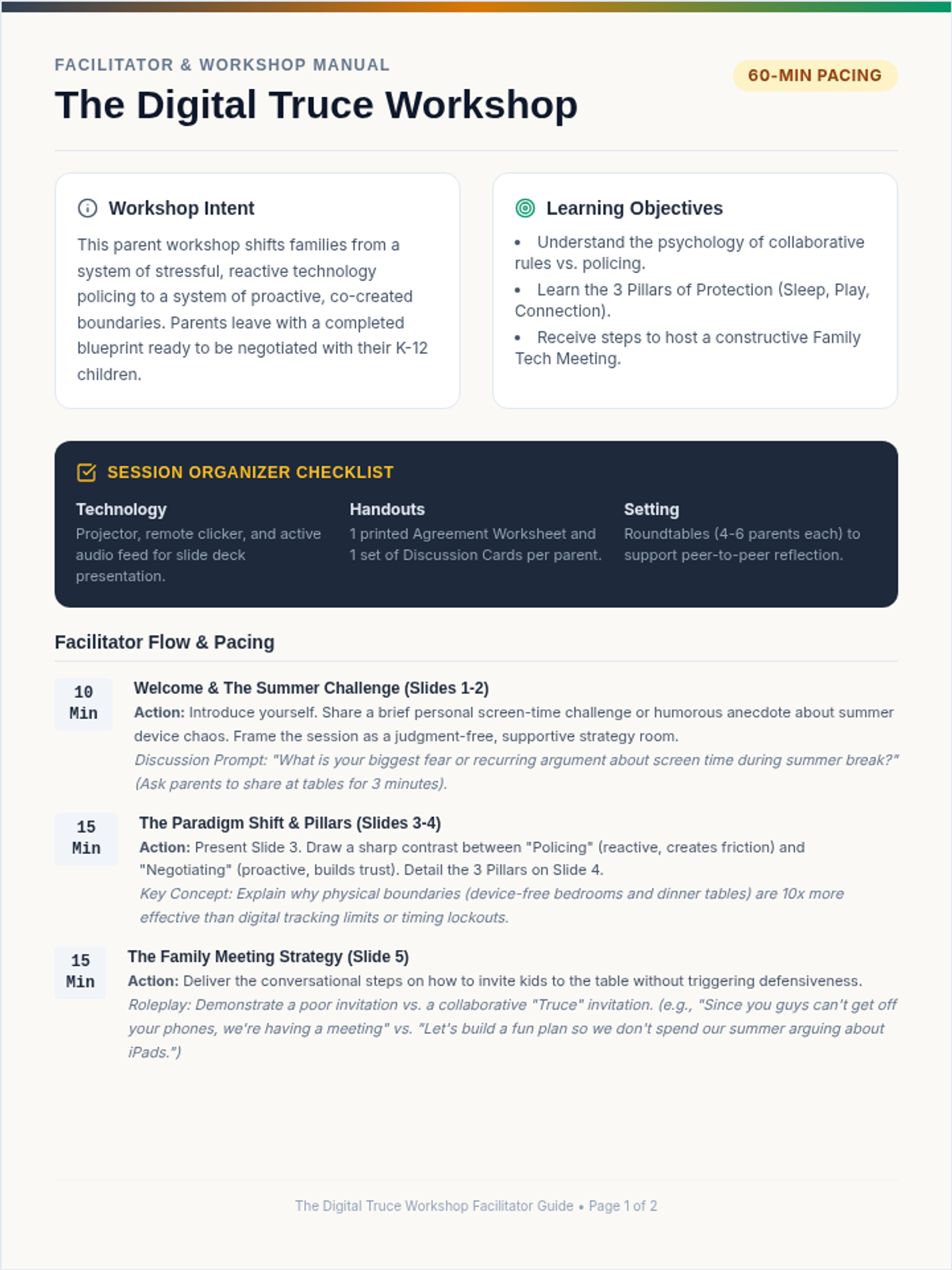
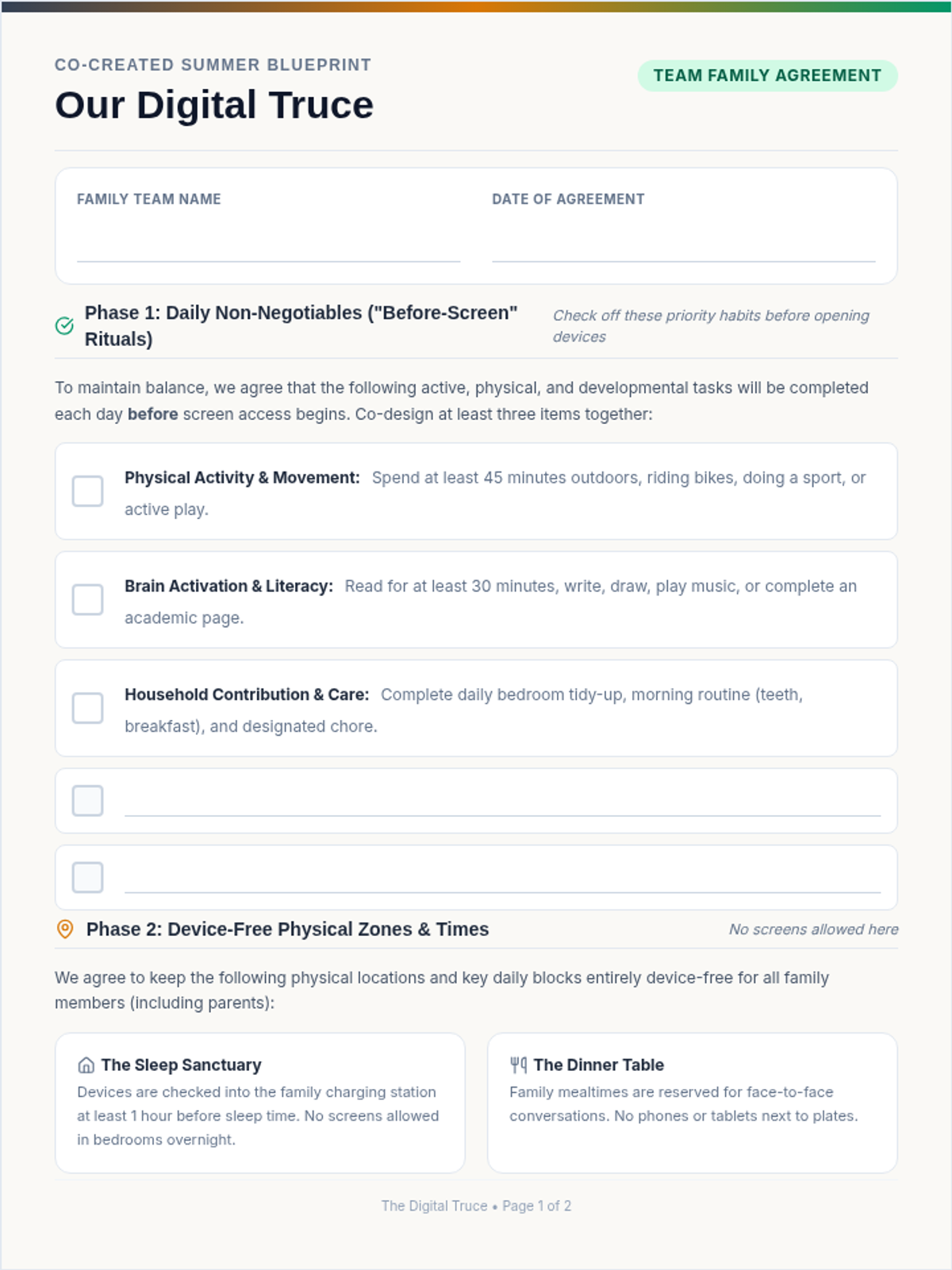
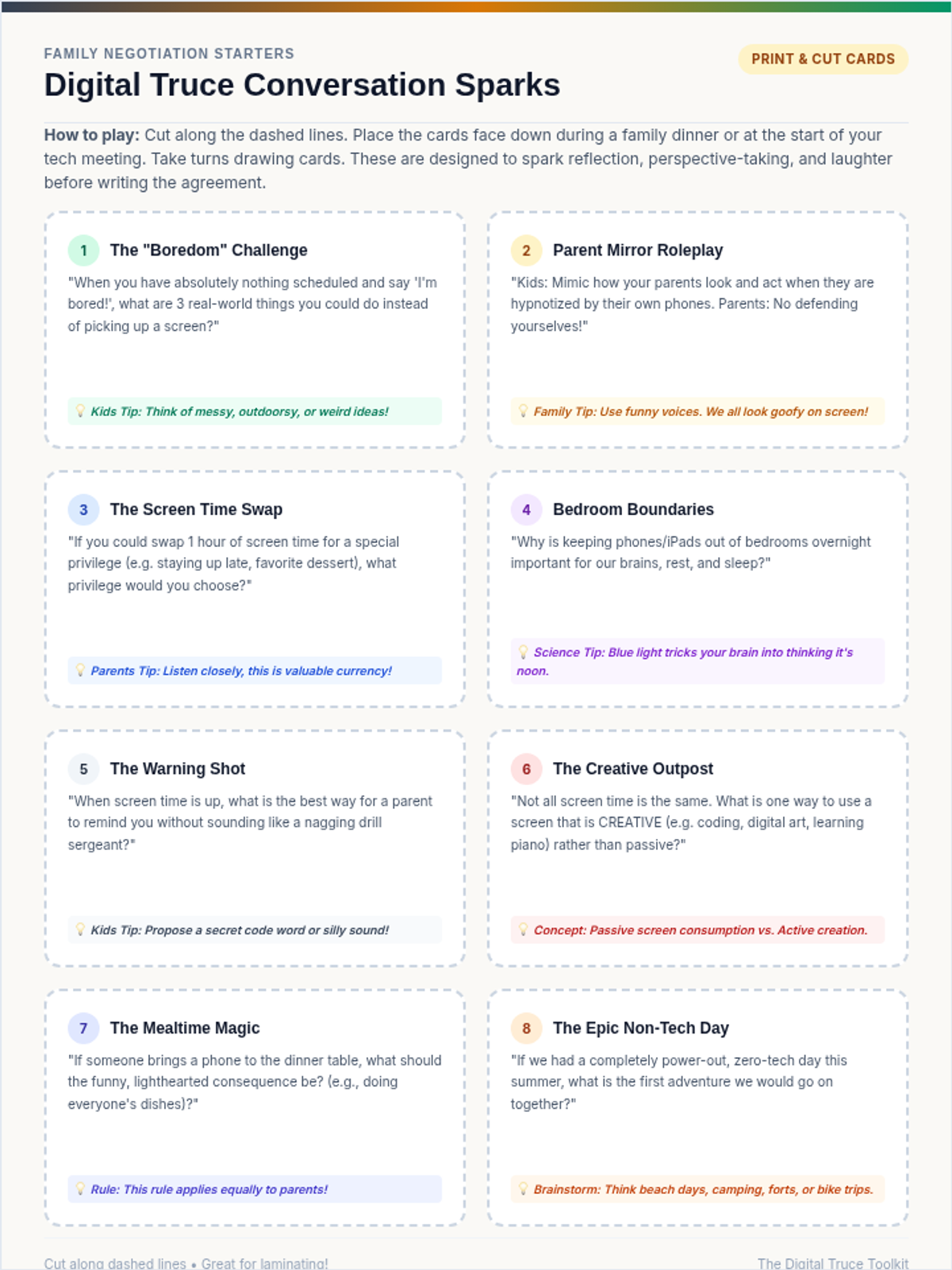
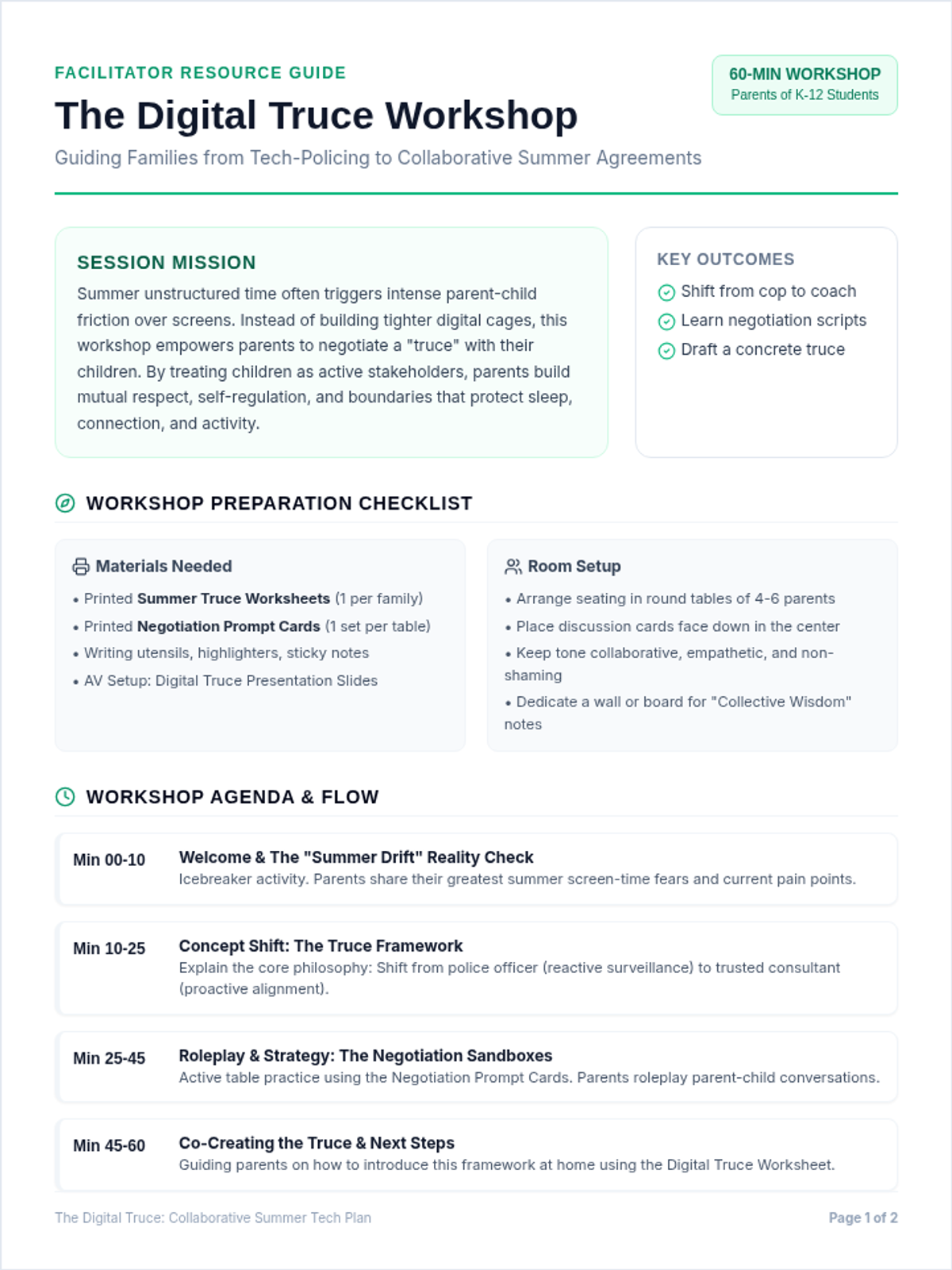
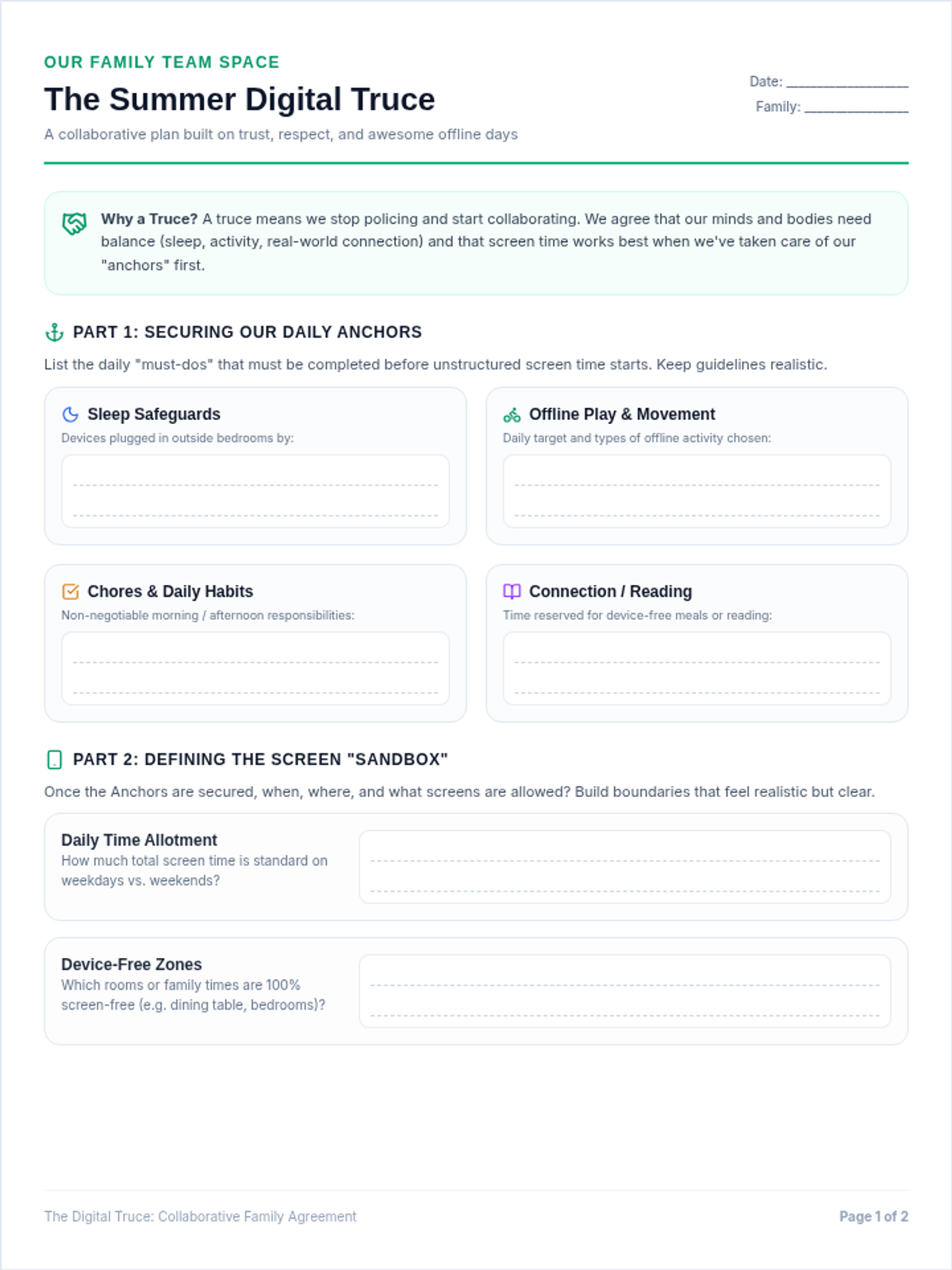
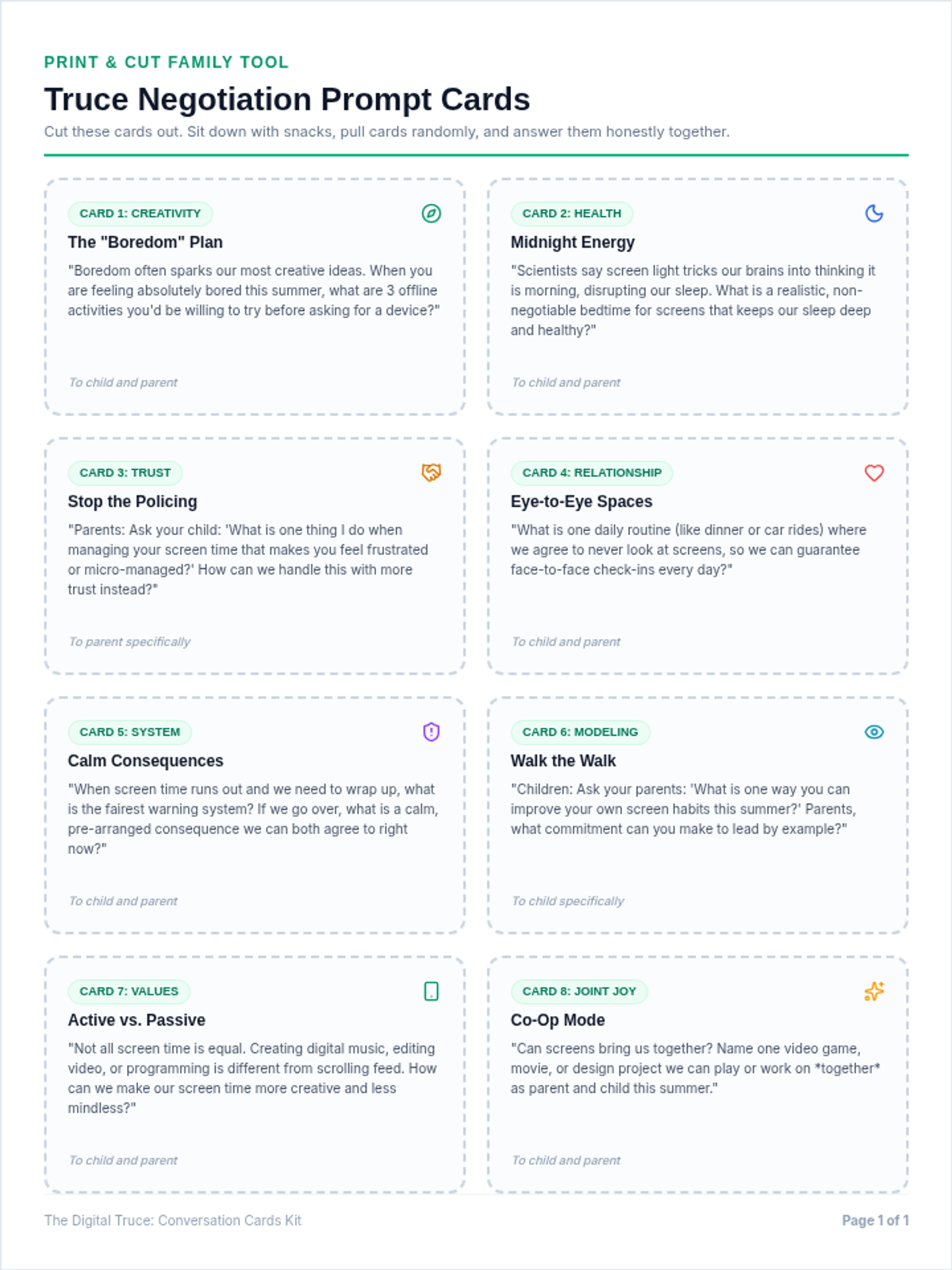
A collaborative workshop and toolkit designed to help parents of K-12 students establish healthy, co-created summer screen-time boundaries with their children through negotiation and mutual trust.
A collaborative parent workshop and family kit designed to help K-12 parents negotiate healthy, realistic summer screen-time agreements with their children, focusing on trust over policing.
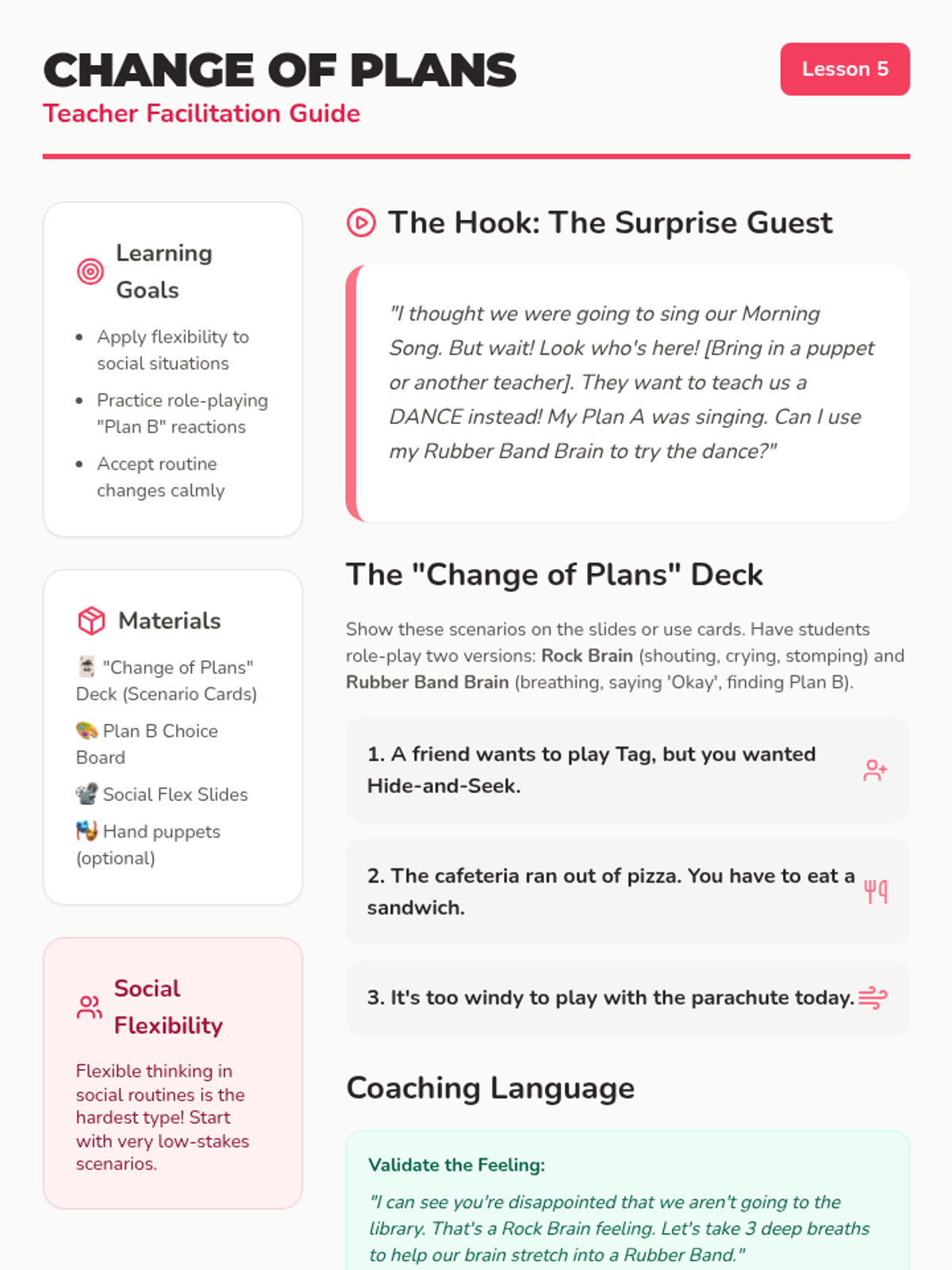
Students apply flexibility to social disruptions and routine changes, role-playing positive reactions to unexpected shifts in their day.
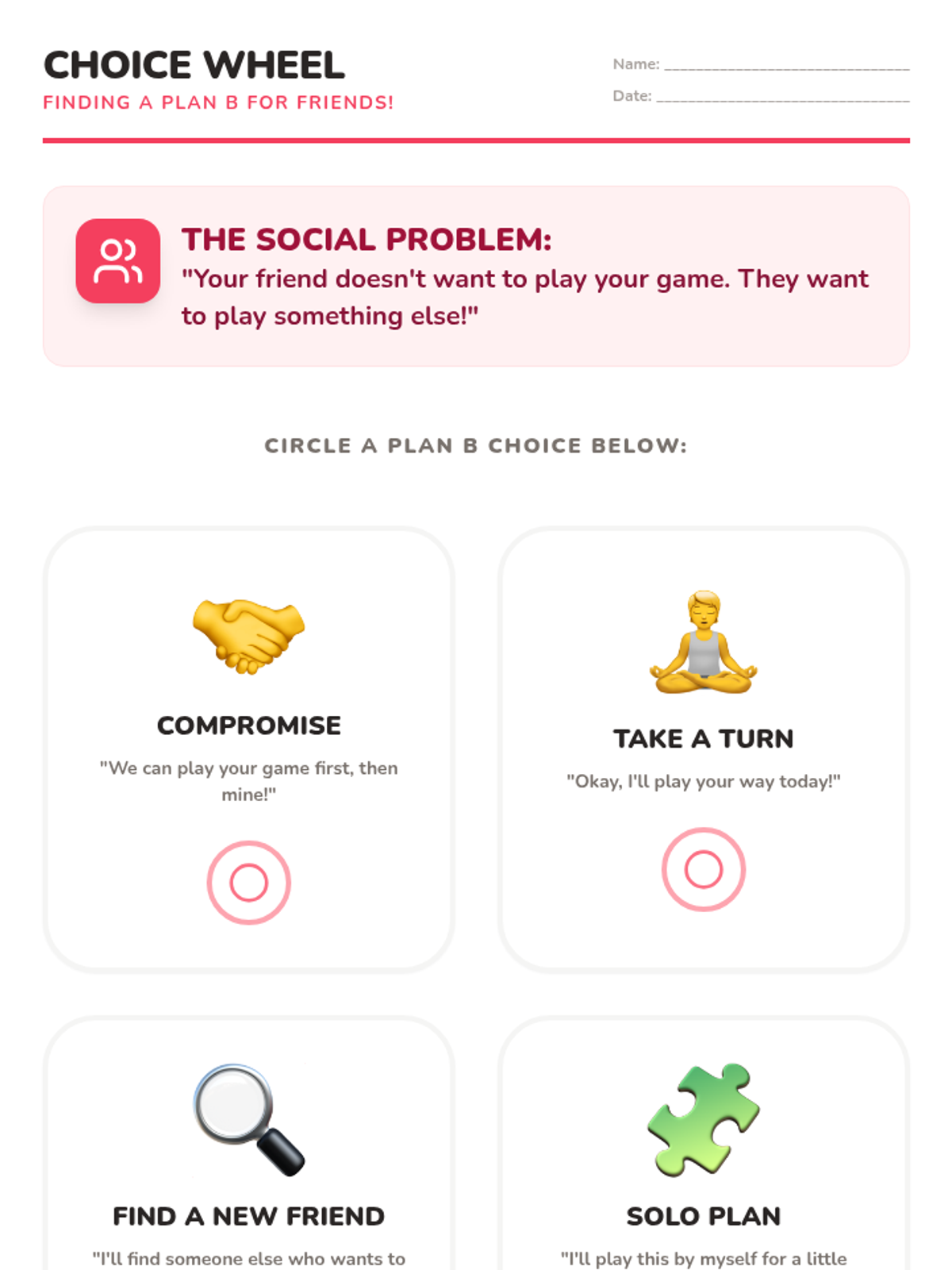
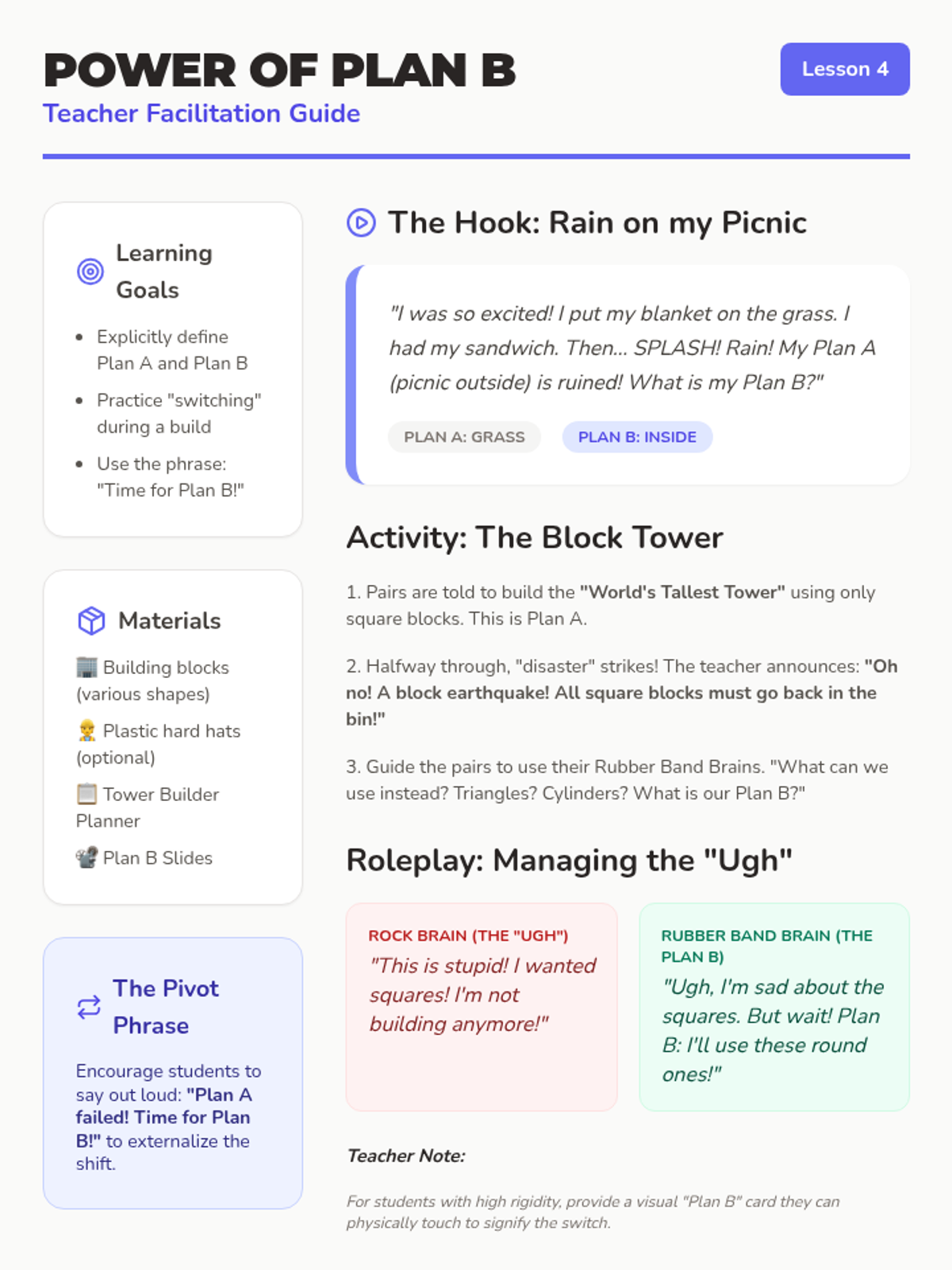
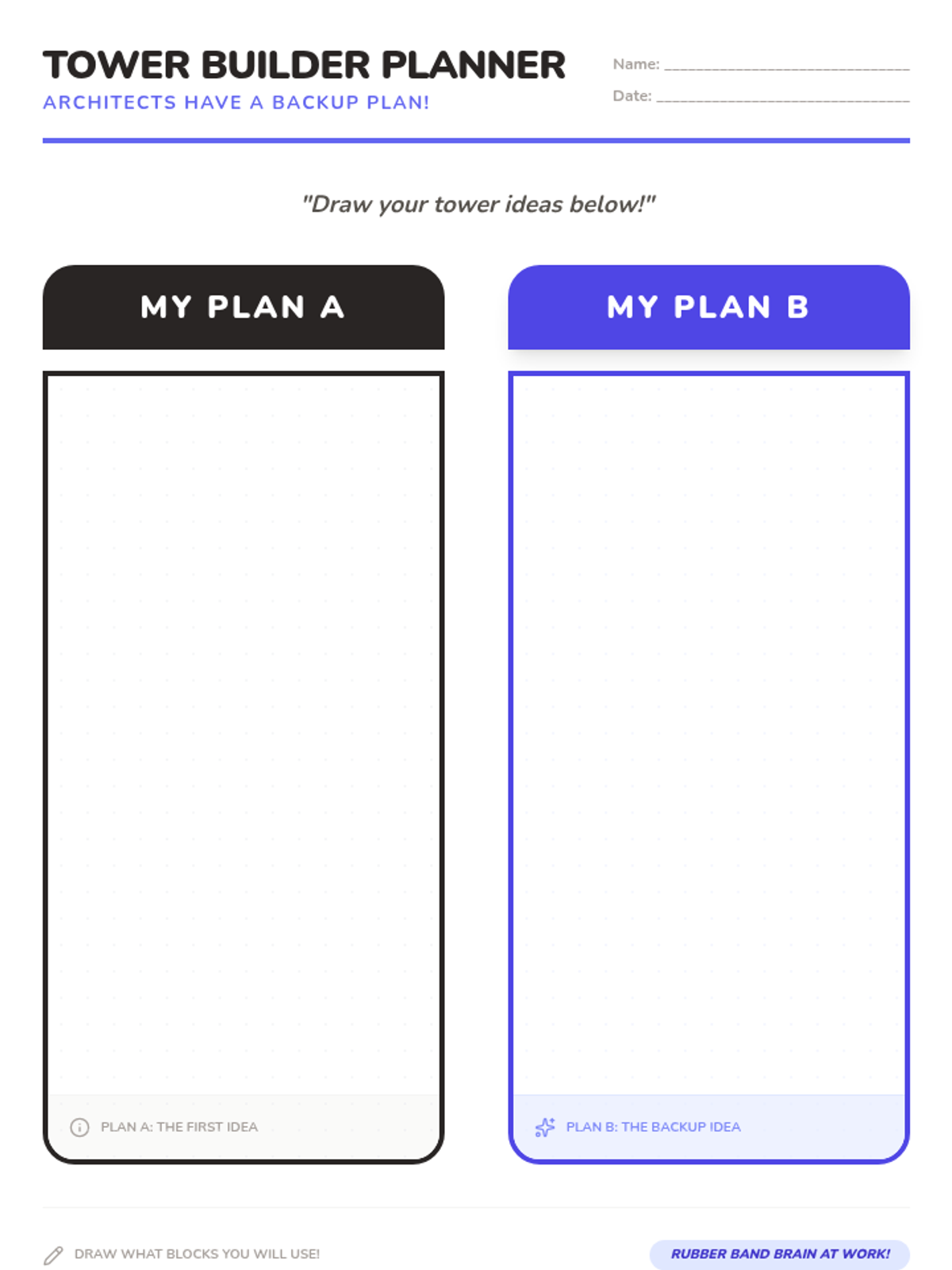
Students practice the explicit transition from 'Plan A' to 'Plan B' during collaborative building tasks, learning to pivot without emotional distress.
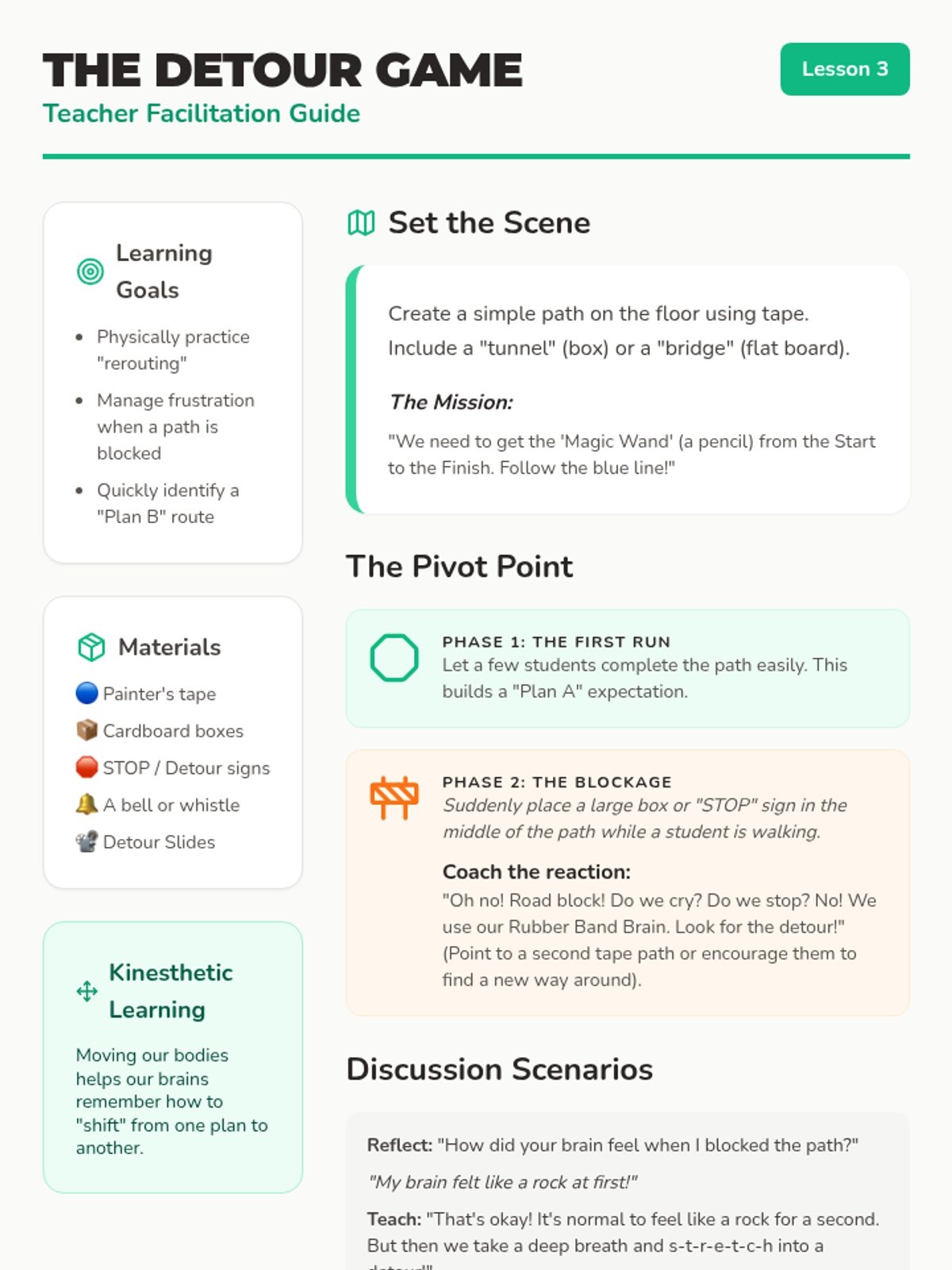
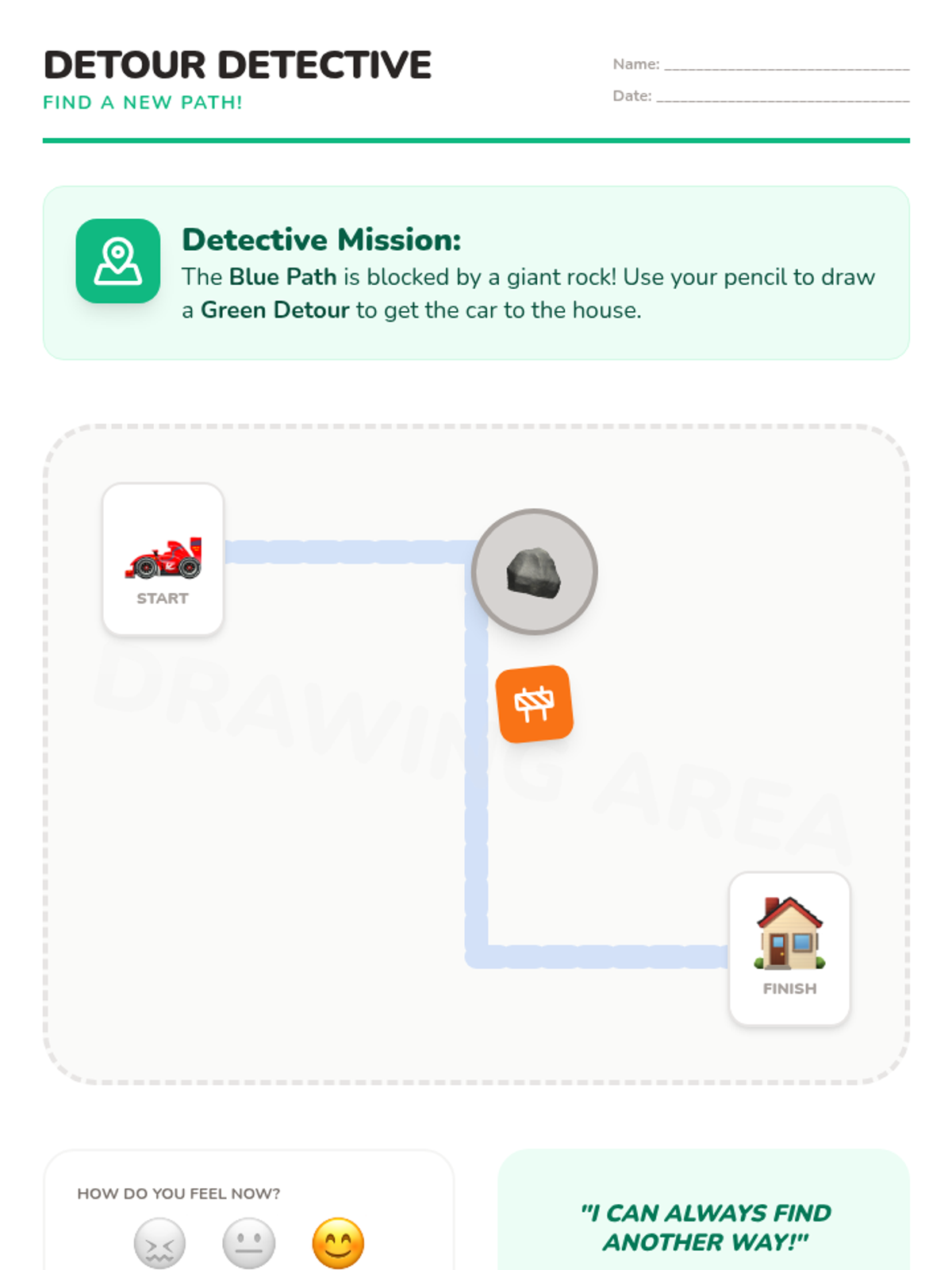
A physical obstacle course lesson where students must kinesthetically practice rerouting when their primary path is suddenly blocked.
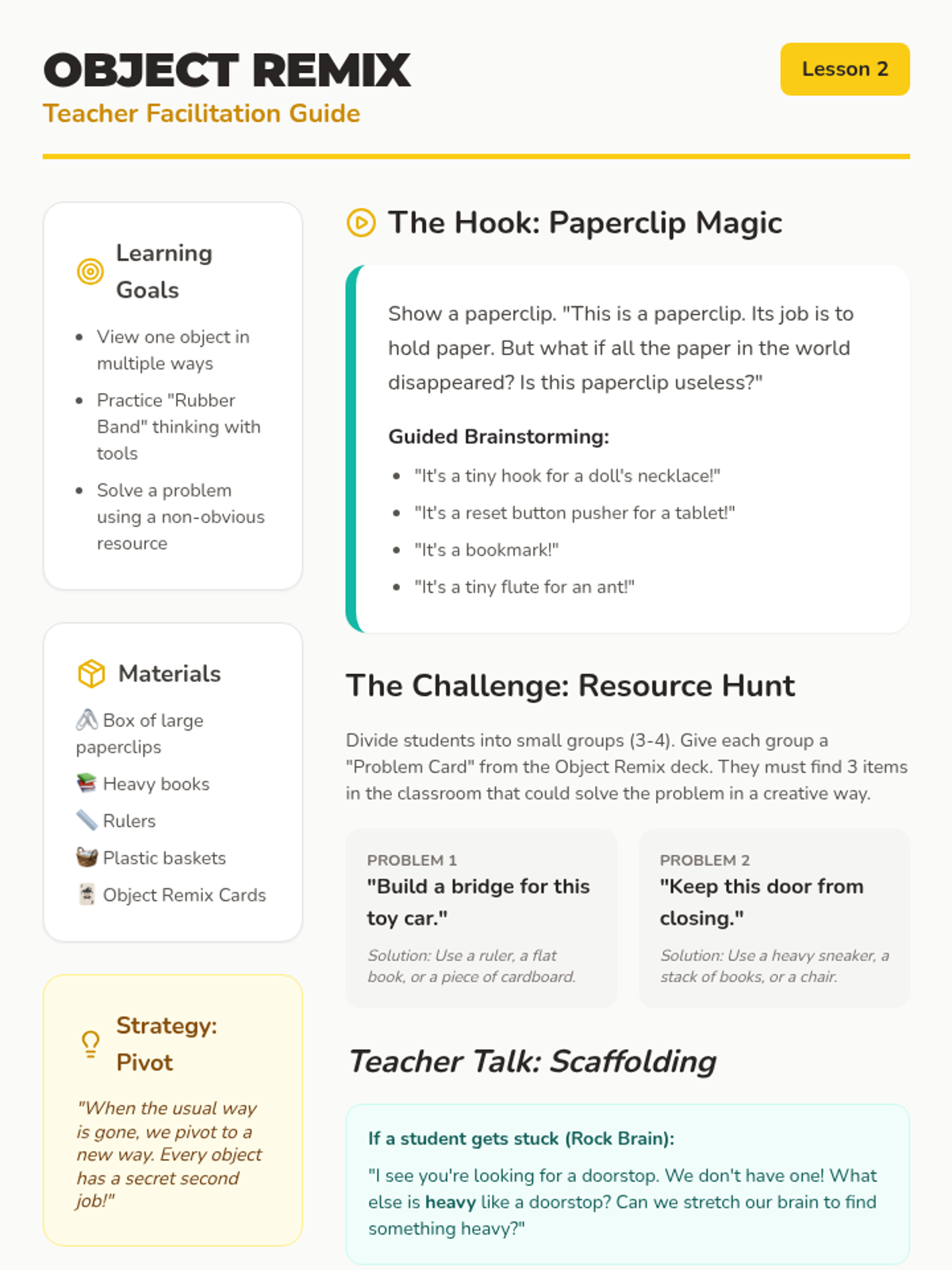
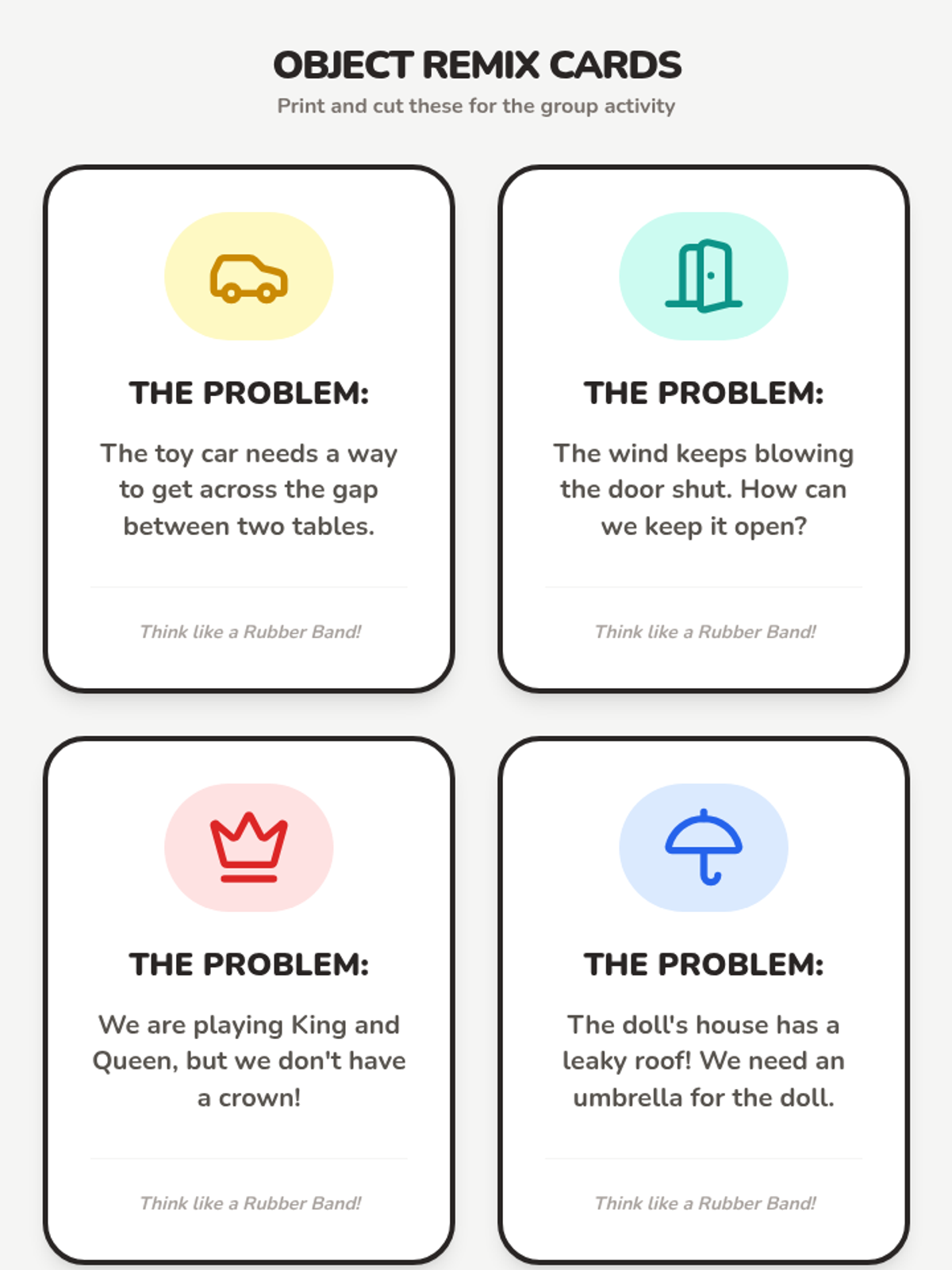
Students practice viewing resources flexibly by generating alternative uses for everyday classroom objects, fostering creative problem-solving skills.
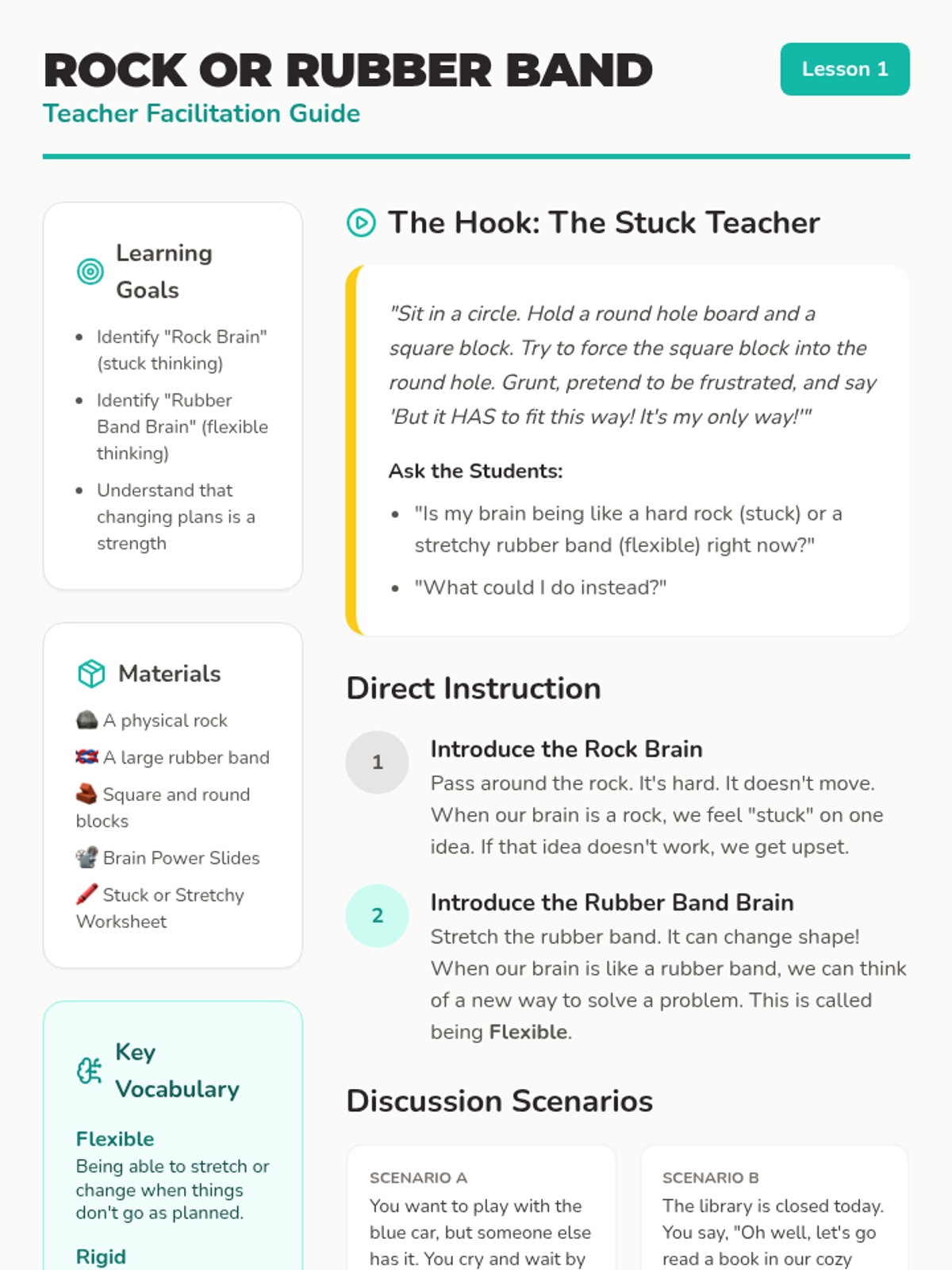
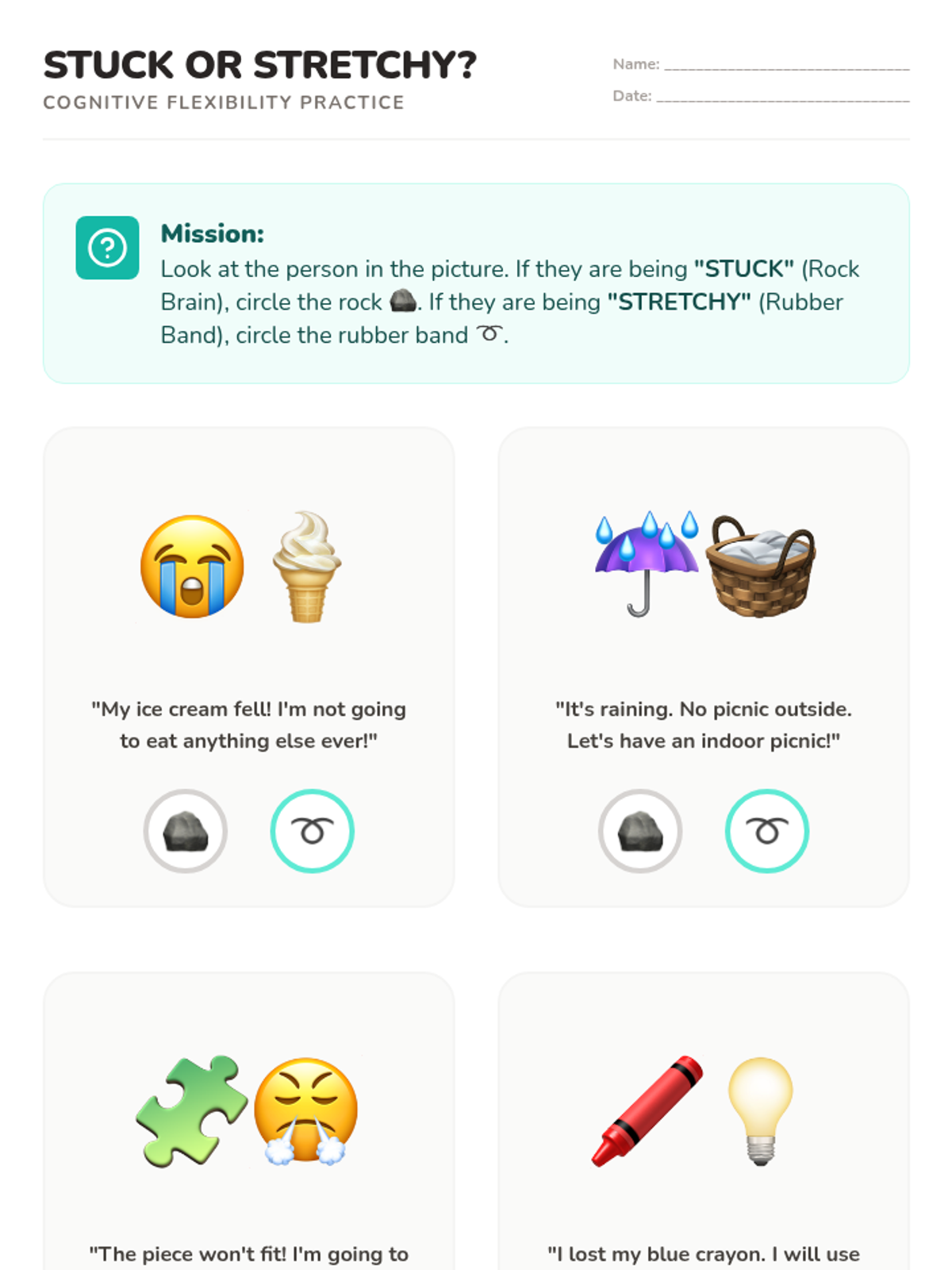
Students are introduced to the concepts of 'Rock Brain' and 'Rubber Band Brain' to distinguish between rigid and flexible thinking using physical props and simple scenarios.
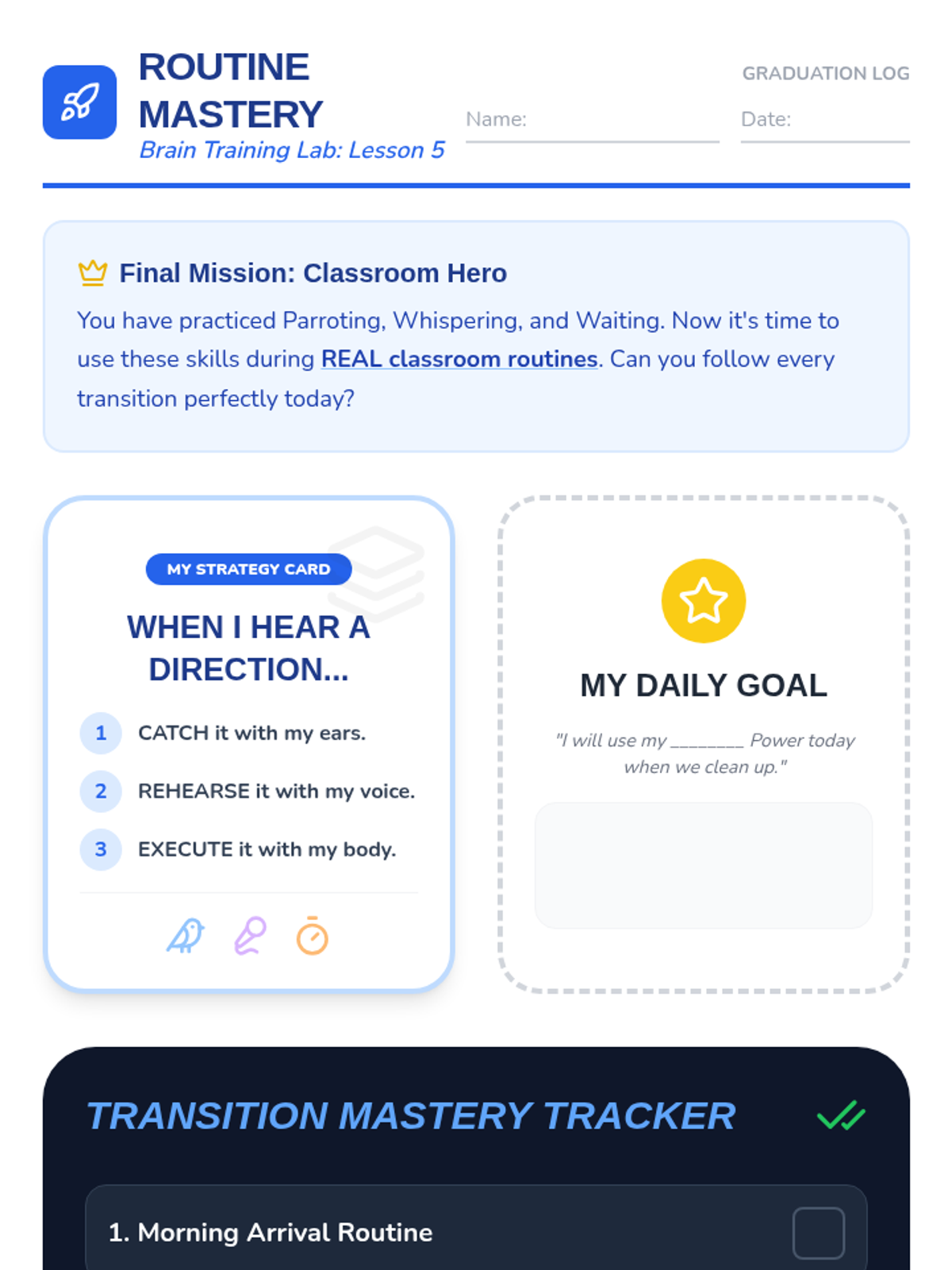
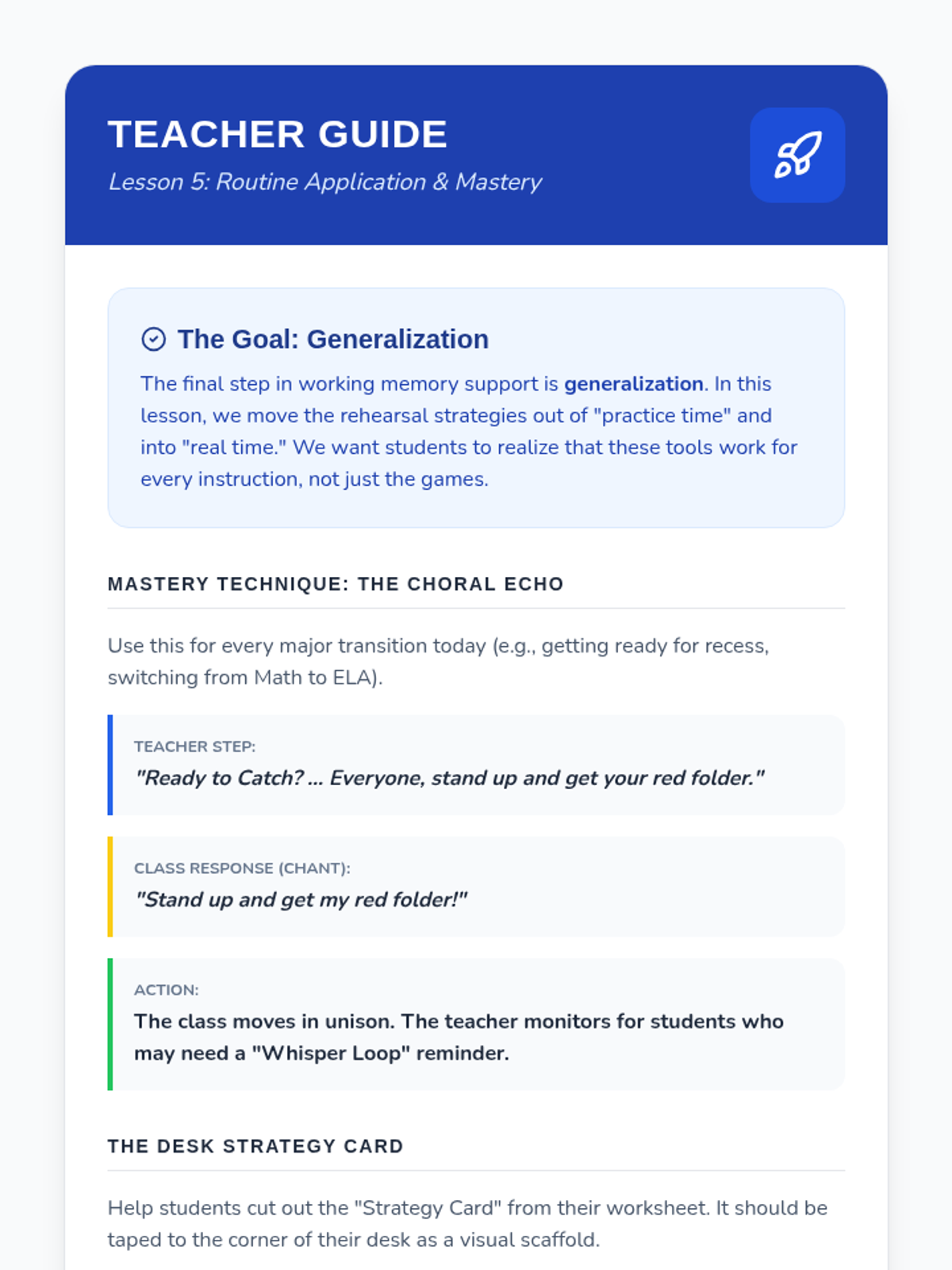
Students apply verbal strategies to actual classroom transition requests using choral responses to confirm steps.
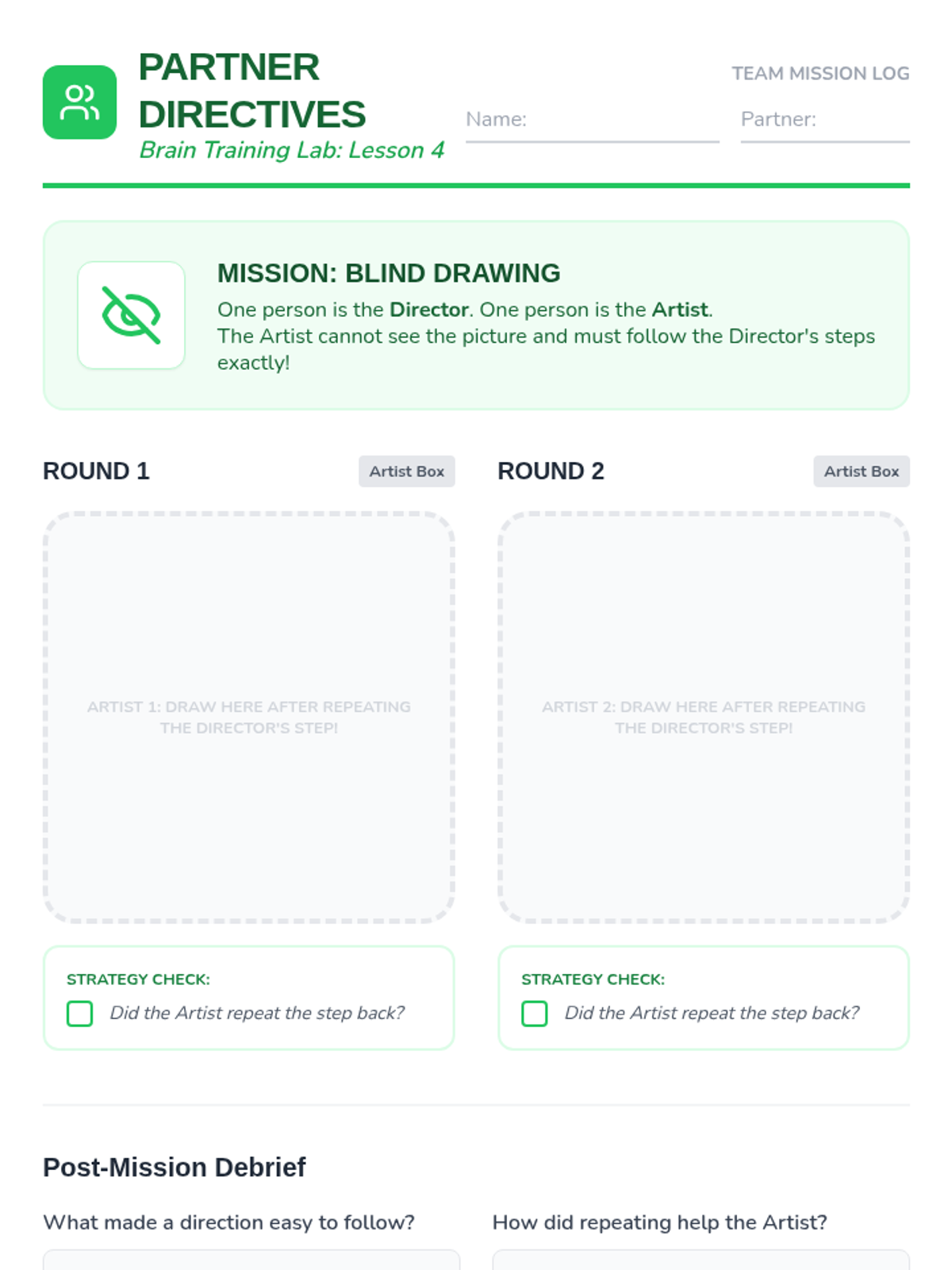
In pairs, students take turns being the 'Teacher' and the 'Student' to practice giving and repeating explicit steps.
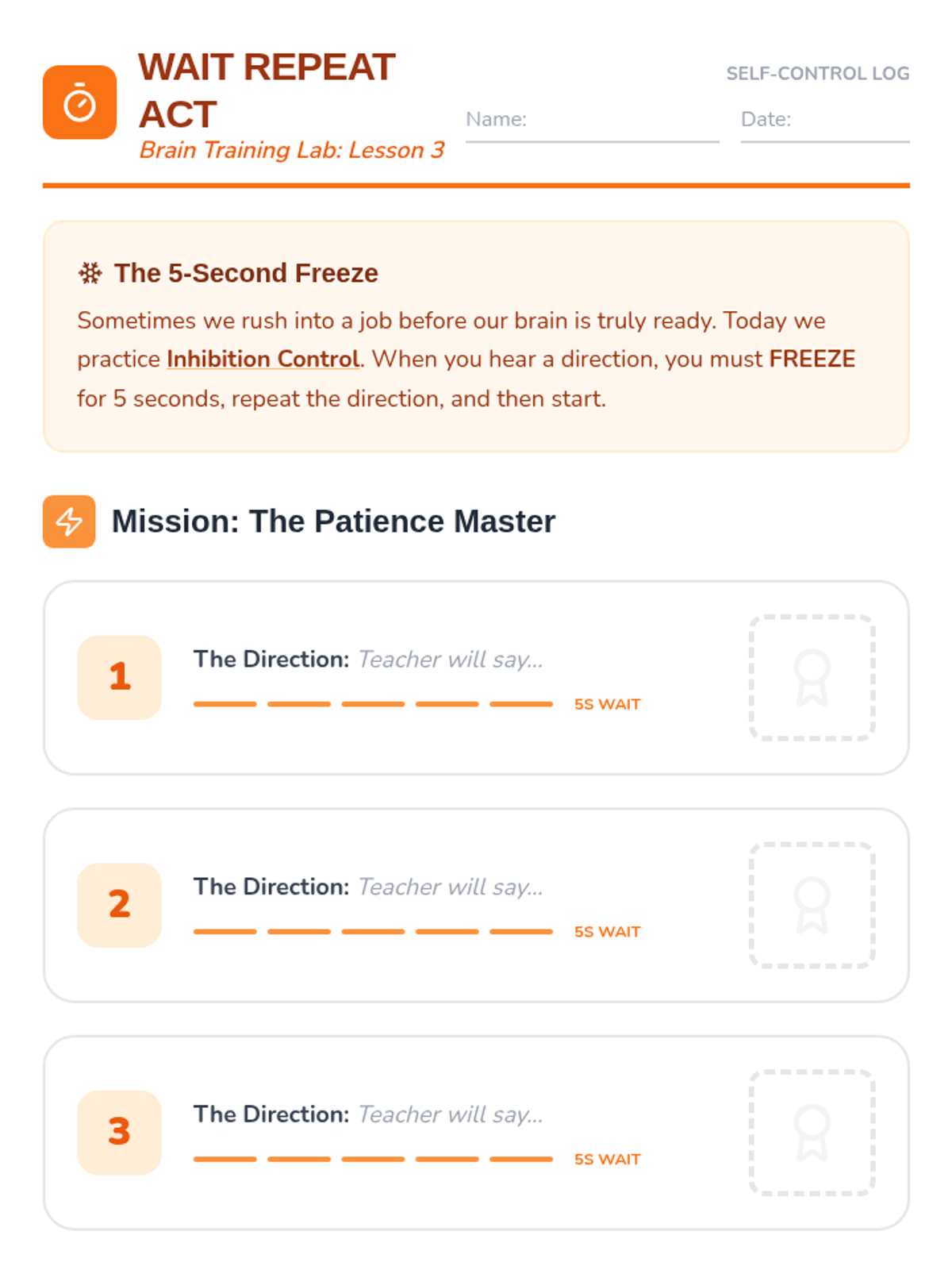
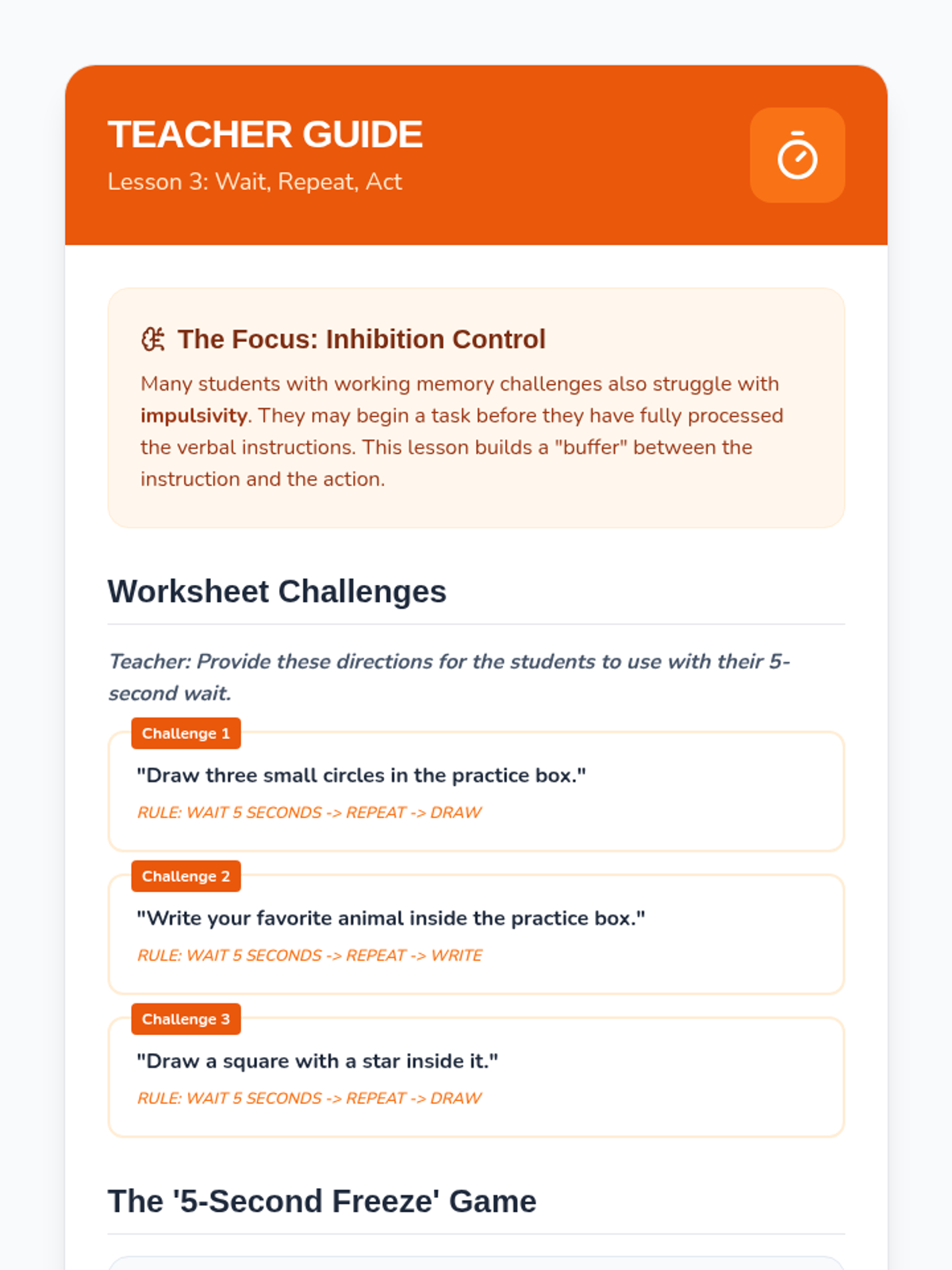
Students engage in inhibition control activities where they must wait 5 seconds after hearing a command, repeat it, and only then act.
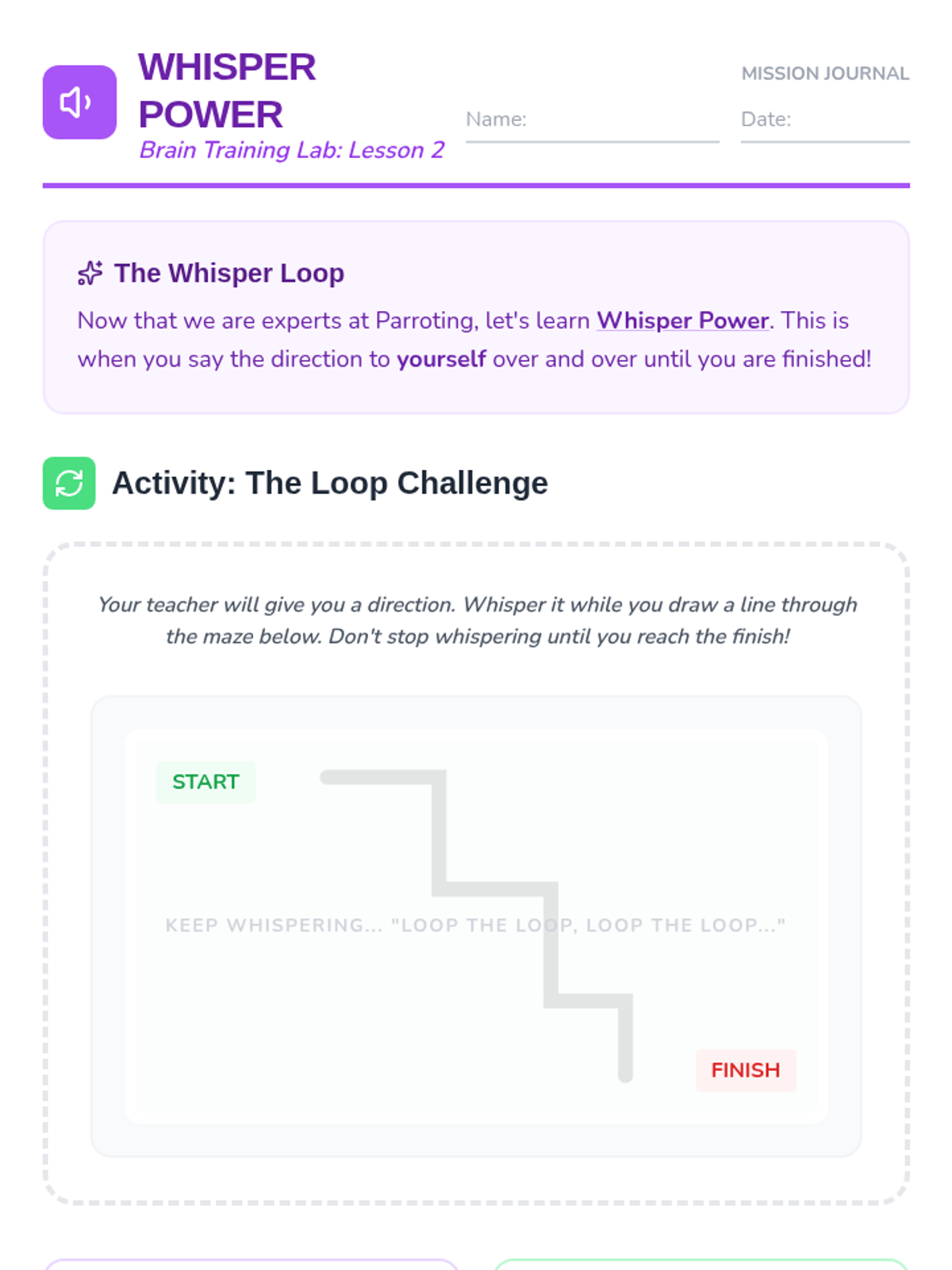
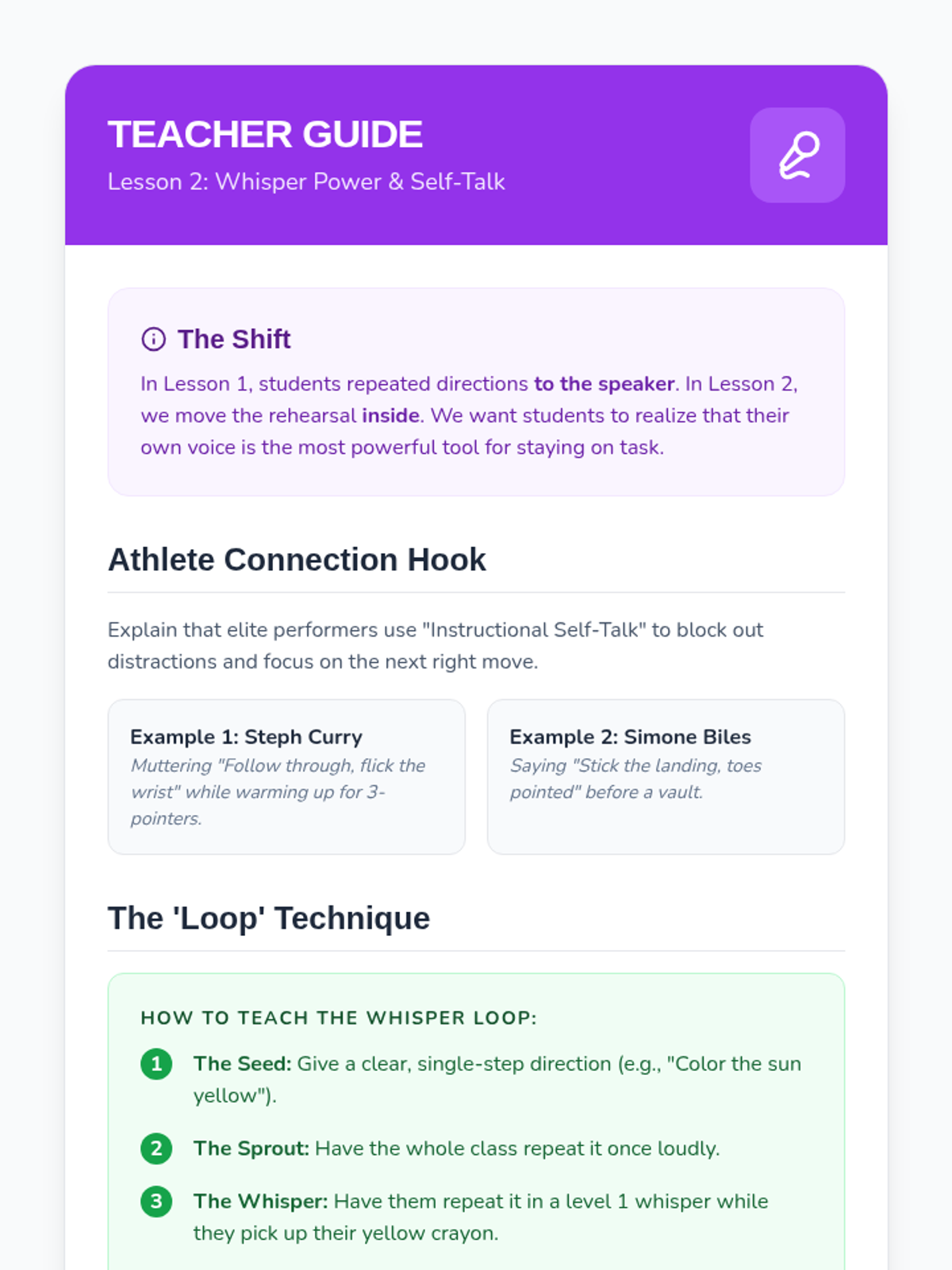
Moving from loud repetition to whispering, students practice 'self-talk.' They are given a single direction and must whisper it on a loop while performing the action.
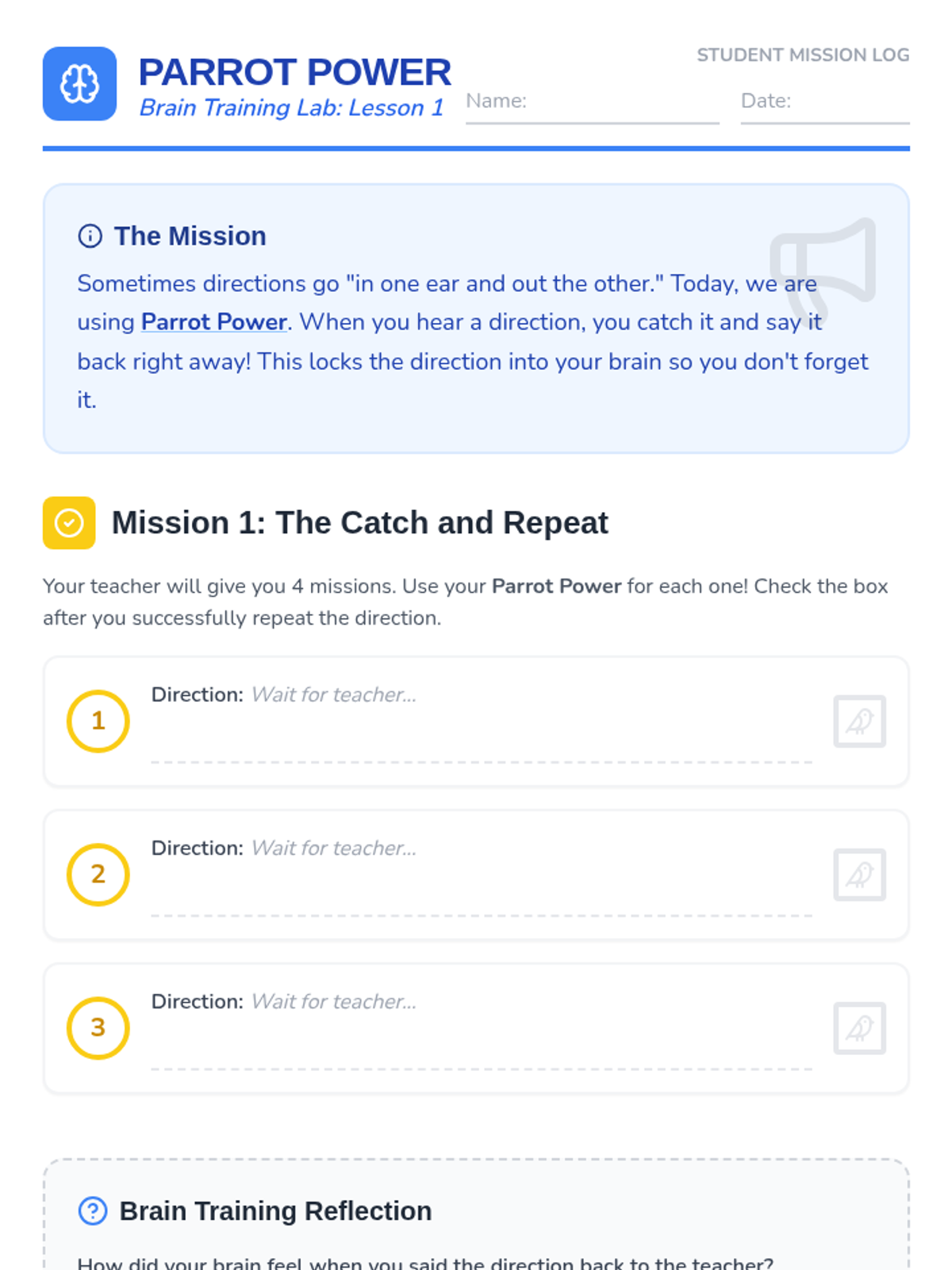
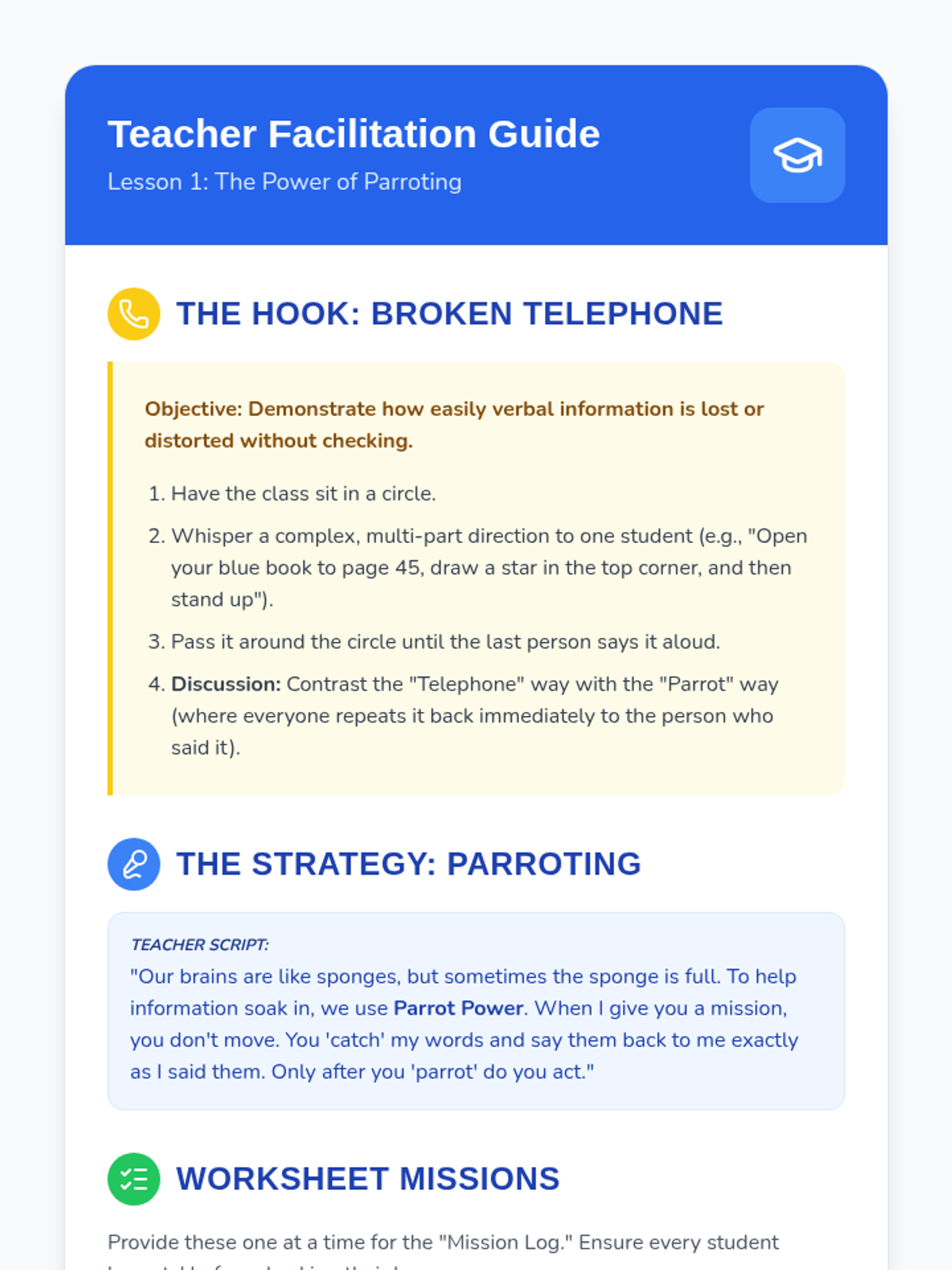
Students practice the 'parrot' technique, where they must immediately repeat a single-step direction back to the speaker before moving. The lesson emphasizes that saying it locks it into the brain.
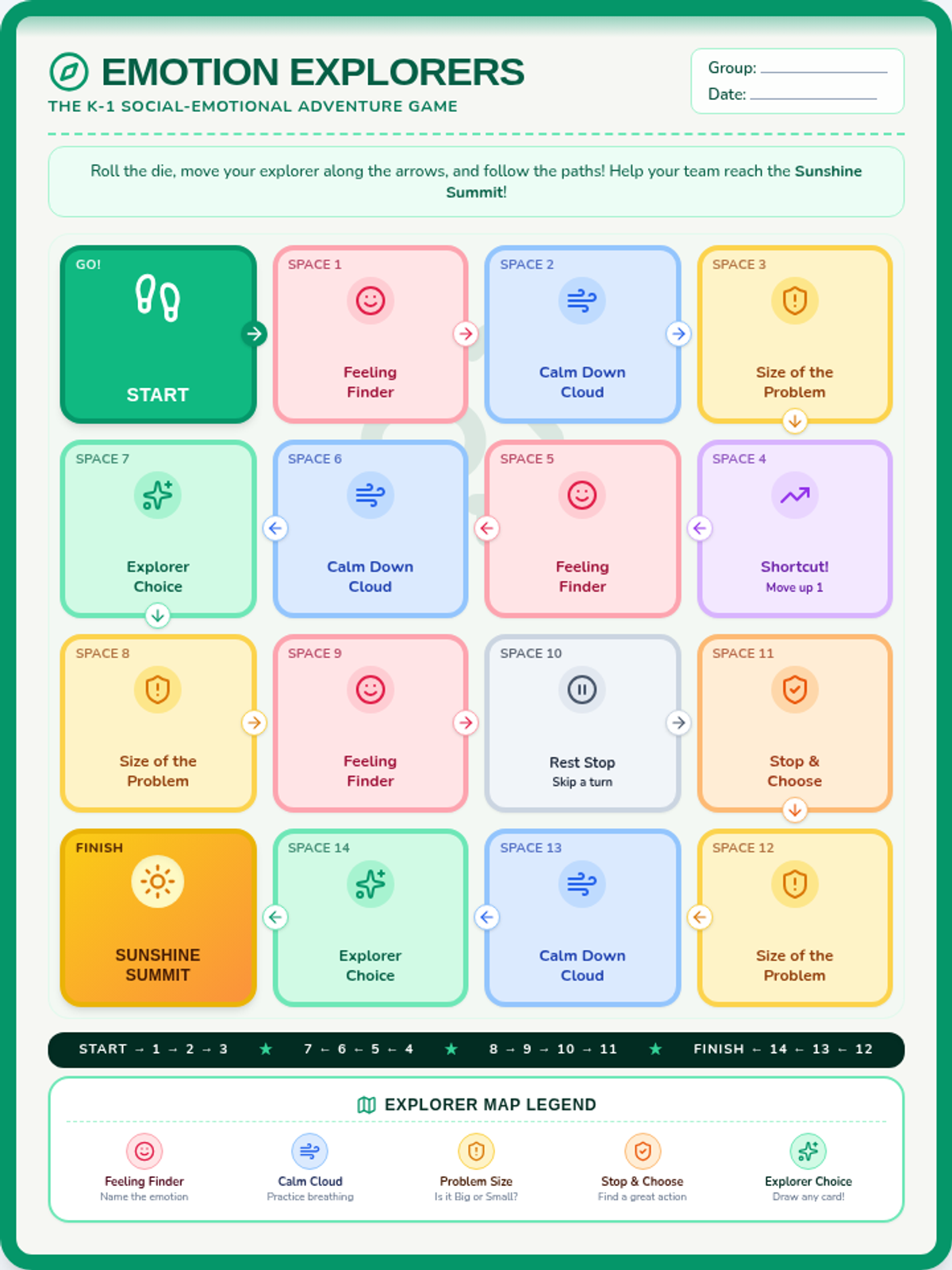
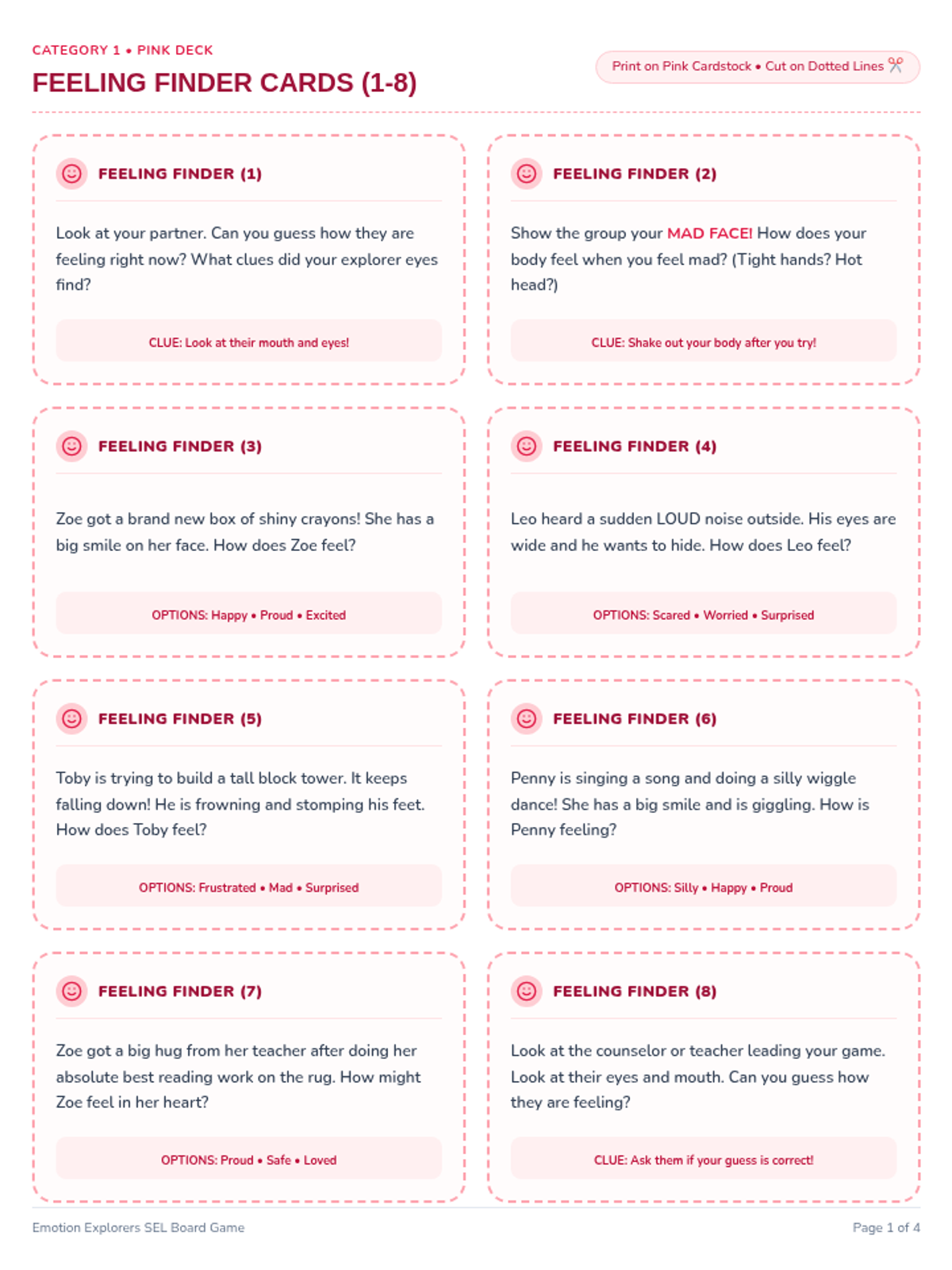
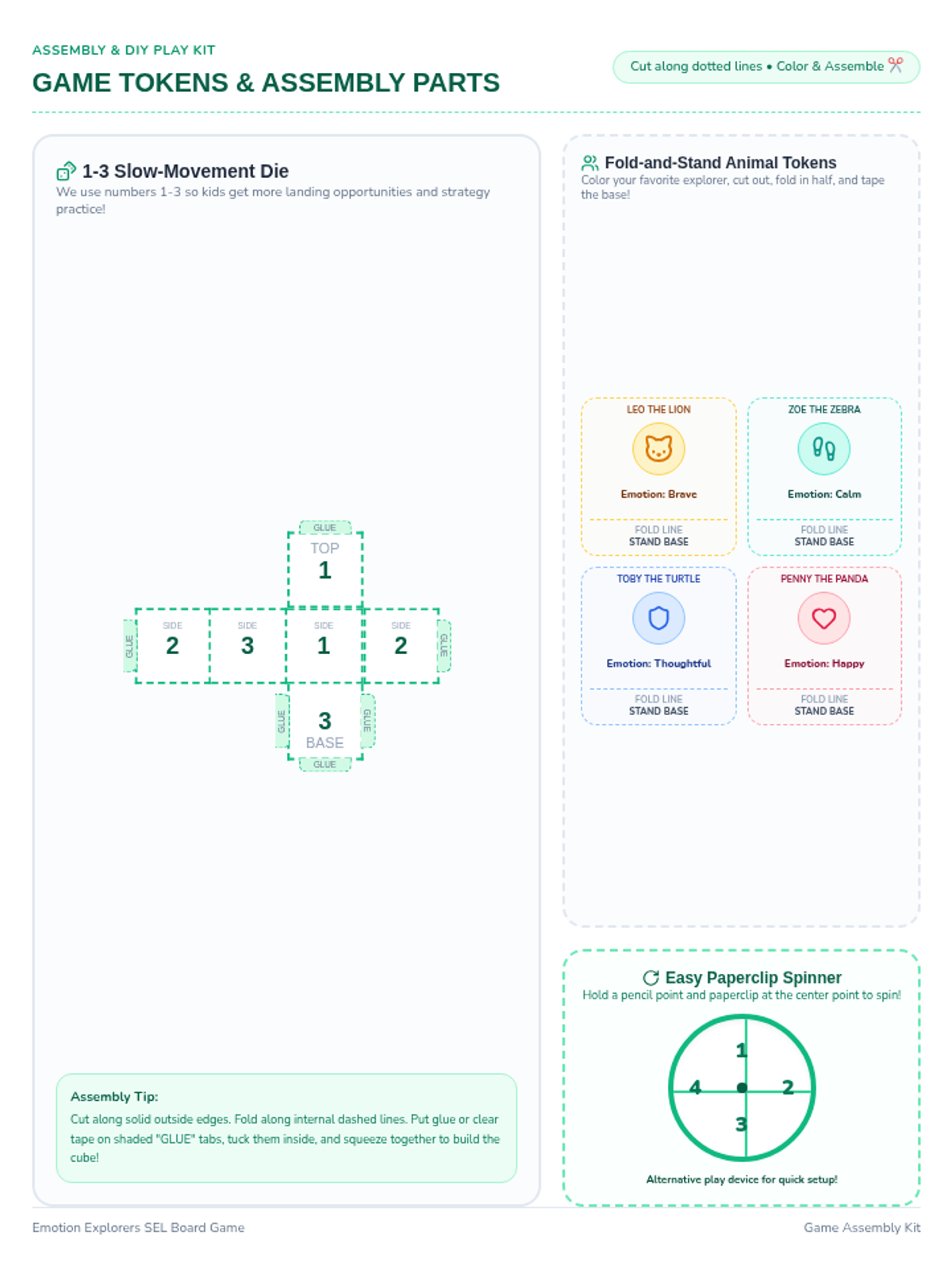
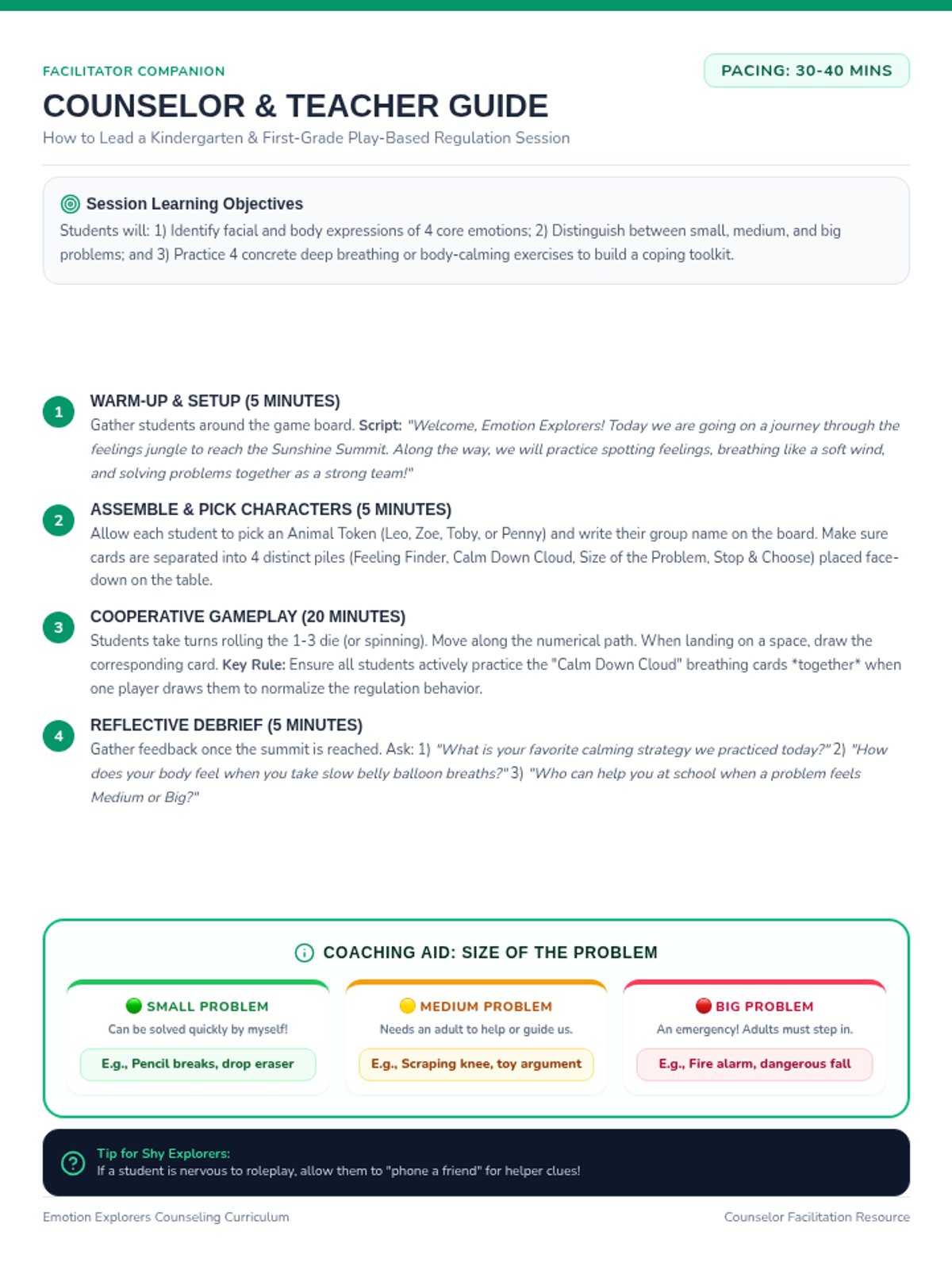
An interactive SEL board game session for Kindergarten and First-Grade students, focusing on identifying emotions, understanding the size of problems, and practicing calming breathing strategies. Includes a printable game board, situation cards, assembly parts, and a comprehensive counselor guide.
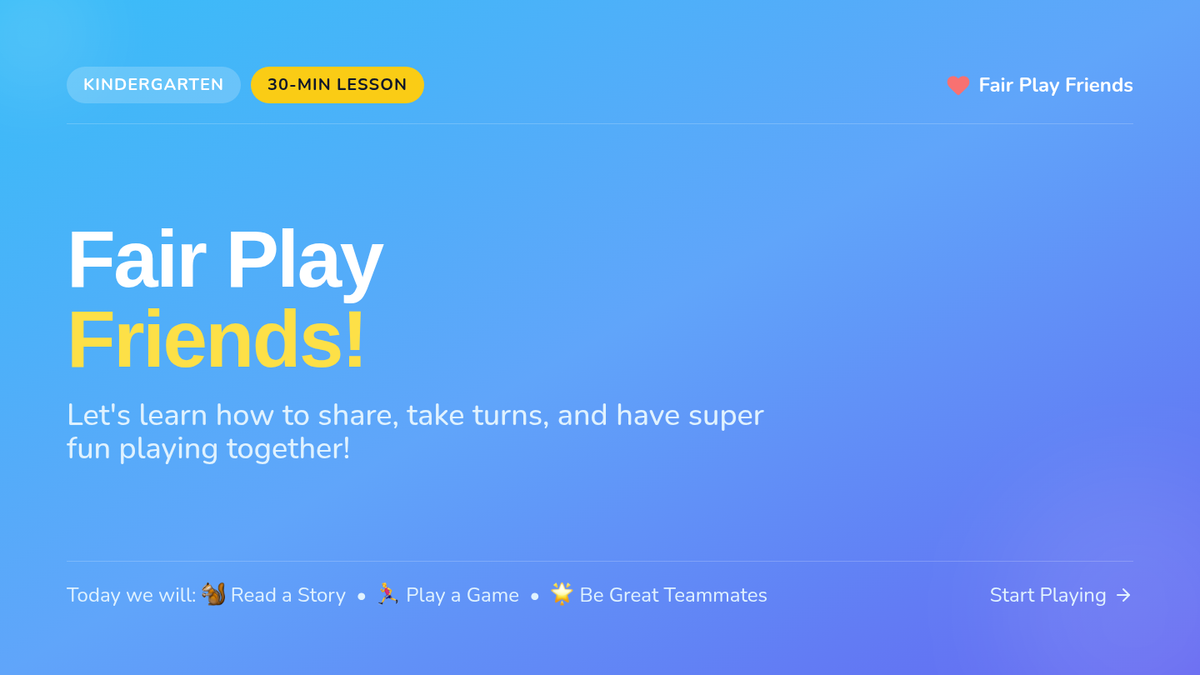
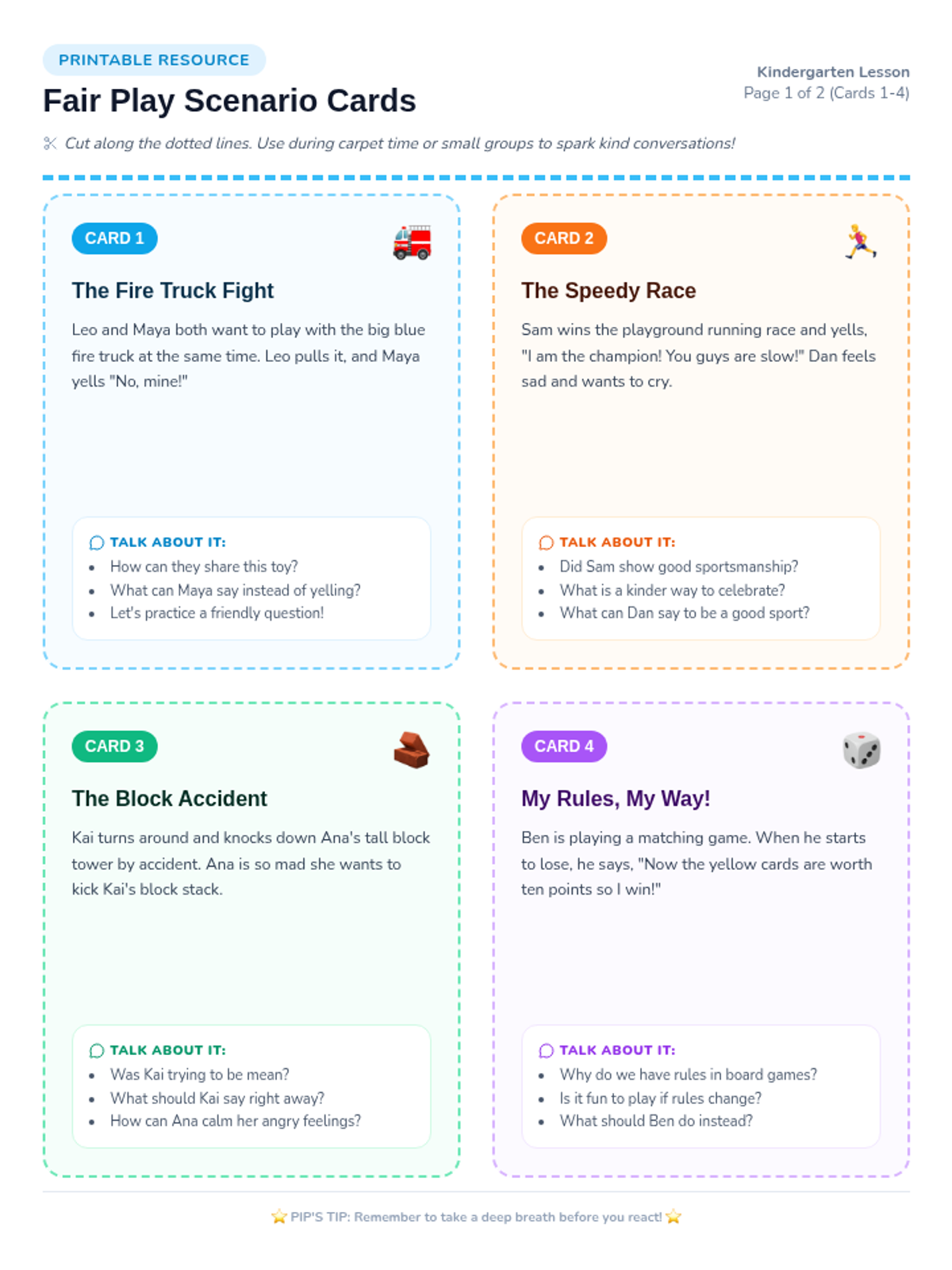
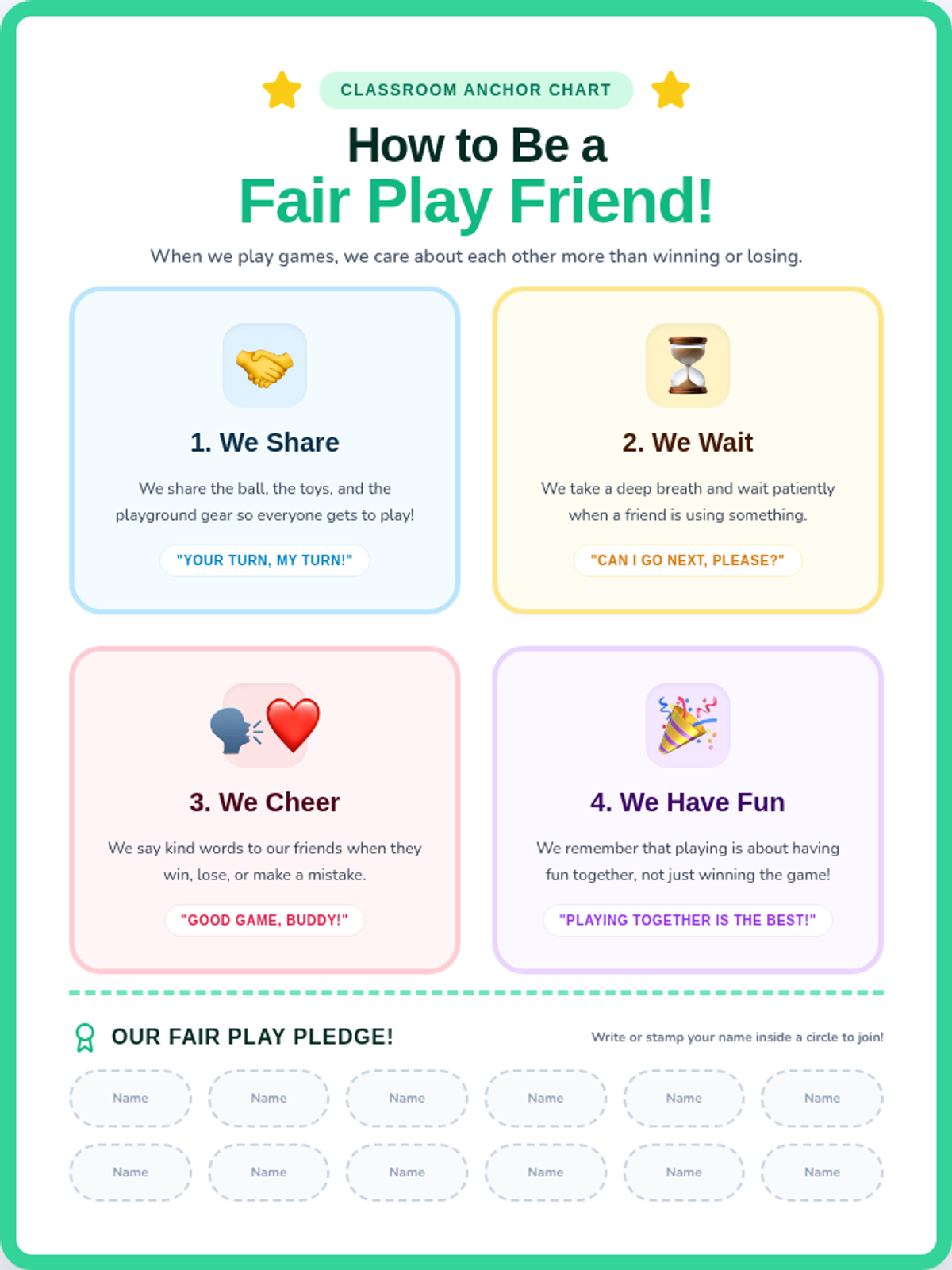
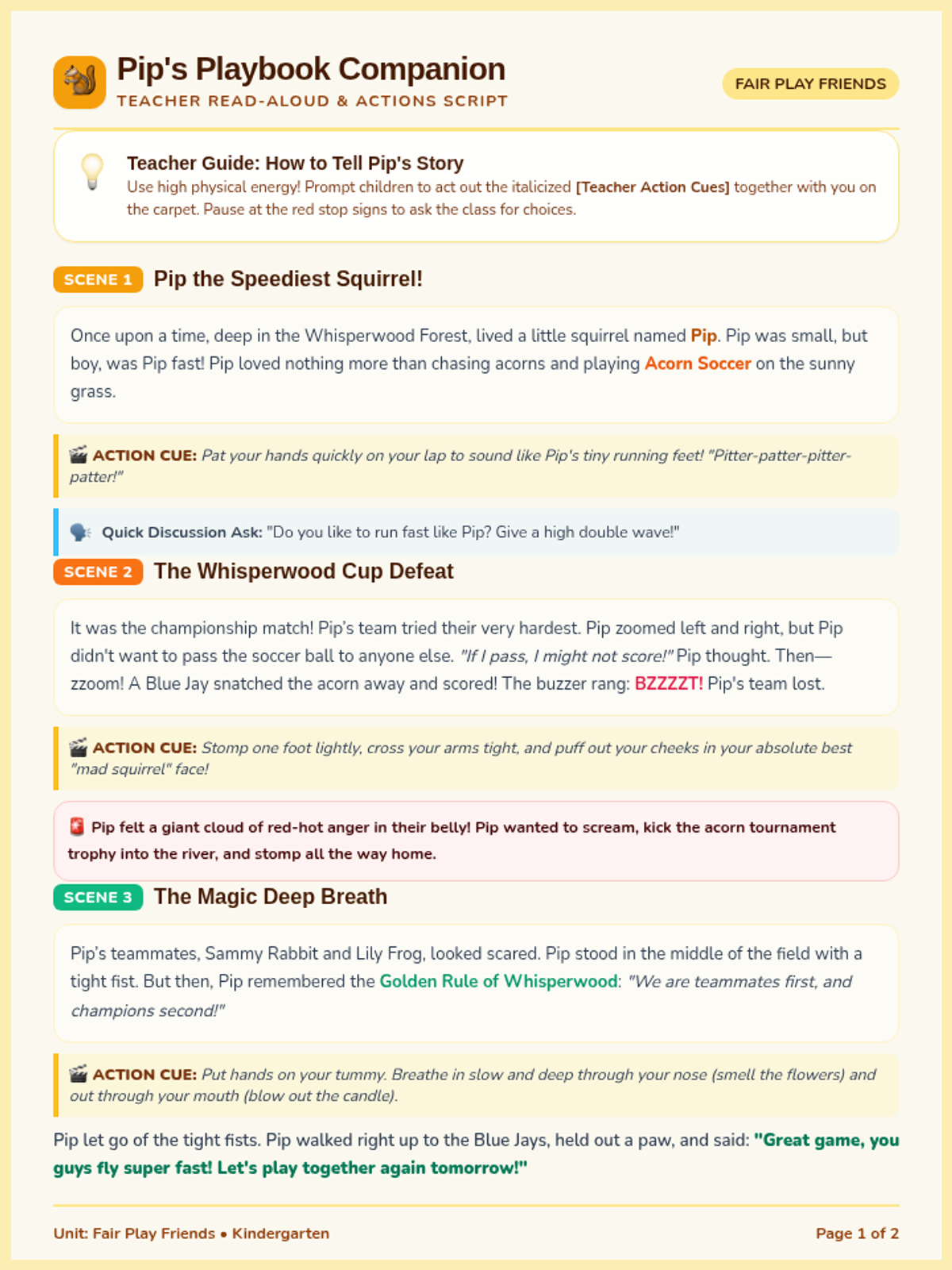
A 30-minute interactive lesson for Kindergarteners focusing on the fundamentals of good sportsmanship, including sharing, taking turns, and handling winning or losing with grace. It features a character-driven story, a movement-based voting game, small-group scenario discussion cards, and a visual anchor chart.
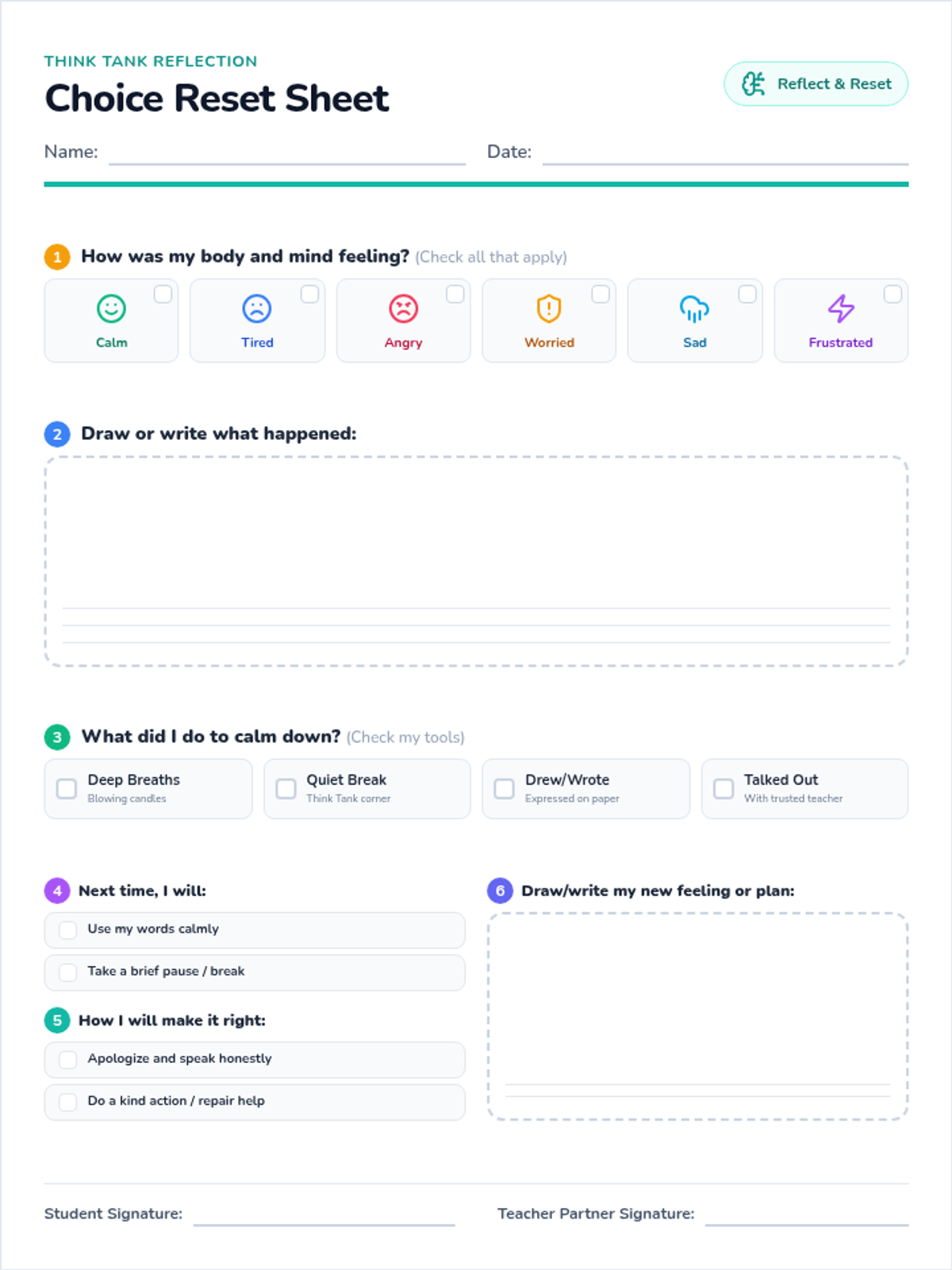
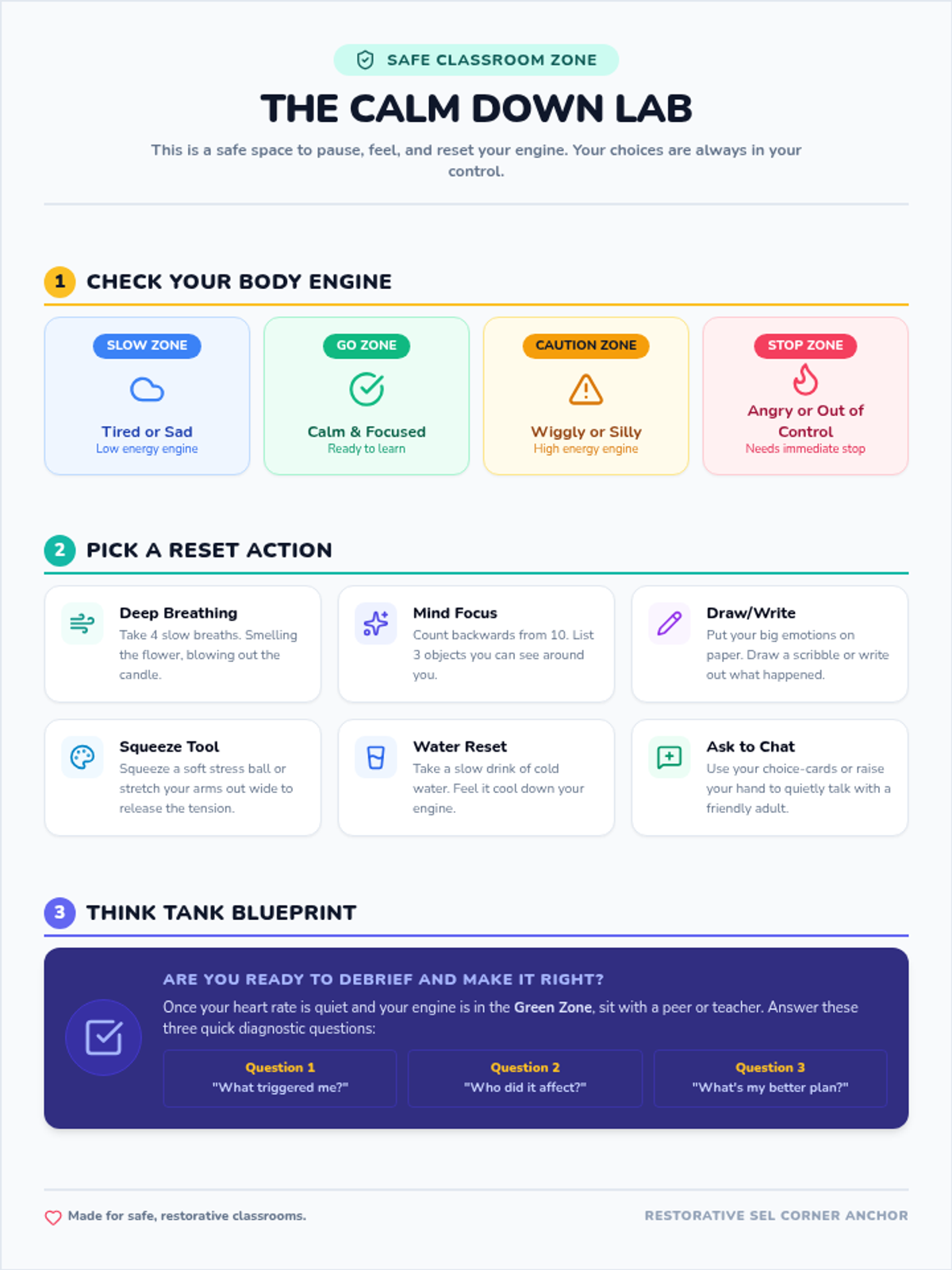
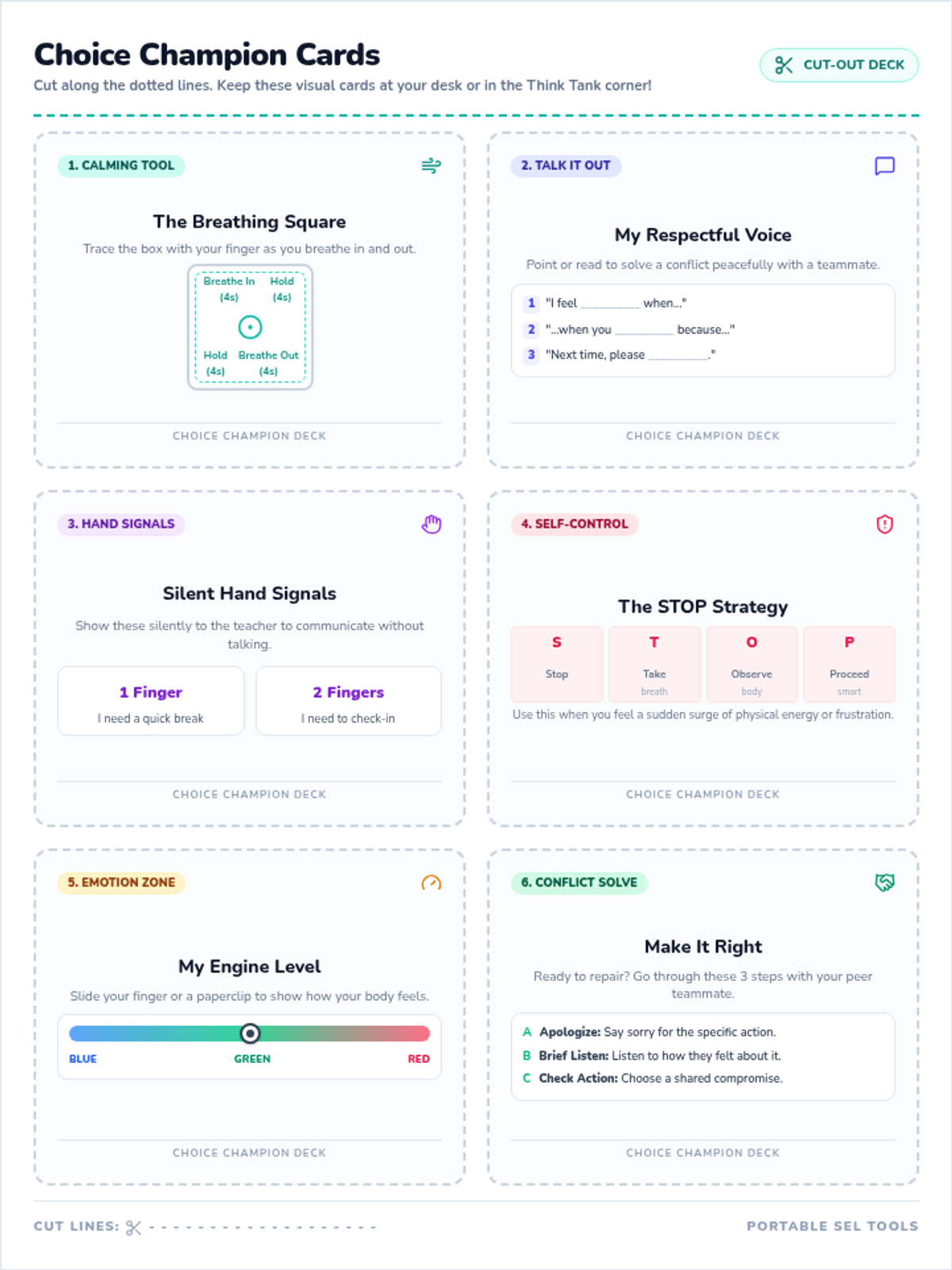
A comprehensive social-emotional toolkit for a classroom 'Think Tank' reflection corner. Includes a visual reflection sheet, a calming strategies poster, and portable visual choice cards to guide students in emotional self-regulation and positive conflict resolution.
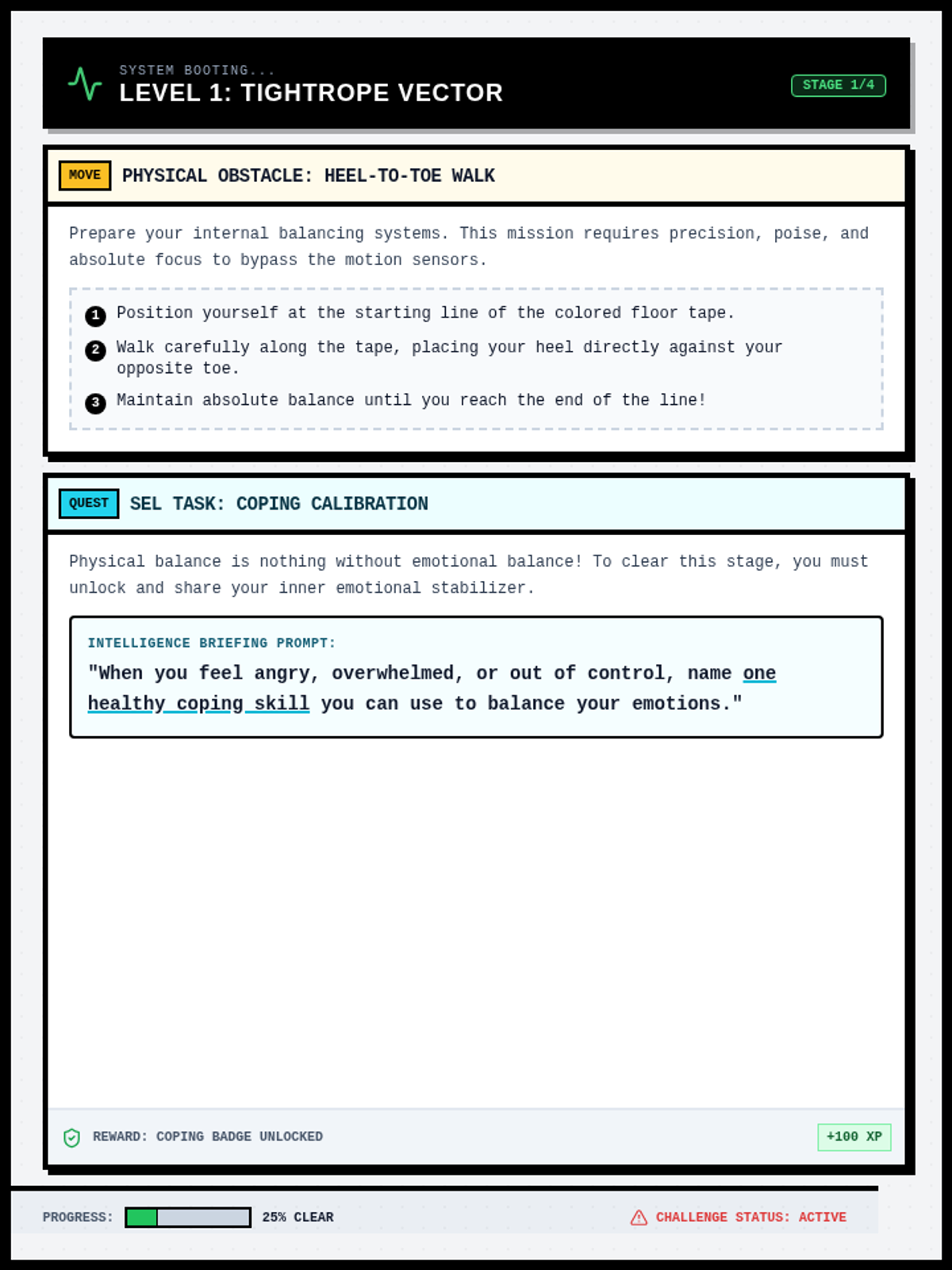
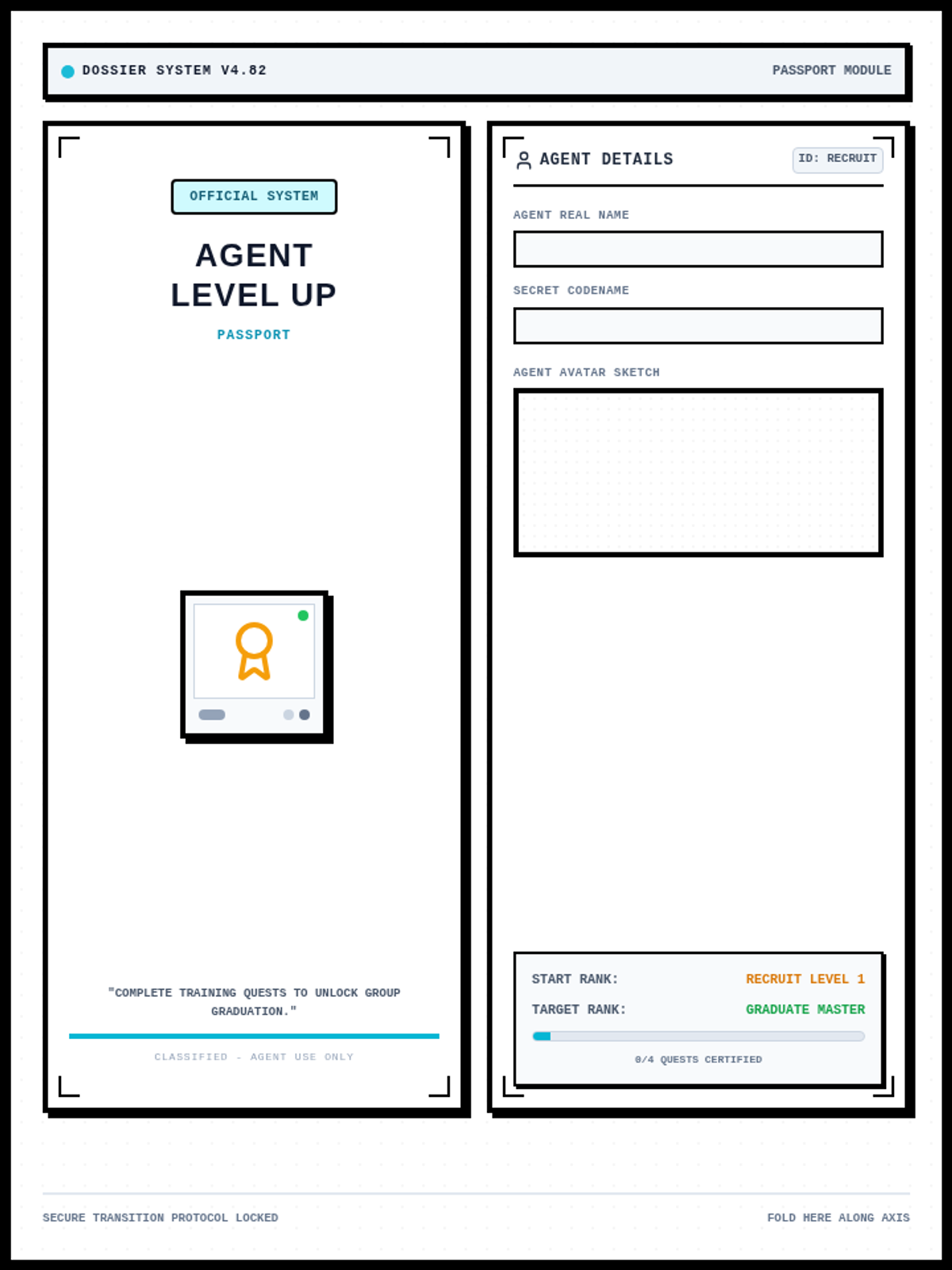
An action-packed obstacle course lesson where students complete physical challenges and social-emotional quests to graduate from their counseling group.
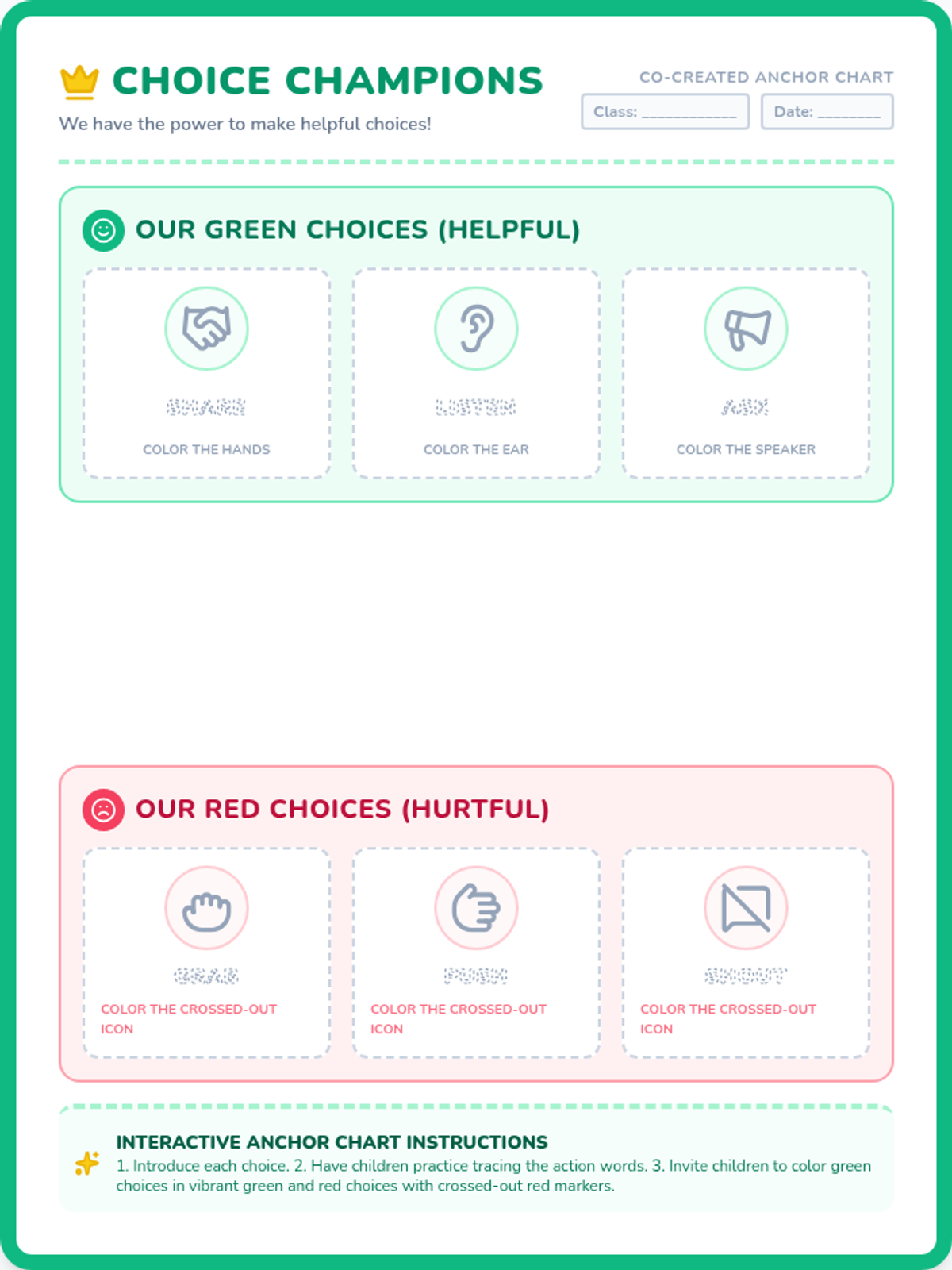
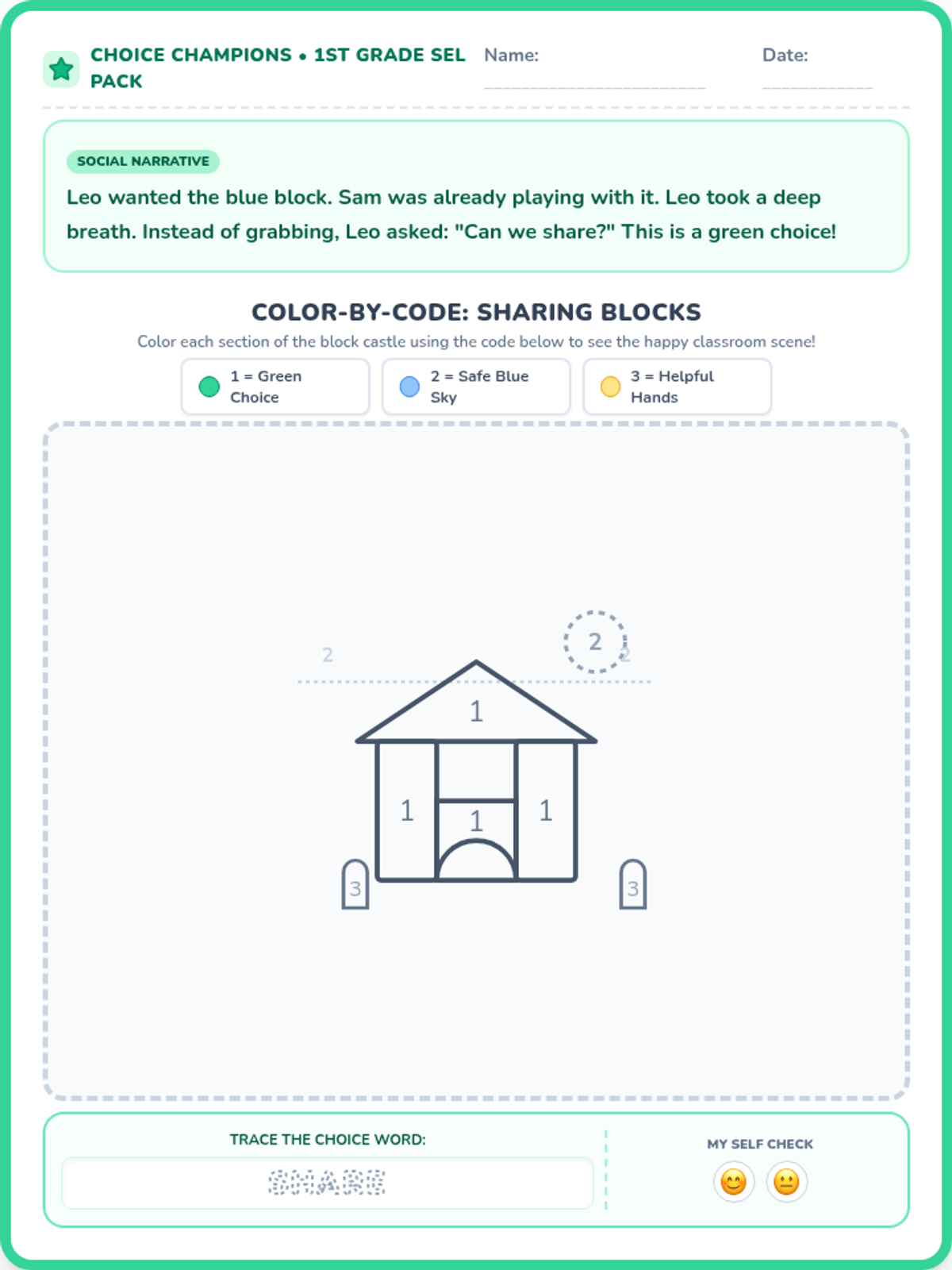
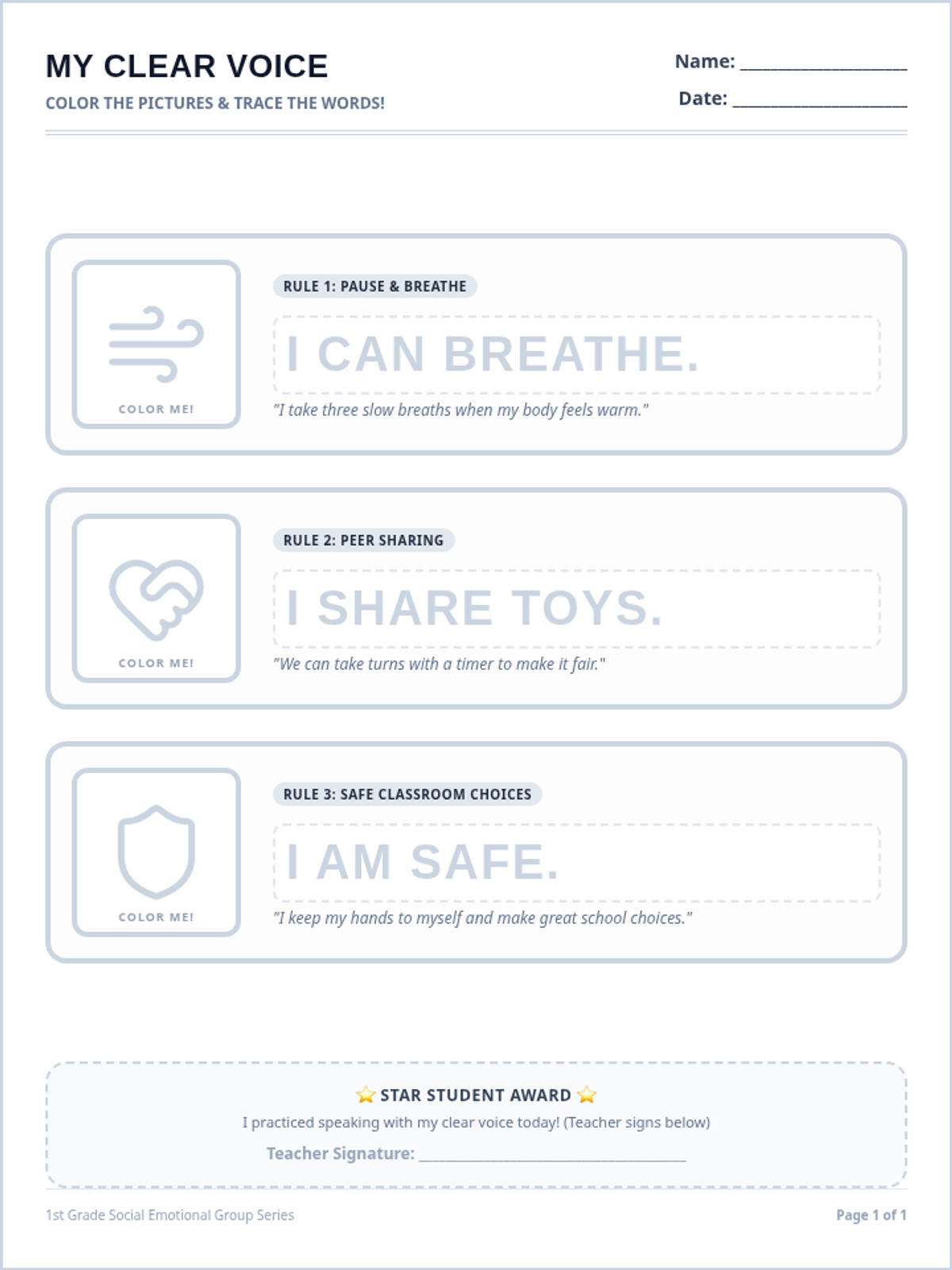
A social-emotional learning lesson focused on helping early childhood and special education students make positive choices and resolve peer conflicts using visual supports, traceable words, and coloring activities.
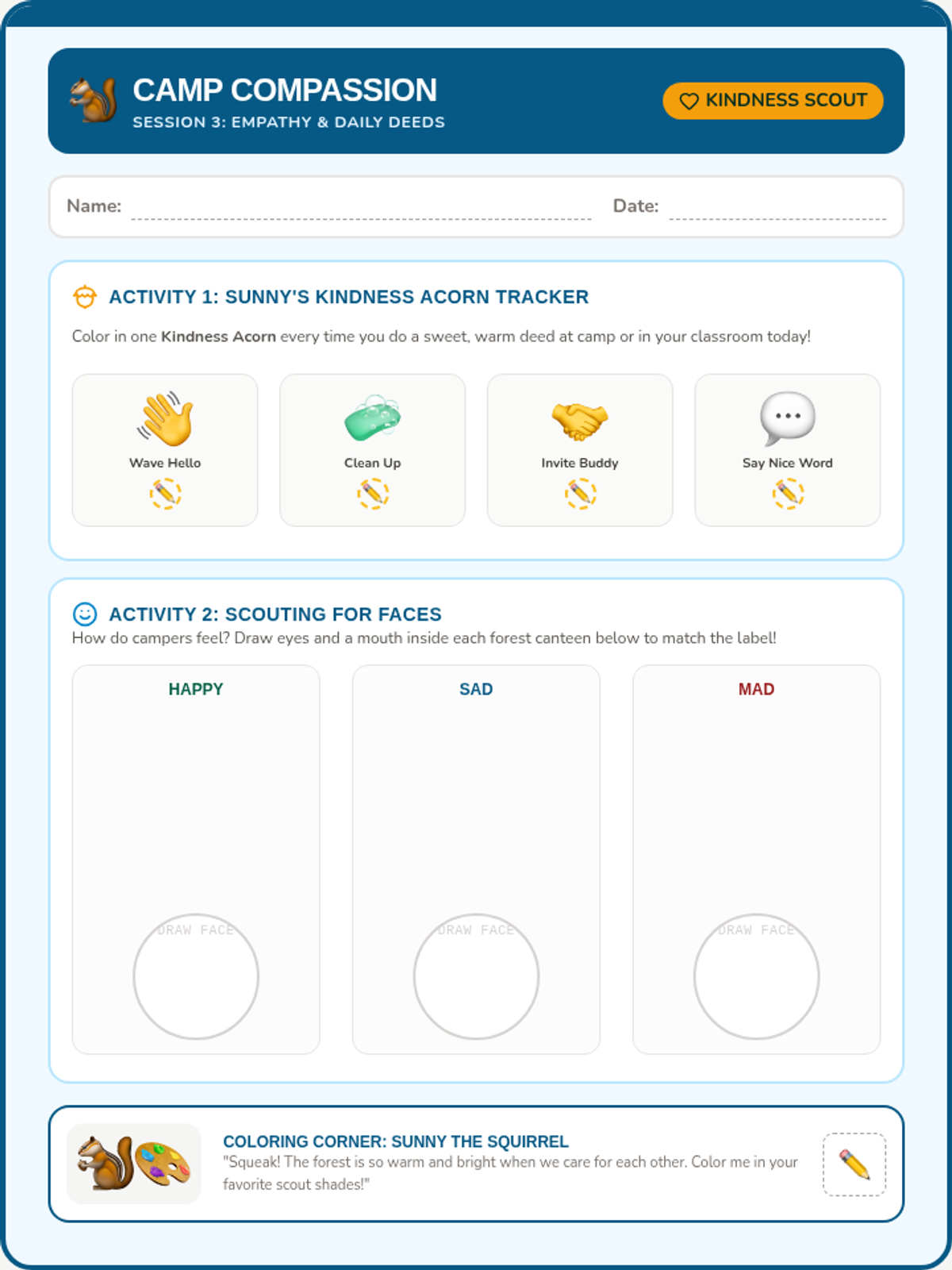
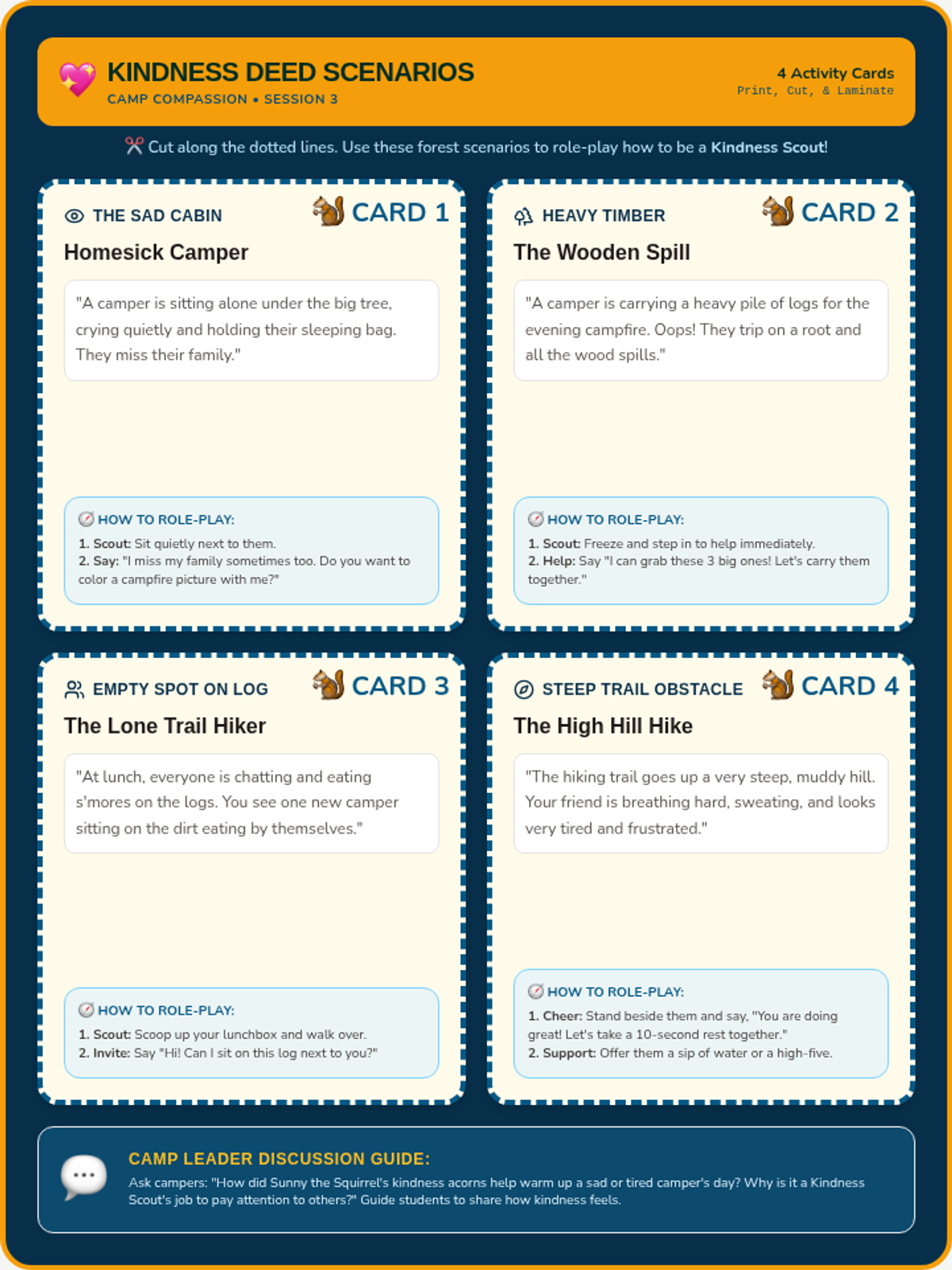
Campers learn how to scout for others' feelings, practice deep empathy, and earn 'kindness badges' by doing small daily deeds of support.
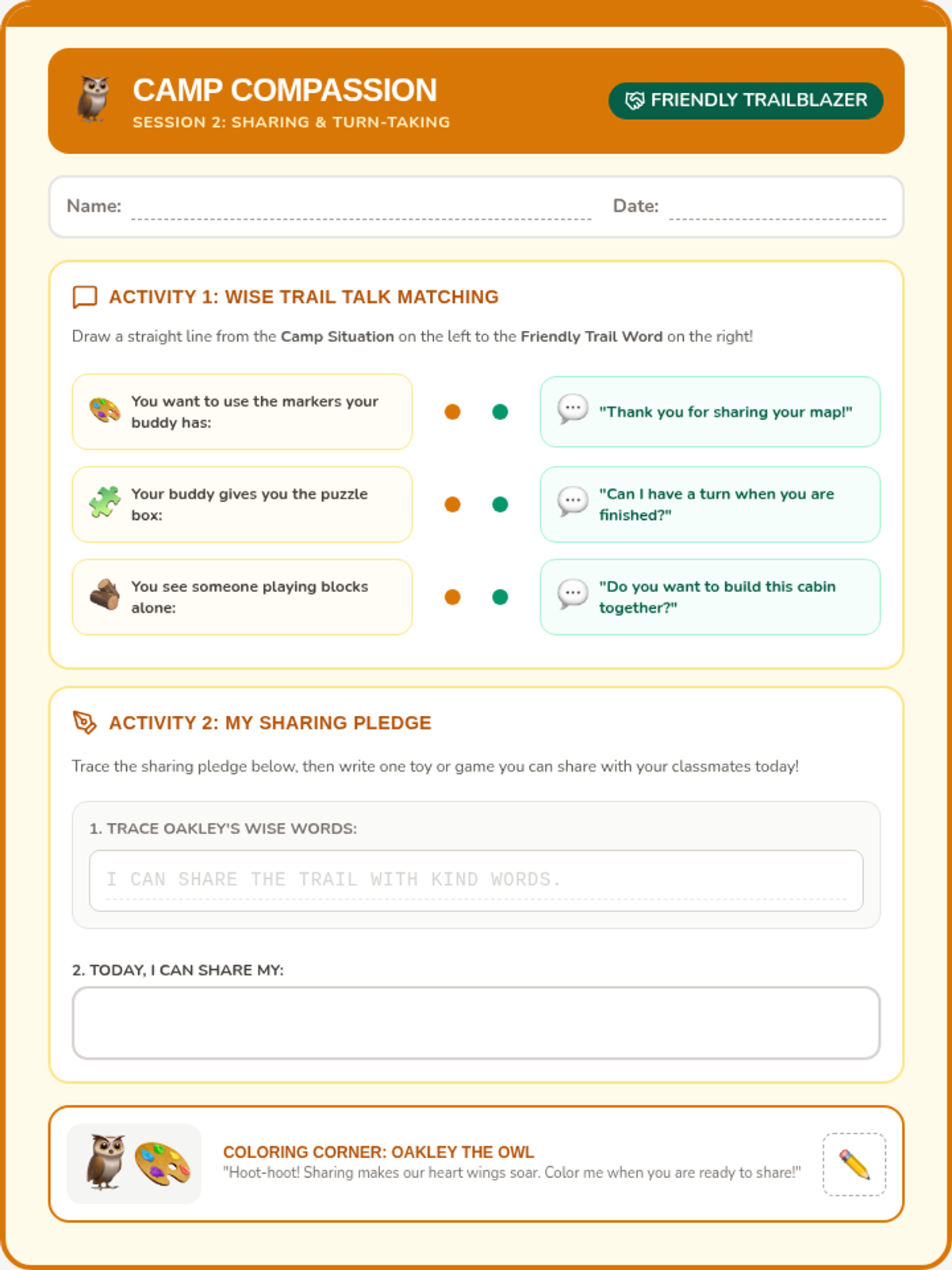
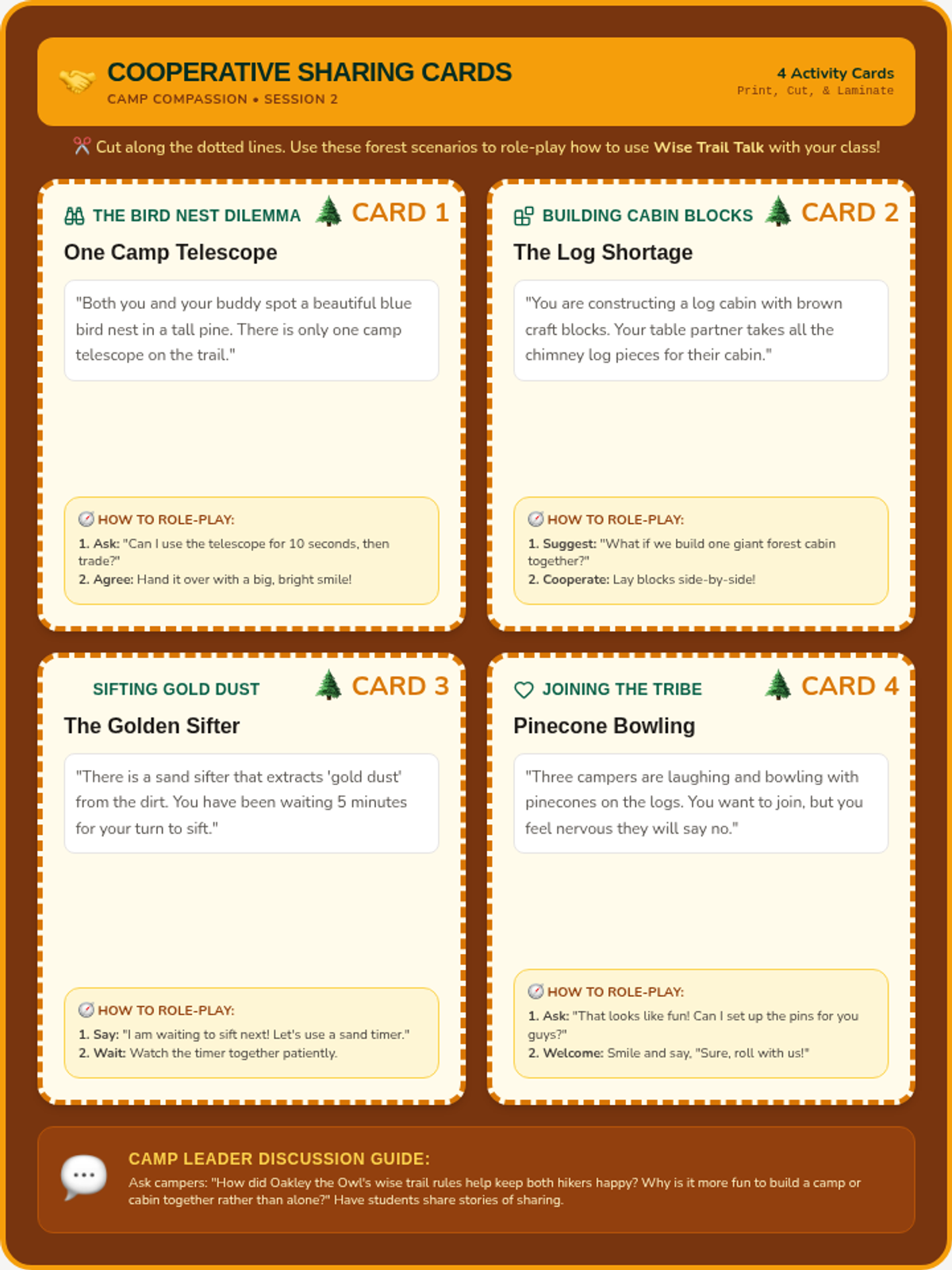
Students practice cooperative hiking strategies on the friendship trail, discovering how to share camp toys, take turns, and use supportive trail words.
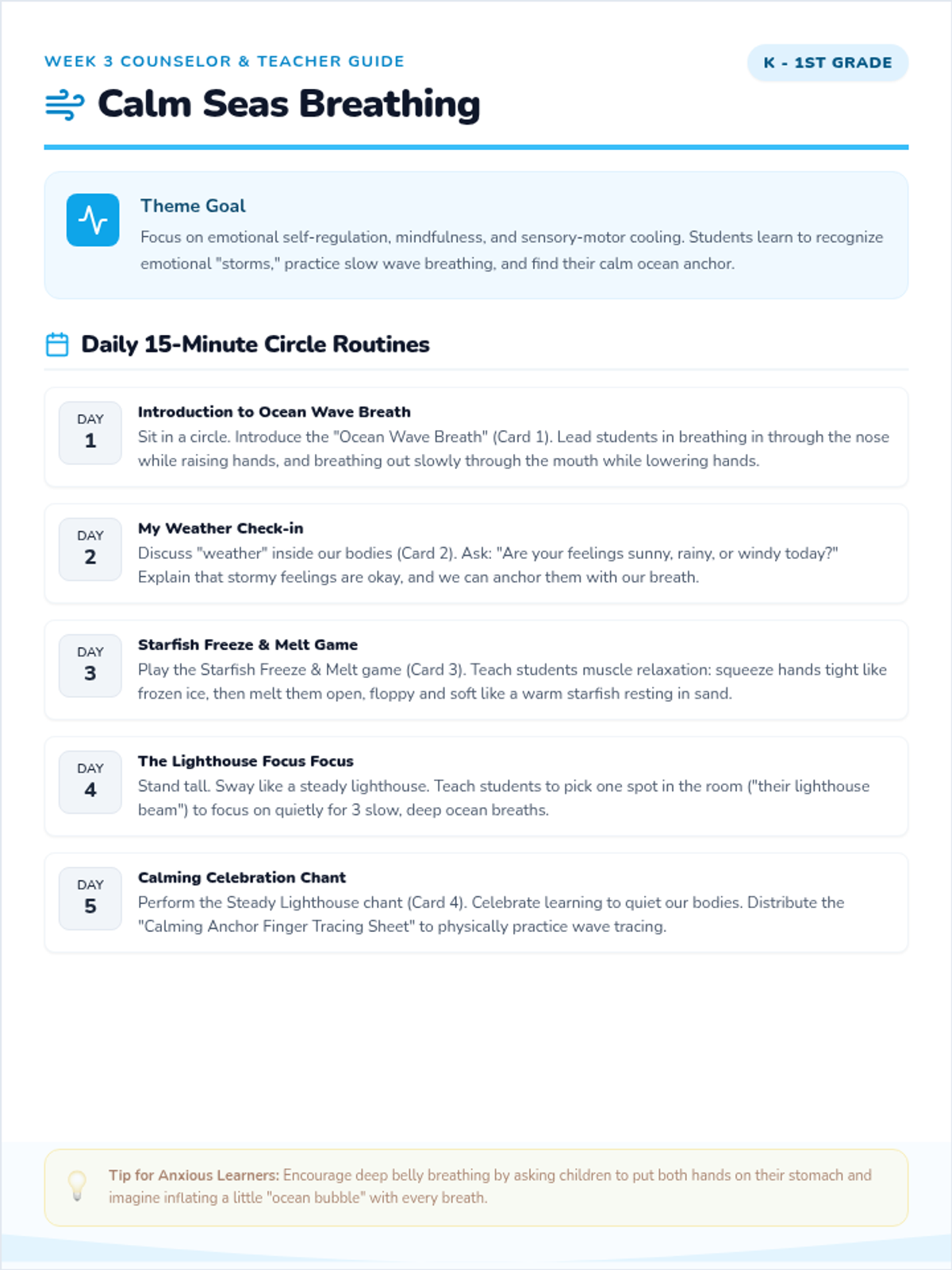
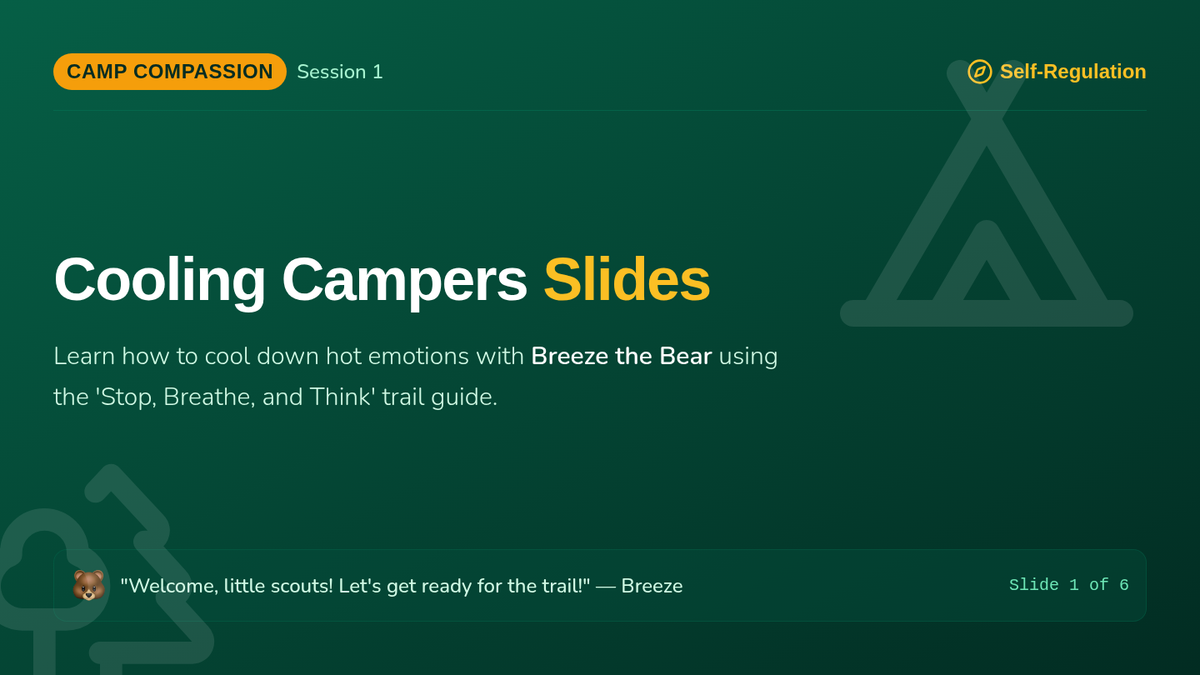
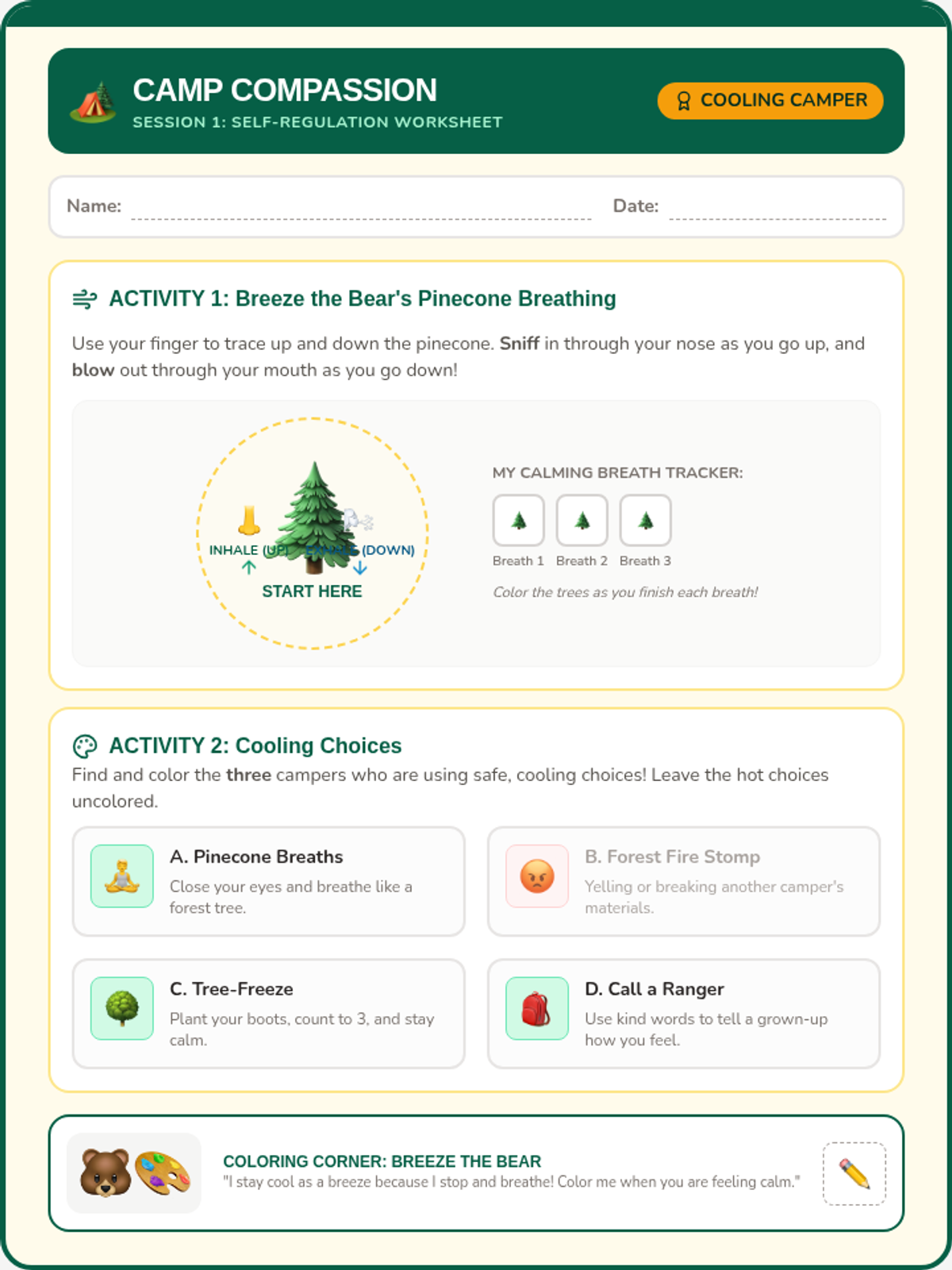
Young campers learn to cool down hot emotions using 'Stop, Breathe, and Think' strategies and a relaxing campfire deep-breathing exercise.
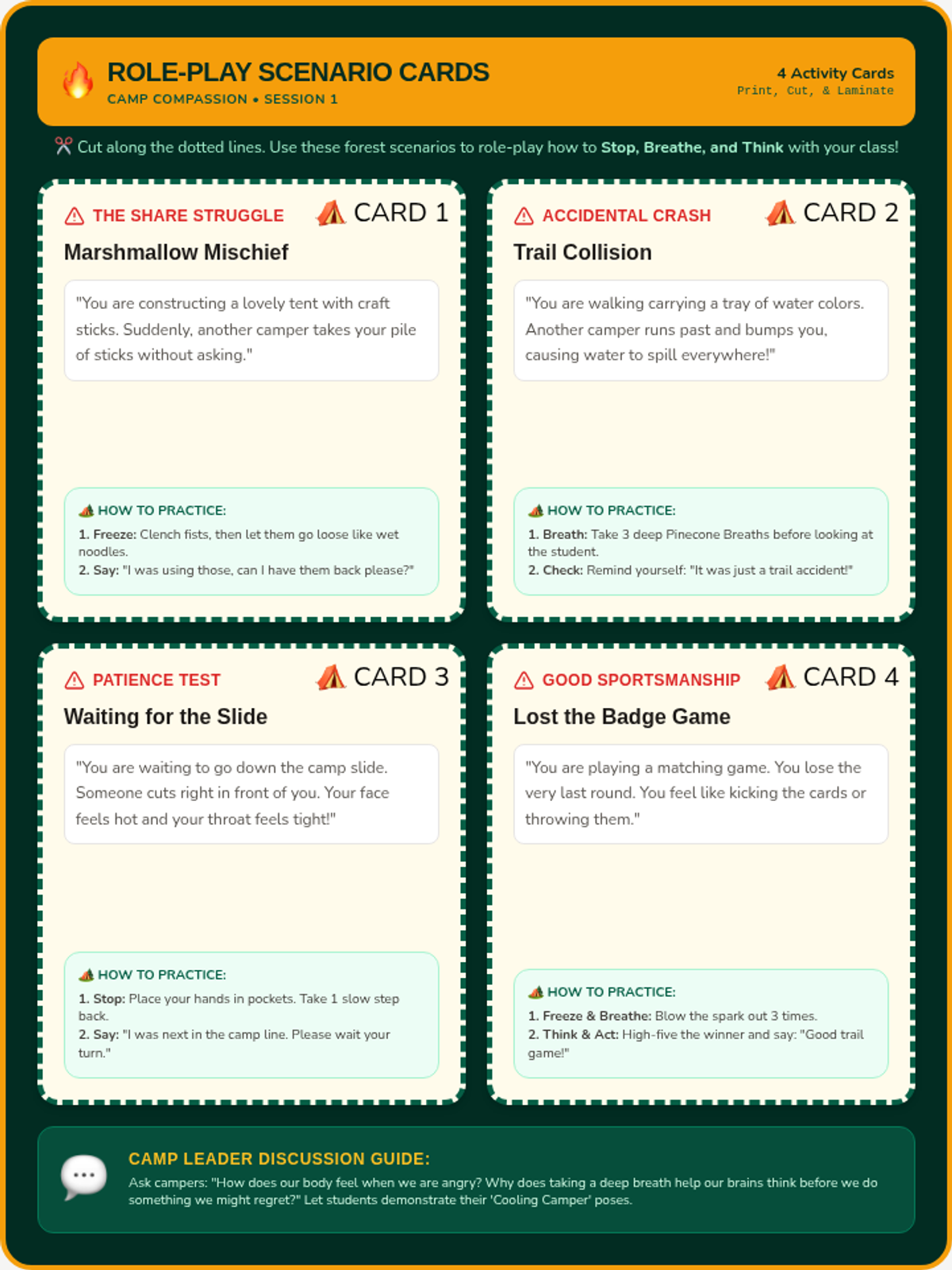
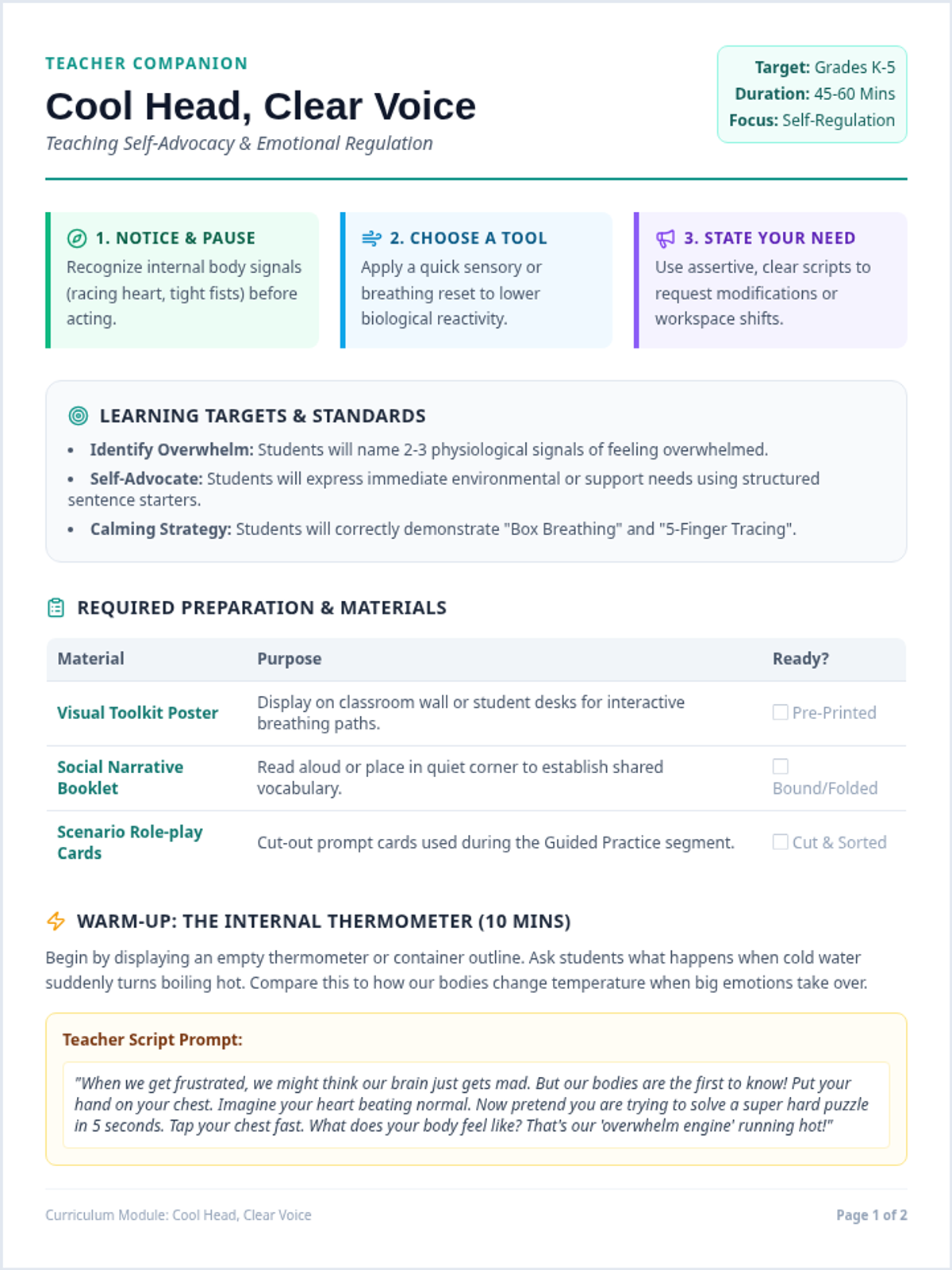
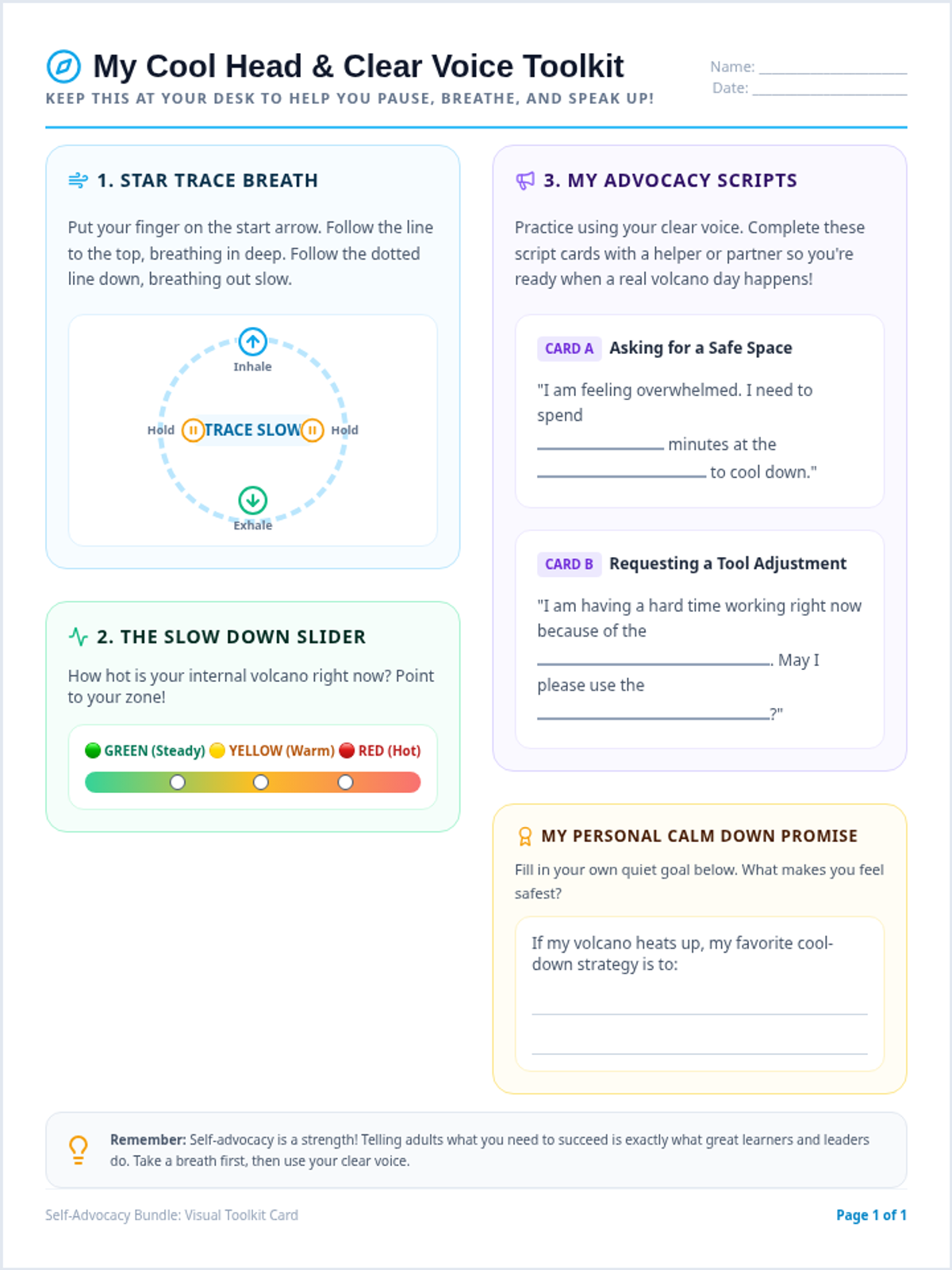
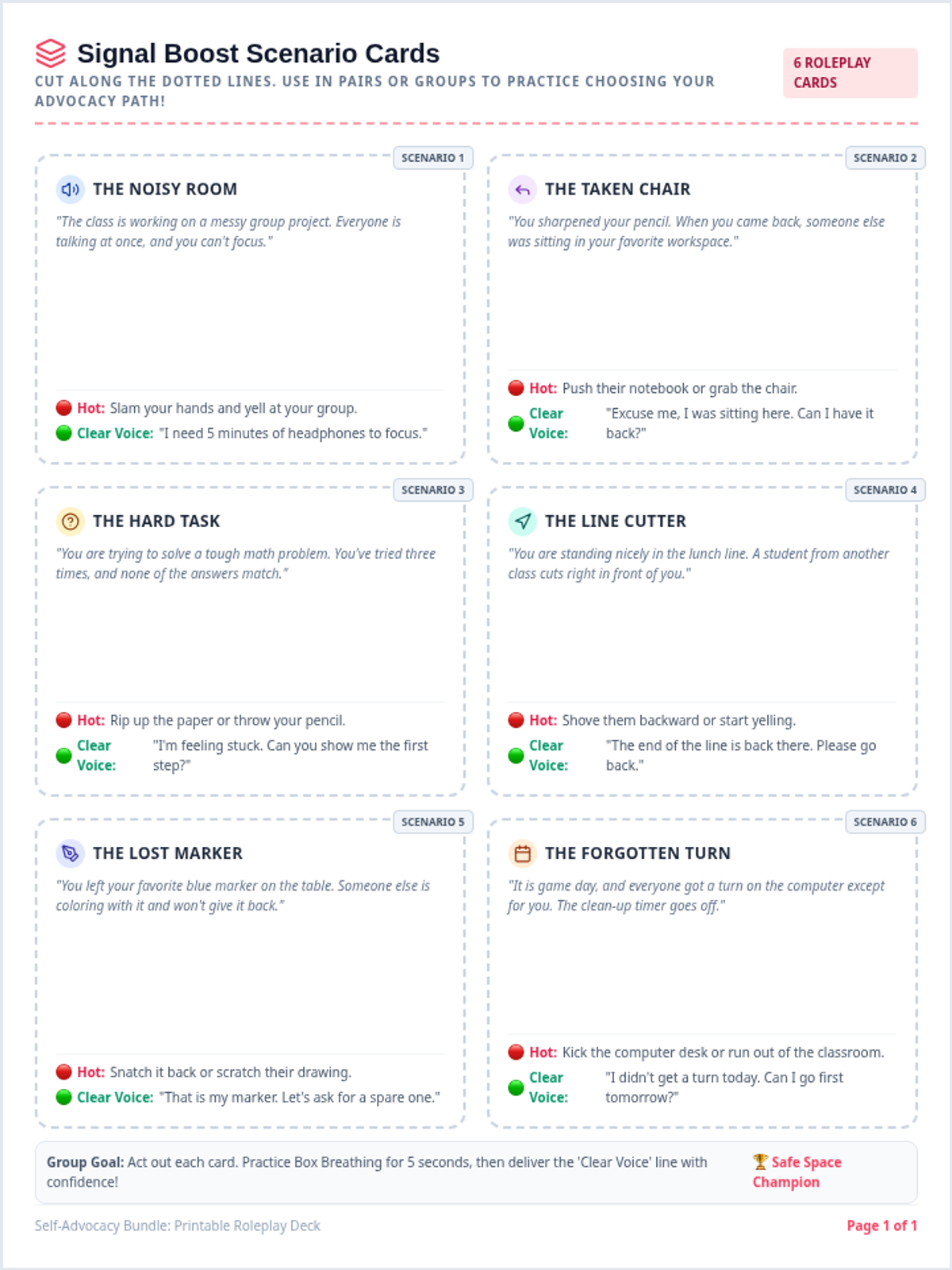
A complete lesson bundle on emotional regulation, self-advocacy, and calming strategies. Includes a comprehensive teacher's guide, a visual toolkit, a social narrative book, and interactive role-playing scenario cards.
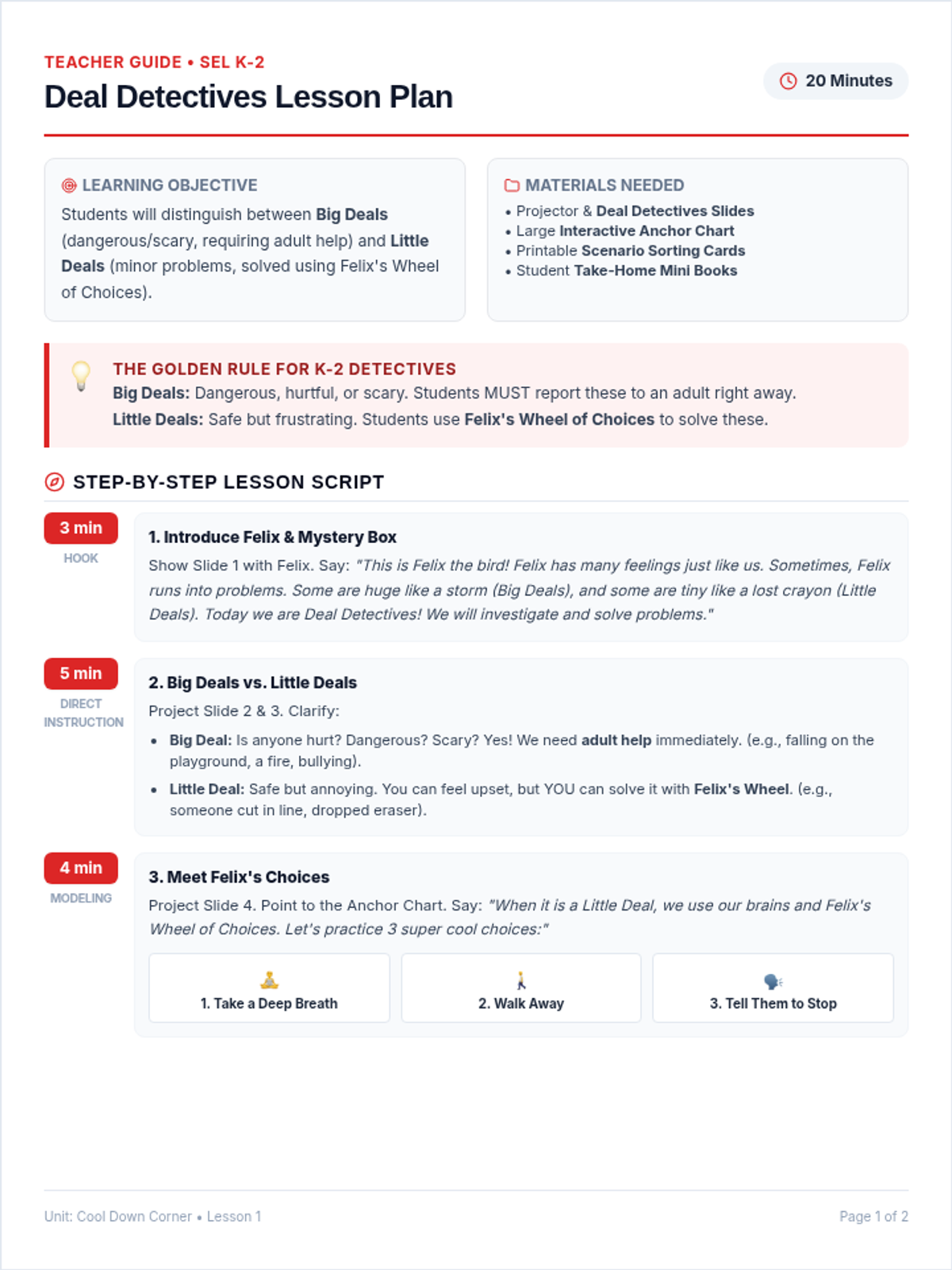
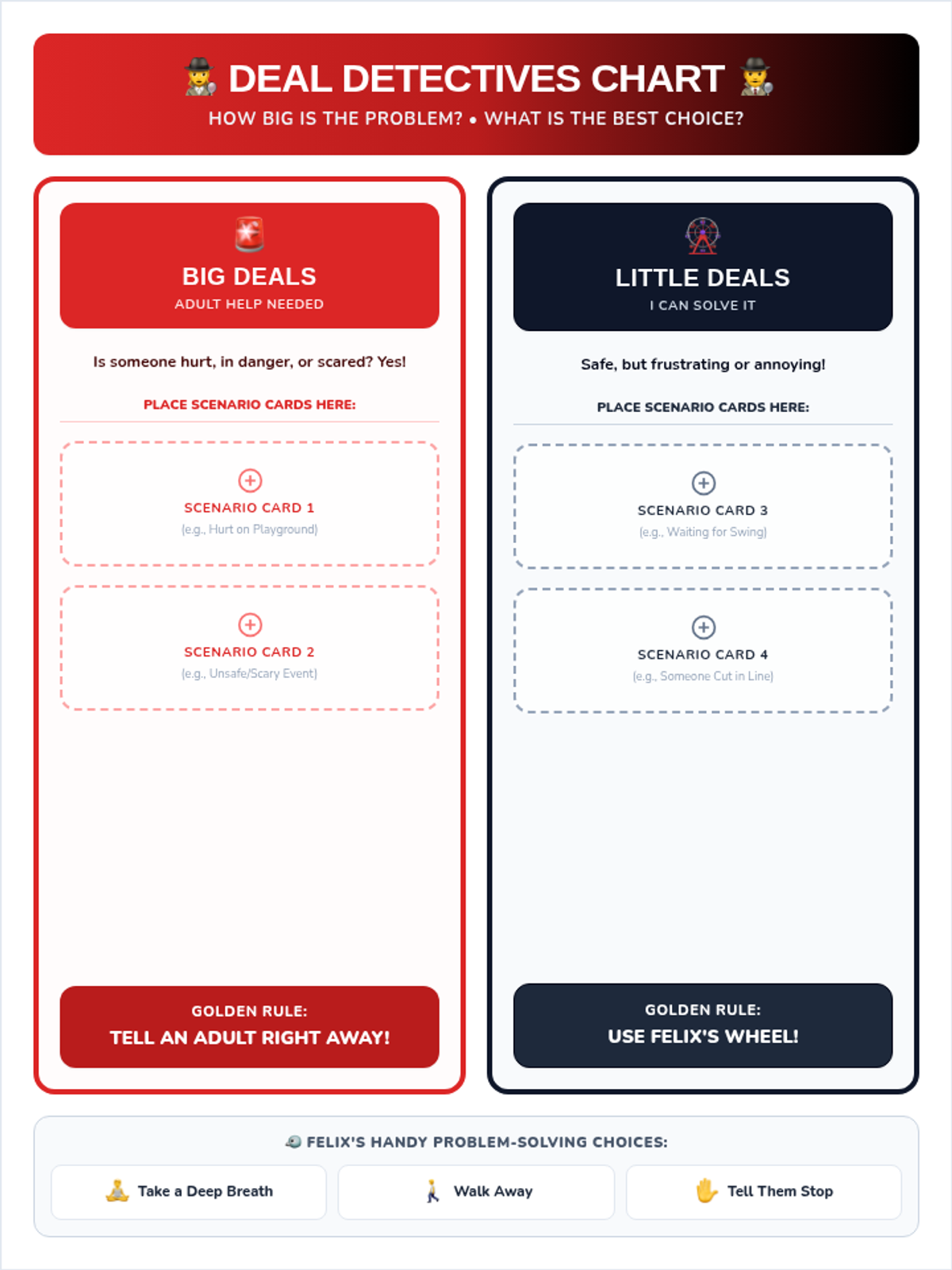
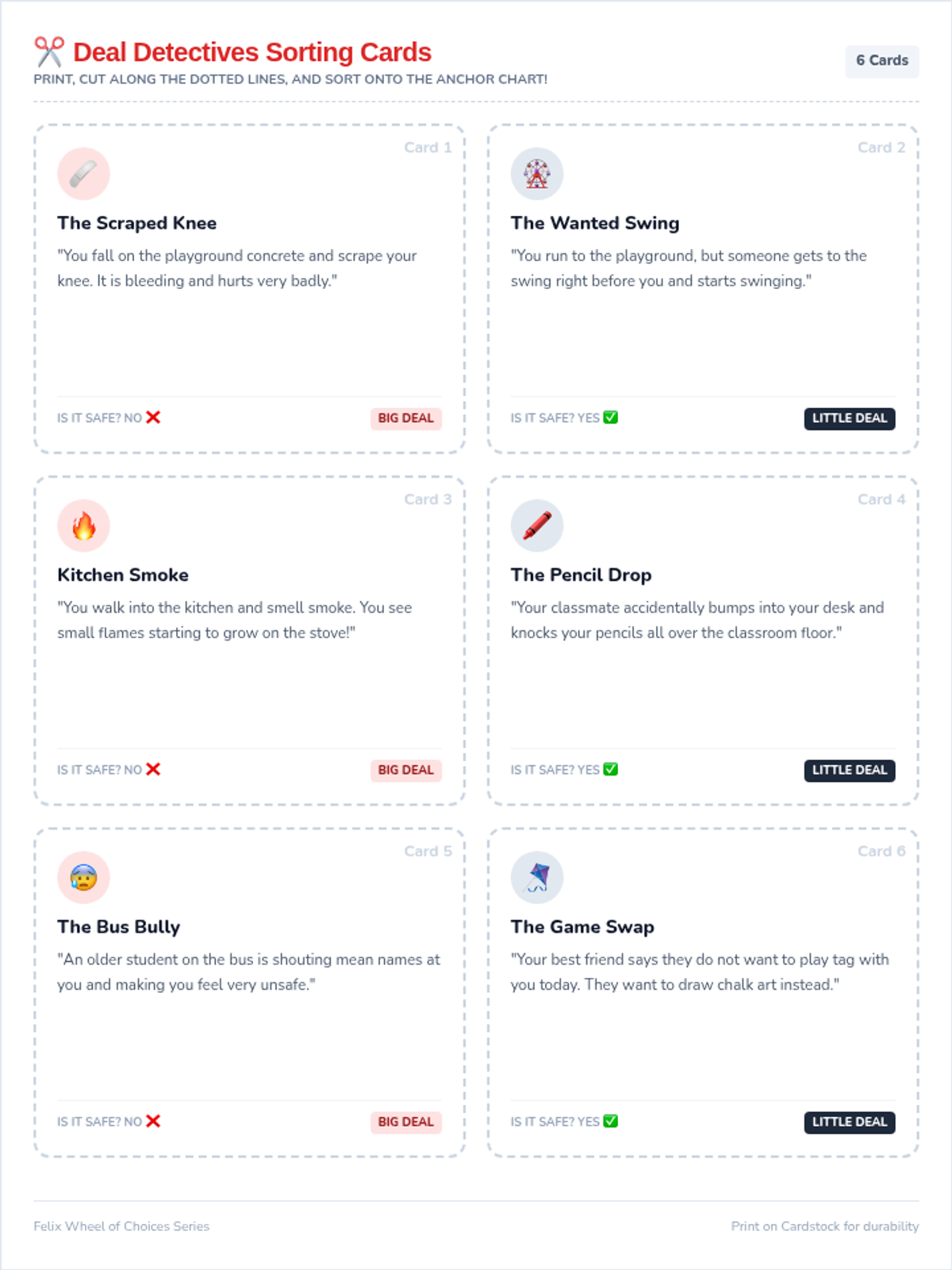
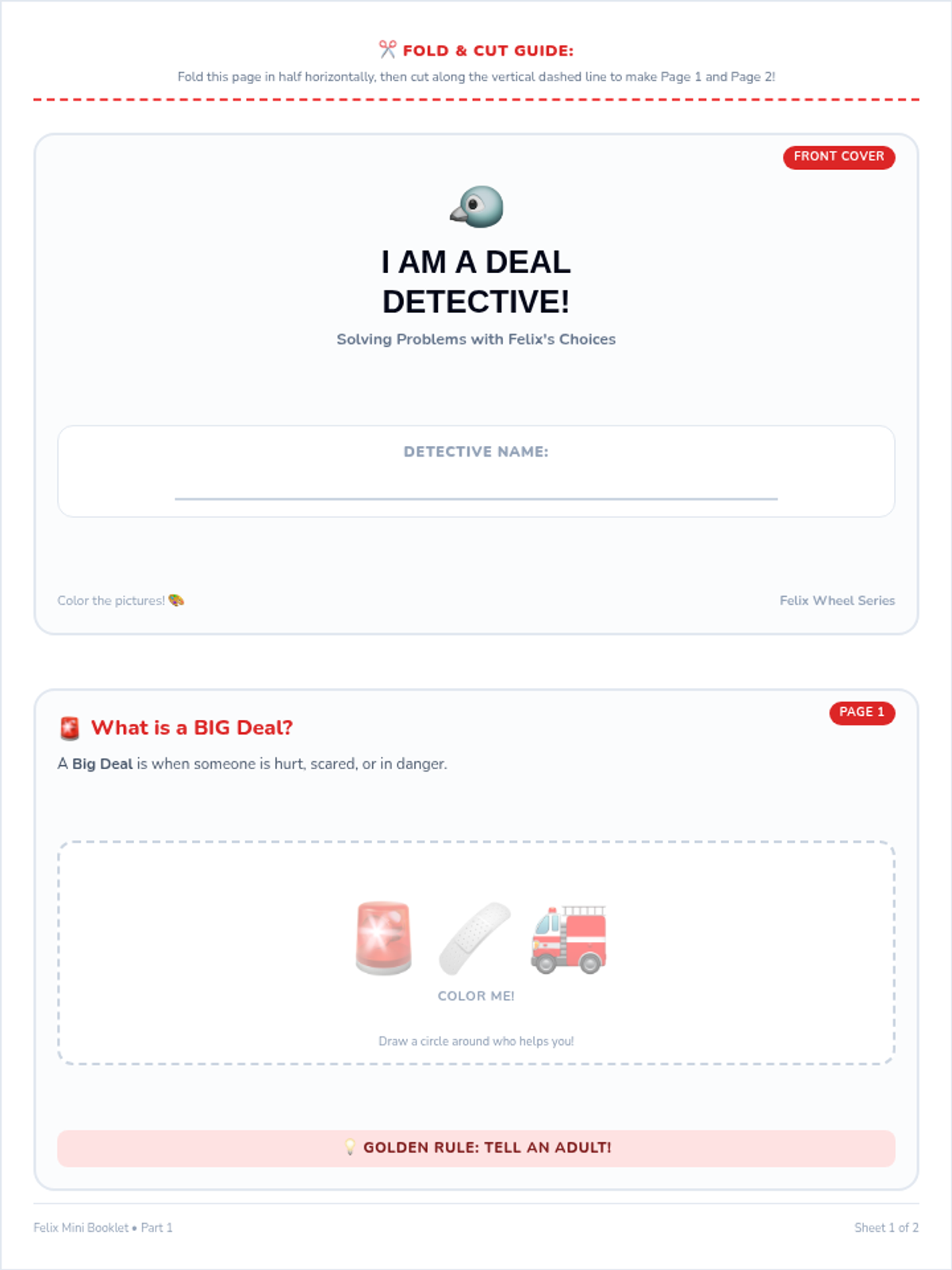
A 20-minute SEL lesson for K-2 students to distinguish between Big Deals (requiring adult help) and Little Deals (solved using Felix's Wheel of Choices), focusing on key coping strategies.
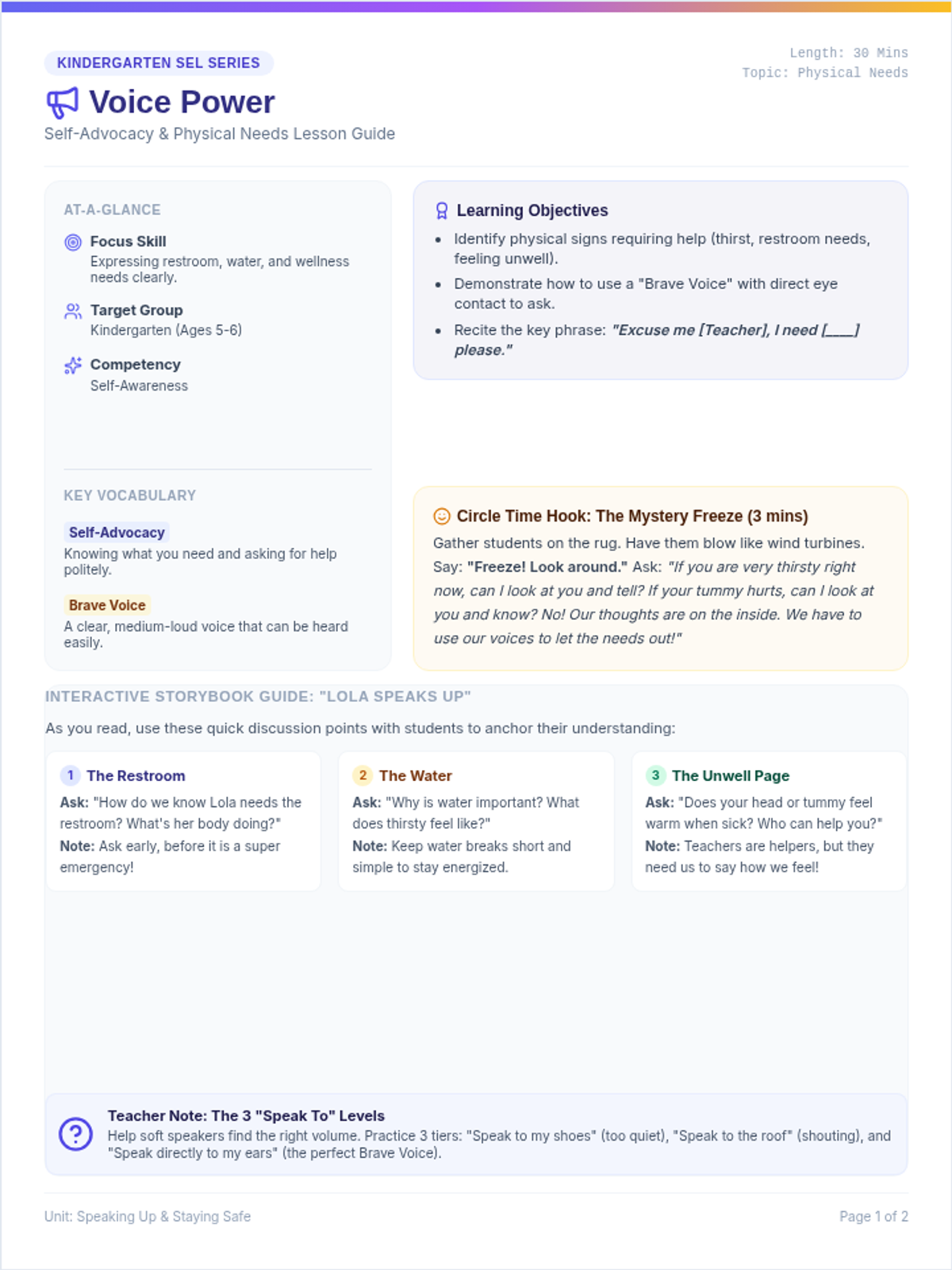
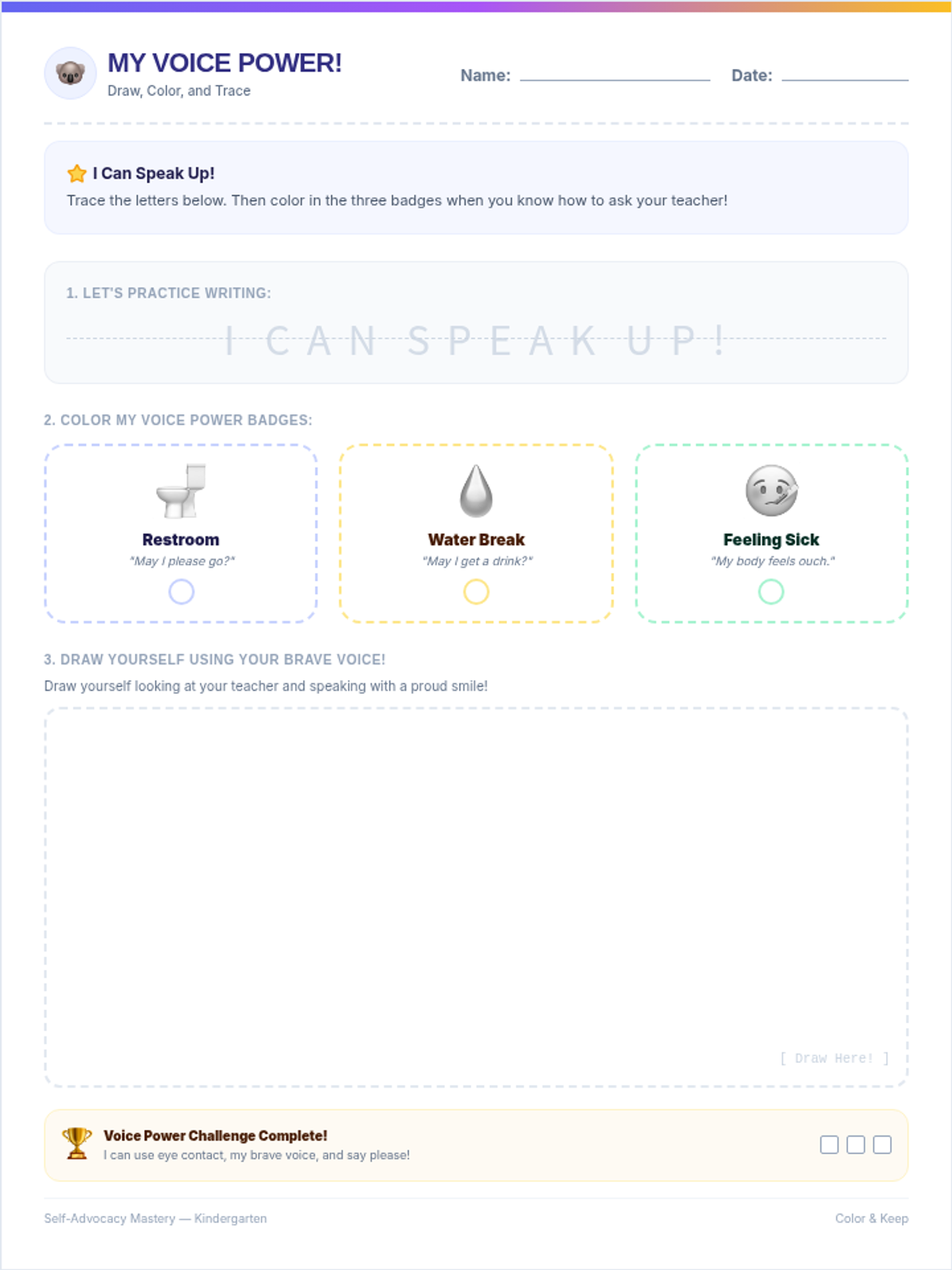
A social-emotional learning lesson for Kindergarteners focused on self-advocacy. Students learn how to speak up to their teacher about basic physical needs like water, restroom breaks, and feeling unwell through an engaging storybook and interactive discussion.
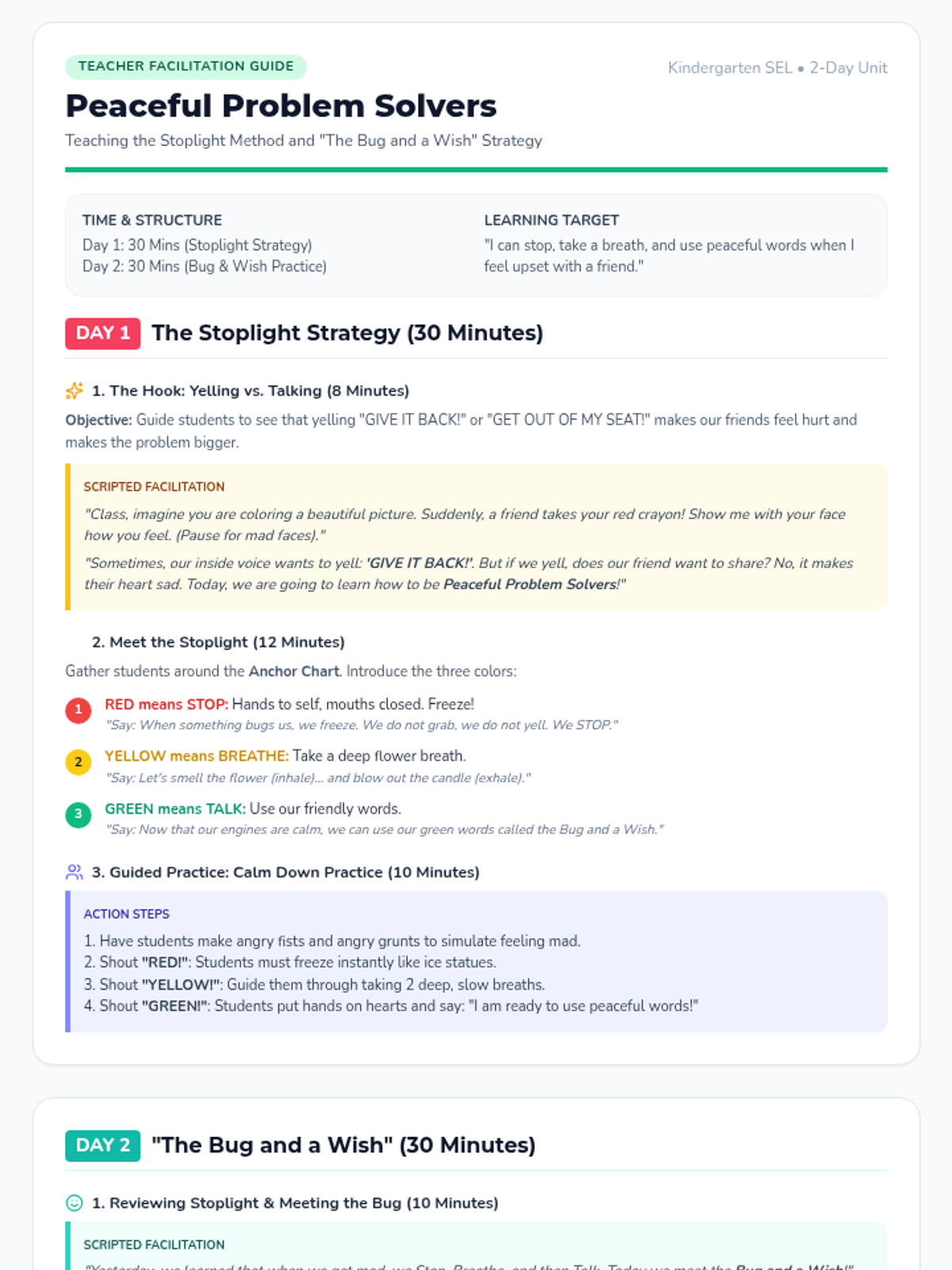
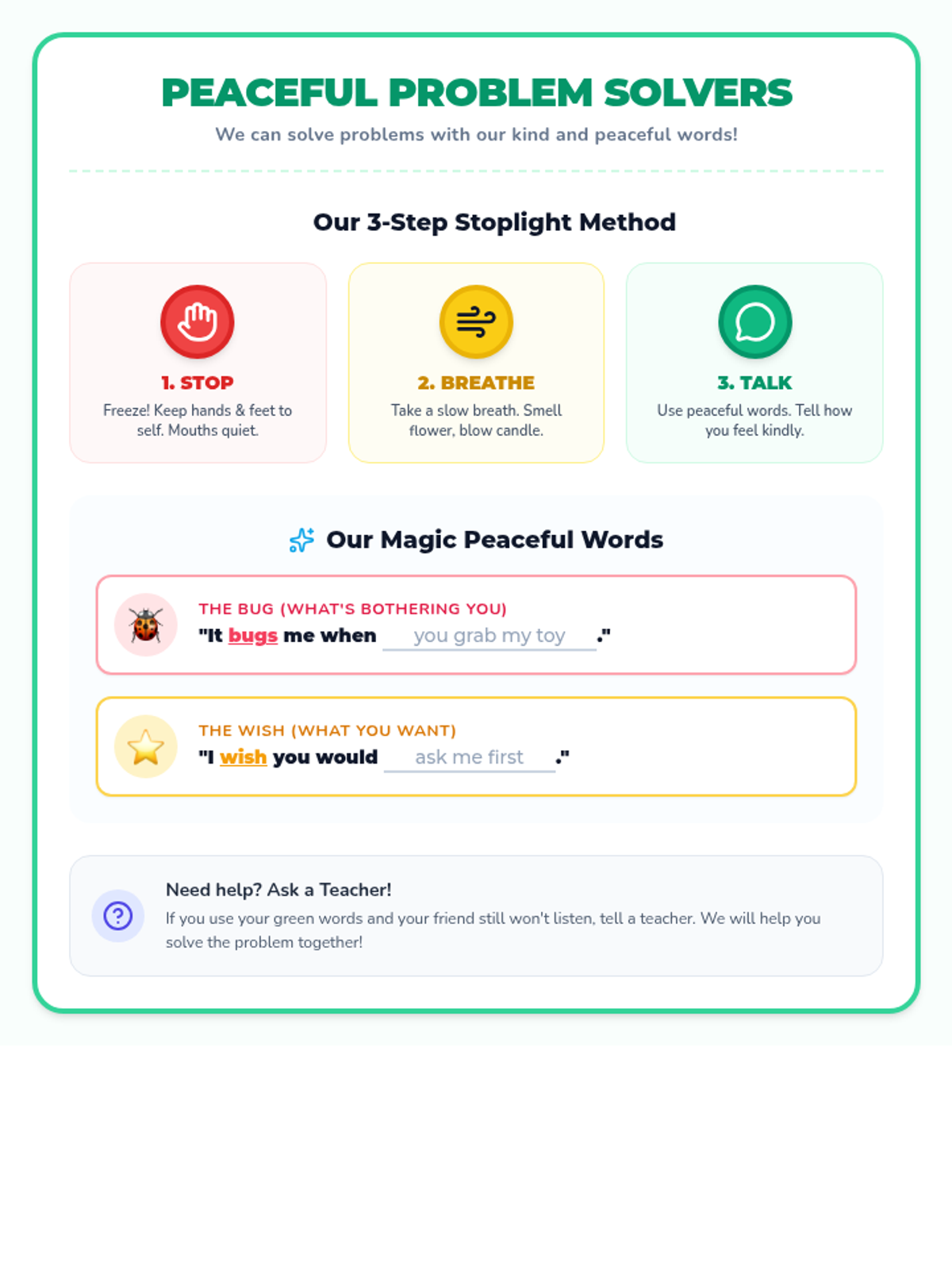
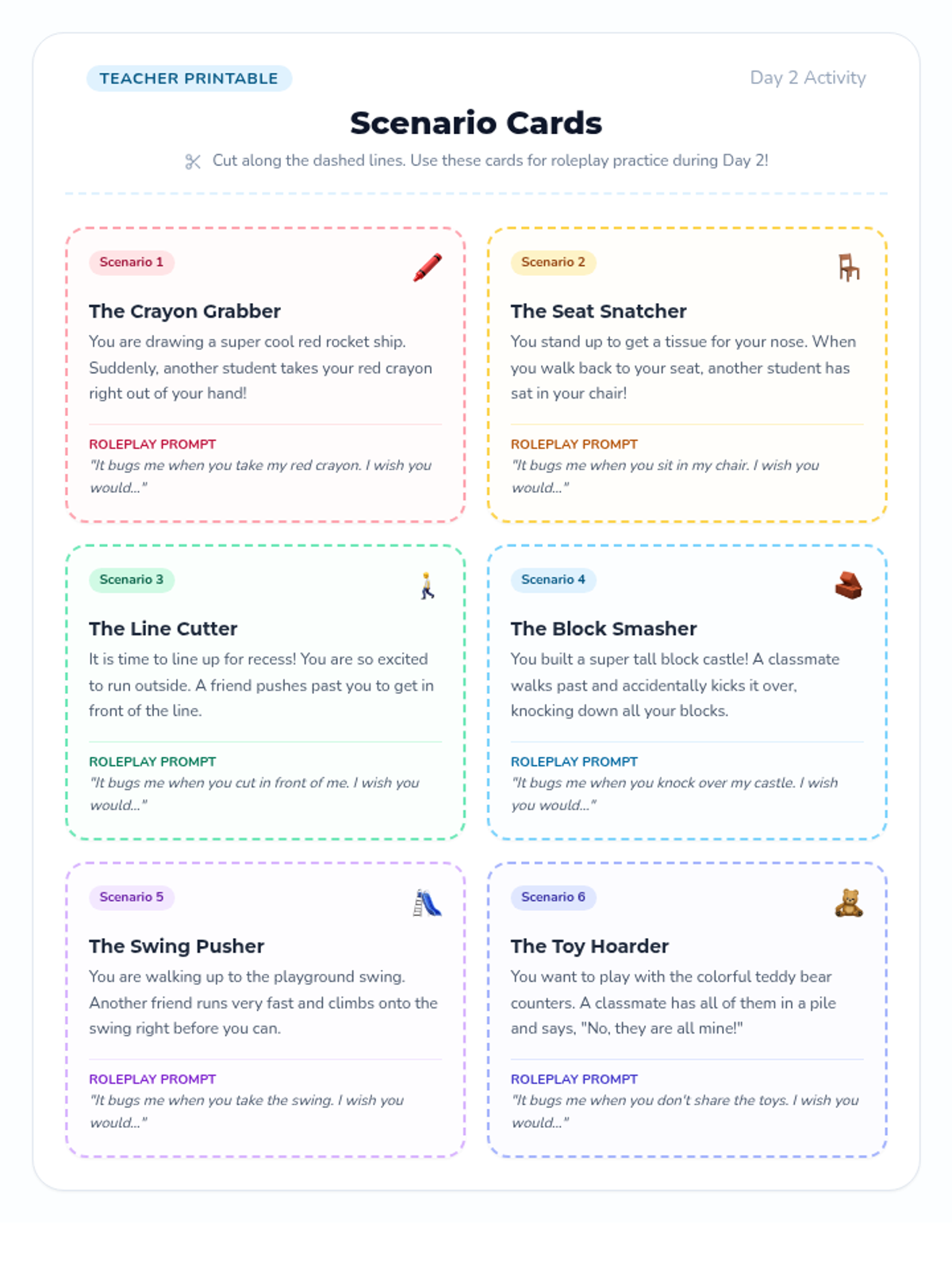
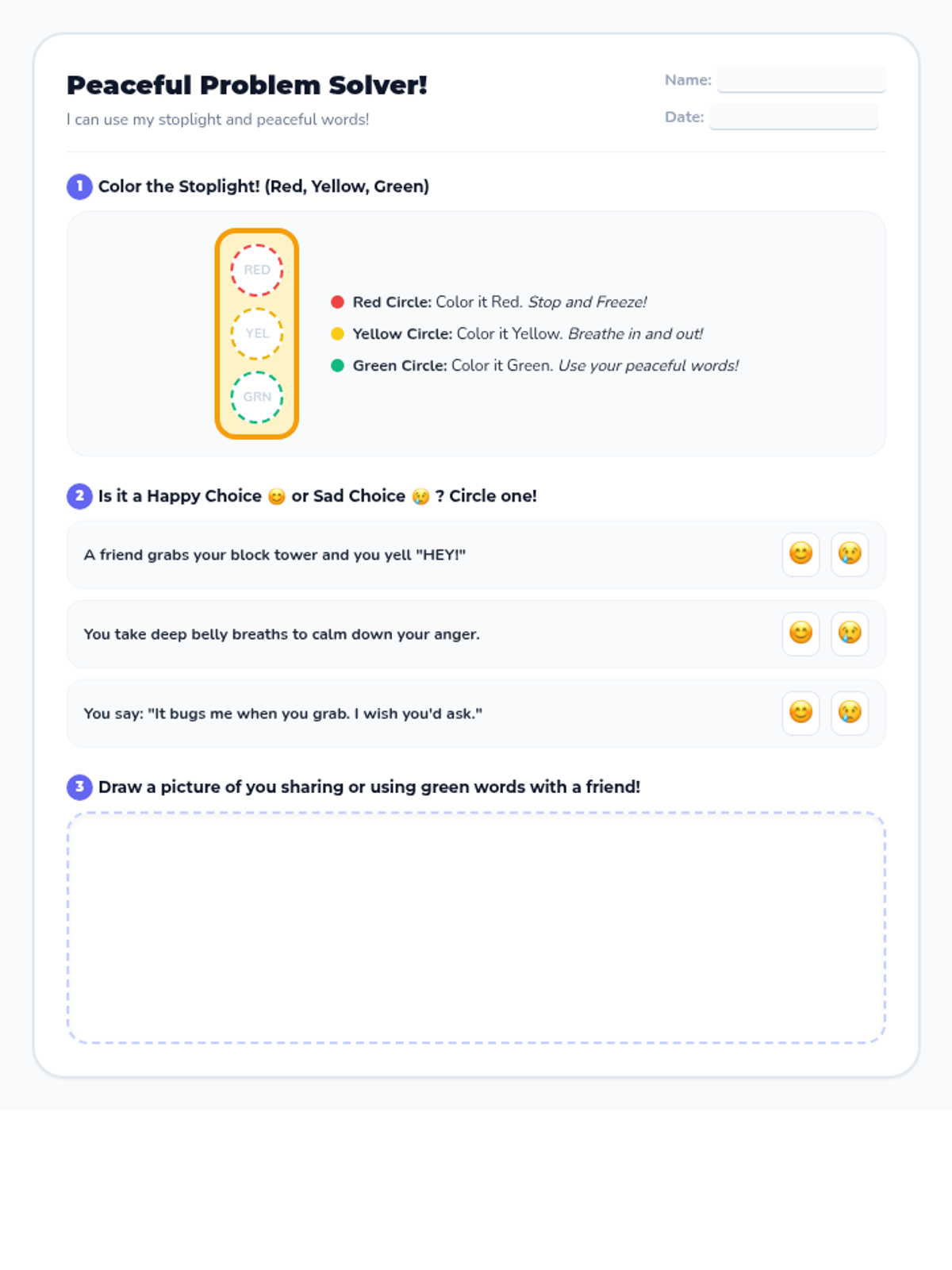
A comprehensive 2-day social-emotional learning lesson for kindergarteners focused on transitioning from yelling to using peaceful words. Teaches the 3-step stoplight strategy (Stop, Breathe, Talk) and 'The Bug and a Wish' conflict resolution tool.
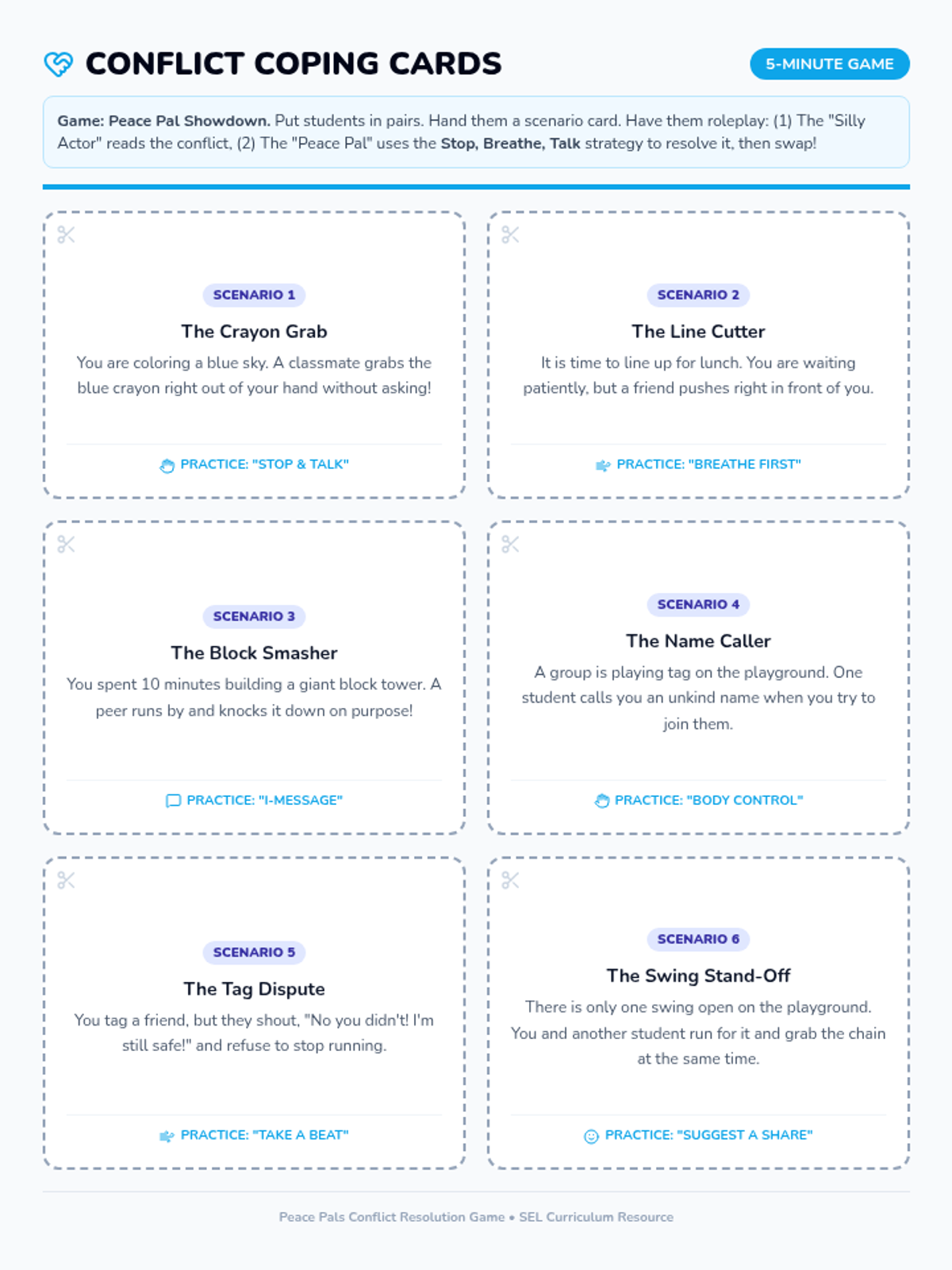
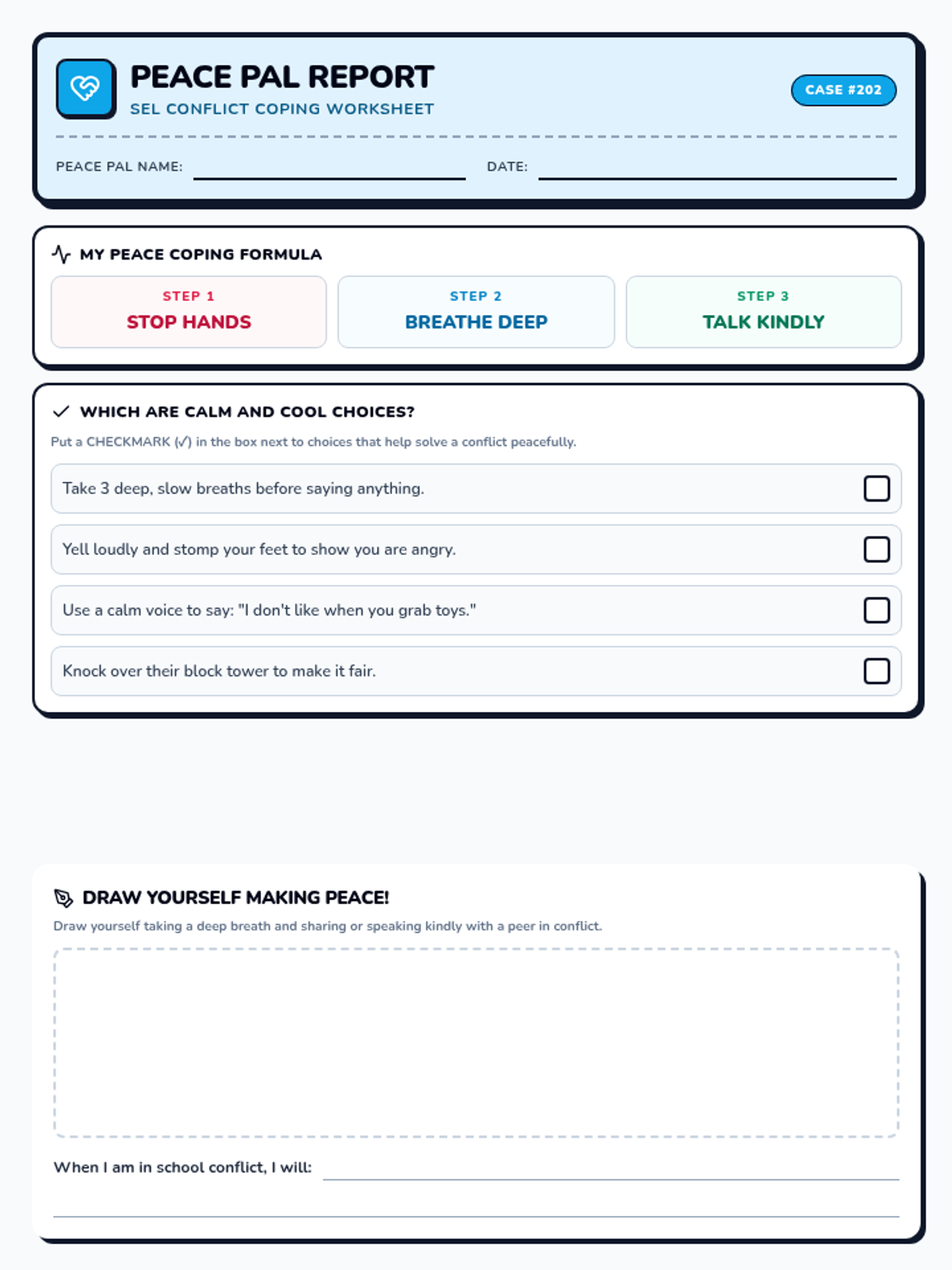
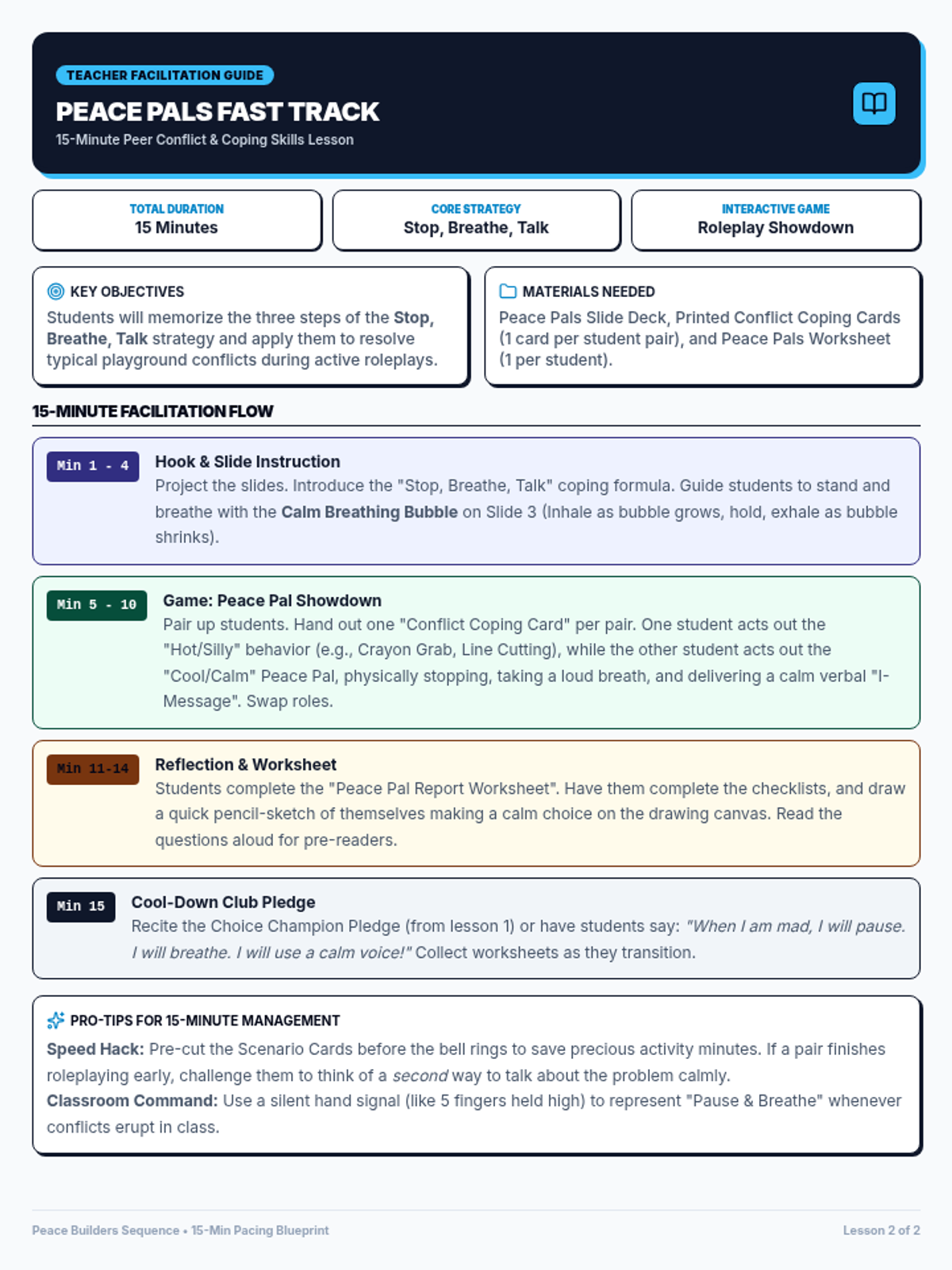
A fast-paced, 15-minute SEL lesson targeting early elementary students to resolve peer conflict and practice emotional regulation. It introduces the "Stop, Breathe, Talk" coping strategy with interactive slides, role-playing scenario cards, and a reflection worksheet.
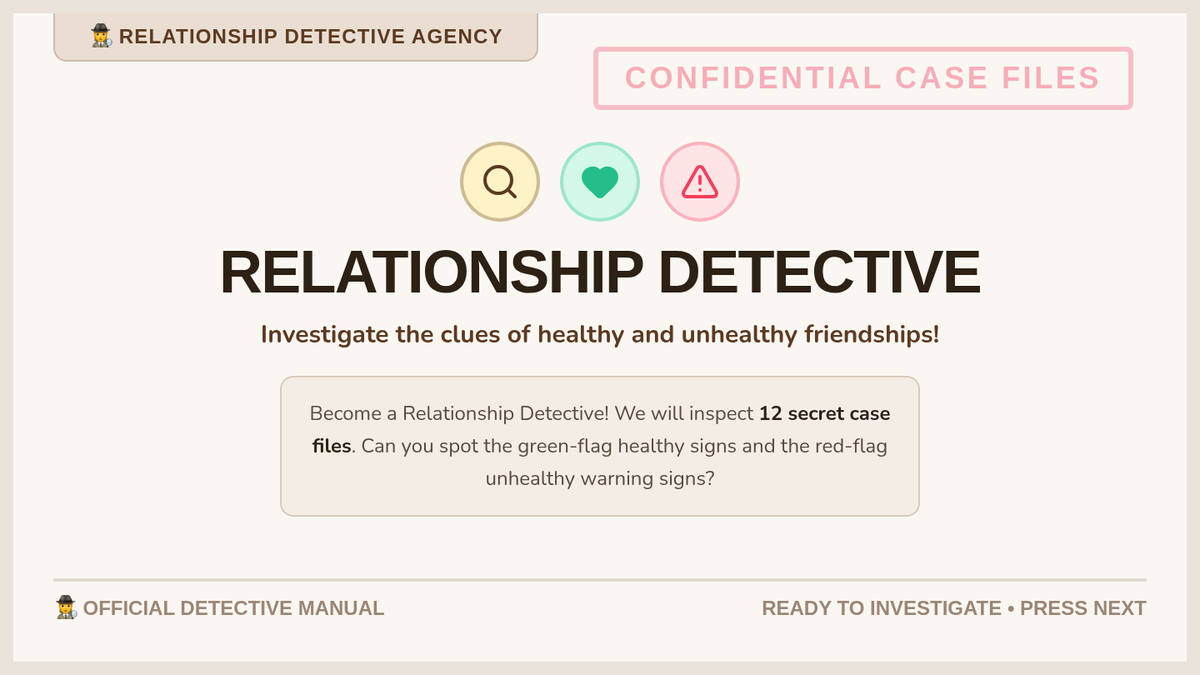
A highly visual, engaging interactive lesson where students act as 'Relationship Detectives' to investigate 12 friendship case files, sorting healthy green-flag behaviors from unhealthy red-flag behaviors.
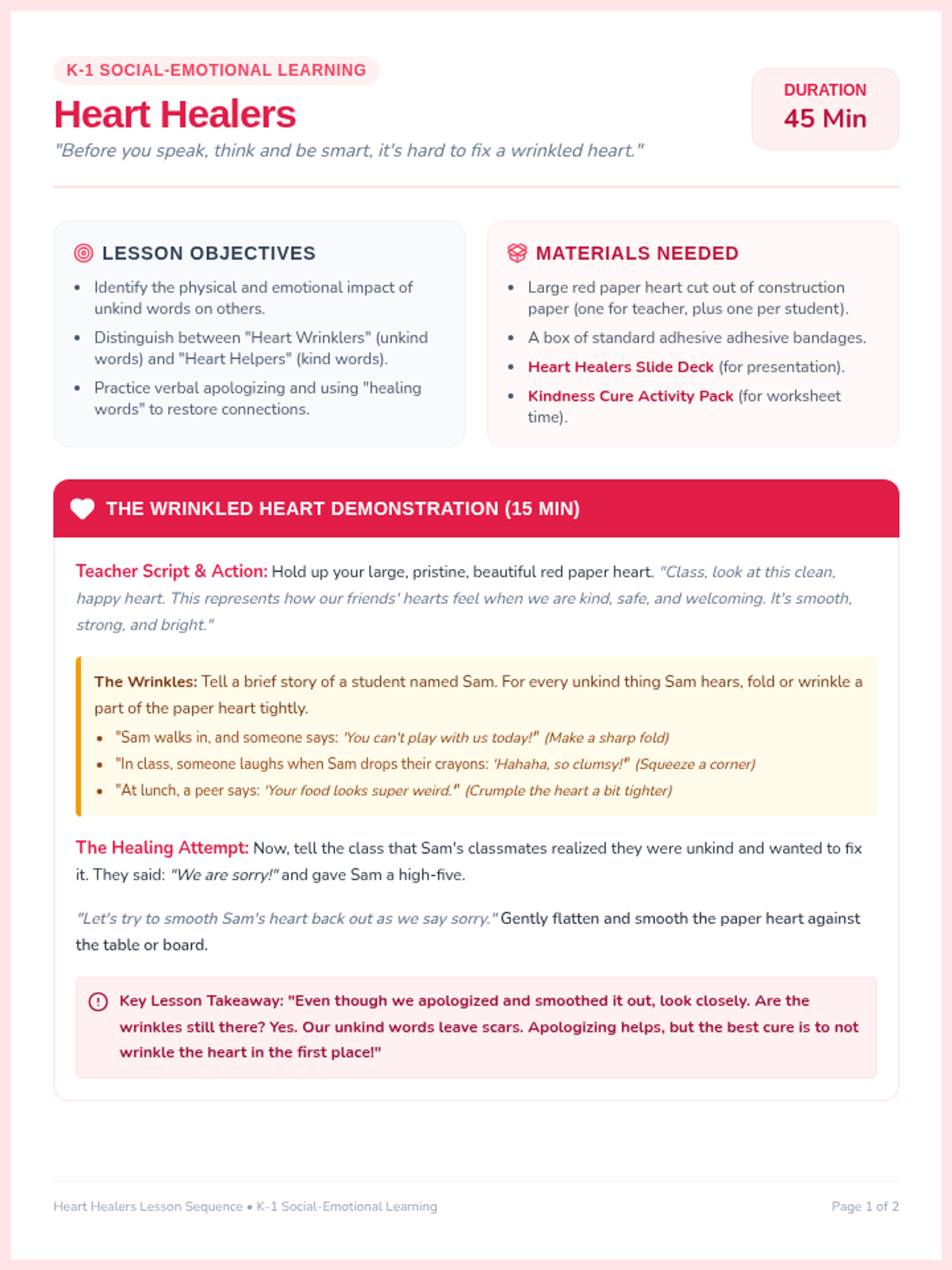
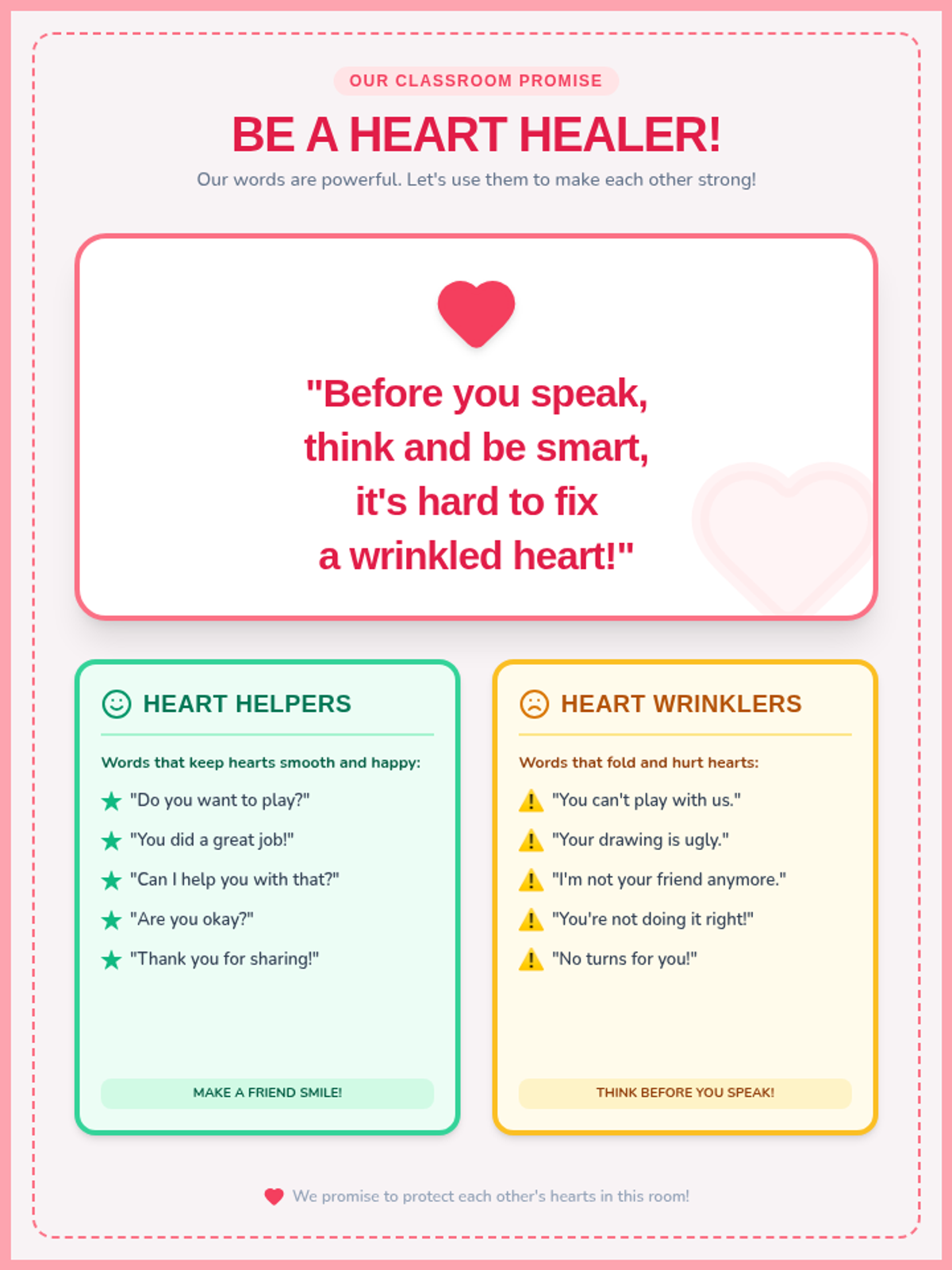
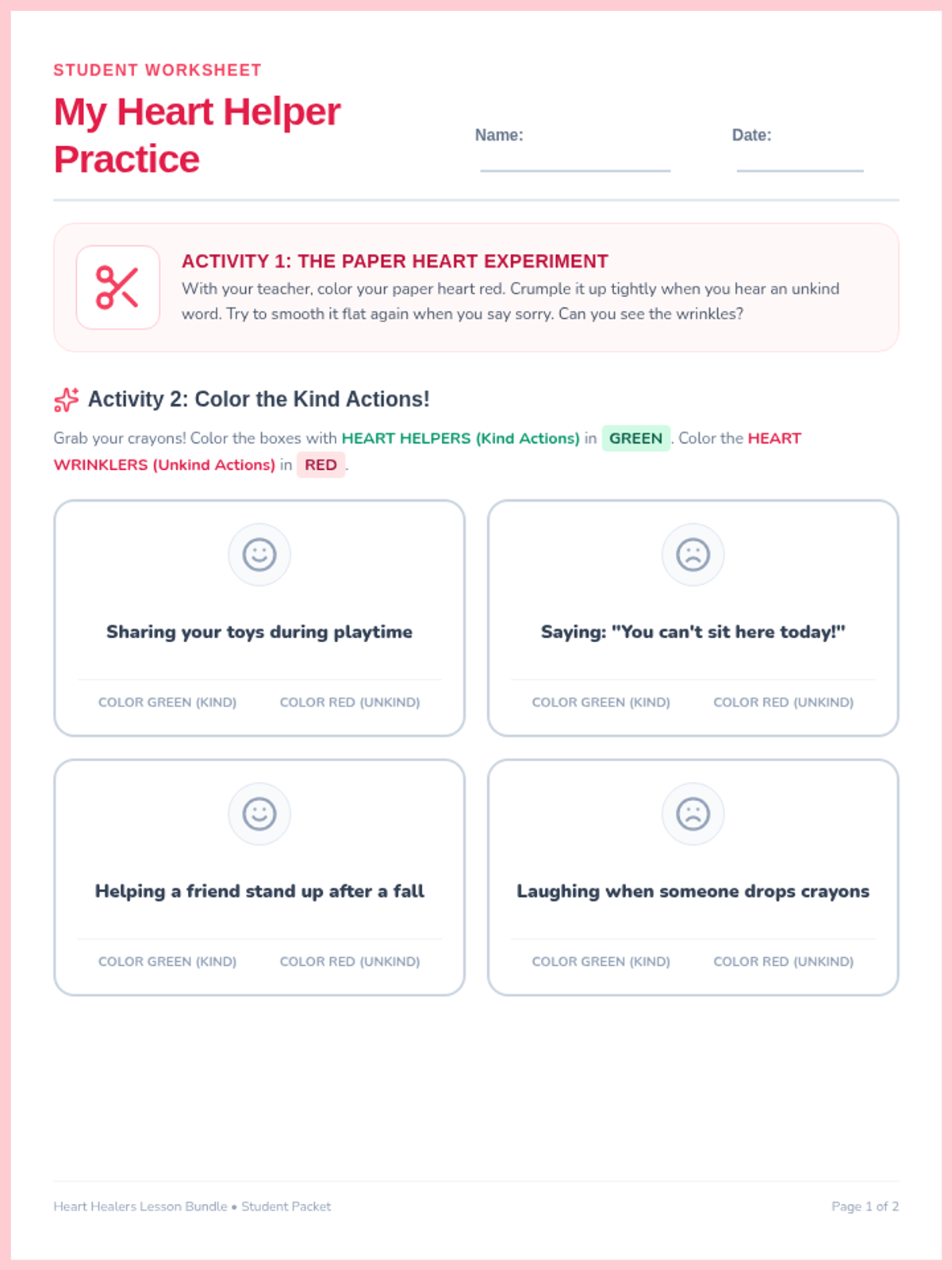
A heart-centered social-emotional learning lesson for K-1 students using the powerful 'Wrinkled Heart' paper metaphor. Students learn how unkind words physically affect others and practice using kind words to heal and protect hearts.
A social-emotional learning lesson focusing on establishing classroom expectations, active listening, respecting personal space, and practicing kindness through visual models and interactive reflection.
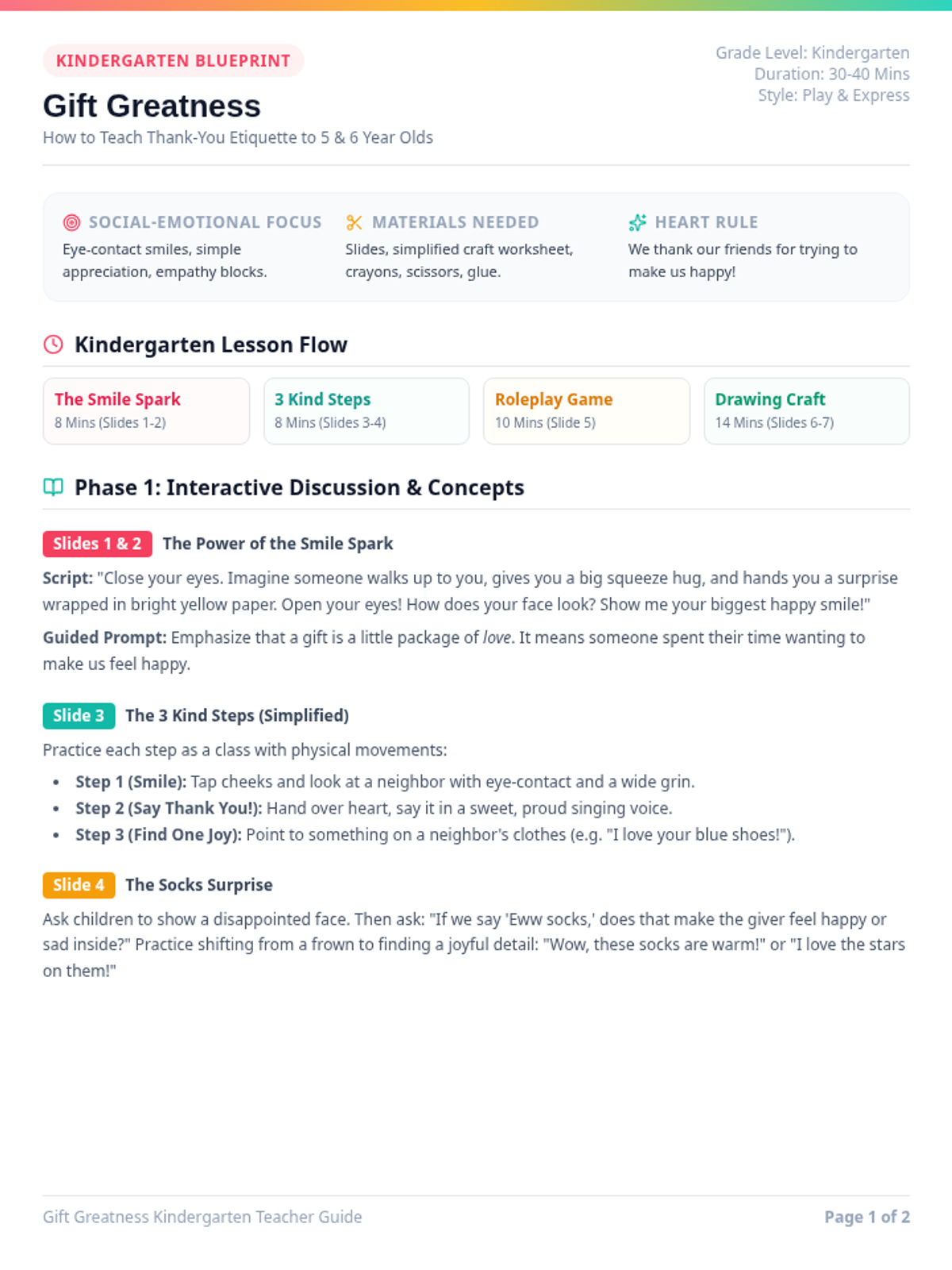
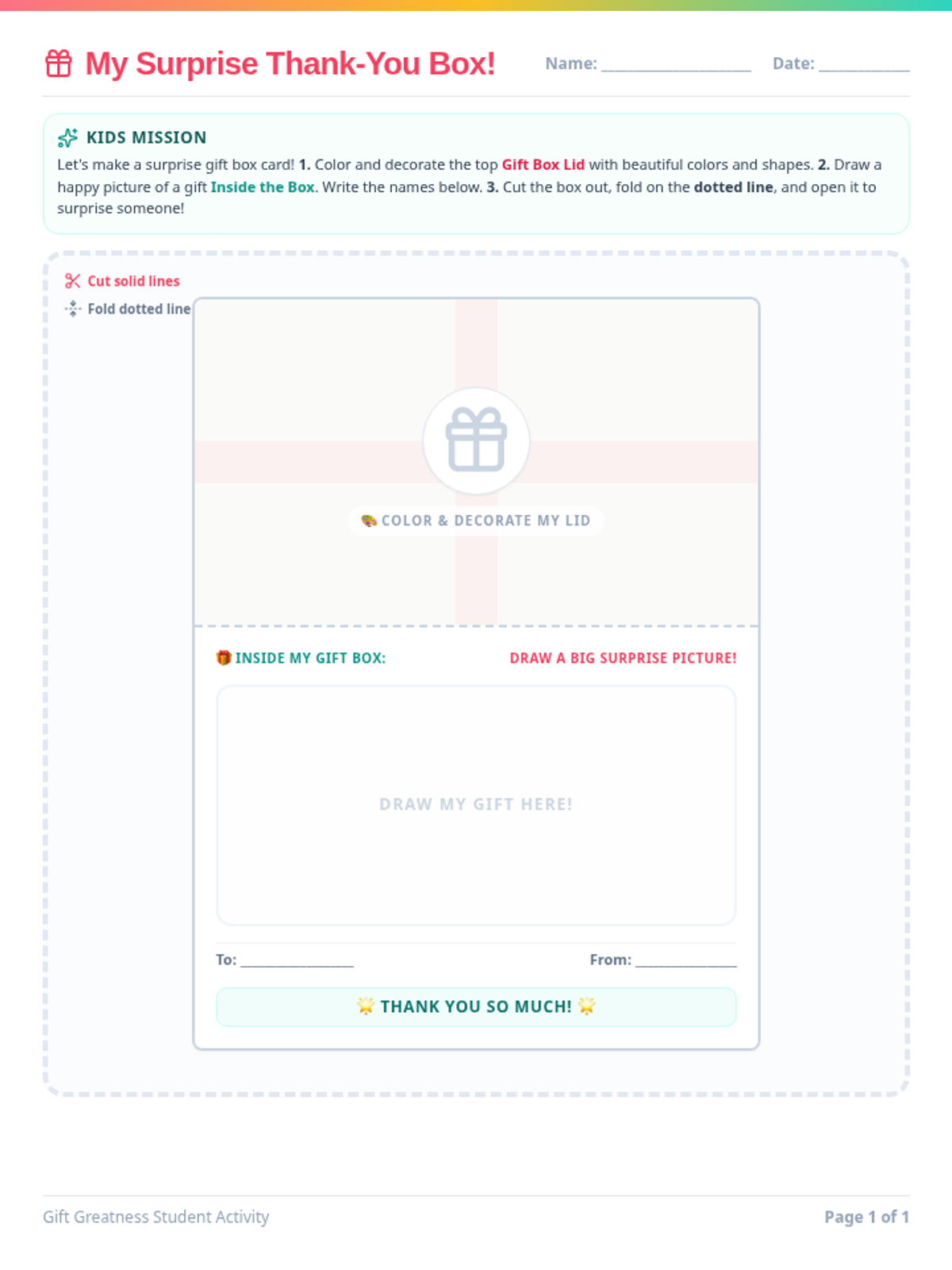
An elementary school lesson focused on the social-emotional skills of gift giving and receiving. Students learn to express appreciation, handle disappointment gracefully, and practice empathy through discussion and a hands-on crafting activity.
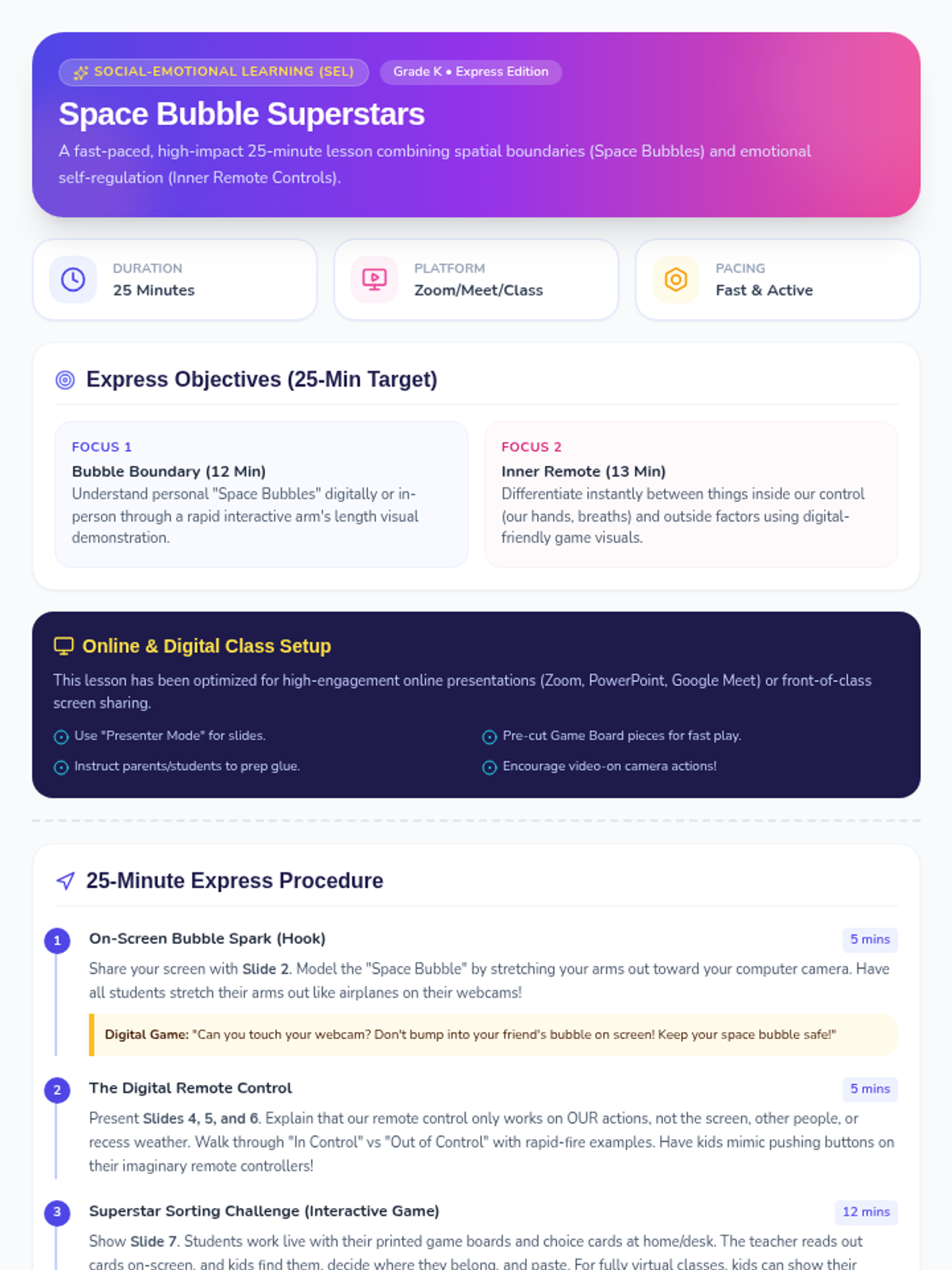
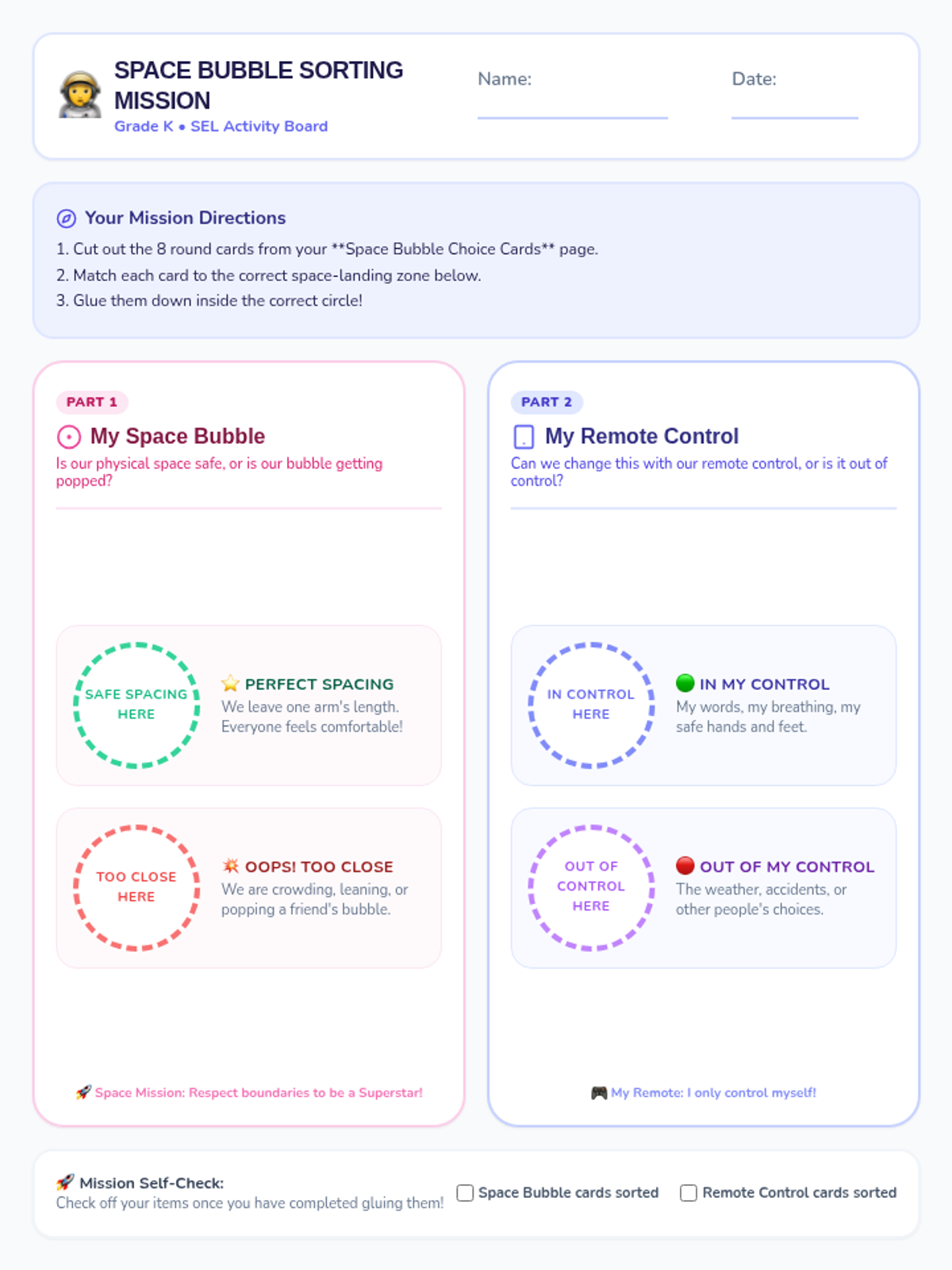
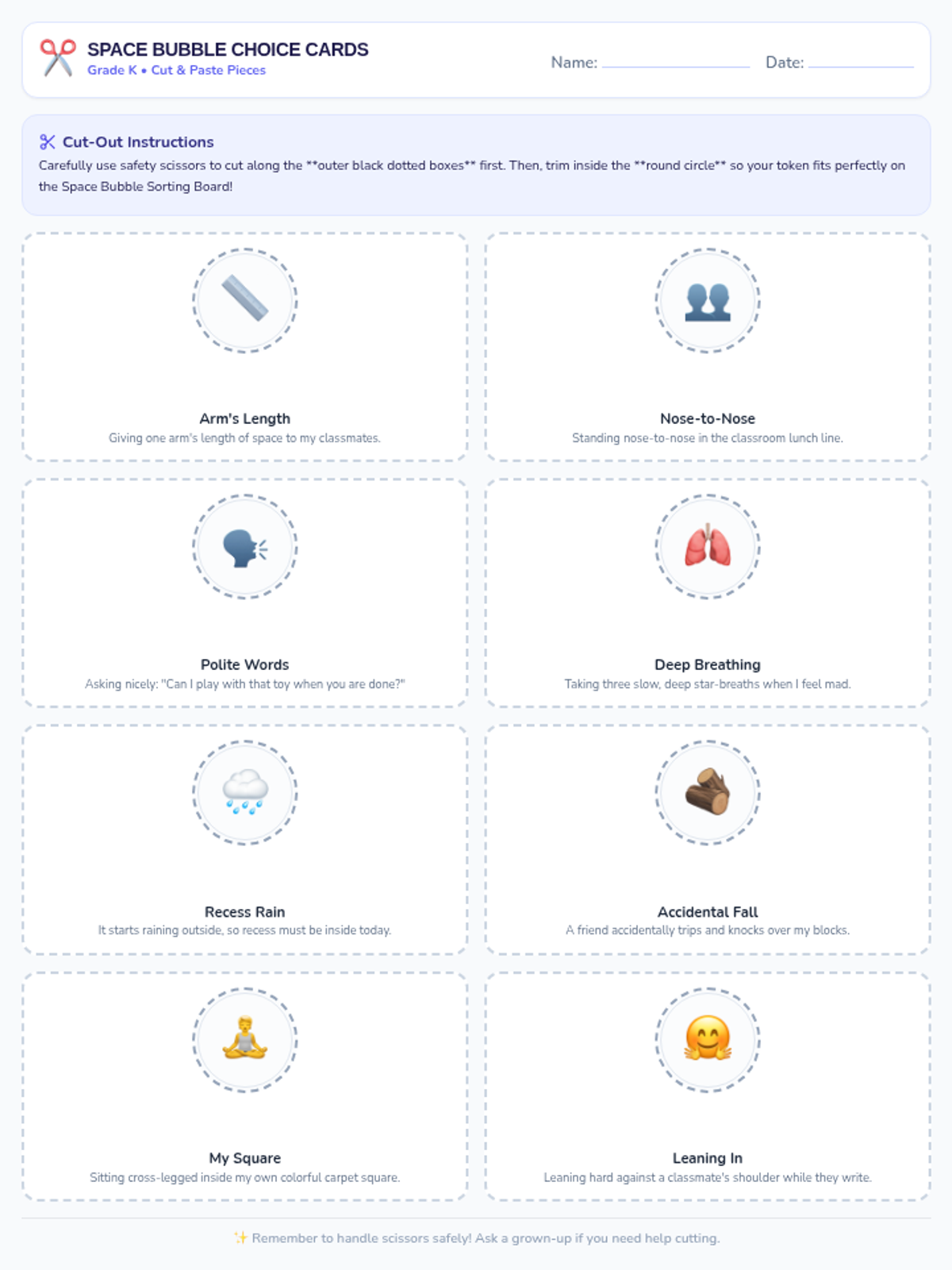
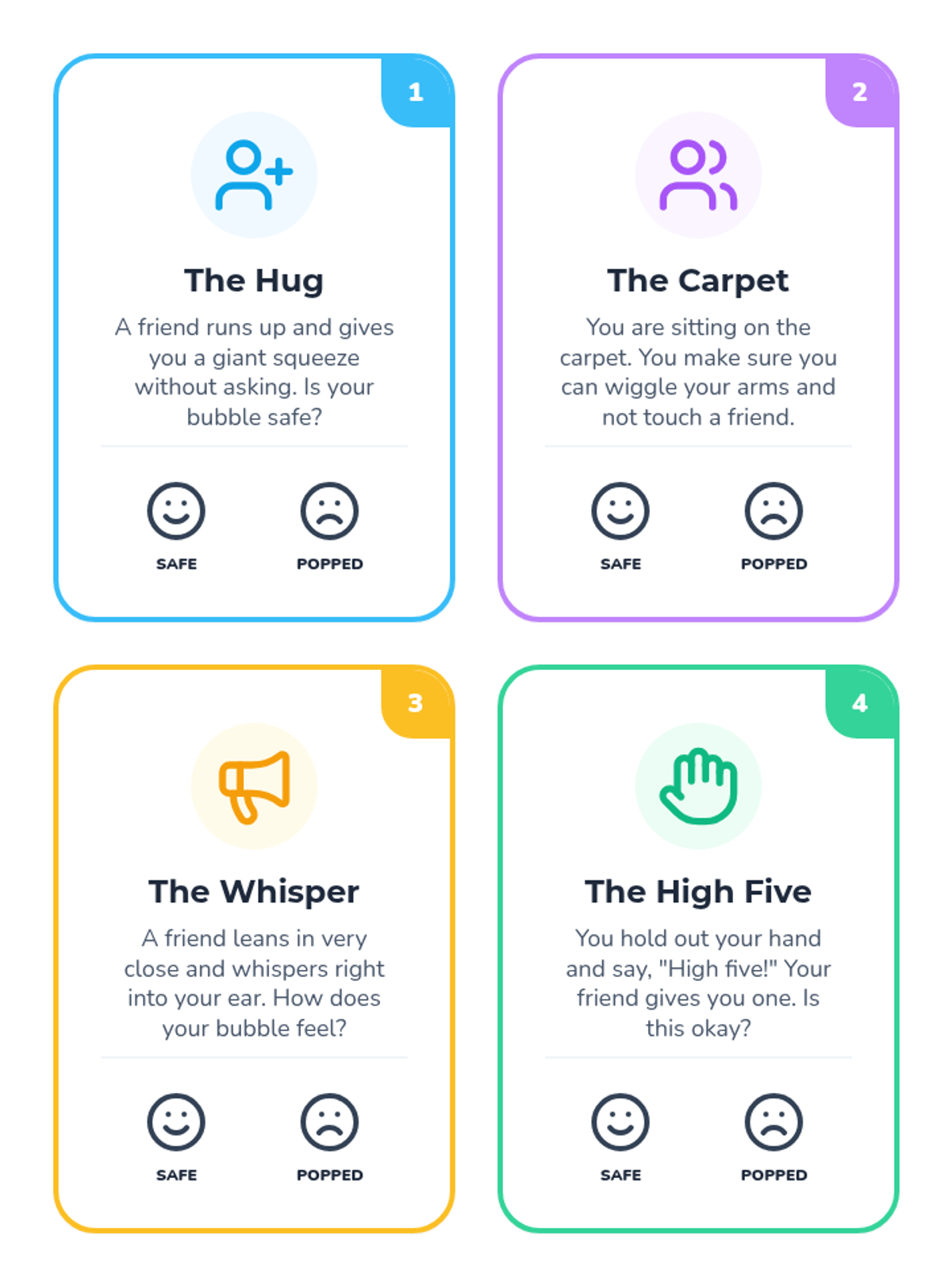
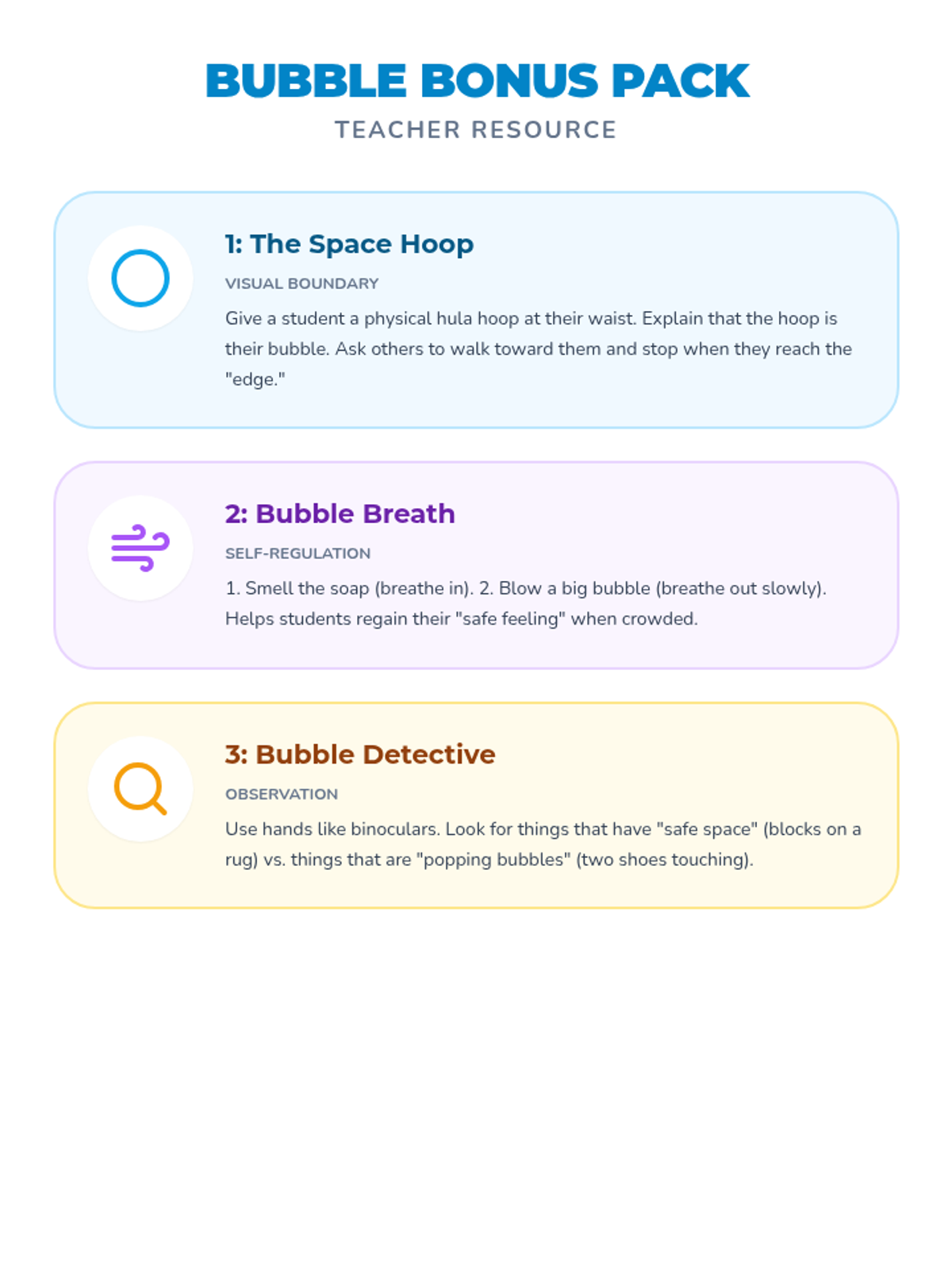
A kindergarten social-emotional learning lesson that teaches personal space (peer spacing) using 'space bubbles' and emotional regulation (self-control) using a 'remote control' analogy. Includes interactive slides, a hands-on sorting game, and a detailed teacher guide.
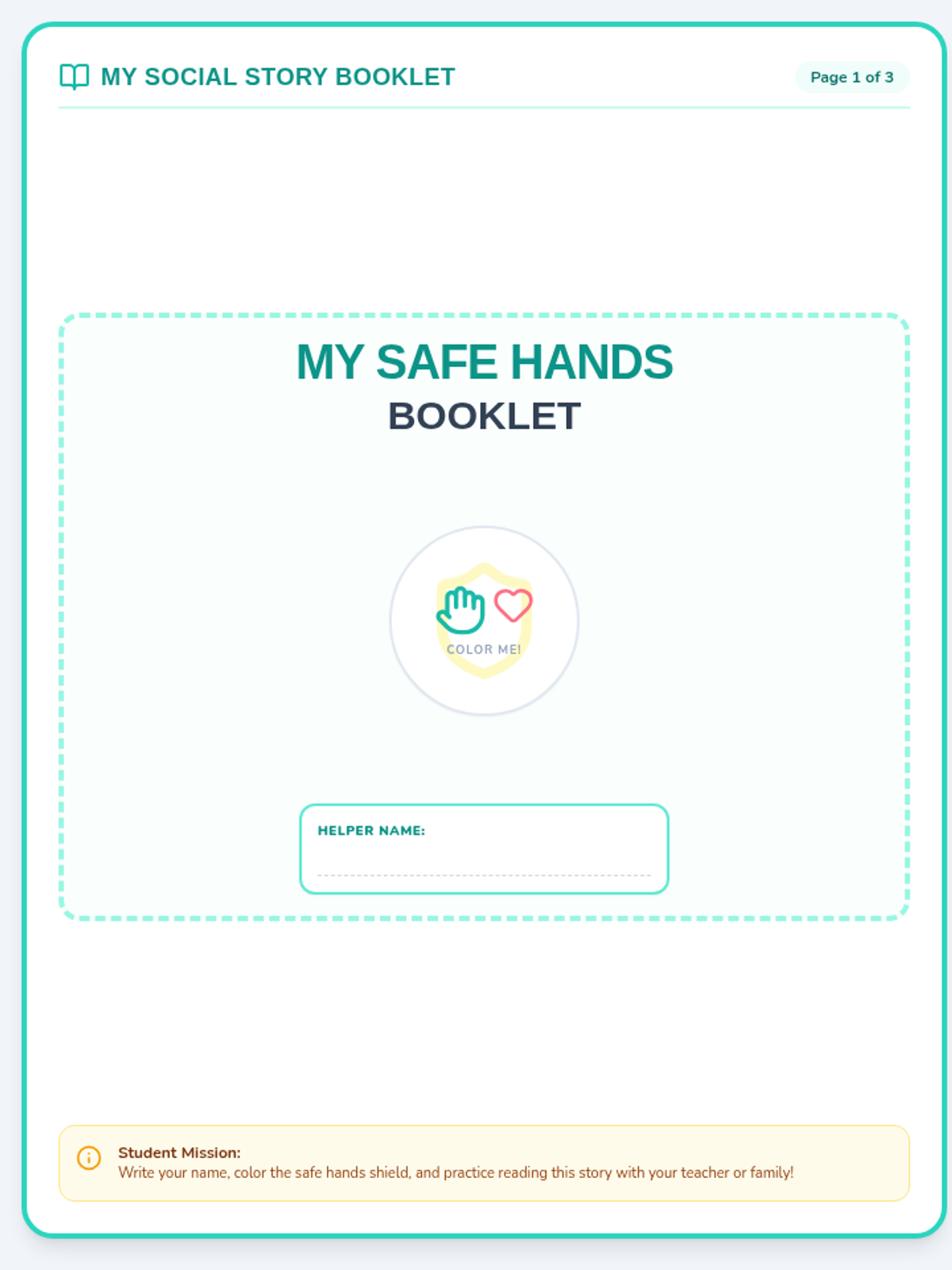
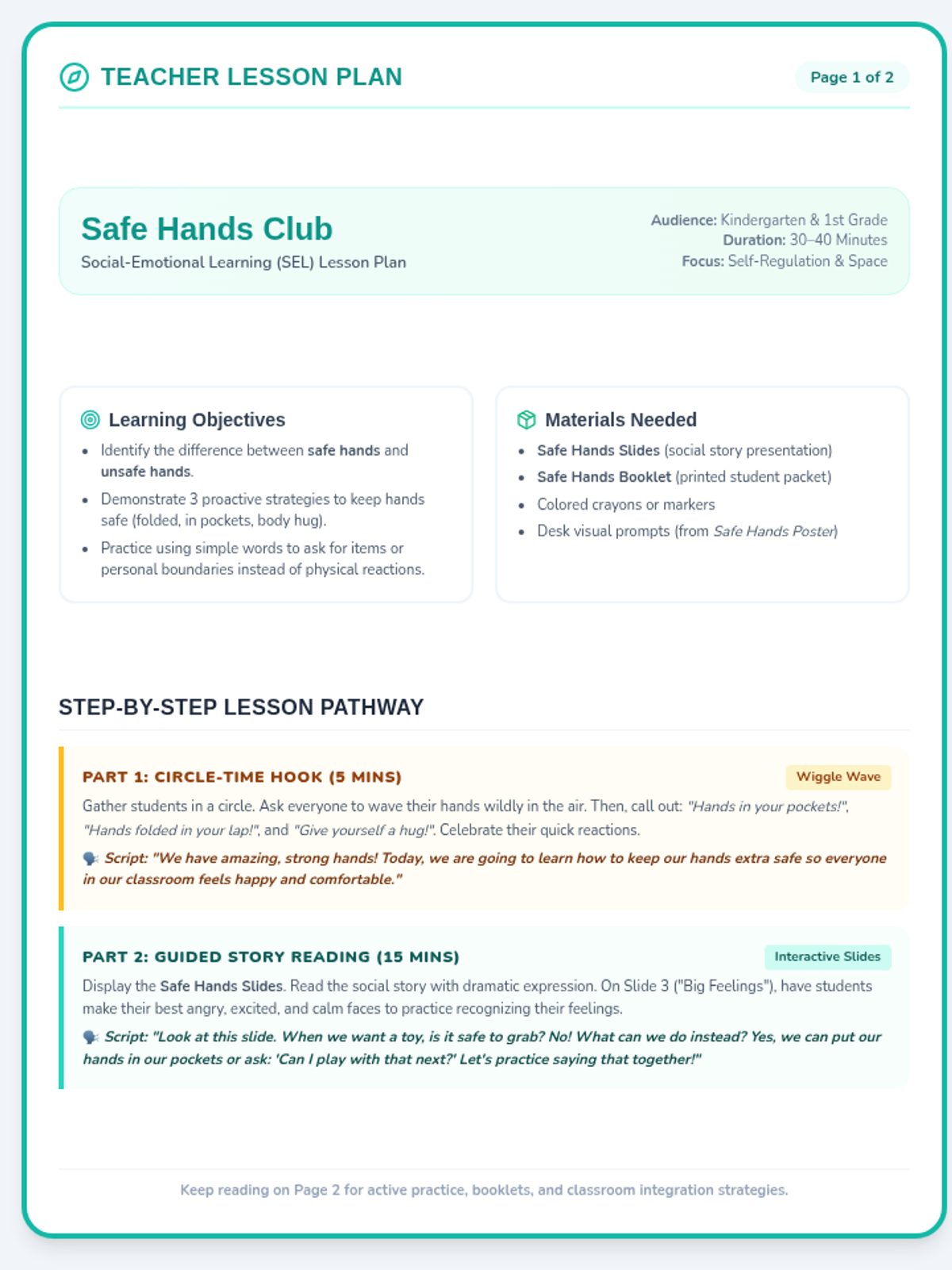
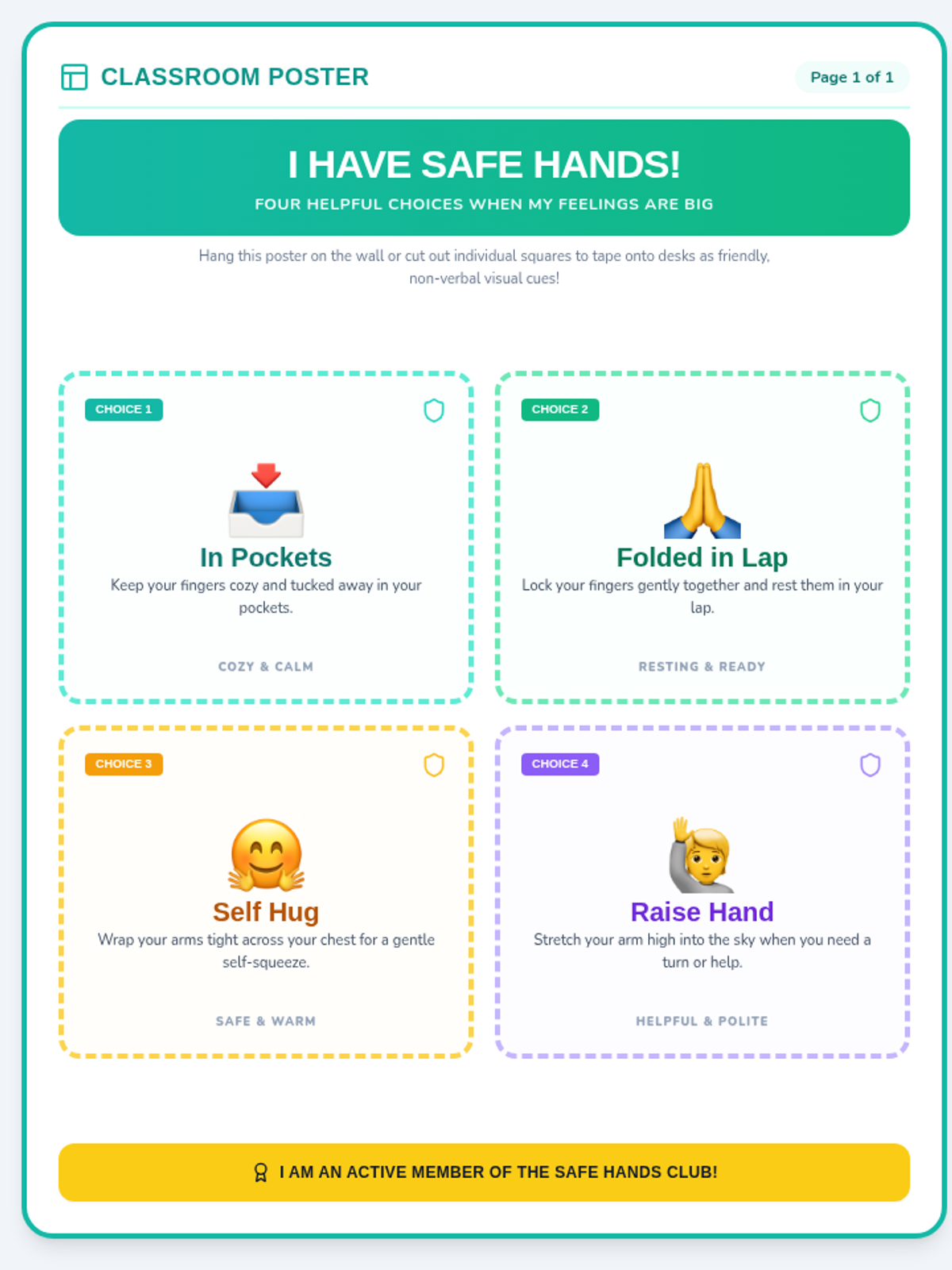
A complete social-emotional learning lesson for Kindergarten and 1st Grade students on keeping hands to themselves. This lesson features a colorful, visual social story slide deck, a printable take-home mini-book, a structured teacher guide with circle-time activities, and a visual anchor chart poster for classroom desks or walls.
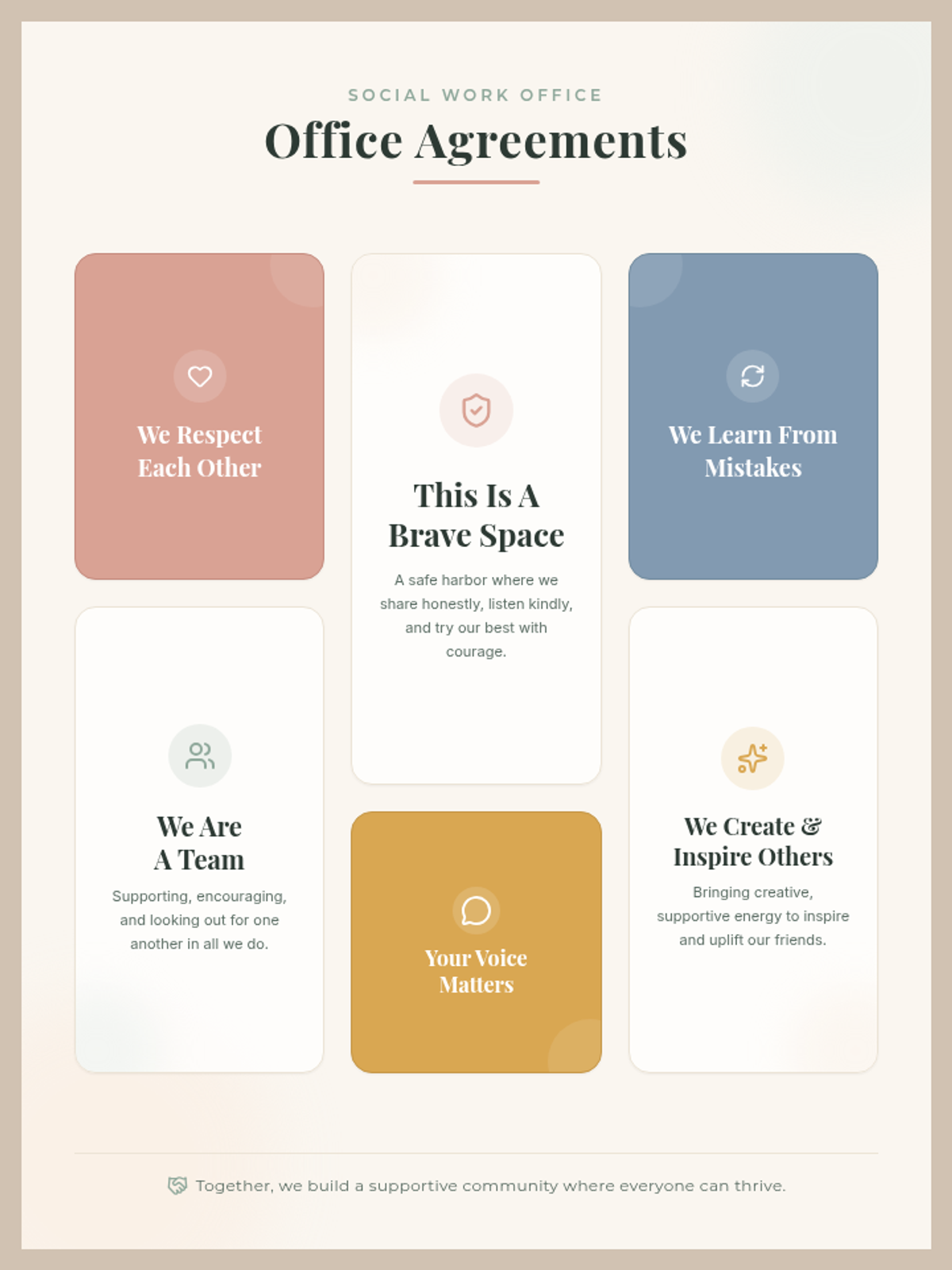
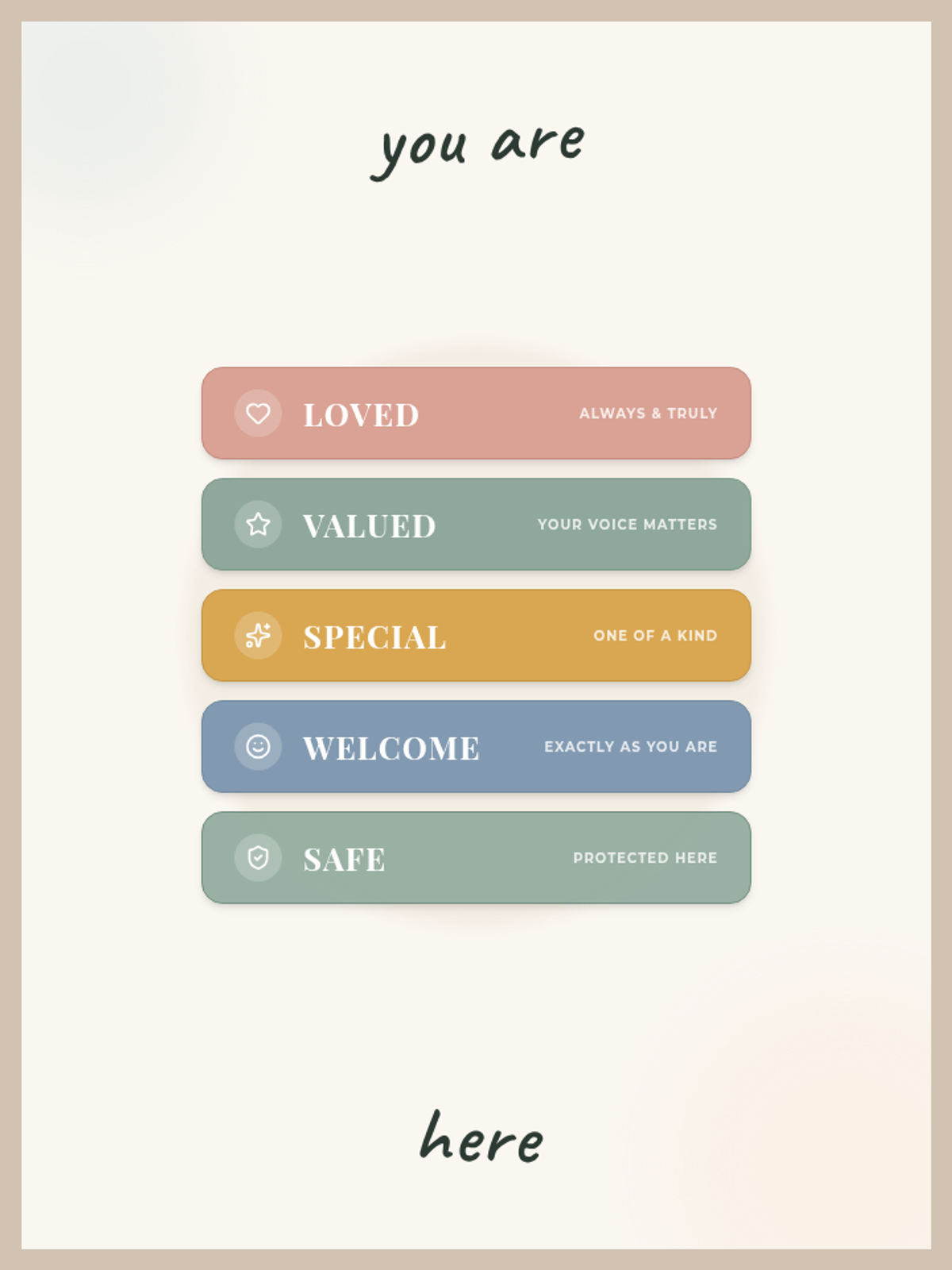
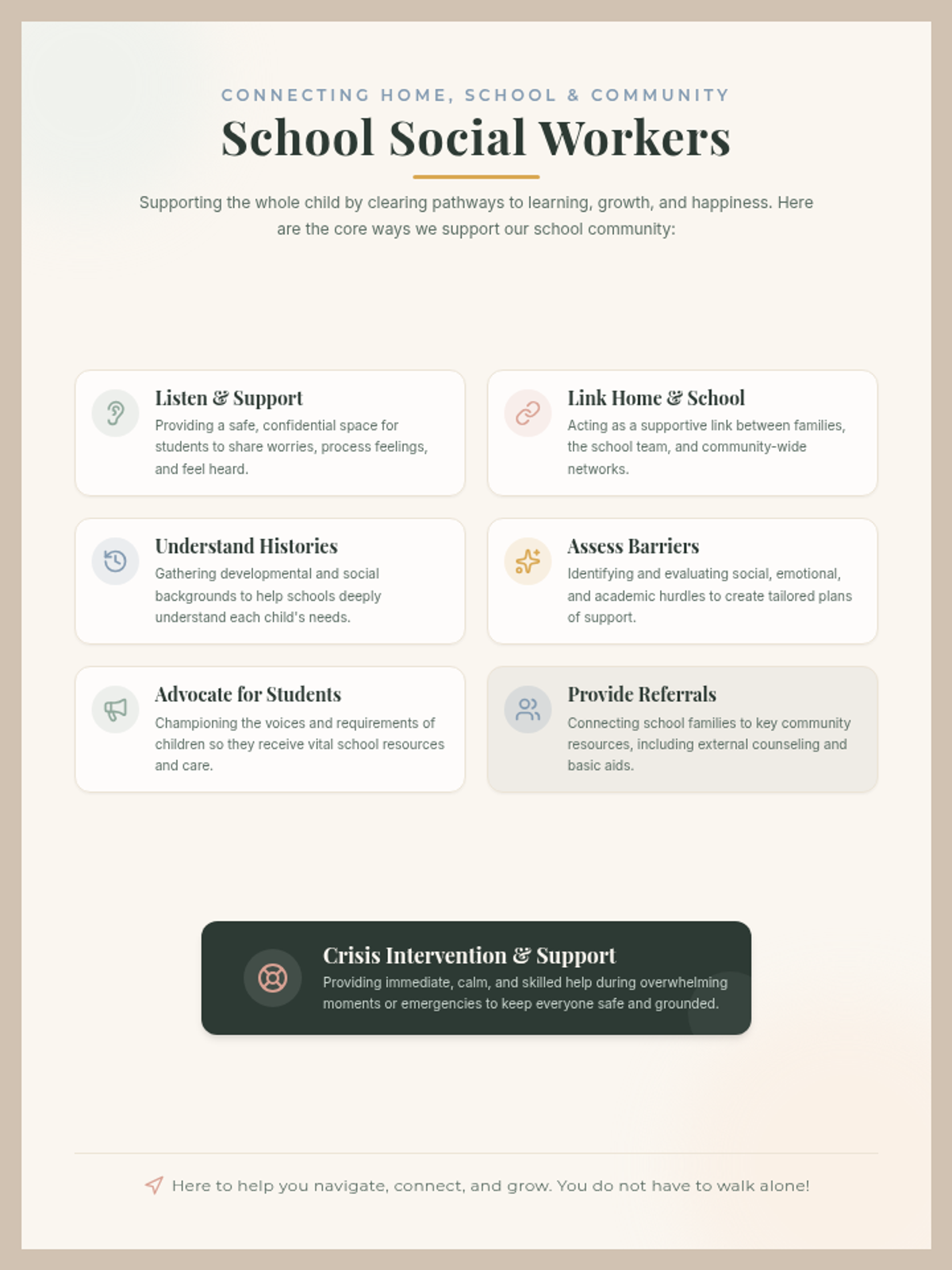
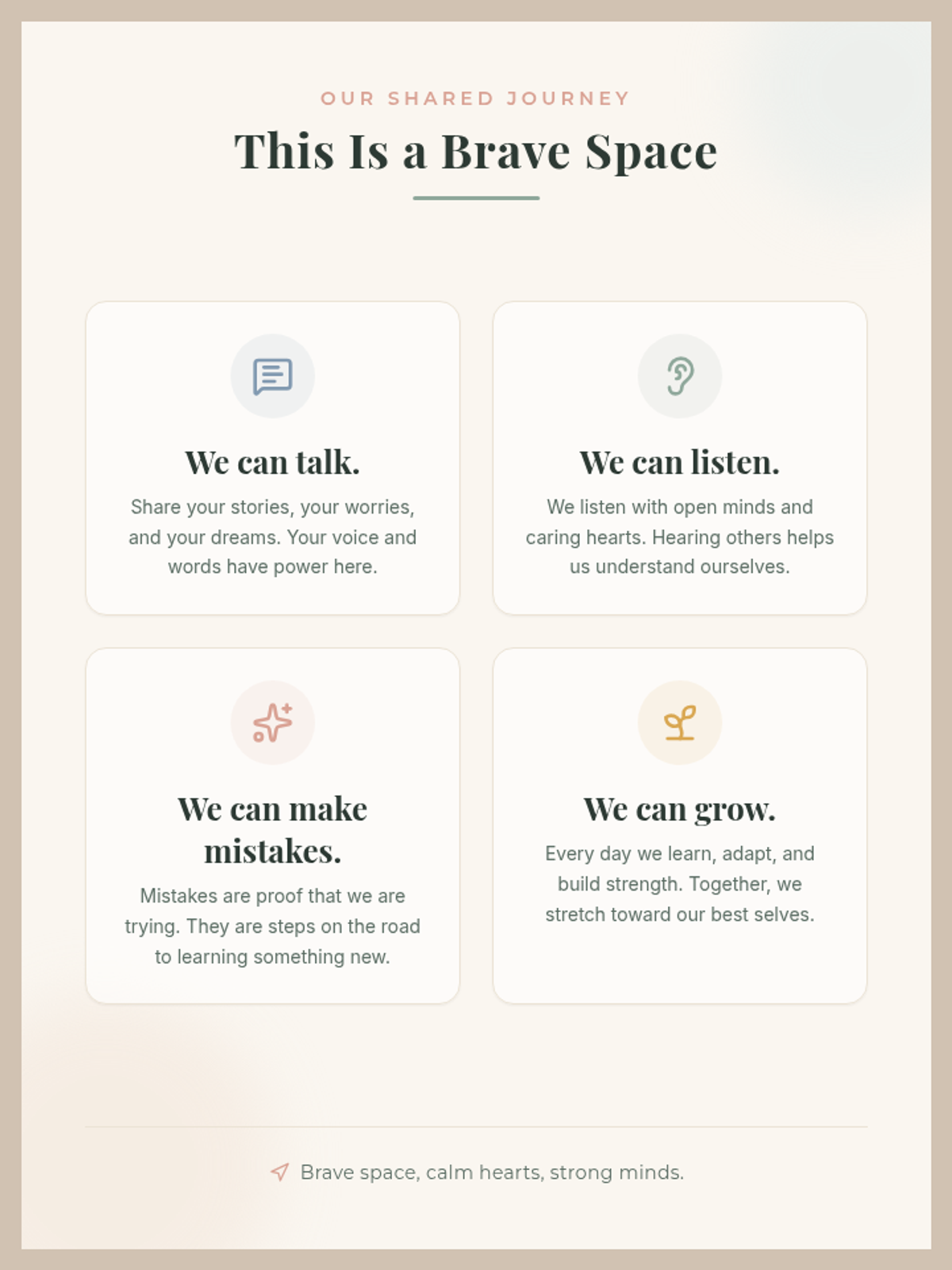
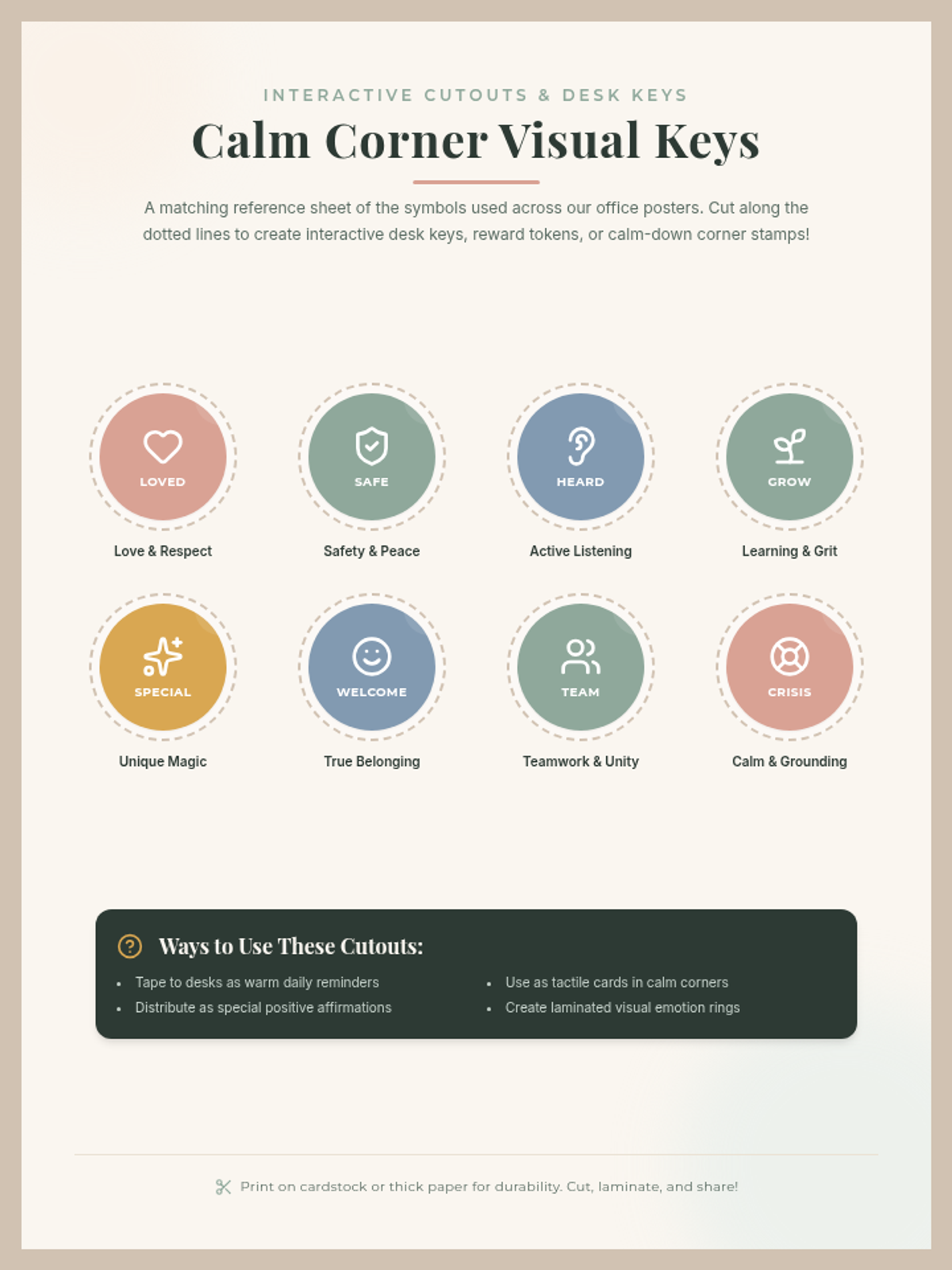
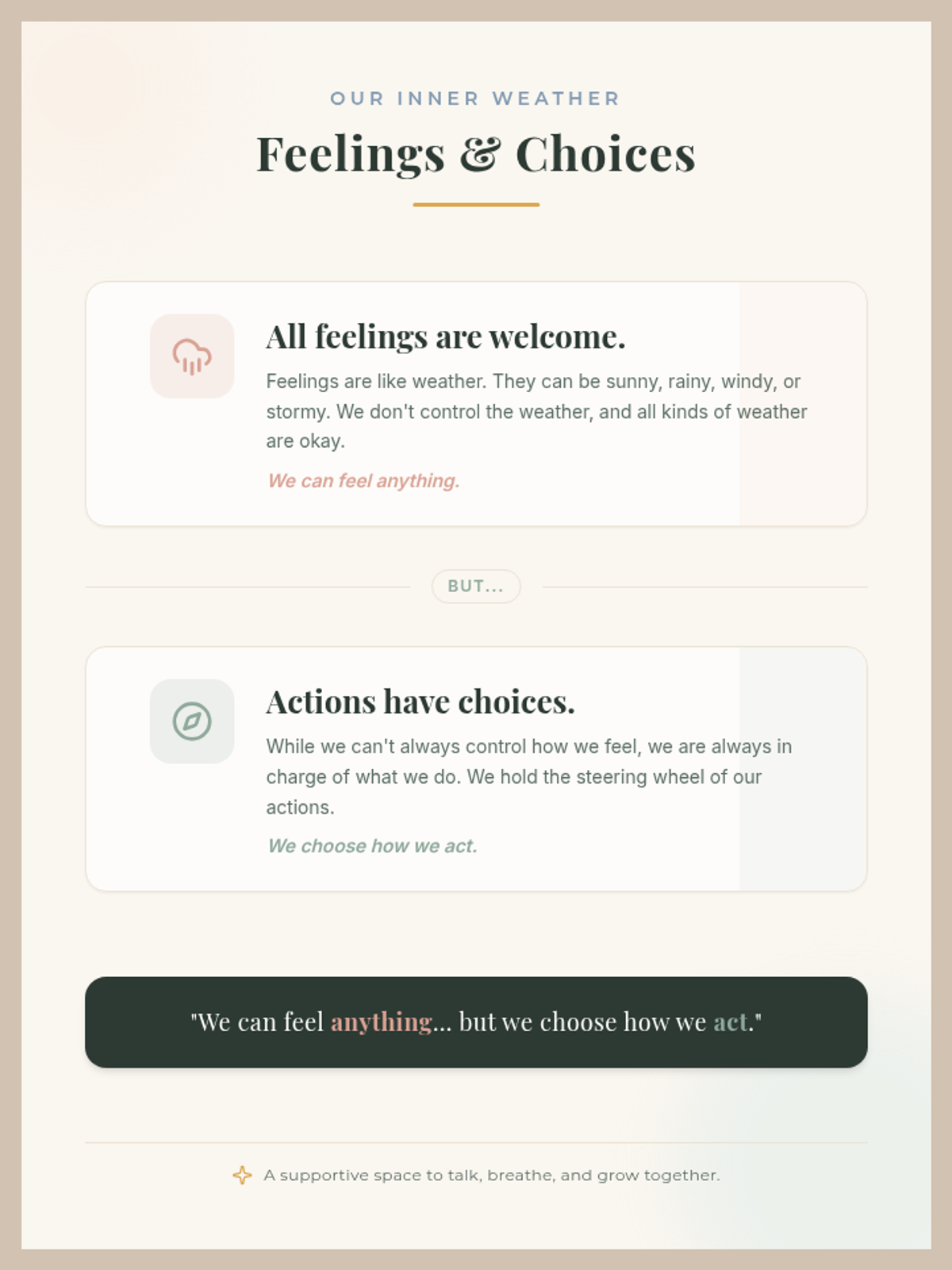
A cohesive suite of beautifully designed printable posters for an elementary school social work office or calm corner, utilizing soft earth tones, gentle affirmations, and clear supportive structures.
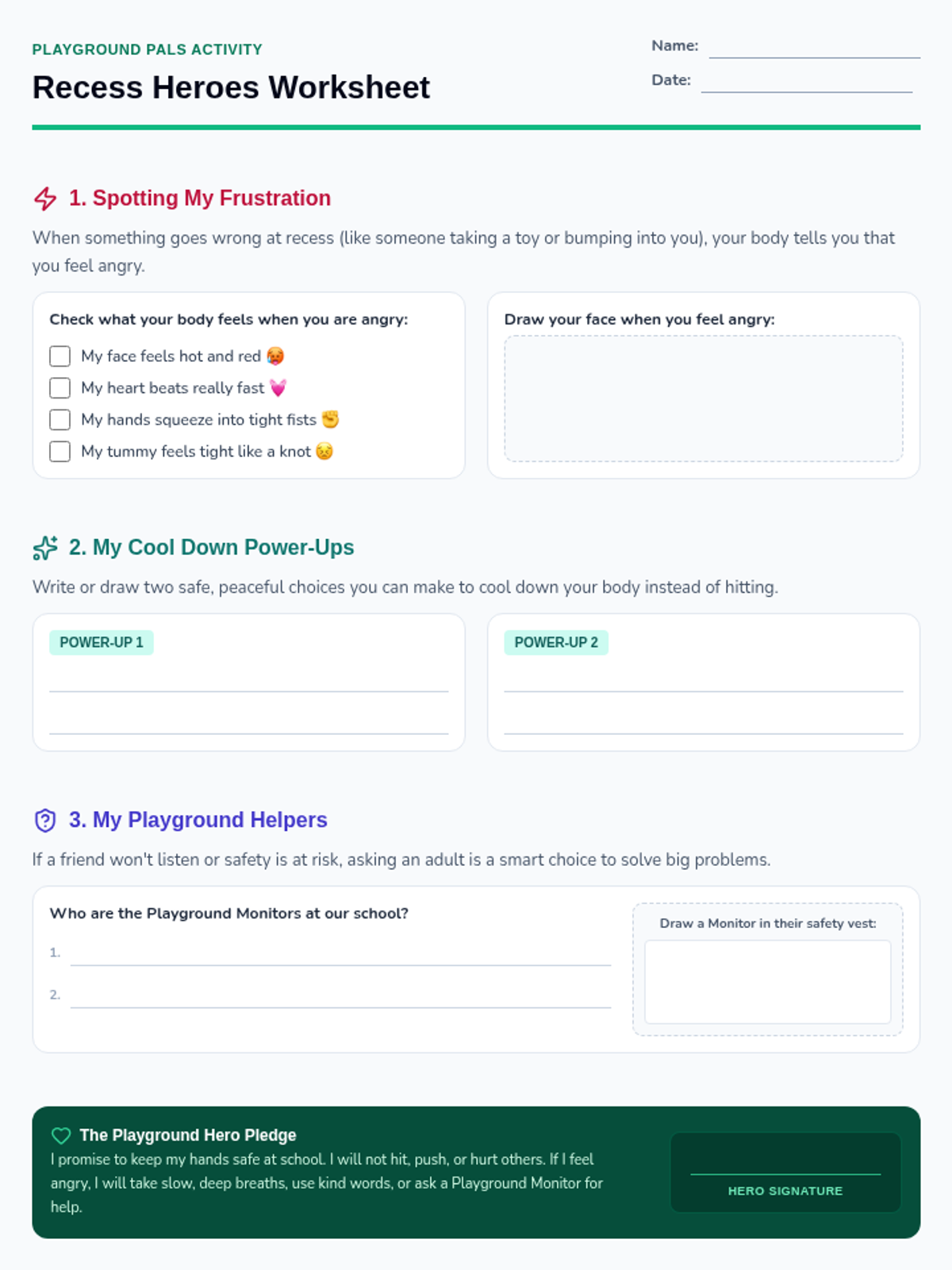
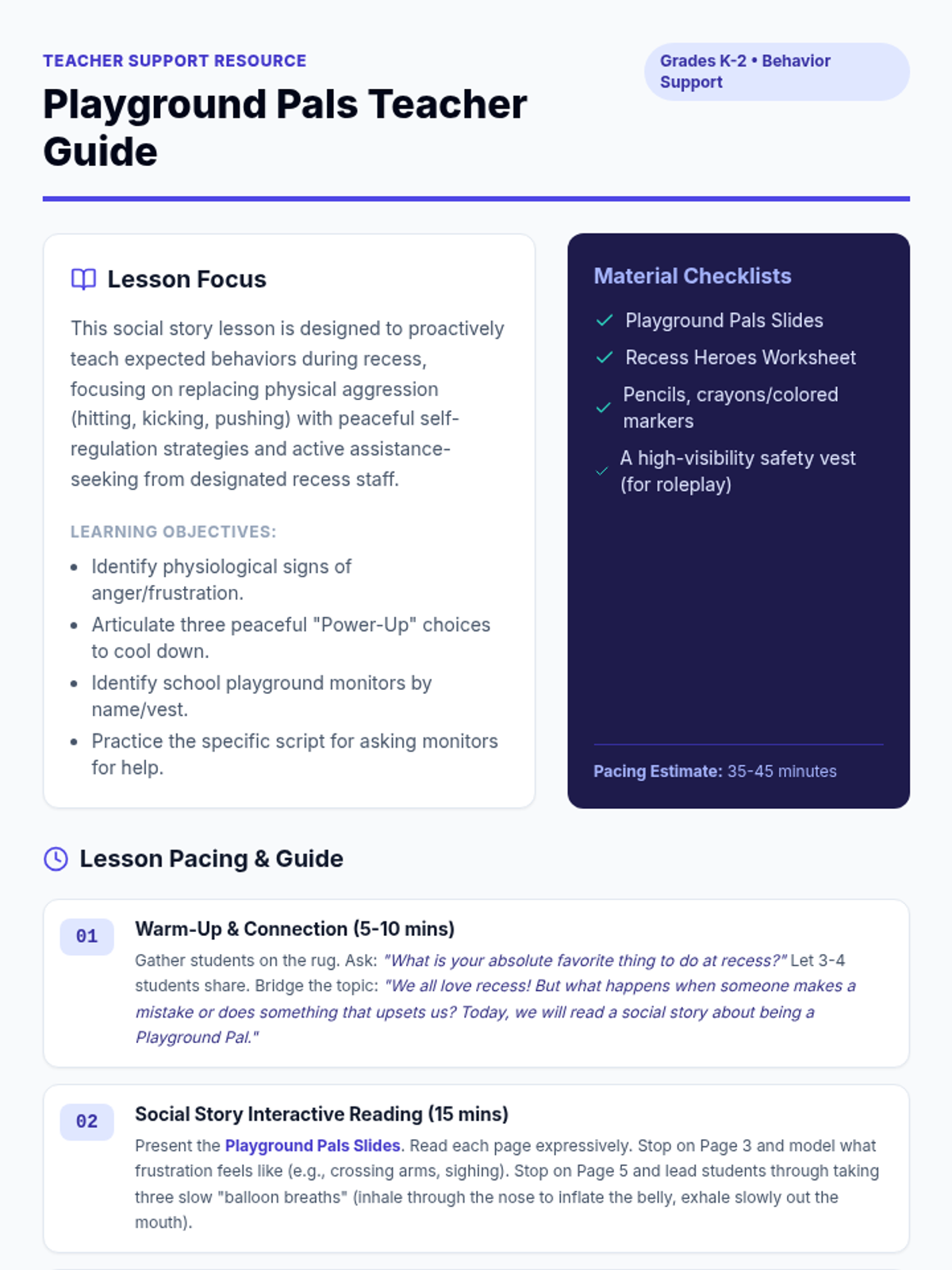
A social story lesson designed to teach students positive playground behaviors, focusing on replacing physical aggression with peaceful communication and seeking help from playground monitors.
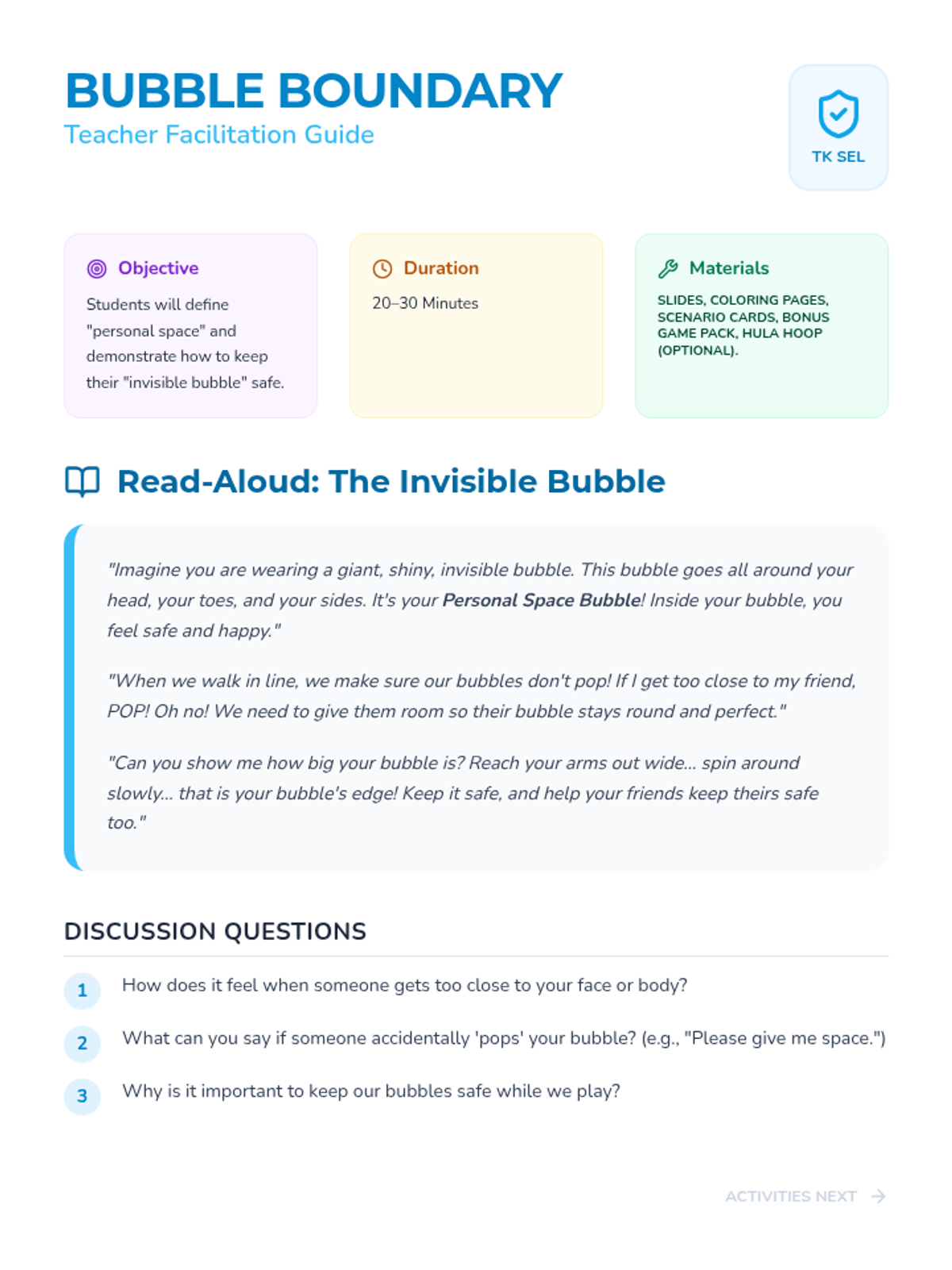
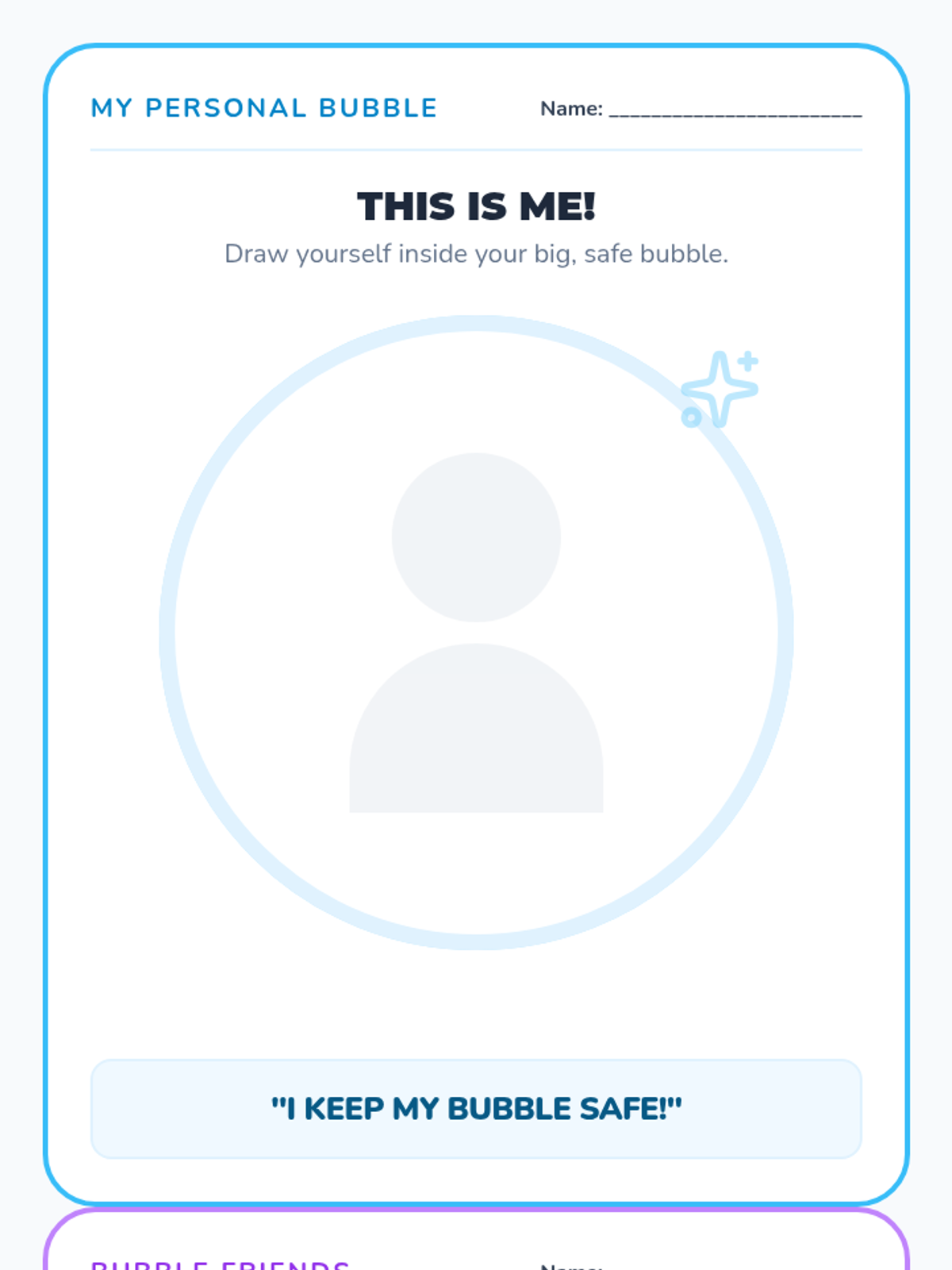
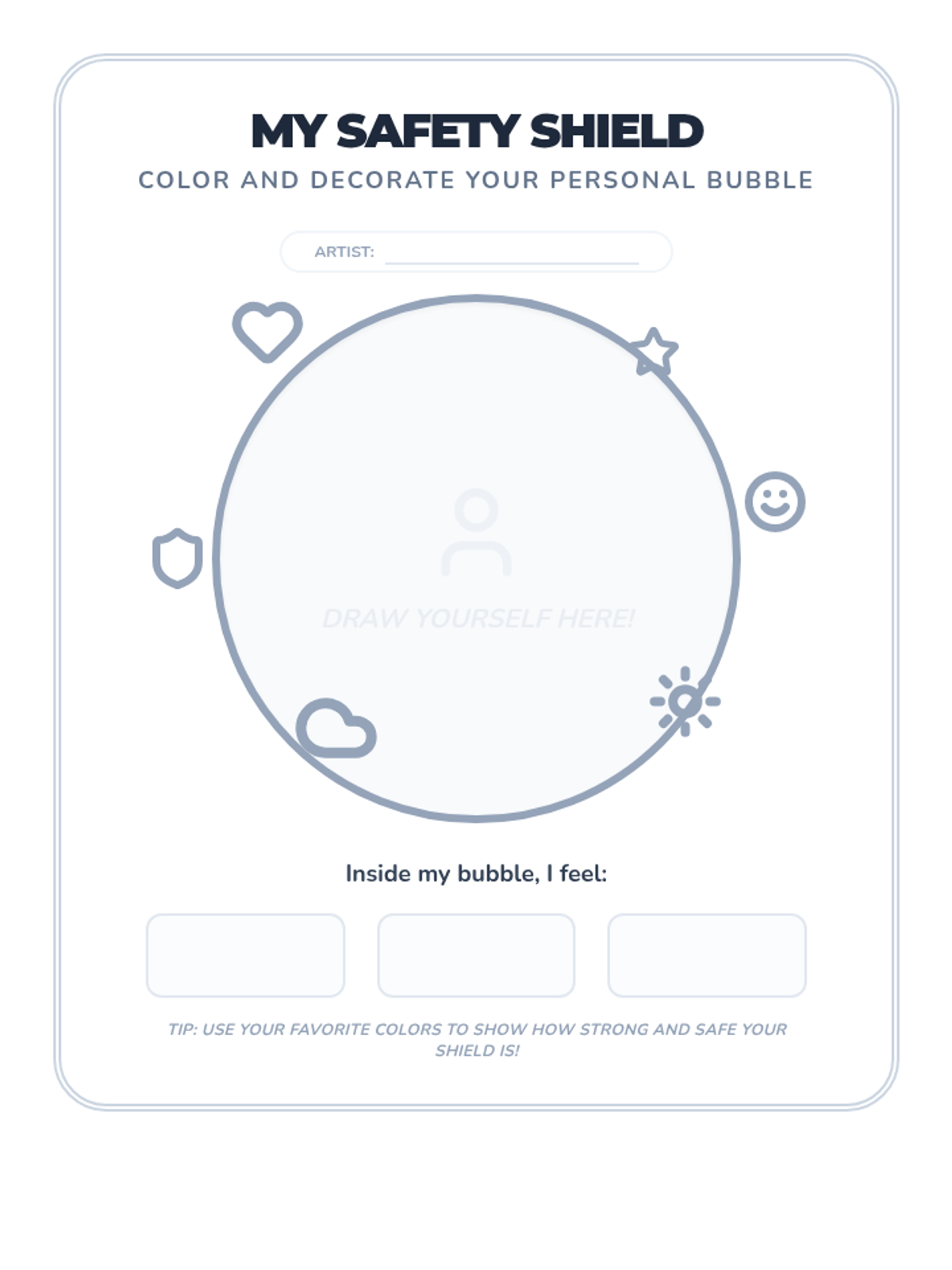
A social-emotional learning lesson for TK students focused on understanding and respecting personal space through the metaphor of an 'invisible bubble'. Includes a read-aloud story, interactive practice, and coloring activities.
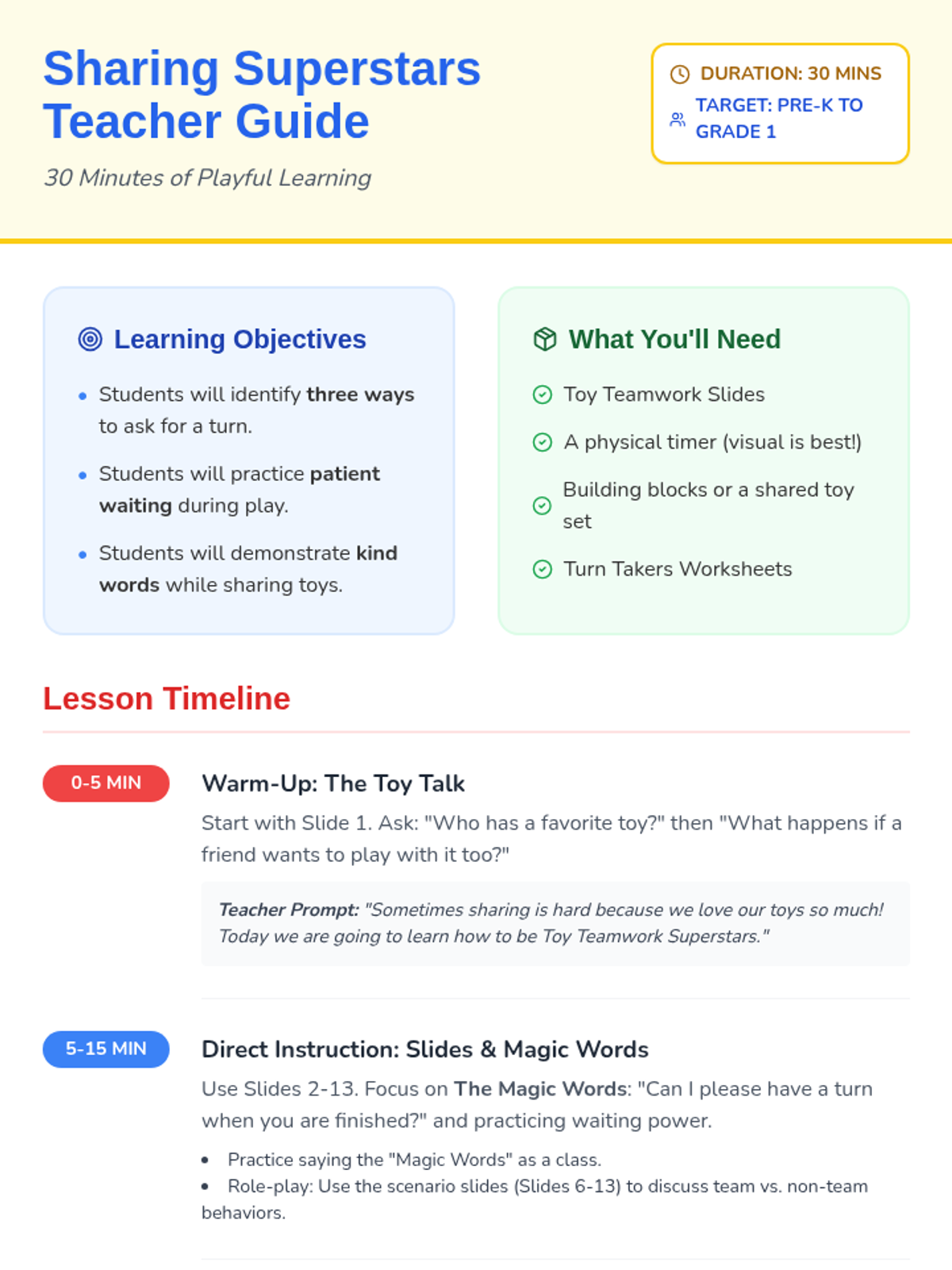
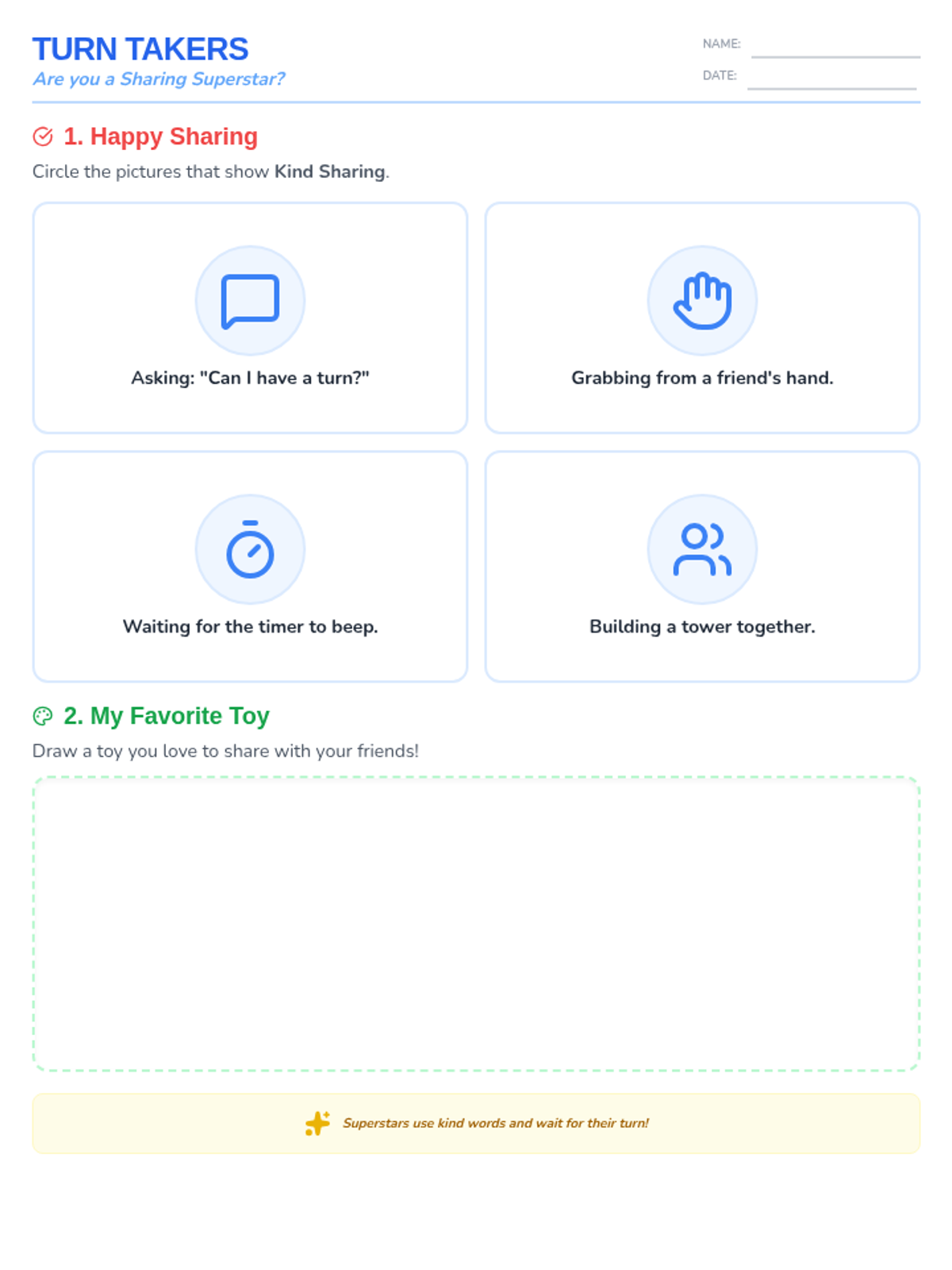
A 30-minute interactive lesson focused on teaching young children the social-emotional skills of sharing, taking turns, and playing kindly with others.
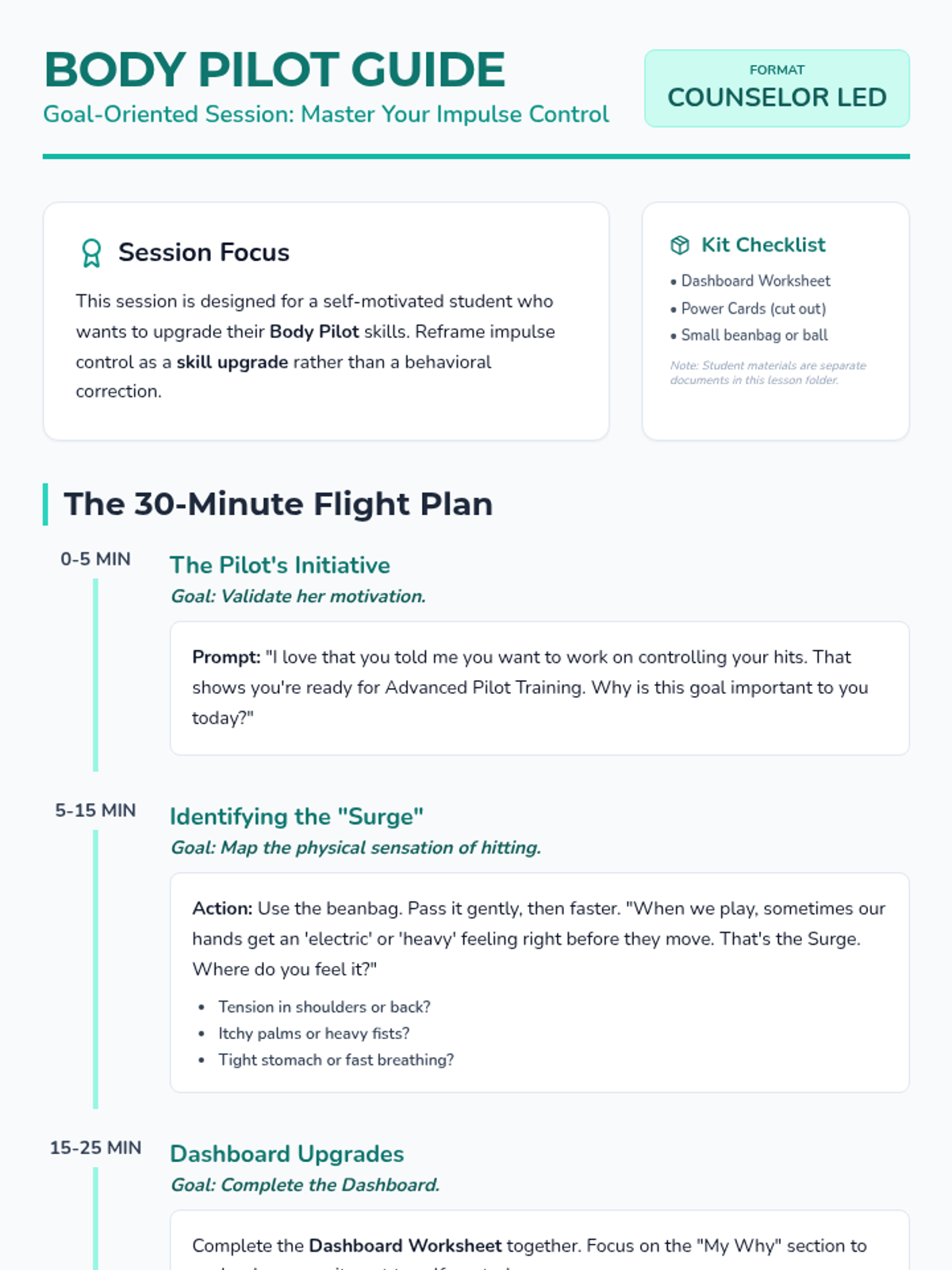
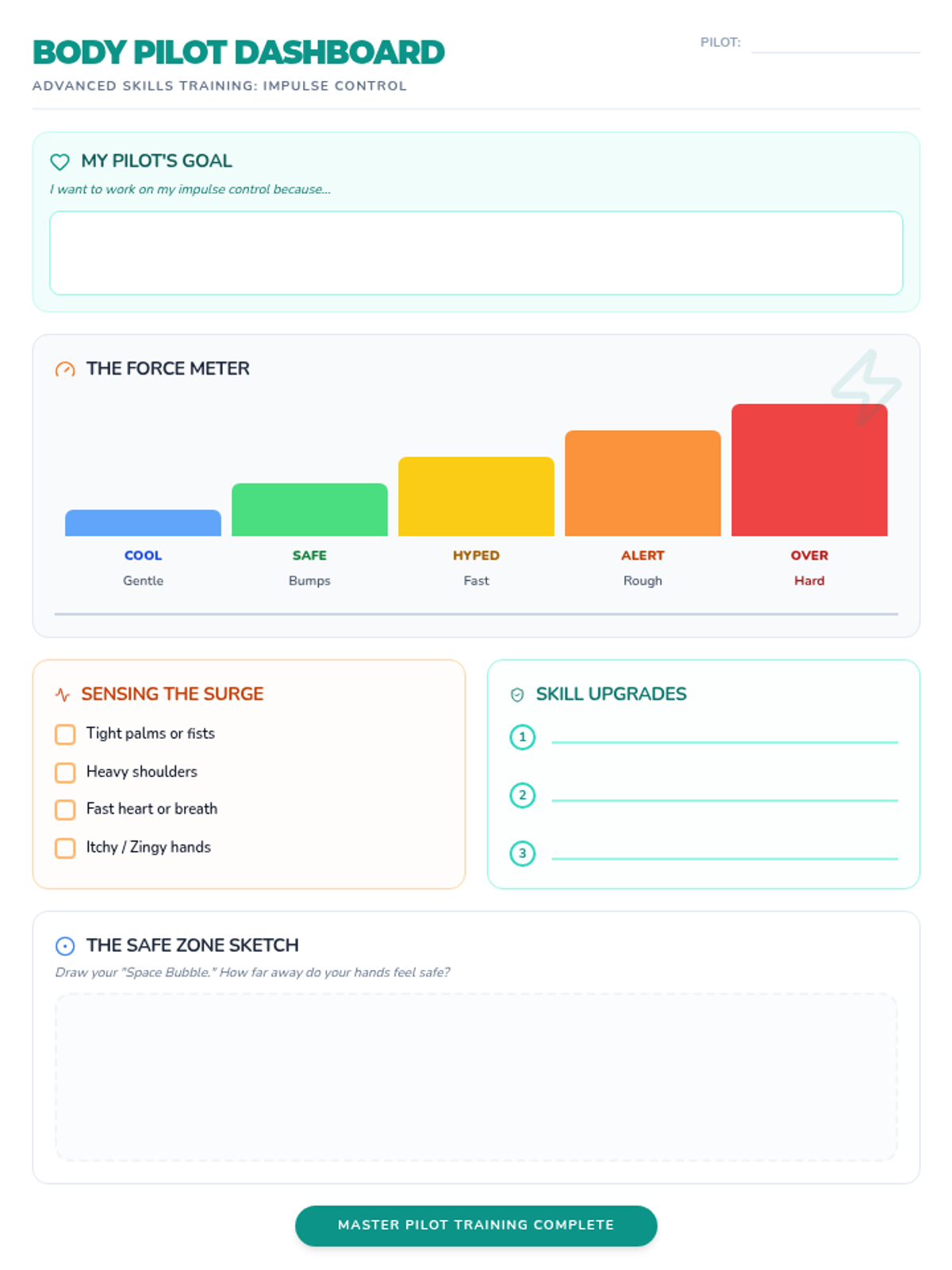
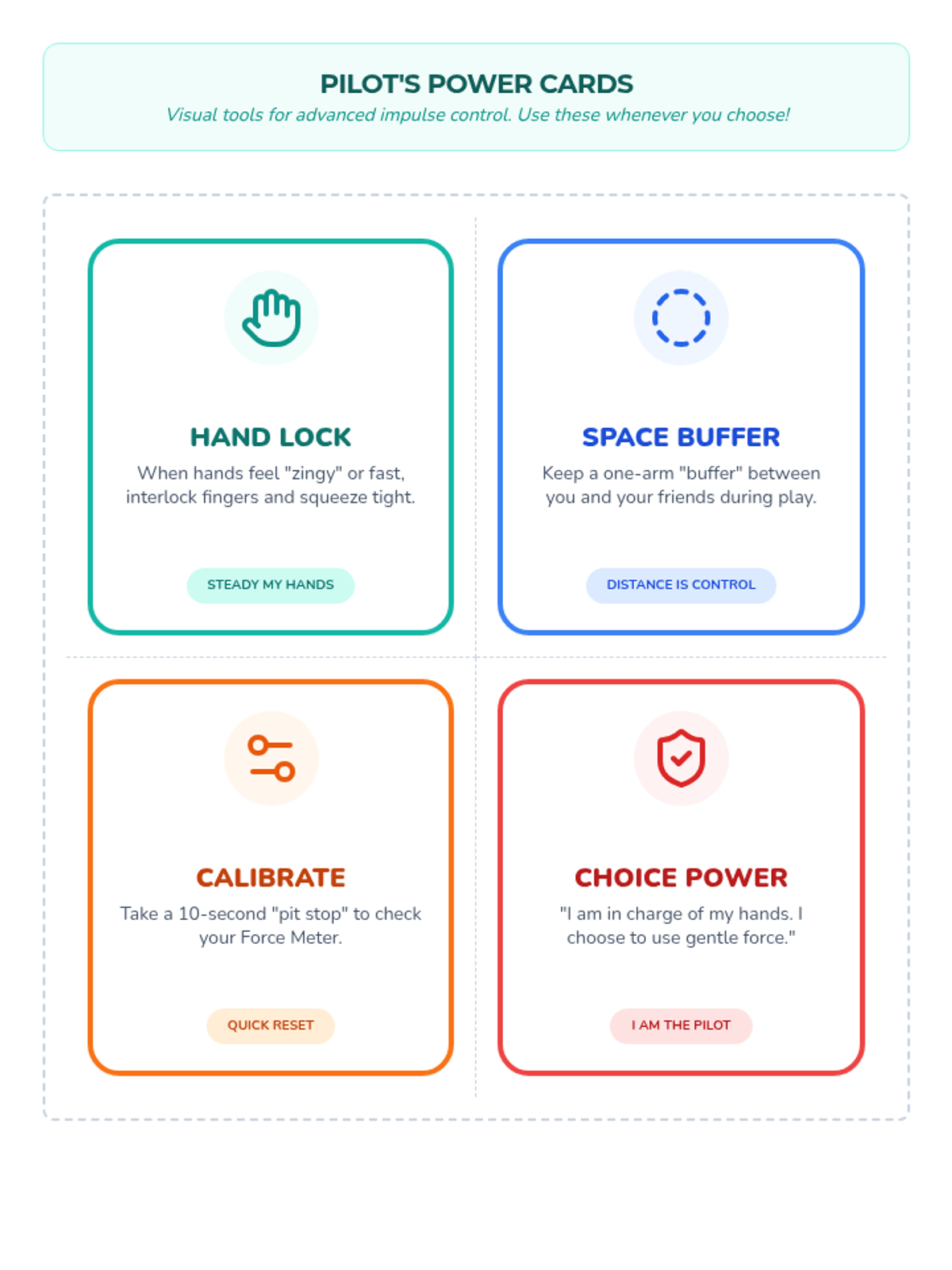
A 30-minute counseling session focused on helping students with autism understand and control physical impulses, specifically addressing 'play fighting' and personal space boundaries using the 'Body Pilot' metaphor.
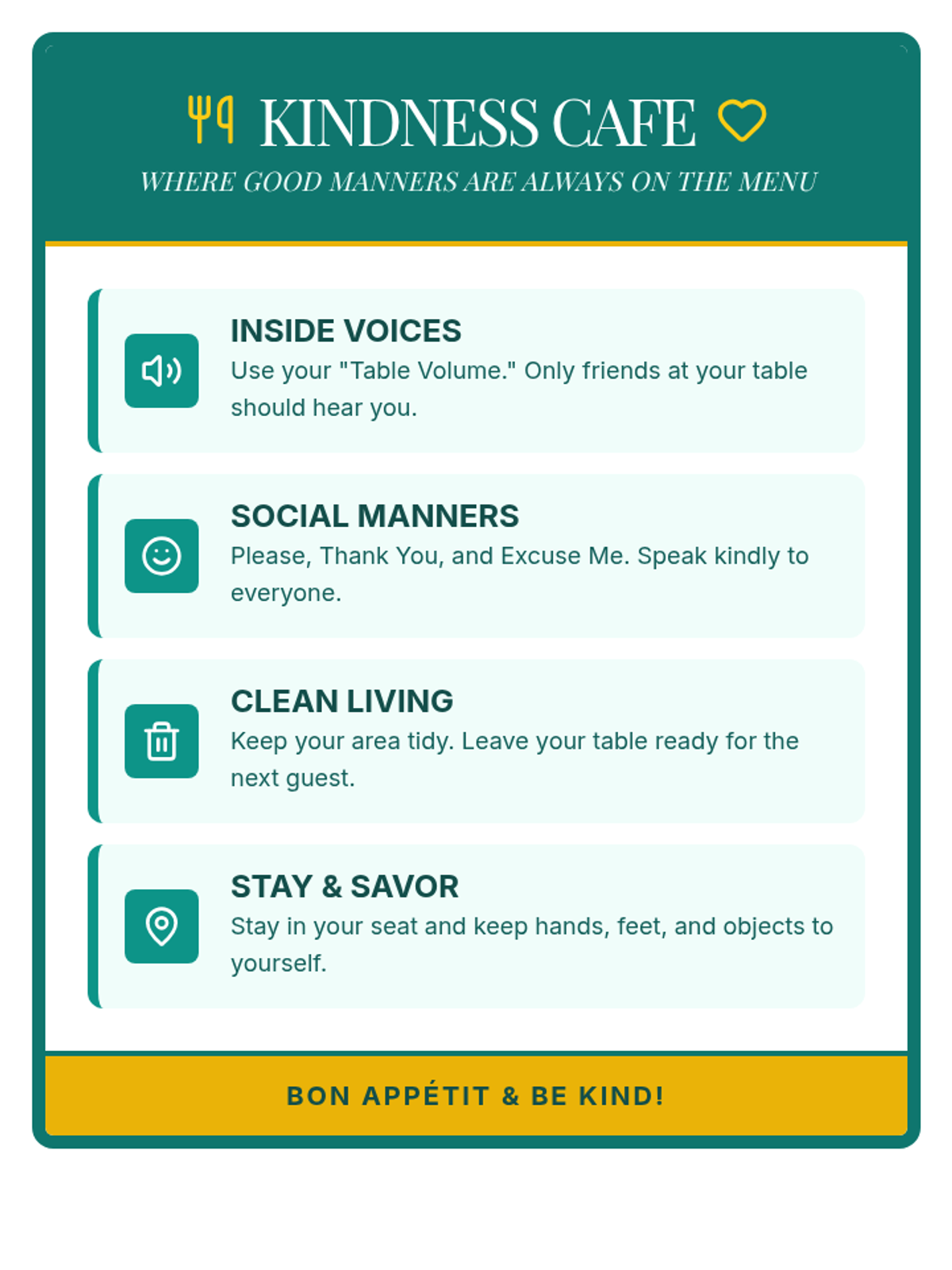
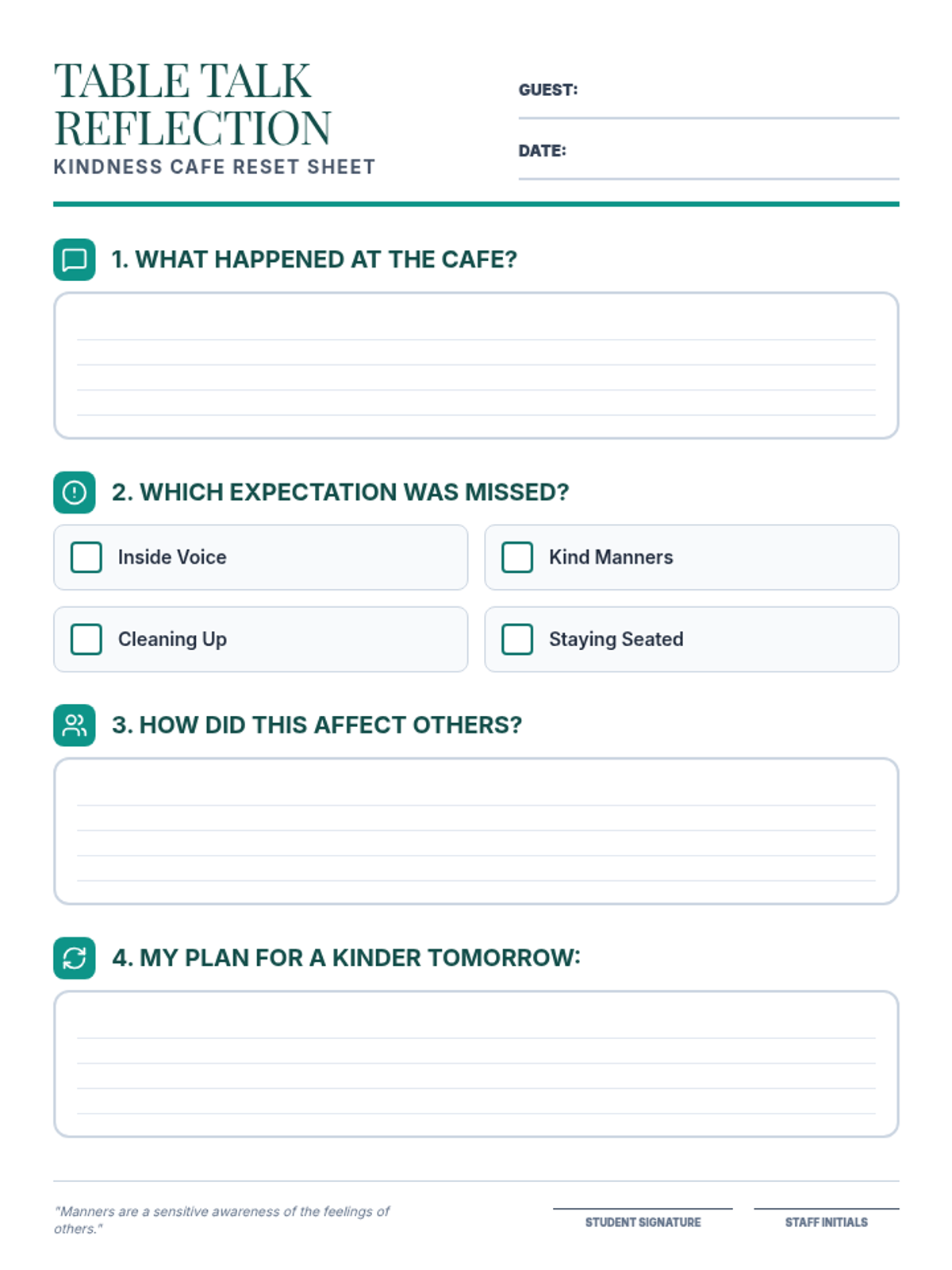
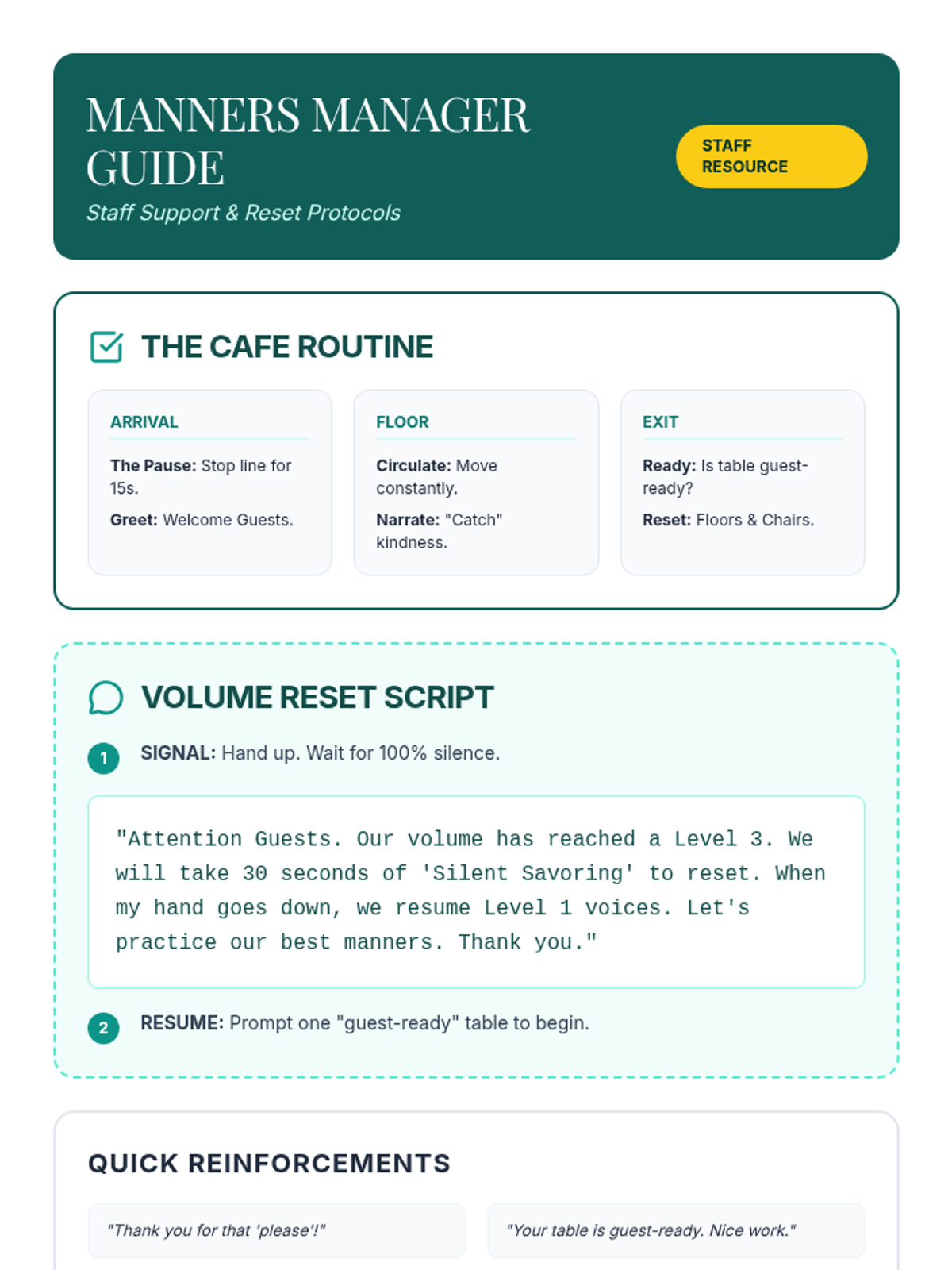
A behavior support package designed to transform the lunchroom into a calm, polite dining environment focused on kindness and social manners.
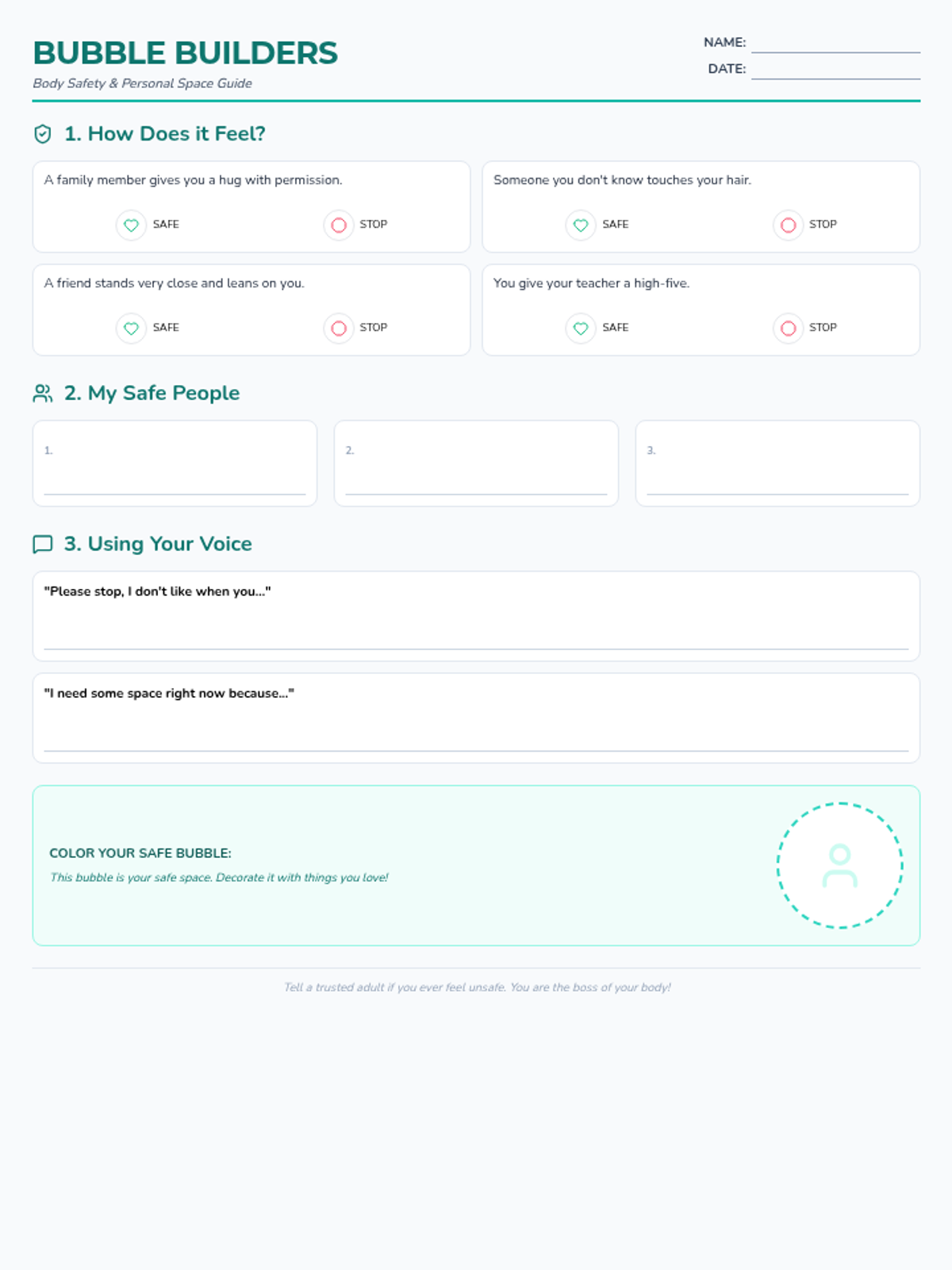
A foundational lesson on physical boundaries and body safety, using the 'Personal Bubble' metaphor to help students understand and communicate their comfort levels.
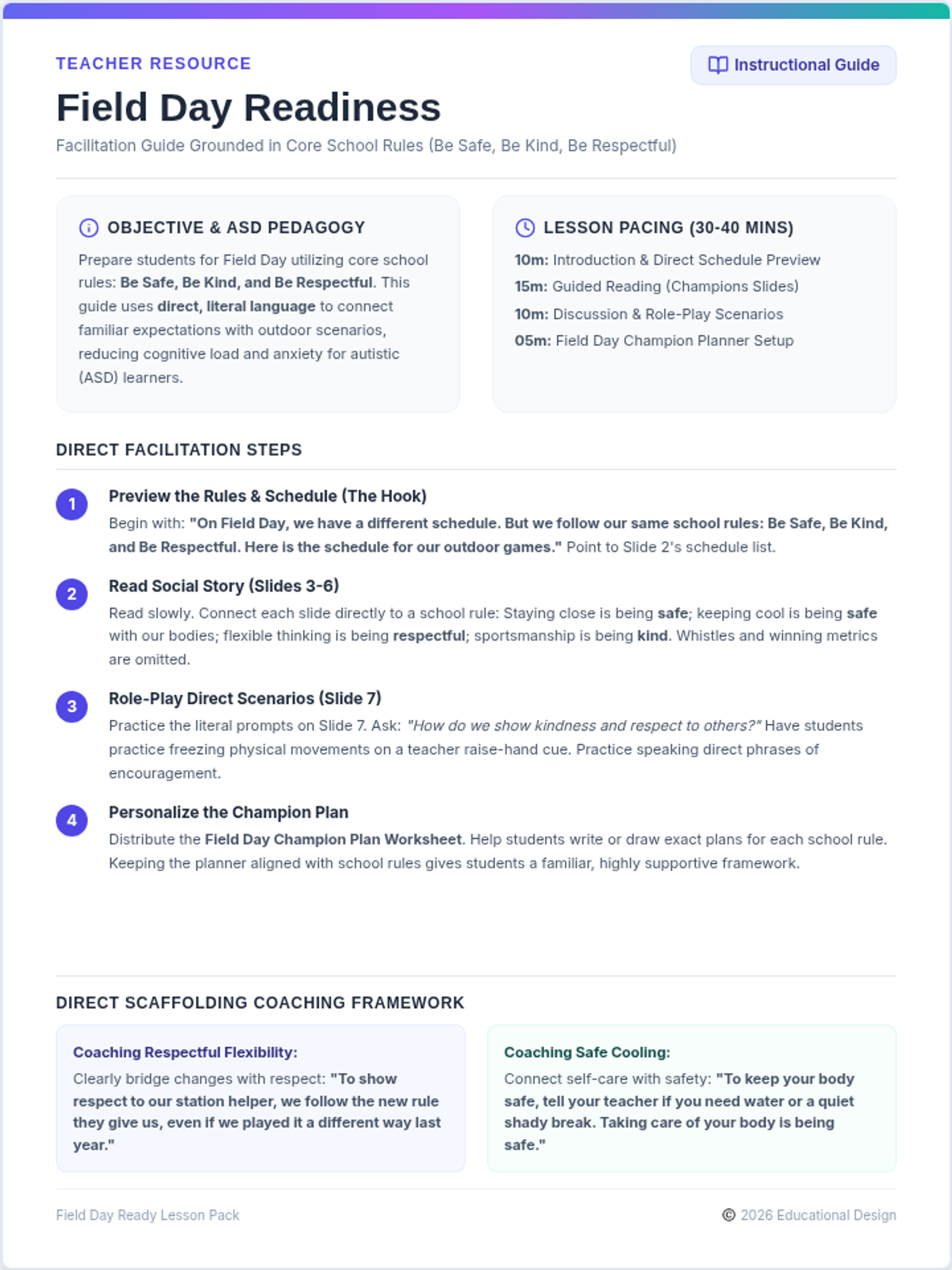
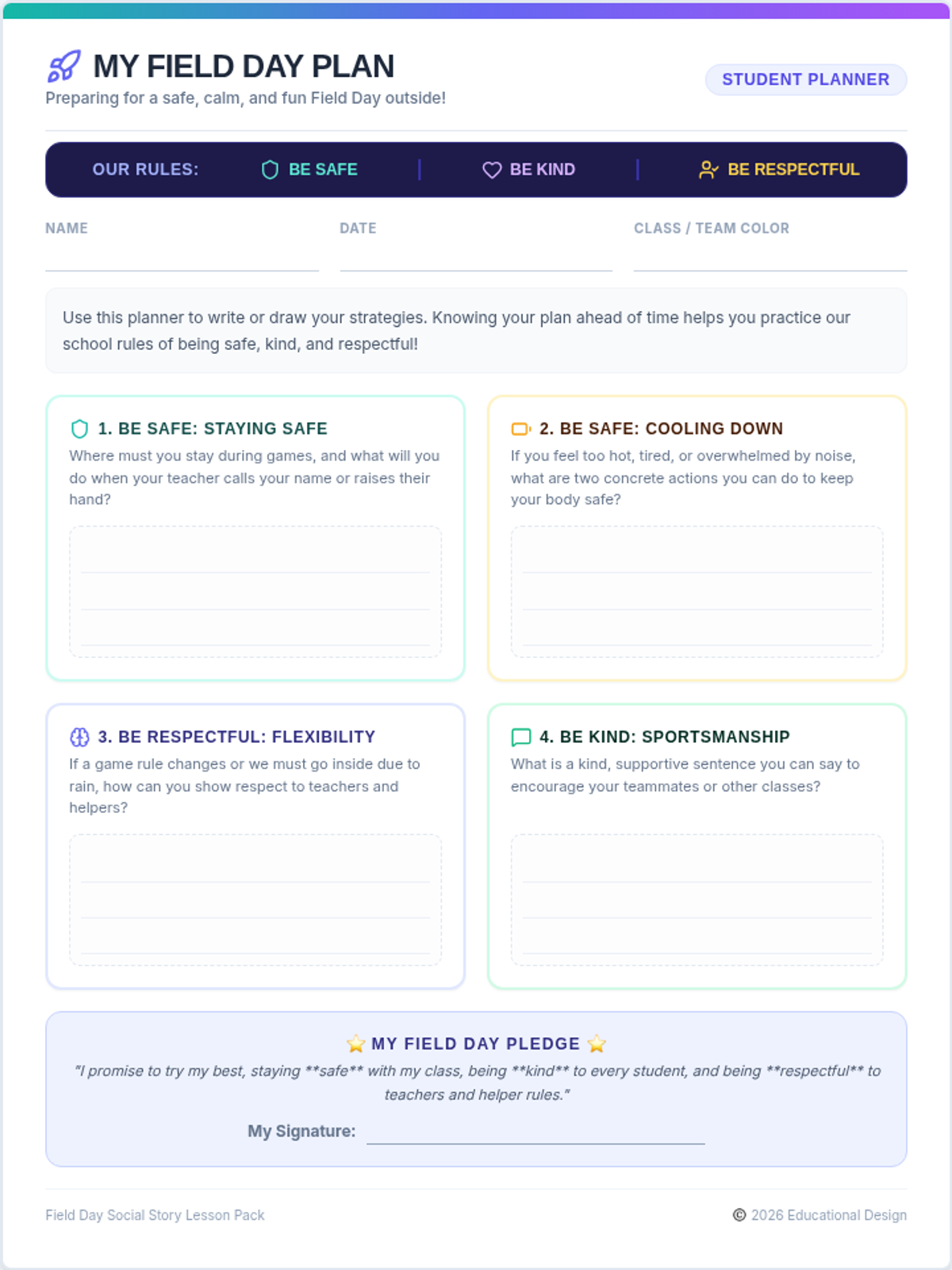
A lesson package focused on preparing elementary students for the unique social, emotional, and sensory challenges of Field Day, featuring a projectable social story slide deck.
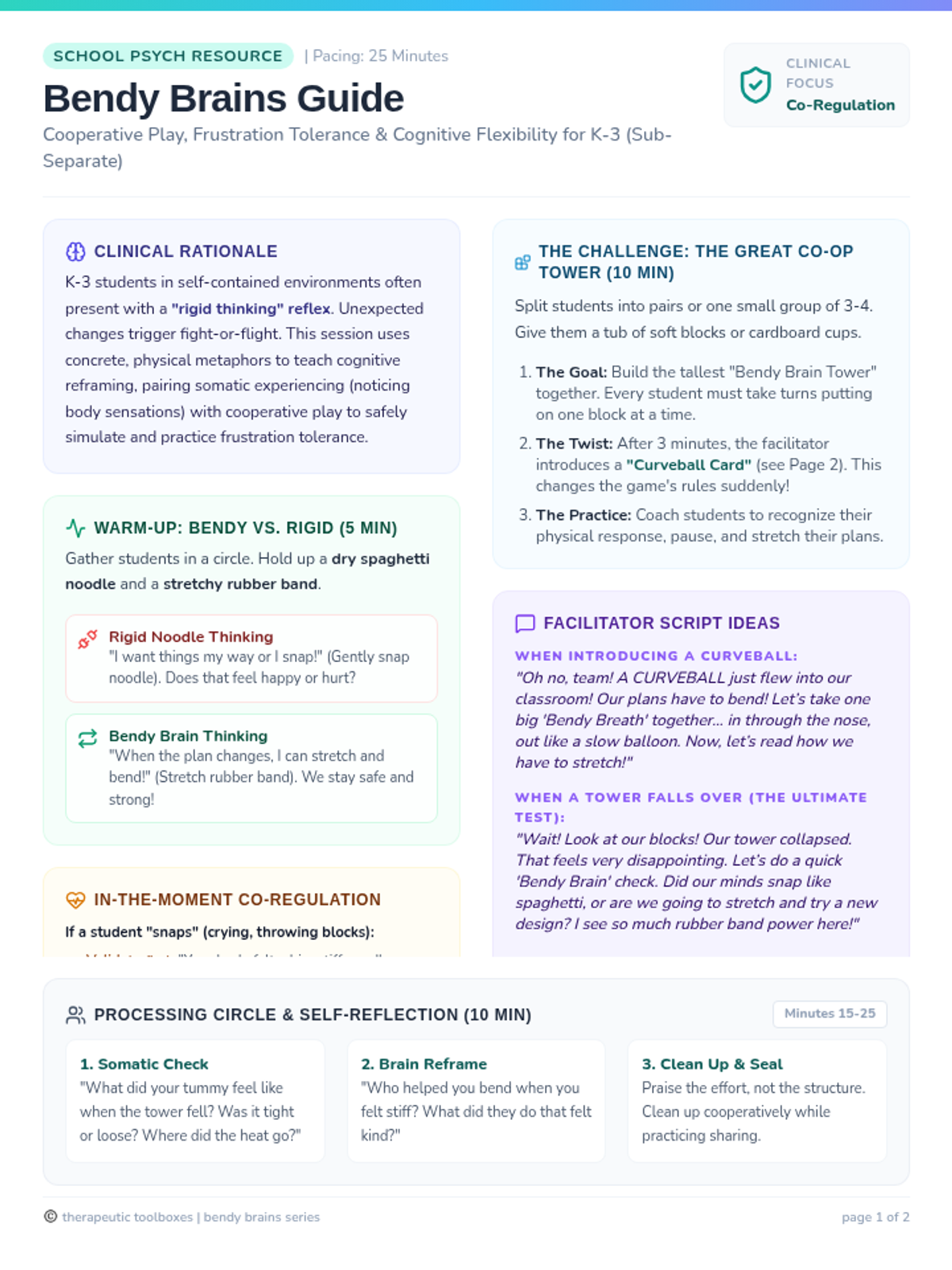
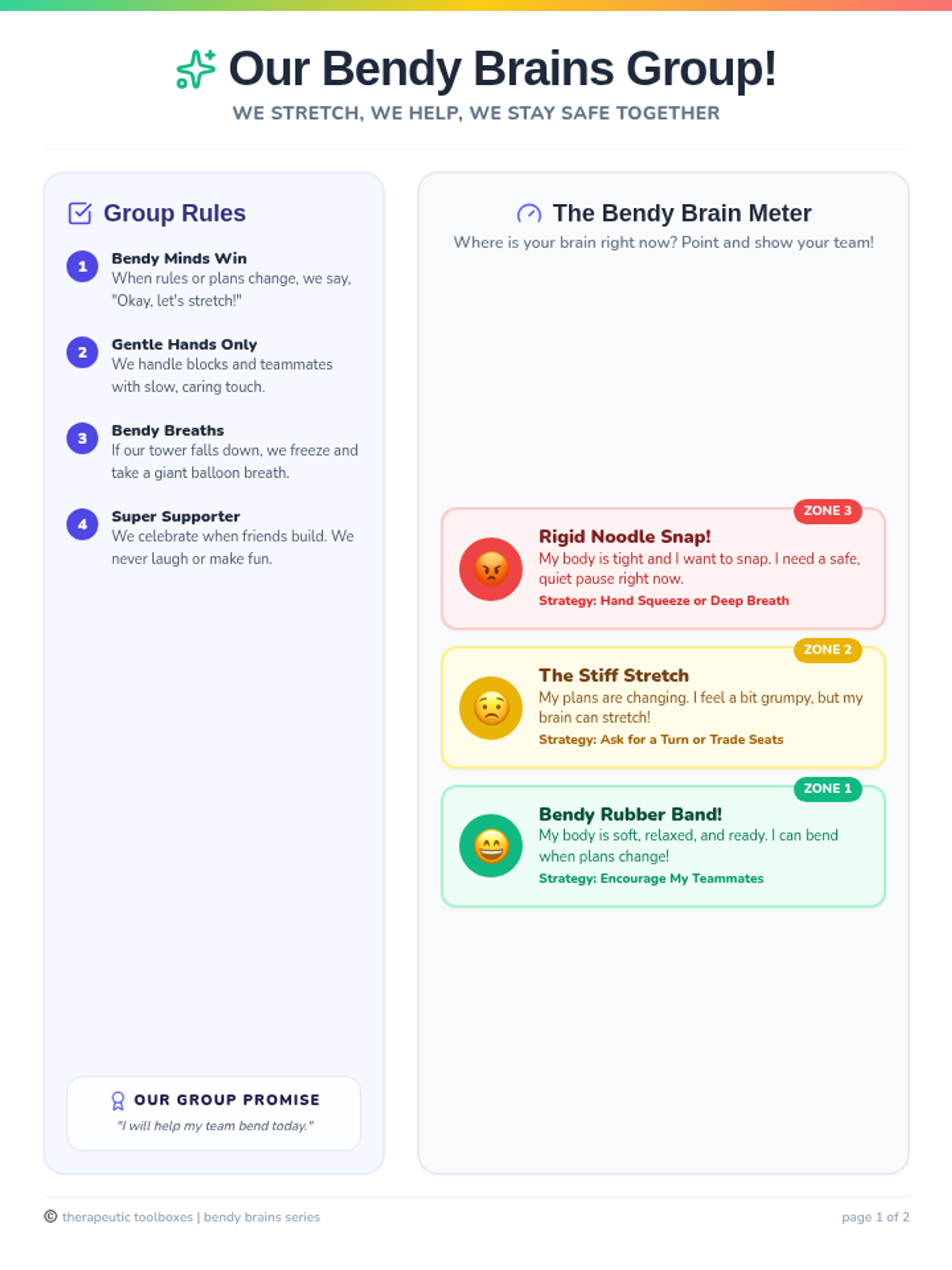
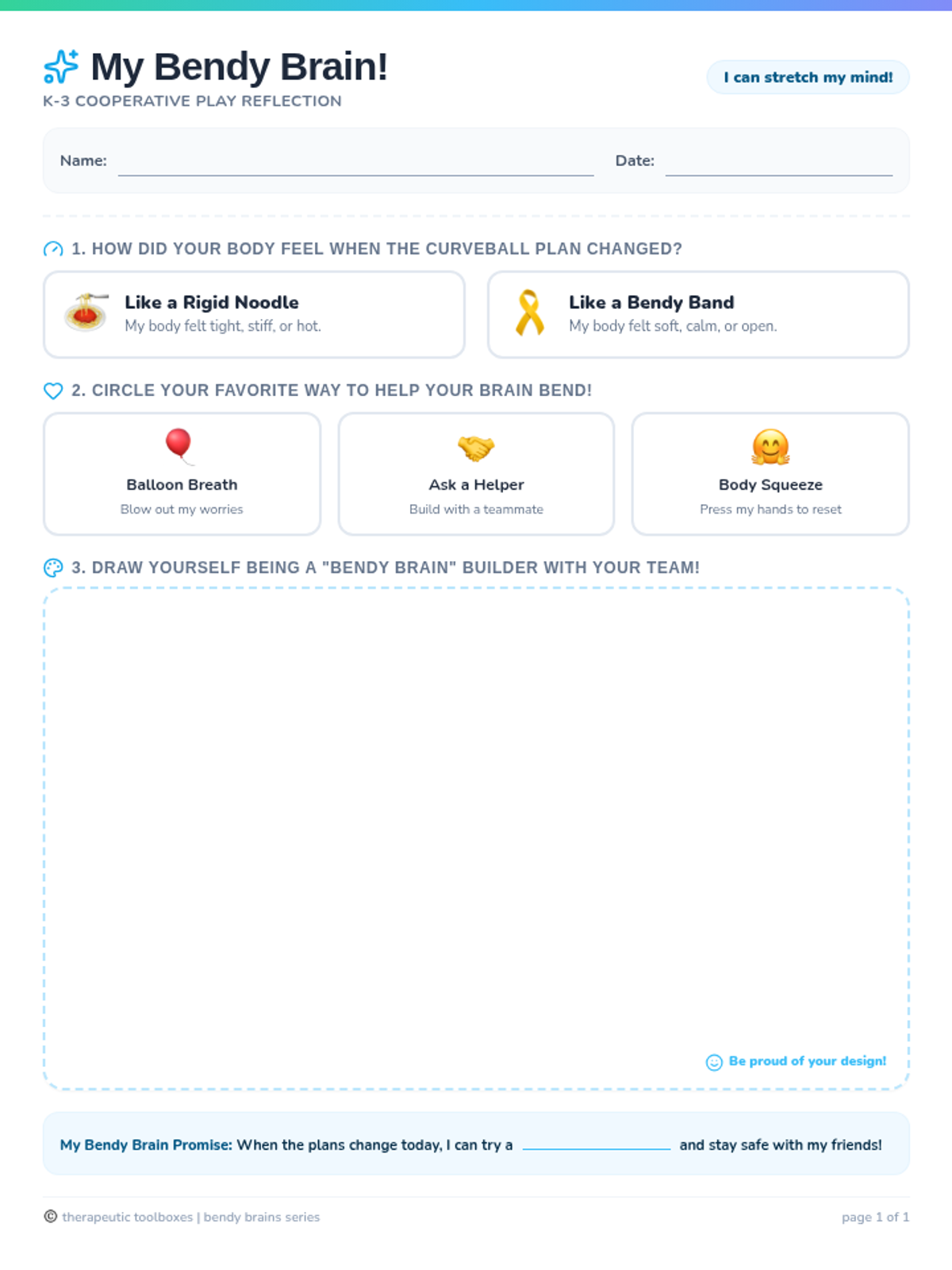
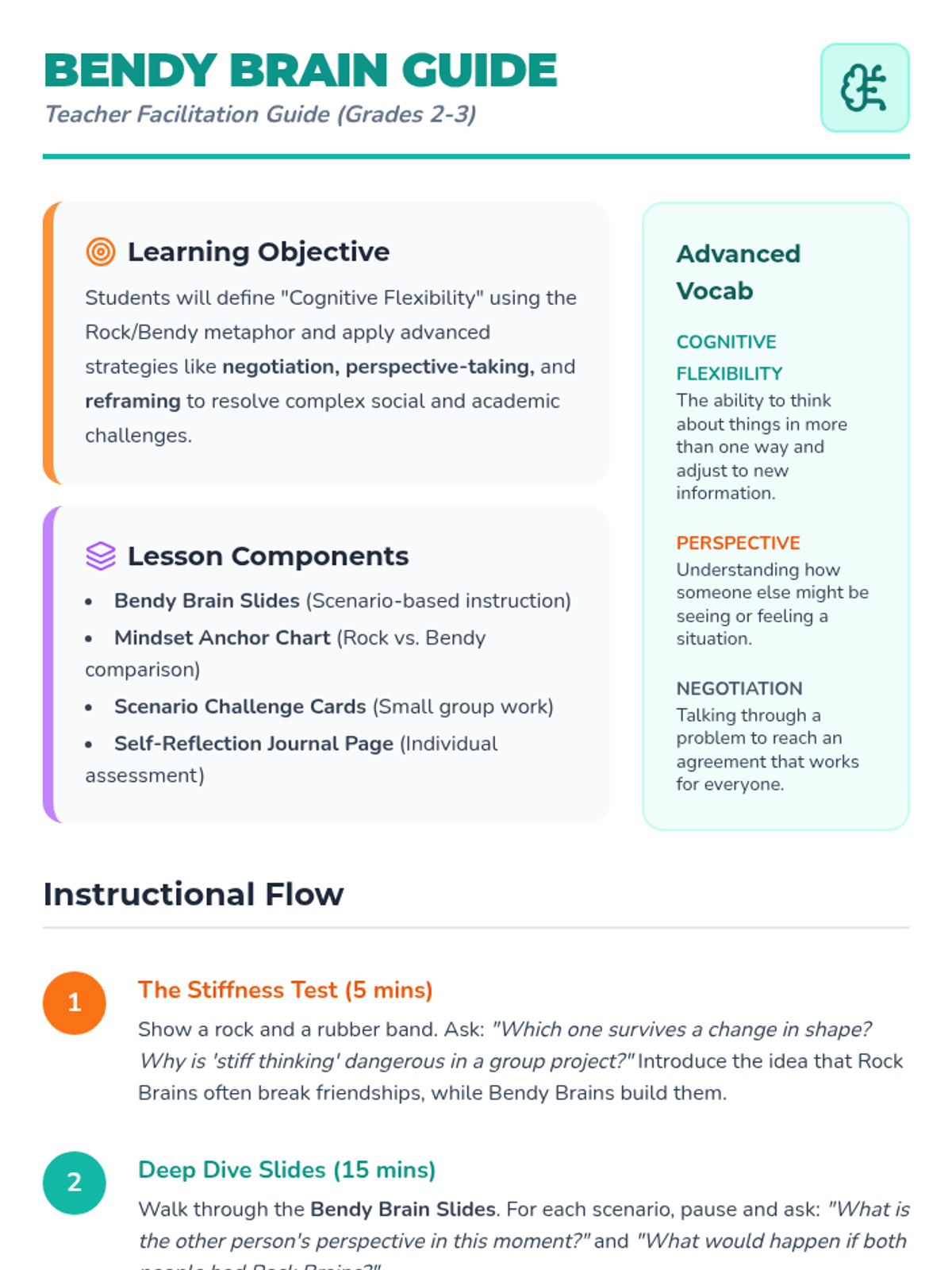
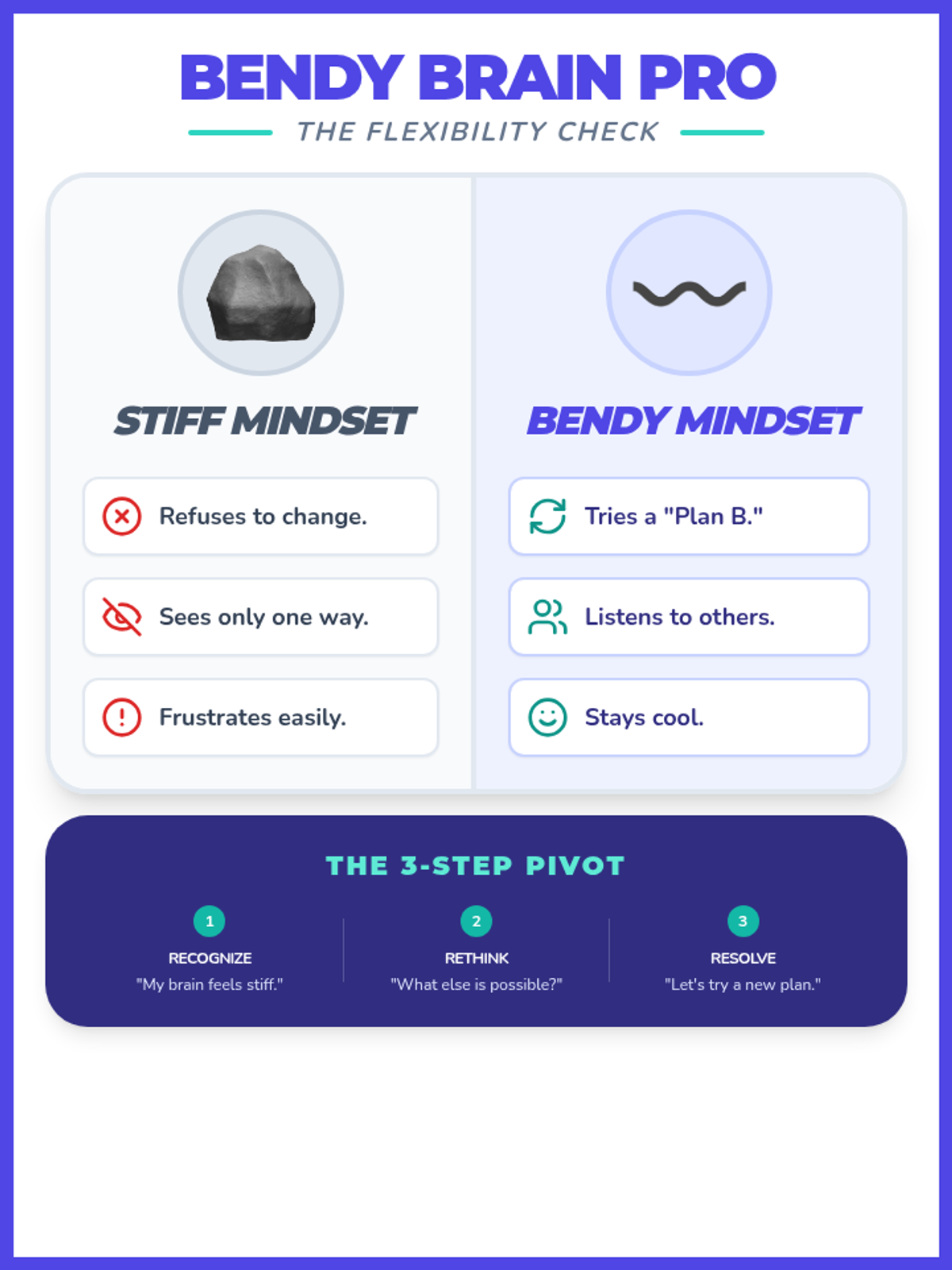
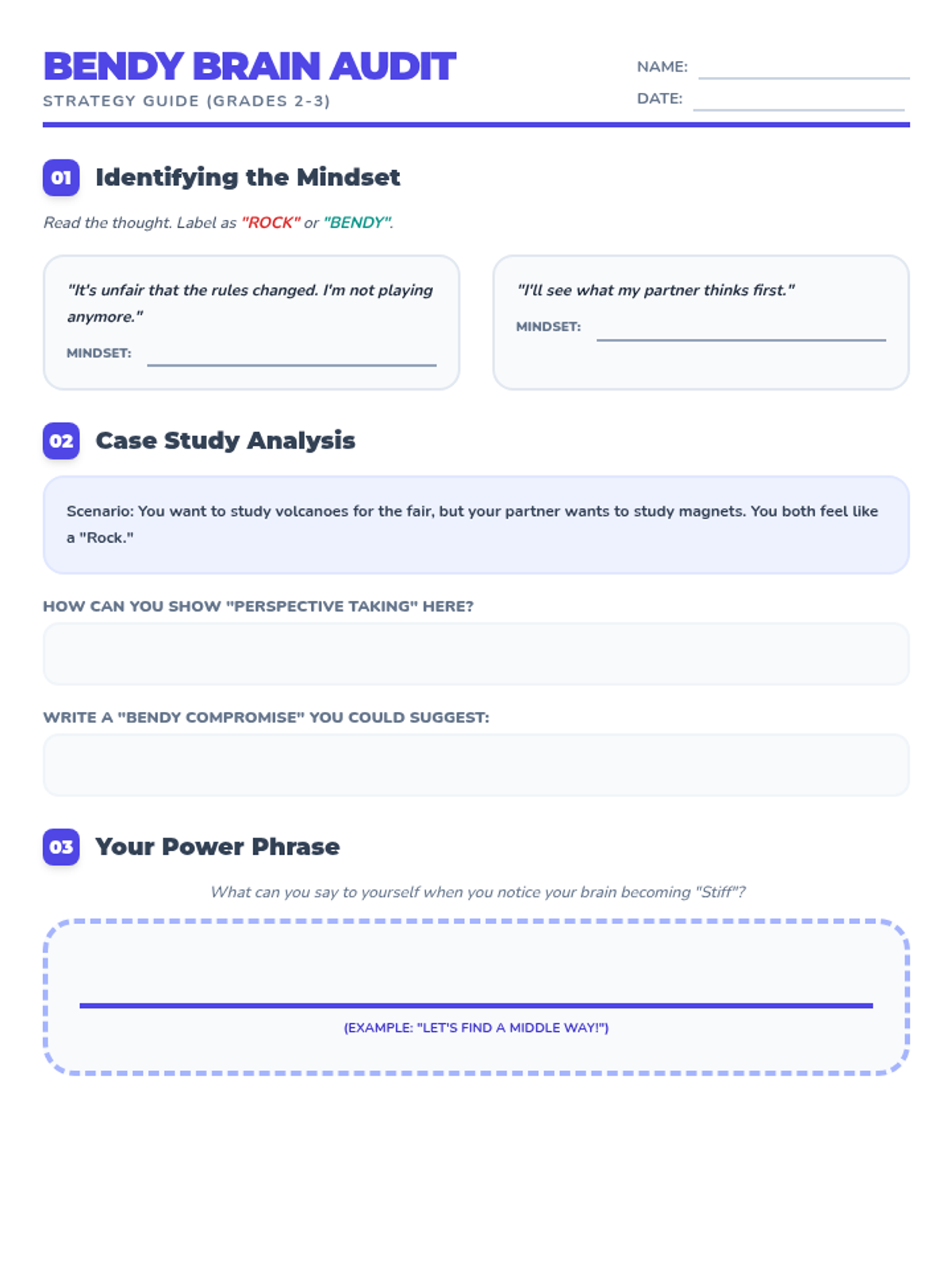
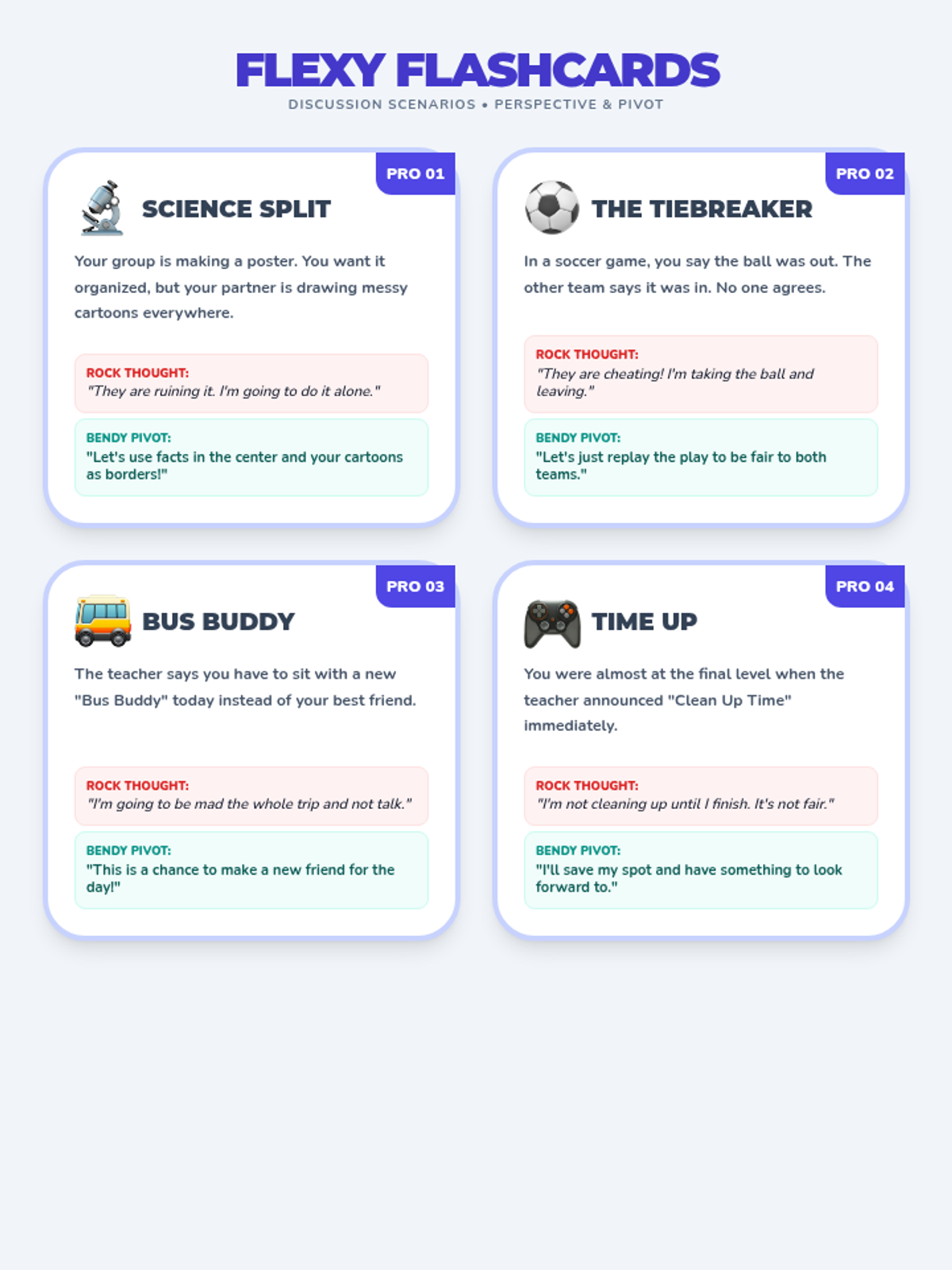
A 25-minute therapeutic team-building session designed for K-3 students in sub-separate classrooms to build cognitive flexibility and frustration tolerance using the concept of 'bendy' vs. 'rigid' thinking.
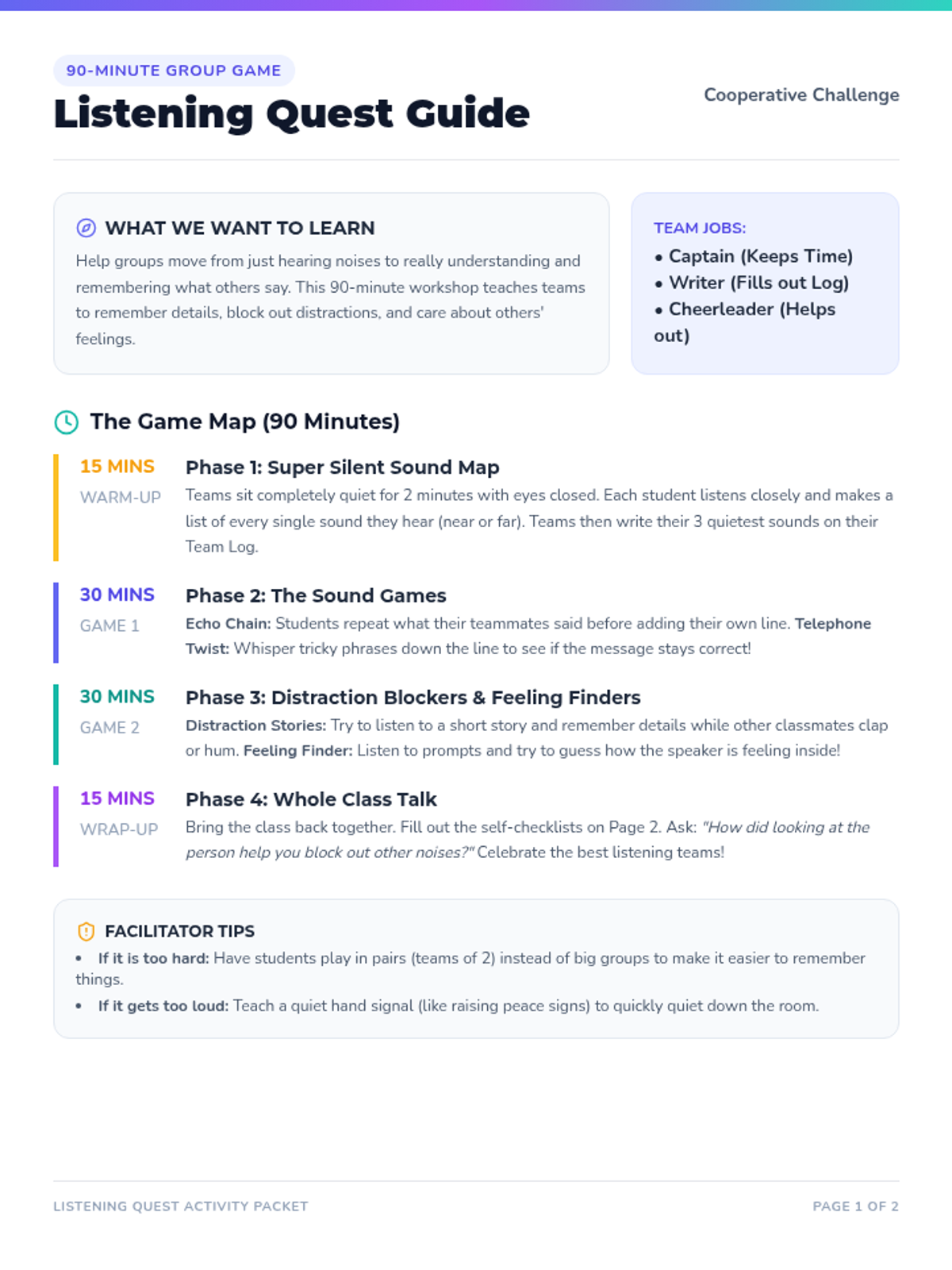
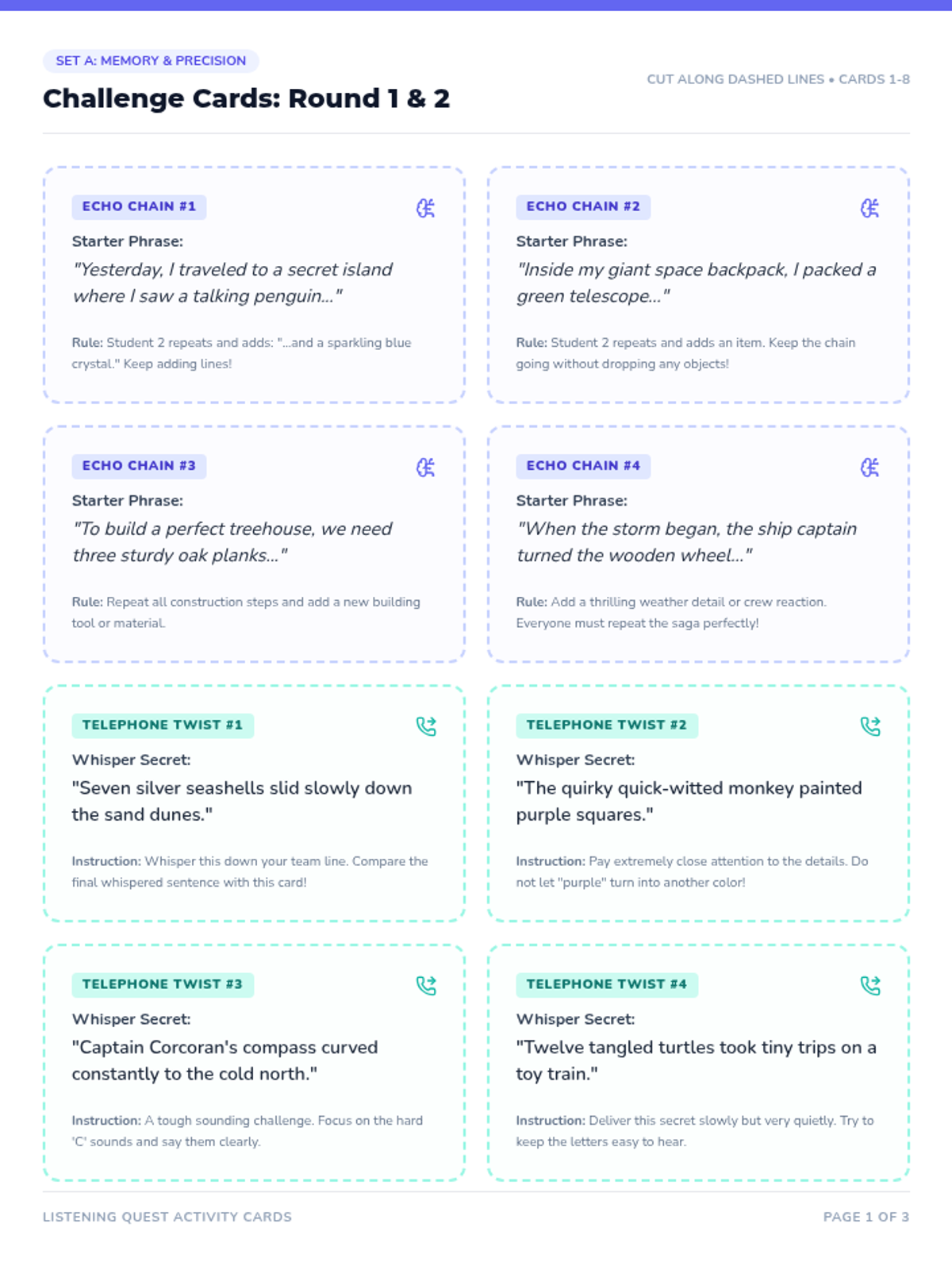
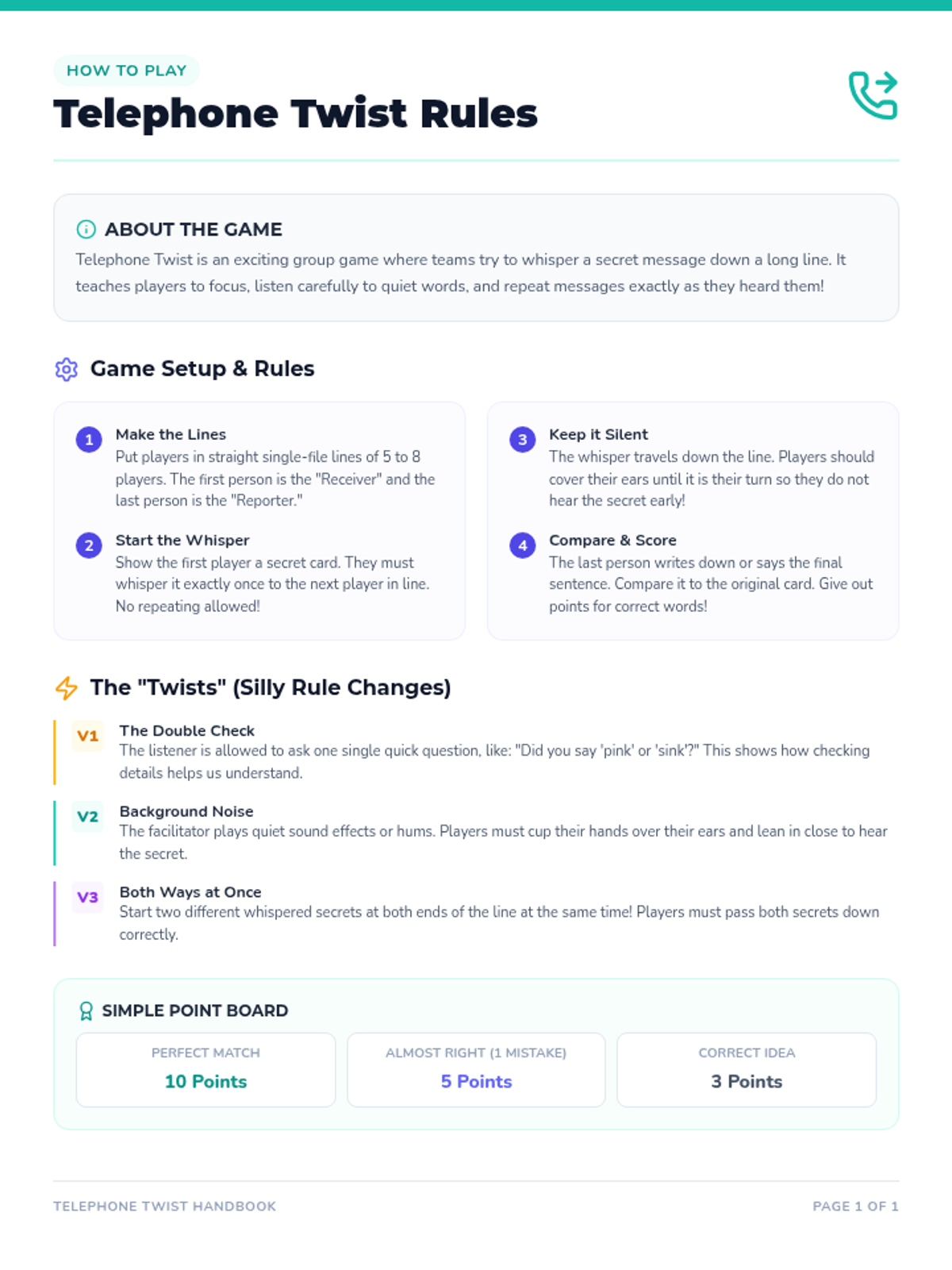
A comprehensive 90-minute immersive workshop lesson where students complete cooperative challenges to master active listening, focus, and empathy.
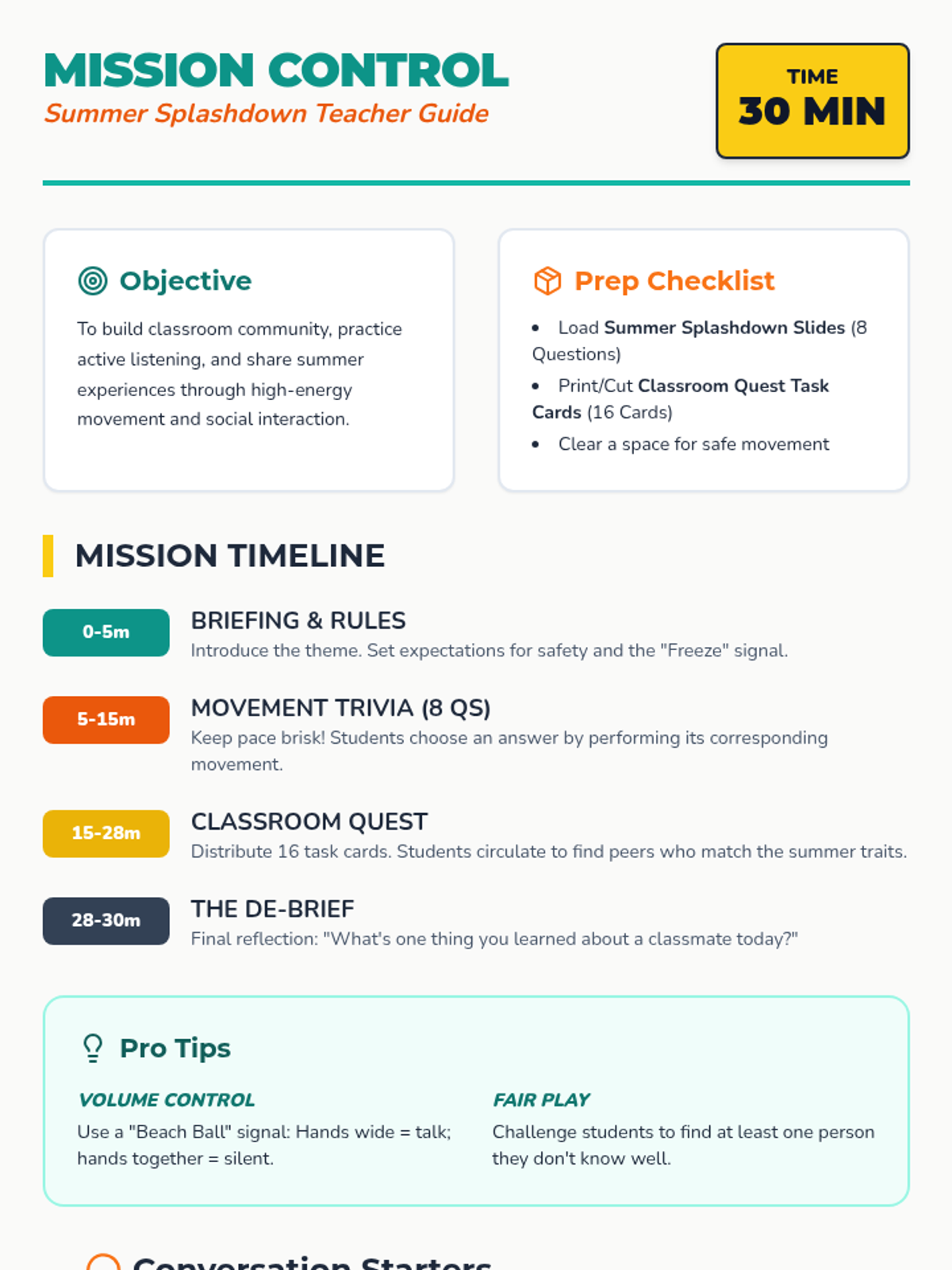
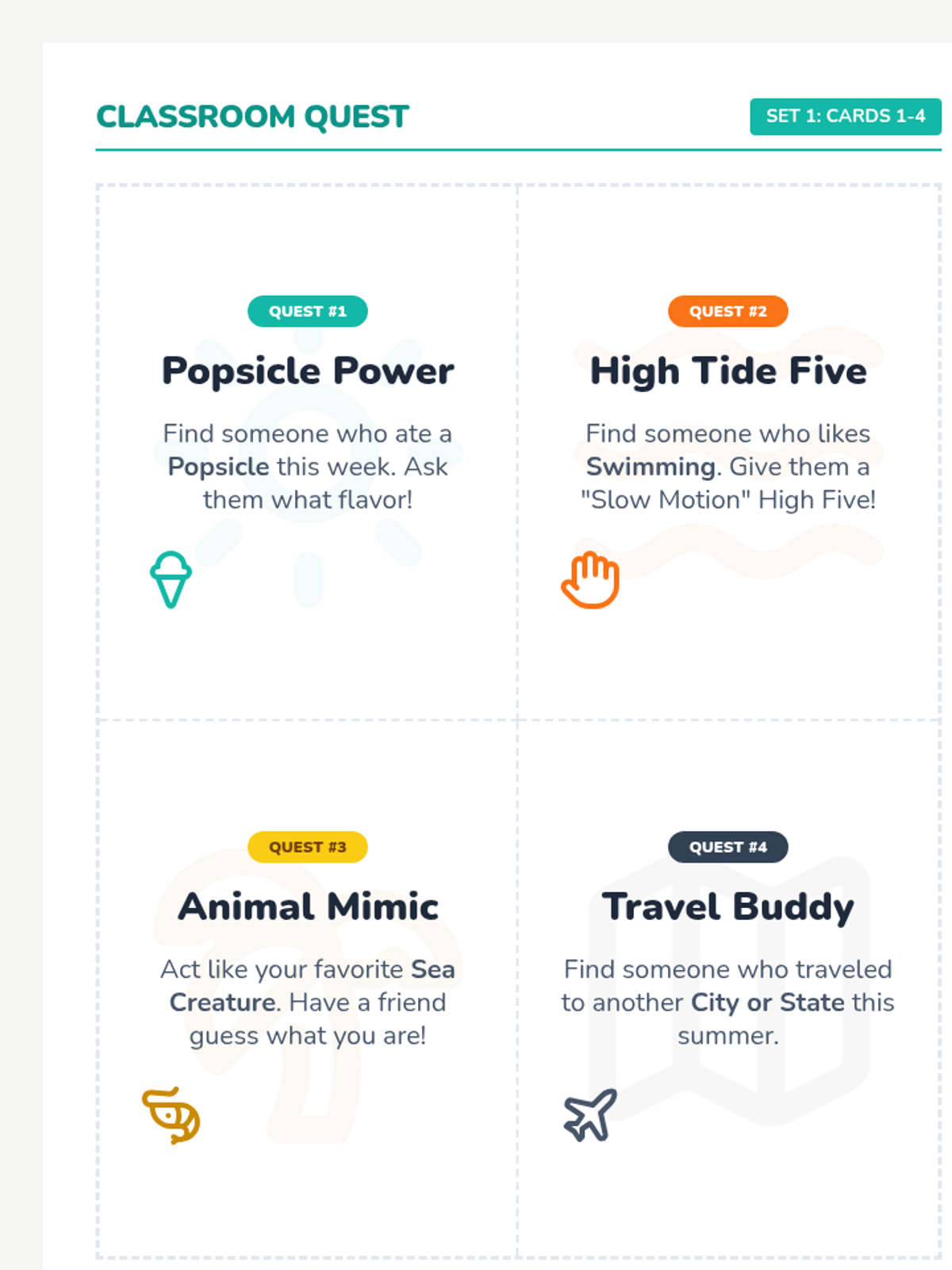
A high-energy, 30-minute session designed to build classroom community through summer-themed movement trivia and a social scavenger hunt.
A foundational social-emotional learning lesson for K-1 students that introduces the concept of cognitive flexibility using the 'Rock Brain' vs. 'Bendy Brain' metaphor. Students learn to identify when they are stuck and practice 'stretching' their thinking in response to changes and challenges.
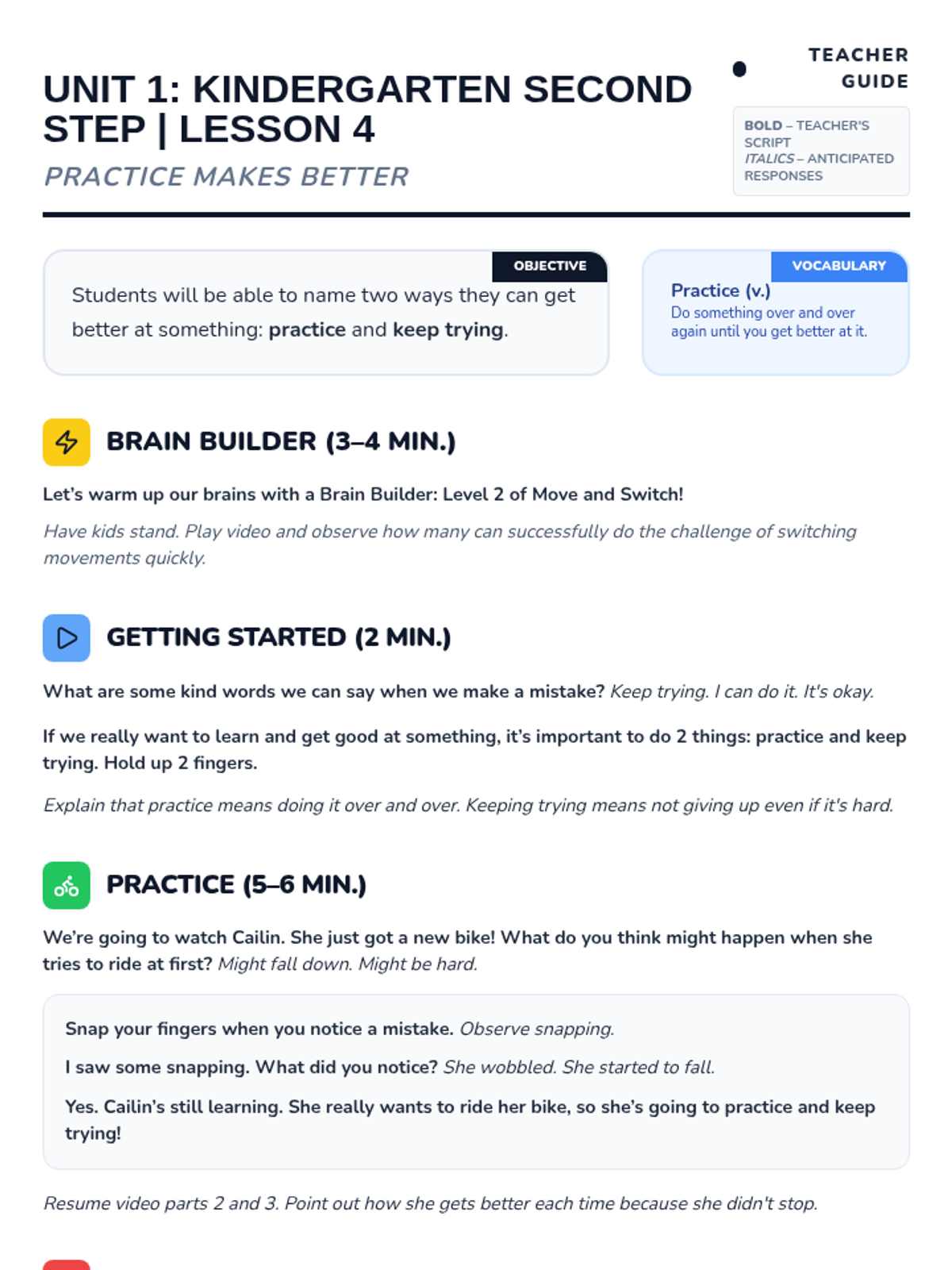
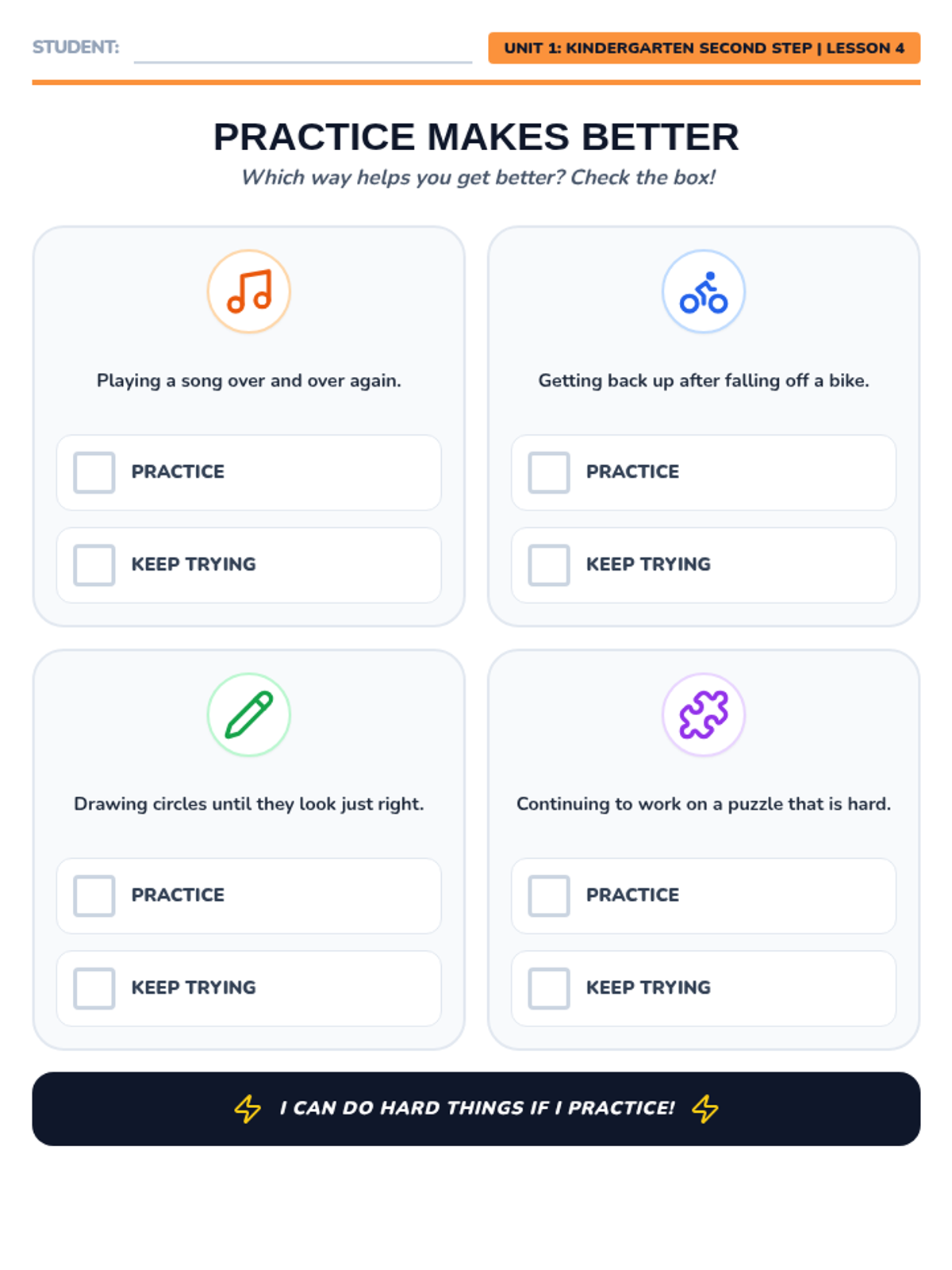
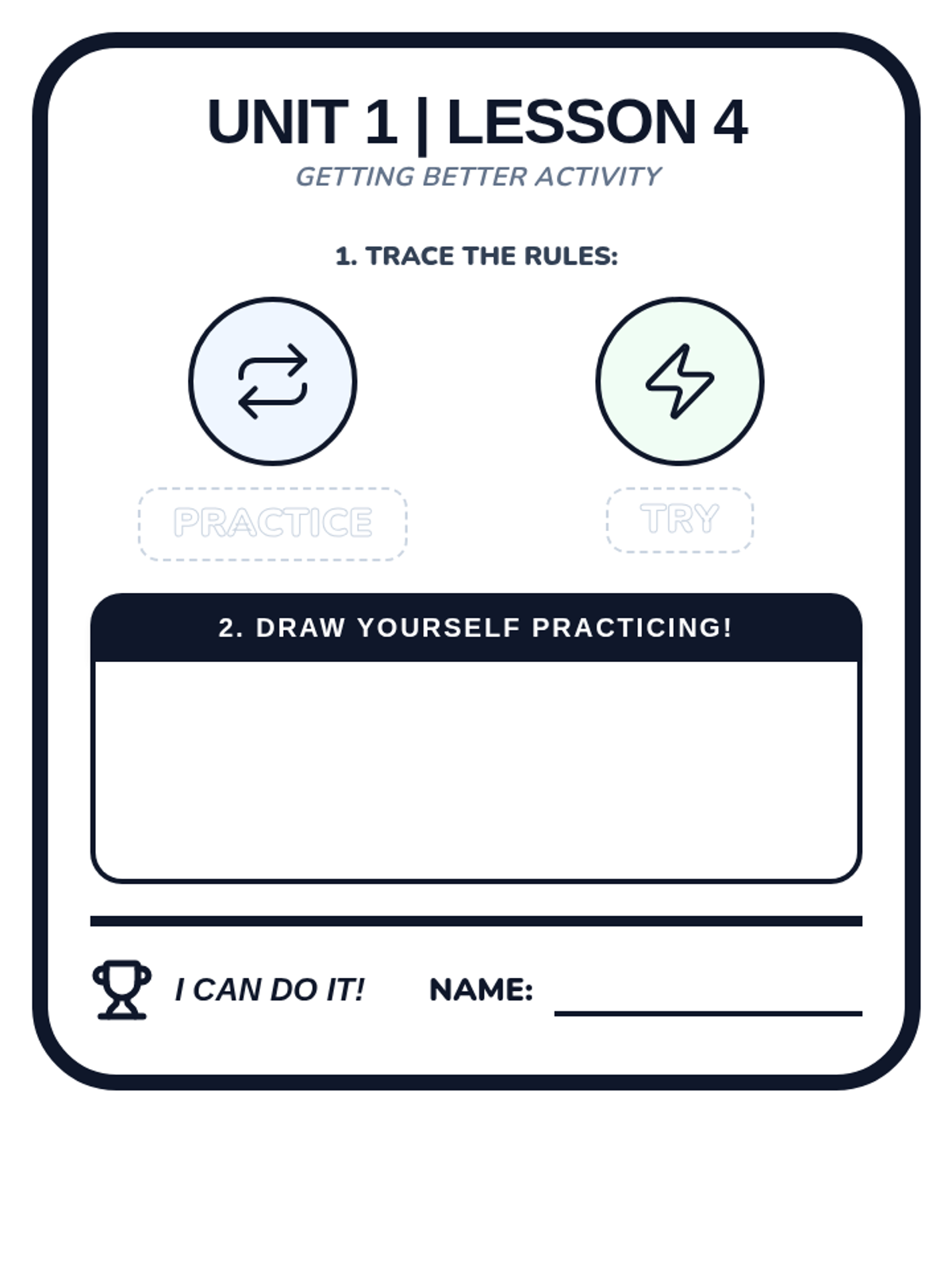
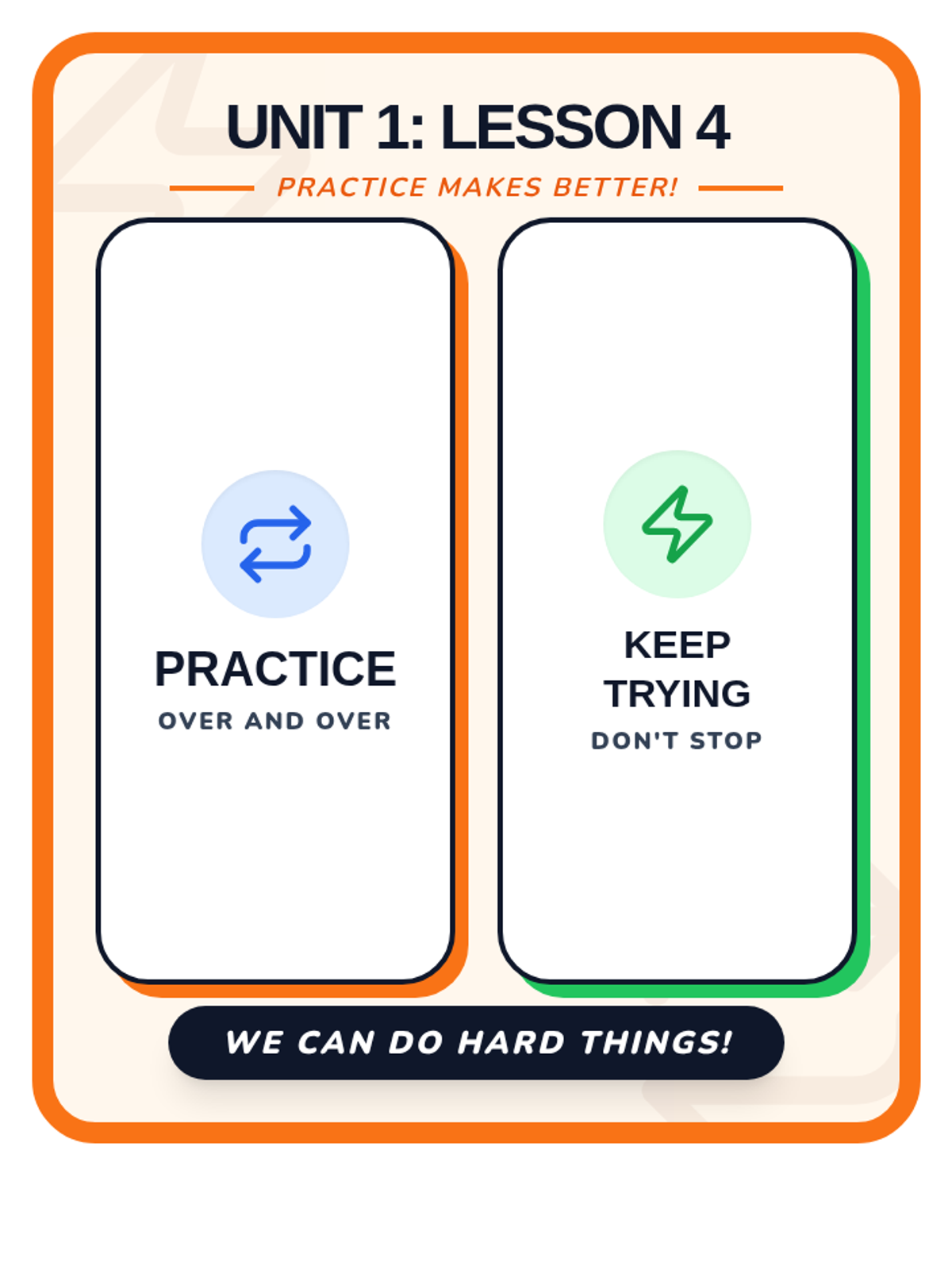
A kindergarten SEL lesson based on the Second Step curriculum (Unit 1 Lesson 4), focused on identifying practice and persistence as the two primary ways to improve skills.
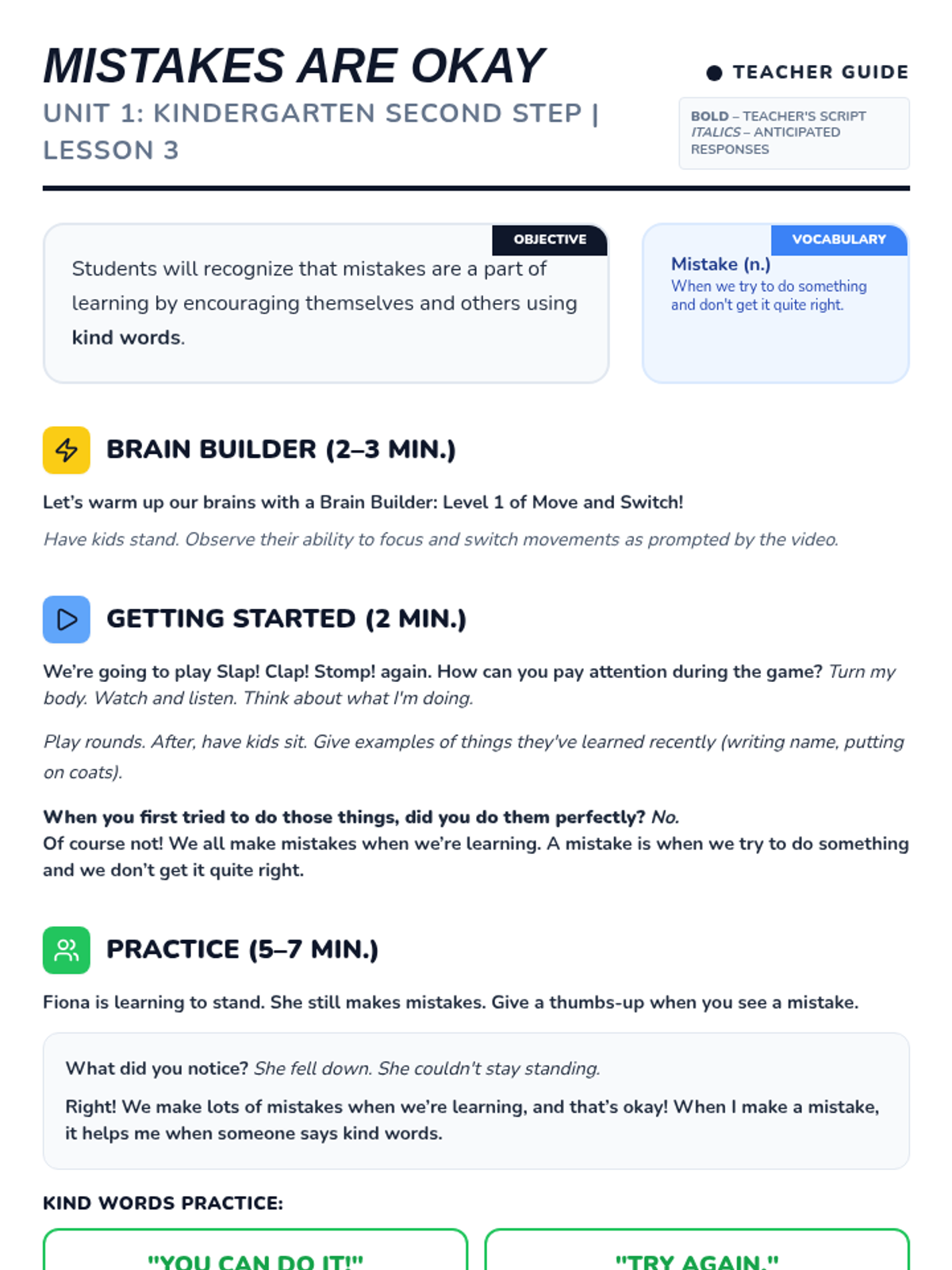
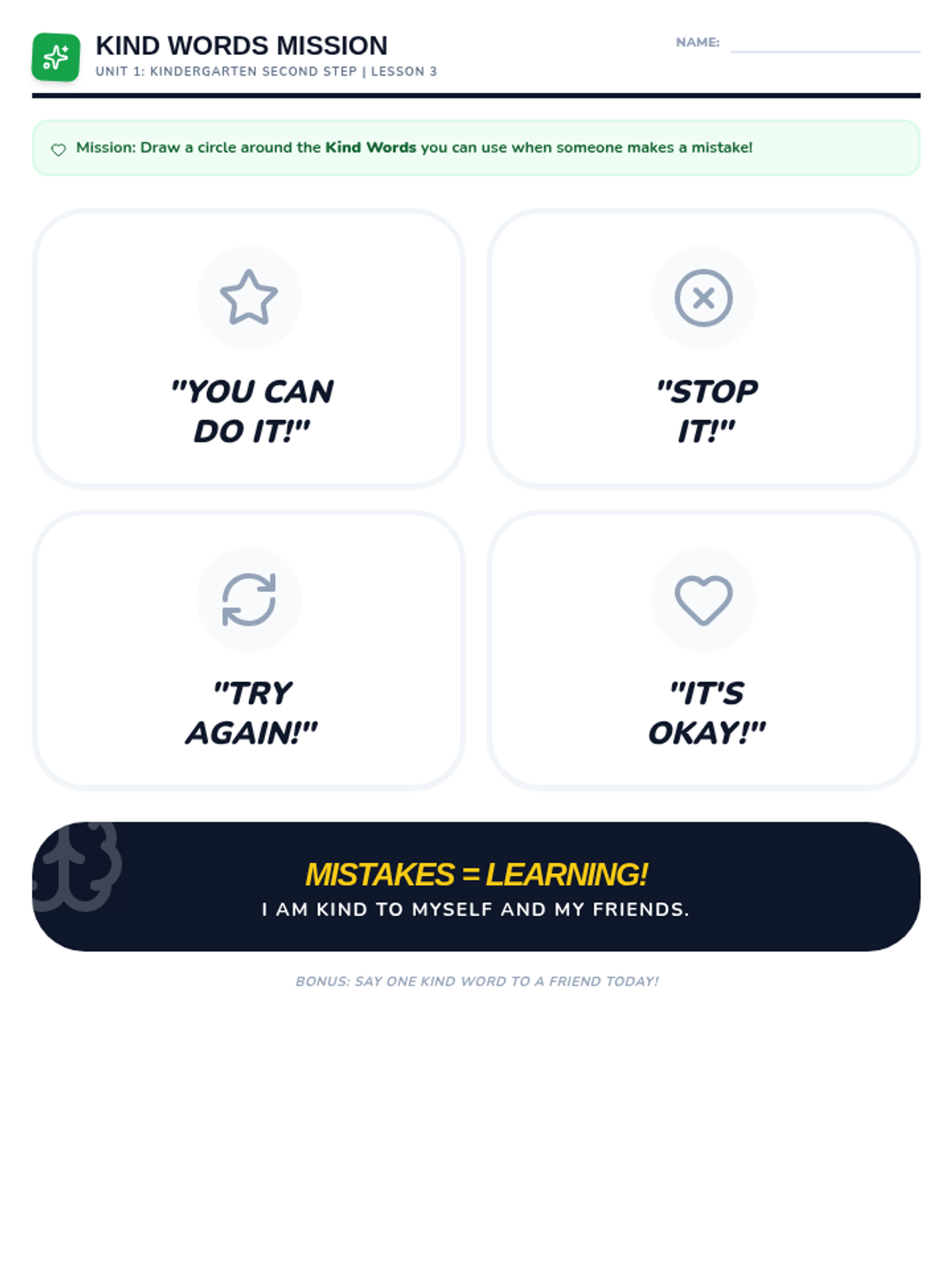
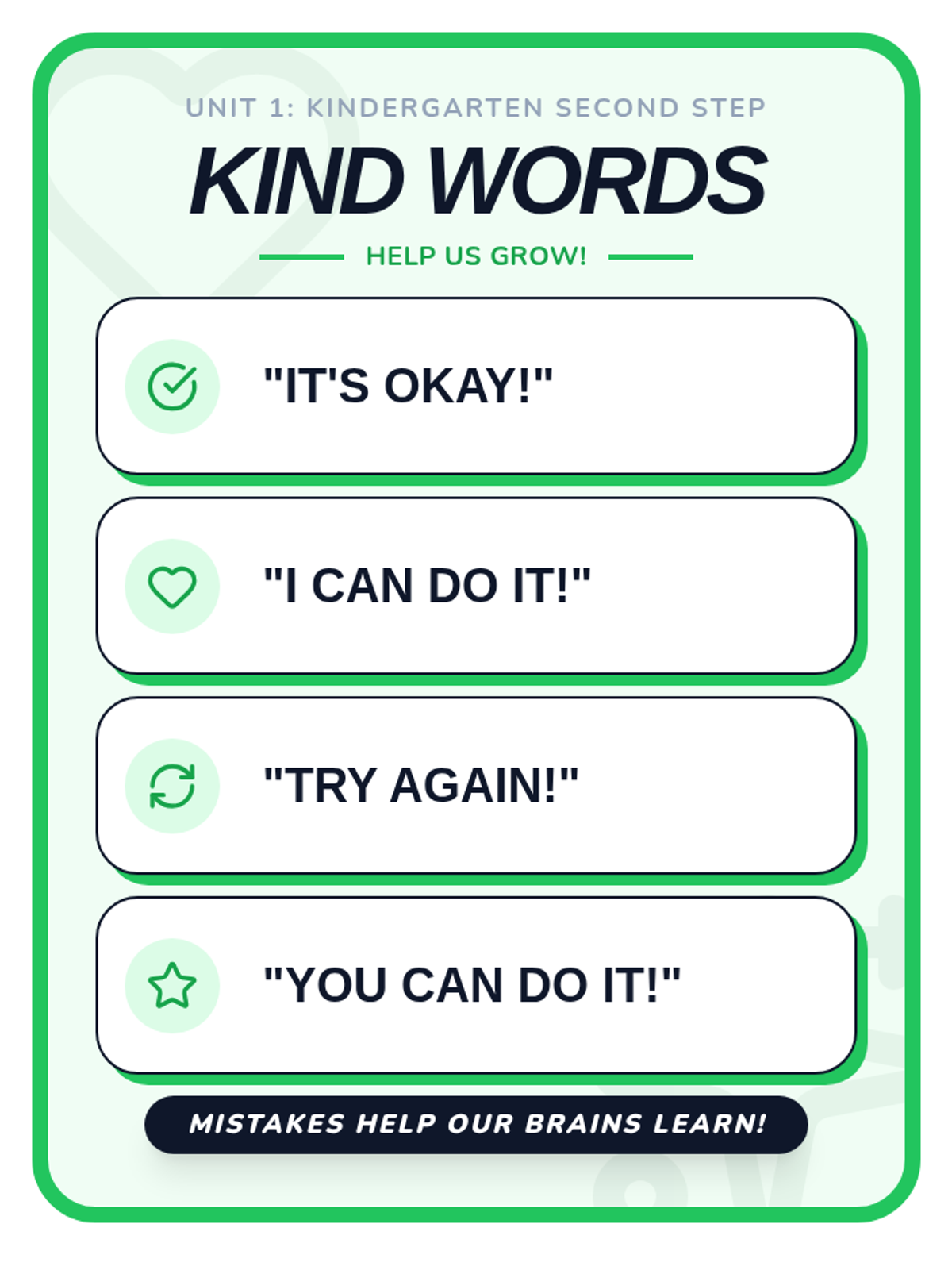
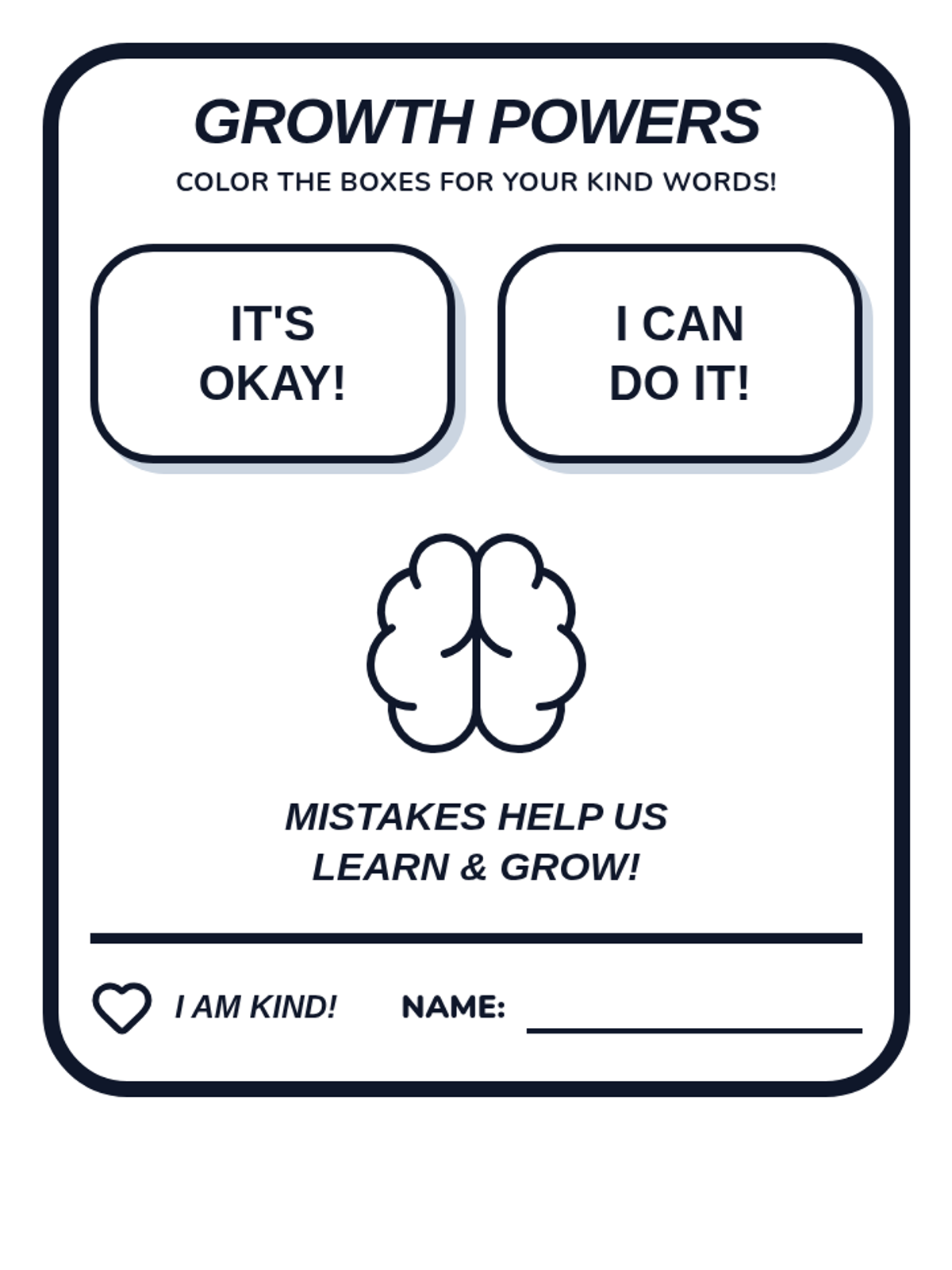
A kindergarten SEL lesson based on the Second Step curriculum (Unit 1 Lesson 3), focused on understanding that mistakes are a natural part of learning and how to use kind words for encouragement.