Emotion recognition ranging from basic feelings to complex nuances and mixed states. Strengthens accurate self-assessment through identity exploration, strength identification, and values-based decision making.
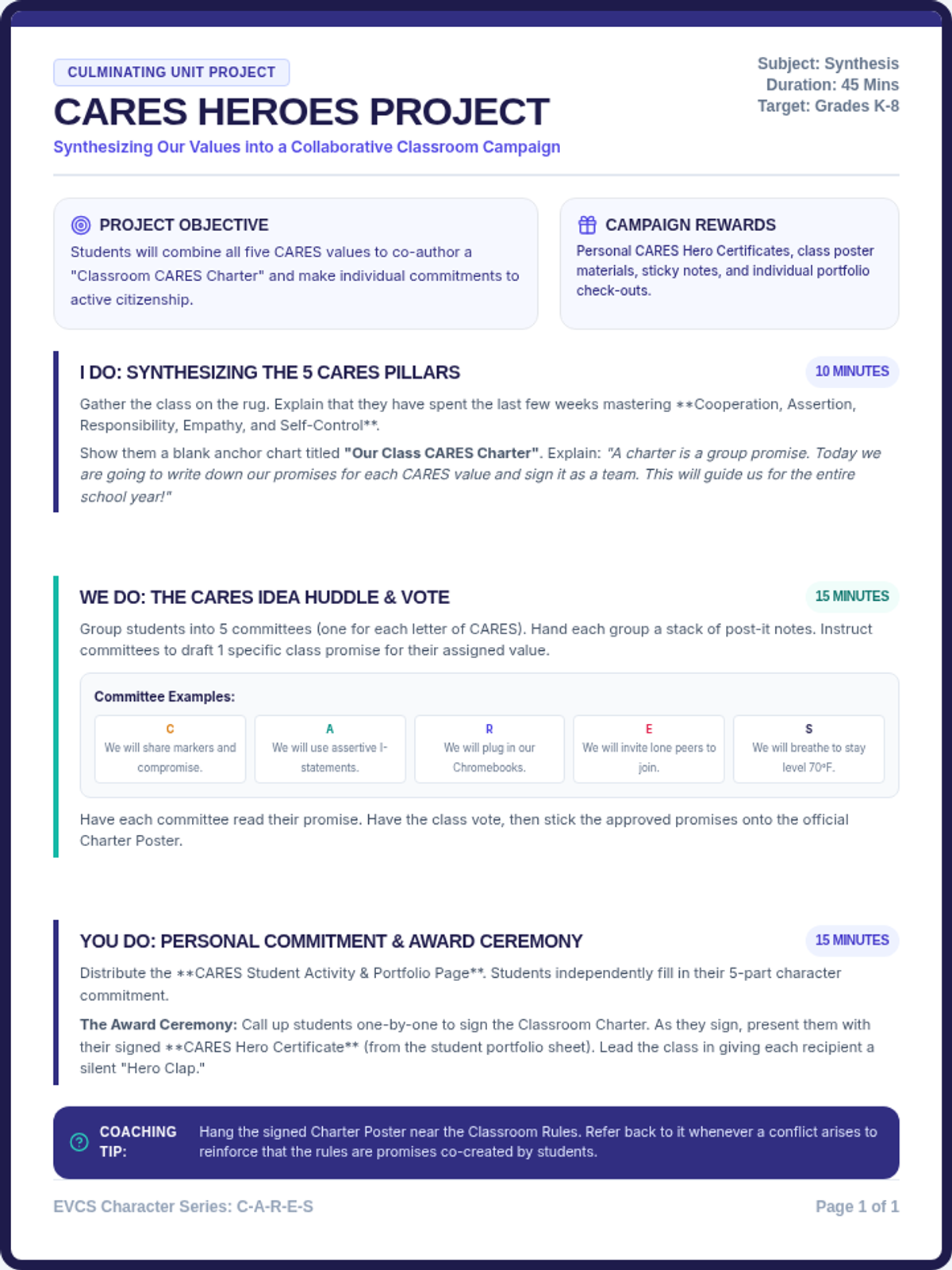
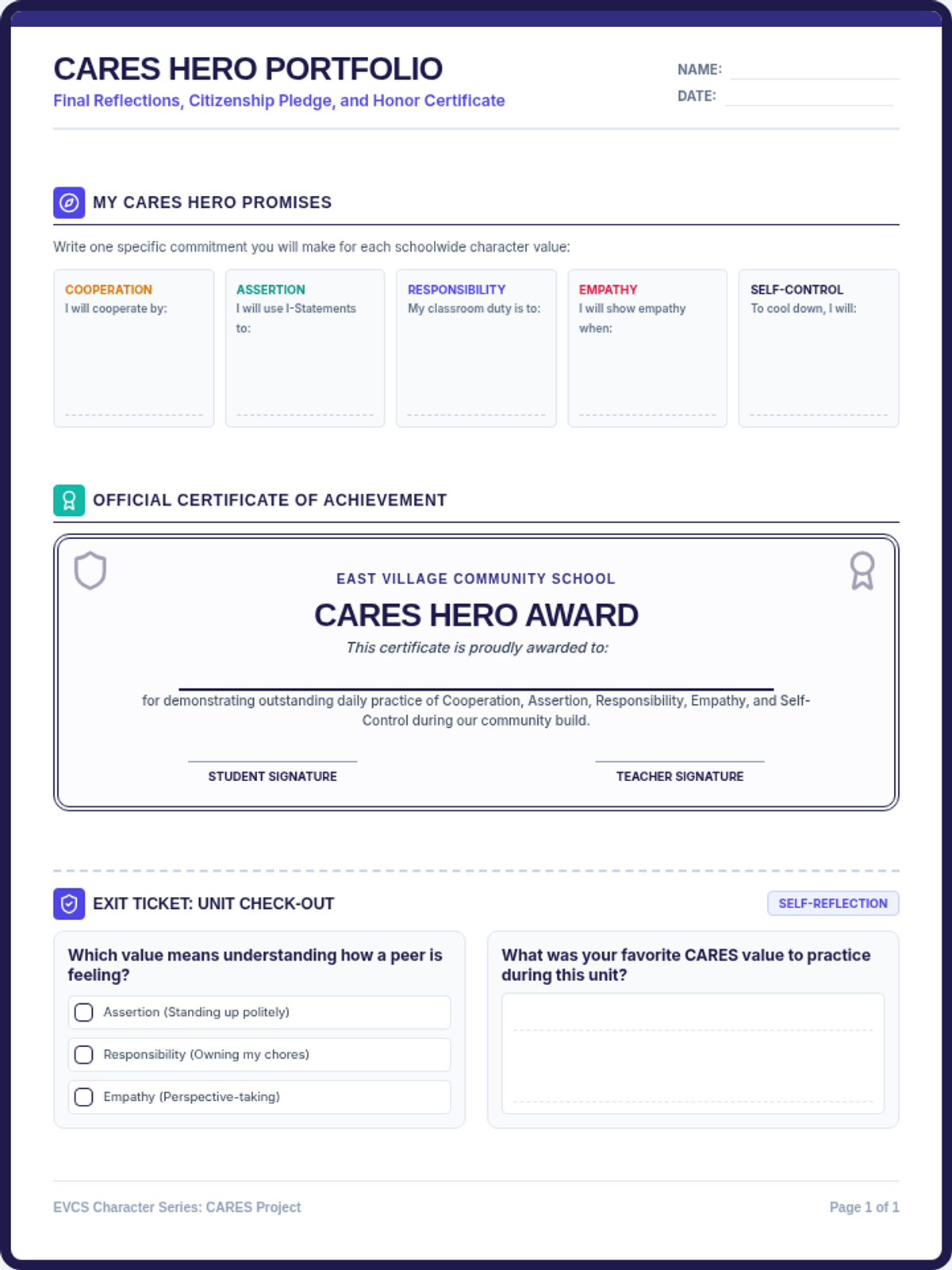
A culminating reflection and community project lesson where students synthesize all five CARES values. Students create a class pledge, award certificates, and design a community action project to show their learning.
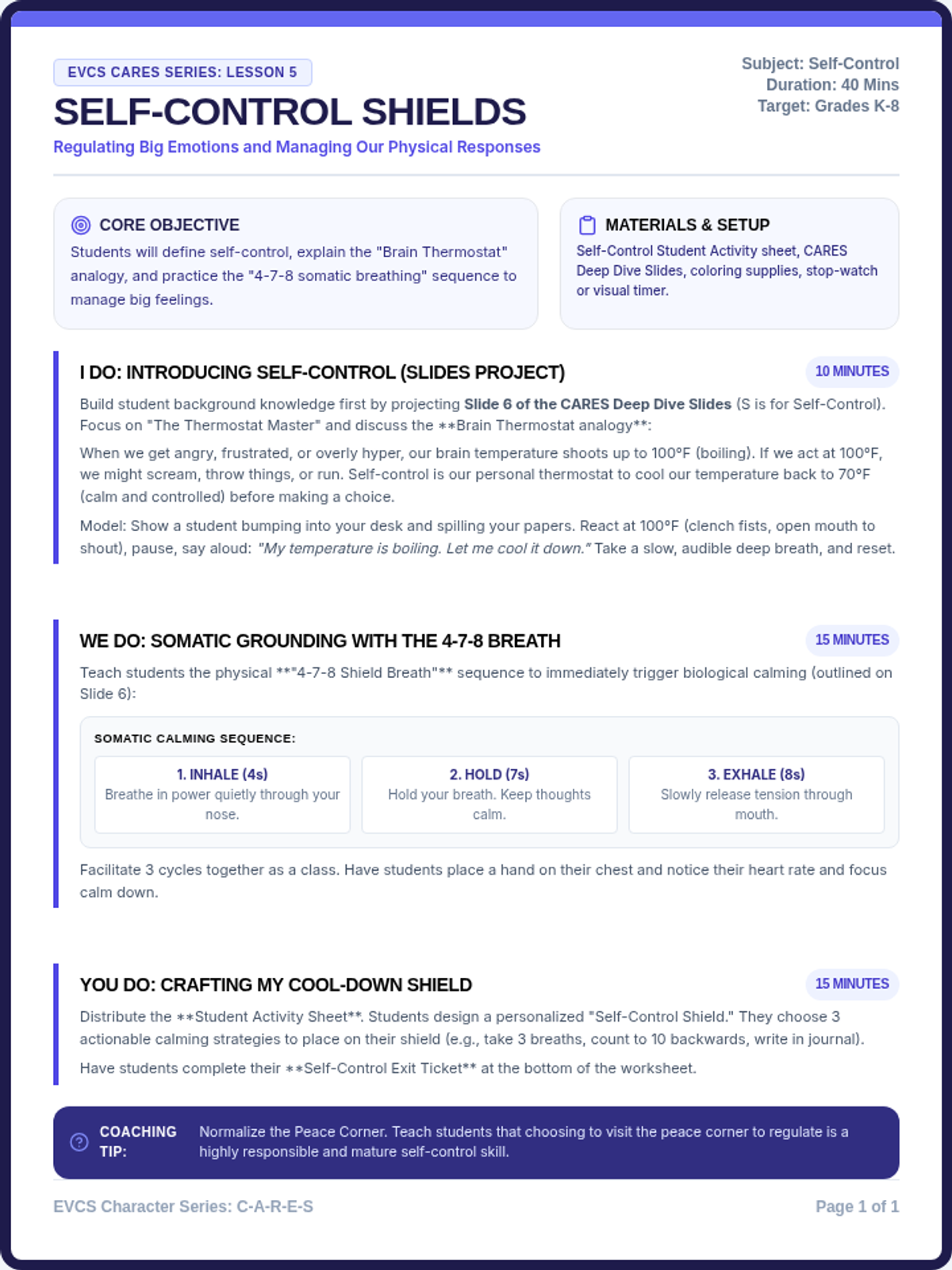
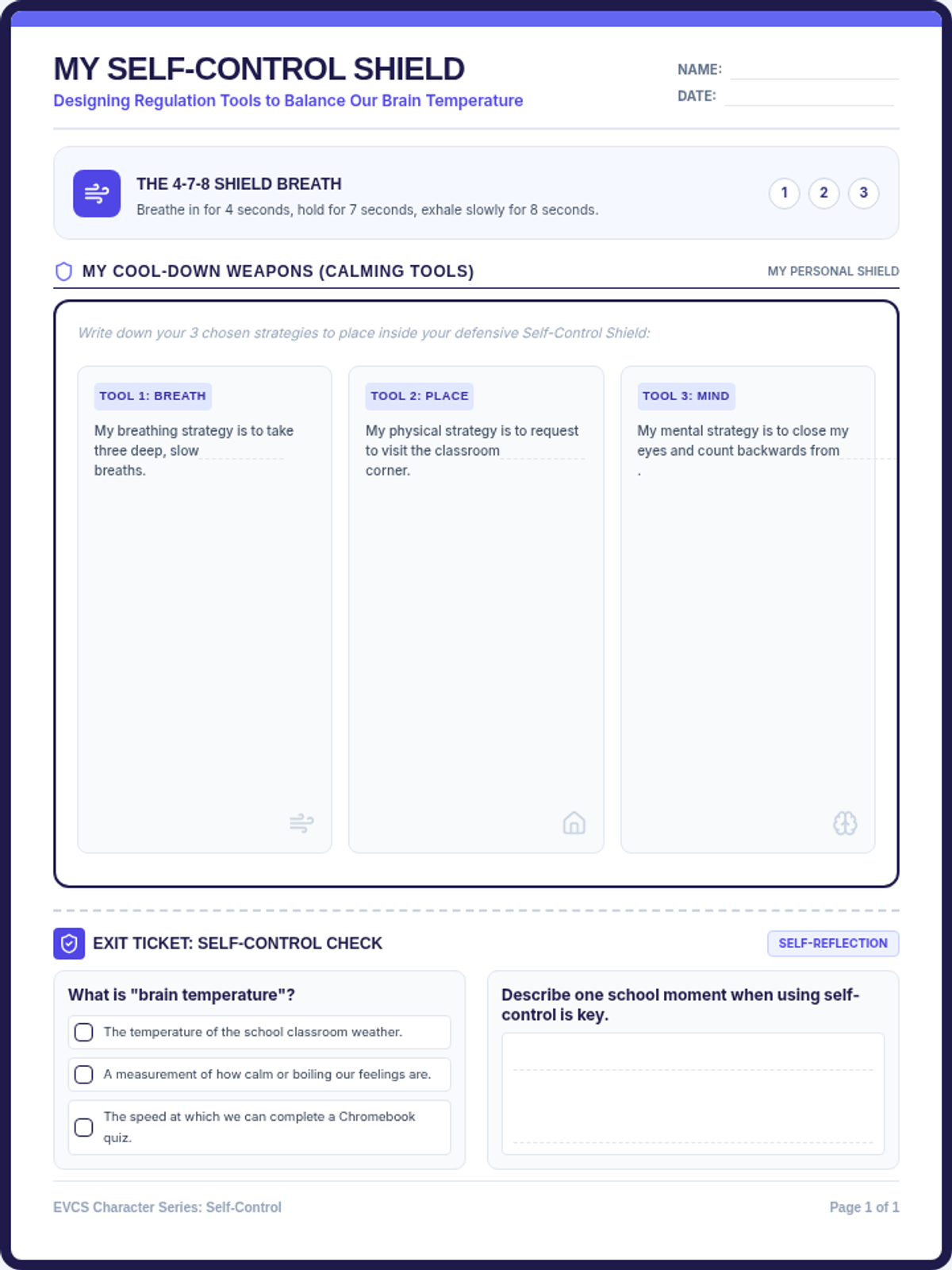
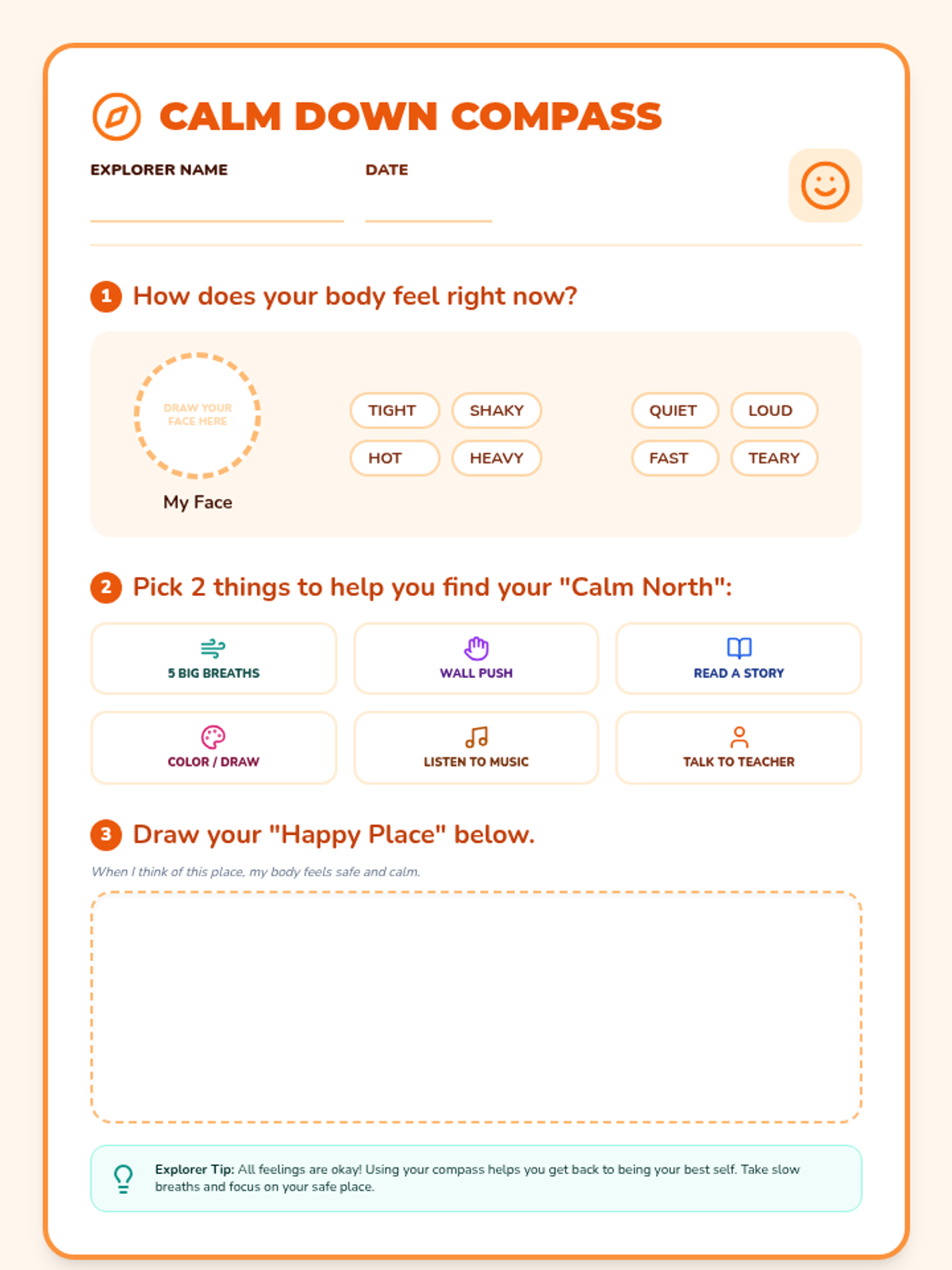
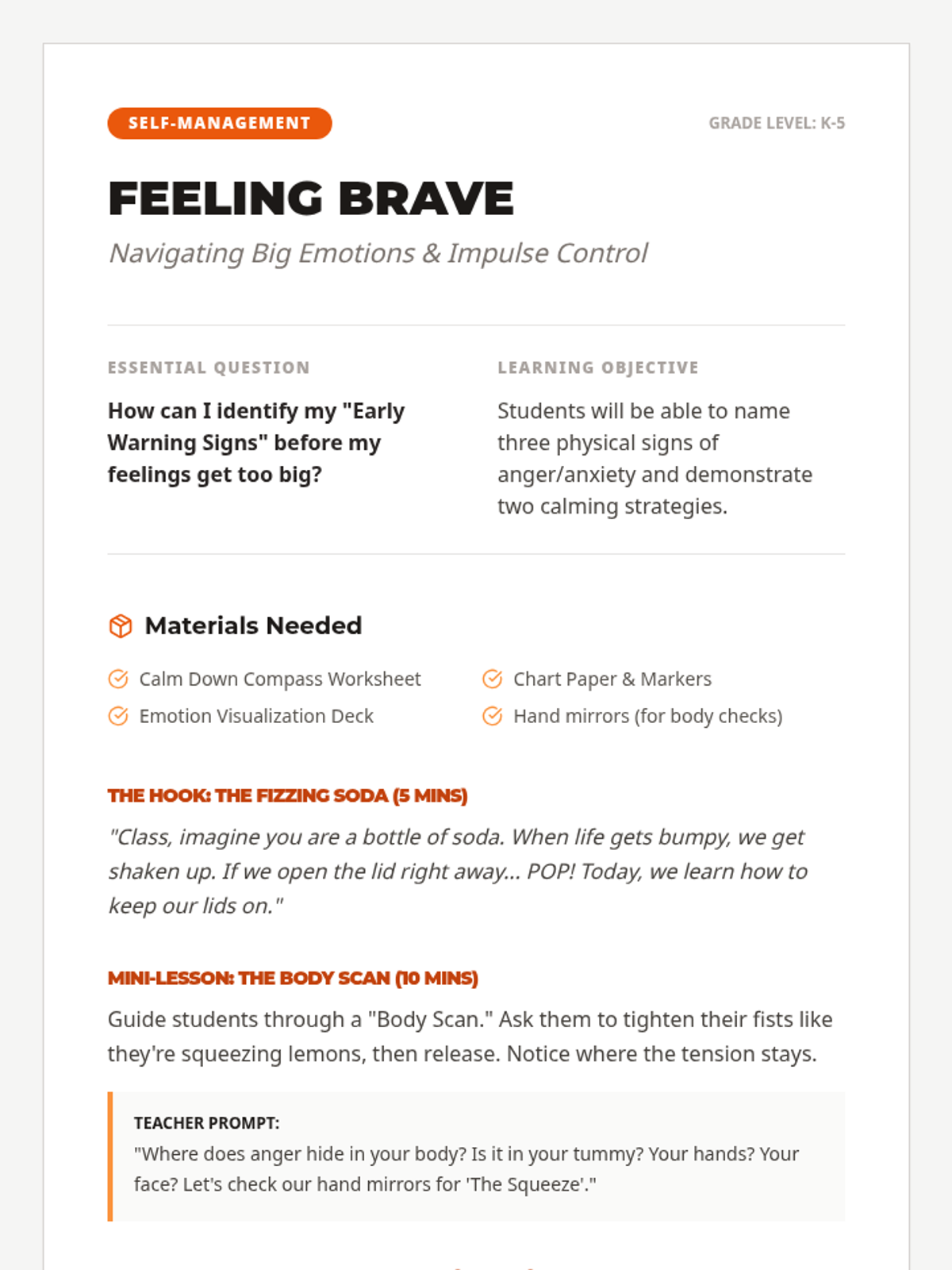
A social-emotional learning lesson centered on self-control, emotional regulation, and mindfulness. Students practice somatic grounding and cool-down techniques to manage big emotions in real-time.
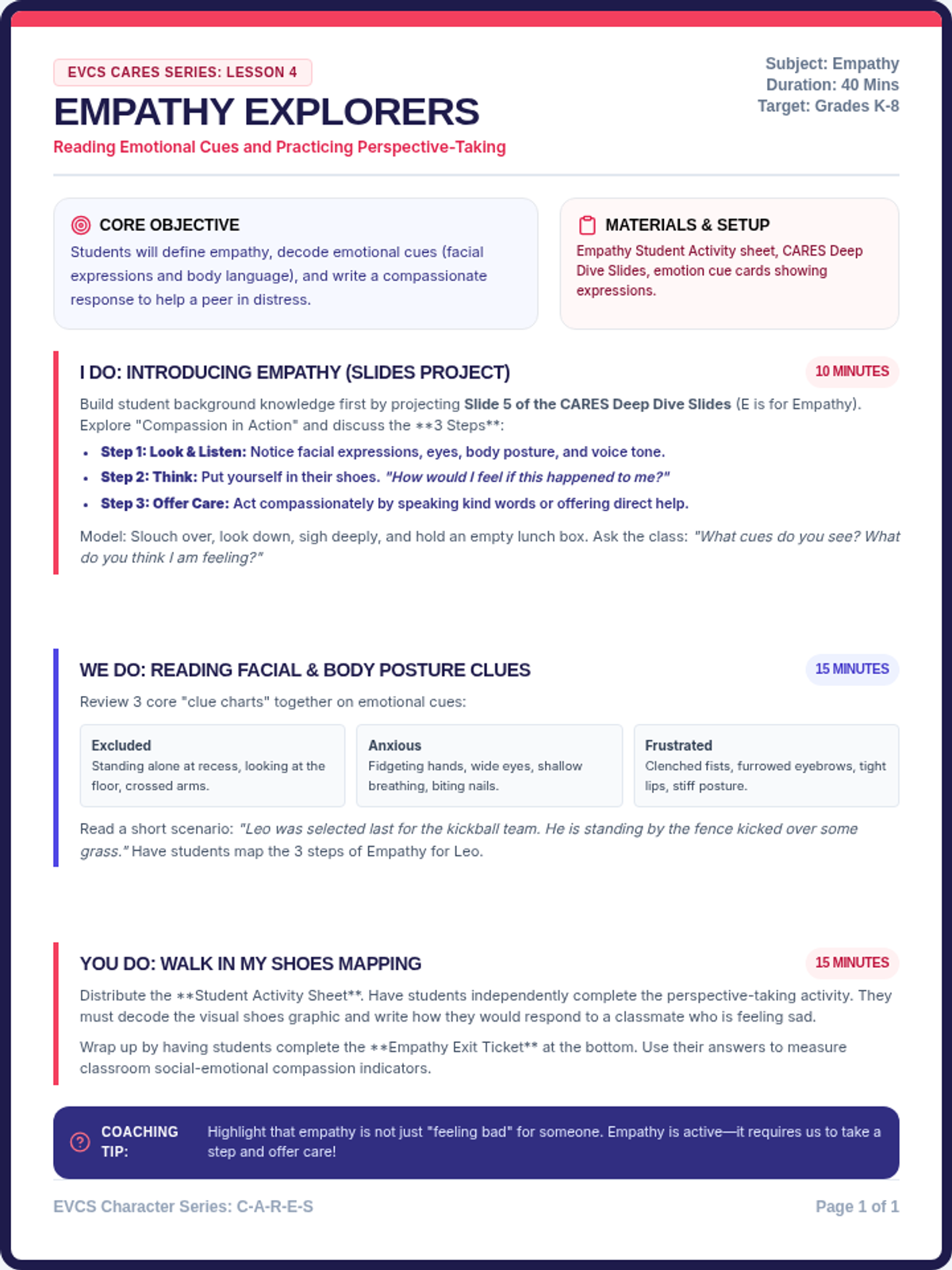
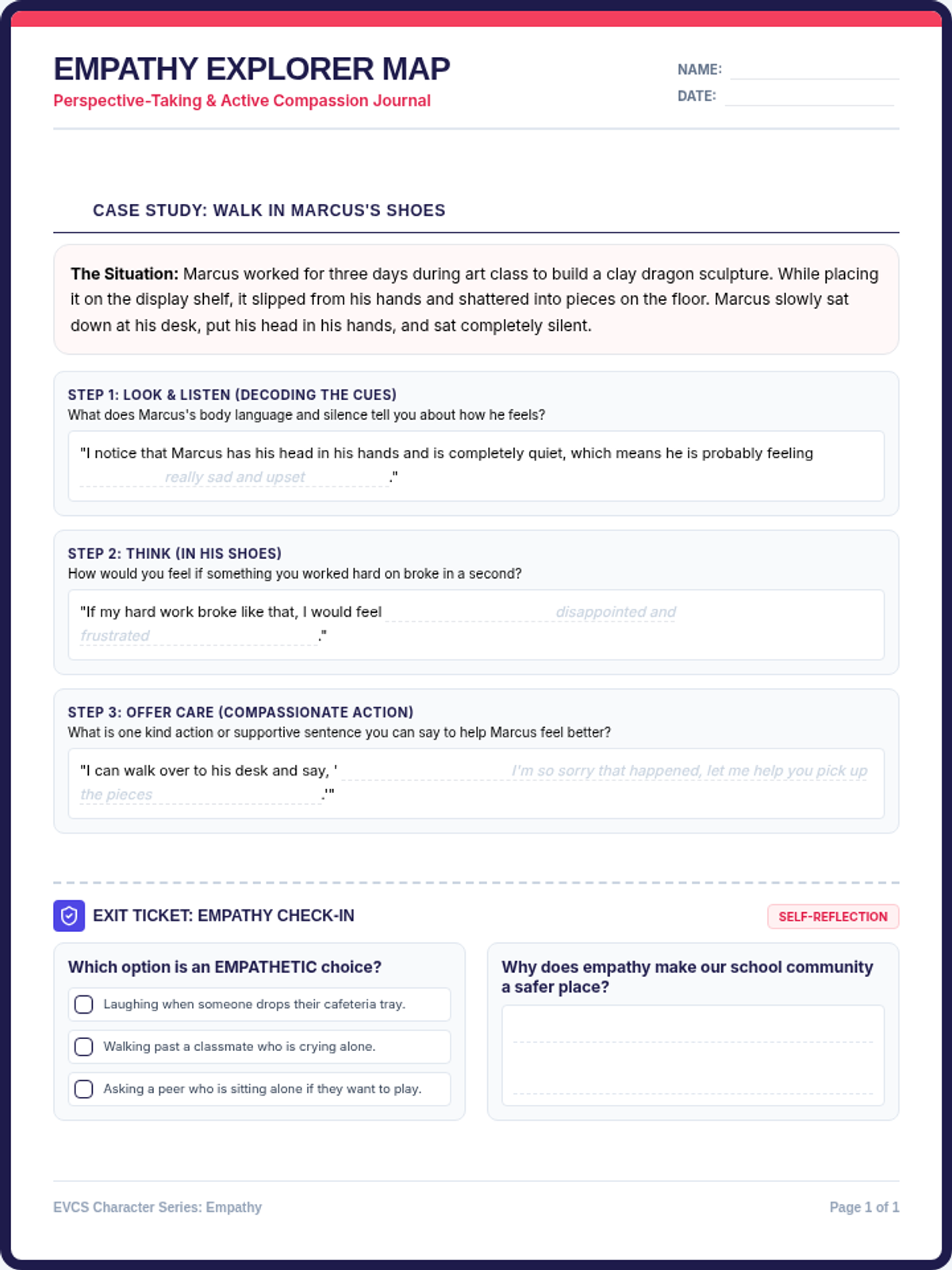
A social-emotional learning lesson on empathy, active compassion, and perspective-taking. Students learn to recognize emotional cues in others and practice walking in someone else's shoes to solve social dilemmas.
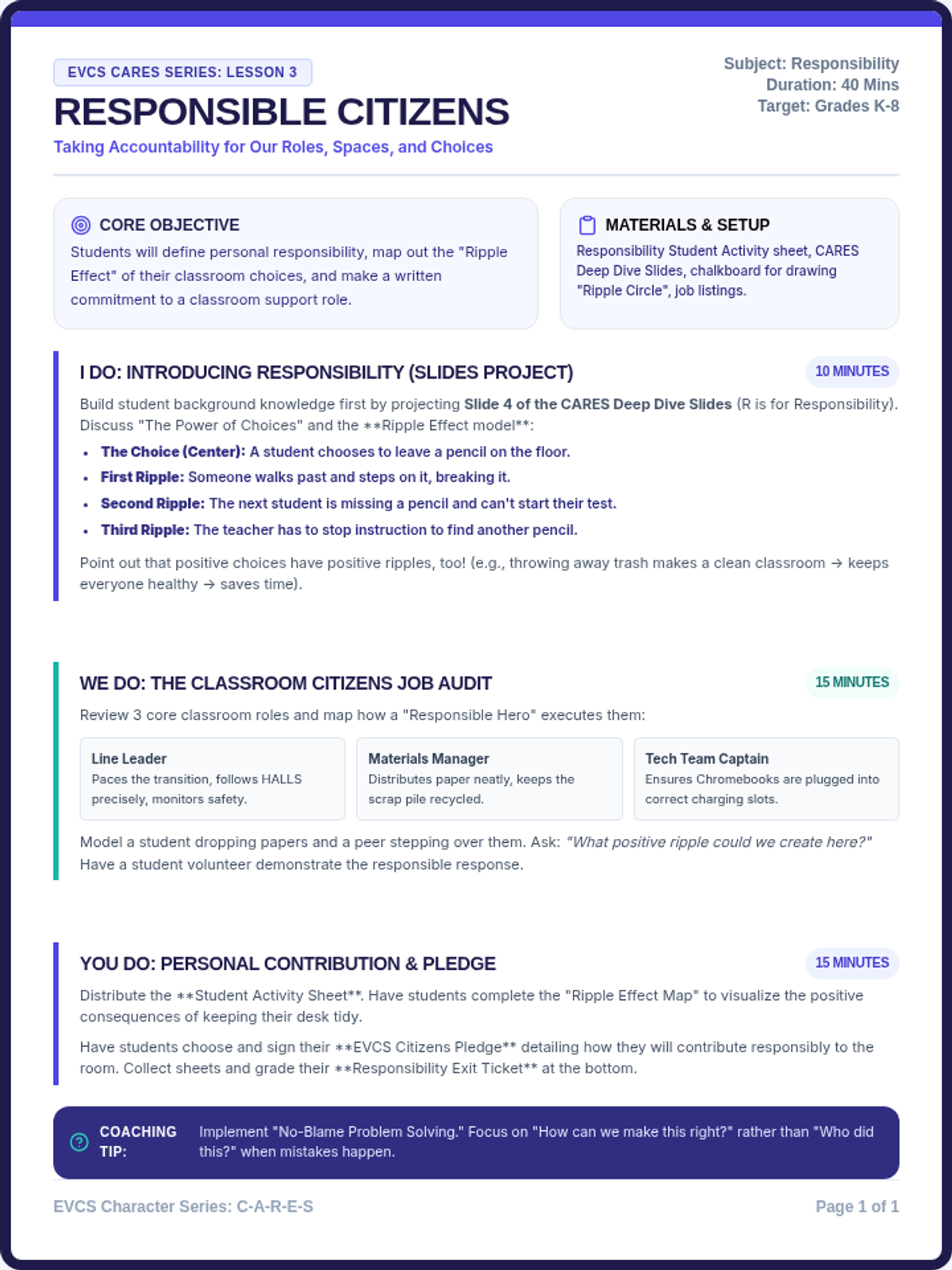
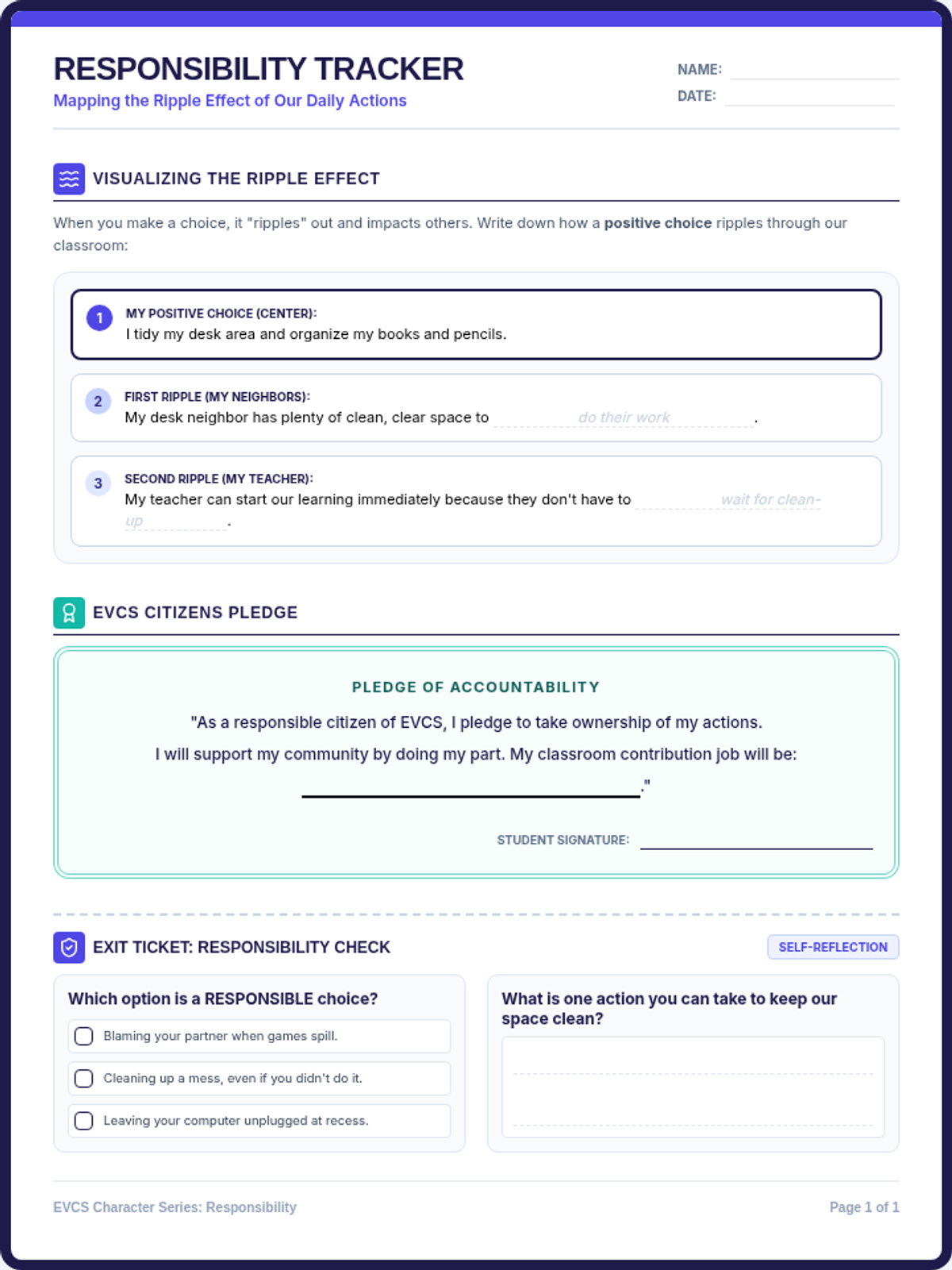
A social-emotional learning lesson teaching personal accountability, civic responsibility, and classroom roles. Students identify how their individual choices affect the safety and success of the whole community.
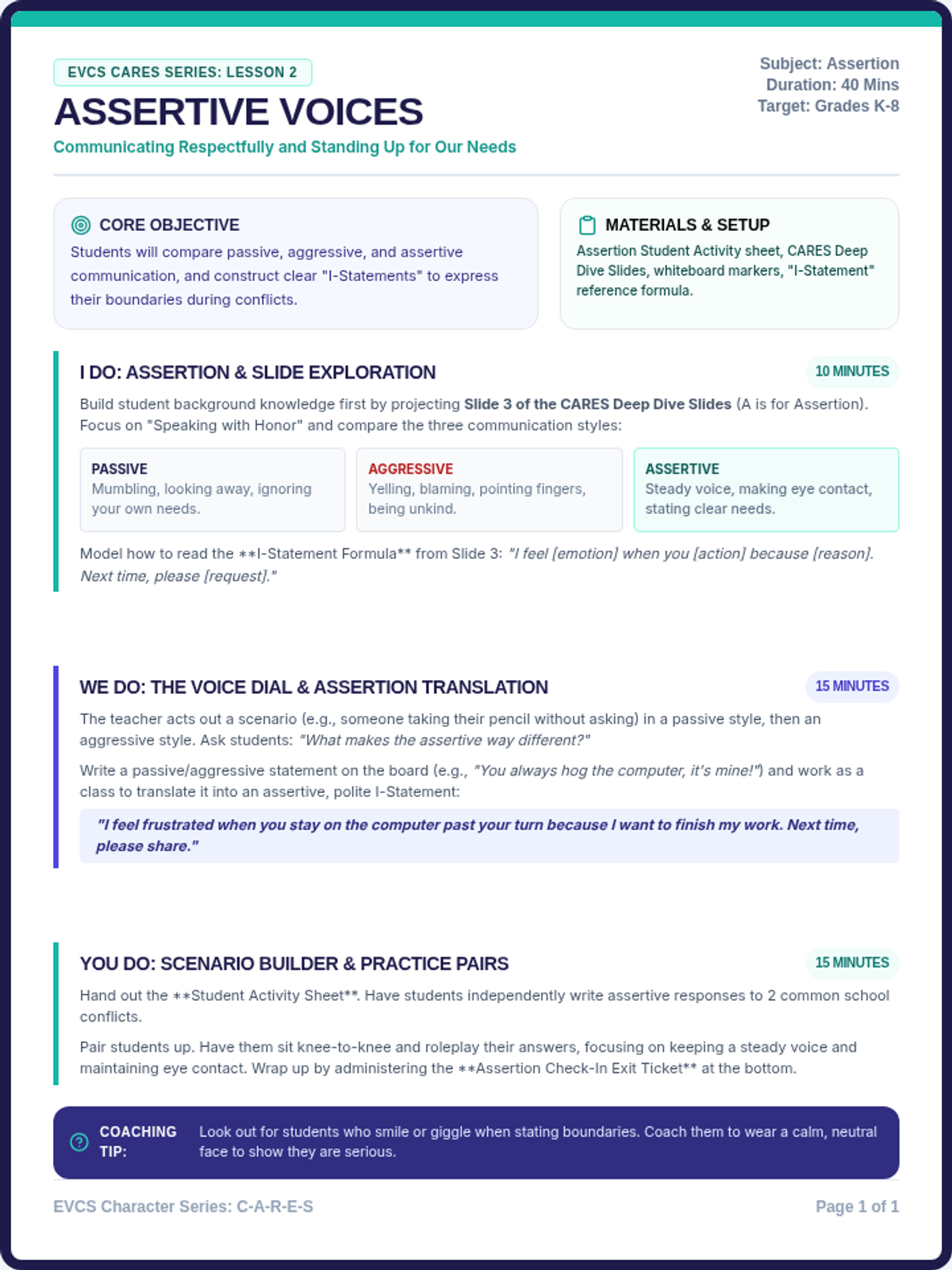
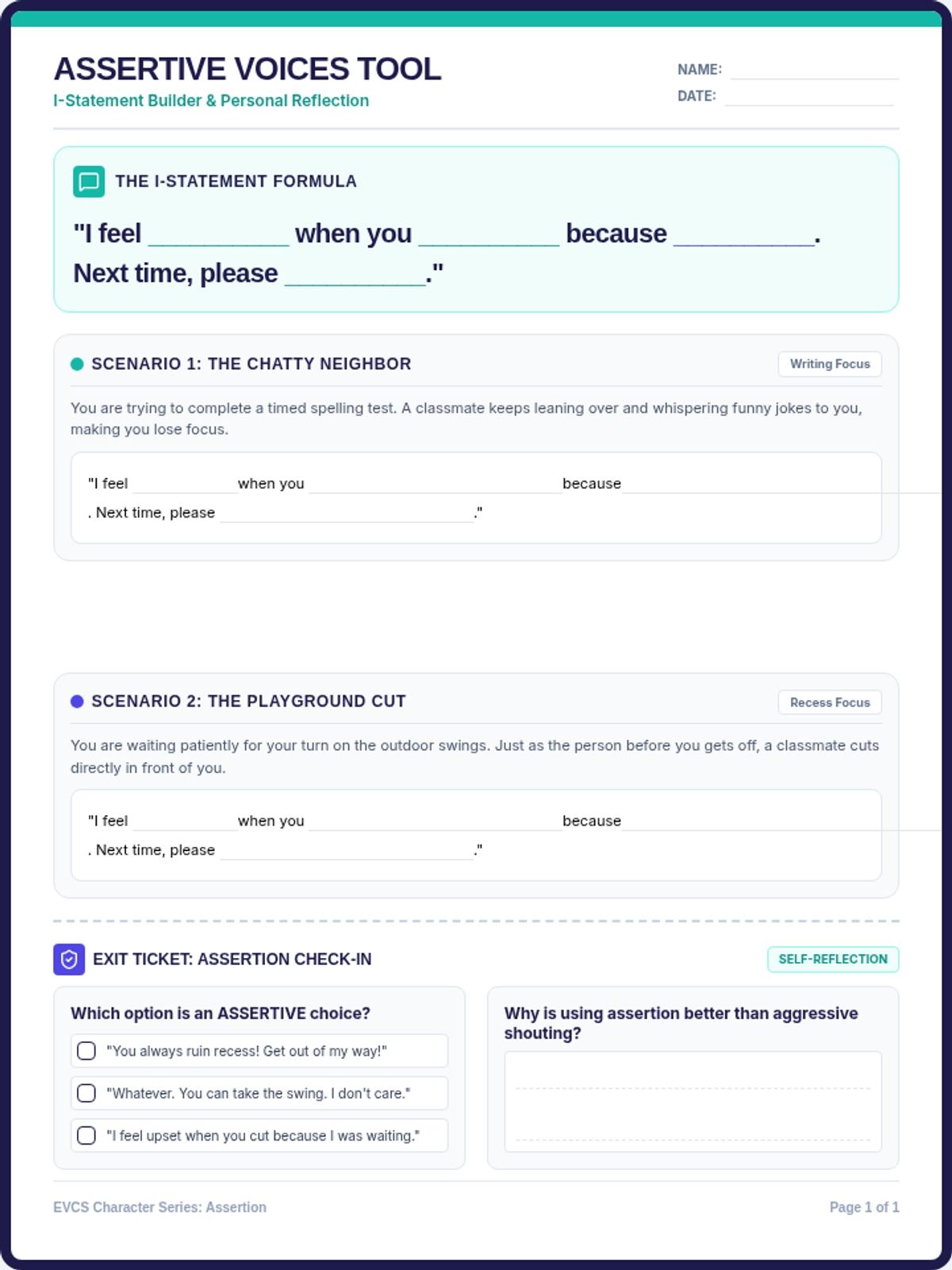
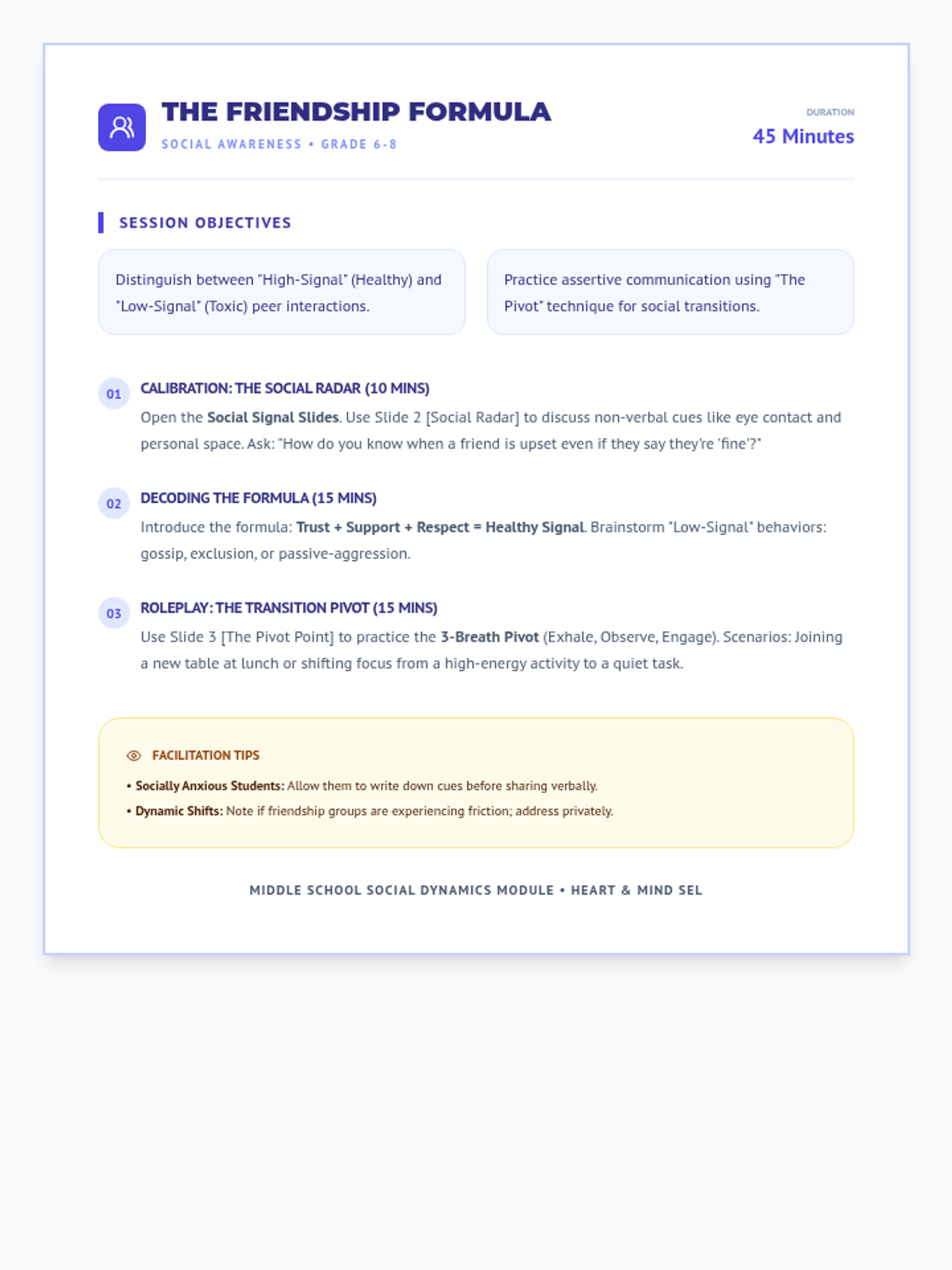
A social-emotional learning lesson focused on assertive communication, active listening, and setting respectful boundaries. Students practice using "I-Statements" to express their needs and opinions respectfully.
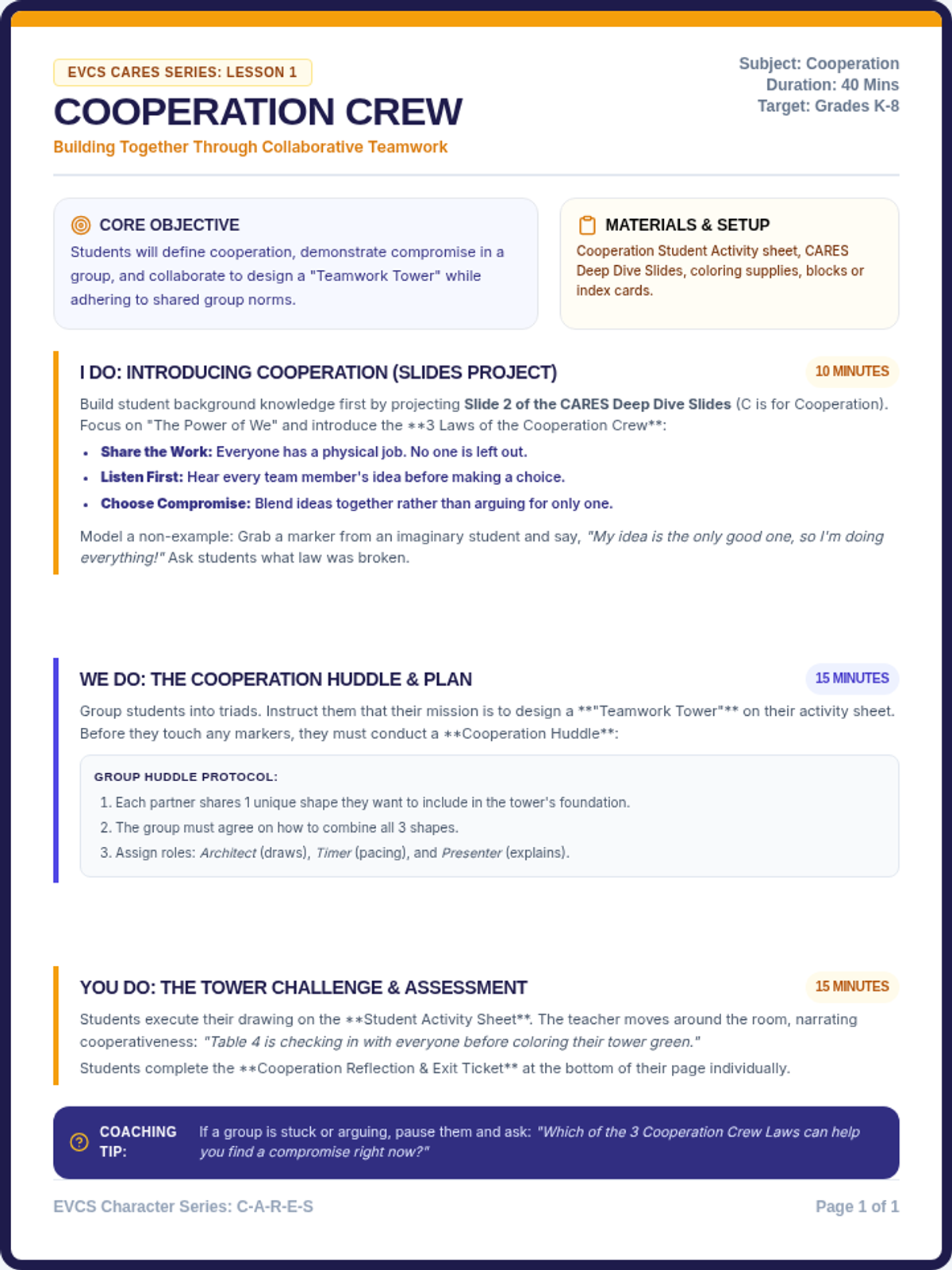
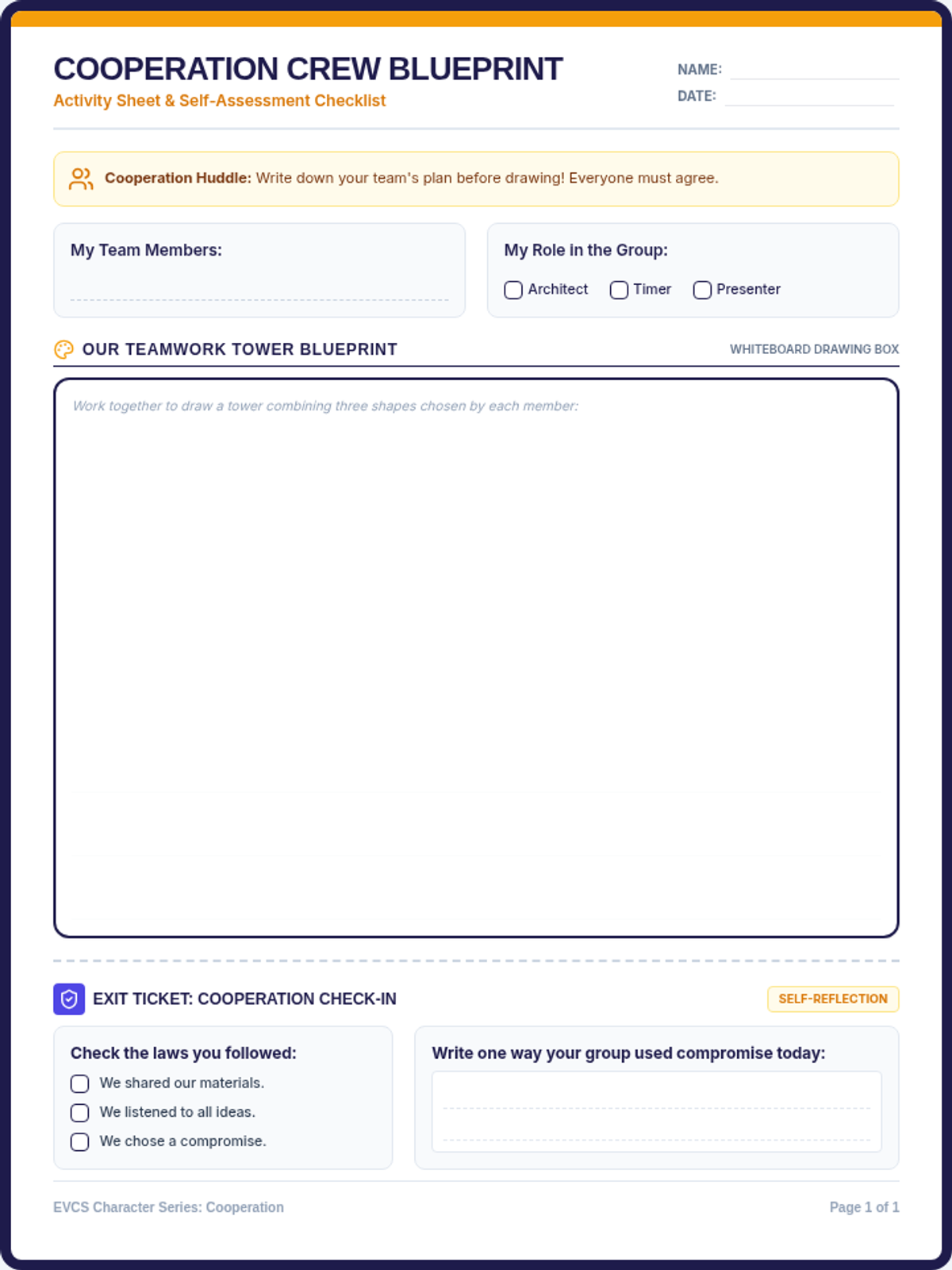
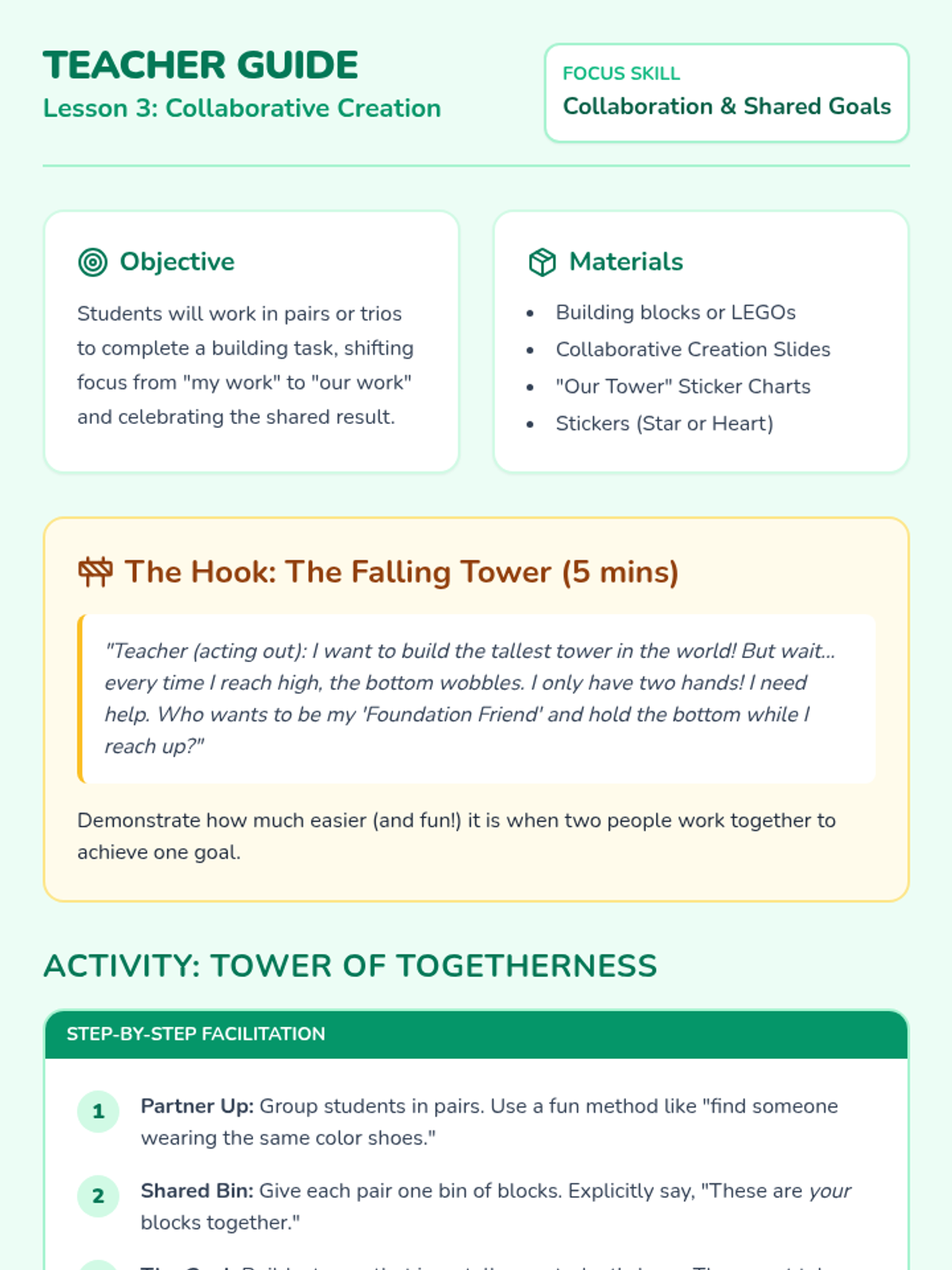
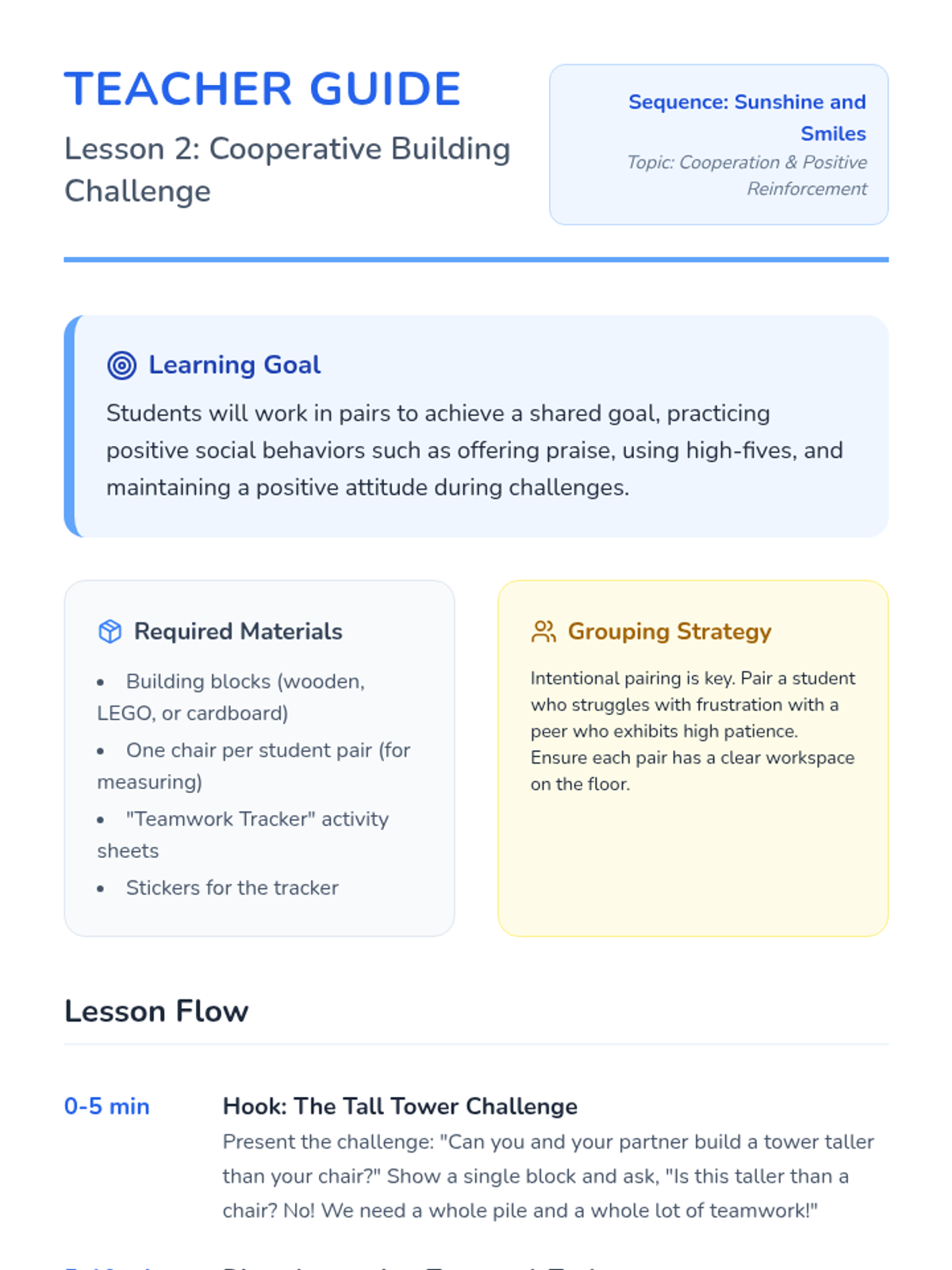
A social-emotional learning lesson focusing on cooperation, collaborative problem solving, and group agreement. Students explore how to share ideas, compromise, and build together as a team.
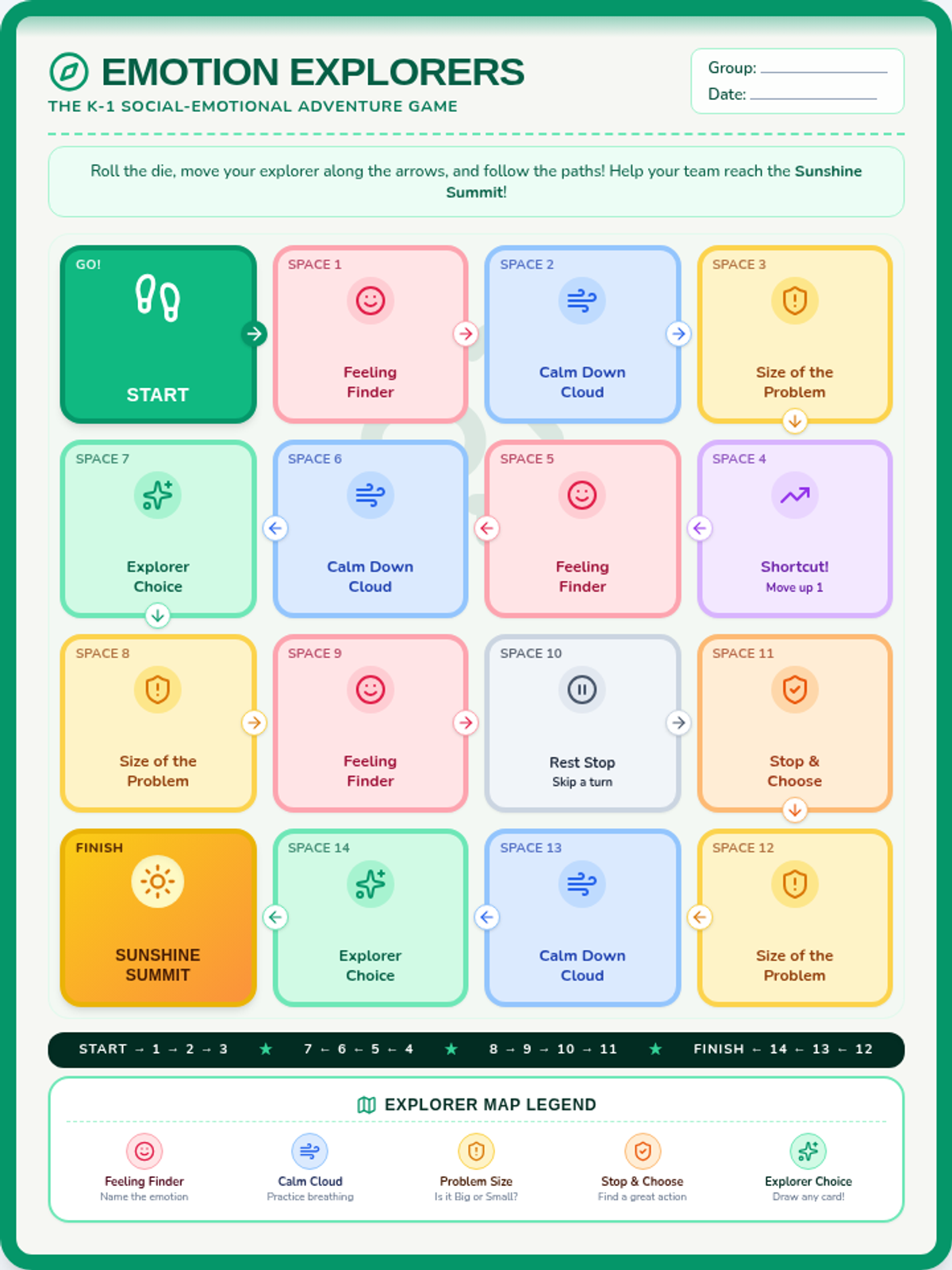
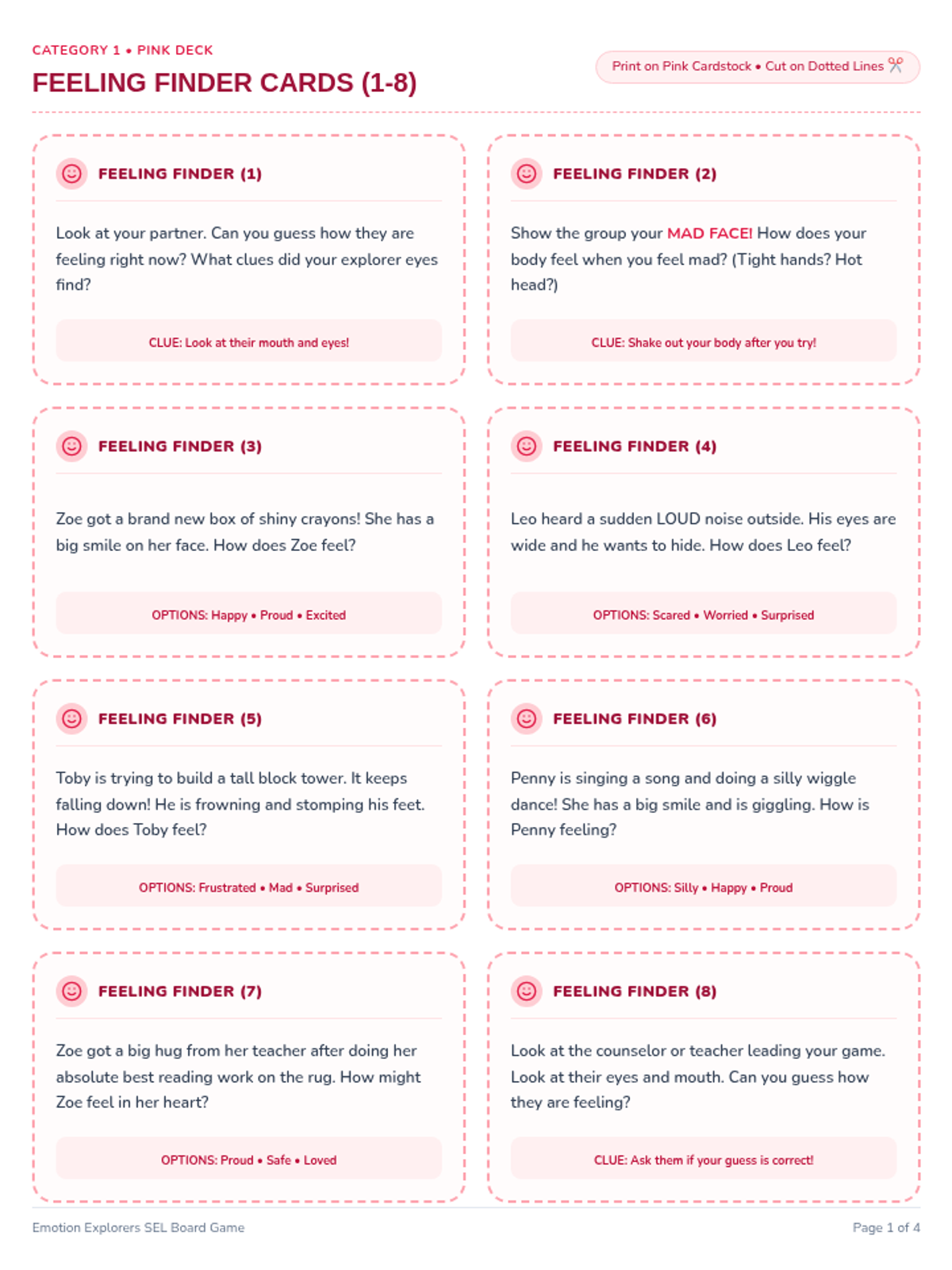
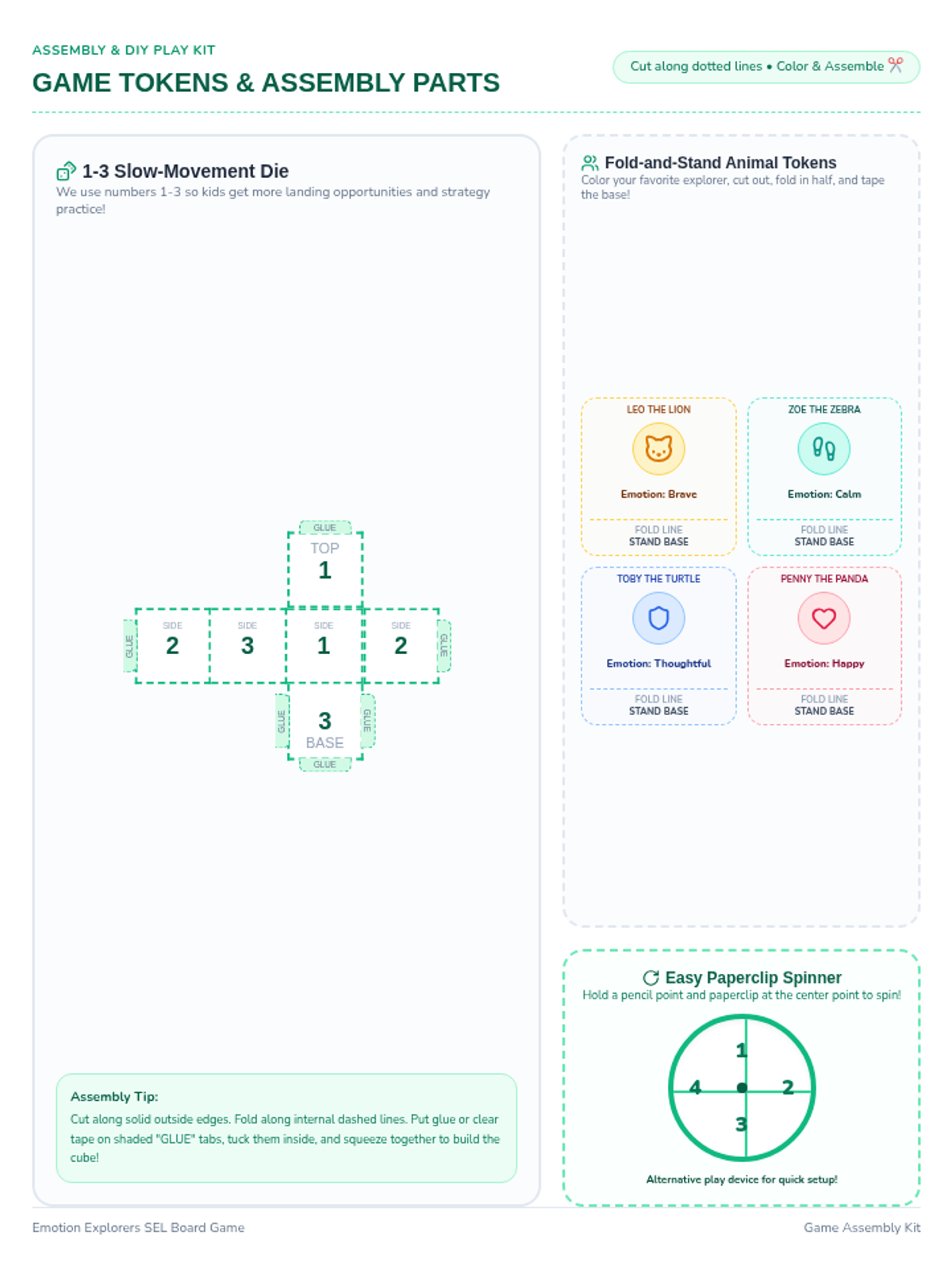
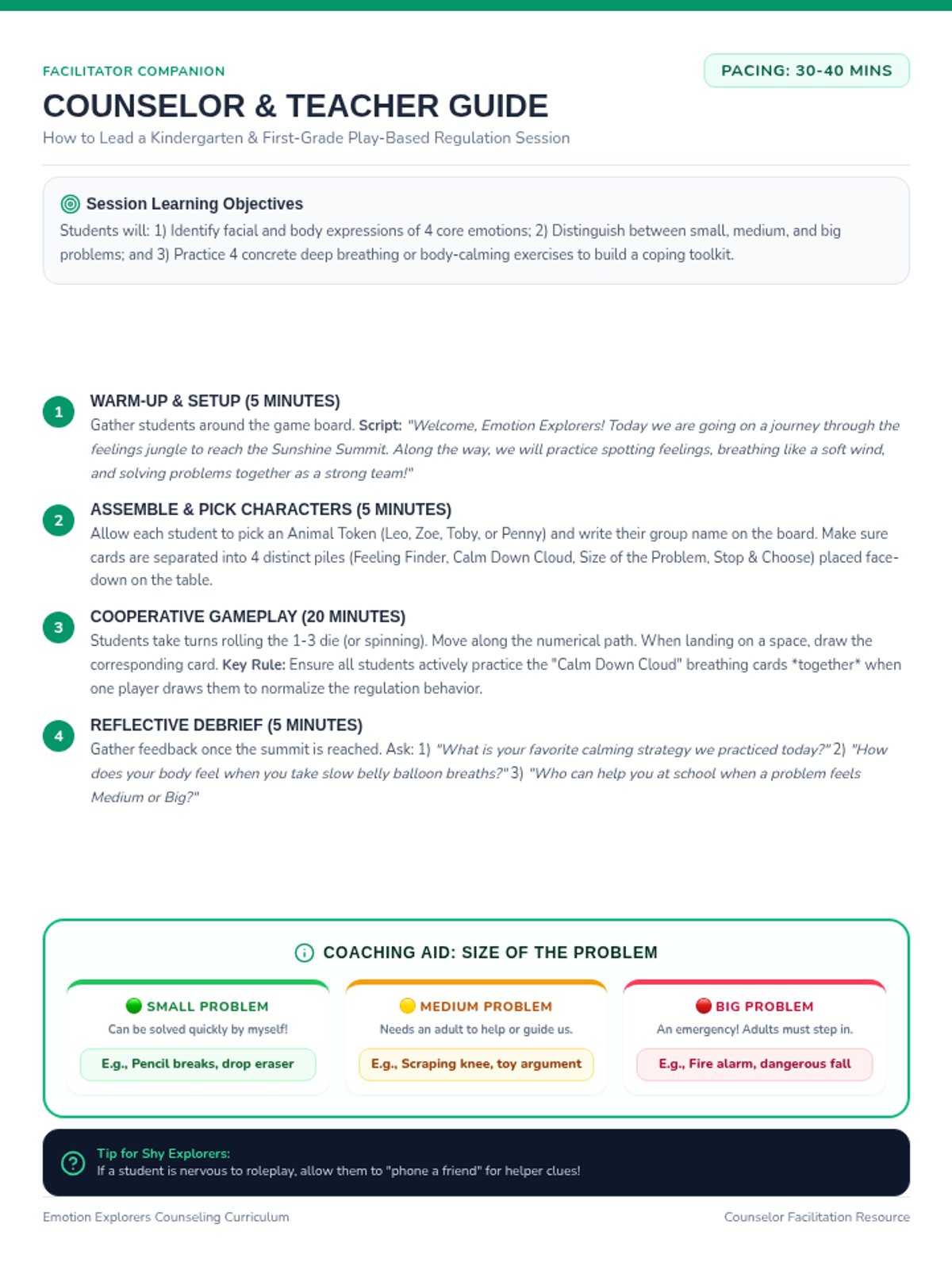
An interactive SEL board game session for Kindergarten and First-Grade students, focusing on identifying emotions, understanding the size of problems, and practicing calming breathing strategies. Includes a printable game board, situation cards, assembly parts, and a comprehensive counselor guide.
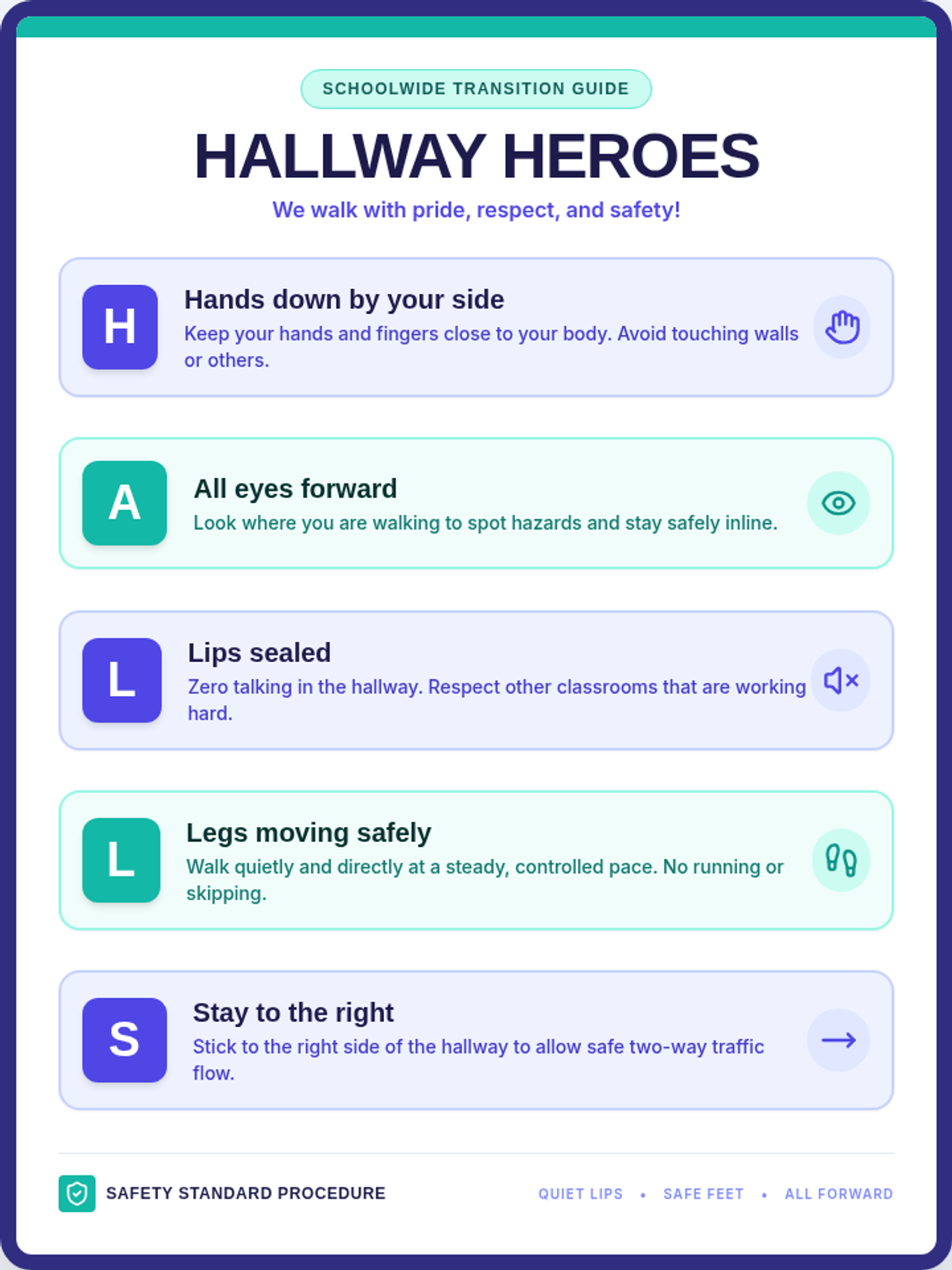
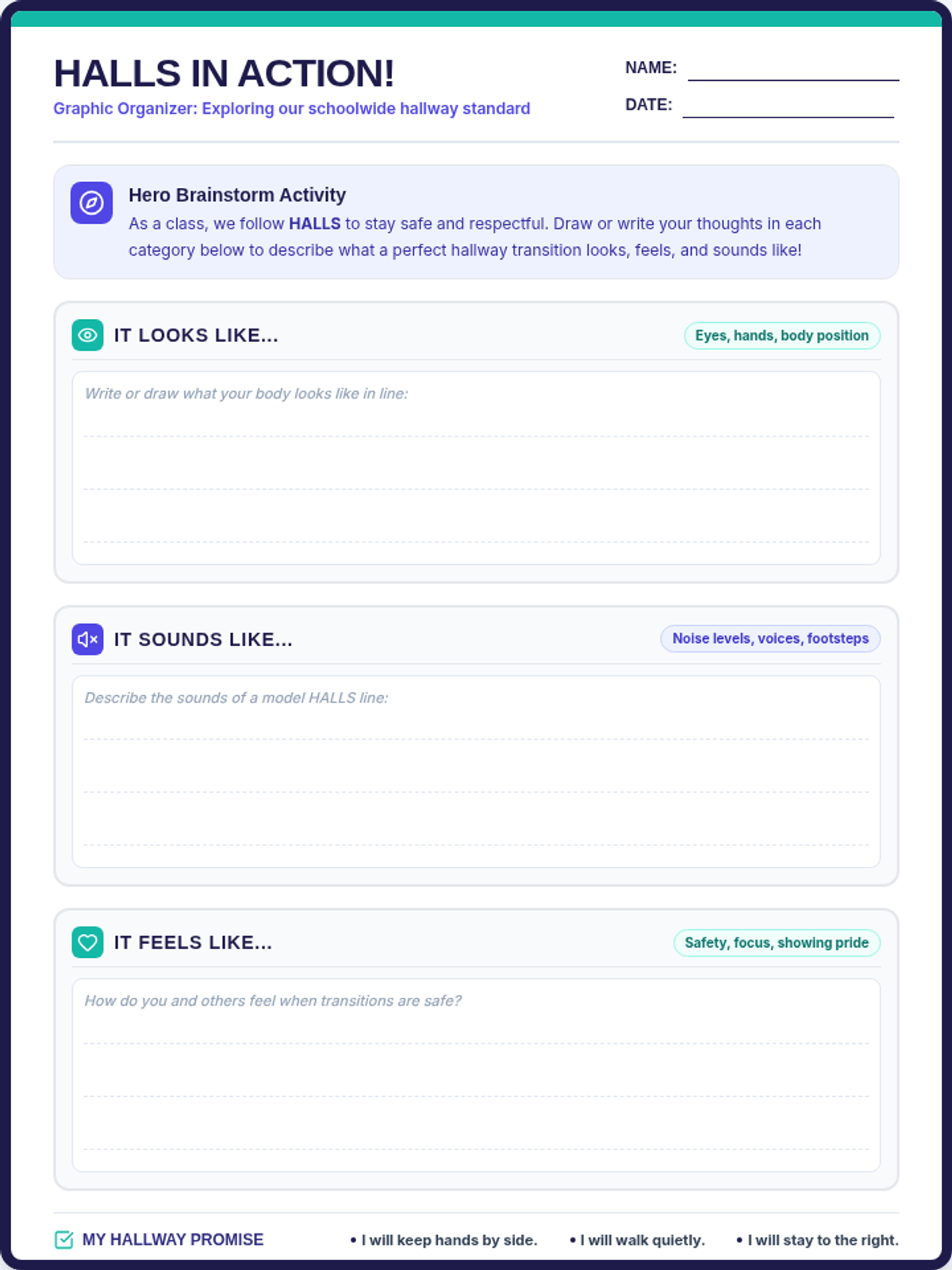
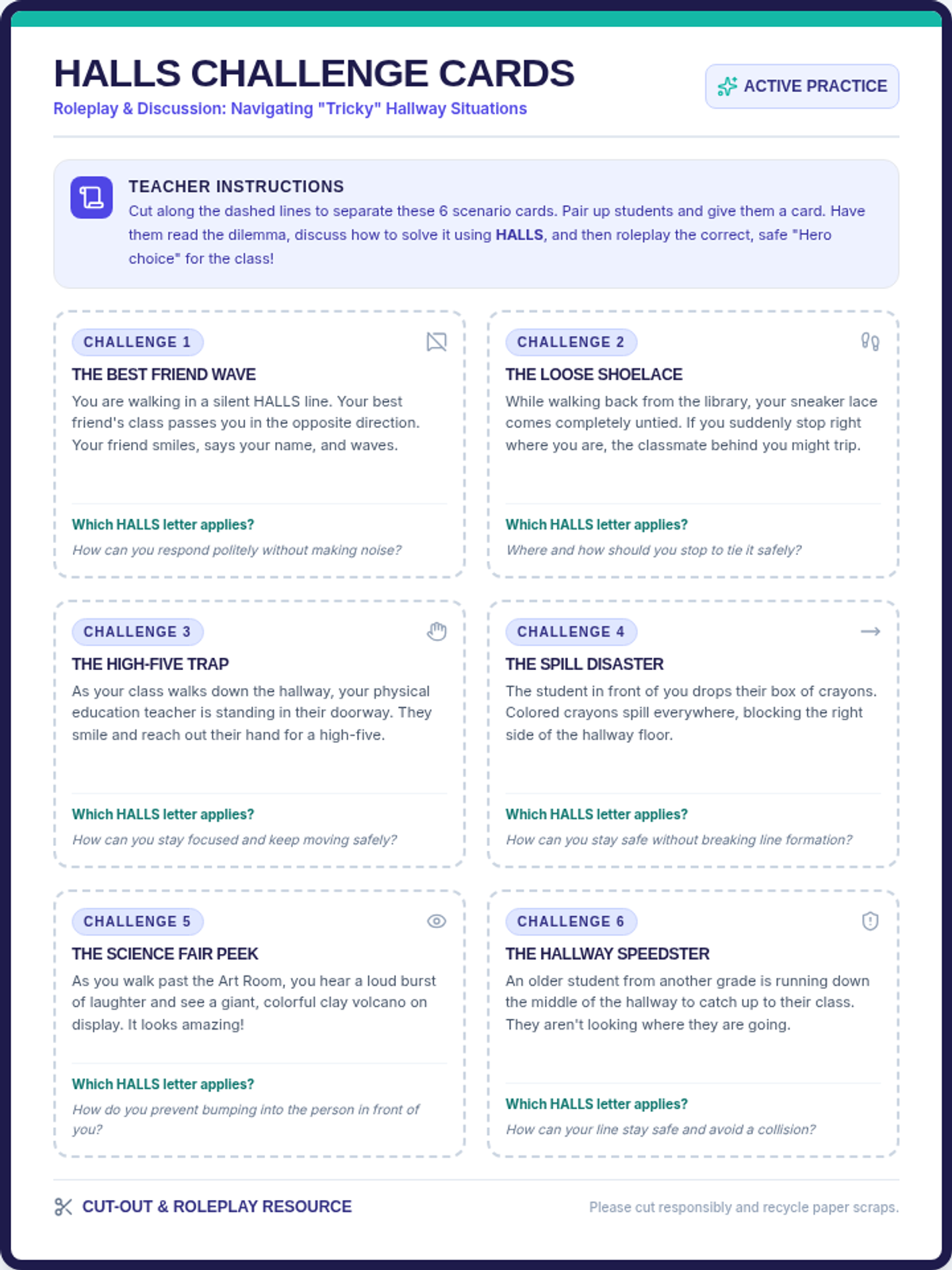
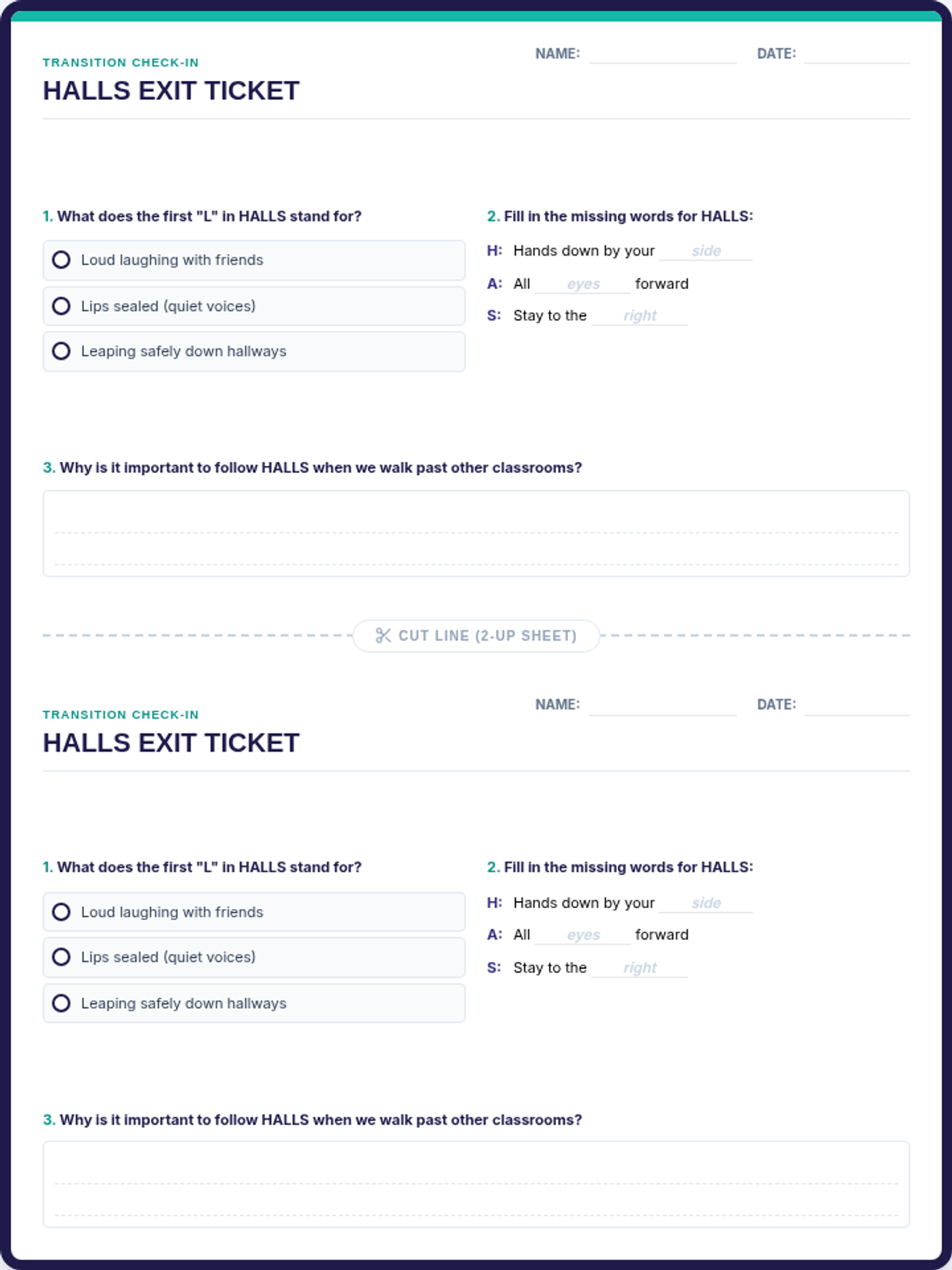
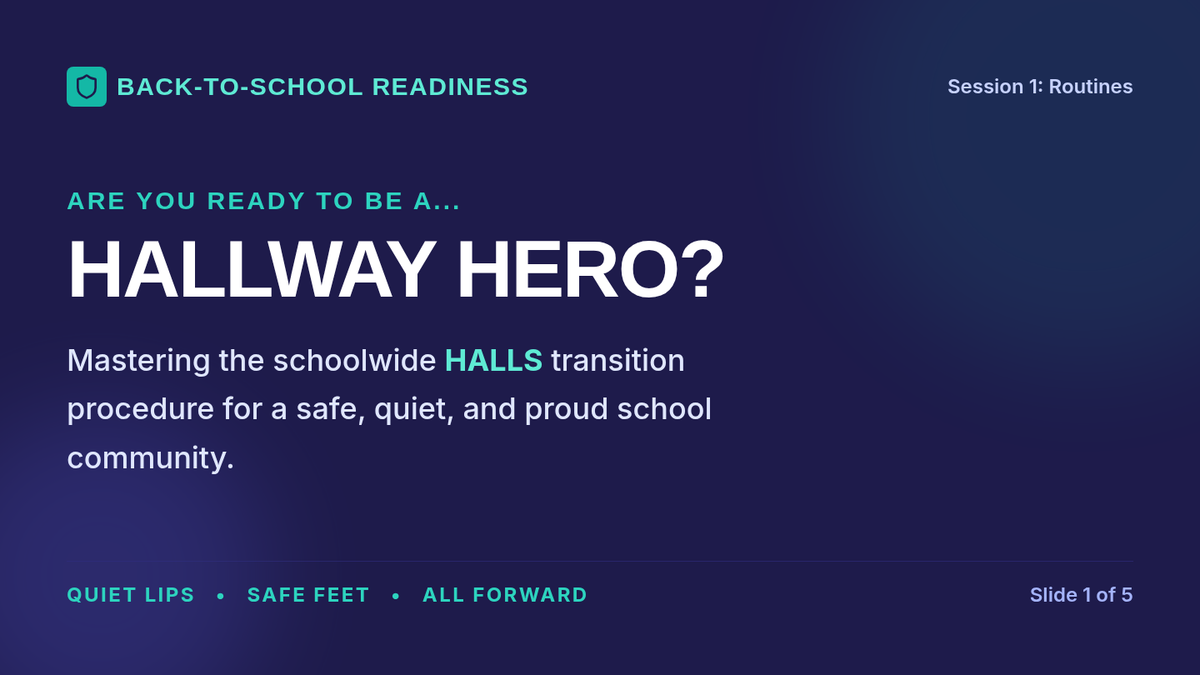
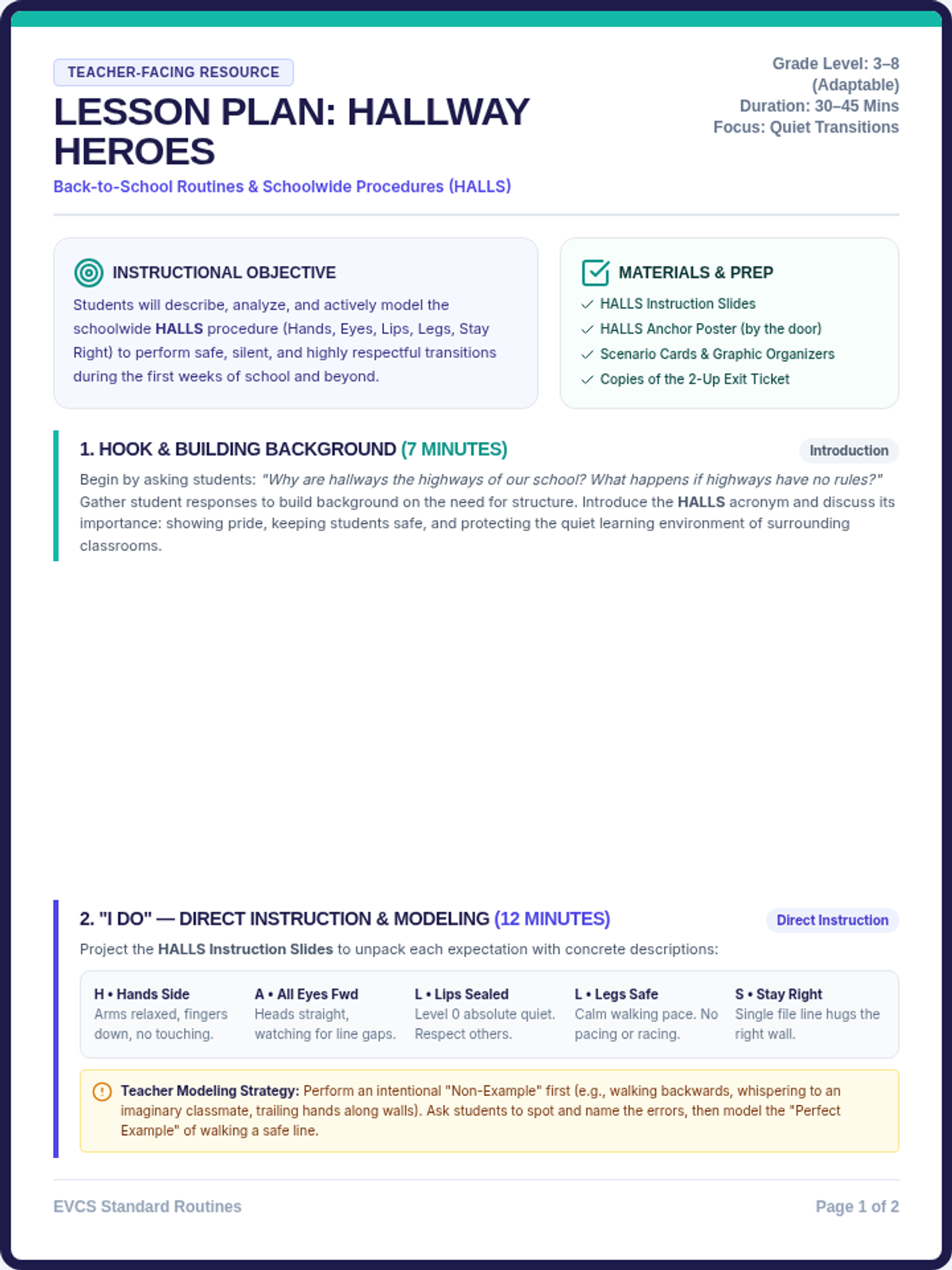
A beginning-of-the-year lesson teaching students the schoolwide HALLS procedure for safe and respectful hallway transitions. This lesson covers explicit teacher modeling, interactive student roleplay, and self-assessment of the HALLS expectations.
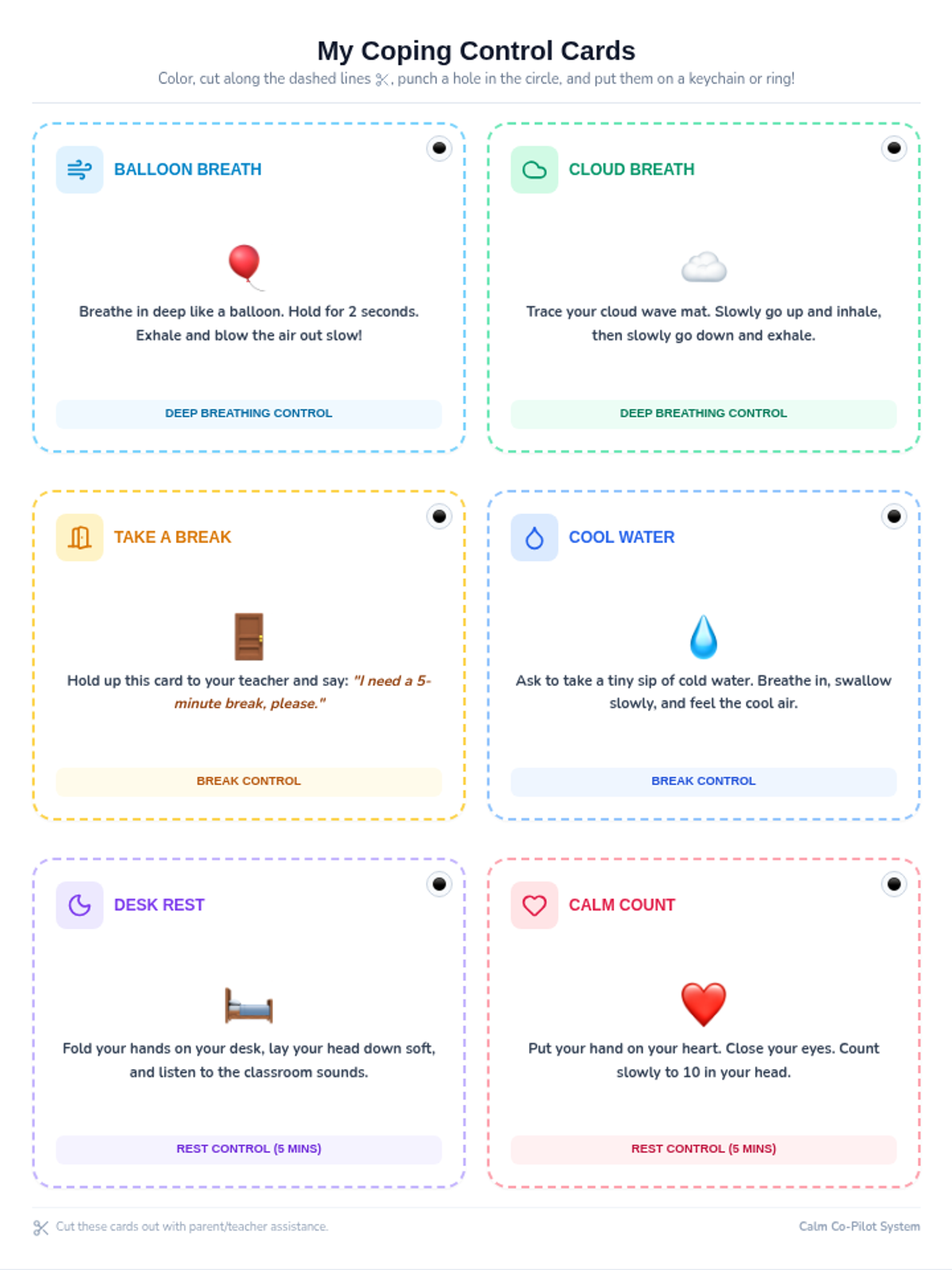
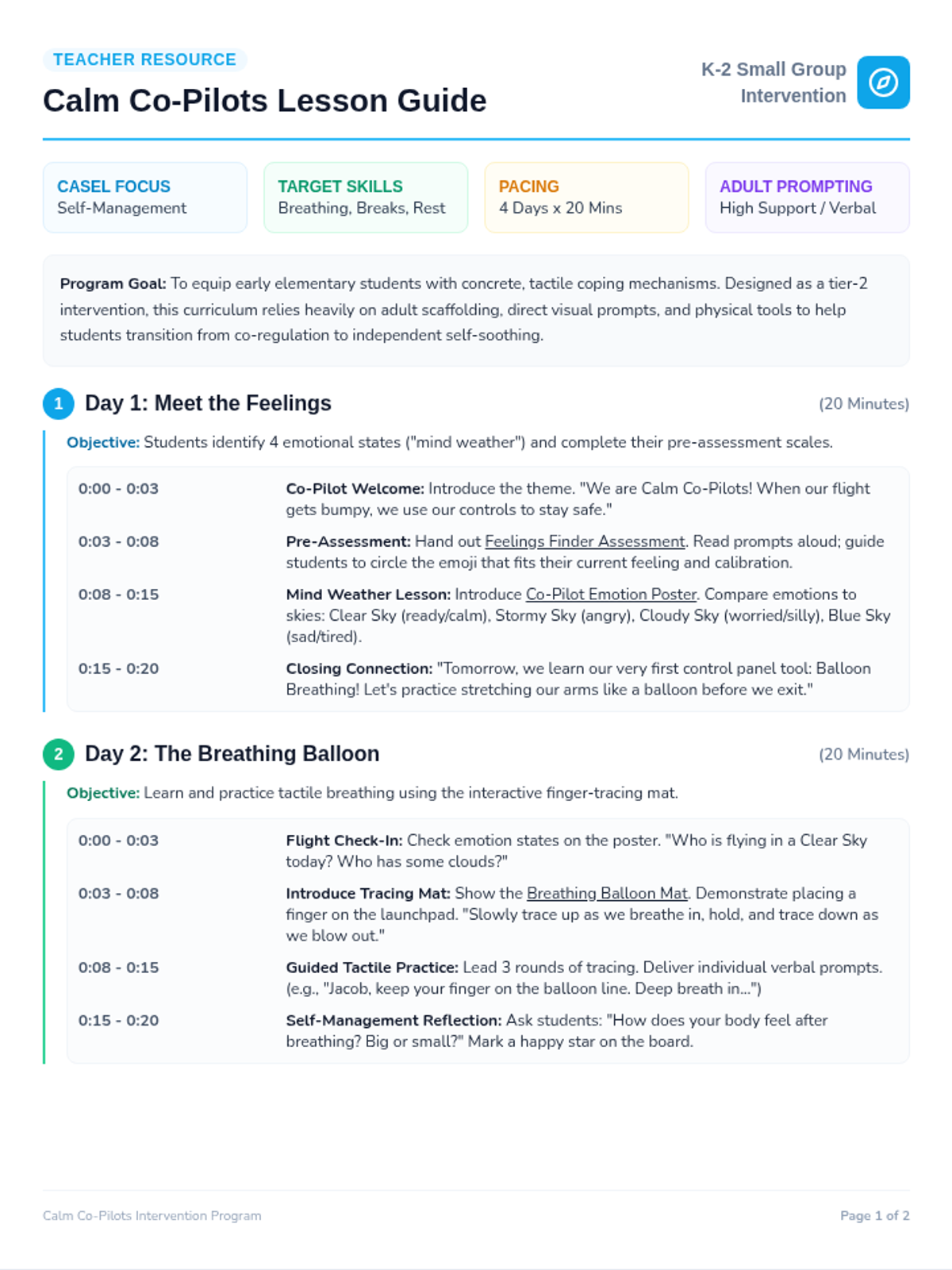
Day 3 of the Calm Co-Pilots intervention. Focuses on requesting a 5-minute break and practicing structured rest using sensory supports, cards, and timers with adult prompts.
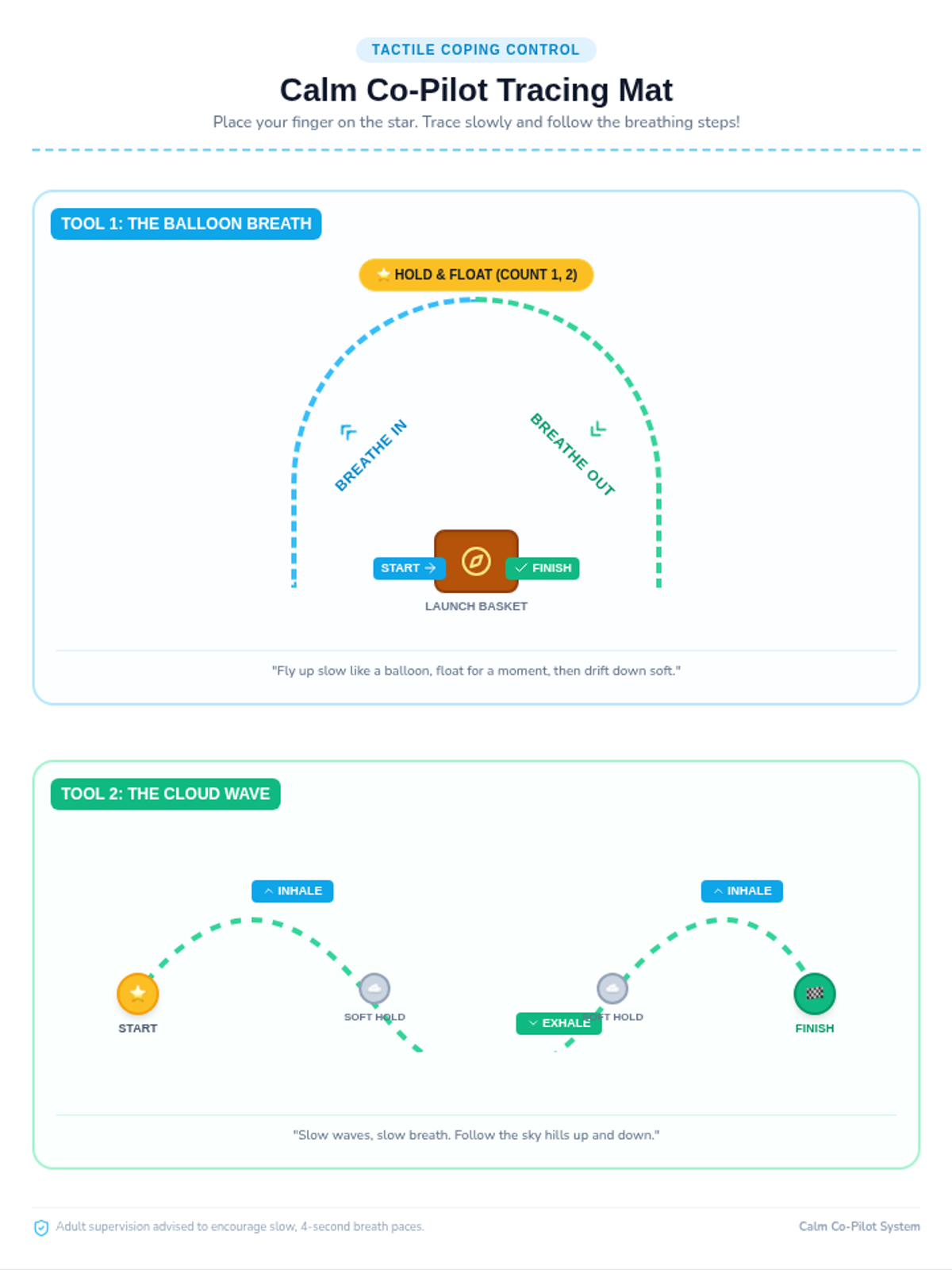
Day 2 of the Calm Co-Pilots intervention. Focuses on deep breathing using physical, tactile tracing mats to anchor their focus and regulate their physical response to big emotions.
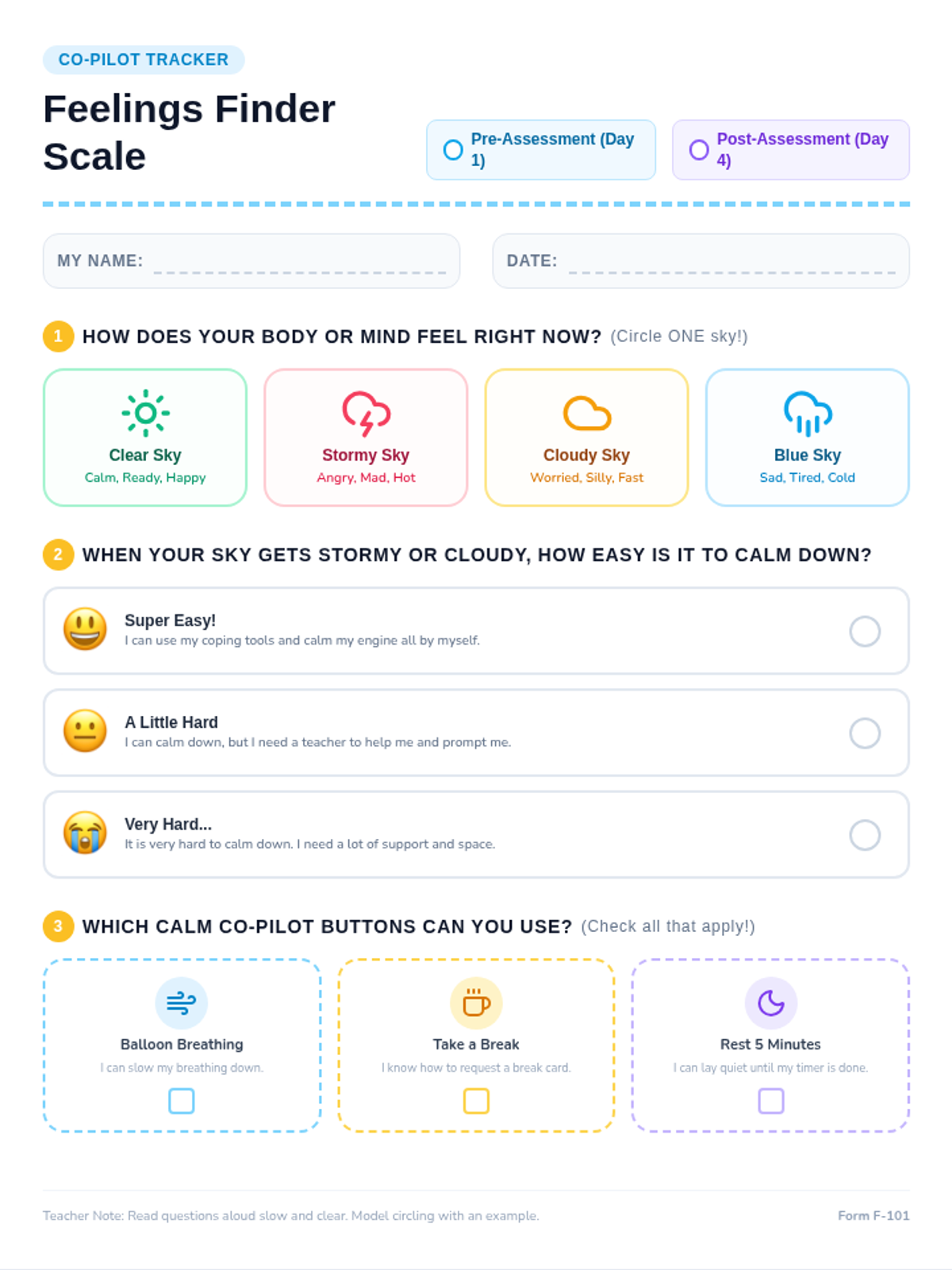
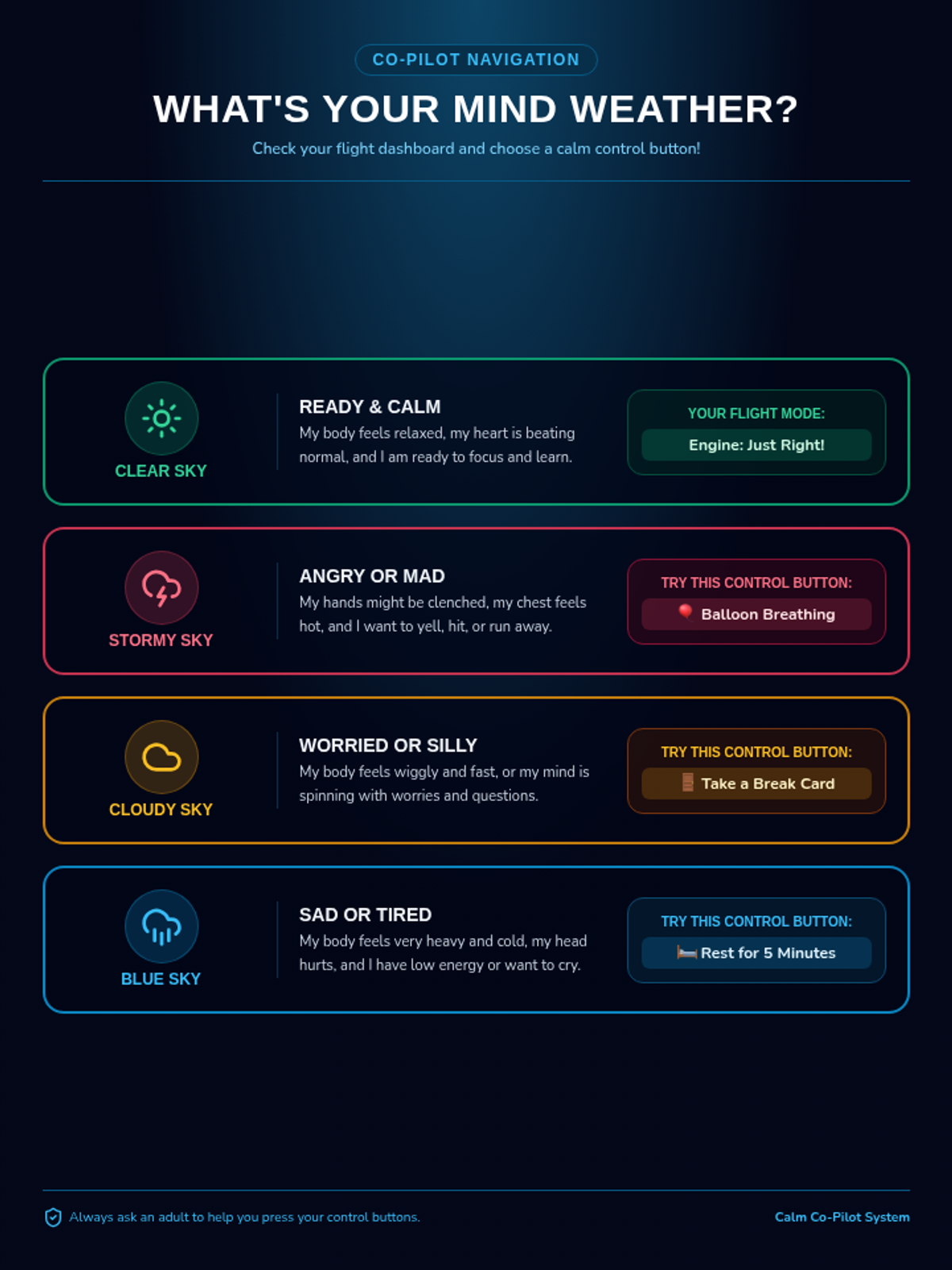
Day 1 of the Calm Co-Pilots intervention. Students explore different emotional states, complete their pre-assessment, and learn to identify when their engines are running too hot, too cold, or just right.
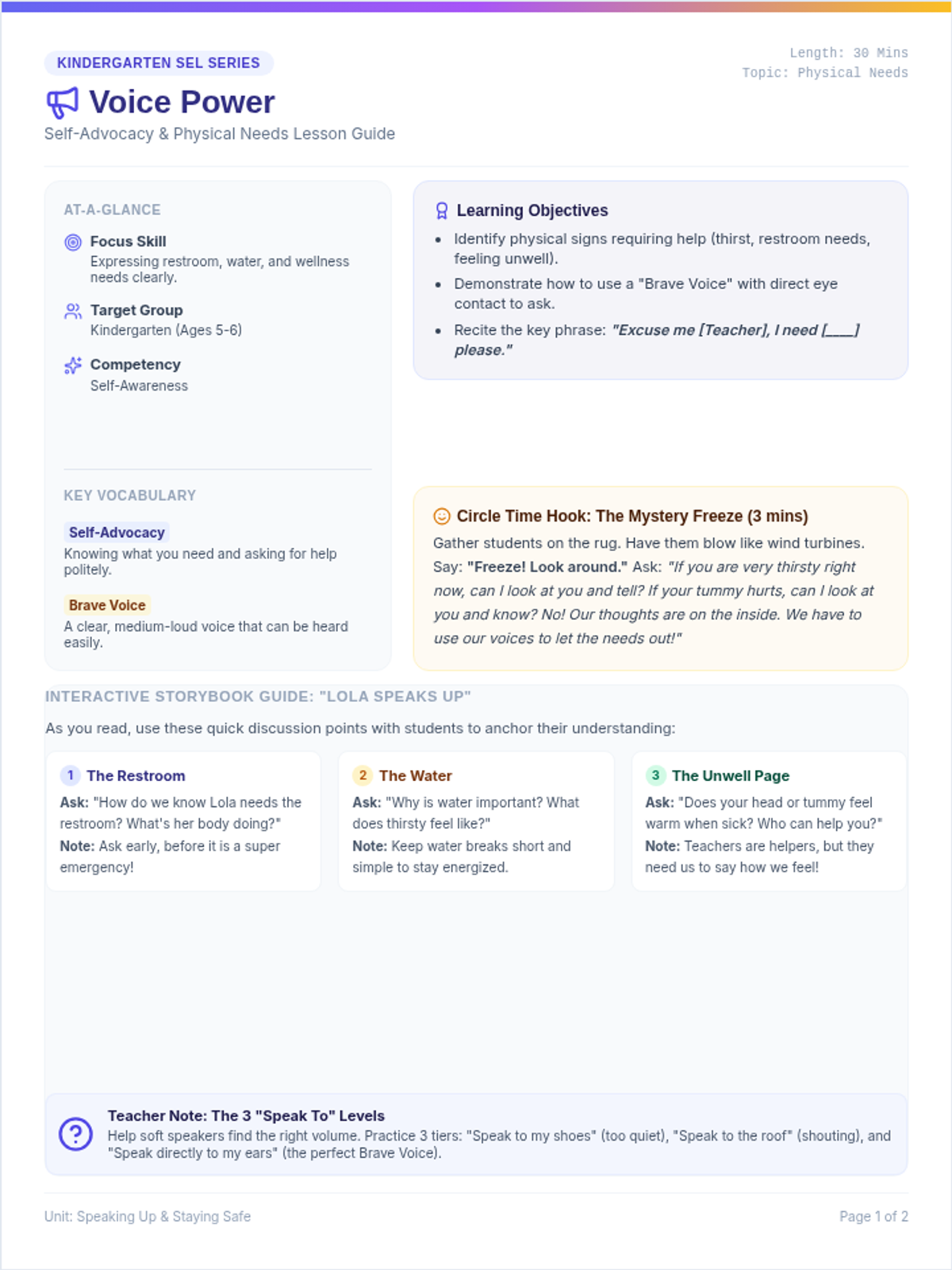
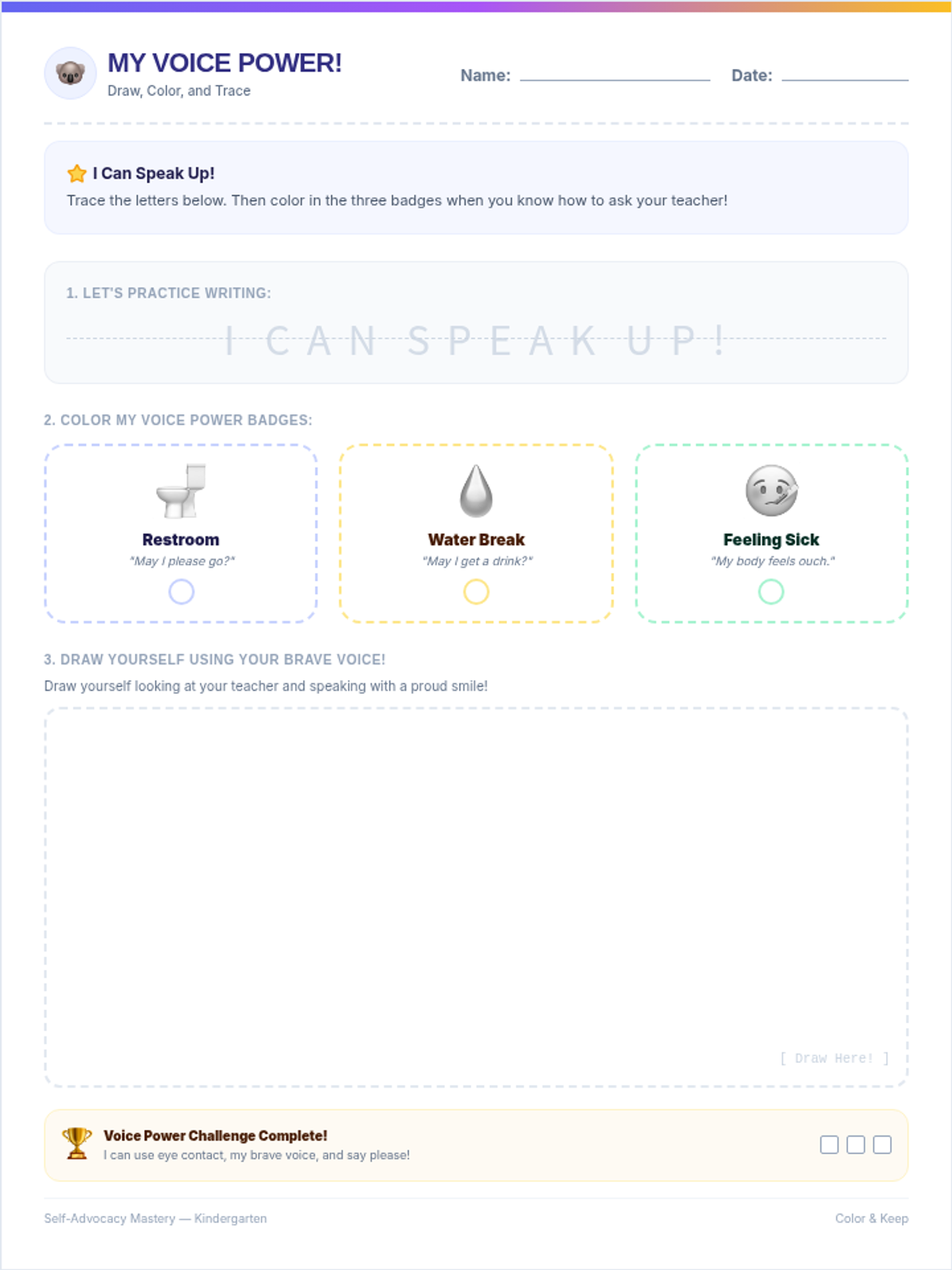
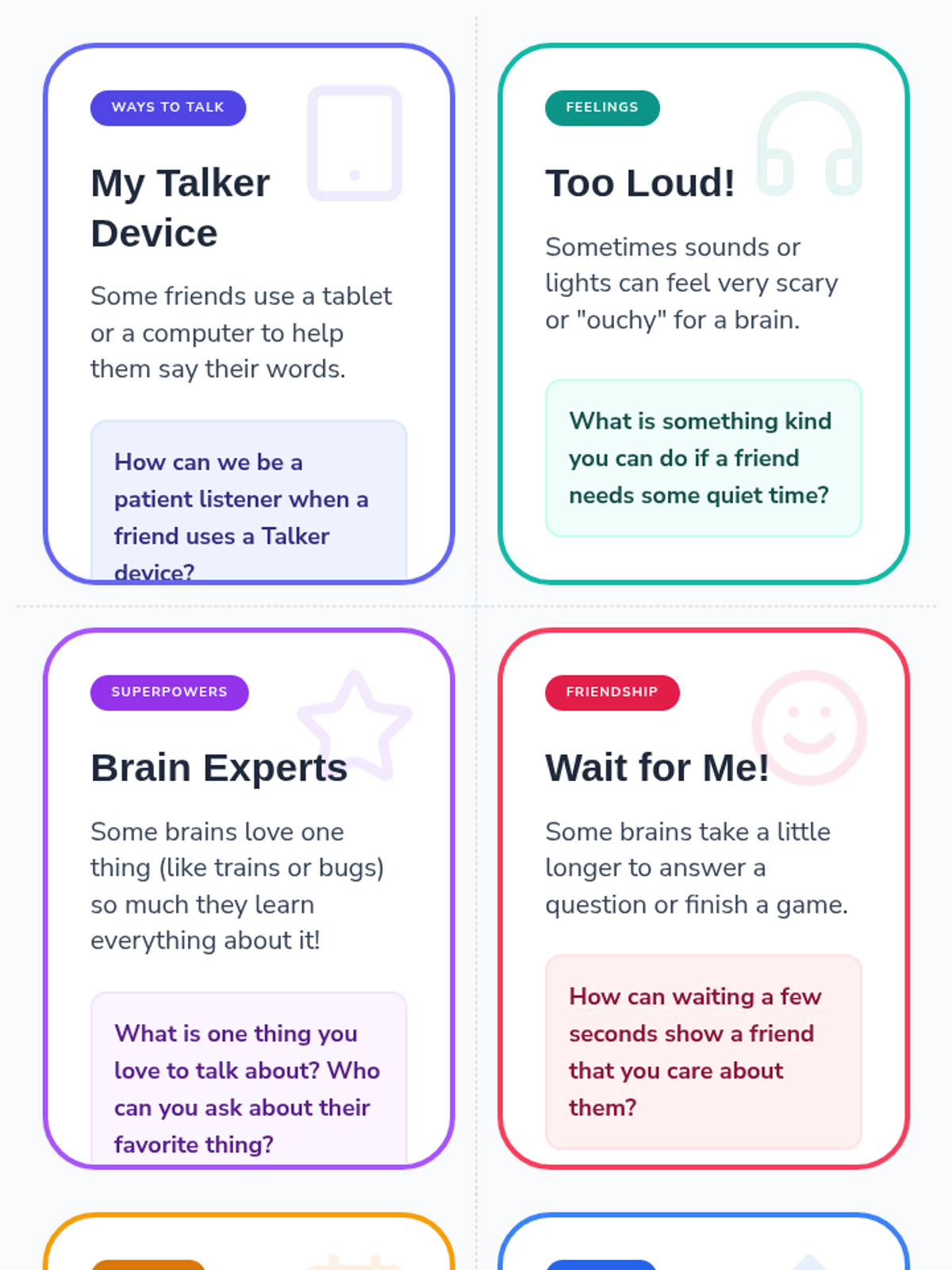
A social-emotional learning lesson for Kindergarteners focused on self-advocacy. Students learn how to speak up to their teacher about basic physical needs like water, restroom breaks, and feeling unwell through an engaging storybook and interactive discussion.
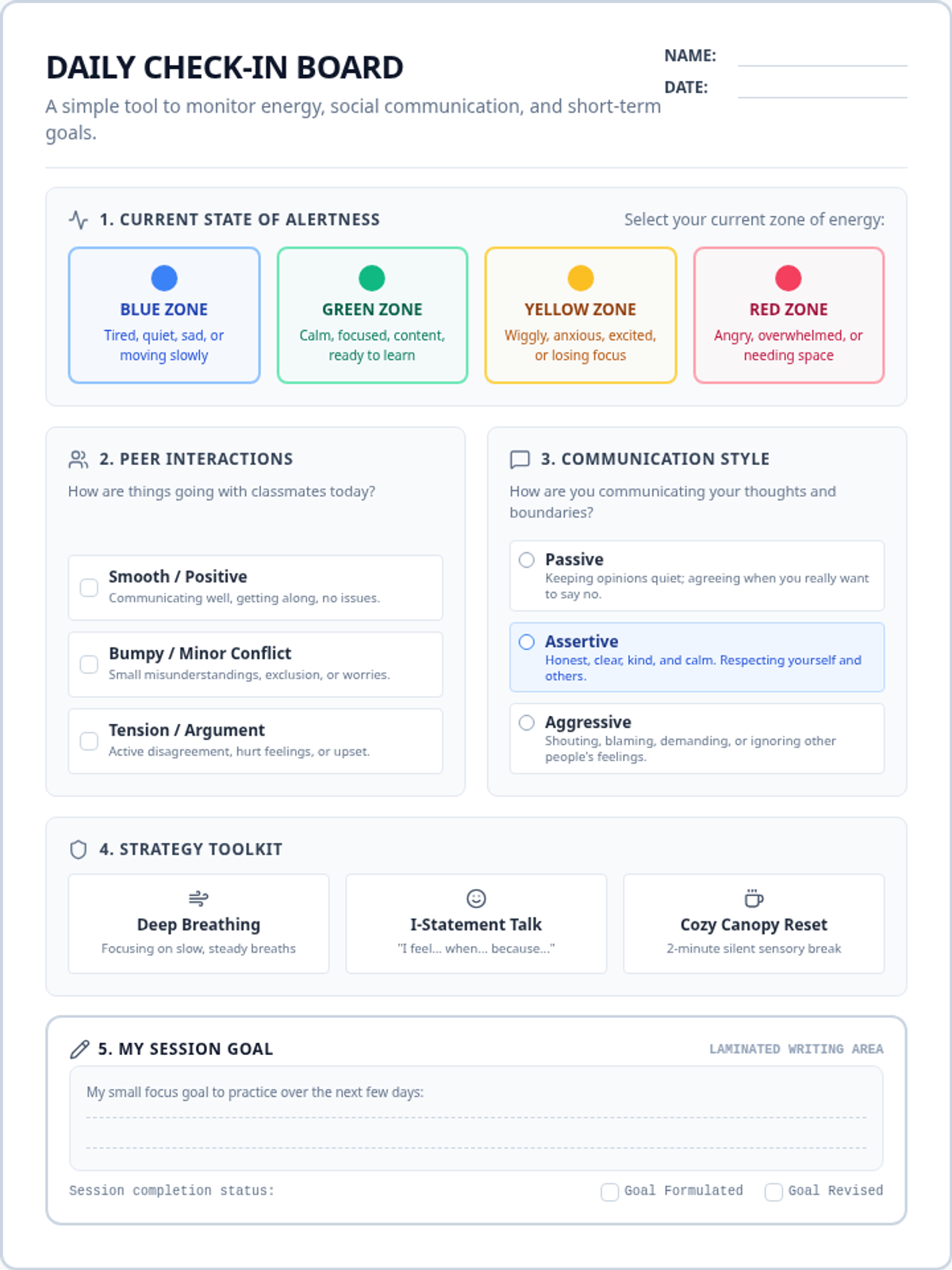
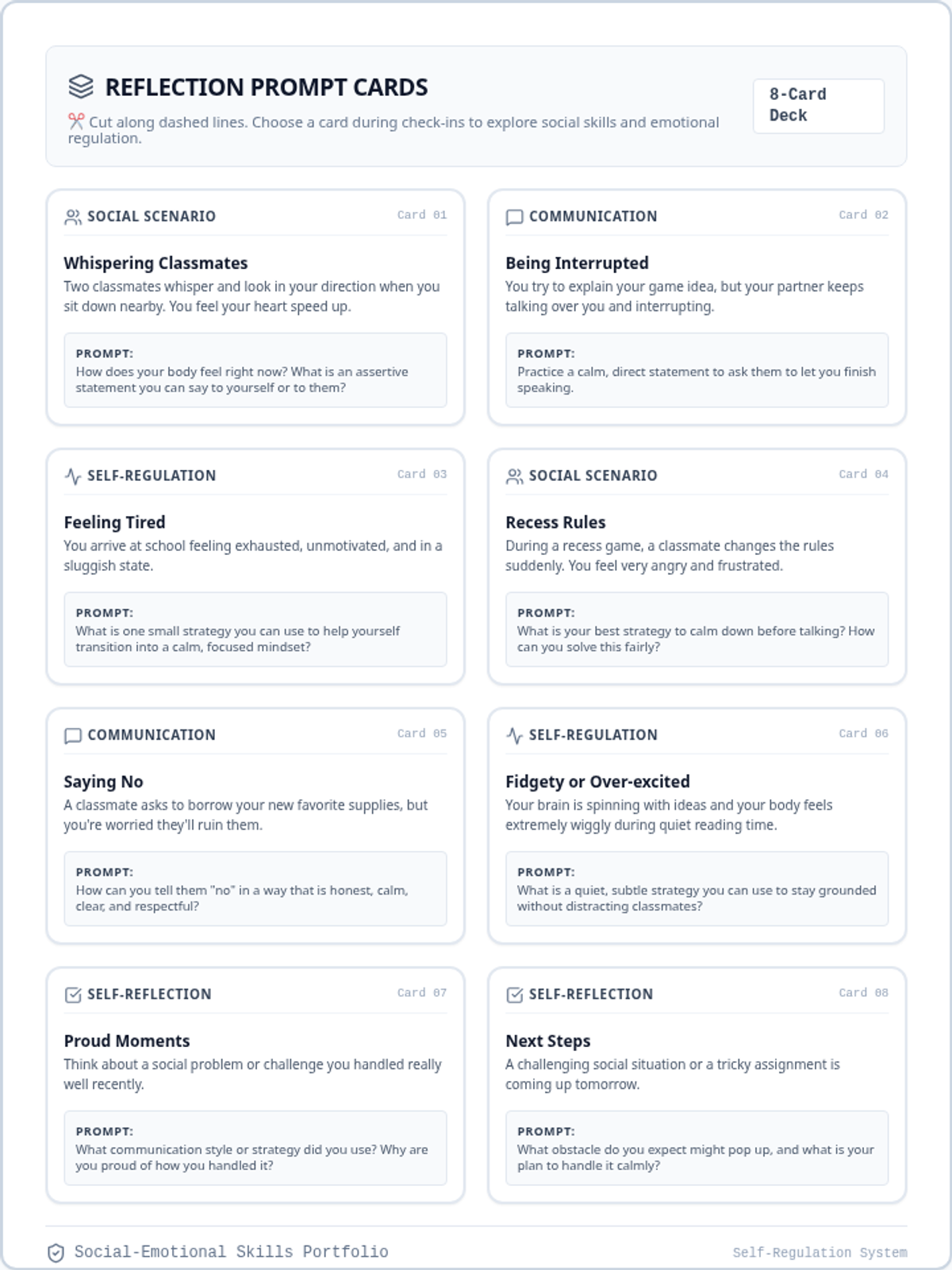
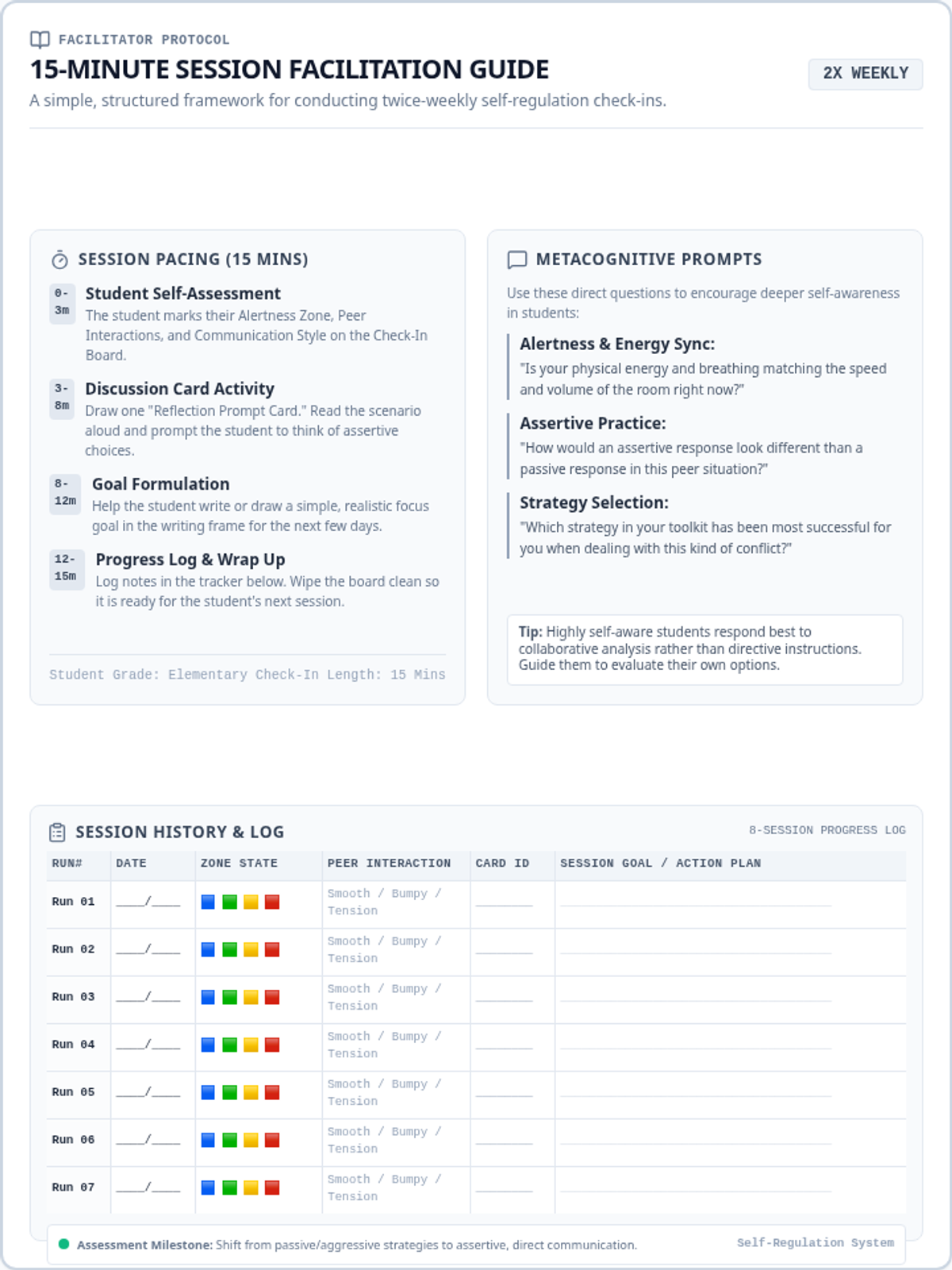
A clean, straightforward self-regulation and social communication support system for rapid 1-on-1 check-ins. Features a visual tracking sheet, scenario cards, and a facilitation guide.
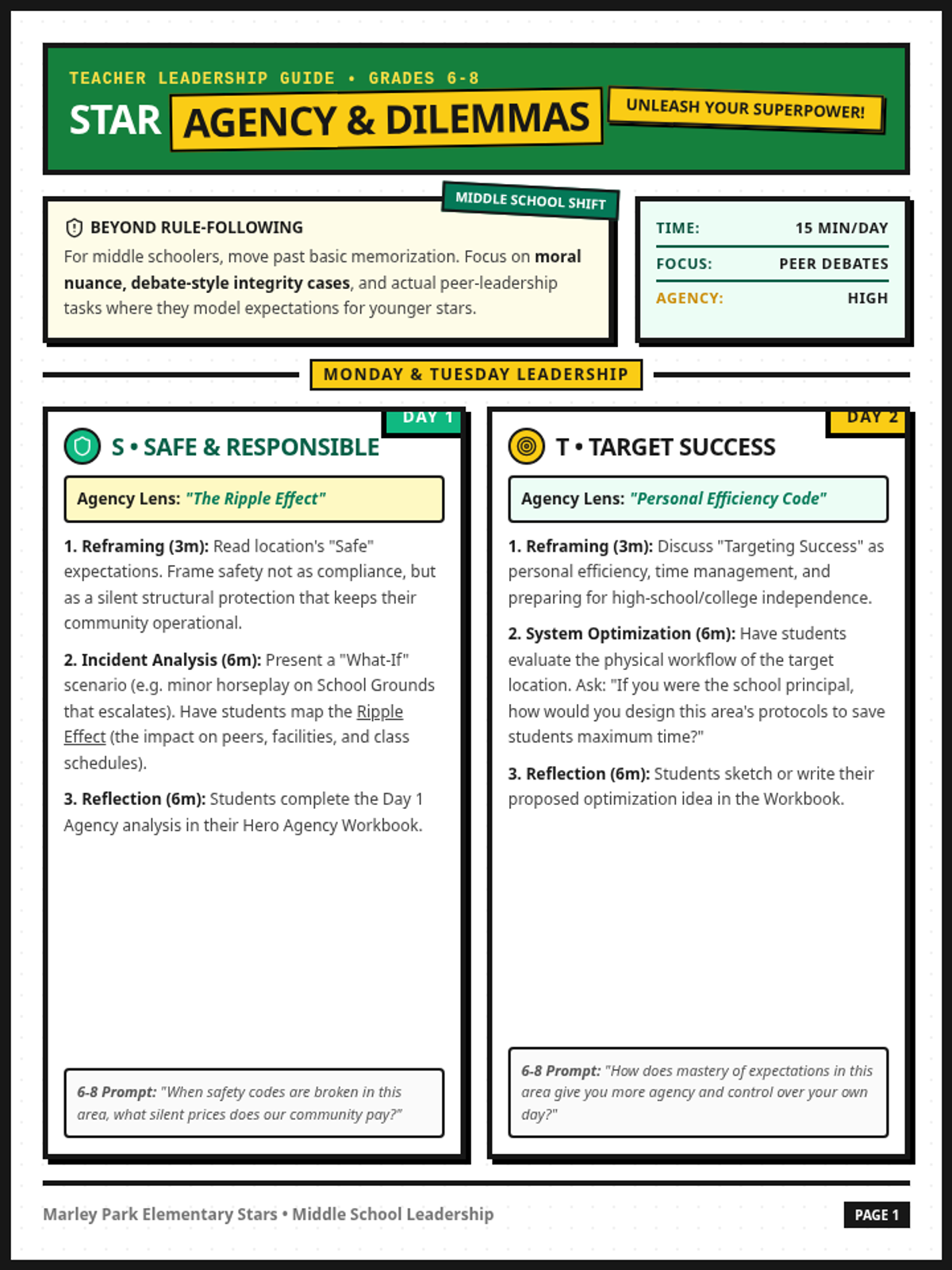
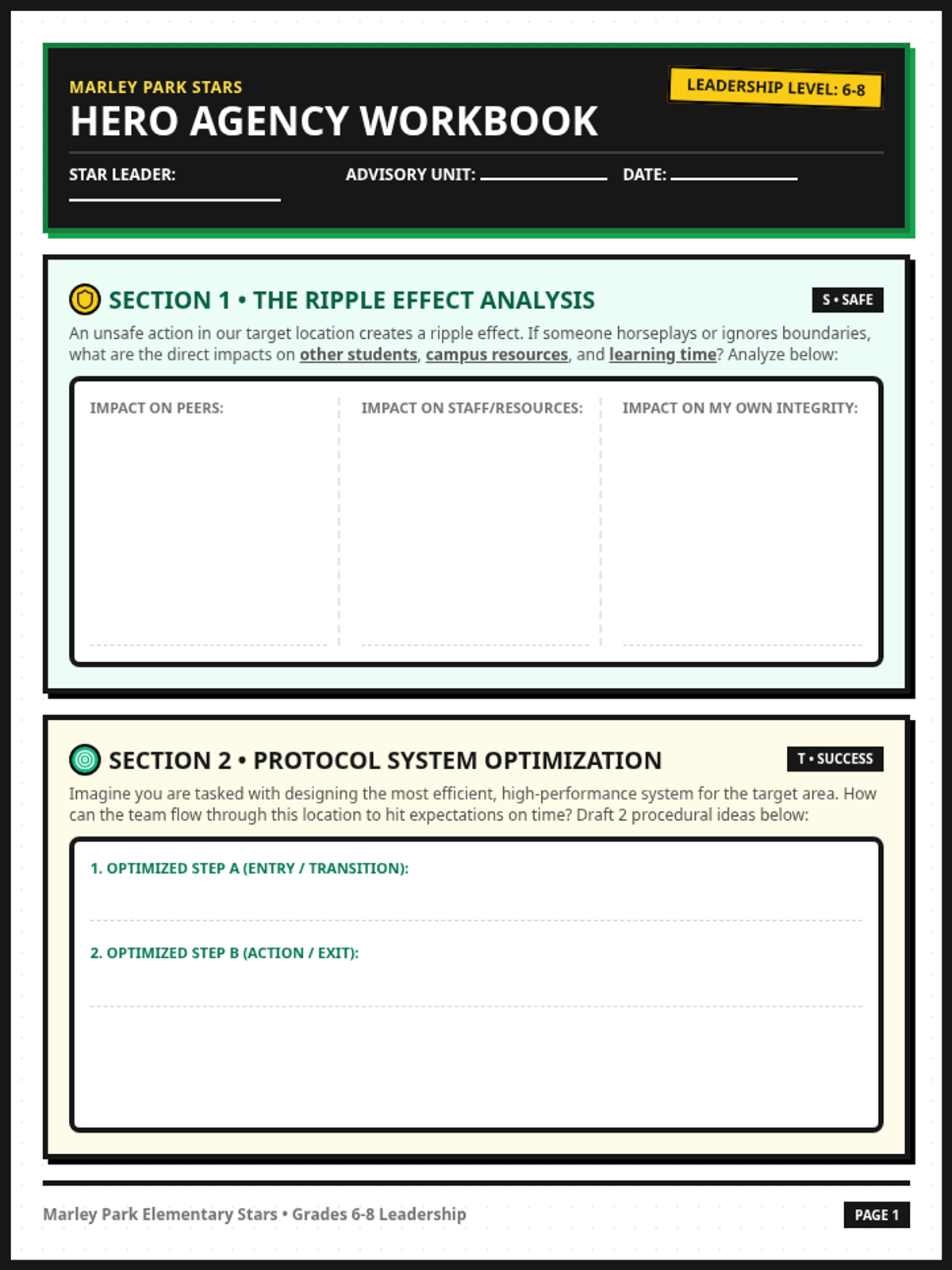
A universal 5-day lesson set for middle school (grades 6-8) that leverages peer leadership, debate-style moral dilemmas (exploring the nuance of integrity), and self-guided agency projects to cultivate respect and responsibility across campus.
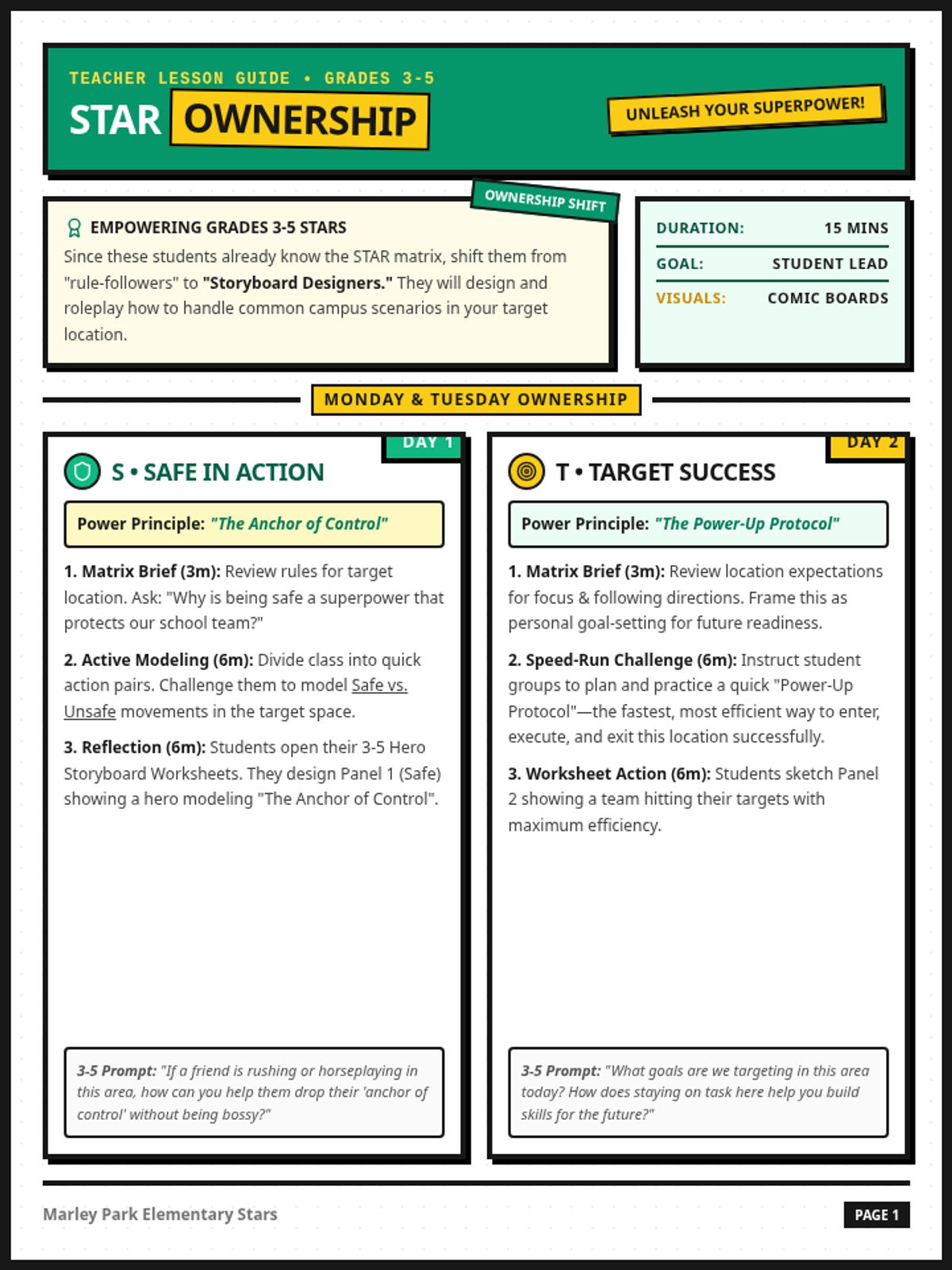
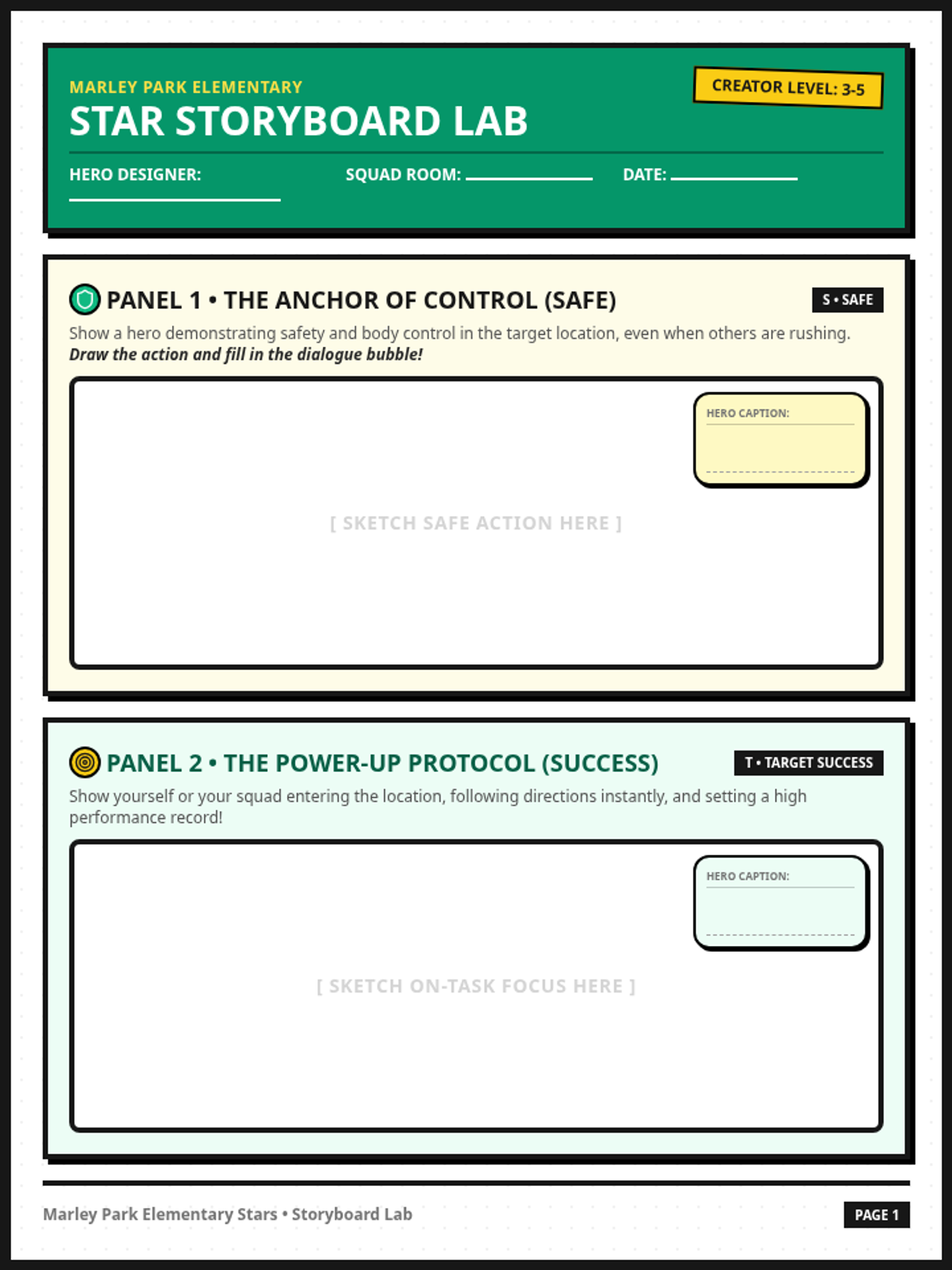
A universal 5-day lesson set for grades 3-5 that shifts focus toward student ownership, comic storyboard creation, and scenario-based problem solving to understand STAR expectations in any school setting.
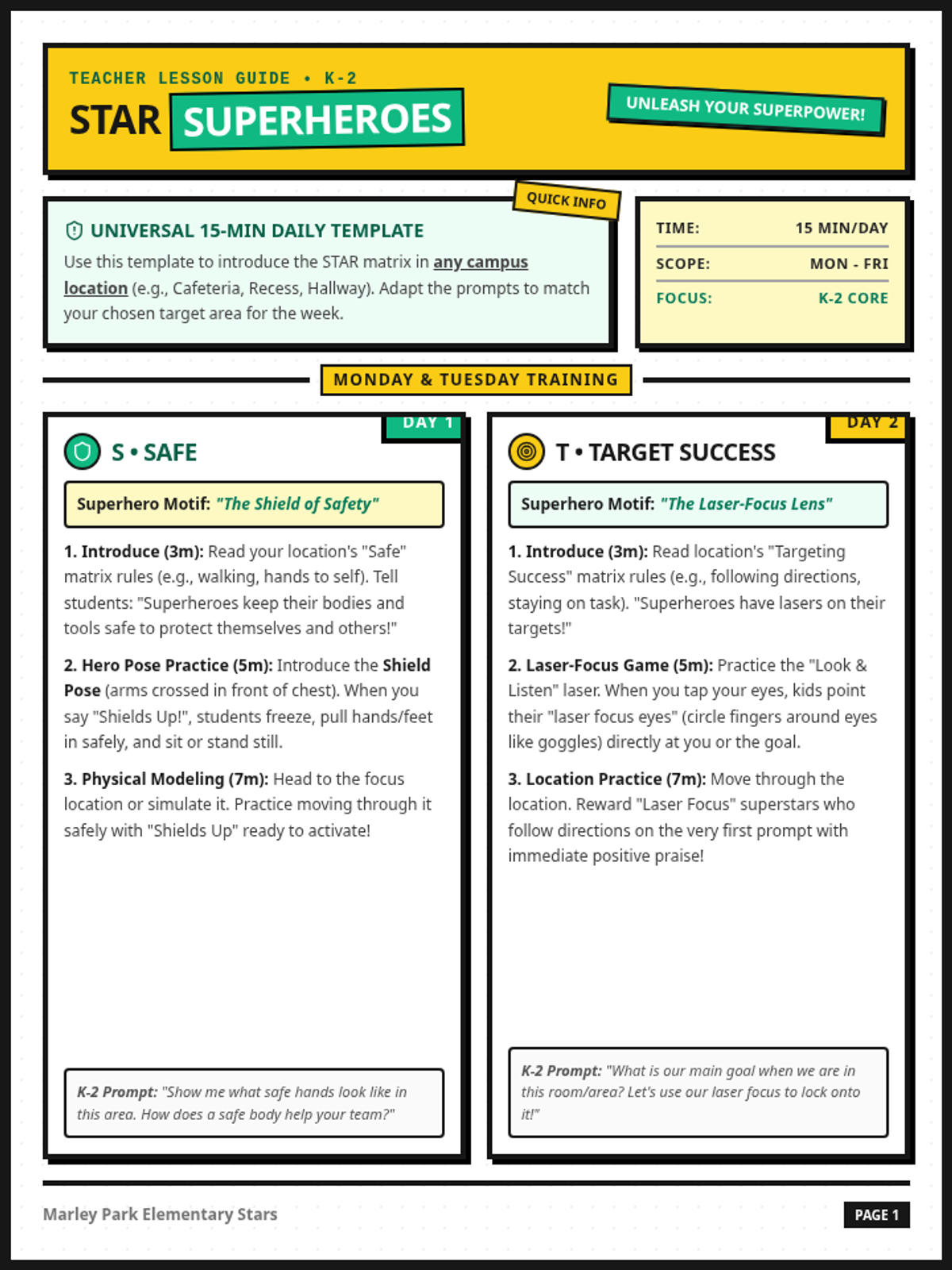
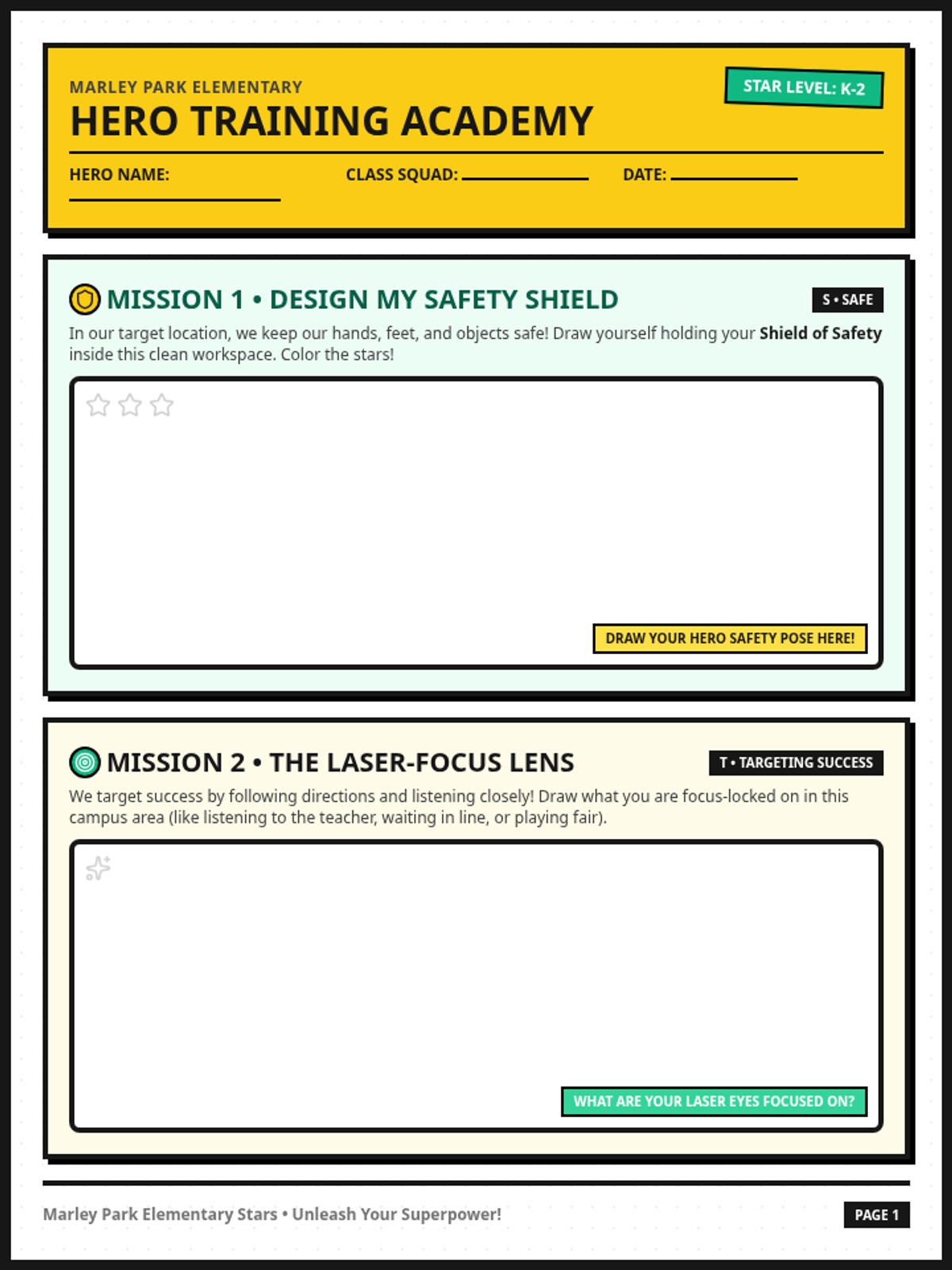
A universal 5-day lesson set for K-2 students focused on introducing STAR expectations (Safe, Targeting Success, Acting with Integrity, Respectful & Responsible) in any campus location through physical modeling, simple superhero analogies, and an interactive superhero-themed student activity guide.
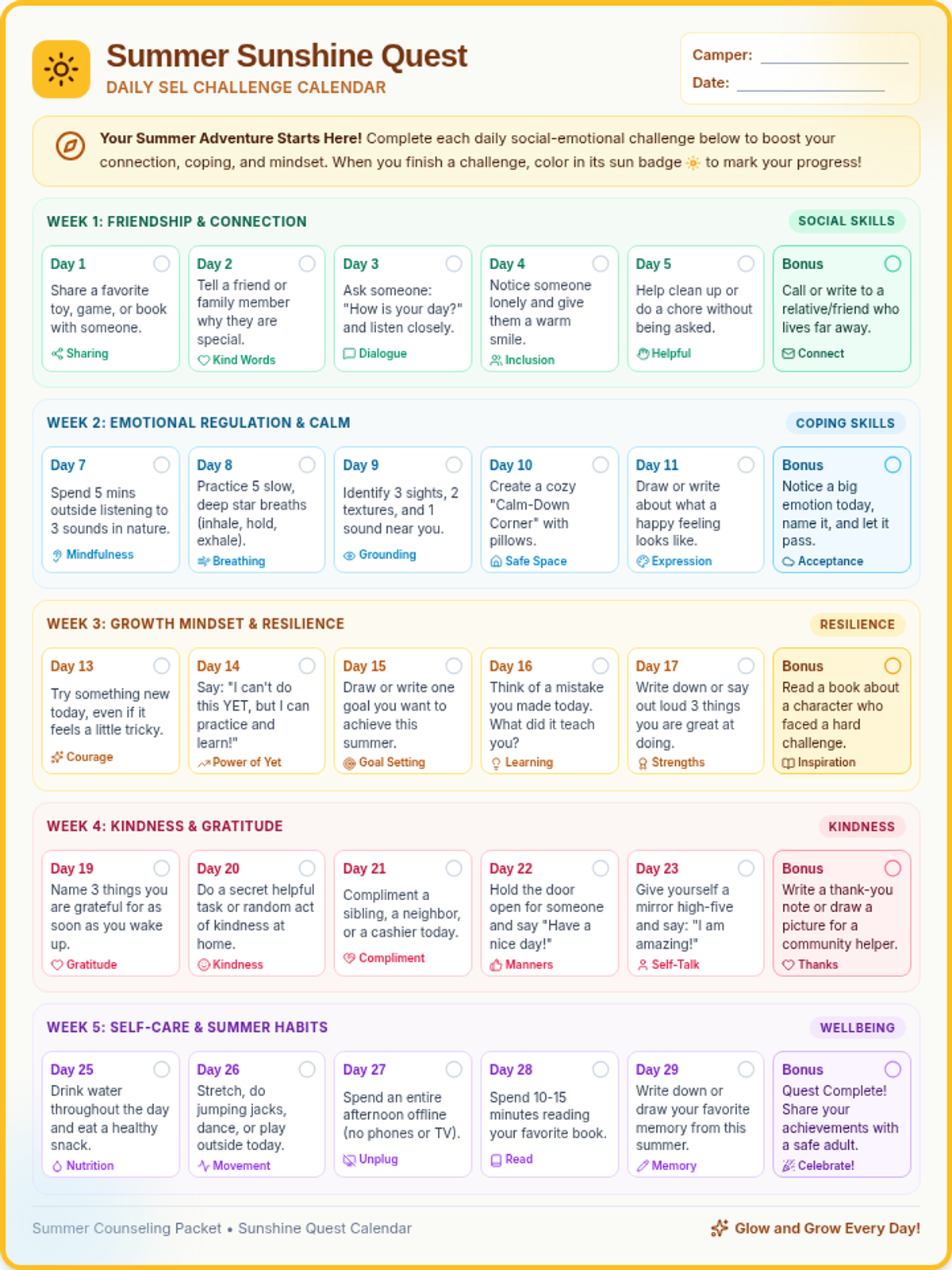
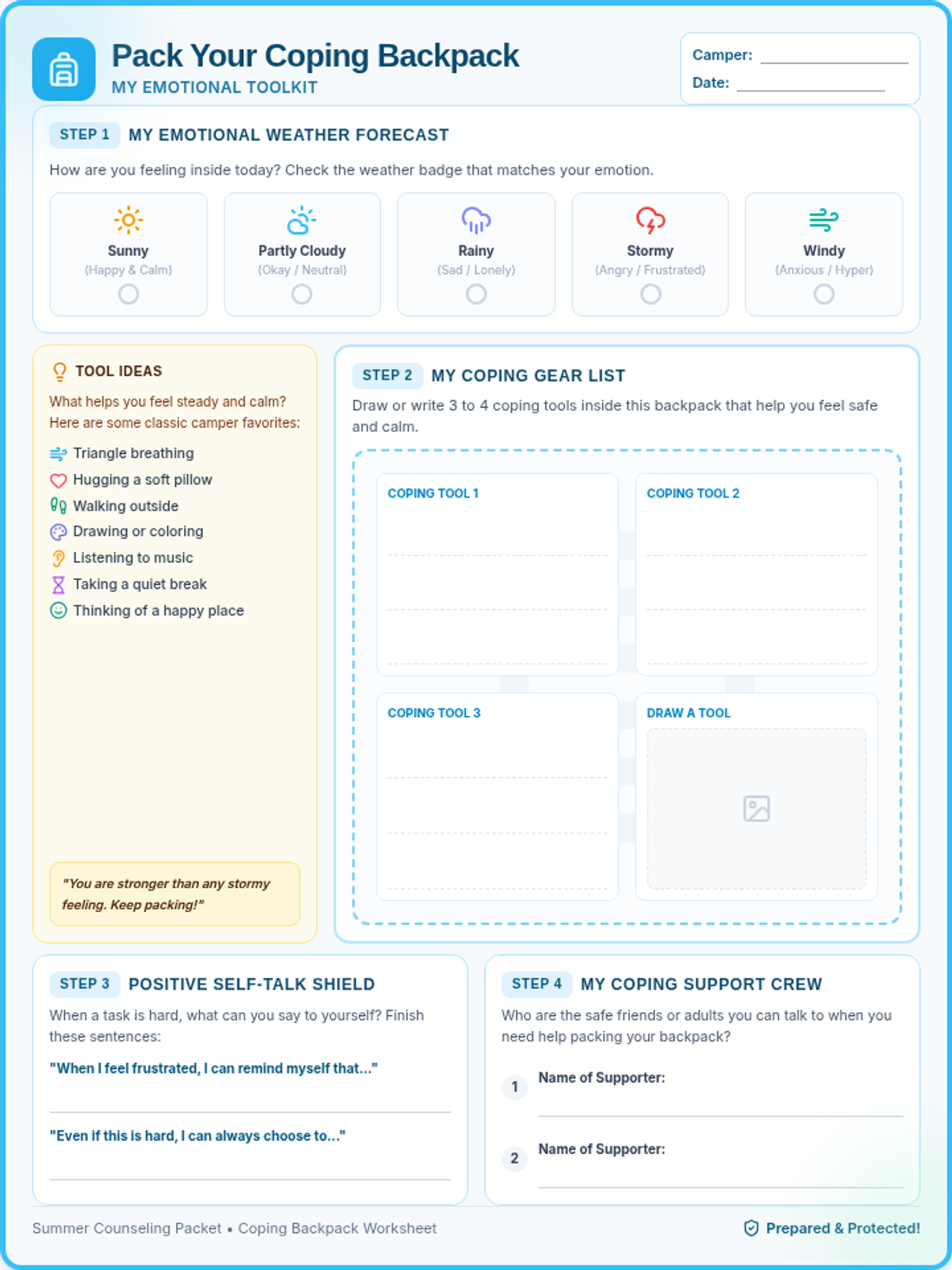
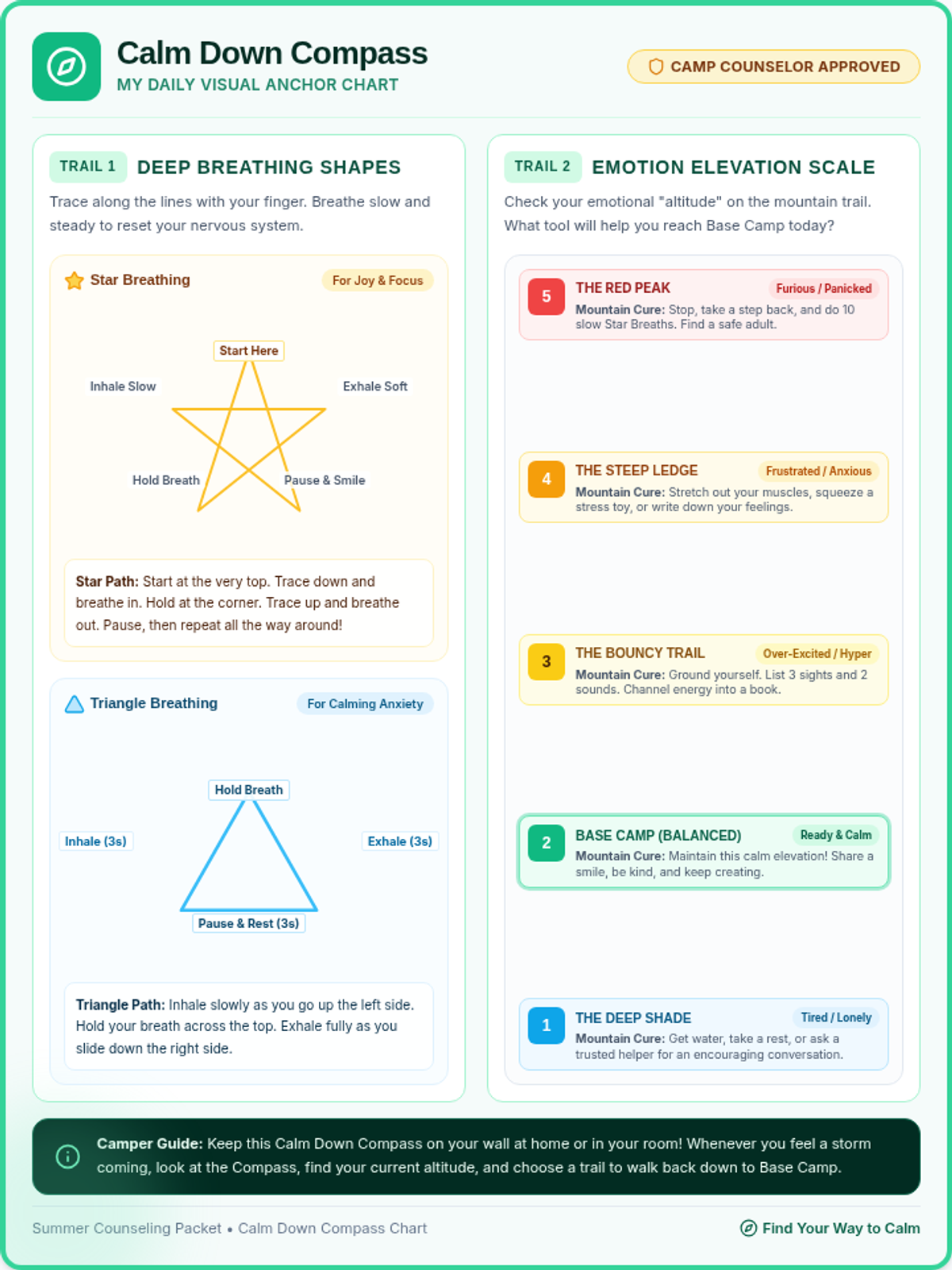
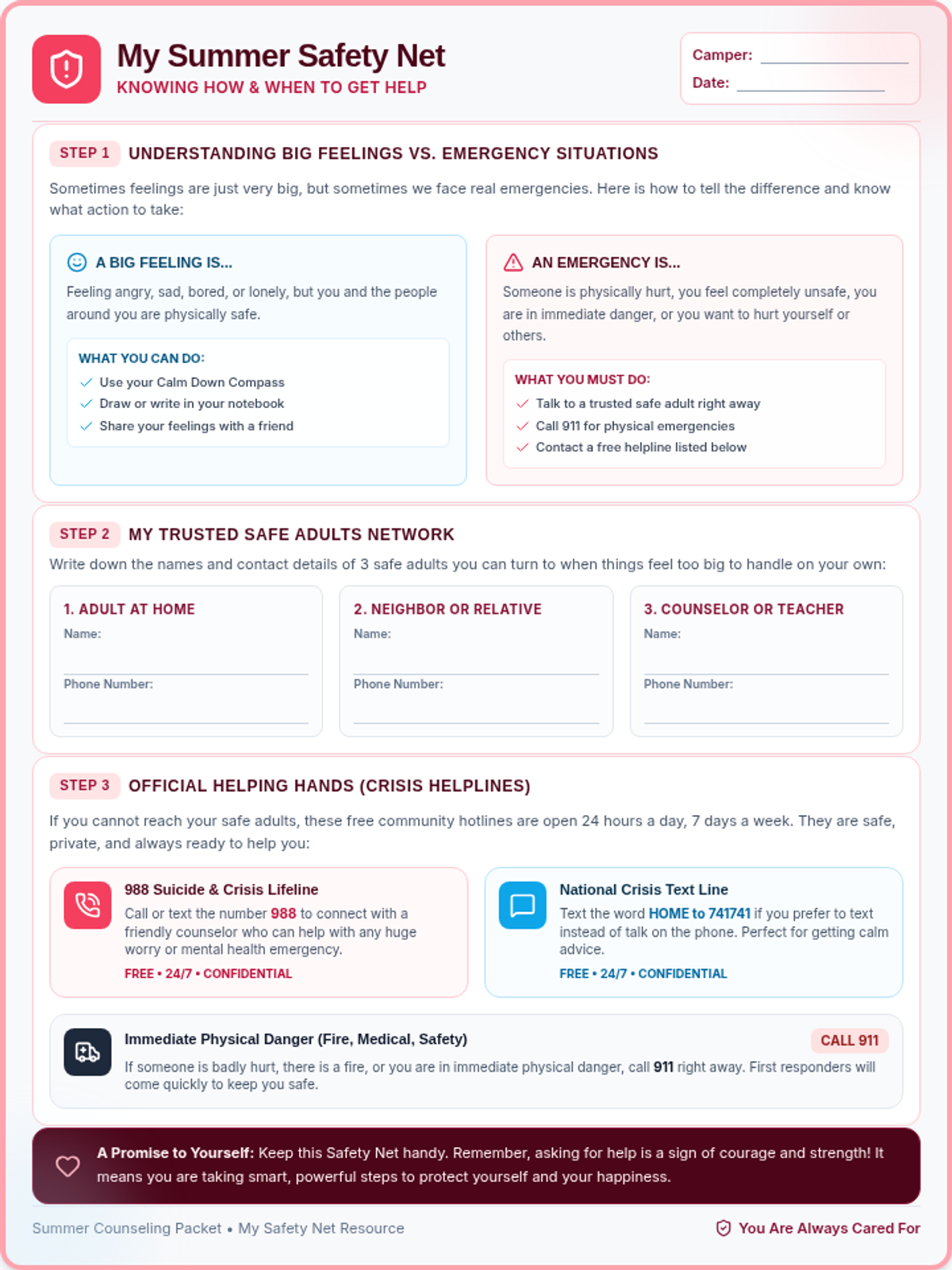
A comprehensive summer counseling packet containing daily SEL challenge calendars, coping skill worksheets, deep breathing visual anchor charts, and a safety net resource for getting help in emergencies.
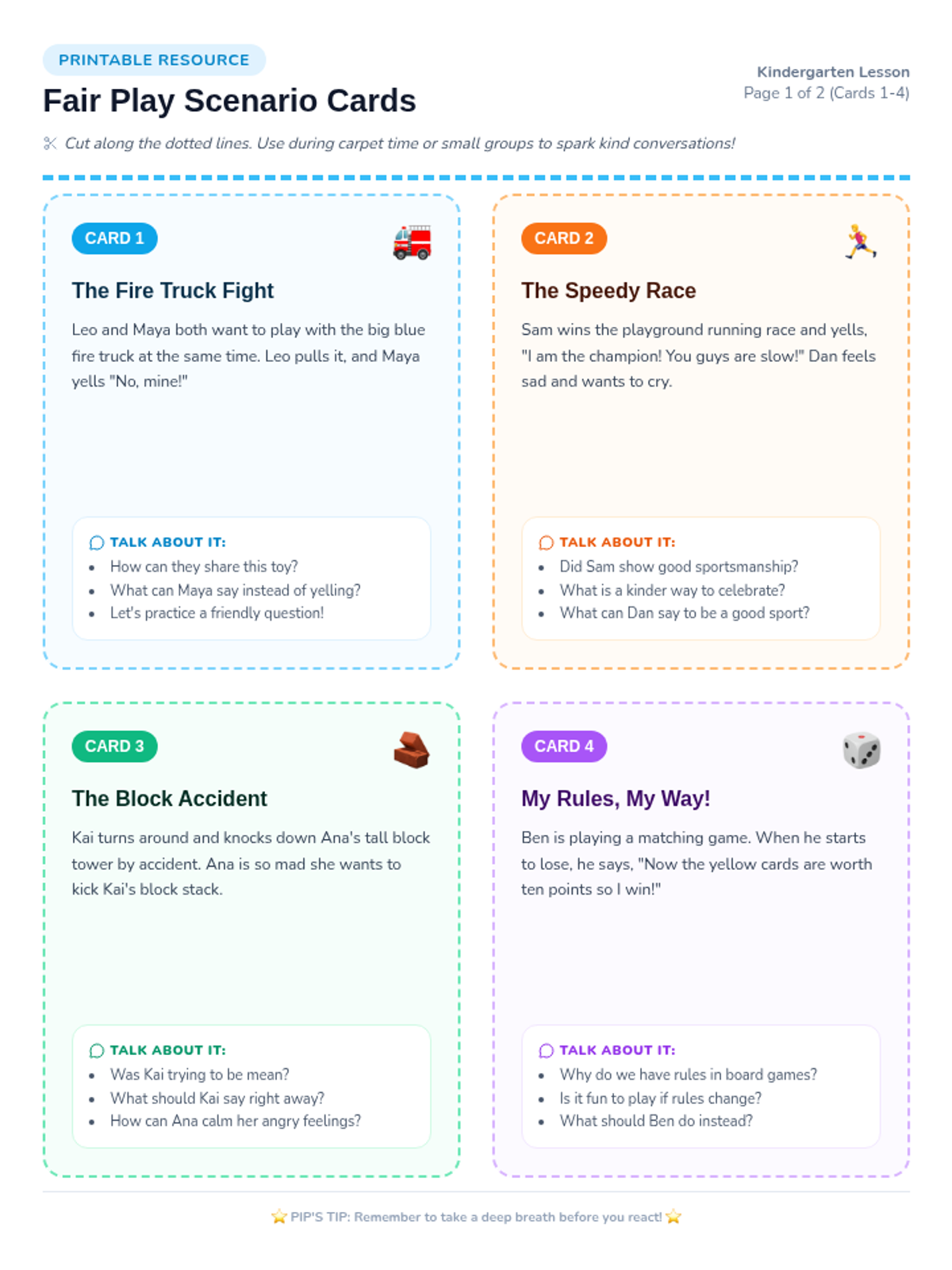
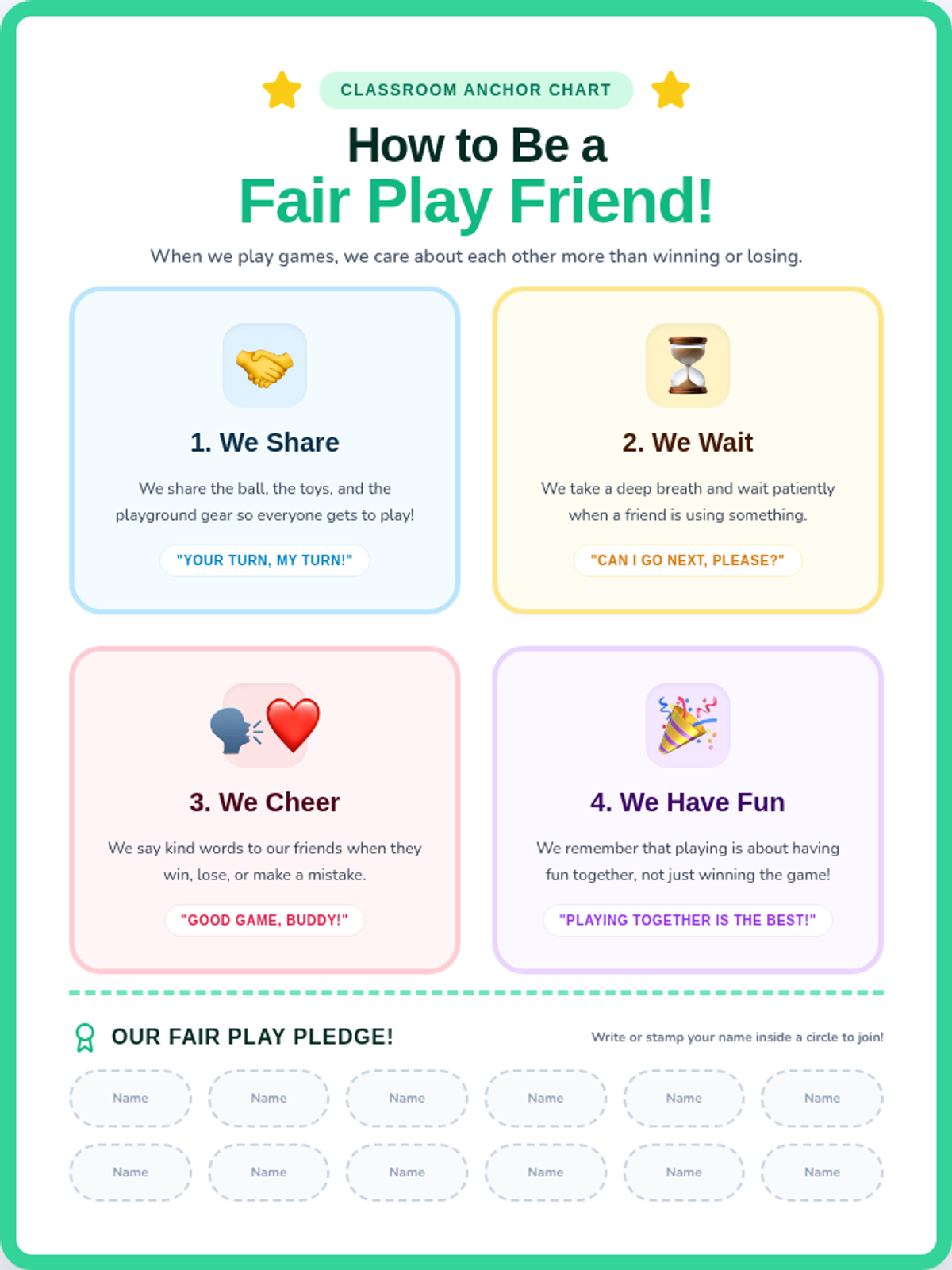
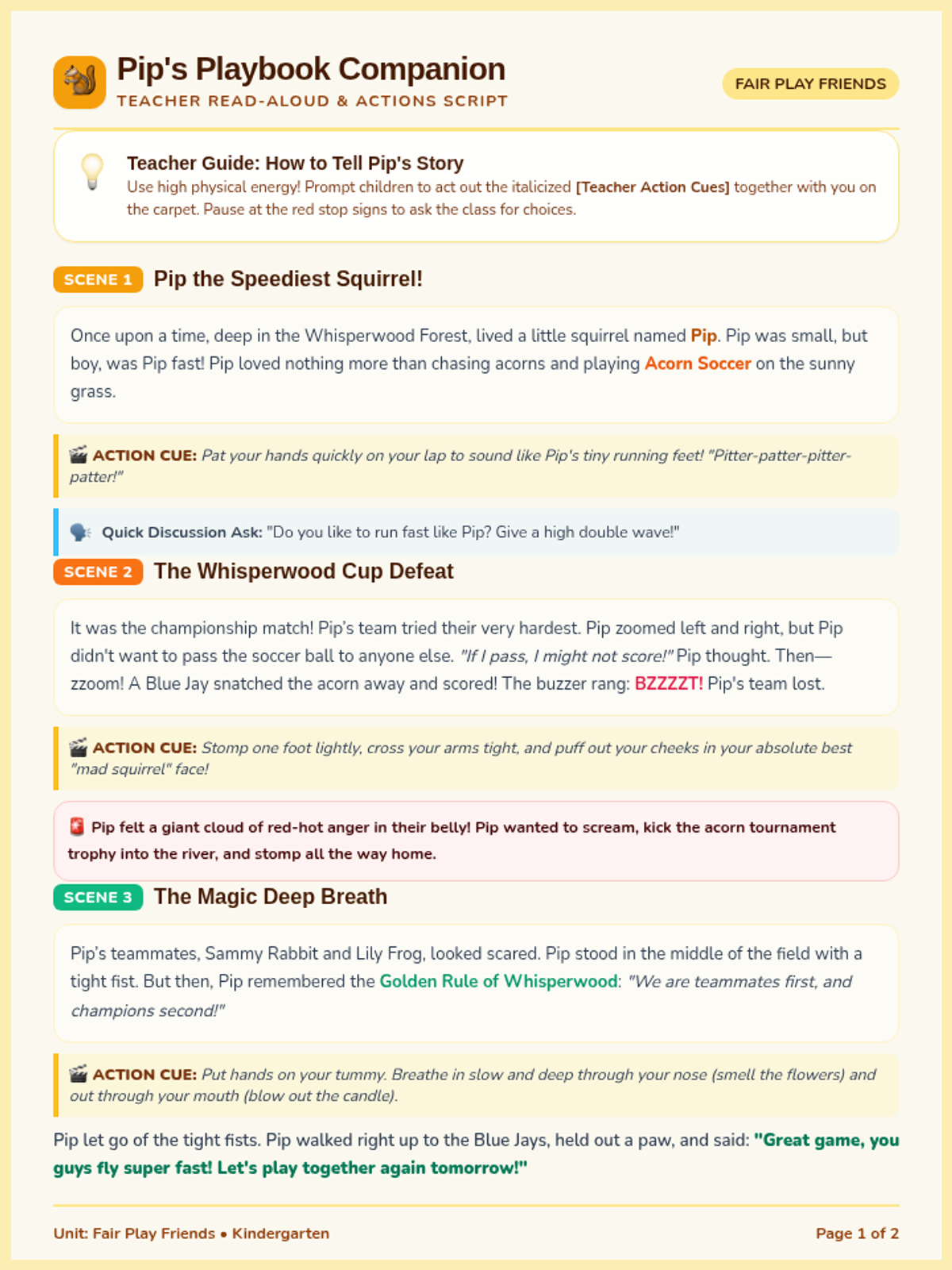
A 30-minute interactive lesson for Kindergarteners focusing on the fundamentals of good sportsmanship, including sharing, taking turns, and handling winning or losing with grace. It features a character-driven story, a movement-based voting game, small-group scenario discussion cards, and a visual anchor chart.
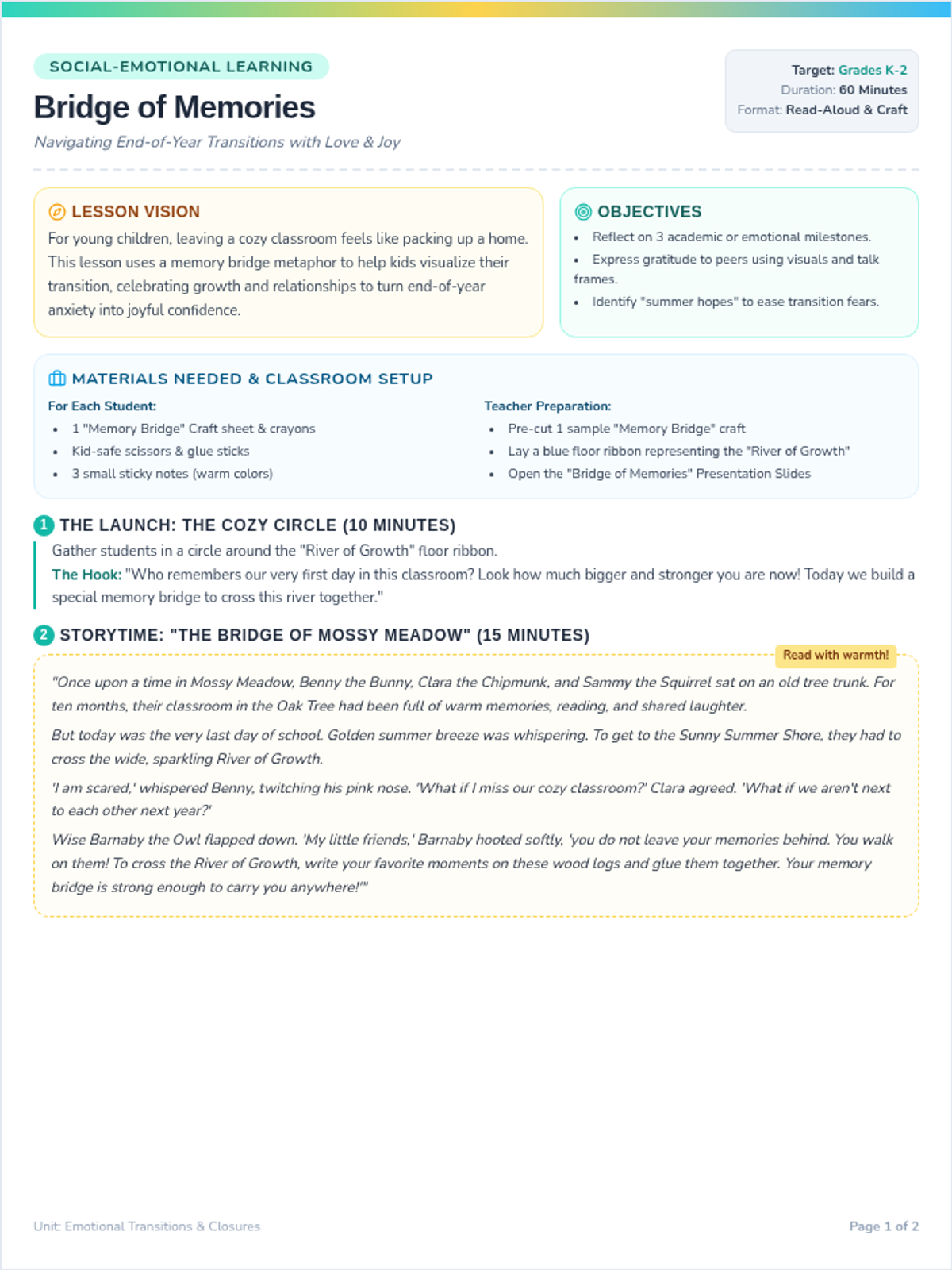
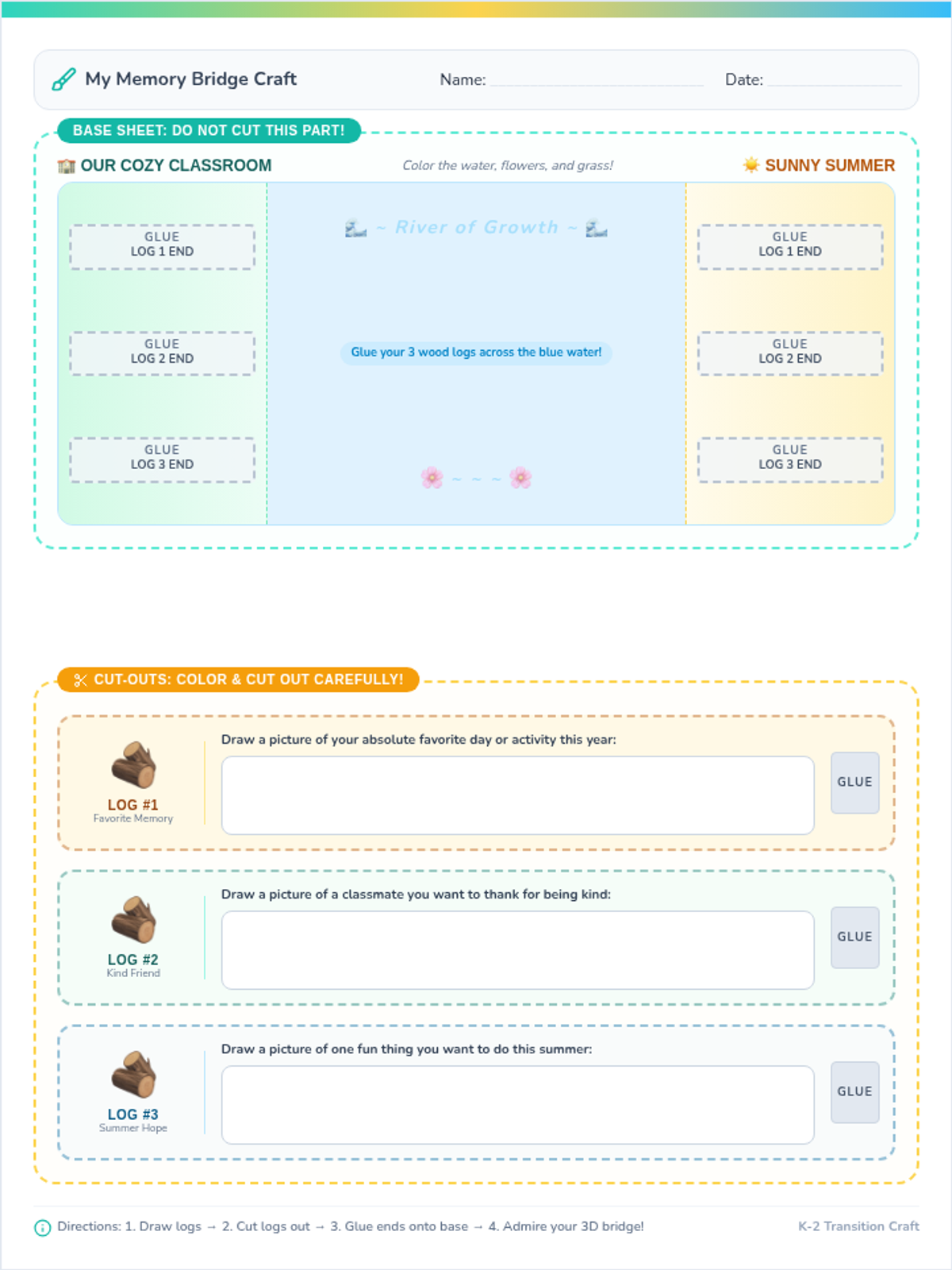
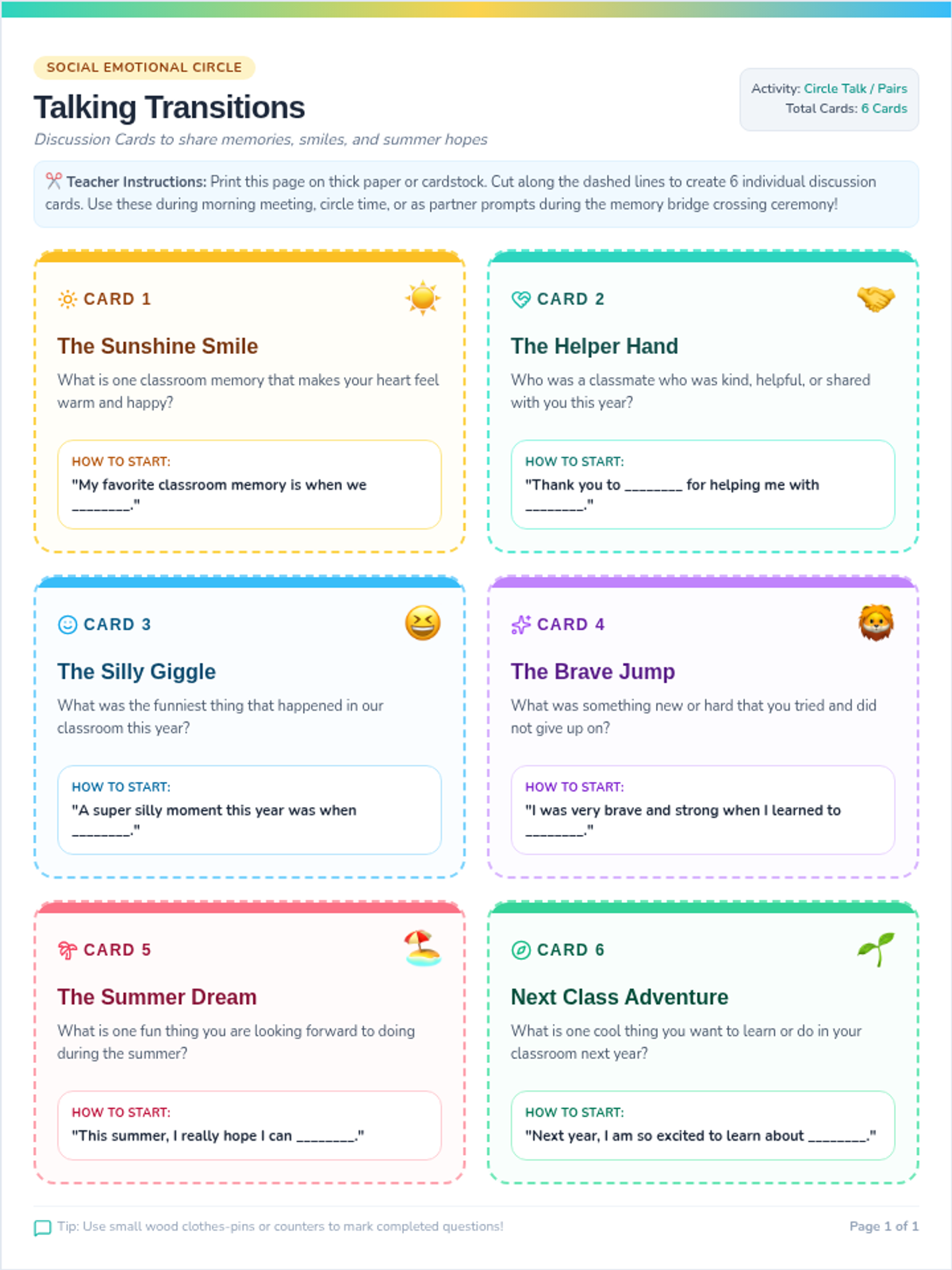
A heartwarming end-of-year transition lesson for K-2 students. Through a reflective story, guided discussions, and a hands-on memory bridge craft, students celebrate their growth, express classmate gratitude, and transition confidently to summer.
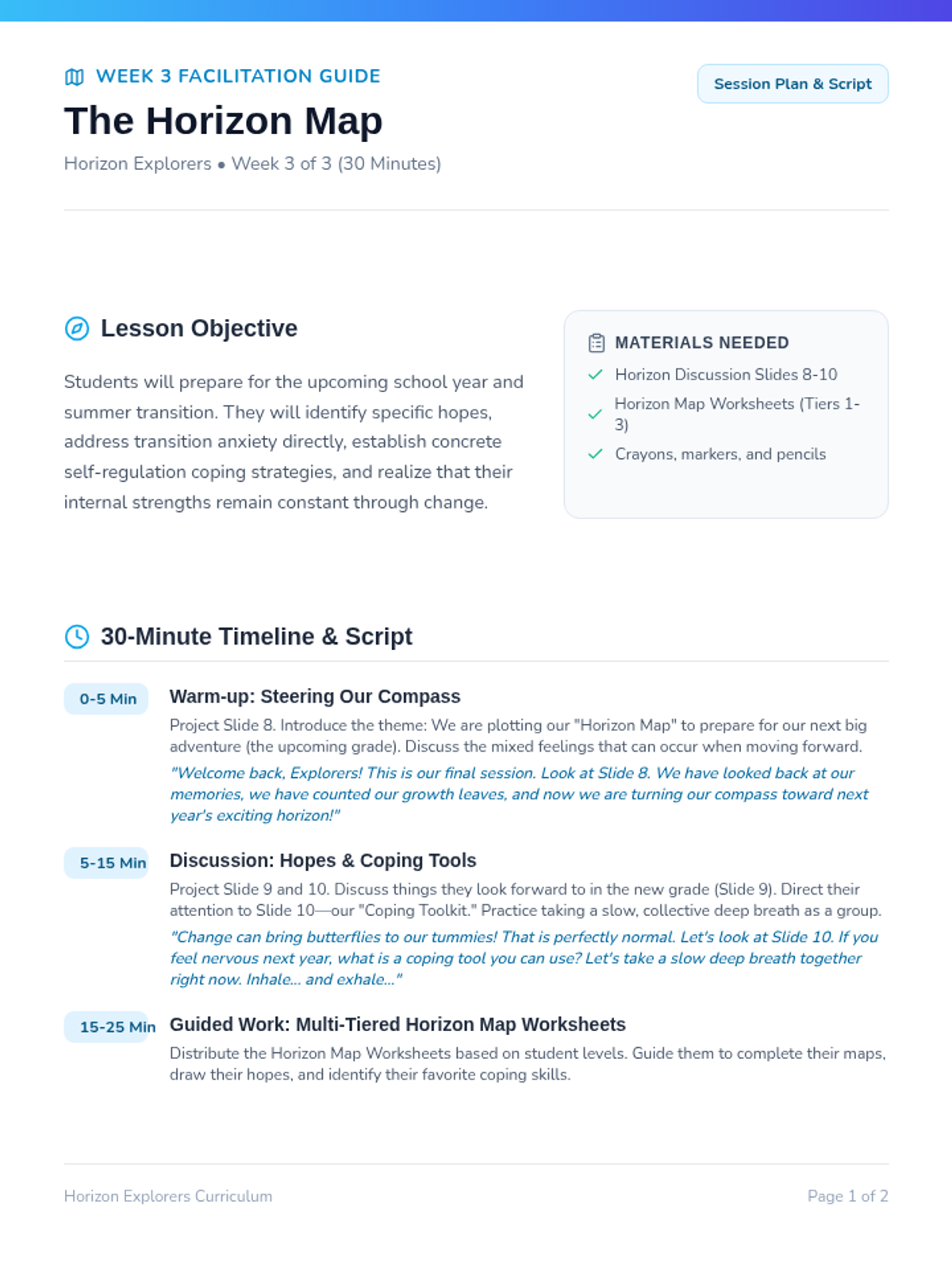
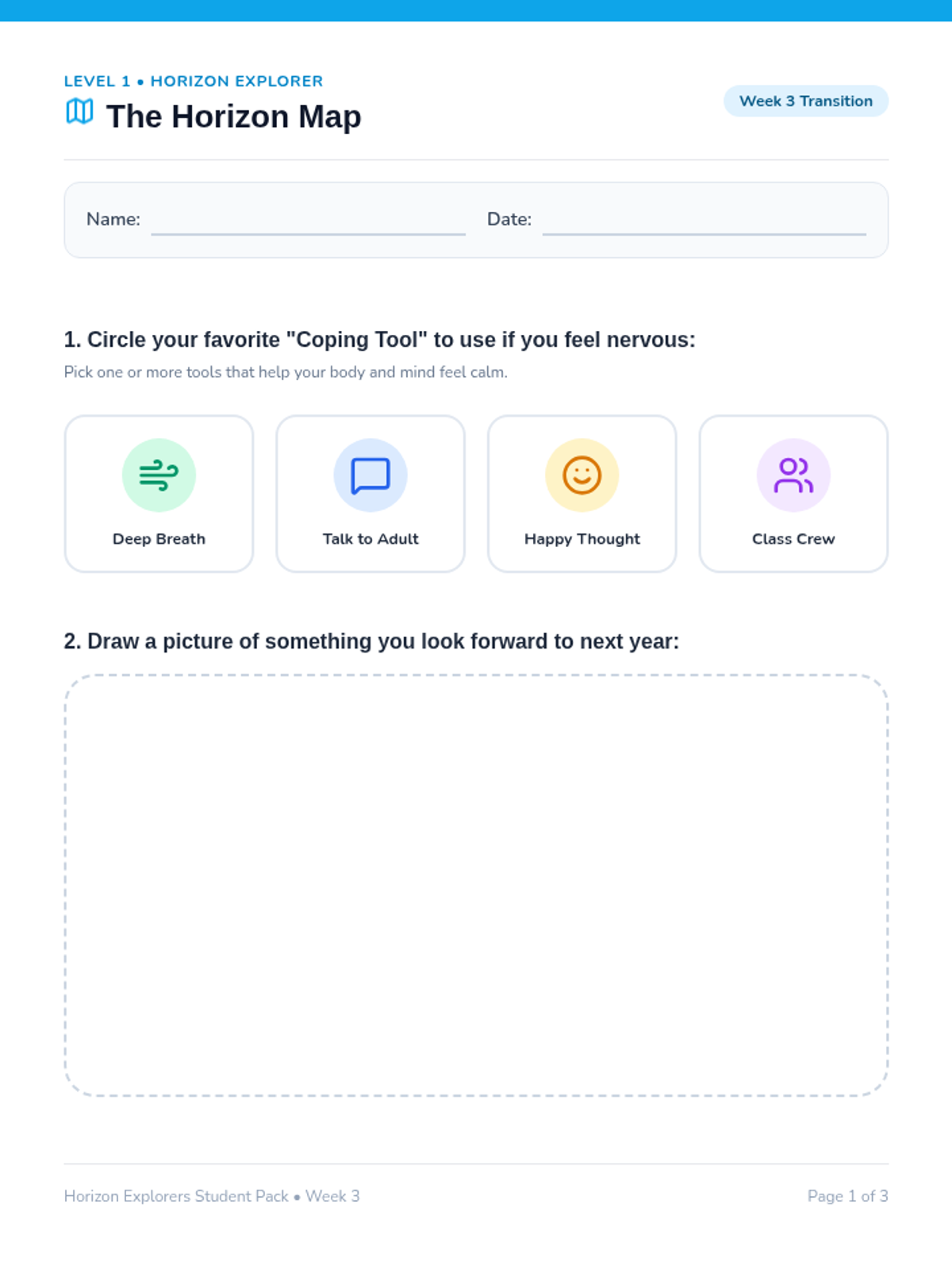
Week 3 prepares students for the upcoming school year, addressing transition anxiety directly and helping them map out coping strategies and future goals.
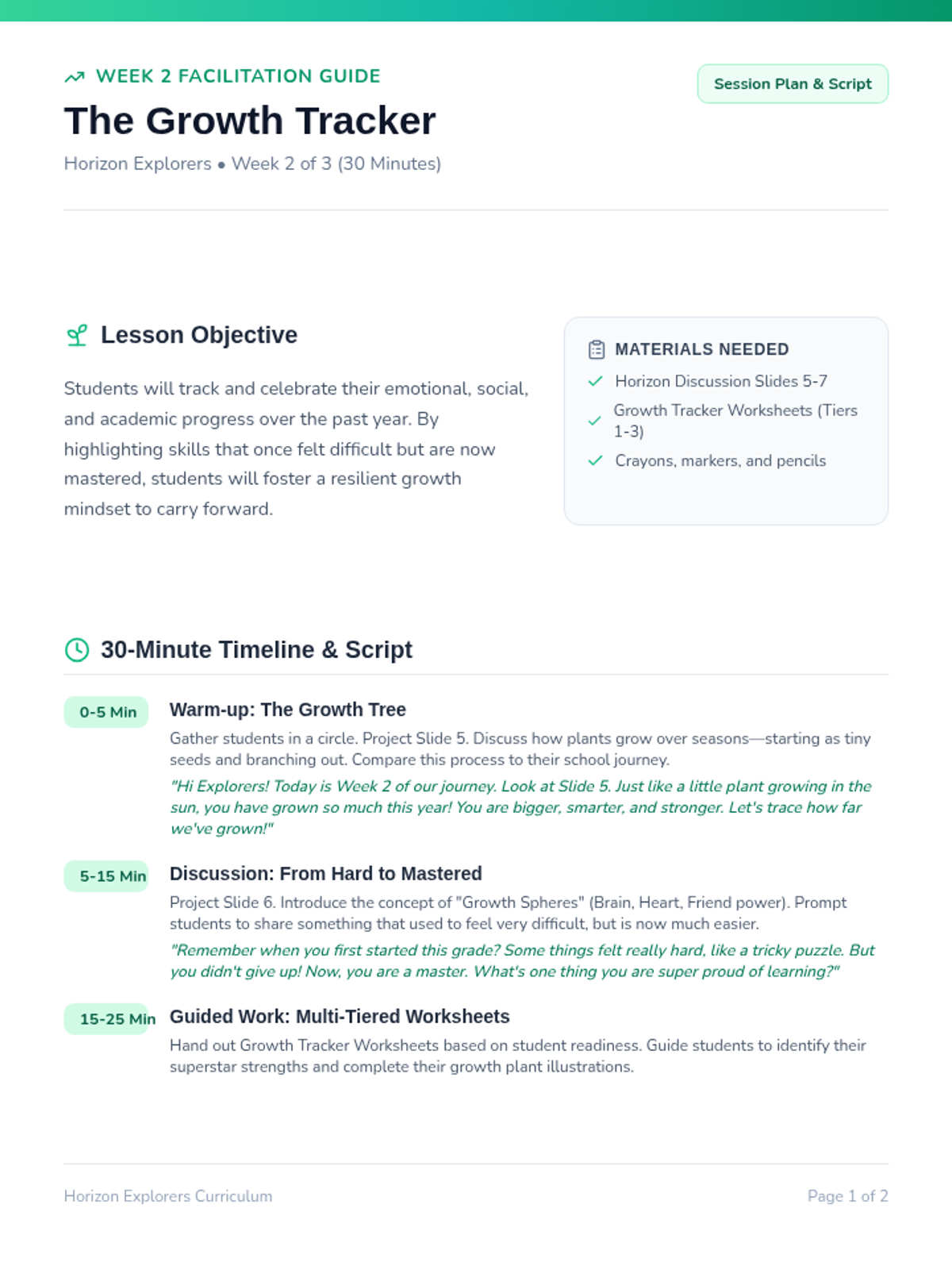
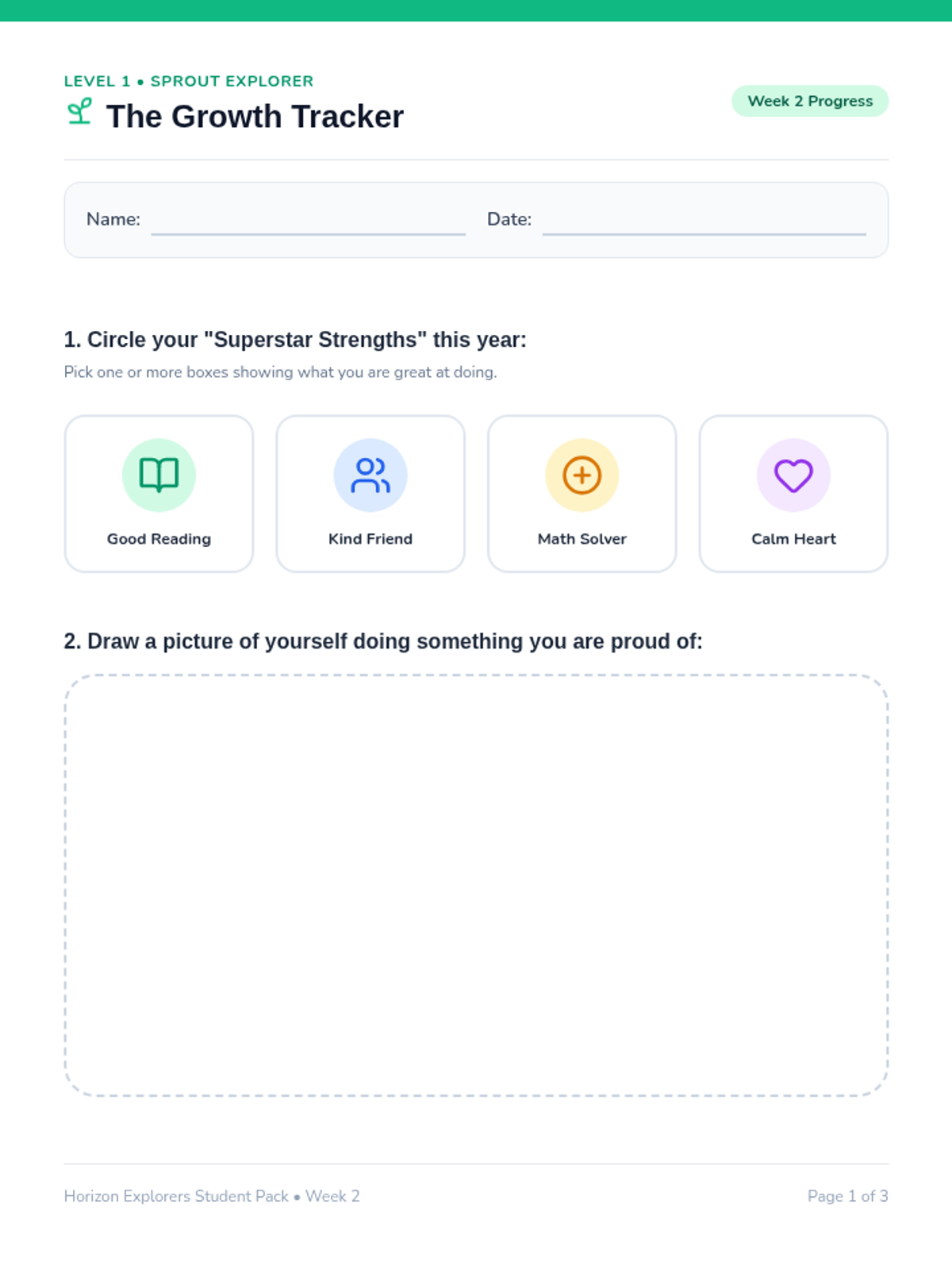
Week 2 focuses on celebrating personal progress, identifying new skills mastered, and tracking how each student has grown emotionally, socially, and academically.
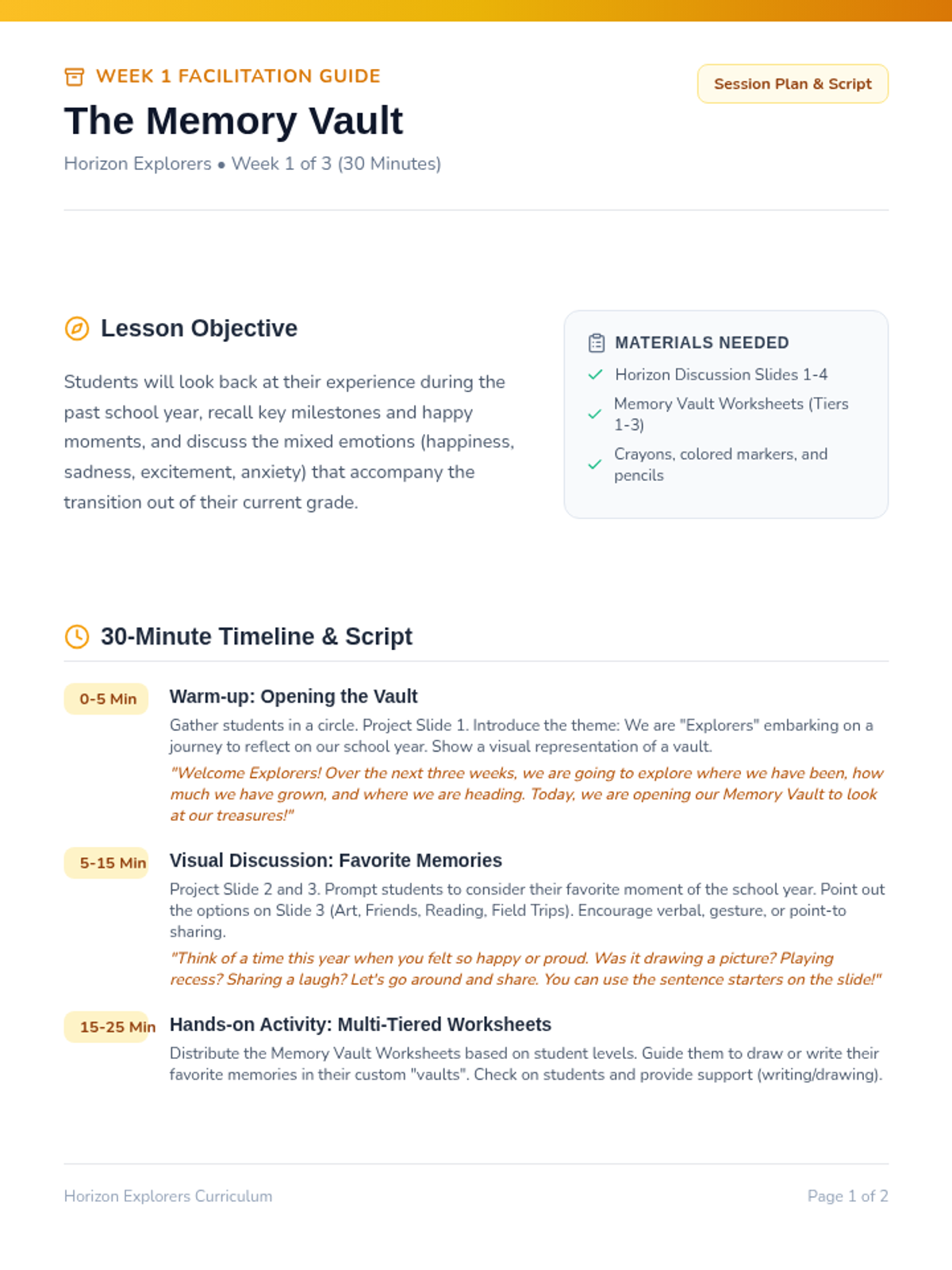
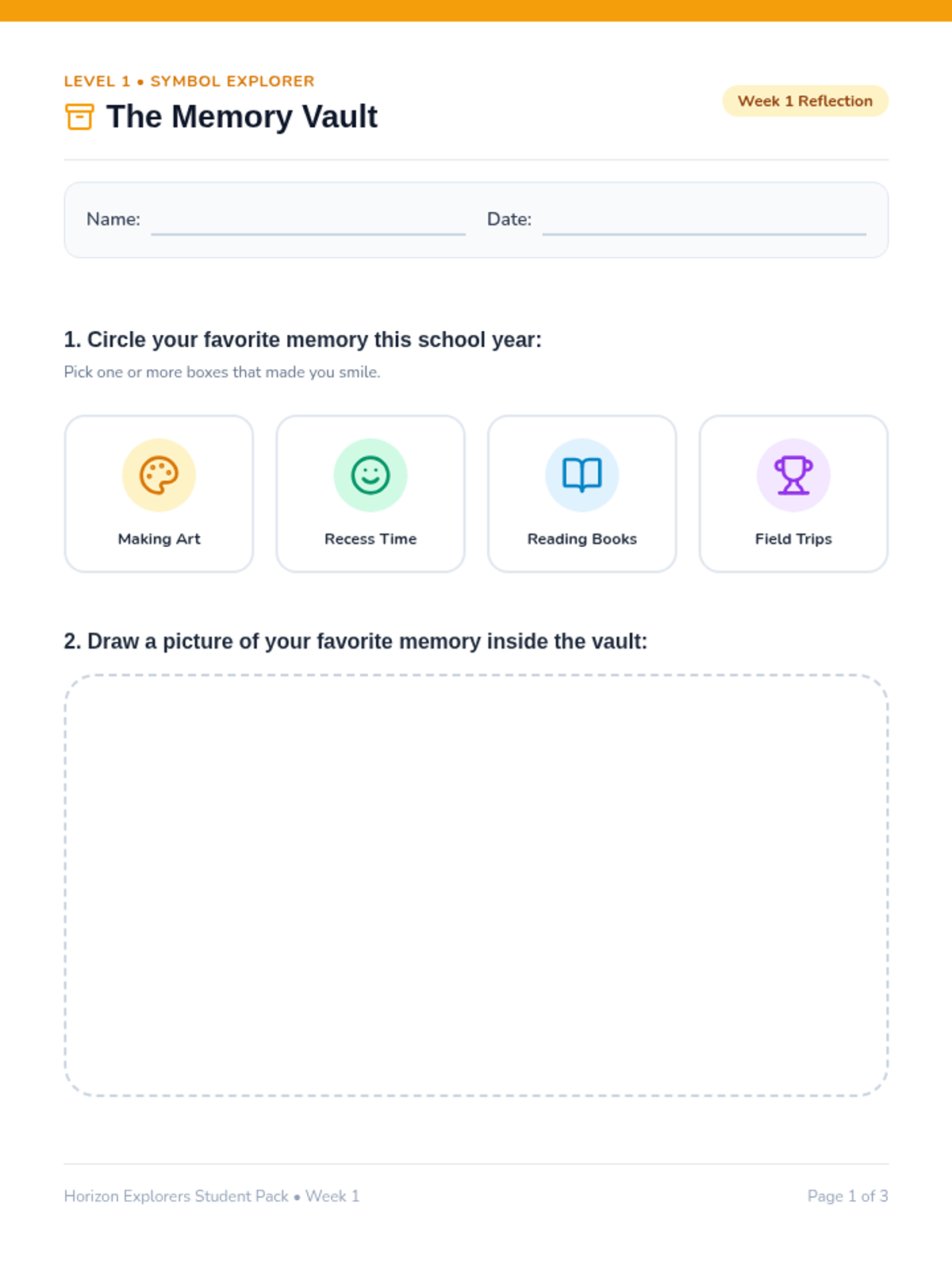
Week 1 focuses on looking back at favorite moments, triumphs, and highlights from the past school year, while acknowledging the complex emotions that come with endings.
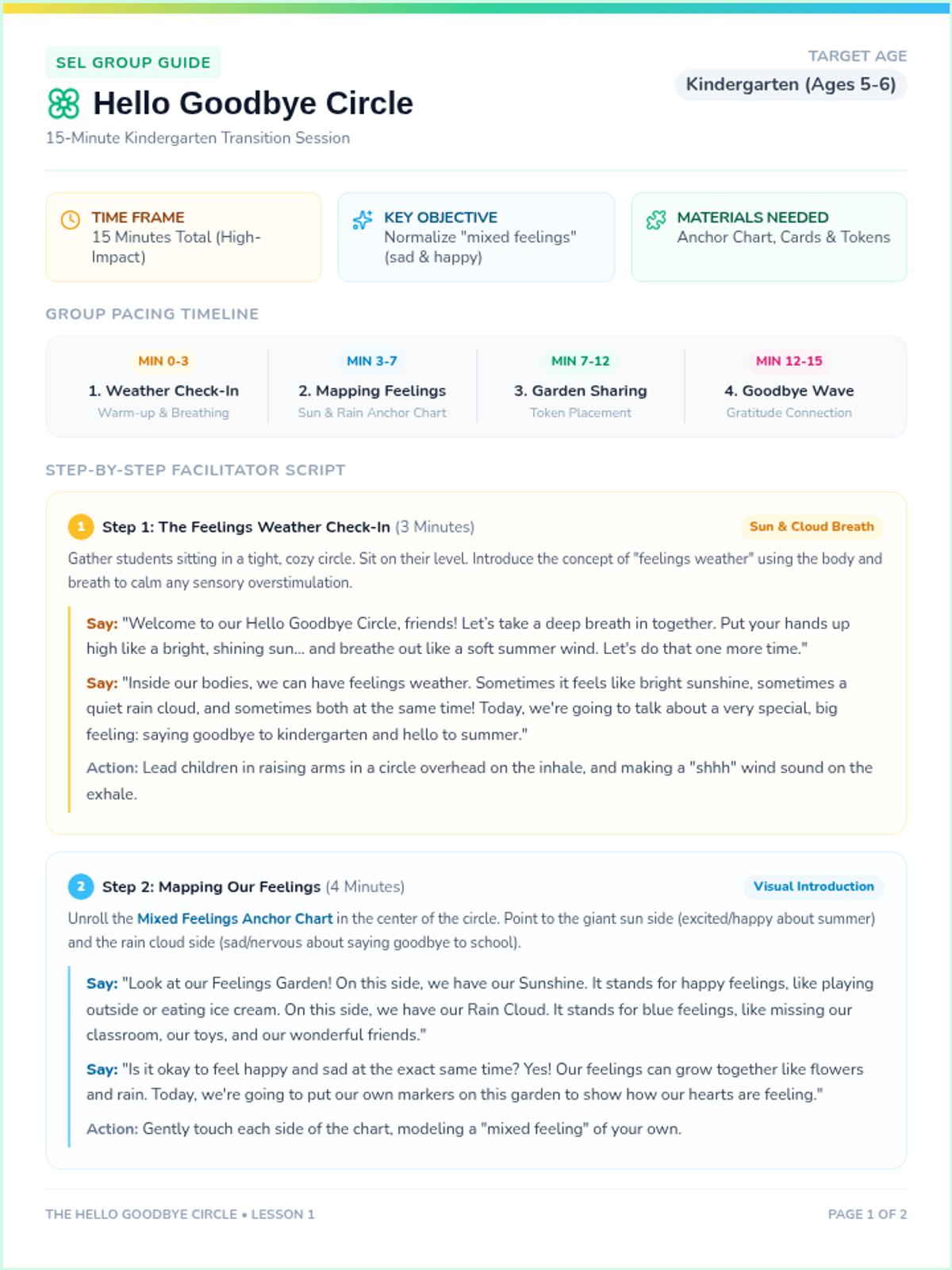
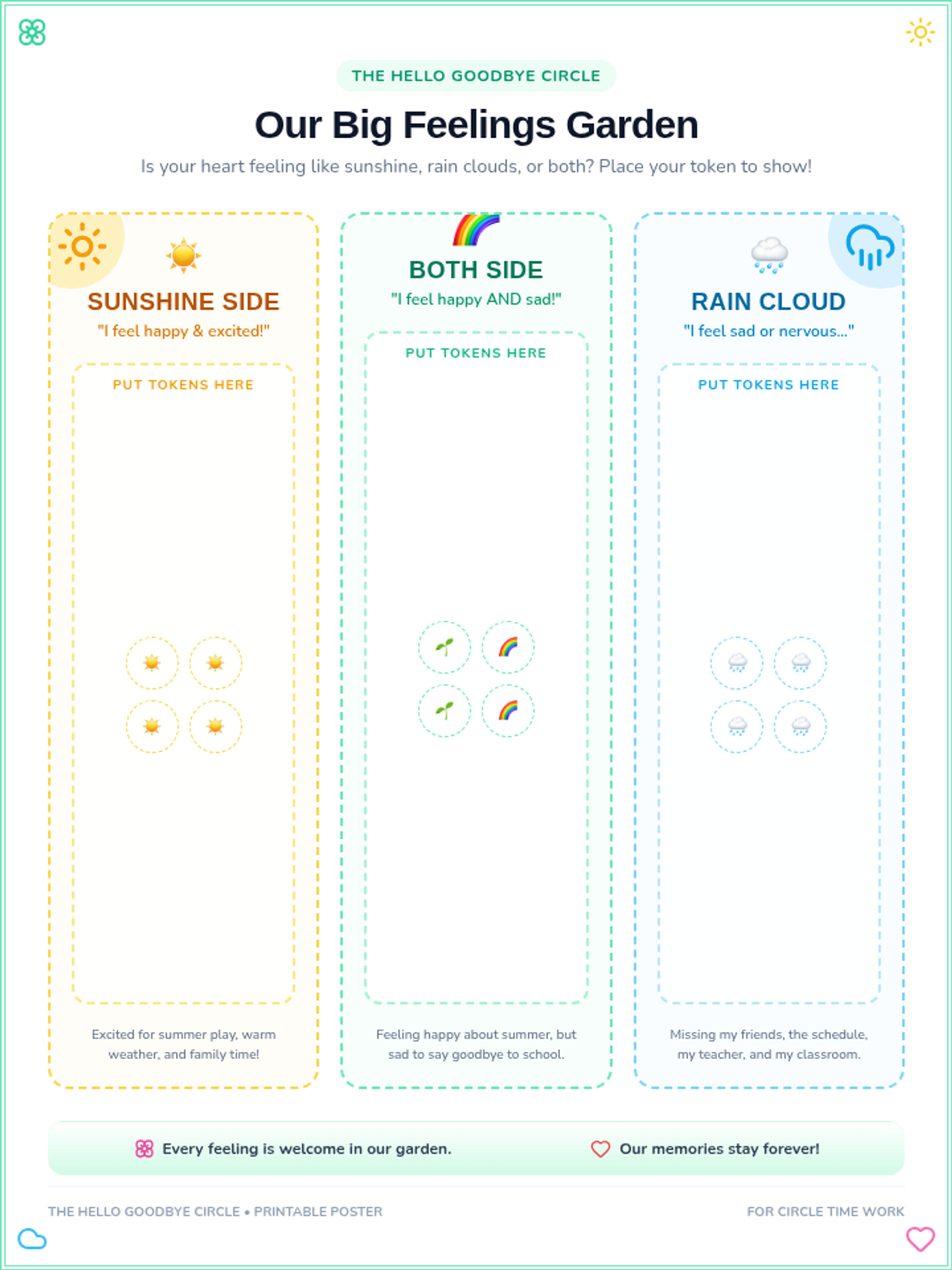
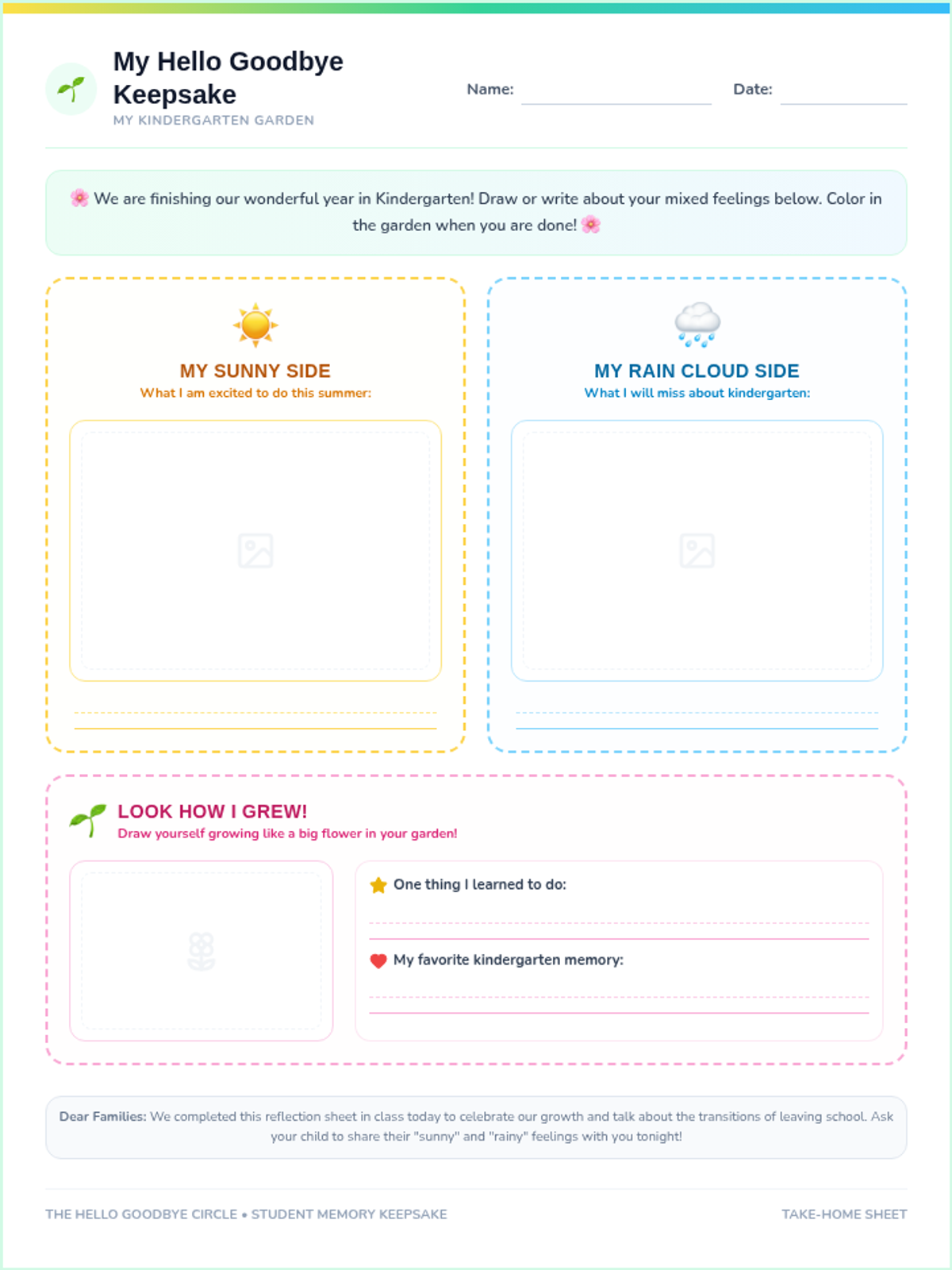
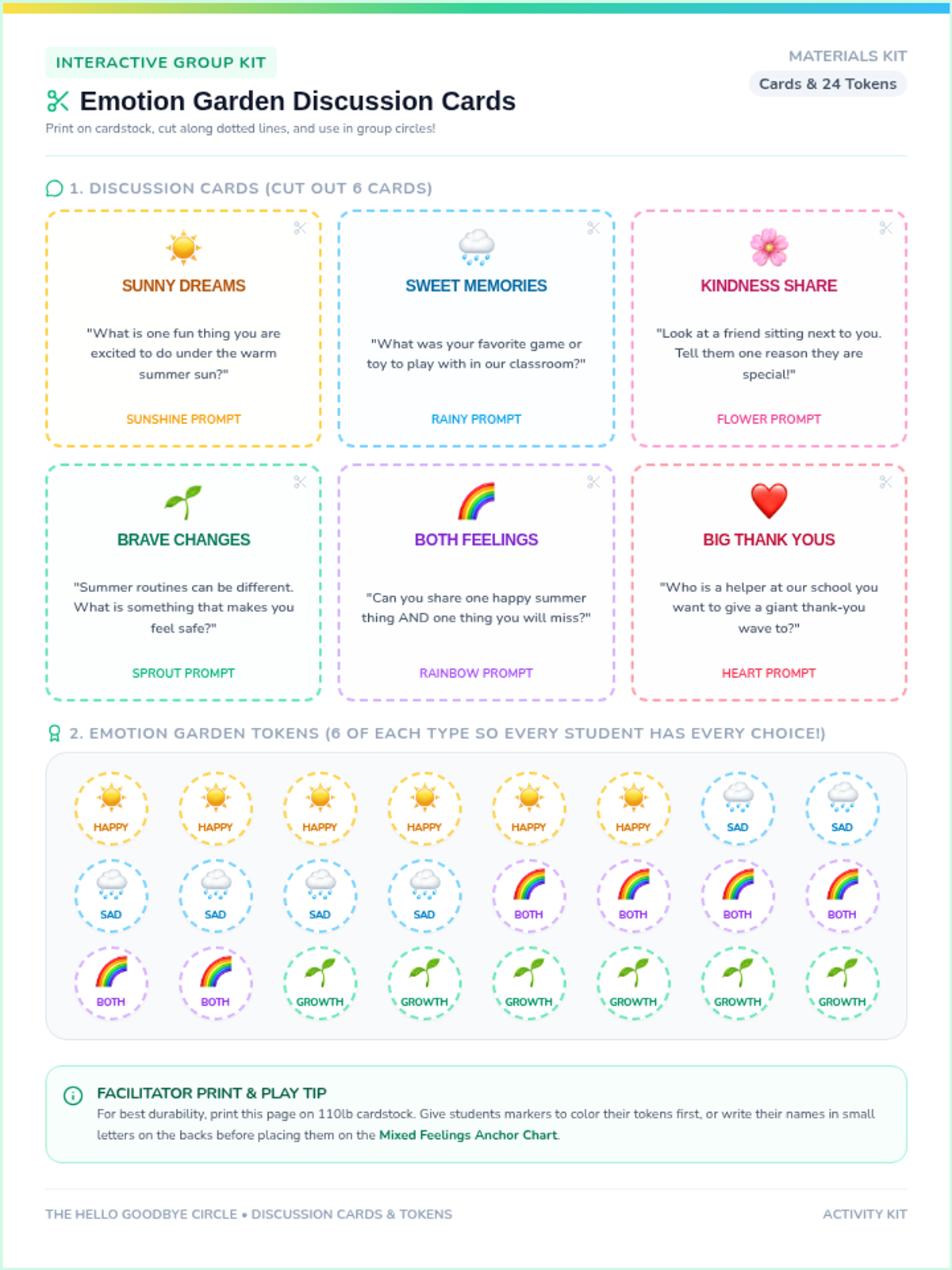
A 15-minute high-impact social-emotional group session for kindergarteners transitioning out of the school year, designed to normalize mixed emotions, celebrate growth, and provide hands-on sharing tools.
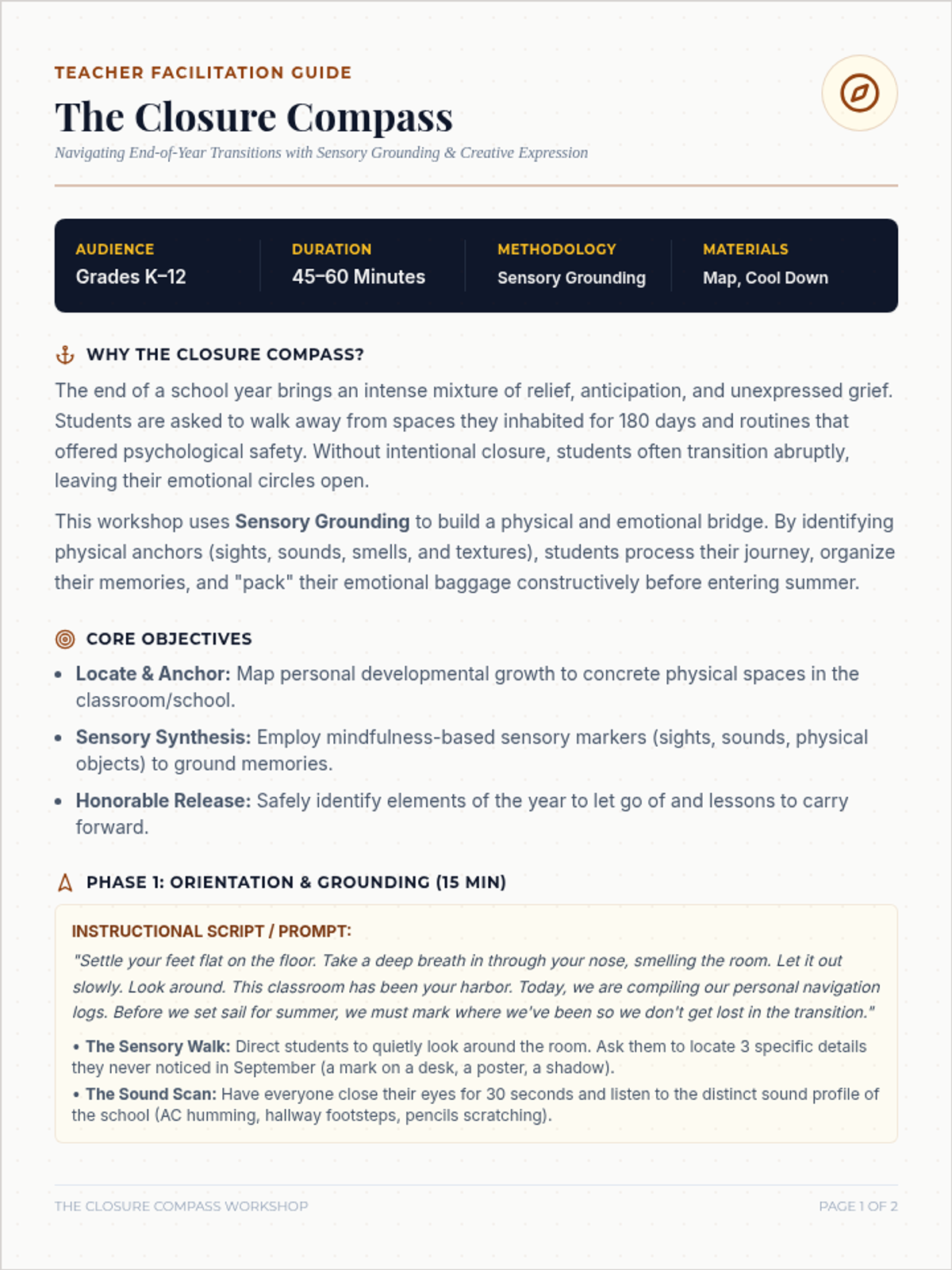
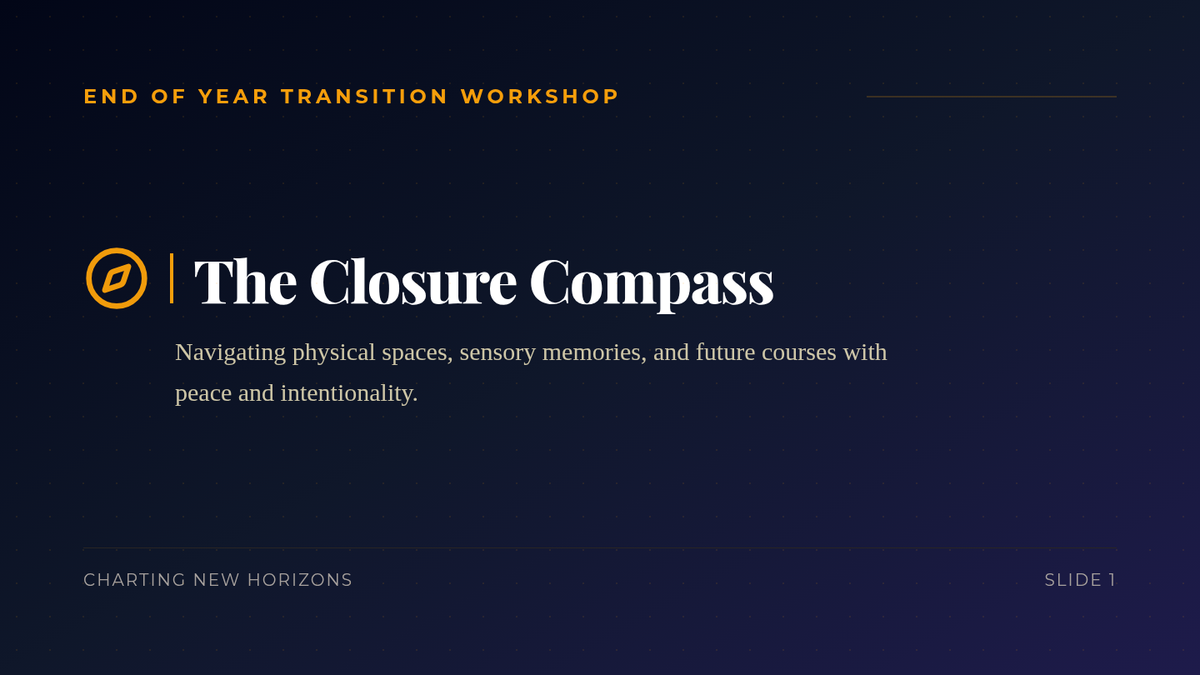
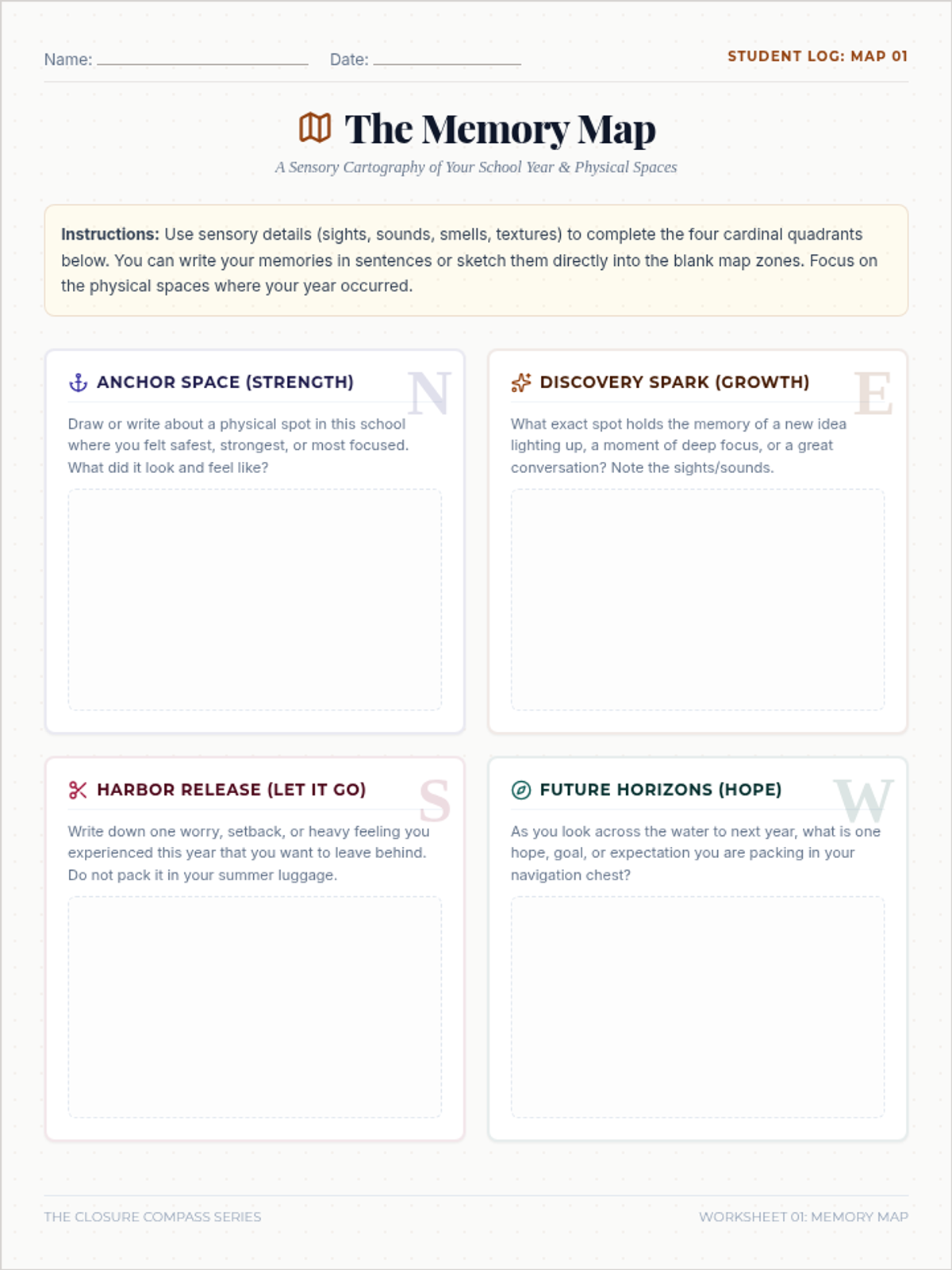
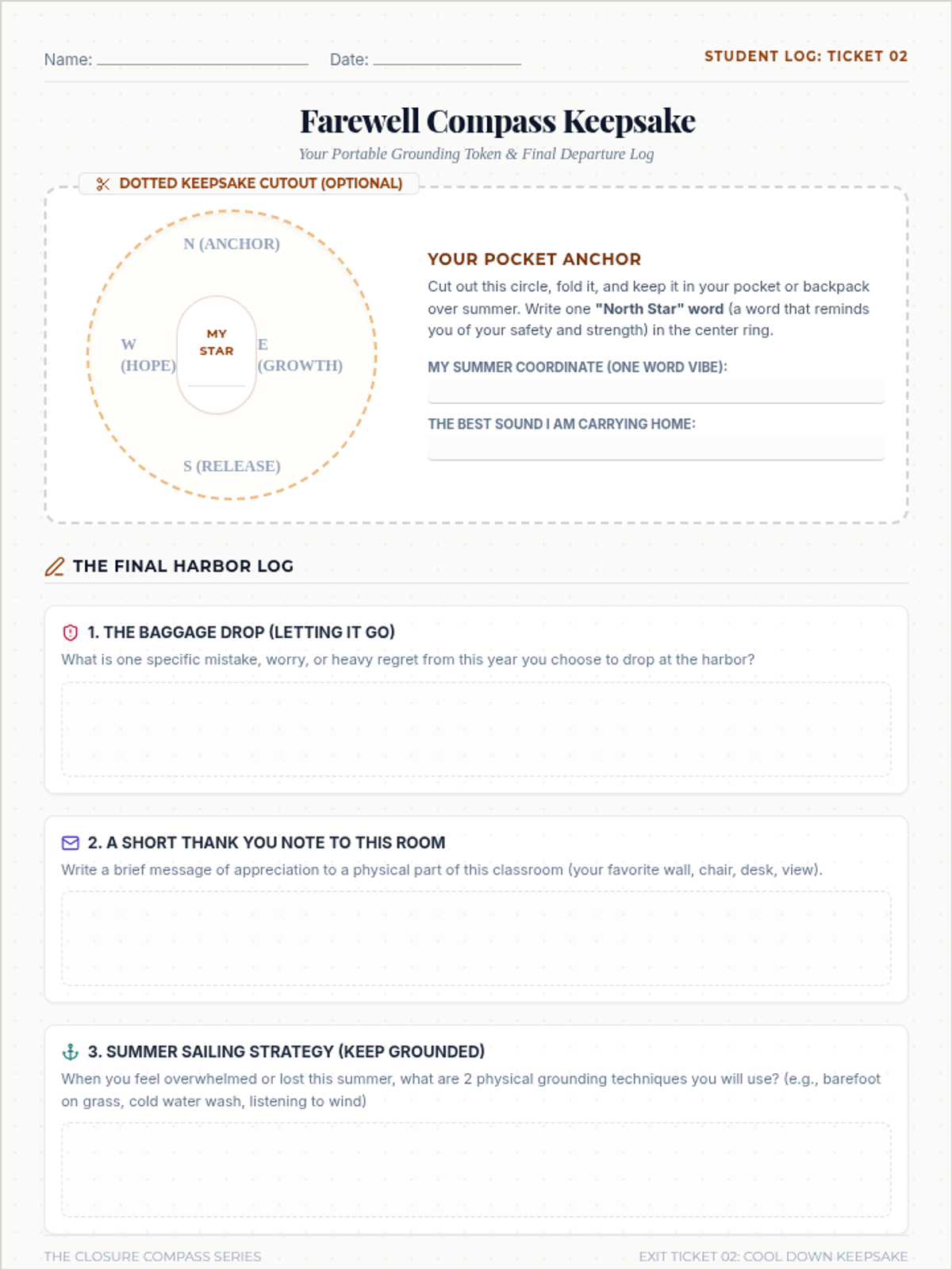
A transition workshop lesson that helps students of all ages navigate the end of the school year using sensory grounding and creative expression. The lesson provides a supportive, structured space to honor memories, express gratitude, and transition peacefully into summer.
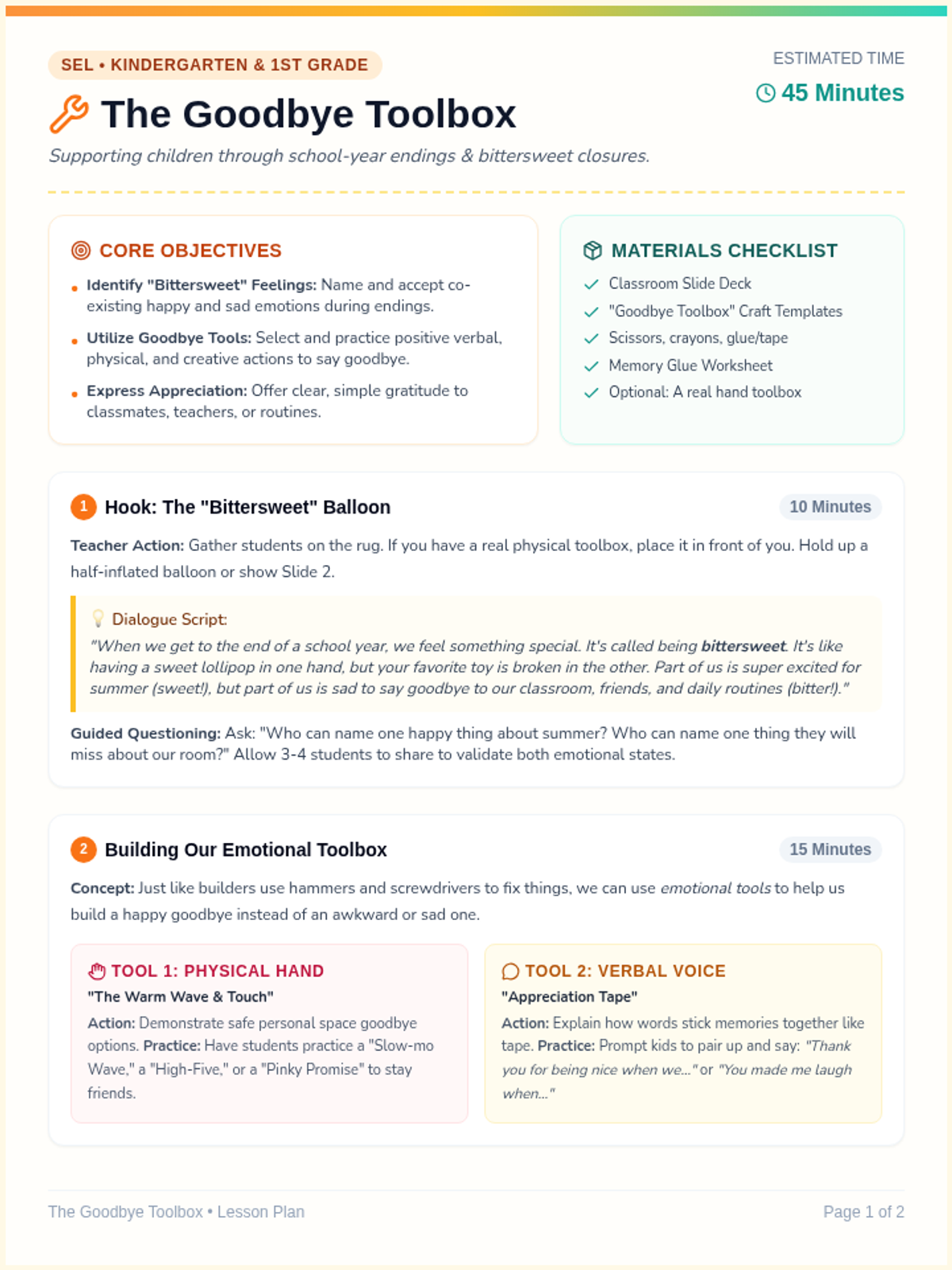
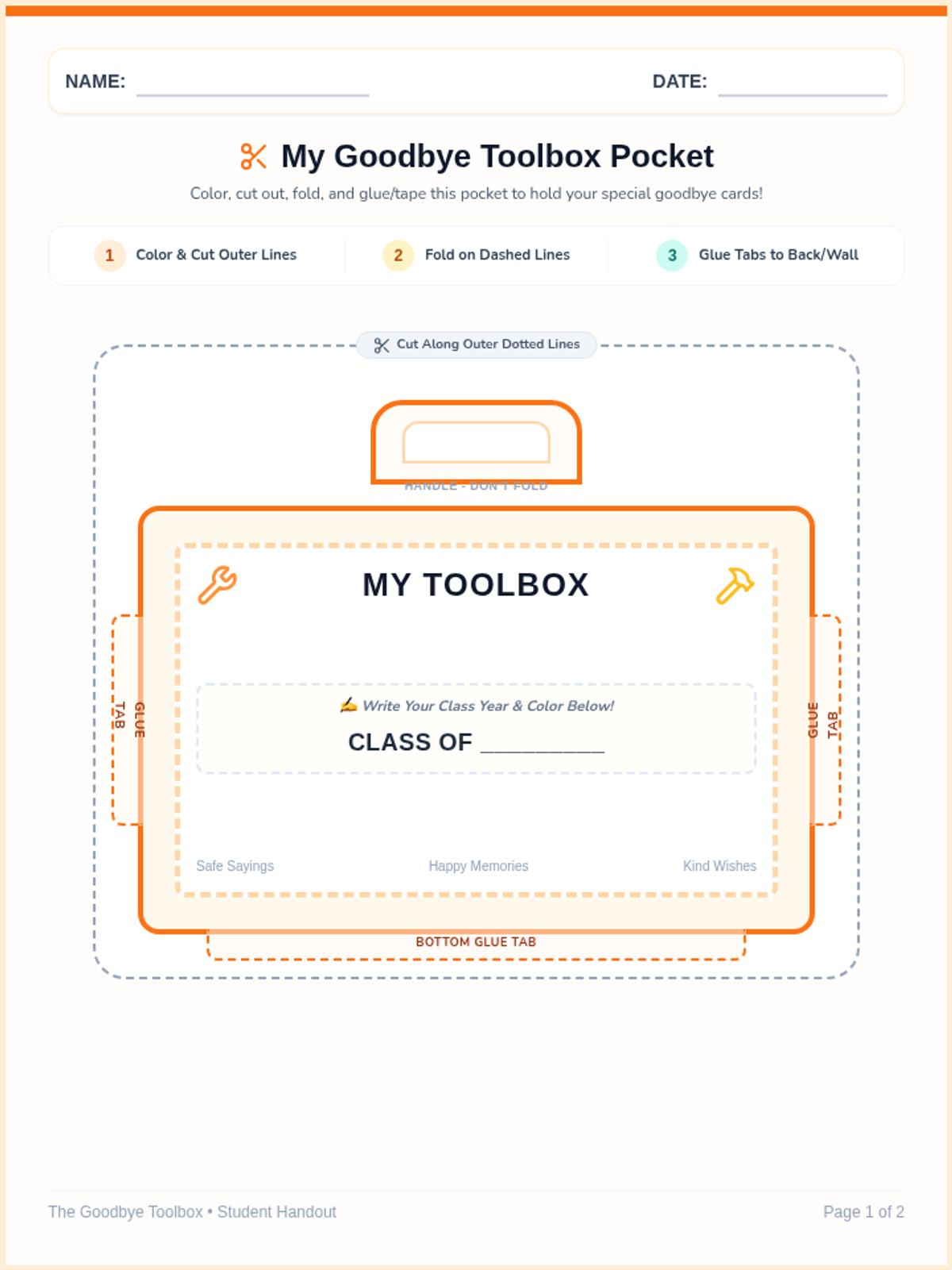
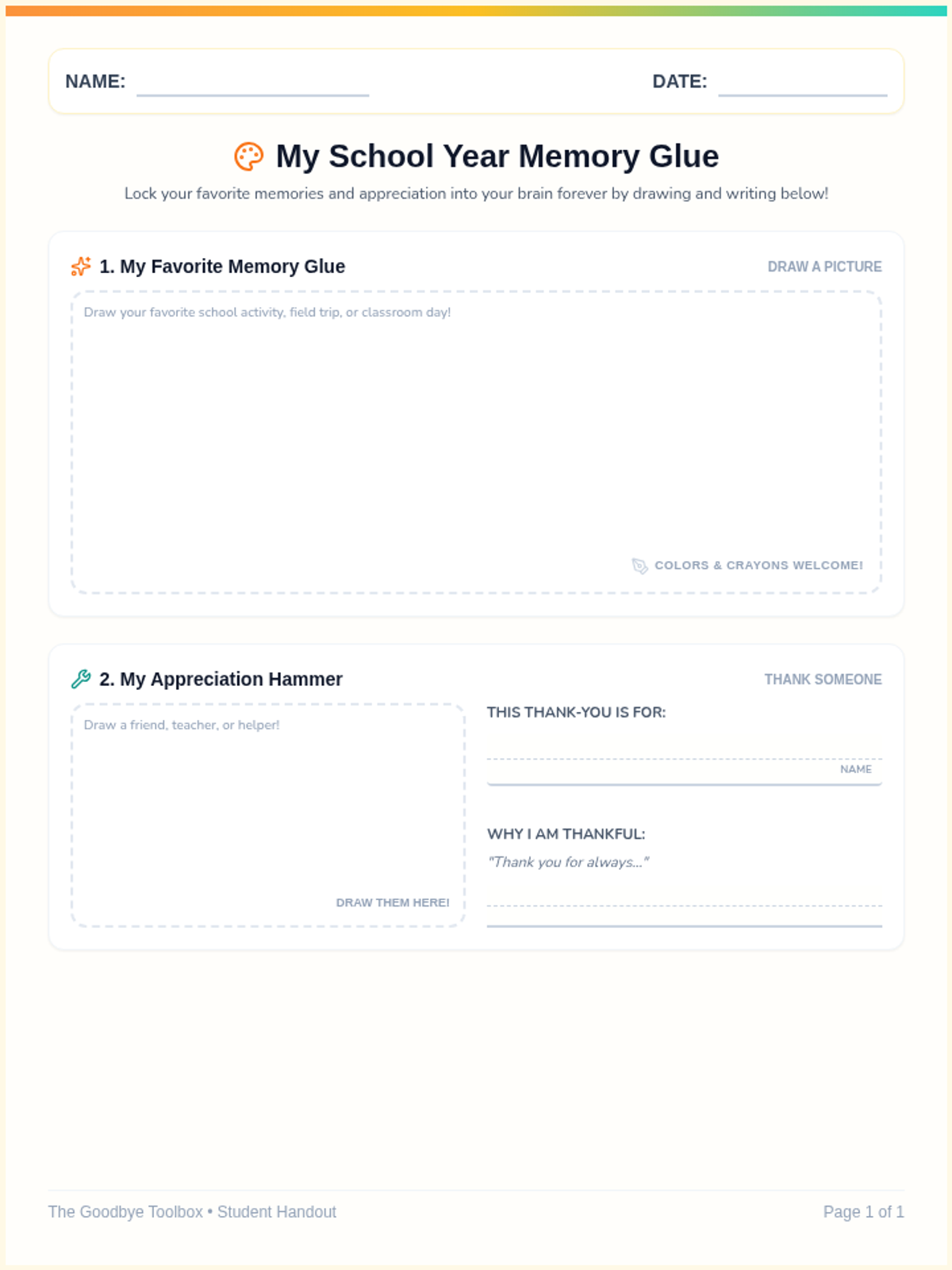
A supportive social-emotional learning lesson for Kindergarten and 1st-grade students to navigate the bittersweet feelings of school year endings. Students discover and practice physical, verbal, and creative 'tools' to express appreciation and say healthy goodbyes.
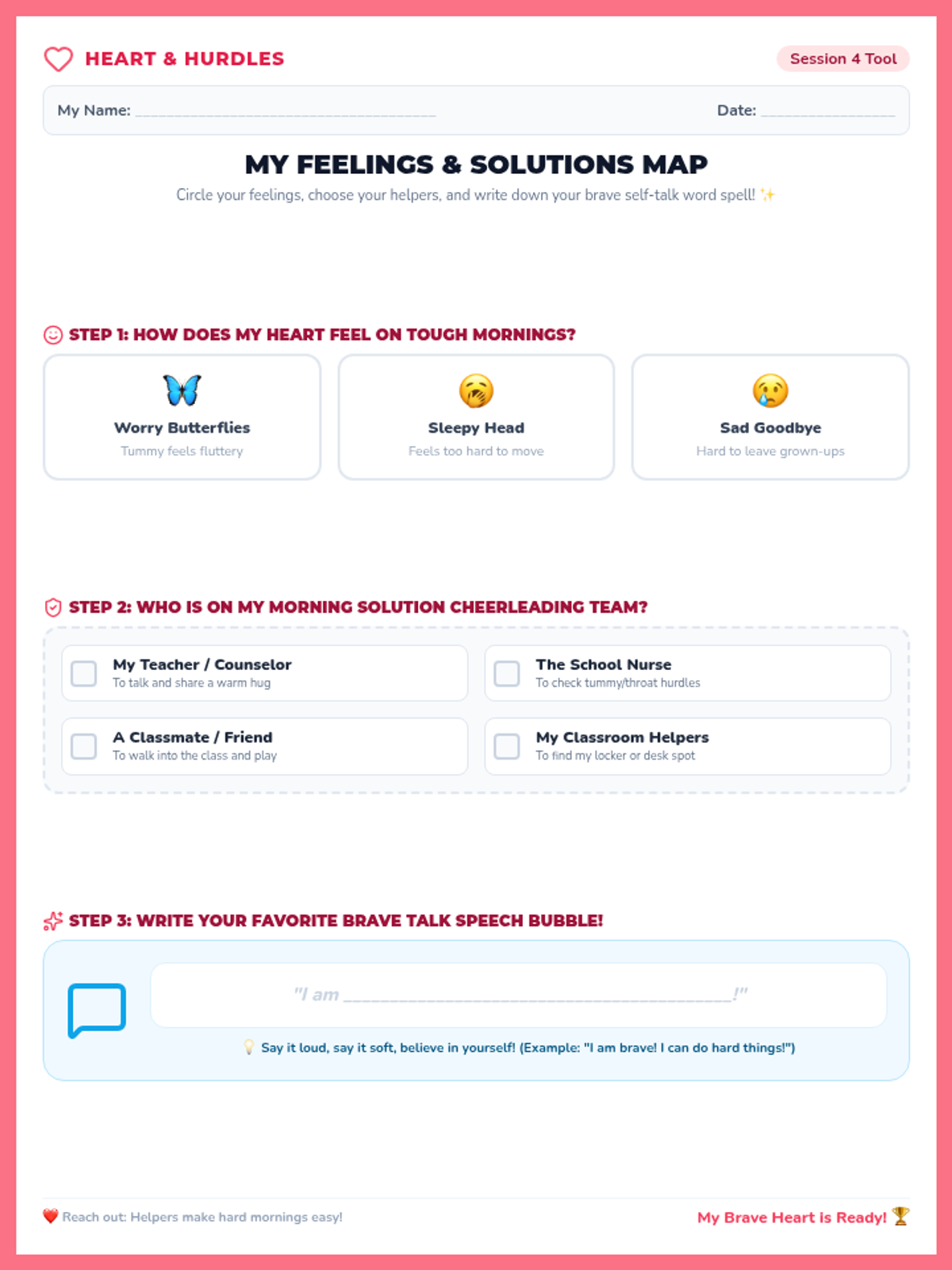
Focuses on identifying anxiety, feeling sick, or other barriers to attending, and teaches children helpful solutions and comforting self-talk.
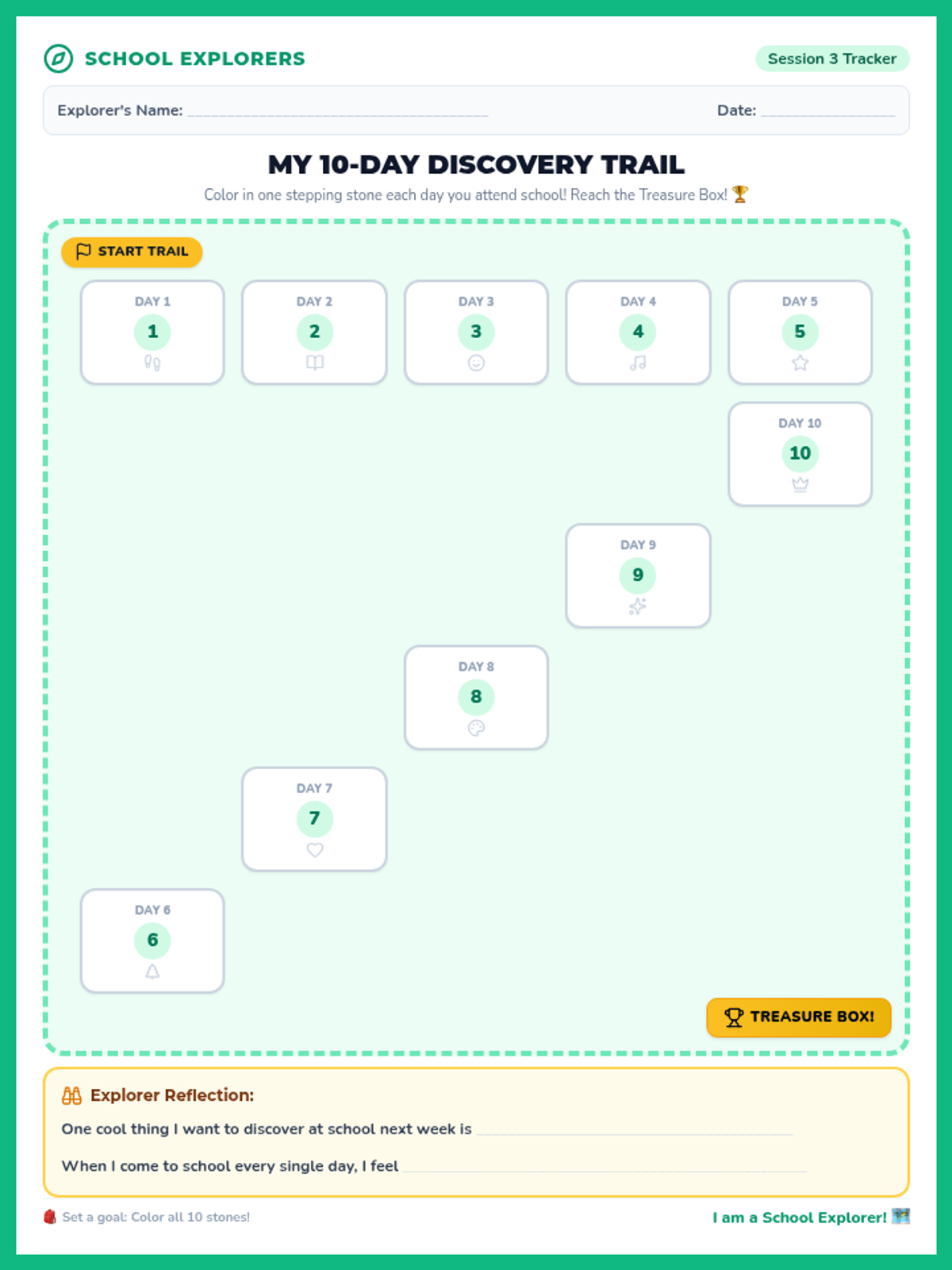
Frames school as a thrilling daily journey of learning, discovery, and friendship to build anticipation and excitement for attendance.
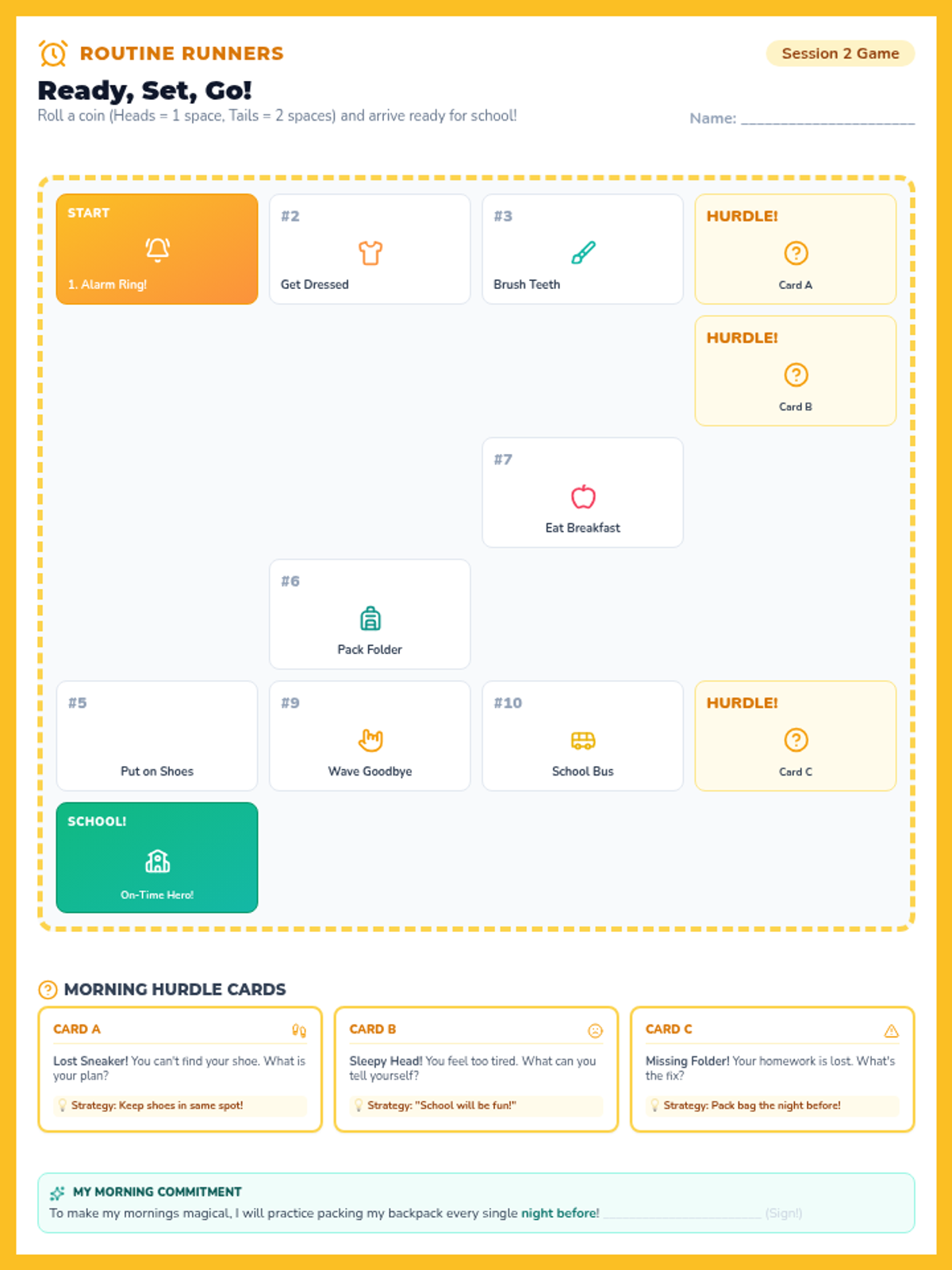
Teaches concrete morning routines and helps students outline practical, visual steps to prepare for school and arrive on time.
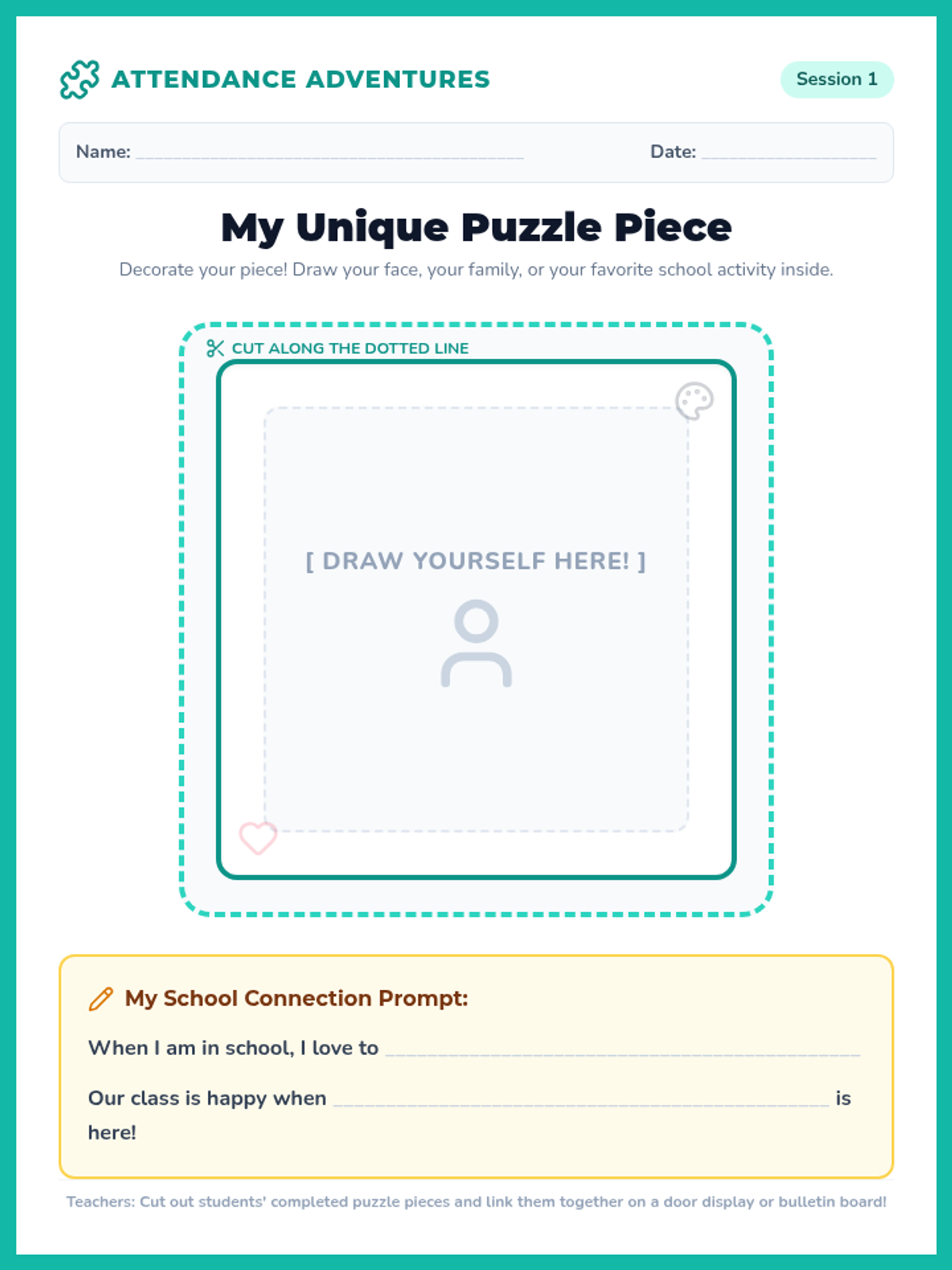
Focuses on the classroom community, demonstrating that every student is a unique and important puzzle piece who is noticed and missed when they are absent.
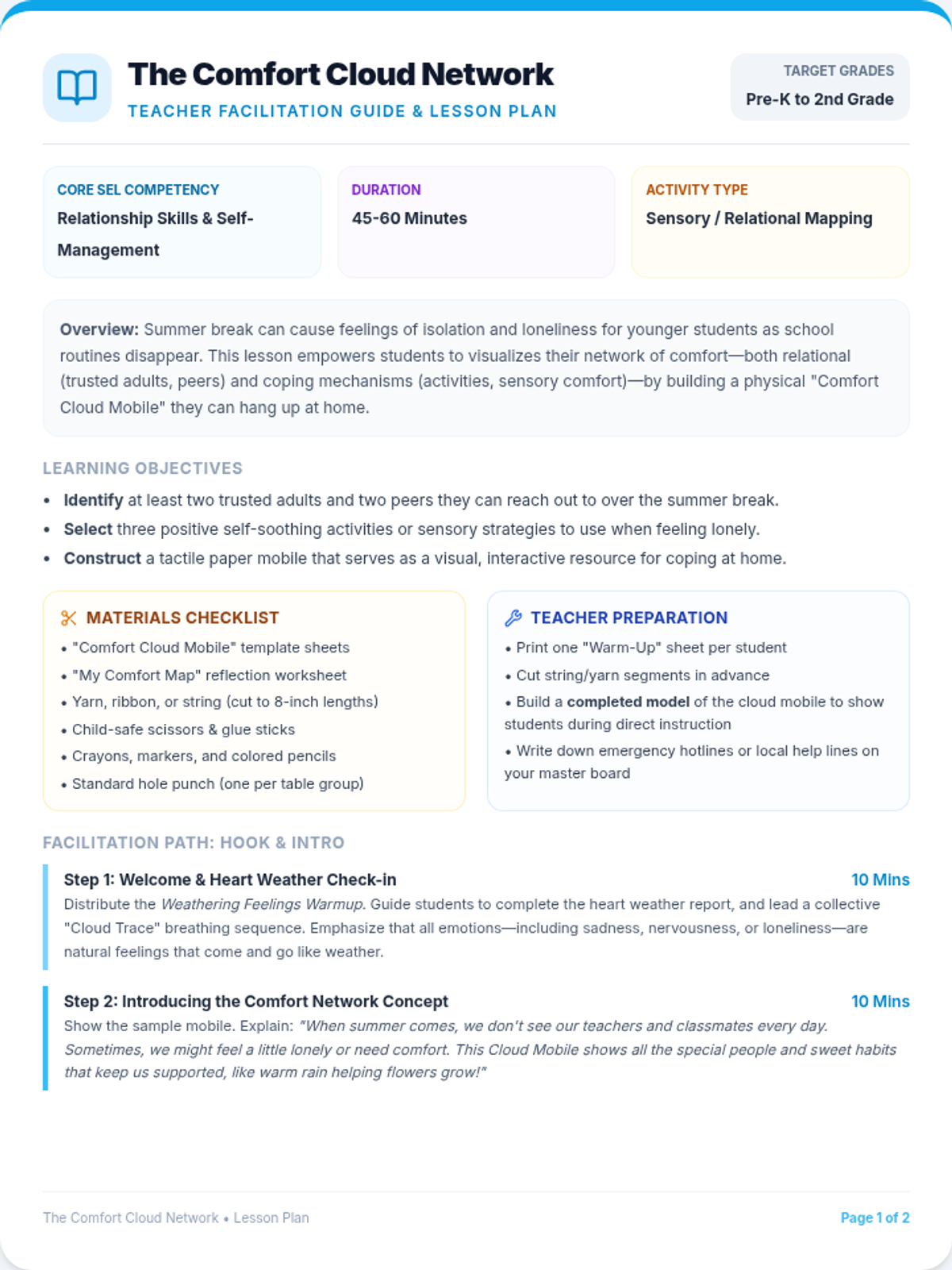
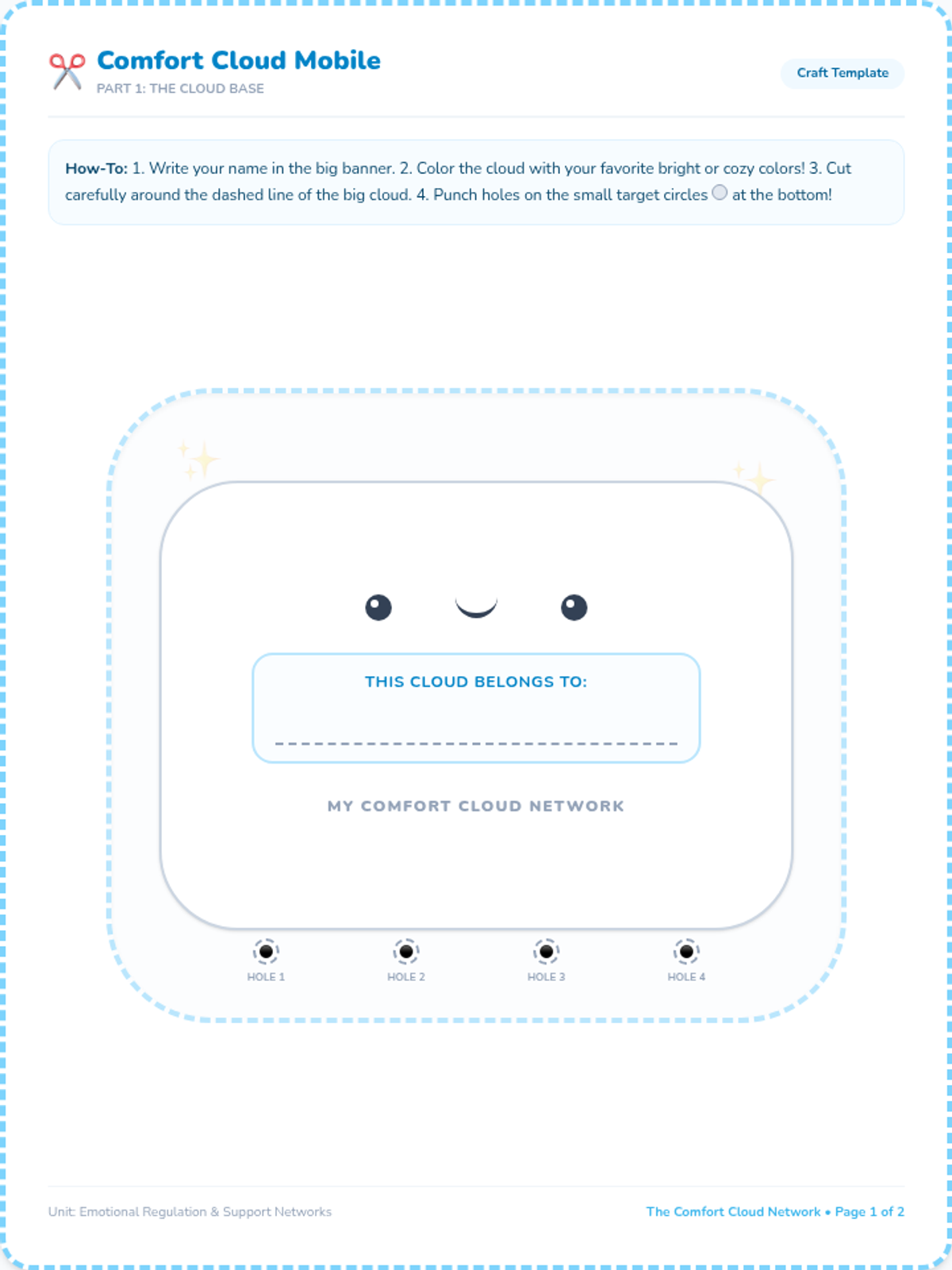
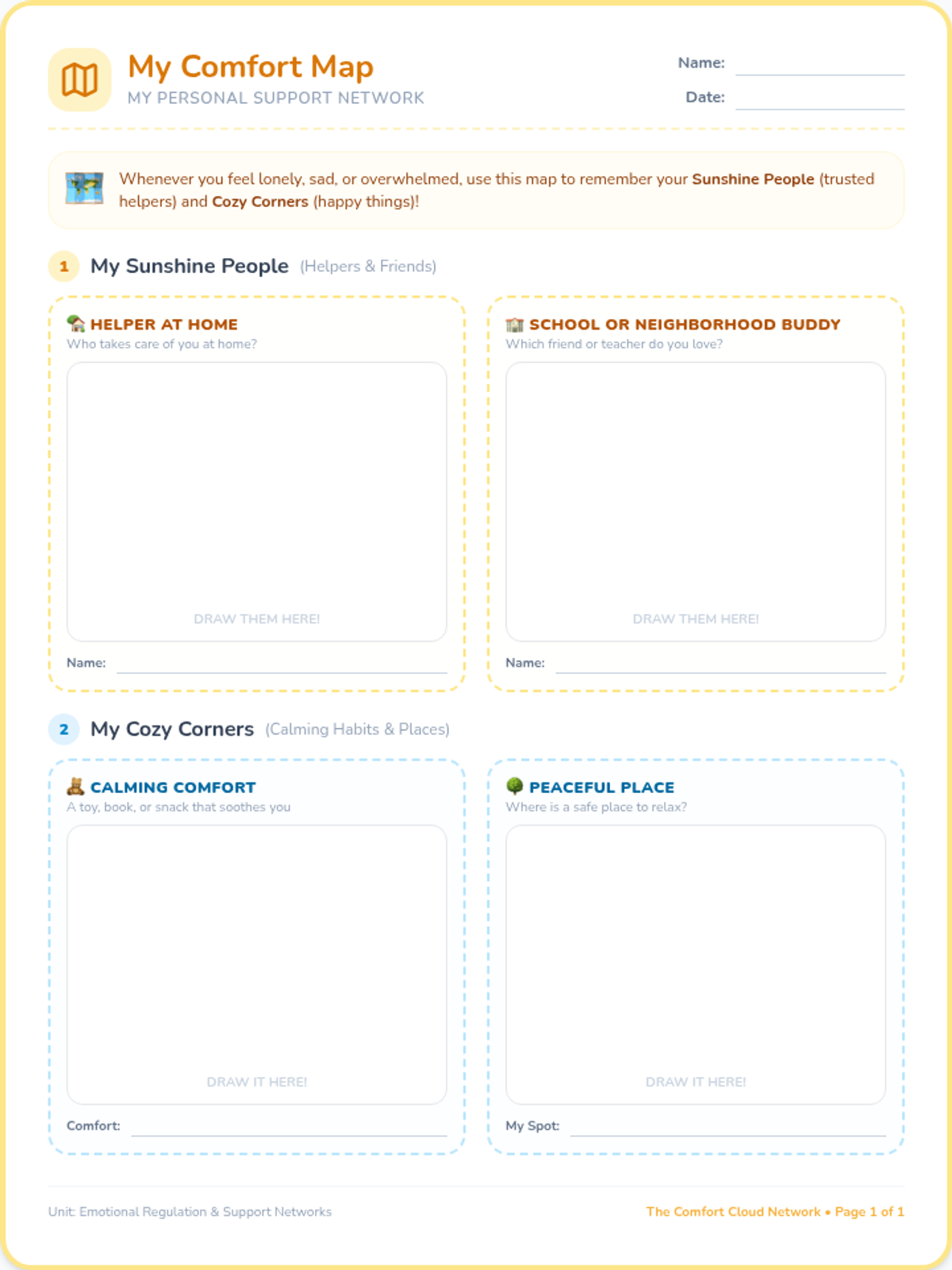
A nurturing social-emotional learning lesson for Pre-K through 2nd grade. Students map out their support systems and coping strategies by crafting a personal "Comfort Cloud" mobile with hanging raindrops to support them during the summer break.
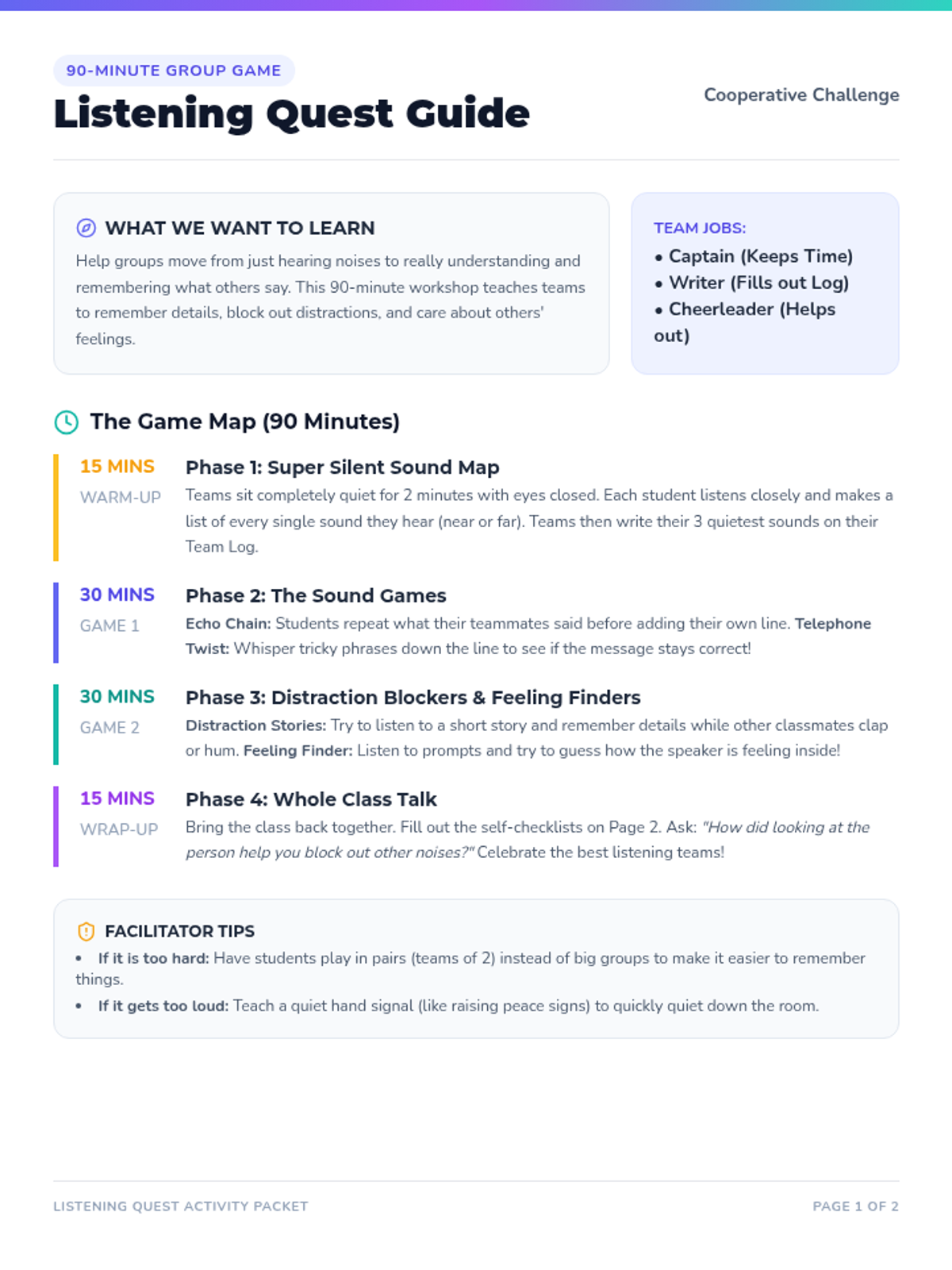
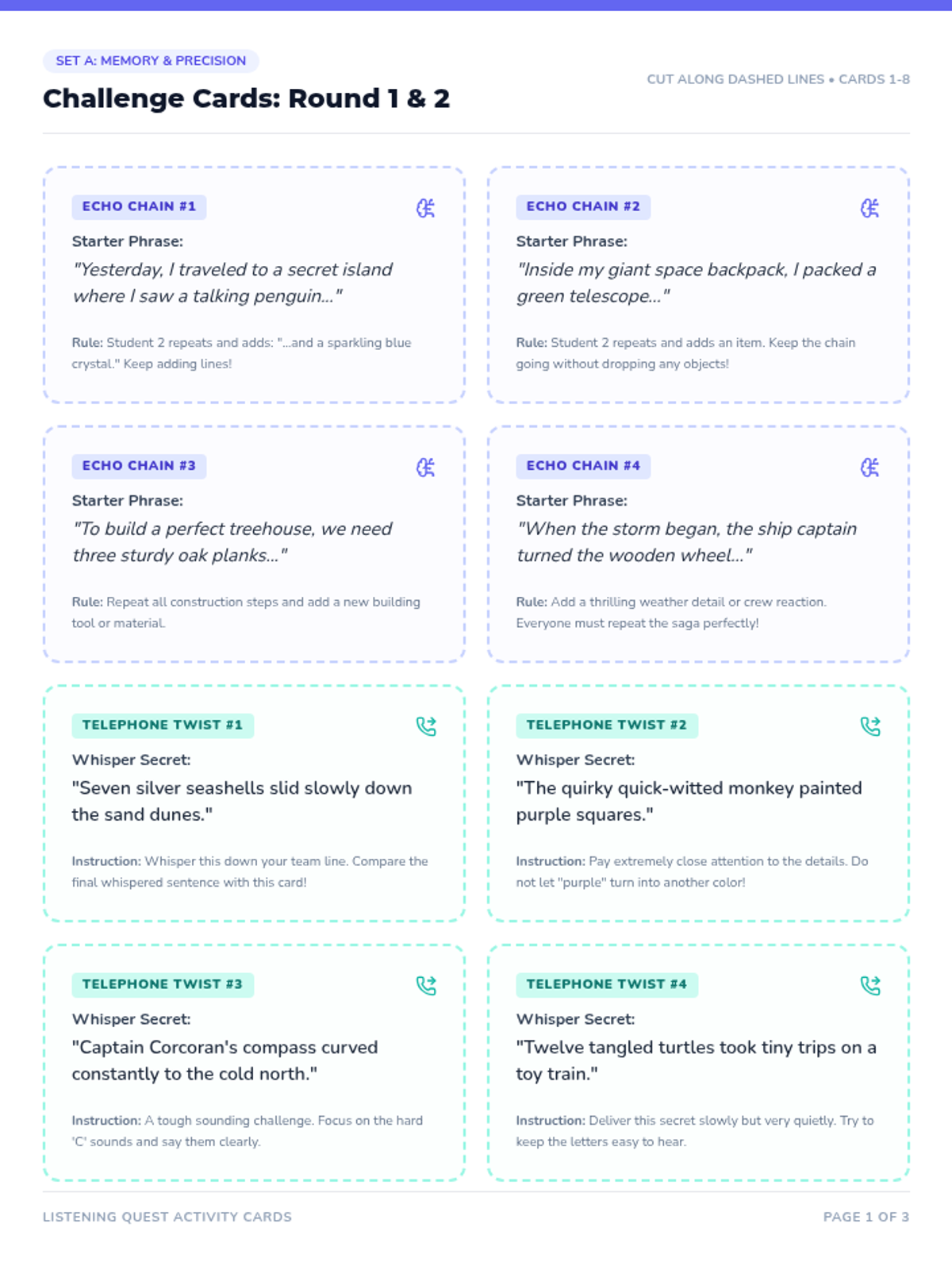
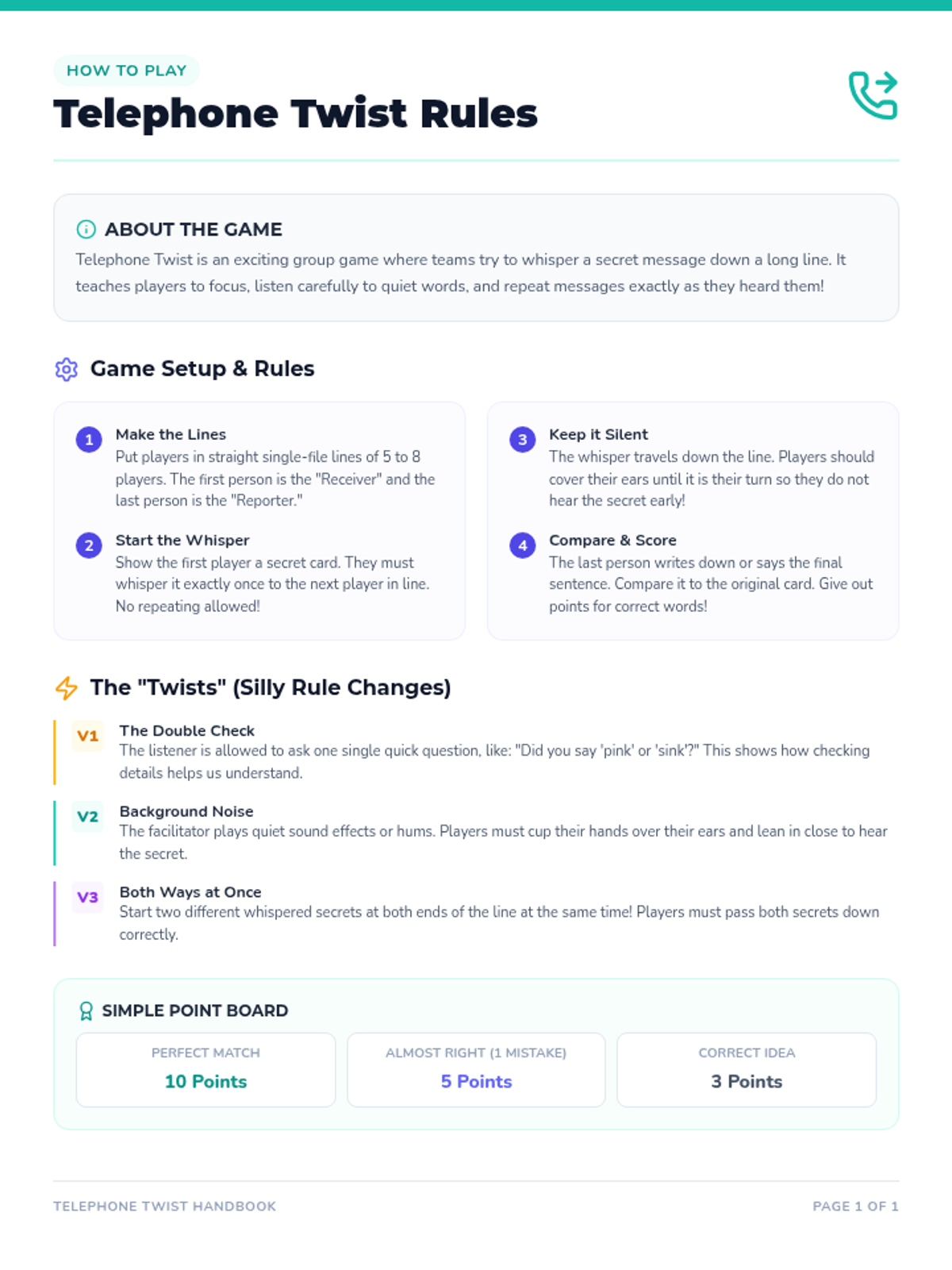
A comprehensive 90-minute immersive workshop lesson where students complete cooperative challenges to master active listening, focus, and empathy.
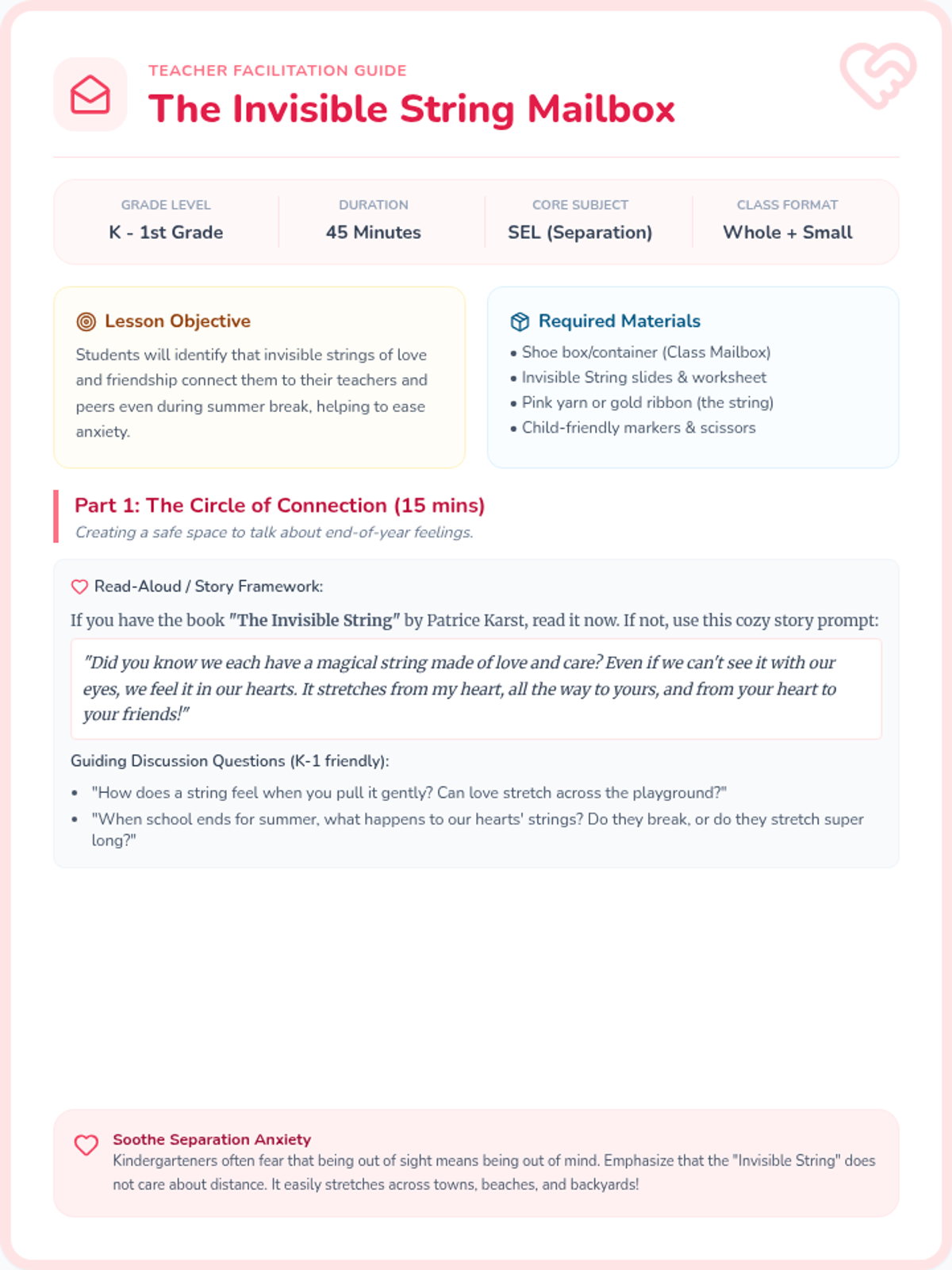
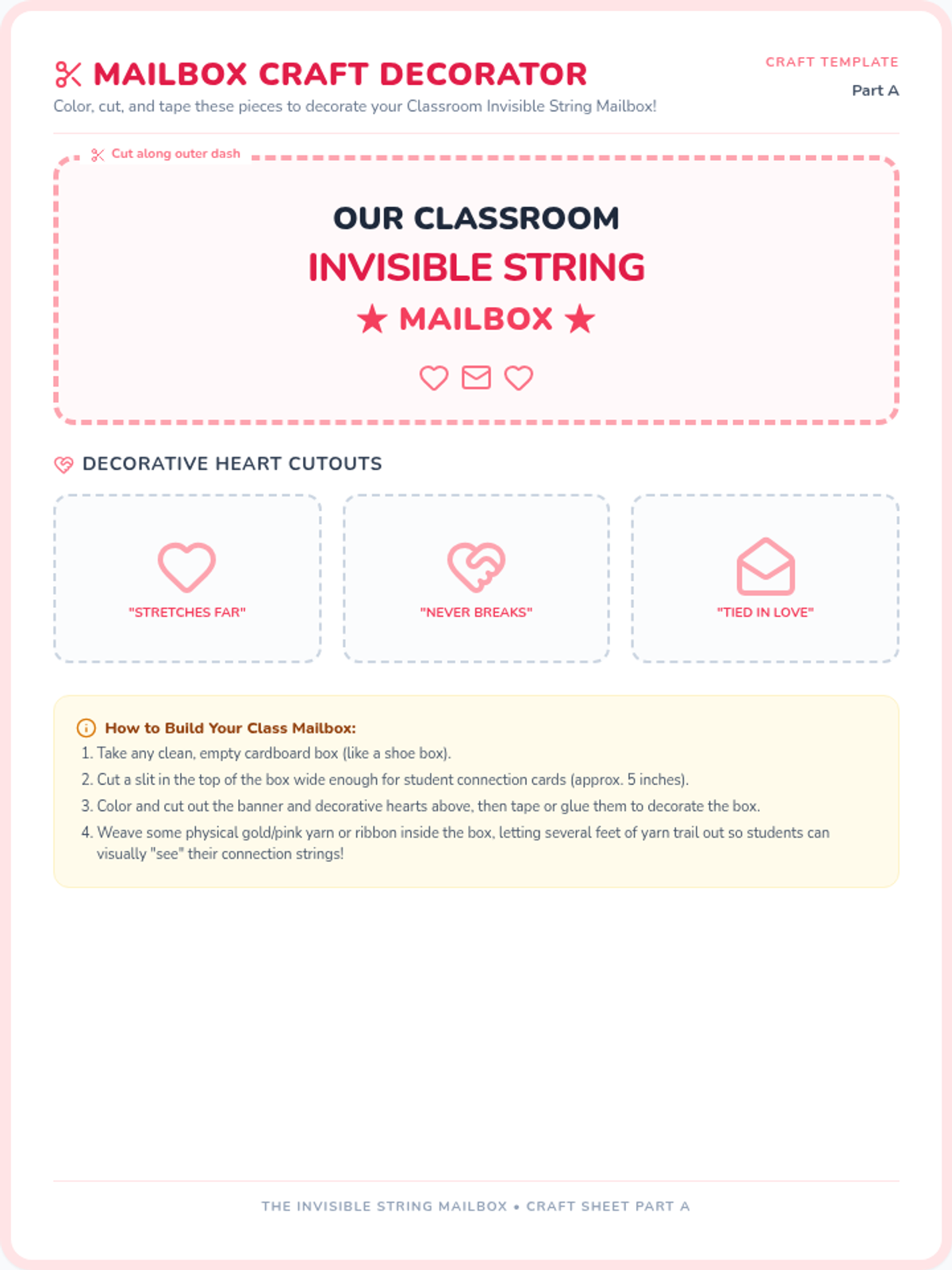
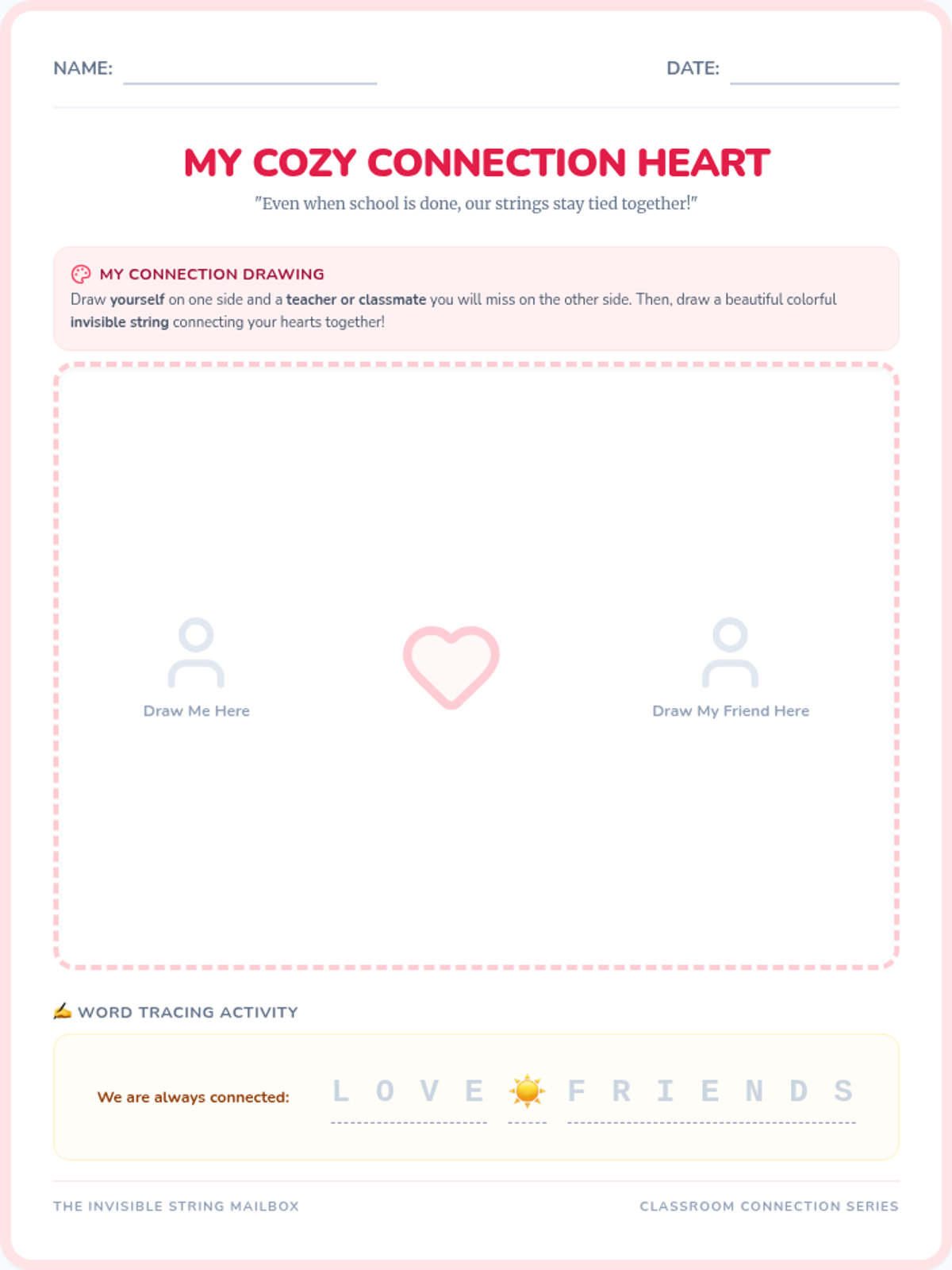
A heartwarming social-emotional learning lesson for Kindergarten and 1st Grade students to cope with end-of-year separation anxiety. Students learn that their invisible strings of love and friendship connect them to teachers and classmates even during summer break, culminating in creating a class Invisible String Mailbox.
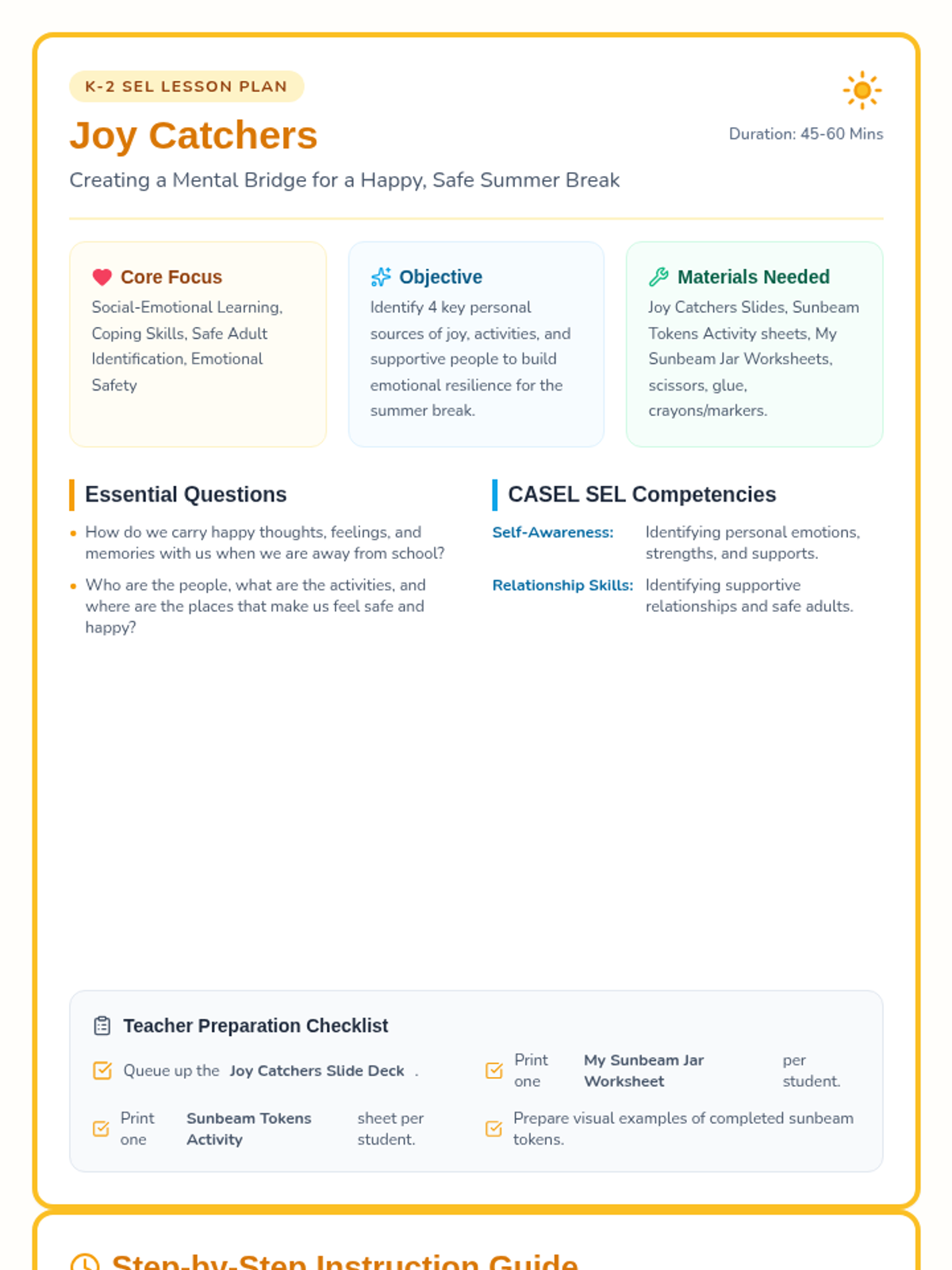
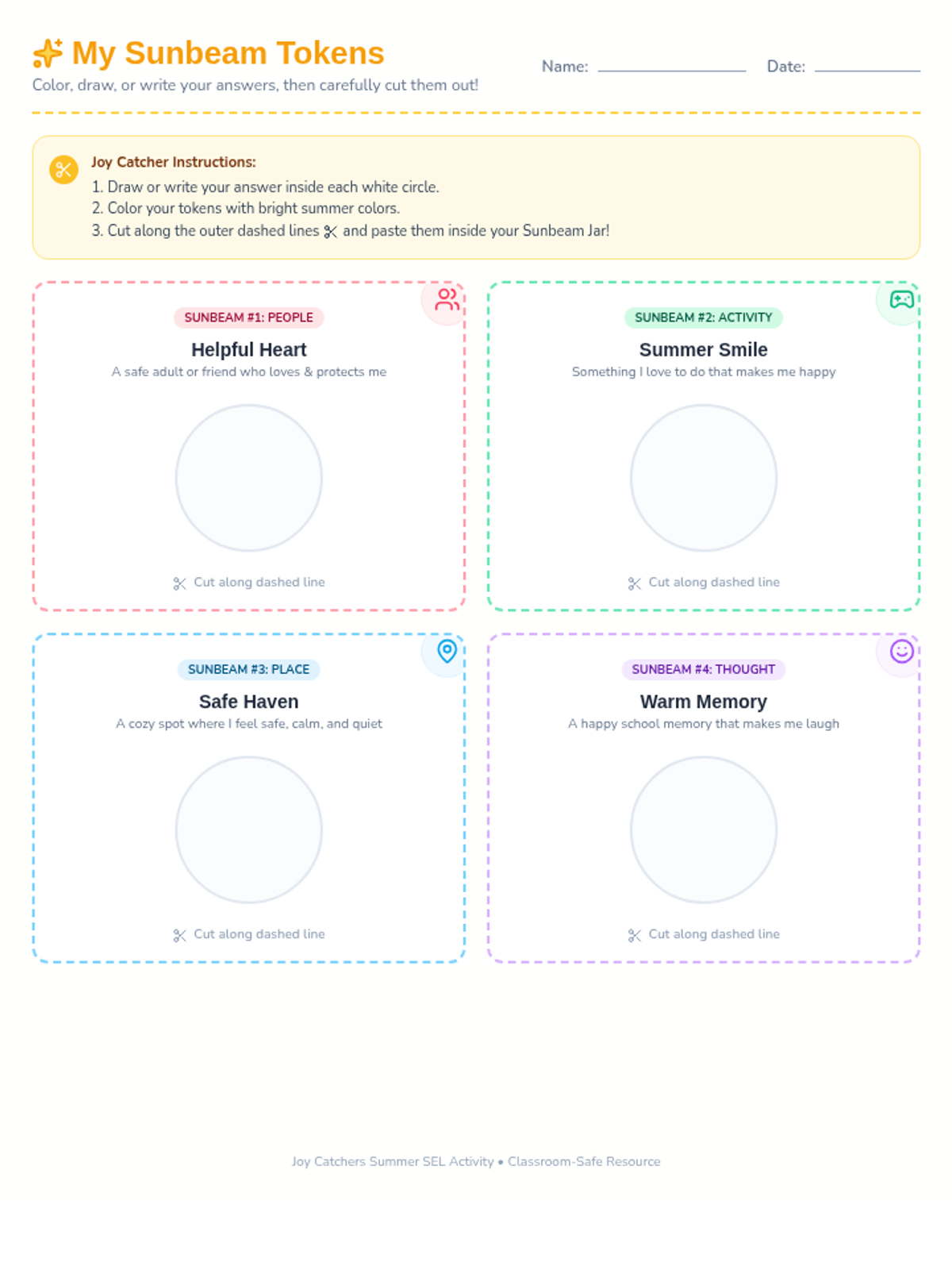
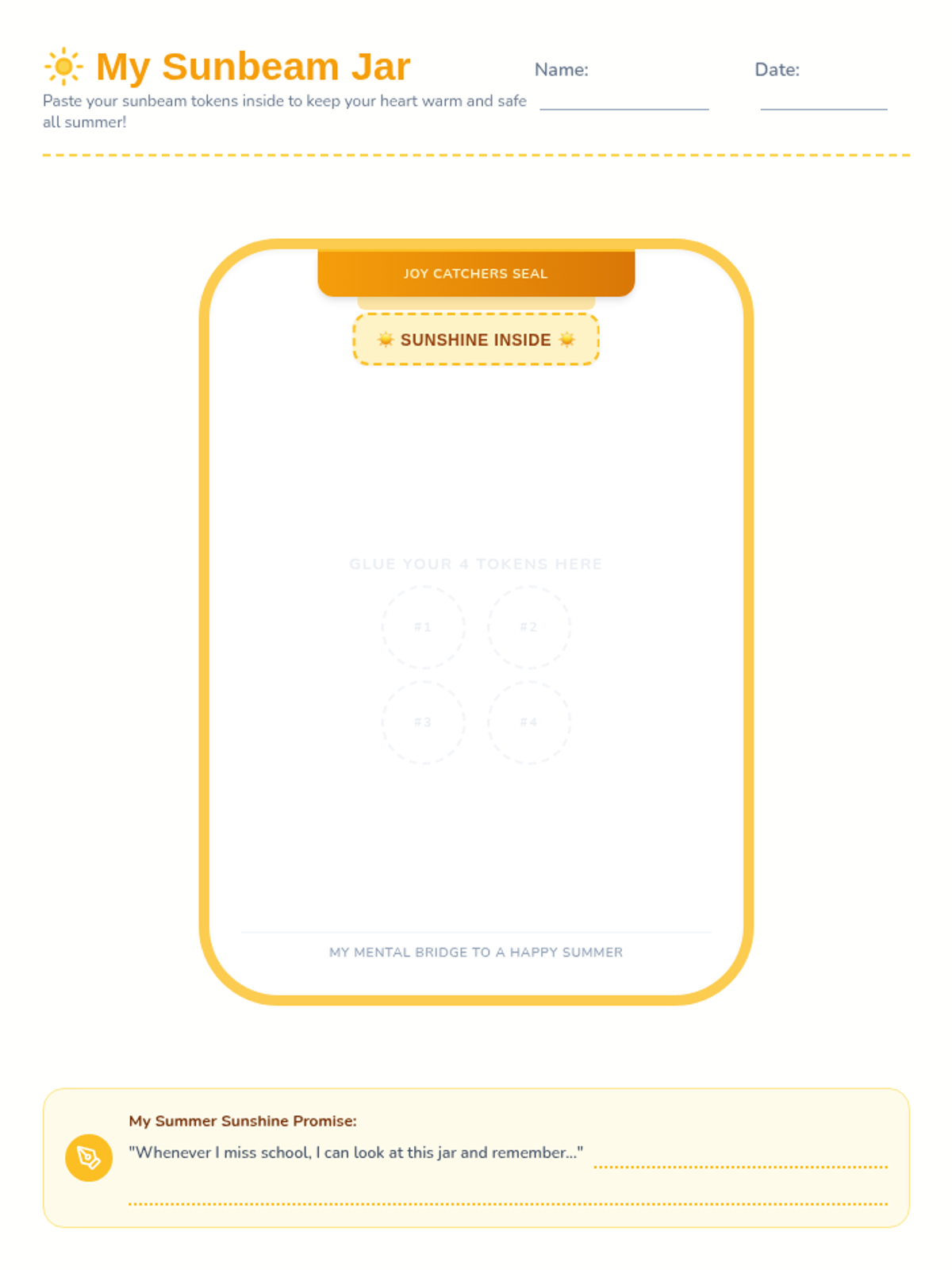
A heartwarming social-emotional learning lesson for K-2 students to identify sources of joy, support, and emotional safety. Students create a visual "Sunbeam Jar" filled with positive memories, hobbies, and supportive people to carry into the summer break.
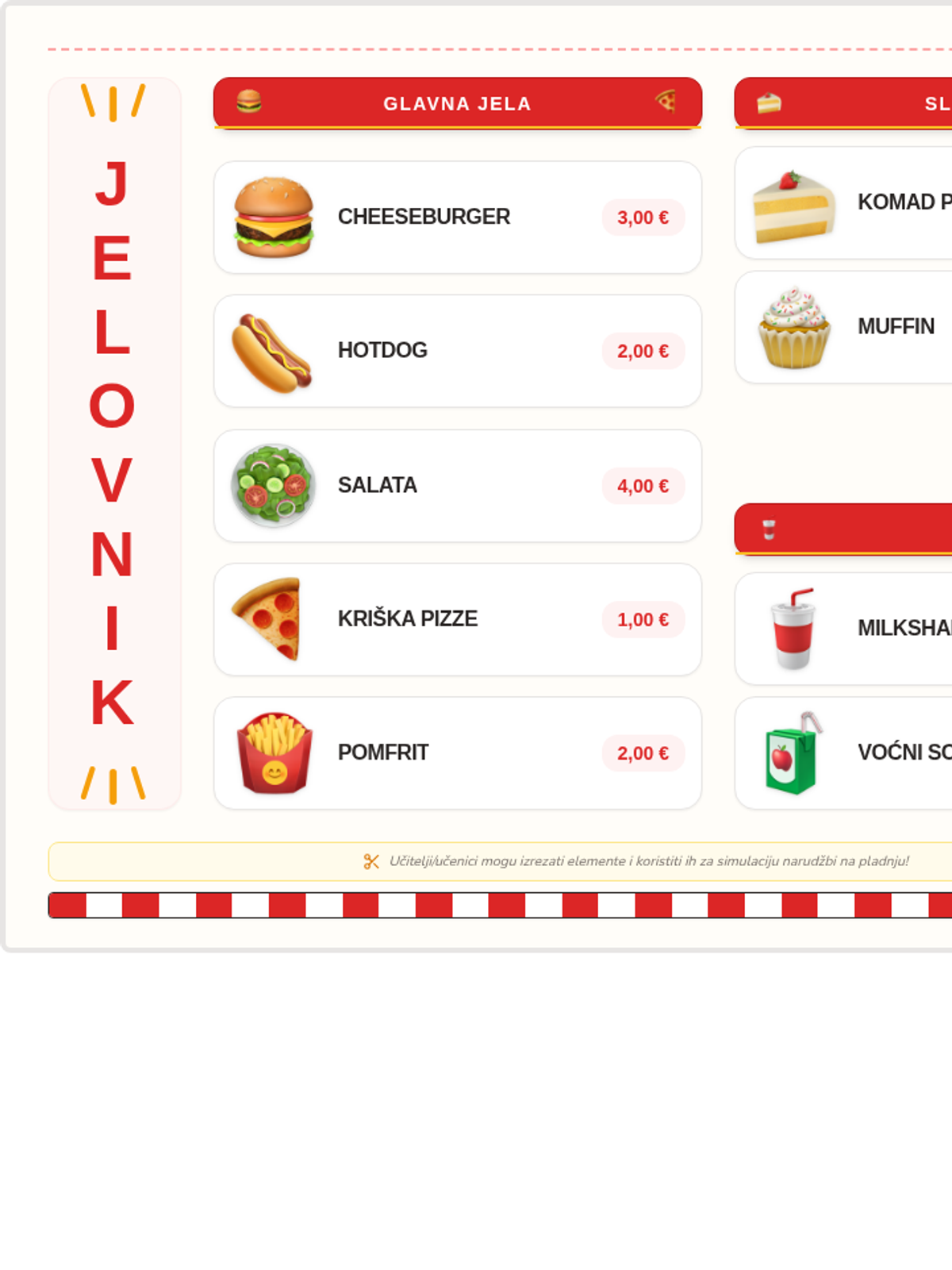
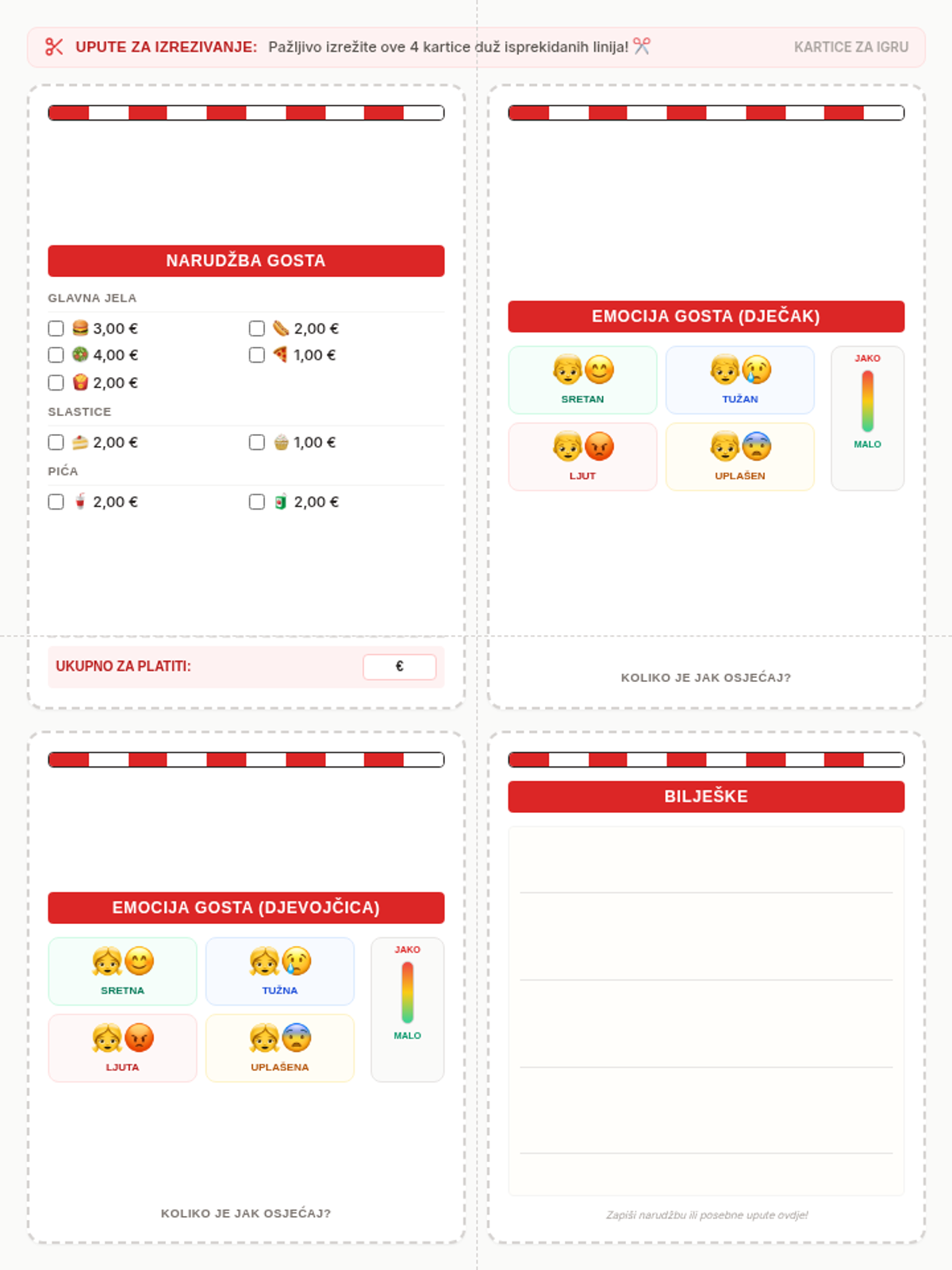
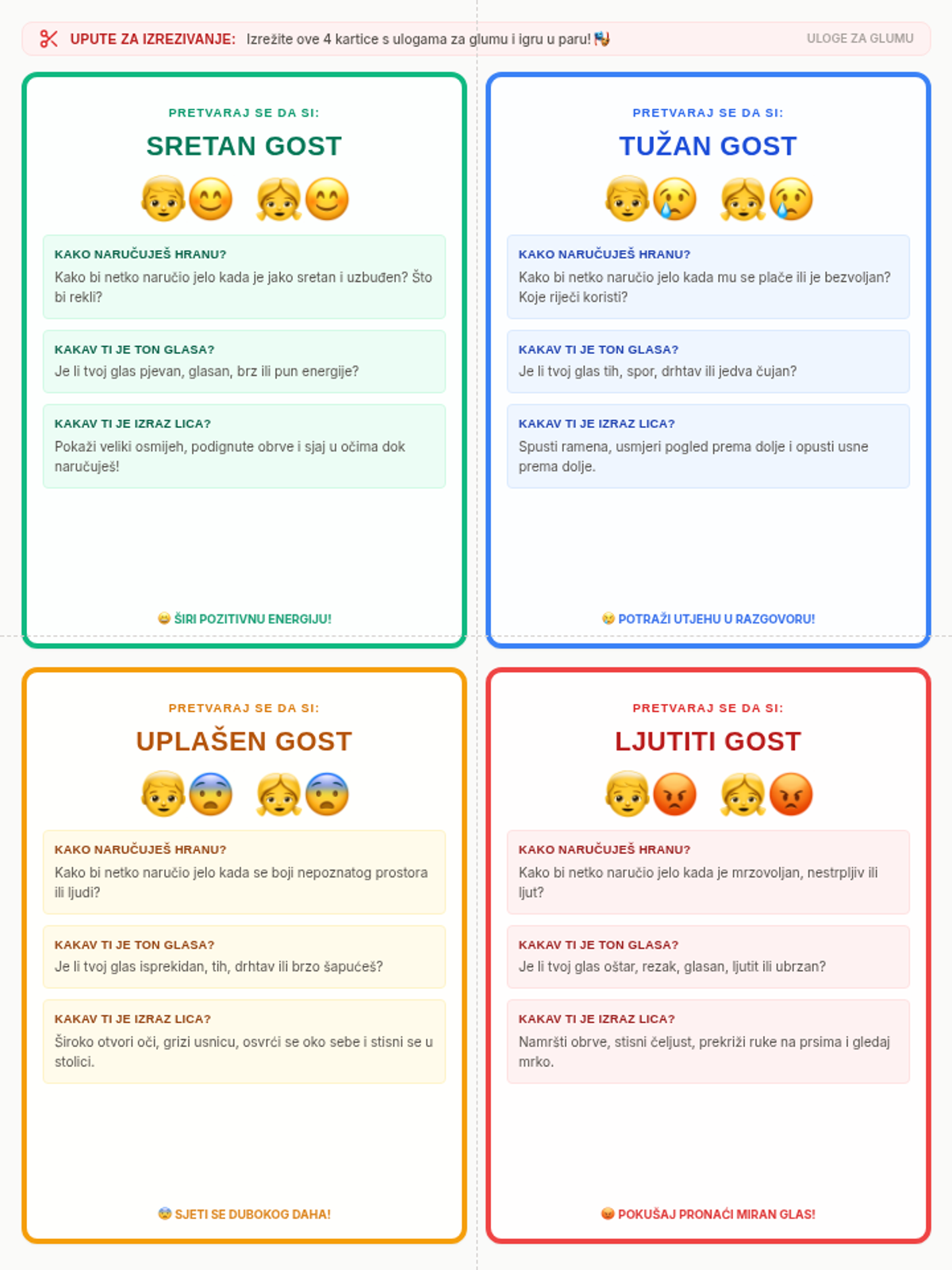
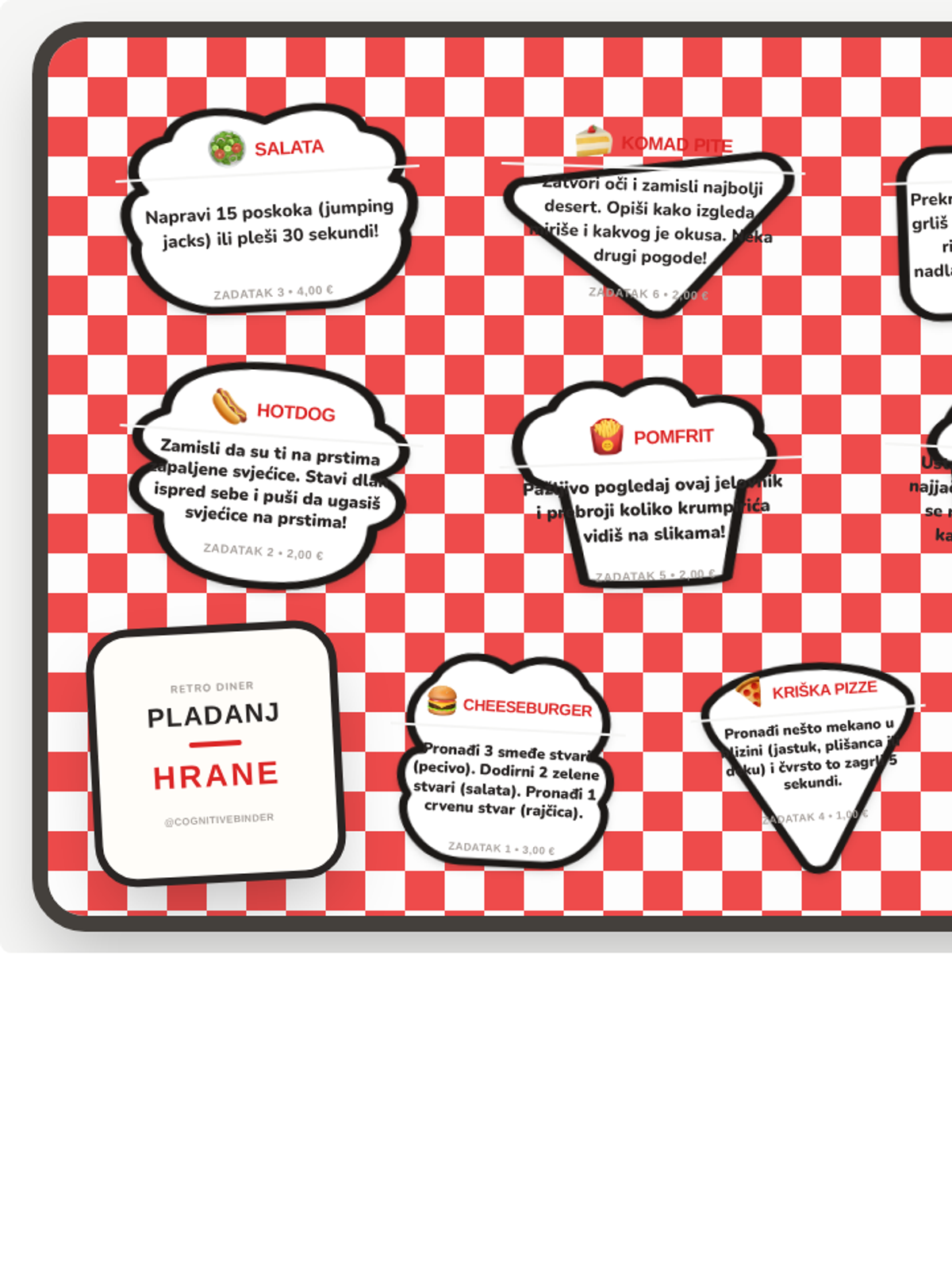
Interaktivni set radnih listića i kartica za igru uloga 'Restoran Emocija'. Učenici kroz simulaciju restorana, naručivanje hrane i mindfulness zadatke uče prepoznavati vlastite emocije, vježbaju svjesnost, regulaciju ponašanja i tjelesnu koordinaciju.
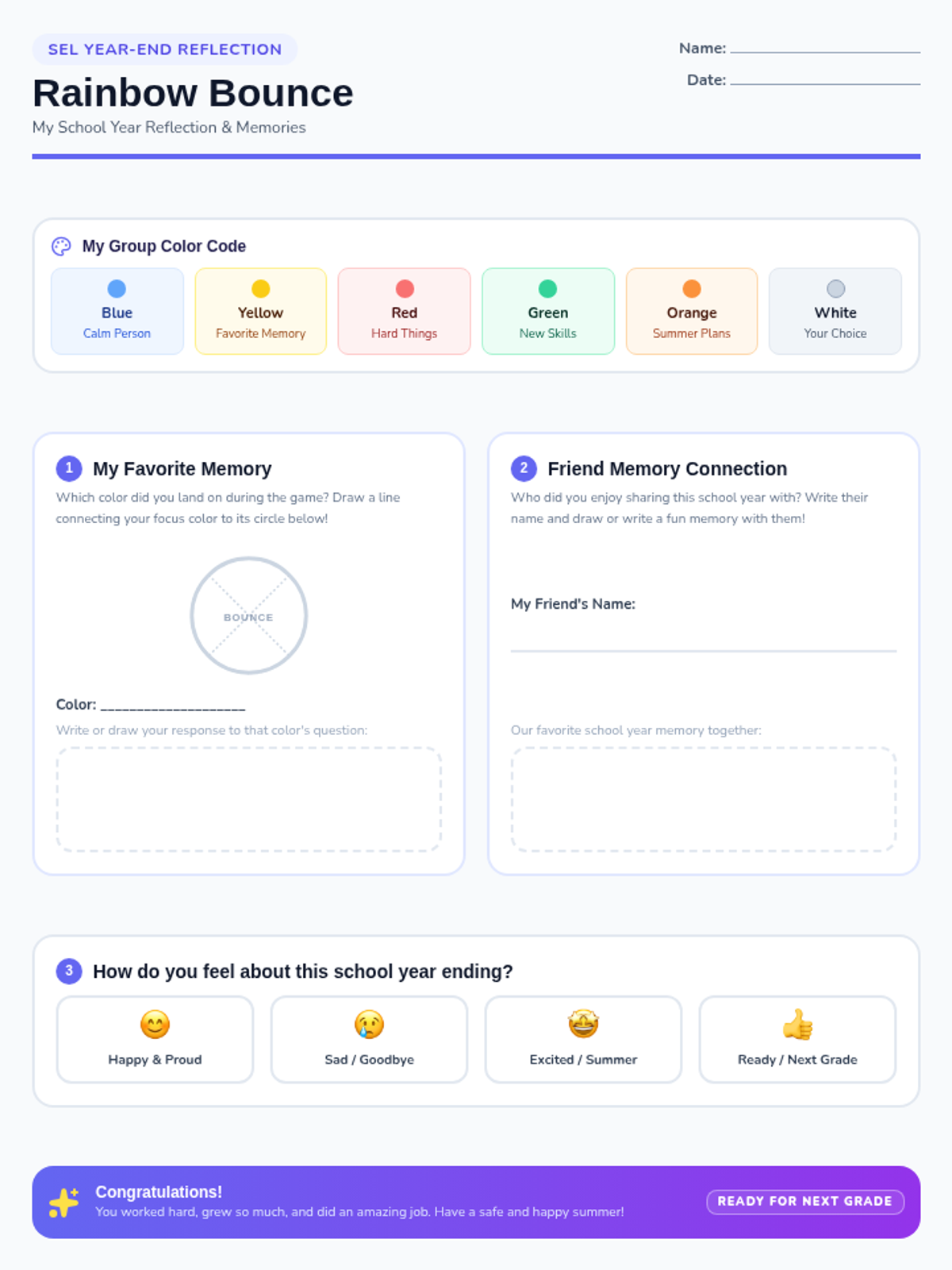
An active and engaging end-of-school-year reflection lesson using a multi-colored ball. Students toss the ball and answer simple, colorful prompts to share memories, achievements, challenges, and summer plans.
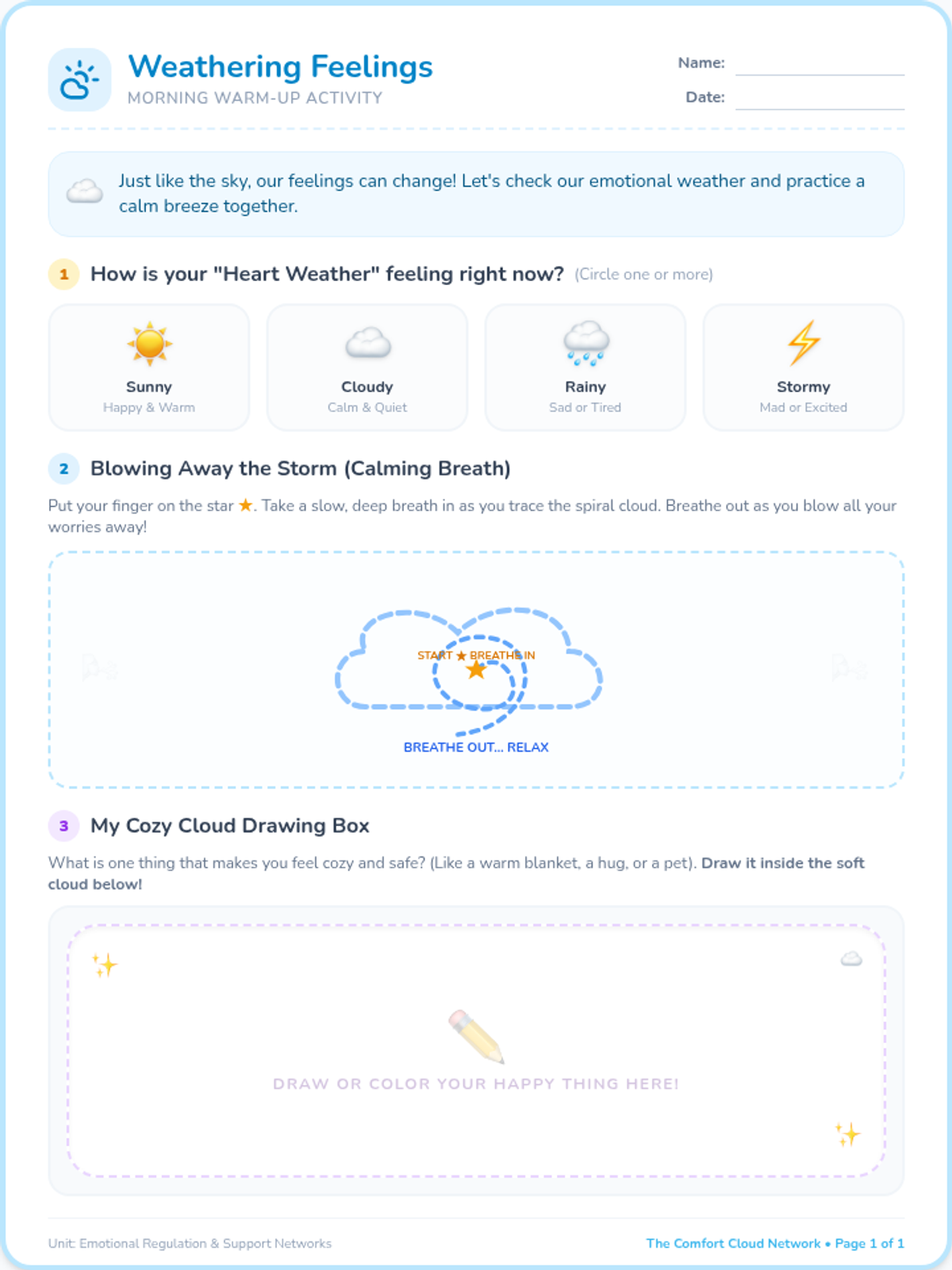
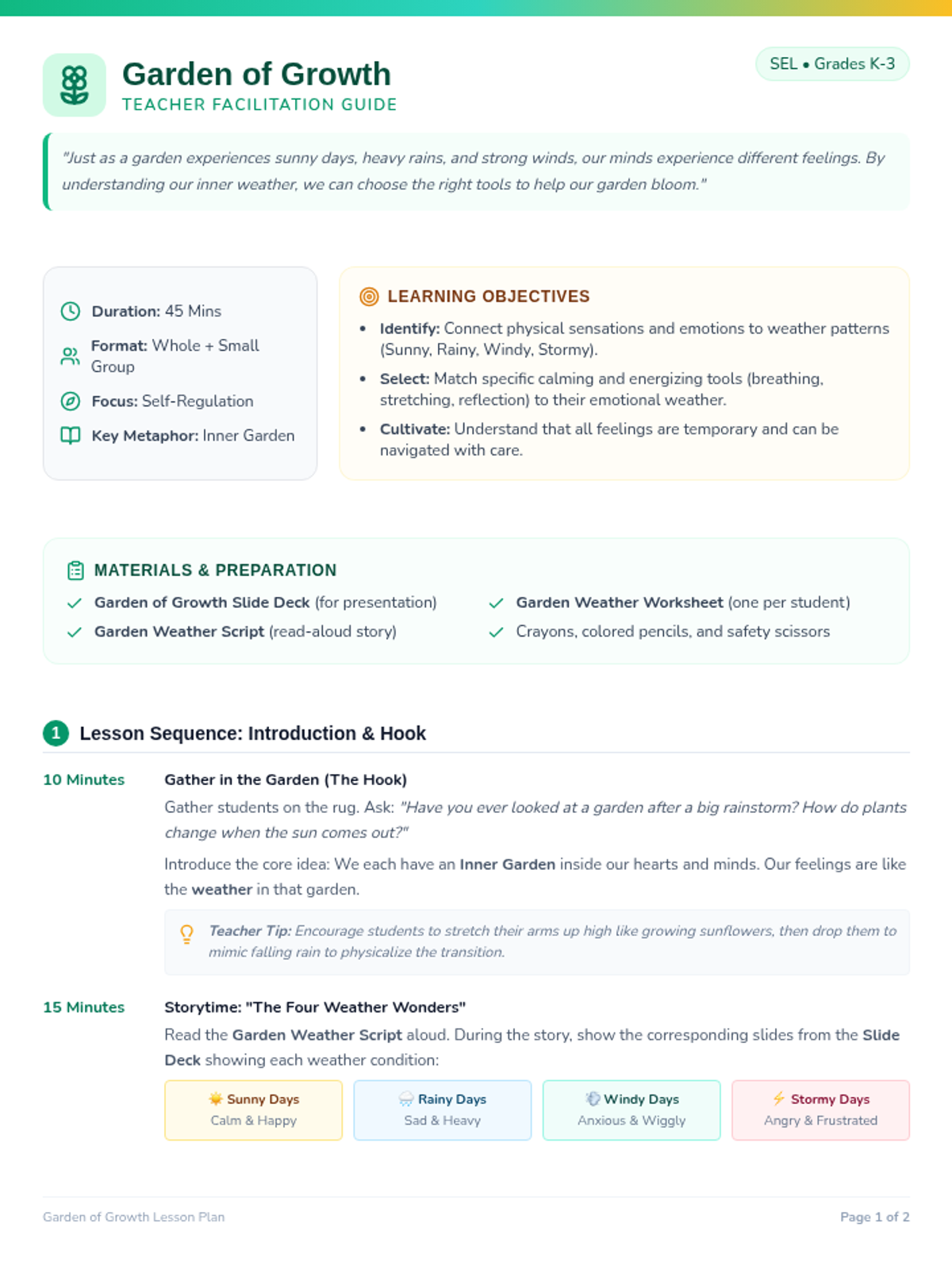
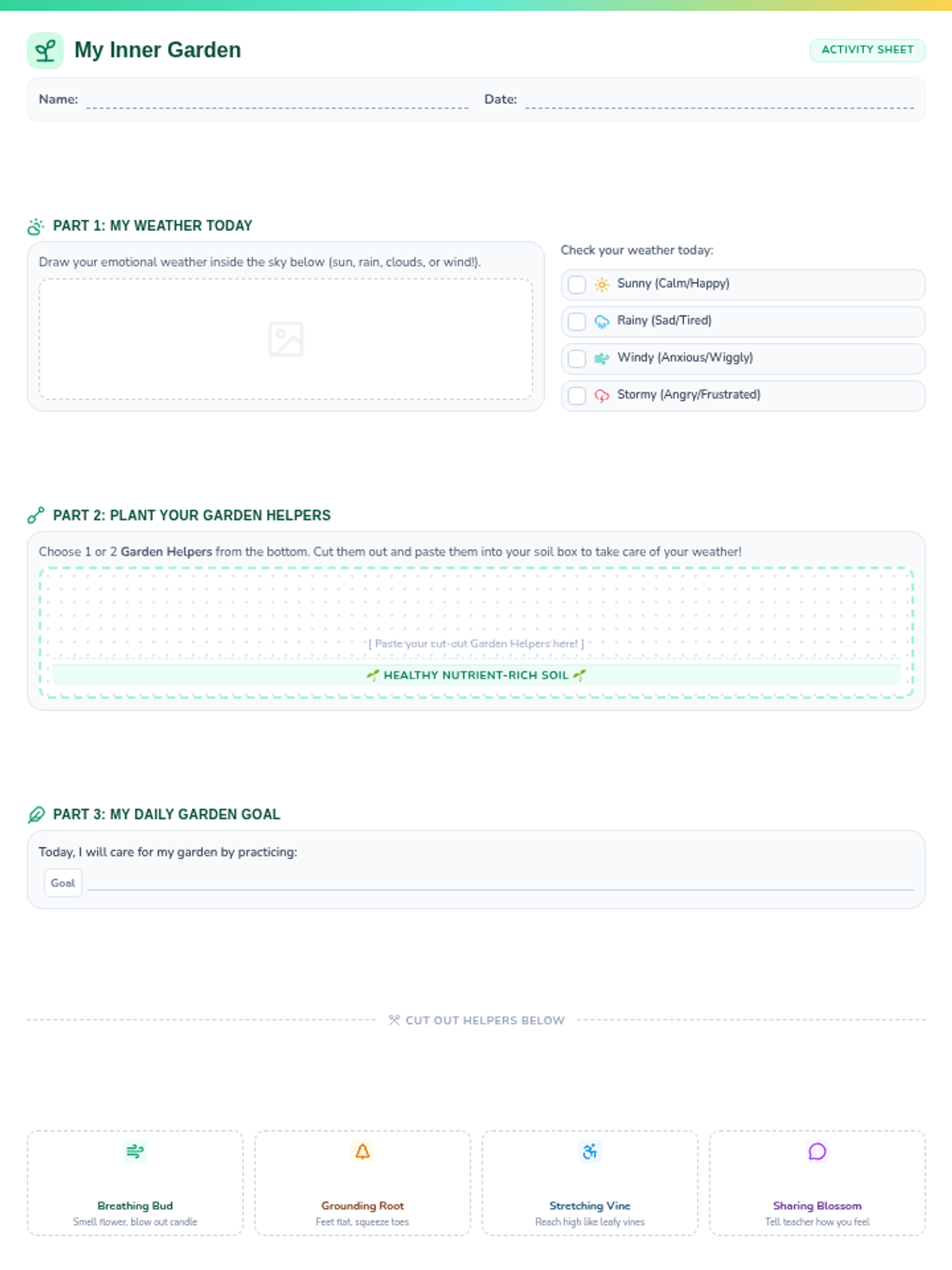
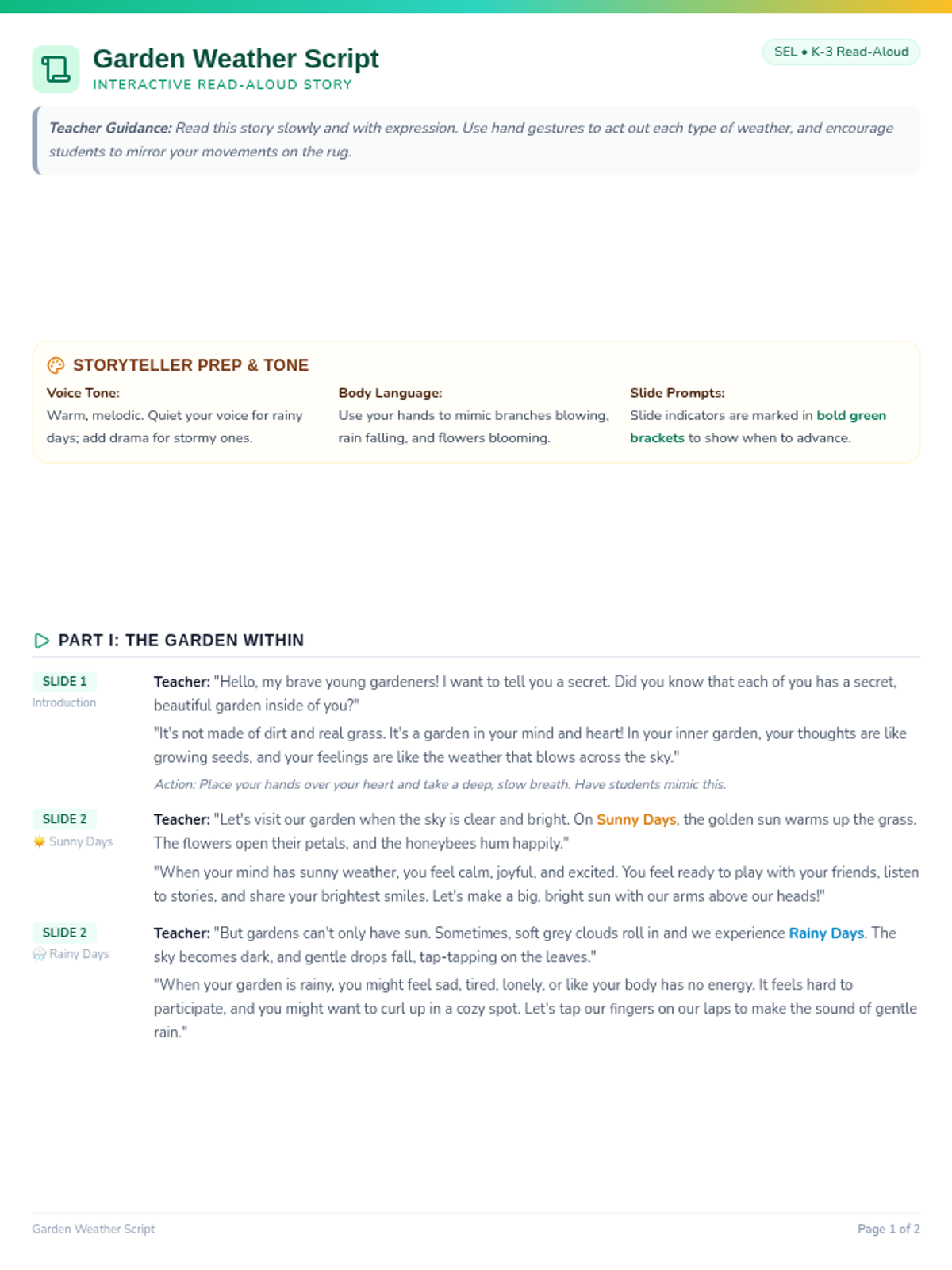
A nature-themed lesson for K-3 students using a garden metaphor to understand self-regulation, identify emotional 'weather', and cultivate healthy coping strategies.
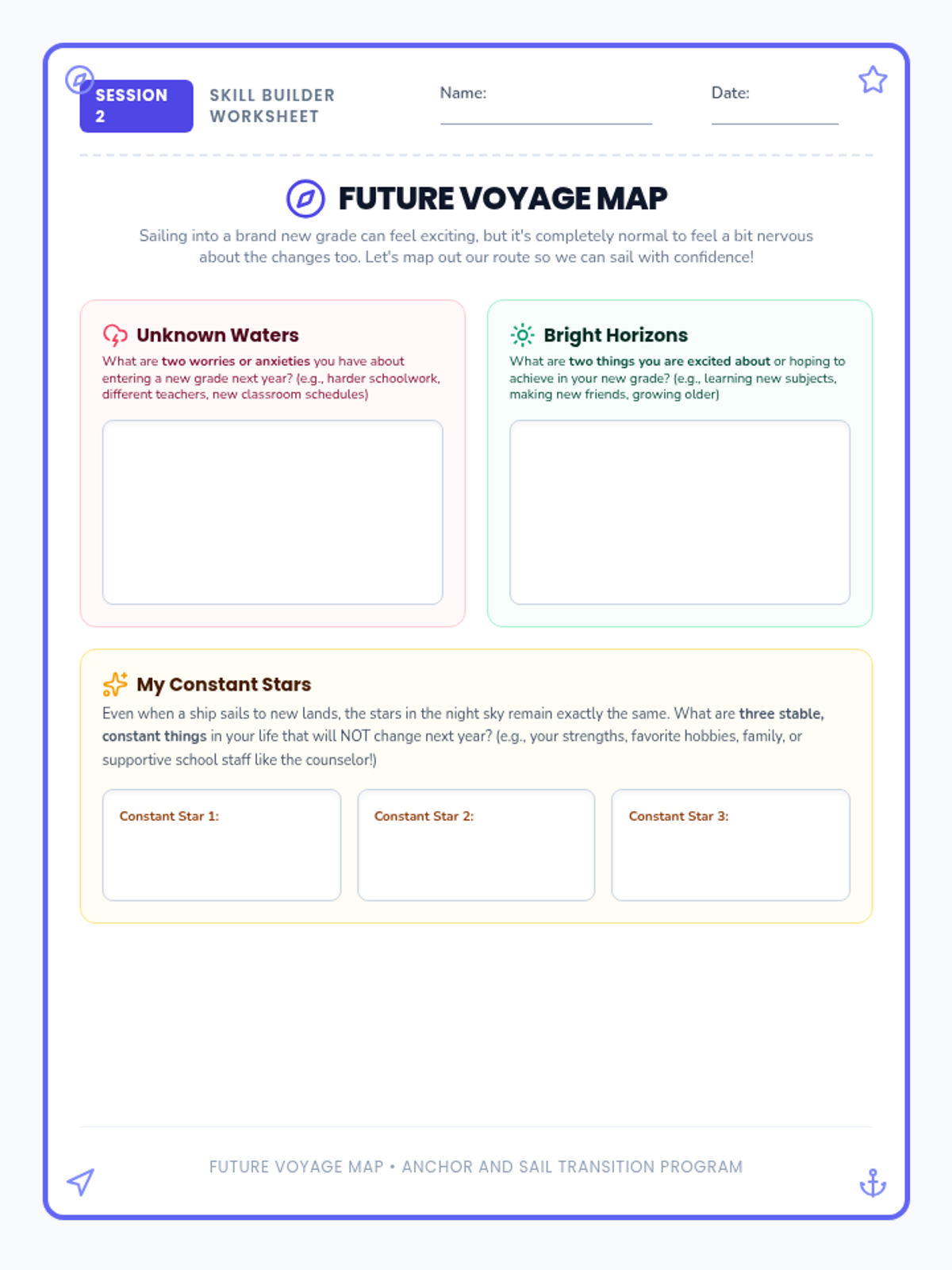
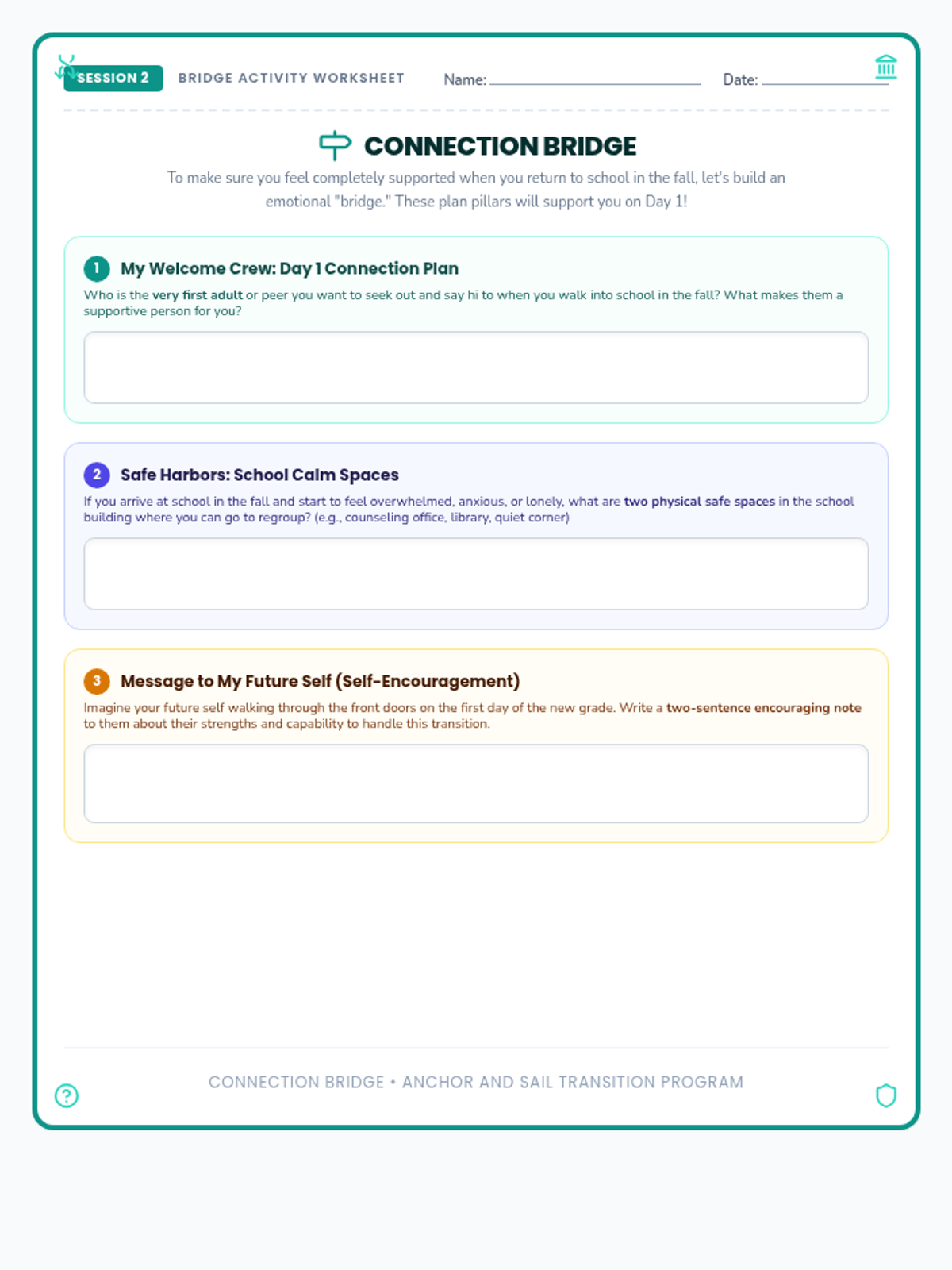
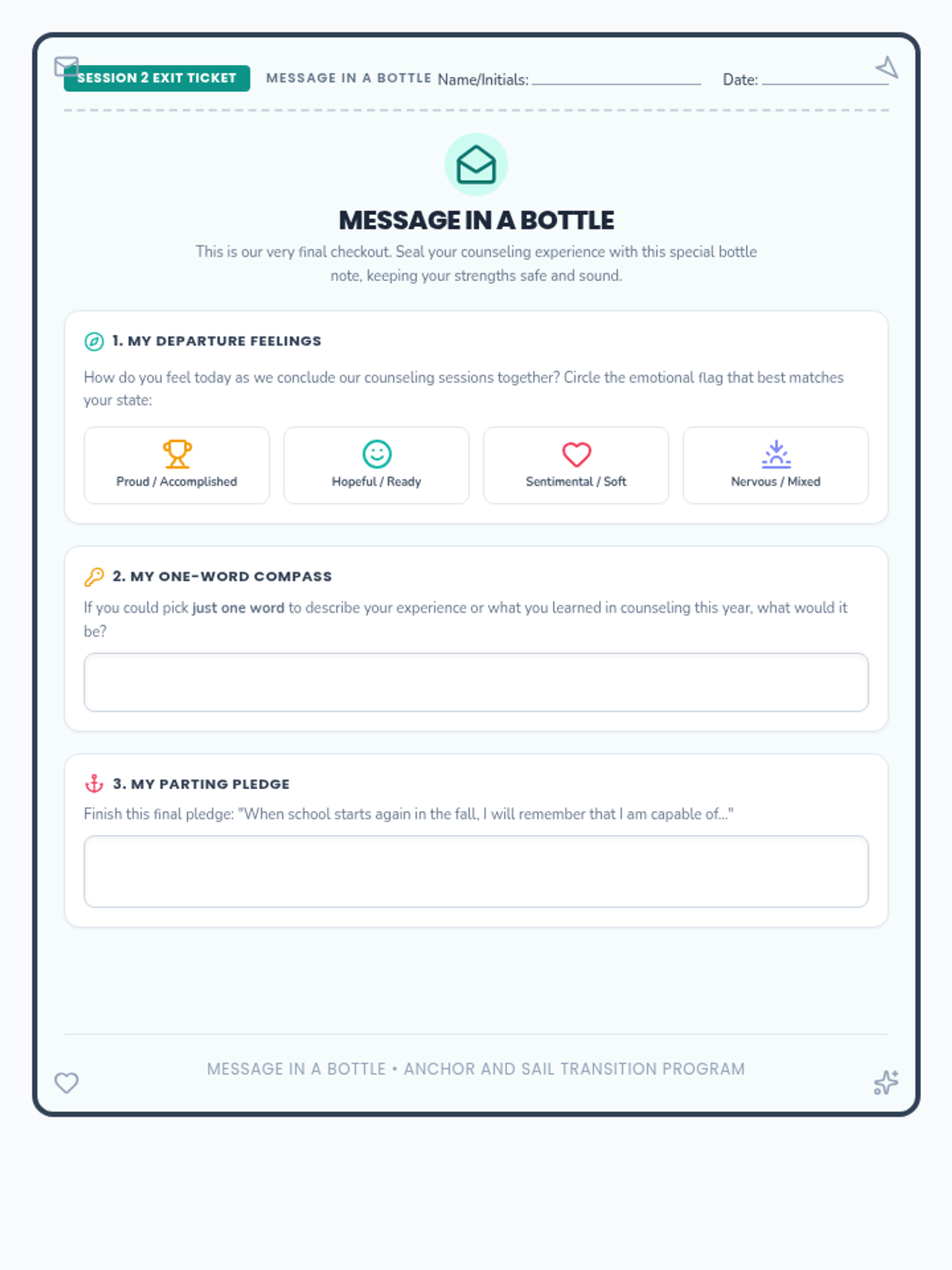
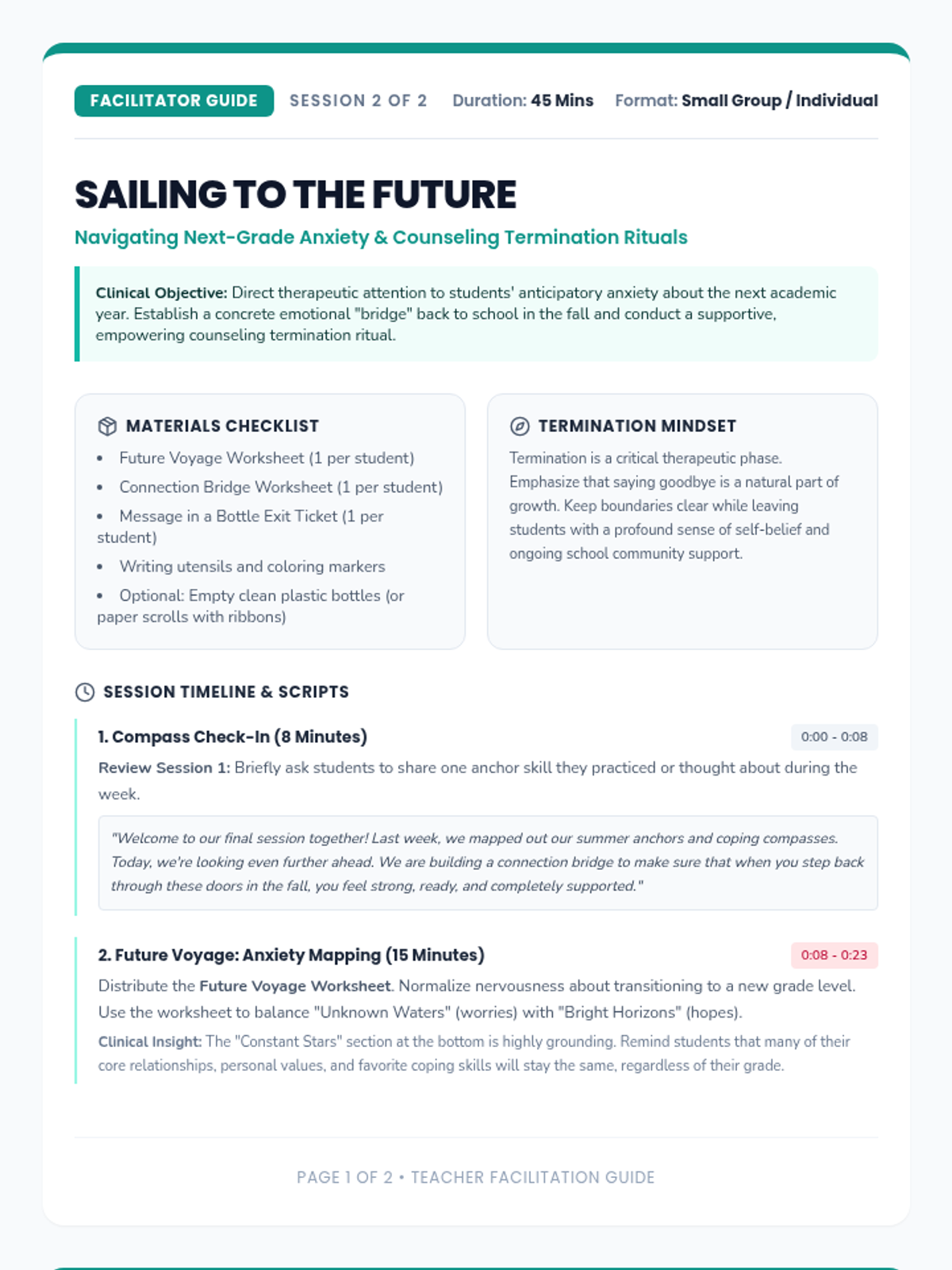
Session 2 focuses on addressing anxiety about entering a new grade, identifying what remains stable, building a concrete emotional "bridge" back to school in the fall, and conducting a meaningful counseling termination ritual.
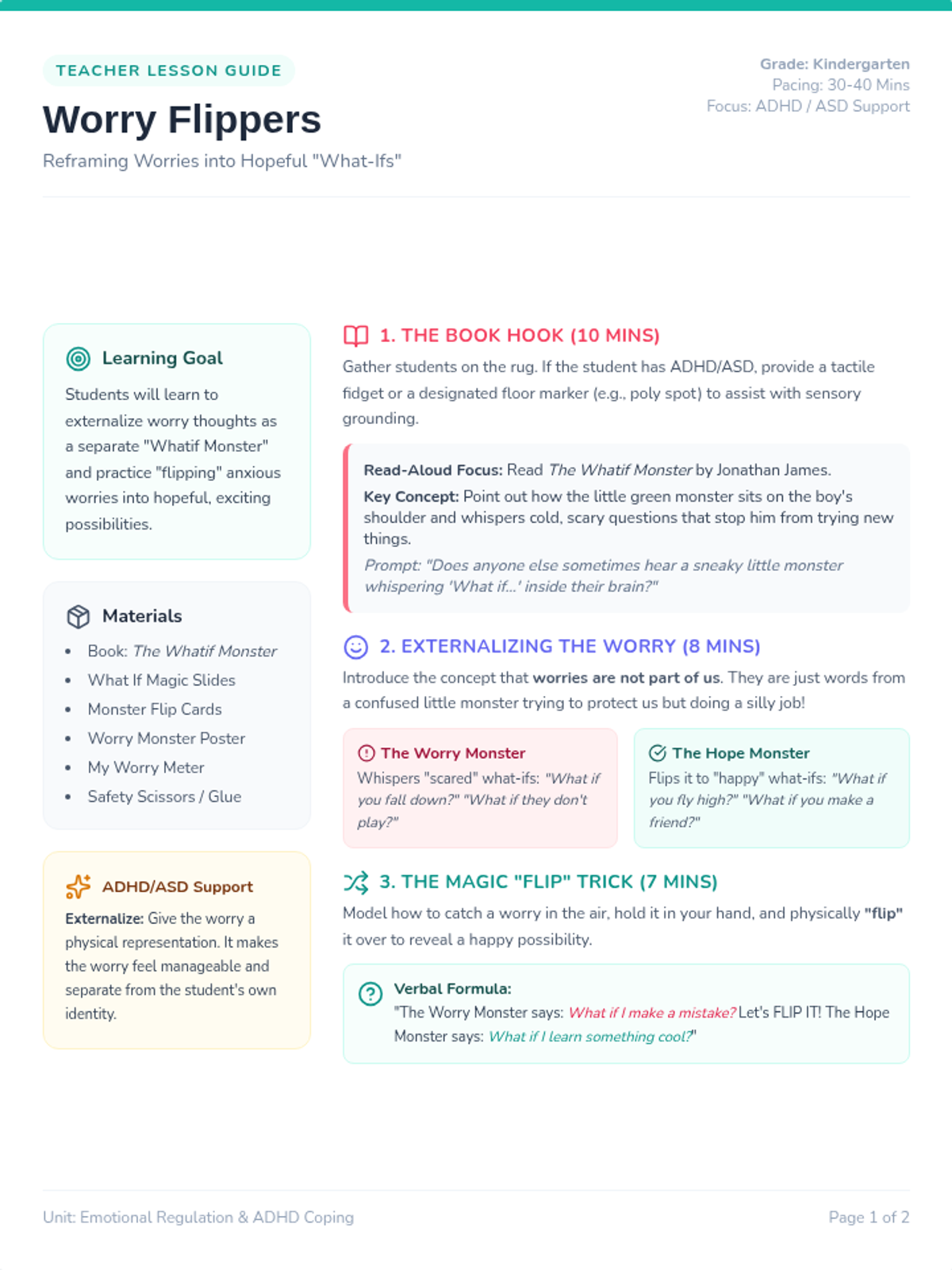
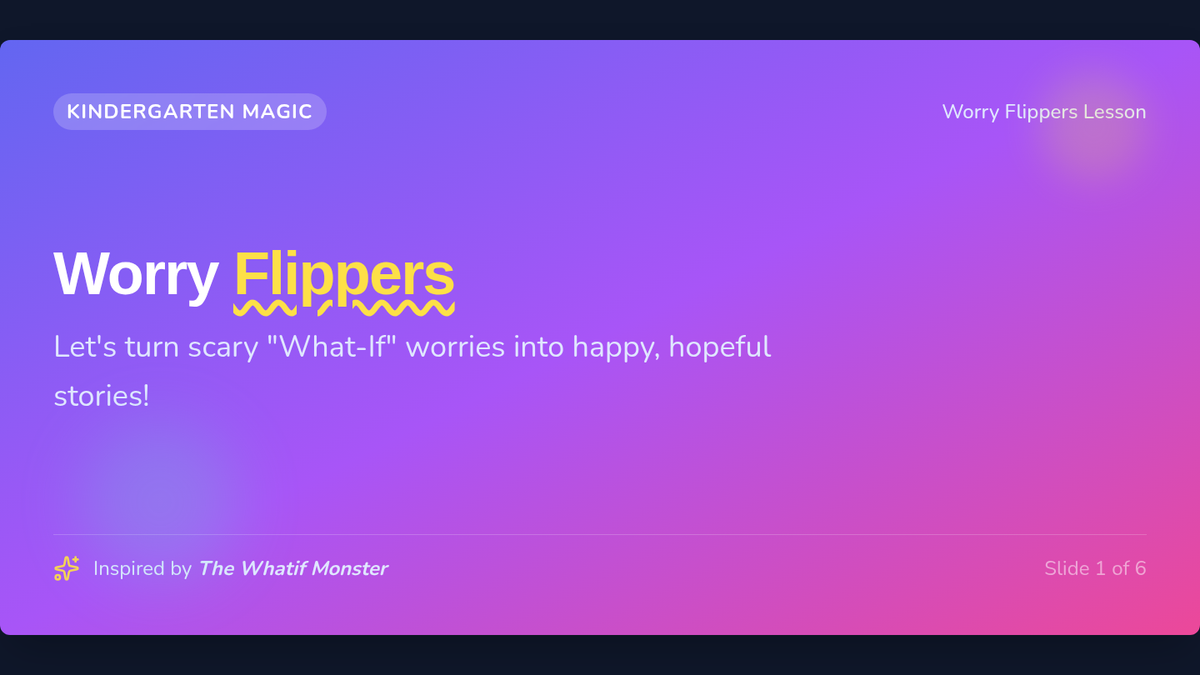
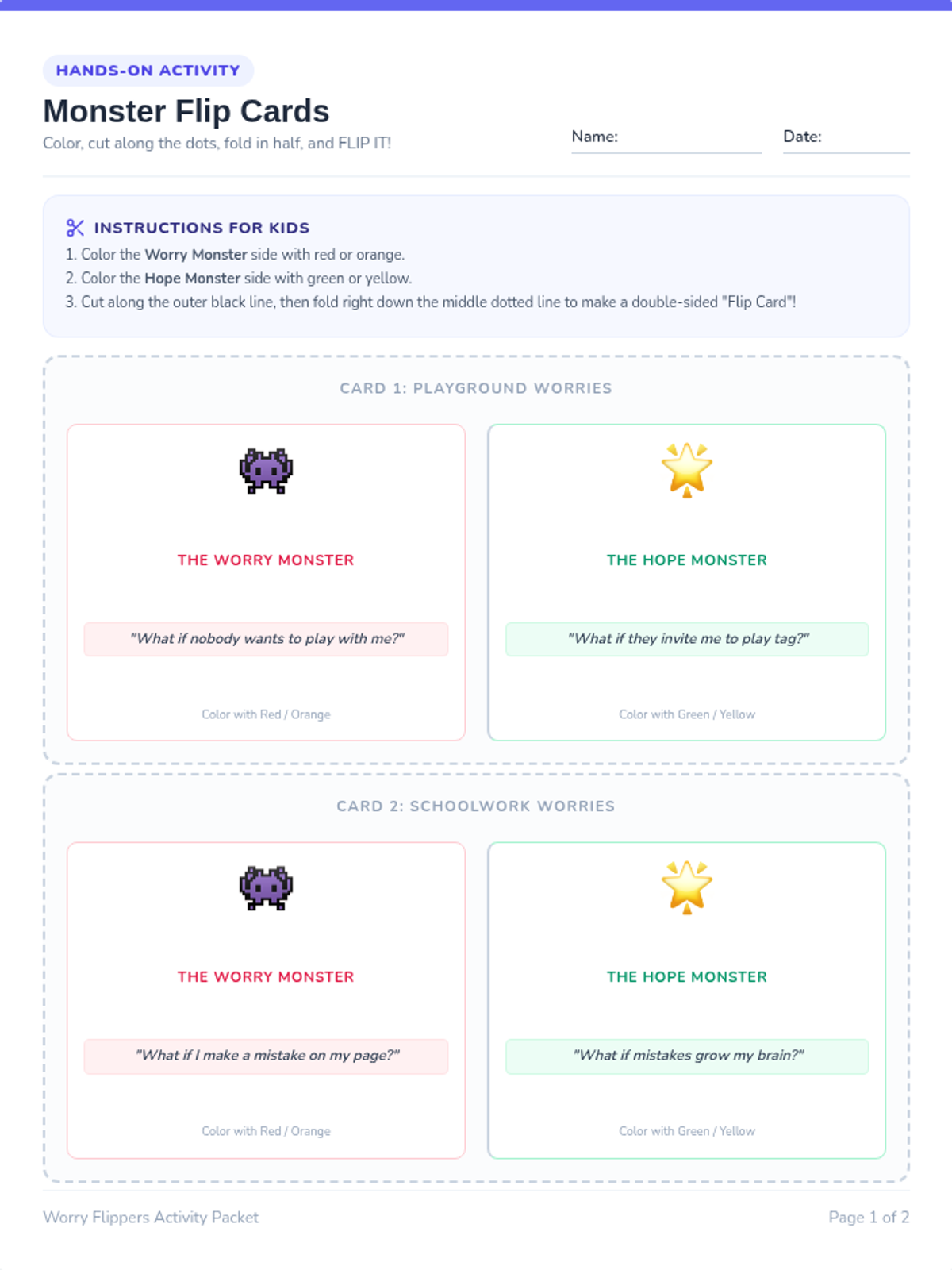
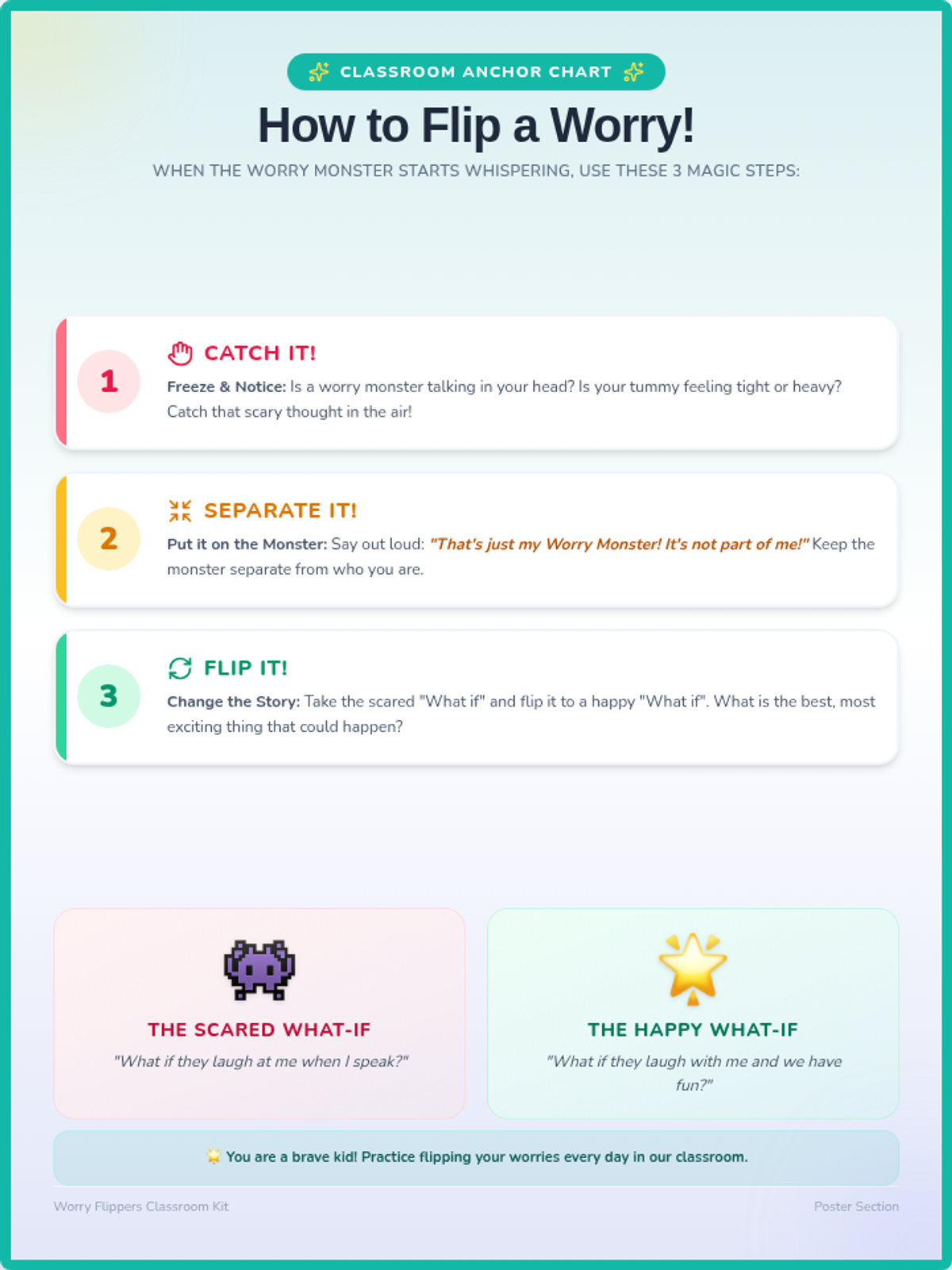
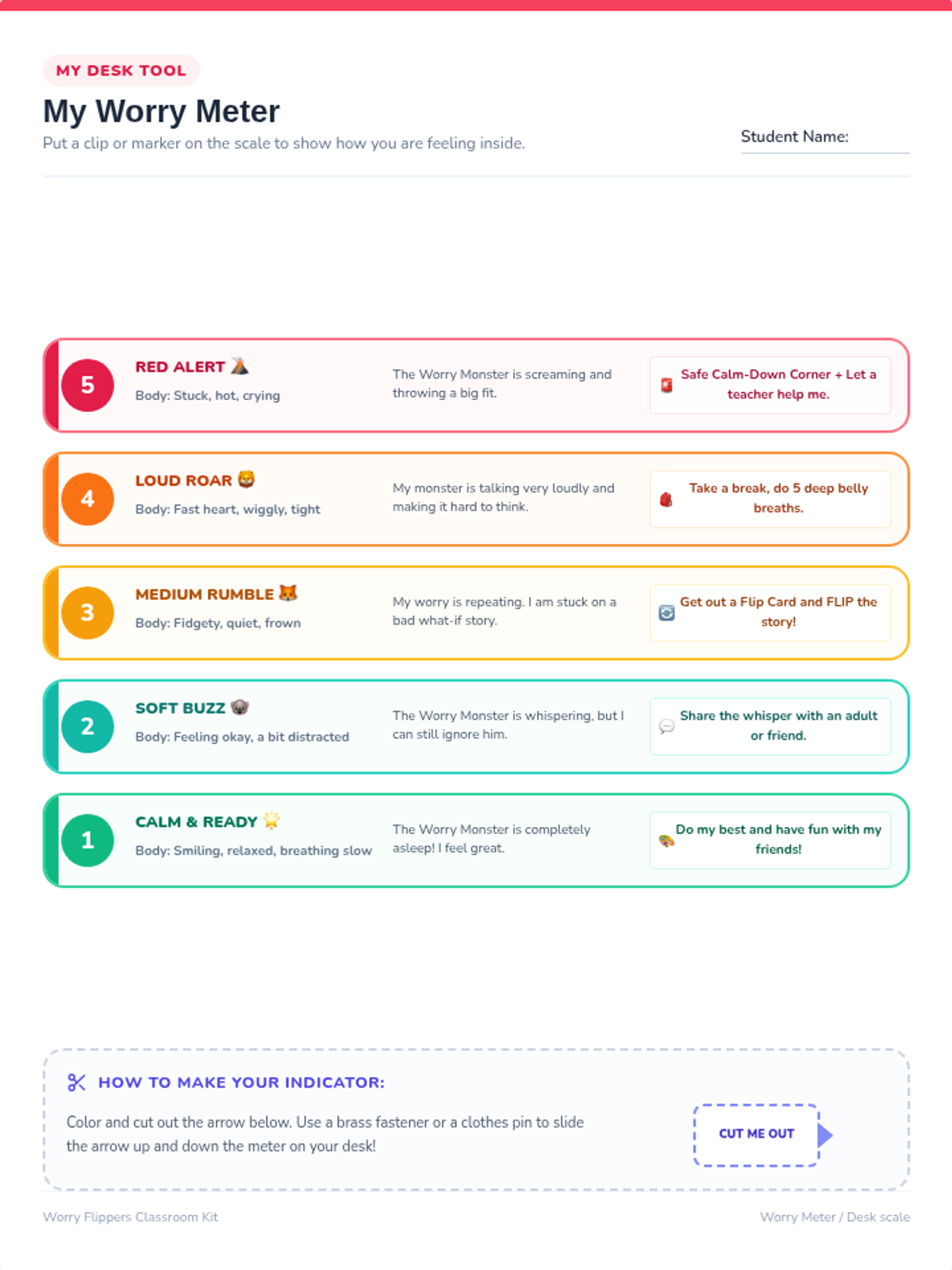
A supportive kindergarten lesson designed to help students with ADHD and spectrum tendencies externalize their worries and reframe them into hopeful 'What Ifs' using 'The Whatif Monster' book. Includes high-visual presentation, a hands-on sorting activity, an anchor chart poster, and a personalized worry meter.
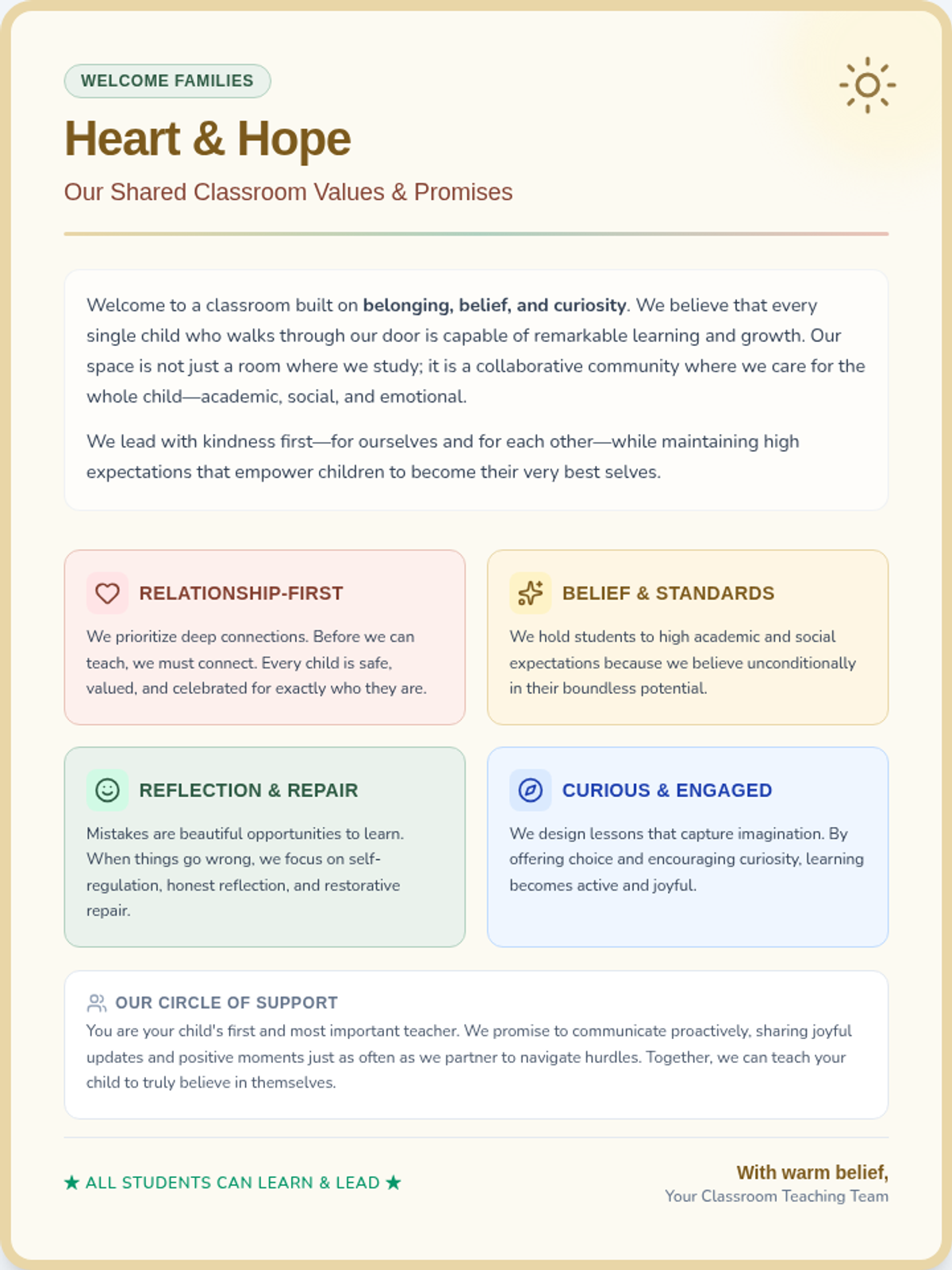
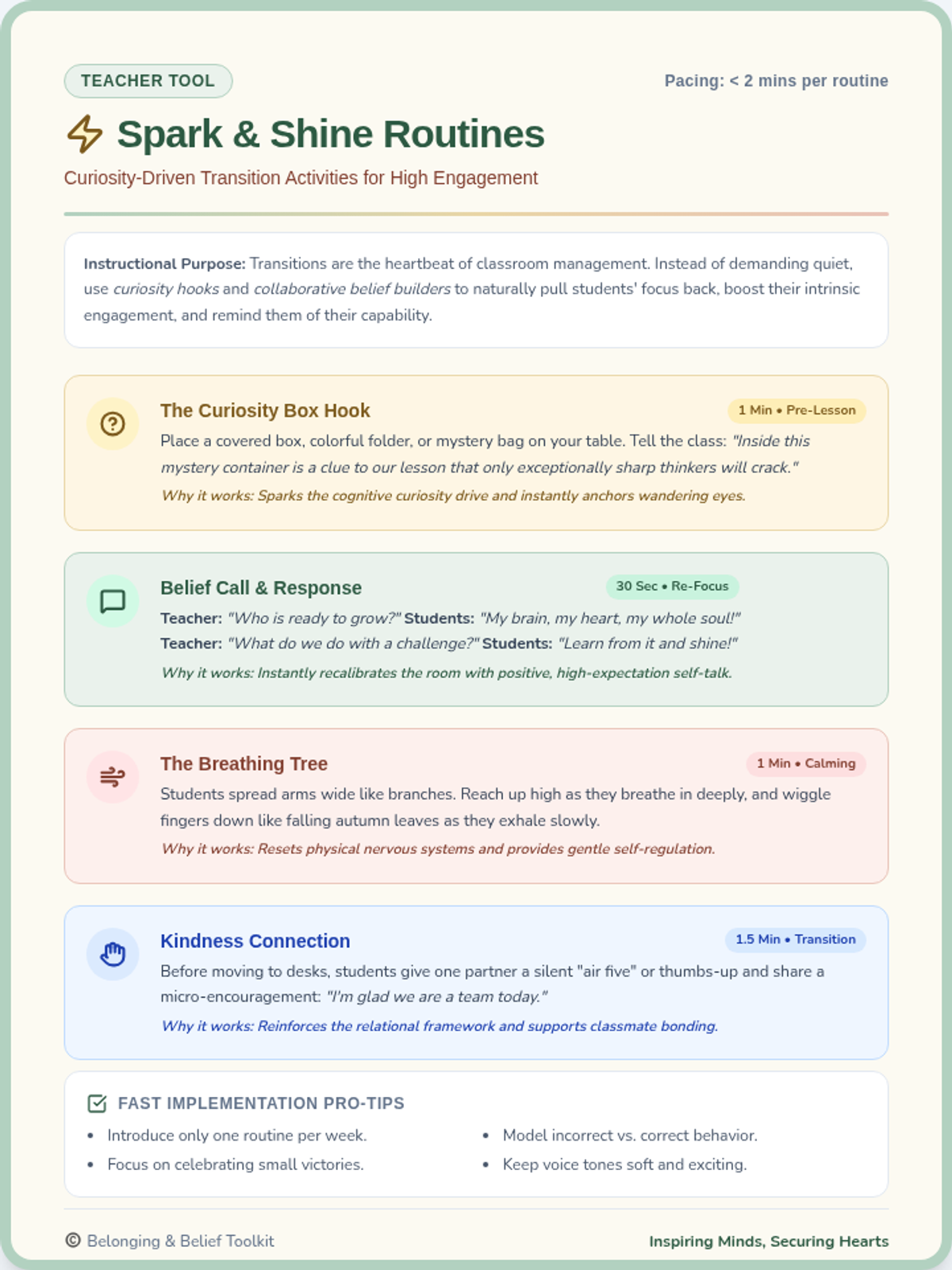
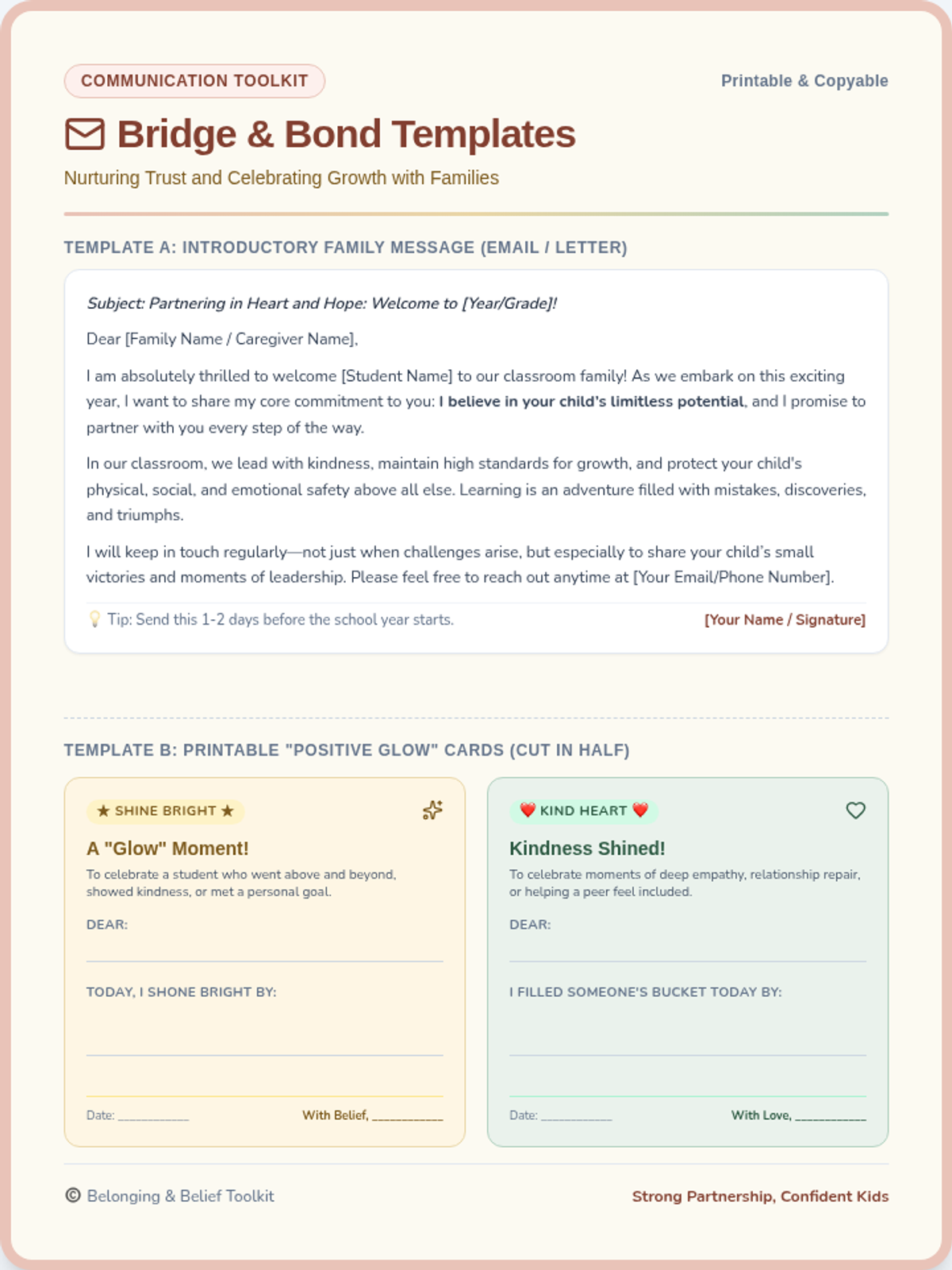
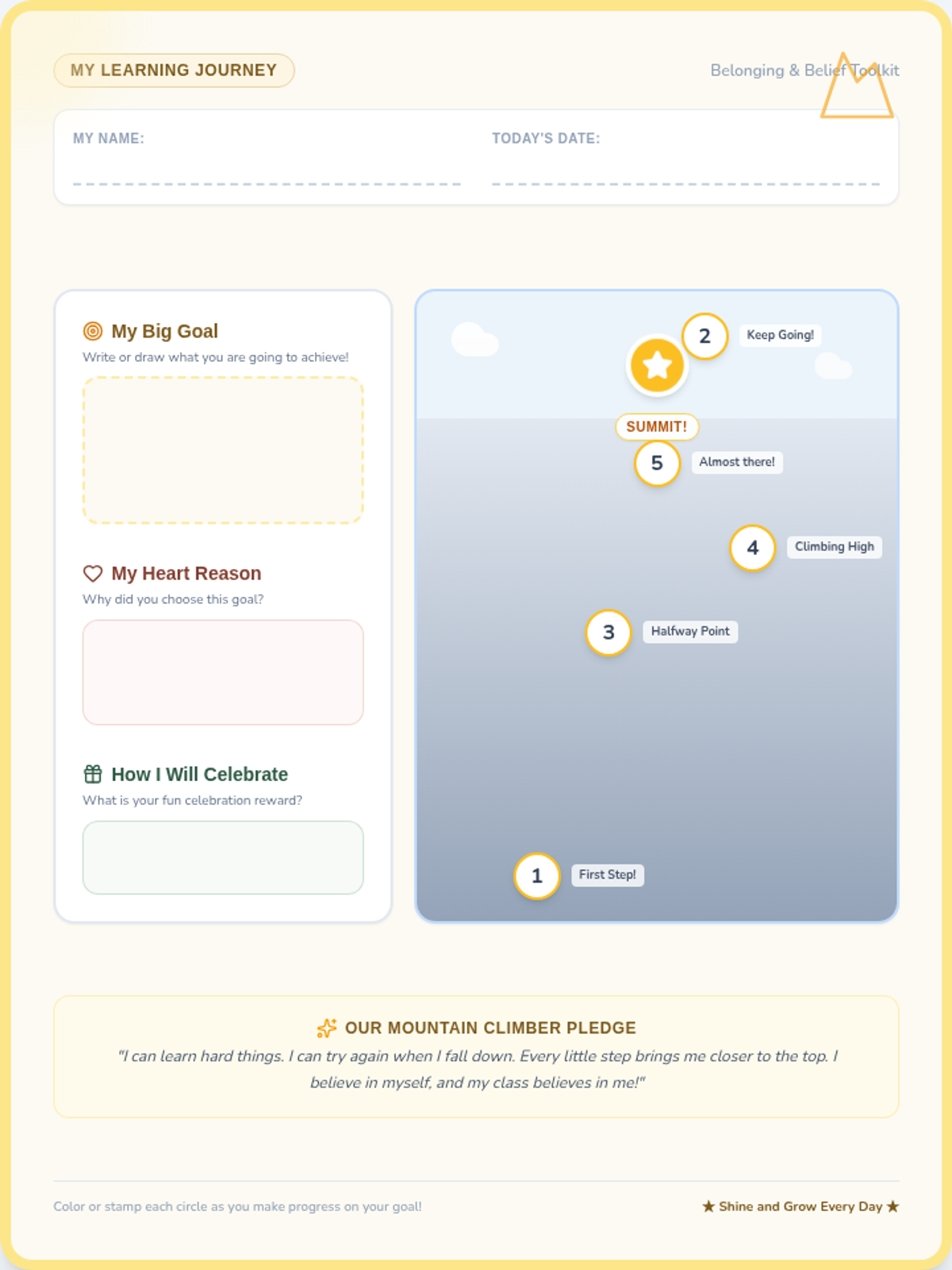
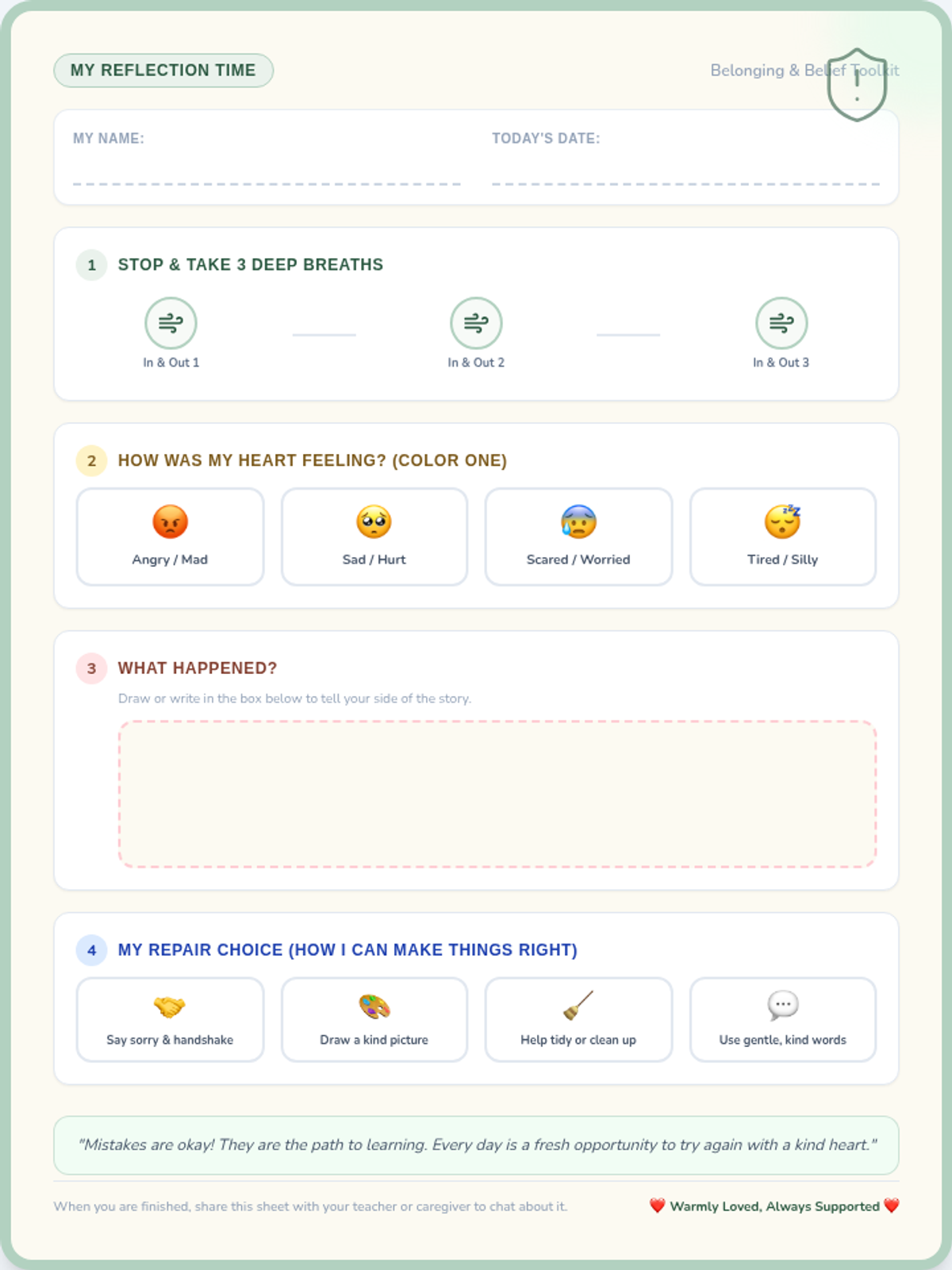
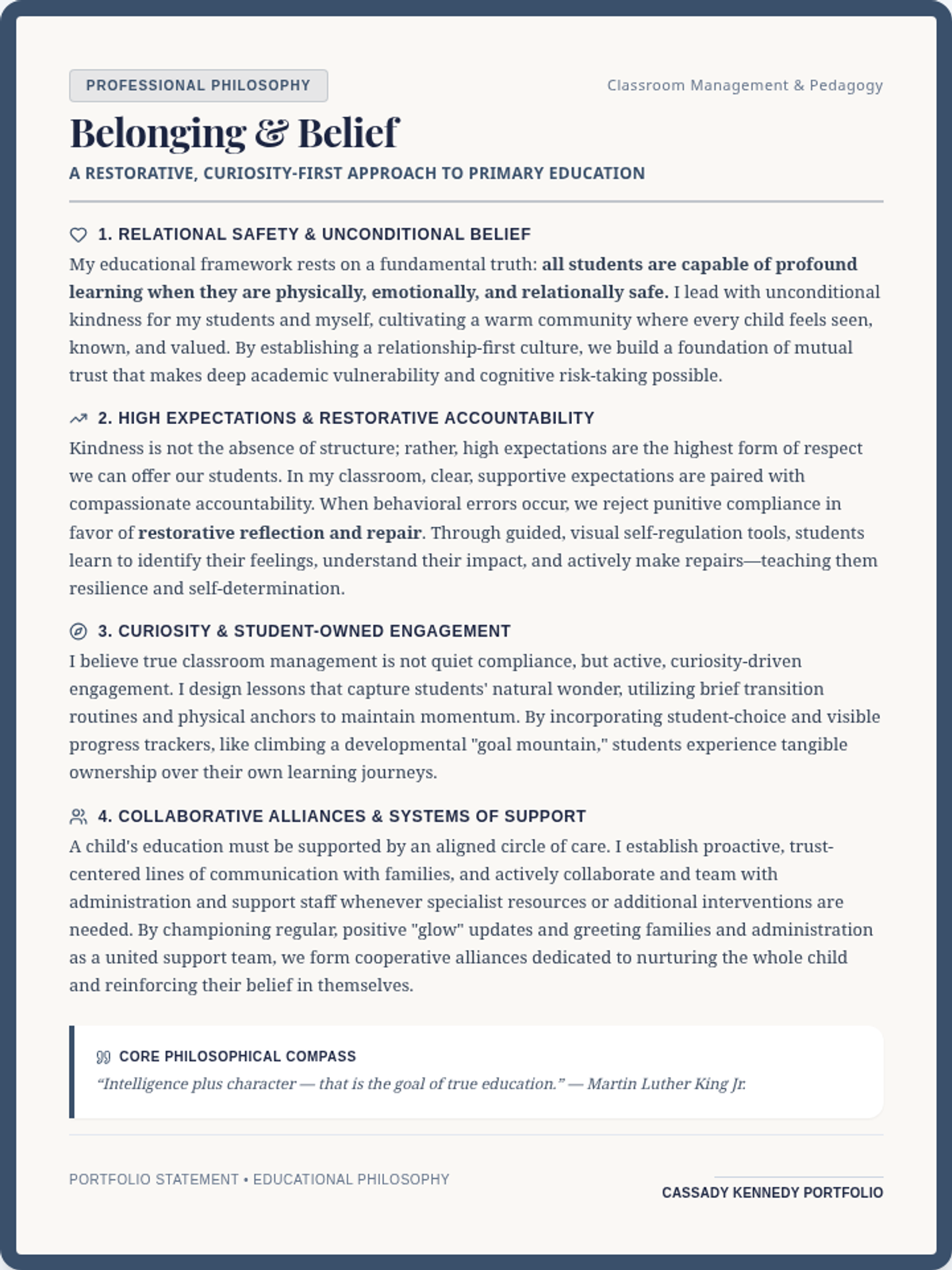
A comprehensive classroom management and family partnership kit designed to cultivate a warm, high-expectation, relationship-first classroom environment. It contains a warm family handbook introduction, positive outreach templates, student goal-tracking charts, curiosity-driven transition routines, and visual reflection/repair sheets for self-regulation.
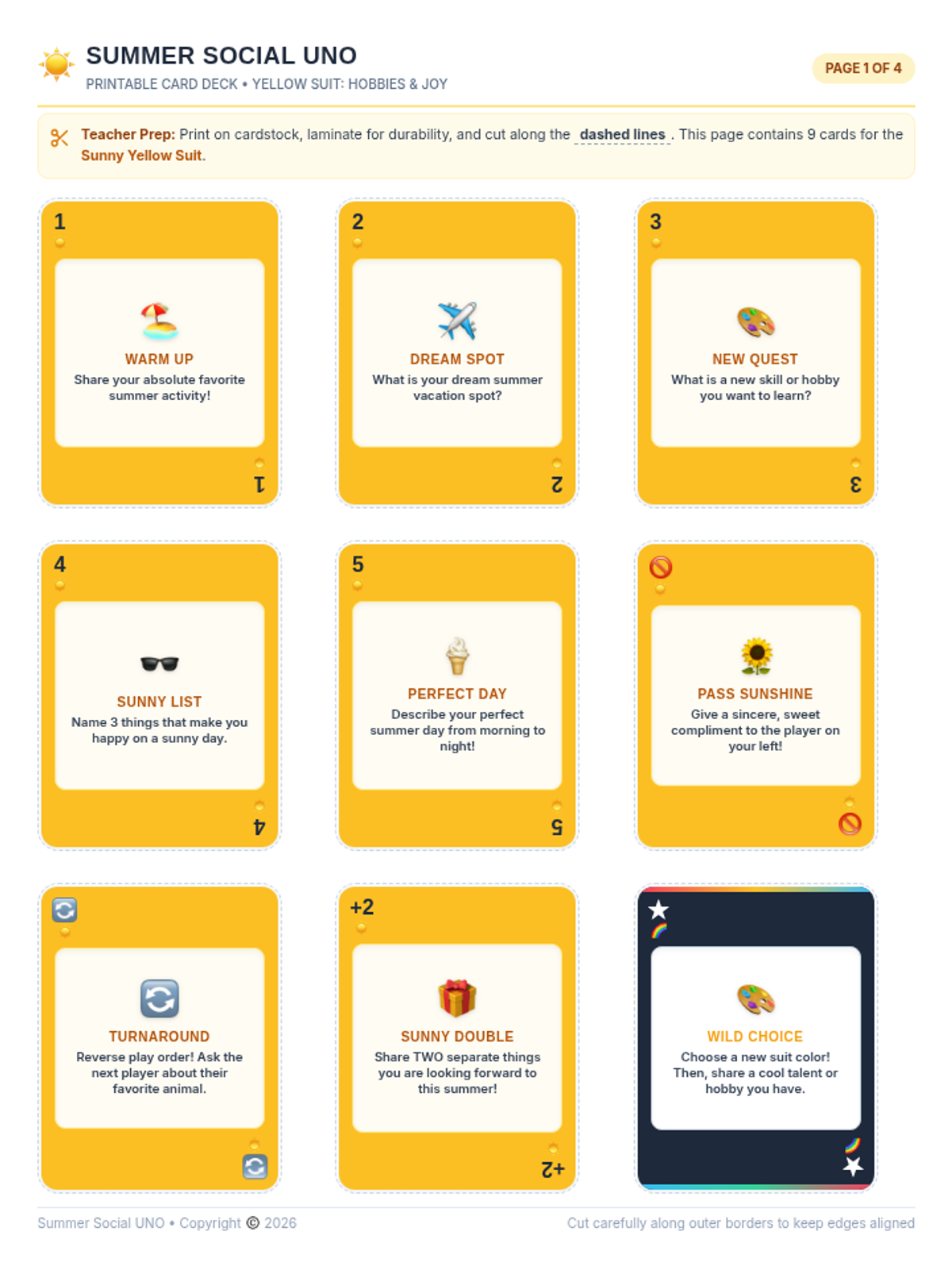
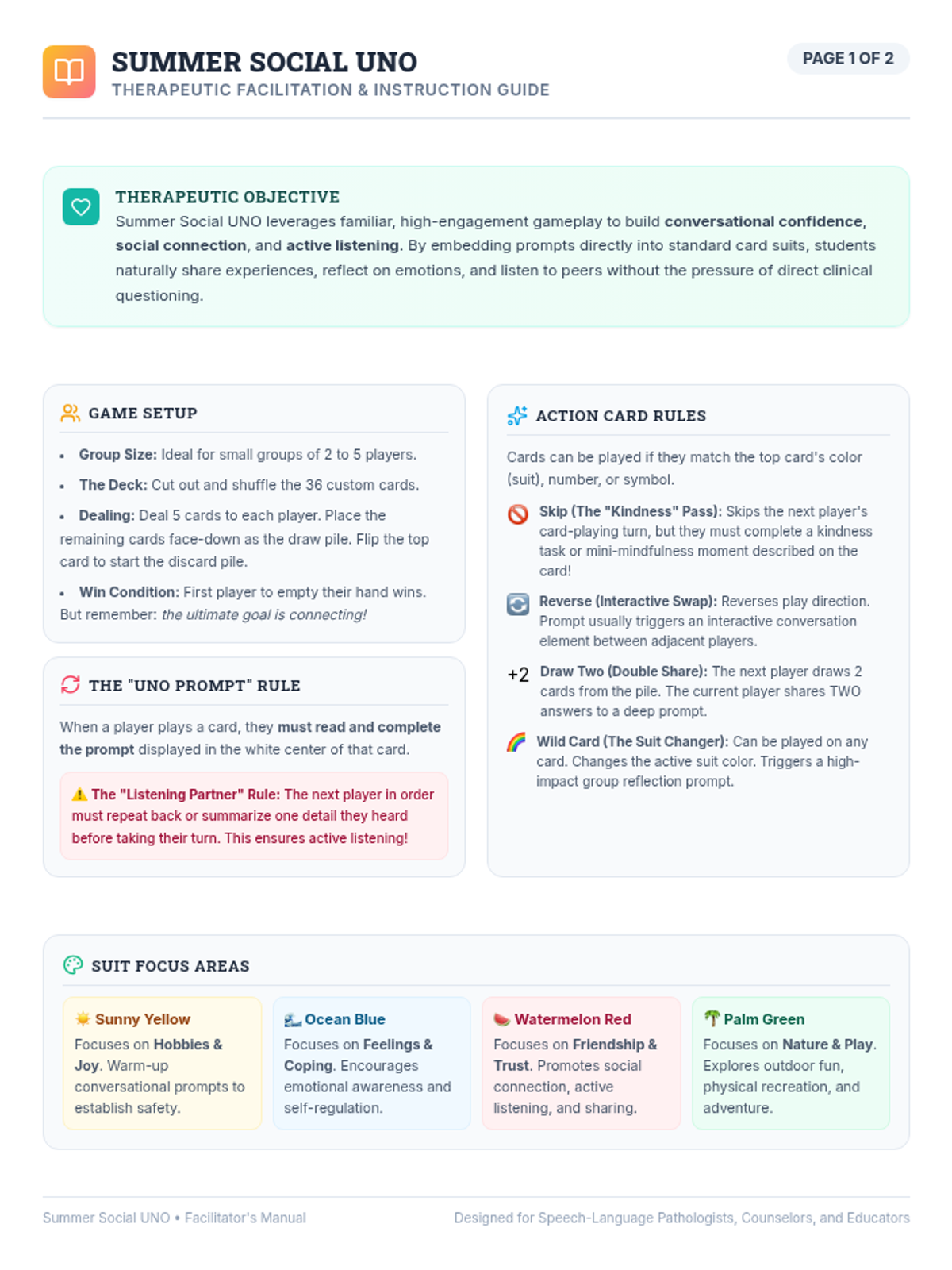
A therapeutic gameplay experience using a customized, summer-themed UNO card deck. Students practice conversational prompts, active listening, turn-taking, and relationship building in a fun, structured environment.
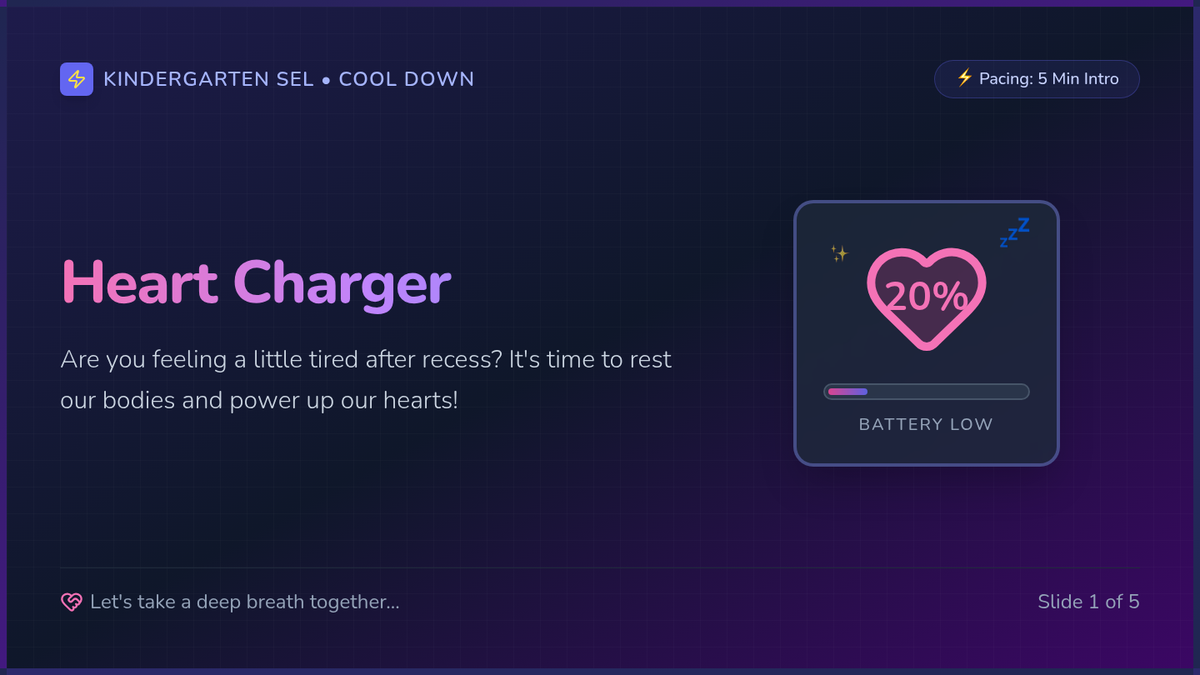
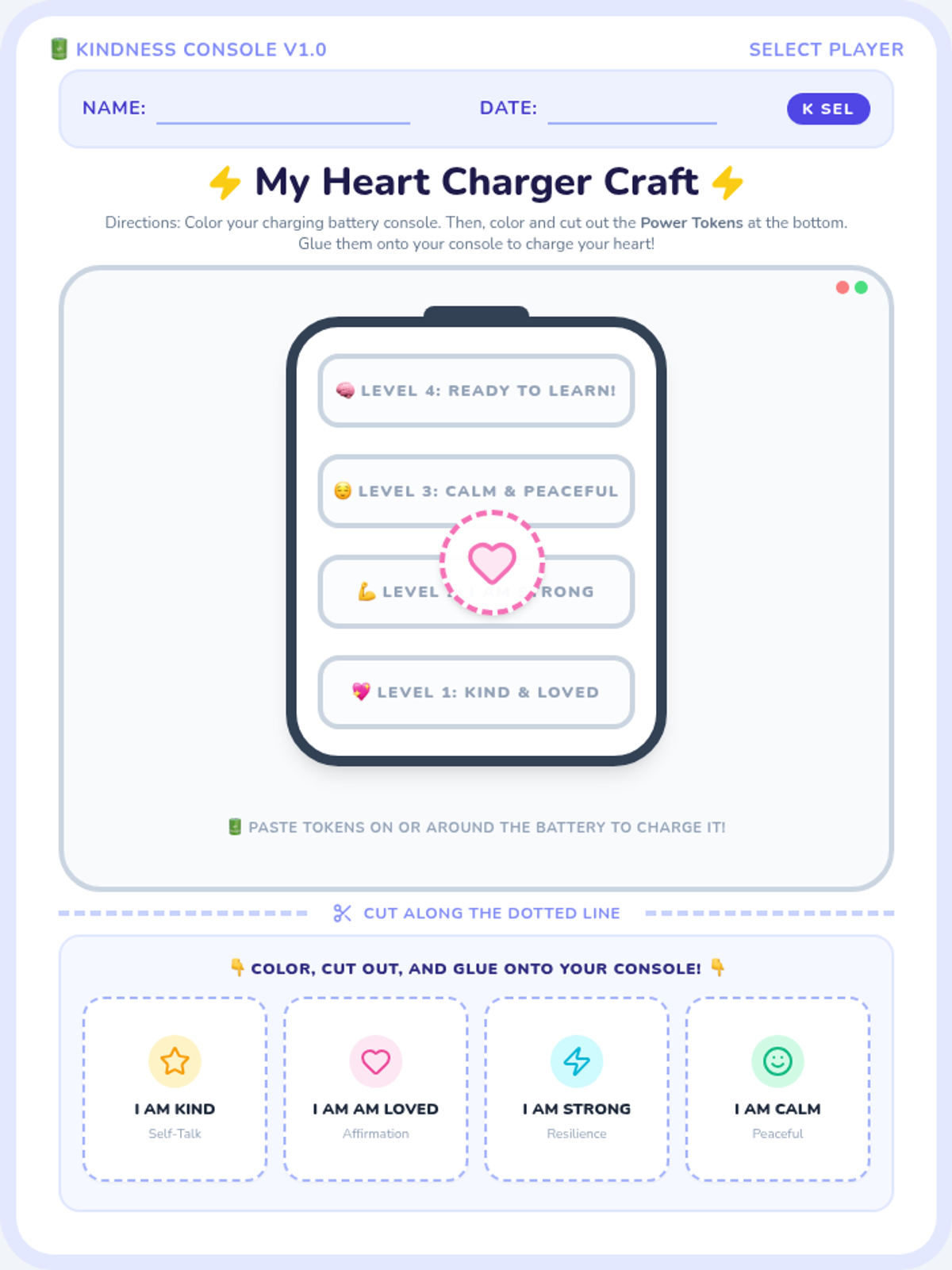
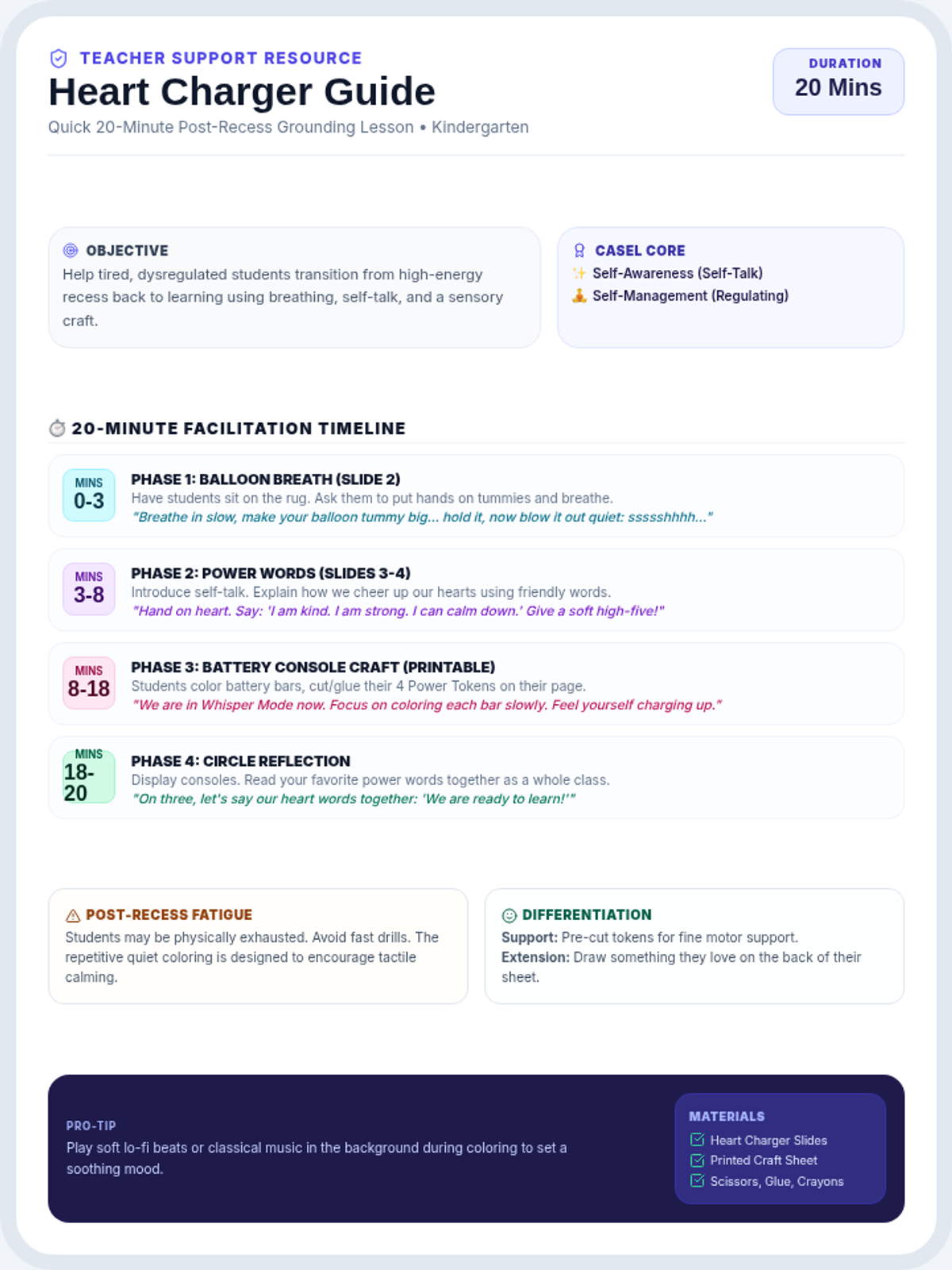
A quick, grounding 20-minute SEL lesson designed to help tired Kindergarteners transition from high-energy recess back to learning. Students recharge their emotional batteries using gentle positive self-talk, collaborative breathing, and a hands-on coloring and cut-and-paste kindness craft.
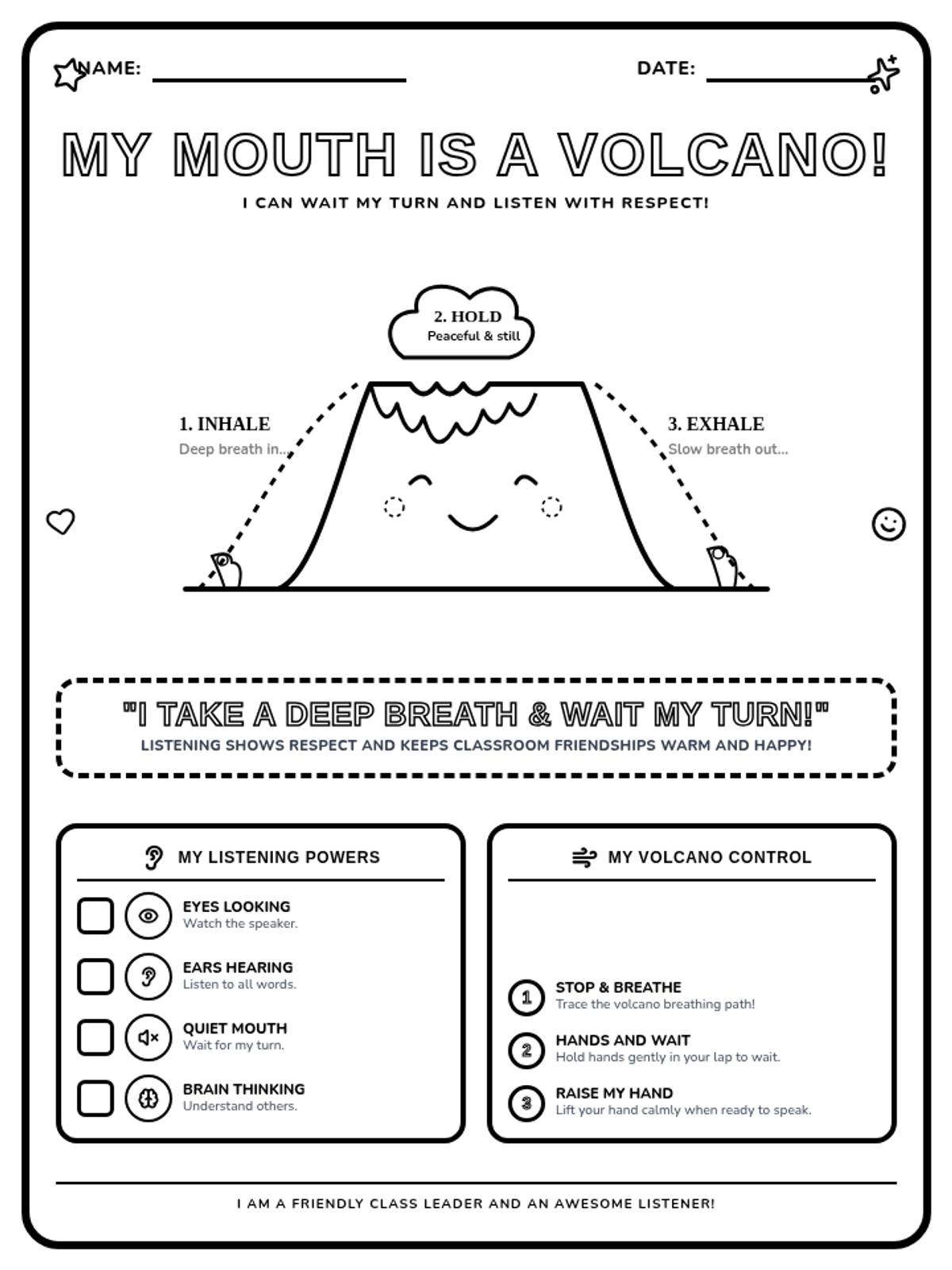
A social-emotional learning lesson focused on self-regulation, respectful listening, and turn-taking in the classroom, inspired by the children's book 'My Mouth Is a Volcano'.
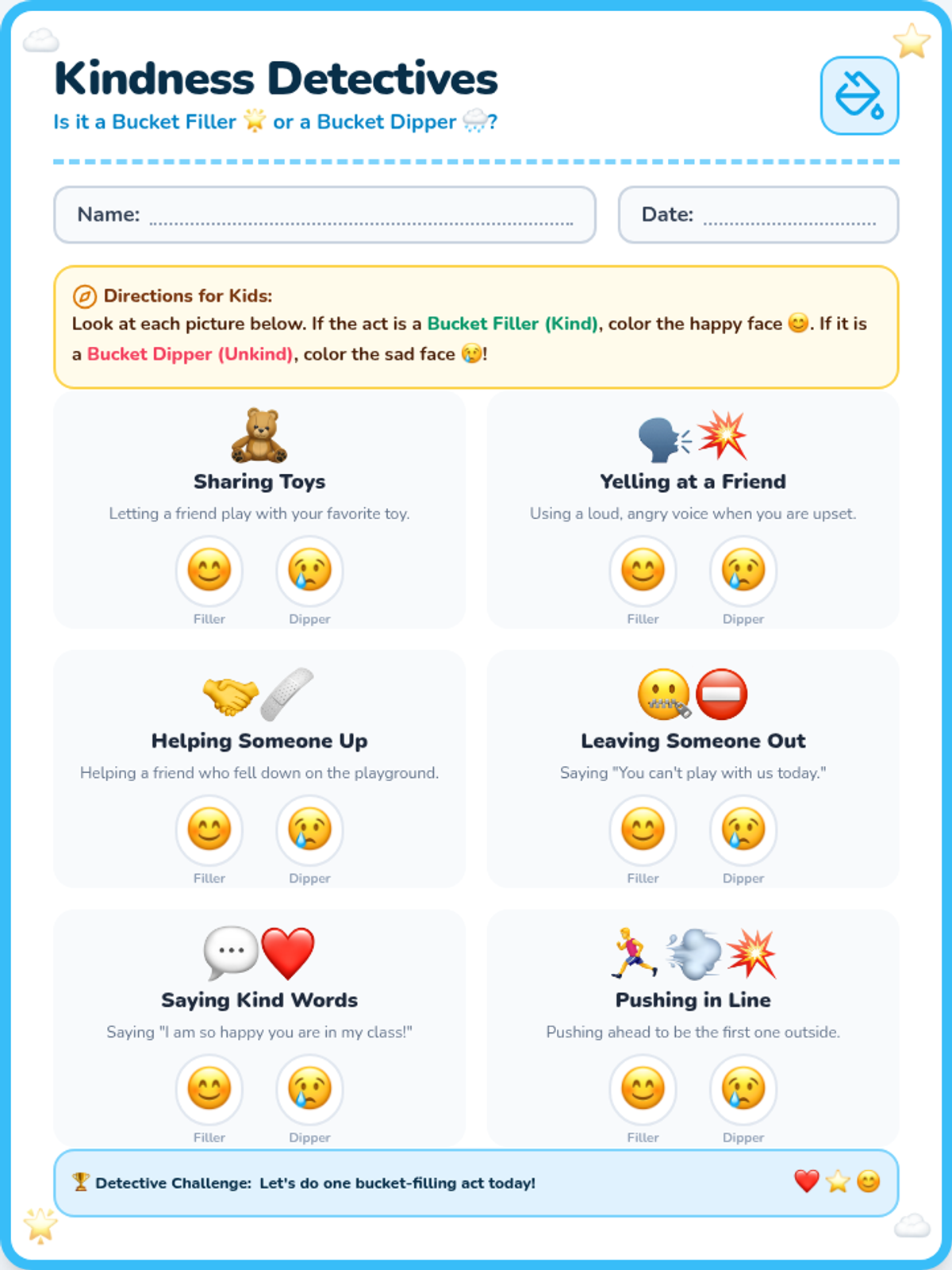
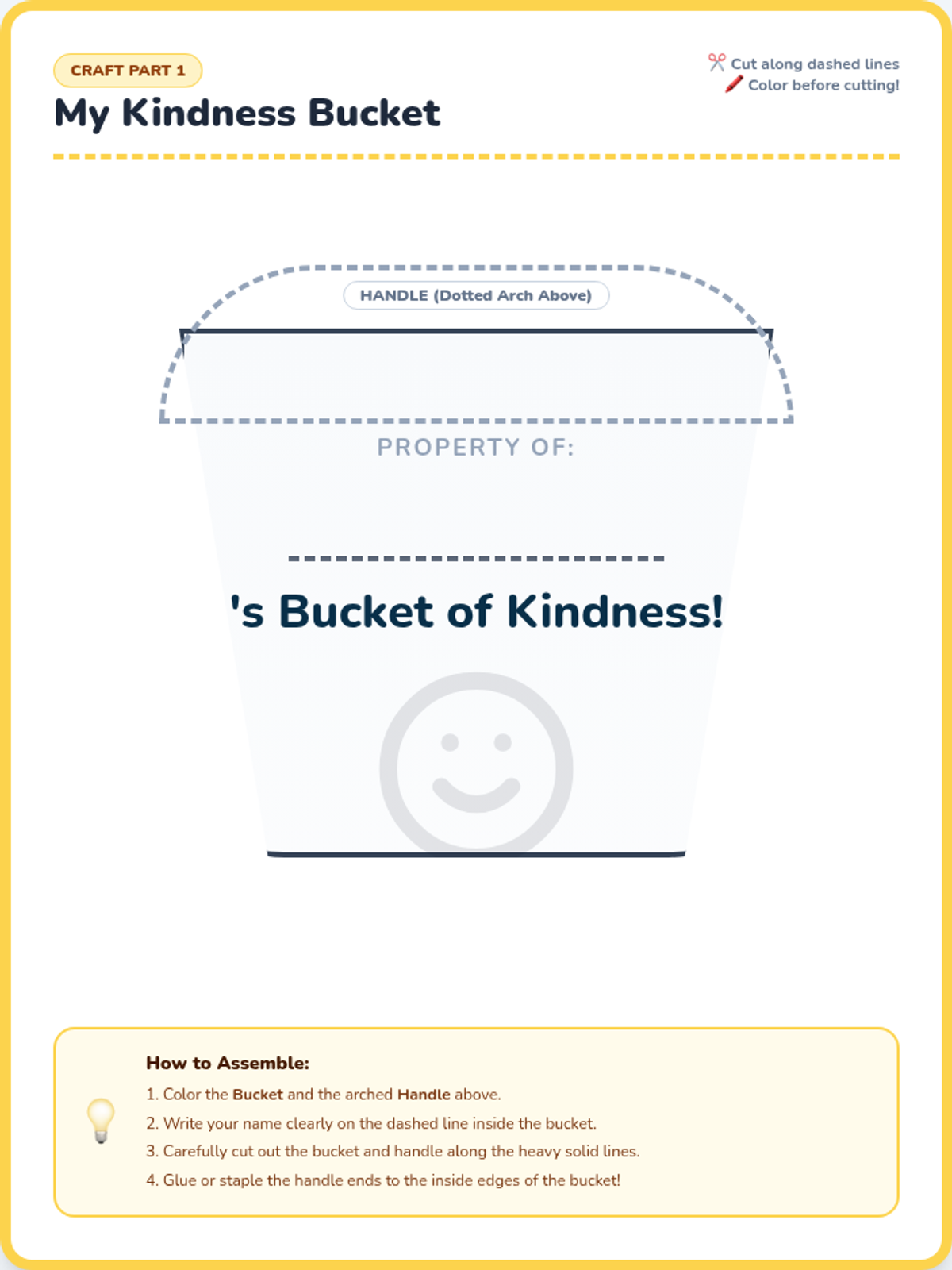
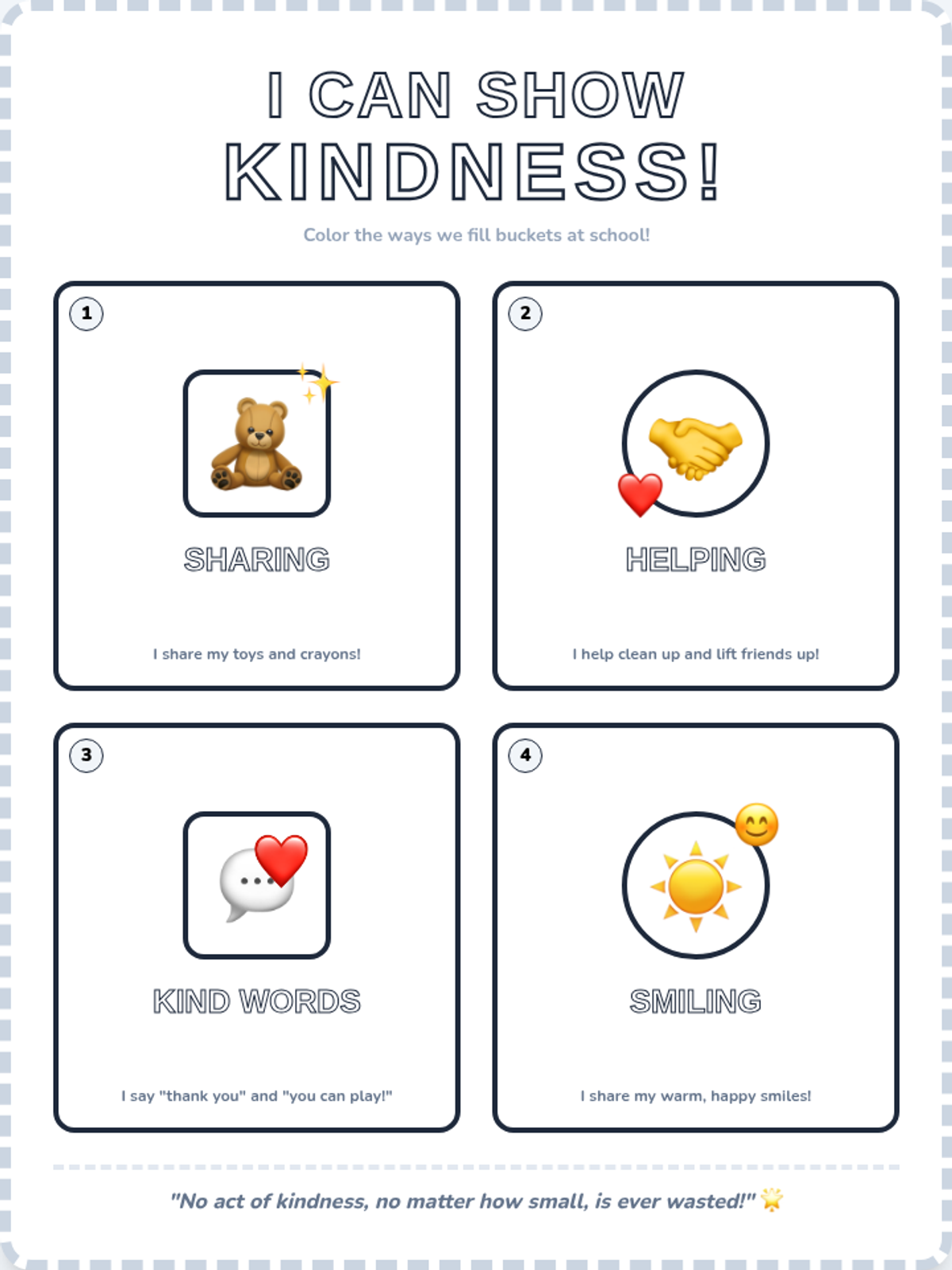
An interactive introduction to empathy, kindness, and emotional awareness for Kindergarteners. Students learn about bucket filling through cooperative discussion, a hands-on bucket craft, a sorting worksheet, and a themed coloring page.
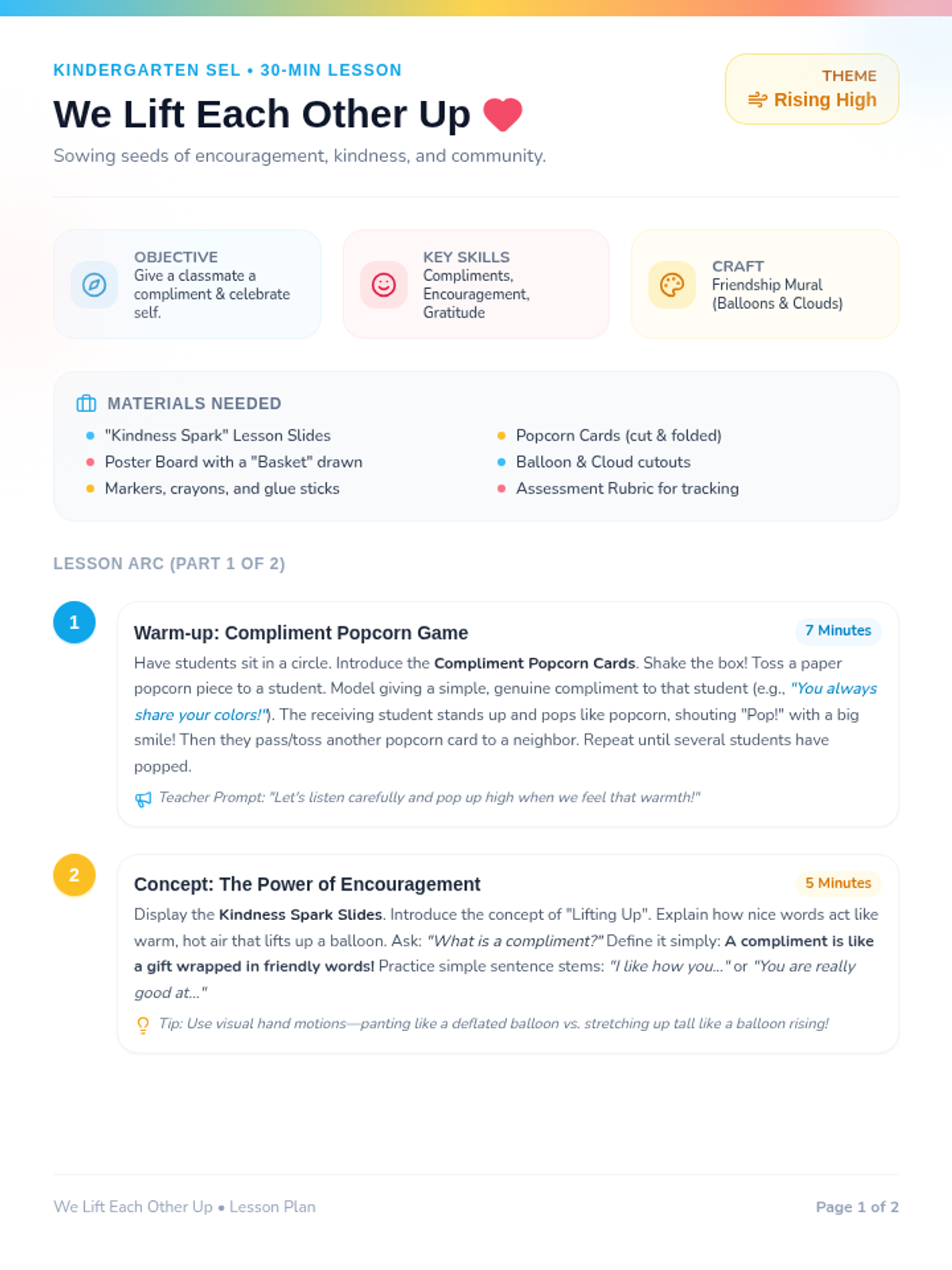
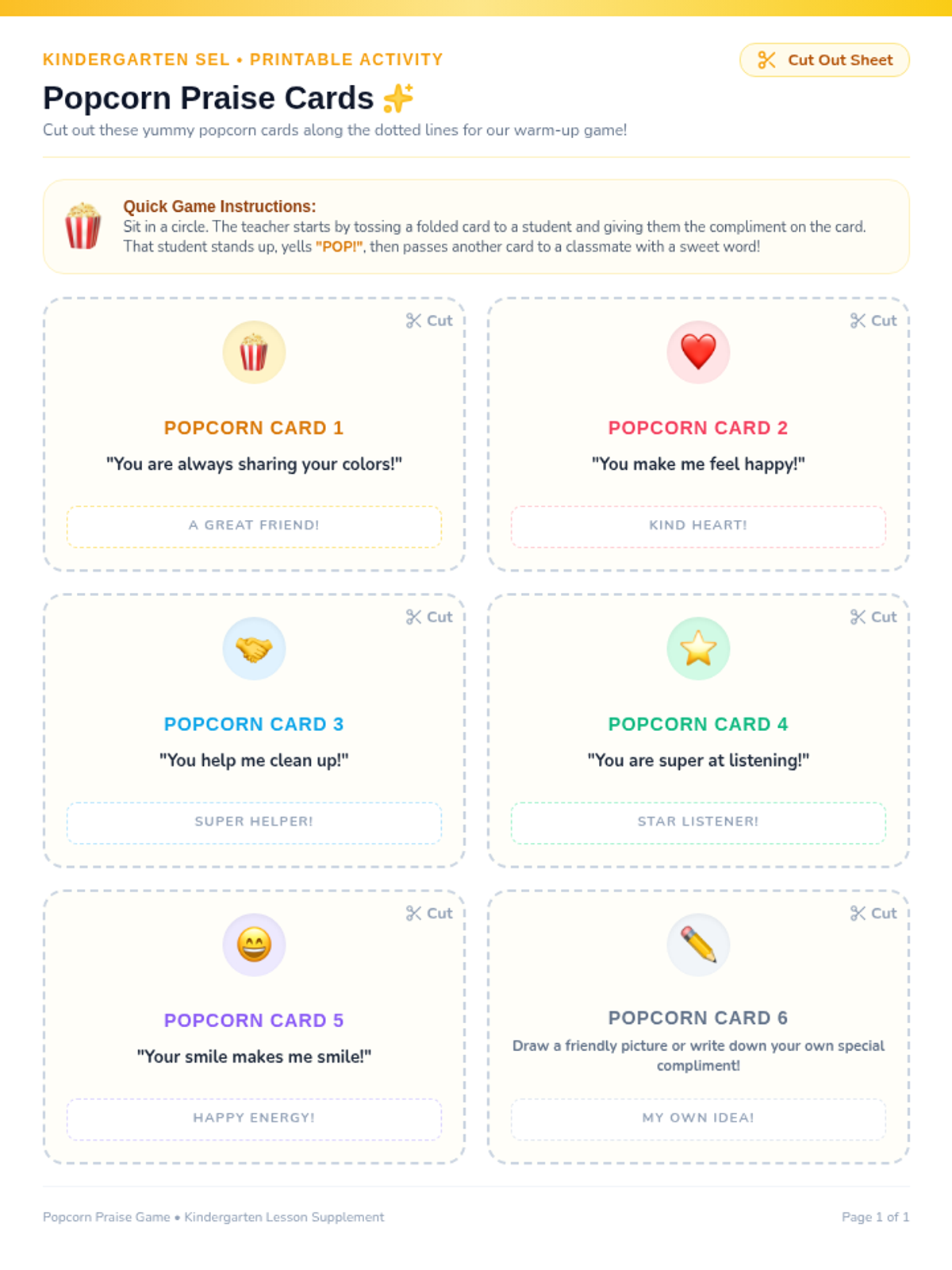
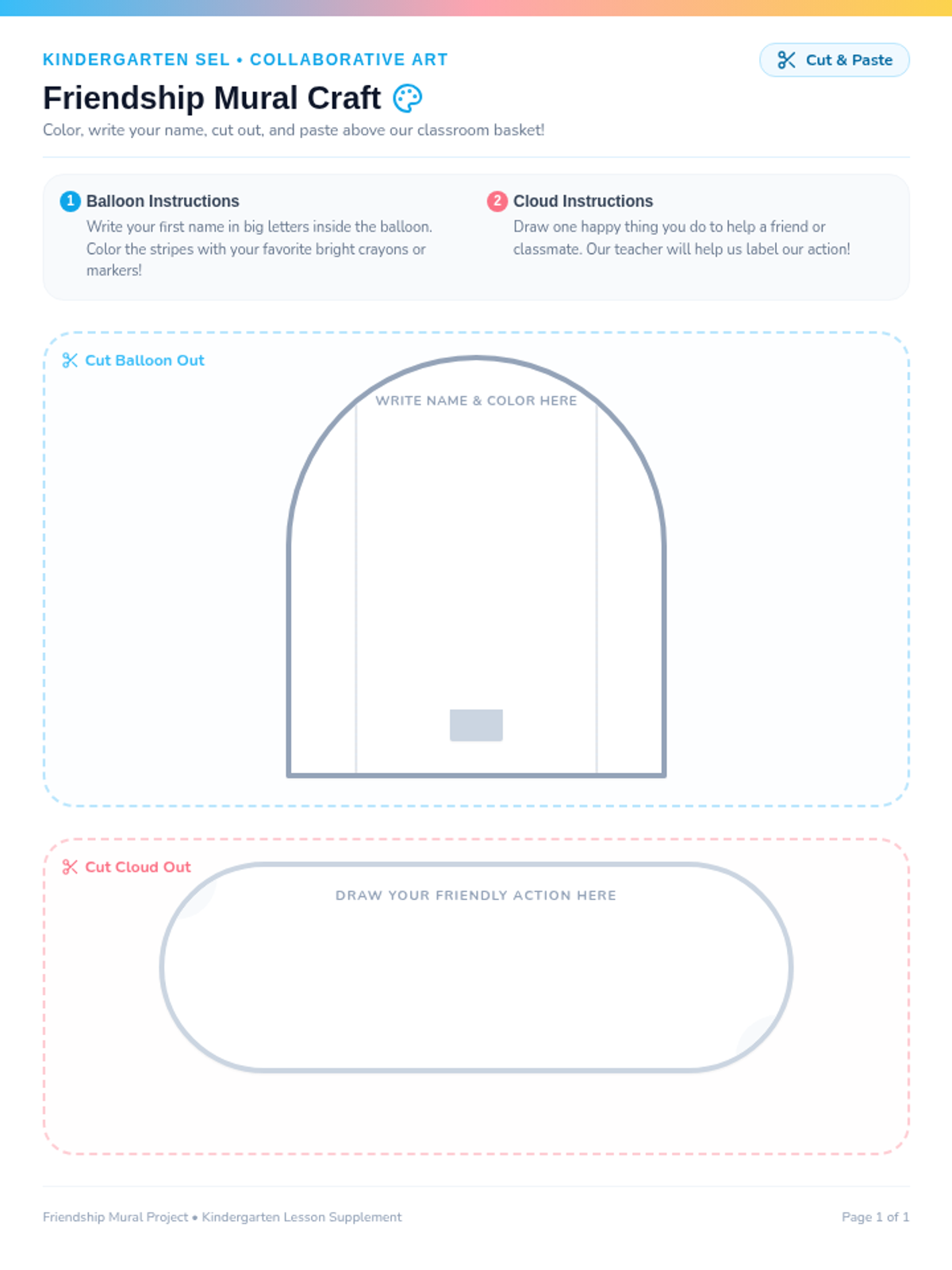
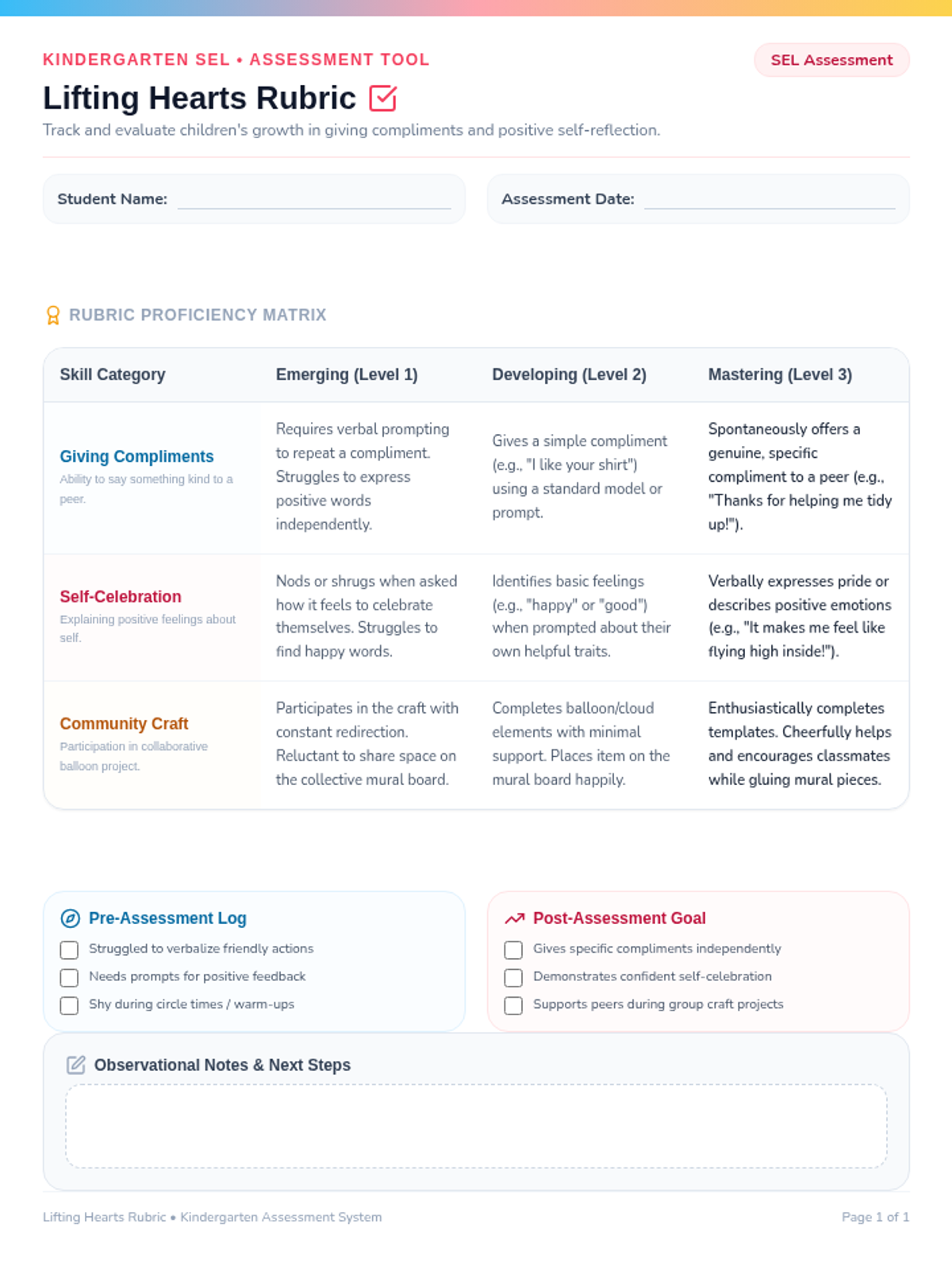
A heartwarming Kindergarten social-emotional learning lesson focused on the power of compliments and encouragement. Students learn to lift each other up through an active popcorn game, a collaborative balloon mural, and reflective sharing.
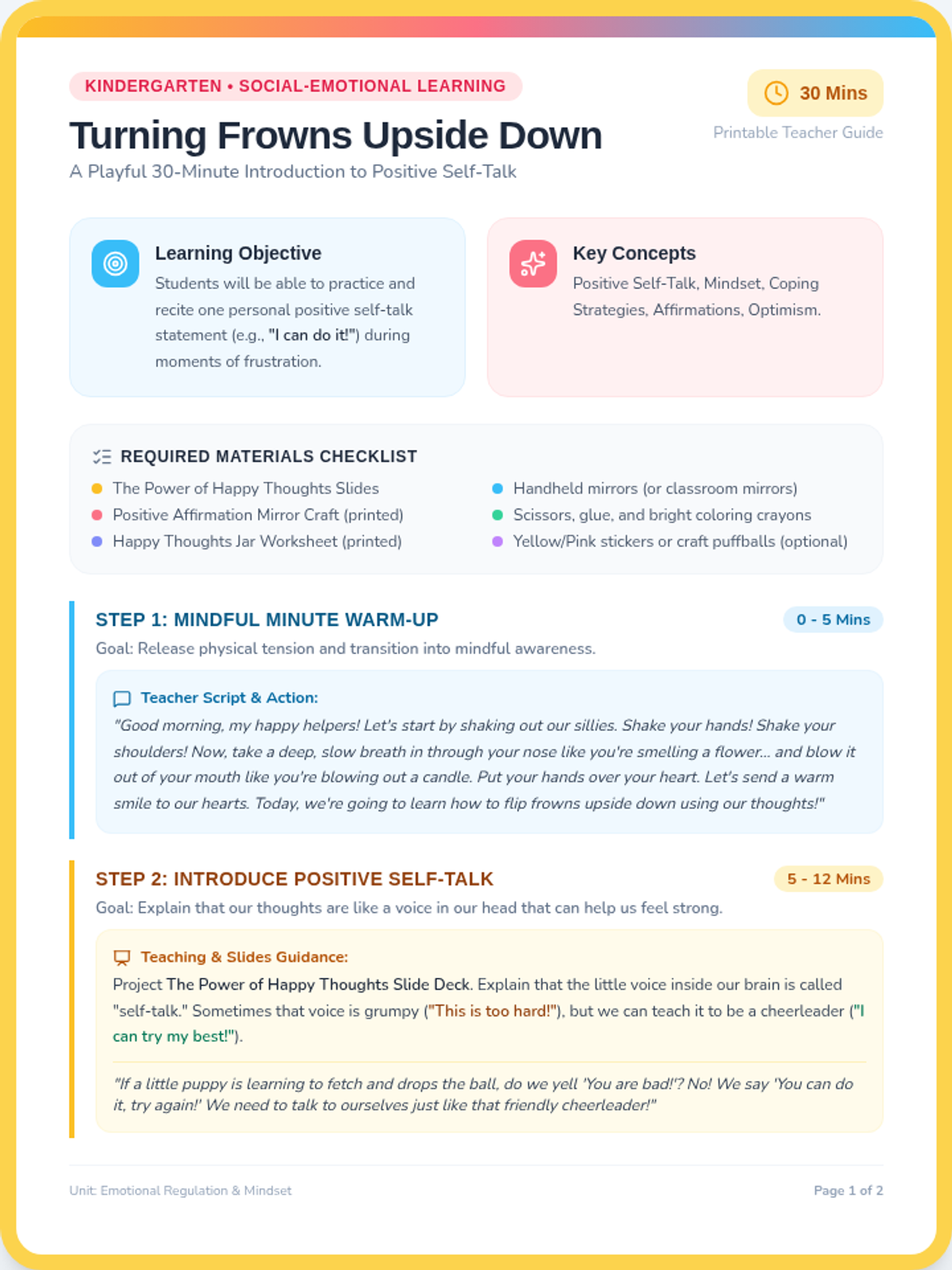
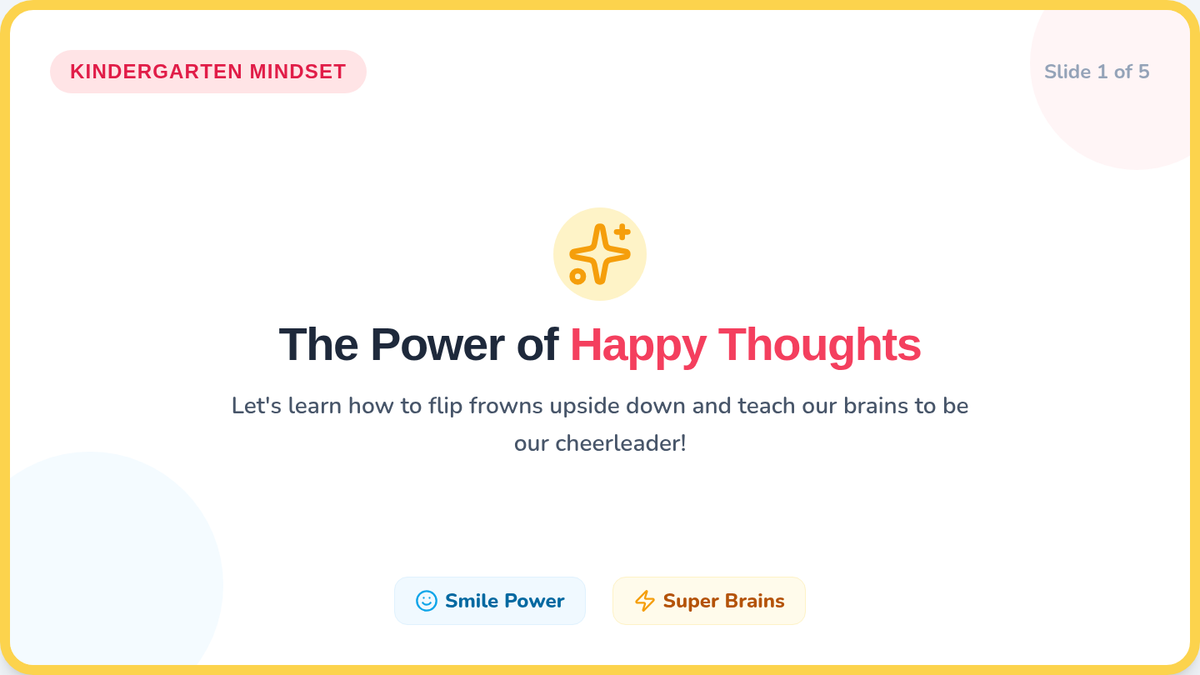
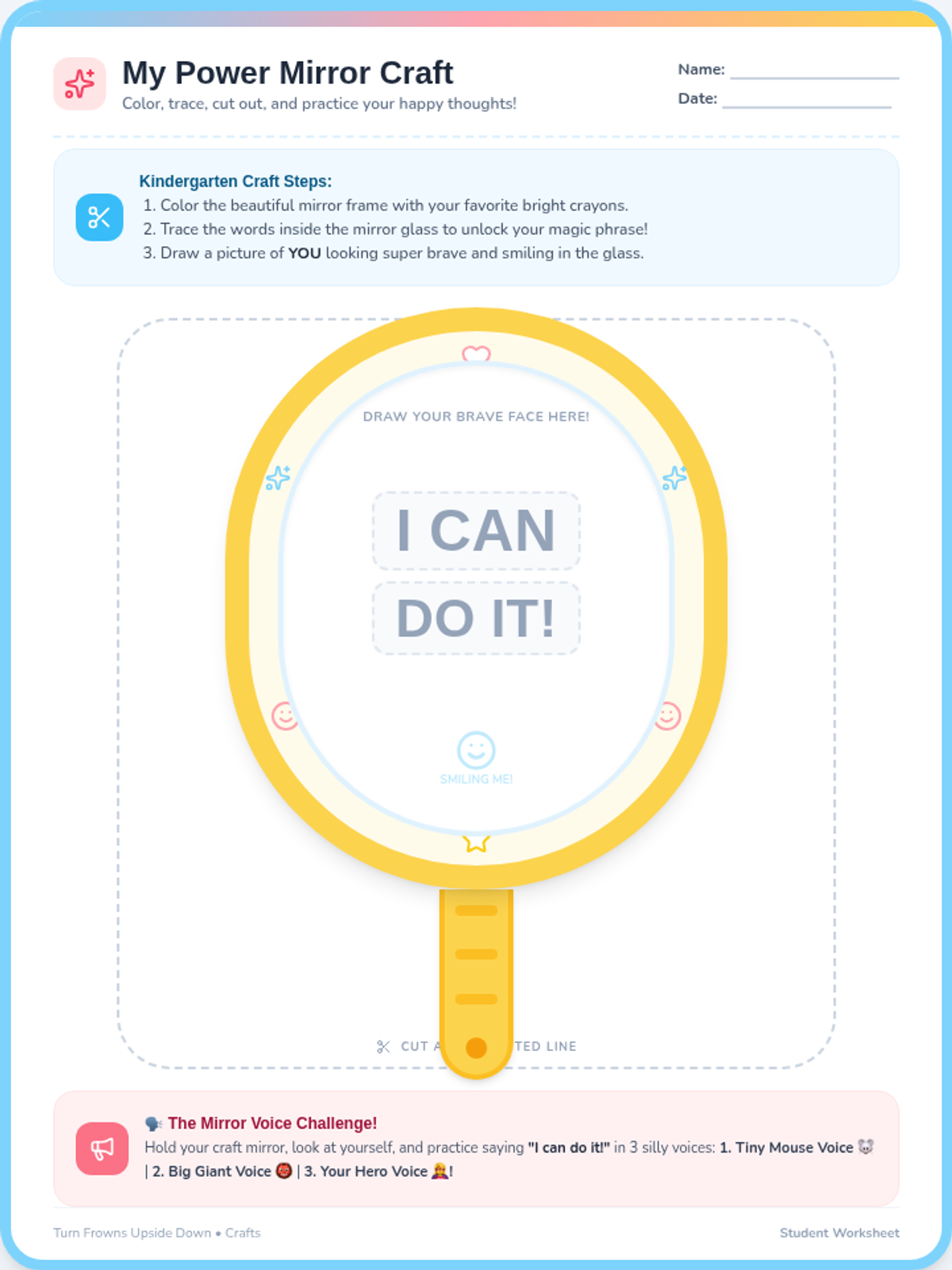
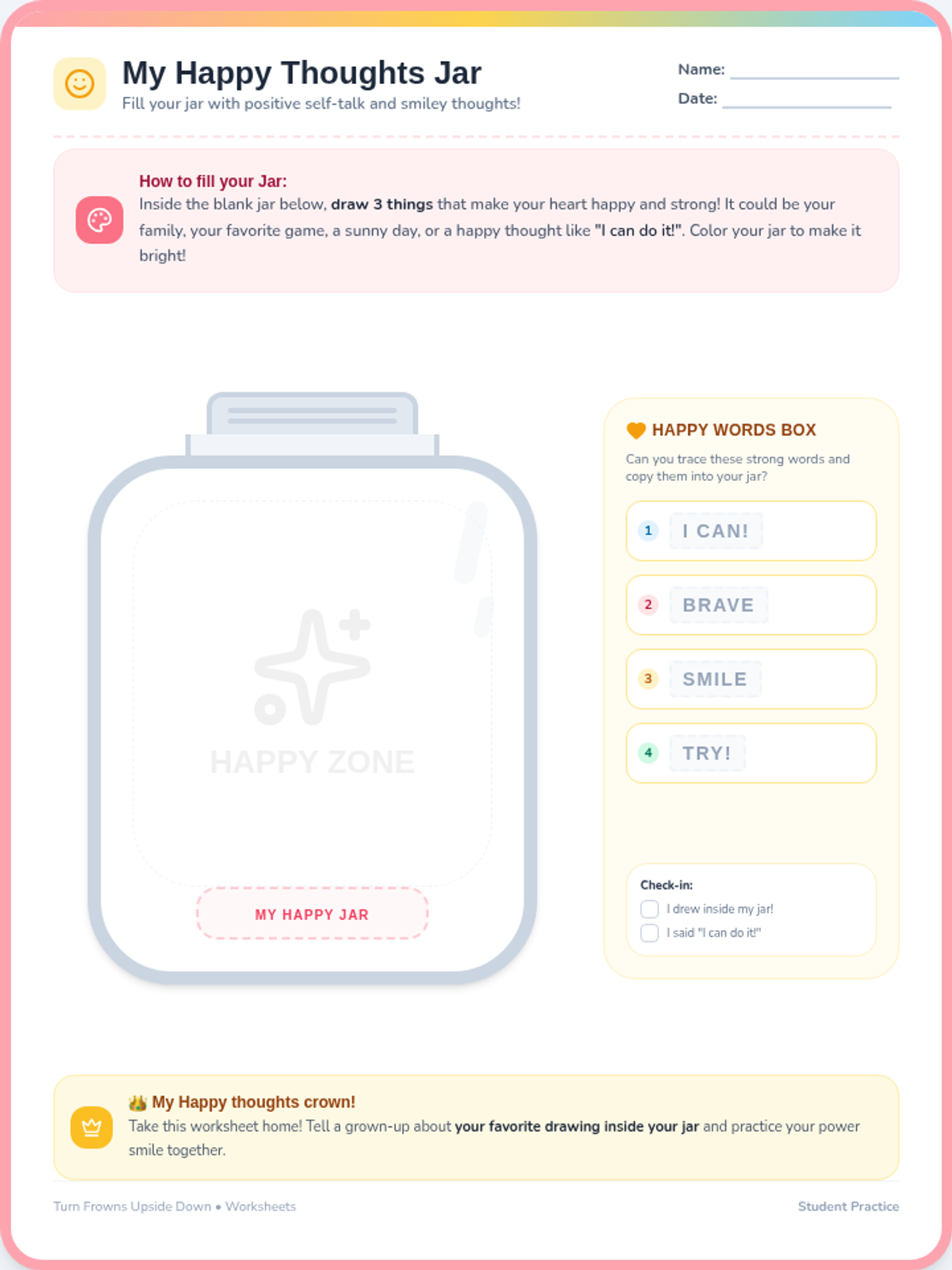
A playful, 30-minute lesson for Kindergarteners introducing positive self-talk and affirmations. Through a mindful warm-up, a slides-based discussion, a mirror craft, and a jar-filling worksheet, students learn to transform negative thoughts into happy, empowering self-talk.
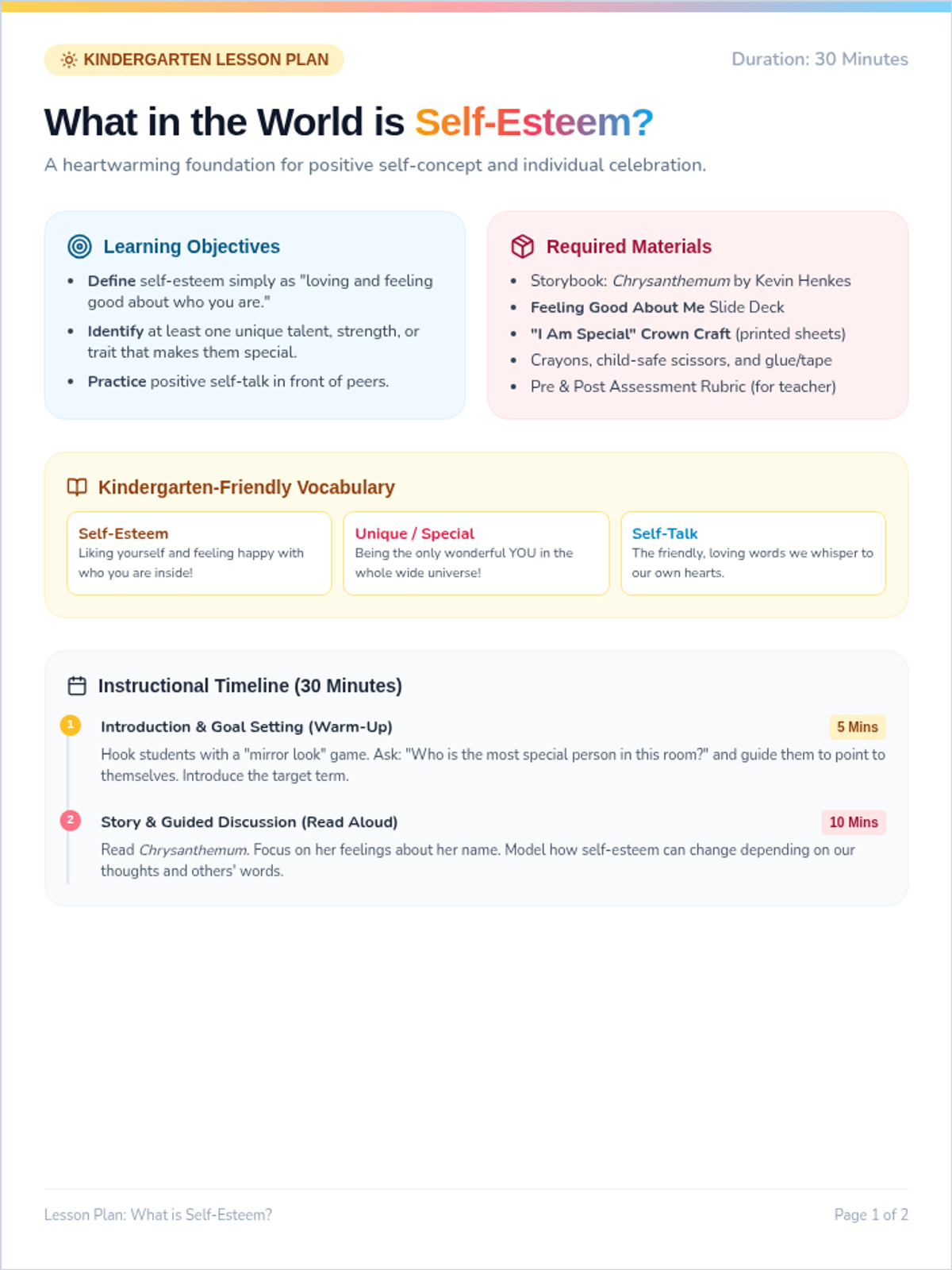
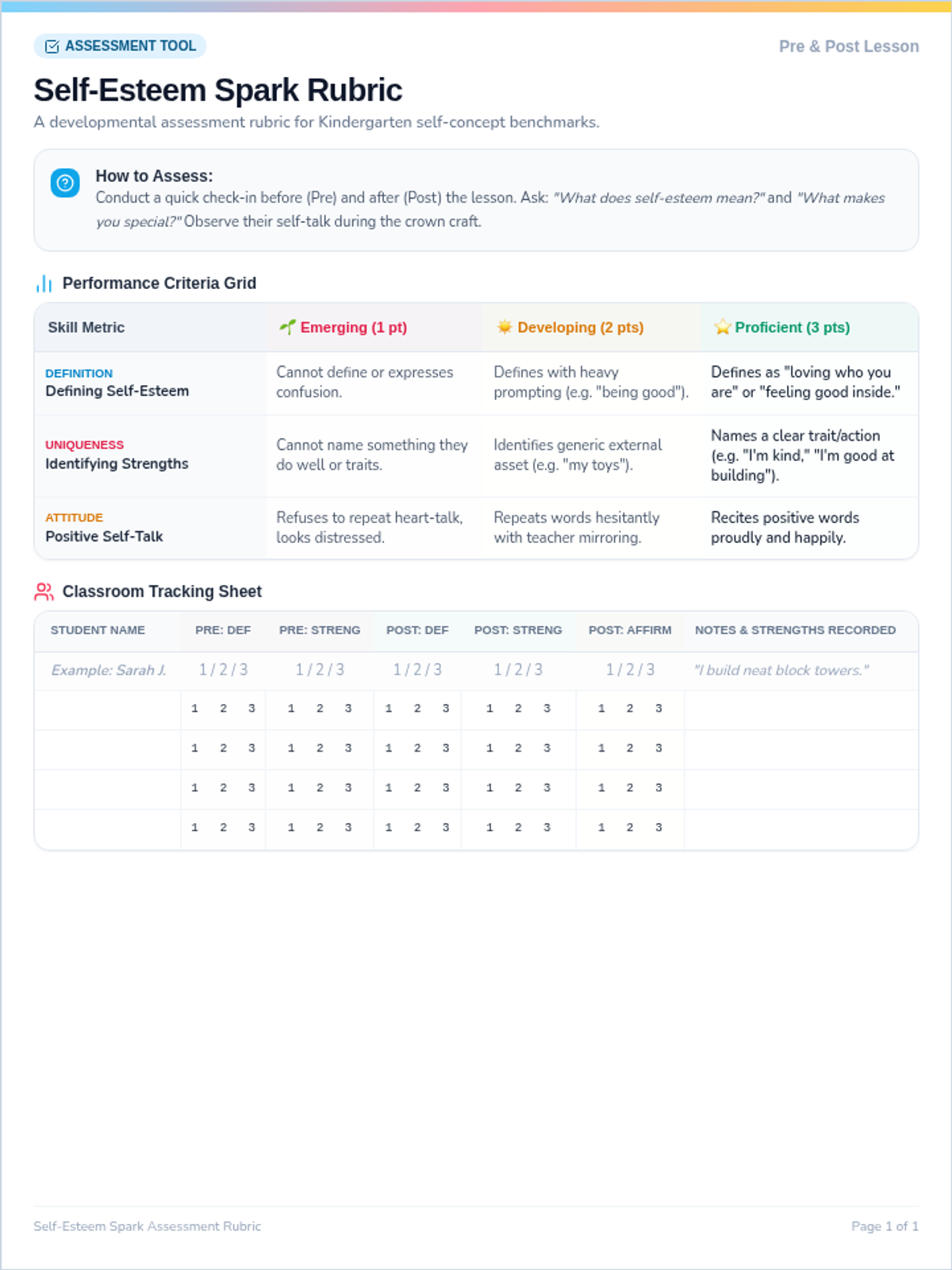
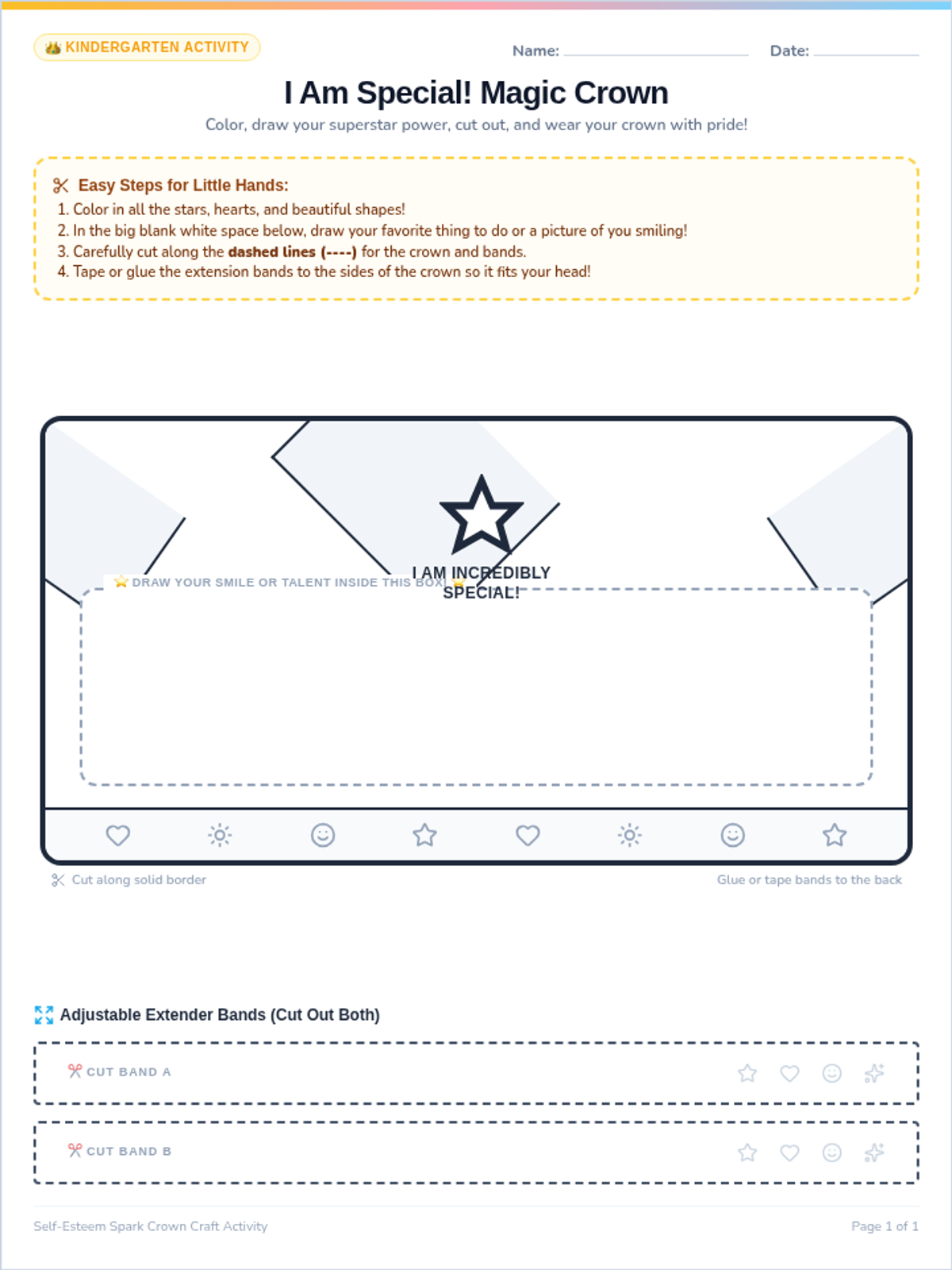
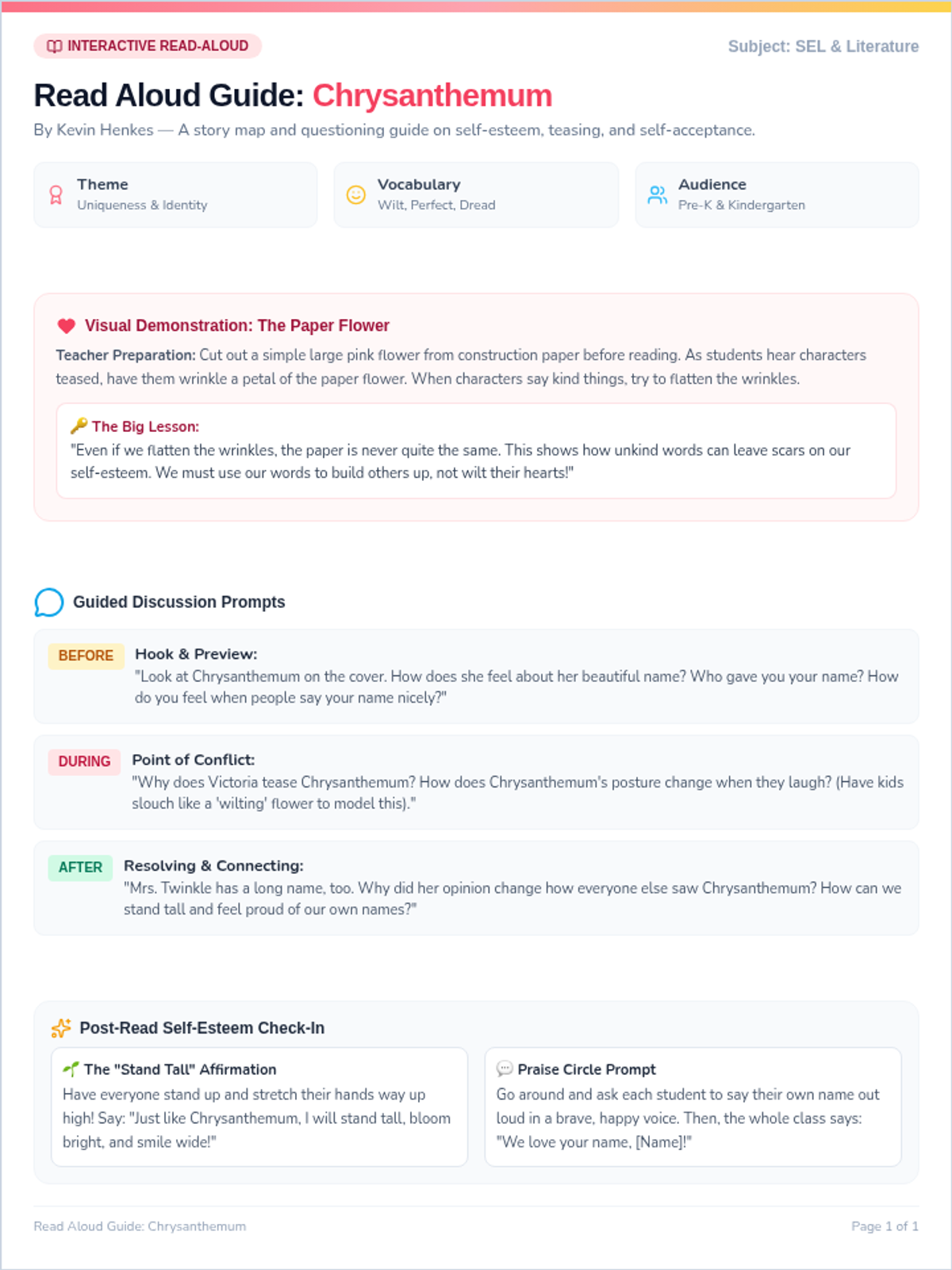
A 30-minute Kindergarten lesson designed to introduce the concept of self-esteem, celebrate individual uniqueness, and help students identify their own special strengths.
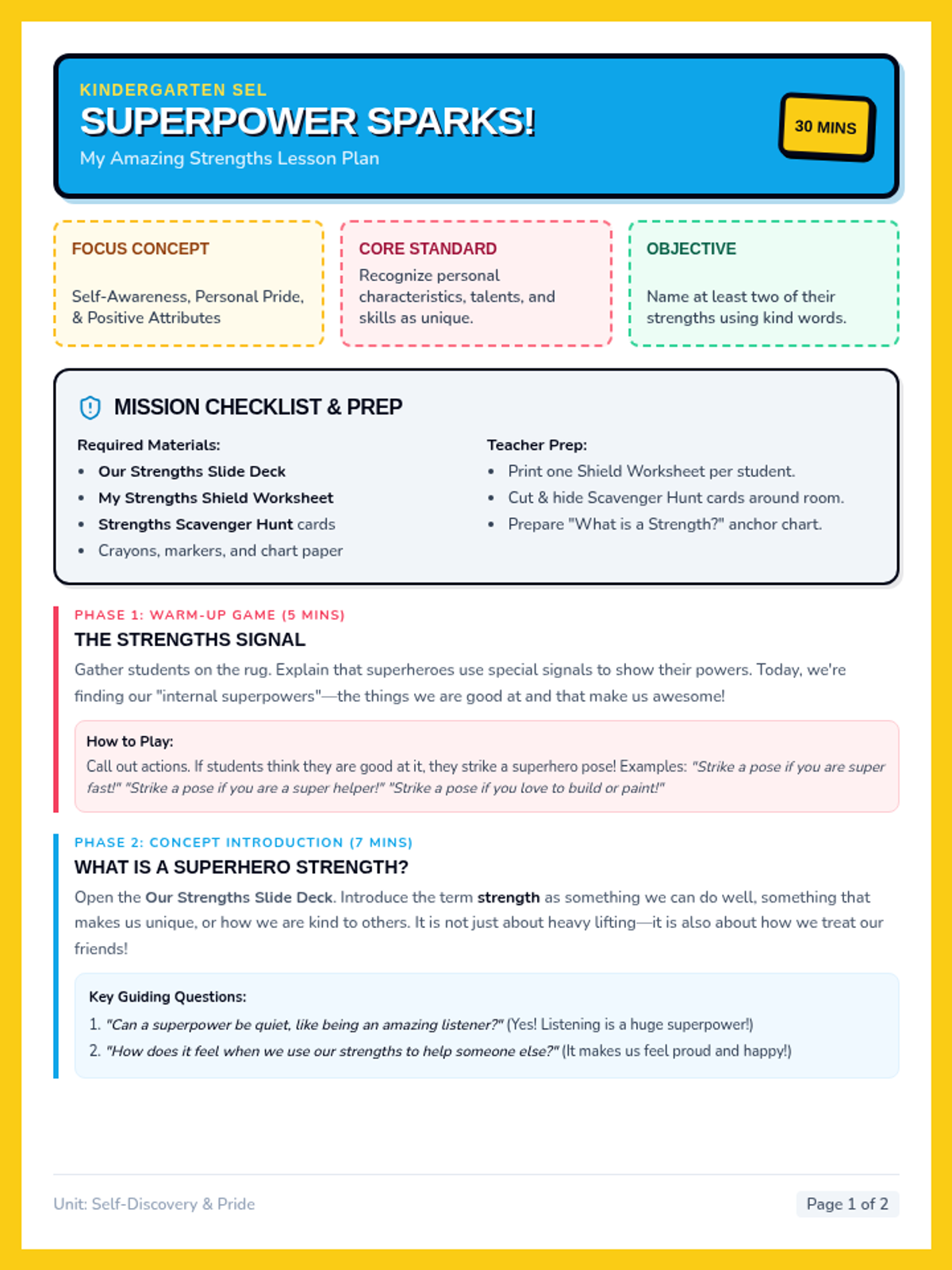
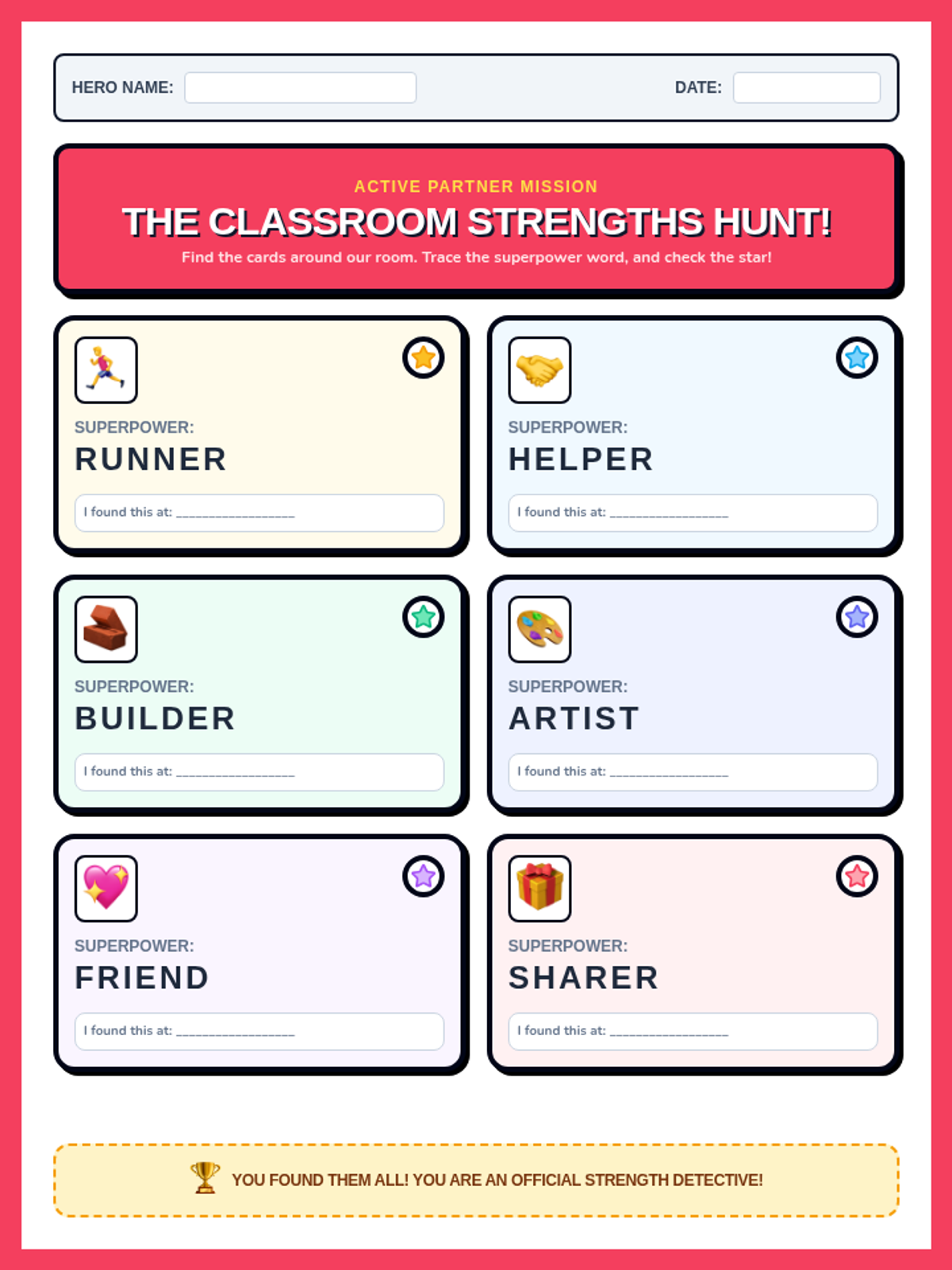
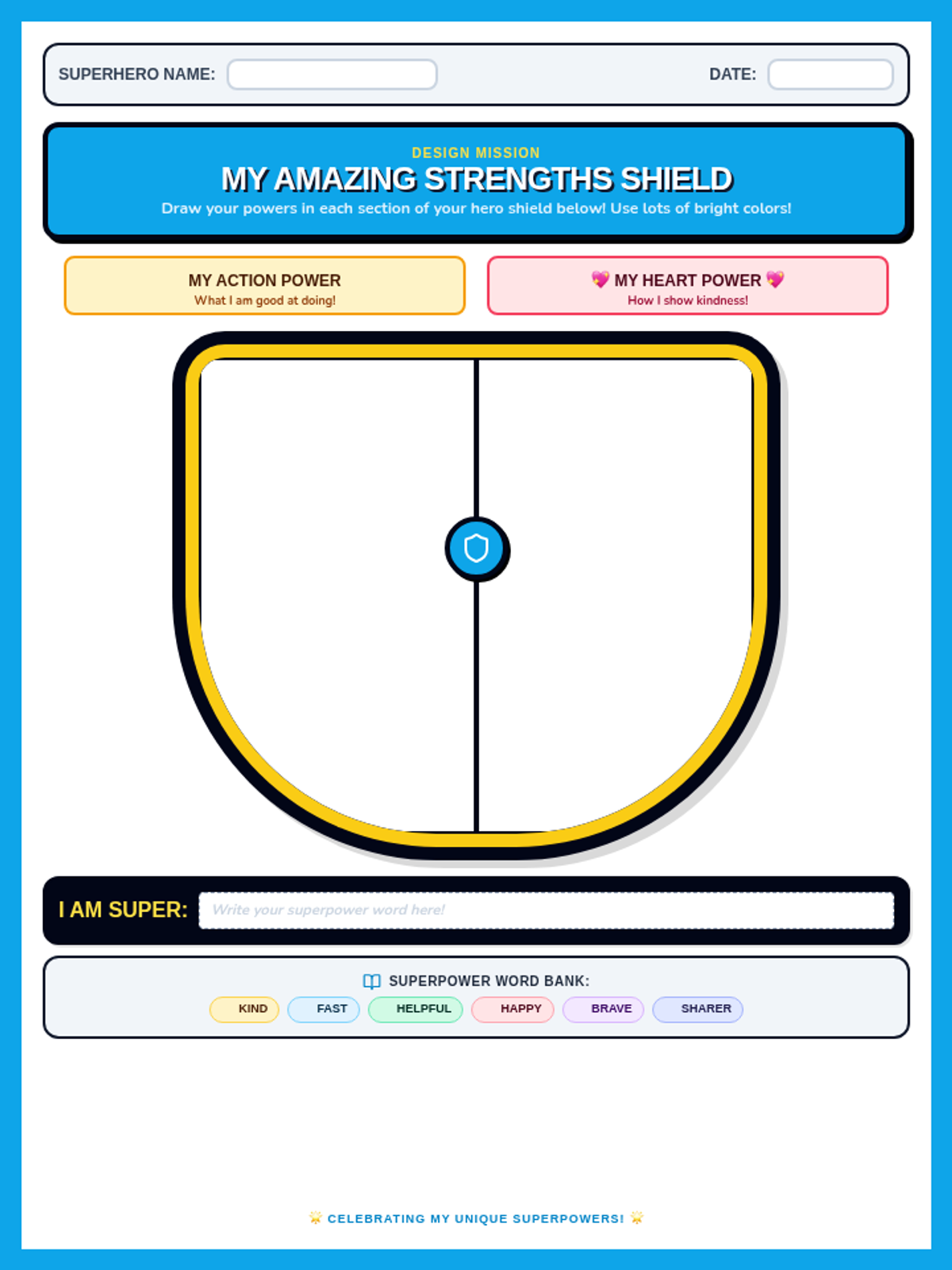
A 30-minute self-awareness lesson for Kindergarten where students identify and celebrate their unique personal strengths and positive attributes through a playful superhero theme.
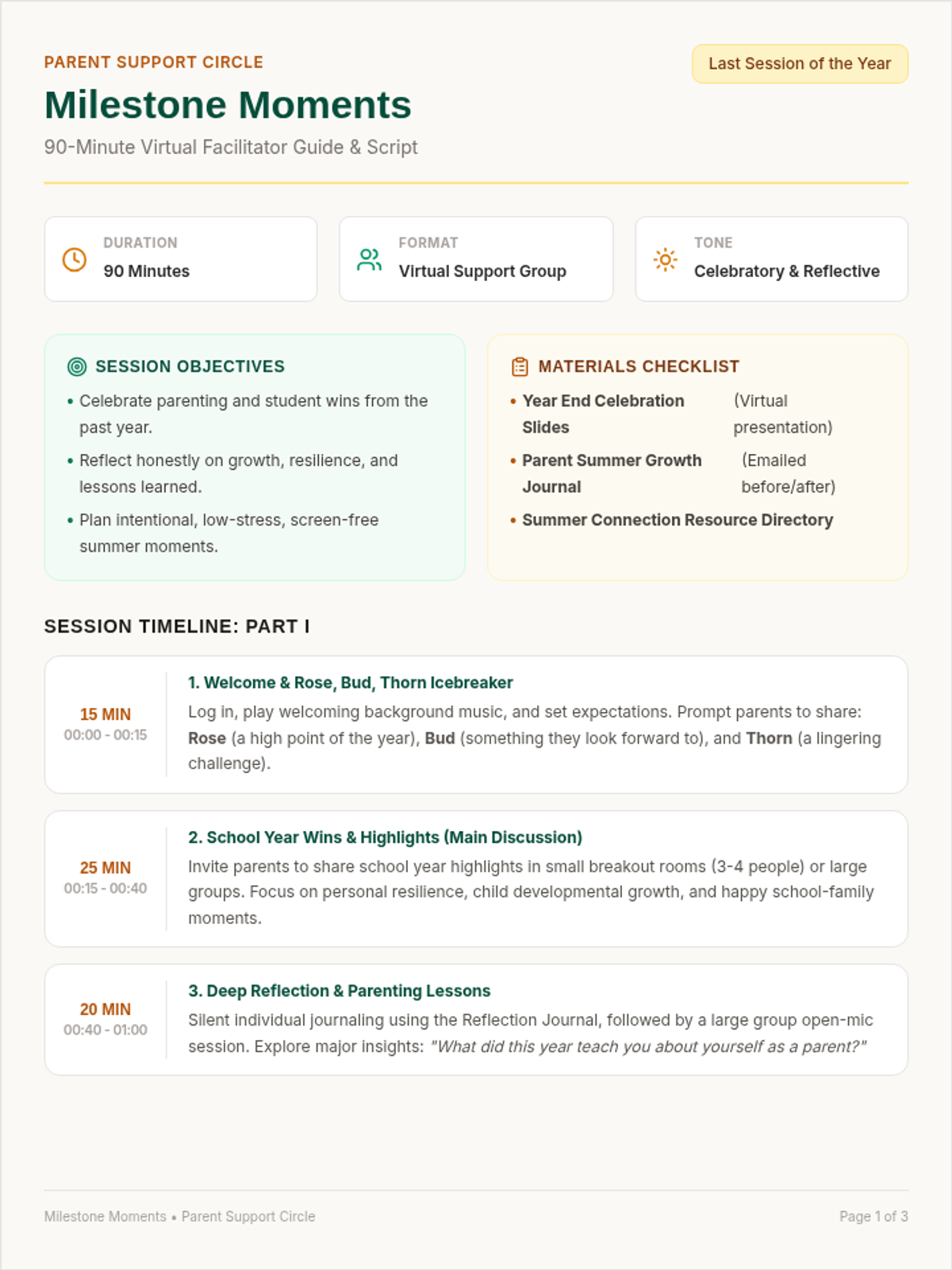
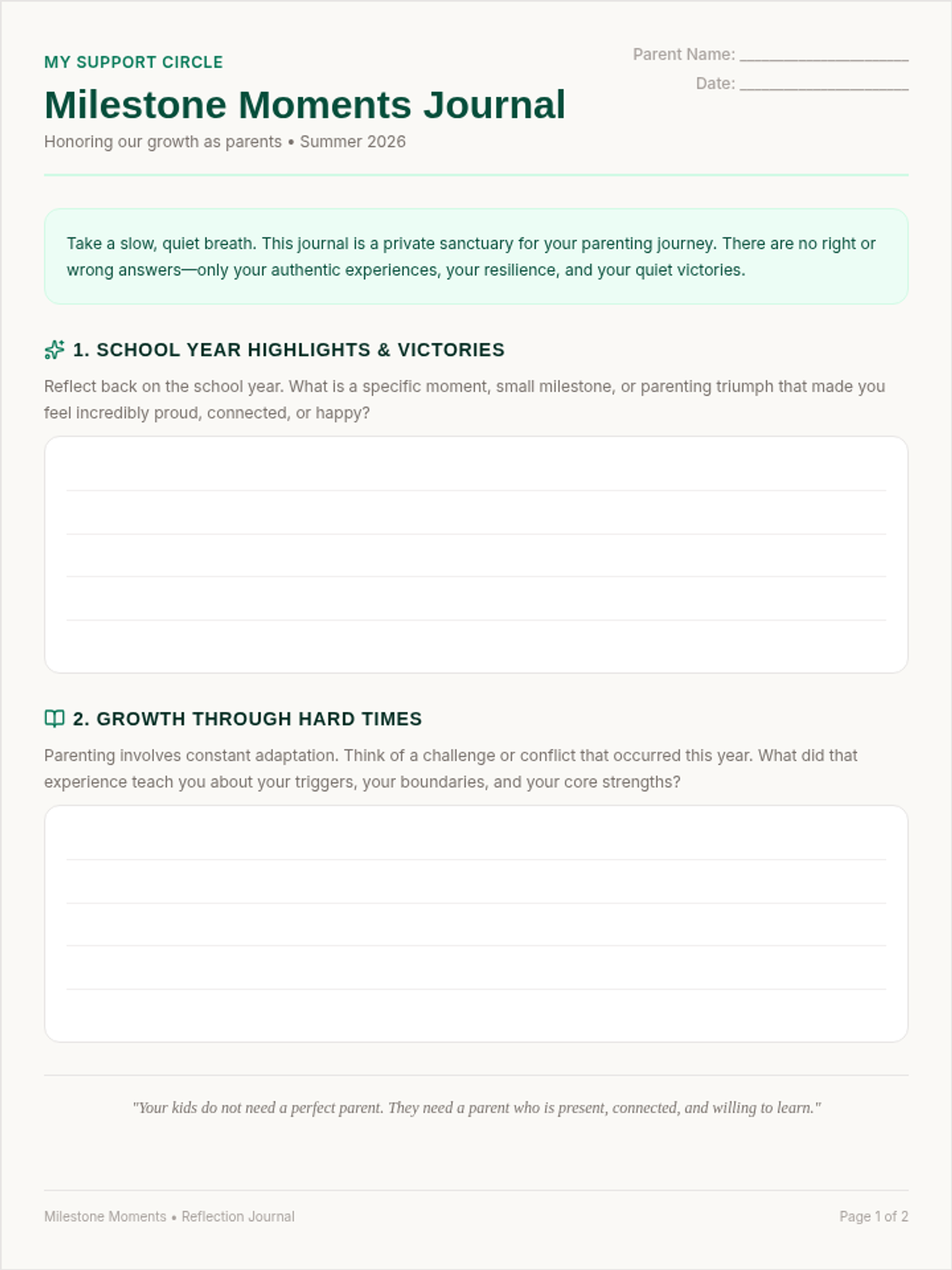
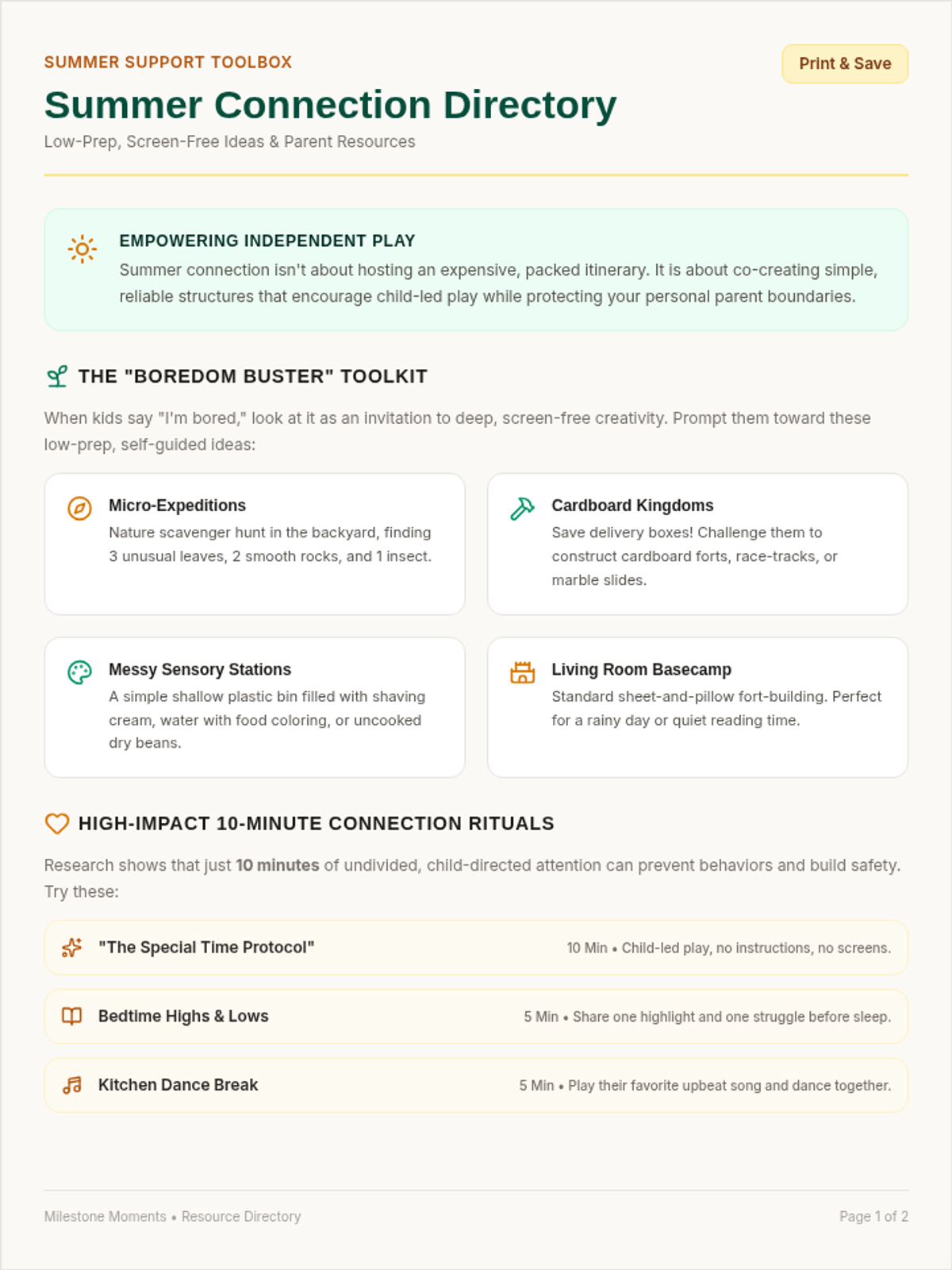
A warm, celebratory parent support group session focused on reflecting on school year successes, planning screen-free summer adventures, and setting growth goals.
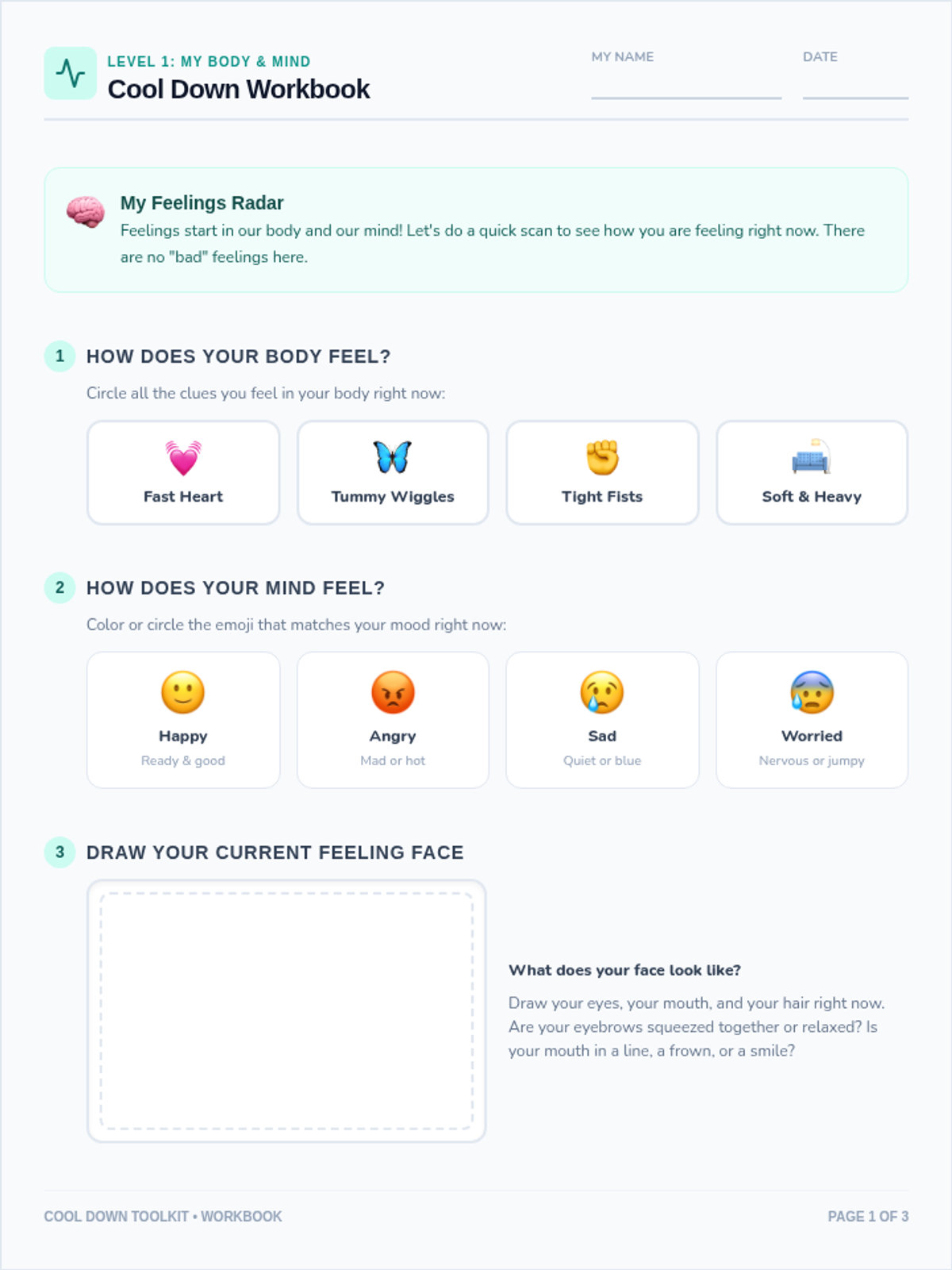
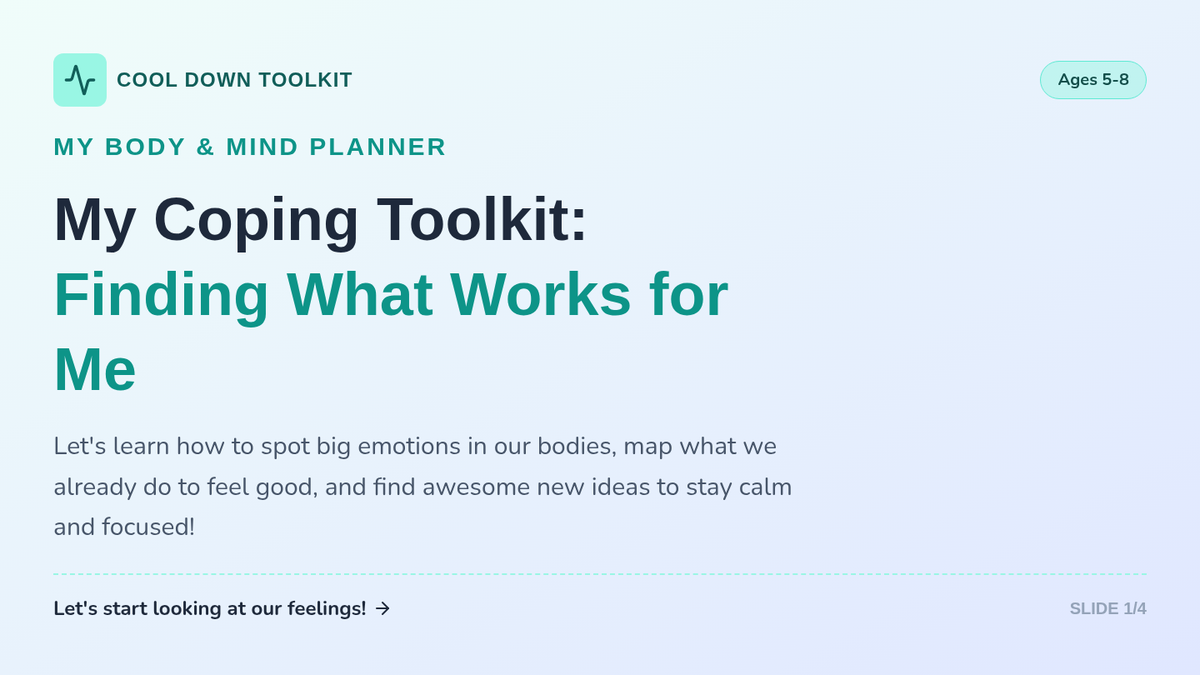
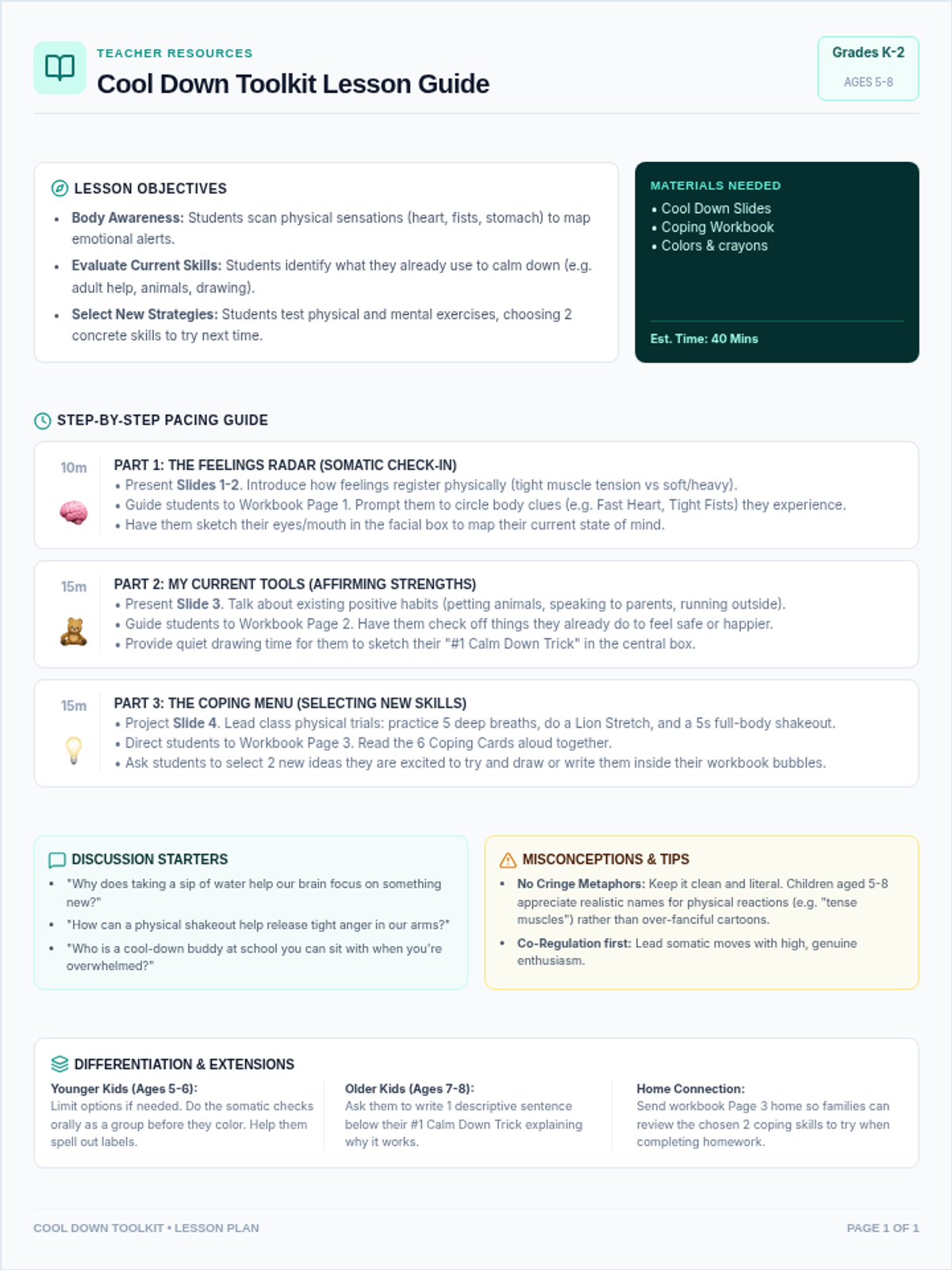
A clean, modern therapeutic lesson designed to teach students aged 5-8 how to identify physical and emotional cues, map their current coping strategies, and choose practical new skills to try.
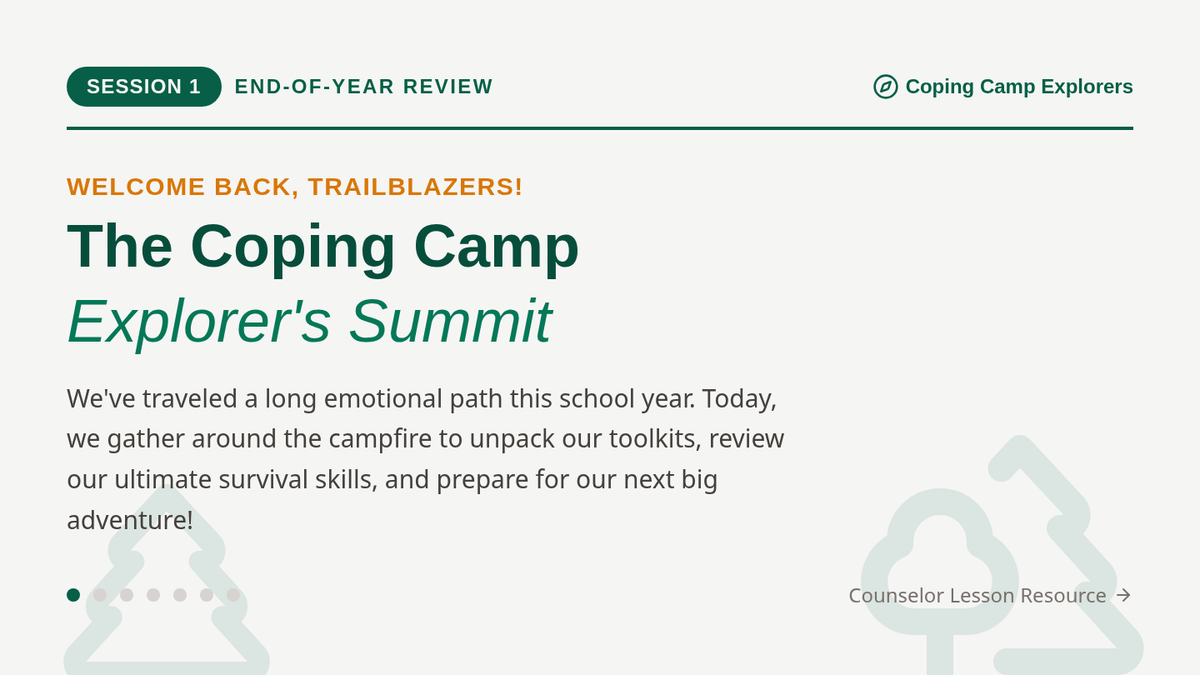
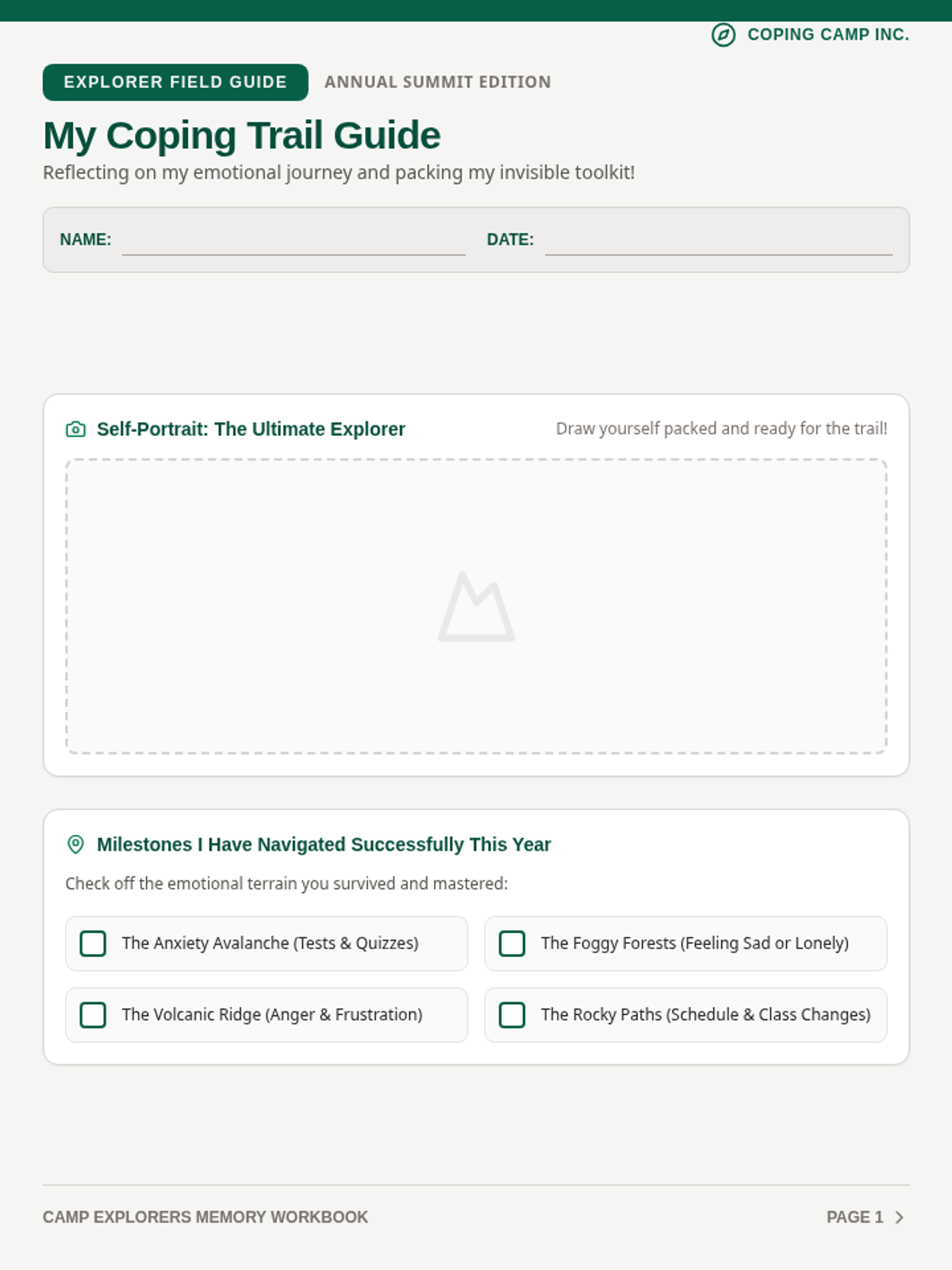
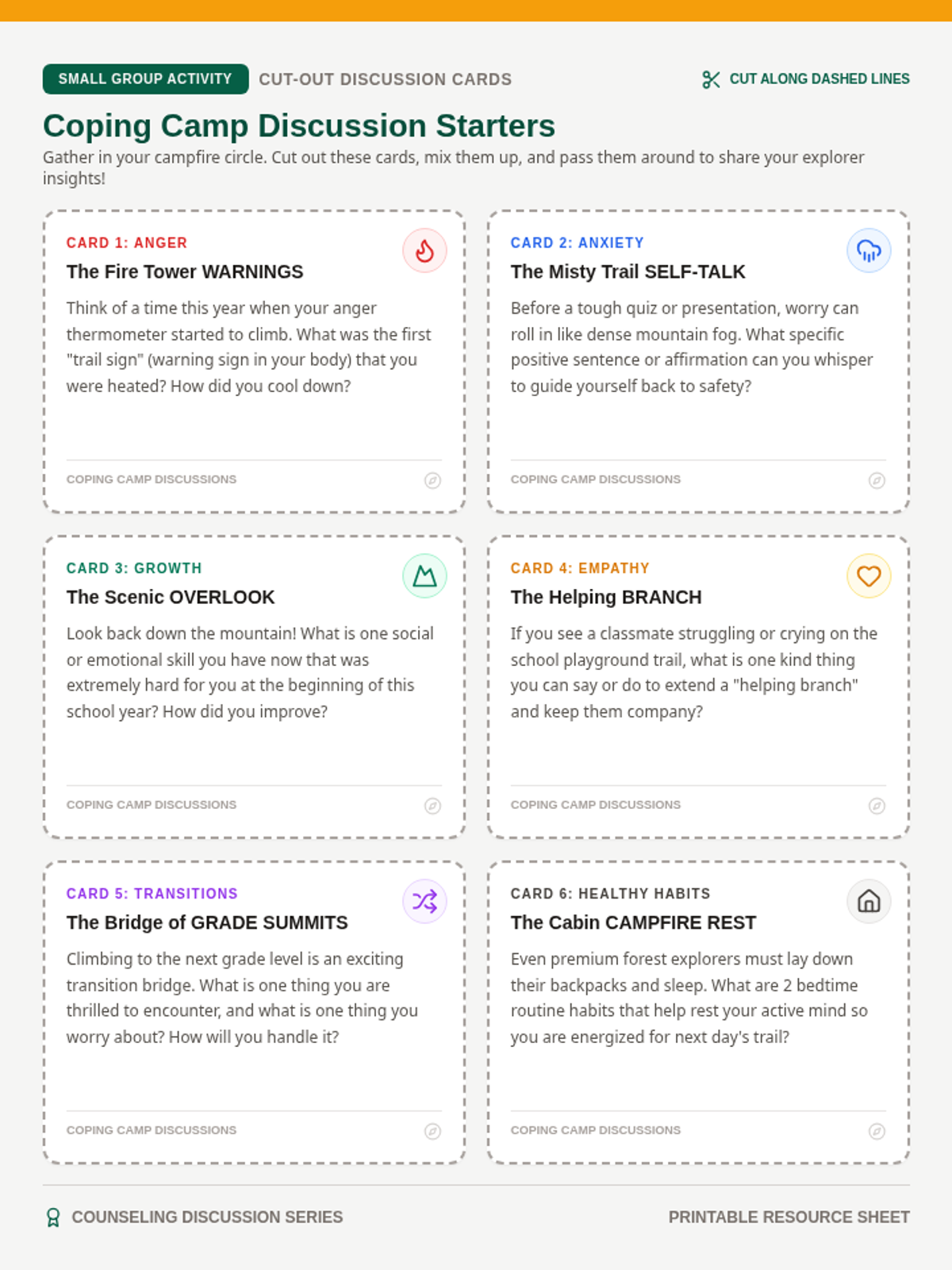
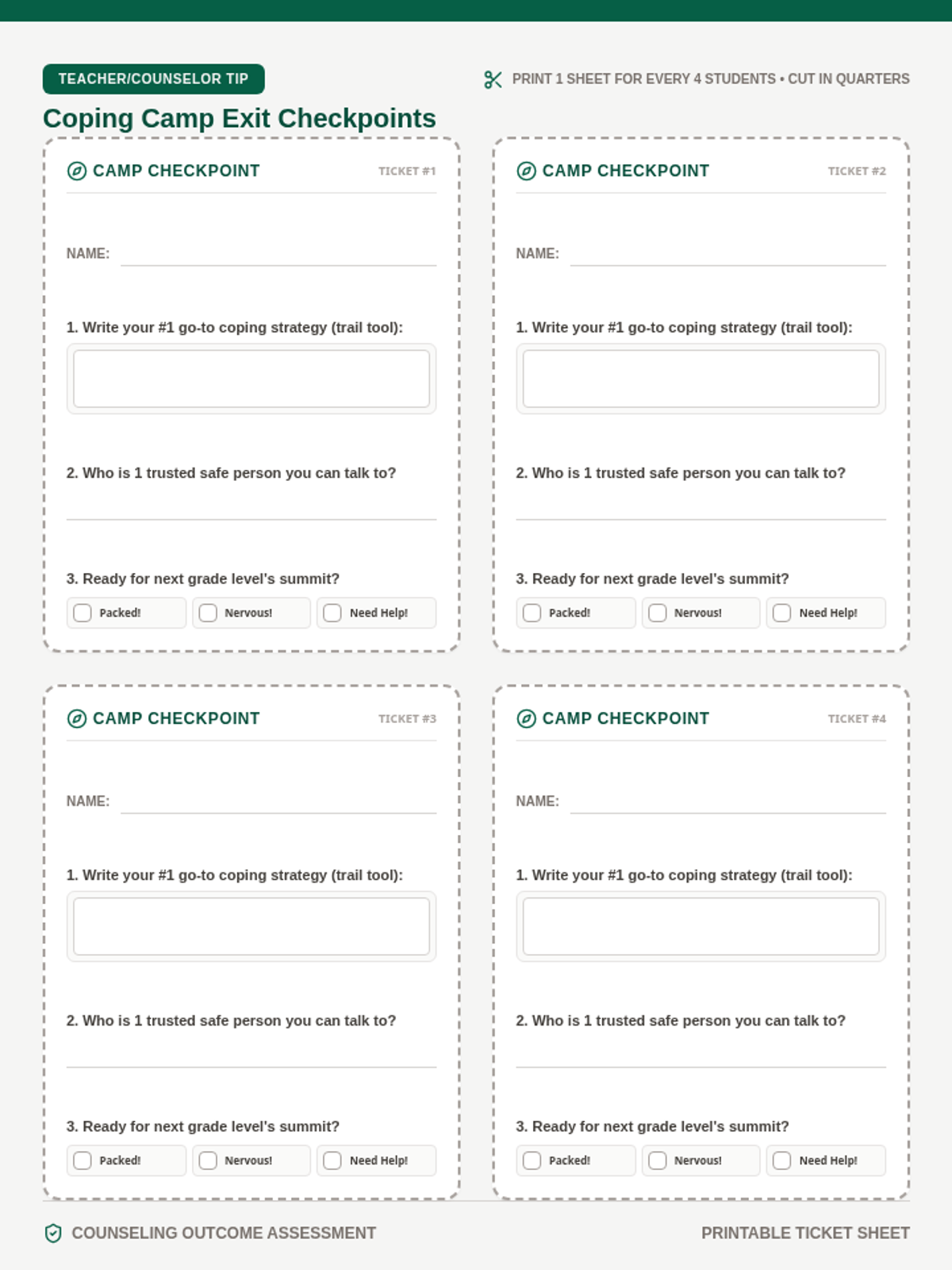
A comprehensive end-of-year counseling lesson designed to review coping strategies, celebrate emotional growth, and prepare students for transitions. The lesson includes an interactive slide deck, a printable personal memory book, interactive discussion task cards, and counseling exit tickets, all tied together under a friendly 'Coping Camp Explorers' theme.
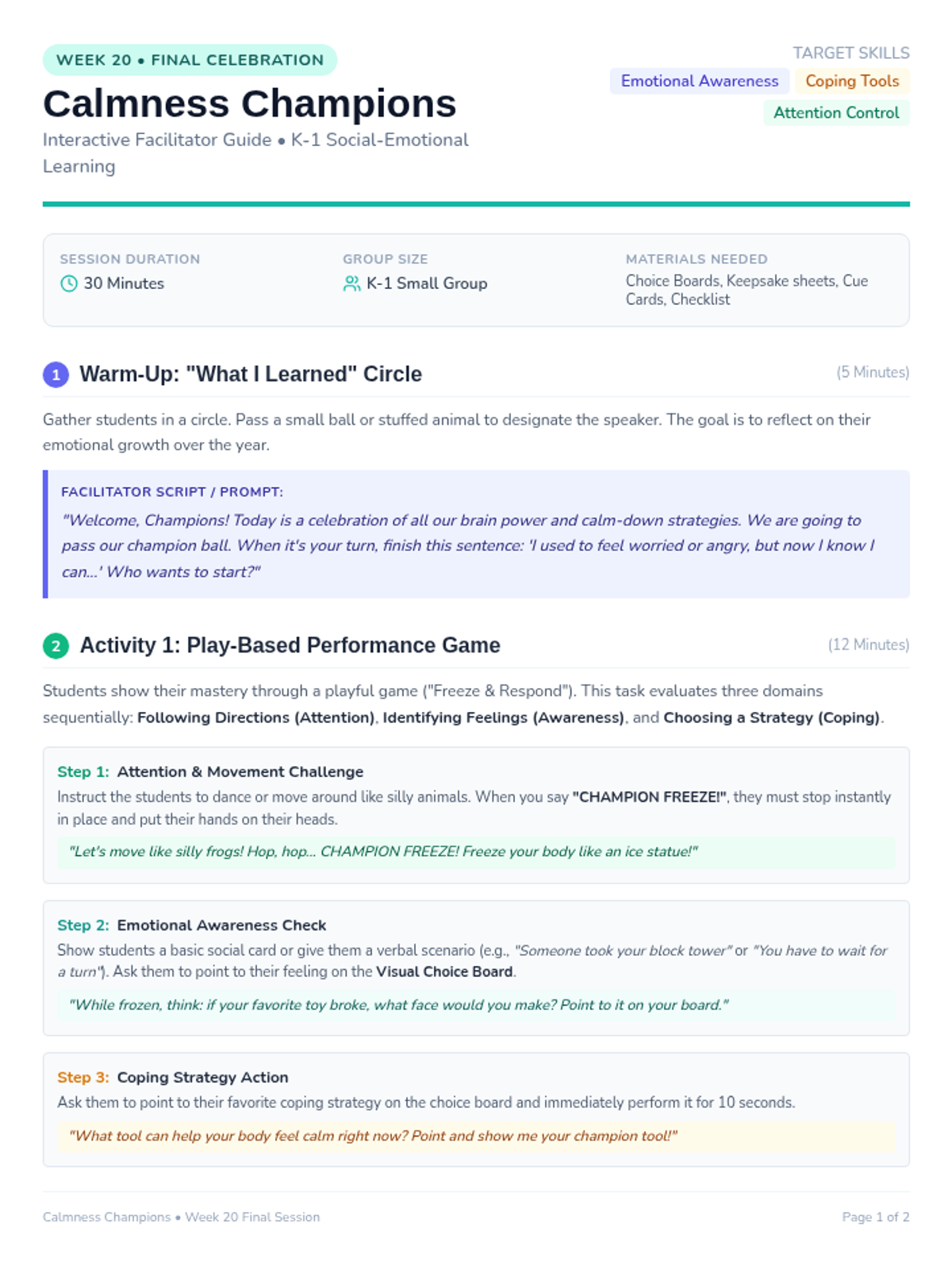
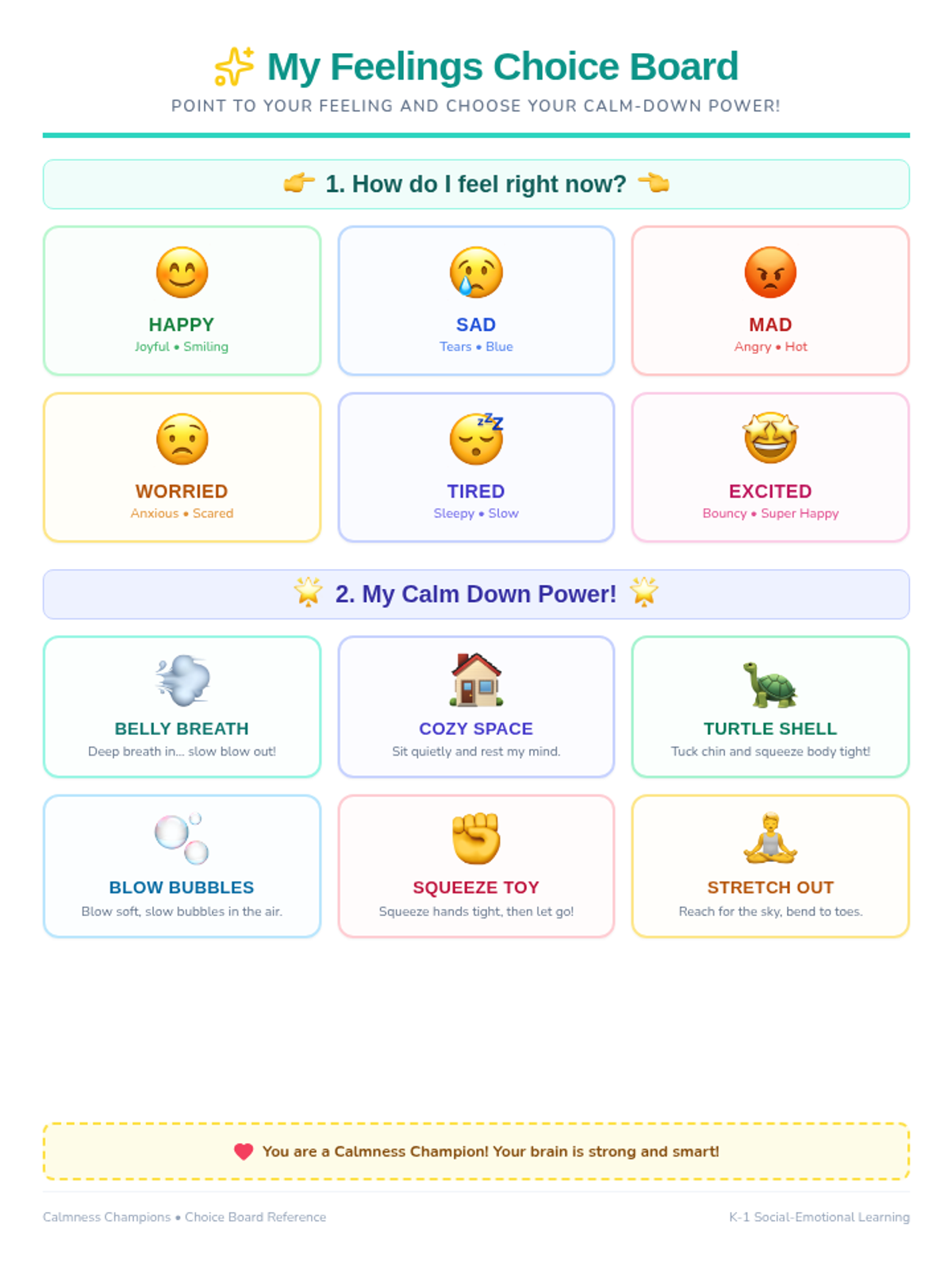
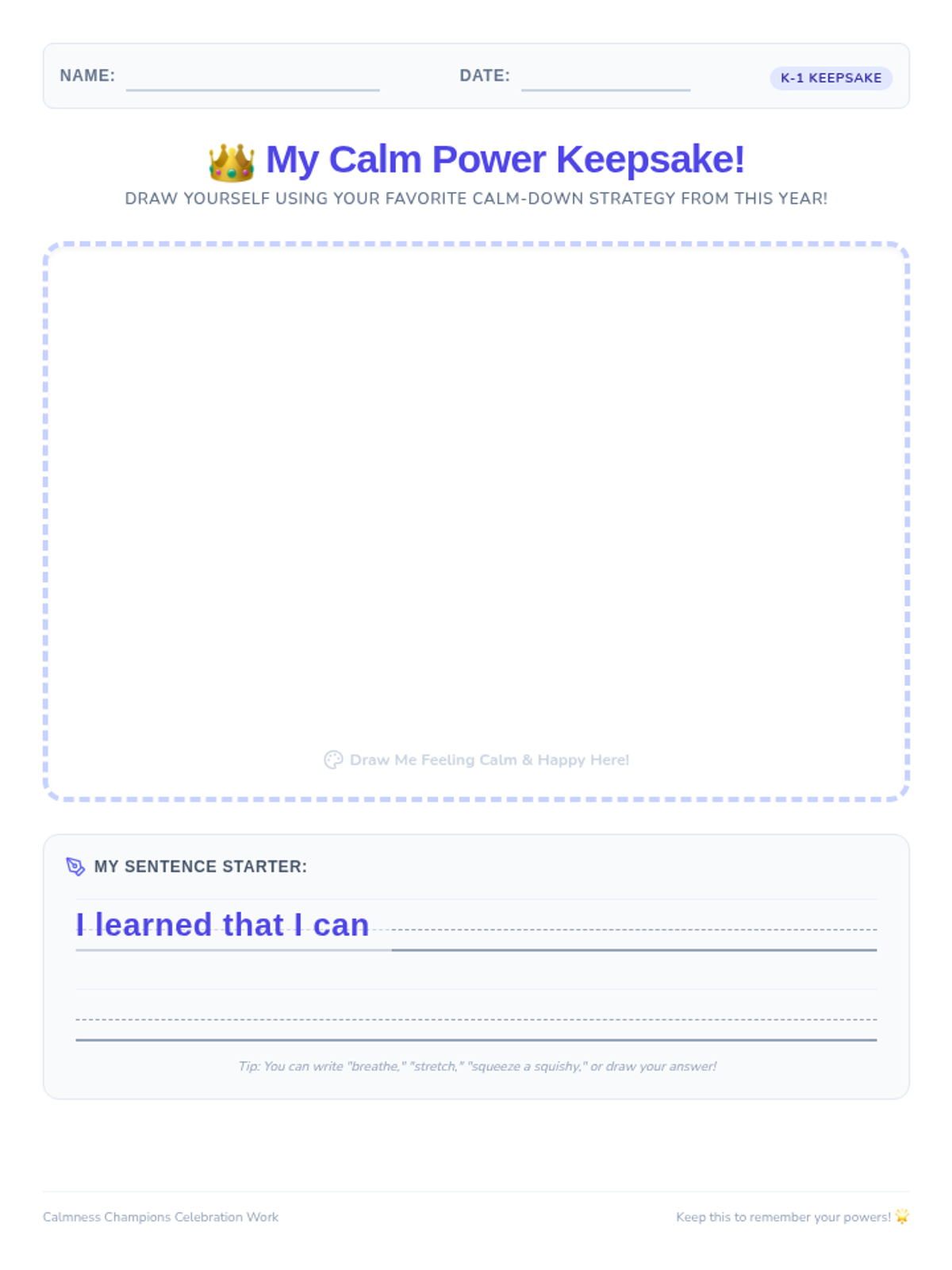
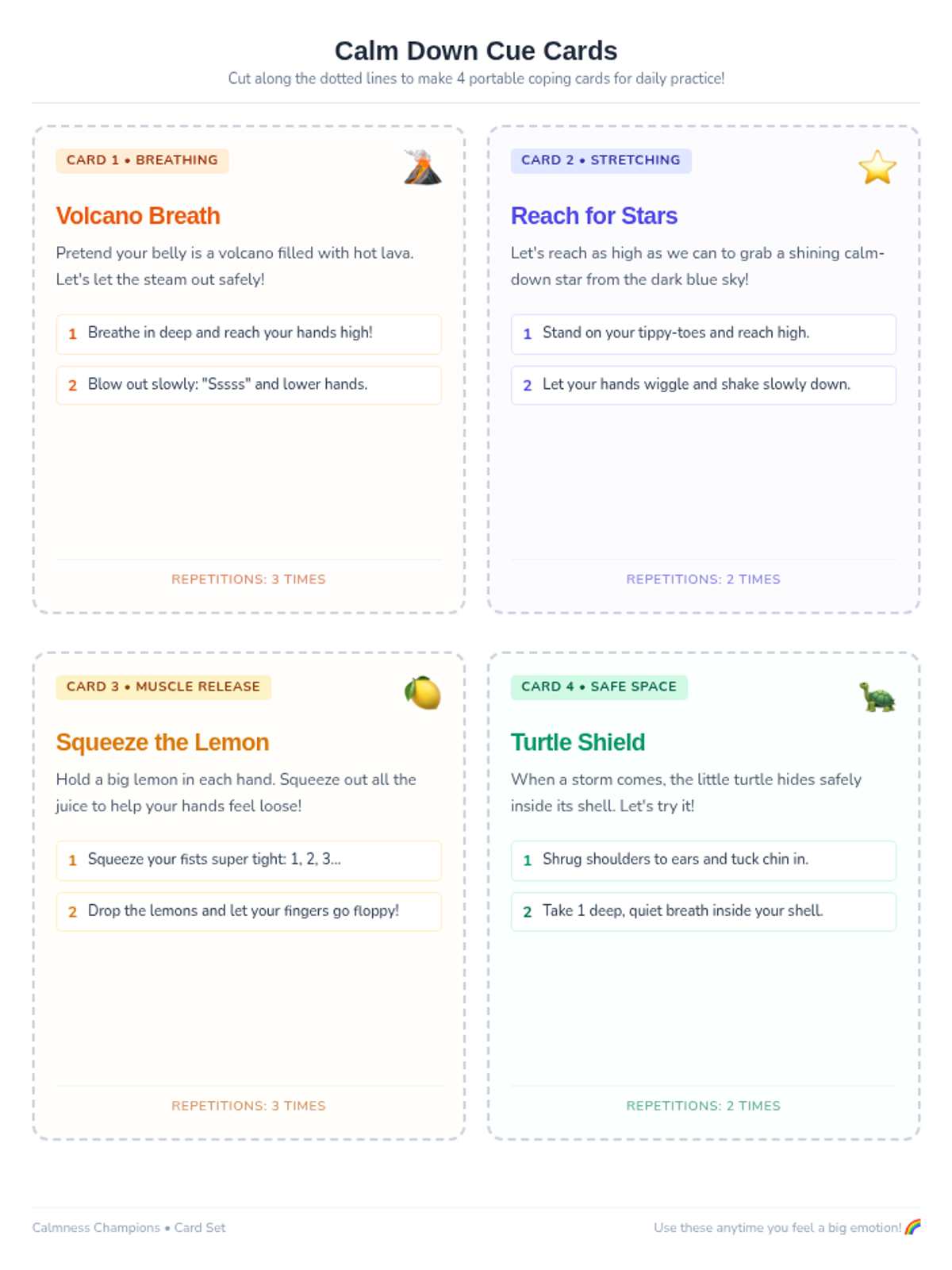
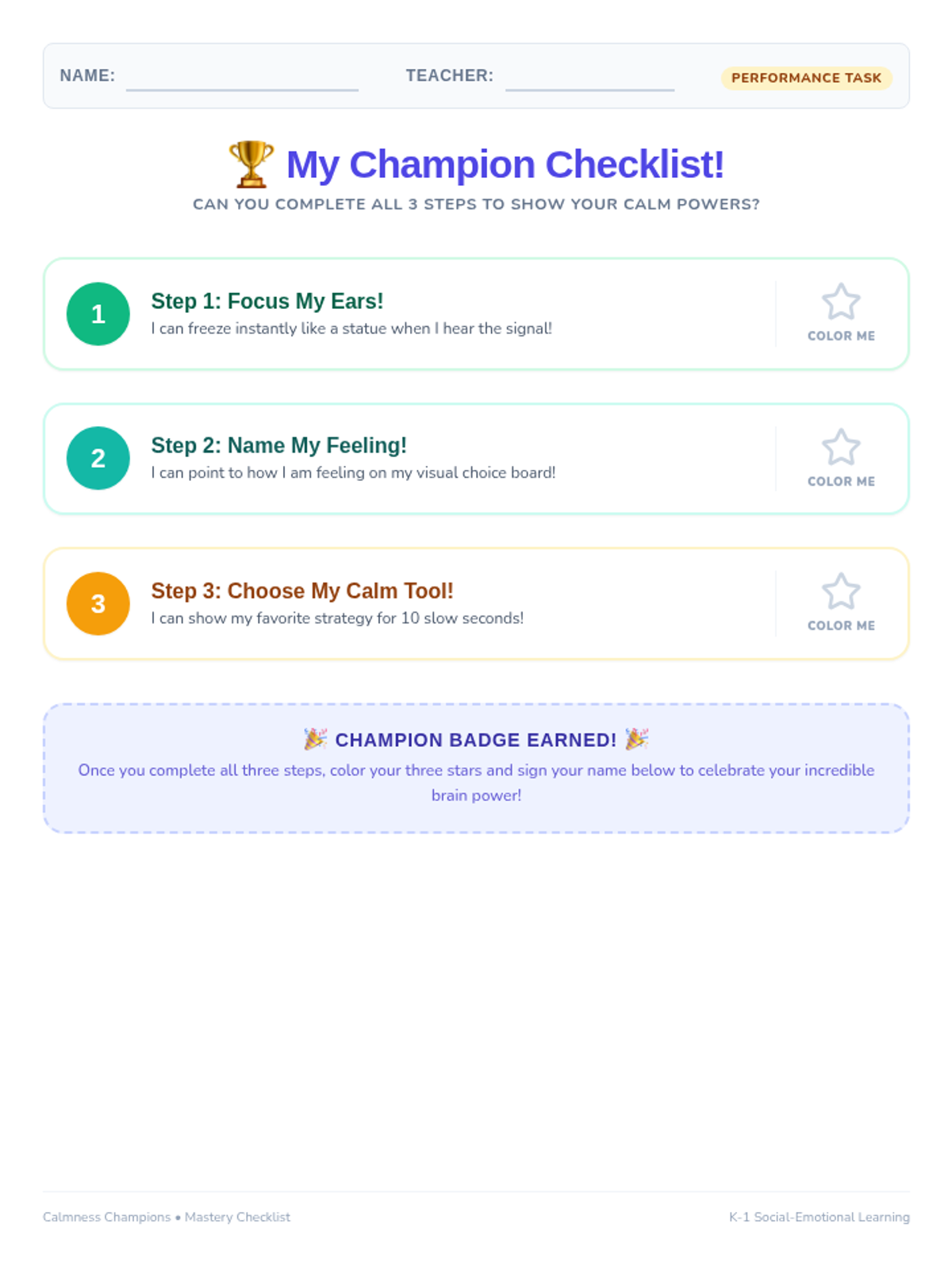
A celebratory final session for K-1 students to demonstrate emotional awareness, coping strategies, and attention through a playful performance task, group practice, and reflection.
Provides a culmination for the attendance adventures, helping students celebrate their completed milestones, review key habits, and commit to arriving on-time.
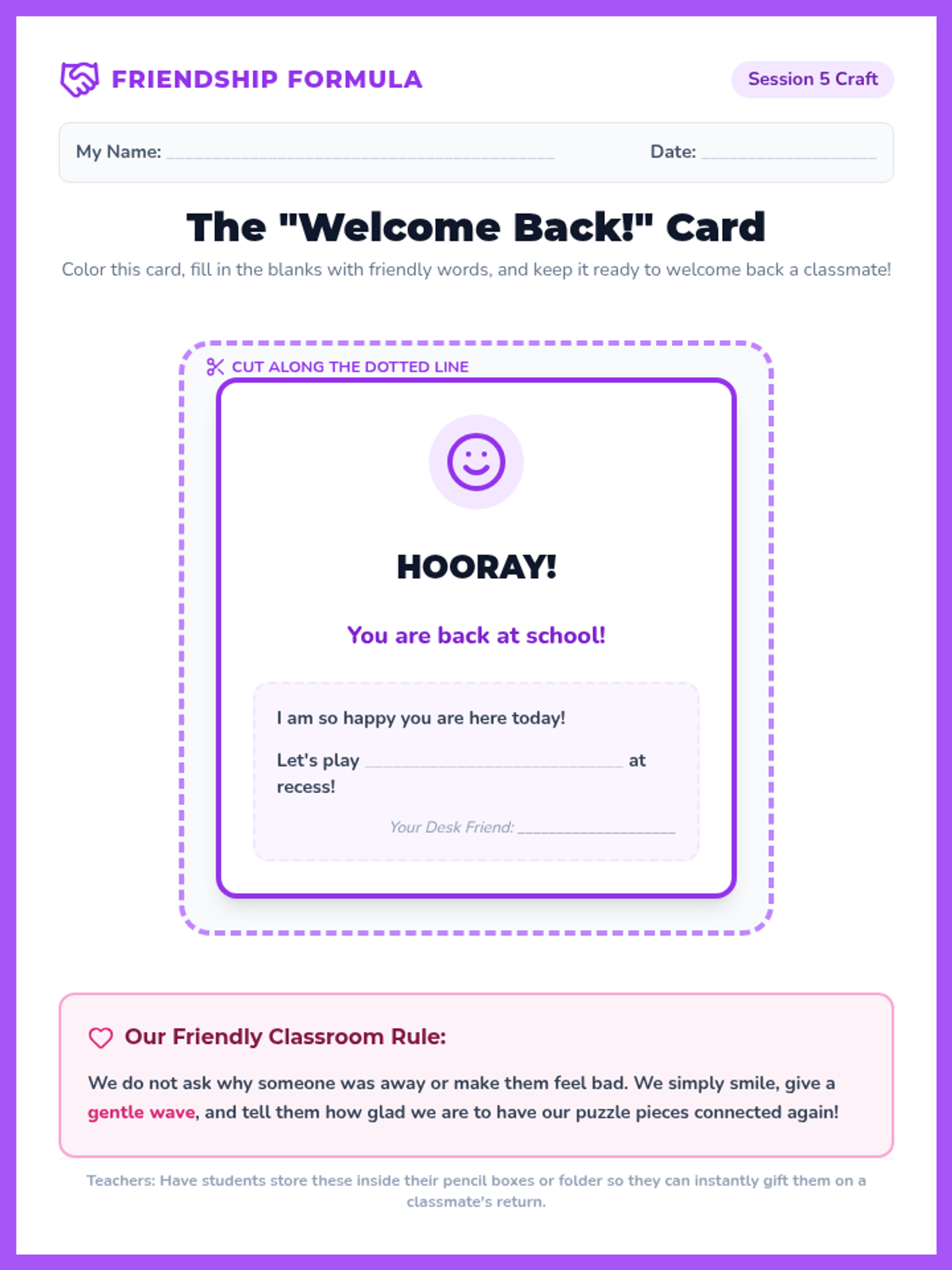
Helps students understand how their relationships with peers make school exciting, and teaches positive ways to welcome classmates back when they have been absent.
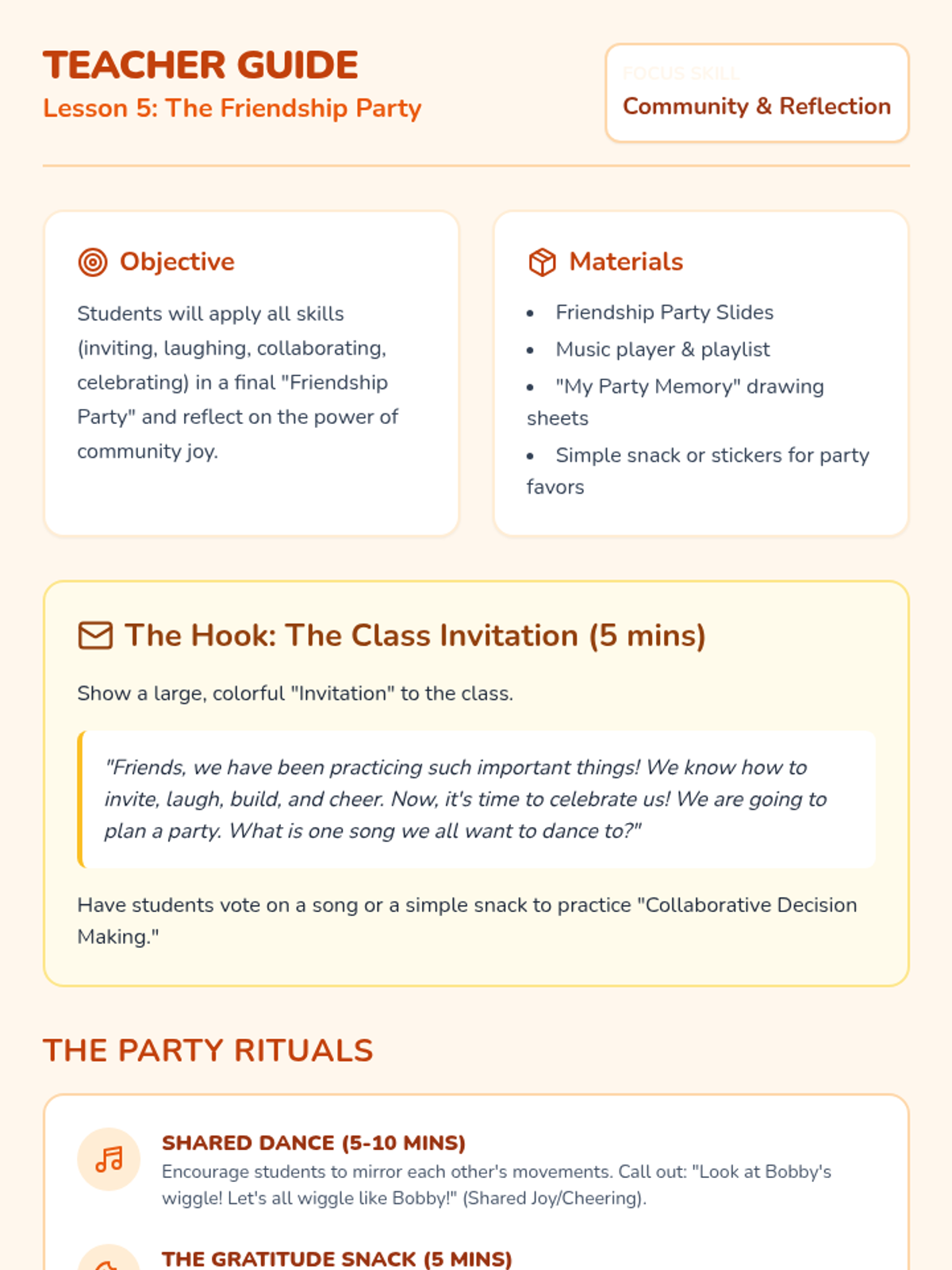
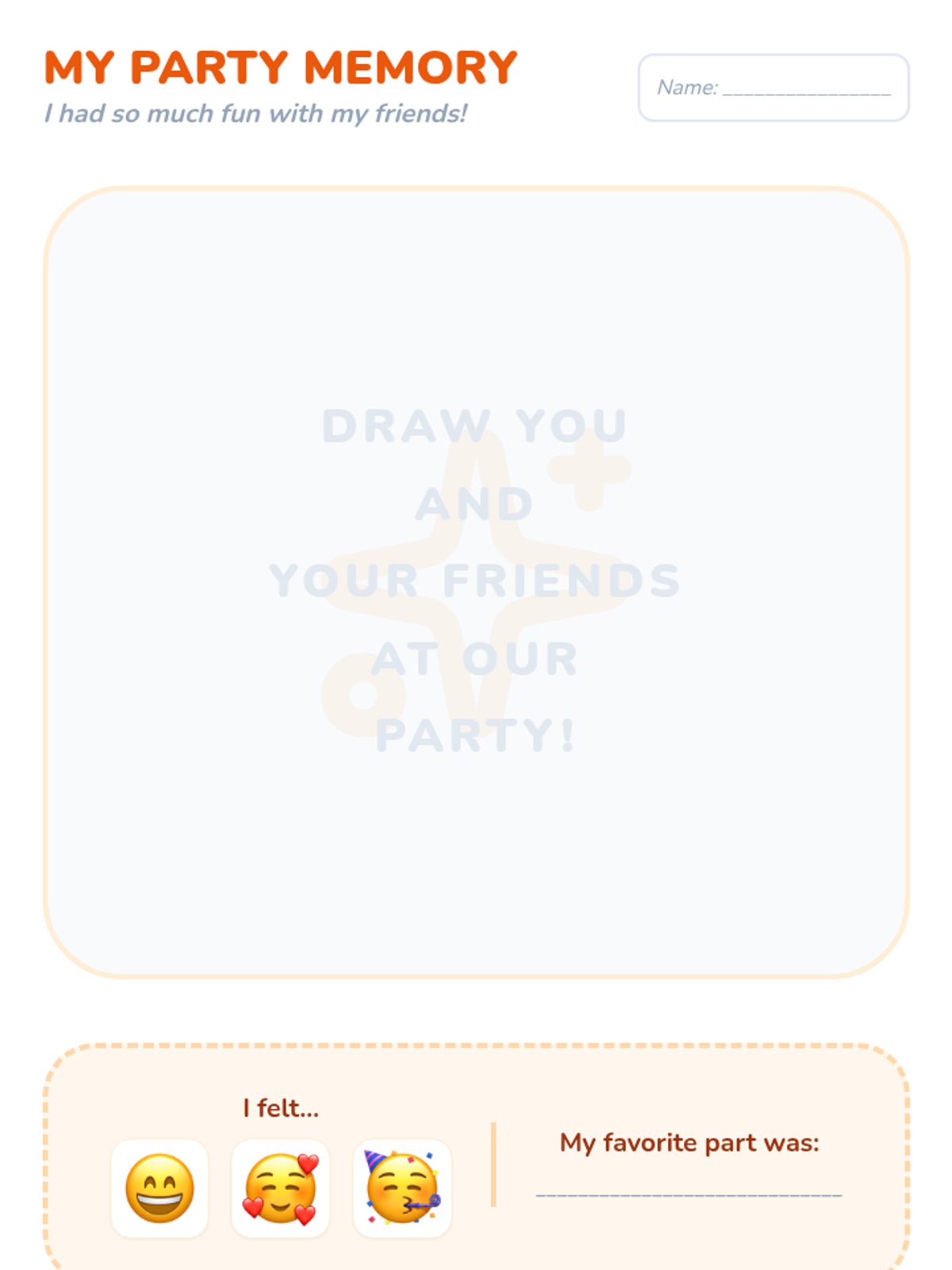
A culminating event where students plan and execute a simple shared activity (like a dance party or snack share). They reflect on how doing things together feels different than doing them alone.
Students present their collages to small groups, articulating why they chose specific activities. Peer listeners practice affirming others' choices.
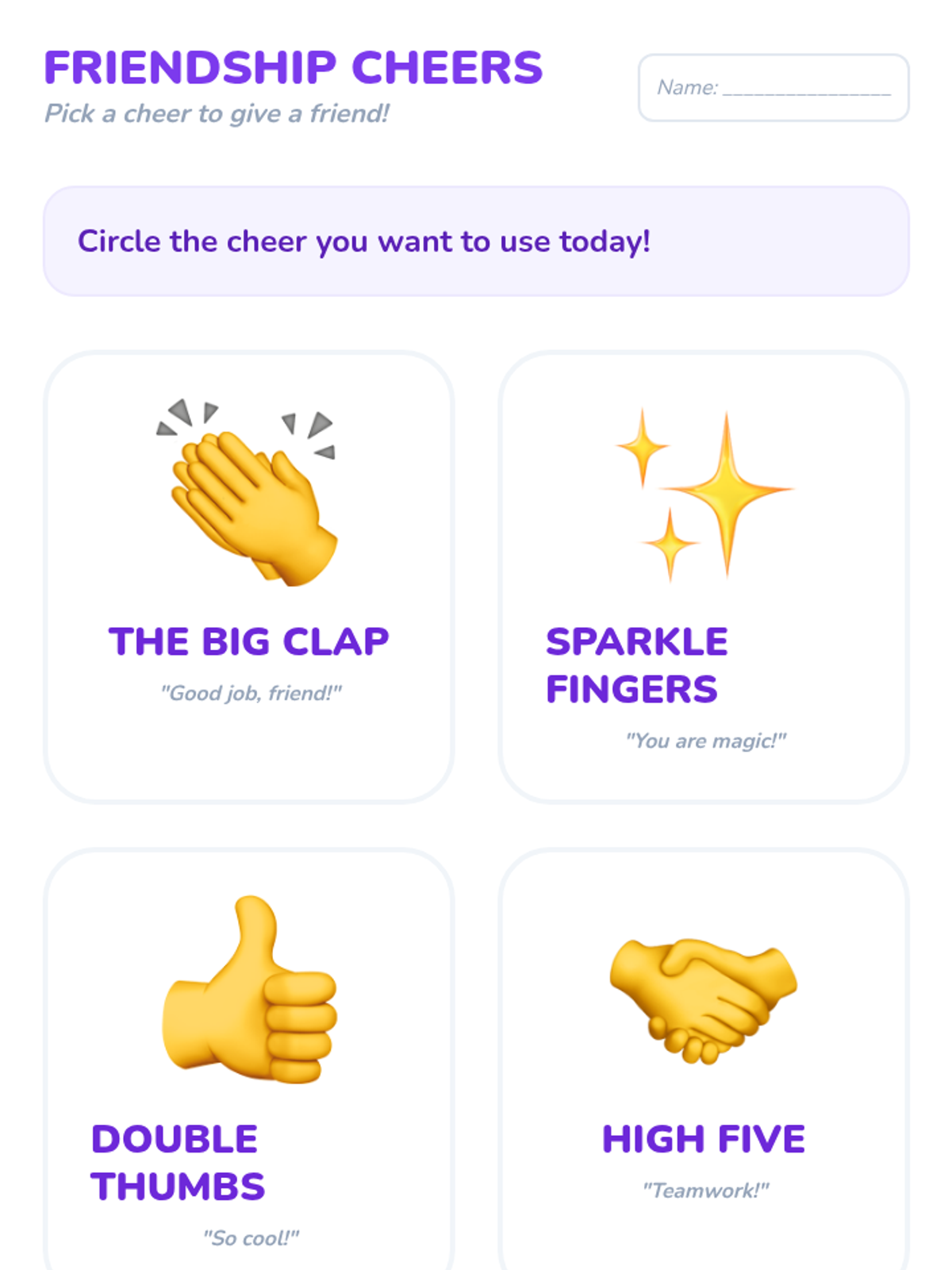
Students learn to identify when a friend does something good and how to celebrate them (clapping, cheering). This shifts focus from self-gratification to finding joy in others' success.
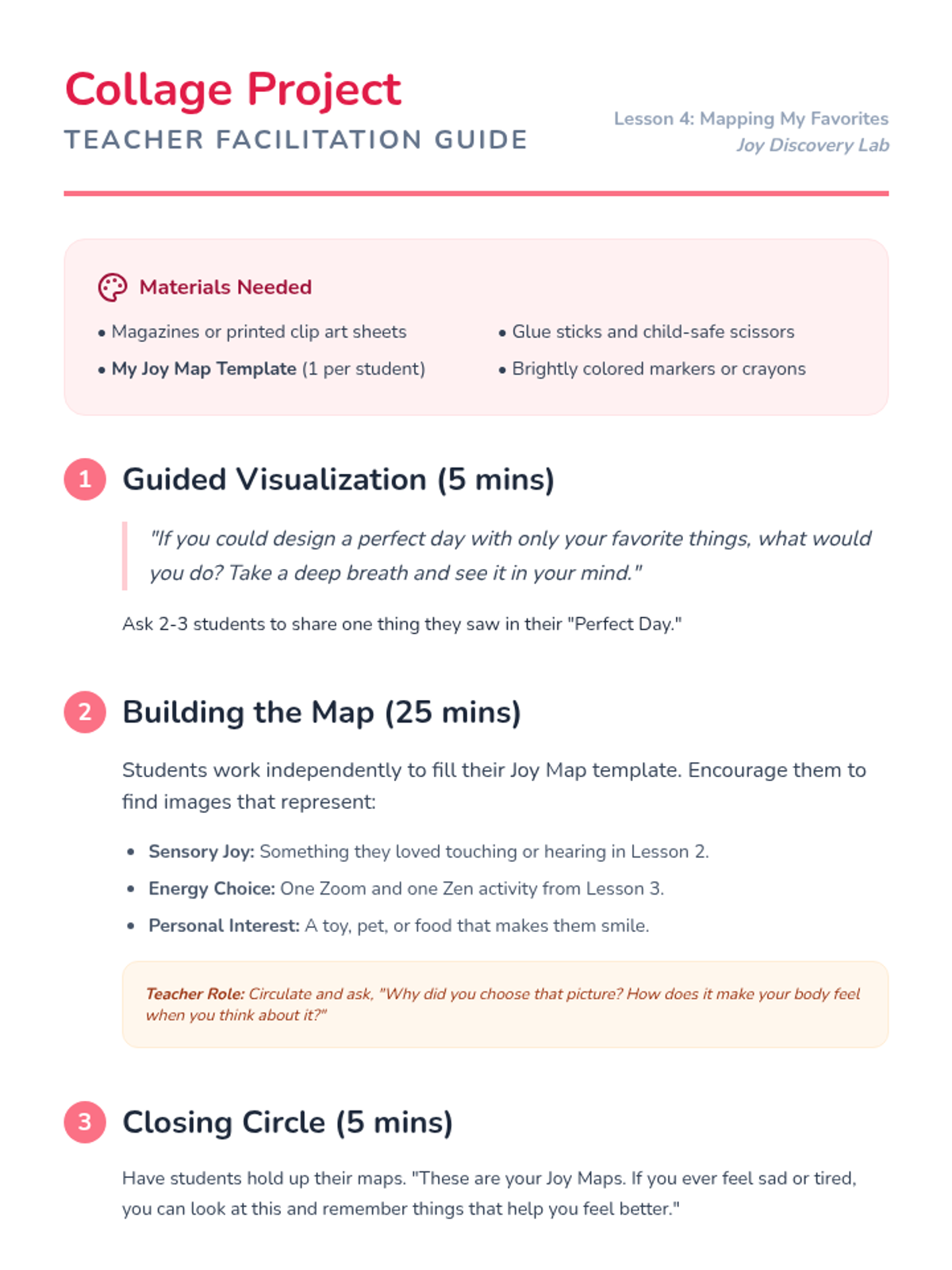
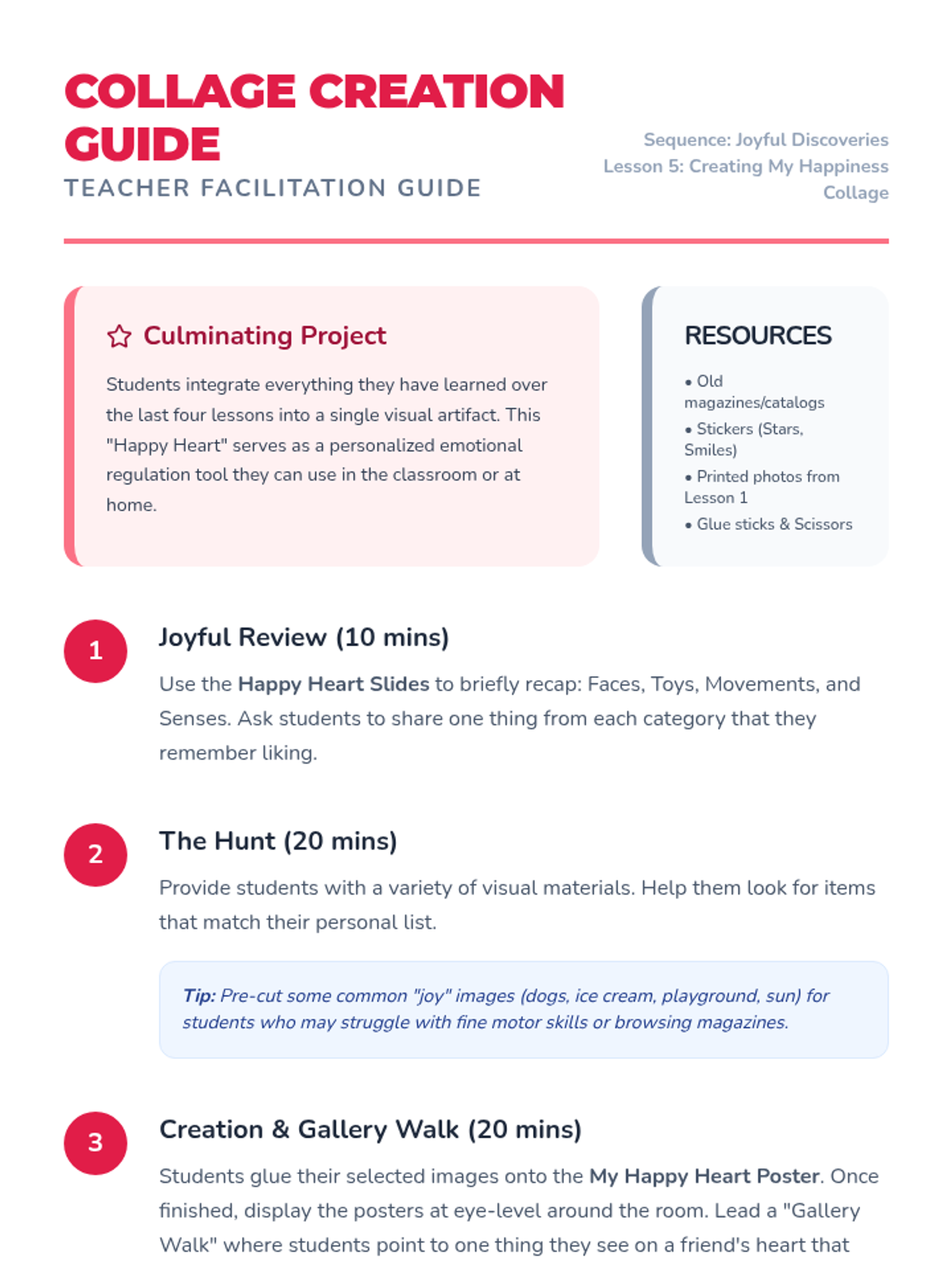
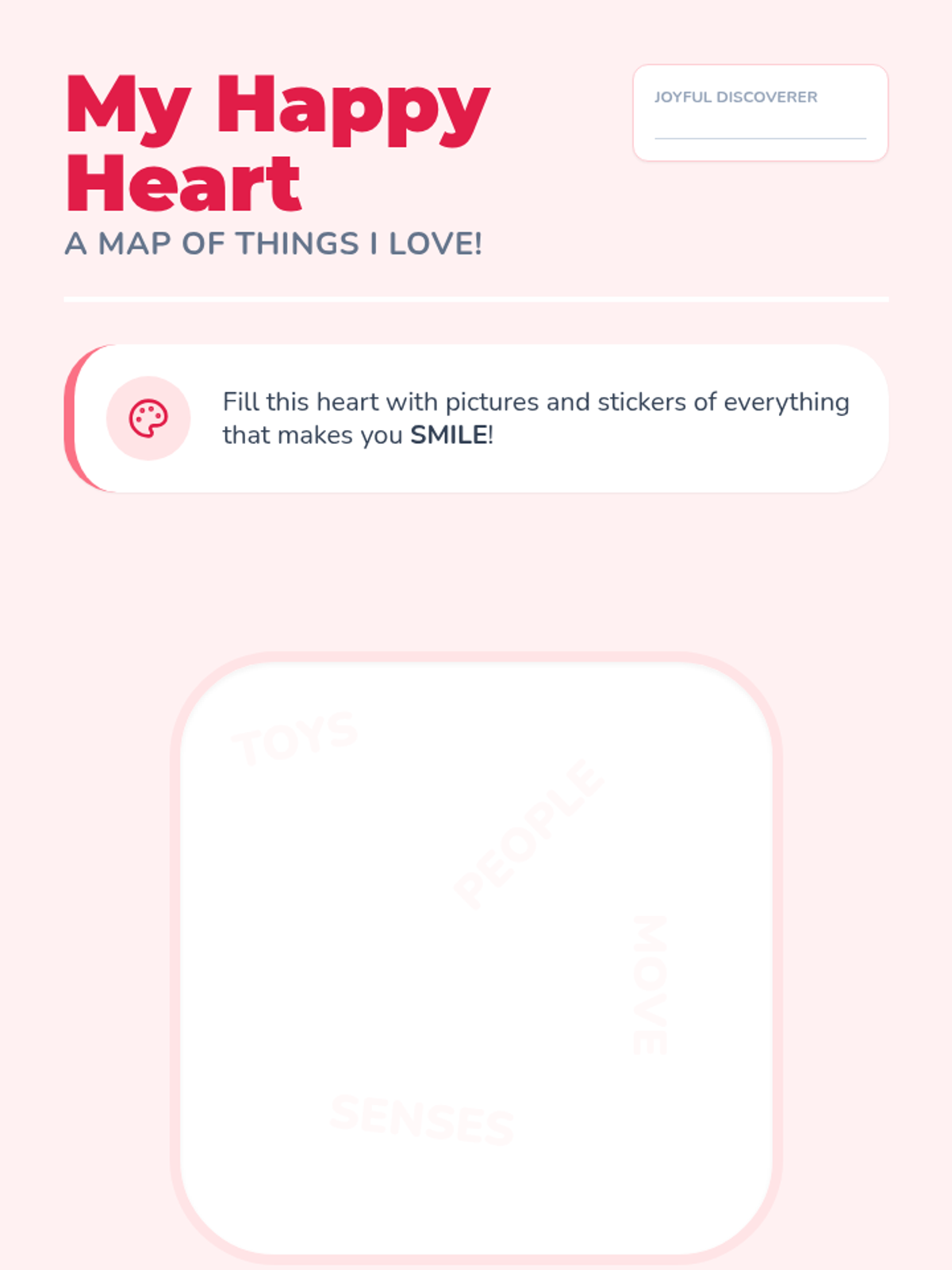
Using a collage format, students select and paste images of their favorite activities onto a personal poster. This visual aid serves as a concrete reference tool.
Small groups work together to build something (block tower, art piece). The focus is on the positive feeling of achieving a goal together rather than the final product.
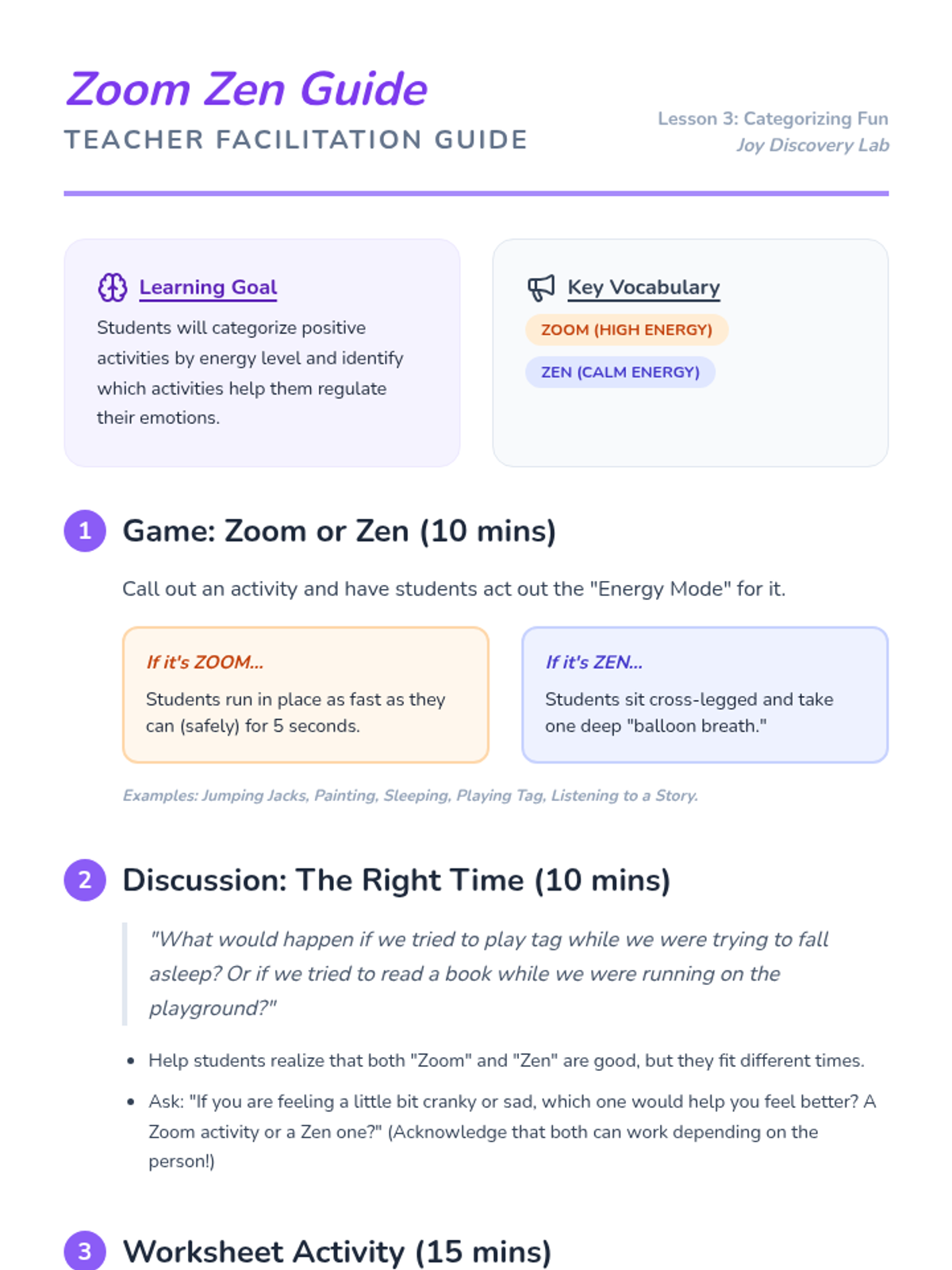
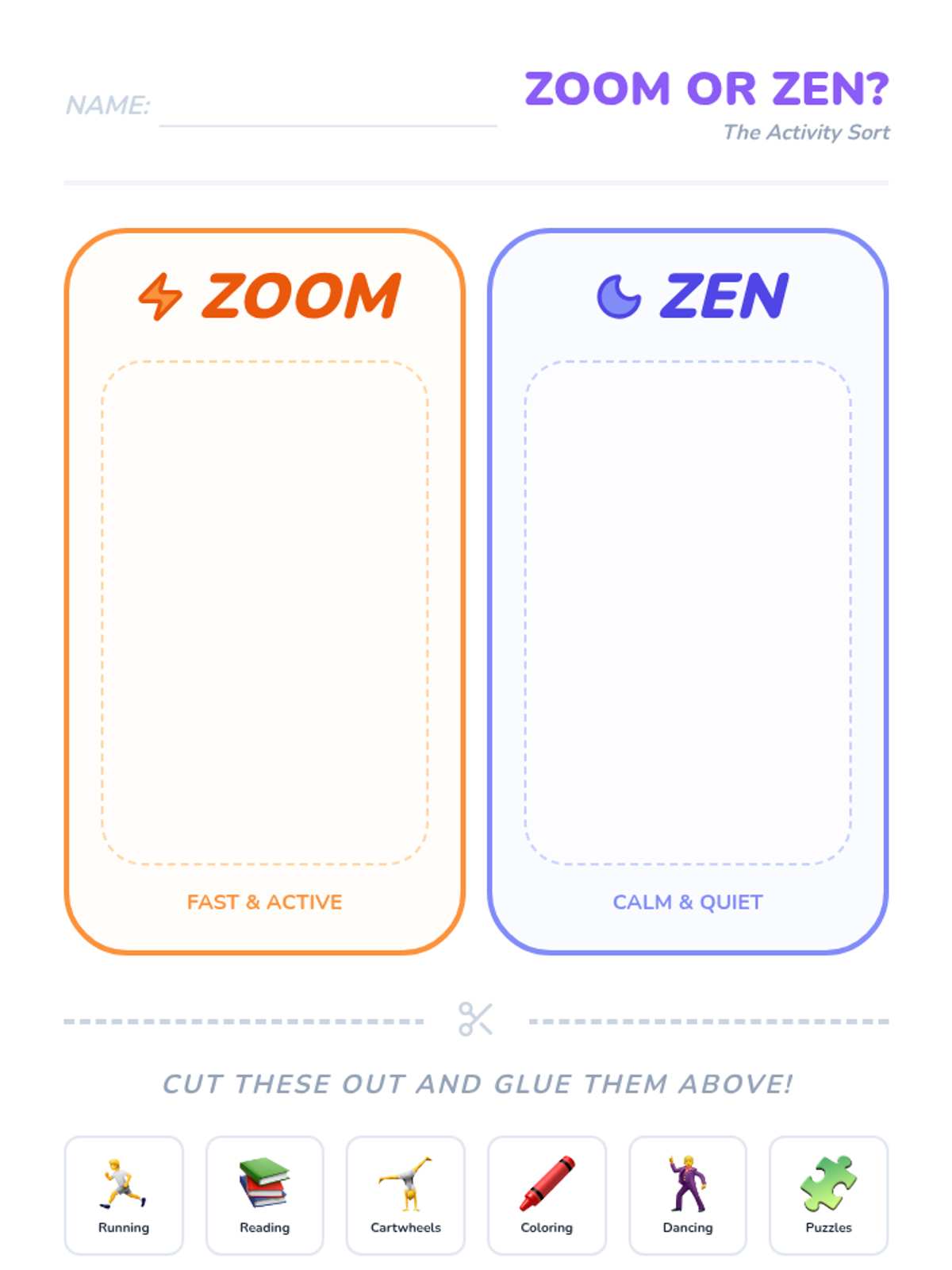
Students sort images of activities into 'high energy' fun (running, dancing) and 'calm' fun (reading, coloring). The class discusses how different times of day might need different types of positive activities.
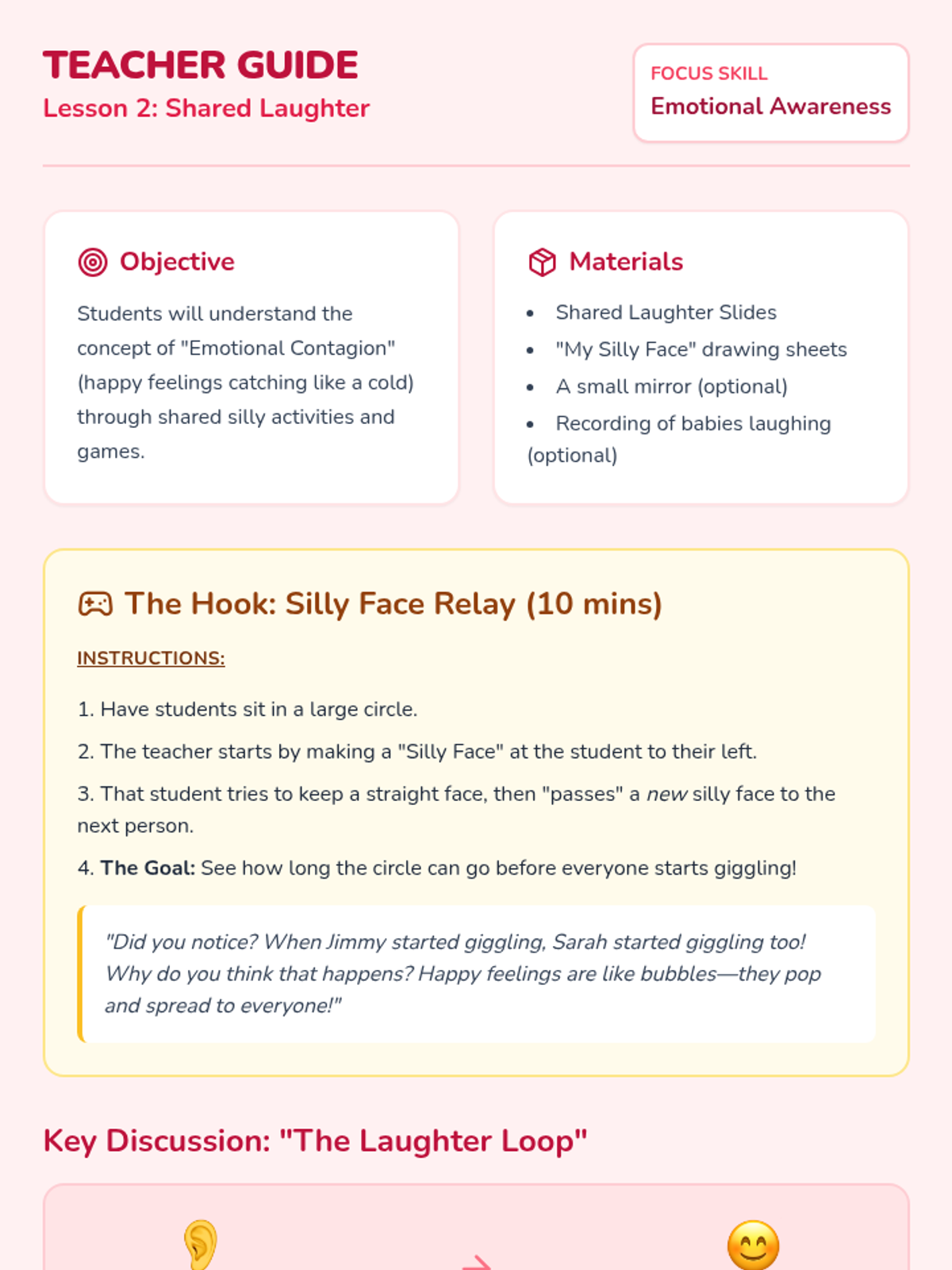
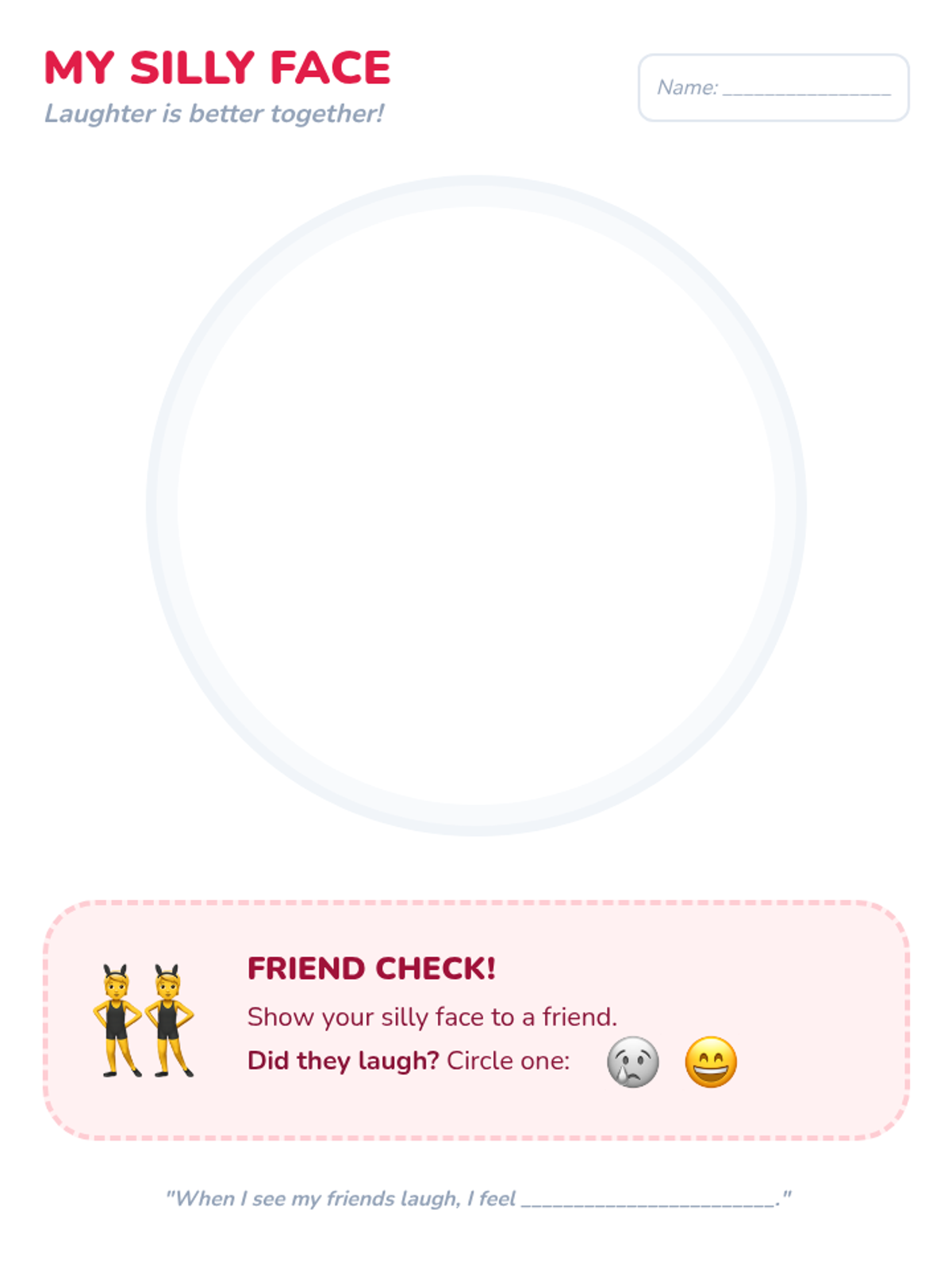
The class engages in silly activities designed solely to produce shared laughter. They discuss how hearing others laugh makes them want to laugh too, introducing the concept of emotional contagion.
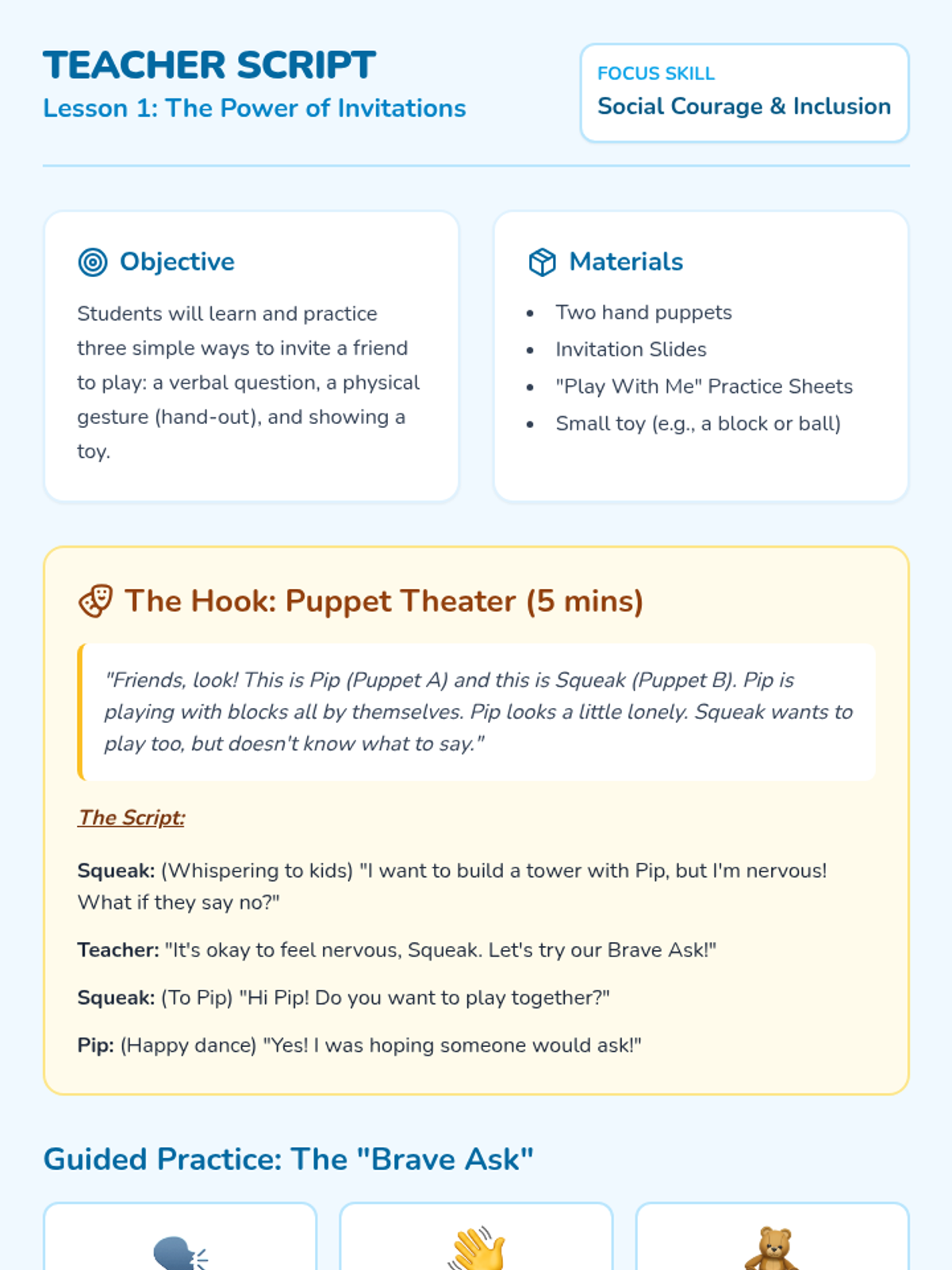
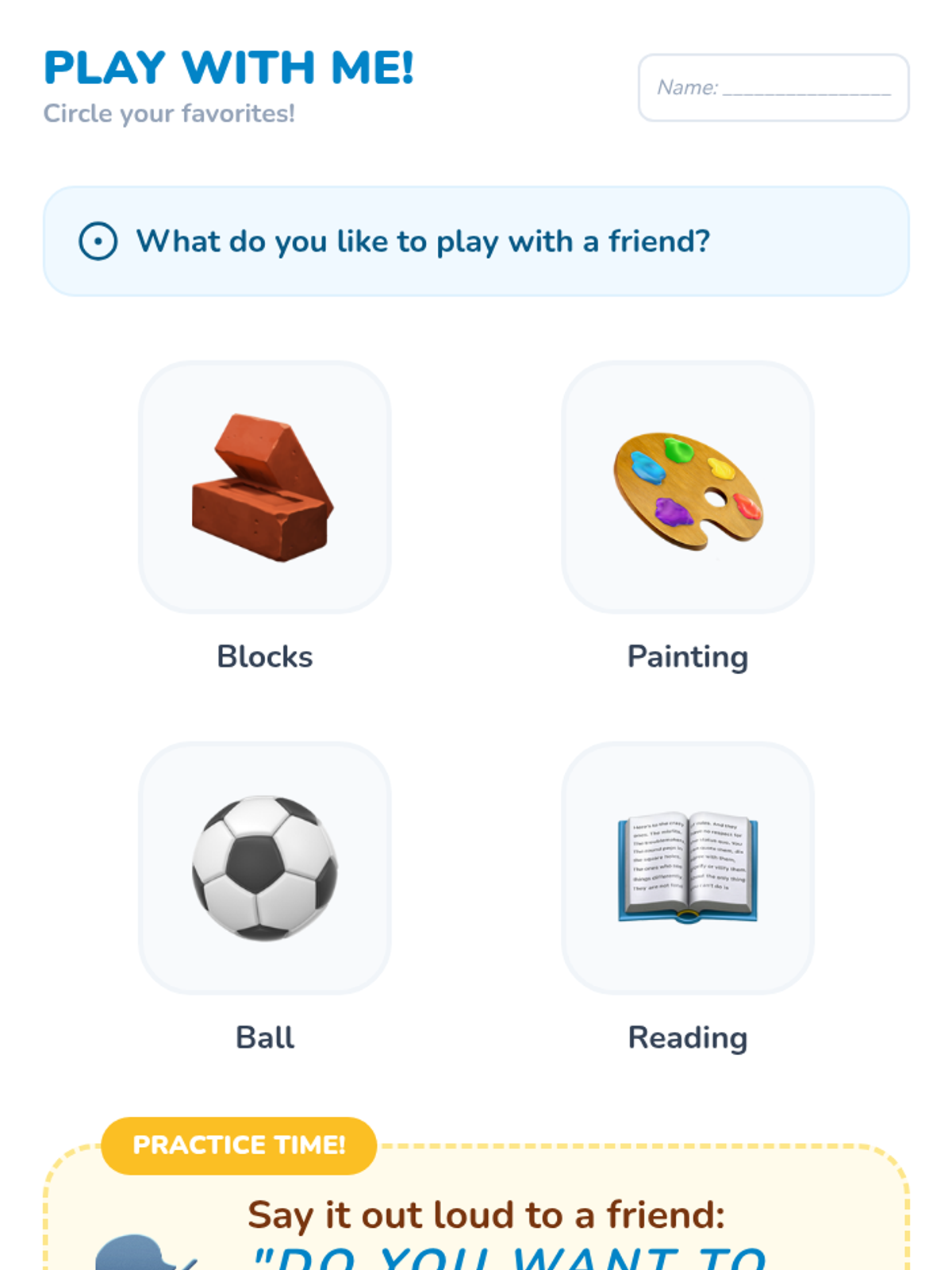
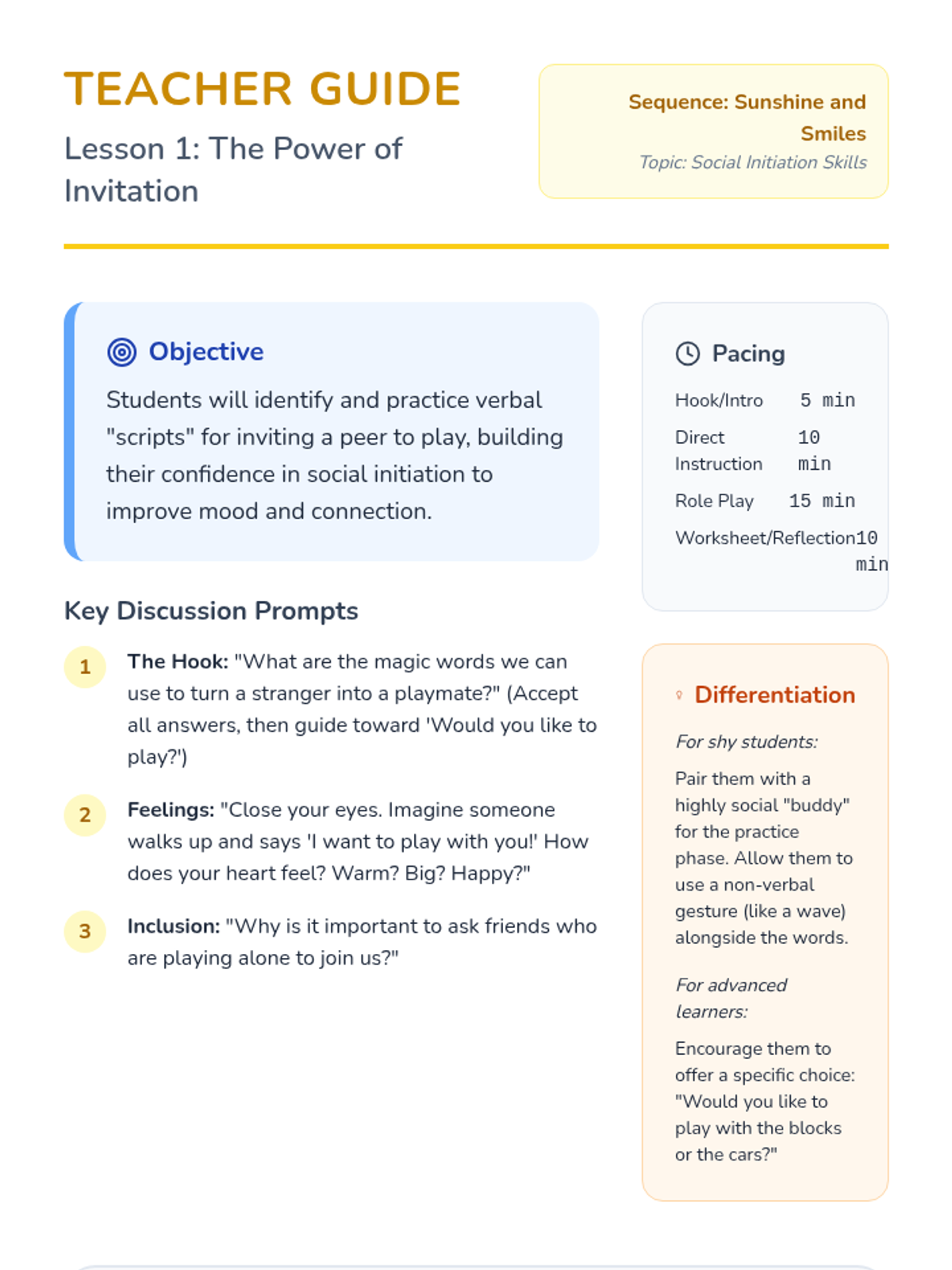
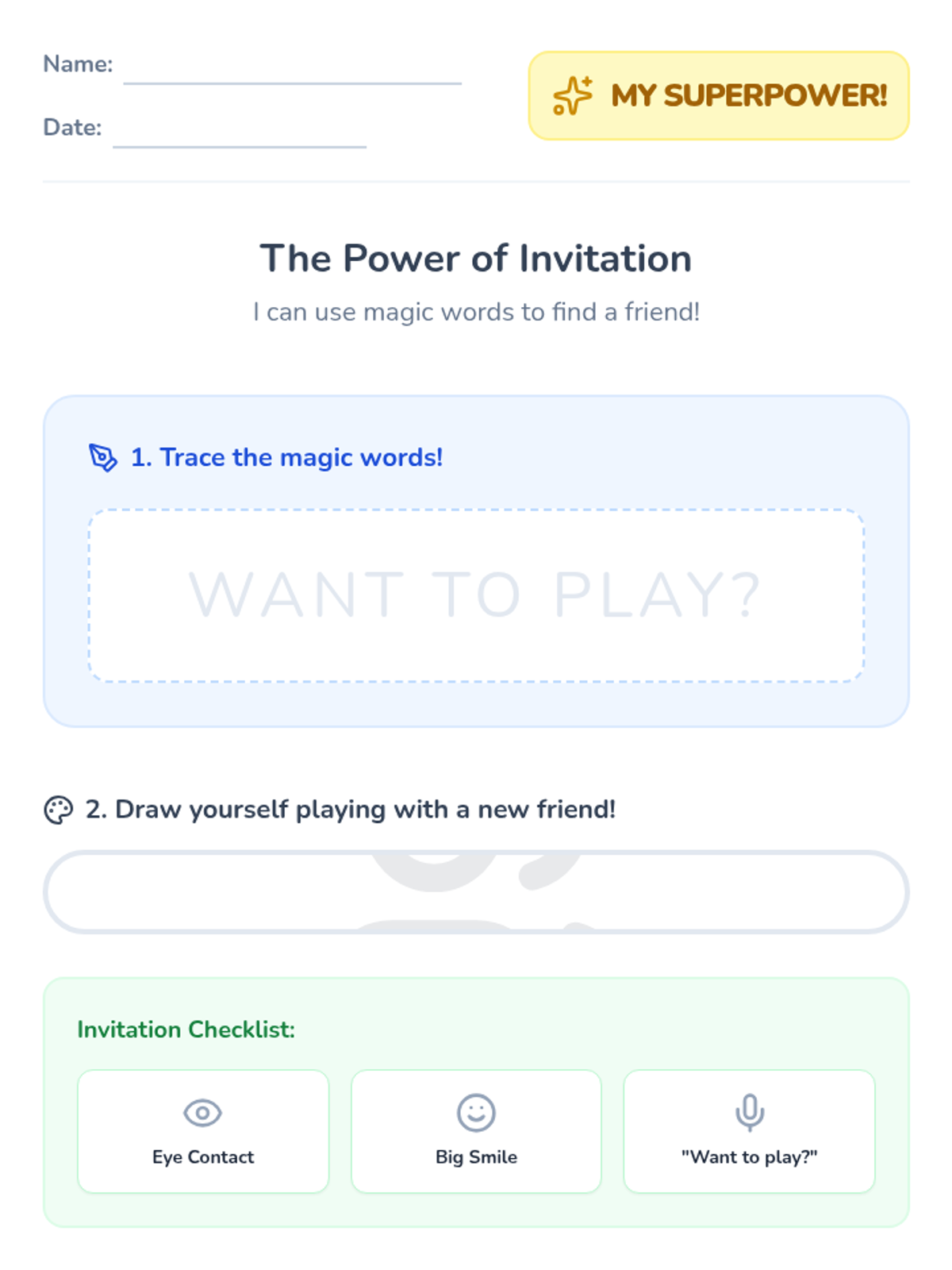
Students learn simple scripts and gestures to invite peers to join a positive activity, practicing inclusion and social courage.
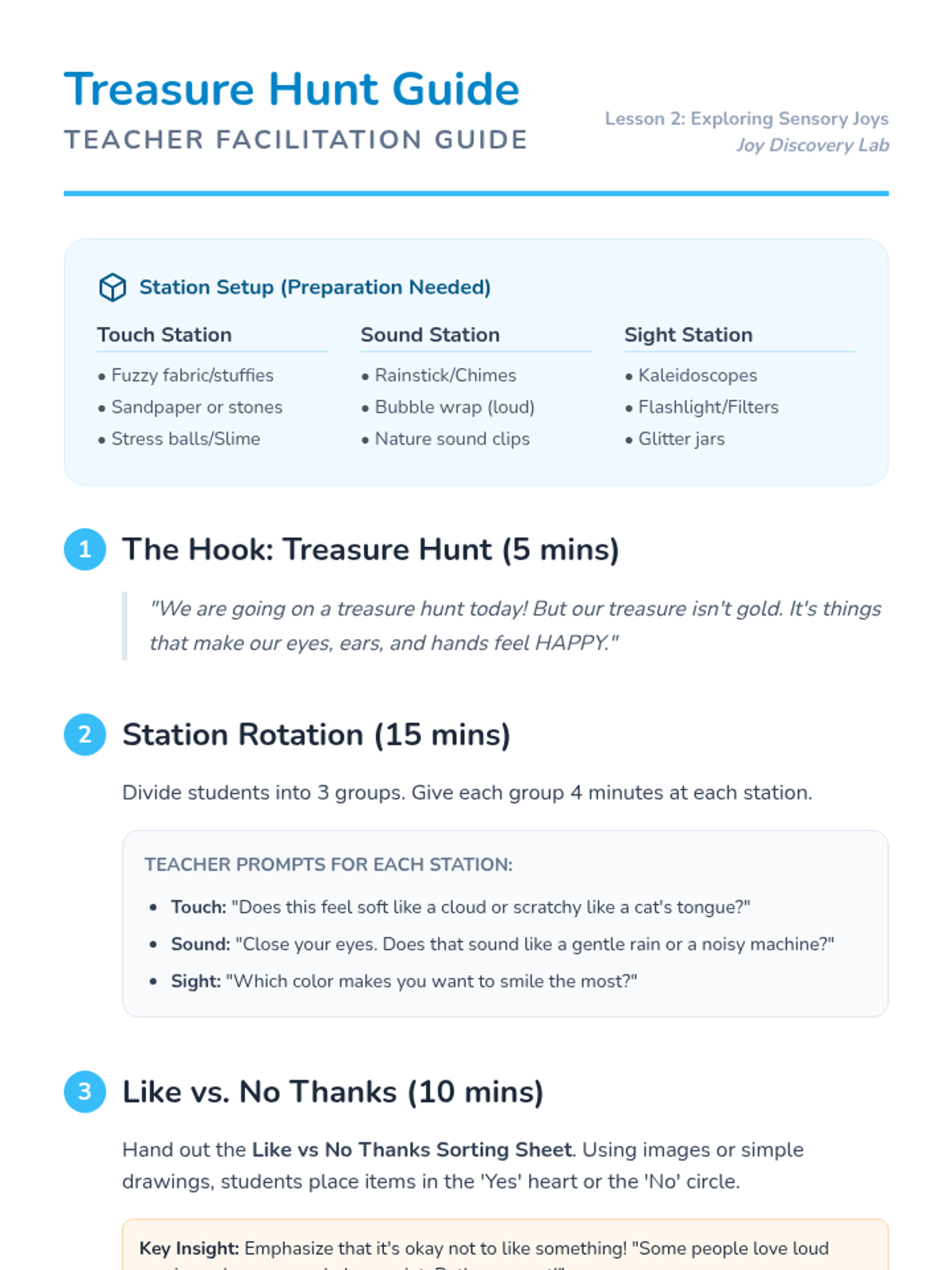
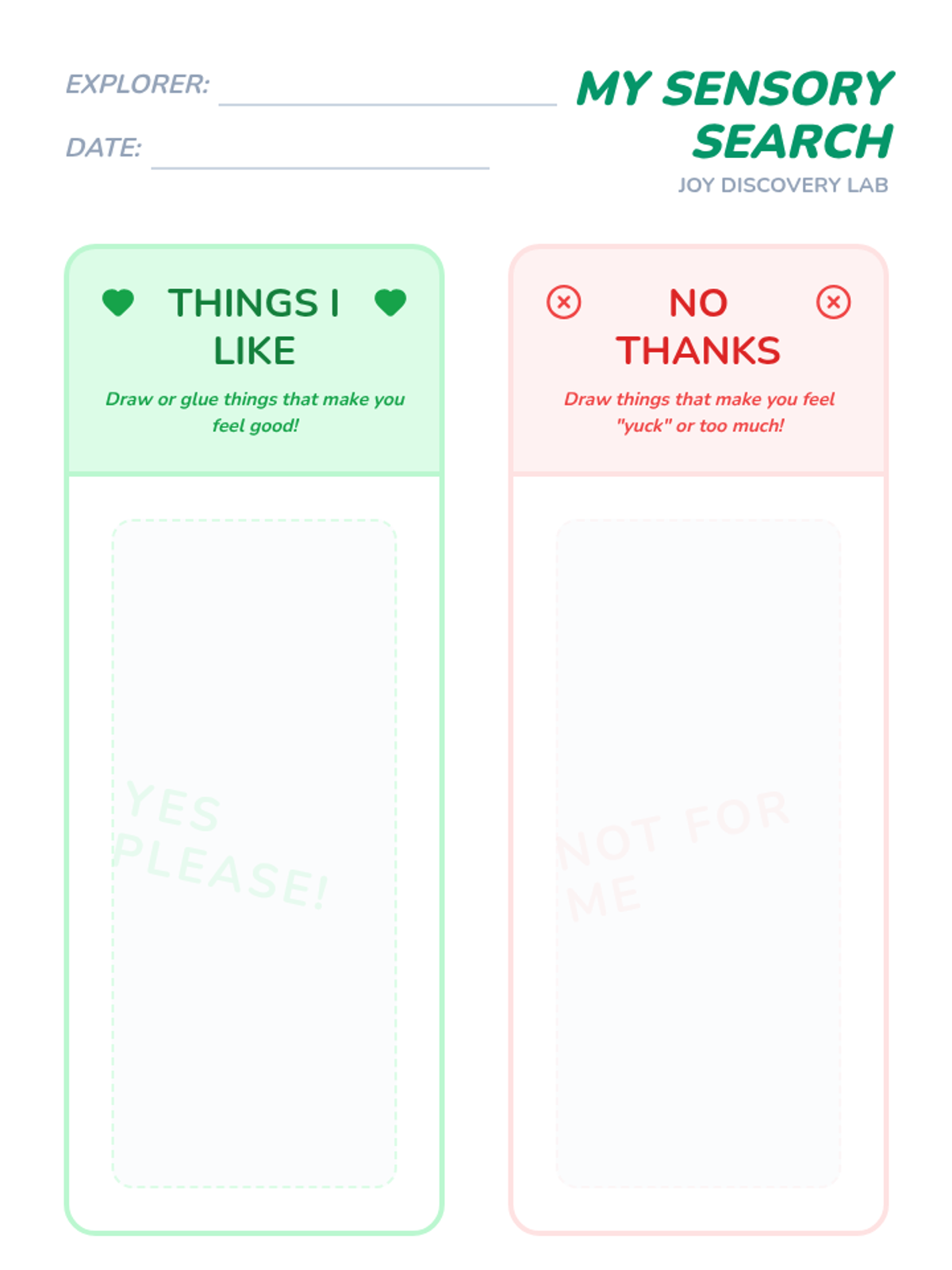
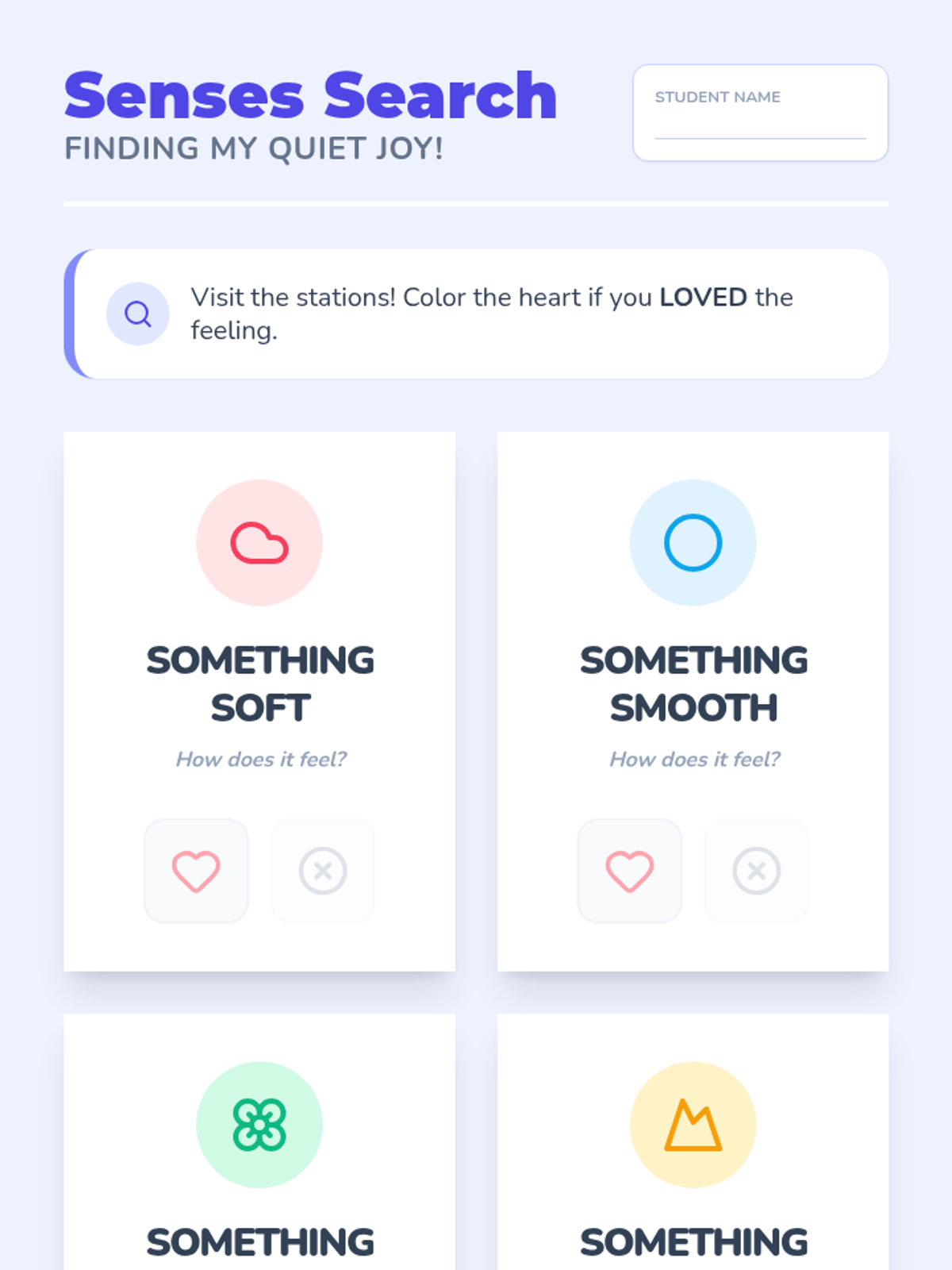
Learners engage in a sensory station rotation to discover which sights, sounds, and textures make them feel good. They classify experiences as 'things I like' versus 'things I do not like'.
Students select pictures representing activities identified in previous lessons to create a personal visual 'Happy Heart' collage.
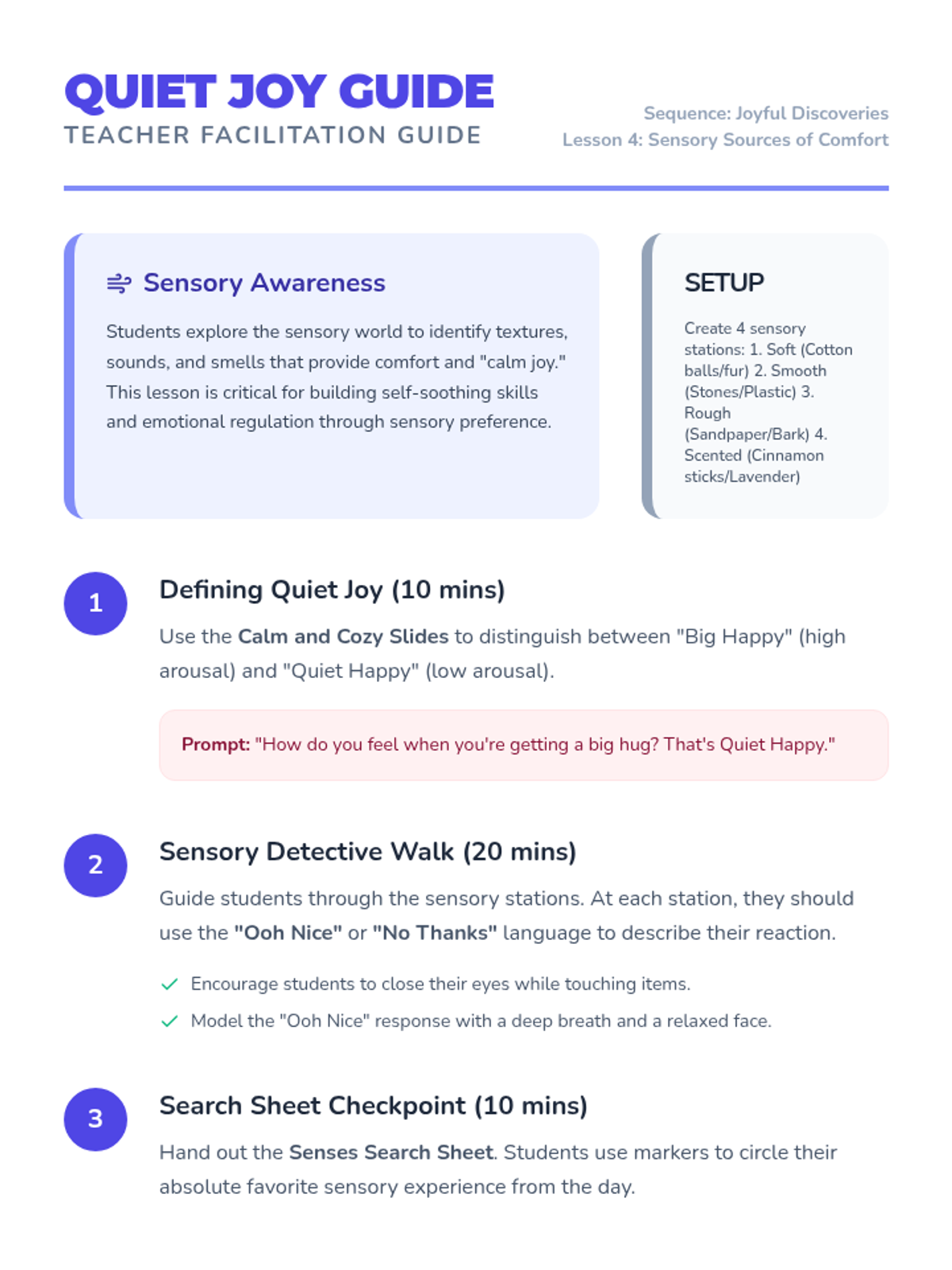
Focusing on calm happiness, students explore textures, smells, and sounds to identify sensory inputs that help them feel safe and content.
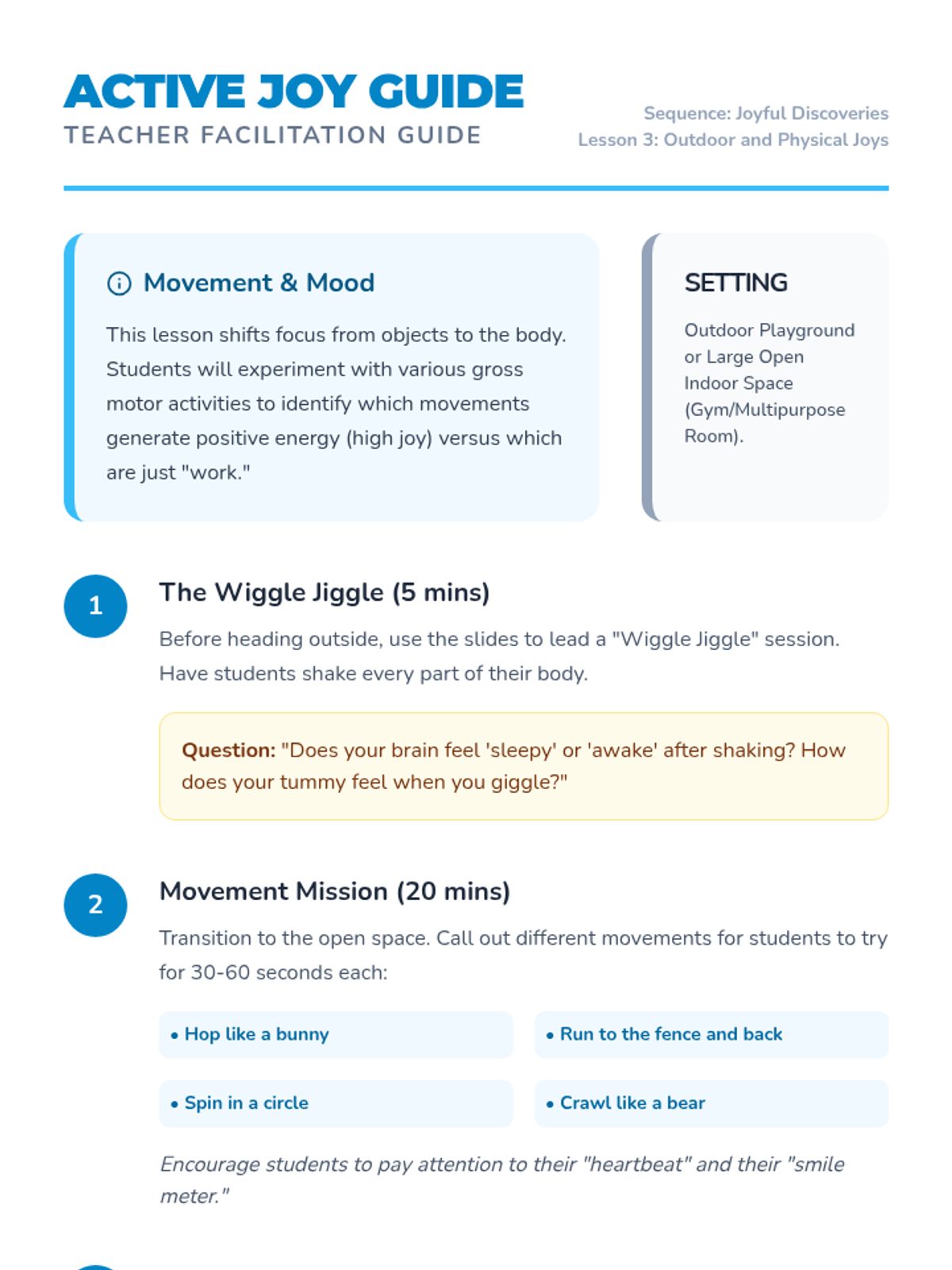
Students move outdoors or to an open space to test how physical movement affects their mood, identifying activities that generate positive energy.
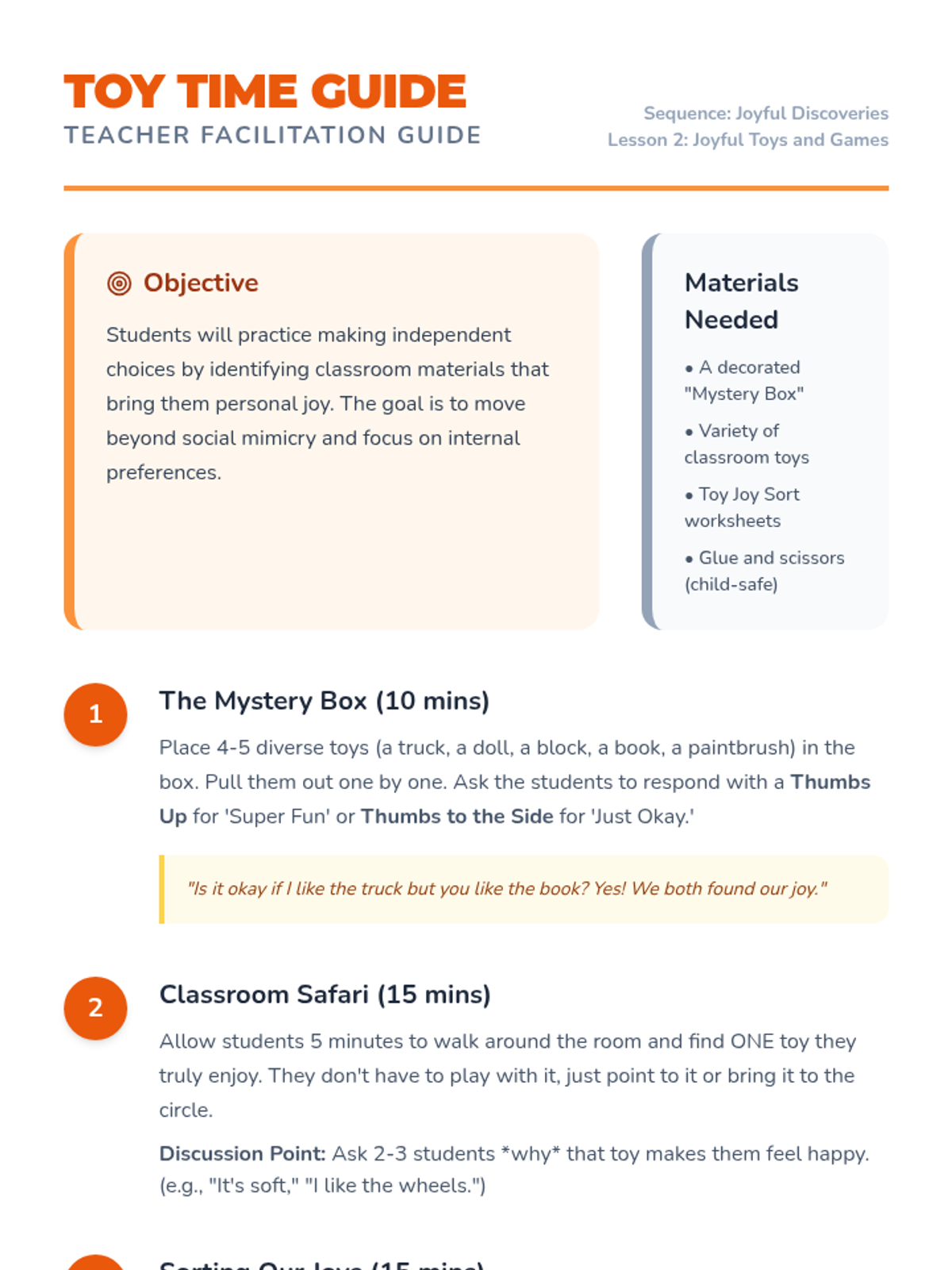
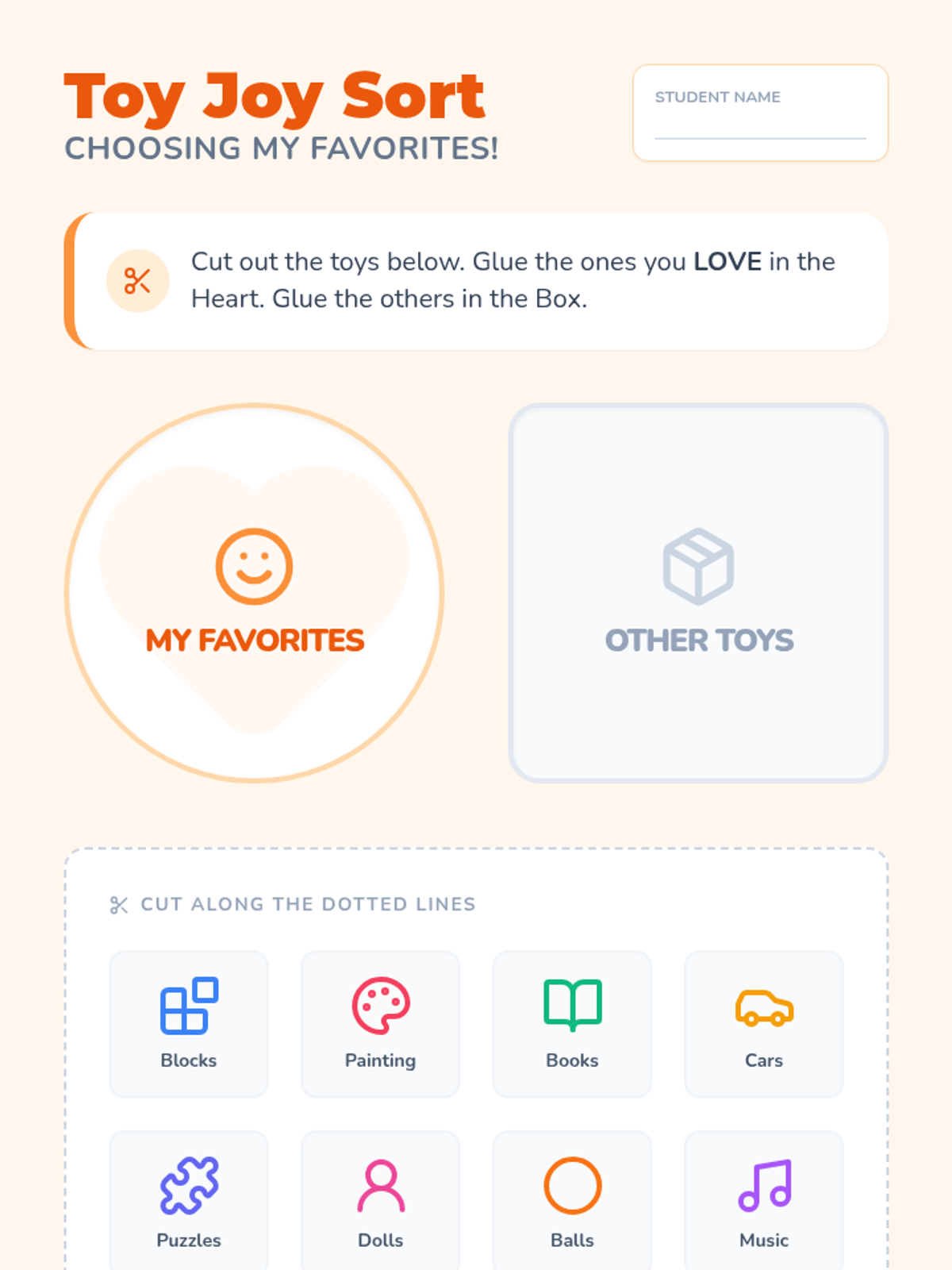
Children actively sort through classroom items to decide which ones bring them the most joy, focusing on making choices based on internal preference.
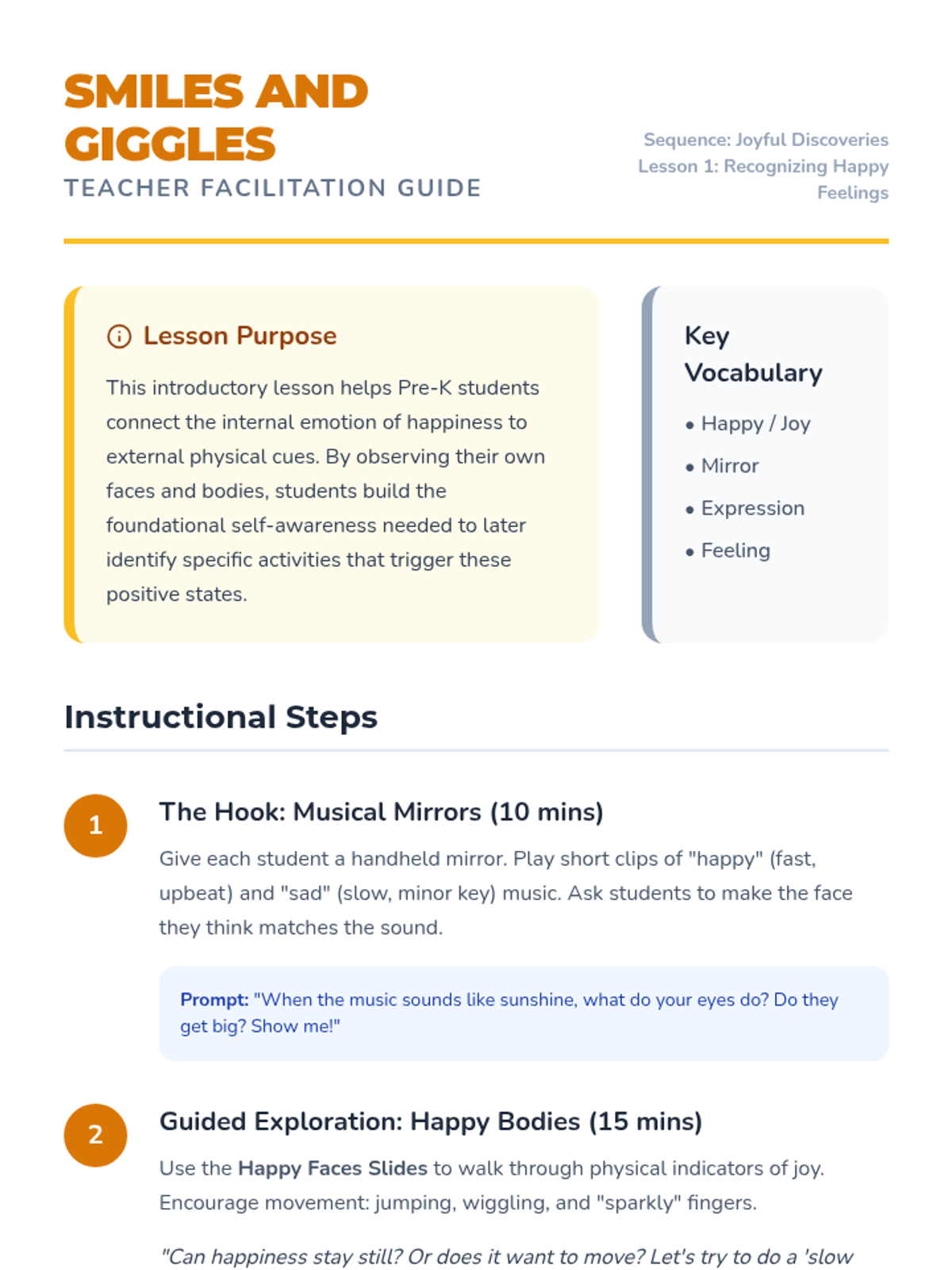
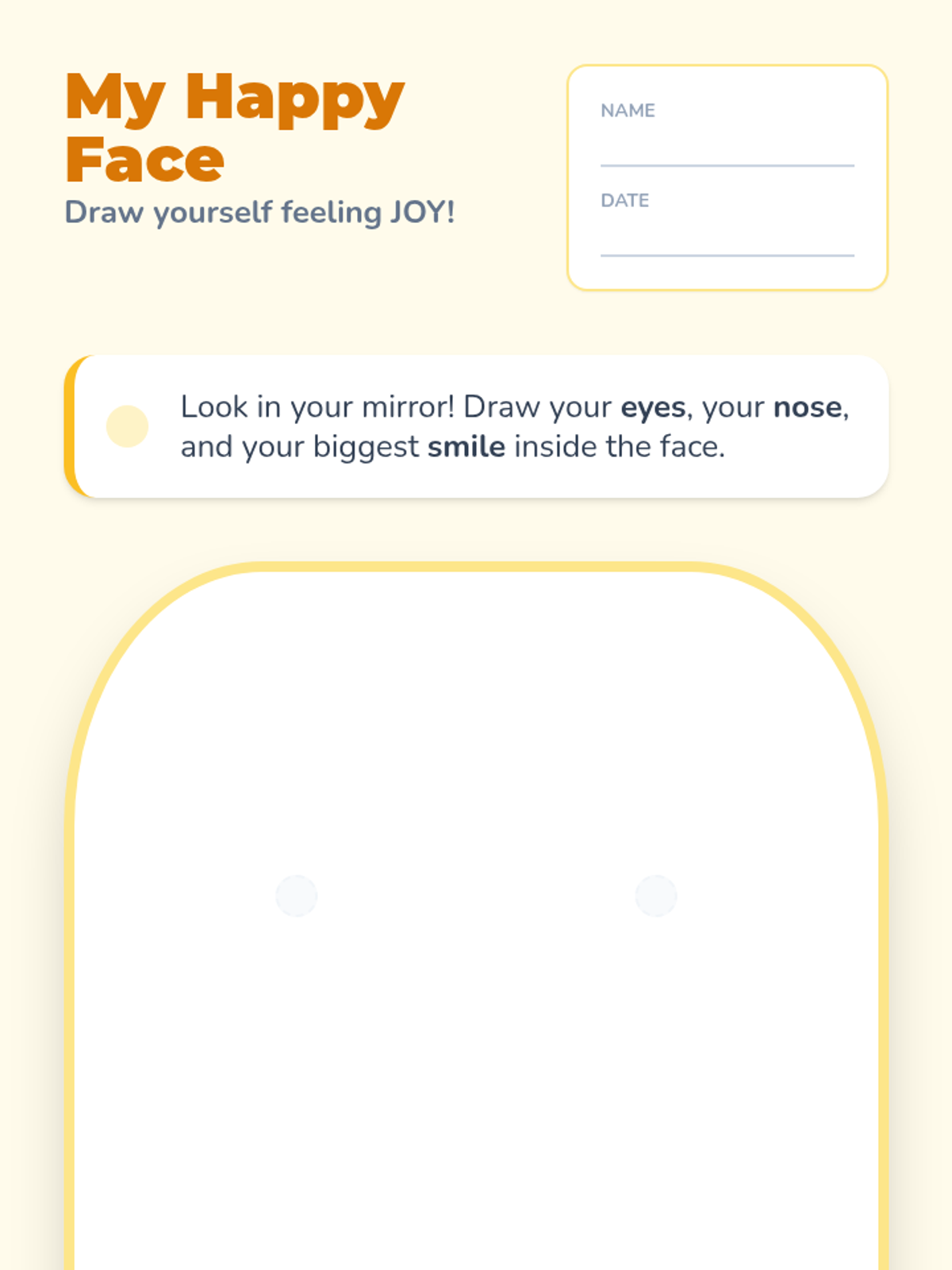
Students explore the physical sensations of happiness through mirror play and storytelling, learning to identify how their bodies and faces look when they feel joyful.
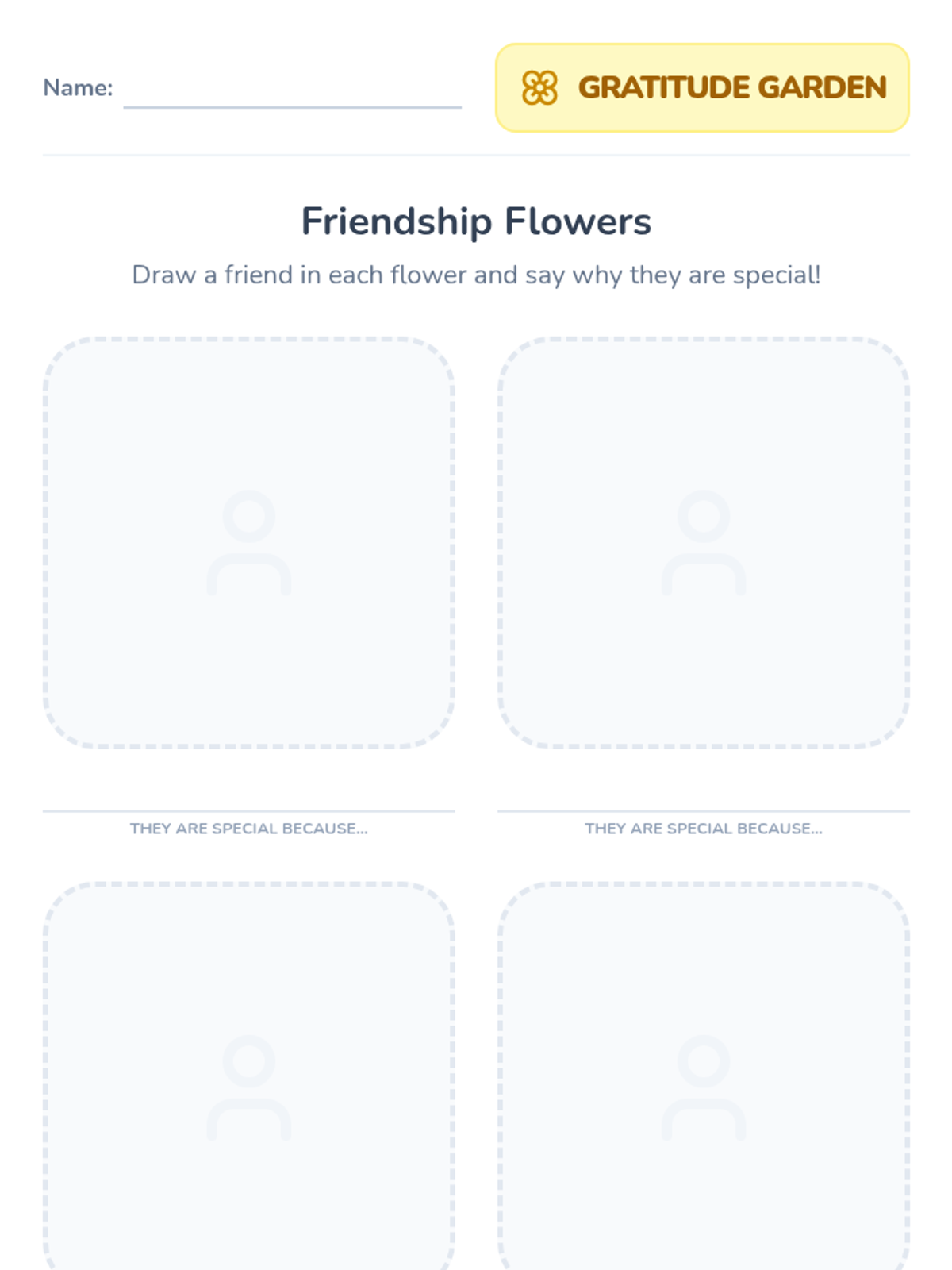
A concluding circle time where students share compliments and favorite memories to reinforce their community bond.
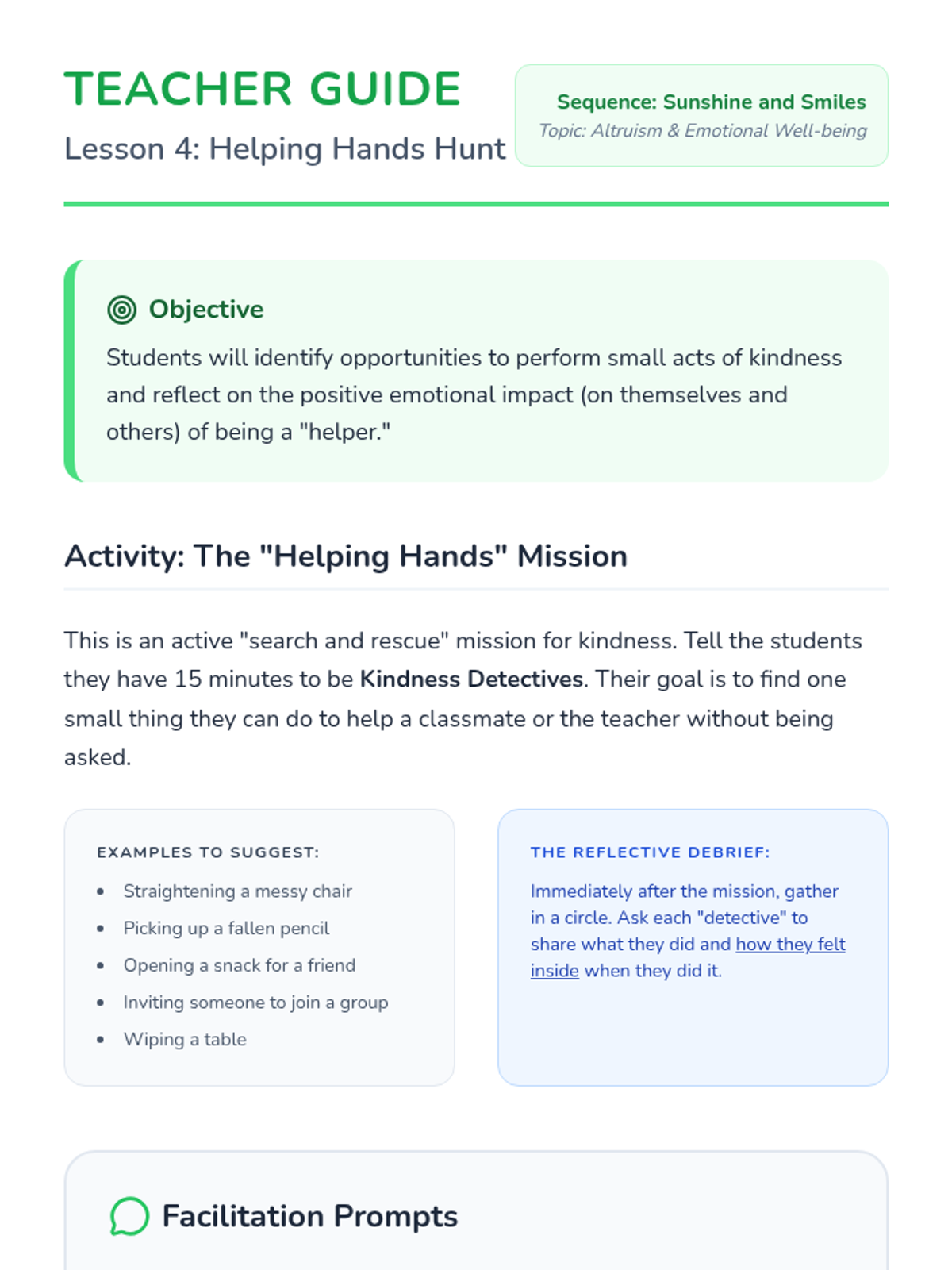
Students look for small ways to help others and reflect on how acts of kindness improve their own emotional well-being.
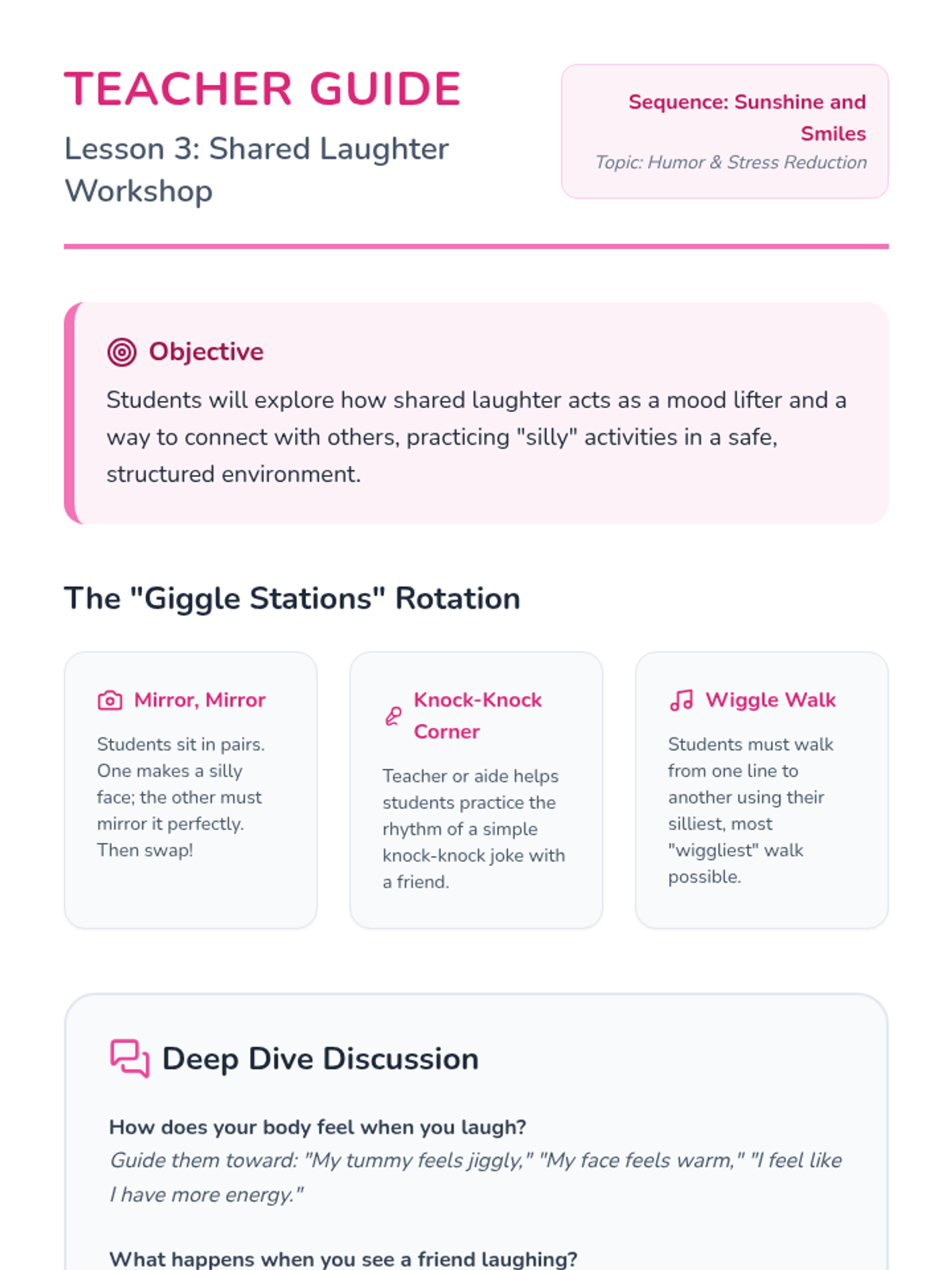
Students engage in silly activities to discover how shared laughter acts as a physical release and mood booster.
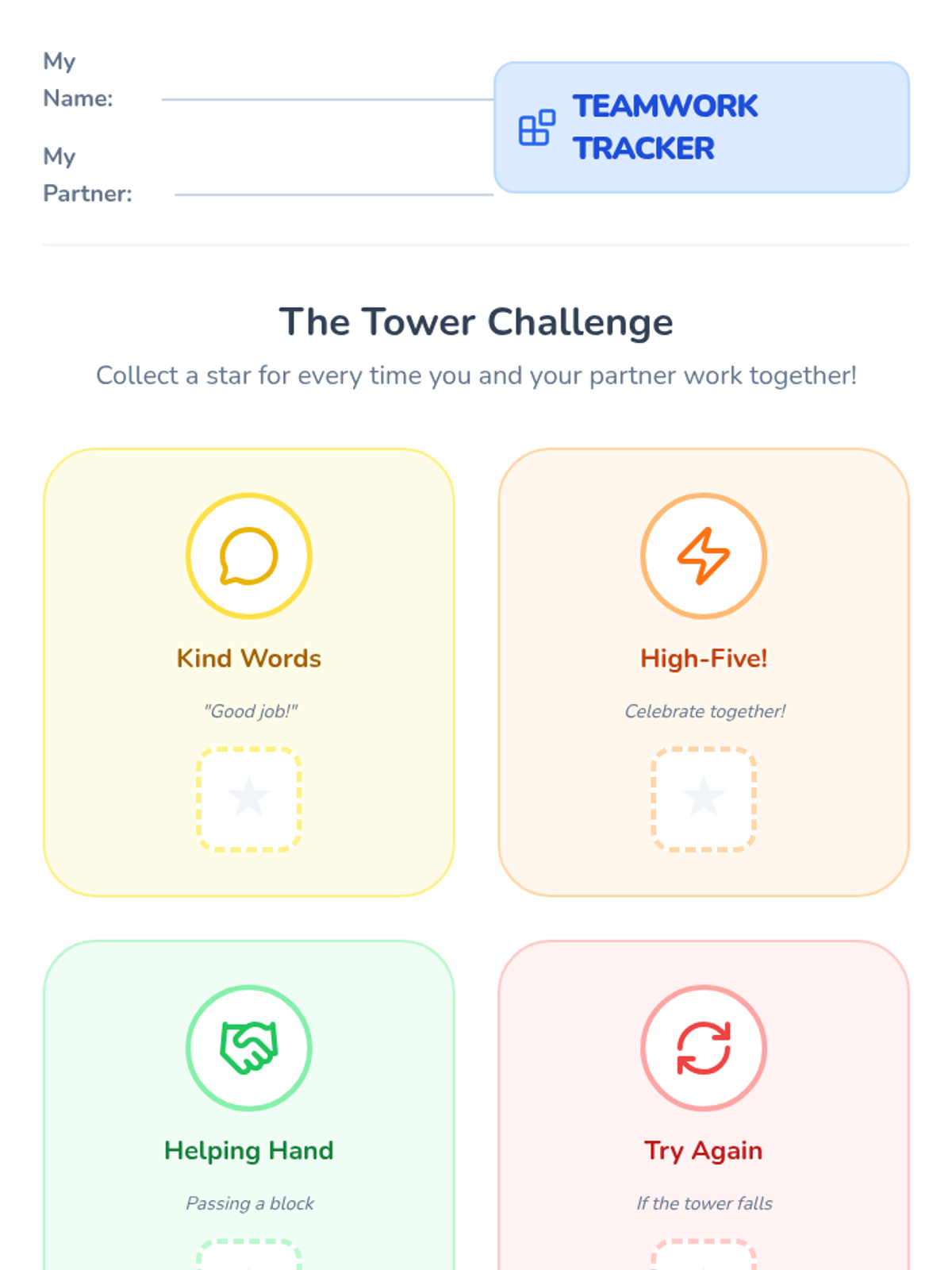
Pairs of students work together to build blocks while focusing on positive interactions like high-fives and encouraging words.
Students learn and practice simple scripts for asking a peer to play, exploring the feelings associated with inclusion.
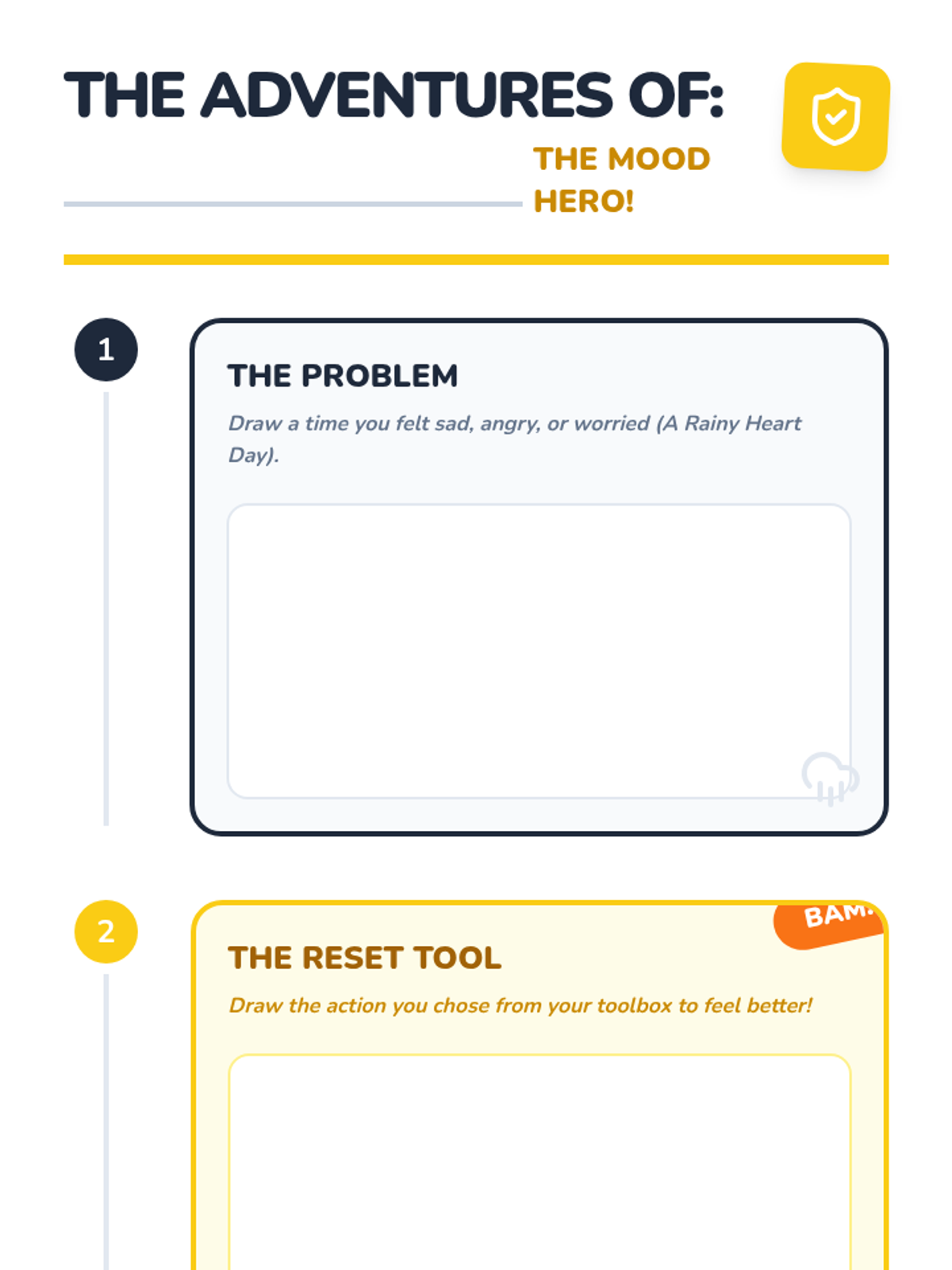
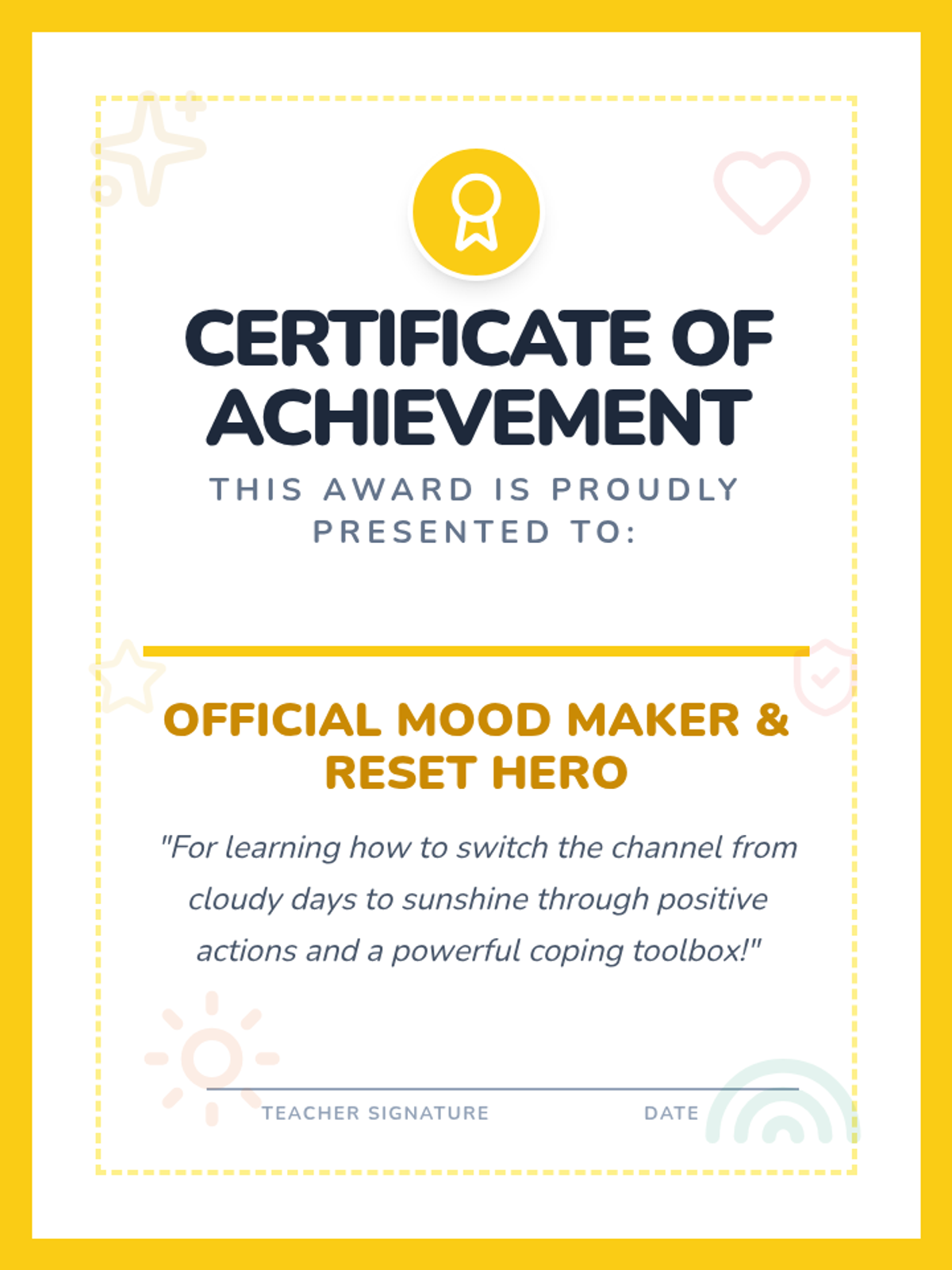
Students reflect on their learning by creating a visual narrative of emotional change. They celebrate their new skills as 'Mood Heroes' who can help themselves feel better.
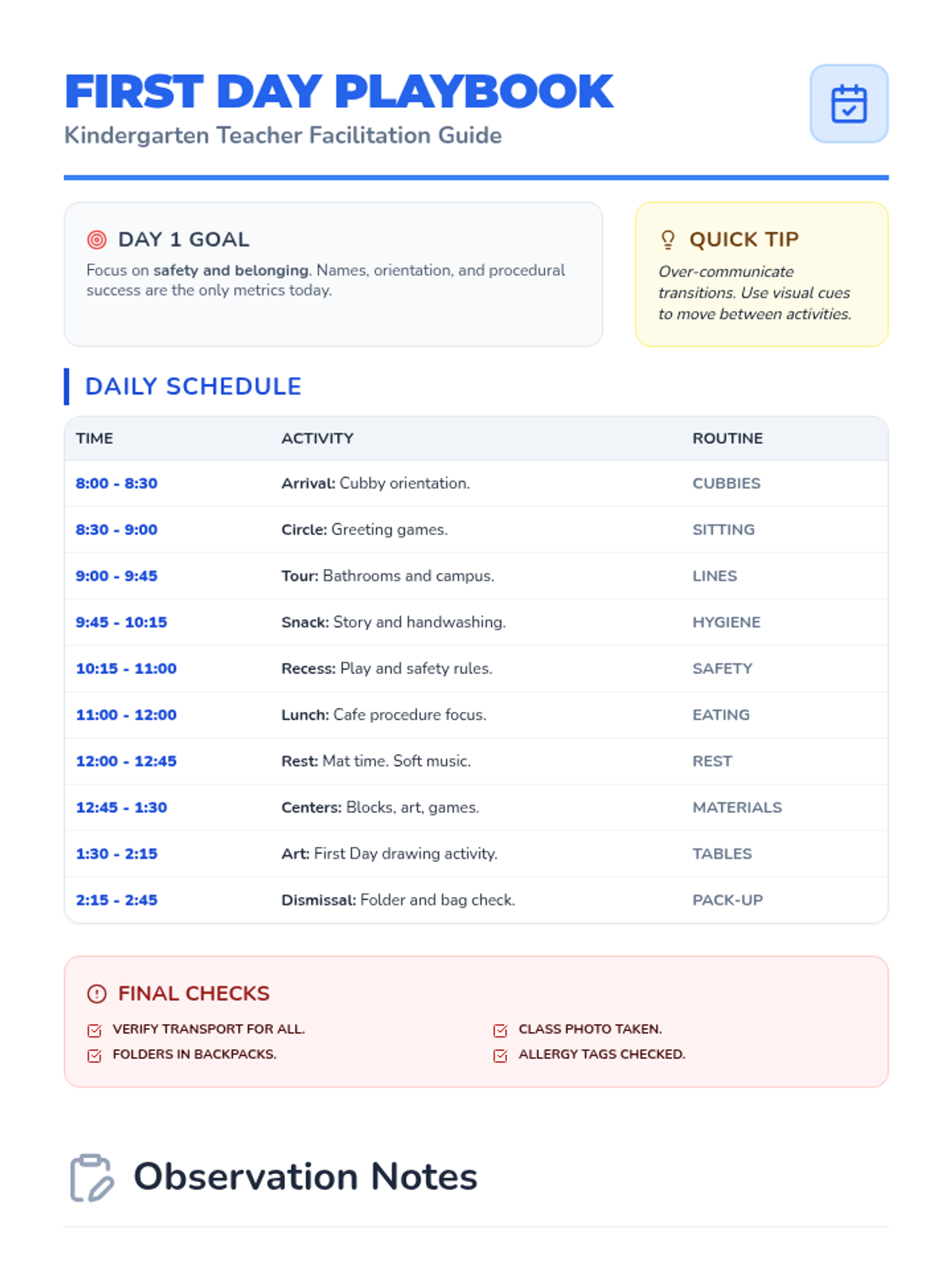
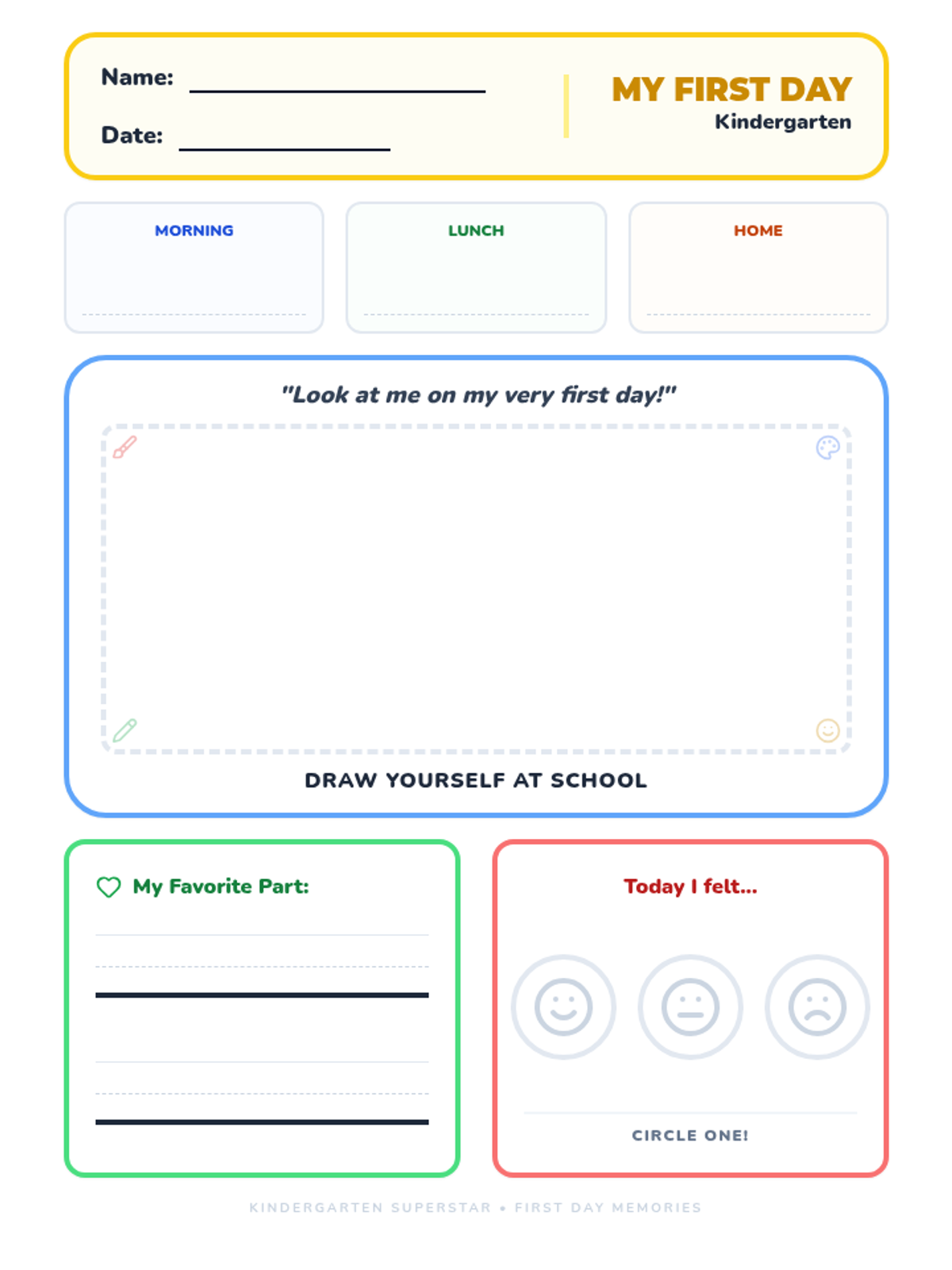
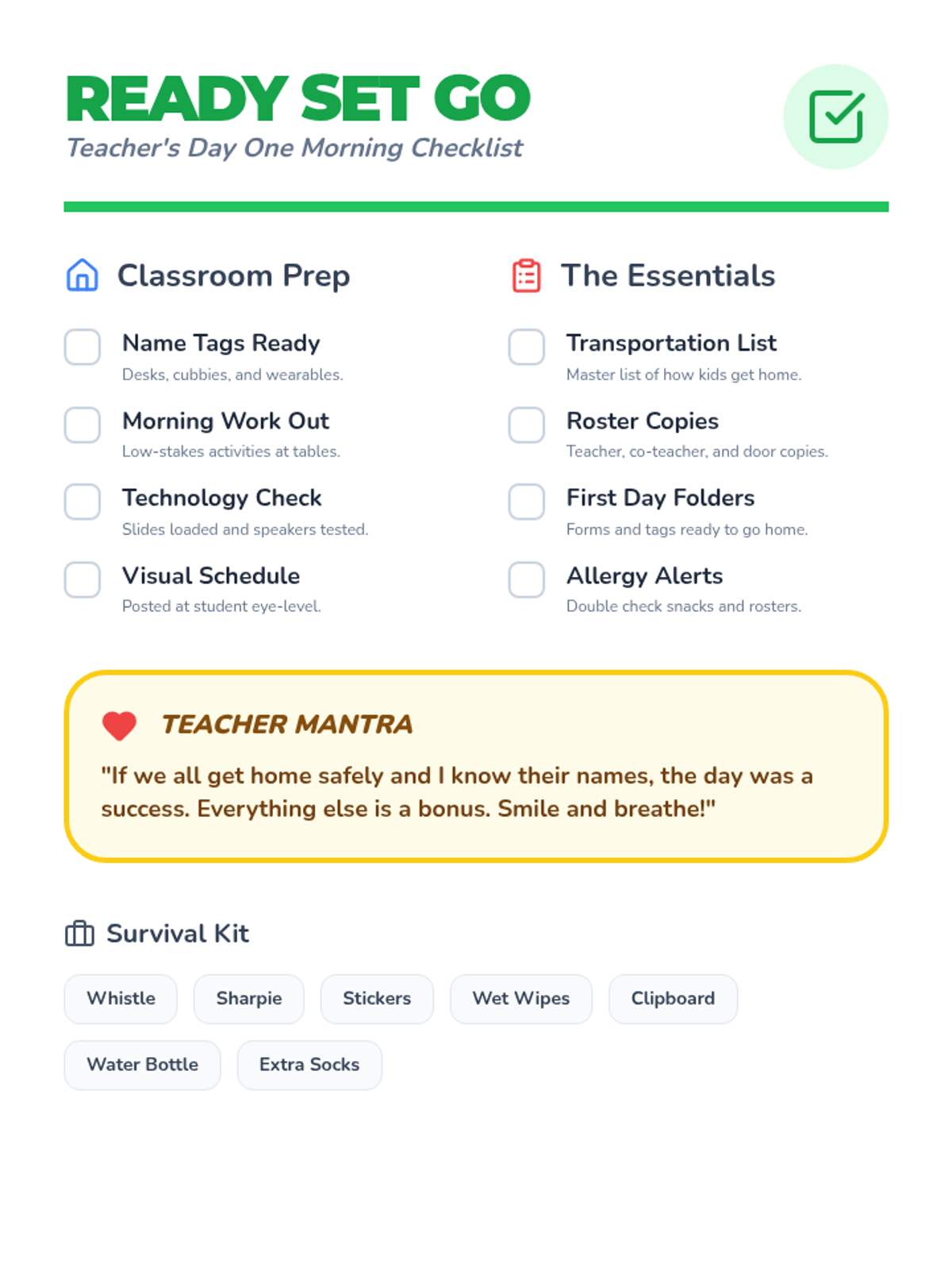
A comprehensive set of resources to navigate the first day of Kindergarten, focusing on routines, community building, and basic expectations.
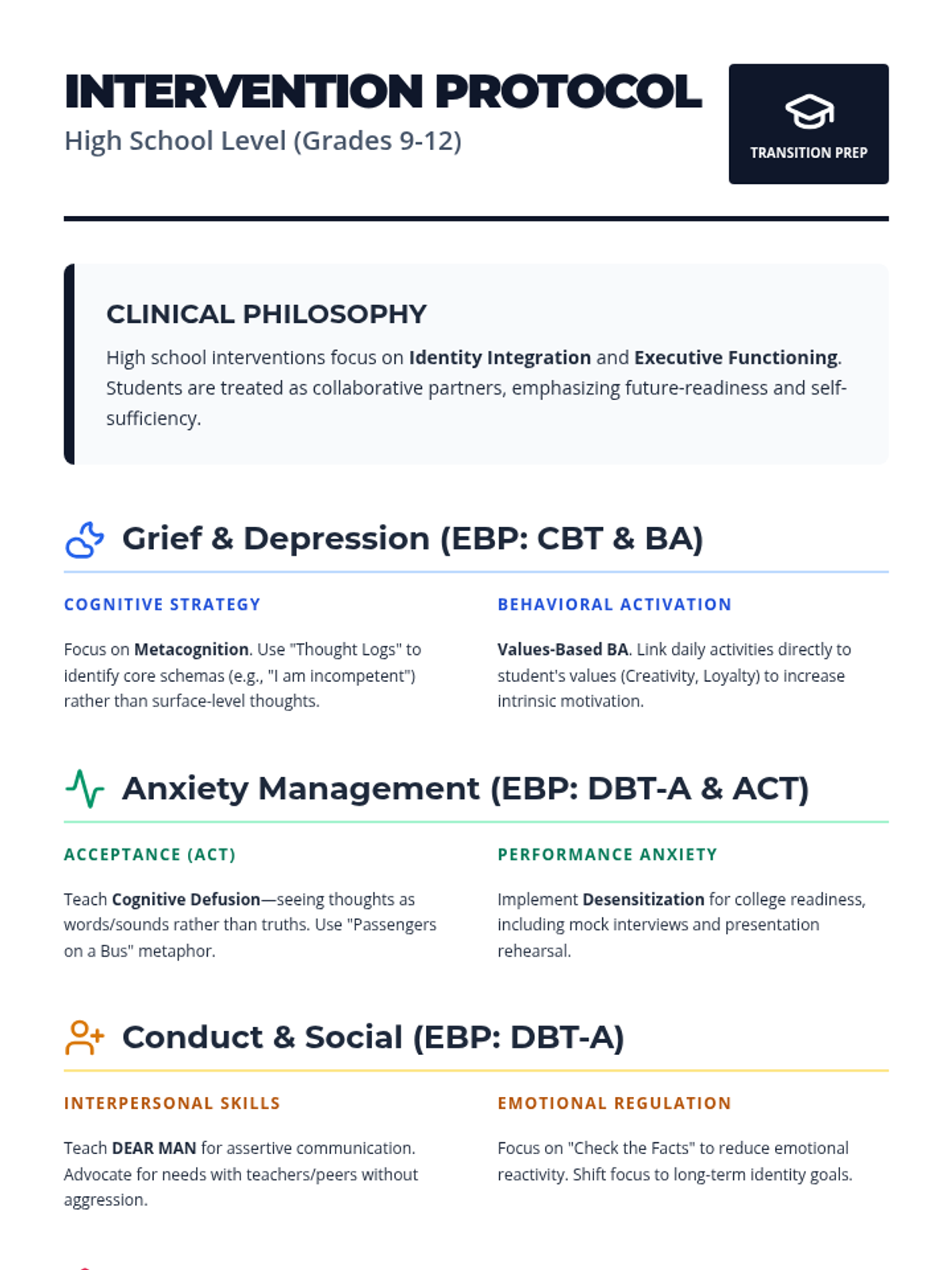
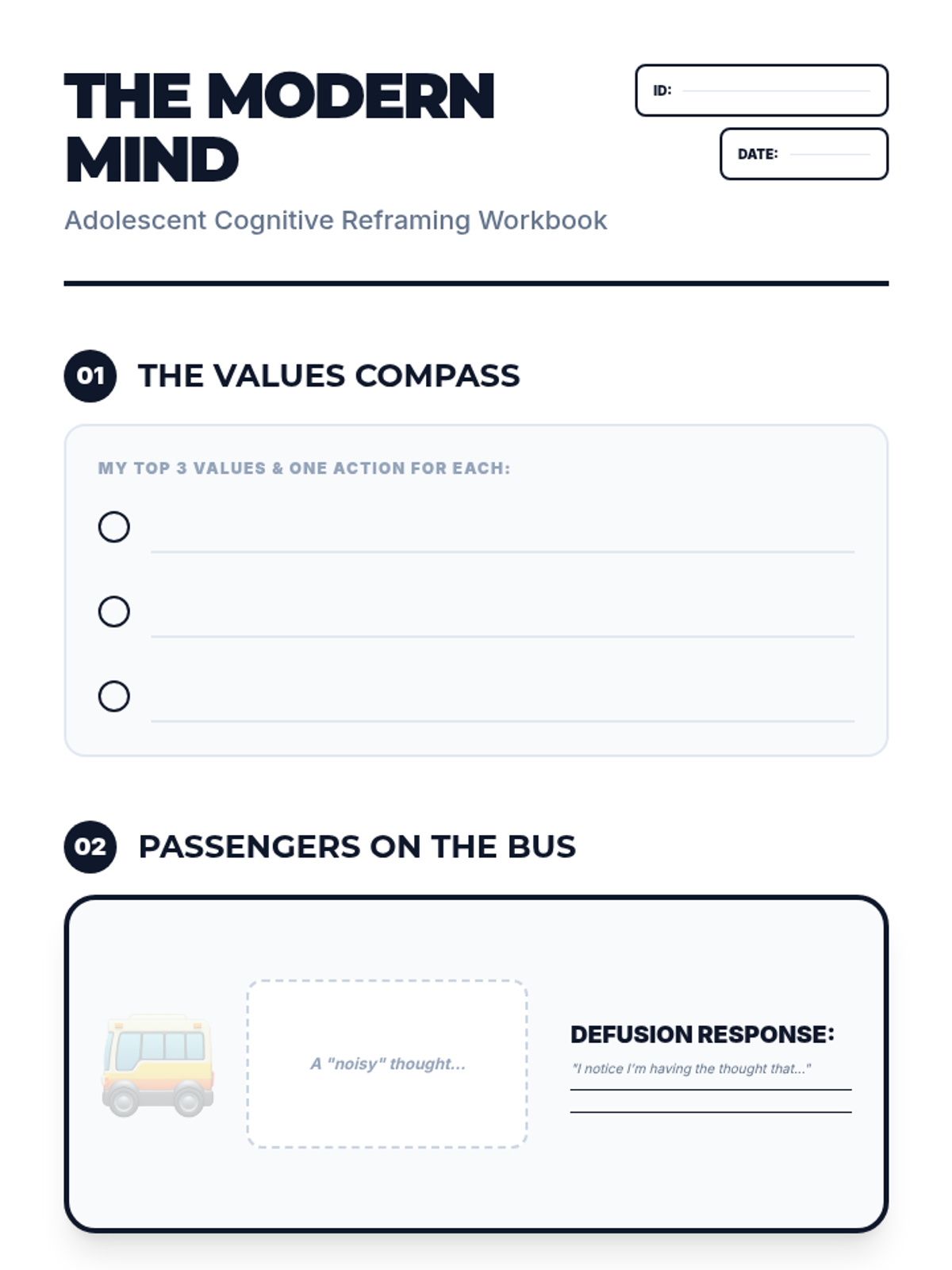
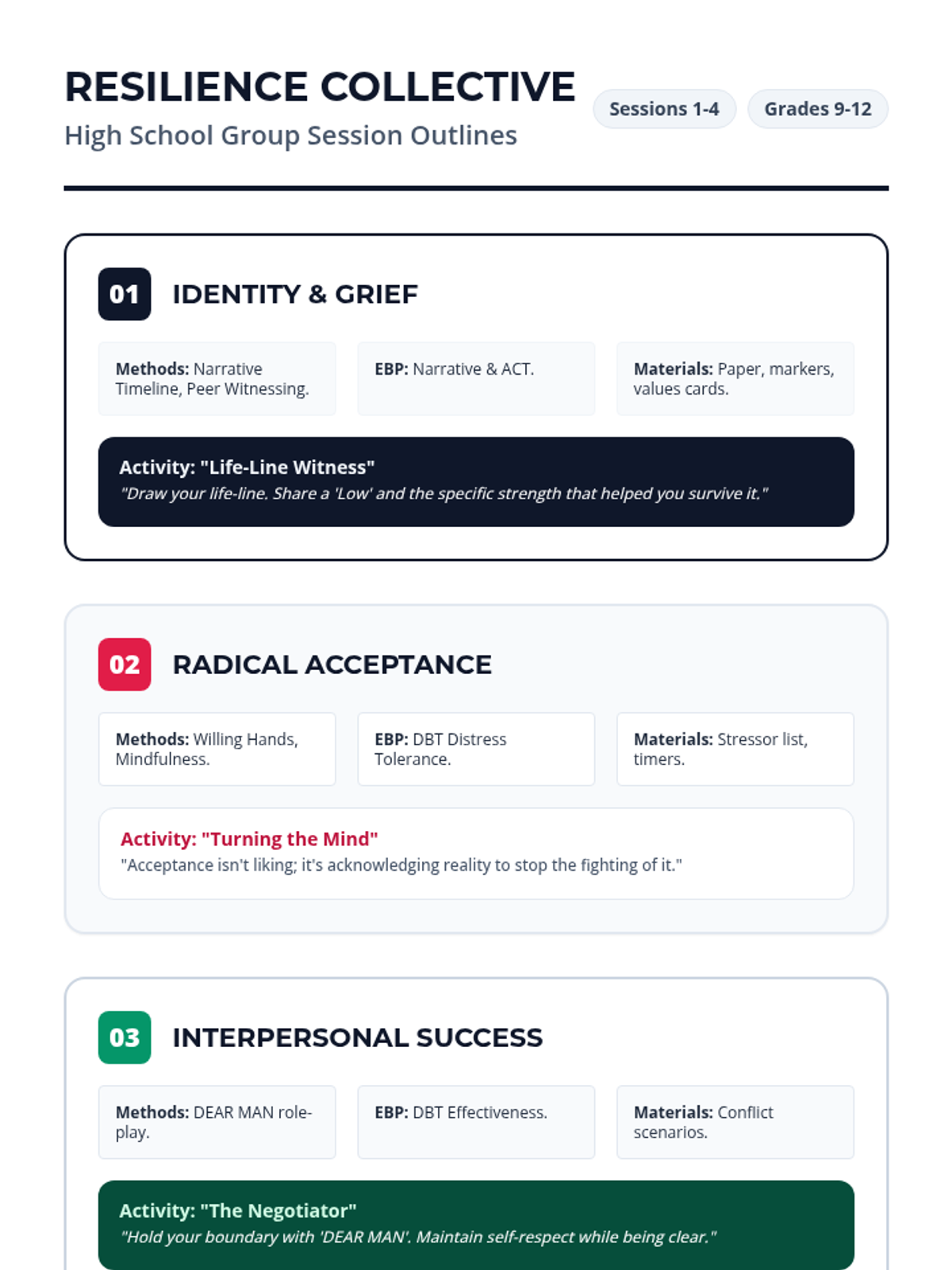
Advanced therapeutic interventions for high schoolers, emphasizing autonomy, complex cognitive reframing, interpersonal effectiveness, and comprehensive crisis protocols.
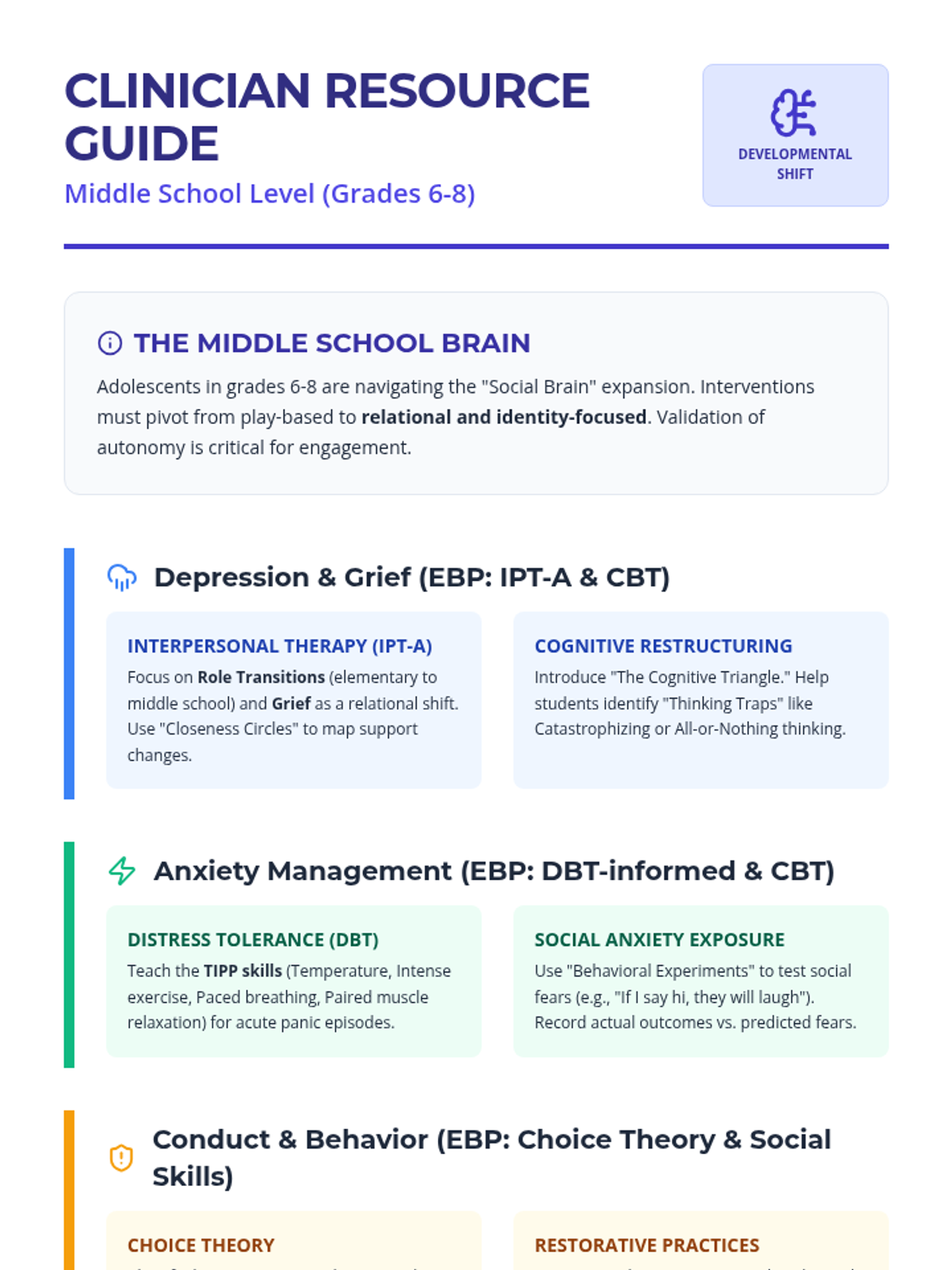
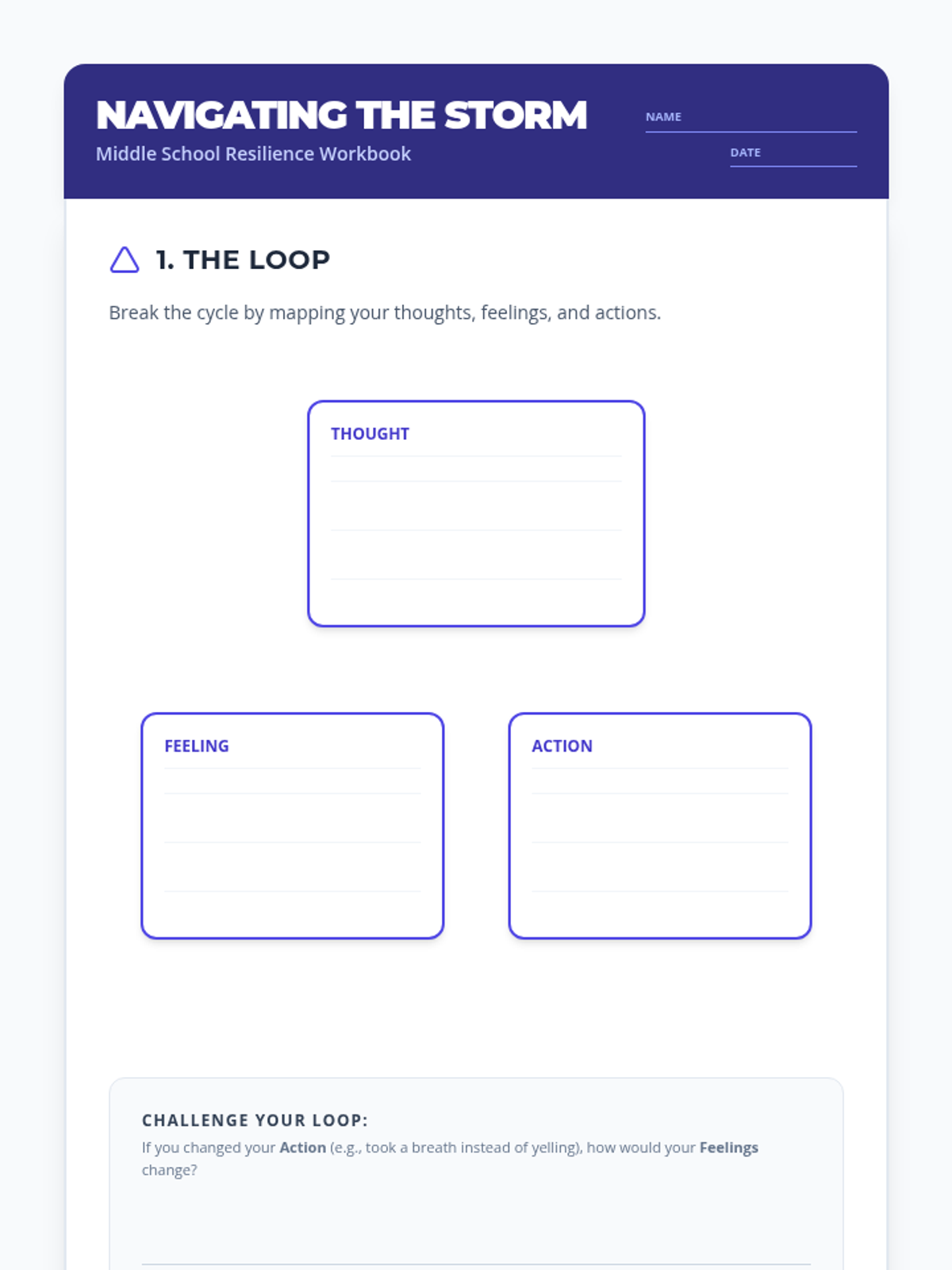
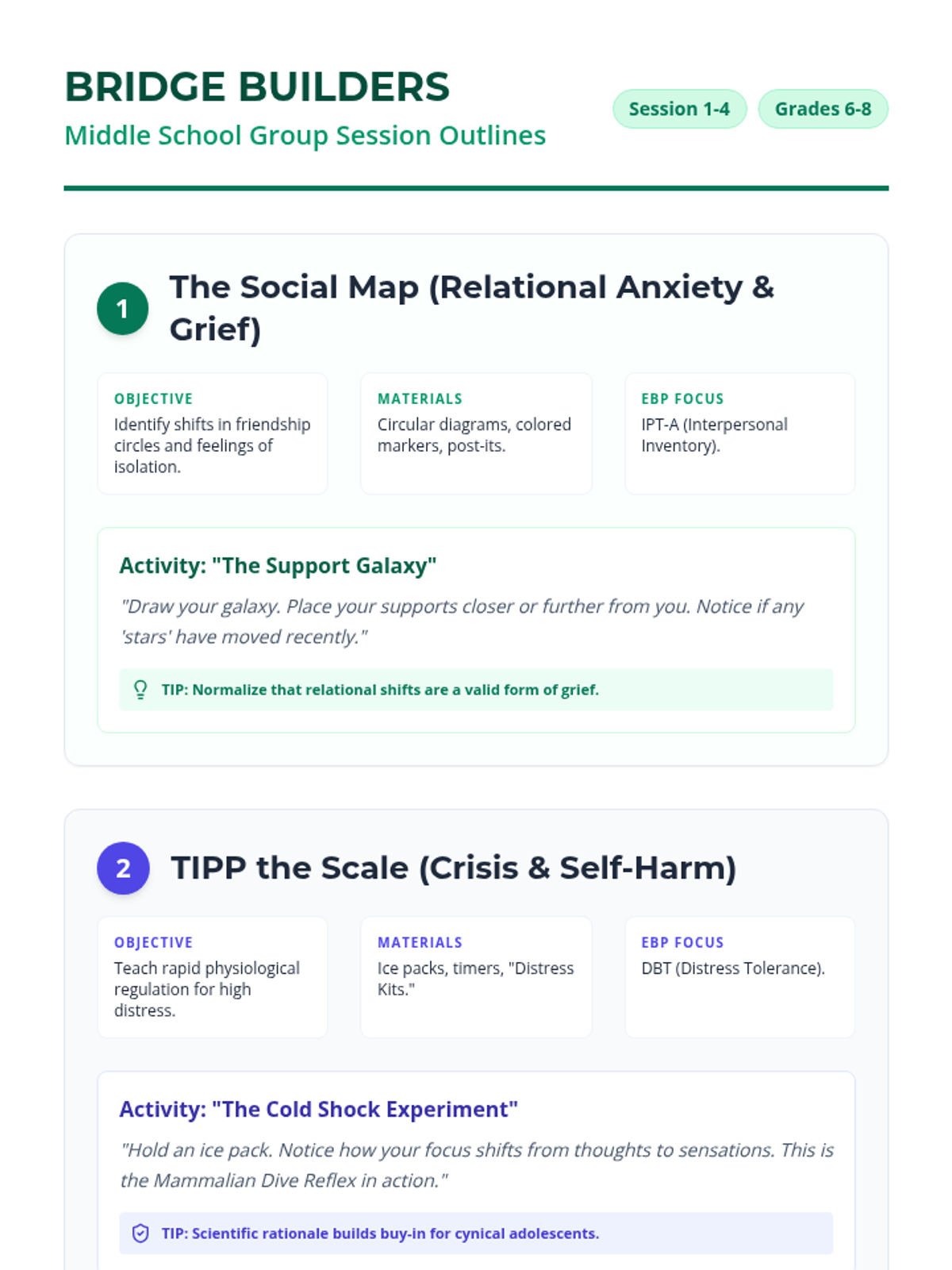
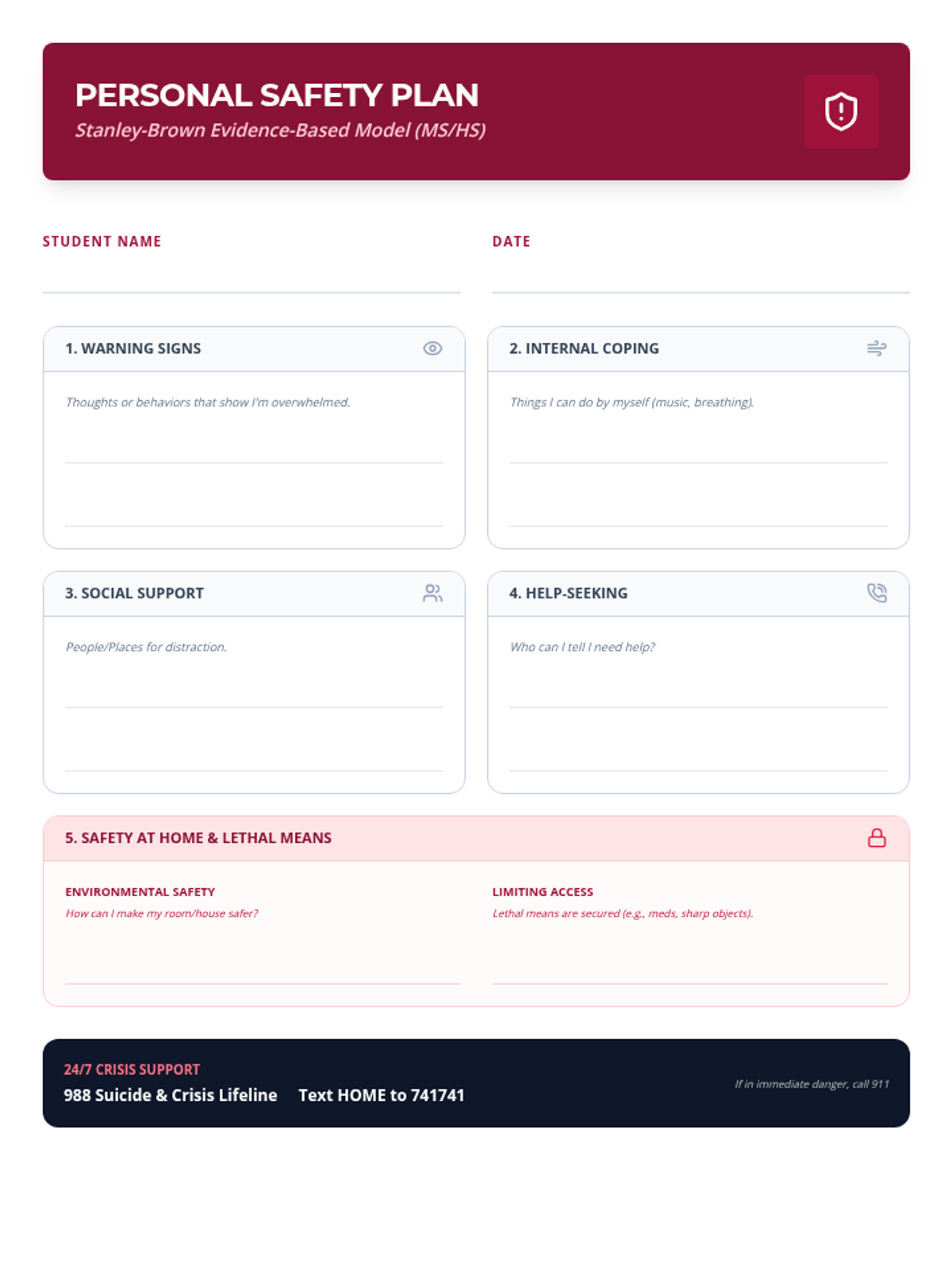
CBT and DBT-informed strategies tailored for the middle school transition, focusing on peer relationships, emotional regulation, and structured safety plans.
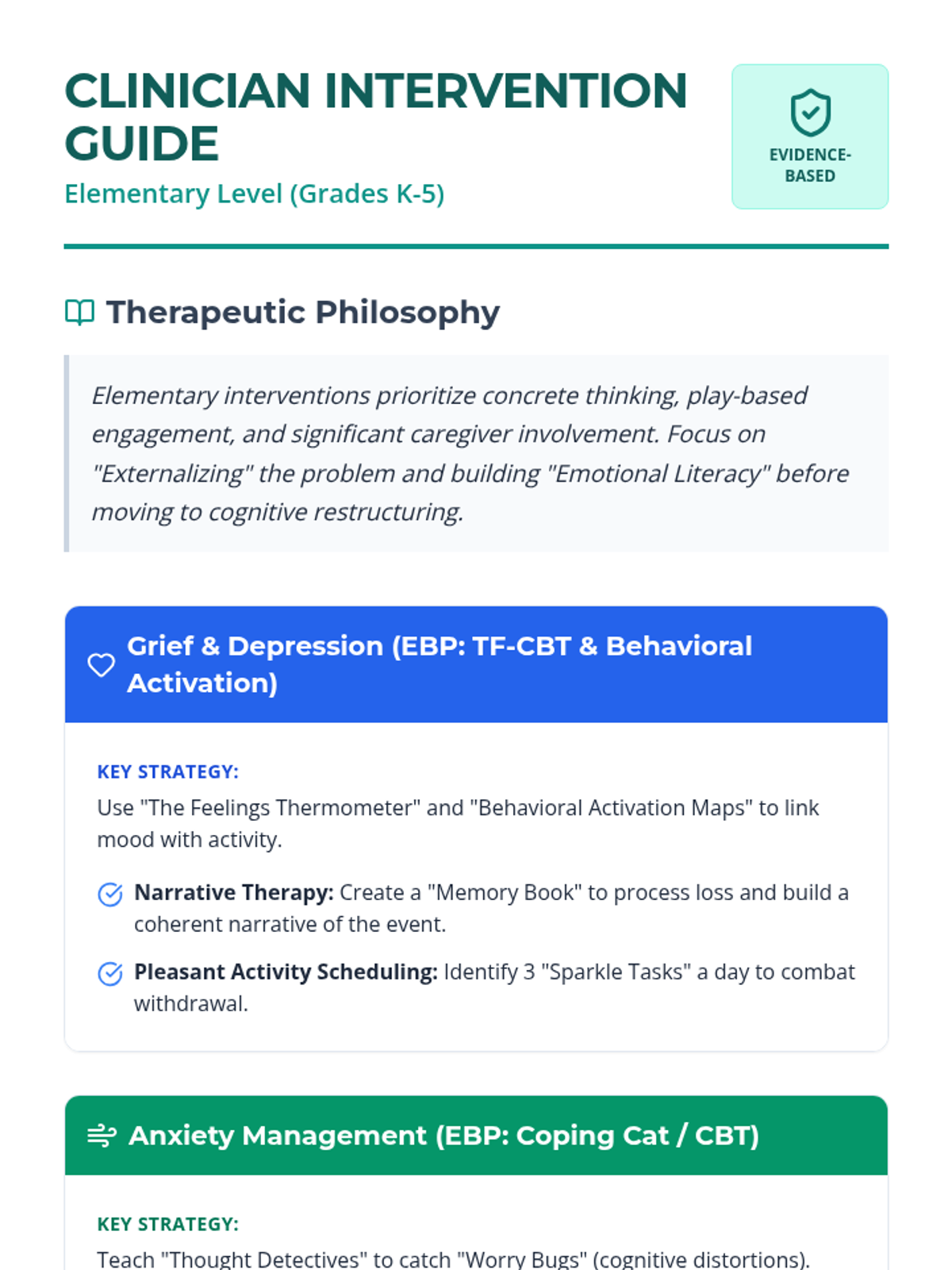
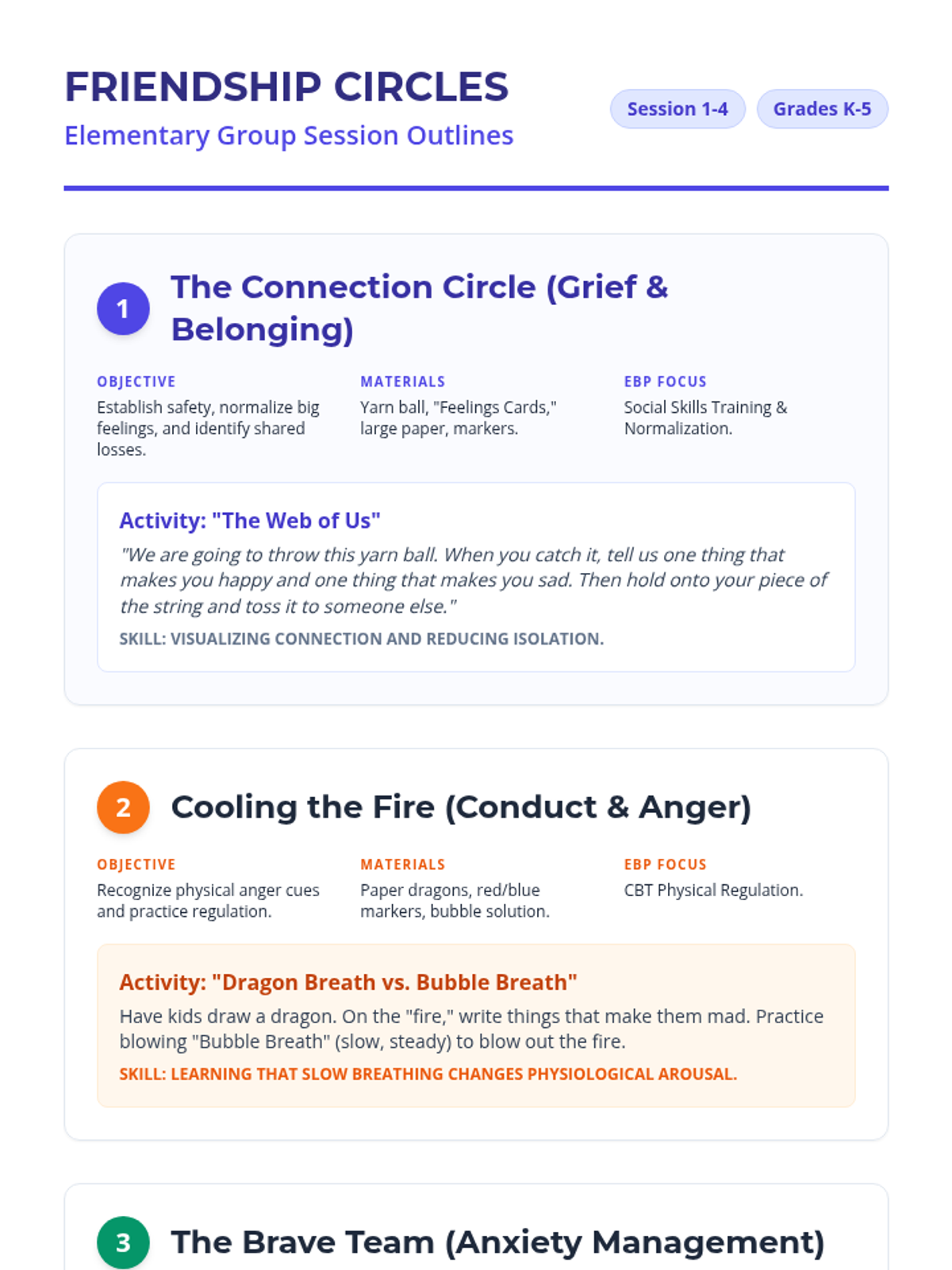
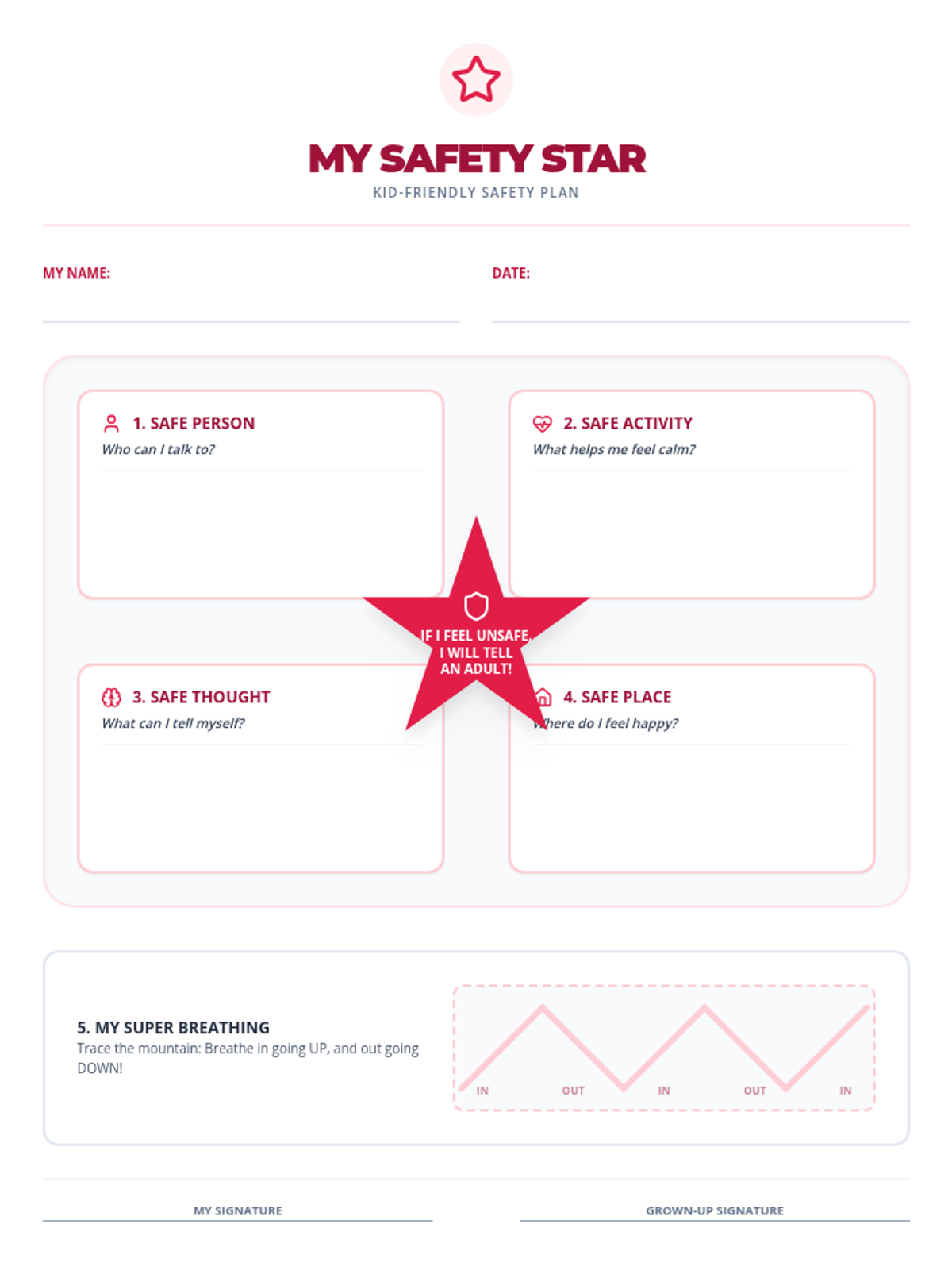
Developmentally appropriate interventions for elementary students focusing on play-based CBT, social-emotional learning, and kid-friendly safety planning.
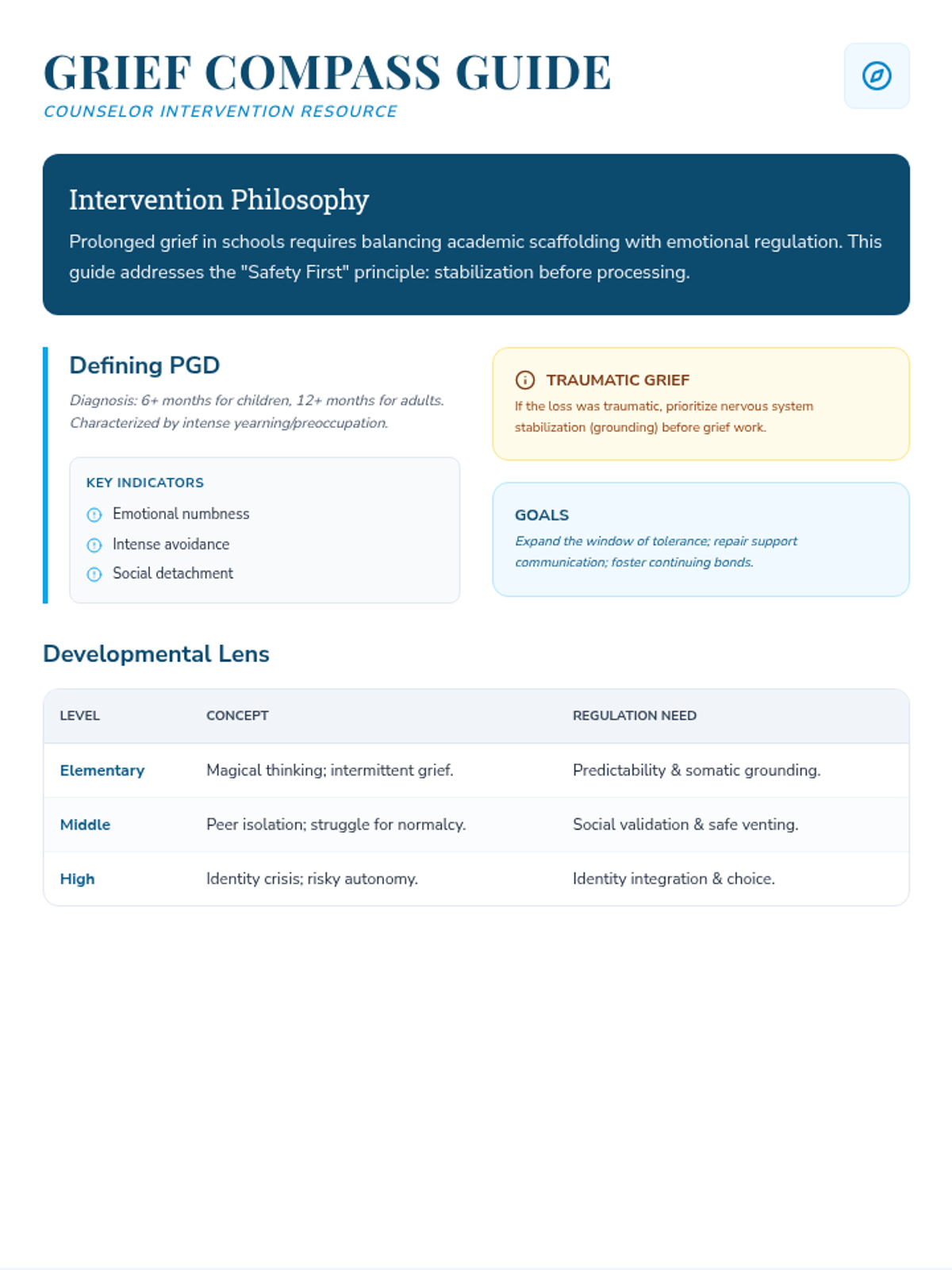
Professional development for school staff to identify signs of prolonged grief disorder and implement supportive classroom strategies.
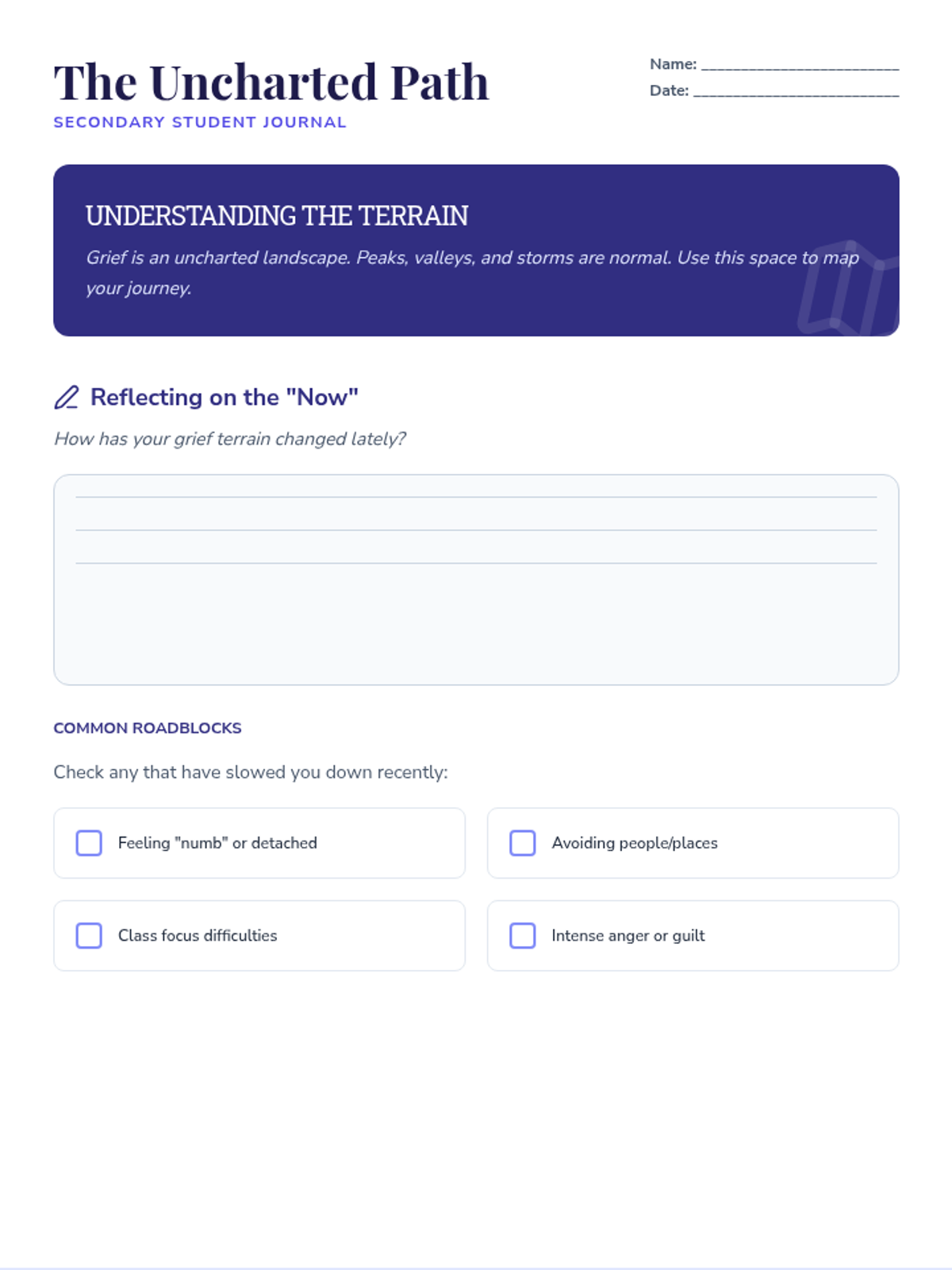
Advanced coping strategies and communication tools for middle and high school students to navigate the complexities of prolonged grief and build sustainable support systems.
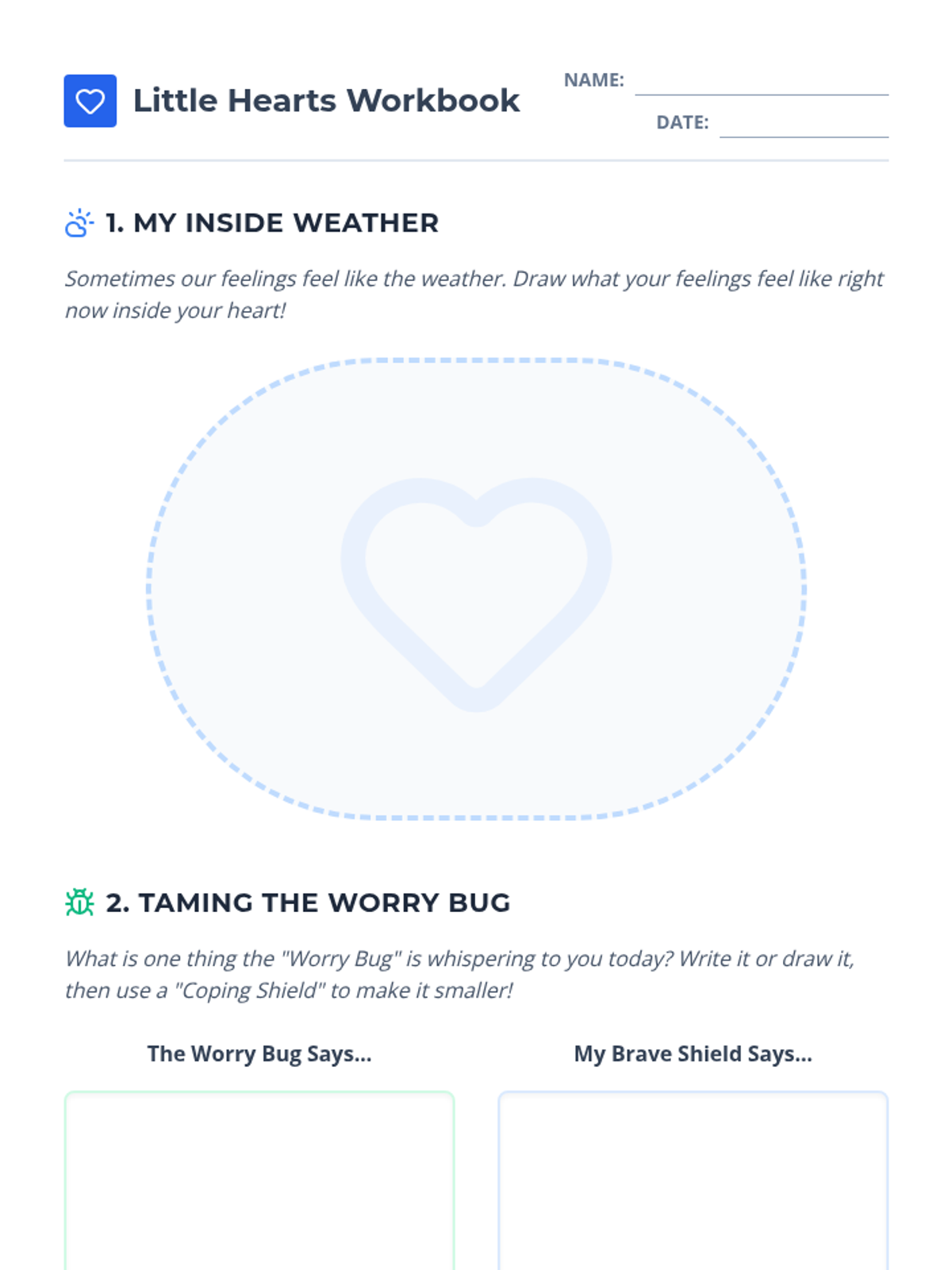
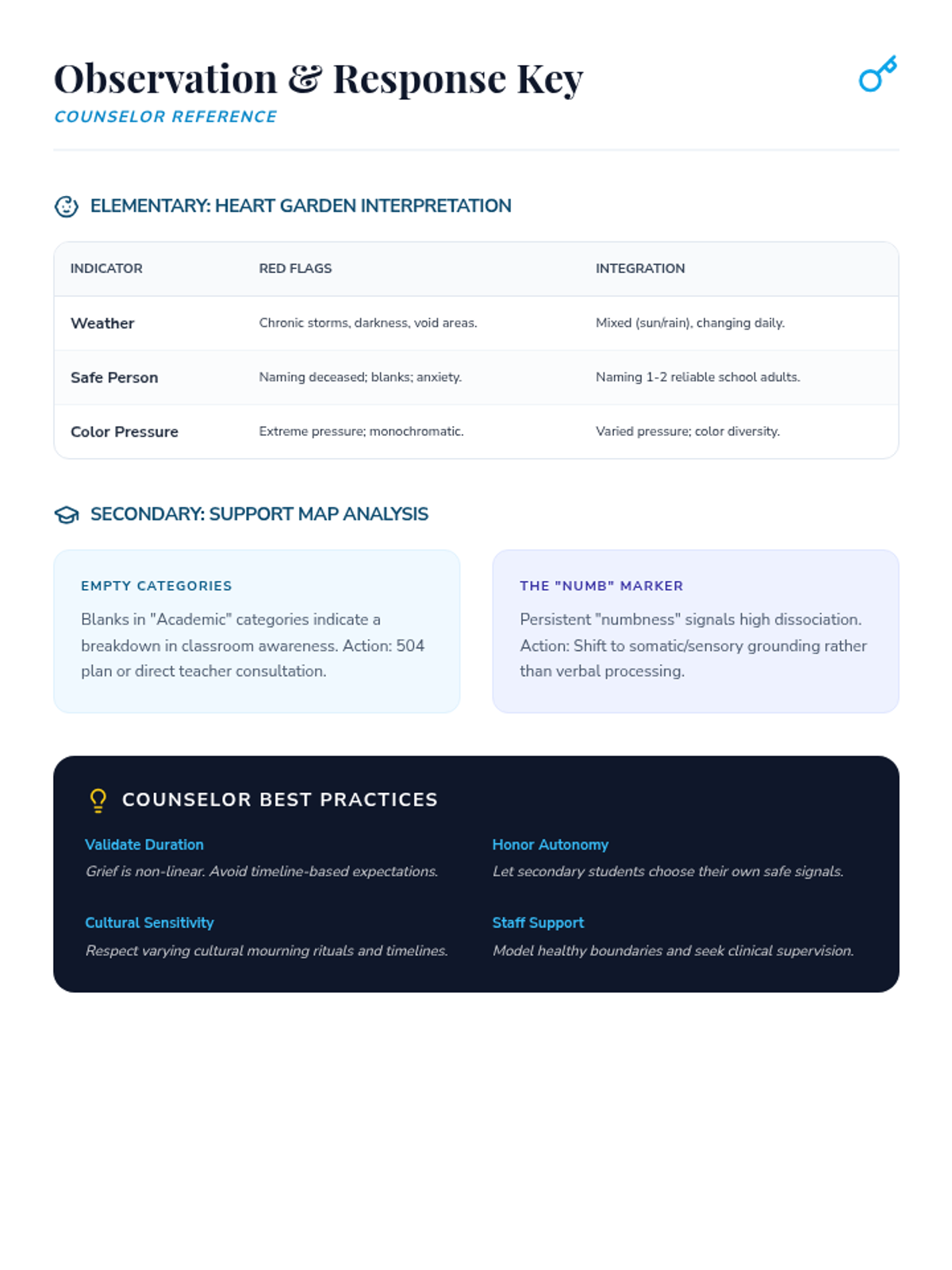
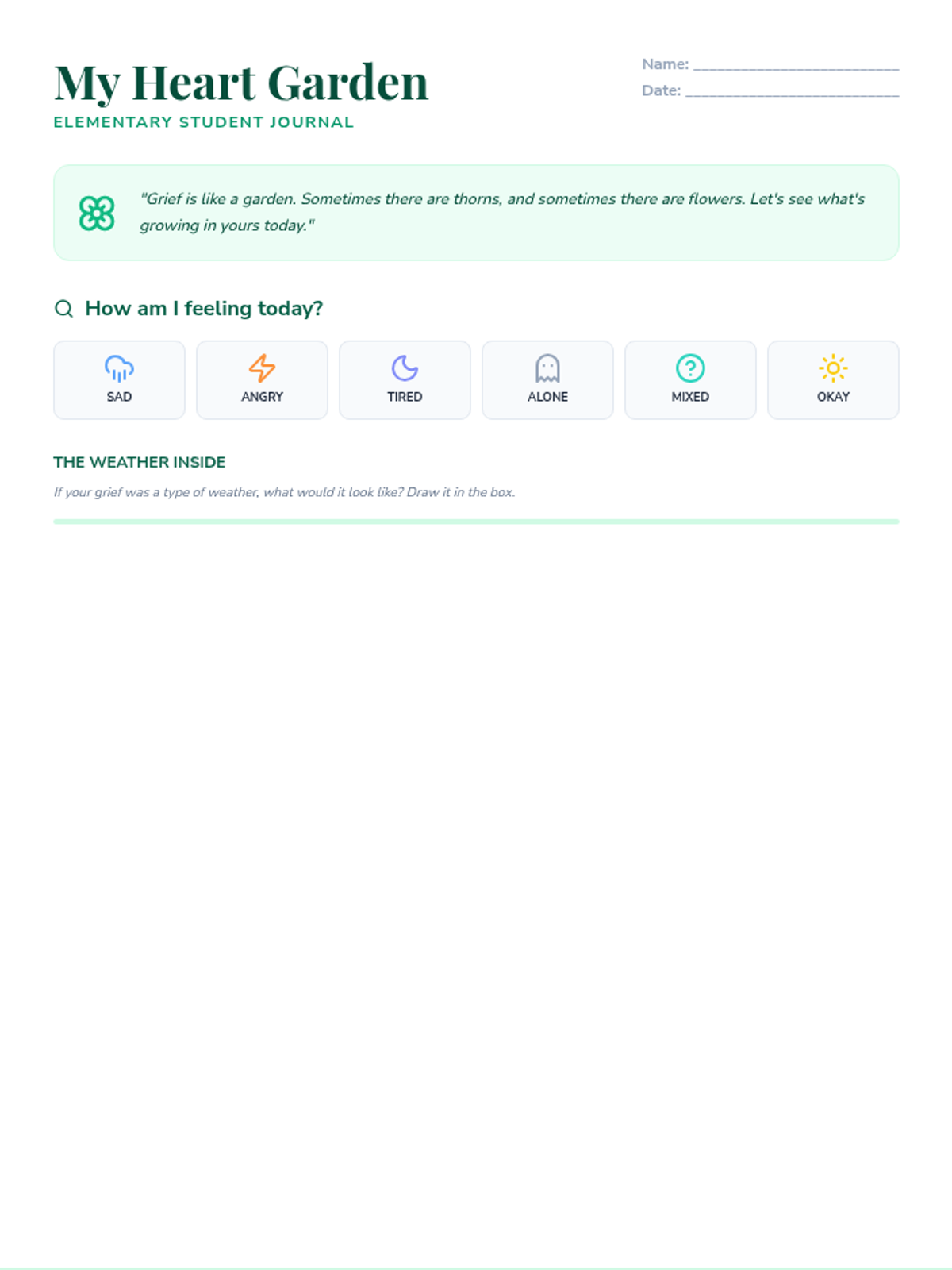
Foundational resources for elementary students focusing on emotional identification, regulation through play and art, and simple coping strategies within a 'Heart Garden' theme.
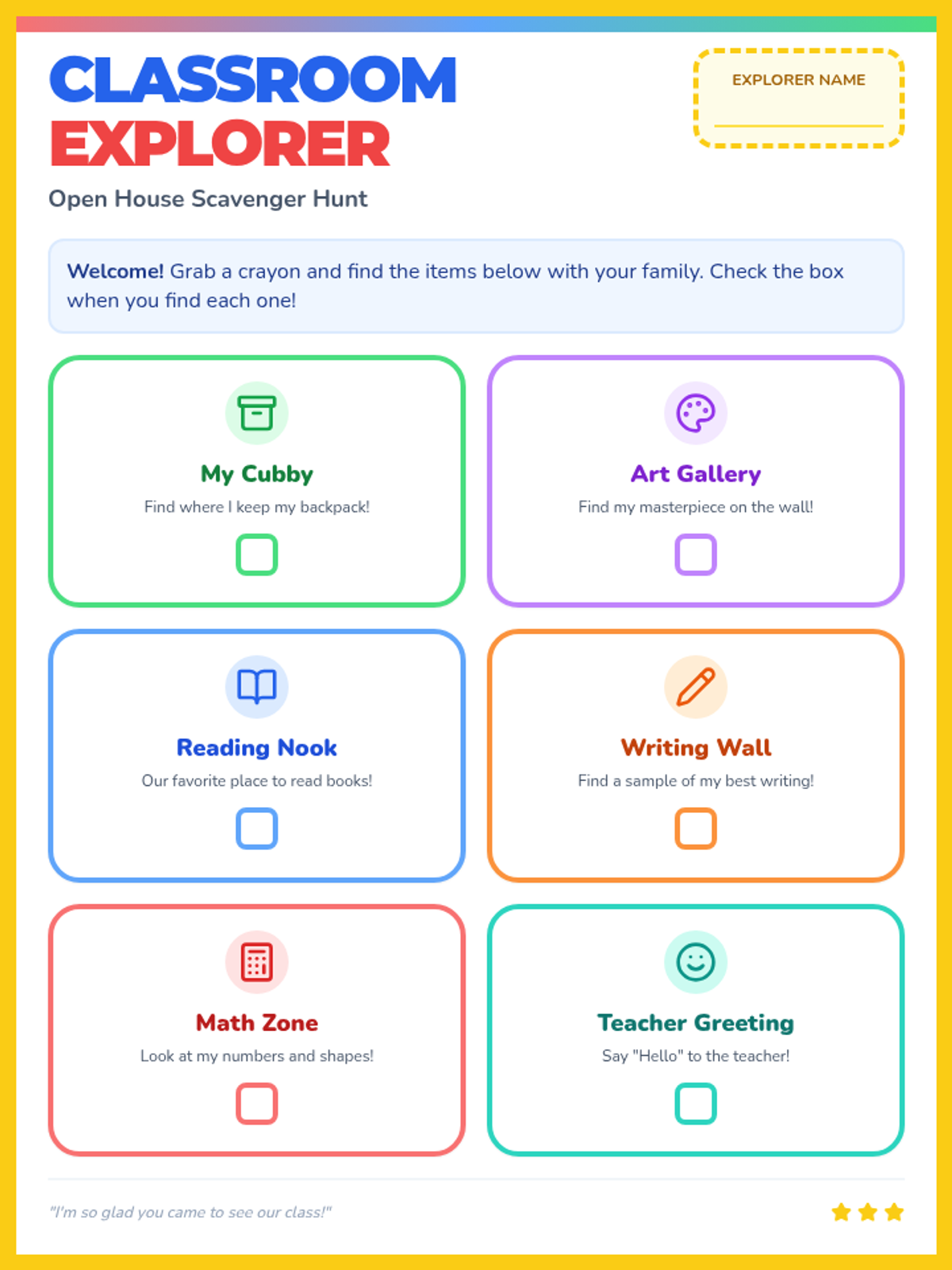
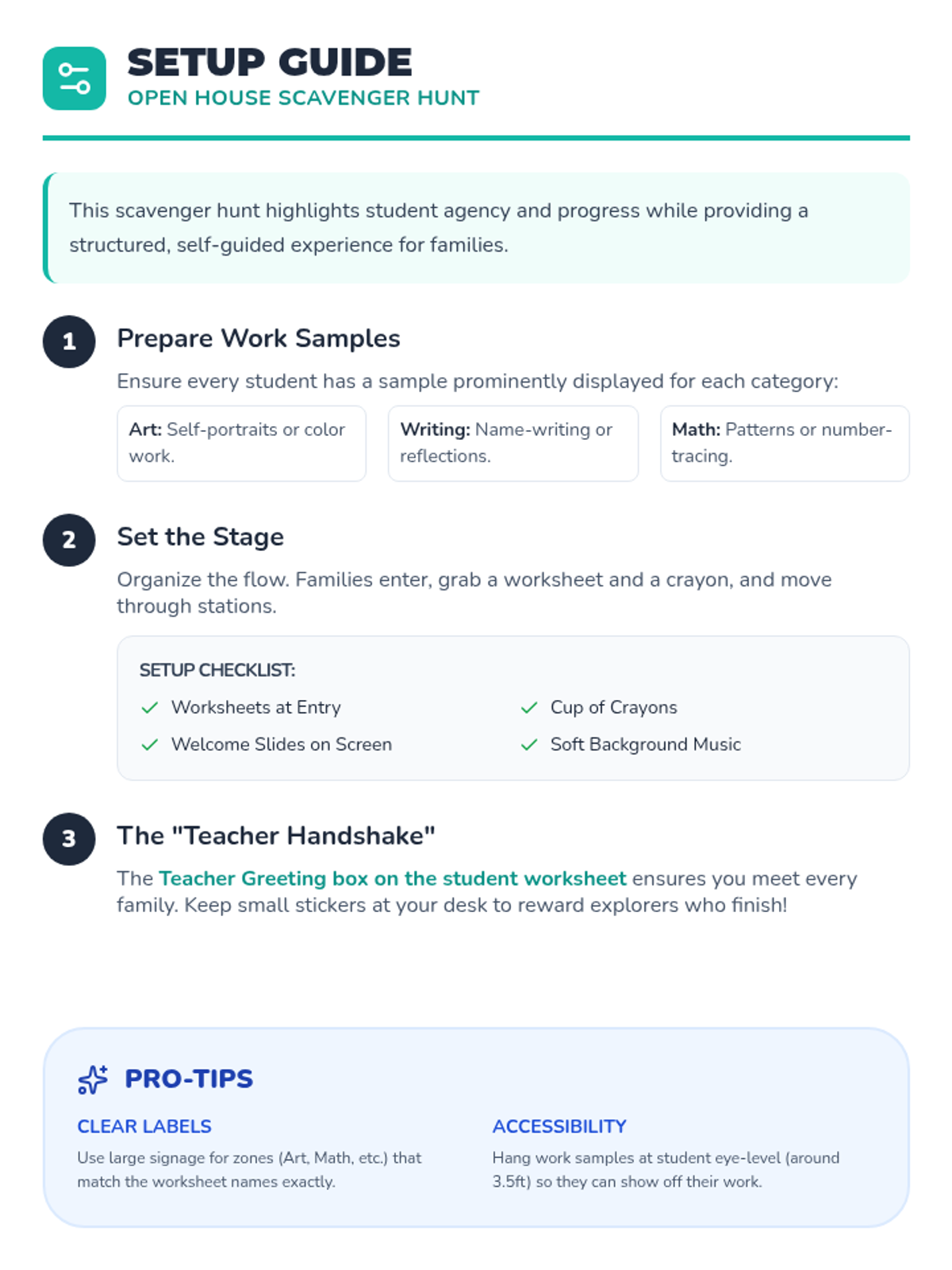
A welcoming and interactive experience for kindergarten families to explore the classroom and celebrate student achievements during Open House.
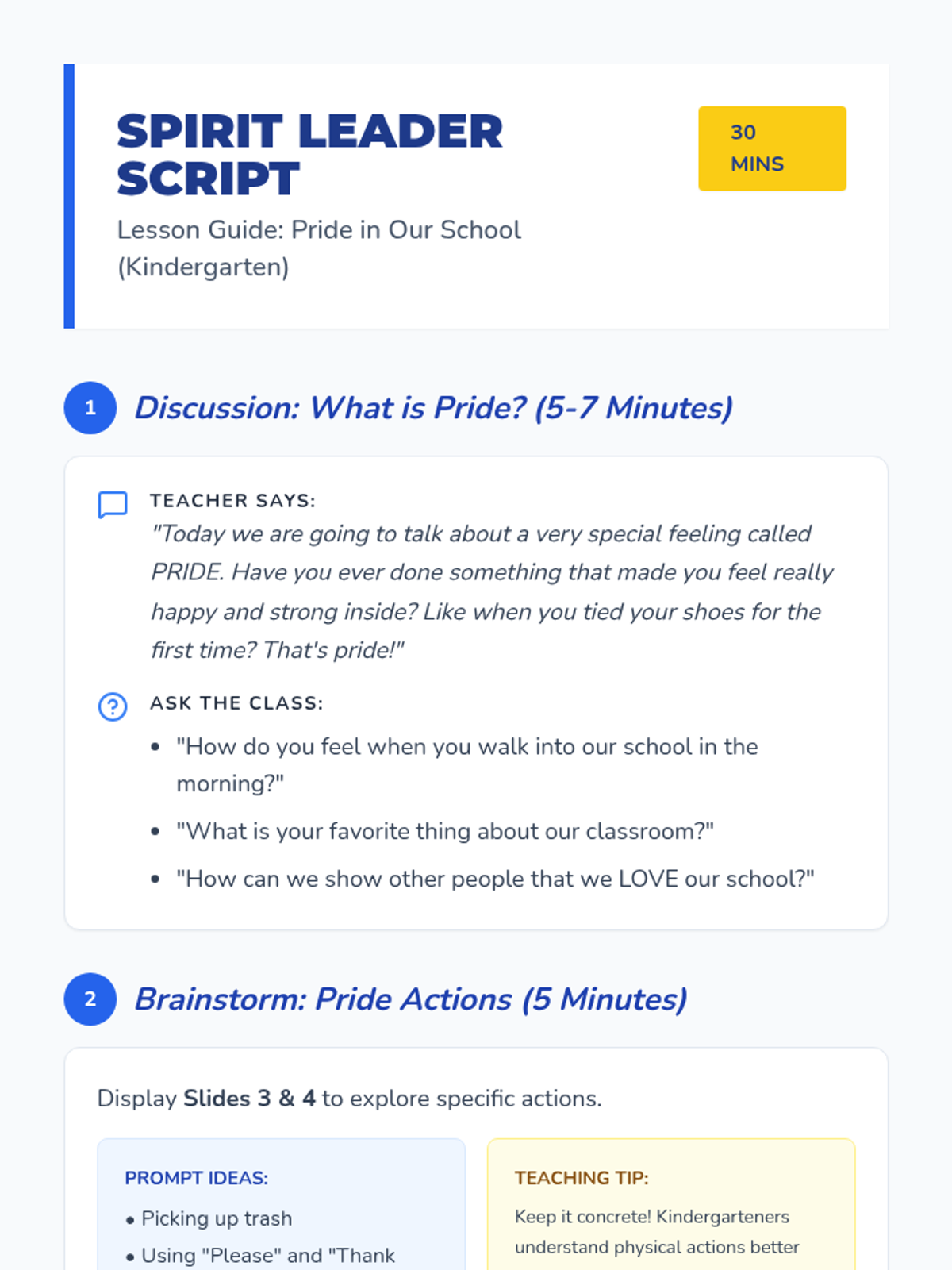
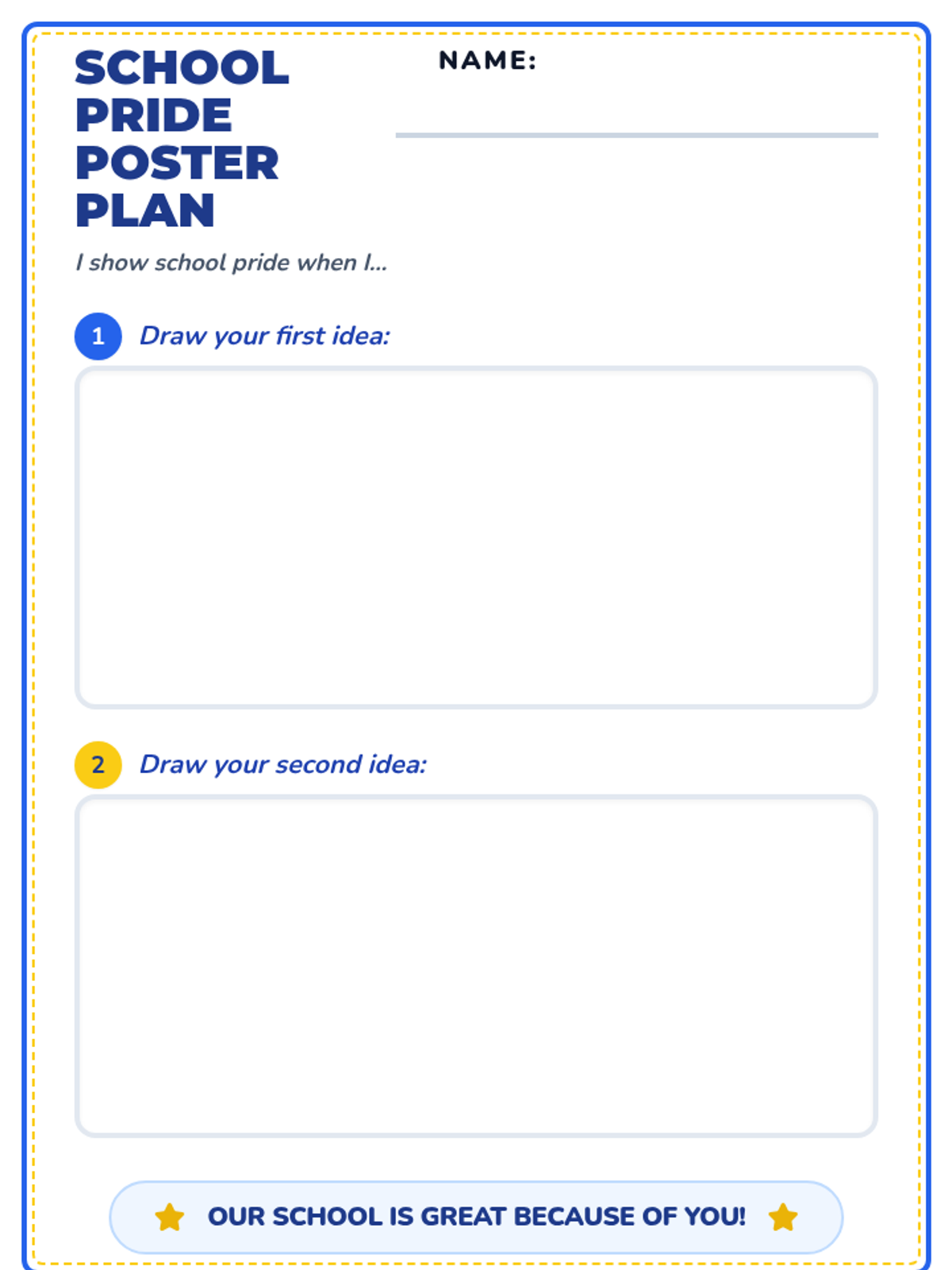
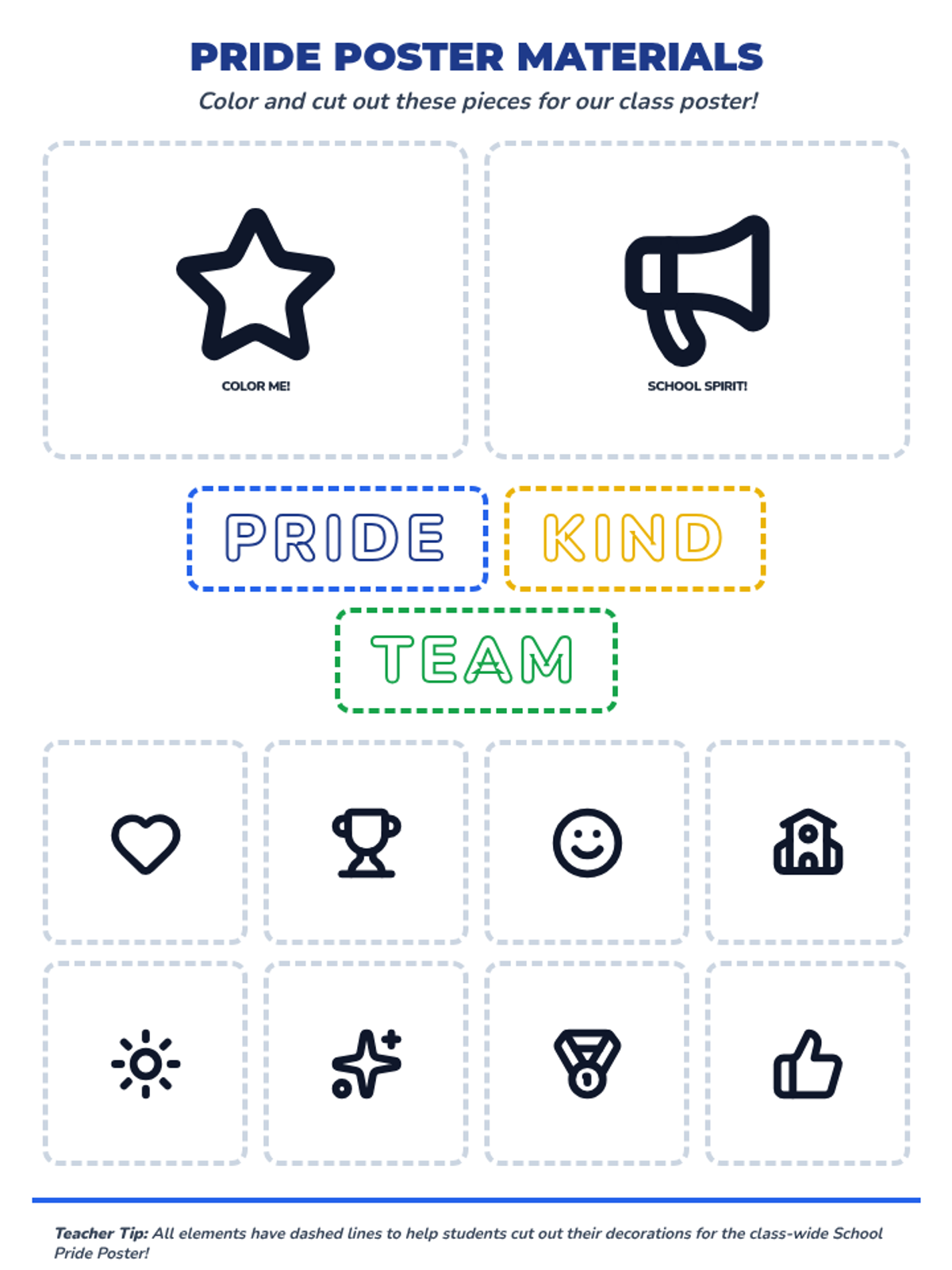
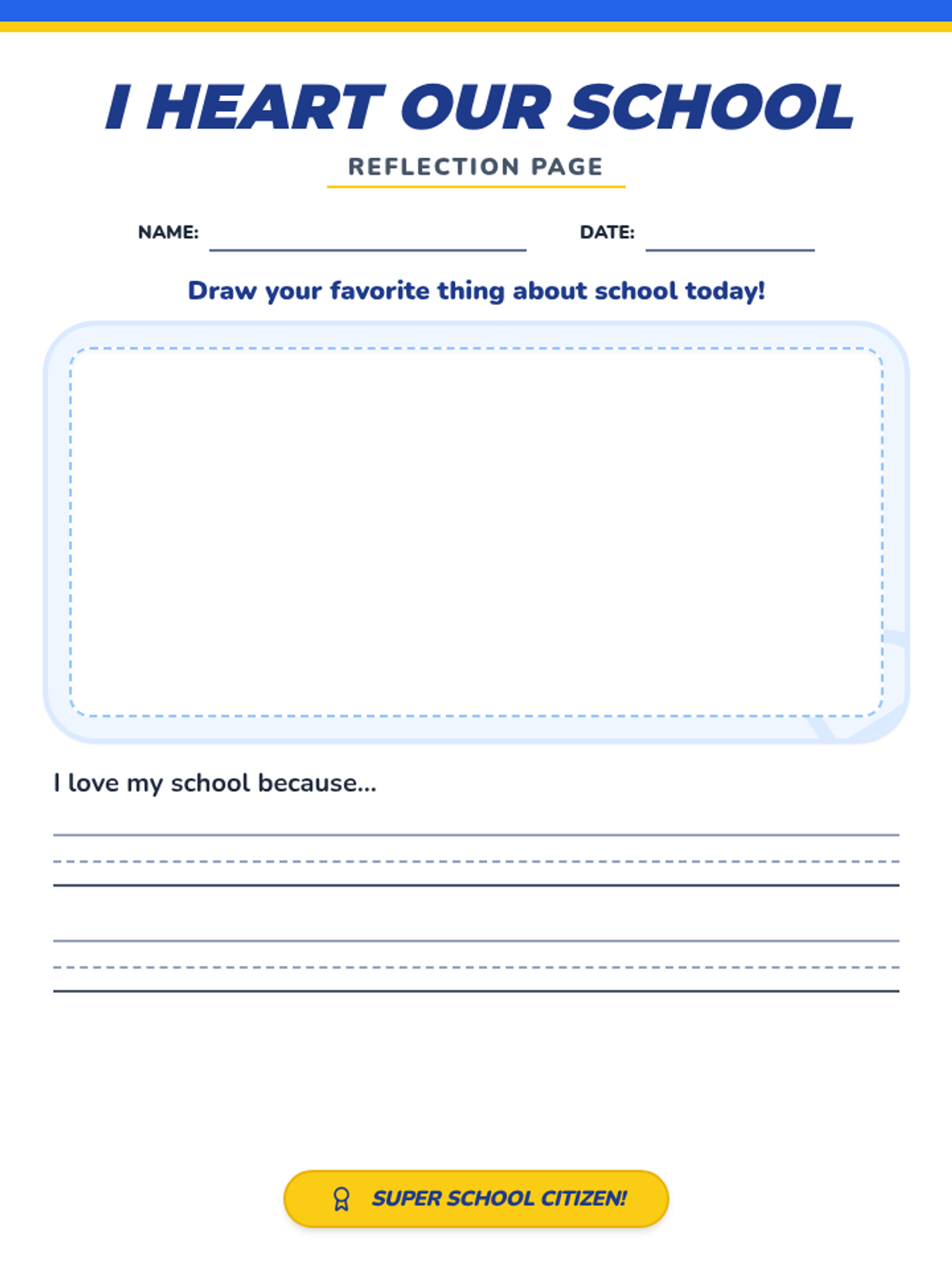
A 30-minute lesson for Kindergarteners to explore the concept of school pride, brainstorm ways to care for their school community, and collaborate on a school spirit poster.
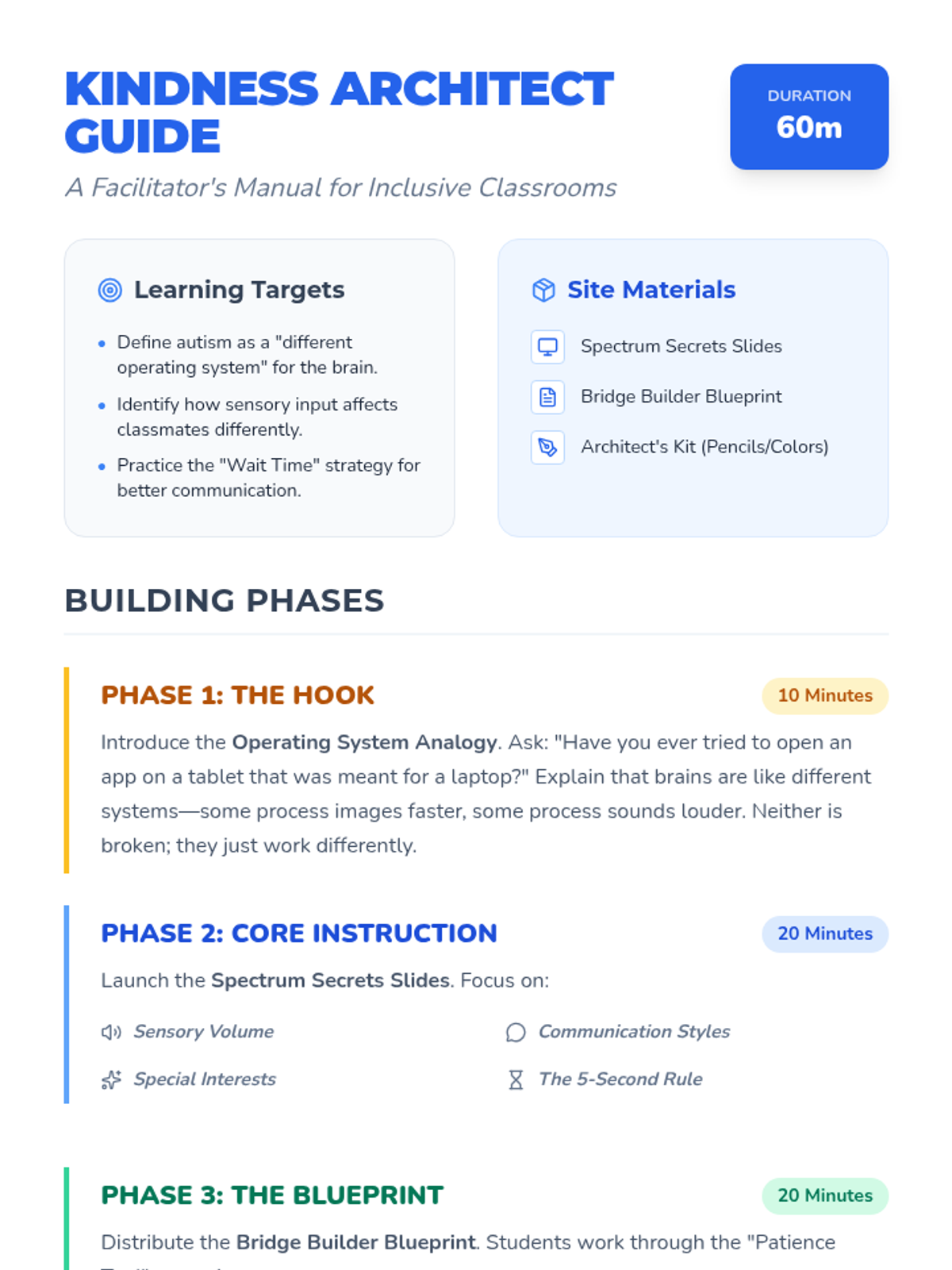
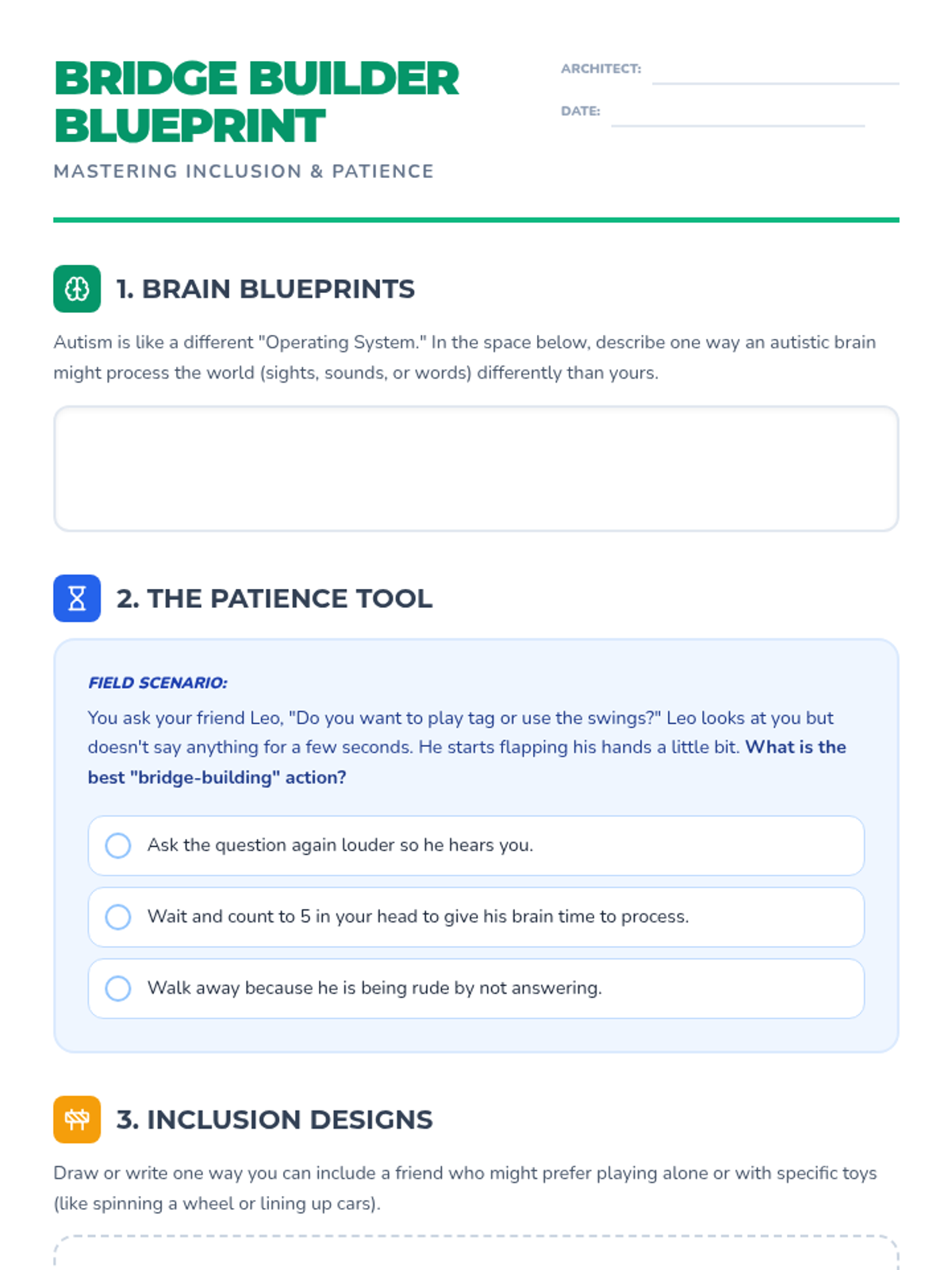
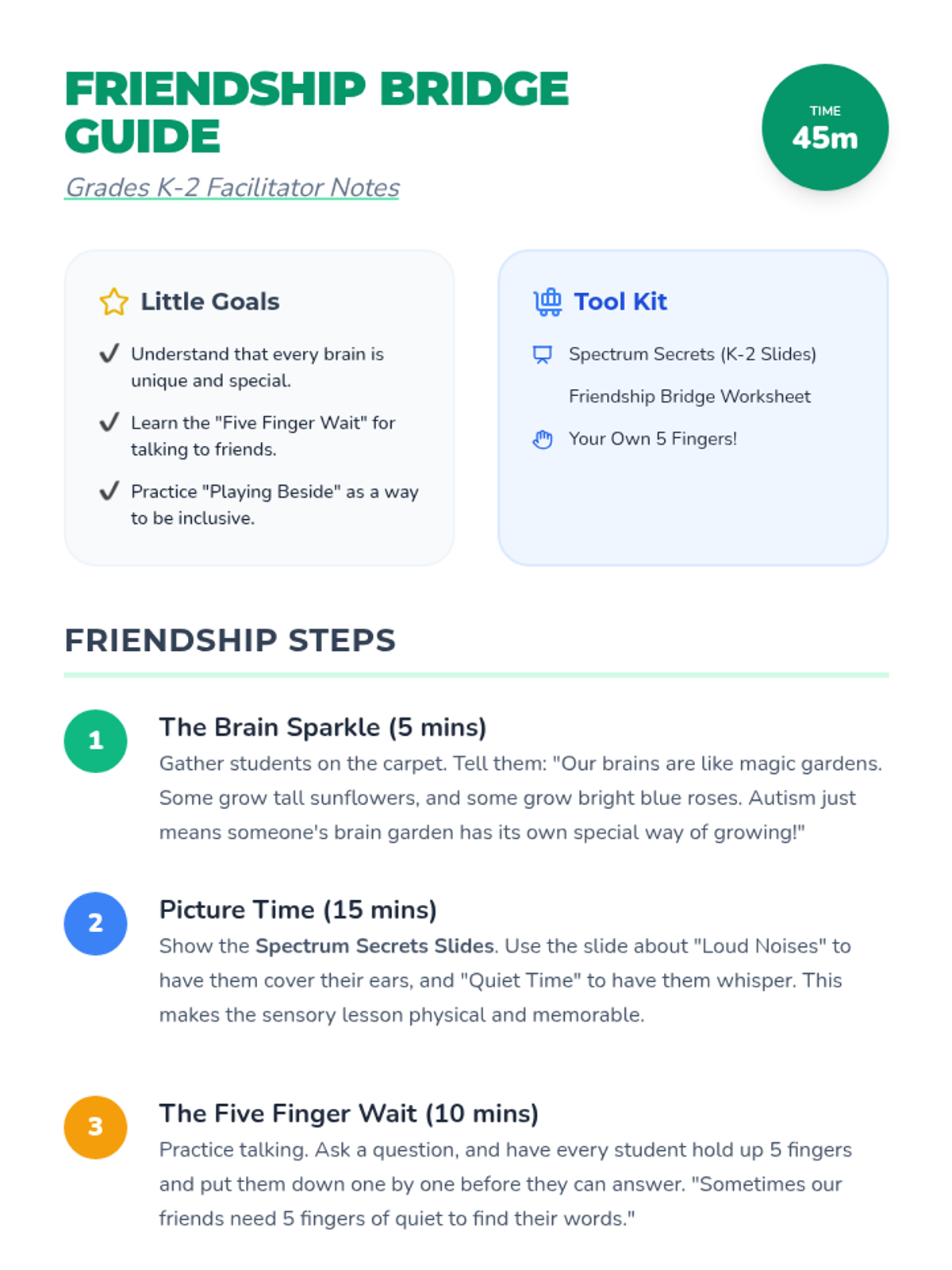
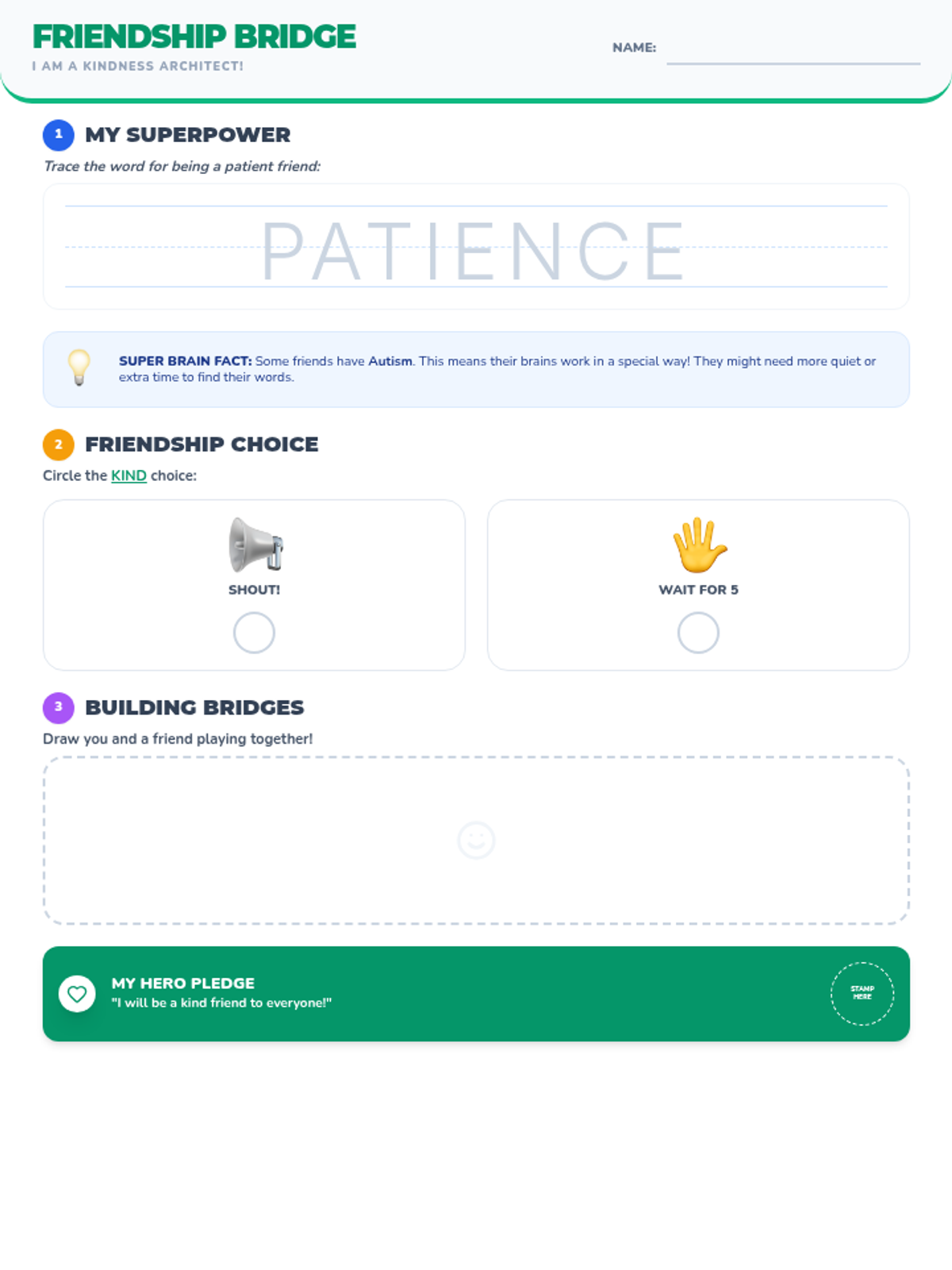
A comprehensive lesson designed to help students understand autism as a natural neurological difference while developing specific friendship skills like patience and inclusive play. Students will explore sensory experiences, communication styles, and practical ways to support peers on the spectrum.
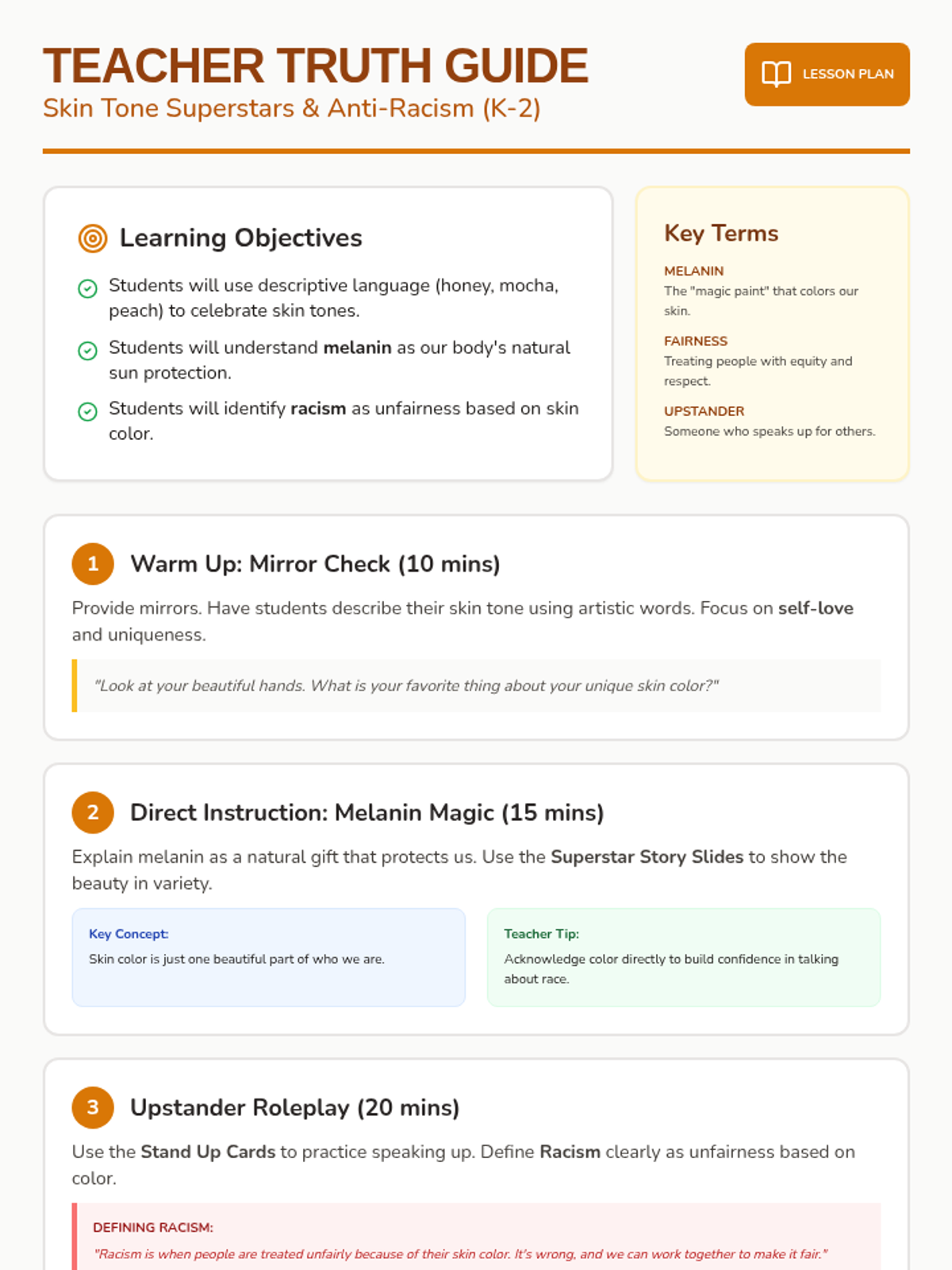
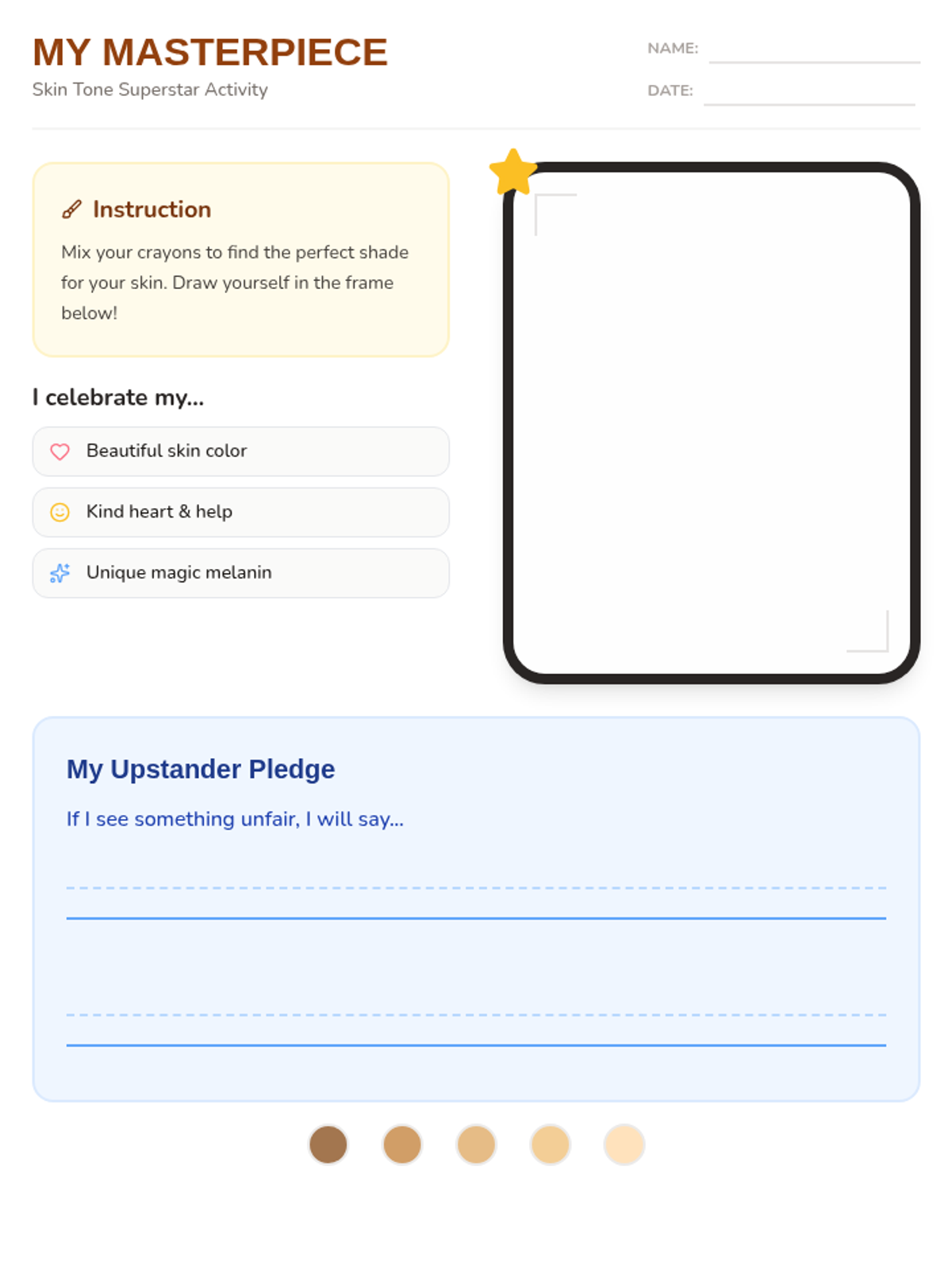
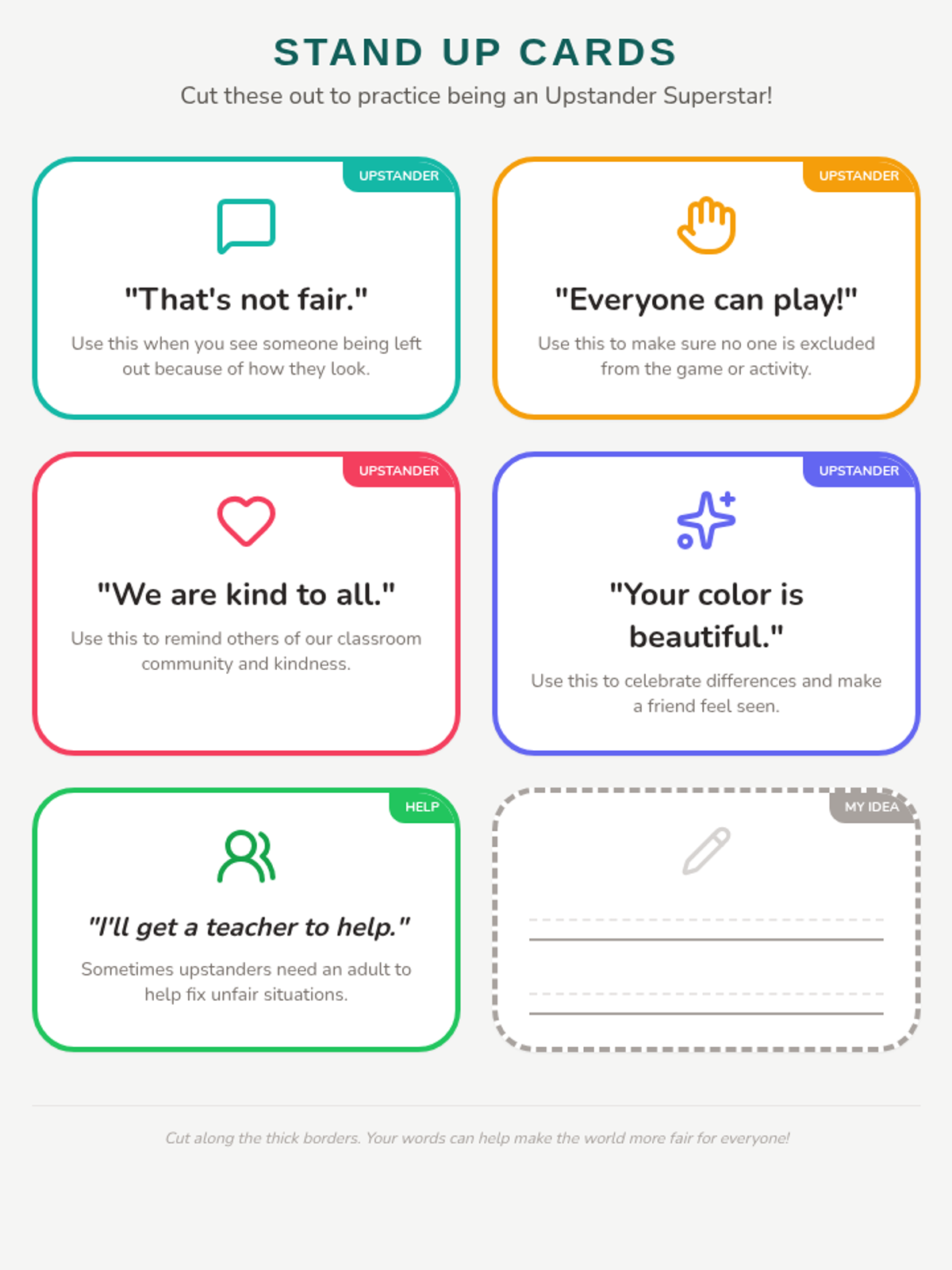
A foundational K-2 lesson designed to celebrate the diversity of skin tones through the concept of melanin and empower young students with "upstander" skills to promote fairness and anti-racism.
Practical resources for educators to implement the SEL calendar, including classroom presentation materials and teacher reference guides.
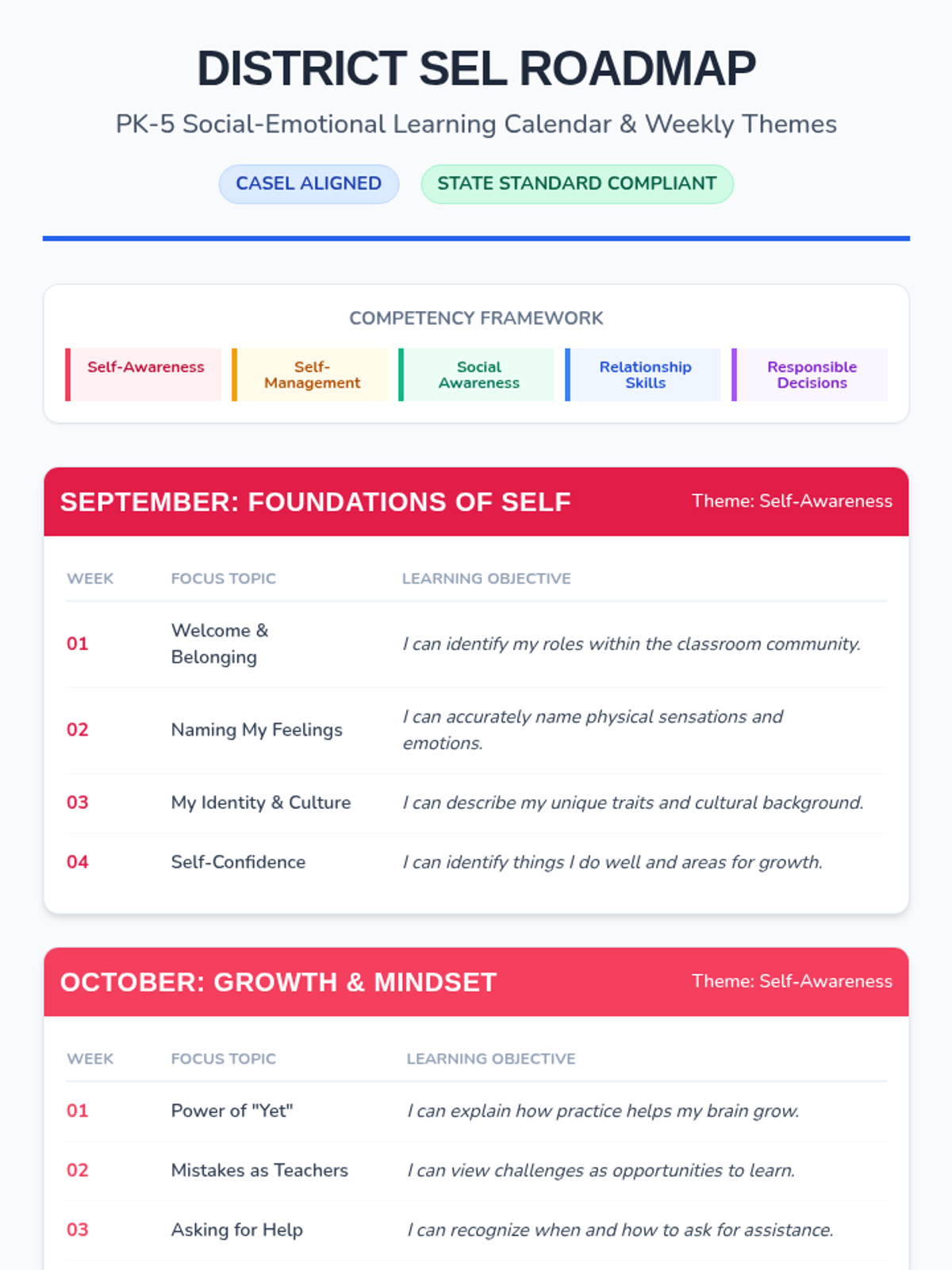
The foundational roadmap for the school year, detailing monthly CASEL themes and weekly focus topics tailored for PK-5 developmental stages.
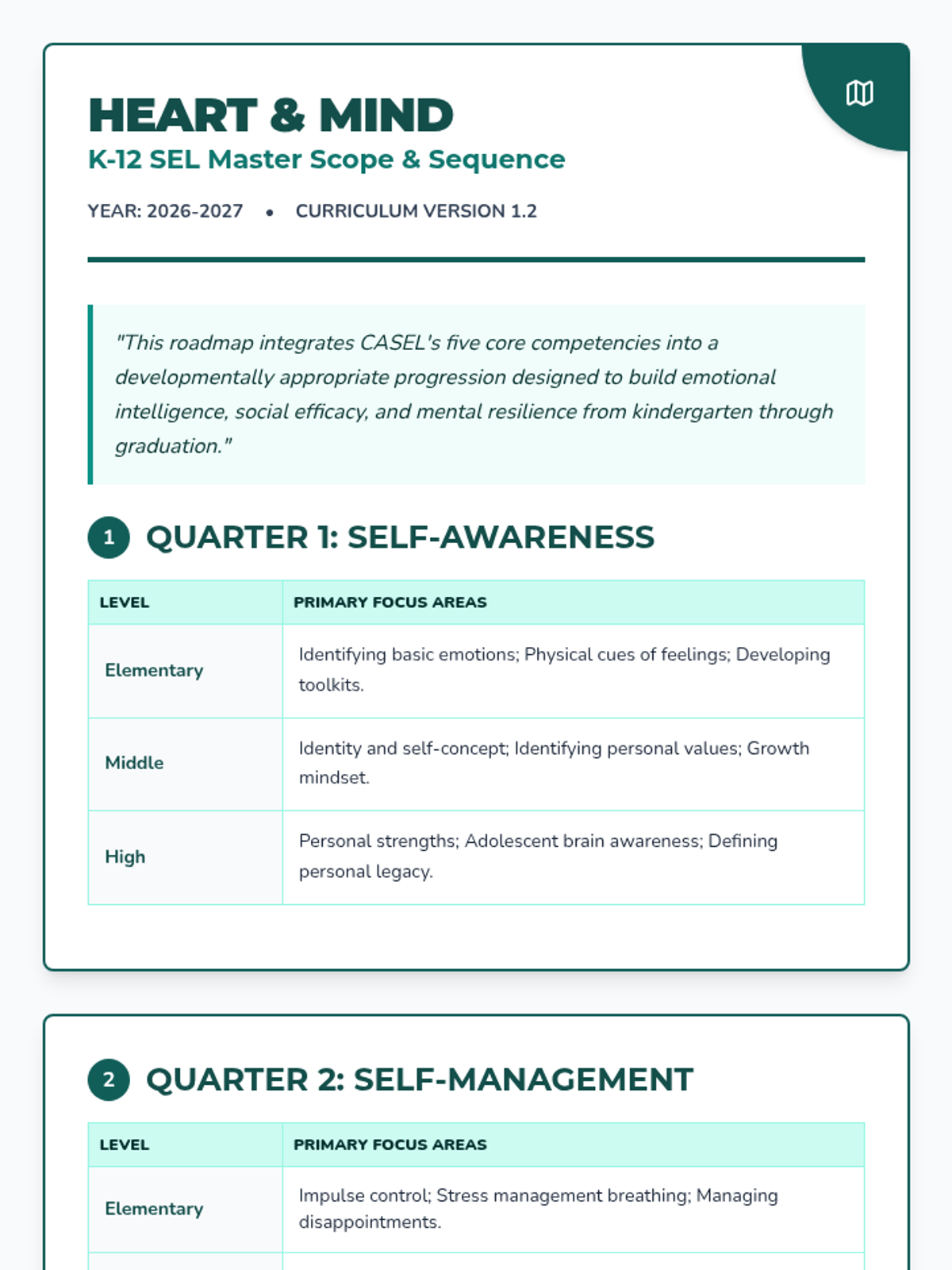
A comprehensive overview of the full-year K-12 SEL curriculum, providing teachers with a structured scope and sequence for implementation.
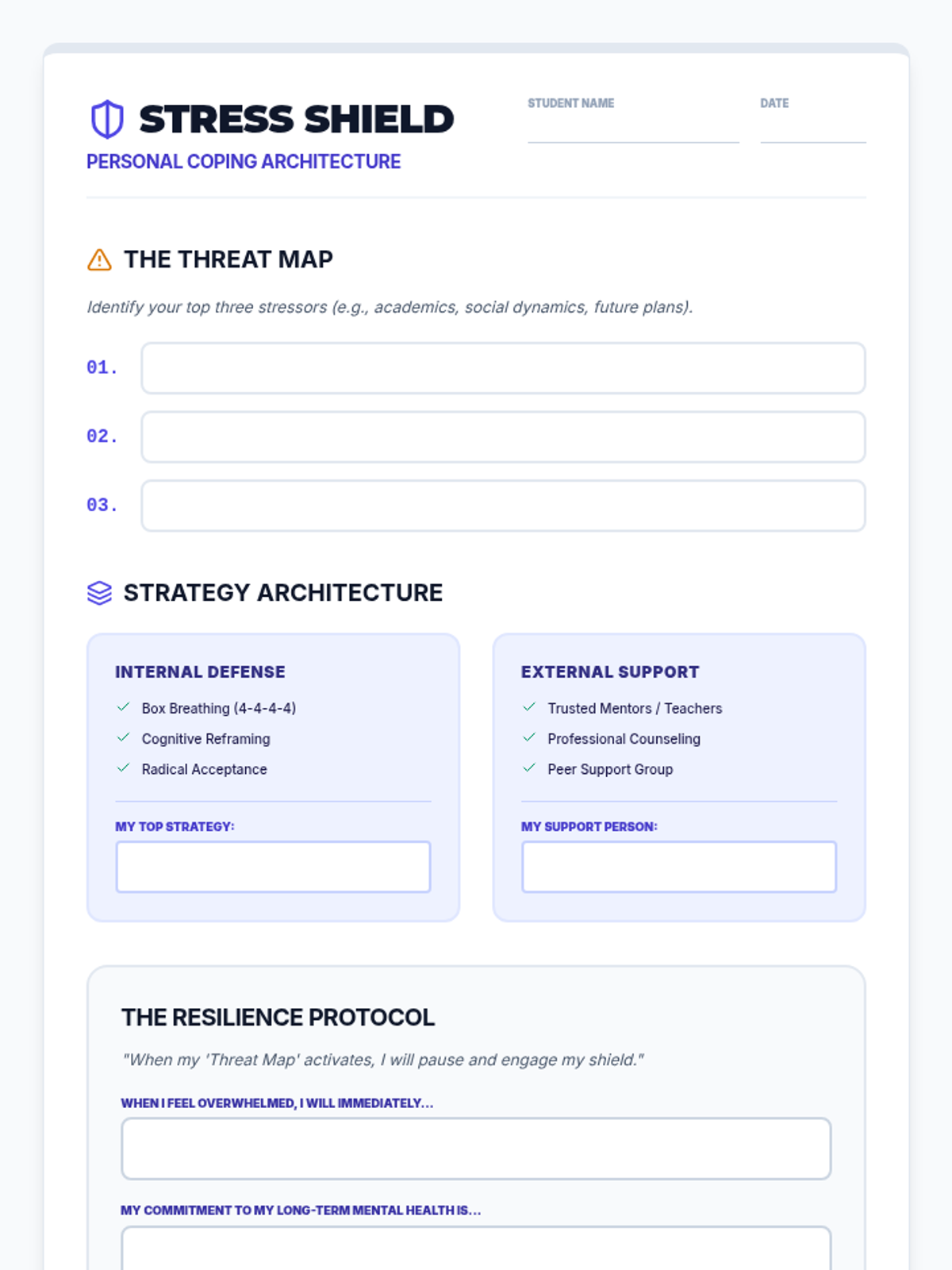
Equips high school students with advanced coping mechanisms, mental health awareness, and resilience strategies for adulthood.
Explores social dynamics, peer relationships, and managing life transitions for middle school students.
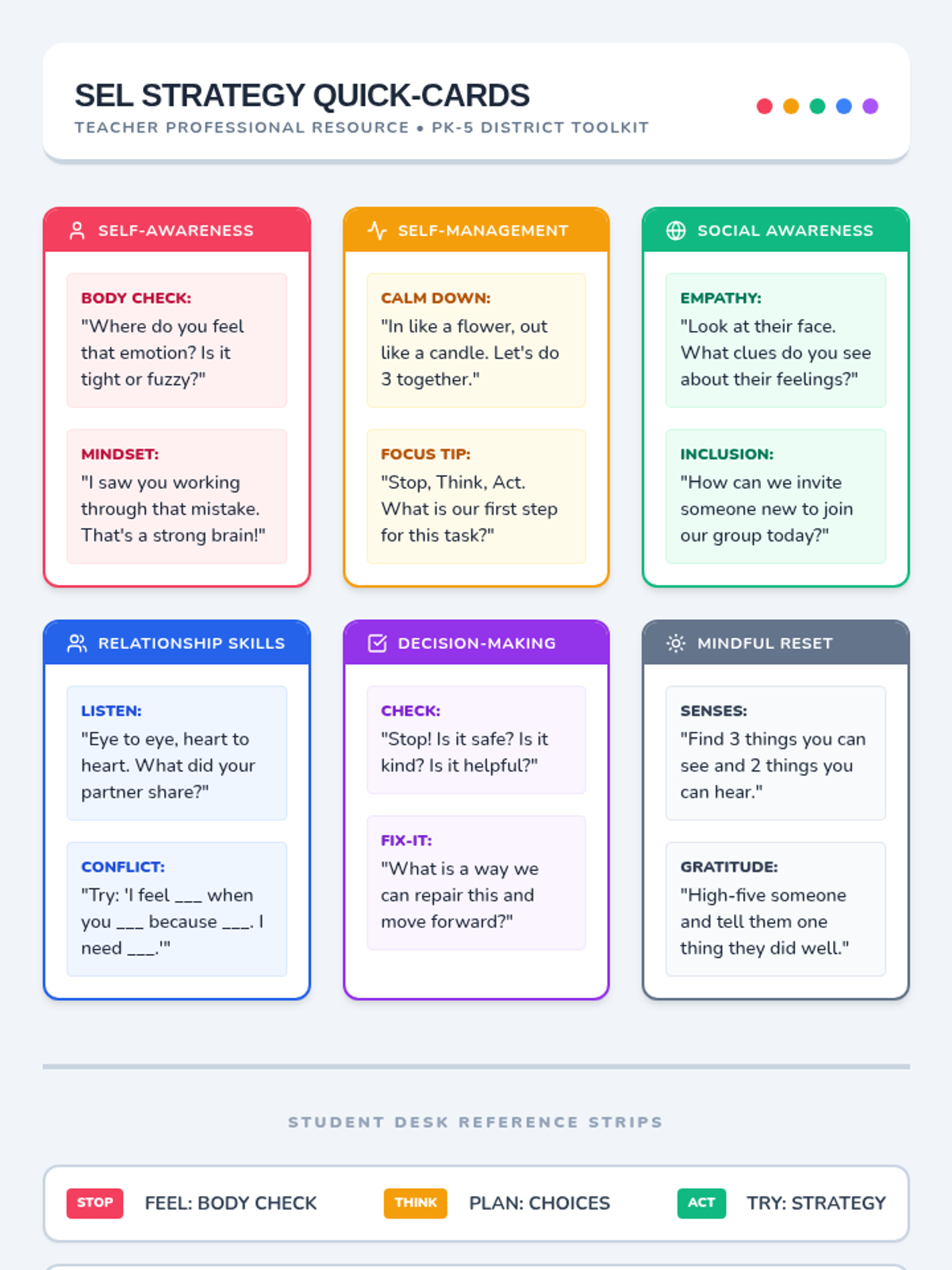
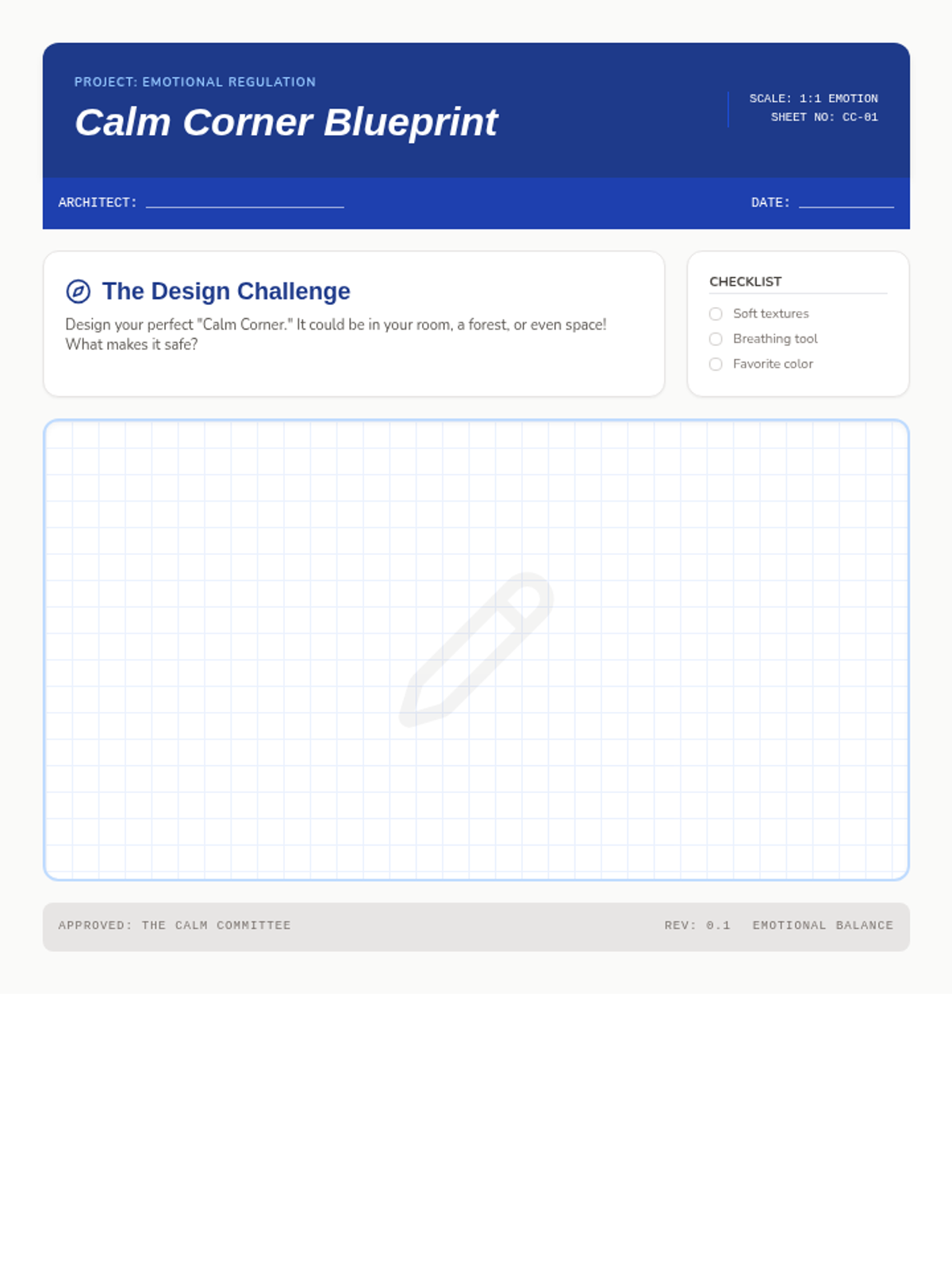
Focuses on helping elementary students identify emotions and build a toolkit for behavior regulation and calming down.
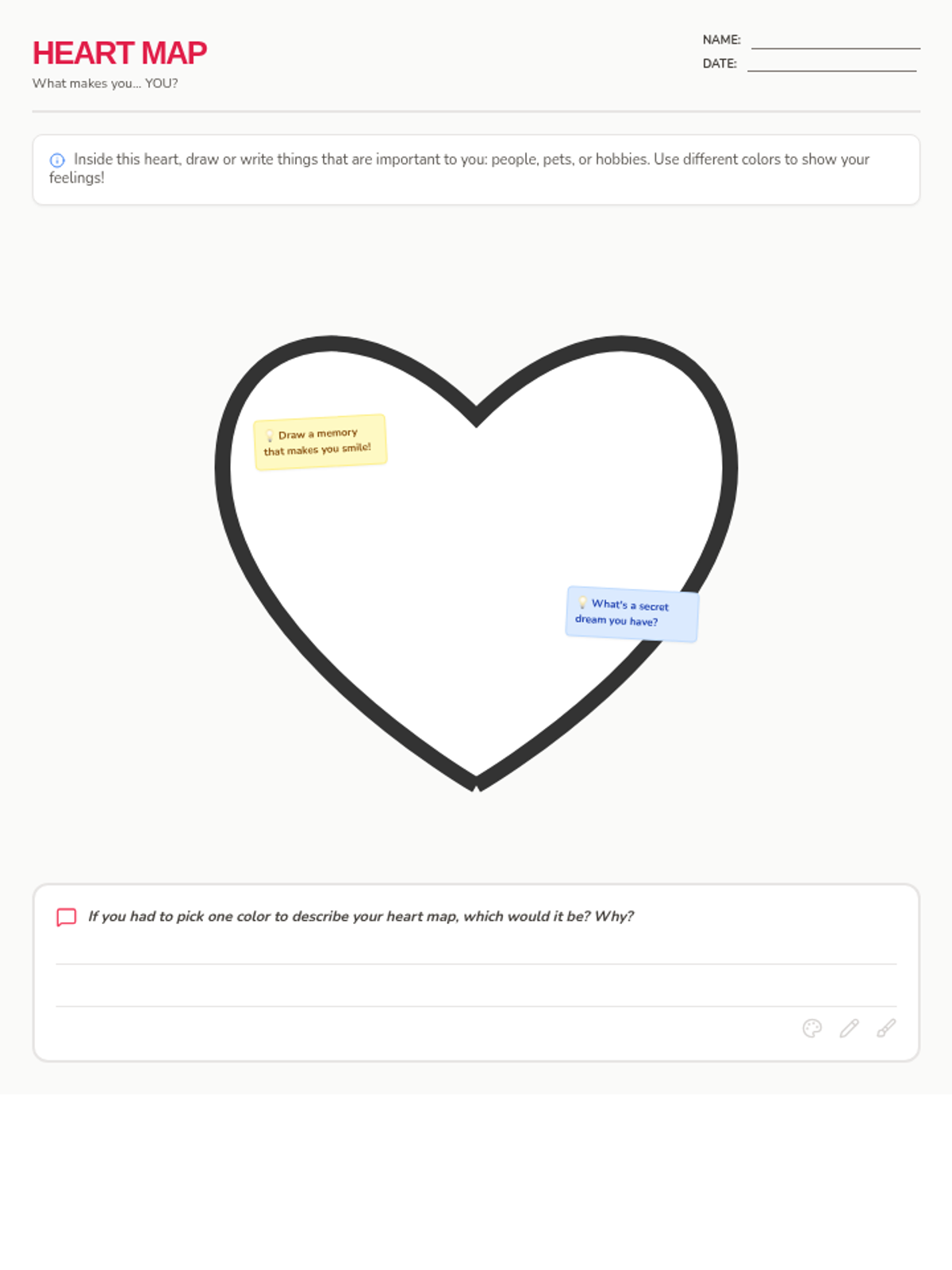
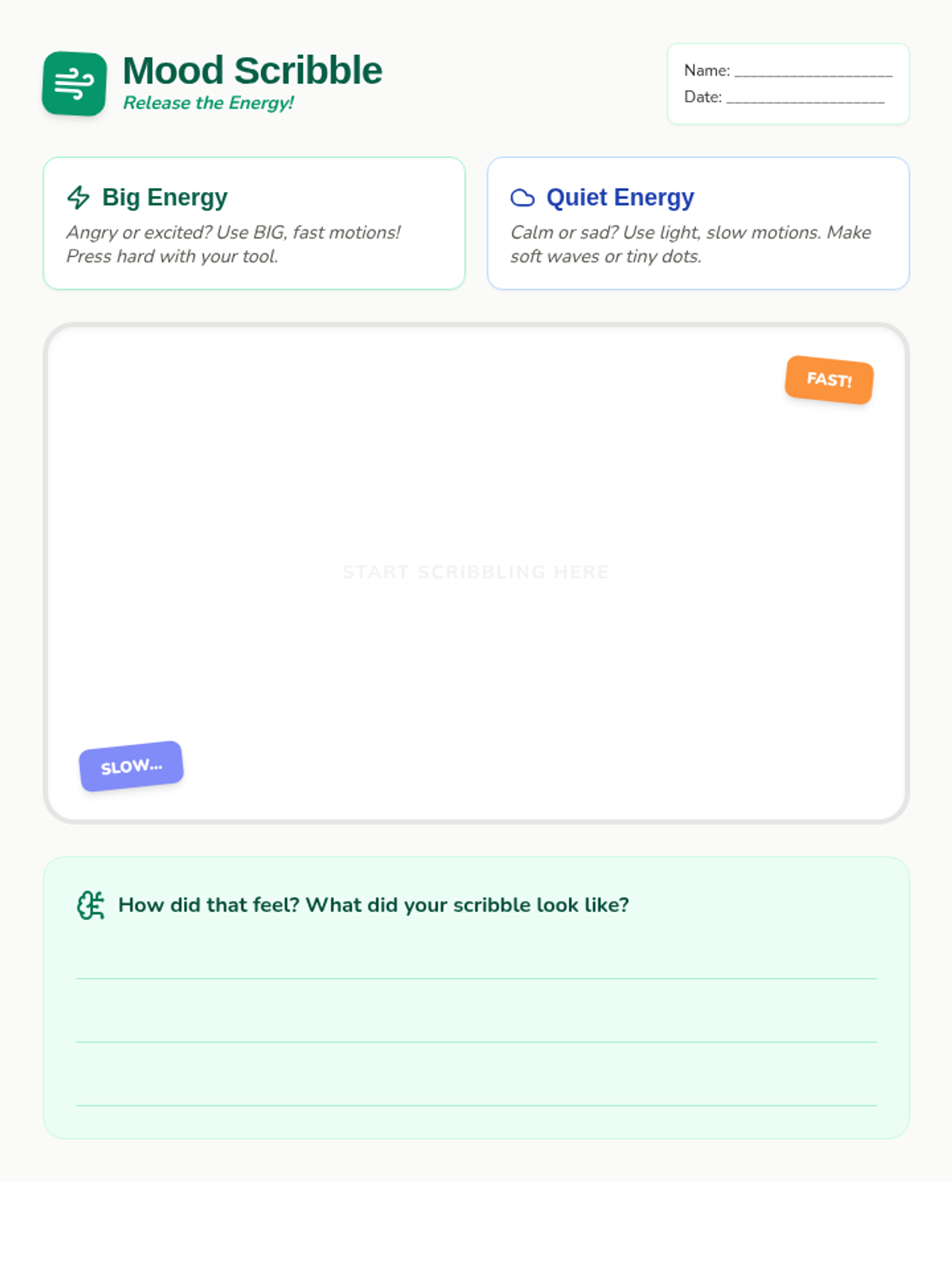
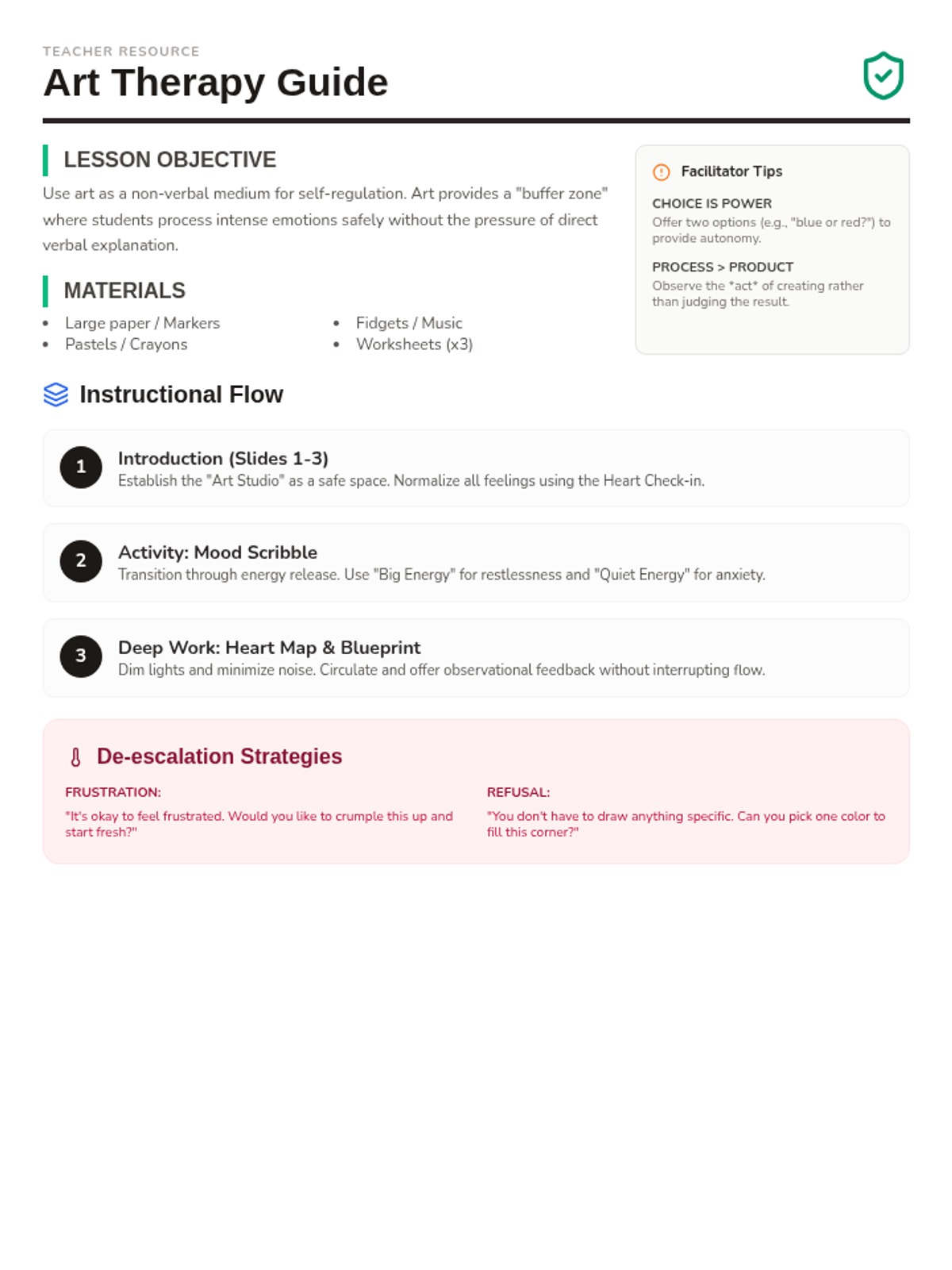
A creative exploration of emotions through art therapy, helping children with behavioral health concerns identify feelings and build self-regulation skills.
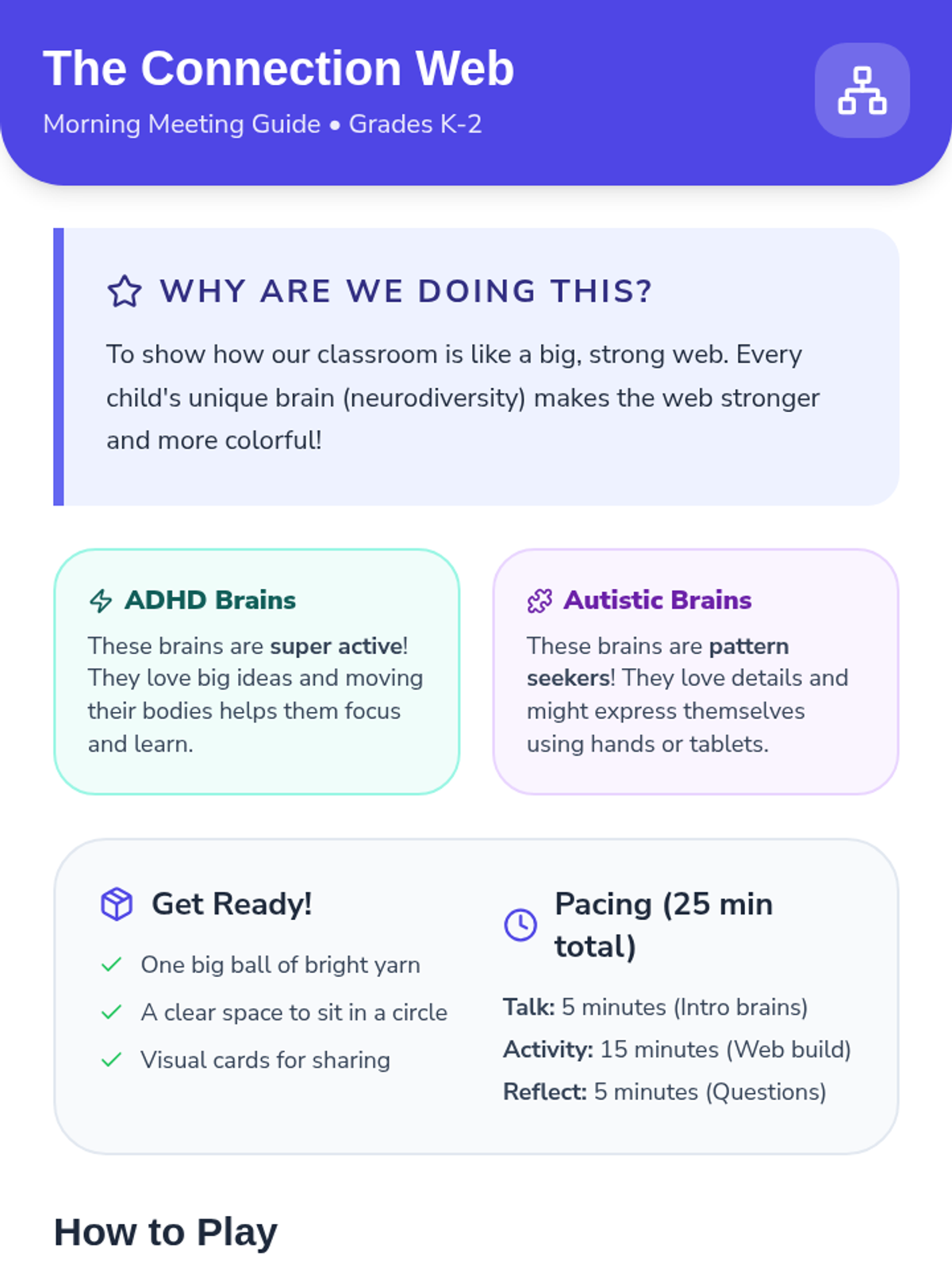
A morning meeting lesson designed to foster understanding of neurodiversity, specifically Autism and ADHD, through discussion and collaborative activity.
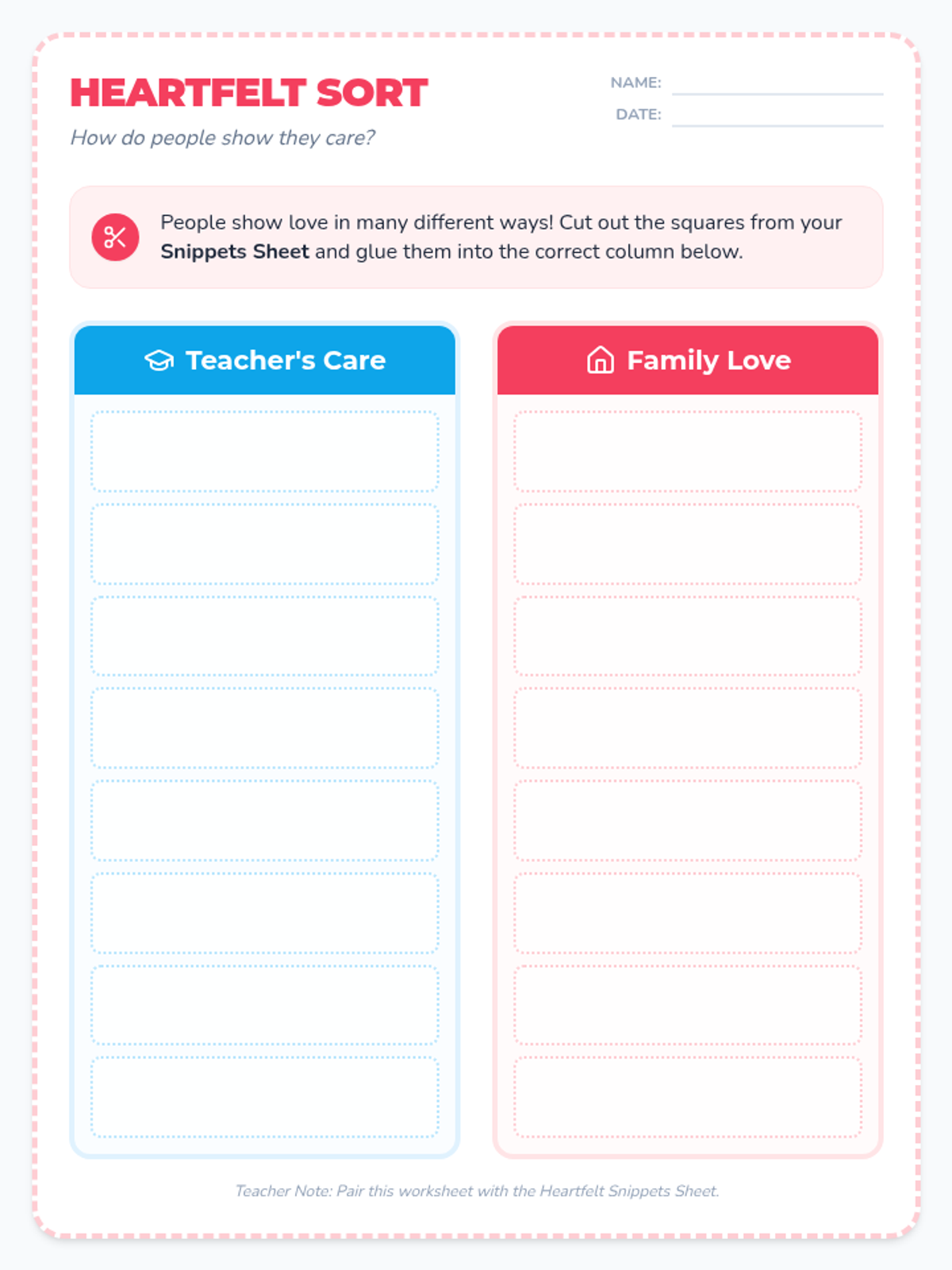
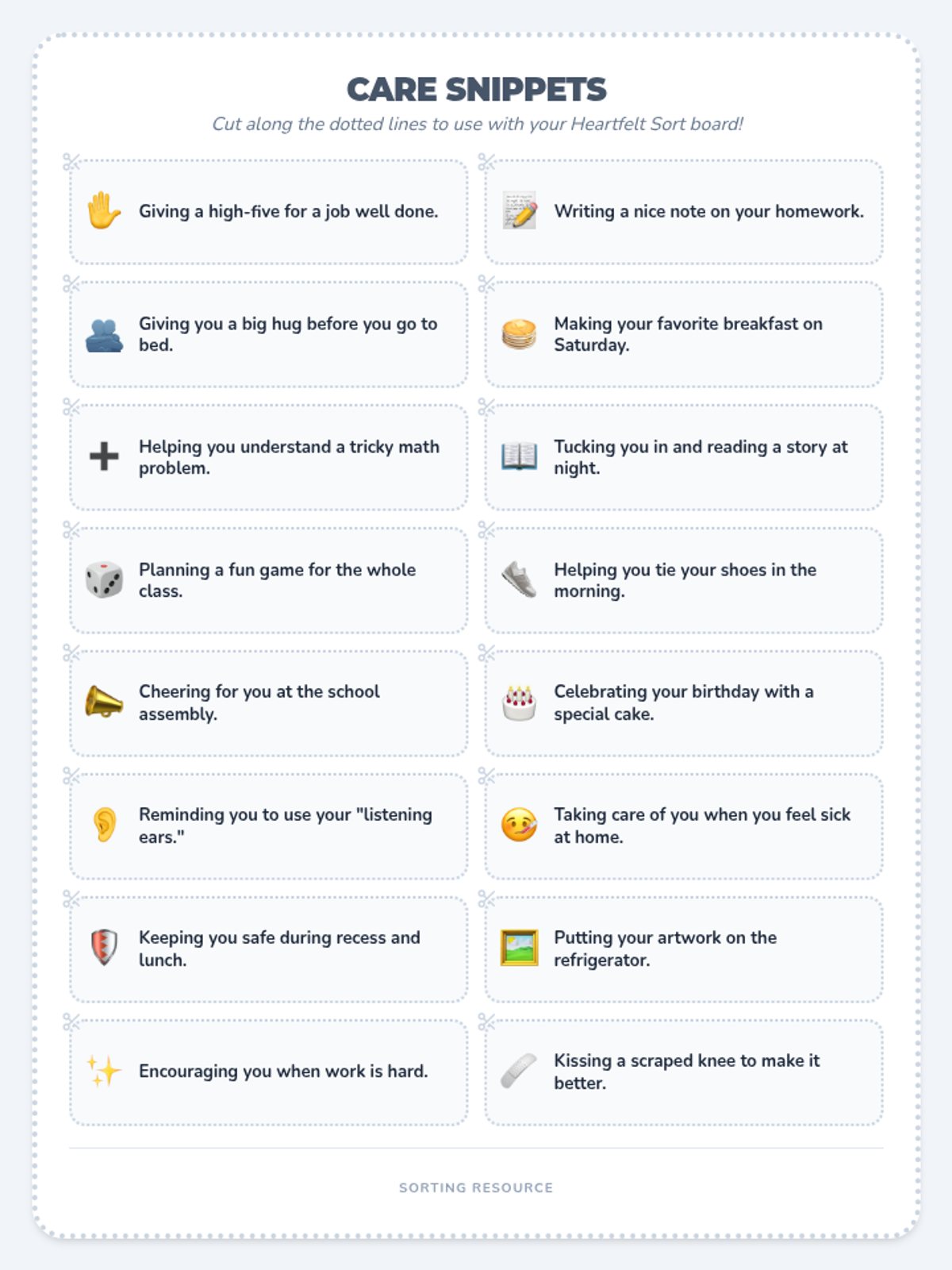
A sorting activity that helps students distinguish between the unique ways teachers and family members show care and love. Students compare professional, educational care with personal, domestic care through descriptive sentences and icons.
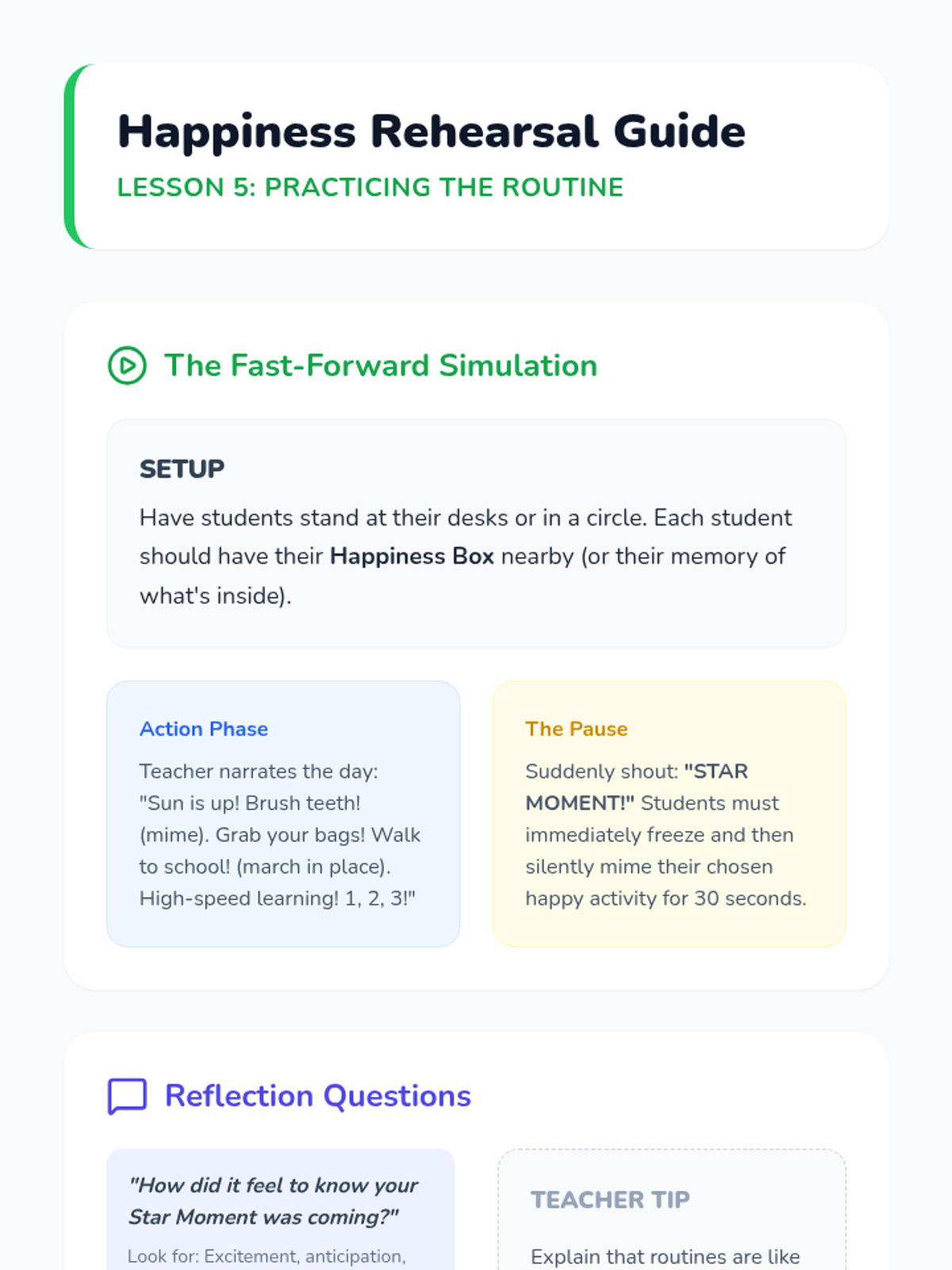
The class participates in a 'fast-forward' simulation of their daily routine, practicing their planned positive moments and reflecting on the benefits of anticipation.
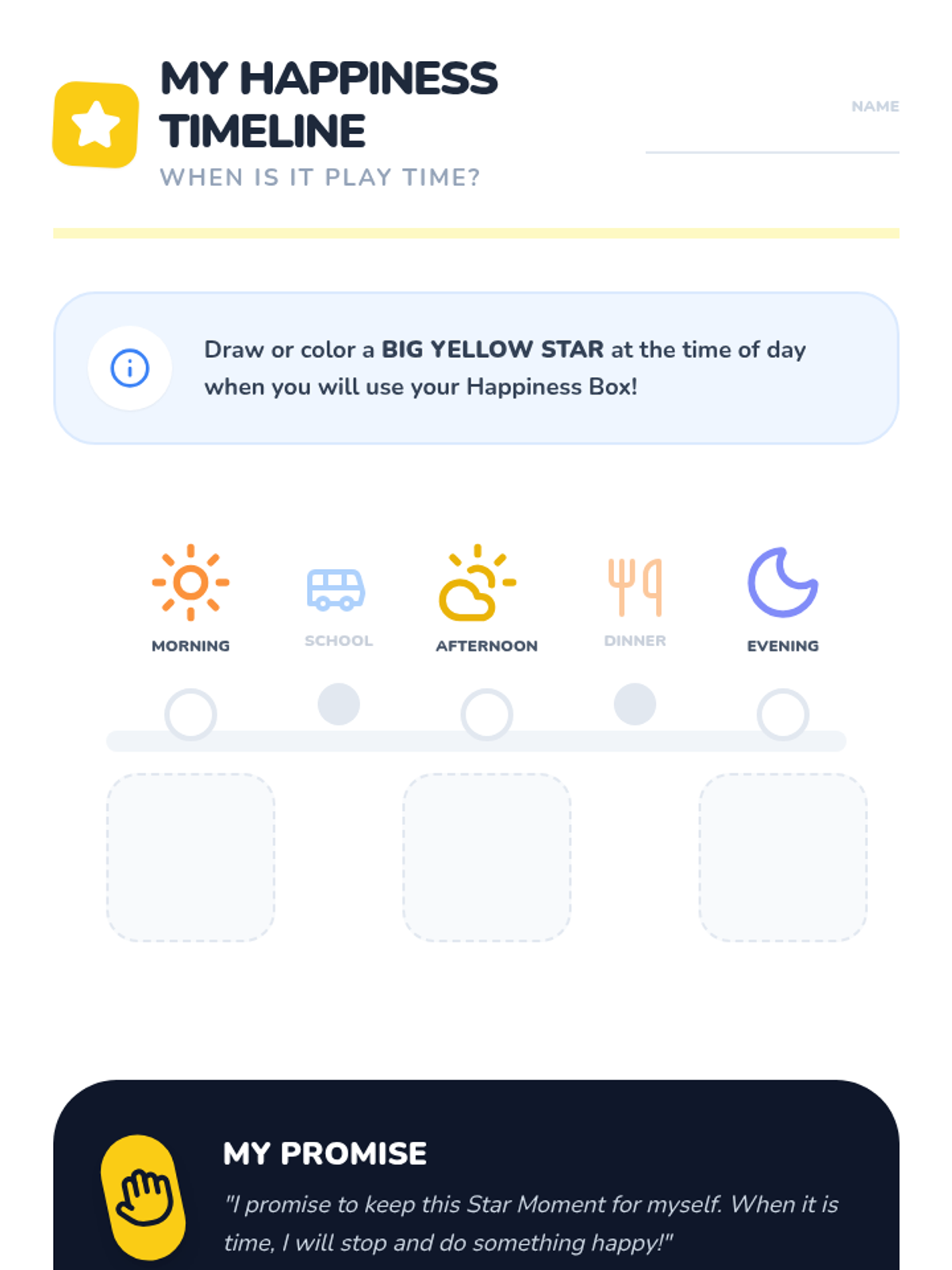
Students use a visual timeline to schedule a 'Positive Pause' and learn the importance of keeping promises to themselves for daily happiness.