Stop-and-think strategies, impulse management, and SMART goal setting for personal growth. Develops internal motivation, stress reduction techniques, and resilience through proactive planning and monitoring.
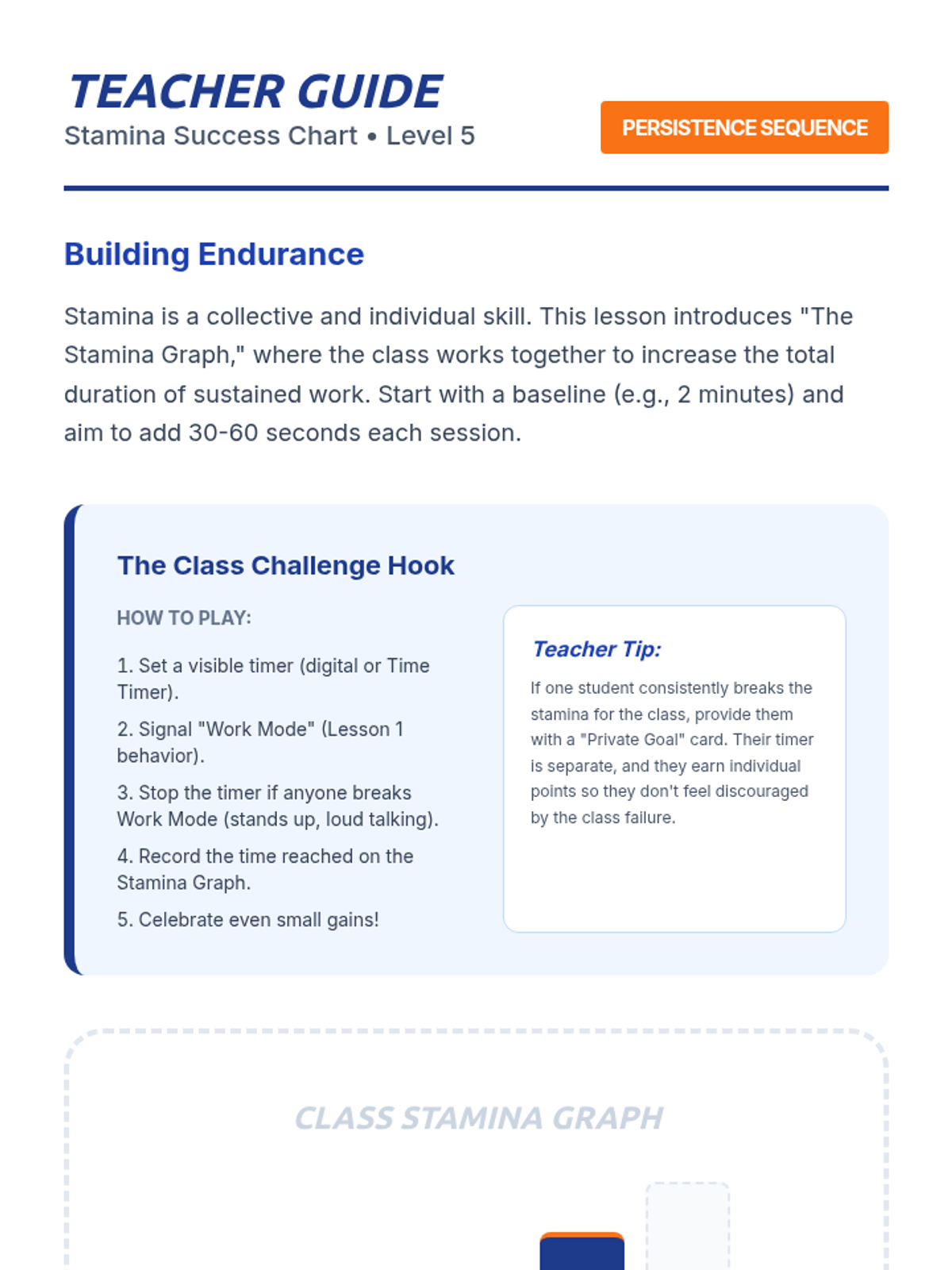
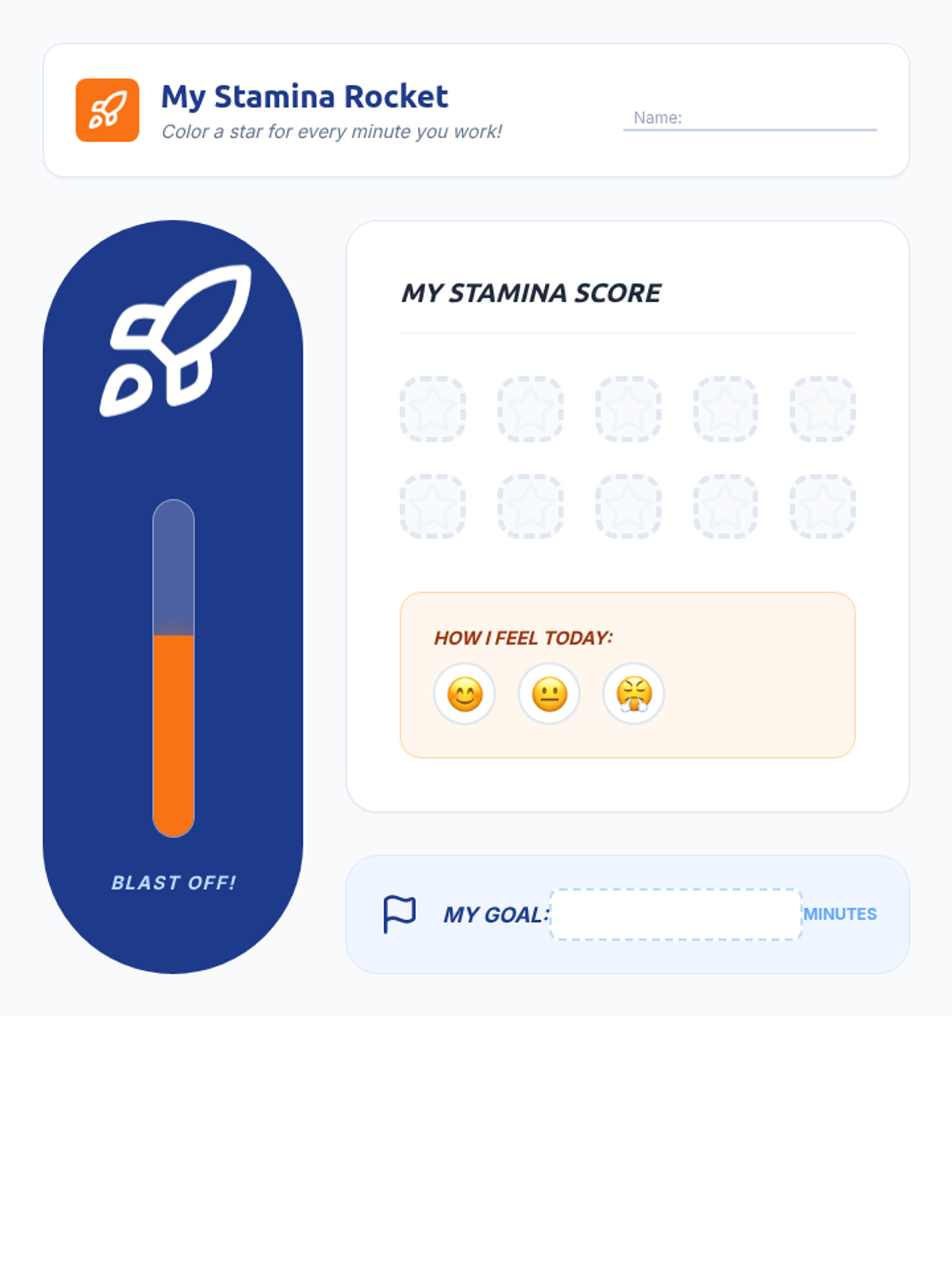
Students synthesize previous skills by engaging in a slightly longer task that requires staying seated and focused. The teacher uses a 'stamina chart' to visually track how long the class can work without breaking focus, celebrating the increase in collective time.
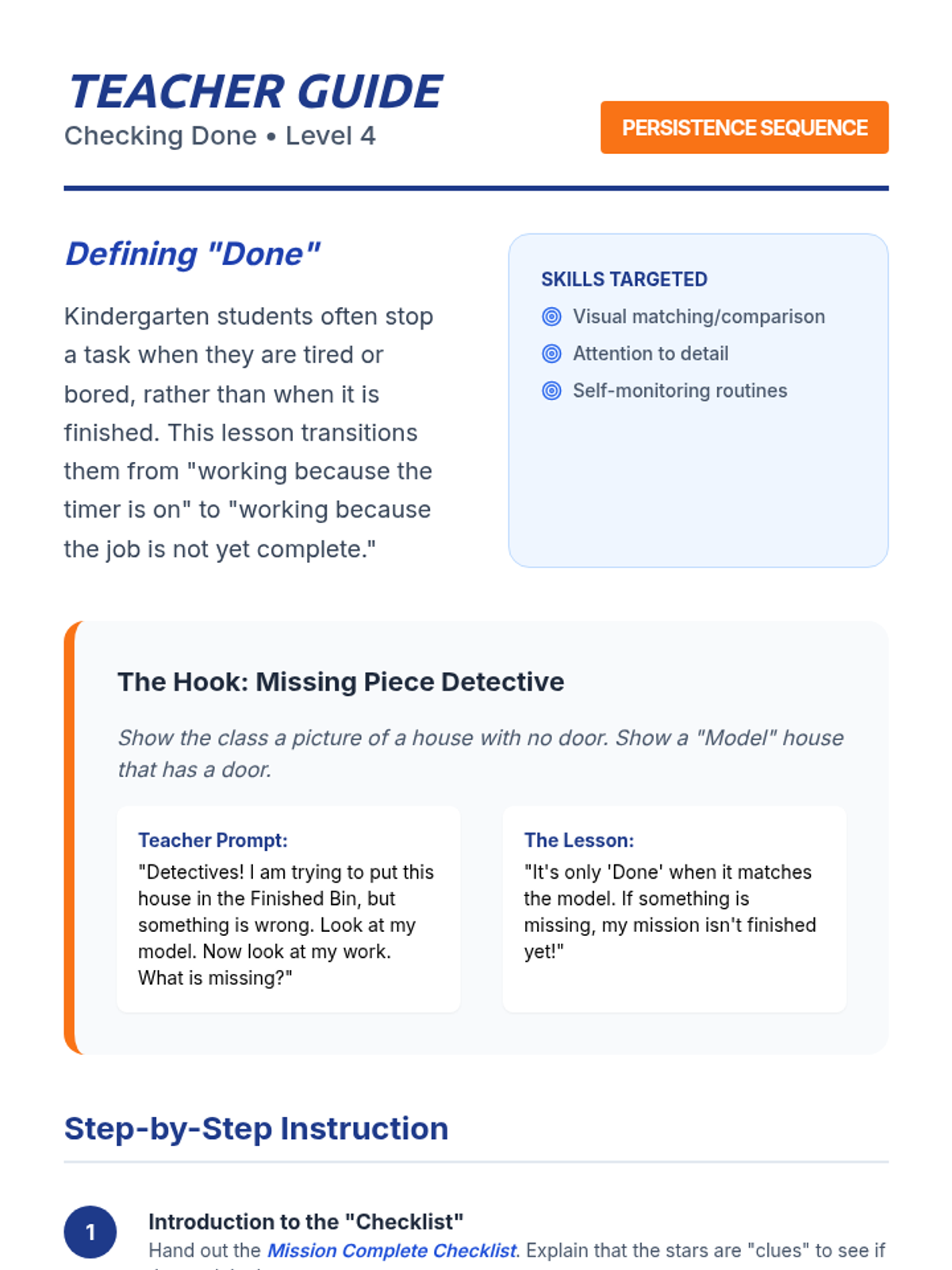
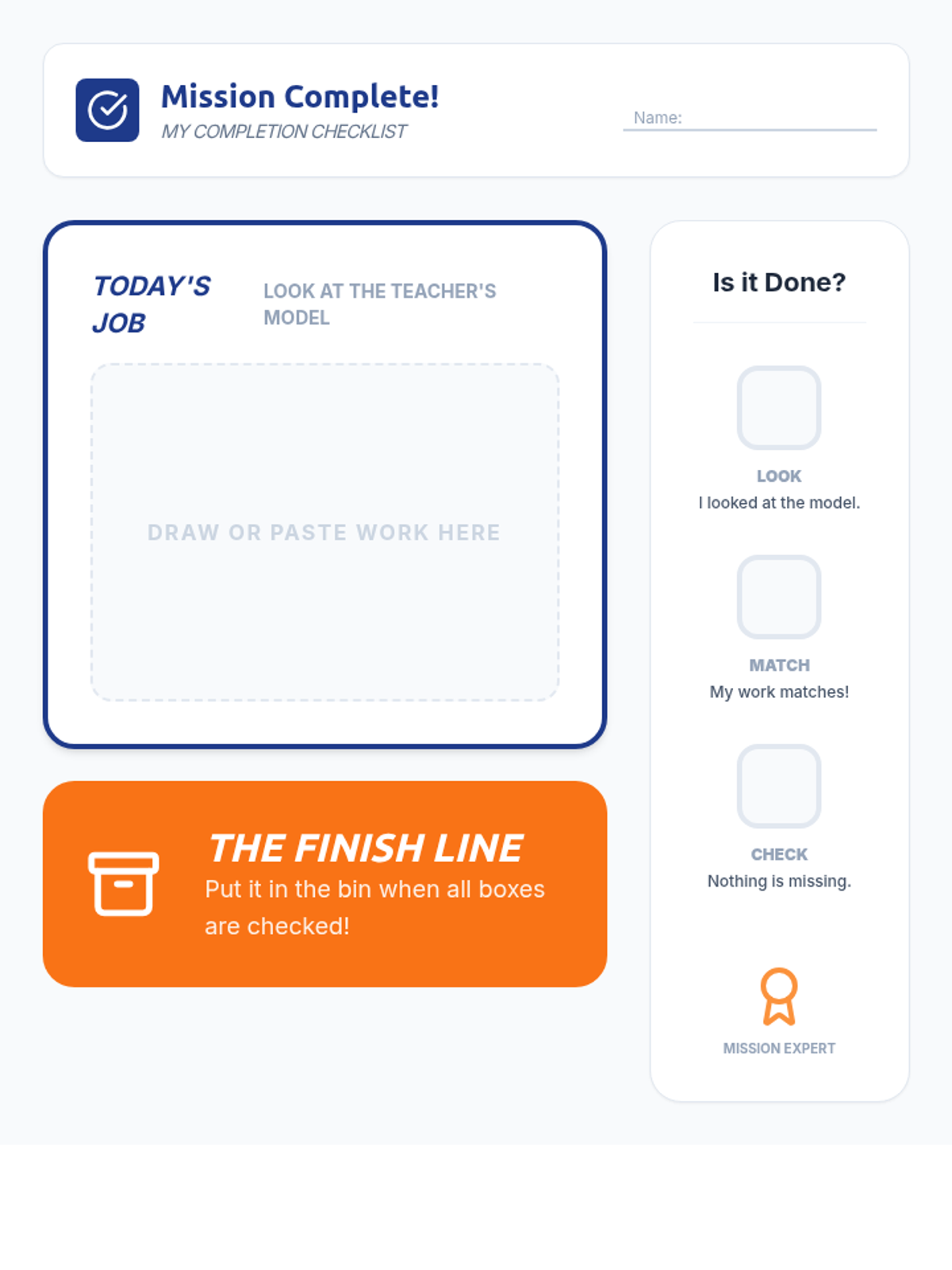
This lesson focuses on the concept of 'done.' Students learn to check their work against a visual model to determine if it is complete before moving the material to a 'Finished' bin, shifting the focus from time-based work to task-based completion.
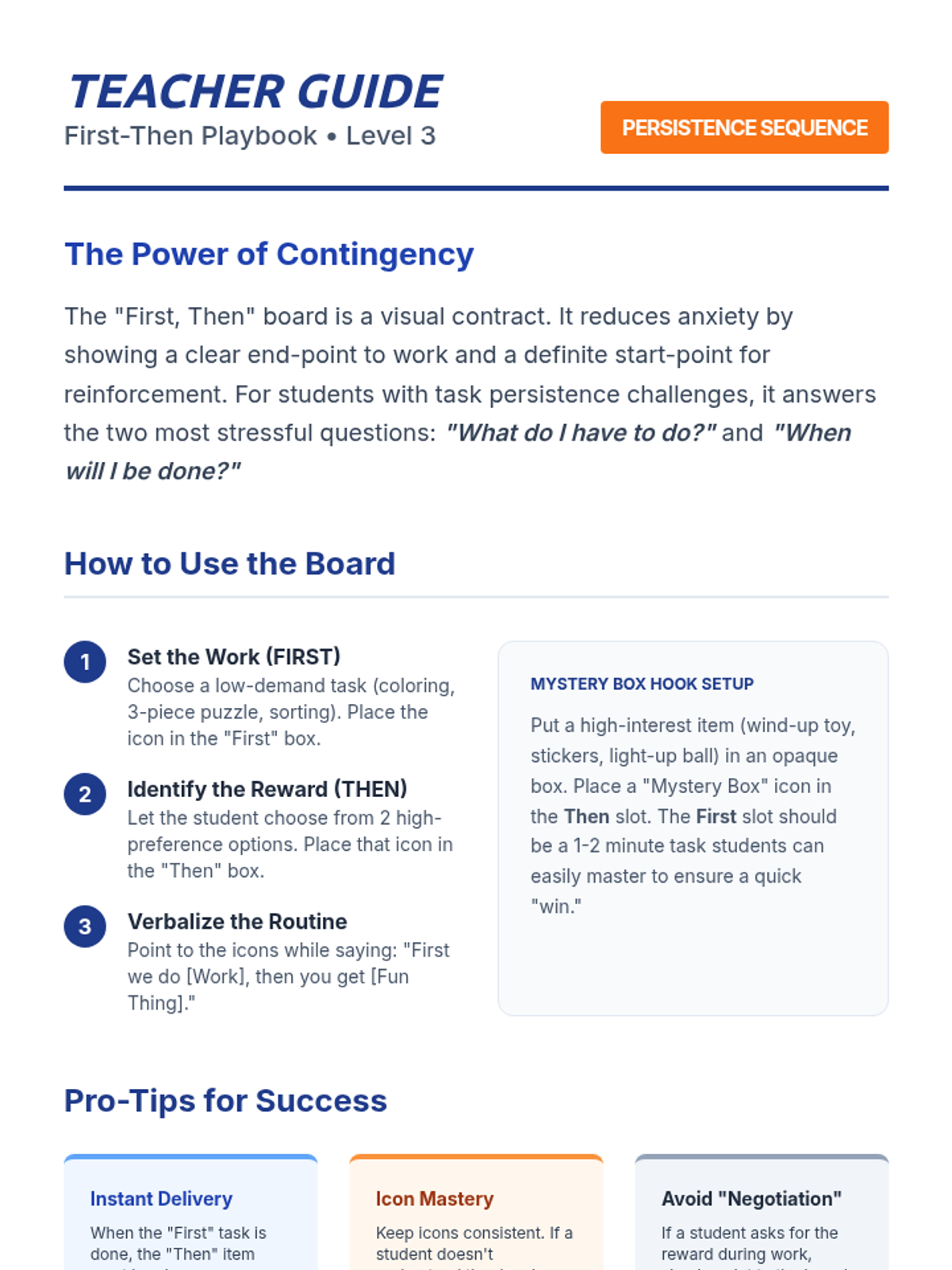
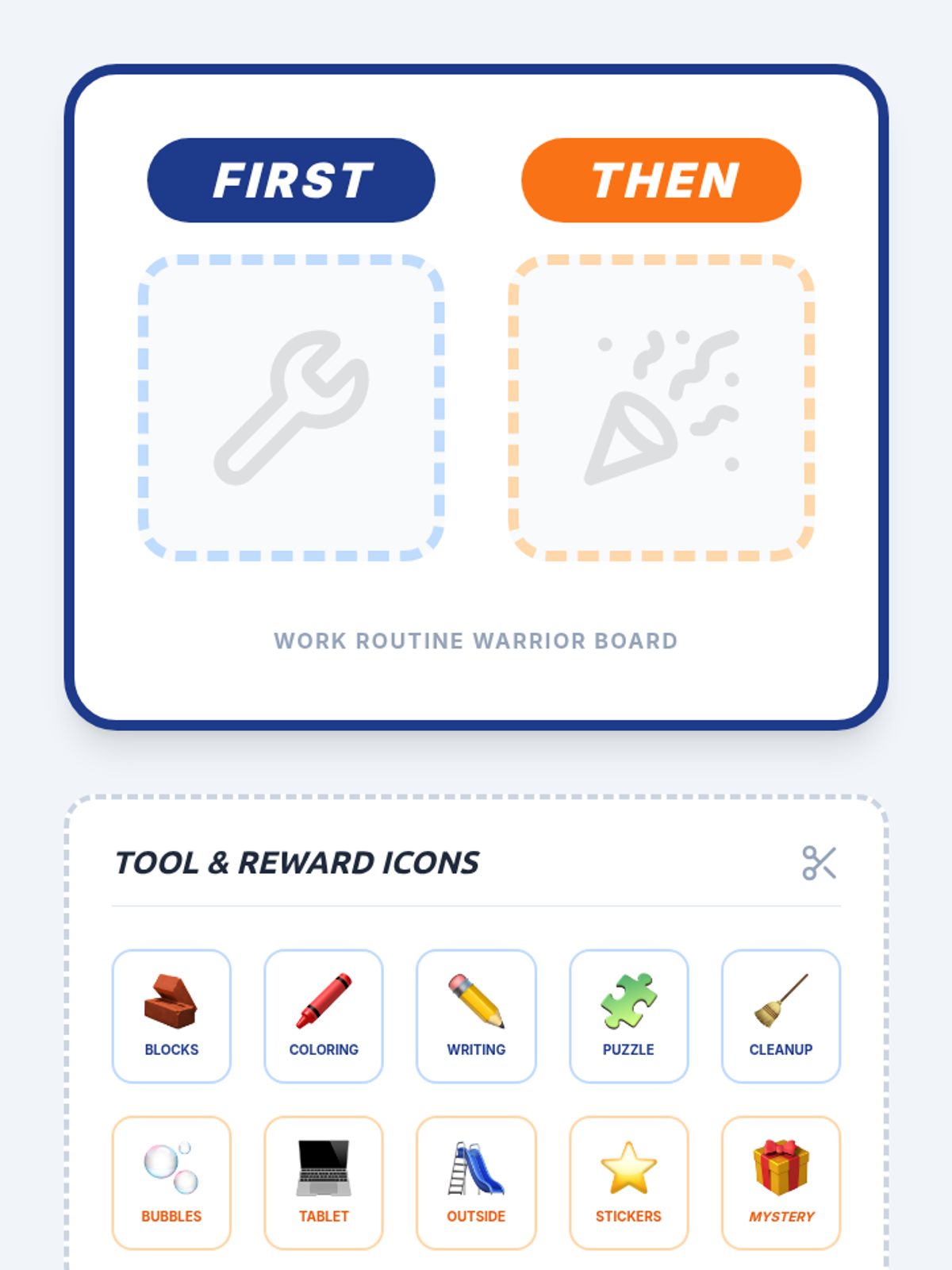
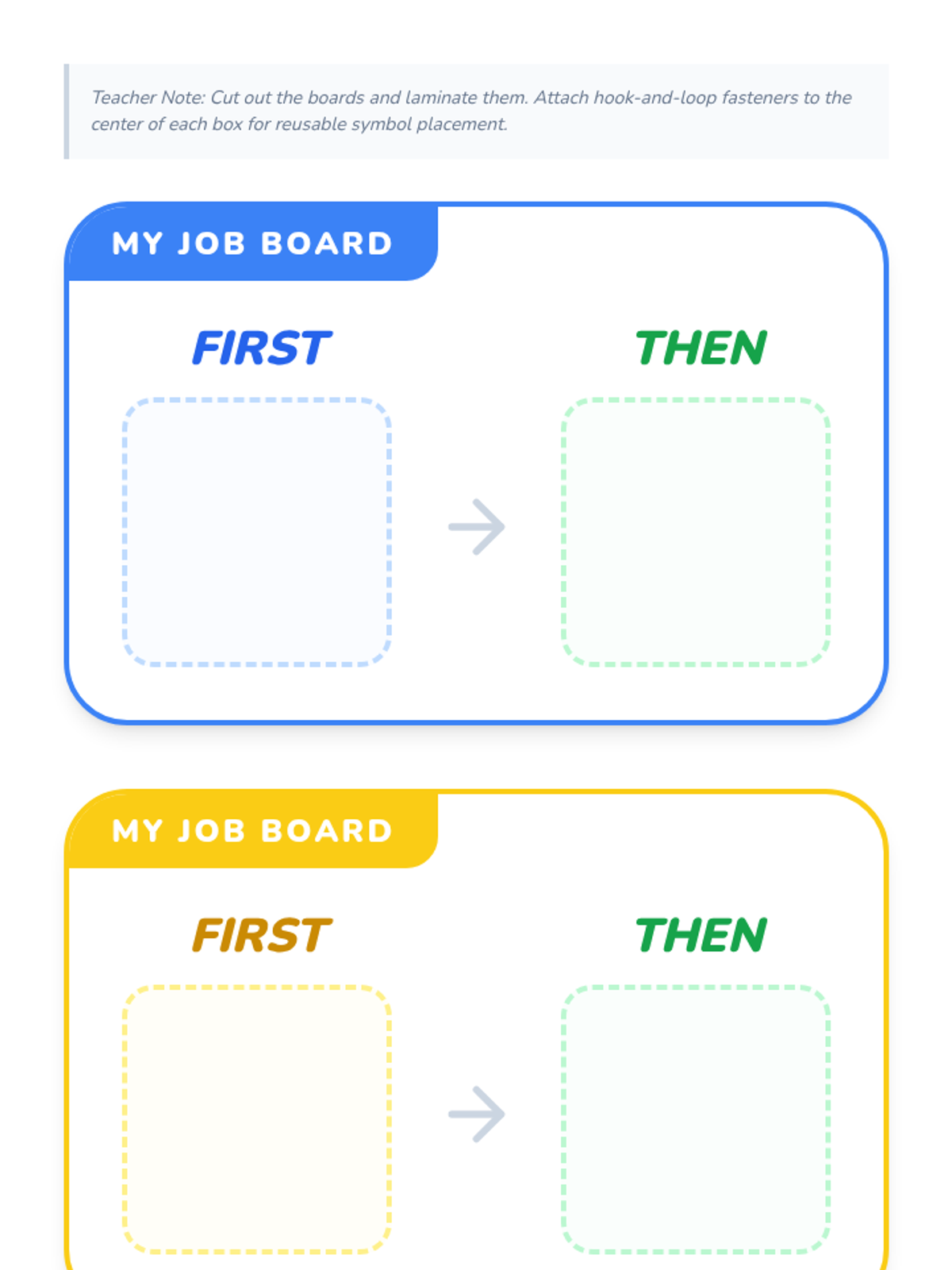
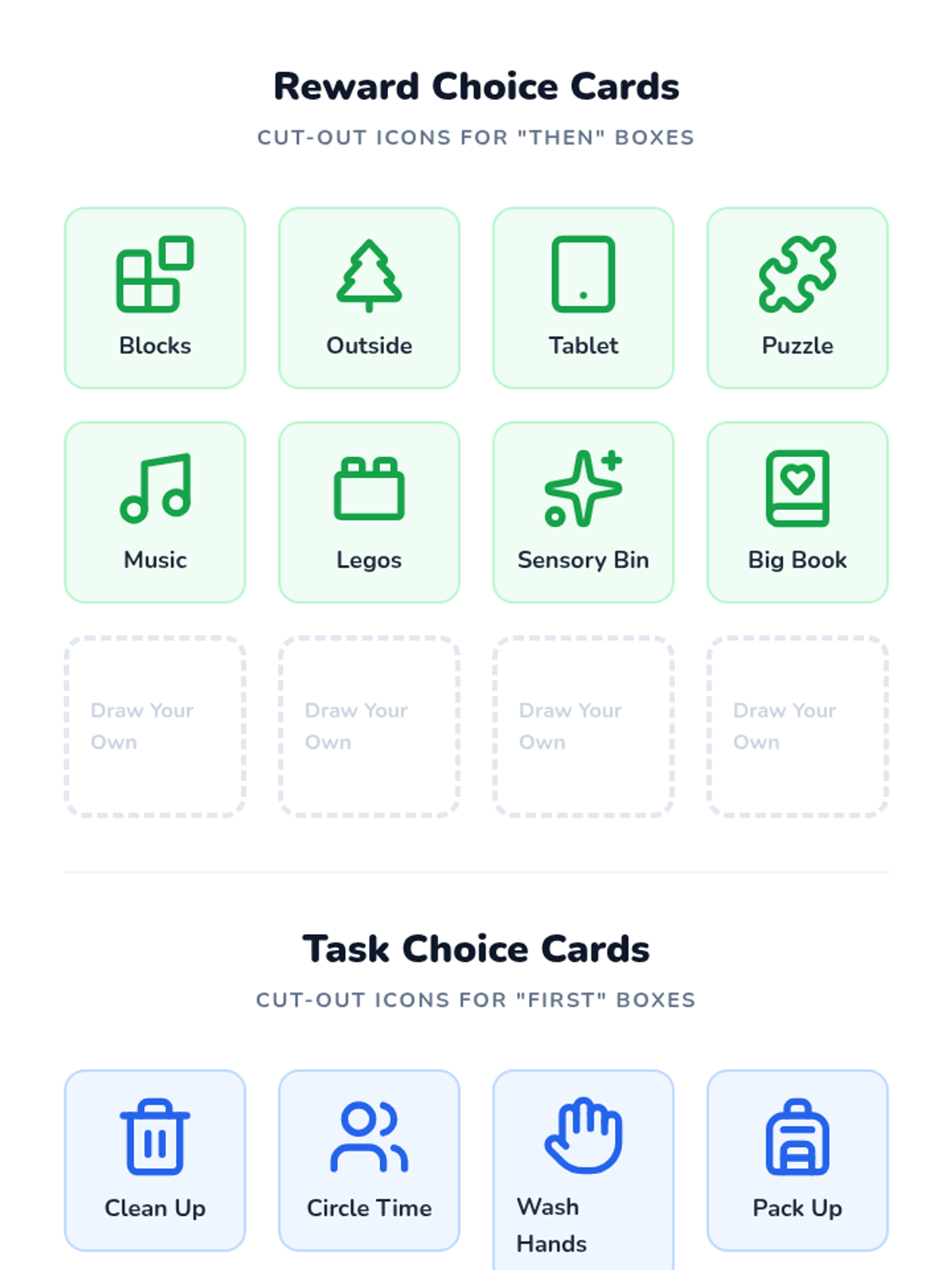
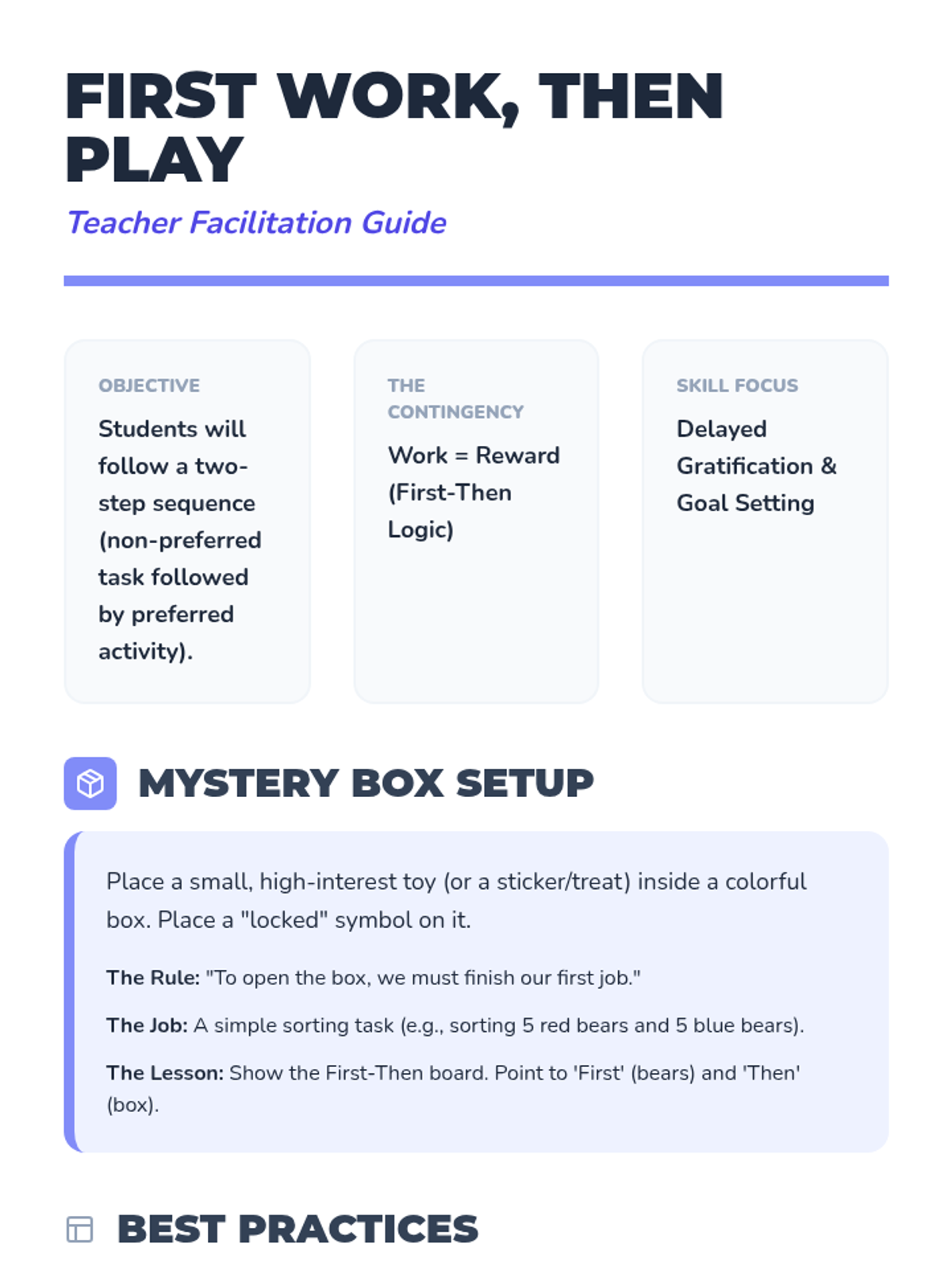
Students learn the logic of 'First Work, Then Reinforcer' using visual boards. The lesson involves completing a low-demand academic task followed immediately by a high-preference reward, reinforcing the concept that persistence leads to positive outcomes.
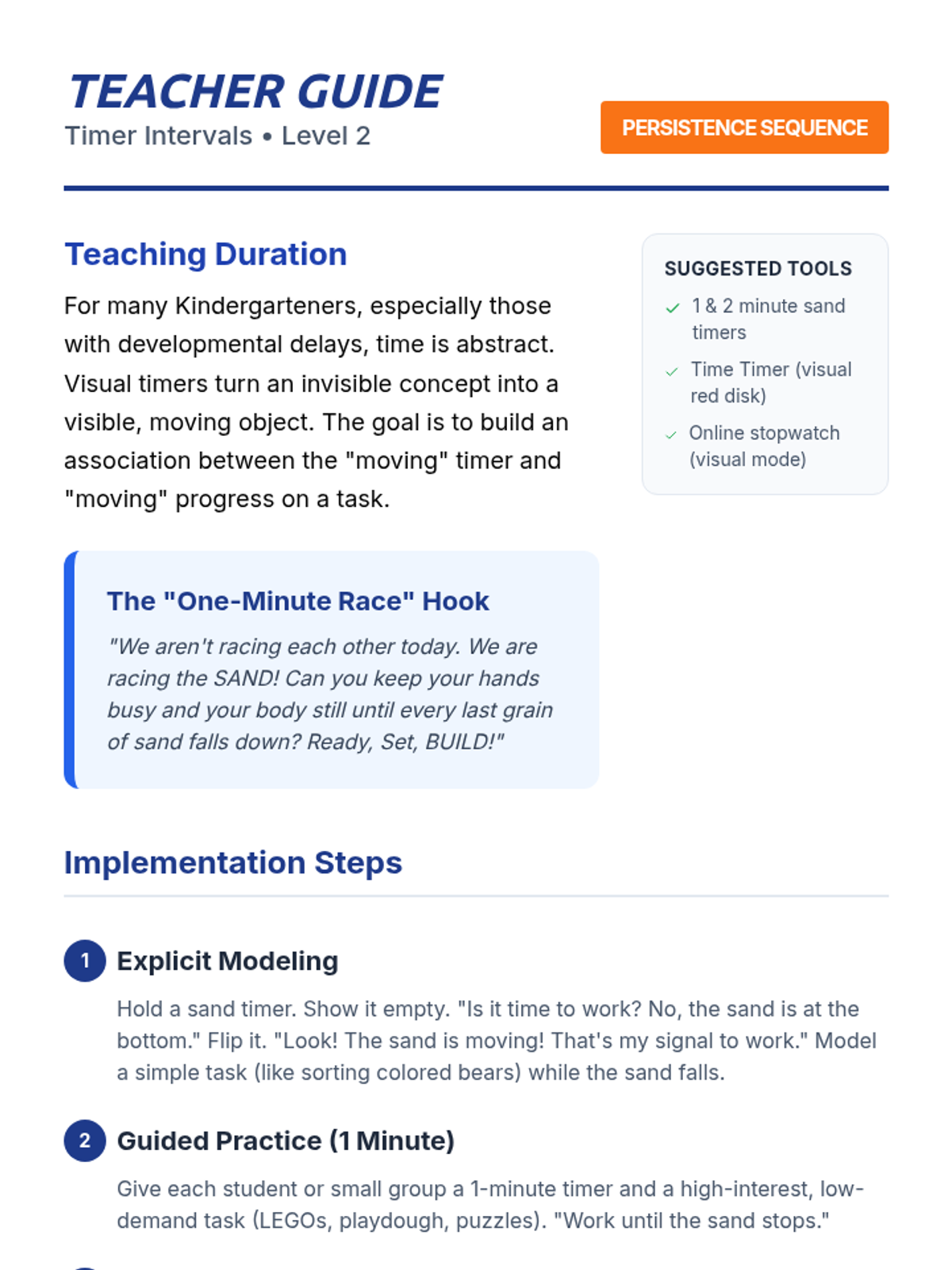
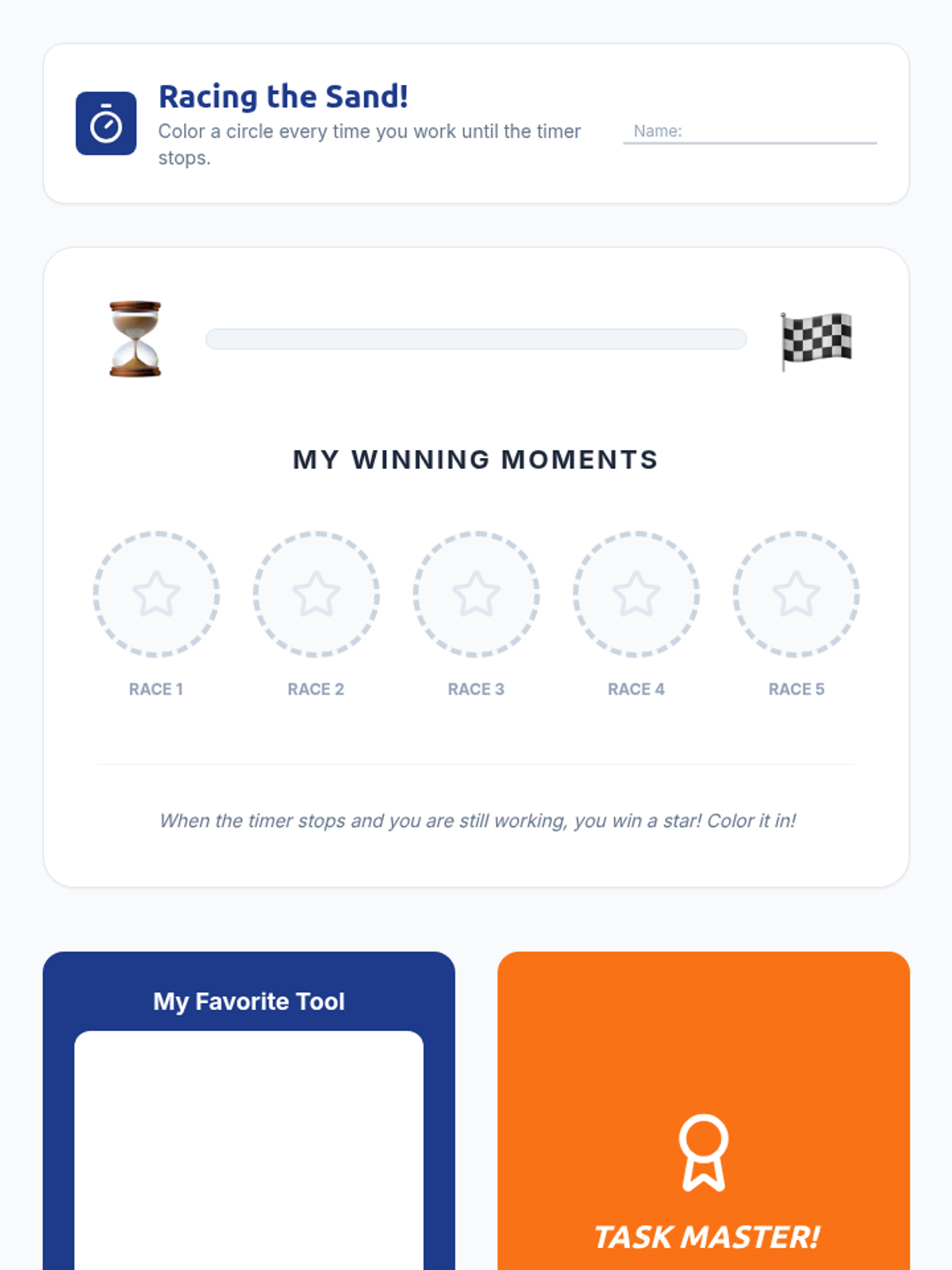
This lesson introduces visual timers (sand timers or digital countdown clocks) as concrete representations of work duration. Students engage in preferred high-interest tasks for very short intervals to associate the timer's movement with sustained focus.
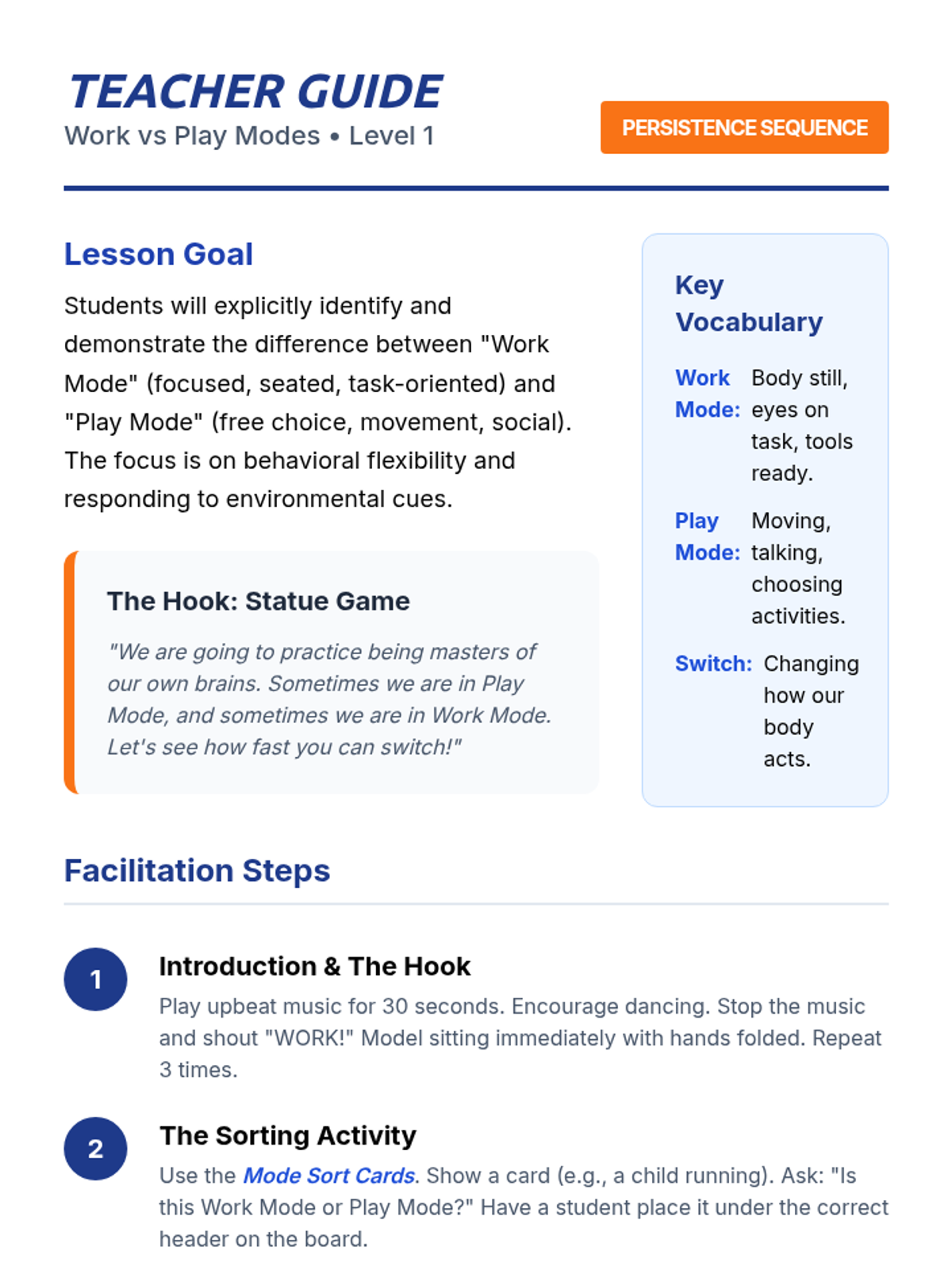
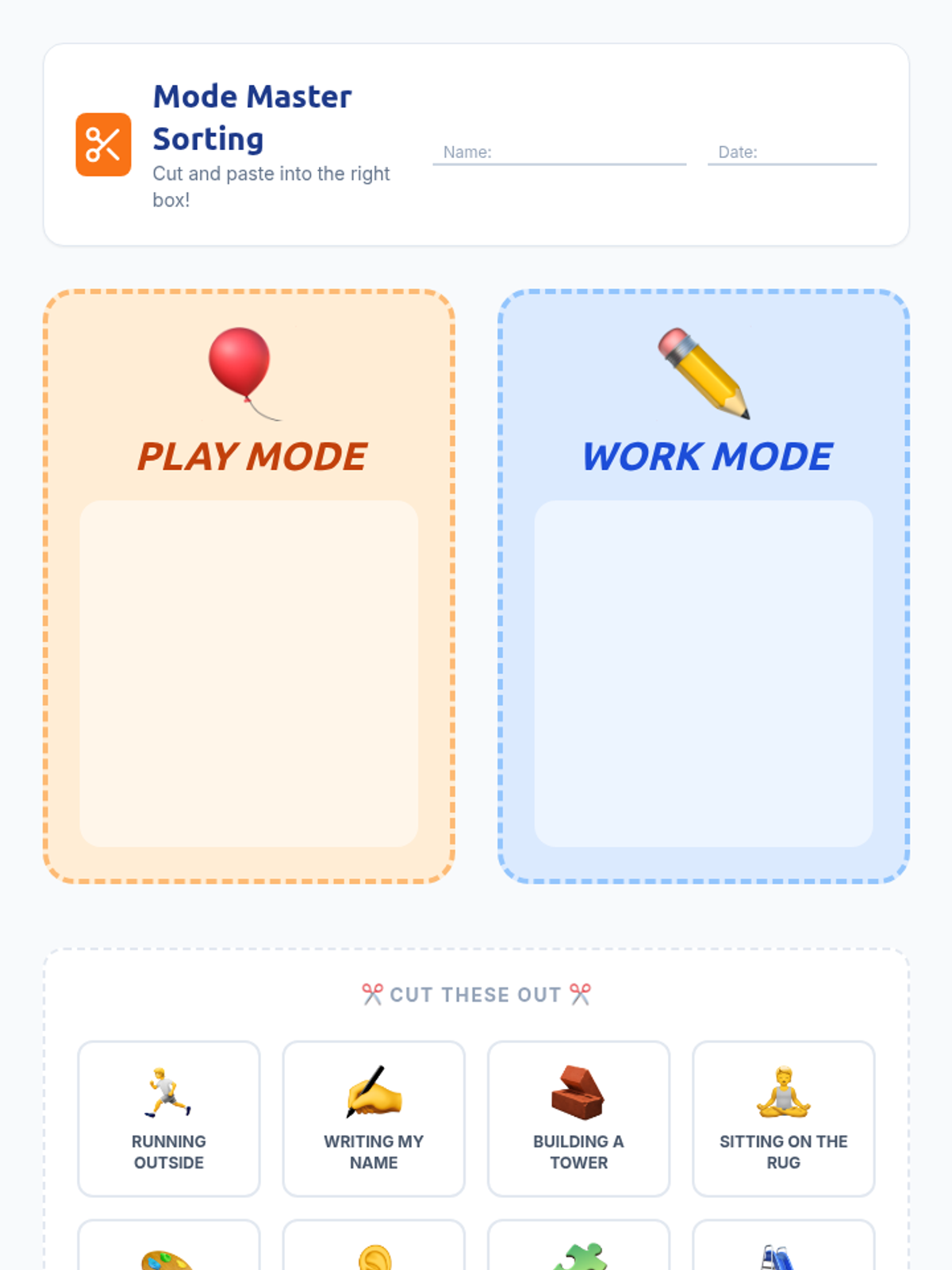
Students distinguish between 'working' and 'playing' behaviors through explicit modeling and sorting activities. This lesson establishes the behavioral expectations for different classroom modes.
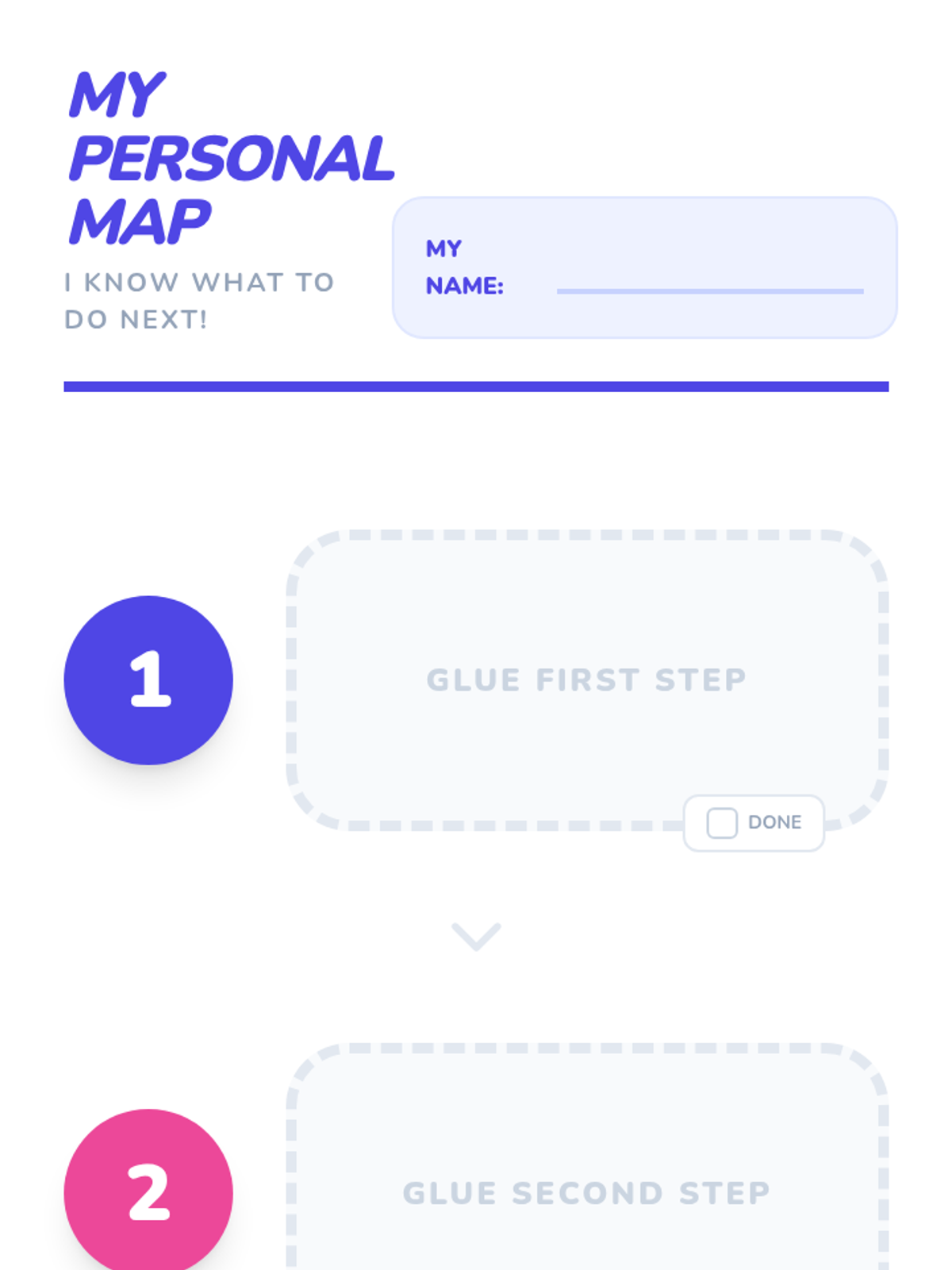
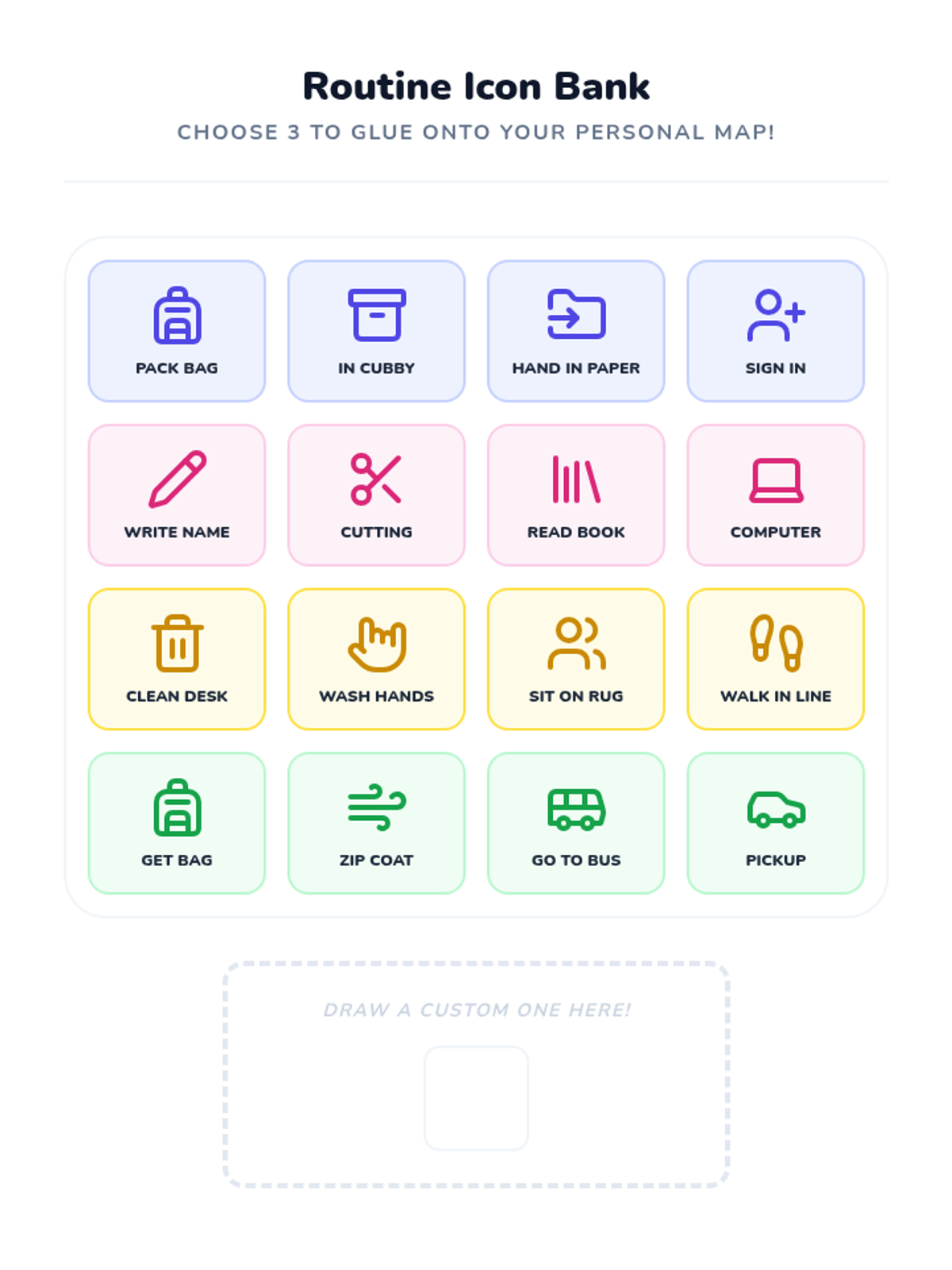
Students synthesize their learning by creating a personal 3-step schedule for a specific daily routine like arrival or dismissal.
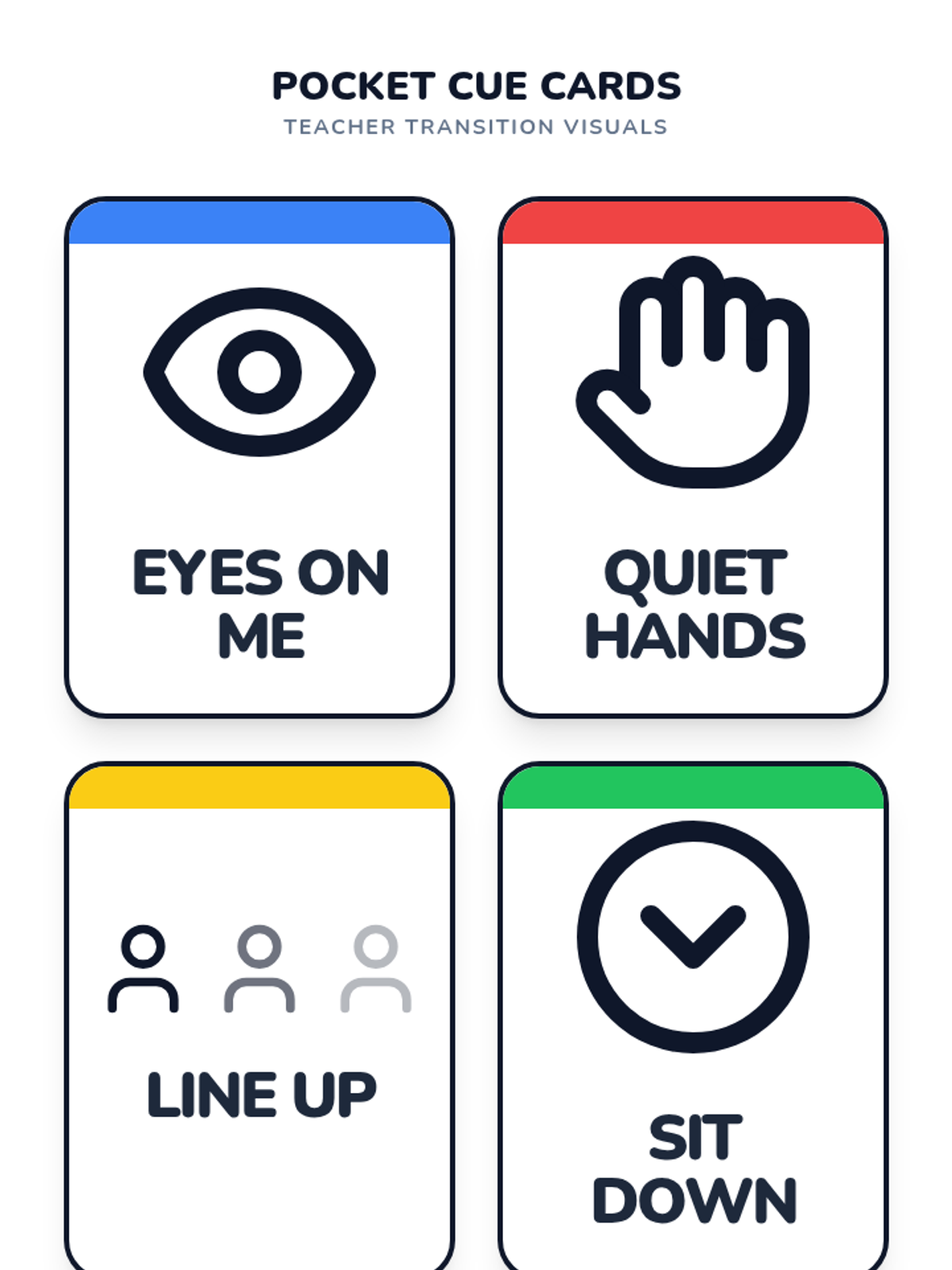
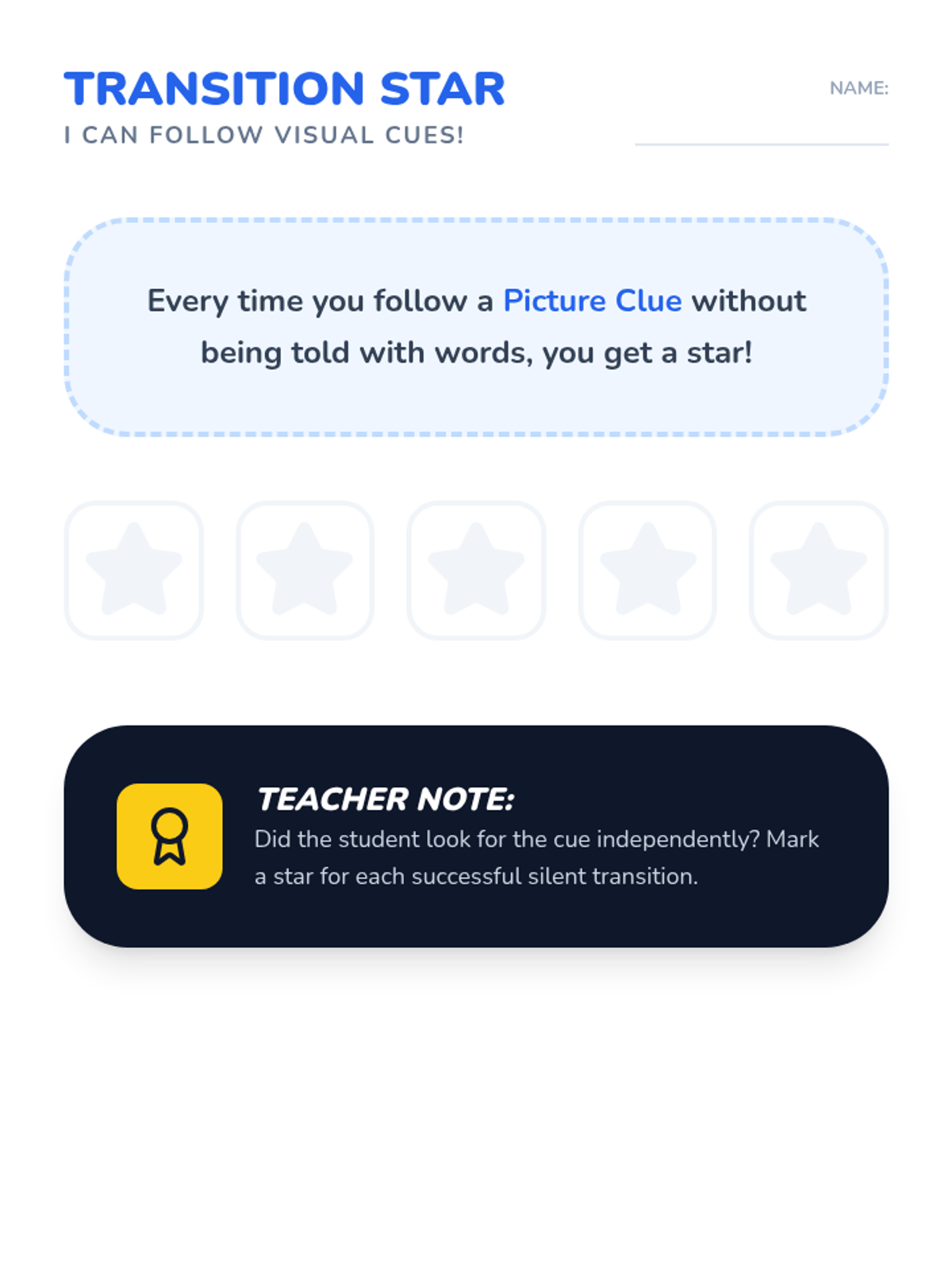
A game-based lesson where students practice responding to visual cues for transitions instead of verbal instructions.
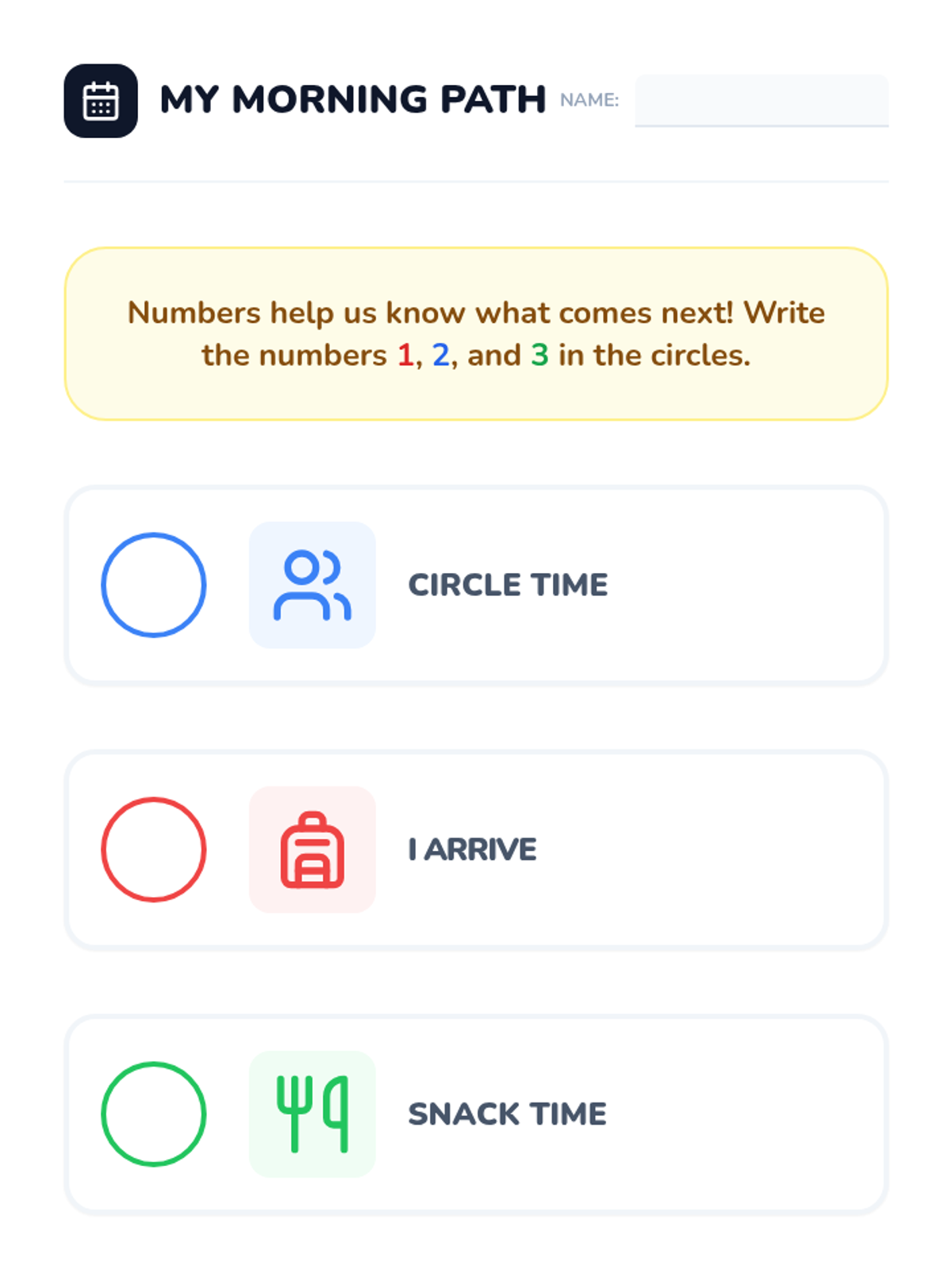
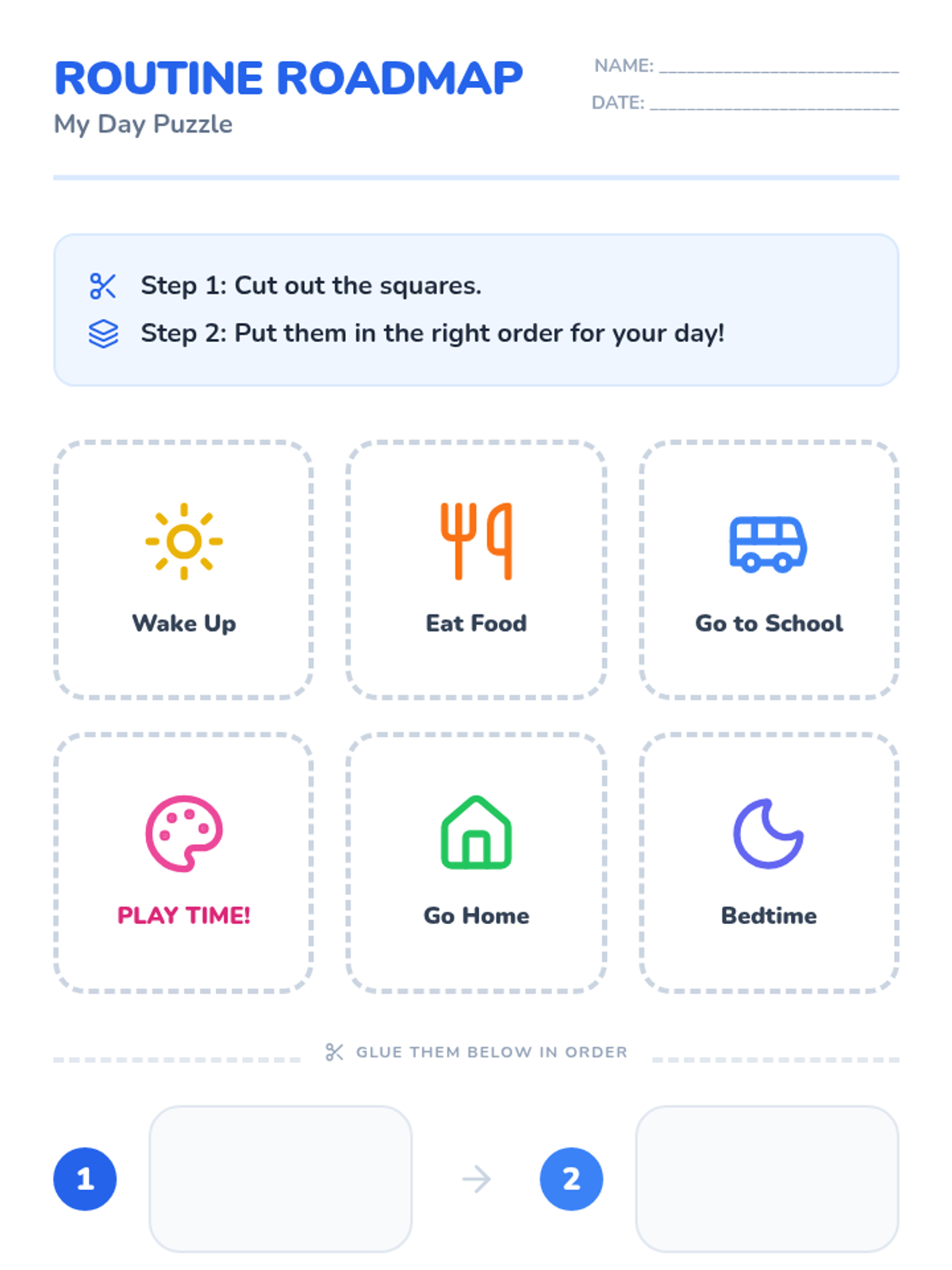
Students collaborate to build a chronological morning routine, practicing how to read a timeline of events from start to finish.
Introduces the 'First/Then' concept to help students manage expectations and understand the relationship between tasks and rewards.
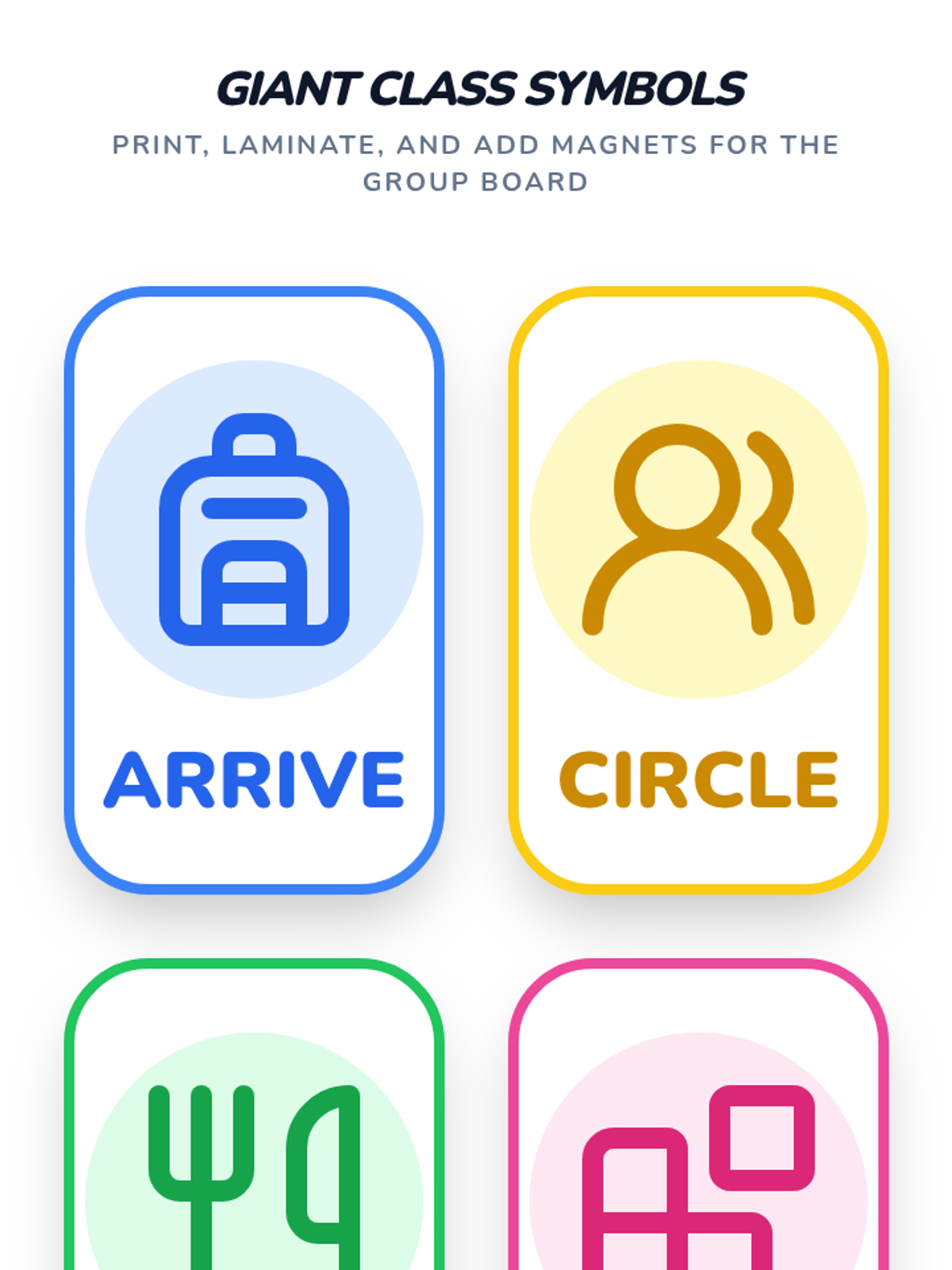
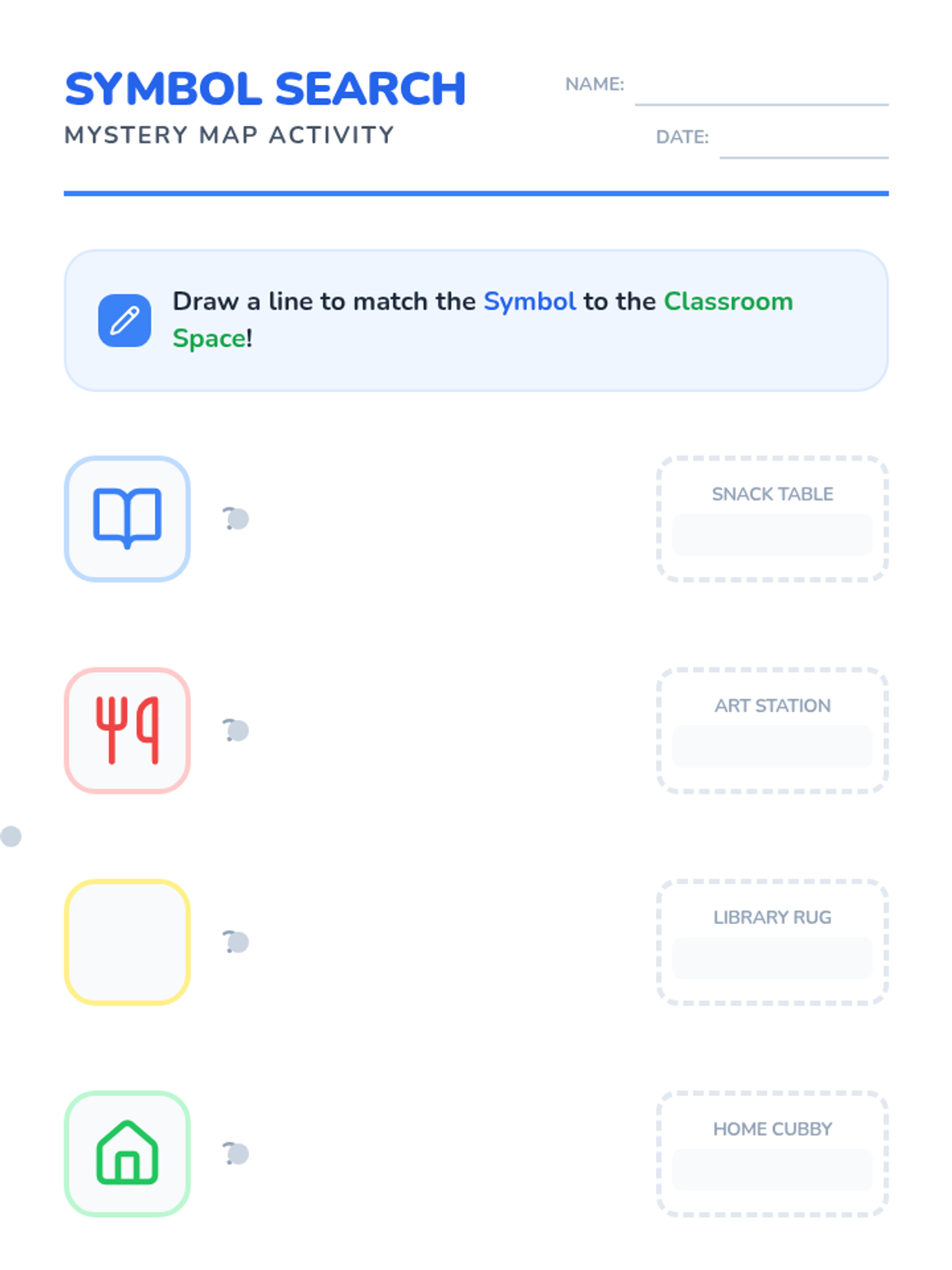
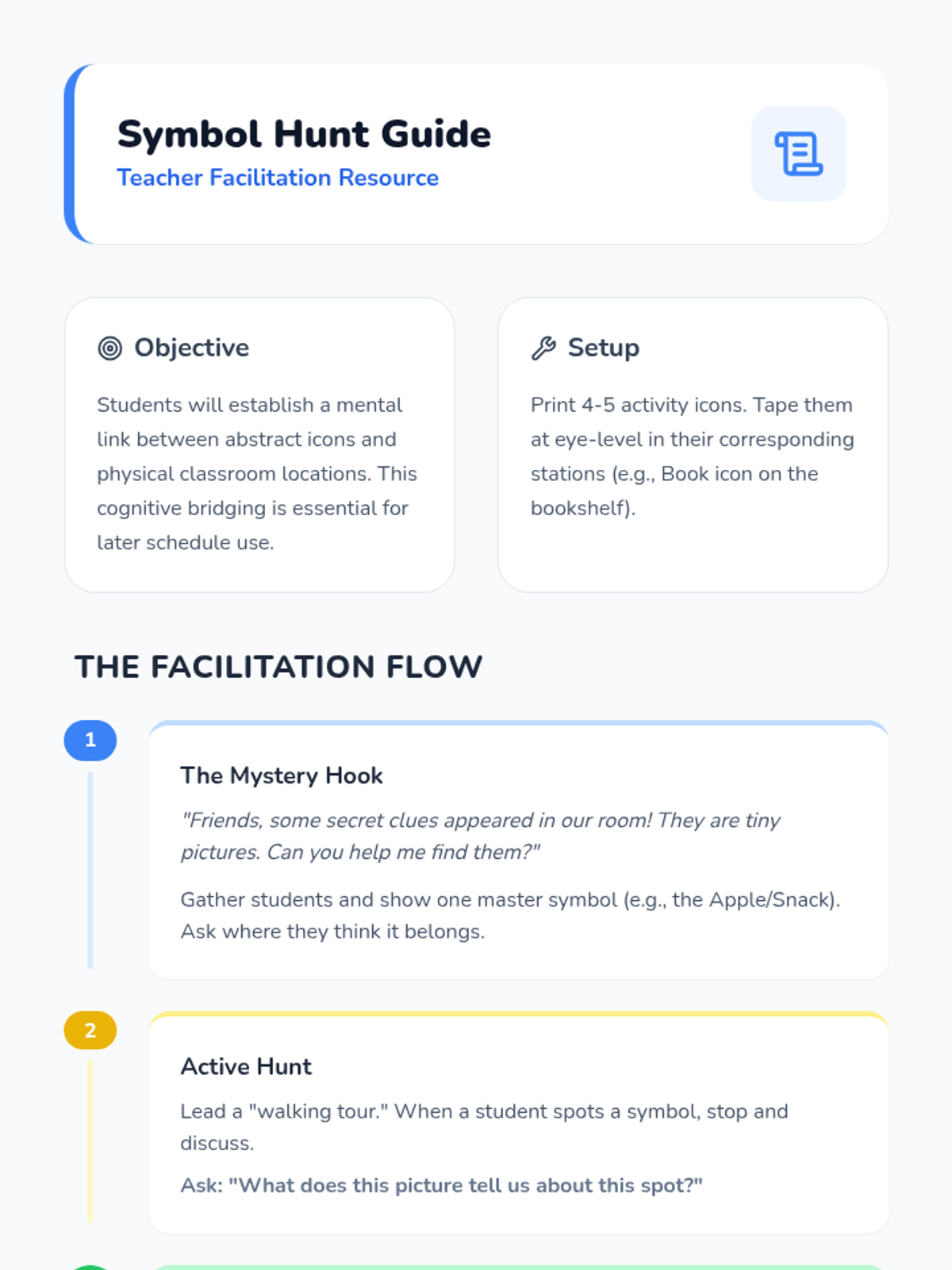
Students learn to connect abstract icons and photographs with physical locations and activities in their classroom environment.
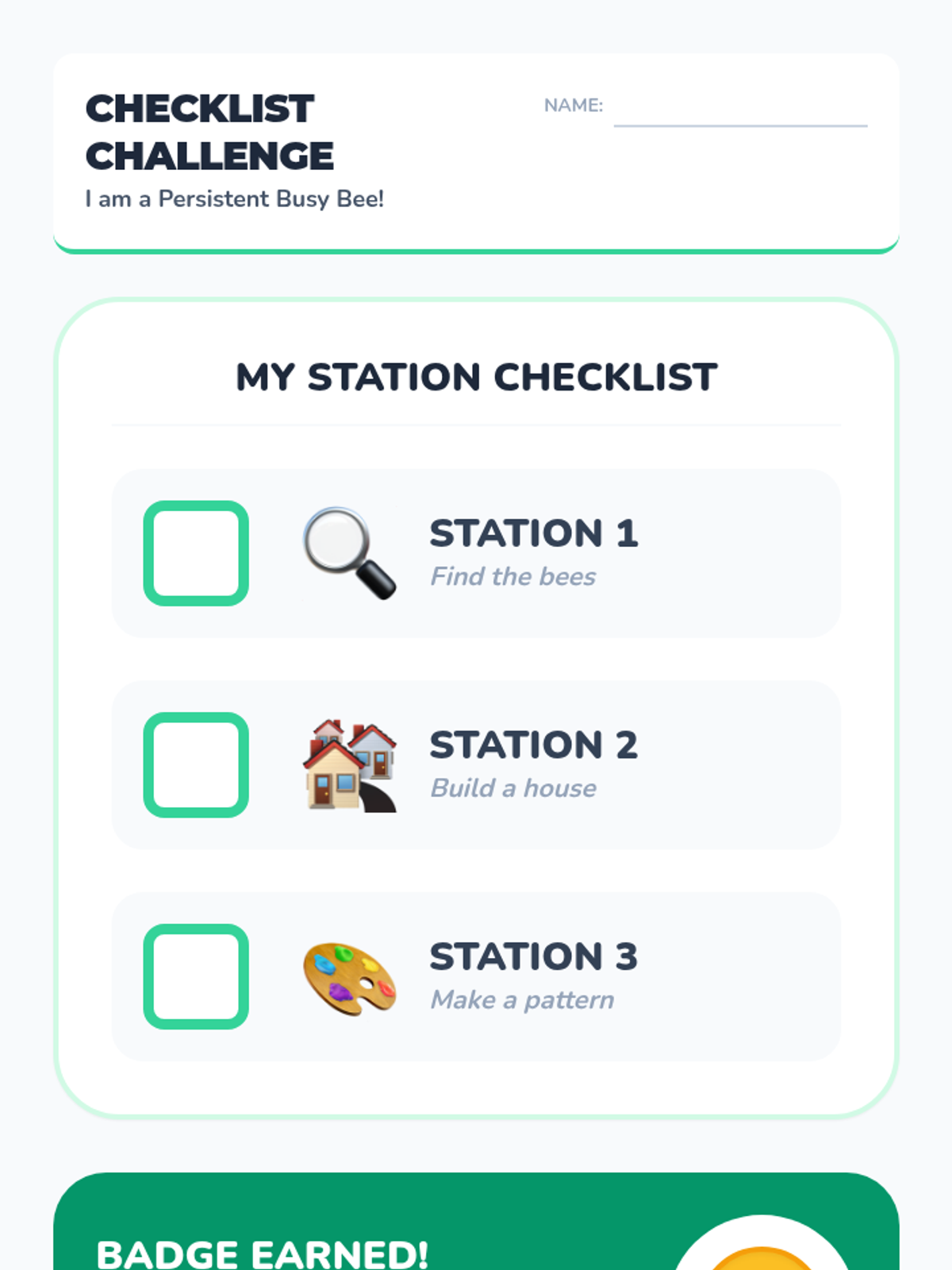
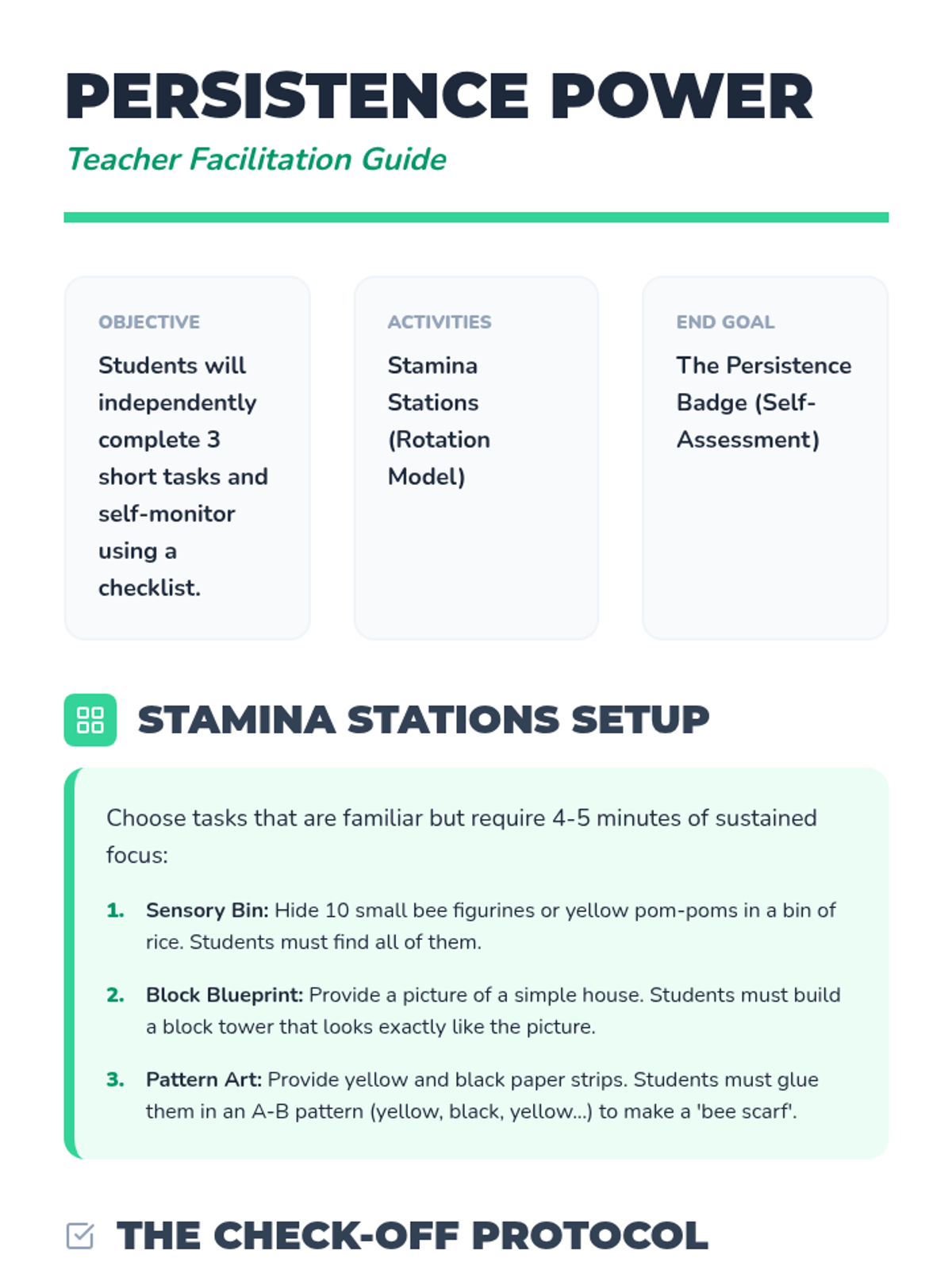
In this culminating lesson, students rotate through stations where they must complete tasks independently and check them off on a visual schedule. The focus is on self-assessing completion and building stamina.
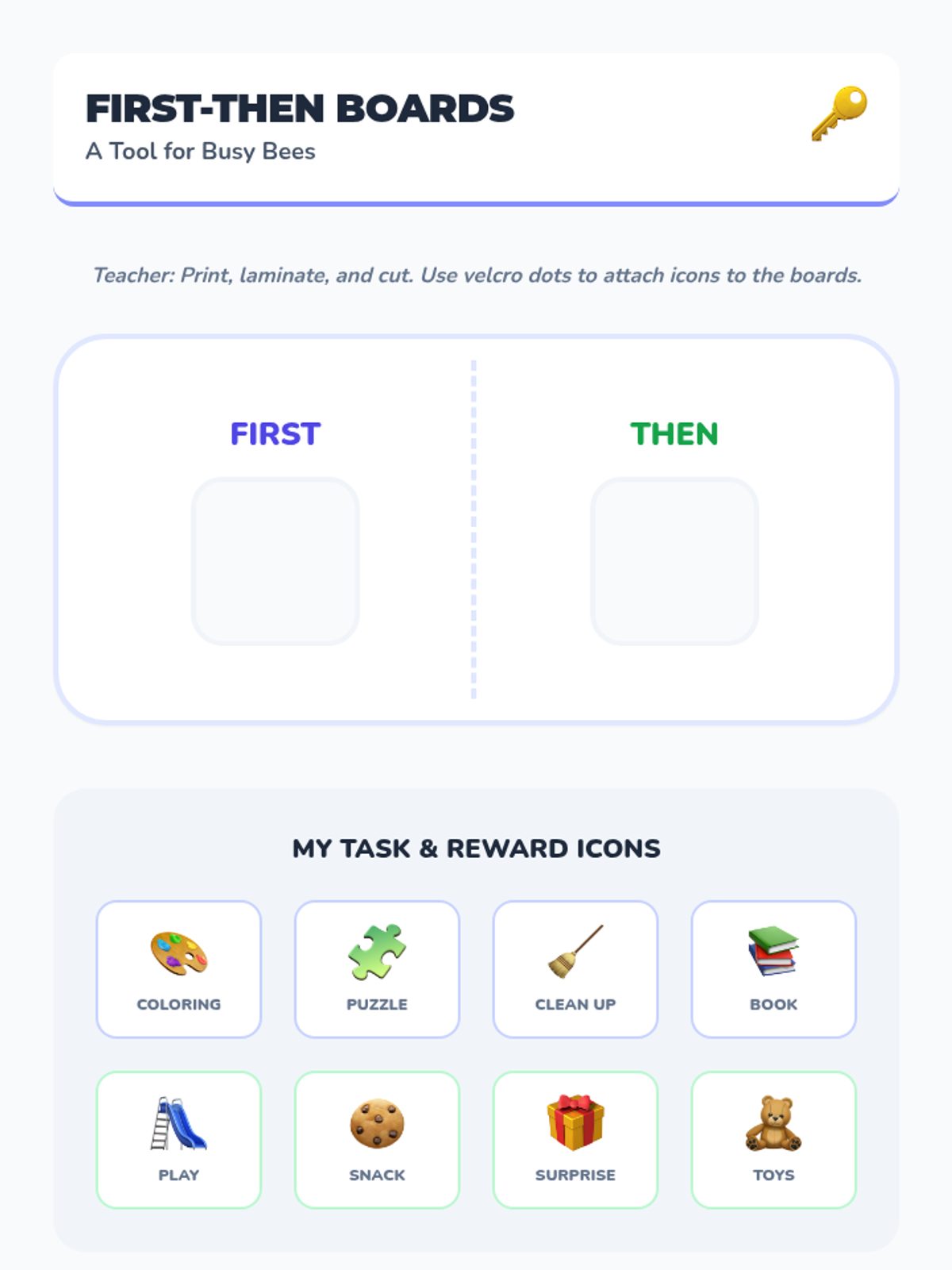
The lesson structures activities using 'First-Then' boards to teach the sequence of completing a requirement before accessing a reward. Students complete a short task to 'unlock' a preferred activity, reinforcing internal motivation.
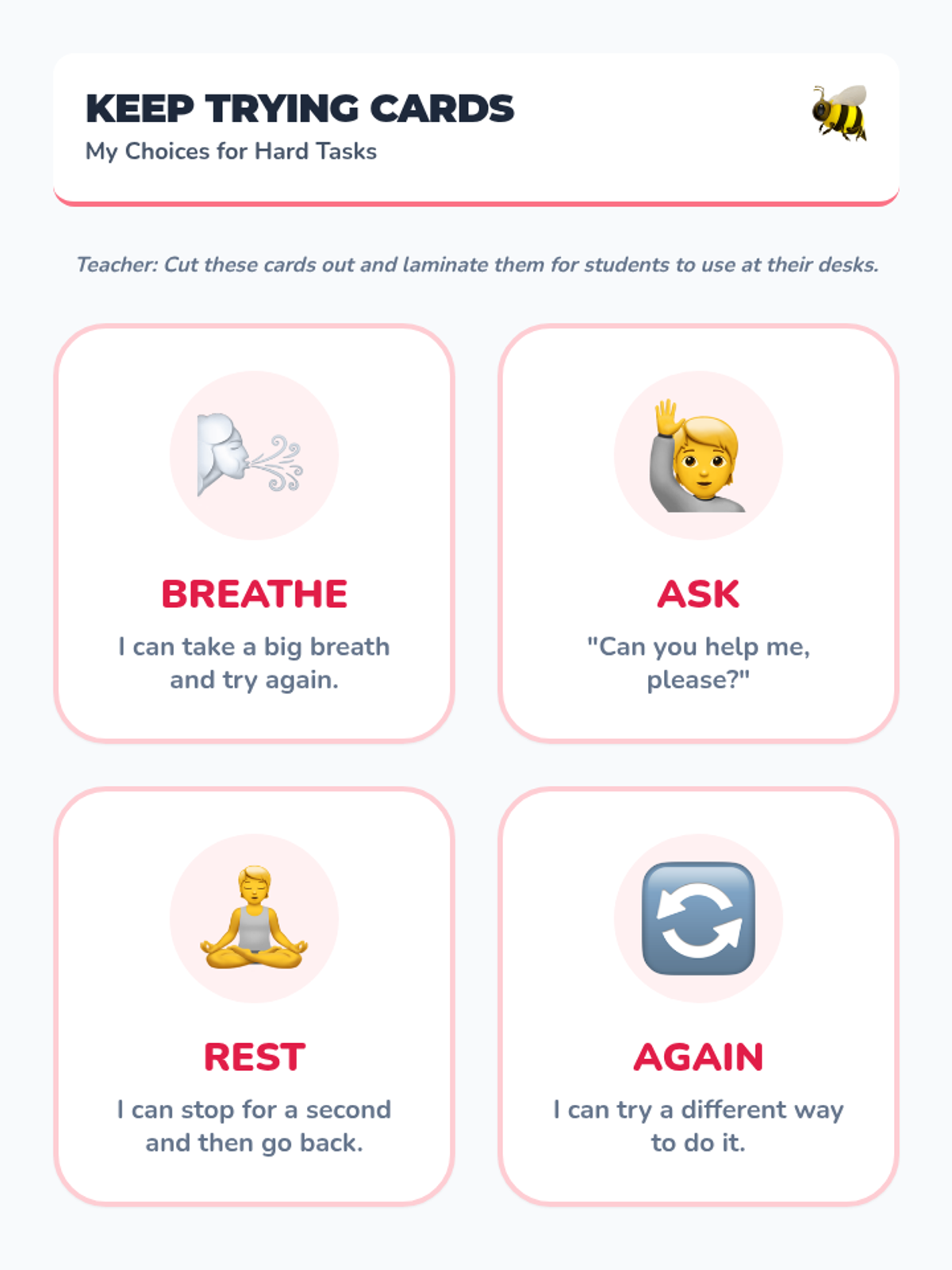
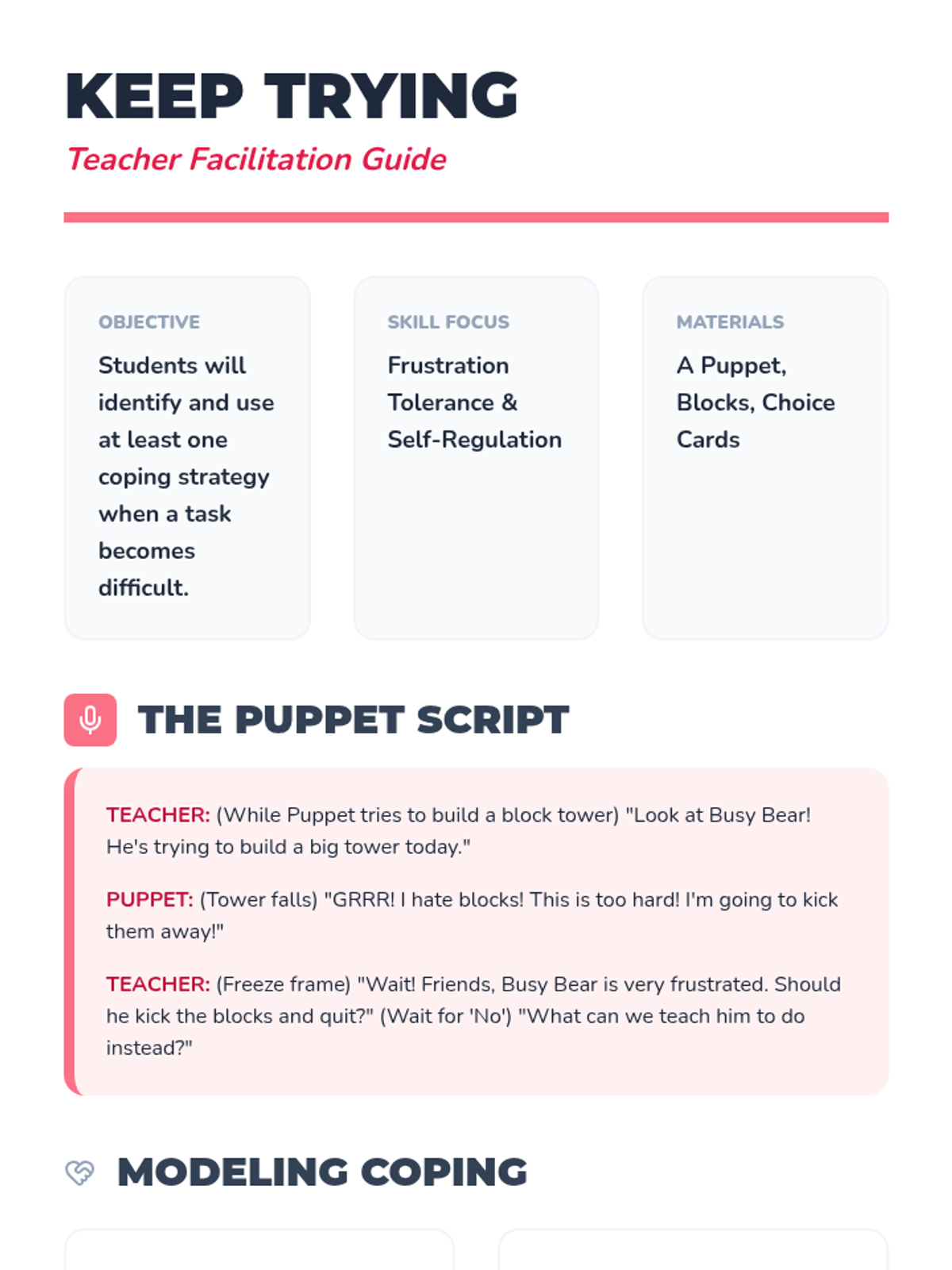
Students learn specific communication scripts and physical regulation techniques to use when a task gets hard. Through role-playing with puppets, the class practices asking for help or taking a break instead of quitting.
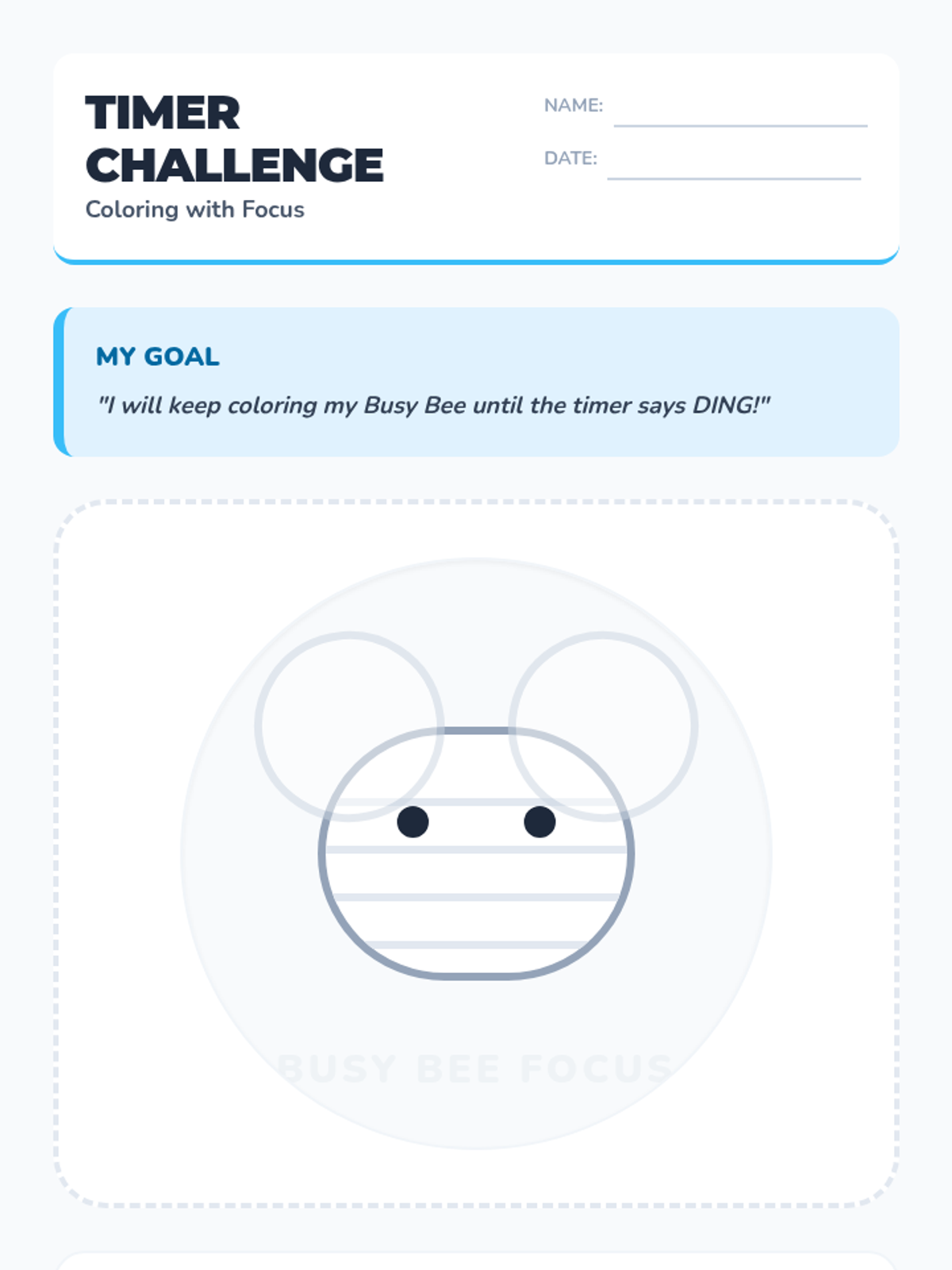
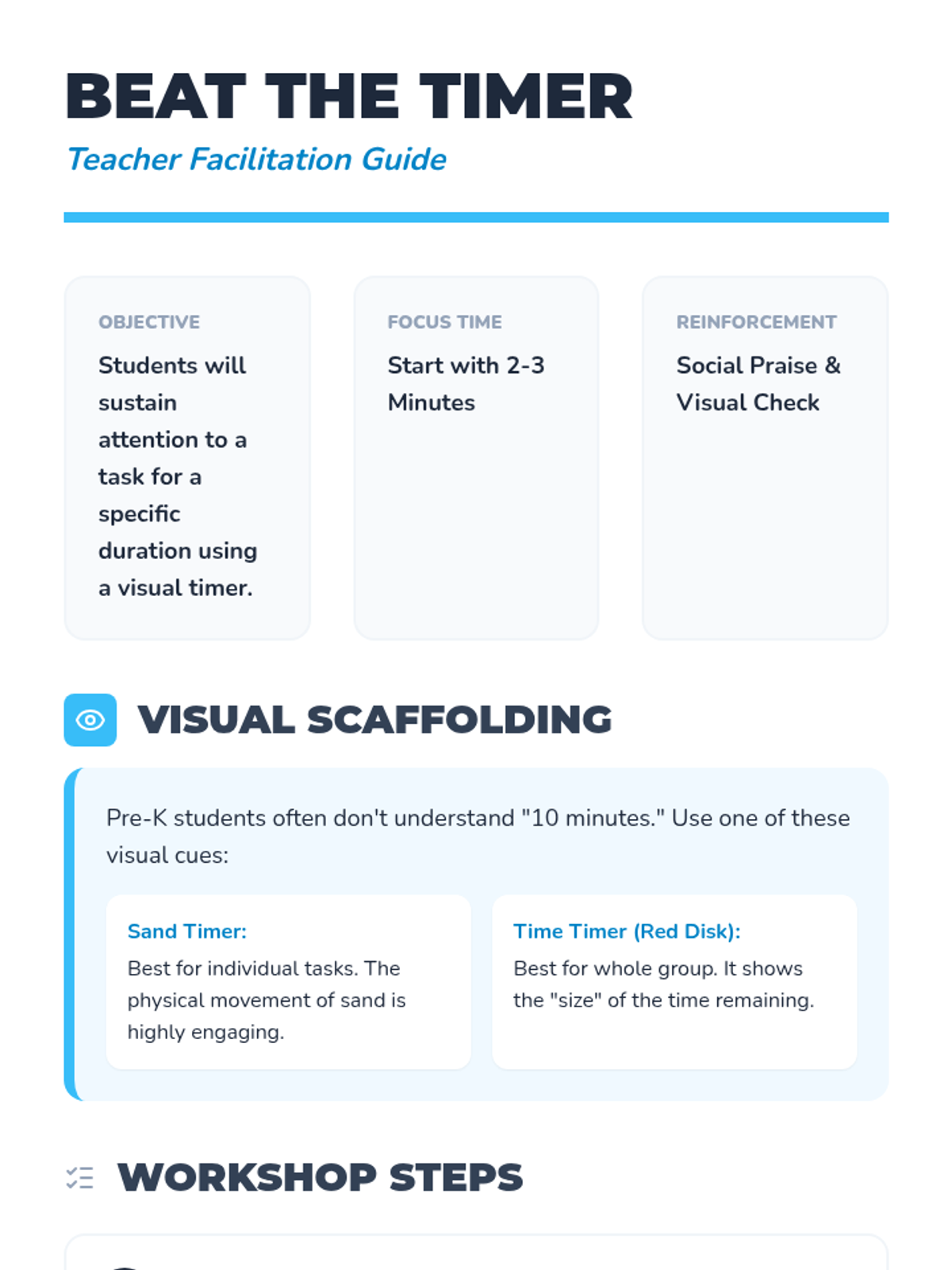
This lesson introduces visual timers as tools to help students visualize the passage of time during work periods. Students engage in a high-interest task that must continue until the timer ends, teaching them to pace their effort.
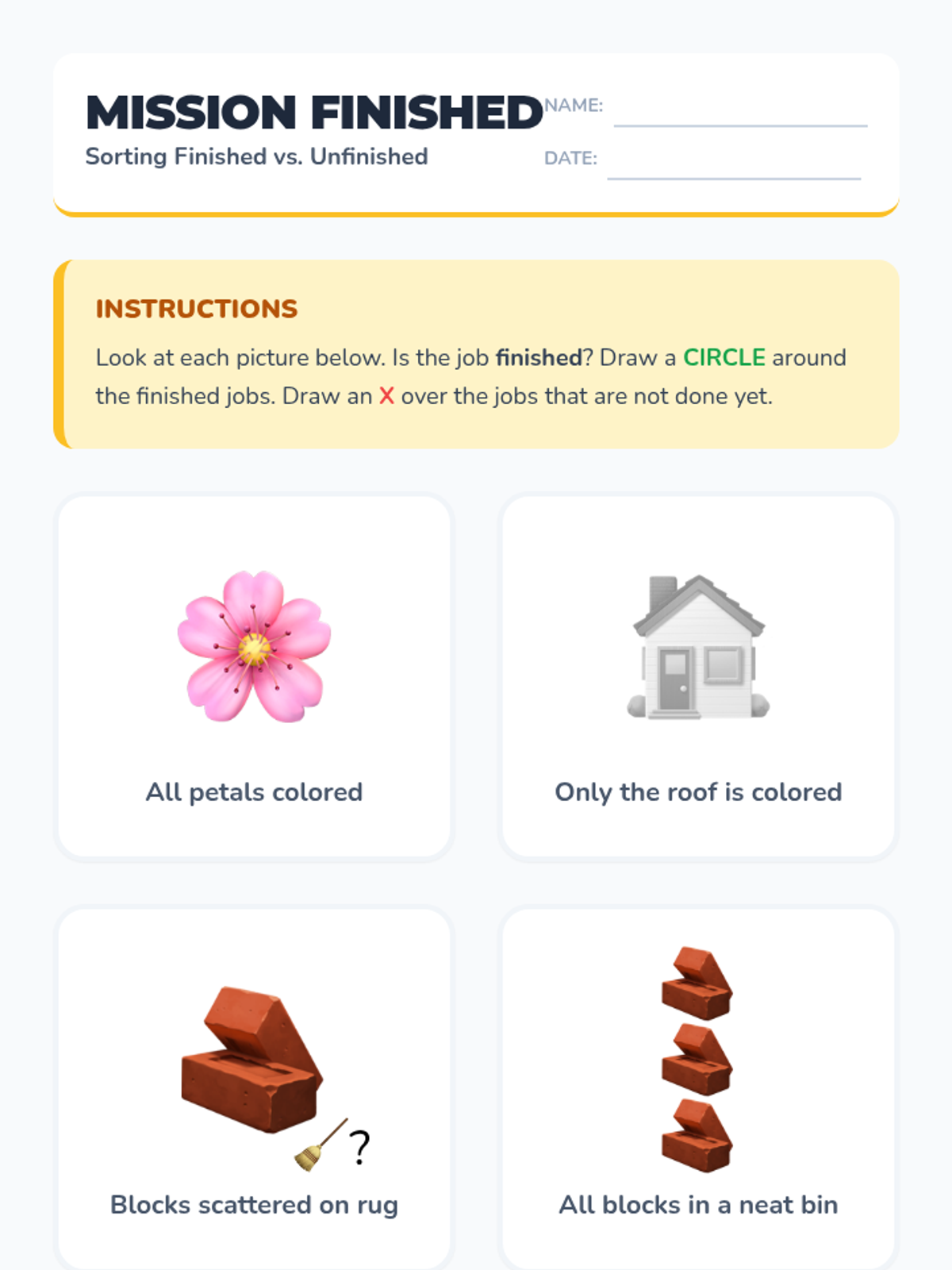
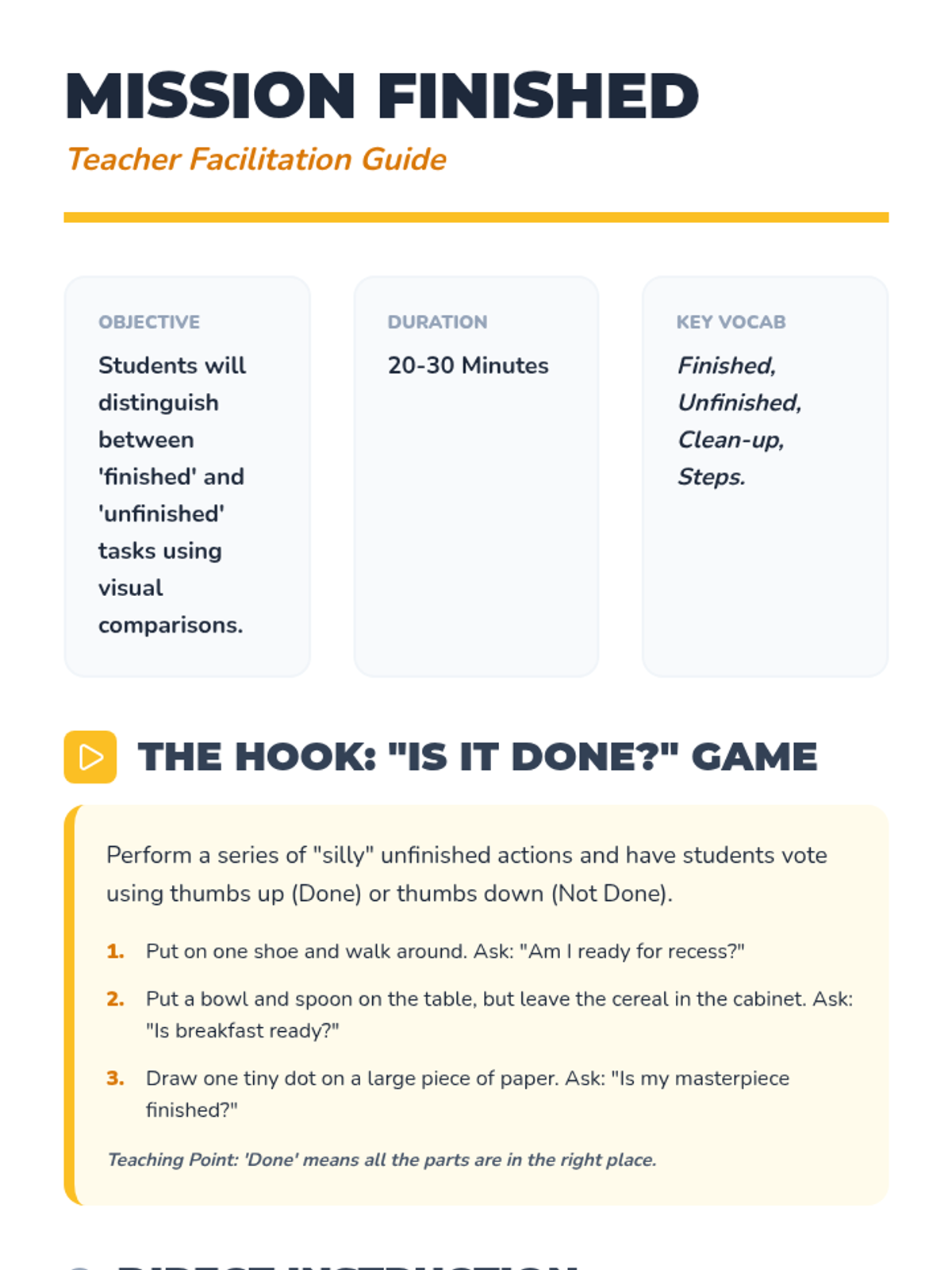
Students participate in a sorting activity to distinguish between 'finished' and 'unfinished' work using concrete visual examples. This lesson establishes the baseline expectation for quality and completion through the 'Is It Done?' game.
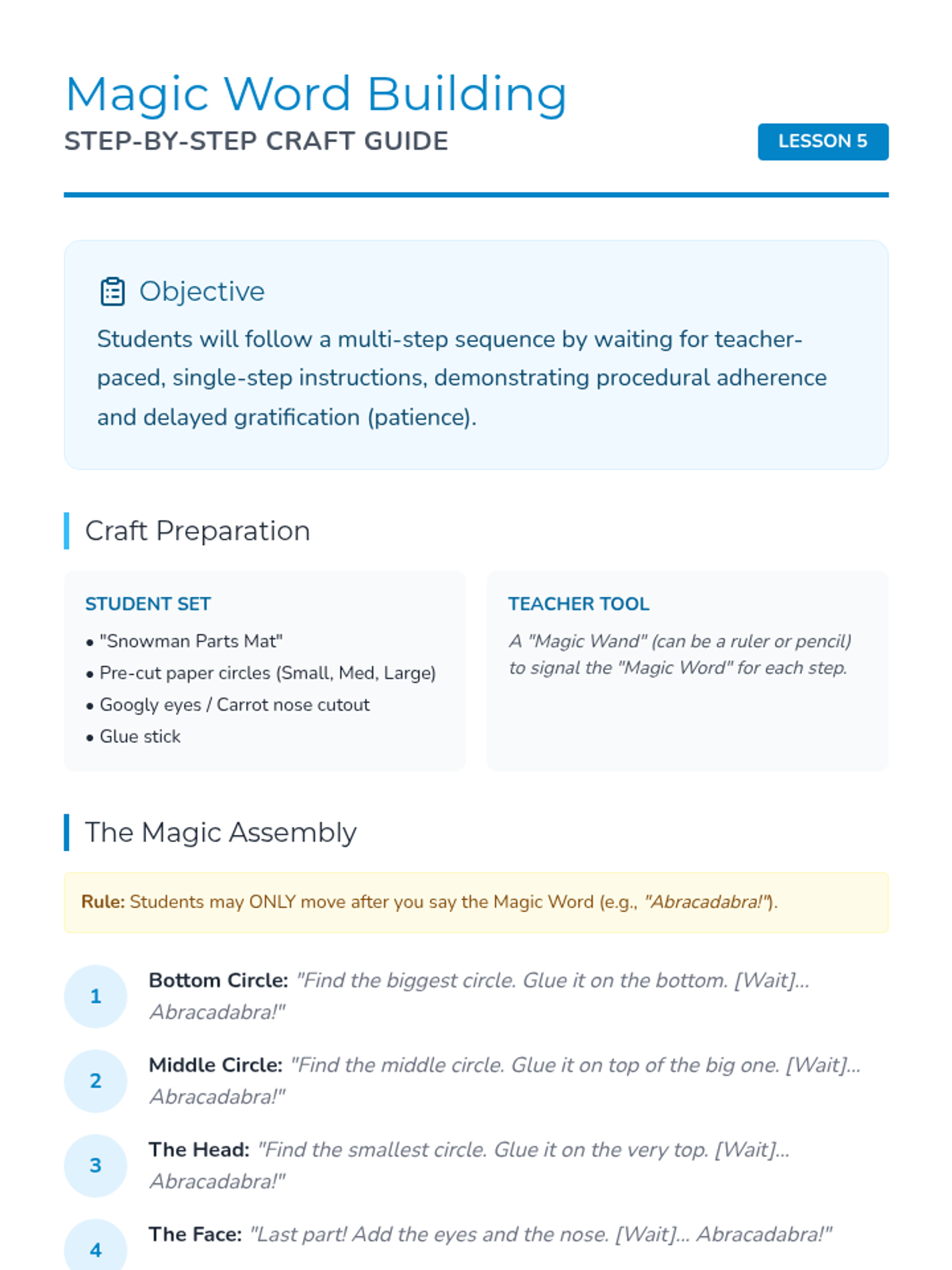
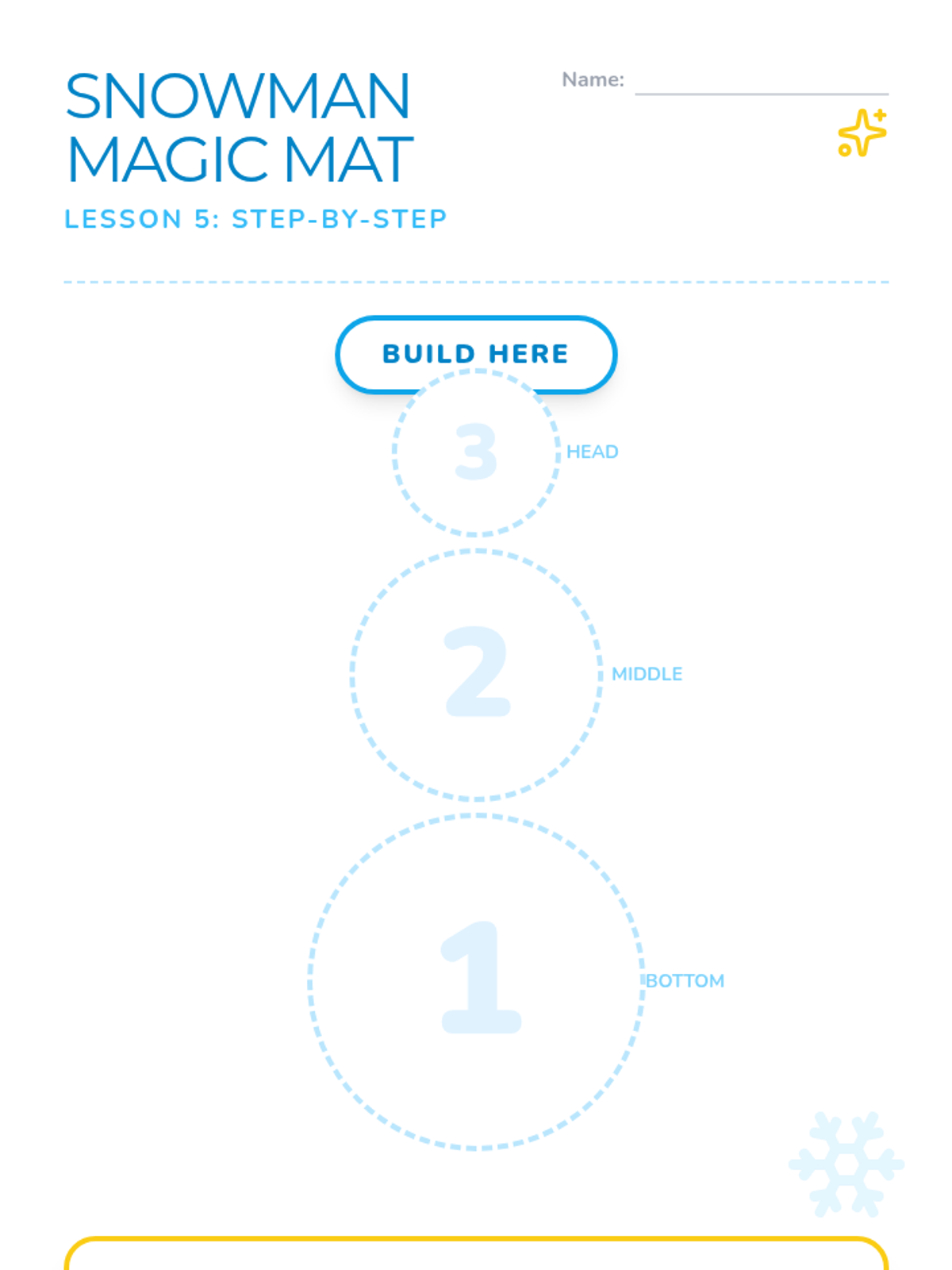
Students build a simple craft by following teacher-paced, step-by-step instructions. This lesson promotes patience, step-wise working memory, and procedural adherence.
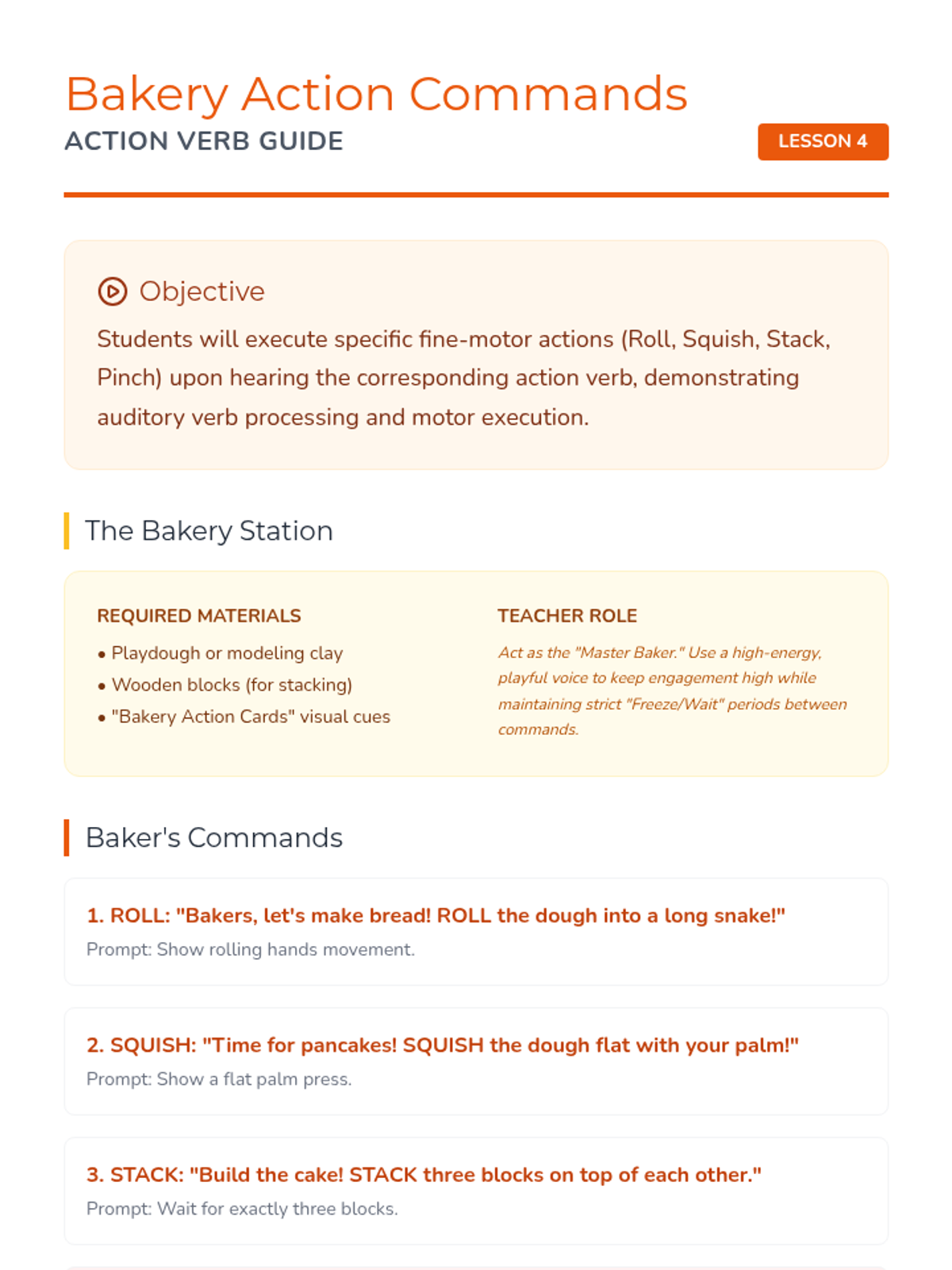
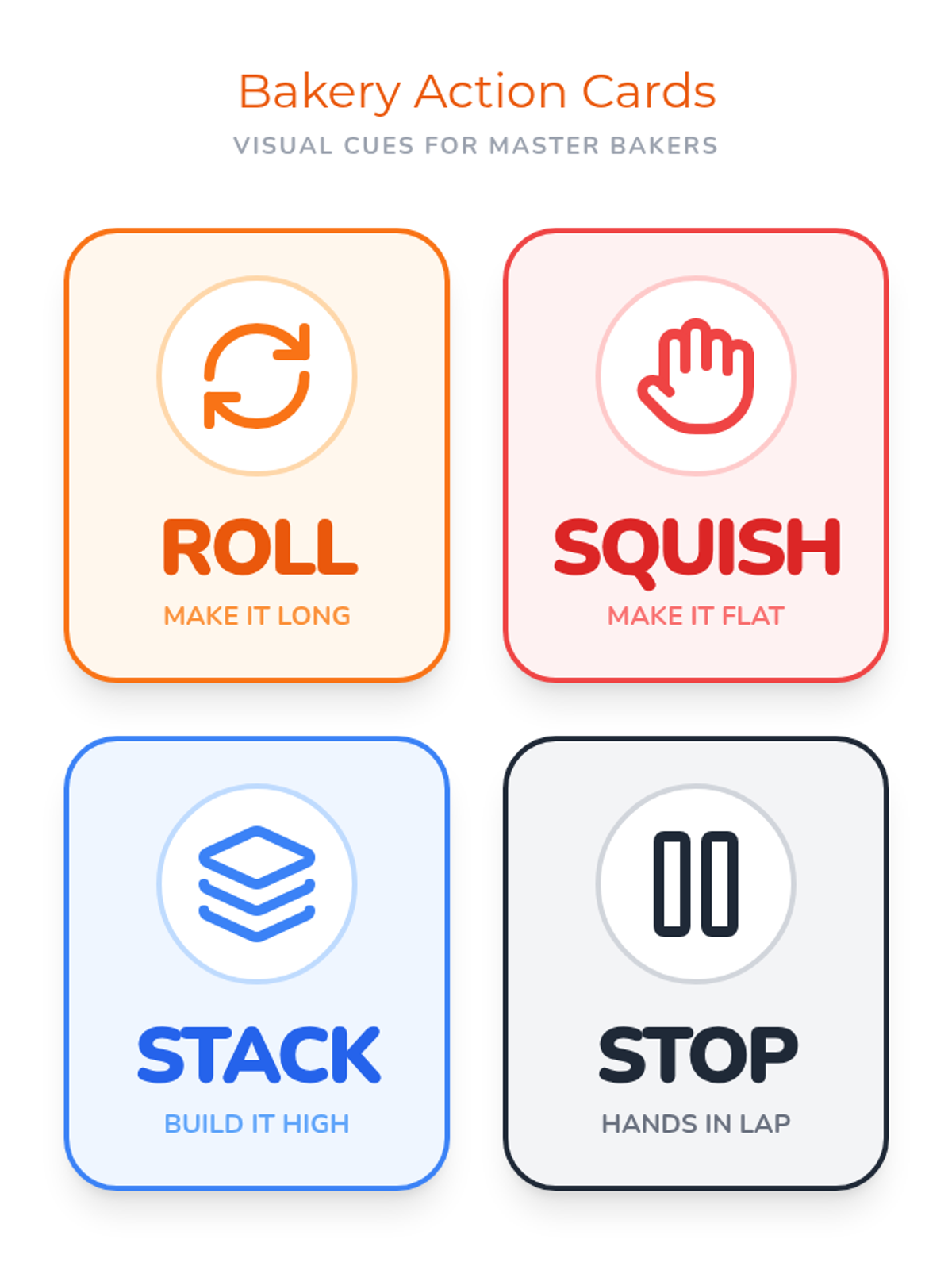
Students process action-verbs like 'roll,' 'squish,' or 'stack' using dough or blocks. This lesson emphasizes verb comprehension and sensory engagement through fine motor actions.
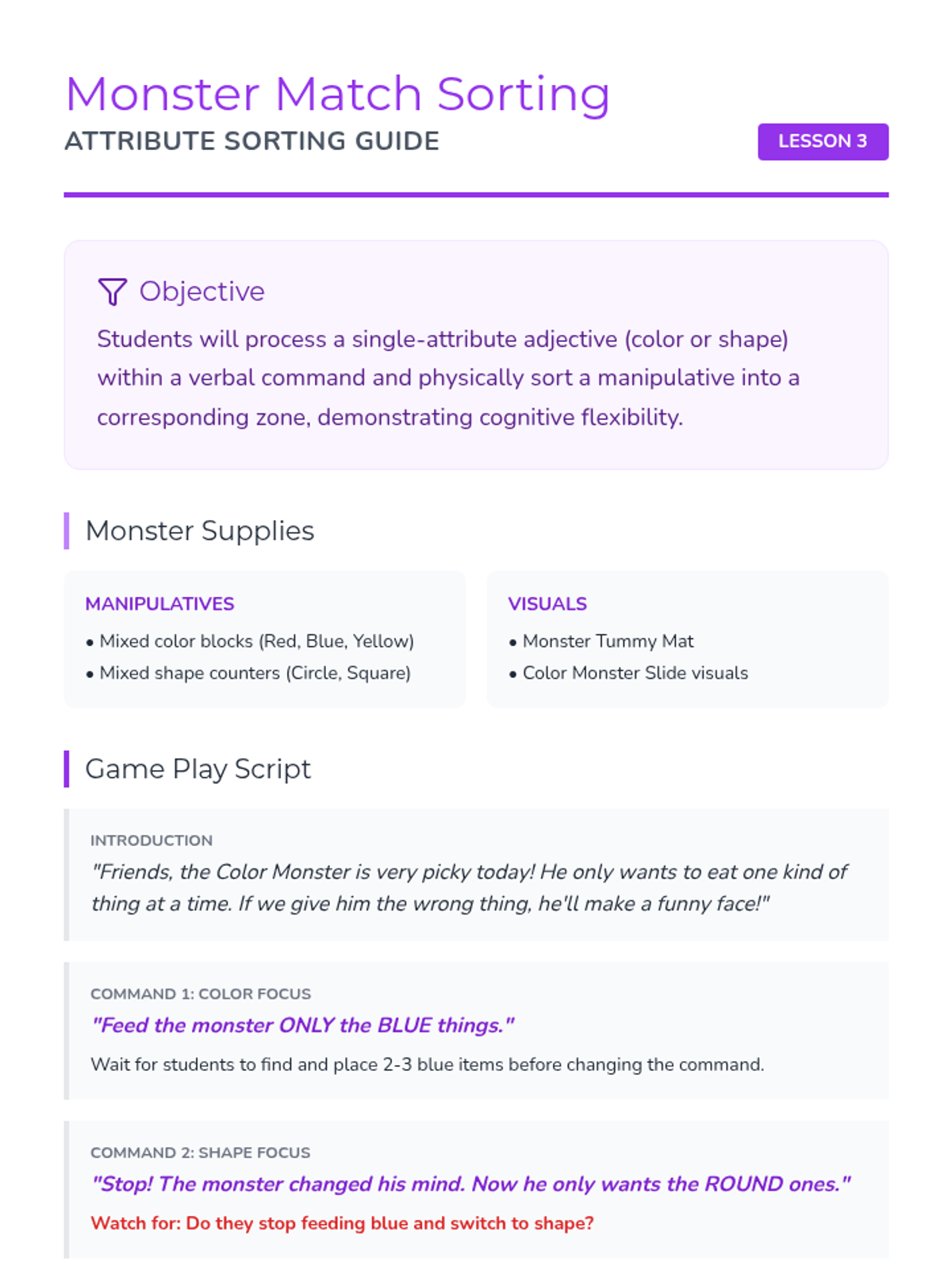
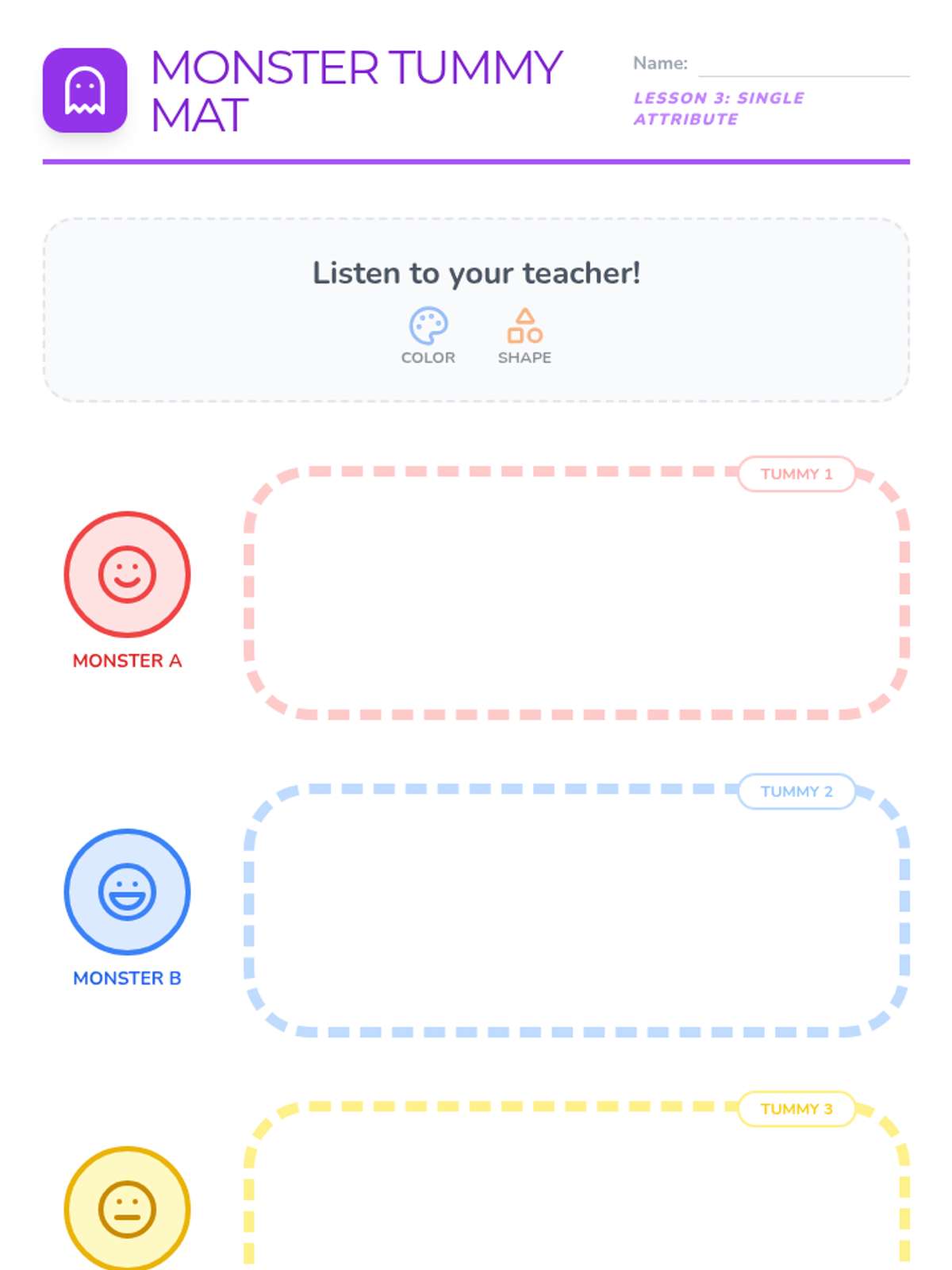
Students execute commands based on a single visual attribute like color or shape. This requires listening for adjectives and applying them to a physical sorting task to build cognitive flexibility.
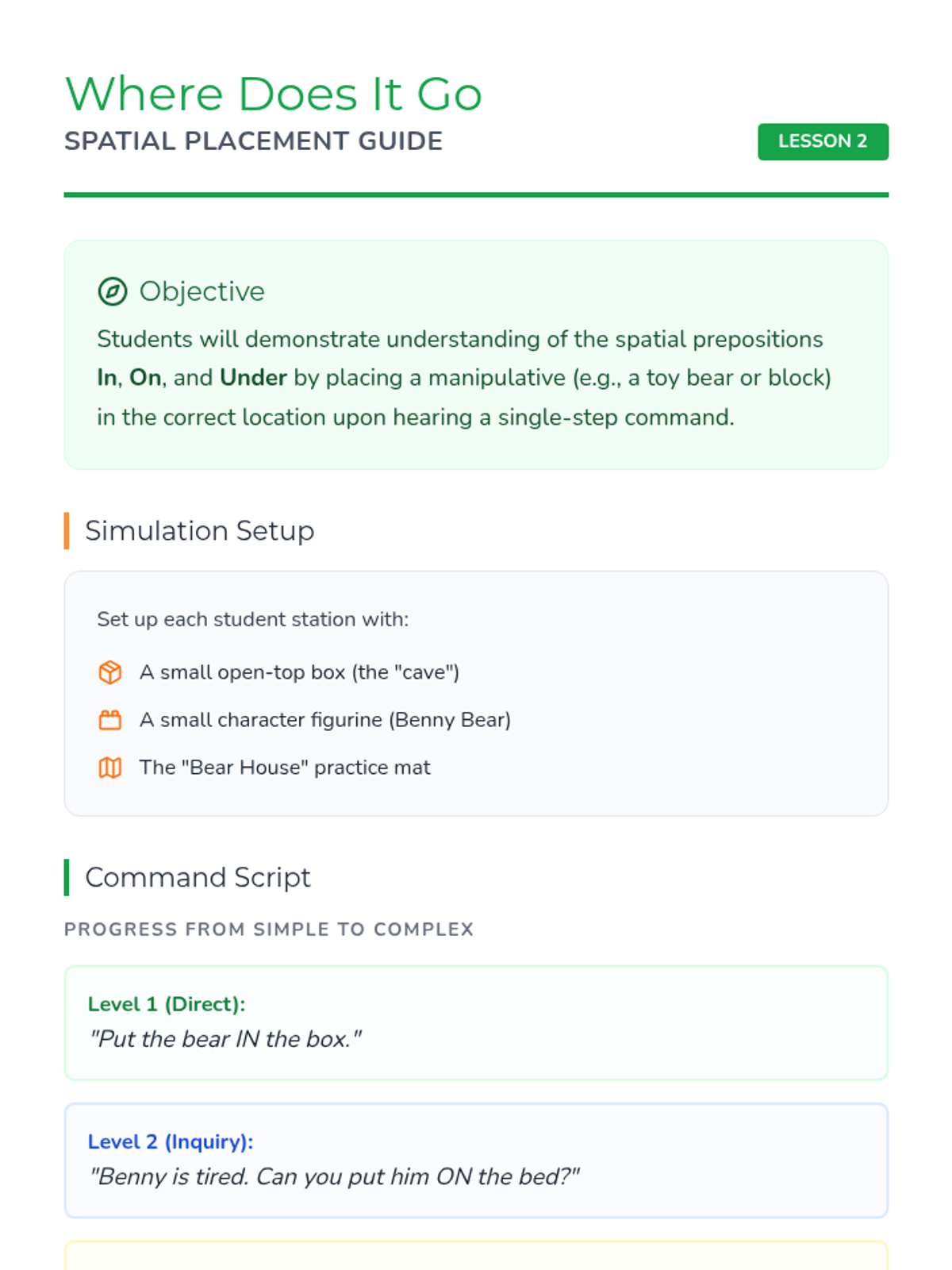
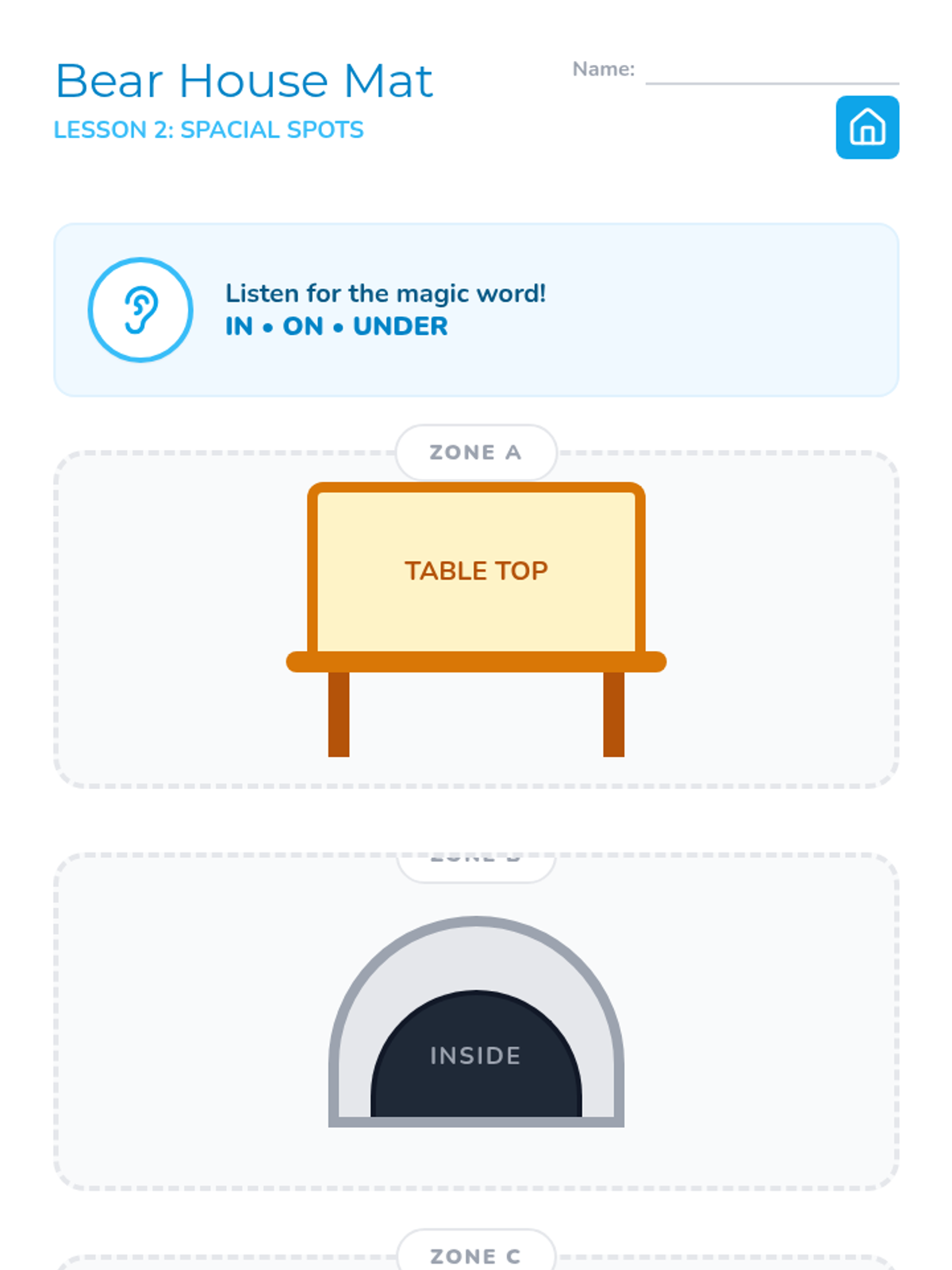
Students follow single-step spatial directions (in, on, under) using concrete objects and boxes. This lesson reinforces spatial prepositions and auditory processing in a simulation-based setting.
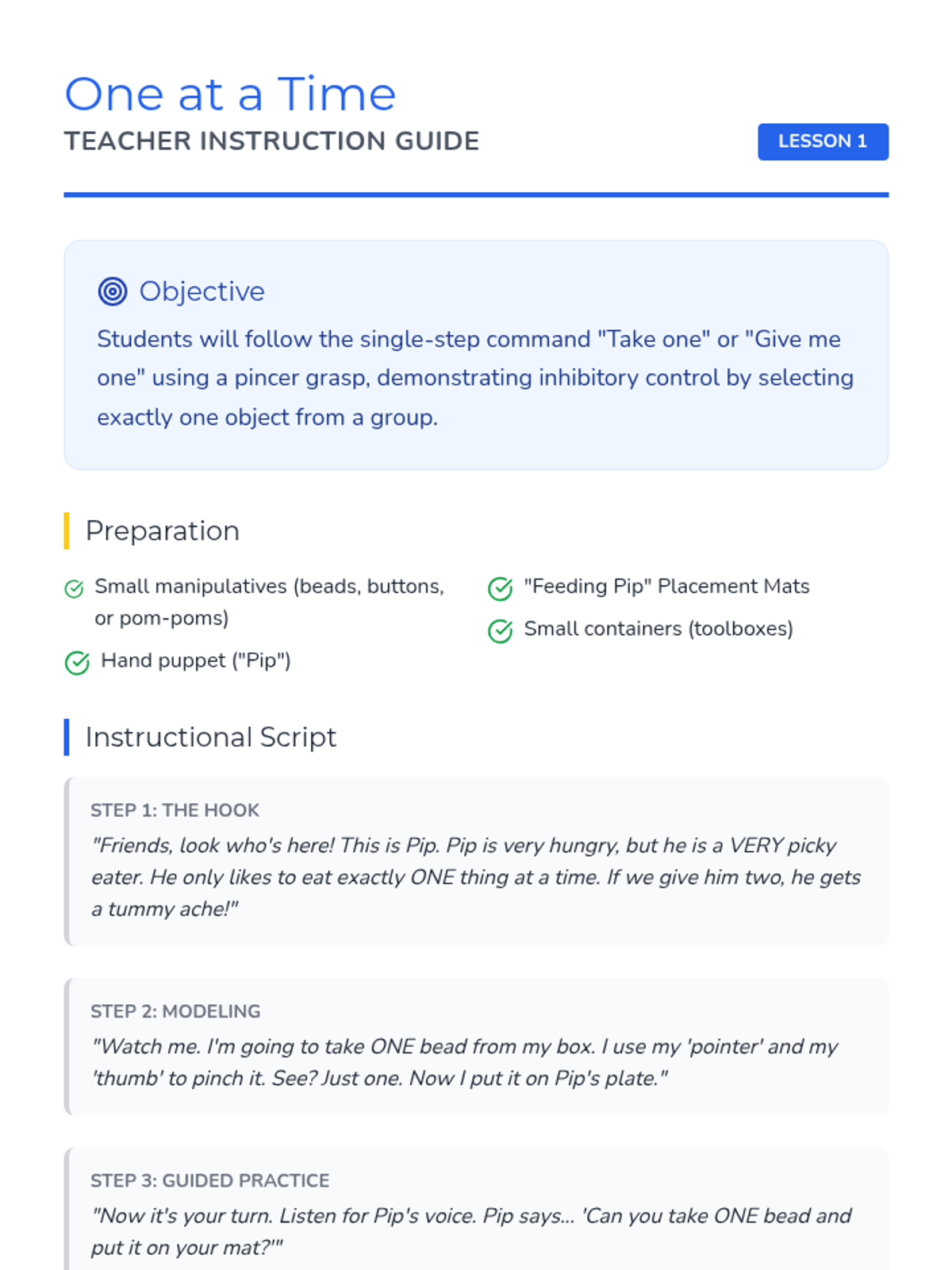
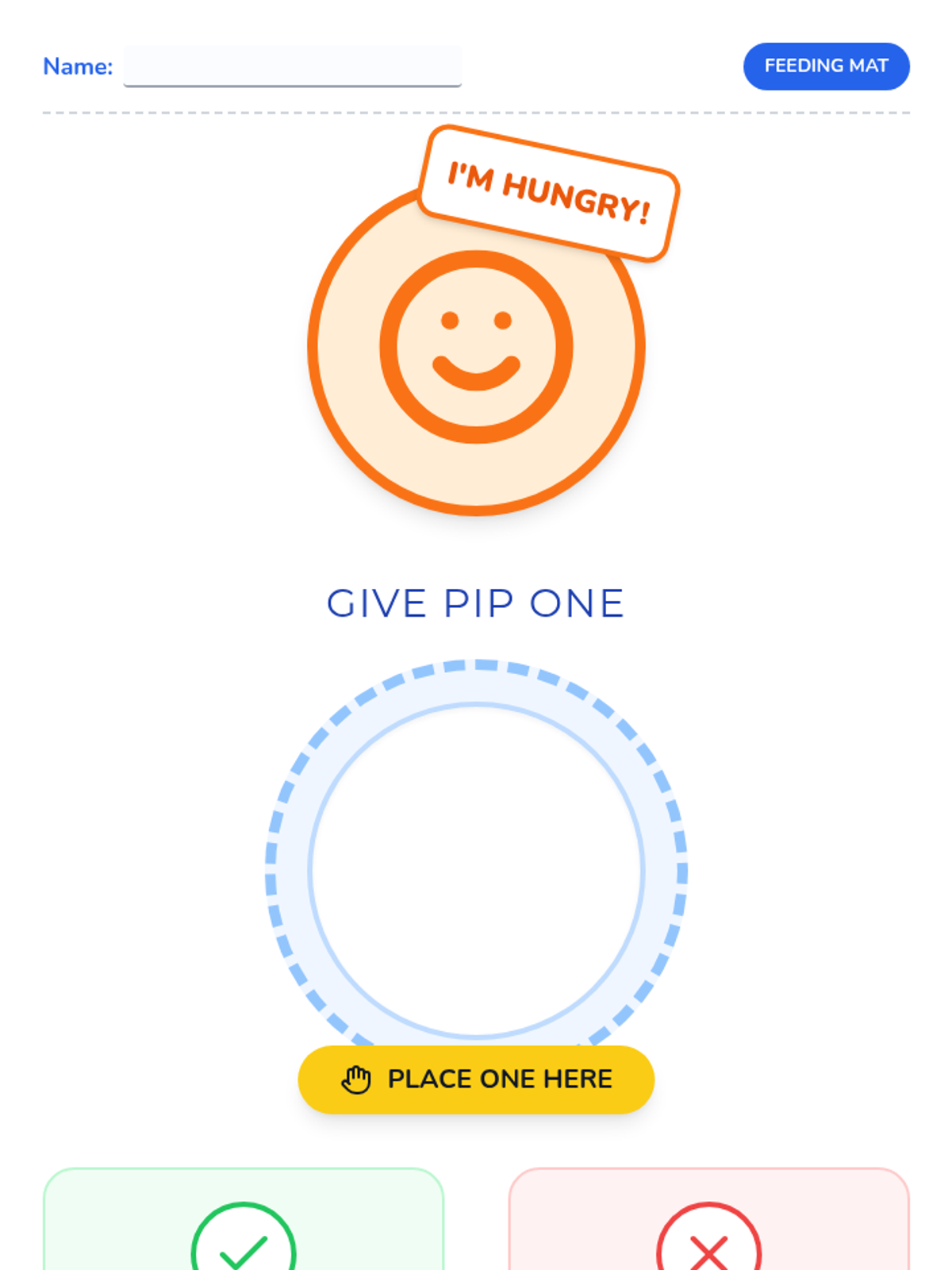
Students practice inhibitory control and quantity discrimination by responding to commands to take or give exactly one item. This lesson focuses on the pincer grasp and resisting the urge to grab multiple objects.
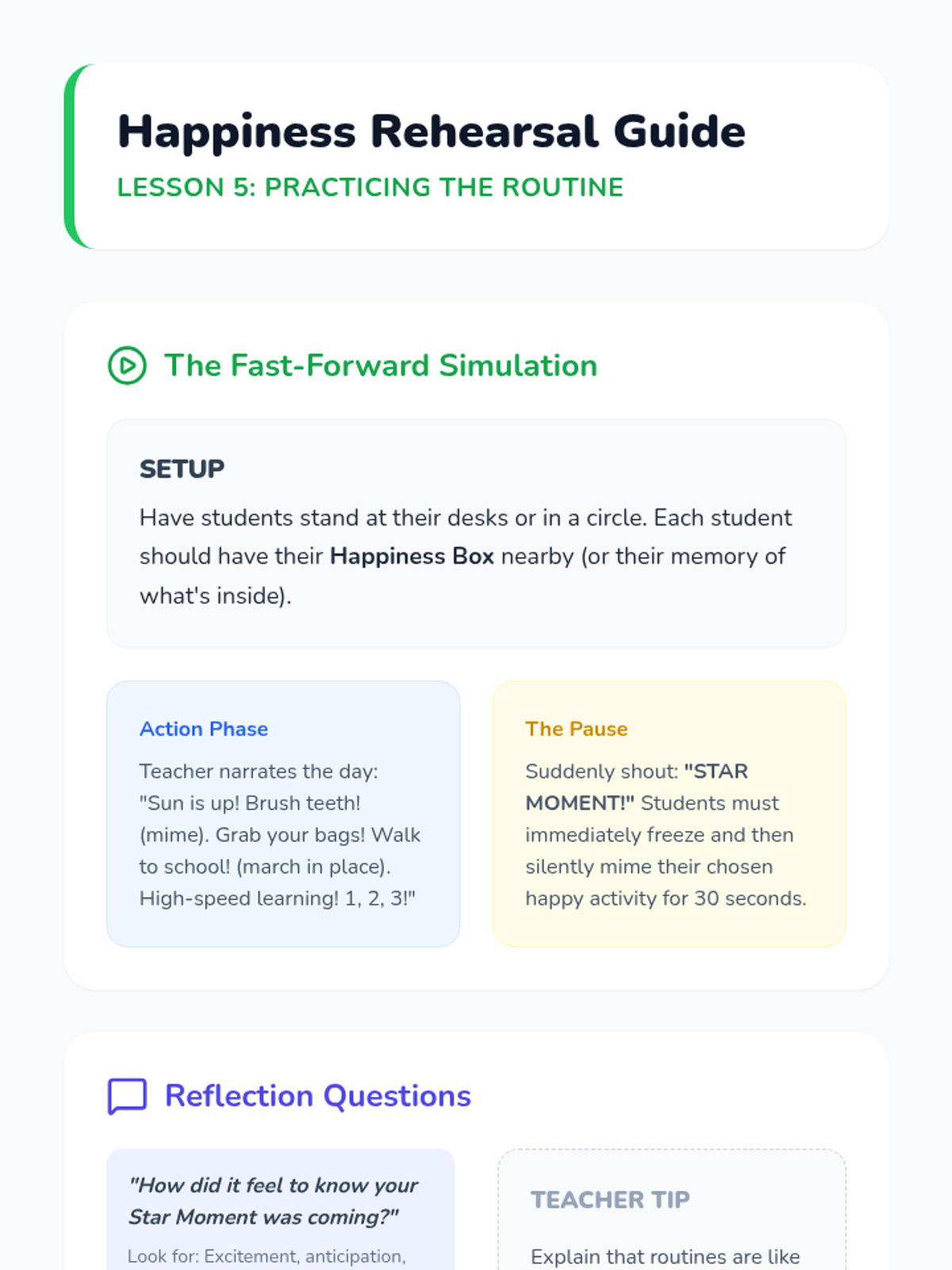
The class participates in a 'fast-forward' simulation of their daily routine, practicing their planned positive moments and reflecting on the benefits of anticipation.
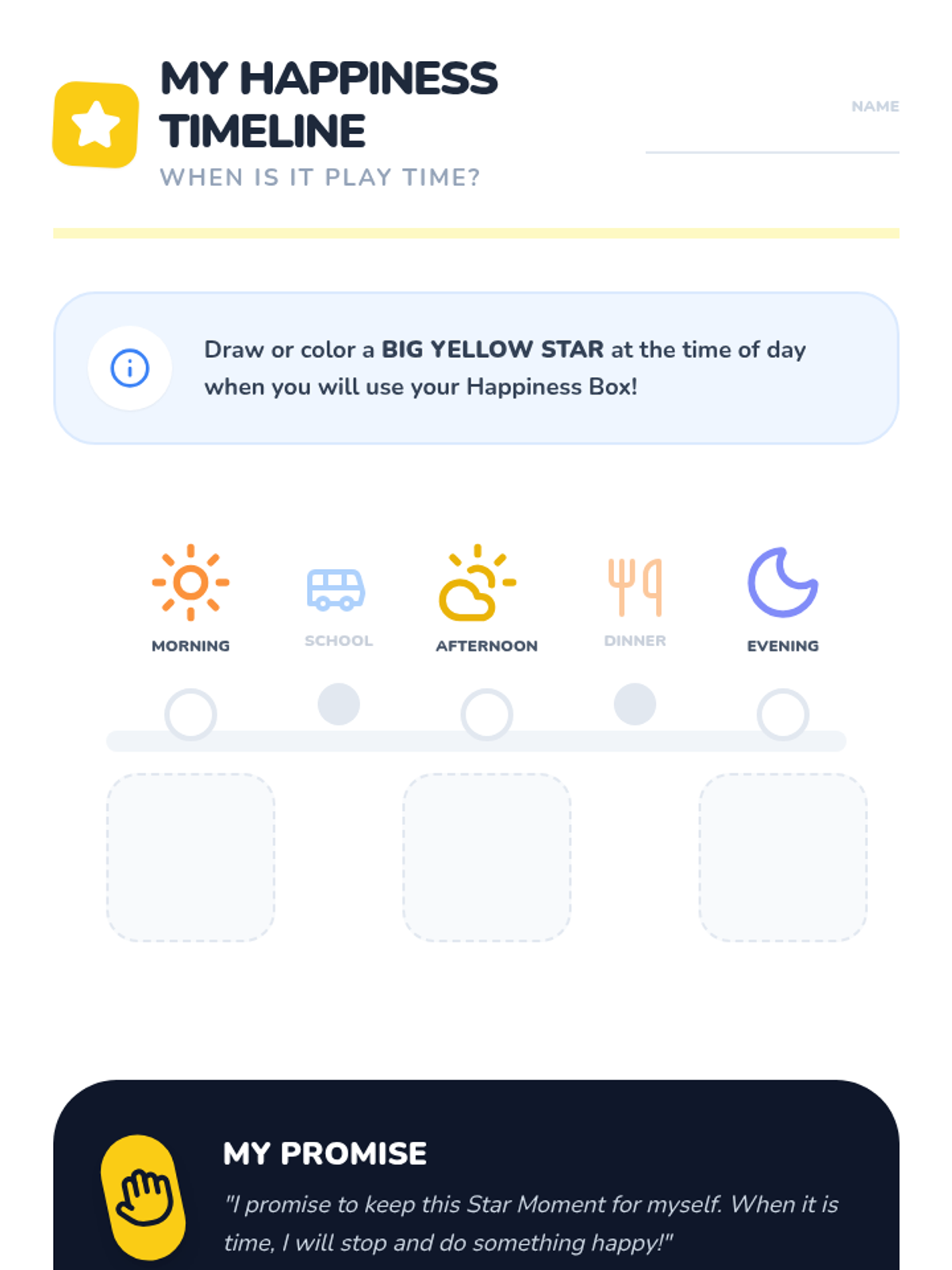
Students use a visual timeline to schedule a 'Positive Pause' and learn the importance of keeping promises to themselves for daily happiness.
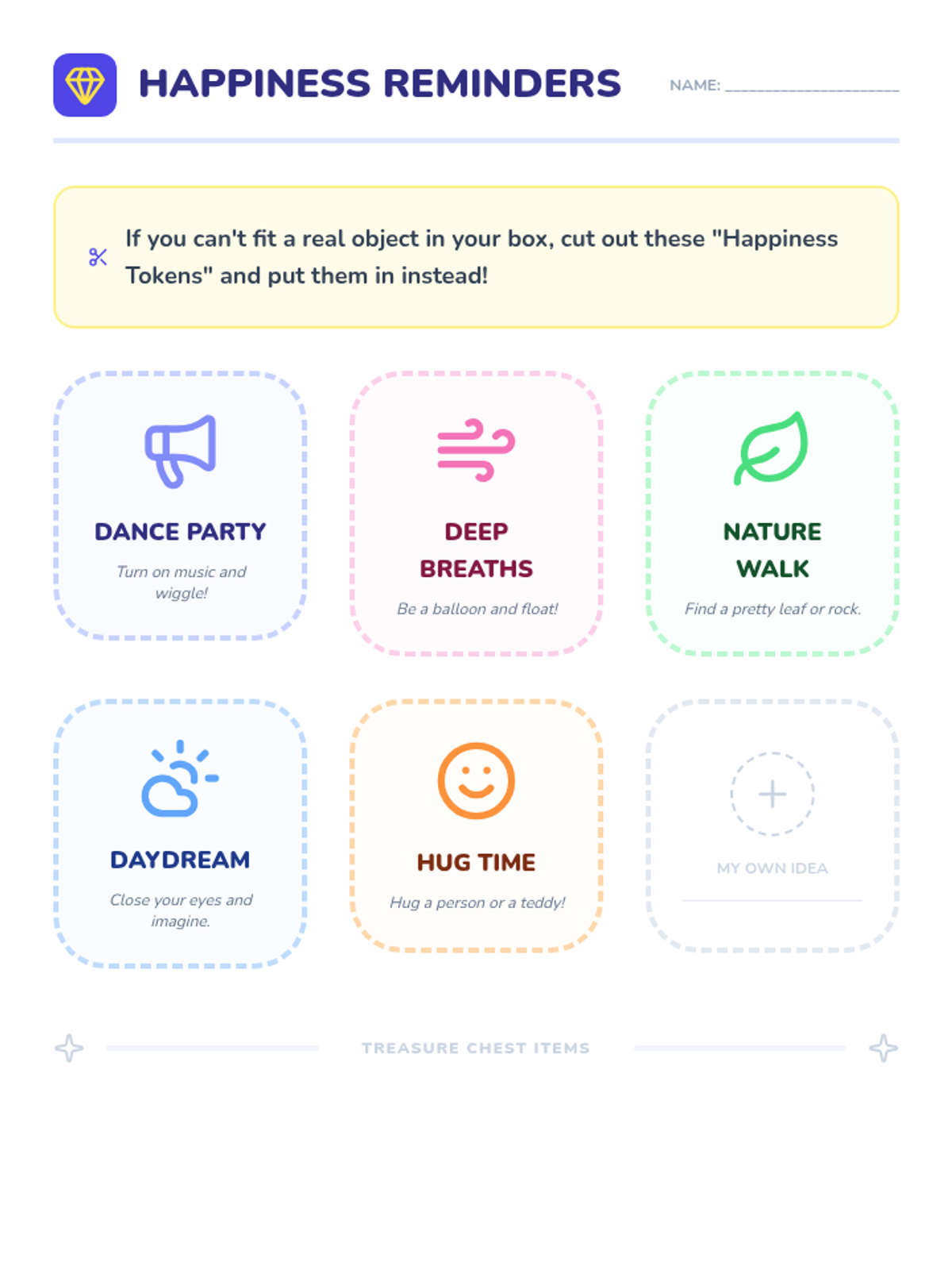
Students construct and decorate a 'Happiness Box' to hold physical reminders of positive activities, creating a tangible commitment to emotional well-being.
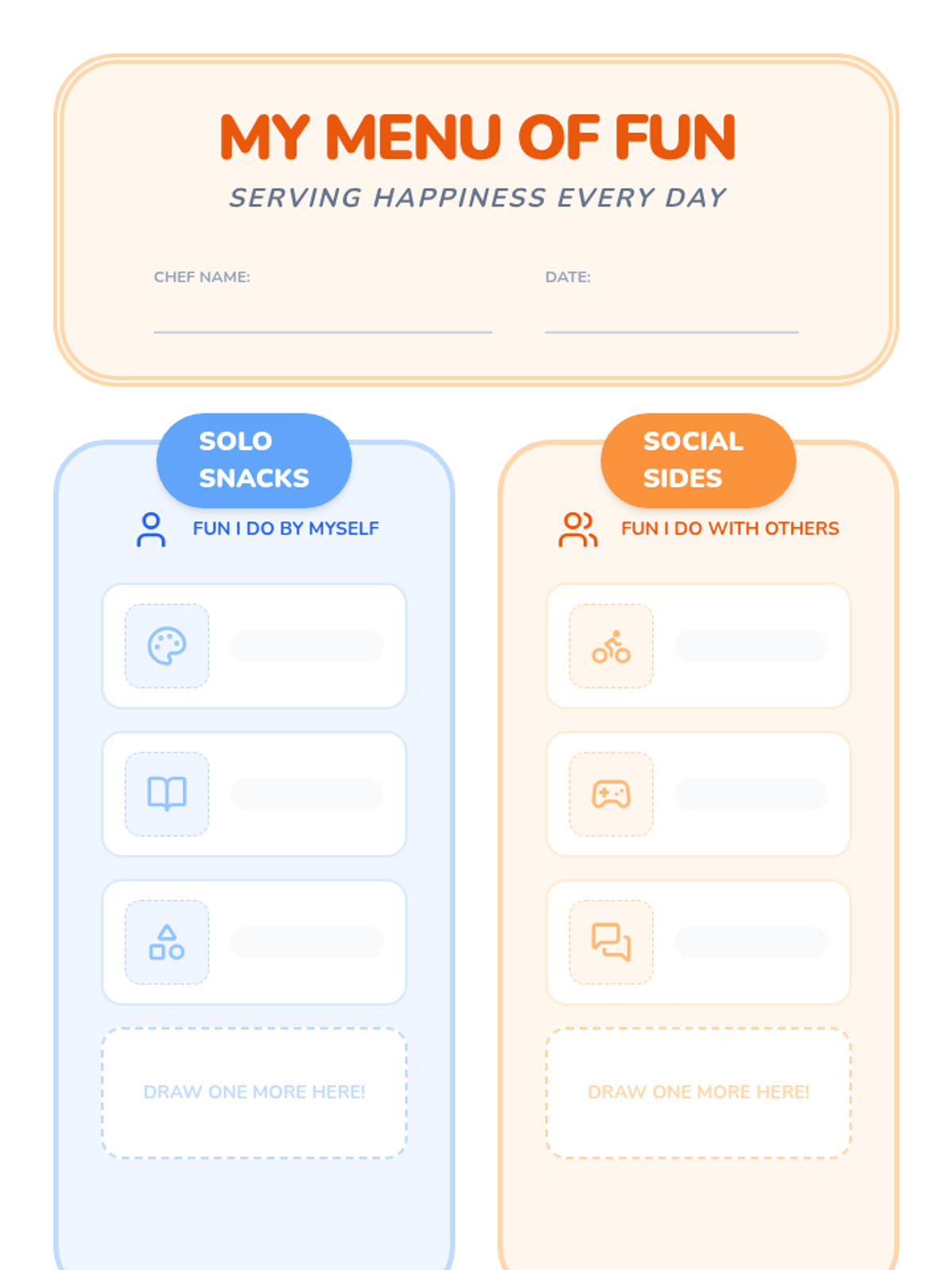
Students collaborate to brainstorm a variety of rewarding activities, categorizing them into things they can do alone or with others to create a personal 'Menu of Fun'.
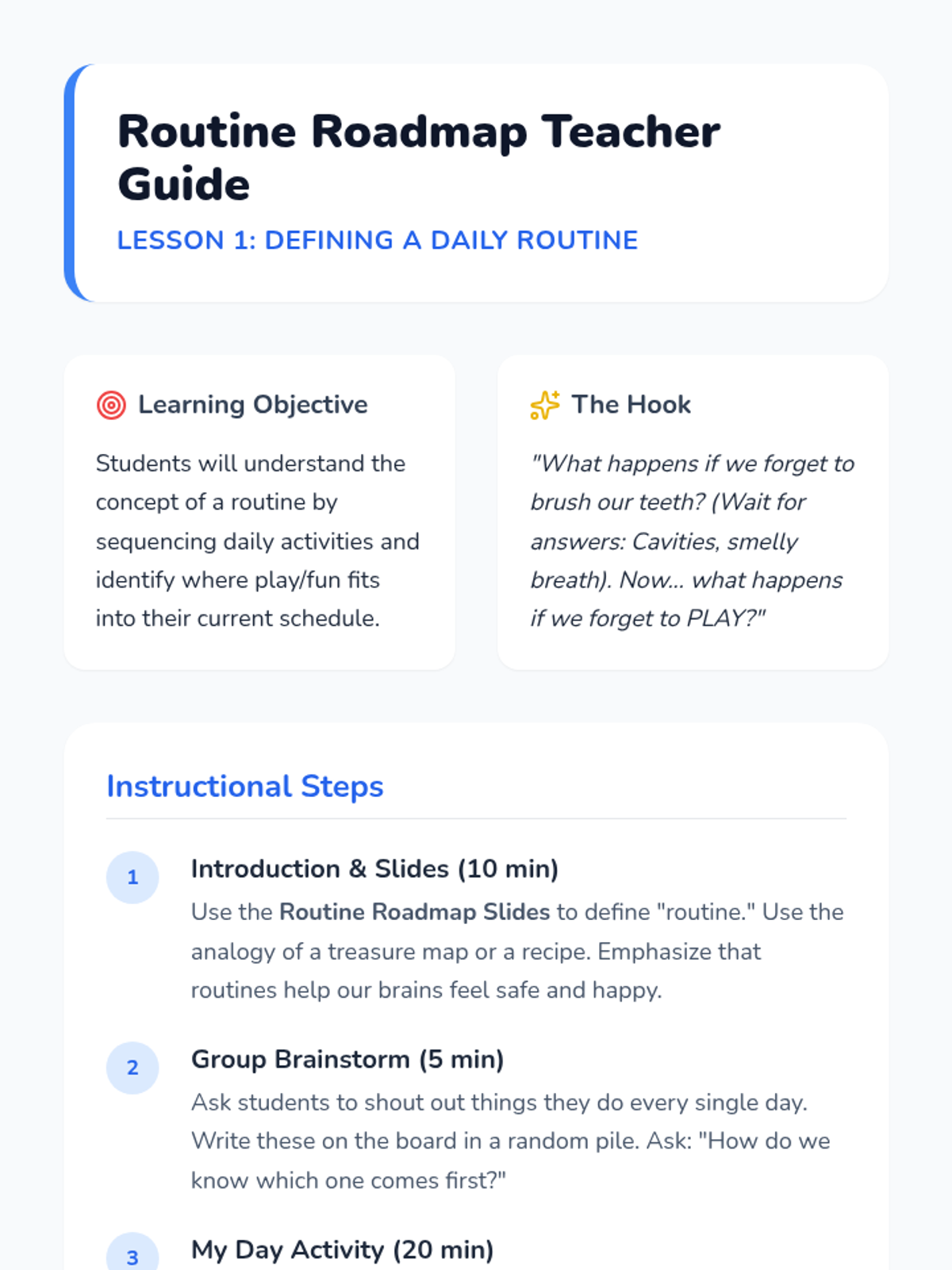
Students explore the concept of a daily routine, sequence typical daily events, and identify where play and fun currently fit into their schedule.
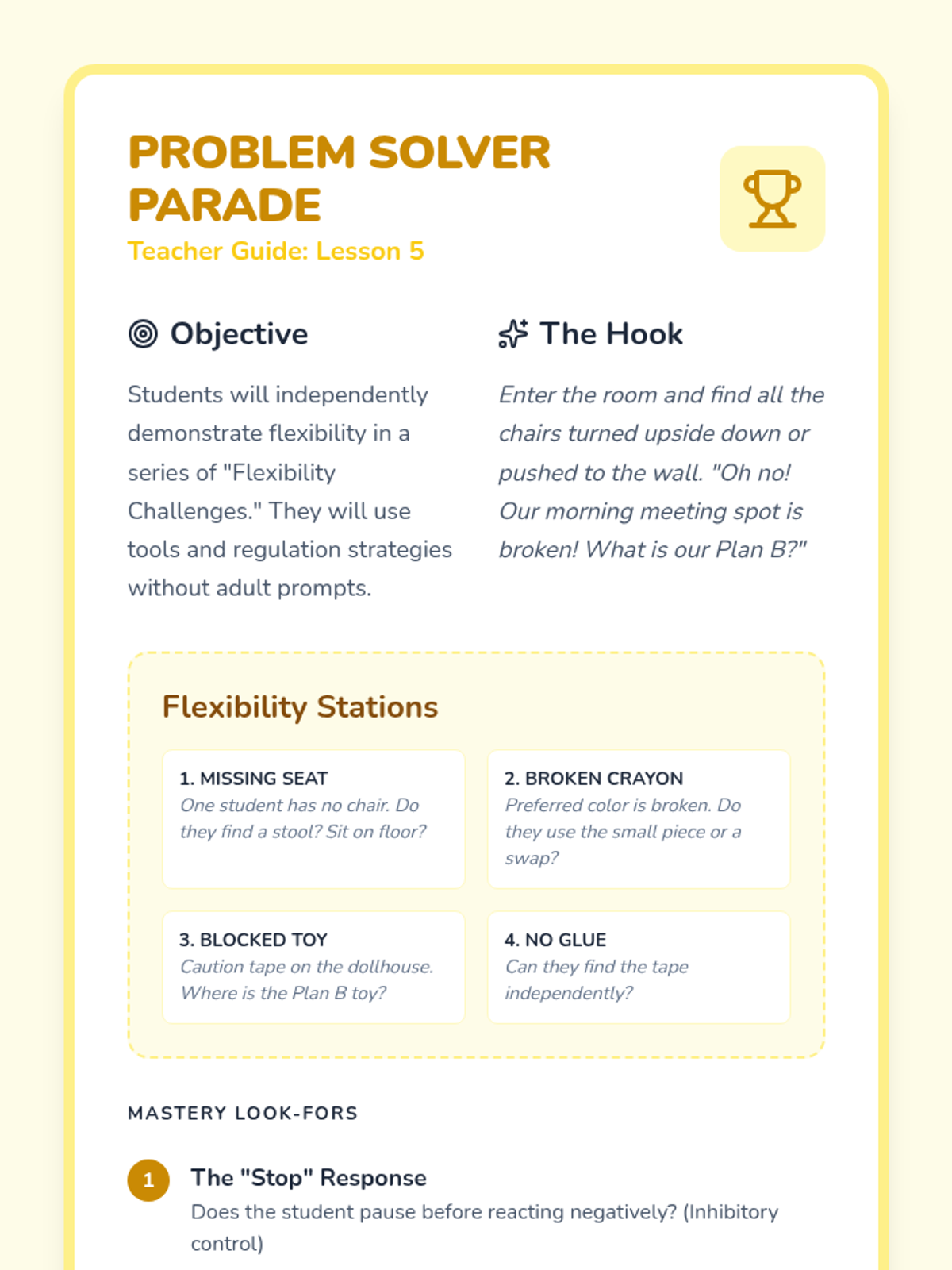
A cumulative challenge where students independently apply flexibility strategies to solve novel classroom problems.
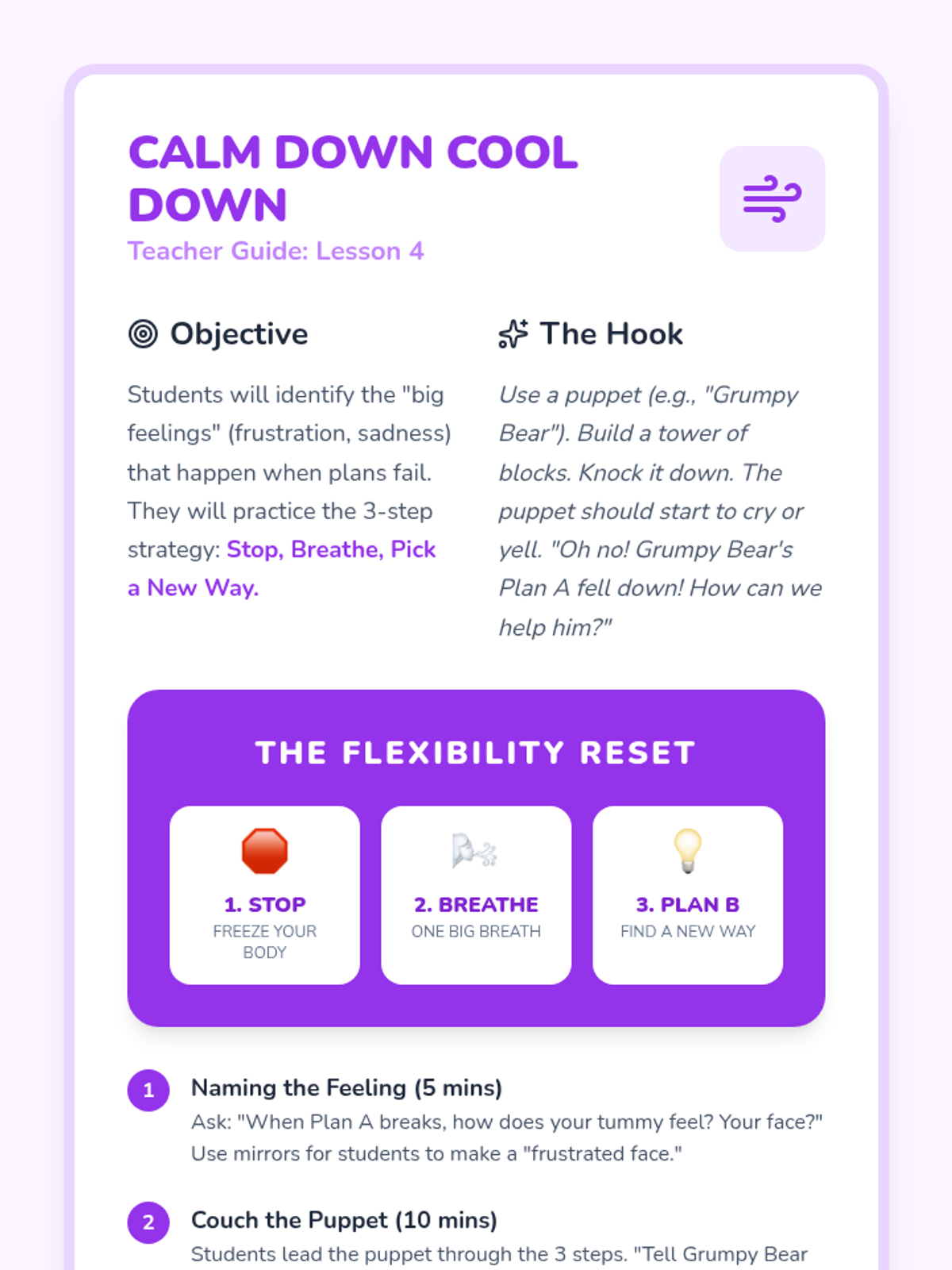
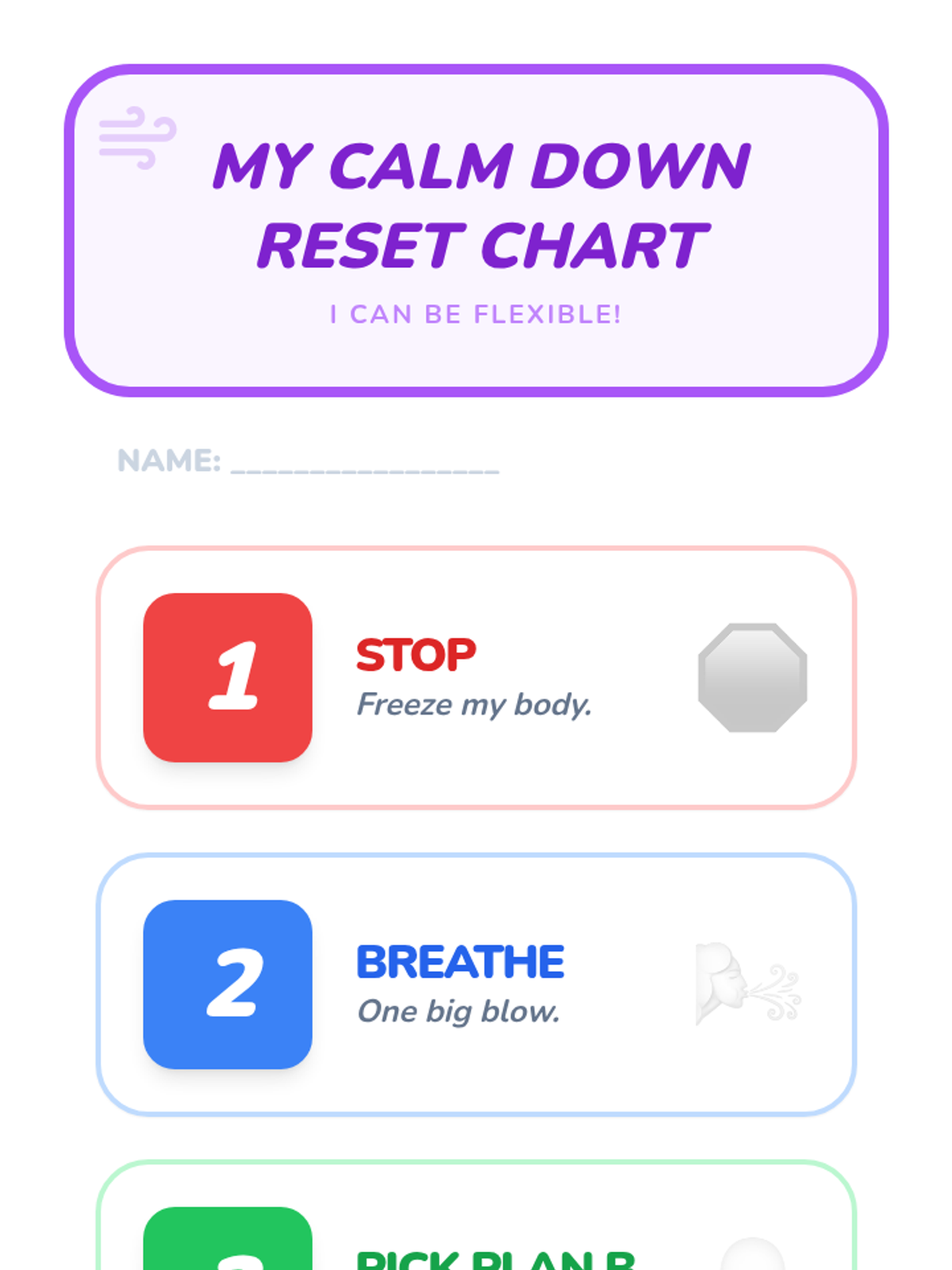
Focuses on emotional regulation strategies like 'Stop, Breathe, Pick a New Way' to handle the frustration of change.
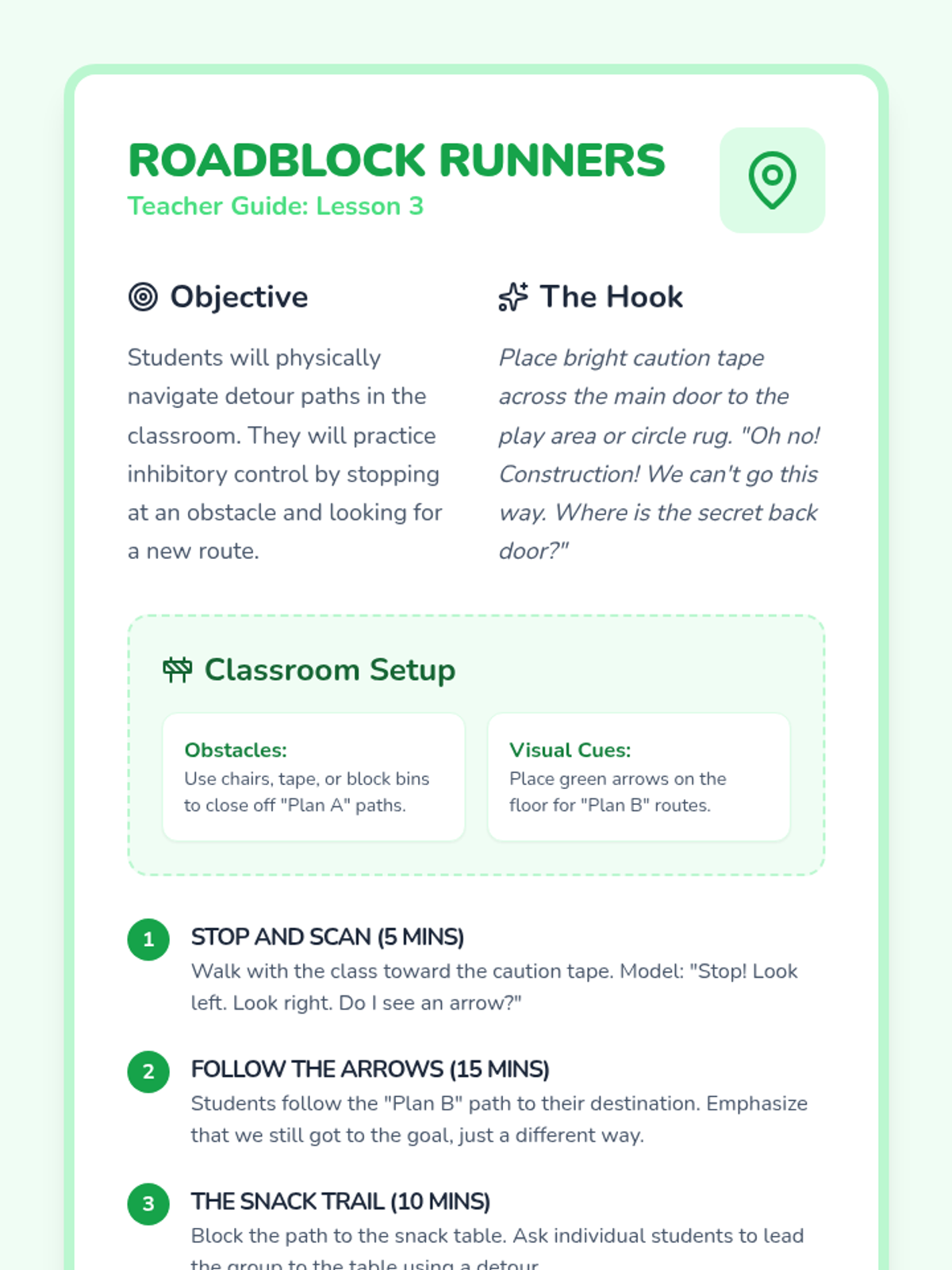
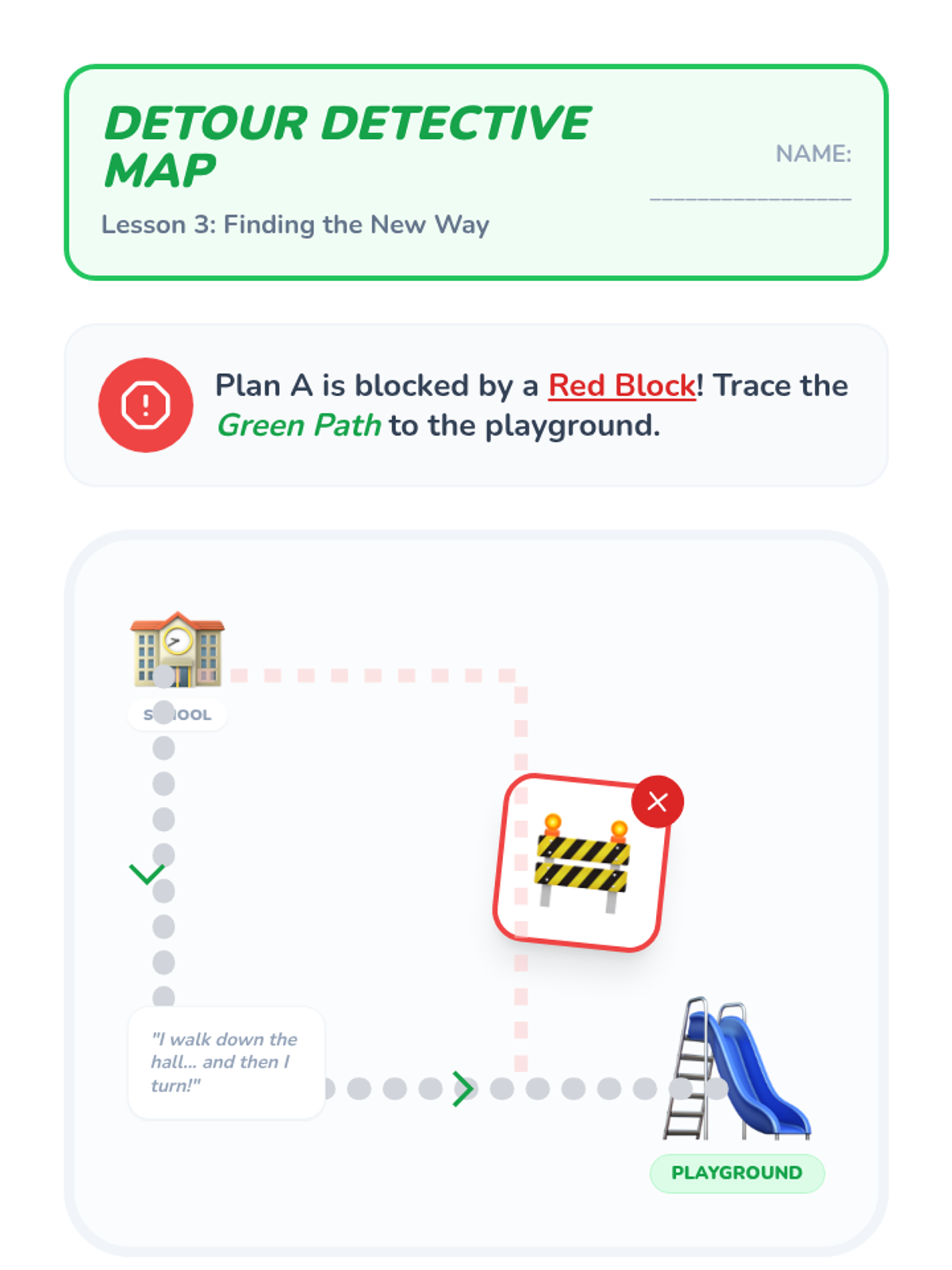
Students navigate physical obstacles and classroom detours to build spatial reasoning and inhibition control.
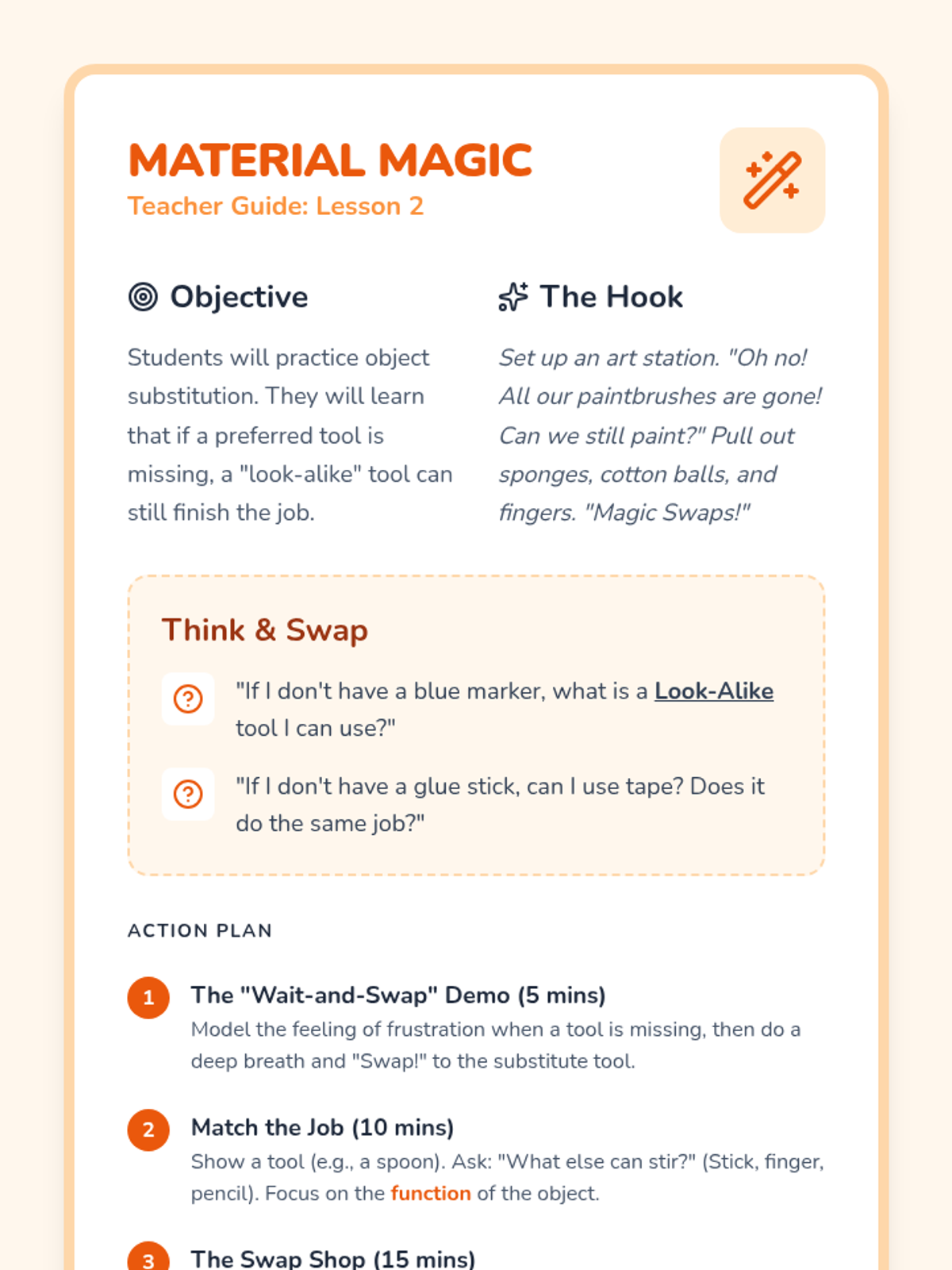
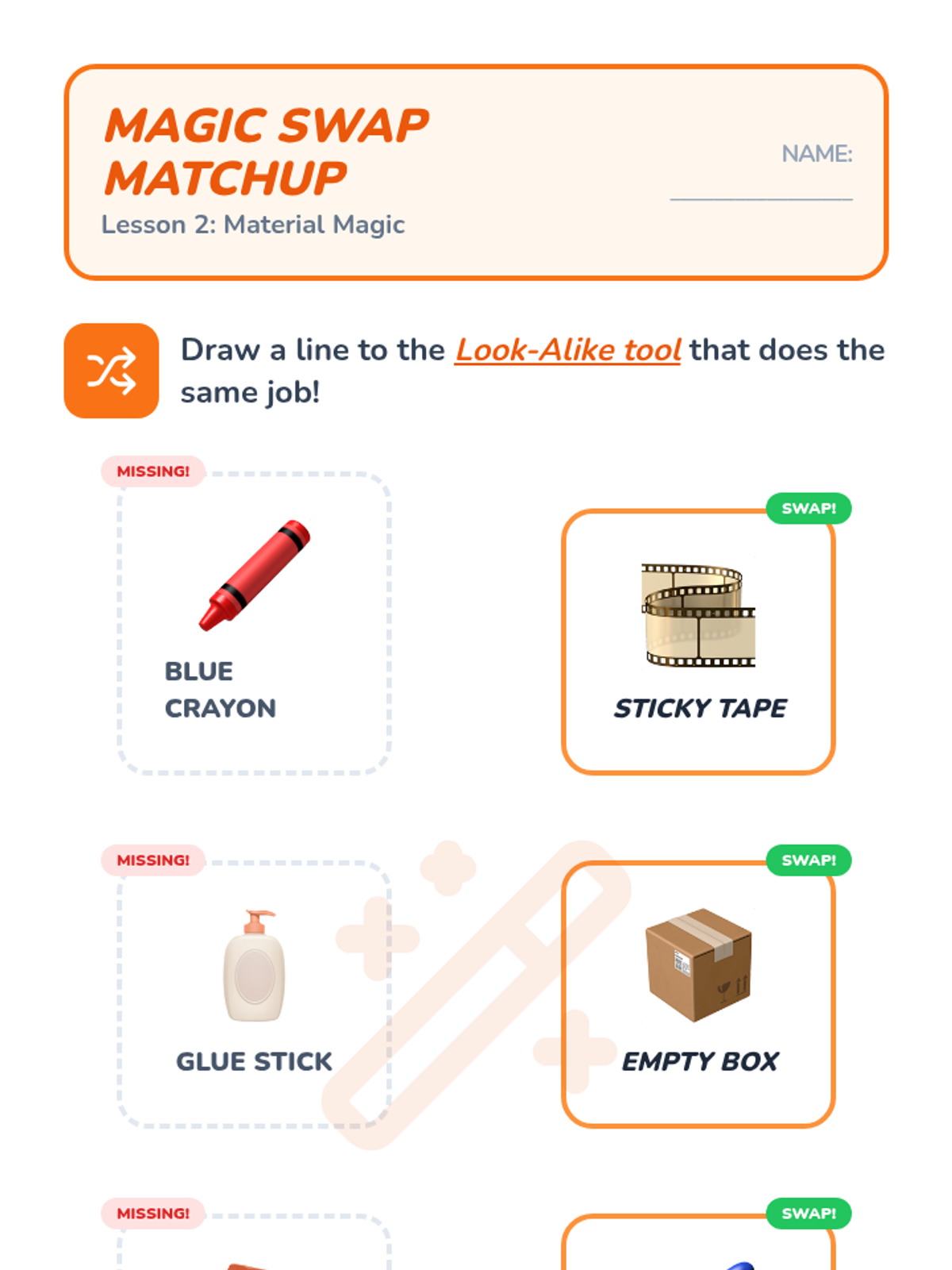
Students practice using alternative materials when their first choice is unavailable, learning that different tools can reach the same goal.
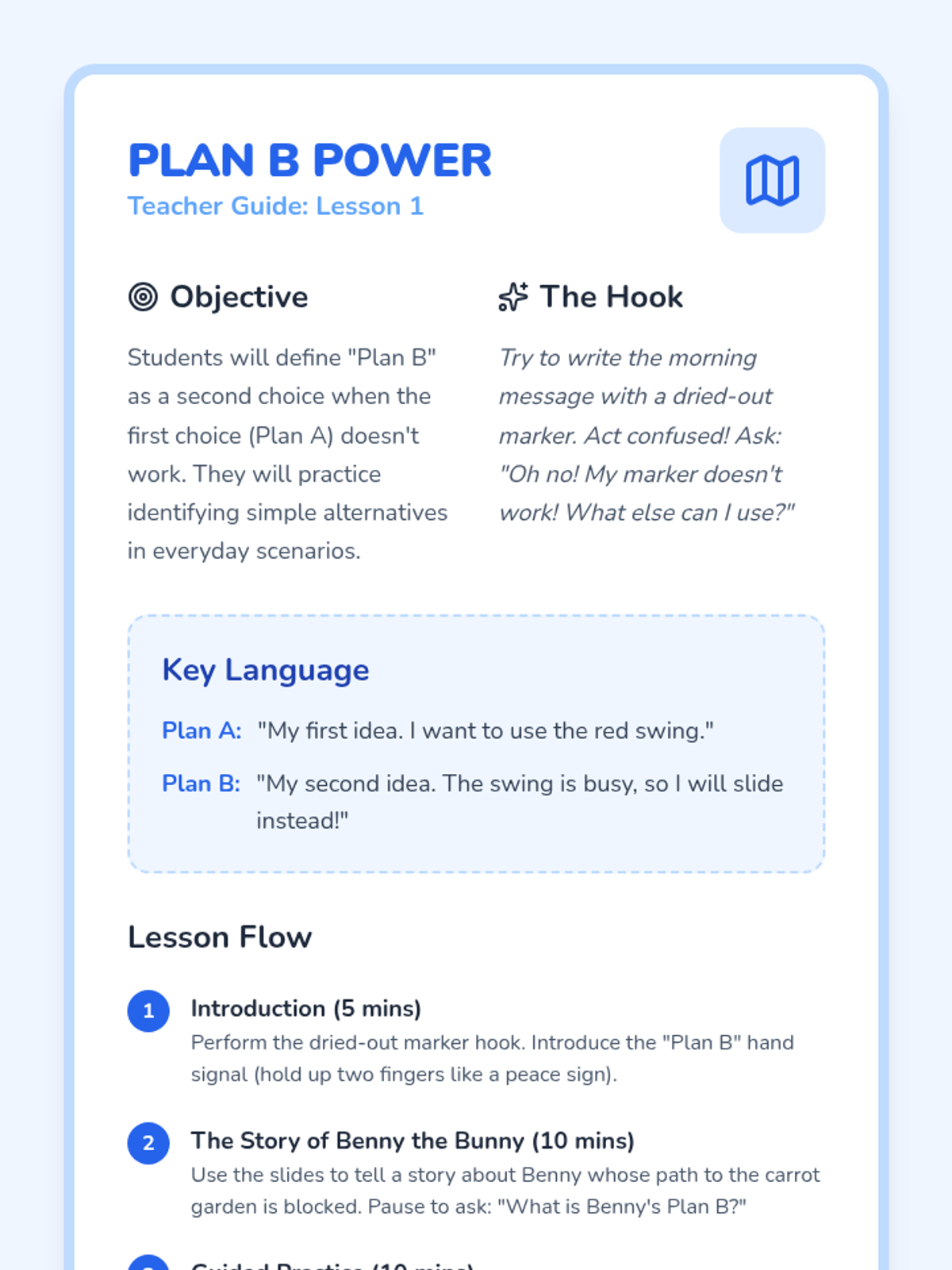
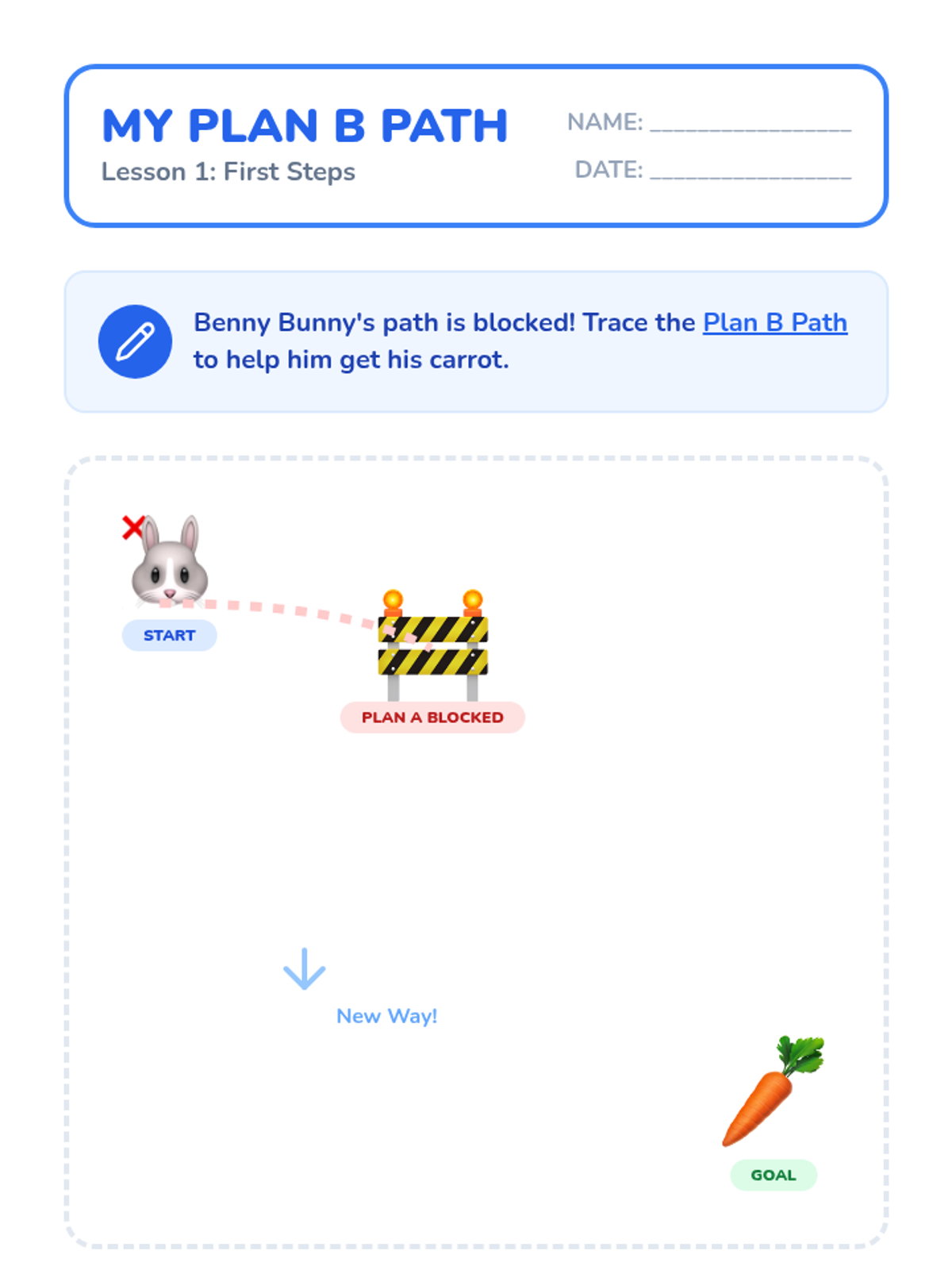
Students learn the concept of 'Plan B' through a story about blocked paths and practice brainstorming simple alternatives.
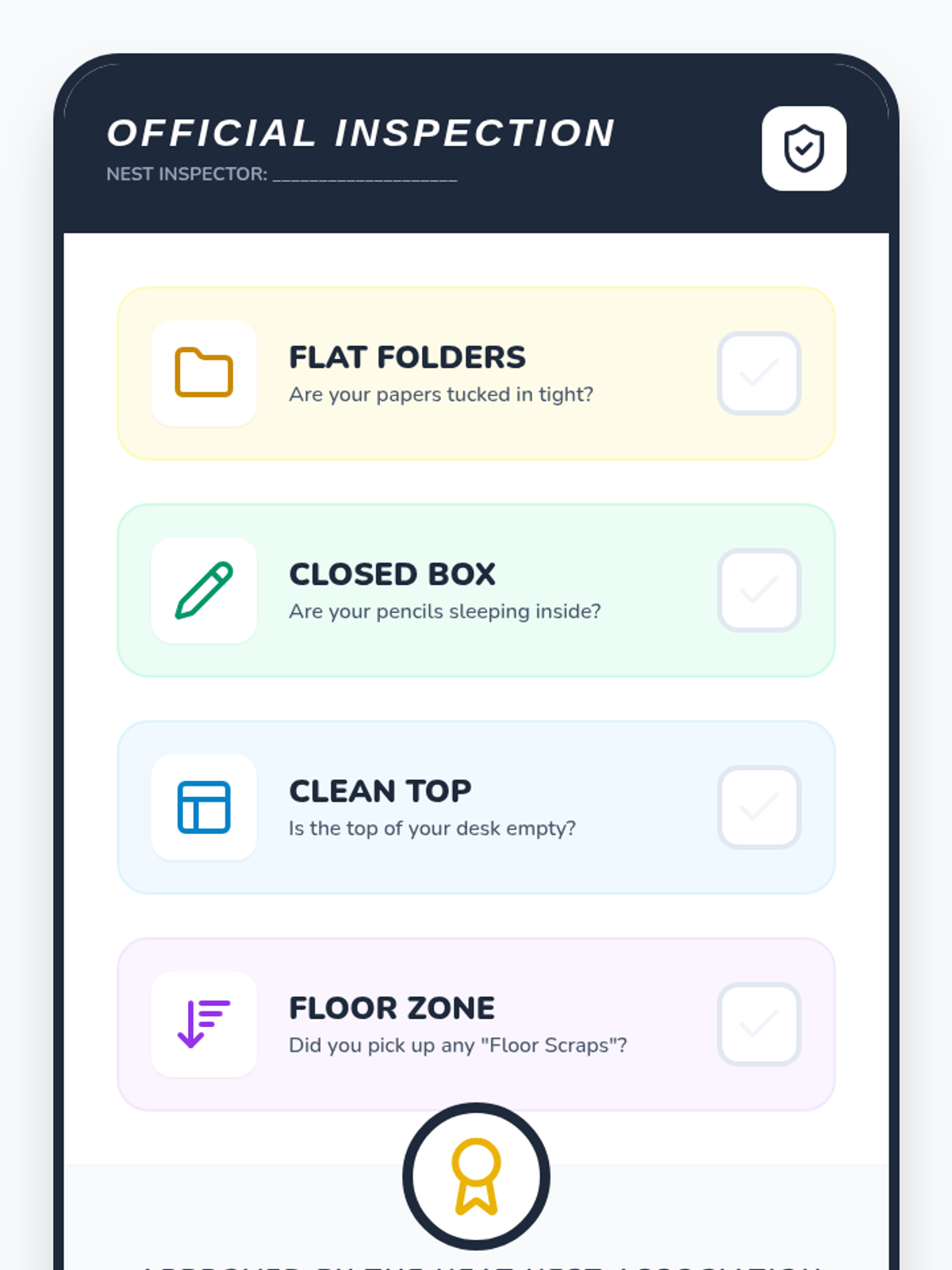
A cumulative review where students assess their own organization using a visual checklist. The lesson concludes with a celebration of their hard work.
Introduces a quick daily routine for tidying personal spaces. Students practice efficiency and speed through a gamified challenge.
Focuses on the fine motor skills needed to put papers into folders and store them flat. Students learn to care for their work by preventing wrinkles and tears.
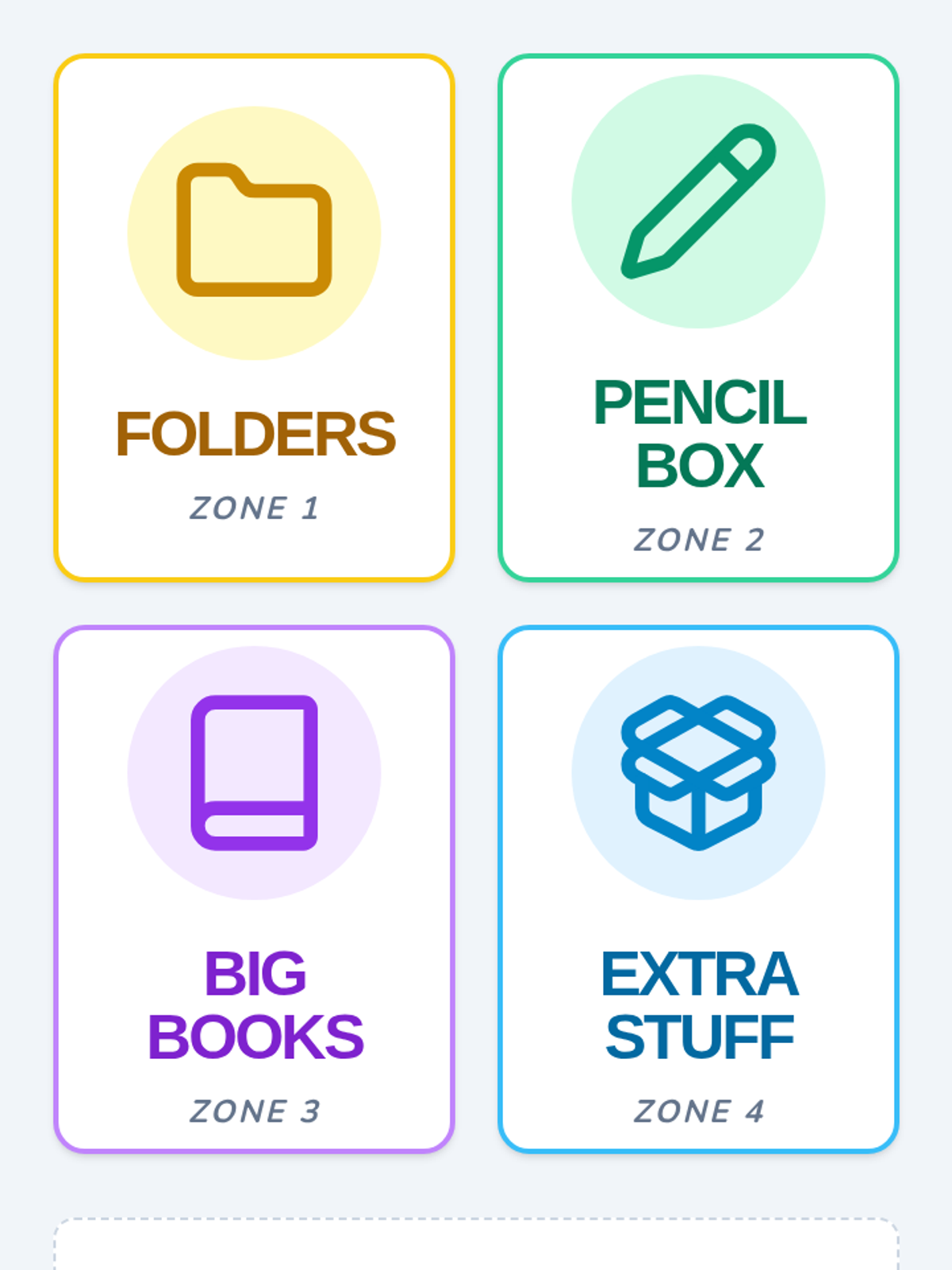
Students learn to sort their materials into specific categories within their bins. The lesson uses the 'Clutter Monster' concept to illustrate the importance of categorization.
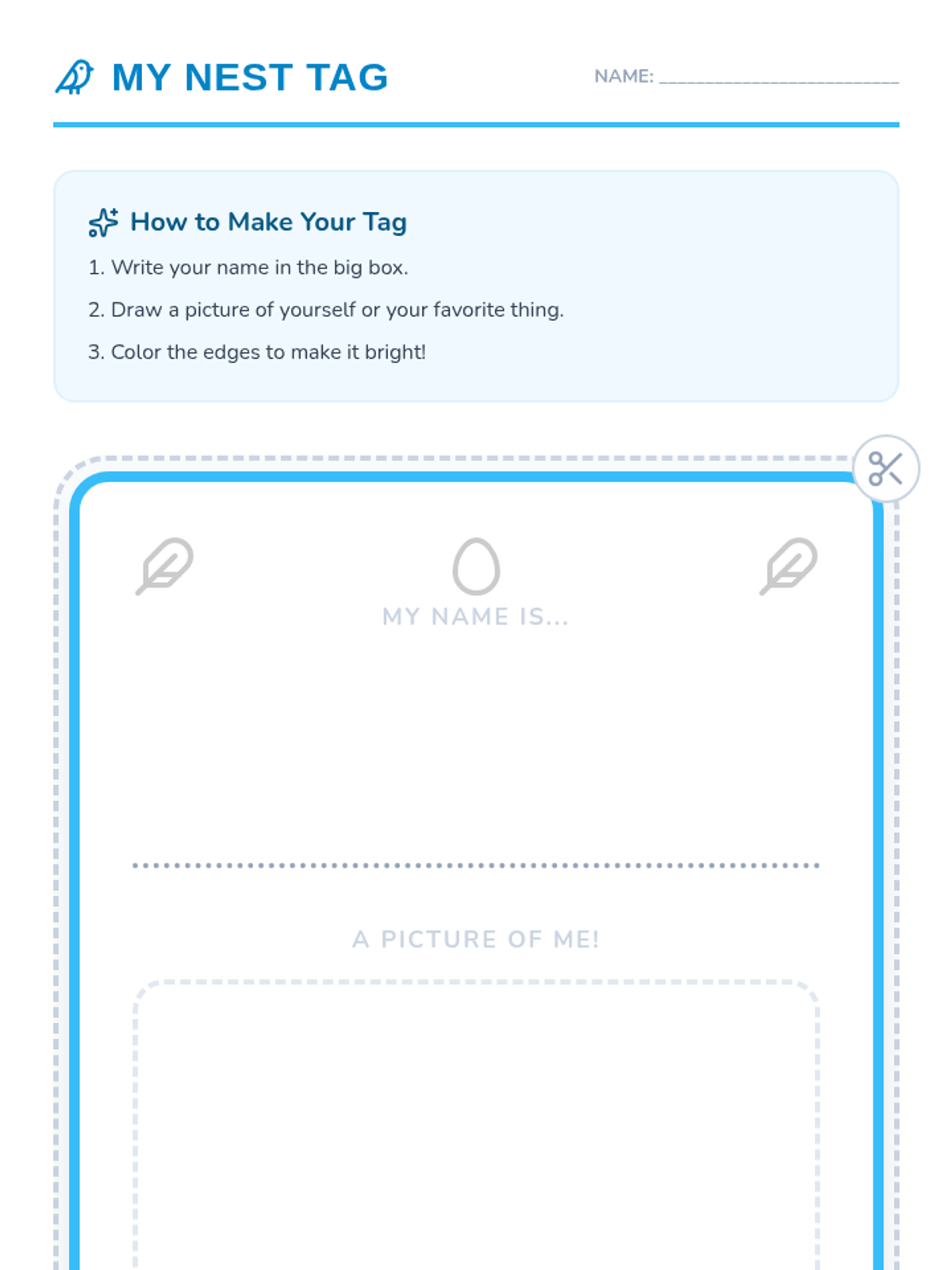
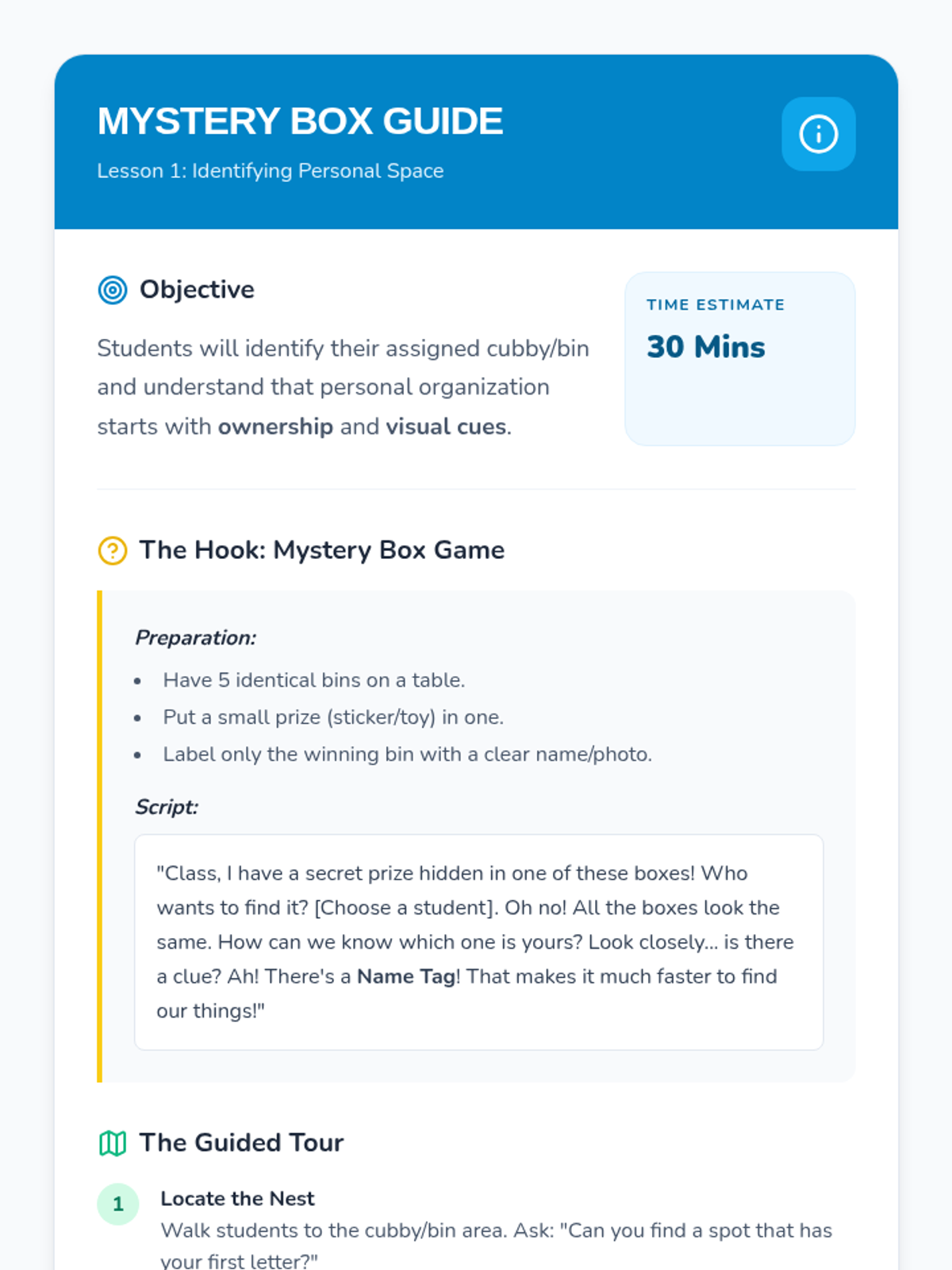
Students identify their assigned cubbies or bins and establish ownership by creating personalized labels. This lesson focuses on the visual recognition of their personal space.
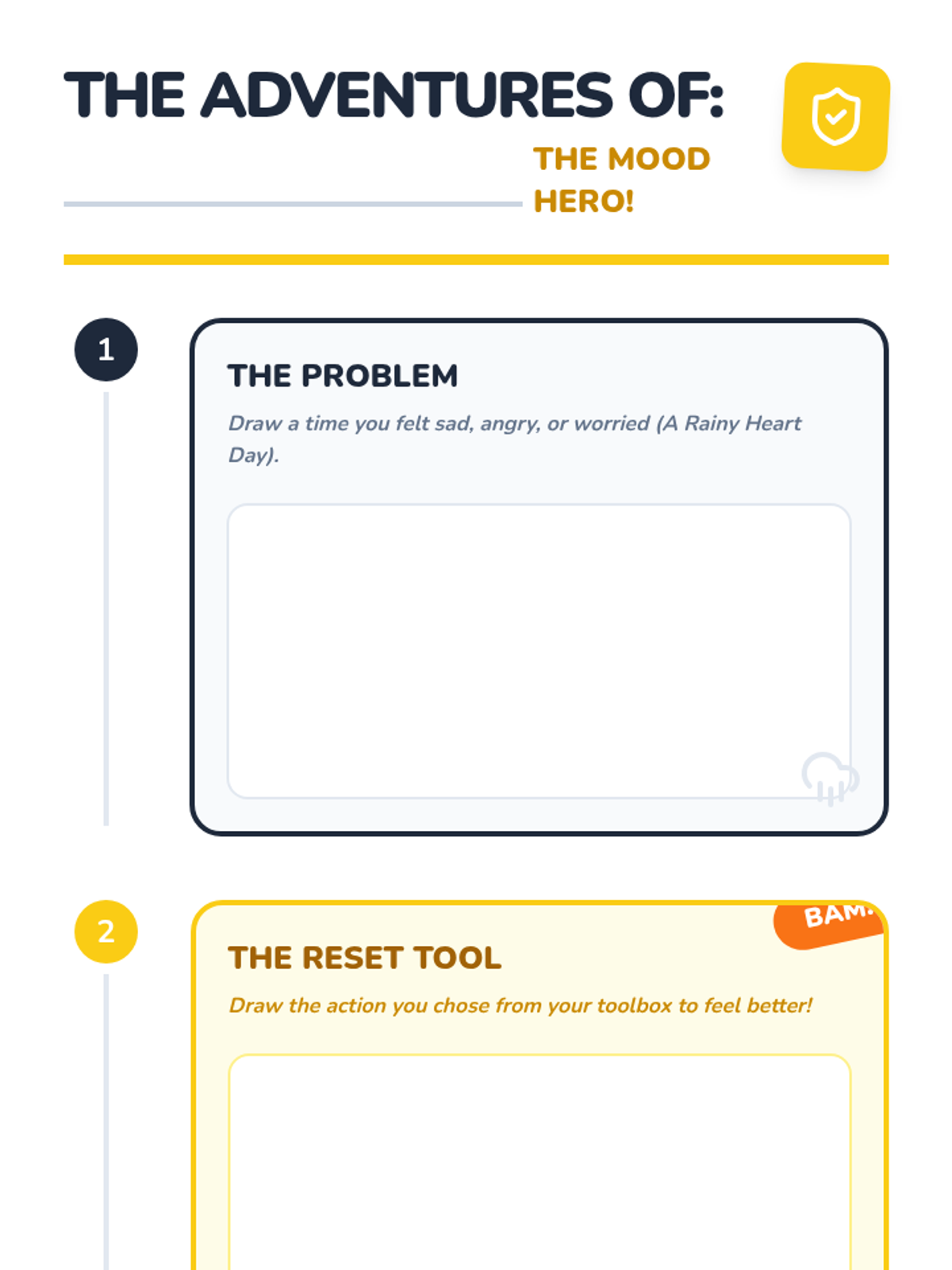
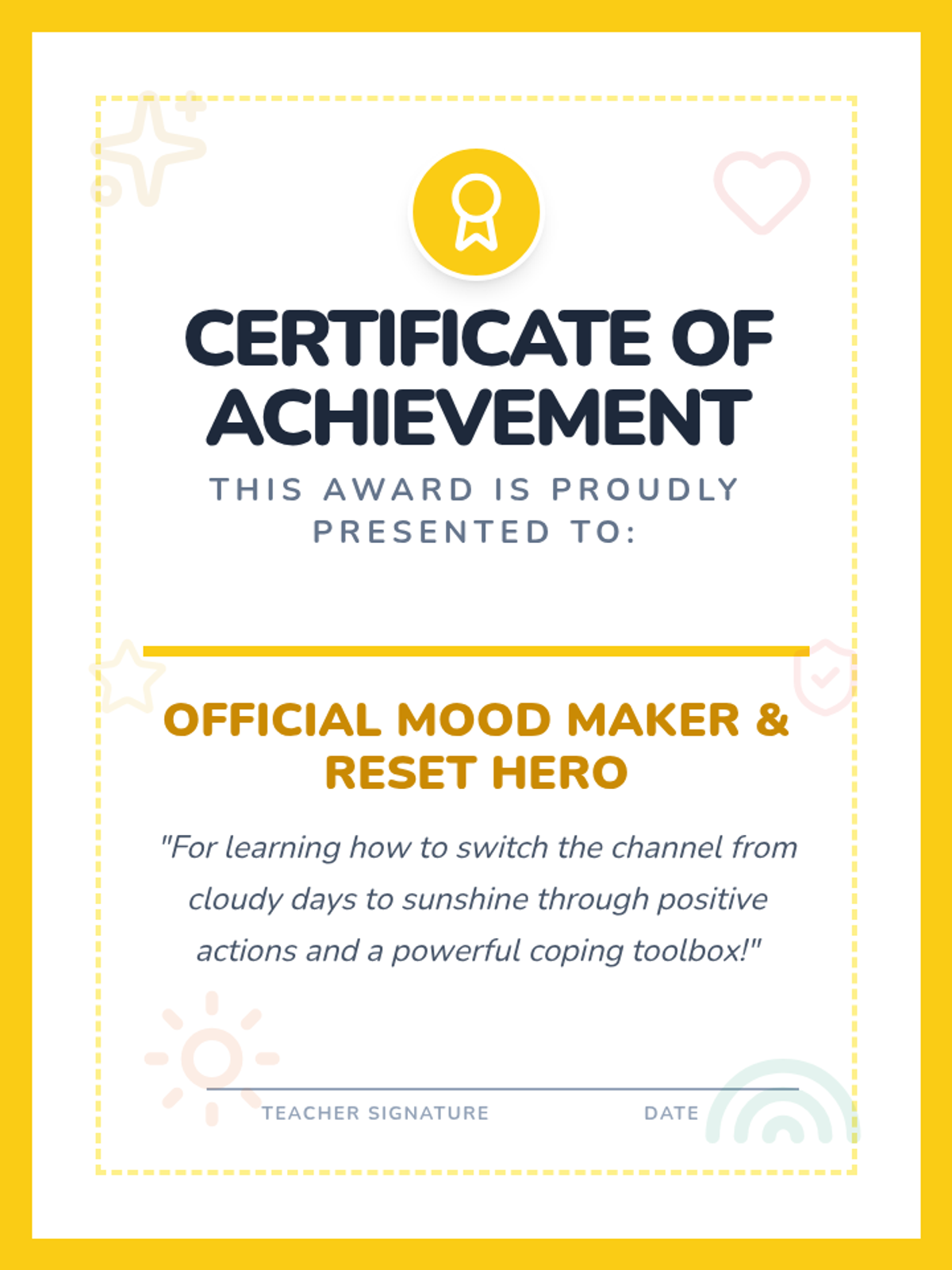
Students reflect on their learning by creating a visual narrative of emotional change. They celebrate their new skills as 'Mood Heroes' who can help themselves feel better.
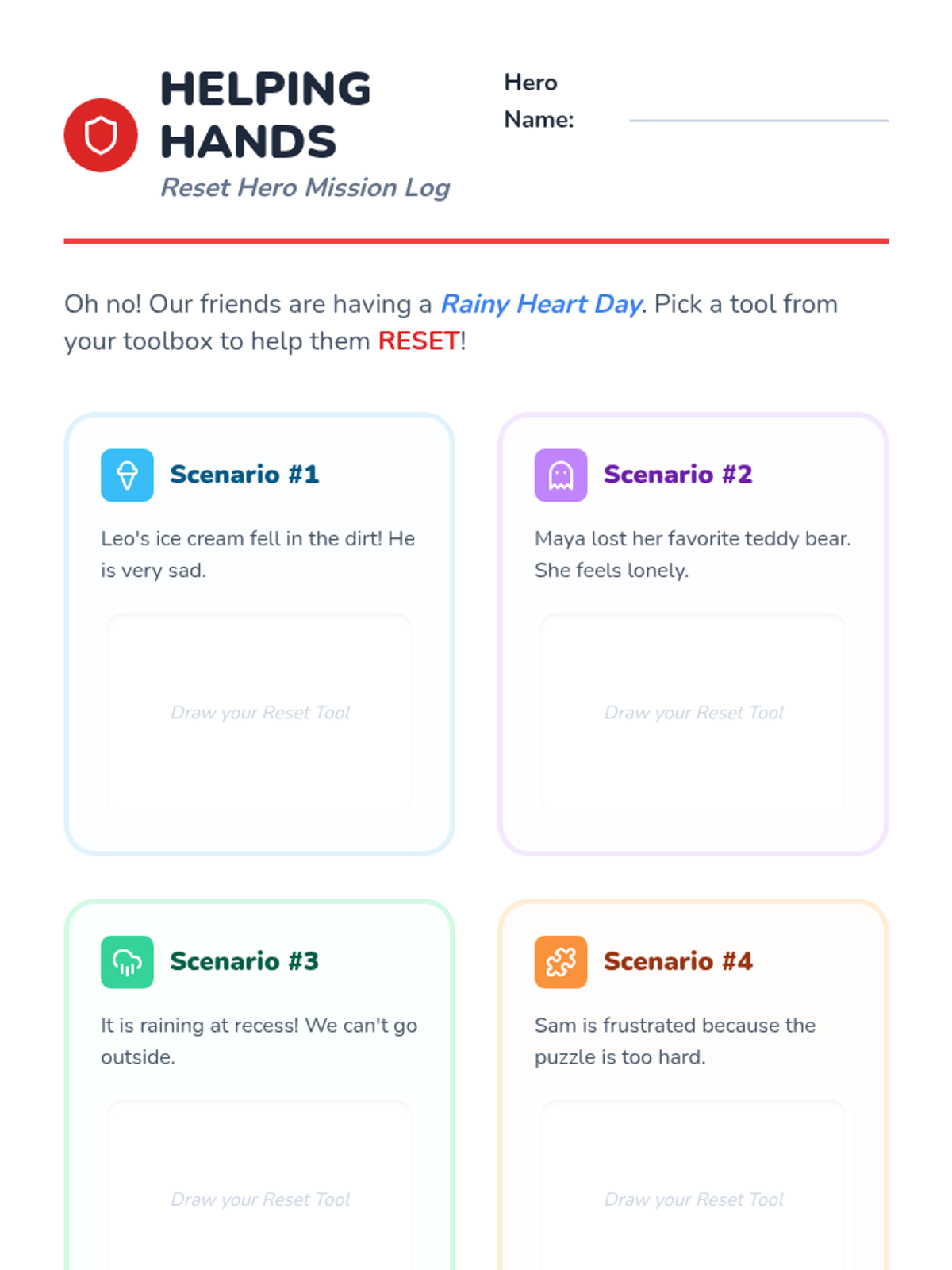
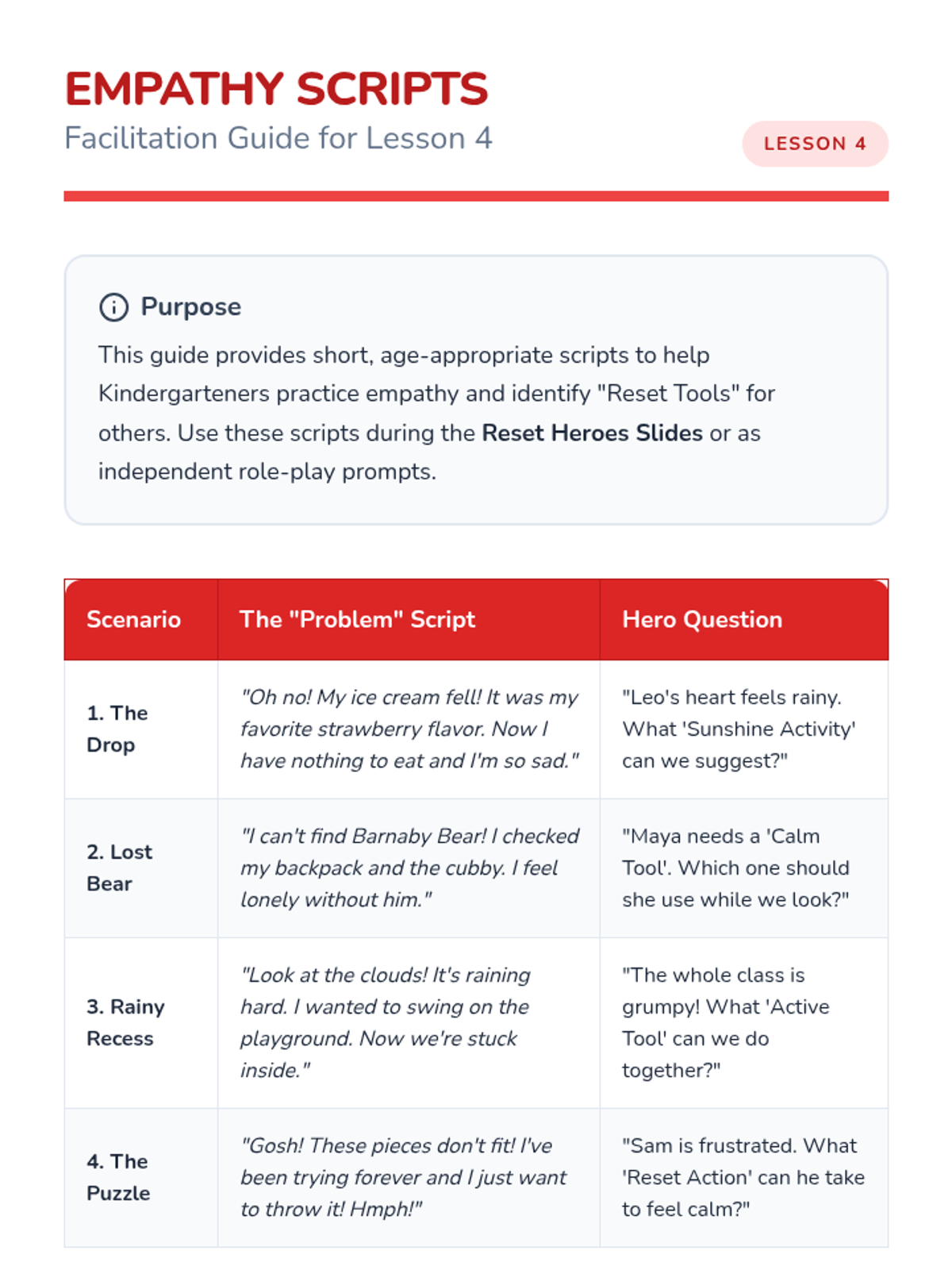
Using role-play and scenarios, students practice empathy and behavioral activation by helping characters navigate disappointments through positive activity choices.
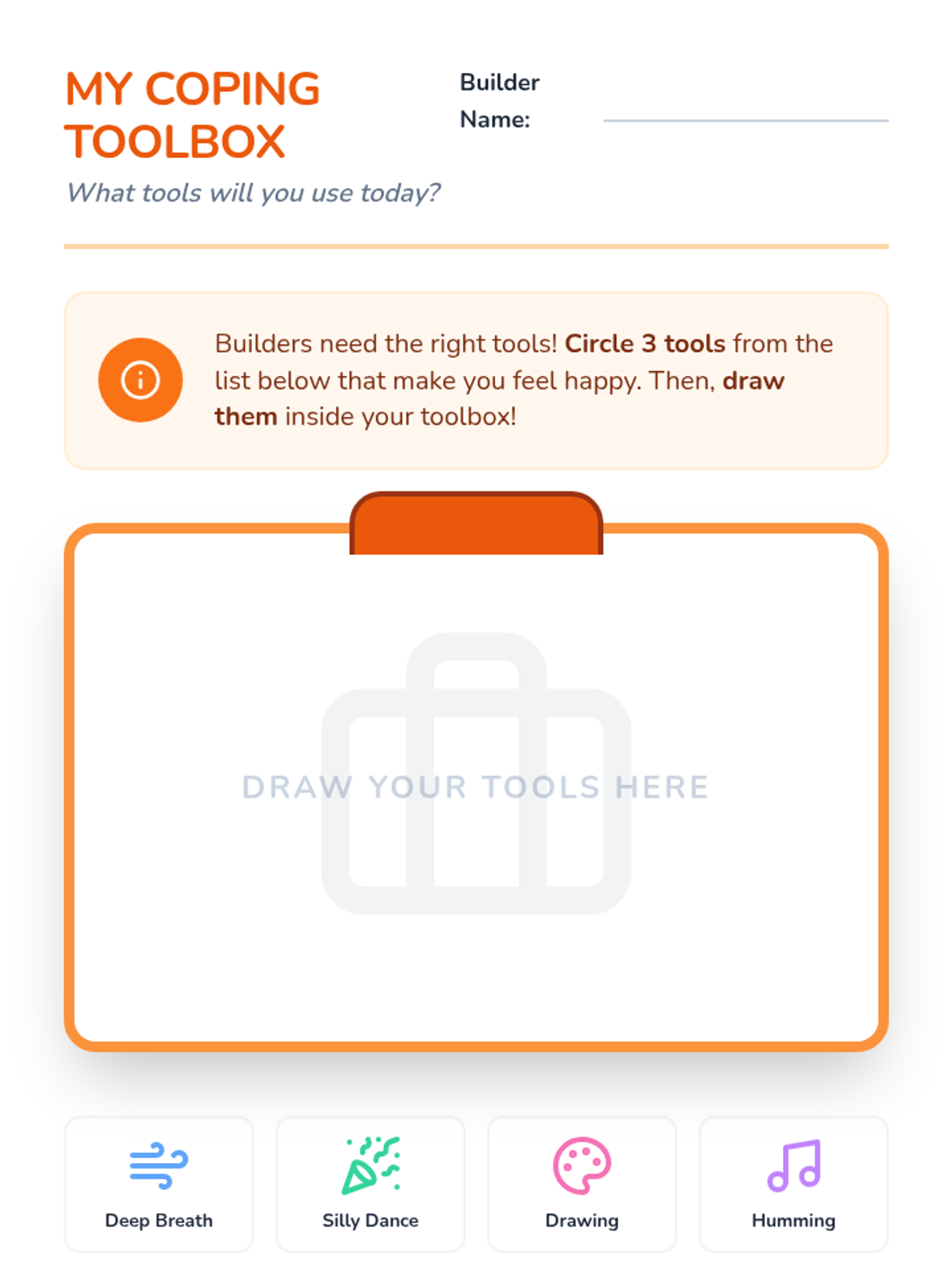
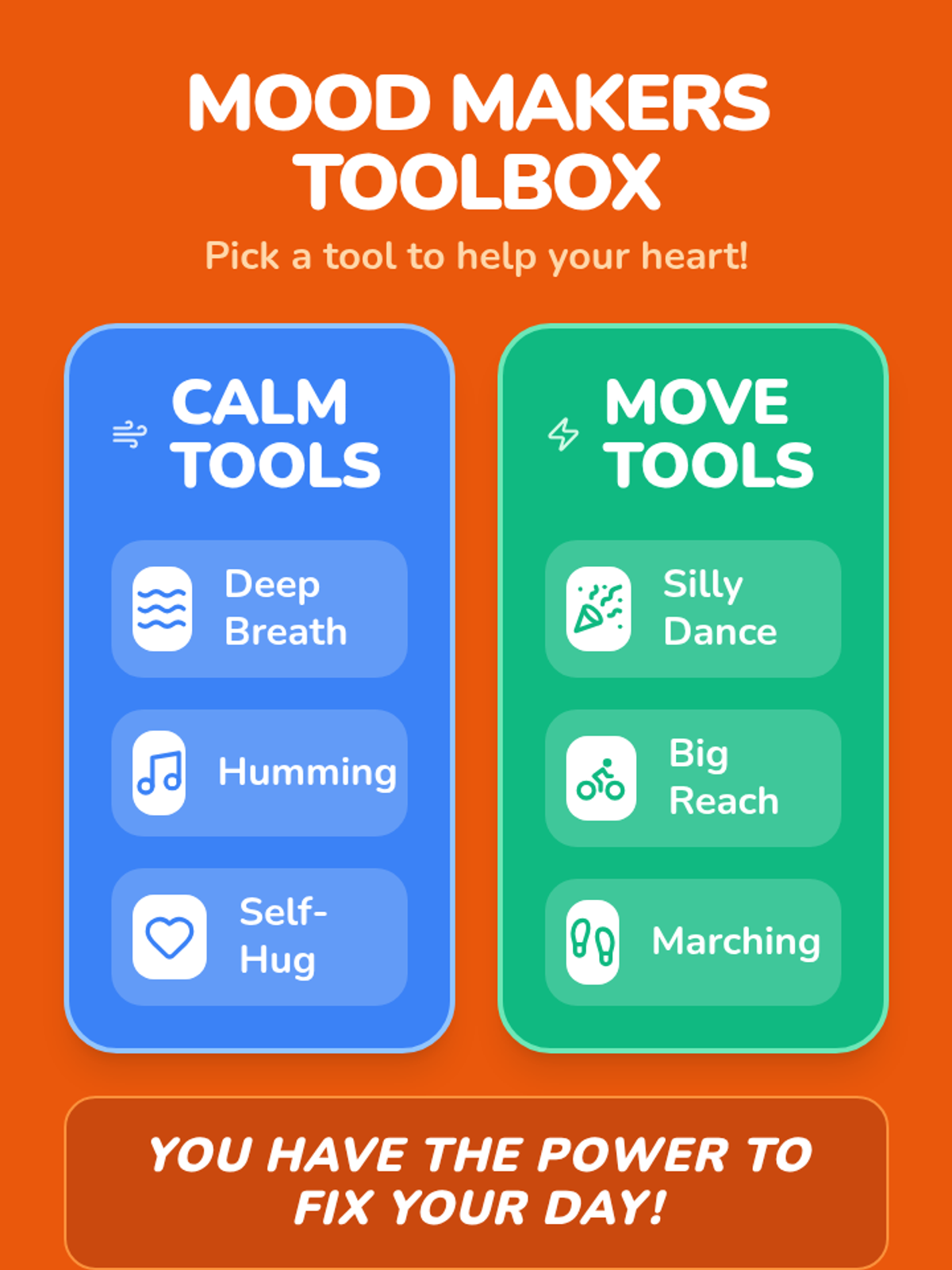
Students identify and select specific actions to include in a personal 'coping toolkit.' They practice retrieving these 'tools' to handle common stressors or worries.
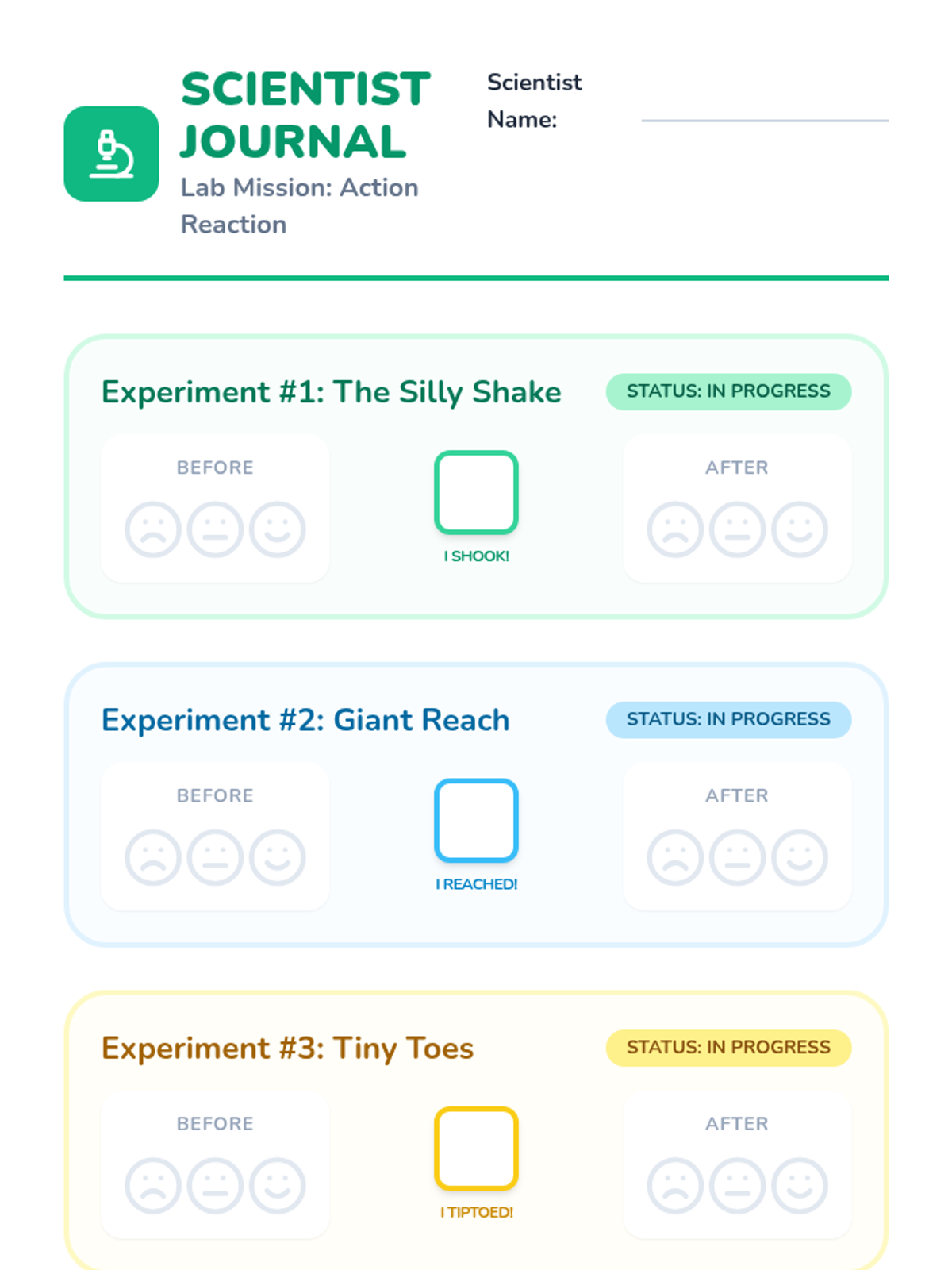
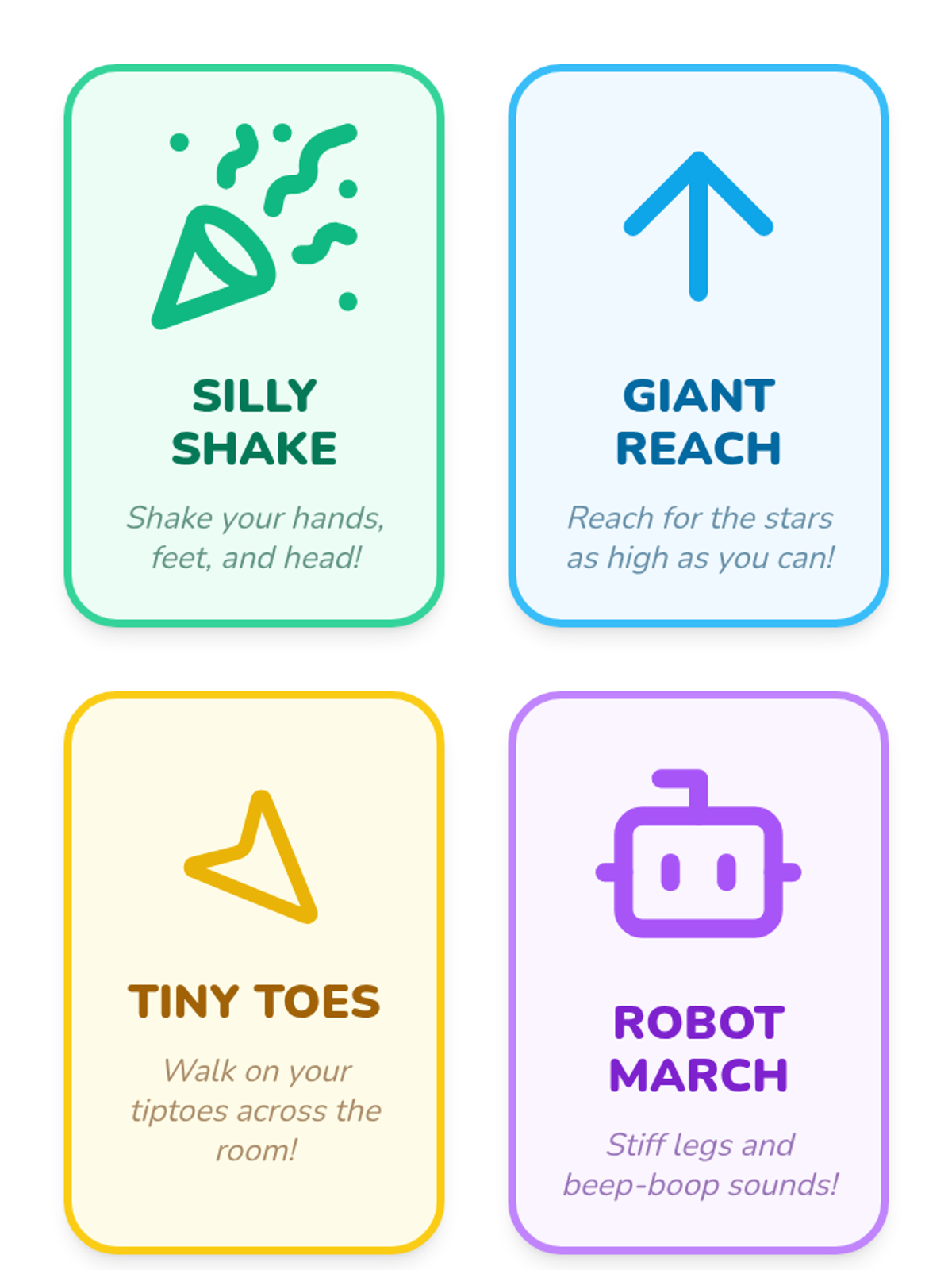
Students act as scientists to test how physical movement and silly actions change their internal energy and mood. They observe the immediate cause-and-effect relationship between action and emotion.
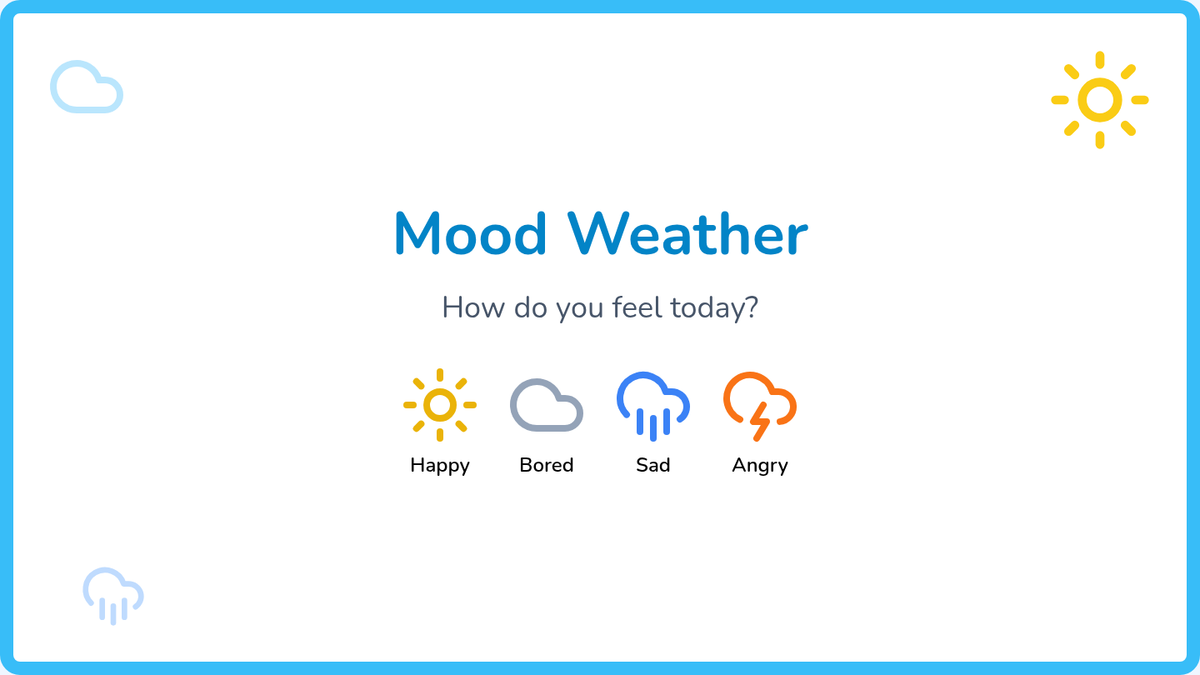
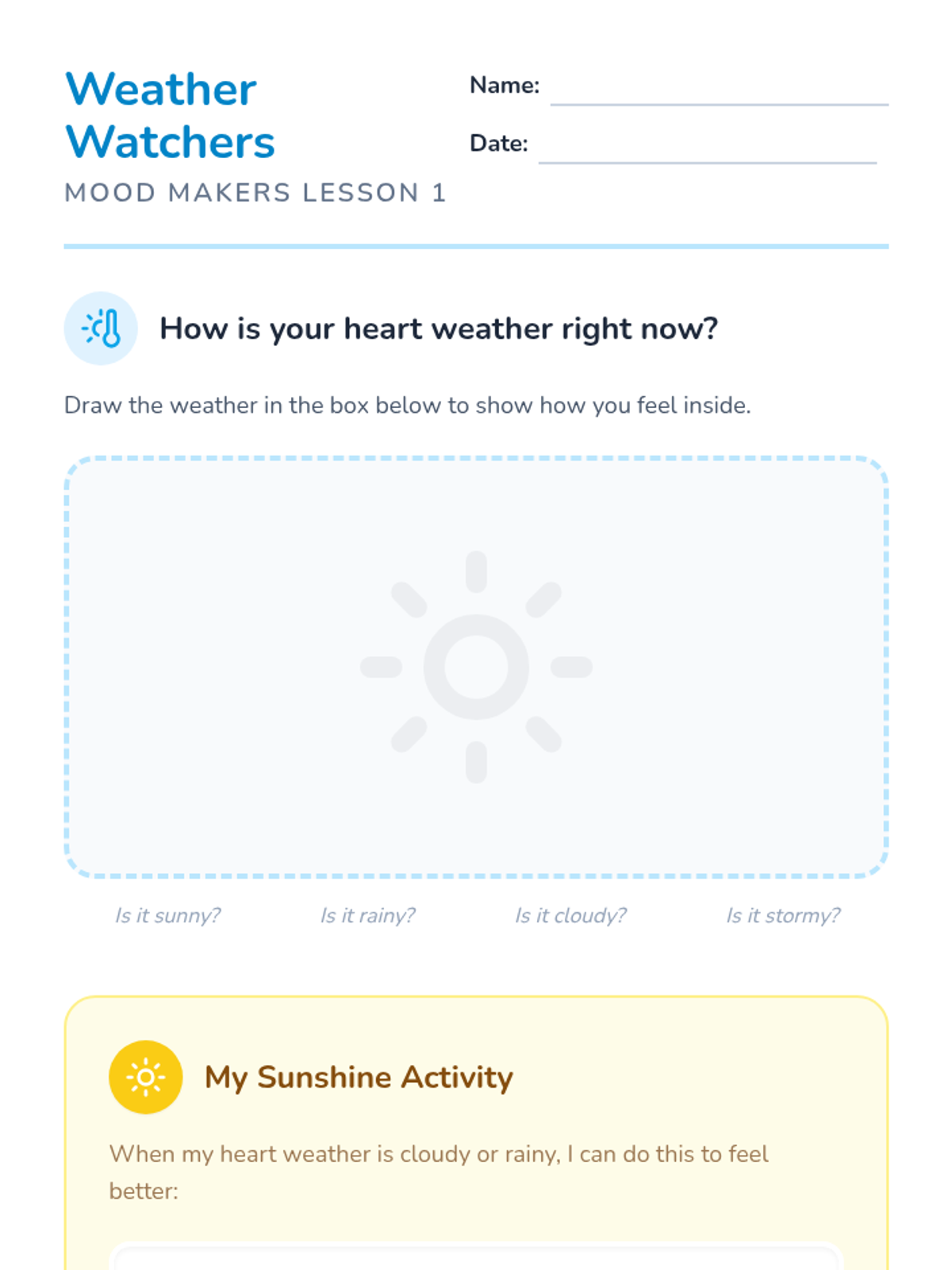
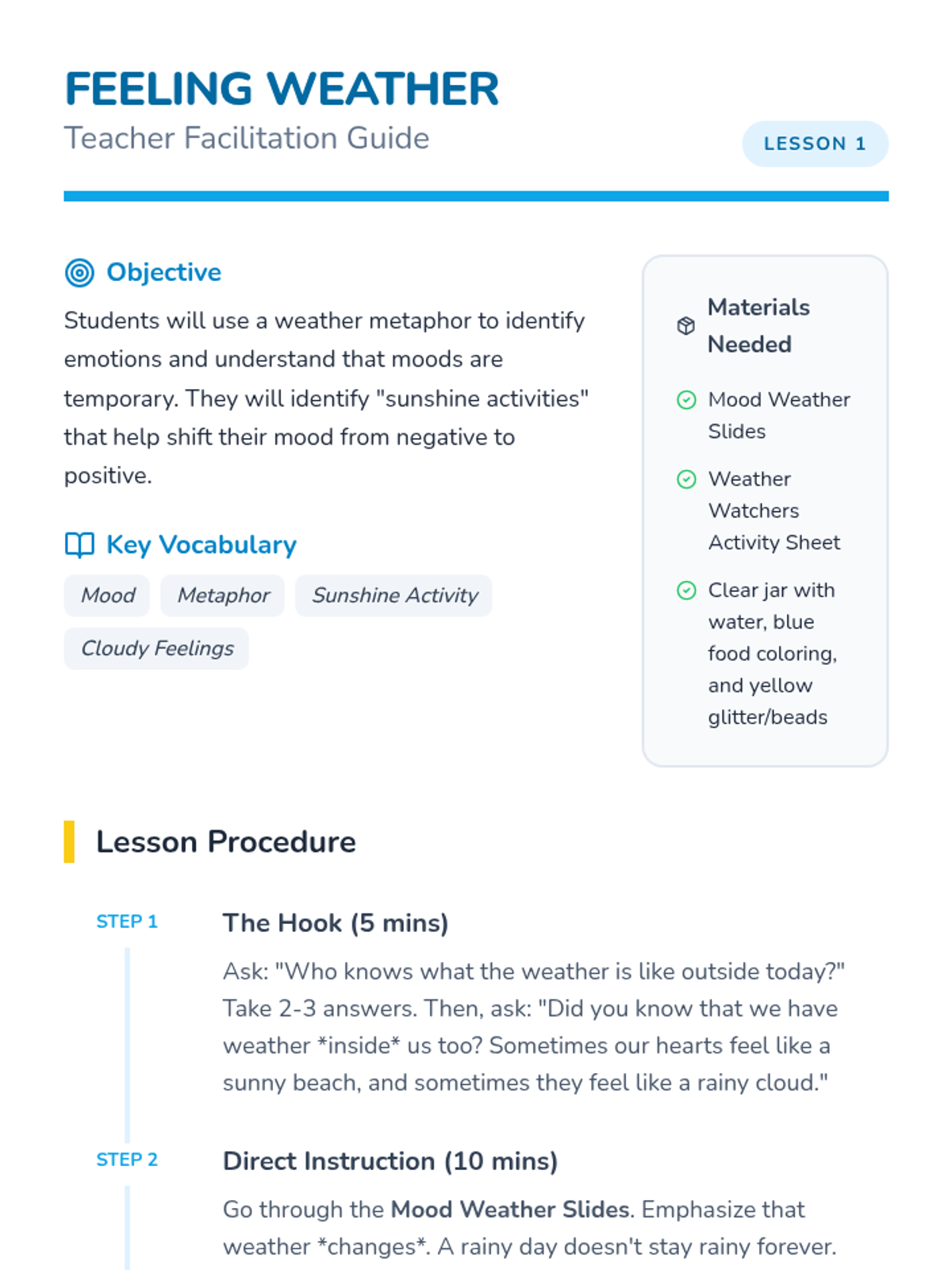
Students explore the metaphor of feelings as weather and learn that just as weather changes, so can their moods. They observe how 'sunshine' activities can help clear away 'cloudy' feelings.
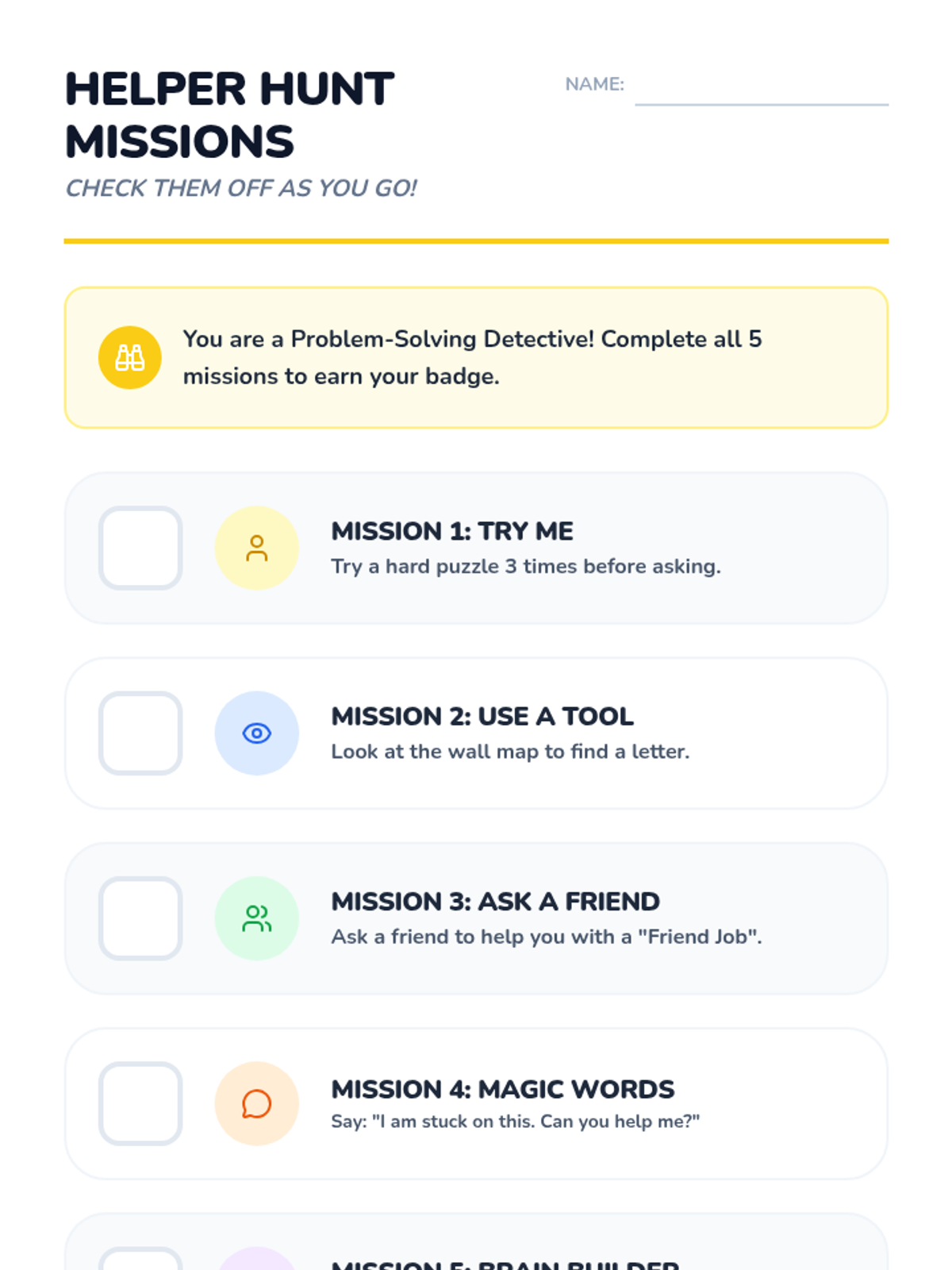
In a structured activity, students are given tasks with intentional barriers and must navigate the classroom to find the correct peer or resource to help them solve it, synthesizing the sequence's skills.
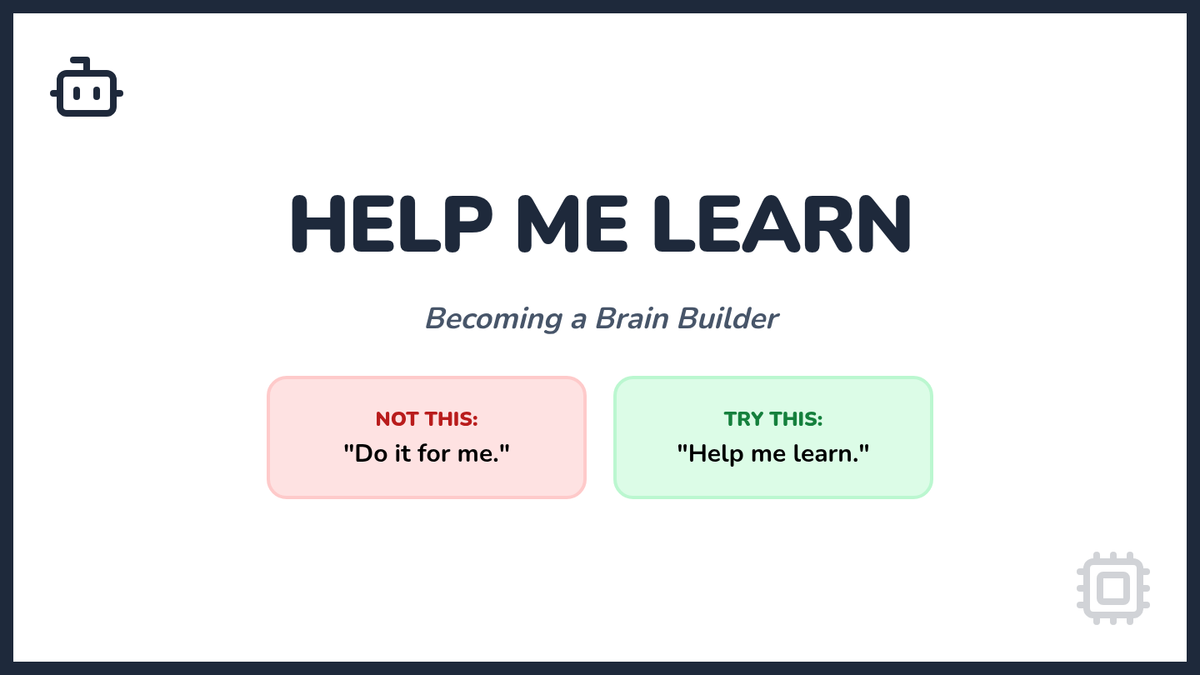
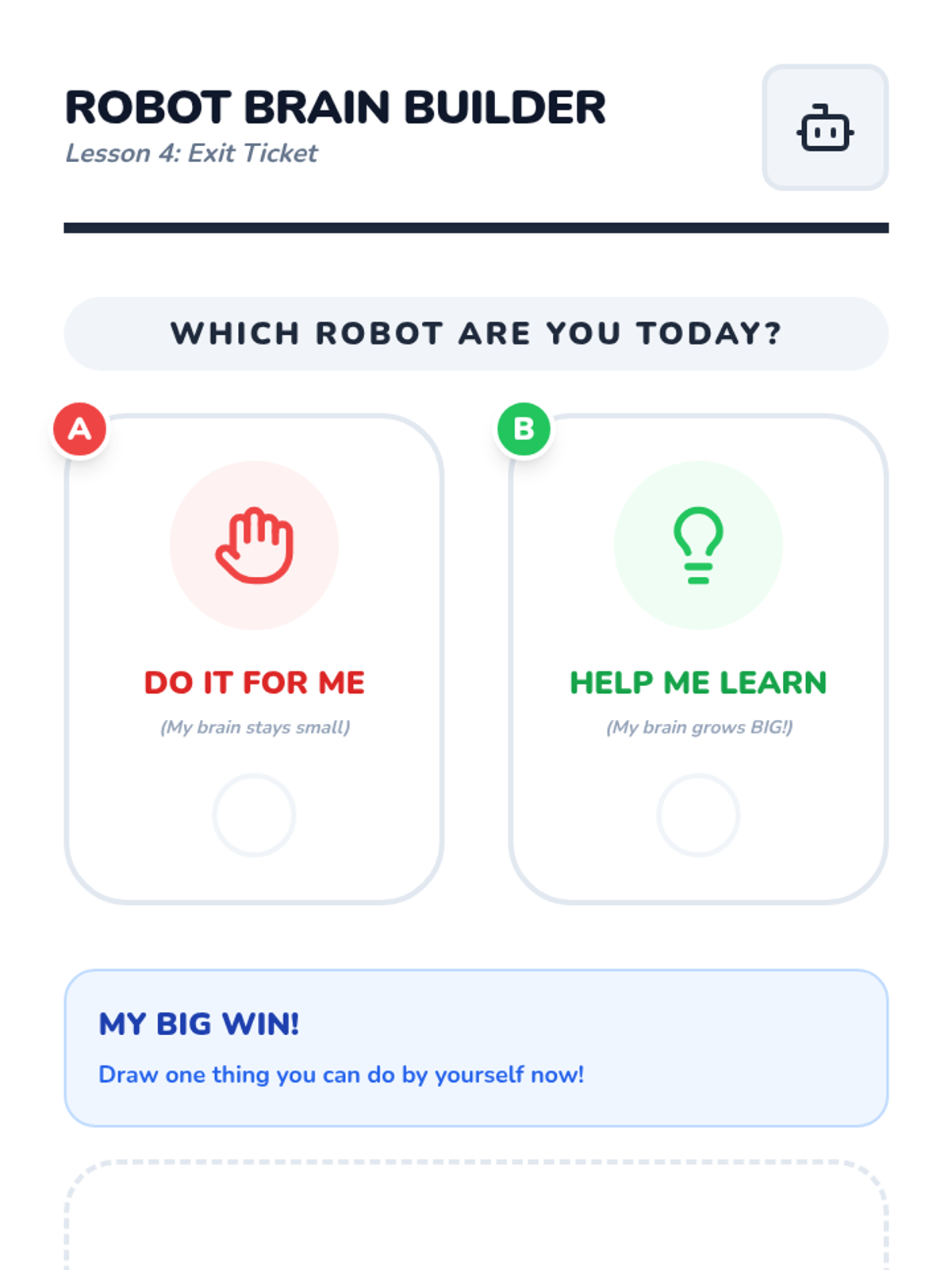
Students learn to distinguish between 'Do it for me' and 'Help me learn.' The lesson focuses on asking for clues, steps, or watching a demonstration rather than handing over the task completely.
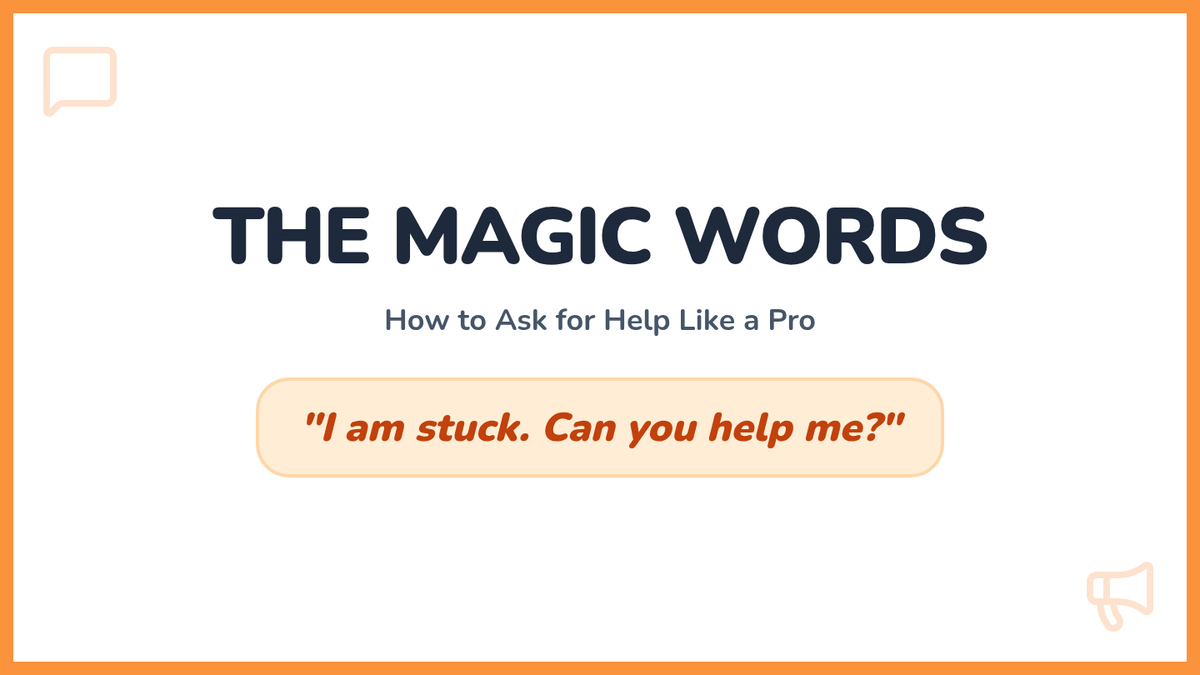
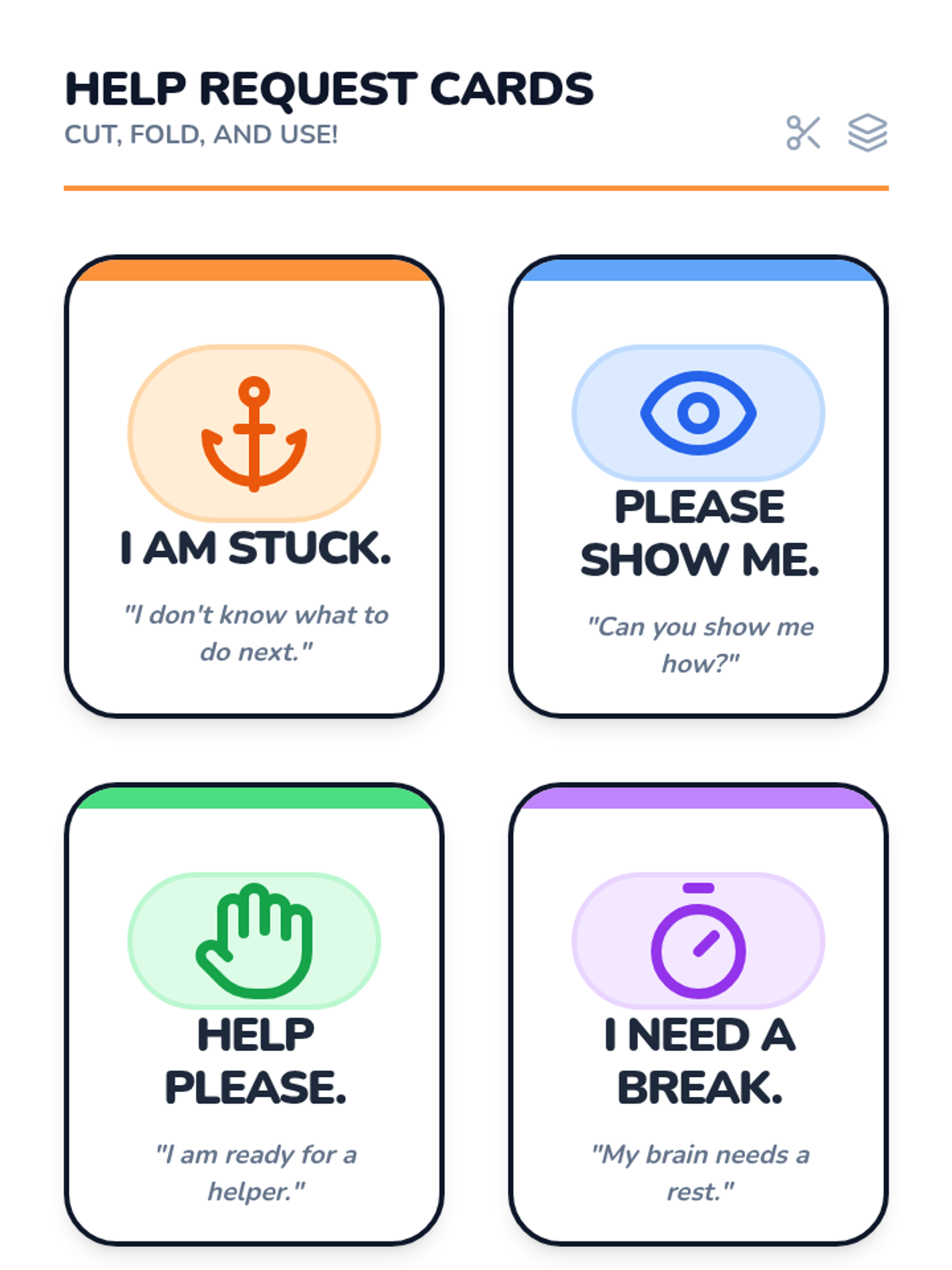
Students practice specific sentence starters or using communication cards to ask for help (e.g., 'I am stuck on...' or 'Please show me...'). This reduces anxiety for students who struggle with verbal initiation during stress.
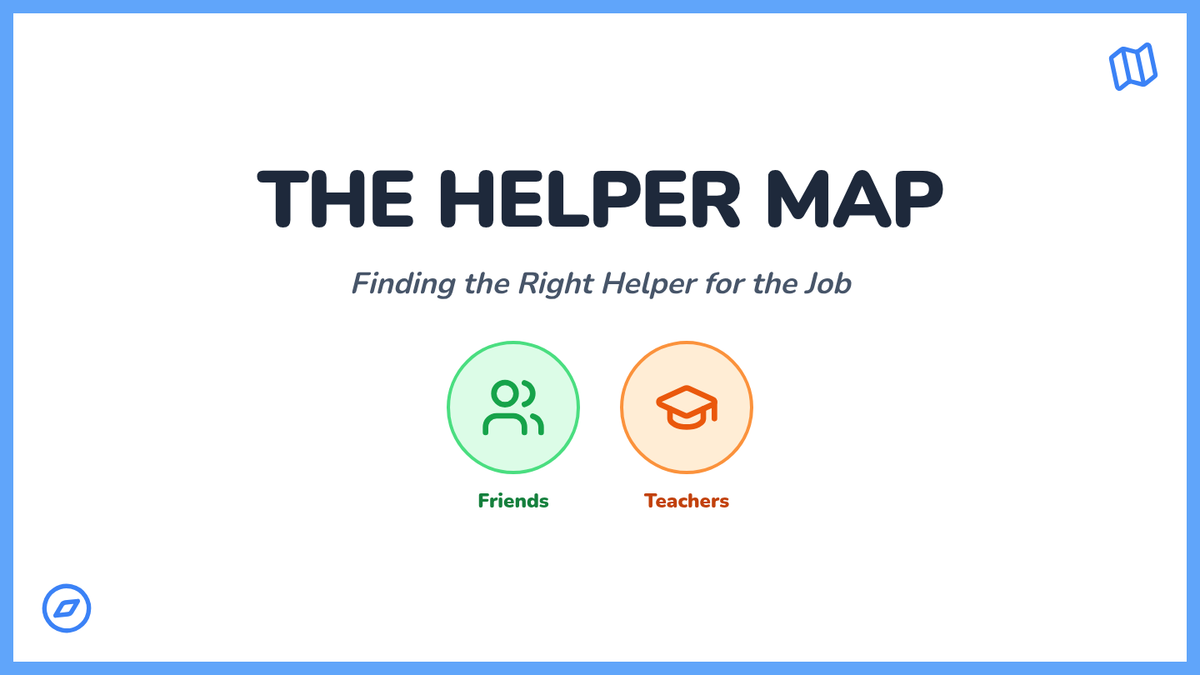
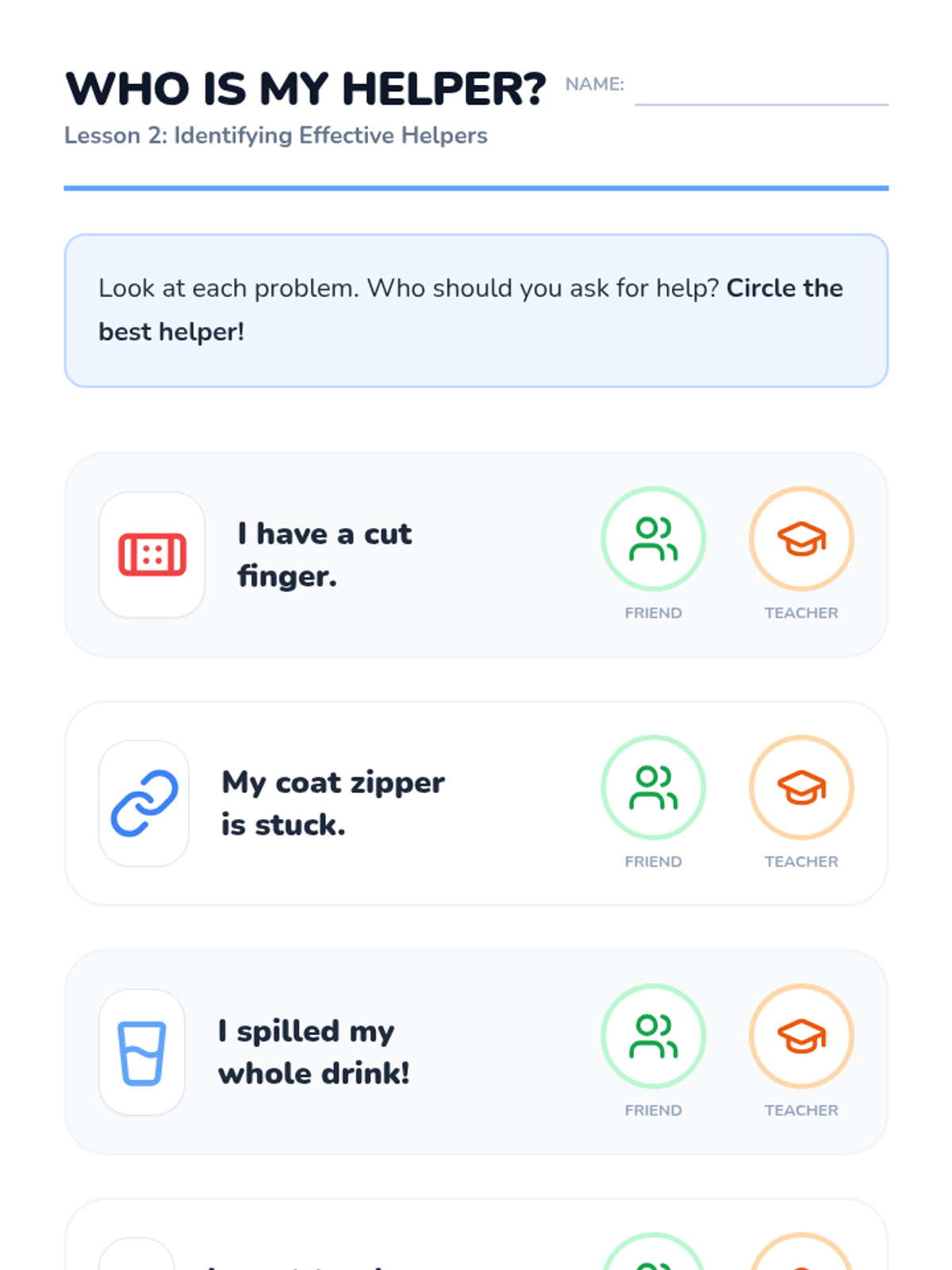
Students map out the classroom to identify who can help with different types with problems (e.g., a friend can help with a zipper, but only a teacher can help with a cut). This builds discernment in seeking support.
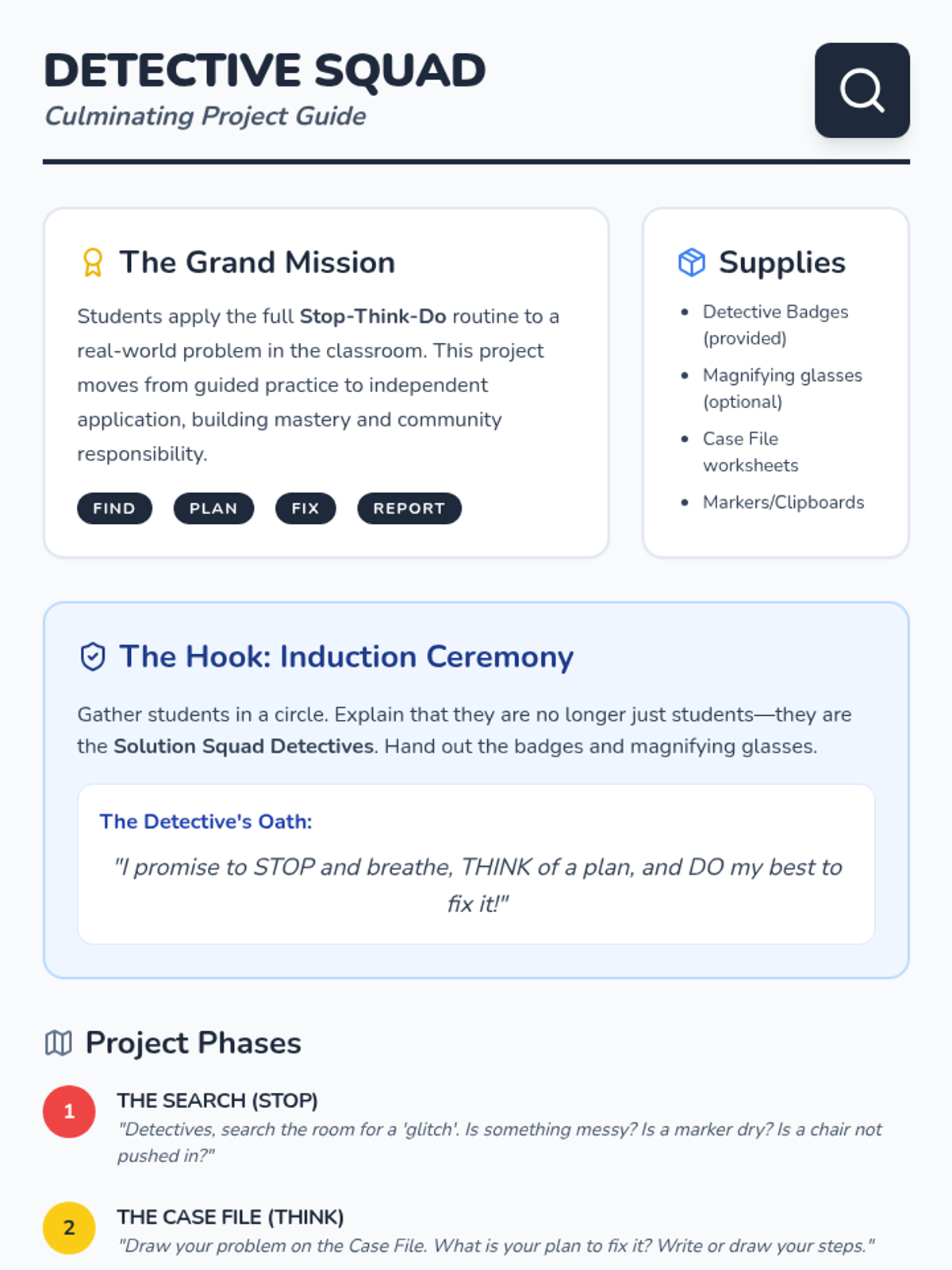
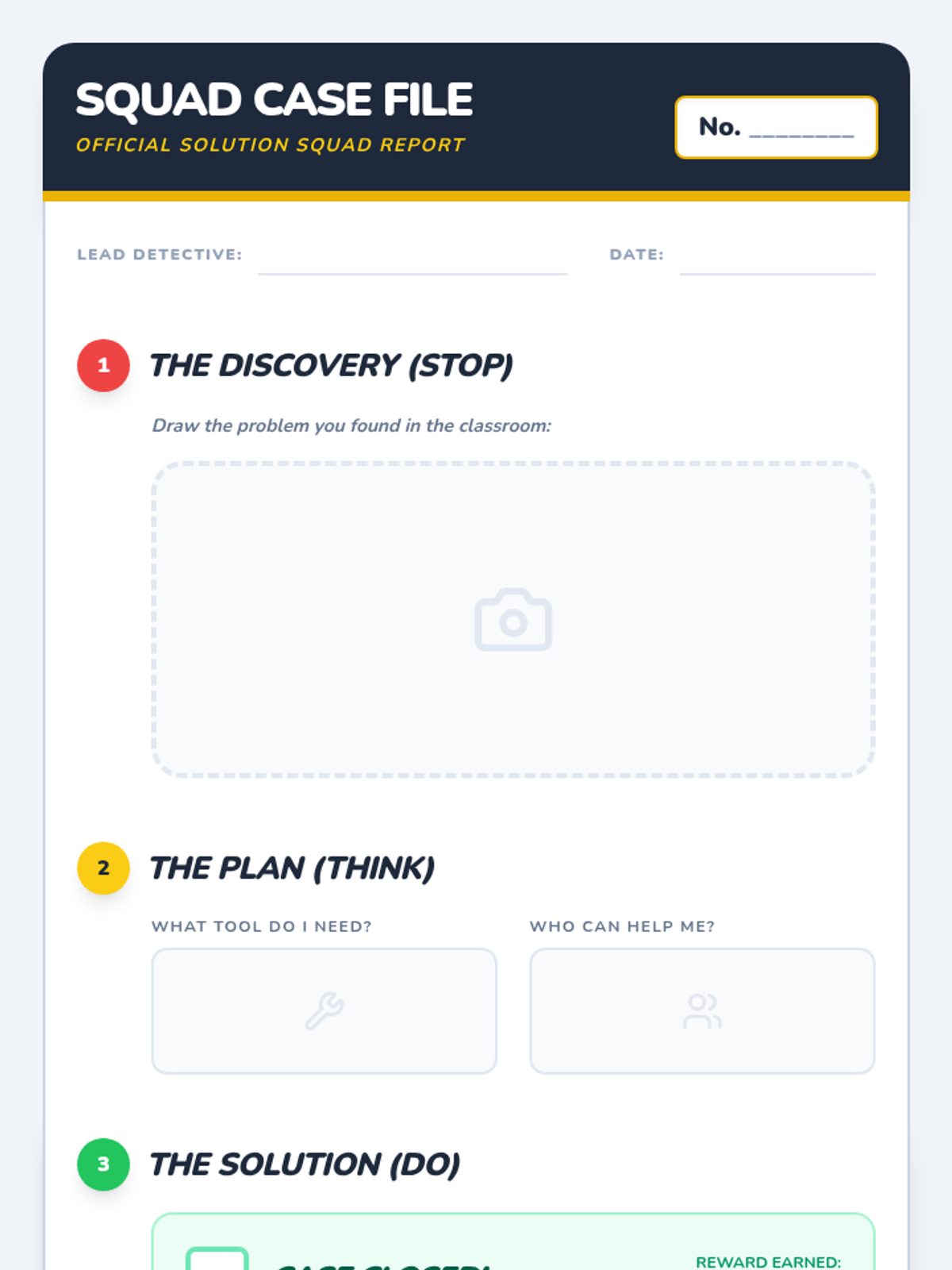
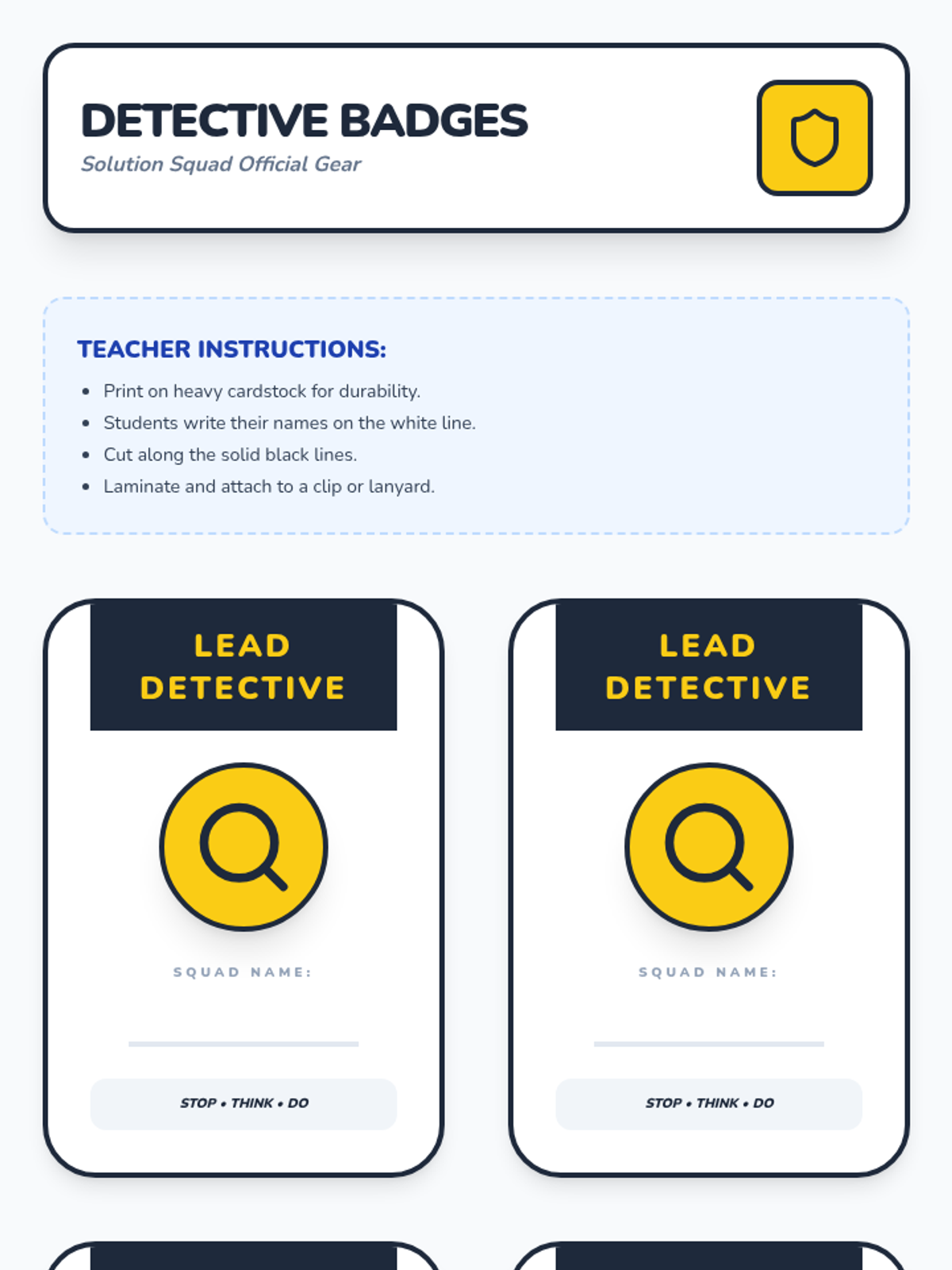
A culminating project where students use their problem-solving skills to find and fix small issues in the classroom.
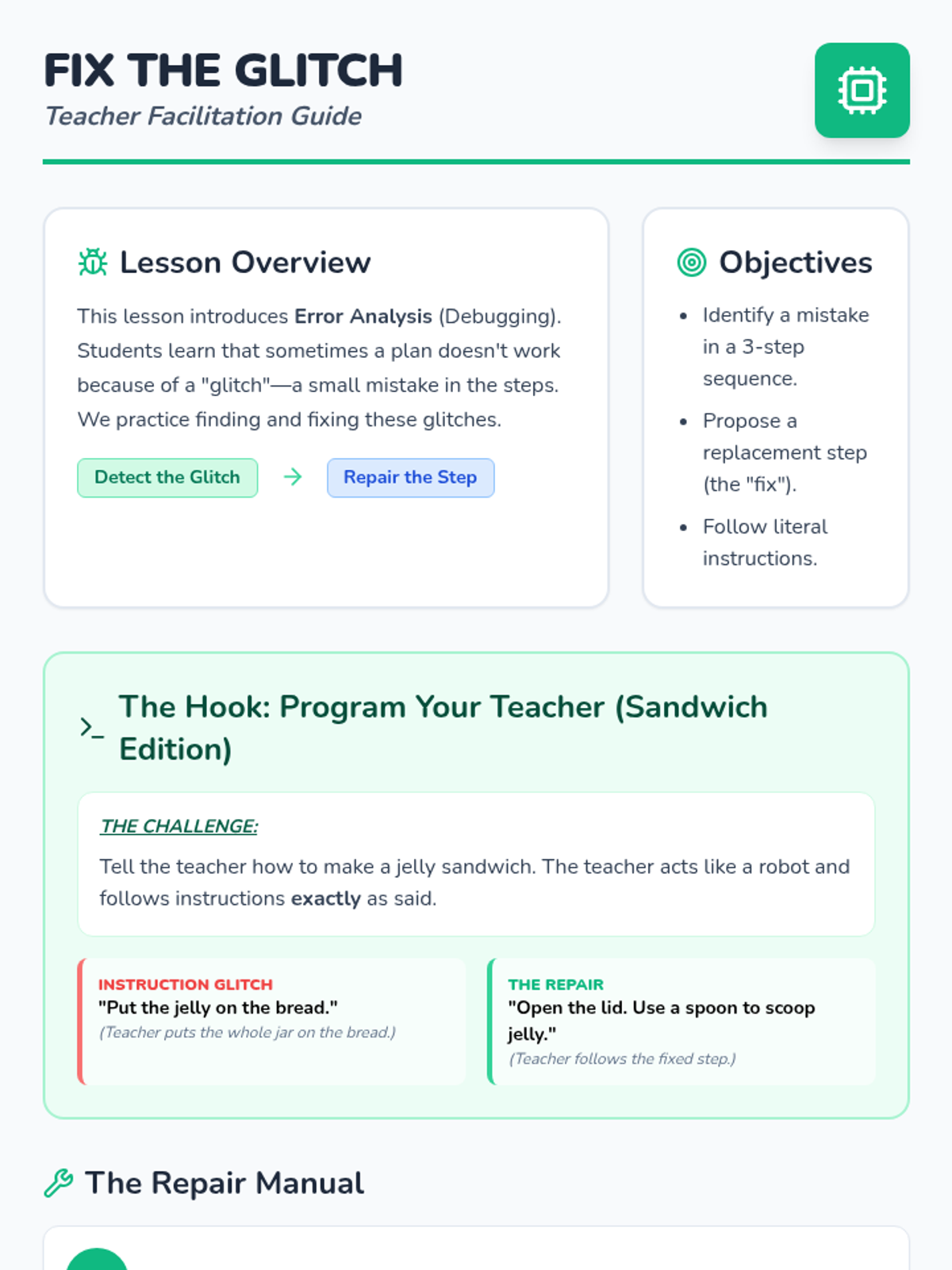
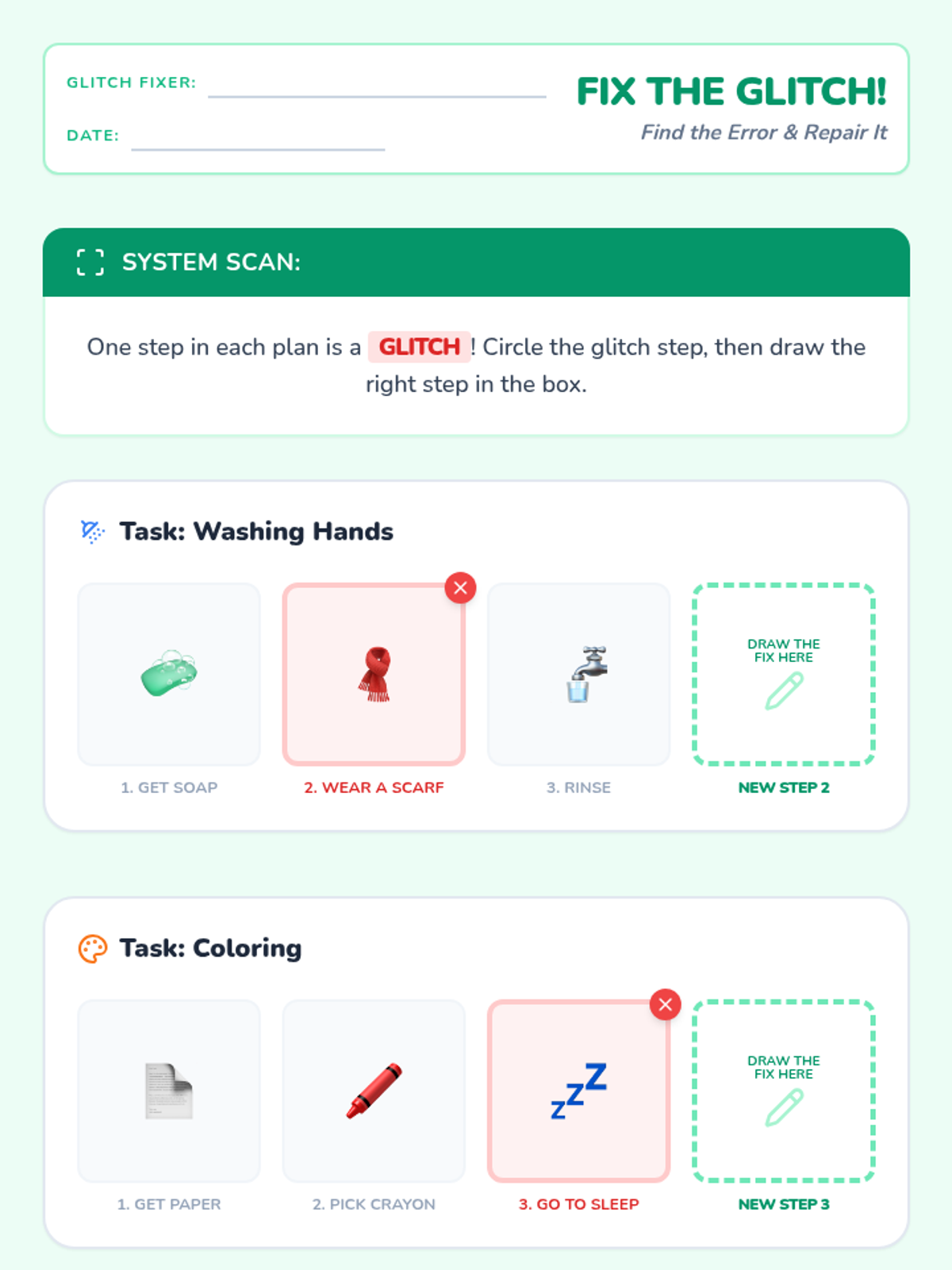
Students identify and fix errors in step-by-step instructions through coding-style games and error analysis.
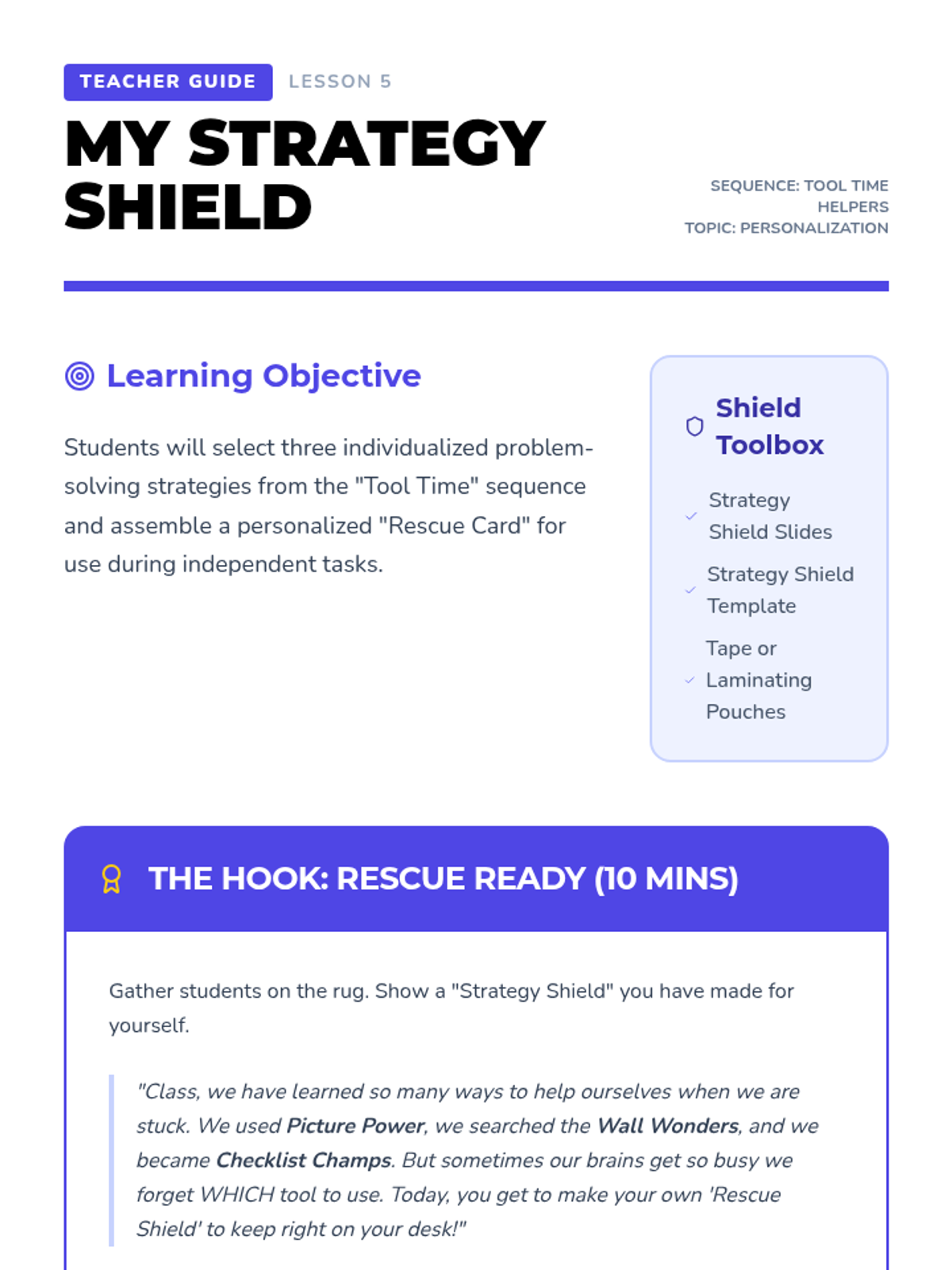
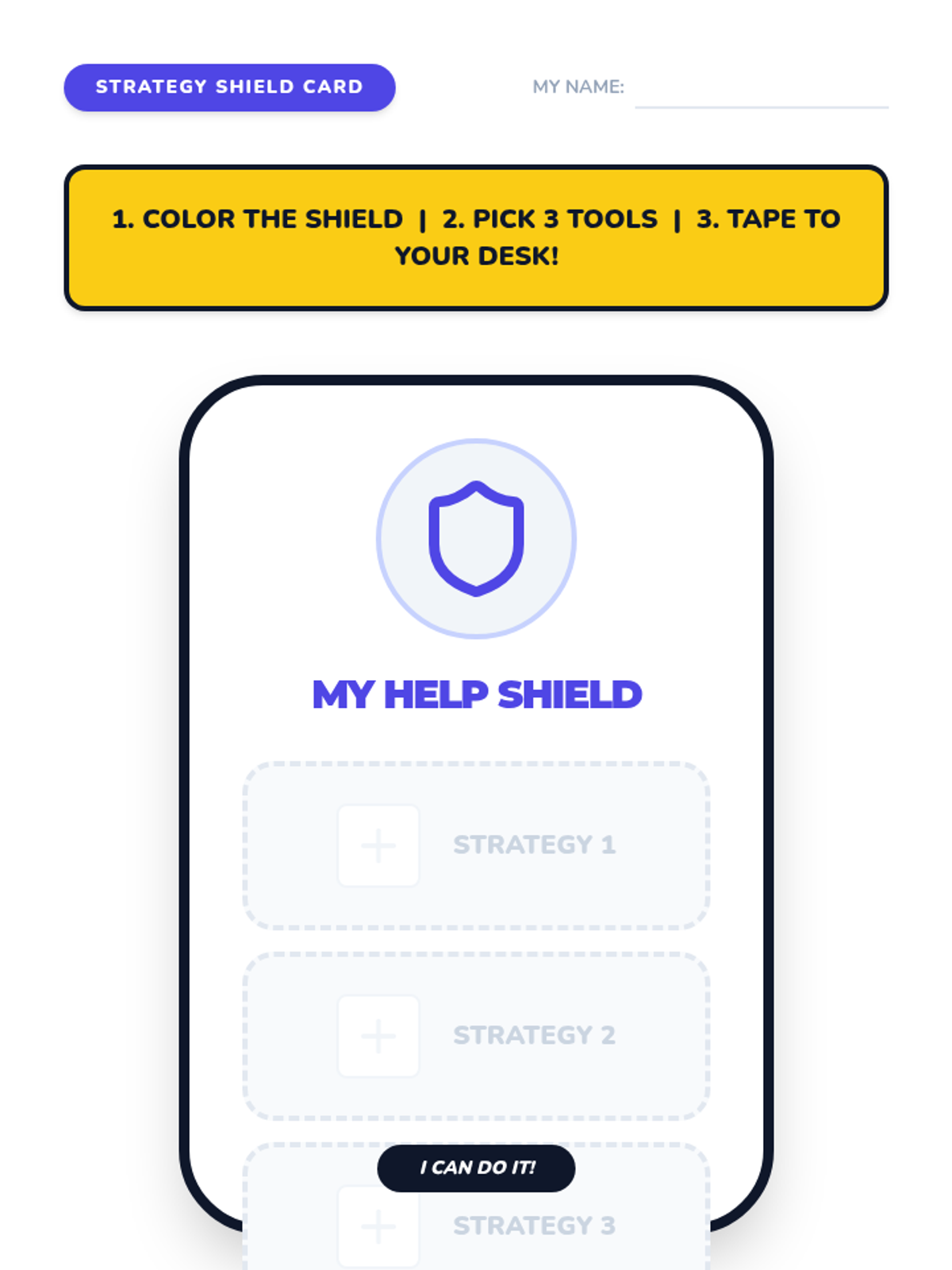
Students create a personalized 'Rescue Card' with pictures of their favorite strategies to use as a desk-side reference during independent work.
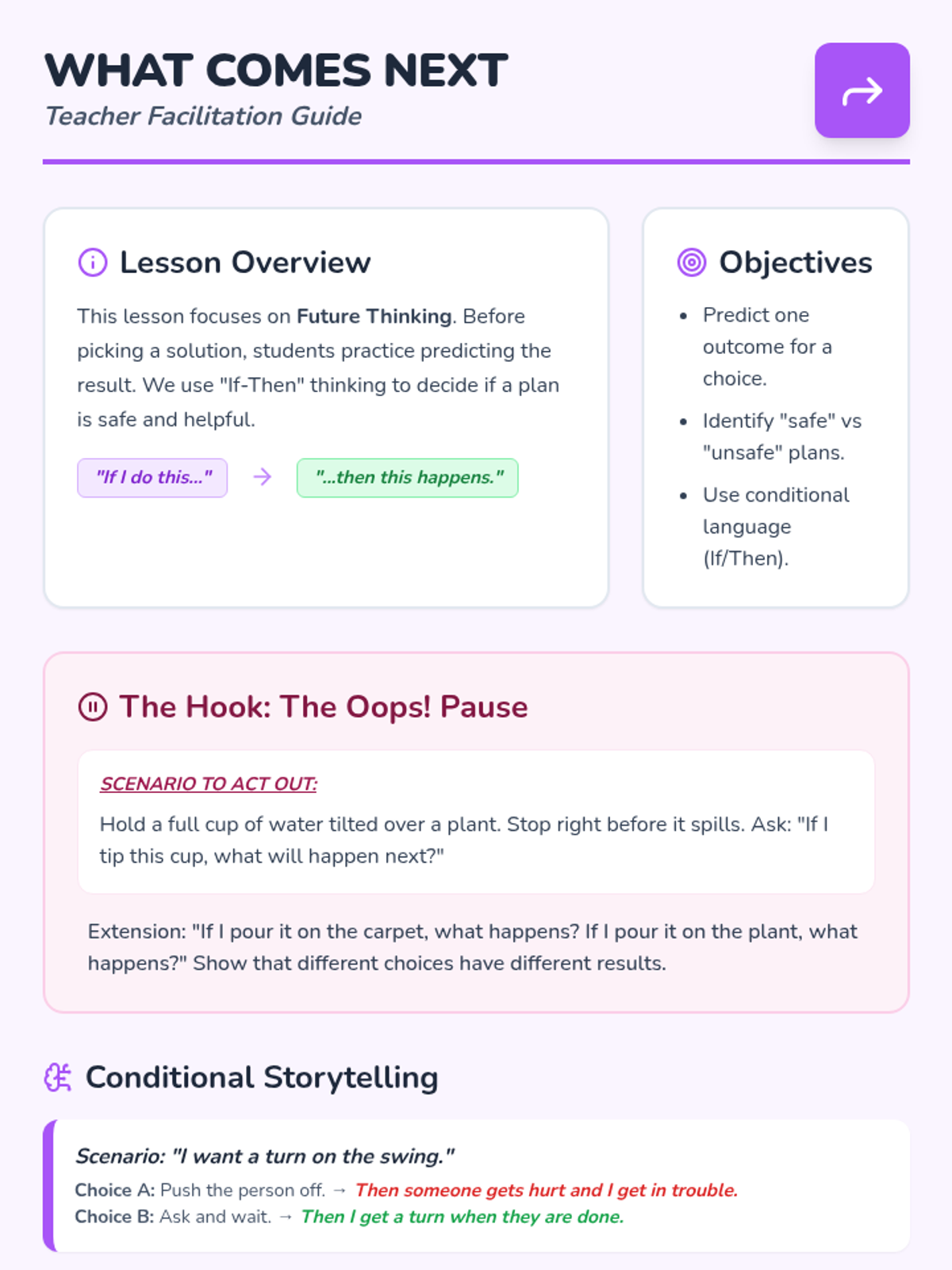
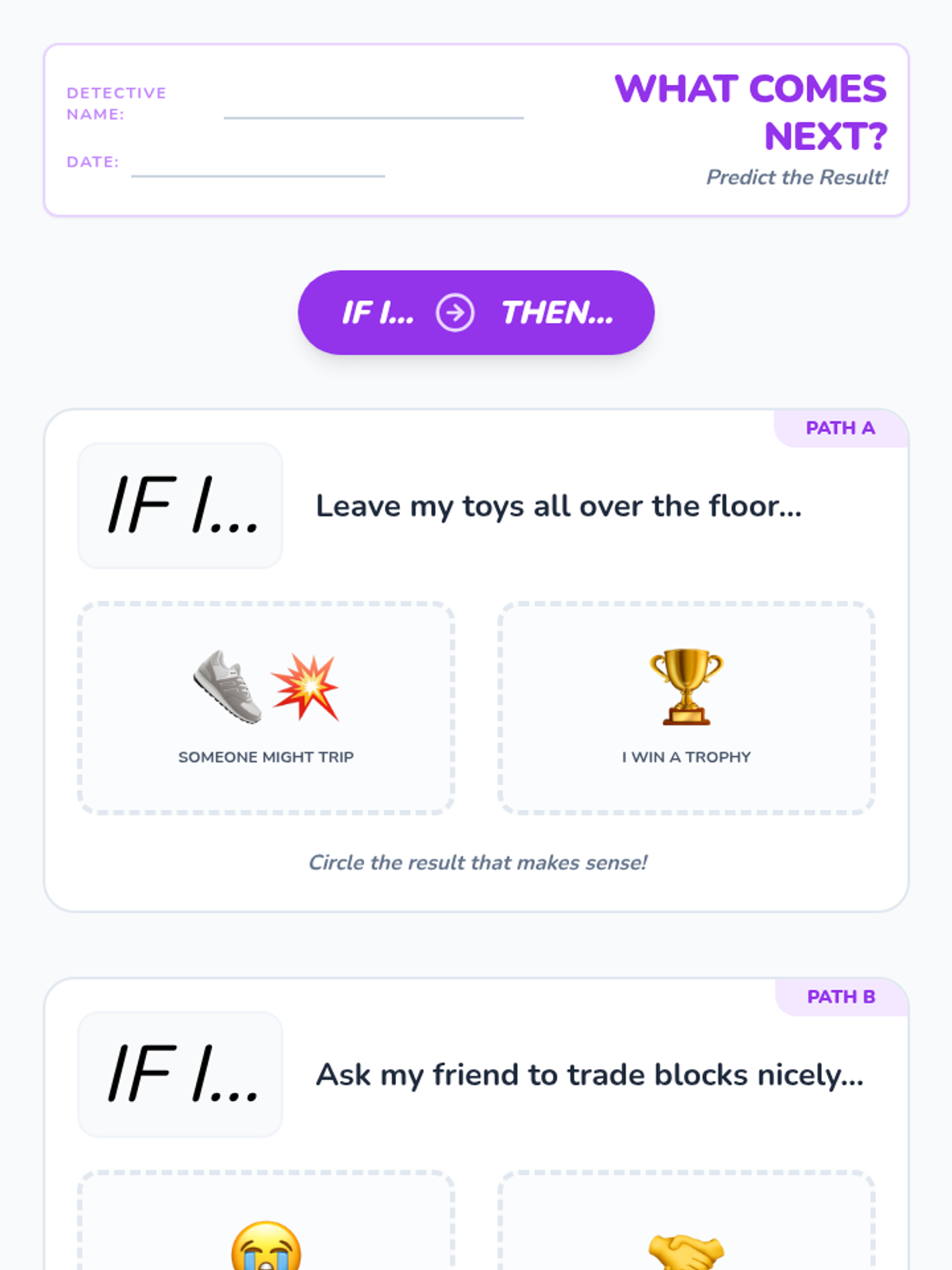
Students predict outcomes of different solutions using 'If-Then' thinking to evaluate safety and effectiveness.
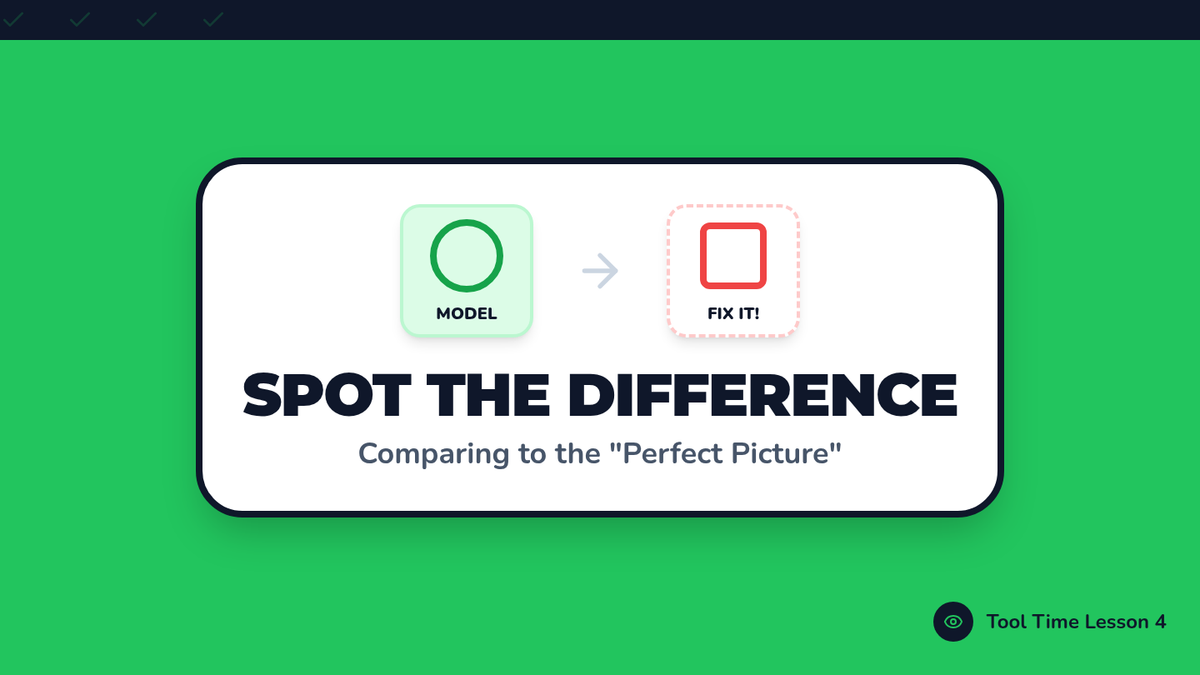
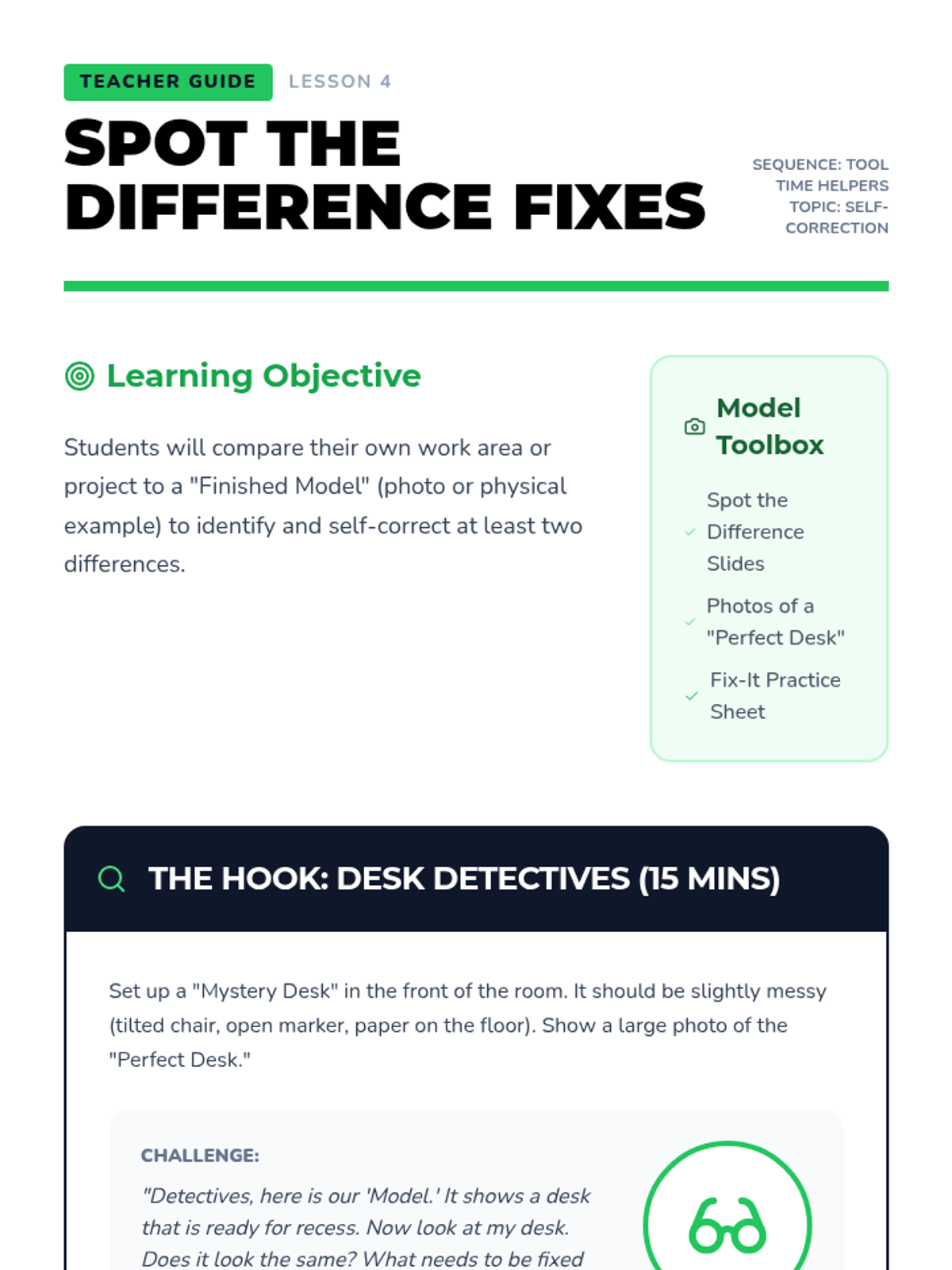
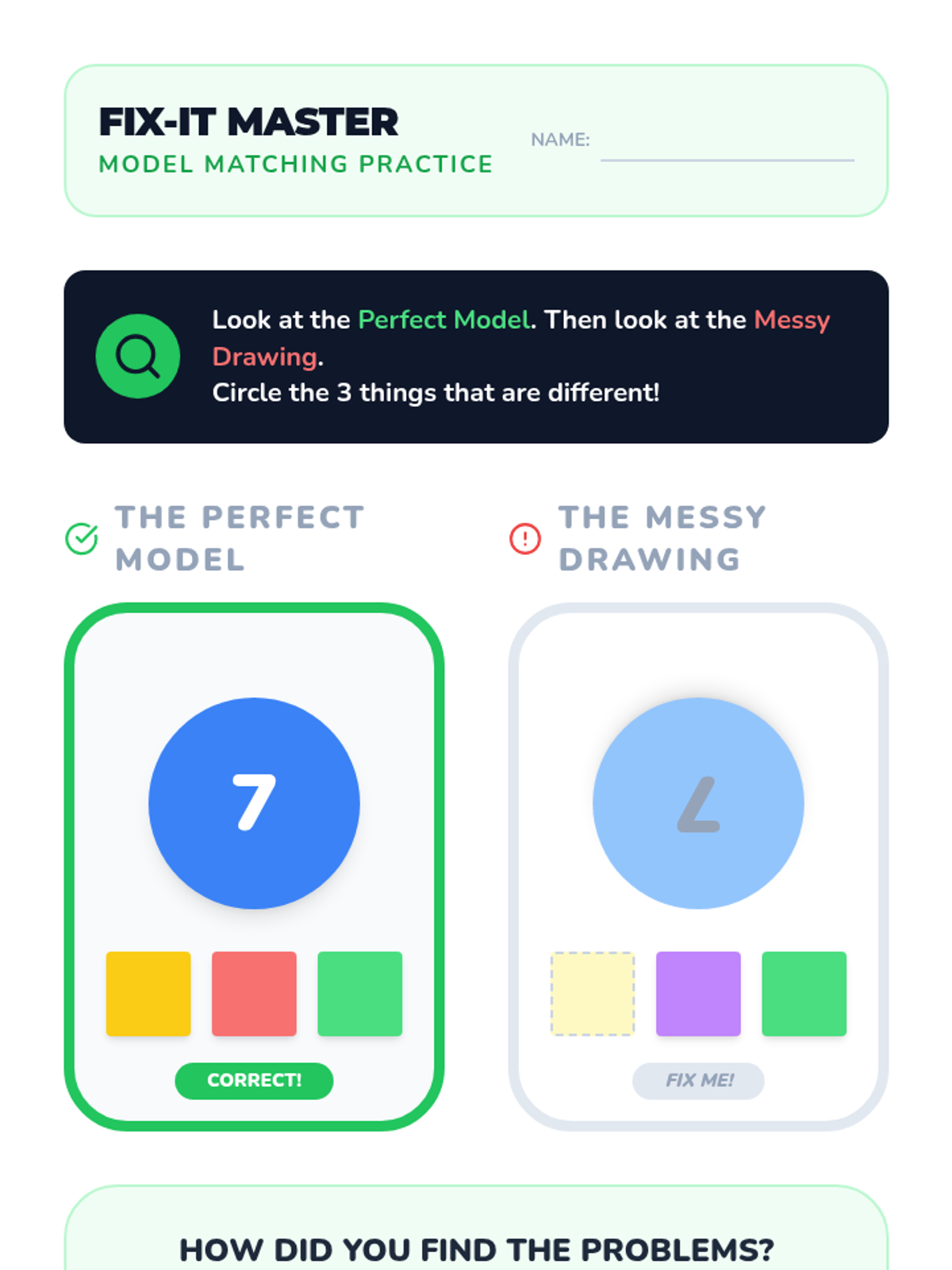
Students learn to compare their work to a 'finished model' to identify and self-correct errors in their own task execution.
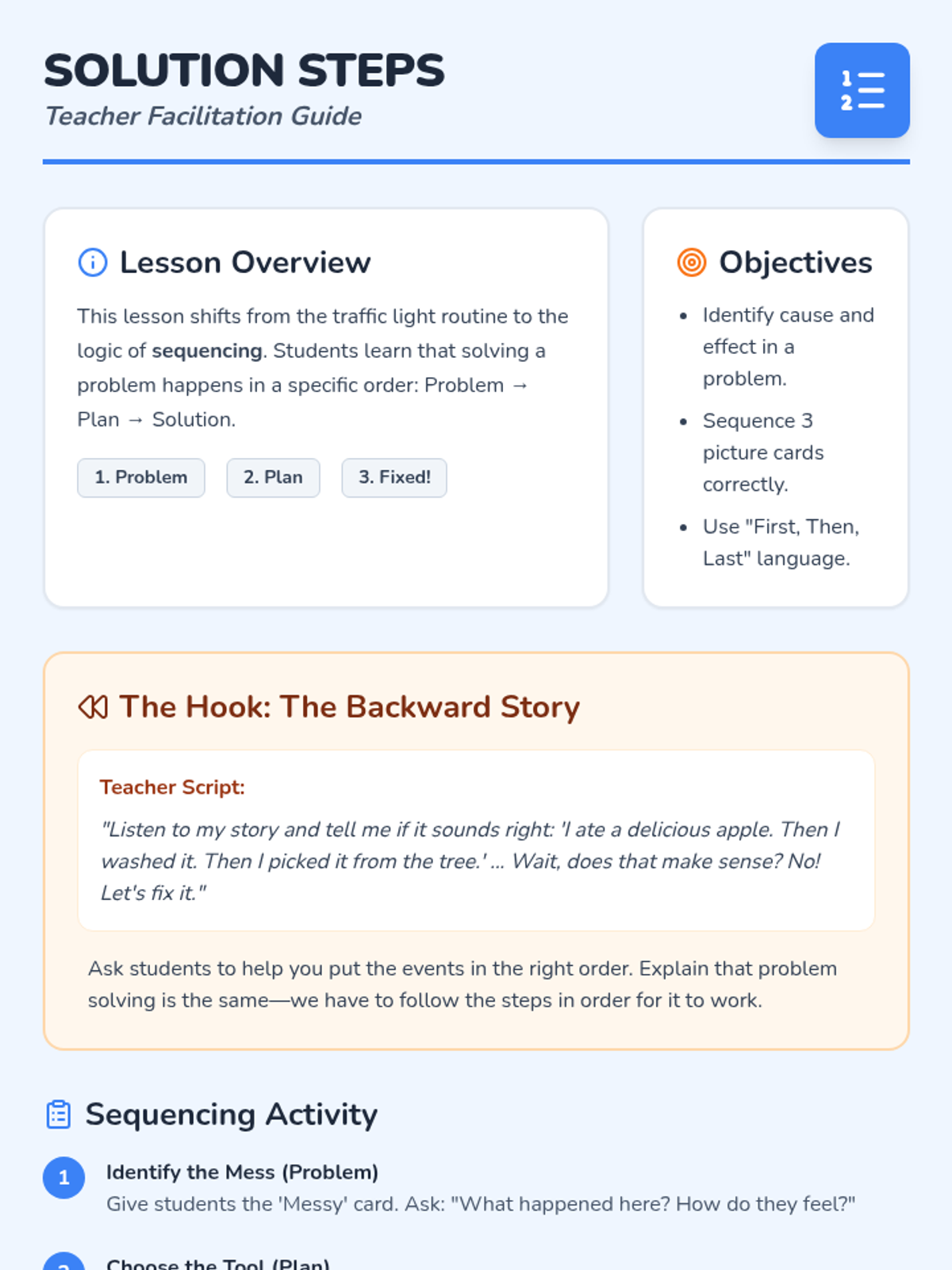
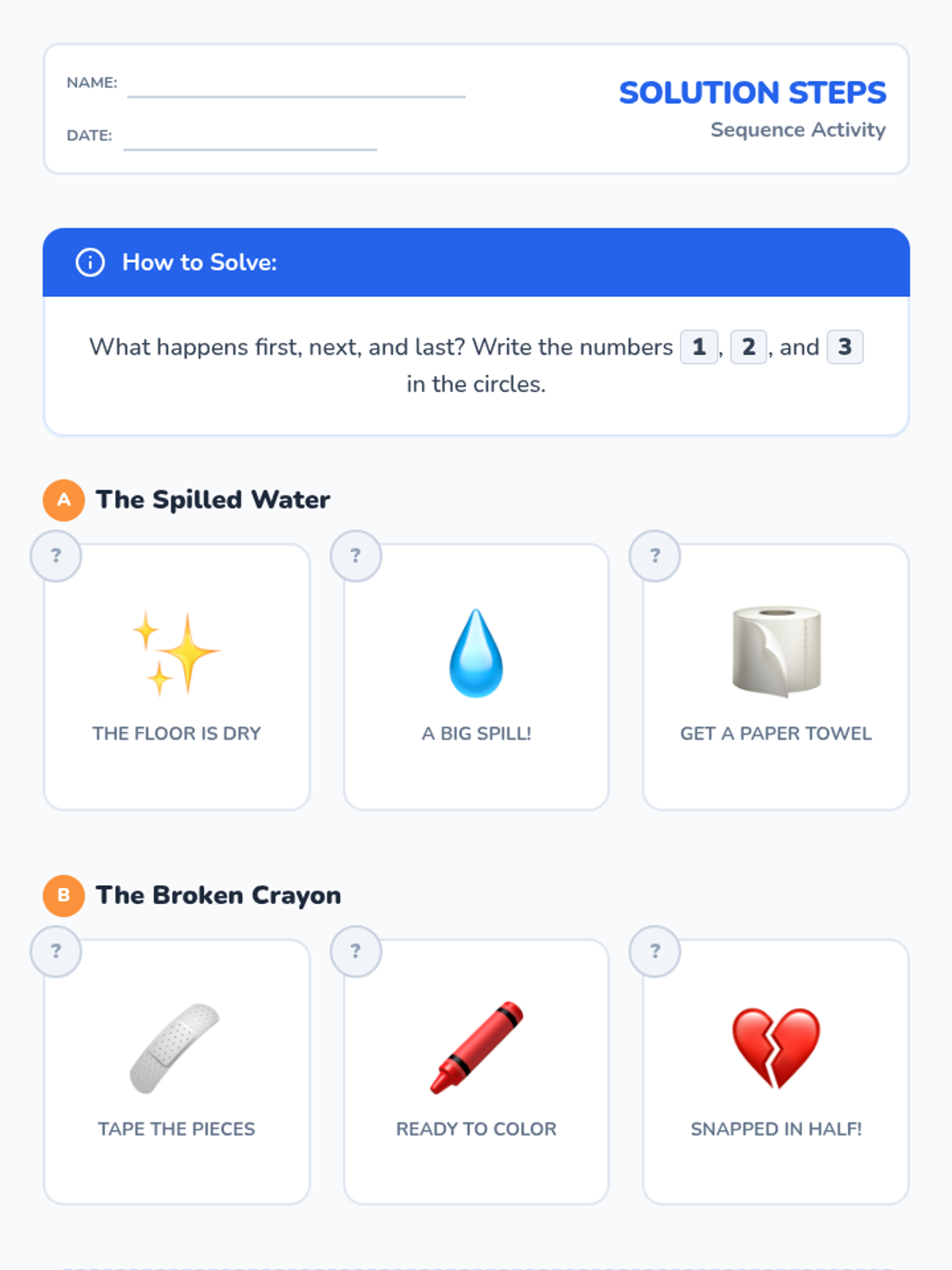
Students practice arranging picture cards in logical order to show cause, effect, and resolution in problem scenarios.
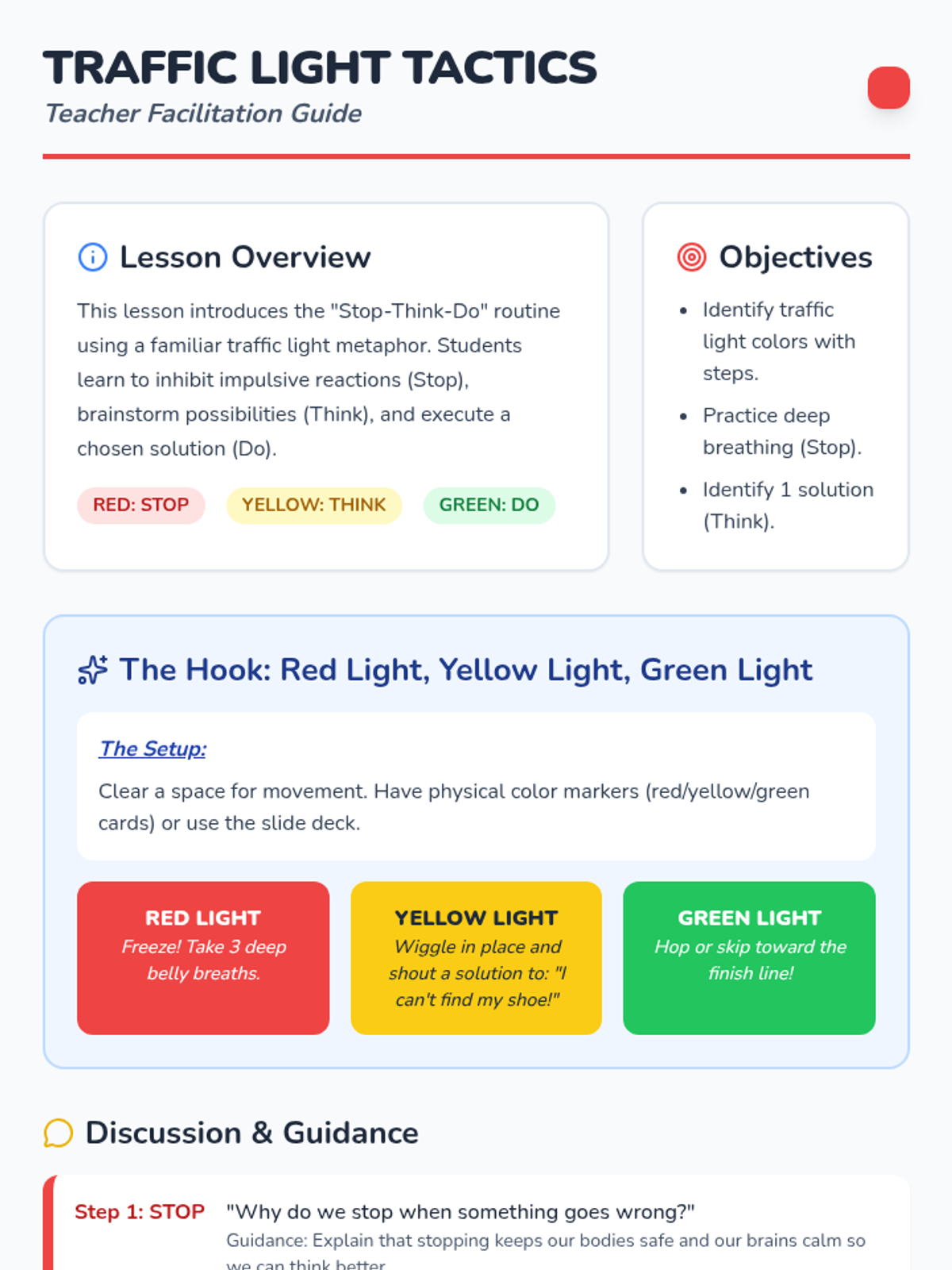
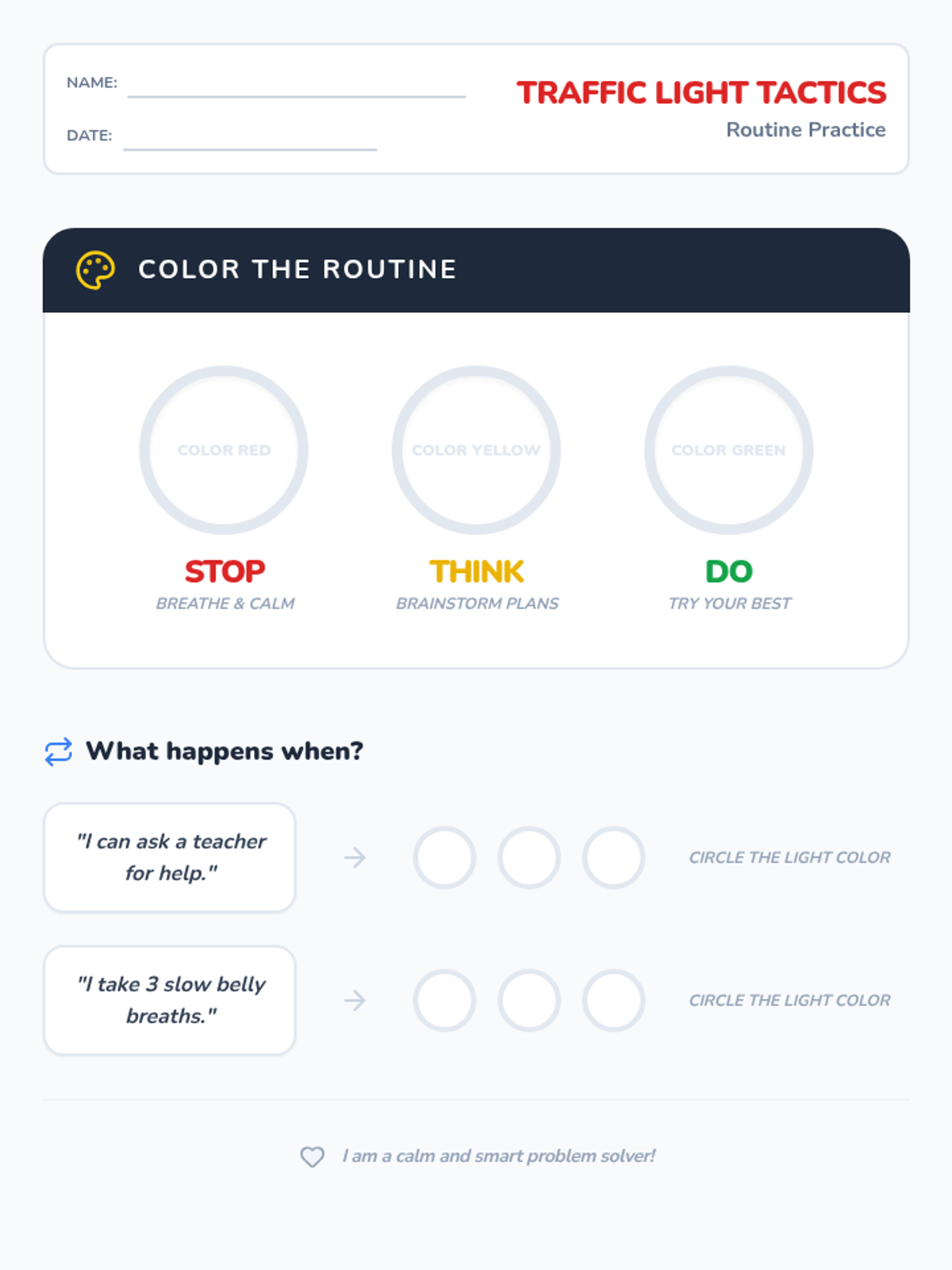
Students learn a traffic light system for problem solving: Red (Stop/Calm down), Yellow (Think of options), Green (Do/Try it) using simulations and games.
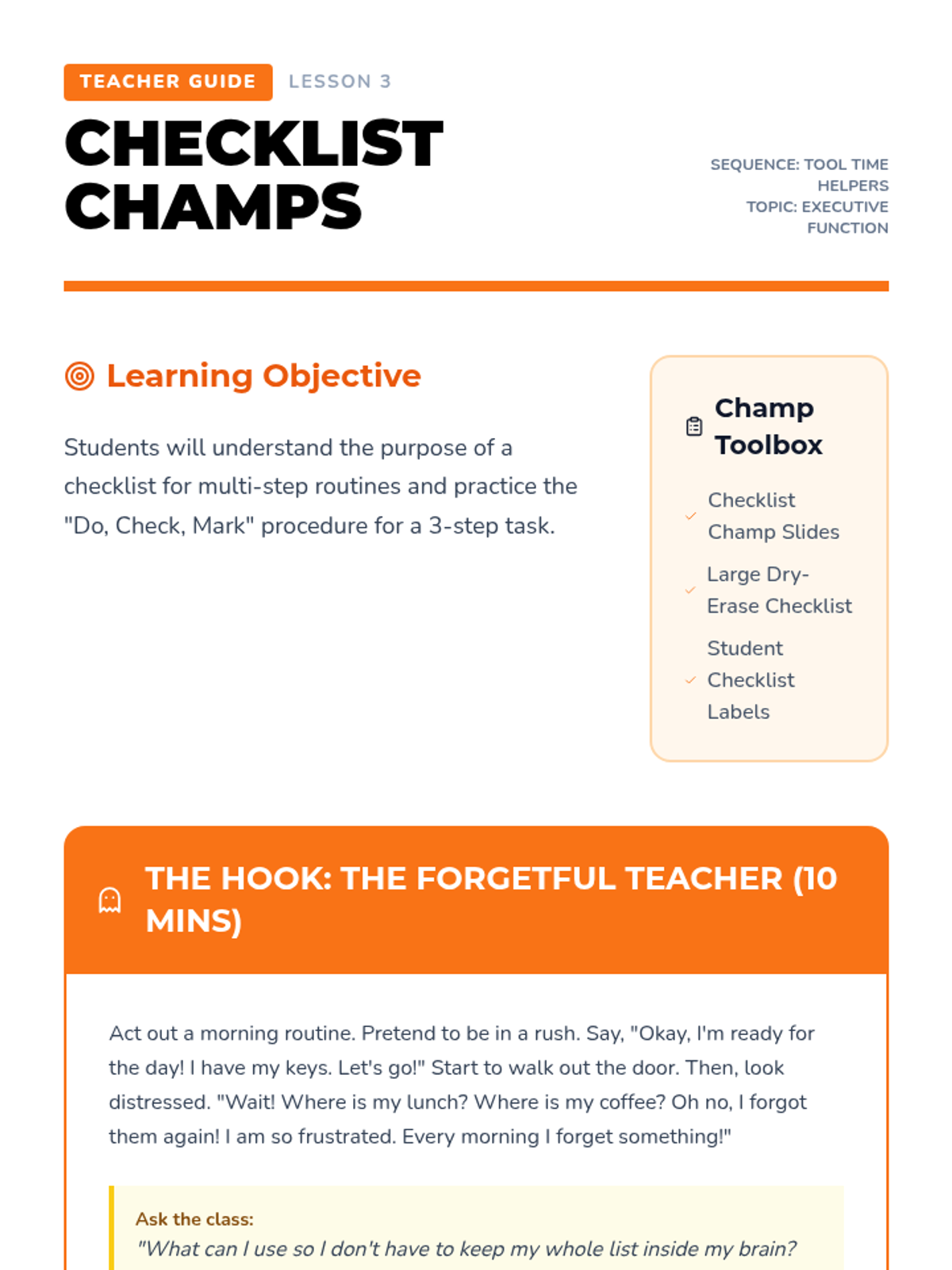
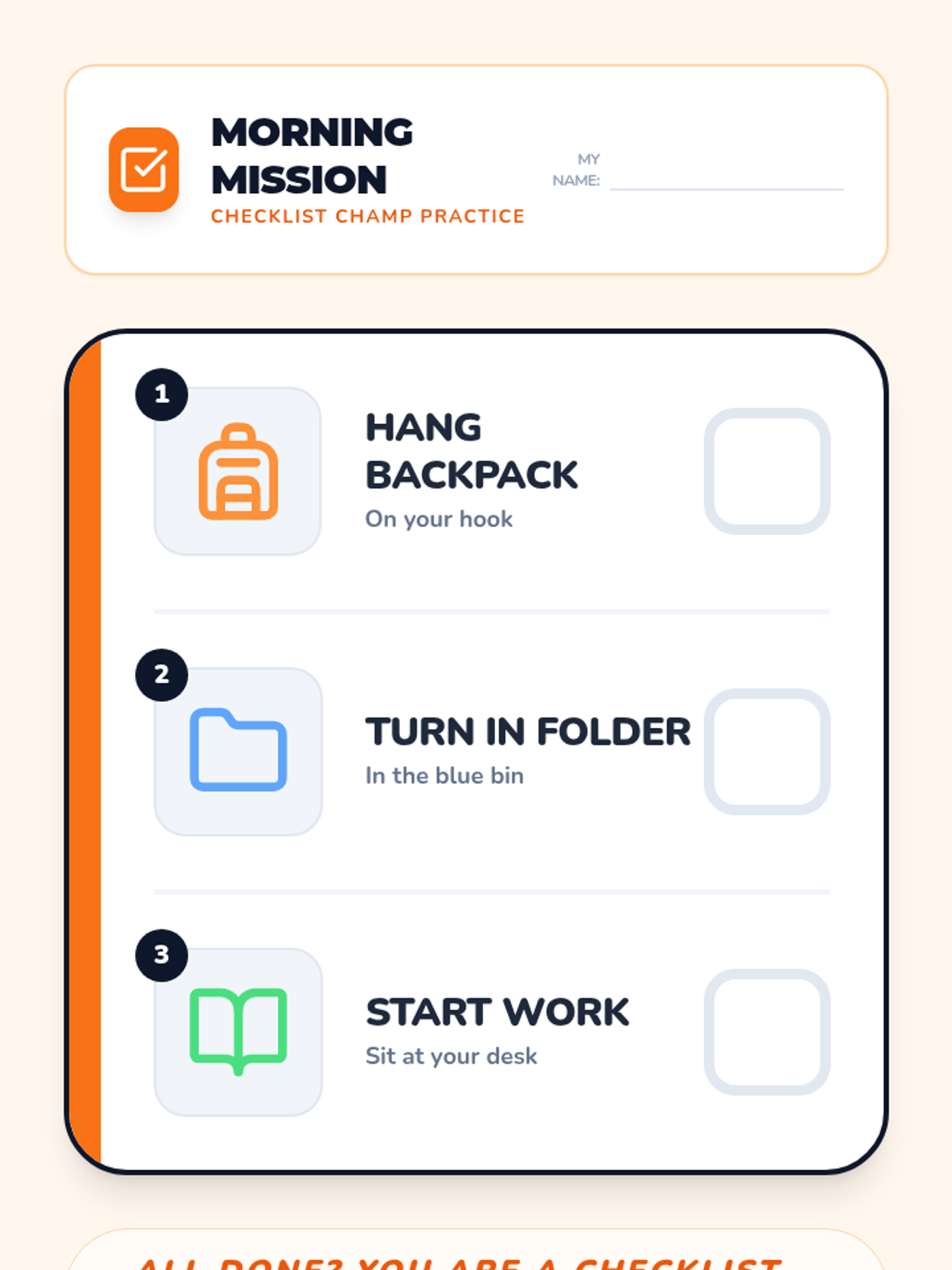
Introduction to simple 3-item checklists for common routines, teaching the executive function skill of tracking task completion.
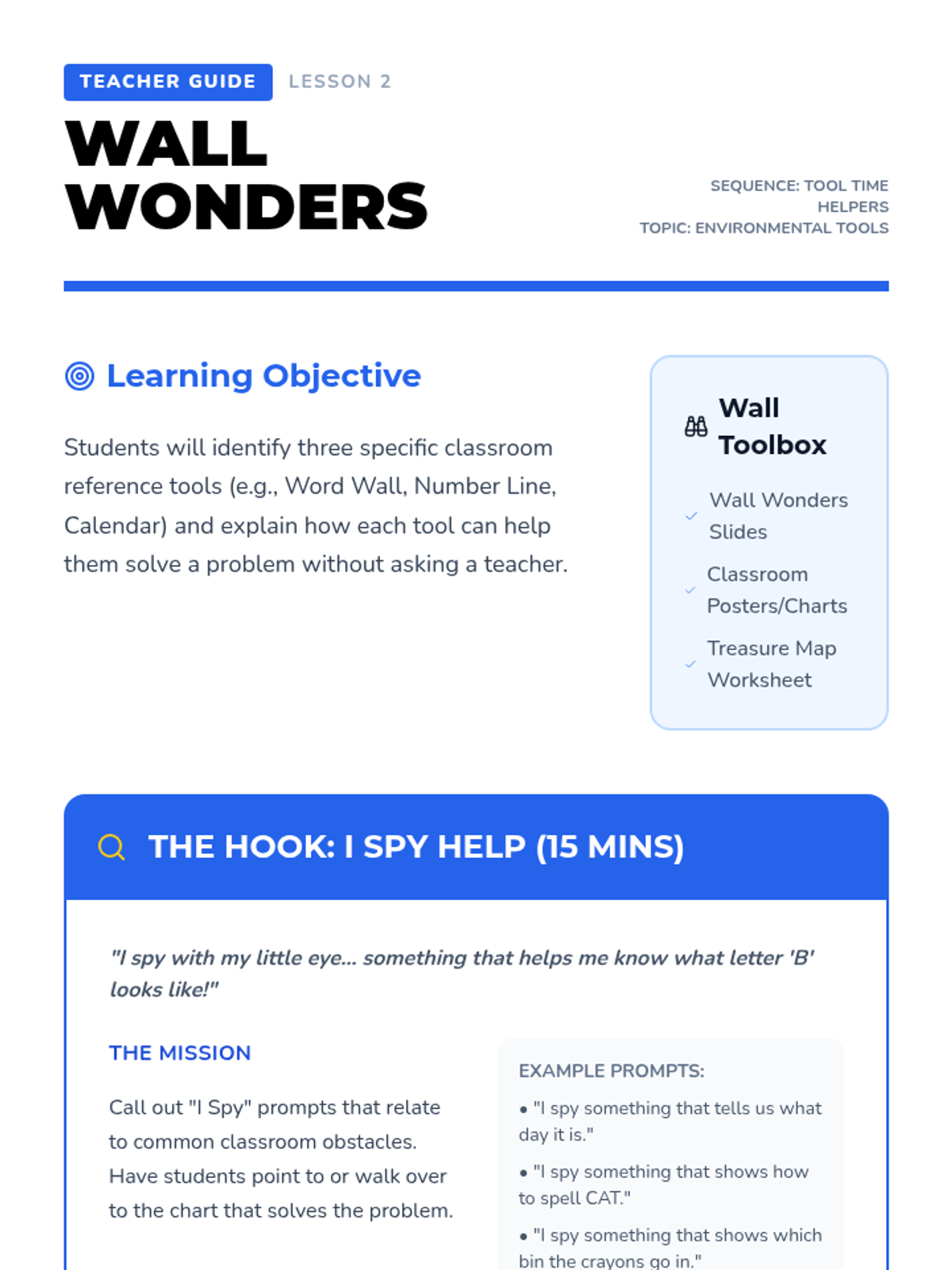
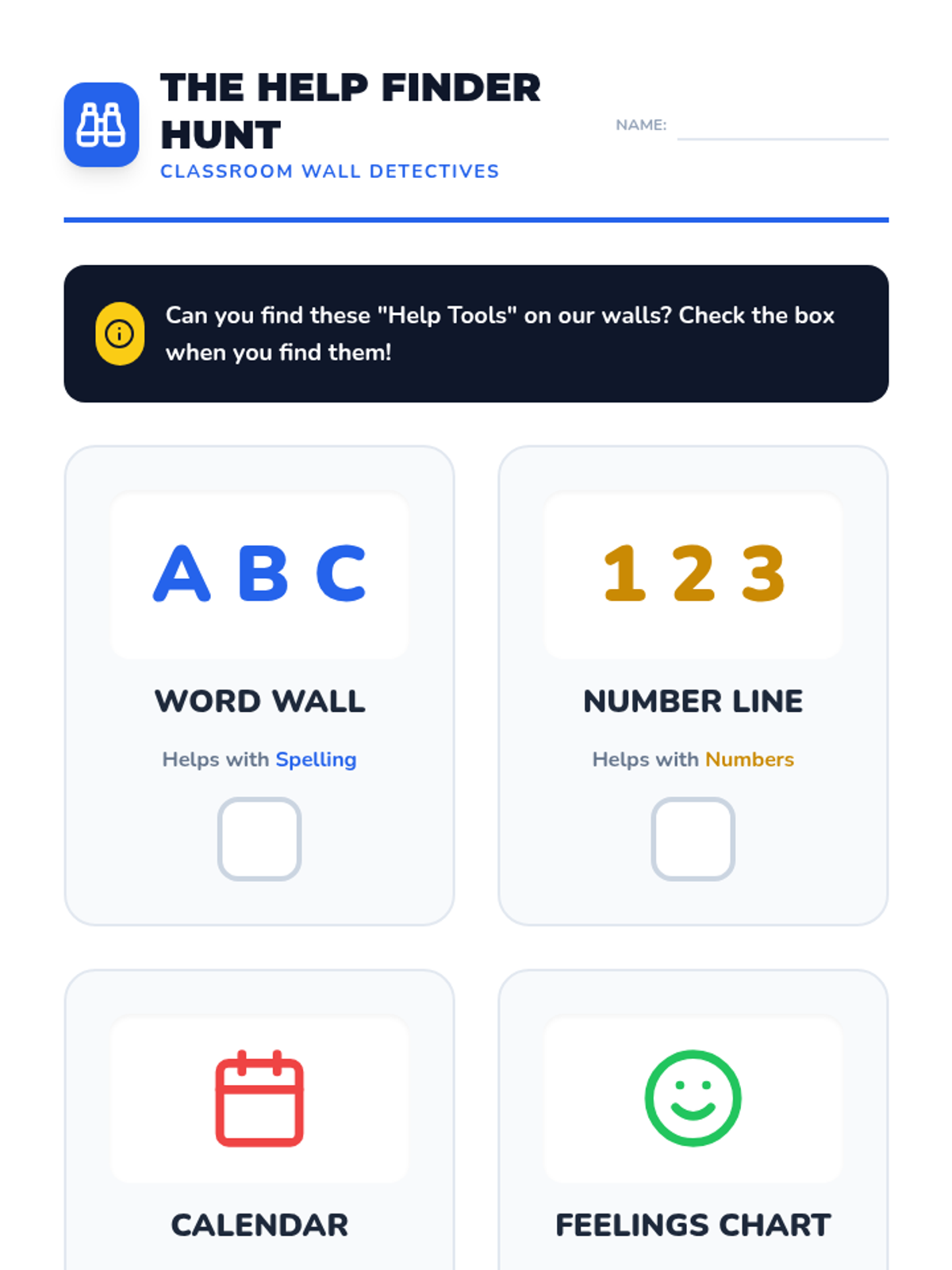
Students explore classroom 'Toolbox' items like alphabet charts and number lines to find information independently rather than asking a person.
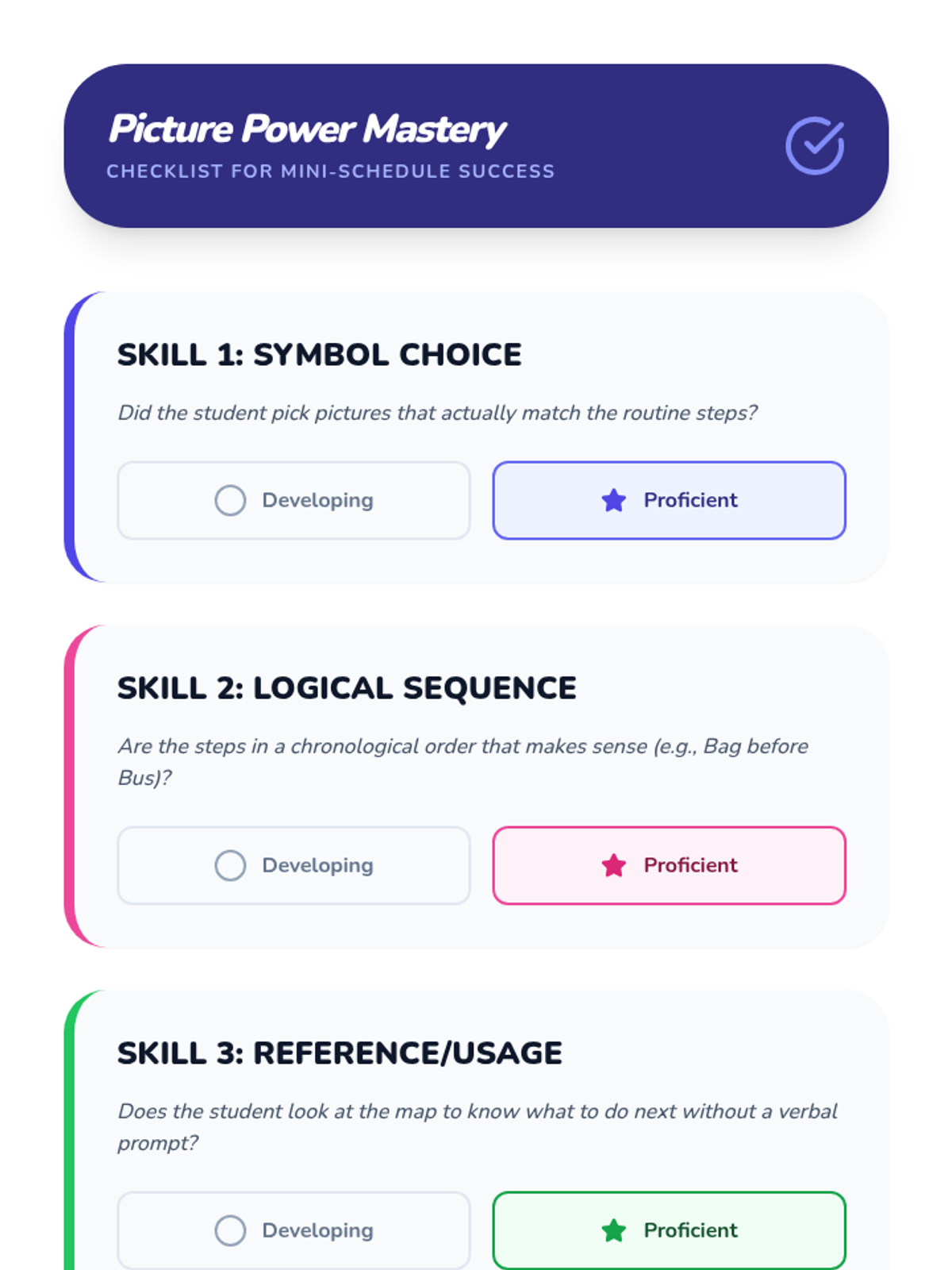
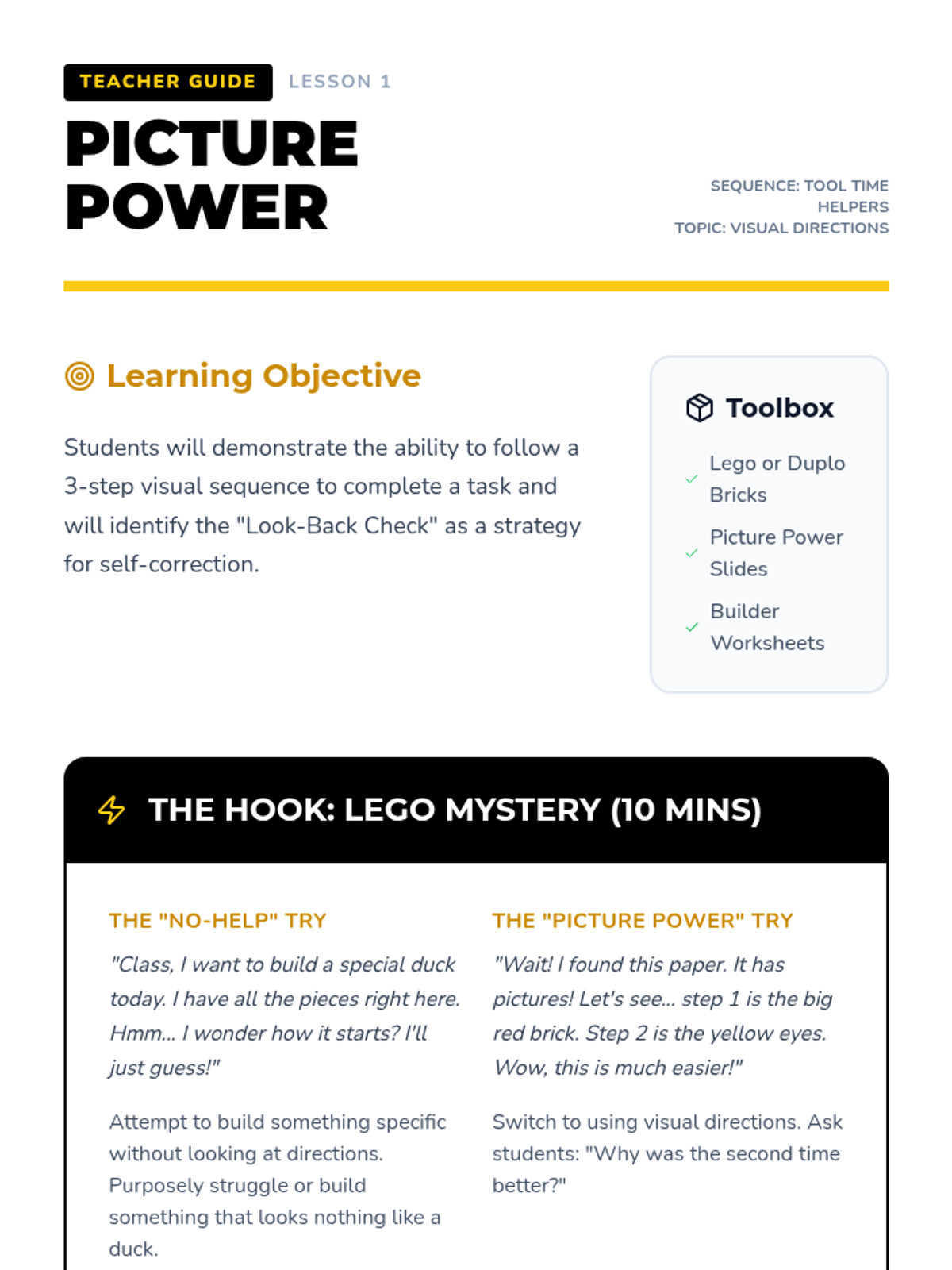
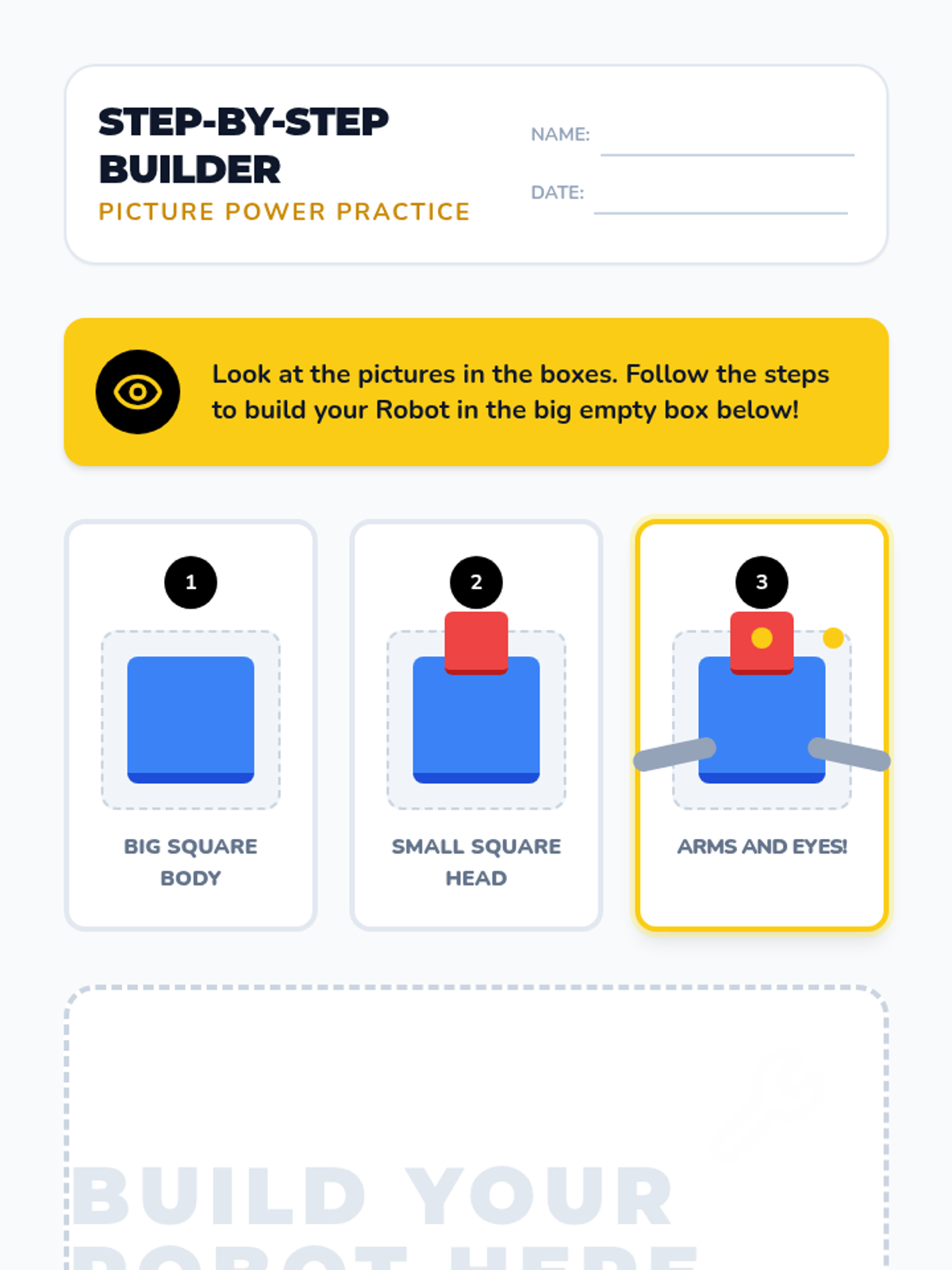
Students learn to interpret step-by-step visual instructions and practice checking their own progress against pictures to identify next steps or errors.
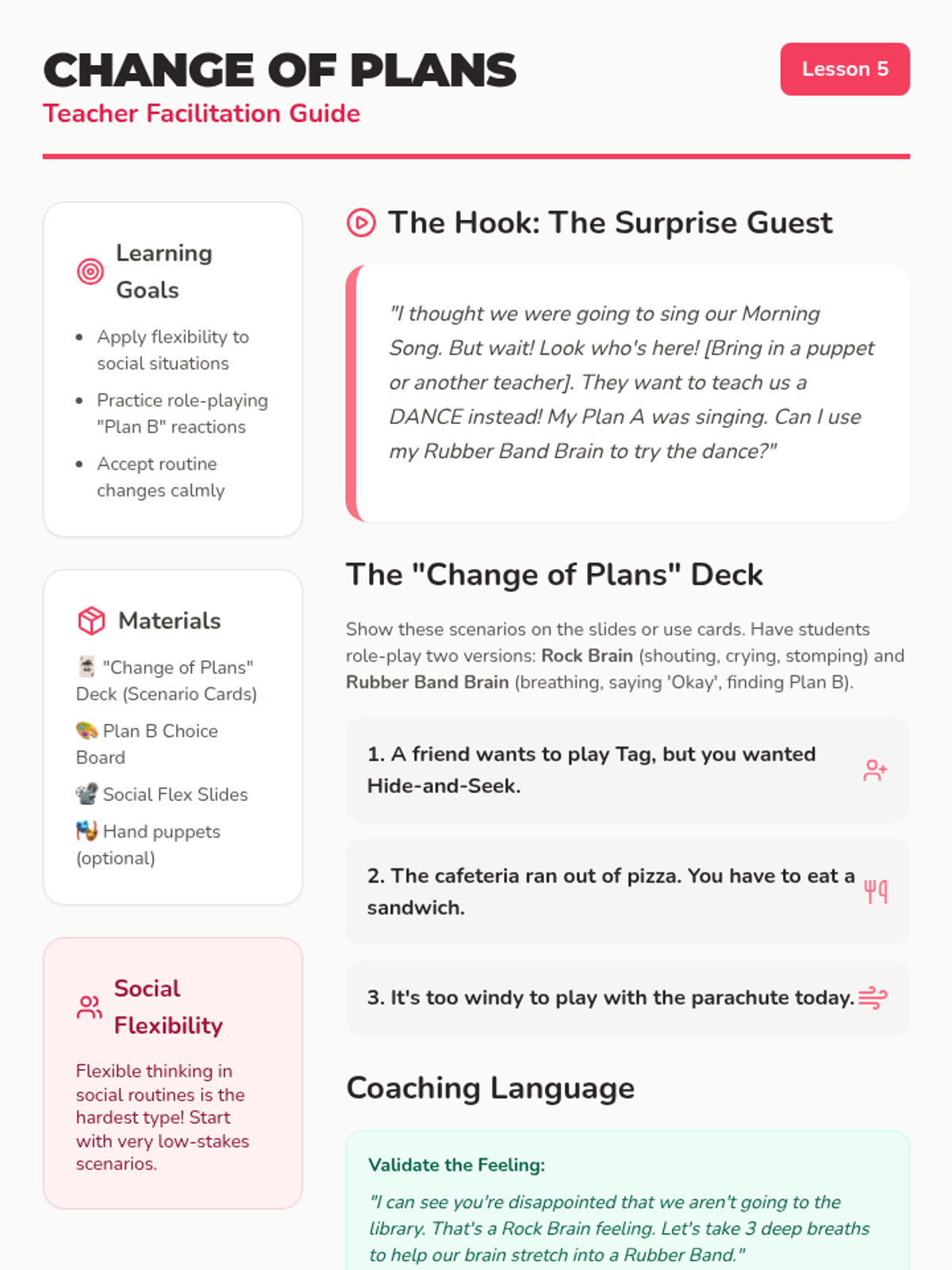
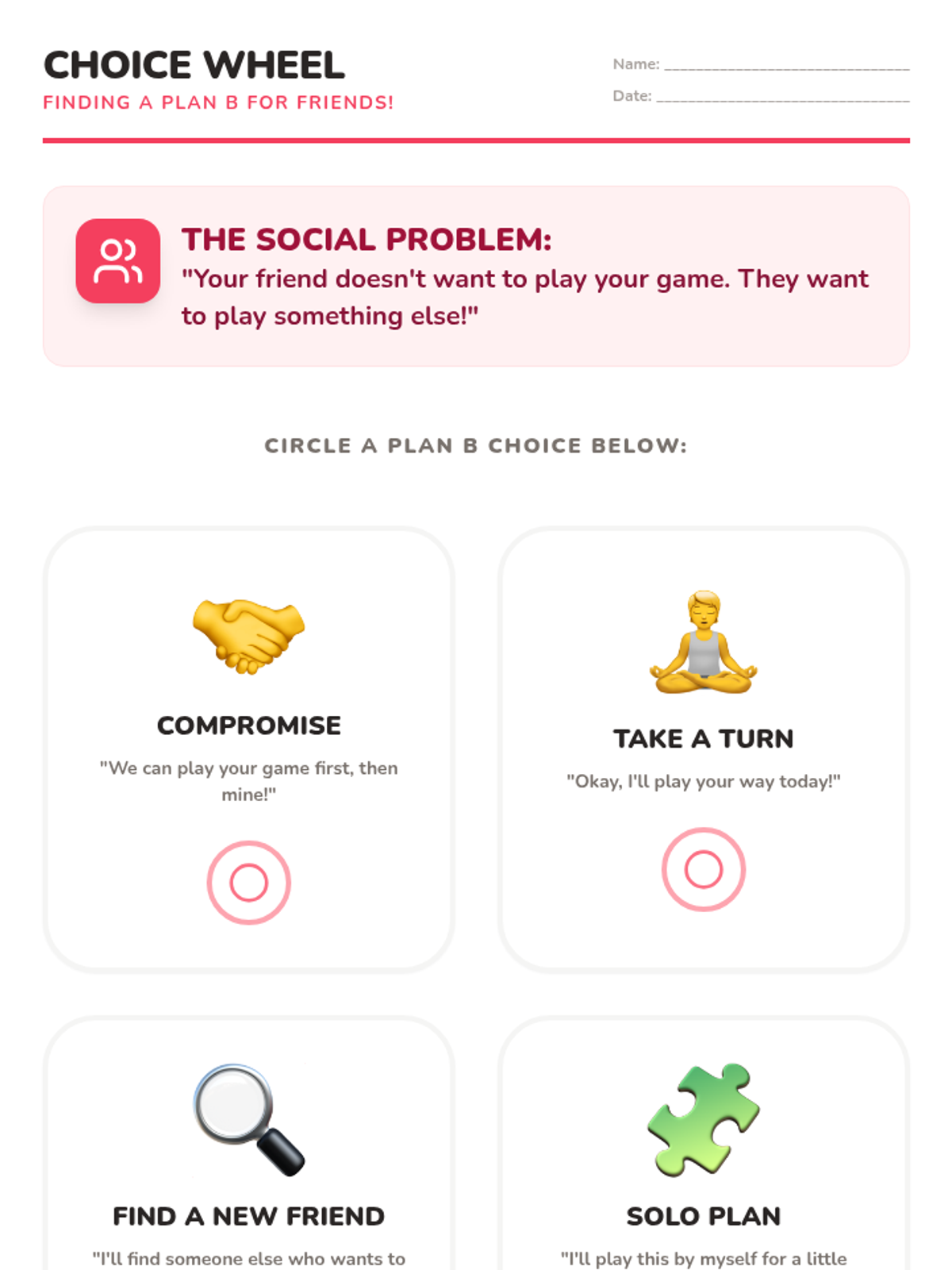
Students apply flexibility to social disruptions and routine changes, role-playing positive reactions to unexpected shifts in their day.