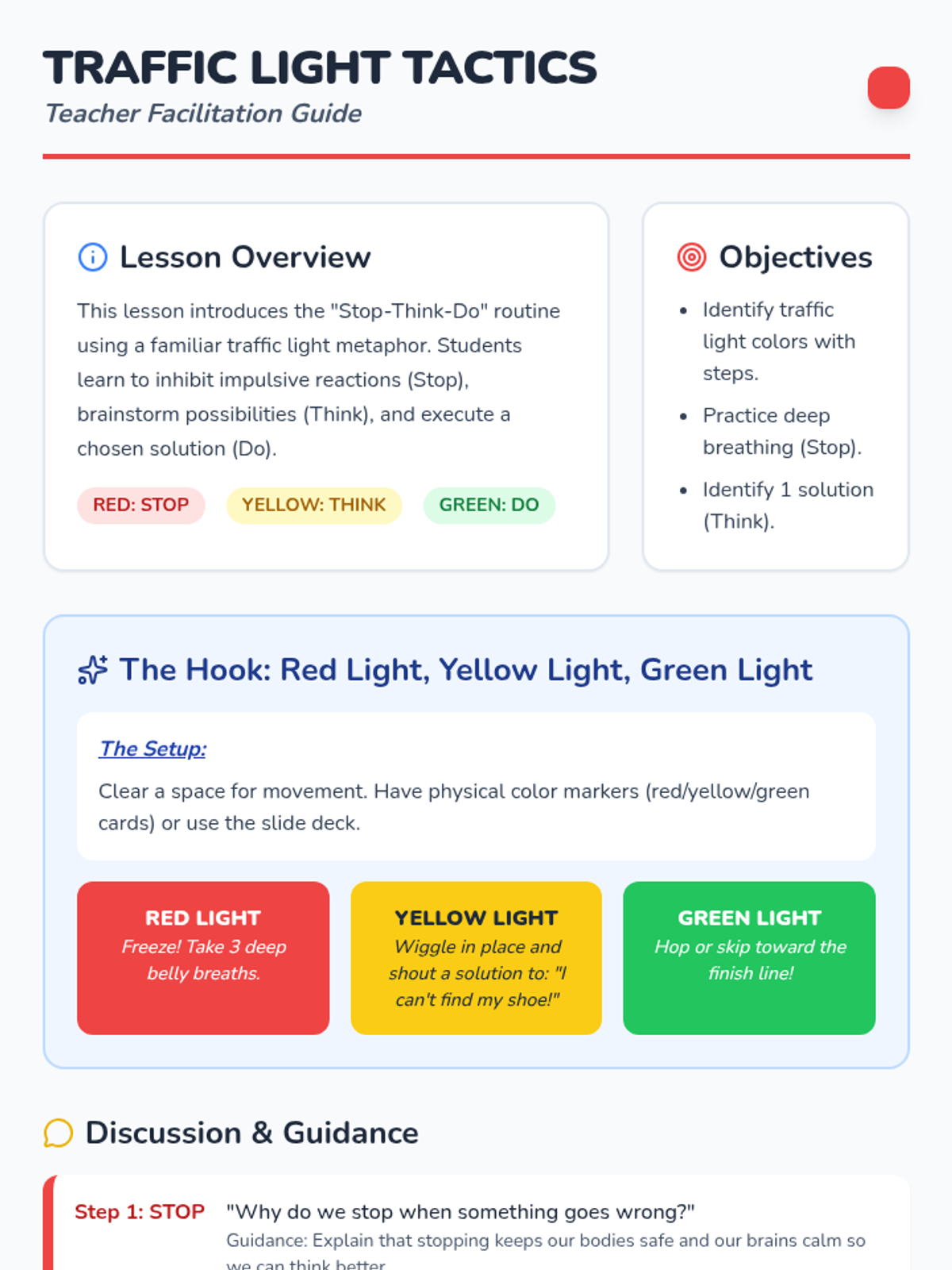
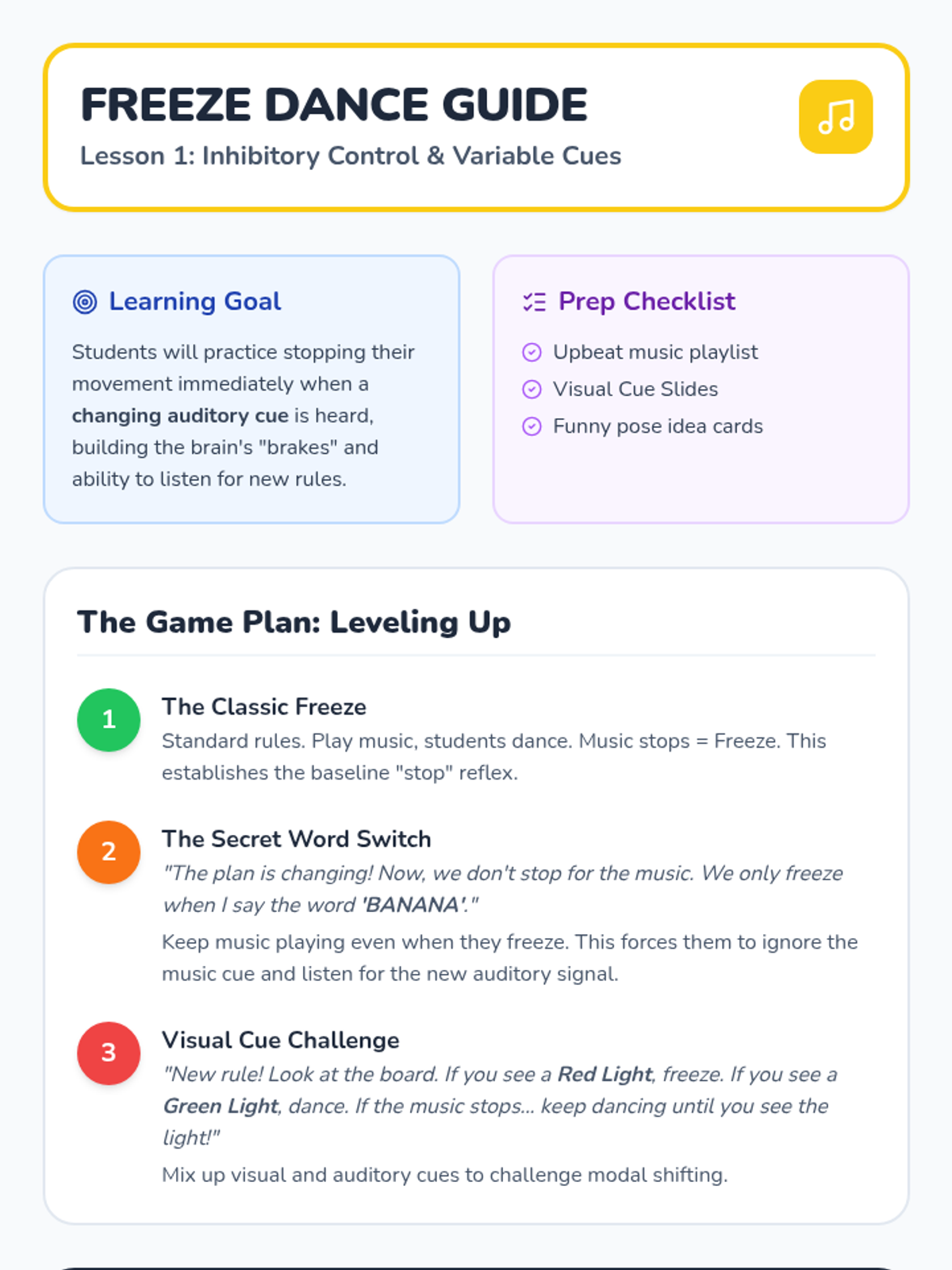
Stop-and-think strategies, impulse management, and SMART goal setting for personal growth. Develops internal motivation, stress reduction techniques, and resilience through proactive planning and monitoring.
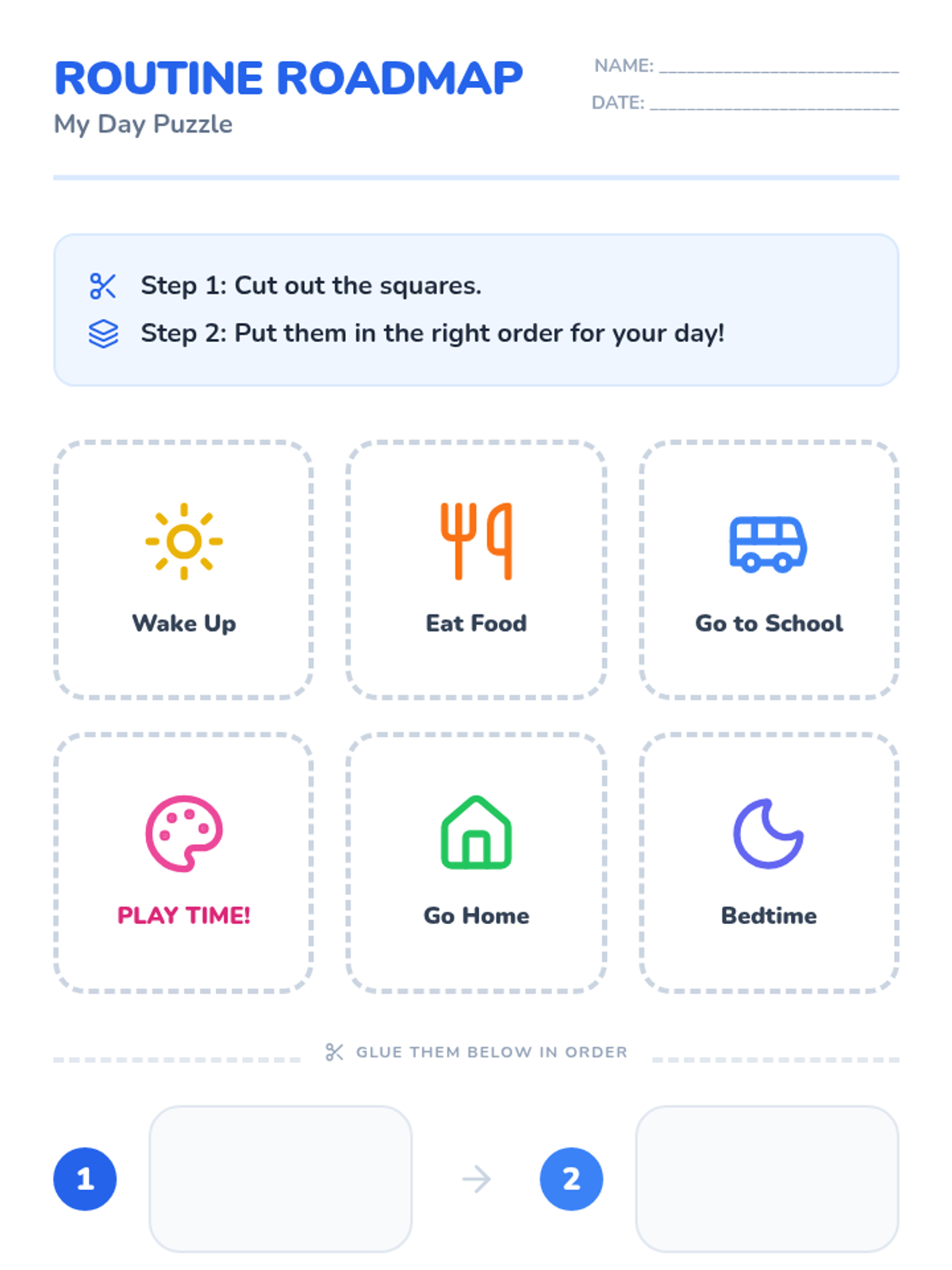
A project-based sequence for Kindergarteners to build emotional resilience by designing and practicing daily routines that prioritize fun, rest, and connection. Students learn to sequence their day, brainstorm rewarding activities, and commit to 'Positive Pauses' for emotional well-being.
A Kindergarten sequence focused on teaching emotional regulation through positive actions. Students learn to use activities like physical movement, deep breathing, and creative expression to 'switch the channel' from negative to positive emotions, building a toolkit of coping strategies.
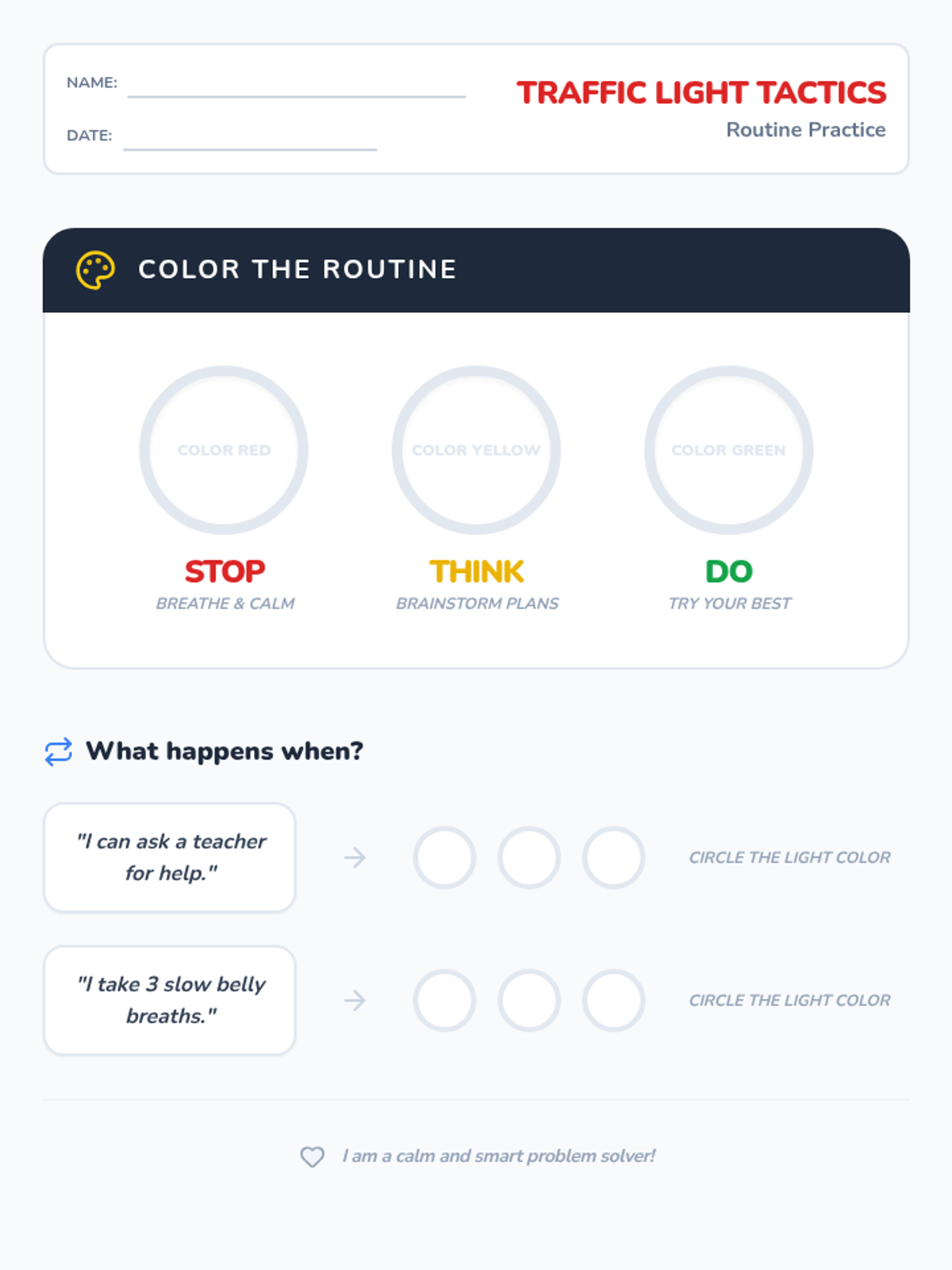
A Kindergarten sequence focused on teaching students a structured problem-solving routine (Stop, Think, Do) and applying it to multi-step challenges through games, sequencing activities, and a final detective project.
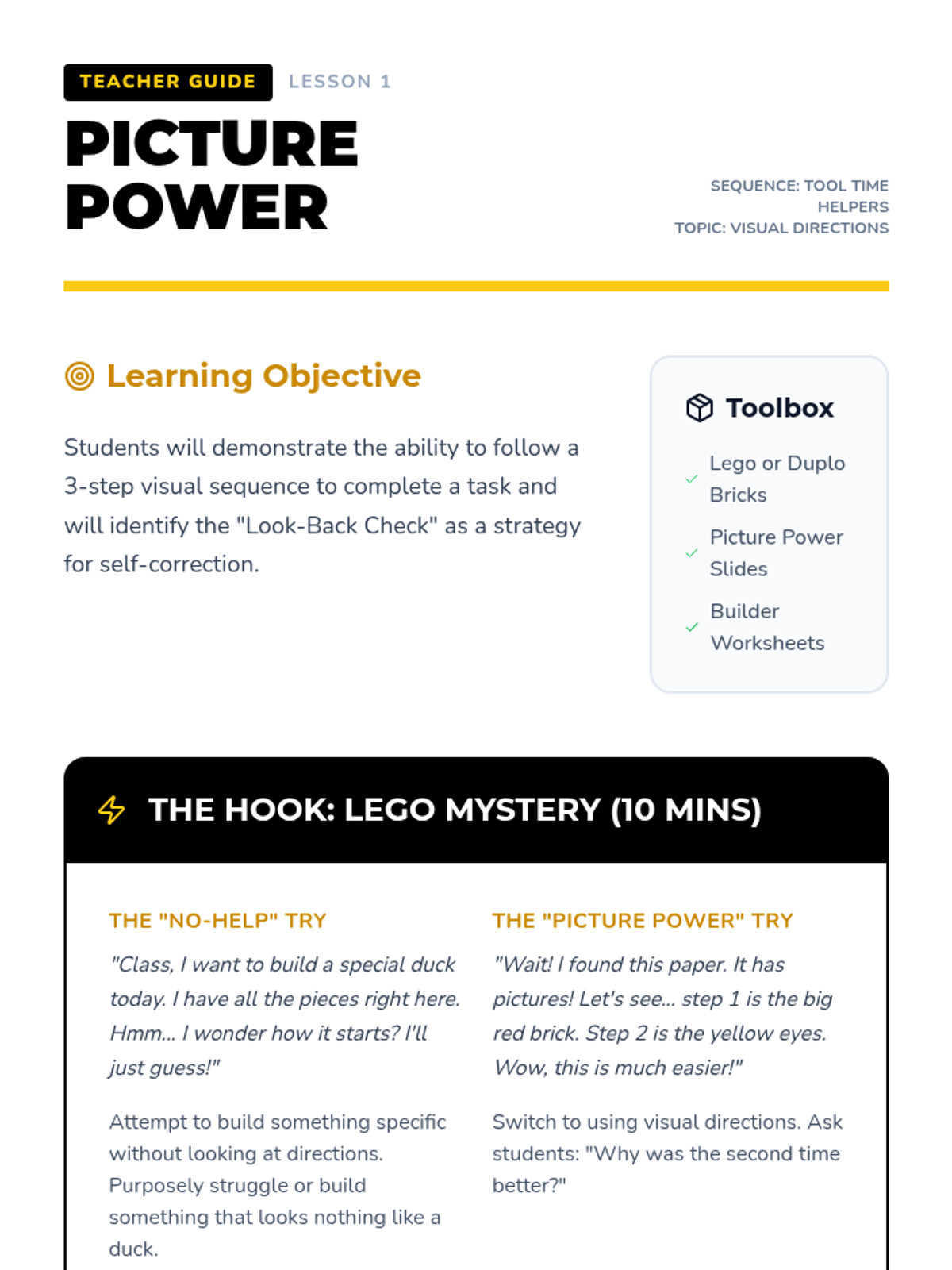
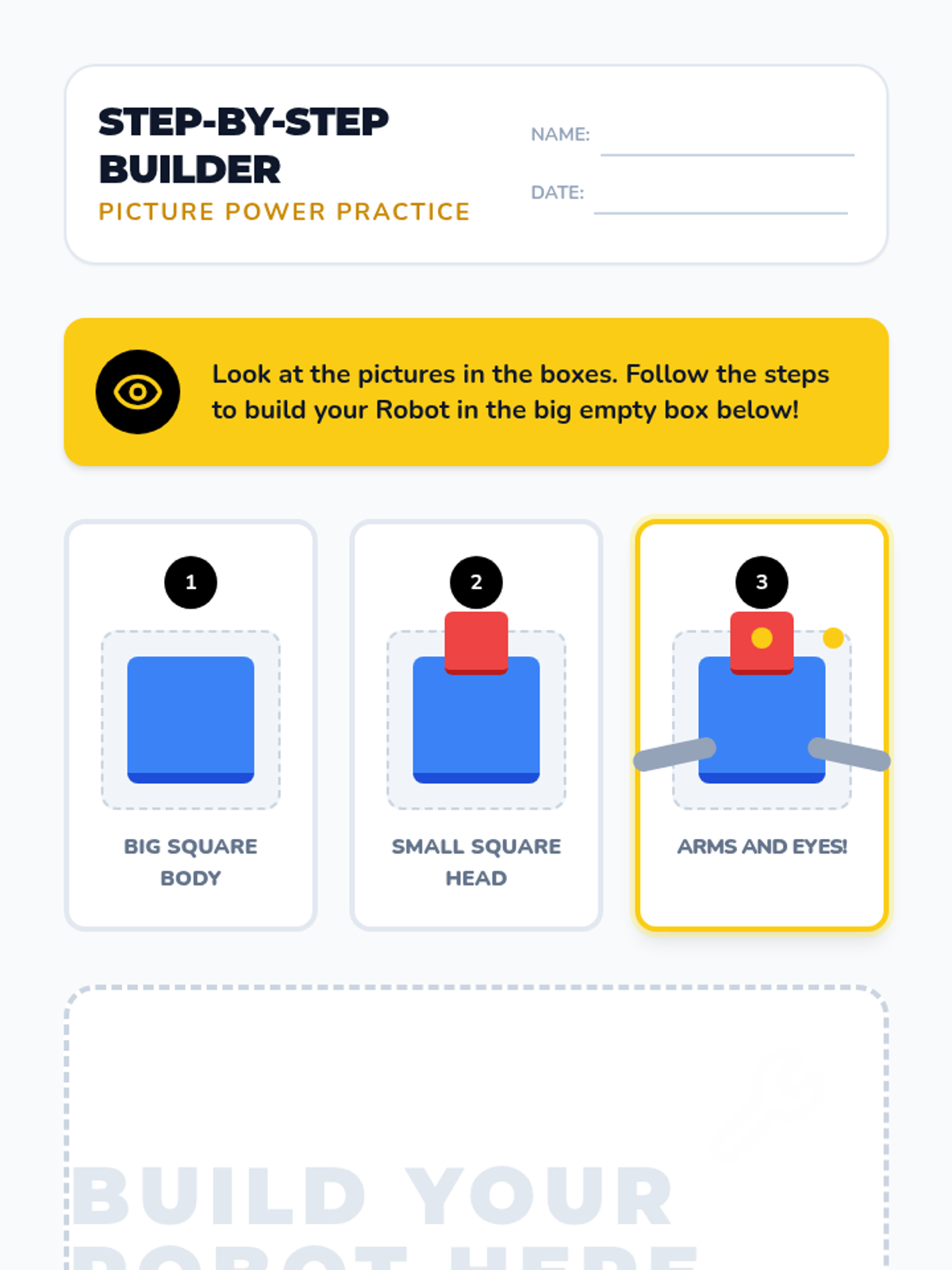
A Kindergarten sequence focused on teaching students how to use visual supports and environmental tools to solve problems independently. Students learn to use checklists, picture schedules, and reference charts to navigate obstacles in task completion.
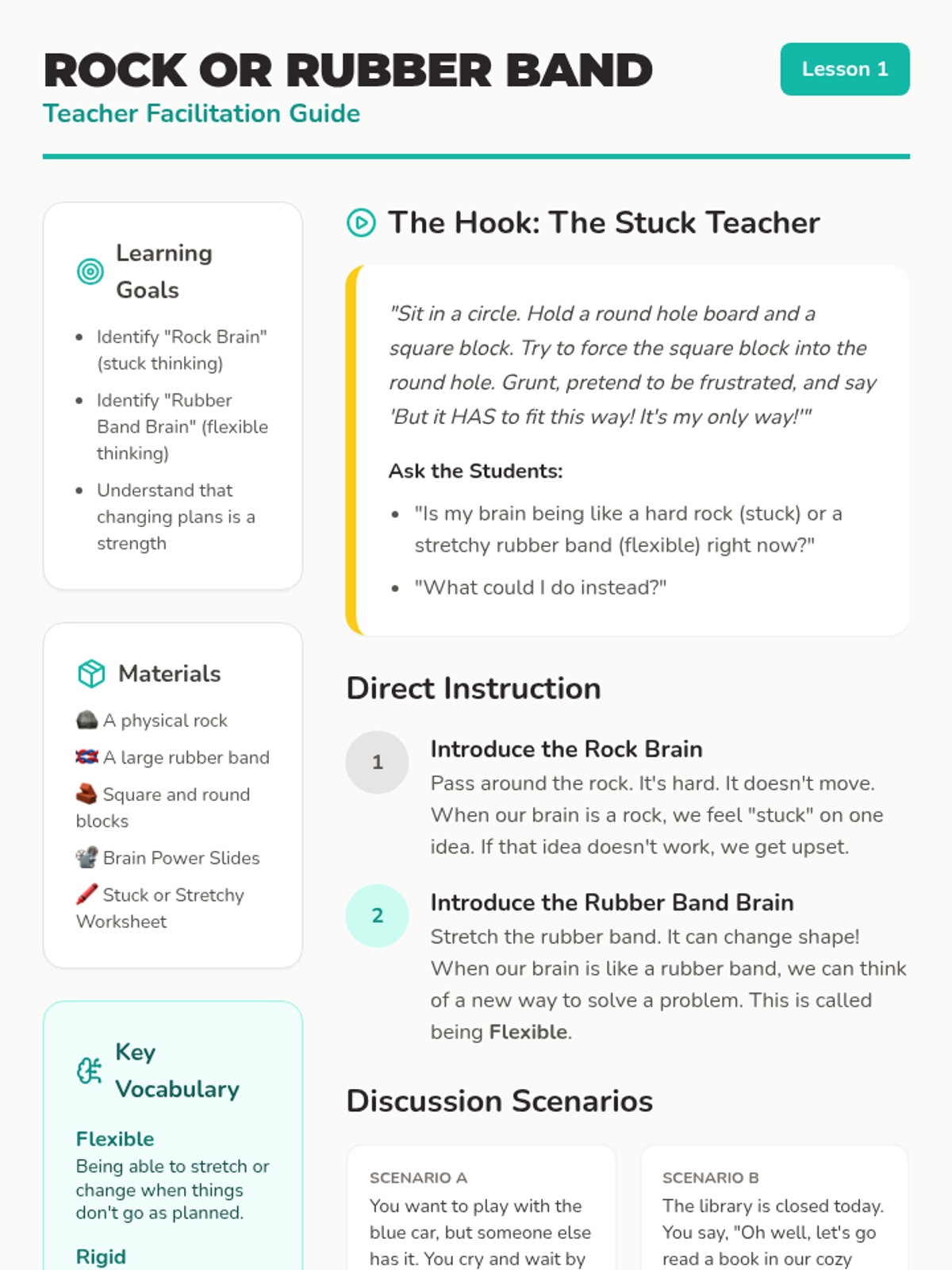
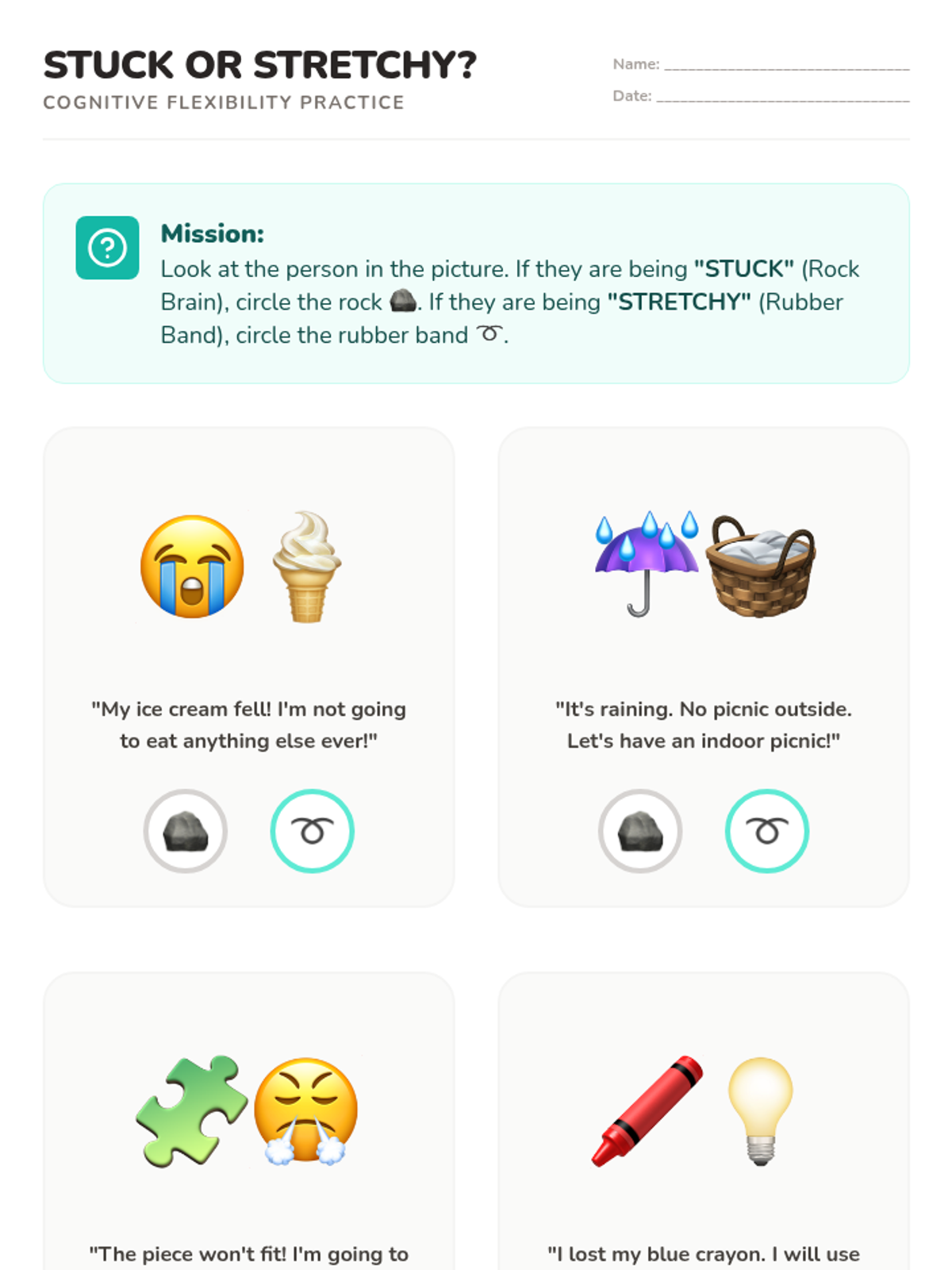
A 5-lesson sequence for Kindergarten students focusing on cognitive flexibility. Students learn to transition from rigid thinking ('Rock Brain') to flexible thinking ('Rubber Band Brain') through structured play, creative problem-solving, and social role-playing.
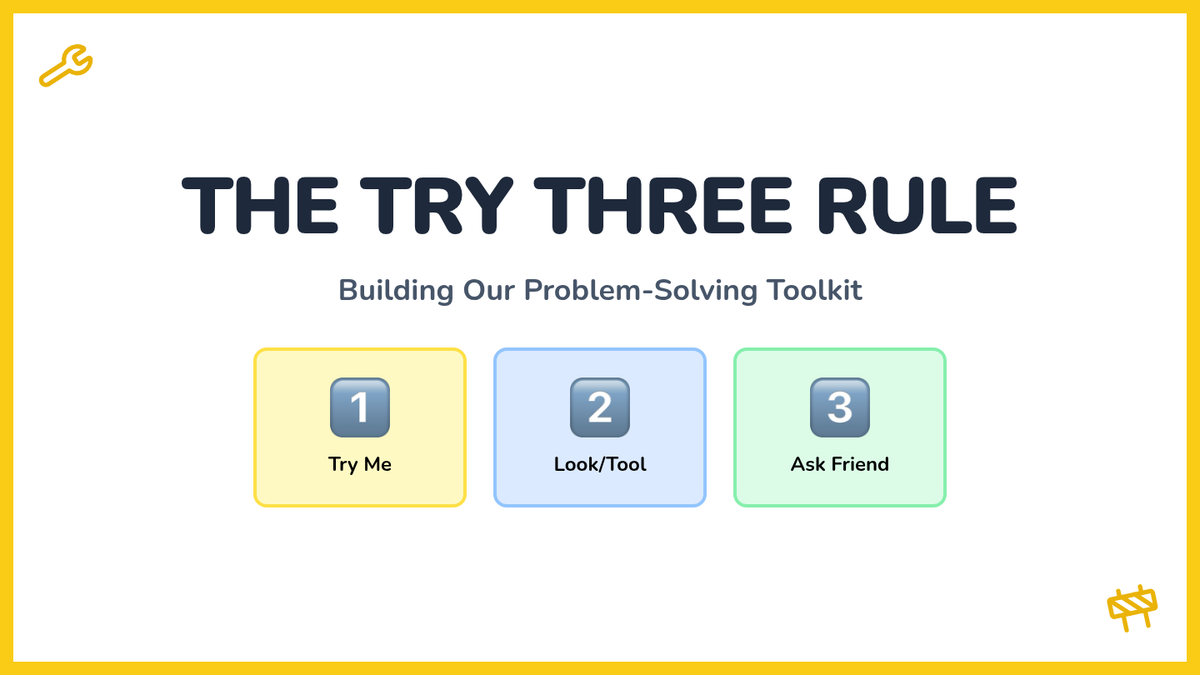
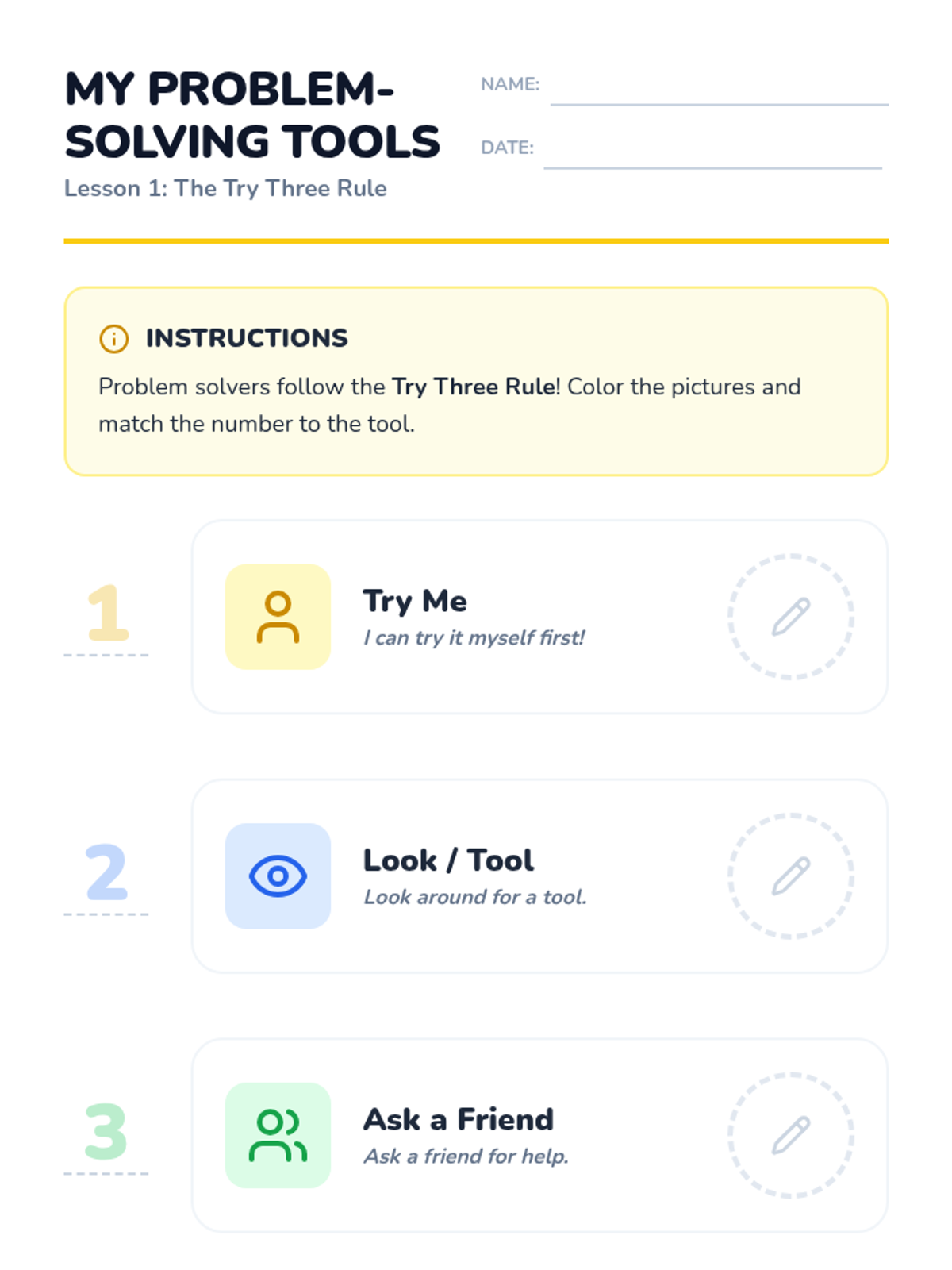
A sequence for Kindergarten students focusing on self-advocacy and problem-solving. Students learn a graduated prompting hierarchy (Try Three Rule), identify appropriate helpers, use specific scripts to ask for help, and distinguish between being helped and being taught.
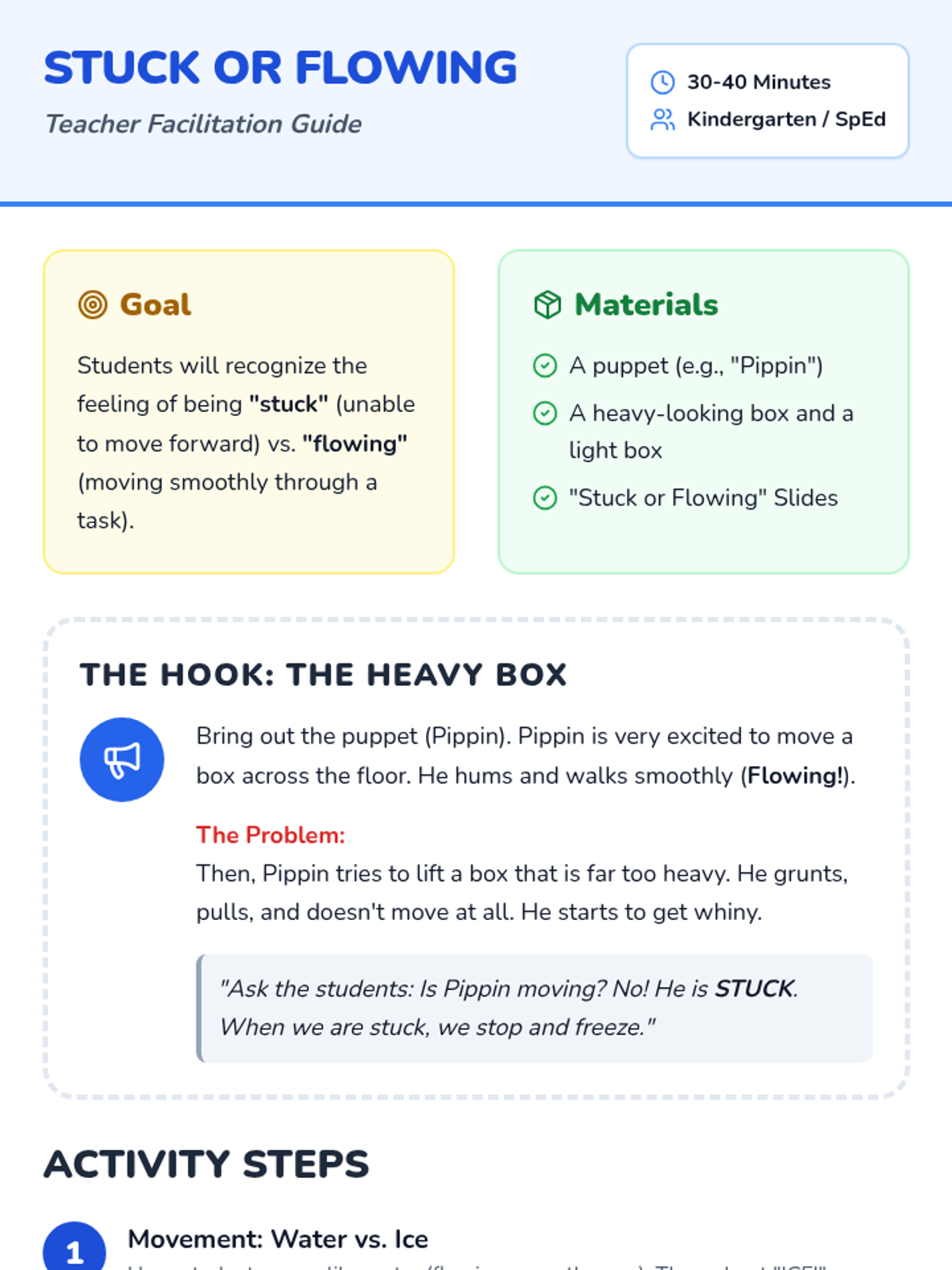
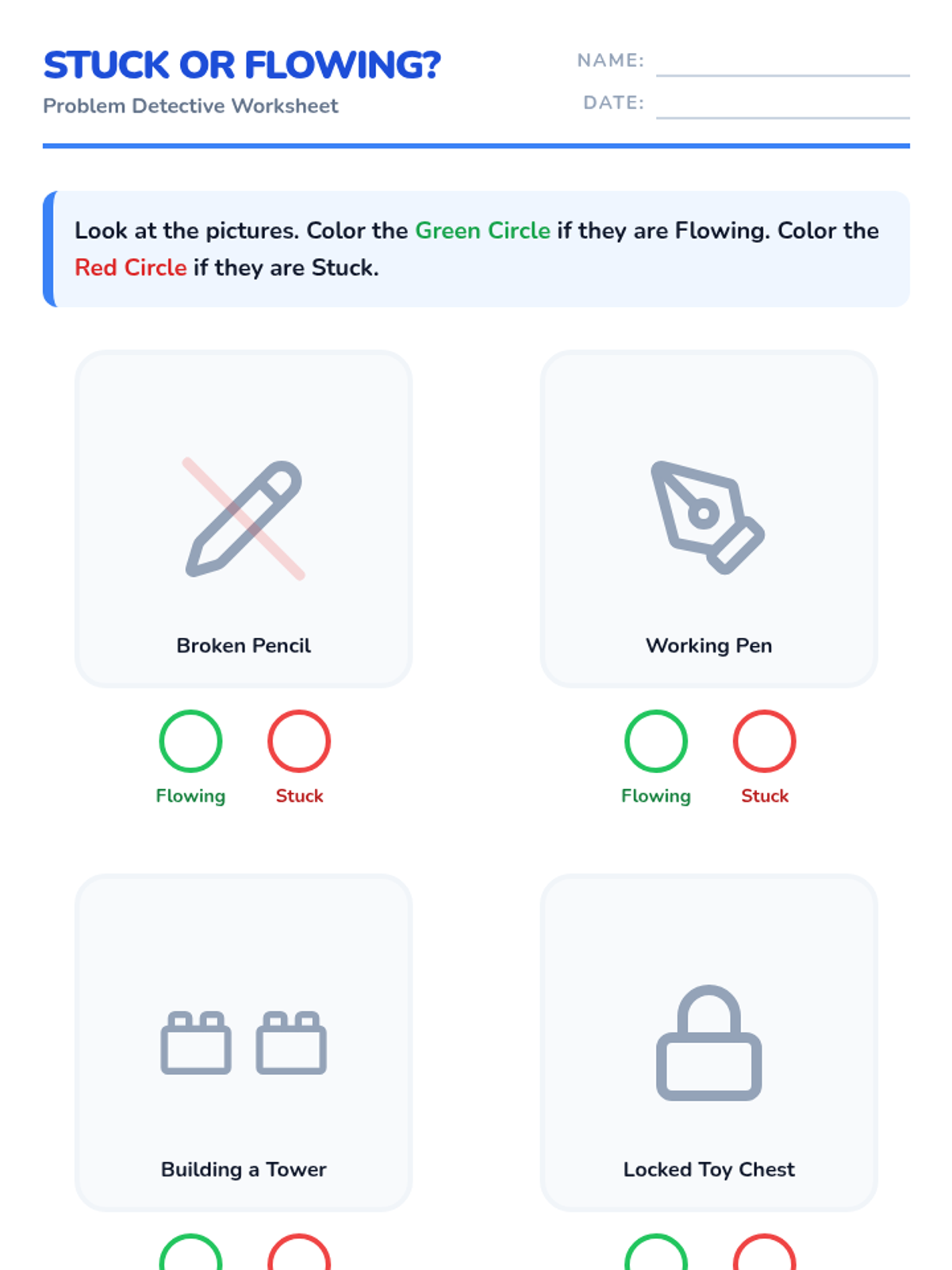
A Kindergarten sequence focused on identifying obstacles and naming barriers to task completion. Students learn to recognize the feeling of being 'stuck', differentiate between small glitches and big blockers, and use visual tools to communicate problems before frustration escalates.
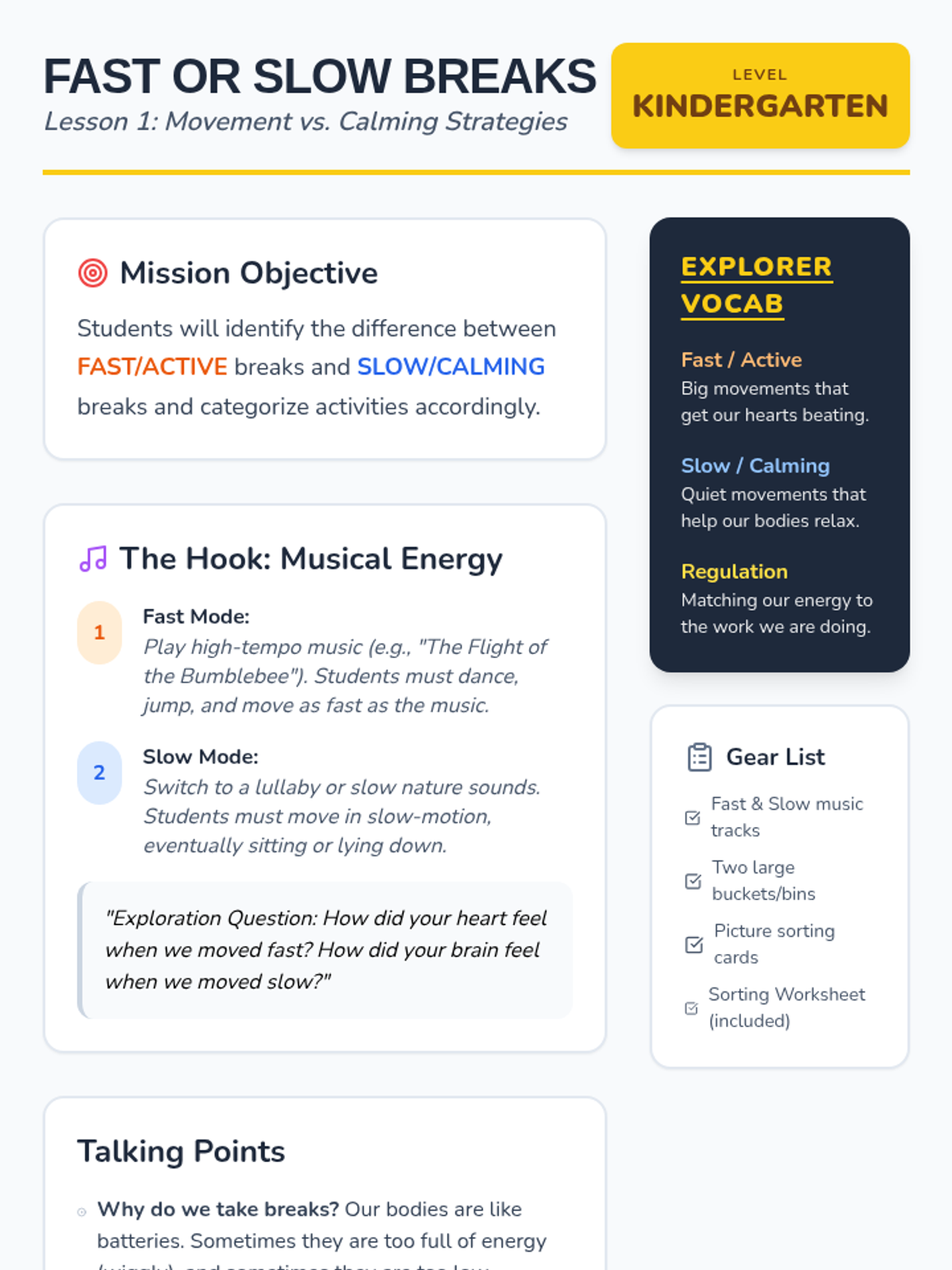
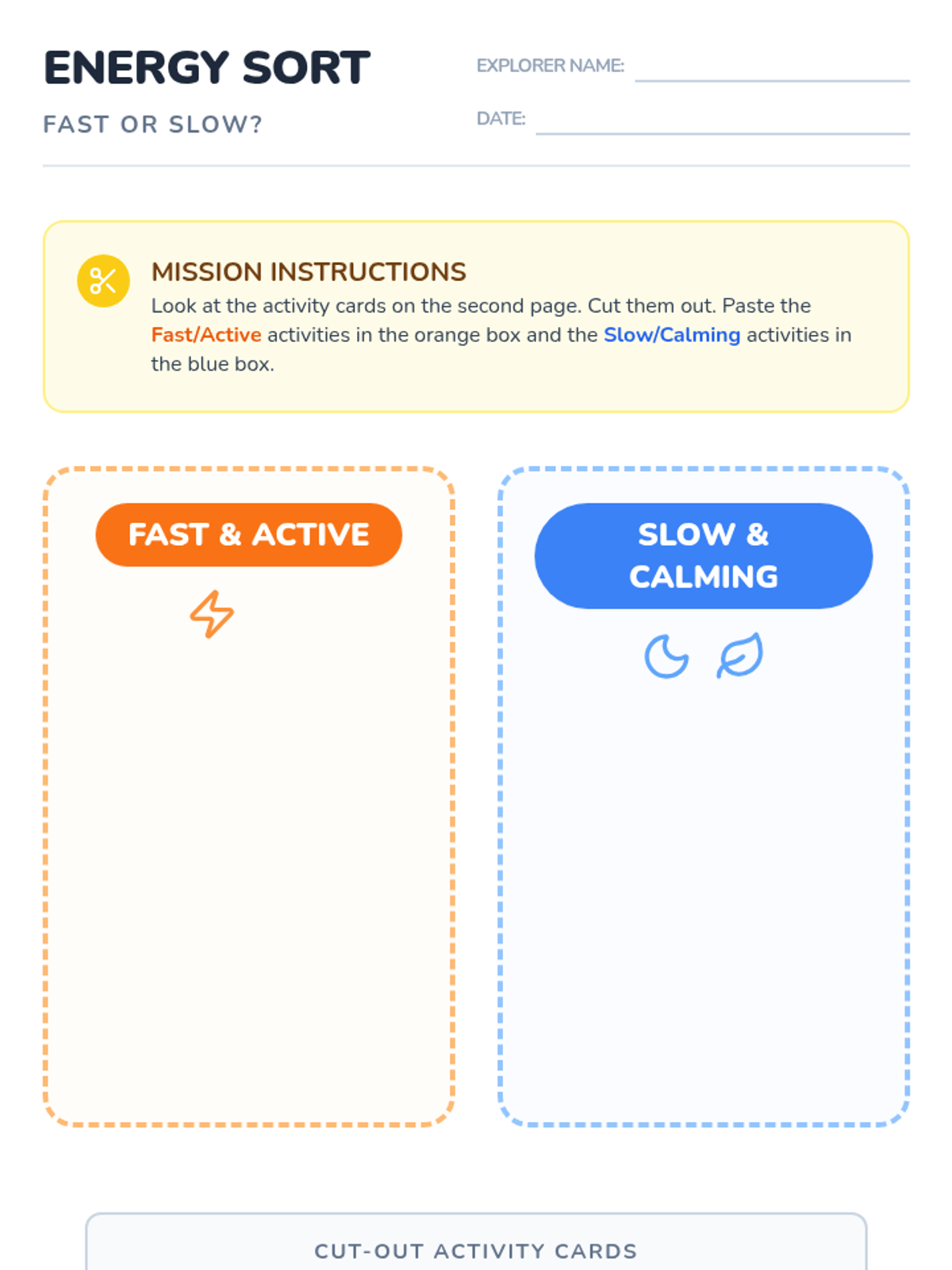
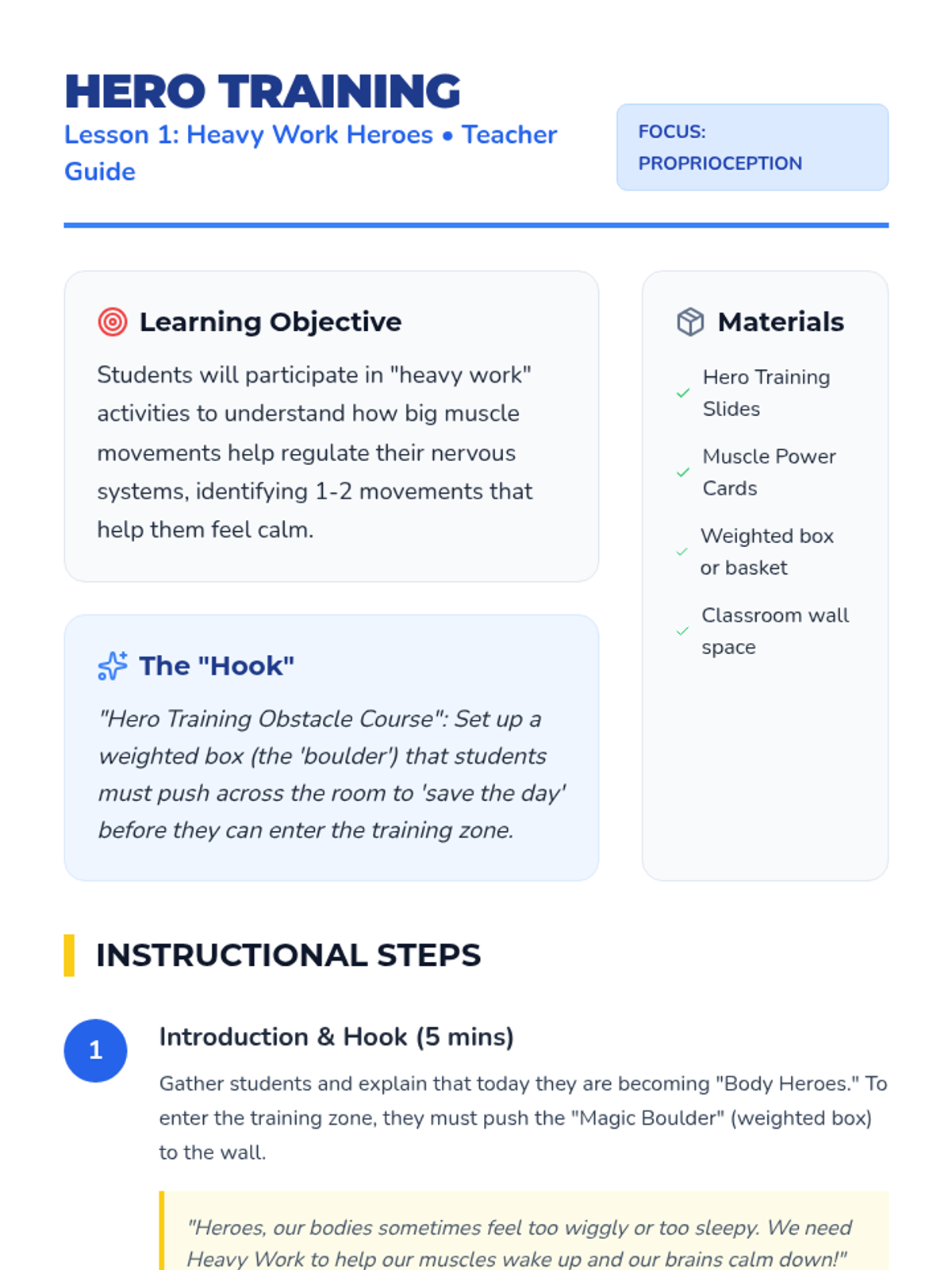
A comprehensive 5-lesson sequence for Kindergarten students to learn how to identify their sensory needs and select appropriate movement or calming breaks to stay ready for learning.
A 5-lesson sequence for Kindergarten students focusing on interoception and the procedural steps of requesting and returning from a break to support self-regulation.
A 5-lesson sequence for Pre-K students focusing on learning and practicing specific motor and sensory strategies to regulate their nervous systems and manage breaks effectively.
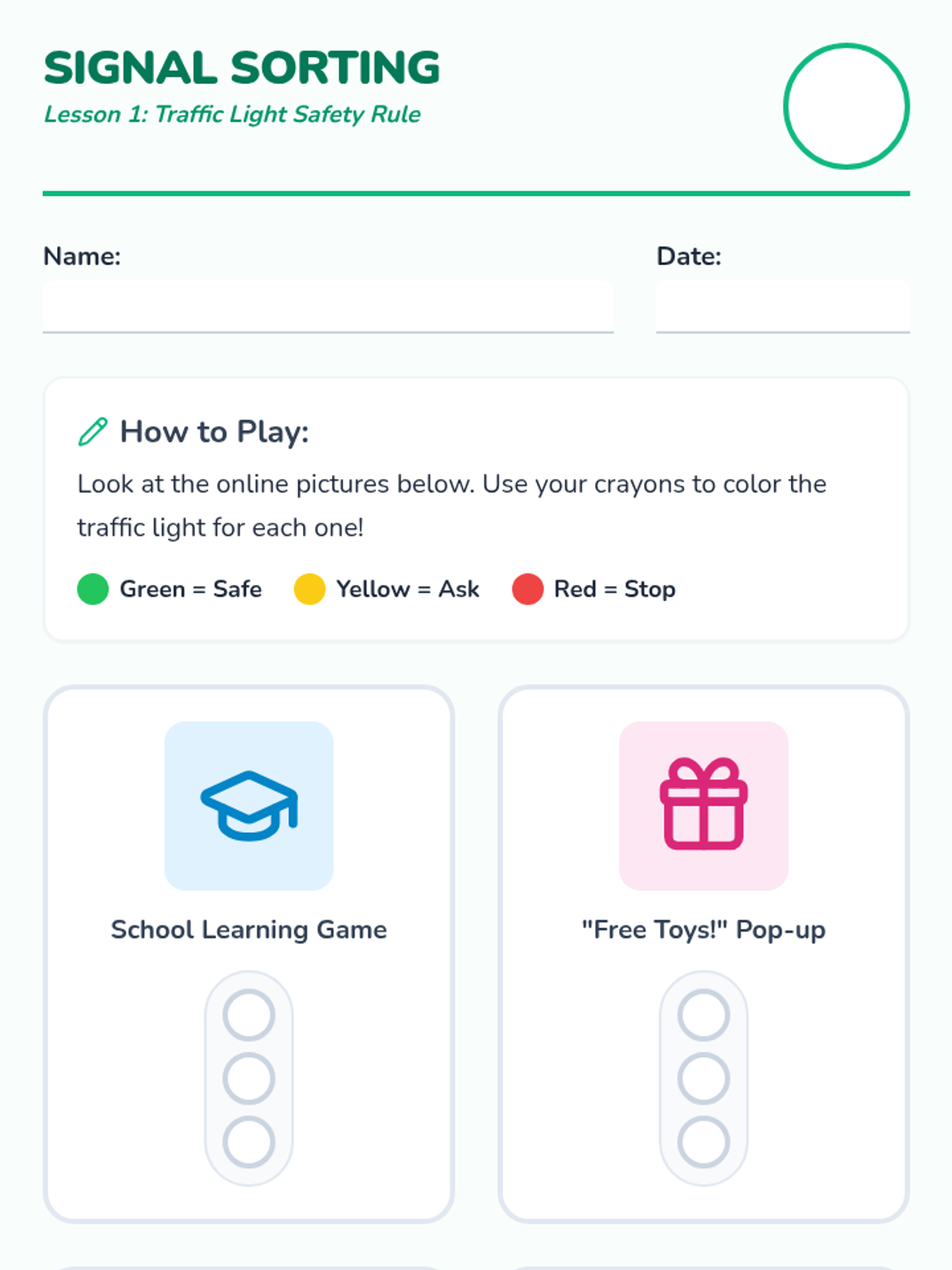
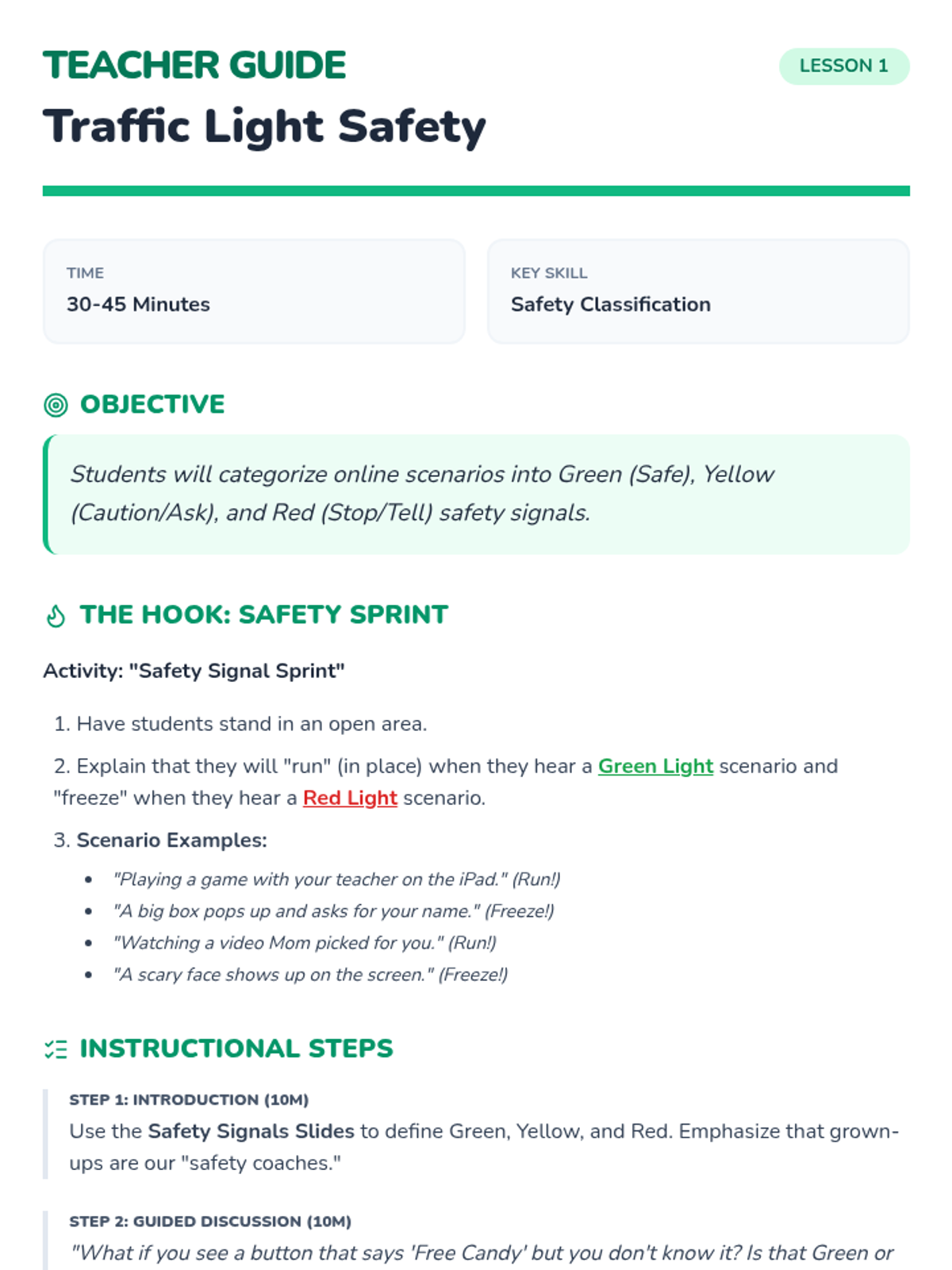
This inquiry-based sequence for Kindergarteners uses a traffic light model (Green, Yellow, Red) to teach safe online navigation. Students learn to recognize 'tricky' content like ads and pop-ups, understand stranger danger through avatars, and master the 'Pause and Ask' reflex when encountering unexpected online situations.
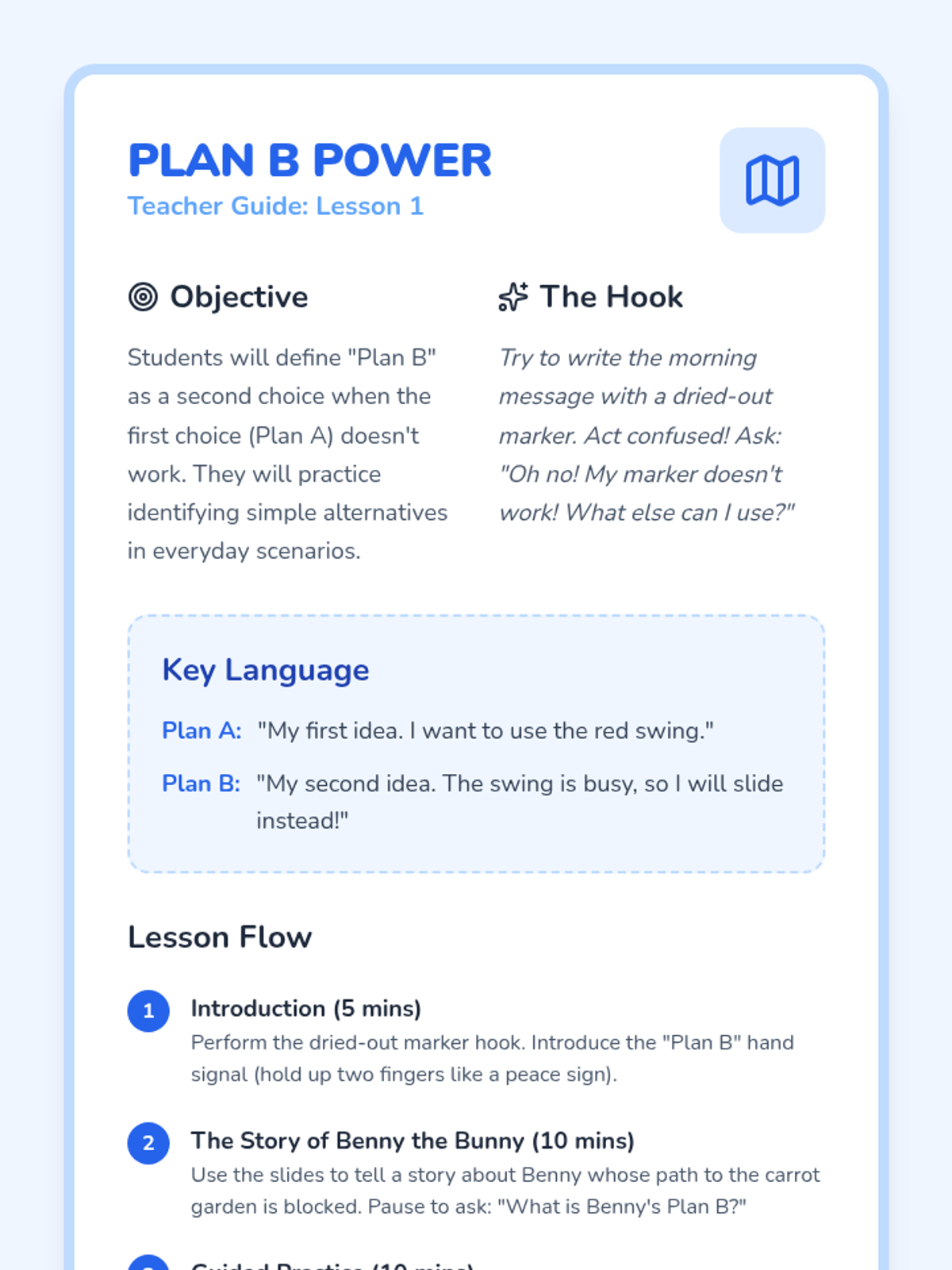
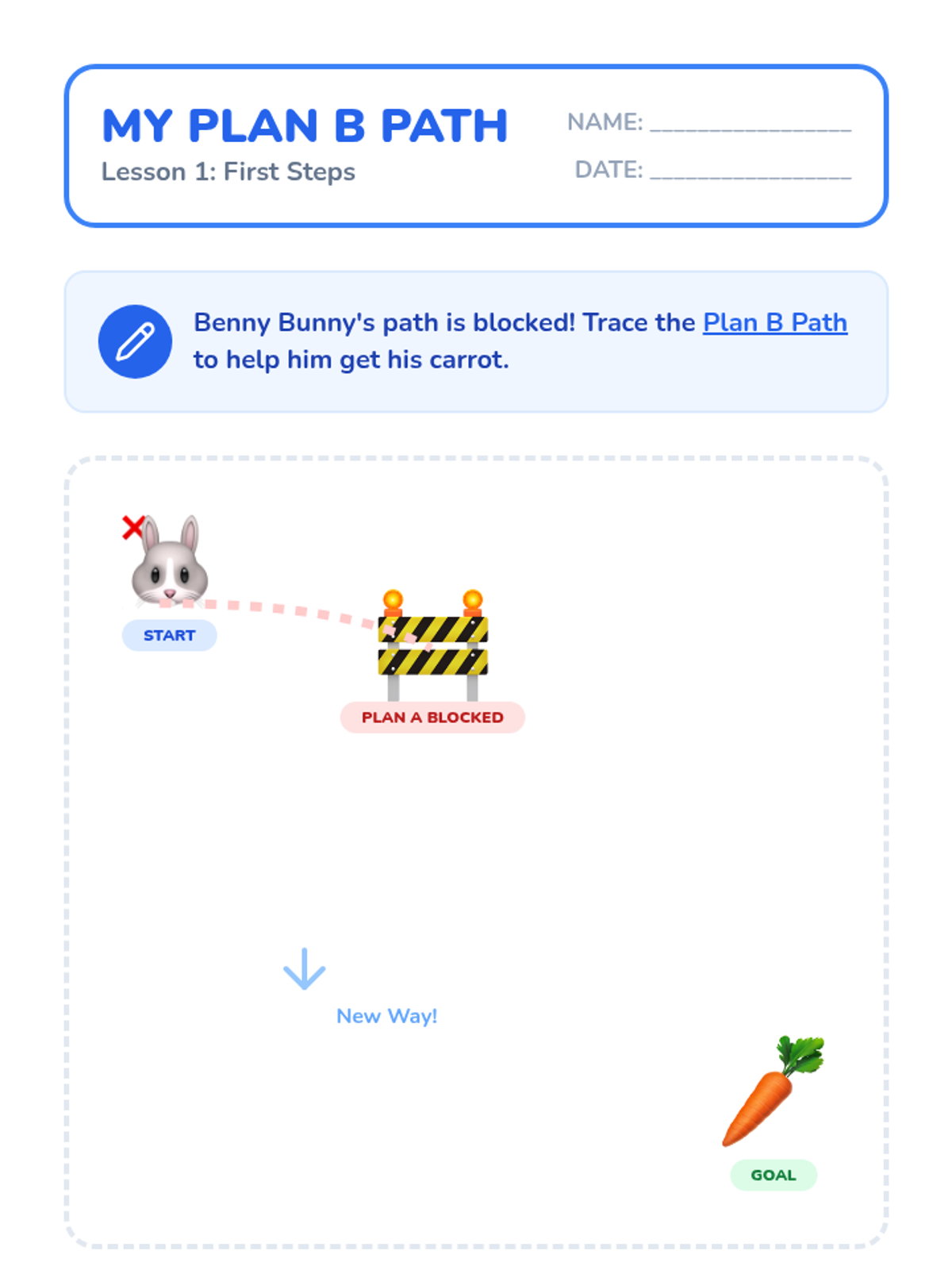
This sequence helps Pre-K students develop cognitive flexibility and executive function. Students learn to navigate disruptions, substitute tools, and manage emotions when plans change, building a 'Plan B' toolkit for classroom success.
A Pre-K sequence focused on identifying vocal and communication cues that signal emotional escalation. Students learn to recognize changes in volume, speed, tone, and silence as indicators of their own and others' internal states.
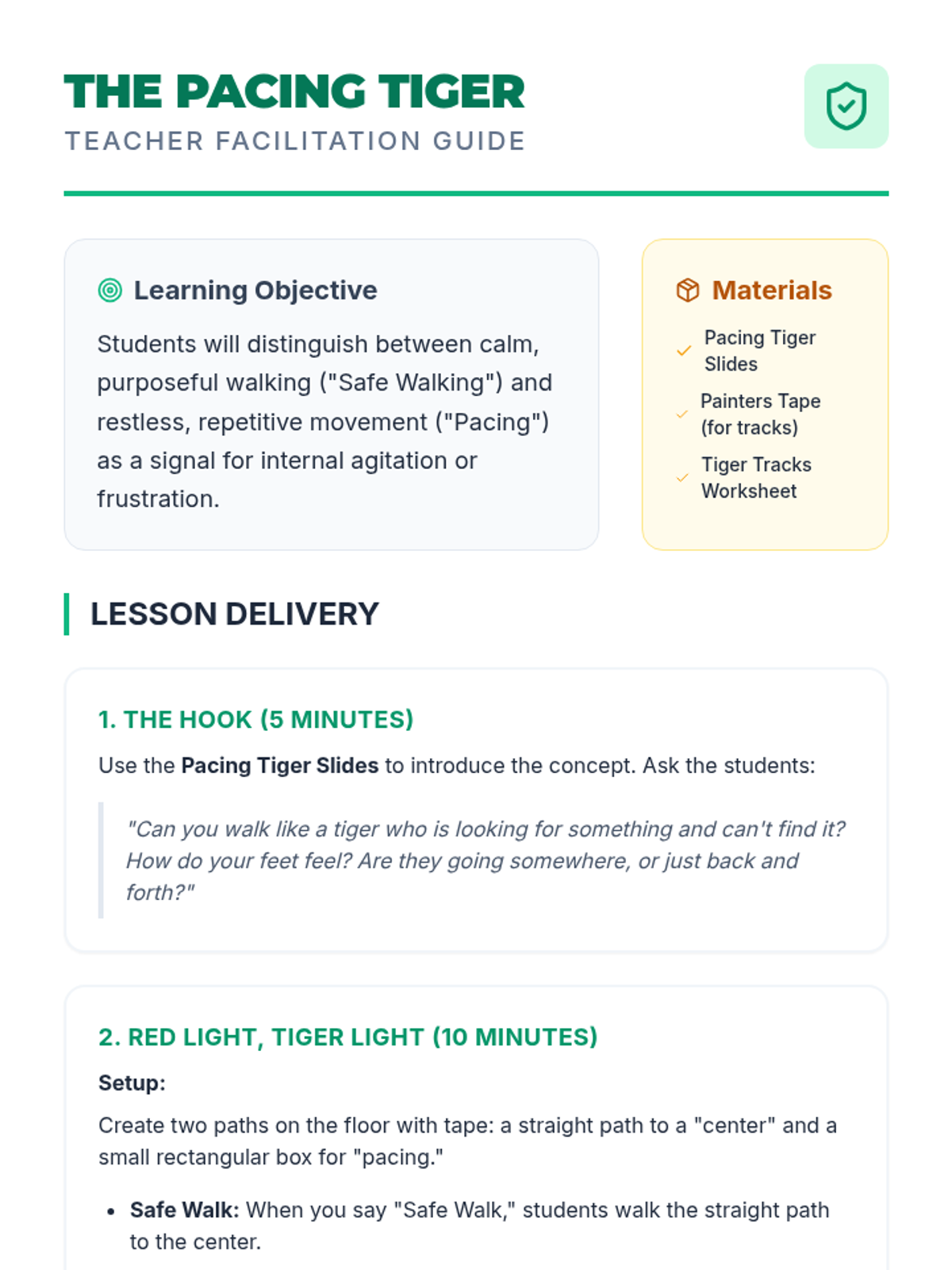
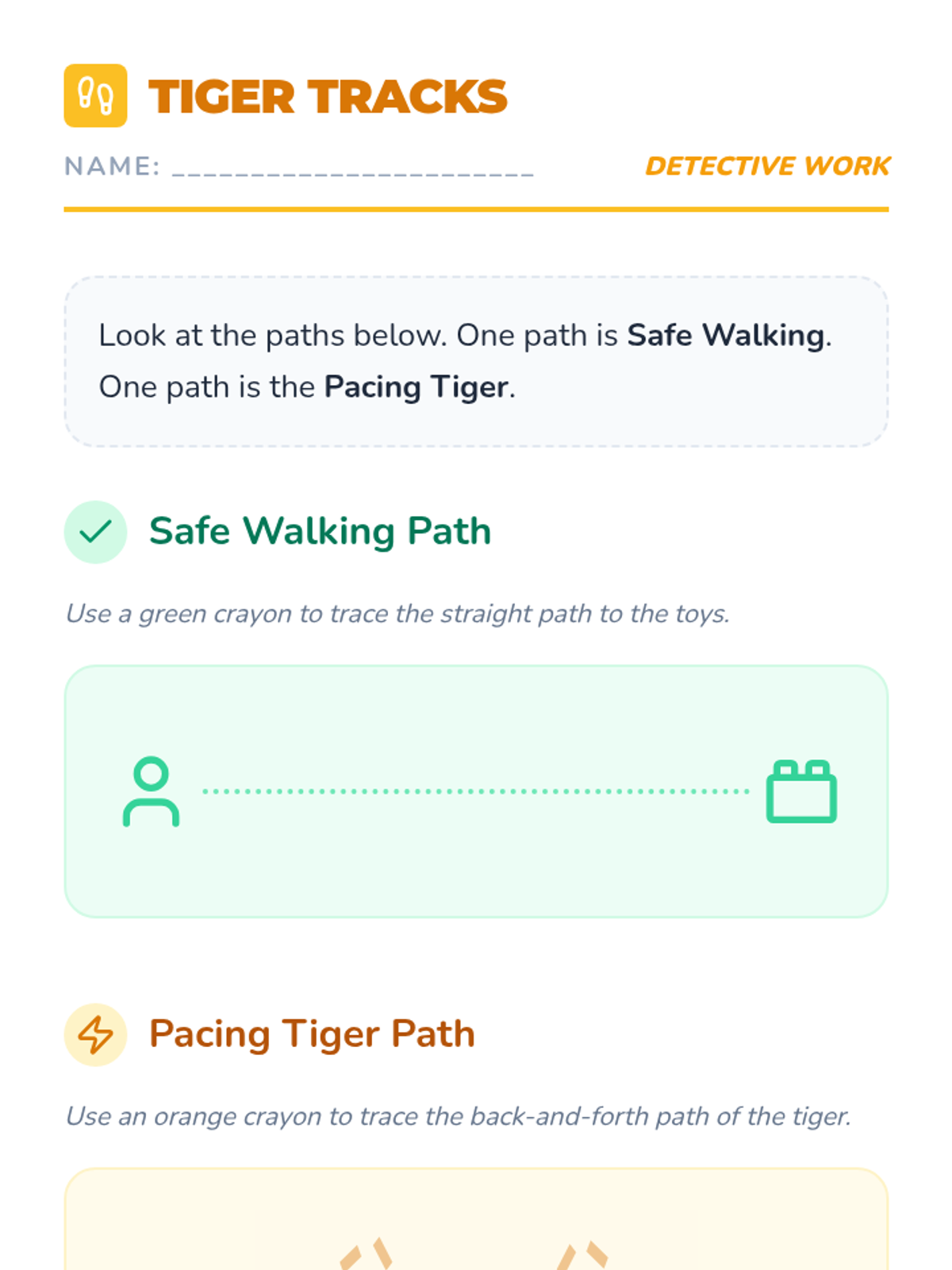
A Pre-K sequence focused on identifying early warning signs of behavioral escalation through animal metaphors, movement, and social-emotional awareness. Students learn to recognize pacing, hiding, impulsive hands, and loud footsteps as signals for needing support.
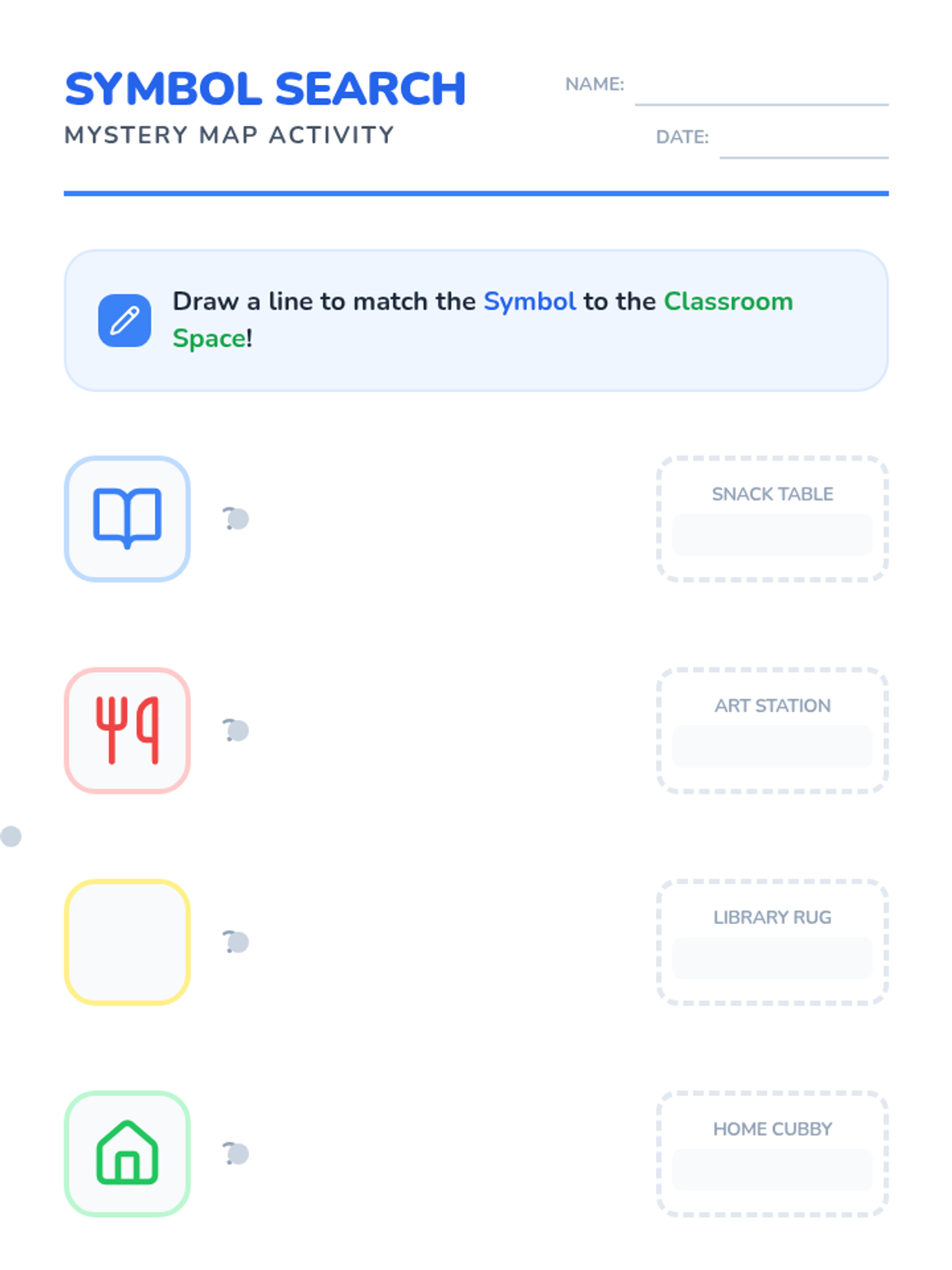
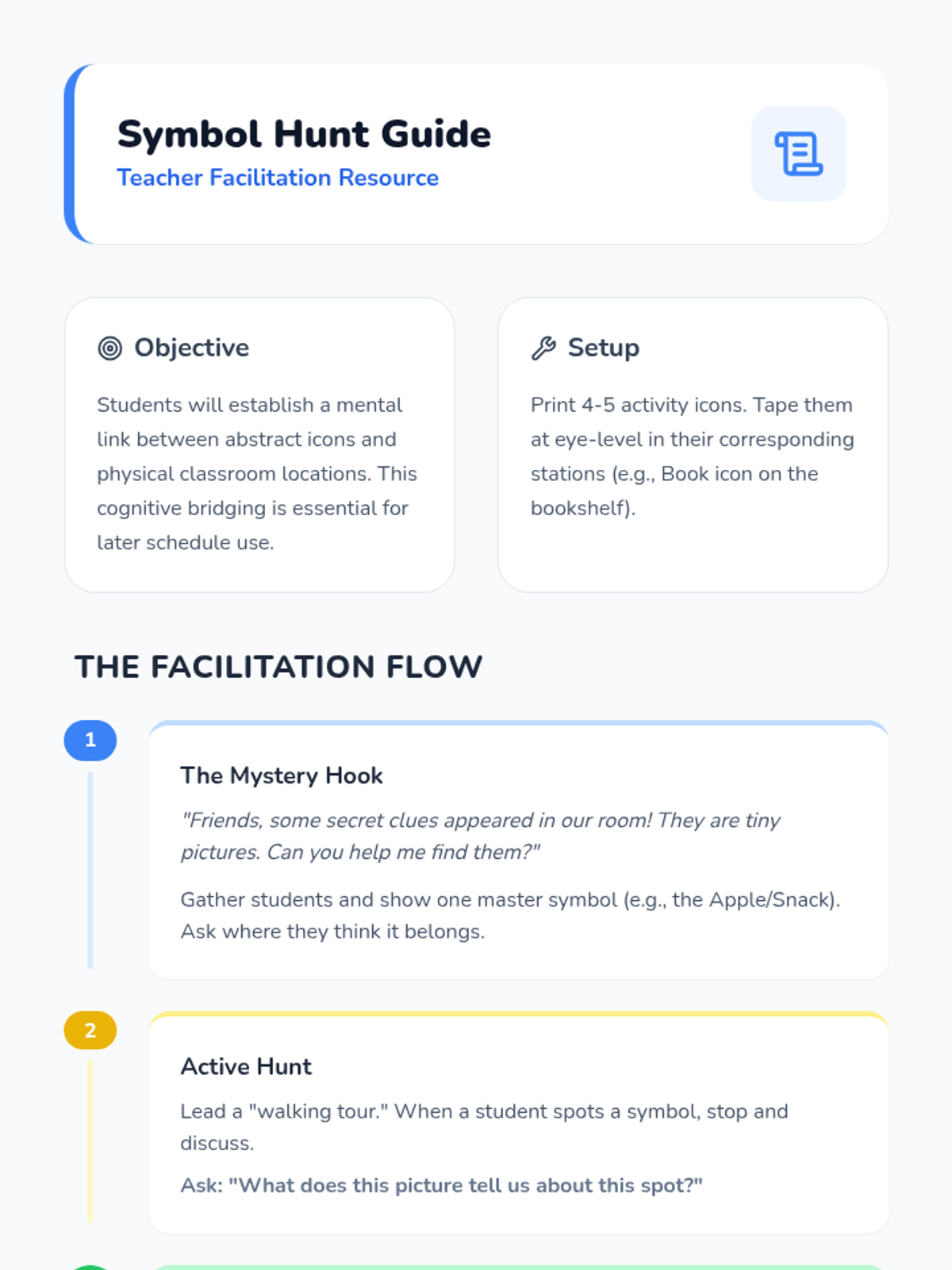
A 5-lesson sequence for Kindergarten students focused on using visual schedules and symbols to support working memory, transitions, and independence. Students progress from symbol recognition to creating their own personal mini-schedules.
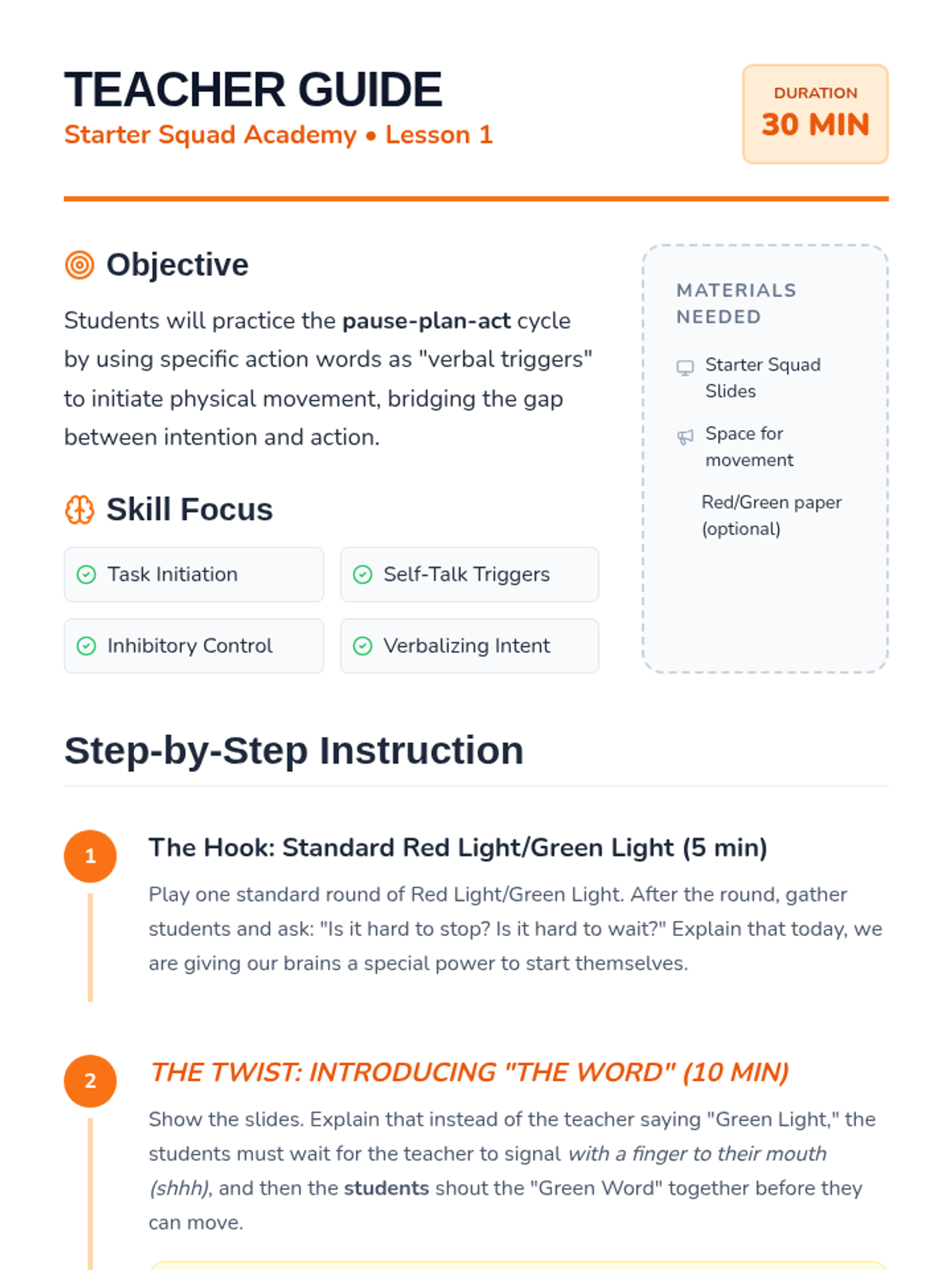
A gamified sequence for 1st graders to master task initiation through verbal self-talk triggers, using physical games and simulations to make executive functioning concrete.
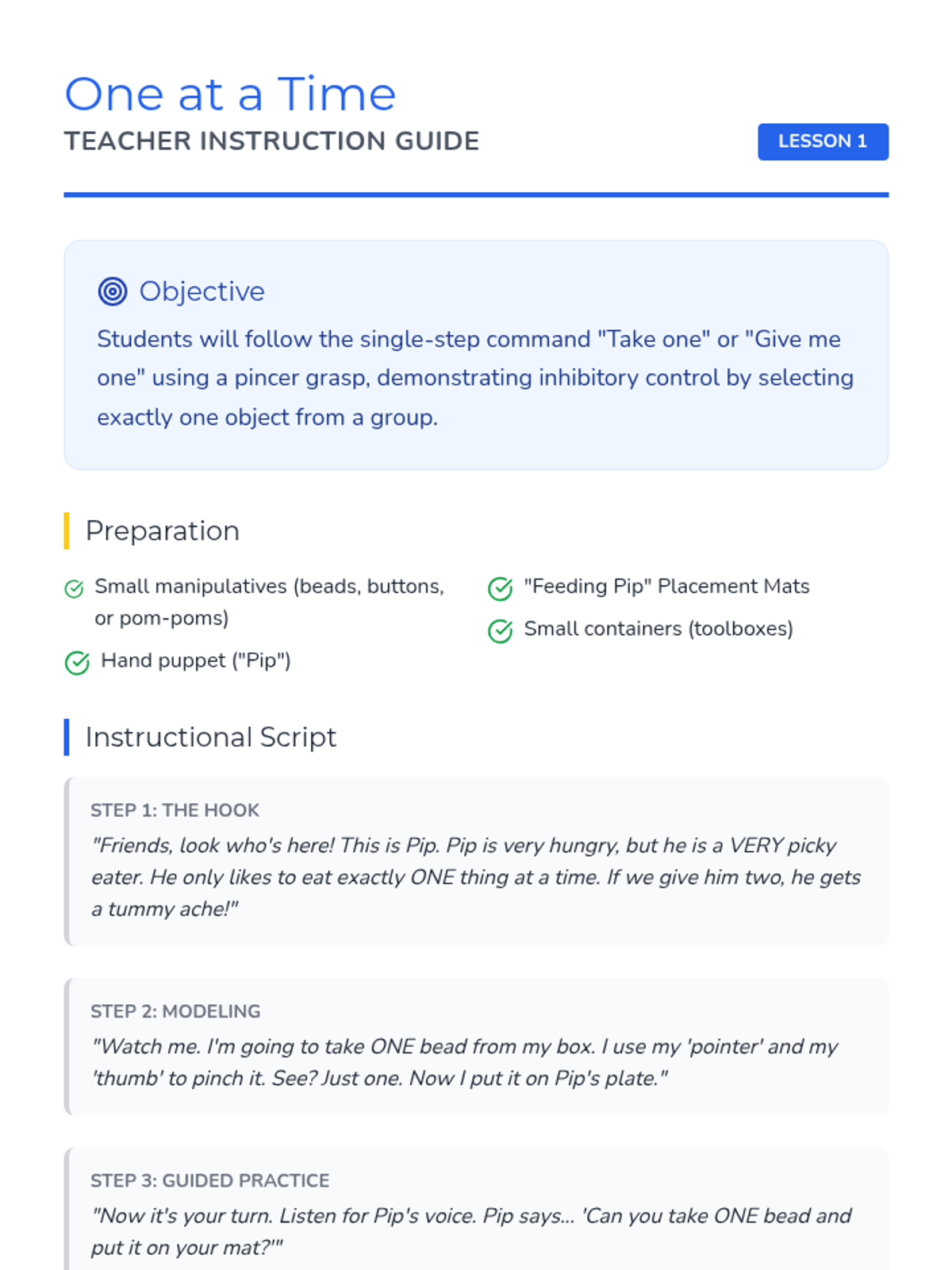
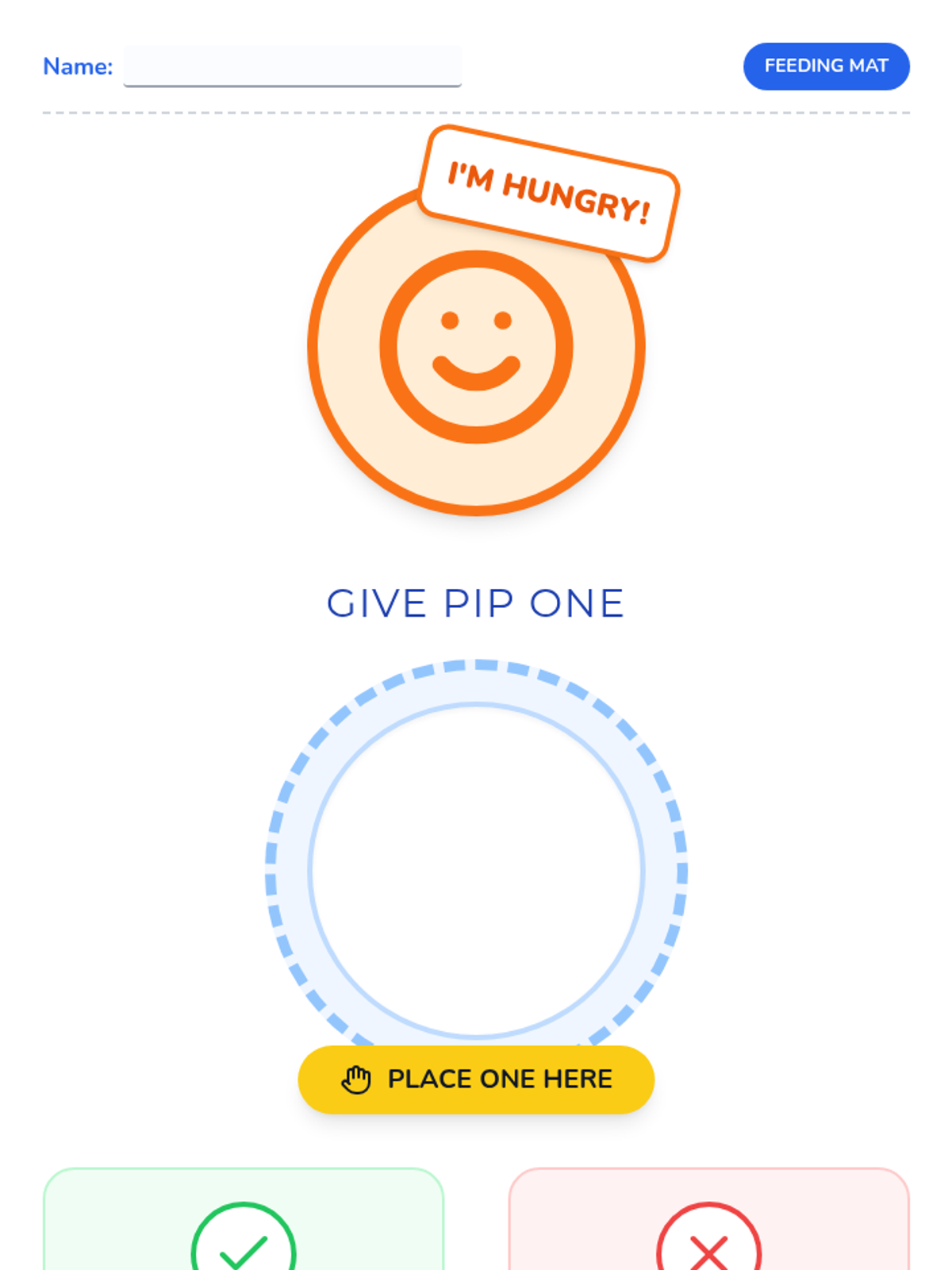
A Pre-K sequence focused on working memory and auditory processing through single-step directions using table-top manipulatives. Students develop fine motor skills and inhibitory control while following specific verbal commands in a hands-on workshop environment.
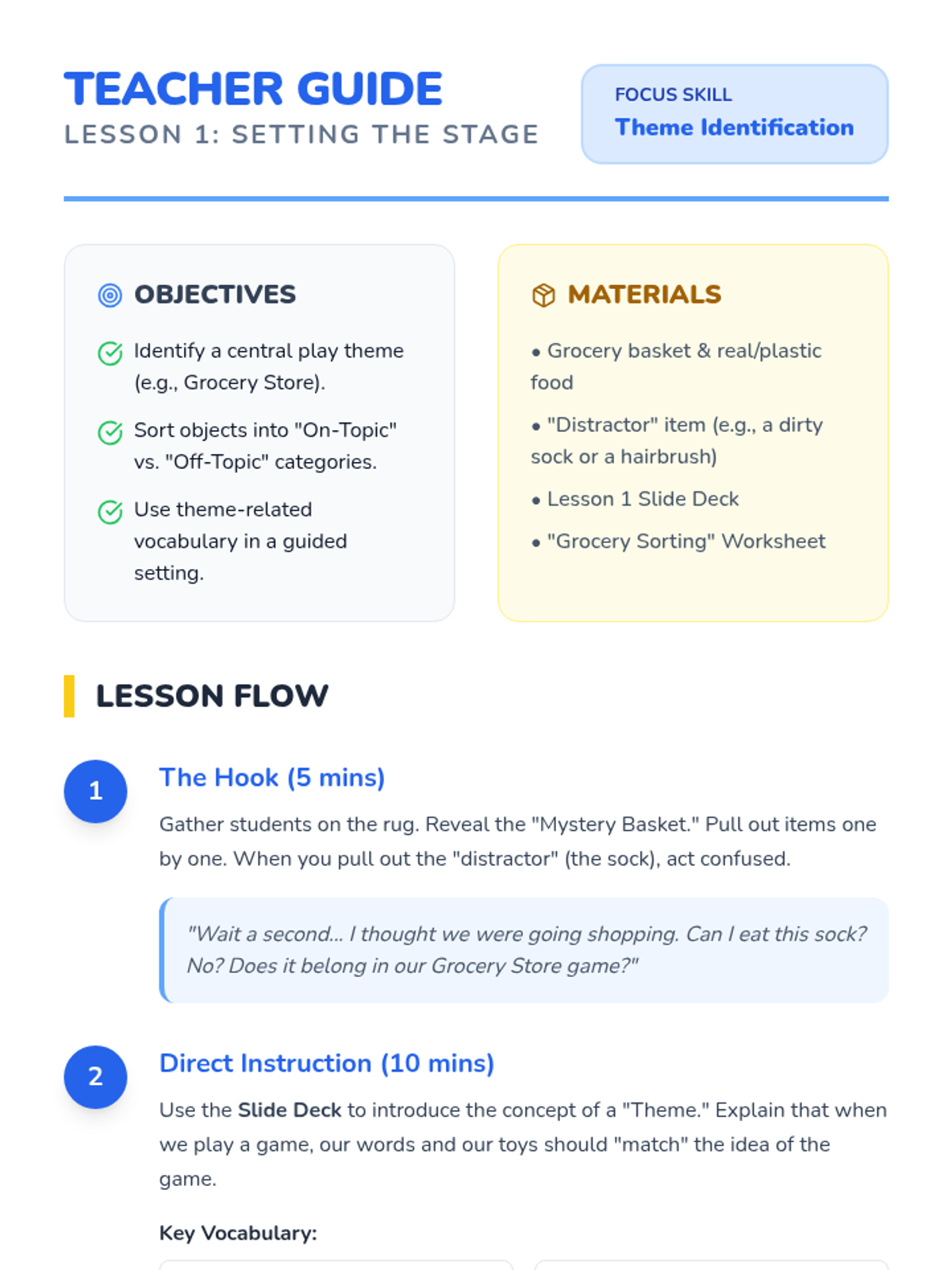
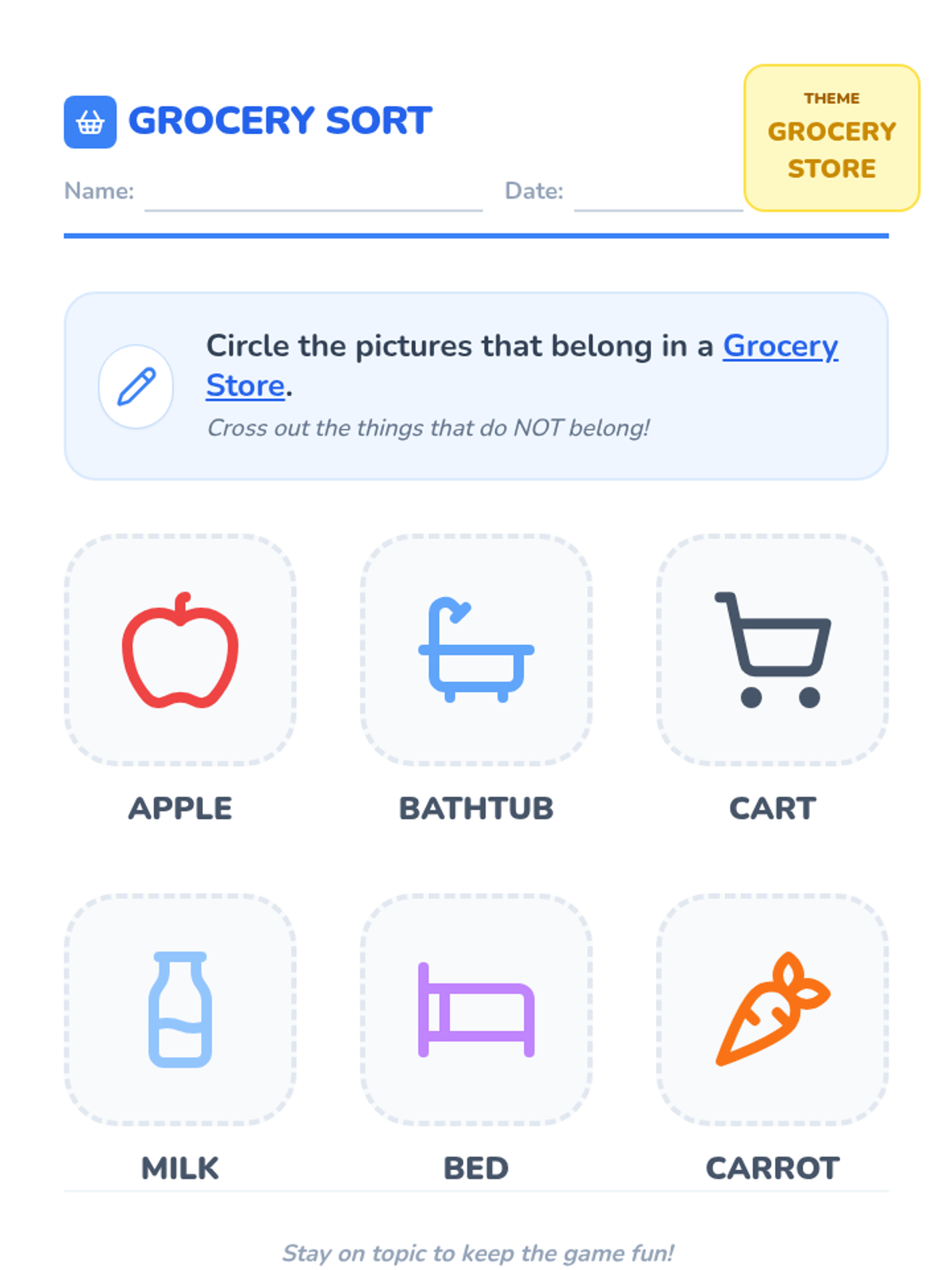
A 5-lesson sequence for Pre-K students focusing on topic maintenance through the lens of dramatic play. Students learn to identify themes, stay in character, handle distractions, and transition between topics naturally.
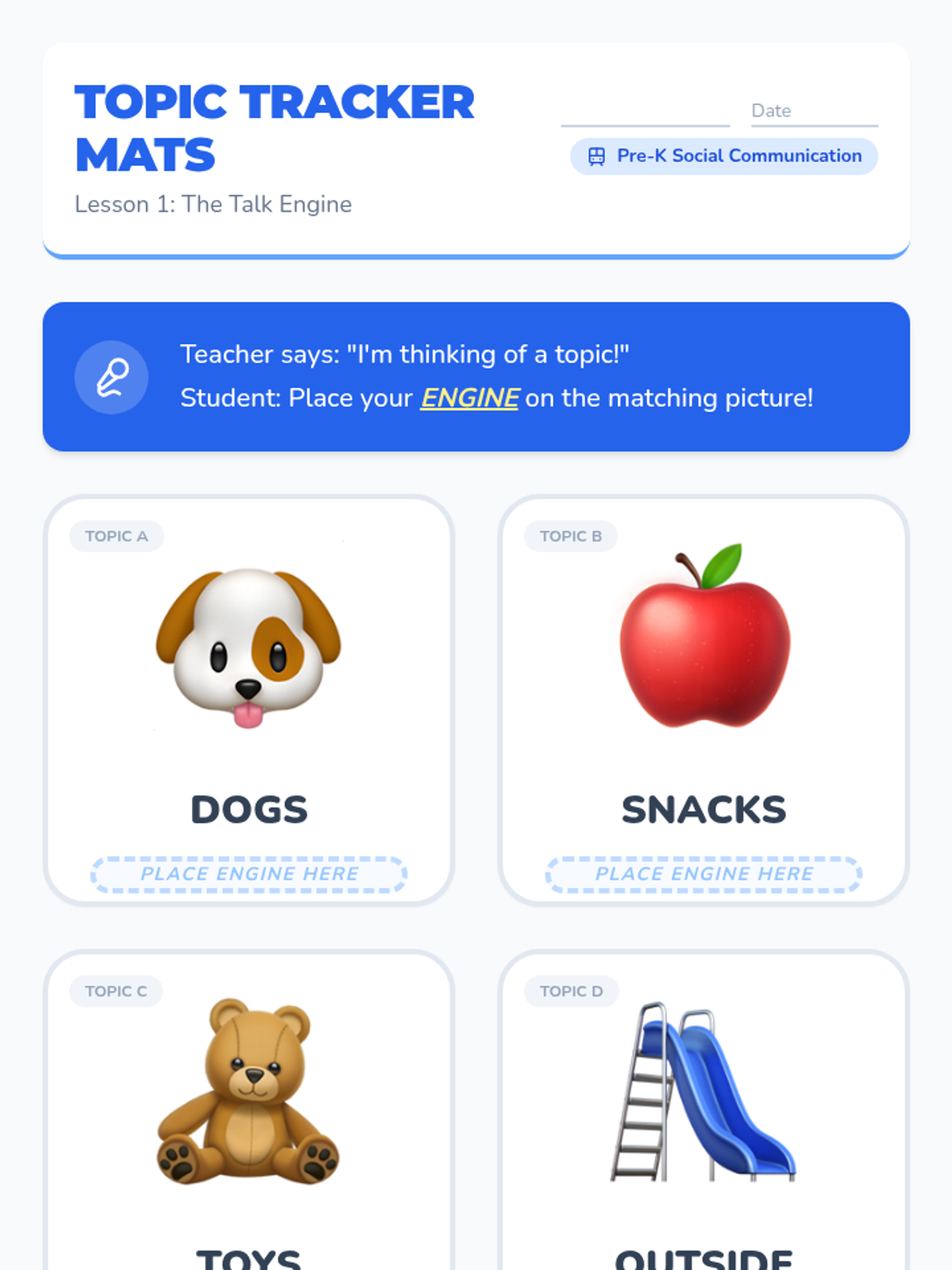
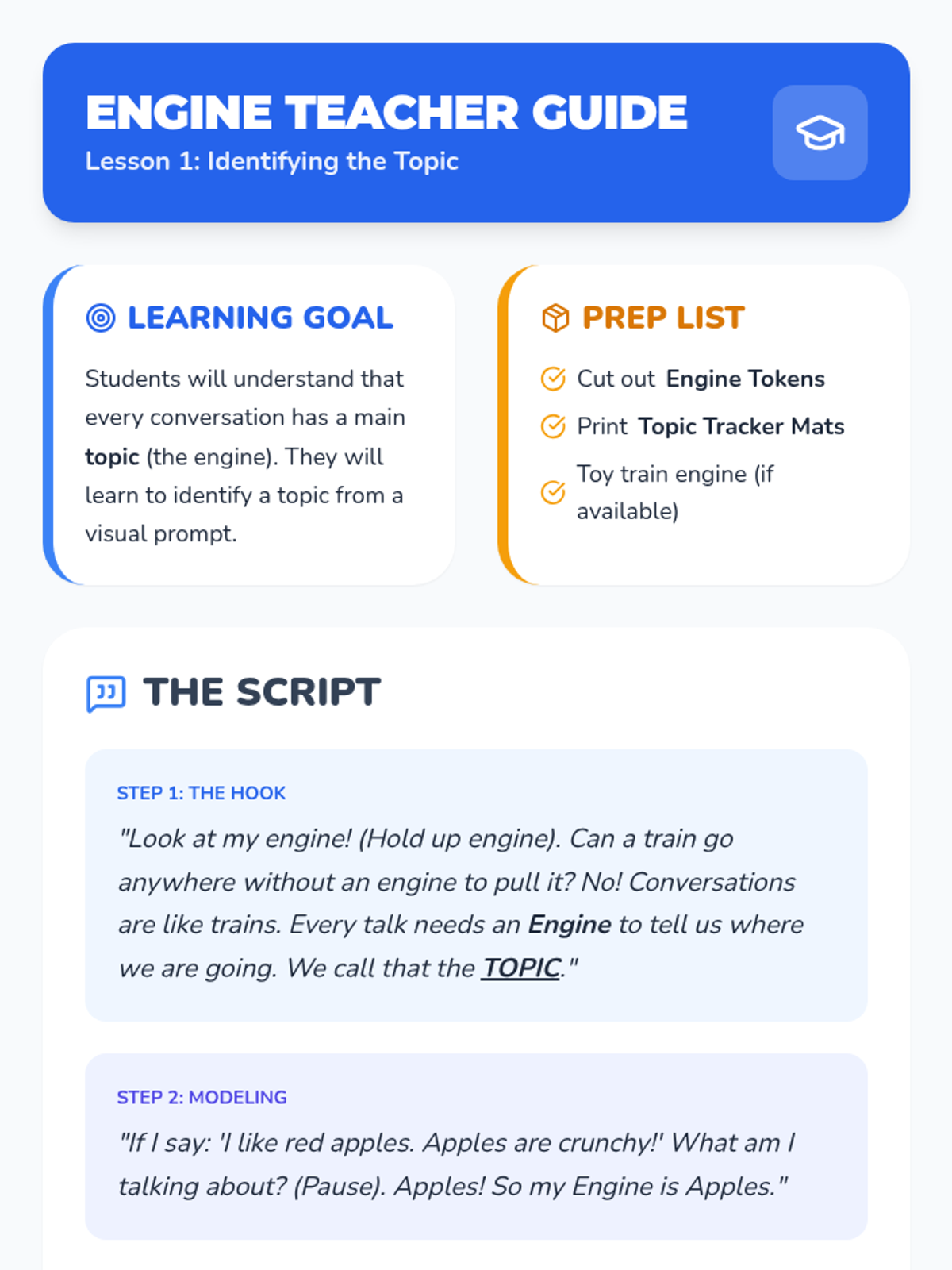
This sequence uses a train metaphor to teach Pre-K students how to maintain a conversation topic. Through concrete visual aids like engines, tracks, and parking lots, students learn to identify topics, add relevant comments, and manage off-topic thoughts.
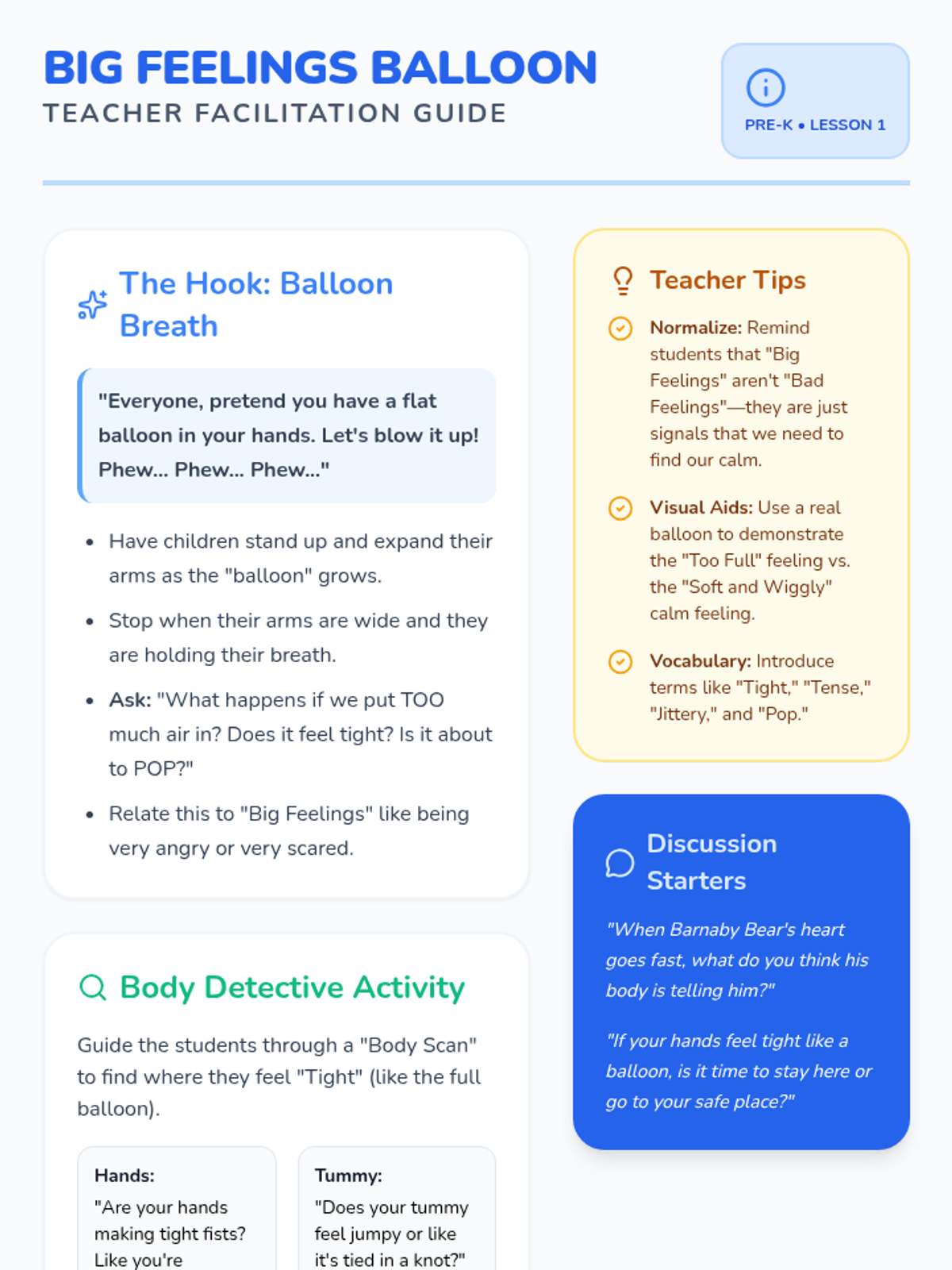
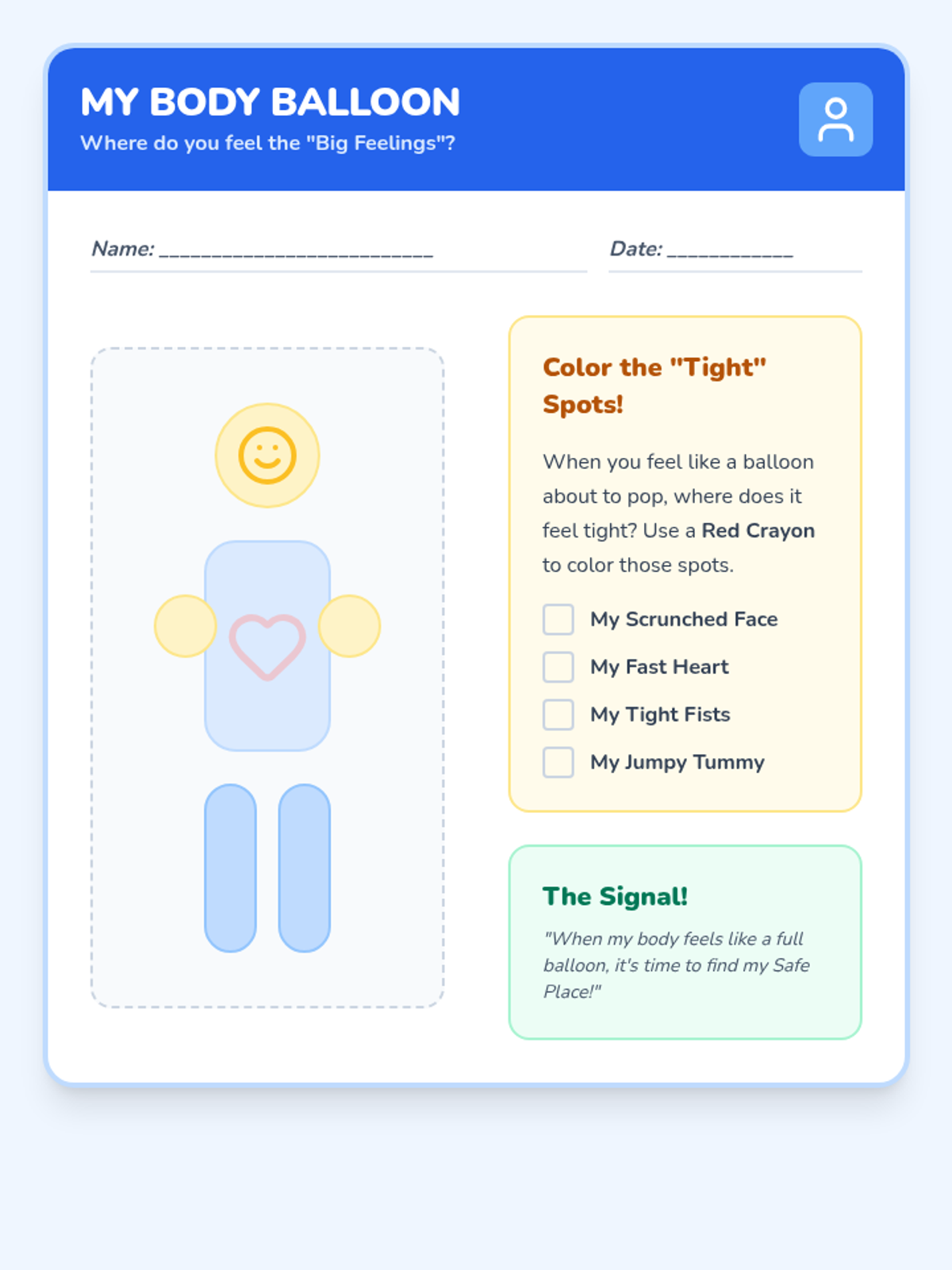
A 5-lesson sequence for Pre-K students to learn safe place visualization through role-play, puppet coaching, and breathing techniques to manage 'big feelings'.
A Kindergarten sequence focused on building task persistence and management through visual supports, routines, and incremental stamina building. Students learn to use timers, First/Then boards, and self-monitoring tools to sustain attention.
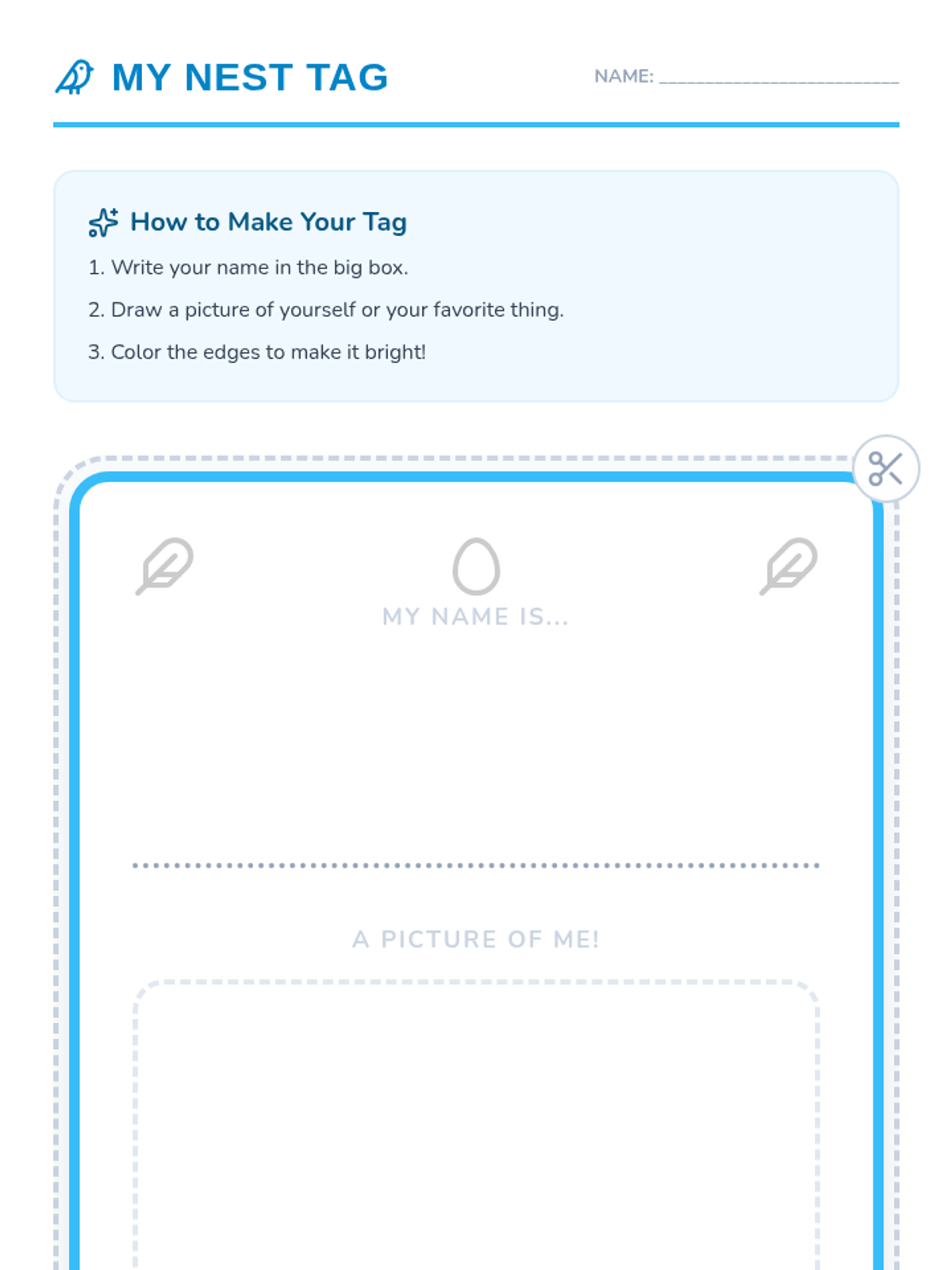
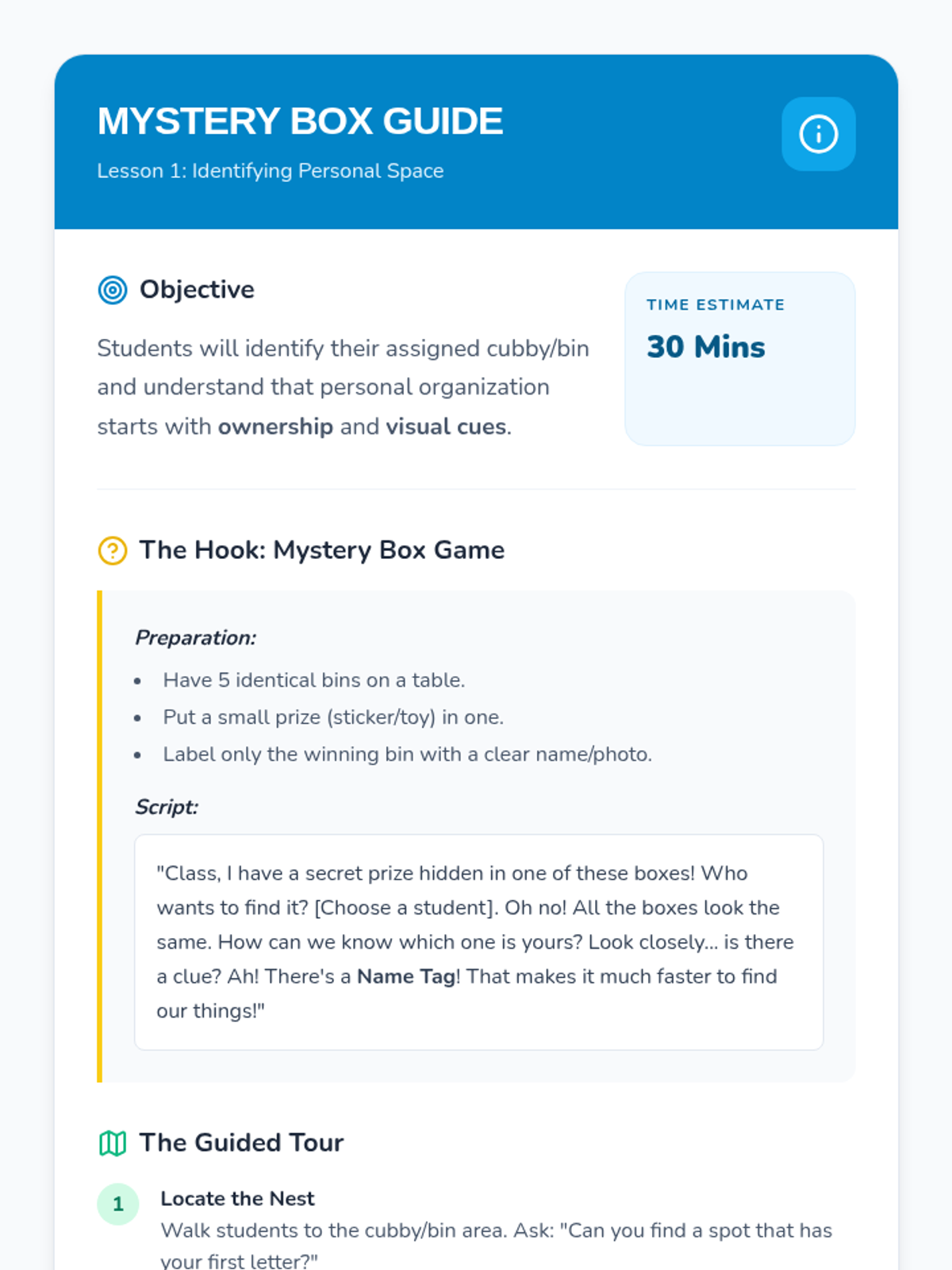
This sequence teaches Kindergarten students how to organize and maintain their personal work bins and cubbies. It progresses from identifying their personal space to mastering the motor skills for paper management and ends with a self-monitoring routine.
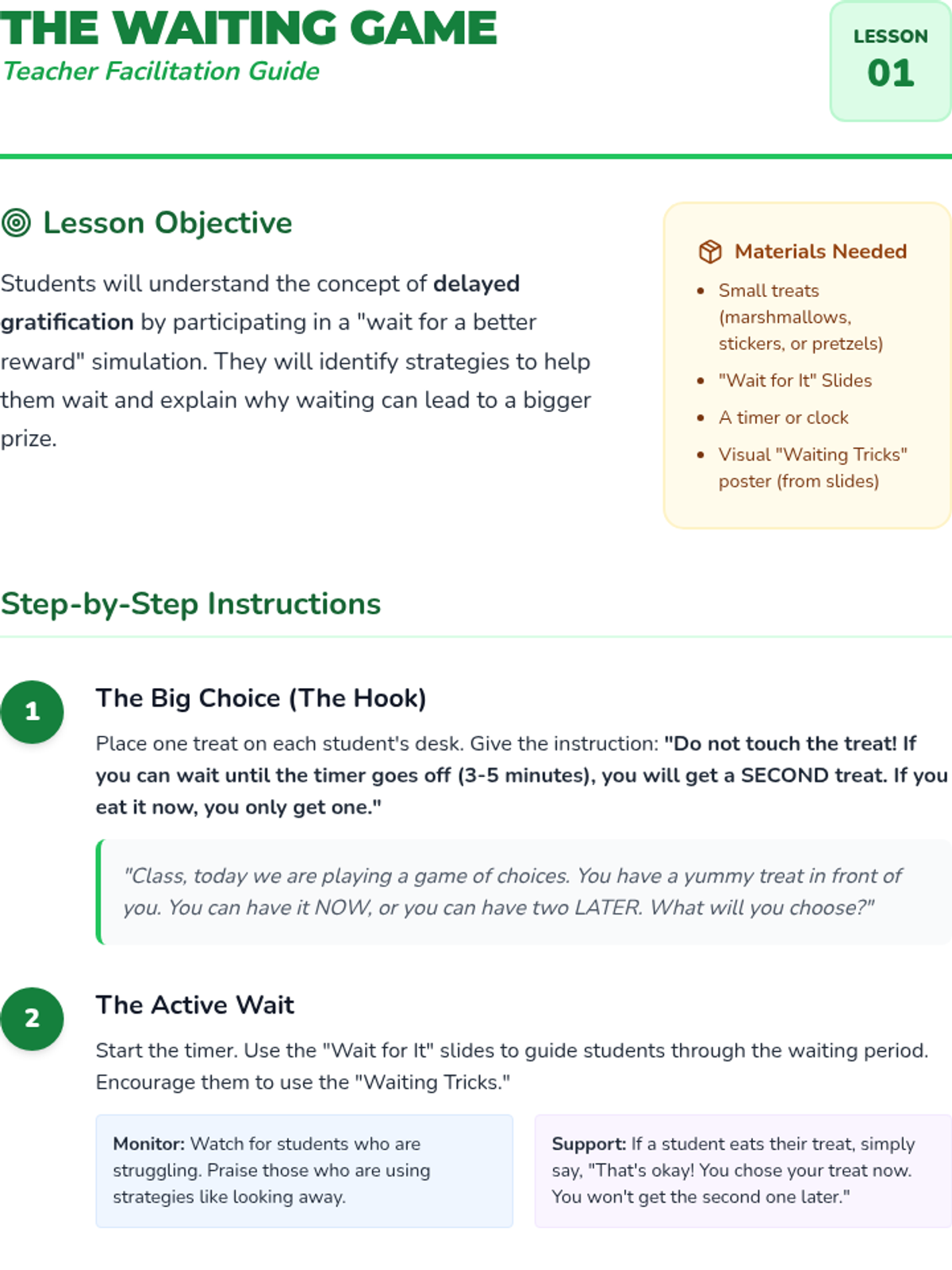
A Kindergarten sequence focused on introducing financial literacy through the lens of delayed gratification, goal setting, and visual progress tracking. Students learn that waiting and saving can lead to greater rewards through hands-on simulations and visual tools.
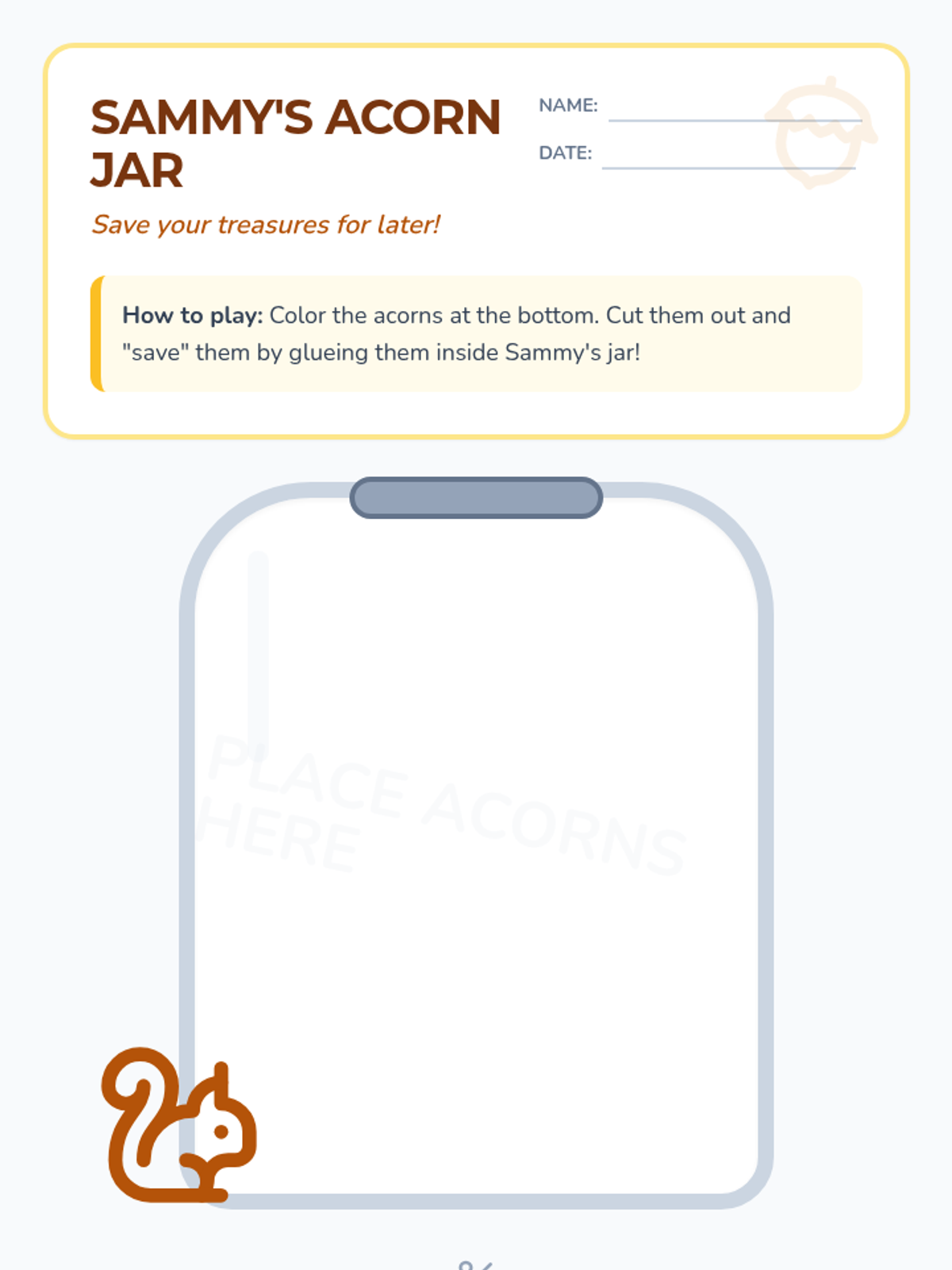
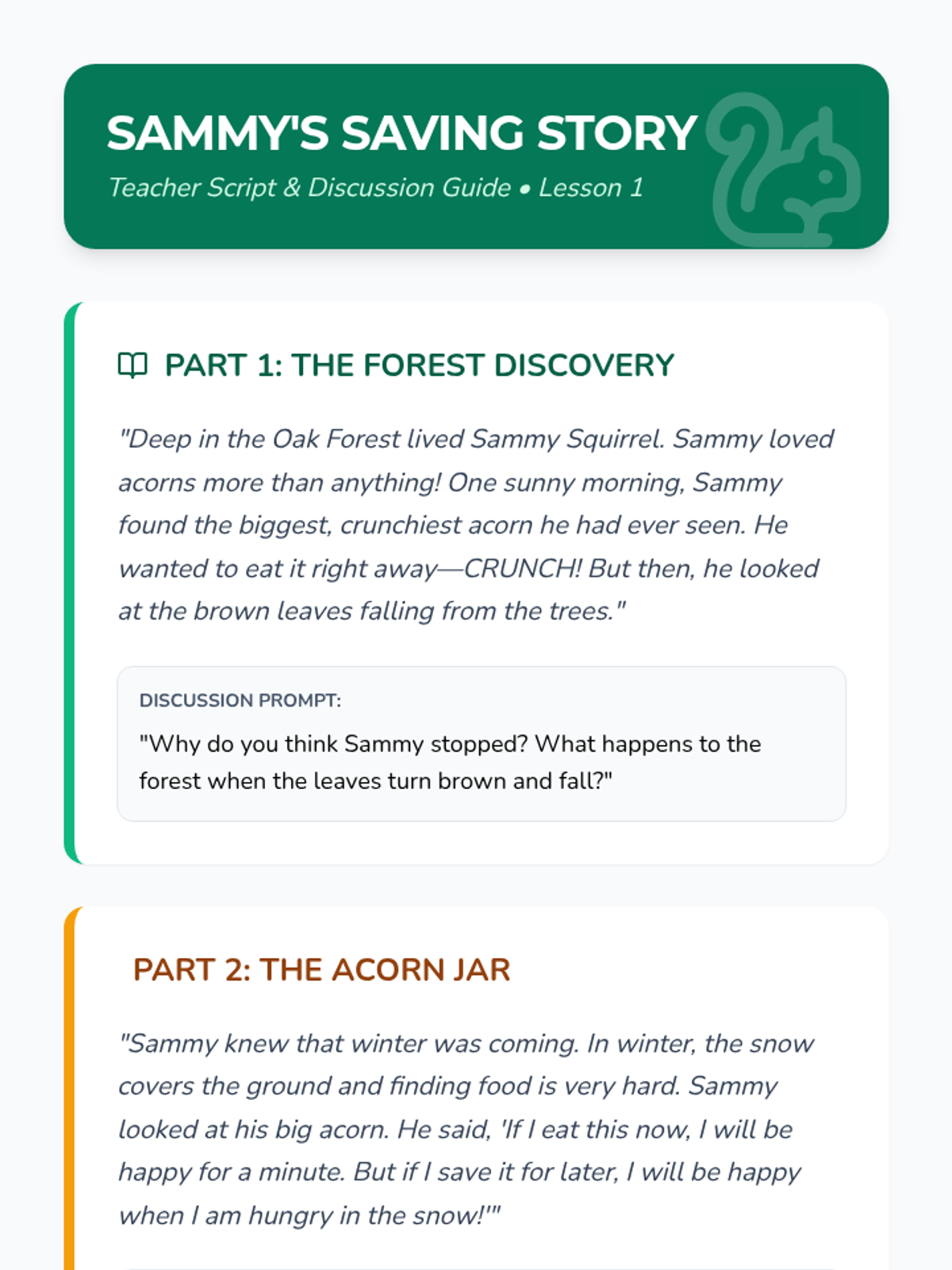
A Kindergarten sequence focused on building foundational financial literacy through the concepts of saving and delayed gratification. Students learn to manage resources, set goals, and experience the rewards of patience through a cohesive forest-themed 'Acorn Bank' narrative.
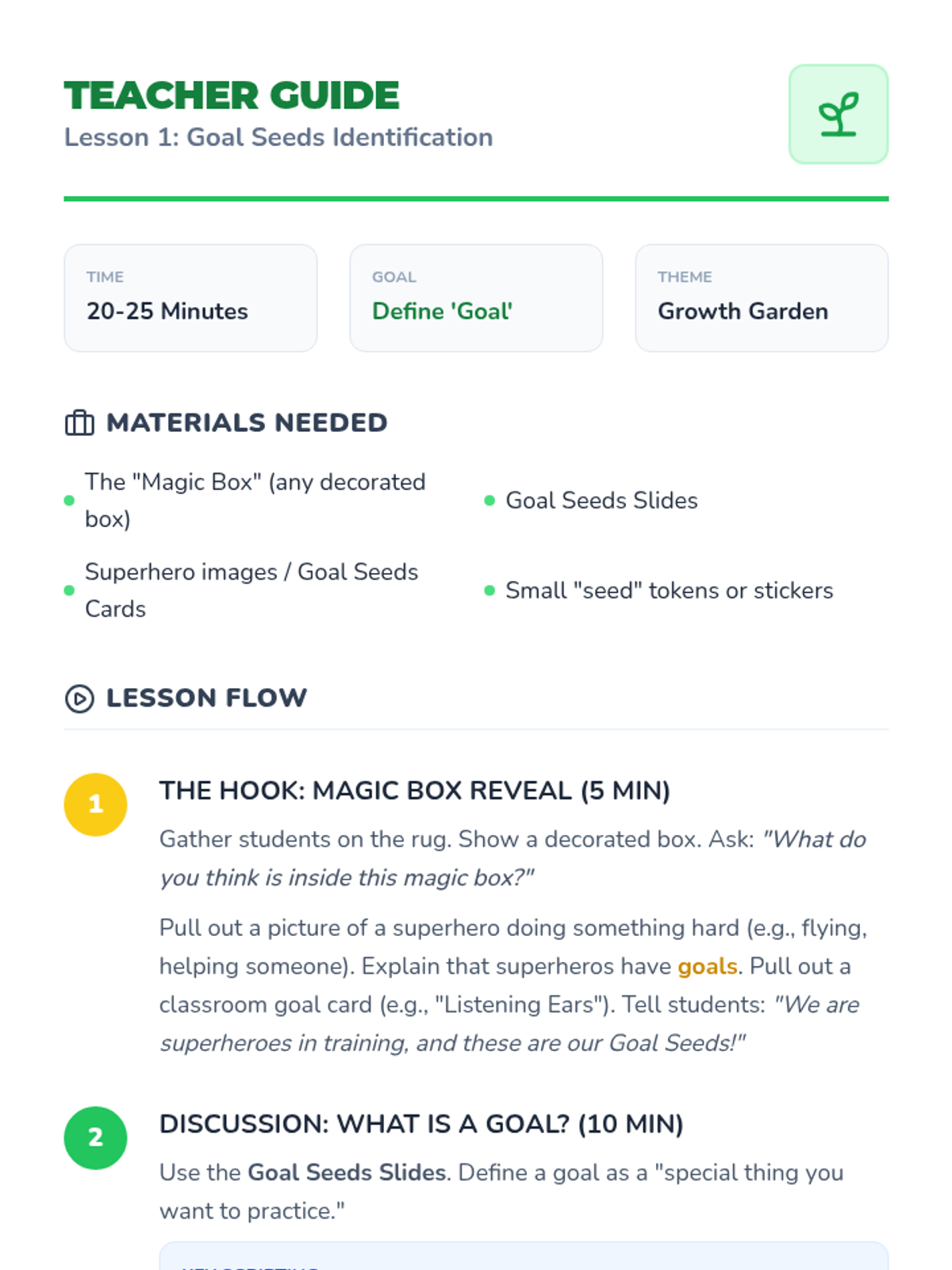
This sequence introduces Pre-K students to the foundational concepts of setting simple behavioral goals and reflecting on their progress using concrete visual aids. Students will learn through a 'Growth Garden' theme, moving from identifying positive behaviors to establishing a daily routine of planning, monitoring, and reflecting.
A 5-lesson unit for Kindergarten students focused on developing a growth mindset. Students learn about brain plasticity, the transformative power of the word 'yet', how to view mistakes as learning opportunities, and how to replace fixed mindset thoughts with growth-oriented ones.
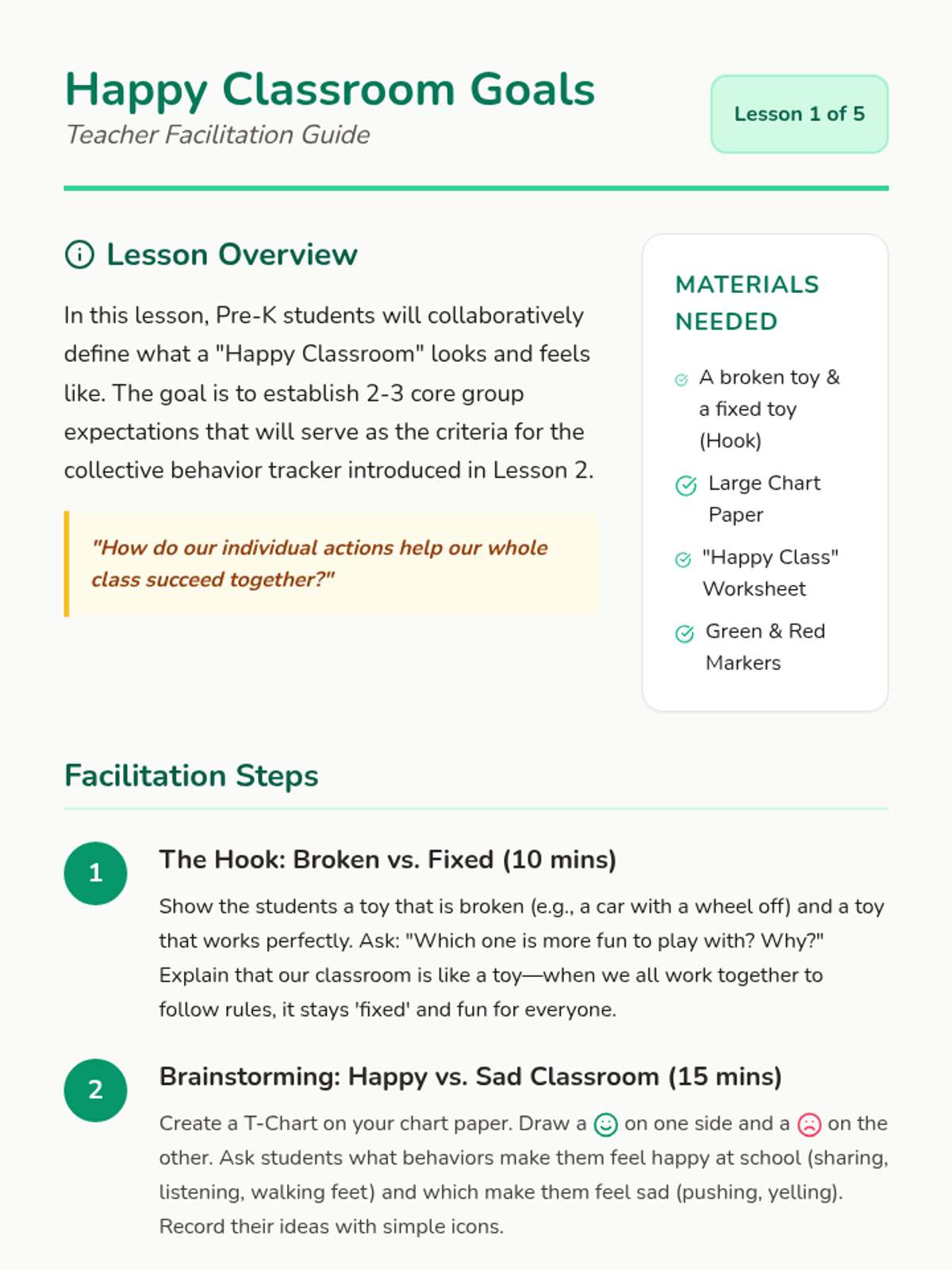
This sequence introduces Pre-K students to the concept of collective responsibility and group goals through a shared behavior tracking system. Using a 'Good Choice Garden' theme, students learn to set goals, track their group's progress, observe positive behaviors in their peers, and celebrate their combined success.
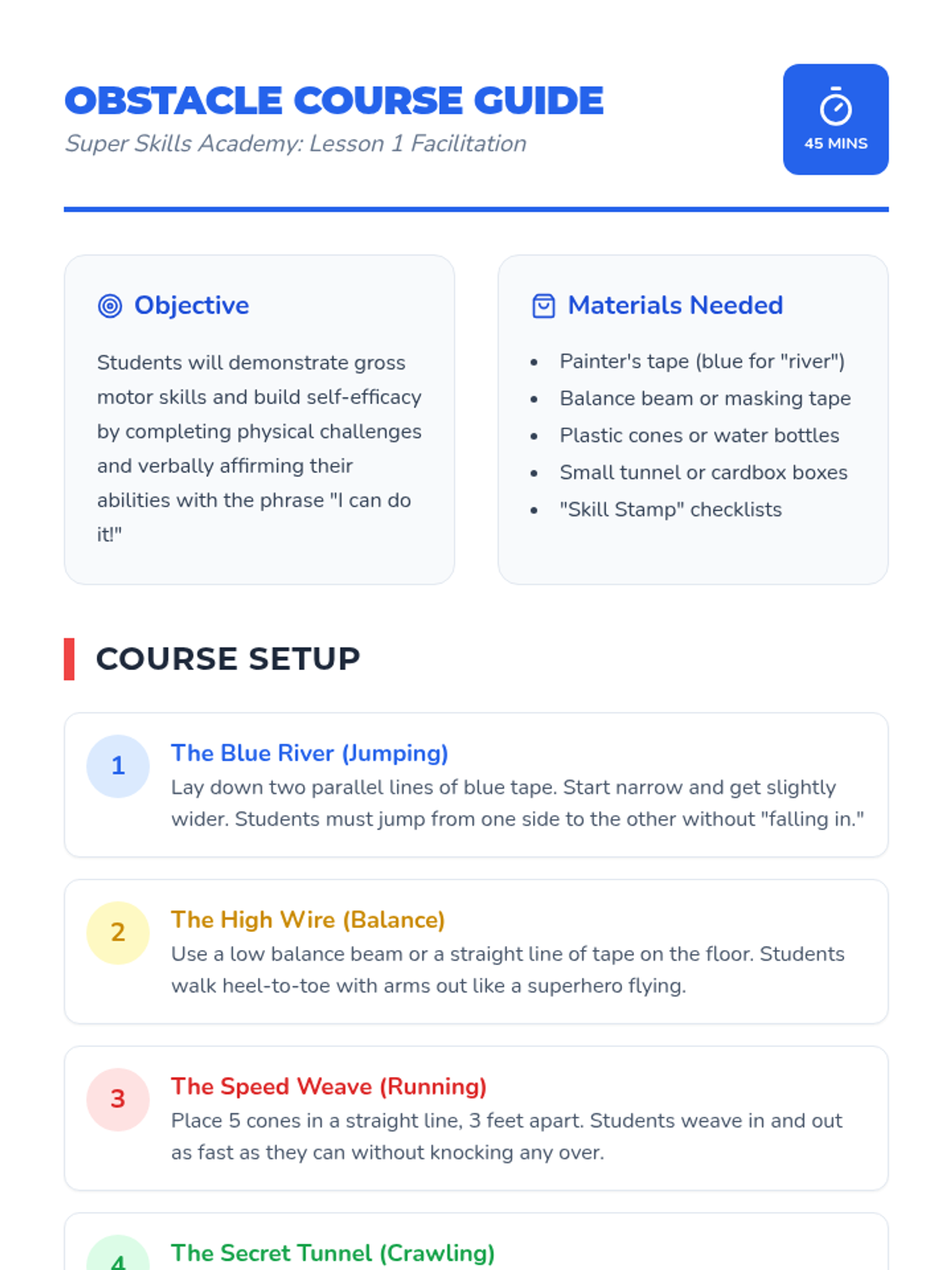
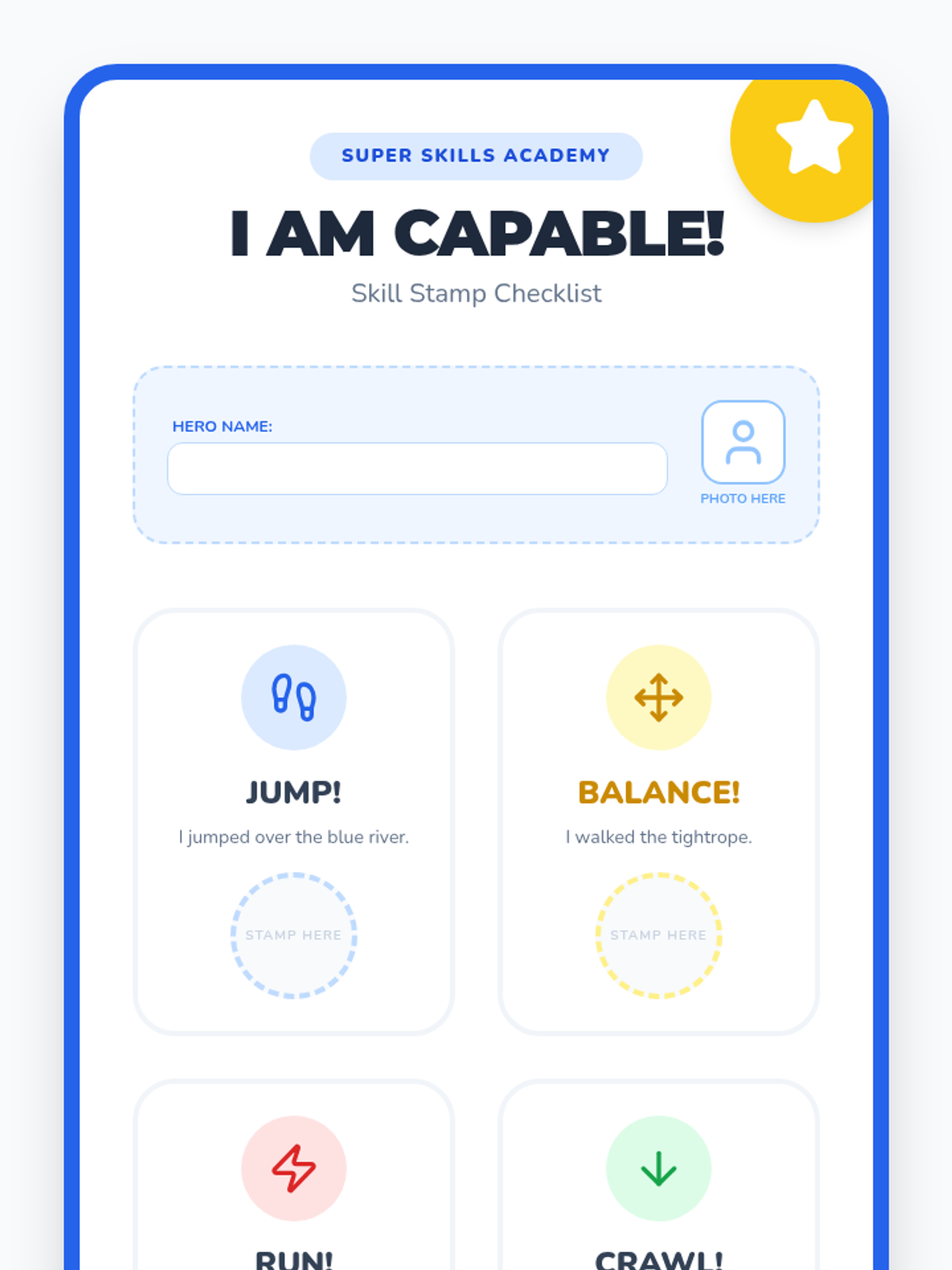
A mastery-based sequence for Pre-K students to build self-efficacy and independence by identifying their current skills and setting growth goals. Students move from physical abilities to self-care, classroom responsibility, and personal reflection.
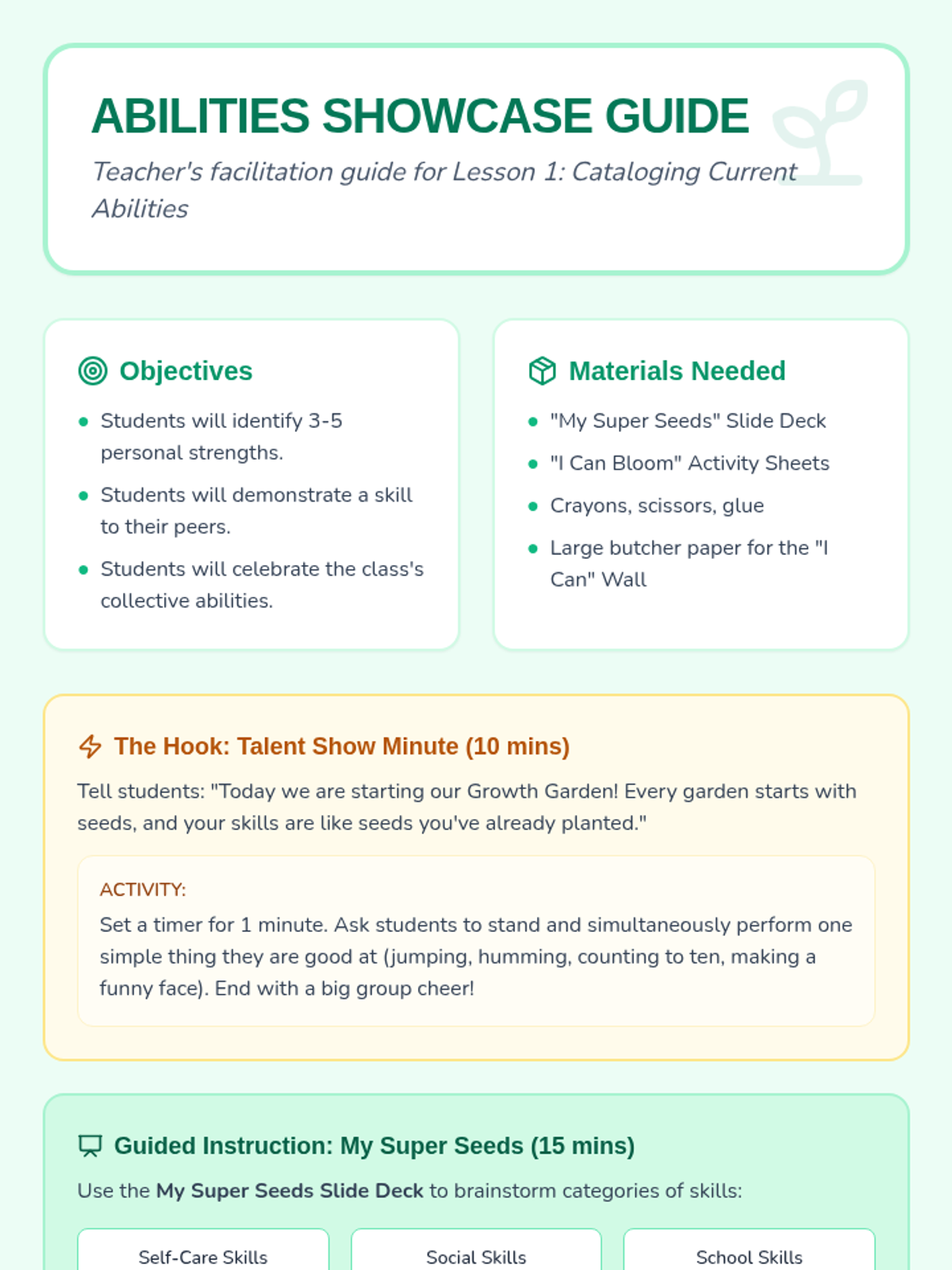
A Kindergarten sequence focused on building self-efficacy and a growth mindset through the 'Growth Garden' theme. Students explore their current strengths, learn the power of the word 'yet', practice persistence, embrace mistakes, and set simple goals.
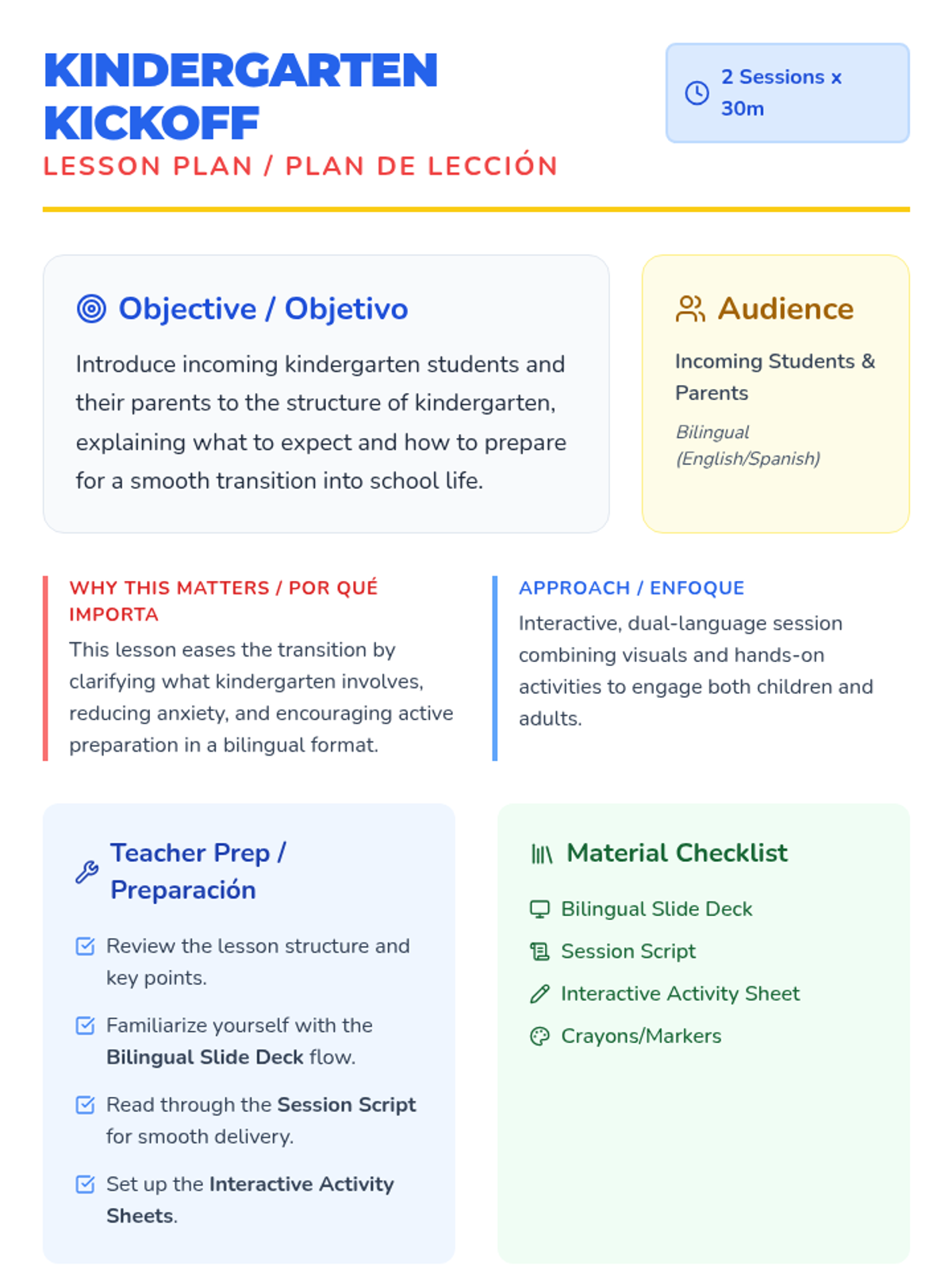
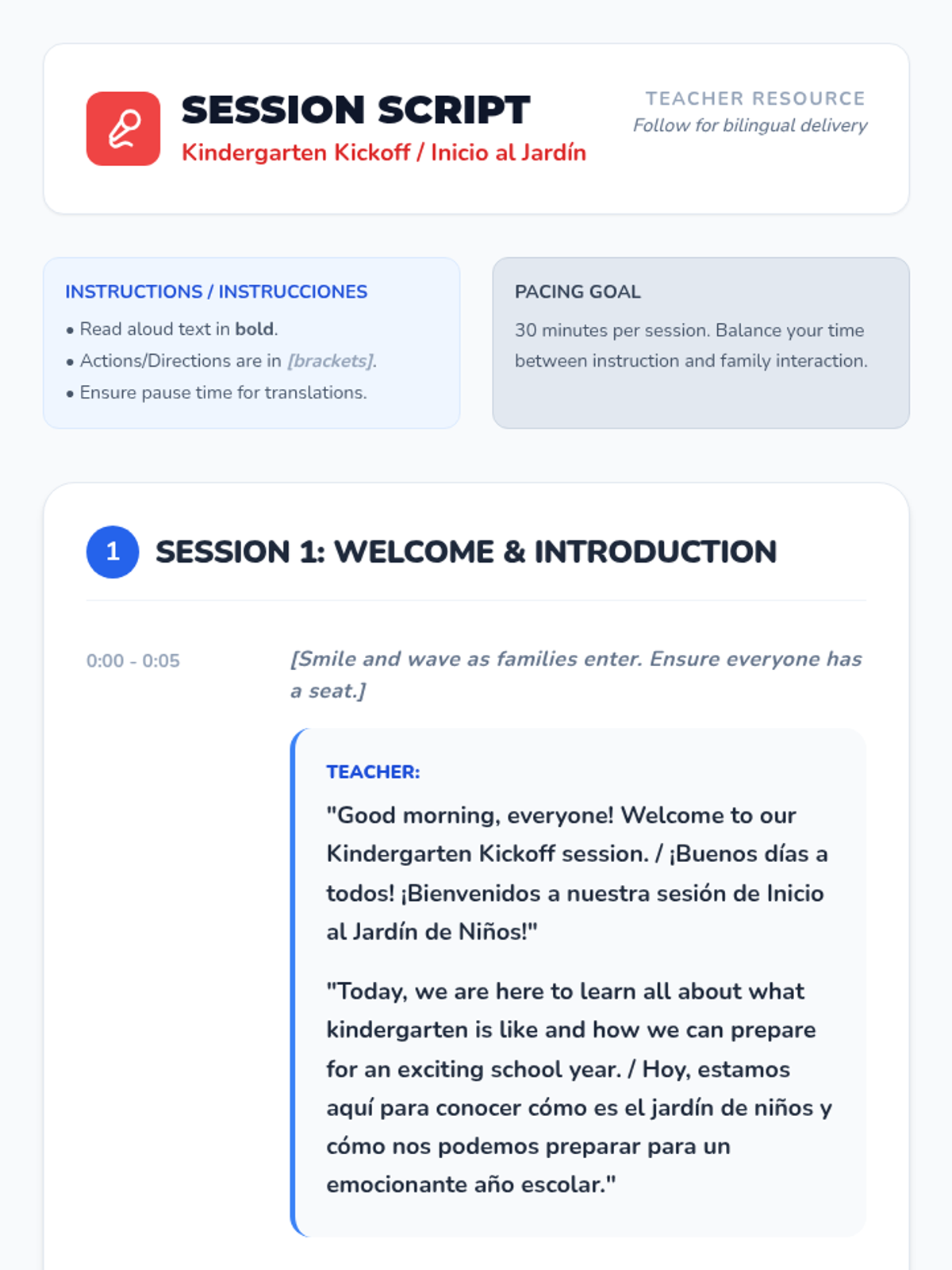
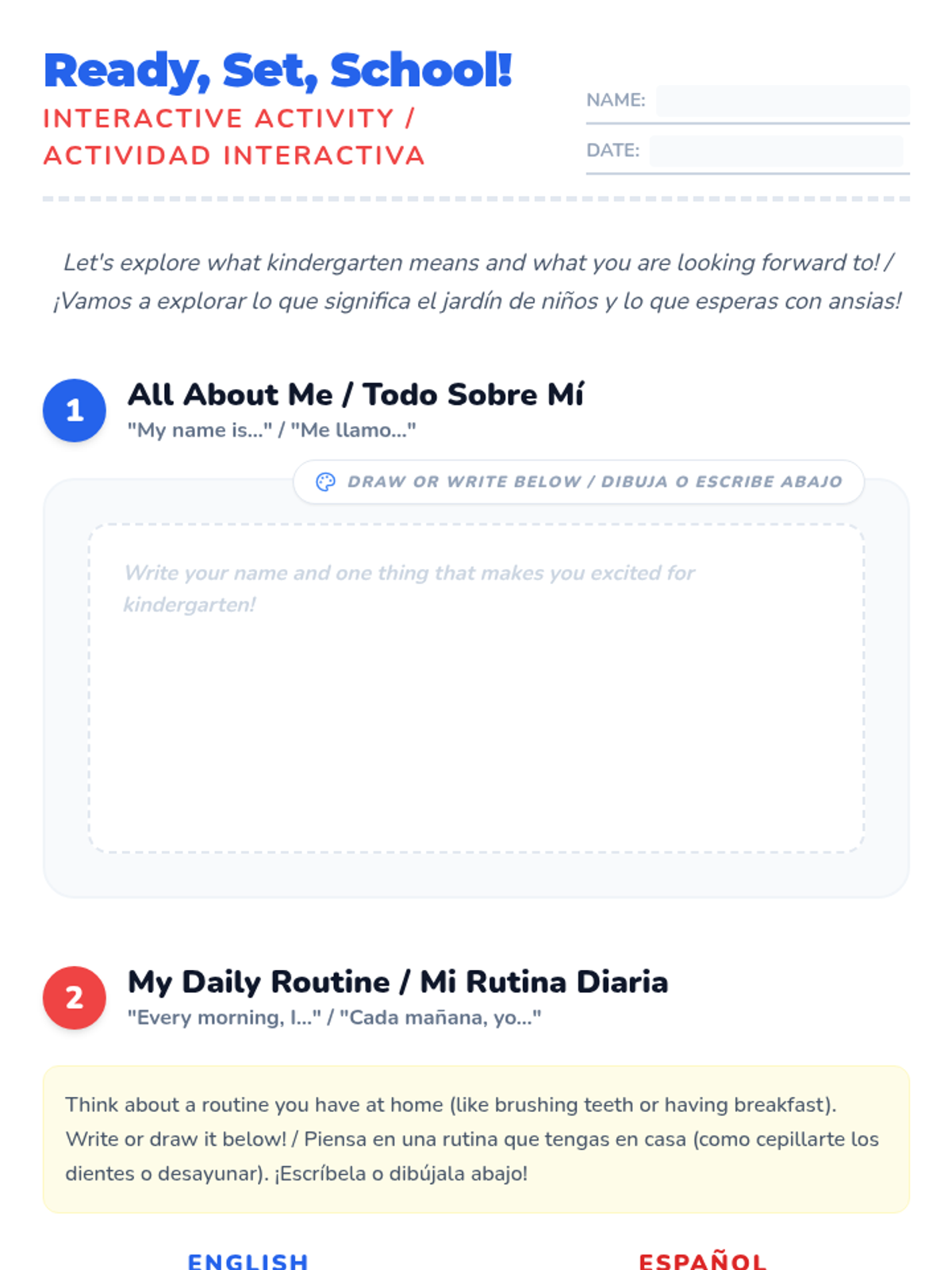
A comprehensive two-session program designed to help incoming kindergarteners and their families transition smoothly into school life through bilingual instruction and interactive activities.
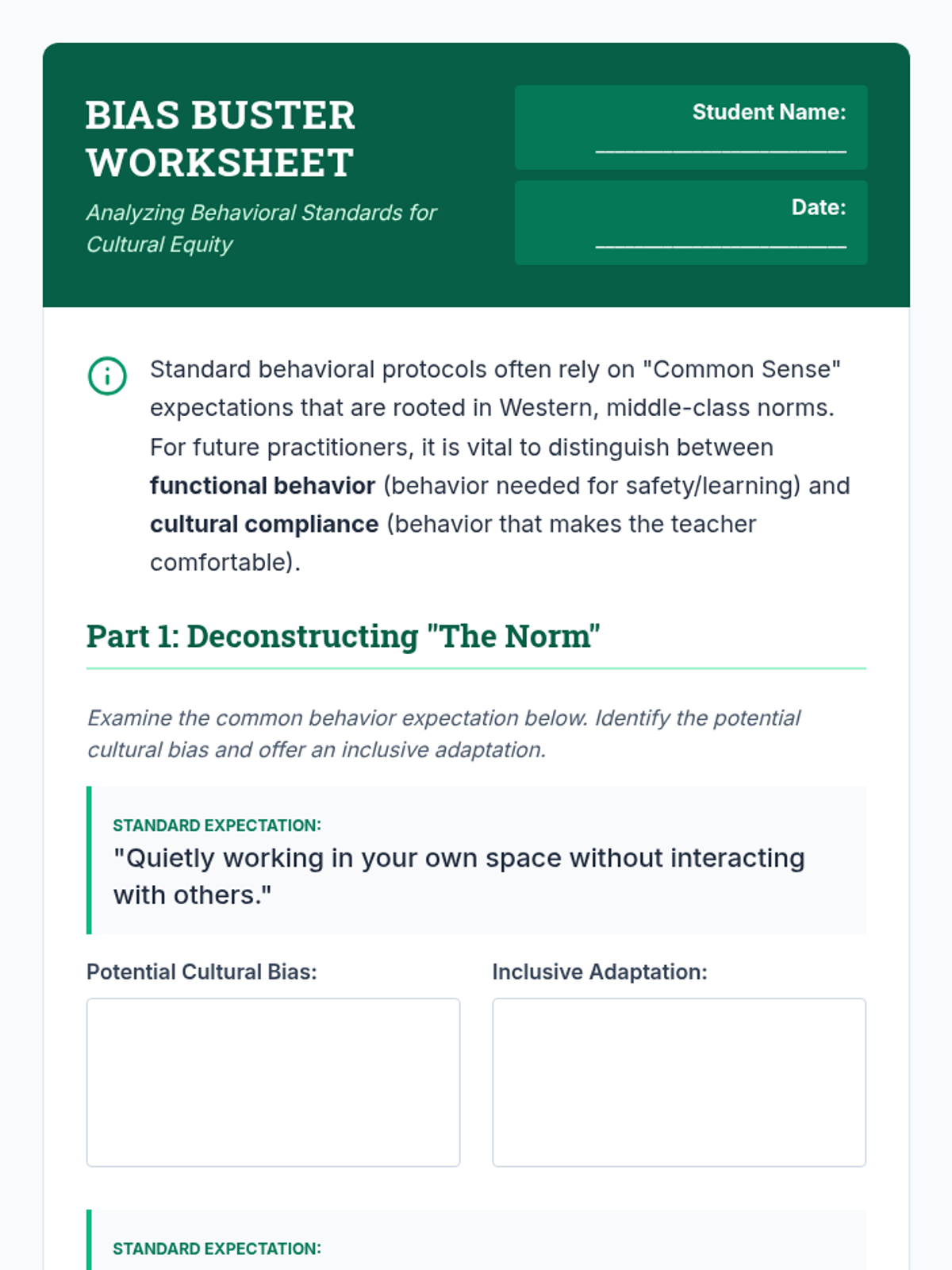
This sequence prepares undergraduate students in counseling and education to adapt standard behavioral check-in procedures (like Check-In/Check-Out) for diverse populations. It emphasizes cultural responsiveness, developmental appropriateness, neurodiversity, and modern remote contexts to ensure equity and accessibility in behavioral support.
A transformative 5-lesson sequence for Pre-K students to transition from emotional check-ins to intention-based readiness routines. Students learn to set simple goals, choose daily focuses, monitor their effort, and reflect on their progress with peers.
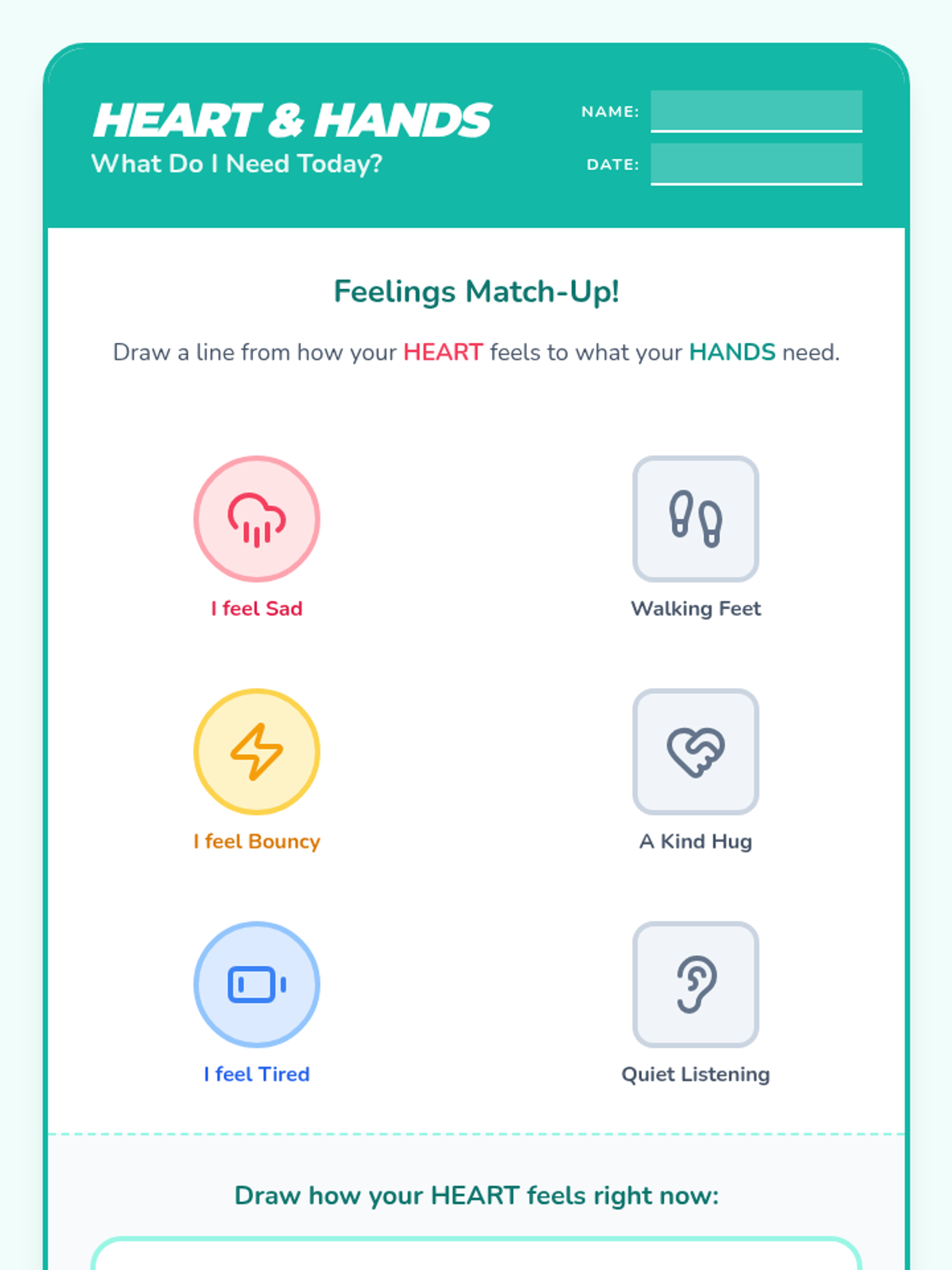
A Kindergarten sequence focused on connecting emotional states to actionable needs, setting daily behavioral goals, and practicing self-reflection. Through a 'Heart & Hands' theme, students learn to navigate their feelings and choices within the classroom community.
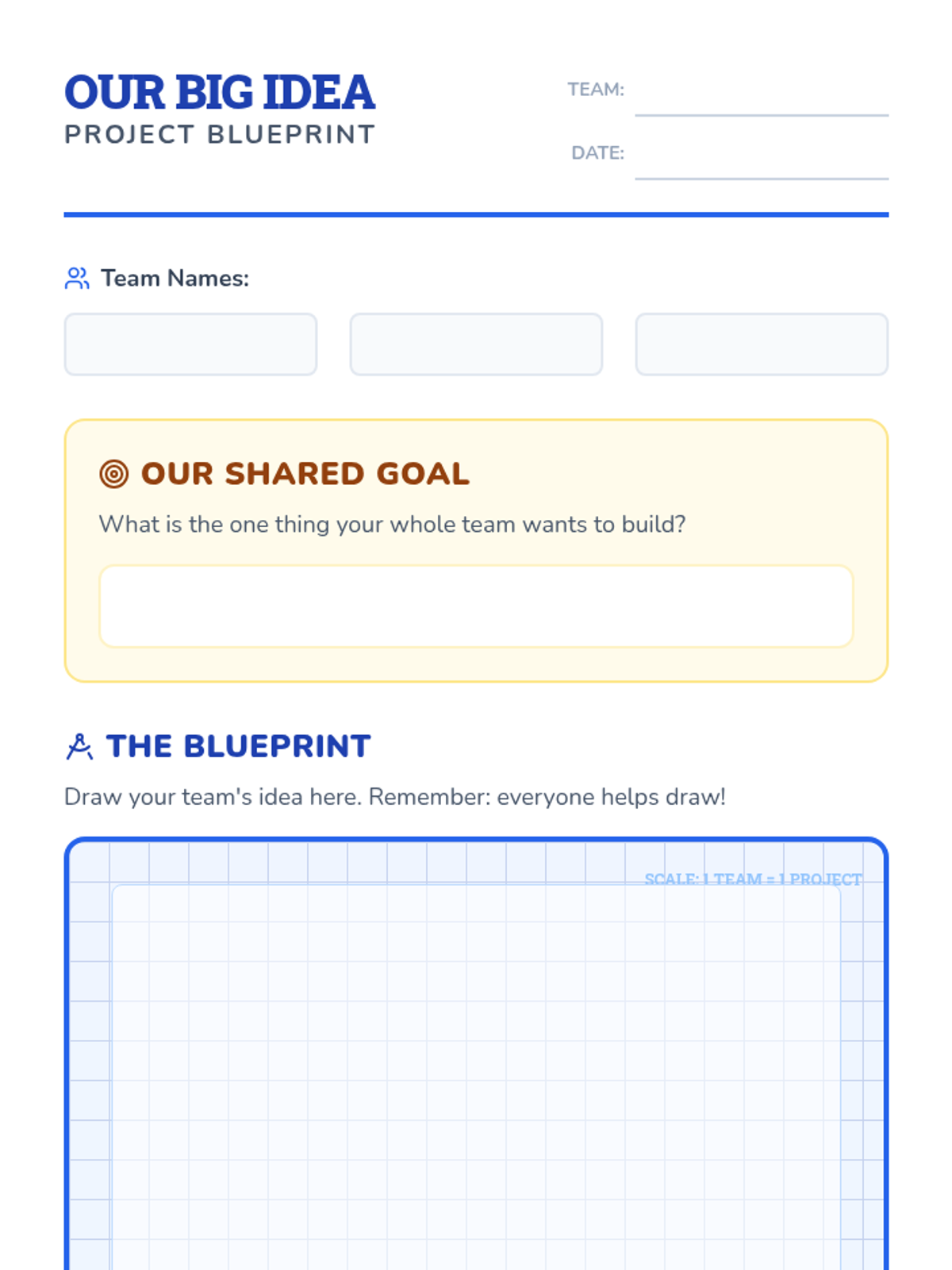
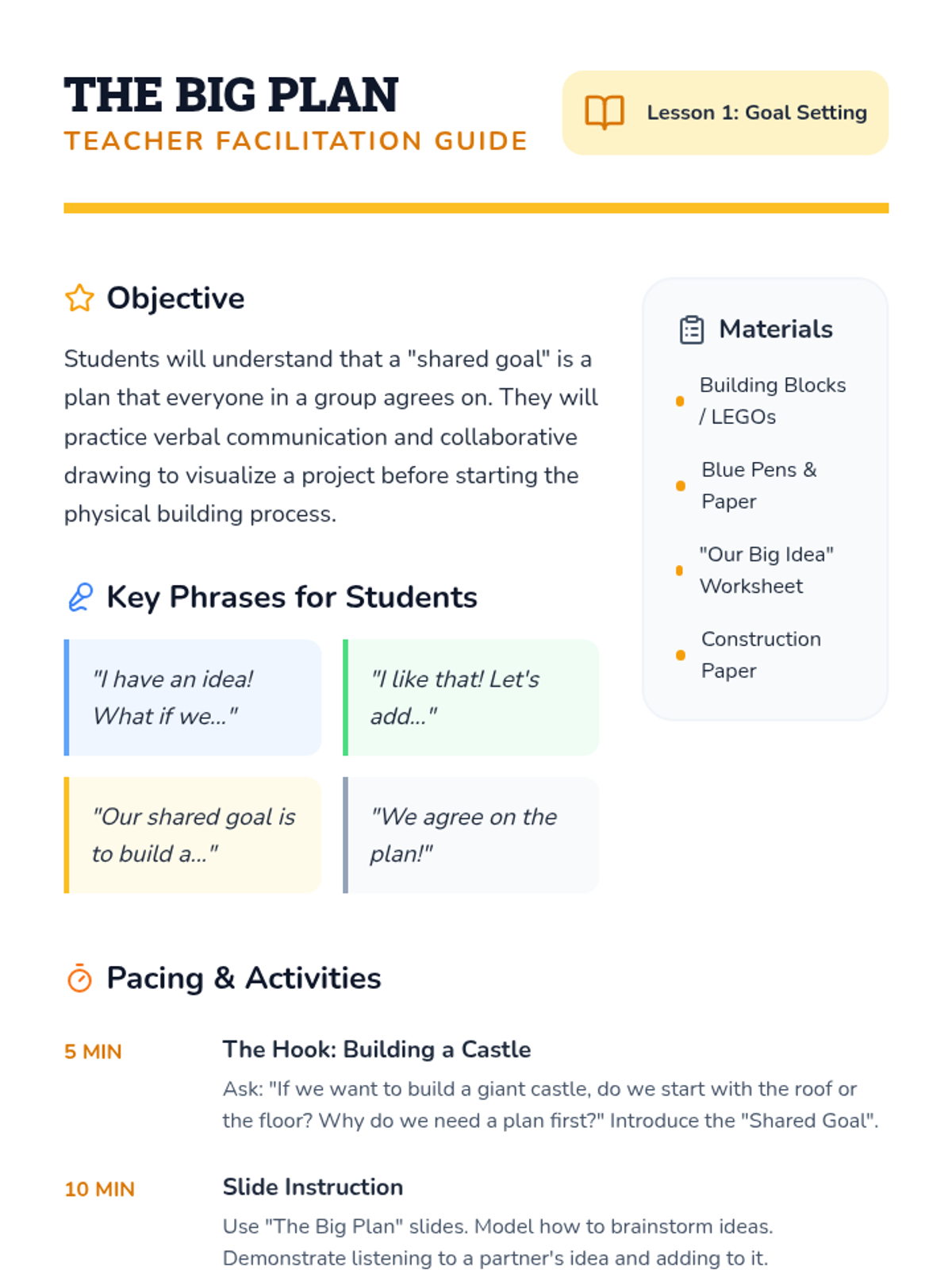
A project-based sequence for Kindergarten students focused on the mechanics of teamwork. Students learn to plan together, assign professional roles, share resources fairly, and overcome challenges as a team to create a collaborative project.
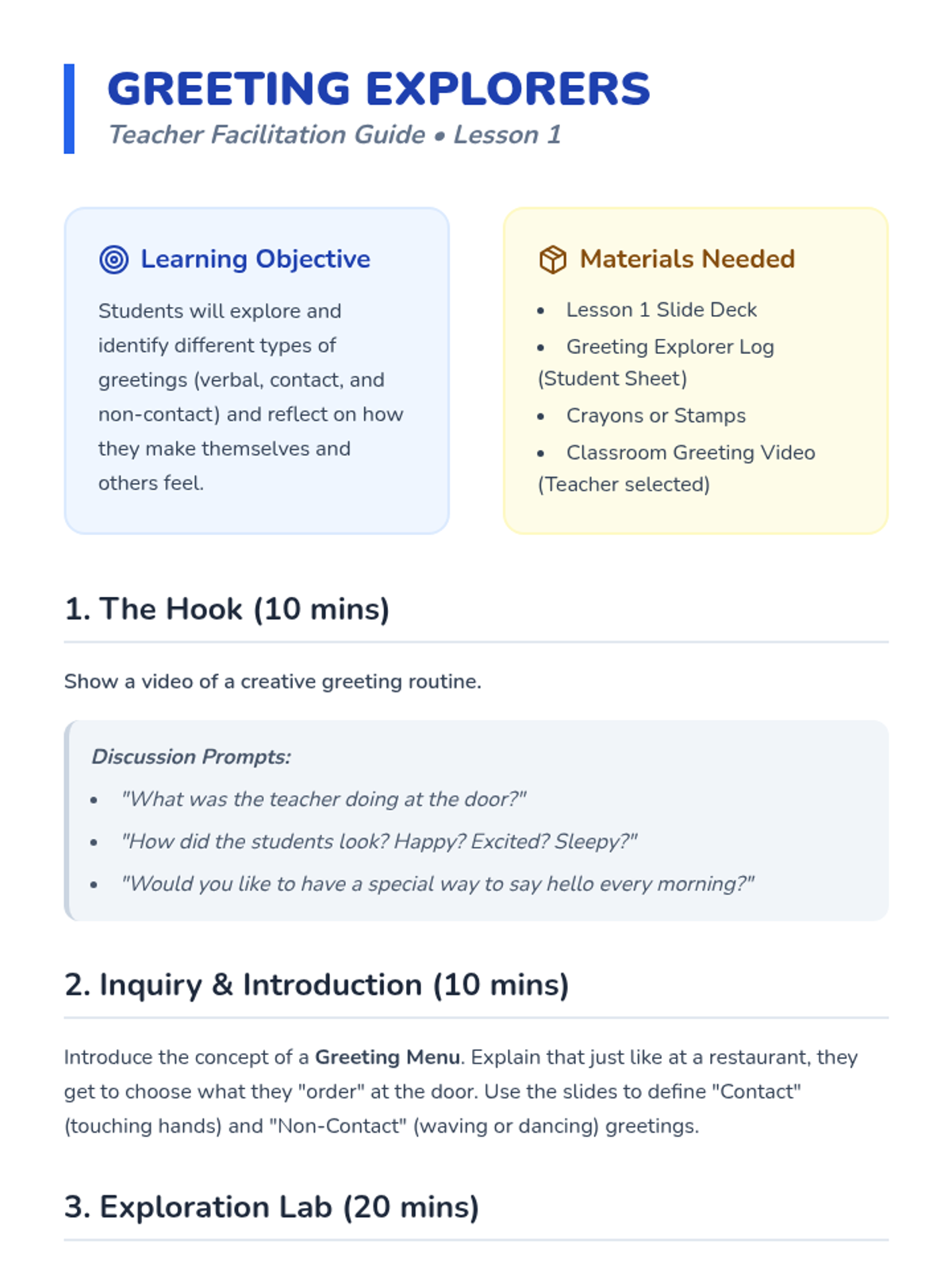
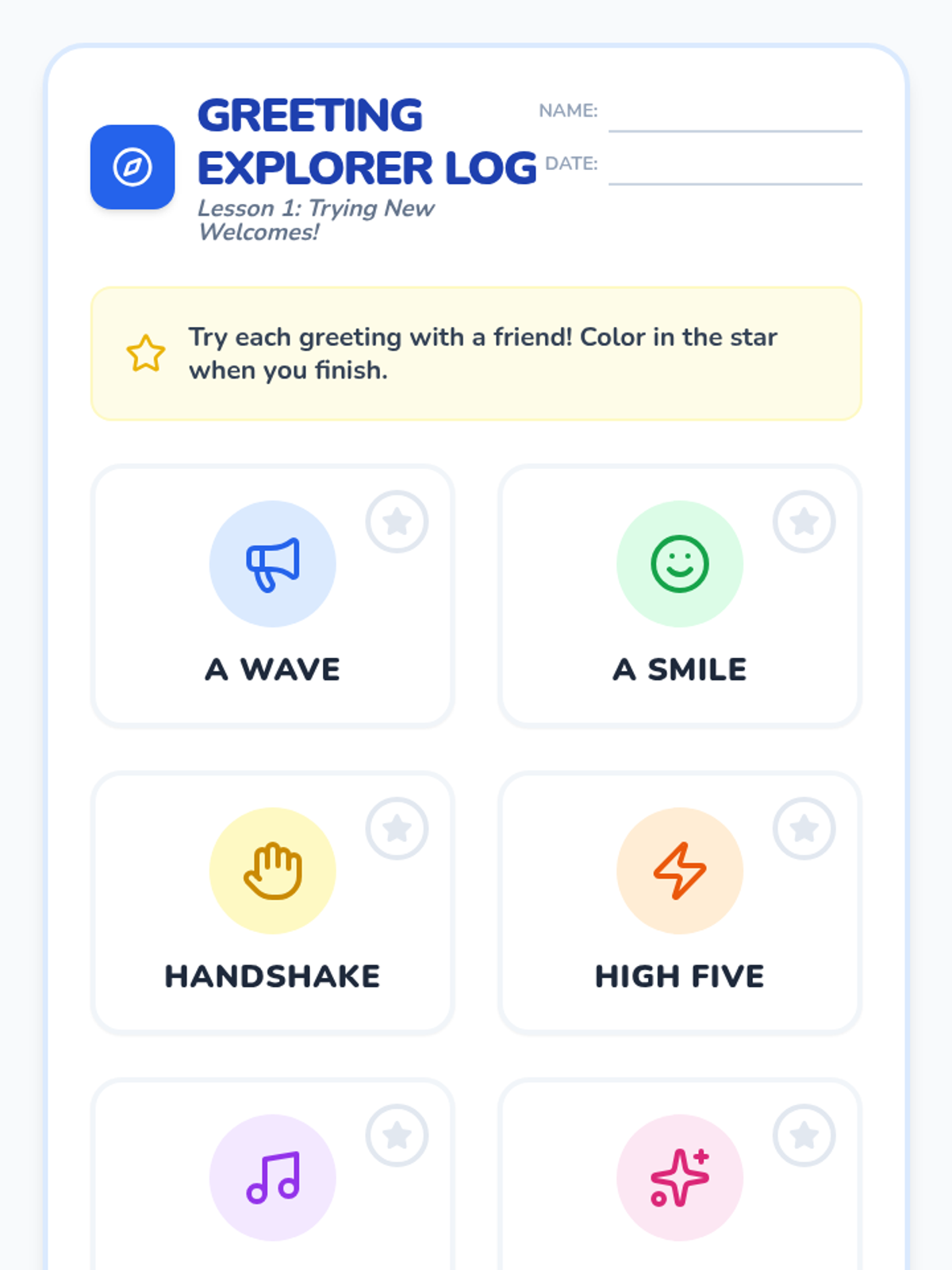
A Kindergarten social communication sequence where students design, vote on, and implement a 'Greeting Menu' routine for their classroom. Focuses on agency, choice, and context-appropriate social interactions.
A sequence for Kindergarten students focused on the mechanics of individual positive reinforcement systems. Students learn to set simple goals, use visual tracking tools like sticker charts, practice self-monitoring, and understand the value of patience and consistent effort.
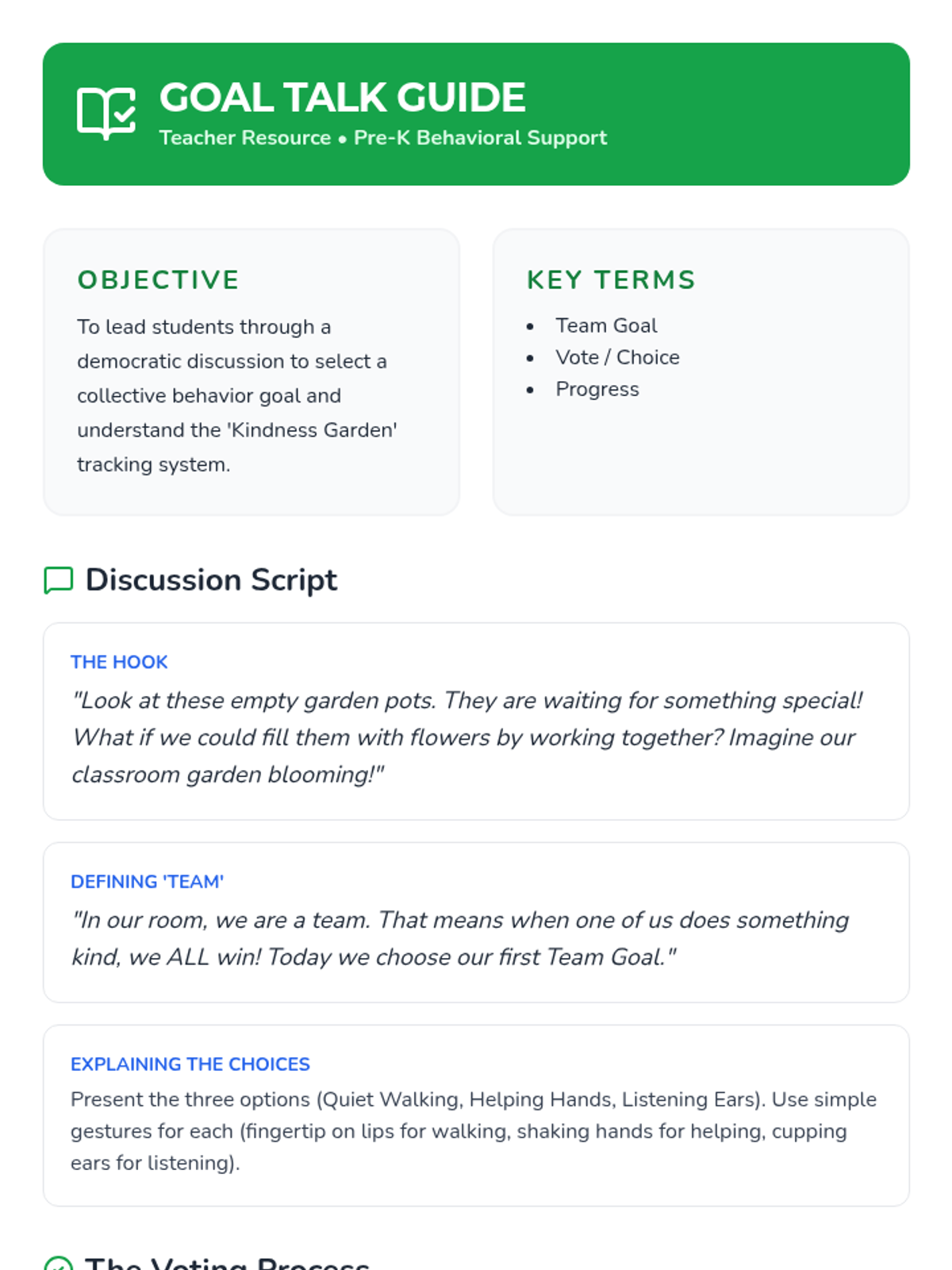
A Pre-K sequence focused on collective behavior tracking, moving from individual charts to a whole-class monitoring system using a 'Kindness Garden' theme. Students work together to define goals, model behaviors, and encourage one another to reach shared milestones.
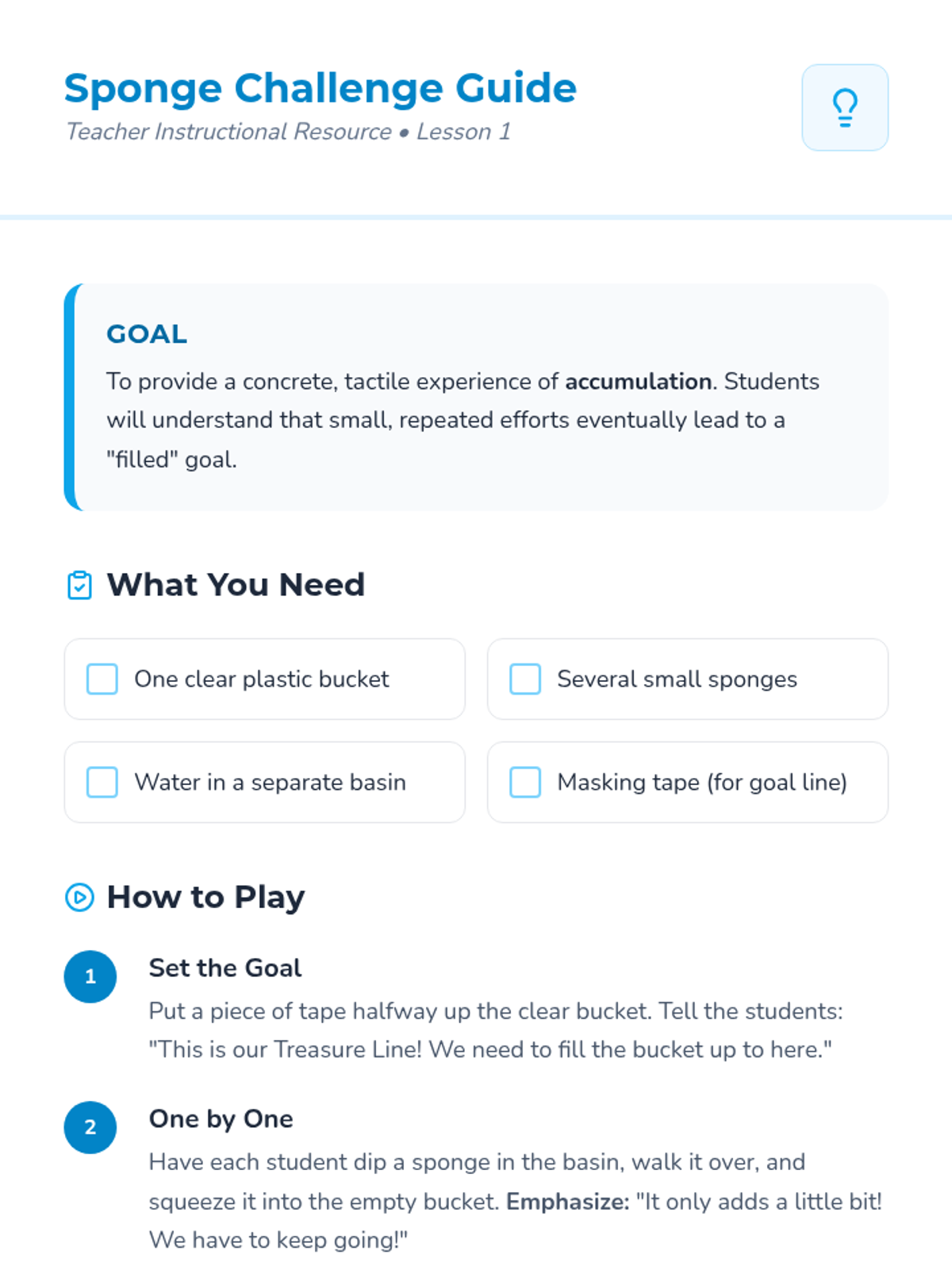
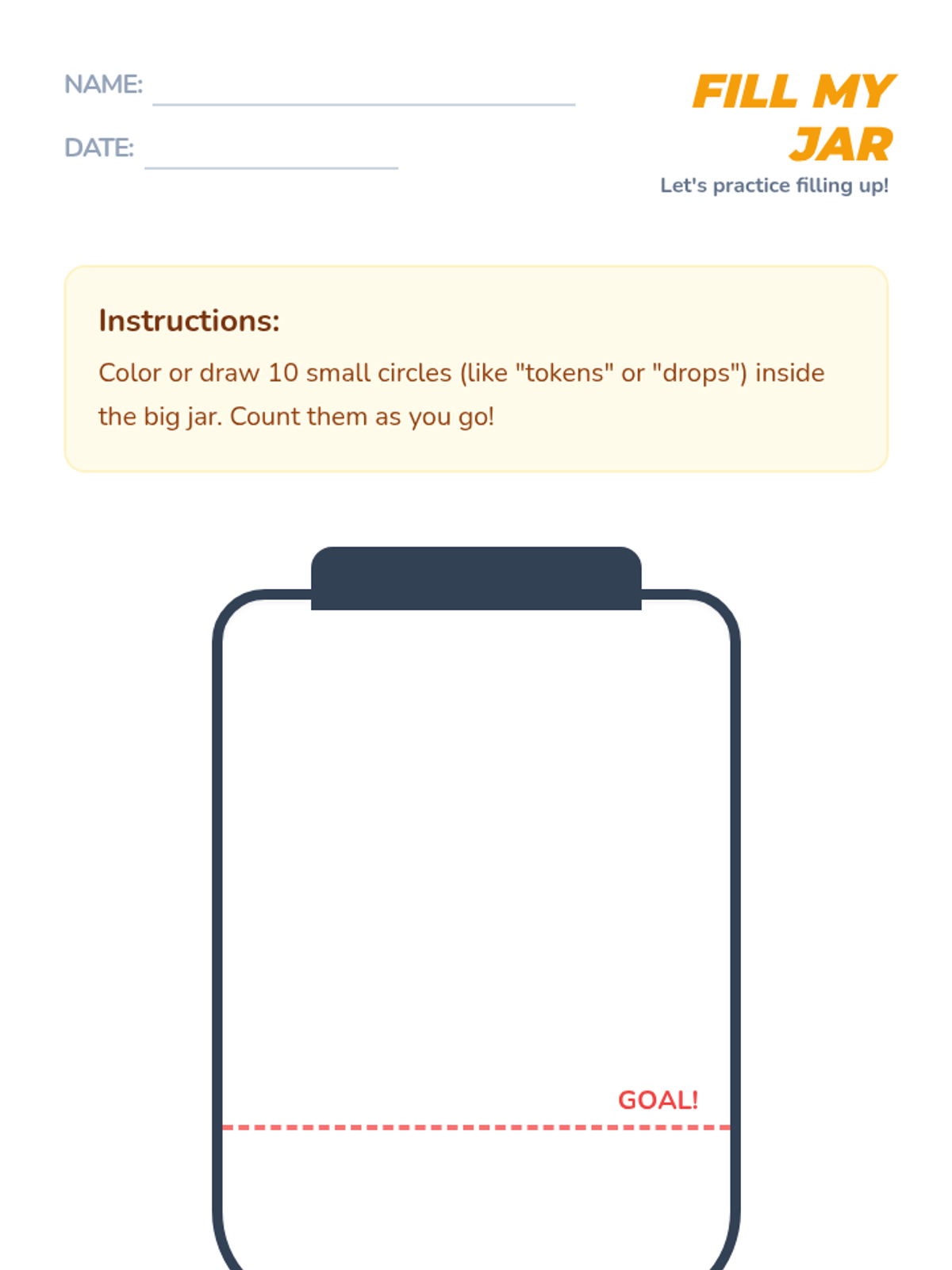
This sequence introduces Pre-K students to the concept of token economies and behavior tracking through concrete accumulation, role-playing, and practicing delayed gratification. Students learn to connect positive actions with progress on a visual chart, culminating in a celebration of effort and patience.
This sequence introduces Pre-K students to the foundational concepts of task persistence, utilizing visual supports and structured reinforcement to build attention stamina. Students learn to identify 'finished', use timers, manage frustration, follow 'First-Then' logic, and self-monitor their work.
A Pre-K sequence focused on teaching positive peer interaction through social stories, role-play, and the creation of a 'Friendship Playbook'. Students learn body awareness, social scripts for joining play, patience in turn-taking, and verbal conflict resolution.
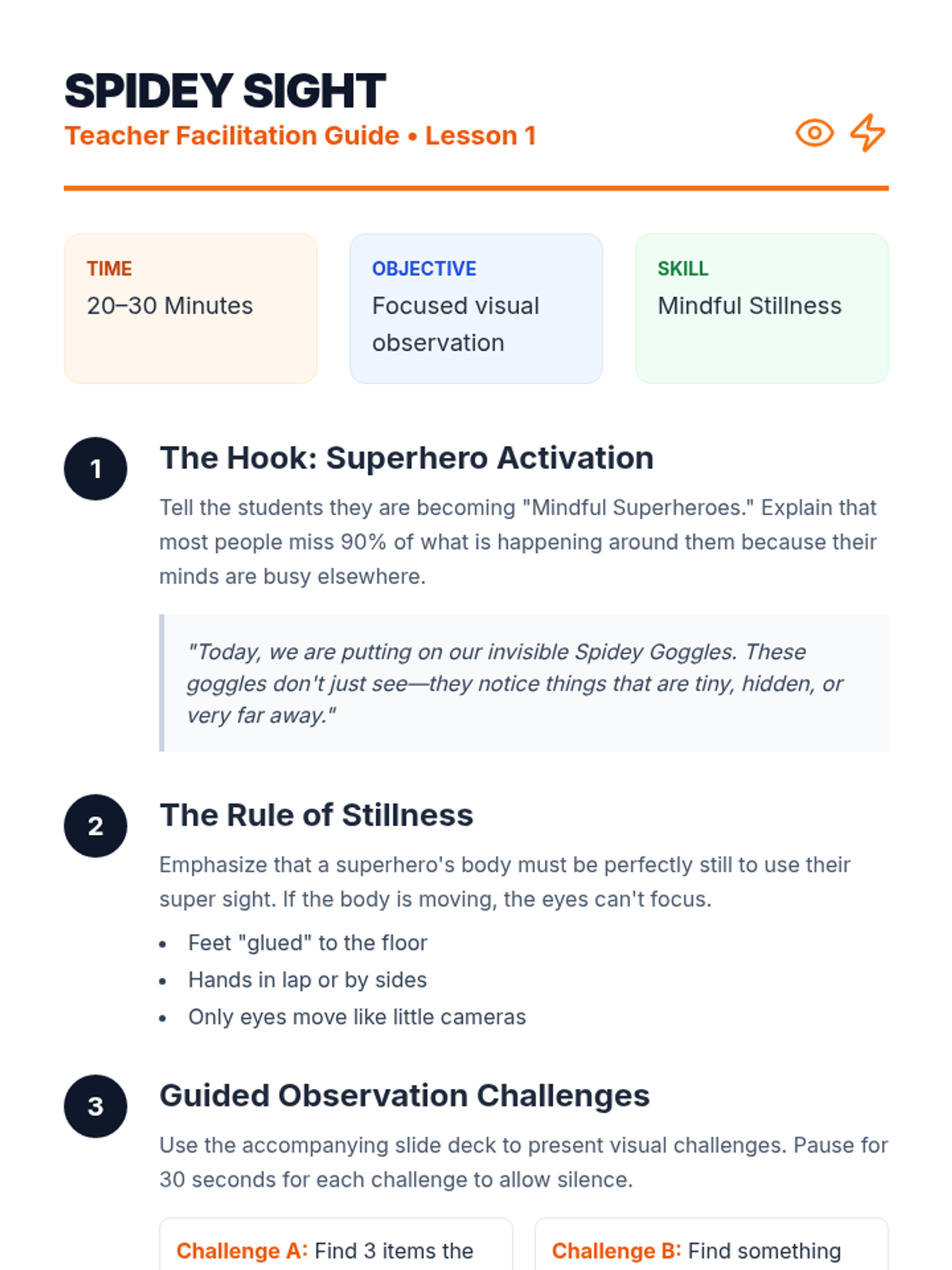
A Kindergarten sequence introducing mindfulness through sensory exploration, focusing on sight, sound, touch, movement, and taste to build foundational attention skills.
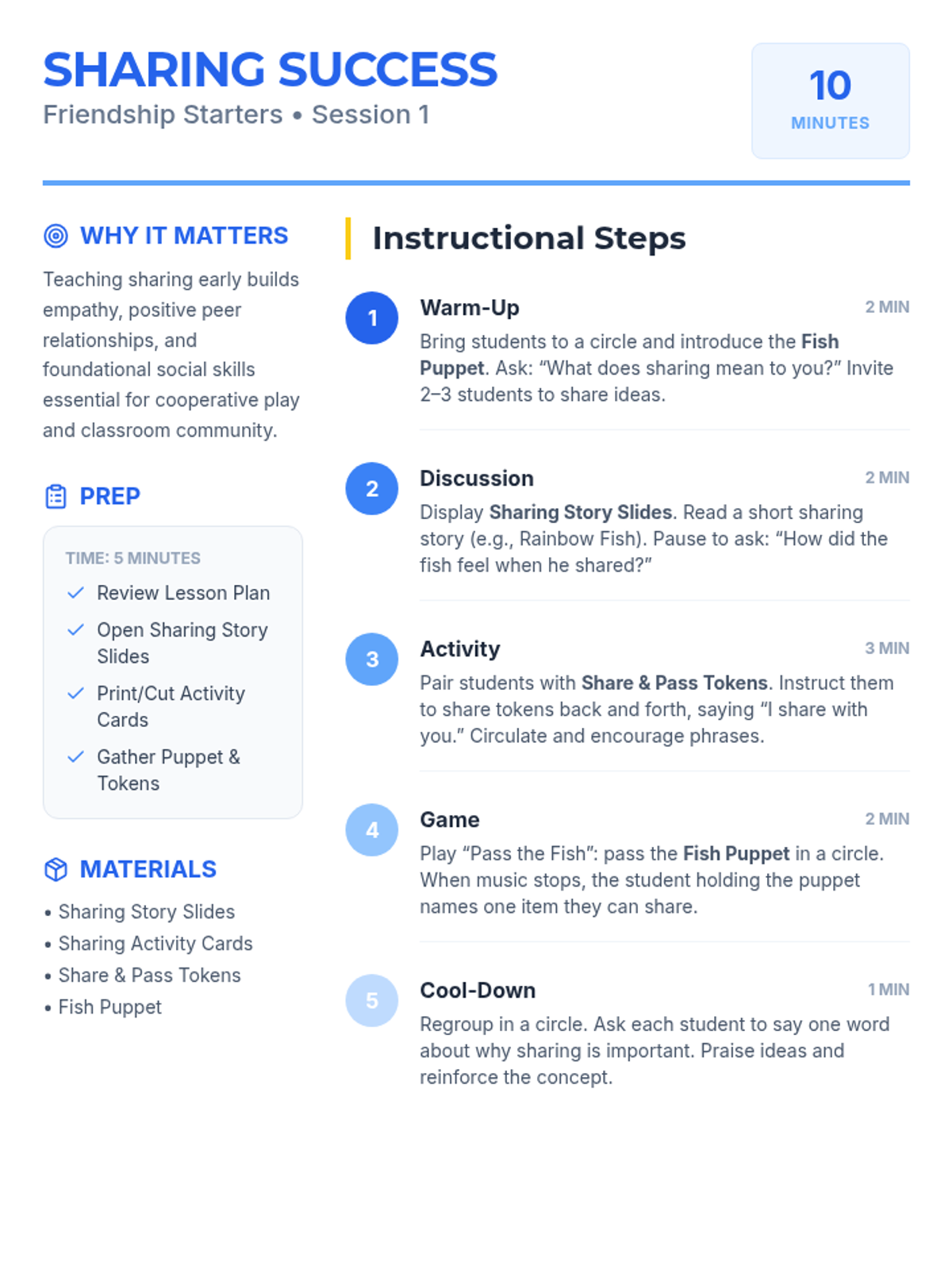
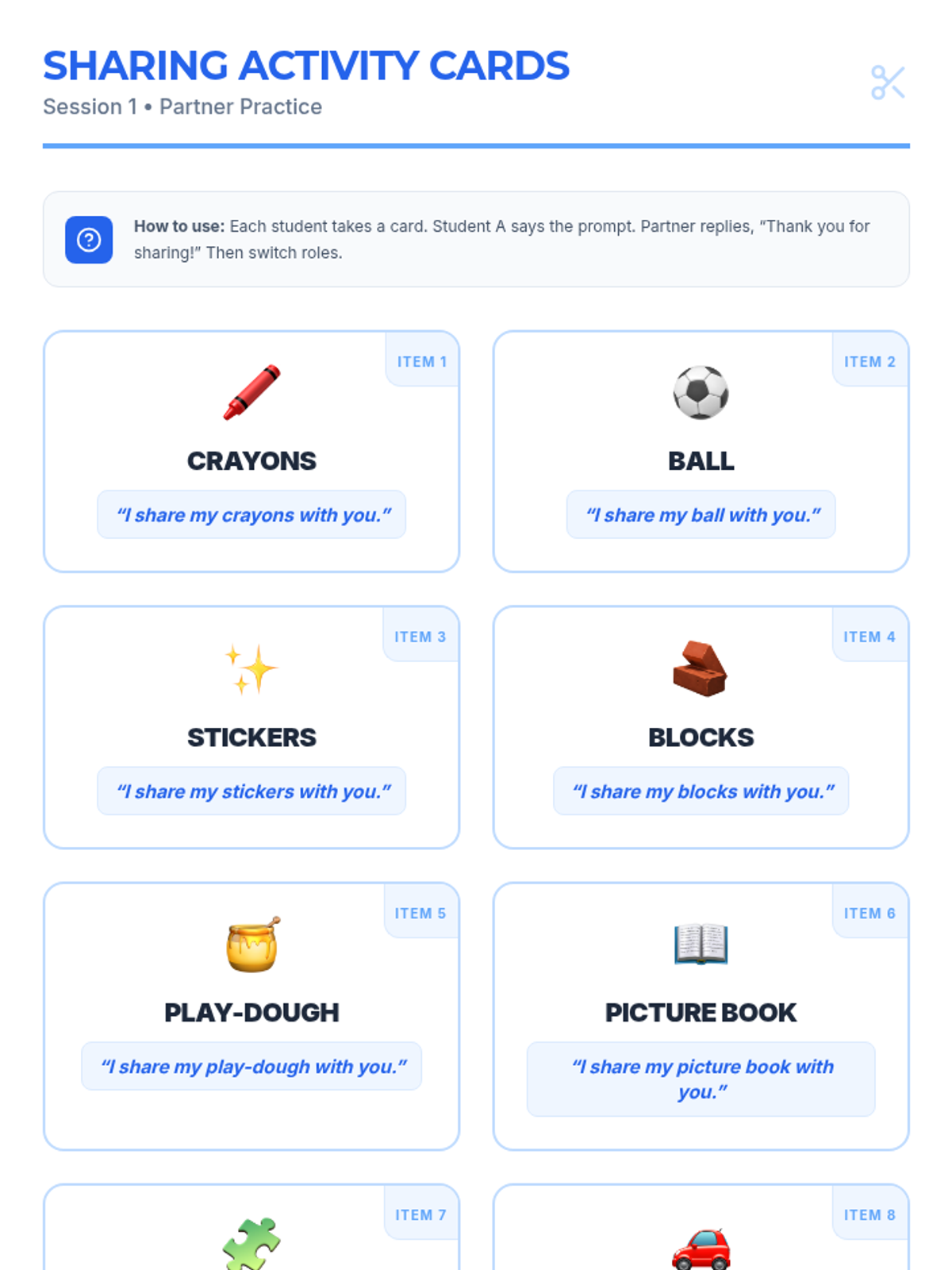
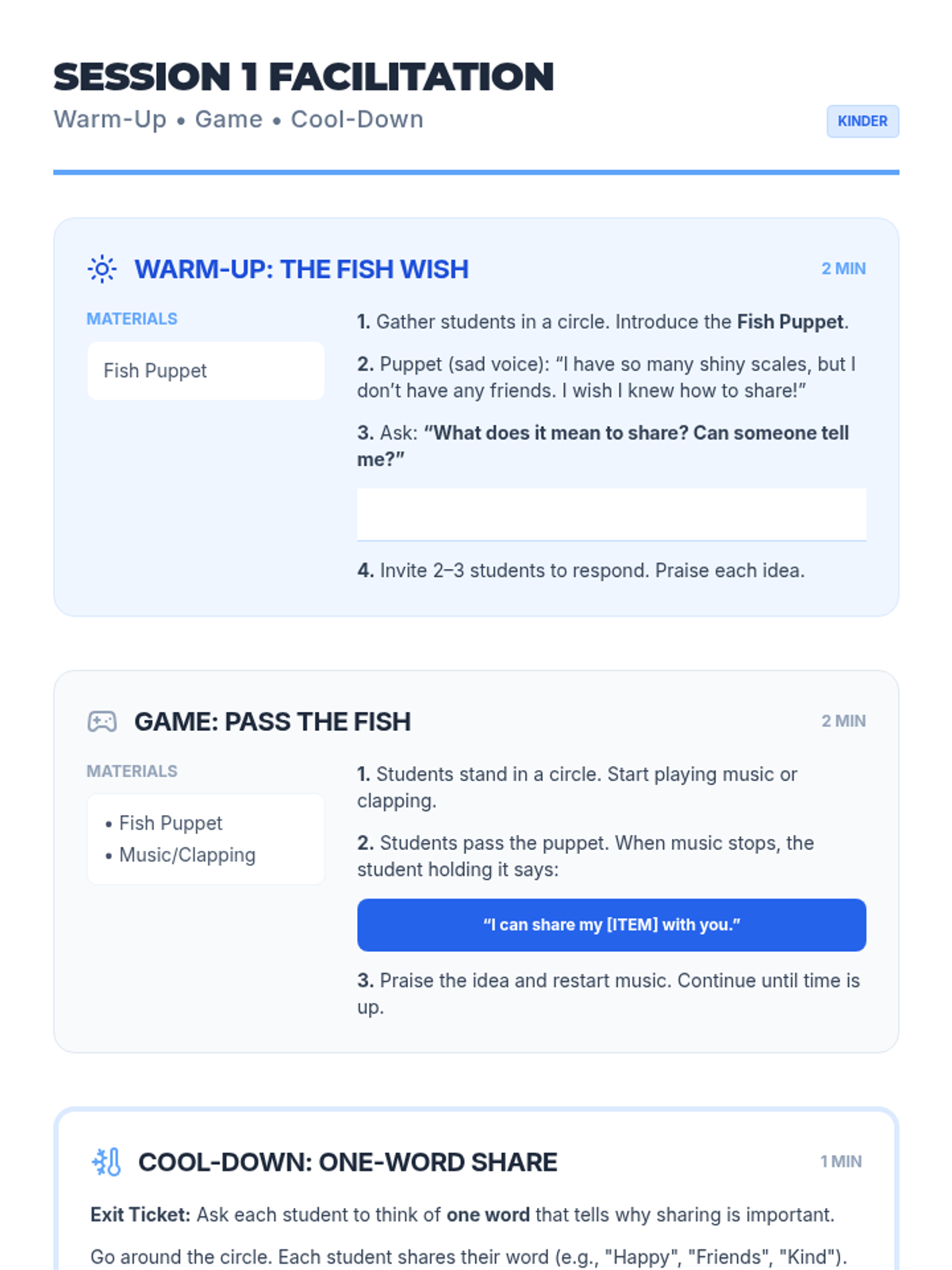
A 4-session kindergarten social skills series teaching sharing, taking turns, empathy, and cooperation through interactive stories, games, and guided practice.
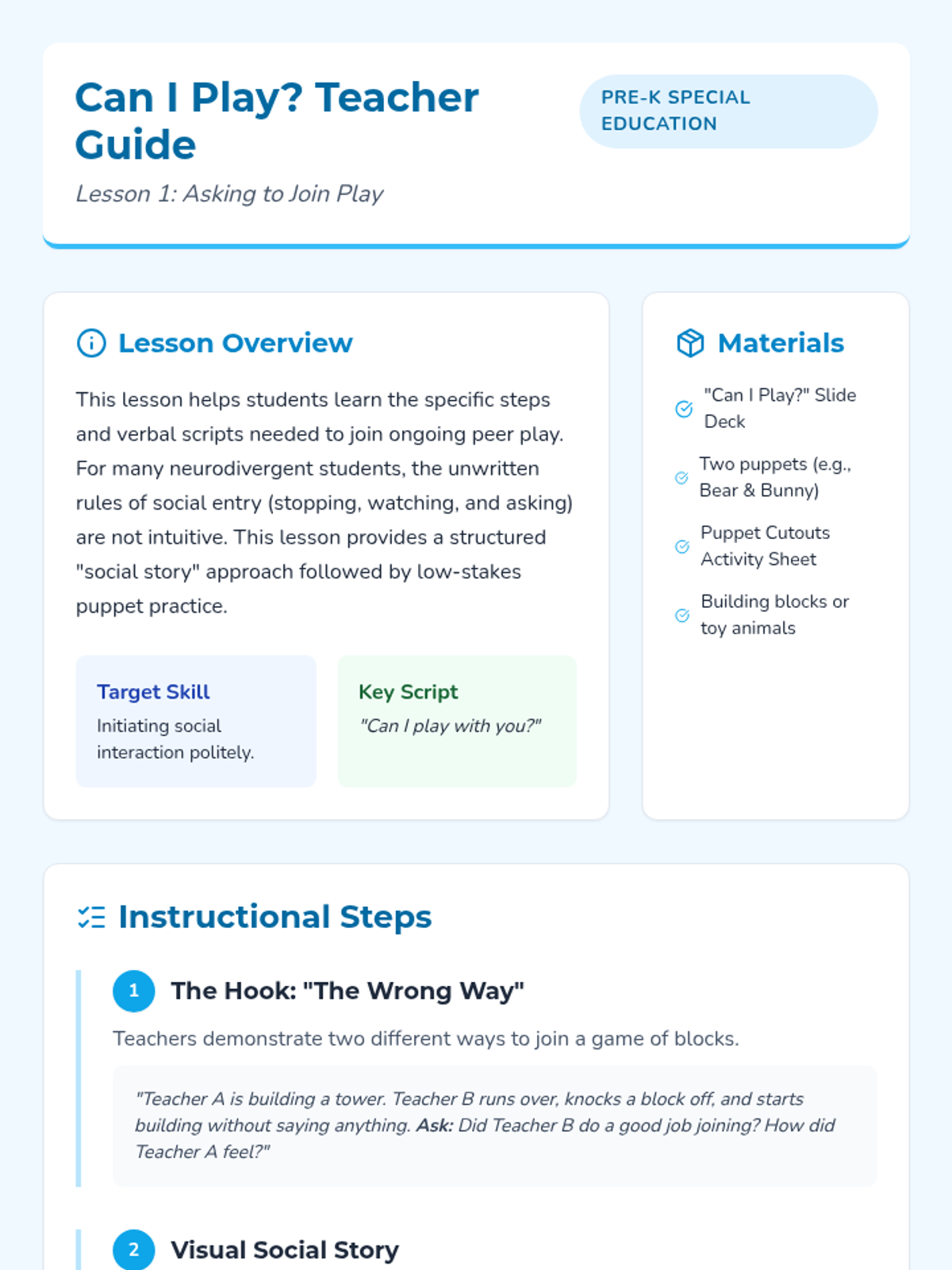
A 5-lesson sequence designed for Pre-K students to develop peer interaction and social play skills through social stories, role-play, and hands-on activities. Focuses on initiating play, turn-taking, personal space, emotional resilience, and physical self-control.
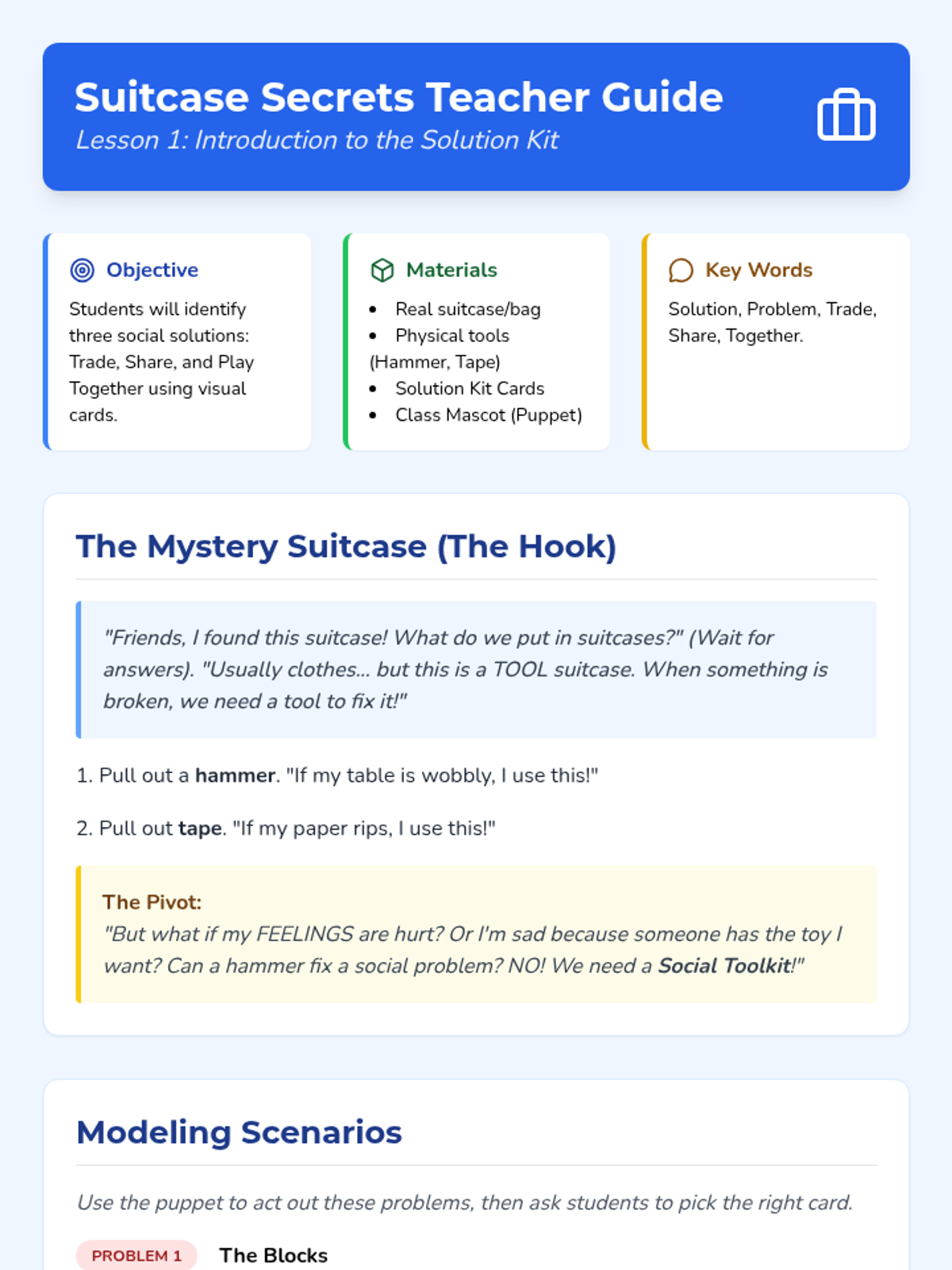
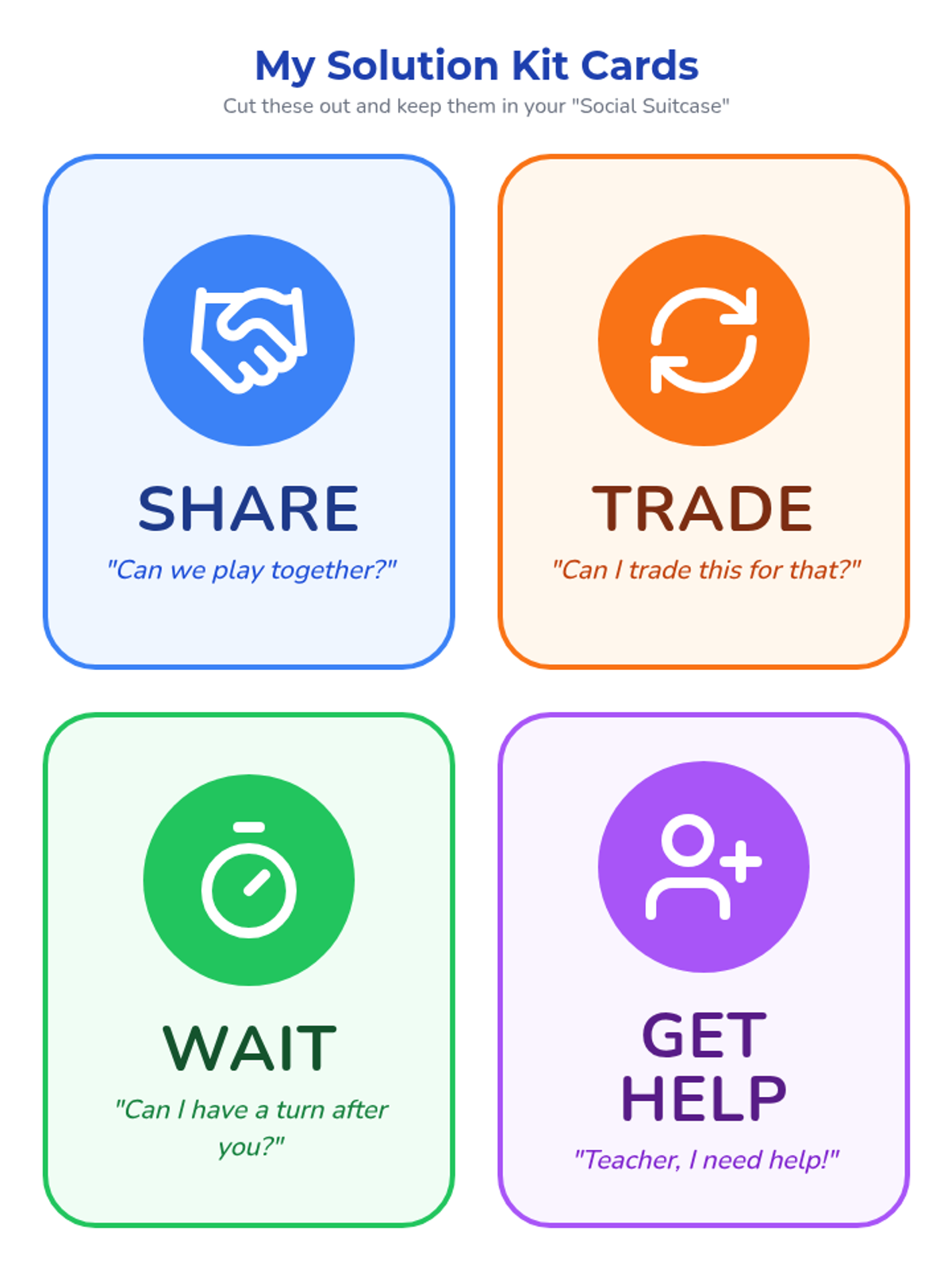
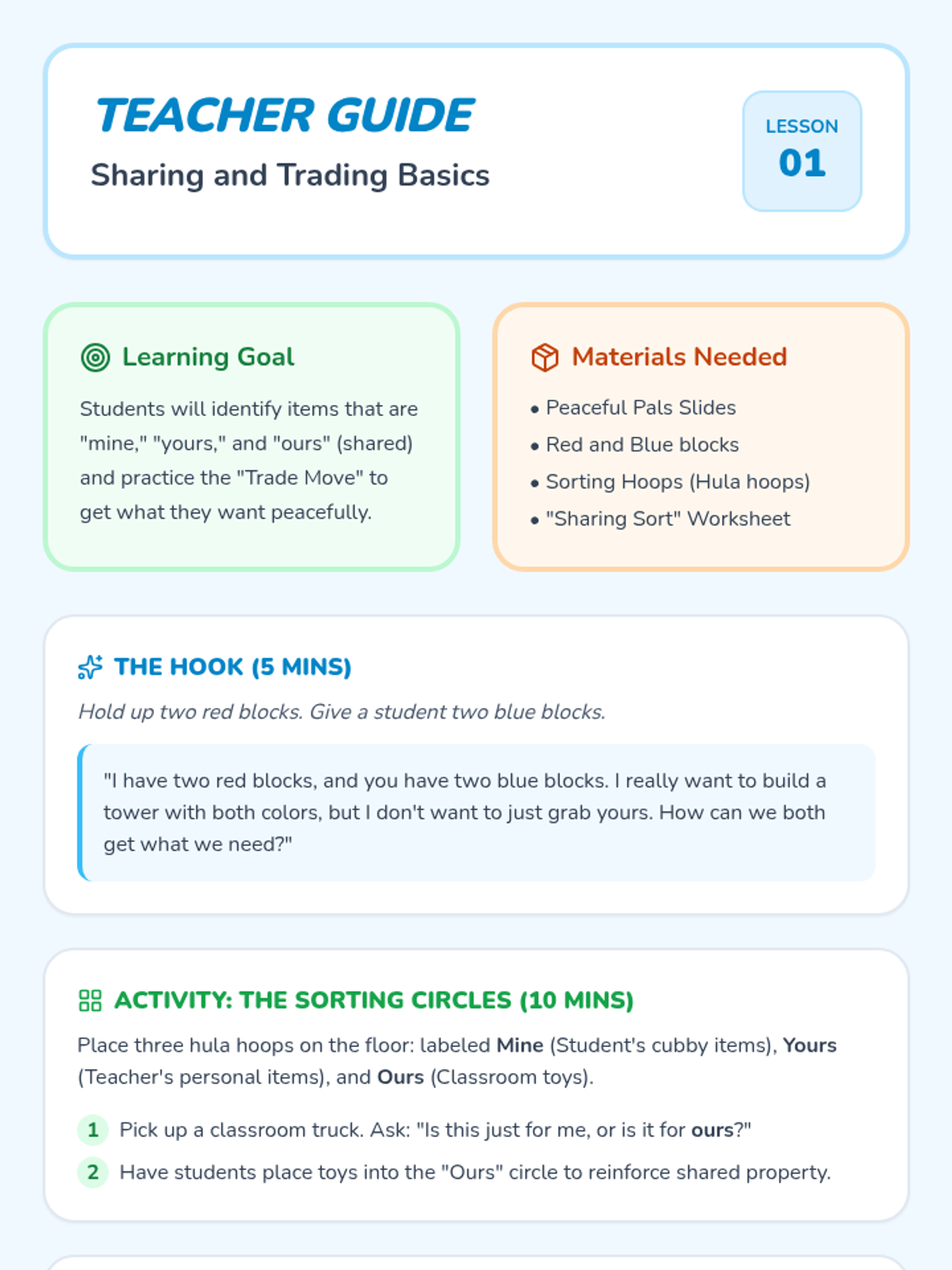
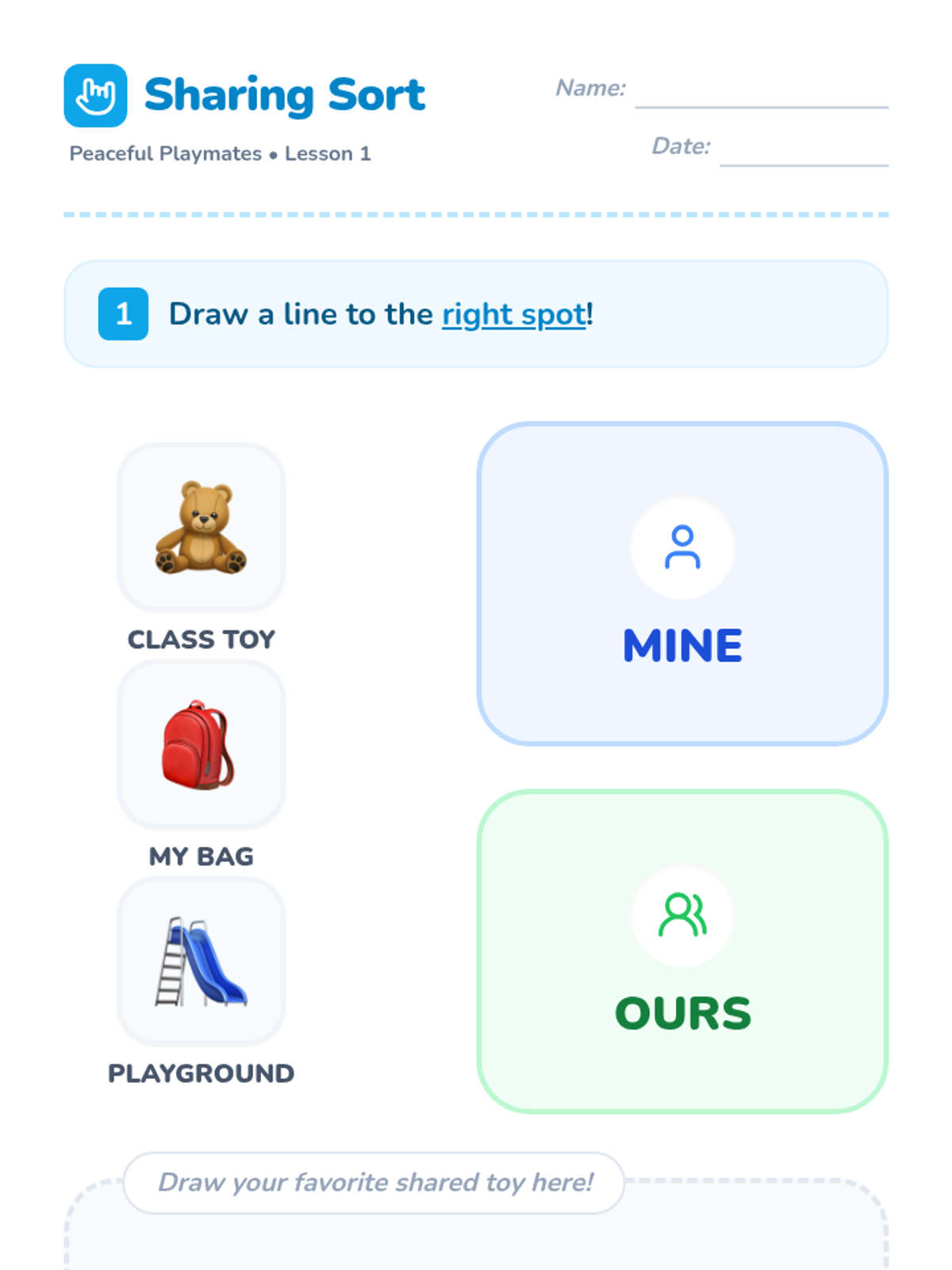
A Pre-K sequence focused on teaching specific social problem-solving strategies. Students learn to use a 'Solution Kit' of visual cards to navigate conflicts like sharing, trading, and taking turns through games, simulations, and creative brainstorming.
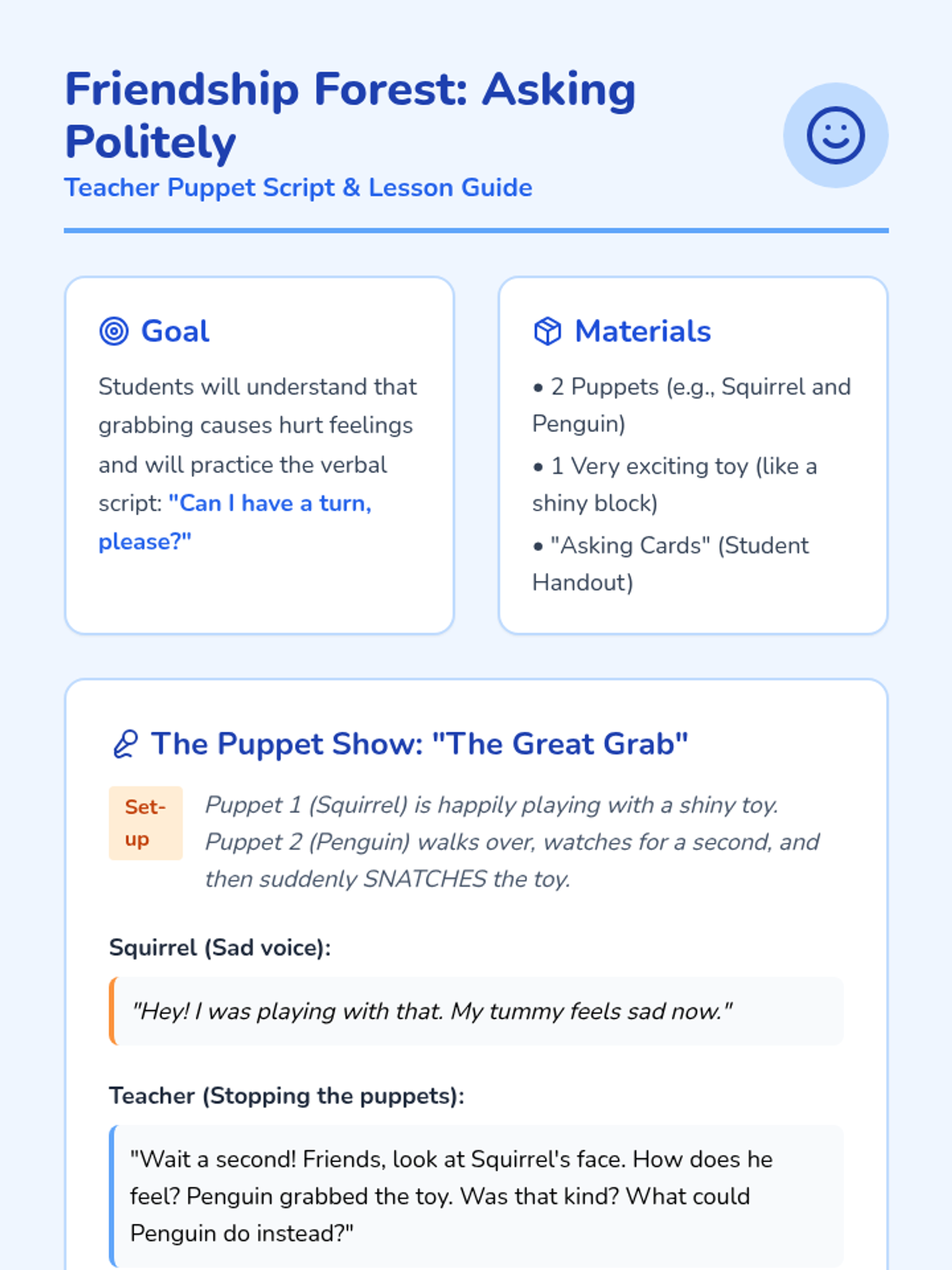
A Pre-K sequence focused on teaching social-emotional skills through puppet play, role-play, and visual aids. Students learn the foundational skills of sharing, trading, de-escalating physical impulses, and making amends with peers.
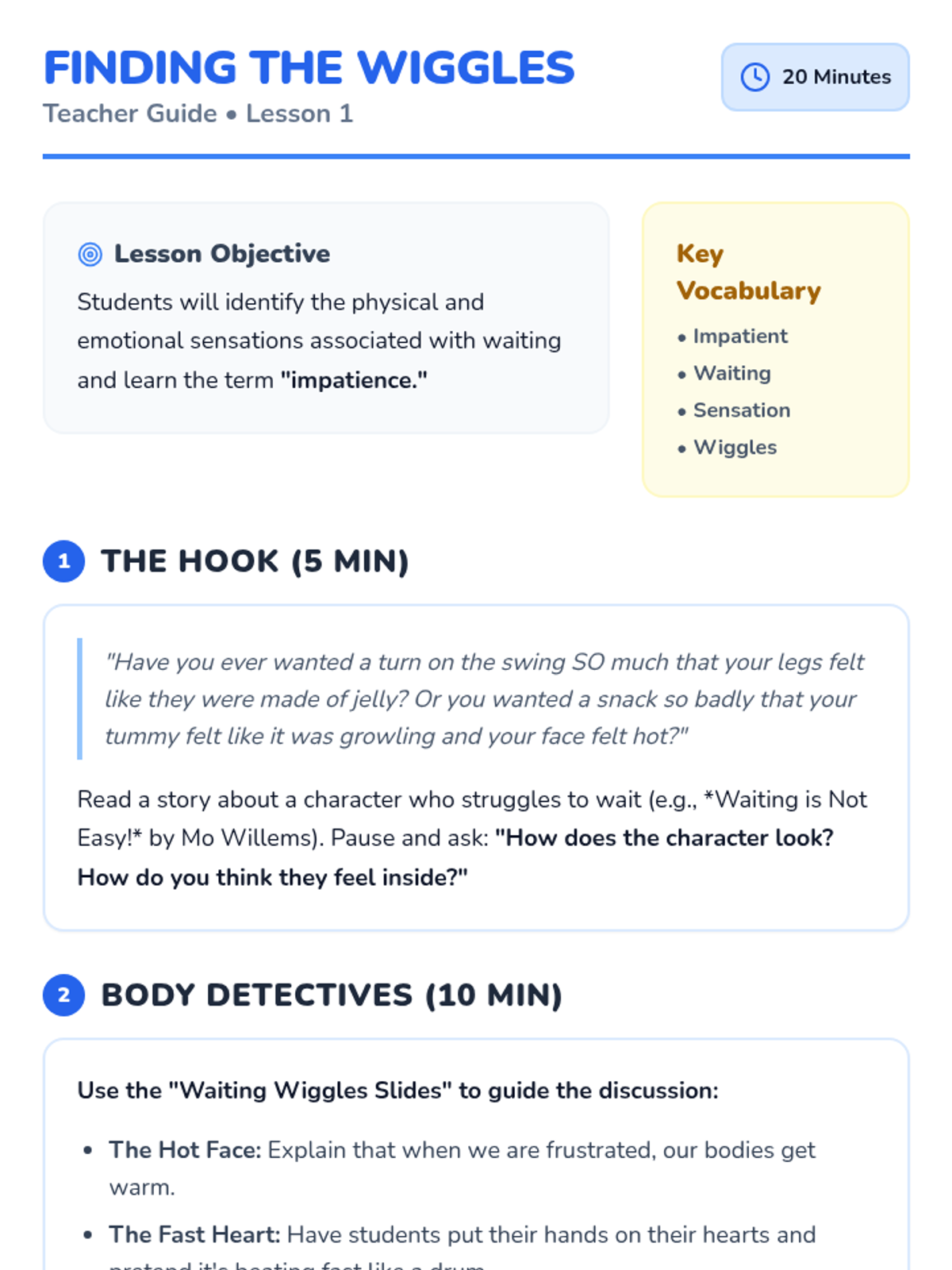
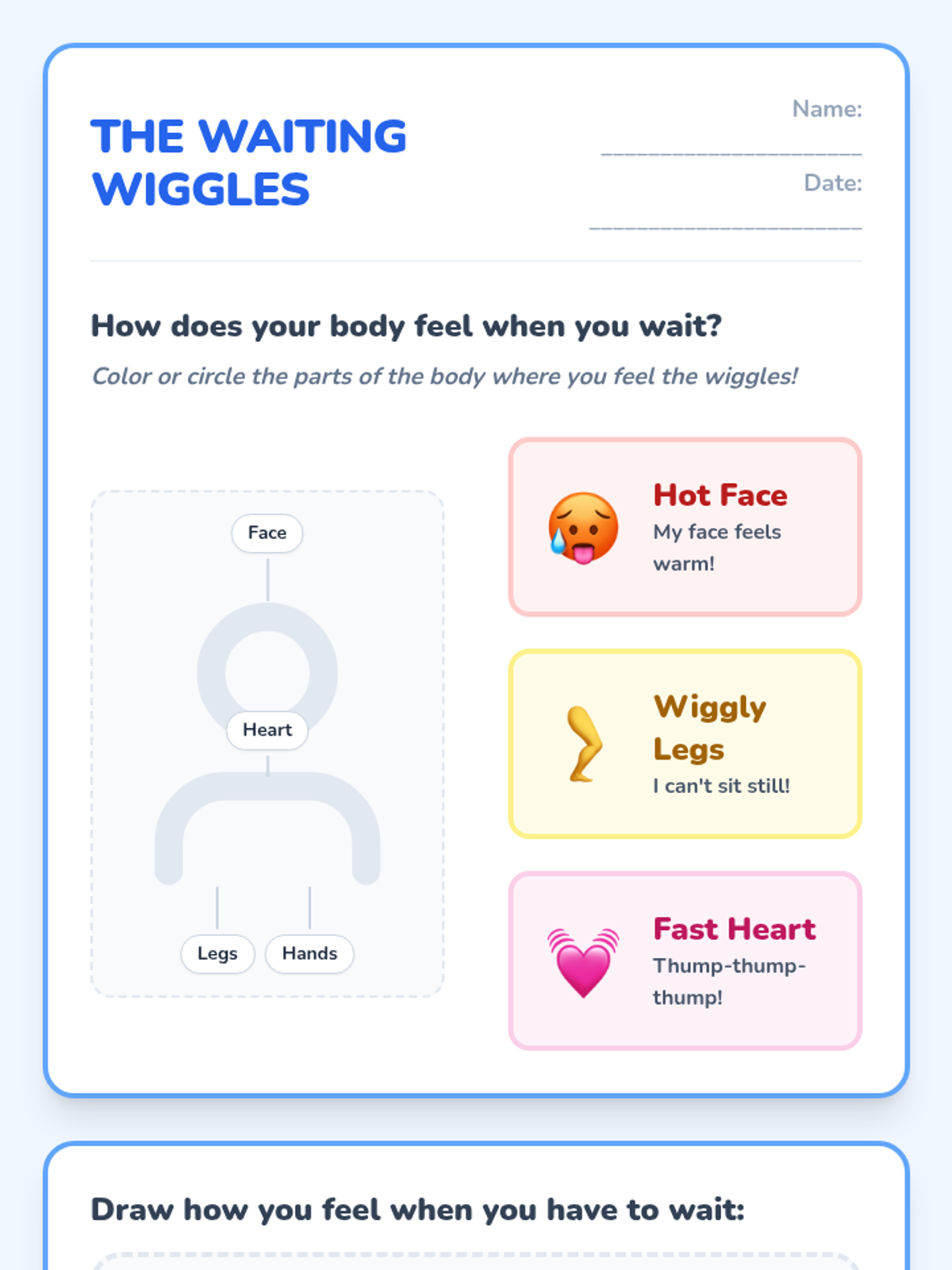
A Pre-K sequence focused on emotional regulation and waiting skills, helping children identify the physical feelings of impatience and build a 'waiting toolkit' of coping strategies.
A Pre-K sequence focused on teaching children the verbal scripts and social strategies needed for successful turn-taking, sharing, and resource negotiation in a classroom environment.
A Pre-K sequence focused on the fundamental mechanics of turn-taking and sharing through structured gameplay, physical movement, and visual cues. students learn to manage 'my turn' and 'your turn' rhythms in a supportive group environment.
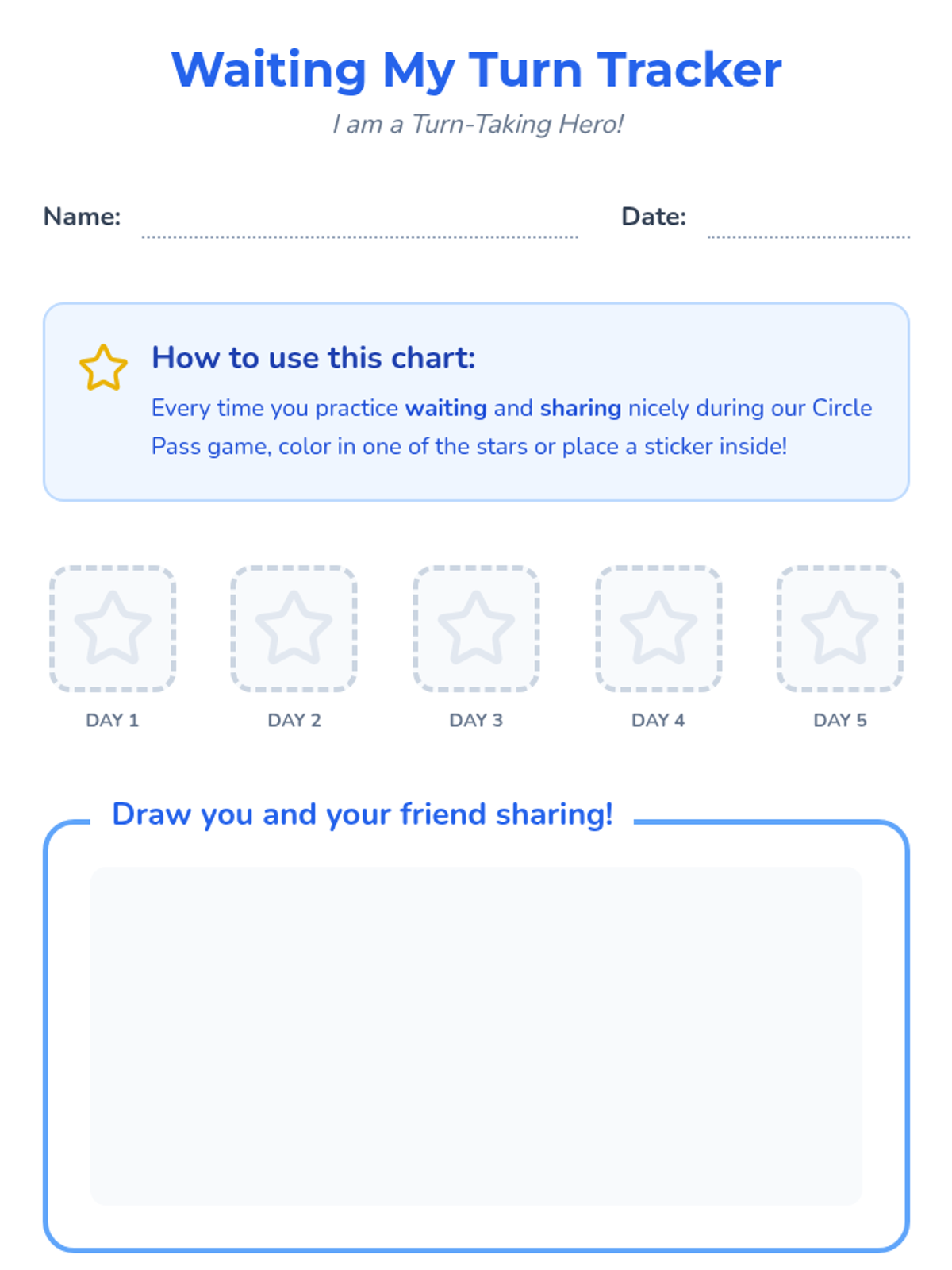
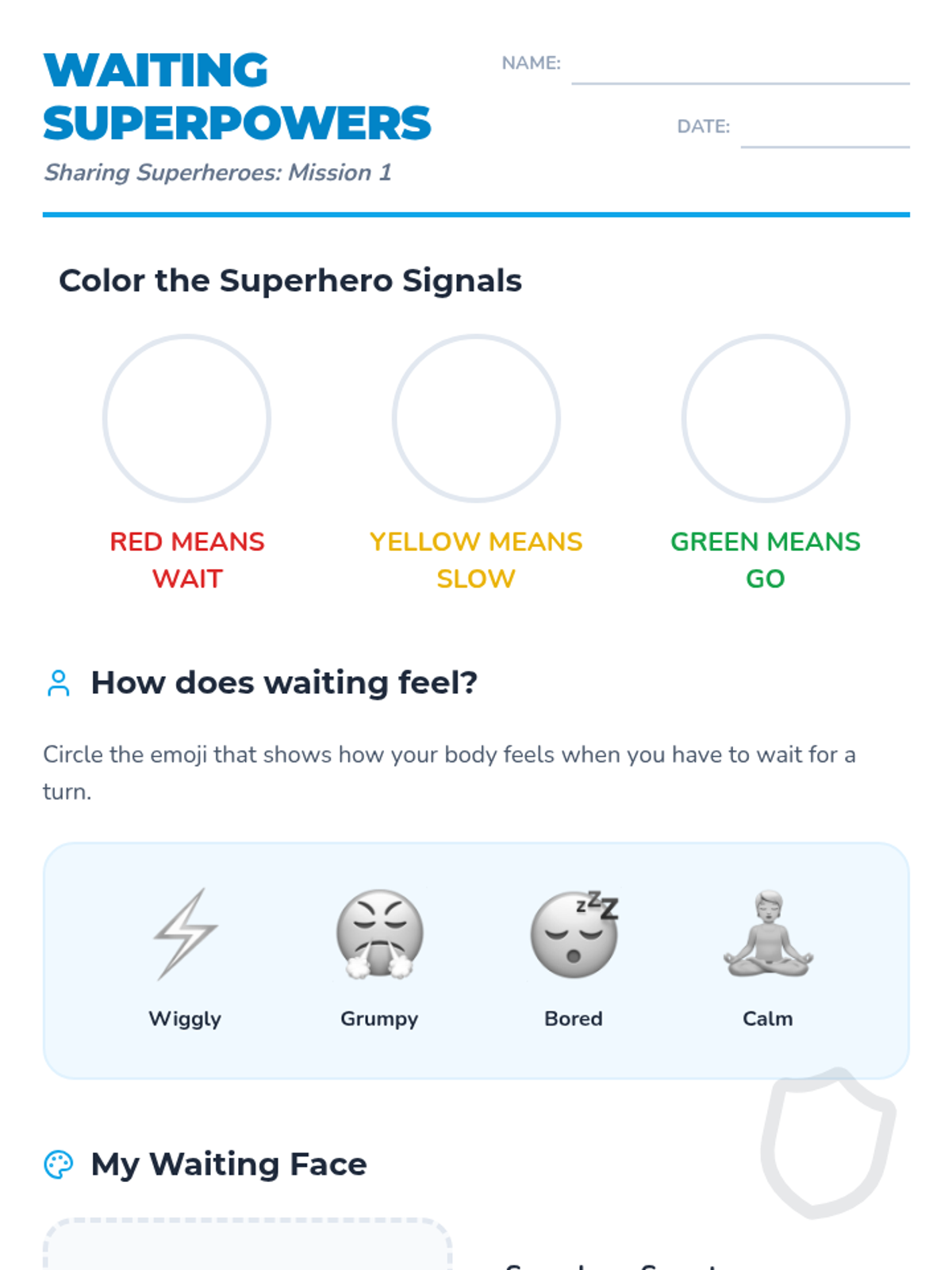
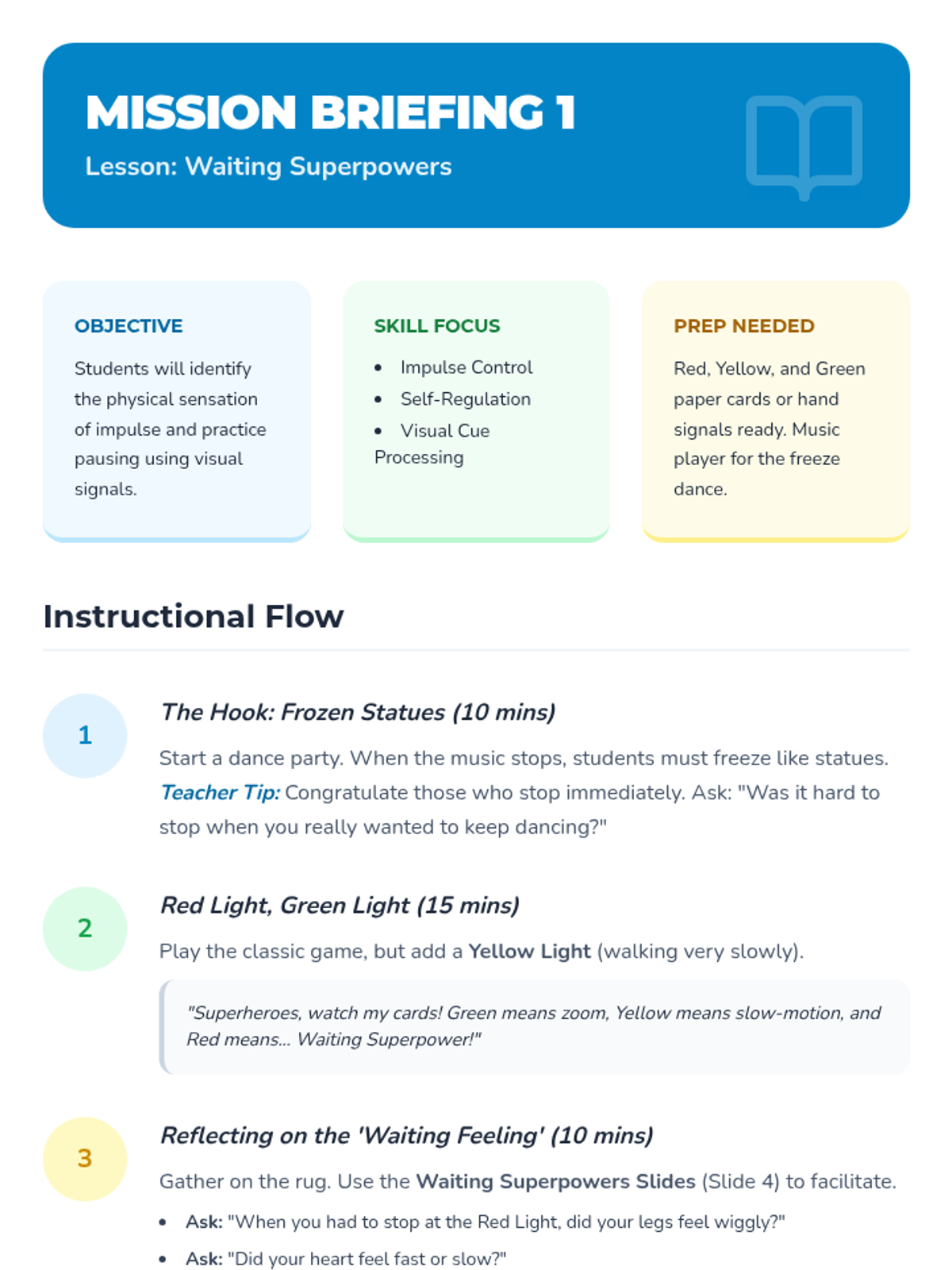
A comprehensive Kindergarten sequence focused on developing impulse control, verbal negotiation, and collaborative sharing skills. Students progress from recognizing the physical sensation of waiting to independently managing resource sharing during open play through a 'Sharing Superheroes' theme.
A Pre-K sequence focused on teaching children how to use verbal communication to replace physical outbursts, helping them express needs, set boundaries, and resolve conflicts using positive language.
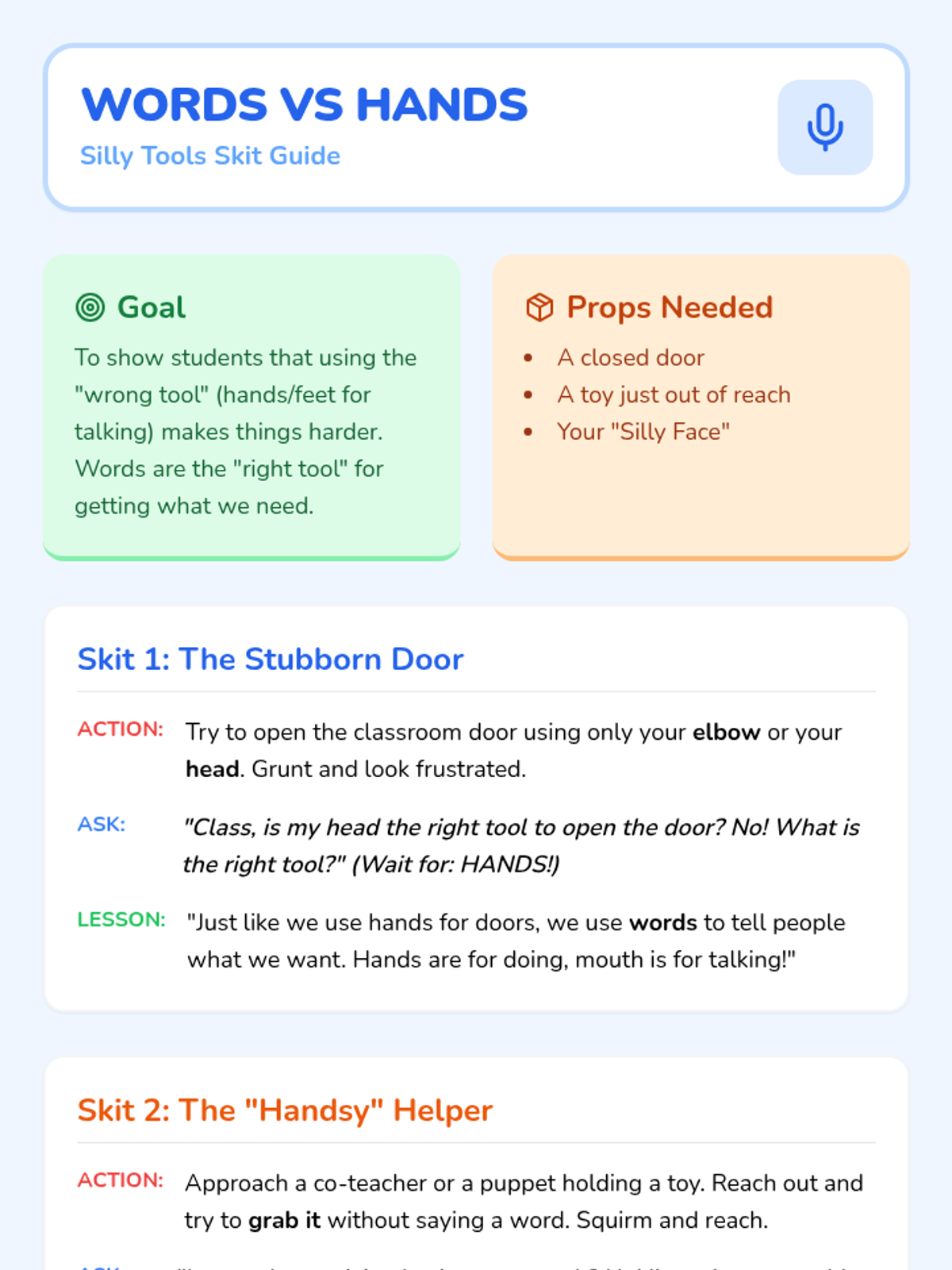
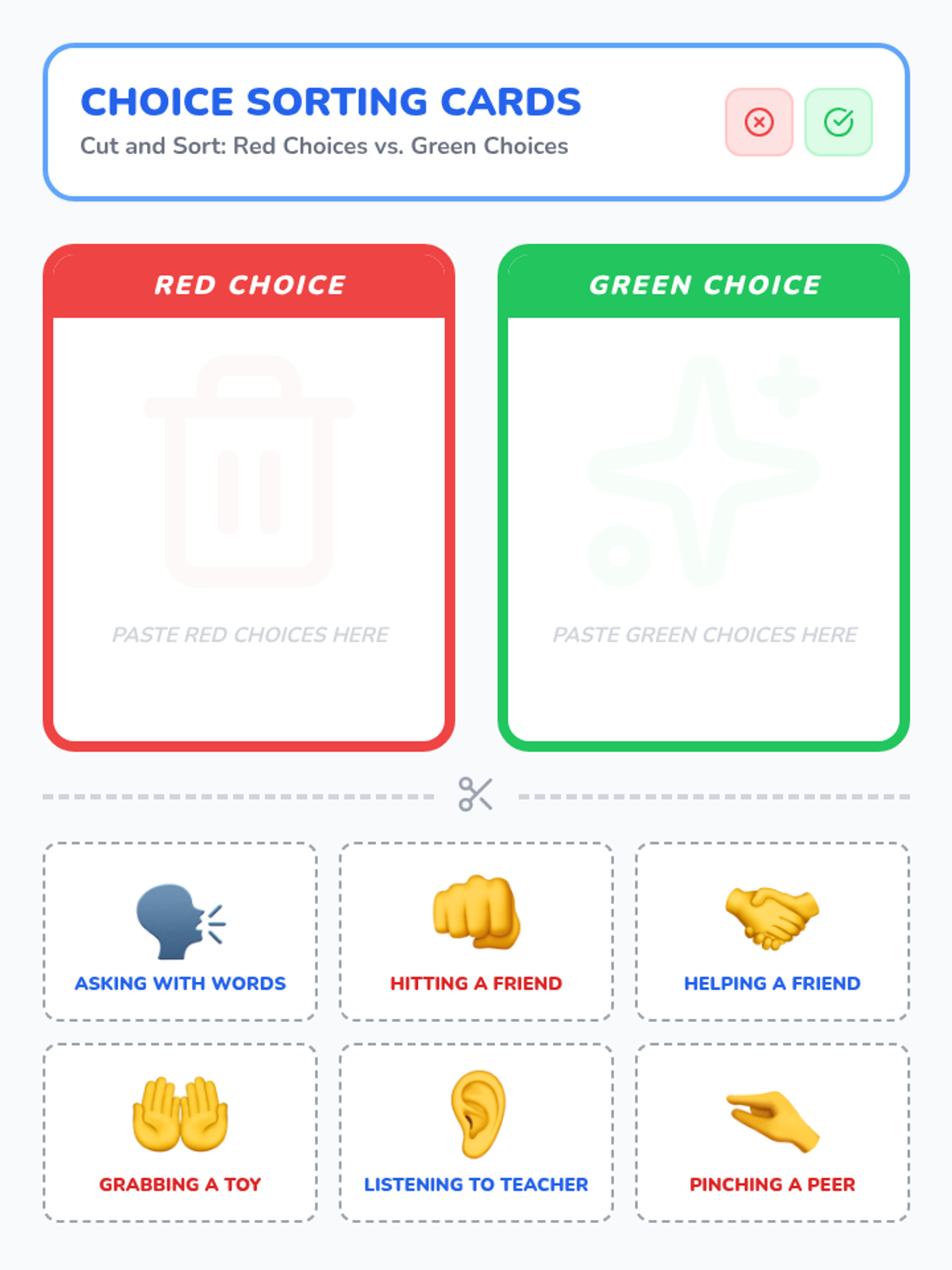
A 5-lesson sequence for Kindergarten students focusing on positive behavior alternatives, conflict resolution, and effective communication to reduce physical aggression and improve social interactions.
A game-based sequence for Kindergarten students to develop cognitive flexibility by practicing adaptation to changing rules and unexpected obstacles in a low-stakes environment.
A sequence for Kindergarten students focusing on task management and adapting to plan changes through visual schedules. Students learn to recognize daily routines, identify a 'change' symbol, observe calm modeling, and physically adjust schedules to build flexibility.
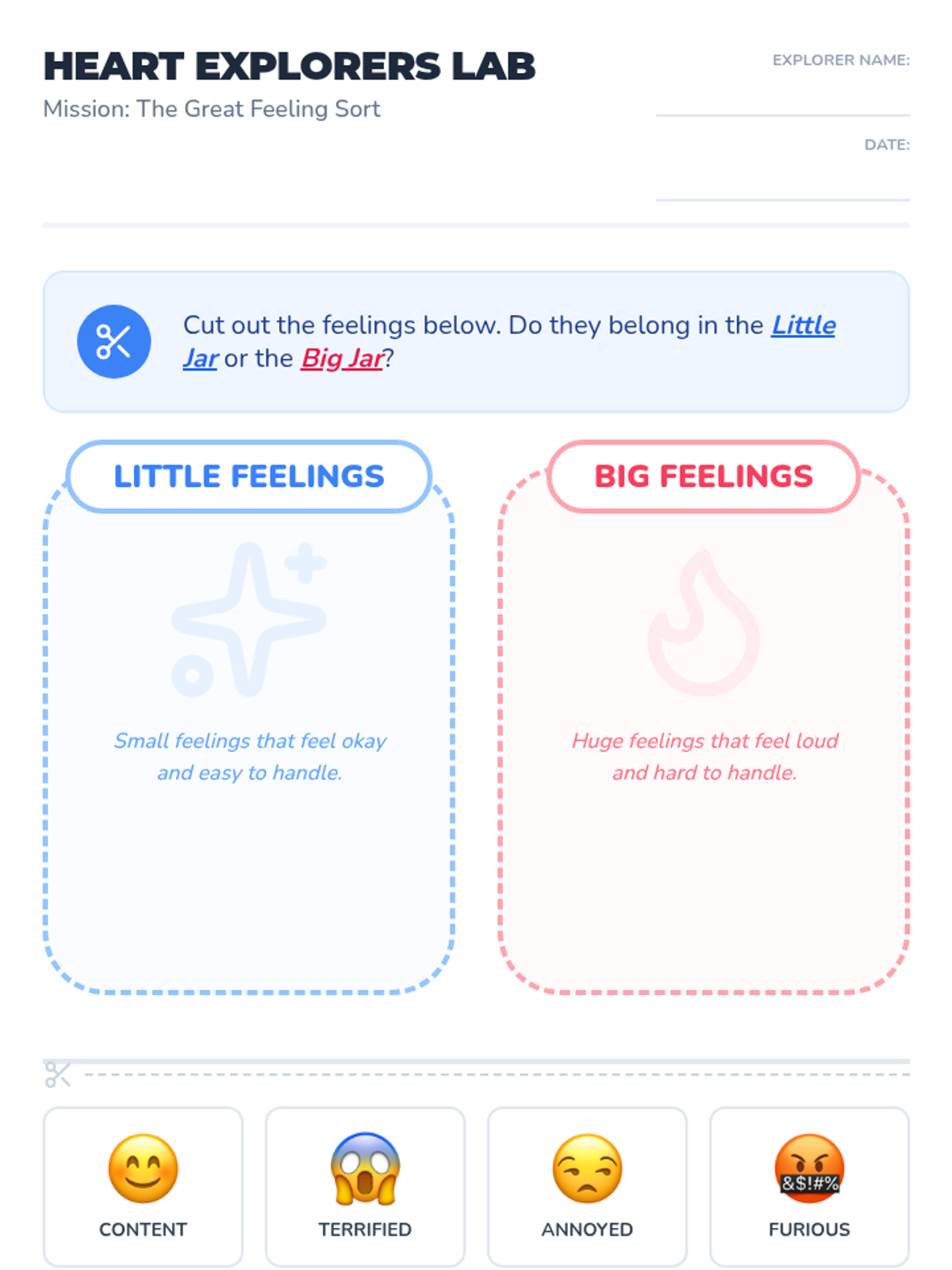
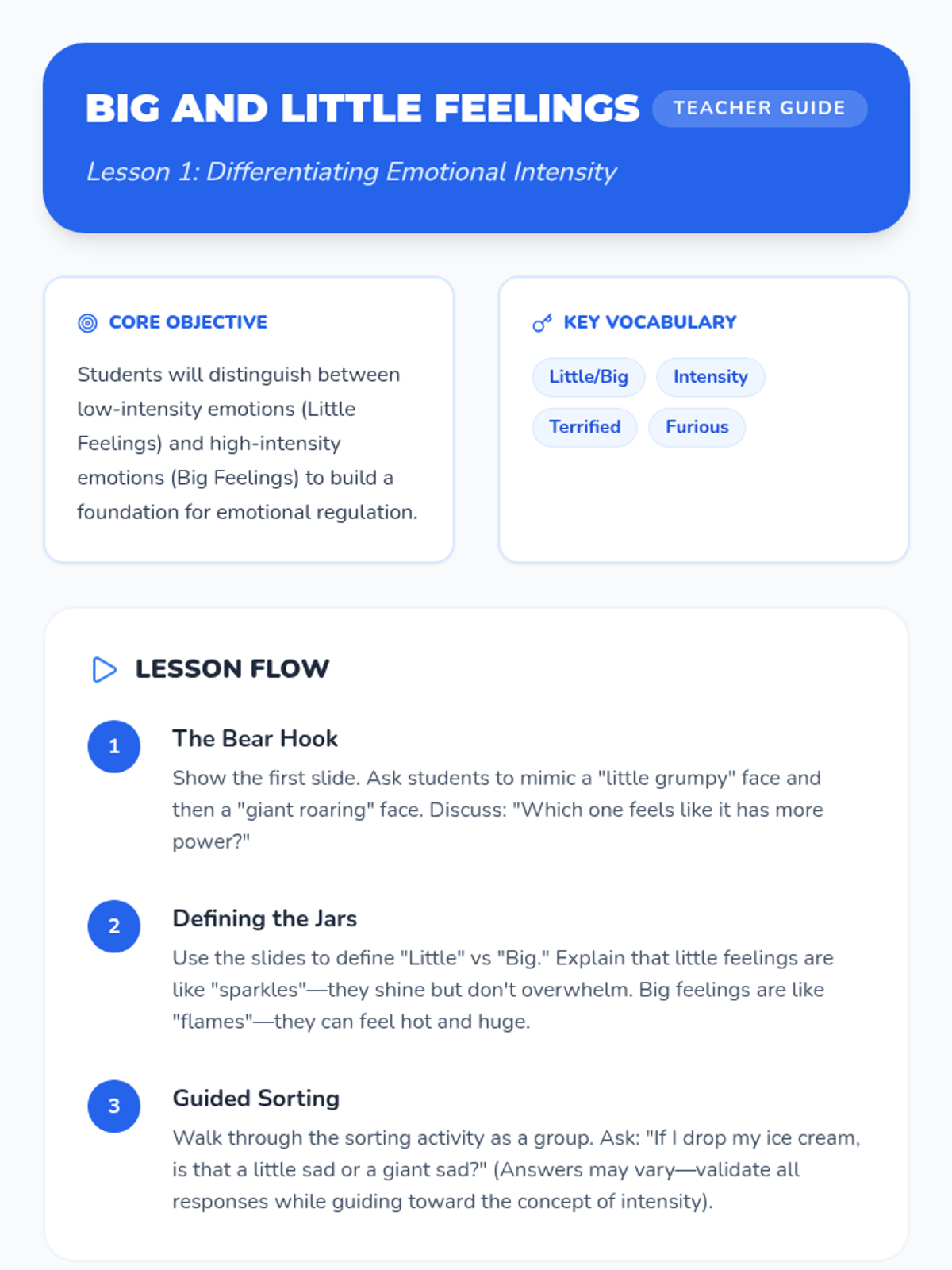
A sequence for Pre-K students to build emotional literacy regarding intense feelings, trauma responses, and distinguishing between 'little' and 'big' emotions through art, story, and play.
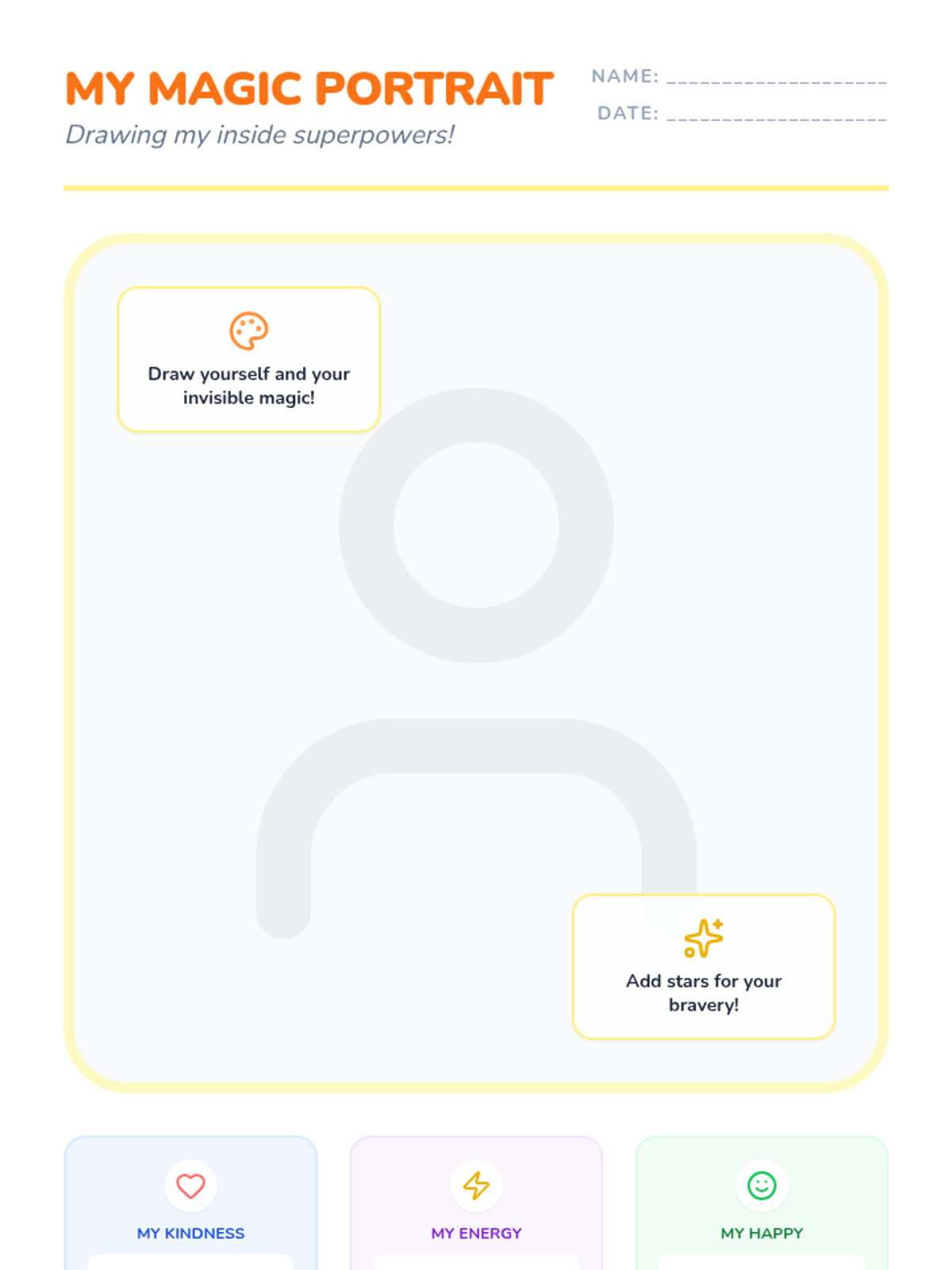
A project-based sequence for Pre-K students to build self-compassion through visual art. Students explore inner strengths, design affirmation badges, and create a 'Mirror of Strength' to practice positive self-talk.
This sequence introduces Pre-K students to the concept of internal dialogue and positive self-talk. Using relatable metaphors like 'sunny thoughts' and 'cloudy thoughts,' children learn to identify their inner voice, categorize their feelings, and practice resilience-building affirmations.
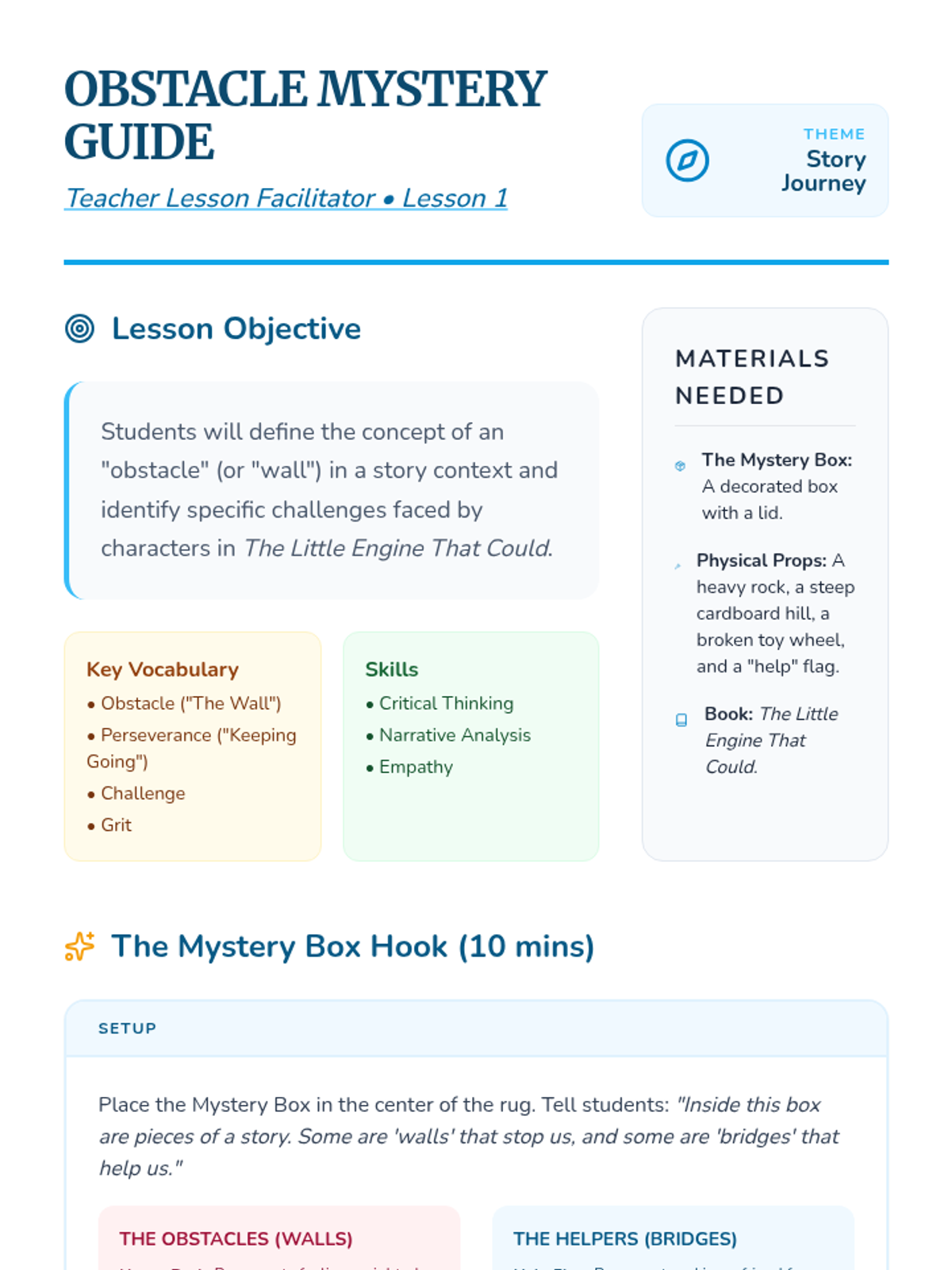
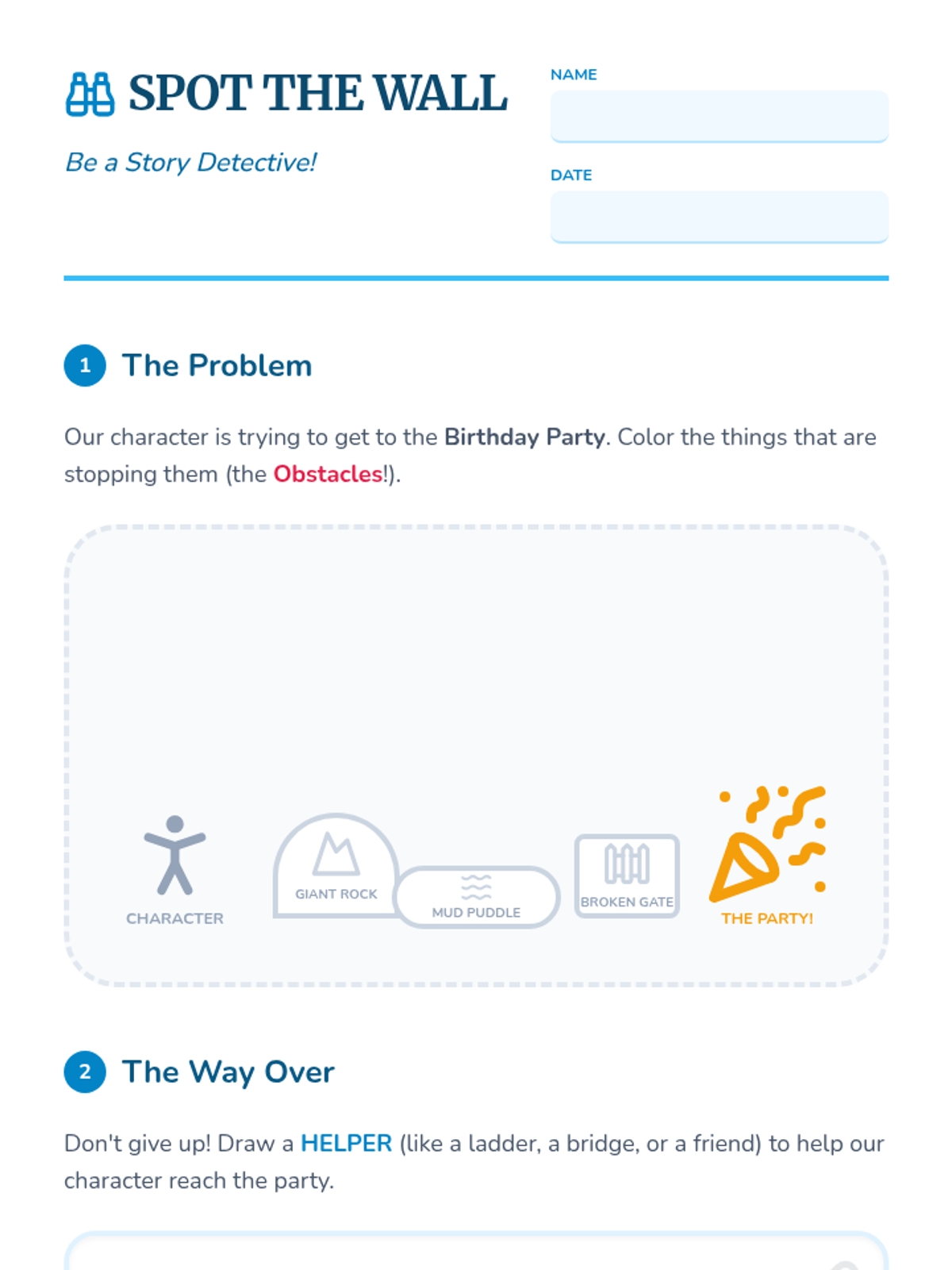
A Kindergarten sequence focused on building resilience and perseverance through storytelling, character analysis, and role-play. Students learn to identify obstacles, use positive self-talk, and recognize their own capacity to overcome challenges.
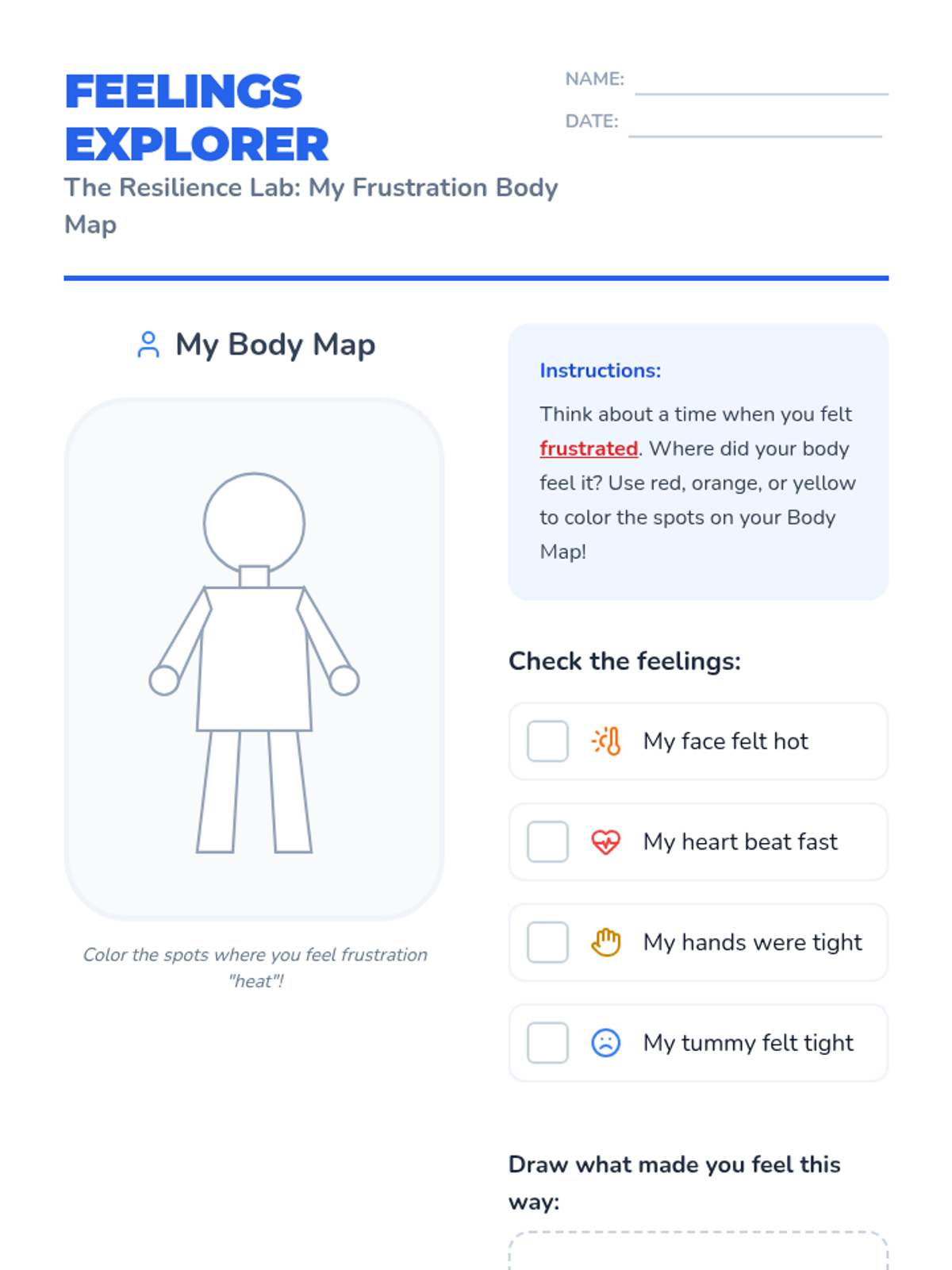
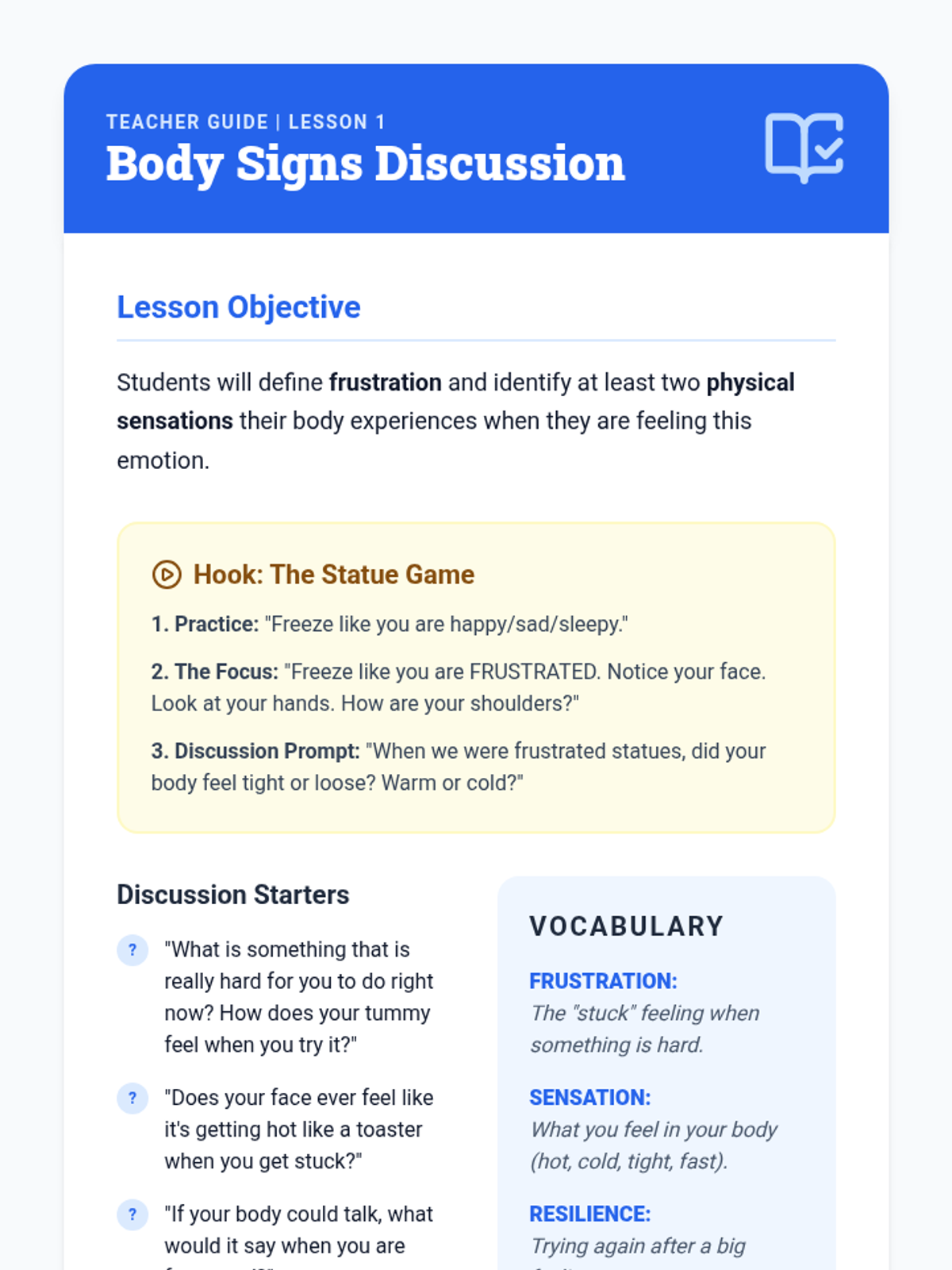
A Kindergarten sequence focused on somatic markers of frustration and emotional regulation techniques. Students learn to recognize body signs, practice breathing strategies, use the 'Stop, Name, Calm' algorithm, and coach peers through setbacks.
A Kindergarten social-emotional learning sequence focused on building positive peer interaction skills through social scripting, personal boundaries, and conflict resolution. Students use role-play and visual stories to internalize strategies for sharing, joining groups, and handling social rejection.
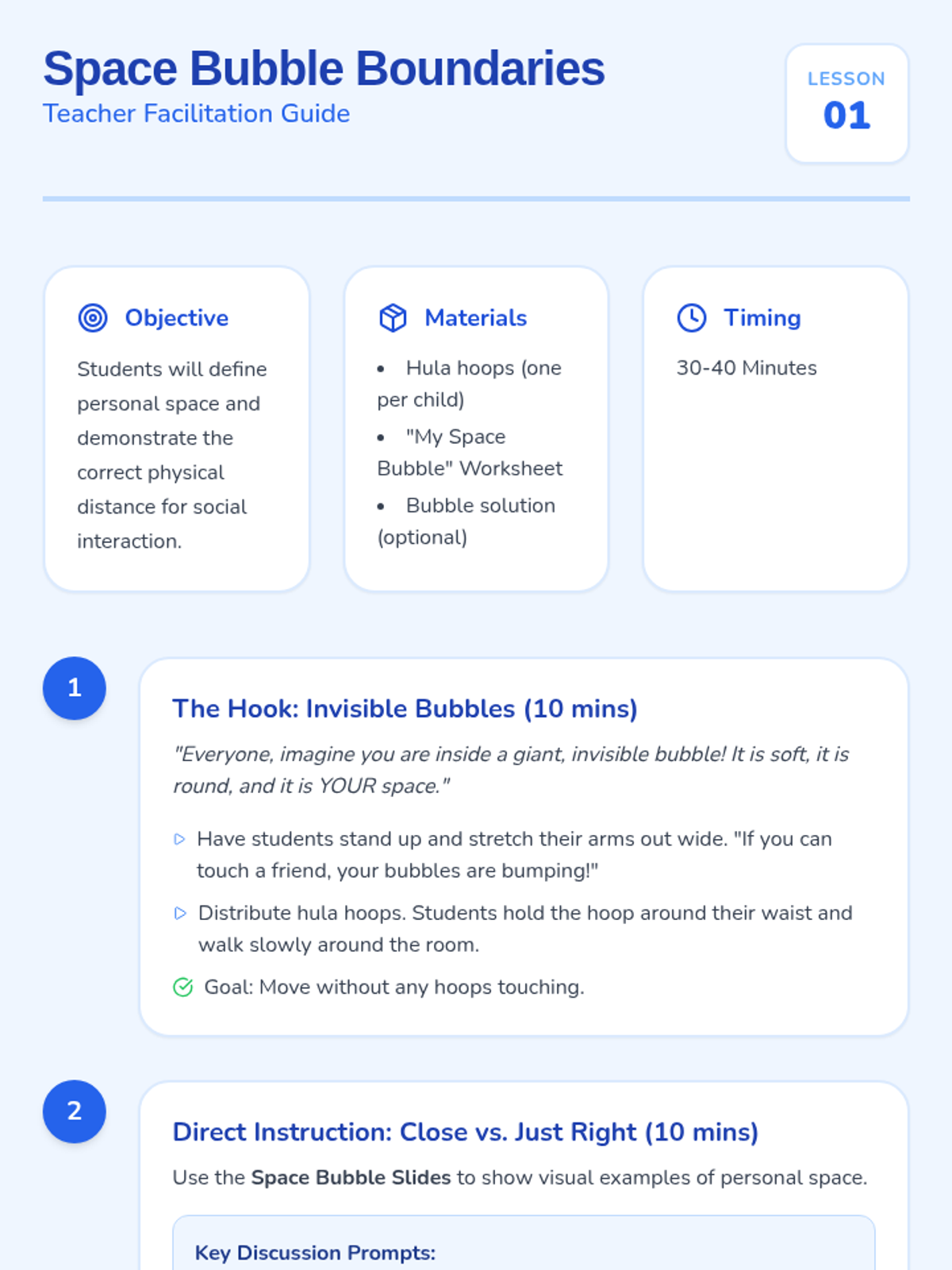
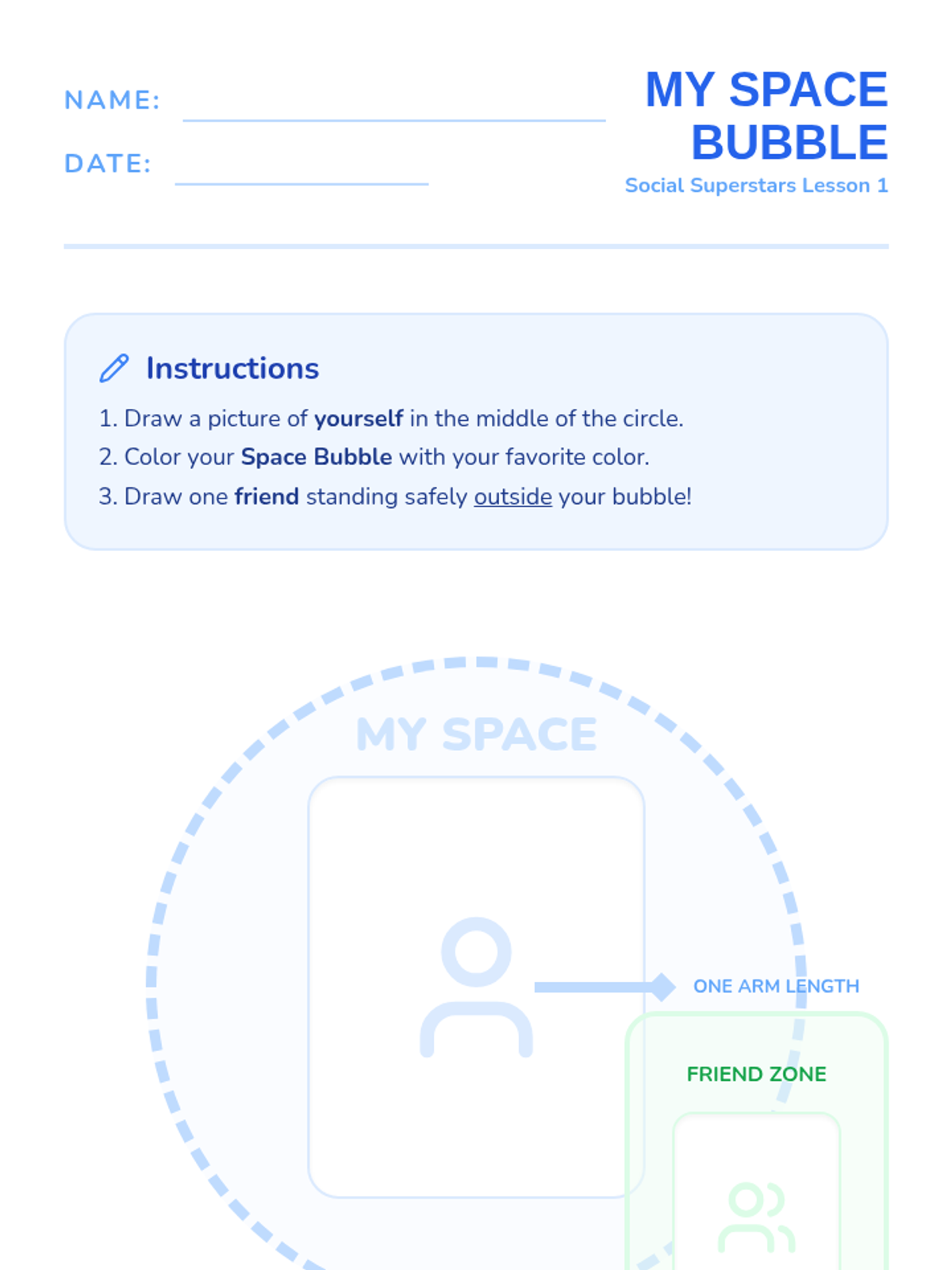
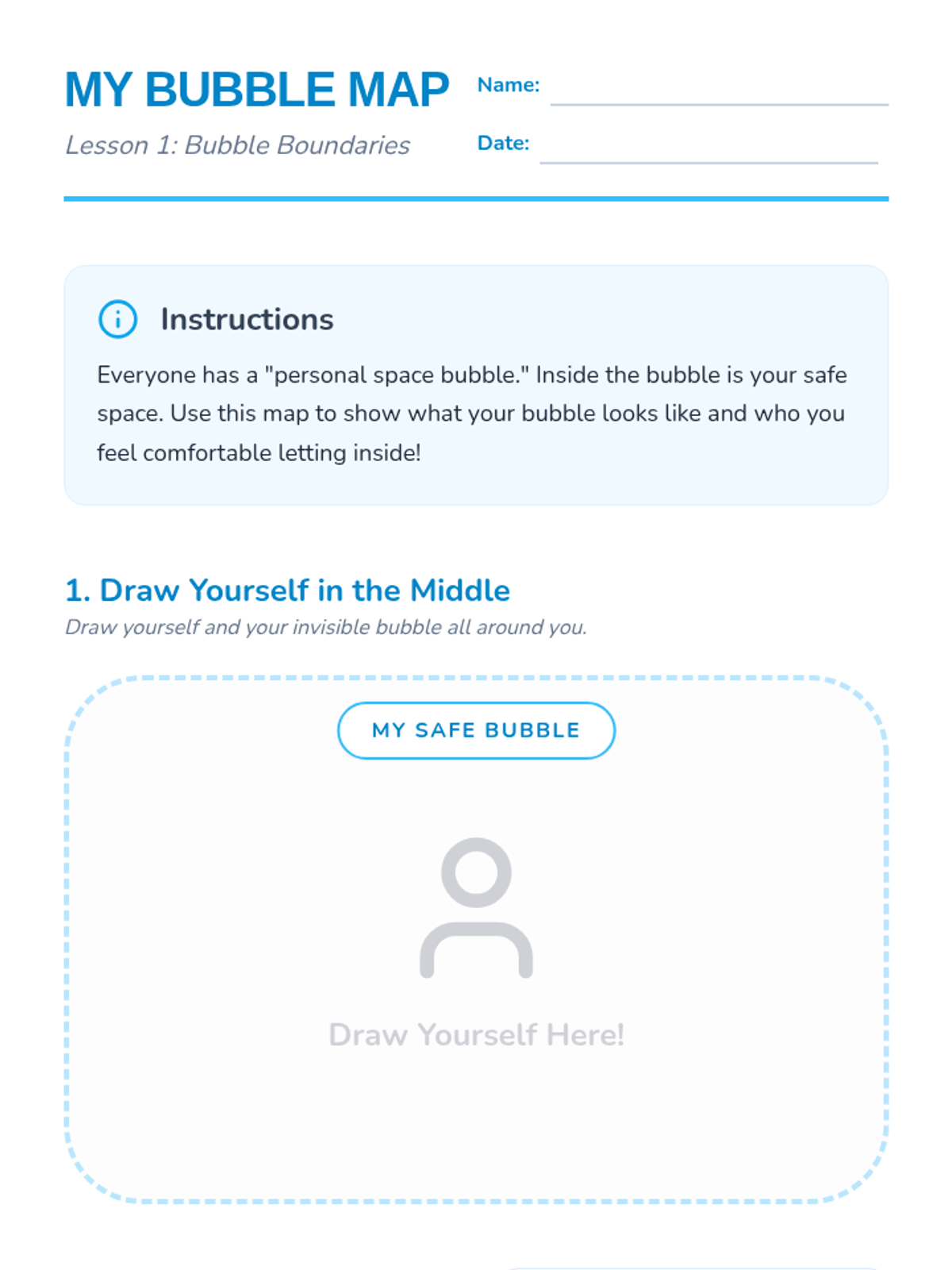
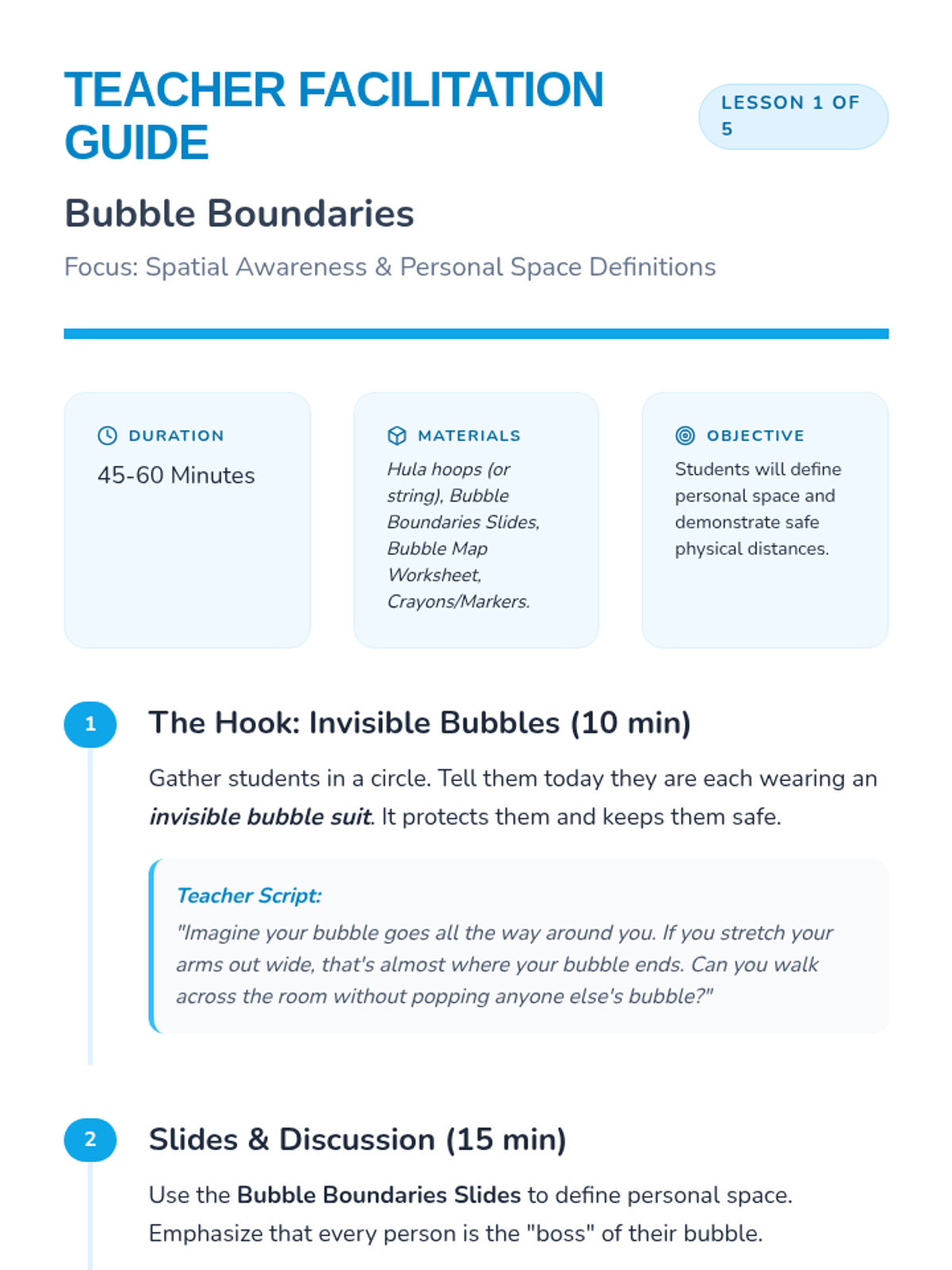
This sequence introduces students to the fundamental concepts of personal space and physical boundaries through interactive movement and role-playing activities. Students learn to define their personal space, practice asking for consent, and develop assertive communication skills to maintain their safety and respect the boundaries of others.
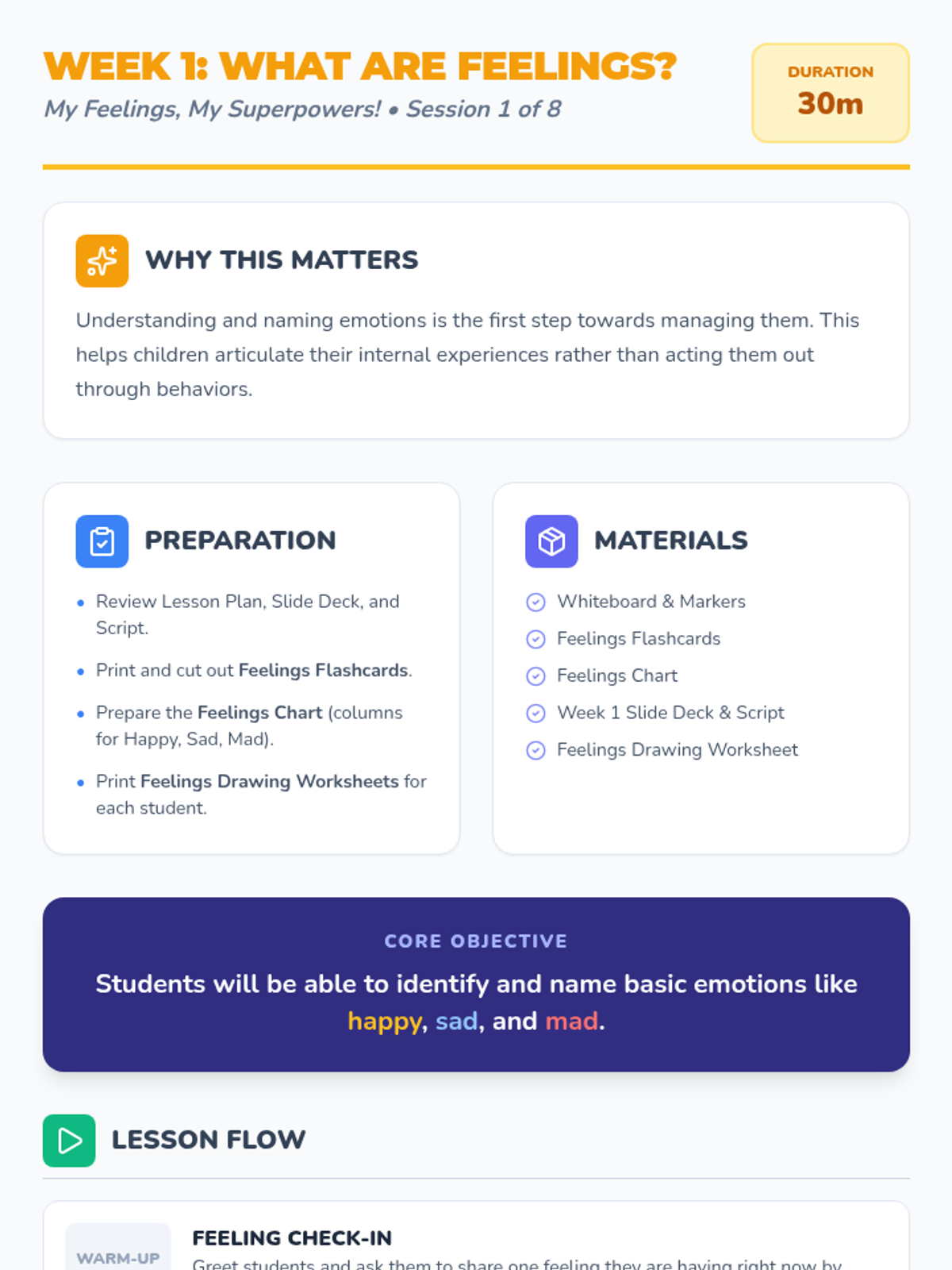
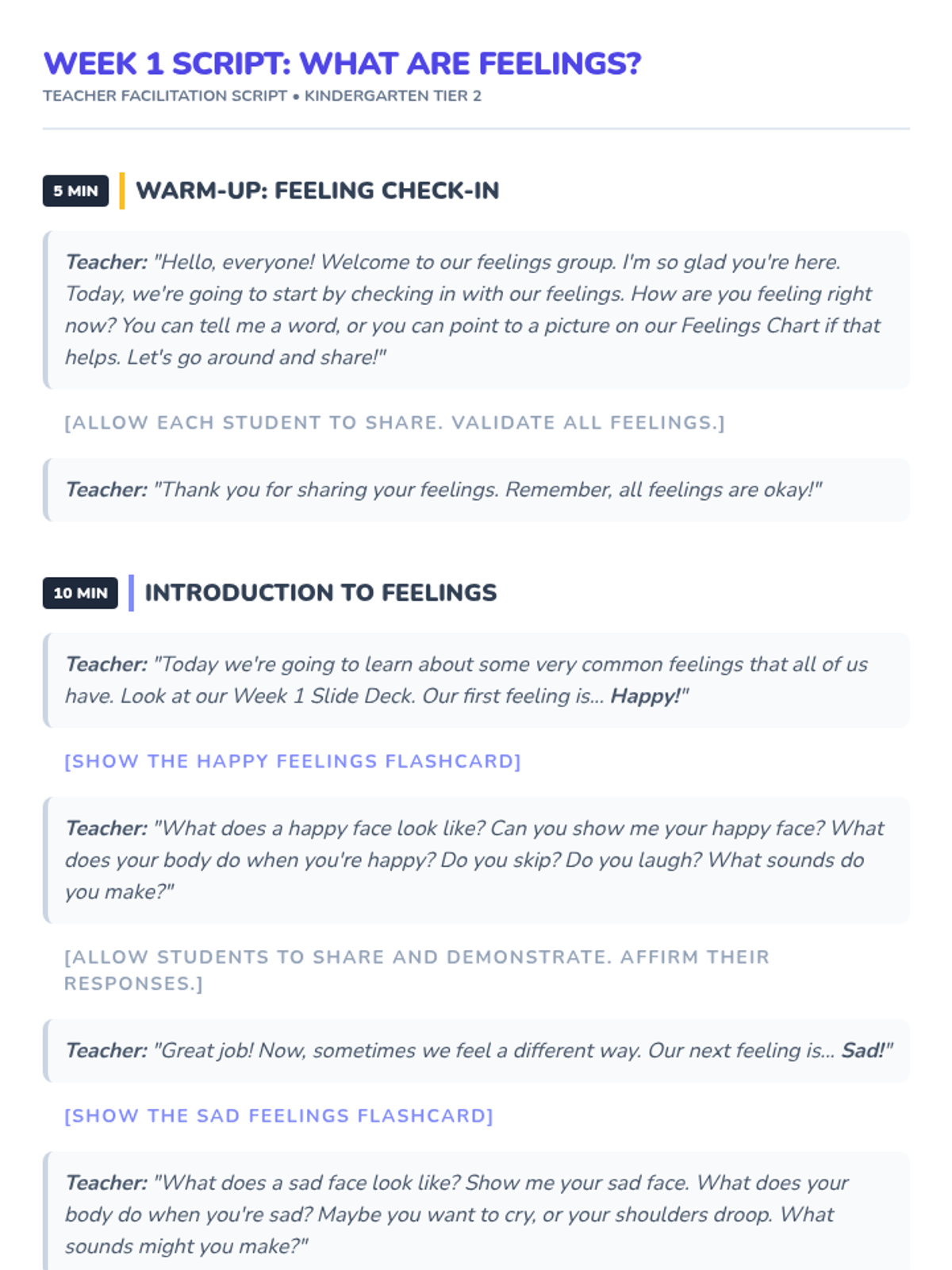
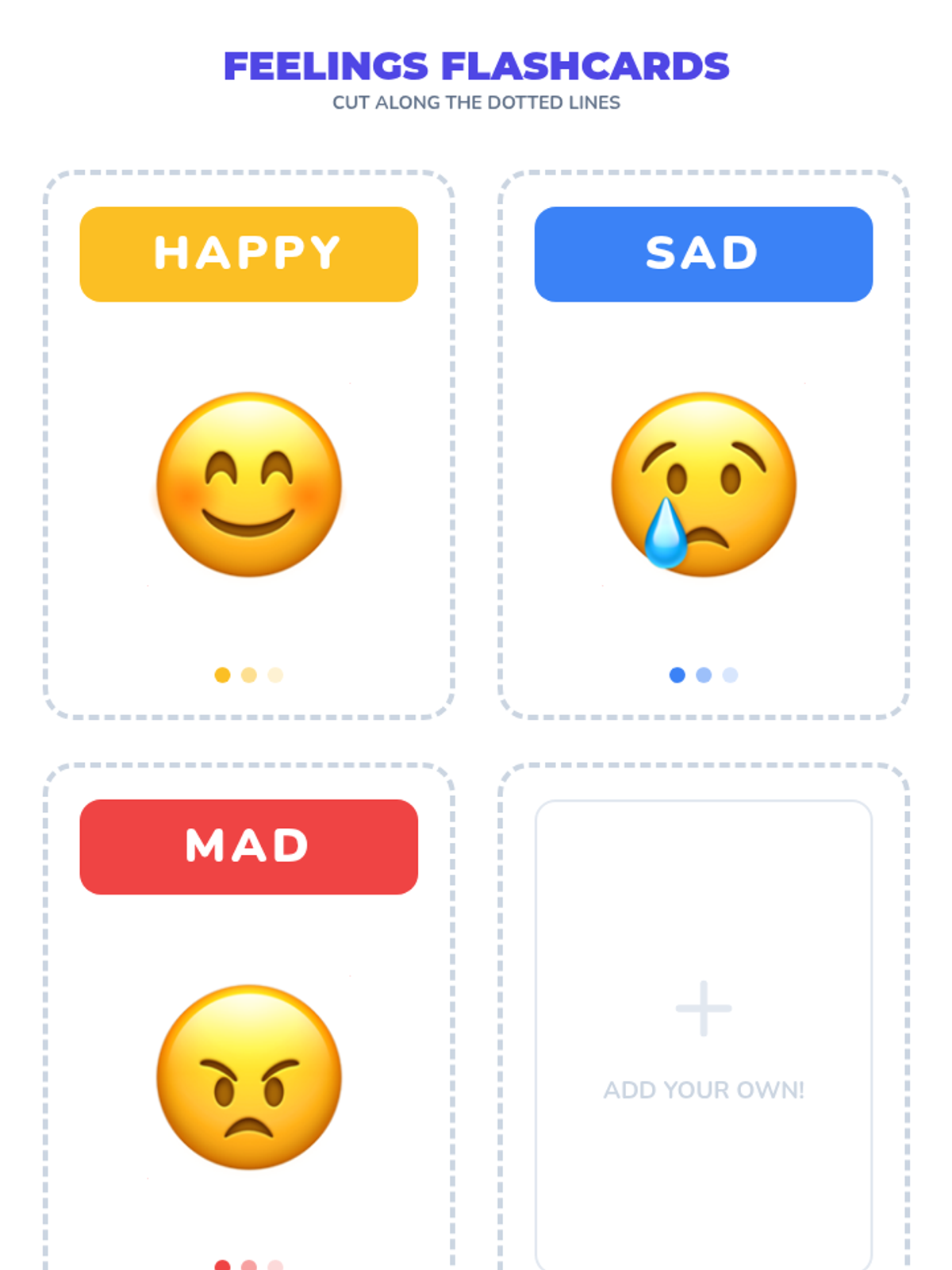
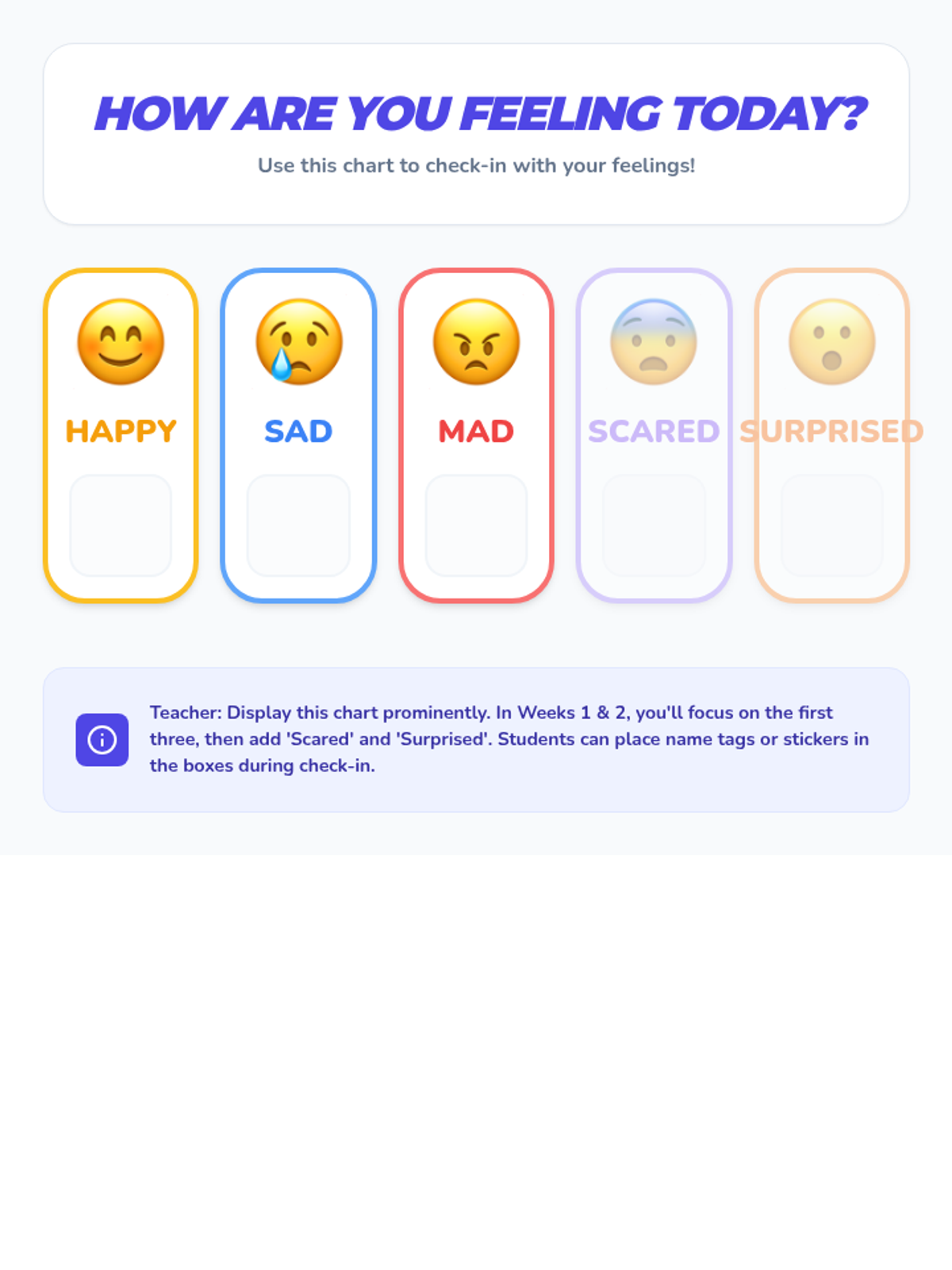
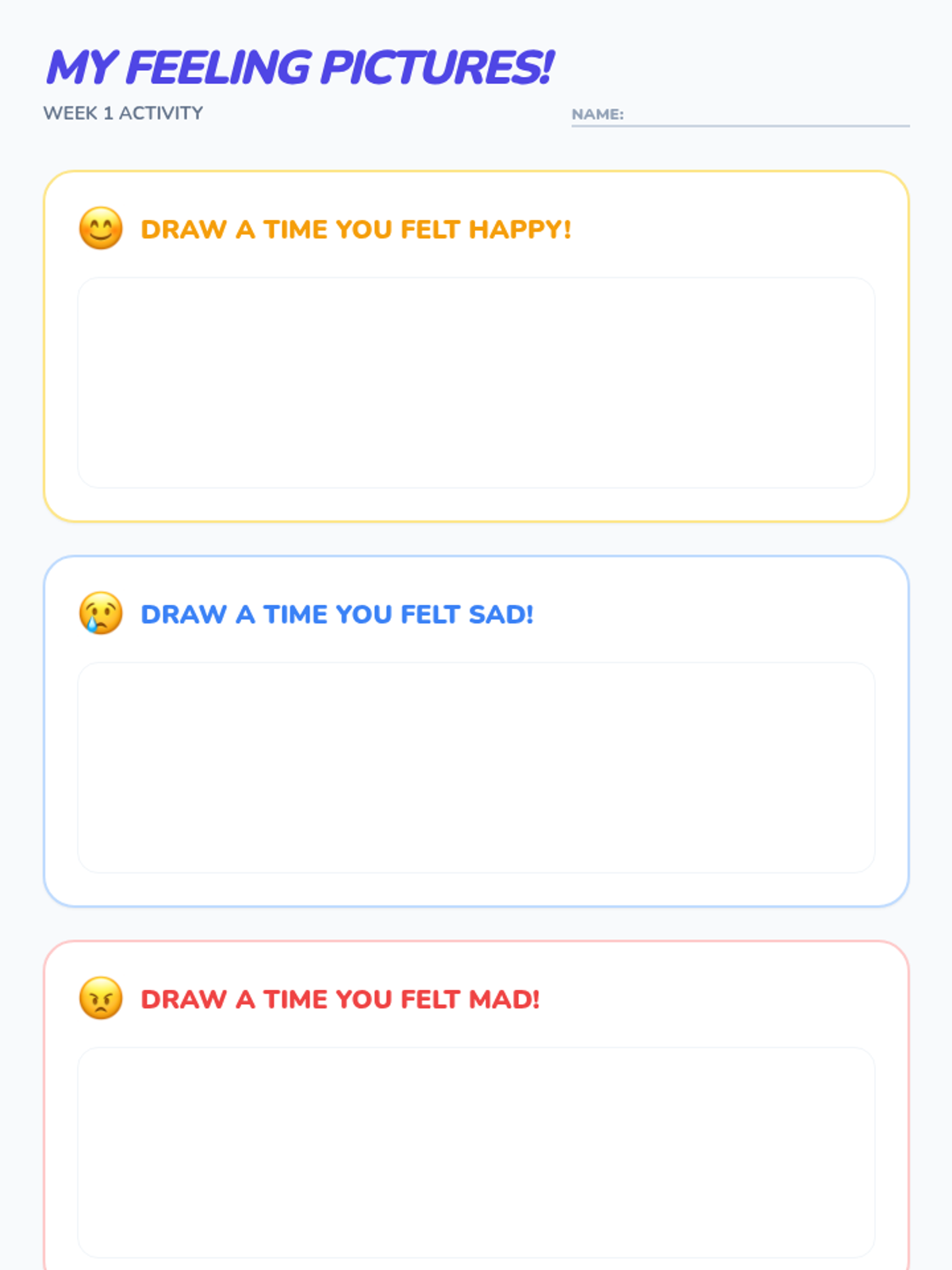
An 8-week Tier 2 small group program for Kindergarten students focused on emotional literacy, coping skills, and help-seeking. Students learn to identify emotions in themselves and others, use calming tools, and ask for help from trusted adults.
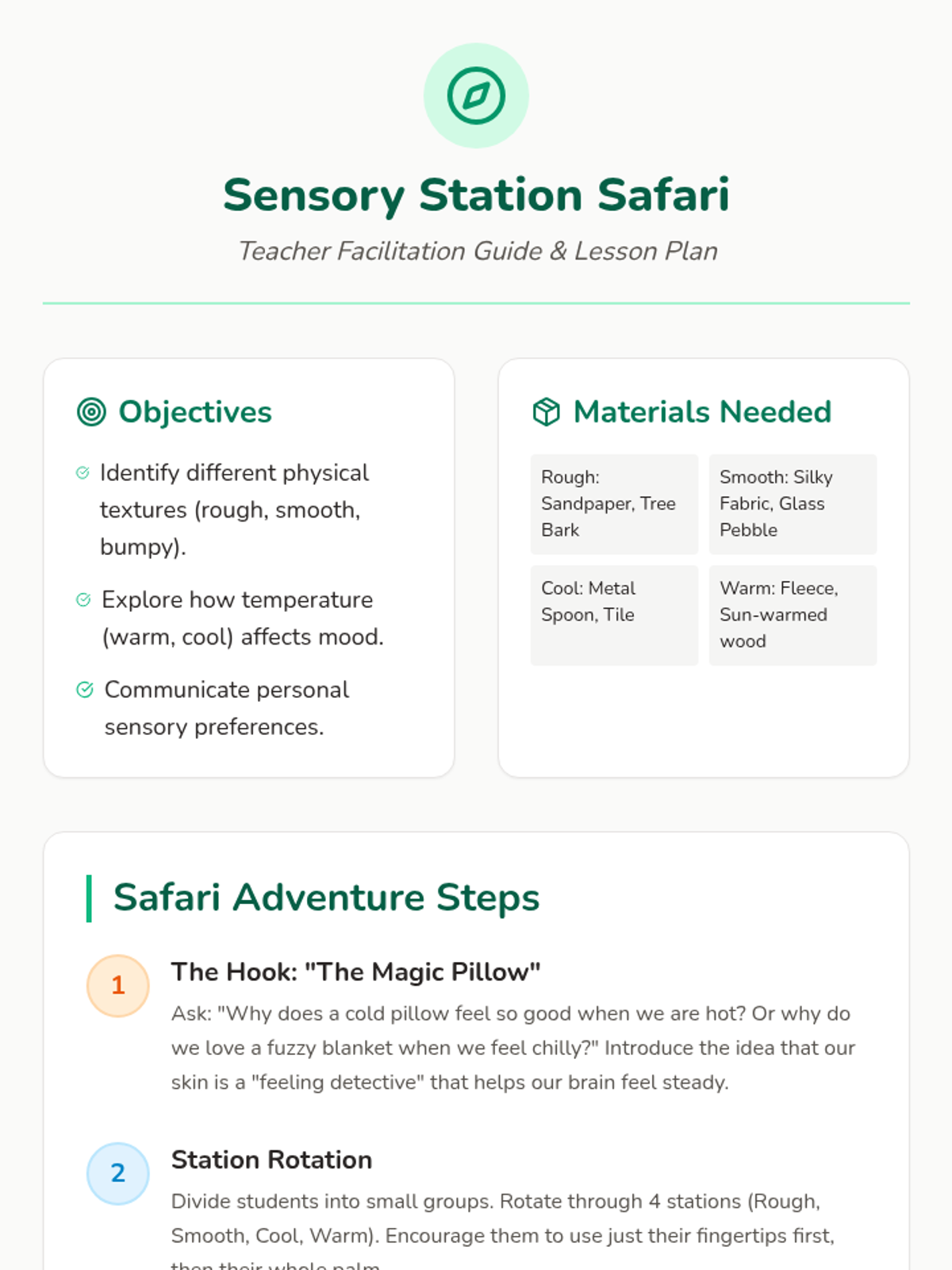
A Kindergarten counseling sequence focused on tactile grounding techniques. Students explore textures, temperatures, and physical sensations to build a toolkit for self-regulation and emotional steadiness.
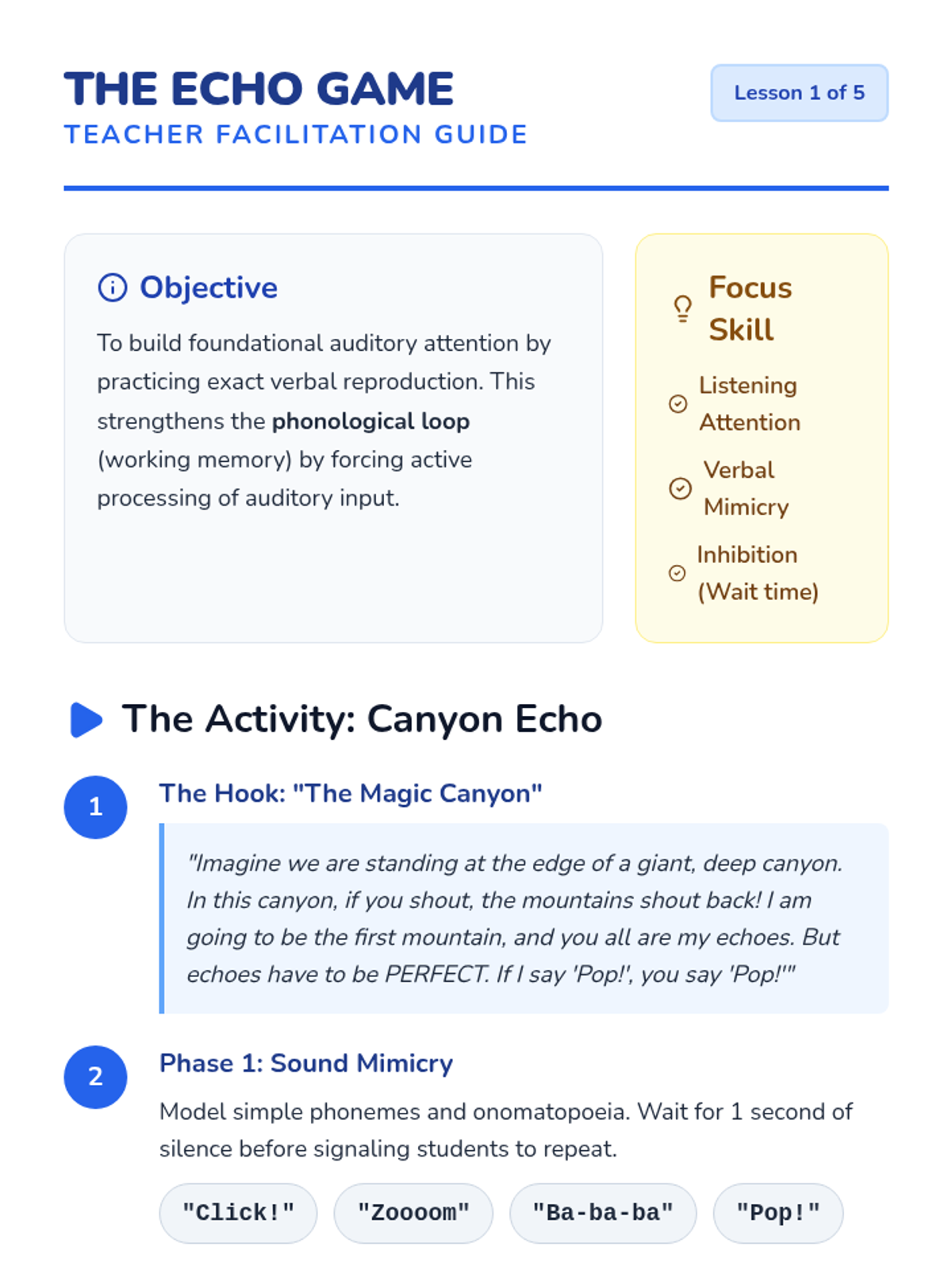
This sequence focuses on auditory processing and the cognitive strategy of verbal rehearsal (self-talk) to hold information in working memory. Students learn to 'catch' a verbal instruction, repeat it to themselves or a peer, and then execute it.
This sequence teaches Kindergarten students the cognitive strategy of 'verbal rehearsal' to support working memory. Students progress from basic auditory mimicry to internalizing actionable instructions through a structured 'Listen, Say, Do' protocol.
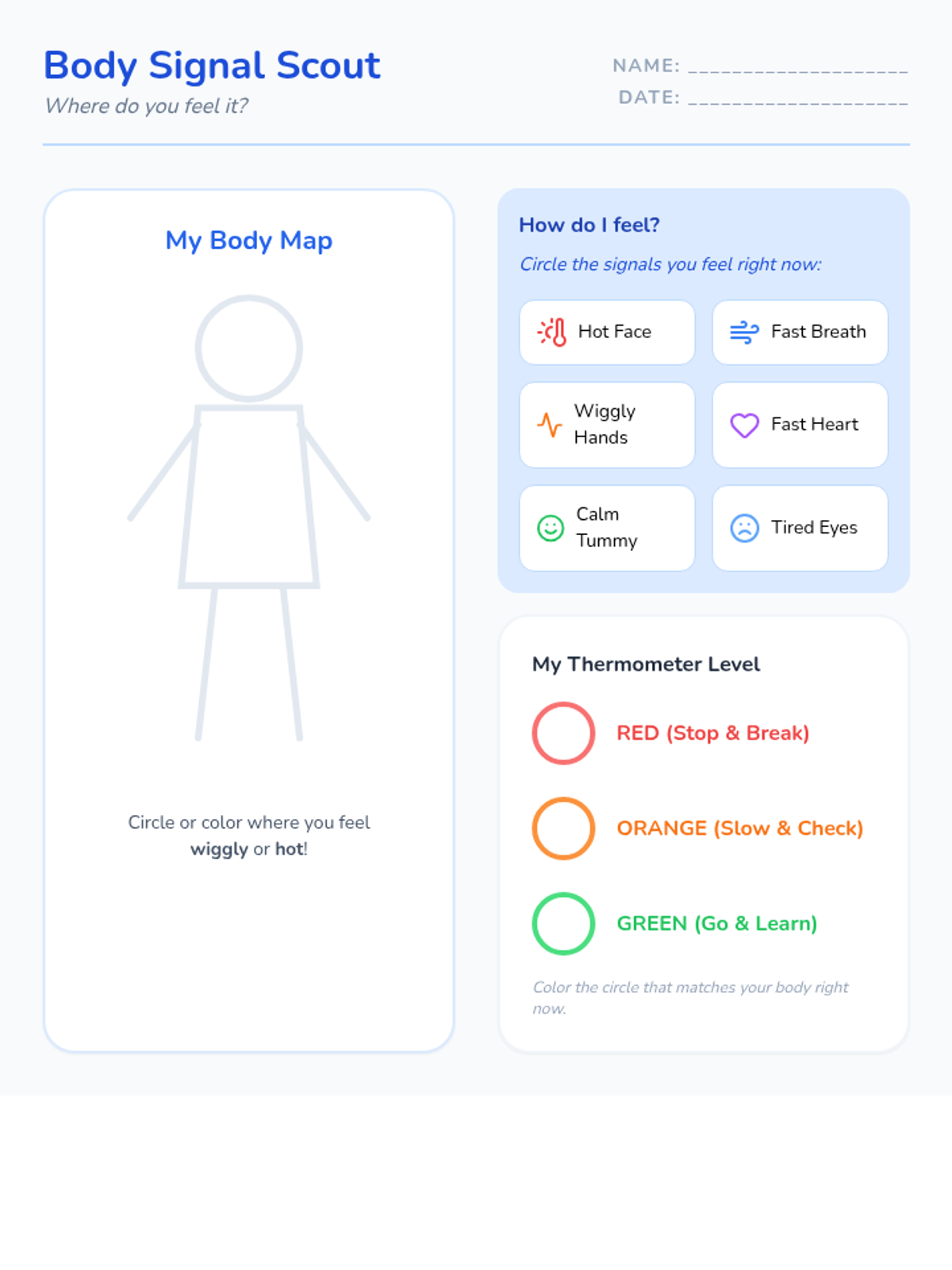
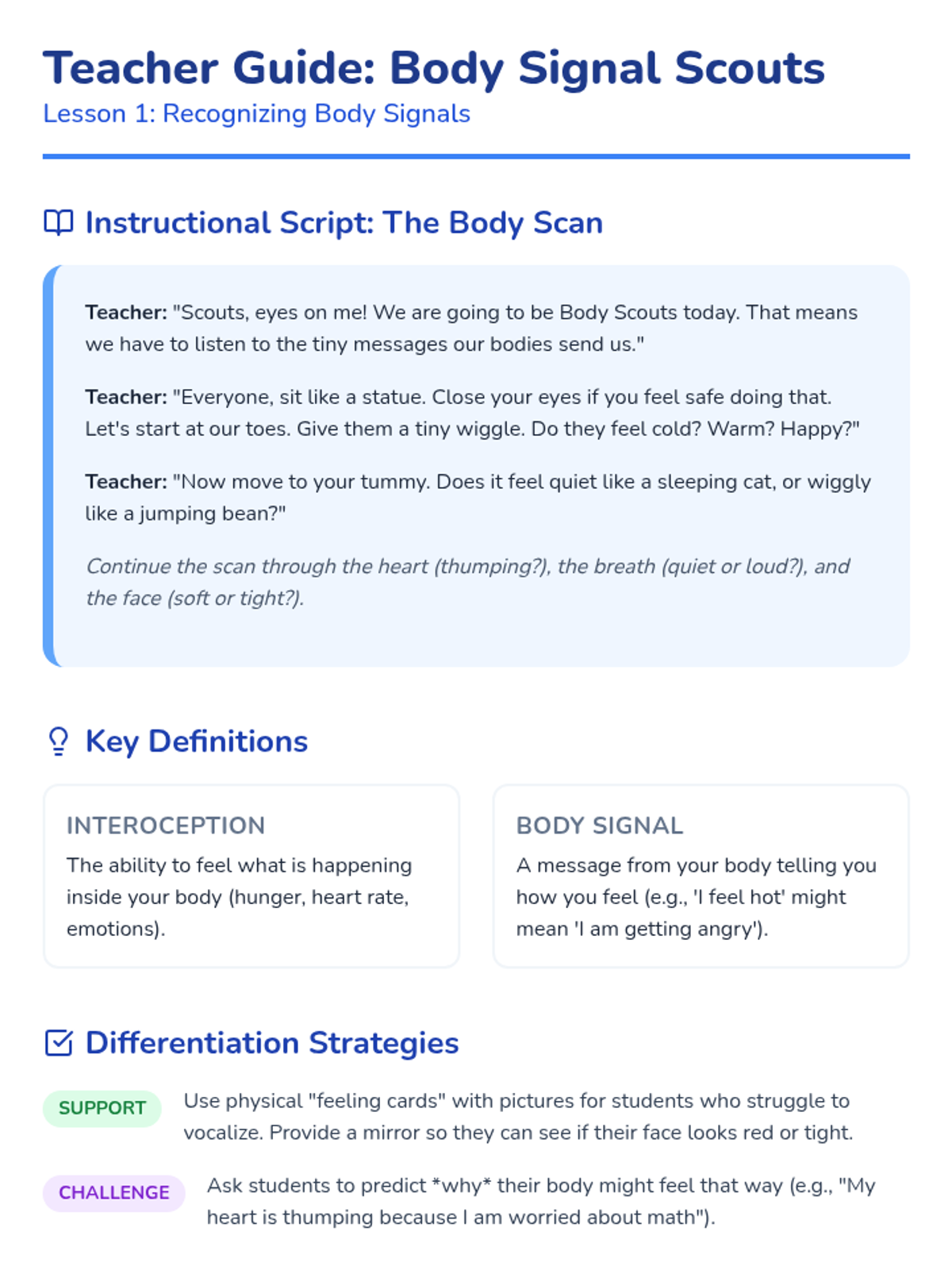
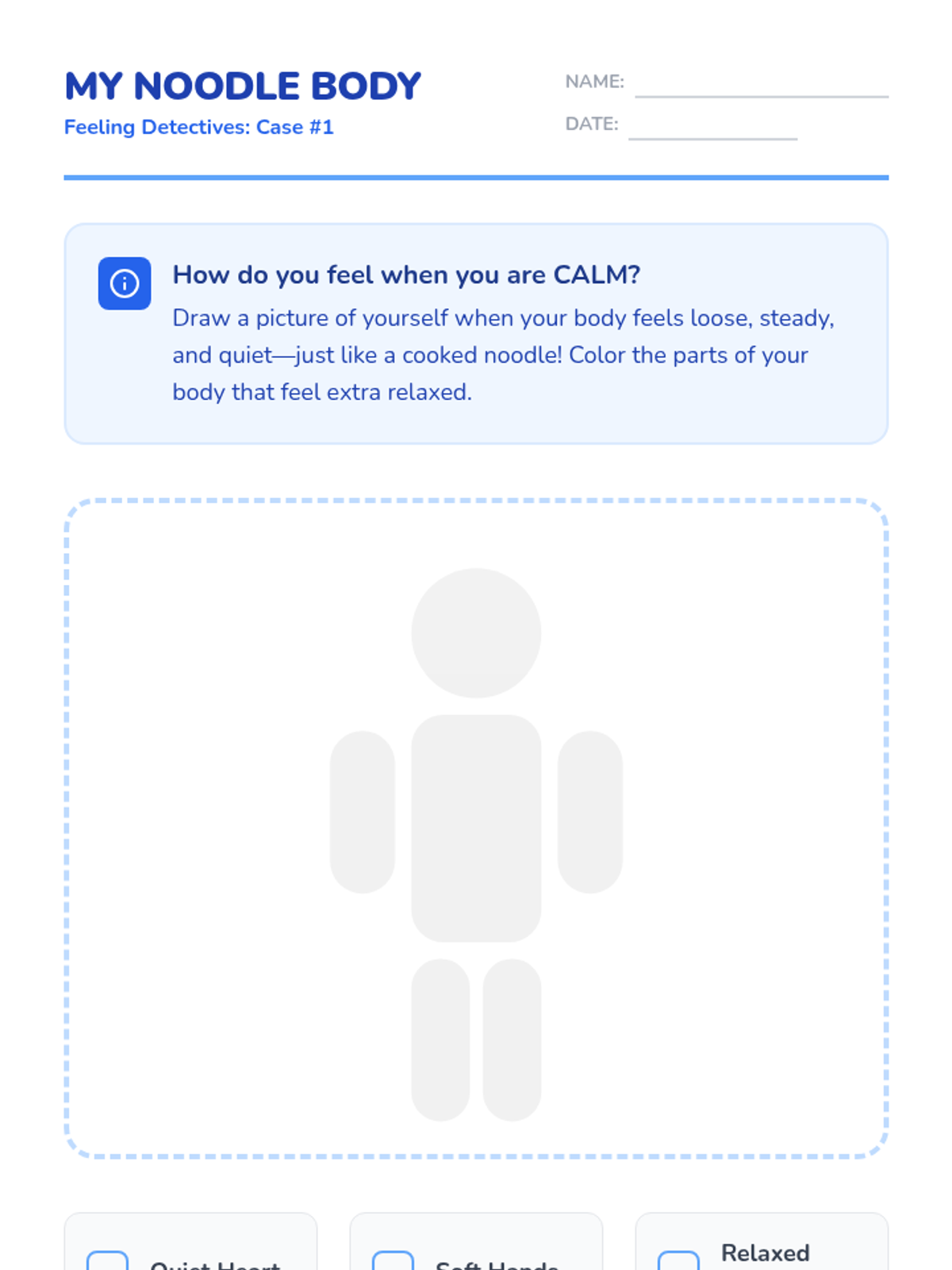
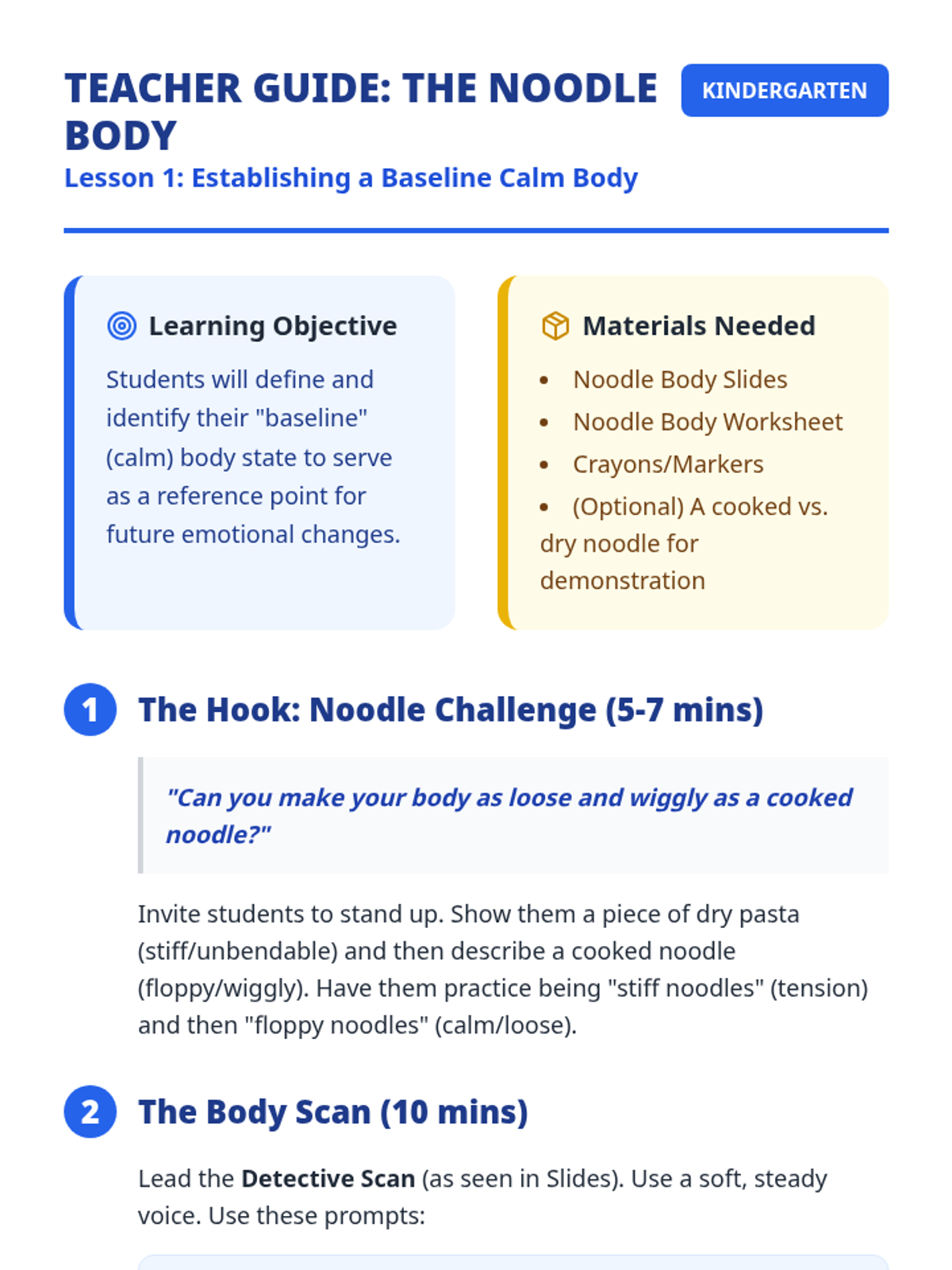
This sequence helps Kindergarten students develop interoception by recognizing early physical warning signs of emotional escalation. Students learn to identify their 'baseline' calm state and then explore internal cues (heart rate, temperature), muscle tension, and vocal changes as 'clues' that their feelings are growing.