Root cause analysis and brainstorming techniques for everyday problem-solving. Equips learners with ethical frameworks and risk-benefit evaluation skills to predict consequences and make informed choices.
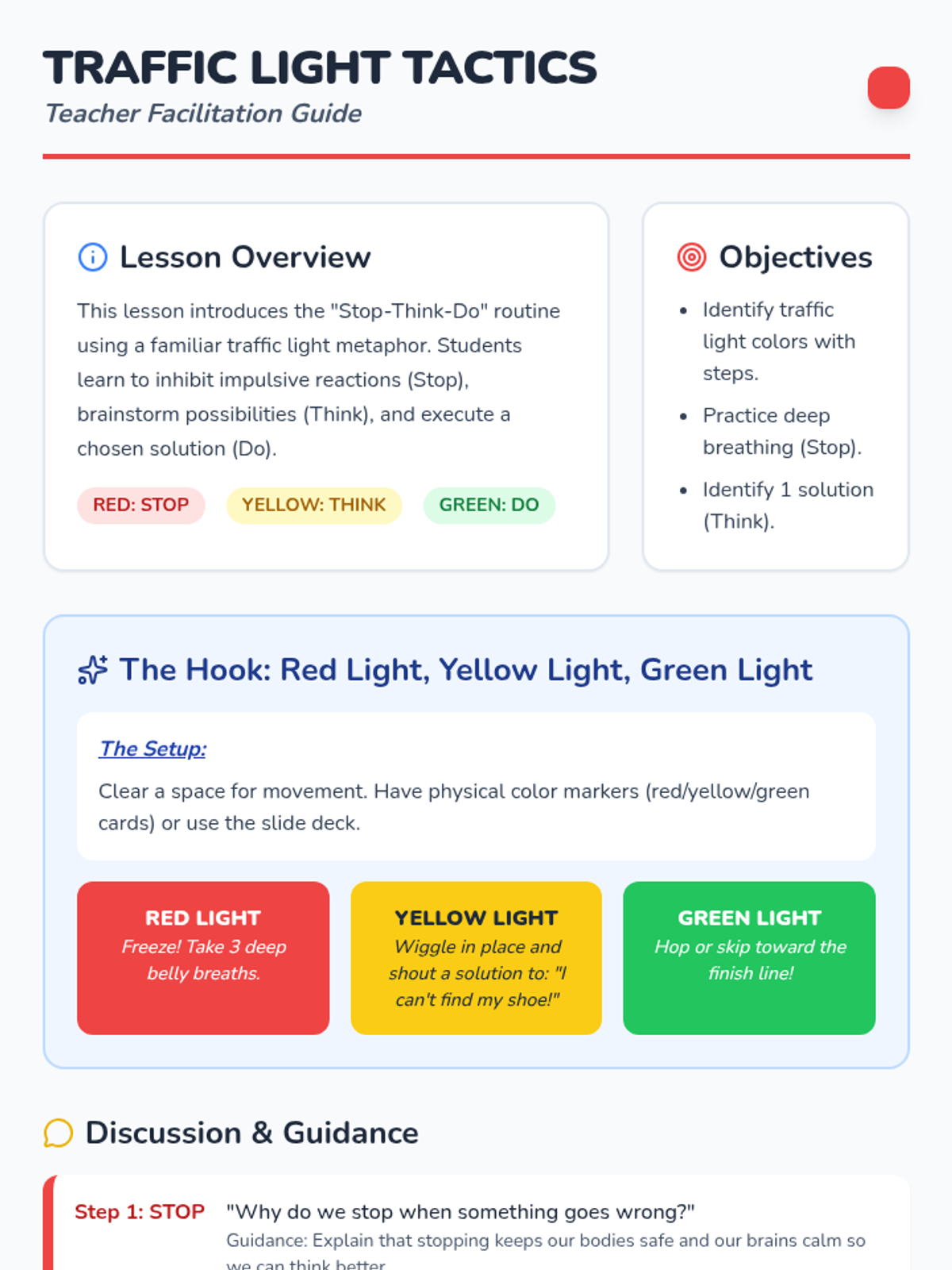
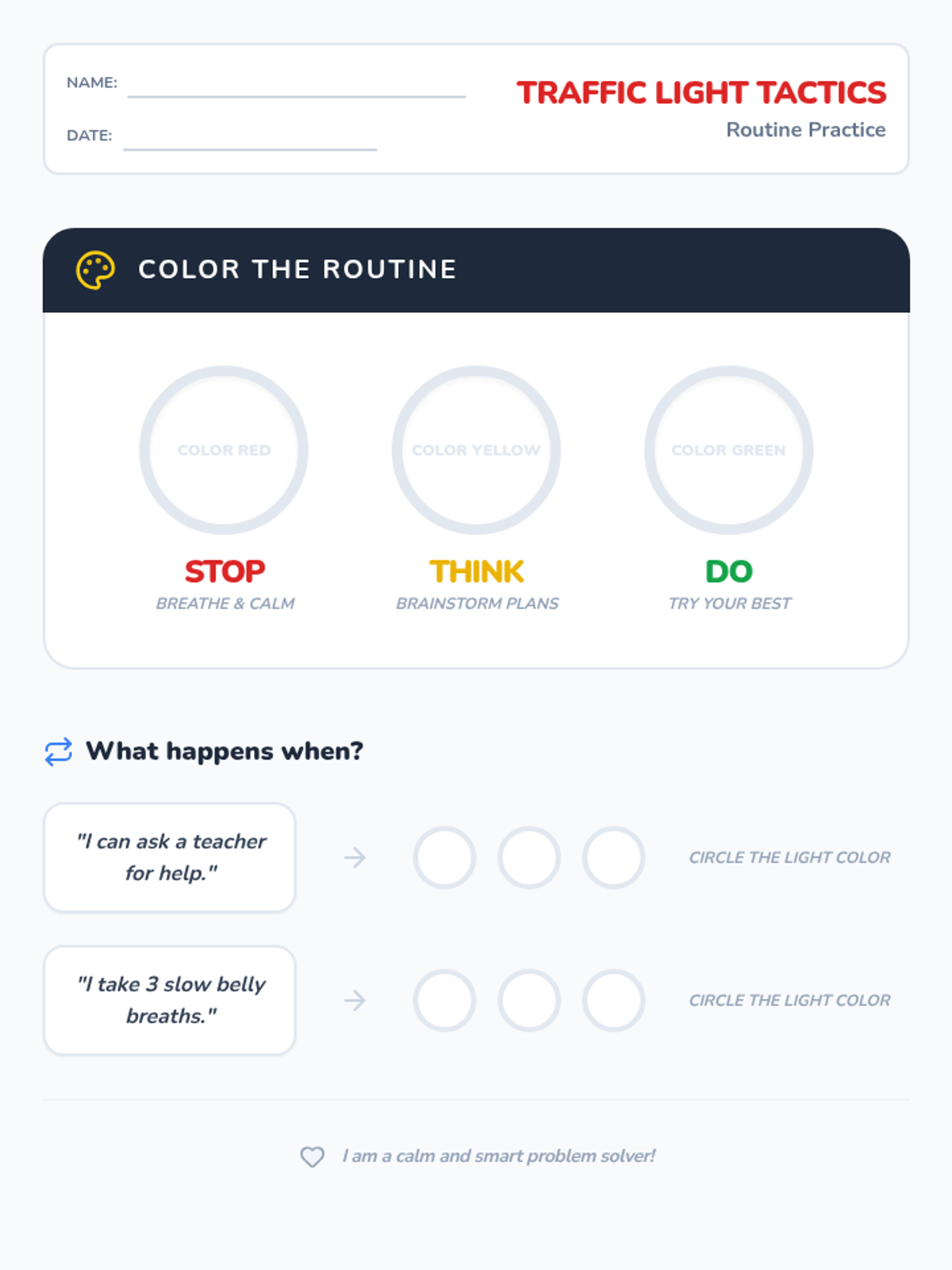
A Kindergarten sequence focused on teaching students a structured problem-solving routine (Stop, Think, Do) and applying it to multi-step challenges through games, sequencing activities, and a final detective project.
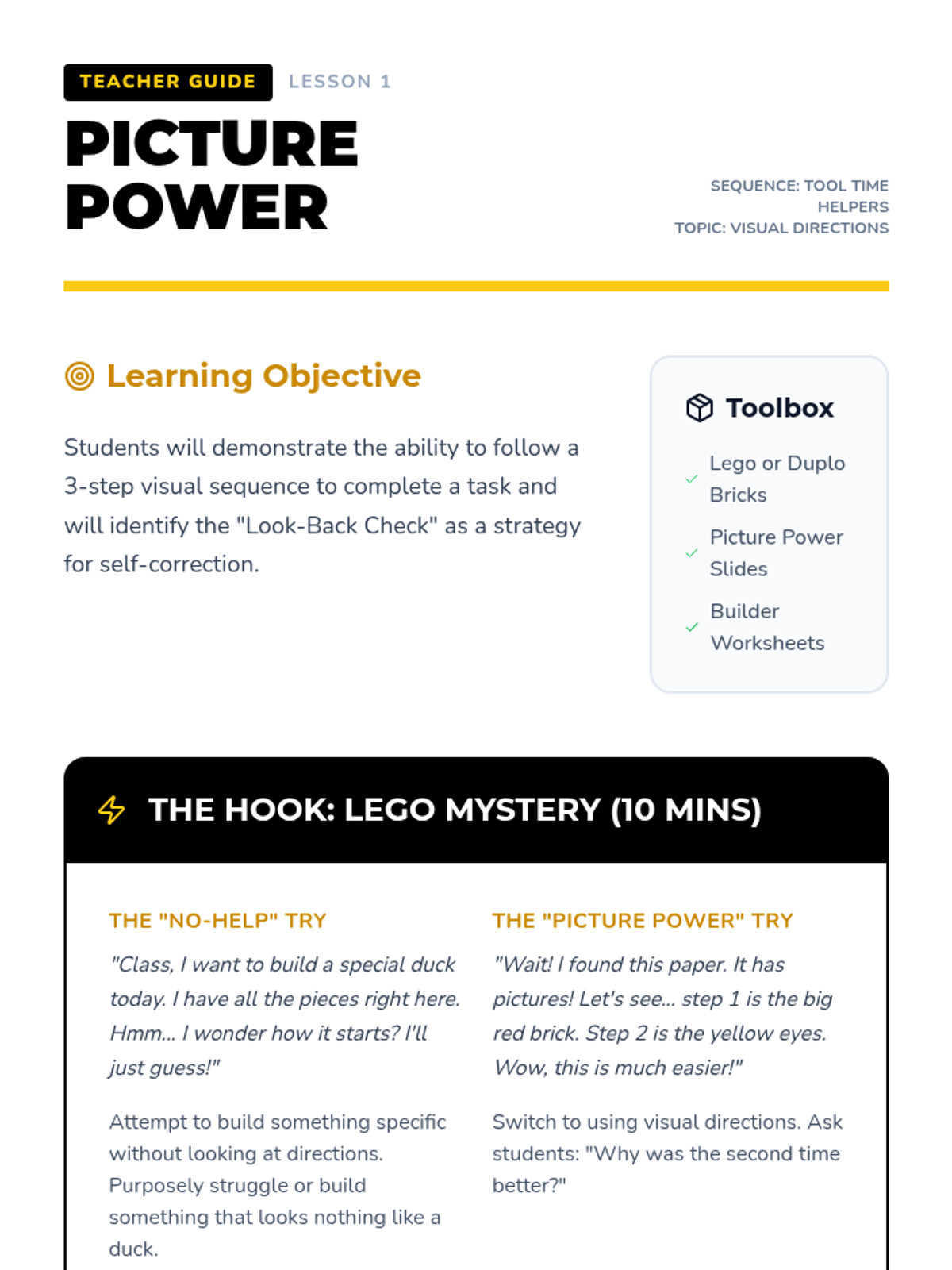
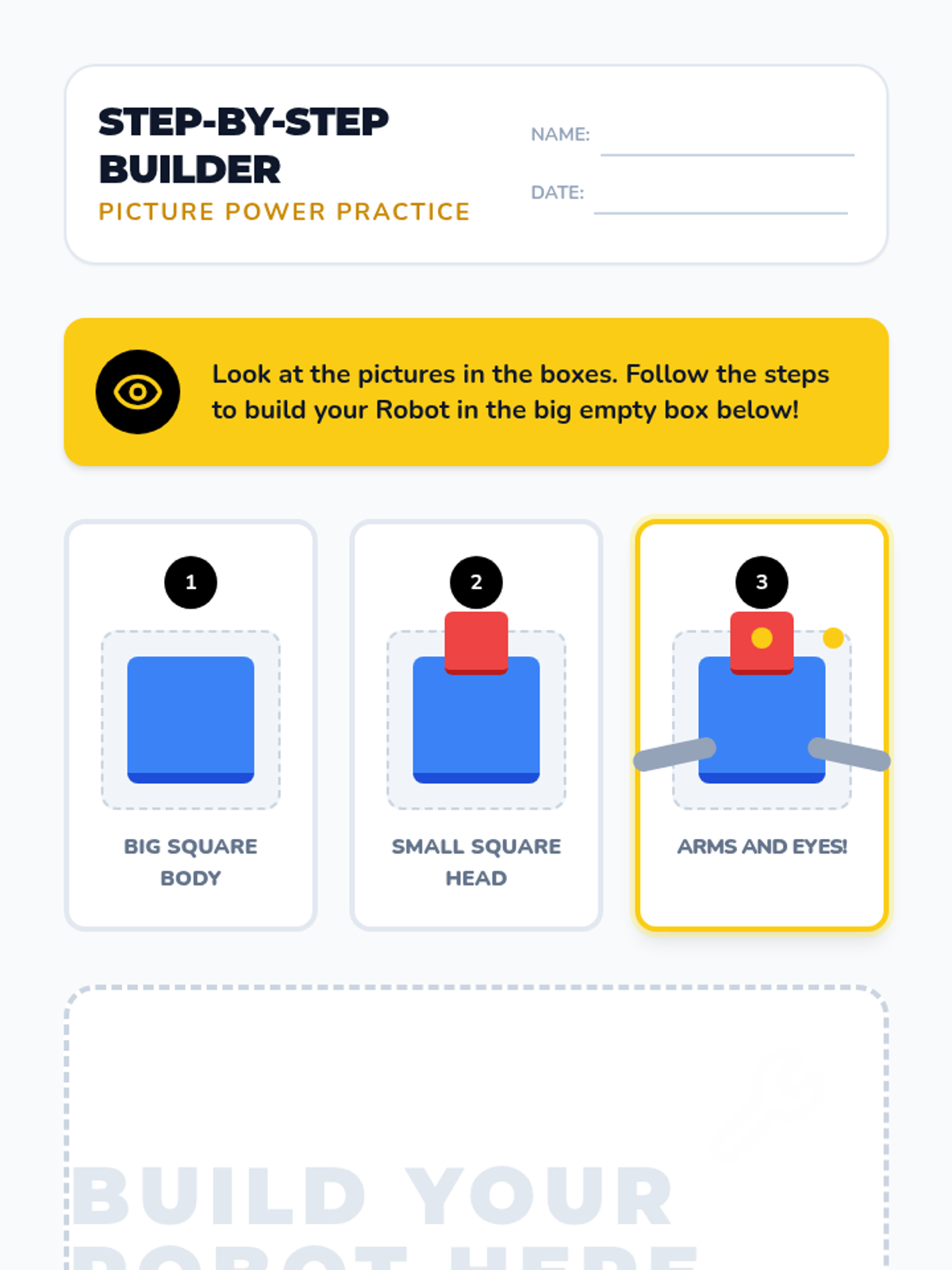
A Kindergarten sequence focused on teaching students how to use visual supports and environmental tools to solve problems independently. Students learn to use checklists, picture schedules, and reference charts to navigate obstacles in task completion.
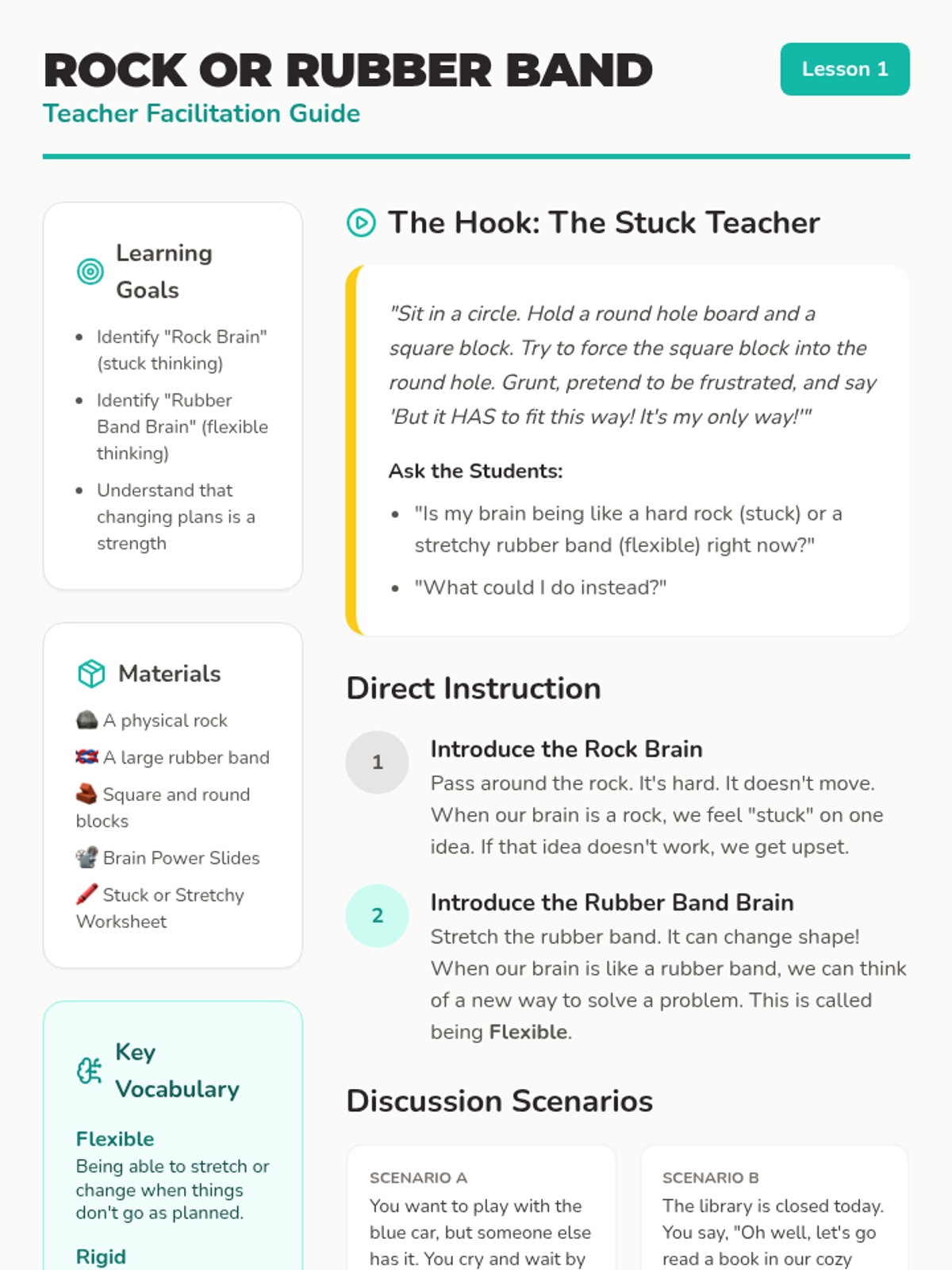
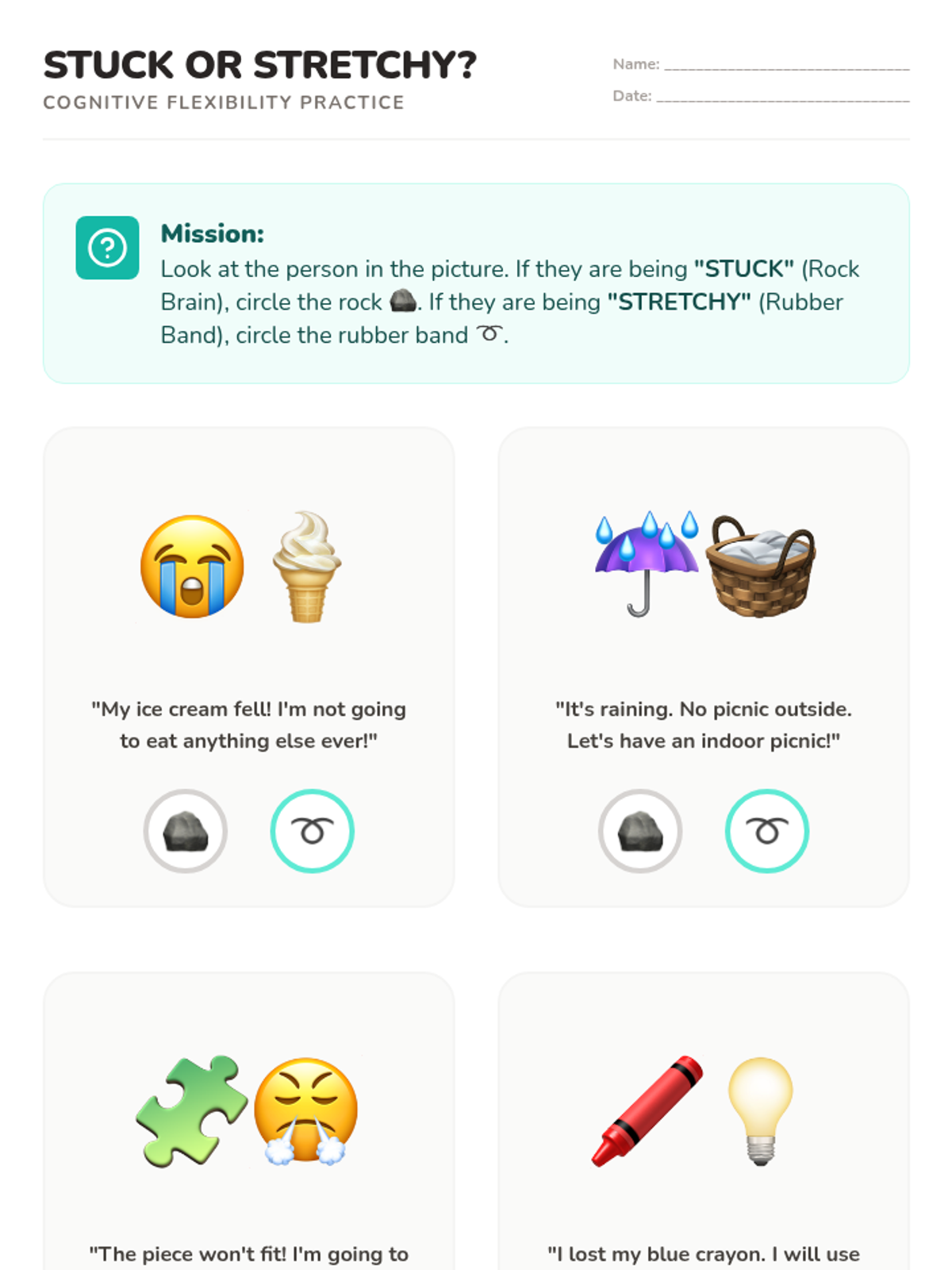
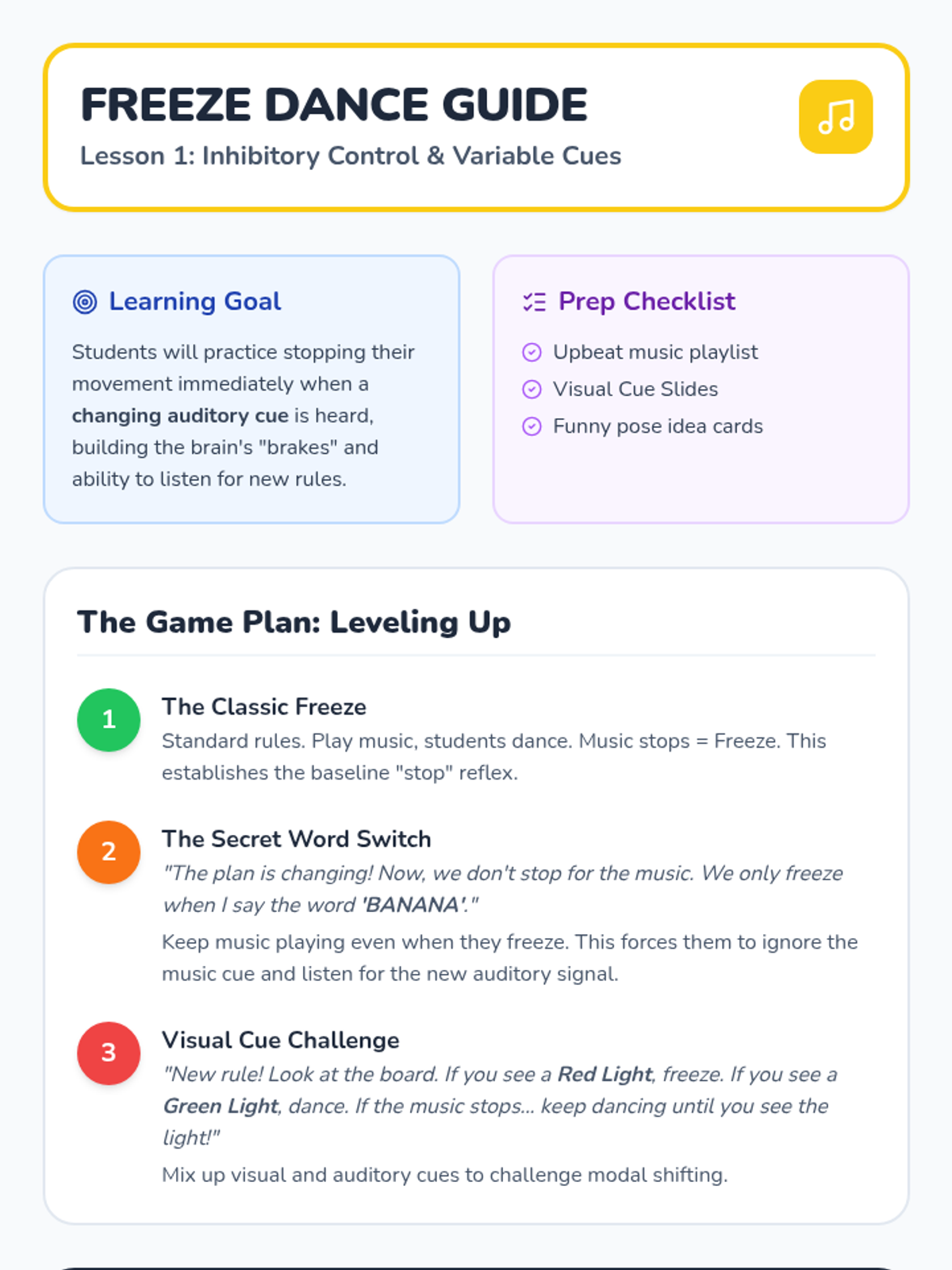
A 5-lesson sequence for Kindergarten students focusing on cognitive flexibility. Students learn to transition from rigid thinking ('Rock Brain') to flexible thinking ('Rubber Band Brain') through structured play, creative problem-solving, and social role-playing.
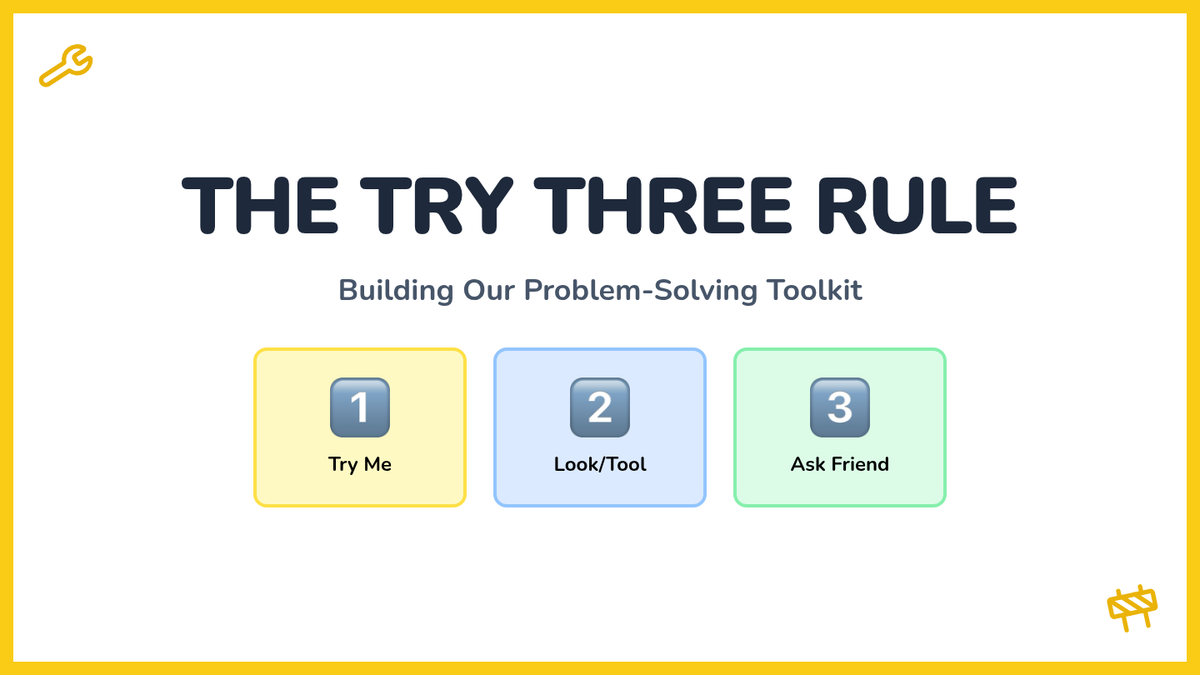
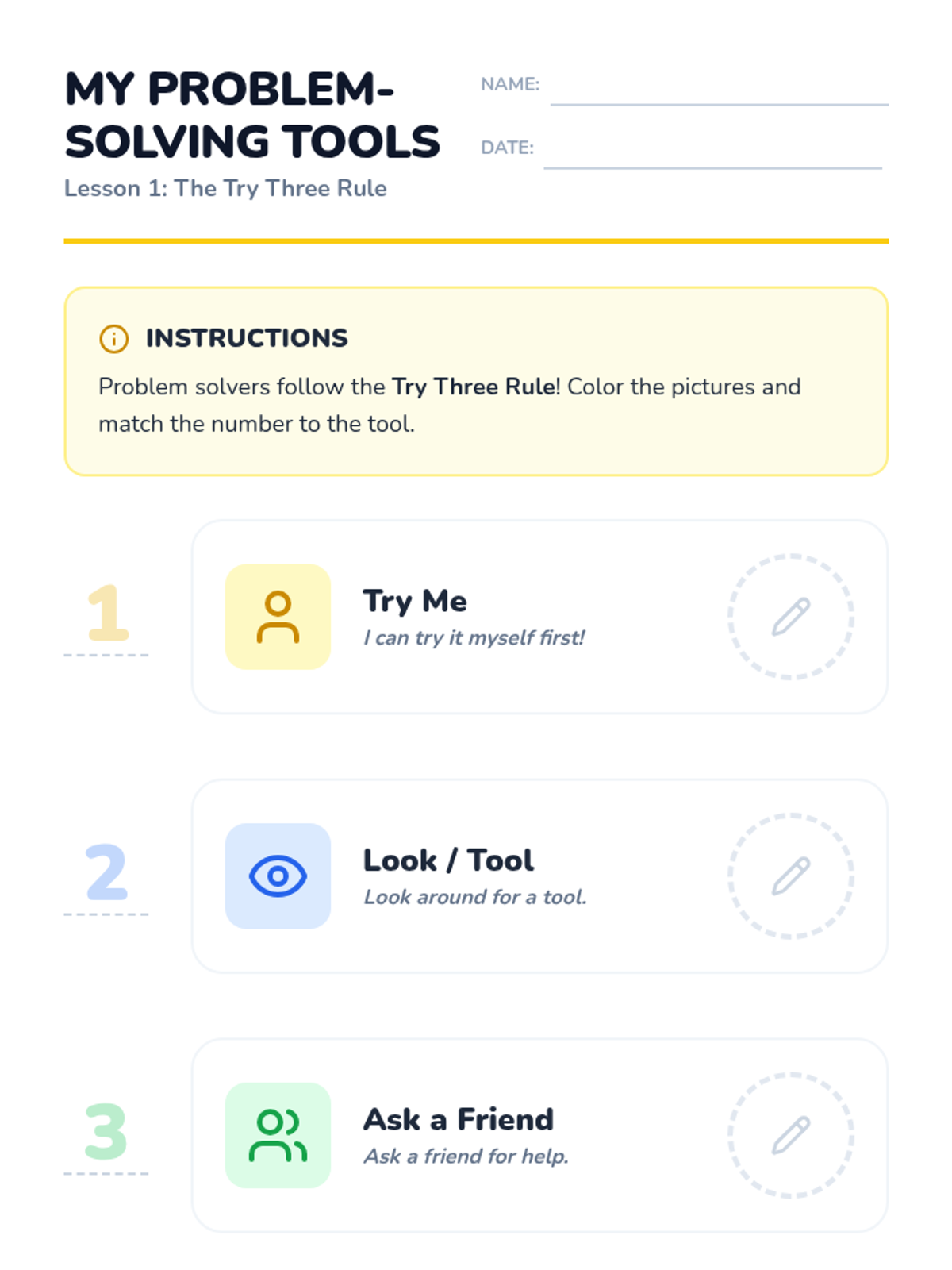
A sequence for Kindergarten students focusing on self-advocacy and problem-solving. Students learn a graduated prompting hierarchy (Try Three Rule), identify appropriate helpers, use specific scripts to ask for help, and distinguish between being helped and being taught.
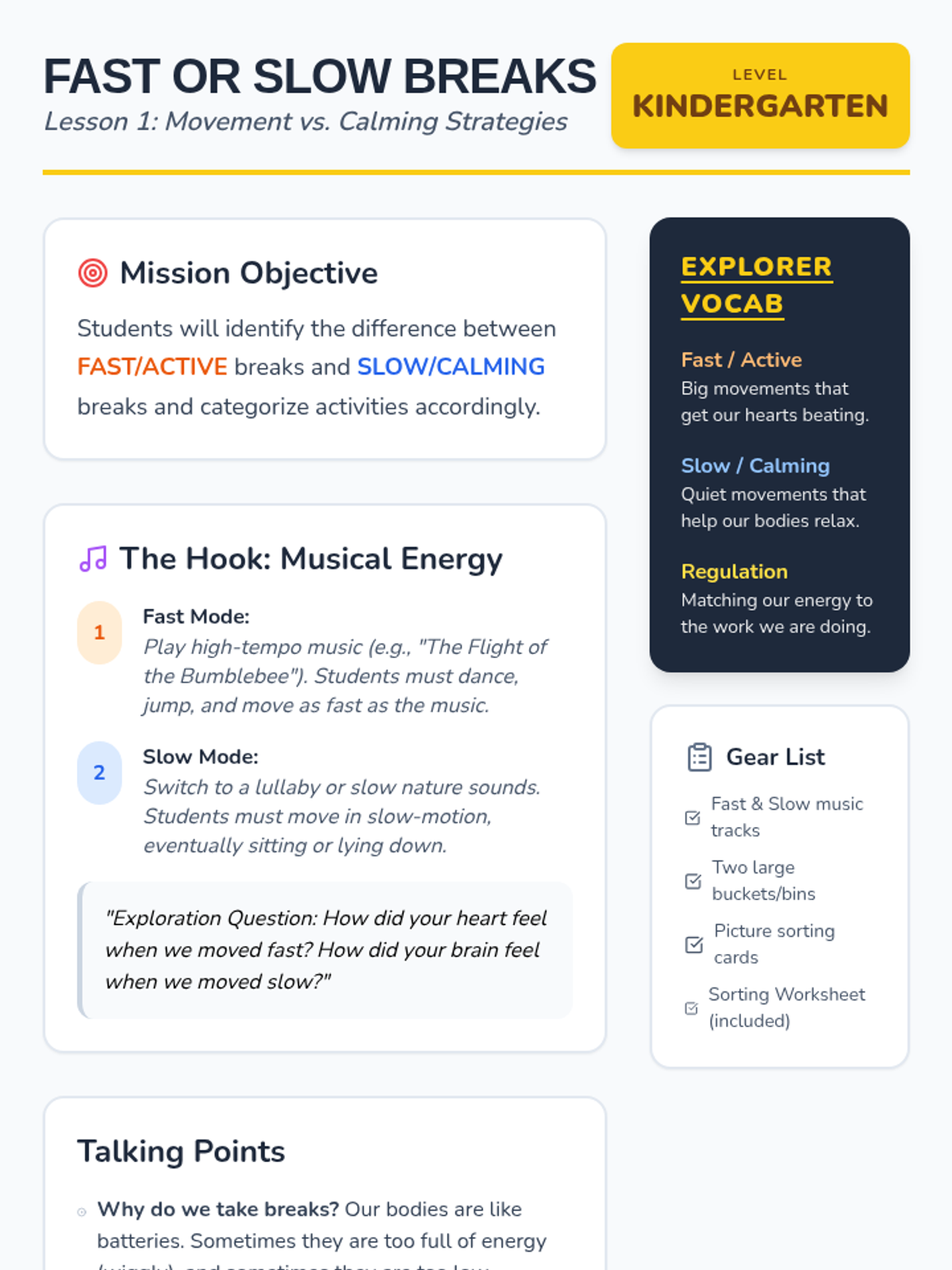
A comprehensive 5-lesson sequence for Kindergarten students to learn how to identify their sensory needs and select appropriate movement or calming breaks to stay ready for learning.
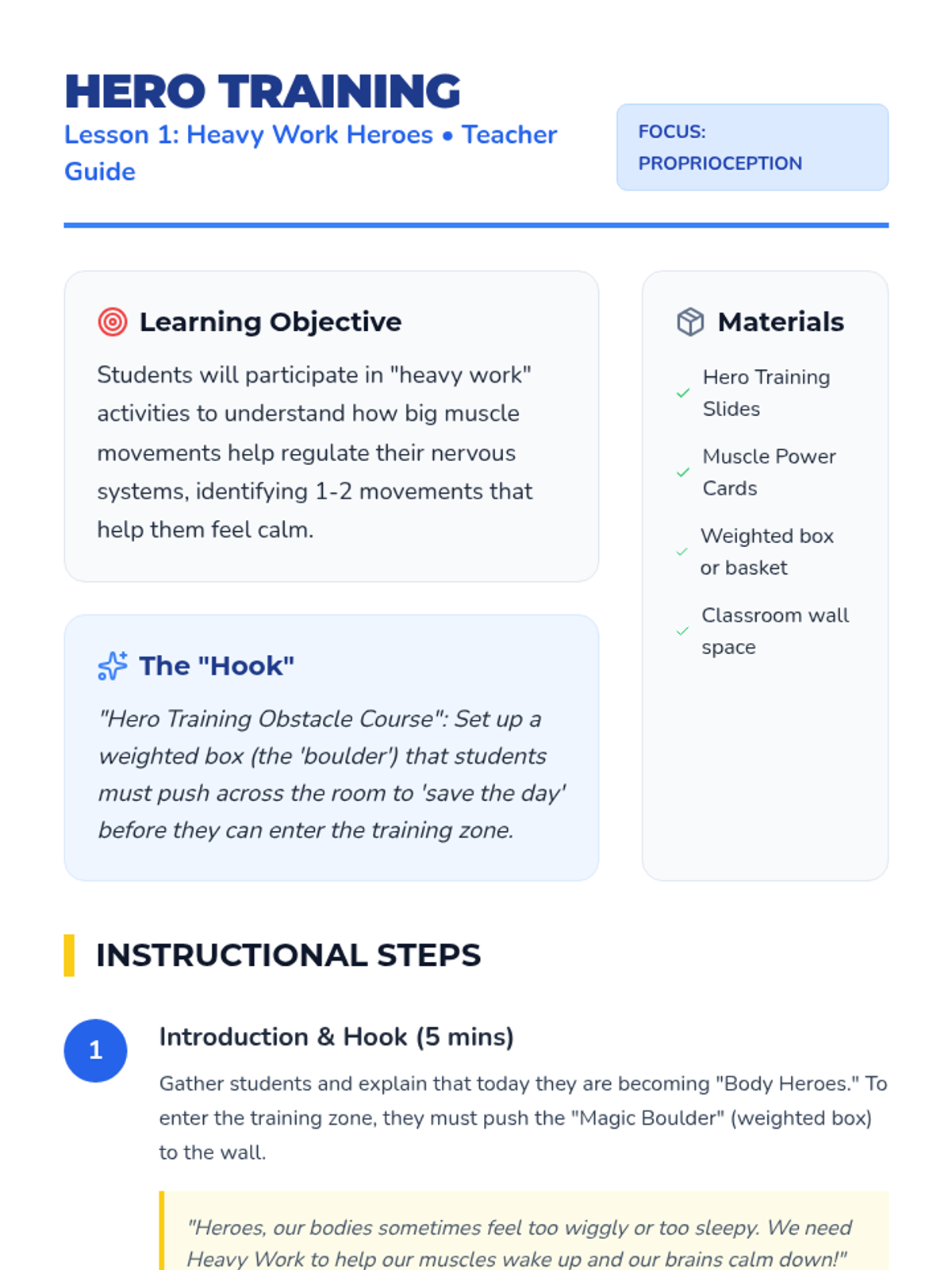
A 5-lesson sequence for Pre-K students focusing on learning and practicing specific motor and sensory strategies to regulate their nervous systems and manage breaks effectively.
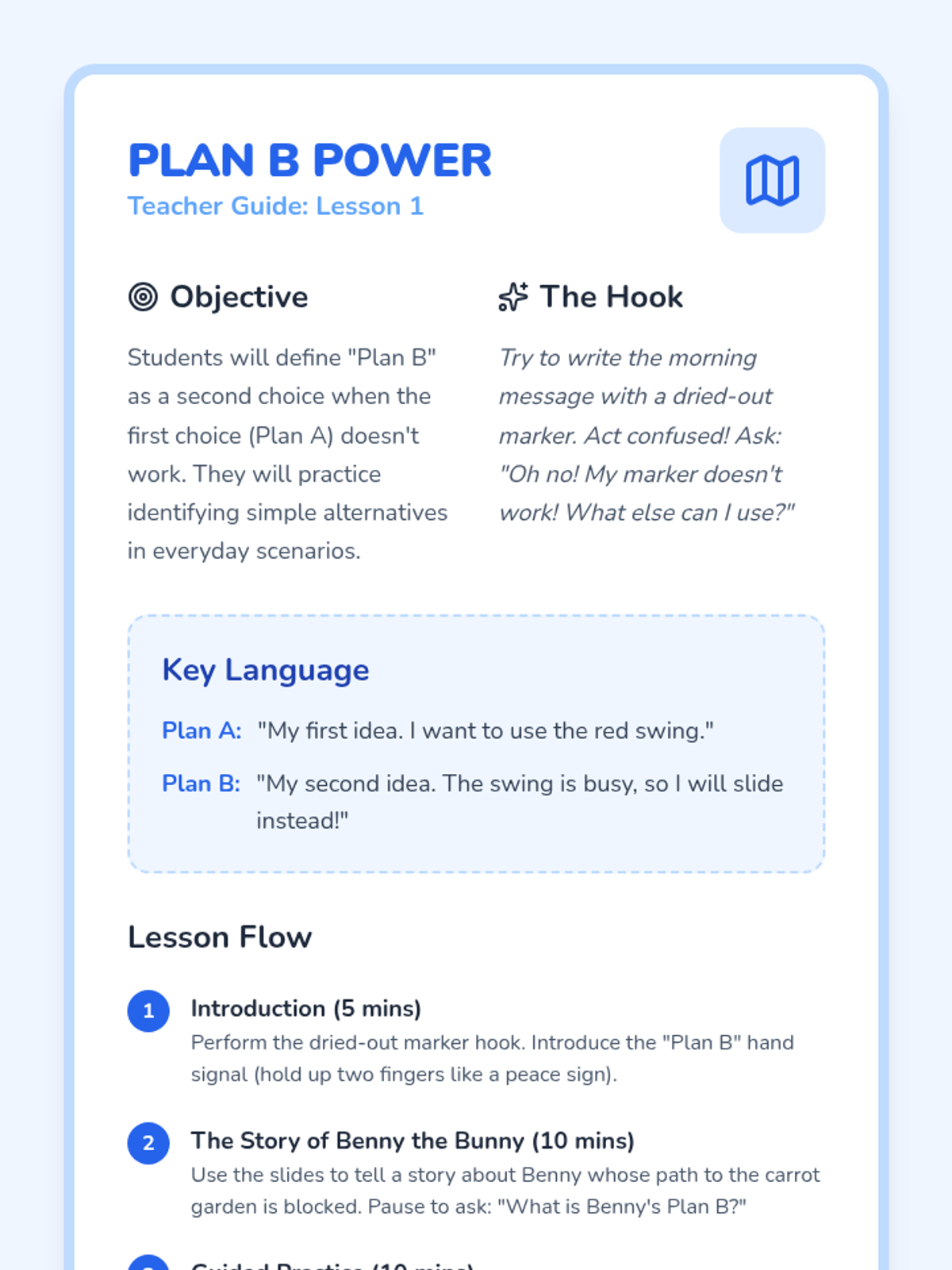
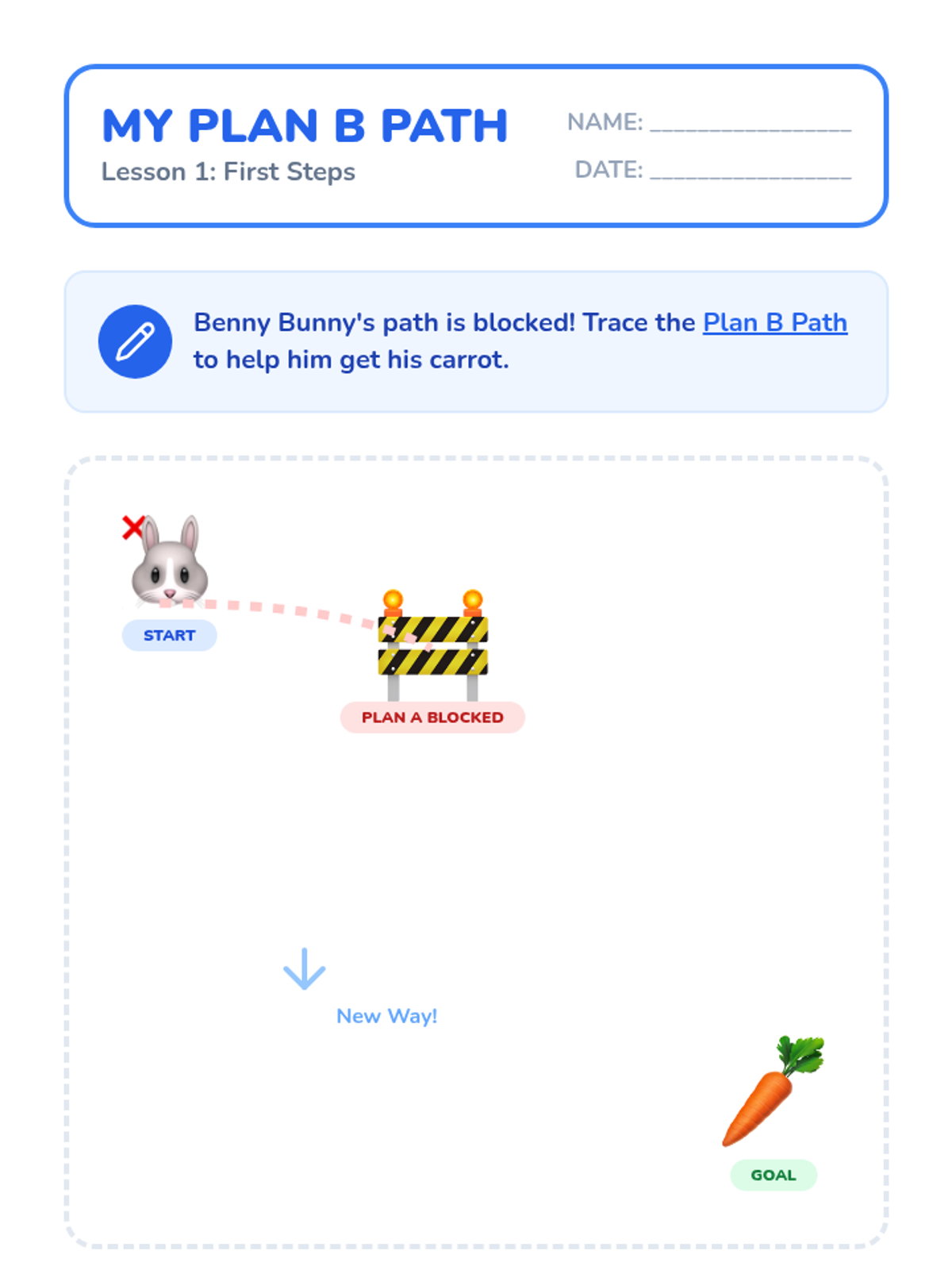
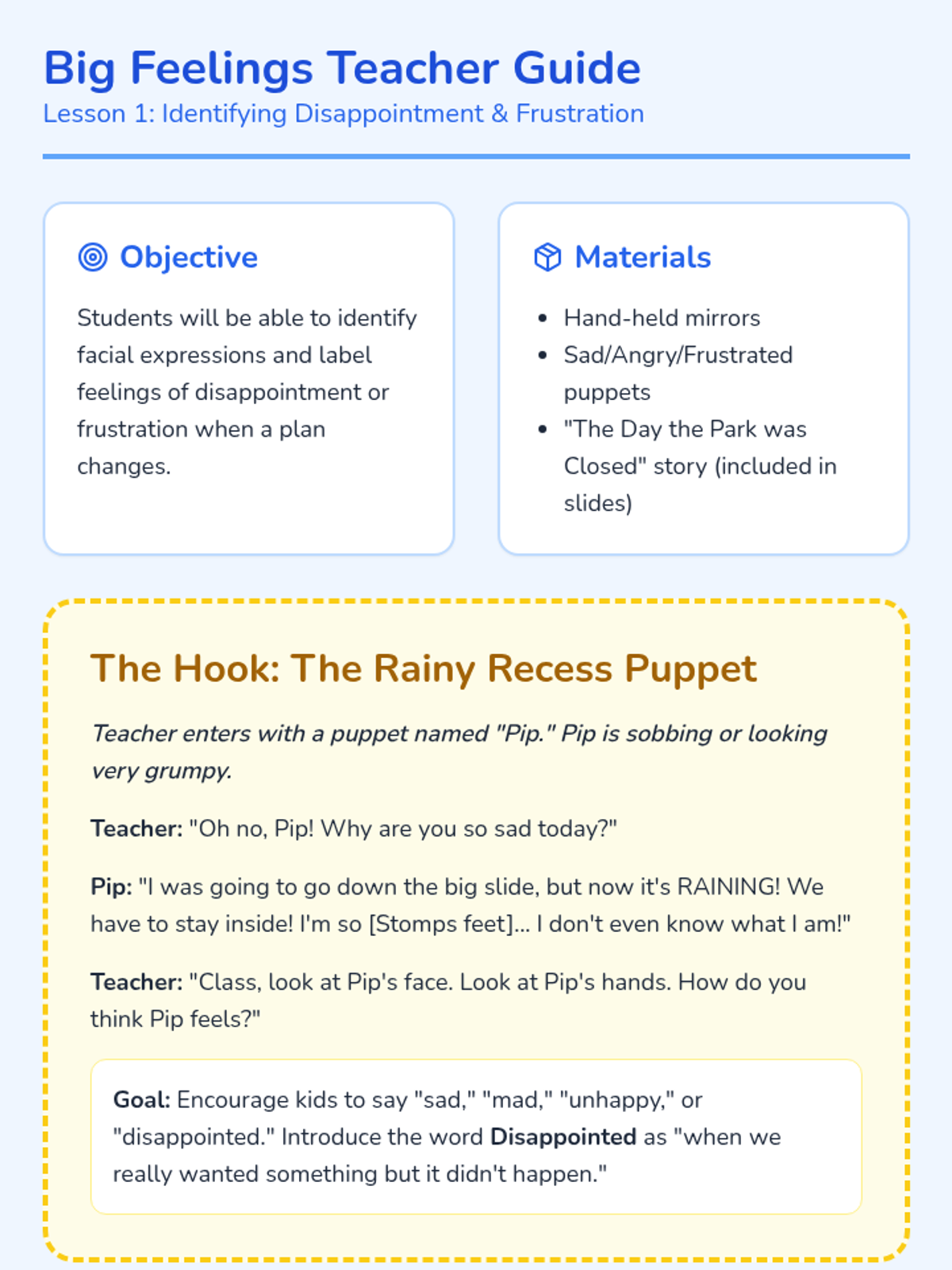
This sequence helps Pre-K students develop cognitive flexibility and executive function. Students learn to navigate disruptions, substitute tools, and manage emotions when plans change, building a 'Plan B' toolkit for classroom success.
A game-based sequence for Kindergarten students to develop cognitive flexibility by practicing adaptation to changing rules and unexpected obstacles in a low-stakes environment.
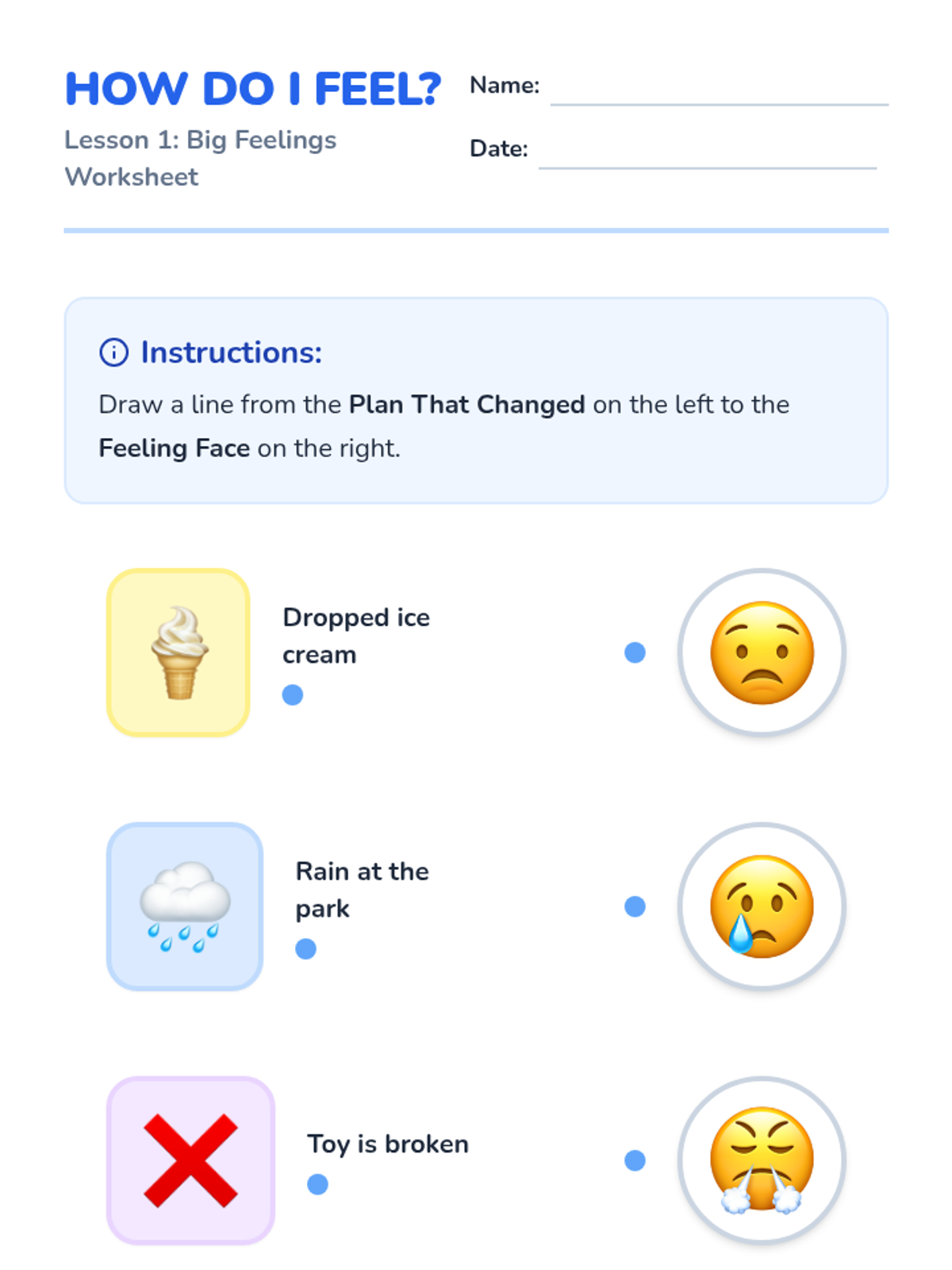
A Pre-K sequence focused on teaching emotional regulation and task management when plans change. Students learn to identify big feelings, practice breathing techniques, understand the 'Plan B' concept, and build a personalized toolkit for handling routine shifts.
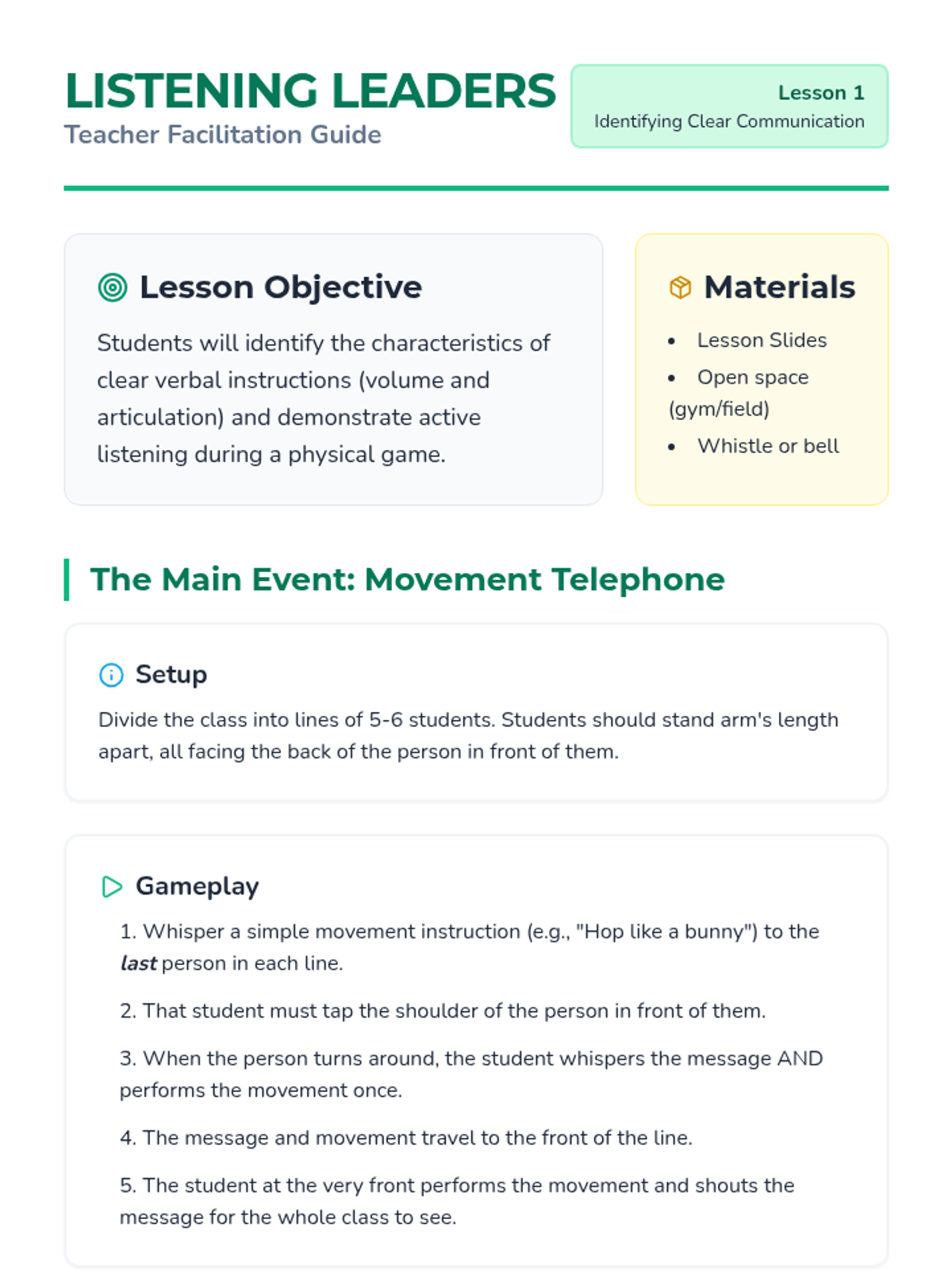
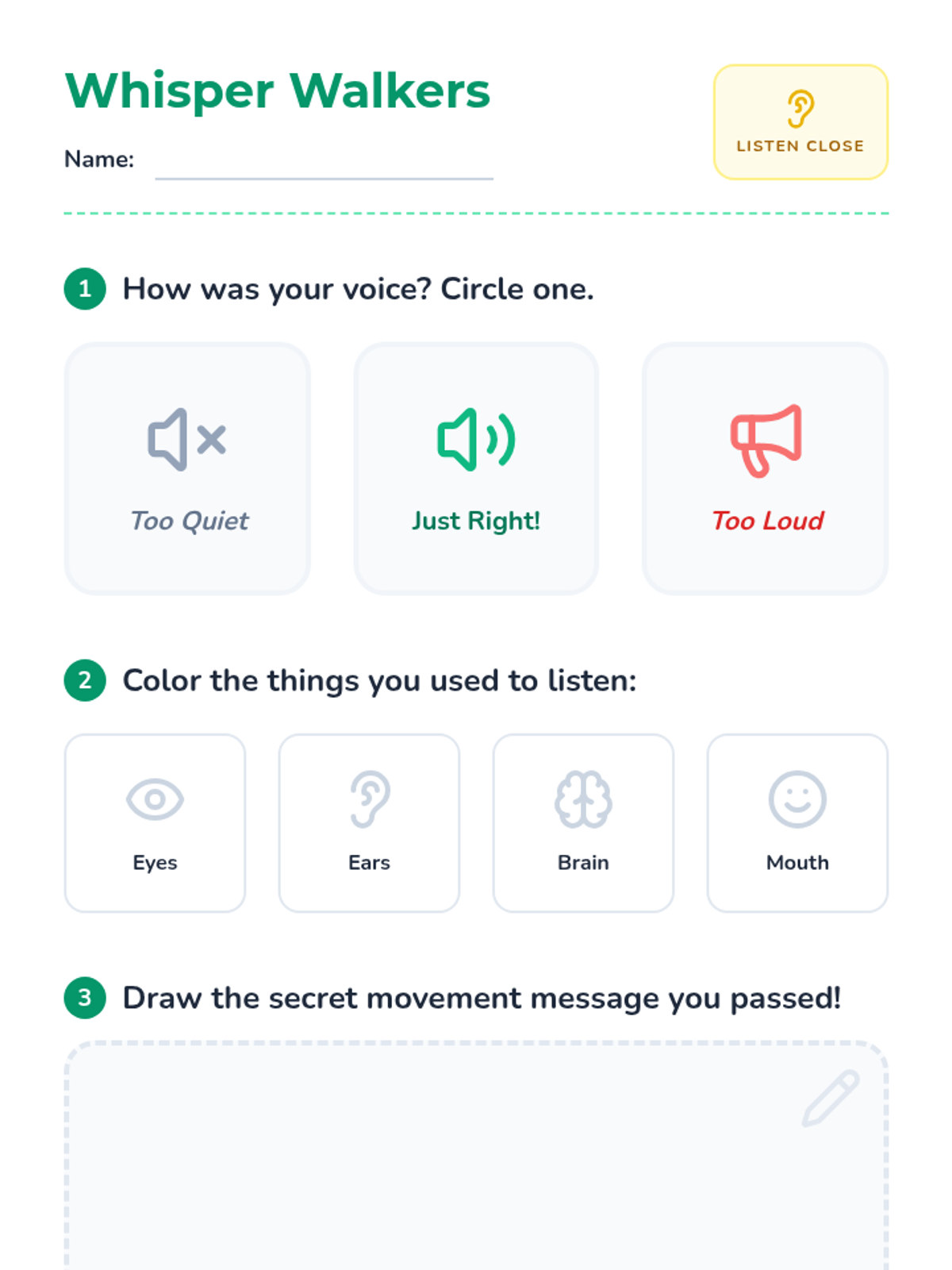
A Kindergarten sequence focused on developing listening and verbal communication skills through physical teamwork challenges and outdoor-inspired activities. Students learn to give clear directions, trust their peers, and synchronize movements to solve problems as a team.
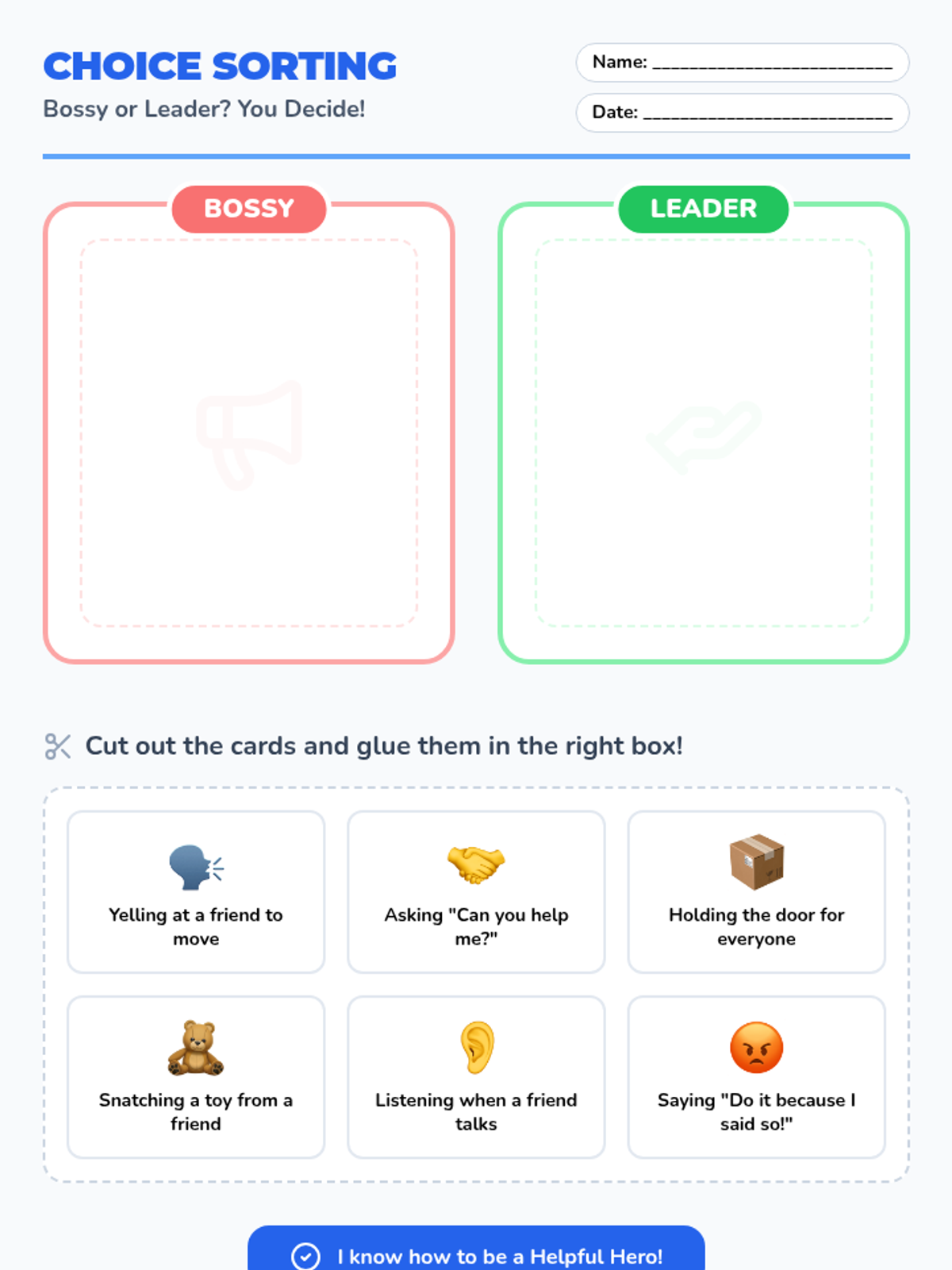
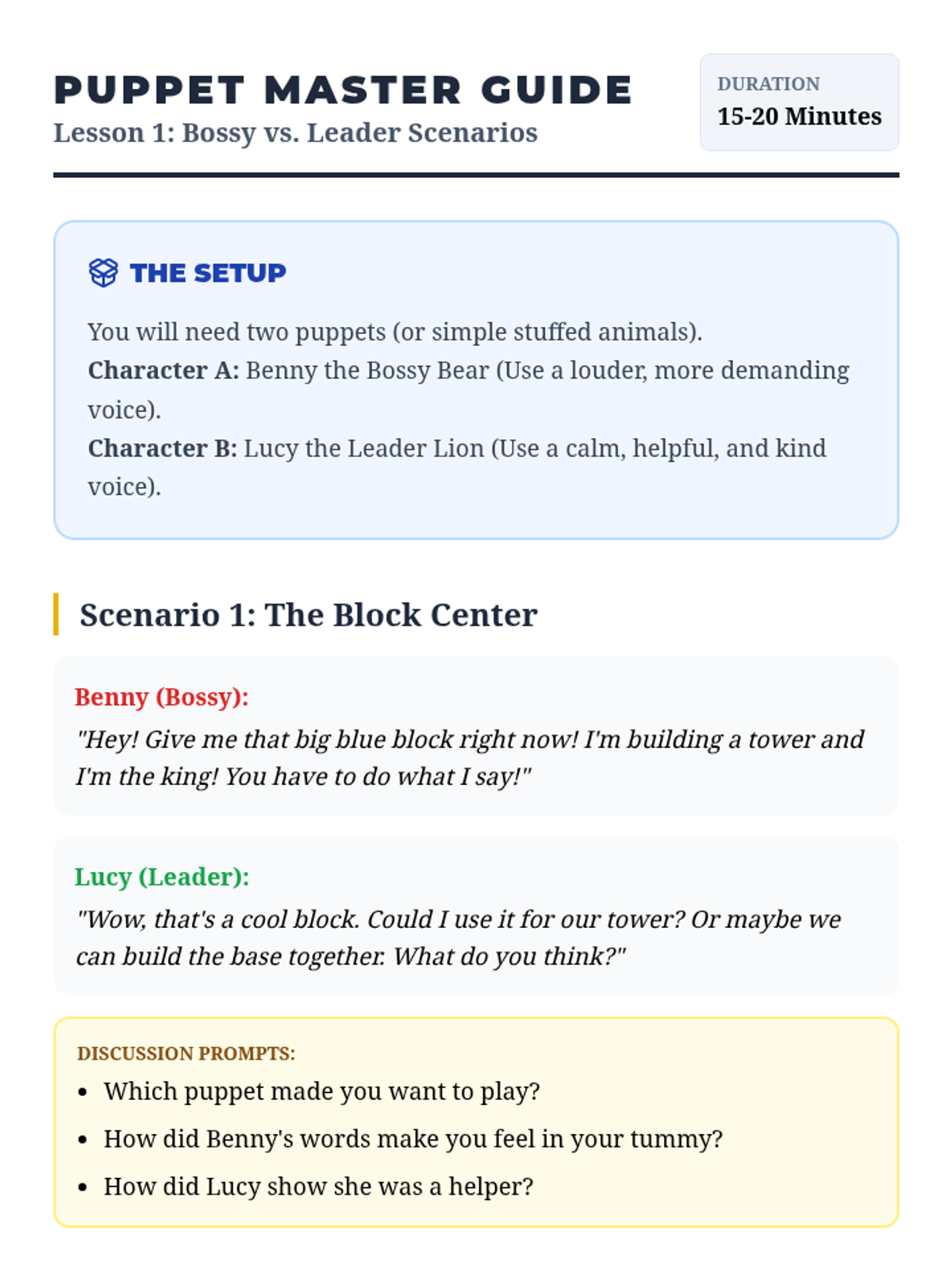
A kindergarten sequence exploring the difference between bossy behavior and responsible leadership. Students learn that true power comes from helping others, using words instead of force, and following fair rules that apply to everyone.
A 5-lesson unit for Kindergarten students focused on developing a growth mindset. Students learn about brain plasticity, the transformative power of the word 'yet', how to view mistakes as learning opportunities, and how to replace fixed mindset thoughts with growth-oriented ones.
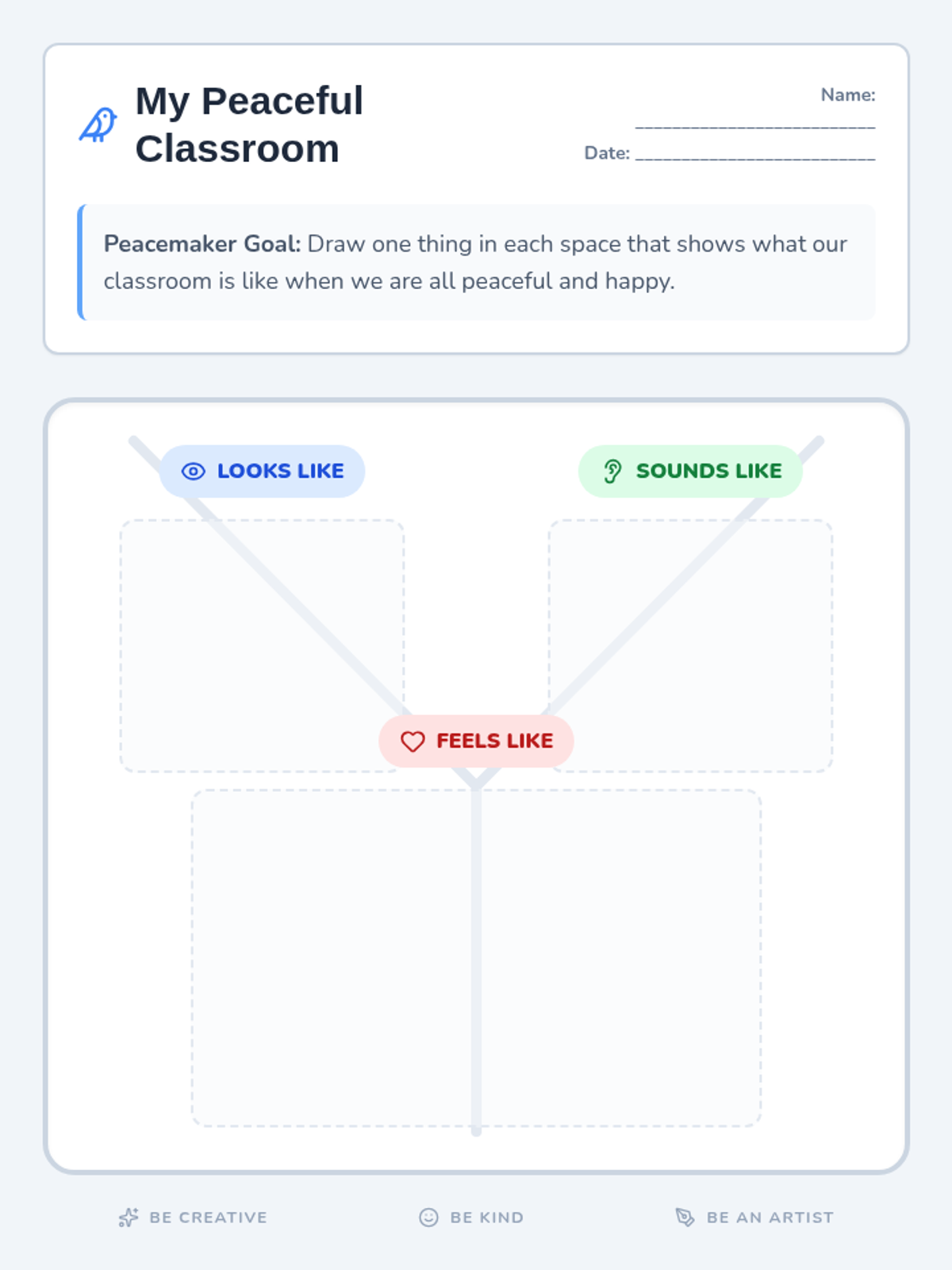
A Kindergarten project-based unit where students co-create a classroom 'Peace Corner'. They transition from learning about peaceful environments to building concrete tools and protocols for conflict resolution.
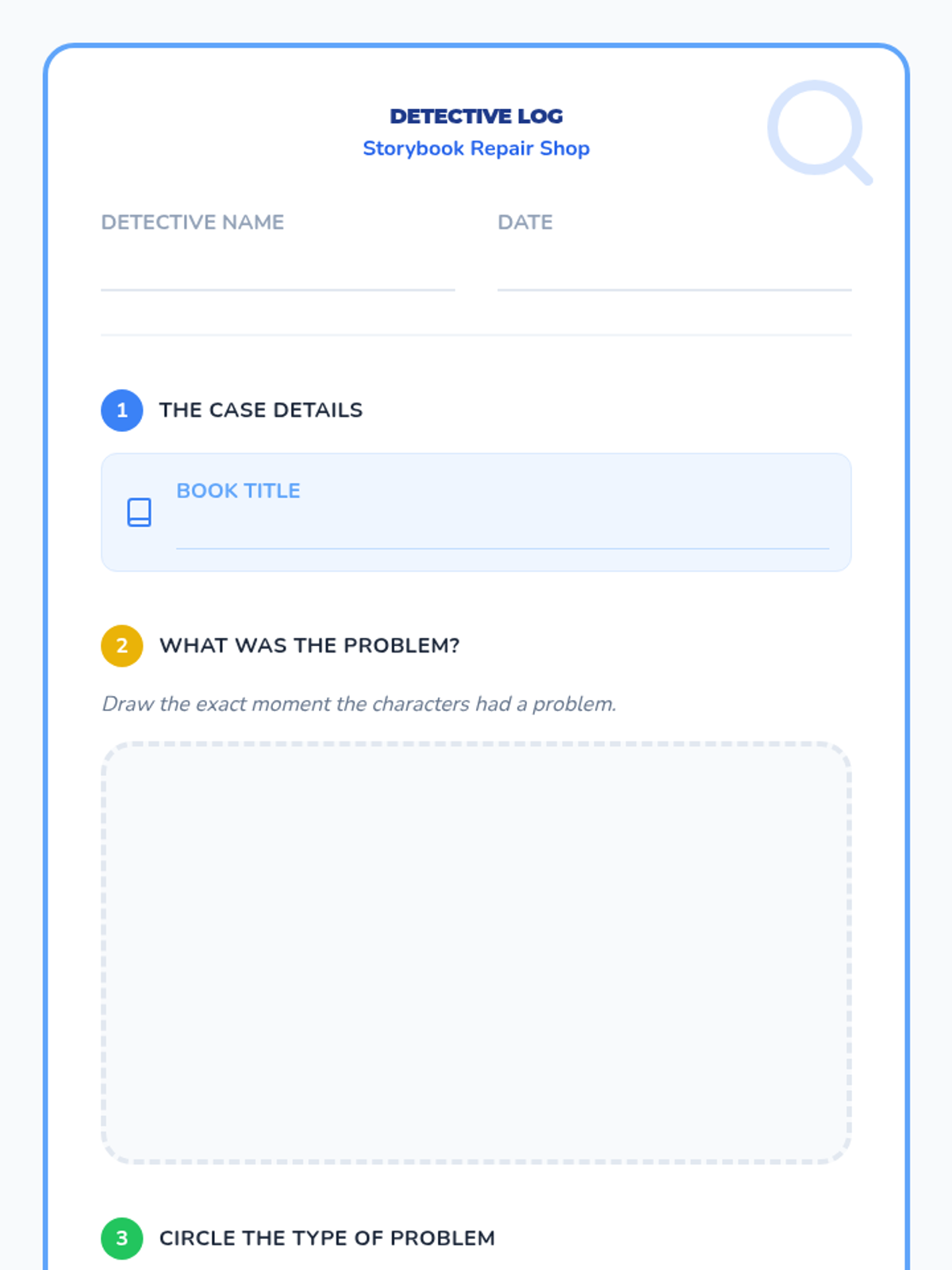
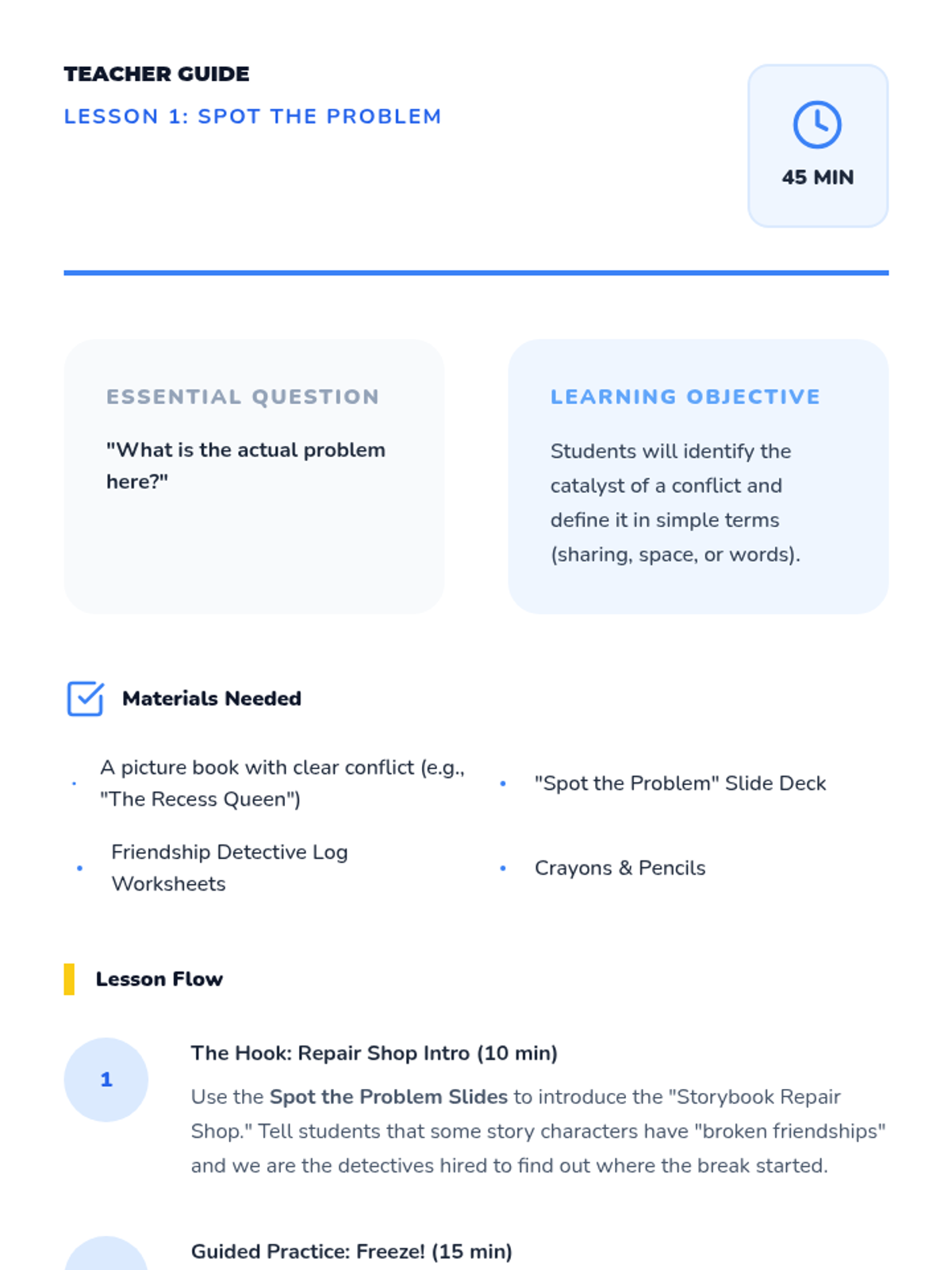
This Kindergarten sequence uses storytelling and narrative analysis to help students identify conflicts, understand different perspectives, and develop practical resolution strategies. Through the 'Storybook Repair Shop' theme, students move from observing character conflicts to practicing restorative apologies and creating their own 'Super Friend' solutions.
A simulation-heavy sequence for Kindergarteners focused on de-escalation and practical negotiation strategies to resolve peer conflicts peacefully.
Students move from reactive emotional responses to proactive negotiation. They learn de-escalation, empathy through perspective-taking, and a structured 4-step 'Peace Path' to resolve playground and classroom conflicts independently.
A Kindergarten social-emotional learning sequence focused on building positive peer interaction skills through social scripting, personal boundaries, and conflict resolution. Students use role-play and visual stories to internalize strategies for sharing, joining groups, and handling social rejection.
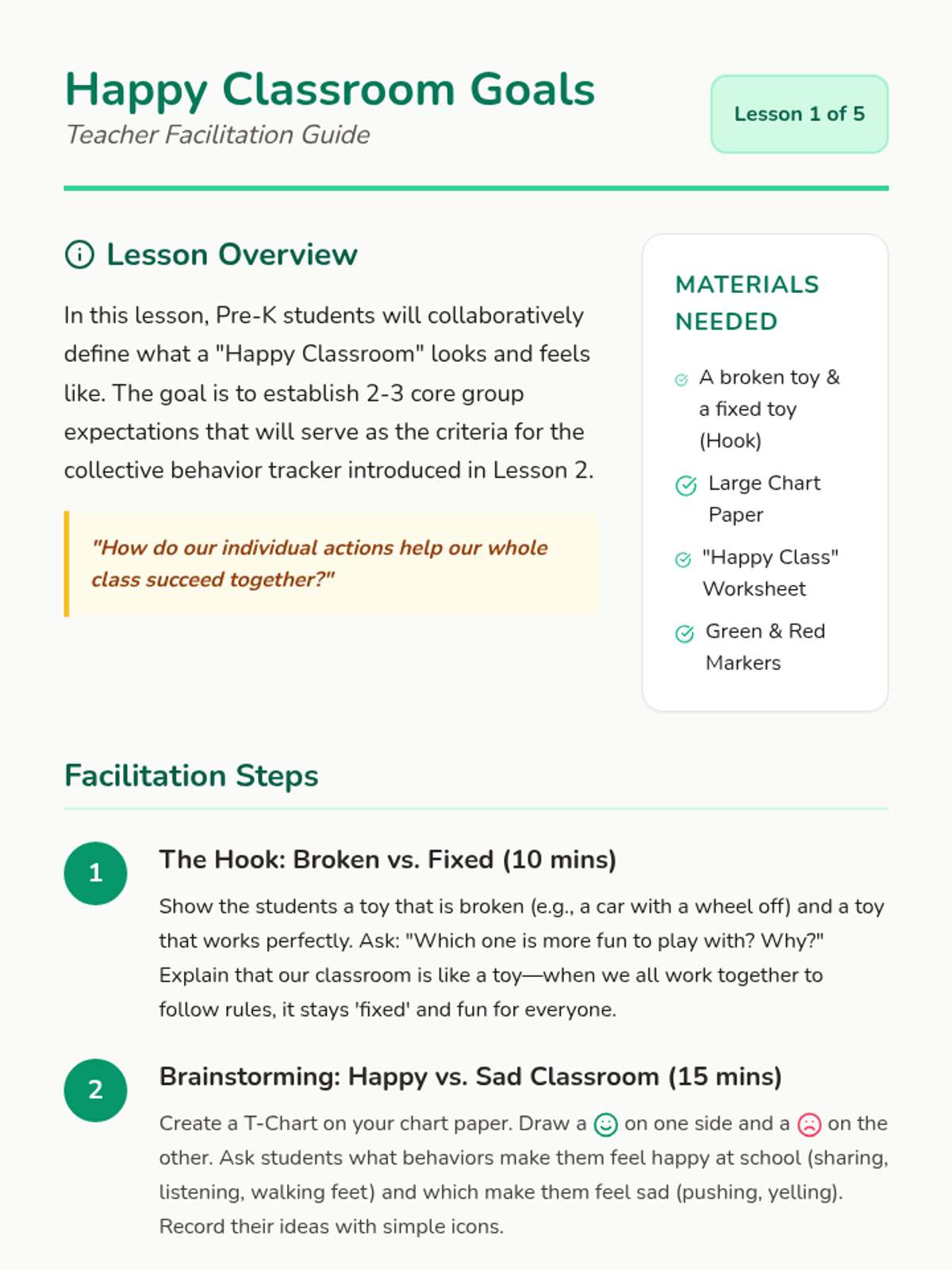
This sequence introduces Pre-K students to the concept of collective responsibility and group goals through a shared behavior tracking system. Using a 'Good Choice Garden' theme, students learn to set goals, track their group's progress, observe positive behaviors in their peers, and celebrate their combined success.
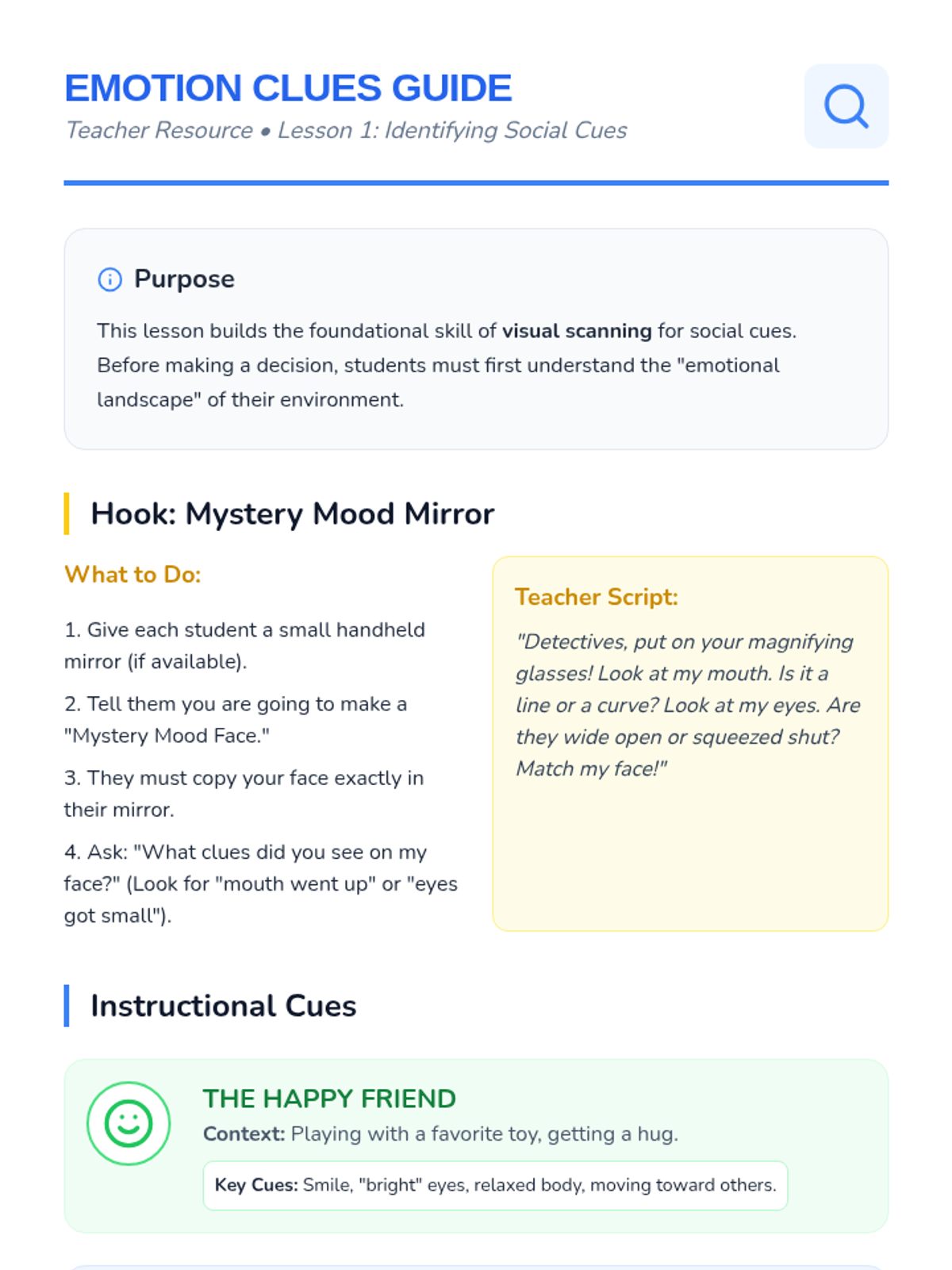
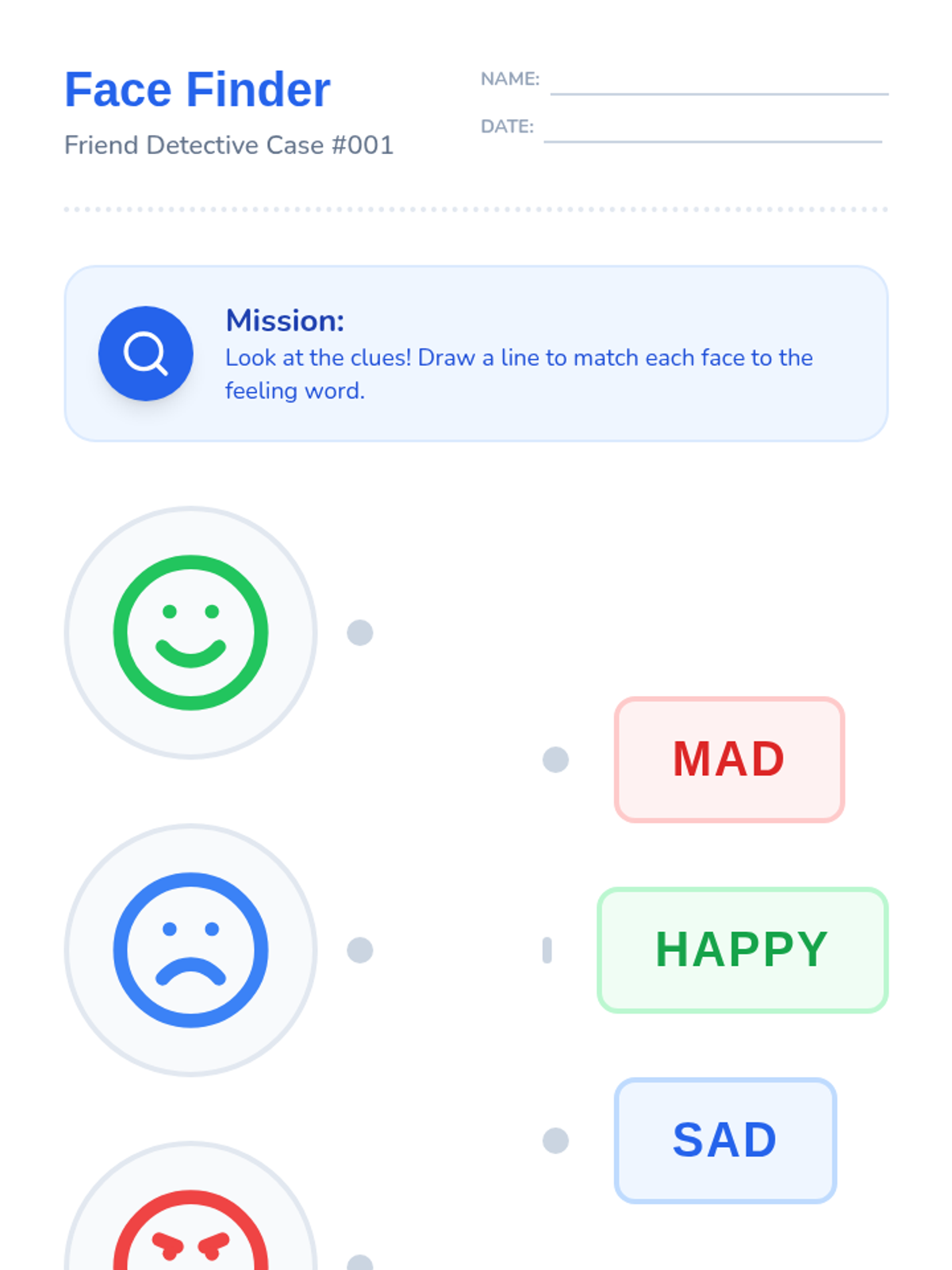
This sequence guides Pre-K students through observing social cues, interpreting body language, and making positive behavioral choices. Students will progress from identifying emotions to predicting consequences and learning to 'rewind' and repair social interactions.
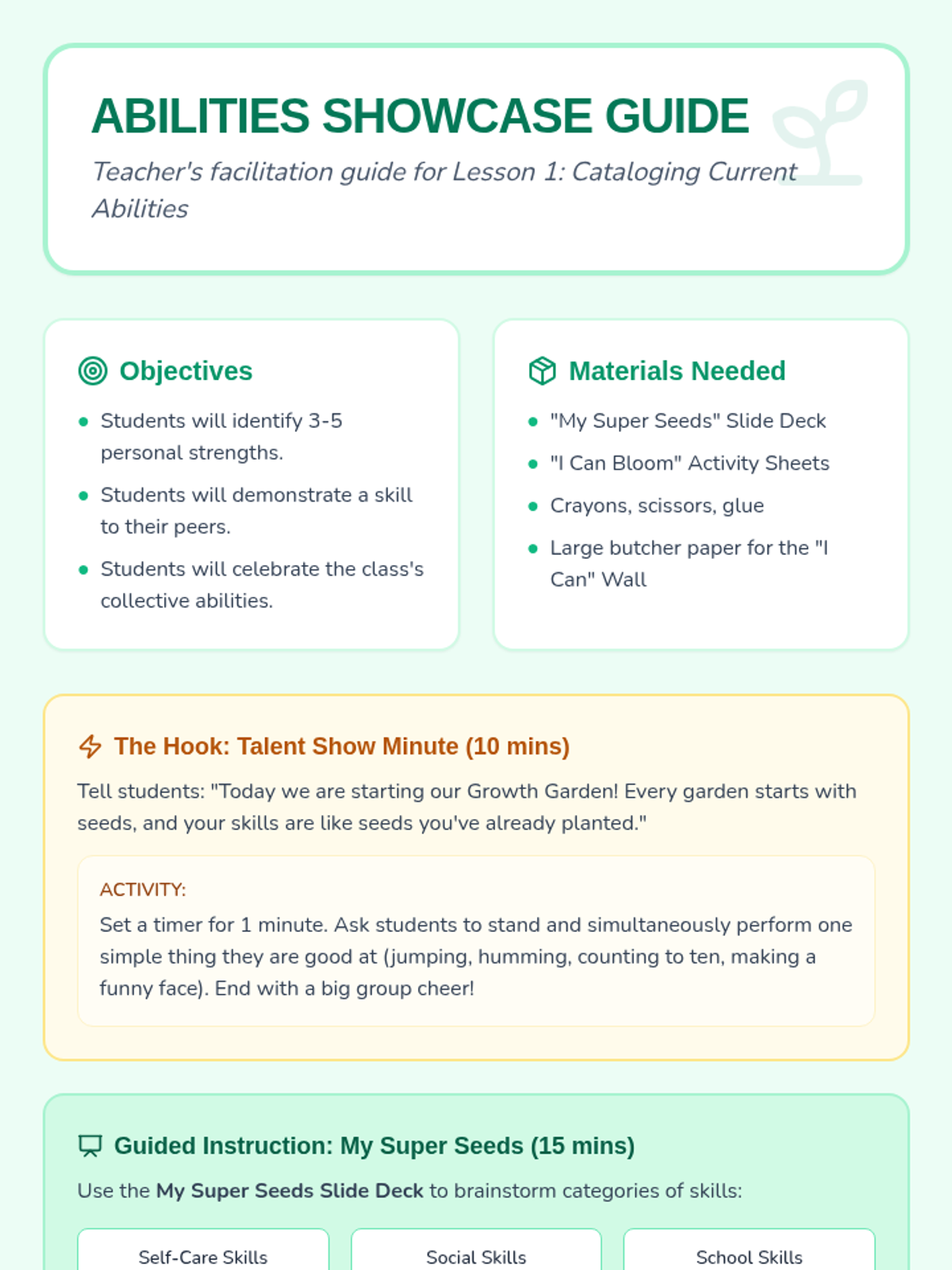
A Kindergarten sequence focused on building self-efficacy and a growth mindset through the 'Growth Garden' theme. Students explore their current strengths, learn the power of the word 'yet', practice persistence, embrace mistakes, and set simple goals.
A comprehensive back-to-school character education unit centered around the schoolwide EVCS CARES values: Cooperation, Assertion, Responsibility, Empathy, and Self-Control. Each value is taught through active modeling, guided practice, and reflection, culminating in a schoolwide community project.
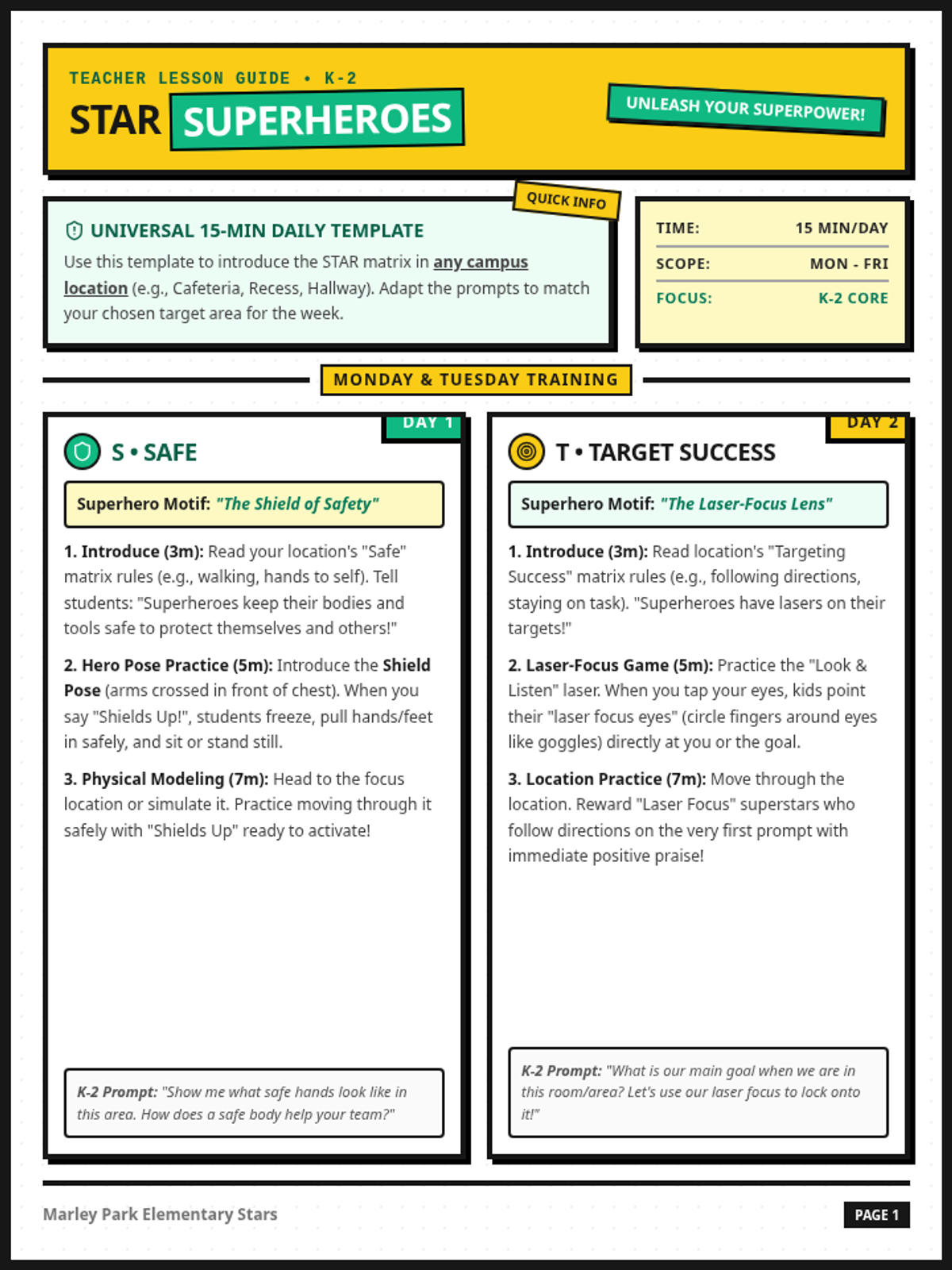
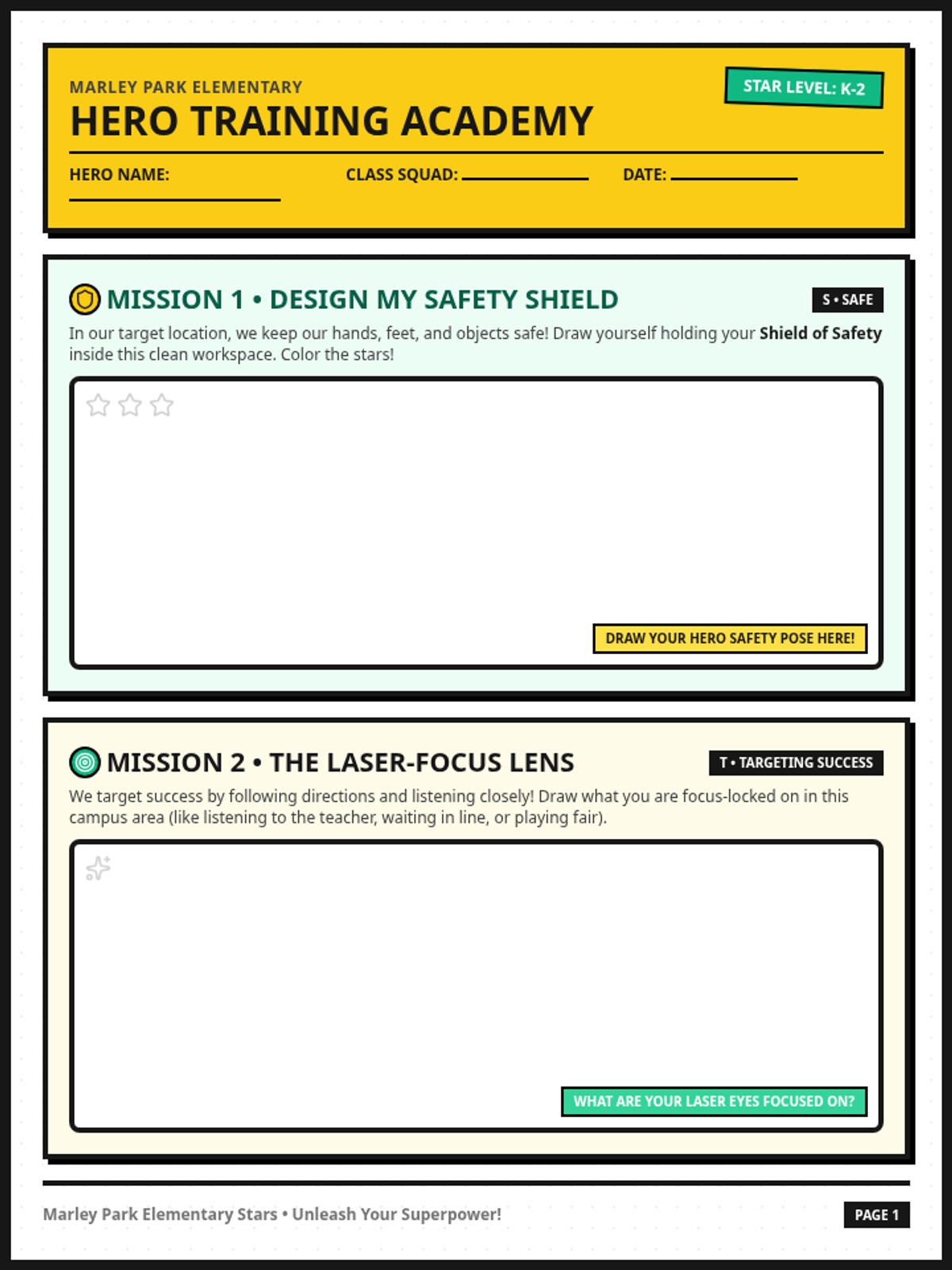
A comprehensive, 5-day universal lesson sequence designed to teach STAR expectations (Safe, Targeting Success, Acting with Integrity, Respectful & Responsible) across any campus location, customized for K-2, 3-5, and 6-8 with a superhero pop-art aesthetic.
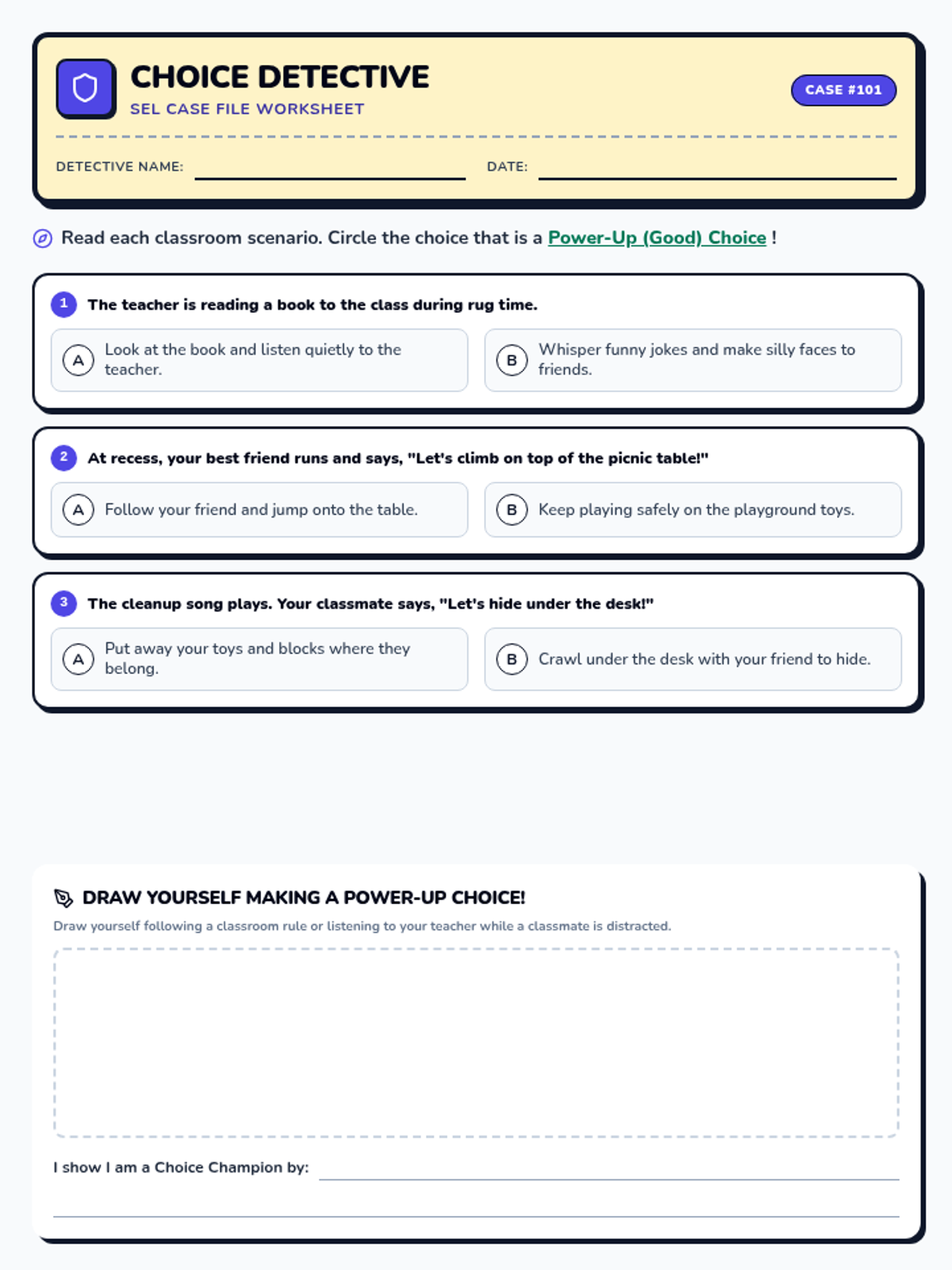
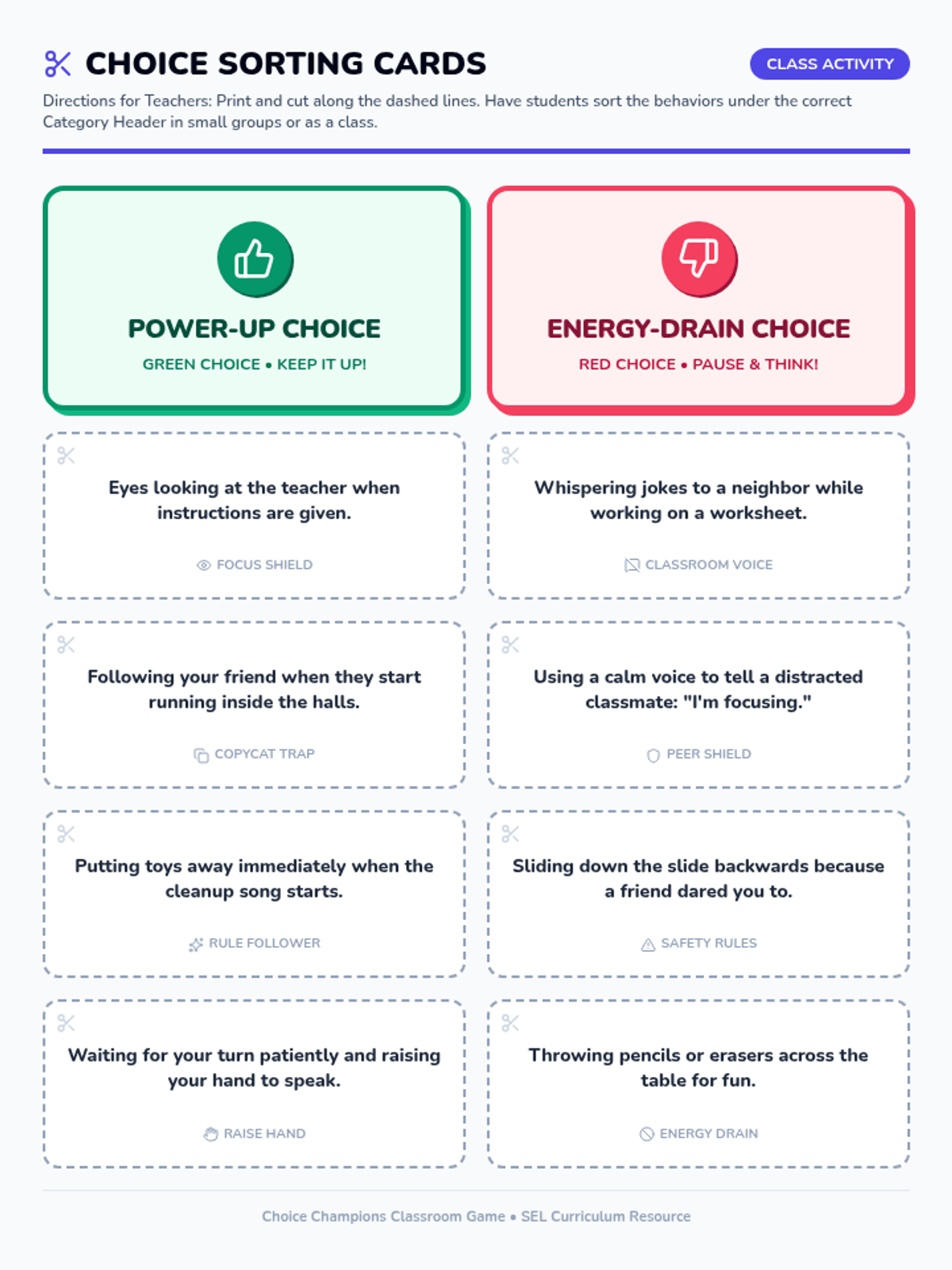
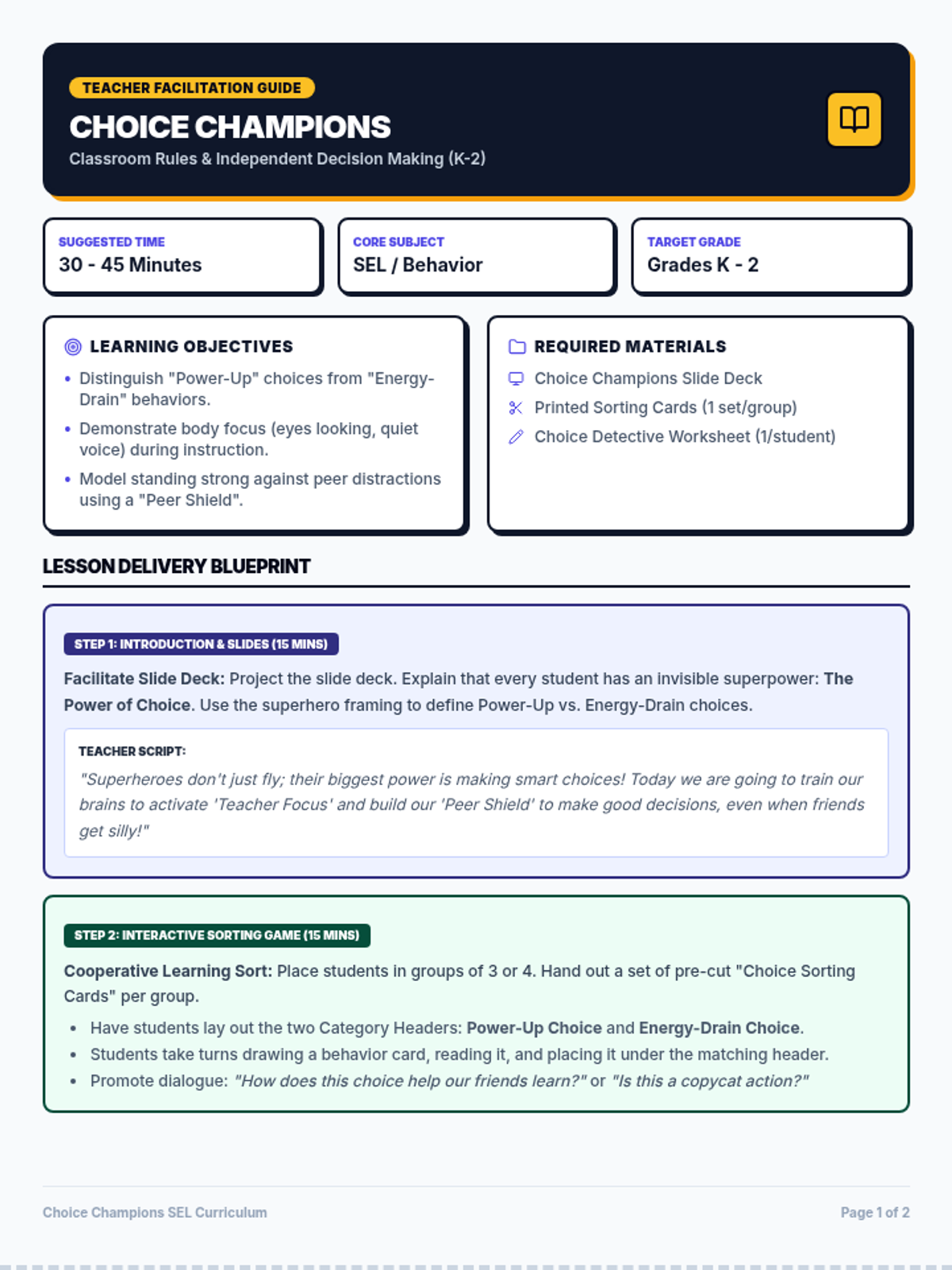
A social-emotional learning sequence for early elementary students to master classroom behavior, self-regulation, and peer conflict resolution. It features the 'Choice Champions' lesson on smart behavior choices and the 'Peace Pals' lesson on conflict coping skills.
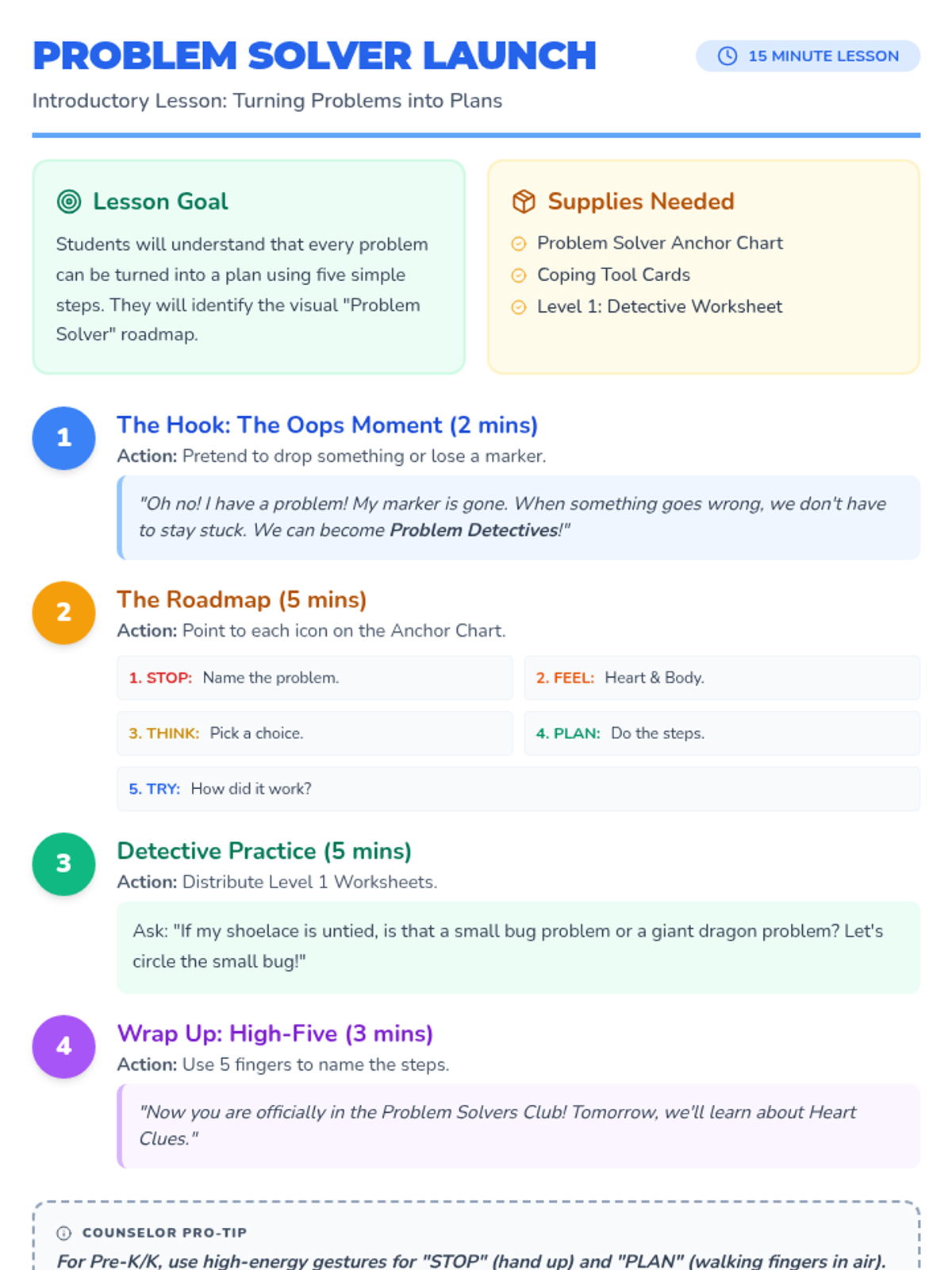
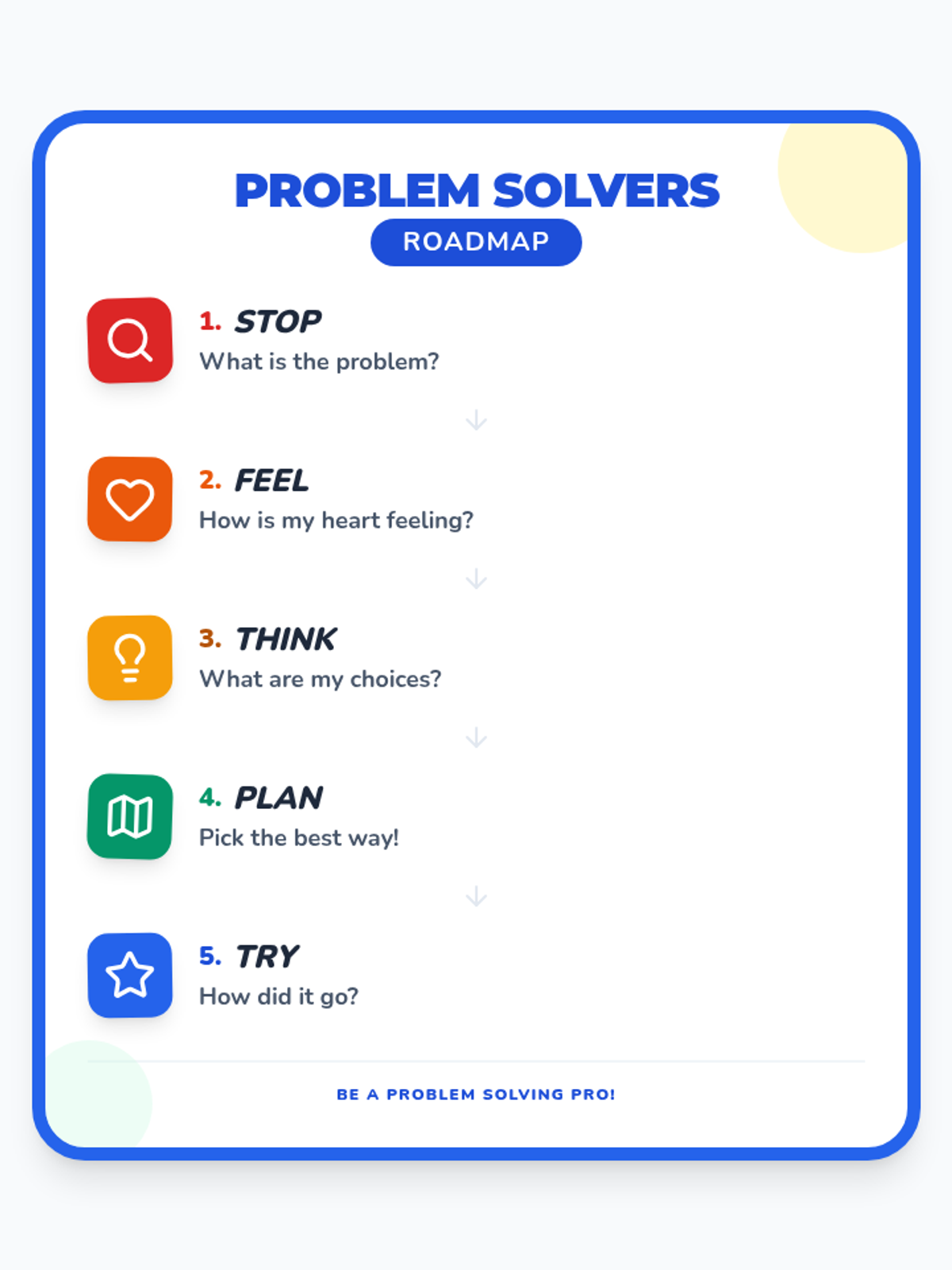
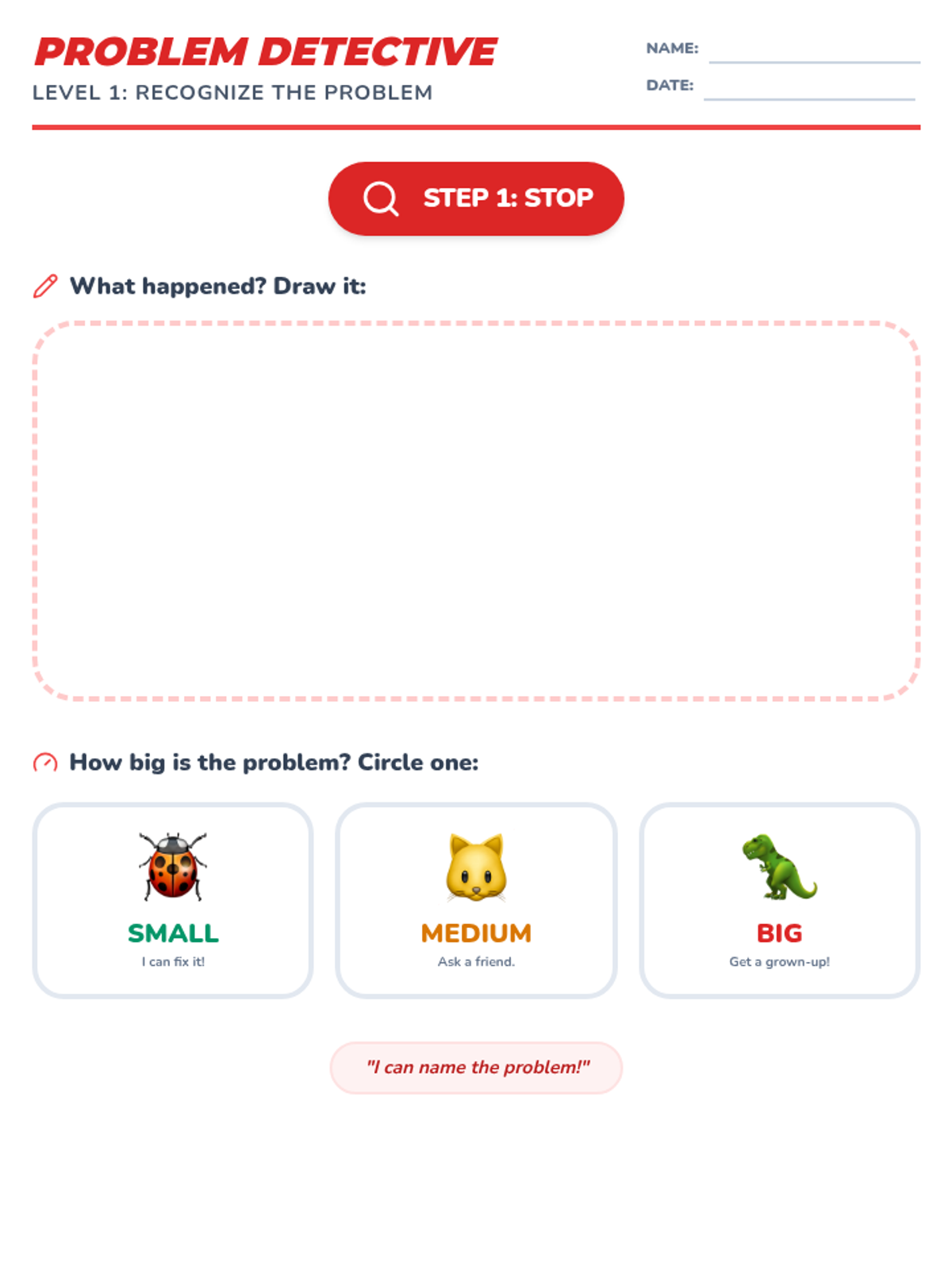
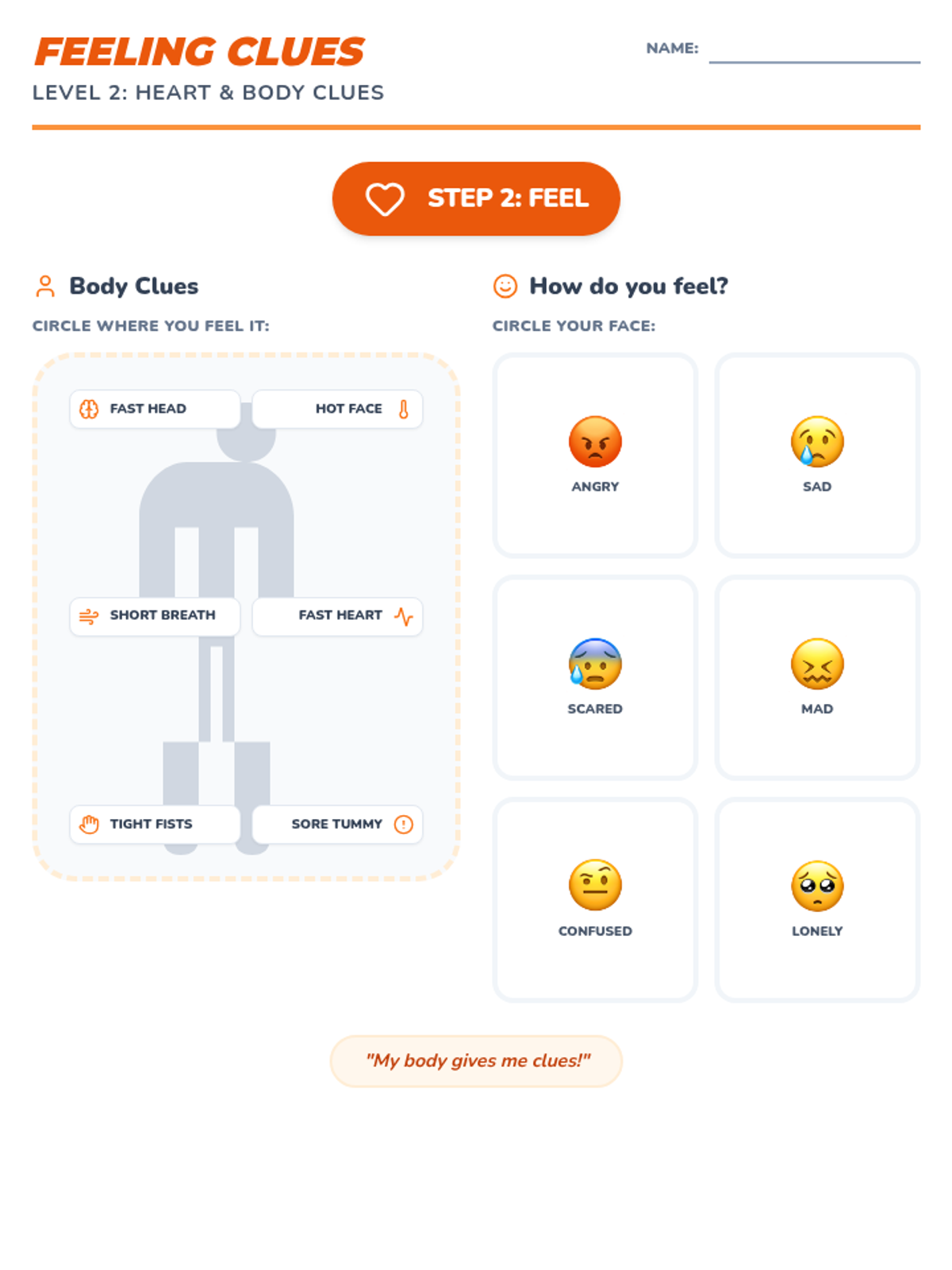
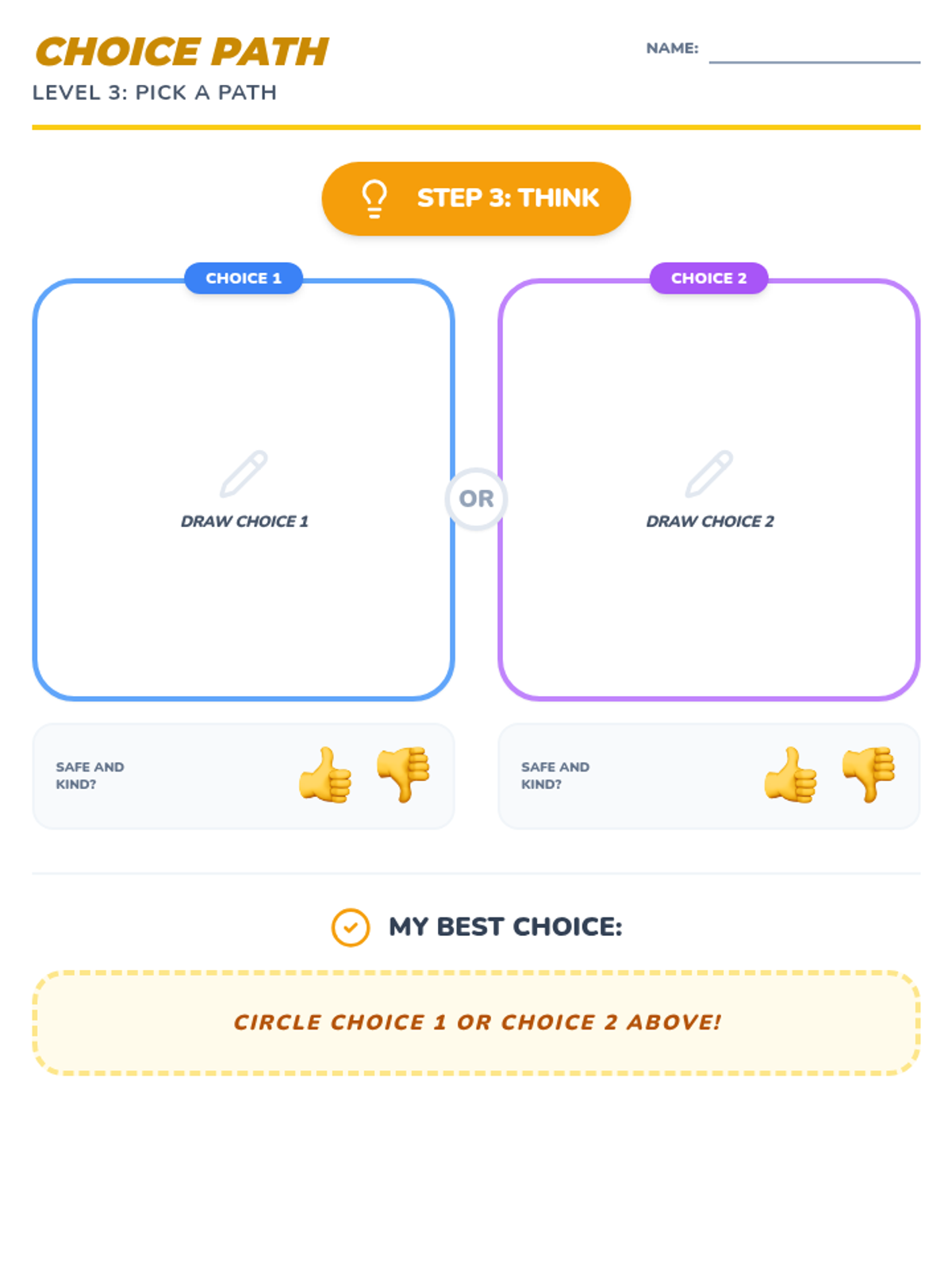
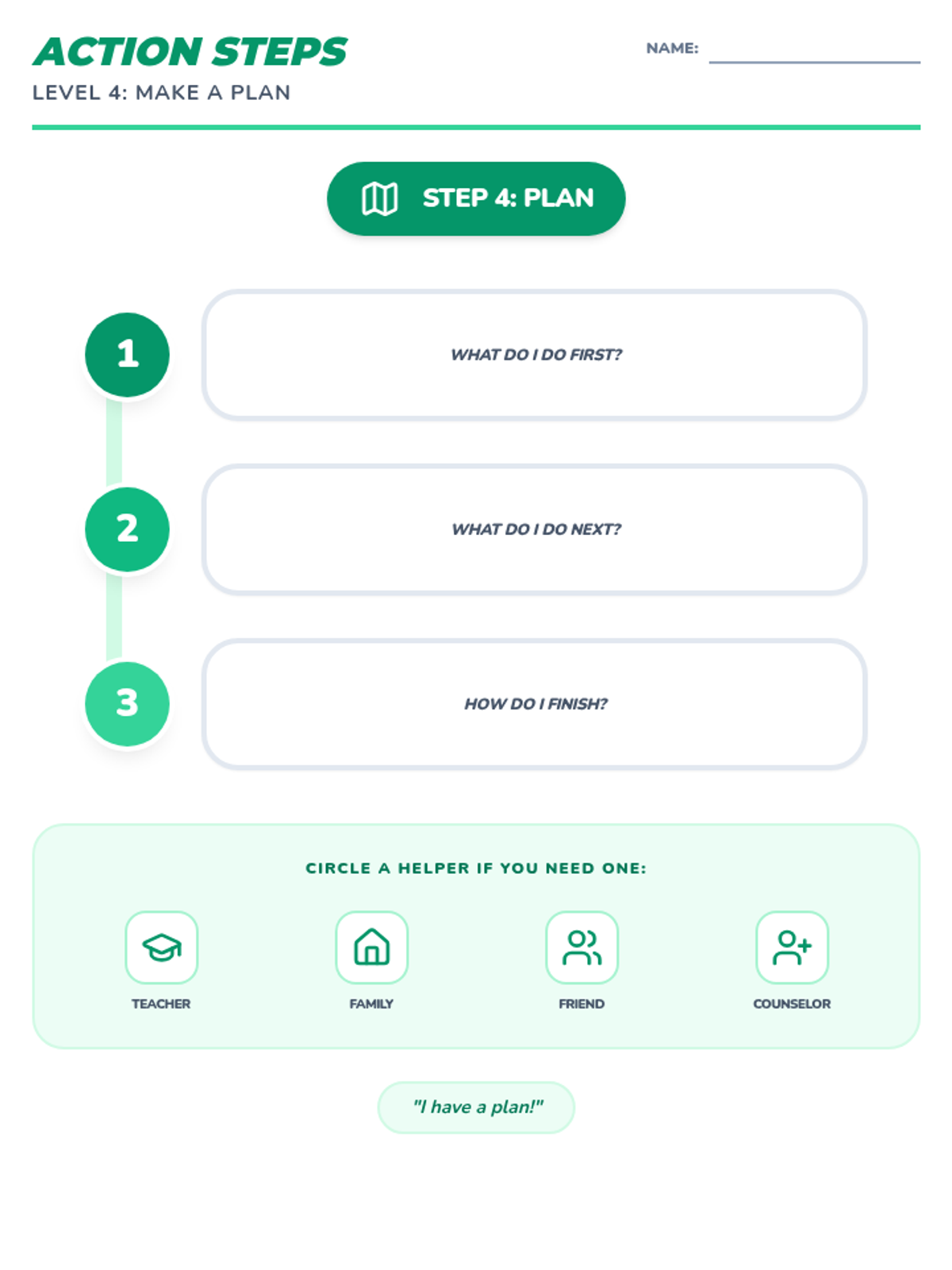
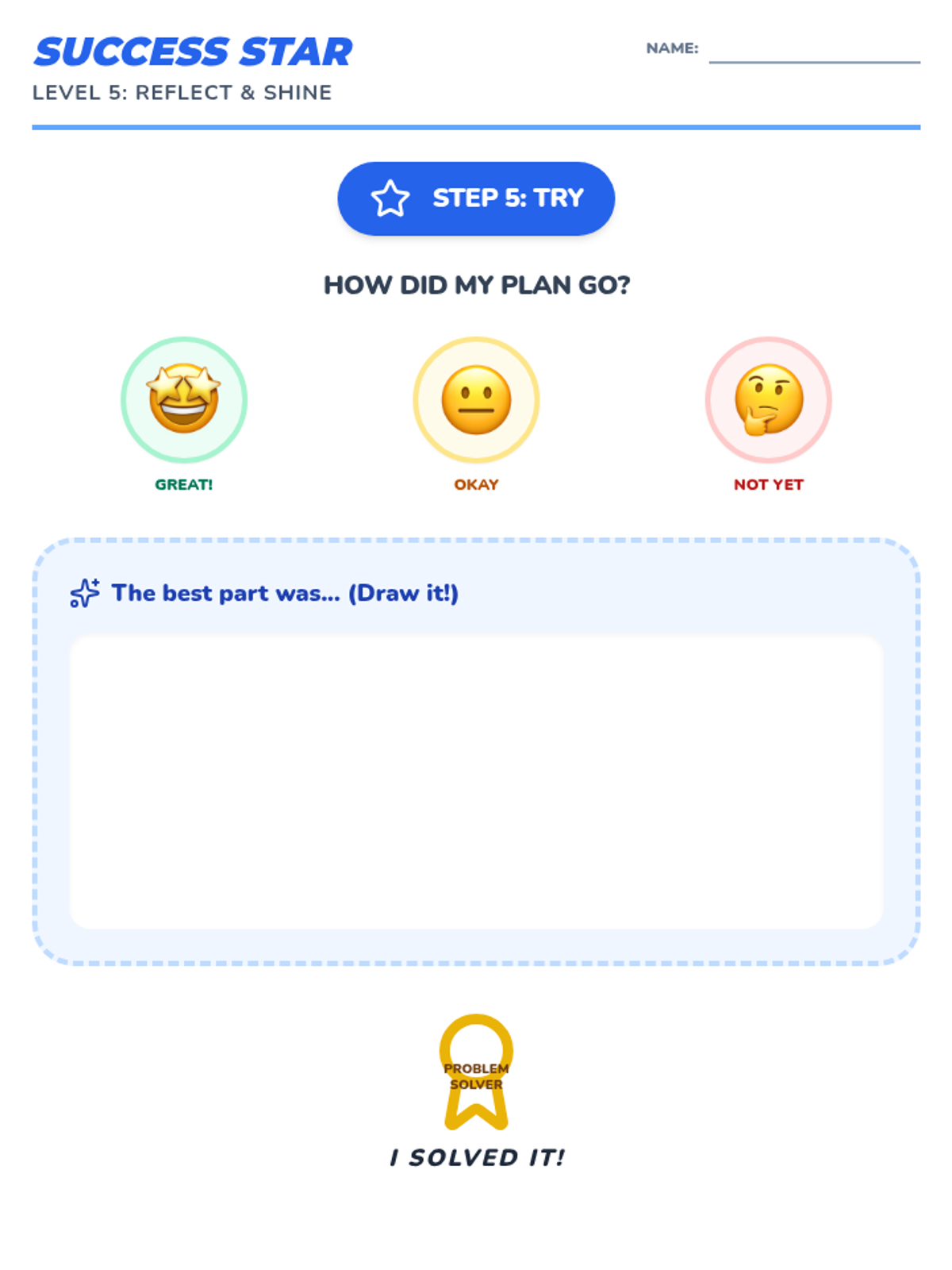
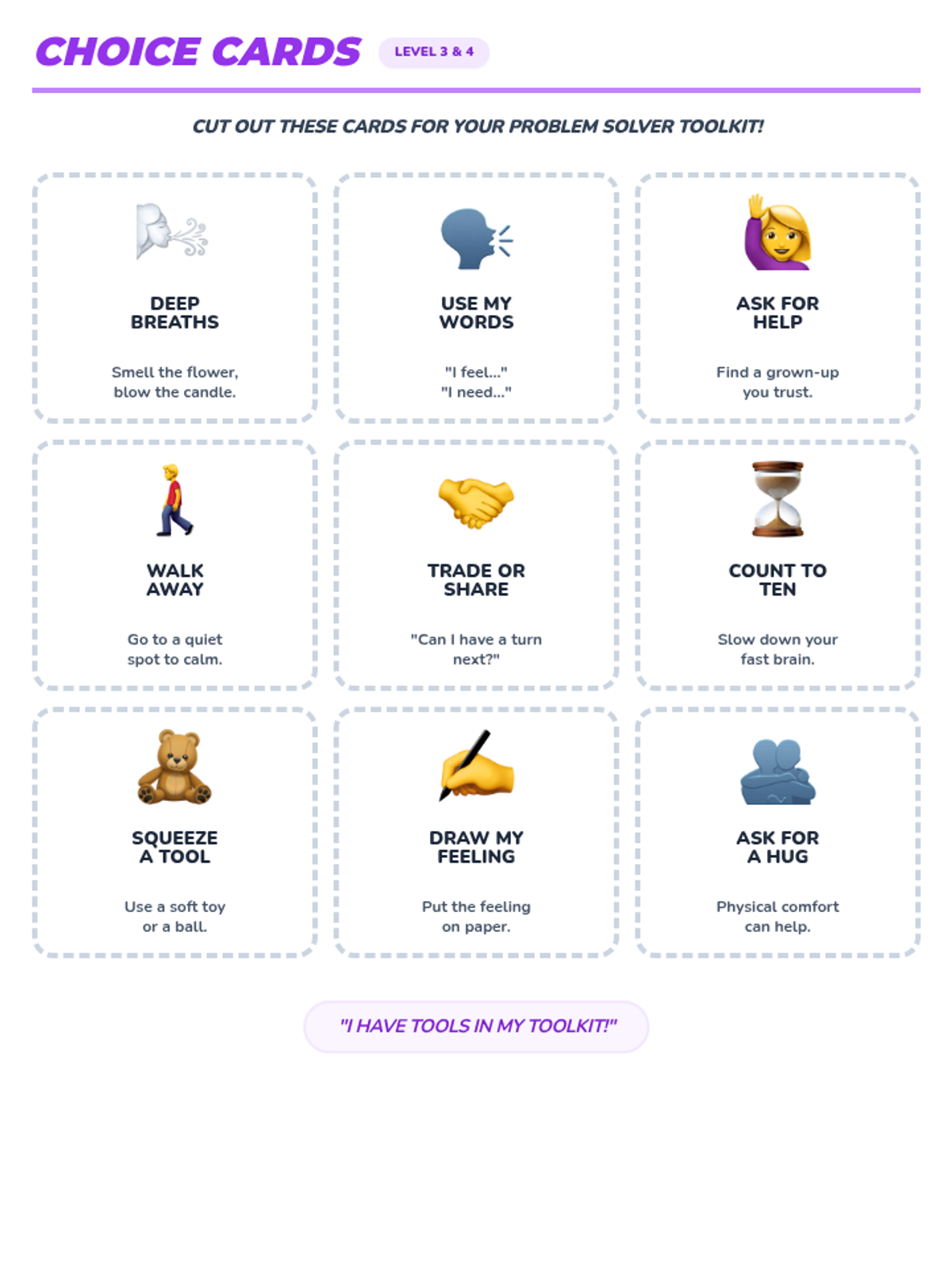
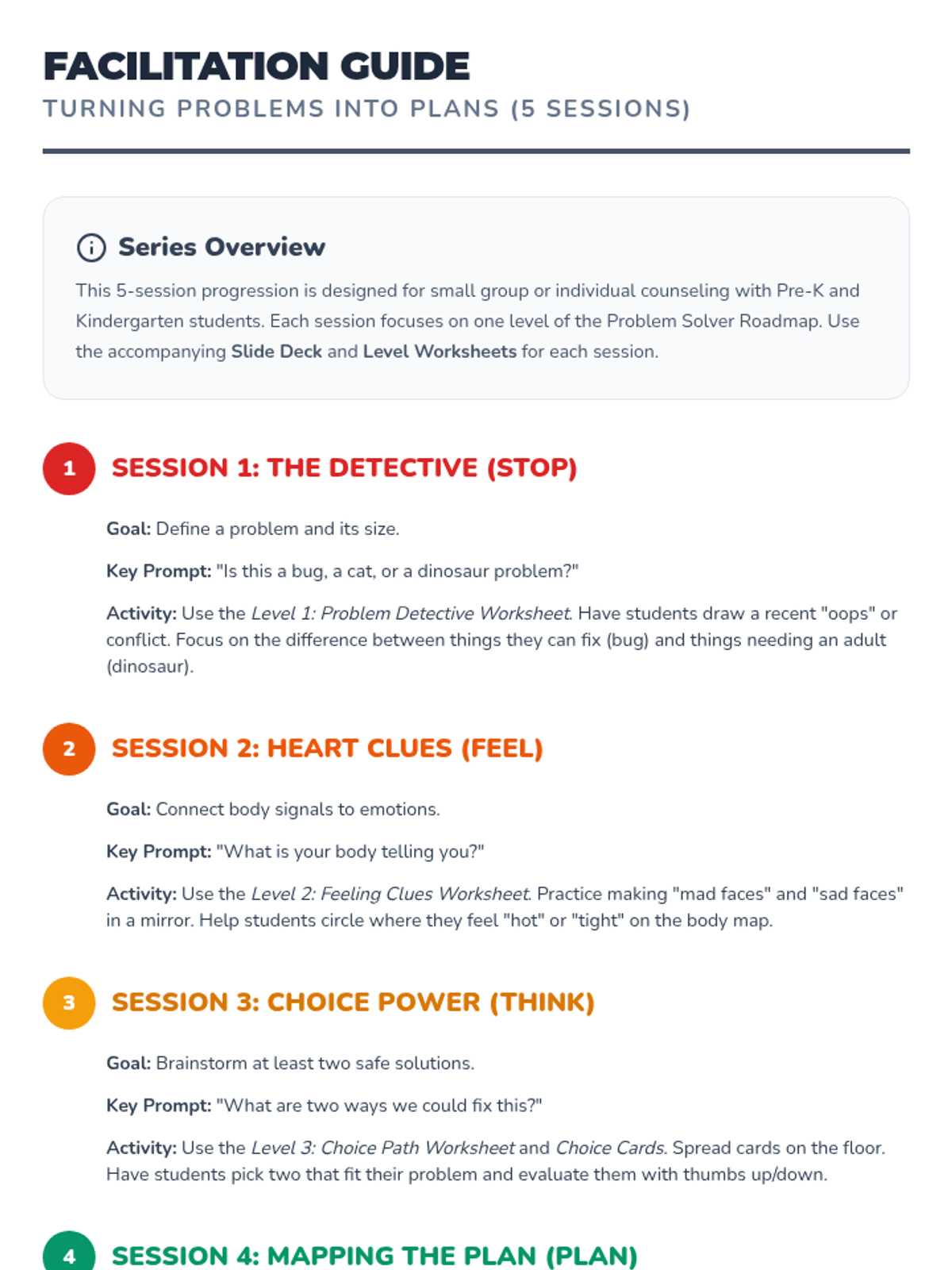
A comprehensive counseling sequence designed to guide elementary students through a 5-level progression of problem-solving and emotional regulation skills.
A series of social-emotional and behavioral lessons to improve school-wide culture and student self-regulation.
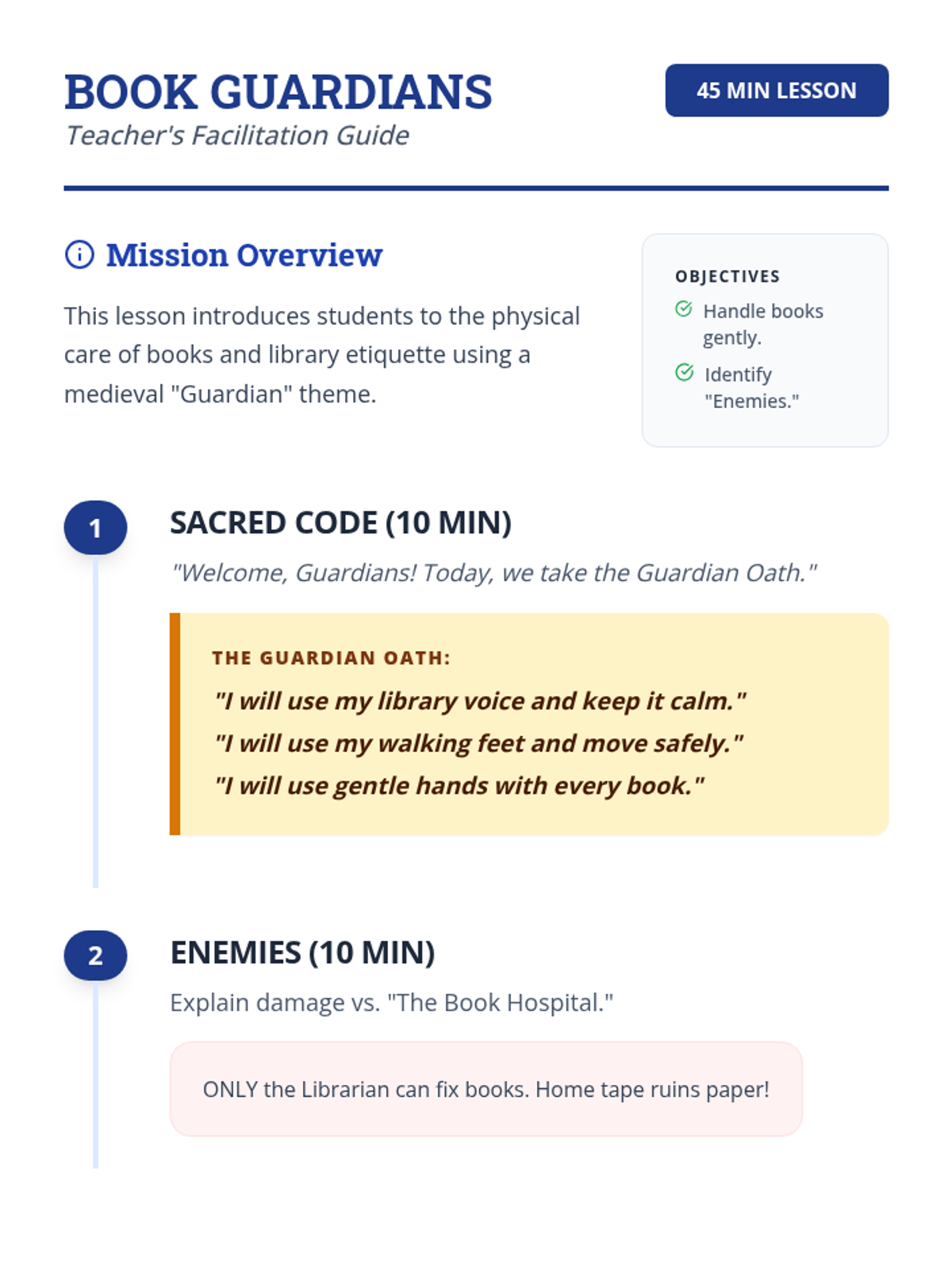
A comprehensive introduction to library skills, covering both the physical care of books and the intellectual skills needed to find and evaluate information.
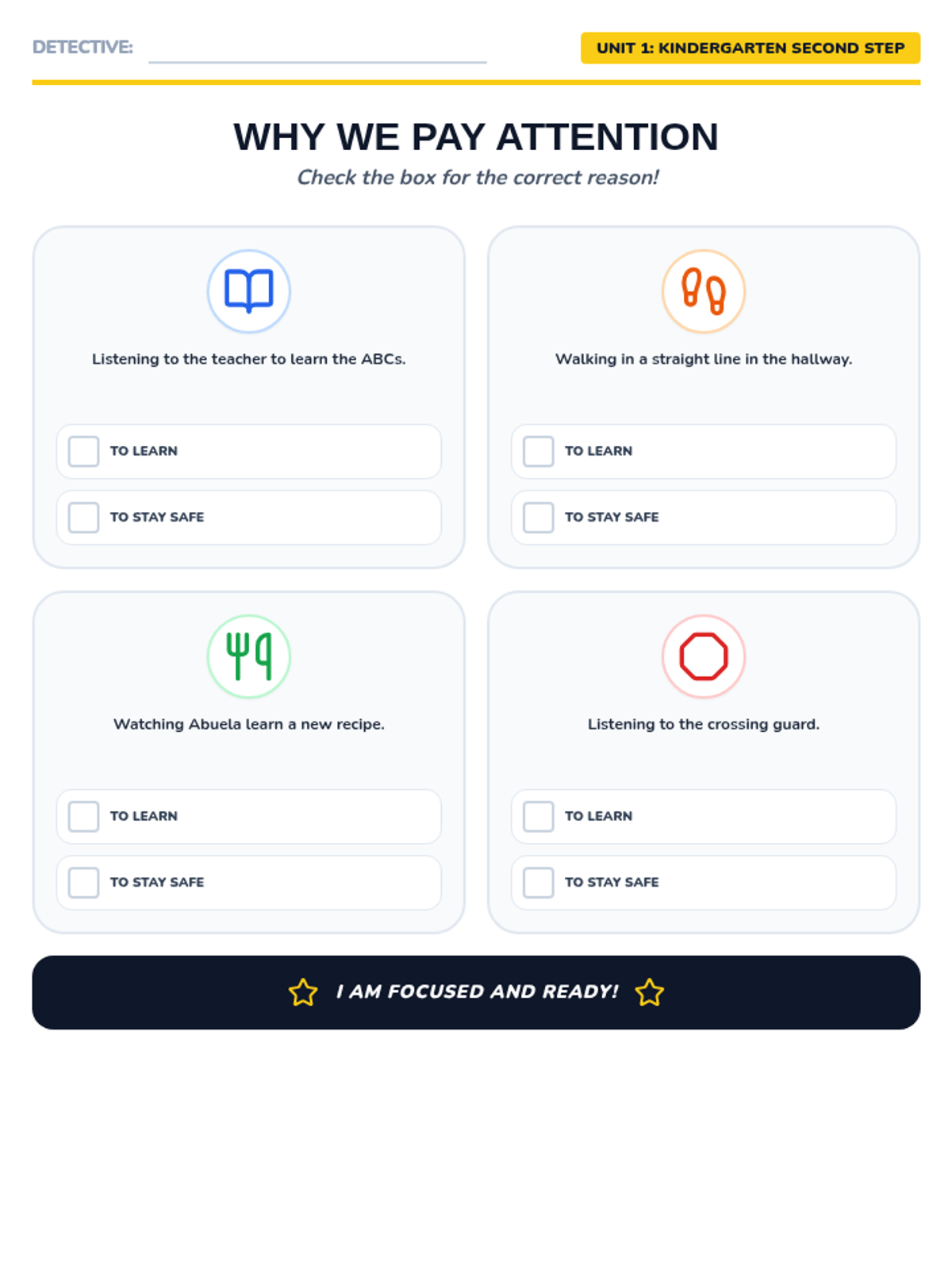
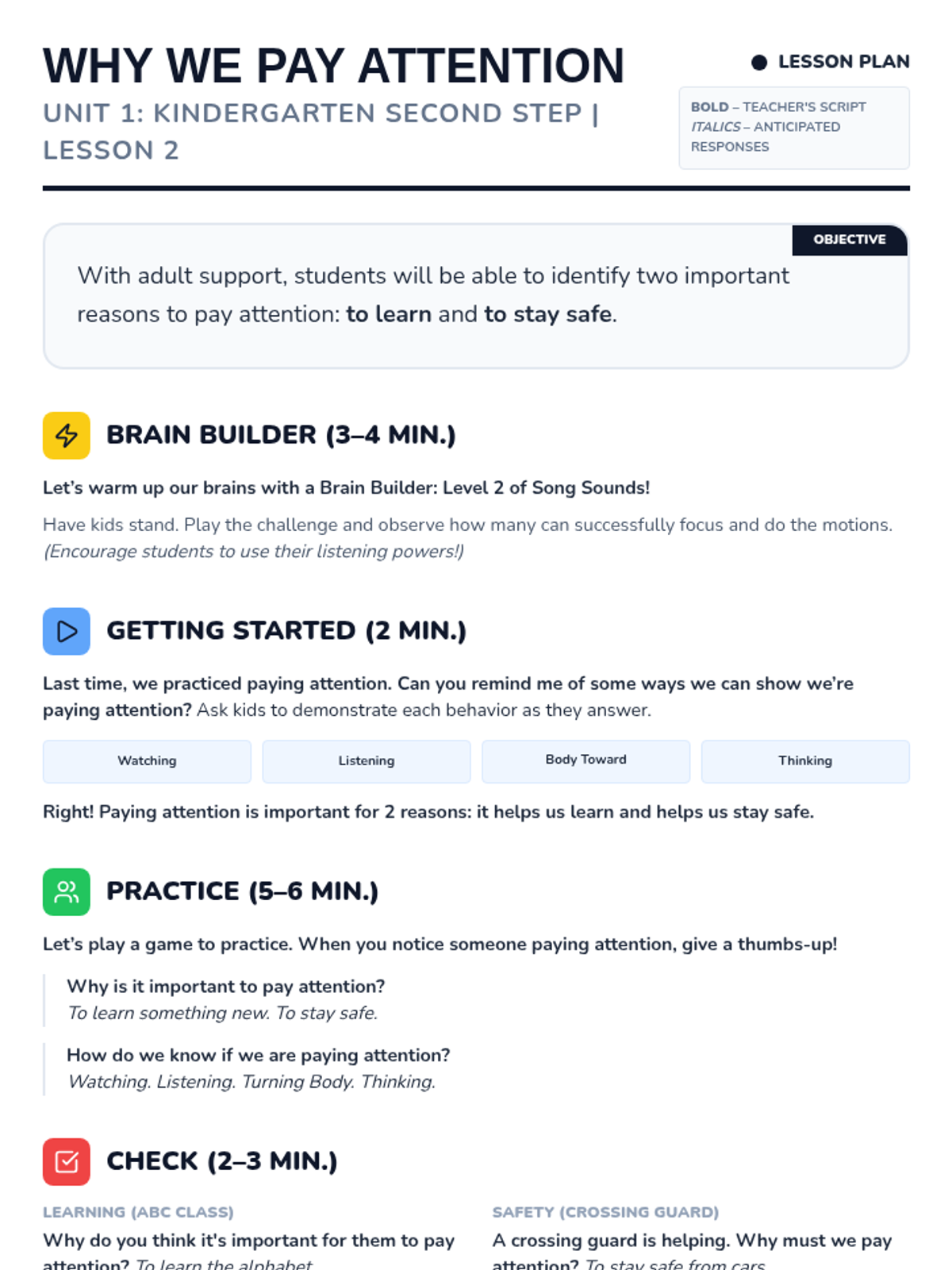
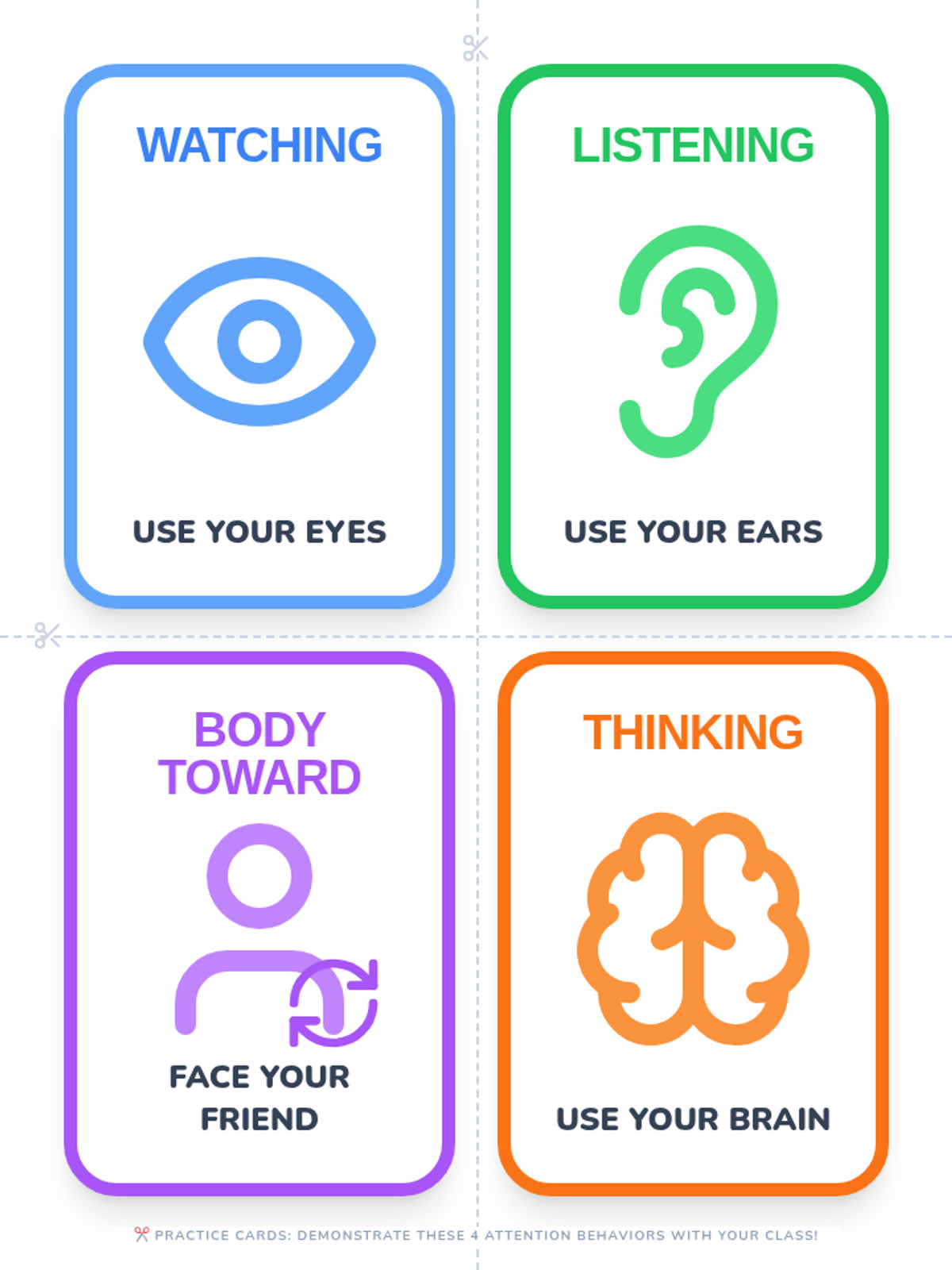
A structured sequence for Kindergarten Unit 1 of the Second Step curriculum, focusing on self-regulation and attention skills through the engaging 'Attention Detective' instructional theme.
A counseling sequence focused on cognitive reframing and problem-scaling for high-energy students who enjoy hands-on construction and building activities.
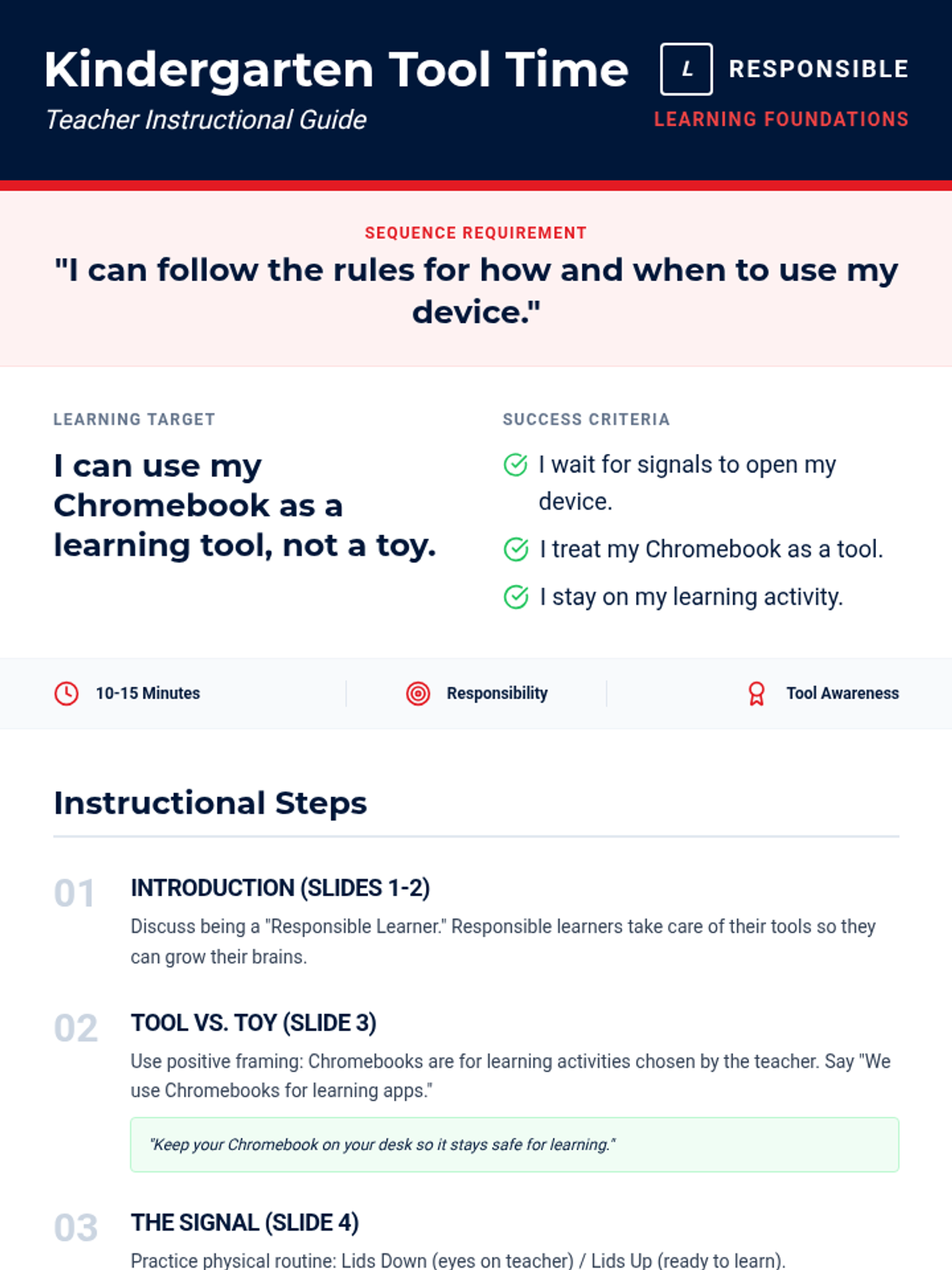
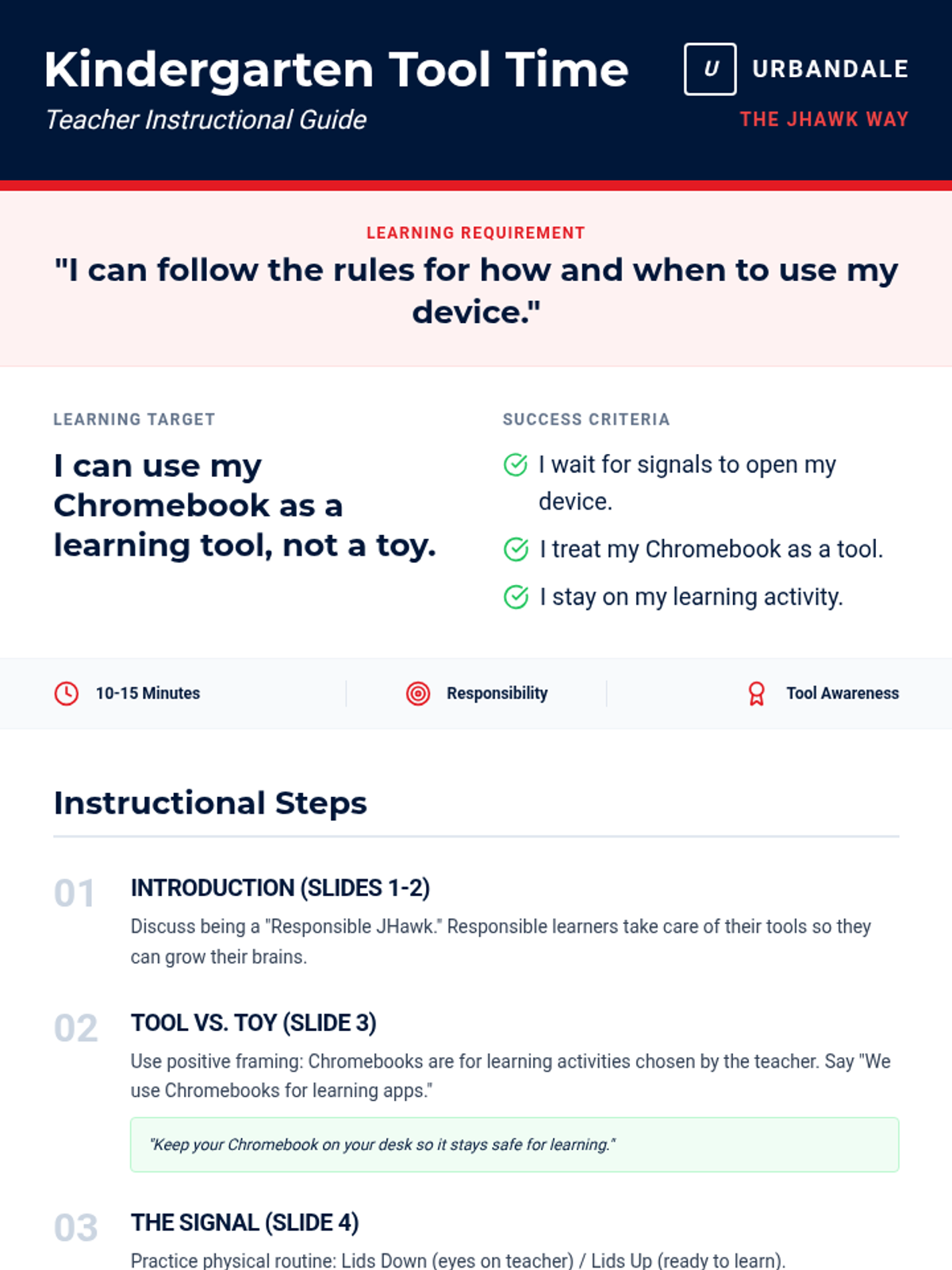
A comprehensive K-5 sequence focused on device responsibility and digital citizenship, centered on being Responsible. Lessons cover transitioning from devices as tools (K-1) to managing online distractions and maintaining integrity (4-5).
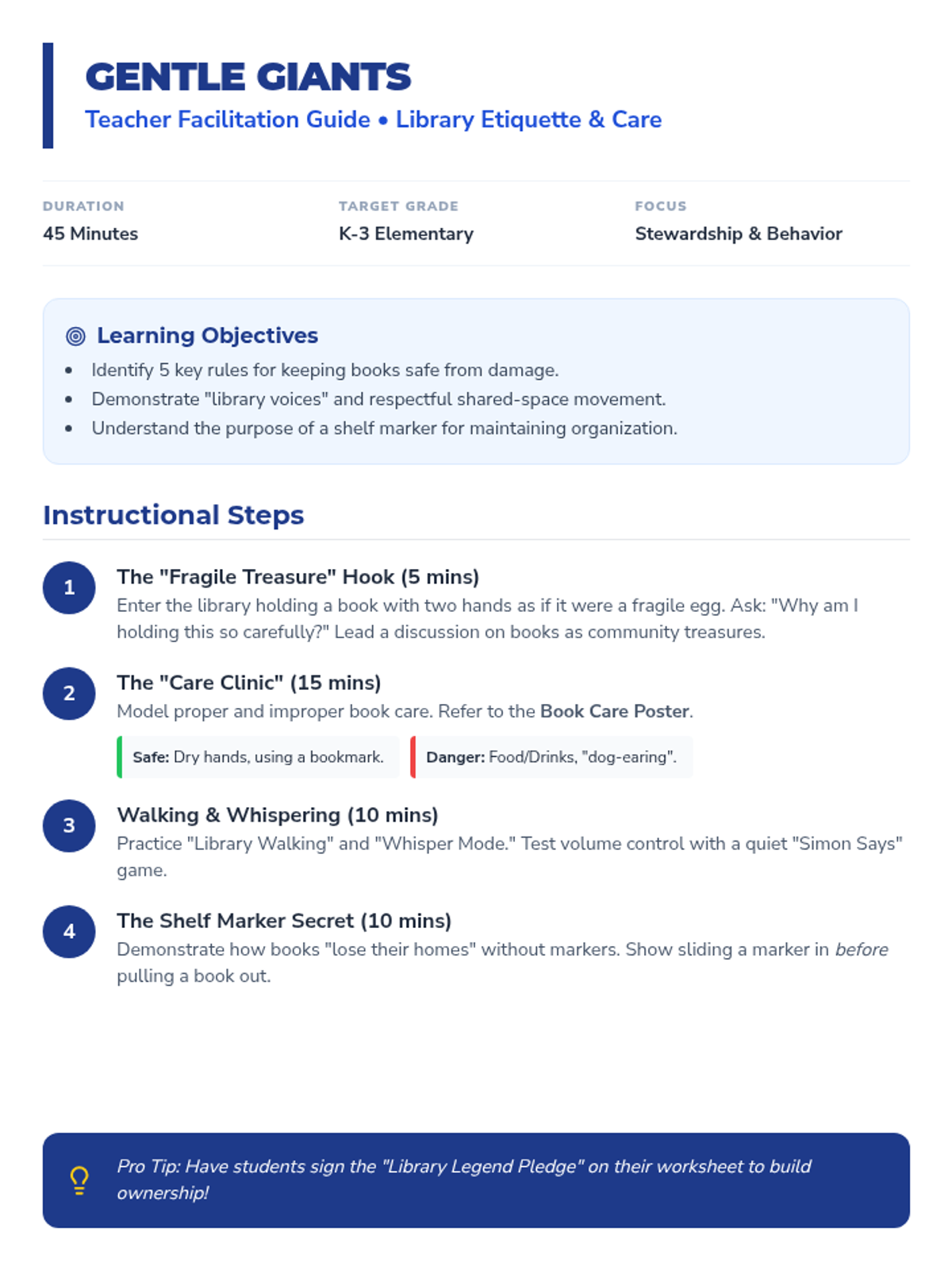
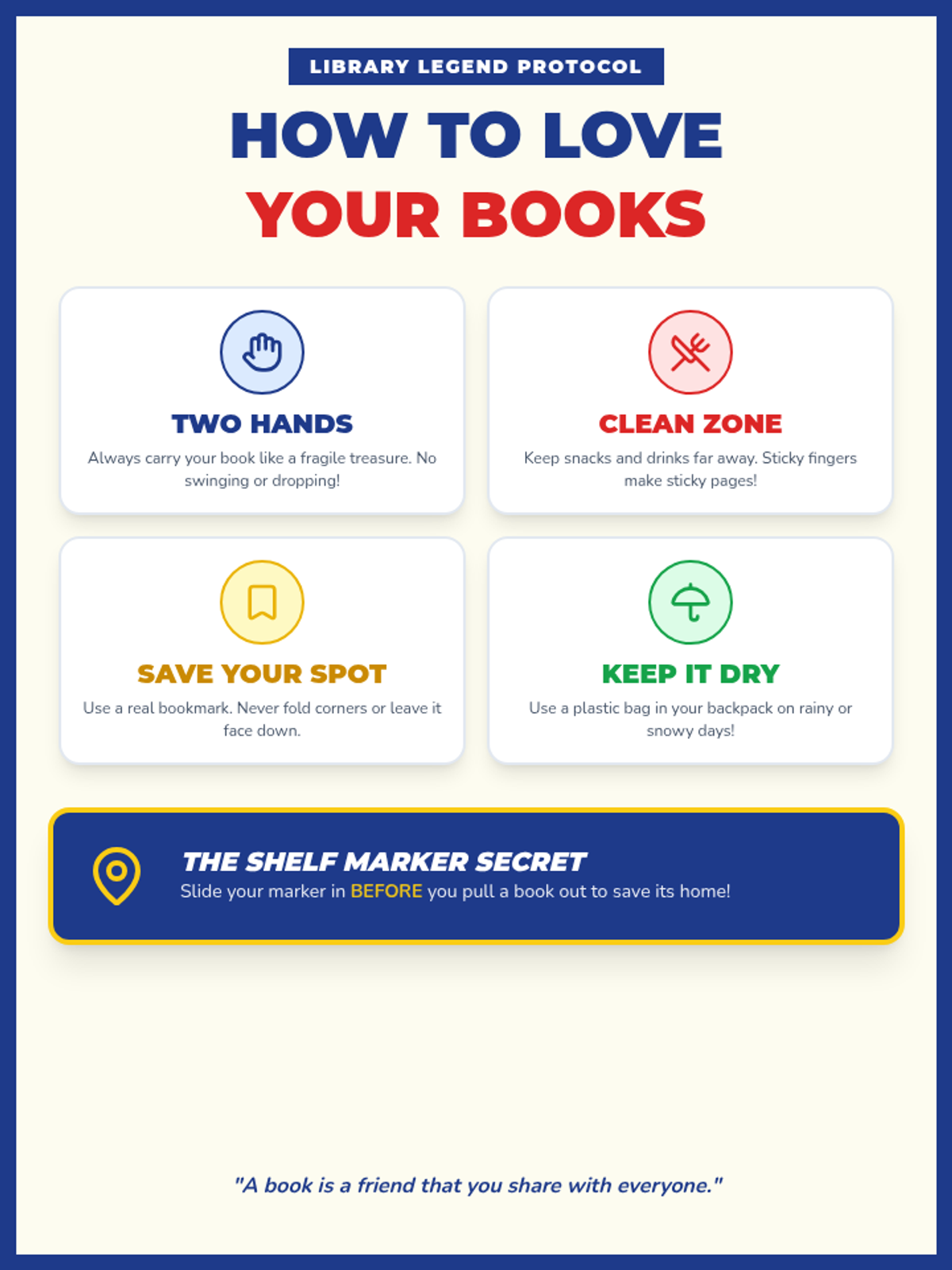
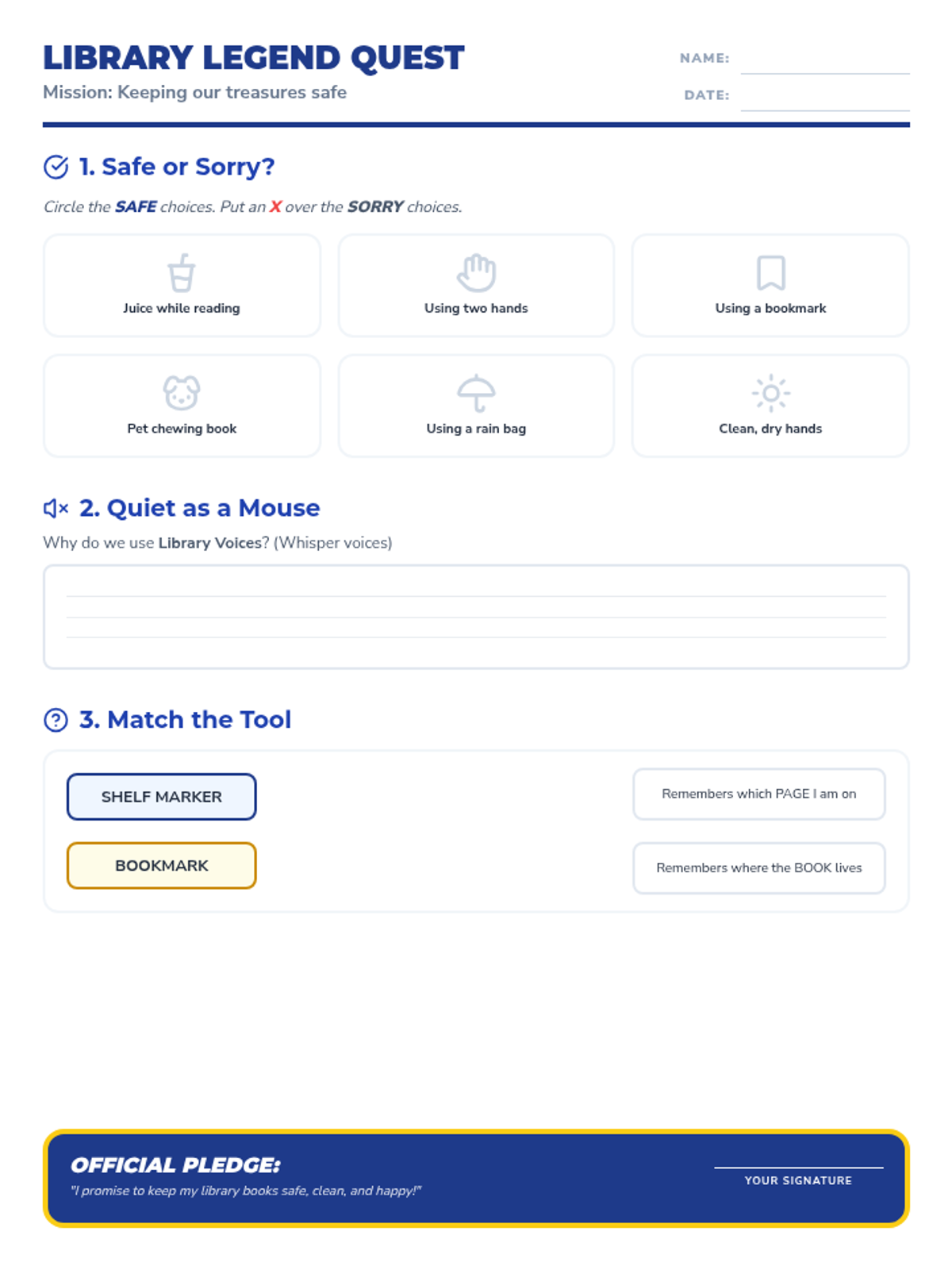
A comprehensive introduction to library navigation for elementary students, focusing on the dual pillars of respectful stewardship (book care and etiquette) and the functional systems of the library (checkout and return). Students progress from learning how to treat books as treasures to mastering the logistical 'loop' of borrowing materials.
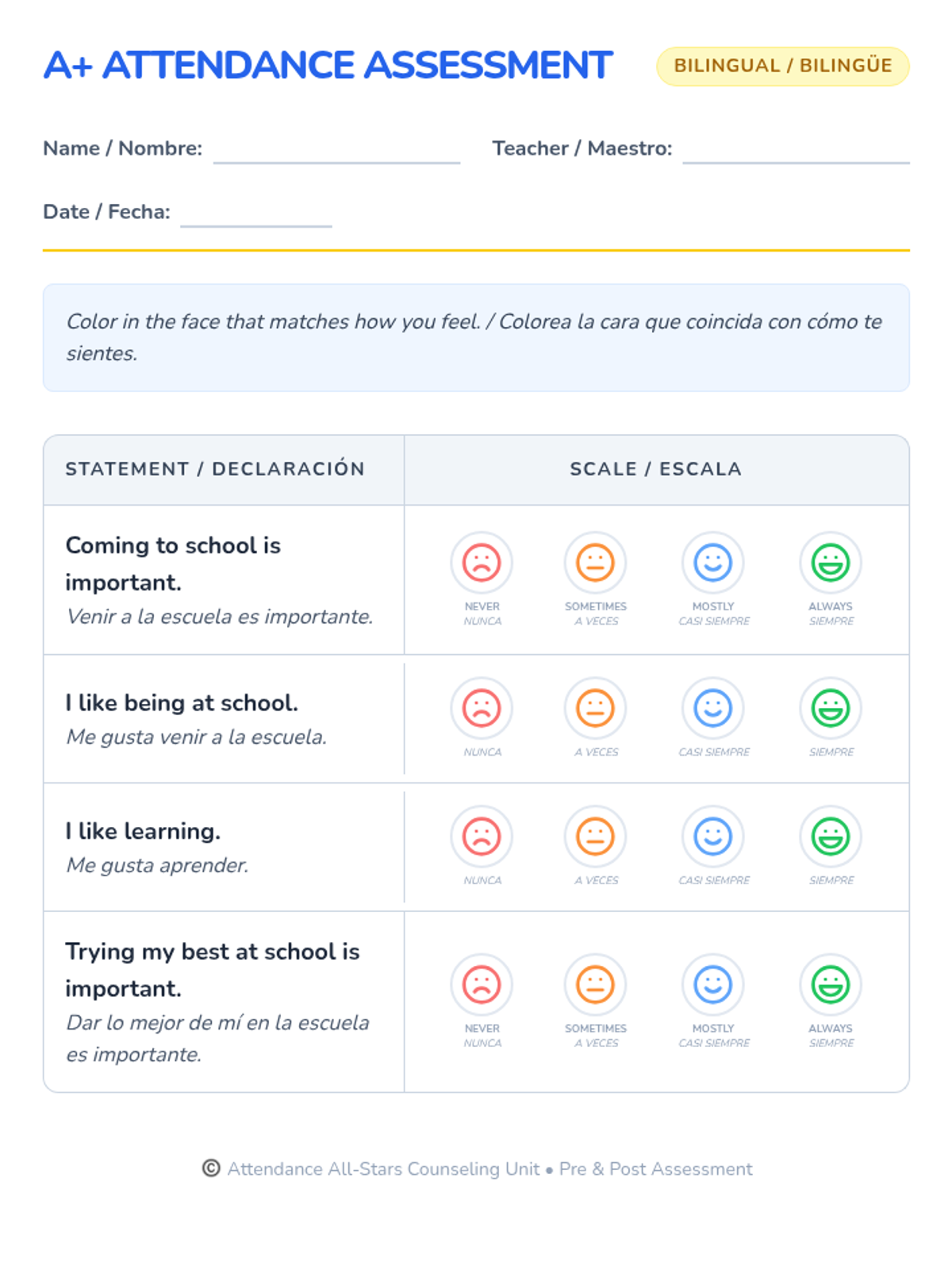
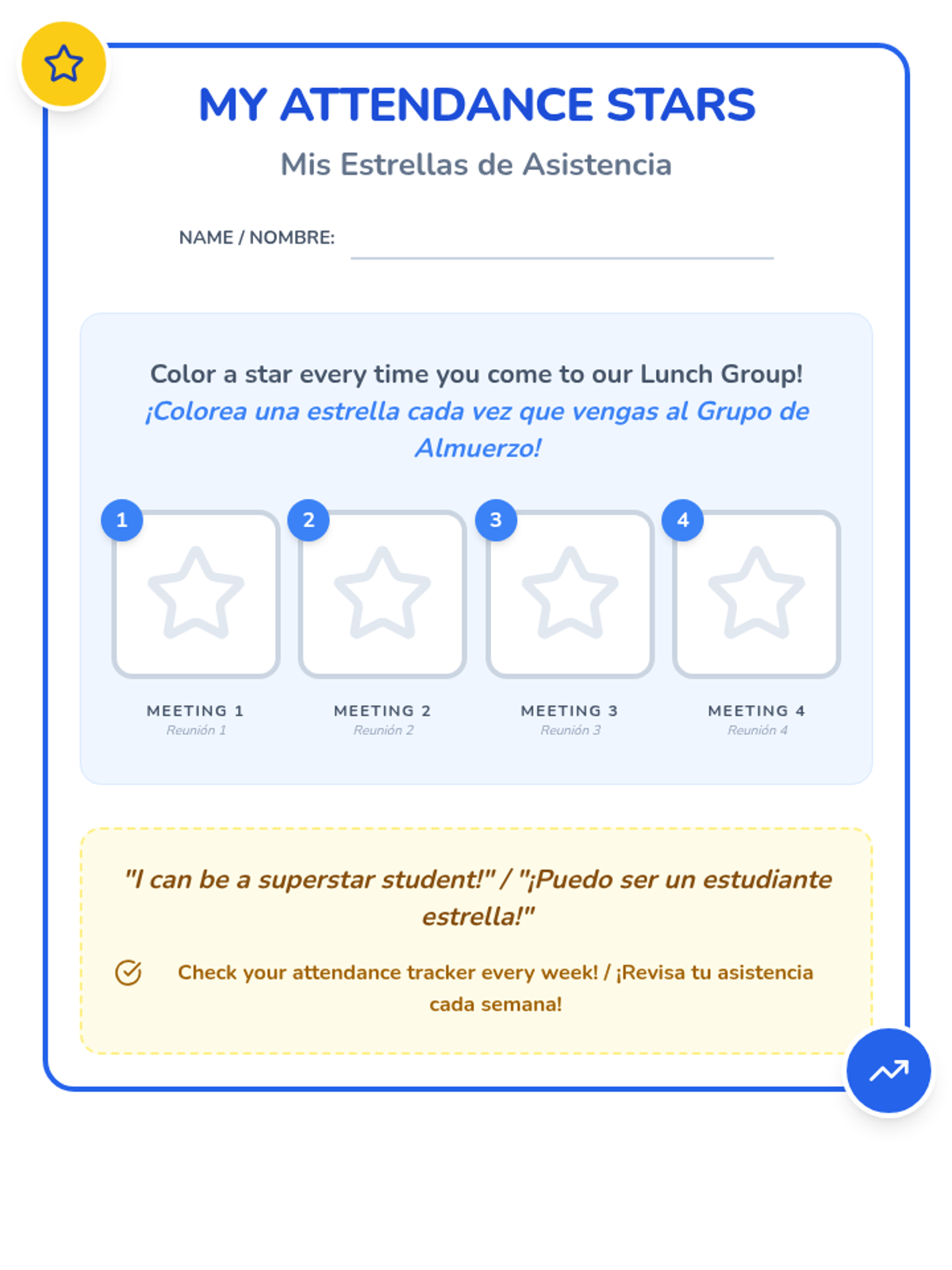
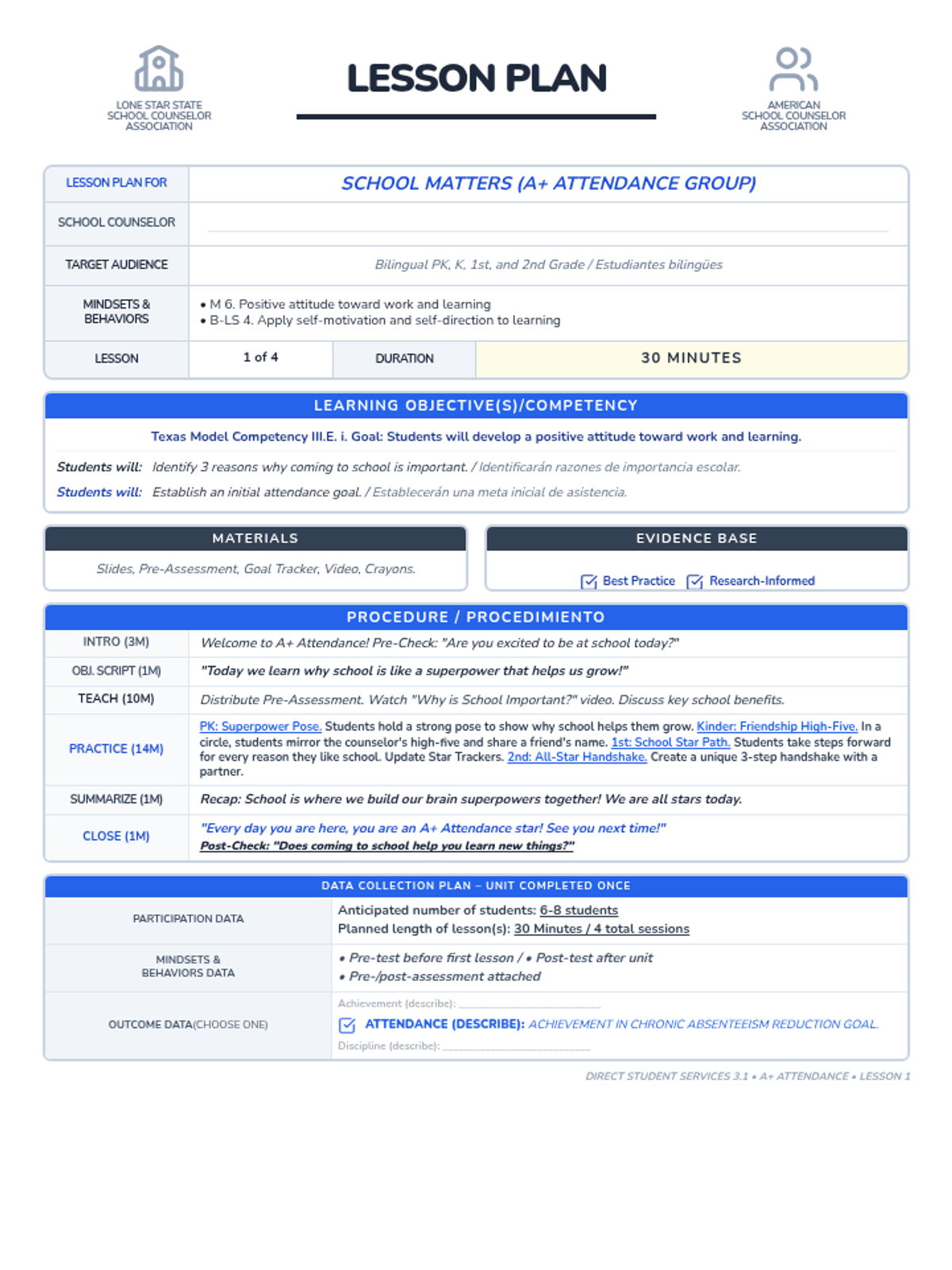
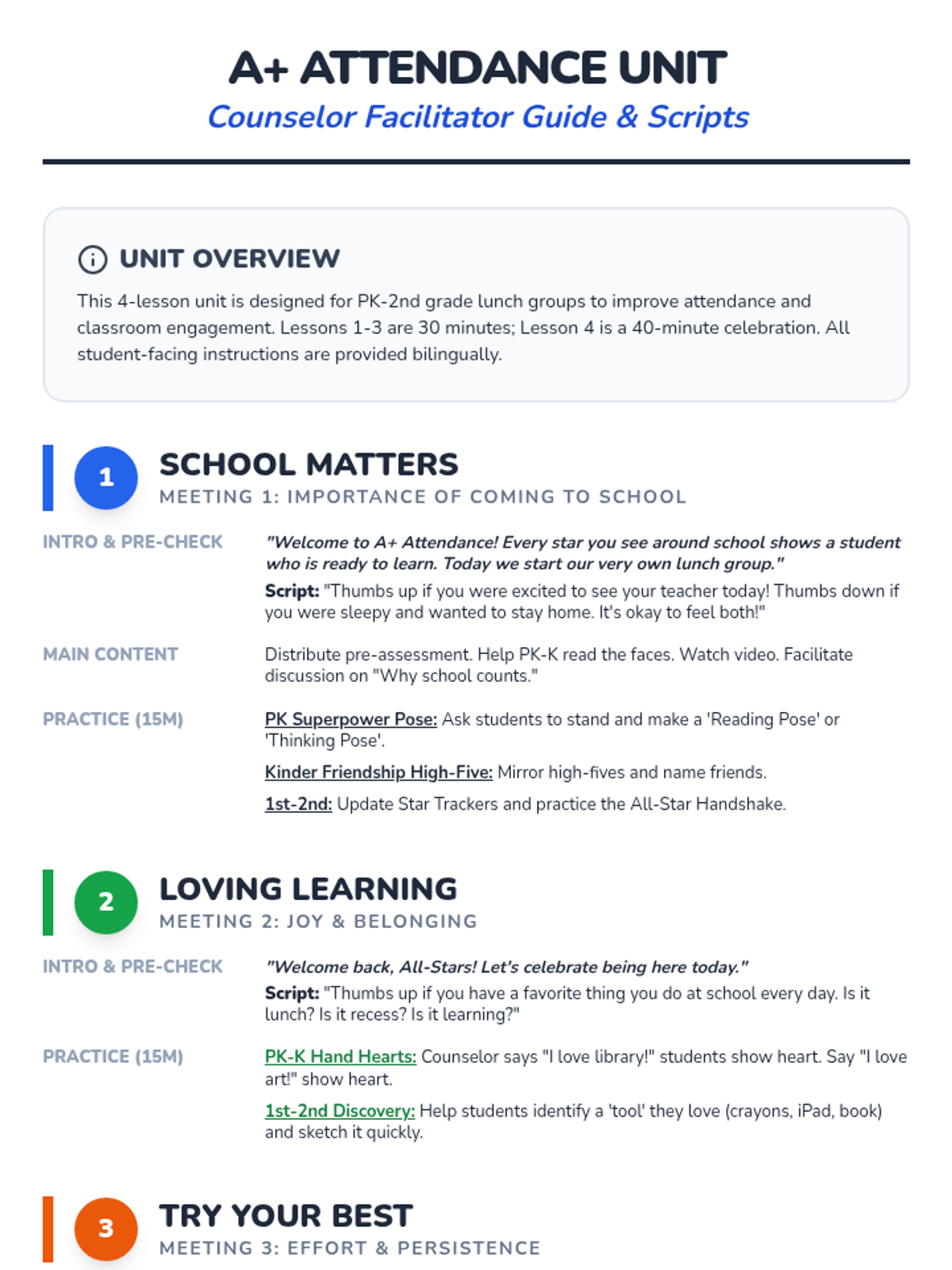
A 4-lesson school counseling unit designed for the 'A+ Attendance' group to improve student attendance and attitudes toward learning for PK-2nd grade students. The program uses a bilingual (English/Spanish) approach and a 'Lunch Group' format to build positive school connections.
A social-emotional learning unit focusing on classroom behavior, conflict resolution, and making positive choices for primary students.
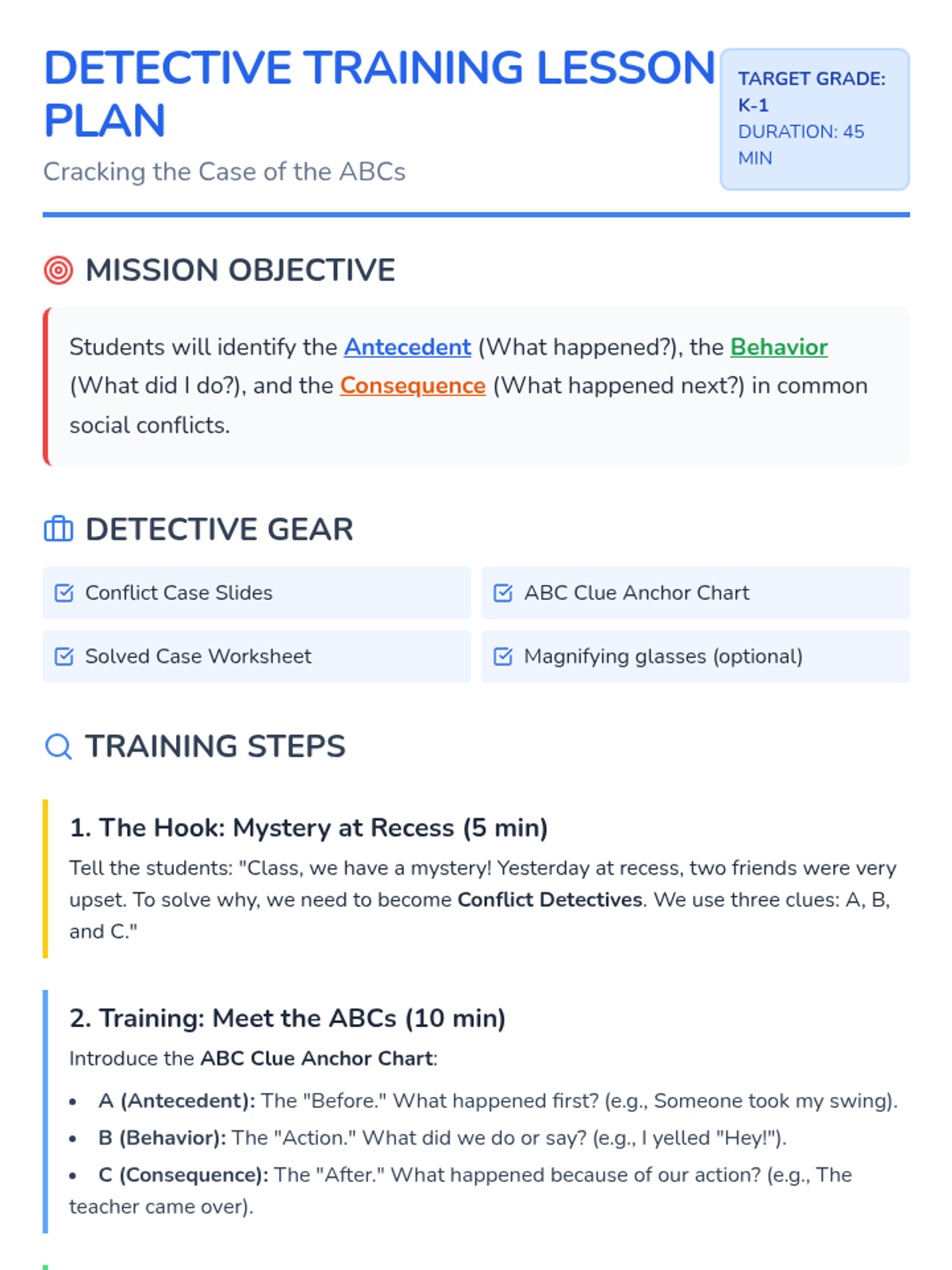
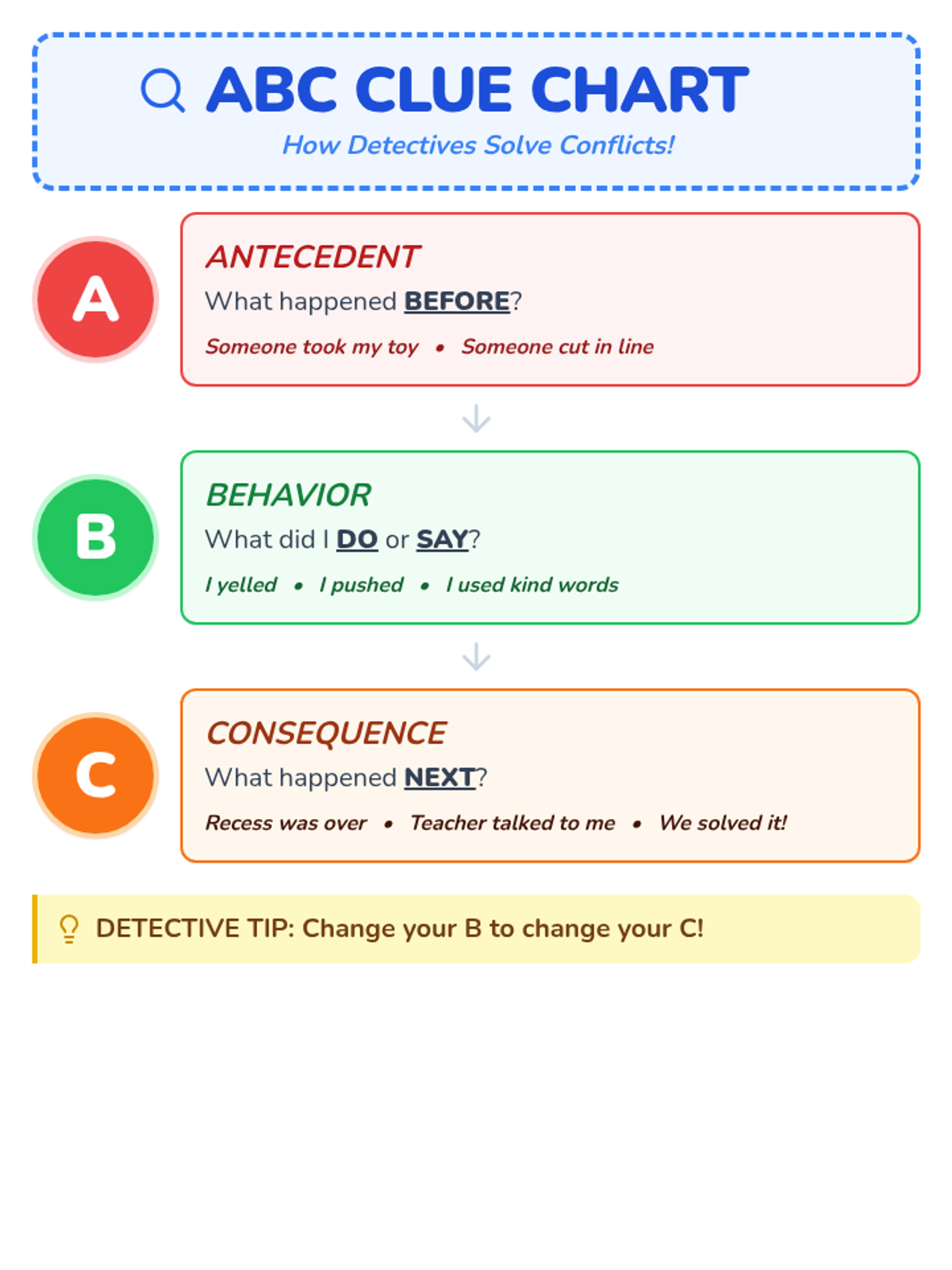
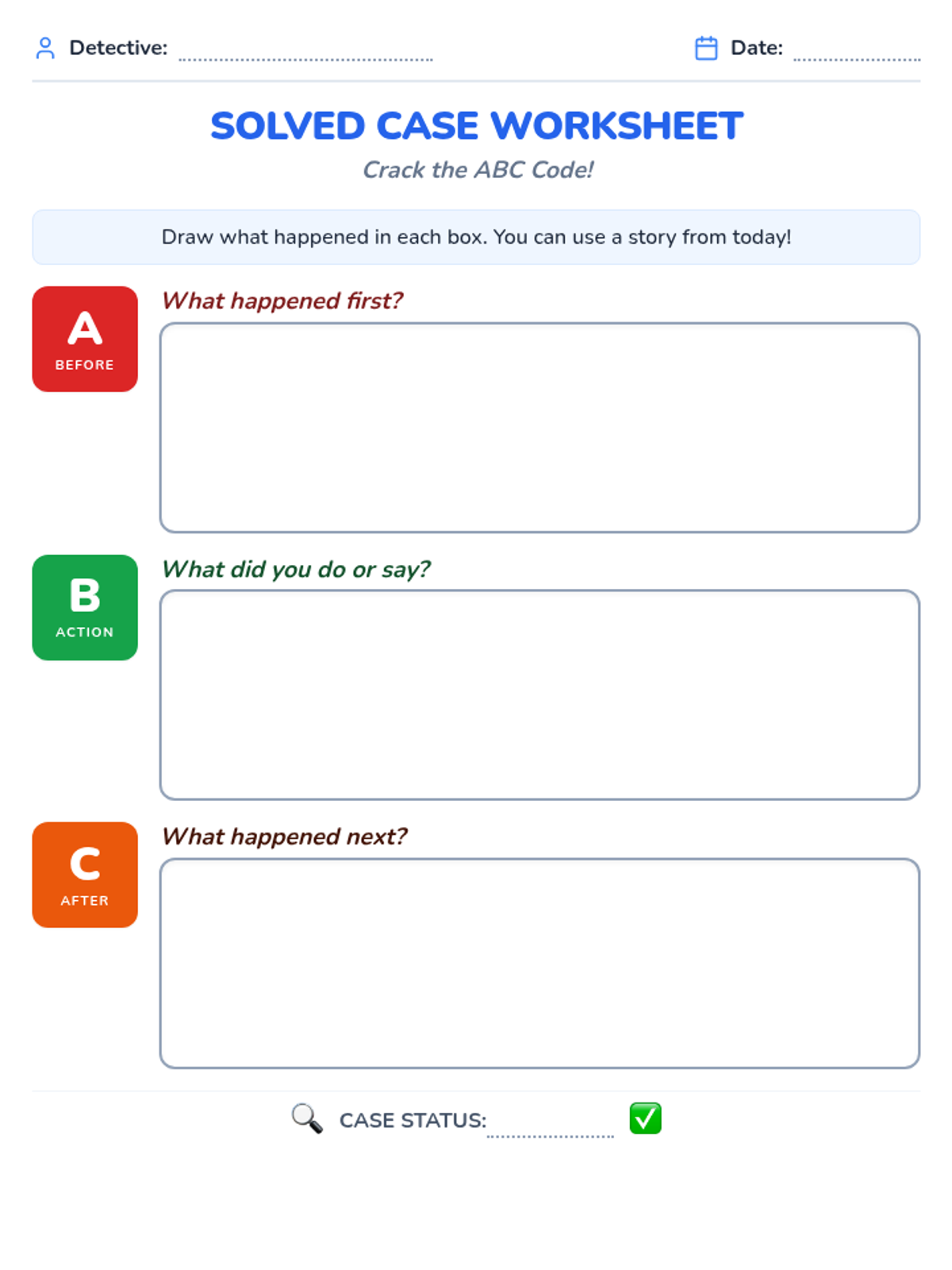
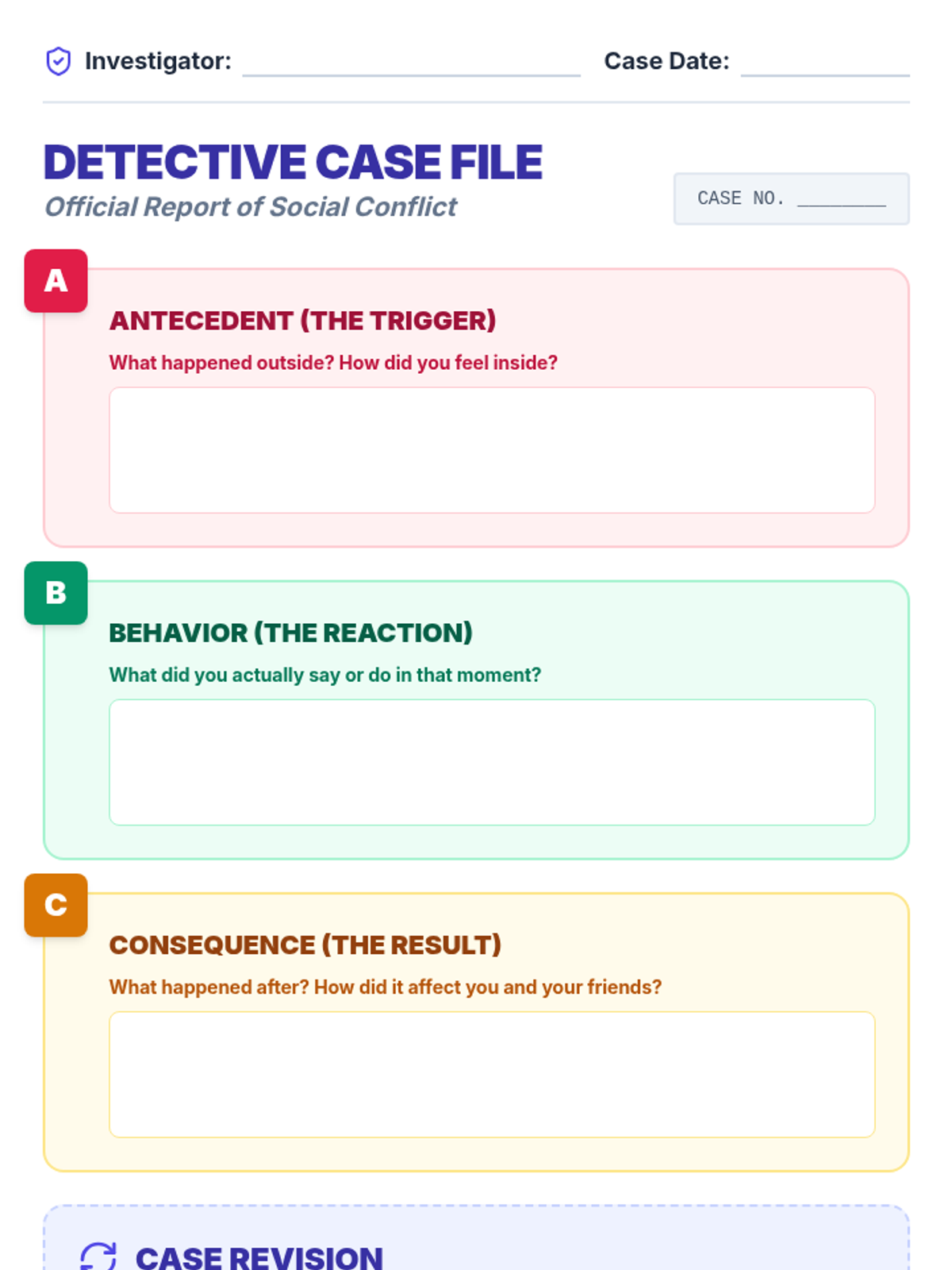
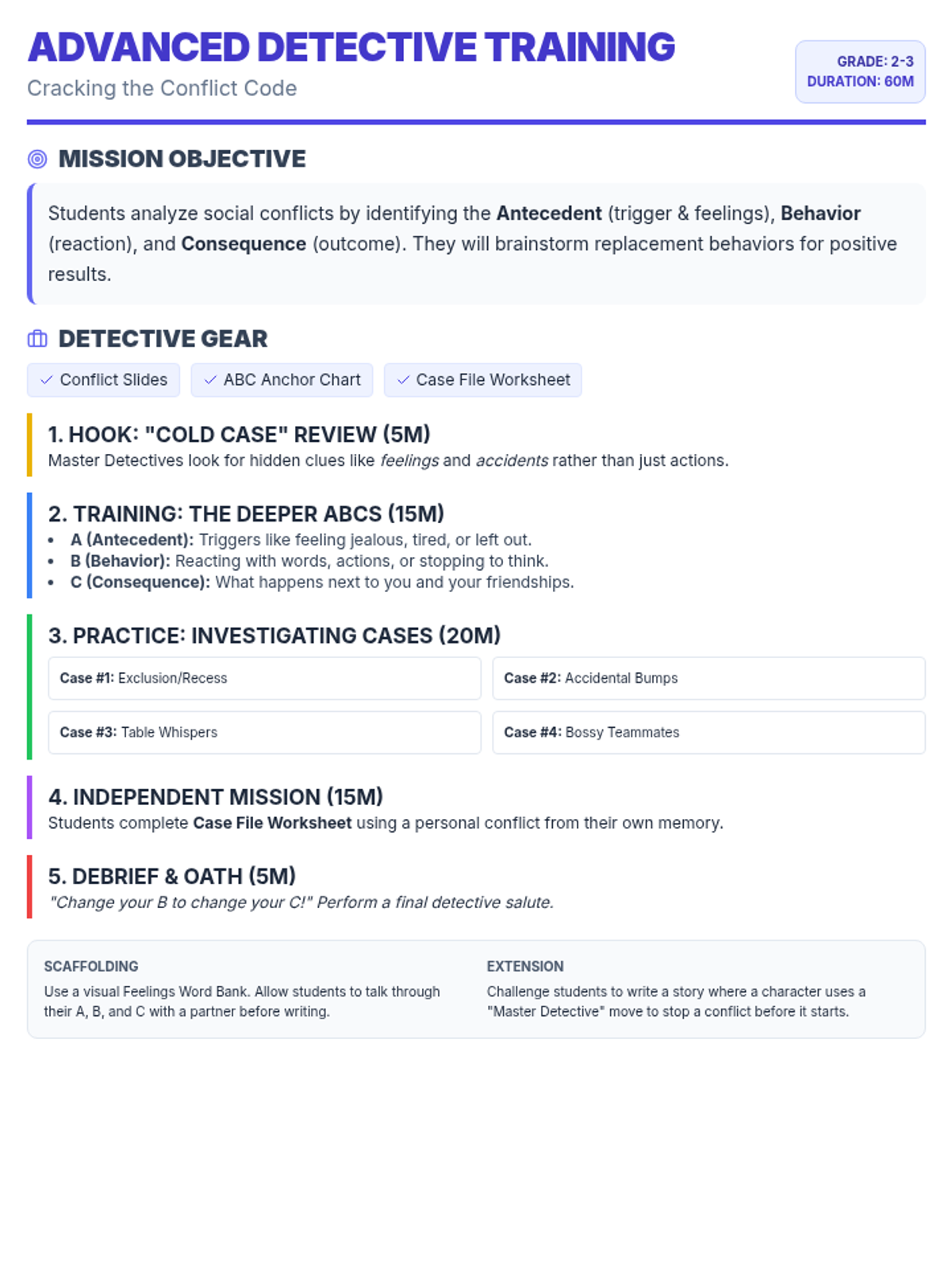
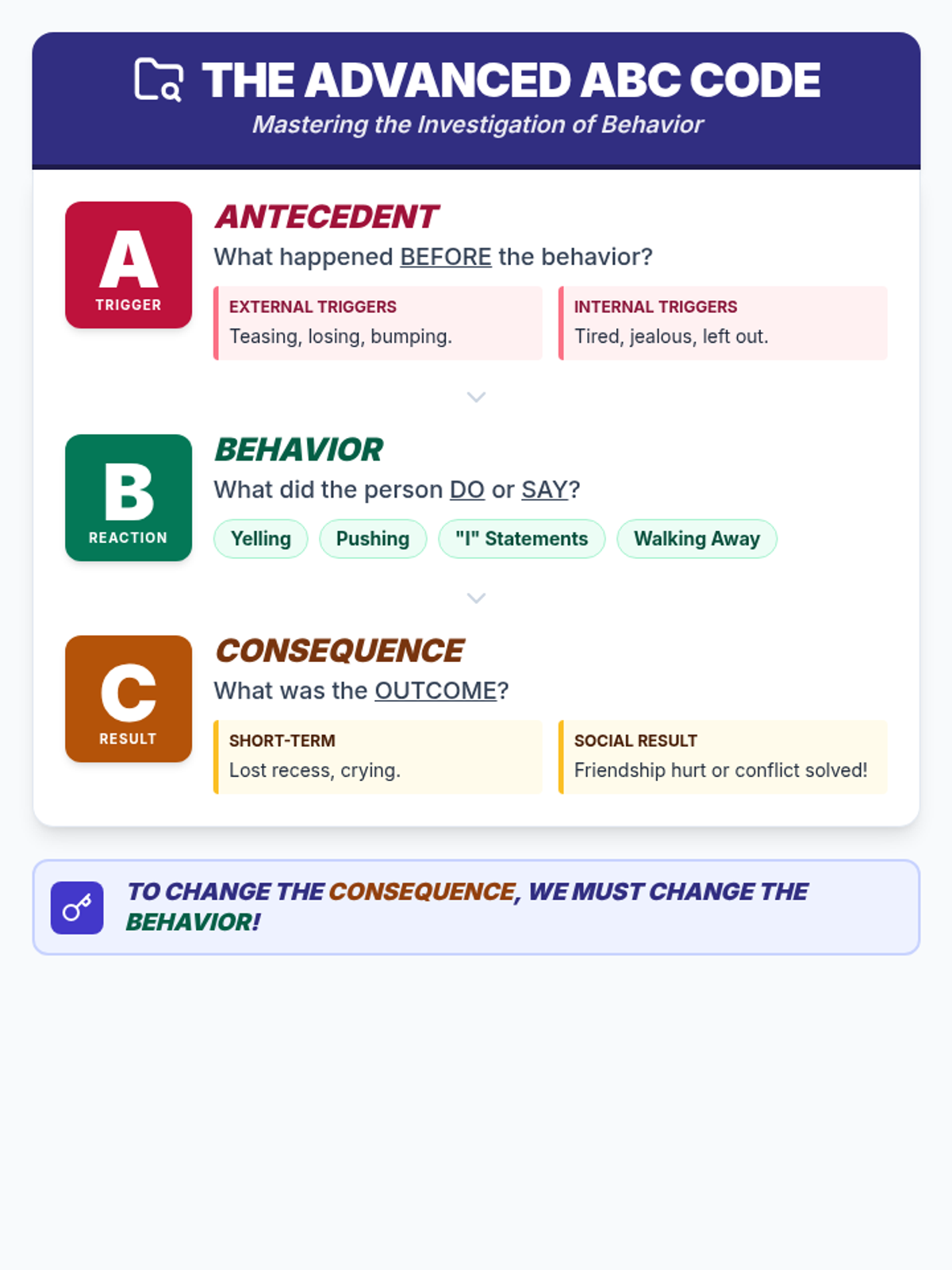
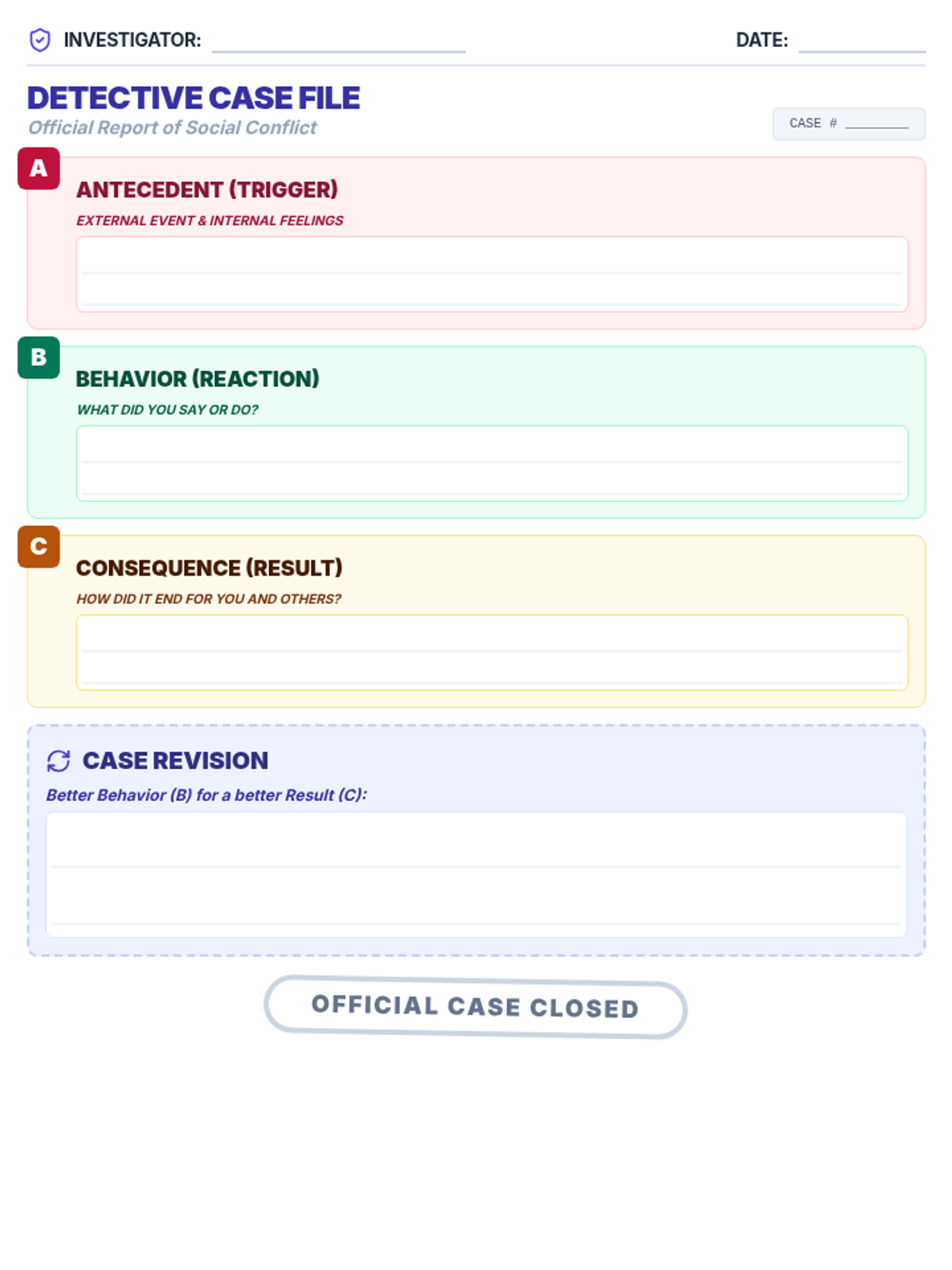
A comprehensive social-emotional learning sequence for elementary students (K-4) focusing on conflict resolution through the ABC model (Antecedent, Behavior, Consequence). Students learn to identify triggers, analyze their own behaviors, and work towards positive social outcomes.
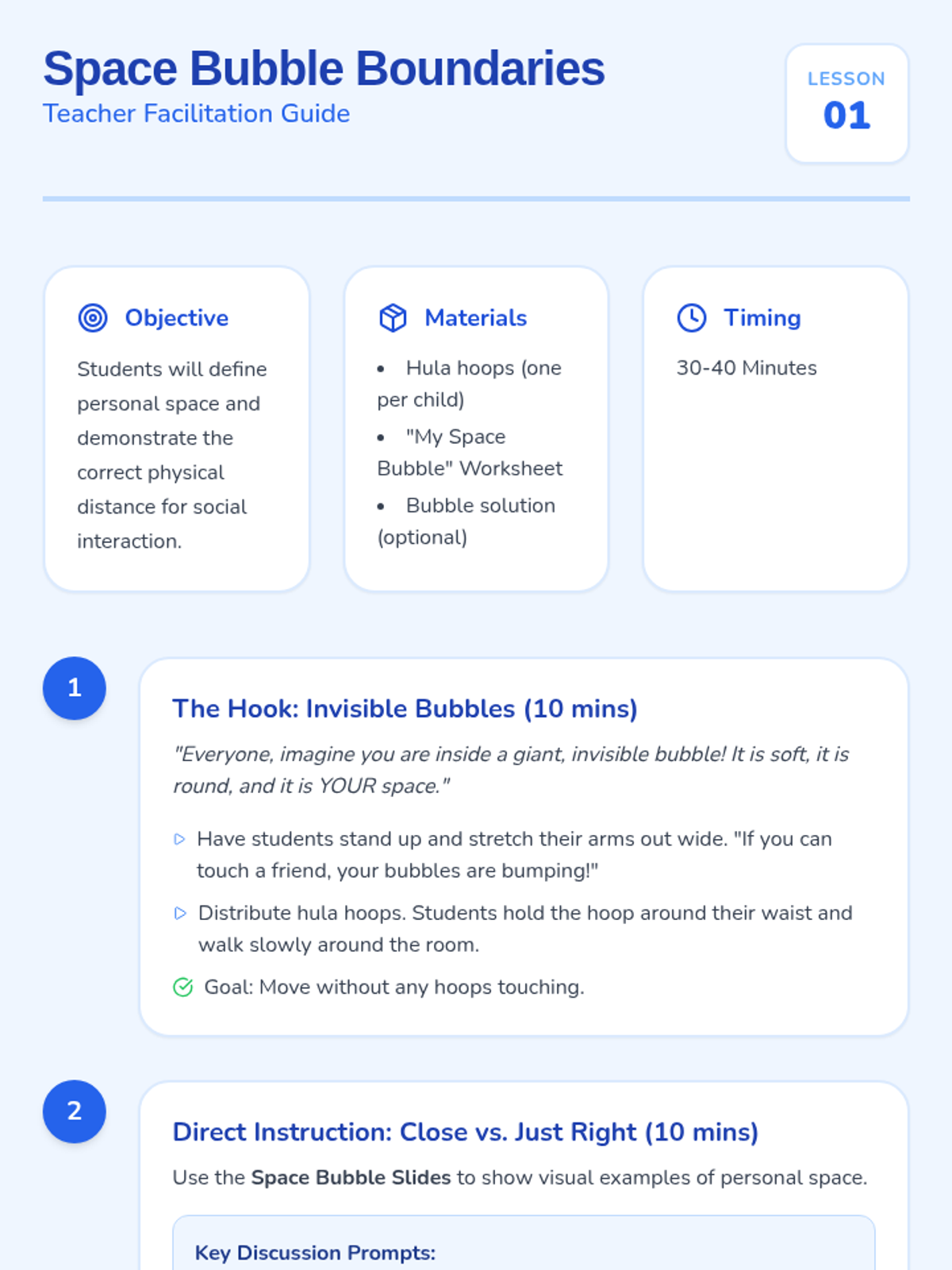
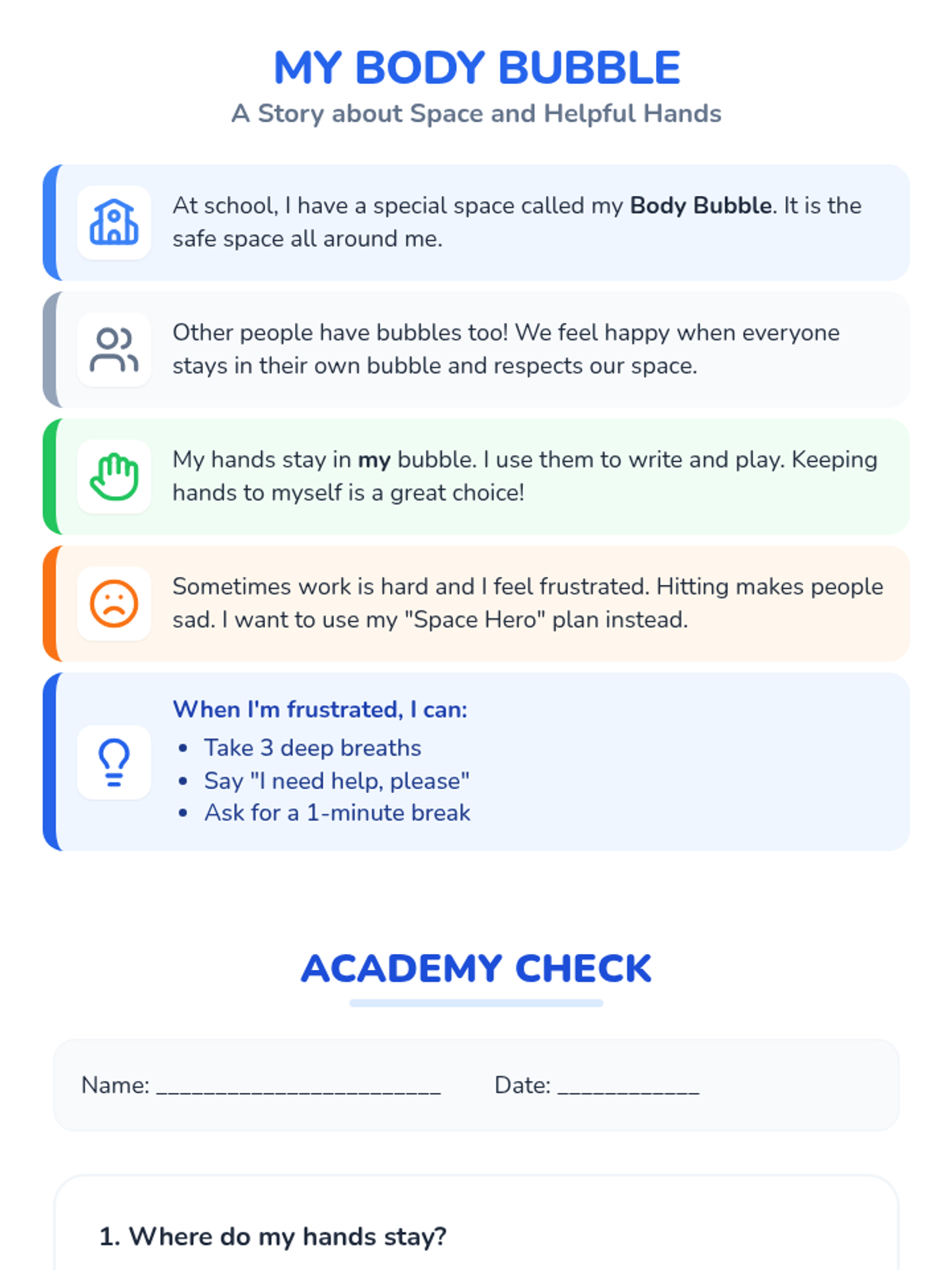
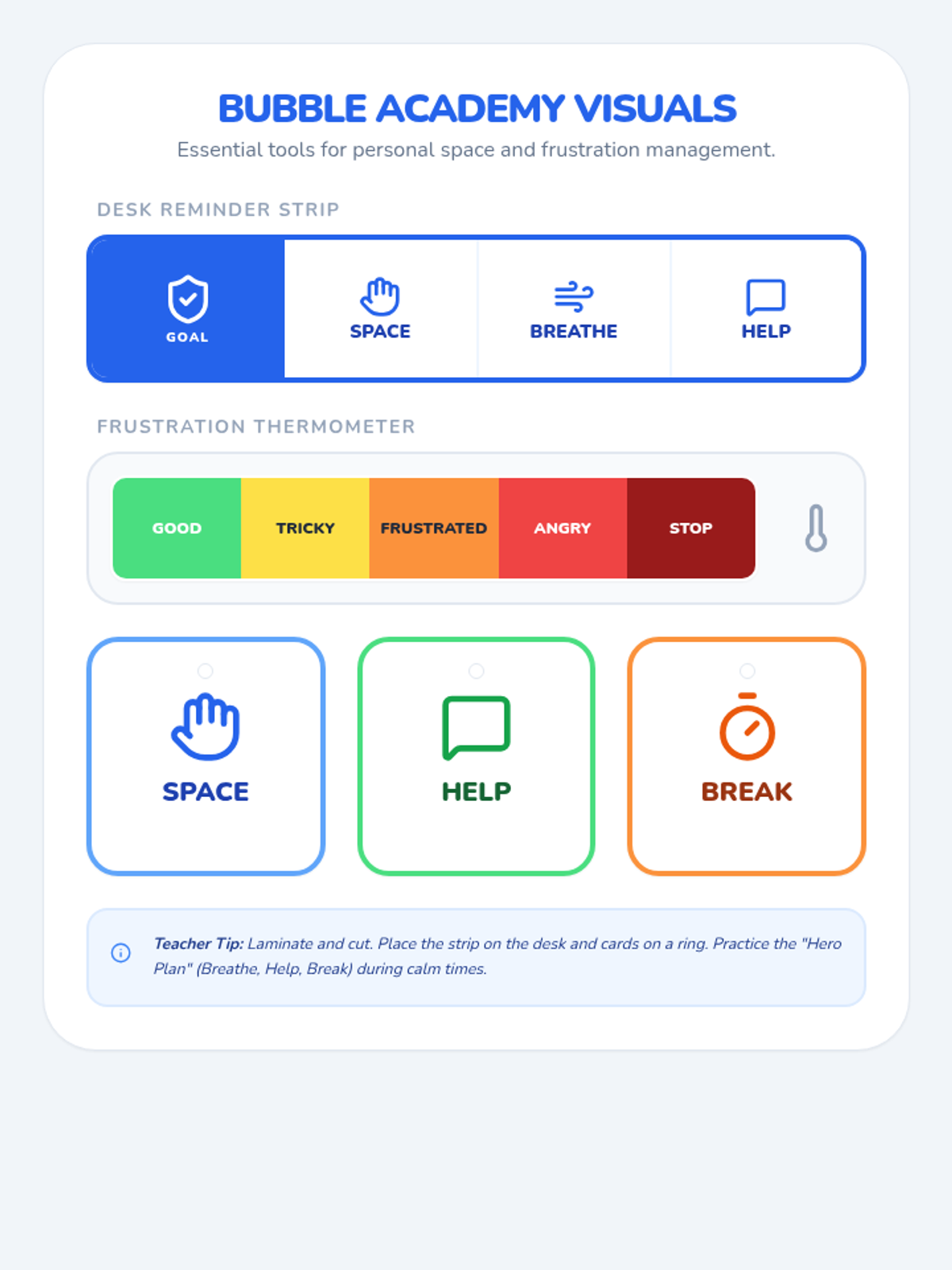
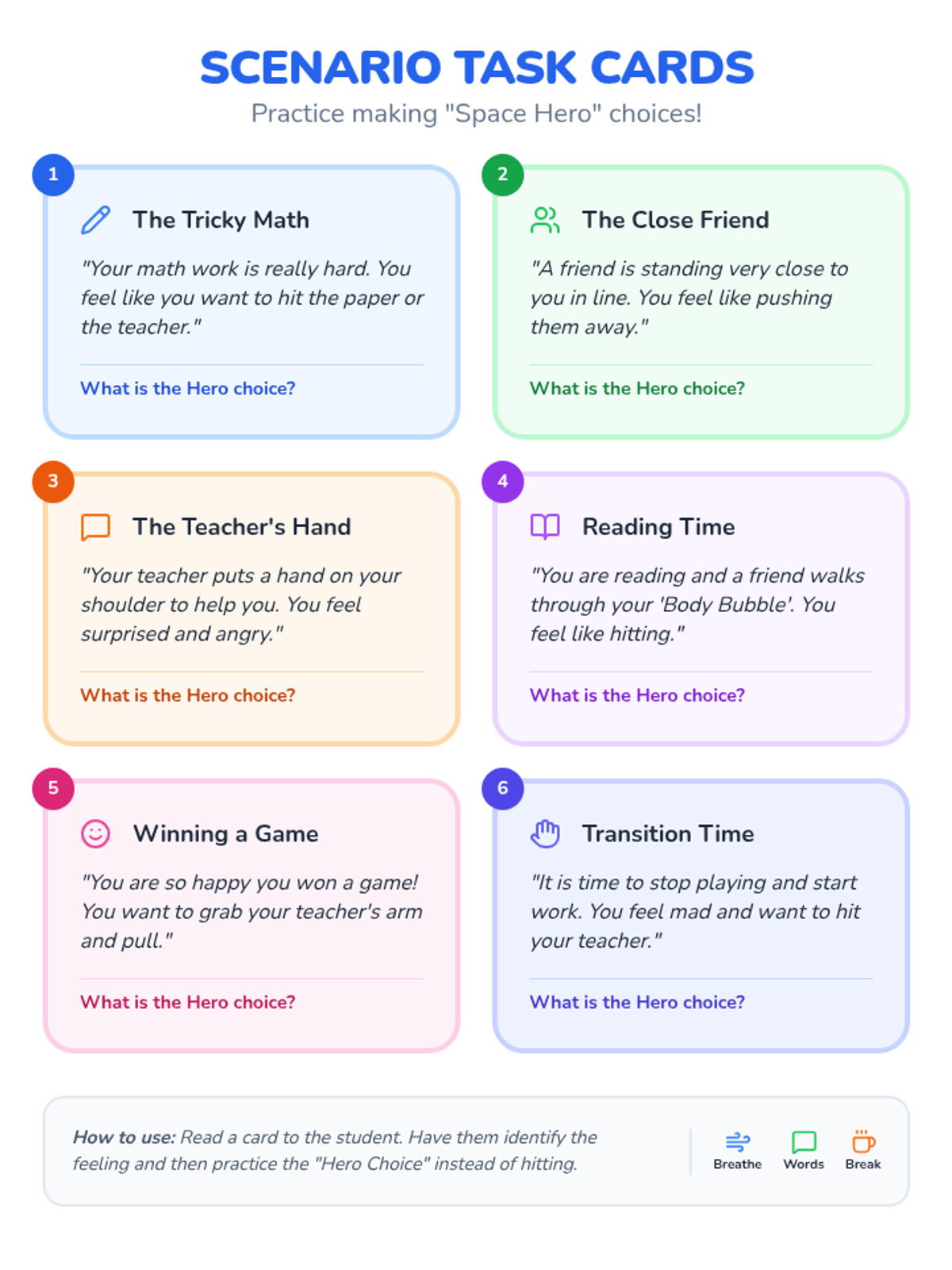
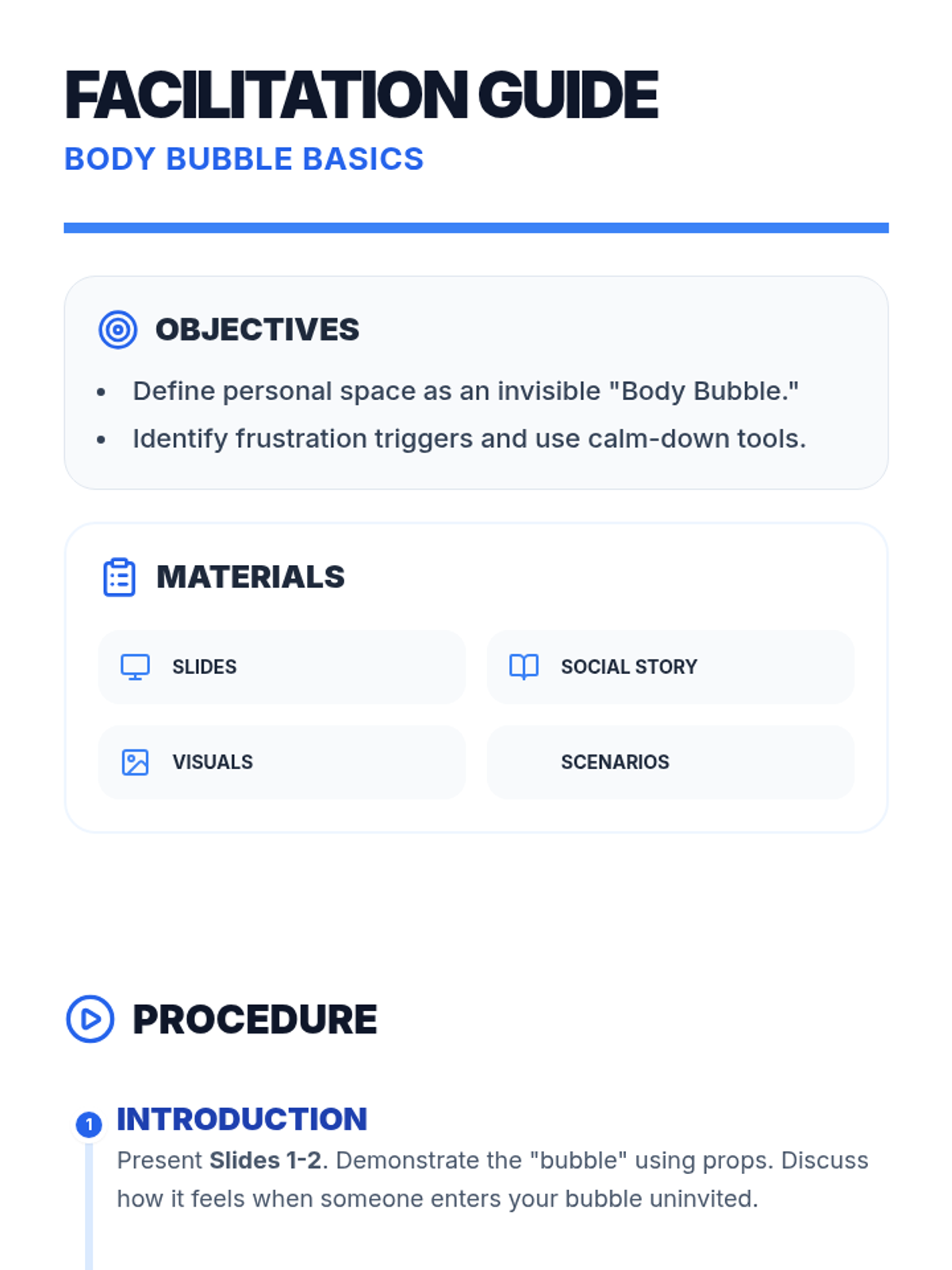
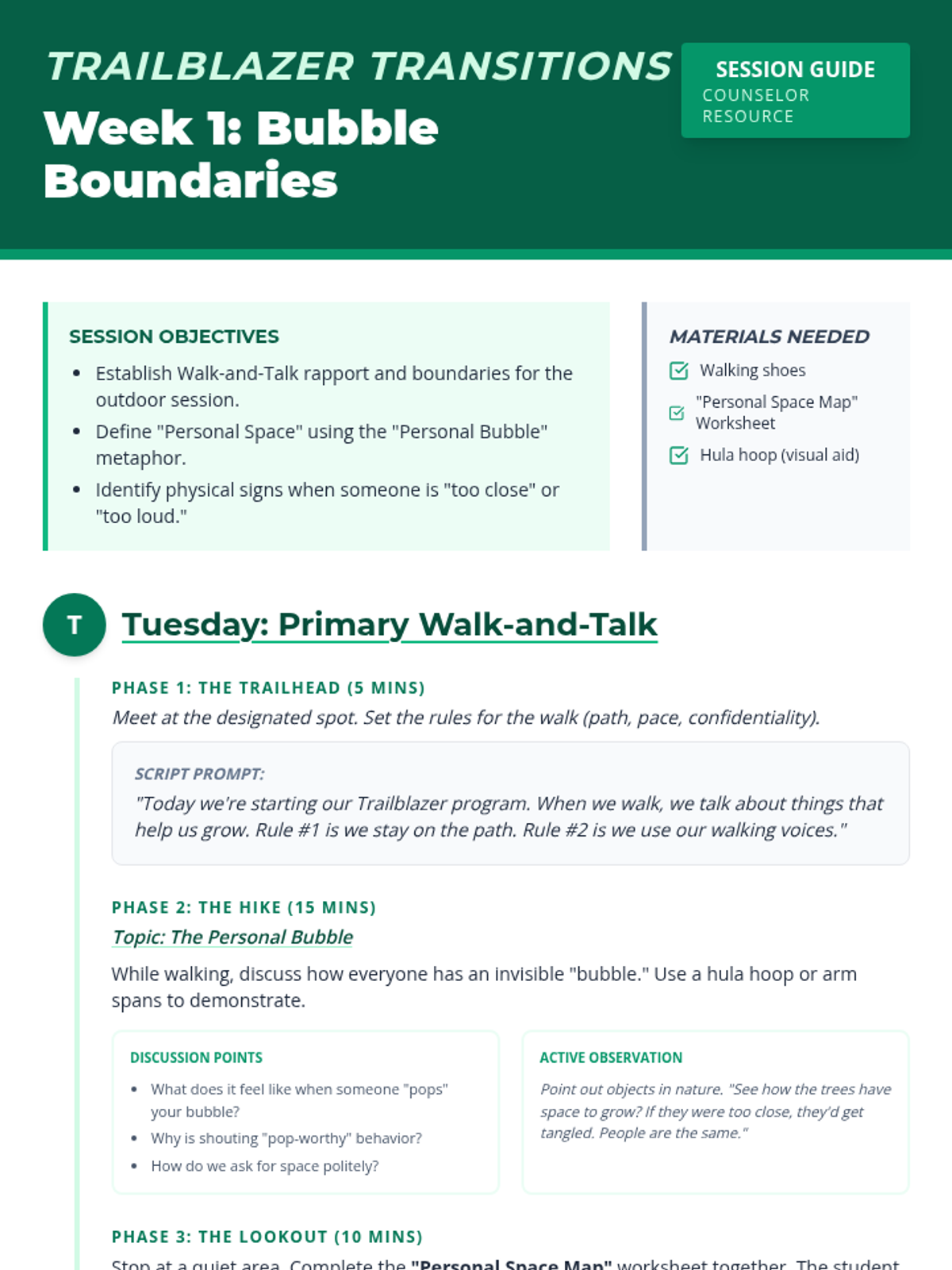
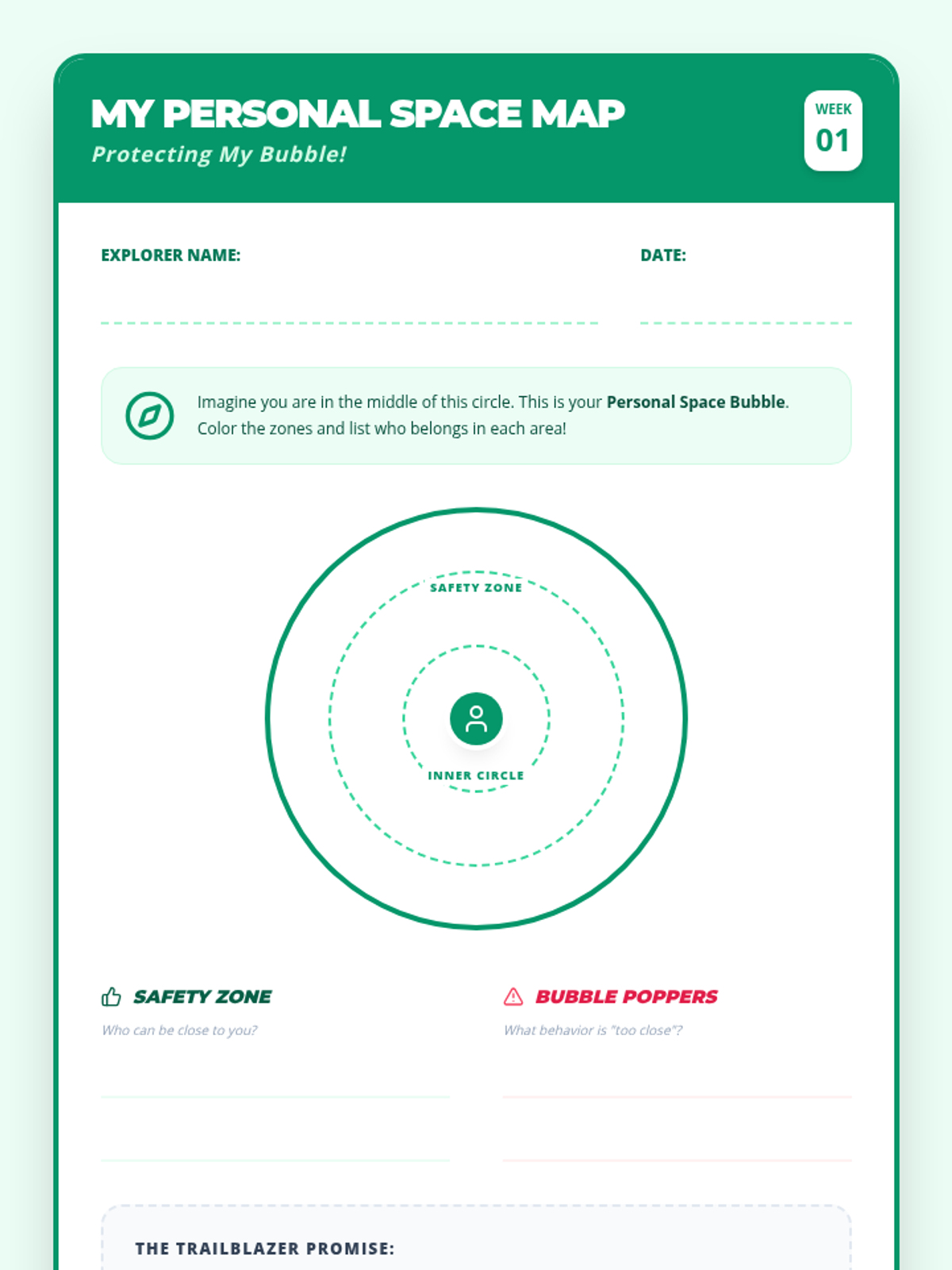
A comprehensive training program for early elementary students to learn personal space boundaries and healthy ways to manage frustration, specifically focusing on keeping hands to self.
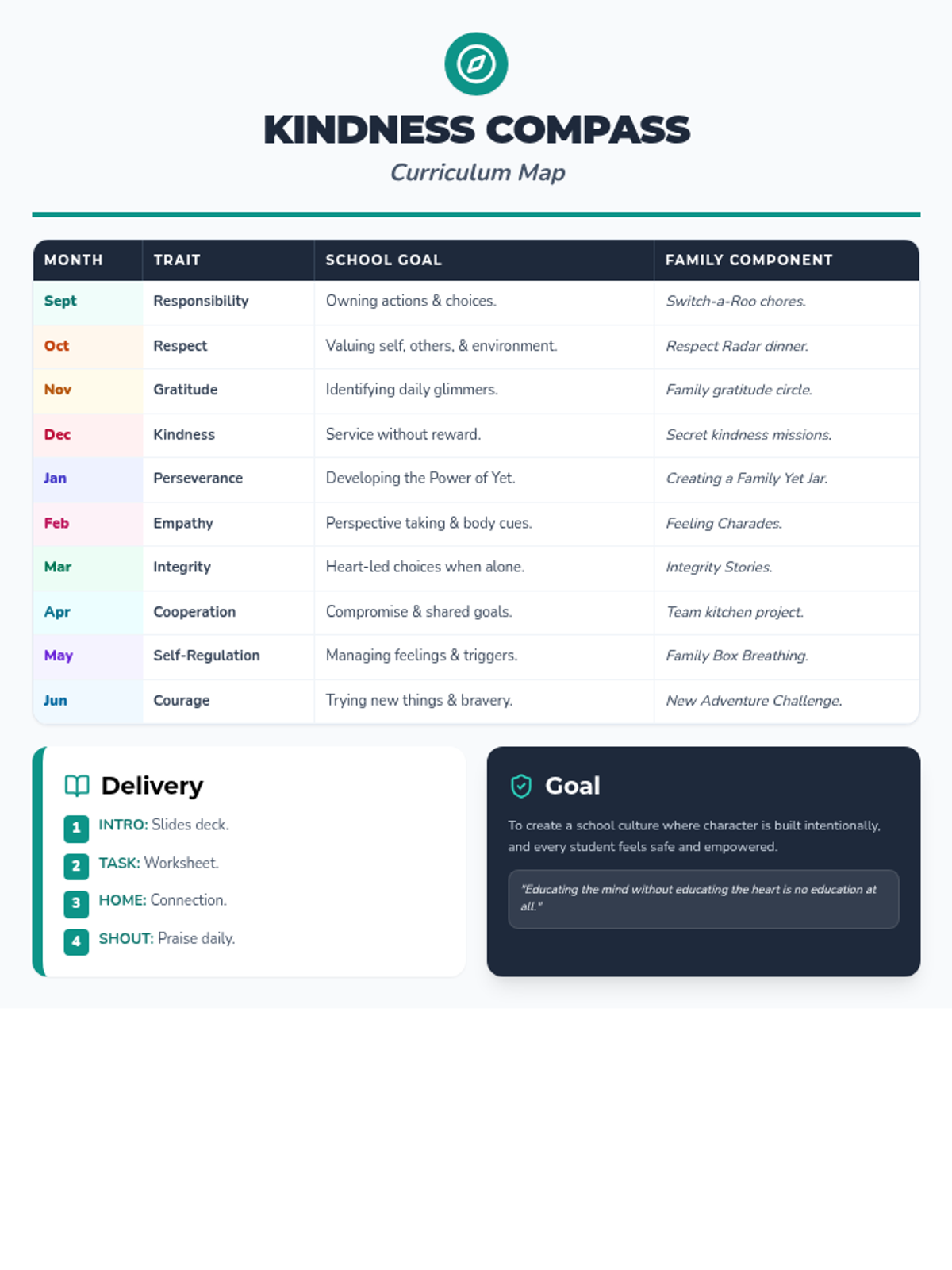
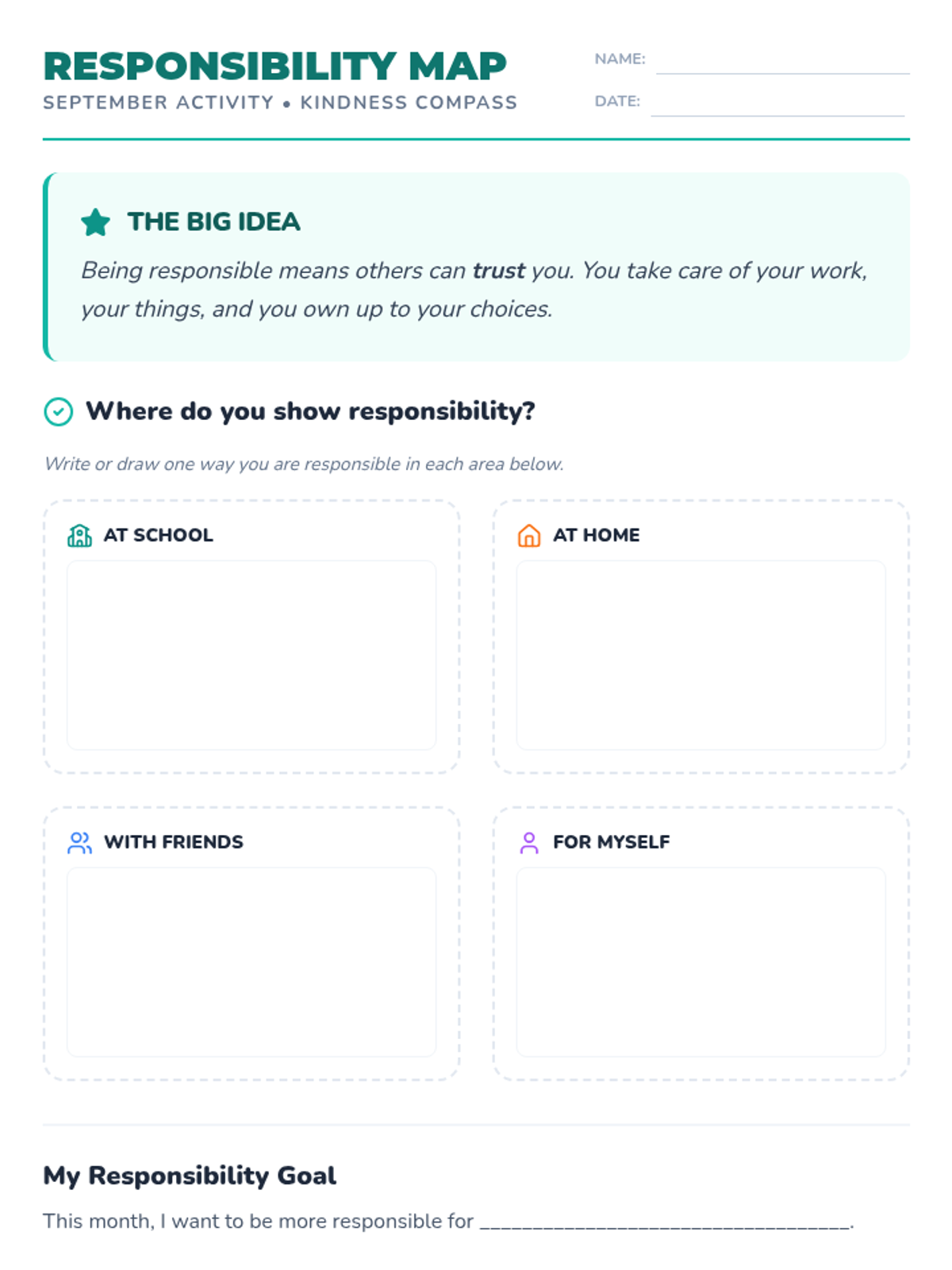
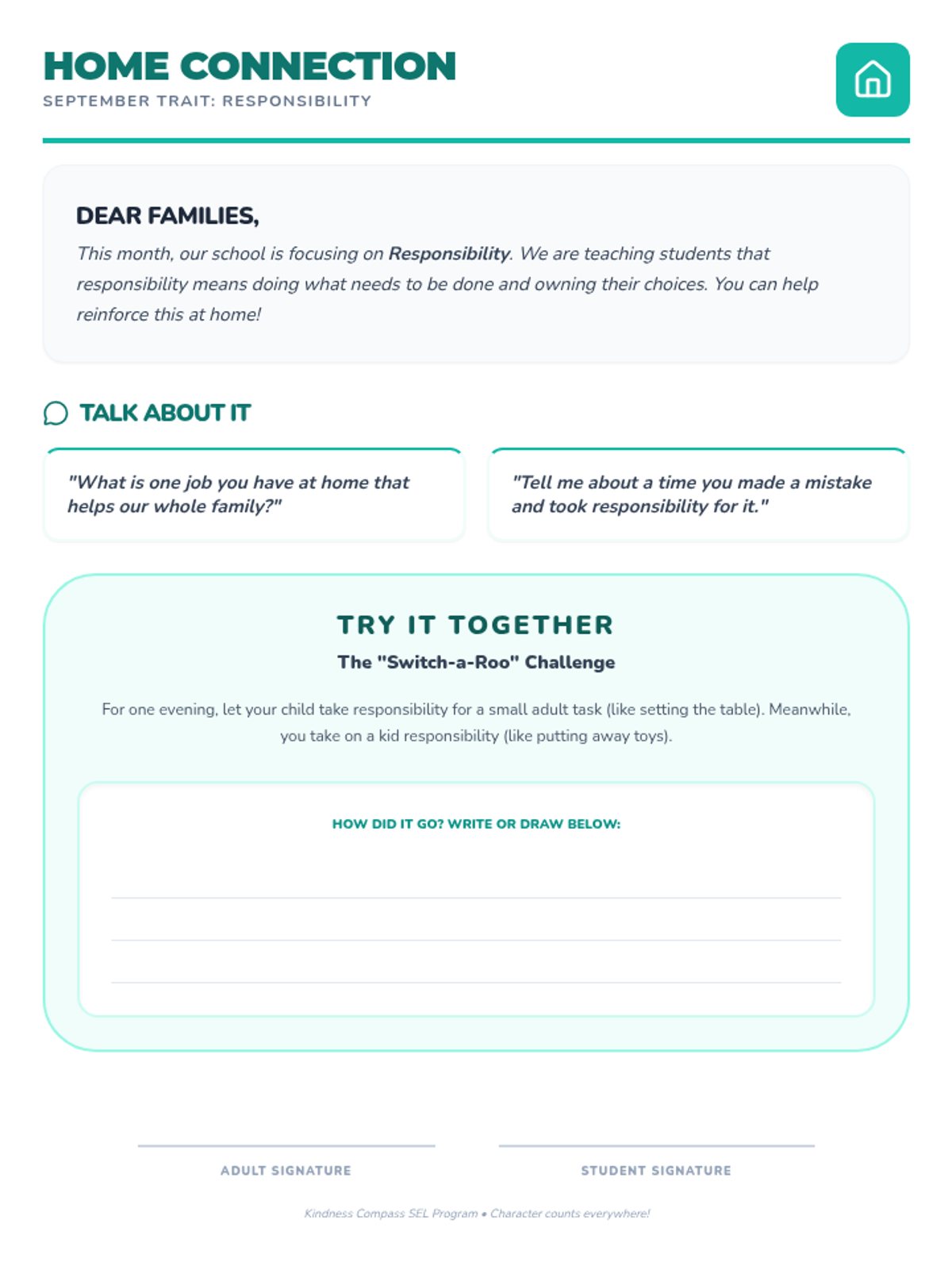
A comprehensive character education program for Pre-K through 5th grade, featuring monthly social-emotional traits, interactive slides, and student-facing activities designed to build a positive school culture.
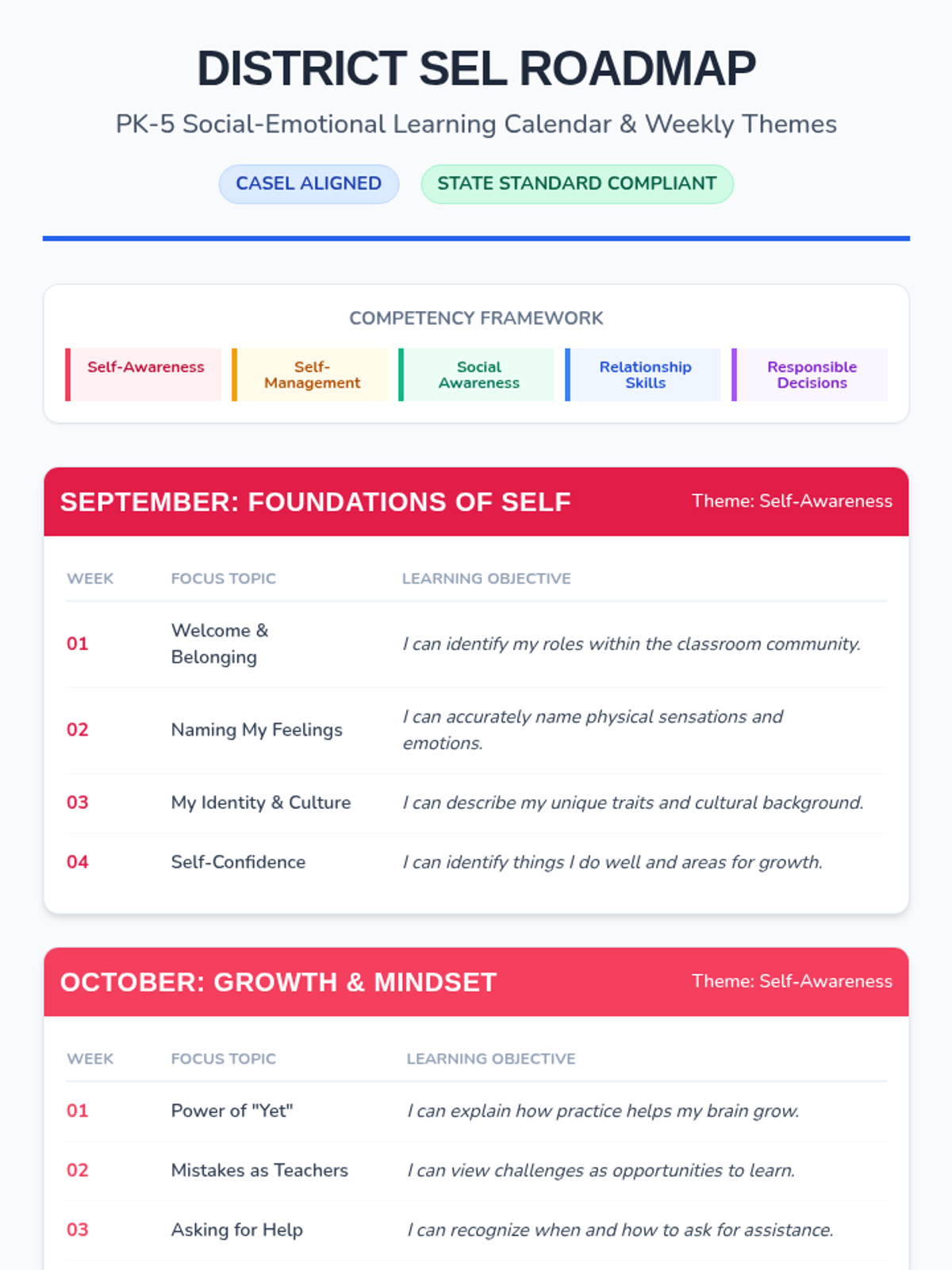
A comprehensive social-emotional learning framework for a school district, aligning CASEL competencies with a year-long monthly calendar and implementation tools for PK-5 educators.
A comprehensive K-5 sequence focused on device responsibility and digital citizenship, centered on the JHawk Way of being Responsible. Lessons cover transitioning from devices as tools (K-1) to managing online distractions and maintaining integrity (4-5).
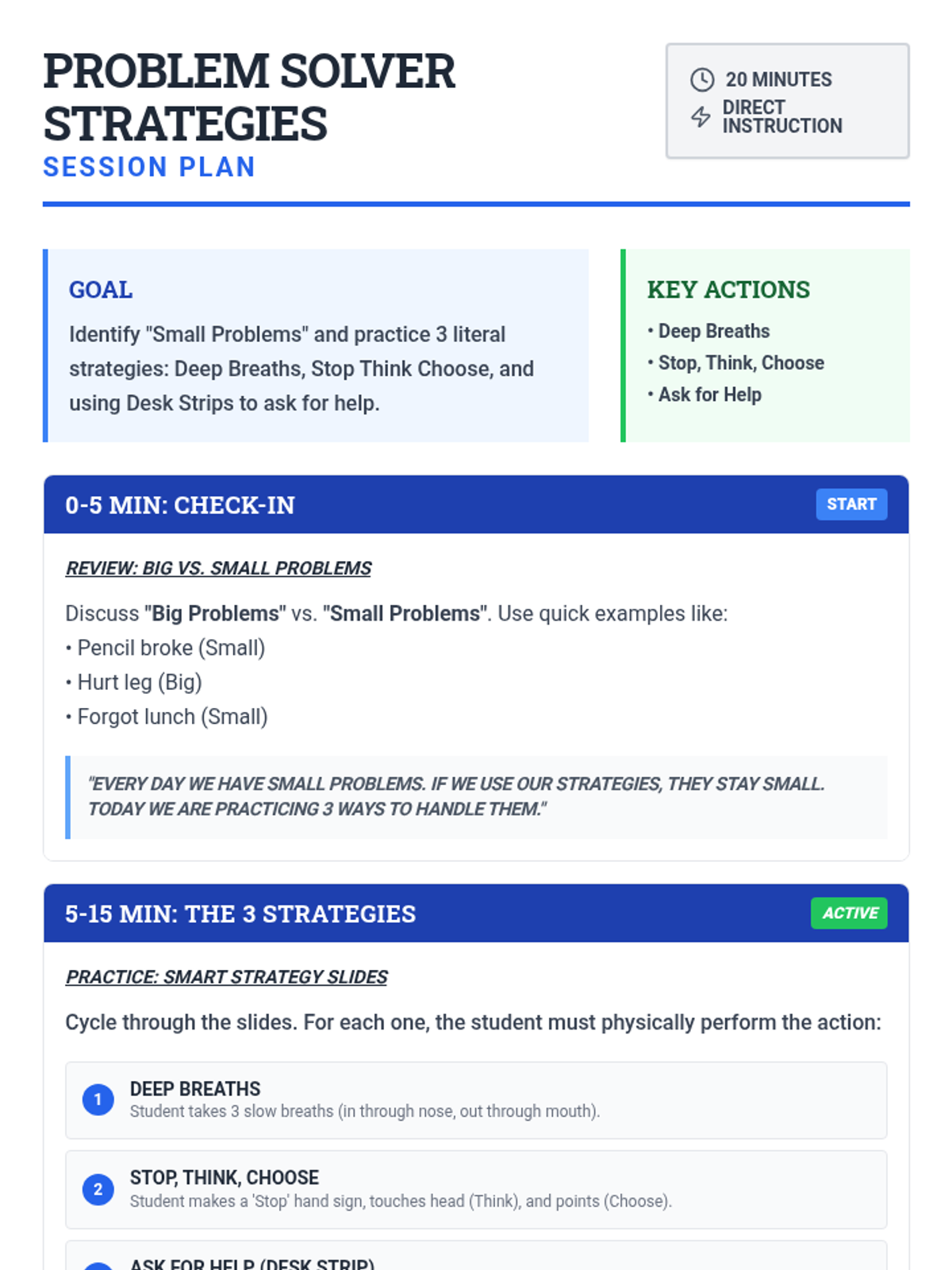
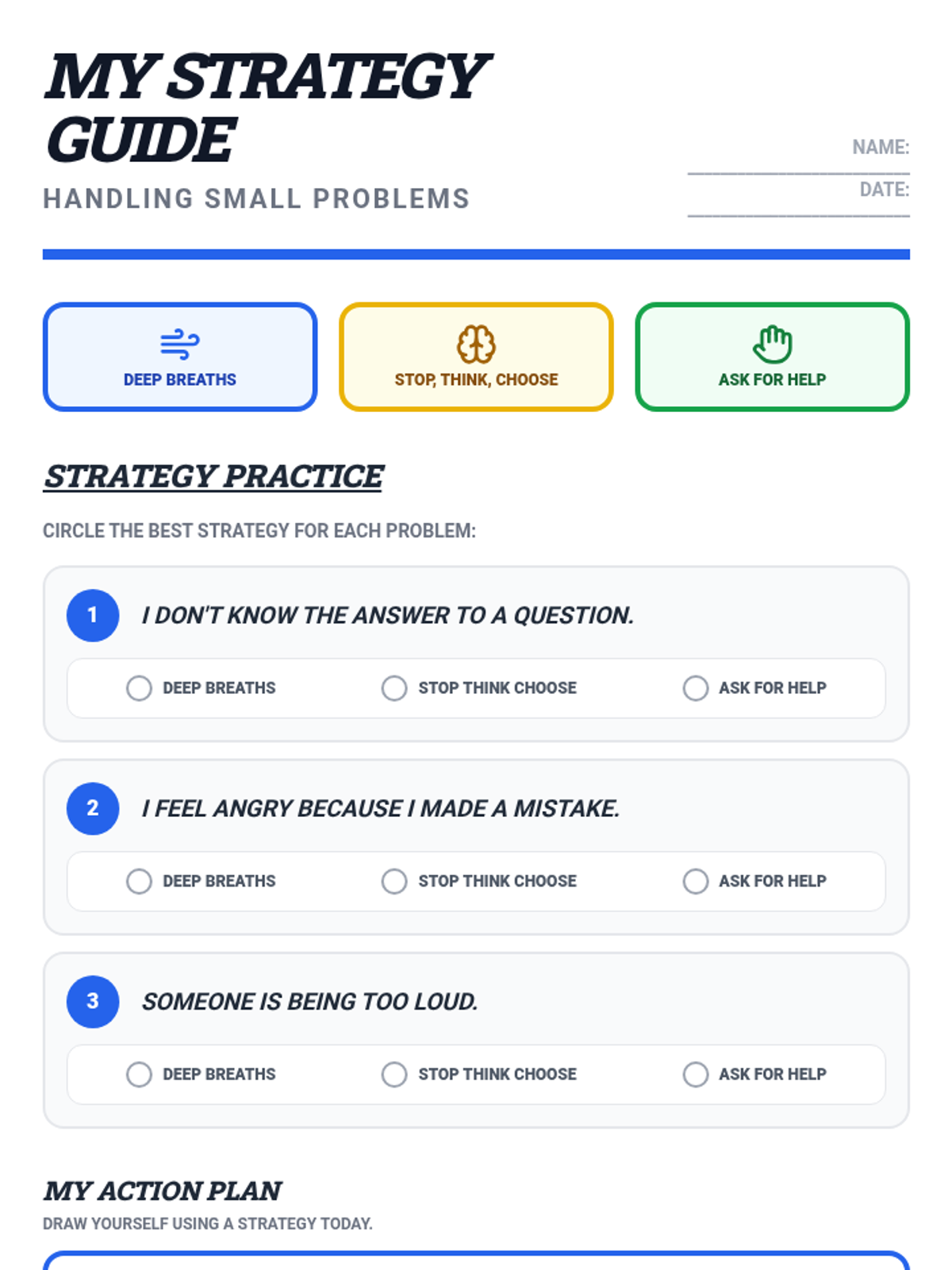
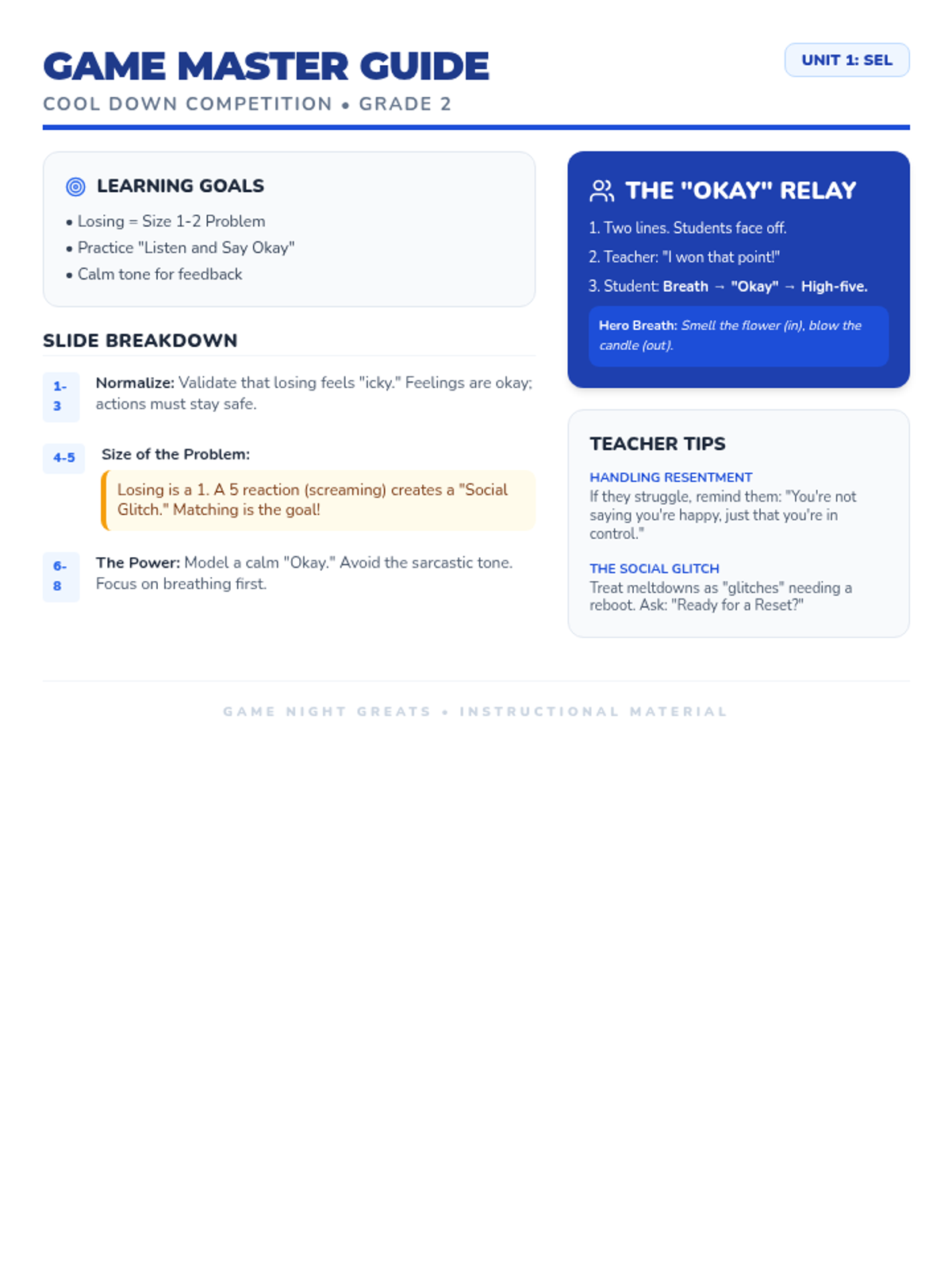
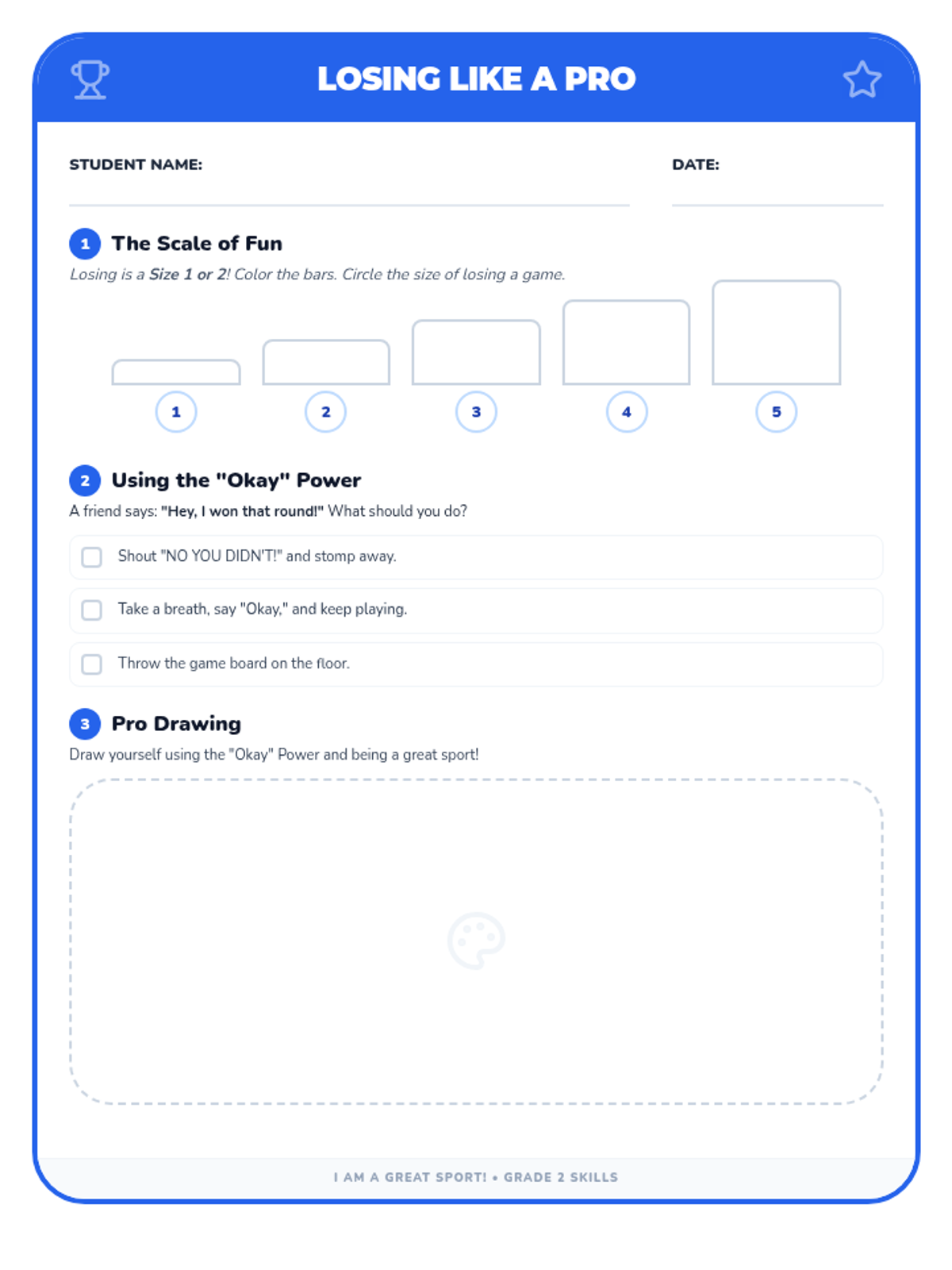
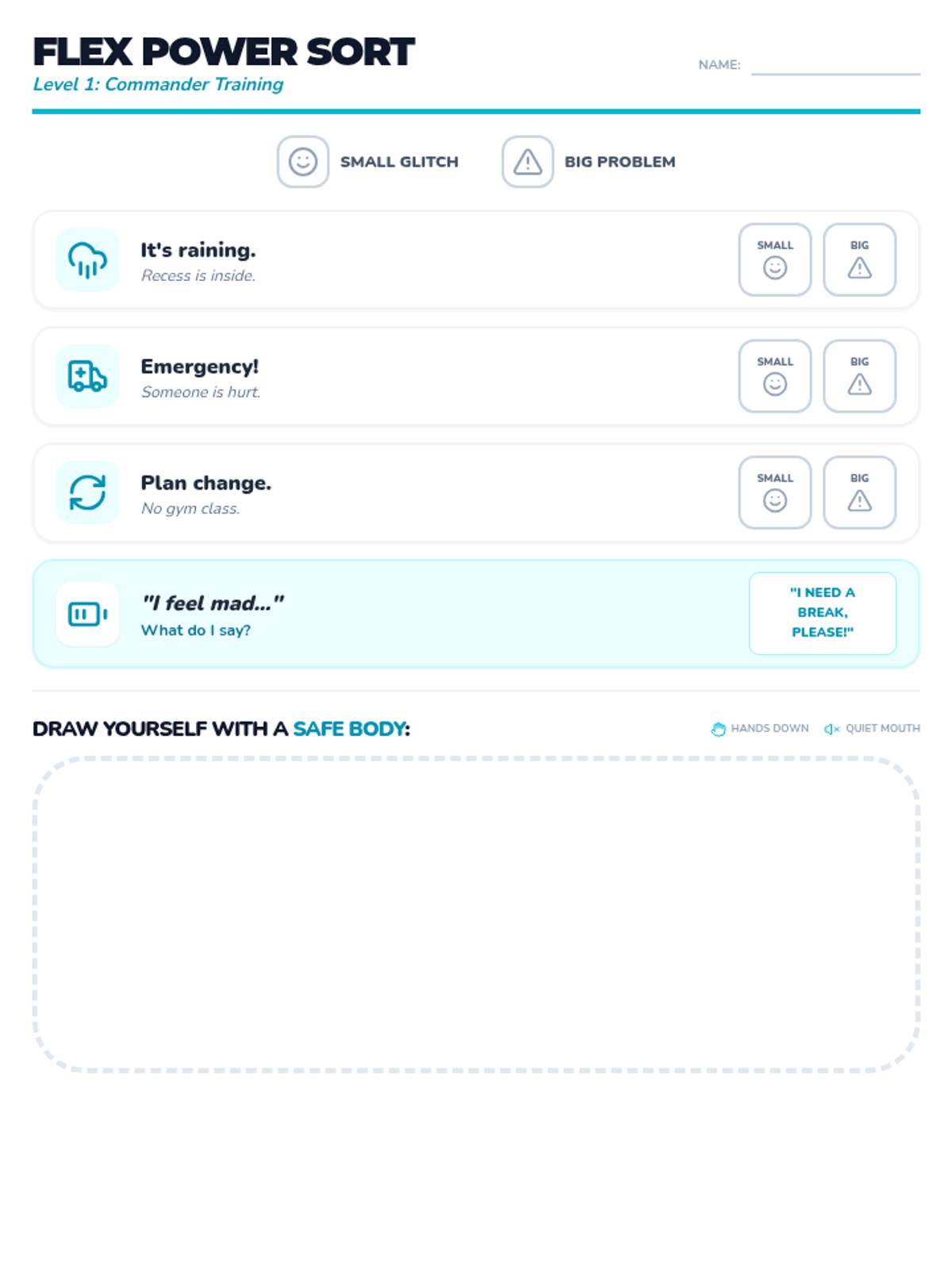
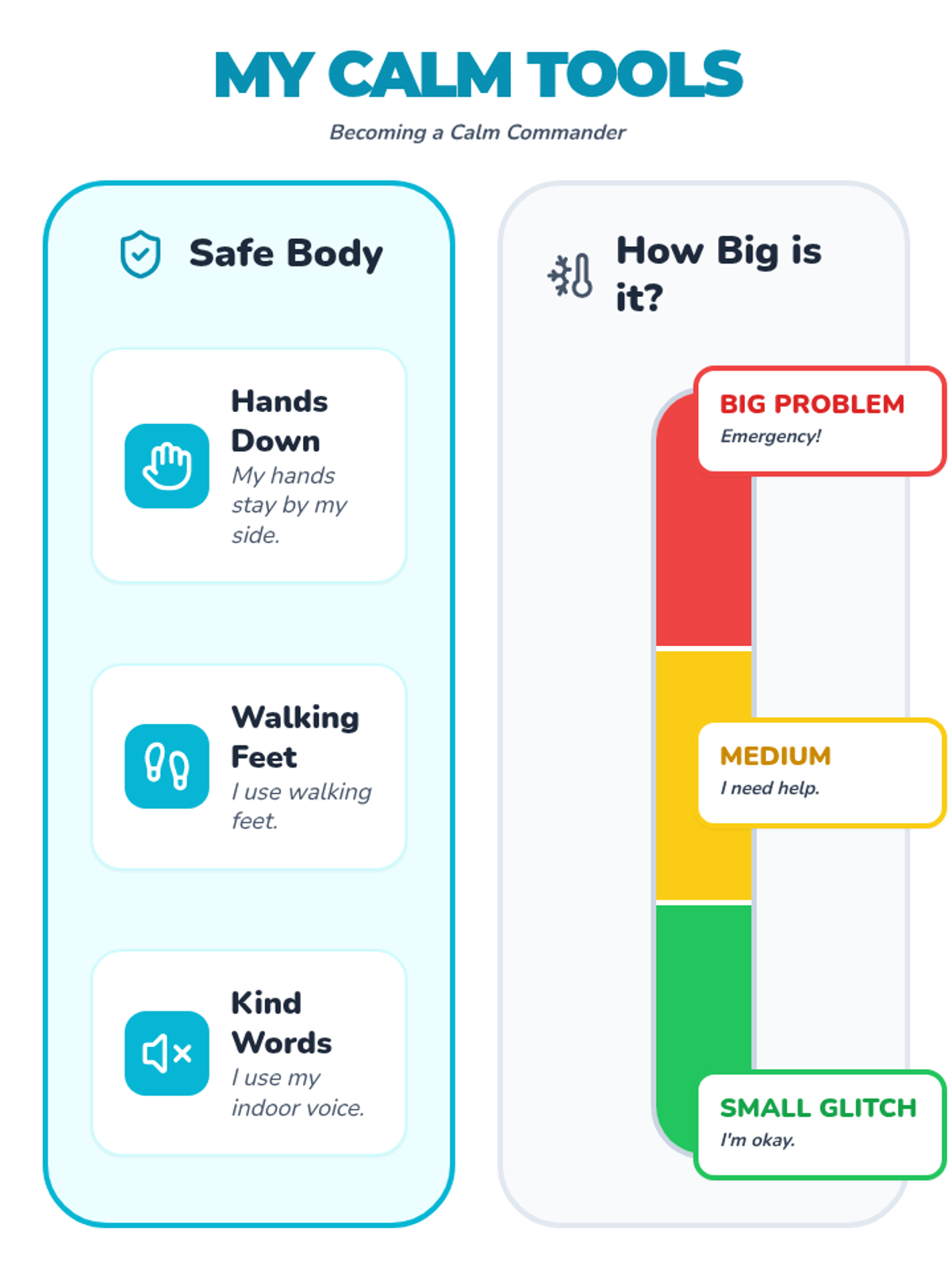
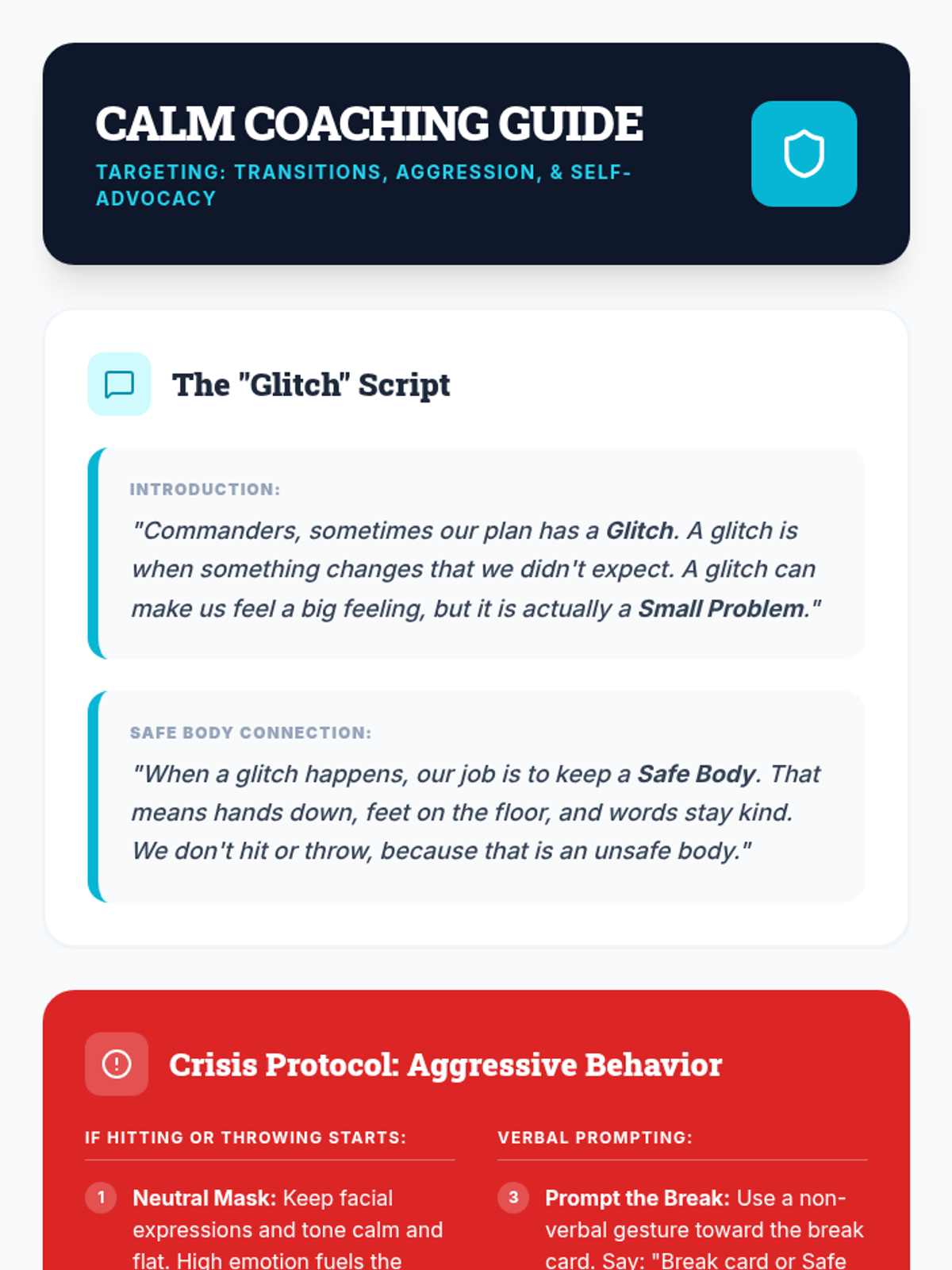
A series of lessons focused on social-emotional regulation, teaching students to identify problem sizes, maintain safe bodies, and use self-advocacy tools like 'taking a break' when frustrated.
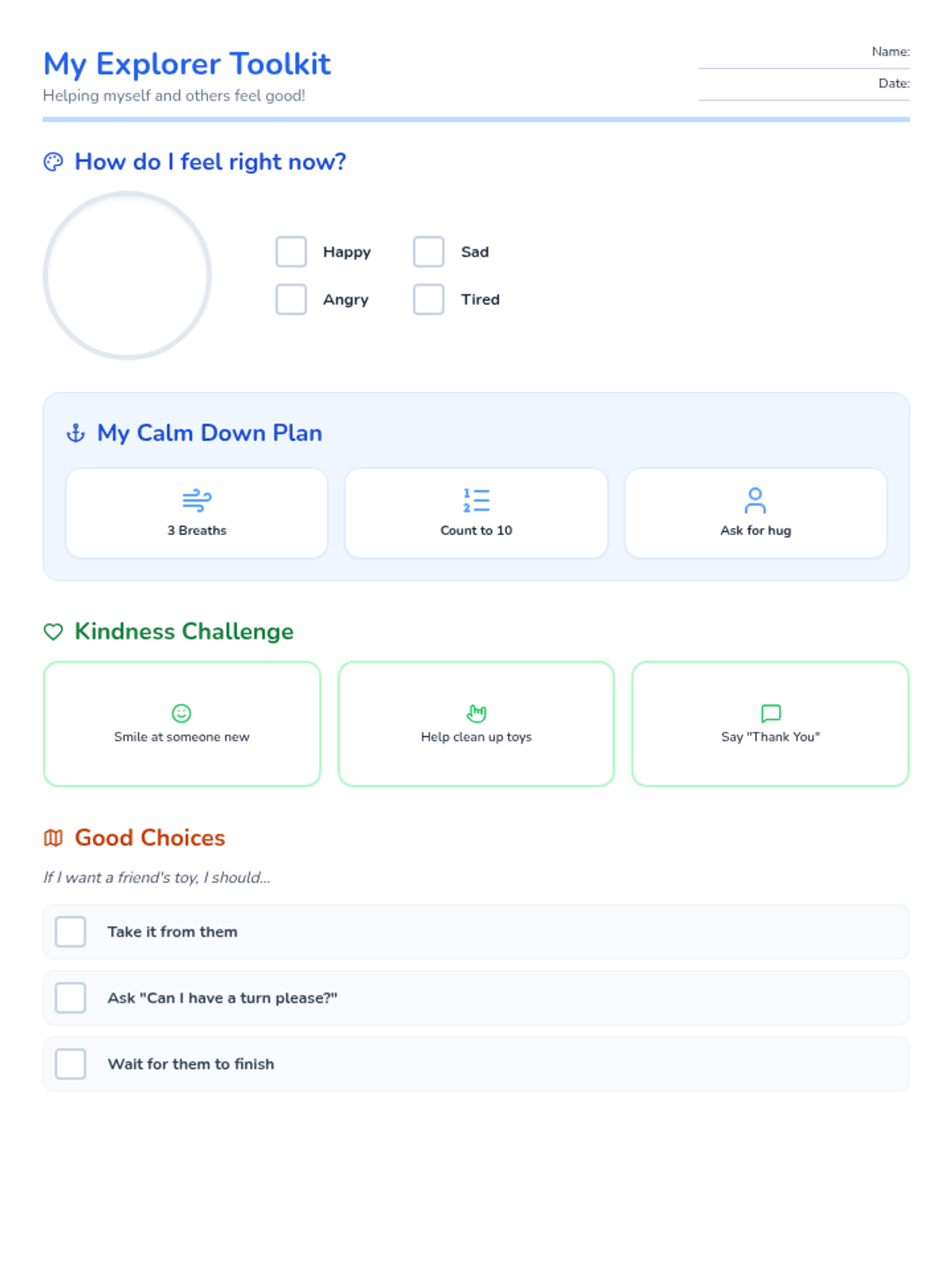
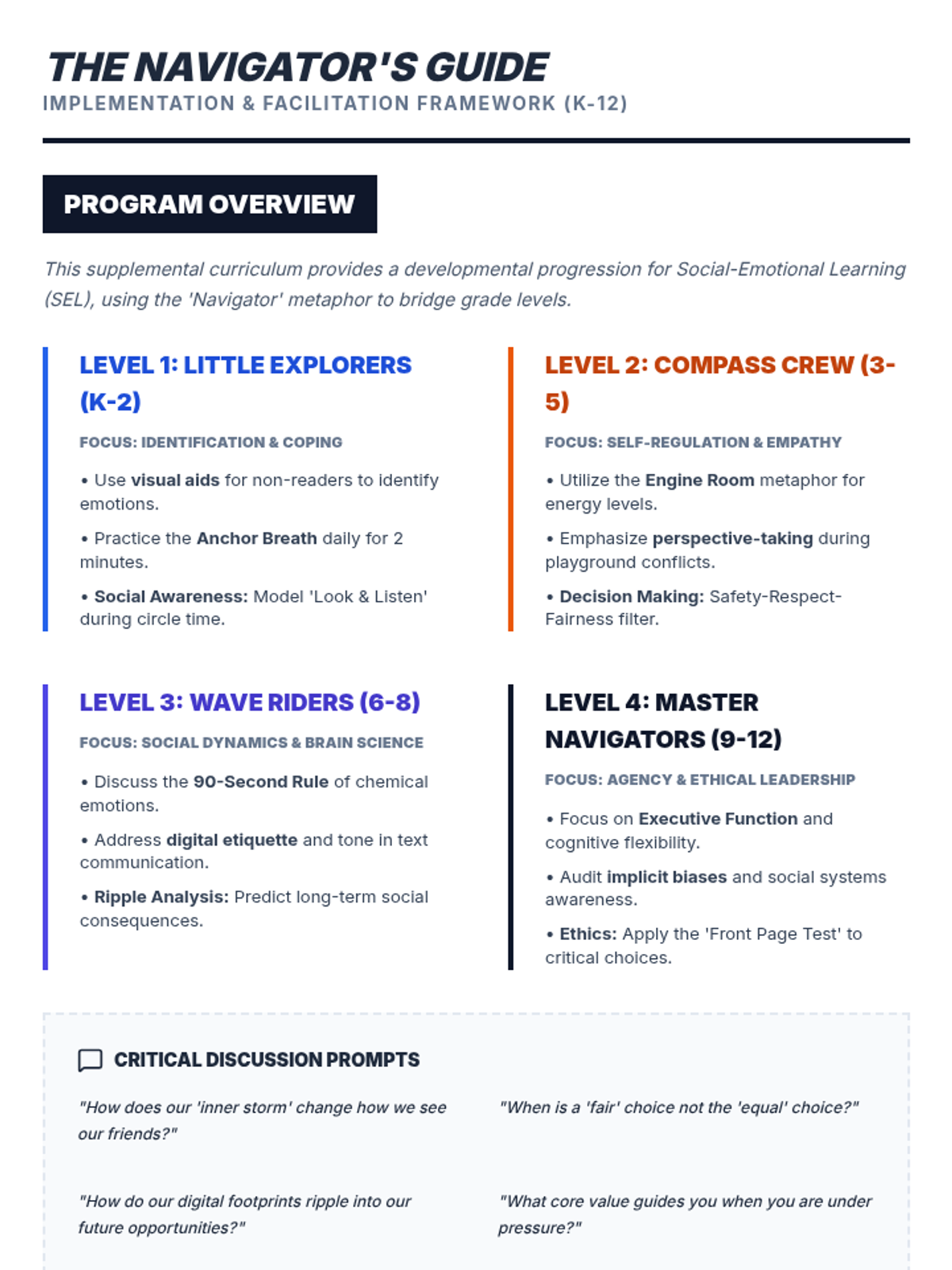
A comprehensive SEL curriculum designed for K-12 students, focusing on self-management, coping skills, social awareness, and responsible decision-making using a nautical 'Navigator' theme.
A comprehensive K-12 Social-Emotional Learning curriculum focusing on behavior regulation, social skills, and mental health resilience. This sequence provides a developmental pathway from emotional foundations in elementary school to complex coping strategies and social navigation in high school.
A series of lessons focused on social-emotional learning for early elementary students, providing practical tools for self-regulation and emotional awareness.
A progressive social-emotional learning sequence exploring mindful breathing techniques across different grade levels (K-5) to build self-regulation skills.
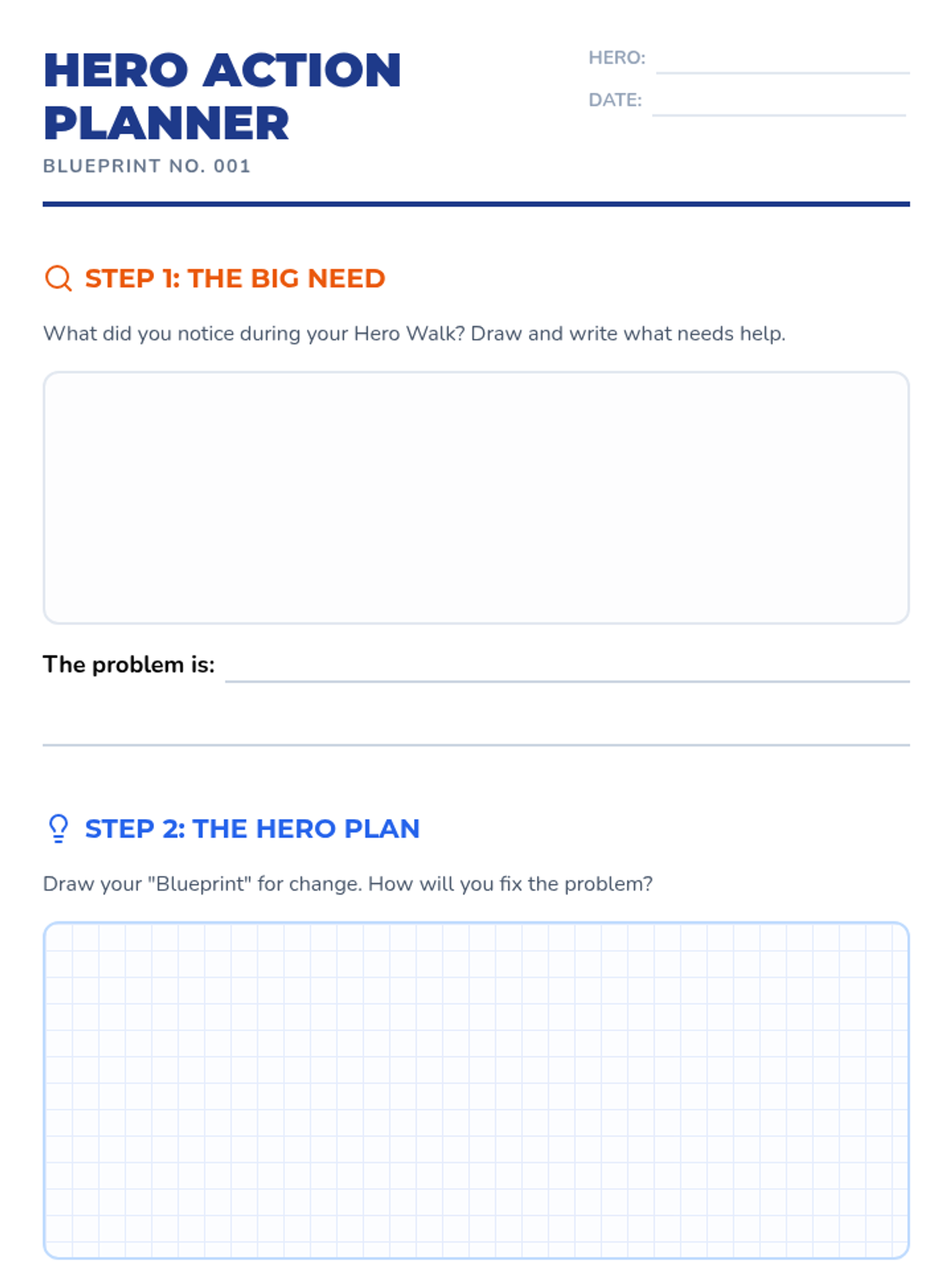
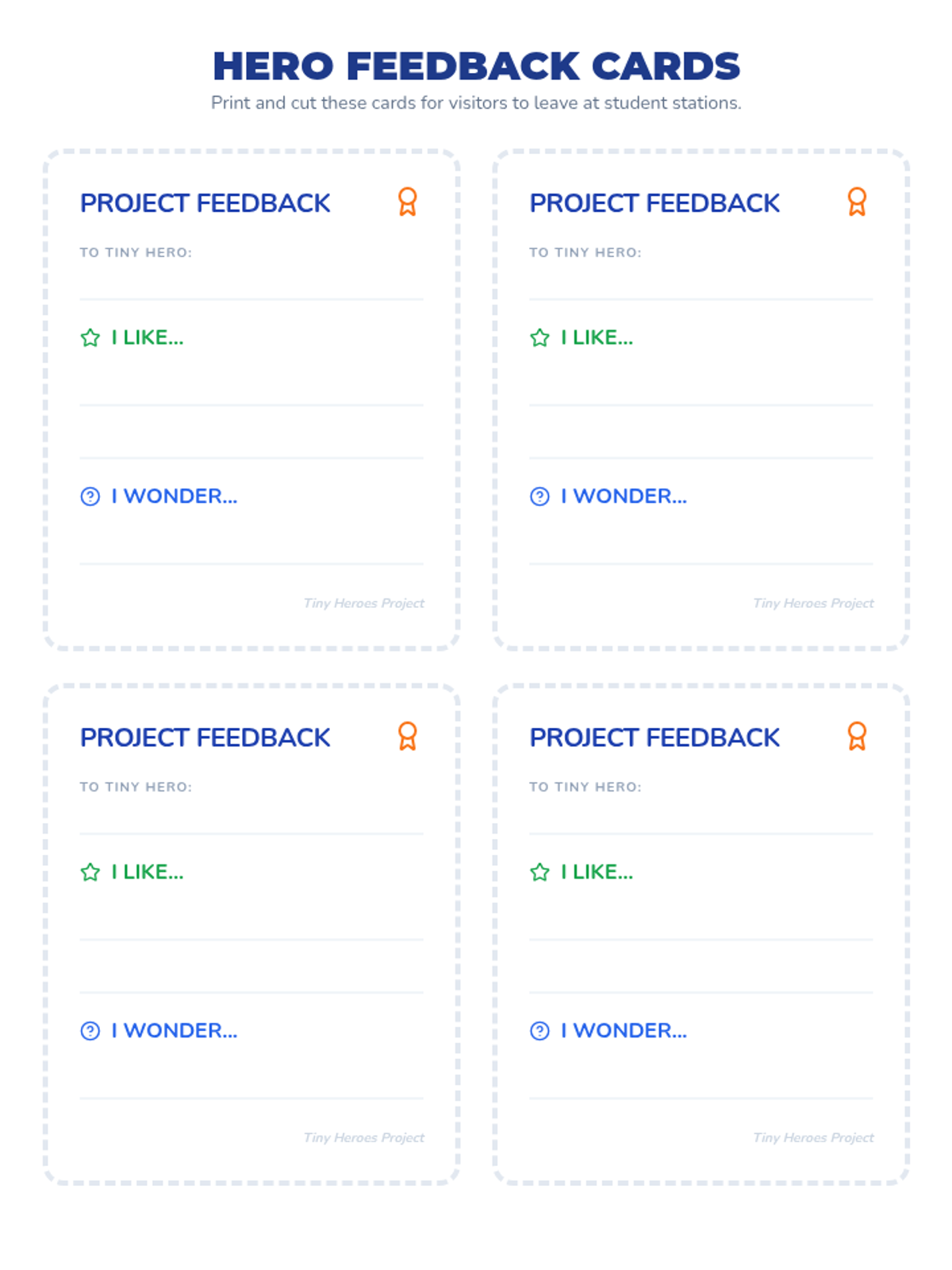
A series of lessons focused on developing agency and community awareness in young learners through the NYS Portrait of a Graduate framework, focusing on Empowered Learning and Global Citizenship.
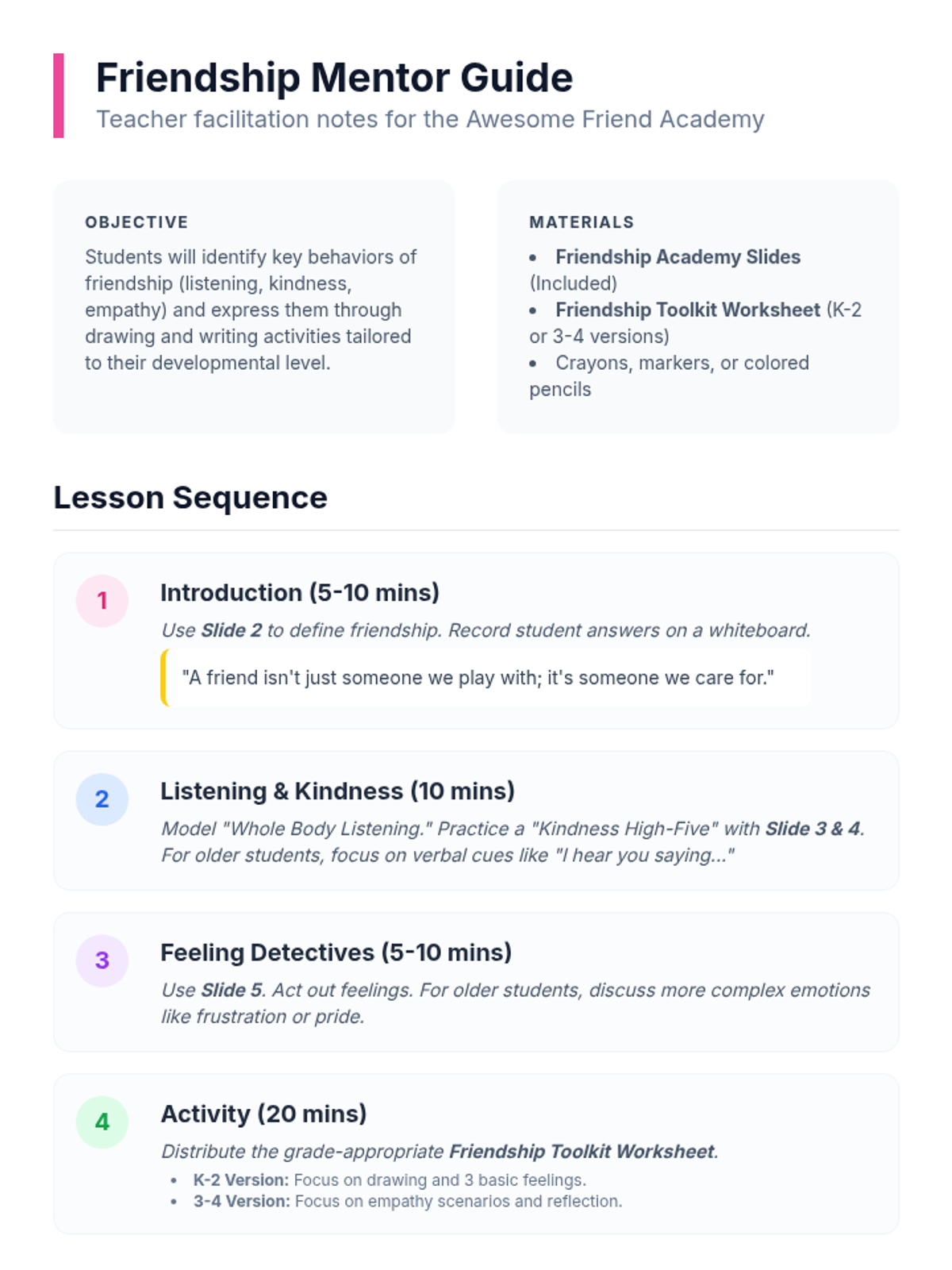
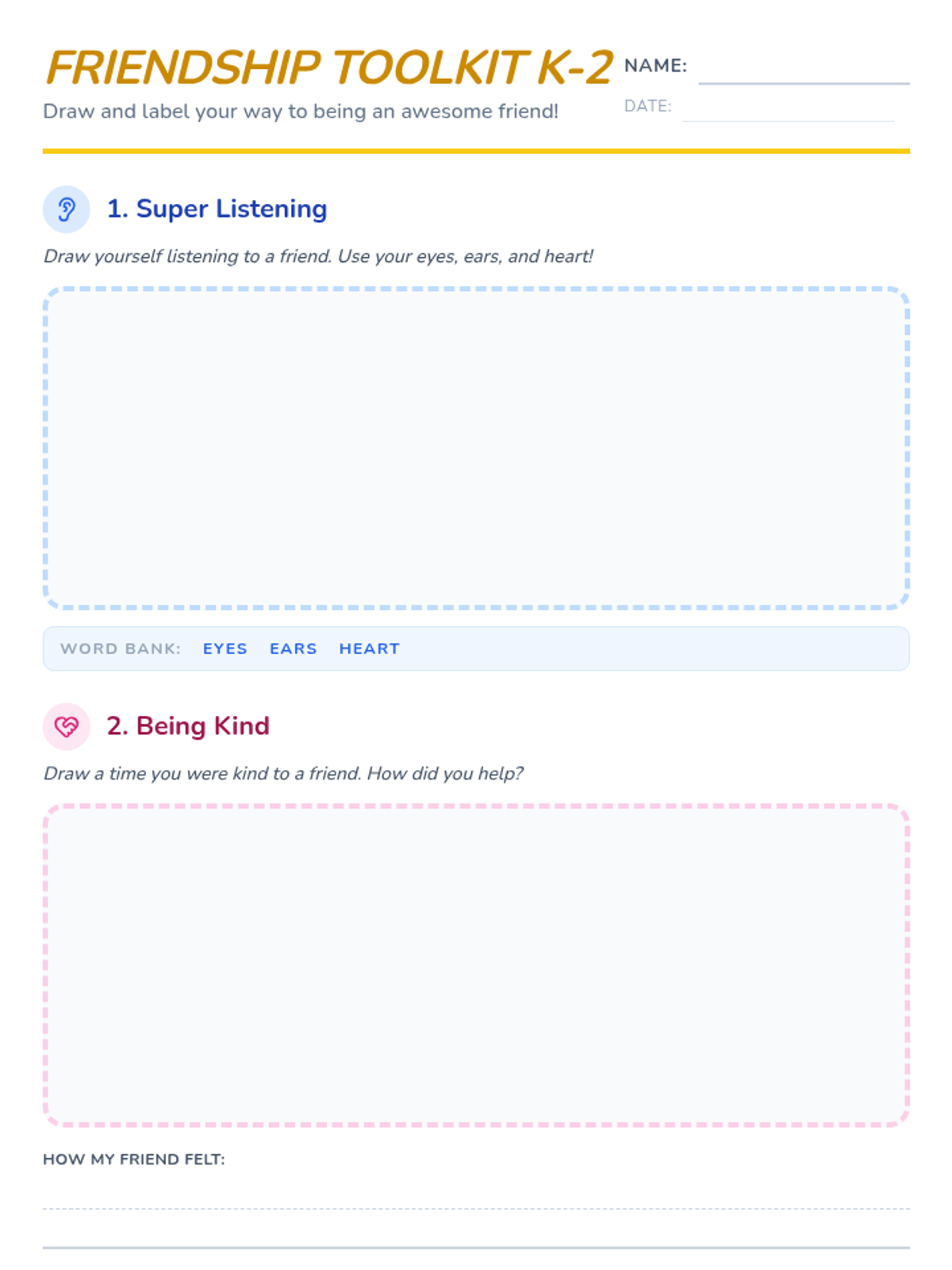
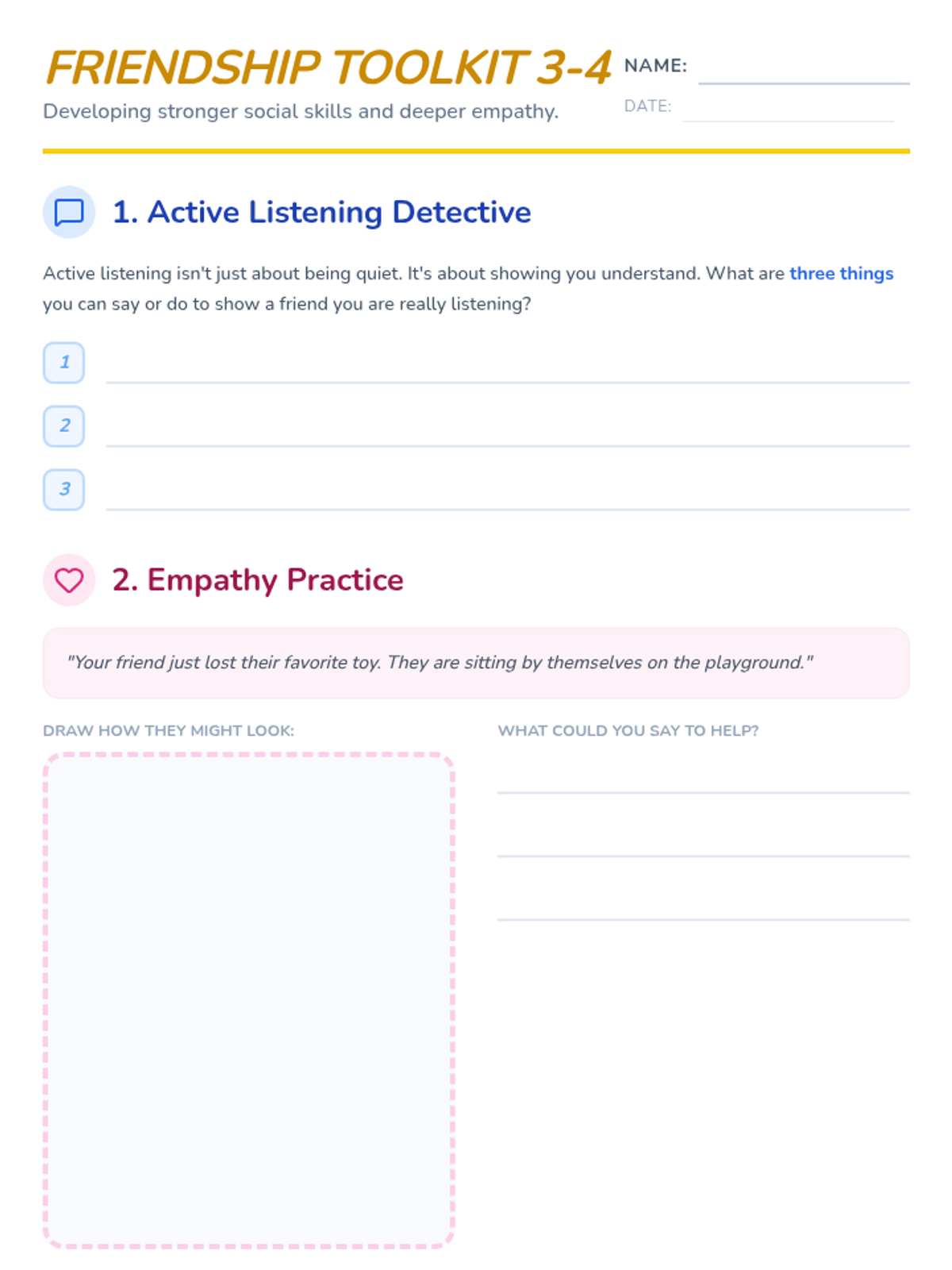
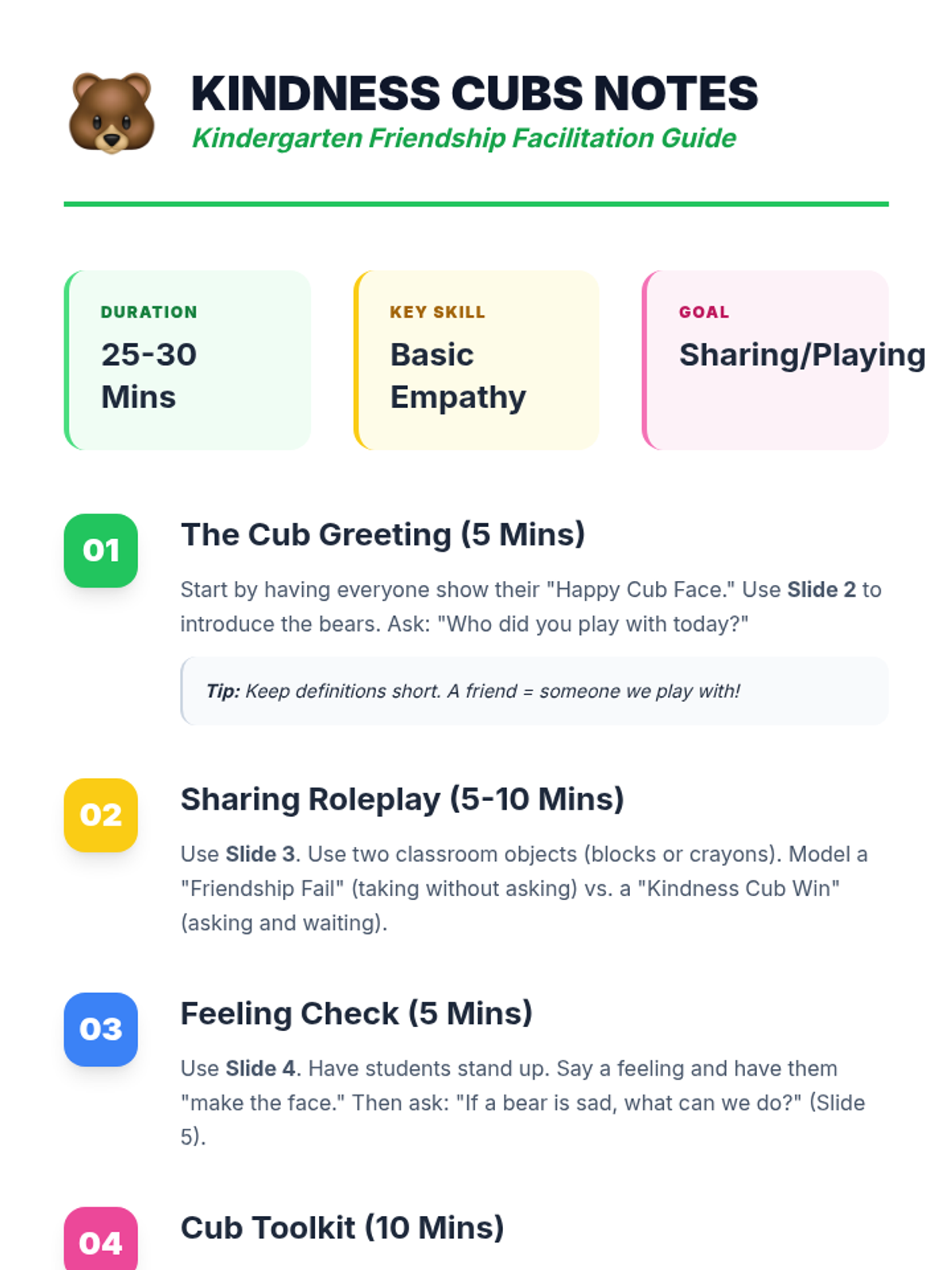
A series of social-emotional learning lessons designed to teach students from Kindergarten to 4th Grade the fundamentals of building and maintaining healthy friendships through active listening, empathy, and kindness.
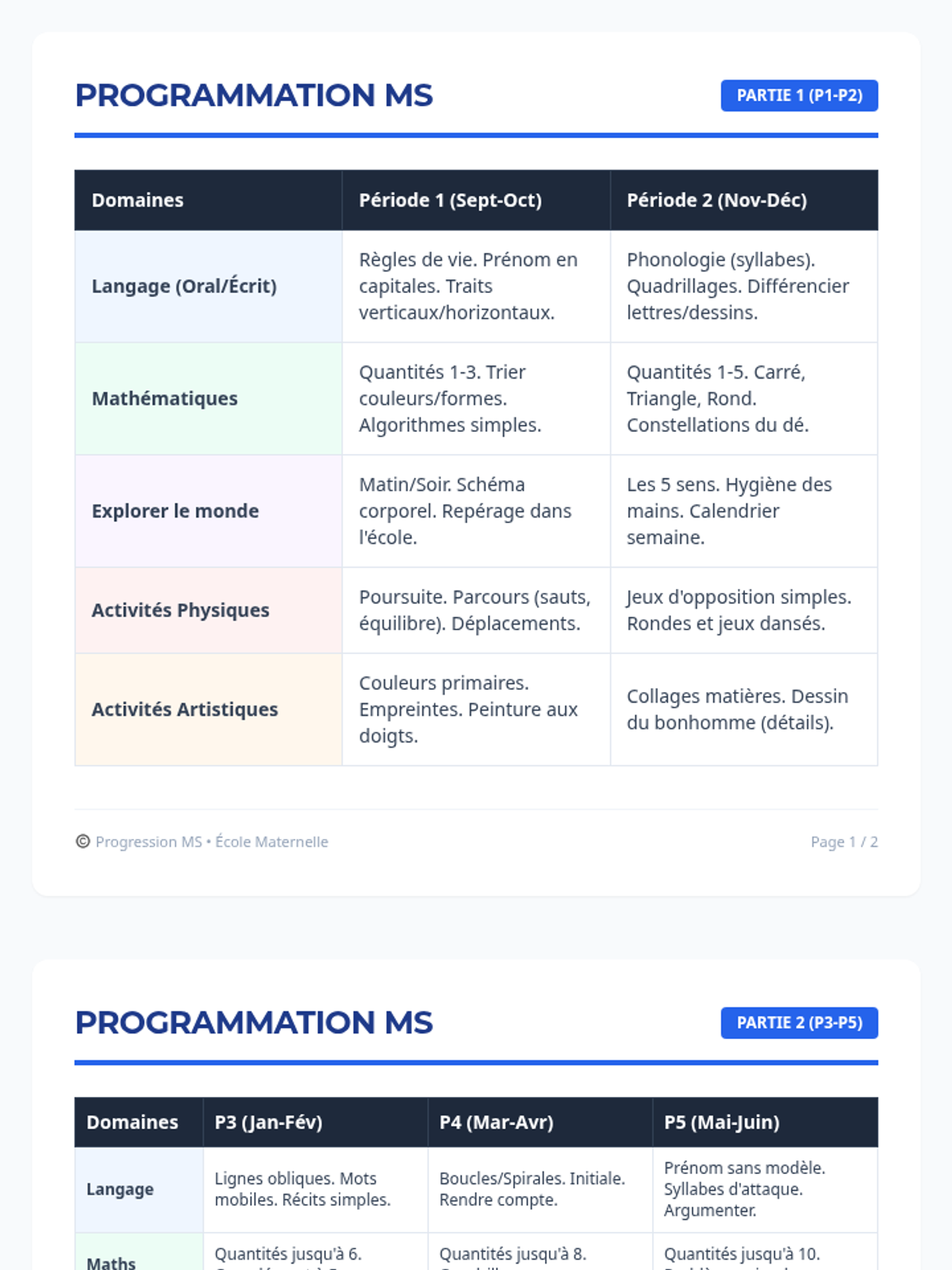
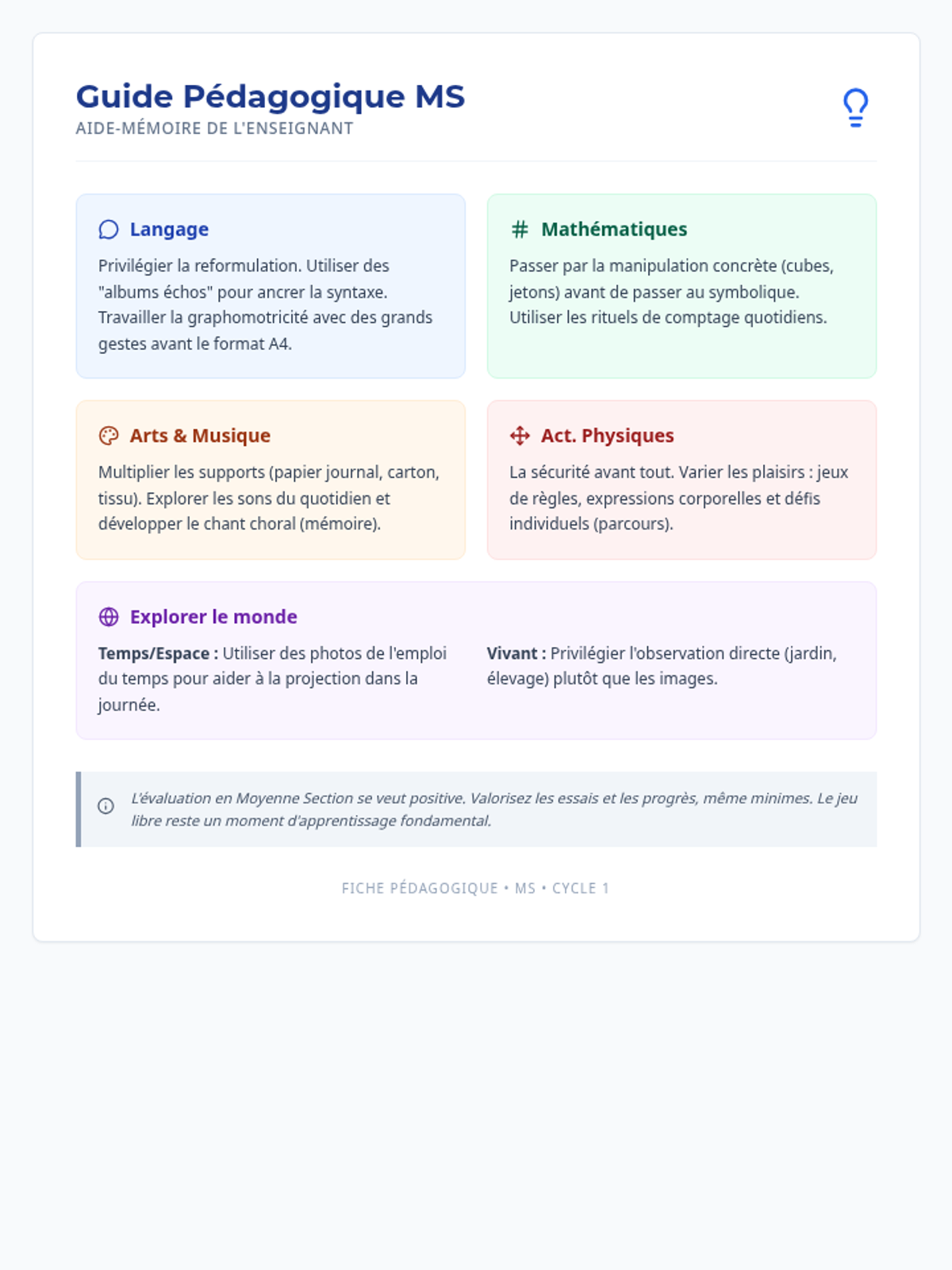
Une programmation annuelle complète pour la classe de Moyenne Section (MS), couvrant les cinq domaines d'apprentissage des programmes de l'Éducation Nationale française pour les périodes 1 à 5.
A 5-week school-based counseling program designed to improve student self-regulation and personal boundaries through walk-and-talk therapy and informal check-ins.
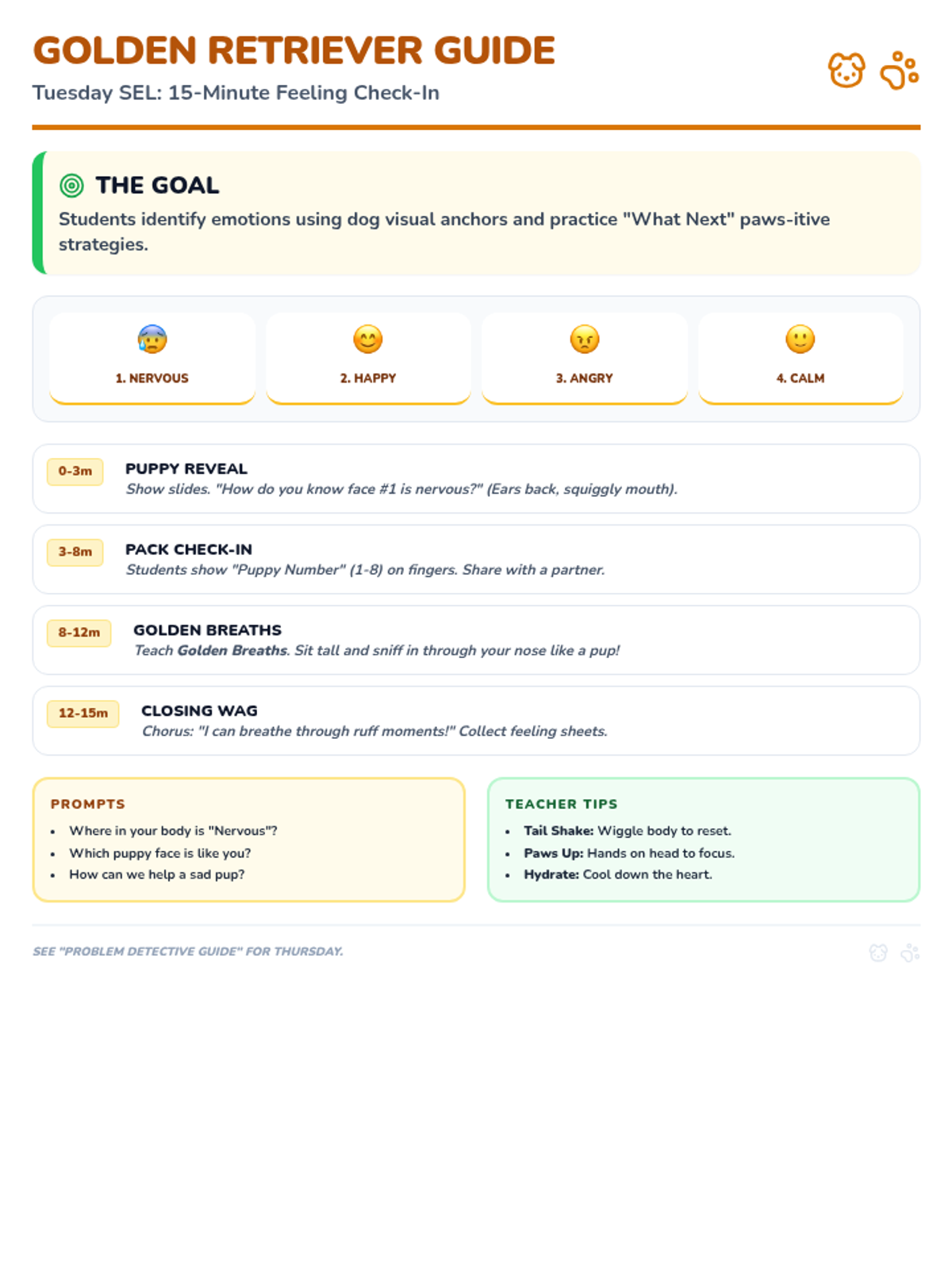
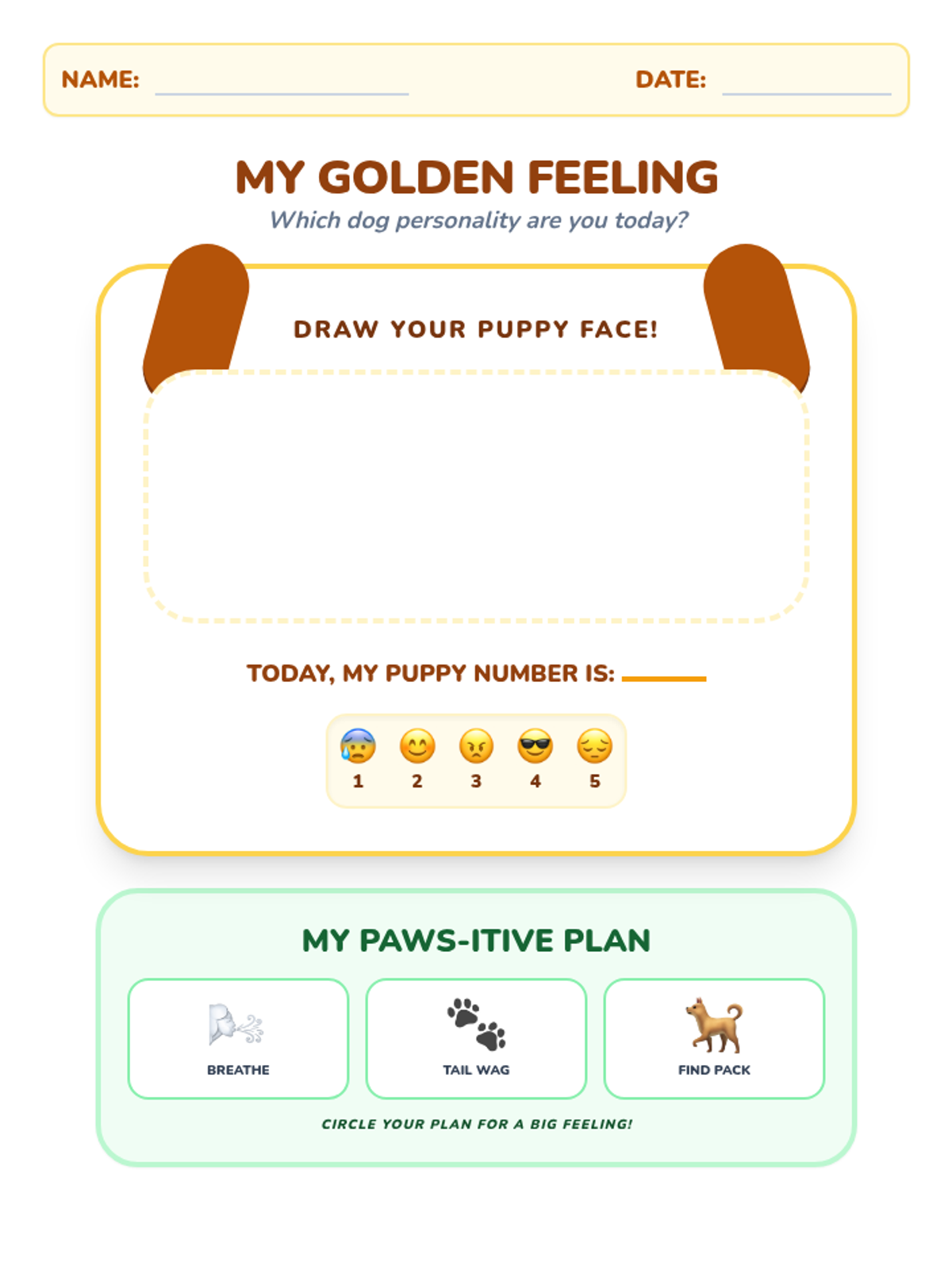
A month-long SEL unit for Kindergarteners focused on identifying complex emotions through Golden Retriever-themed visuals and distinguishing between big and small problems using movement-based activities.
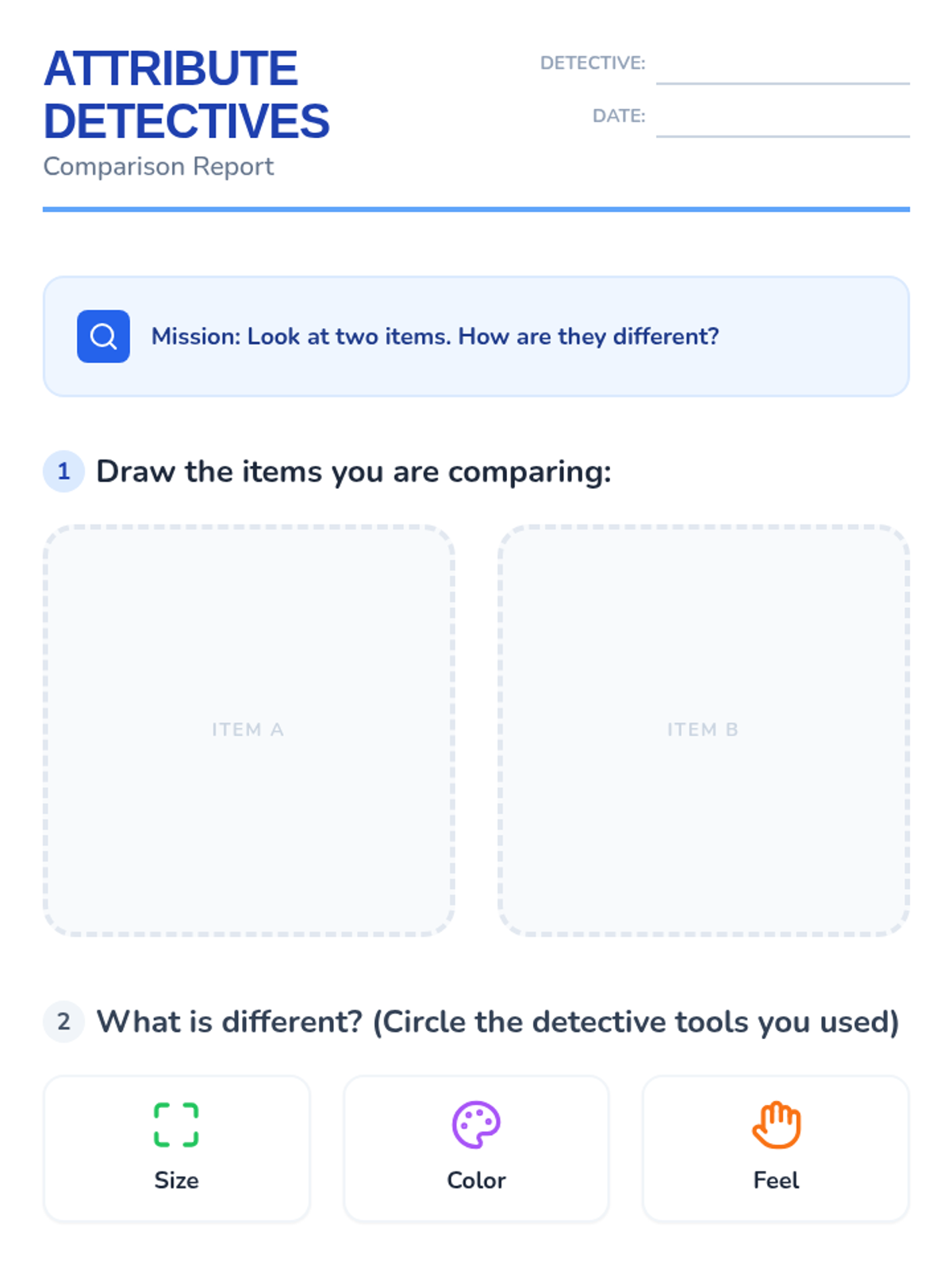
A Kindergarten sequence focused on teaching students how to compare attributes, prices, and quality to make smart financial decisions. Through hands-on 'lab' activities and simulations, students learn to justify their spending choices based on value rather than just impulse.
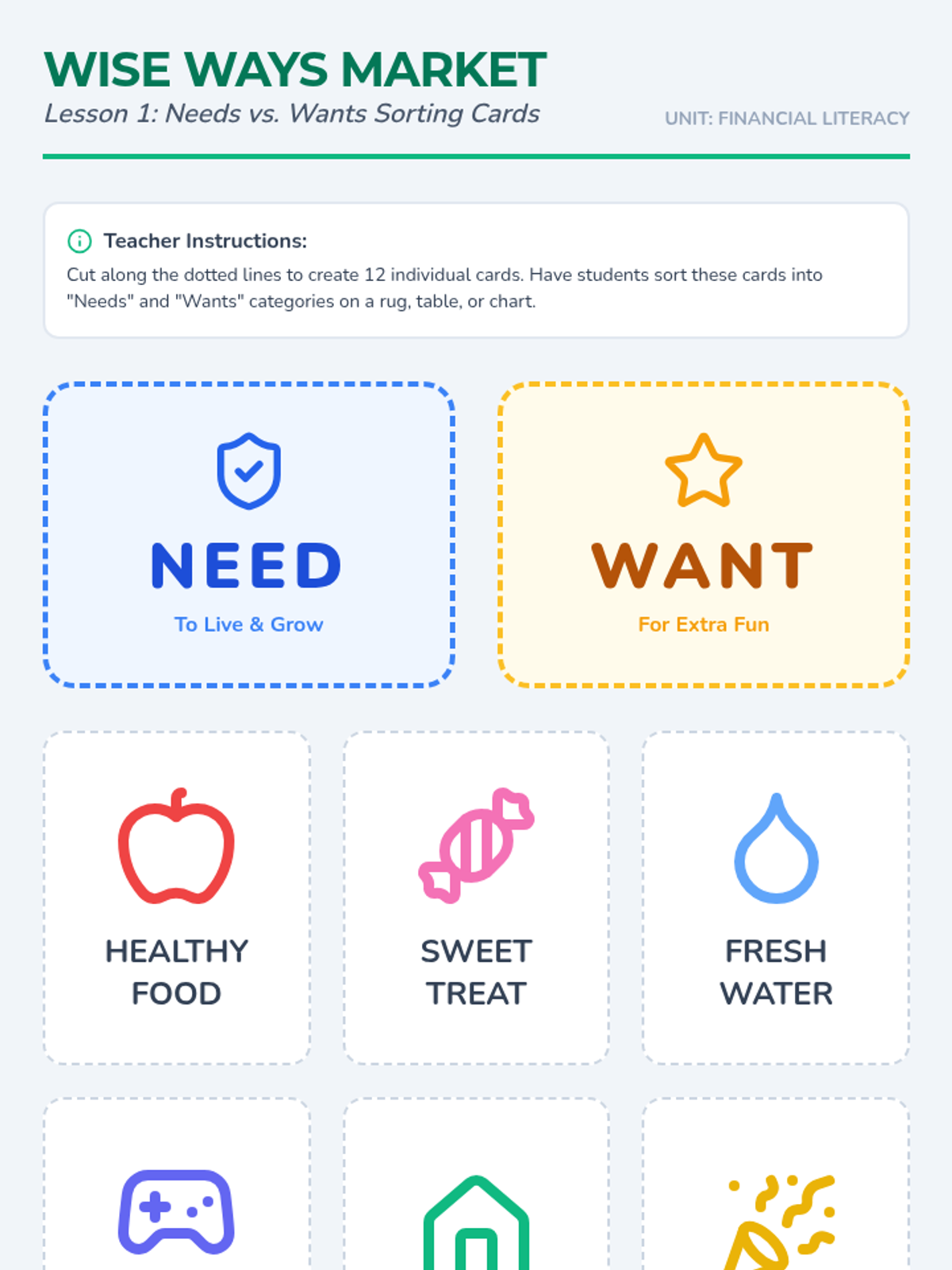
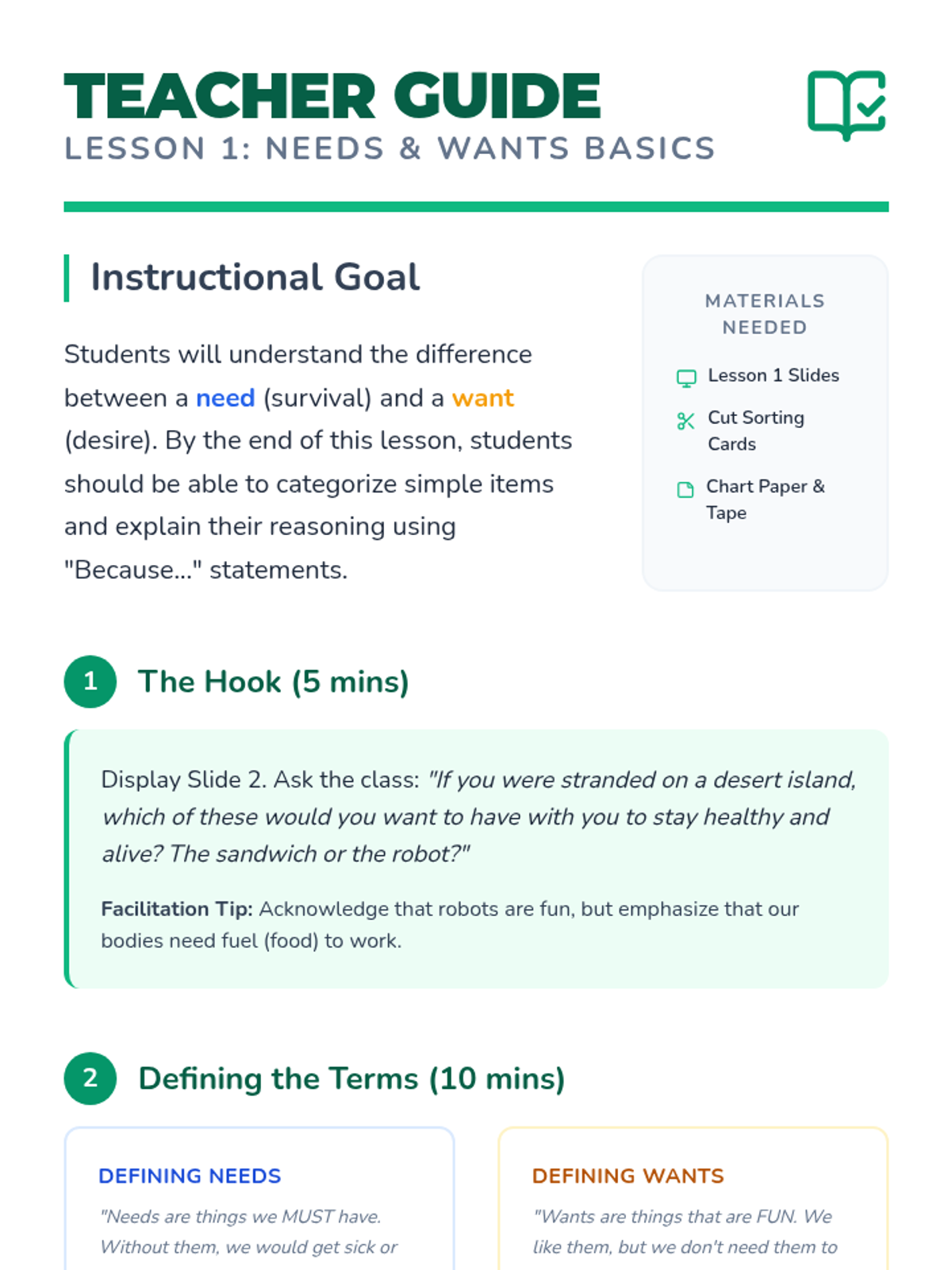
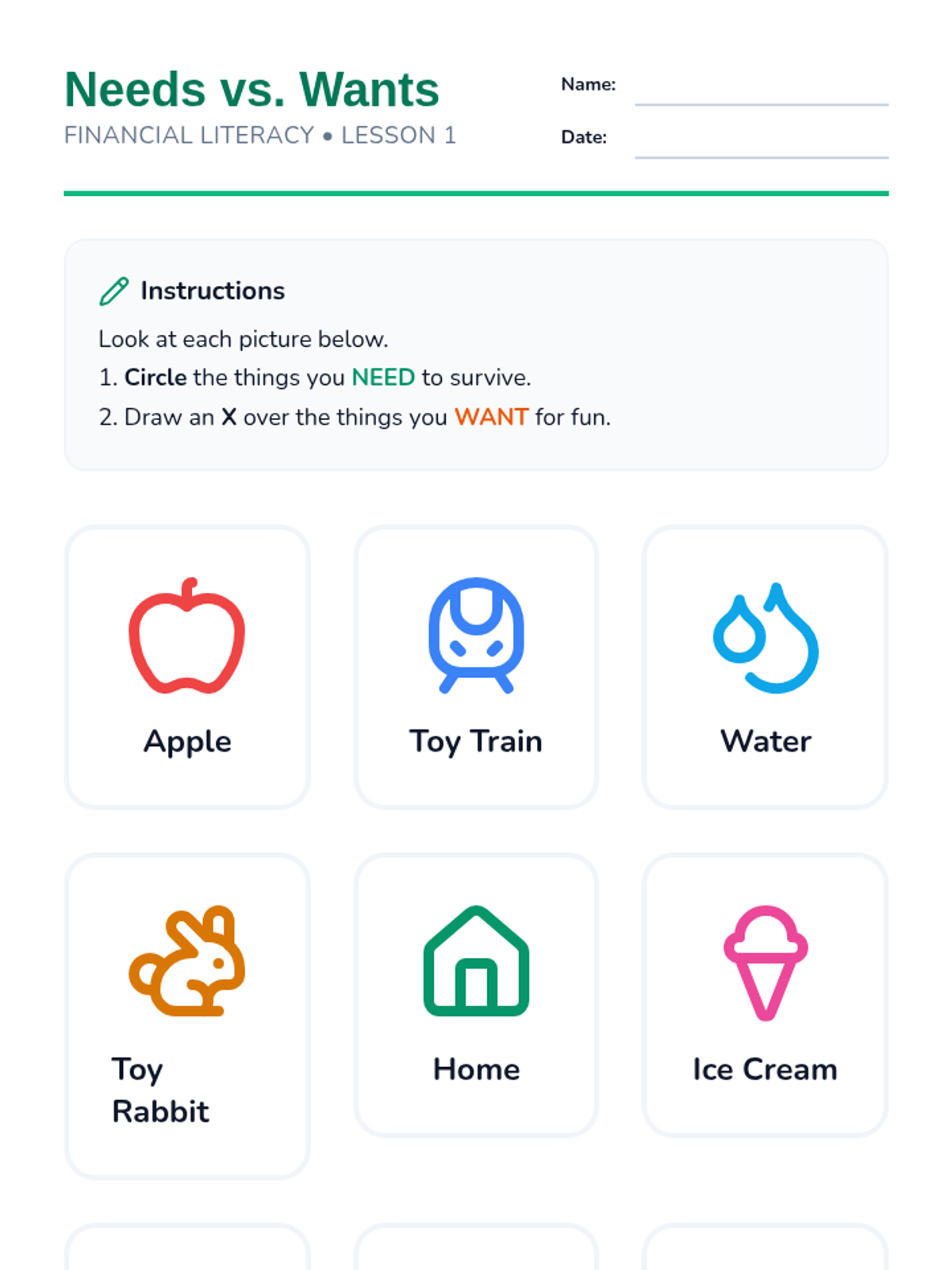
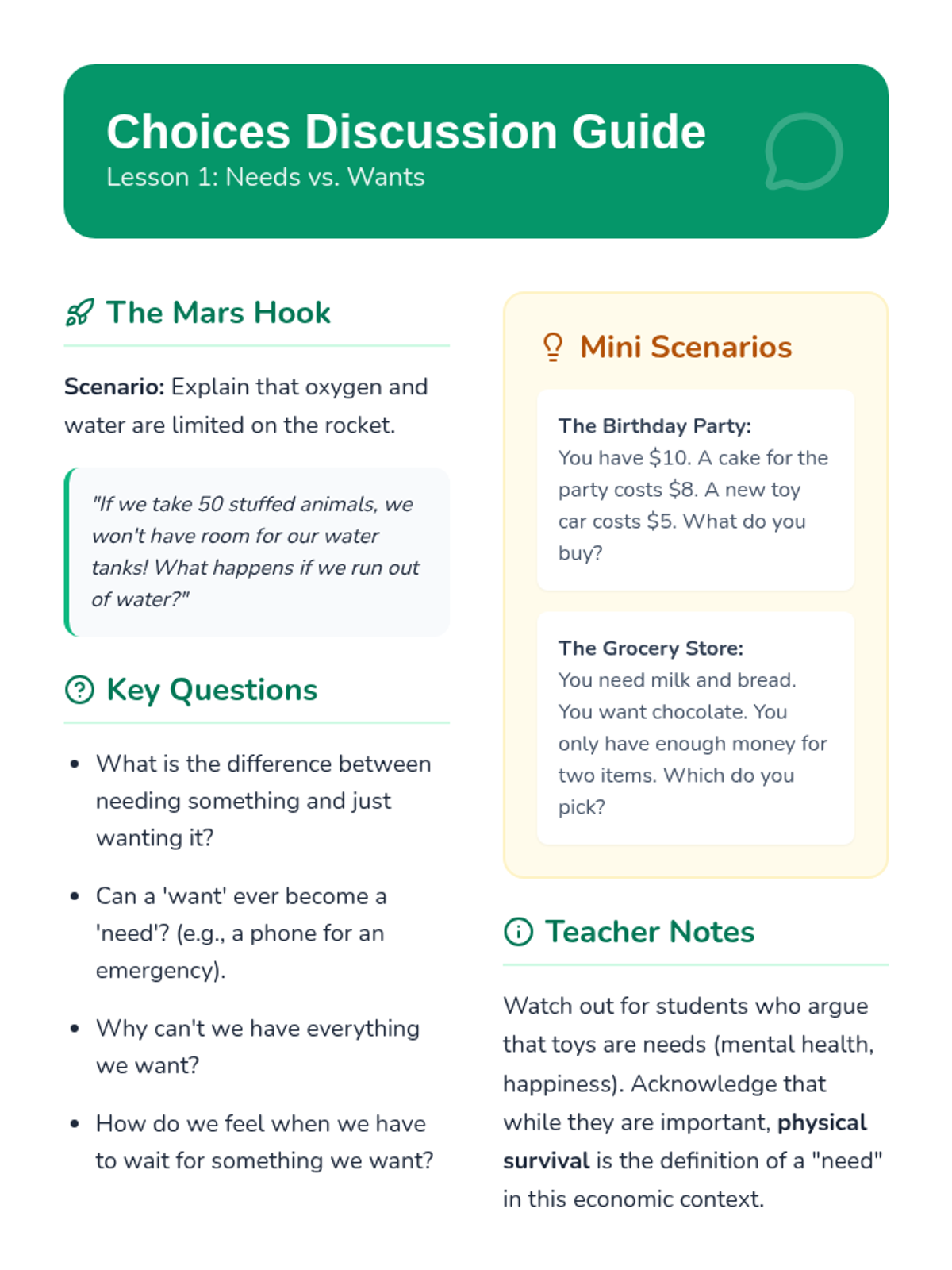
A foundational financial literacy sequence for Kindergarten students focusing on distinguishing between essential needs and discretionary wants through games, stories, and creative projects.
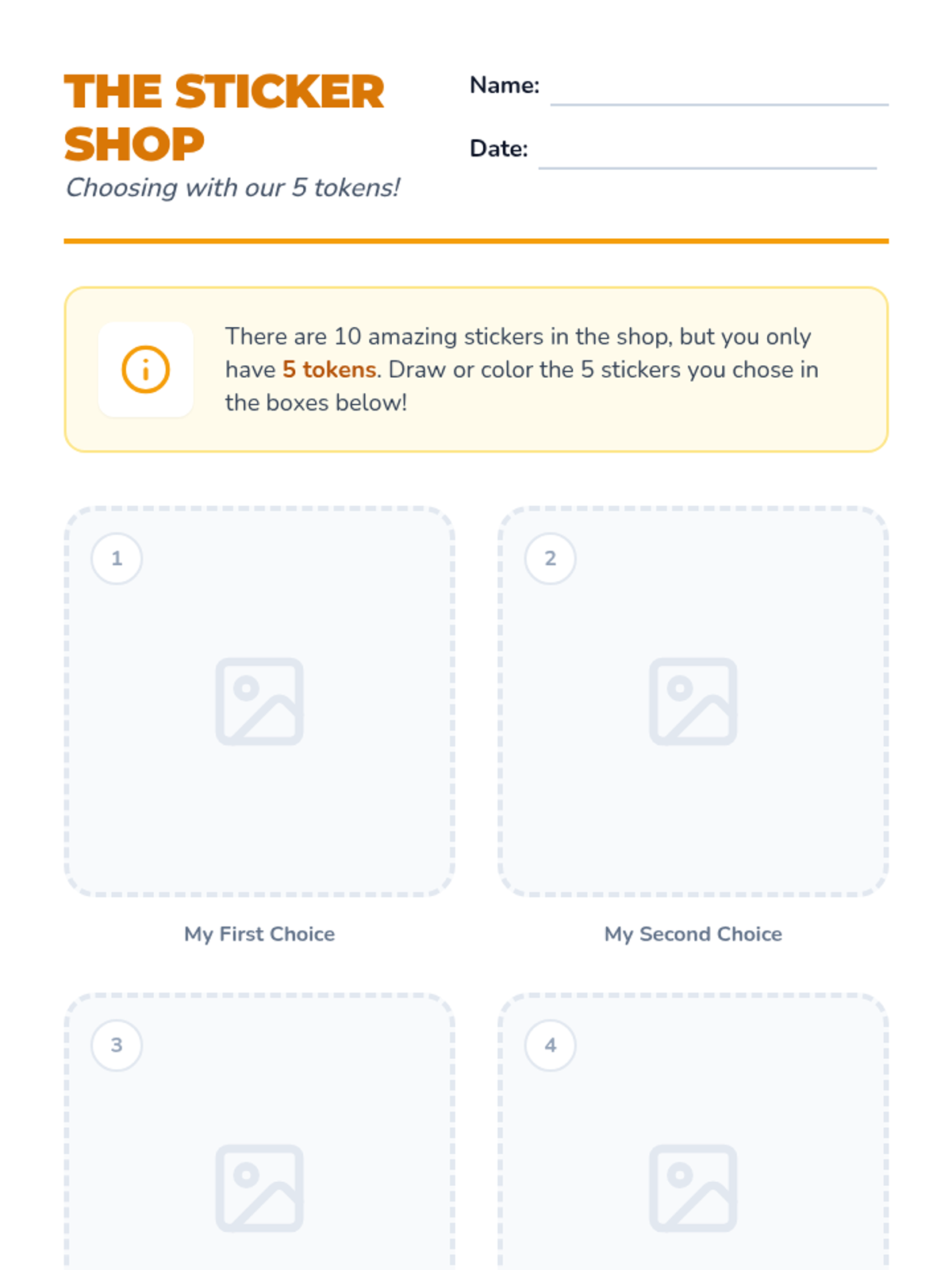
A foundational sequence for Kindergarteners exploring scarcity, trade-offs, and opportunity cost through play-based simulations and hands-on budgeting activities. Students learn that resources are limited and making a choice means giving something else up.
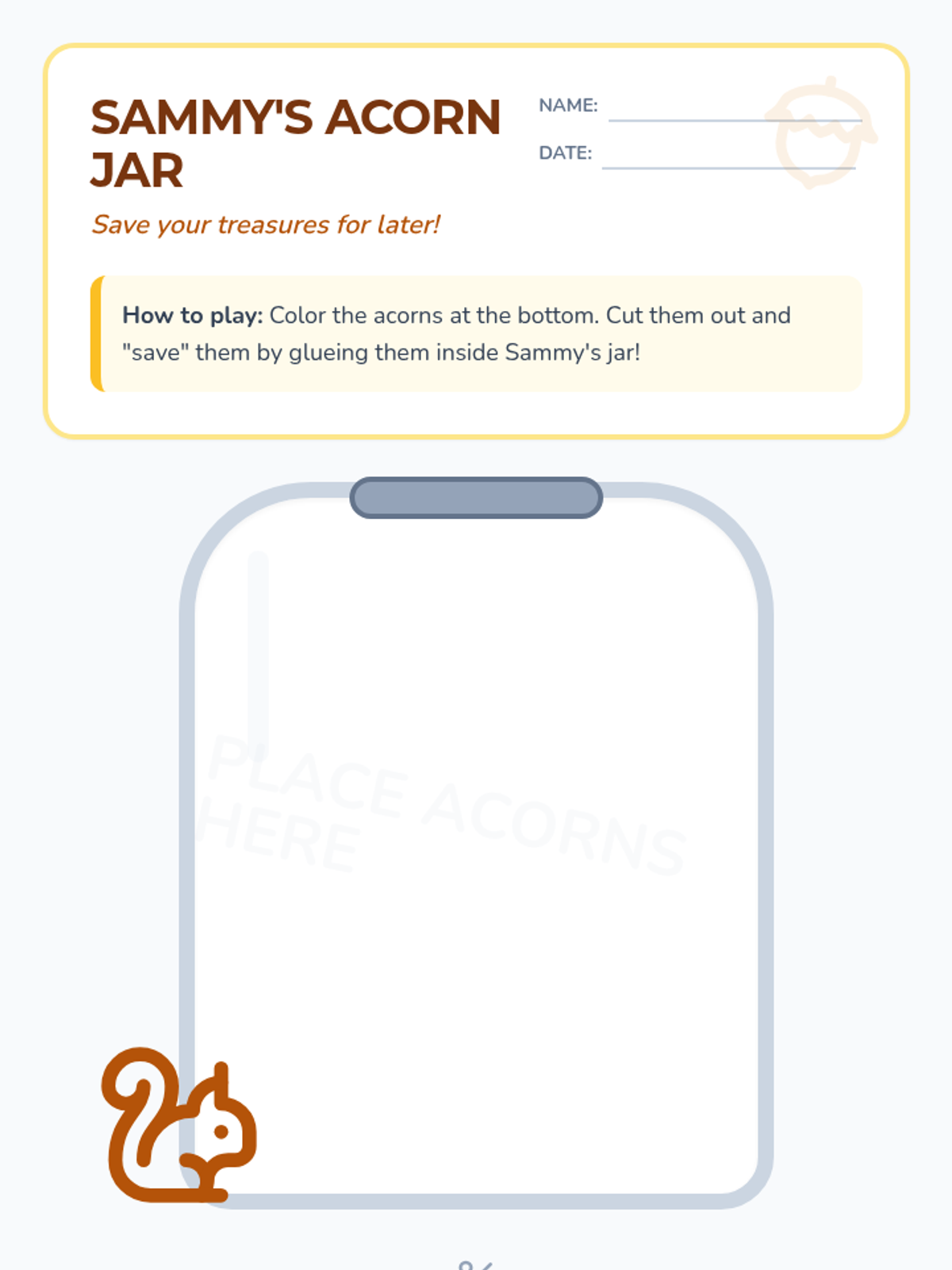
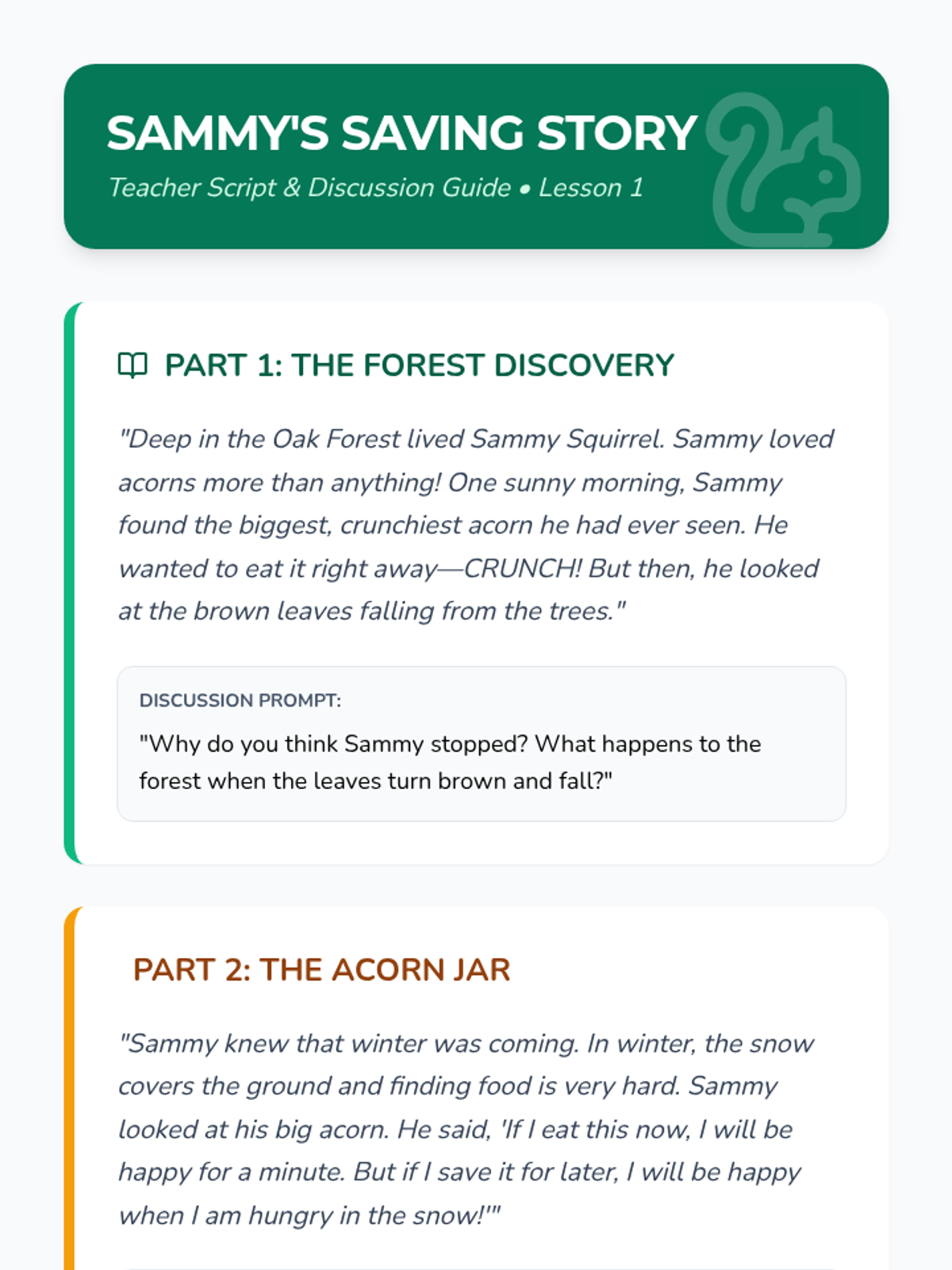
A Kindergarten sequence focused on building foundational financial literacy through the concepts of saving and delayed gratification. Students learn to manage resources, set goals, and experience the rewards of patience through a cohesive forest-themed 'Acorn Bank' narrative.
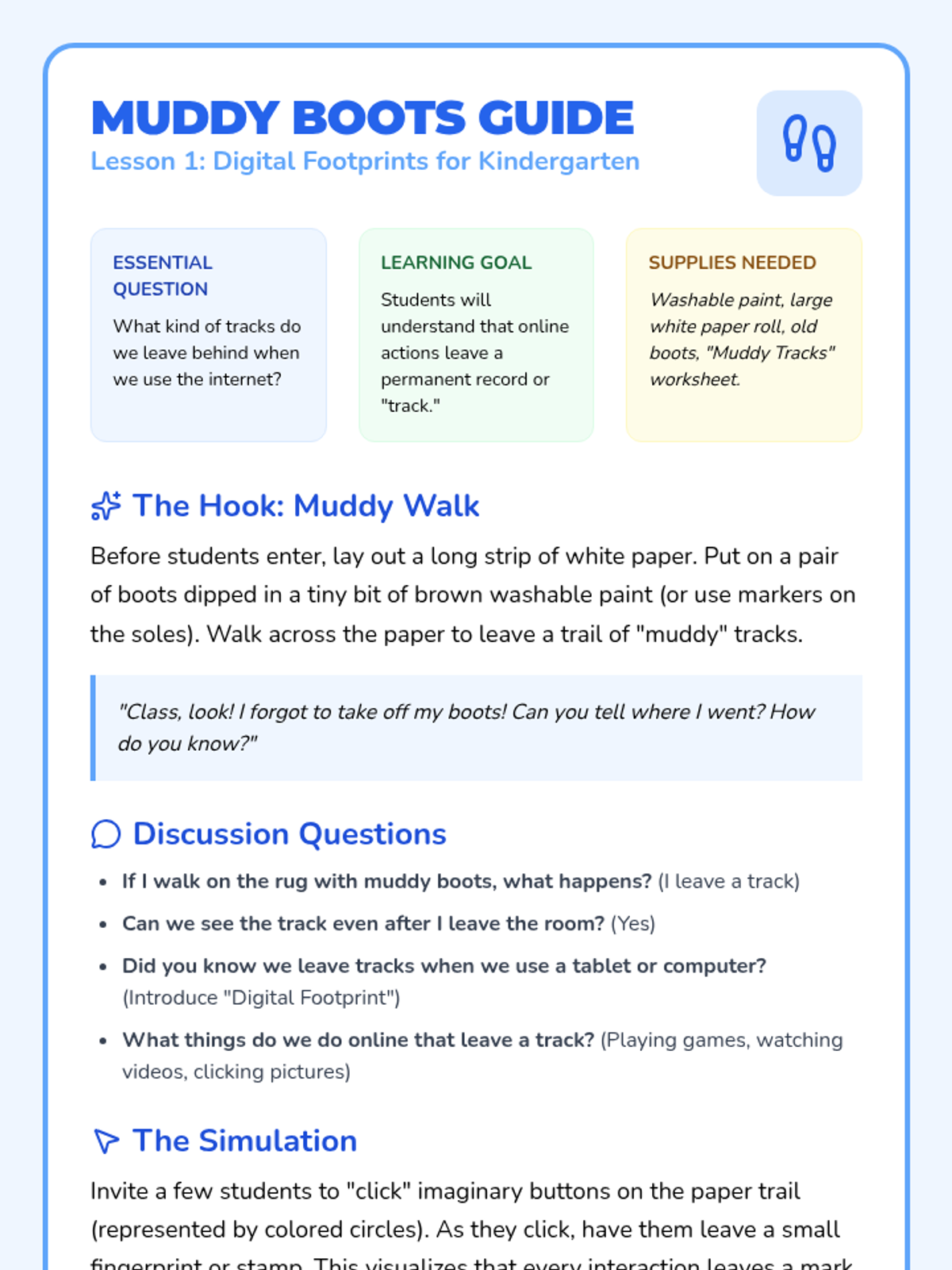
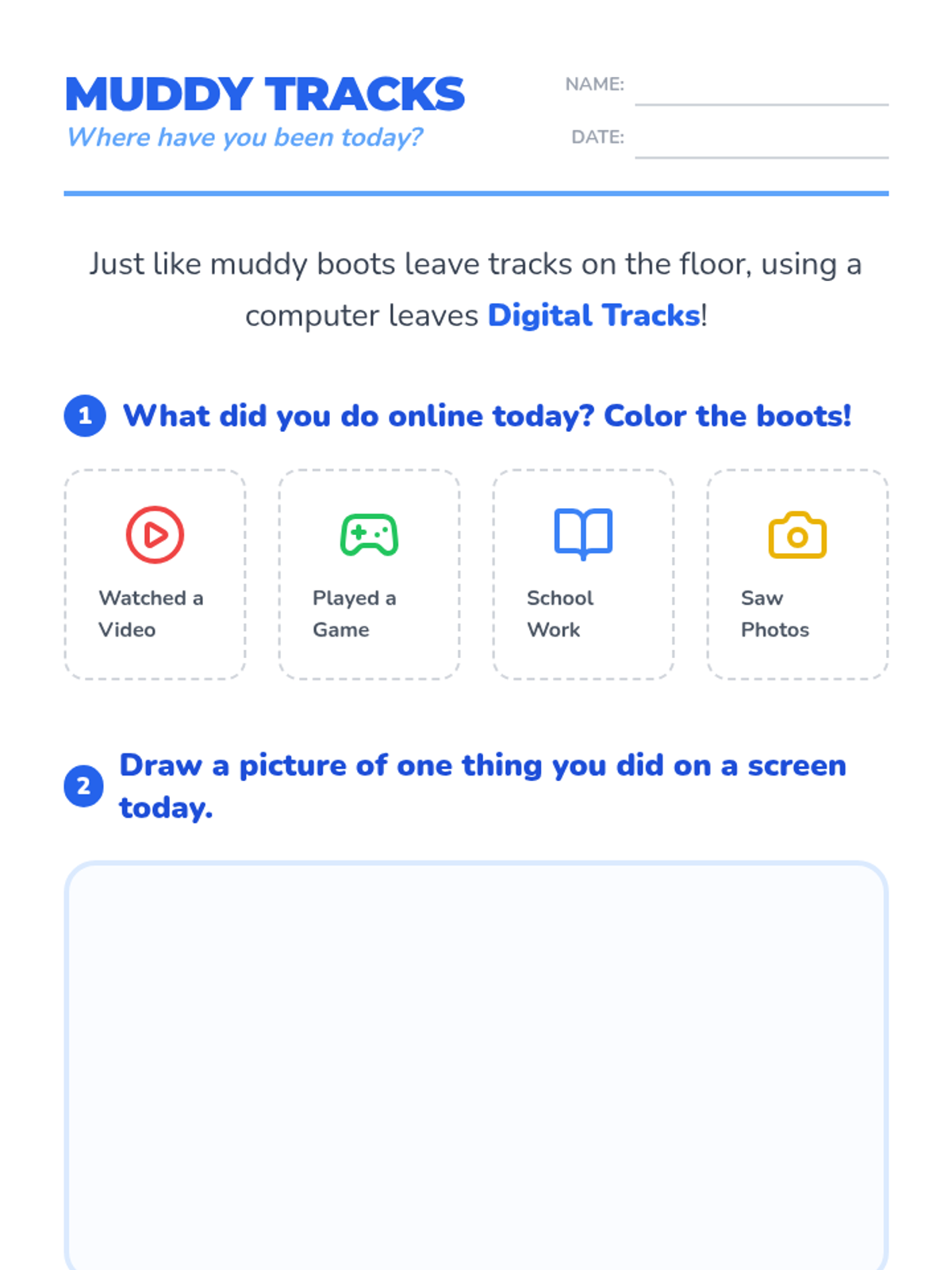
A comprehensive Kindergarten sequence introducing digital footprints and media literacy through physical analogies. Students learn about the permanence of their online actions and develop basic media literacy skills to distinguish between reality and digital manipulation.
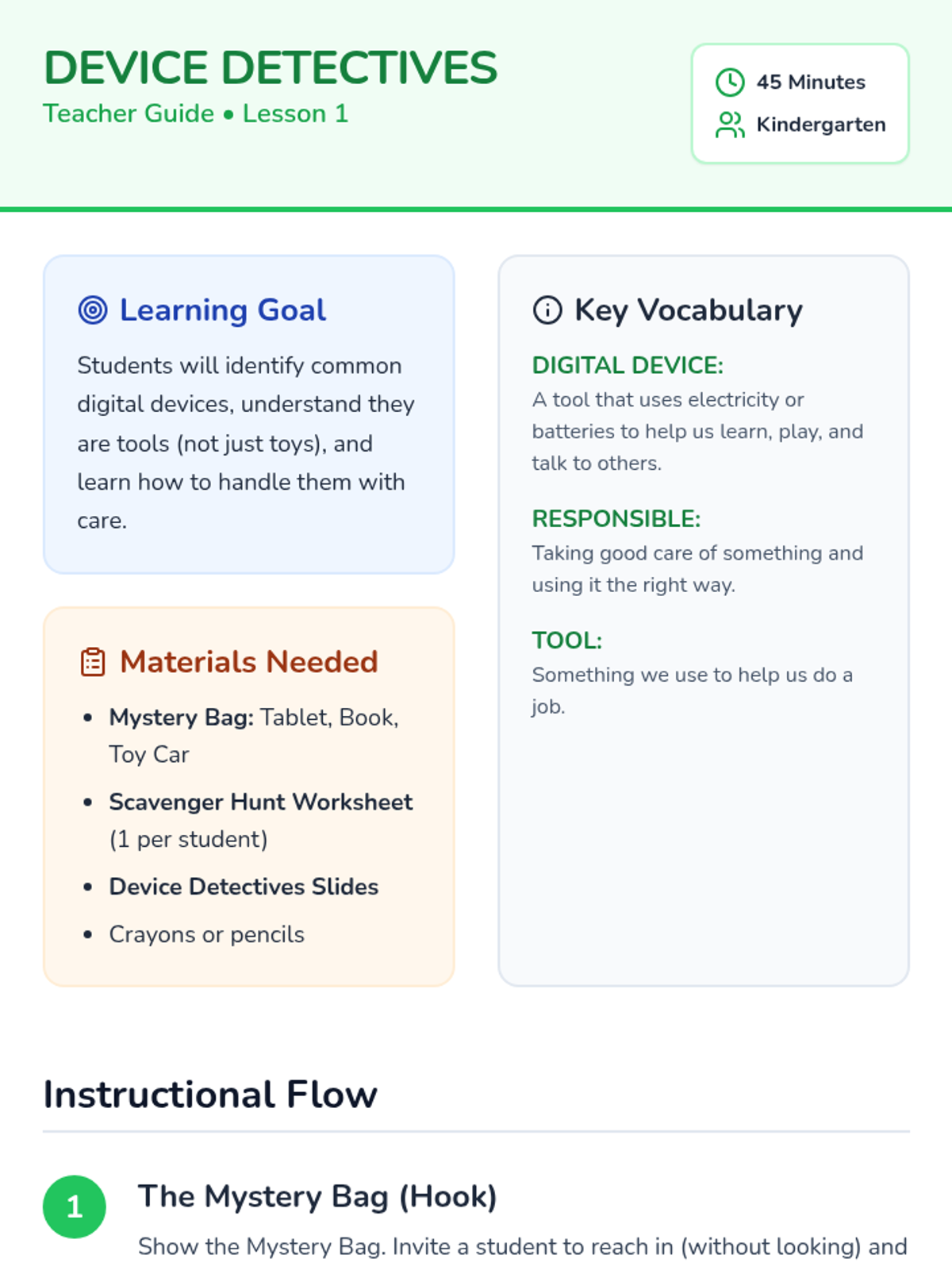
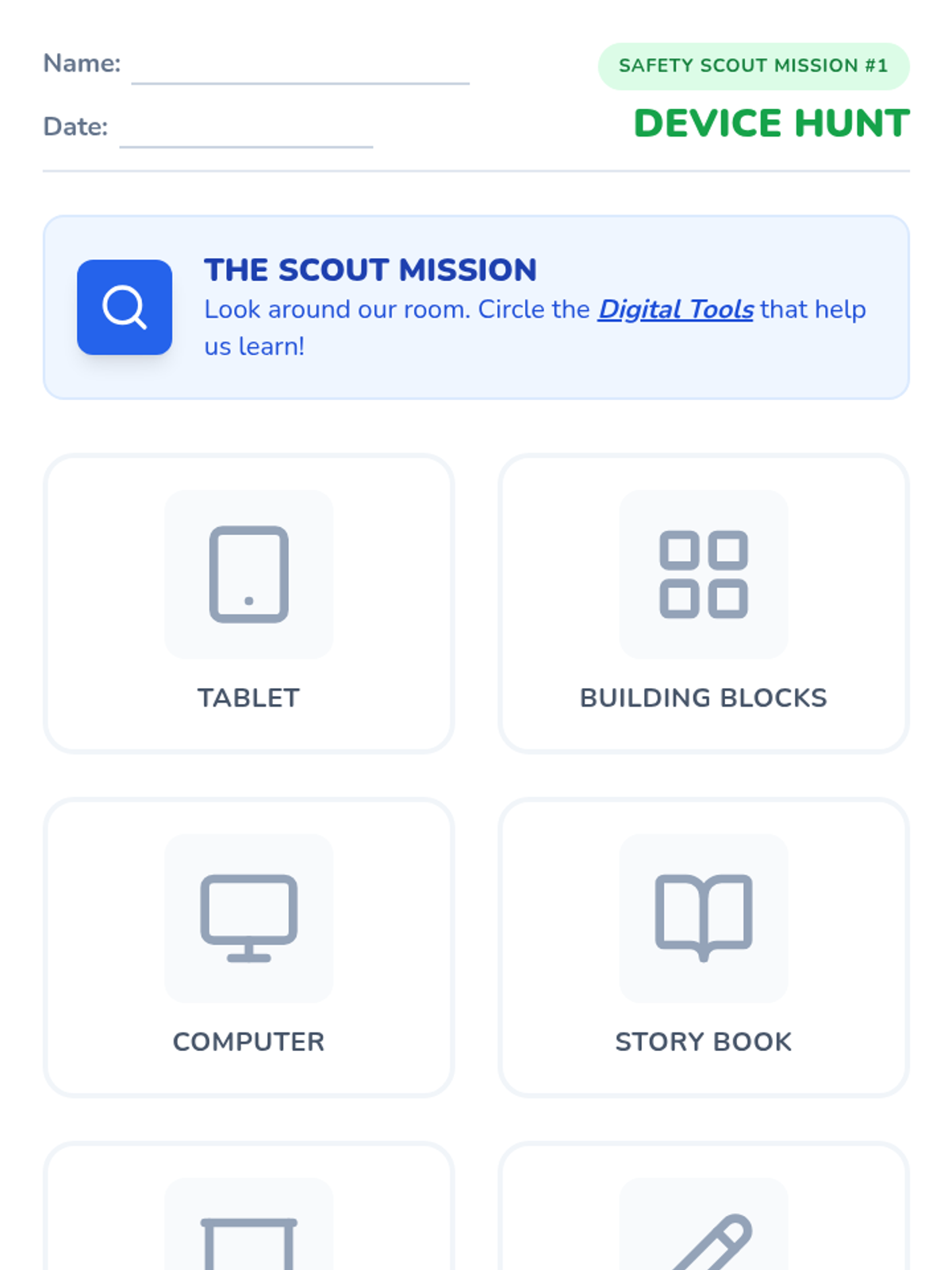
A foundational sequence for Kindergarten students exploring digital safety, privacy, and responsible device use through a 'Safety Scout' lens. Students learn to identify devices, distinguish between public and private information, practice seeking permission, and balance screen time with physical activity.
A Kindergarten sequence focused on classroom economy, teaching the purpose of money through simulation, needs vs. wants, goods vs. services, and basic budgeting. Students learn through a practical classroom store simulation to understand value and exchange.
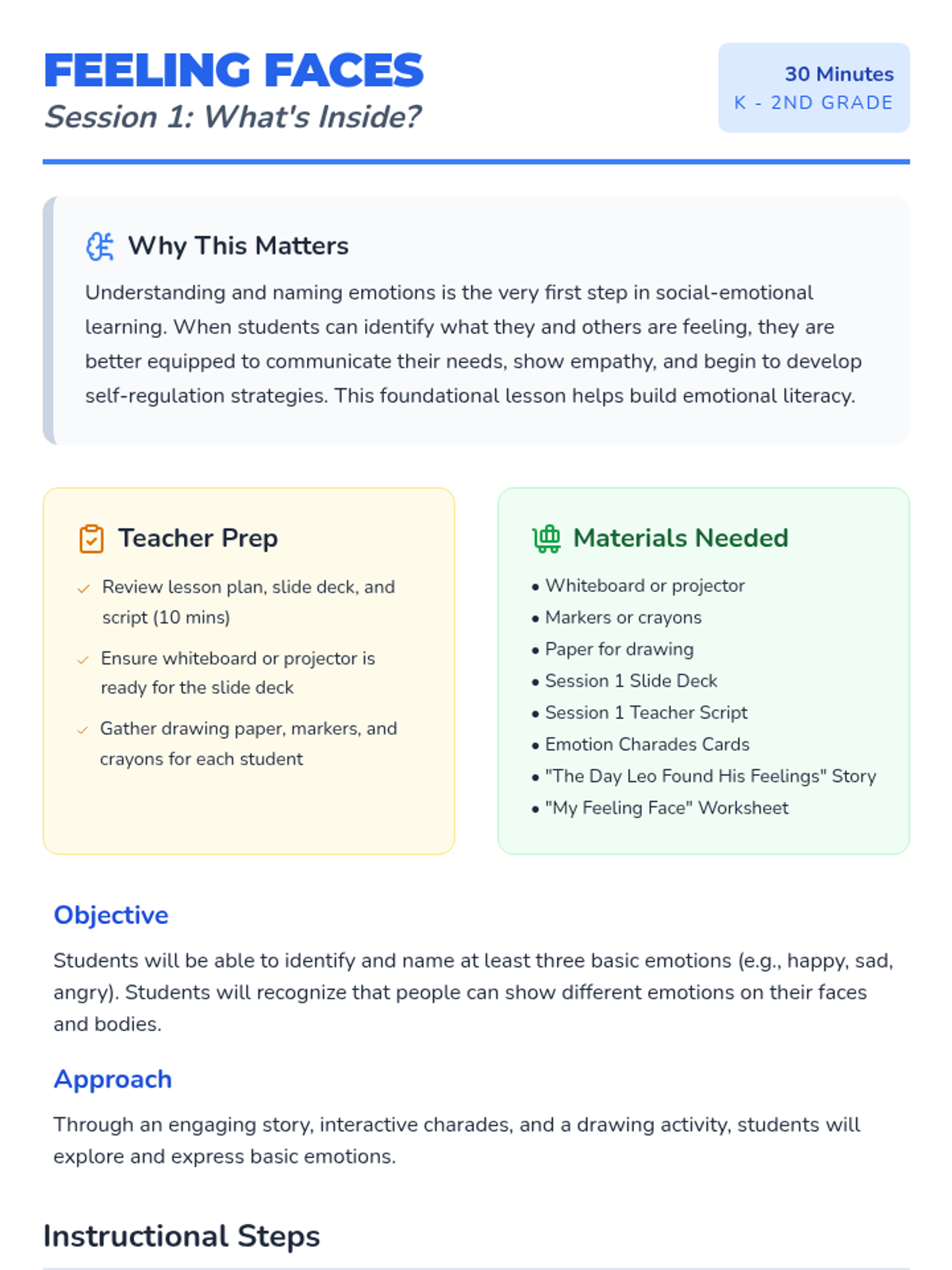
A 10-session social-emotional learning series for K-2 students, focusing on identifying, understanding, and managing emotions through interactive stories, games, and creative activities.
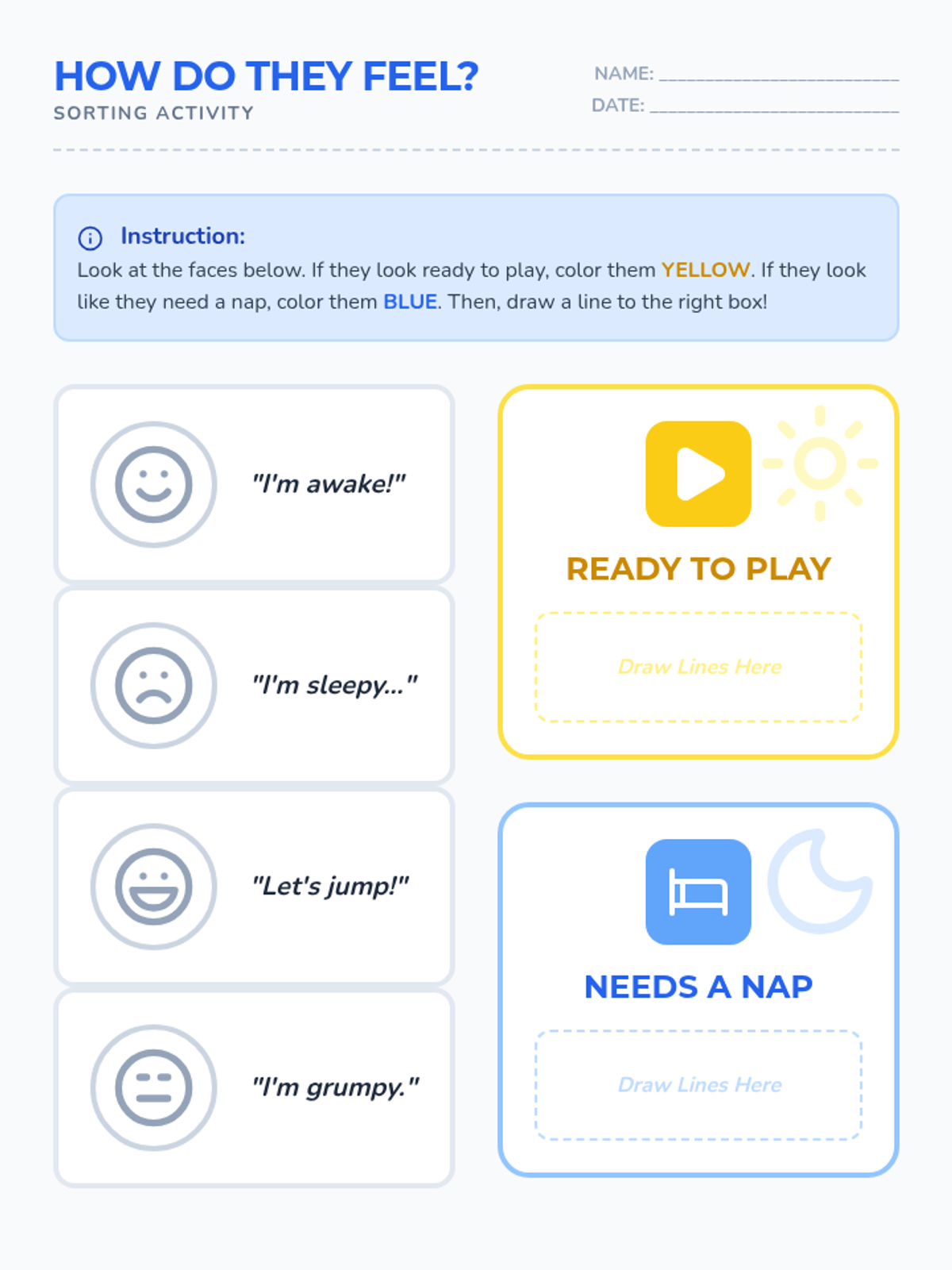
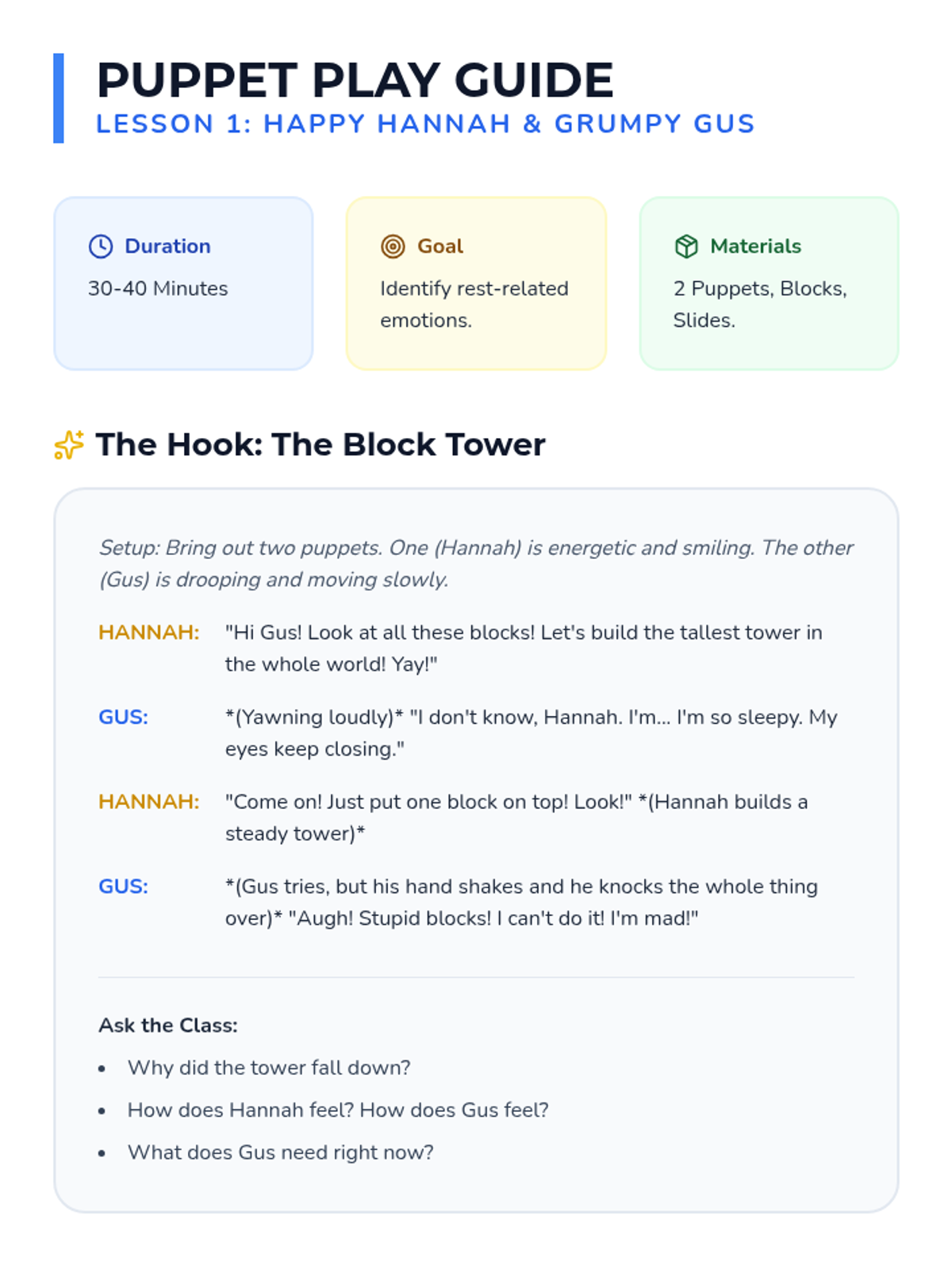
This sequence connects sleep directly to emotional regulation and mood through storytelling and case studies suitable for young children. Students identify emotions associated with sleep, analyze character choices, practice empathy in social play, and learn self-regulation strategies for rest.