Active listening, assertive expression, and boundary-setting strategies for interpersonal success. Develops proficiency in conflict mediation, cooperative teamwork, and the cultivation of healthy romantic and platonic connections.
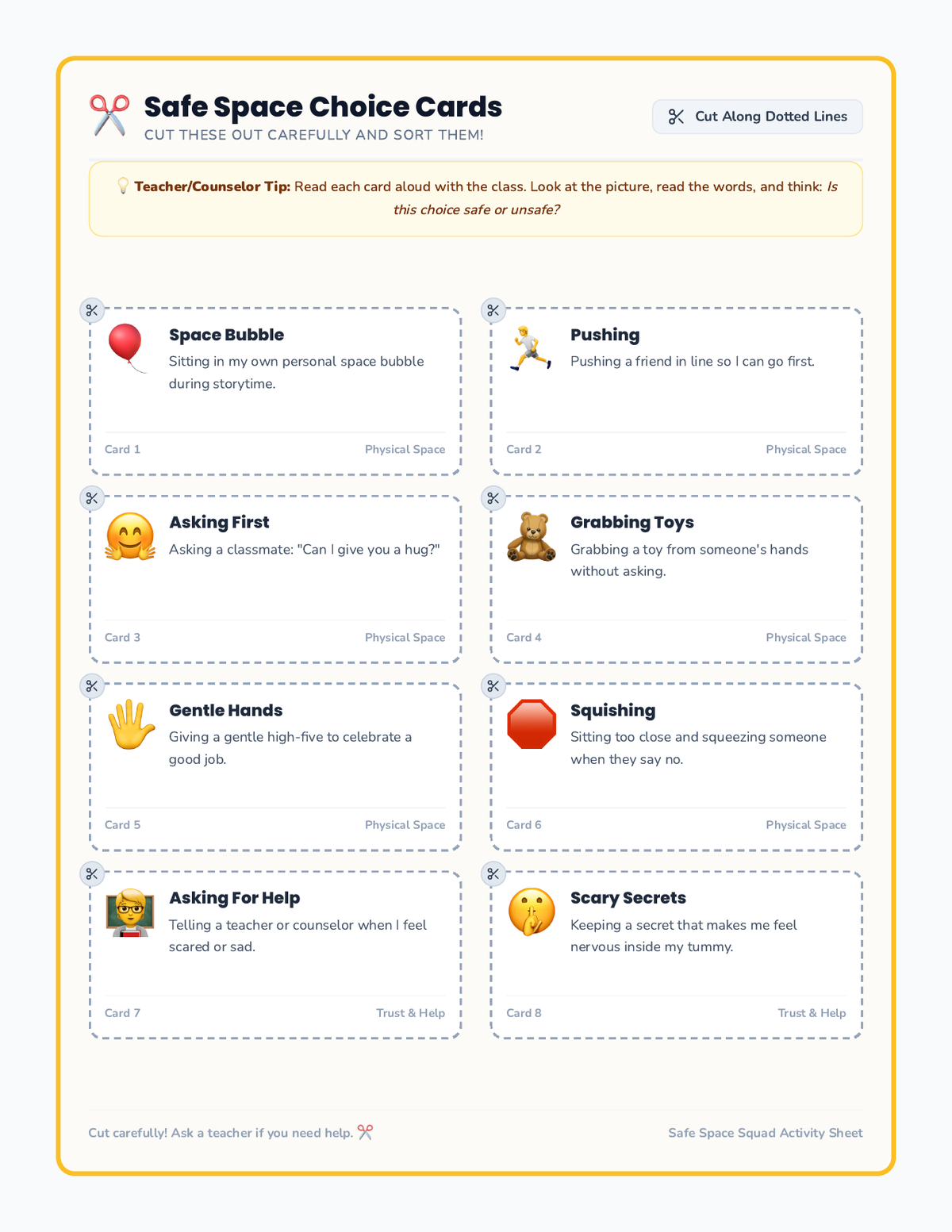
The visual cutout cards for the sorting activity. Features 8 child-friendly behavior cards with identical outer borders and colors to encourage analytical sorting rather than visual color-matching.
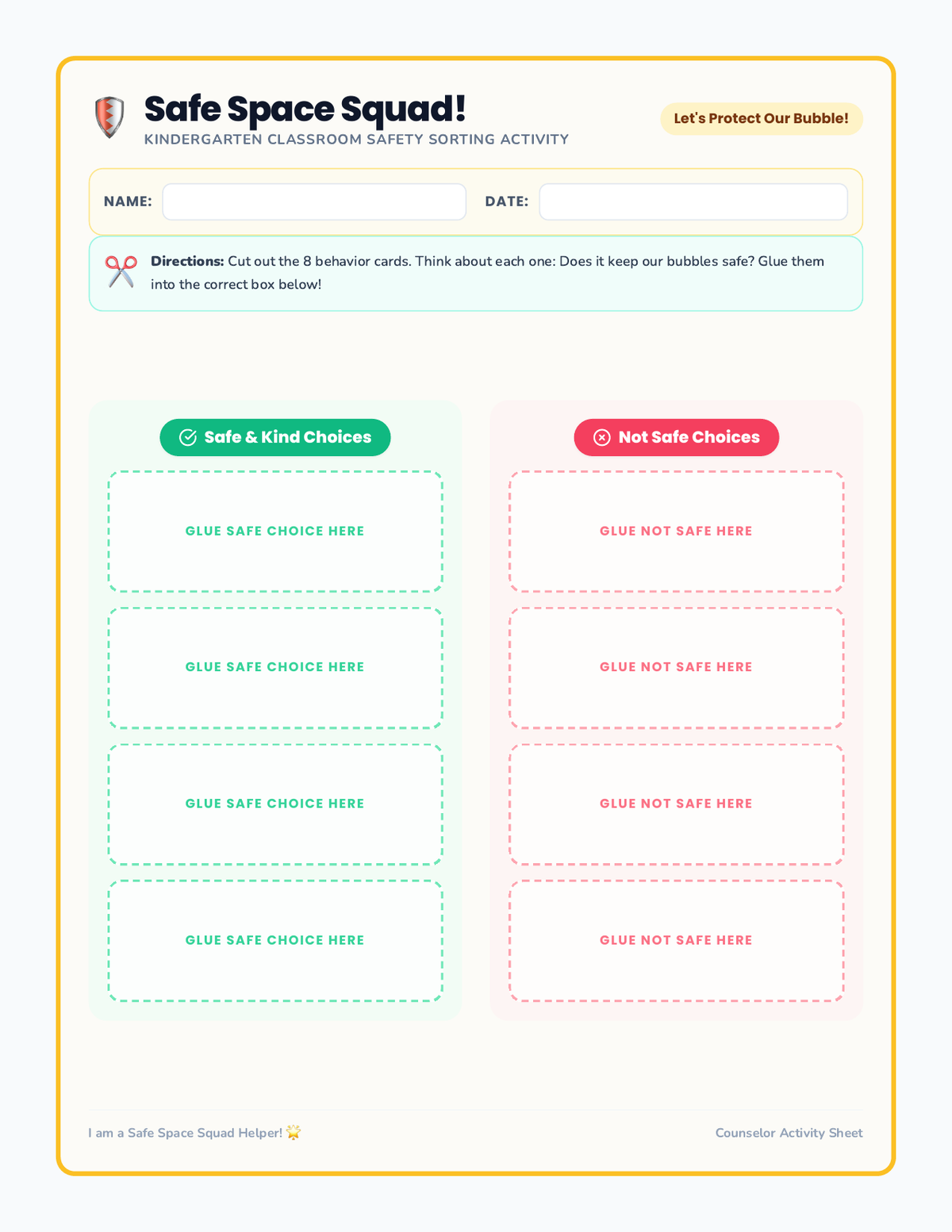
A student-facing sorting board where kindergarteners paste their sorted choices. It features two clearly colored columns (Safe & Kind vs. Not Safe) with dashed placeholders designed for little hands and easy visibility.
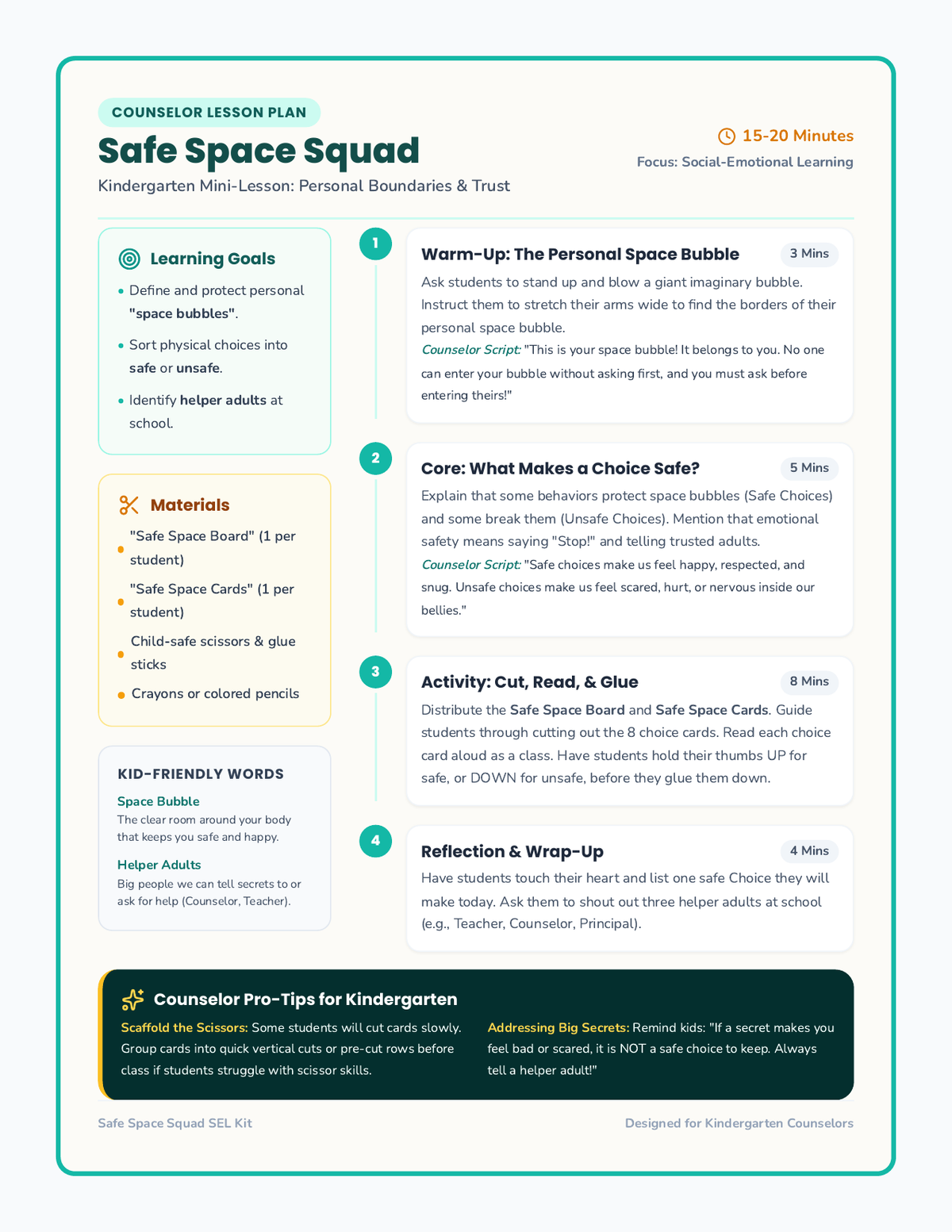
A comprehensive counselor mini-lesson guide for teaching physical boundaries and emotional safety to kindergarteners. It includes a structured timeline, warm-up exercises, classroom management tips, and discussion prompts.
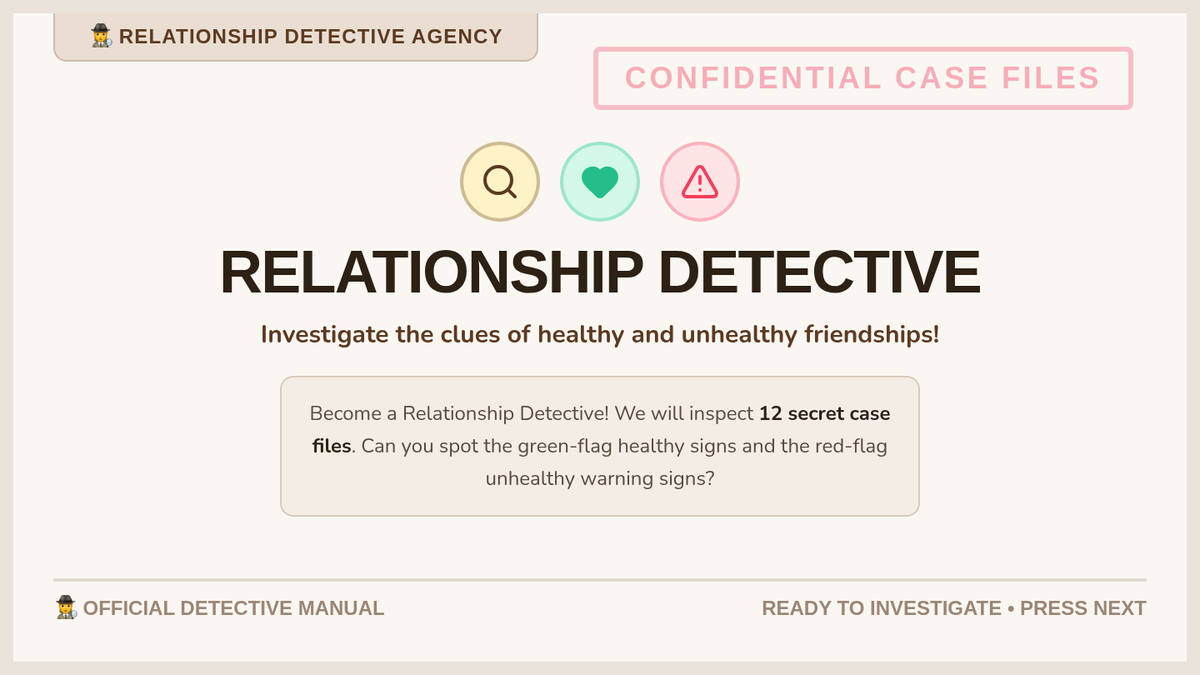
A highly visual and engaging slide deck with 25 slides. It guides students through 12 'Relationship Detective' case studies, presenting friendship behaviors and asking students to determine whether they represent healthy or unhealthy relationships. Each case file is followed by an answer slide color-coded in green (healthy) or red (unhealthy) with friendly icons and guiding text to support emerging readers.
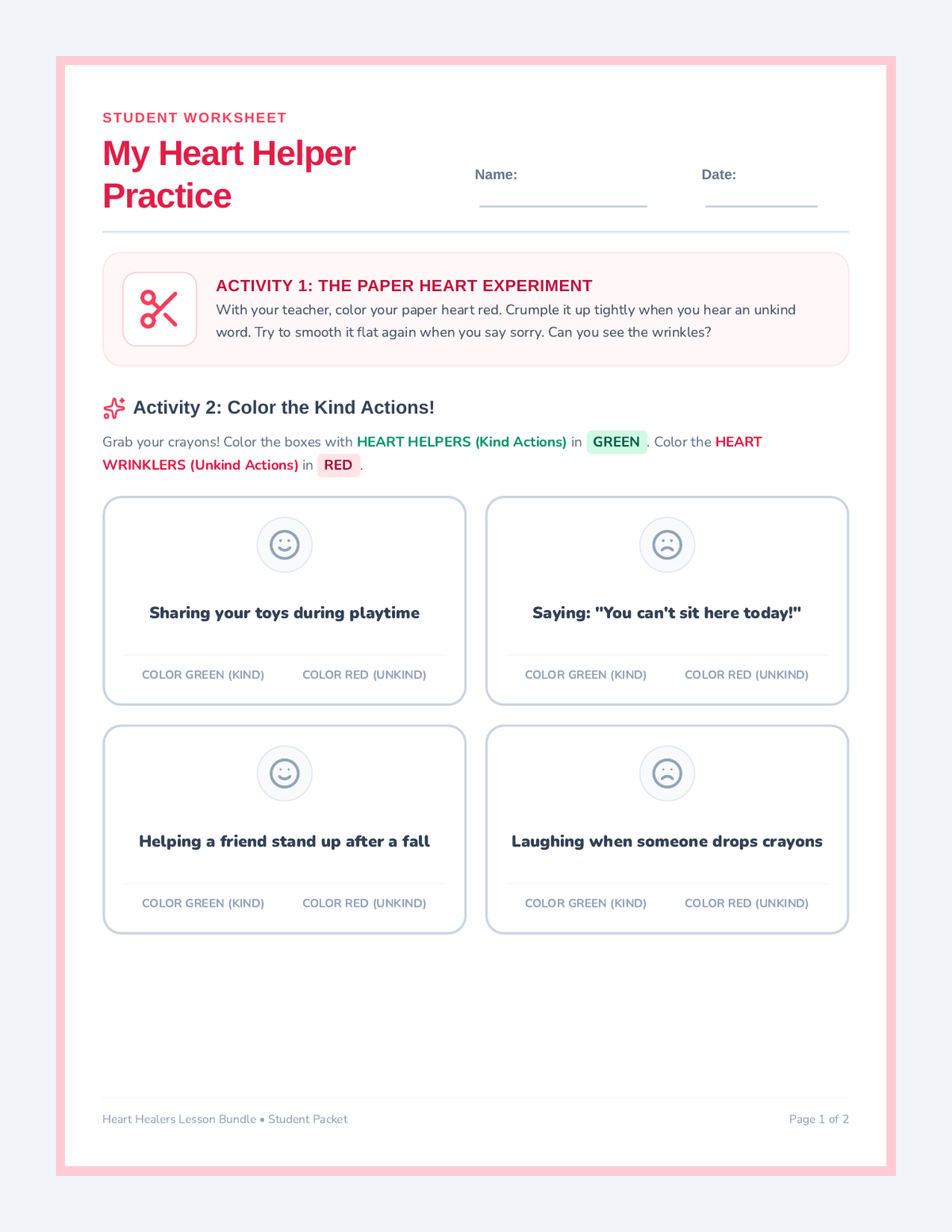
A hands-on student activity pack for grades K-1. Includes a name-writing and color-coding 'Heart Helpers' sorting page, and an 'I Am a Heart Healer' pledge certificate to color and sign.
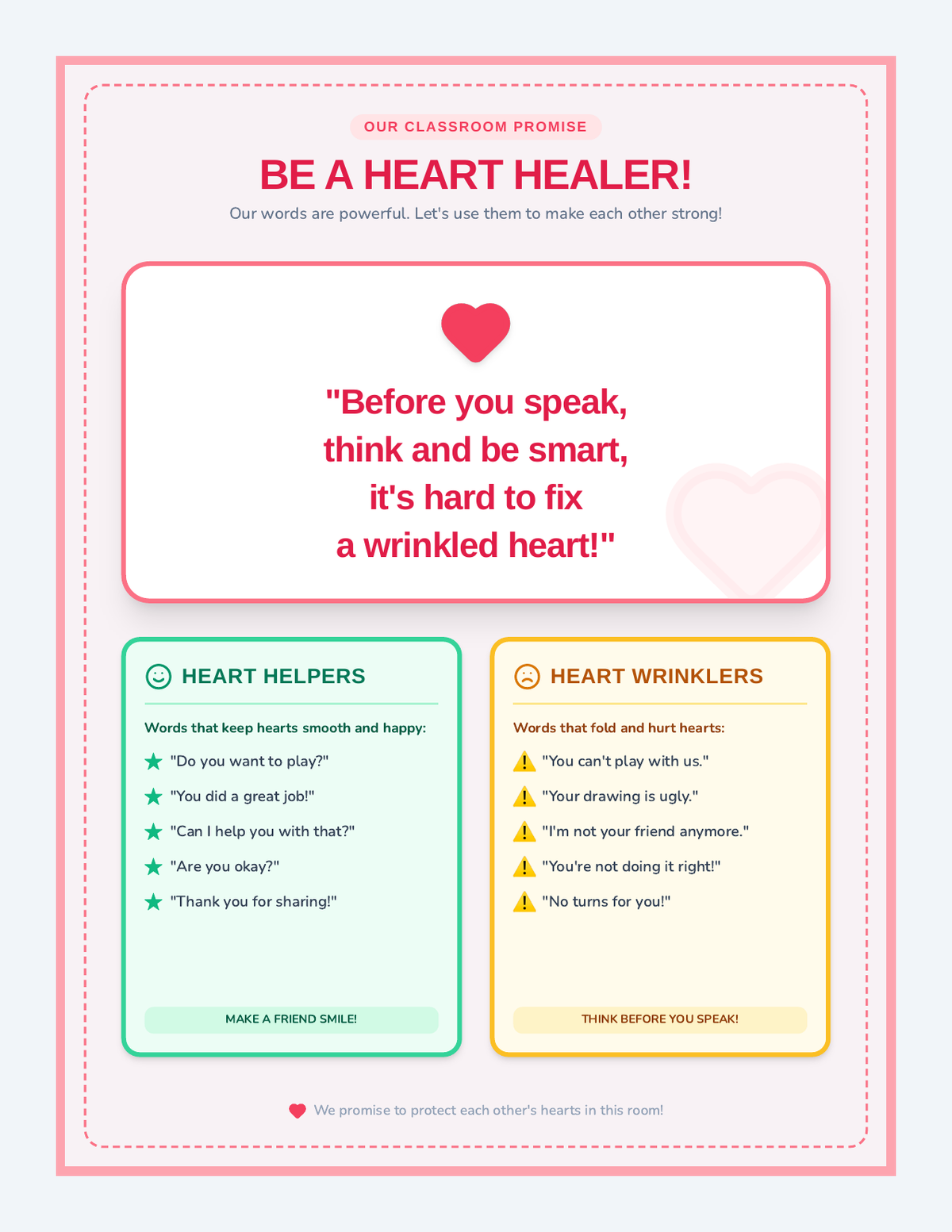
A colorful, high-contrast visual classroom poster (anchor chart) featuring the 'Wrinkled Heart' poem, actionable kind words lists, and illustrative icons to remind K-1 students to think before they speak.
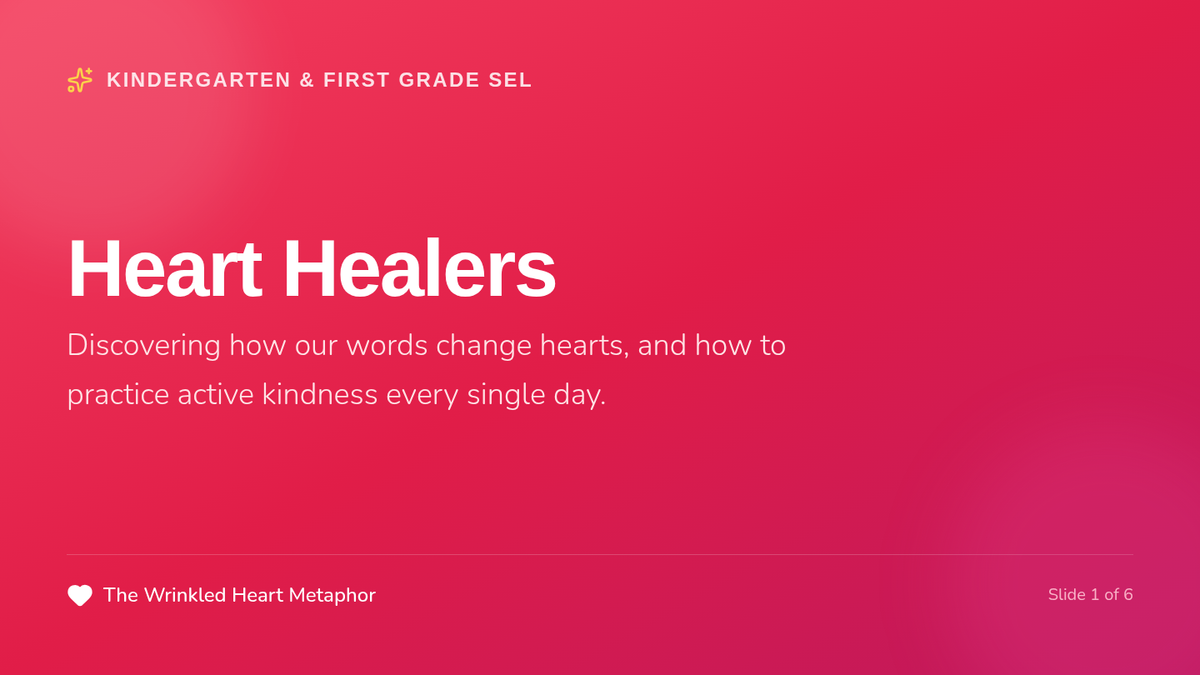
A vibrant, projection-ready slide deck with 6 interactive slides featuring the 'Wrinkled Heart' metaphor, 'Heart Helpers' vs. 'Heart Wrinklers' sorting guides, and conversational prompts.
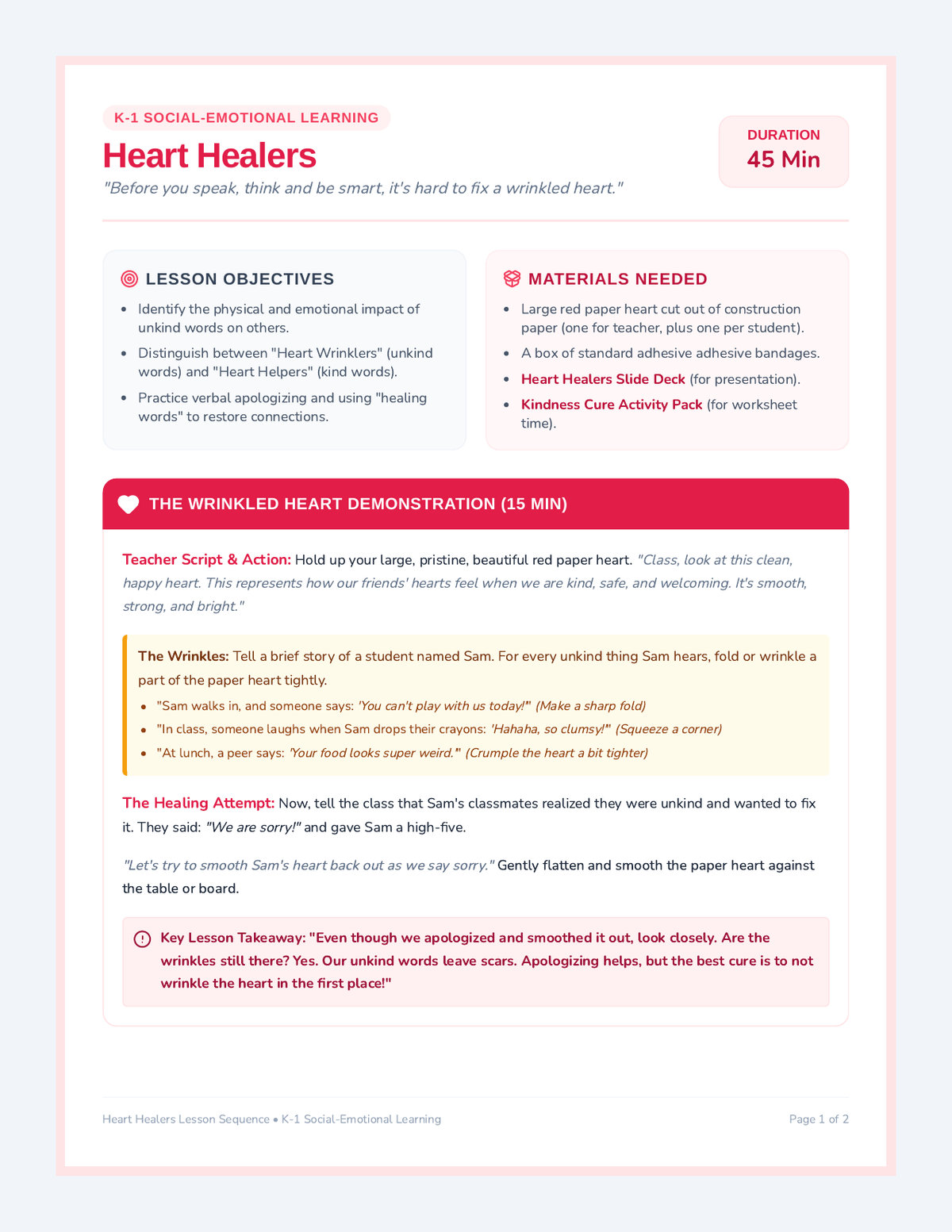
A comprehensive, step-by-step teacher guide and lesson plan for K-1 instructors. Includes the 'Wrinkled Heart' demonstration script, read-aloud discussion questions, roleplay cards, and pedagogical guidance.
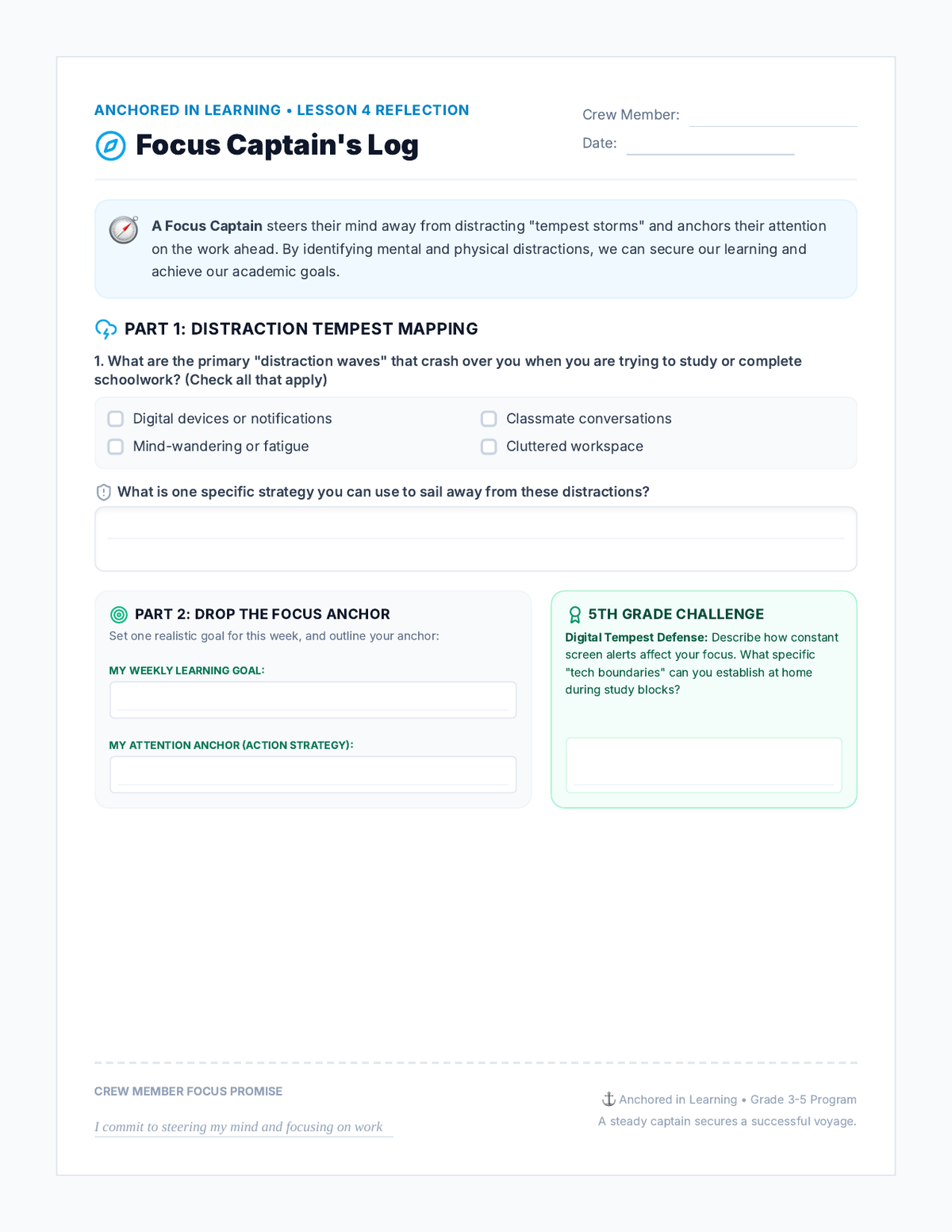
A print-ready reflective goal-setting and distraction-mapping worksheet for 3rd-5th grade students to anchor their executive attention, with 5th-grade differentiation.
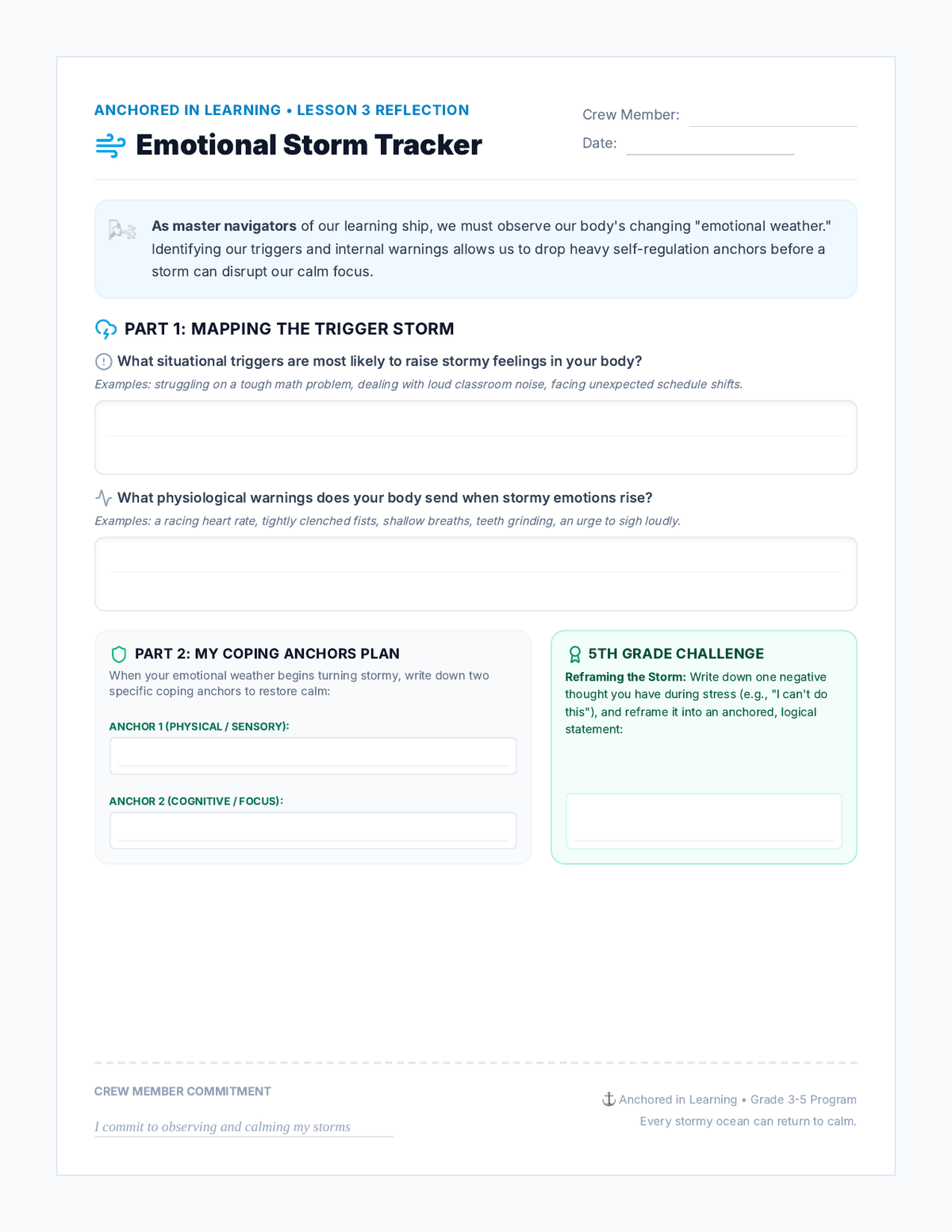
A print-ready coping anchor map and emotional trigger tracker for 3rd-5th grade students to recognize stress markers and select calming strategies, with 5th-grade differentiation.
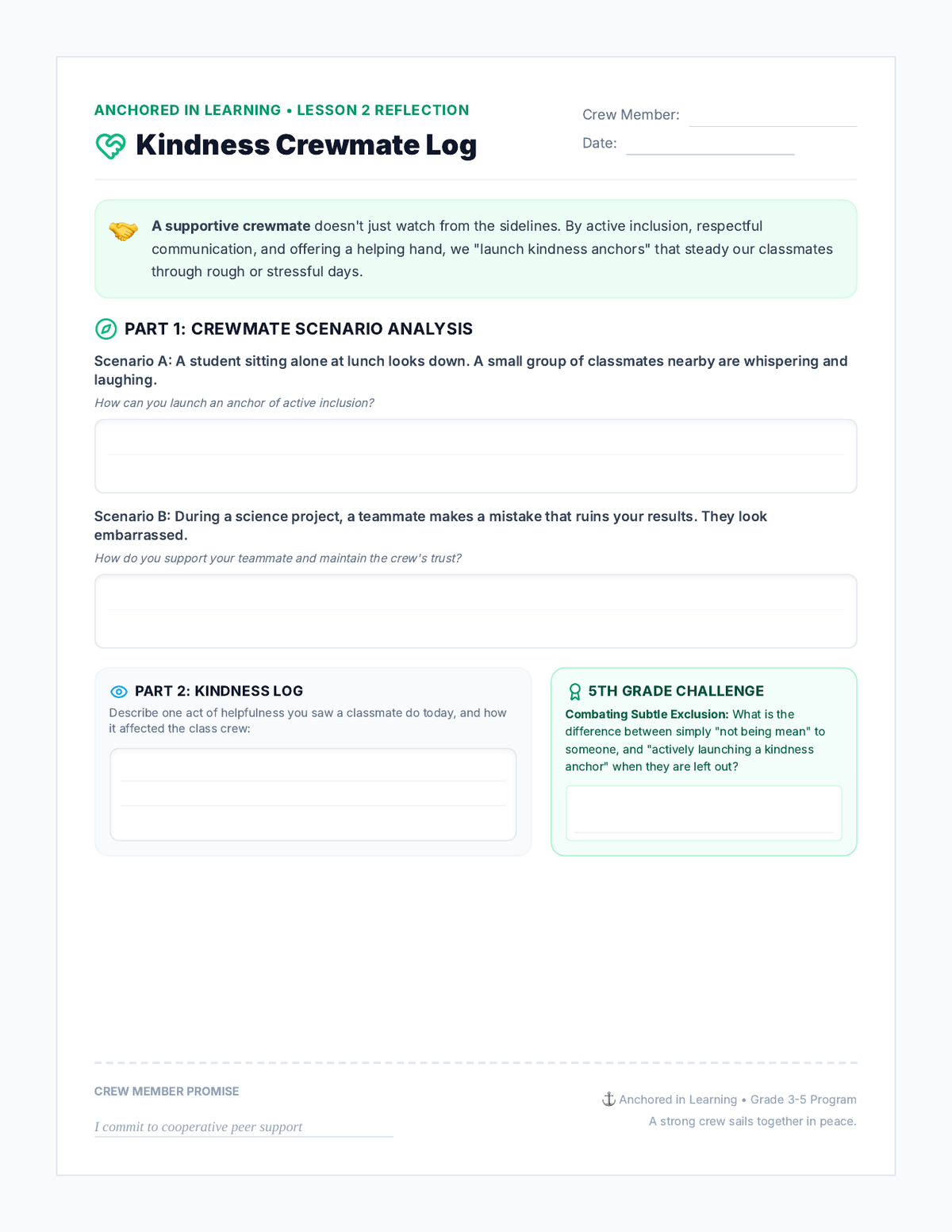
A print-ready empathetic reflection worksheet for 3rd-5th grade students to analyze peer scenario solutions and track daily classroom kindness, with 5th-grade differentiation.
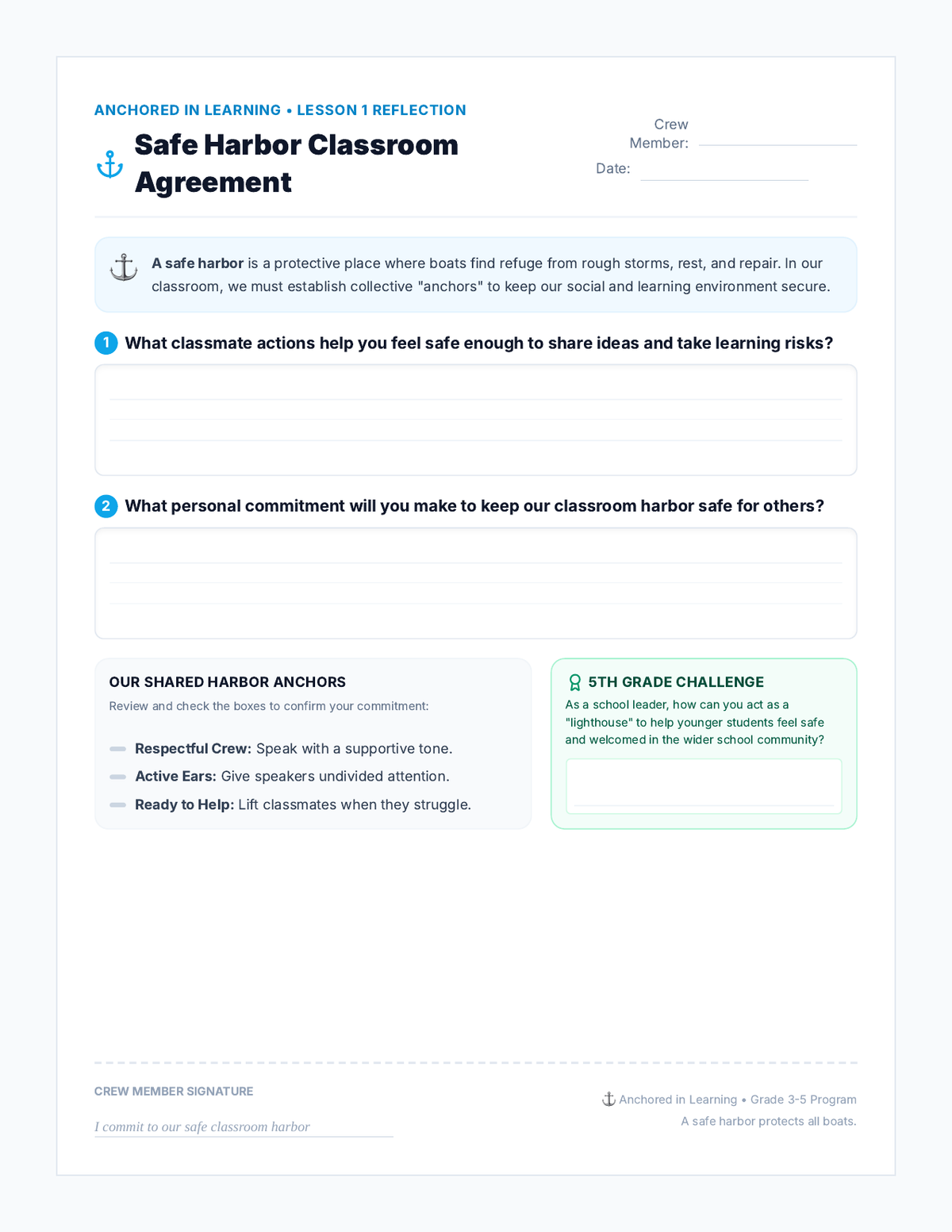
A print-ready reflective worksheet for 3rd-5th grade students to define their social-emotional safety needs and sign a Safe Harbor contract, with 5th-grade differentiation.
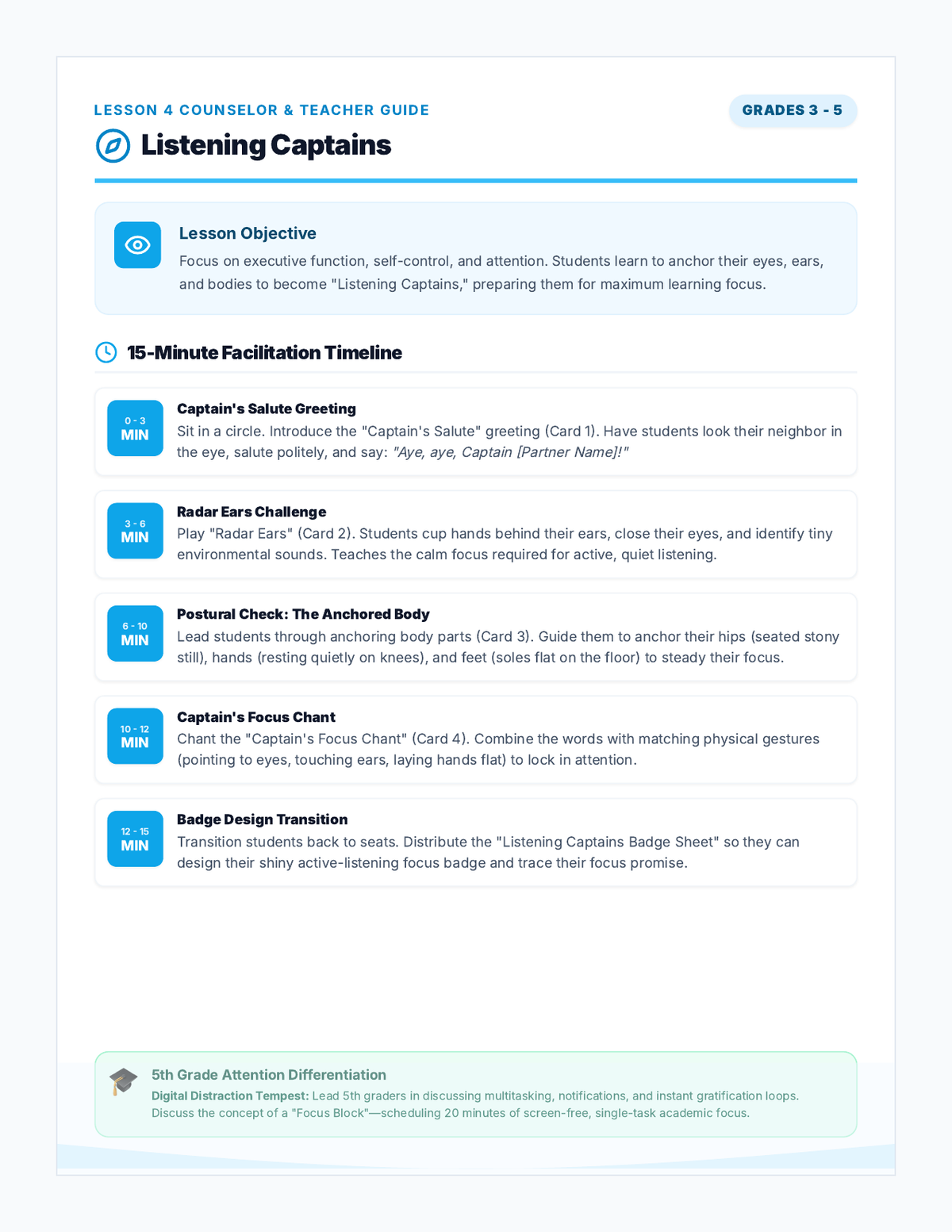
A 2-page print-ready teacher resource containing a detailed 15-minute lesson plan and 4 interactive circle cards to teach focus, attention, and active listening in Lesson 4, differentiated for 5th grade.
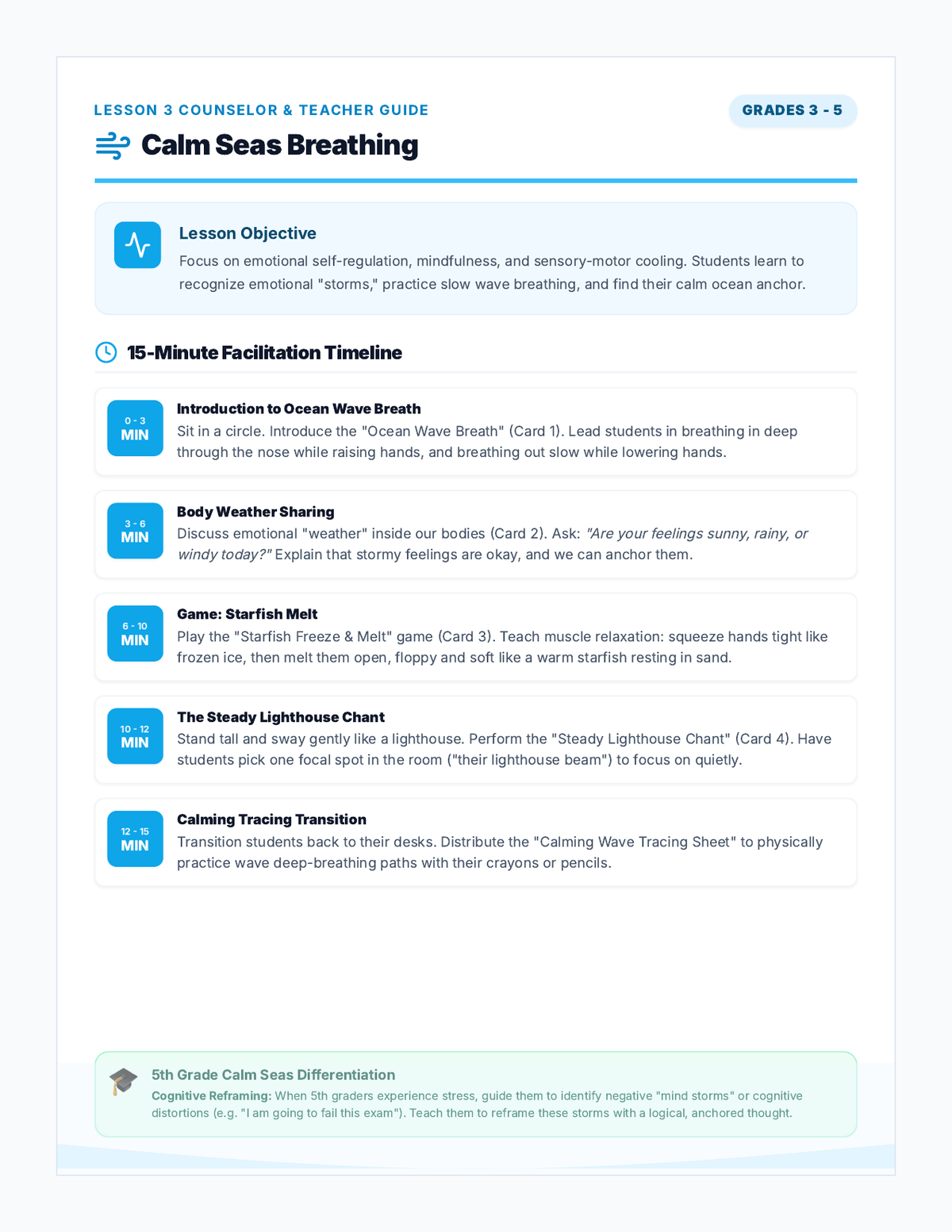
A 2-page print-ready teacher resource containing a detailed 15-minute lesson plan and 4 interactive circle cards to teach calming breathing and self-regulation in Lesson 3, differentiated for 5th grade.
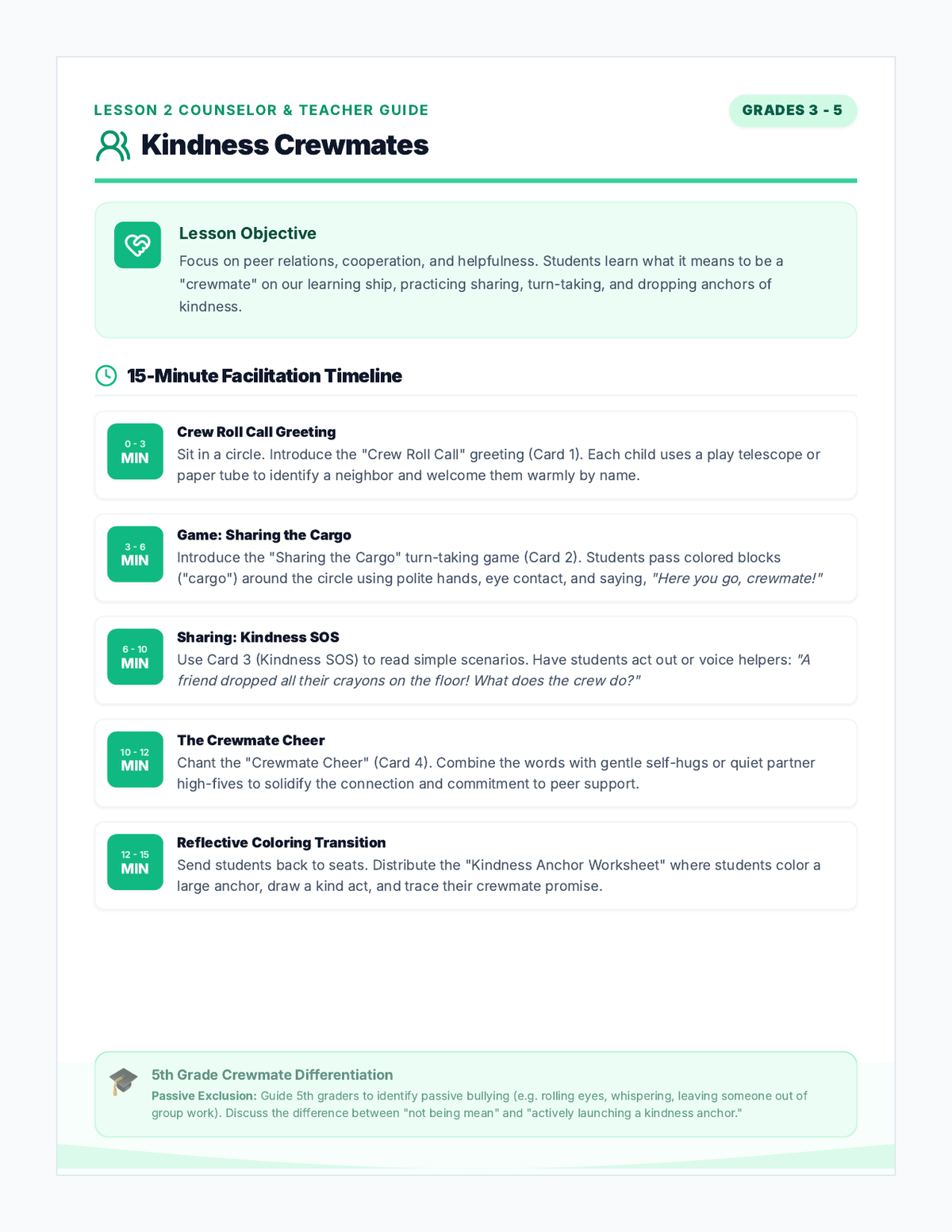
A 2-page print-ready teacher resource containing a detailed 15-minute lesson plan and 4 interactive circle cards to practice kindness and cooperation in Lesson 2, differentiated for 5th grade.
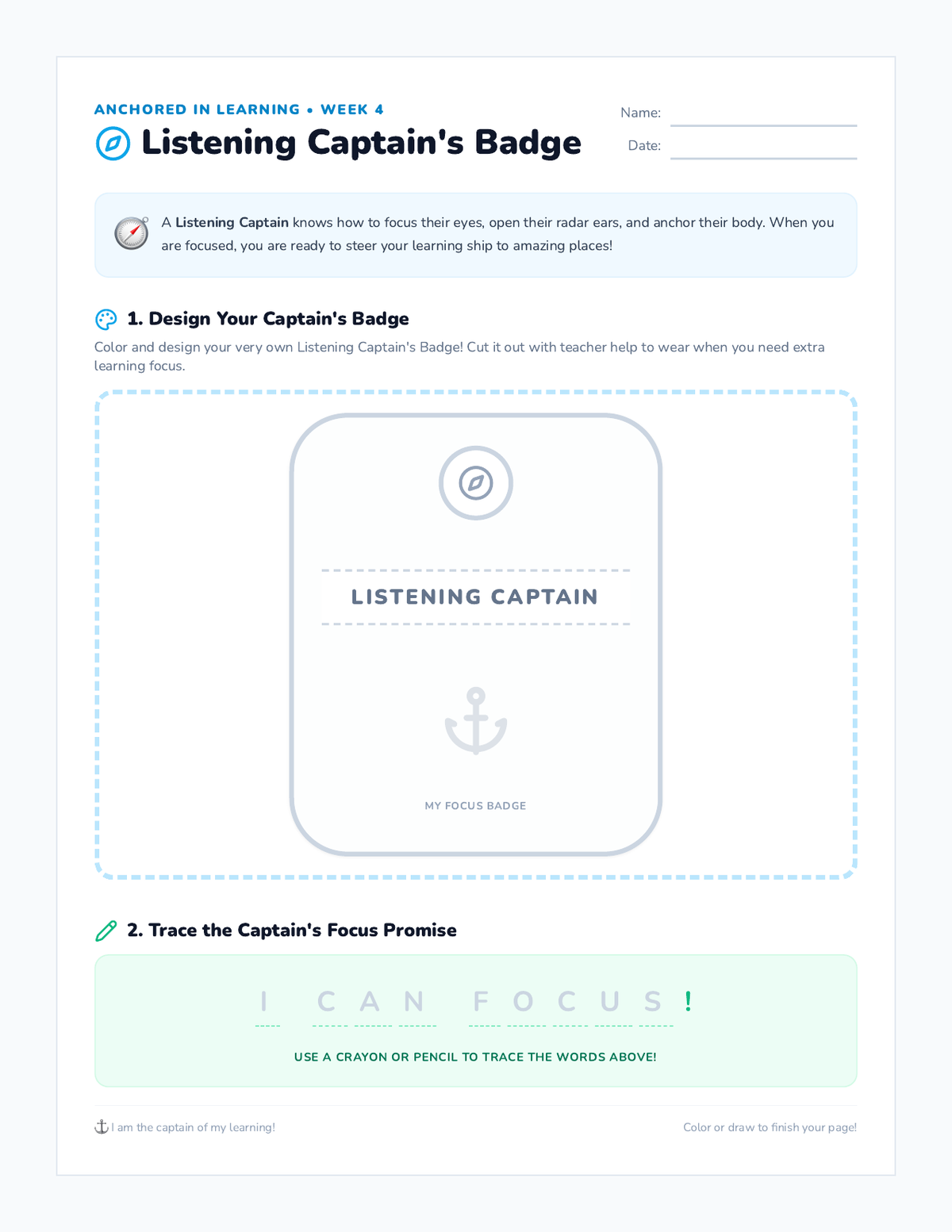
A print-ready coloring and drawing badge tracker worksheet for K-1 students to show attention and focus skills.
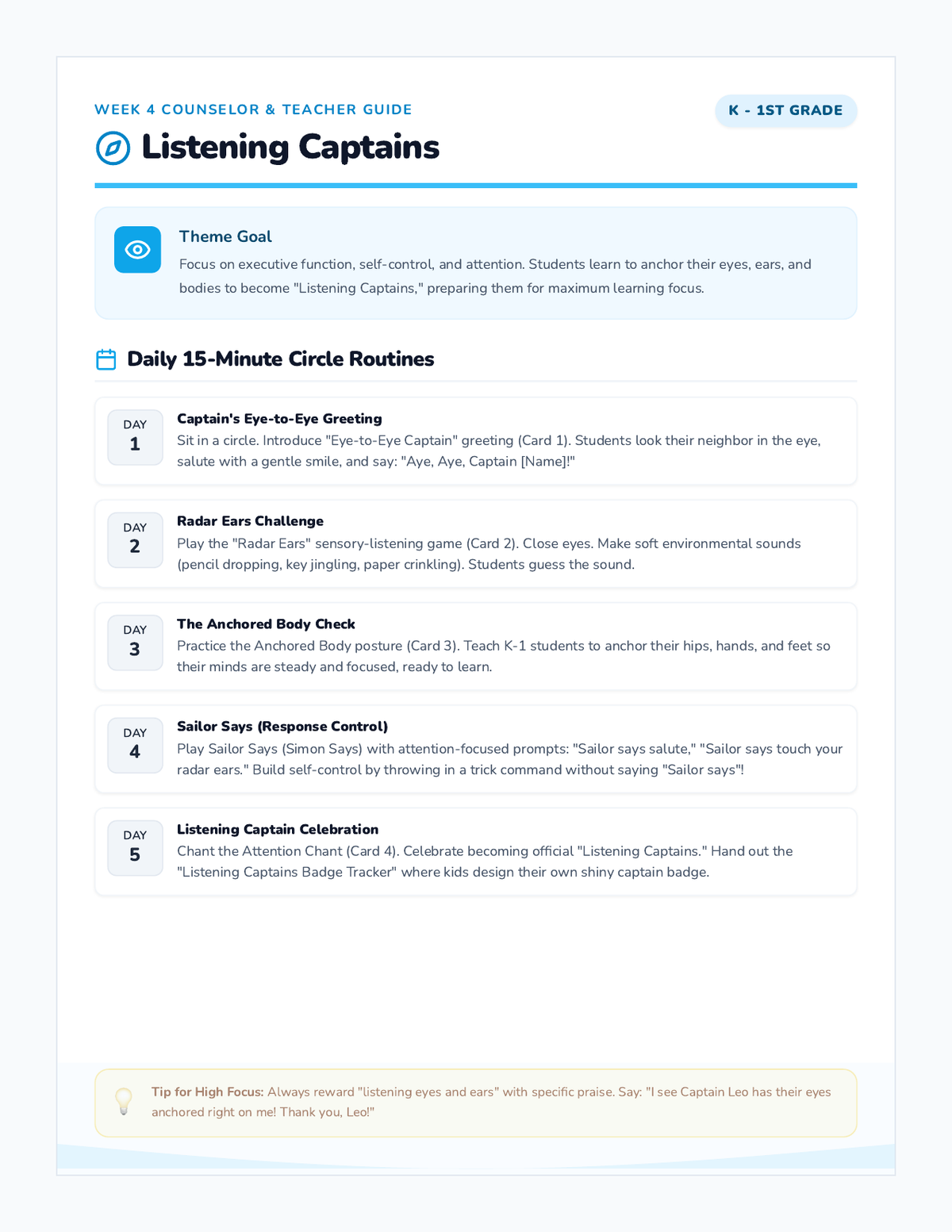
A 2-page print-ready teacher resource containing a 5-day circle guide and 4 interactive circle cards to teach focus, attention, and active listening in Week 4.
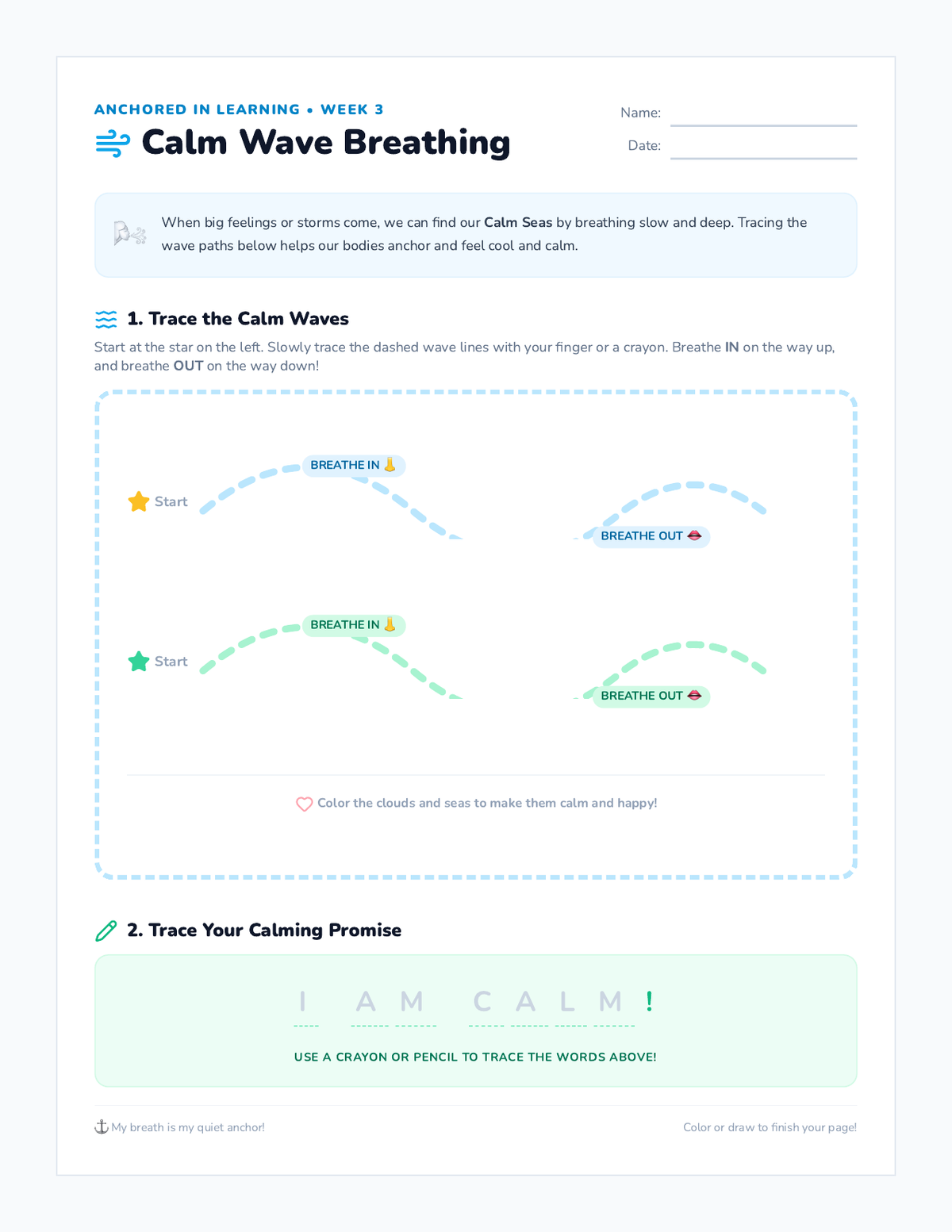
A print-ready wave finger-tracing and coloring worksheet for K-1 students to practice self-regulation and calming breathing.
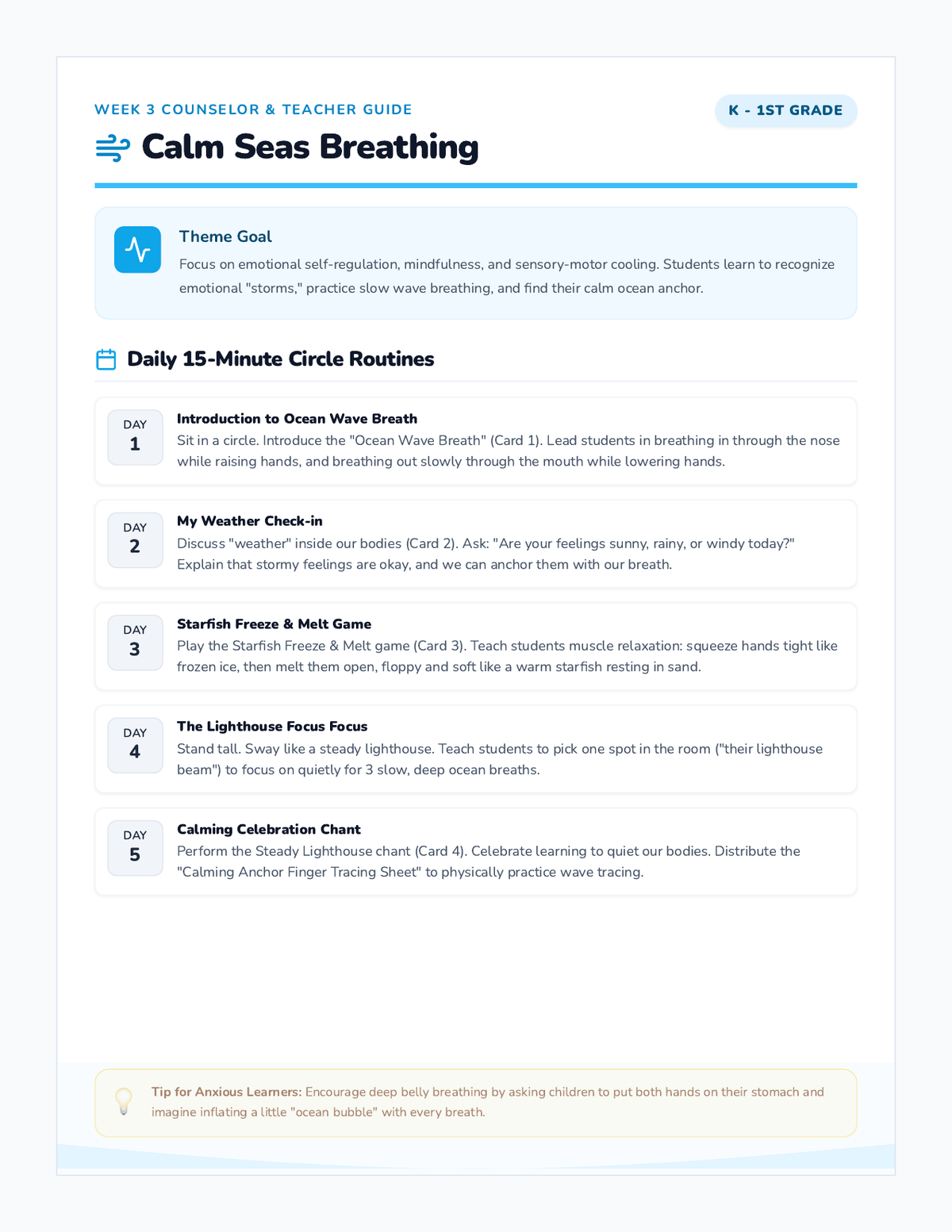
A 2-page print-ready teacher resource containing a 5-day circle guide and 4 interactive circle cards to teach calming breathing and self-regulation in Week 3.
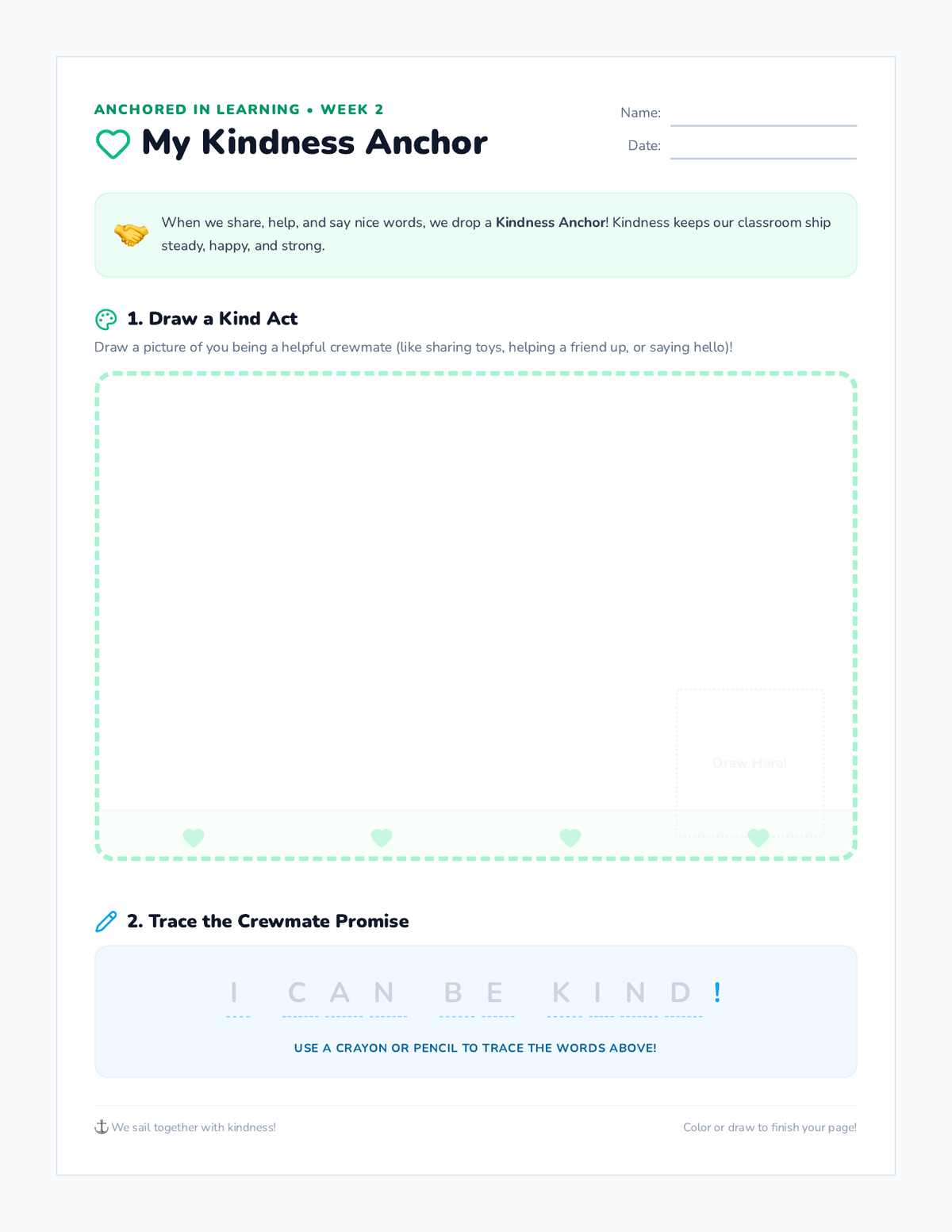
A print-ready drawing and coloring activity worksheet for K-1 students to show how they drop a 'kindness anchor' by helping classmates.
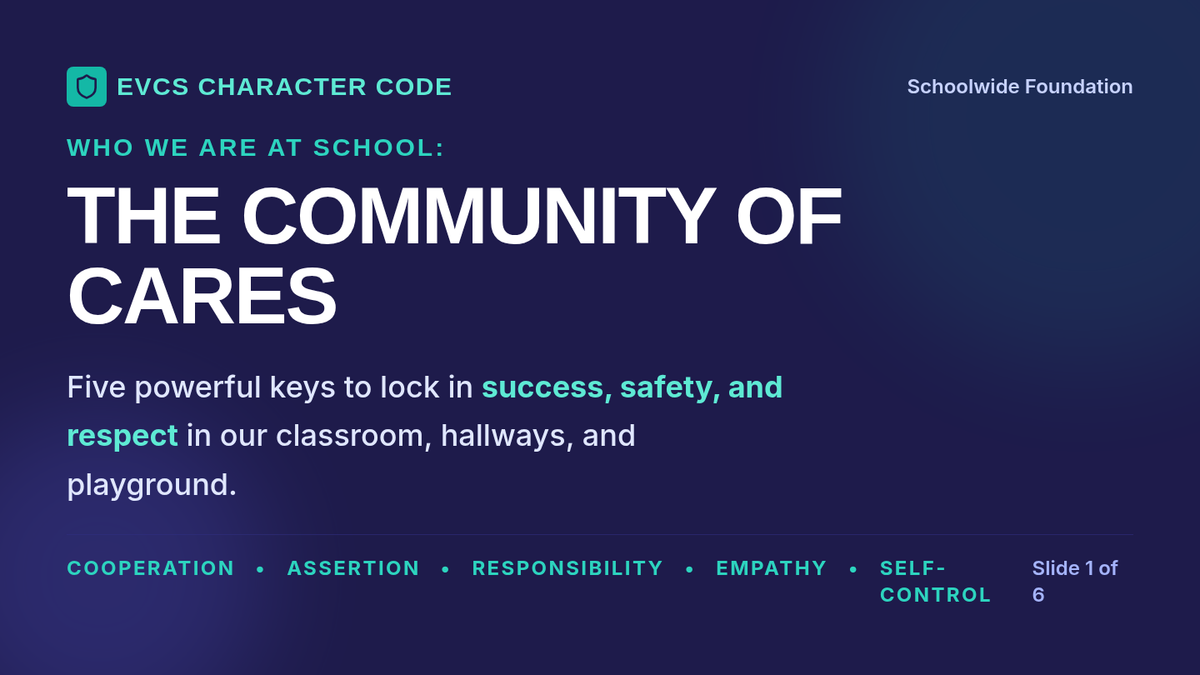
A comprehensive and vibrant presentation slide deck that introduces each of the five EVCS CARES characteristics (Cooperation, Assertion, Responsibility, Empathy, and Self-Control) in isolation with key deep-dive strategies.
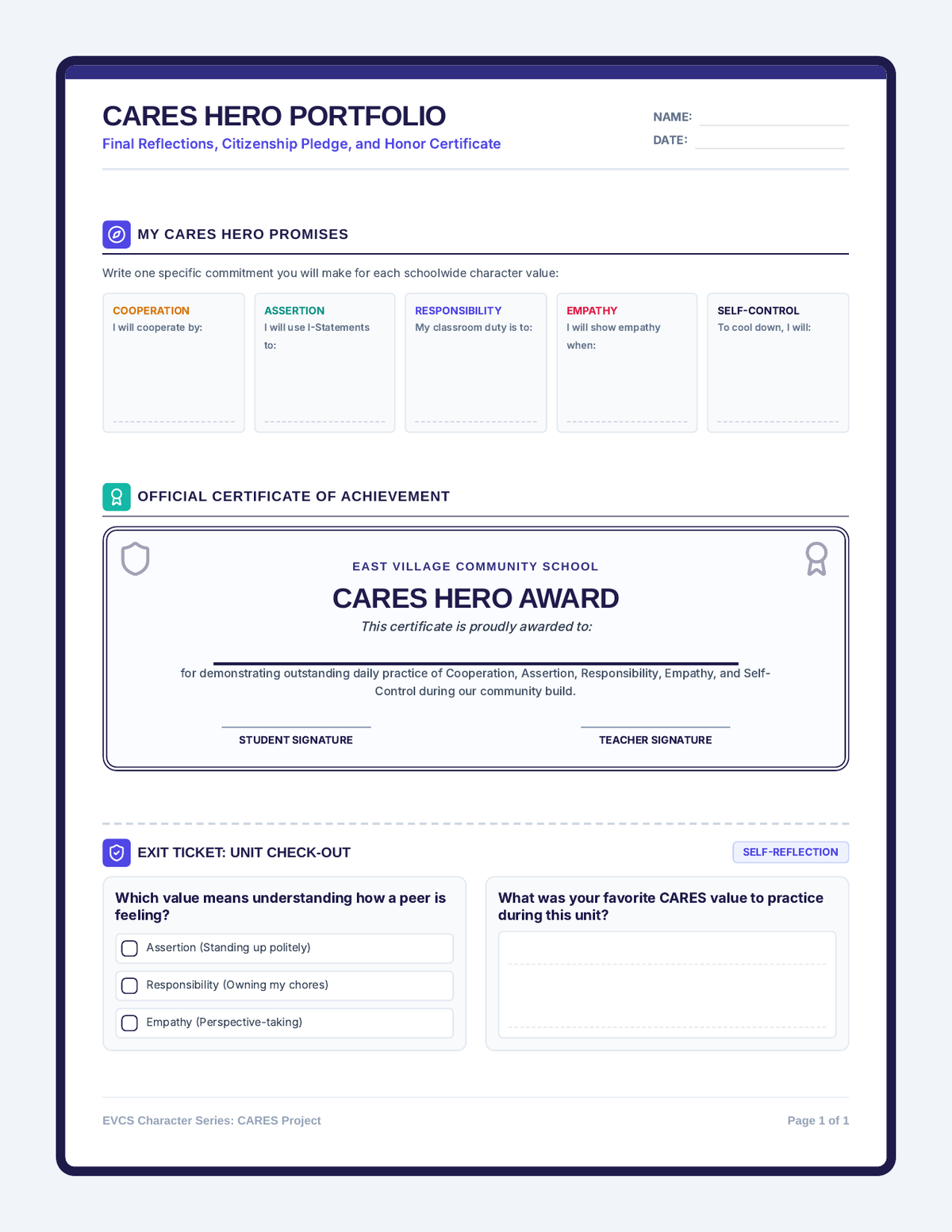
A printable student portfolio and official CARES Hero certificate of achievement, featuring a values synthesis map, a signed pledge card, and a final units reflection exit ticket.
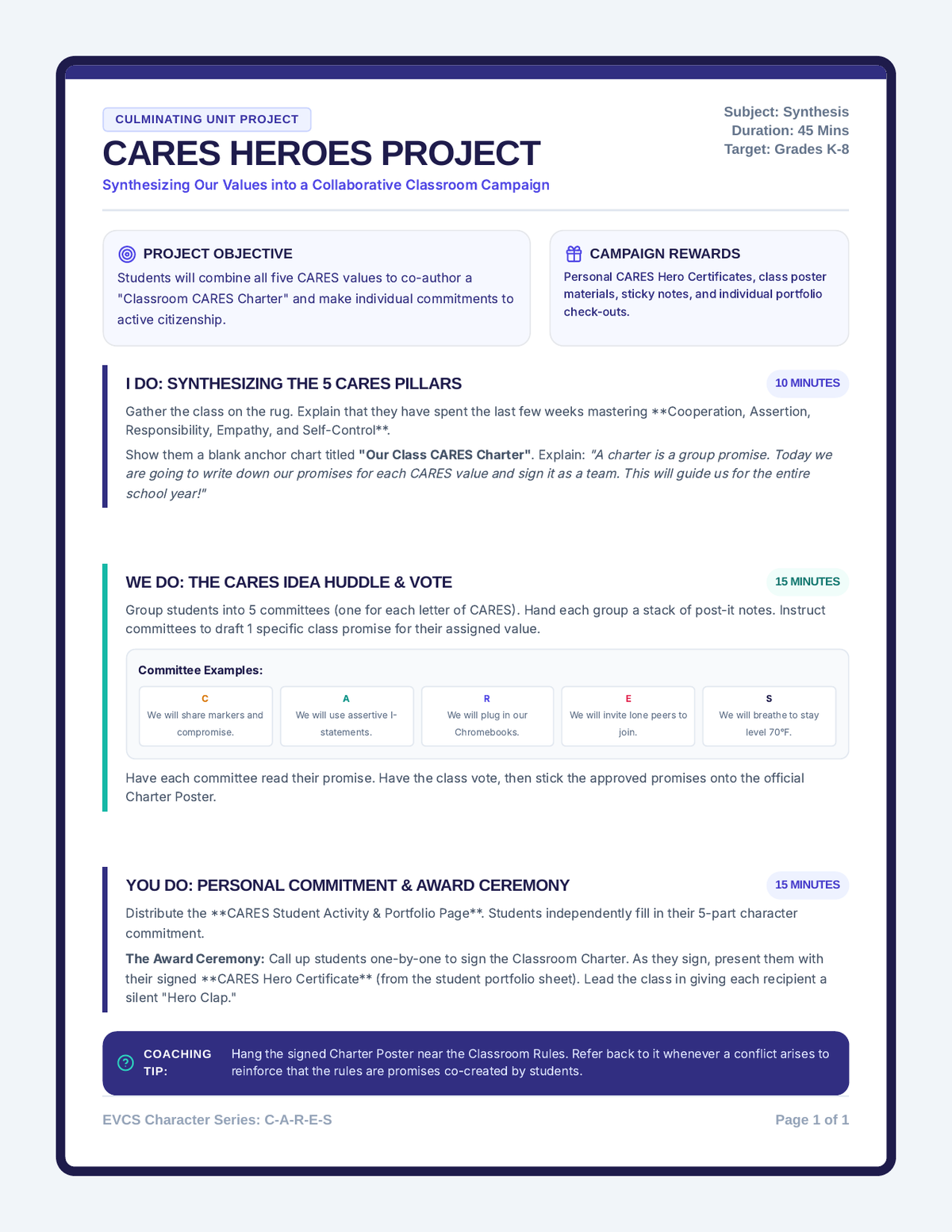
A teacher guide for facilitating the culminating CARES Heroes Project, outlining a step-by-step collaborative class charter co-creation and schoolwide kindness campaign.
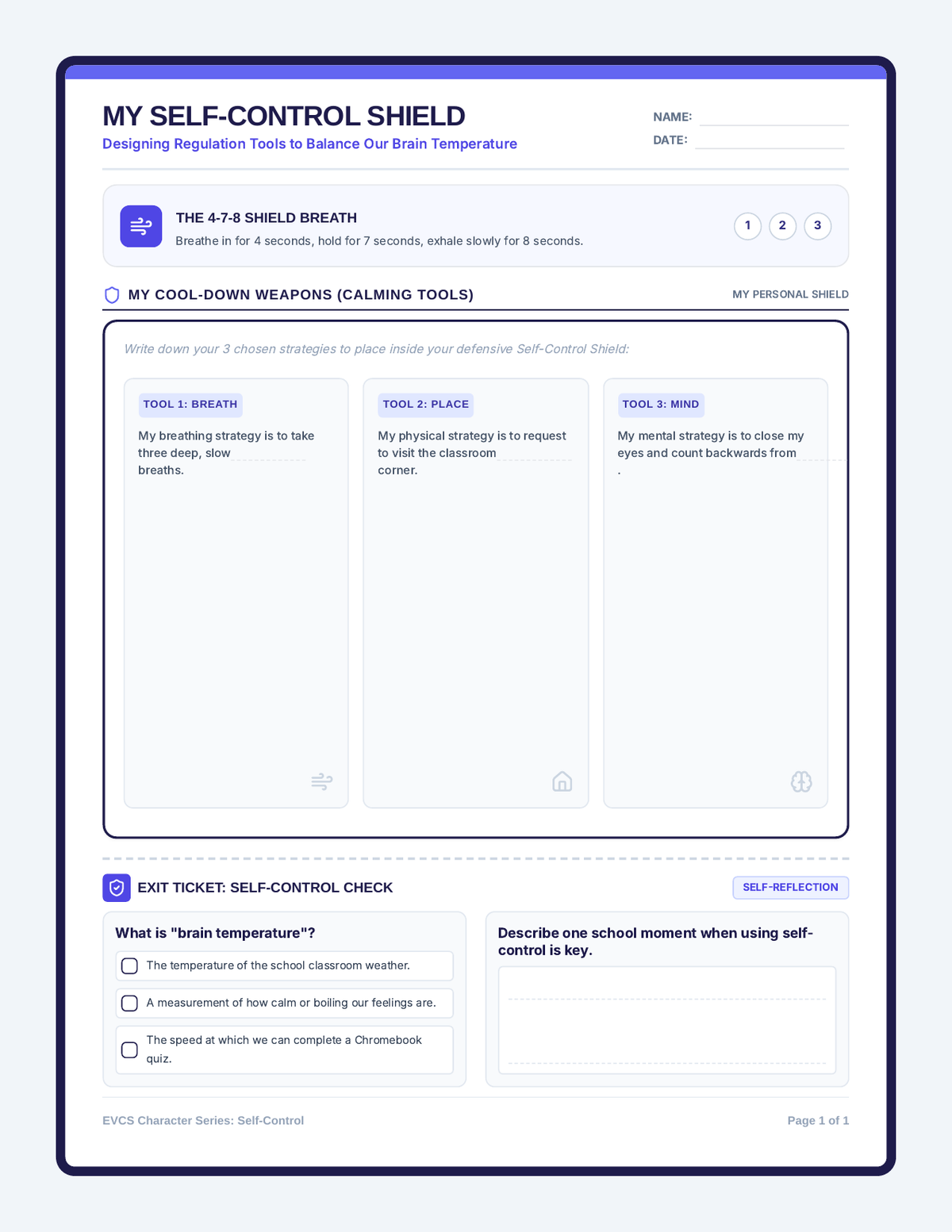
A student worksheet and interactive cool-down shield mapper for planning self-regulation and breathing techniques during emotional challenges. Includes a self-assessment exit ticket.
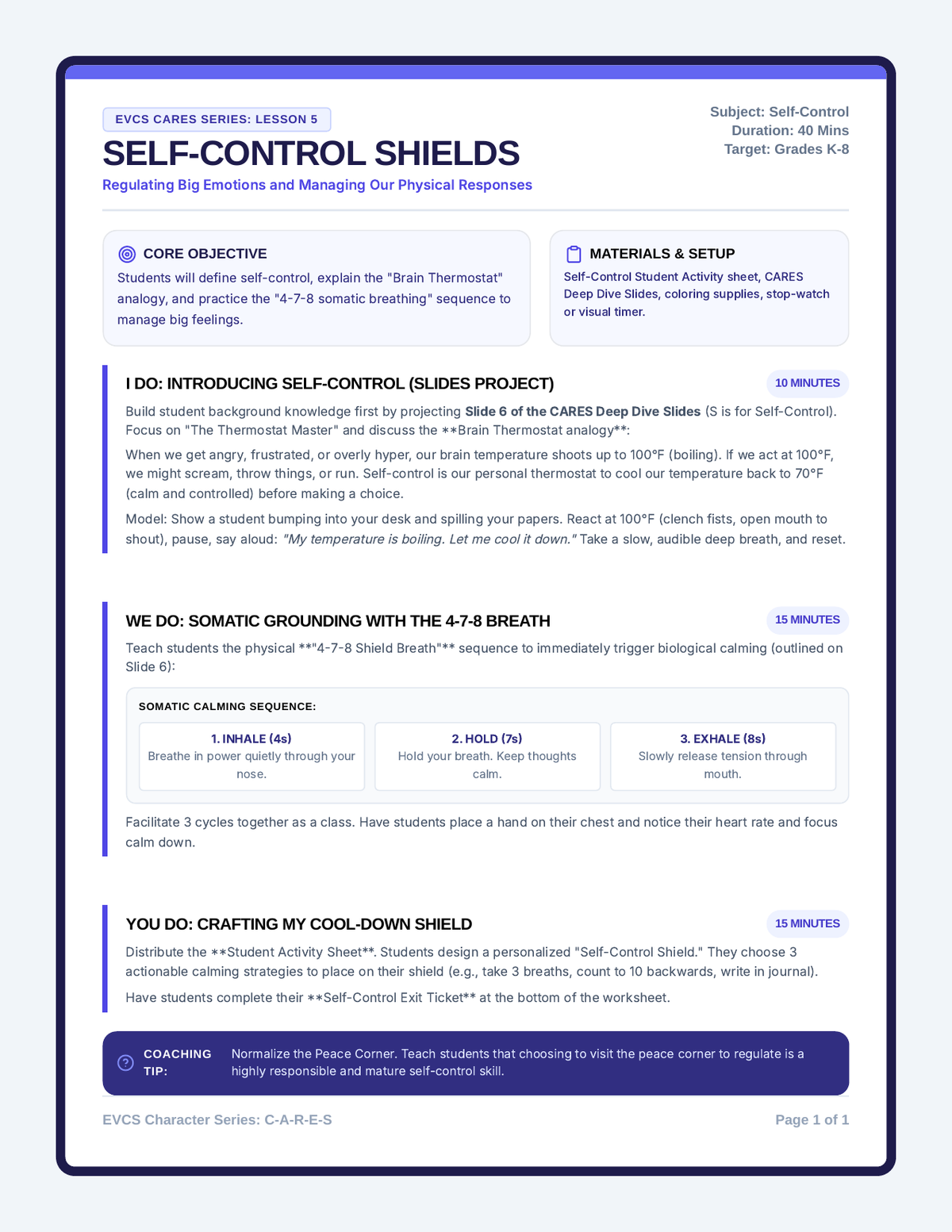
A complete teacher lesson plan for teaching Self-Control. Guides educators on instructing the 'Brain Temperature' analogy, somatic grounding breathing techniques, and peace corner routines.
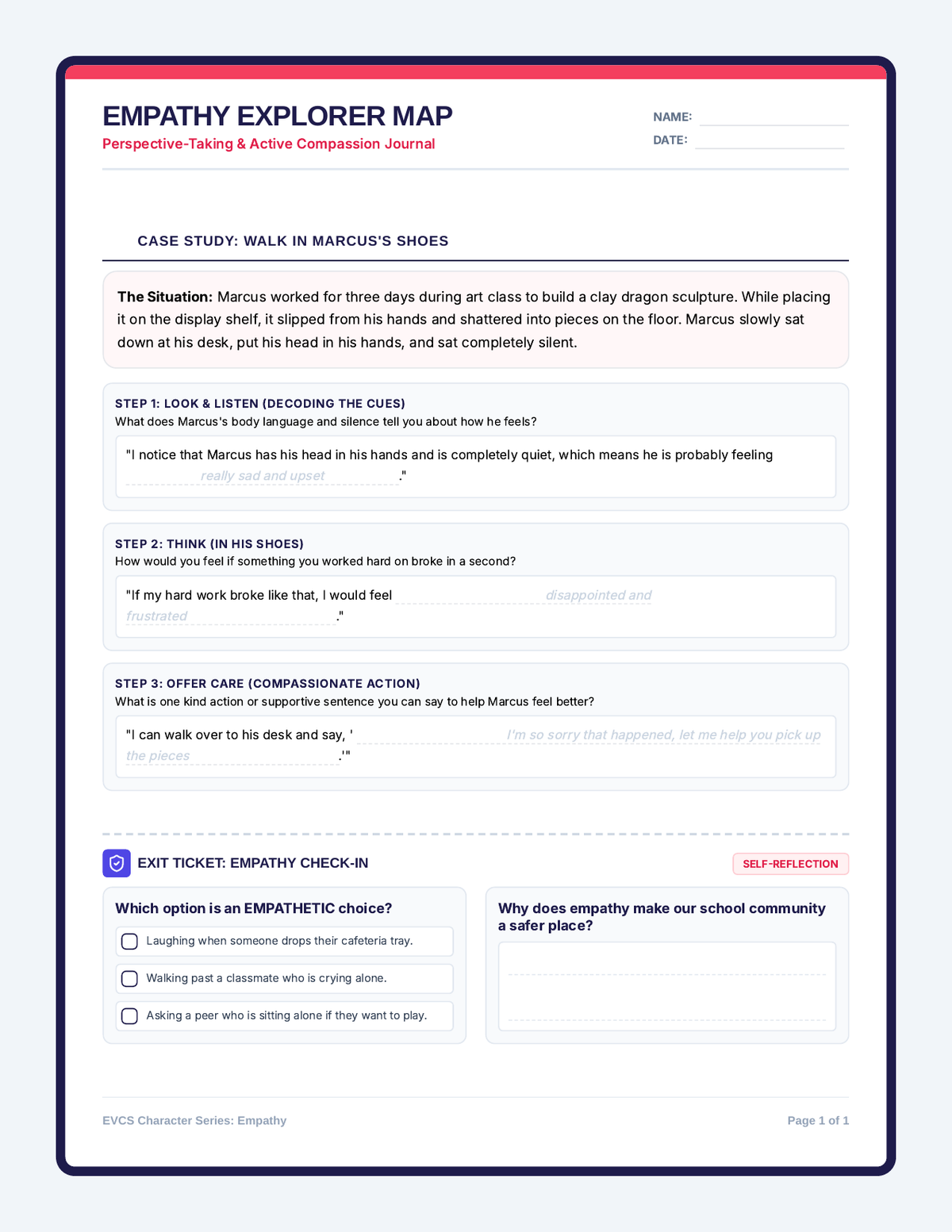
A student worksheet and interactive perspective-taking activity labeled 'Walk in My Shoes' for analyzing emotional situations and expressing supportive care. Includes an integrated exit ticket.
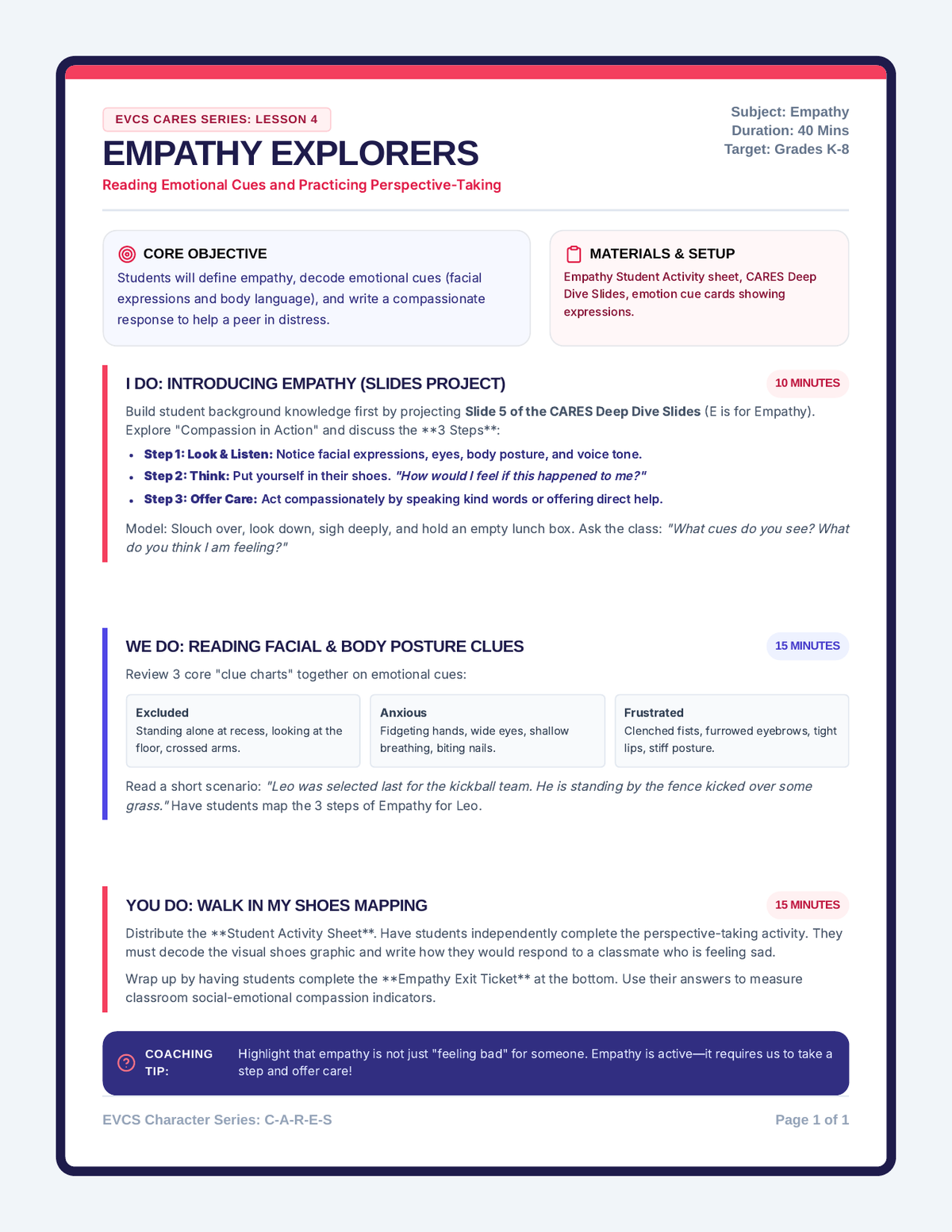
A complete teacher lesson plan for teaching Empathy. Guides teachers on instructing perspective-taking, identifying facial/body emotion cues, and facilitating supportive partner debriefs.
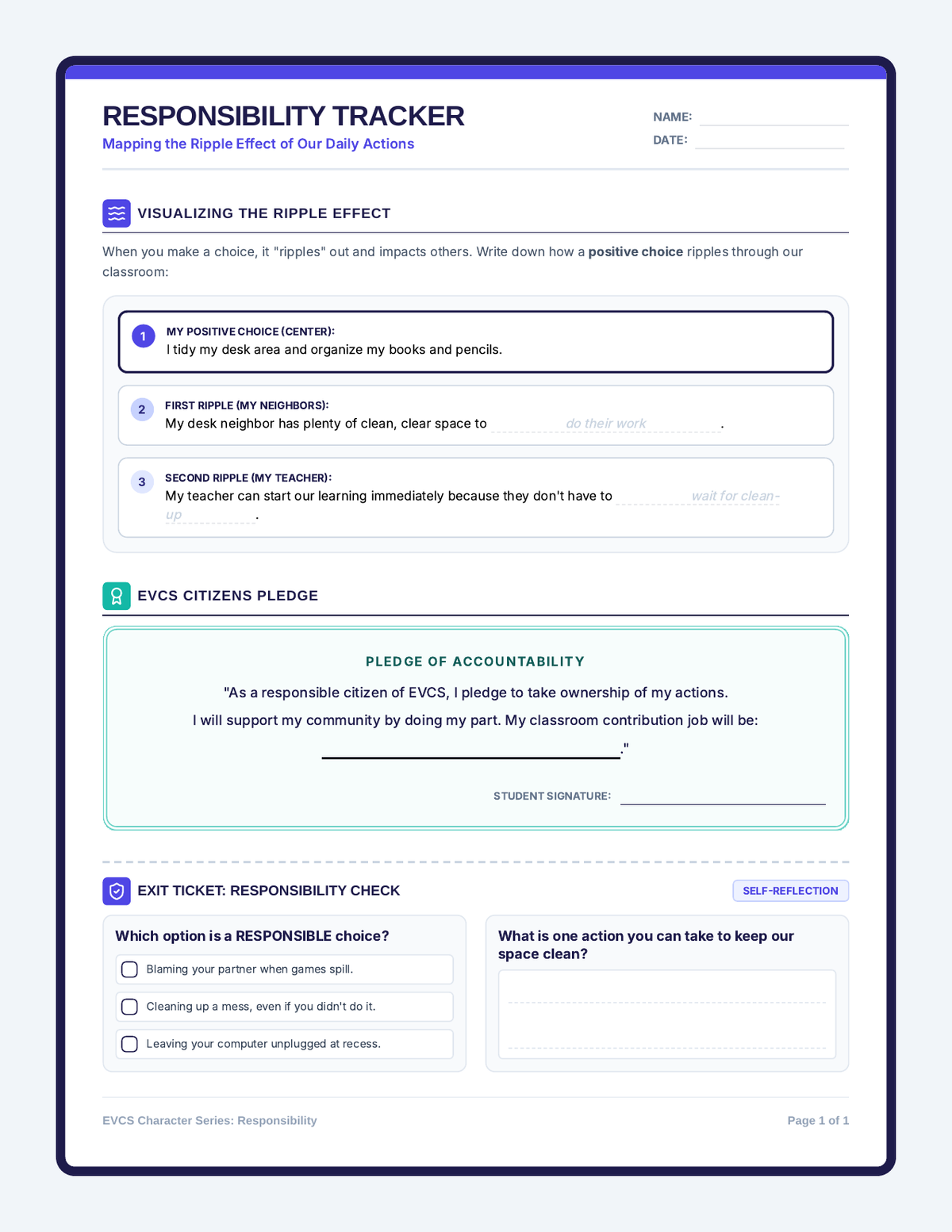
A student worksheet and Ripple Effect visual diagram mapper for exploring how individual actions impact the classroom community. Includes a citizenship pledge and an exit ticket.
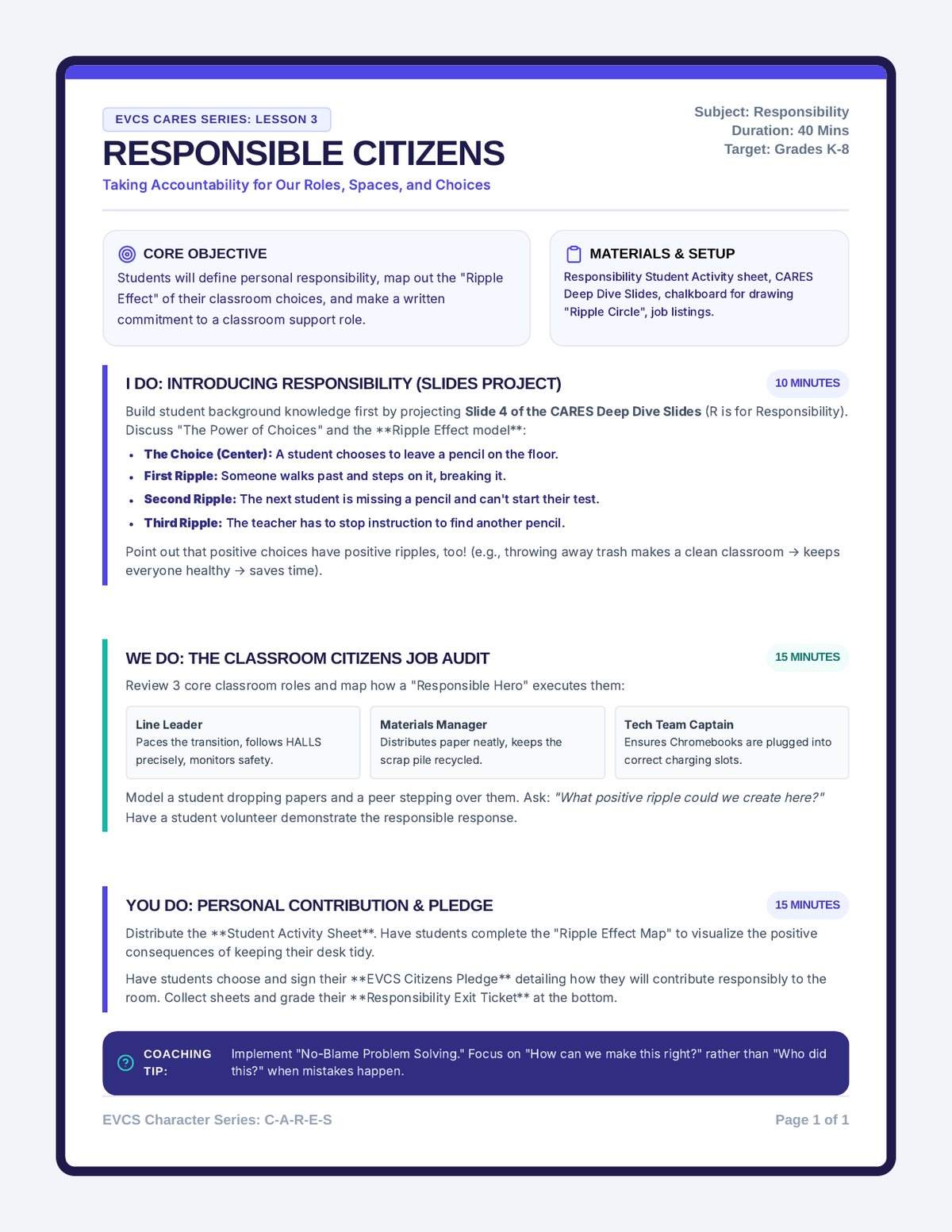
A comprehensive teacher lesson plan for teaching Responsibility. Outlines the 'Ripple Effect' of personal choices, class roles, and pacing for direct instruction and active modeling.
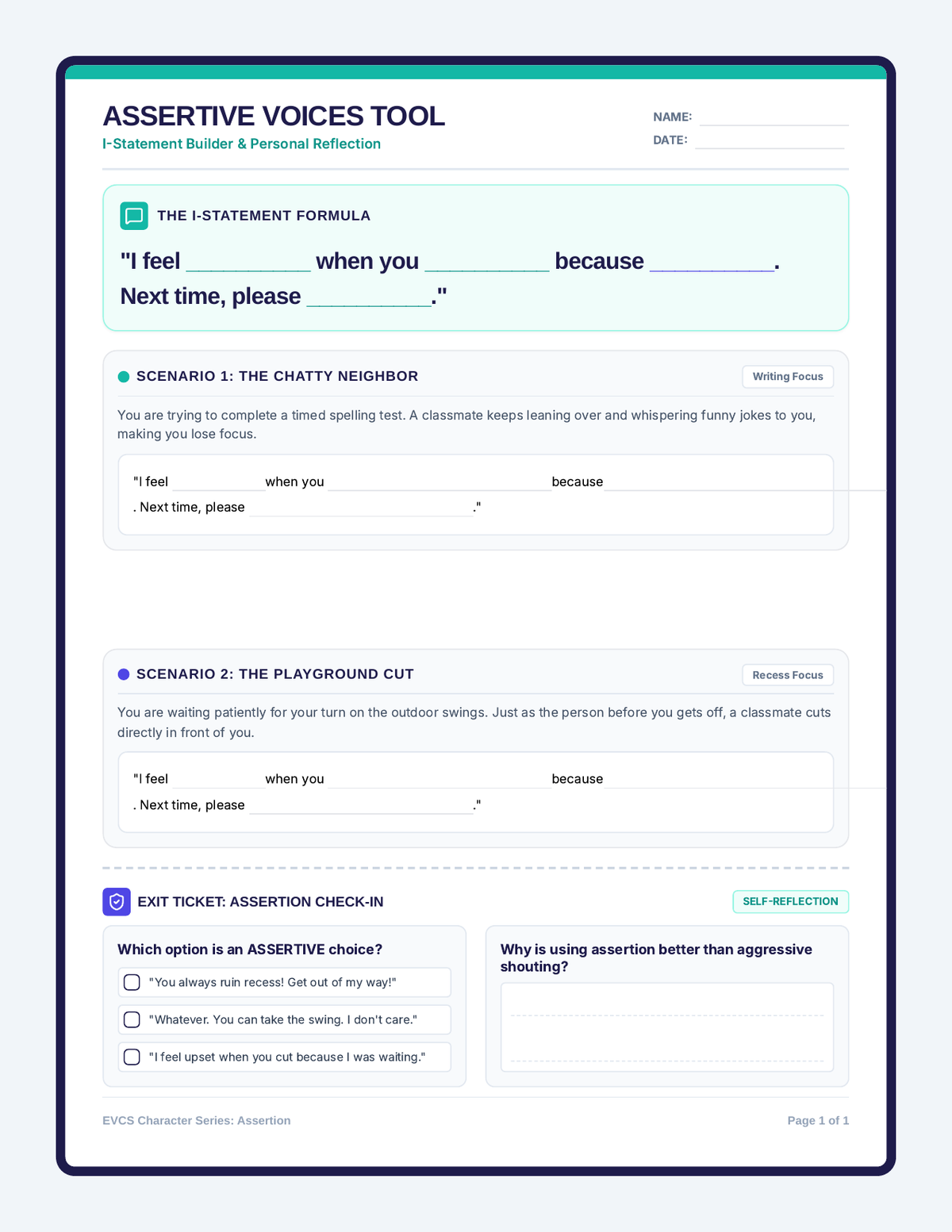
A student worksheet and interactive scenario-builder for using assertive "I-Statements" to establish healthy boundaries. Includes a quick self-assessment exit ticket.
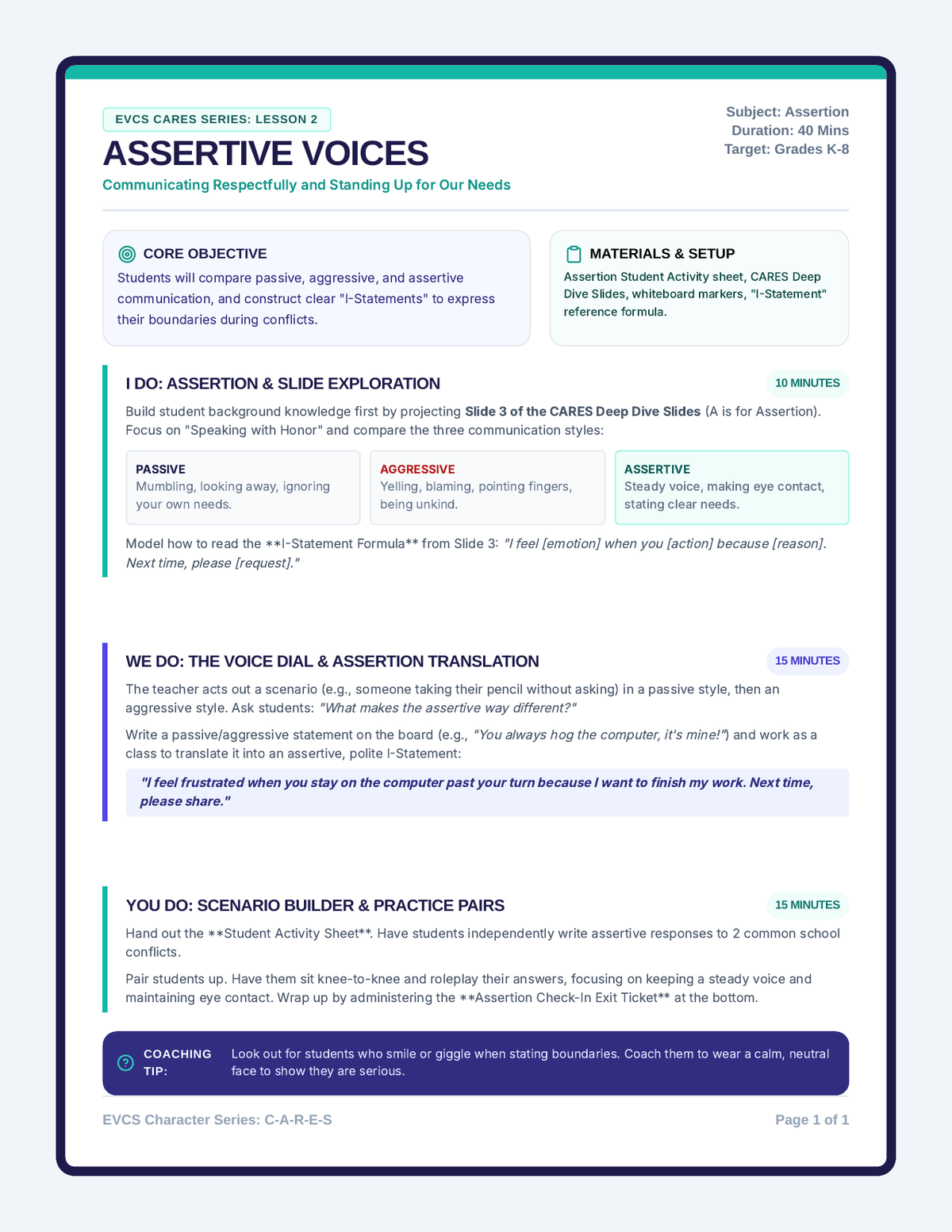
A comprehensive teacher lesson plan for teaching Assertion. Guides educators on instructing passive vs. aggressive vs. assertive communication using the 'I-Statement' formula, featuring an active modeling block.
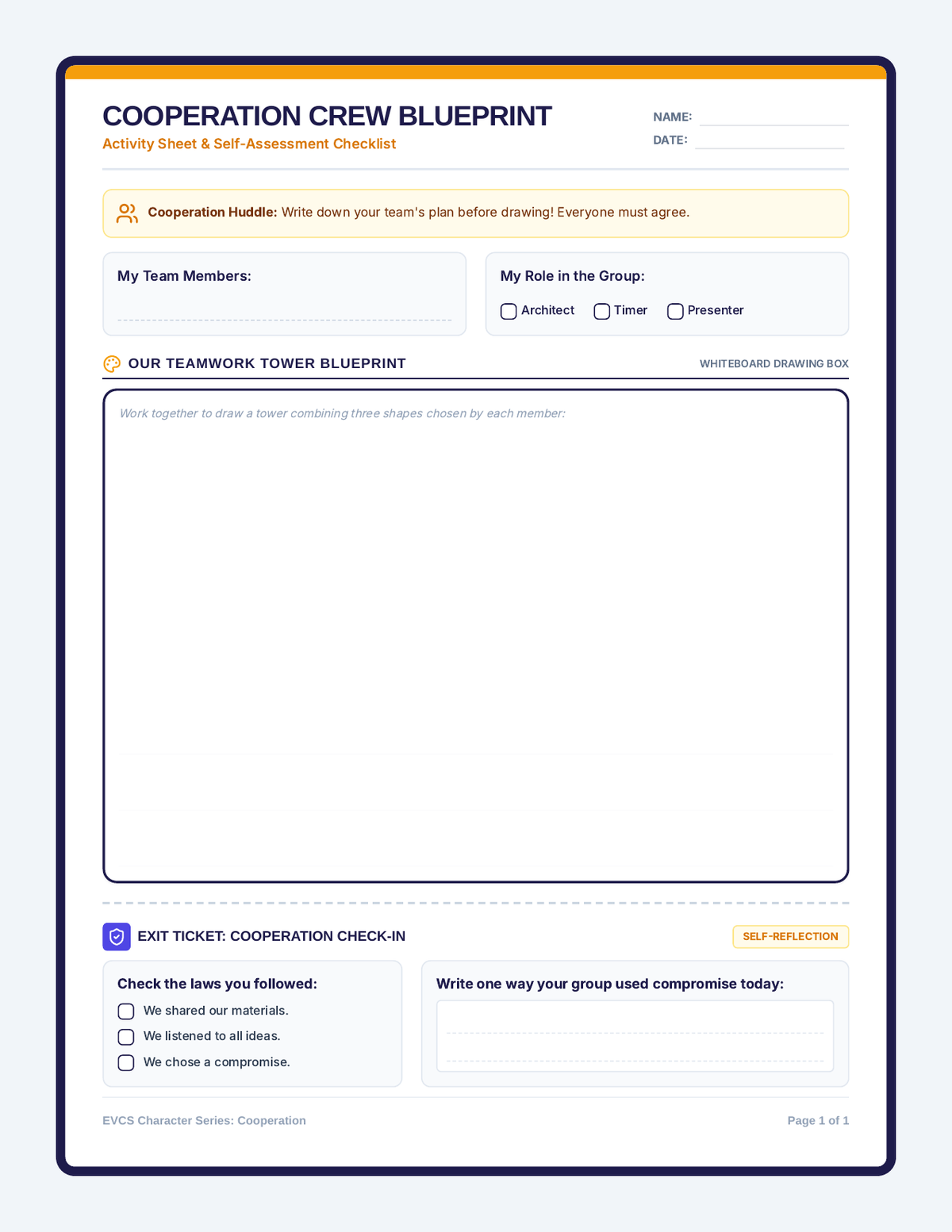
A student worksheet and collaborative blueprint drawing activity for the Cooperation lesson, featuring a class cooperation checklist and an integrated personal reflection exit ticket.
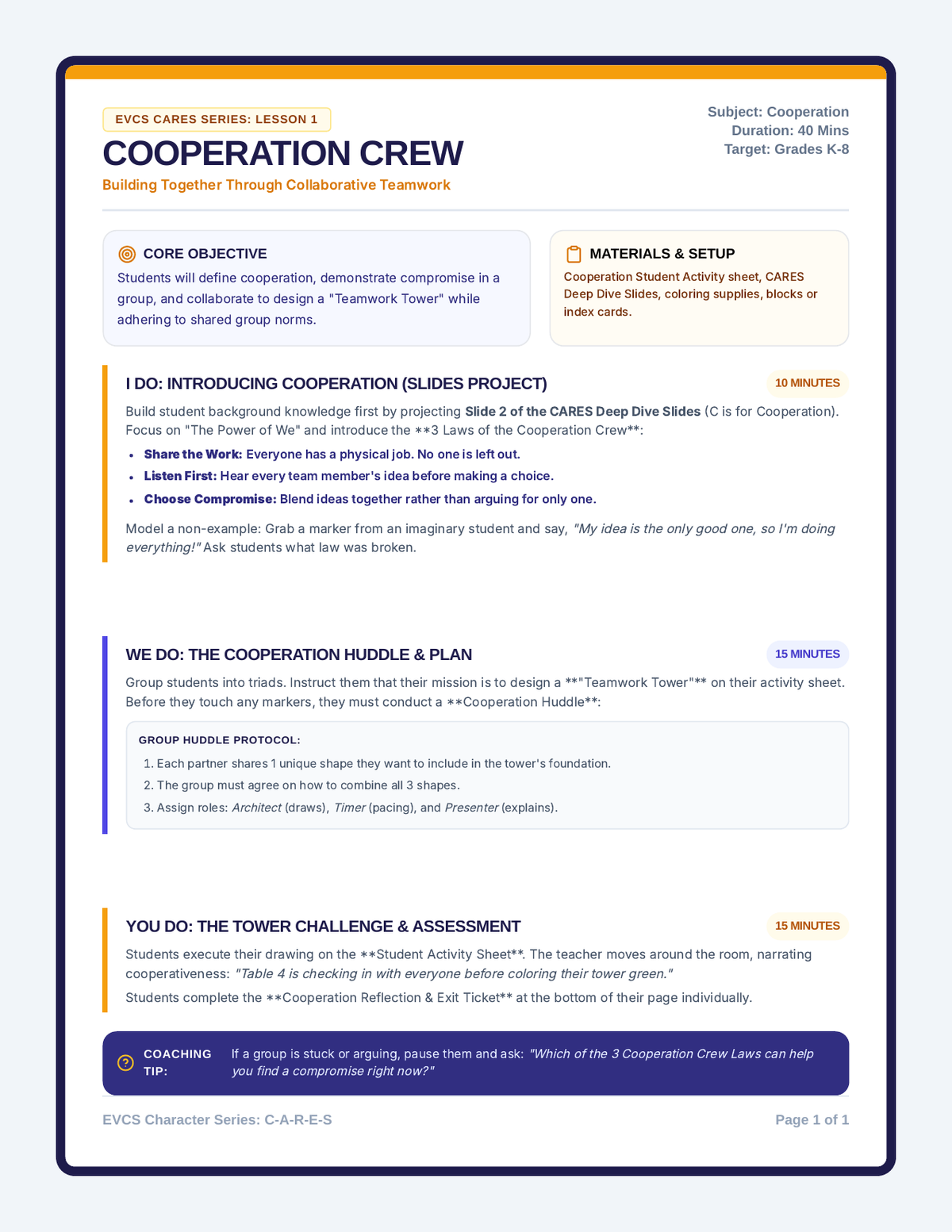
A complete teacher lesson plan for teaching Cooperation. Features an I Do, We Do, You Do structure focused on collaborative problem-solving, along with facilitator scripts and pacing guidelines.
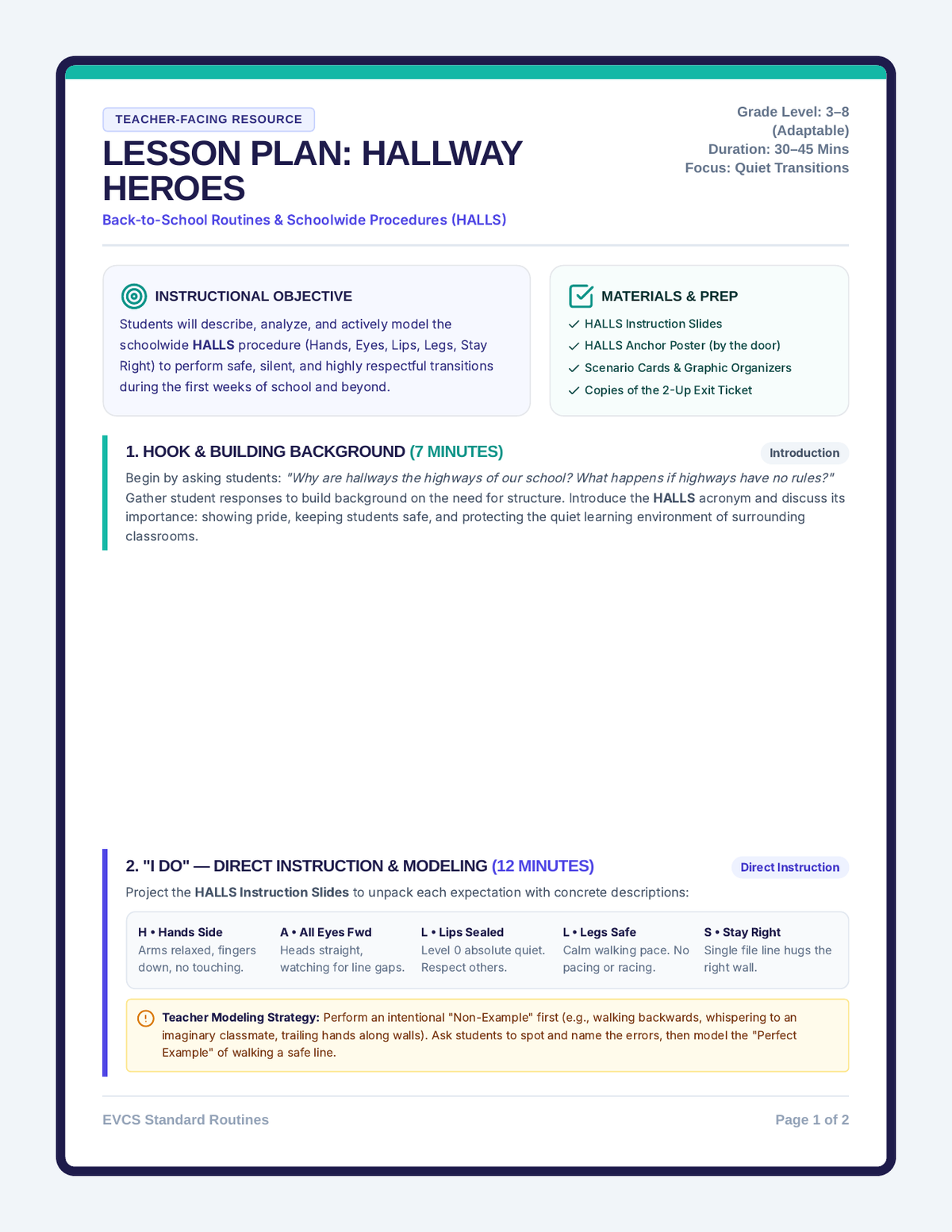
A comprehensive 2-page teacher's guide and lesson plan outlining the direct instruction, active modeling, guided roleplay, and independent practice phases of the schoolwide HALLS transition procedure.
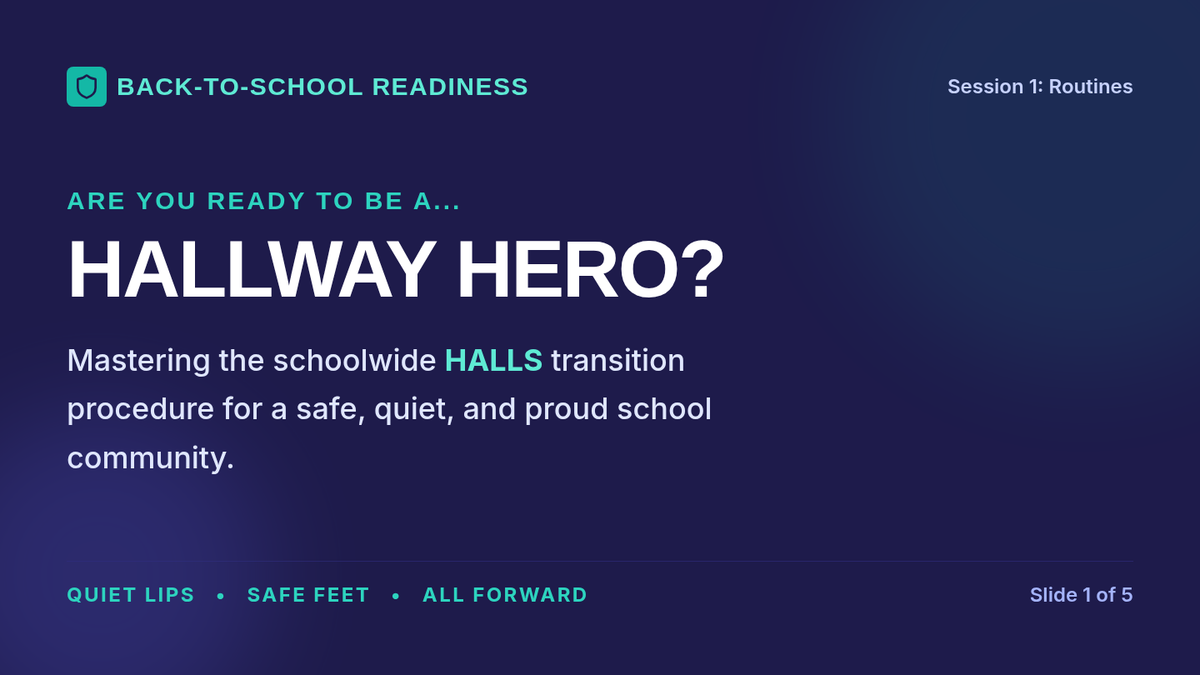
A structured presentation slide deck for direct instruction of the schoolwide HALLS expectations. Features clear breakdowns of each letter in the acronym and sets up interactive student roleplaying.
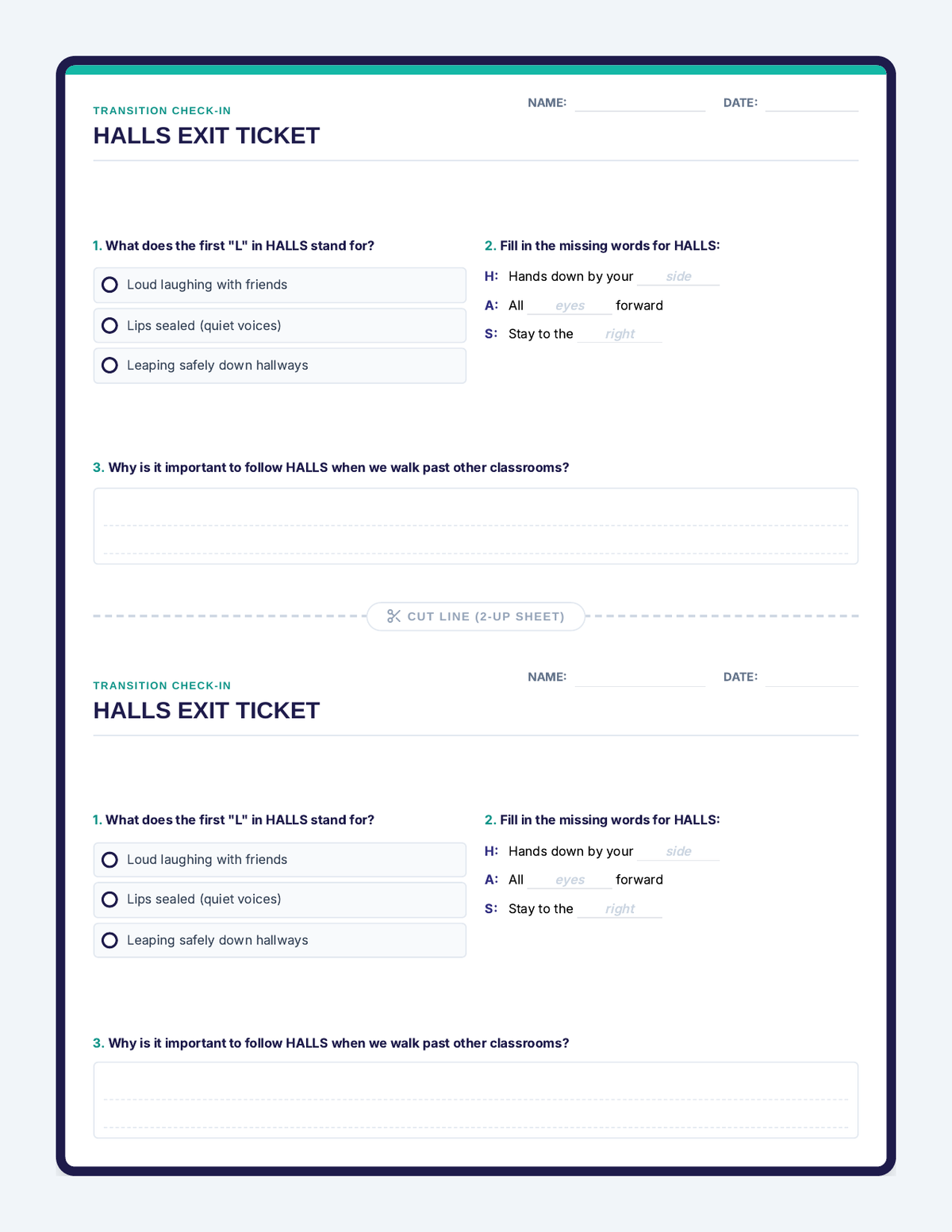
A 2-up printable student exit ticket to quickly assess individual understanding of the HALLS procedure. Designed to be cut in half to save paper, it features multiple choice, fill-in-the-blank, and brief reflection questions.
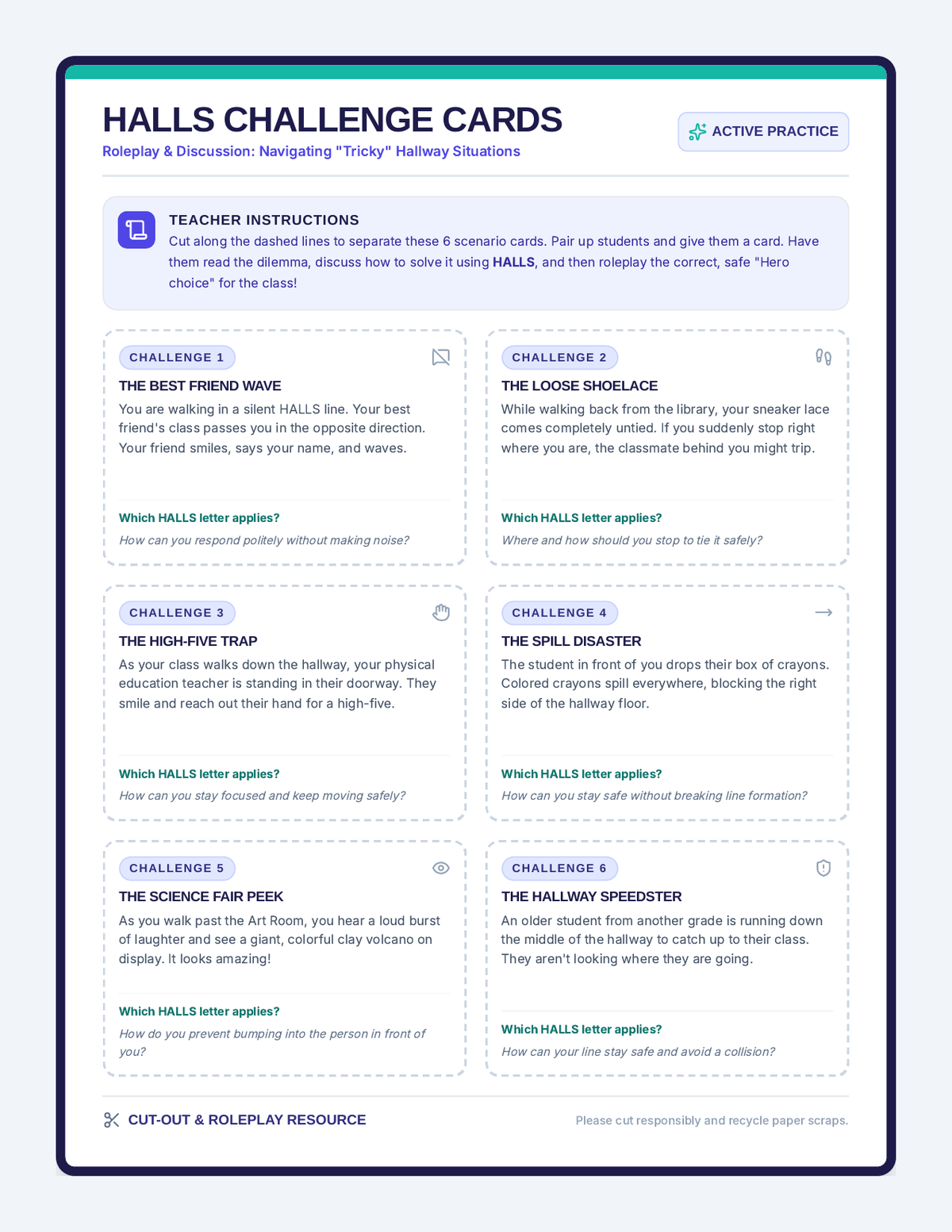
A printable set of 6 scenario cards to help students practice and roleplay "tricky" hallway transitions. Each card presents a common hallway dilemma with prompts to apply the schoolwide HALLS expectations.
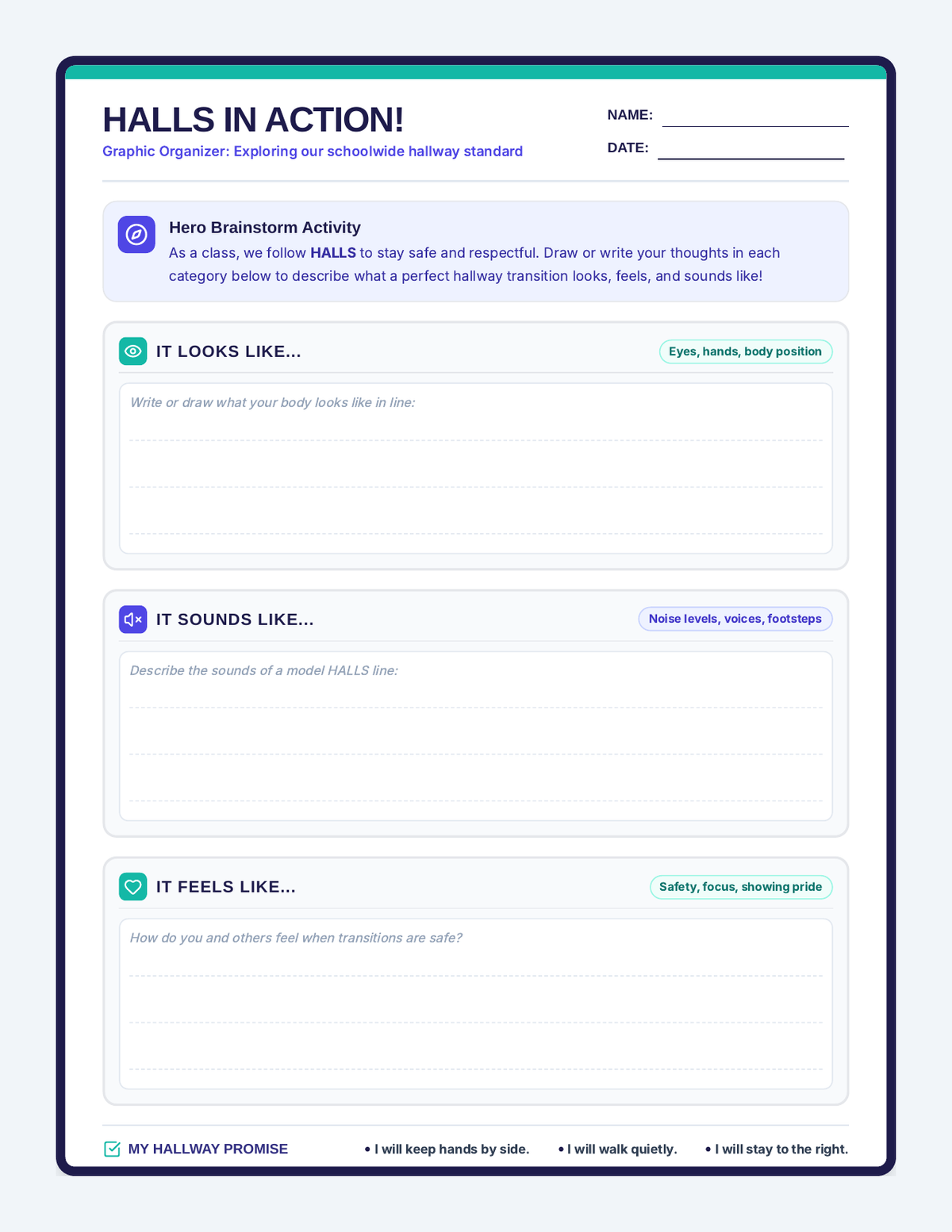
A printable graphic organizer for students to brainstorm and write down what the schoolwide HALLS procedure looks like, sounds like, and feels like. Includes custom writing blocks with clear guidance prompts.
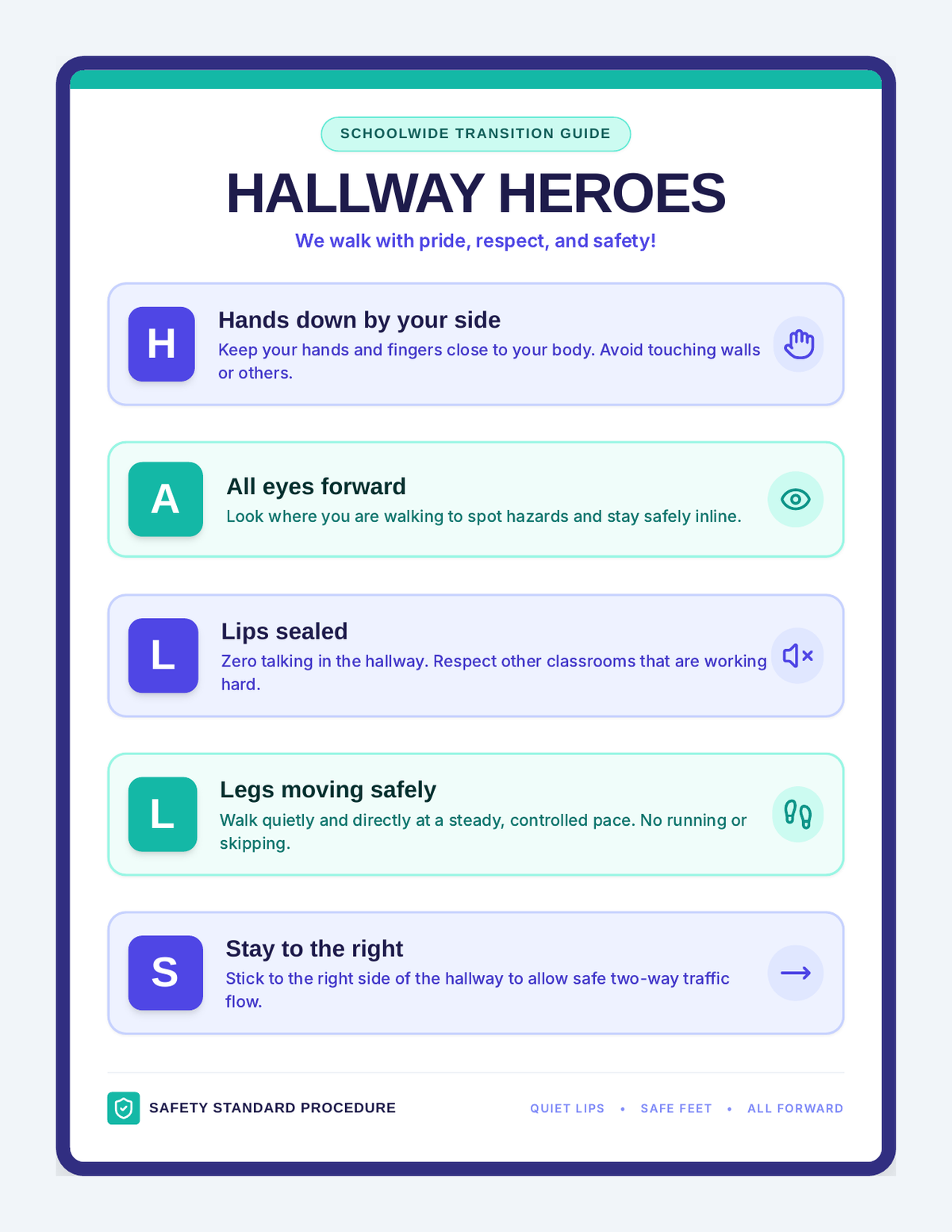
A vibrant and high-visibility classroom poster featuring the HALLS acronym. Designed to be printed and hung near the classroom exit, it provides students with clear visual reminders of hallway expectations before transitioning.
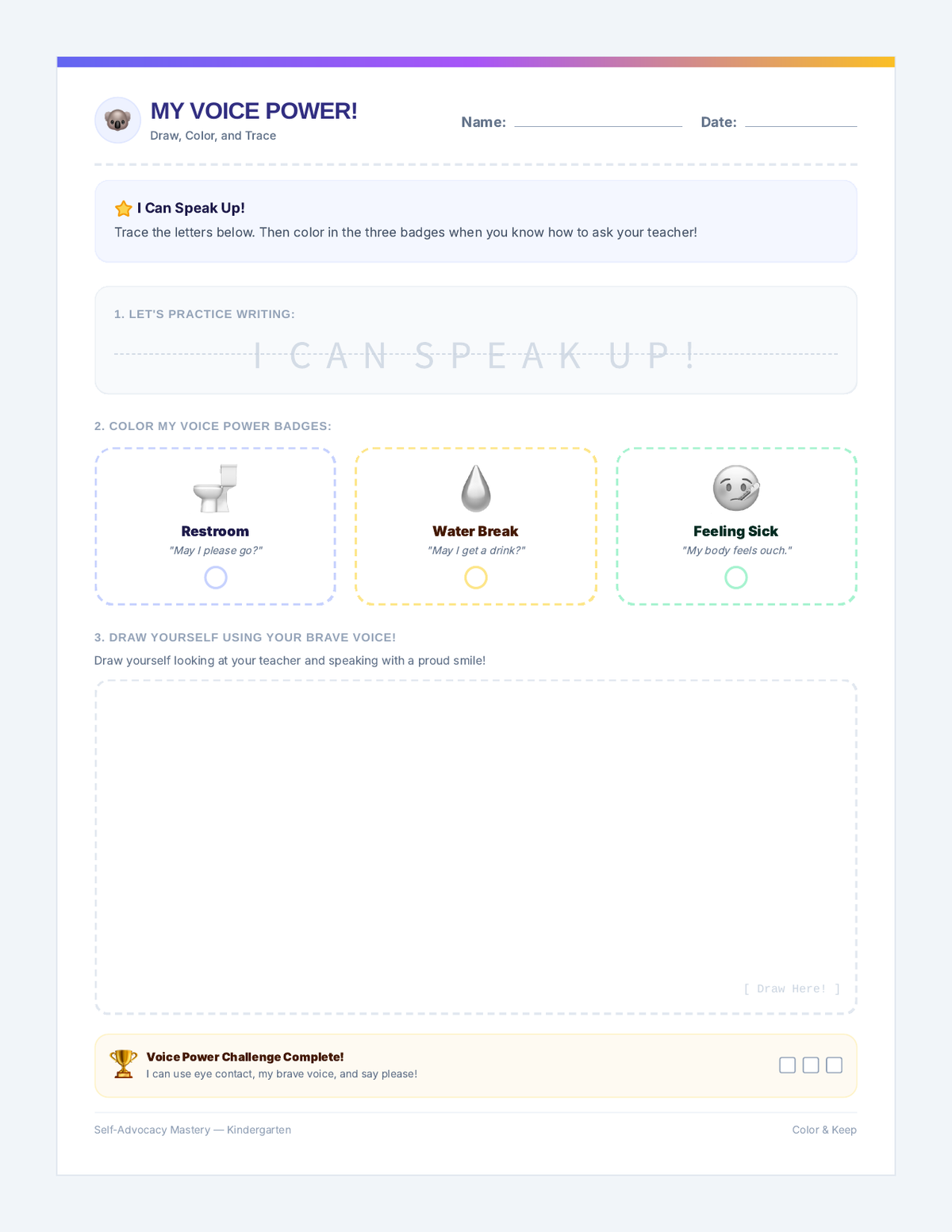
A printable 1-page student activity and coloring sheet for Kindergarteners. Features a traceable phrase, simple visual icons representing the three physical needs, and a drawing box for students to sketch themselves using their "Brave Voice."
A high-impact, superhero-themed 11-slide presentation for the 6-8 grade-band Classroom STAR expectations. Designed in Marley Park green and yellow colors, with minimum 24px font size for back-of-the-room legibility, heavy comic-book borders, and structured Hook-Discover-Practice-Commit routines.
A high-impact, superhero-themed 11-slide presentation for the 3-5 grade-band Classroom STAR expectations. Designed in Marley Park green and yellow colors, with minimum 24px font size for back-of-the-room legibility, heavy comic-book borders, and structured Hook-Discover-Practice-Commit routines.
A high-impact, superhero-themed 11-slide presentation for the K-2 grade-band Classroom STAR expectations. Designed in Marley Park green and yellow colors, with minimum 24px font size for back-of-the-room legibility, heavy comic-book borders, and structured Hook-Discover-Practice-Commit routines.
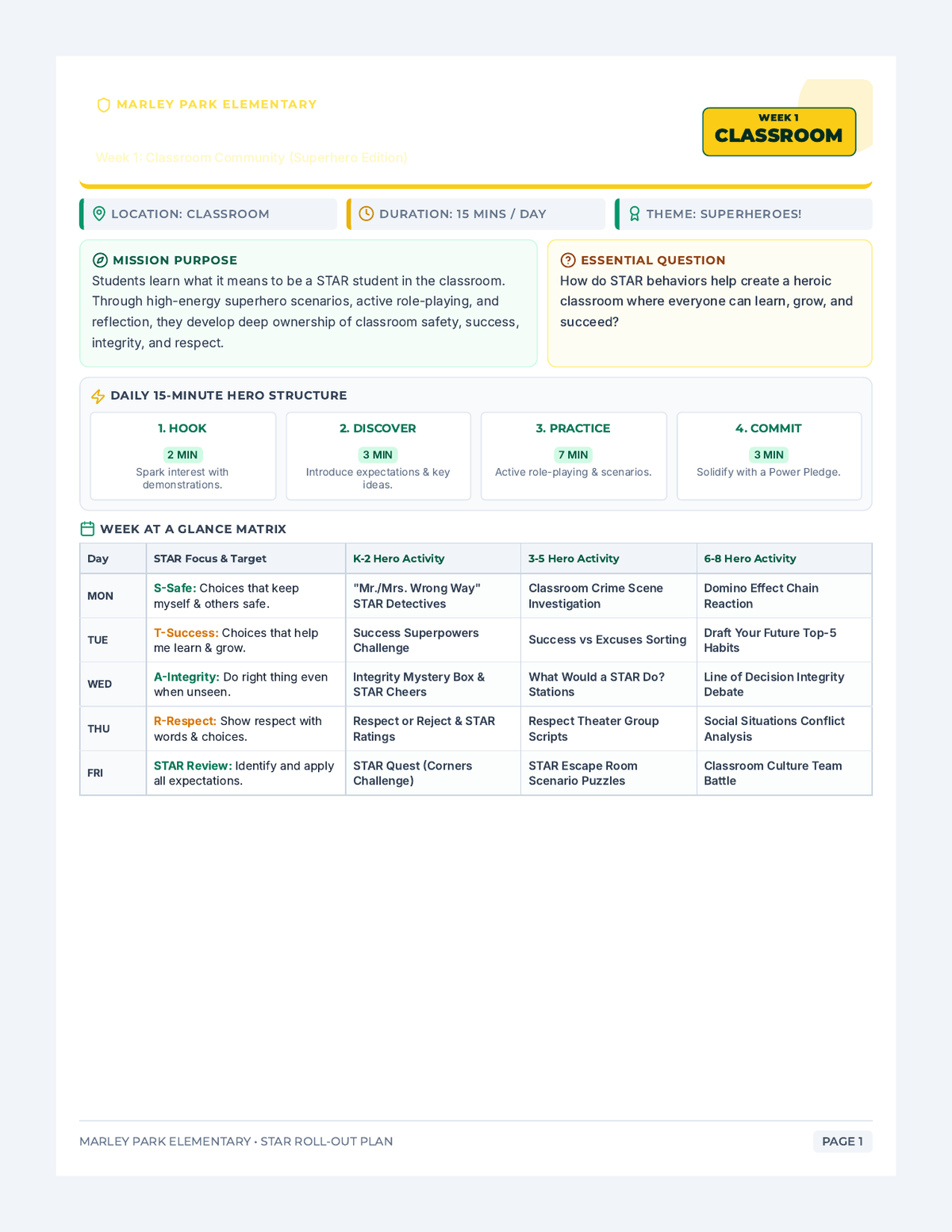
A printable, comprehensive 2-page teacher facilitation guide for the Week 1 STAR Classroom expectations. Features the Marley Park green and yellow colors, a superhero theme, detailed daily lesson structures, active learning strategies across K-2, 3-5, and 6-8 bands, look-fors, and success criteria.
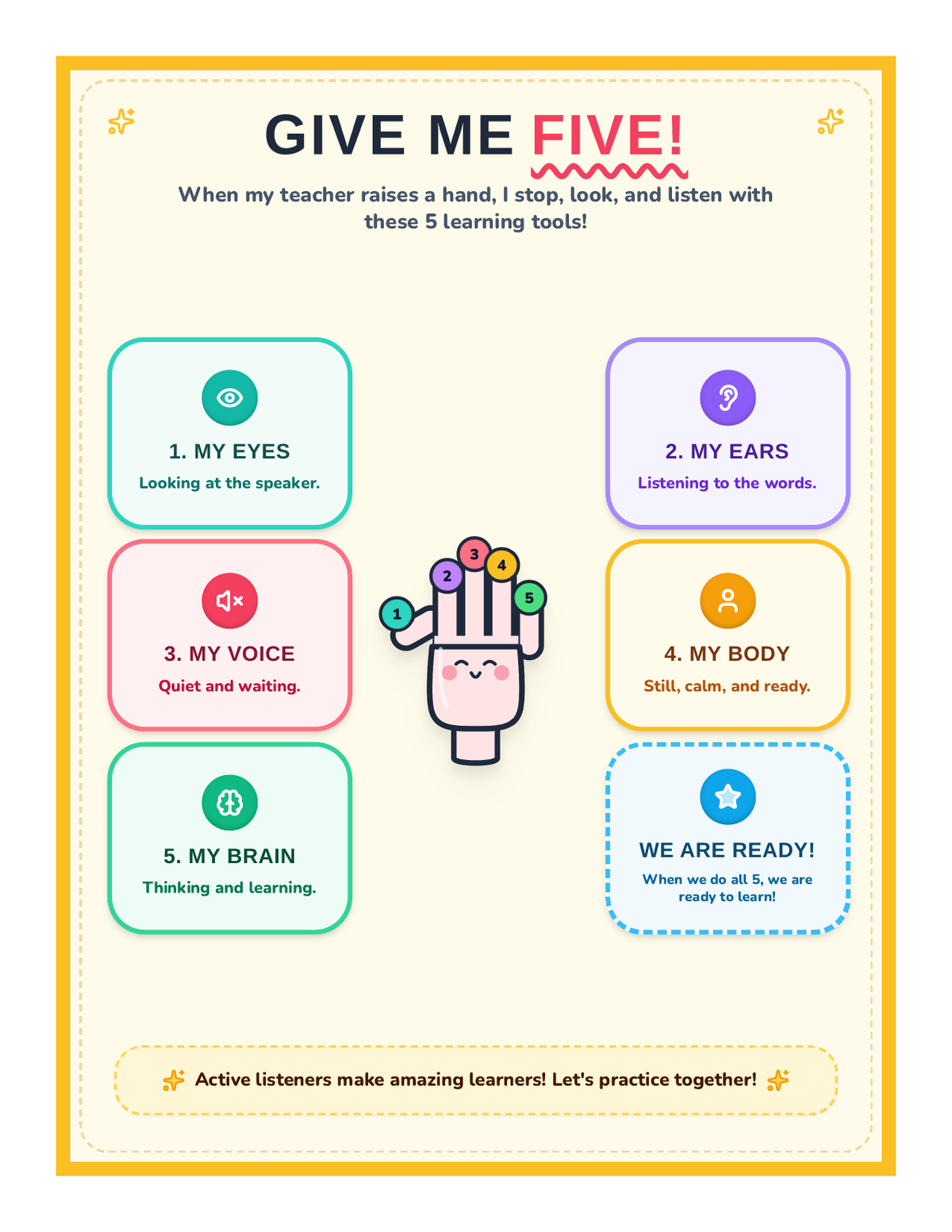
A vibrant, kid-friendly printable classroom anchor chart illustrating the 'Give Me Five' active listening steps, featuring a beautifully color-coded cartoon hand illustration with a cute smiley face and 5 labeled behaviors.
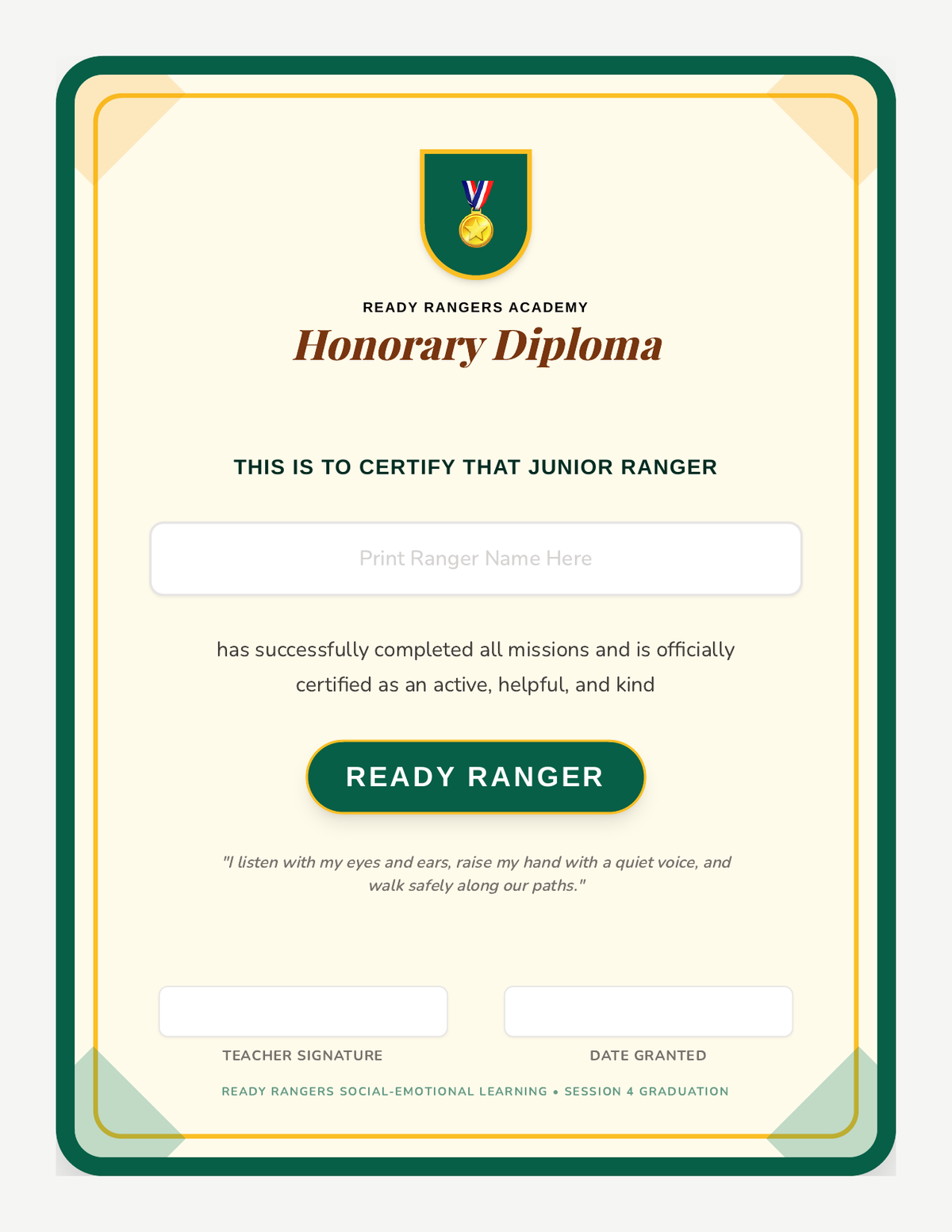
High-quality, beautifully themed Ready Ranger Graduation Certificate that teachers can print out, write names on, and award to students.
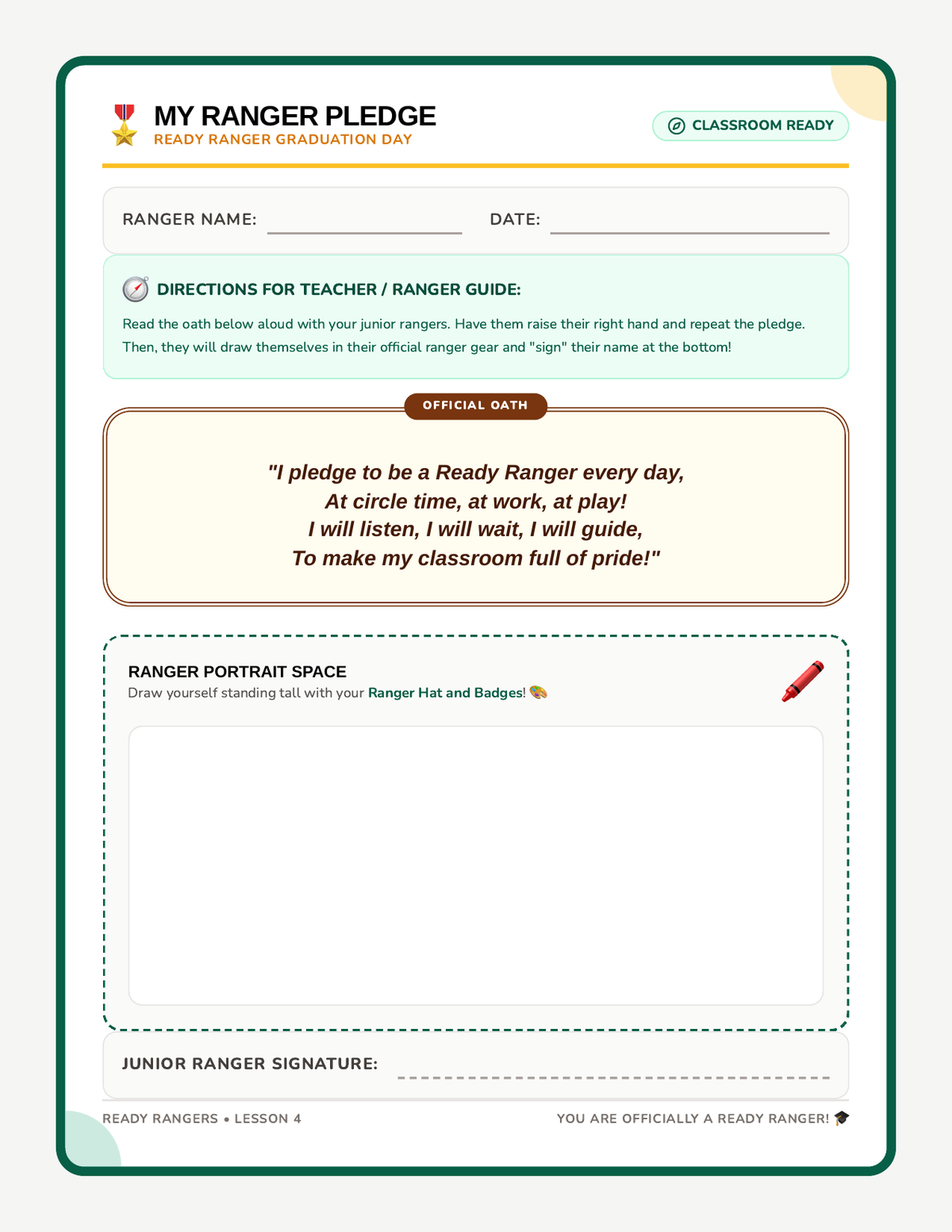
A creative reflection and pledge worksheet where kindergarteners trace their pledge oath, sign their name, and draw themselves as a certified Ready Ranger.
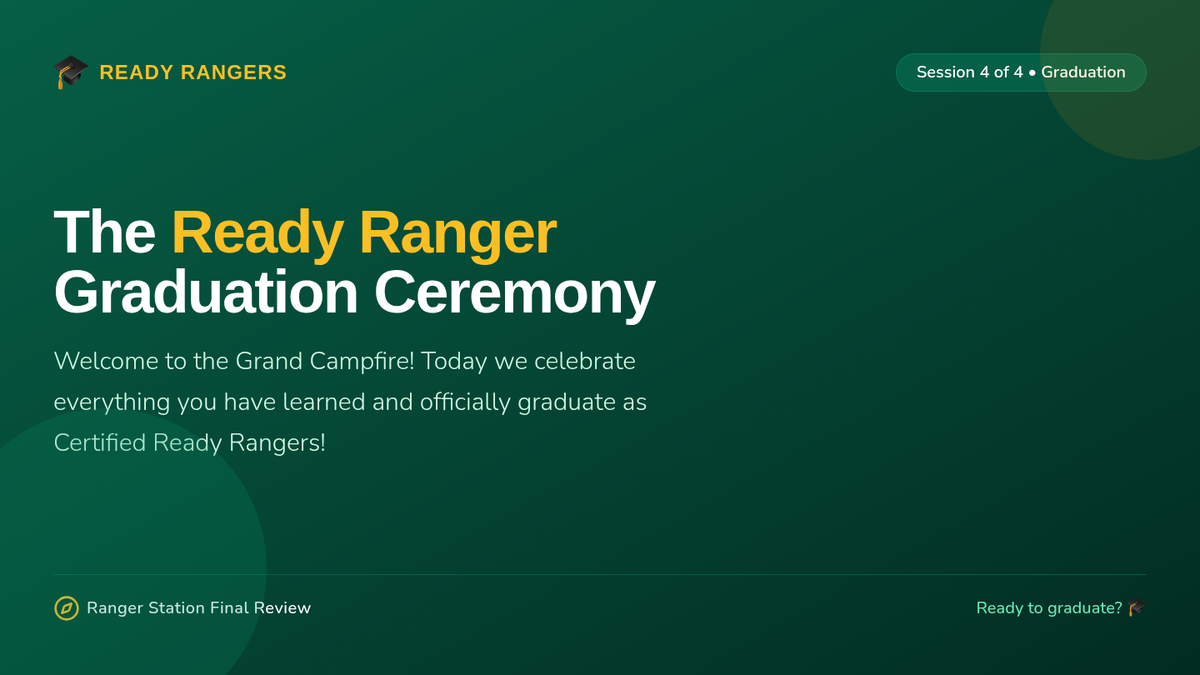
Interactive slides reviewing the three core ranger skills and conducting a fun, structured 'Graduation Ceremony' for kindergarten students.
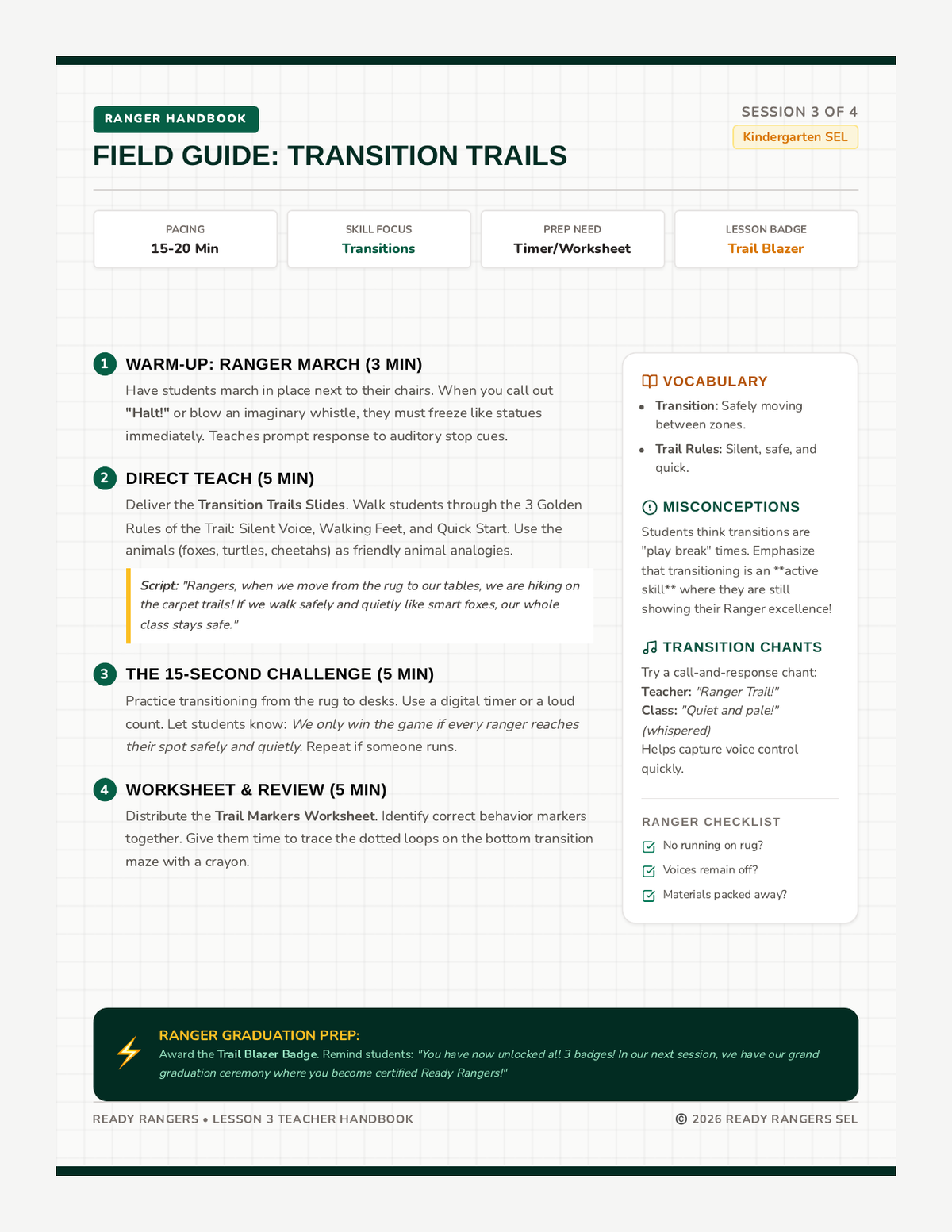
Comprehensive lesson notes featuring the 'Ranger March' routine, transition chants, and a visual observation checklist for transition skills.
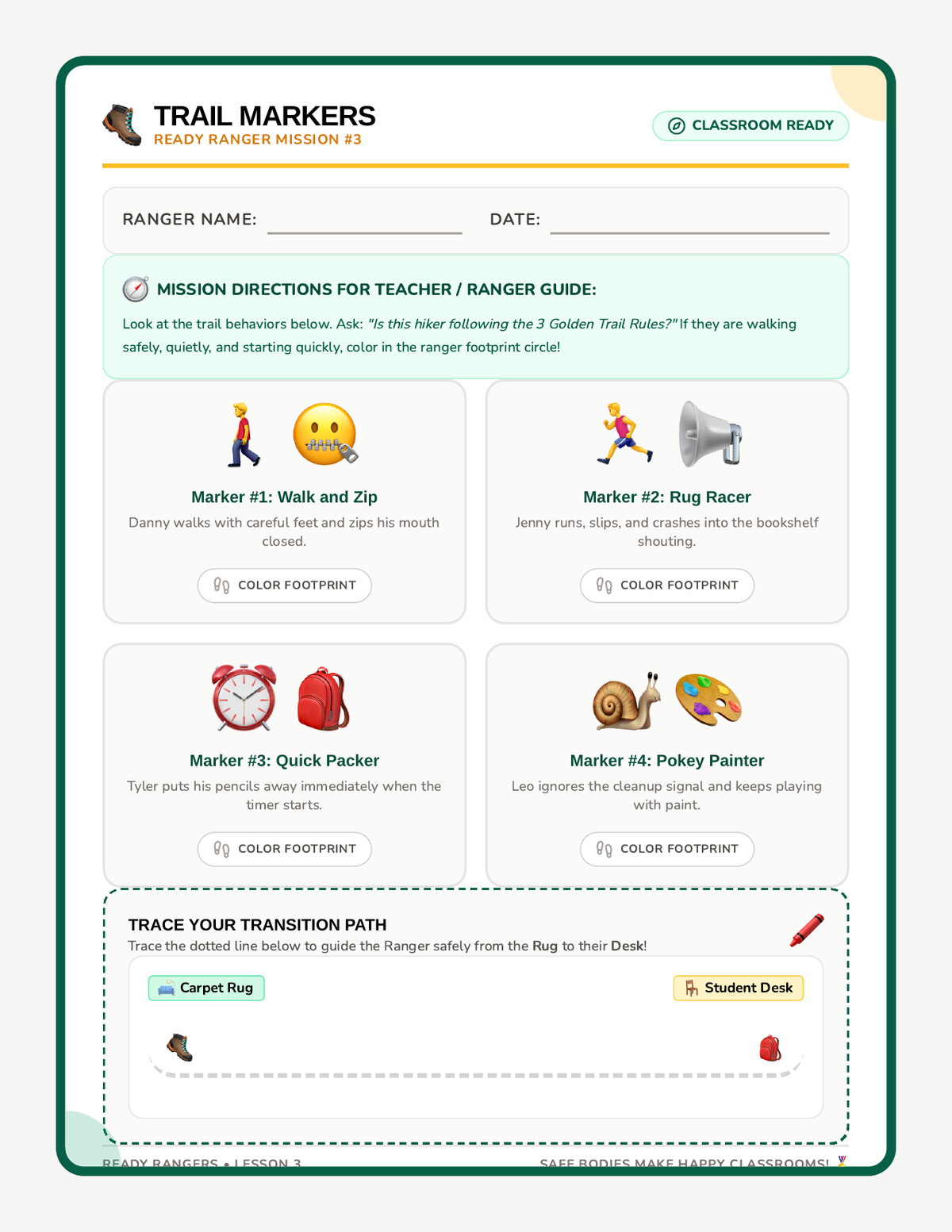
A hands-on sorting and sequencing worksheet where students trace a transition path and identify safe vs. unsafe transition choices.
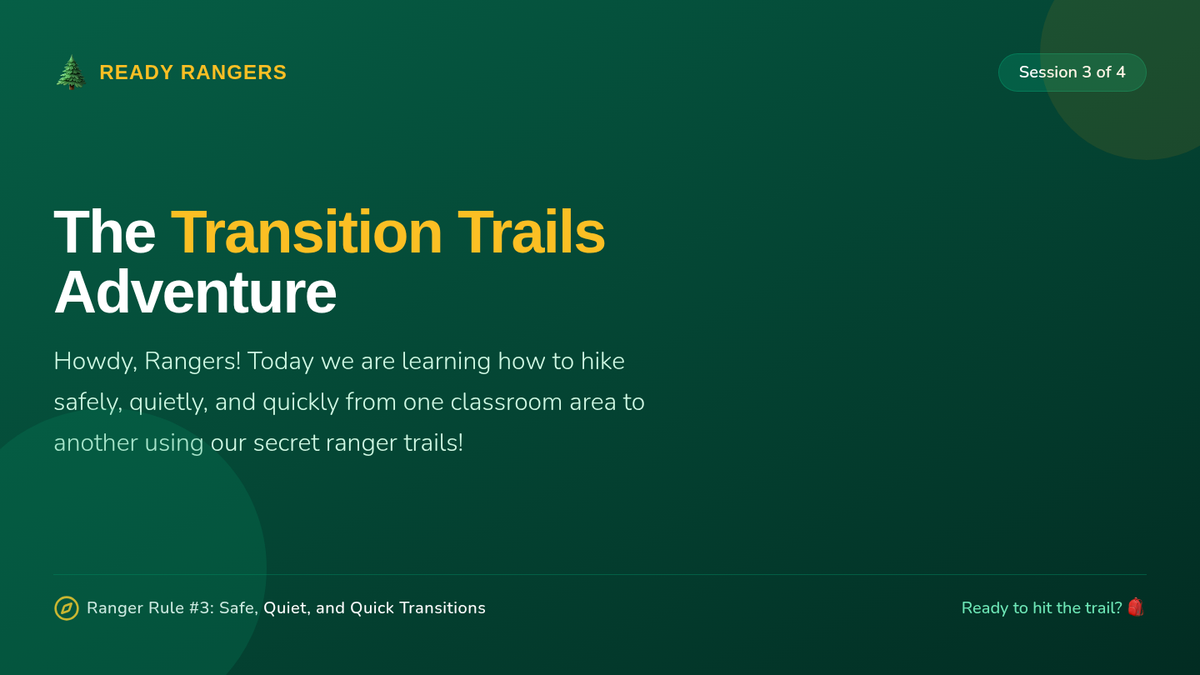
Presentation introducing 'Transition Trails' (moving quietly, quickly, and safely). Includes visual timers and instructions for the 'Trail Walk' challenge.
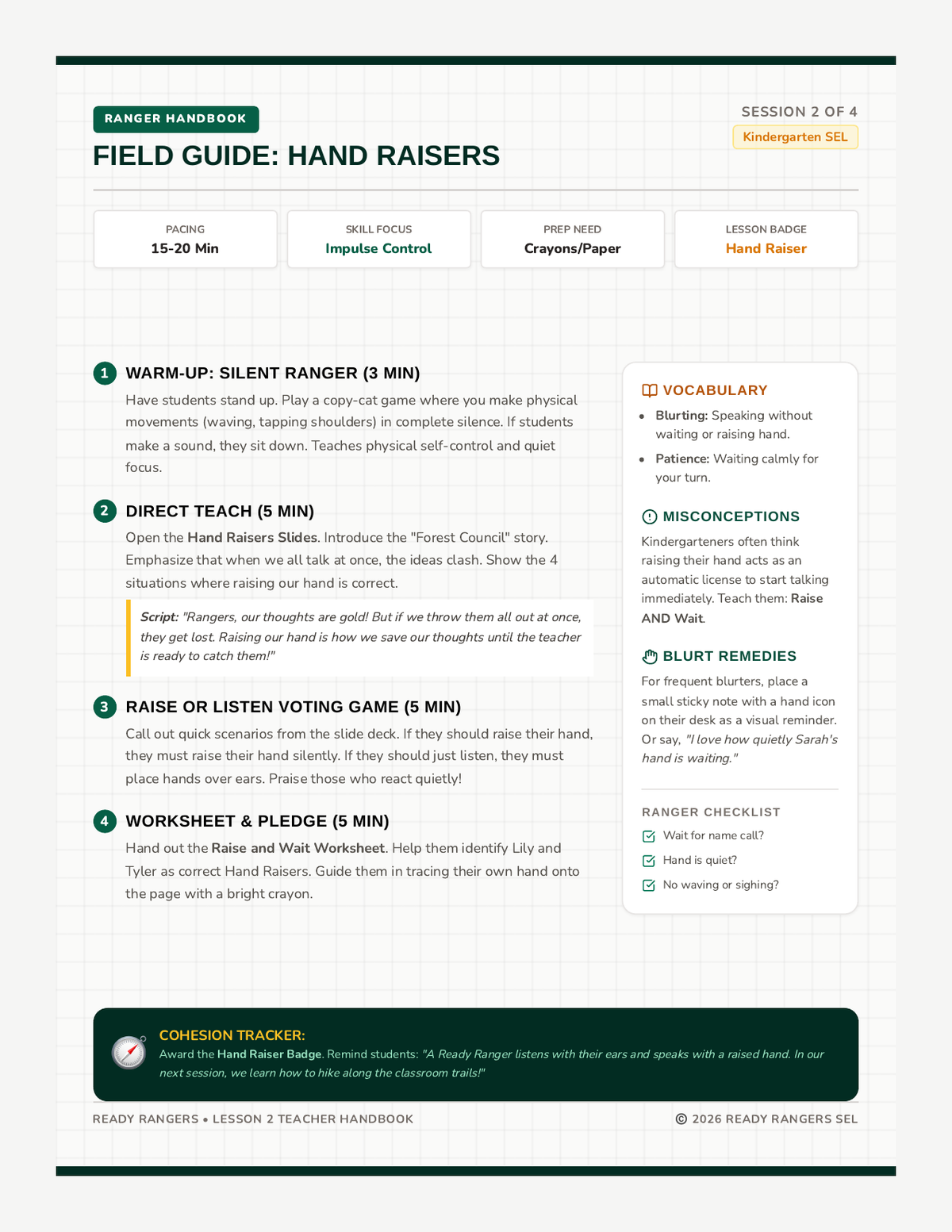
Facilitation notes for Lesson 2, with the 'Silent Ranger' warm-up game, a step-by-step script, common kindergarten misconceptions, and strategies to support impulsive talkers.
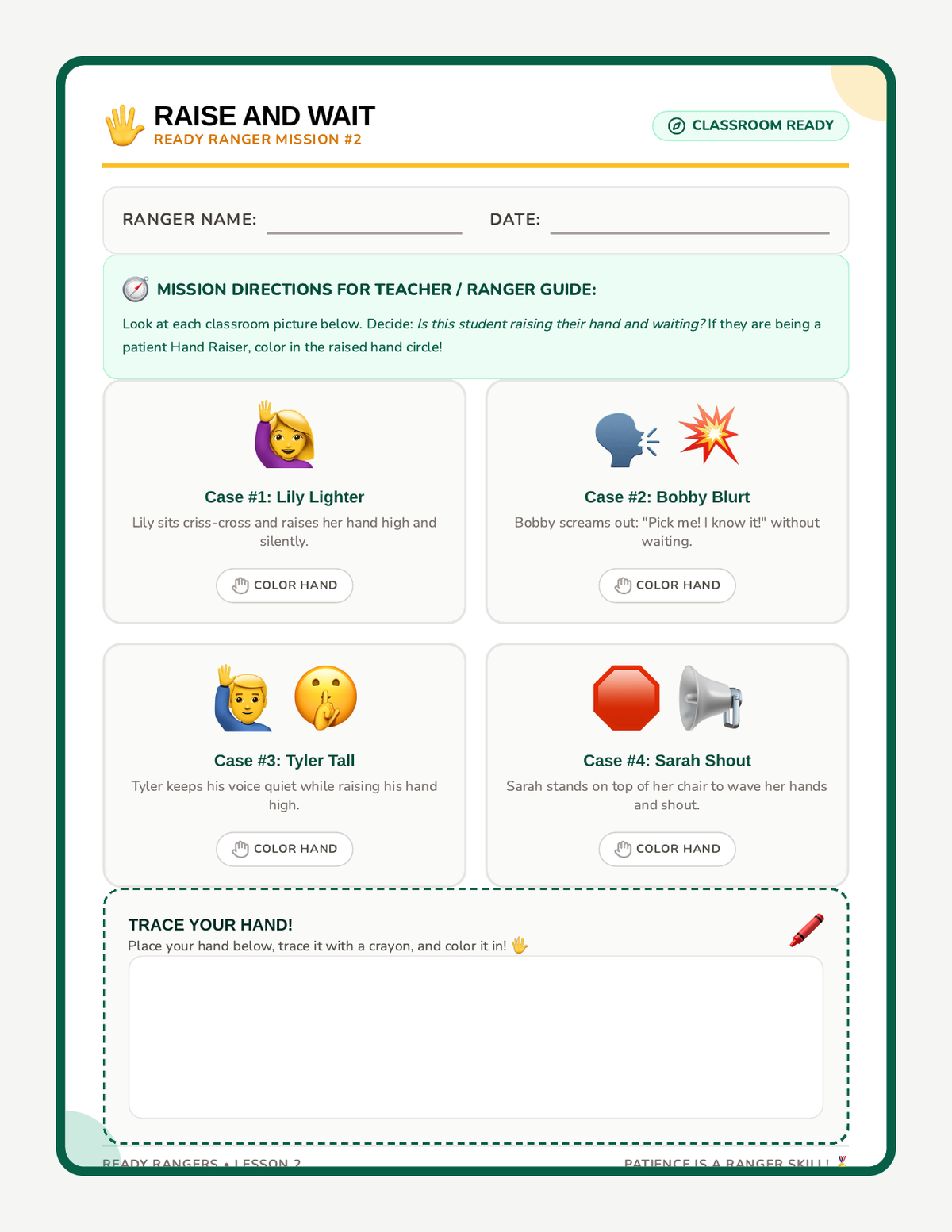
A friendly worksheet with visual scenarios (e.g., sharing an idea, needing a pencil, asking a question) where students color in a raised-hand icon to show when raising a hand is the ranger way.
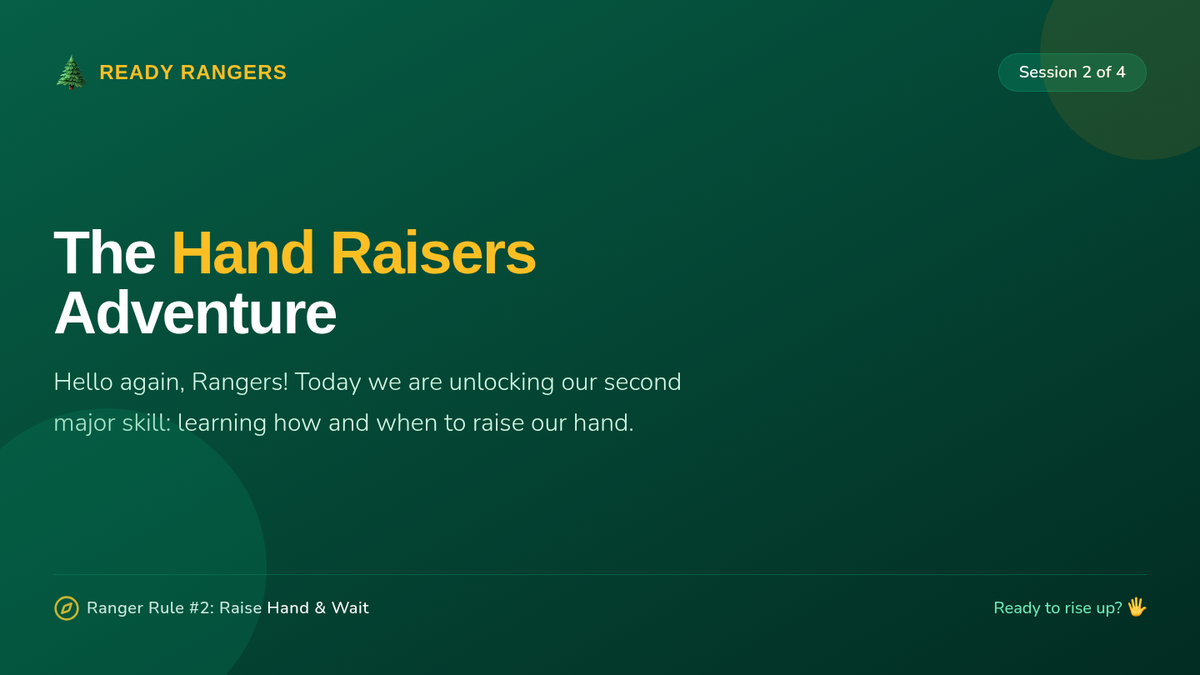
Presentation teaching why and how we raise our hands to speak. Introduces the 'Hand Raising Tool' and provides interactive voting scenarios.
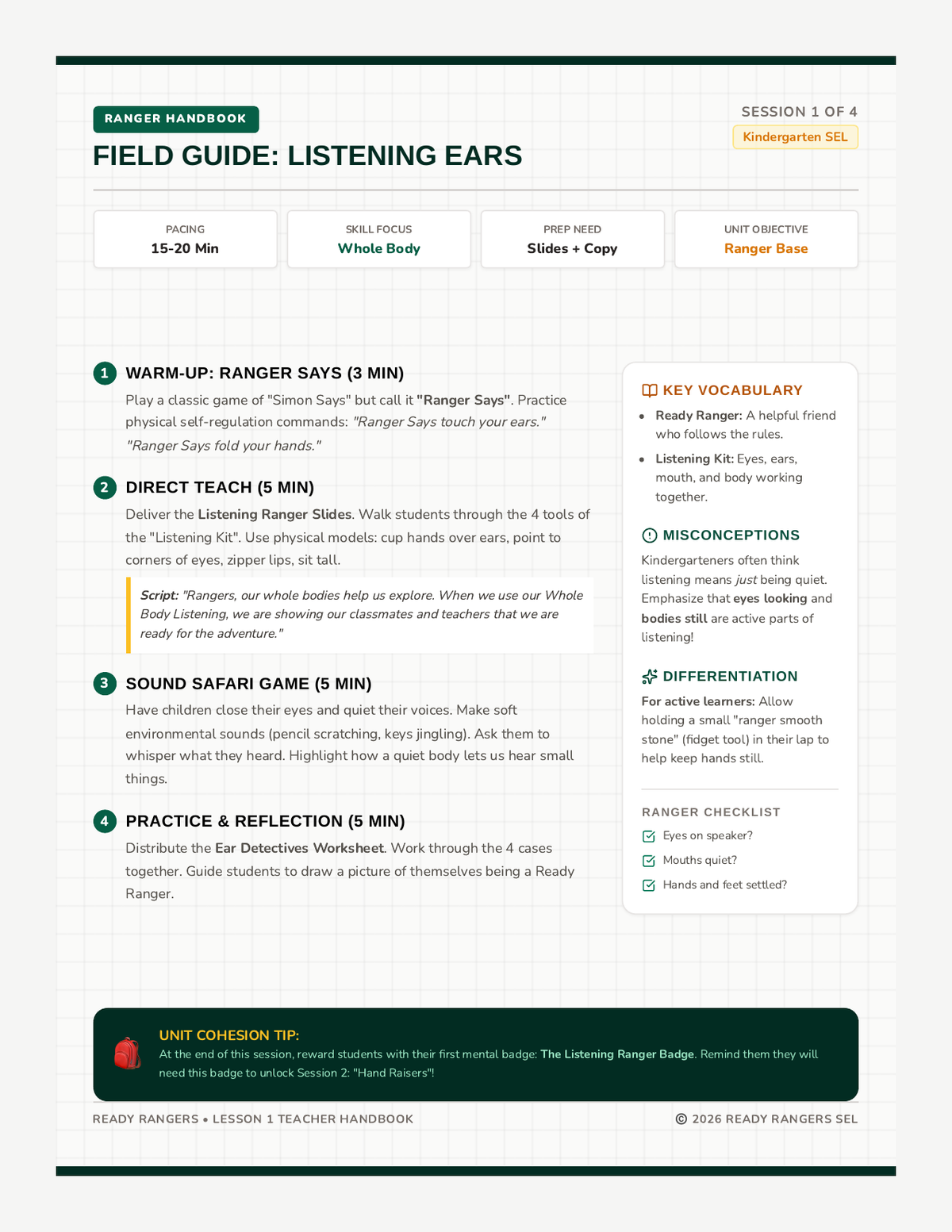
A step-by-step facilitation guide for Lesson 1, including a script, warm-up game 'Ranger Says', discussion prompts, and differentiation tips for kindergarten learners.
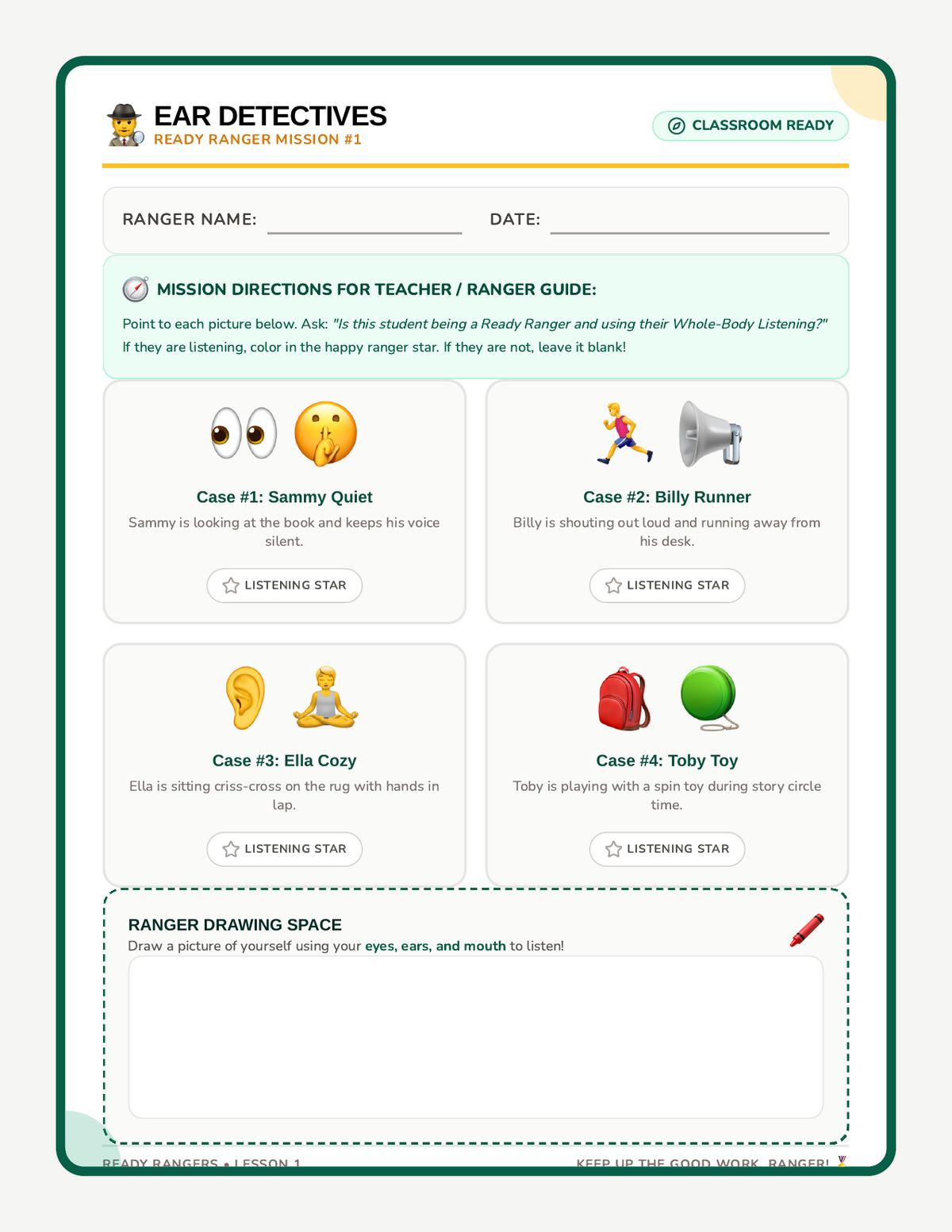
A printable worksheet where kindergarteners identify active whole-body listening behaviors, featuring clear icons and spacious visual choices perfect for young learners.
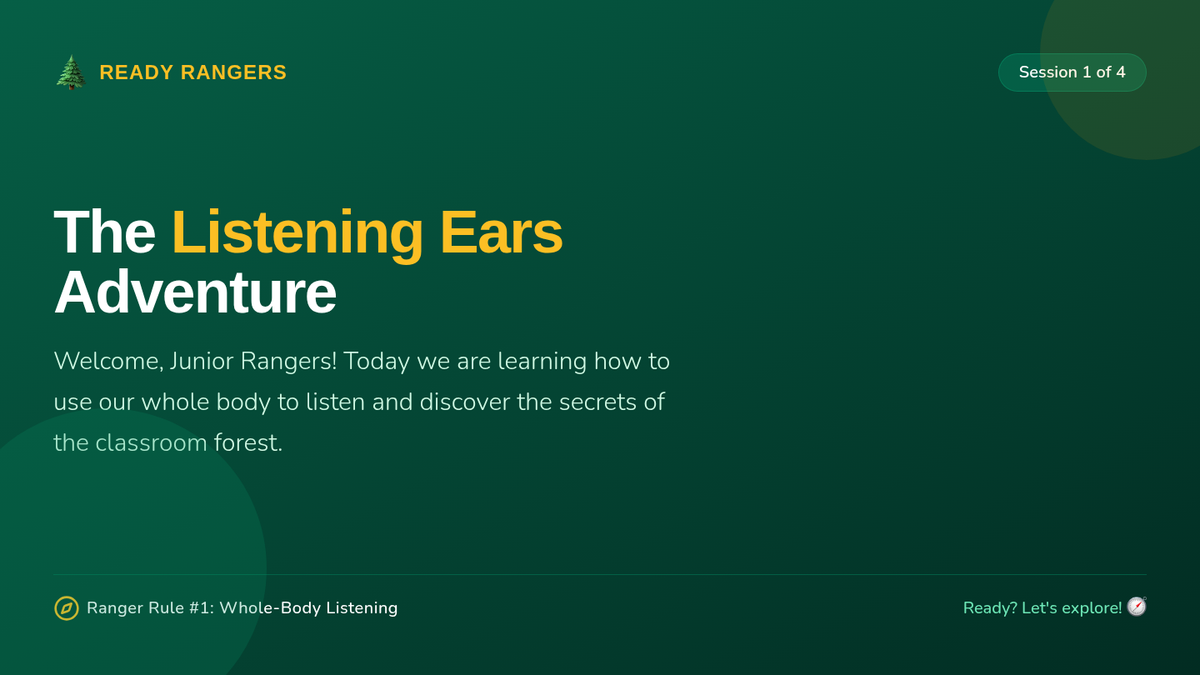
Interactive presentation introducing Whole Body Listening as a Ready Ranger skill. Features active participation prompts, visual guides for ears, eyes, mouth, and body, and a fun interactive sound game.
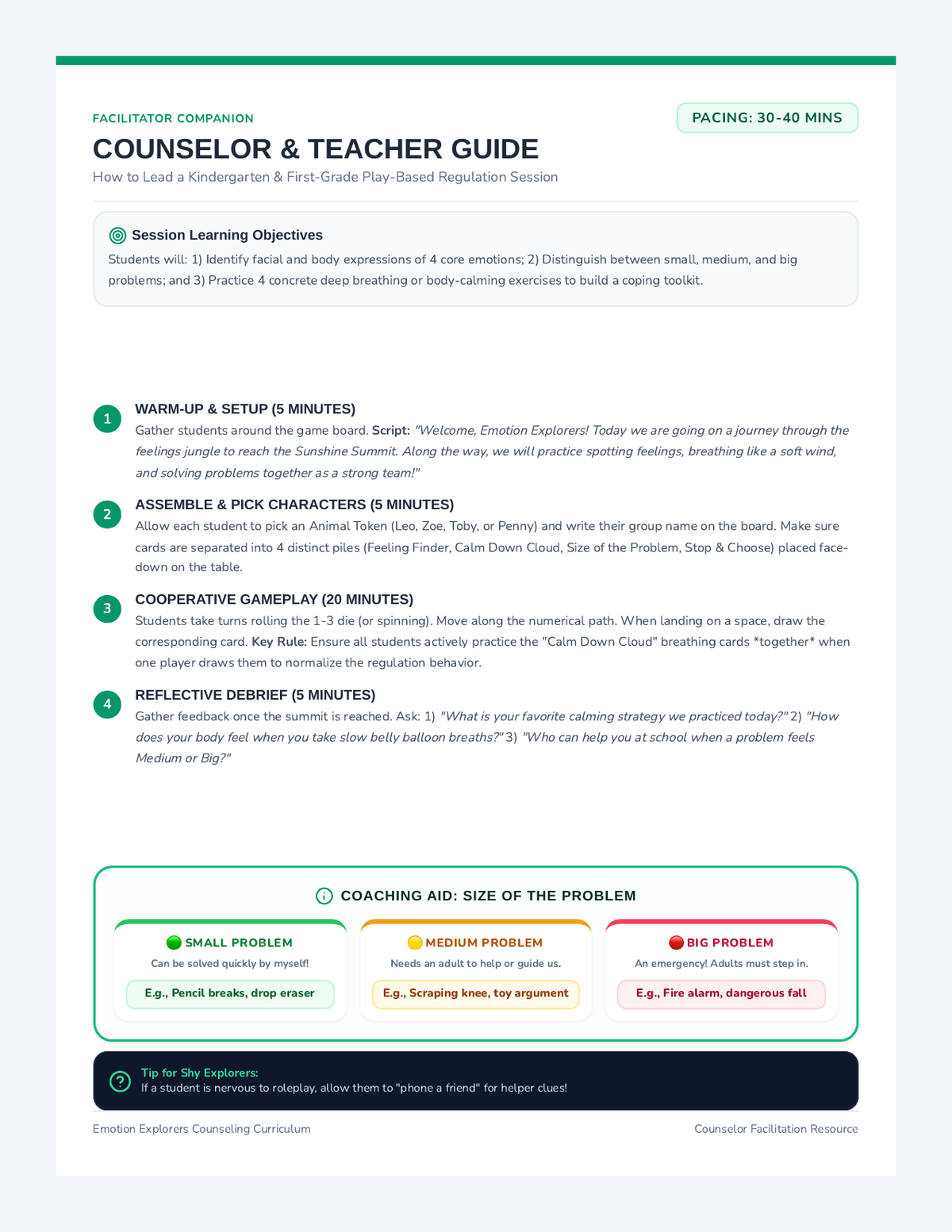
A highly professional, one-page printable counselor and teacher guide for conducting the game session. Includes session pacing, warm-up script, rules of play, debrief questions, and a visual Size of the Problem scale.
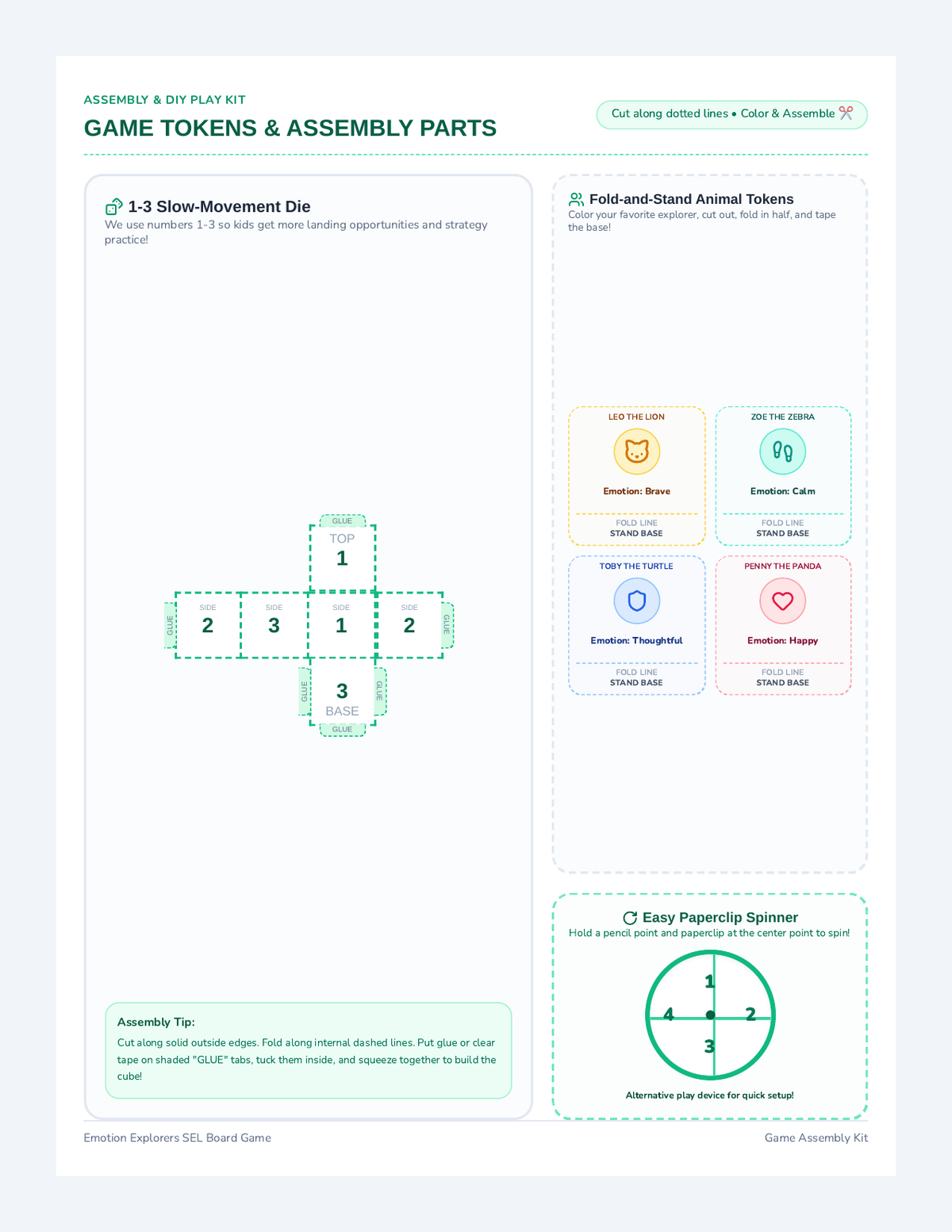
A printable workspace containing 4 fold-over character tokens, a slow-movement 1-3 game die, and an alternative 1-4 paperclip spinner. Features fold/cut guidelines ideal for craft development.
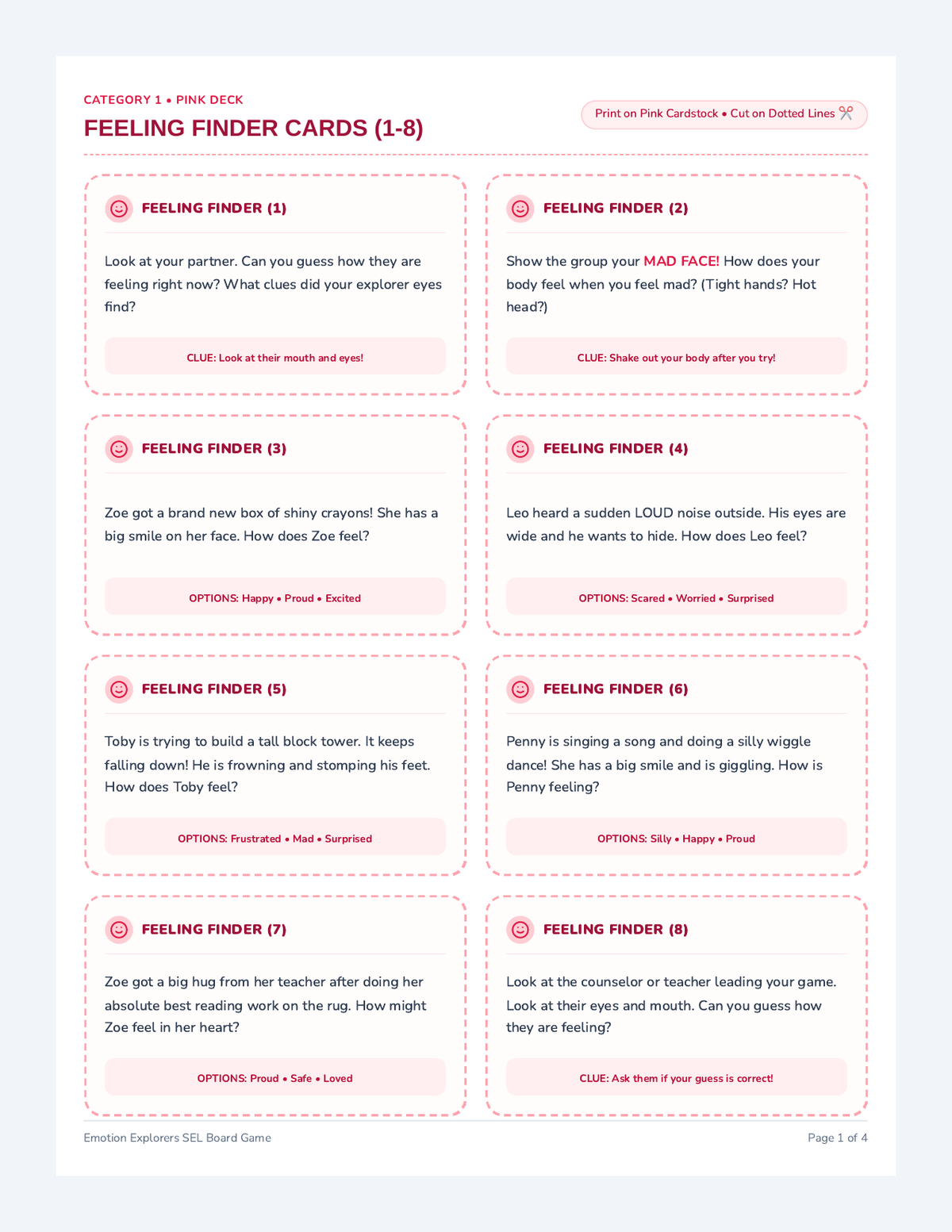
A 4-page print-and-cut card deck containing 32 situation and action cards specifically designed for K-1 developmental levels. Each page is dedicated entirely to a single category (8 cards each of Feeling Finder, Calm Down Cloud, Size of the Problem, and Stop & Choose) to allow for color-coded printing.
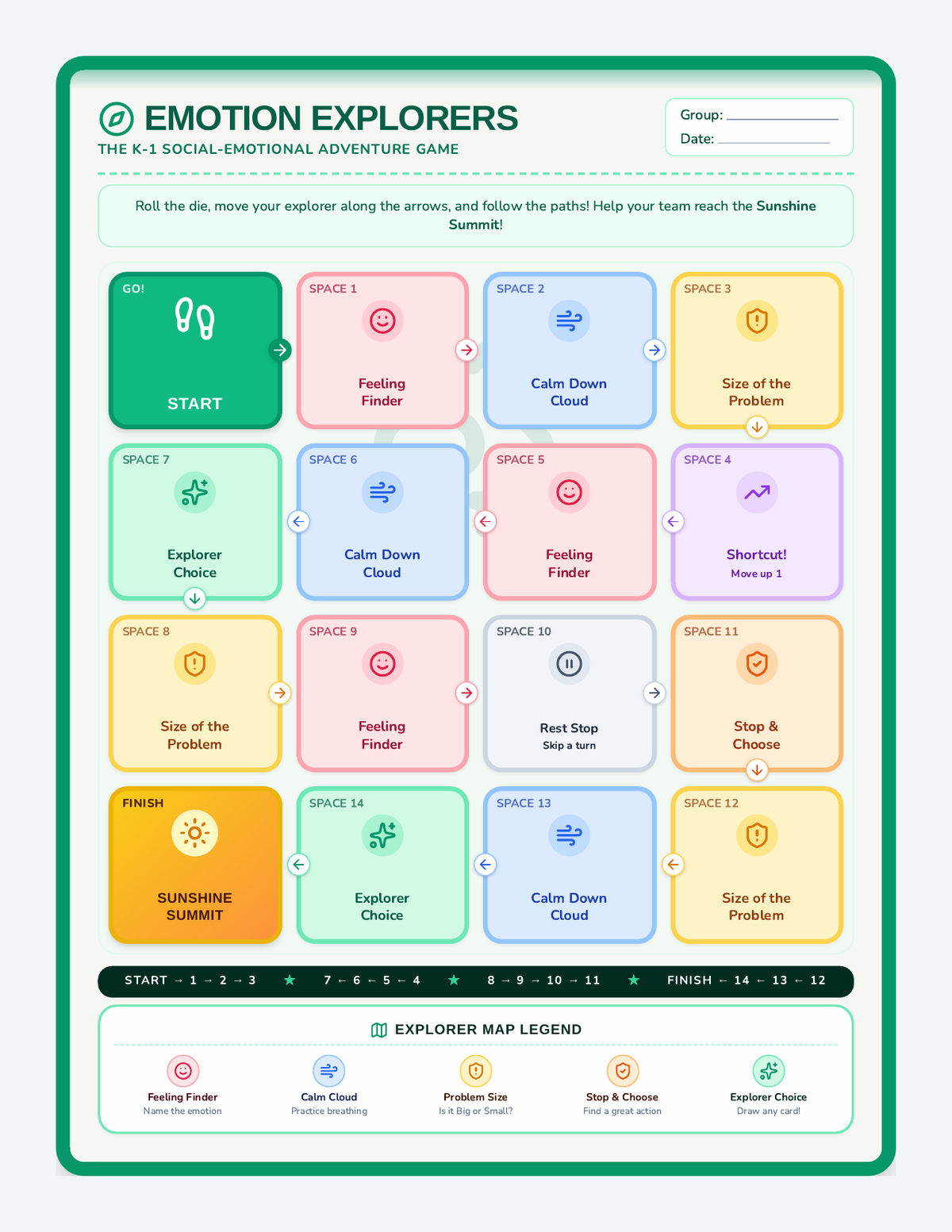
A printable, colorful portrait-format board game for K-1 students featuring a winding jungle pathway with directional arrows. Students land on action spaces to practice identifying feelings, breathing deeply, scaling problems, and making helpful choices.
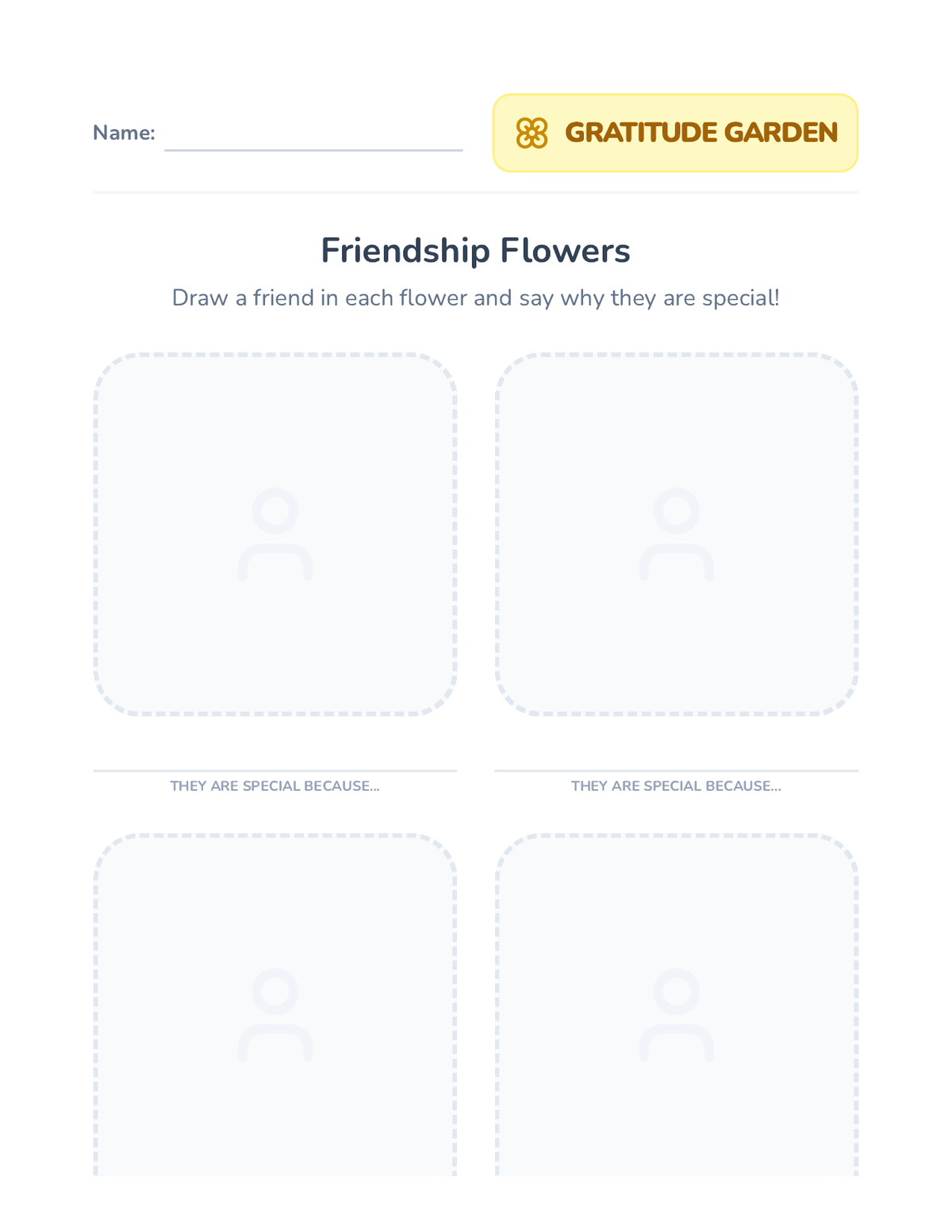
A Kindergarten reflection and gratitude worksheet for the final lesson, where students identify traits they appreciate in their peers.
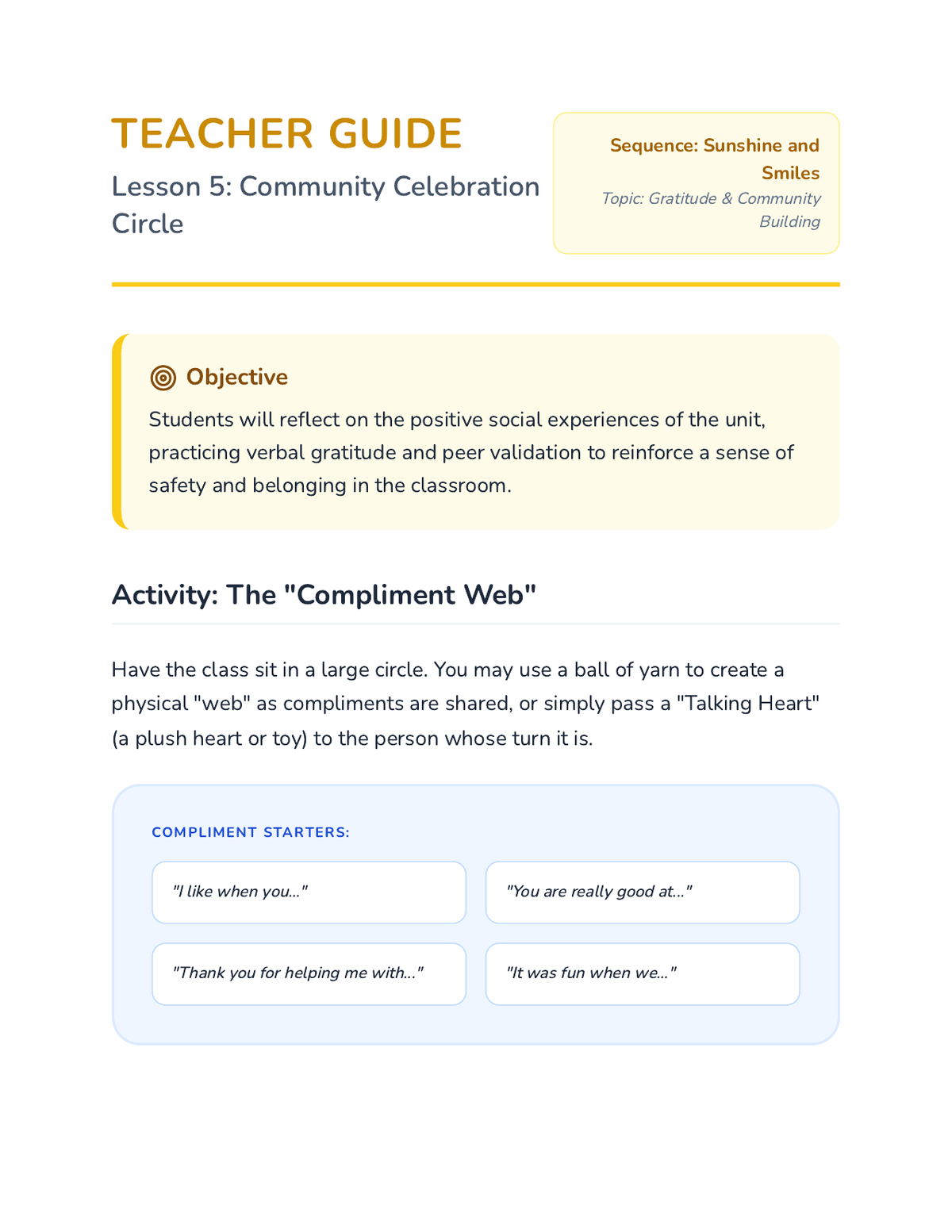
A teacher guide for the Community Celebration Circle, facilitating a concluding reflection and peer-compliment activity.
A slide deck for a concluding celebration, reinforcing gratitude and the social bonds formed throughout the sequence.
A student reflection sheet for Lesson 5 where they draw a memory from the Friendship Party and identify their feelings about the experience.
Visual presentation for Lesson 5, focusing on party rituals and a final reflection on the power of collective joy and friendship.
A Kindergarten reflection worksheet for the "Helping Hands" activity, allowing students to draw their act of kindness and identify their emotional response.
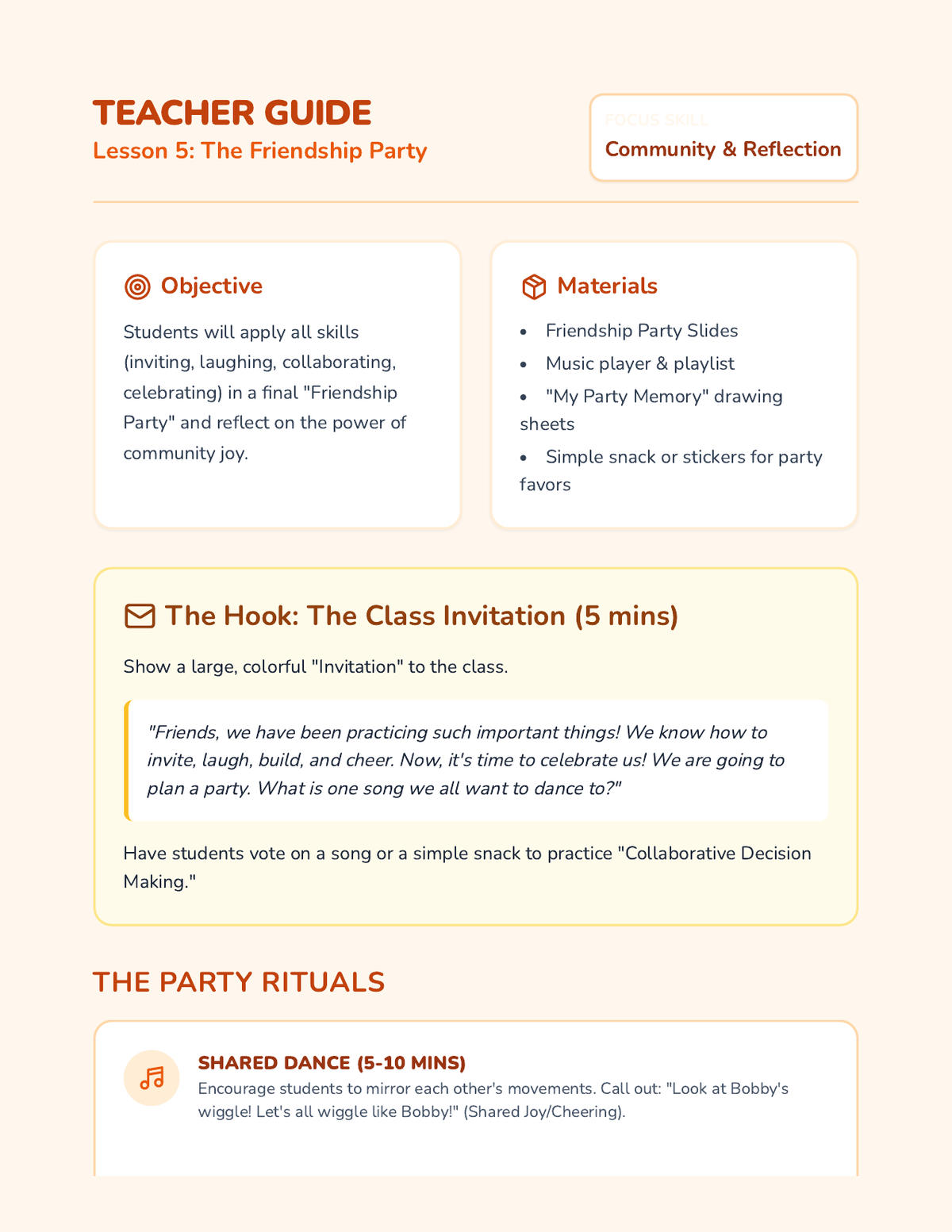
Event logistics and teacher guide for the culminating Lesson 5 'Friendship Party', featuring rituals for shared joy and guided reflection prompts.
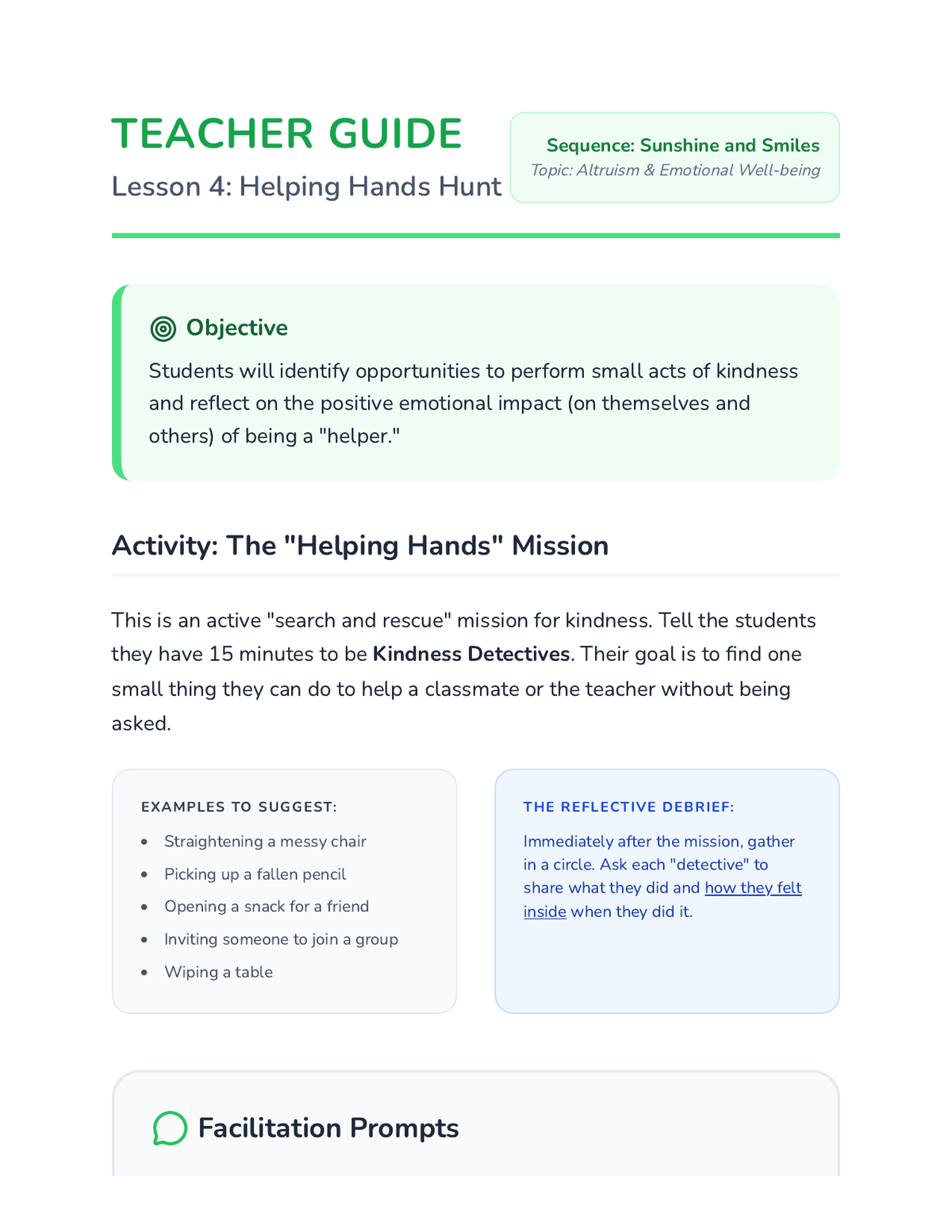
A teacher guide for the Helping Hands Mission, focusing on identifying small acts of service and facilitating reflections on the "helper's high."
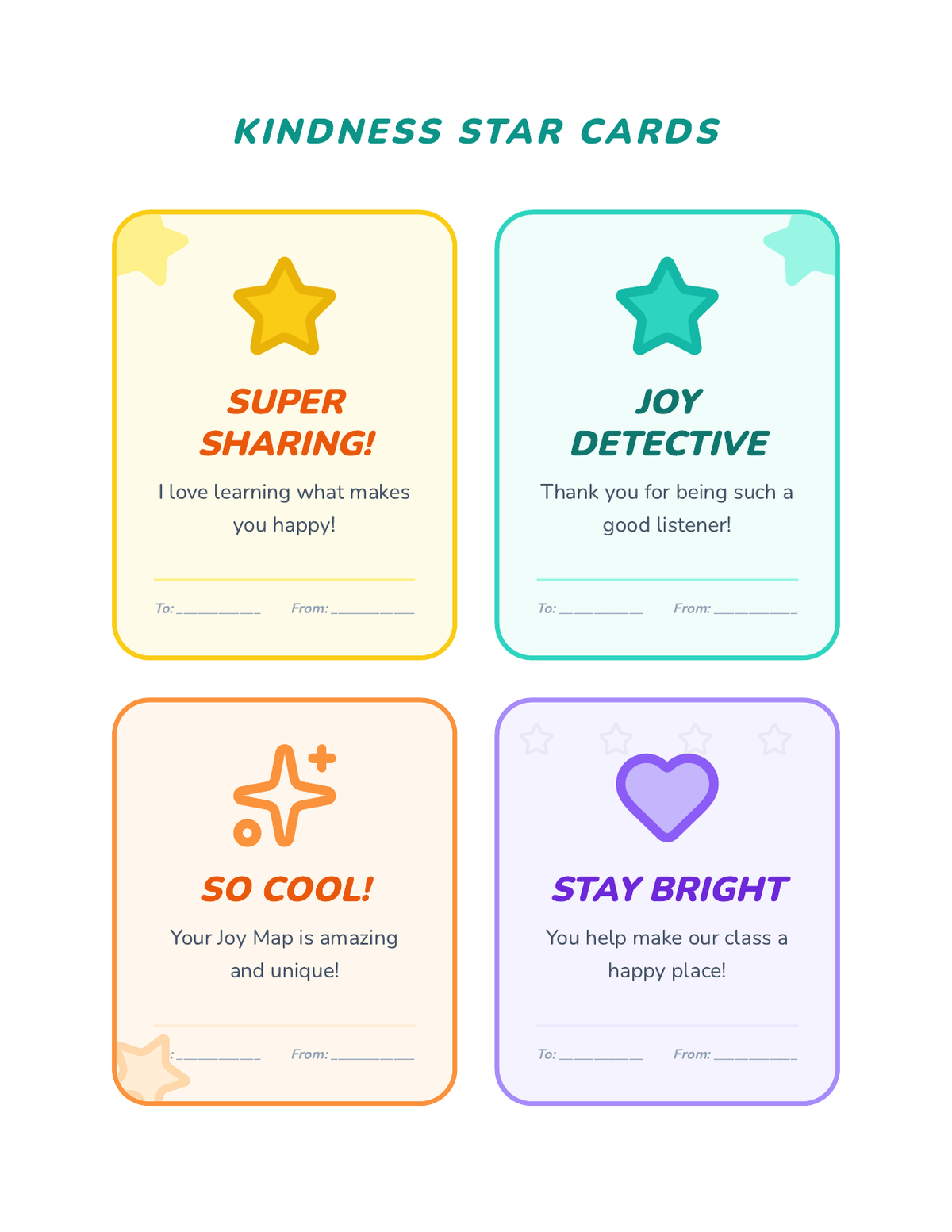
Small affirmation cards for students to give to peers during the Joy Map sharing circle, reinforcing positive social interactions and peer support.
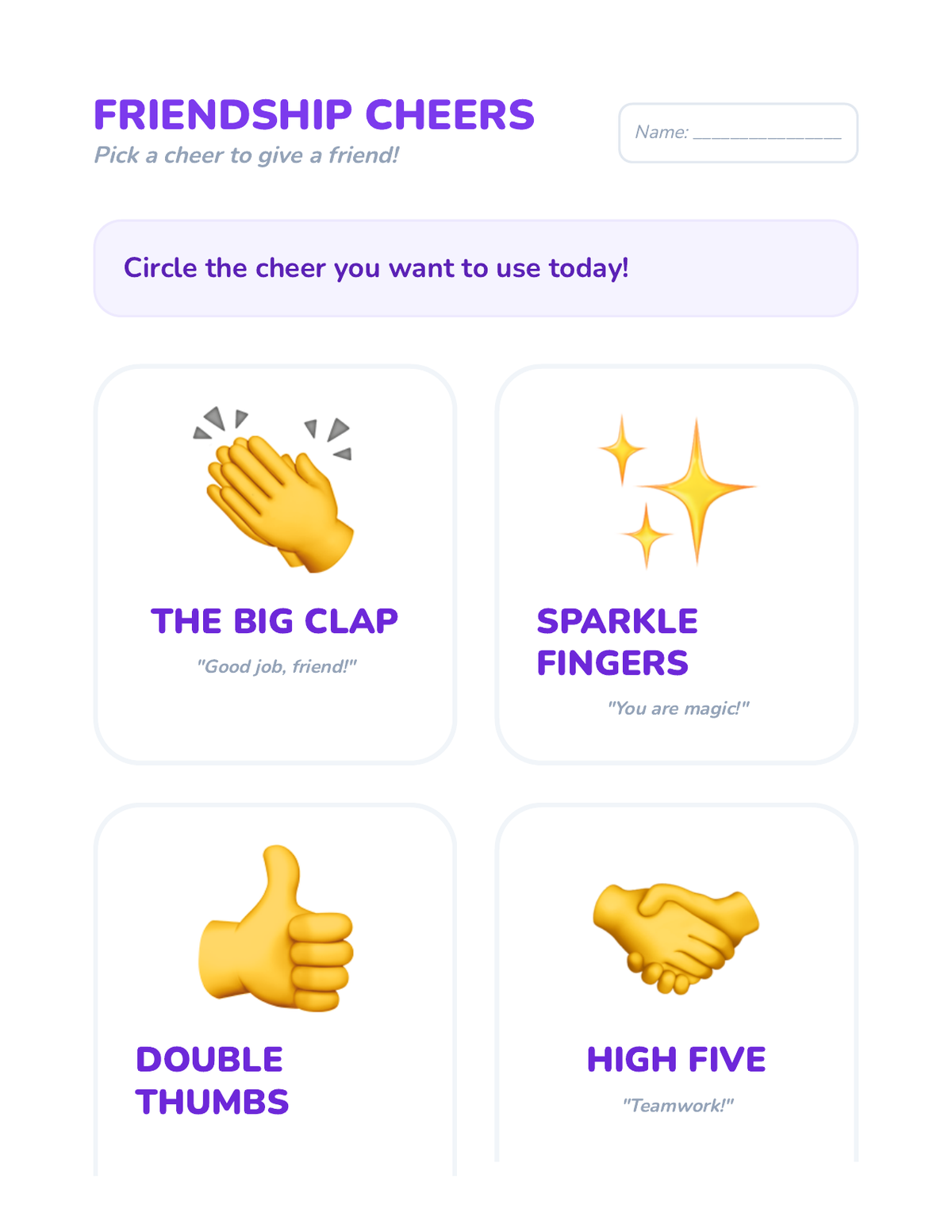
Student activity sheet for Lesson 4 that presents four different ways to celebrate a friend (Big Clap, Sparkle Fingers, Double Thumbs, High Five) for students to choose and practice.
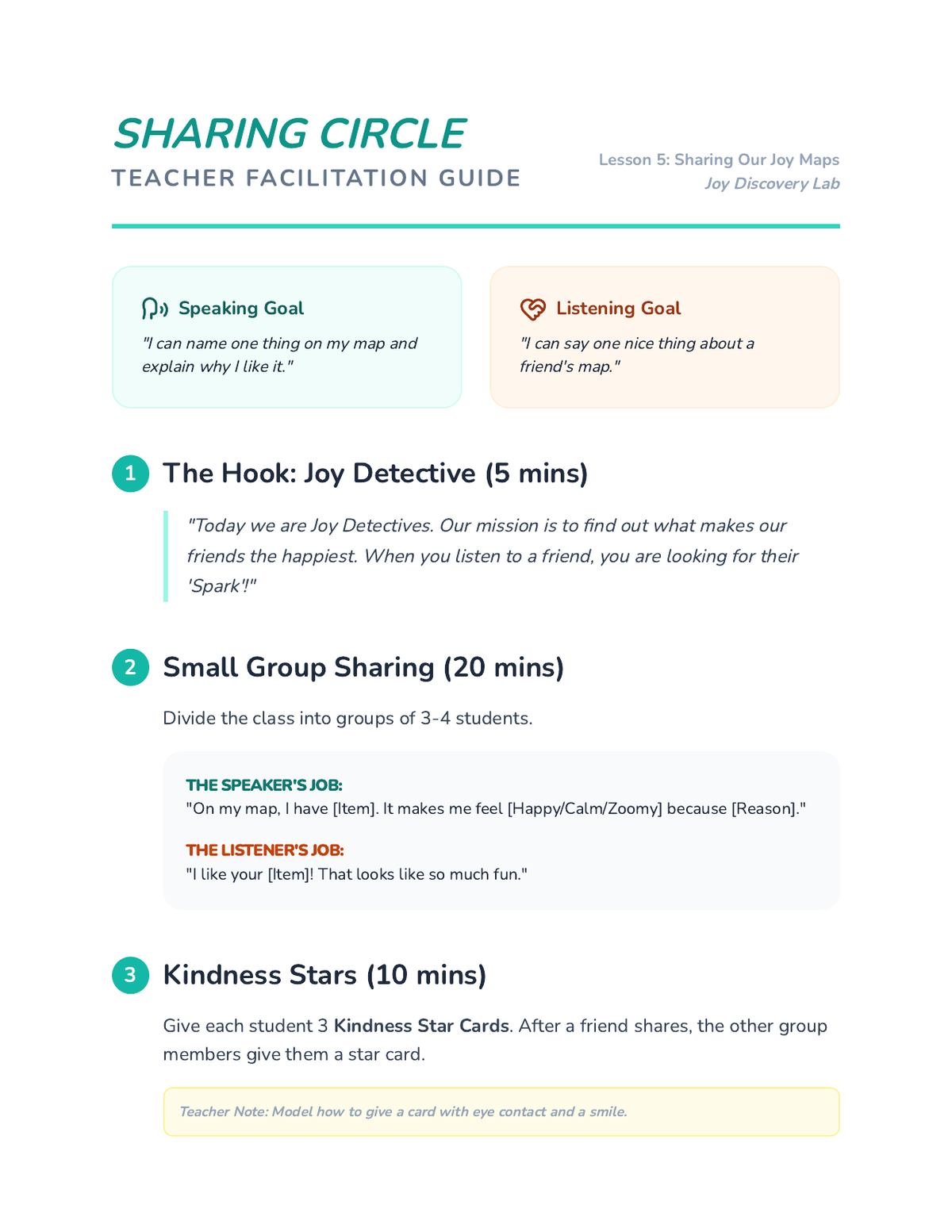
A facilitation guide for the final sharing circle, emphasizing active listening, positive feedback, and peer affirmation.
A slide deck for a "Kindness Hunt" activity, focusing on identifying small acts of service and their emotional benefits.
Visual presentation for Lesson 4, teaching students how to identify positive actions in others and providing visual cues for various ways to cheer.
A Kindergarten presentation focused on social skills, teaching students how to present their Joy Maps and offer positive affirmations to peers.
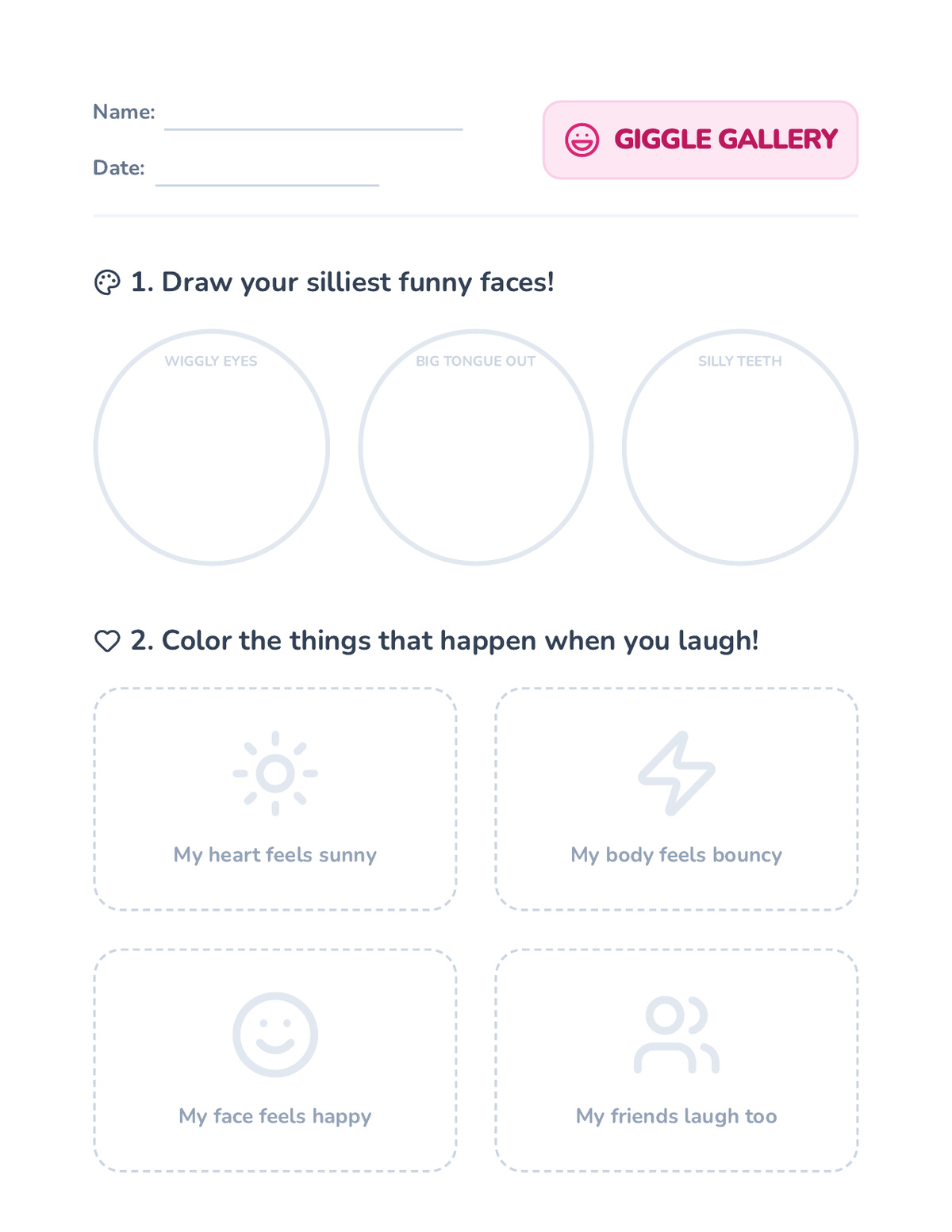
A Kindergarten drawing and coloring worksheet for Lesson 3, exploring funny faces and the physical feelings of laughter.
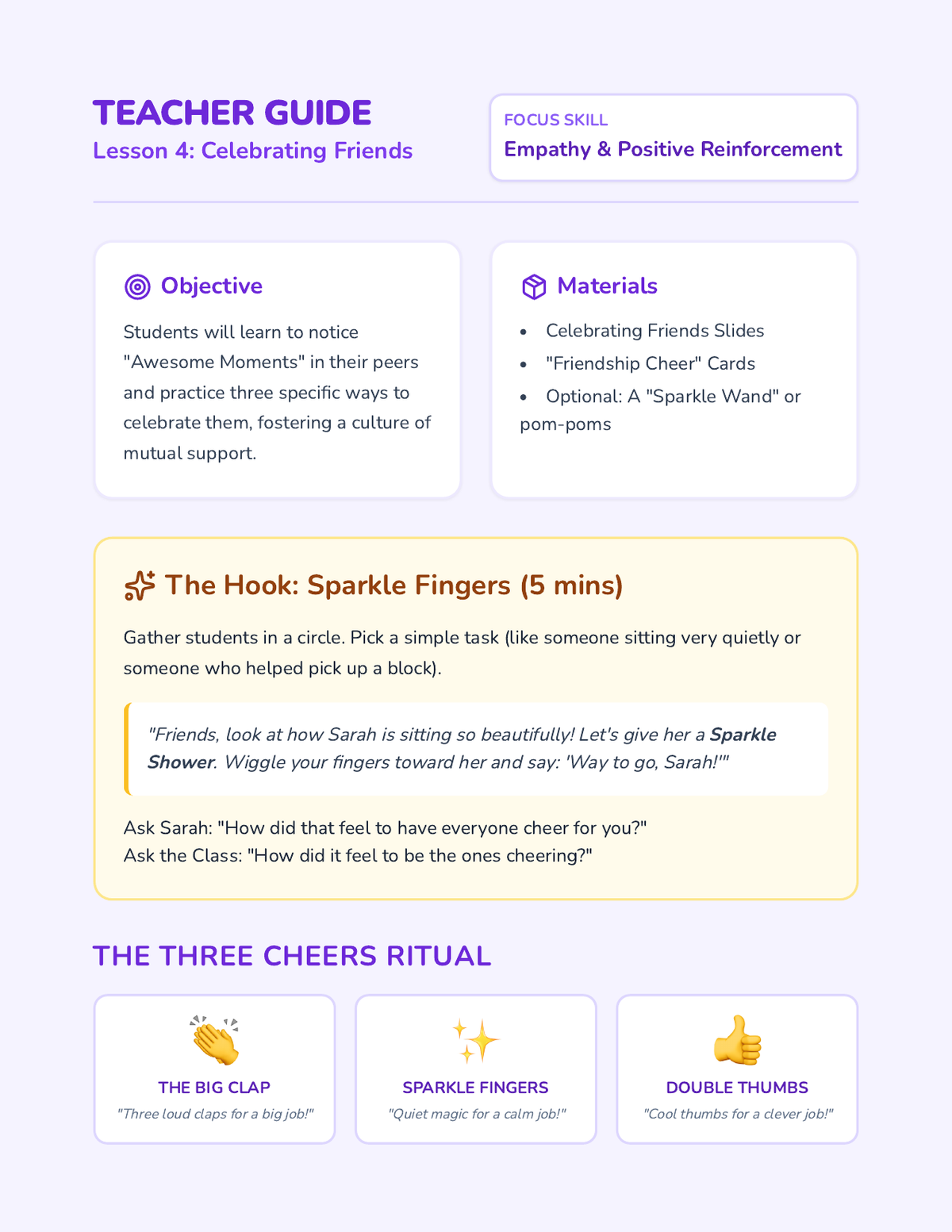
Discussion-based teacher guide for Lesson 4, including the 'Sparkle Shower' ritual, specific cheer types for Pre-K, and strategies for fostering peer observation.
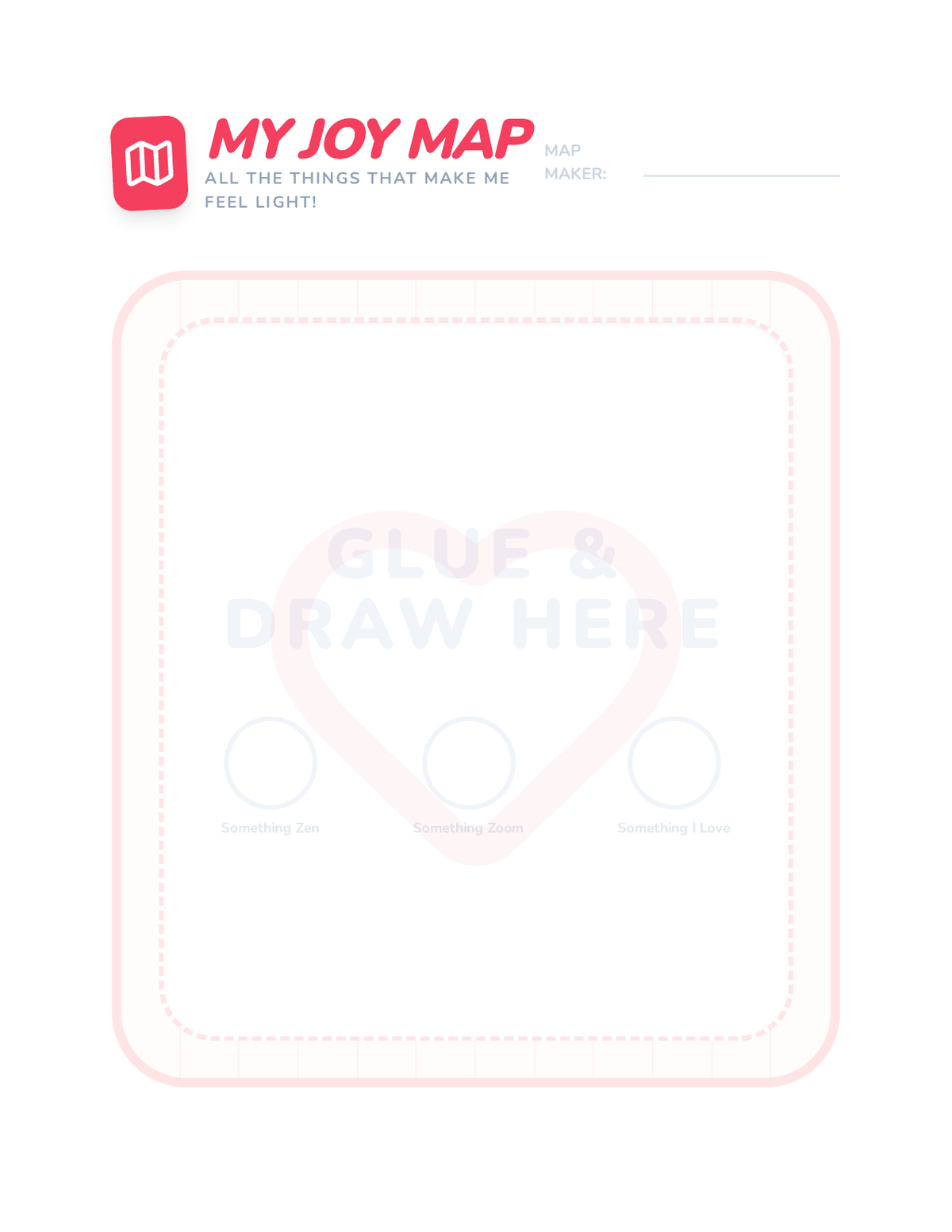
A large-format template for students to create a collage of their favorite things, serving as a visual reference for emotional regulation.
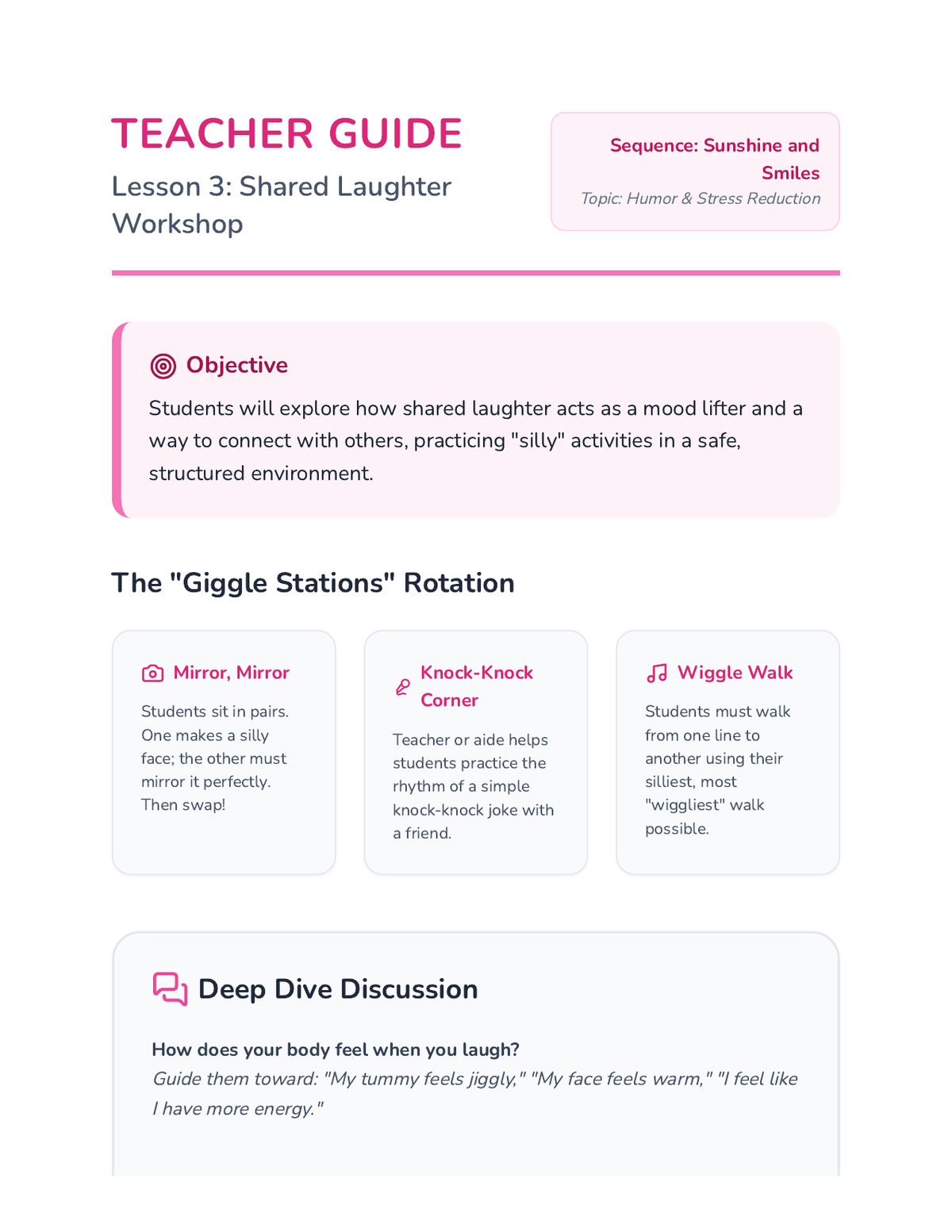
A teacher guide for the Laughter Workshop, including station ideas, discussion prompts, and strategies for managing high energy in the classroom.
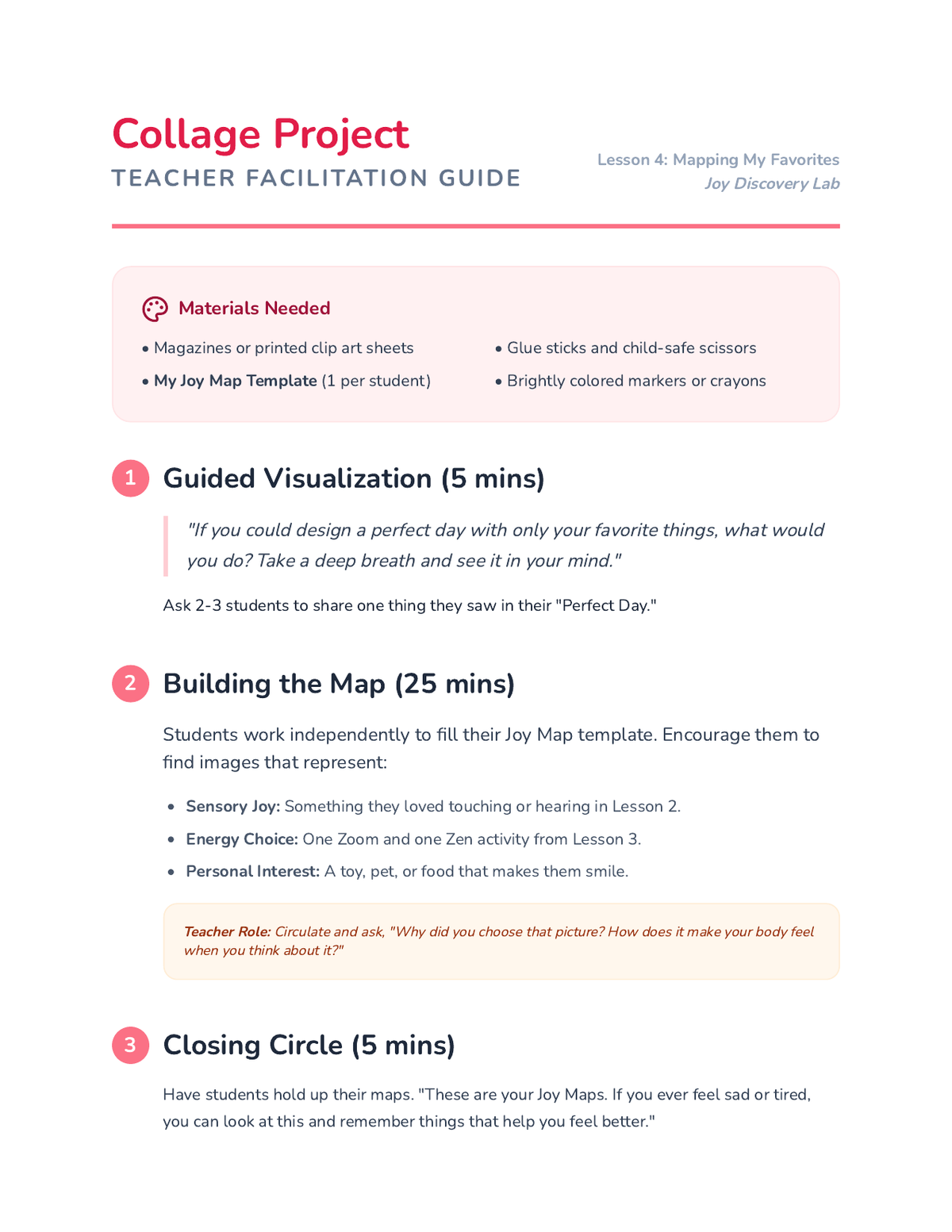
A teacher's guide for facilitating the Joy Map collage project, including prompts for guided visualization and creative support.
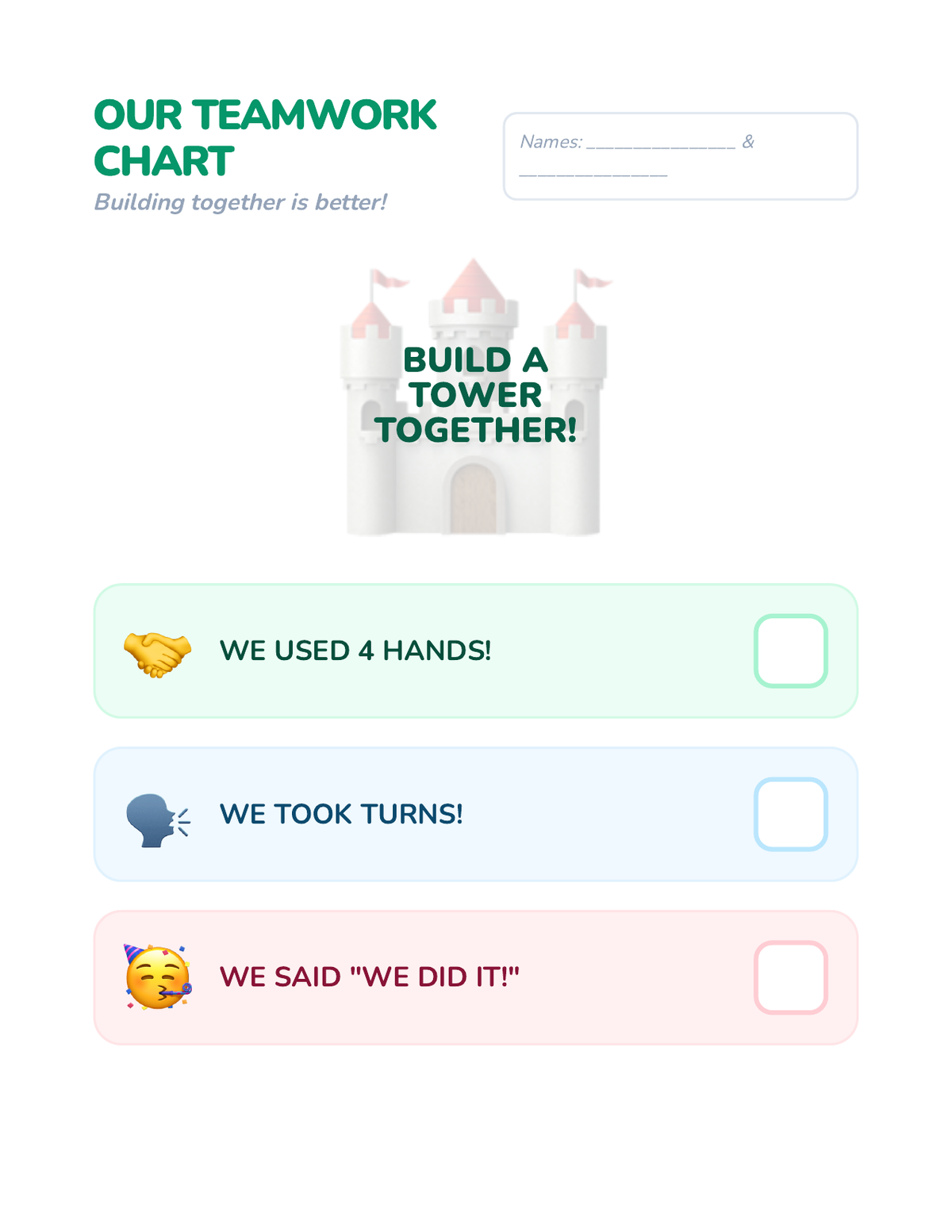
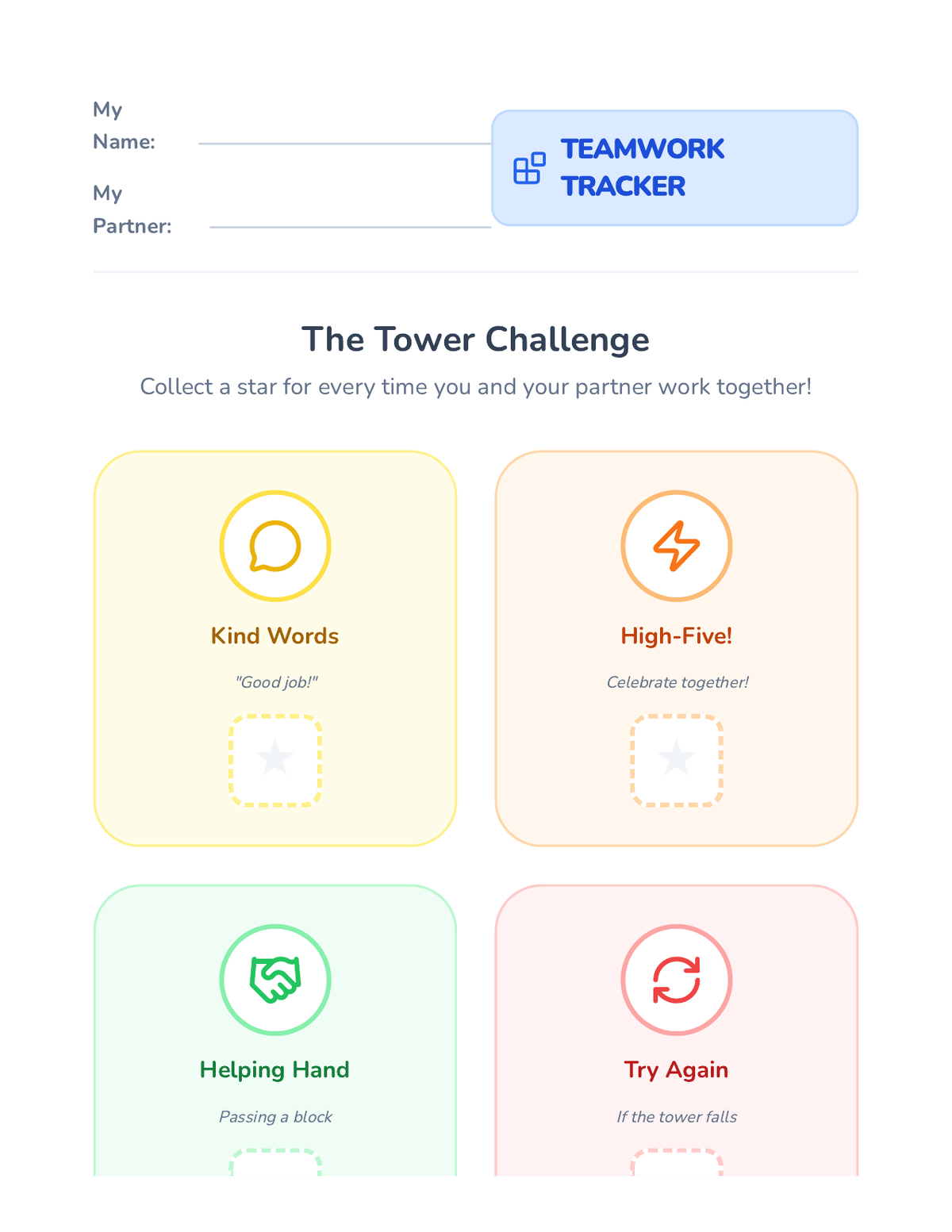
A student teamwork chart for Lesson 3 where partners track their collaborative actions (using four hands, taking turns, celebrating) with stickers or checks.
A celebratory completion certificate for students who have finished the 'Mood Makers' sequence, recognizing them as 'official Mood Makers and Reset Heroes'.
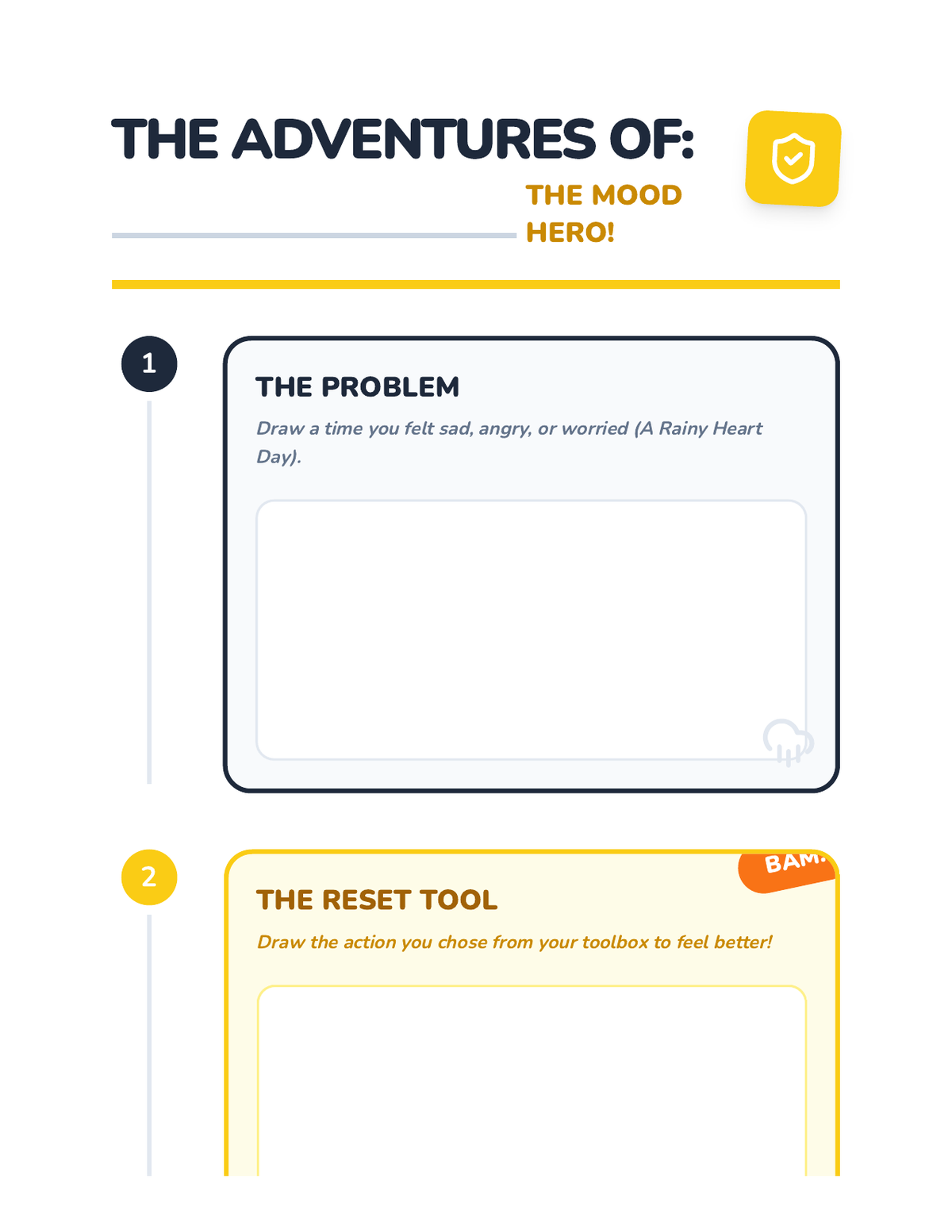
A student worksheet for reflecting on emotional change by creating a visual comic story of identifying a problem, choosing a tool, and achieving a positive mood shift.
Instructional slides for Lesson 5, reviewing the key concepts of internal weather, movement experiments, and the coping toolbox.
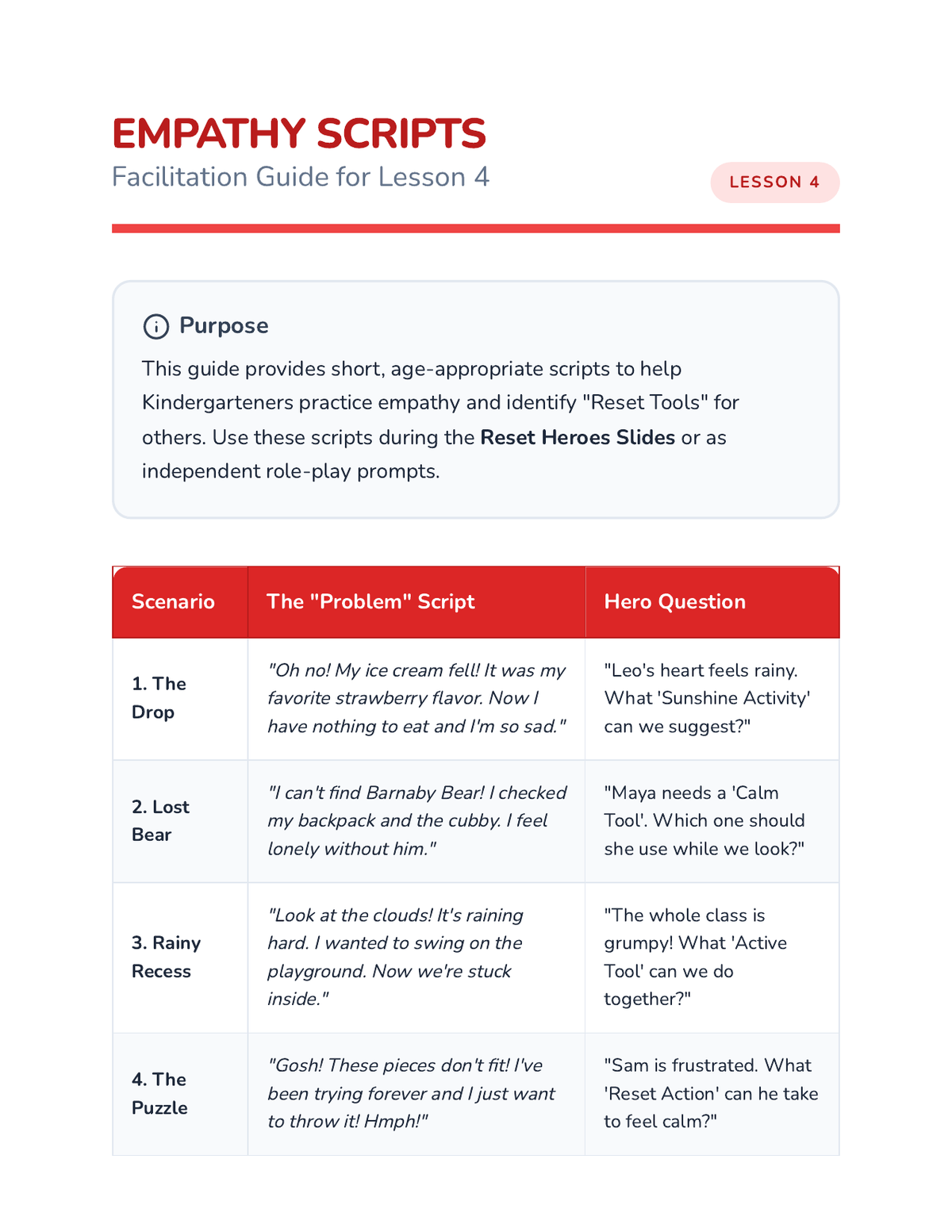
A teacher guide with scripted scenarios and facilitation prompts for role-playing emotional resets and building empathy.
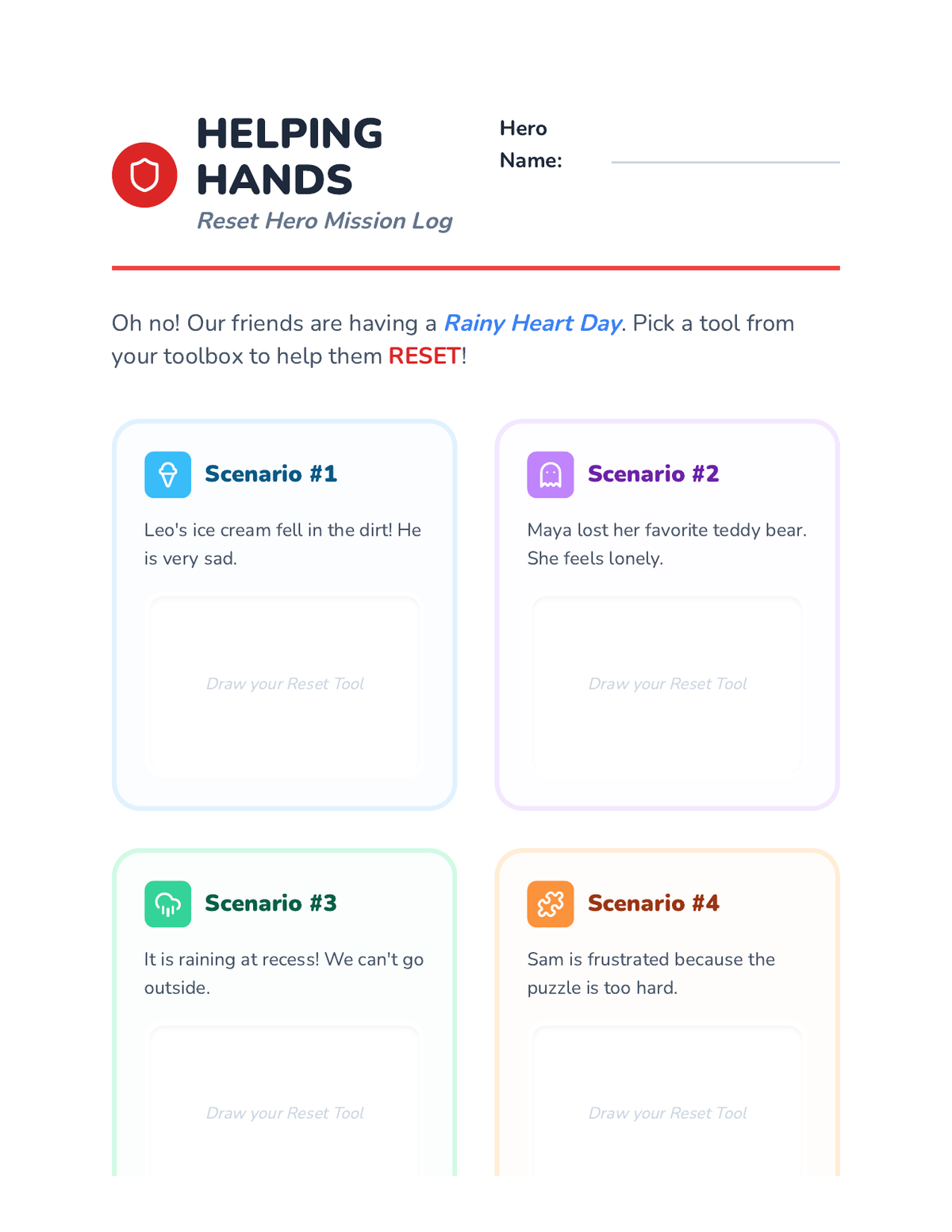
A student worksheet to select and draw 'Reset Tools' for characters facing emotional disappointments.
Instructional slides for Lesson 4, presenting 'Reset Hero' scenarios to practice empathy and behavioral activation.
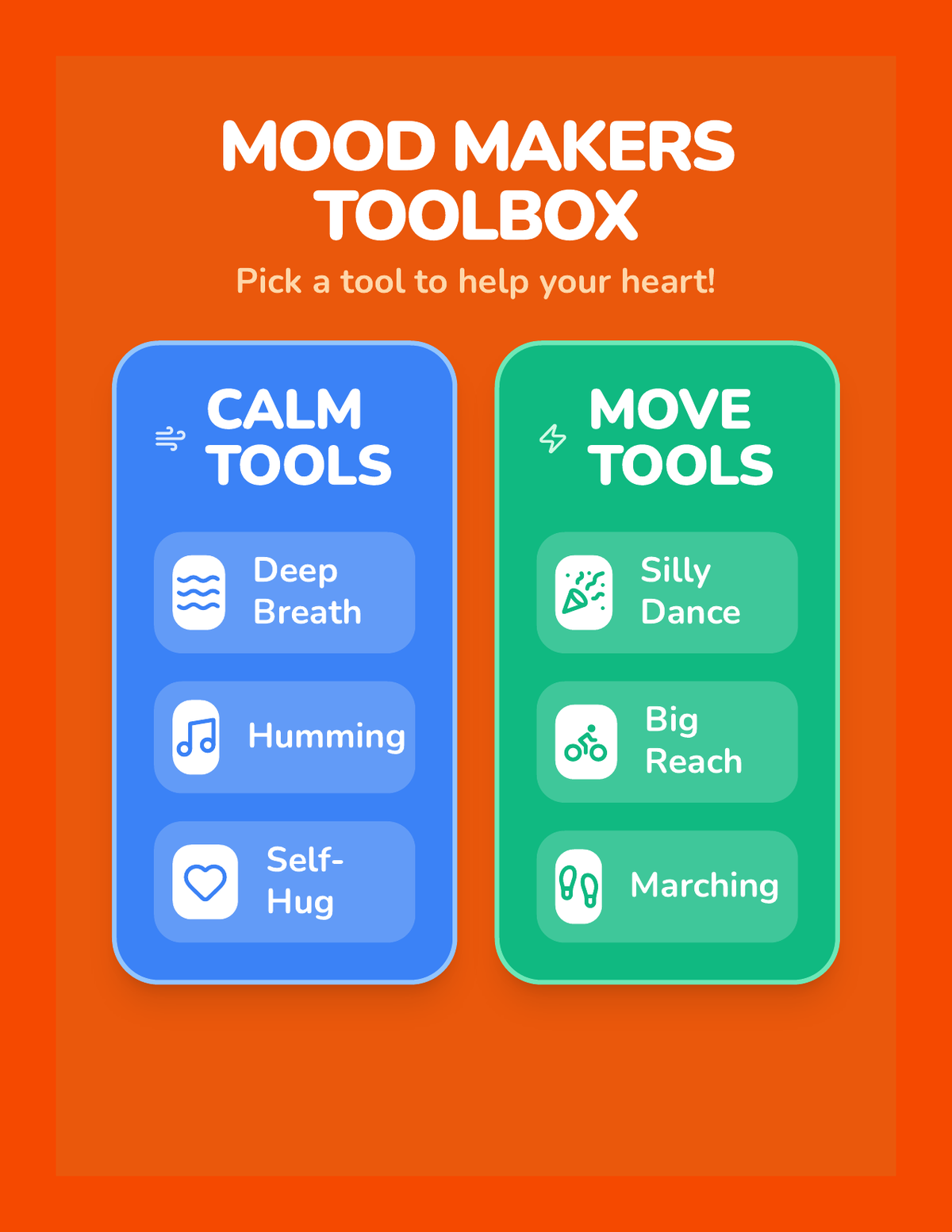
A classroom reference poster visualizing the 'Calm' and 'Move' tools for emotional regulation.
Visual presentation for Lesson 3, illustrating the concept of teamwork, turn-taking, and shared success through building activities.
A slide deck for a "silly" workshop teaching students how shared laughter boosts mood and reduces stress.
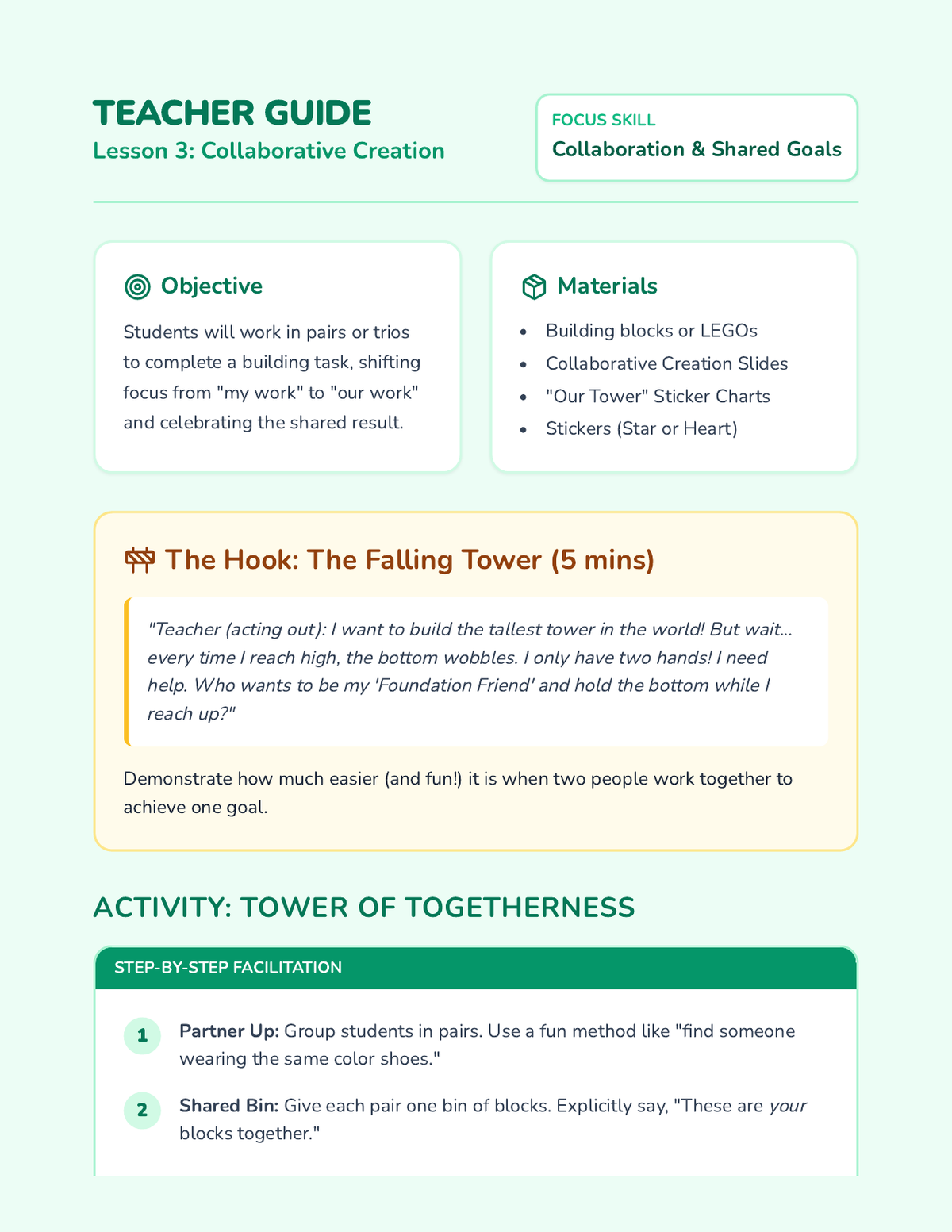
Project-based teacher guide for Lesson 3, providing instructions for the 'Tower of Togetherness' activity and strategies for scaffolding collaboration among Pre-K students.
A Kindergarten activity tracker for Lesson 2, where students collect stars for positive social interactions like high-fives and helping.
A student drawing sheet for Lesson 2 where students create a silly face and track whether it made a peer laugh, reinforcing the concept of shared joy.