Mindful breathing and body scan meditation techniques integrated with daily self-care routines. Develops strategies for balancing life demands and advocating for personal wellness needs.
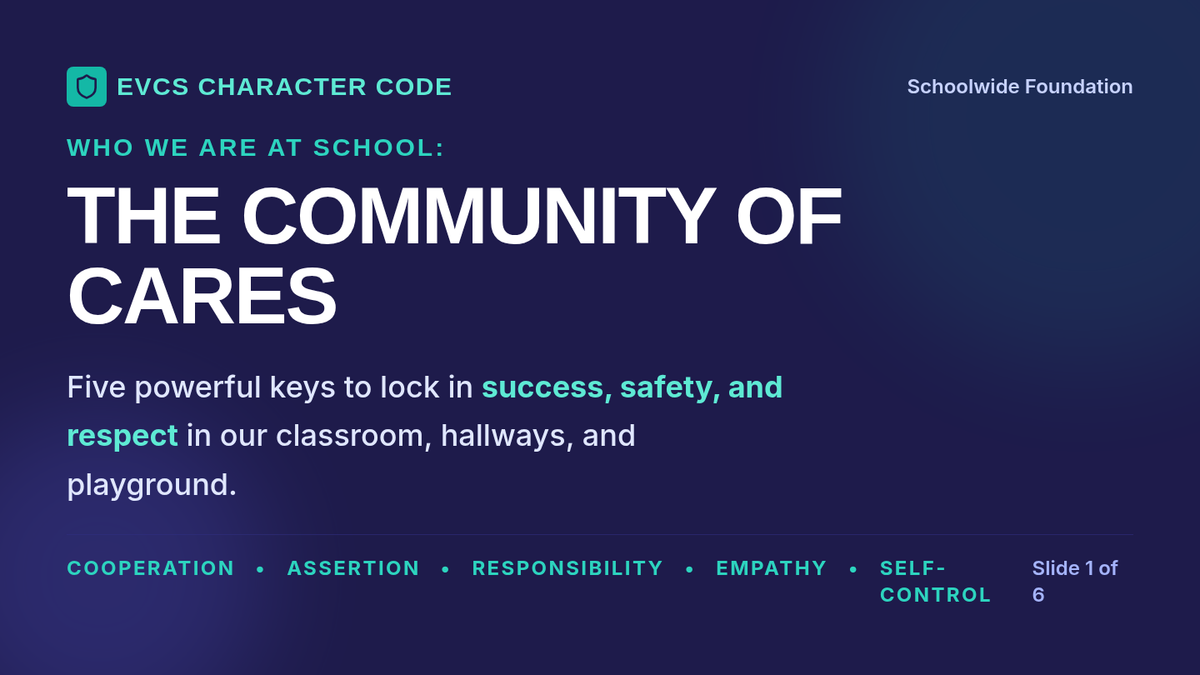
A comprehensive and vibrant presentation slide deck that introduces each of the five EVCS CARES characteristics (Cooperation, Assertion, Responsibility, Empathy, and Self-Control) in isolation with key deep-dive strategies.
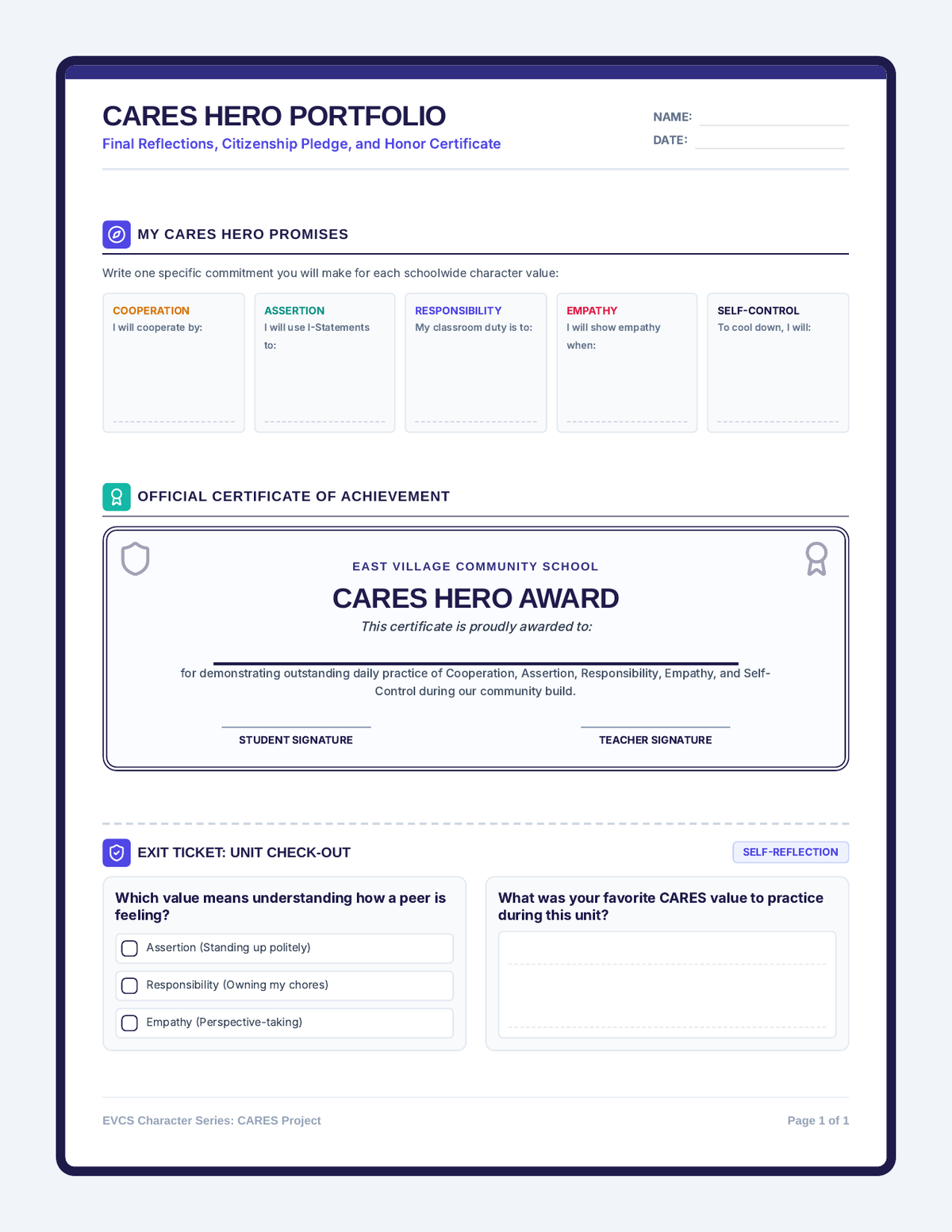
A printable student portfolio and official CARES Hero certificate of achievement, featuring a values synthesis map, a signed pledge card, and a final units reflection exit ticket.
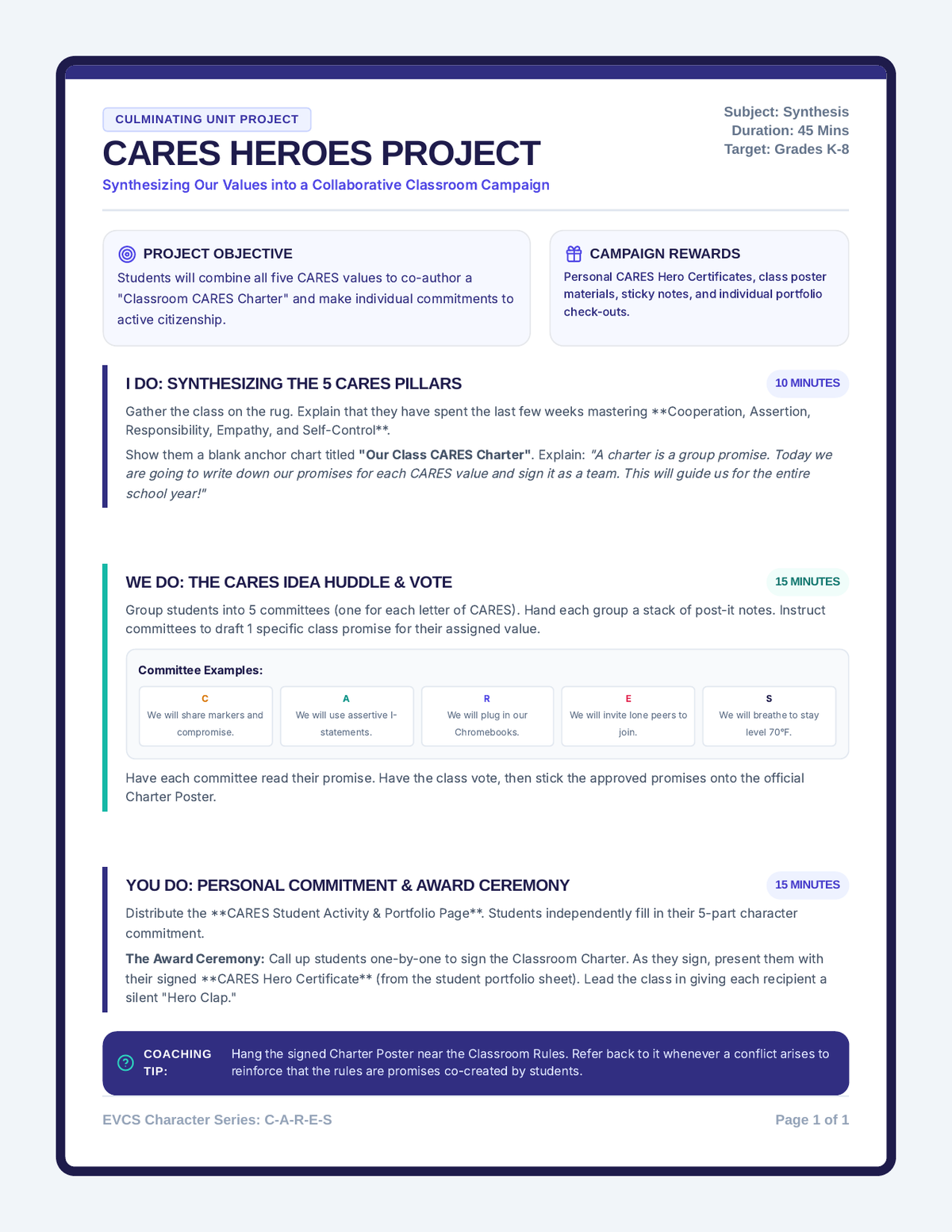
A teacher guide for facilitating the culminating CARES Heroes Project, outlining a step-by-step collaborative class charter co-creation and schoolwide kindness campaign.
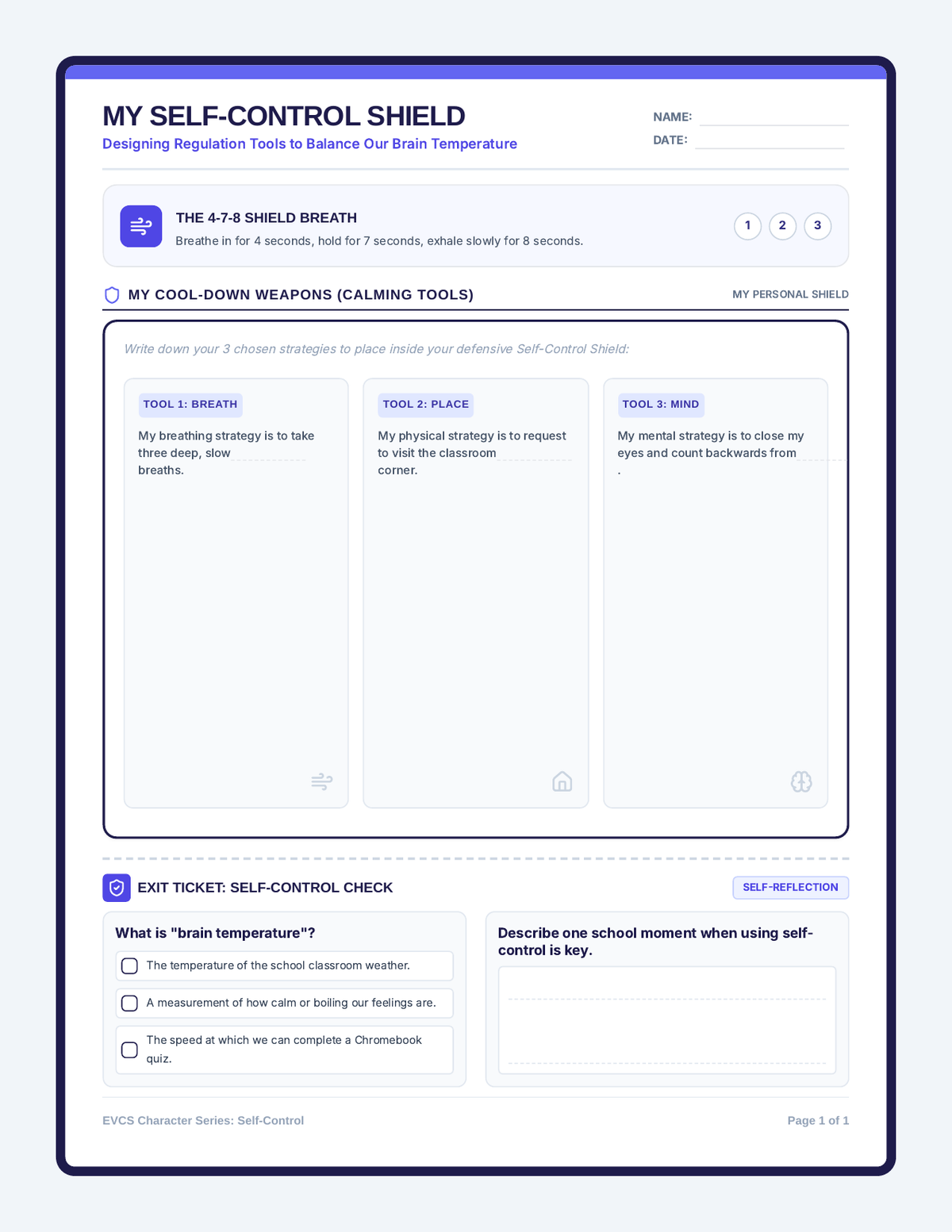
A student worksheet and interactive cool-down shield mapper for planning self-regulation and breathing techniques during emotional challenges. Includes a self-assessment exit ticket.
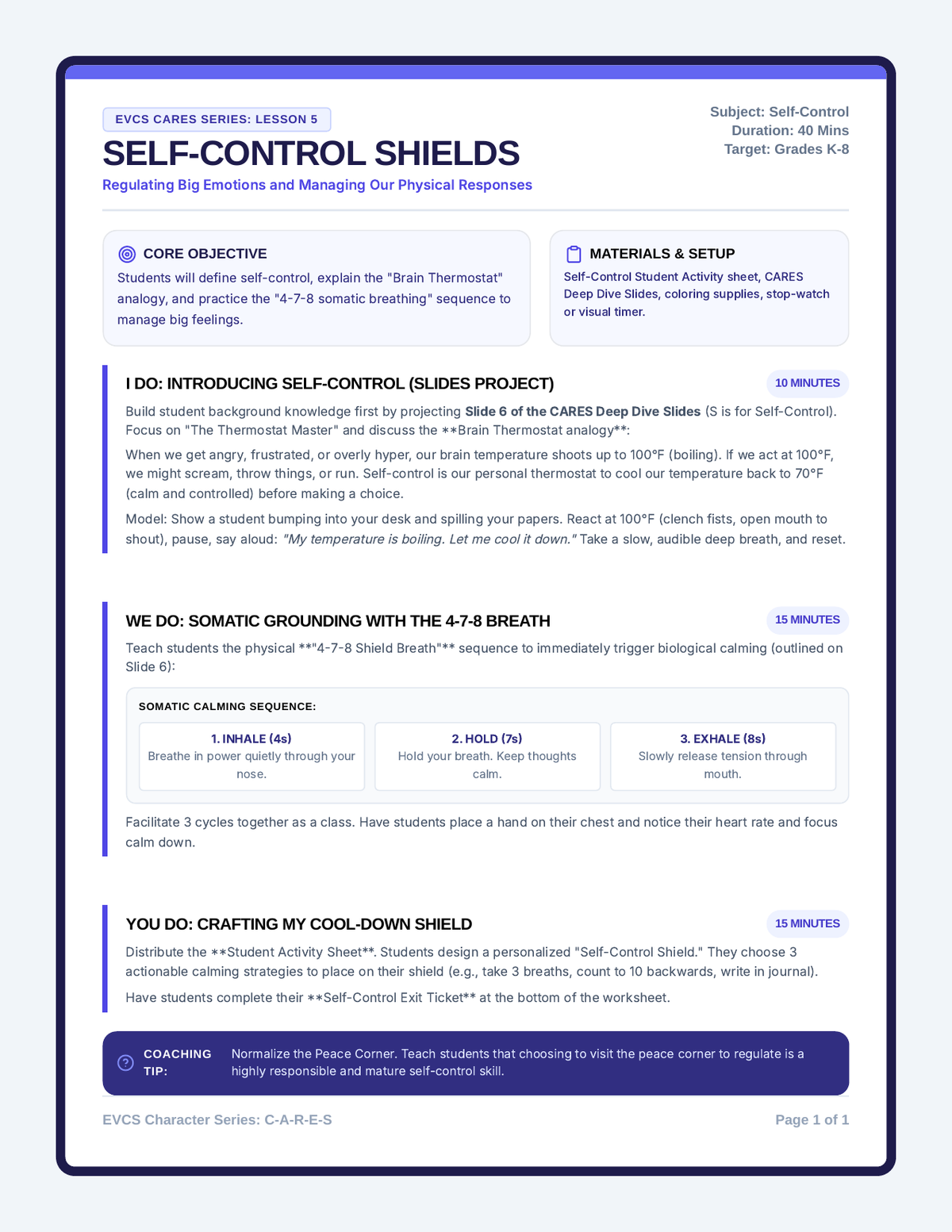
A complete teacher lesson plan for teaching Self-Control. Guides educators on instructing the 'Brain Temperature' analogy, somatic grounding breathing techniques, and peace corner routines.
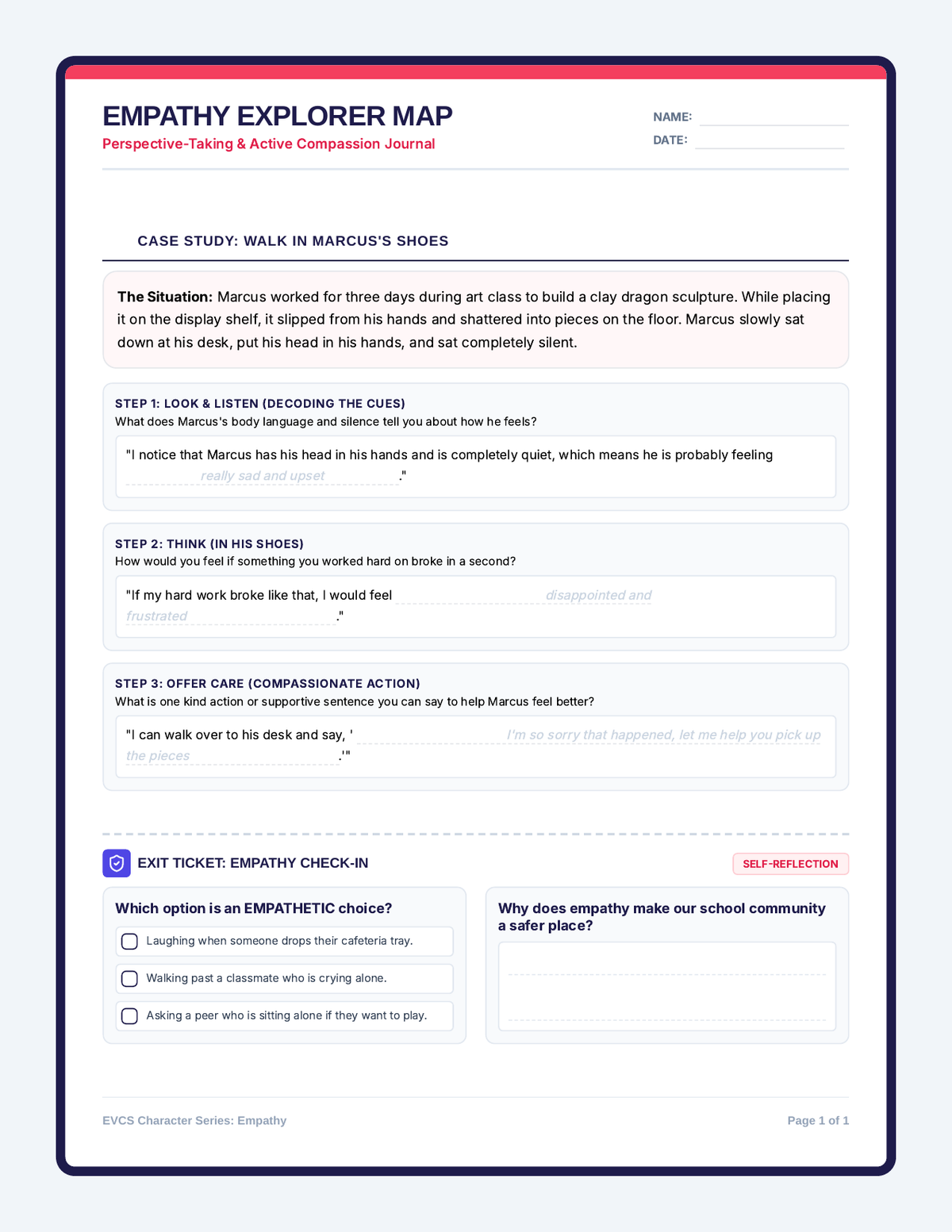
A student worksheet and interactive perspective-taking activity labeled 'Walk in My Shoes' for analyzing emotional situations and expressing supportive care. Includes an integrated exit ticket.
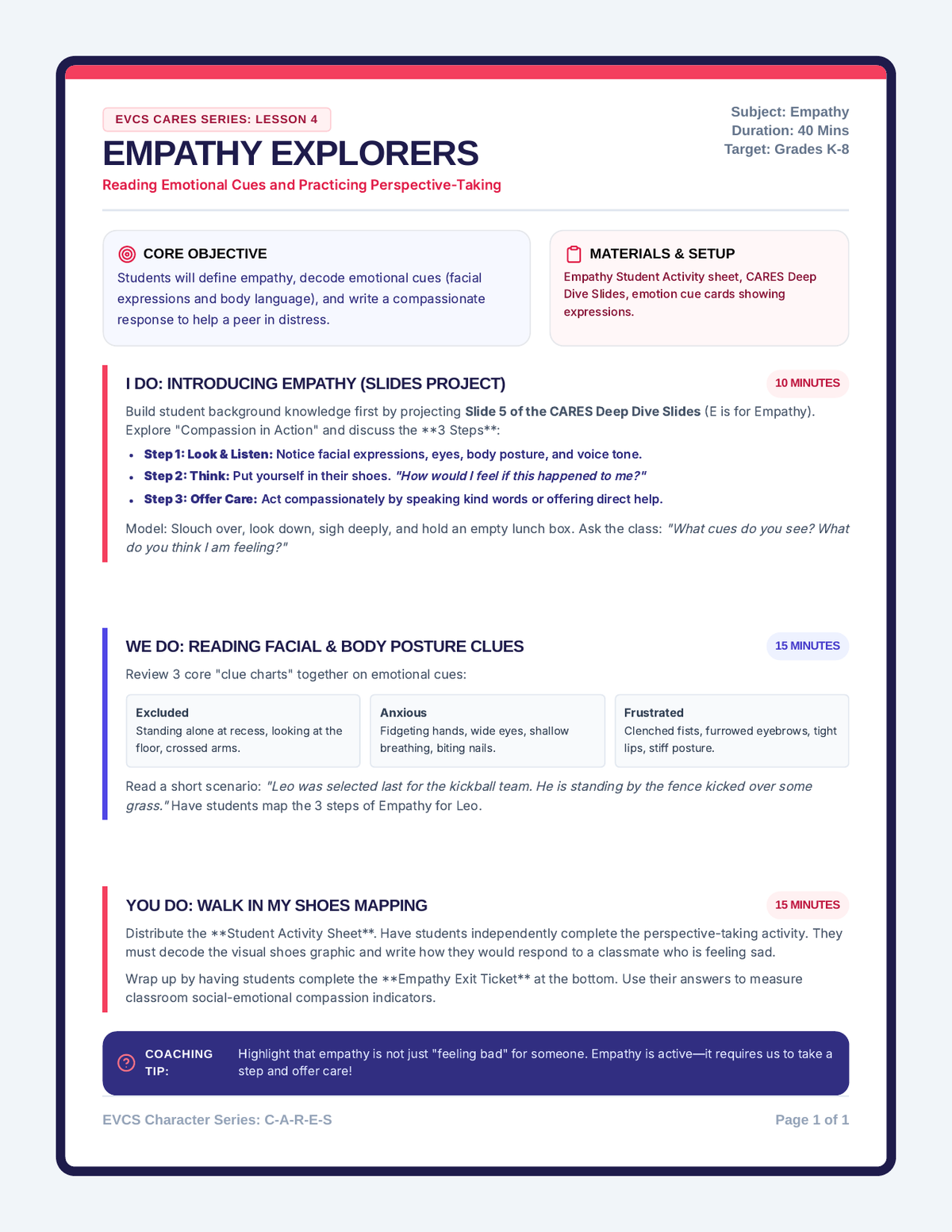
A complete teacher lesson plan for teaching Empathy. Guides teachers on instructing perspective-taking, identifying facial/body emotion cues, and facilitating supportive partner debriefs.
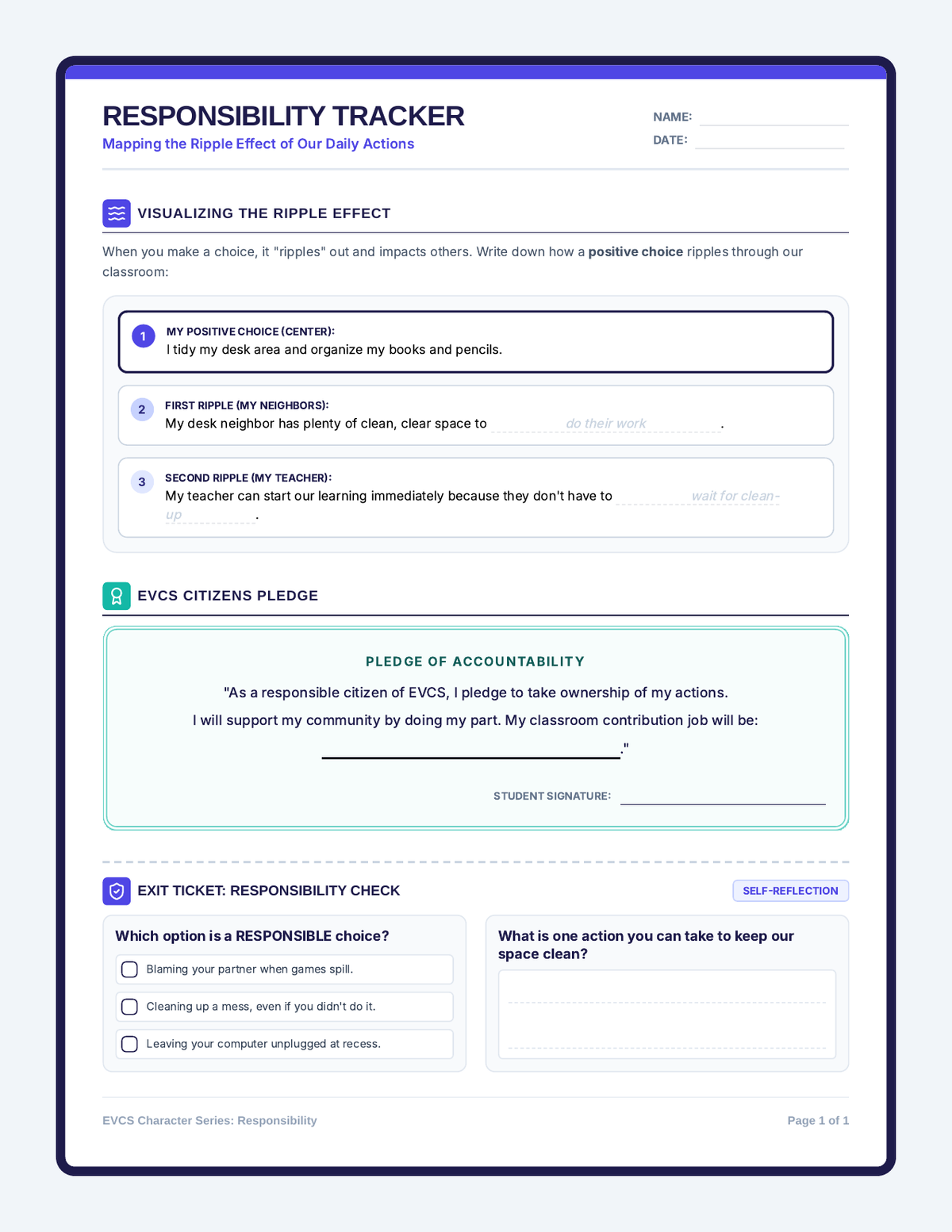
A student worksheet and Ripple Effect visual diagram mapper for exploring how individual actions impact the classroom community. Includes a citizenship pledge and an exit ticket.
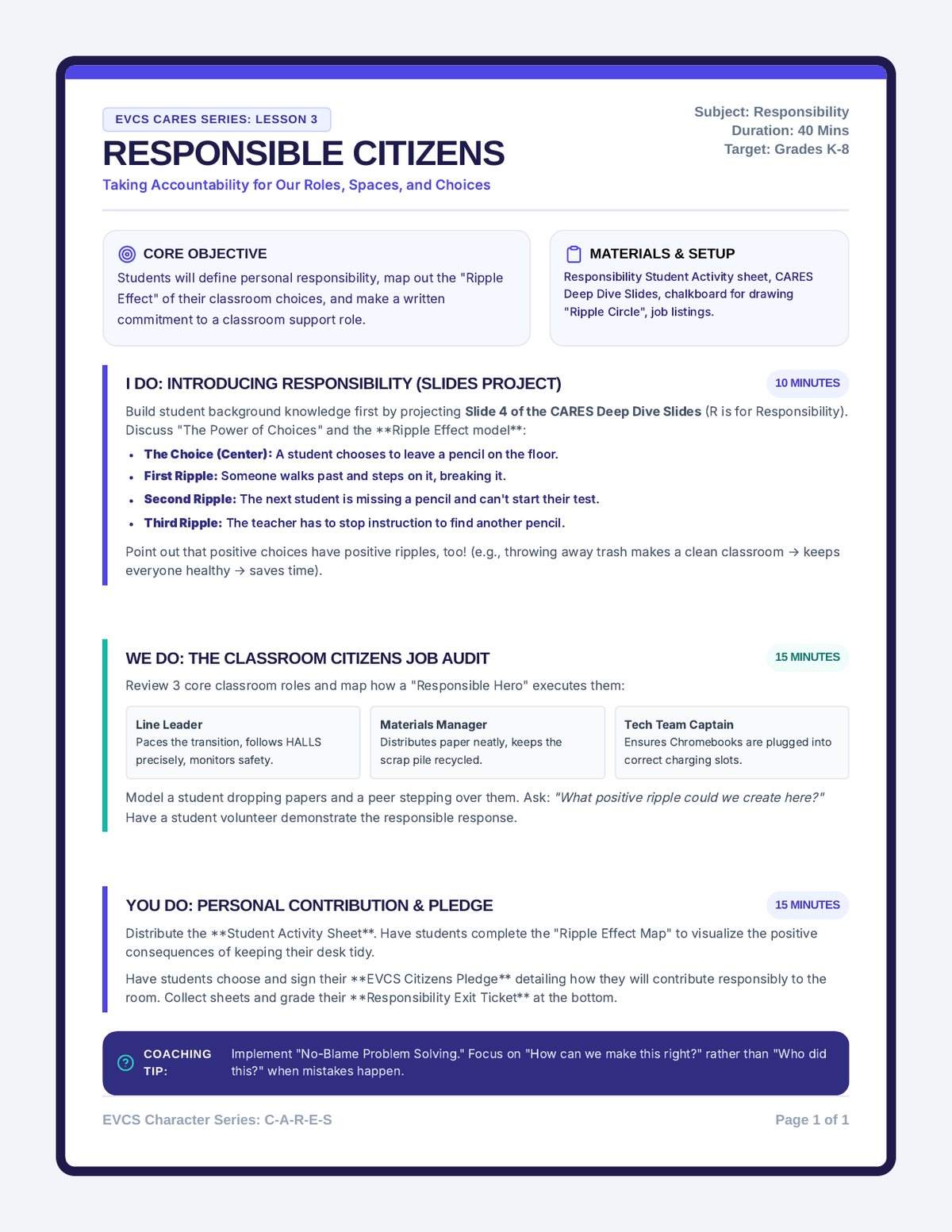
A comprehensive teacher lesson plan for teaching Responsibility. Outlines the 'Ripple Effect' of personal choices, class roles, and pacing for direct instruction and active modeling.
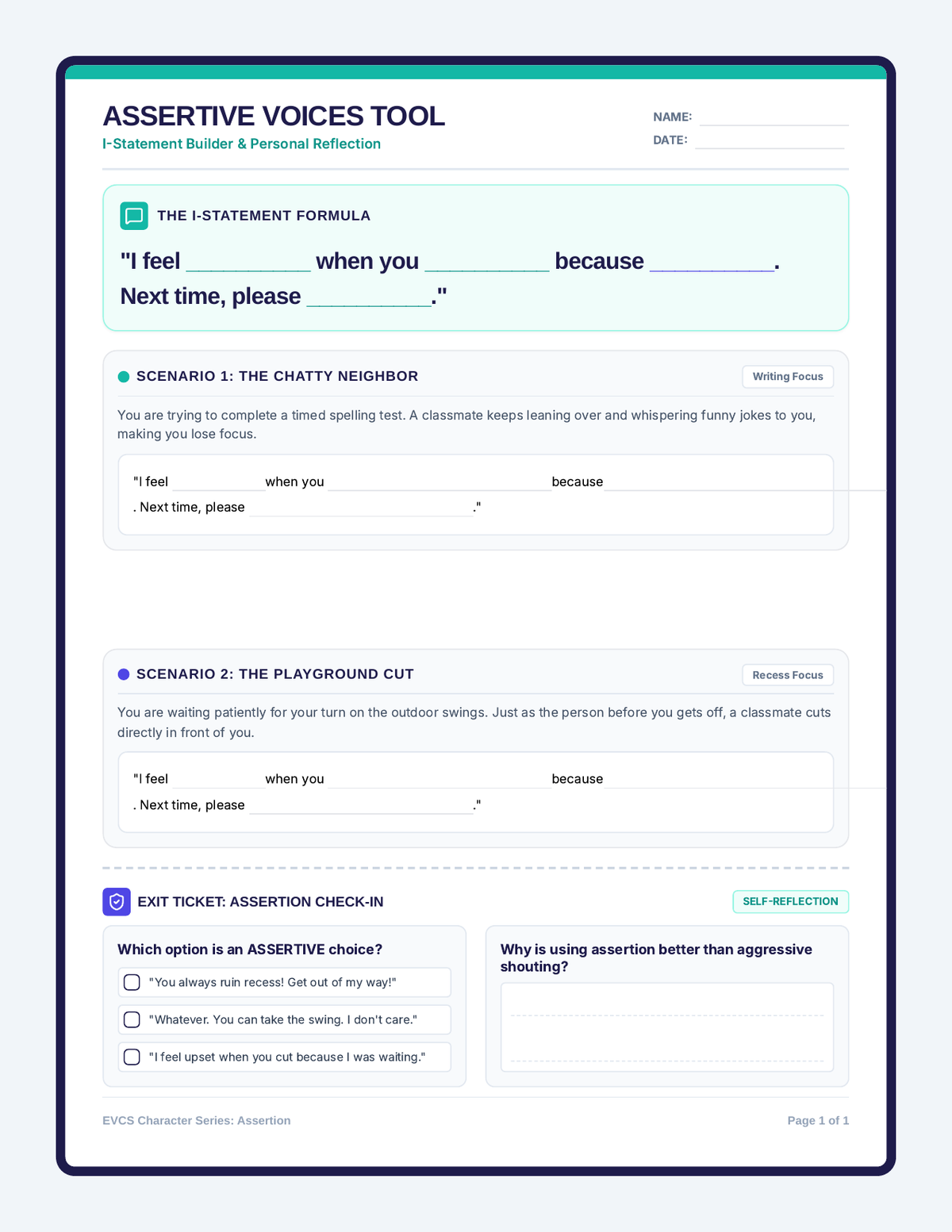
A student worksheet and interactive scenario-builder for using assertive "I-Statements" to establish healthy boundaries. Includes a quick self-assessment exit ticket.
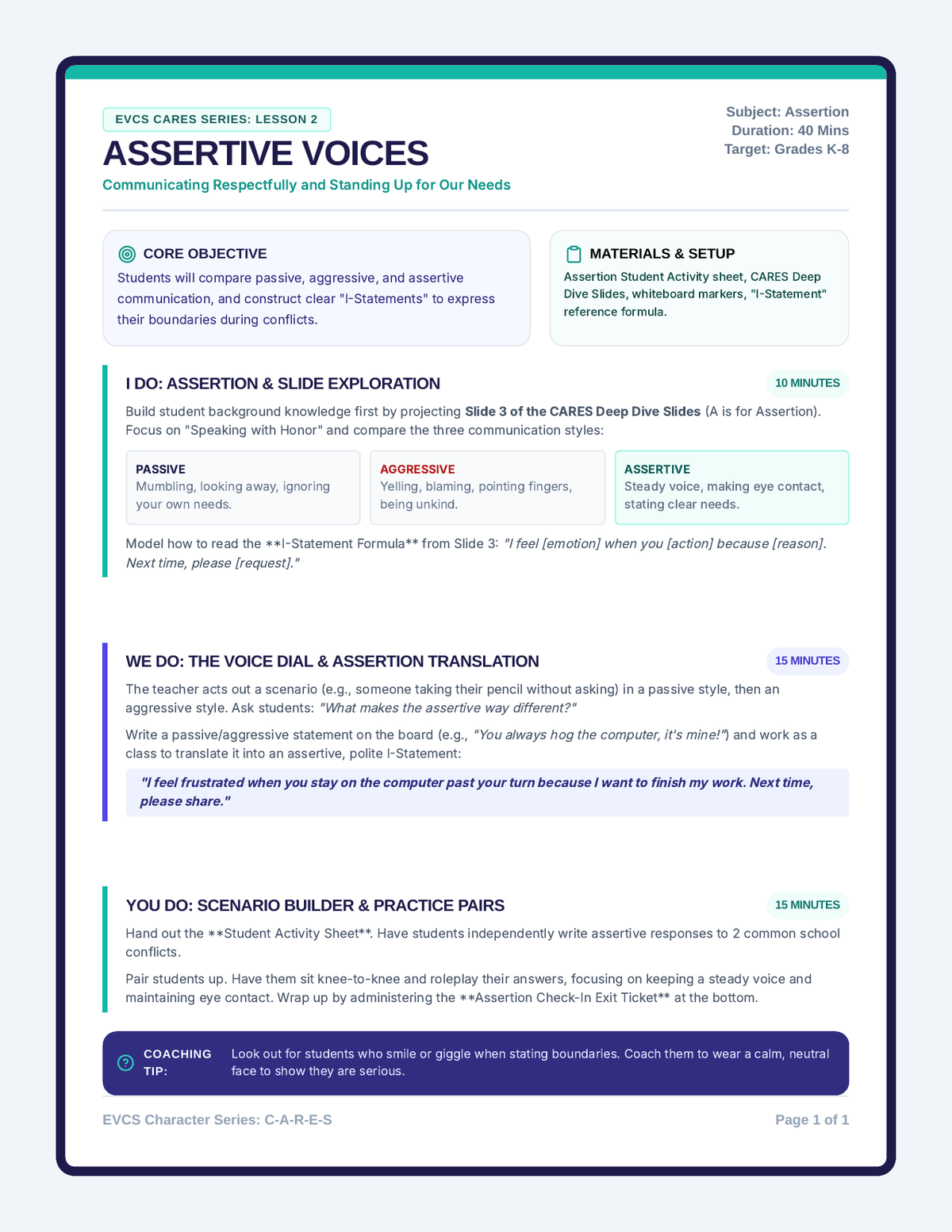
A comprehensive teacher lesson plan for teaching Assertion. Guides educators on instructing passive vs. aggressive vs. assertive communication using the 'I-Statement' formula, featuring an active modeling block.
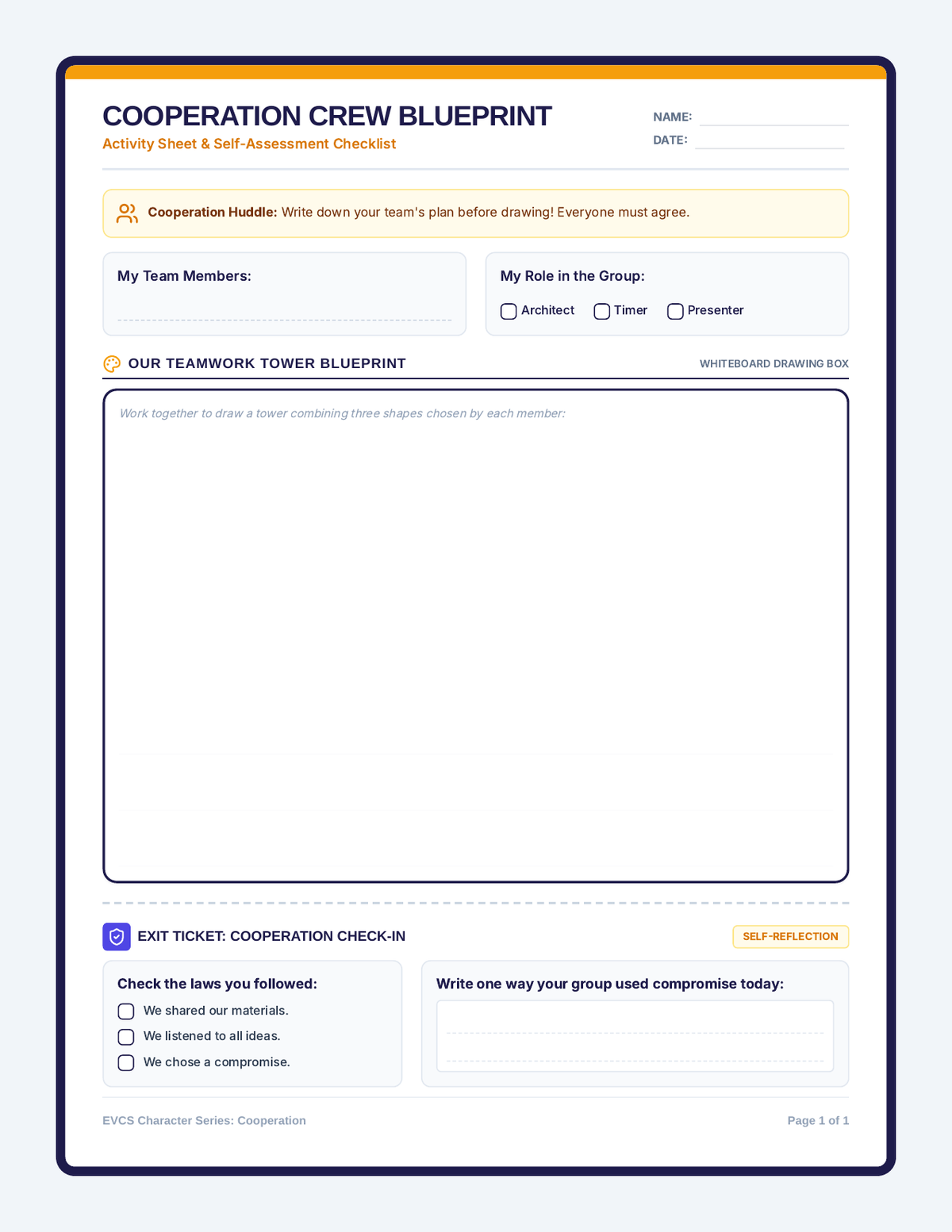
A student worksheet and collaborative blueprint drawing activity for the Cooperation lesson, featuring a class cooperation checklist and an integrated personal reflection exit ticket.
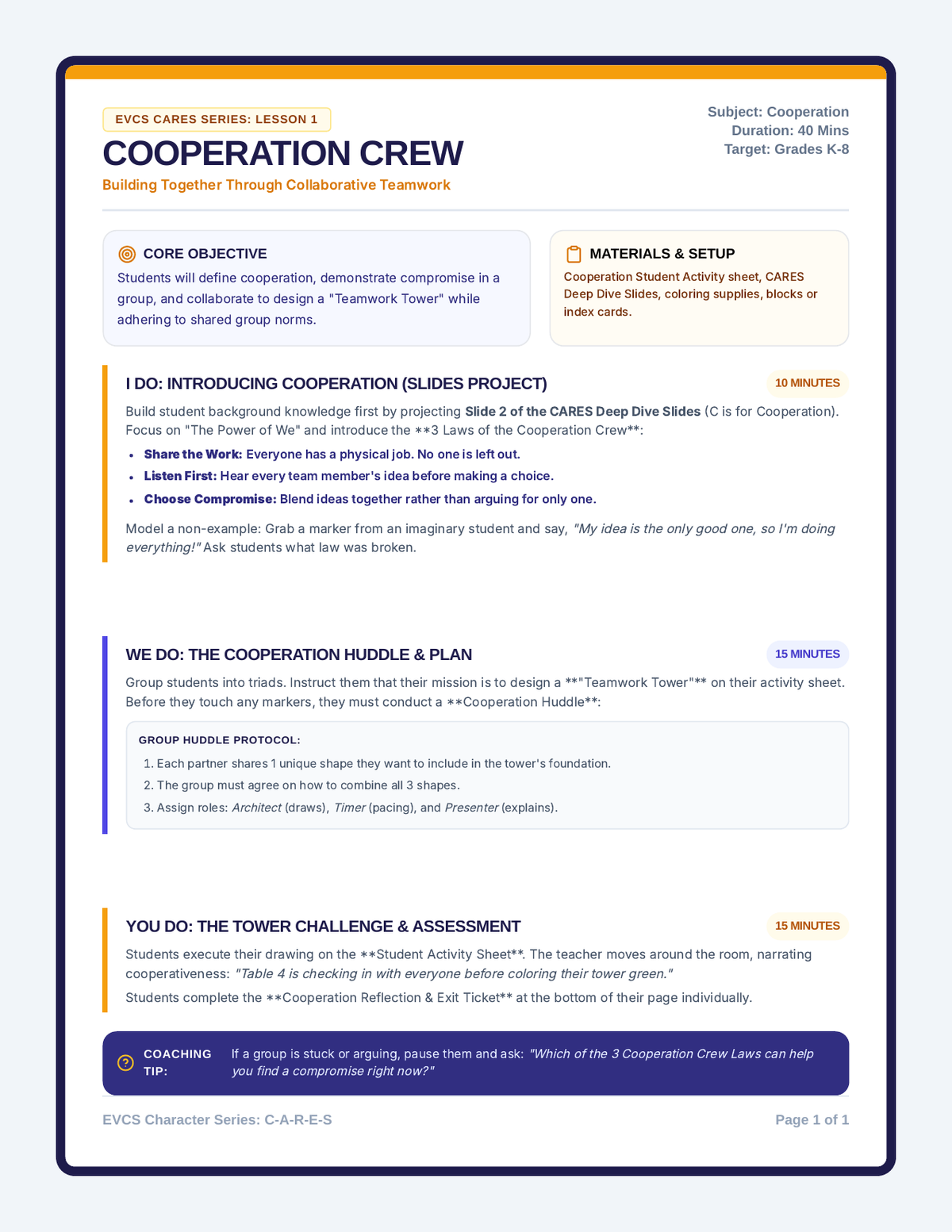
A complete teacher lesson plan for teaching Cooperation. Features an I Do, We Do, You Do structure focused on collaborative problem-solving, along with facilitator scripts and pacing guidelines.
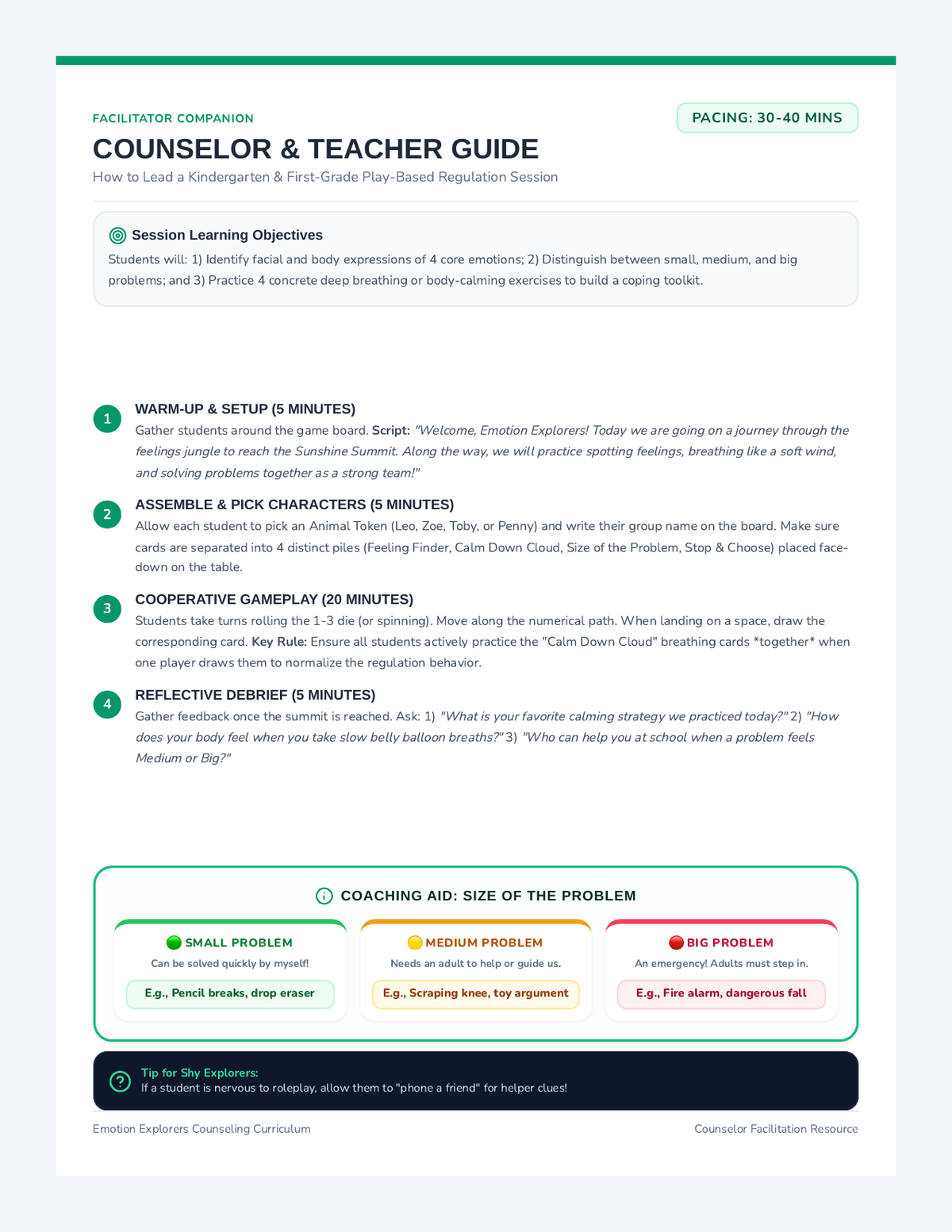
A highly professional, one-page printable counselor and teacher guide for conducting the game session. Includes session pacing, warm-up script, rules of play, debrief questions, and a visual Size of the Problem scale.
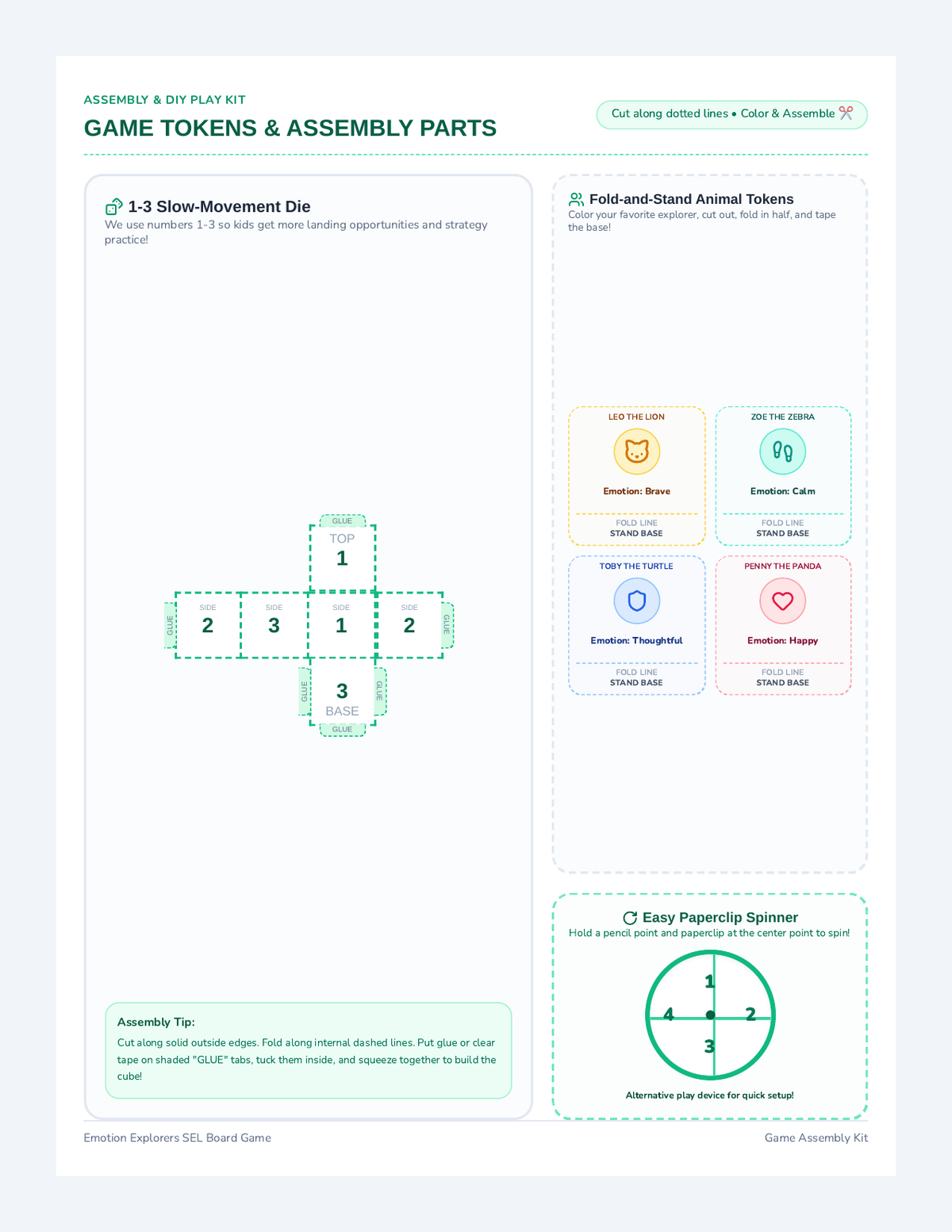
A printable workspace containing 4 fold-over character tokens, a slow-movement 1-3 game die, and an alternative 1-4 paperclip spinner. Features fold/cut guidelines ideal for craft development.
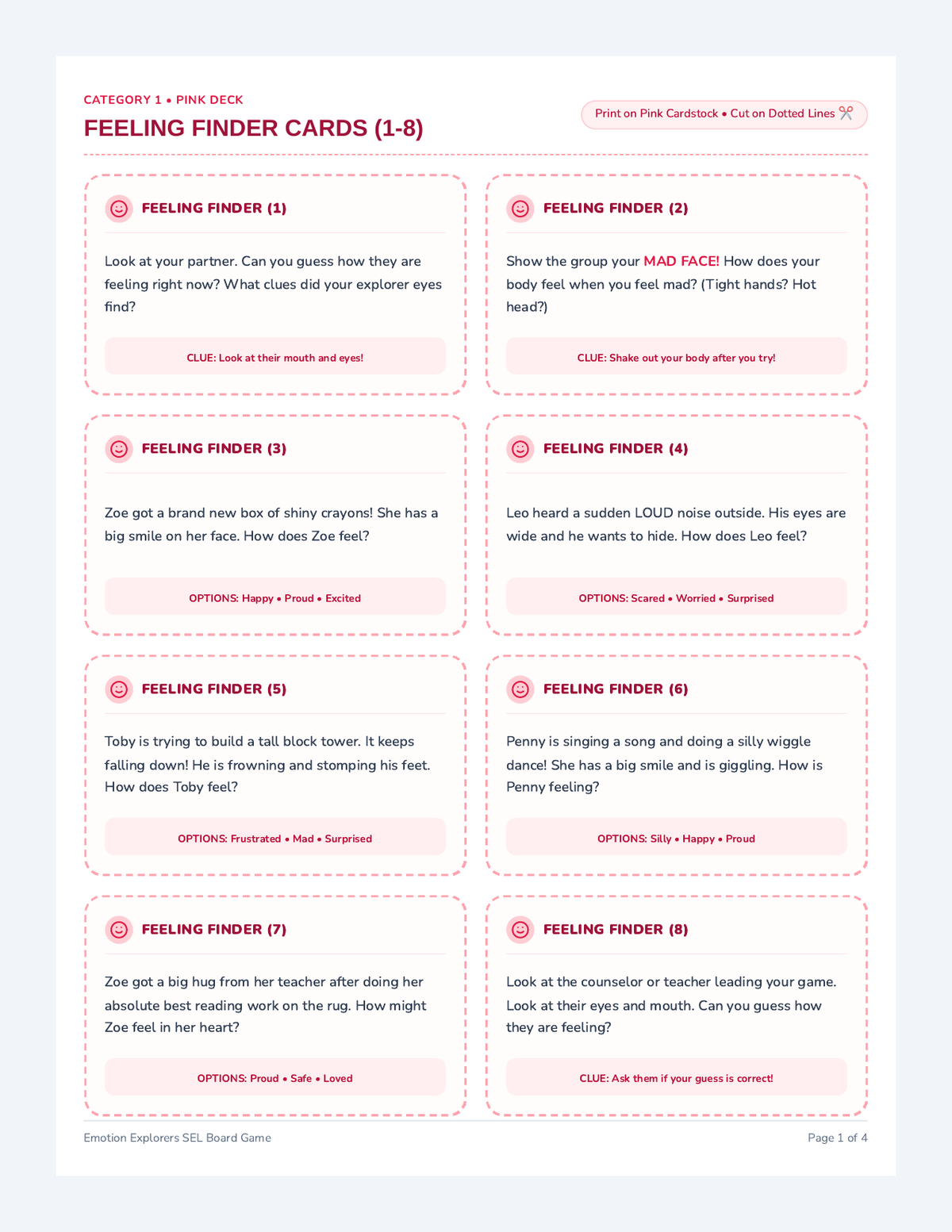
A 4-page print-and-cut card deck containing 32 situation and action cards specifically designed for K-1 developmental levels. Each page is dedicated entirely to a single category (8 cards each of Feeling Finder, Calm Down Cloud, Size of the Problem, and Stop & Choose) to allow for color-coded printing.
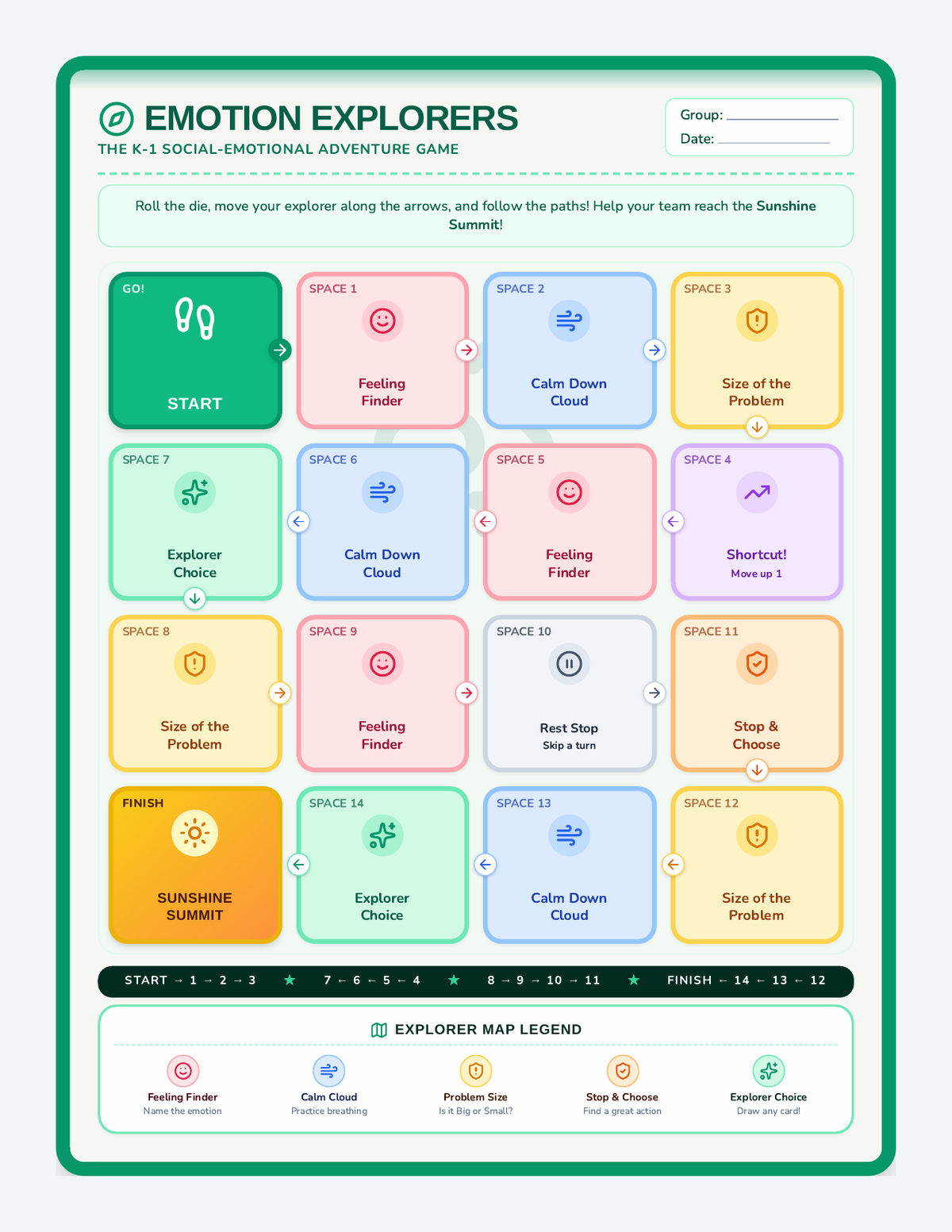
A printable, colorful portrait-format board game for K-1 students featuring a winding jungle pathway with directional arrows. Students land on action spaces to practice identifying feelings, breathing deeply, scaling problems, and making helpful choices.
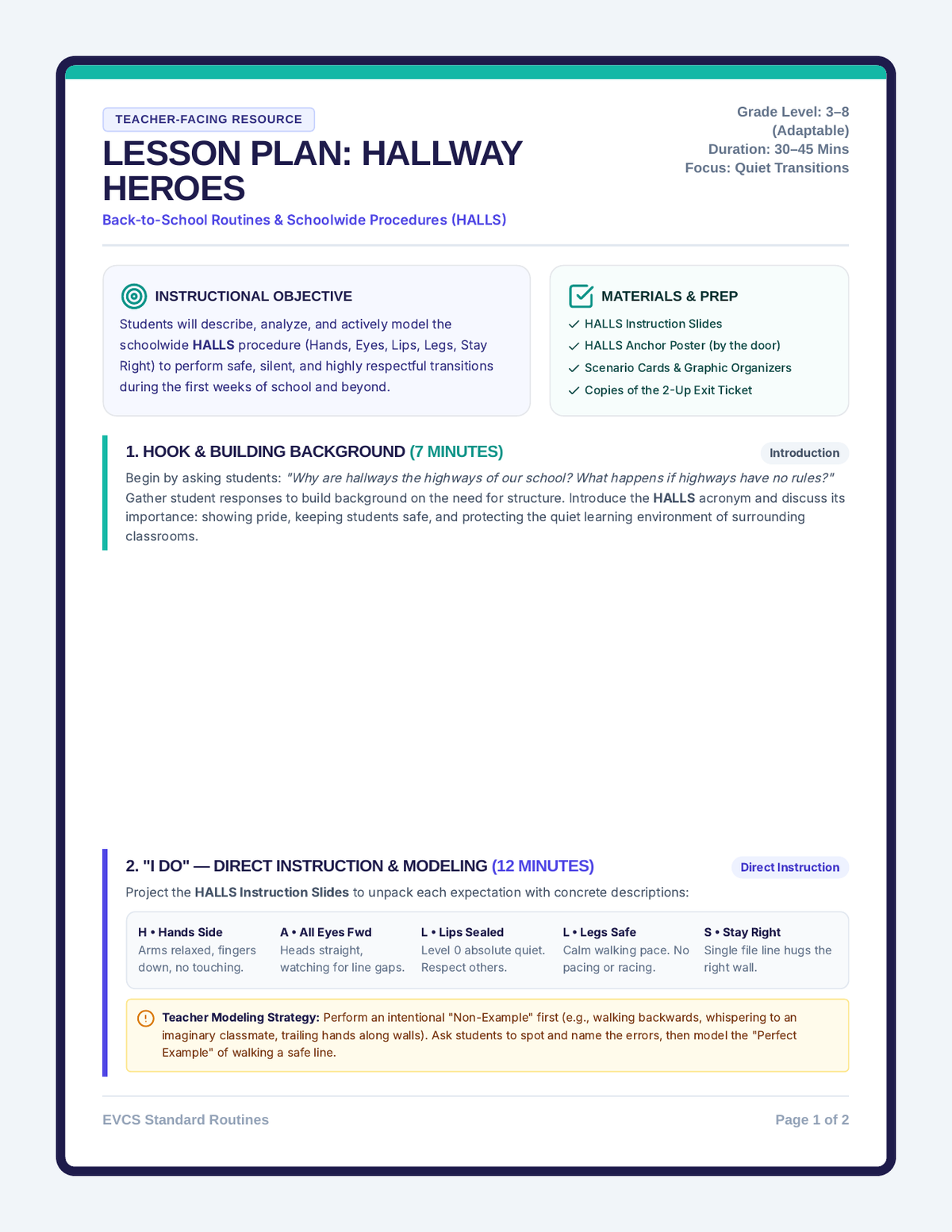
A comprehensive 2-page teacher's guide and lesson plan outlining the direct instruction, active modeling, guided roleplay, and independent practice phases of the schoolwide HALLS transition procedure.
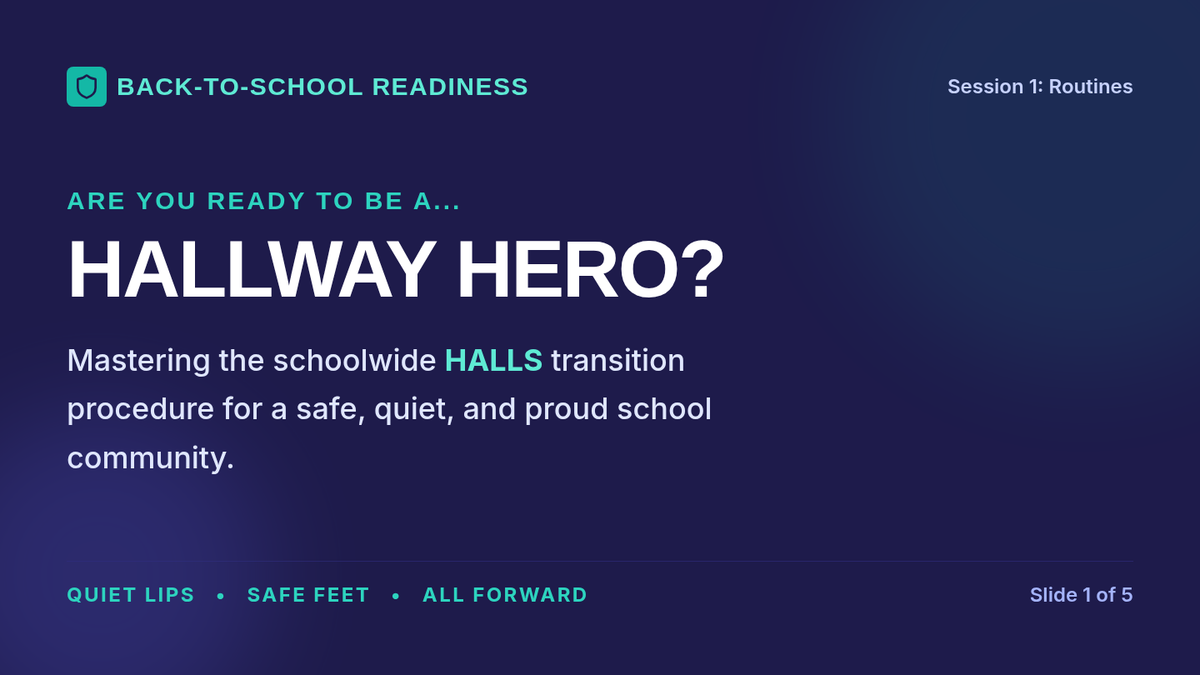
A structured presentation slide deck for direct instruction of the schoolwide HALLS expectations. Features clear breakdowns of each letter in the acronym and sets up interactive student roleplaying.
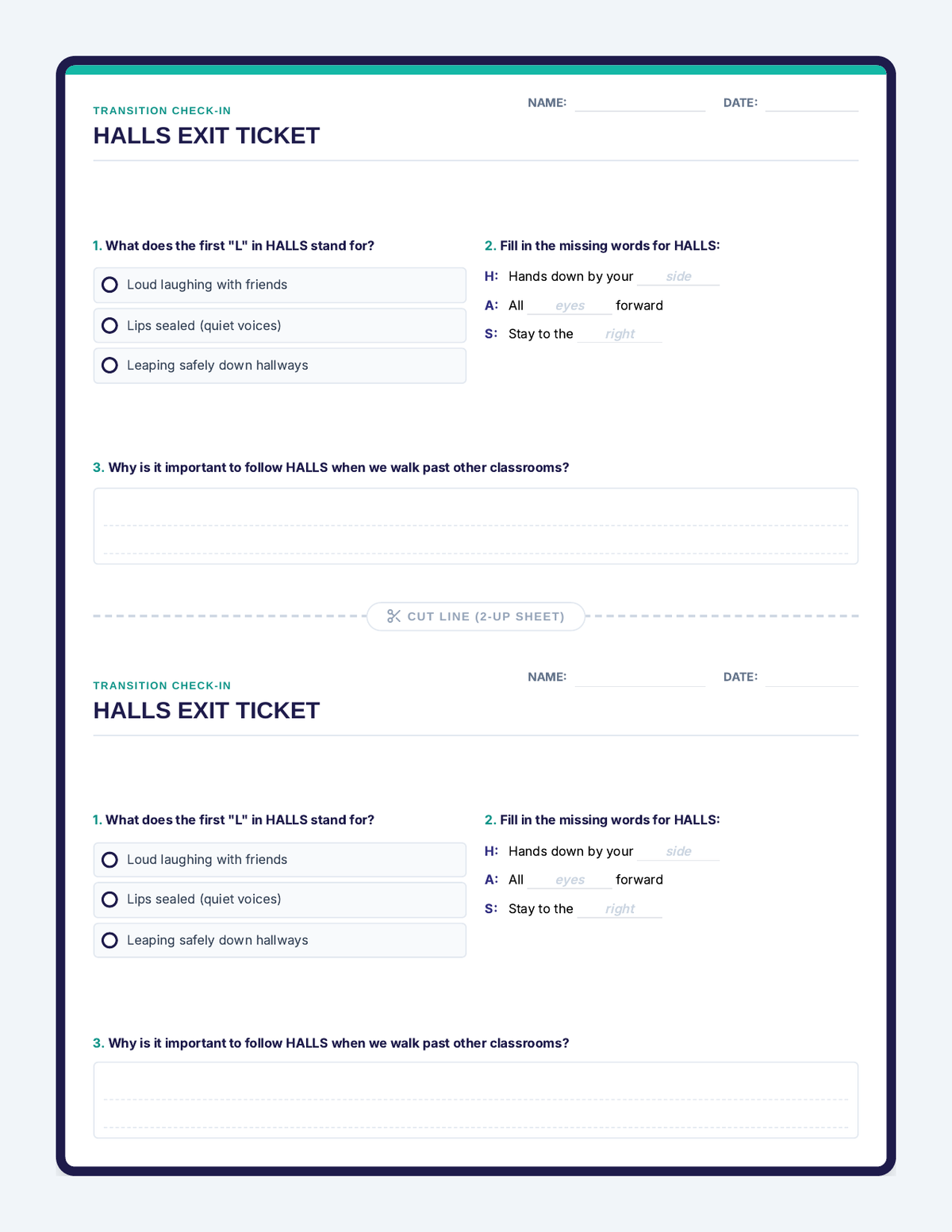
A 2-up printable student exit ticket to quickly assess individual understanding of the HALLS procedure. Designed to be cut in half to save paper, it features multiple choice, fill-in-the-blank, and brief reflection questions.
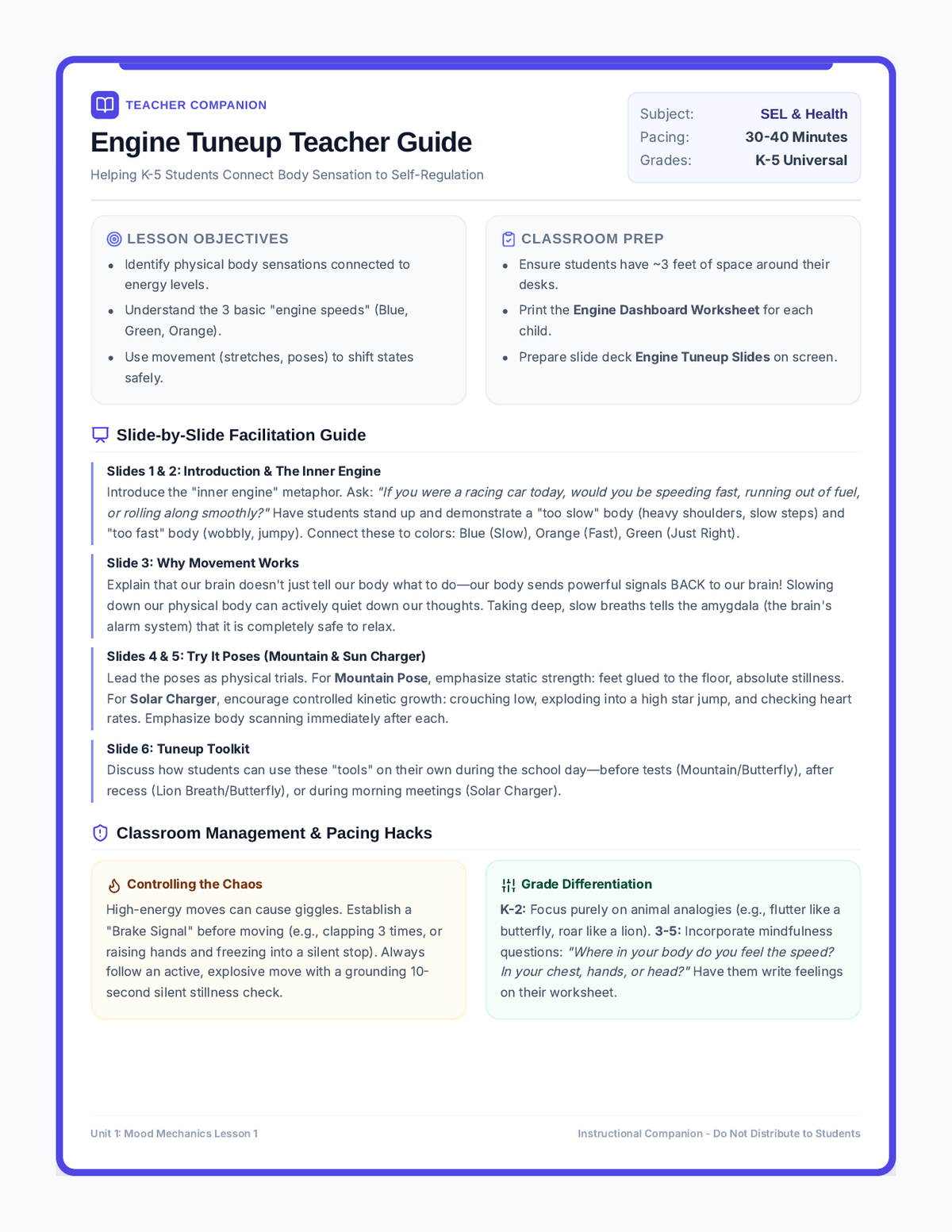
A facilitation guide for educators outlining lesson objectives, step-by-step slide cues, classroom management tips, and differentiation strategies for teaching emotional regulation.
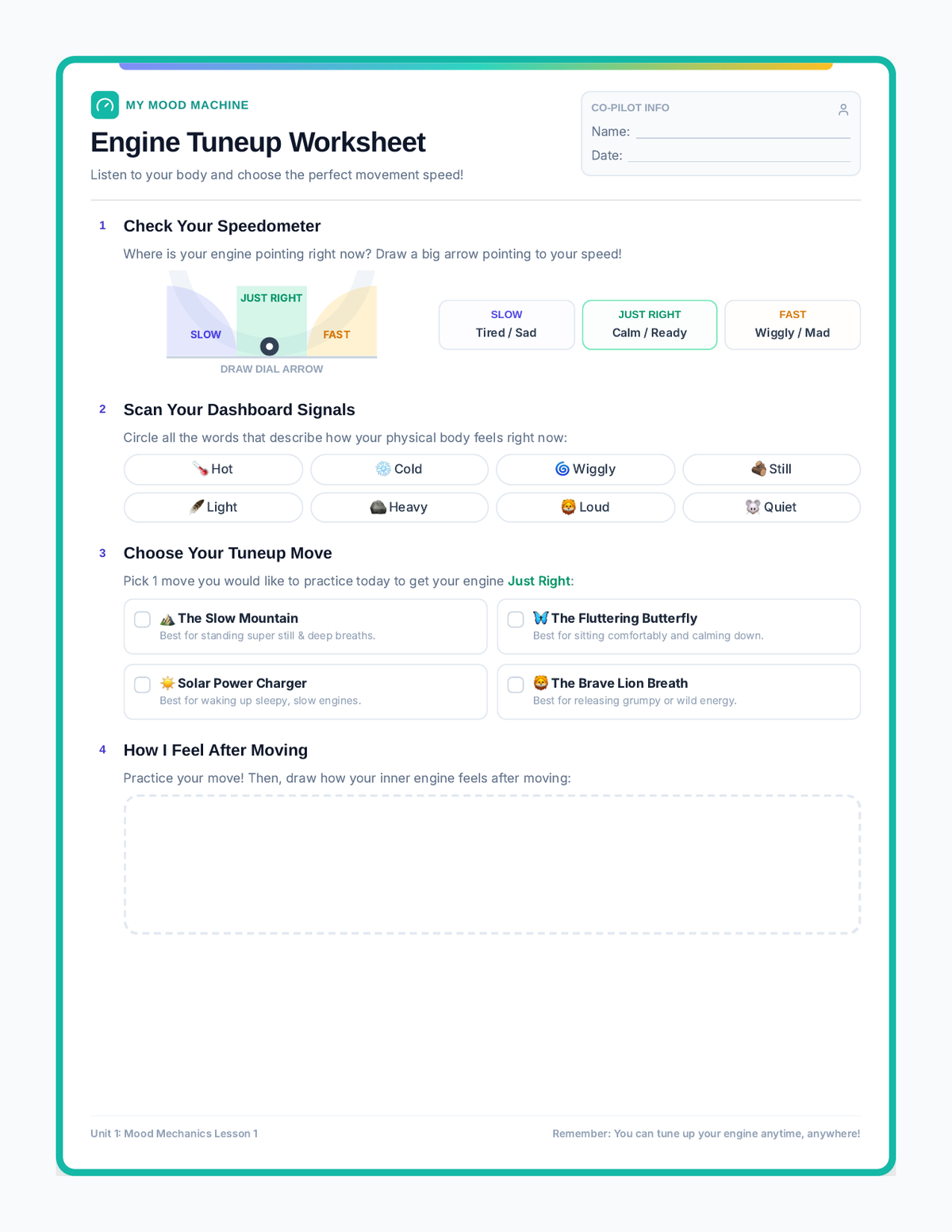
A classroom worksheet for K-5 students to self-assess their 'engine speed', circle bodily sensations, and select their personal 'tuneup moves' for emotional regulation.
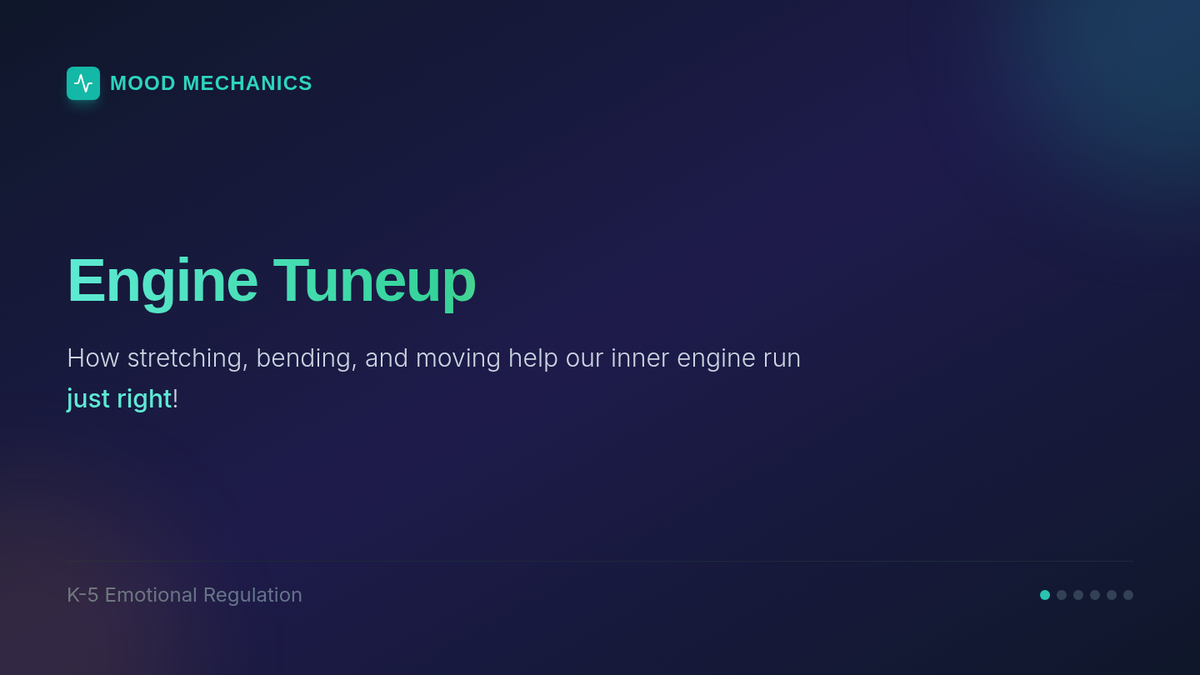
Engaging 16:9 interactive presentation slides for K-5 students explaining the 'inner engine' analogy and how specific slow stretches, yoga poses, and active movements help regulate emotions.
Spanish translation of the Grade 6-12 Summer Chill Skills Packet, offering 17 beautifully translated, print-ready pages with coping tools, clinical grounding exercises, somatic mapping, and active QR codes.
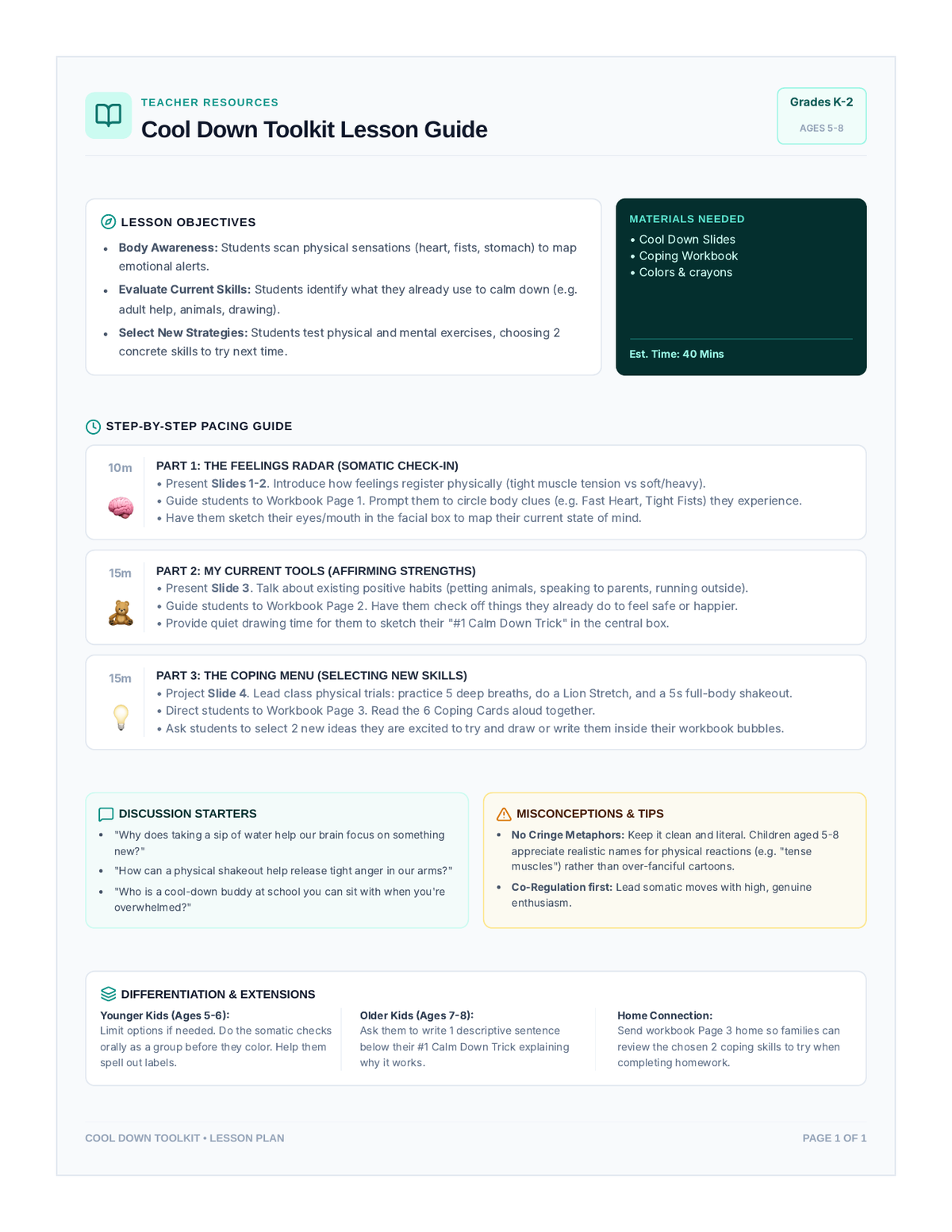
A comprehensive 1-page teacher facilitation guide for the Cool Down Toolkit lesson. Outlines lesson objectives, step-by-step pacing (Feelings Radar, Current Tools, and Coping Menu), child-friendly questioning scripts, classroom management tips, and easy differentiation strategies for ages 5-8.
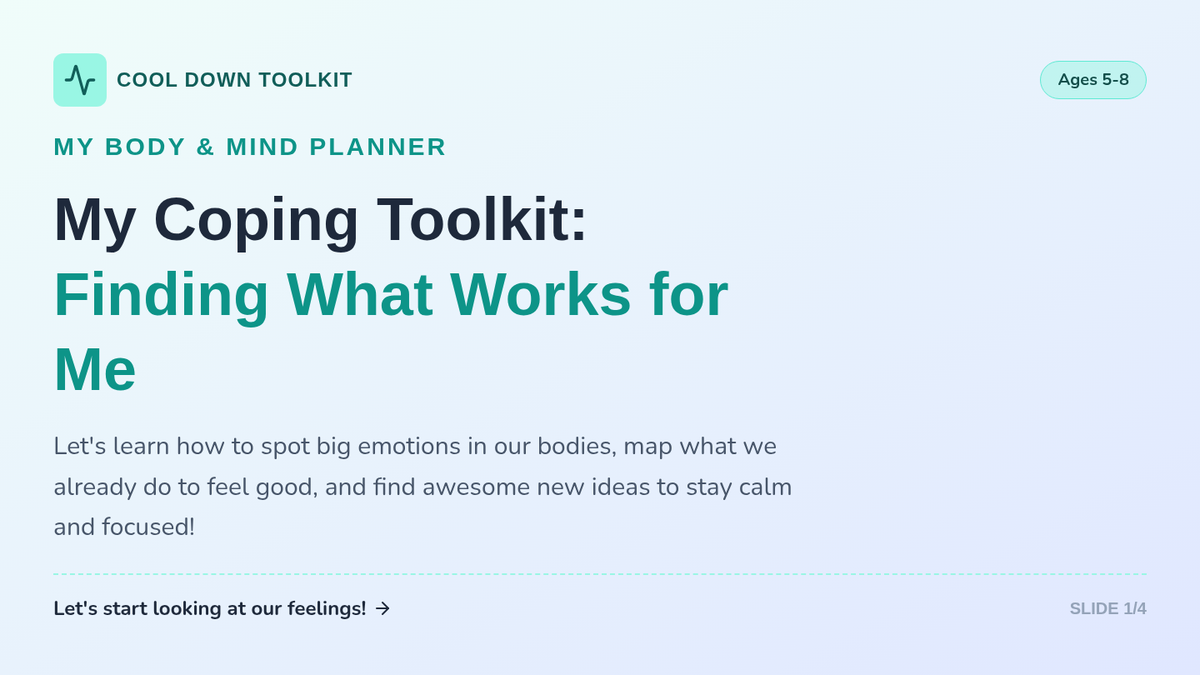
An engaging 4-slide presentation for teachers to guide students through the Cool Down Toolkit. Includes interactive discussion prompts, physical symptom checks, somatic exercise challenges, and a coping menu selection game.
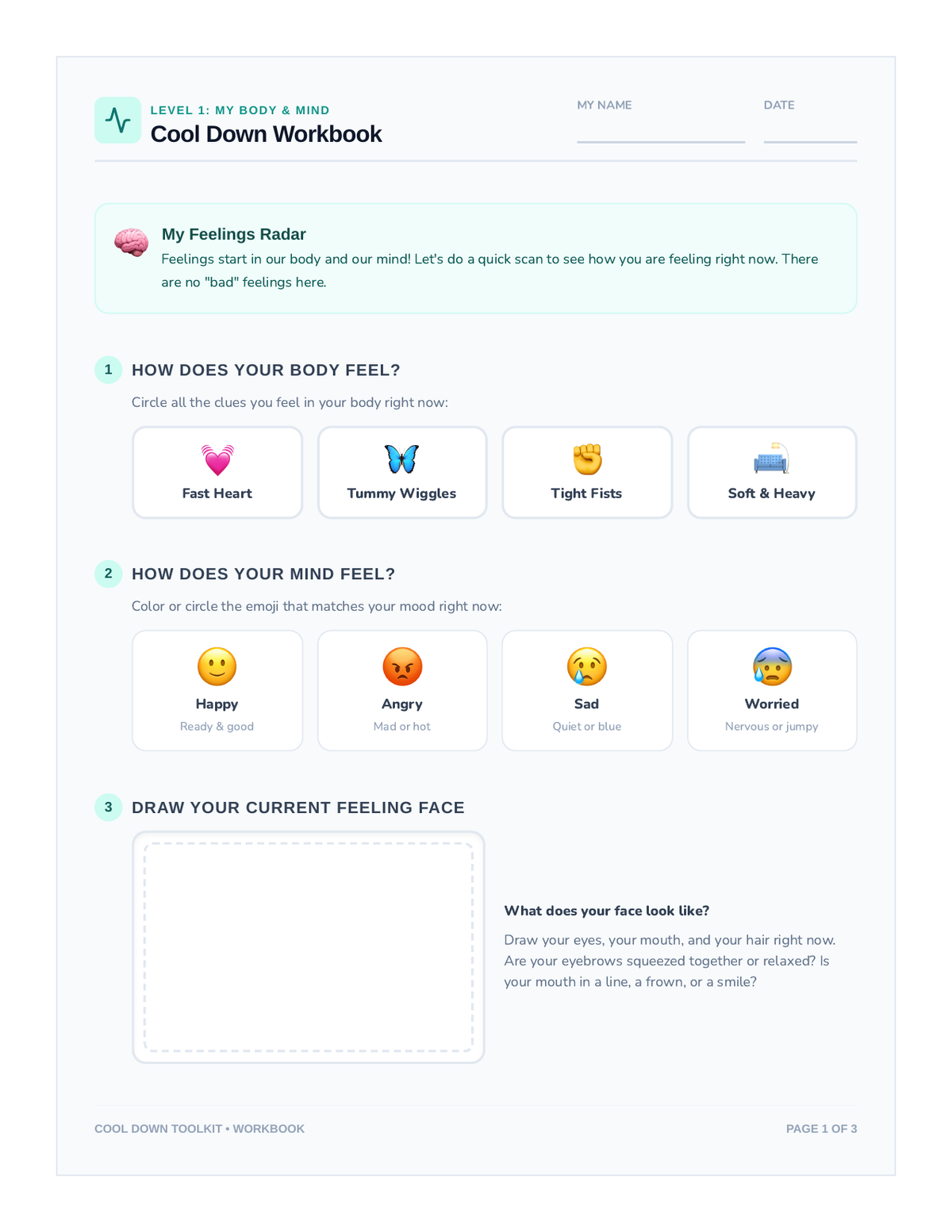
A clean, modern 3-page student workbook focused on somatic feeling scans, current coping strategies mapping, and a coping menu selection layout.
Leveled-up summer coping skills packet designed for students in grades 6-12. Features clinical concepts like TIPP skills, cognitive reframing, somatic mapping, and sleep hygiene audit, in a modern journal-style layout with elegant typography and clean visuals.
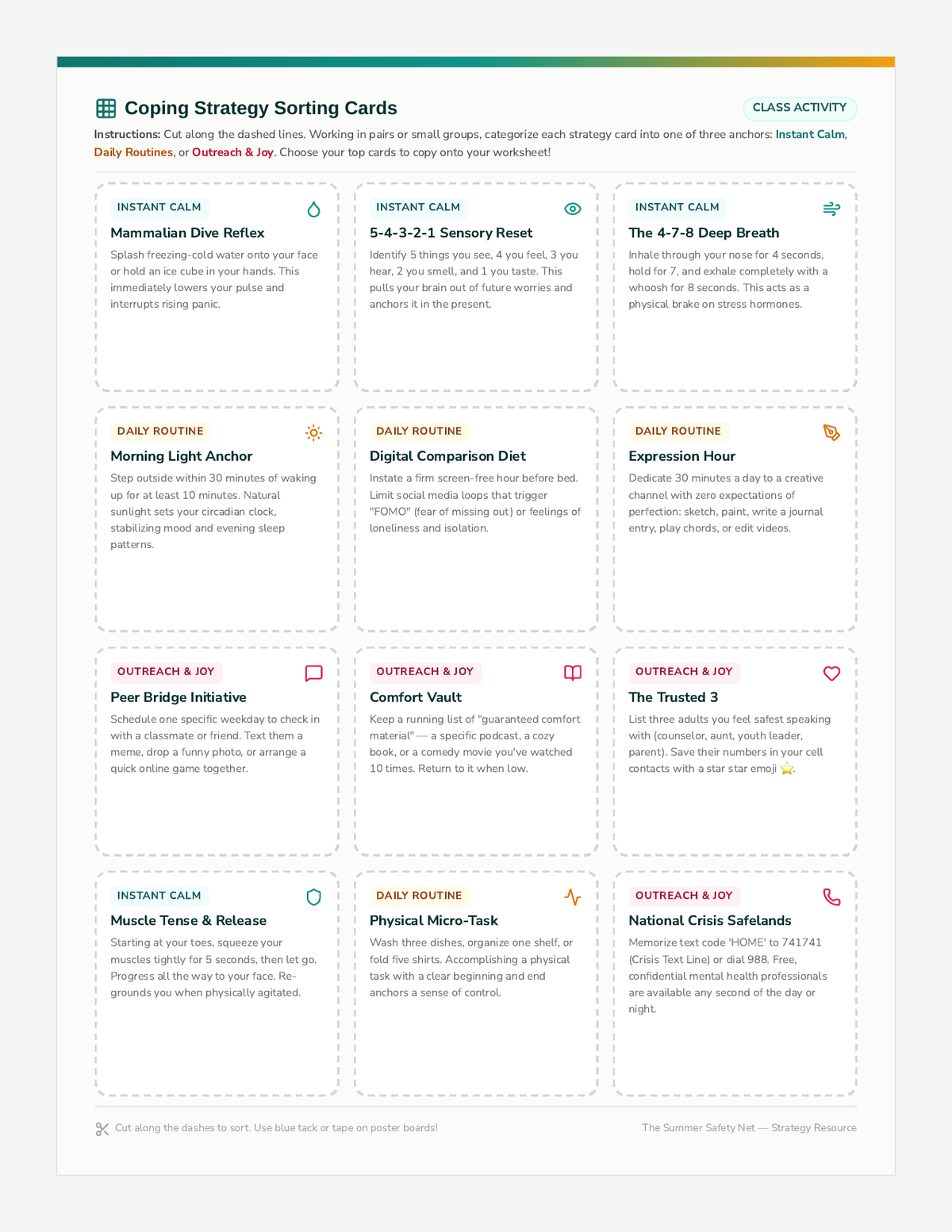
A printable 1-page sorting activity sheet containing 12 distinct, high-impact coping strategy cards for collaborative discussion and personalized selection.
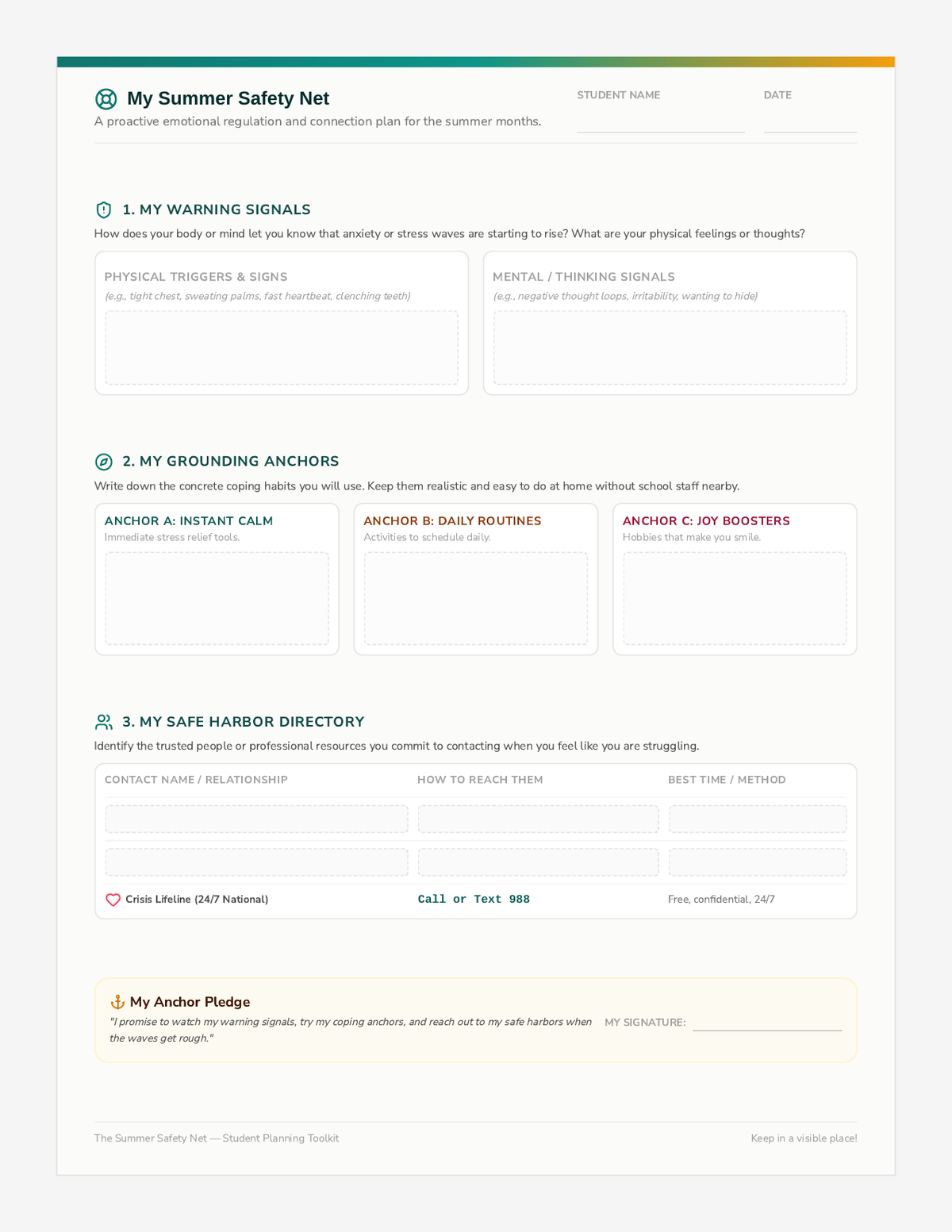
A comforting and highly functional 1-page student worksheet designed for individual safety net planning, warning signs tracking, and coping strategies compilation.
A highly polished 5-slide instructional presentation for 'The Summer Safety Net' workshop, containing warm-ups, stressor identification, coping strategies, and worksheet instructions.
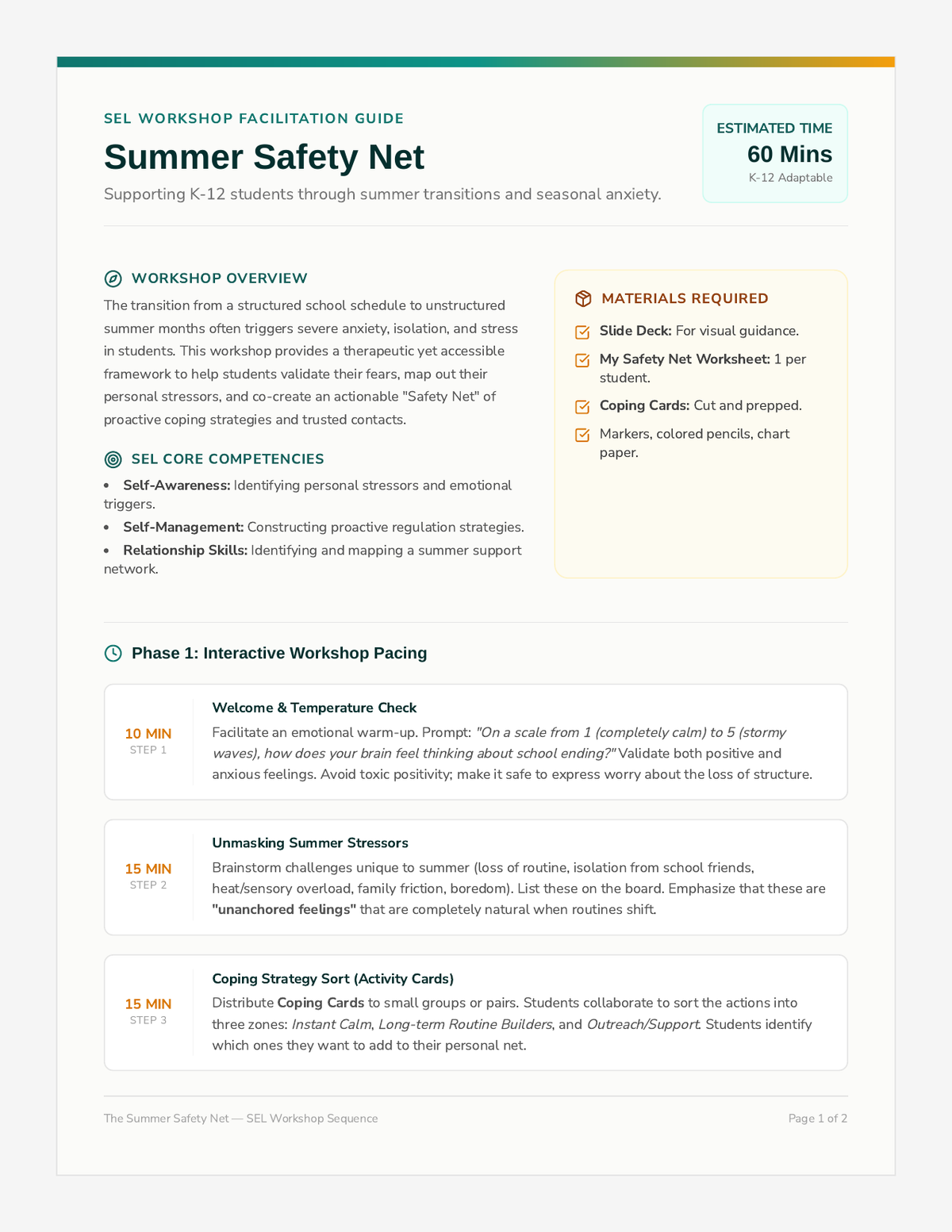
A comprehensive, professional 2-page teacher facilitation guide for 'The Summer Safety Net' workshop, containing pacing, SEL objectives, scripts, and differentiation tips.
Spanish translation of the Autism and Visual Coping Packet, providing 8 highly-structured visual communication and self-regulation pages.
Spanish translation of the Kindergarten Summer Chill Skills Packet, offering 11 beautifully illustrated pages tailored for young learners, complete with active QR codes.
Spanish translation of the Grade 2-5 Summer Chill Skills Packet, offering 17 fully translated print-ready pages with coping tools, grounding exercises, and active QR codes.
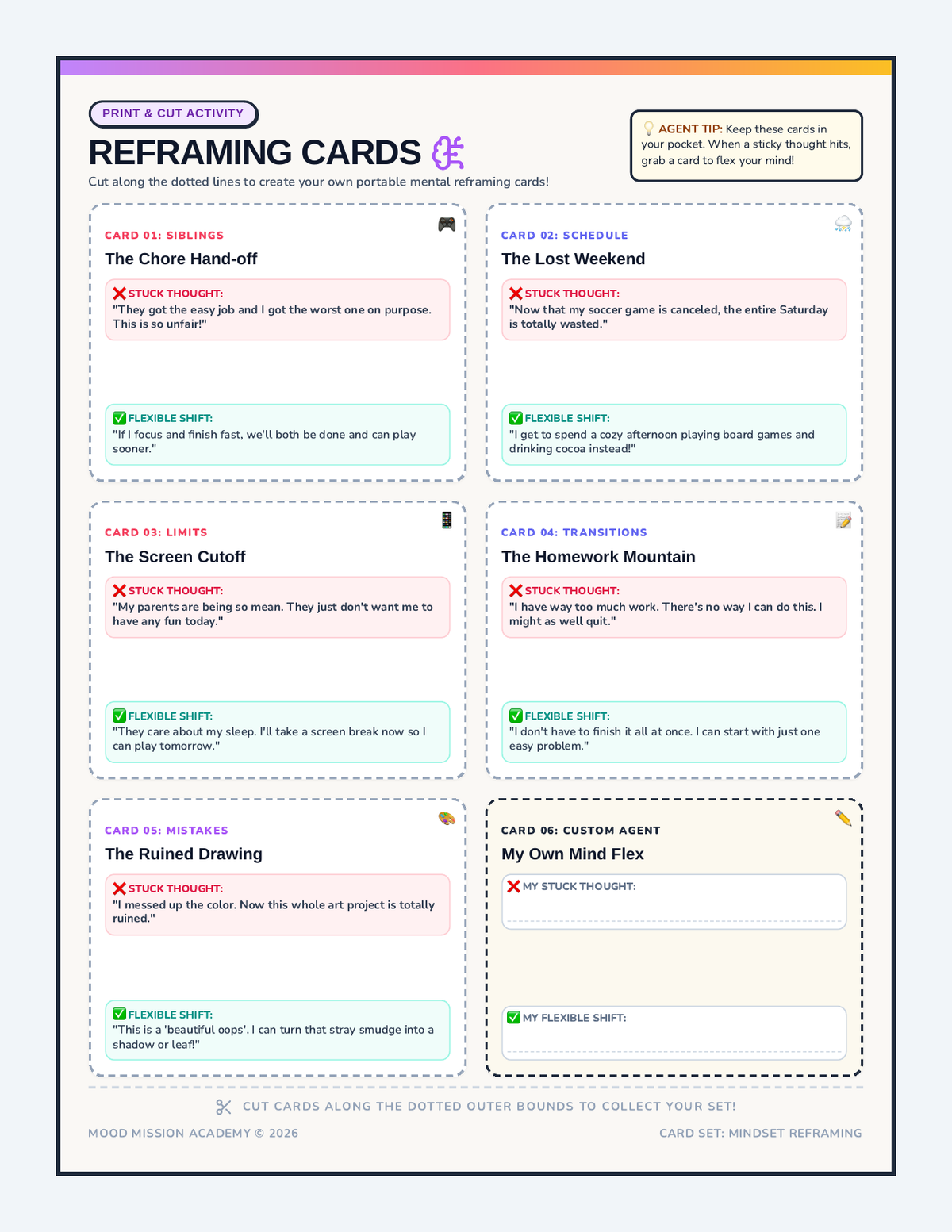
A set of 6 printable side-by-side cut-out cards matching sibling disputes, chore battles, canceled events, and classroom stressors. Includes interactive prompts to practice flexible thinking.
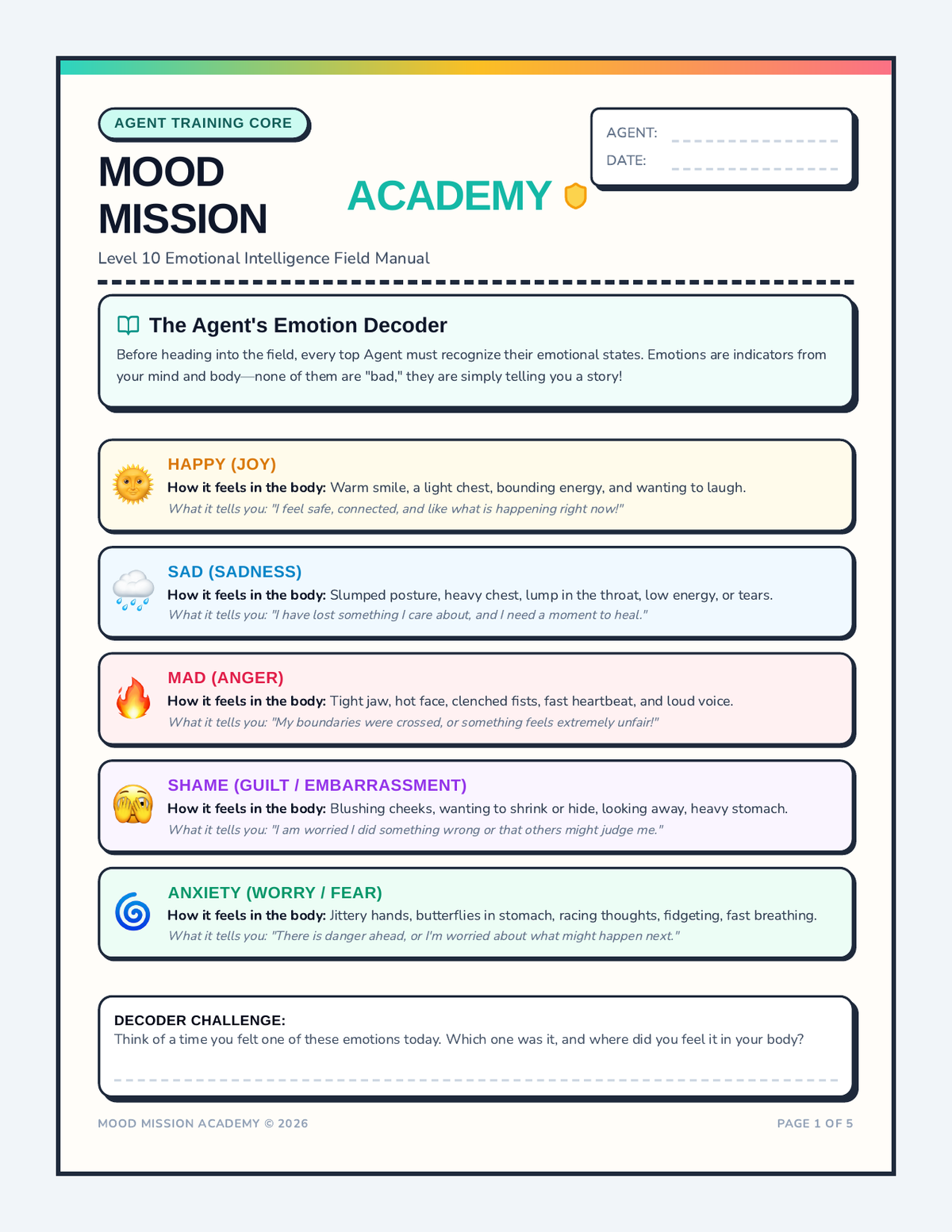
A comprehensive 5-page student manual exploring basic emotions (happy, sad, mad, shame, anxiety) alongside somatic drills, sibling disputes, schedule shifts, and chore challenges.
Added the Sensory Voice visual self-advocacy page to the AUT/Visual packet, linking visual triggers directly to coping actions and verbal scripts, expanding the packet to 8 structured pages.
Added a Sunny Sayings page (with positive mantras) and an Asking For Help visual page (for child-friendly self-advocacy) to the Kindergarten packet, expanding it to 11 pages.
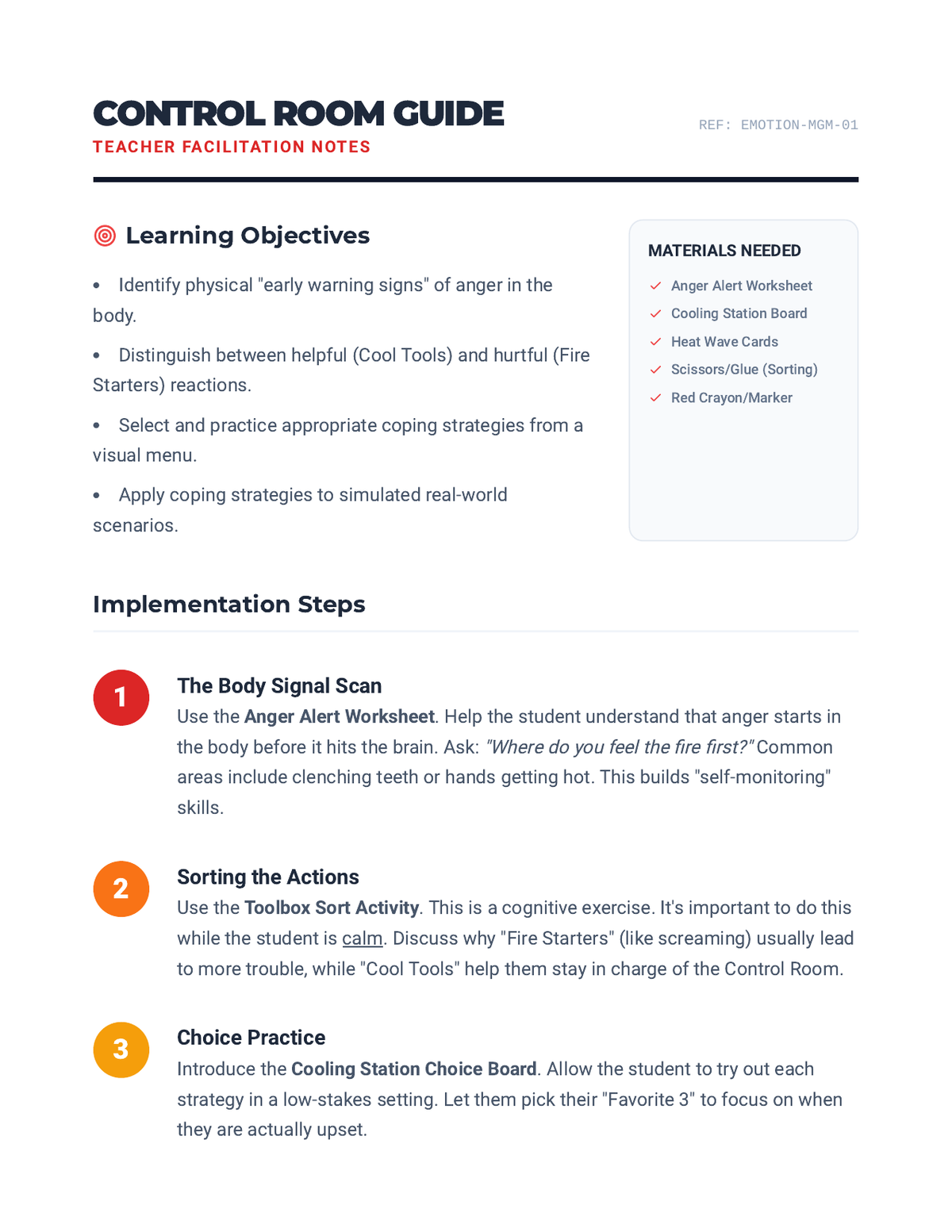
A comprehensive facilitation guide for educators, providing instructional steps and best practices for teaching anger management using the Control Room resource set.
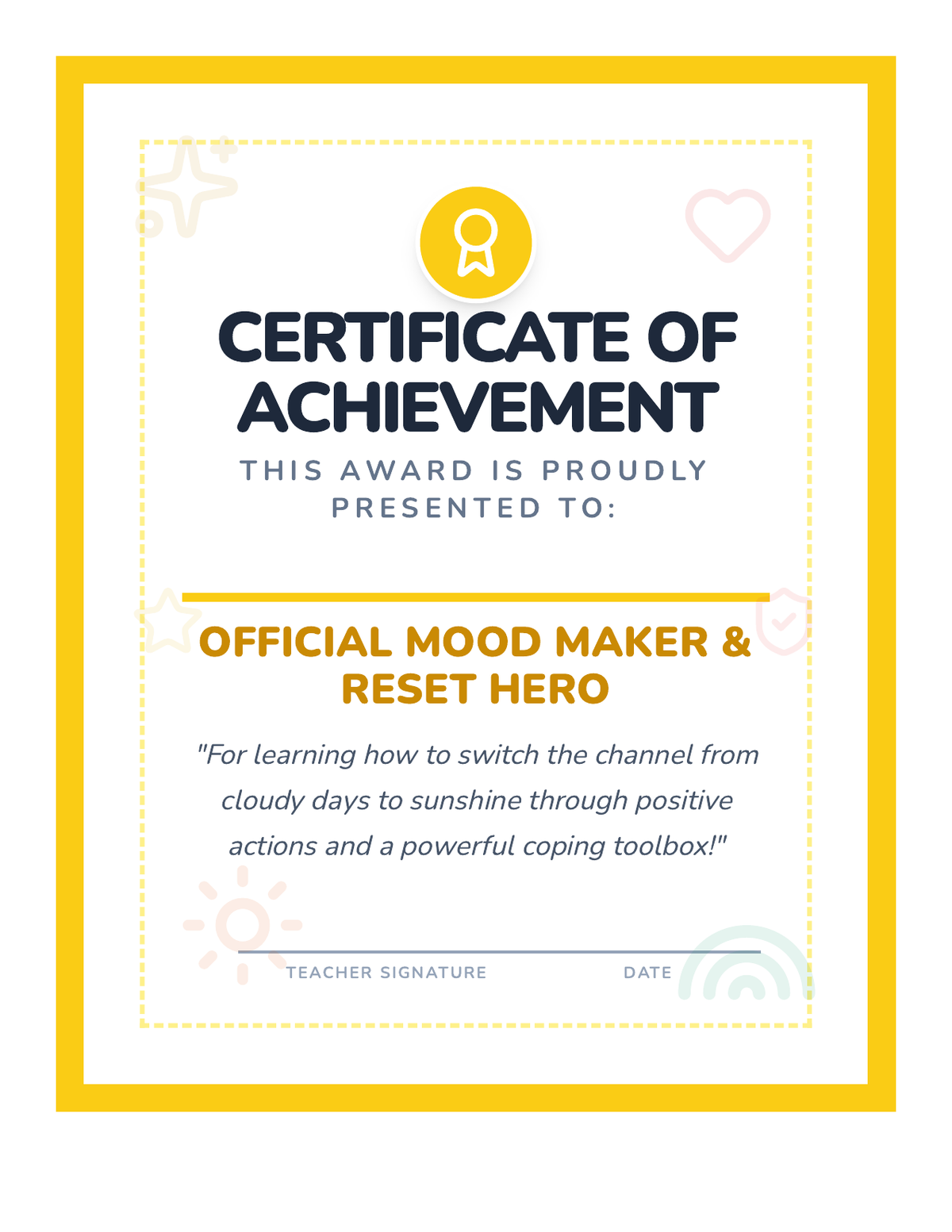
A celebratory completion certificate for students who have finished the 'Mood Makers' sequence, recognizing them as 'official Mood Makers and Reset Heroes'.
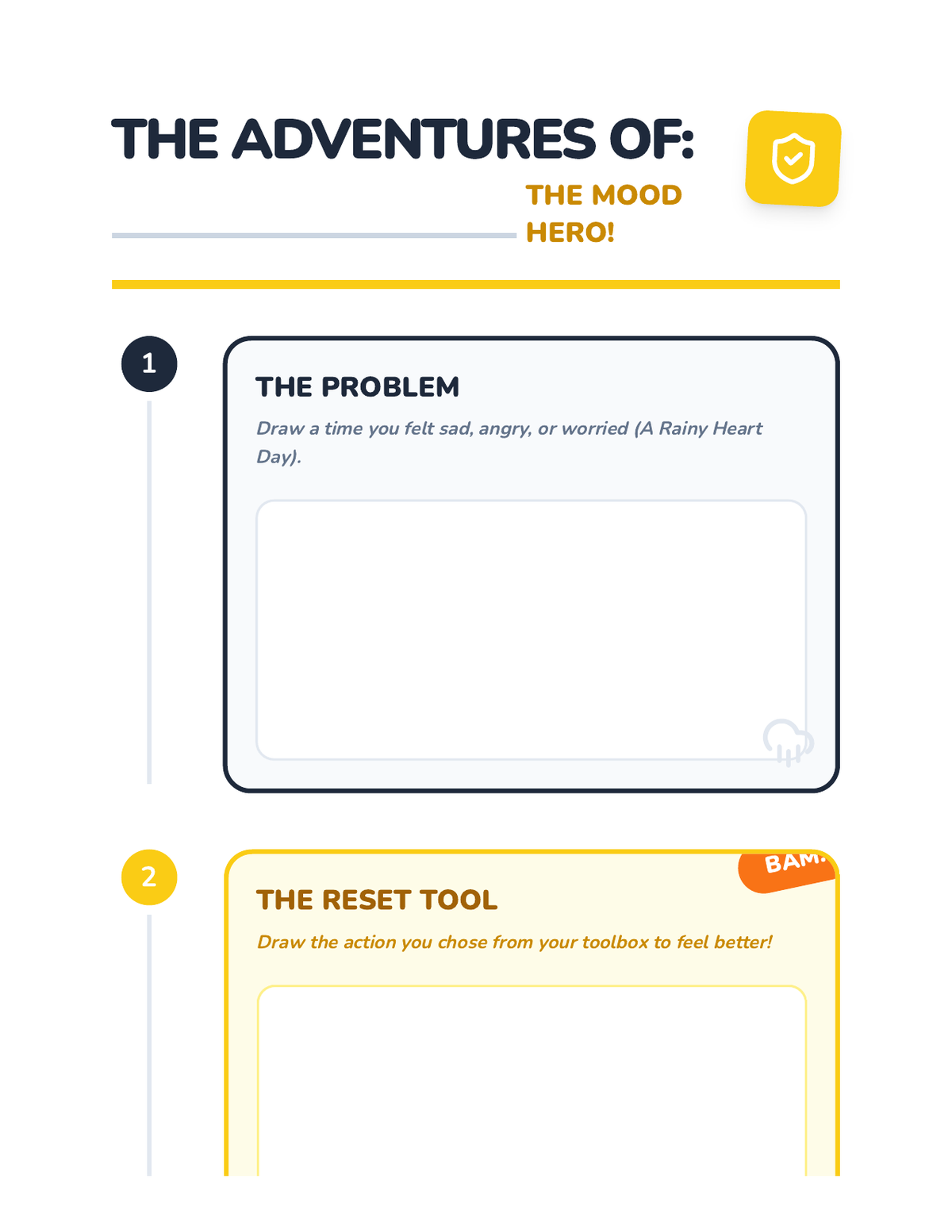
A student worksheet for reflecting on emotional change by creating a visual comic story of identifying a problem, choosing a tool, and achieving a positive mood shift.
Instructional slides for Lesson 5, reviewing the key concepts of internal weather, movement experiments, and the coping toolbox.
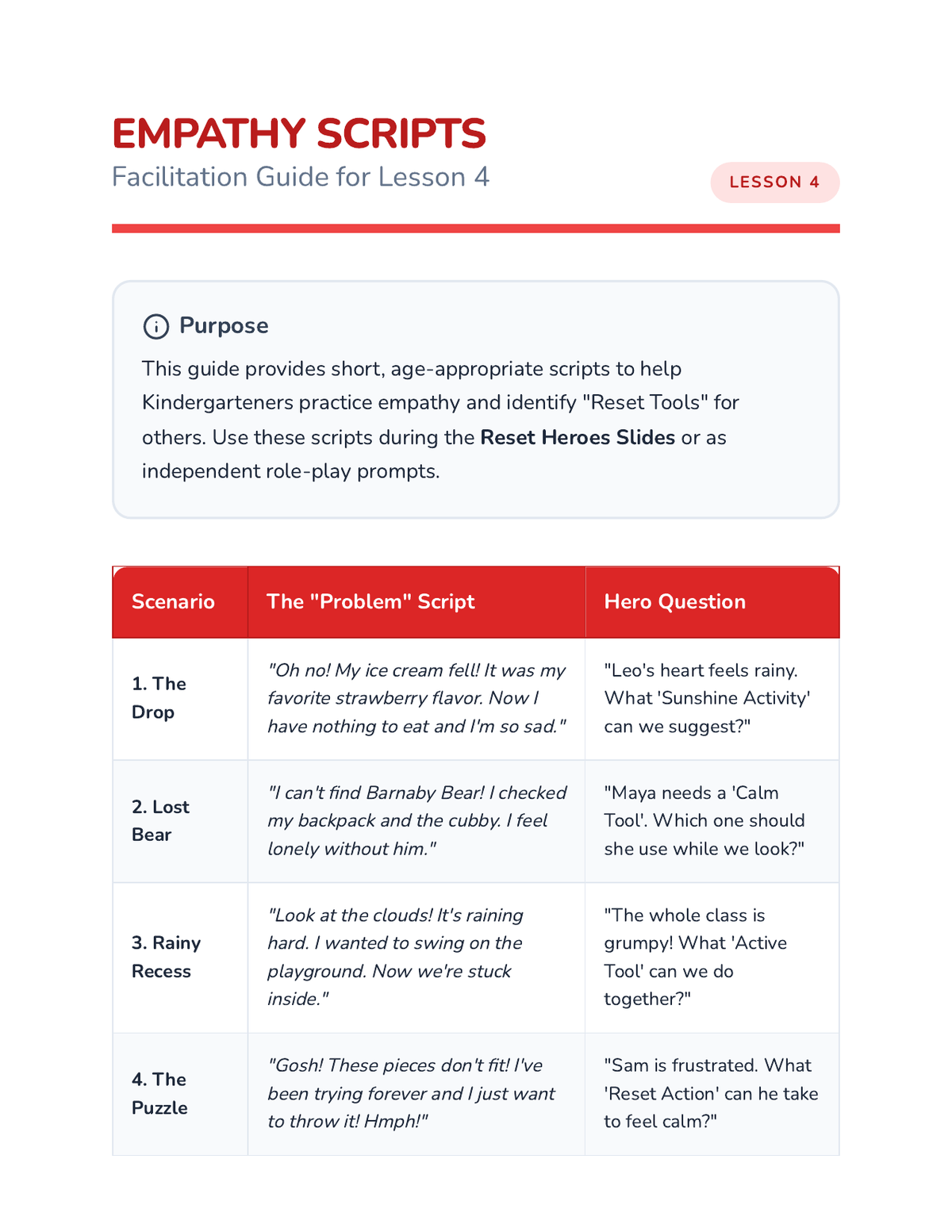
A teacher guide with scripted scenarios and facilitation prompts for role-playing emotional resets and building empathy.
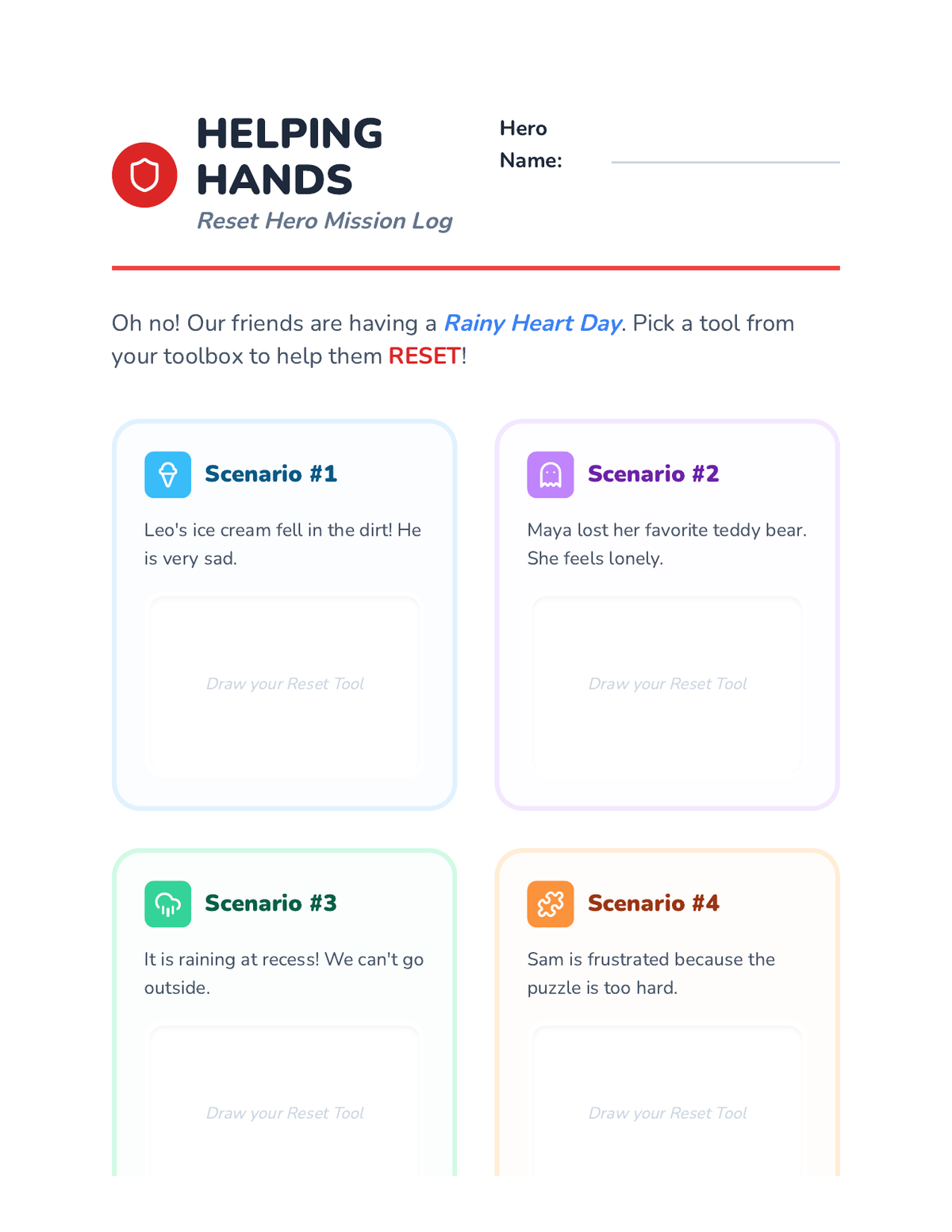
A student worksheet to select and draw 'Reset Tools' for characters facing emotional disappointments.
Instructional slides for Lesson 4, presenting 'Reset Hero' scenarios to practice empathy and behavioral activation.
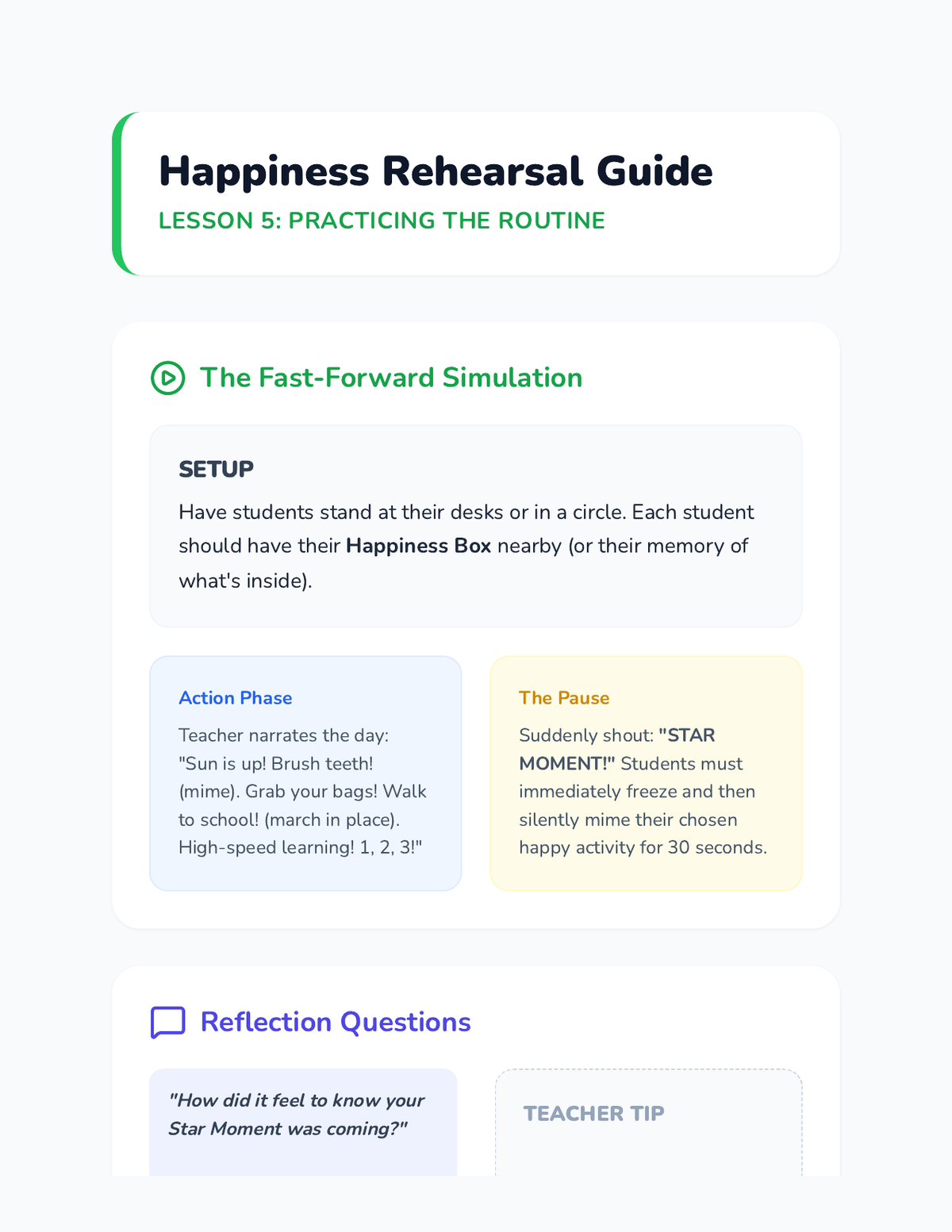
A teacher's guide for facilitating the final simulation and reflection of the "Daily Dose of Happiness" unit.
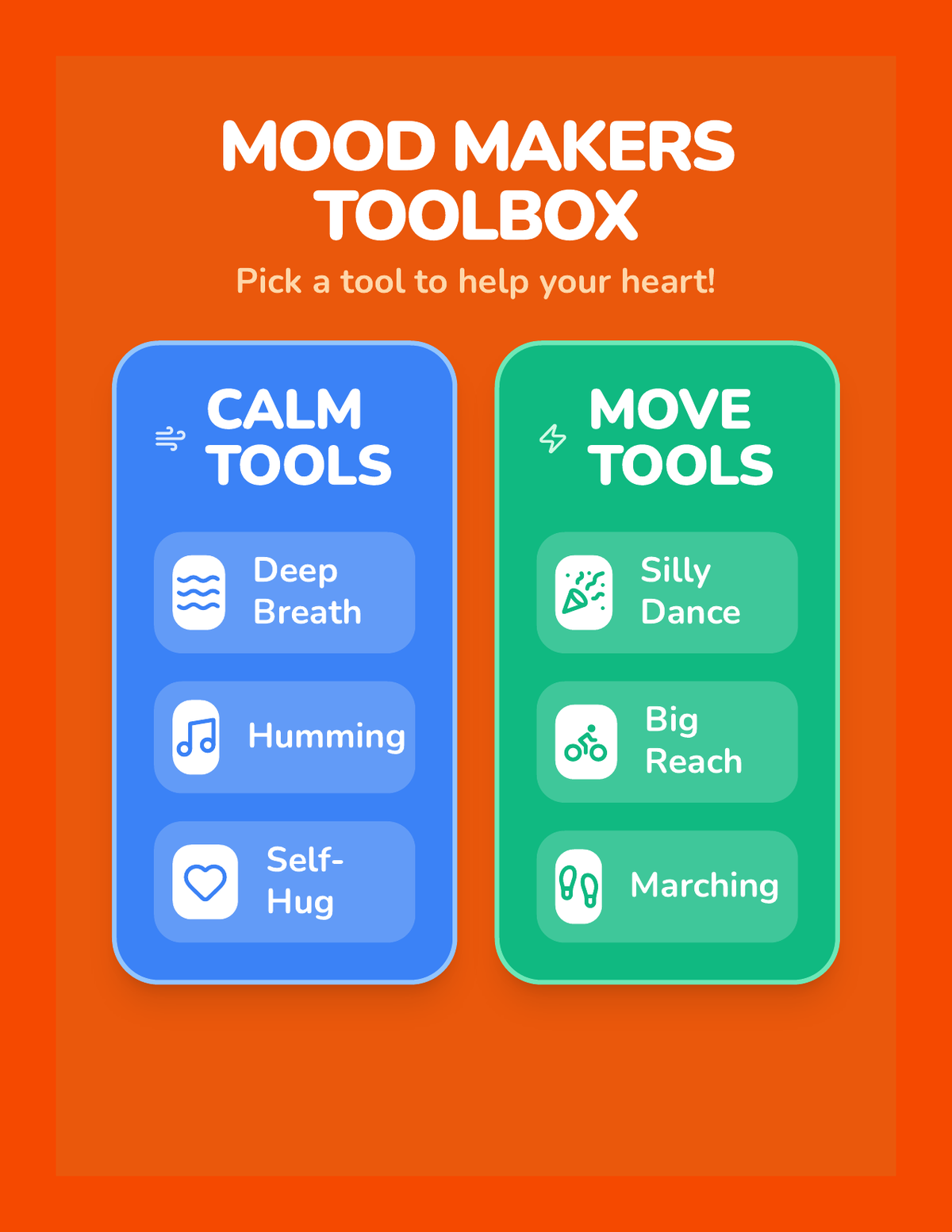
A classroom reference poster visualizing the 'Calm' and 'Move' tools for emotional regulation.
Slides for the final lesson simulating the daily routine and reflecting on the emotional benefits of anticipation and planned happiness.
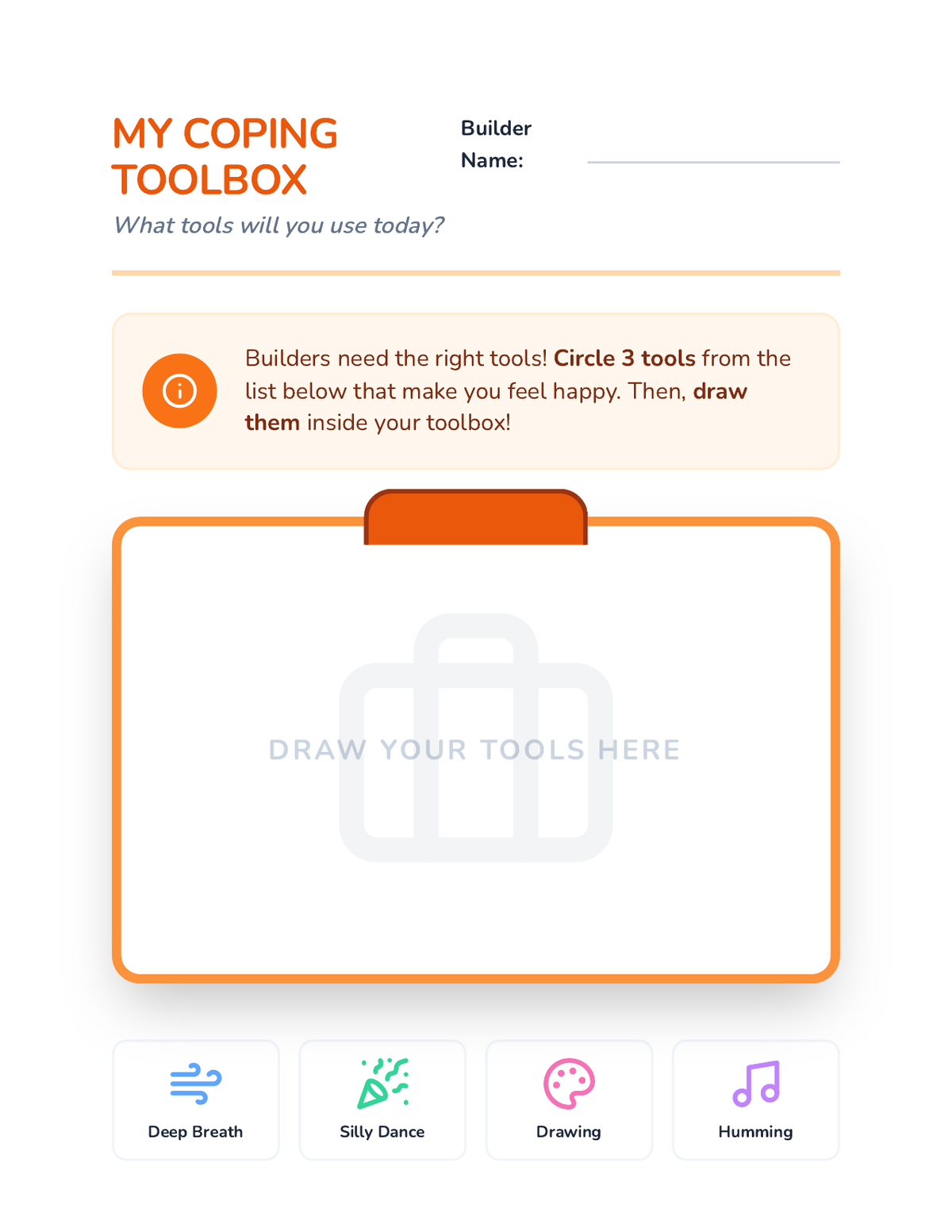
A student worksheet to select and draw 'coping tools' into a personal toolbox illustration.
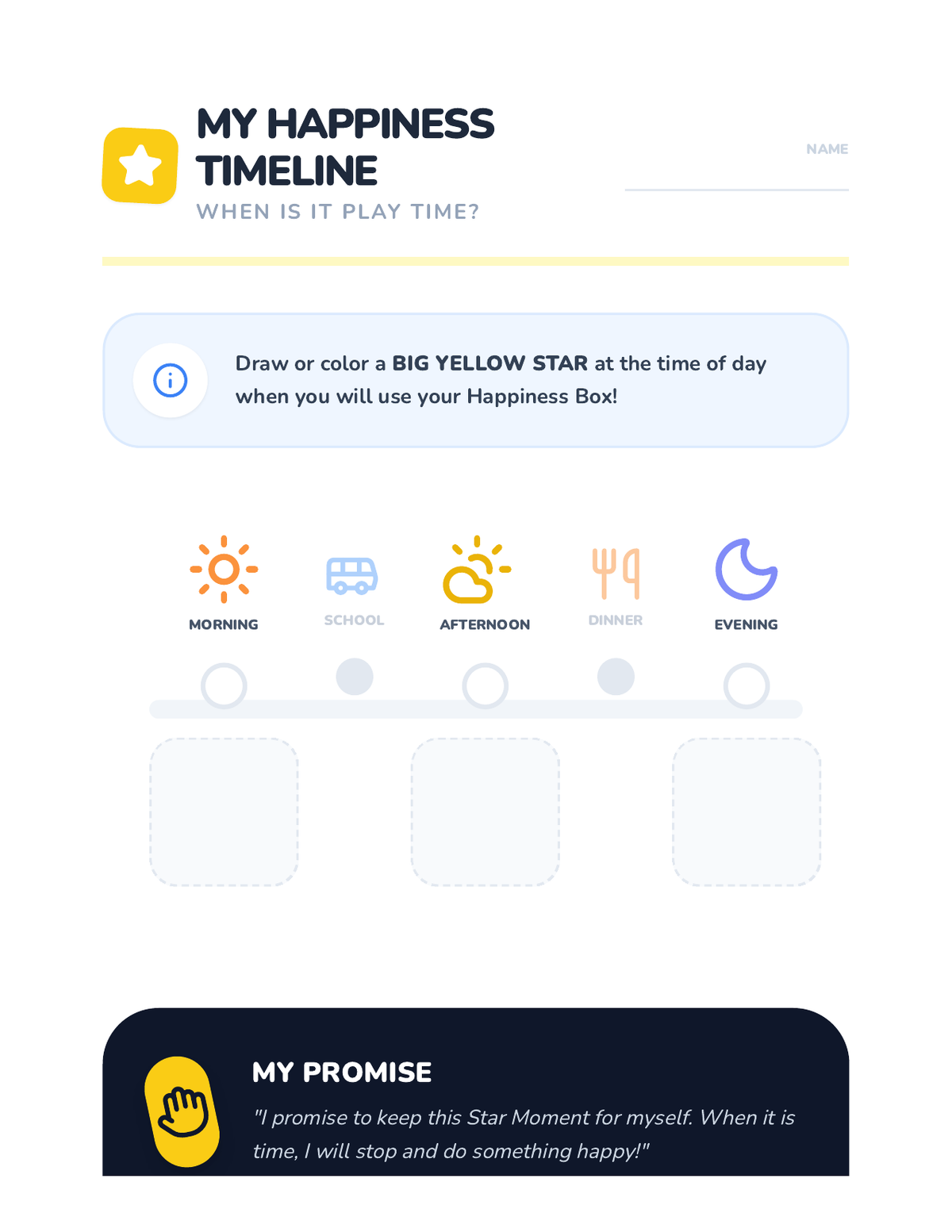
A visual daily timeline worksheet where students choose and mark their "Star Moment" for positive engagement.
Instructional slides for Lesson 3, introducing the 'Toolkit' concept and categorizing actions into 'Calm' and 'Active' tools.
Slides for Lesson 4 teaching Kindergarteners the importance of goal-setting and scheduling specific times for positive activities.
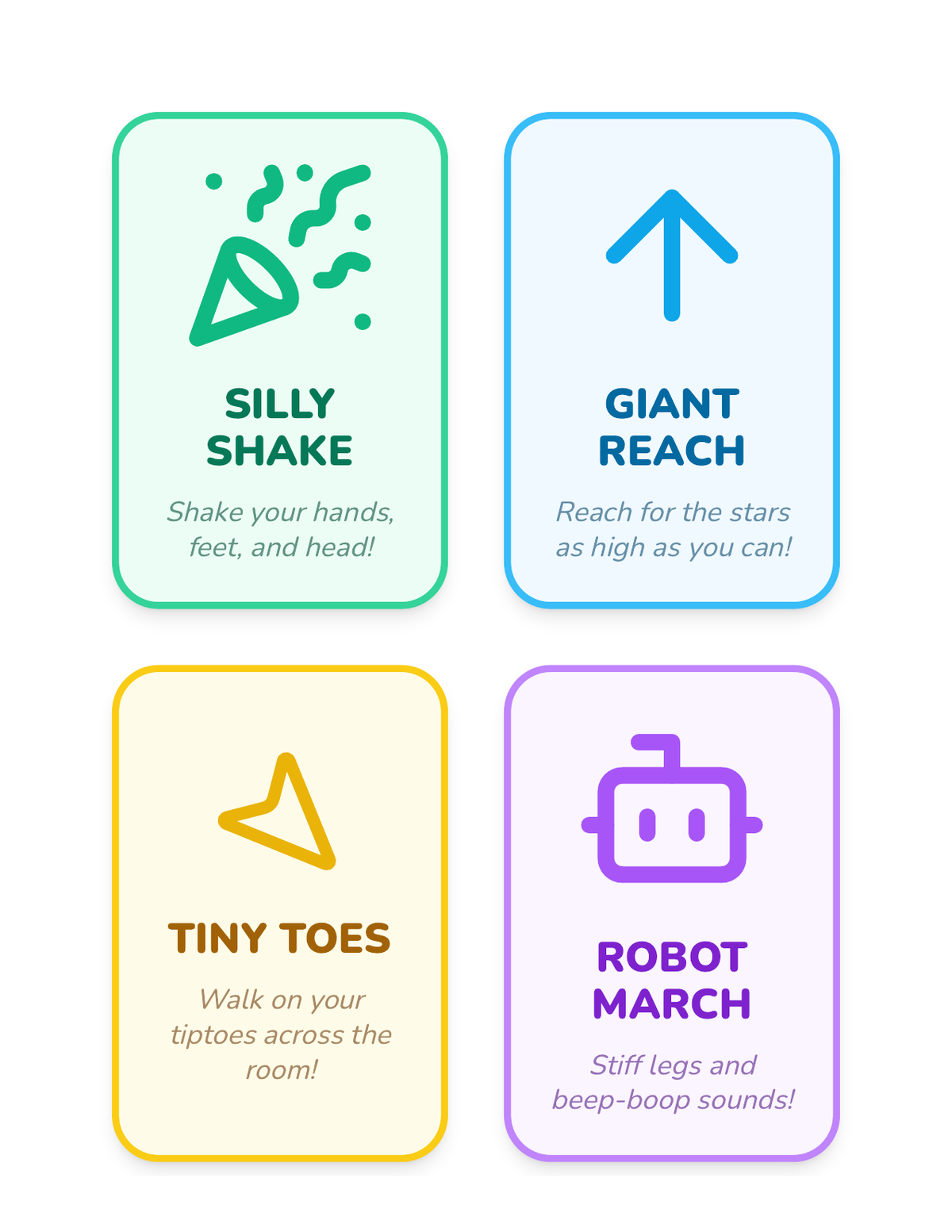
Activity cards for different movements (Silly Dance, Giant Stretches, Humming, etc.) to be used during the 'Action Reaction Experiment'.
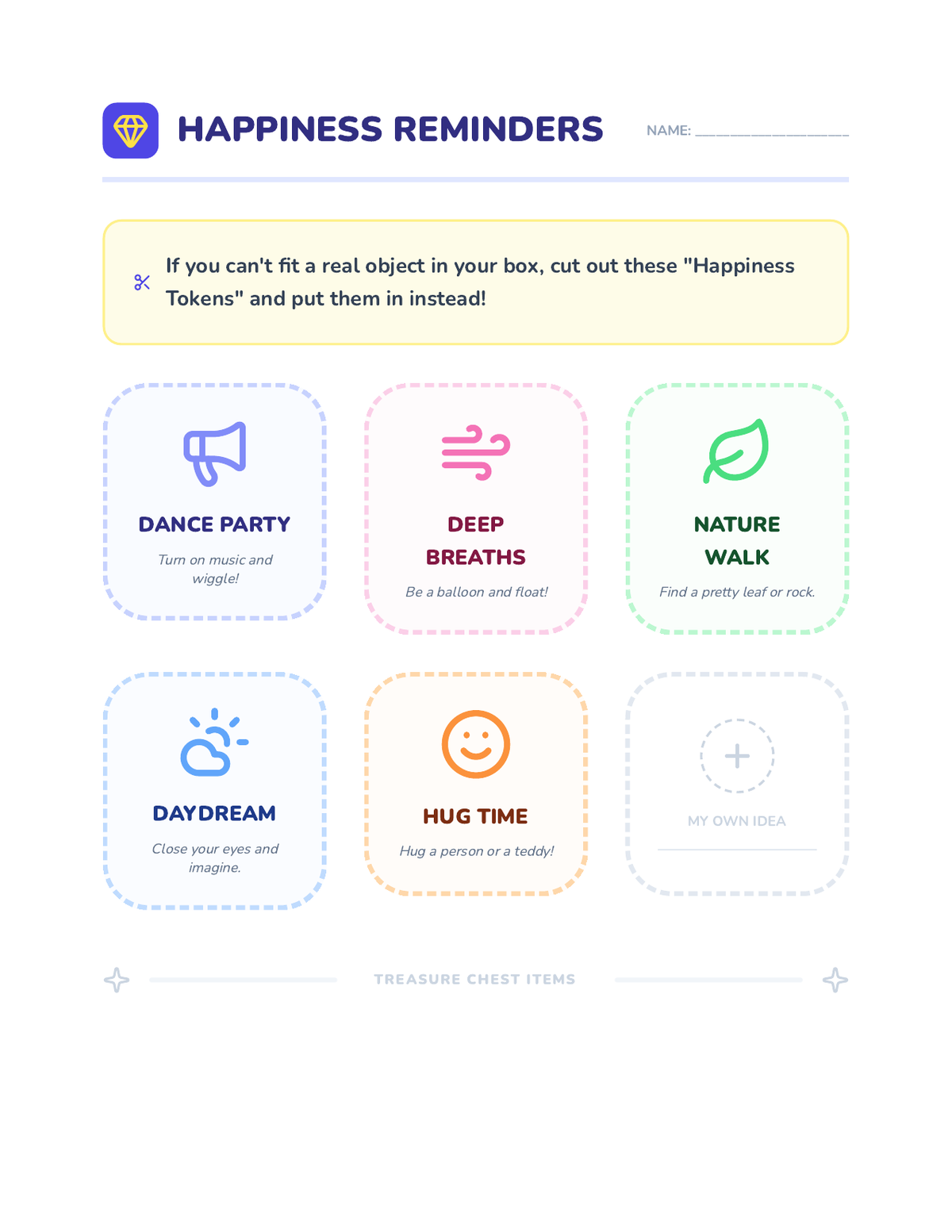
Cut-out tokens representing various positive activities that students can place in their Happiness Box as reminders.
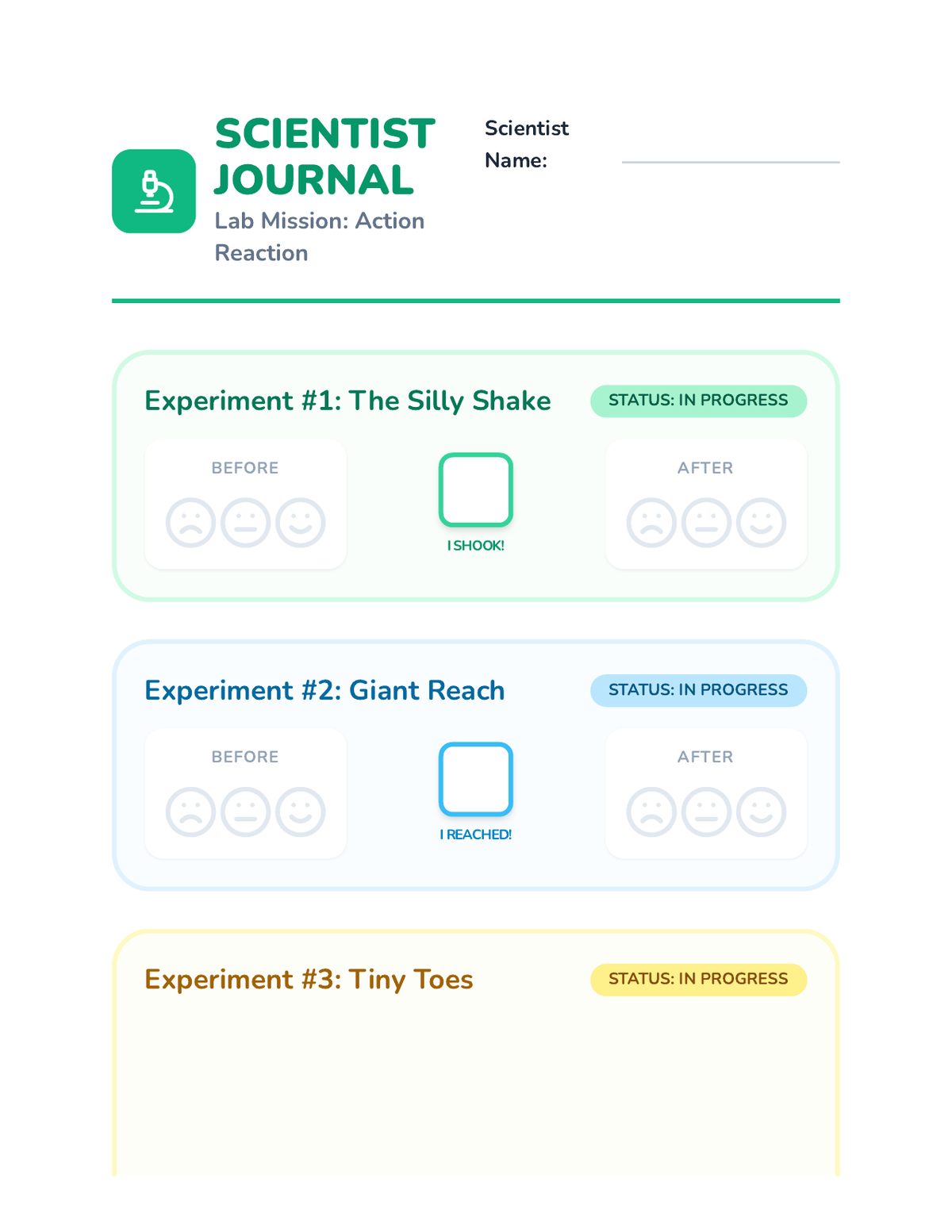
A student journal to record 'before' and 'after' feelings during movement experiments, using emoji icons for identification.
Slides for Lesson 3 detailing the purpose and creation of a physical "Happiness Box" or Treasure Chest for positive reminders.
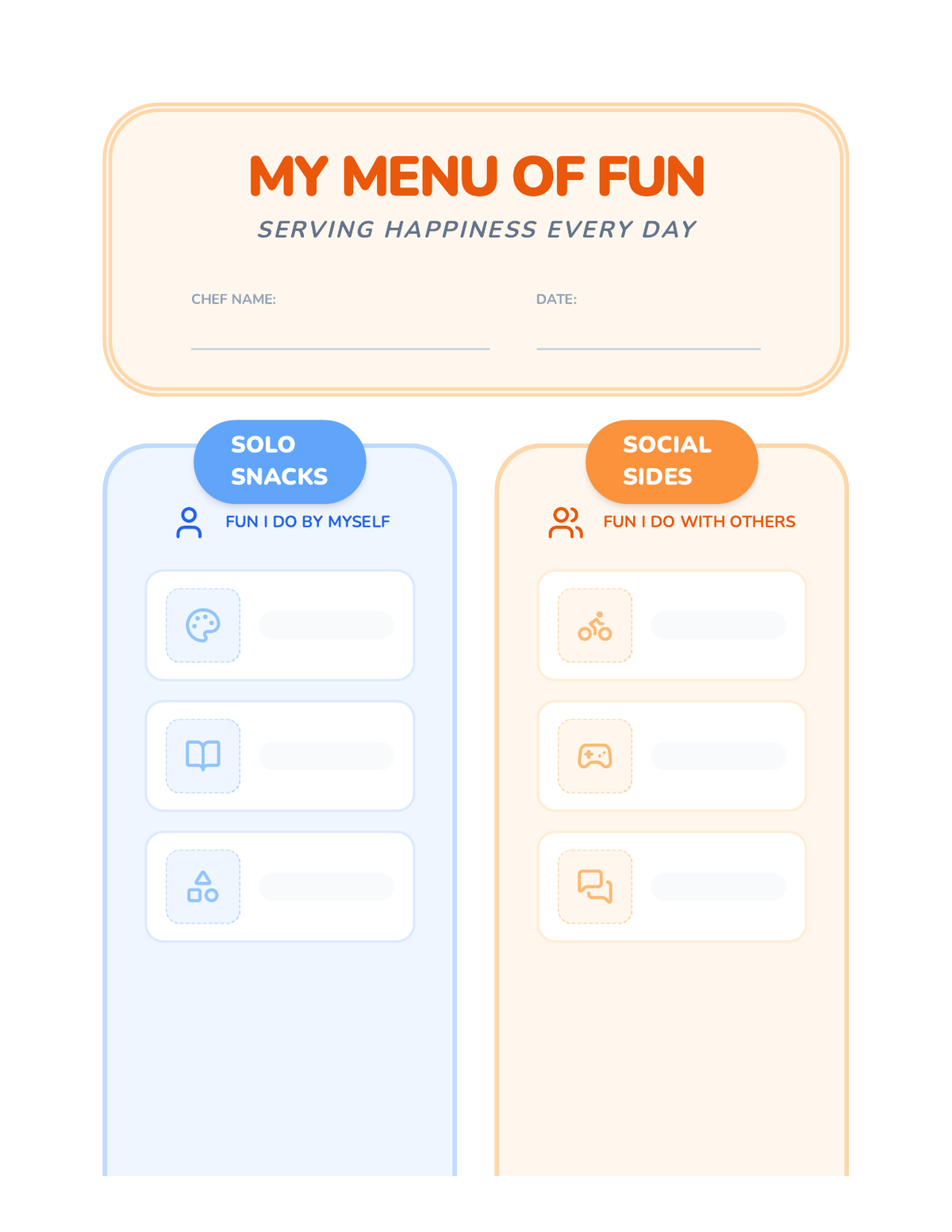
A menu-themed worksheet where Kindergarteners brainstorm and categorize fun activities they can do alone or with friends.
Instructional slides for Lesson 2, presenting the 'Mood Scientist' mission and guiding students through a movement experiment.
Slides for Lesson 2 focusing on brainstorming and categorizing positive activities into "solo" and "together" fun.