Budgeting, saving, and investment strategies alongside practical skills for managing credit, taxes, and banking. Addresses insurance needs, employment income, and major purchase decisions to support comprehensive long-term financial planning.
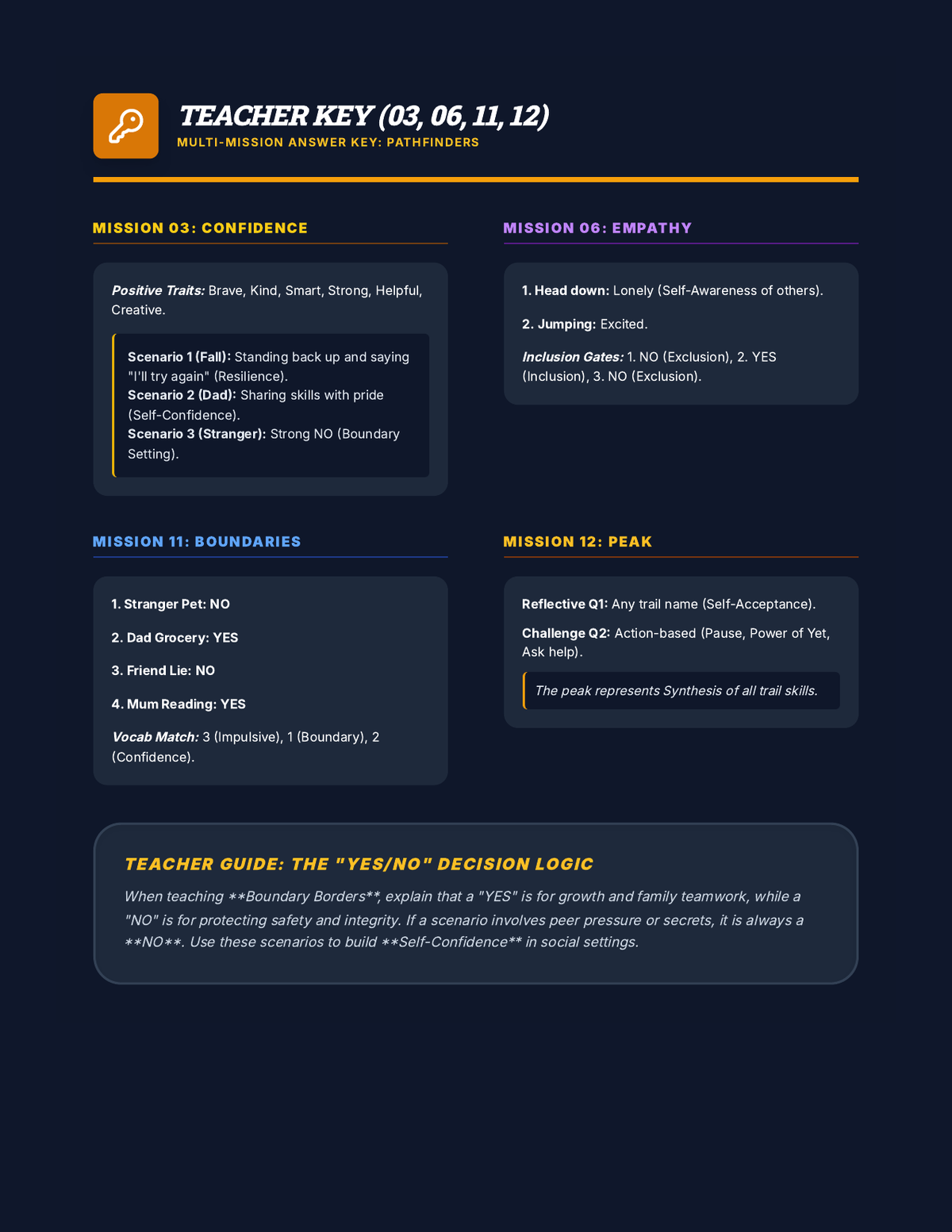
Consolidated teacher answer key for Missions 03, 06, 11, and 12. Provides solutions for adjective identification, emotion reading, and detailed reasoning for boundary scenarios. Revised for 12px font legibility and expanded logic context.
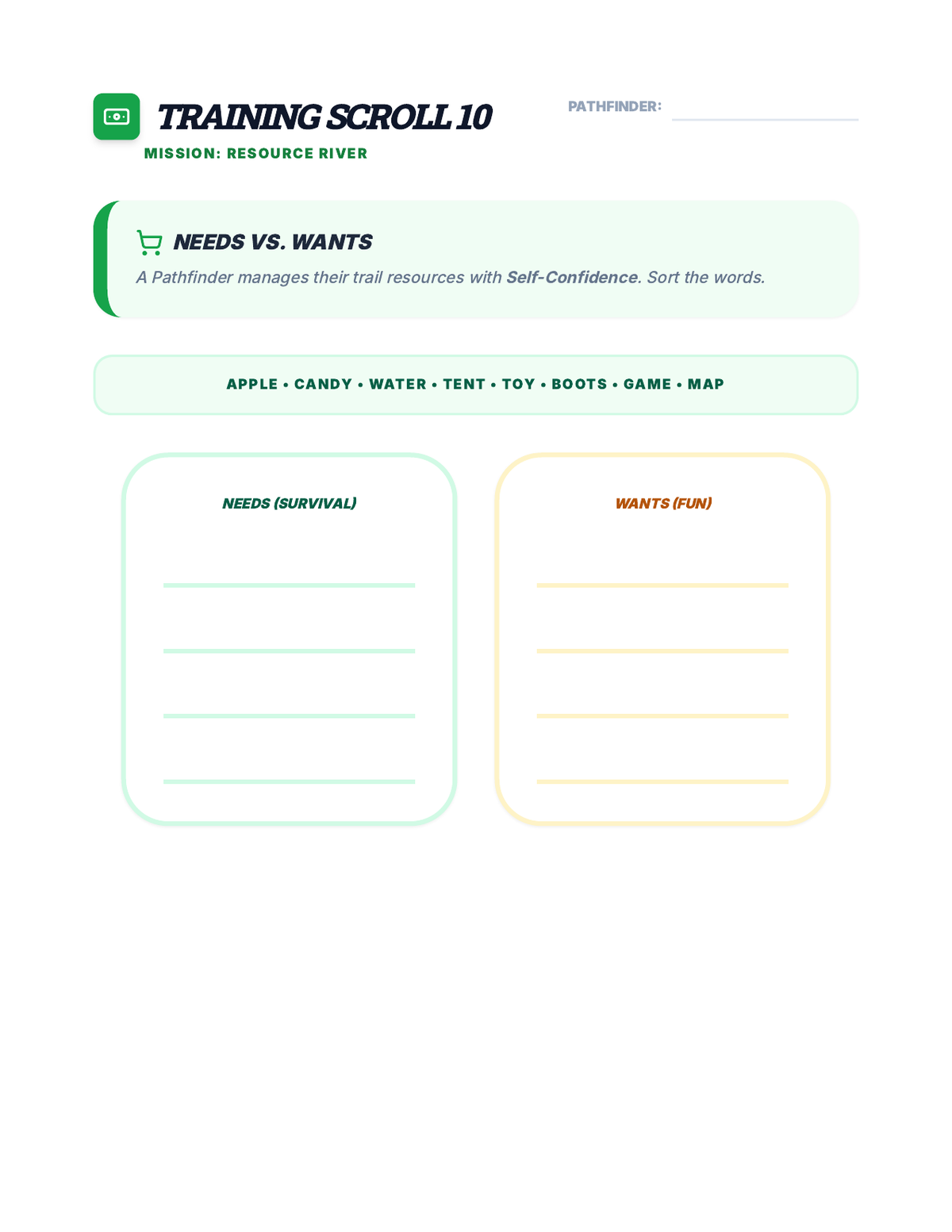
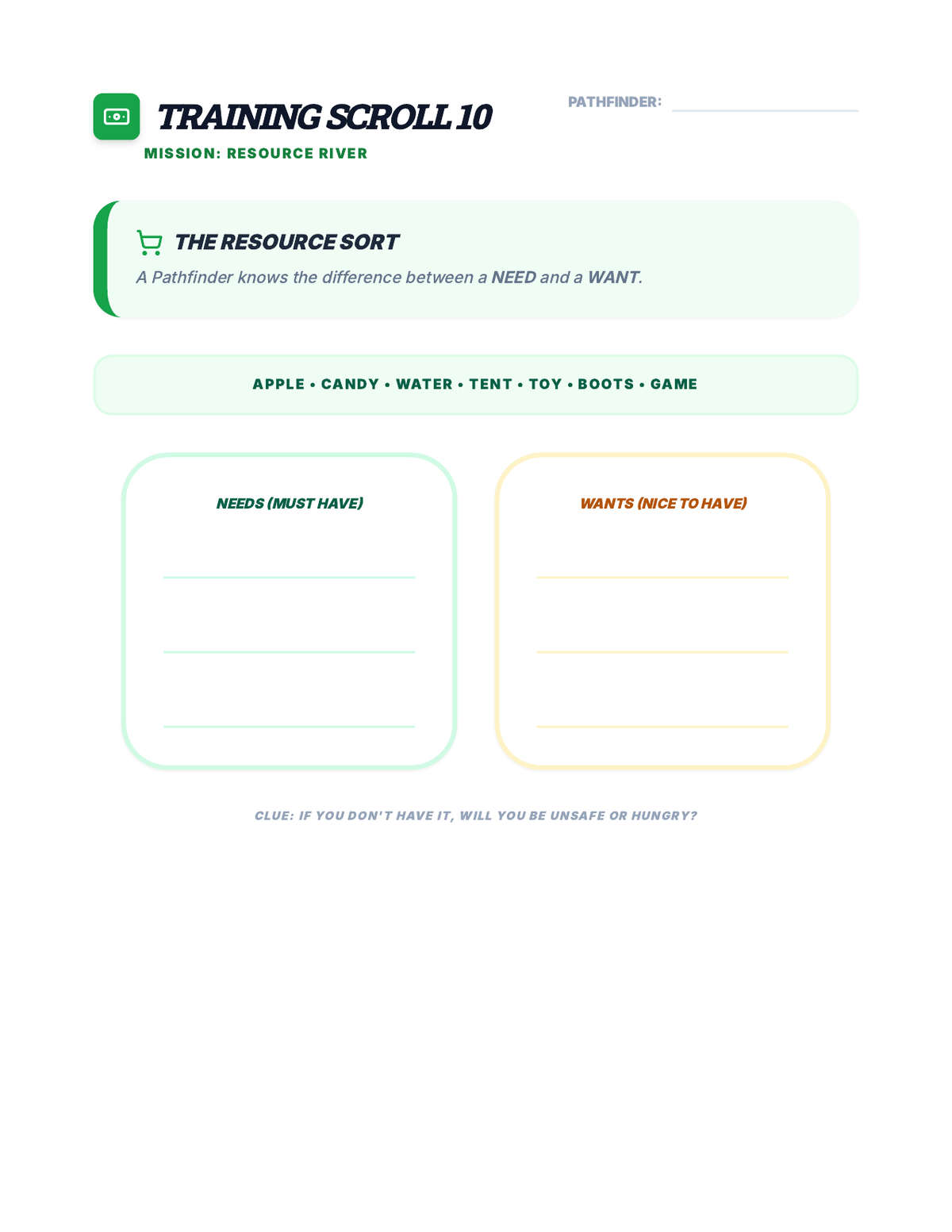
Learner workbook for Mission 10: Resource River. Features a need vs. want sorting activity and financial decision scenarios (Mum, Stranger, Friend). Revised for content completeness, handwriting space, and layout stability.
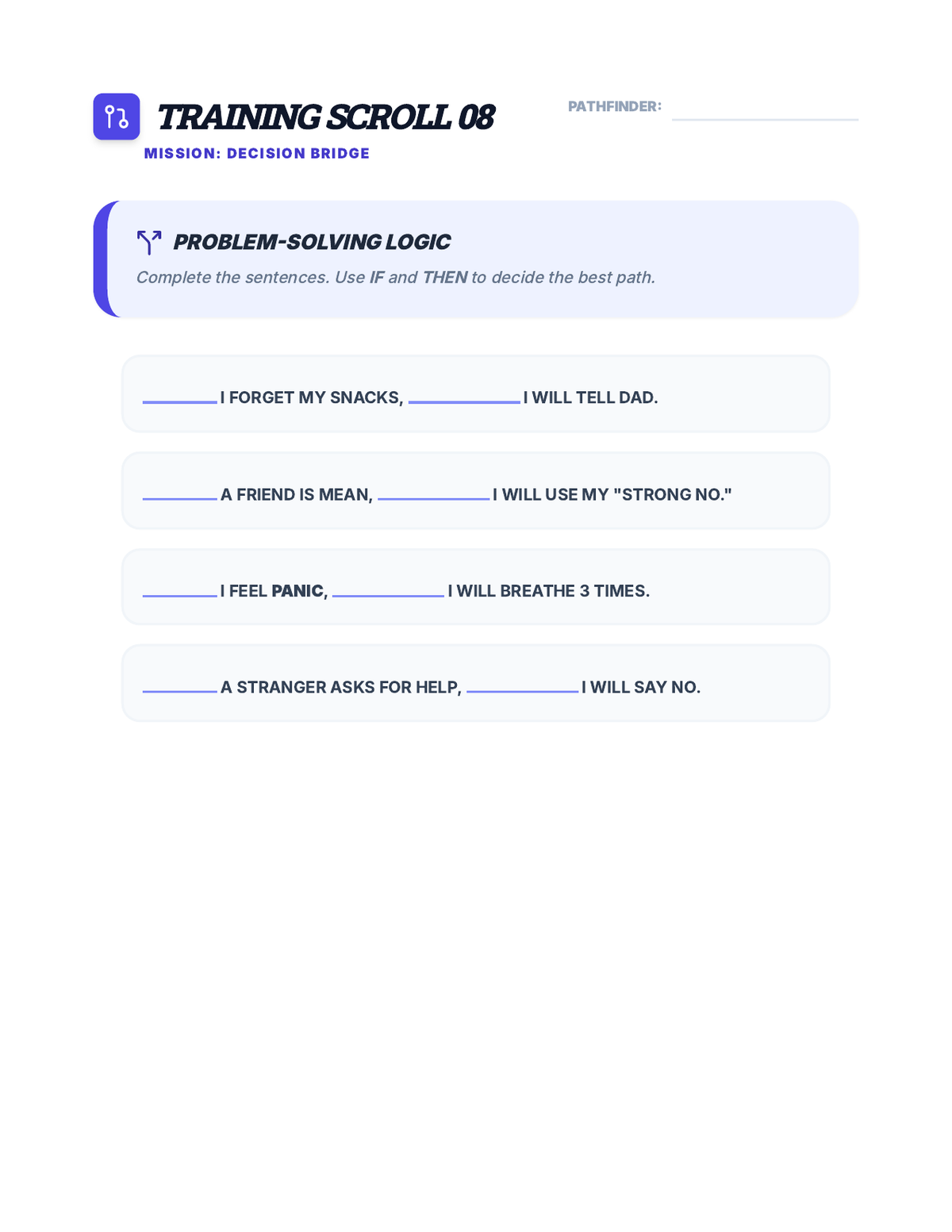
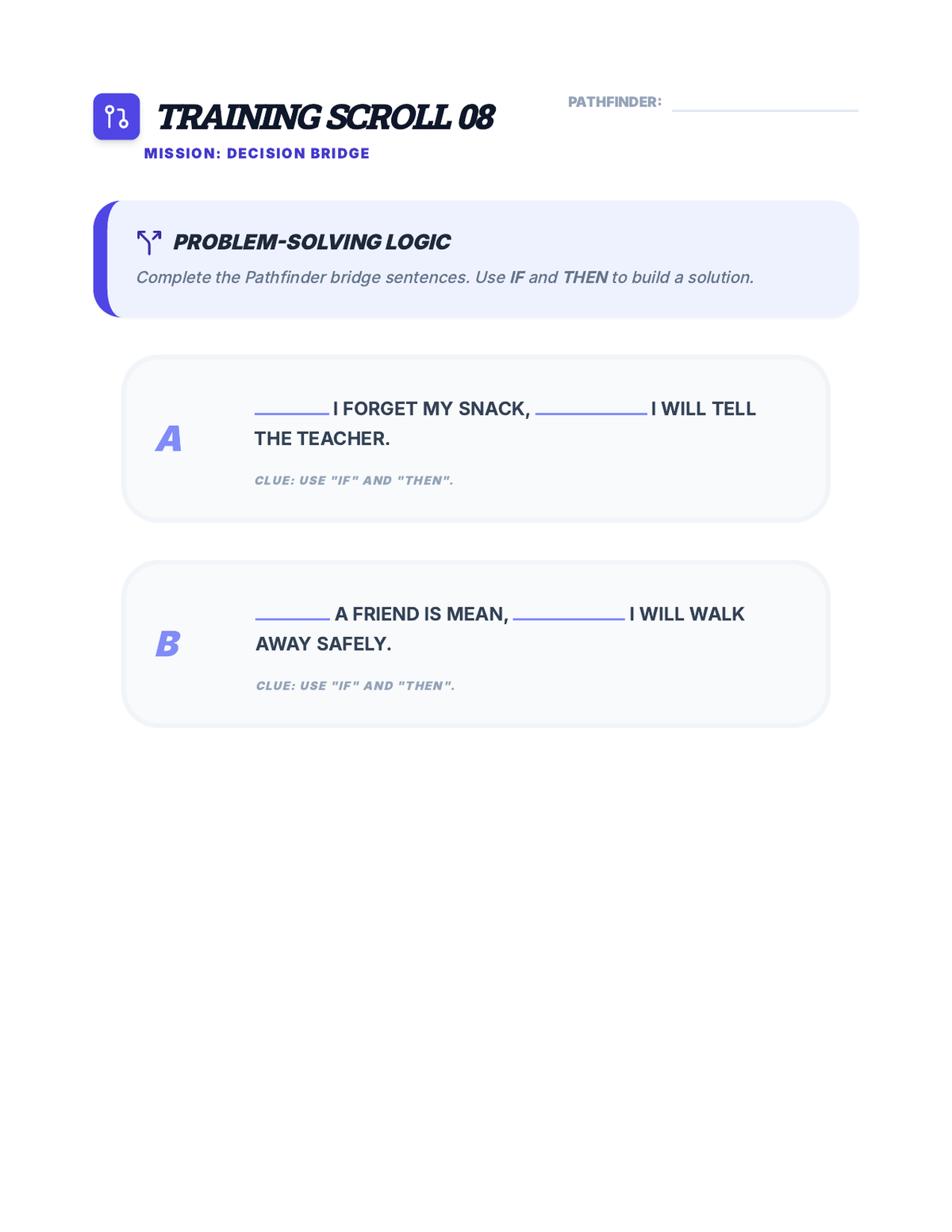
Learner workbook for Mission 08: Decision Bridge. Features "If/Then" logic practice across social situations (Dad, Friend, Stranger) and a multi-step problem-solving grid for exam stress. Revised for practice depth, handwriting space, and layout balance.
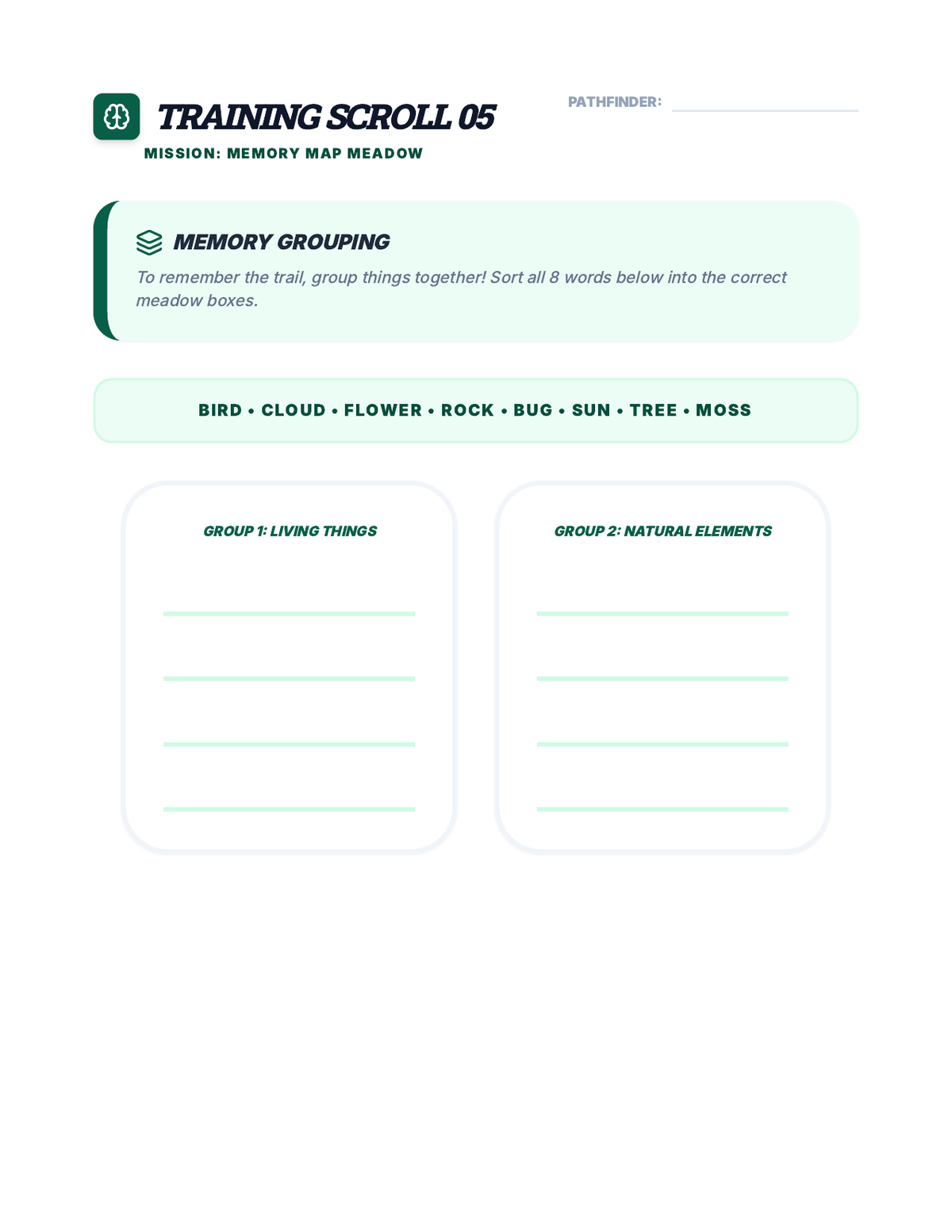
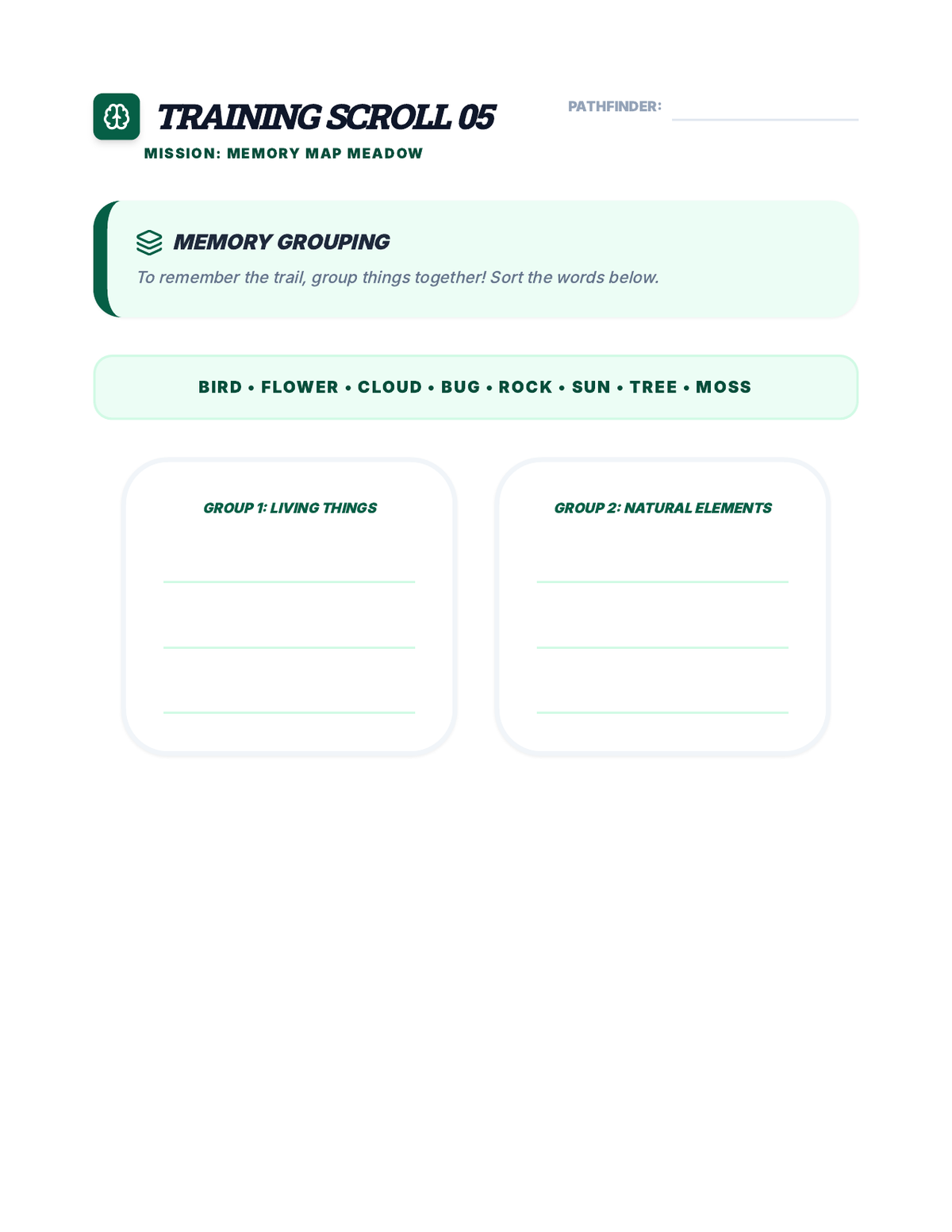
Learner workbook for Mission 05: Memory Map Meadow. Features word grouping for memory retention, and expanded scenarios involving parents, strangers, and exam stress. Revised for sorting space, content balance, and single-page rendering.
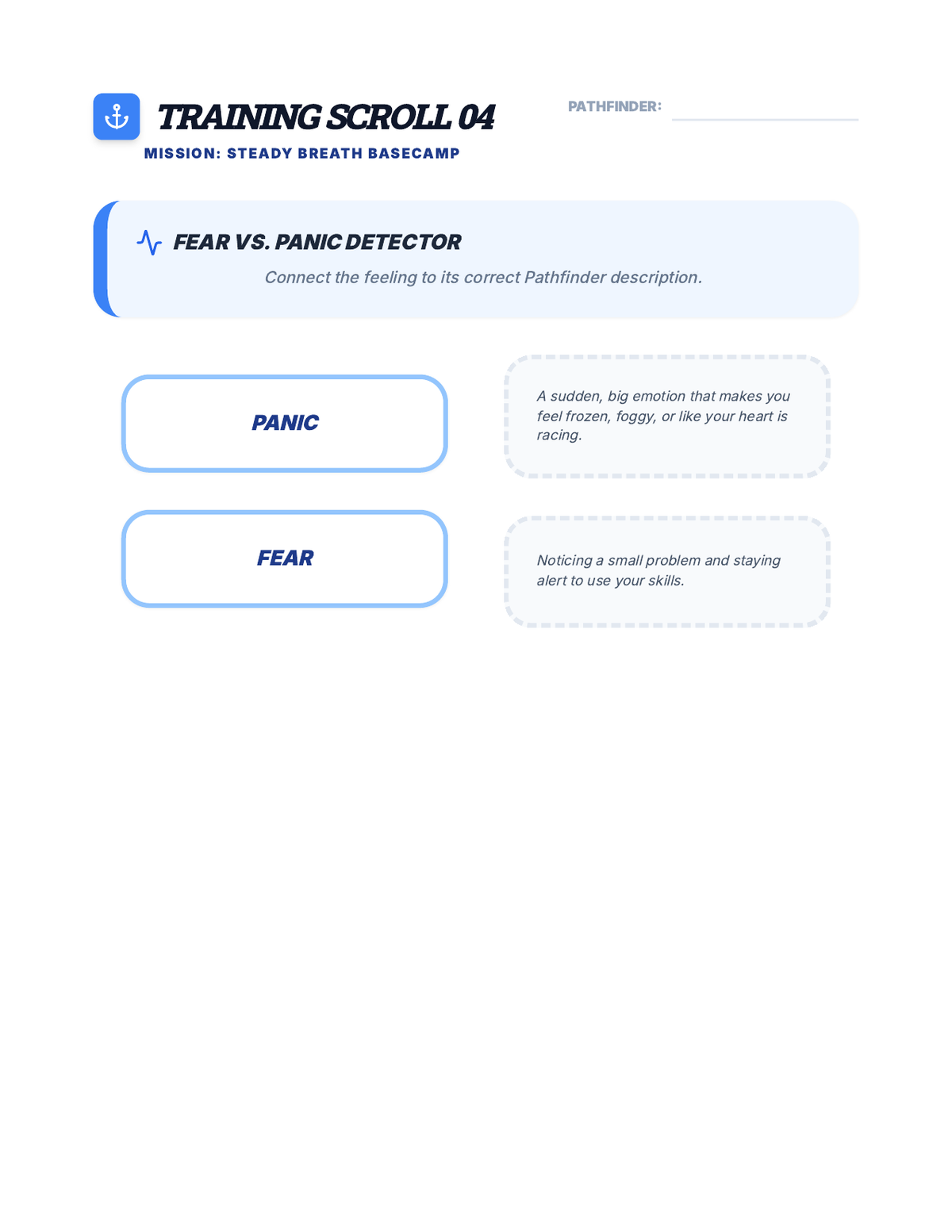
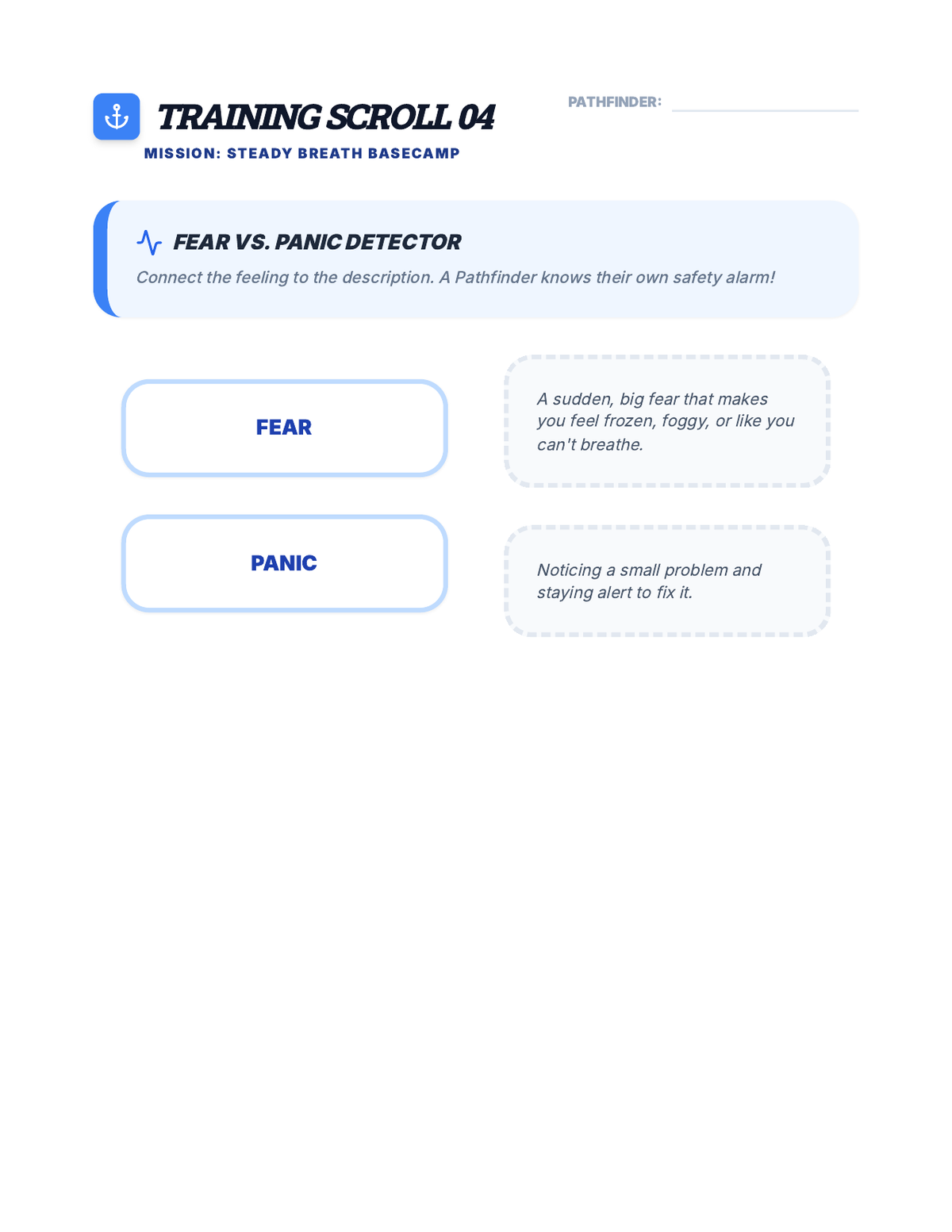
Learner workbook for Mission 04: Steady Breath Basecamp. Features a fear vs. panic matching activity, safety scenarios (Stranger, Friend, Mum), and 5-4-3-2-1 grounding practice. Revised for content completeness and page balance.
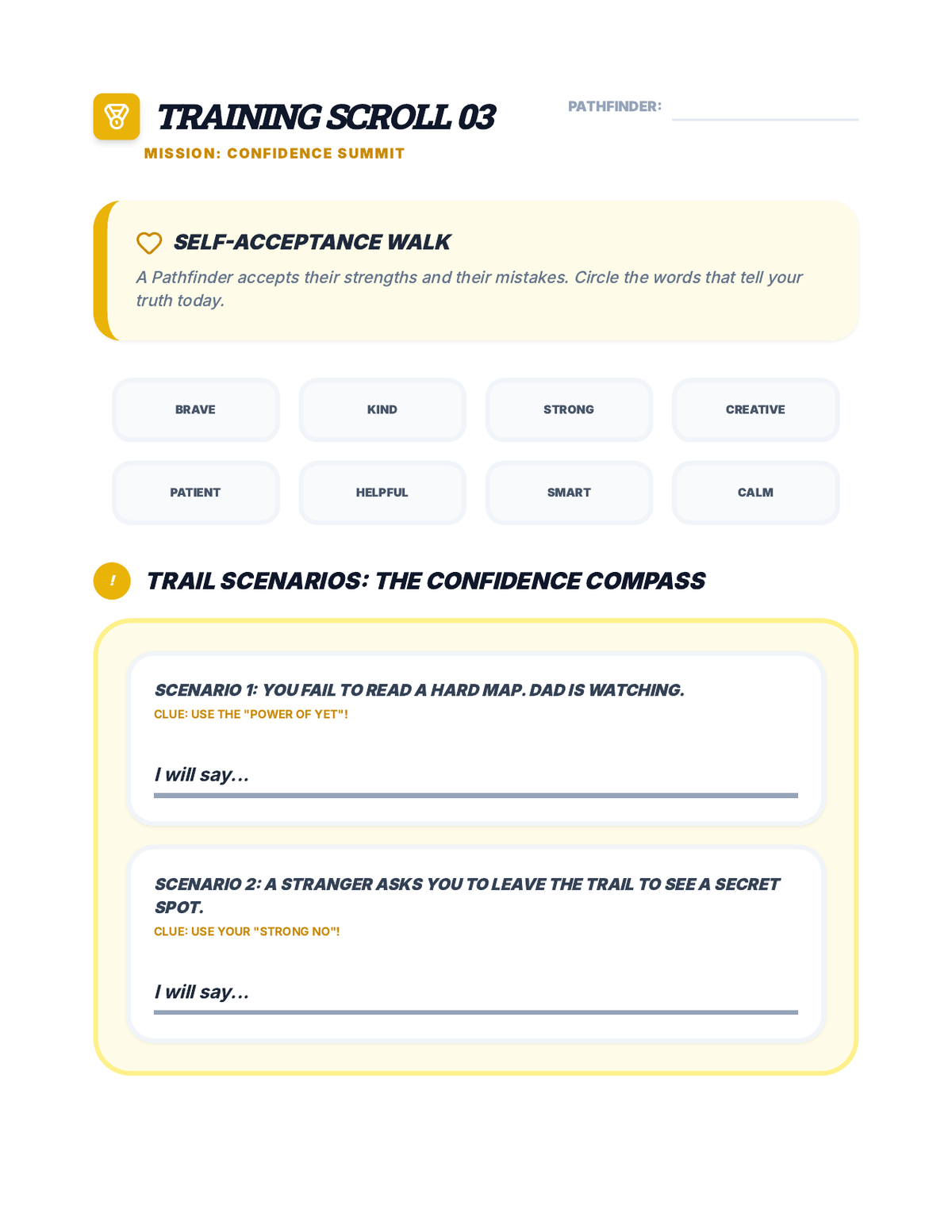
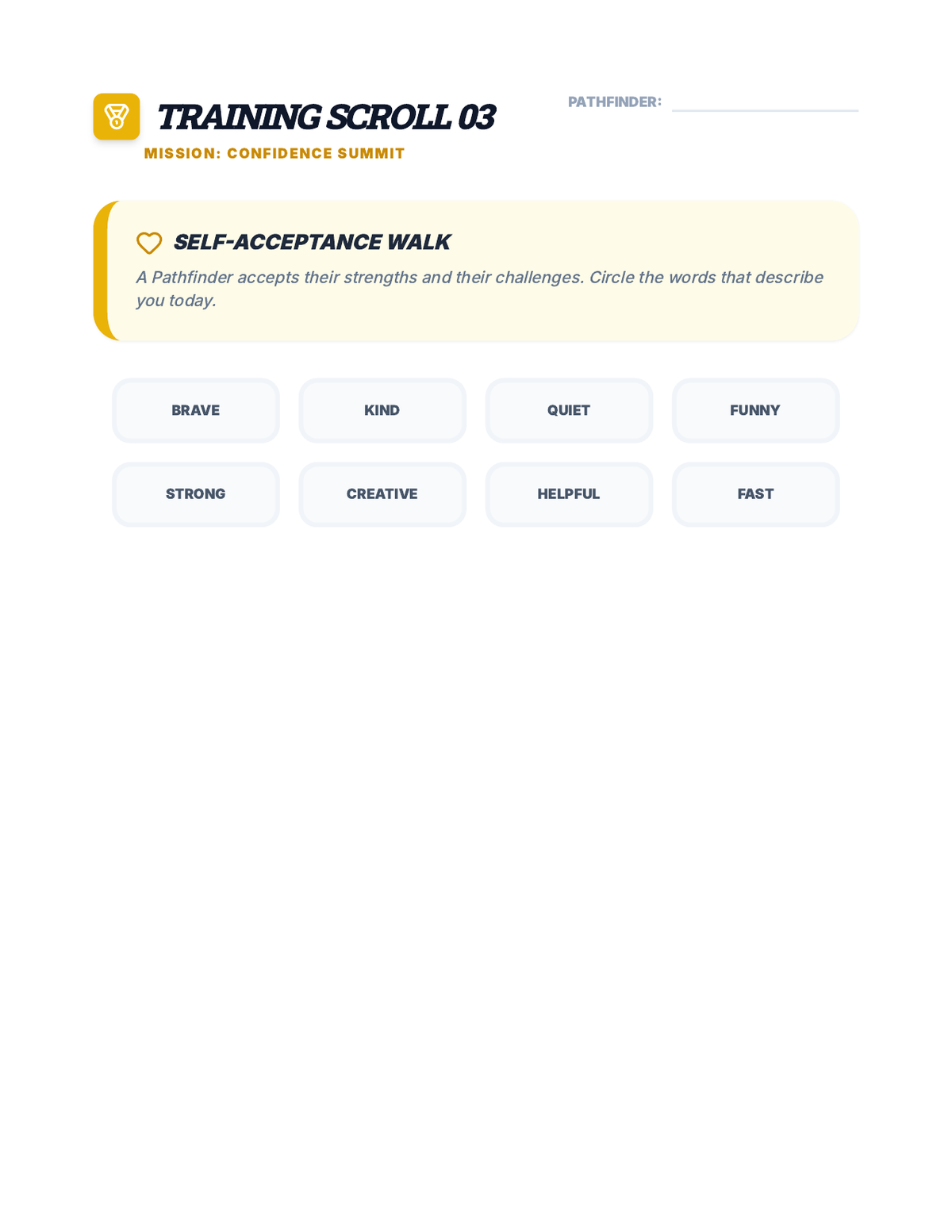
Learner workbook for Mission 03: Confidence Summit. Features adjective circling, the Power of Yet, and social boundary scenarios (Dad, Stranger, Friend). Revised for content completeness, darker handwriting lines, and single-page layout.
Learner workbook for Mission 10: Resource River. Features a need vs. want sorting activity and a financial decision scenario involving safe boundary choices with parents. Revised for content completeness, handwriting space, and layout stability.
Learner workbook for Mission 08: Decision Bridge. Features "If/Then" logic practice and a step-by-step problem-solving grid for managing exam-related panic. Revised for content completeness, handwriting space, and layout stability.
Learner workbook for Mission 05: Memory Map Meadow. Features word grouping for memory retention, a visual trail sketch area for detail recall, and a social decision scenario involving helpful memory tasks for parents. Revised for content completeness, handwriting space, and layout stability.
Learner workbook for Mission 04: Steady Breath Basecamp. Features a fear vs. panic matching activity, the 5-4-3-2-1 grounding countdown, and a safety scenario for setting boundaries with strangers. Revised for content completeness, handwriting space, and layout stability.
Learner workbook for Mission 03: Confidence Summit. Features adjective circling, reflective goal-setting on a "Summit Map," and a self-acceptance pledge. Revised for content completeness (Self-Acceptance, Confidence focus), handwriting space, and layout stability. No "ninja" references.
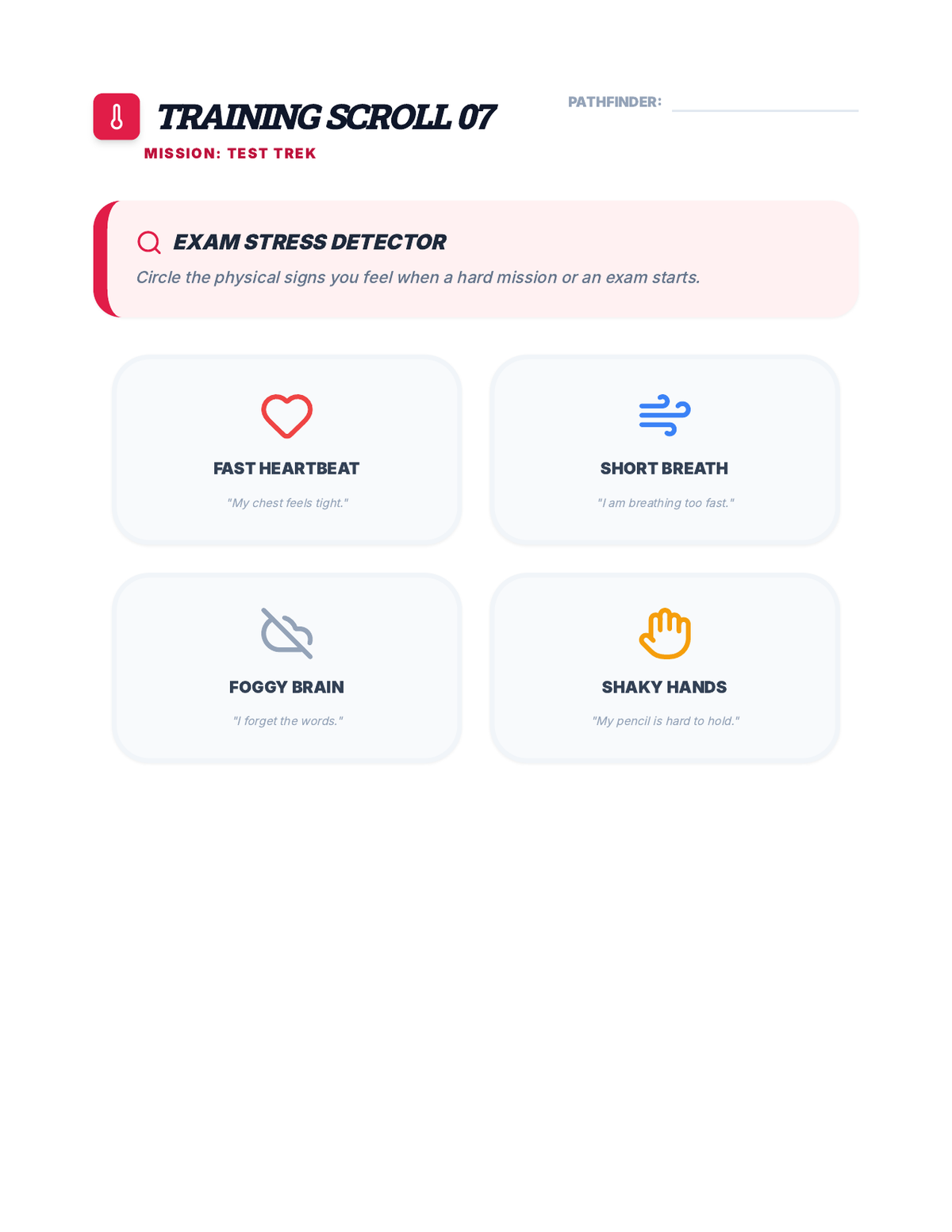
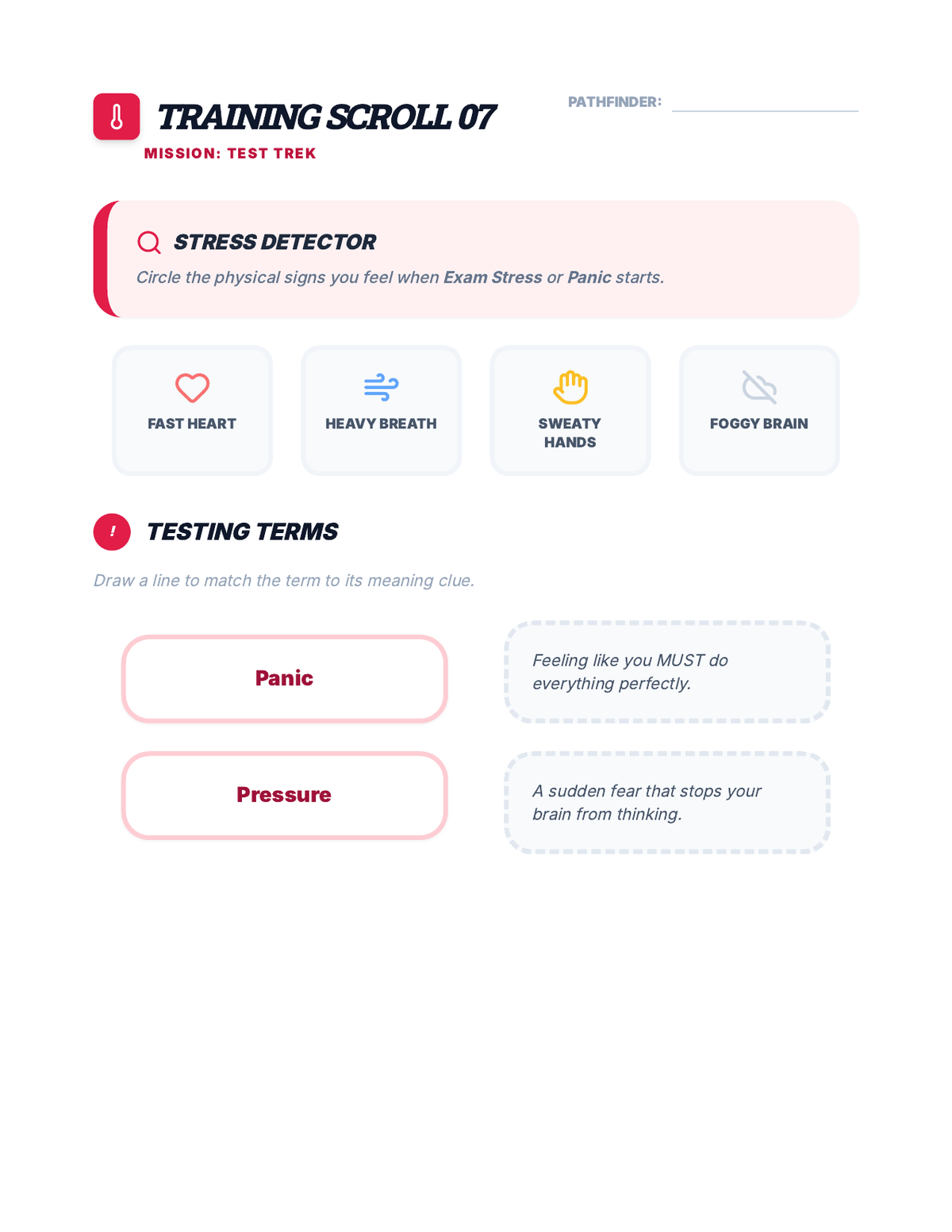
Learner workbook for Mission 07: Test Trek. Revised for better alignment, expanded scenarios (forgetting words, peer pressure to cheat), and managing exam stress. No "ninja" references. Fixed layout and rebalanced whitespace.
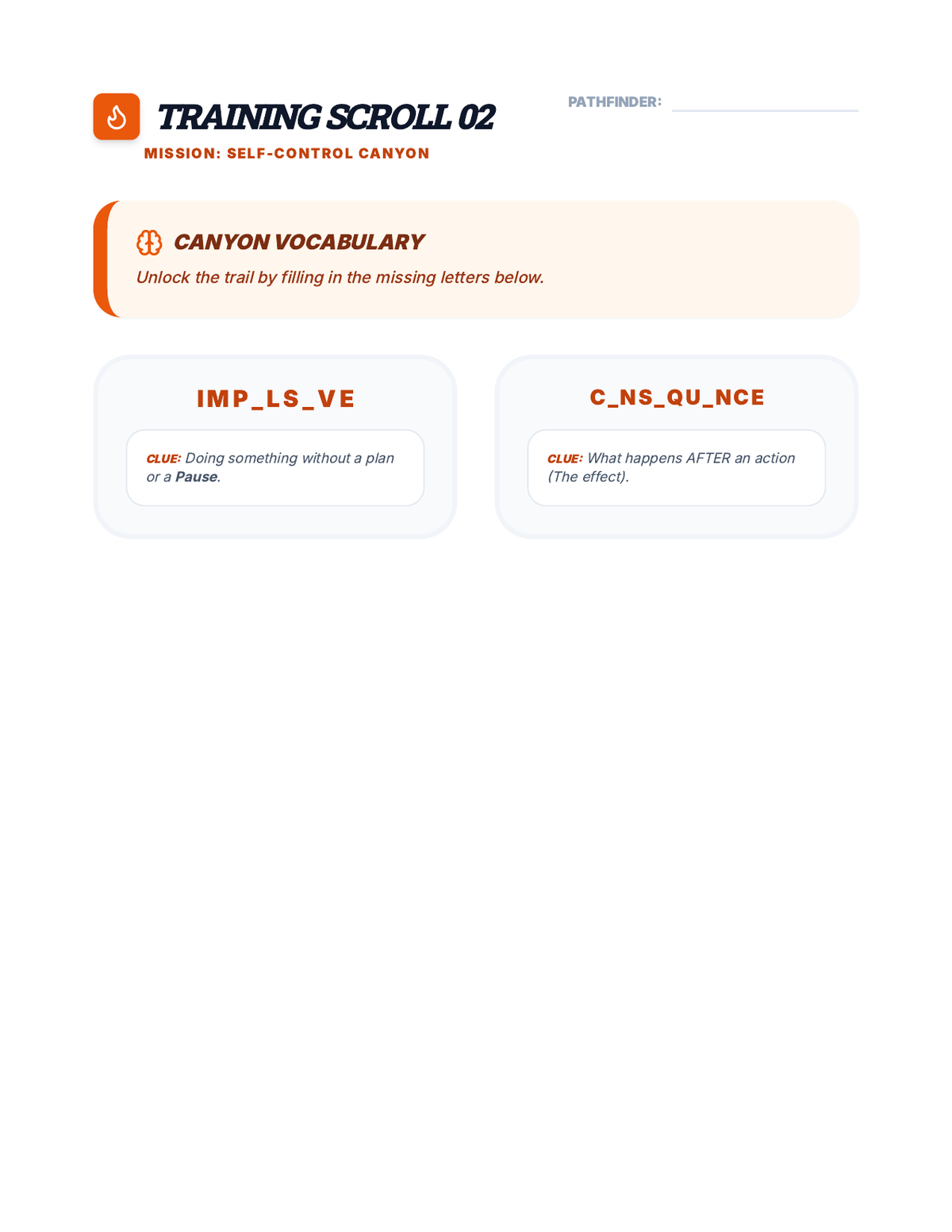
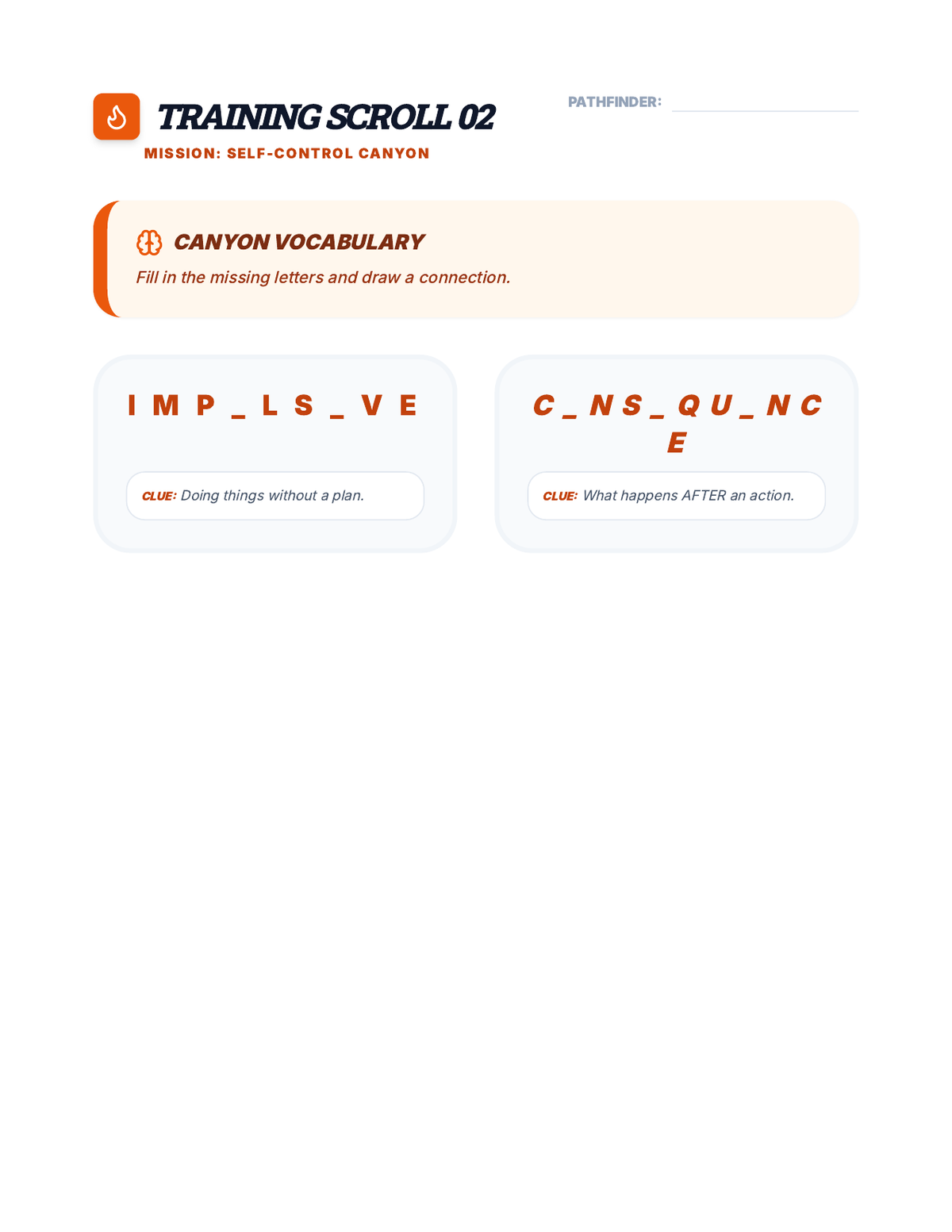
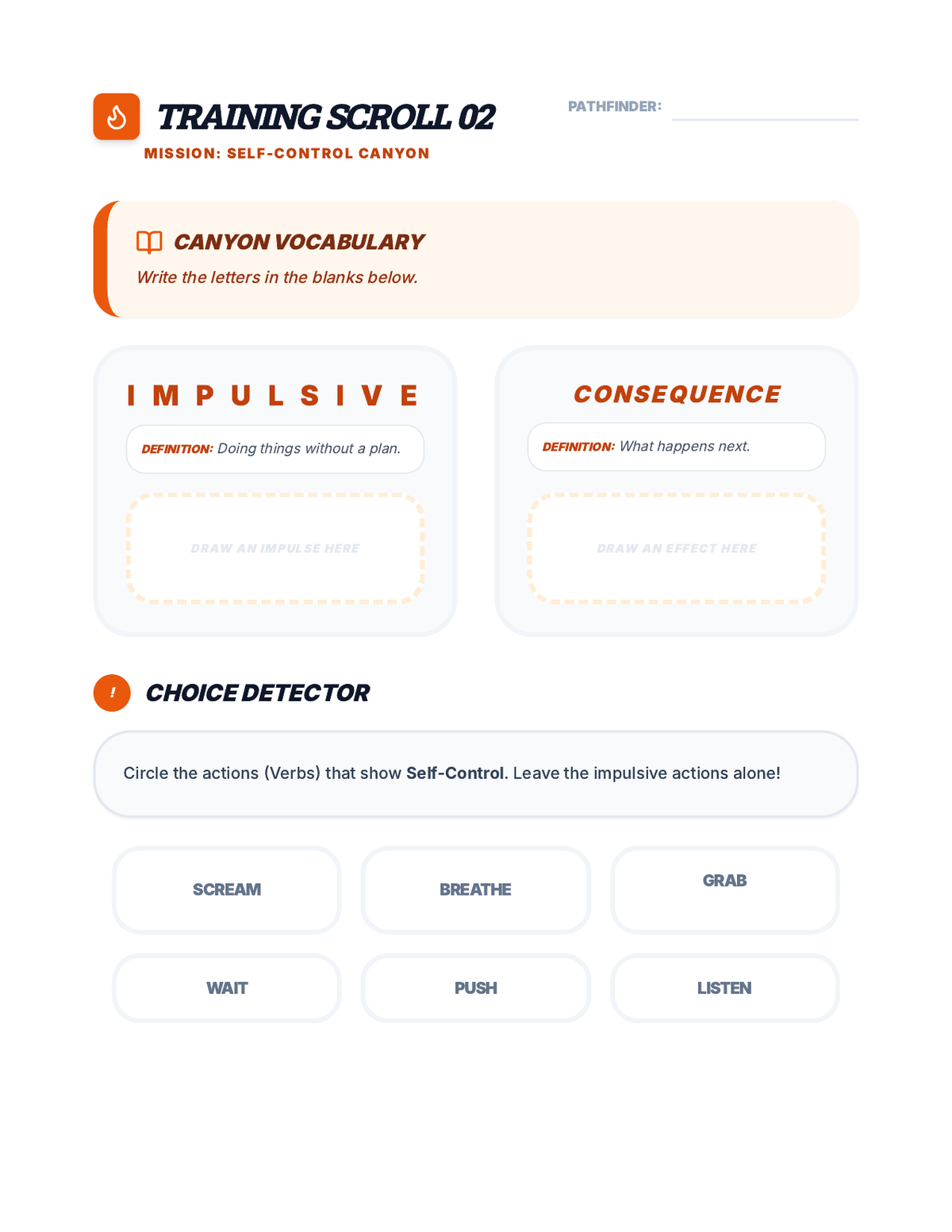
Learner workbook for Mission 02: Self-Control Canyon. Features social decision scenarios (Stranger, Dad, Friend) and the Pathfinder Pause sequencing task. Revised to include uniform styling for choices and corrected word tracking. No "ninja" references.
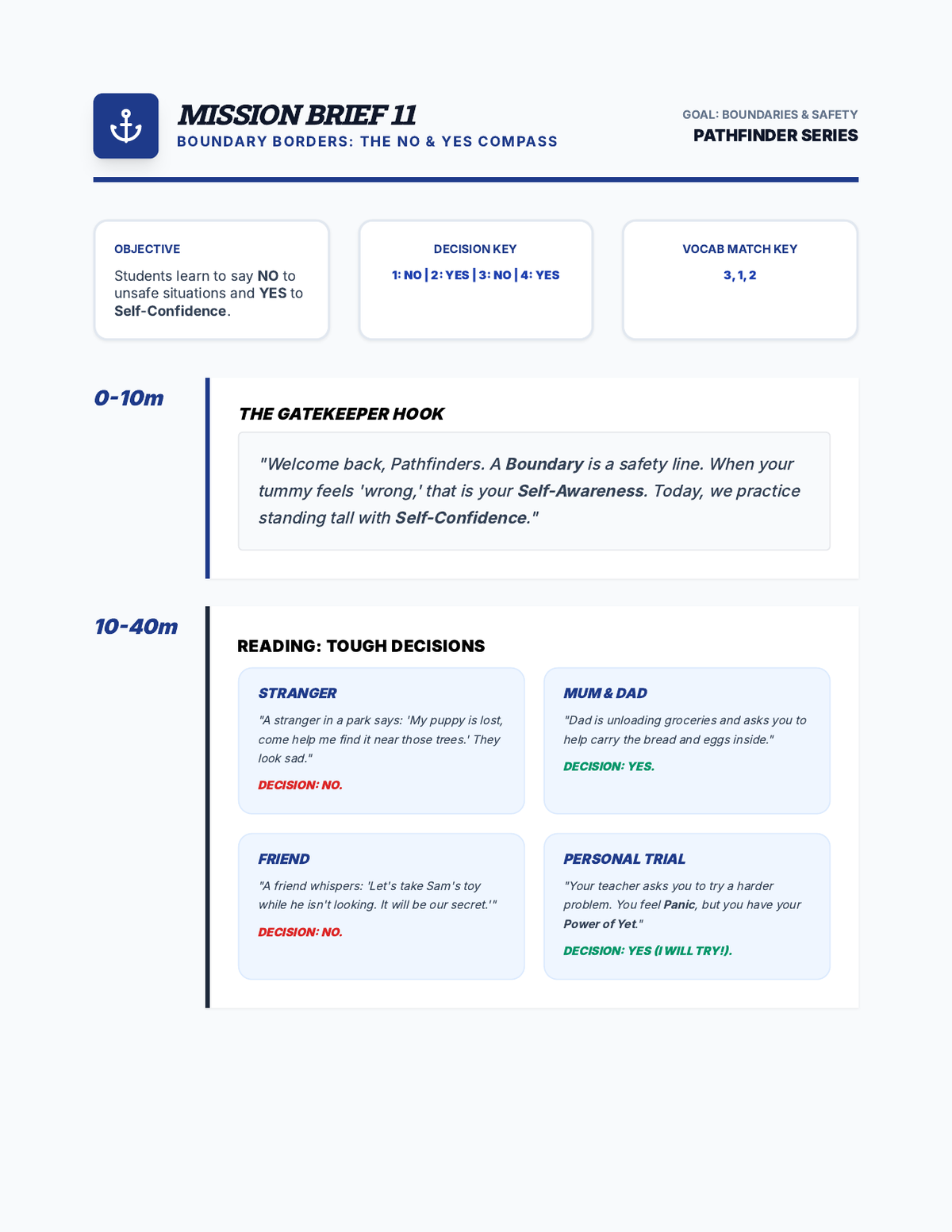
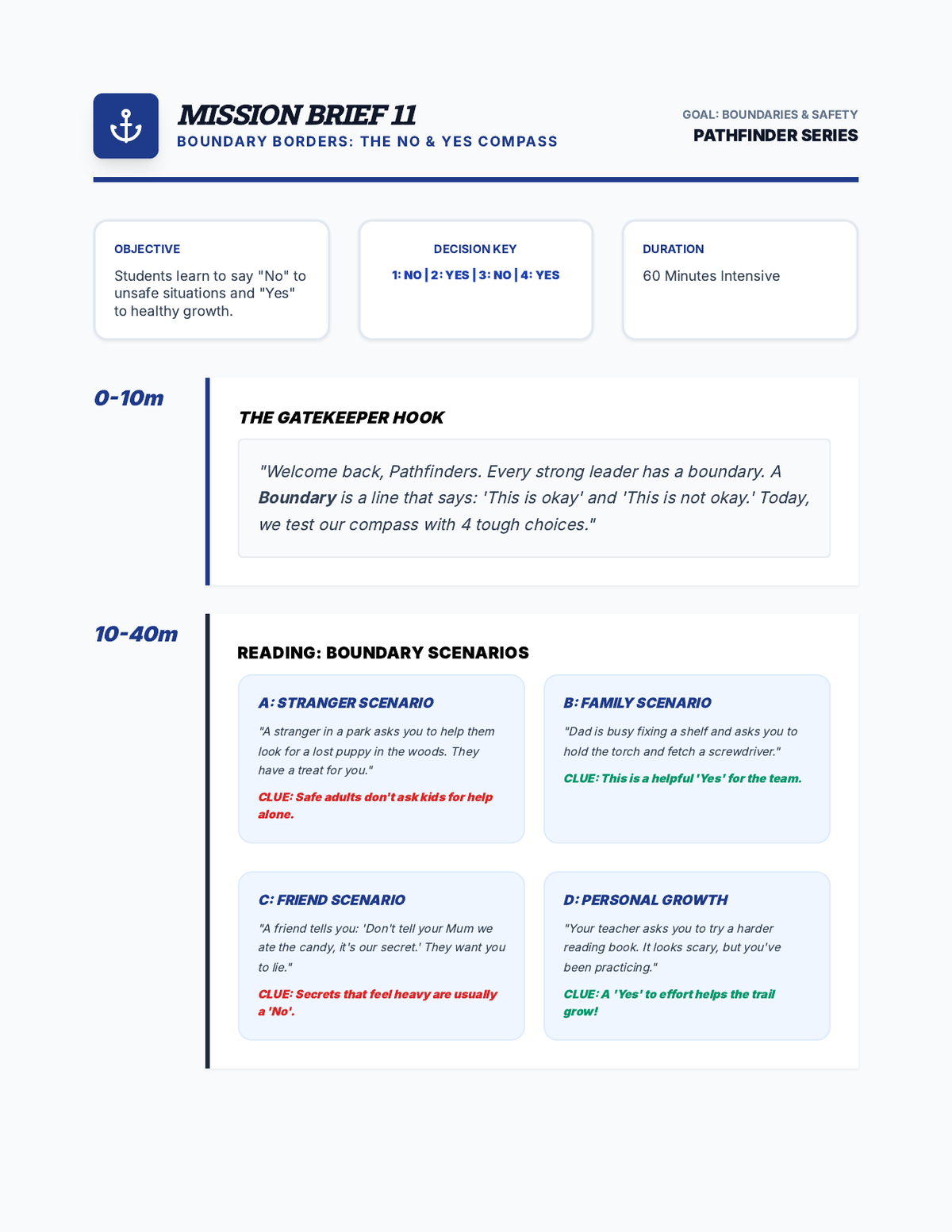
Facilitator script for Mission 11: Boundary Borders. Focuses on setting boundaries through scenario analysis (Strangers, Family, Friends, Self) and role-playing "Strong No" and "Brave Yes" responses. Revised for more scenario depth, teacher answer keys, and explicit SEL keywords.
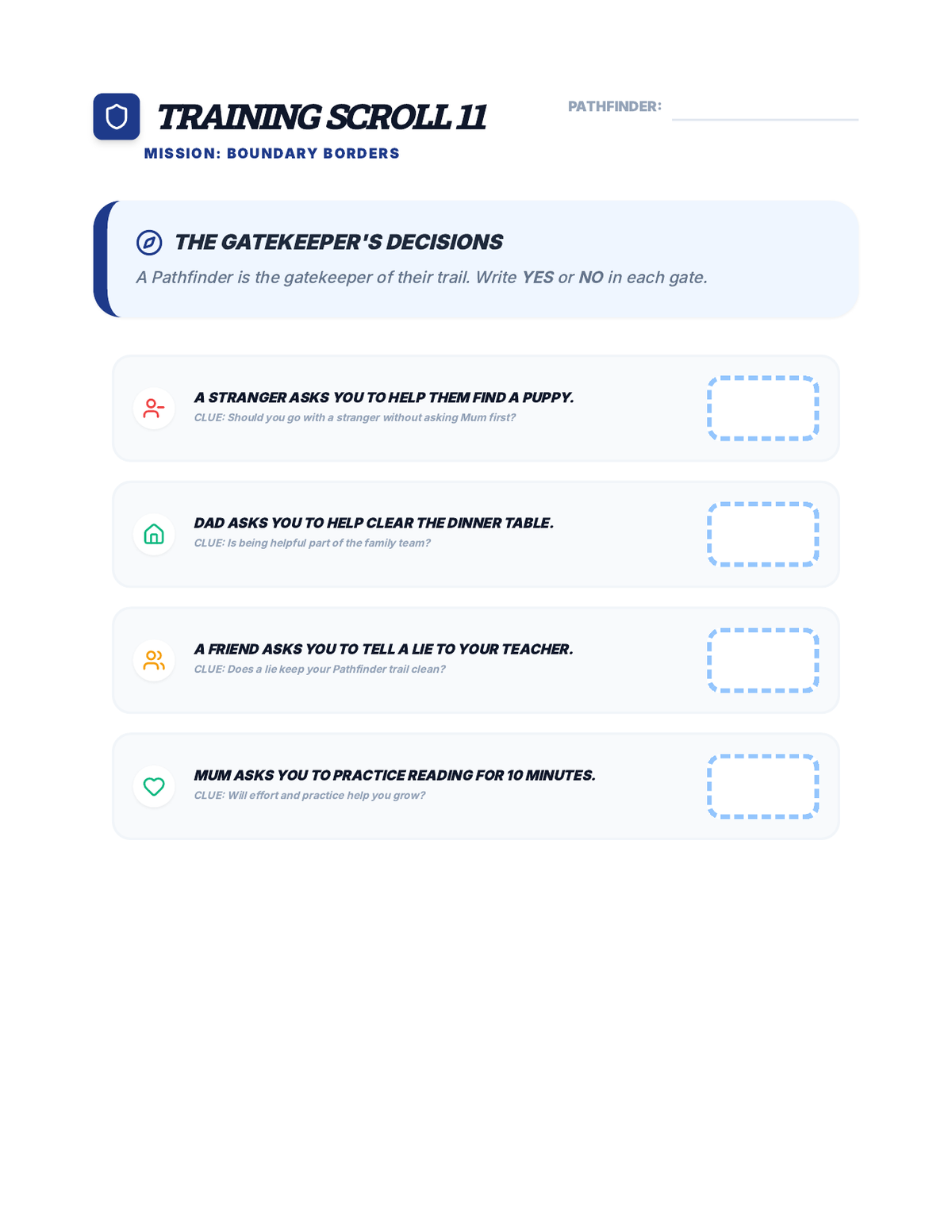
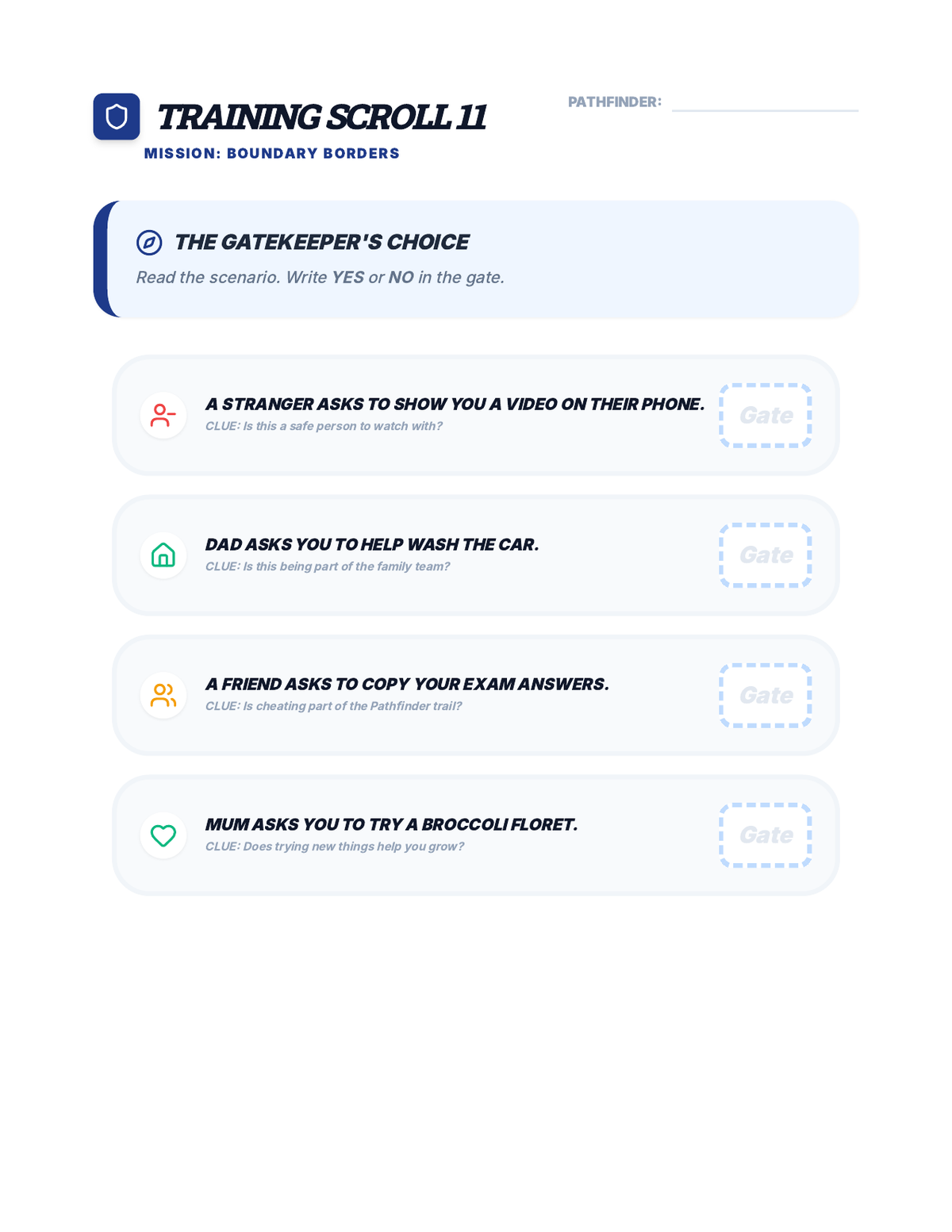
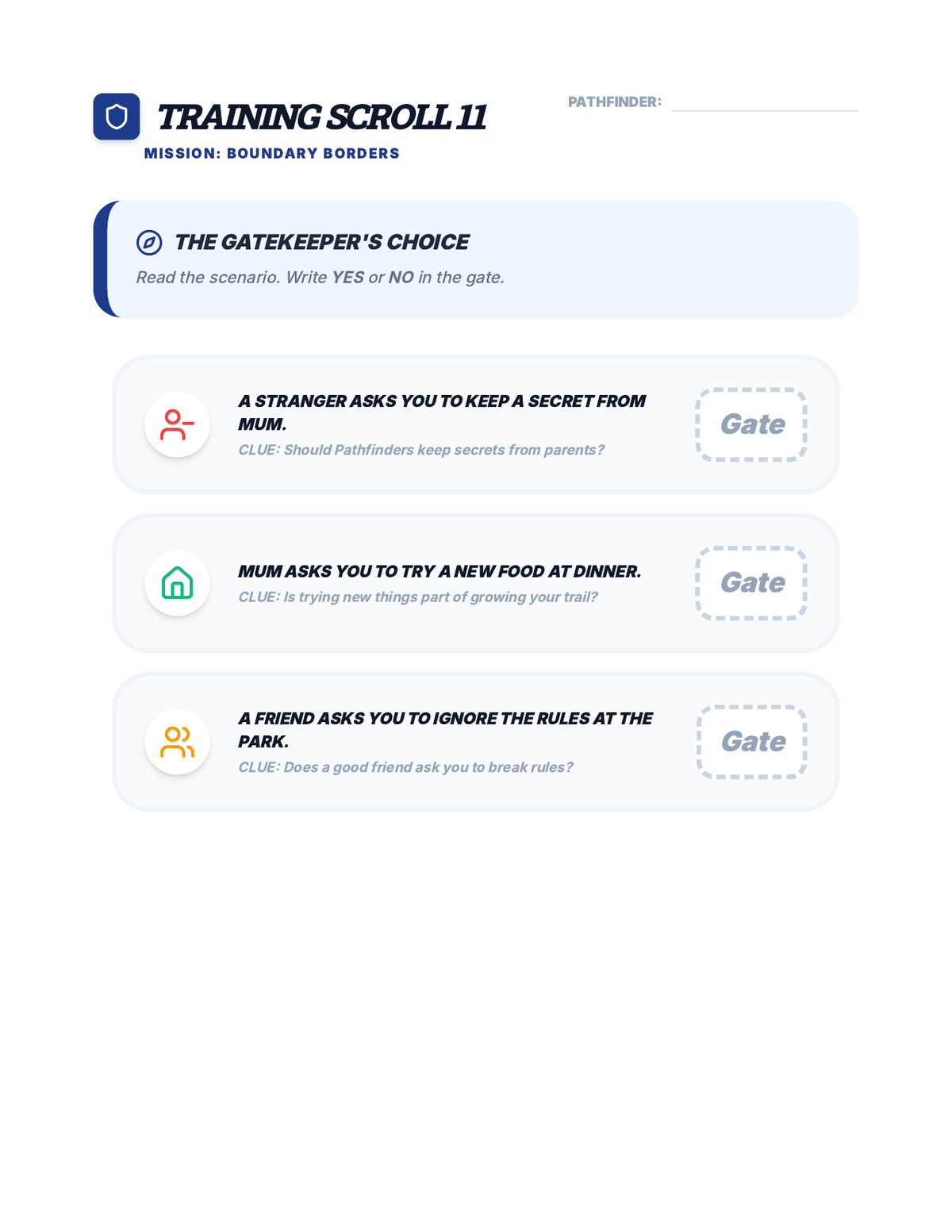
Learner workbook for Mission 11: Boundary Borders. Condensed to a single page with expanded decision-making scenarios (Stranger, Dad, Friend, Mum) and vocabulary matching. Revised for contrast, handwriting space, and missing keyword integration. No pre-filled "NO!".
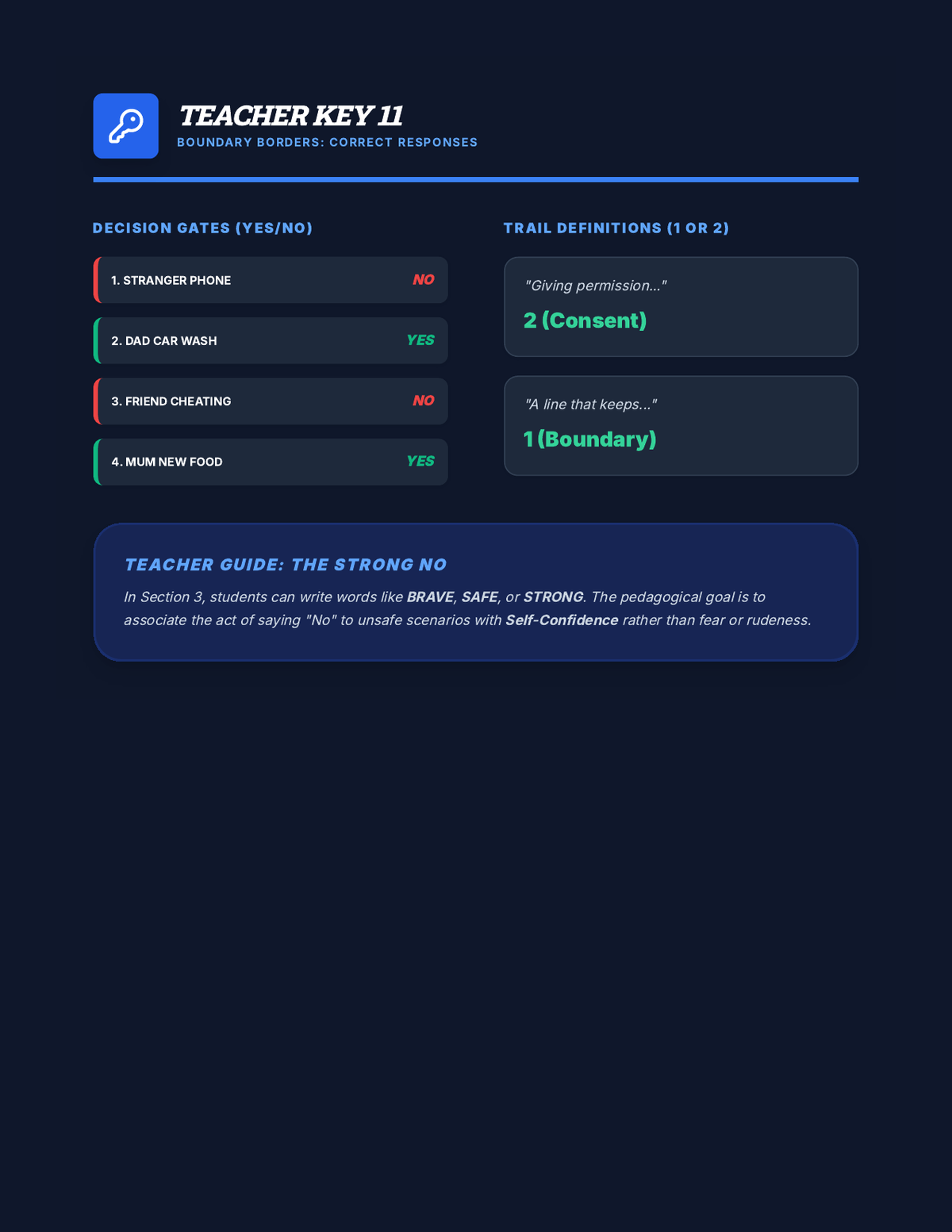
Teacher answer key for Mission 11: Boundary Borders. Provides specific solutions for the 4 decision-making scenarios (Stranger, Dad, Friend, Mum) and vocabulary definitions. Includes pedagogical guidance on the "Strong No."
Facilitator script for Mission 11: Boundary Borders. Focuses on setting boundaries through expanded scenario analysis (Strangers, Family, Friends, Self) and role-playing "Strong No" and "Brave Yes" responses. Revised for more scenario depth and teacher answer keys.
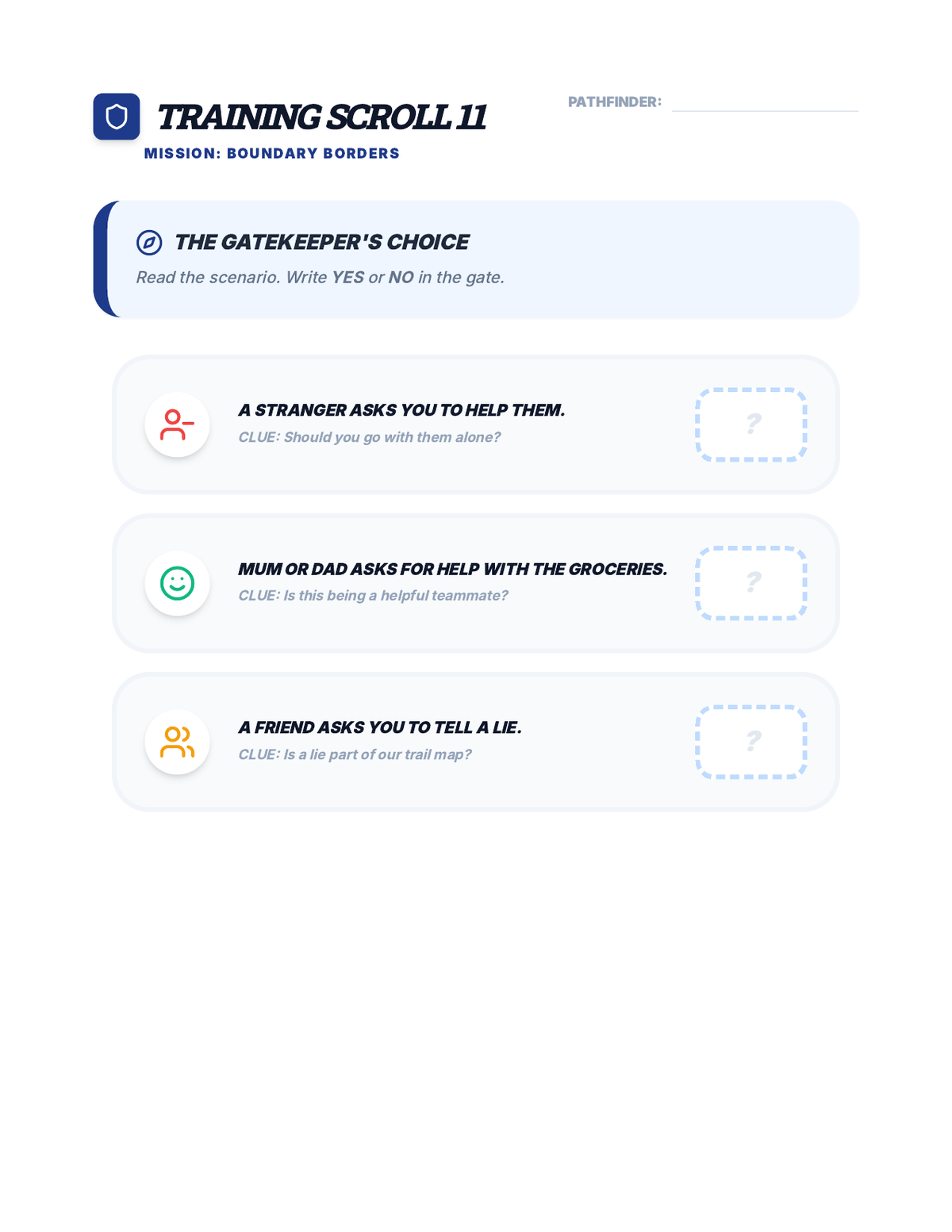
Learner workbook for Mission 11: Boundary Borders. Condensed to a single page with expanded decision-making scenarios (Stranger, Dad, Friend, Mum) and vocabulary matching. Revised for contrast and additional practice.
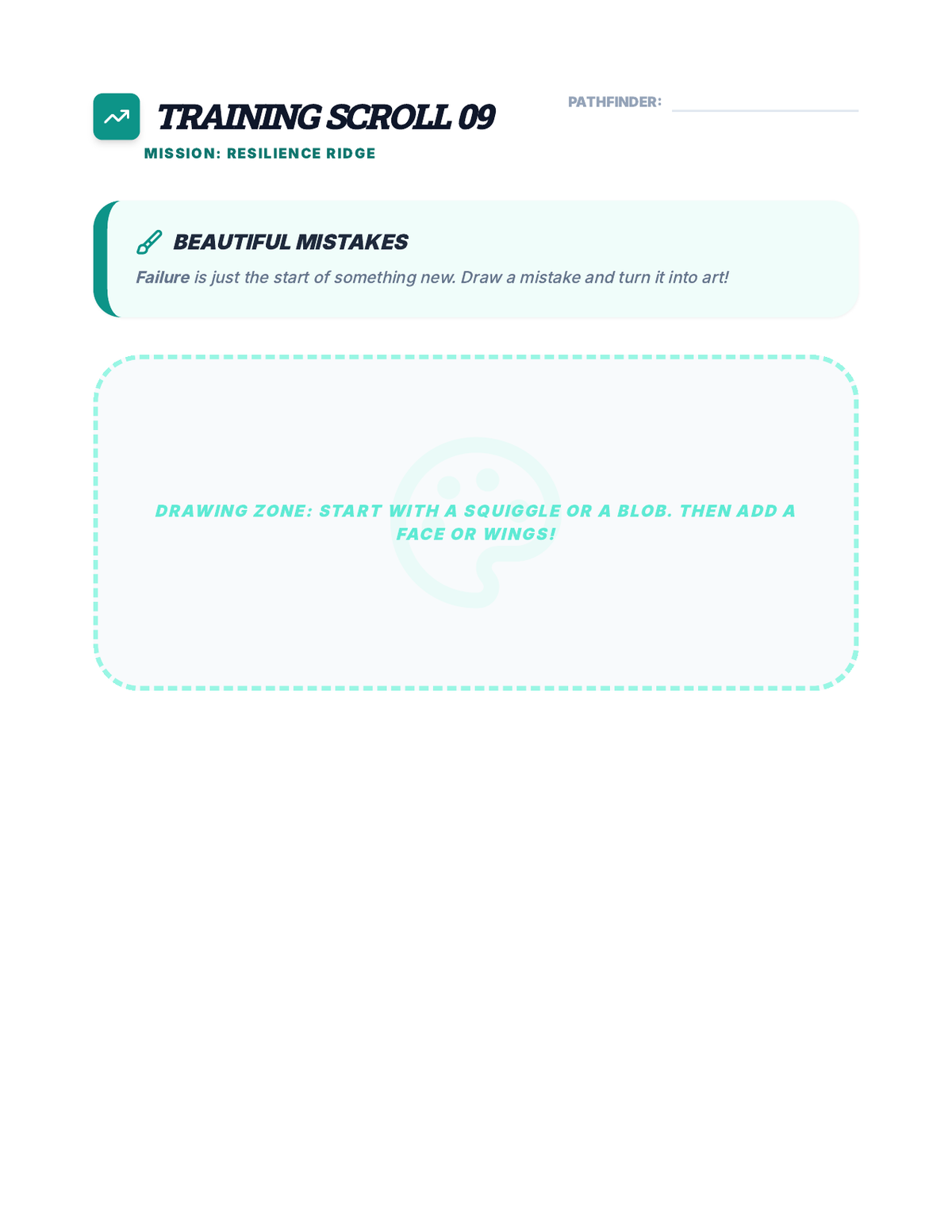
Learner workbook for Mission 09: Resilience Ridge. Features a "Beautiful Oops" drawing canvas, a "Data Collection" reflection area for learning from mistakes, and vocabulary definitions. Revised to emphasize failure as data and include vocabulary matching. No "ninja" references.
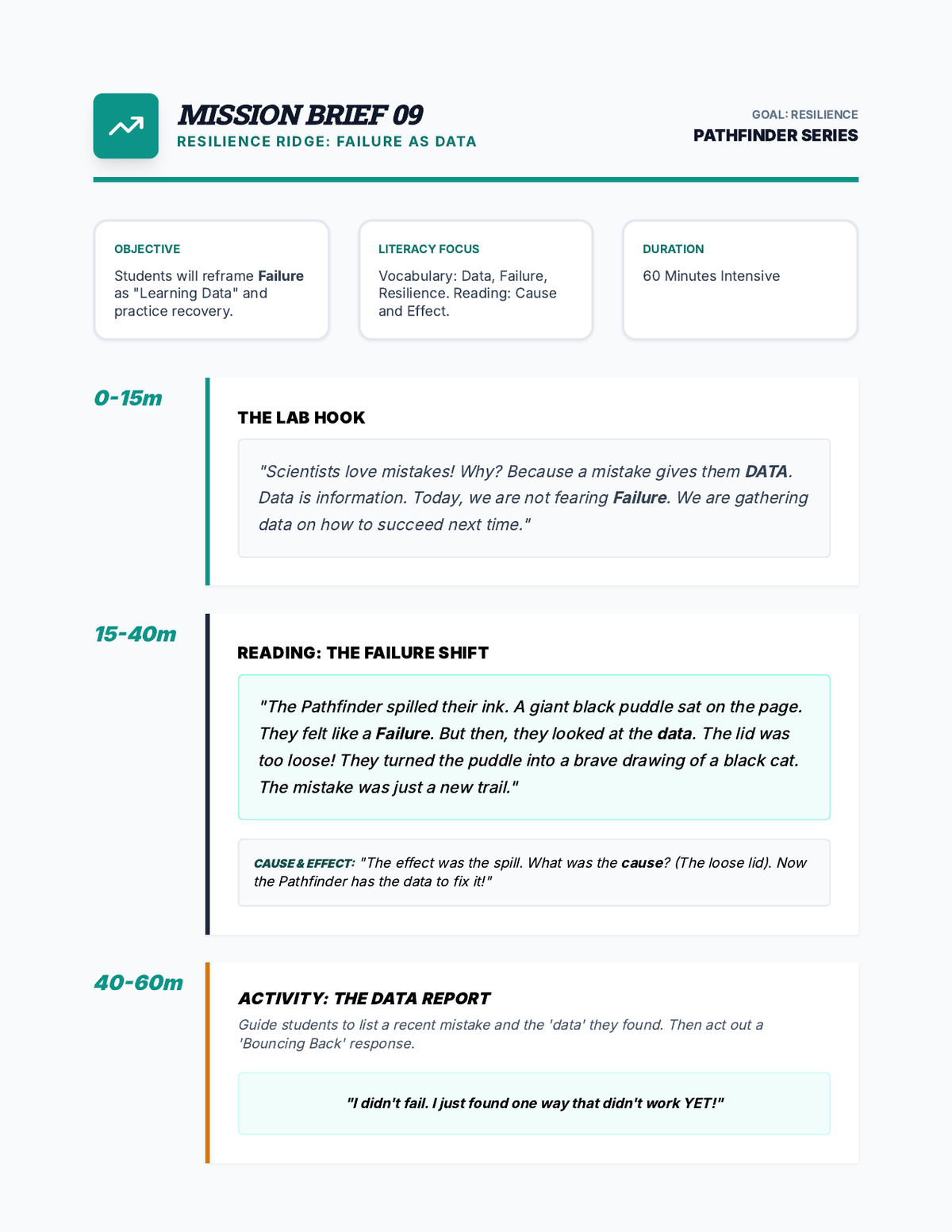
Facilitator script for Mission 09: Resilience Ridge. Teaches students to reframe failure as "learning data" and practice cause-and-effect thinking. Revised to emphasize the concept of failure as a learning opportunity. No "ninja" references.
Learner workbook for Mission 11: Boundary Borders. Condensed to a single page with explicit scenario decision-making (Strangers, Family, Friends) and vocabulary matching. Revised for contrast, handwriting space, and missing keyword integration. No pre-filled "NO!".
Learner workbook for Mission 02: Self-Control Canyon. Revised to include uniform styling for choices, increased writing space for creative reflection, and the requested parent/stranger scenarios. No "ninja" references. No telegraphing answers with colors.
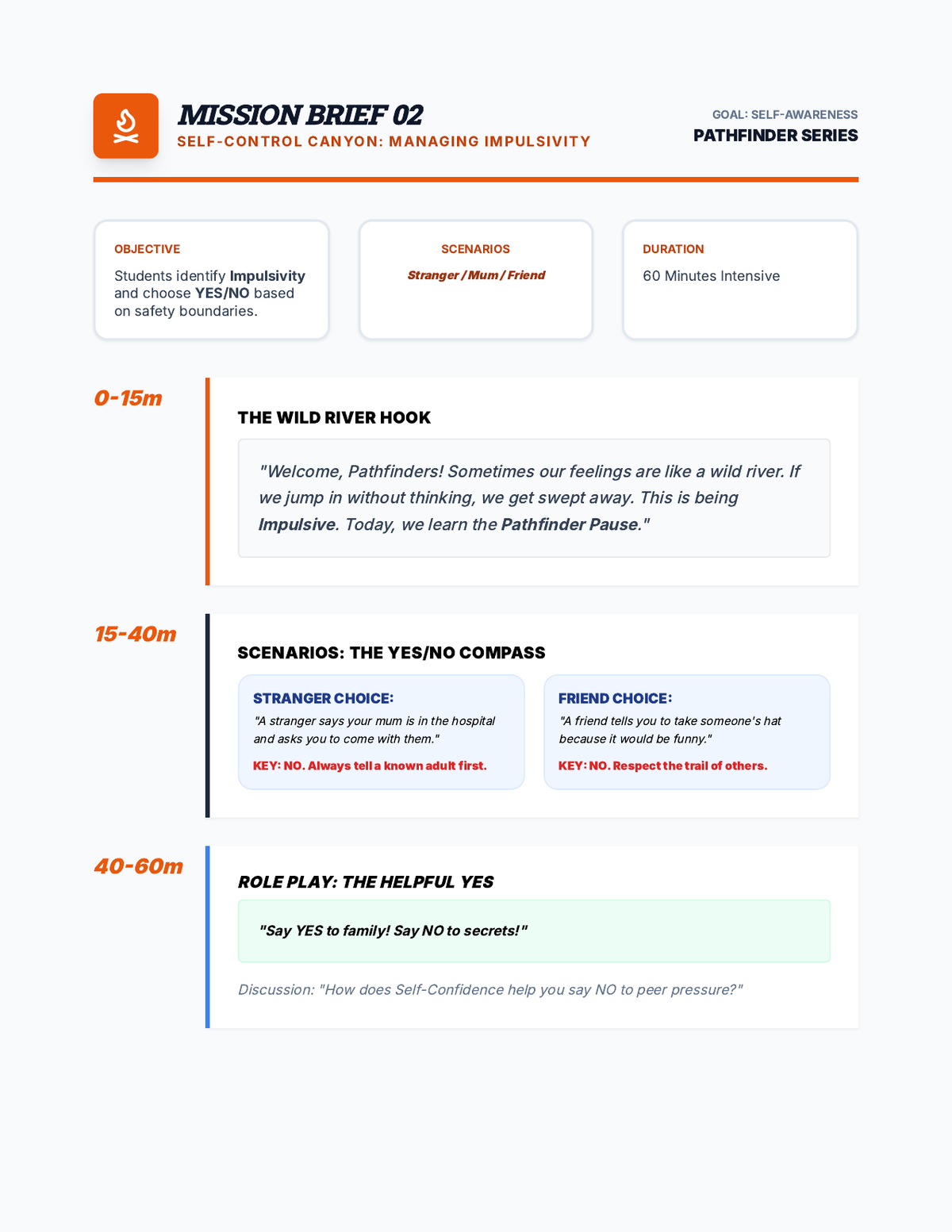
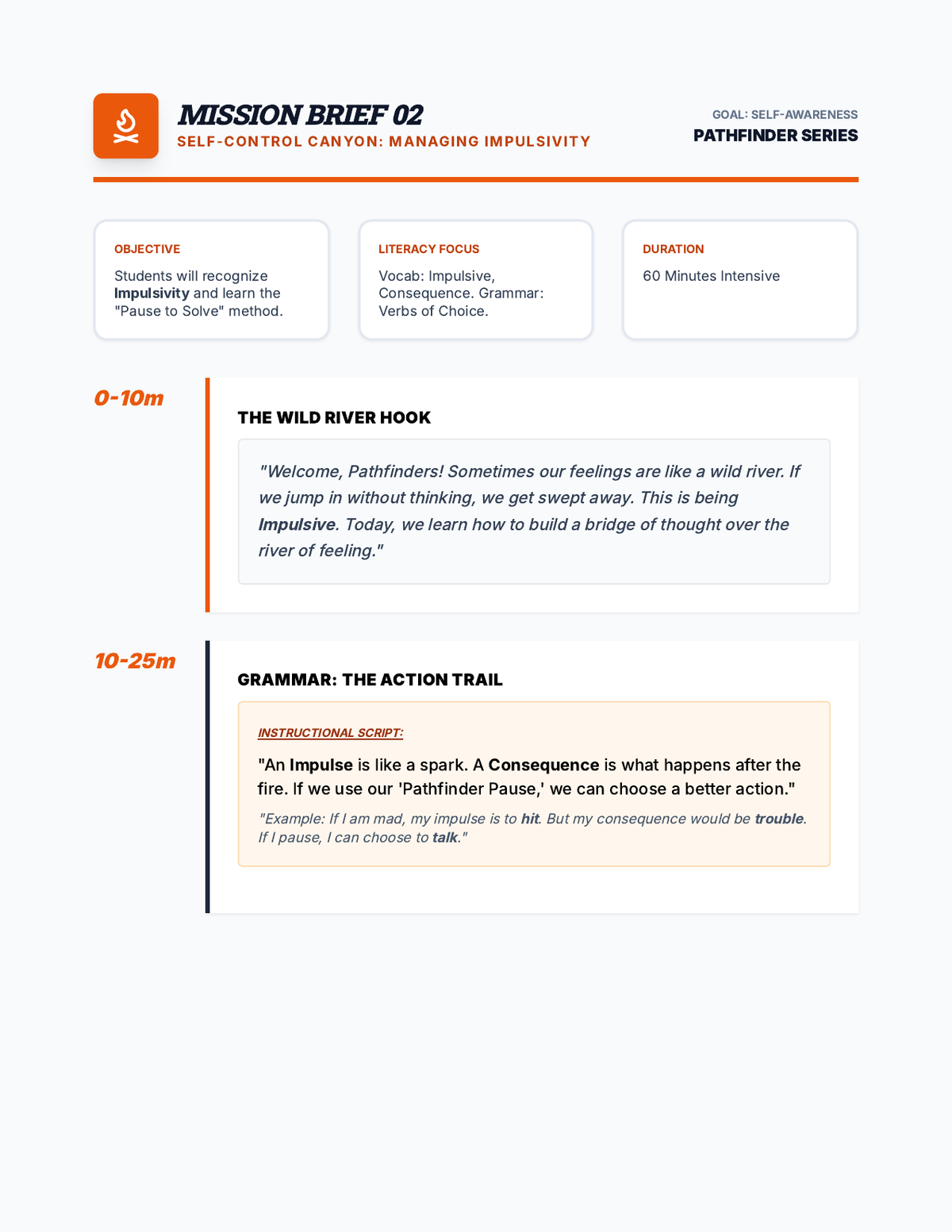
Facilitator script for Mission 02: Self-Control Canyon. Revised to remove "ninja" references, include full 60-minute duration, and add the requested social scenarios for parents and strangers. No self-referential draft notes.
Learner workbook for Mission 11: Boundary Borders. Condensed to a single page with explicit scenario decision-making (Strangers, Family, Friends) and vocabulary matching. Revised for contrast, handwriting space, and missing keyword integration.
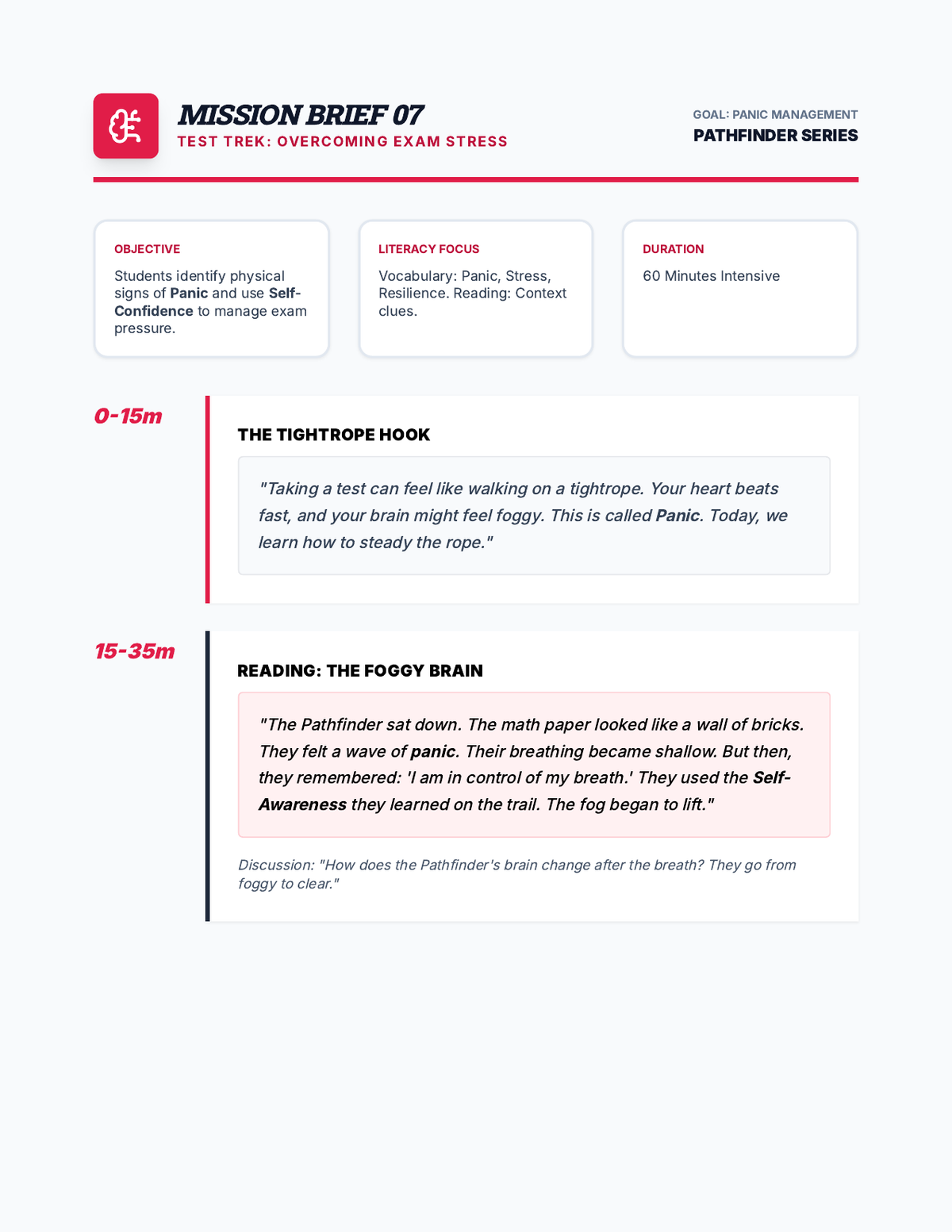
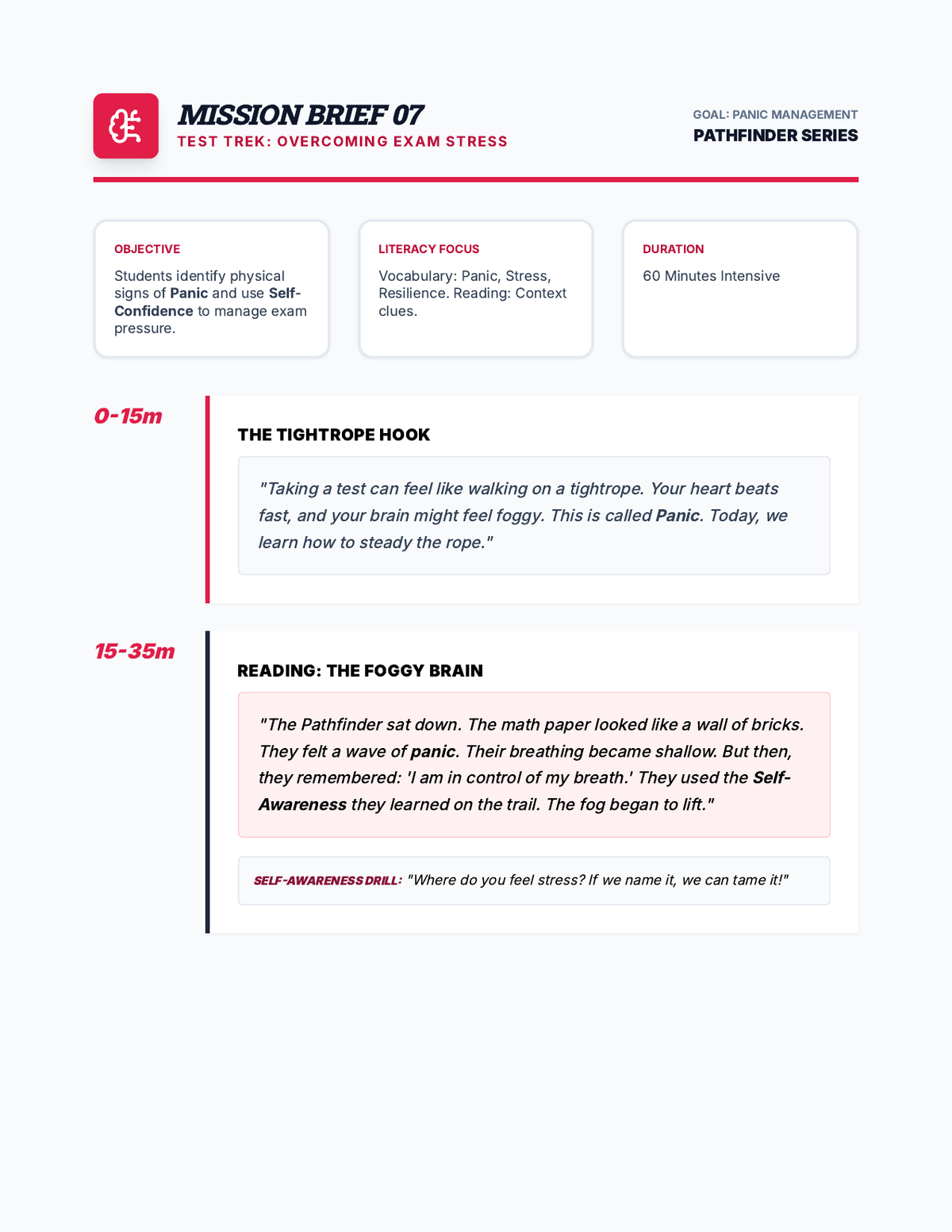
Facilitator script for Mission 07: Test Trek. Revised for better spacing, full 60-minute duration, and removed "ninja" references. Includes core concepts of Self-Awareness, integrity scenarios with Mom/Dad/Friends, and Exam Stress.
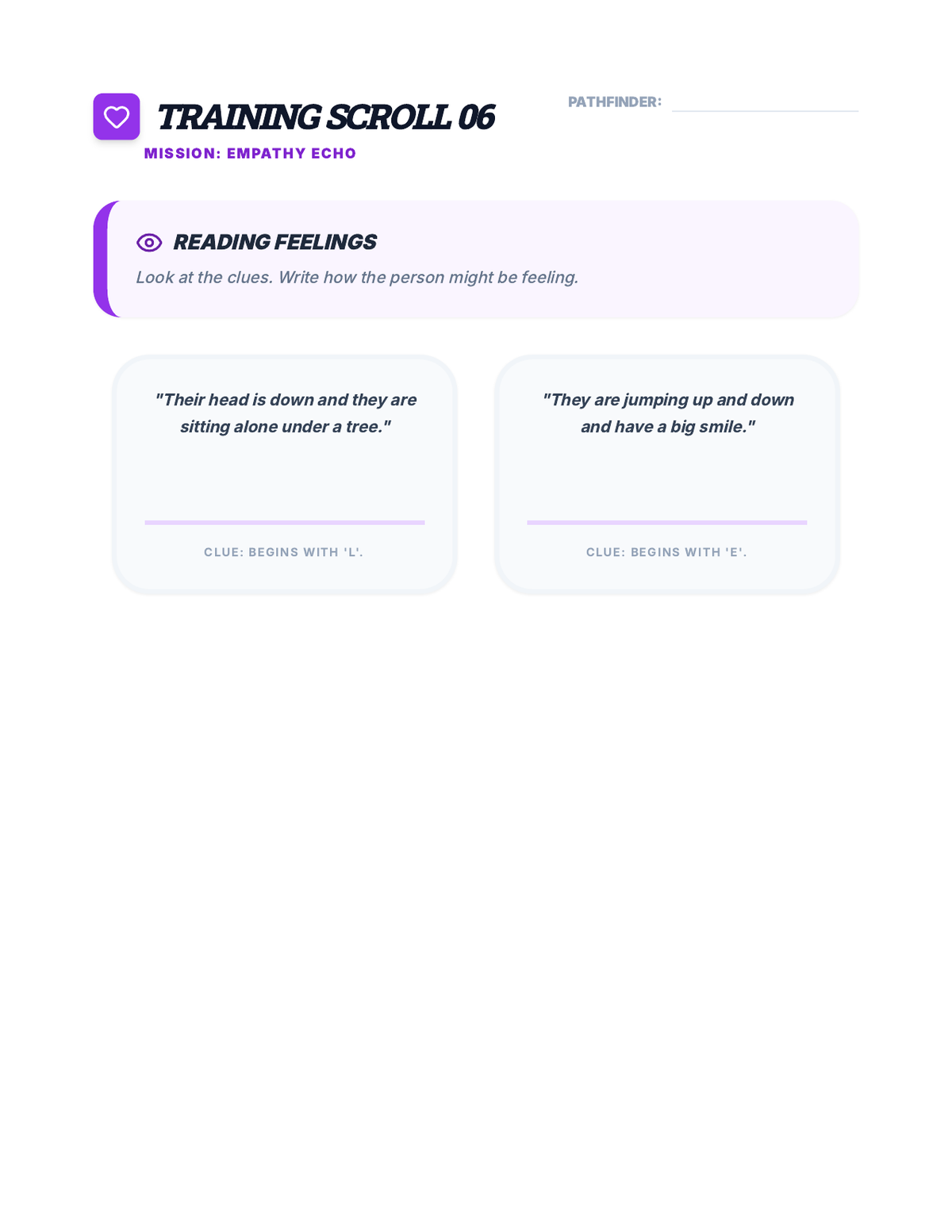
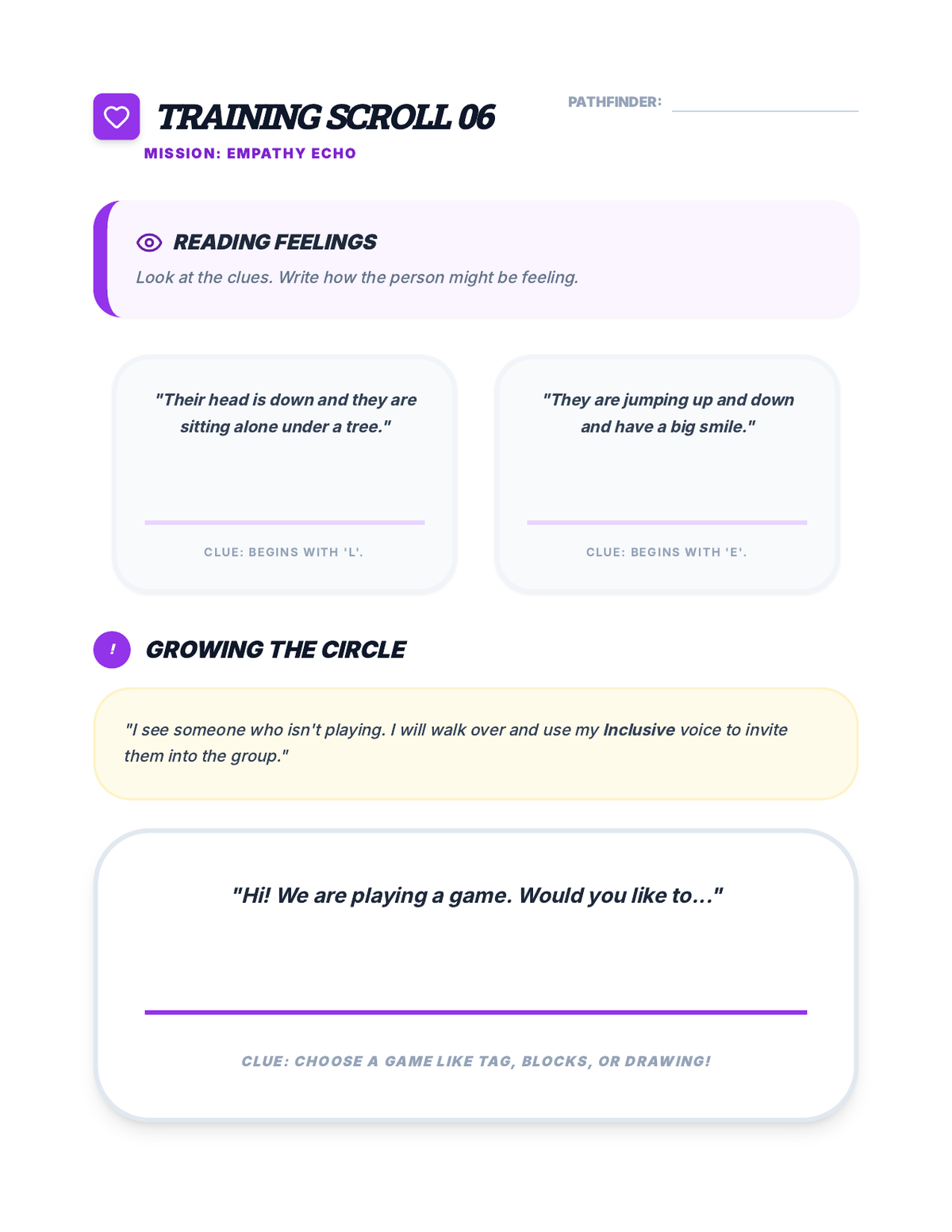
Learner workbook for Mission 06: Empathy Echo. Features emotion detection based on body language clues and new "Yes/No" inclusion decision scenarios. Revised to remove pre-filled answers and fill the full page.
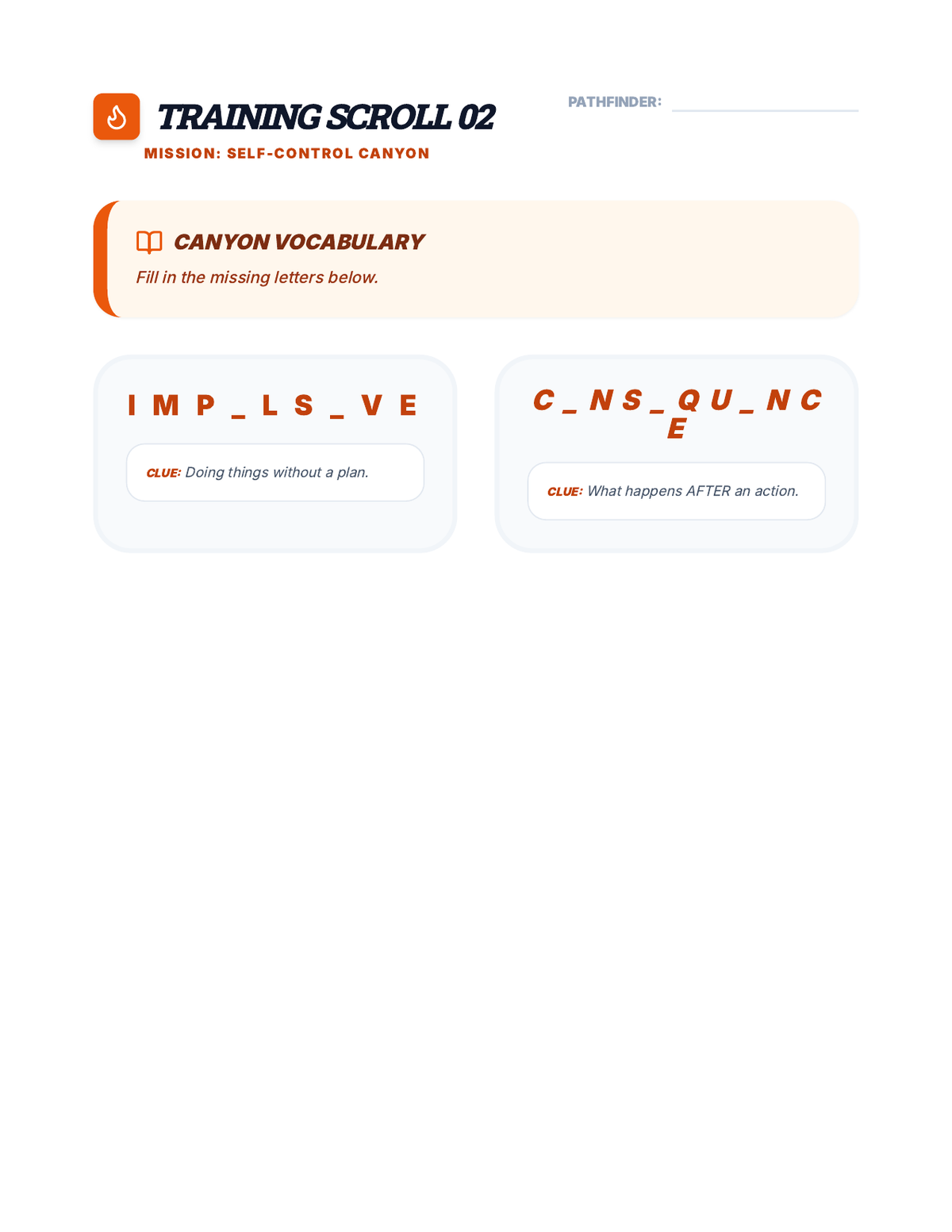
Learner workbook for Mission 02: Self-Control Canyon. Revised to include uniform styling for choices, increased writing space for creative reflection, and the requested parent/stranger scenarios. No "ninja" references.
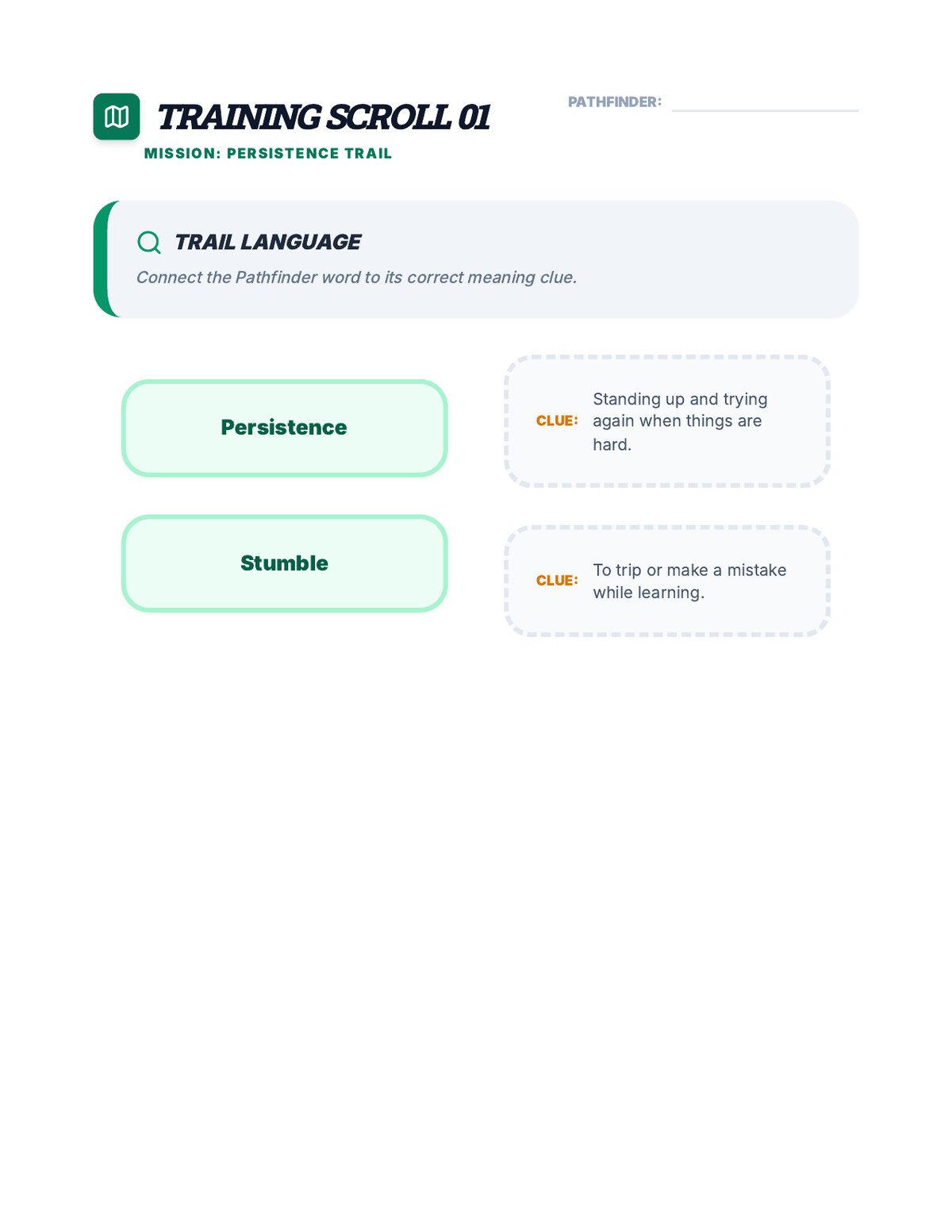
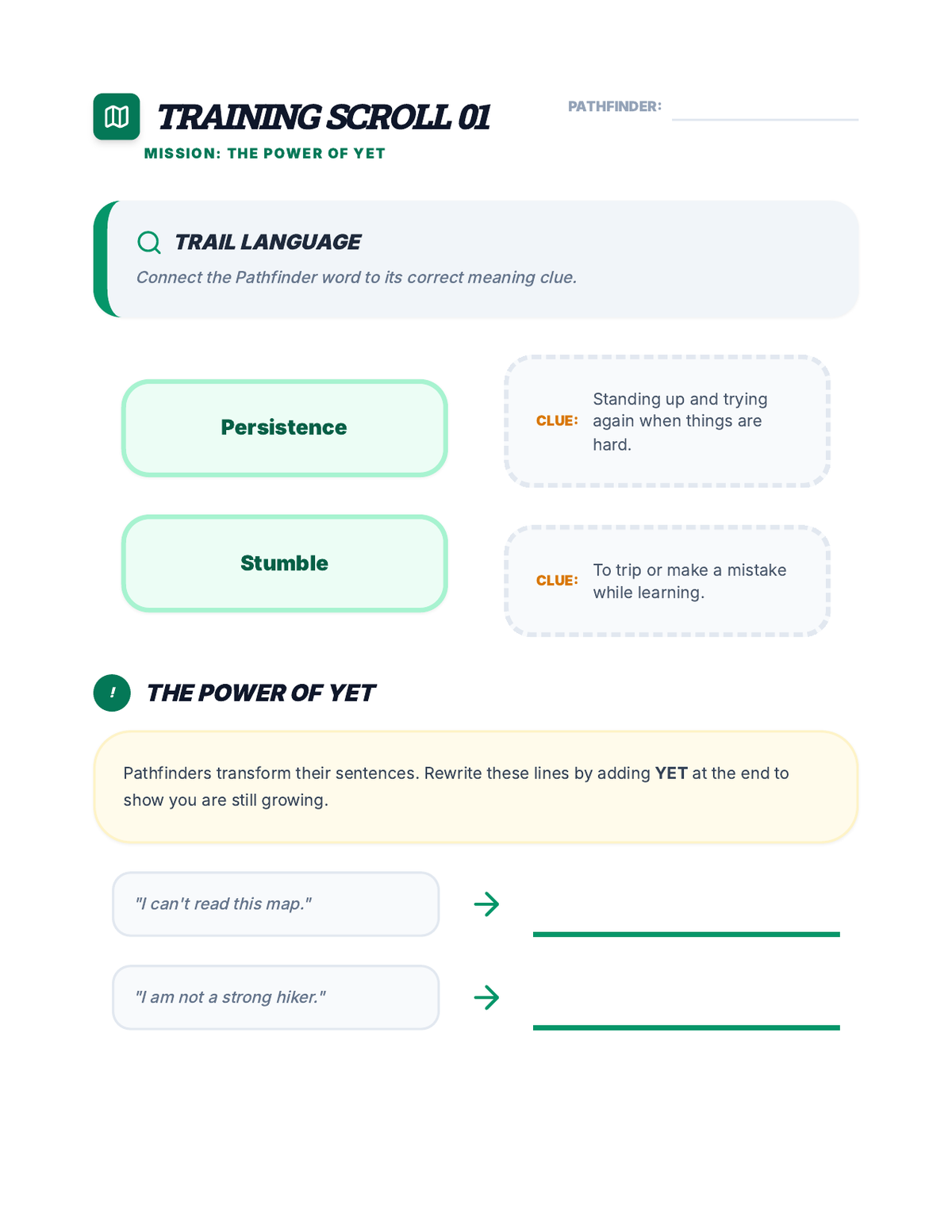
Learner workbook for Mission 01: Persistence Trail. Features corrected vocabulary matching, increased font sizes for clues, and expanded writing areas for student goals. Revised to include exam stress scenarios and data-based reframing. No reference to "ninja" term.
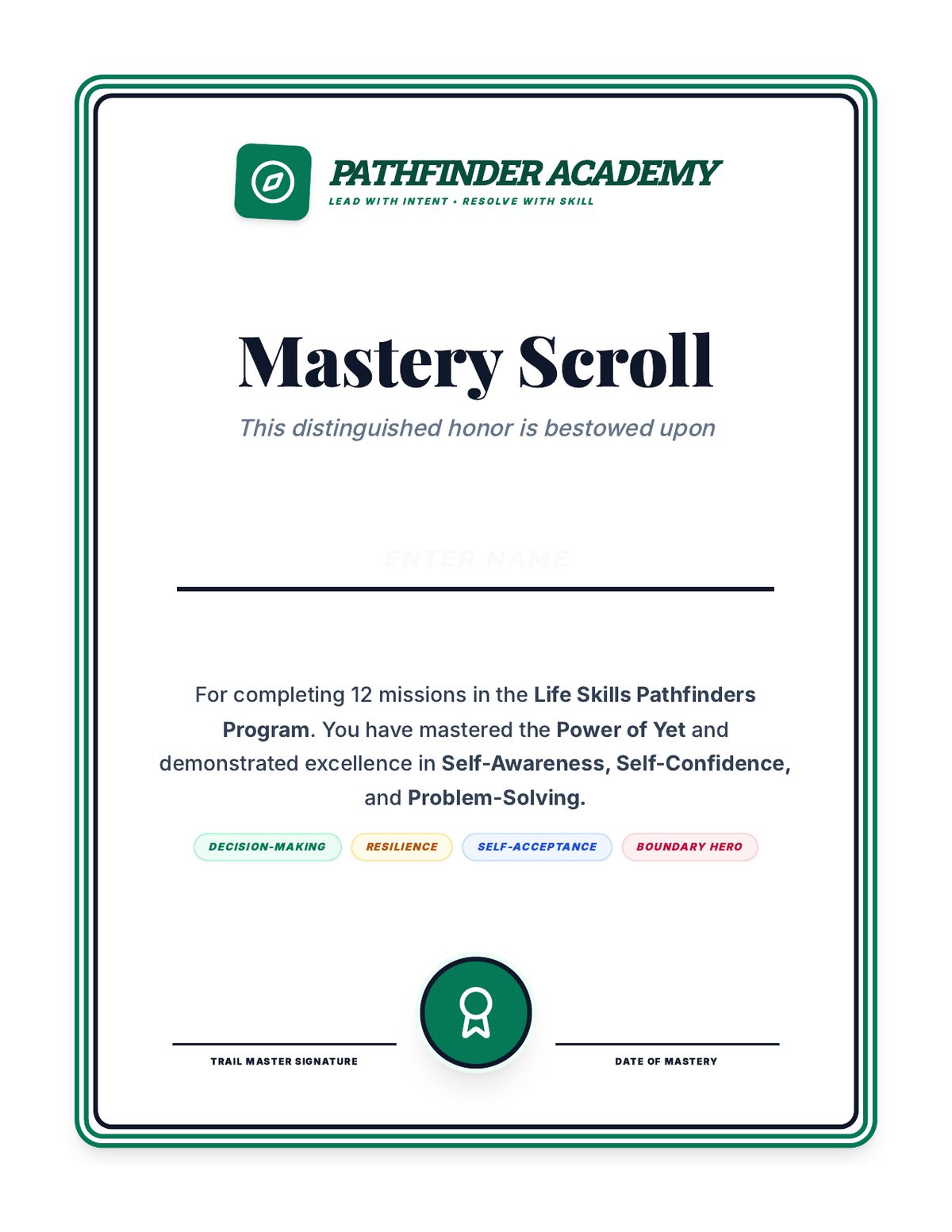
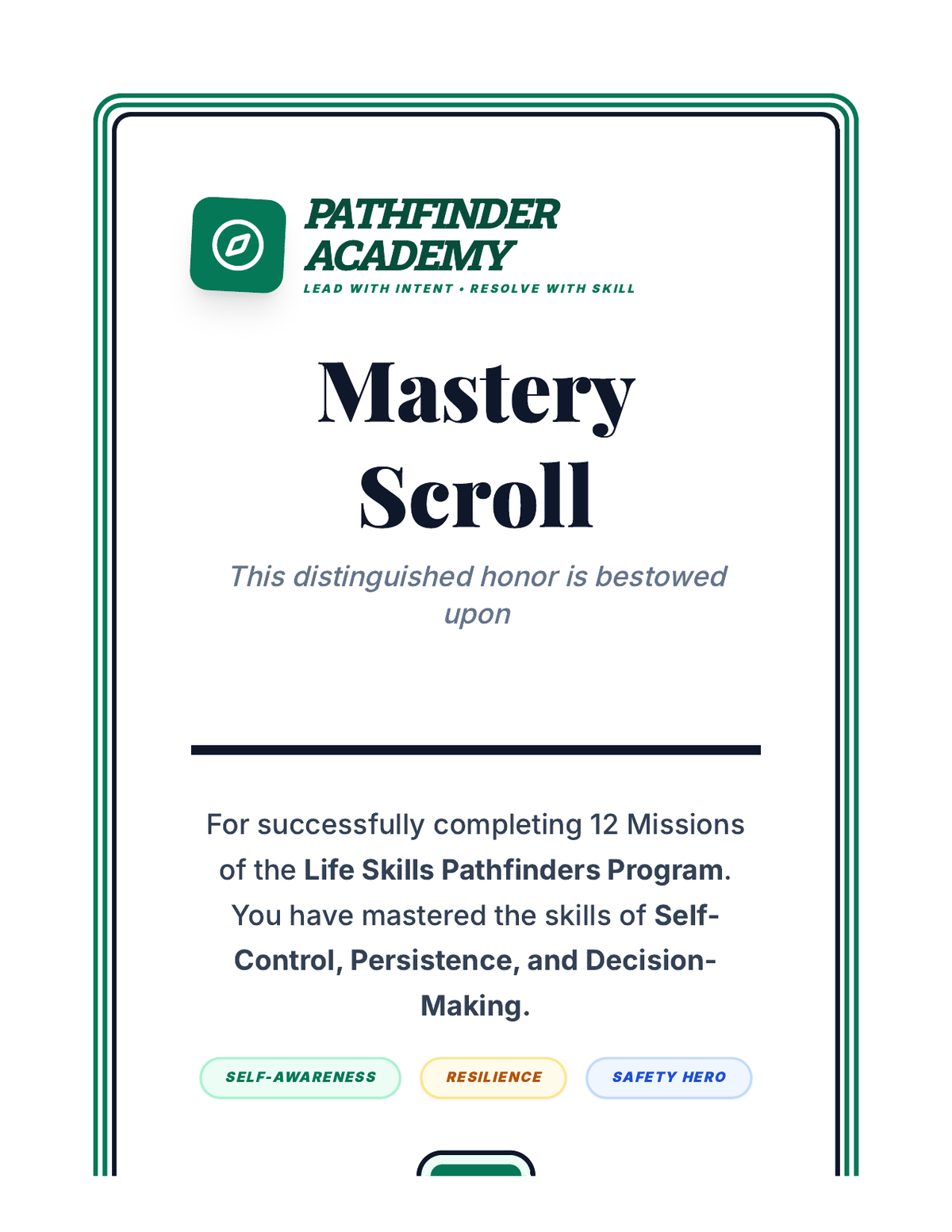
A student-friendly completion certificate for the Pathfinders Program. Revised for clear handwriting space, darker signature lines, and centered content. Fits on a single page and includes keywords like Power of Yet, Self-Awareness, and Problem-Solving.
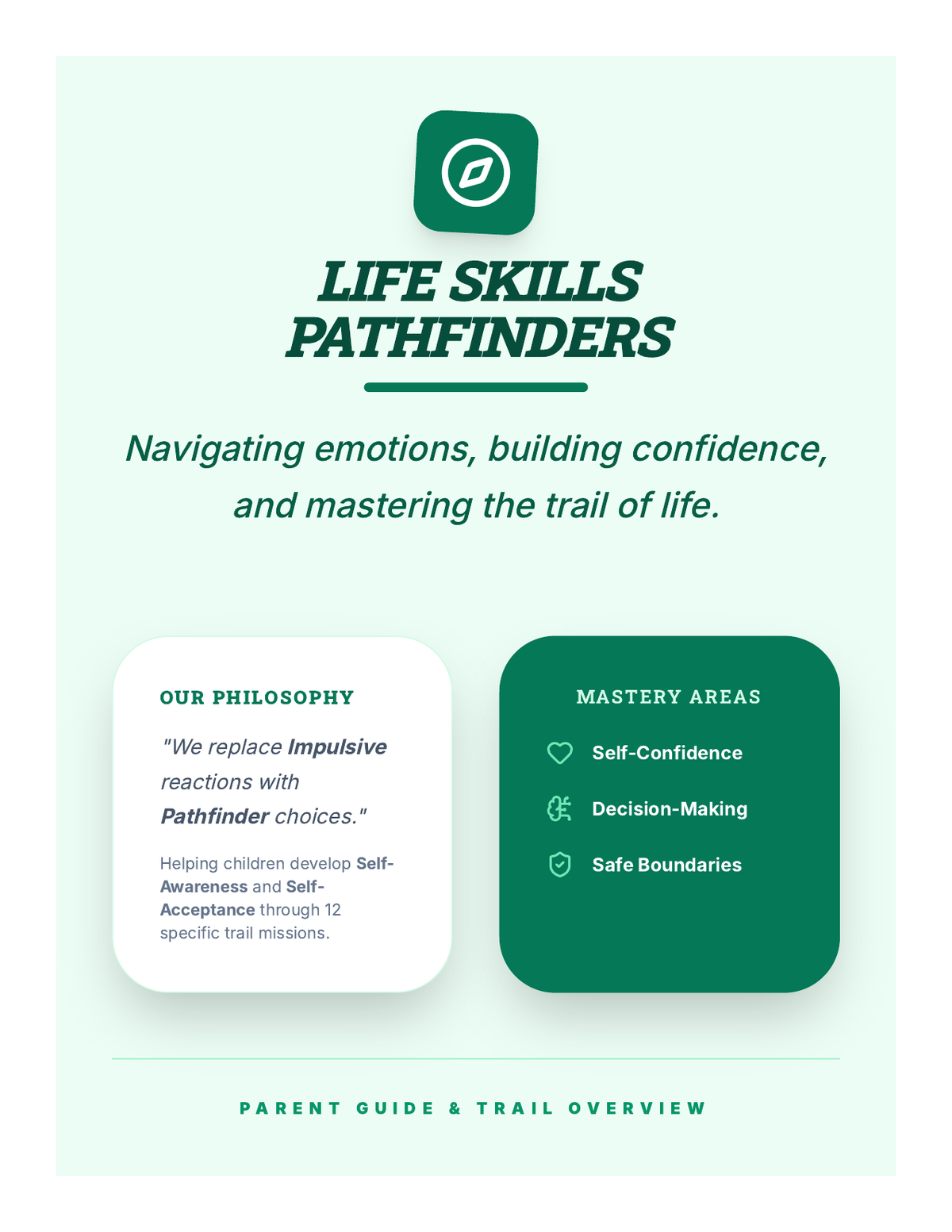
A complete 2-page parent brochure for the Life Skills Pathfinders Program. Lists all 12 missions, program philosophy, and a detailed "Boundary Cheat Sheet" with scenarios for saying no/yes to various figures. Revised for content completeness and specific scenario details.
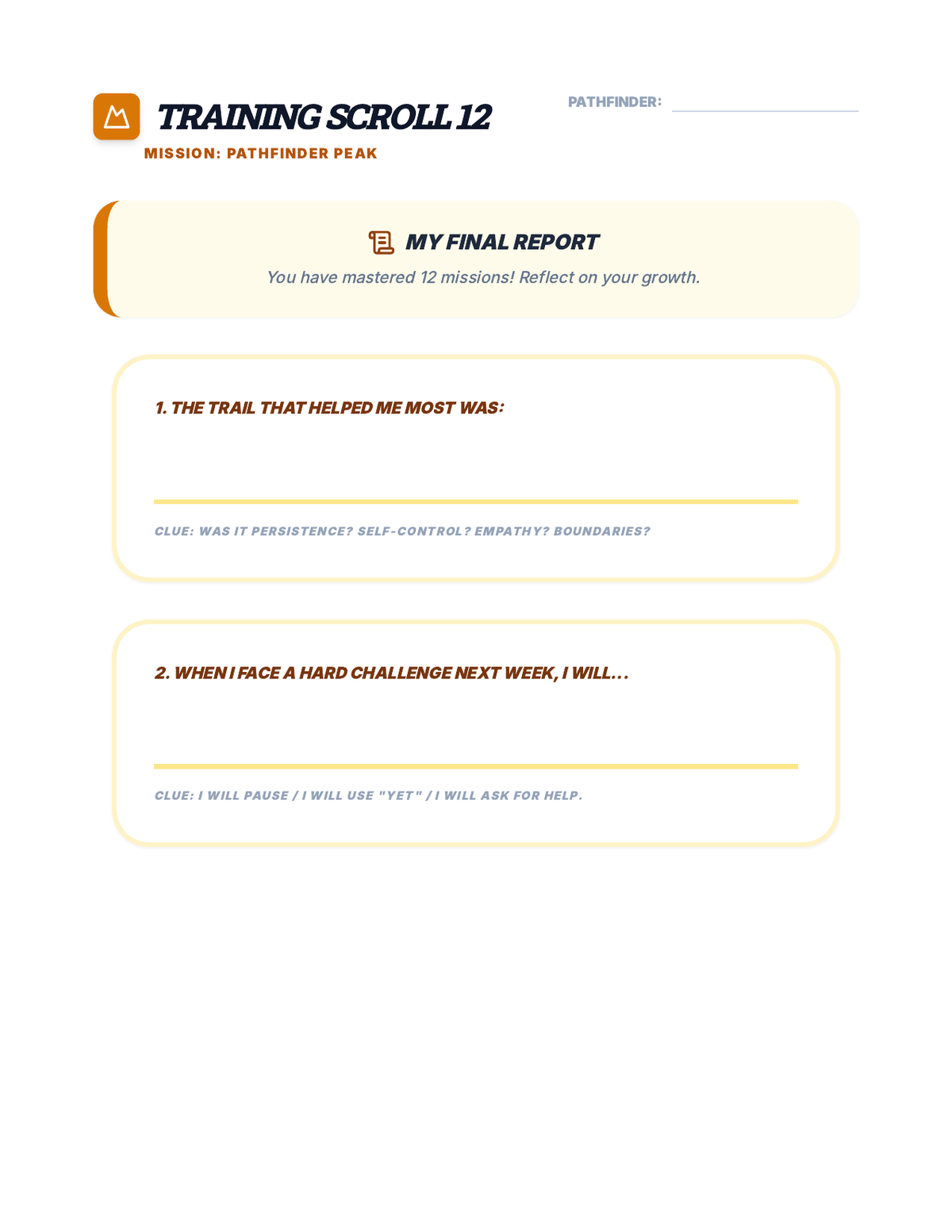
Learner workbook for Mission 12: Pathfinder Peak. Features reflective growth prompts, a visualization drawing area, and a future-goal writing task. Revised for content completeness, handwriting space, and layout stability. No "ninja" references.
Learner workbook for Mission 06: Empathy Echo. Features an emotion detection activity based on body language clues, a fill-in-the-blank inclusion prompt, and vocabulary matching. Revised to remove pre-filled answers and placeholder text.
Learner workbook for Mission 07: Test Trek. Revised for better text alignment, matching activity for vocabulary, and removed "ninja" references. Includes high-contrast matching and self-talk script.
Facilitator script for Mission 07: Test Trek. Revised for better spacing, a full 60-minute duration, and removed "ninja" references. Includes core concepts of Self-Awareness and Exam Stress.
Learner workbook for Mission 02: Self-Control Canyon. Revised to include uniform styling for choices, increased writing space for creative reflection, and a sequencing task for the "Pathfinder Pause." No references to "ninja."
Facilitator script for Mission 02: Self-Control Canyon. Revised to remove "ninja" references, include full 60-minute duration, and add the requested social scenarios for parents and strangers.
Learner workbook for Mission 01: Persistence Trail. Features corrected vocabulary matching, increased font sizes for clues, and expanded writing areas for student goals. No reference to "ninja" term. Revised for single-page logic and student space.
A student-friendly completion certificate for the Pathfinders Program. Revised for clear handwriting space, darker signature lines, and centered content. No placeholder text in name field.