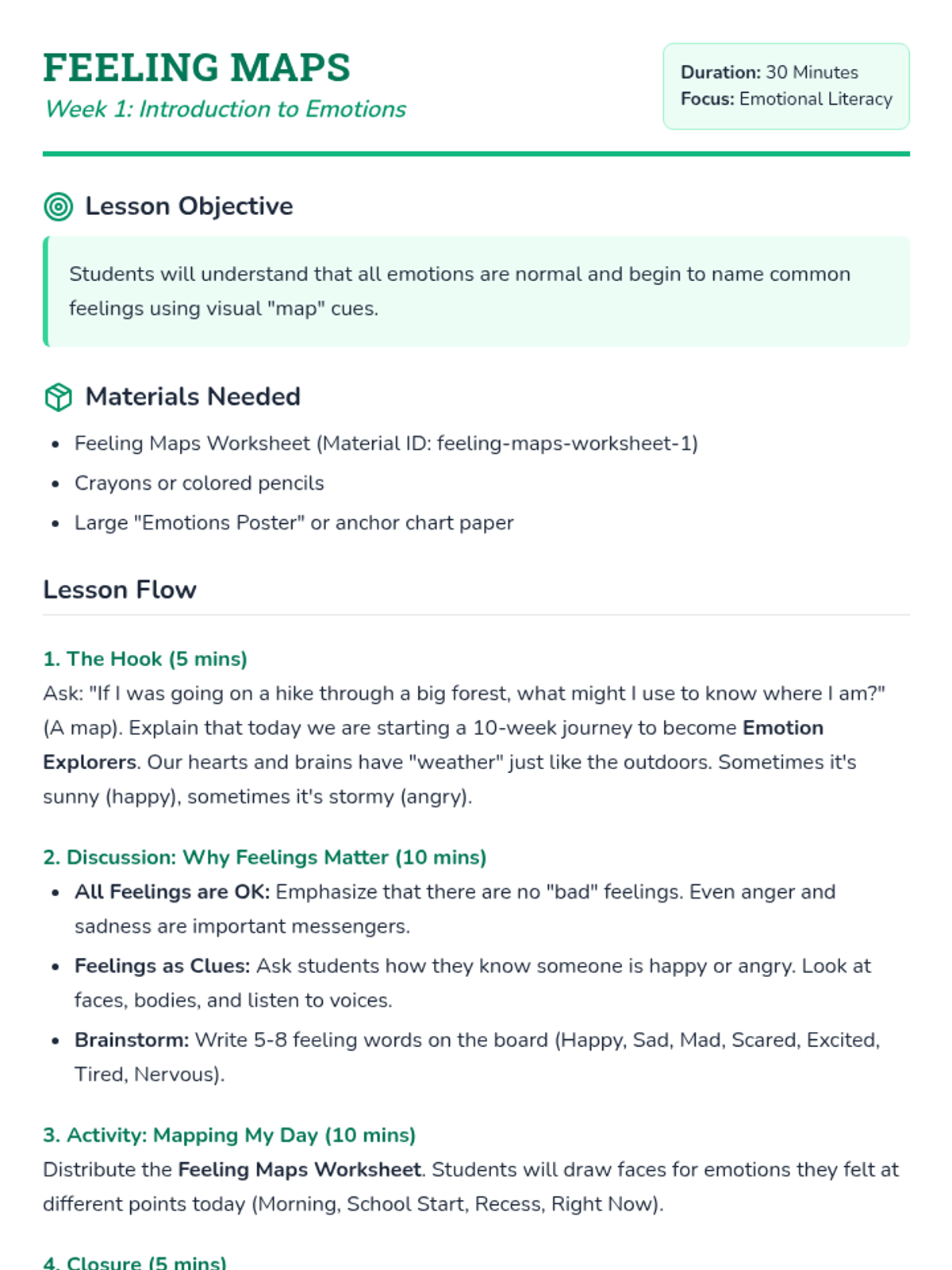
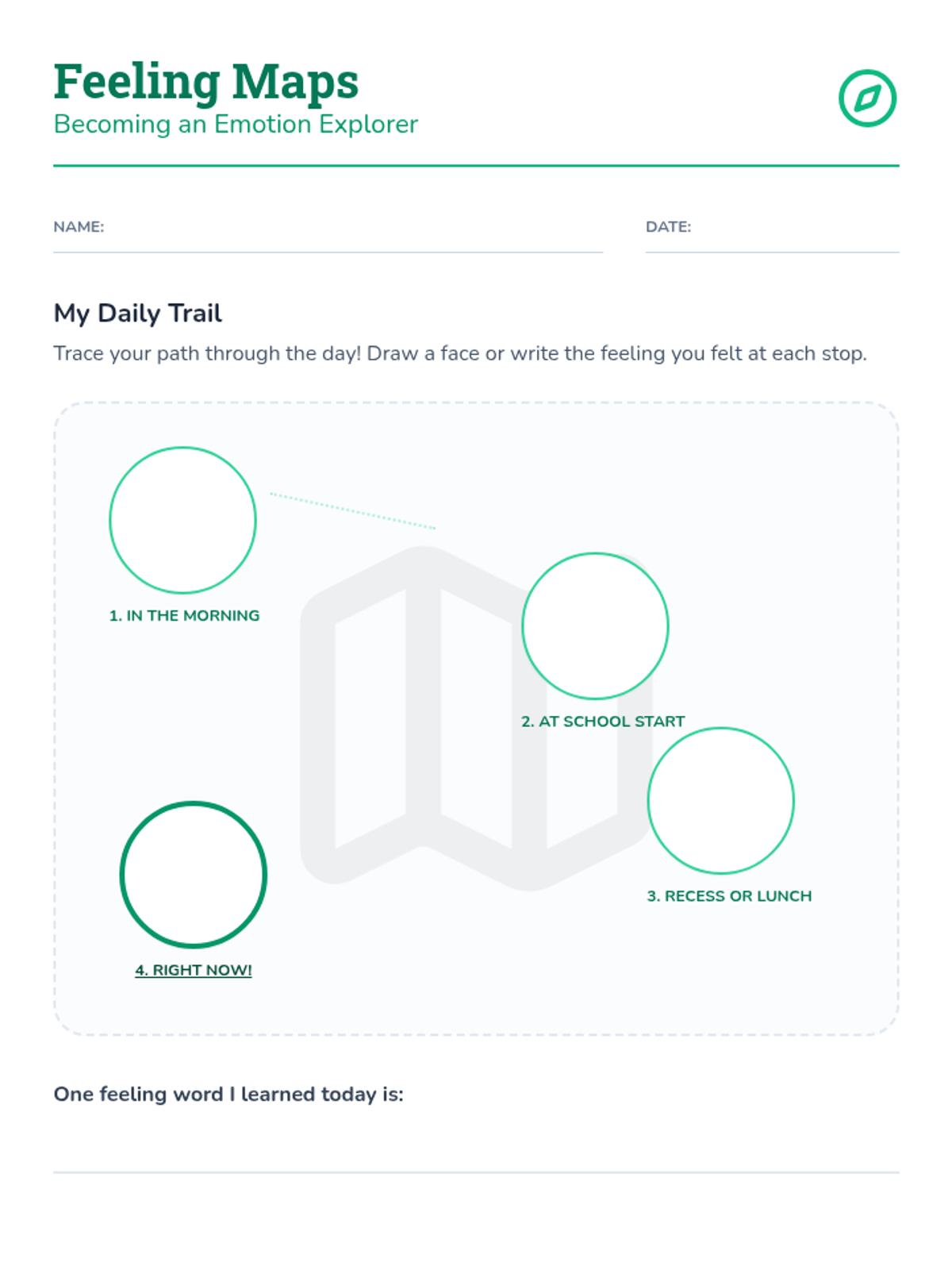
Emotion recognition ranging from basic feelings to complex nuances and mixed states. Strengthens accurate self-assessment through identity exploration, strength identification, and values-based decision making.
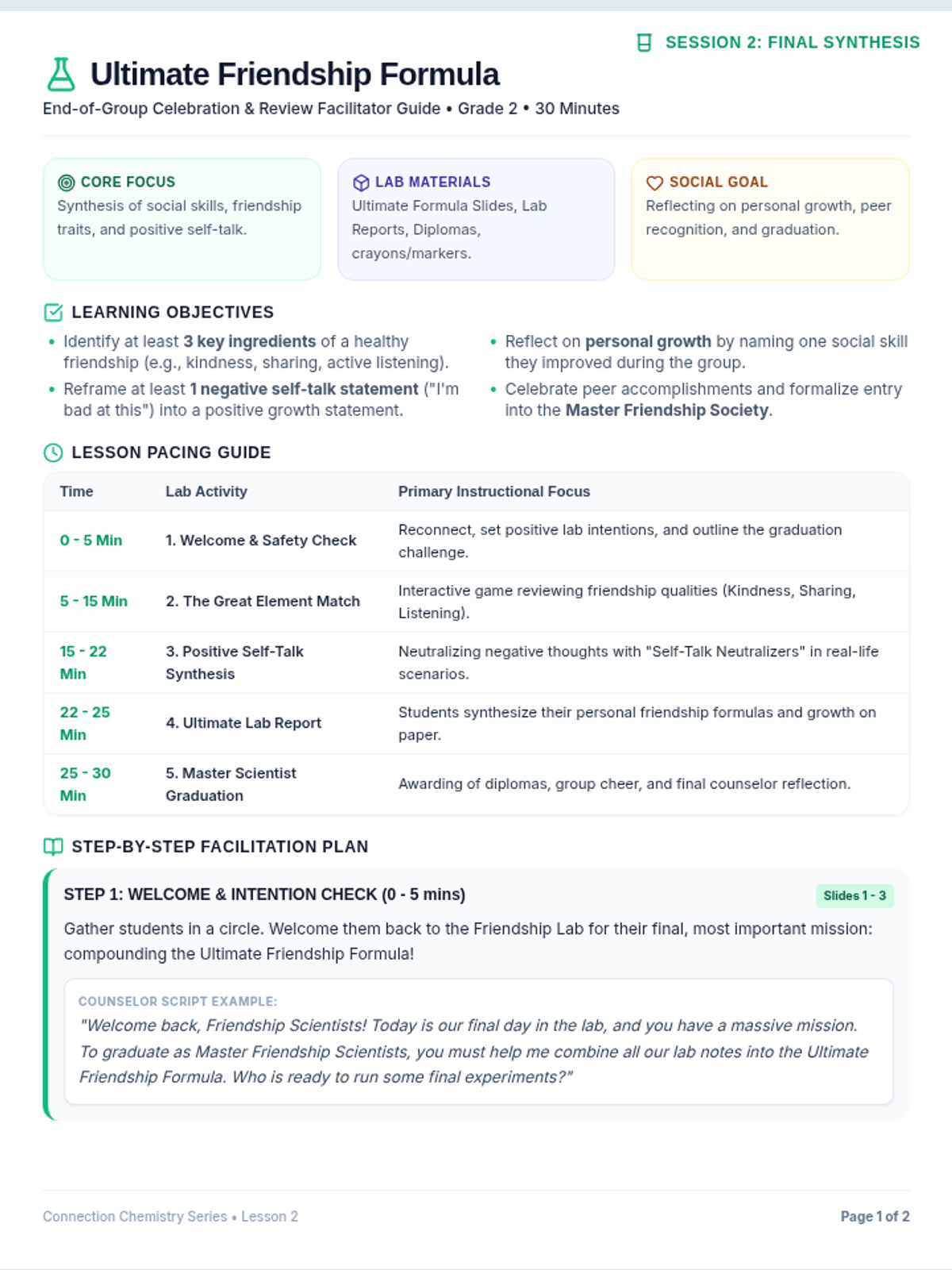
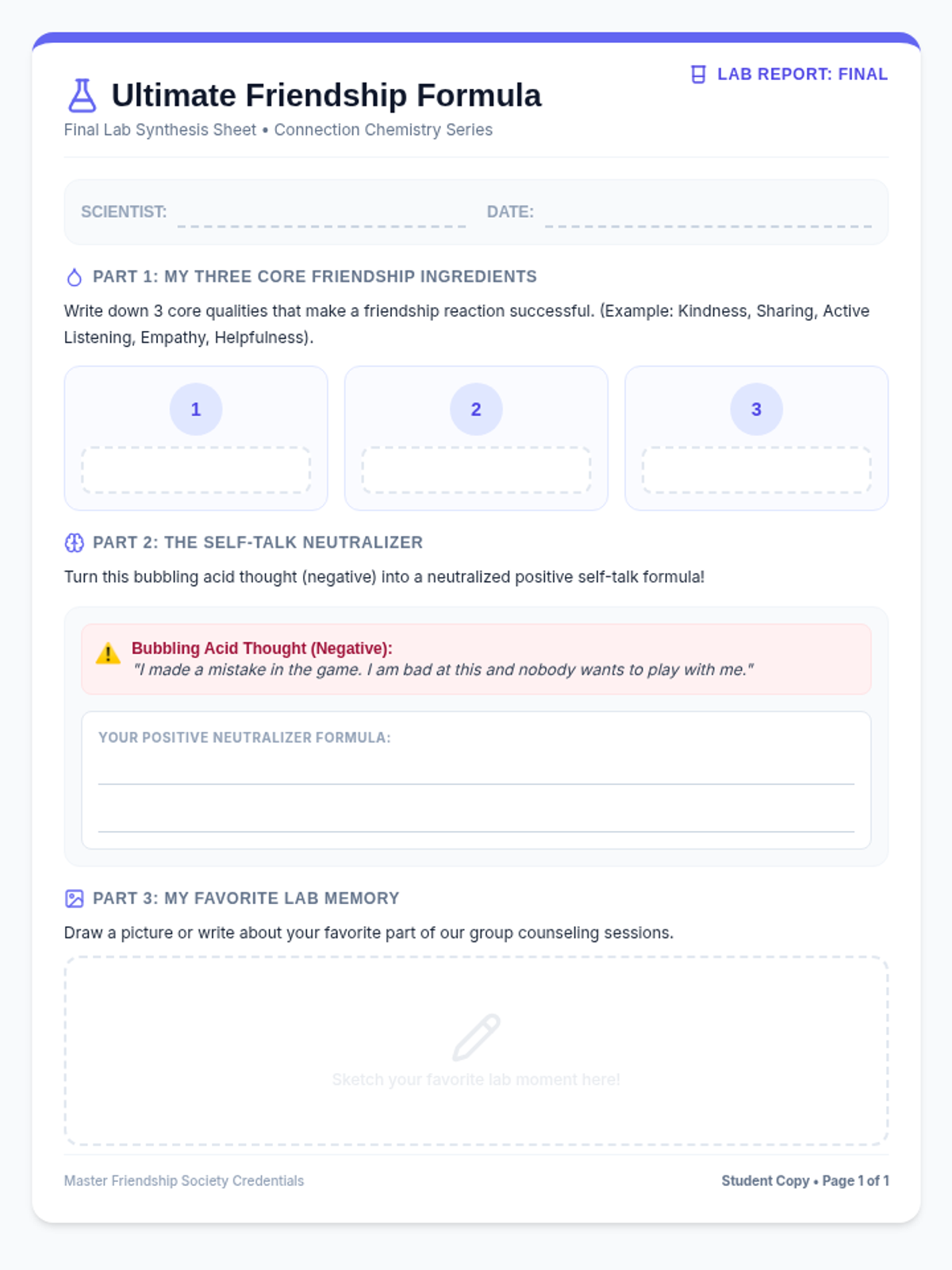
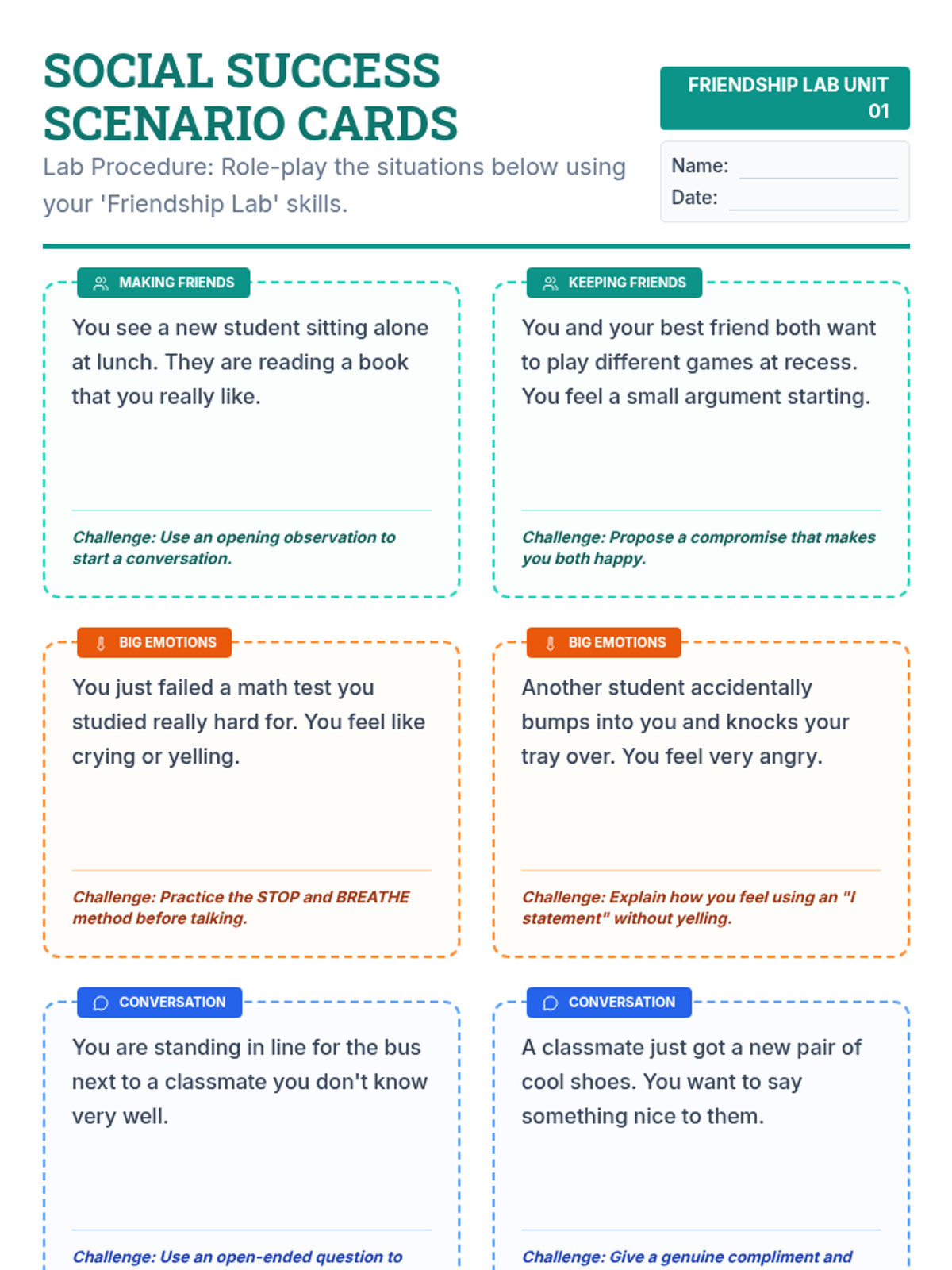
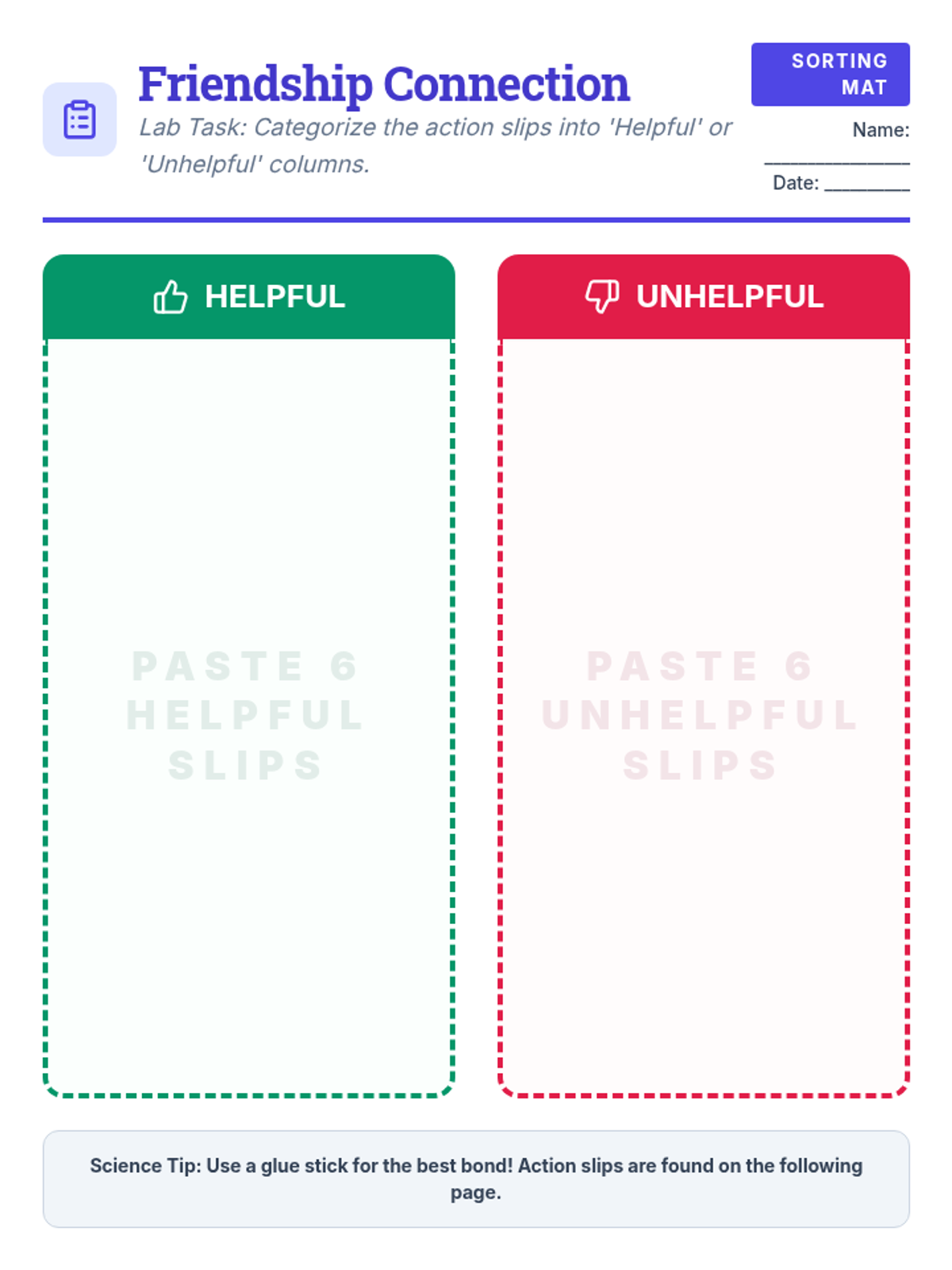
A dynamic, science-themed group counseling curriculum that helps elementary students build essential social skills, friendship qualities, and positive self-talk. Through hands-on 'experiments' and interactive lessons, students master the elements of healthy social connections.
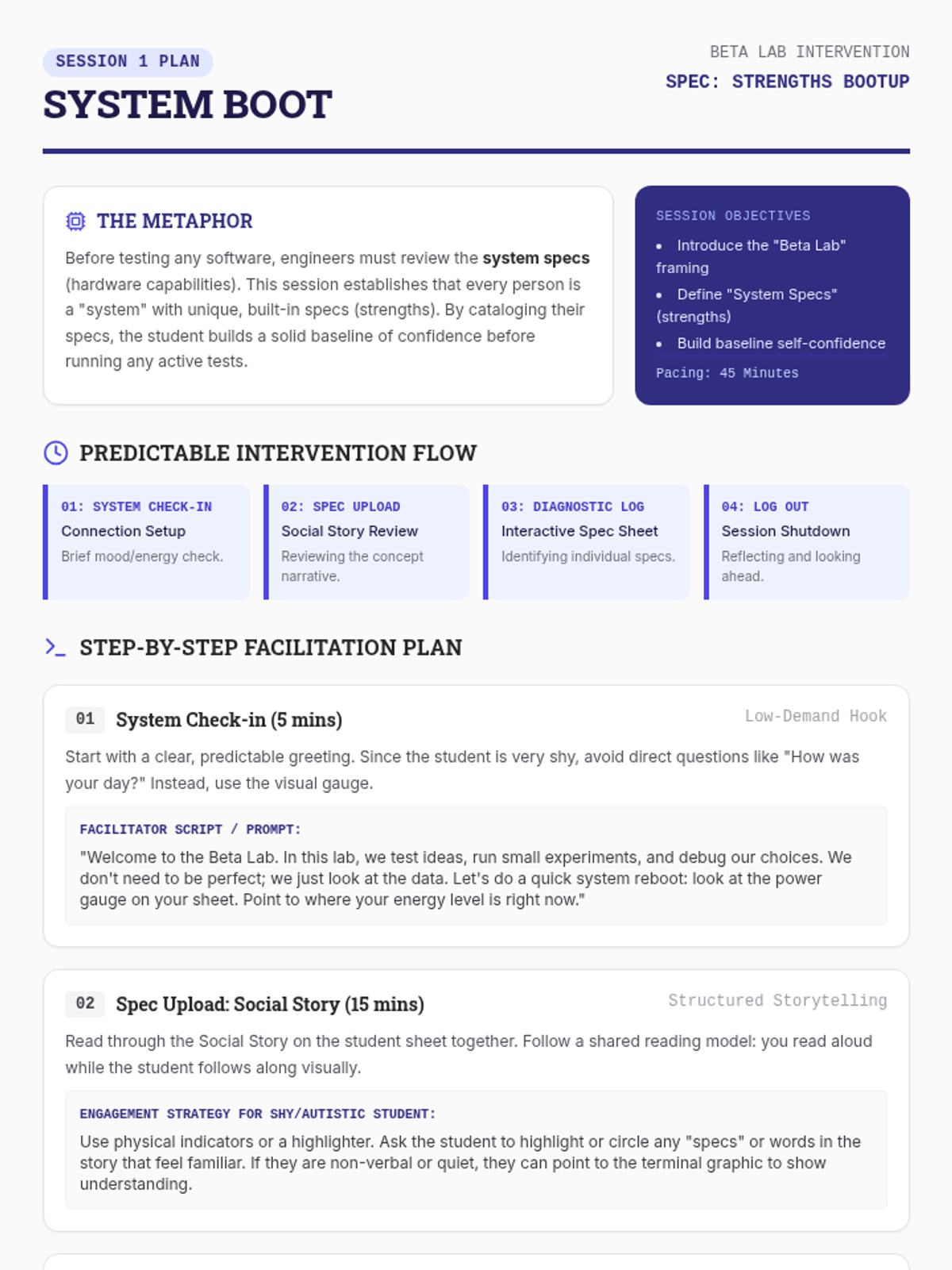
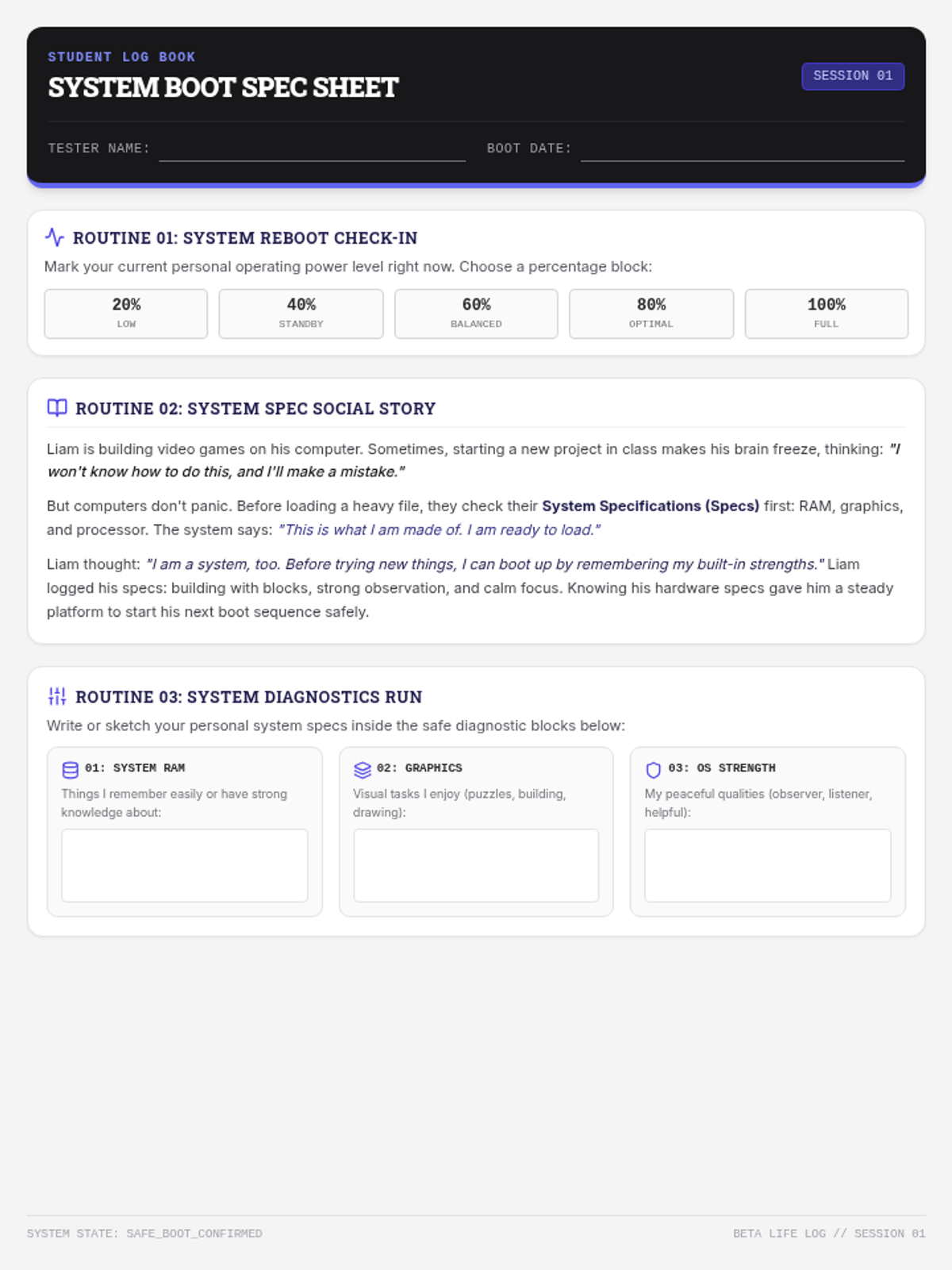
An 8-week social-emotional intervention sequence designed for neurodivergent and shy students. It uses a "Field Guide" and "Wildwood Scouting" metaphor to build self-confidence, ease the anxiety of trying new things, and structure decision-making.
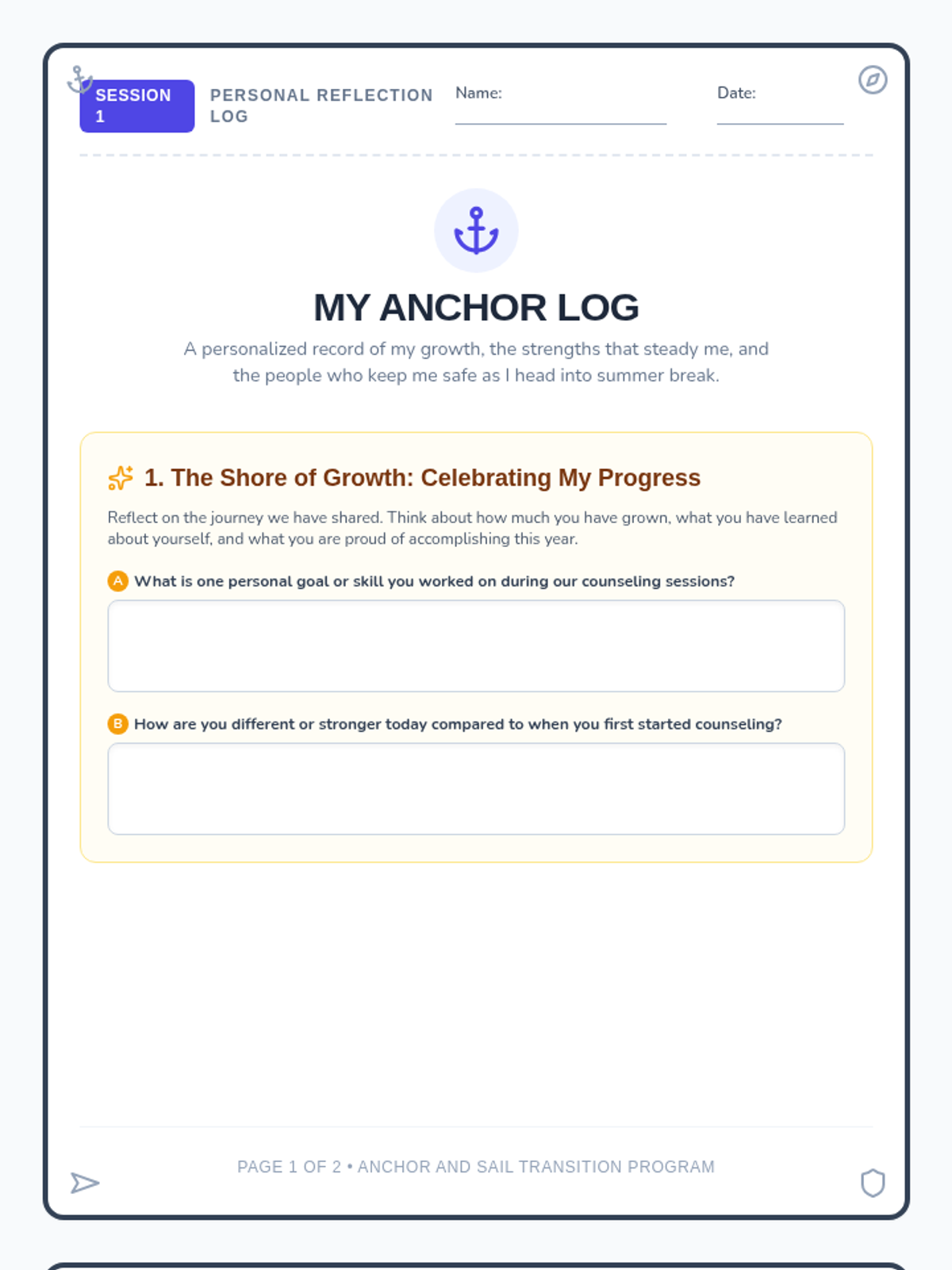
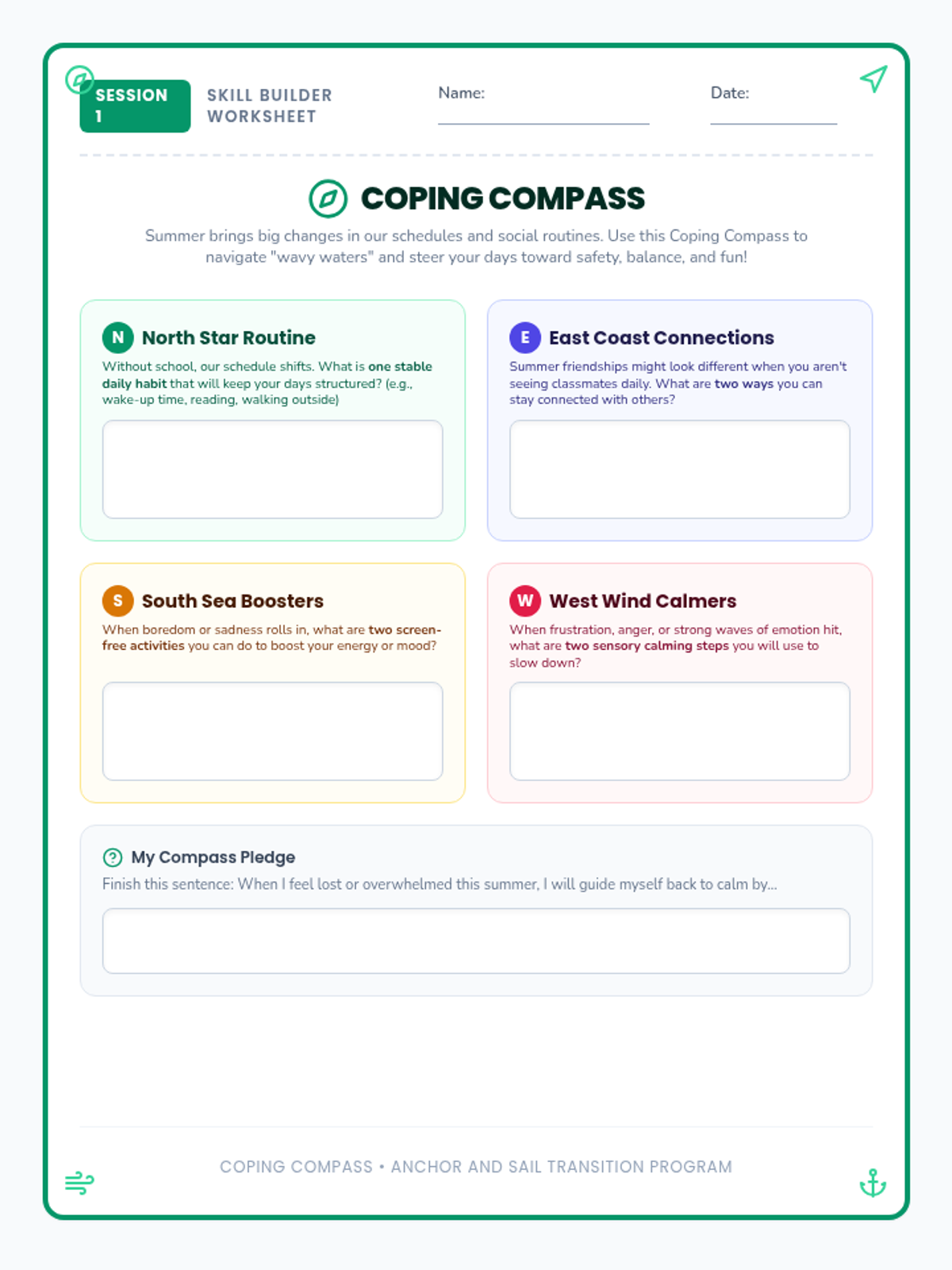
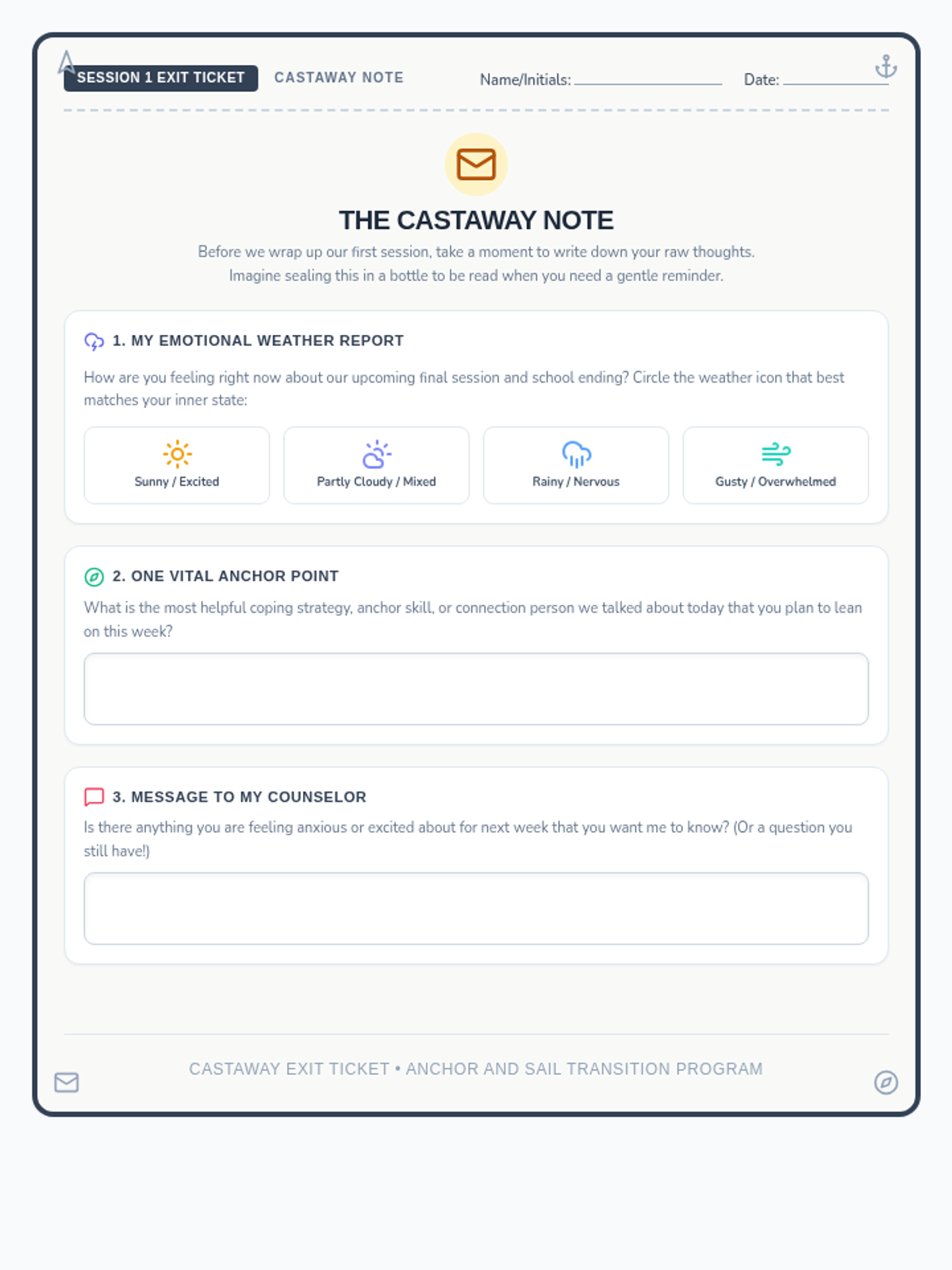
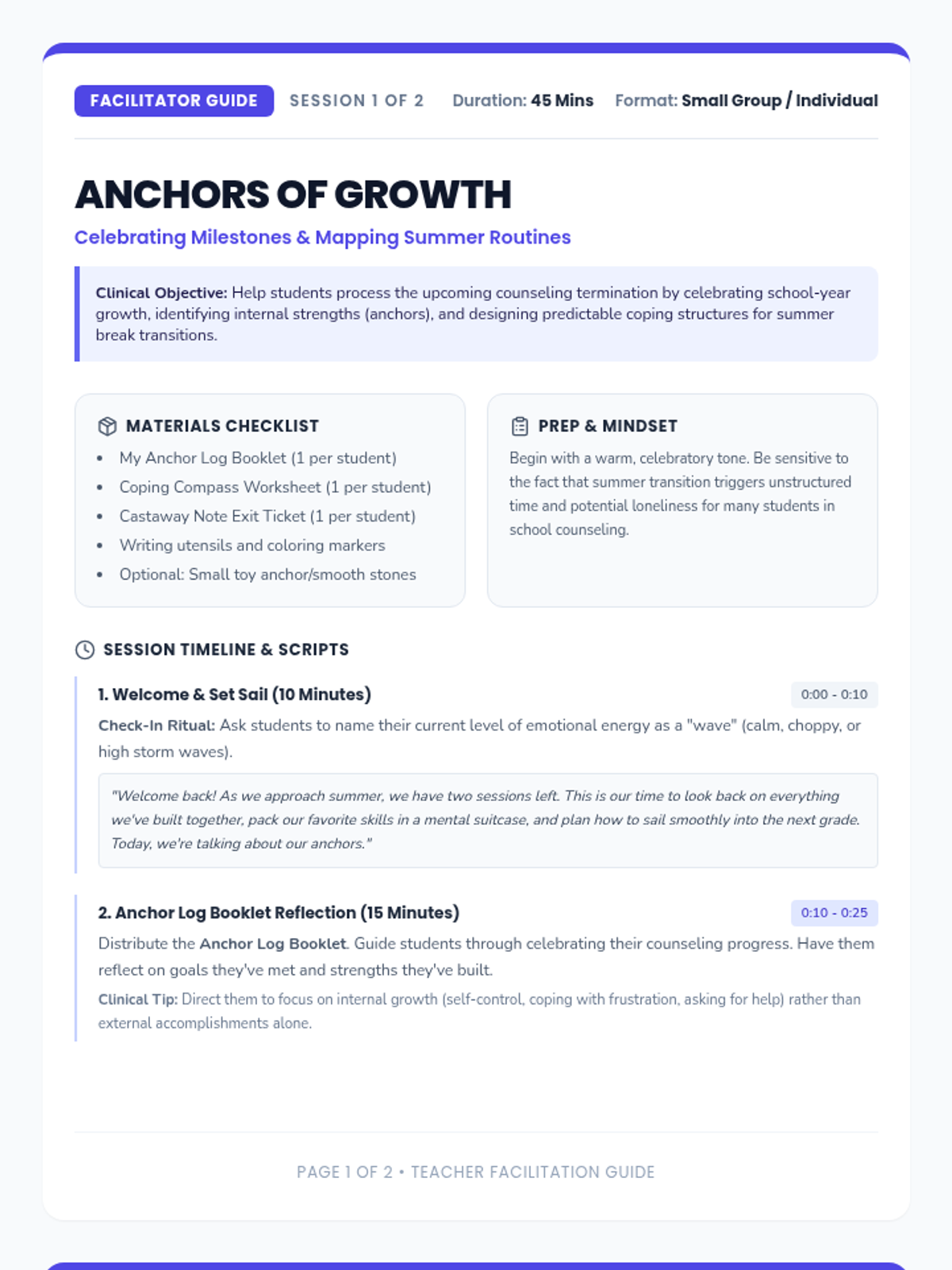
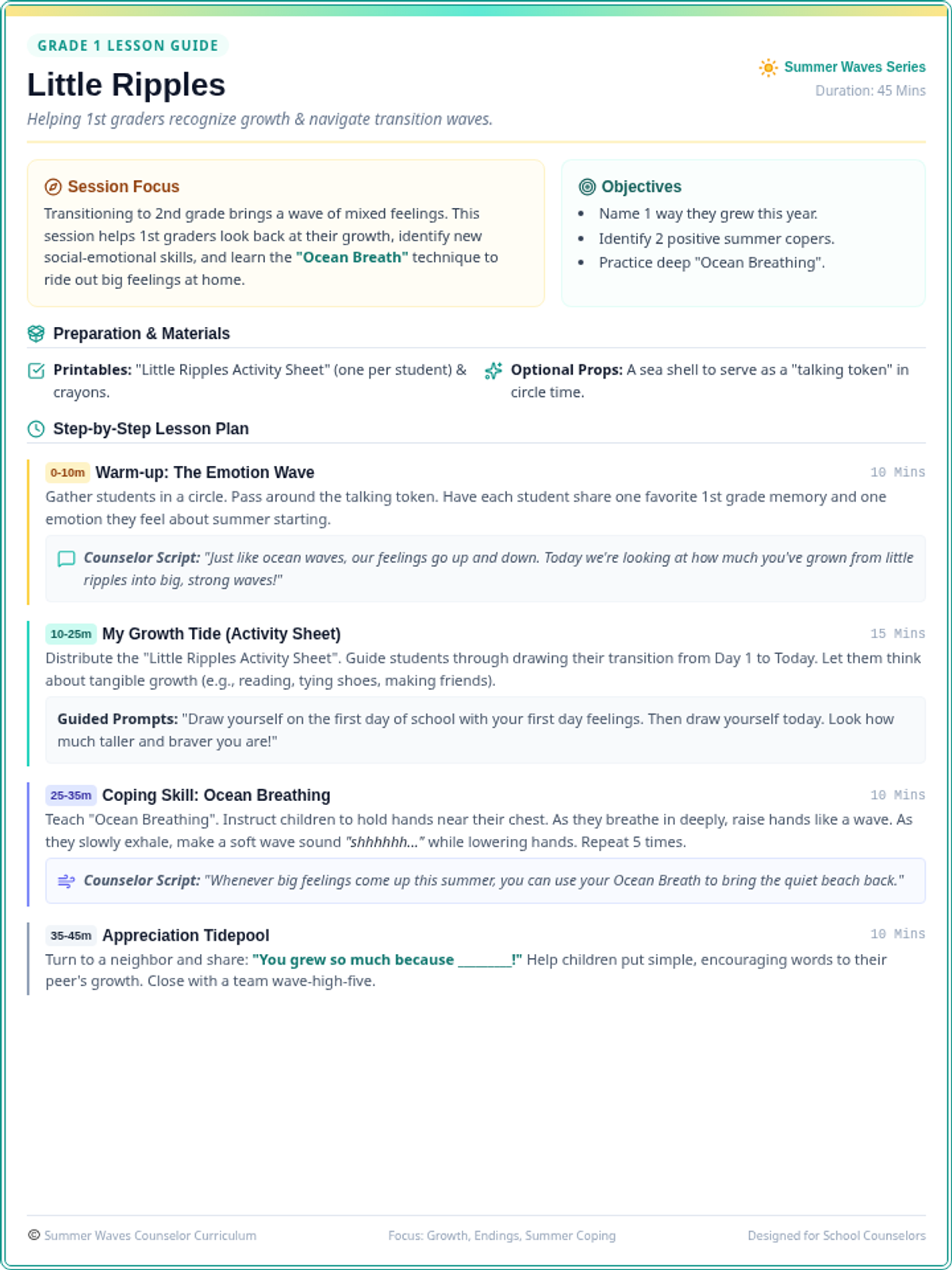
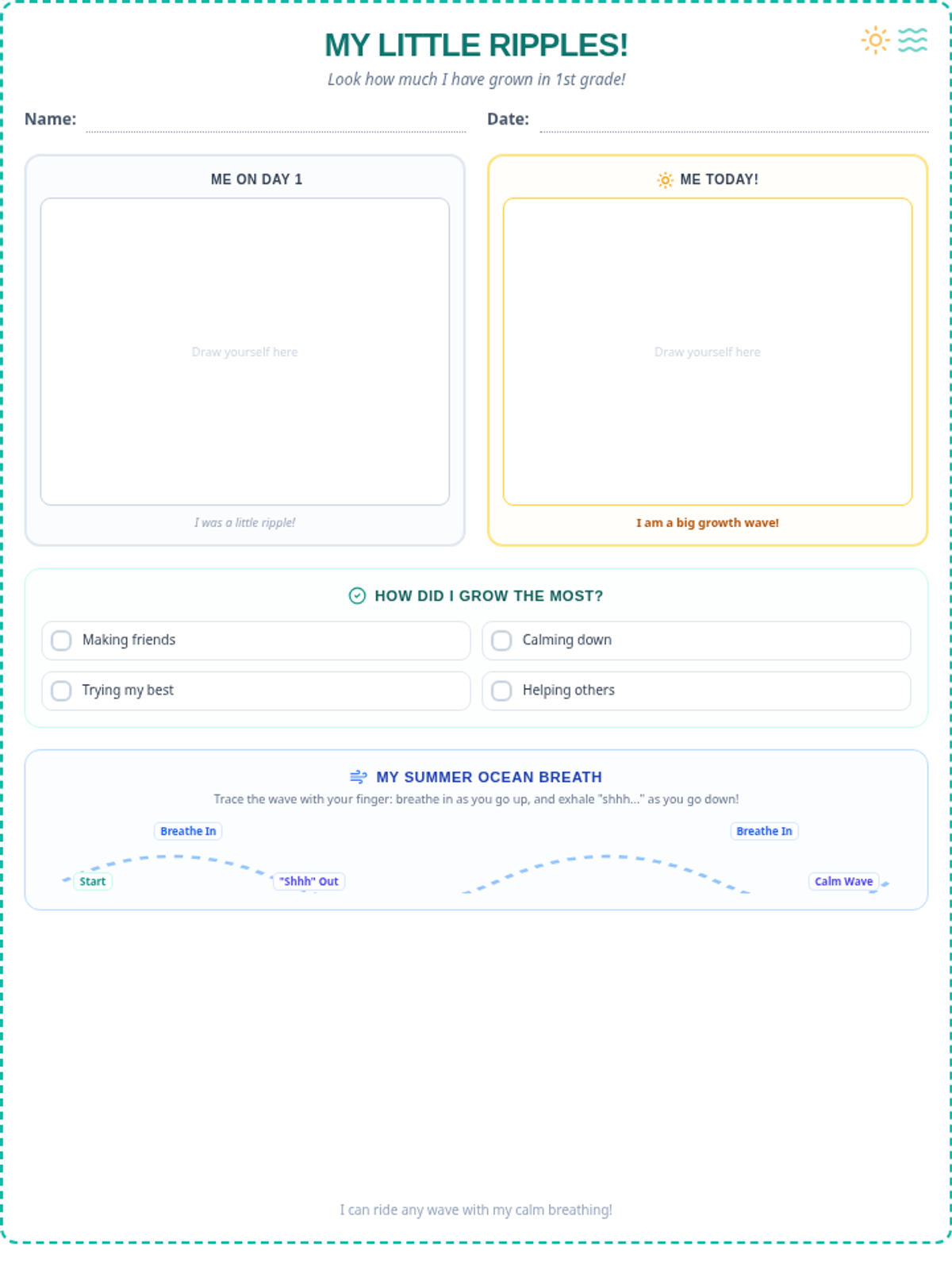
A two-session therapeutic school counseling curriculum designed to support students transitioning to summer break. Students celebrate their growth, build a summer coping toolkit, and bridge their return to school in the fall.
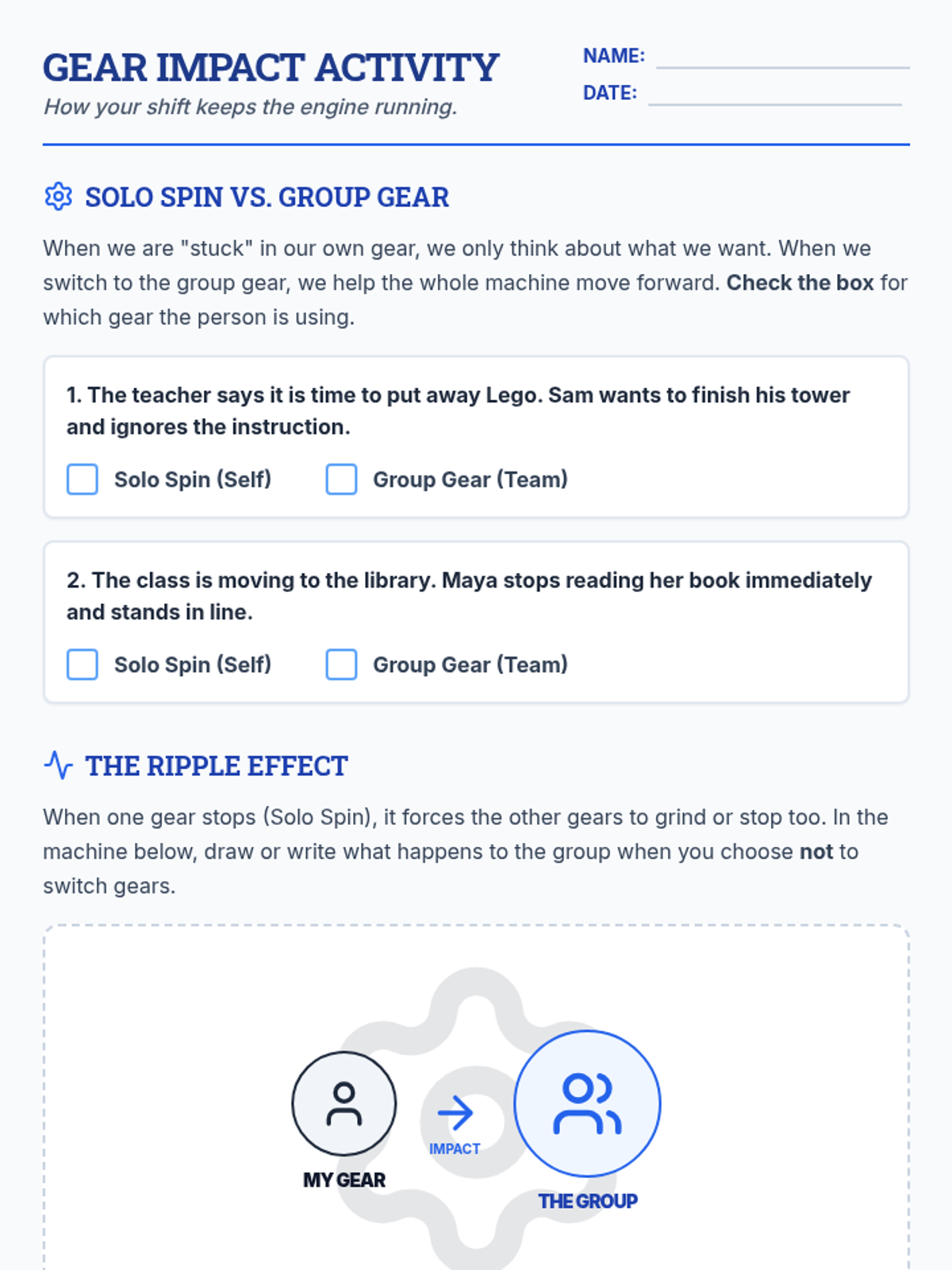
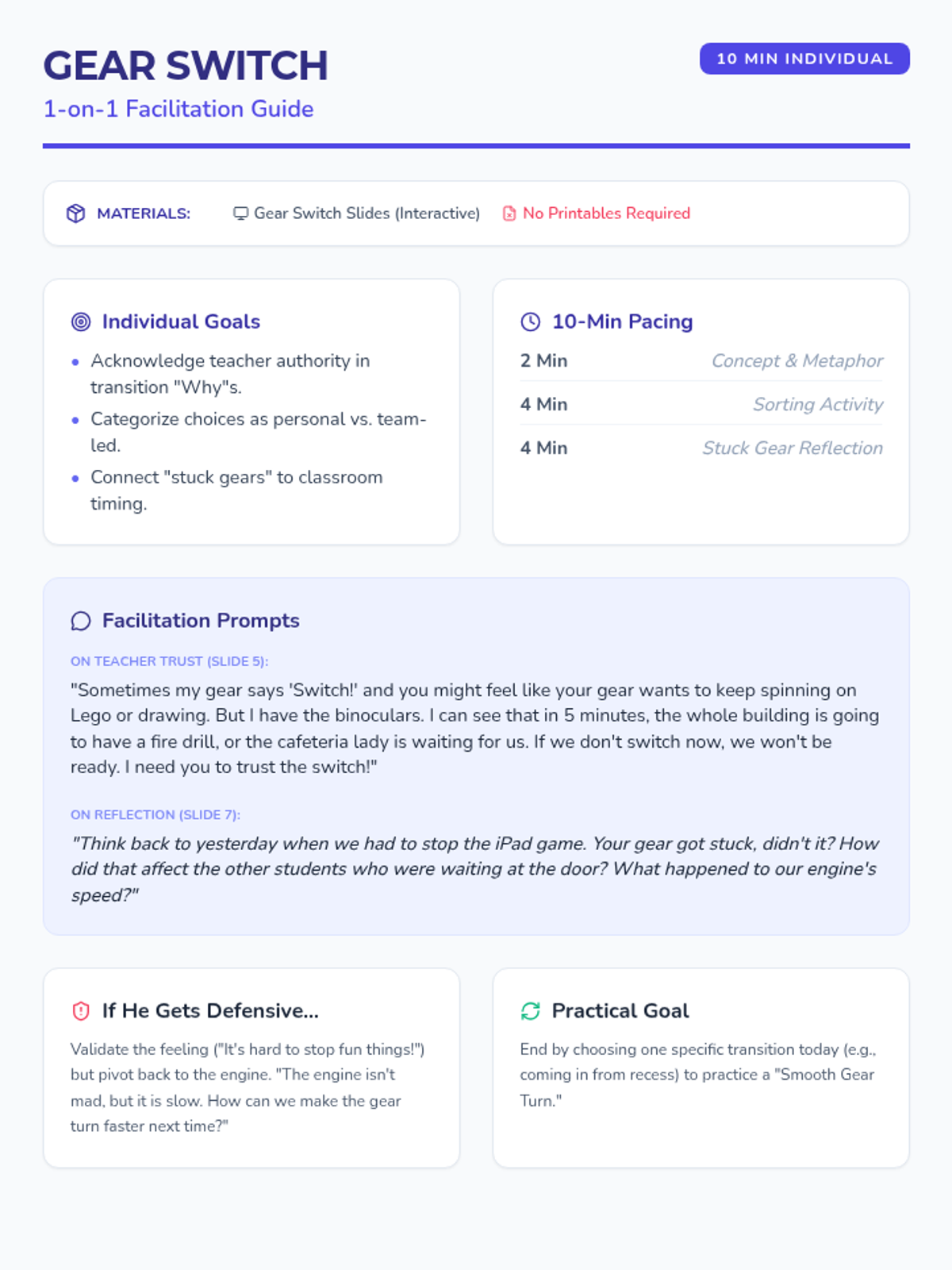
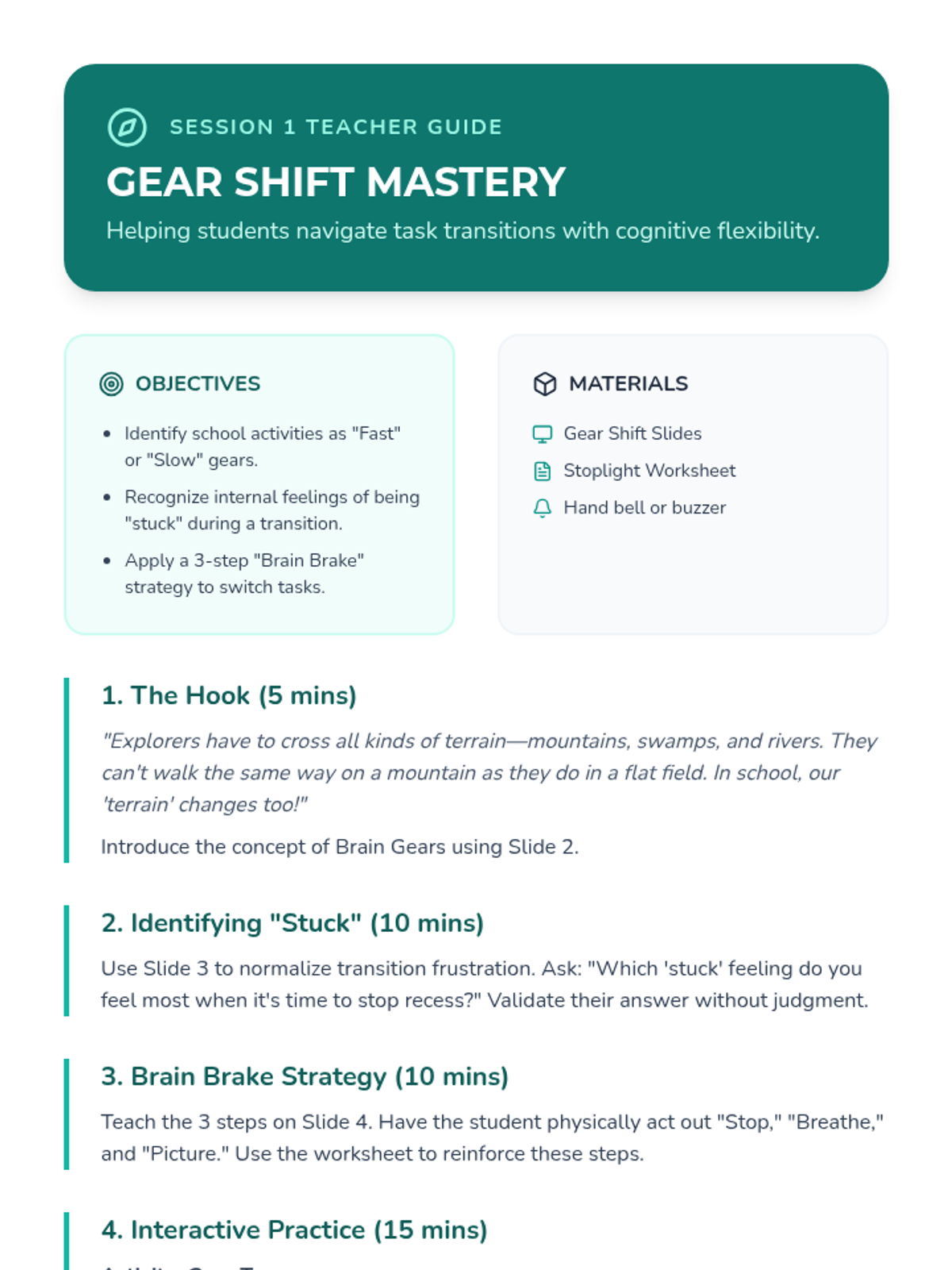
A two-part SEL sequence for a one-on-one session. It introduces the "Gear Switch" metaphor for transitions and follows up with a deeper look at personal responsibility and how "focusing on yourself" translates to group success.
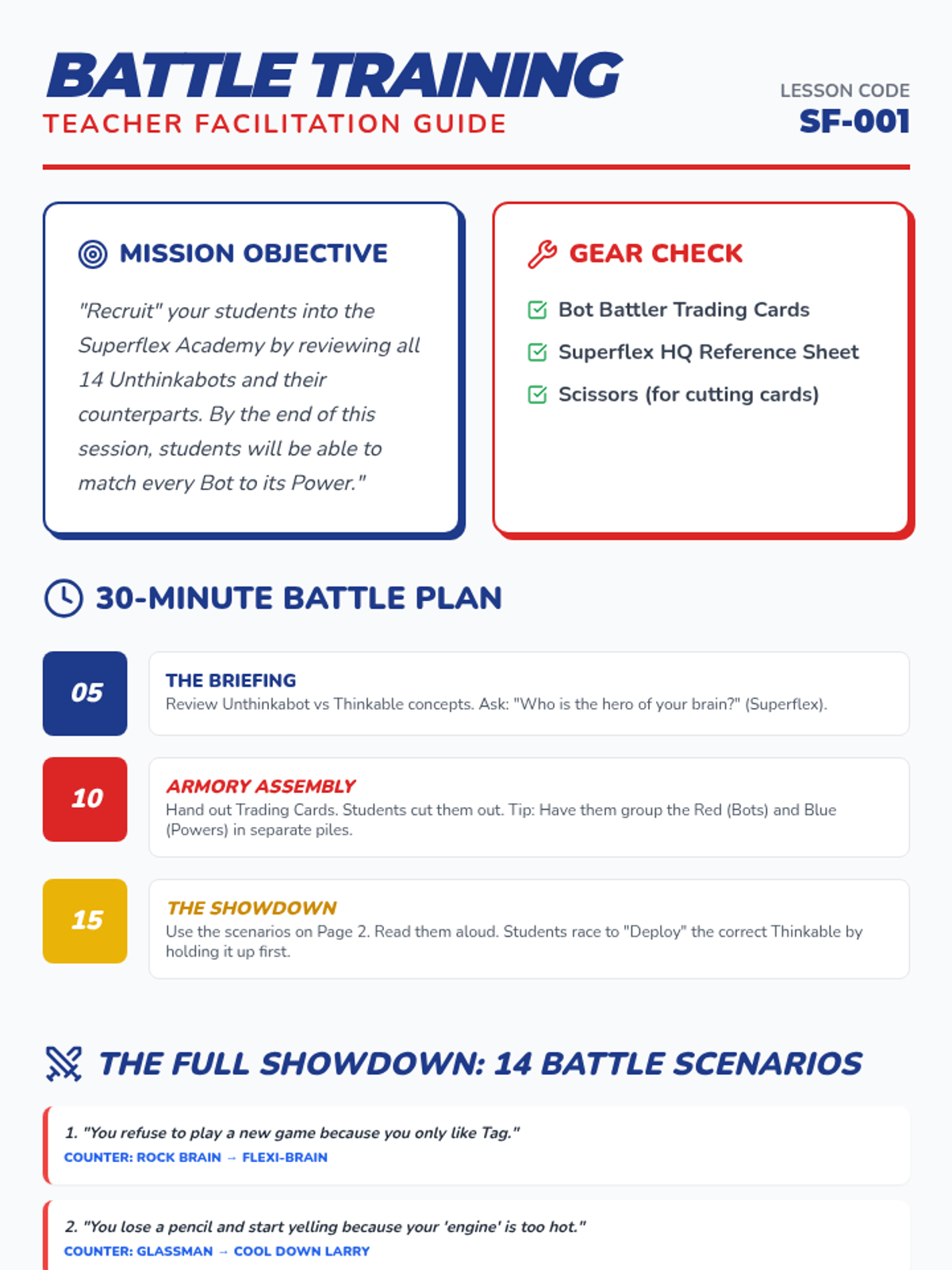
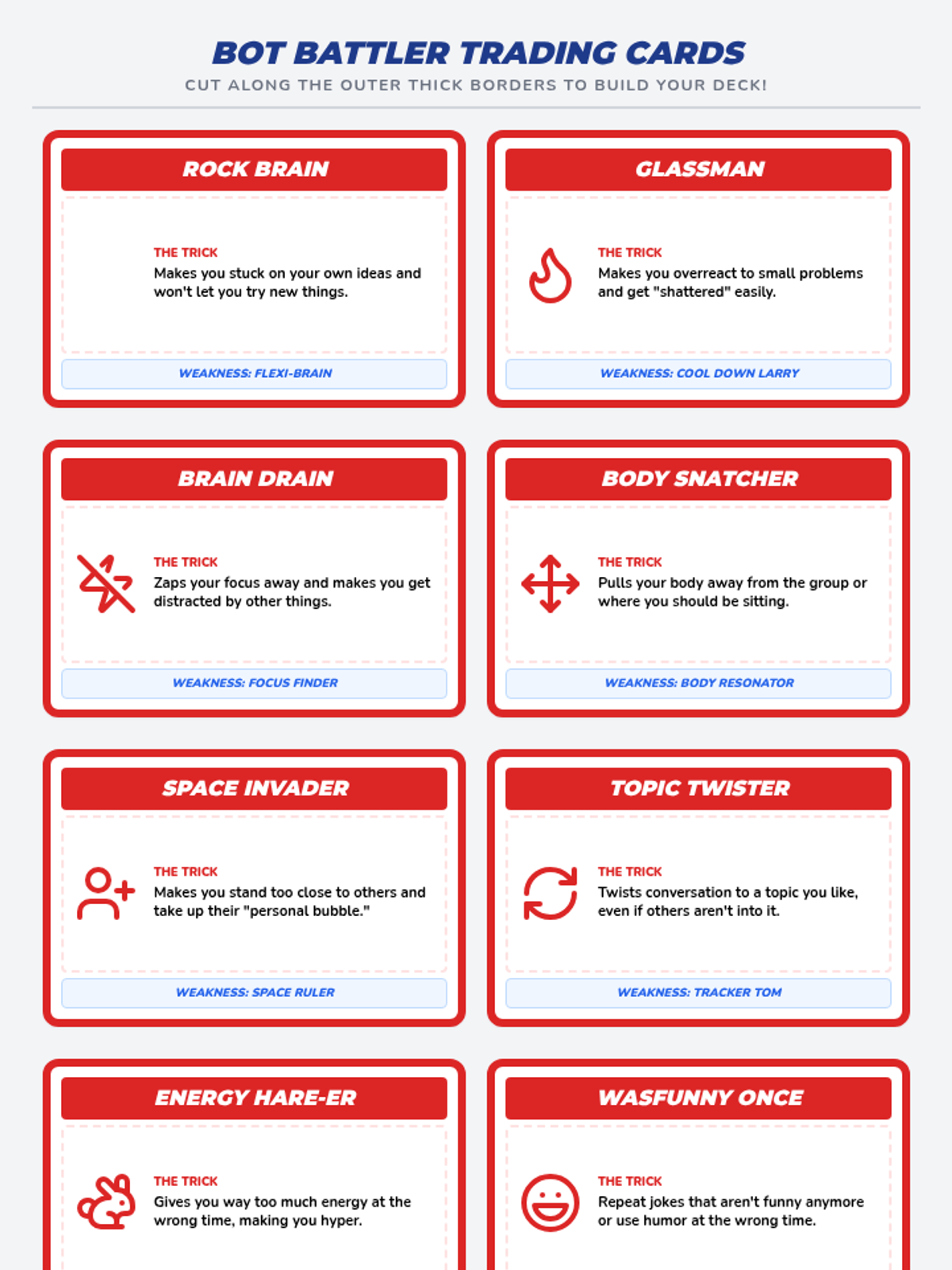
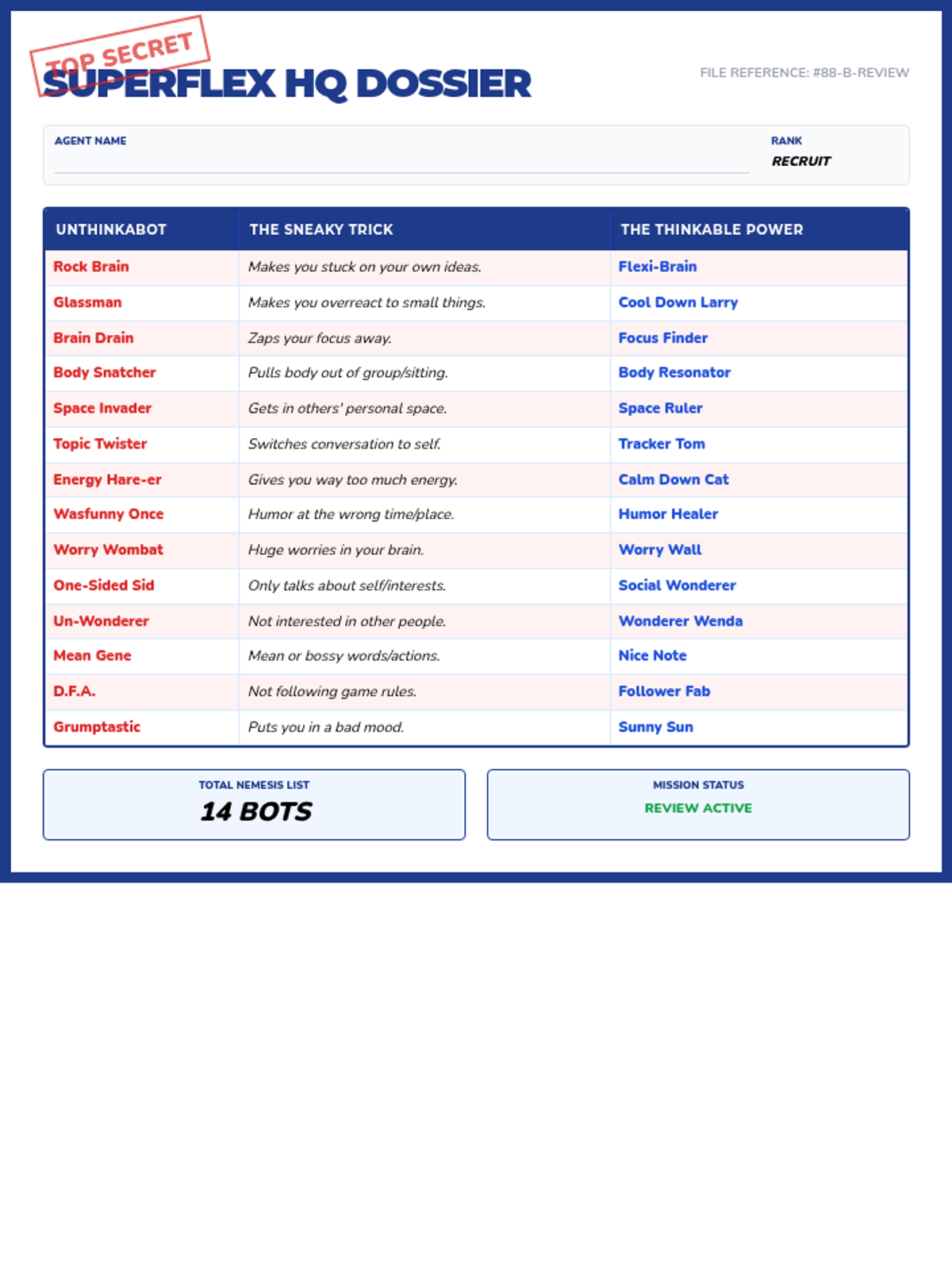
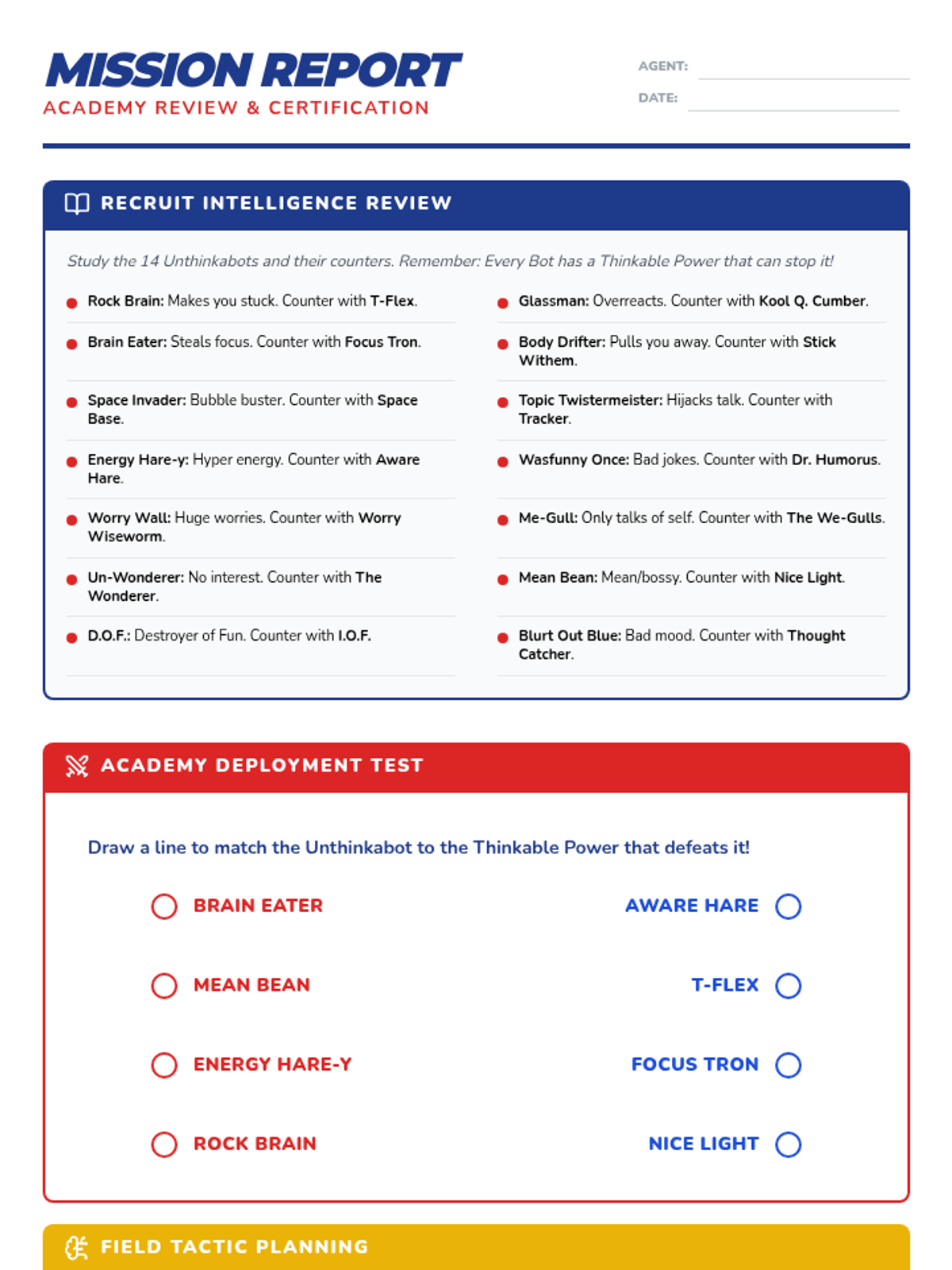
A high-energy review sequence designed for 2nd grade boys to master the Superflex curriculum. Students will identify the 14 Unthinkabots and their counterparts, the Thinkables, through interactive trading cards and scenario-based battle planning.
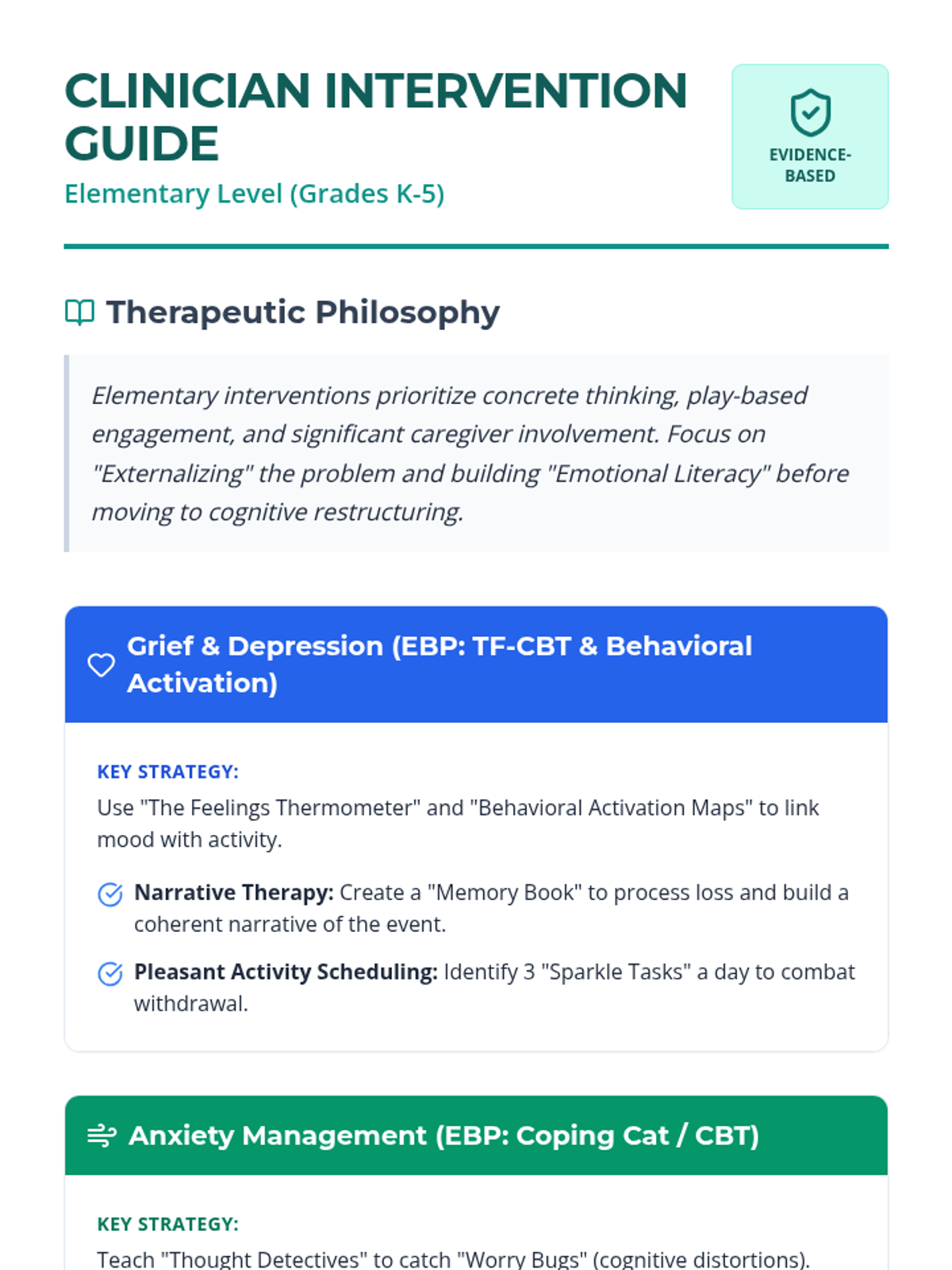
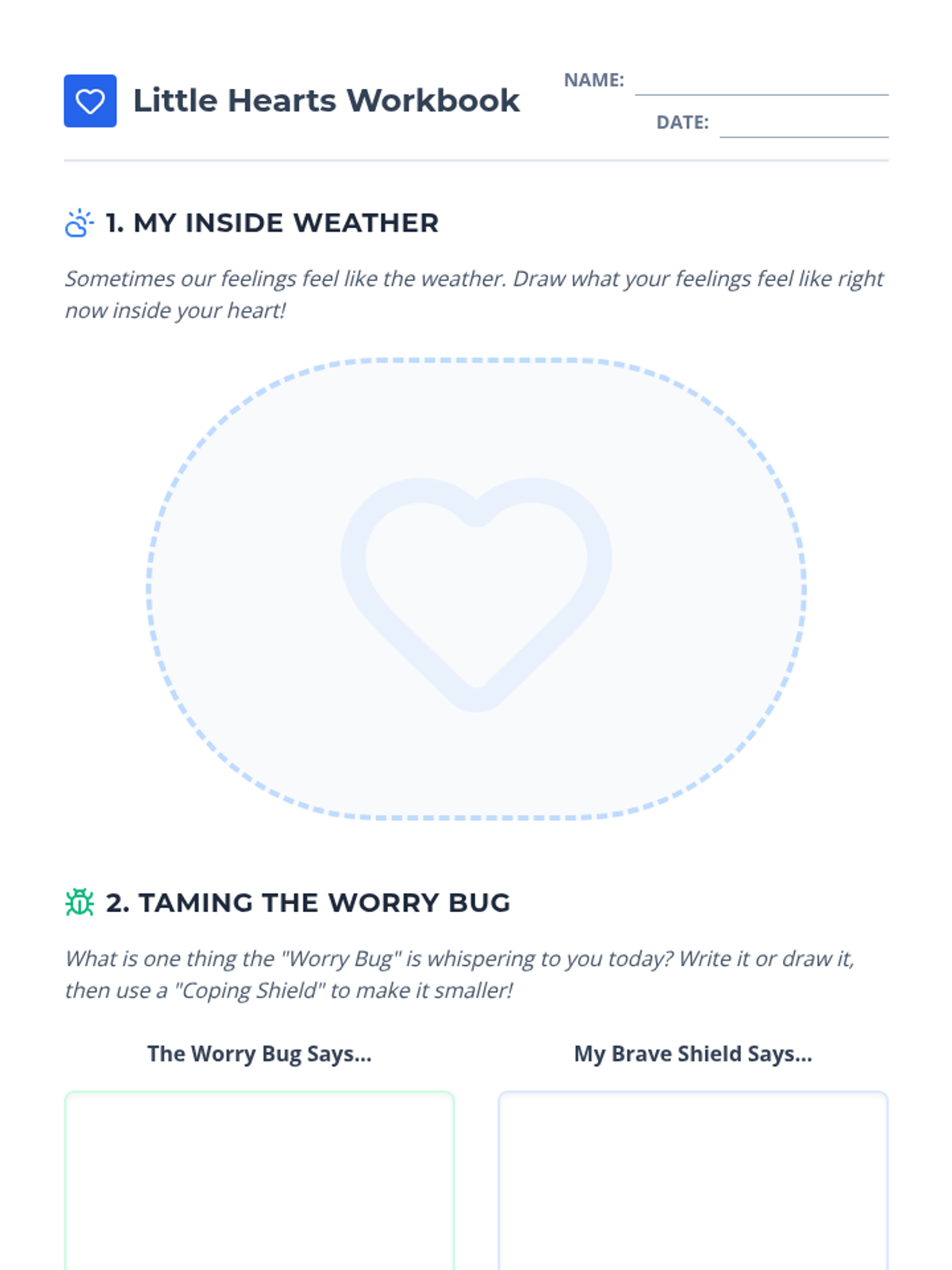
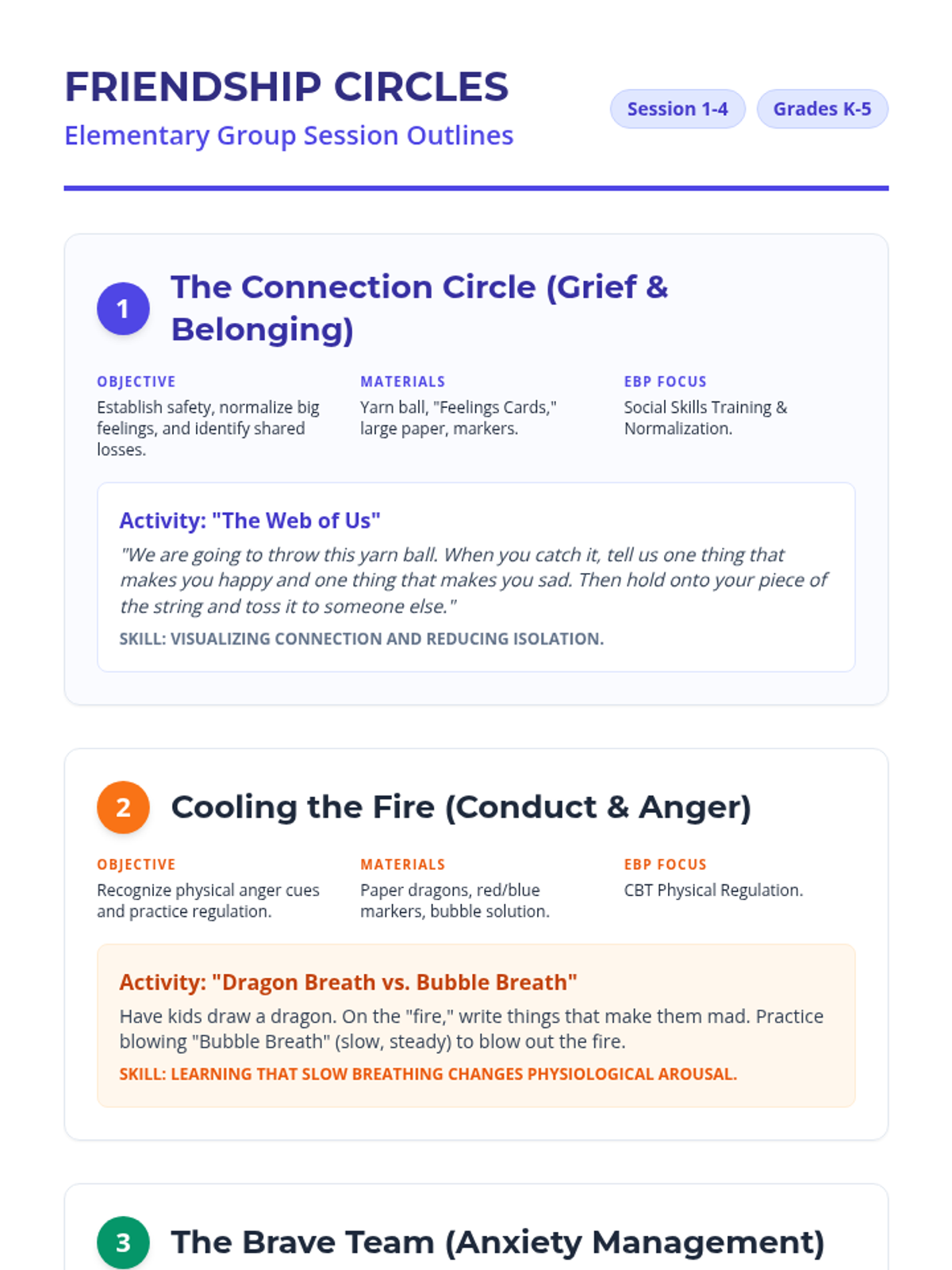
A comprehensive suite of evidence-based mental health interventions and resources for school clinicians, covering grief, depression, anxiety, conduct disorders, and crisis prevention for K-12 students.
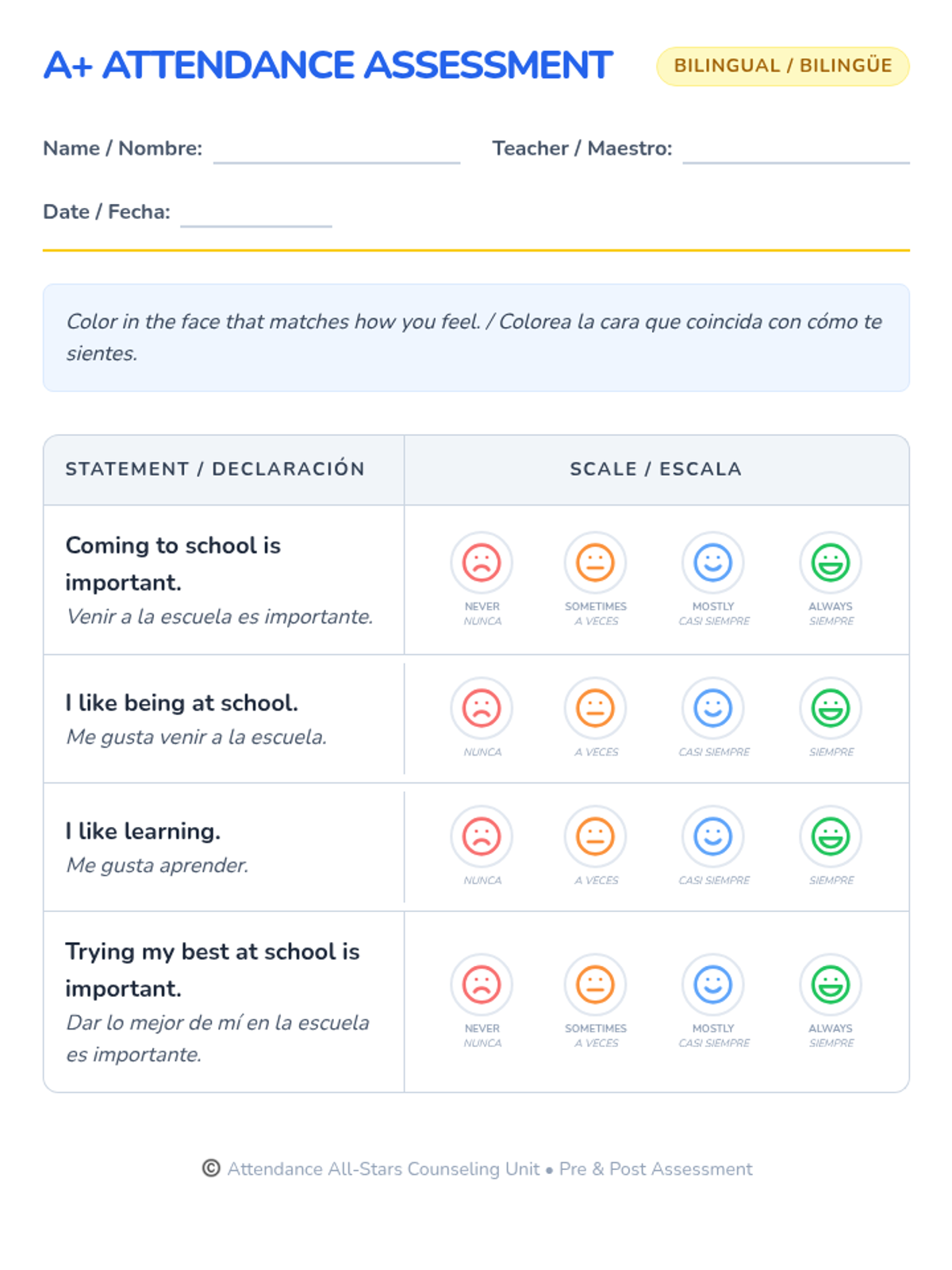
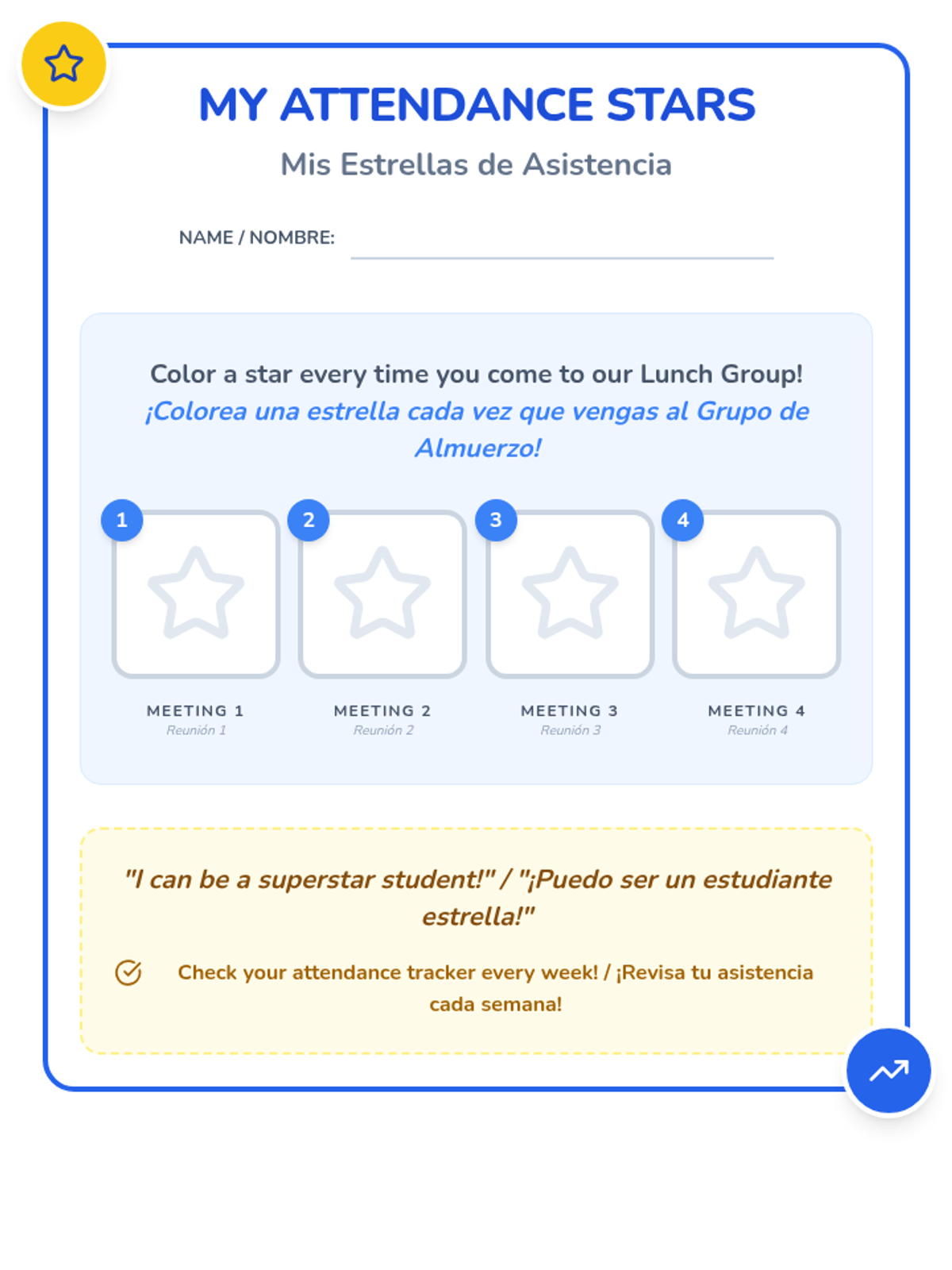
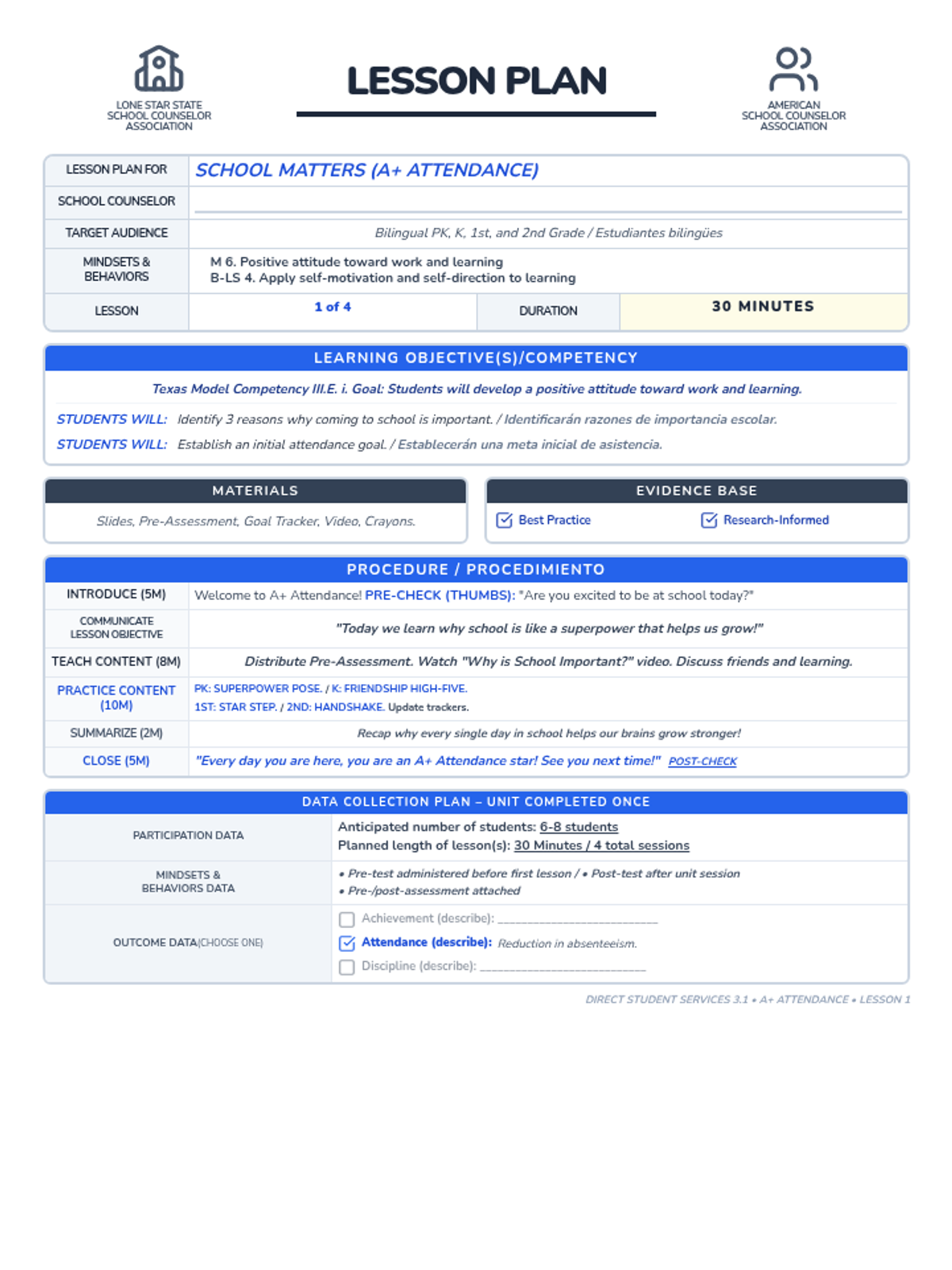
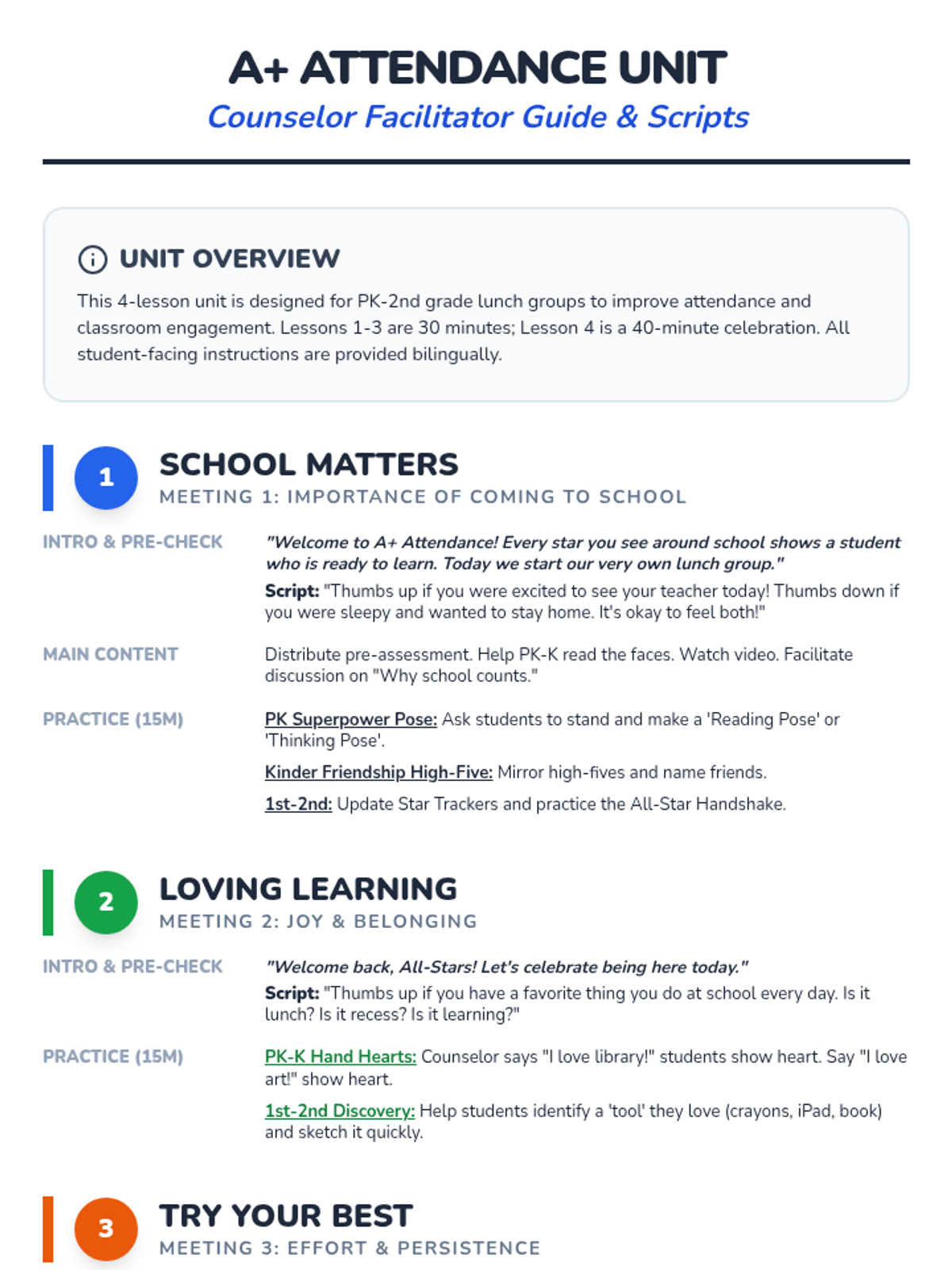
A 4-lesson school counseling unit designed for the 'A+ Attendance' group to improve student attendance and attitudes toward learning for PK-2nd grade students. The program uses a bilingual (English/Spanish) approach and a 'Lunch Group' format to build positive school connections.
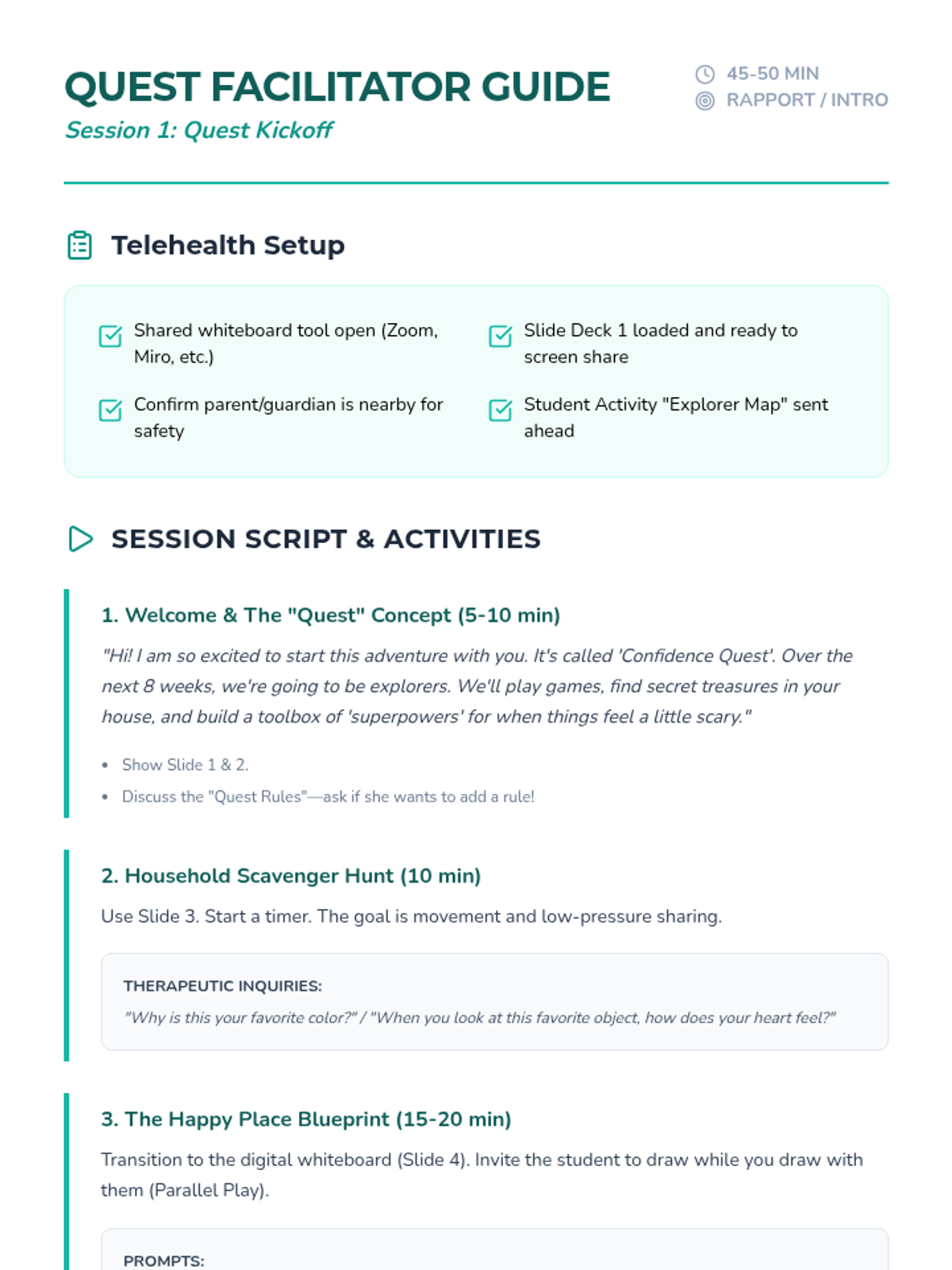
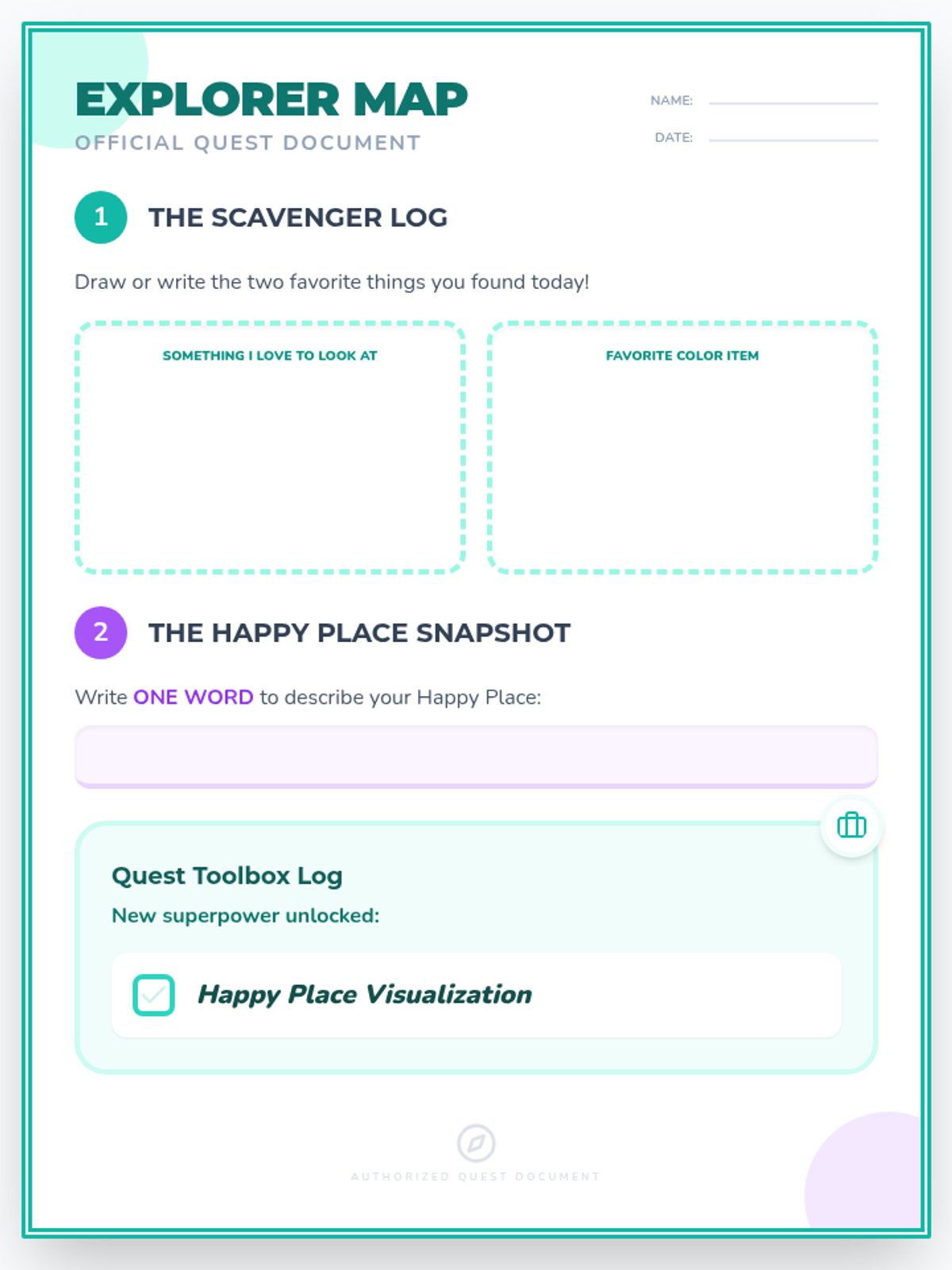
An 8-week telehealth play therapy program for an 8-year-old girl, focusing on social anxiety, self-confidence, and coping skills through scavenger hunts, bibliotherapy, and digital drawing.
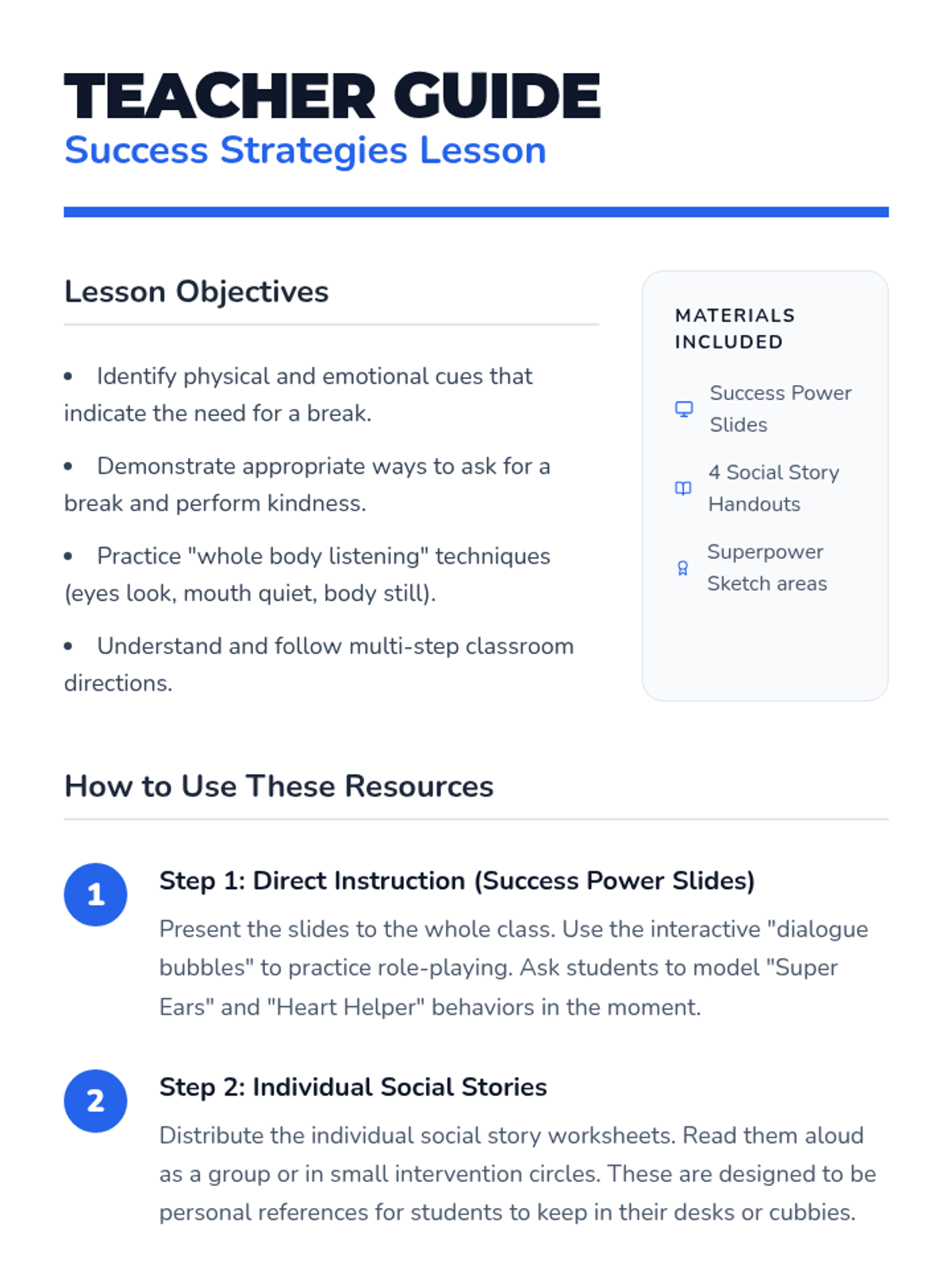
A comprehensive collection of social emotional learning resources focused on developing pro-social behaviors and self-regulation skills in the classroom.
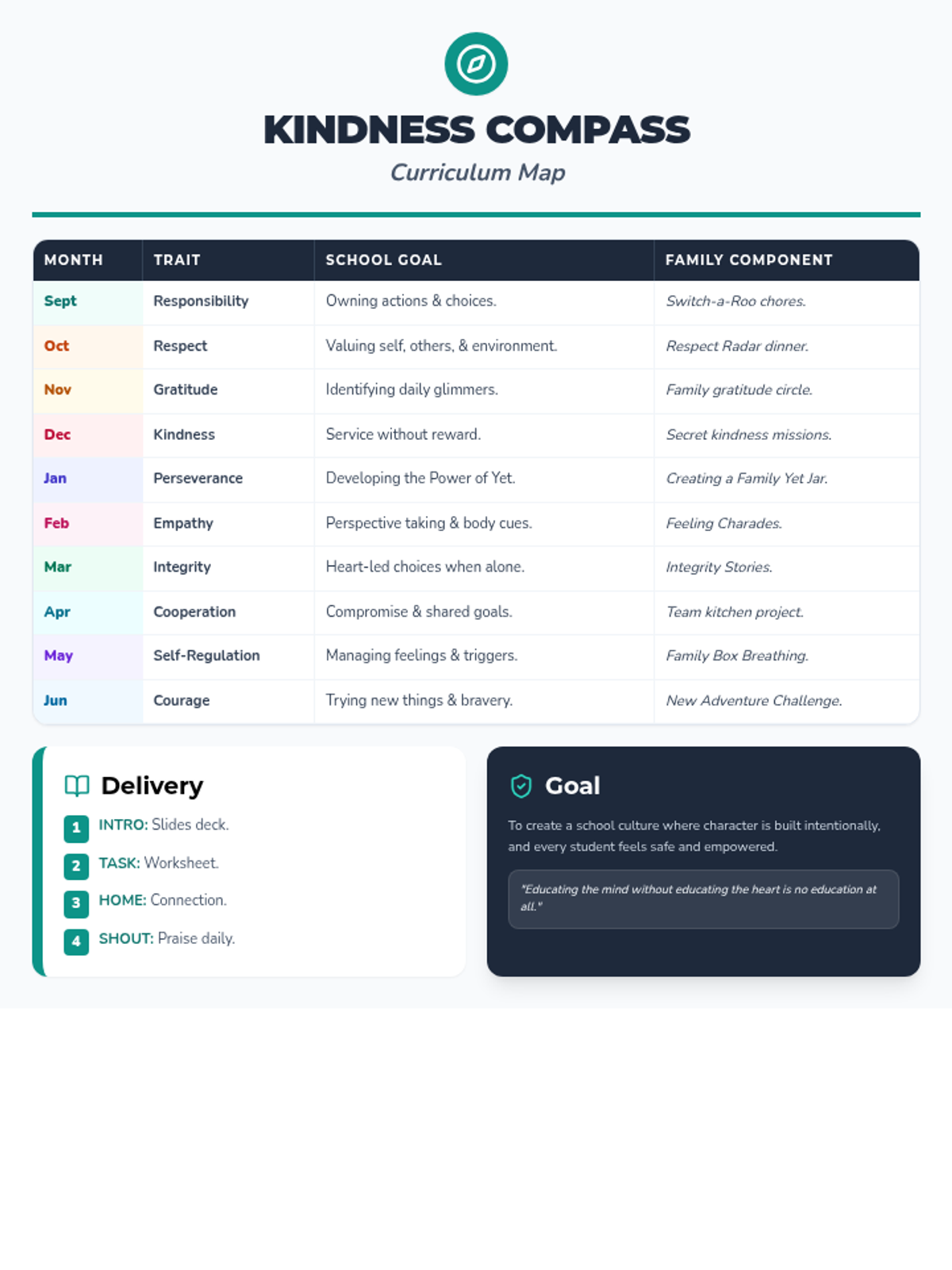
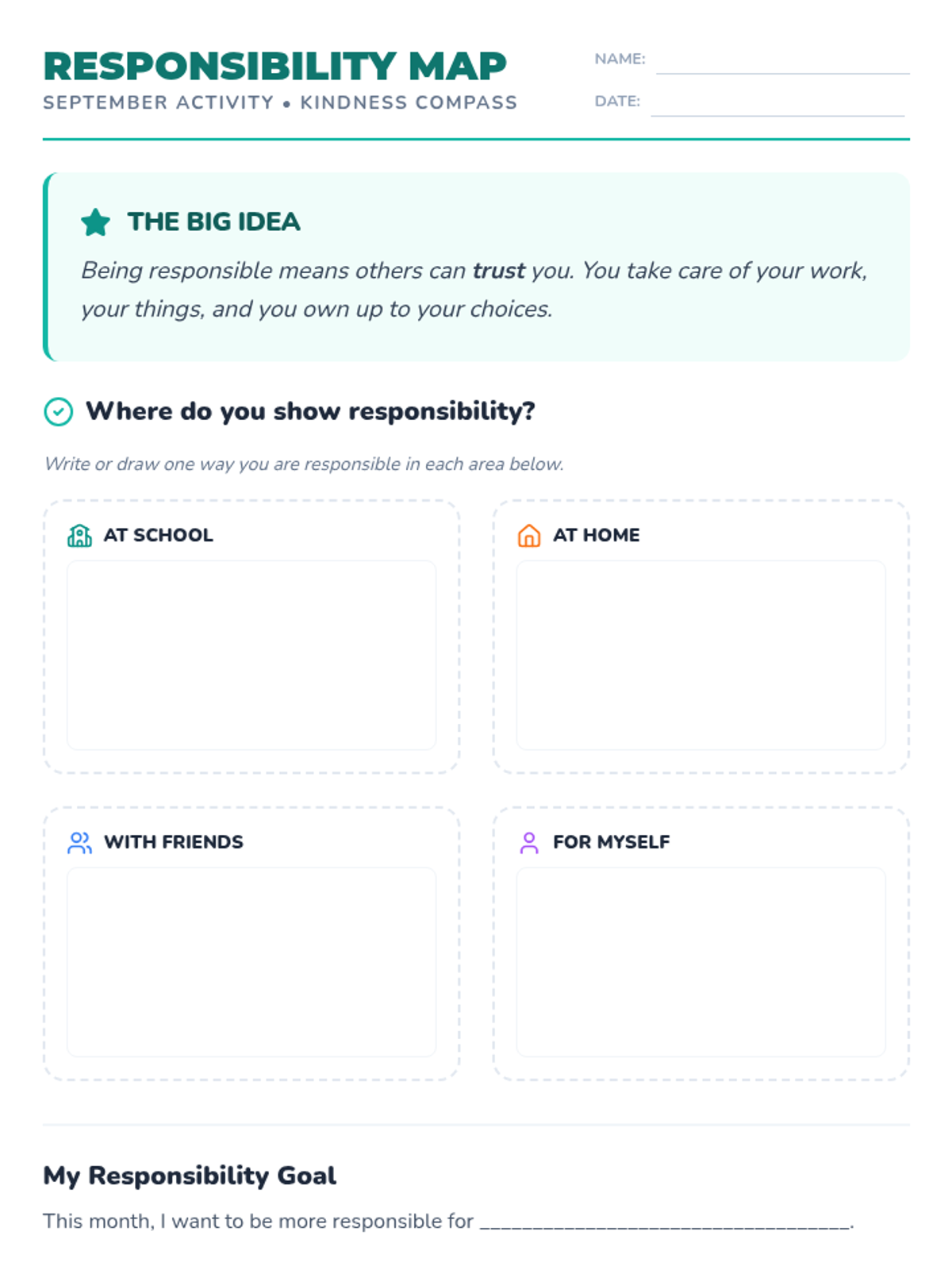
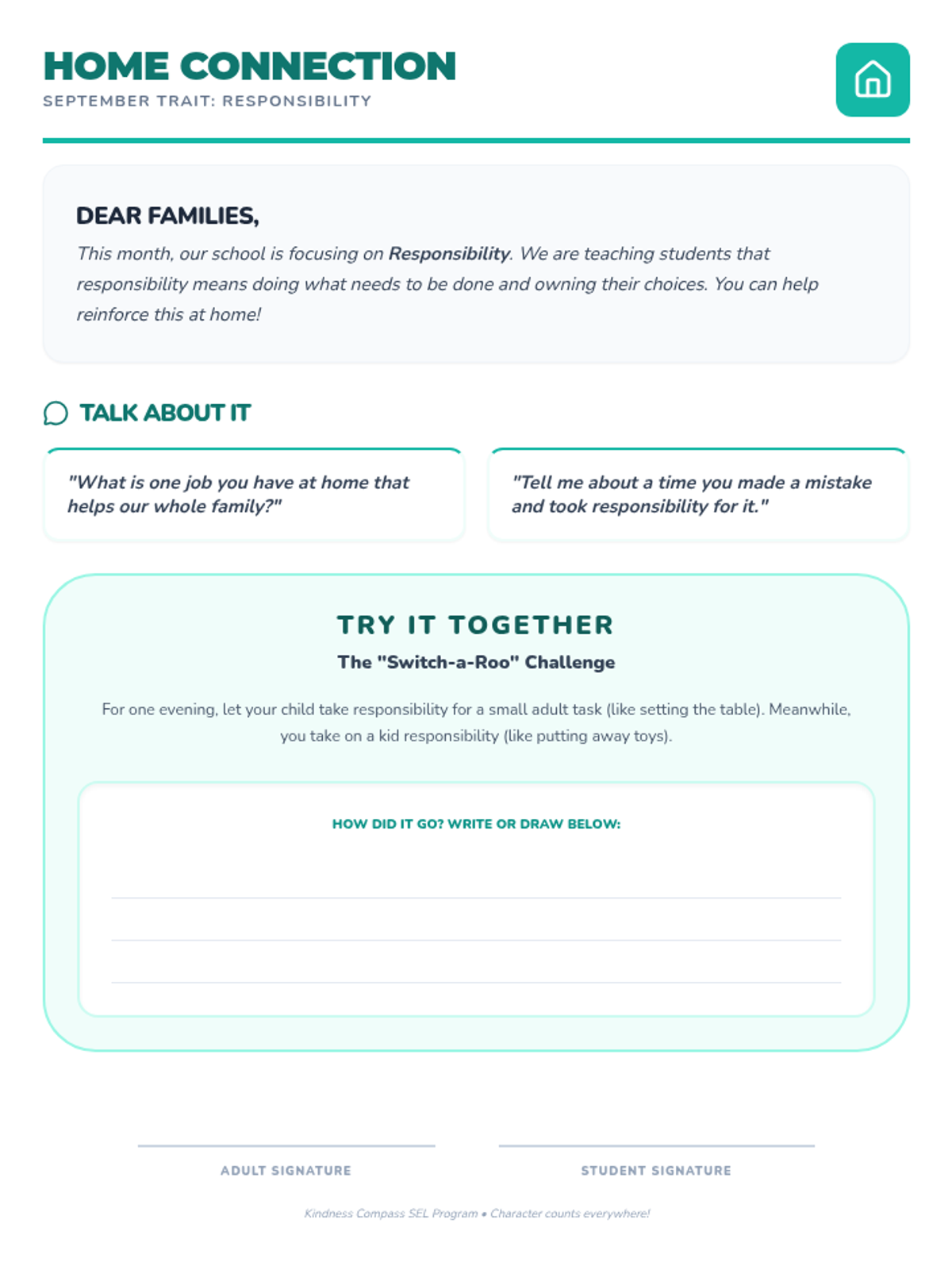
A comprehensive character education program for Pre-K through 5th grade, featuring monthly social-emotional traits, interactive slides, and student-facing activities designed to build a positive school culture.
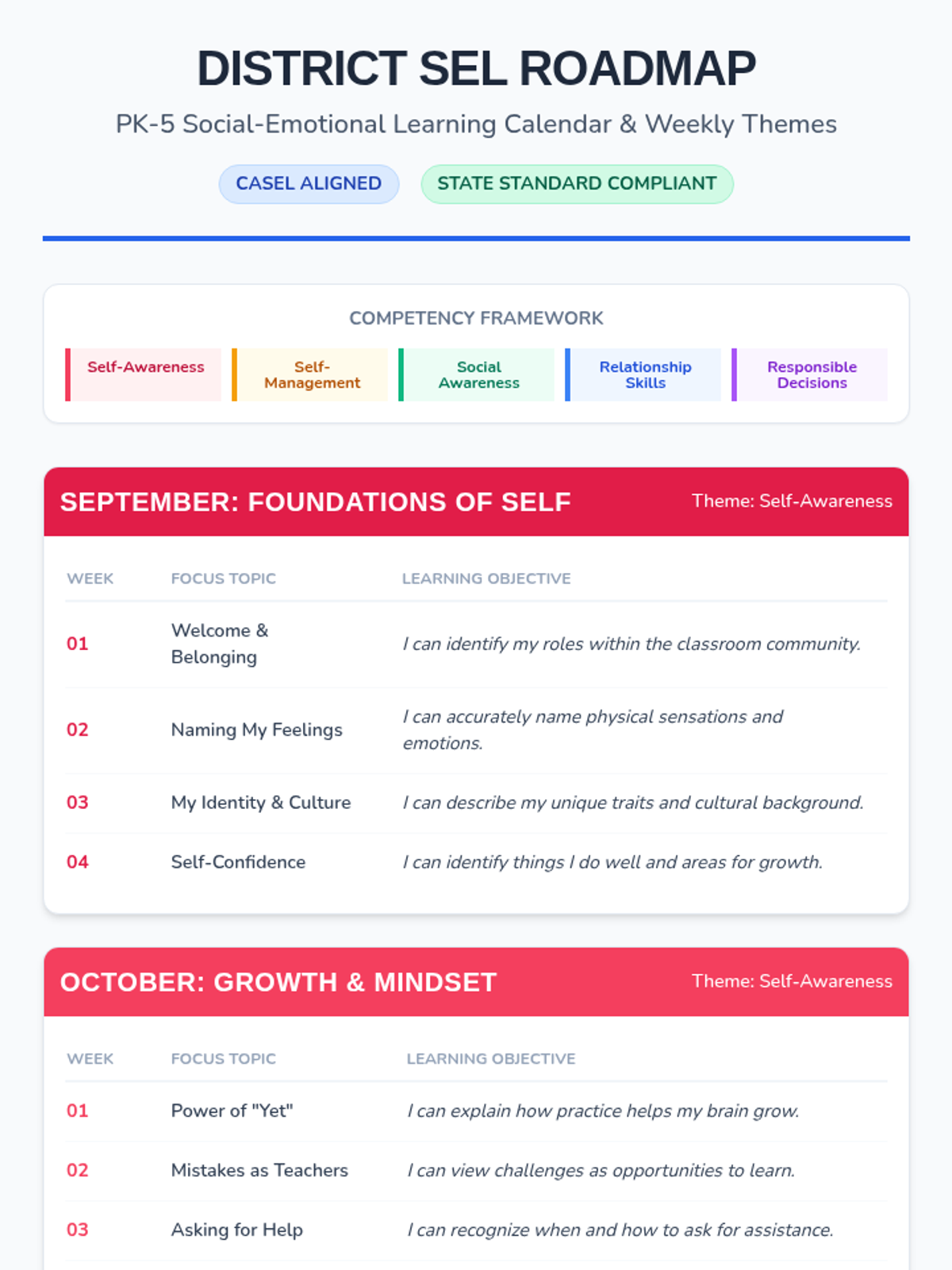
A comprehensive social-emotional learning framework for a school district, aligning CASEL competencies with a year-long monthly calendar and implementation tools for PK-5 educators.
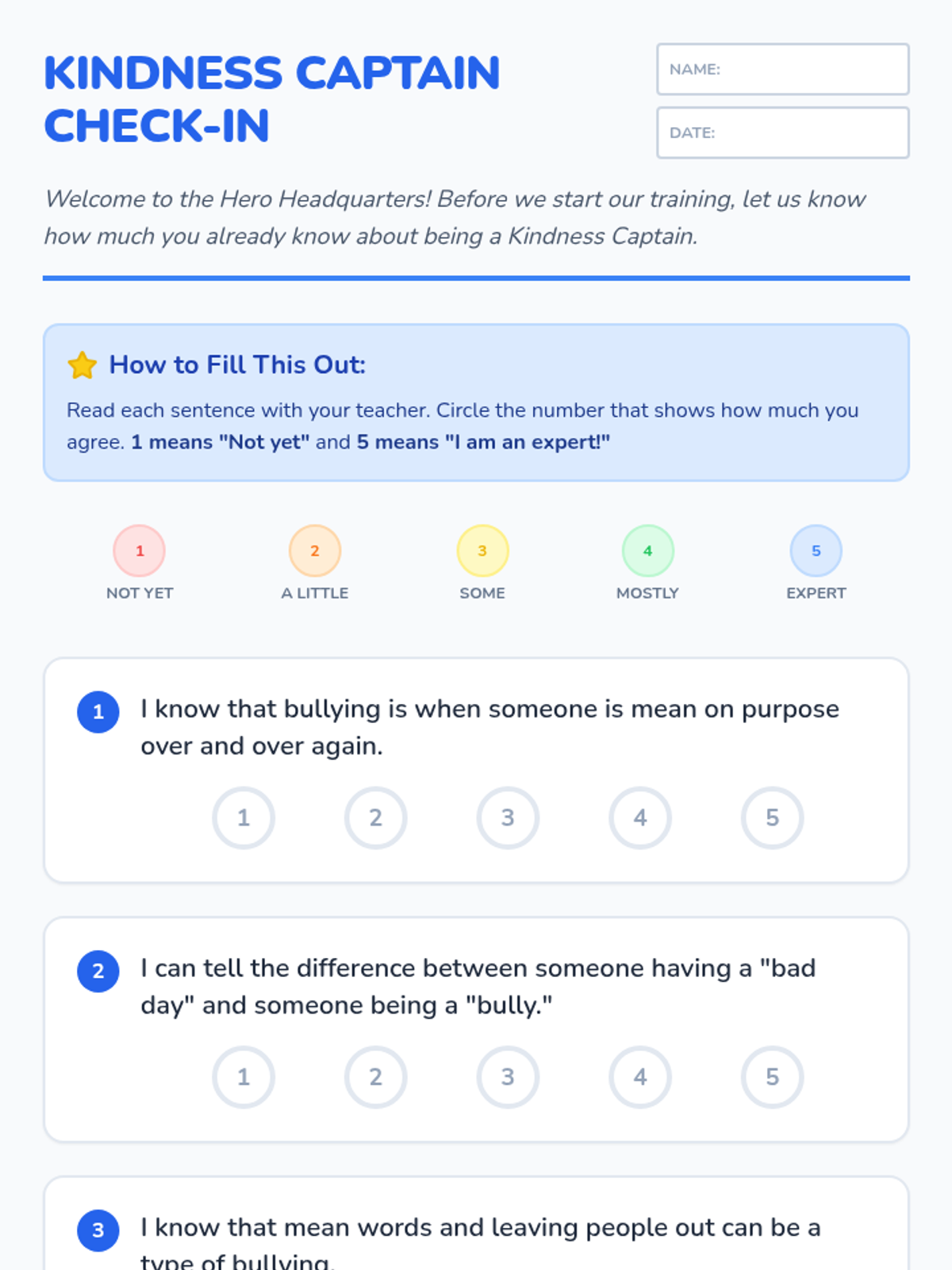
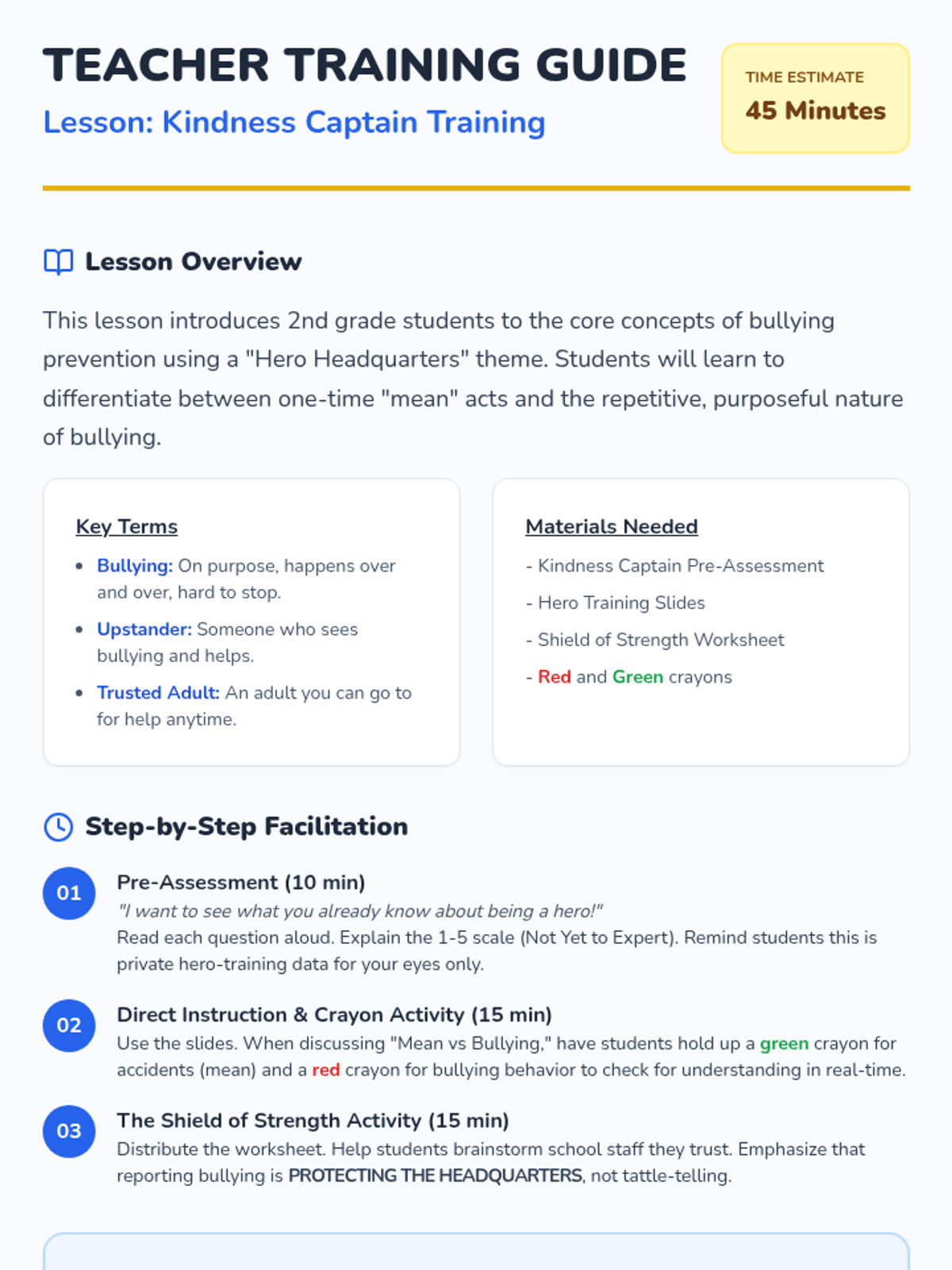
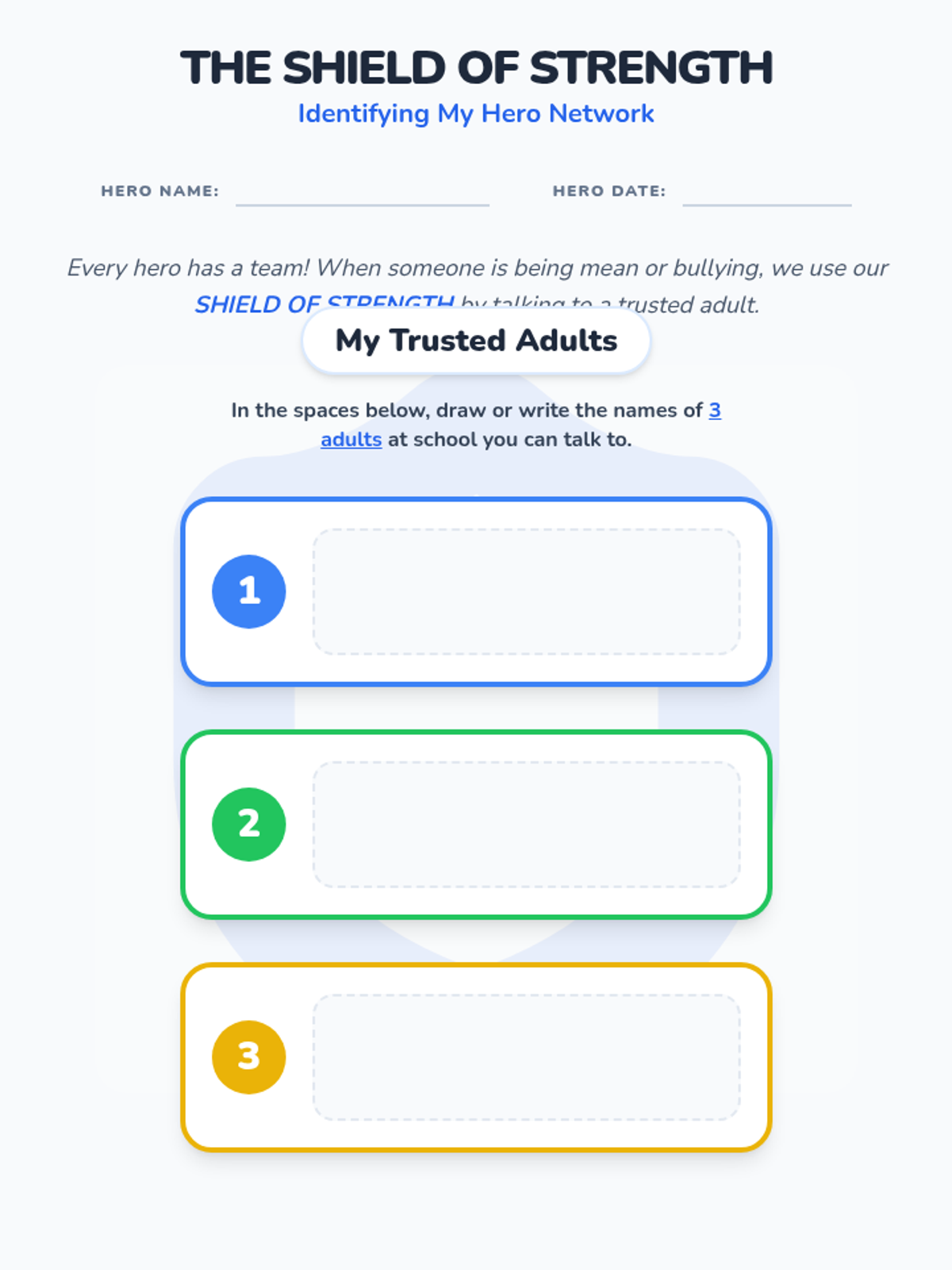
A social-emotional learning unit for 2nd graders focused on identifying, preventing, and responding to bullying. Students learn the difference between mean behavior and bullying, identify trusted adults, and practice 'upstander' skills.
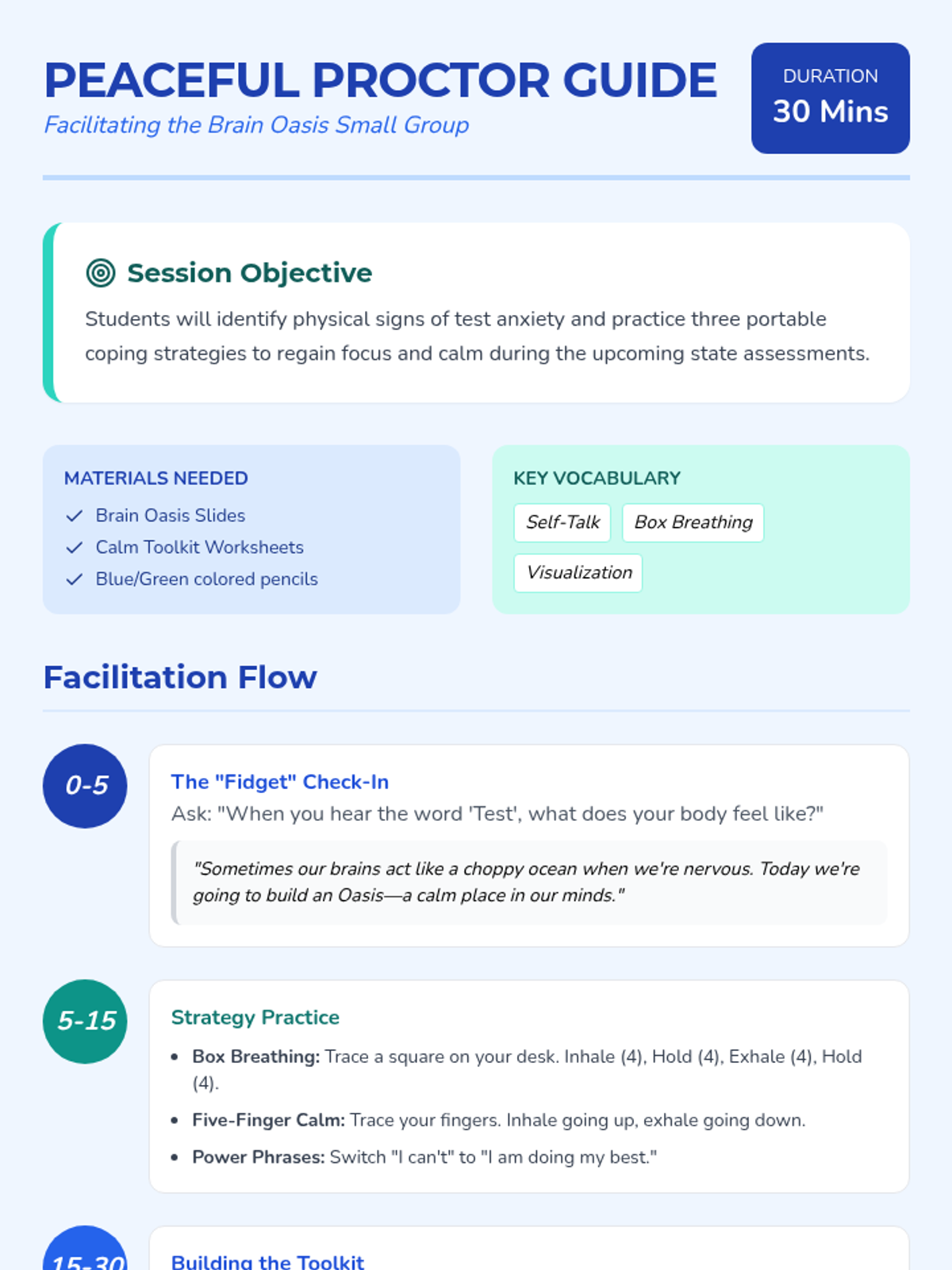
A series of lessons designed to help students manage testing anxiety through mindfulness, positive self-talk, and physical relaxation techniques.
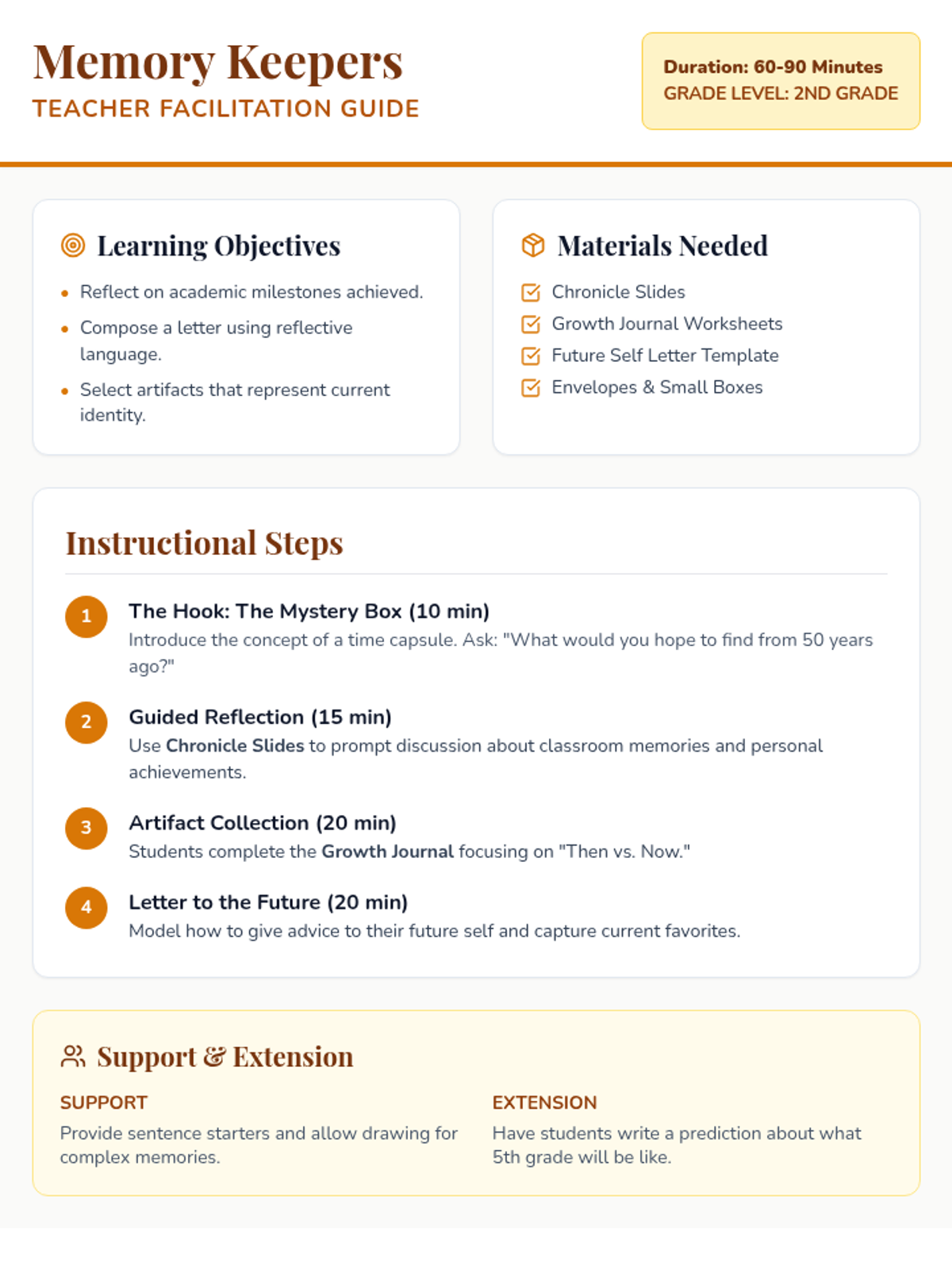
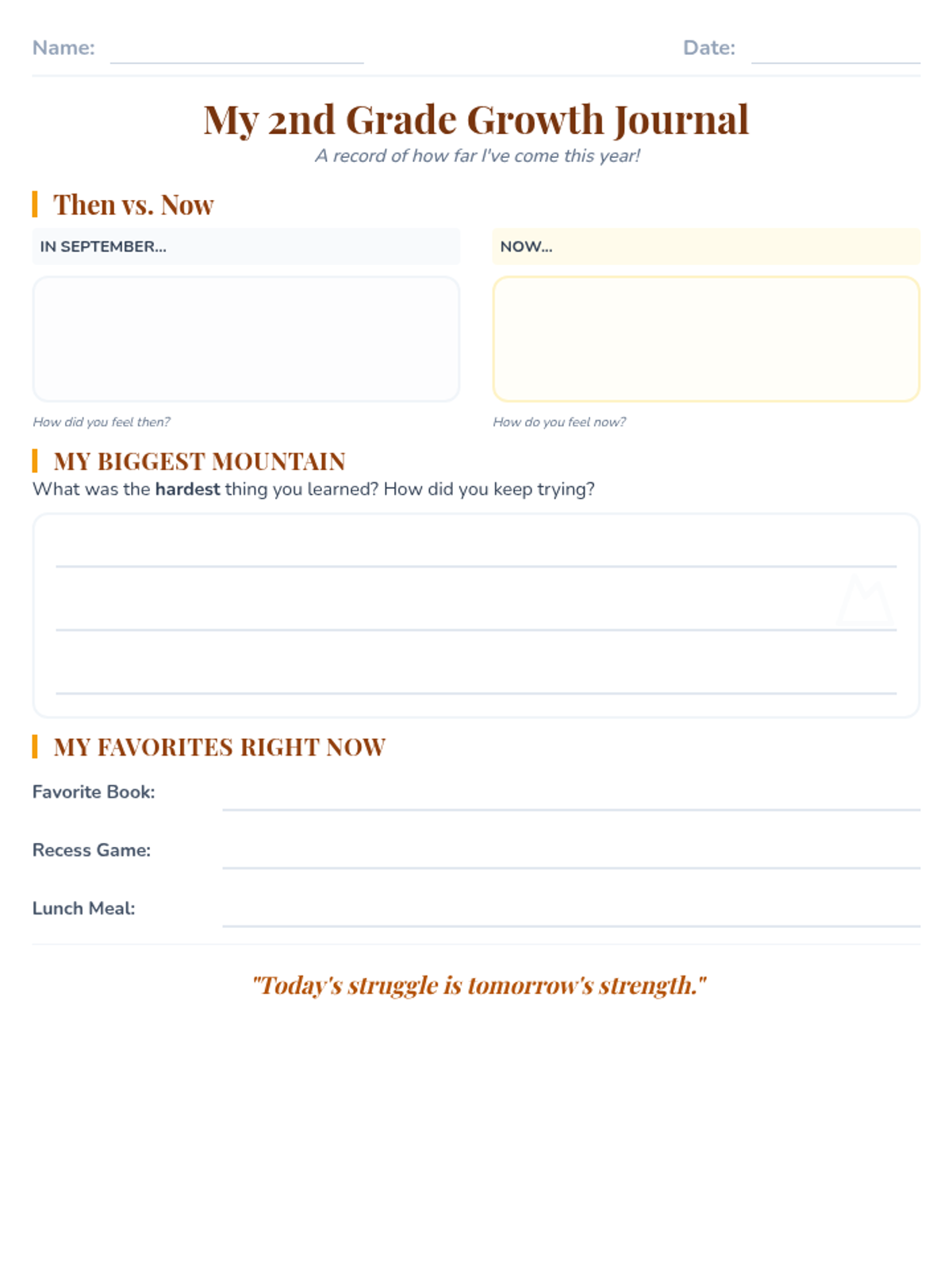
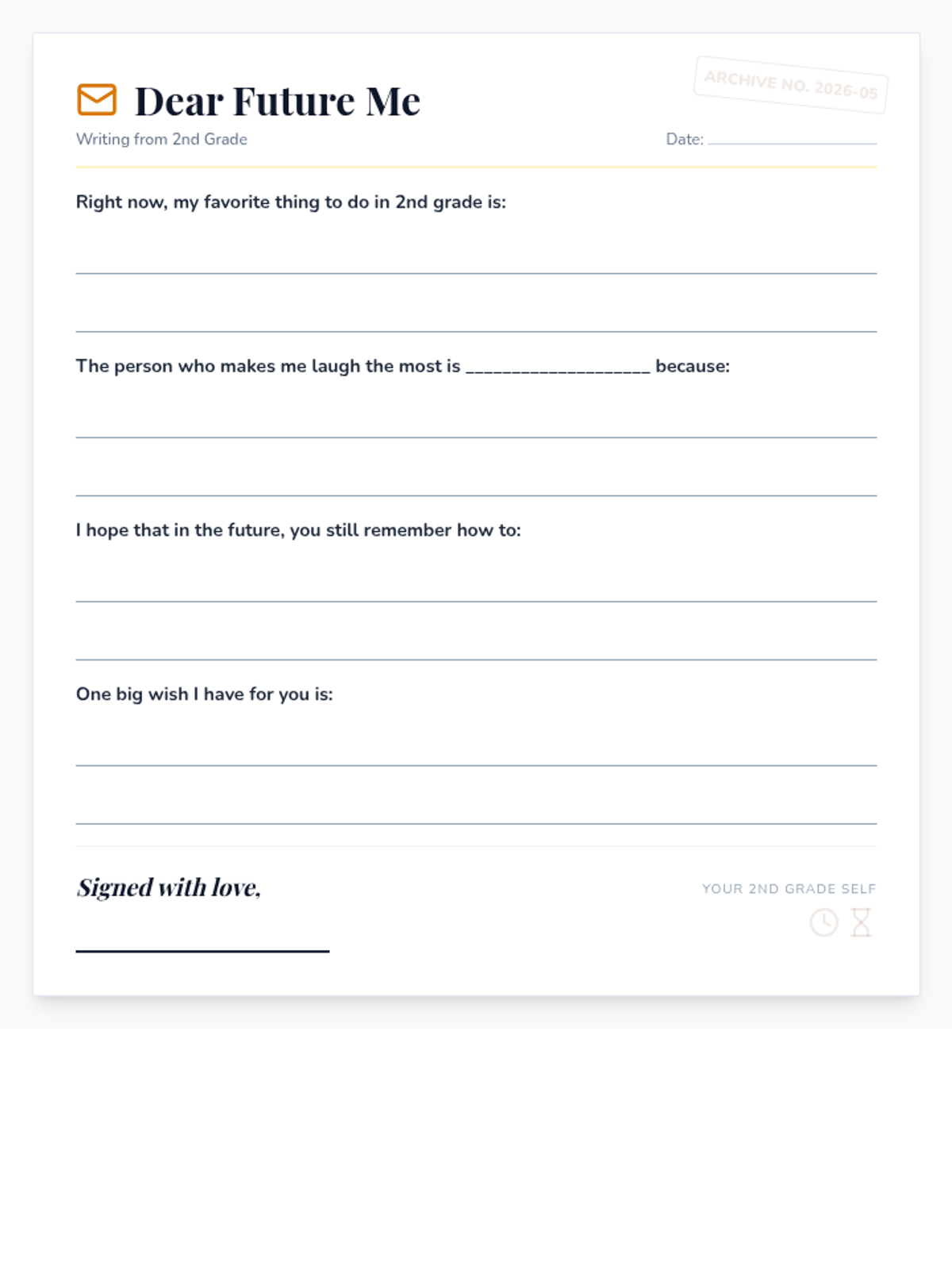
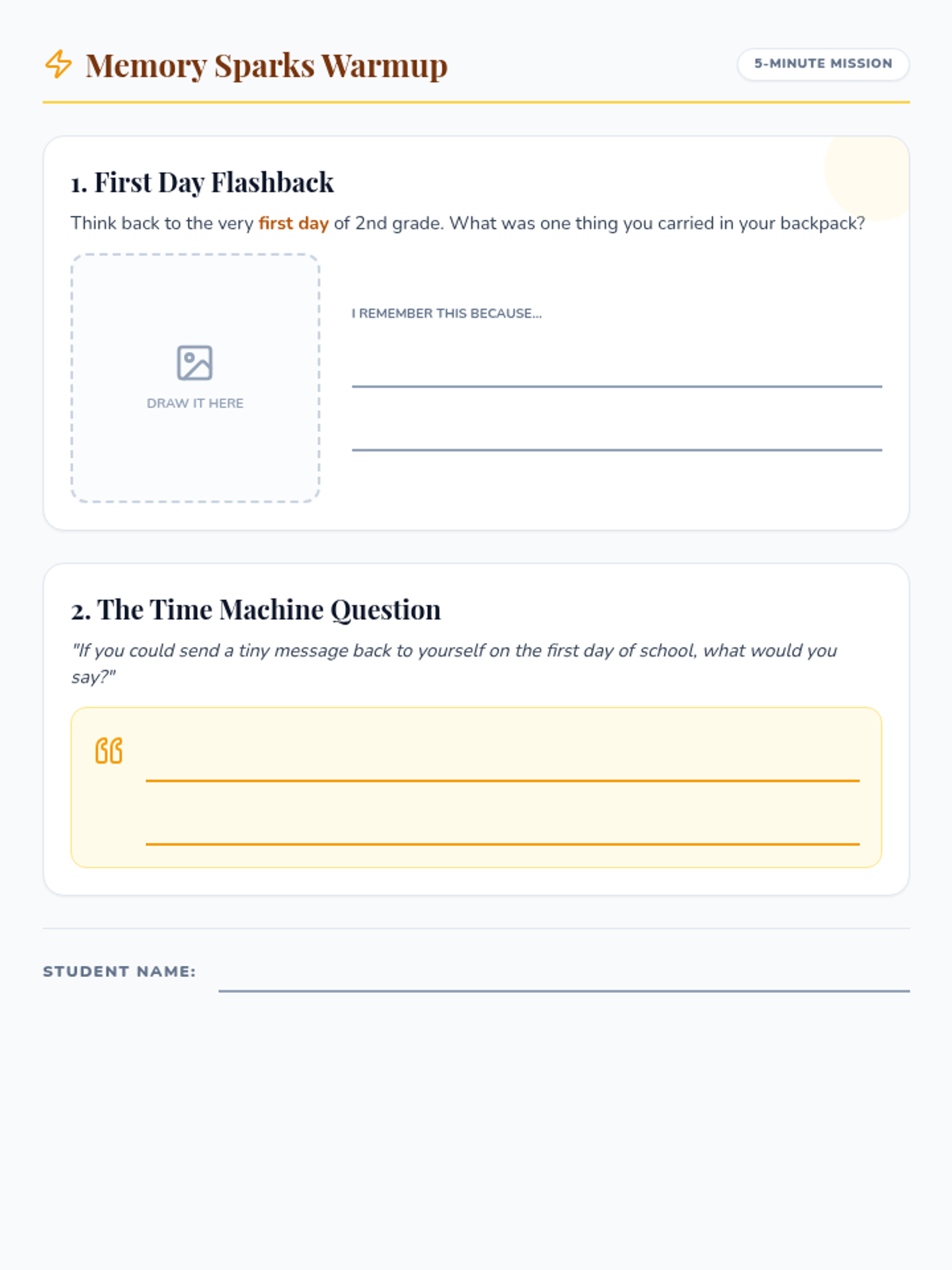
A reflective writing unit where students document their 2nd-grade journey, personal growth, and memories to create a personalized time capsule for their future selves.
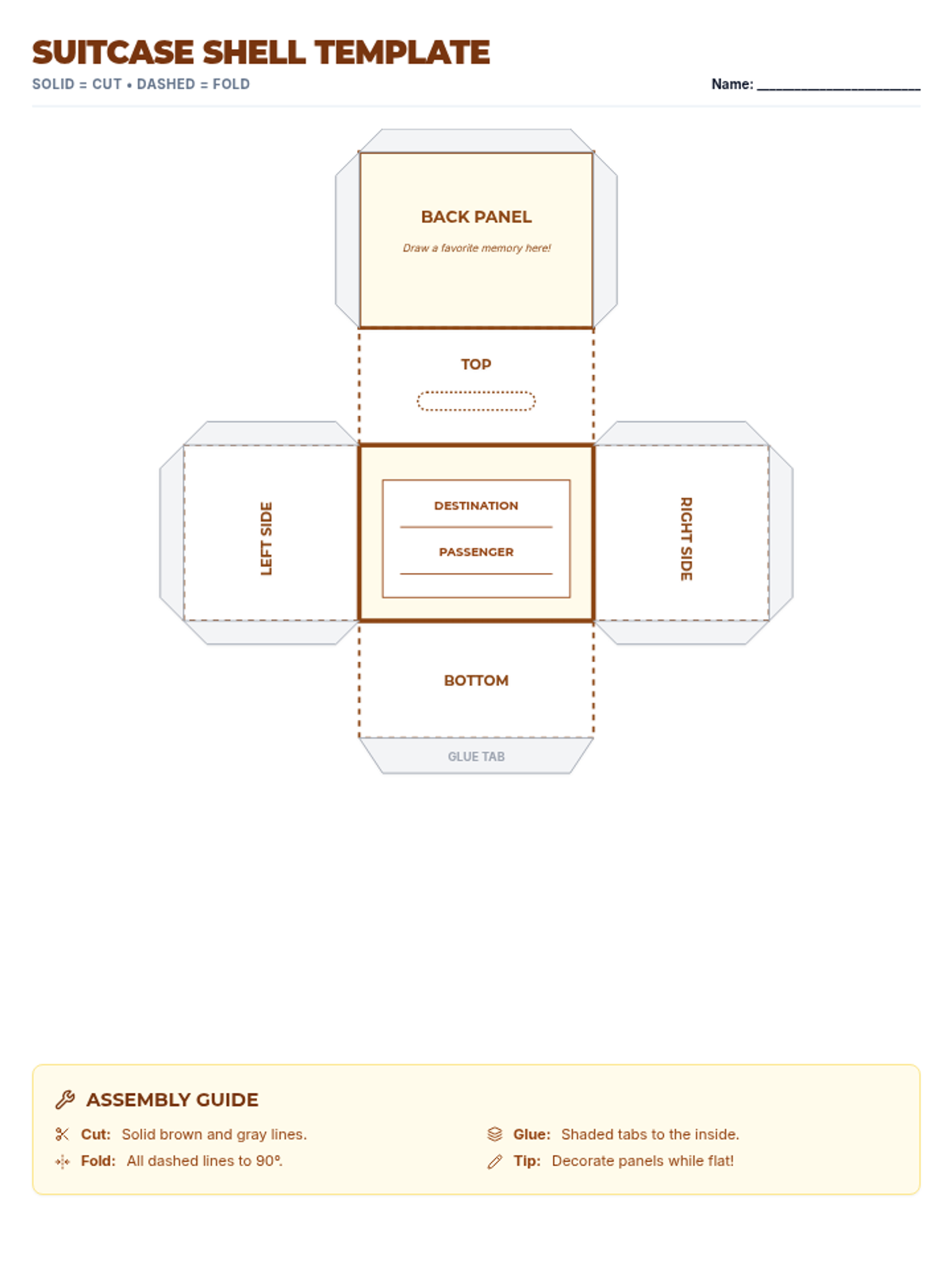
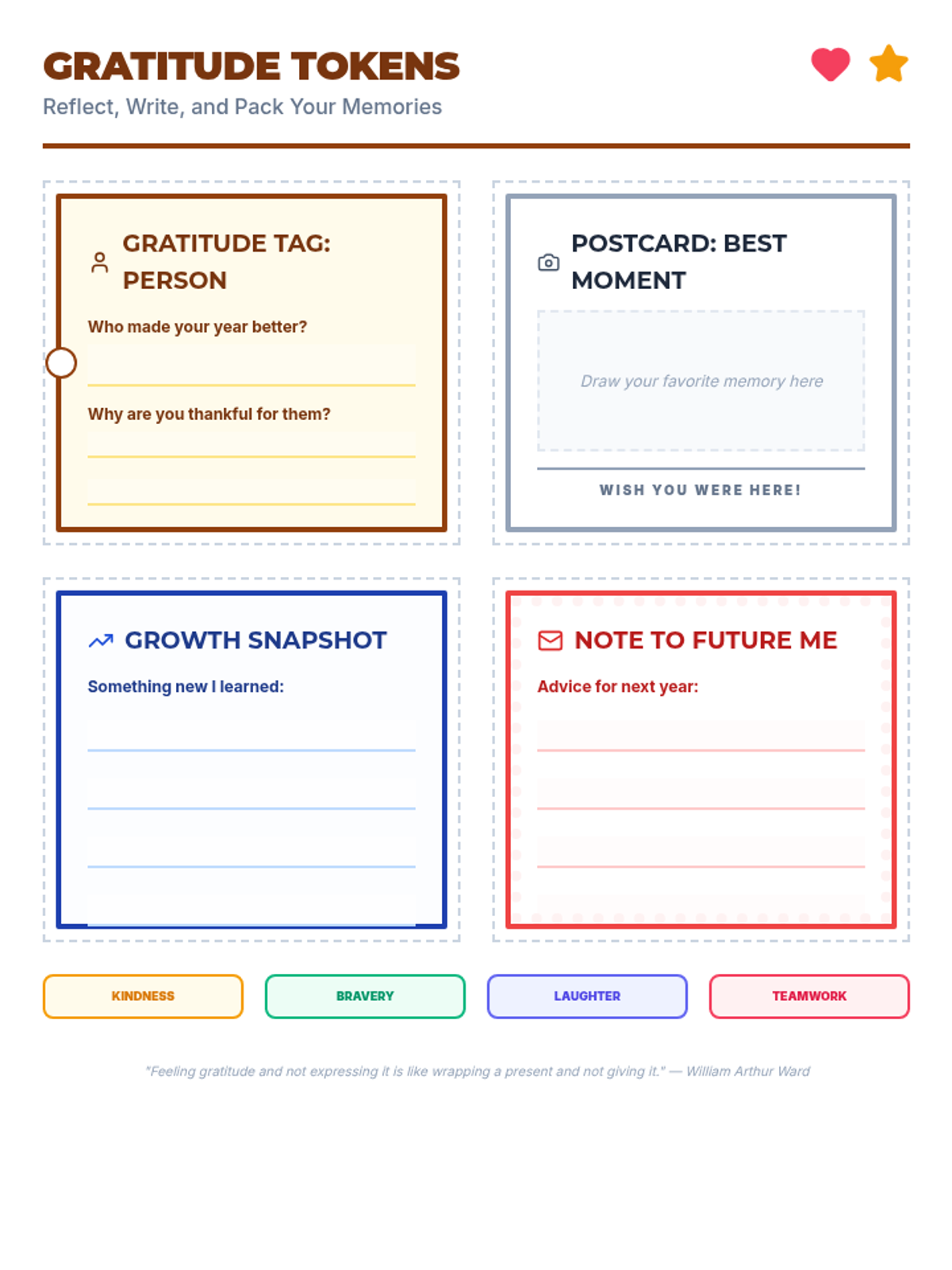
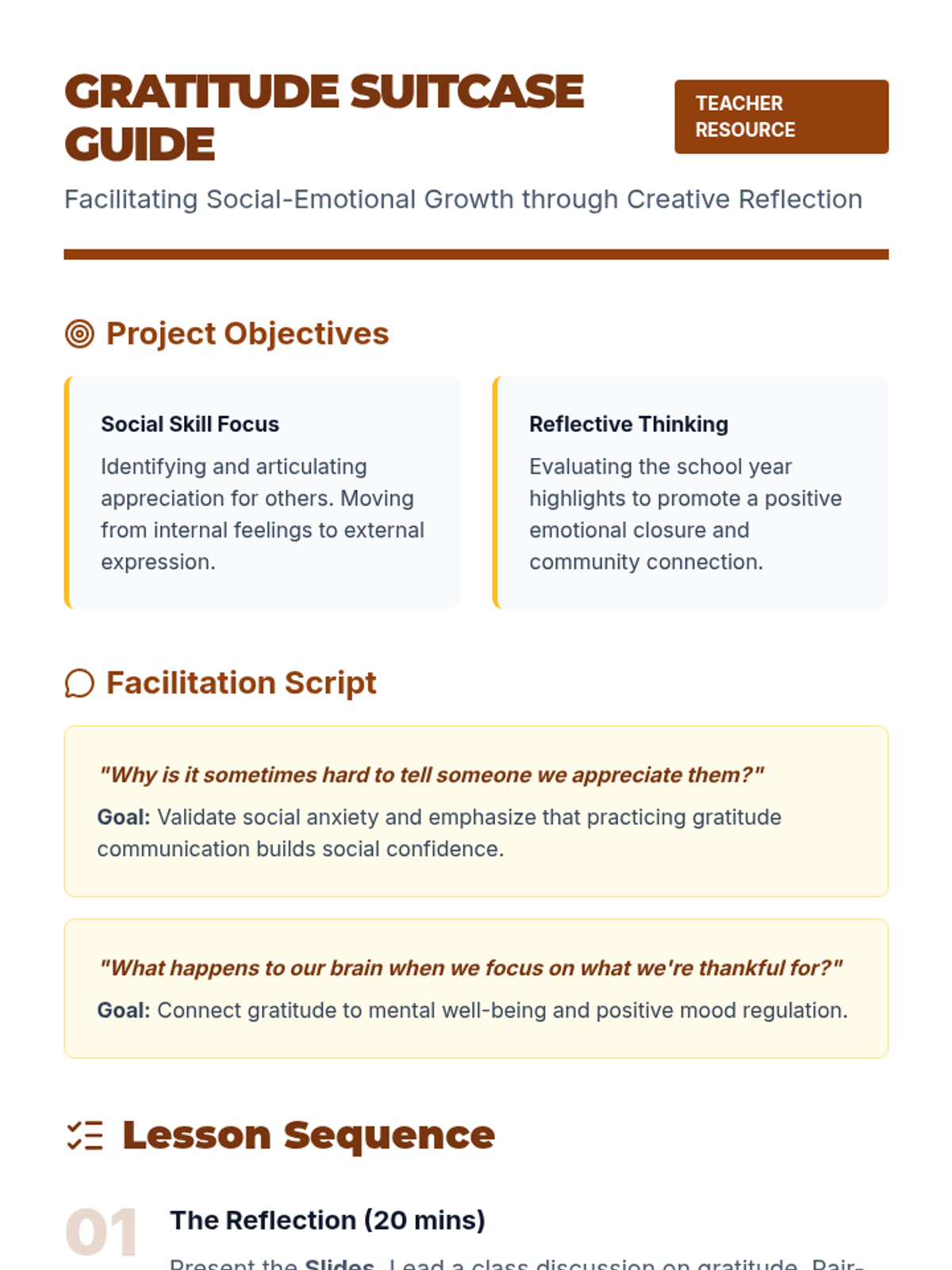
A creative end-of-year project where students reflect on their school year highlights by constructing a 3D "Gratitude Suitcase" box, focusing on the social skill of expressing appreciation.
A two-part 1-to-1 coaching series for gifted students struggling with perfectionism, designed to validate their high-potential brains while teaching resilience in the face of feedback and failure.
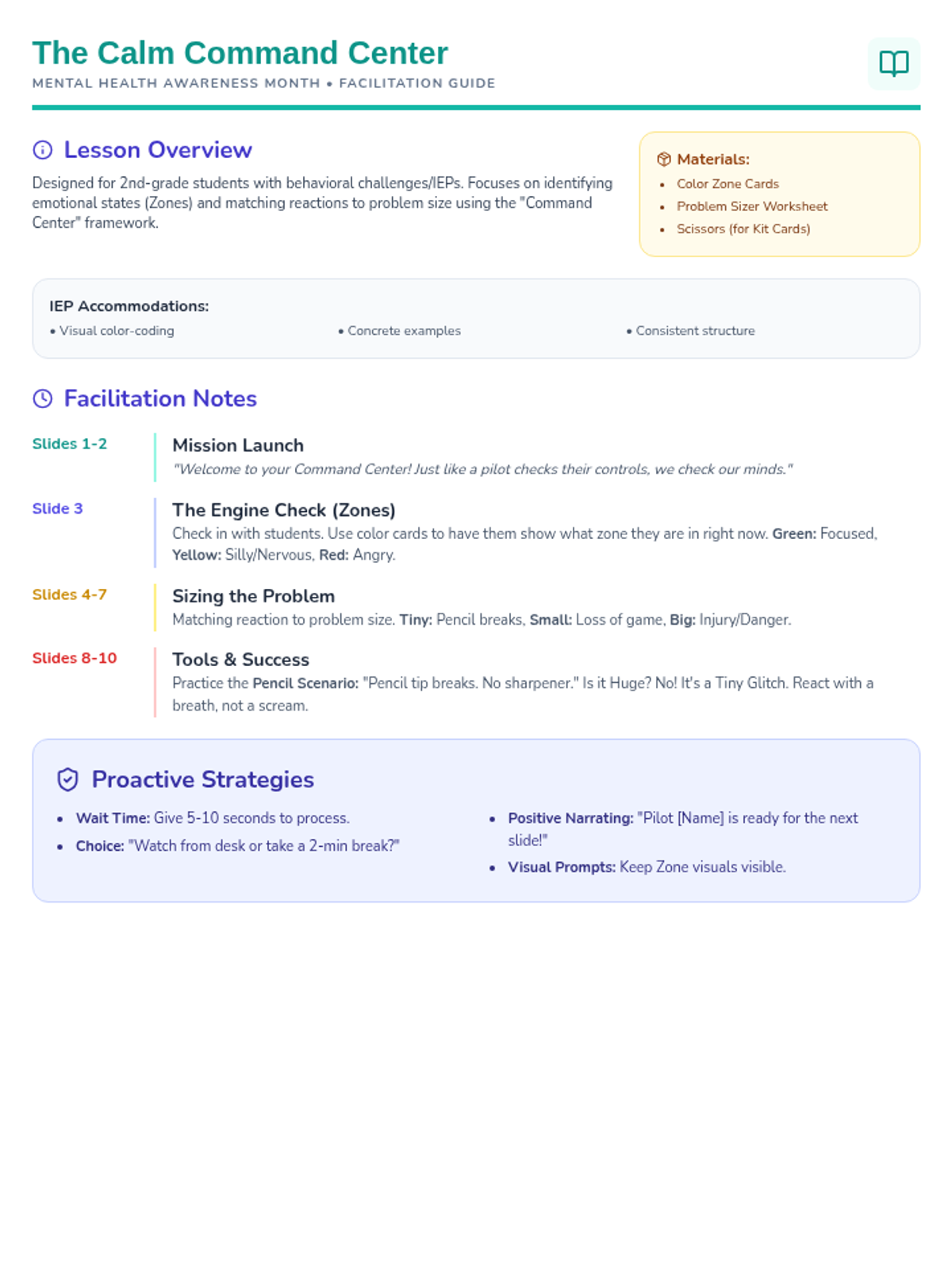
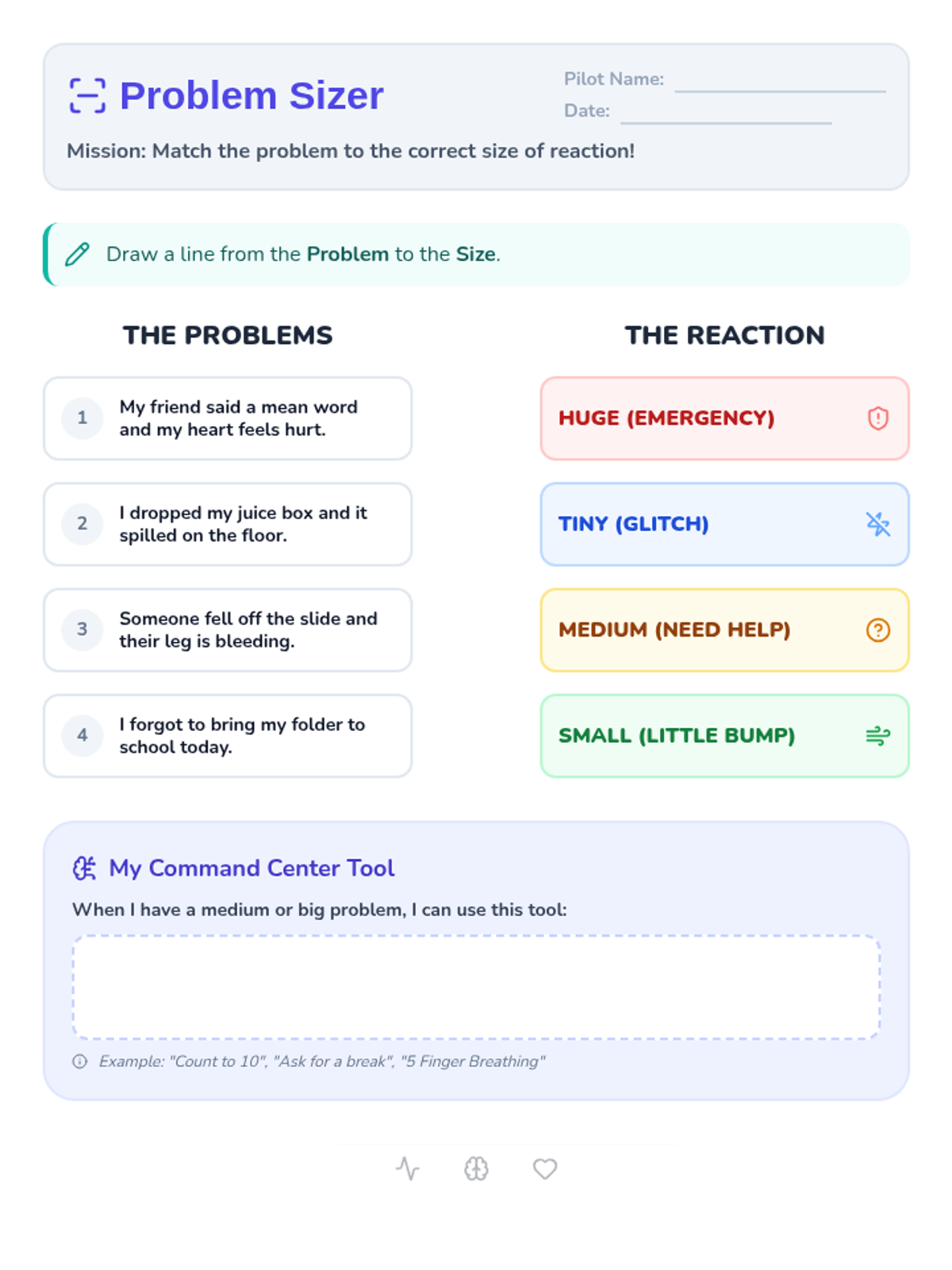
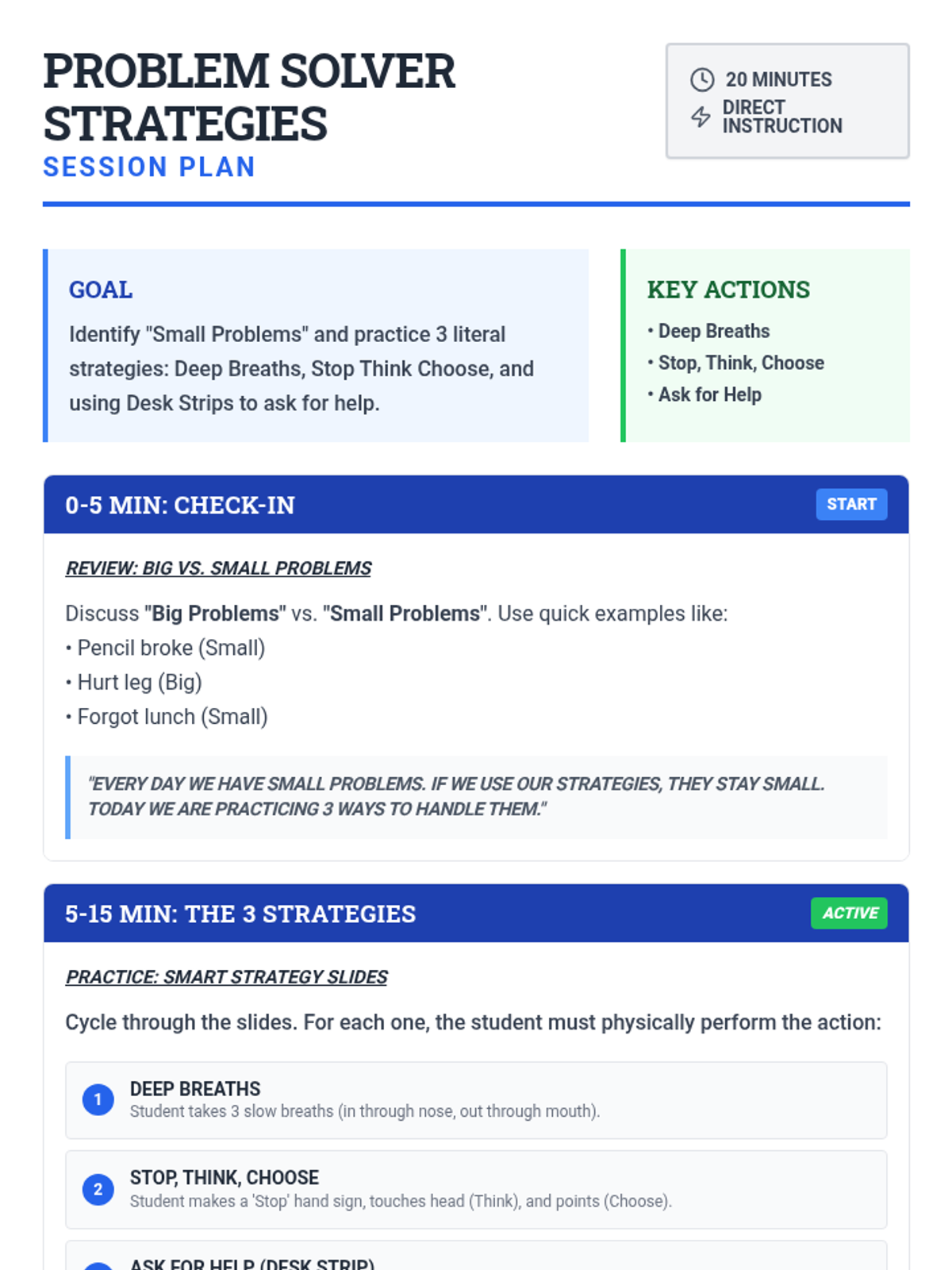
A comprehensive mental health unit for primary students, focusing on emotional literacy, self-regulation strategies, and understanding the 'size' of problems to foster resilience and social-emotional growth.
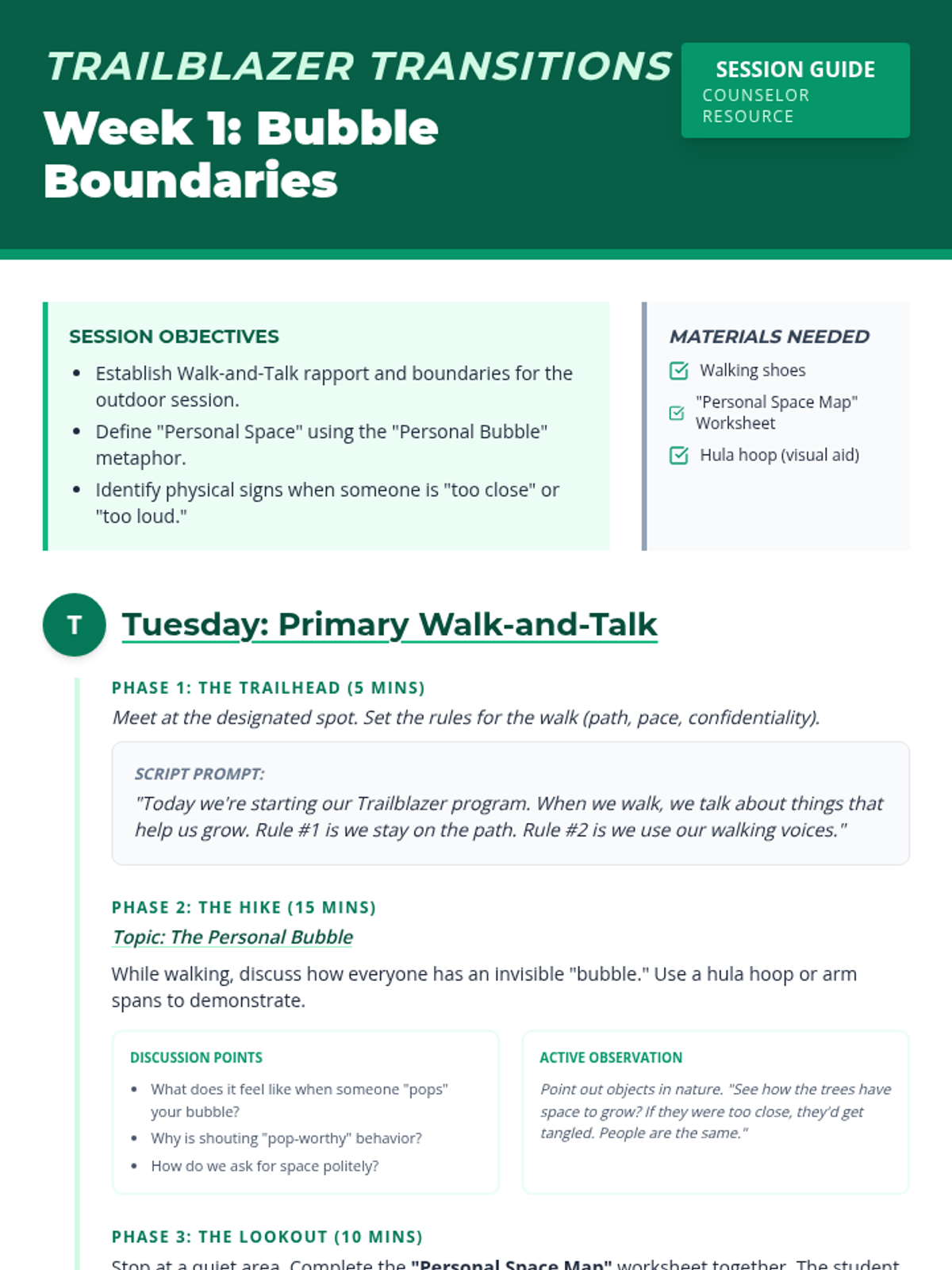
A 5-week school-based counseling program designed to improve student self-regulation and personal boundaries through walk-and-talk therapy and informal check-ins.
A developmental counseling sequence designed to help 1st, 3rd, and 5th-grade students reflect on their personal growth, process the transition of the ending school year, and build positive coping strategies for managing big feelings during the summer.
A comprehensive social-emotional learning unit designed to build empathy, conflict resolution skills, and perspective-taking across different grade levels.
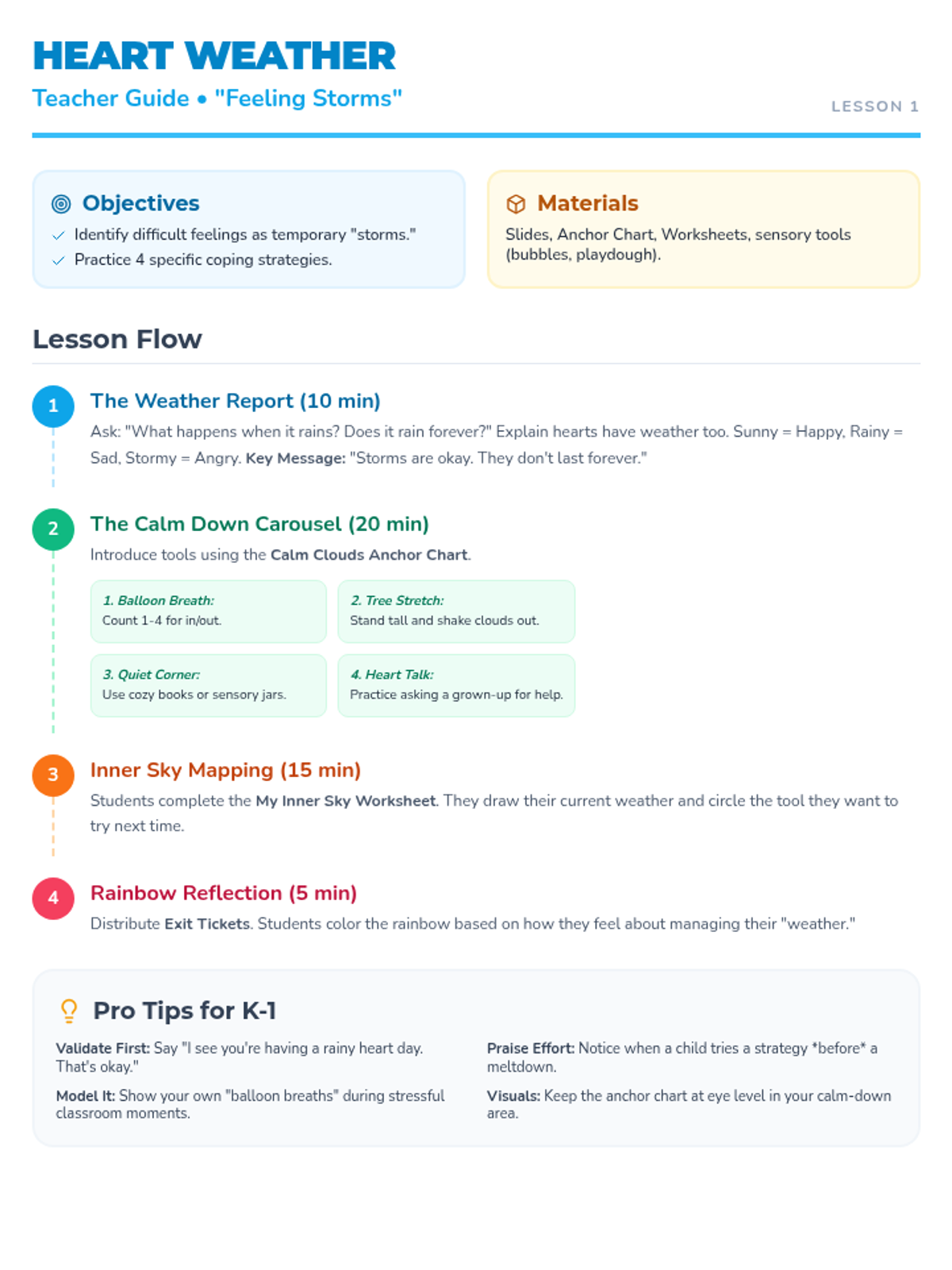
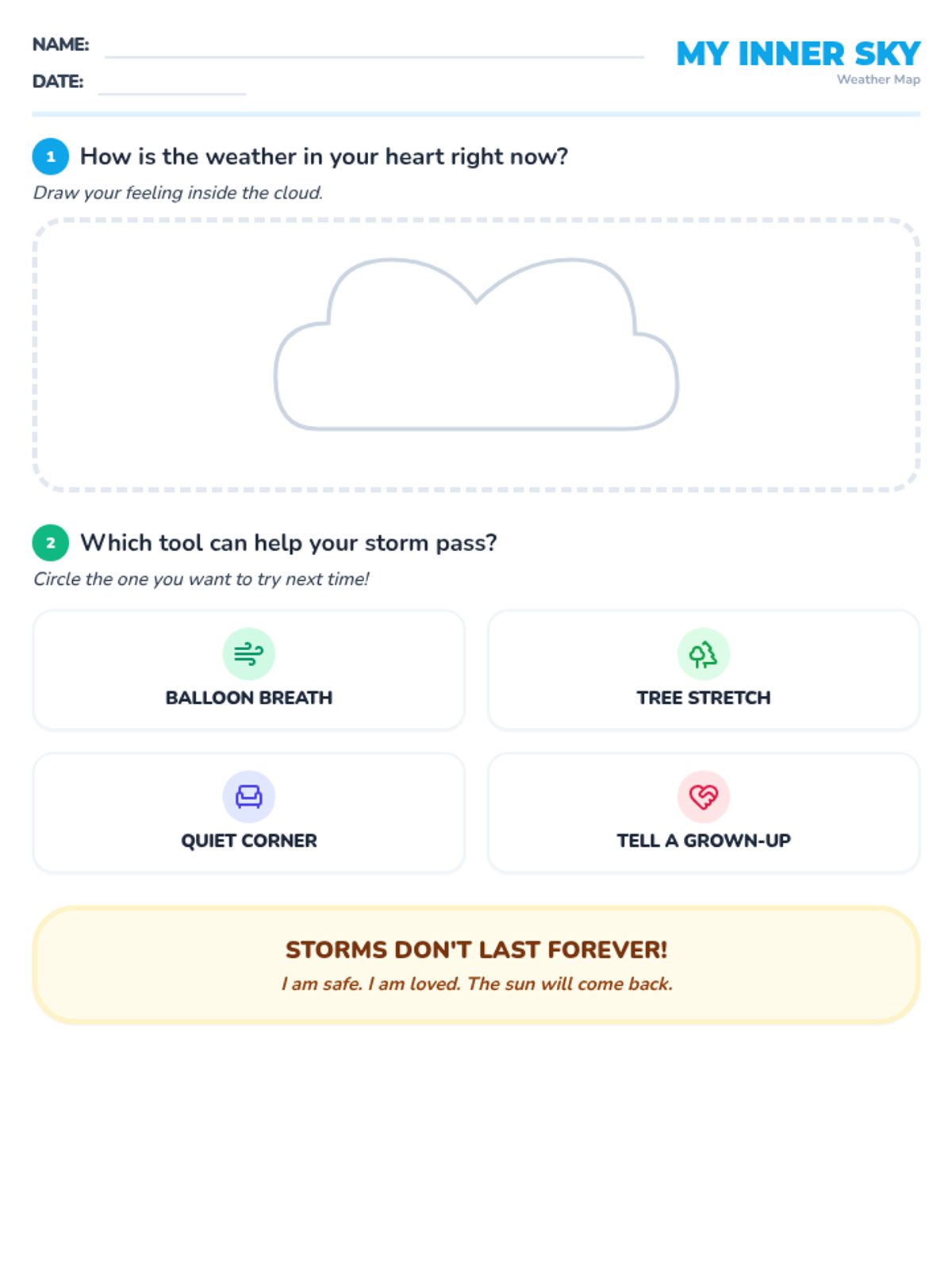
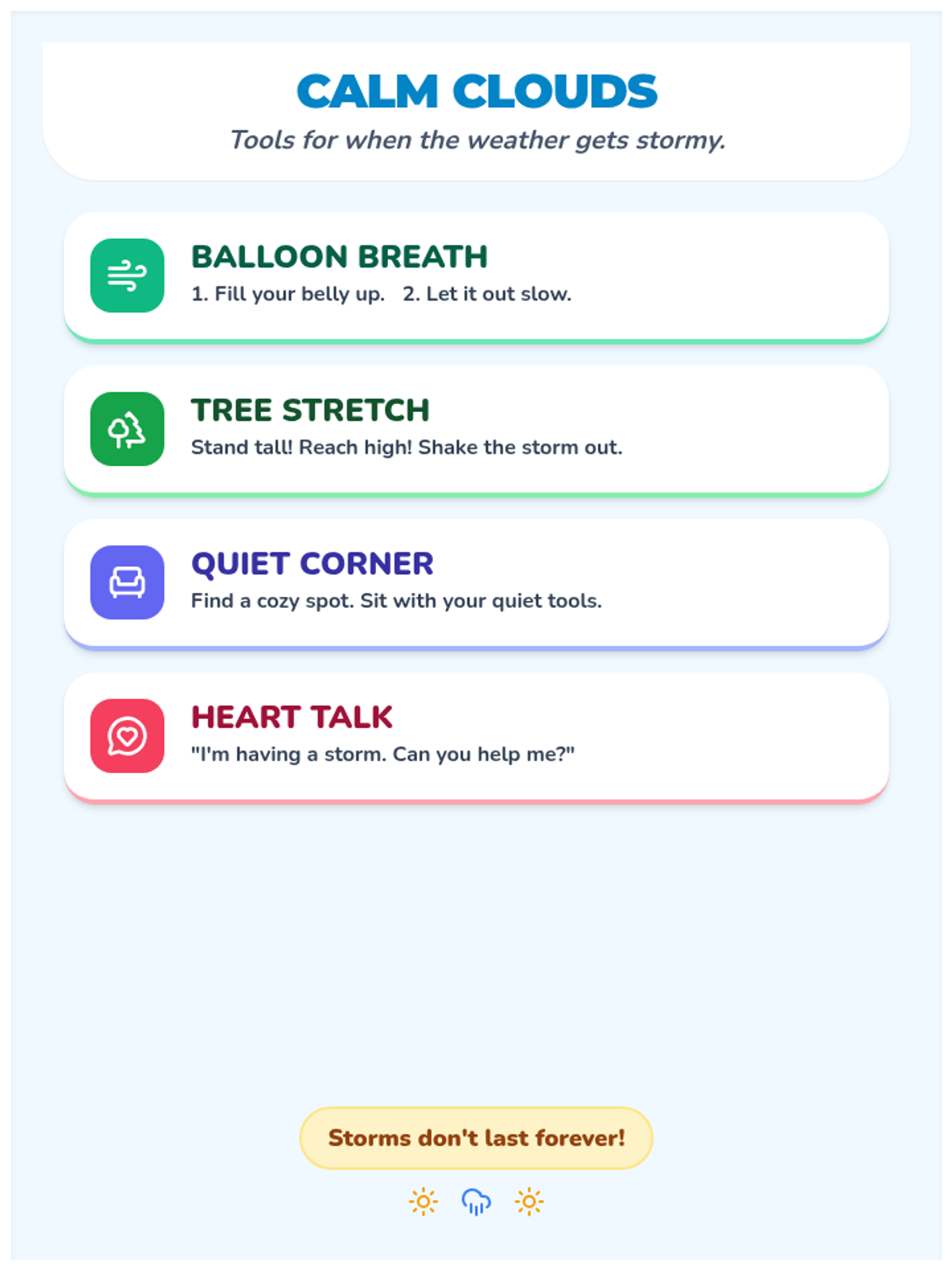
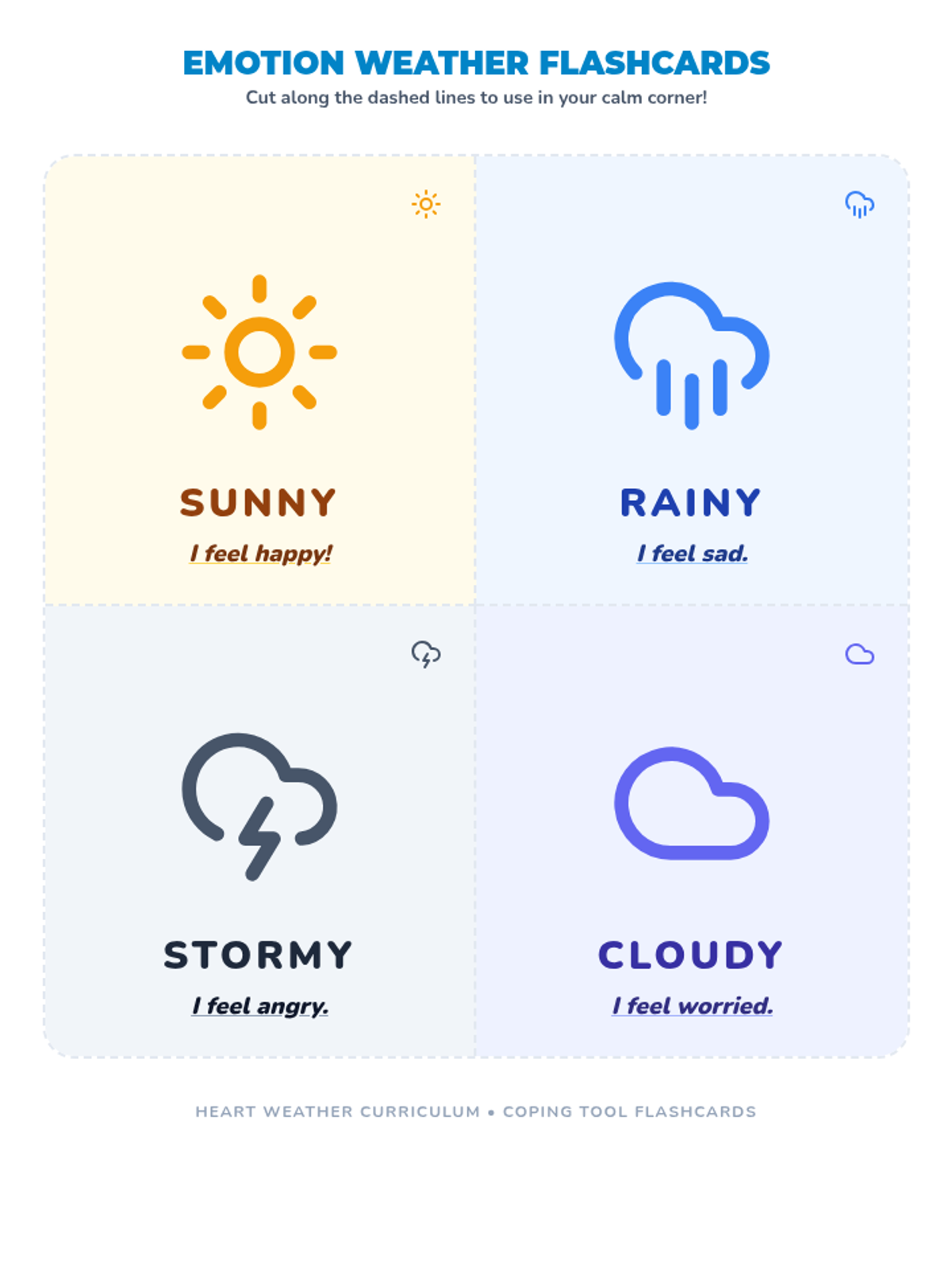
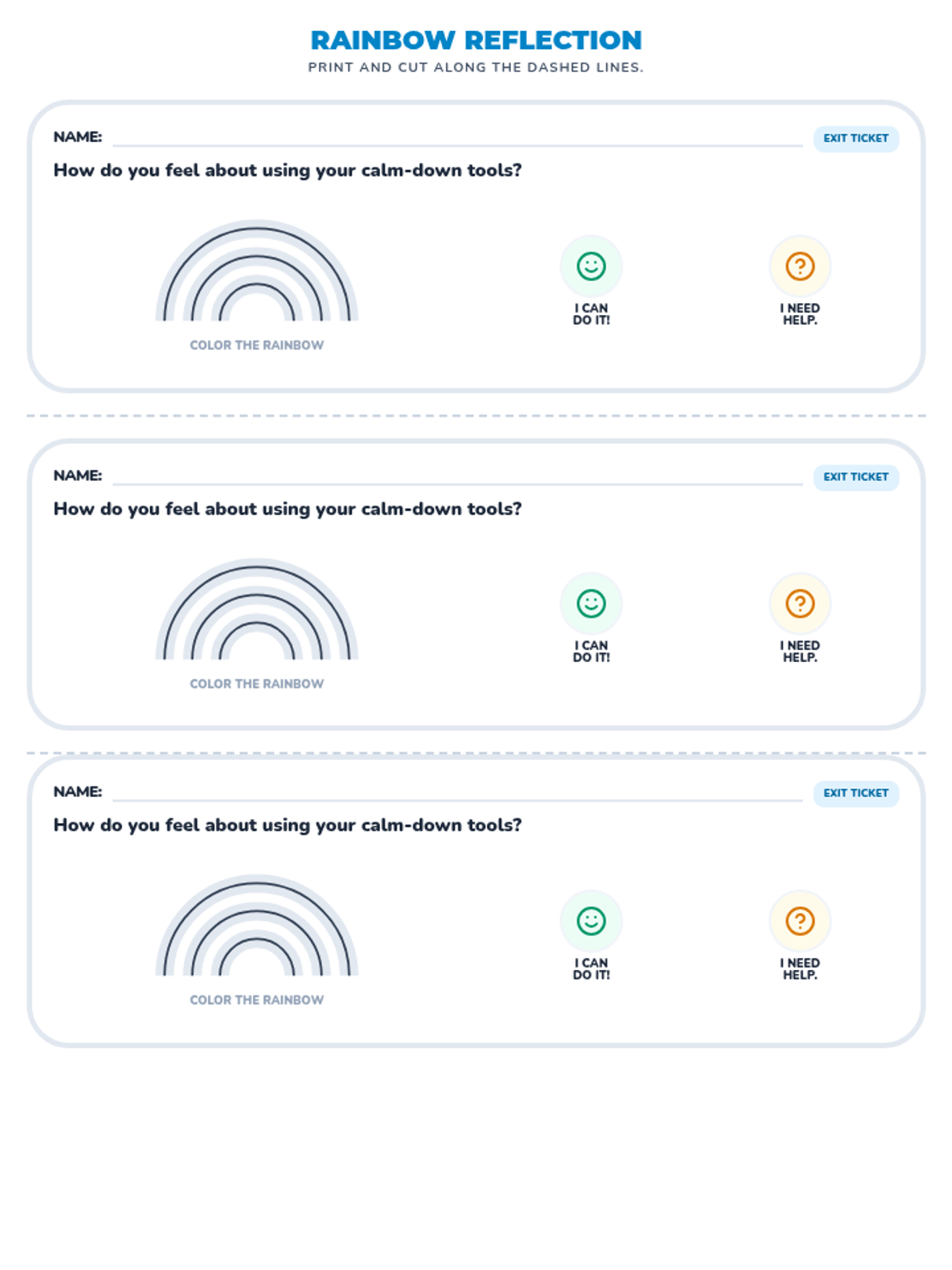
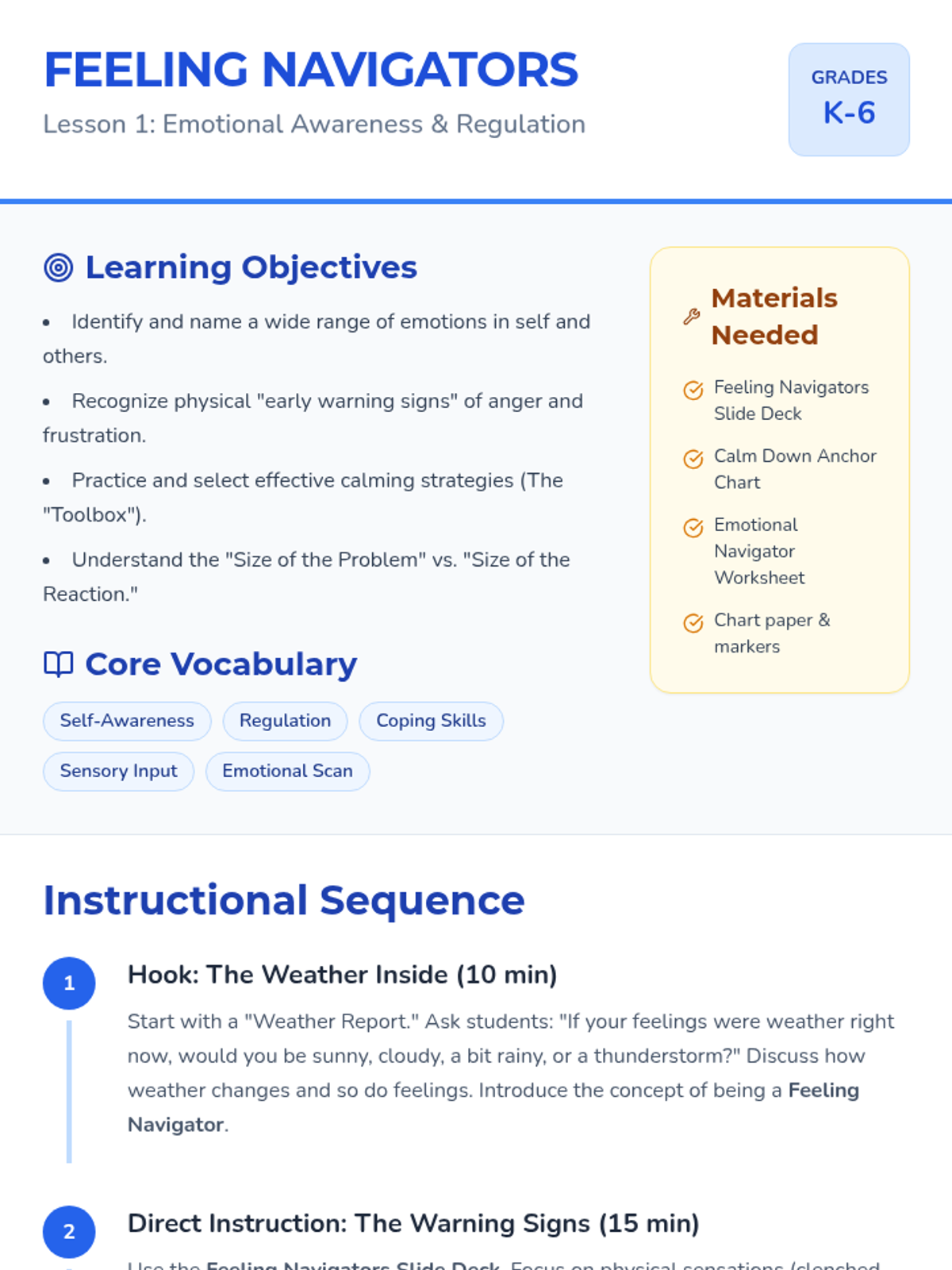
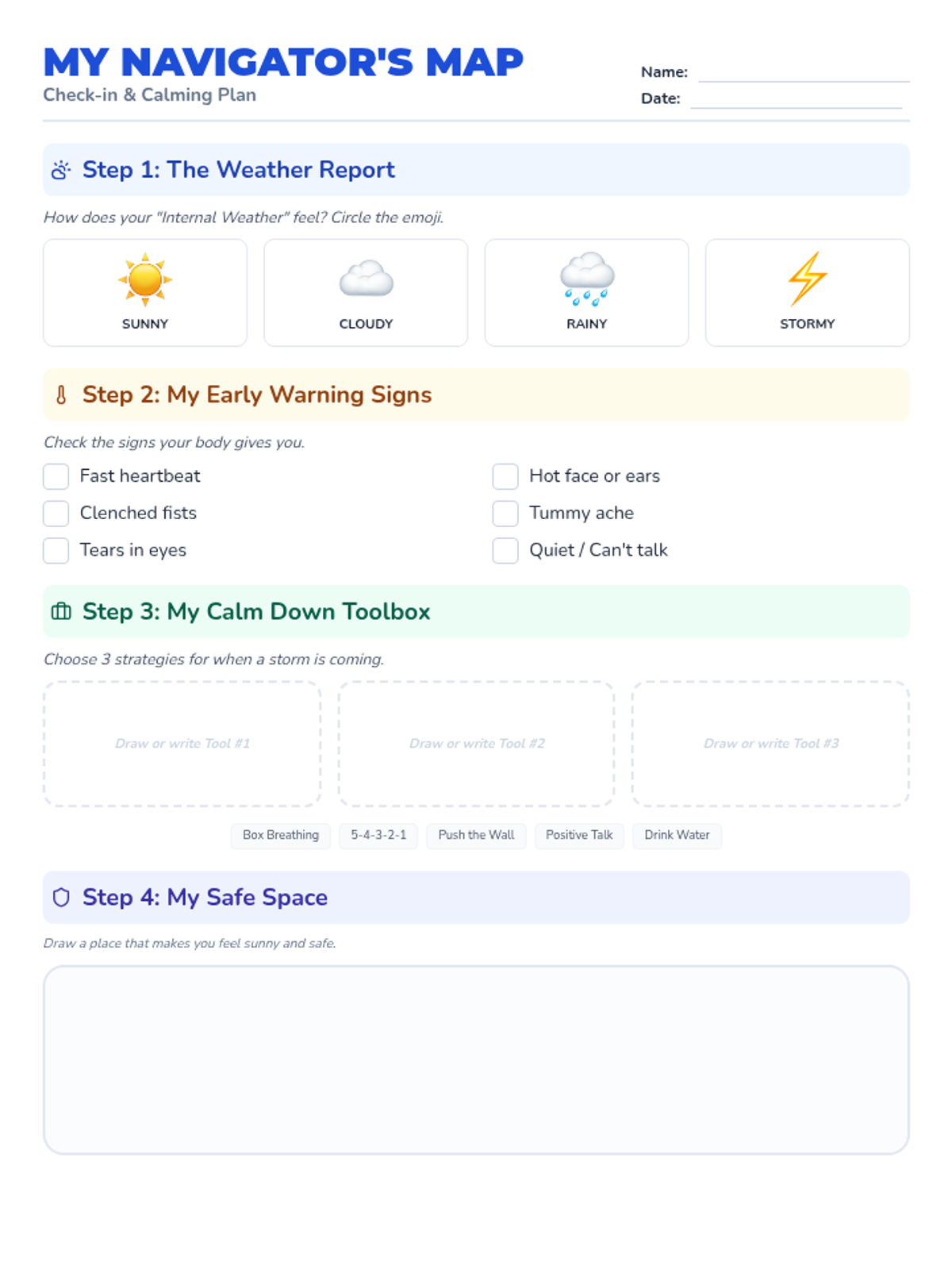
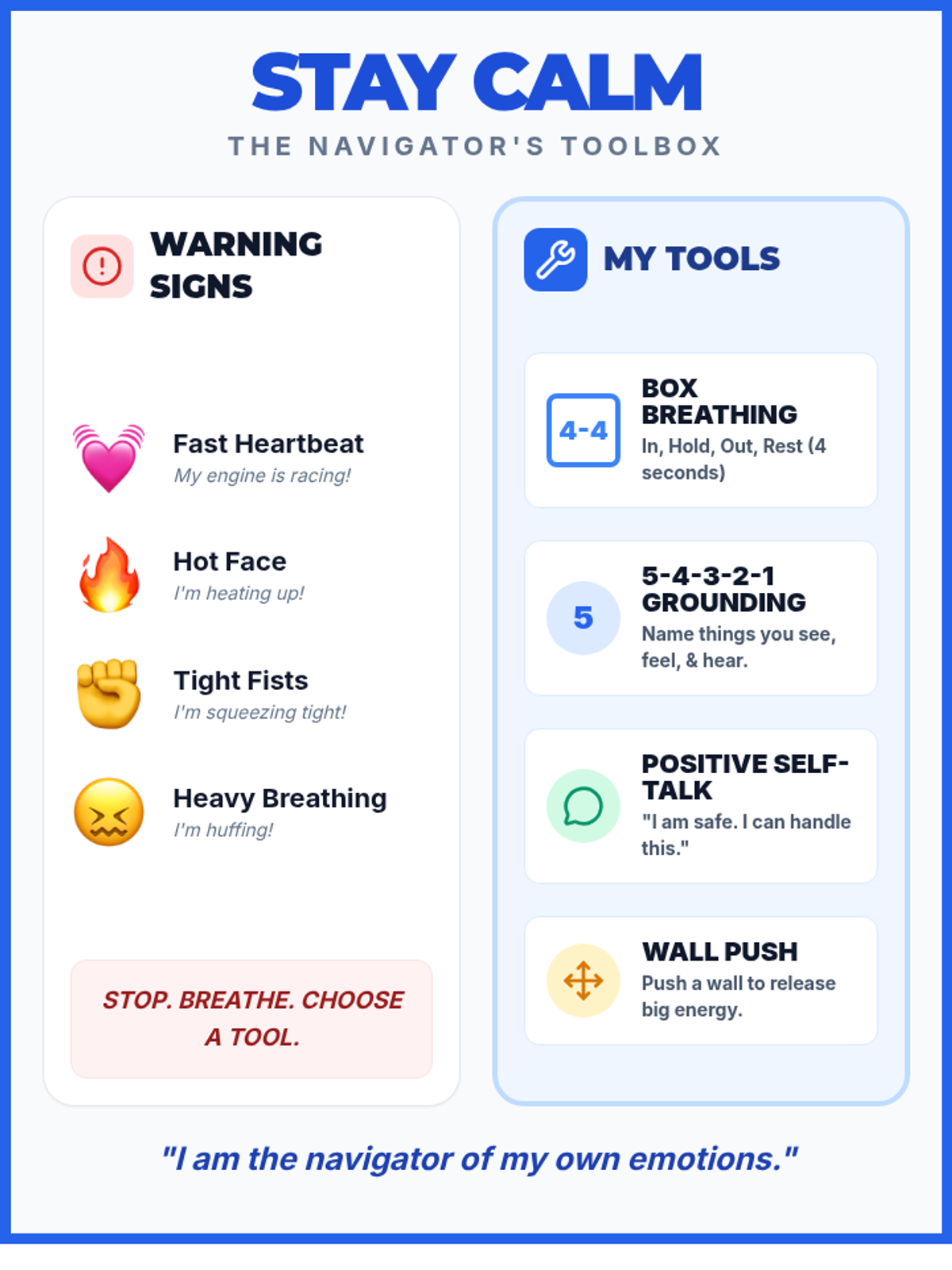
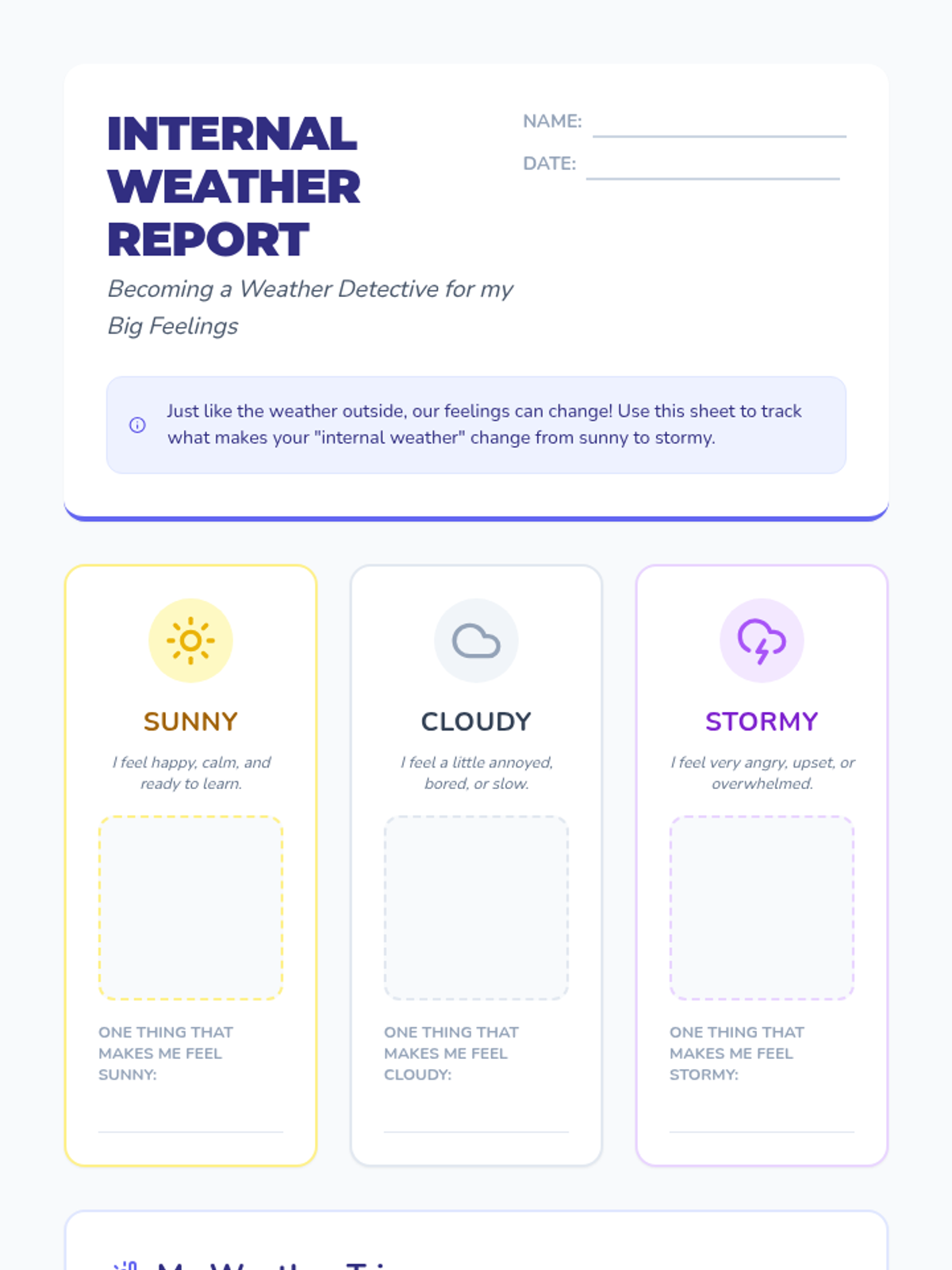
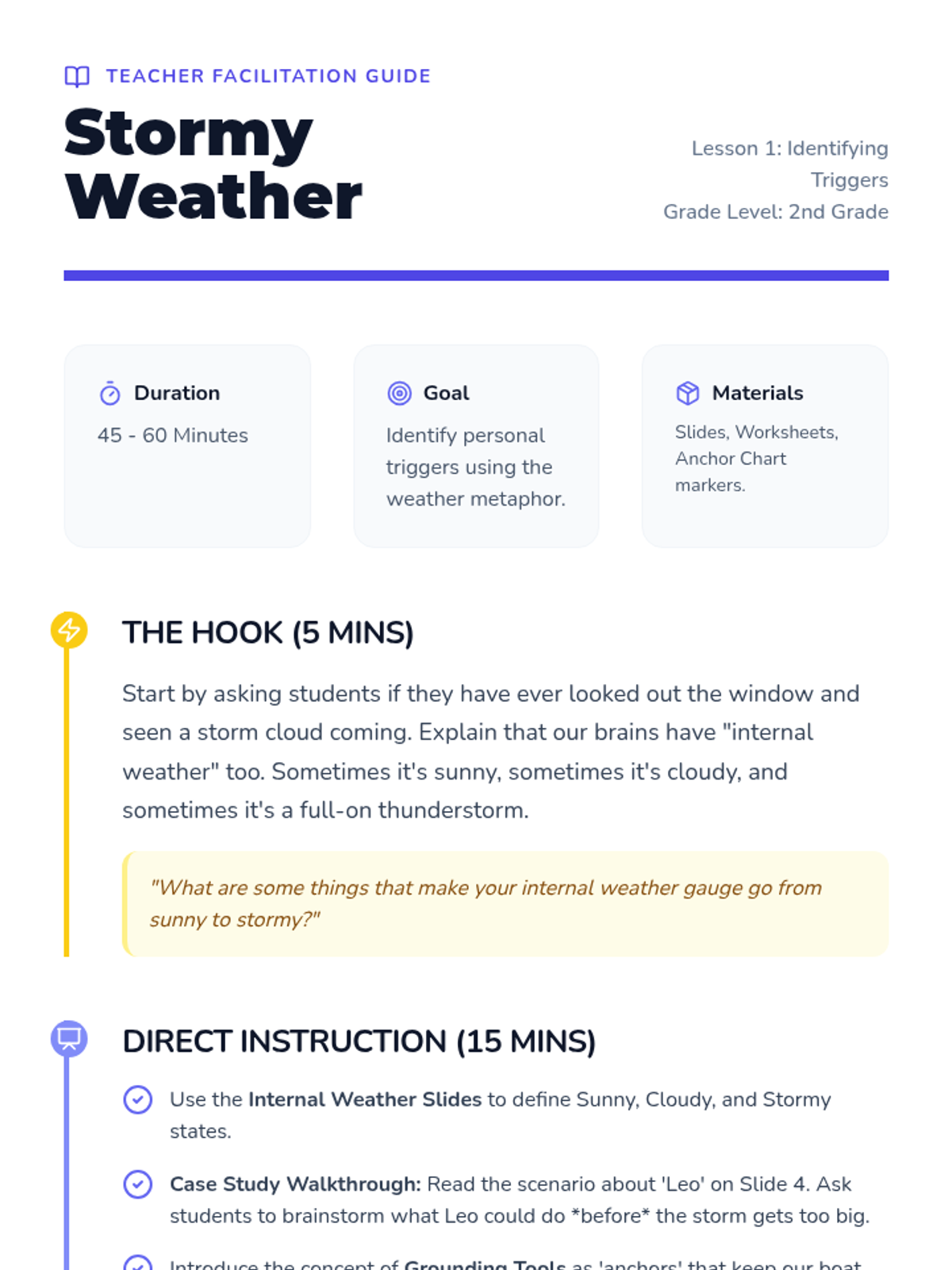
A social-emotional learning unit for K-1 students that uses the metaphor of weather to teach children how to recognize, accept, and manage difficult emotions using specific coping strategies.
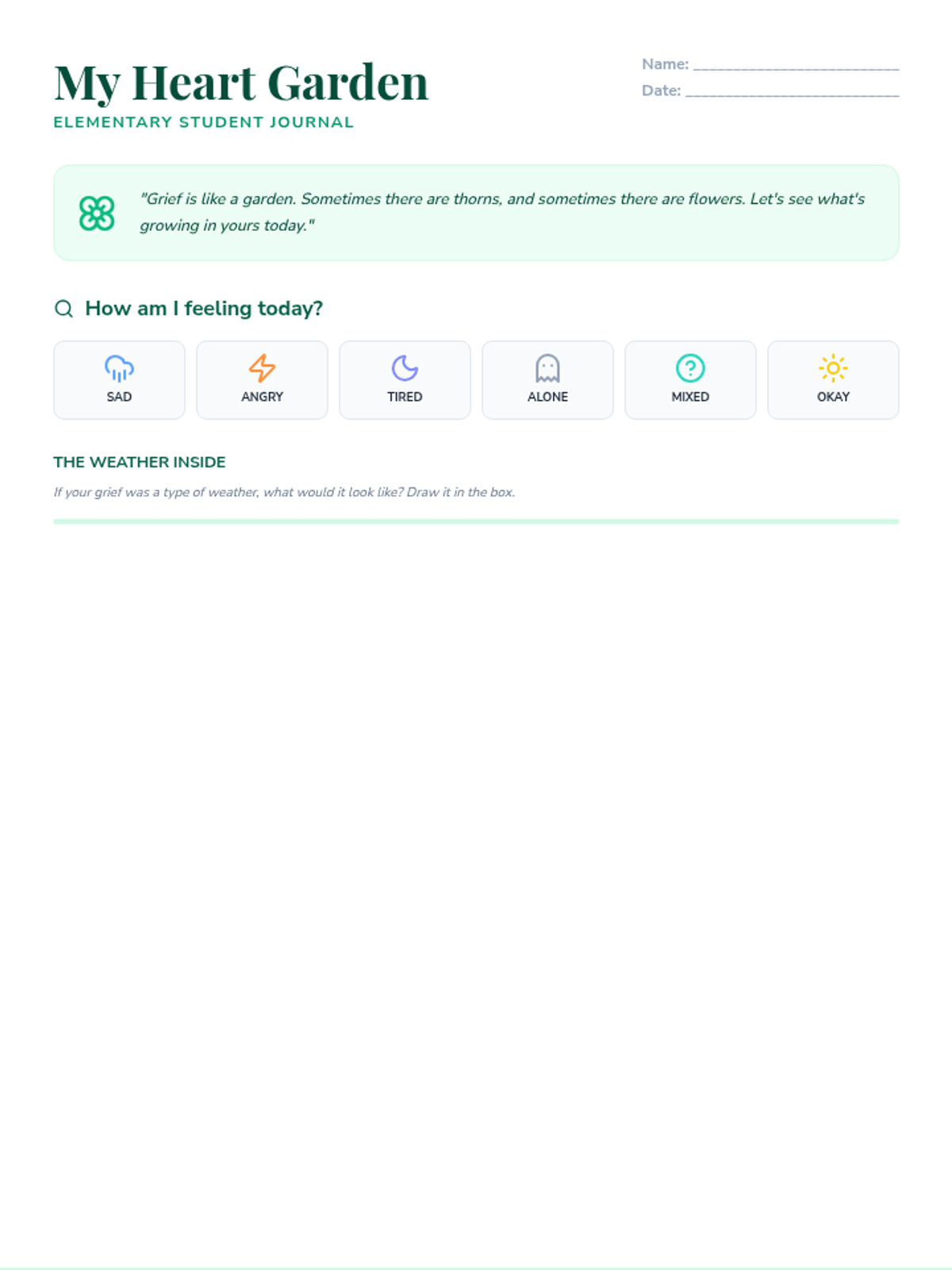
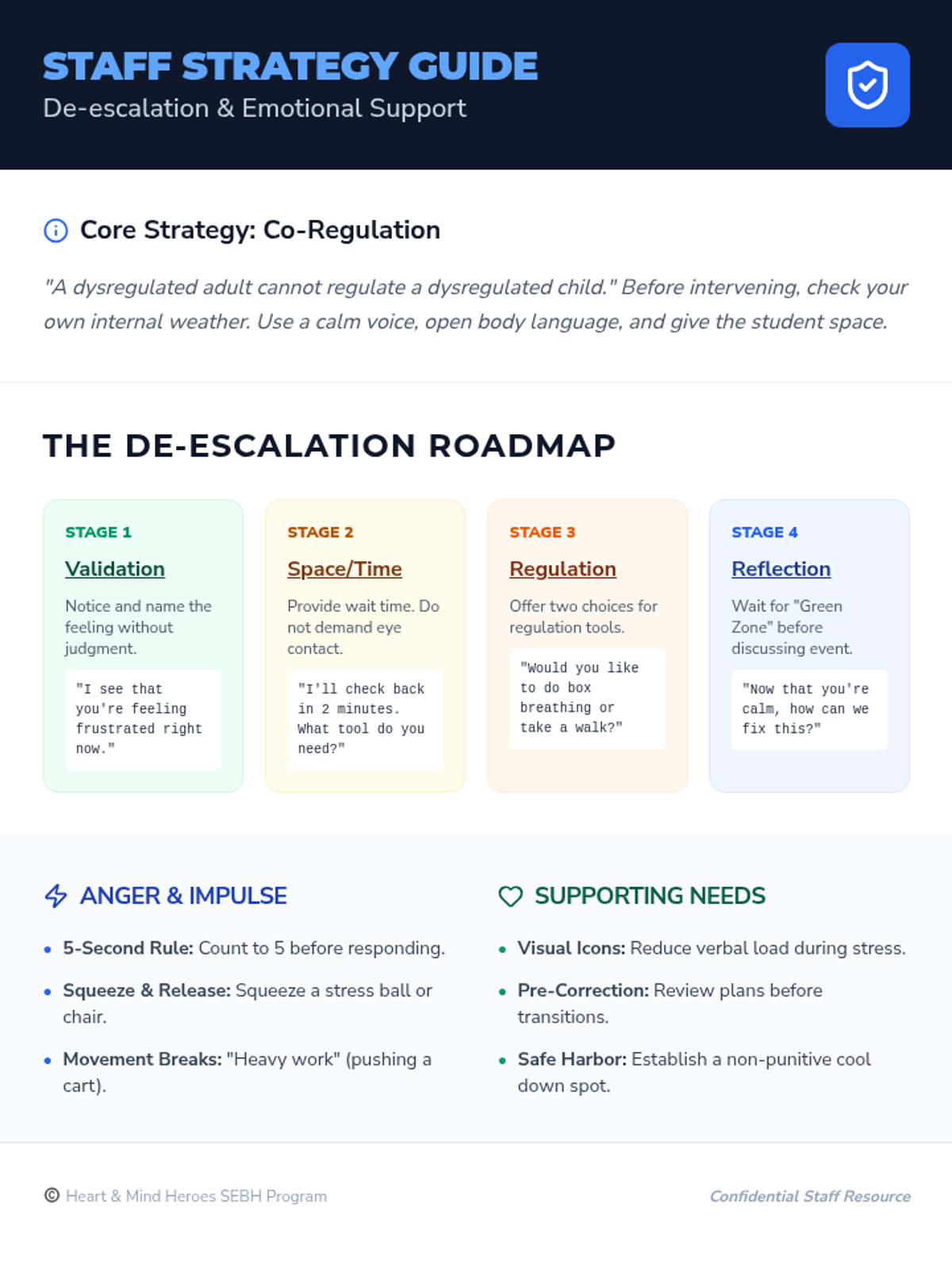
A comprehensive toolkit for school counselors and staff to support students experiencing prolonged grief. This sequence provides age-appropriate emotional regulation tools, communication strategies, and professional development for staff to create a trauma-informed environment.
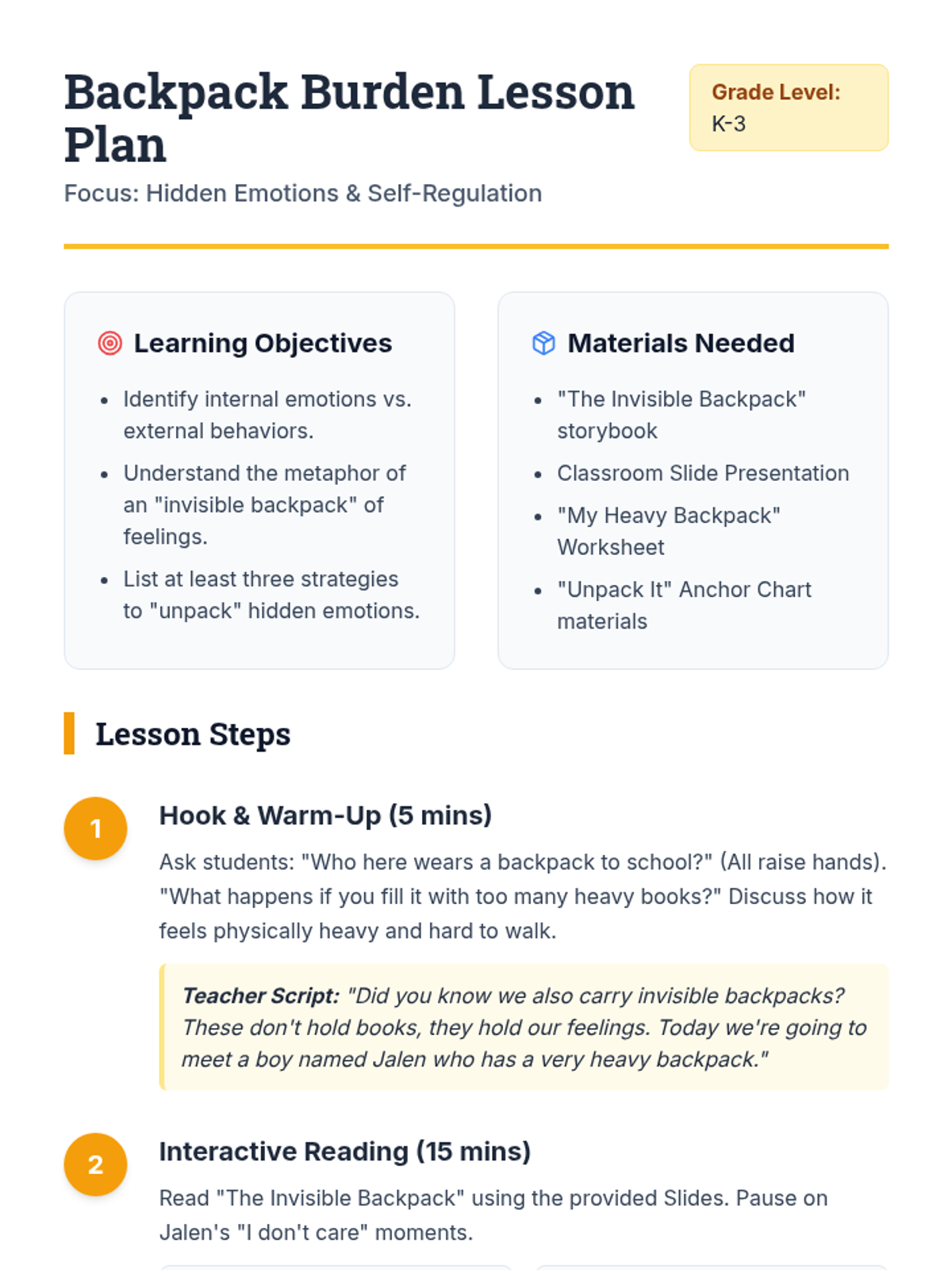
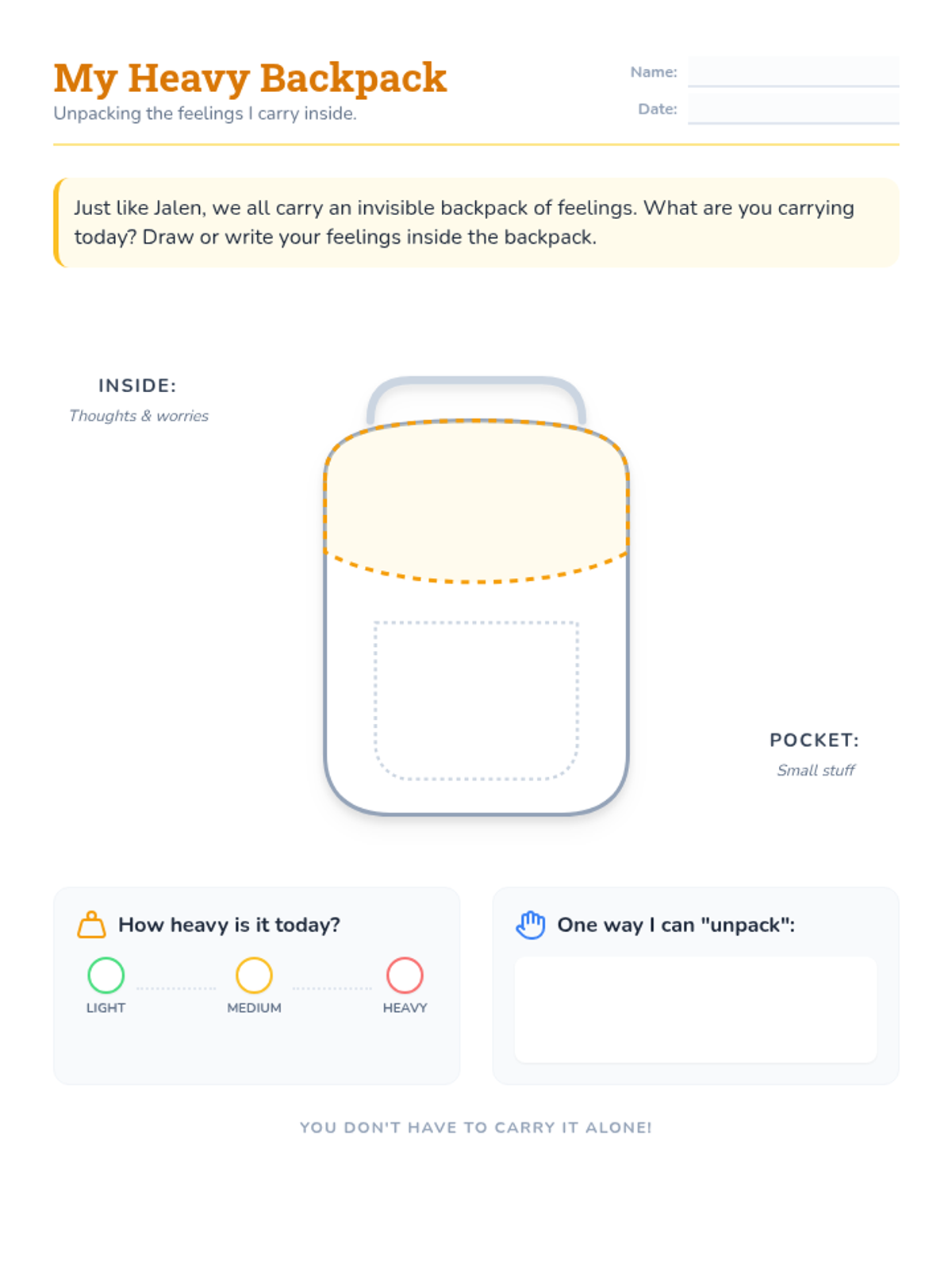
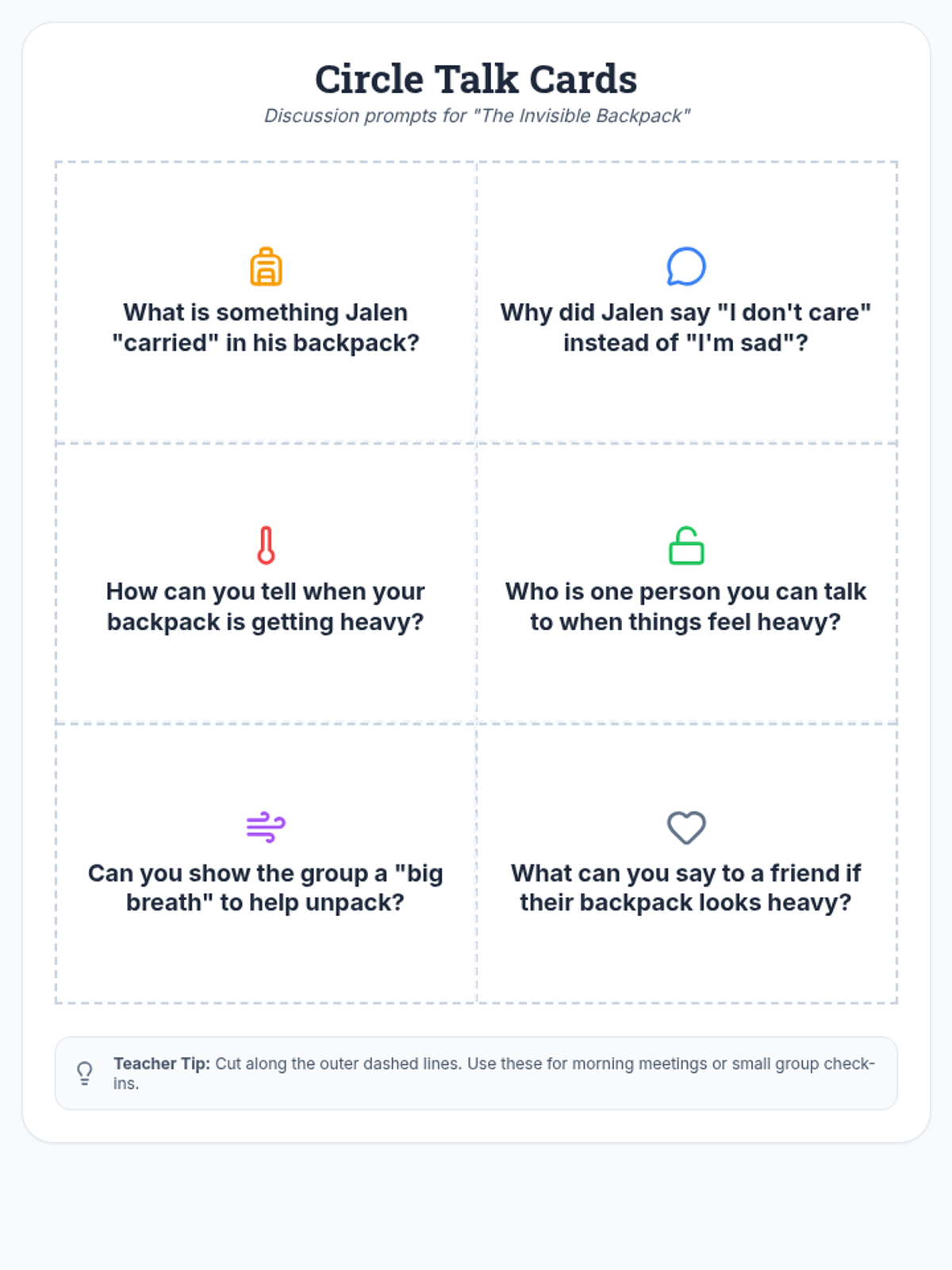
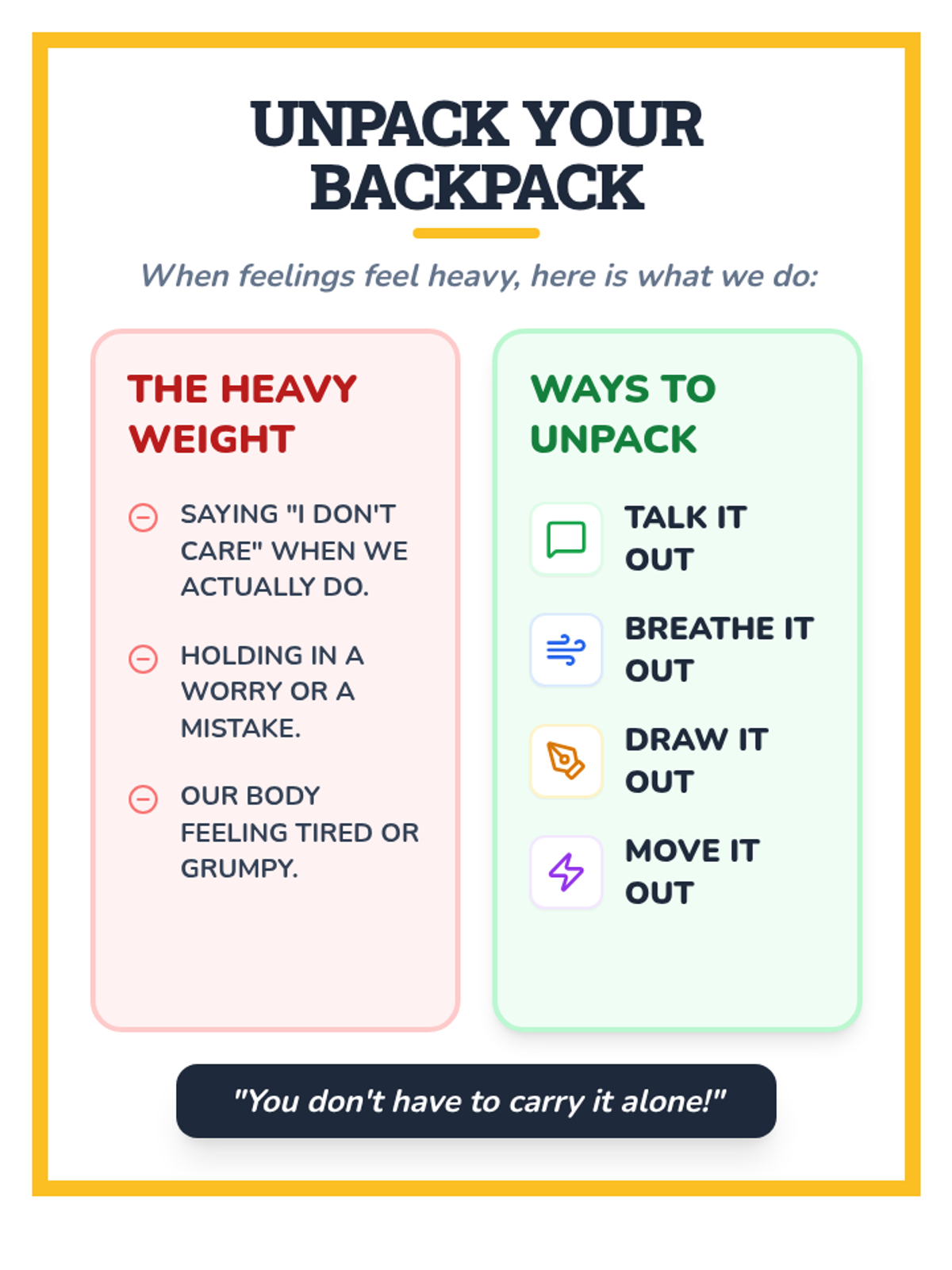
A series of lessons focused on social-emotional learning, helping students understand the difference between external behaviors and internal emotions, and developing healthy coping mechanisms.
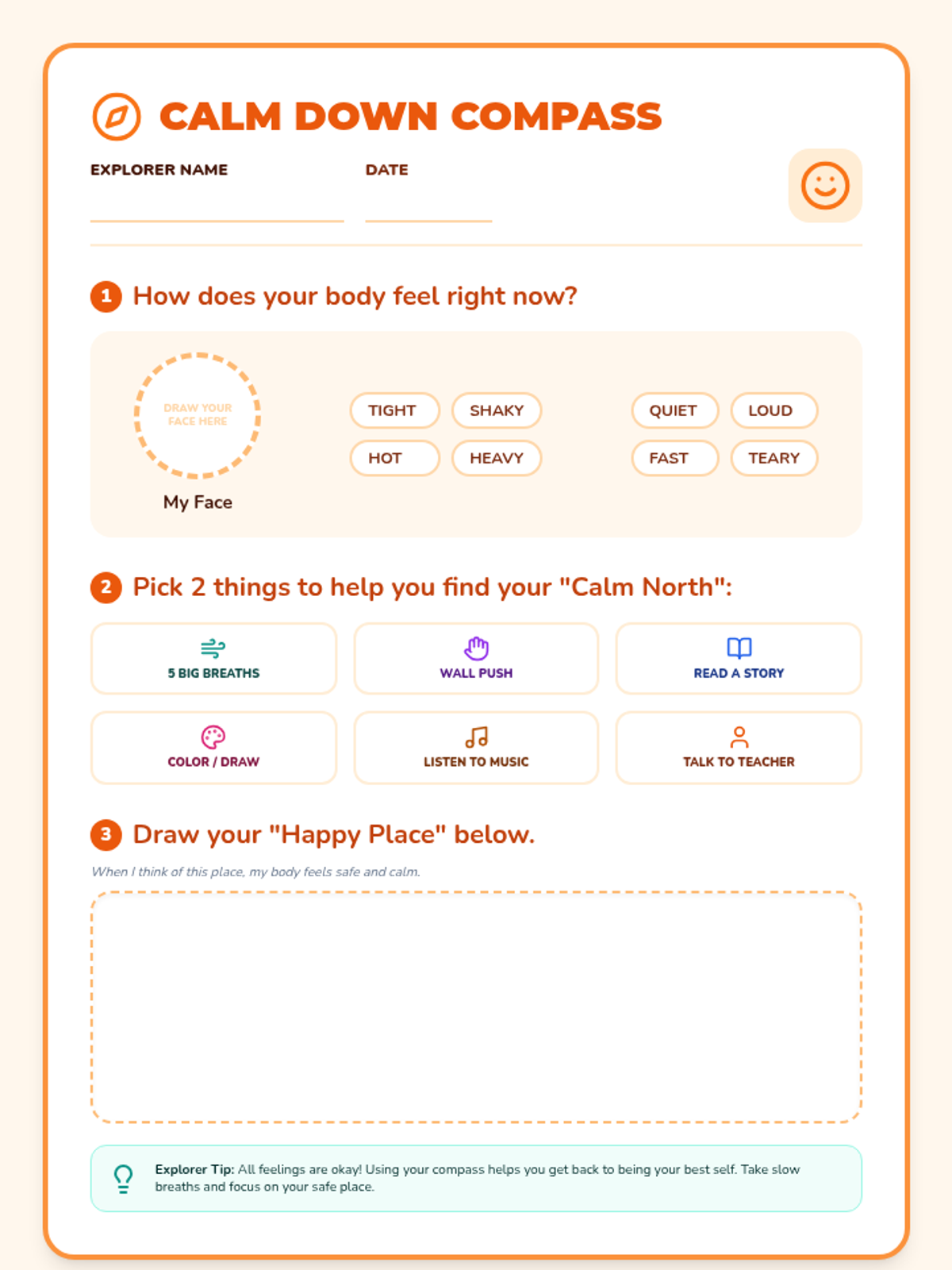
A 10-week counseling curriculum for 2nd grade students focusing on emotional literacy through the Zones of Regulation framework, with a specific emphasis on identifying and managing anger. Students learn to recognize physical cues, identify triggers, and build a personalized toolbox of coping strategies.
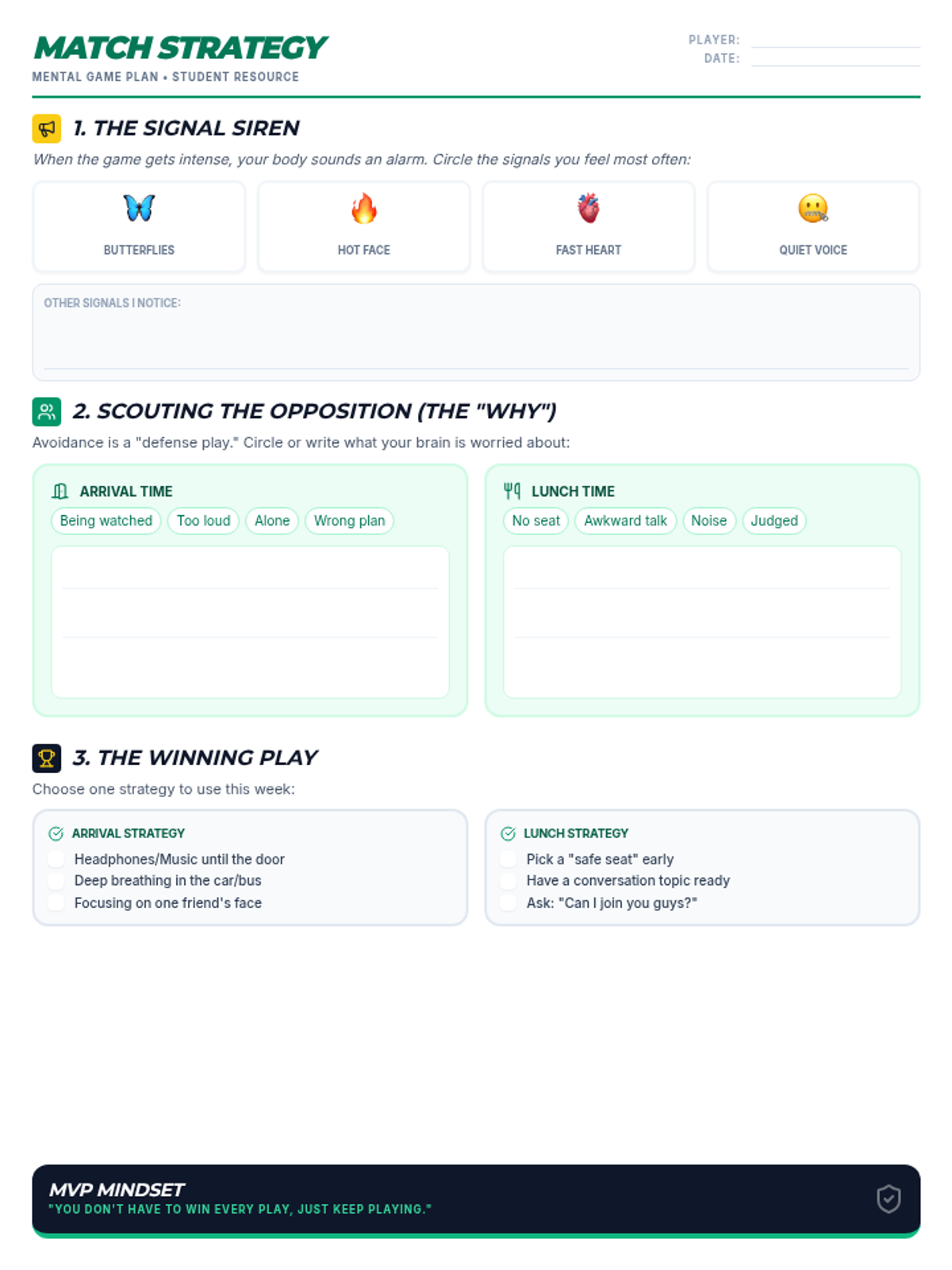
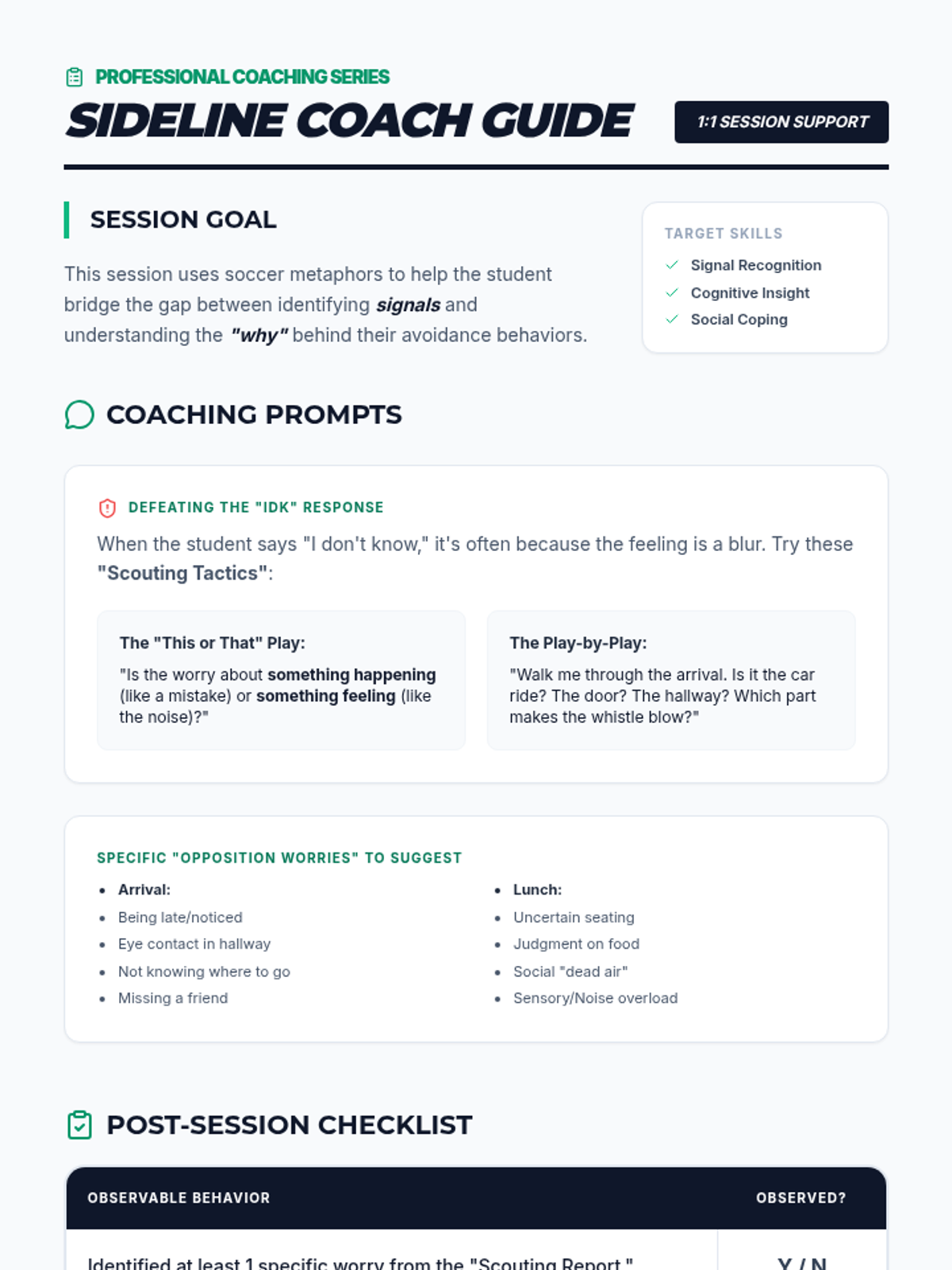
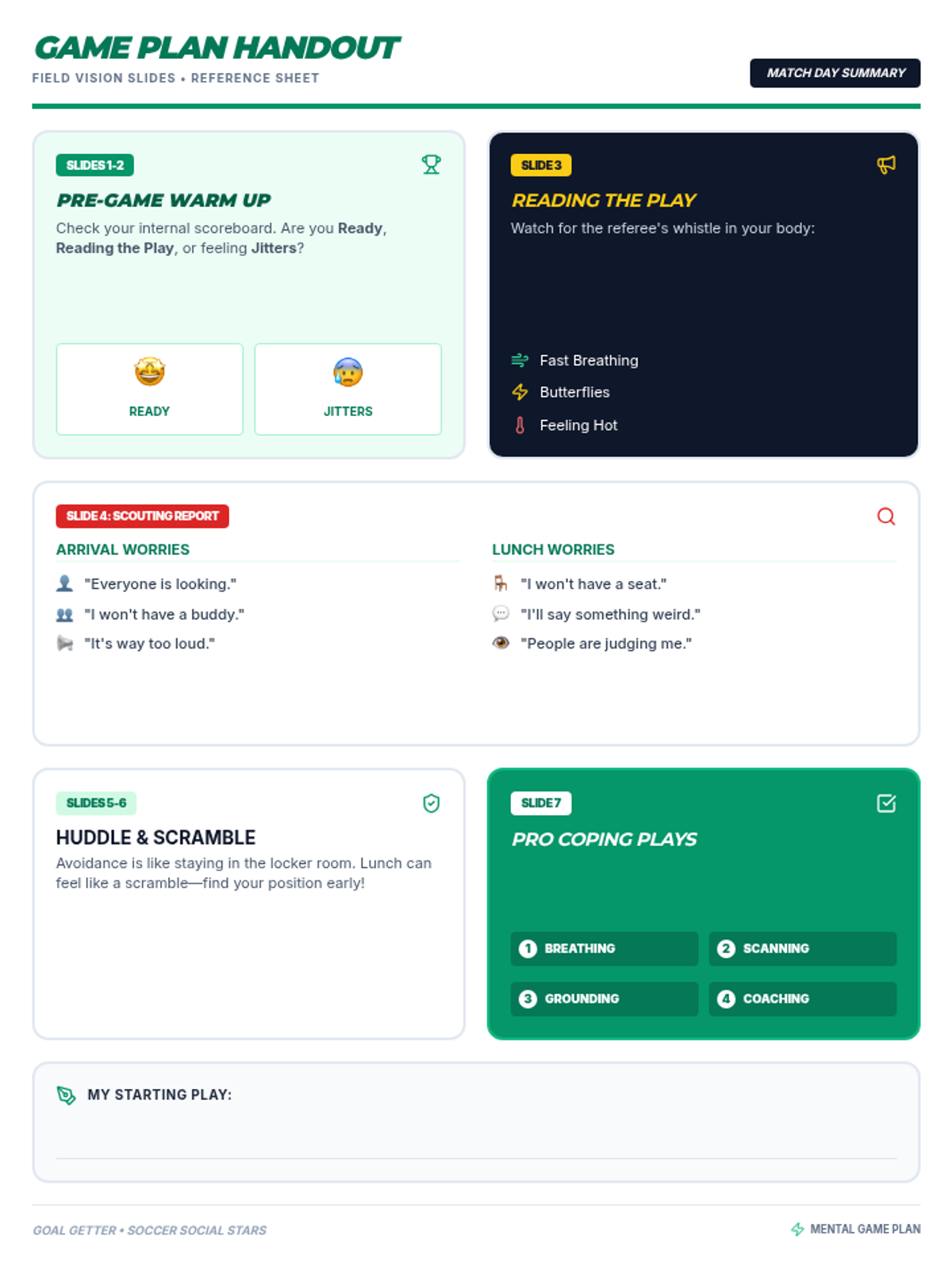
A soccer-themed social-emotional learning series focused on identifying social anxiety signals and developing coping strategies for school-based avoidance.
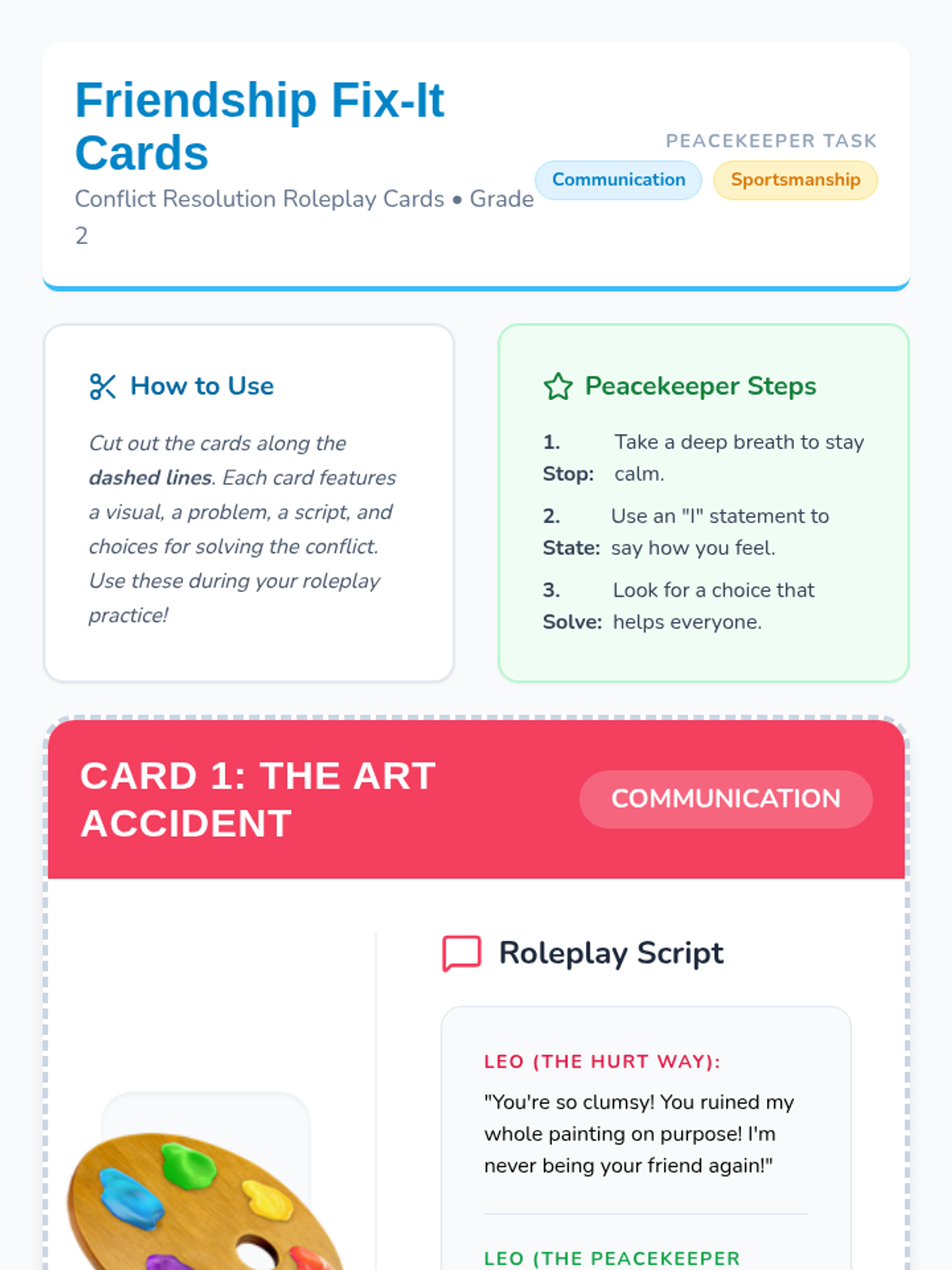
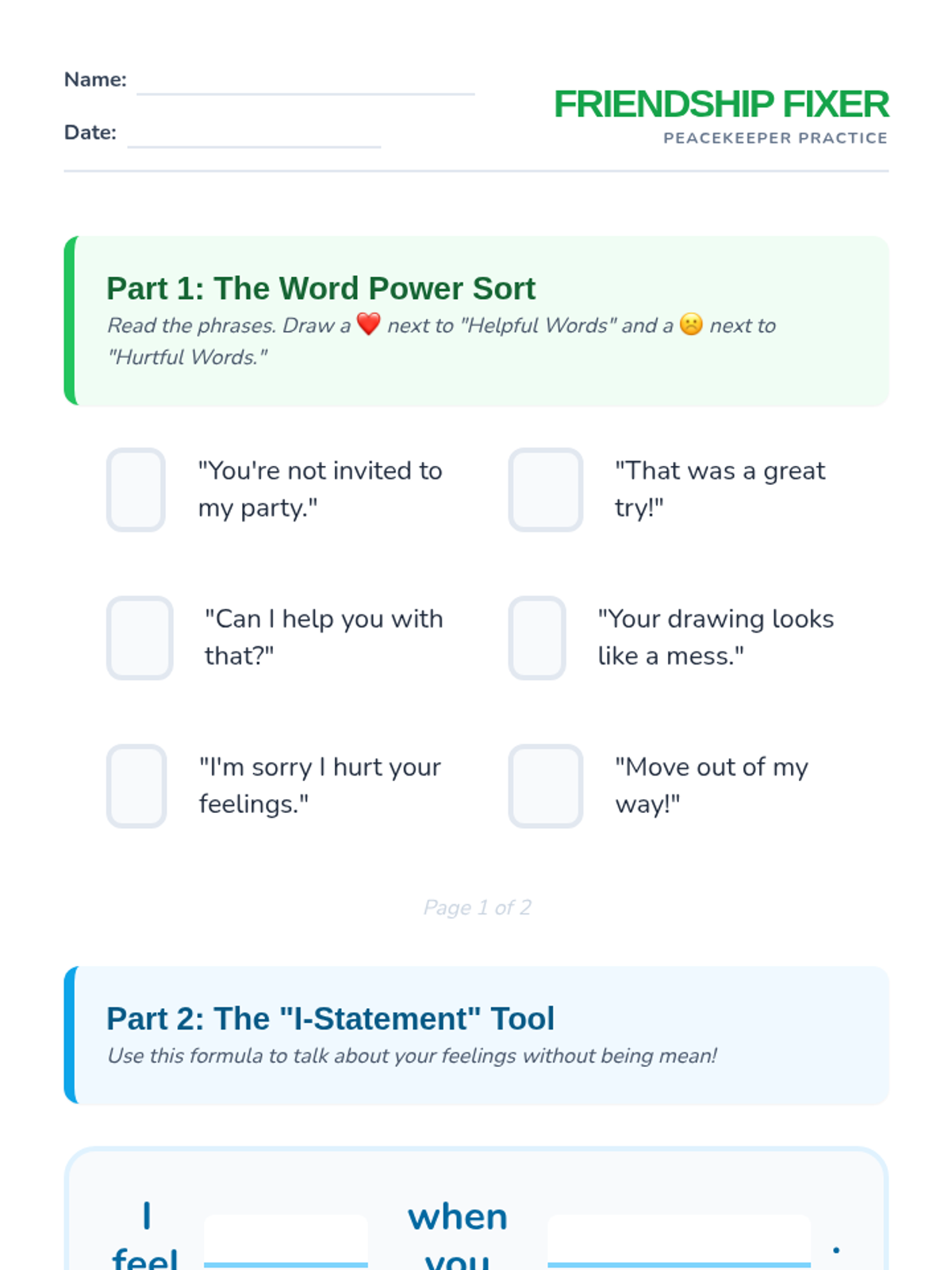
A social-emotional learning unit focusing on classroom behavior, conflict resolution, and making positive choices for primary students.
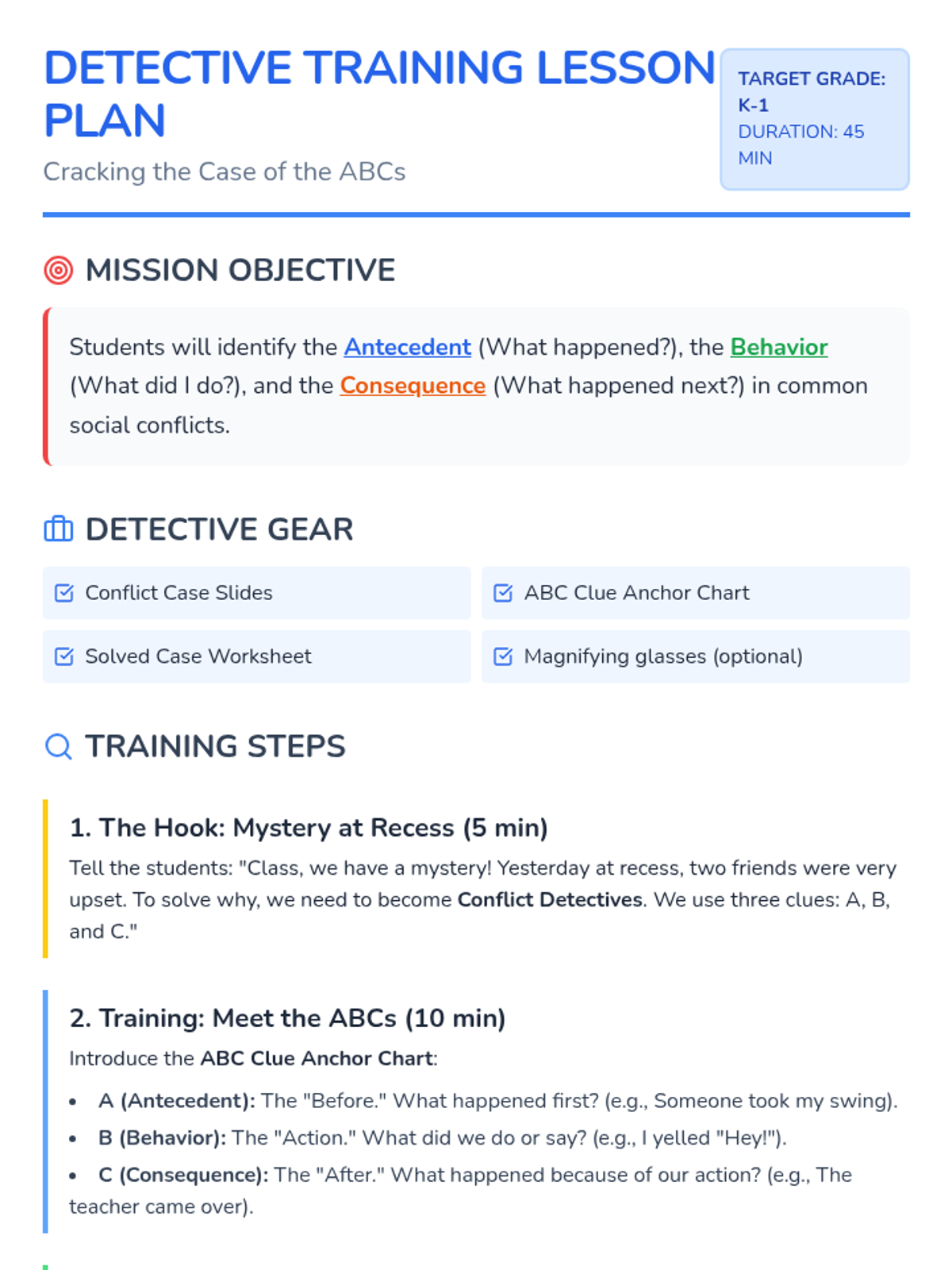
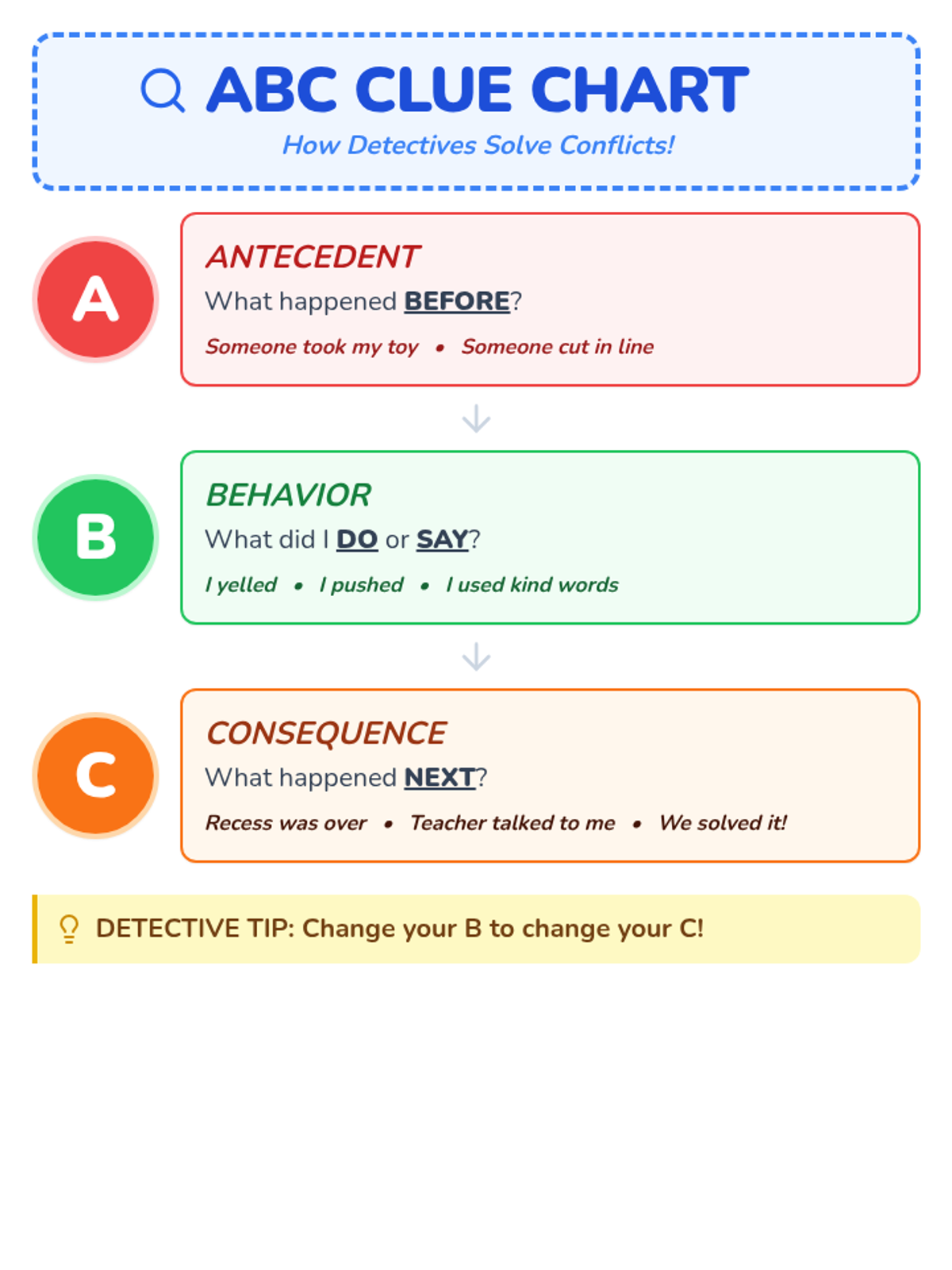
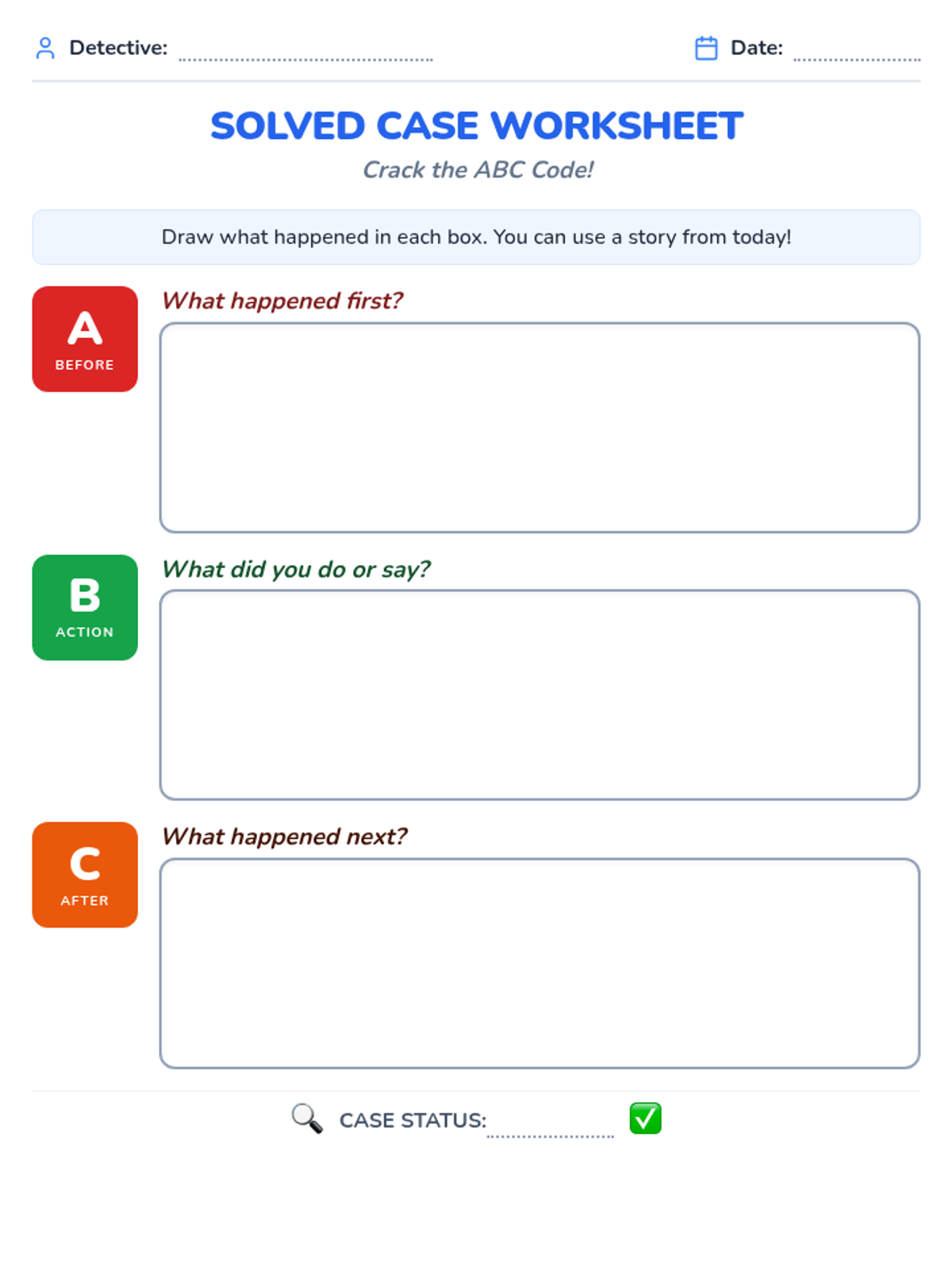
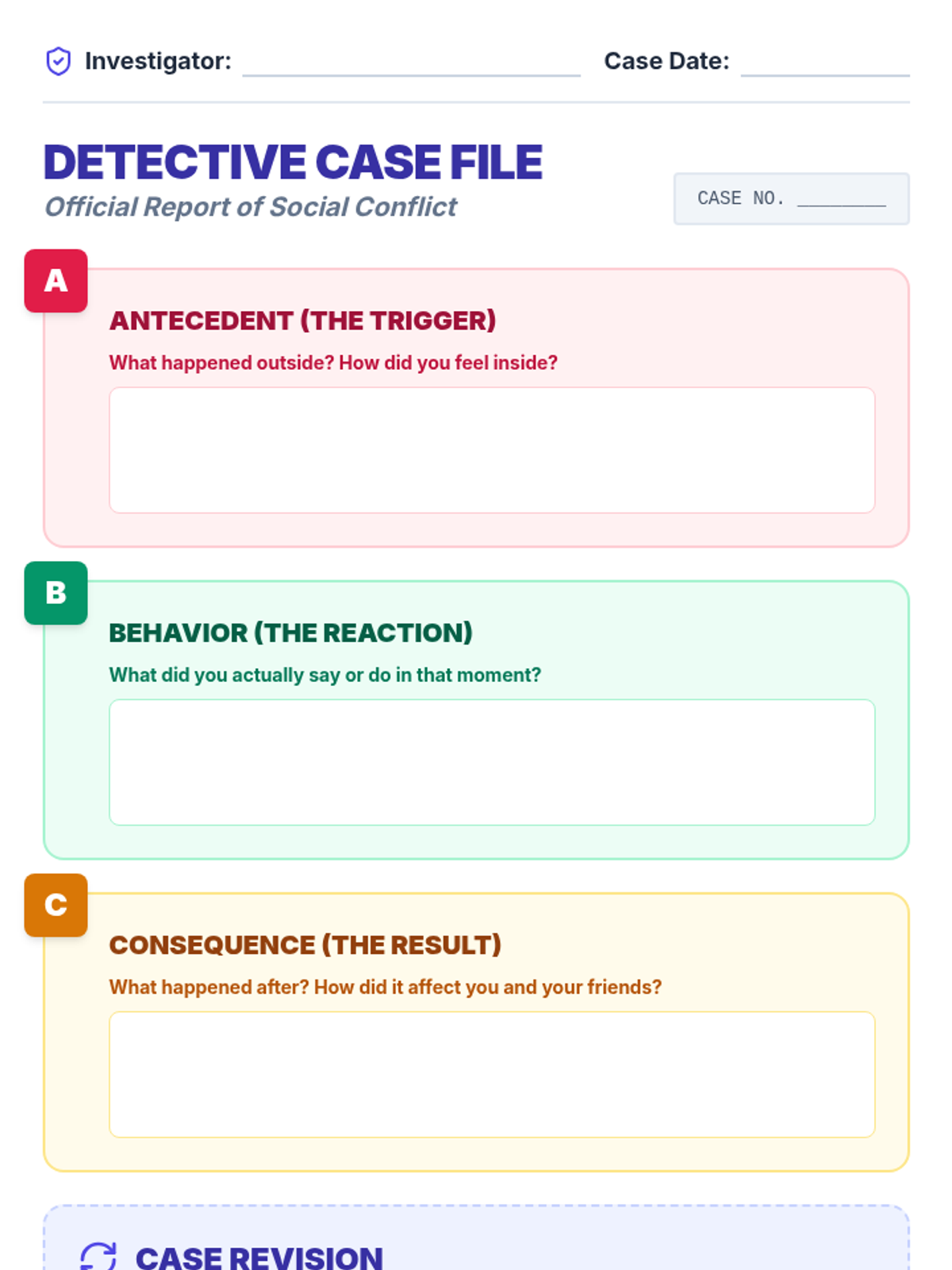
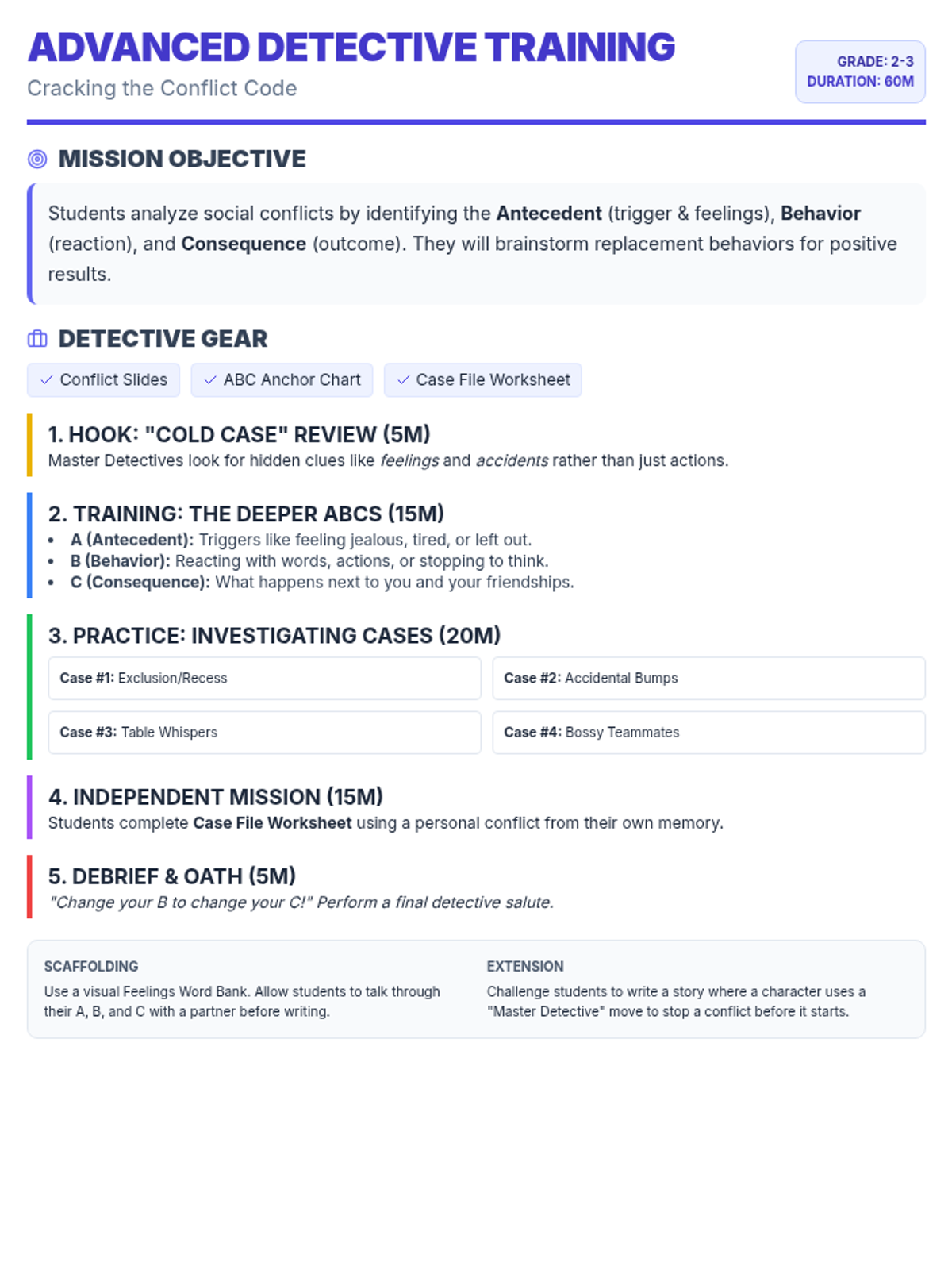
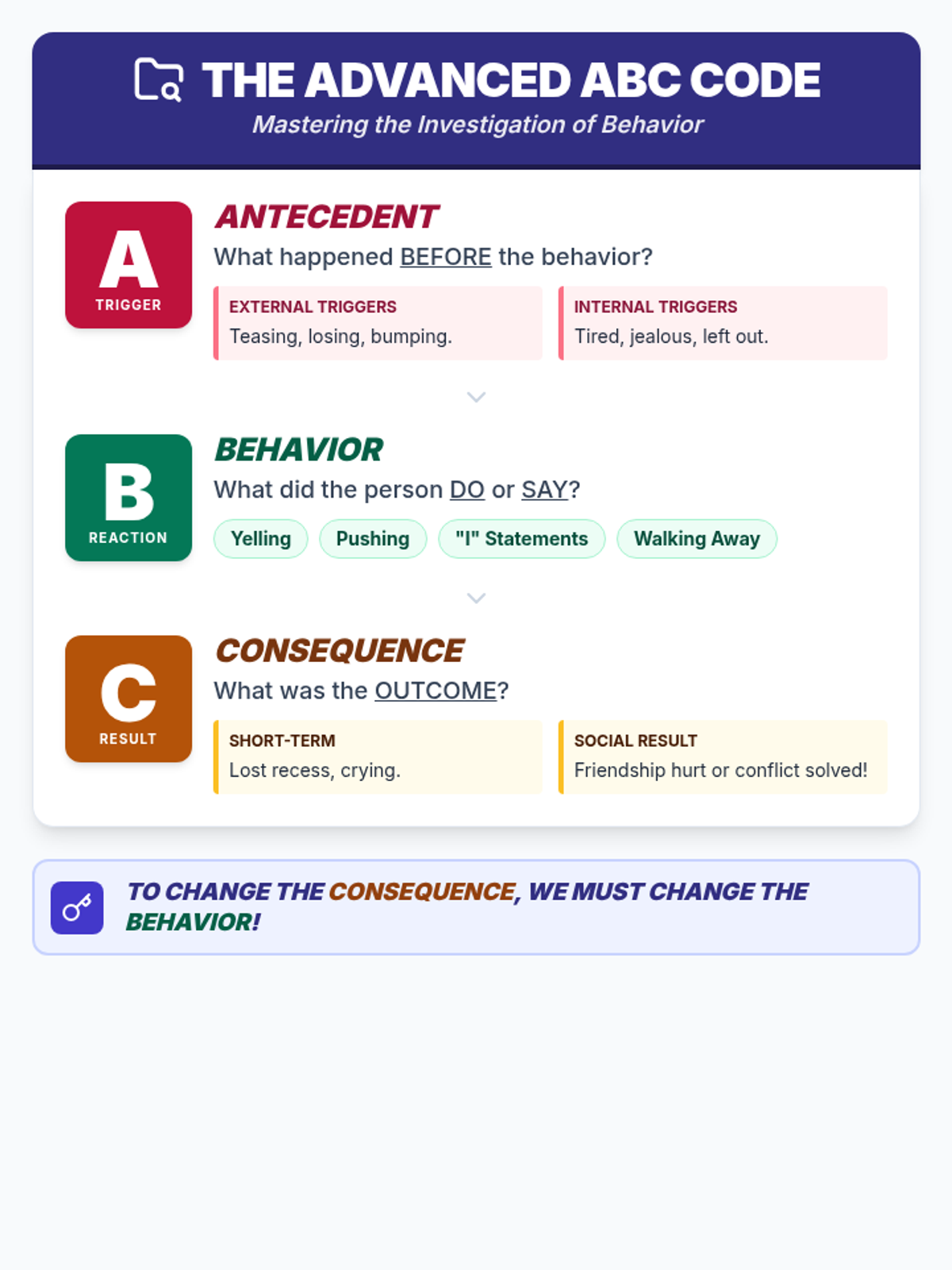
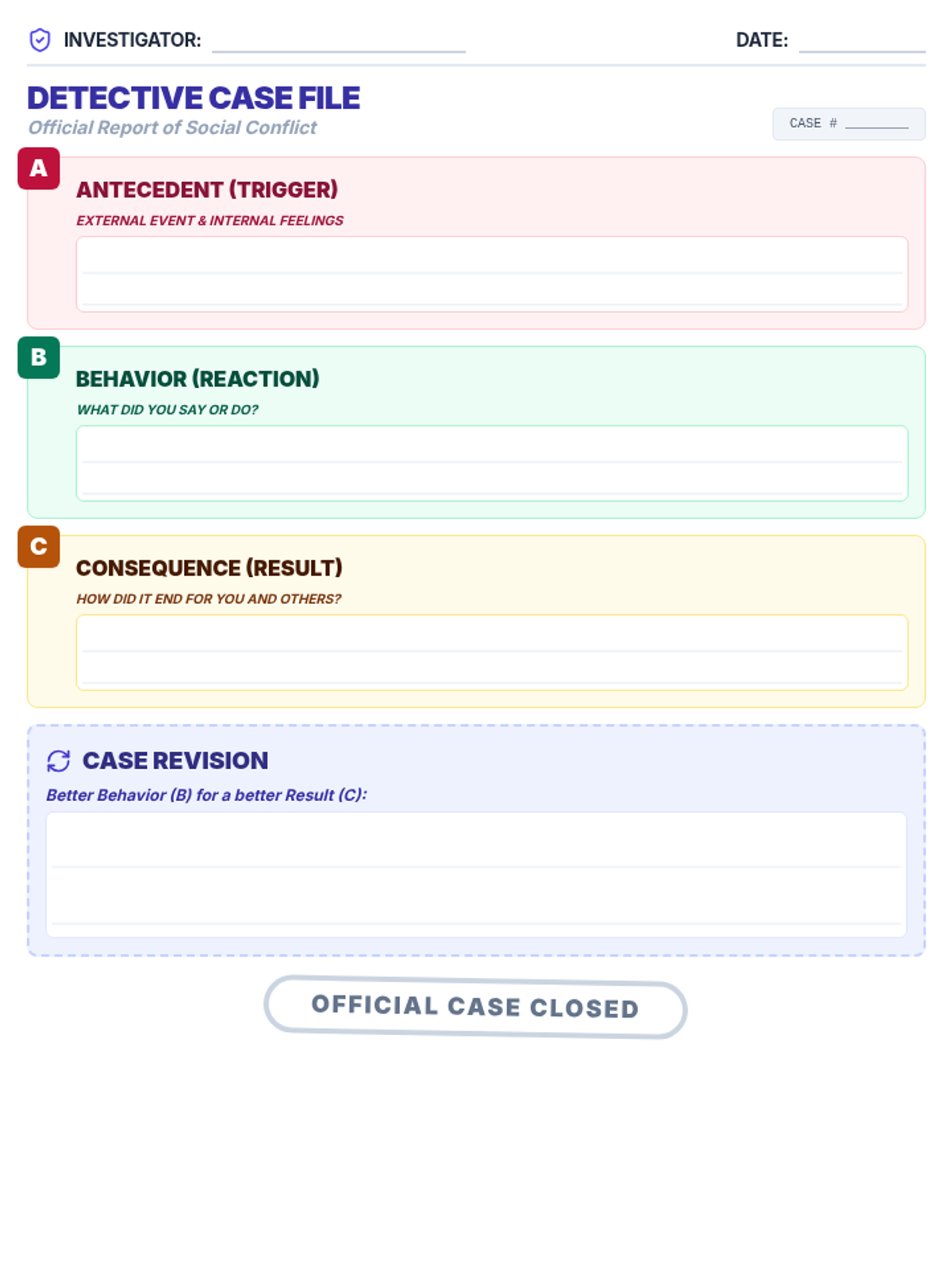
A comprehensive social-emotional learning sequence for elementary students (K-4) focusing on conflict resolution through the ABC model (Antecedent, Behavior, Consequence). Students learn to identify triggers, analyze their own behaviors, and work towards positive social outcomes.
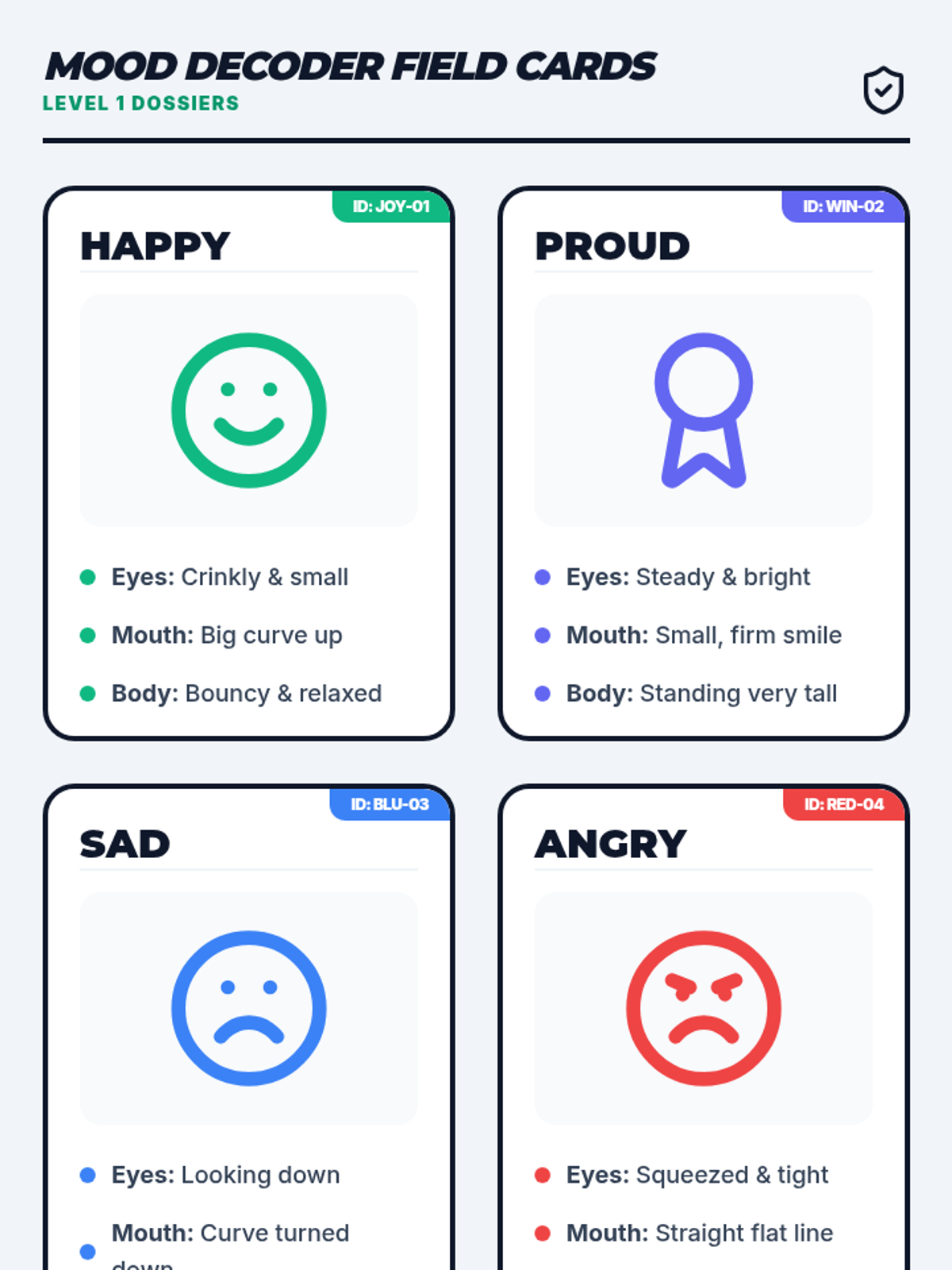
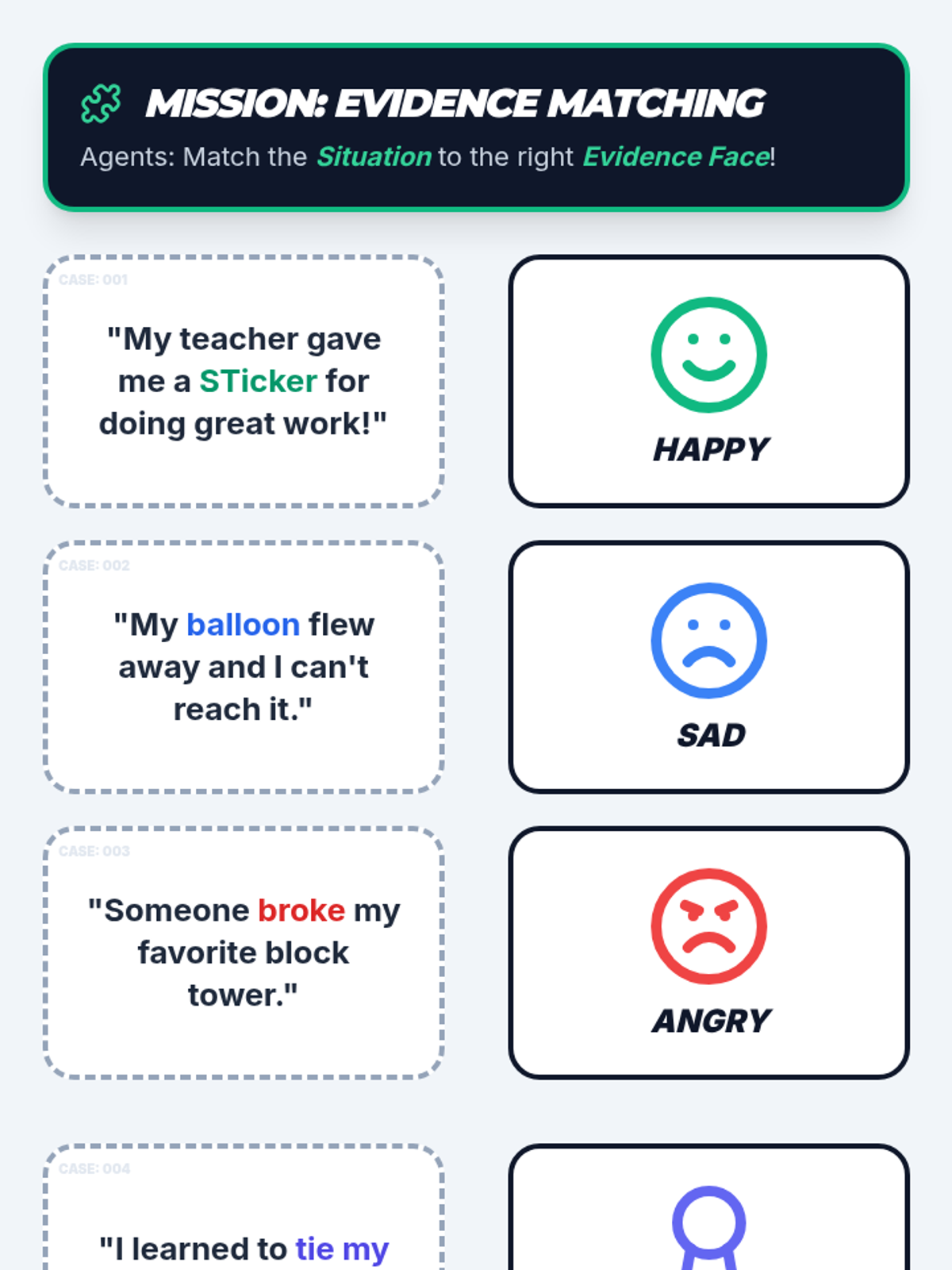
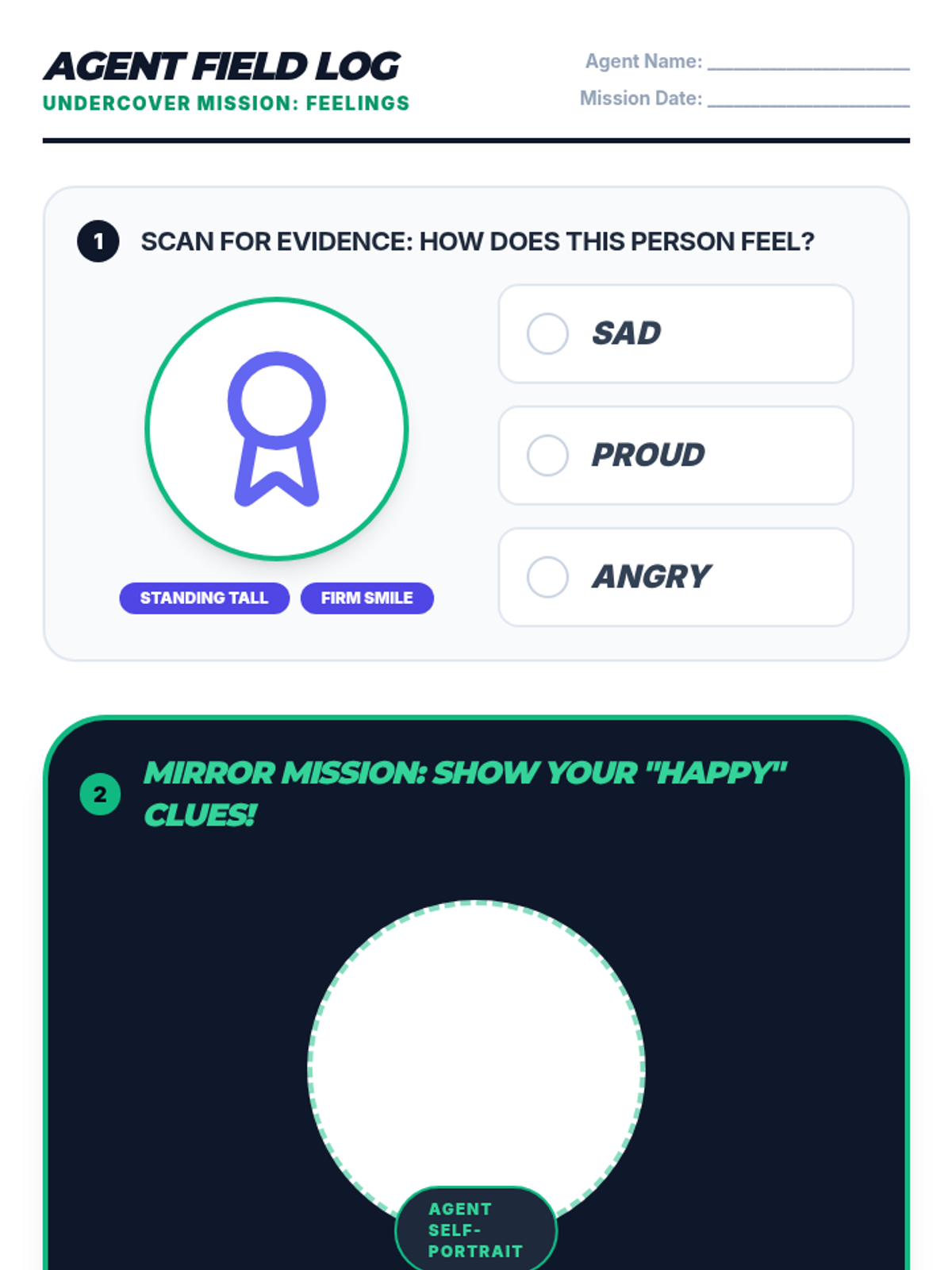
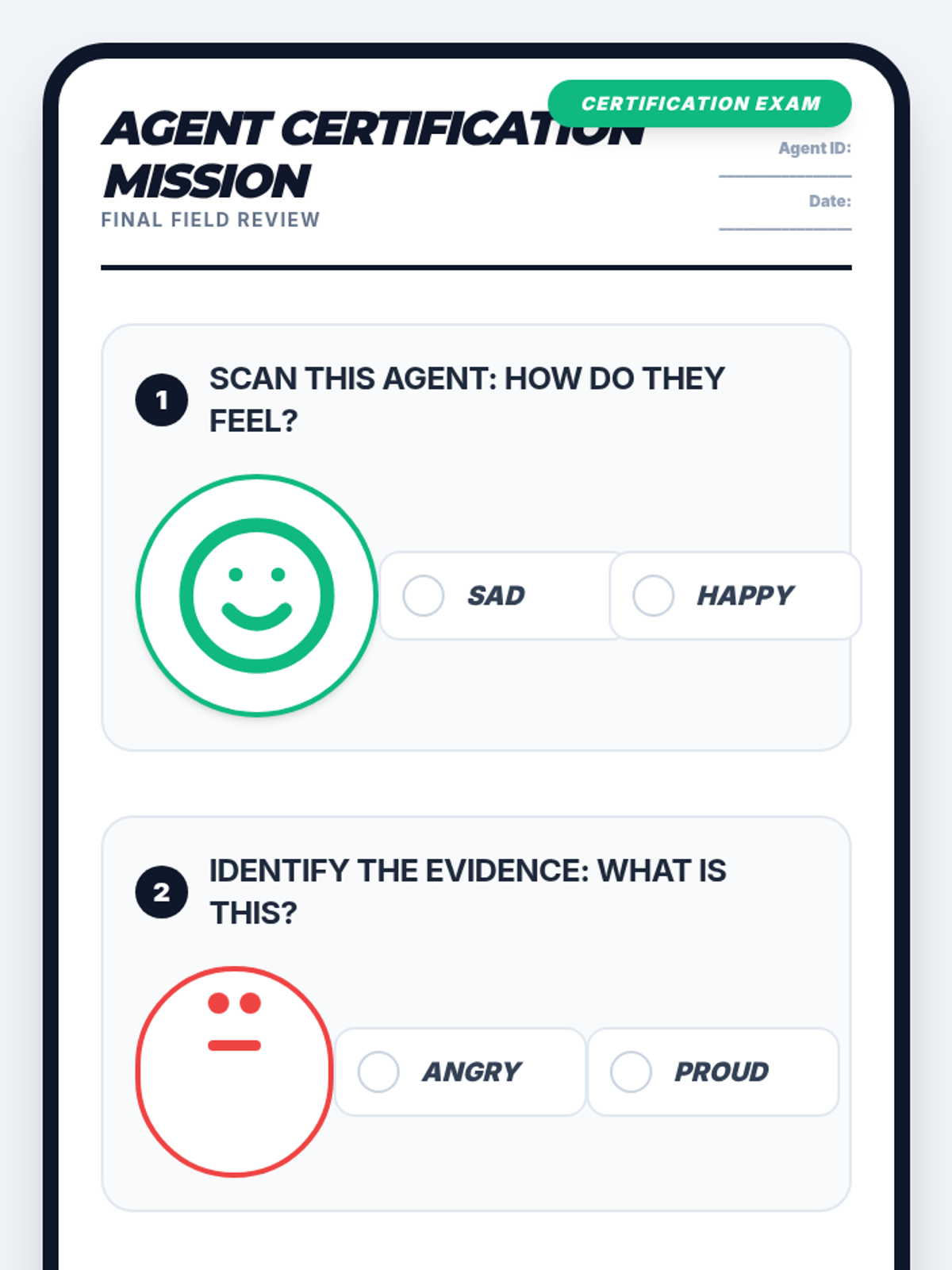
A series of lessons designed to help K-2 students in self-contained settings recognize and identify emotions in others using visual cues and situational context.
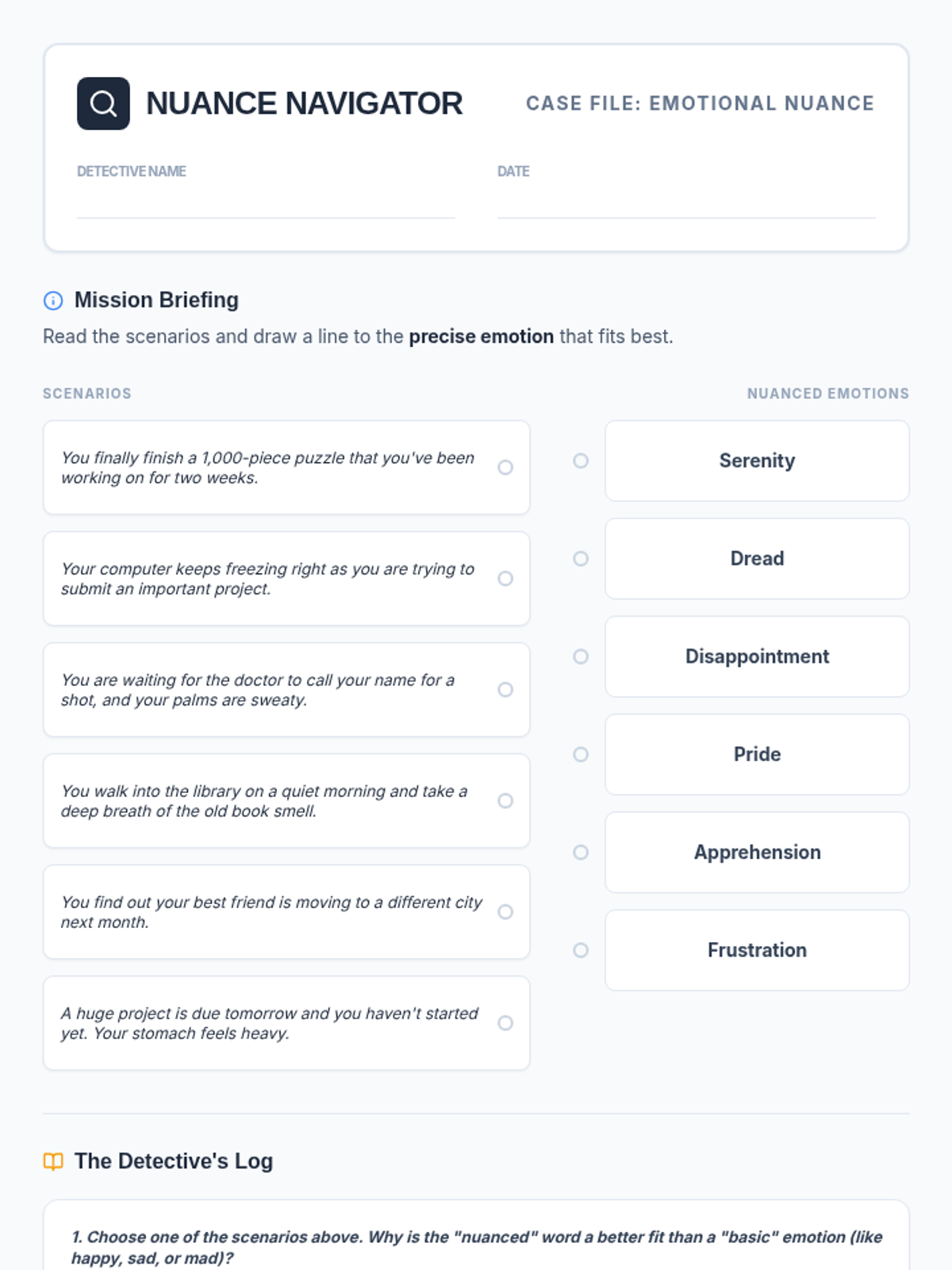
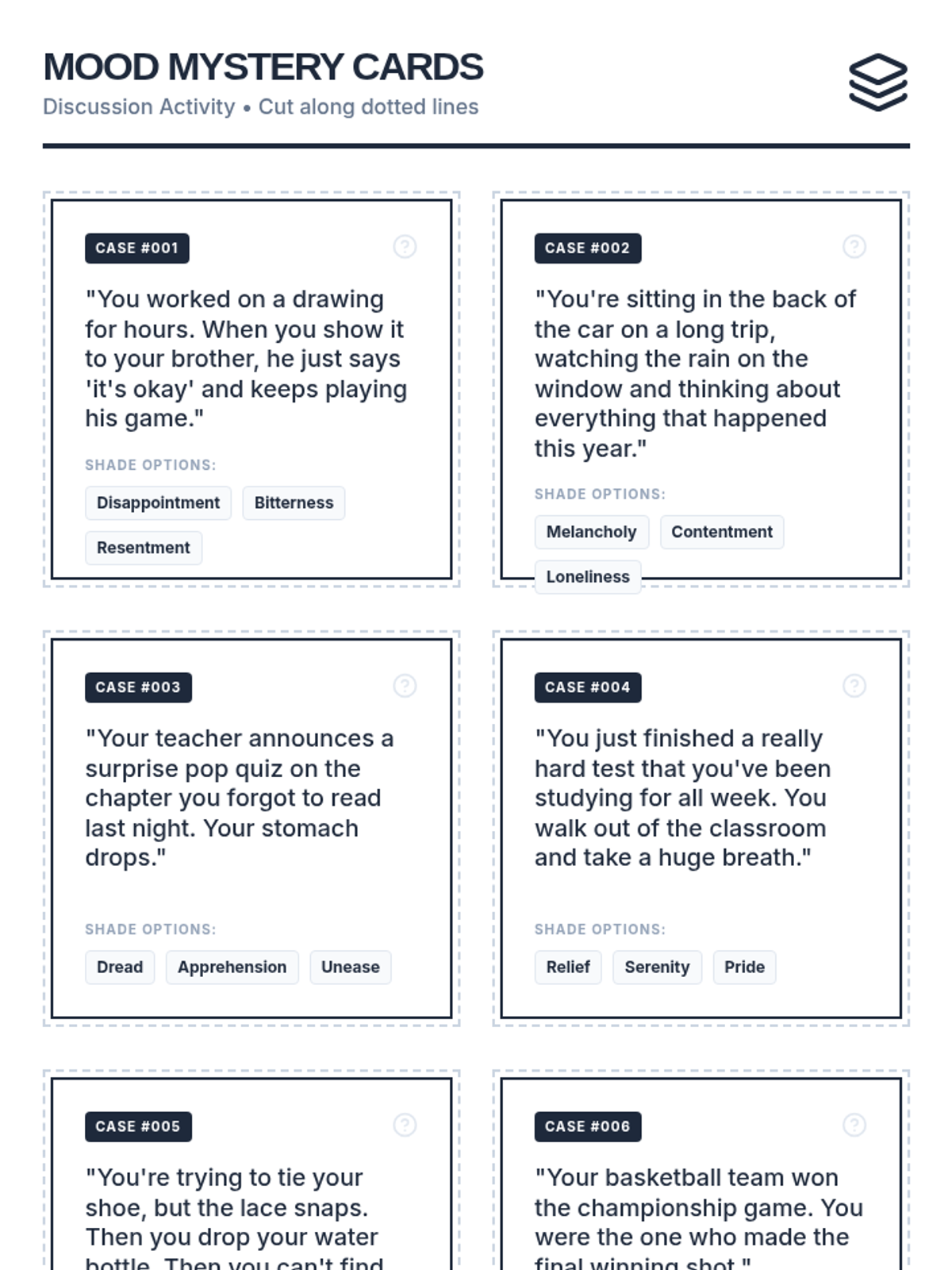
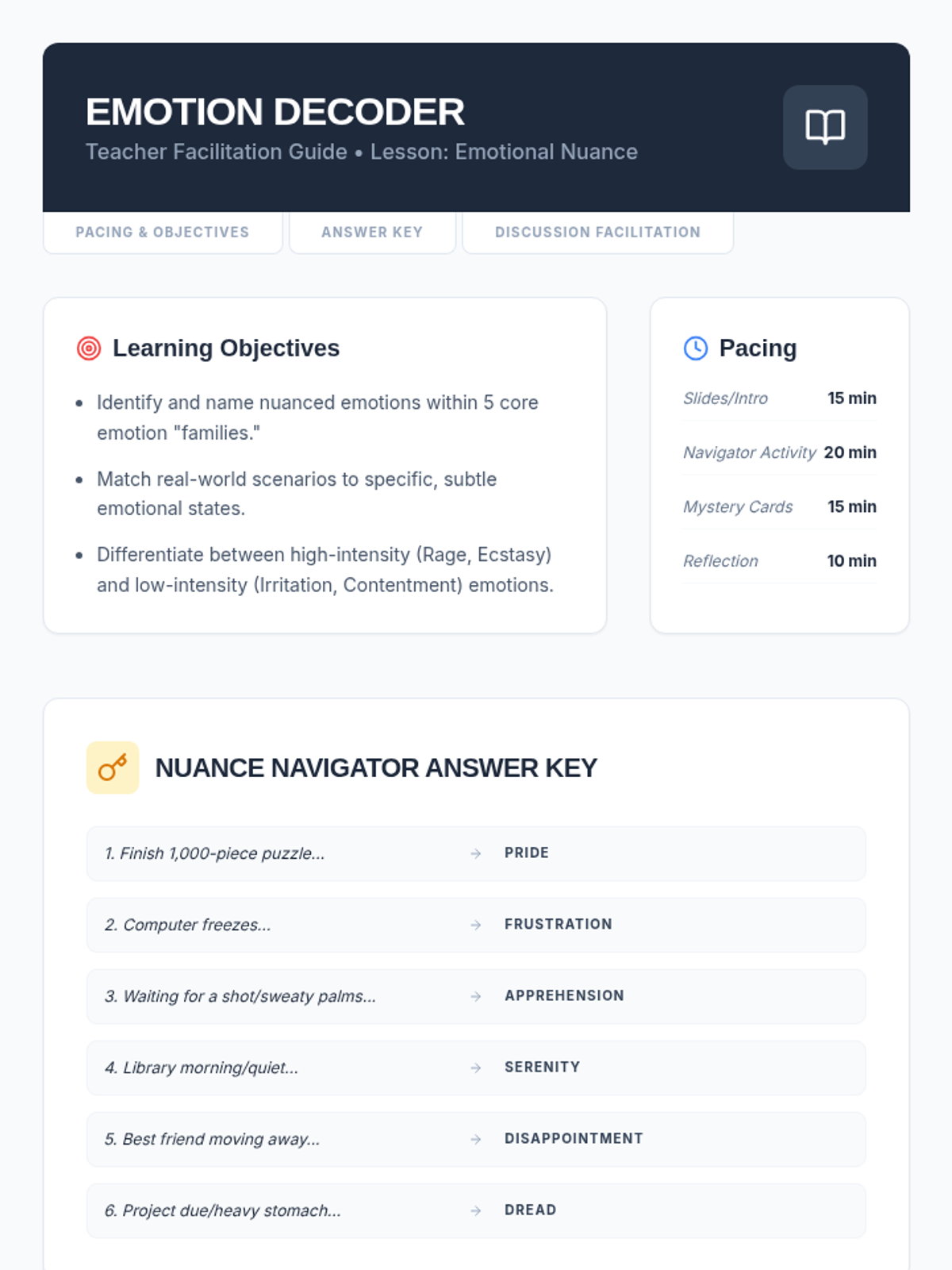
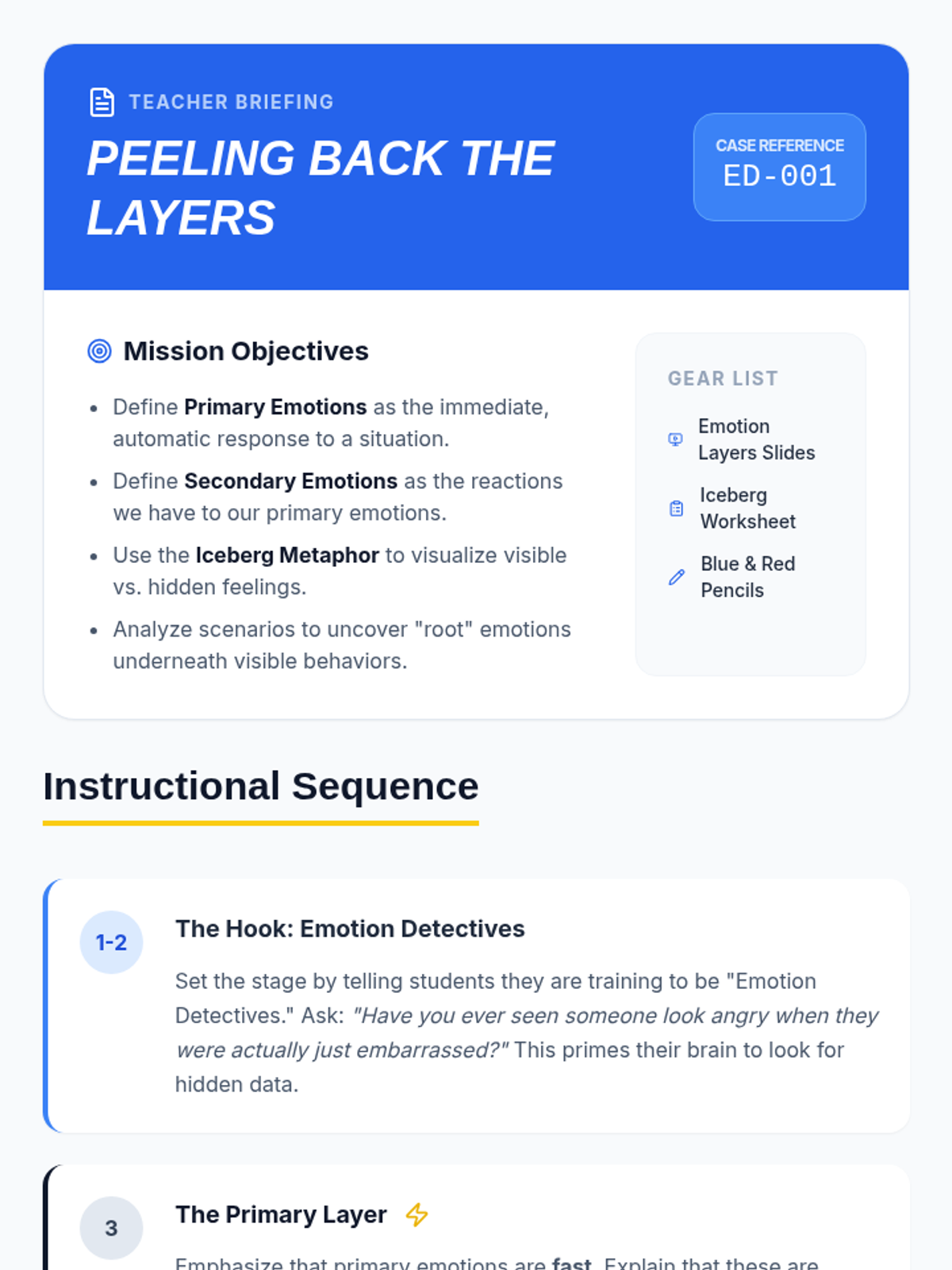
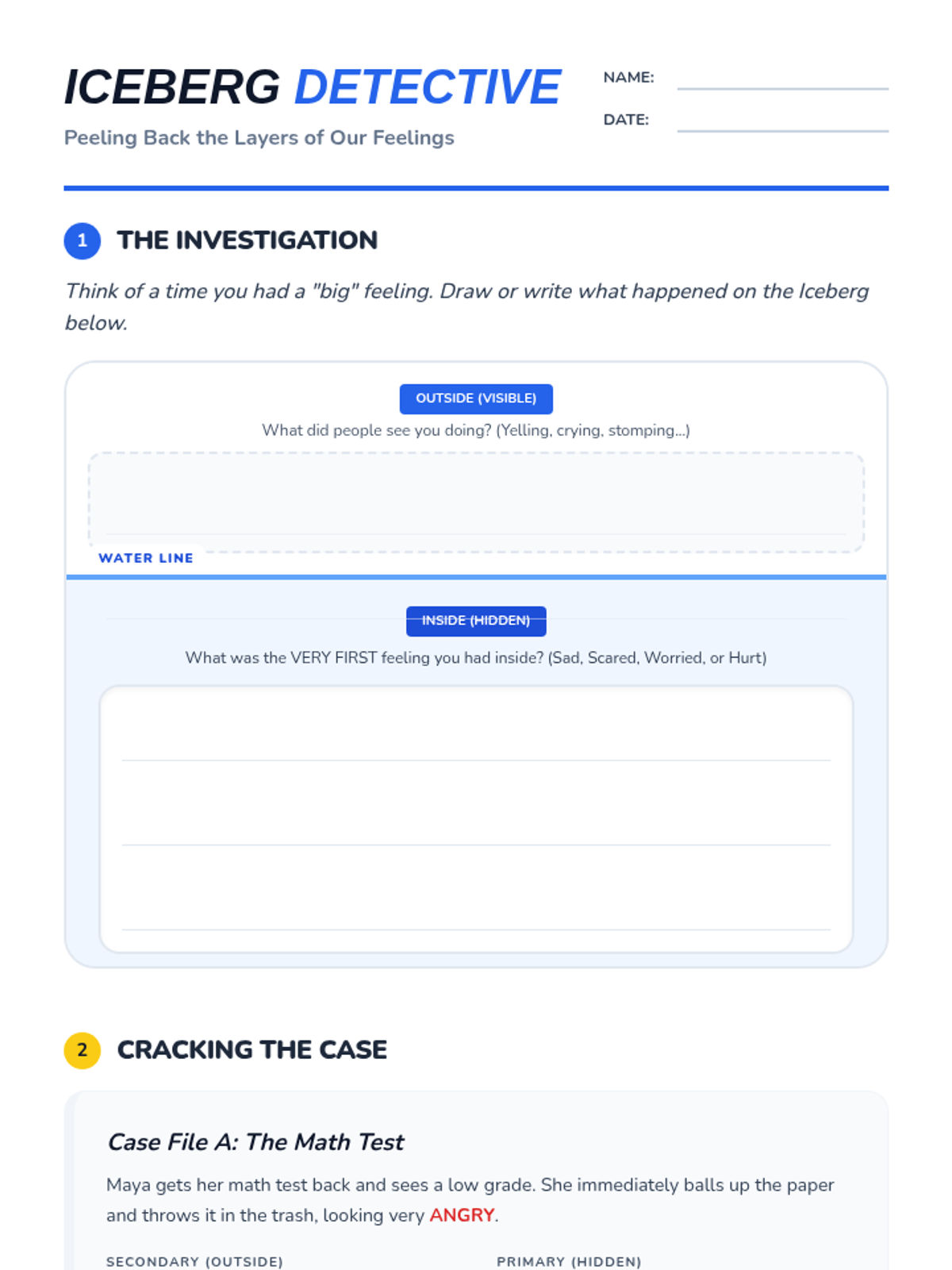
A comprehensive Social-Emotional Learning unit designed to help students identify, understand, and navigate complex emotional landscapes. Through investigative activities, students become 'Heart Detectives' who look for clues in behavior and internal states.
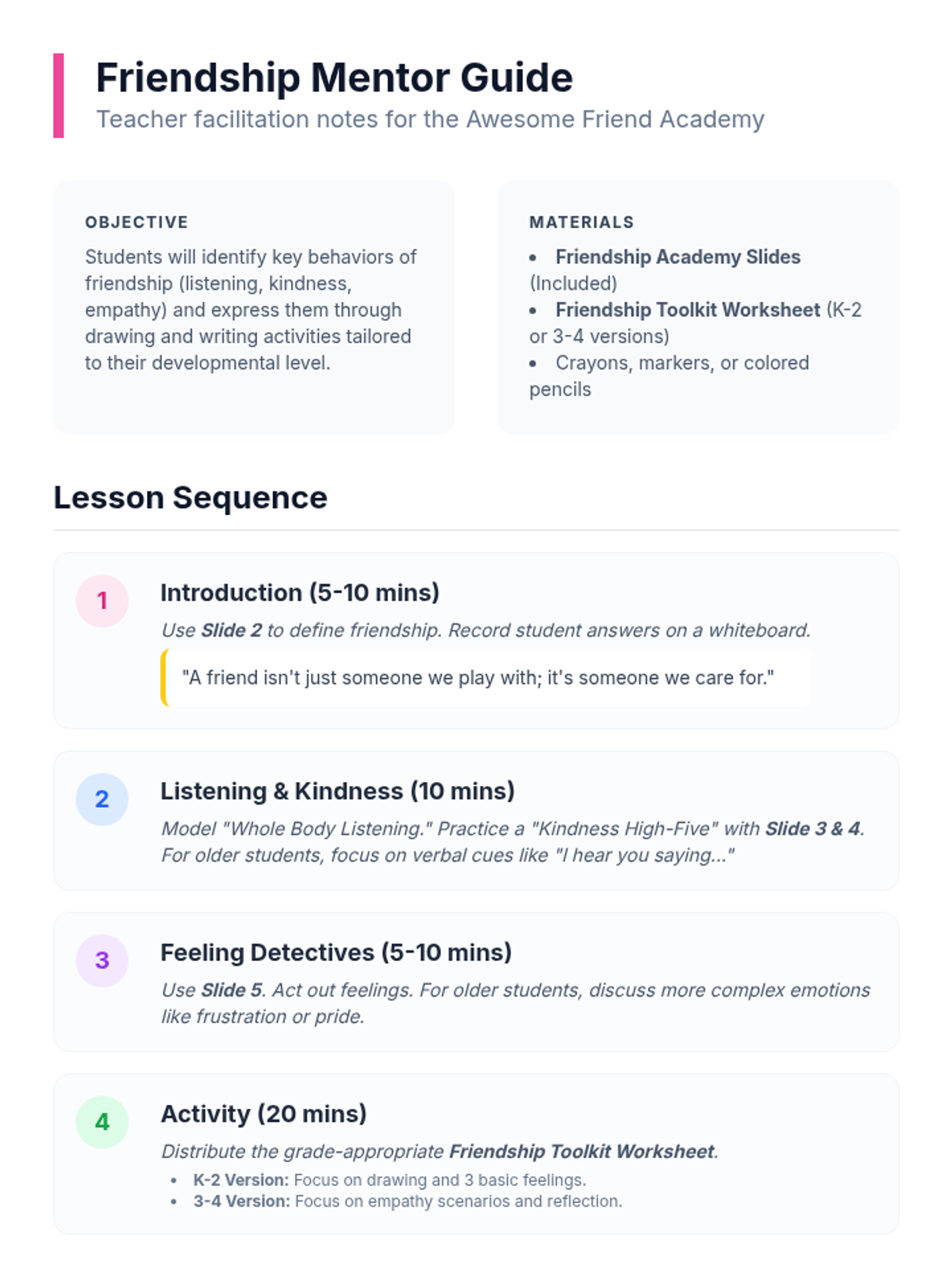
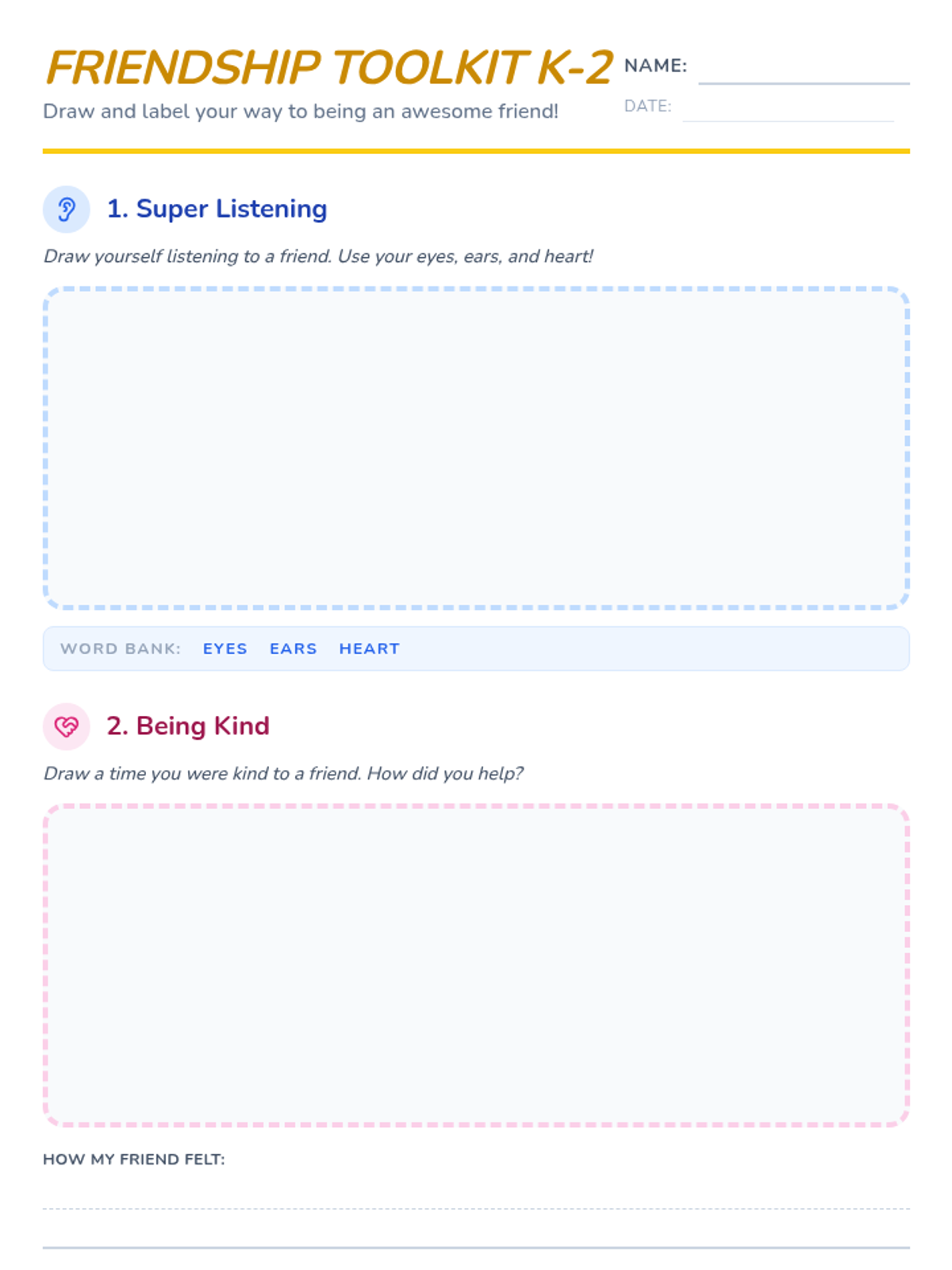
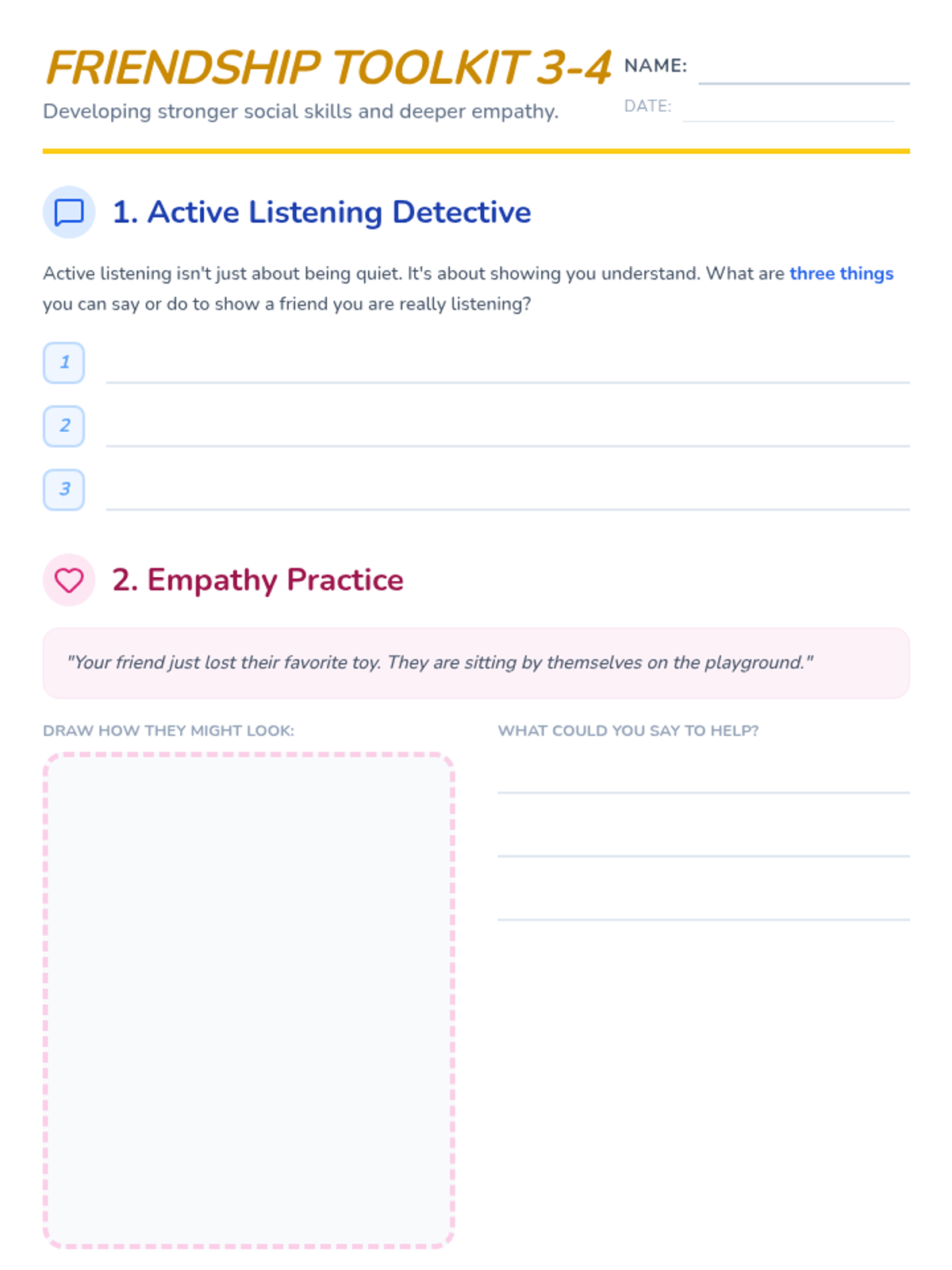
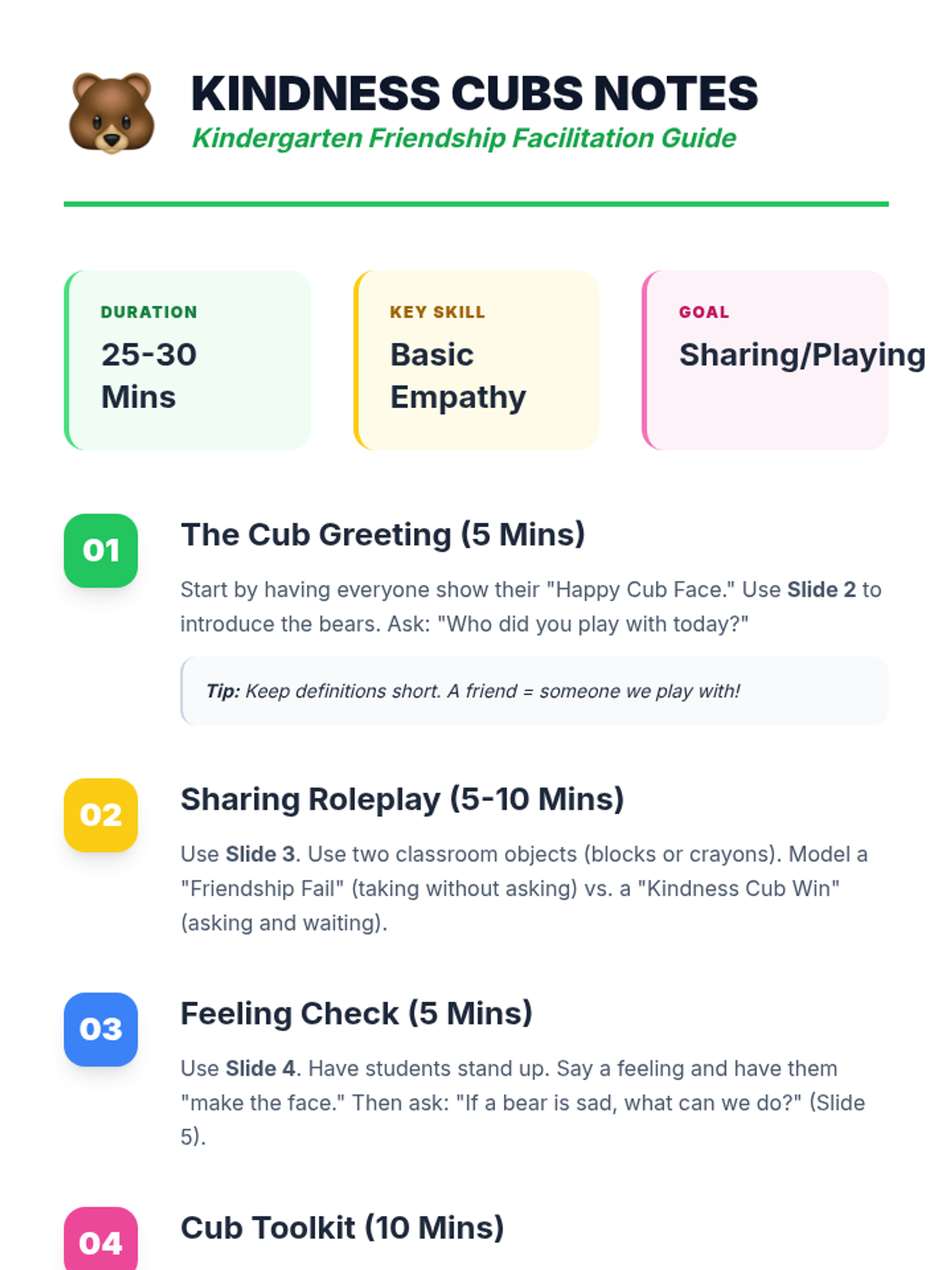
A series of social-emotional learning lessons designed to teach students from Kindergarten to 4th Grade the fundamentals of building and maintaining healthy friendships through active listening, empathy, and kindness.
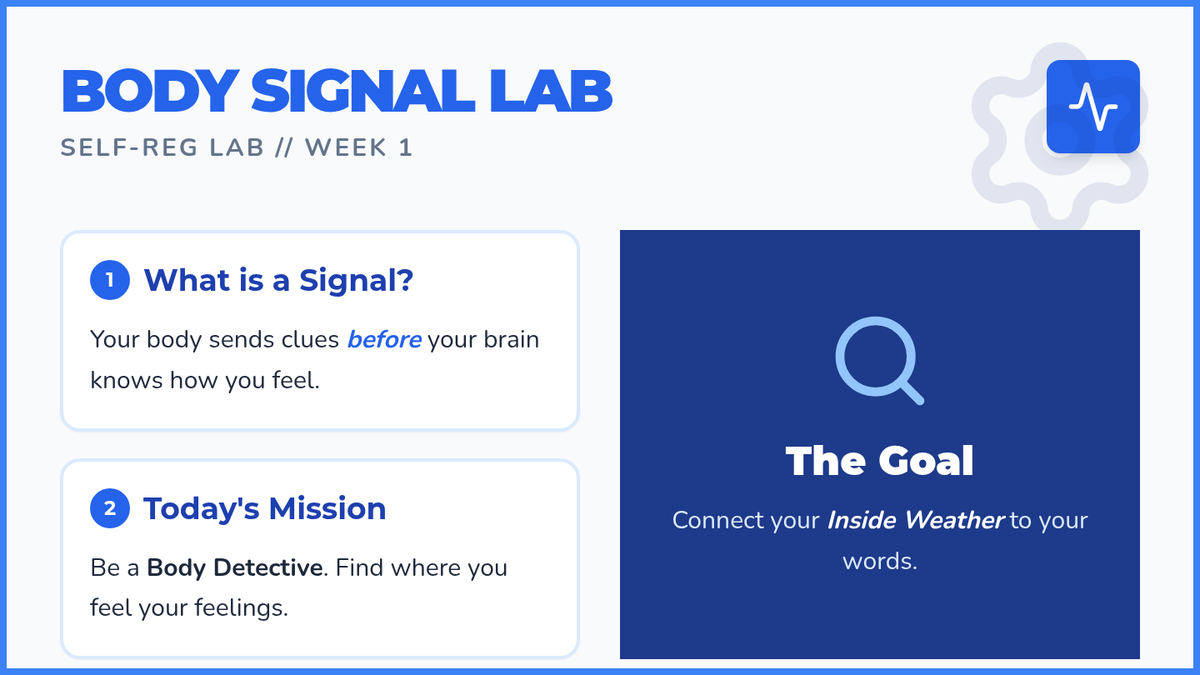
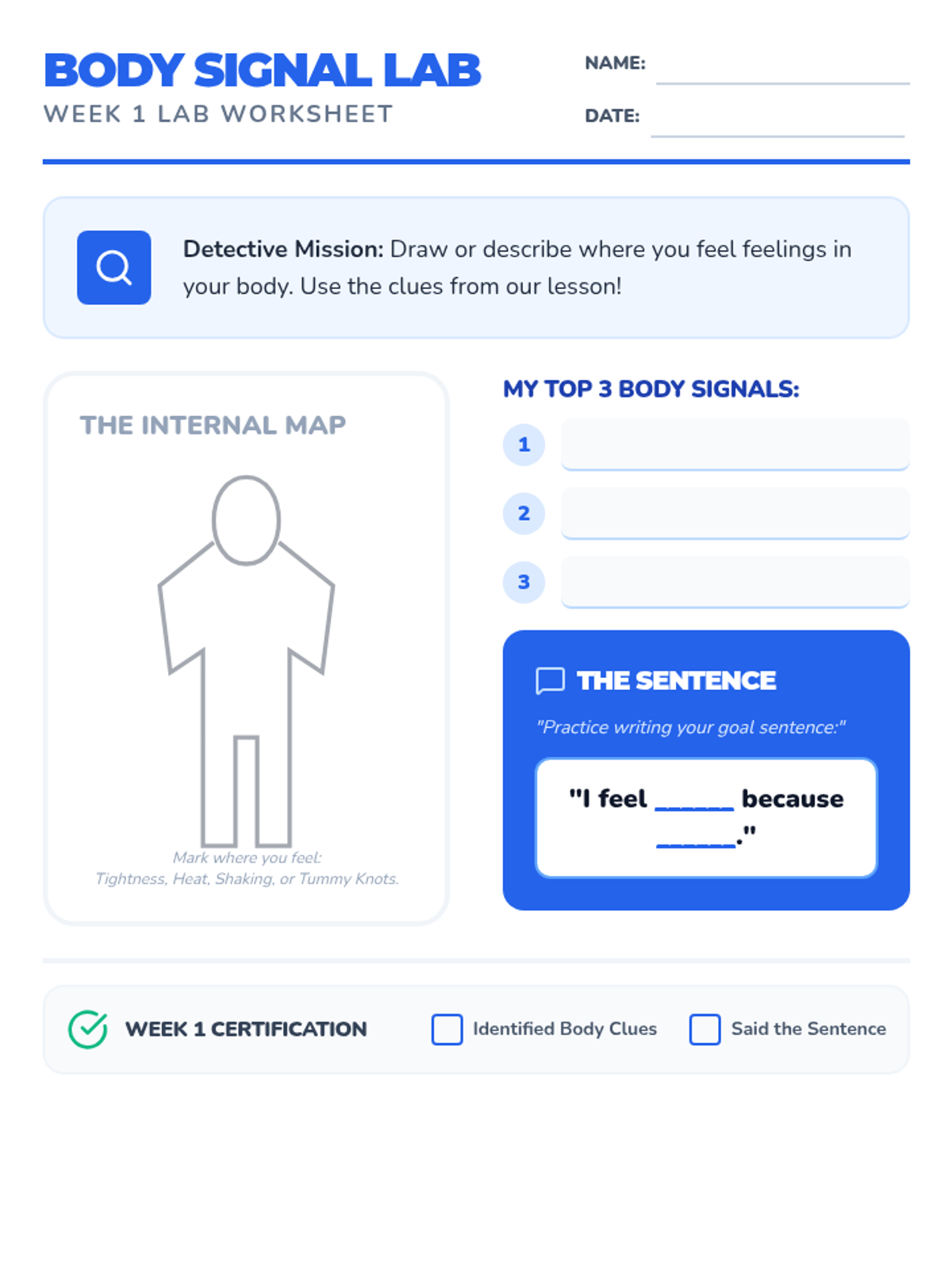
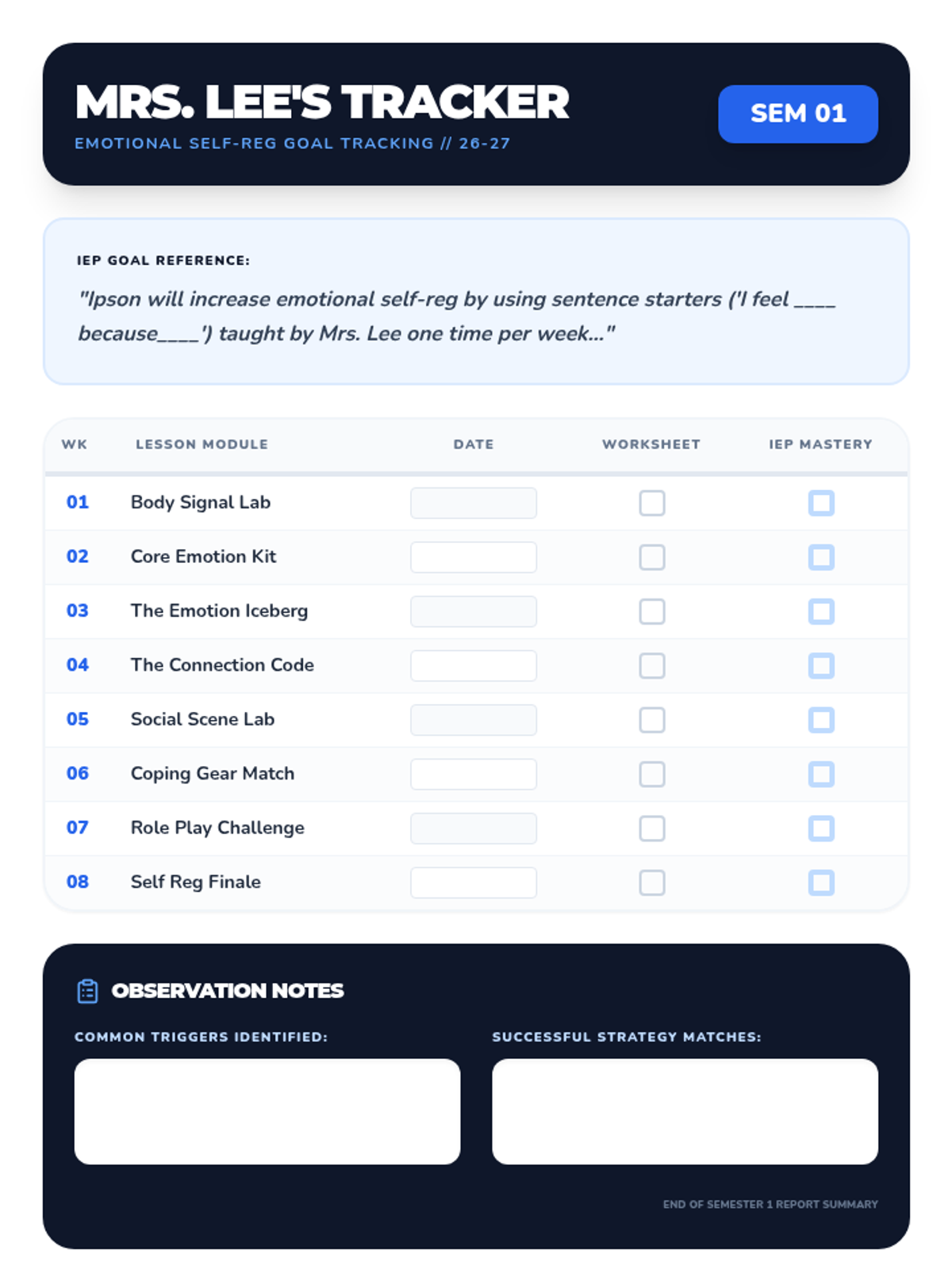
An 8-week social-emotional learning sequence designed for individual or small-group instruction. It focuses on building emotional vocabulary, identifying physical sensations, and mastering the 'I feel... because...' sentence starter for self-regulation.
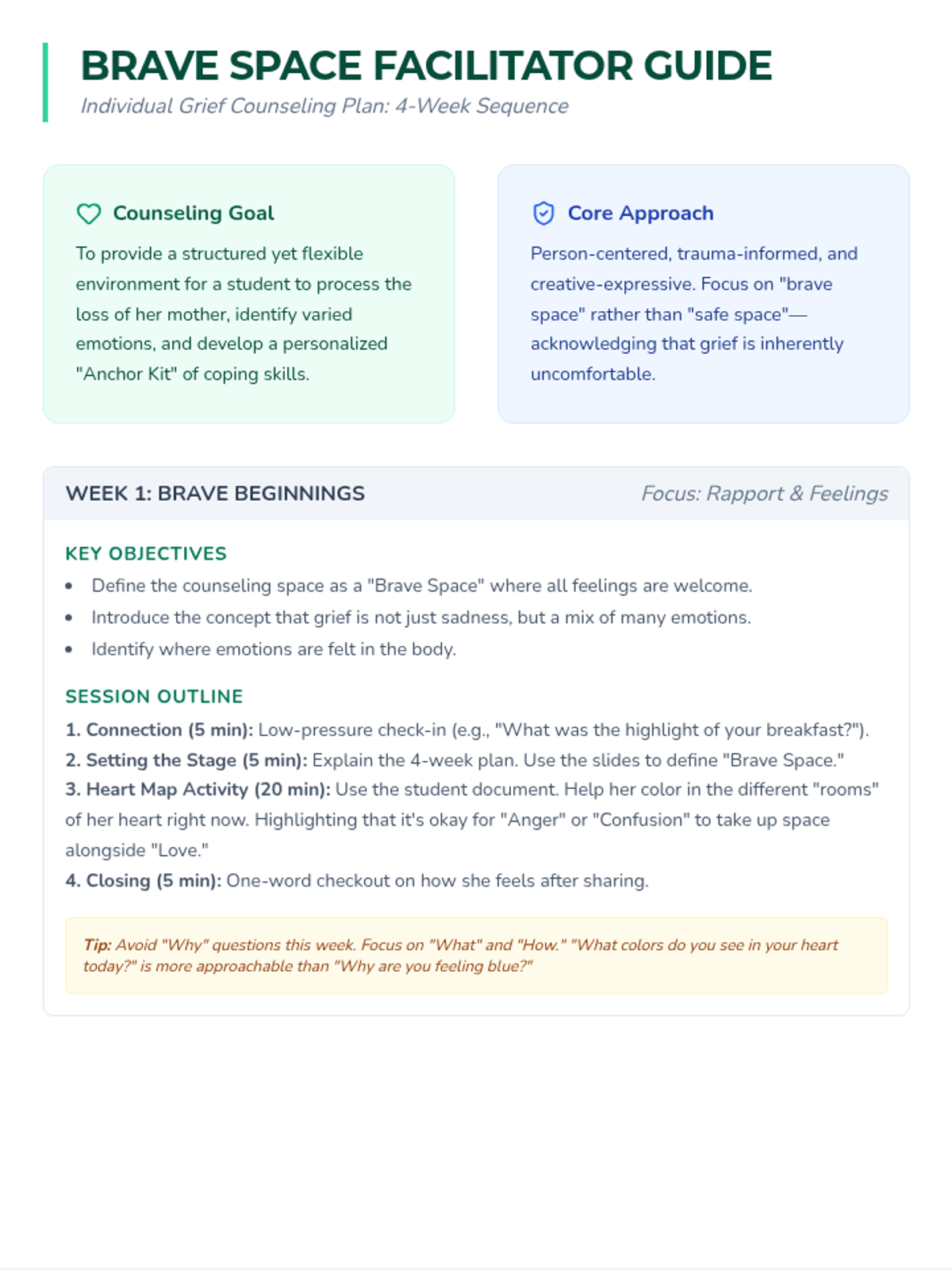
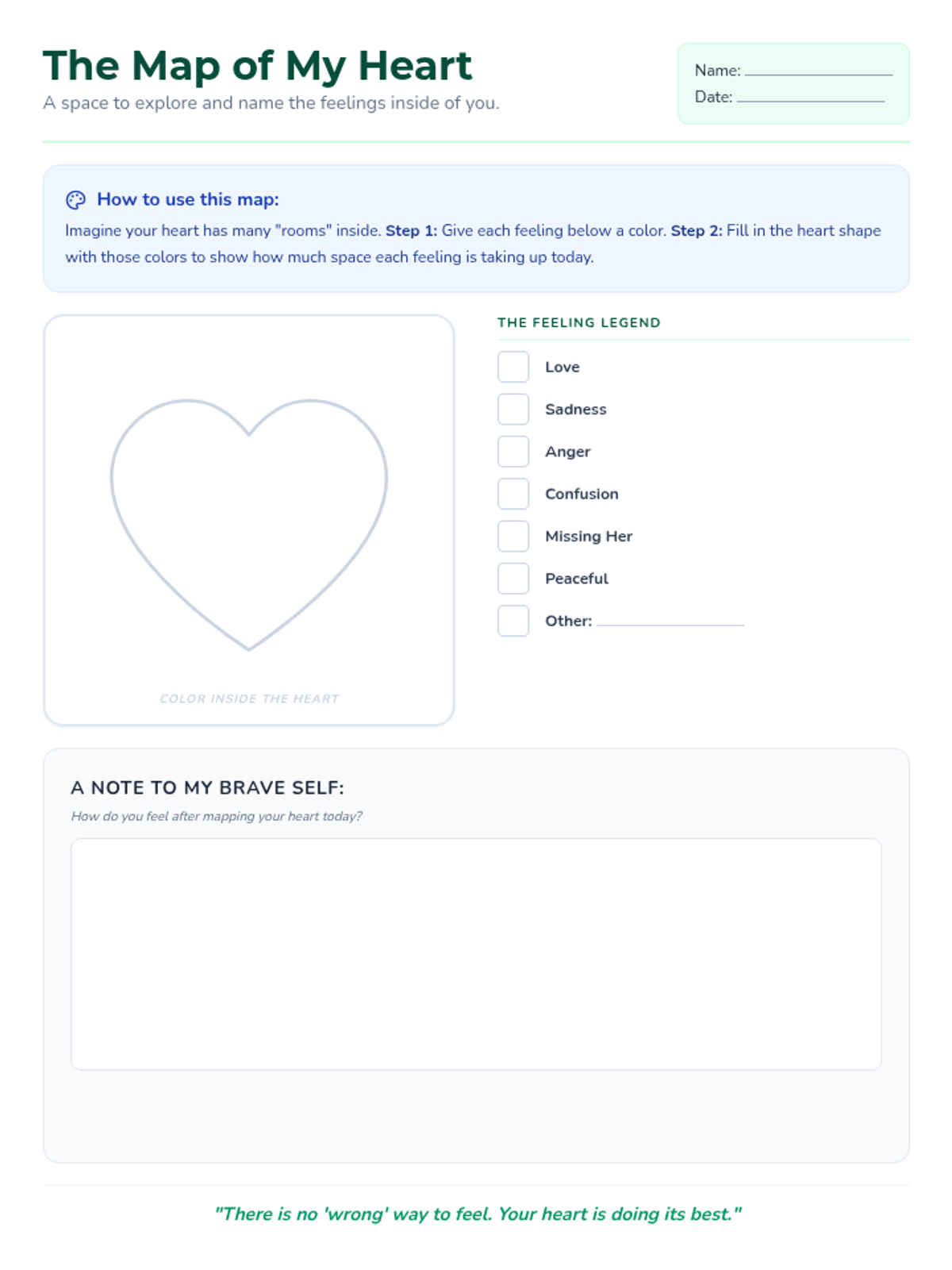
A gentle 4-week individual counseling program designed to help a student process the loss of her mother, focusing on identifying complex emotions, honoring memories, and building a sustainable toolkit of coping strategies.
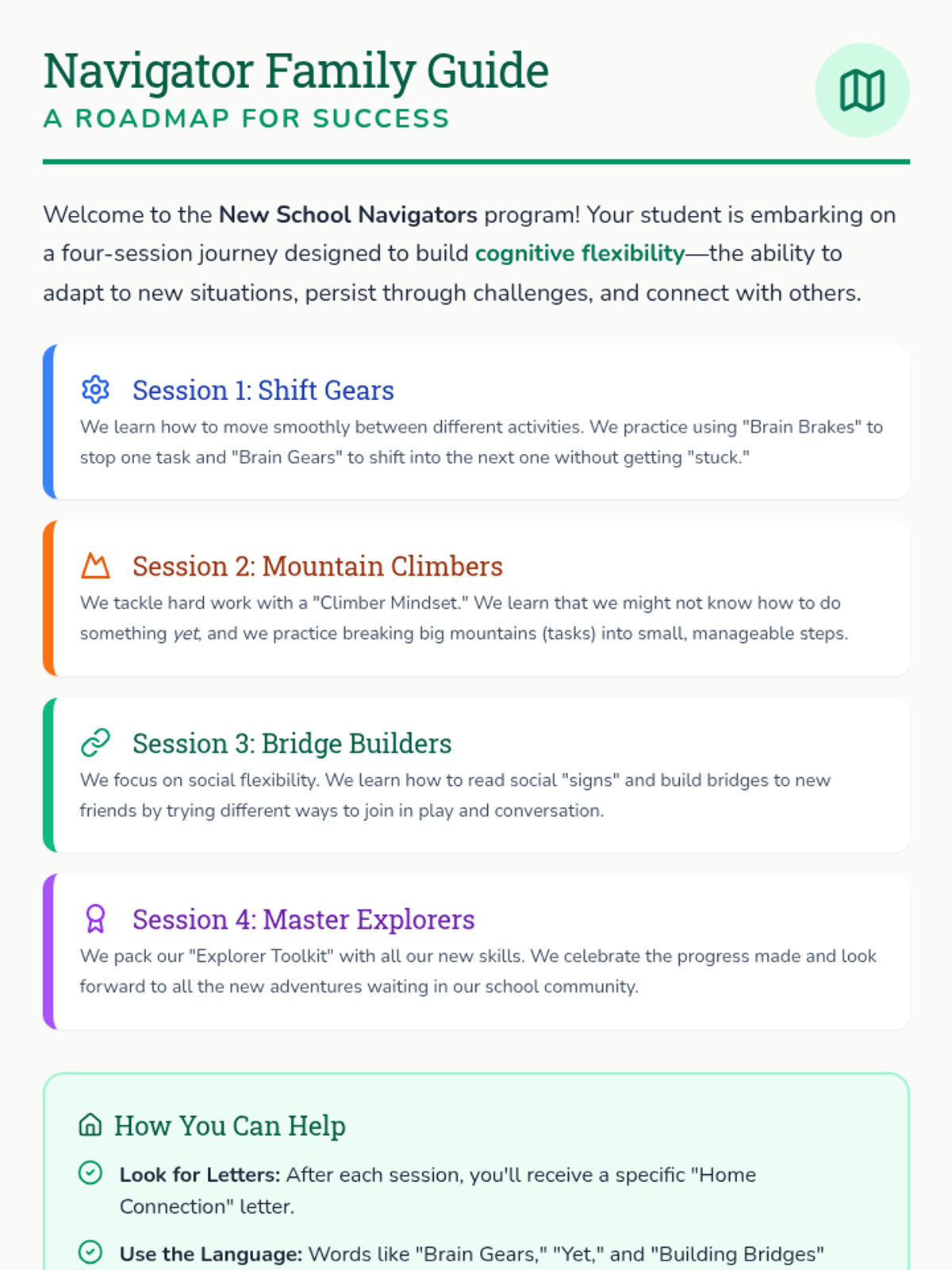
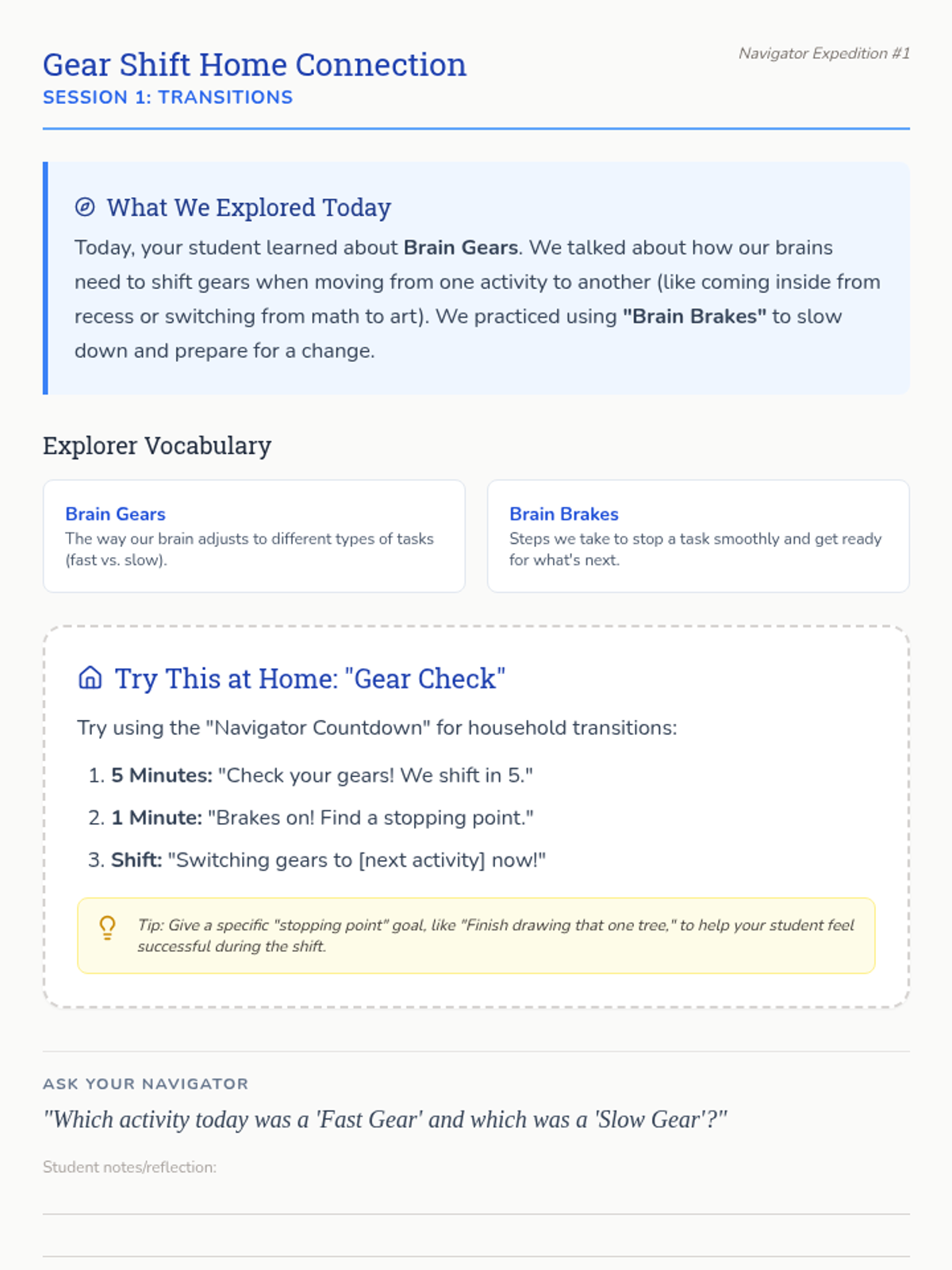
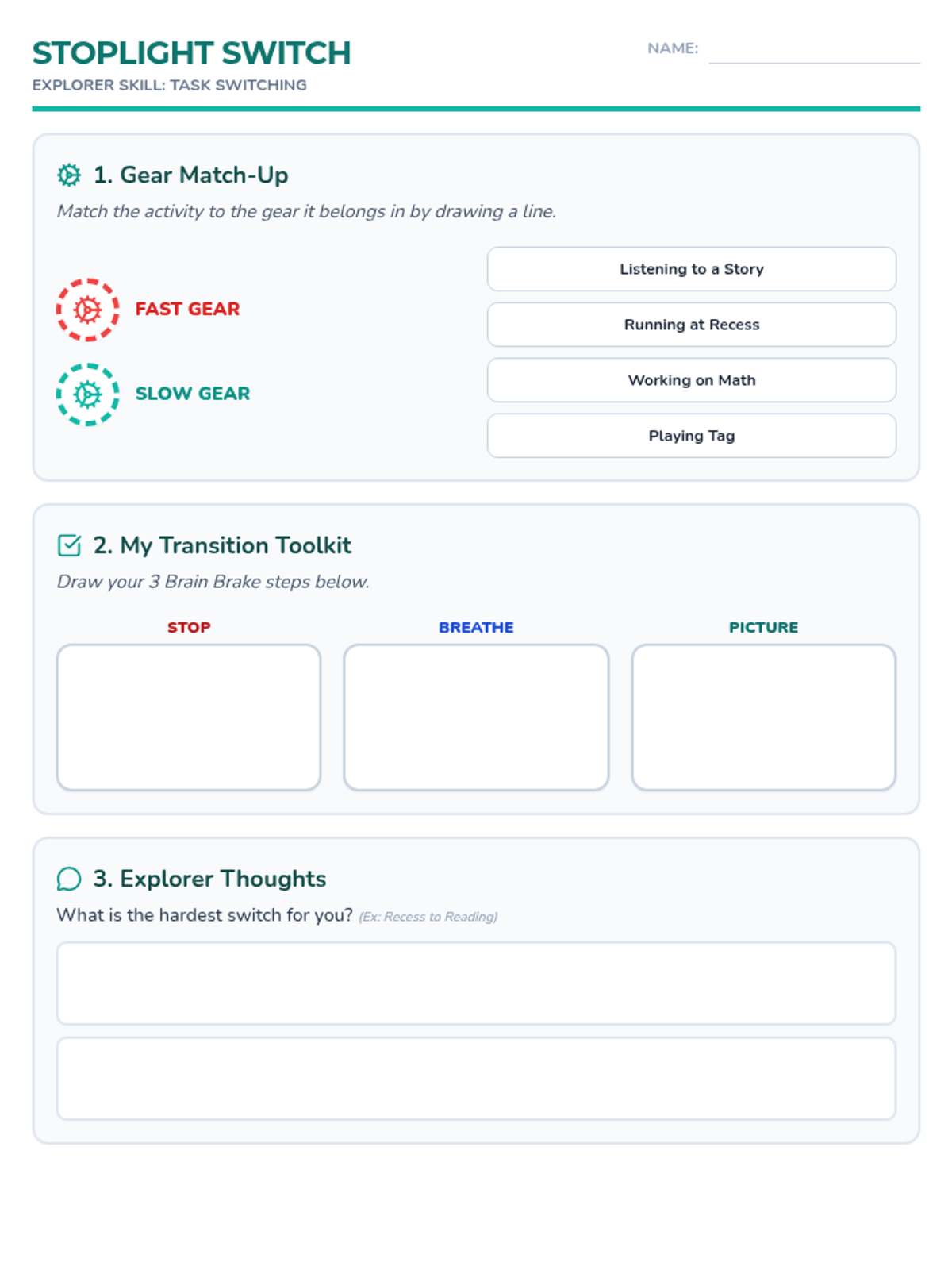
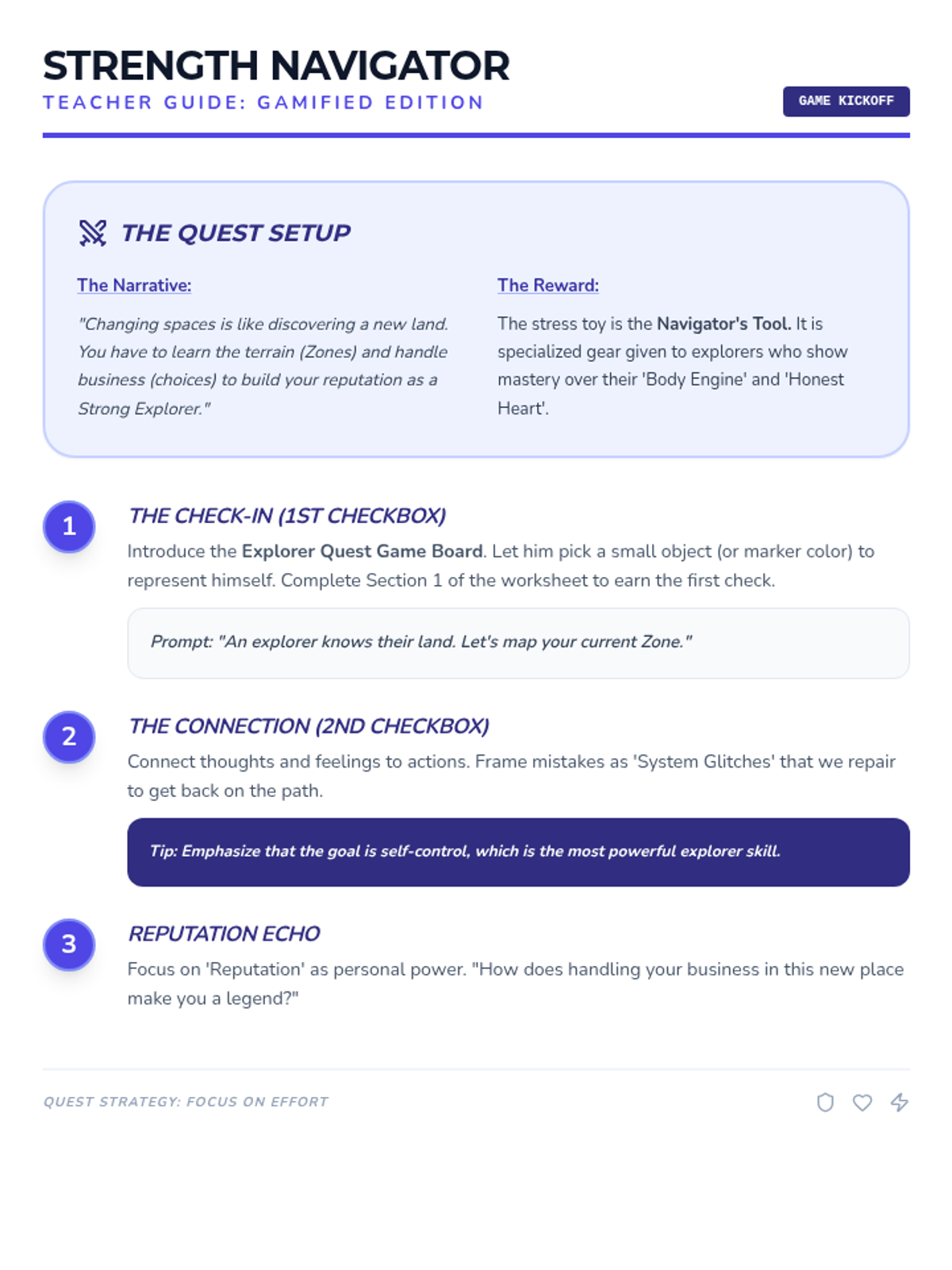
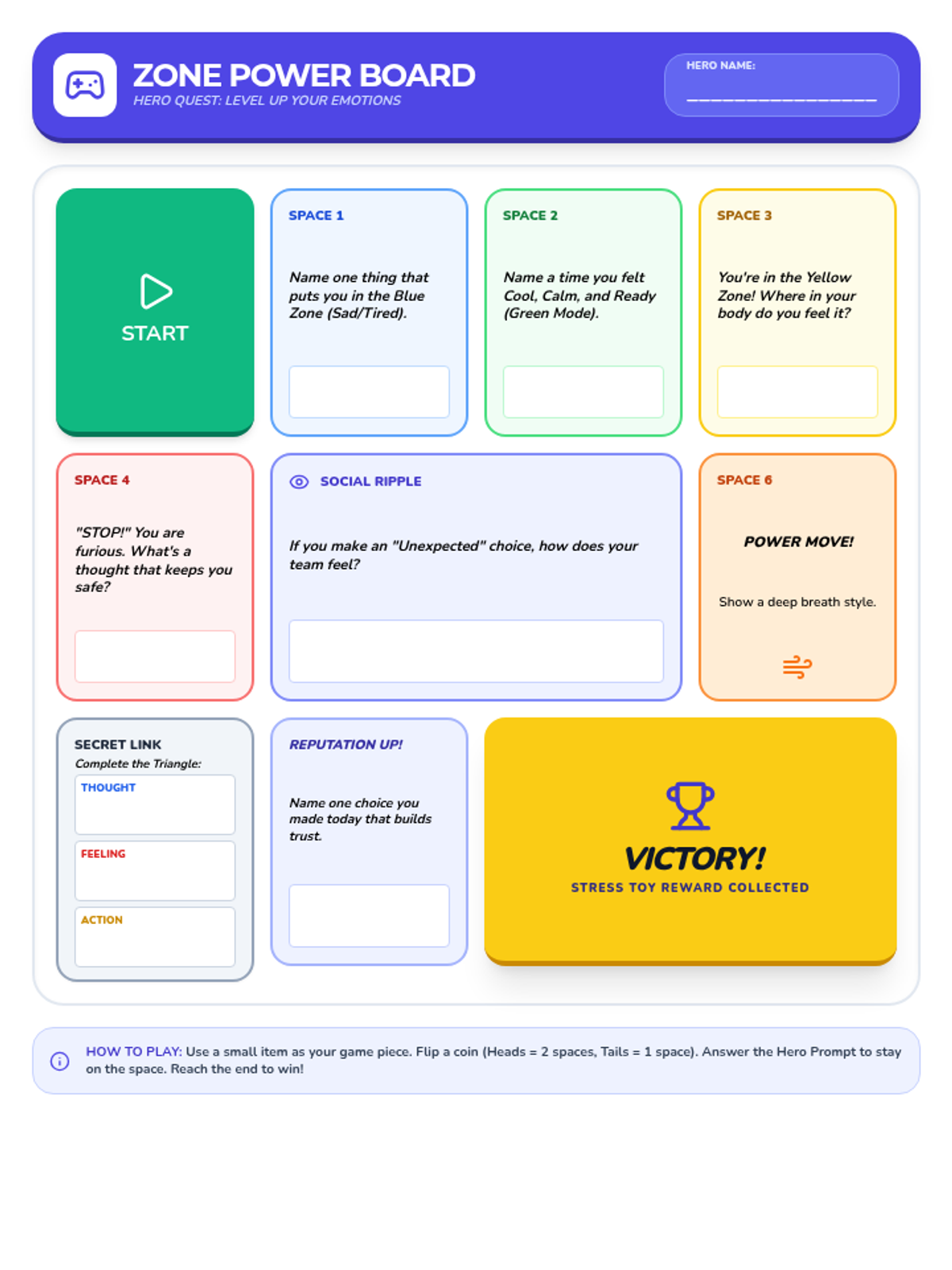
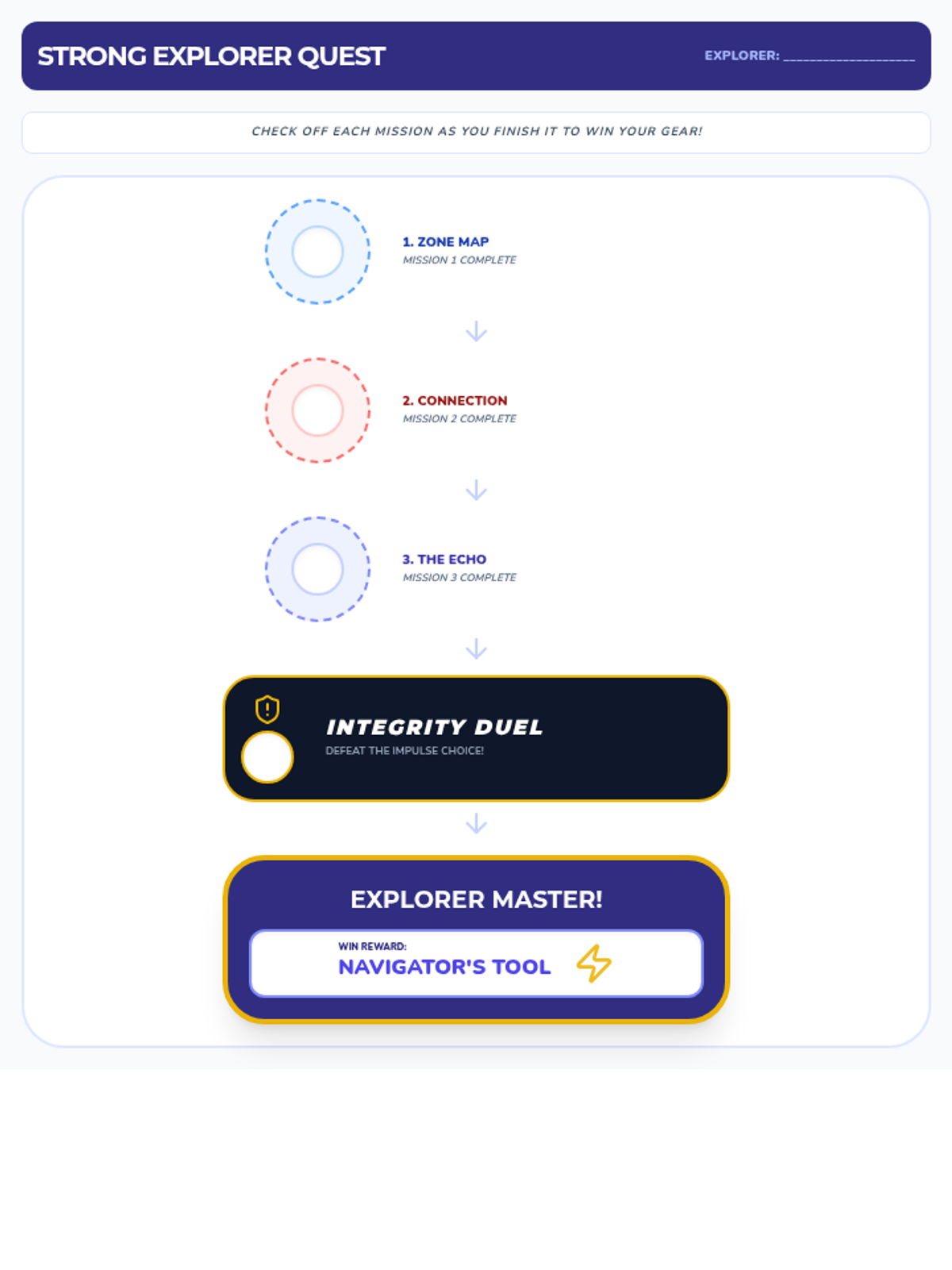
A 4-session counseling sequence designed for a Grade 2 student adjusting to a new school. The sessions focus on cognitive flexibility skills: switching tasks, persistence through challenges, and making social connections using an 'Explorer' theme.
A comprehensive series on emotional intelligence and self-regulation, helping students navigate their internal landscape with curiosity and kindness.
A comprehensive social-emotional and behavioral health series for K-6 students, focusing on emotional regulation, social skills, and executive functioning through an explorer-themed curriculum.
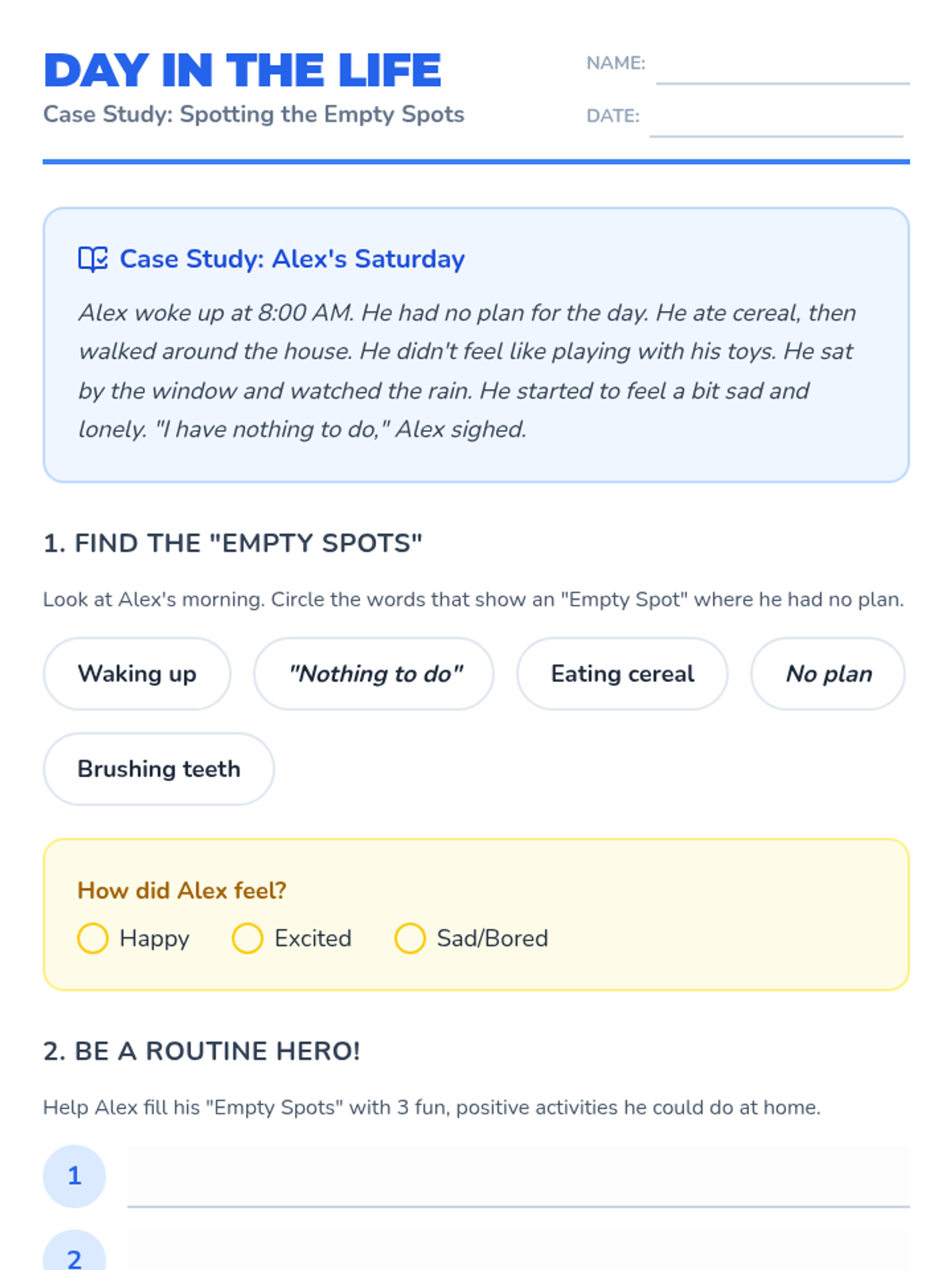
A sequence for 2nd graders to learn how behavioral activation—choosing positive actions—can help regulate emotions like sadness and anxiety. Students learn to recognize physical emotional cues and develop a personal 'Bounce-Back Plan' to shift their mood.
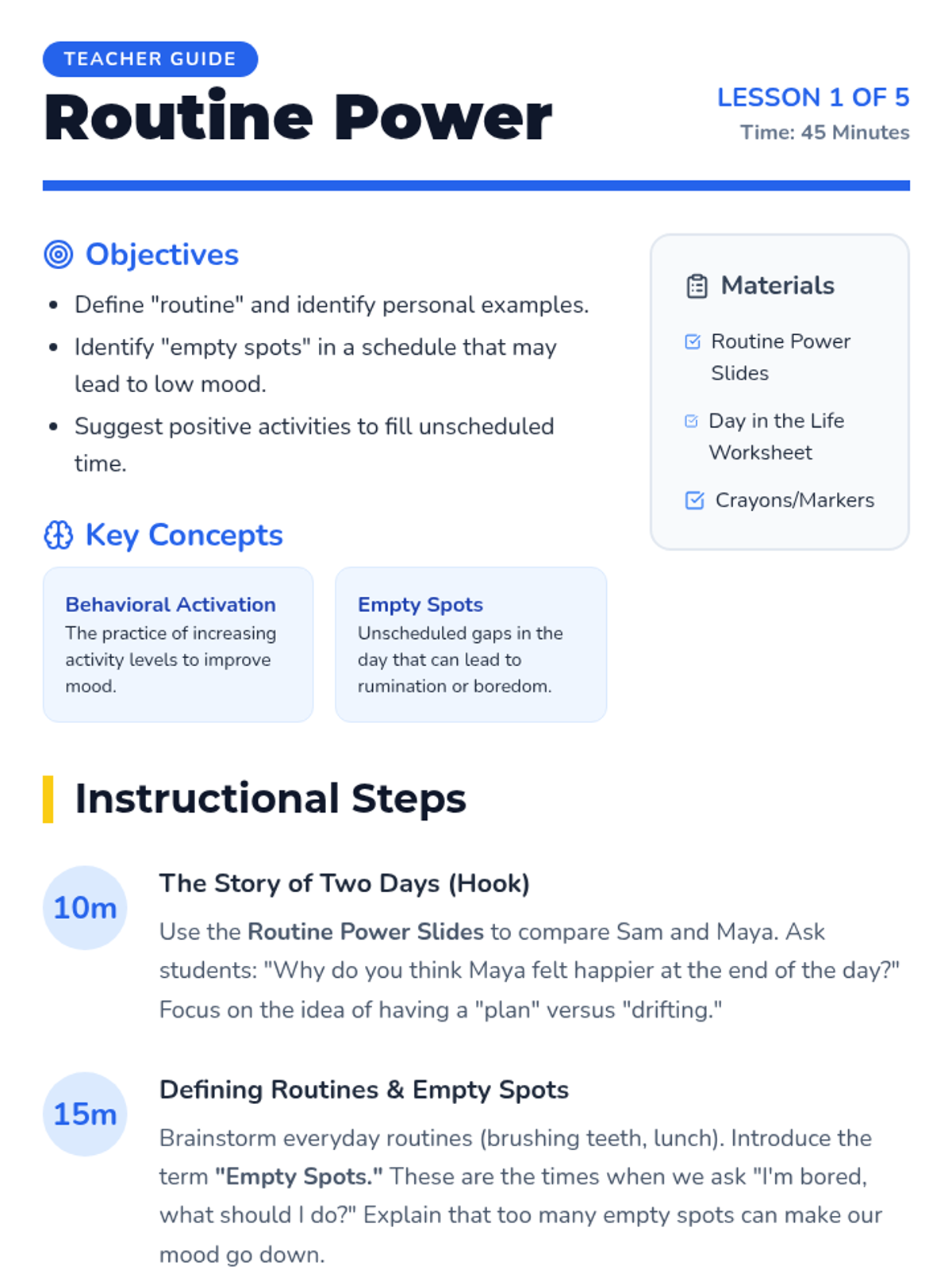
This sequence introduces 2nd-grade students to behavioral activation by teaching them how to integrate positive activities into their daily routines to support emotional well-being. Students will create tools like a 'Happiness Jar' and a 'Positive Habit Tracker' to learn the connection between their actions and their mood.
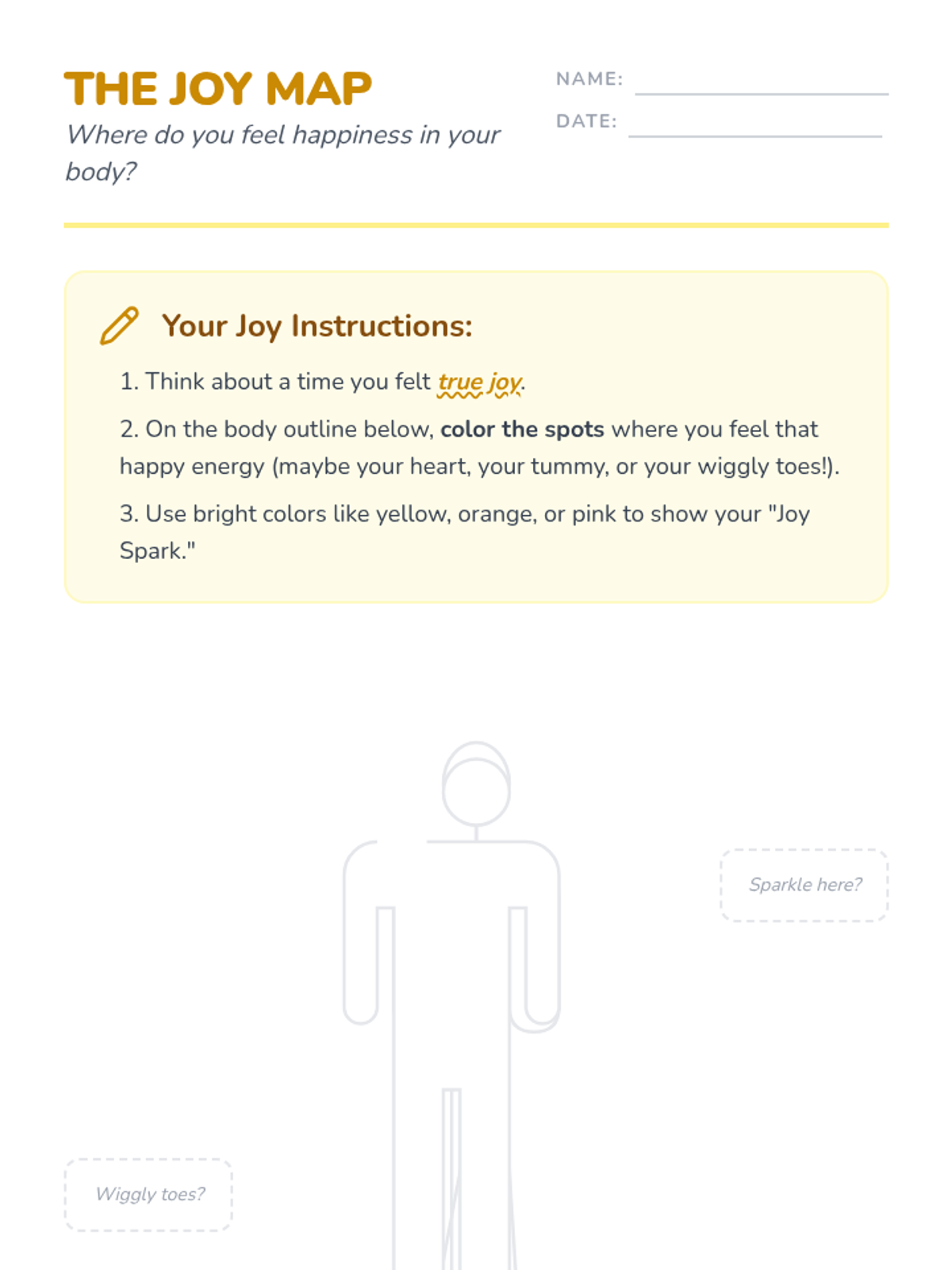
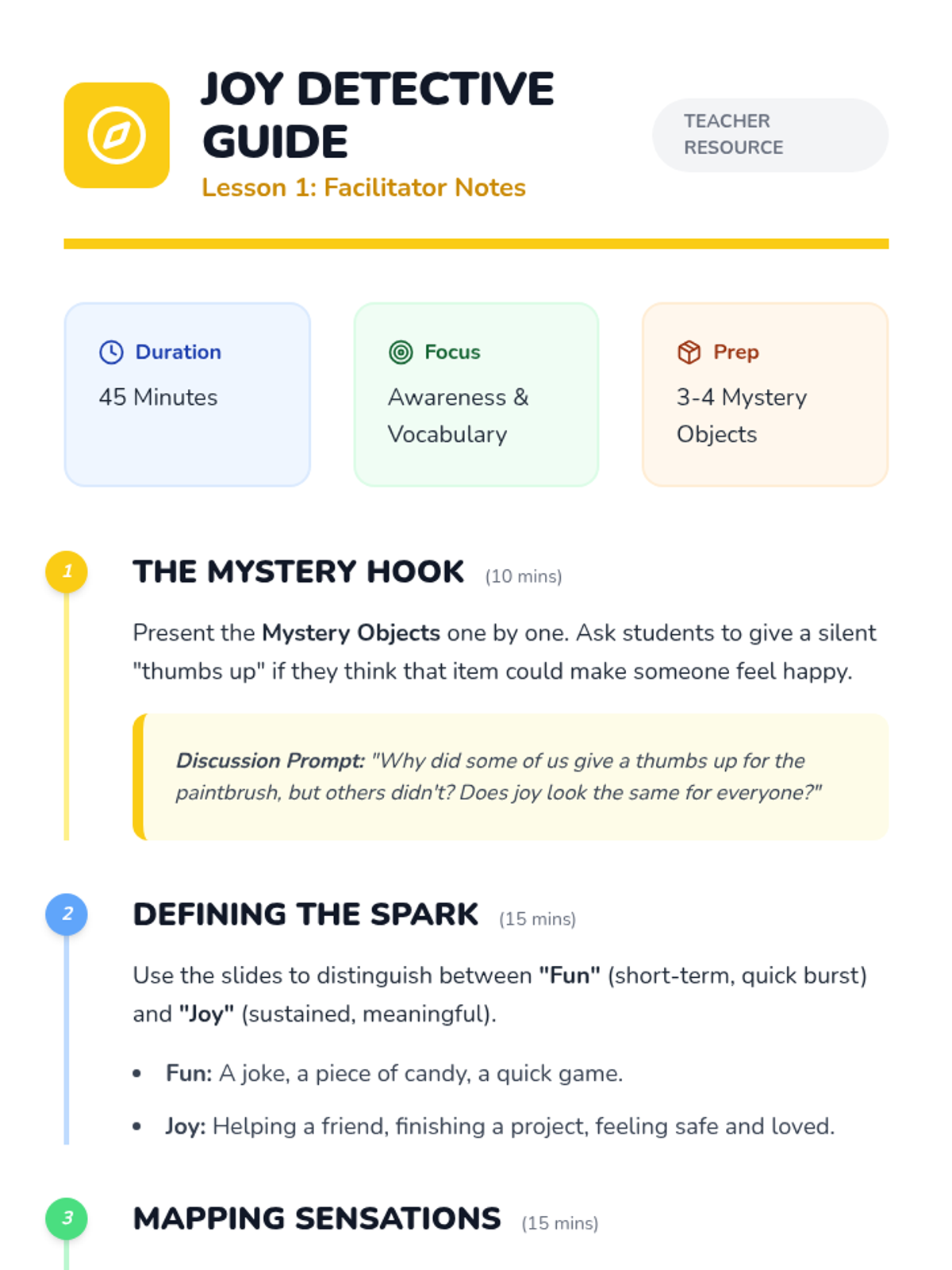
A therapeutic and self-discovery sequence for 2nd graders to identify personal sources of joy. Students explore the physical sensations of happiness, categorize their interests, and create a personalized 'Joy Menu' to use as a coping strategy for emotional regulation.
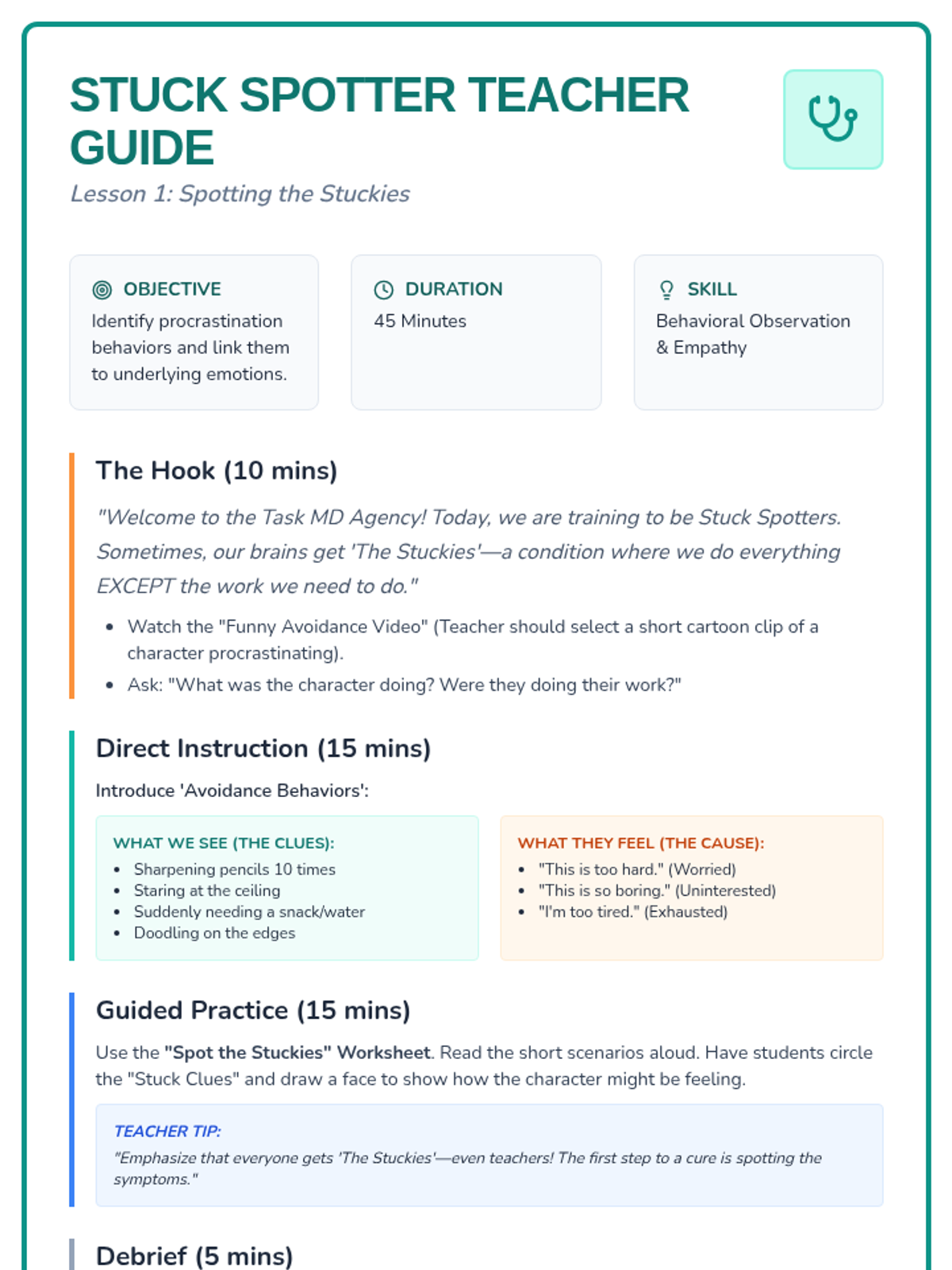
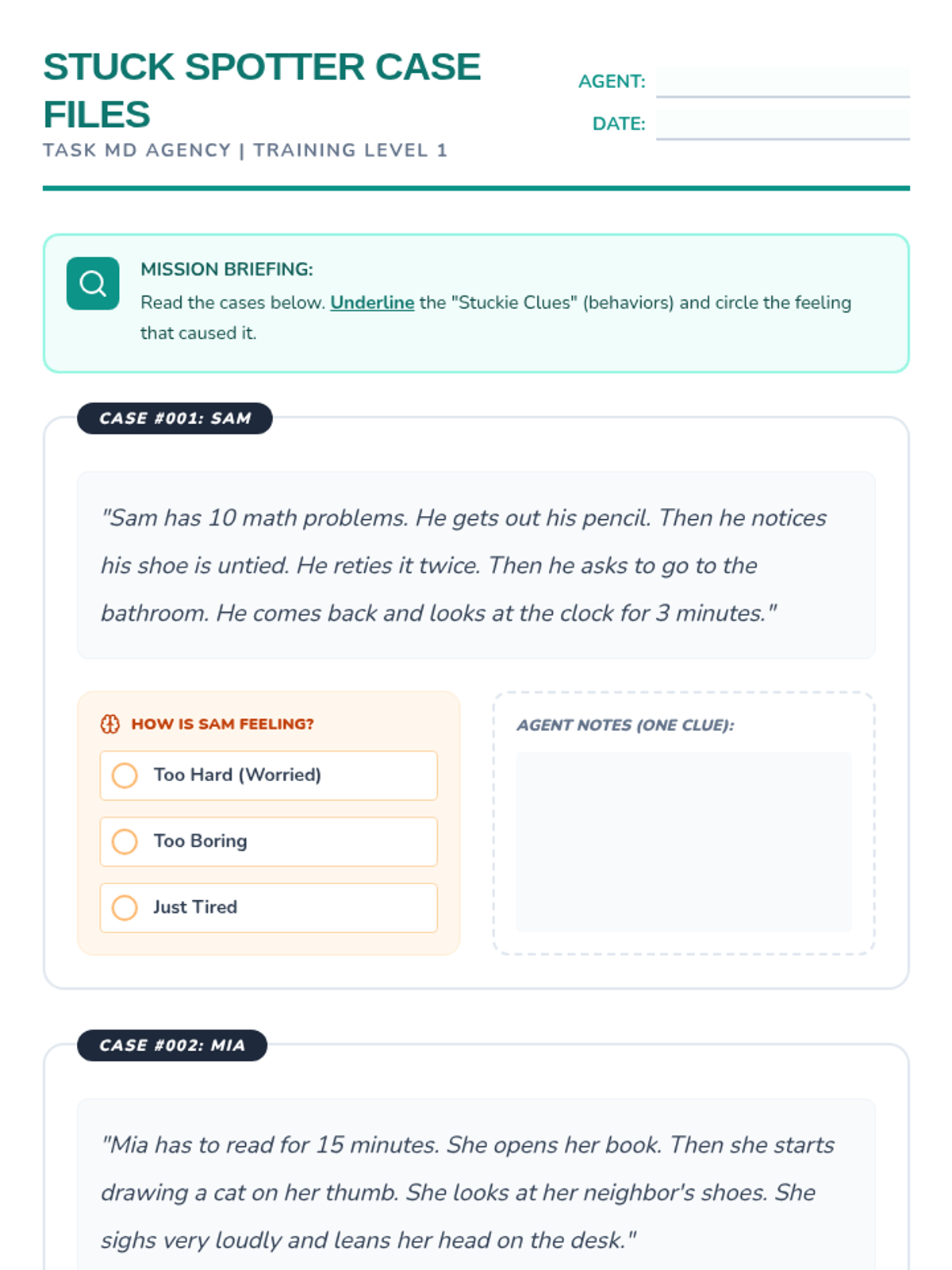
A sequence focused on helping students overcome emotional barriers to task initiation using a 'Task Doctor' theme. Students learn to identify avoidance behaviors, diagnose the root cause of being 'stuck', and prescribe effective self-talk solutions through role-play and reflection.
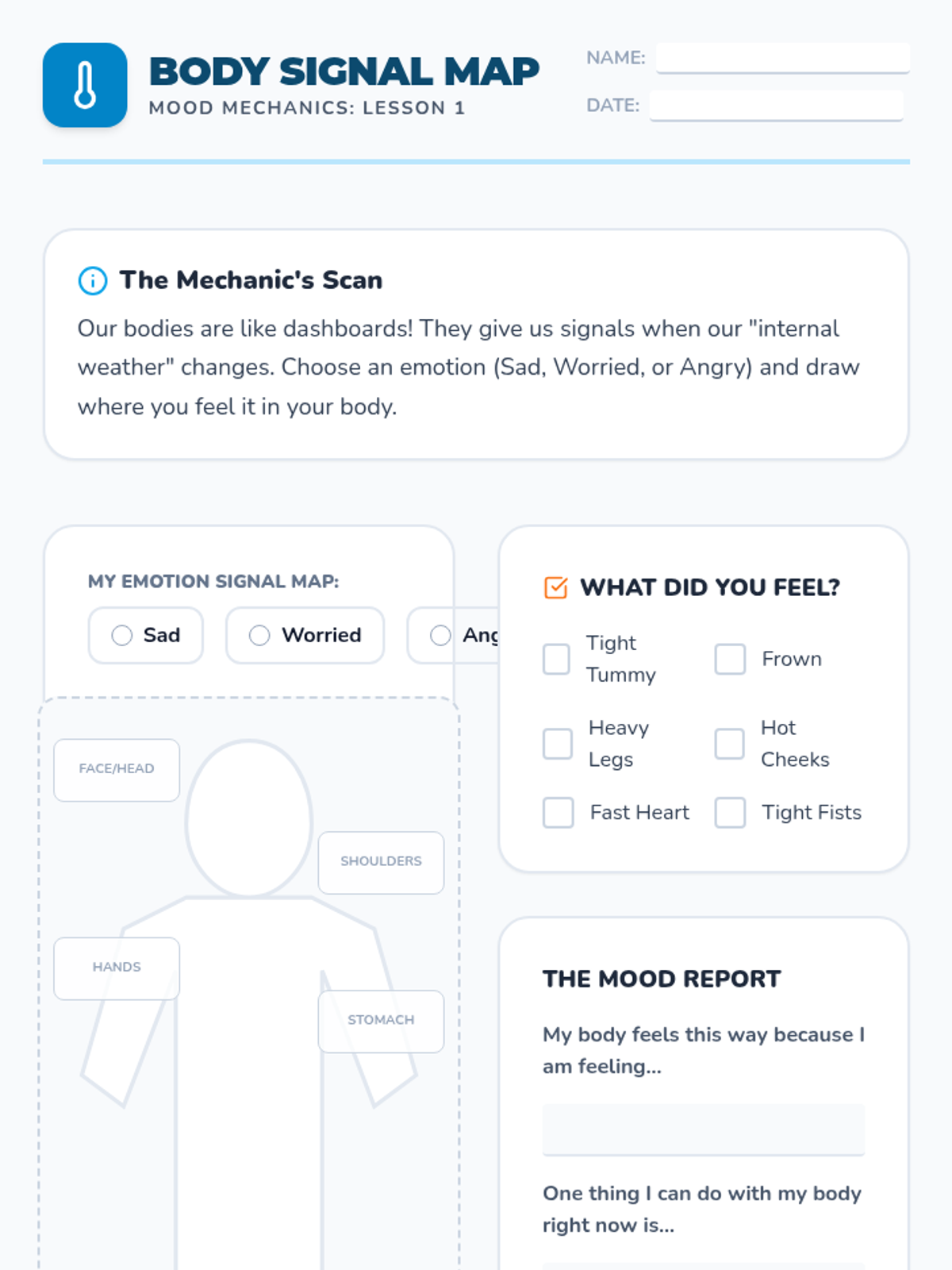
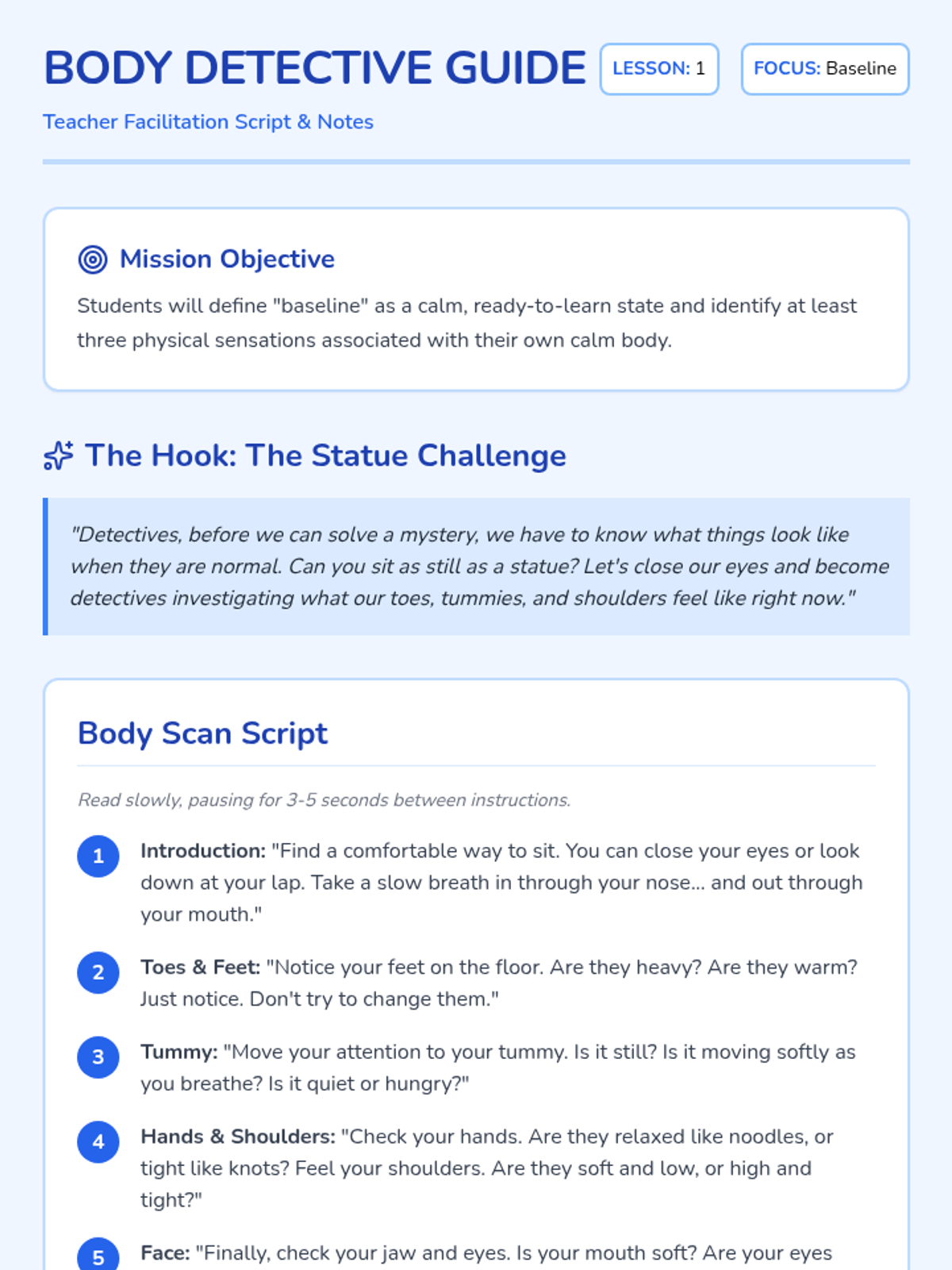
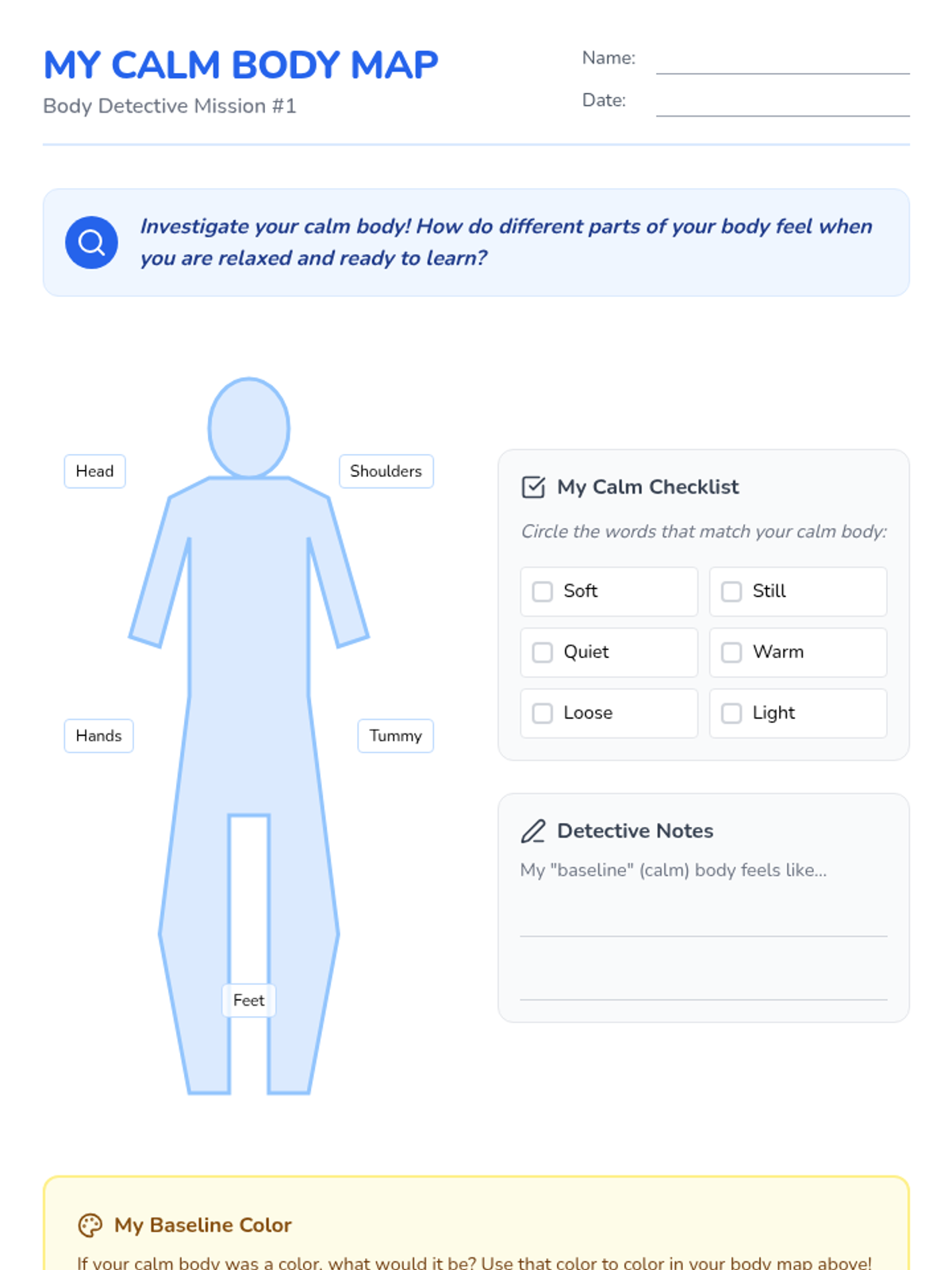
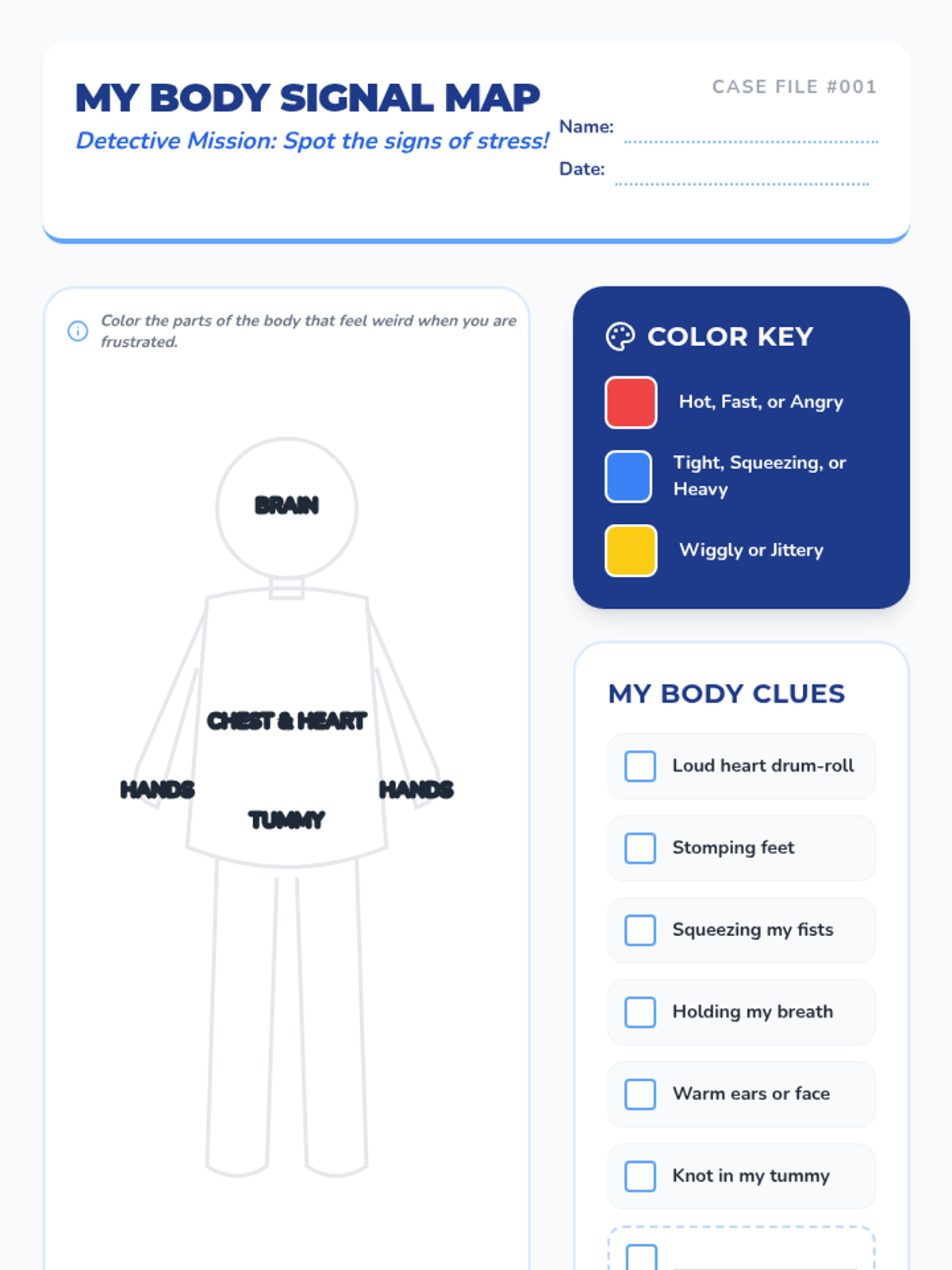
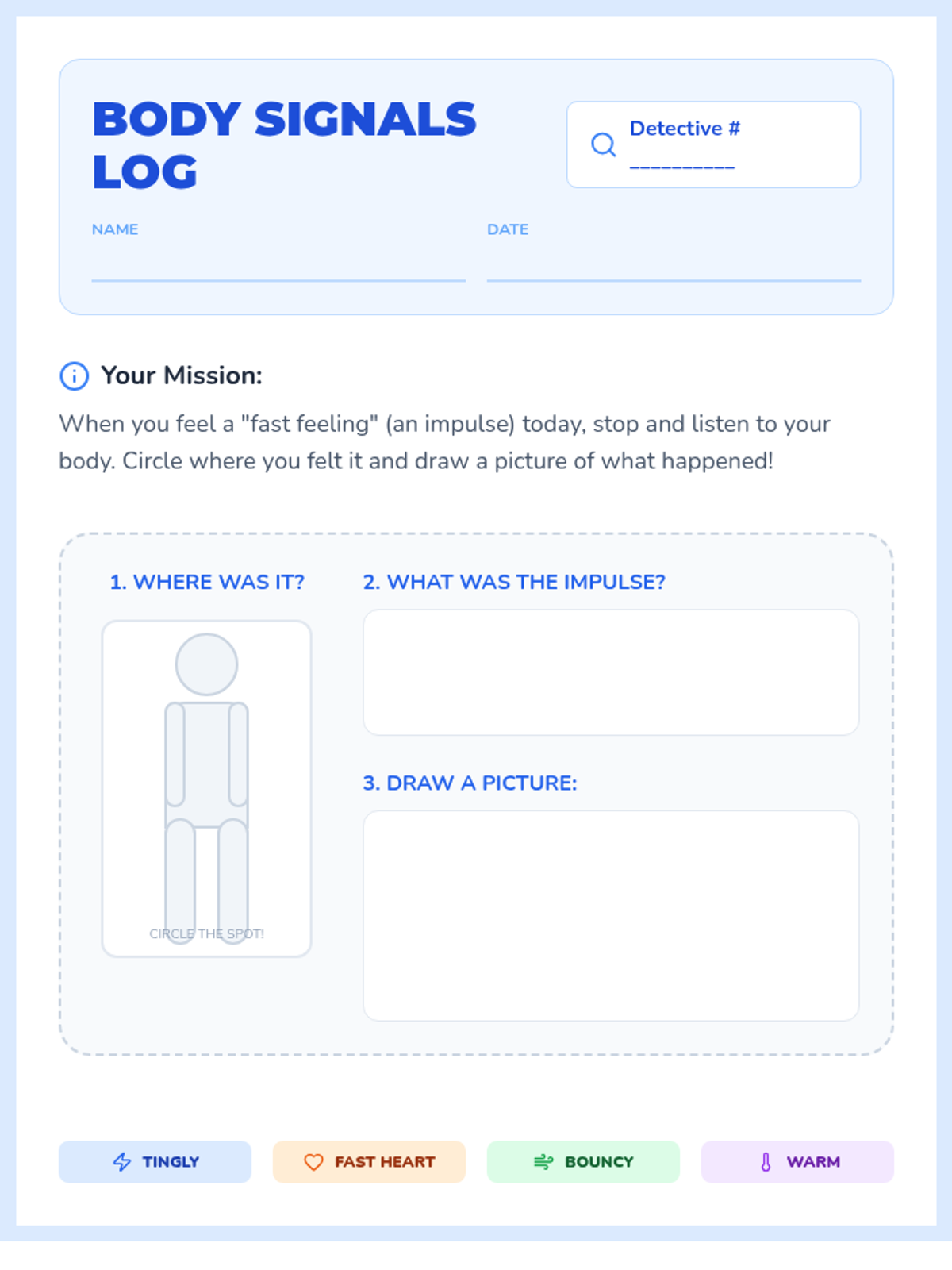
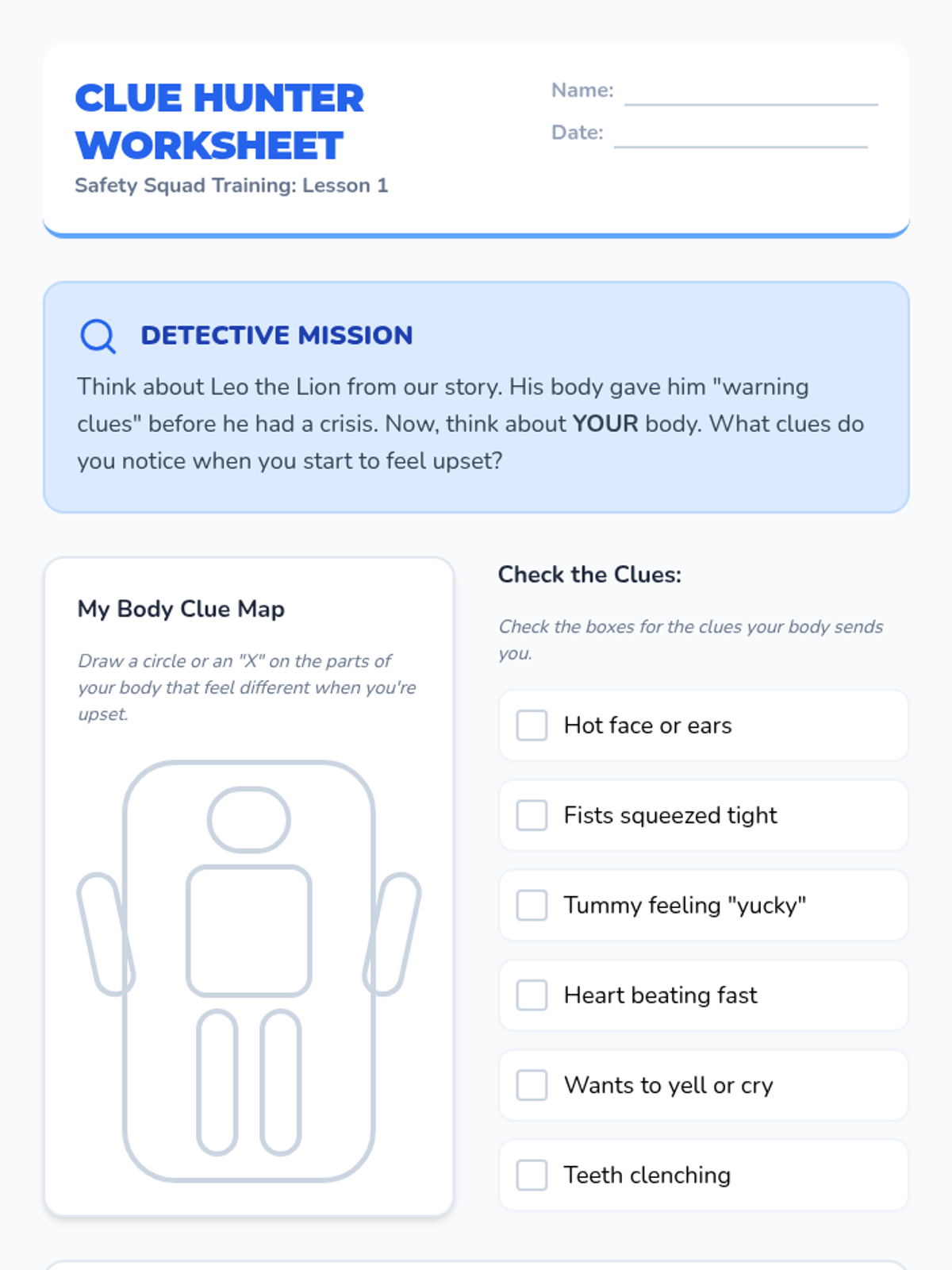
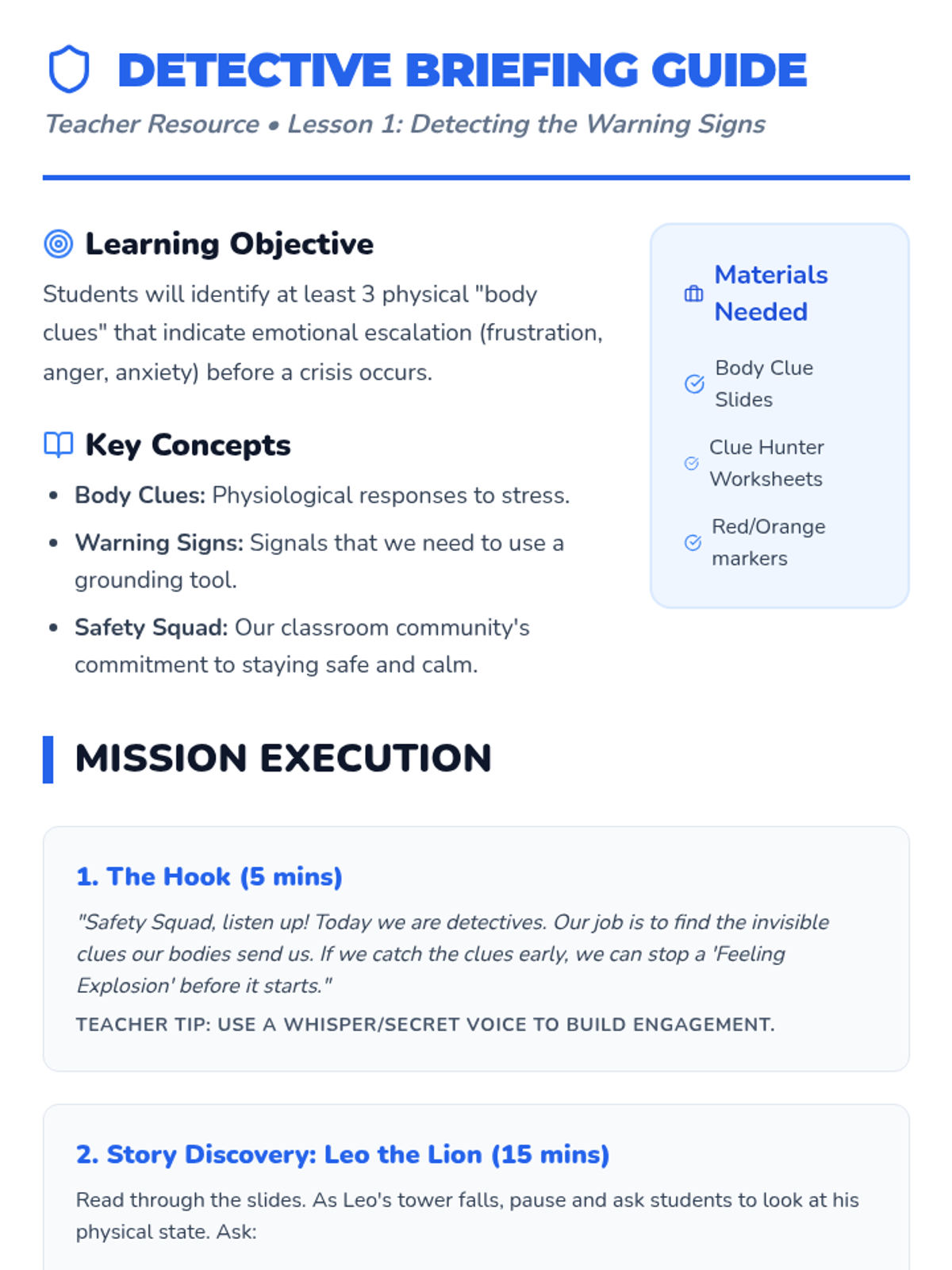
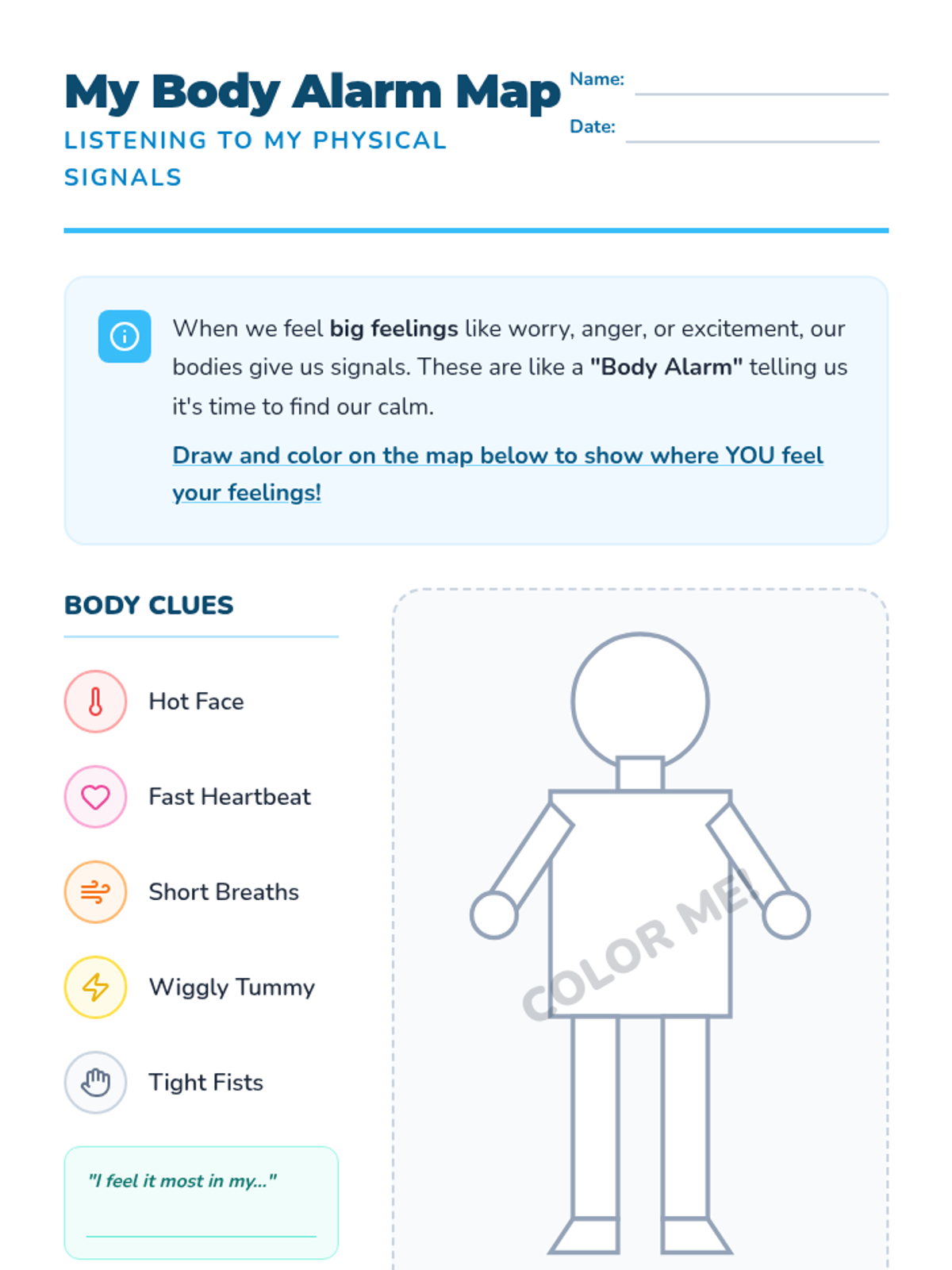
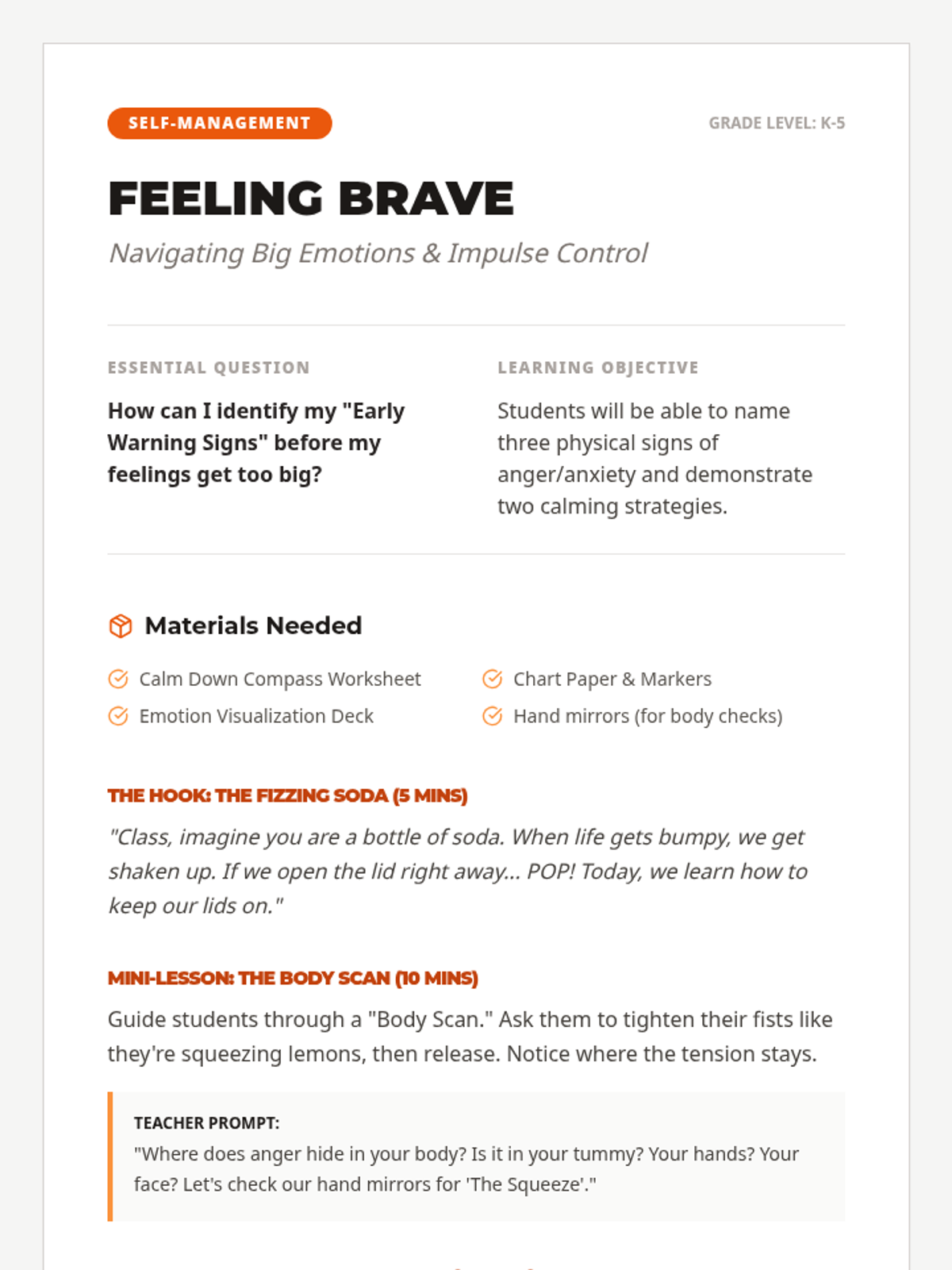
A comprehensive 5-lesson unit for 2nd graders to build somatic awareness, identifying physiological and behavioral signs of emotional escalation before they reach a crisis point. Students learn to recognize their 'baseline' calm state, map sensations to emotions, use an emotional thermometer, and identify personal warning signals.
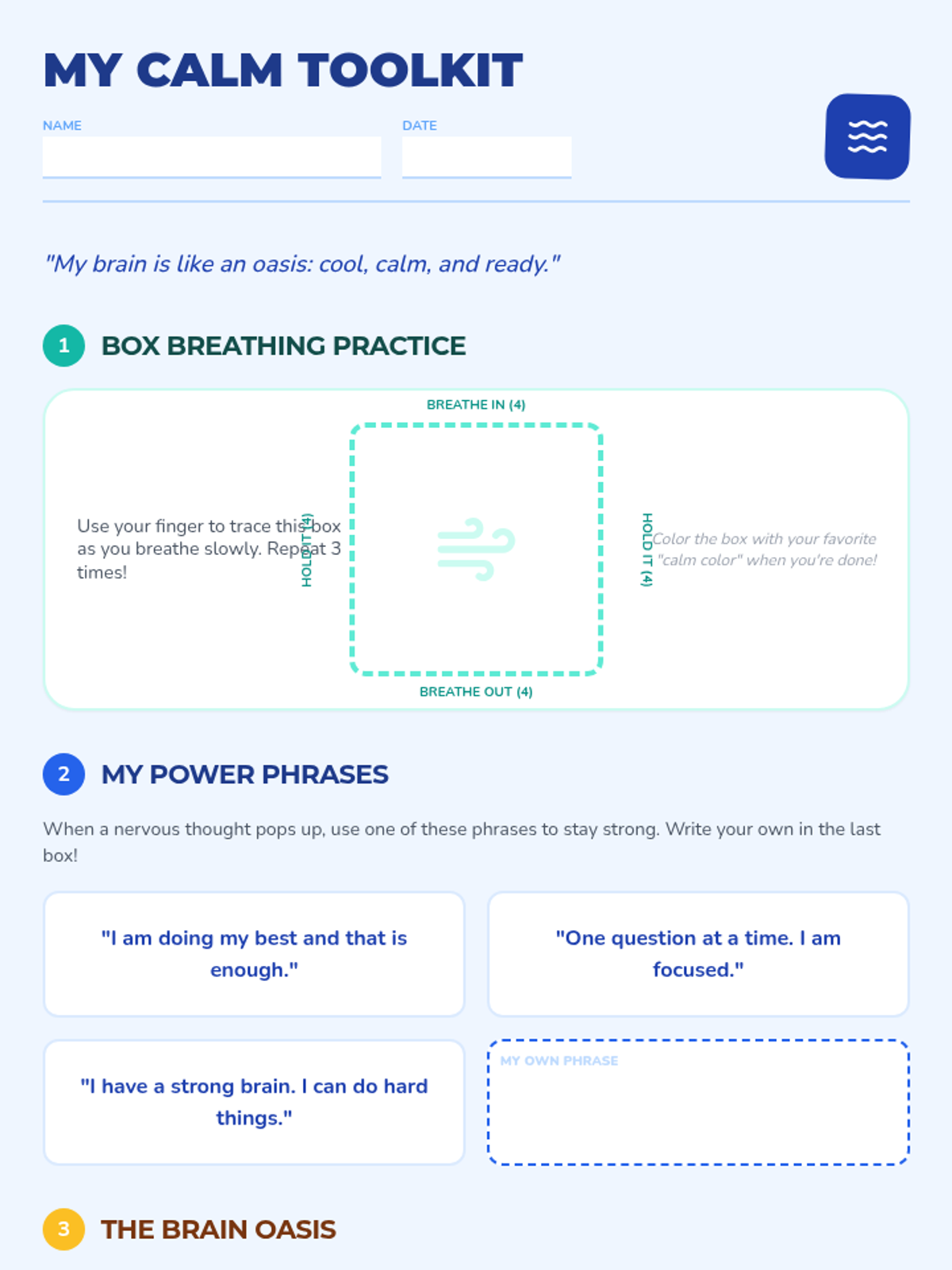
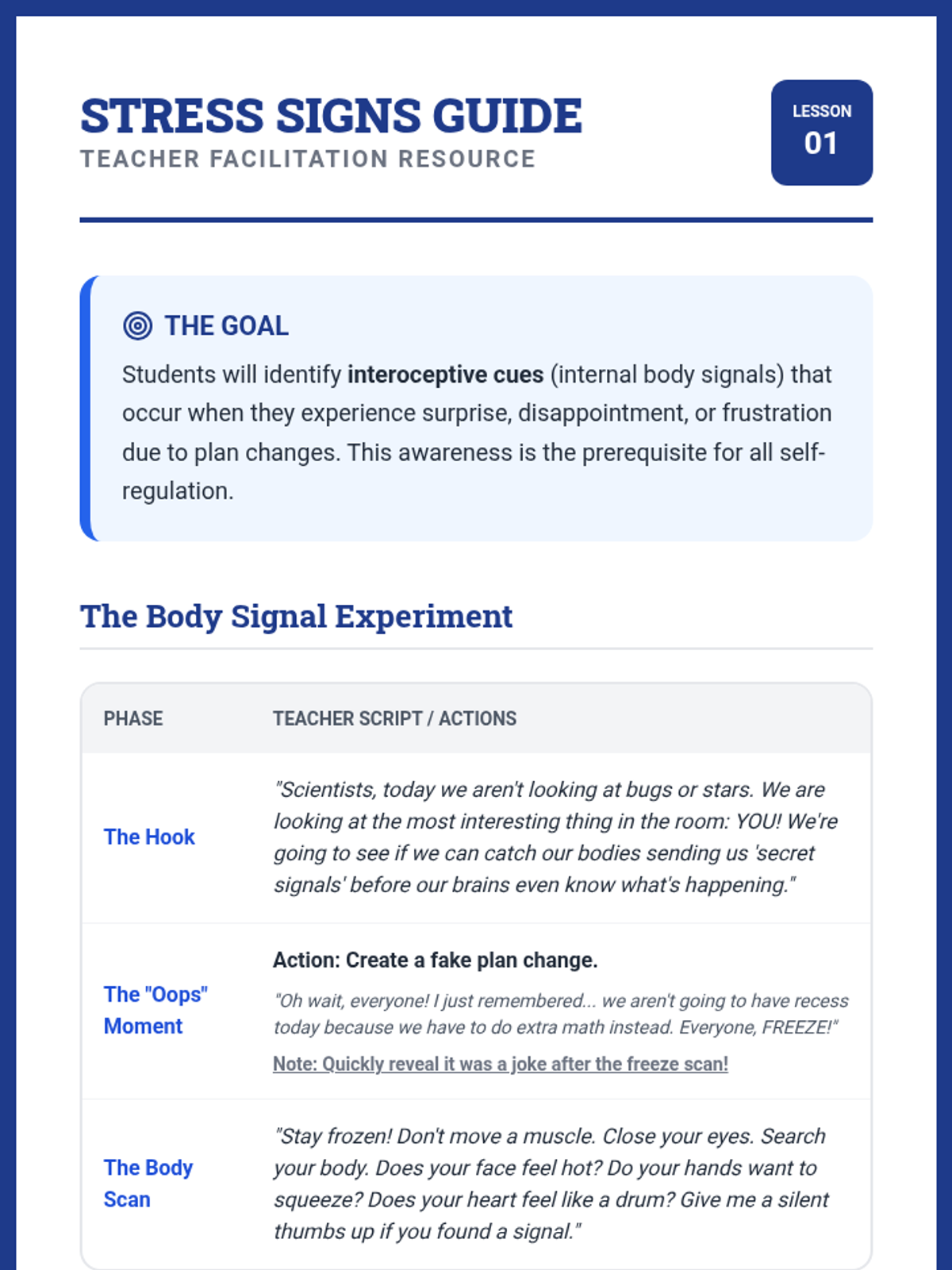
This sequence teaches 2nd-grade students to recognize physical signs of stress and use specific emotional regulation tools (breathing, self-talk, sensory) to adapt when plans change. Students build a physical 'Coping Toolbox' and practice applying strategies to real-world scenarios.
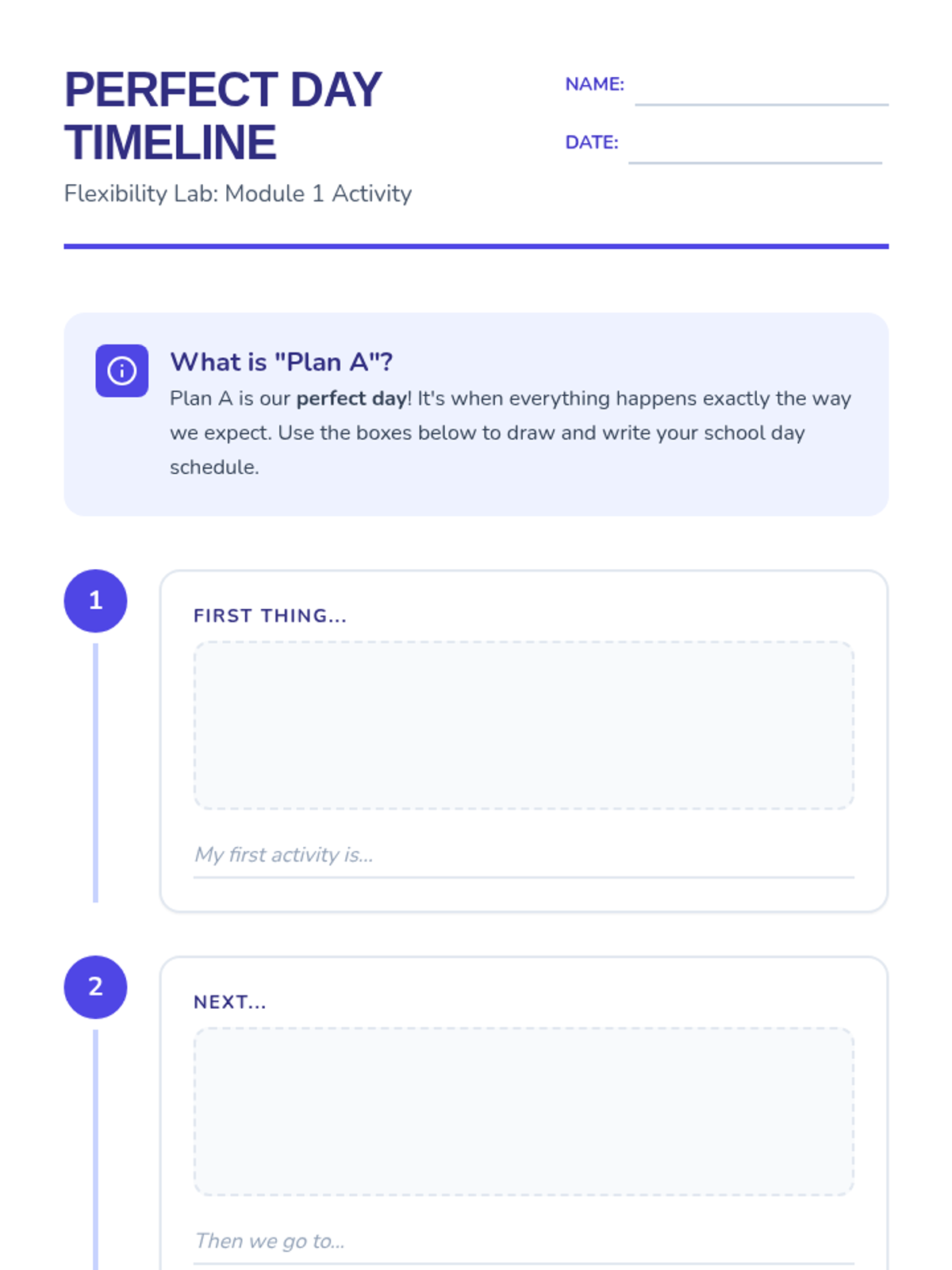
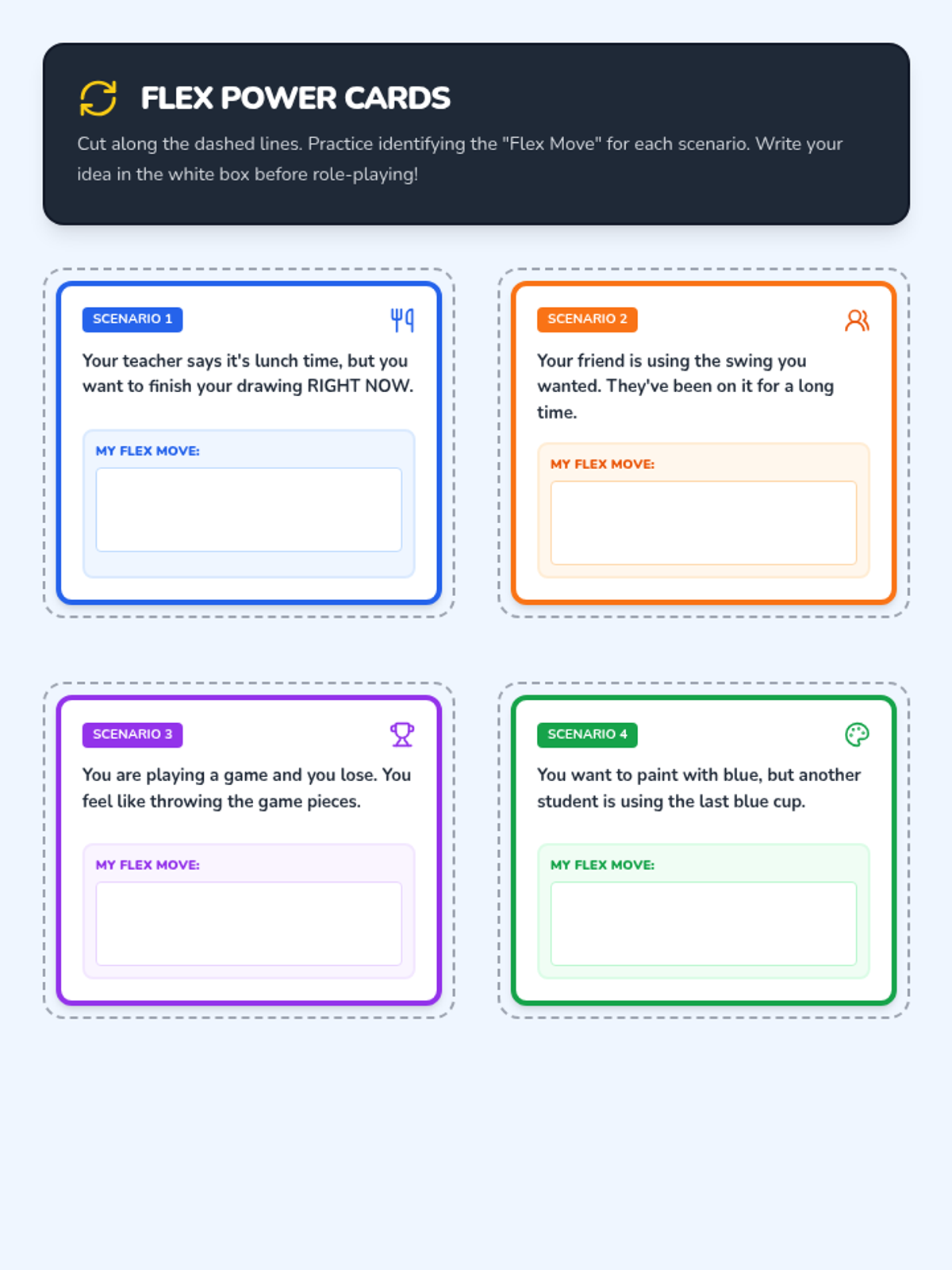
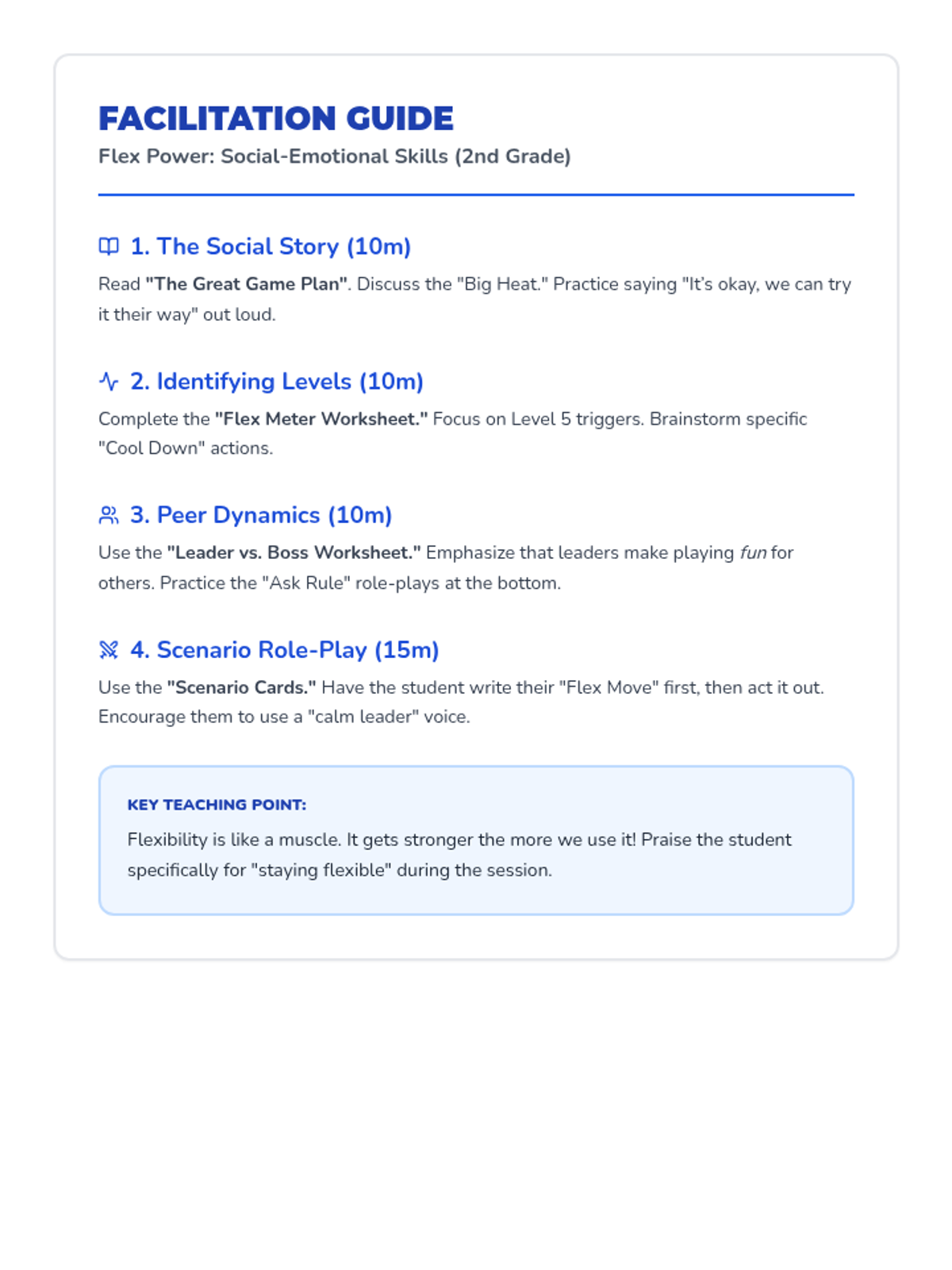
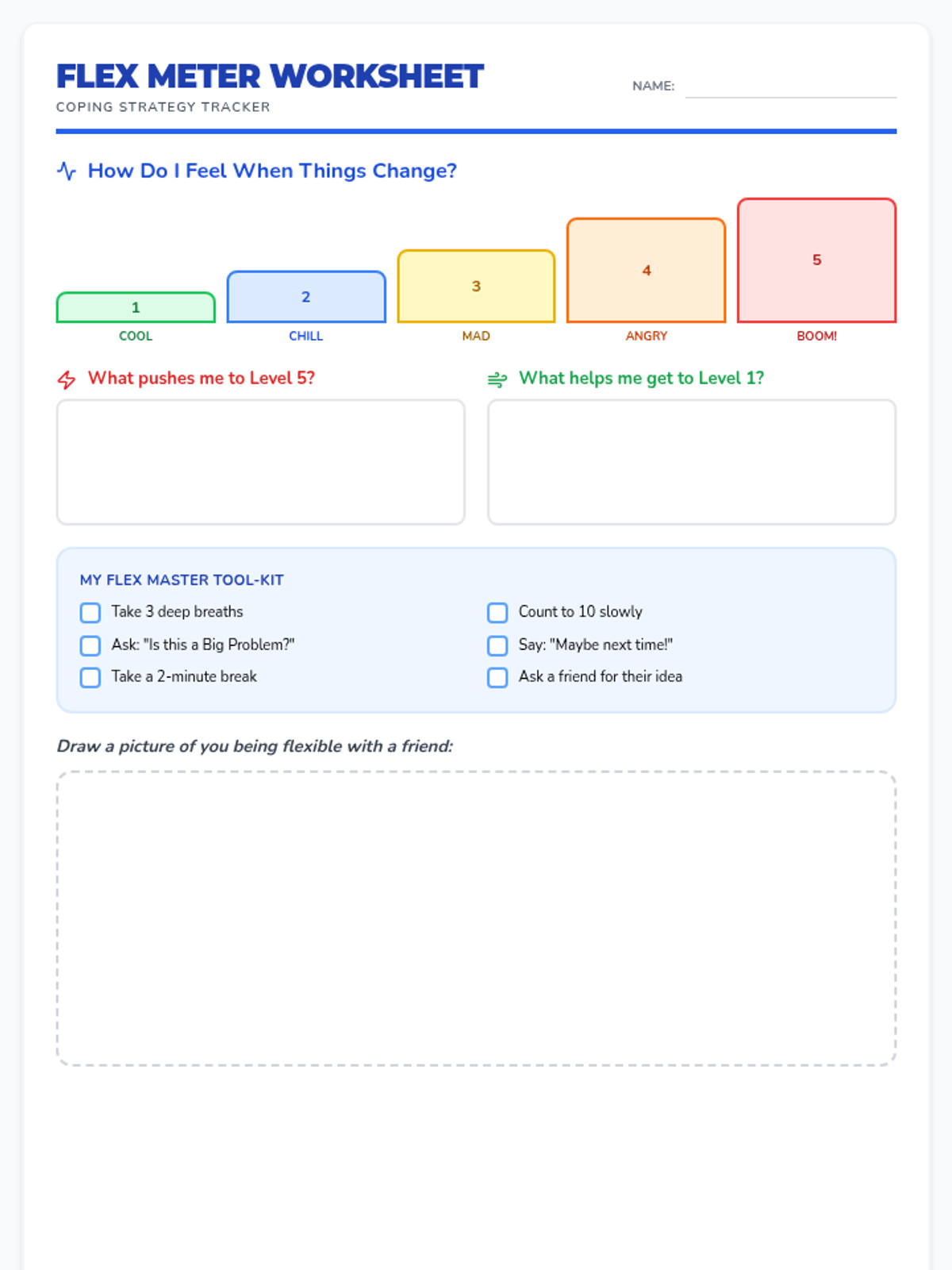
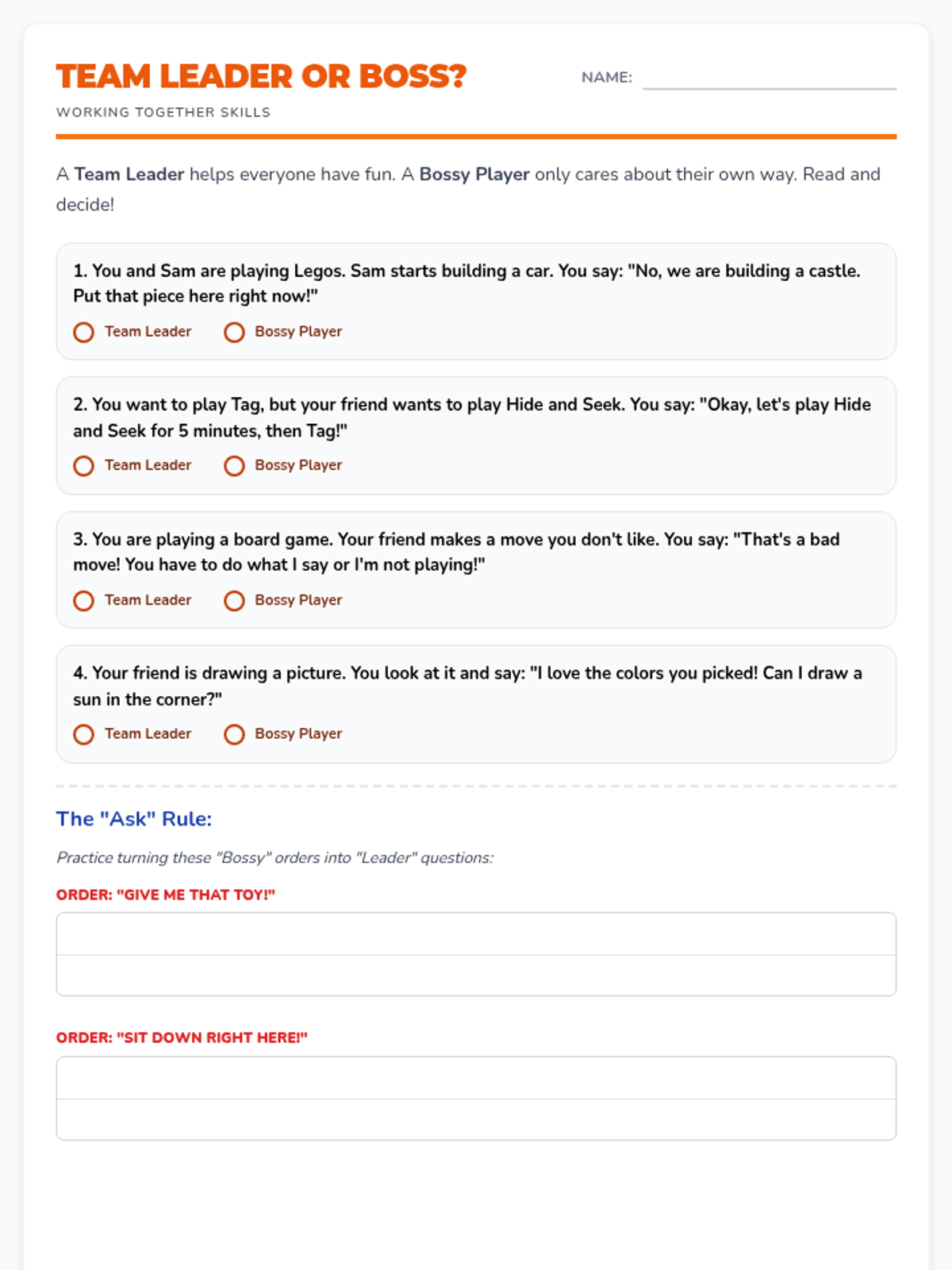
A 5-lesson sequence for 2nd graders to develop cognitive flexibility by distinguishing between rigid and flexible thinking, identifying emotions, sizing problems, and creating Plan B alternatives.
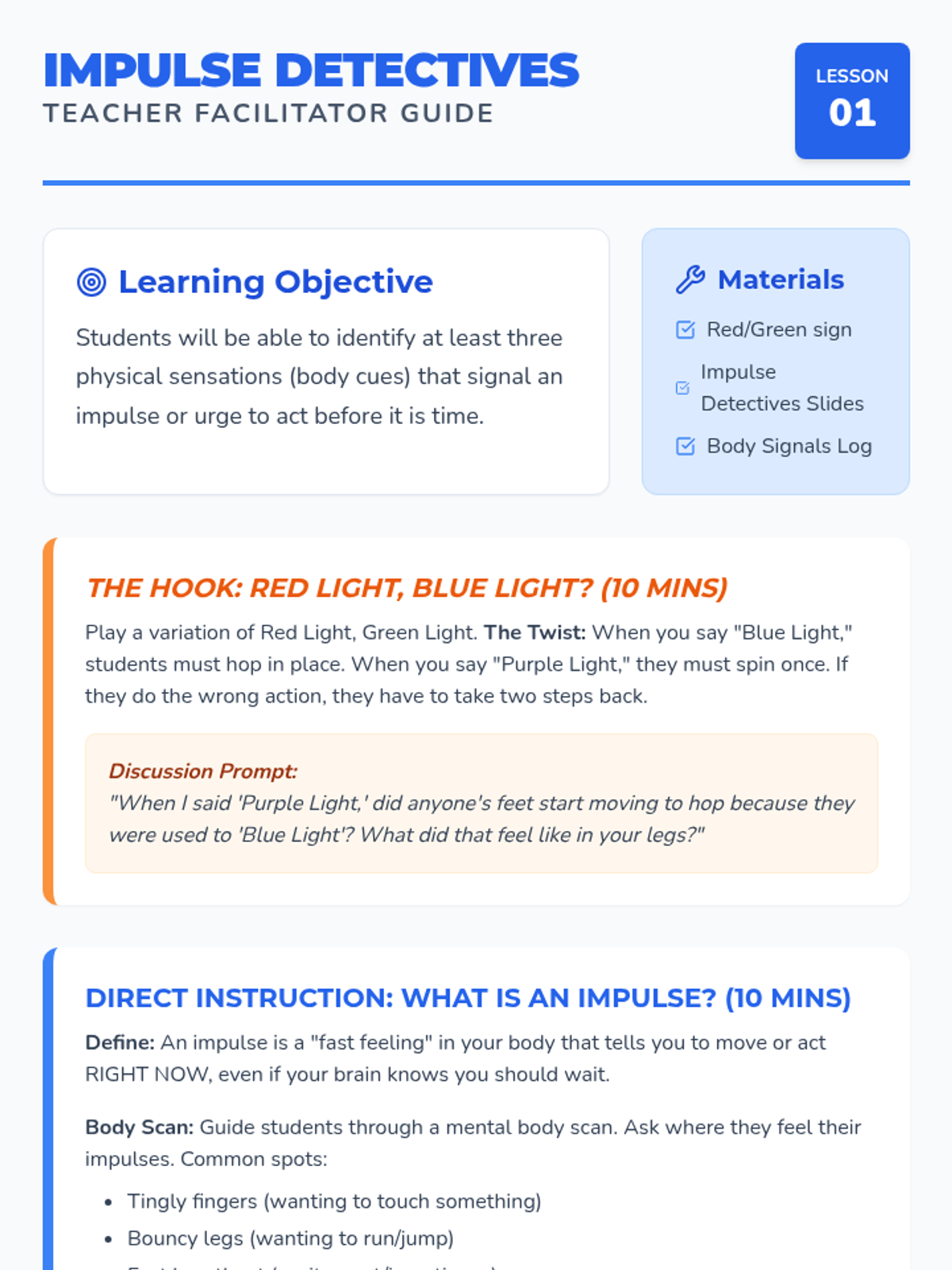
A 5-lesson unit for 2nd graders to develop impulse control and delayed gratification through the 'Stop, Think, Act' framework, distraction techniques, and positive self-talk.
A comprehensive unit for 2nd-grade students to recognize emotional escalation and apply appropriate grounding strategies. Through storytelling, mapping, and simulation, students build self-awareness and co-regulation skills to navigate crisis moments effectively.
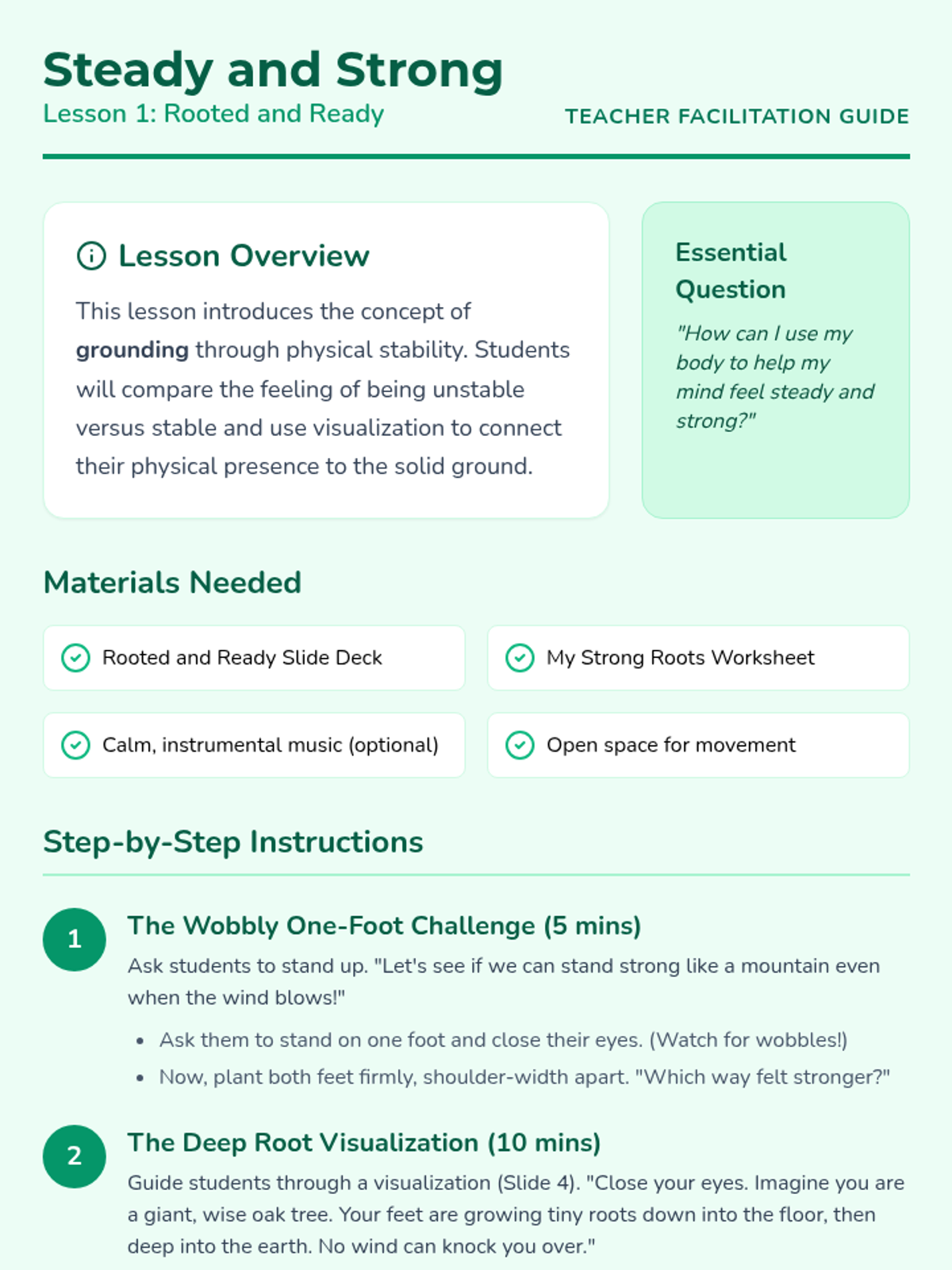
A 5-lesson sequence for 2nd graders focused on using body awareness, proprioception, and movement to find stability and grounding during moments of high stress or crisis. Students move from gross motor stability to discreet, desk-based techniques.
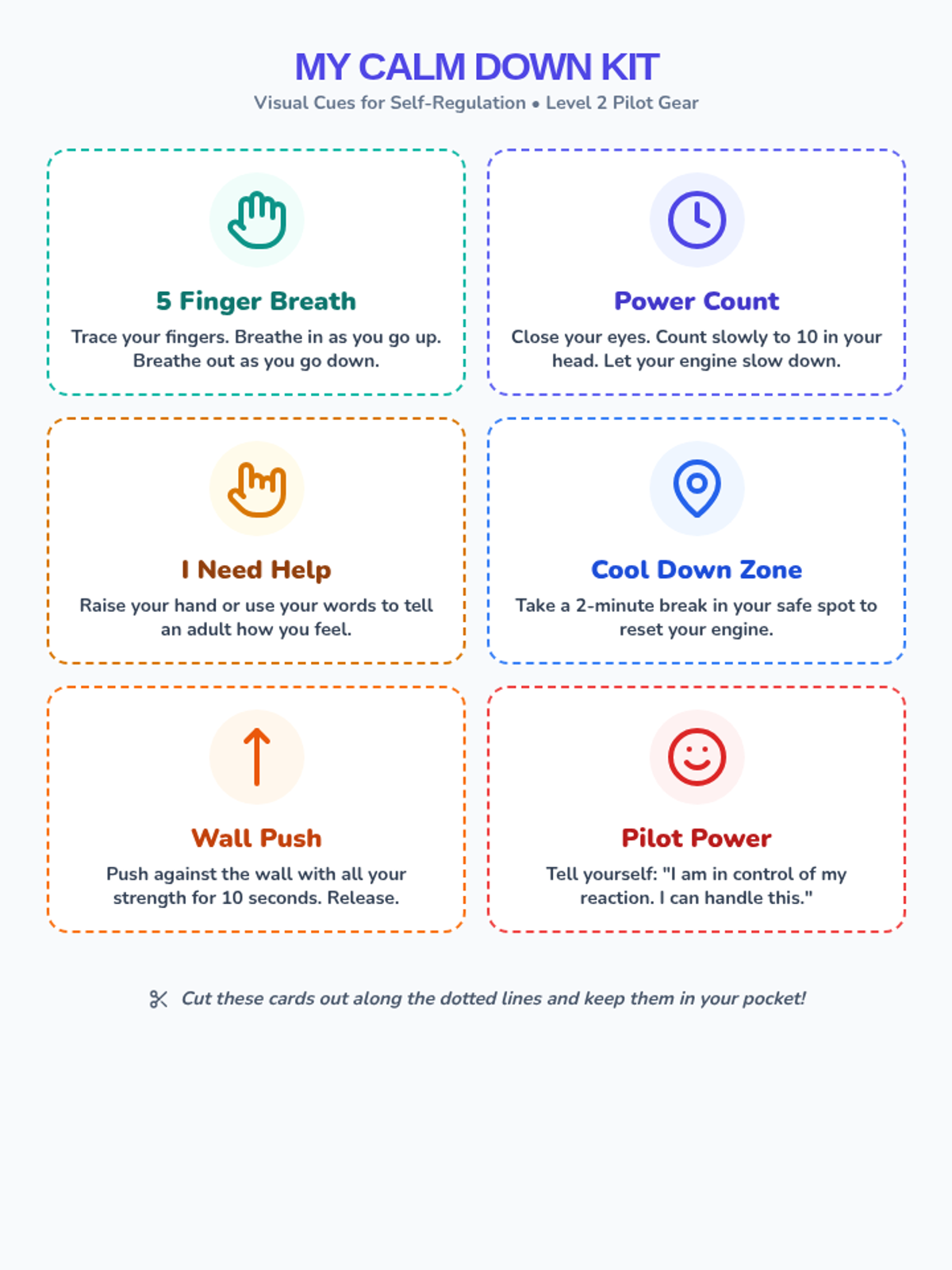
This project-based sequence empowers 2nd-grade students to build a personalized collection of self-regulation tools. Students move from identifying emotional triggers to testing tactile and visual aids, culminating in the creation and practice of a physical 'Calm Kit' for use during moments of distress.
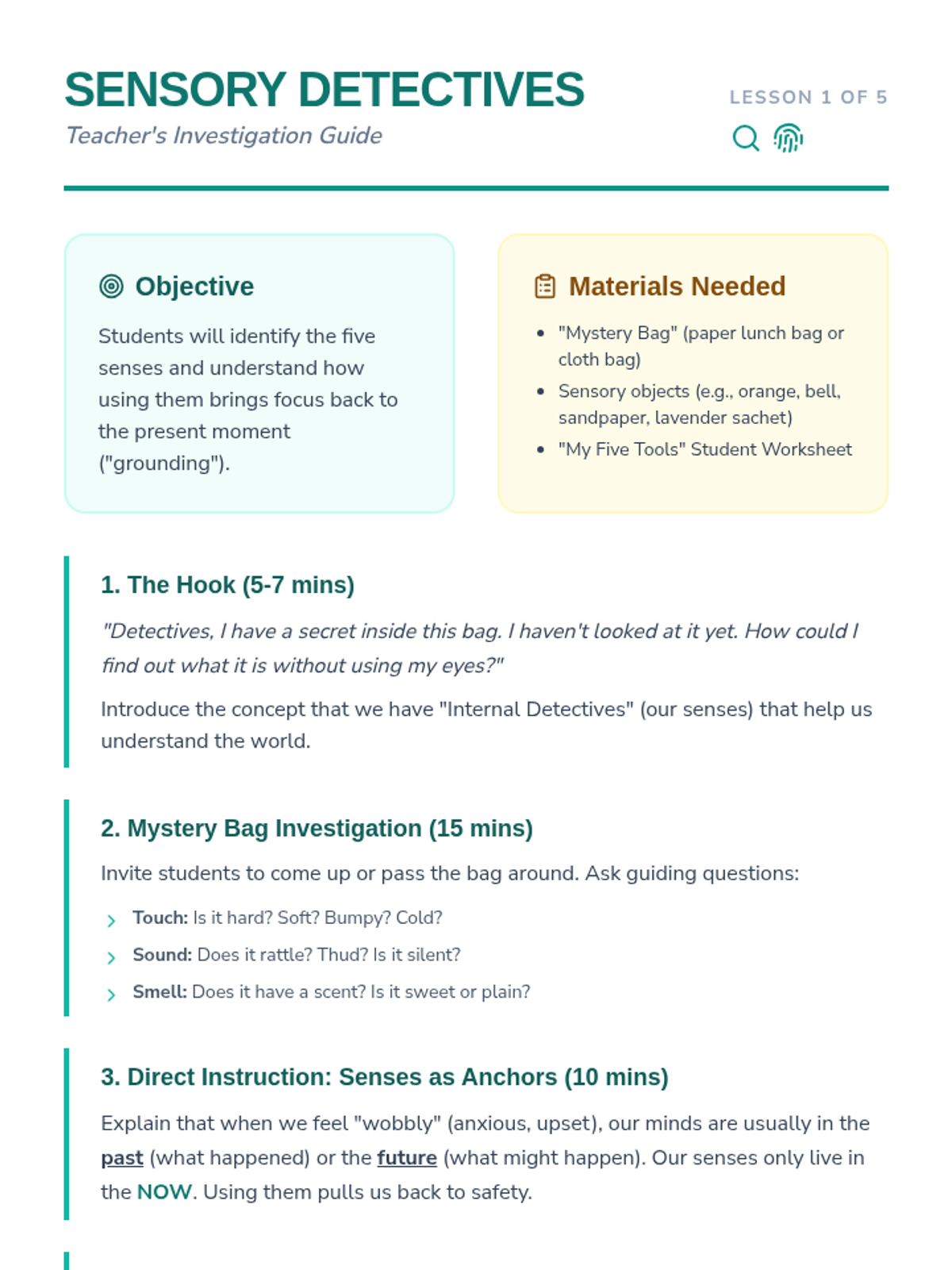
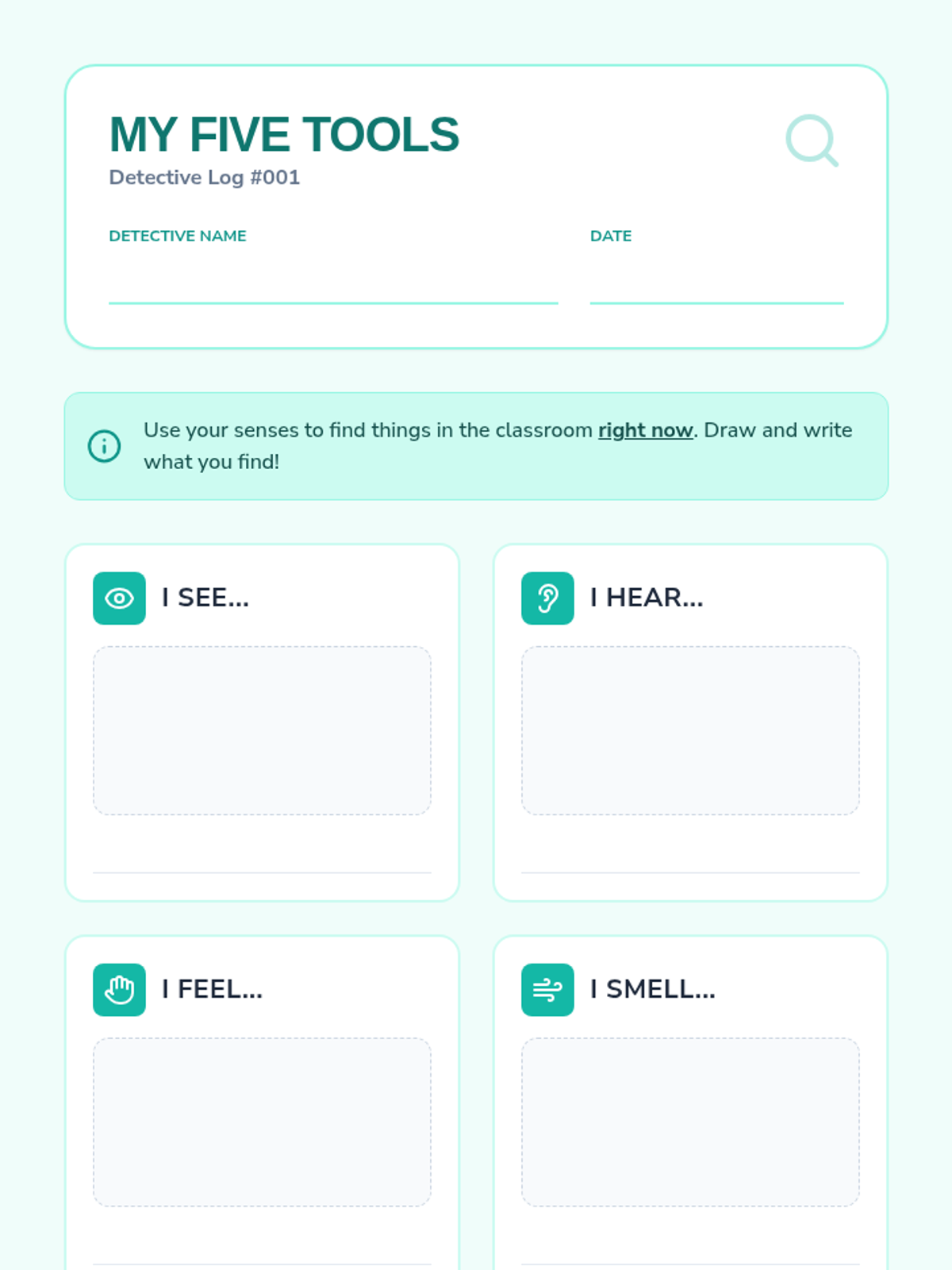
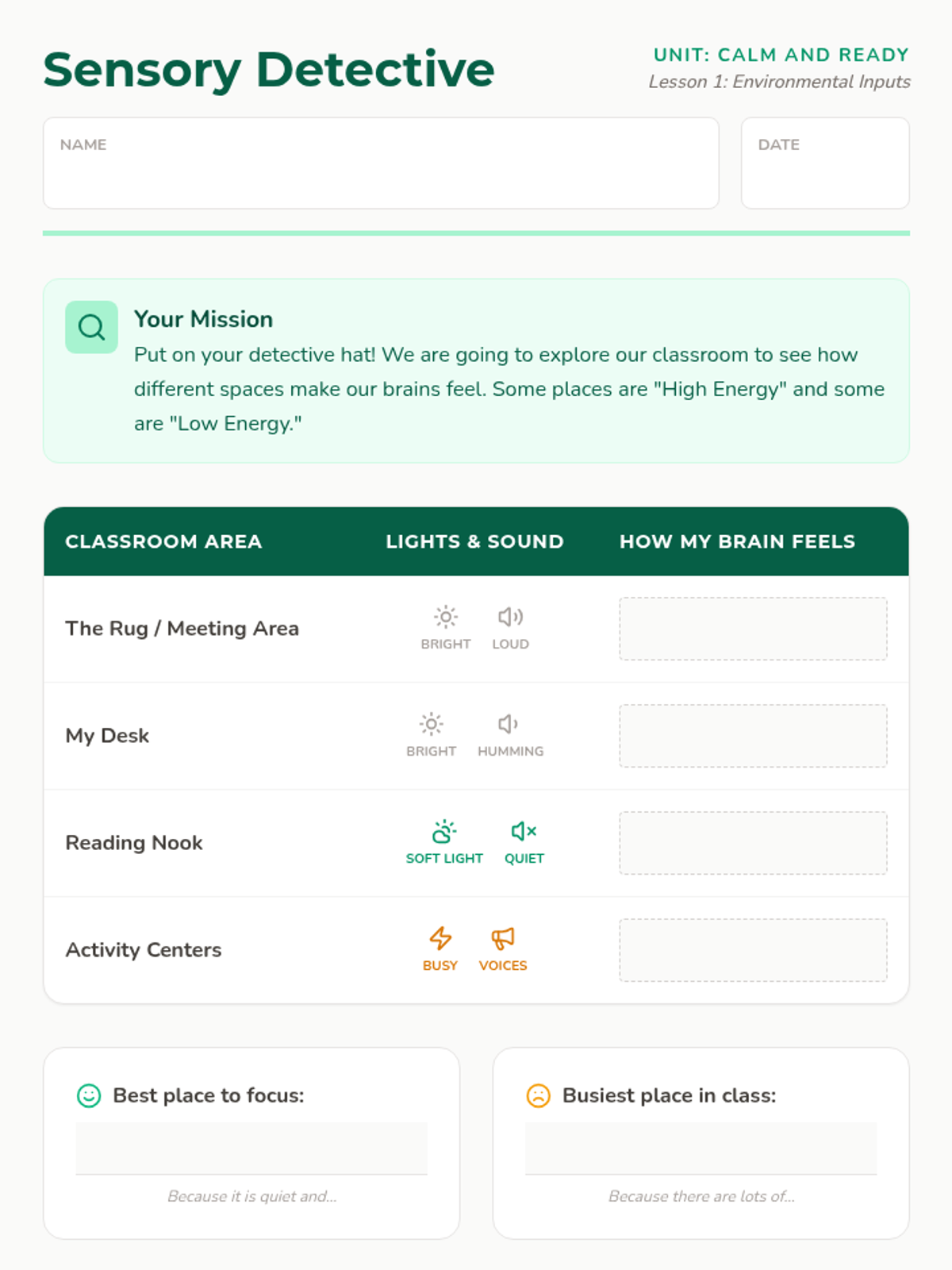
A 5-lesson sequence for 2nd-grade students on using the five senses for emotional grounding and regulation. Students explore sensory awareness through a detective-themed series of lessons, culminating in the mastery of the 5-4-3-2-1 grounding technique.
A 5-lesson unit for 2nd graders to learn self-regulation through breathing and relaxation techniques, moving from physical awareness to a personalized toolkit of strategies.
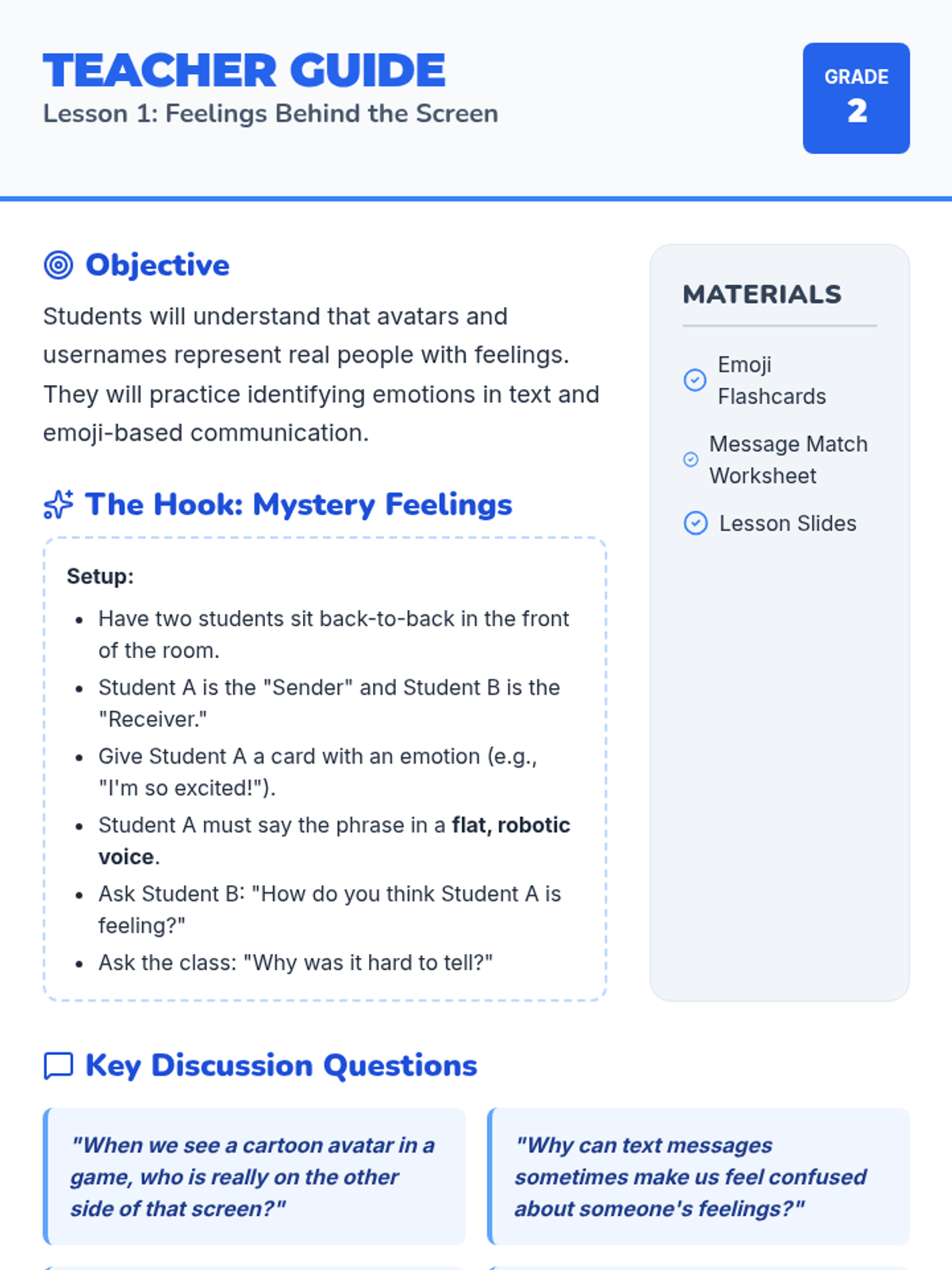
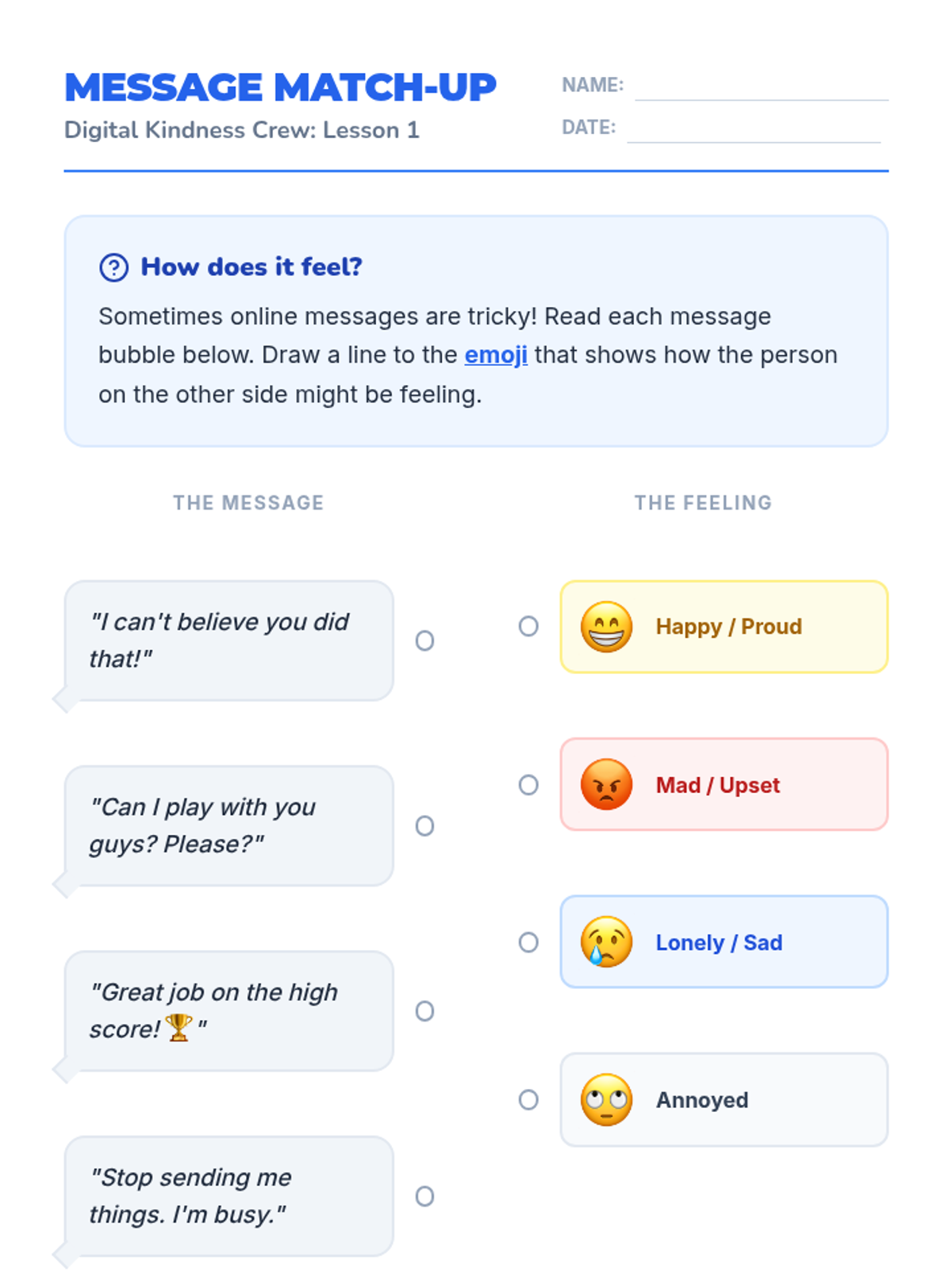
A 2nd-grade unit focused on empathy, safety, and respect in digital spaces. Students learn to recognize feelings behind the screen, identify unkind behavior, follow safety protocols, and act as upstanders to build a positive online community.
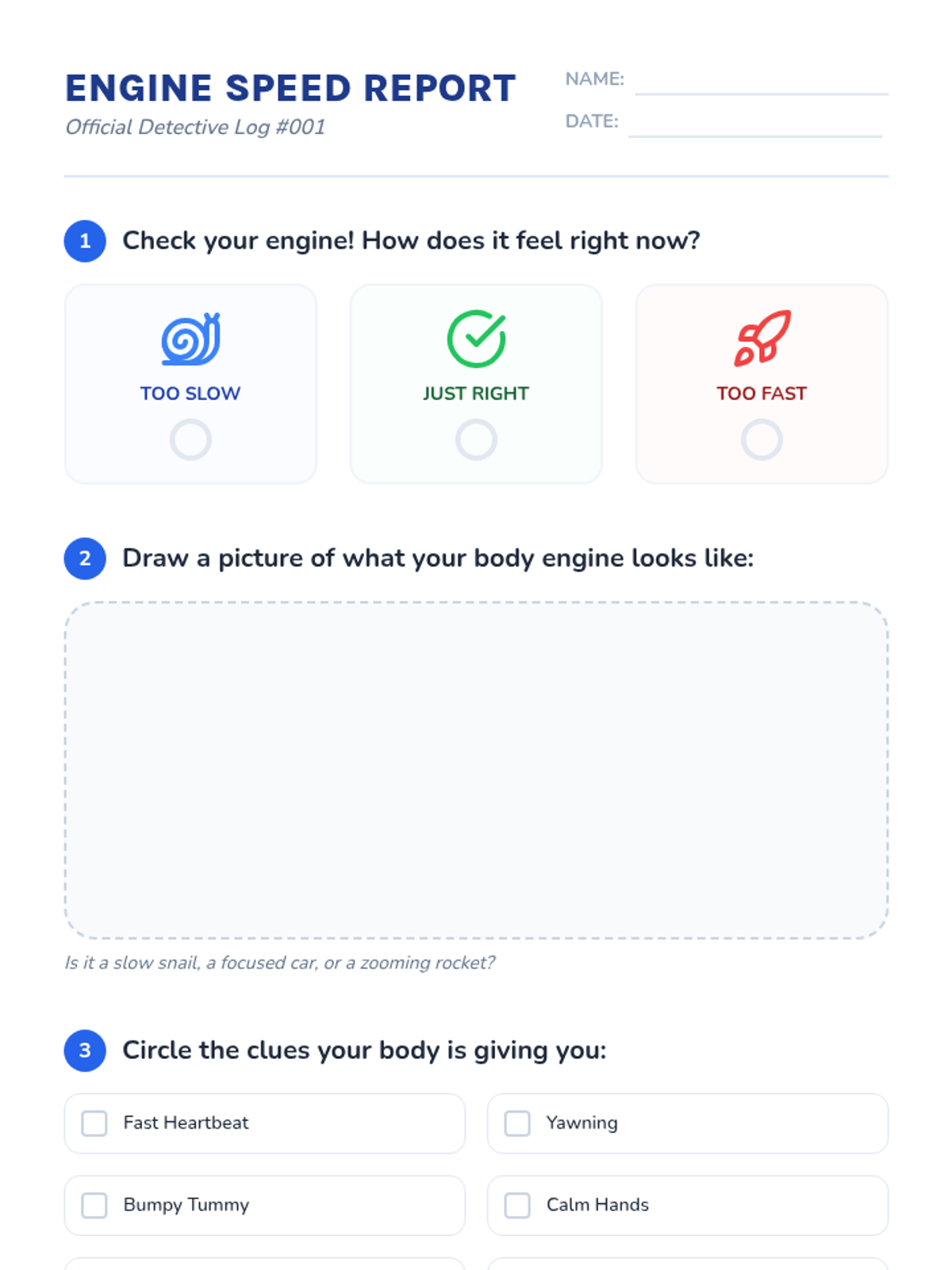
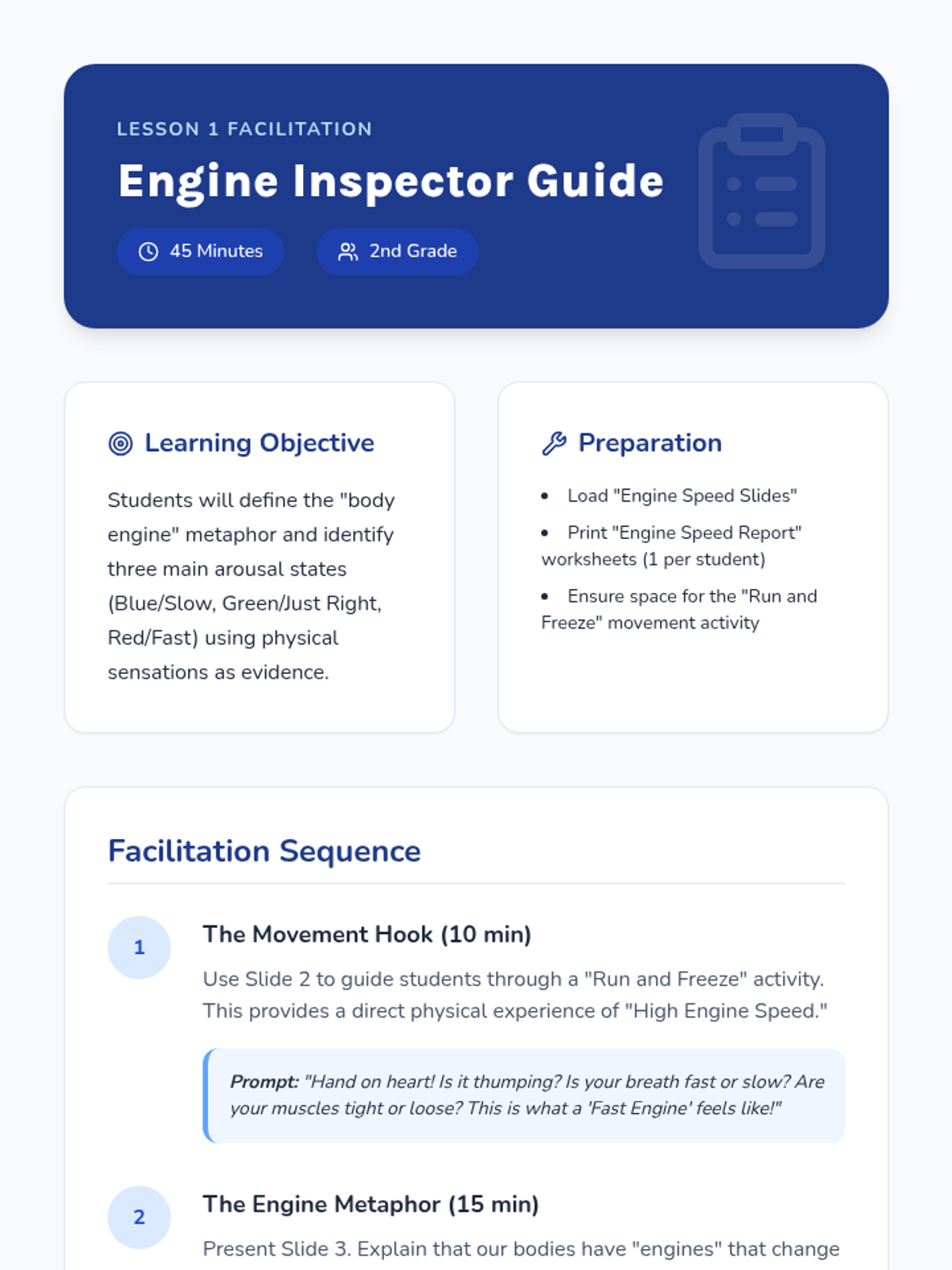
A 5-lesson sequence for 2nd-grade students focused on interoception and body awareness. Students use the 'body engine' metaphor to identify energy states, map physical sensations, recognize triggers, and develop self-monitoring routines.
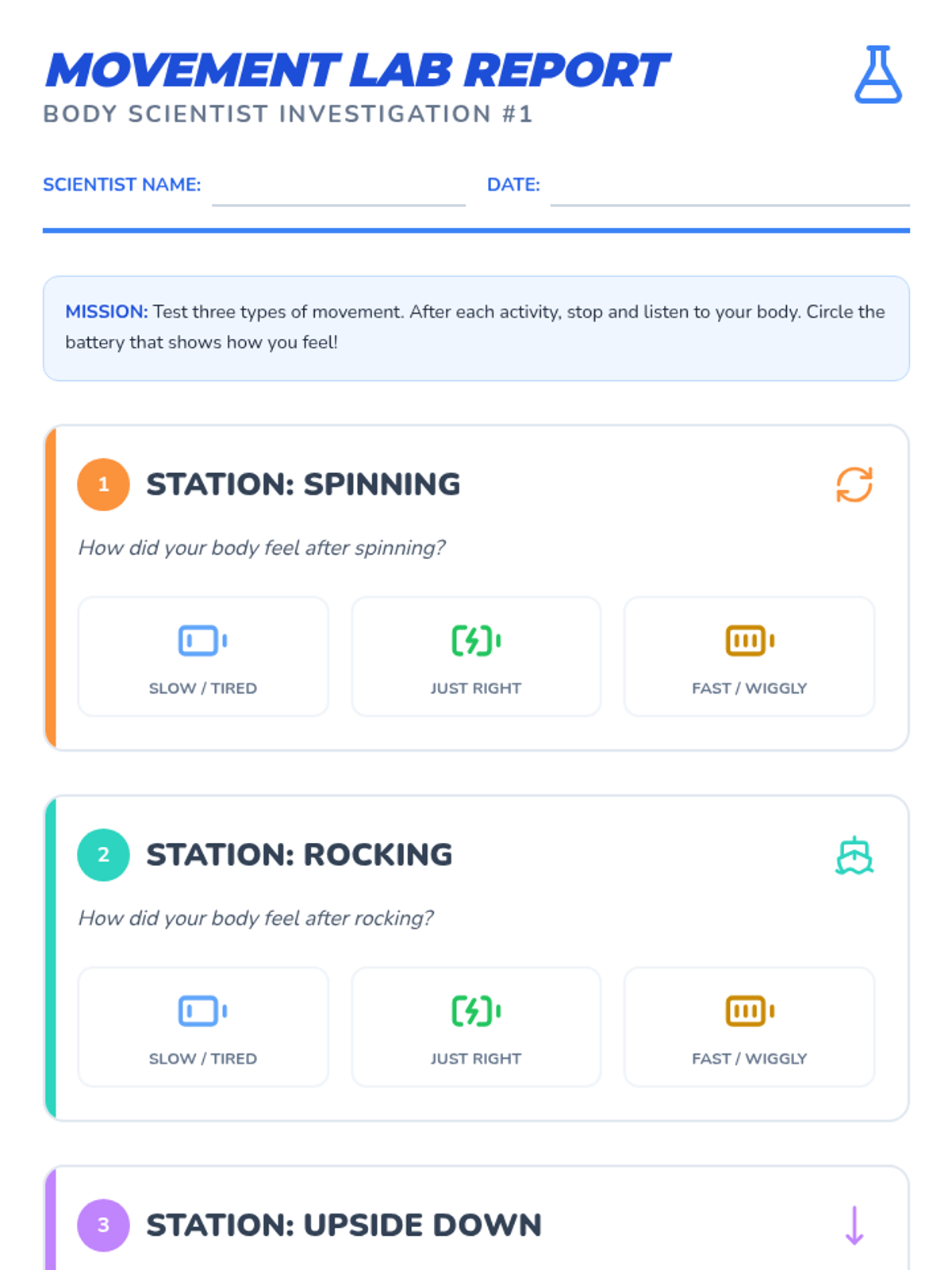
A 5-lesson workshop sequence where 2nd-grade students systematically explore vestibular, proprioceptive, tactile, auditory, and visual sensory inputs. Students act as 'body scientists' to evaluate how different tools and activities affect their regulation, culminating in a personalized 'Personal Power Plan' sensory diet.
This sequence teaches 2nd-grade students how to manage conflict through active listening and collaborative negotiation. Students learn to de-escalate their emotions, listen with intent, brainstorm 'win-win' solutions, and use fair decision-making tools to resolve disputes independently.
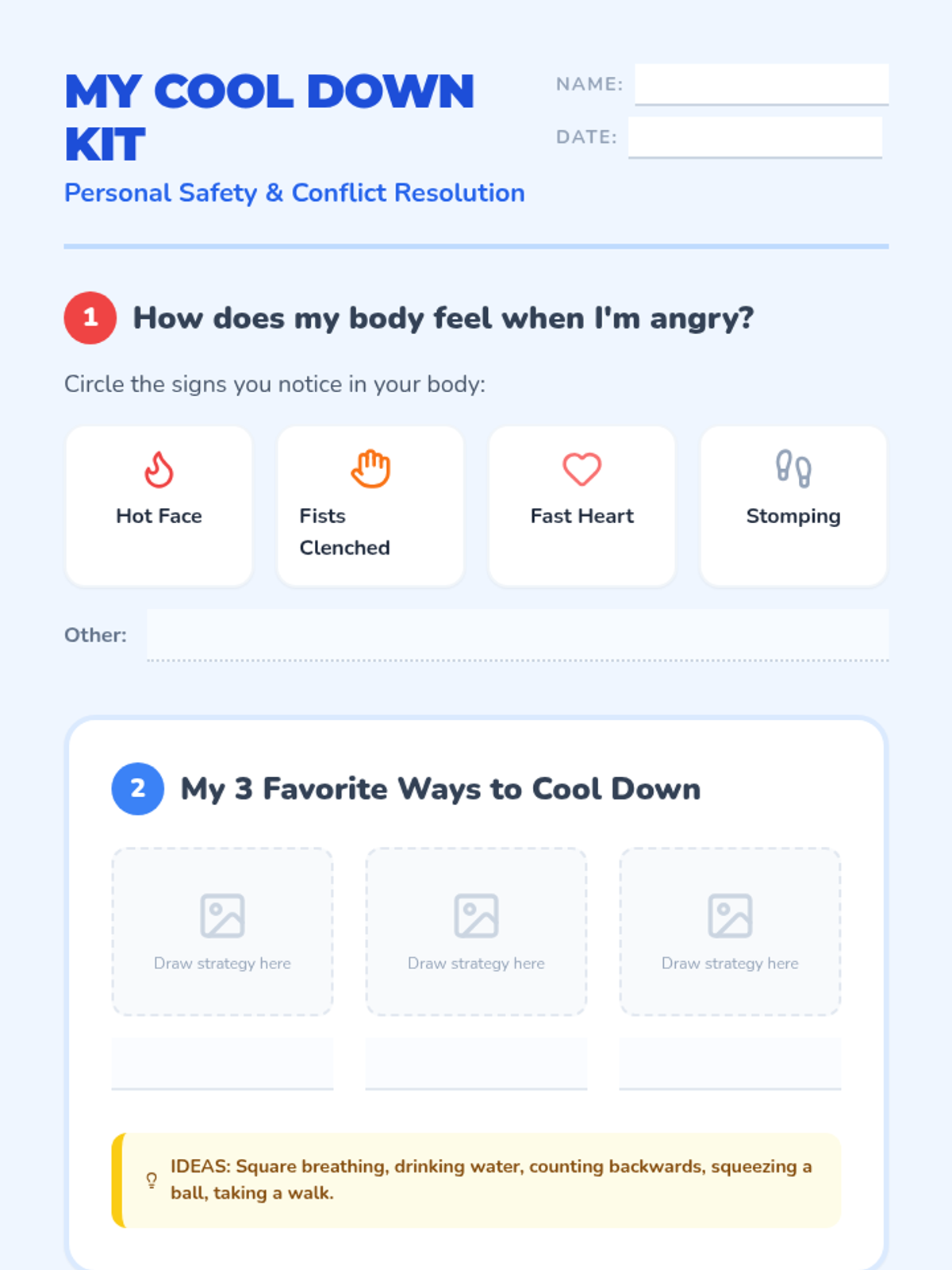
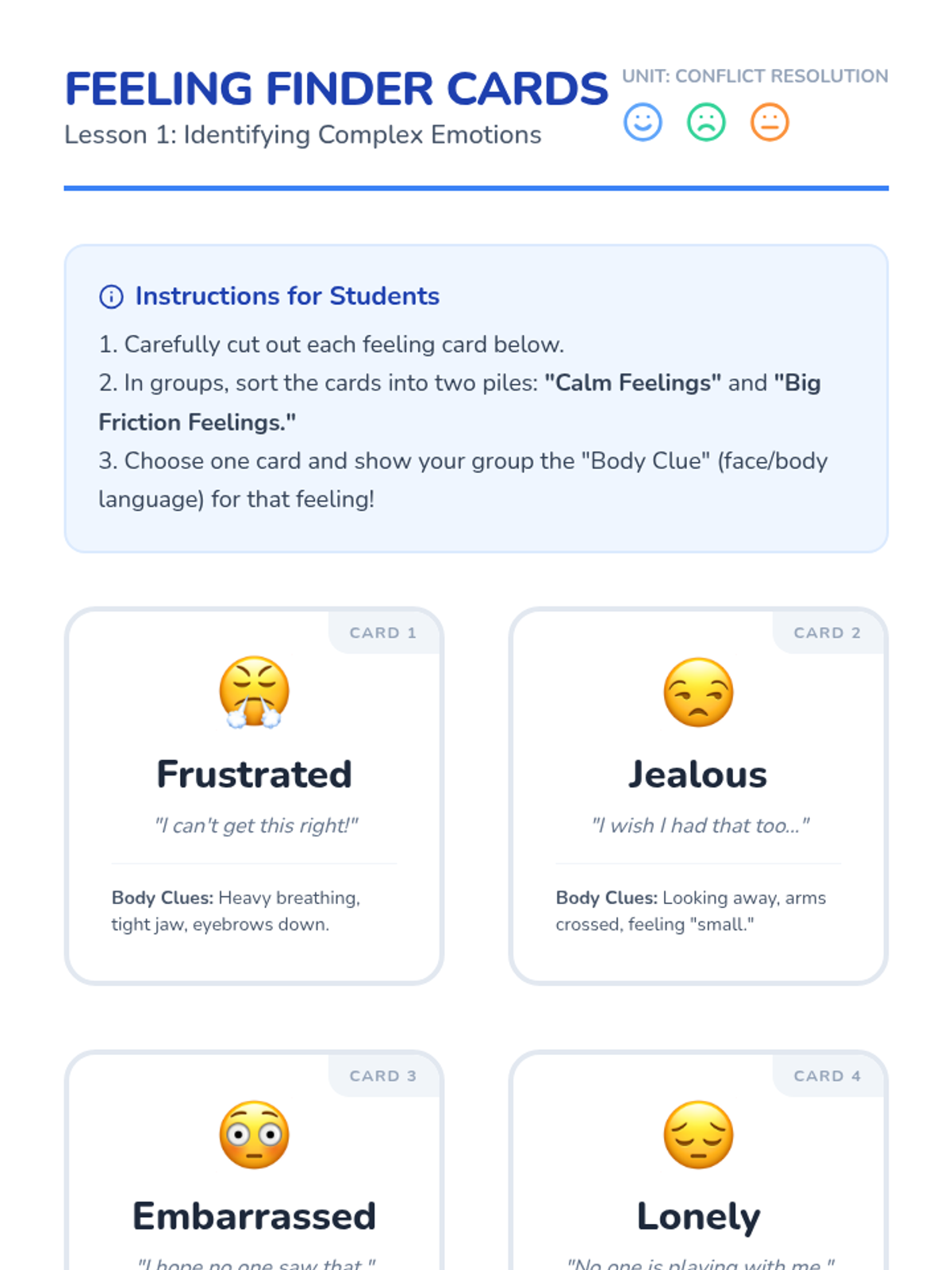
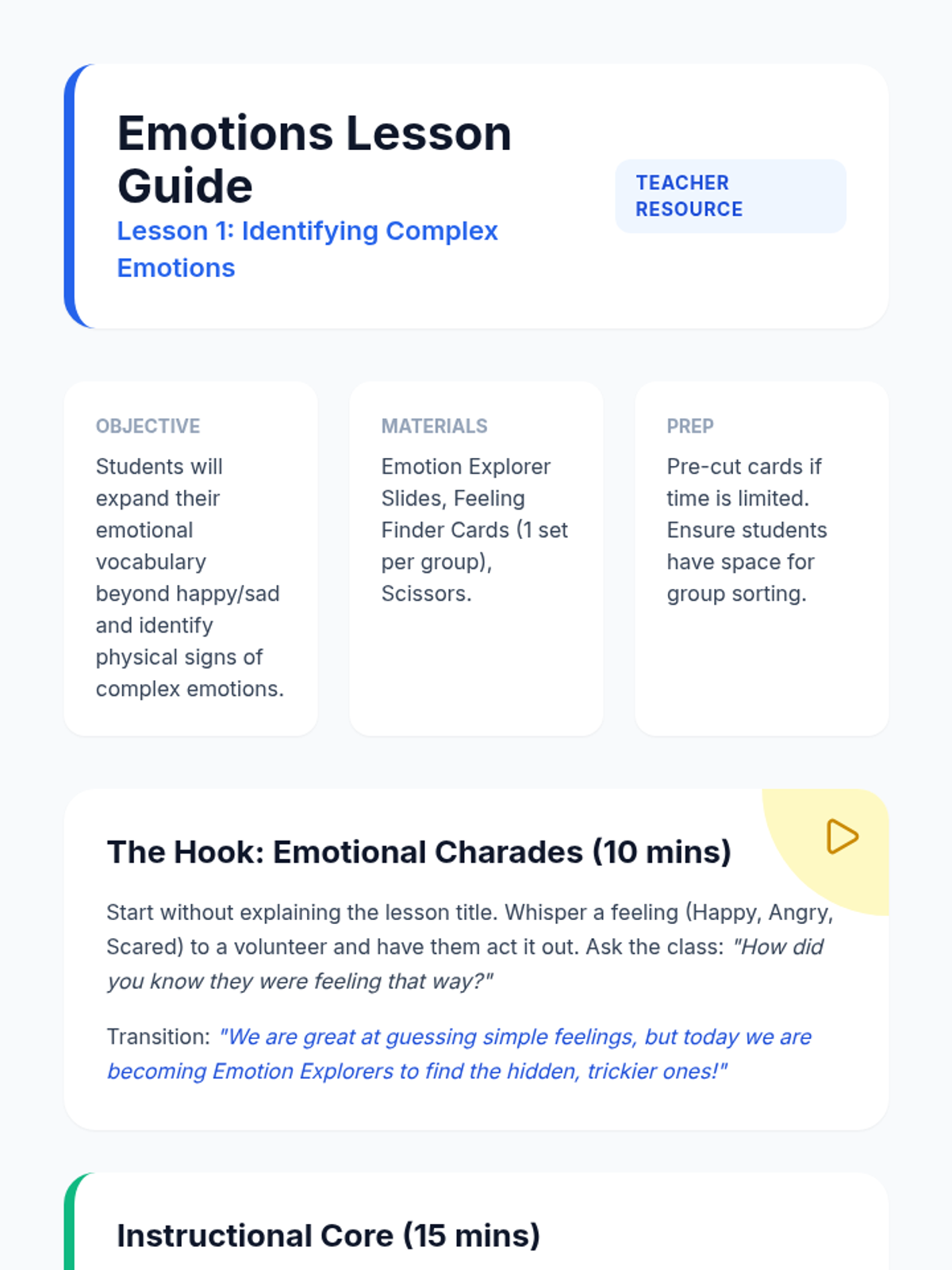
This sequence teaches 2nd-grade students how to identify complex emotions and use 'I' statements to resolve conflicts effectively and empathetically. Students move from building emotional vocabulary to practicing structured communication frames in real-world scenarios.
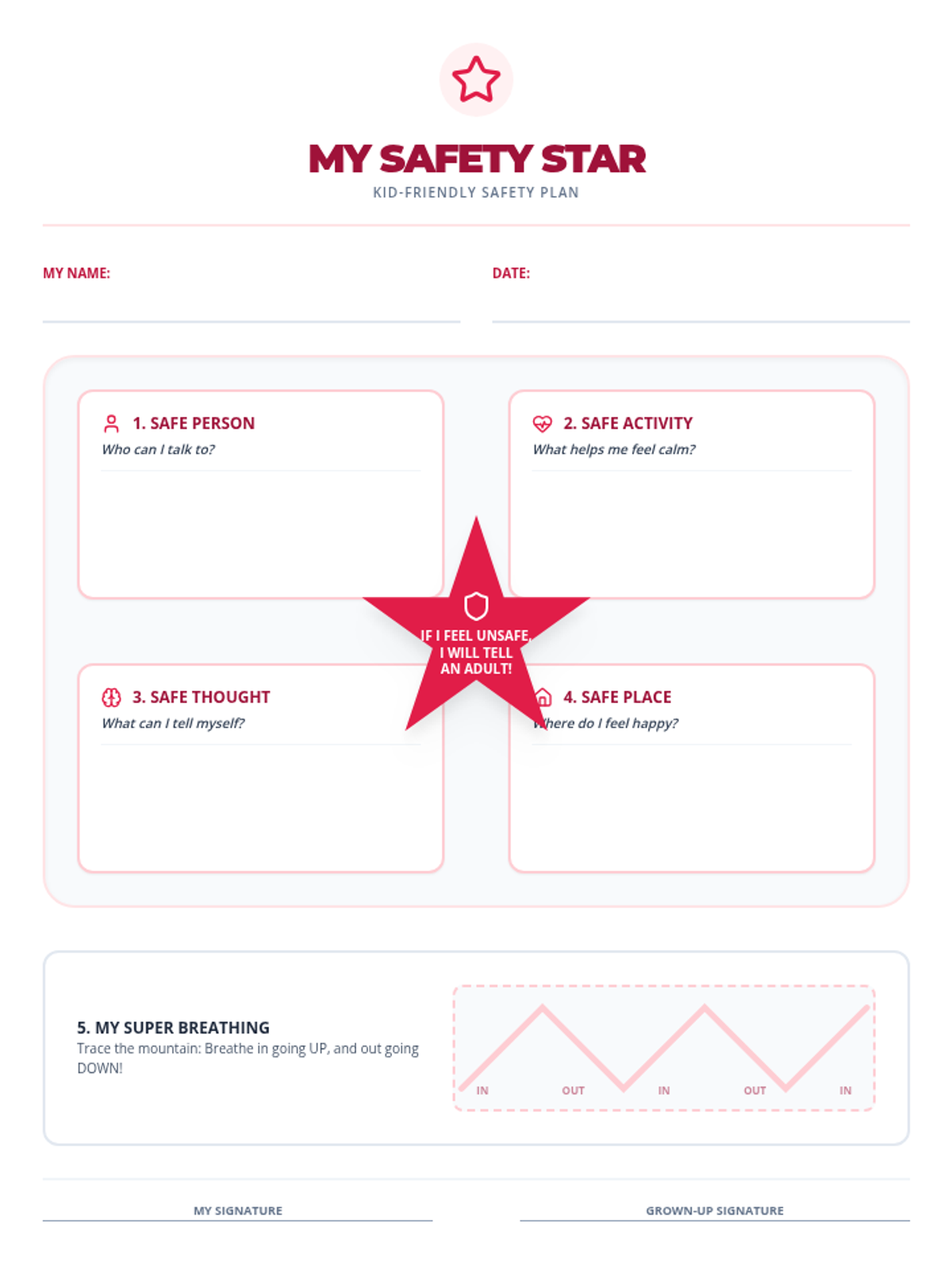
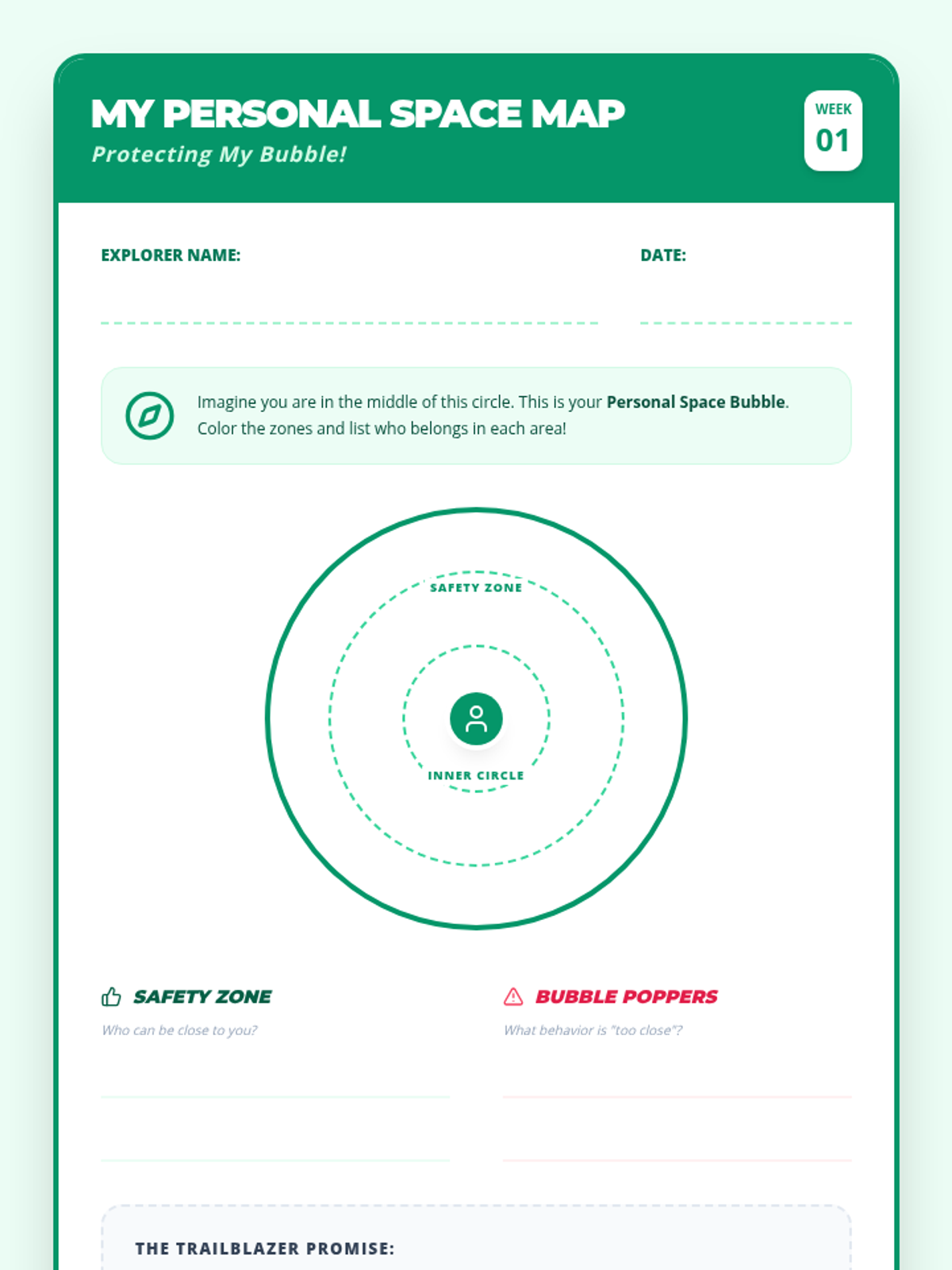
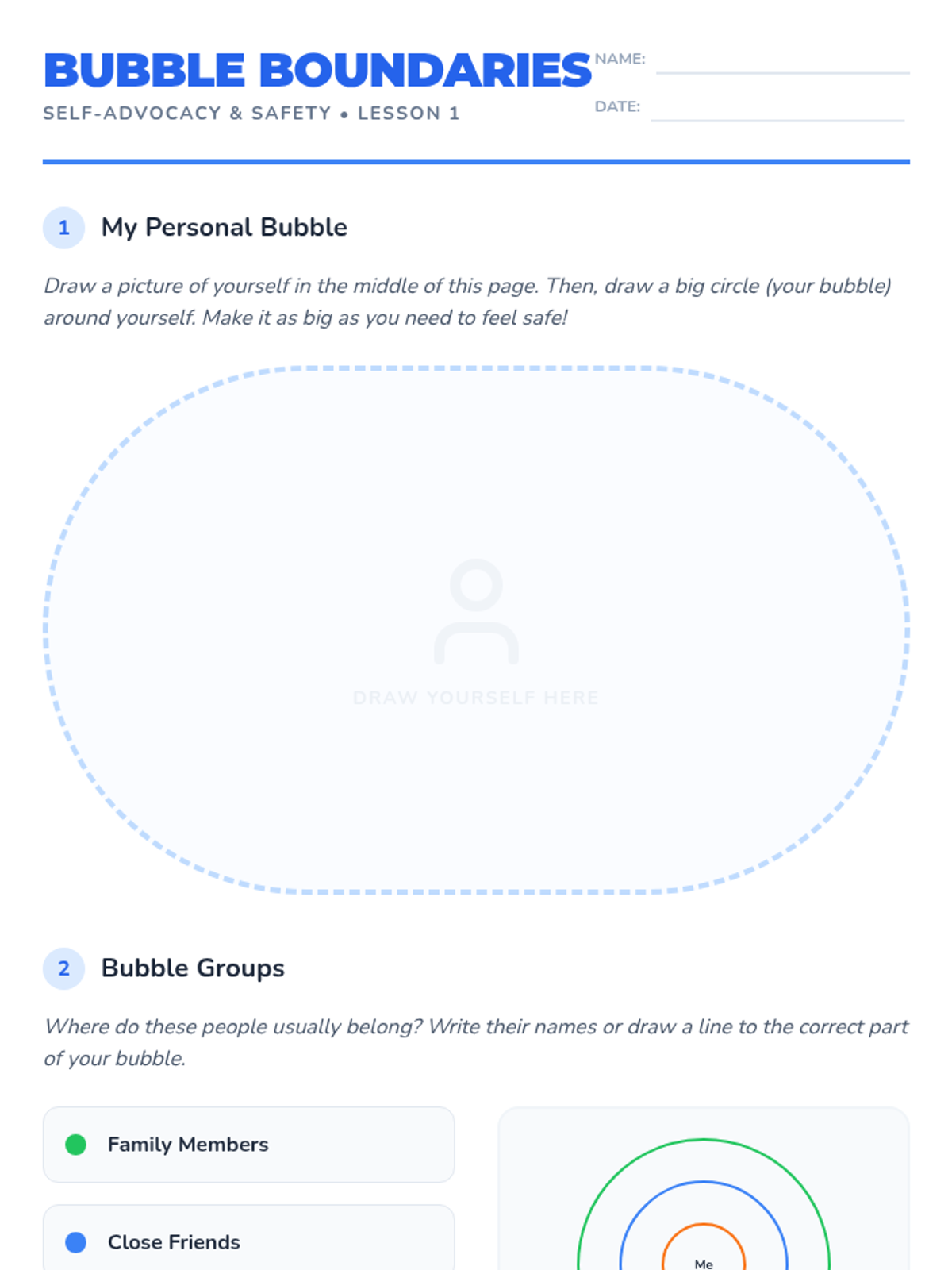
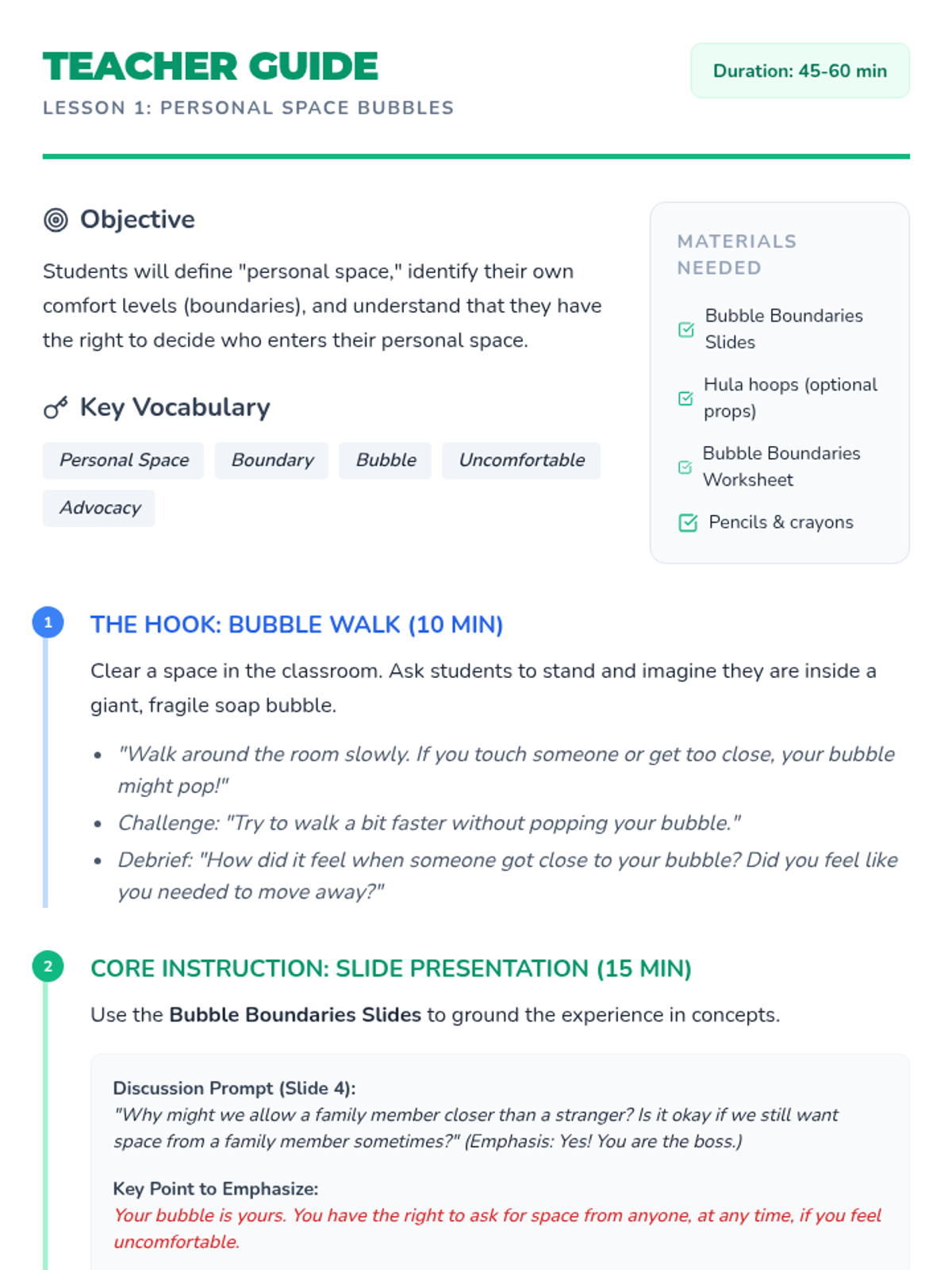
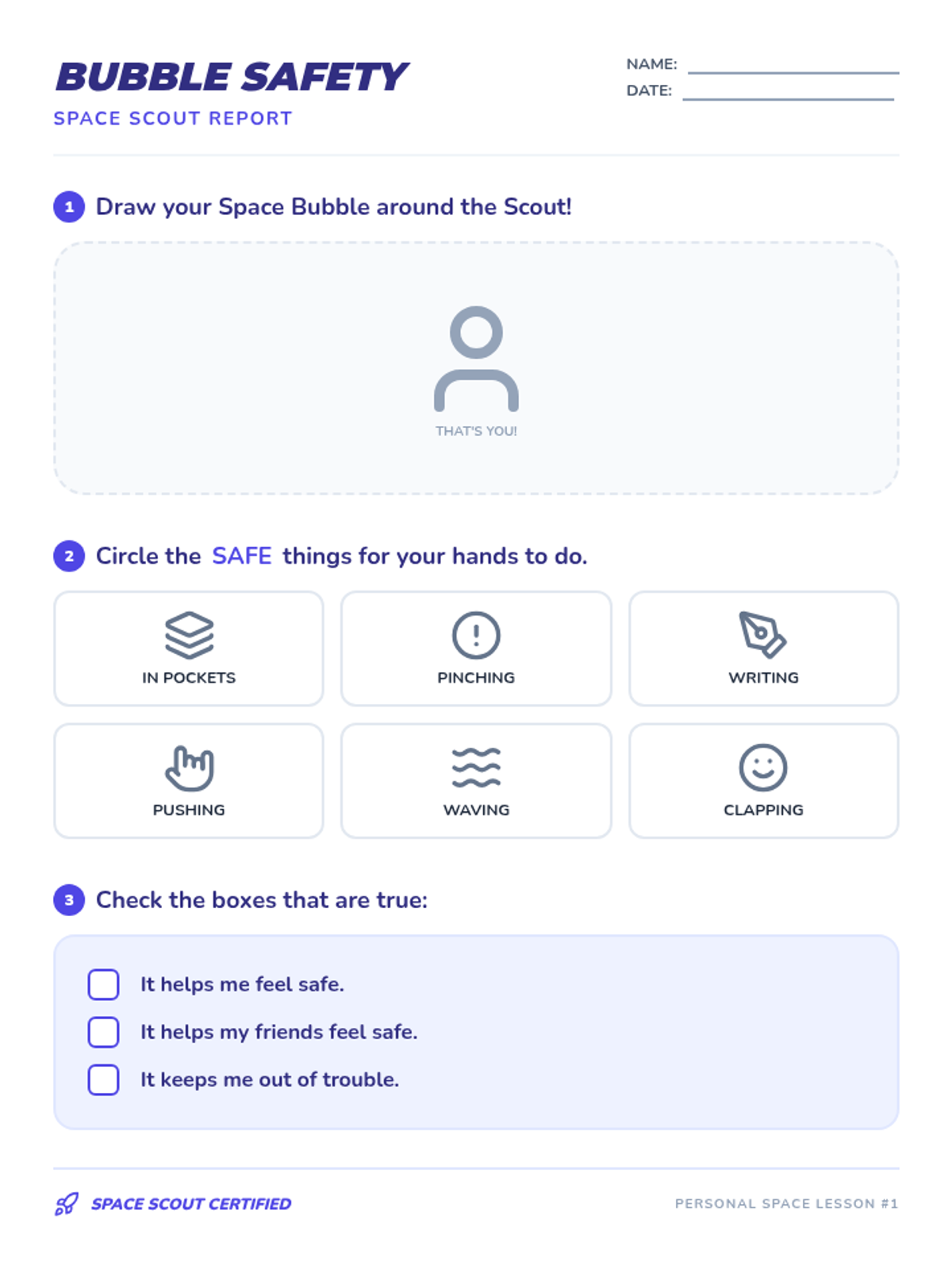
This sequence empowers 2nd-grade students to define their personal boundaries, recognize internal warning signals, and use clear communication to advocate for their physical and emotional well-being. Students move from understanding their own 'personal bubble' to creating a comprehensive safety plan with trusted adults.
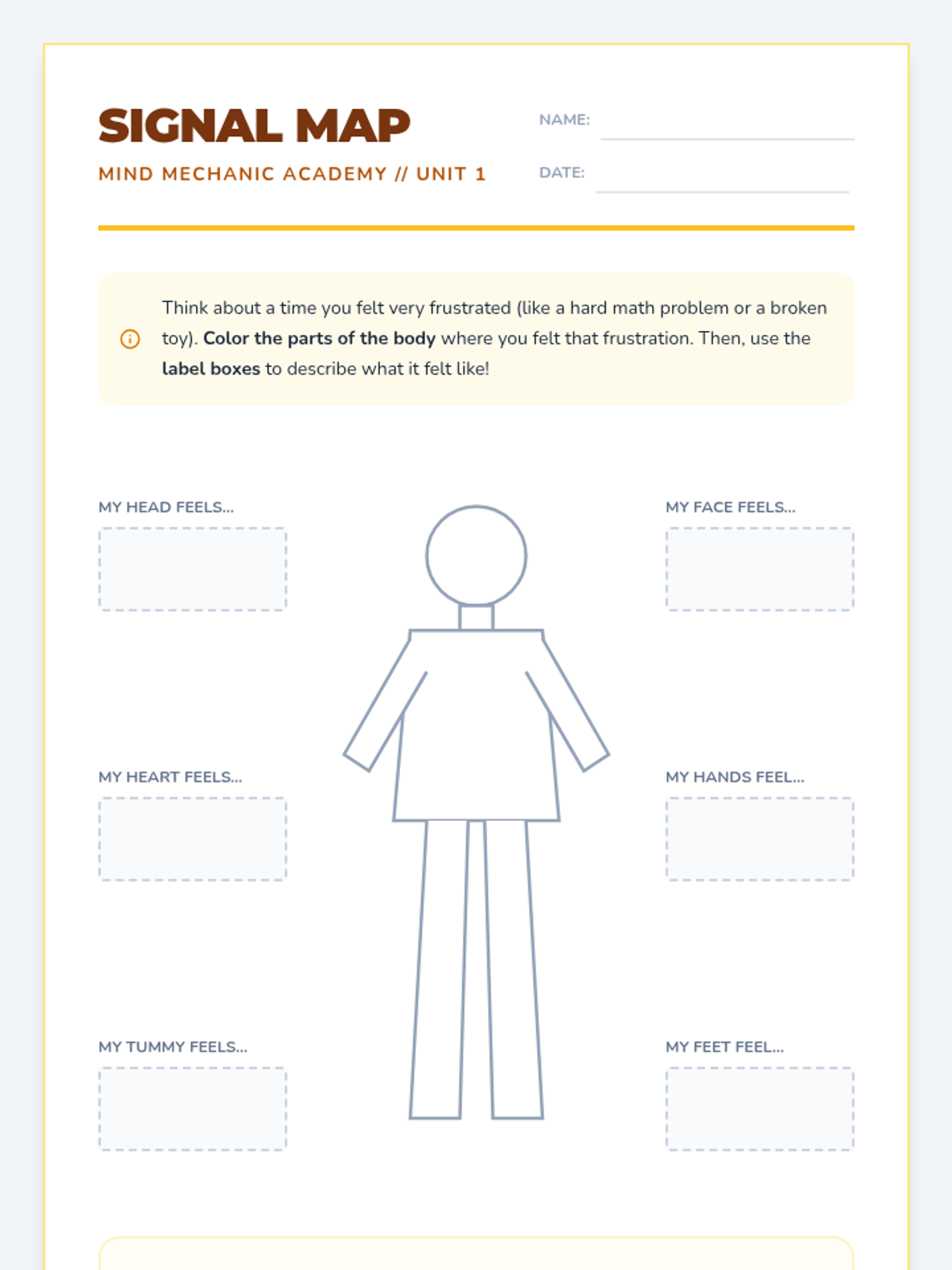
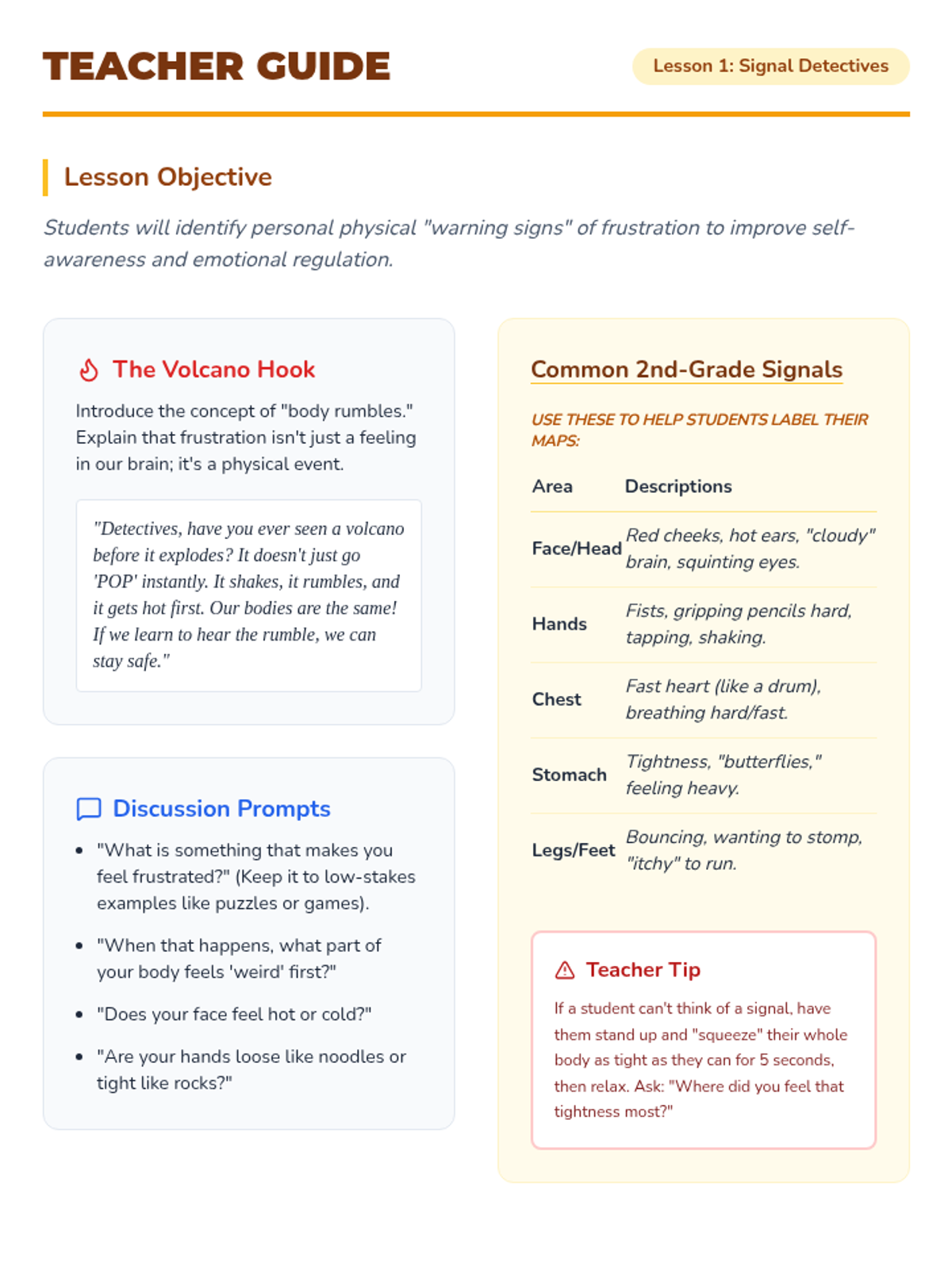
This sequence teaches 2nd-grade students how to recognize physical signs of frustration and use emotional regulation and problem-solving strategies to build resilience. Through body mapping, calming techniques, and the 'Ladder Strategy' for task segmentation, students develop a tangible toolkit for overcoming setbacks.
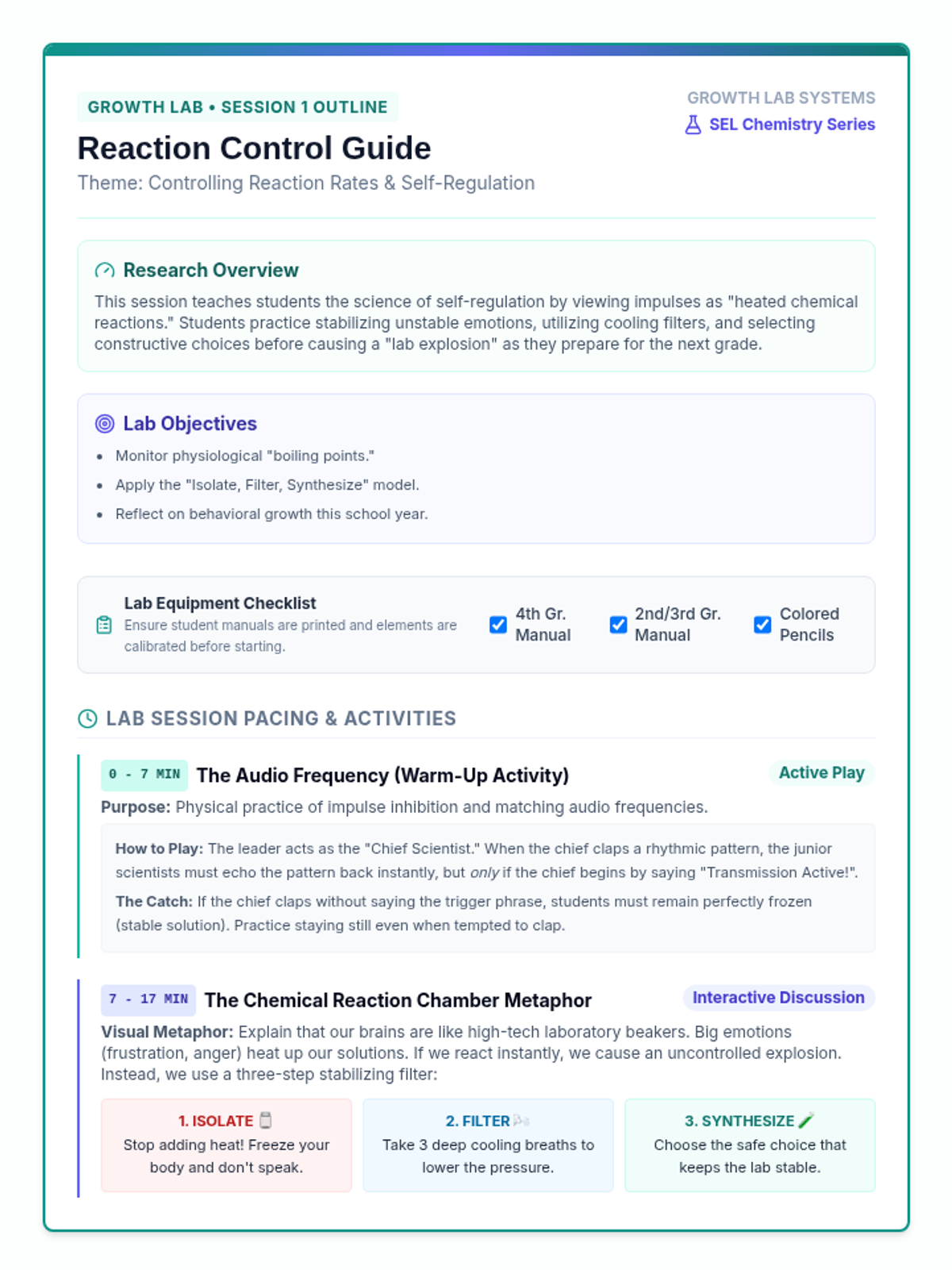
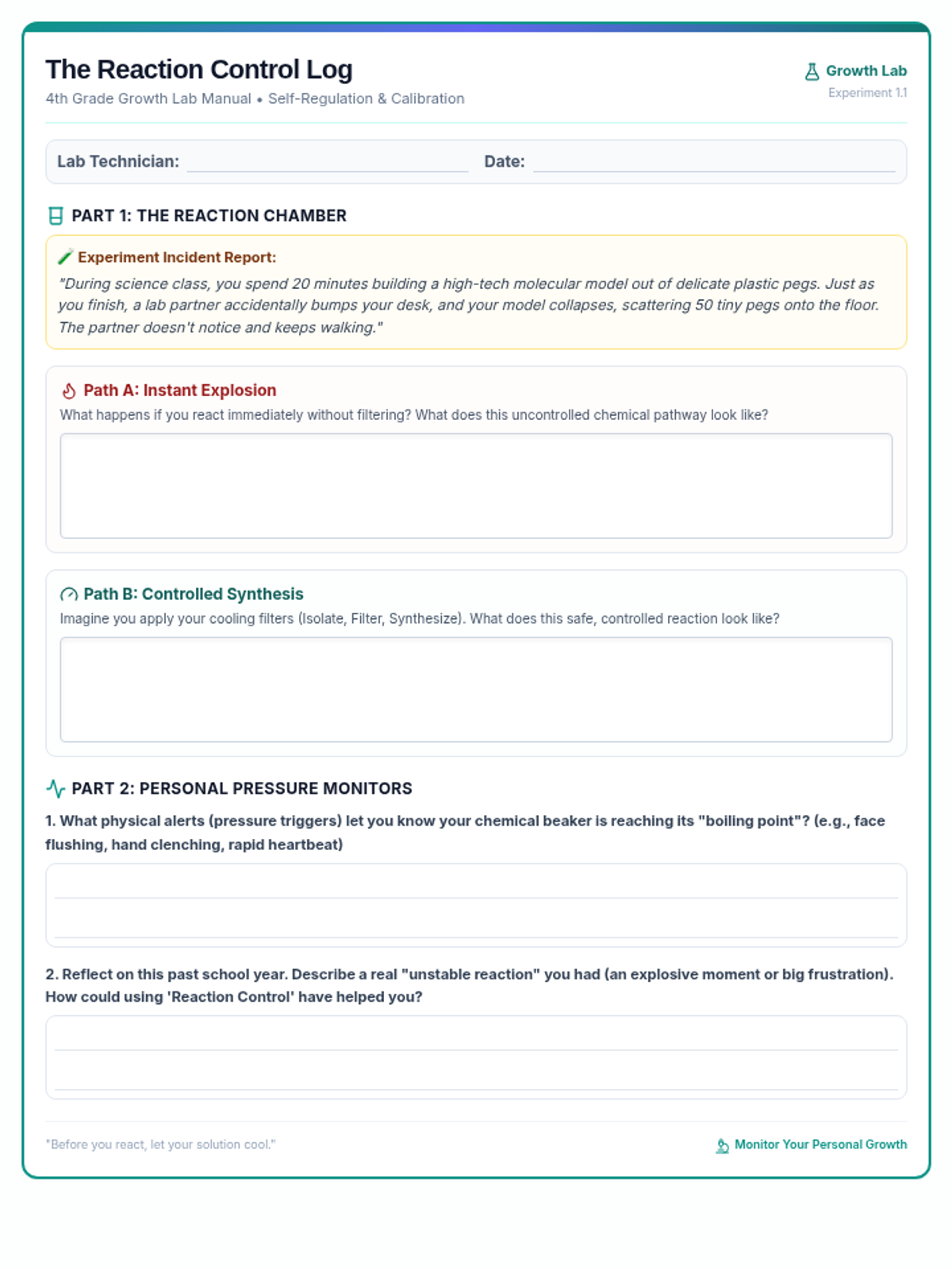
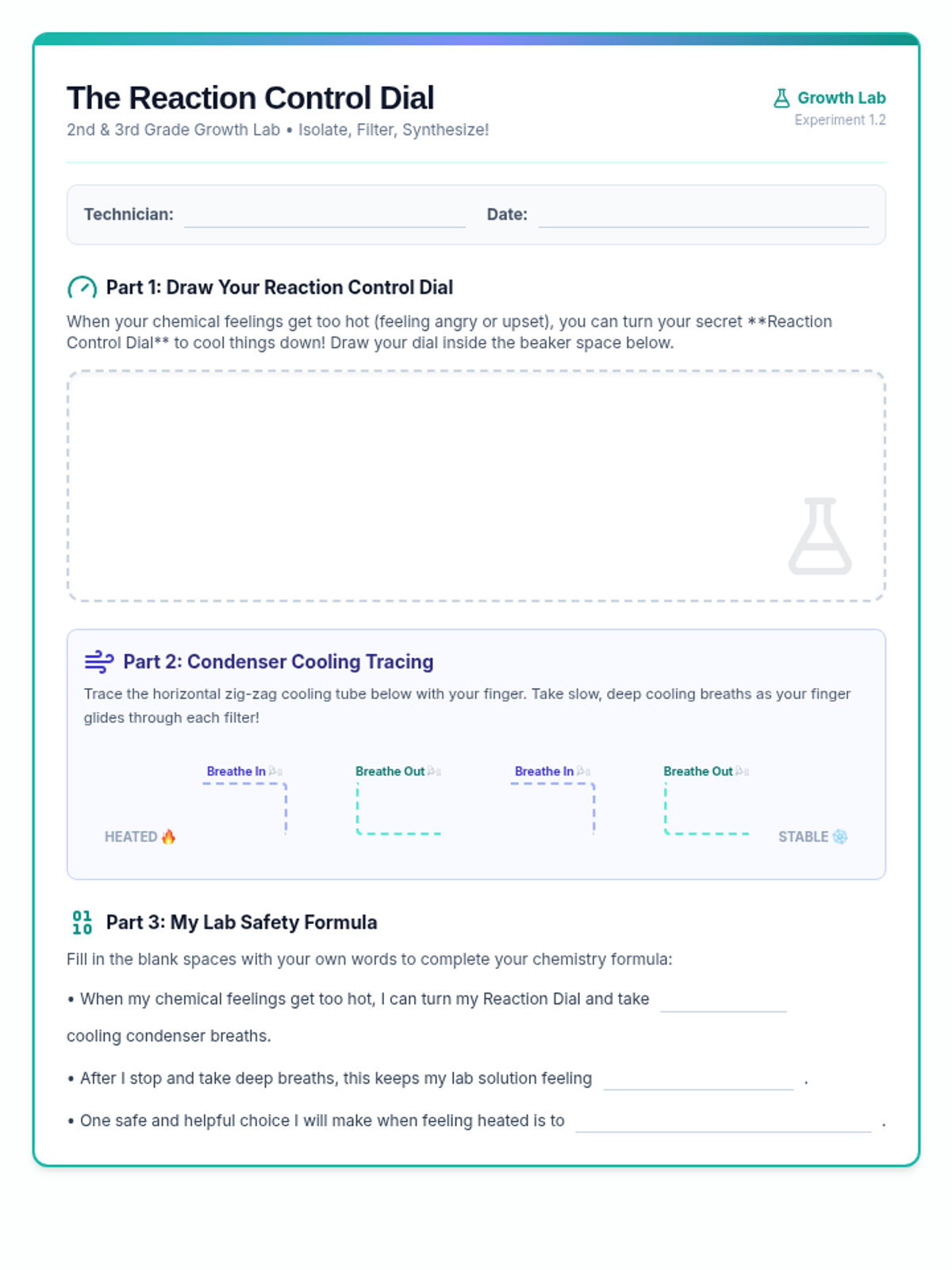
An end-of-year reflection and social-emotional learning series styled as a scientific laboratory. Students act as 'Growth Chemists' to study and control their reaction rates, transmit self-advocacy signals, and map out their senior scientist support network.
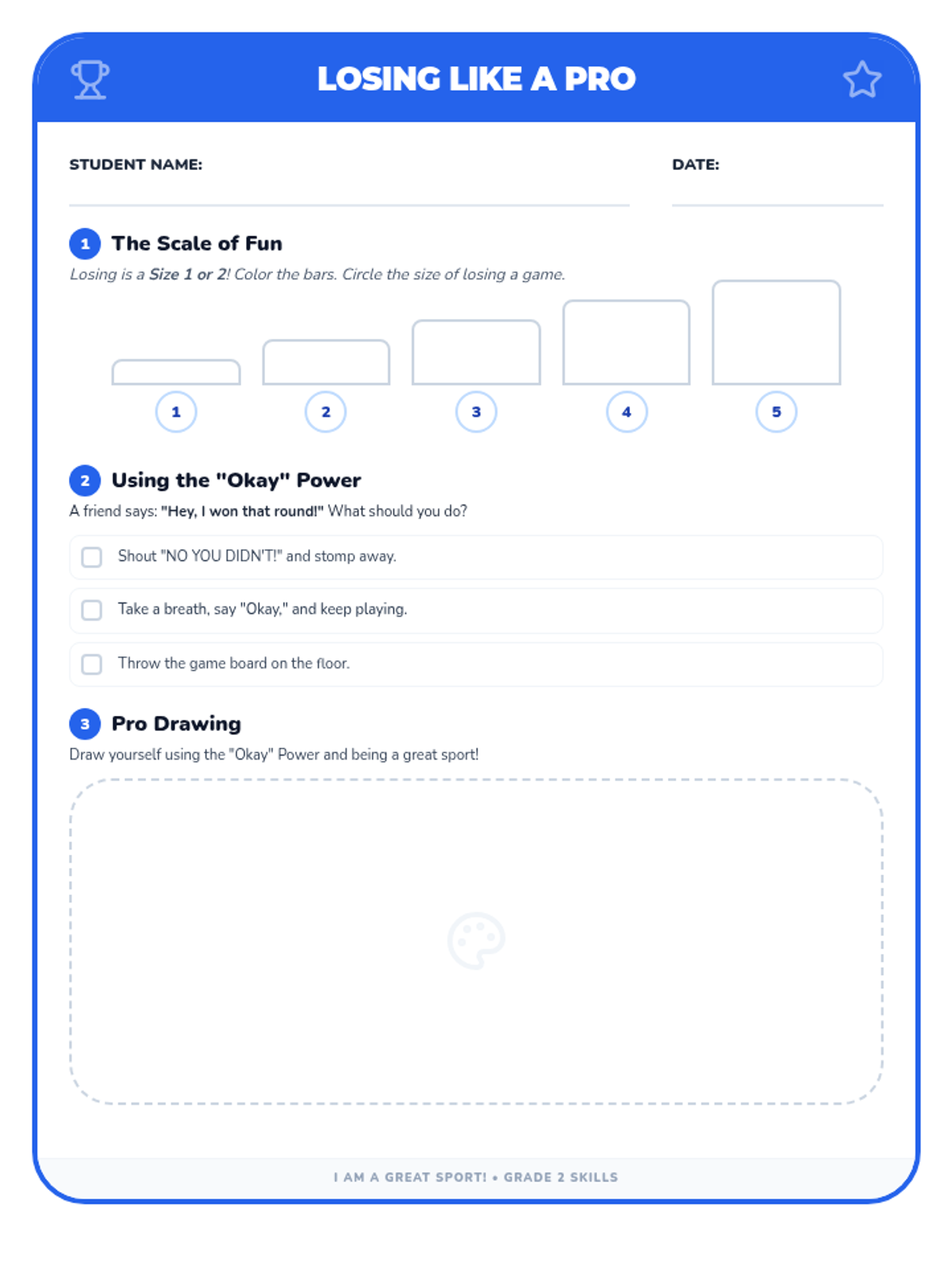
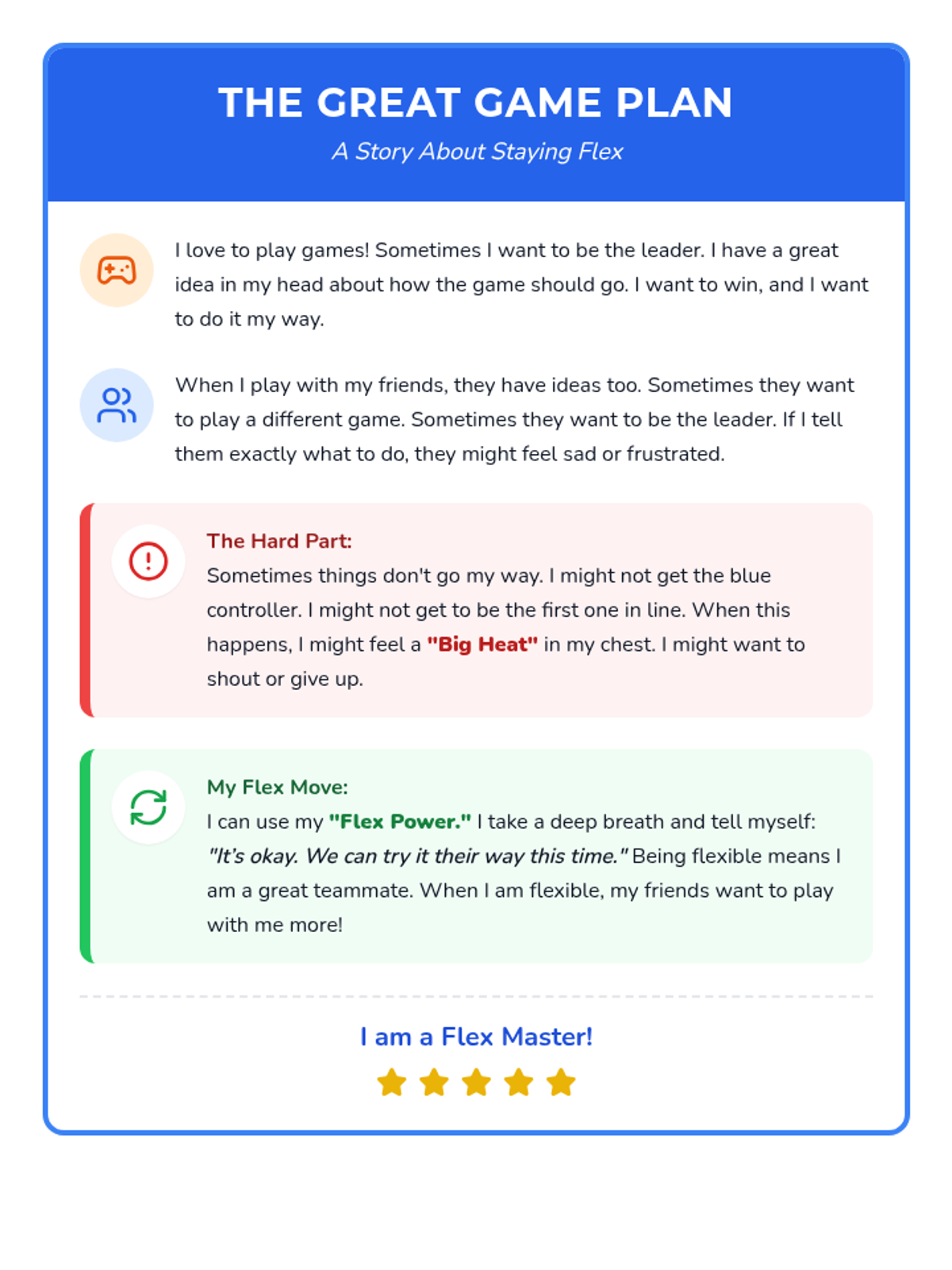
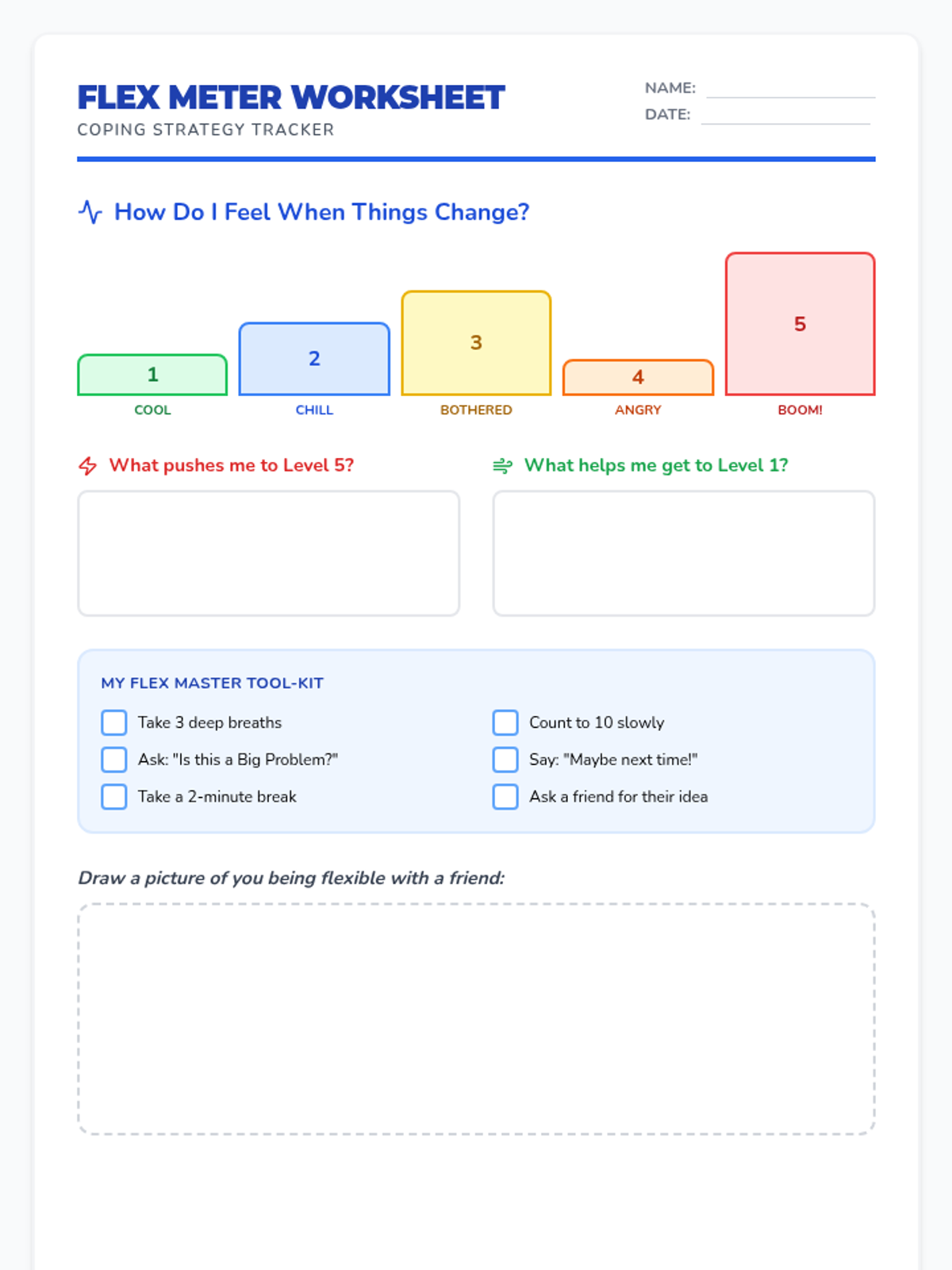
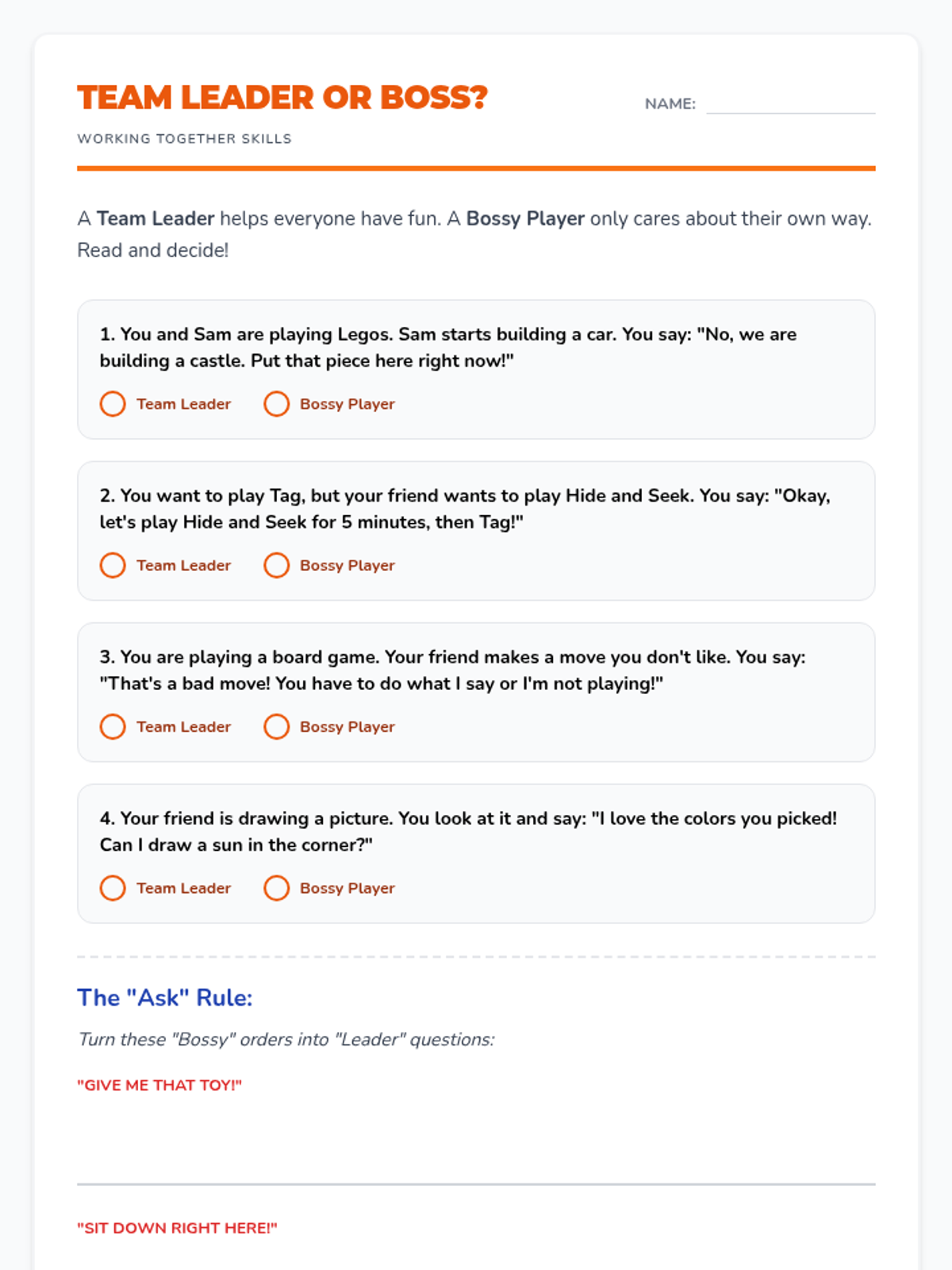
A comprehensive social-emotional learning sequence focused on helping 2nd-grade students navigate play dynamics, handle disappointments gracefully, cooperate with peers, and share actively.
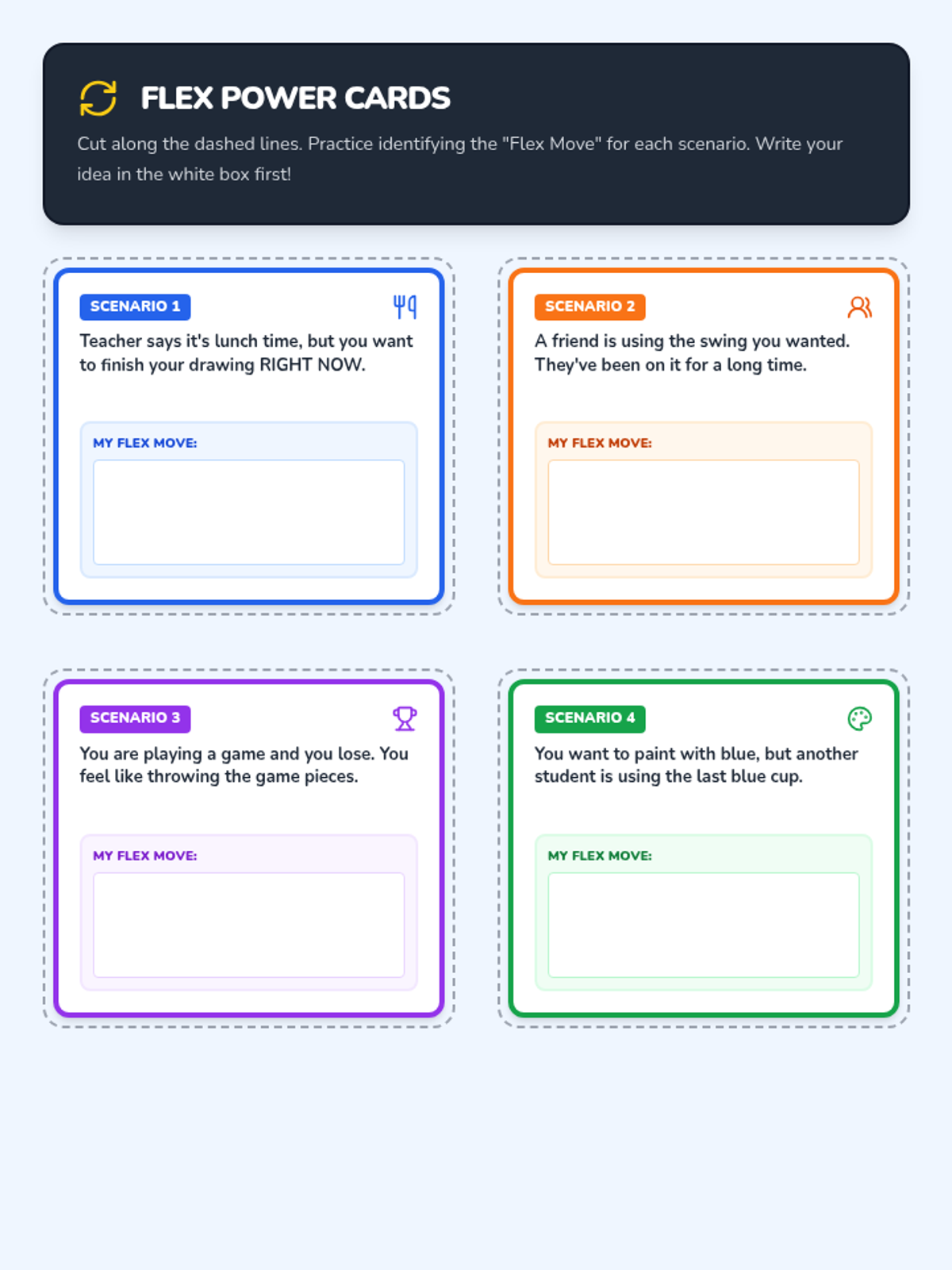
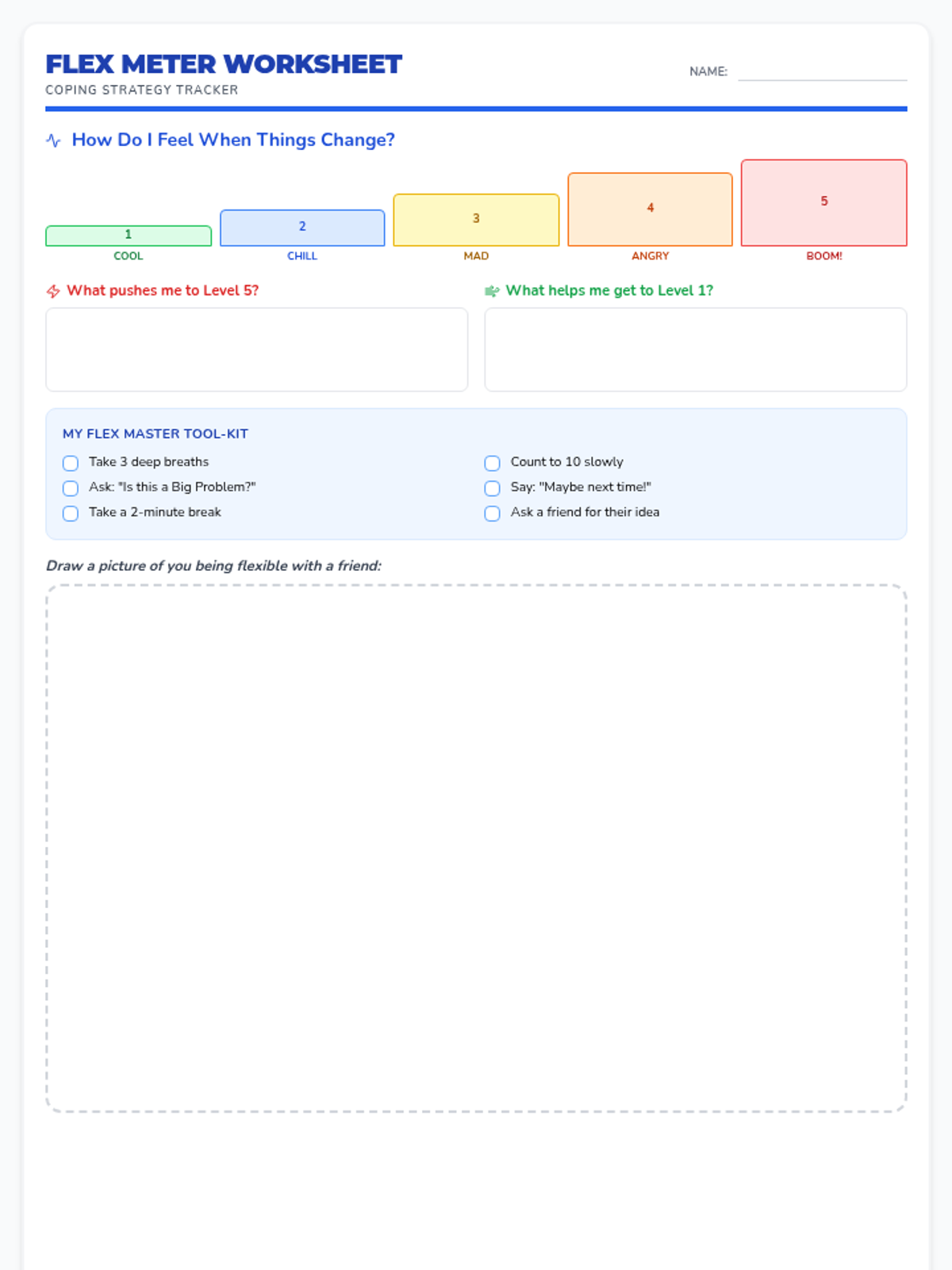
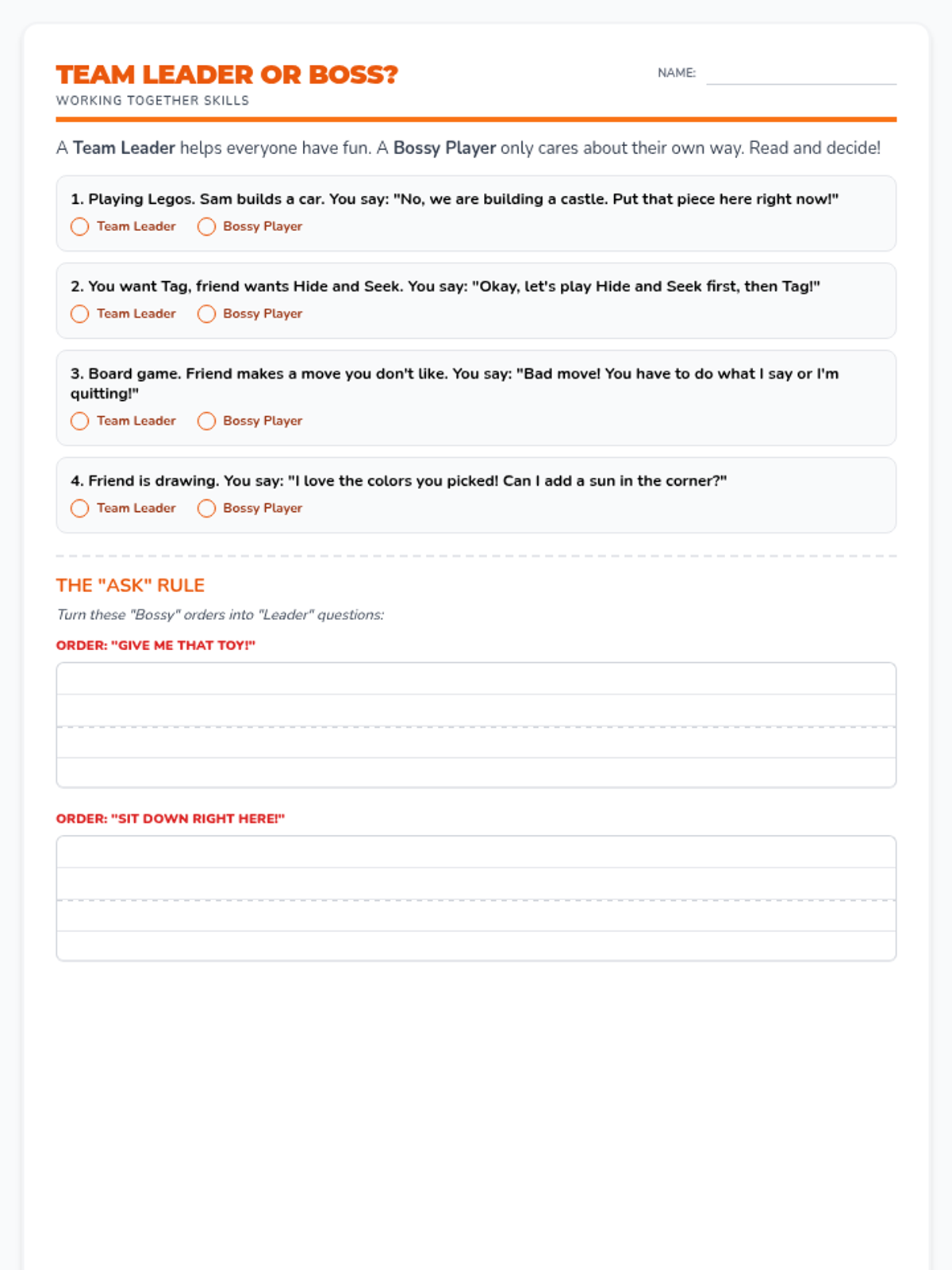
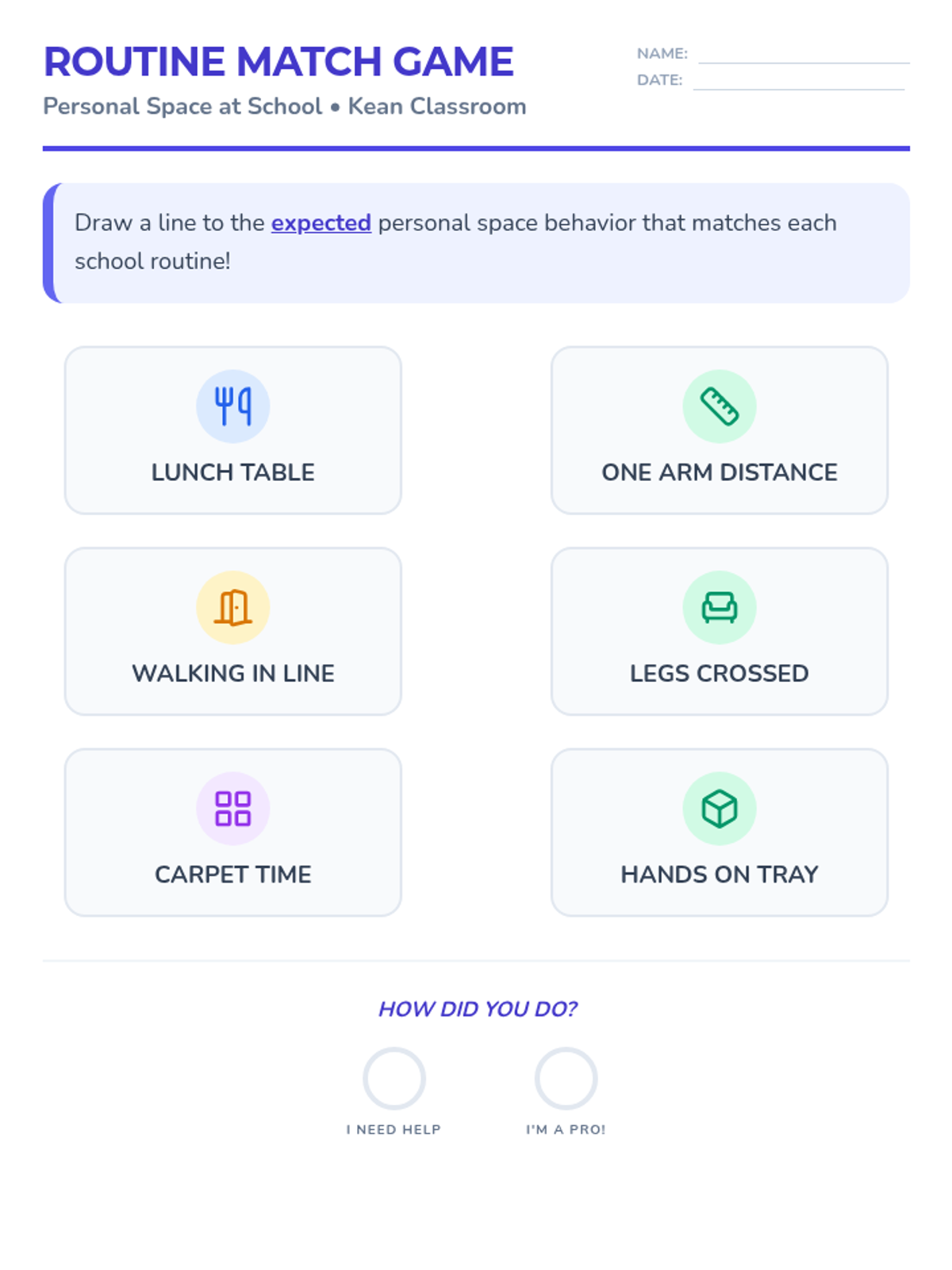
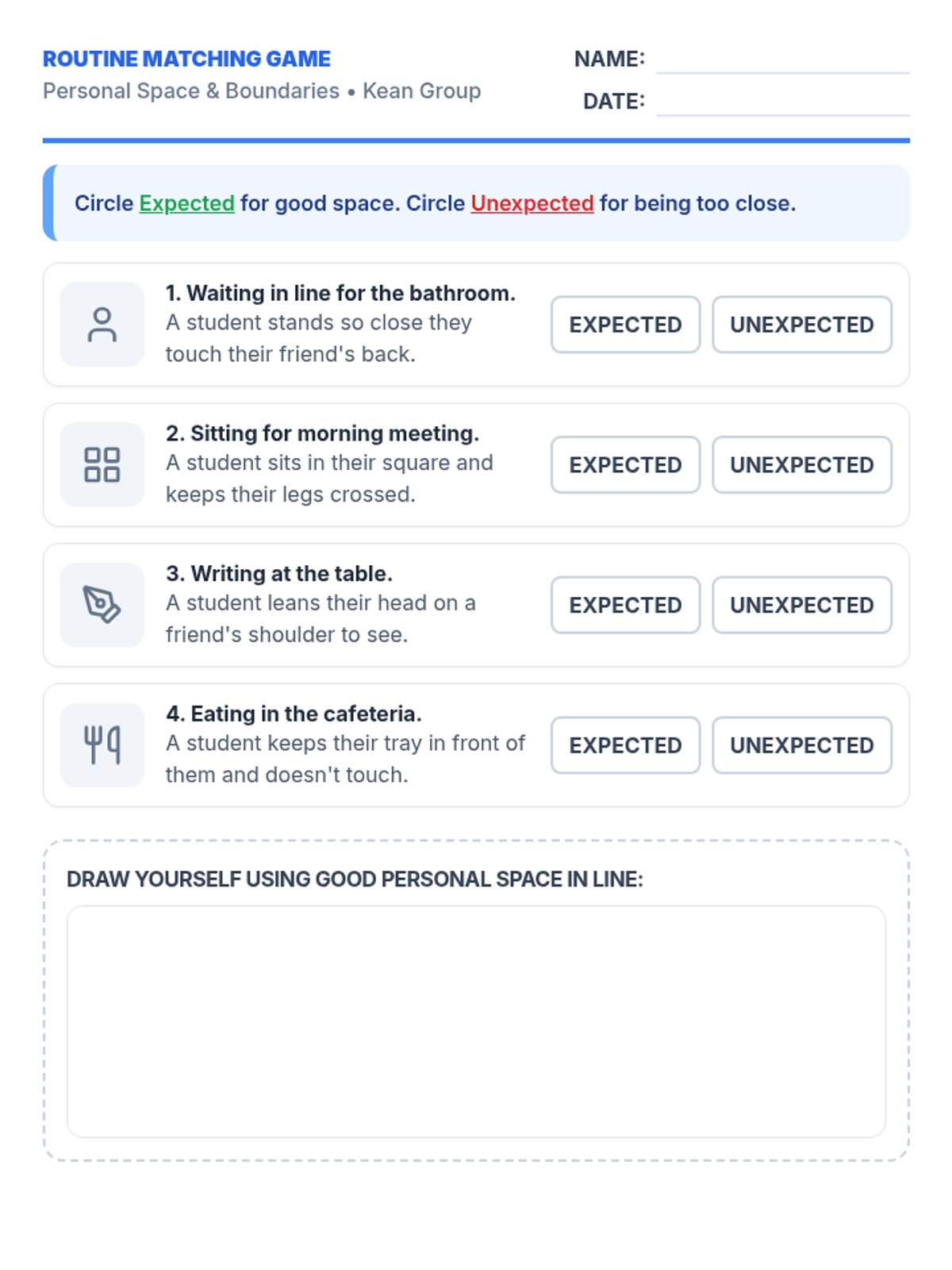
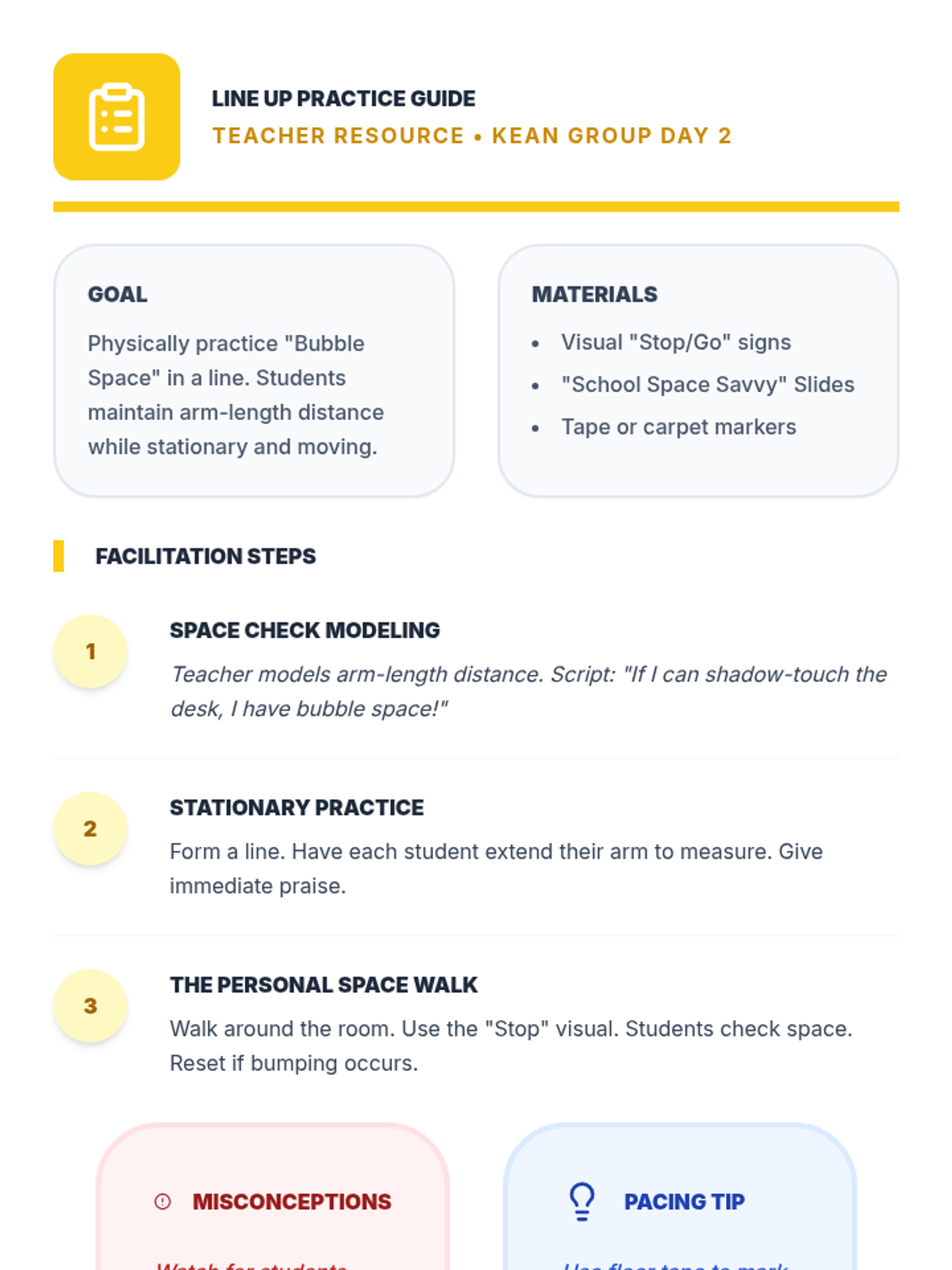
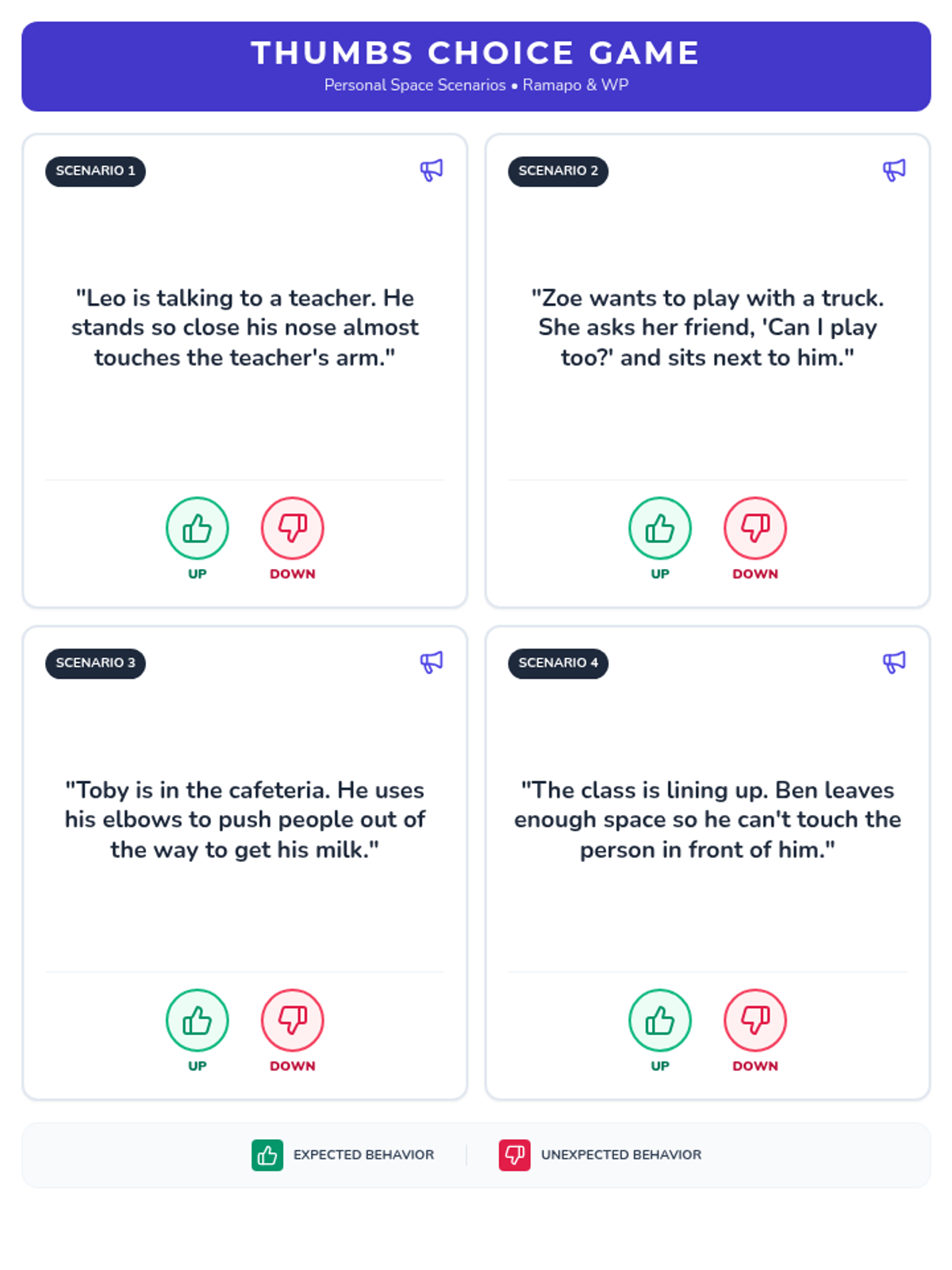
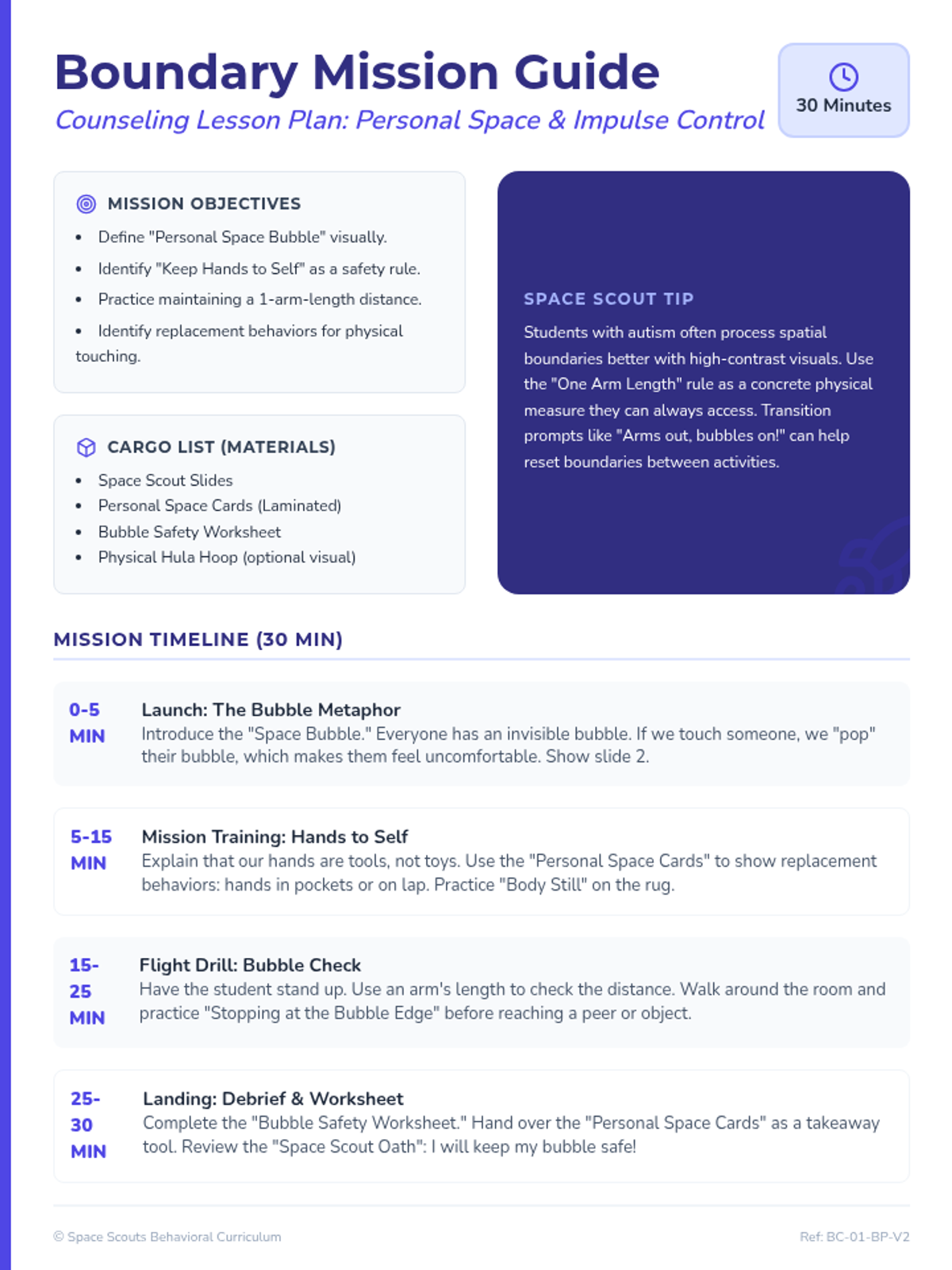
A comprehensive social skills unit focusing on personal space and boundaries across various school settings and routines for the week of May 25th. This unit differentiates for four distinct classroom groups (Kean, Ramapo, WP, and WashU) with tailored social stories and activities.
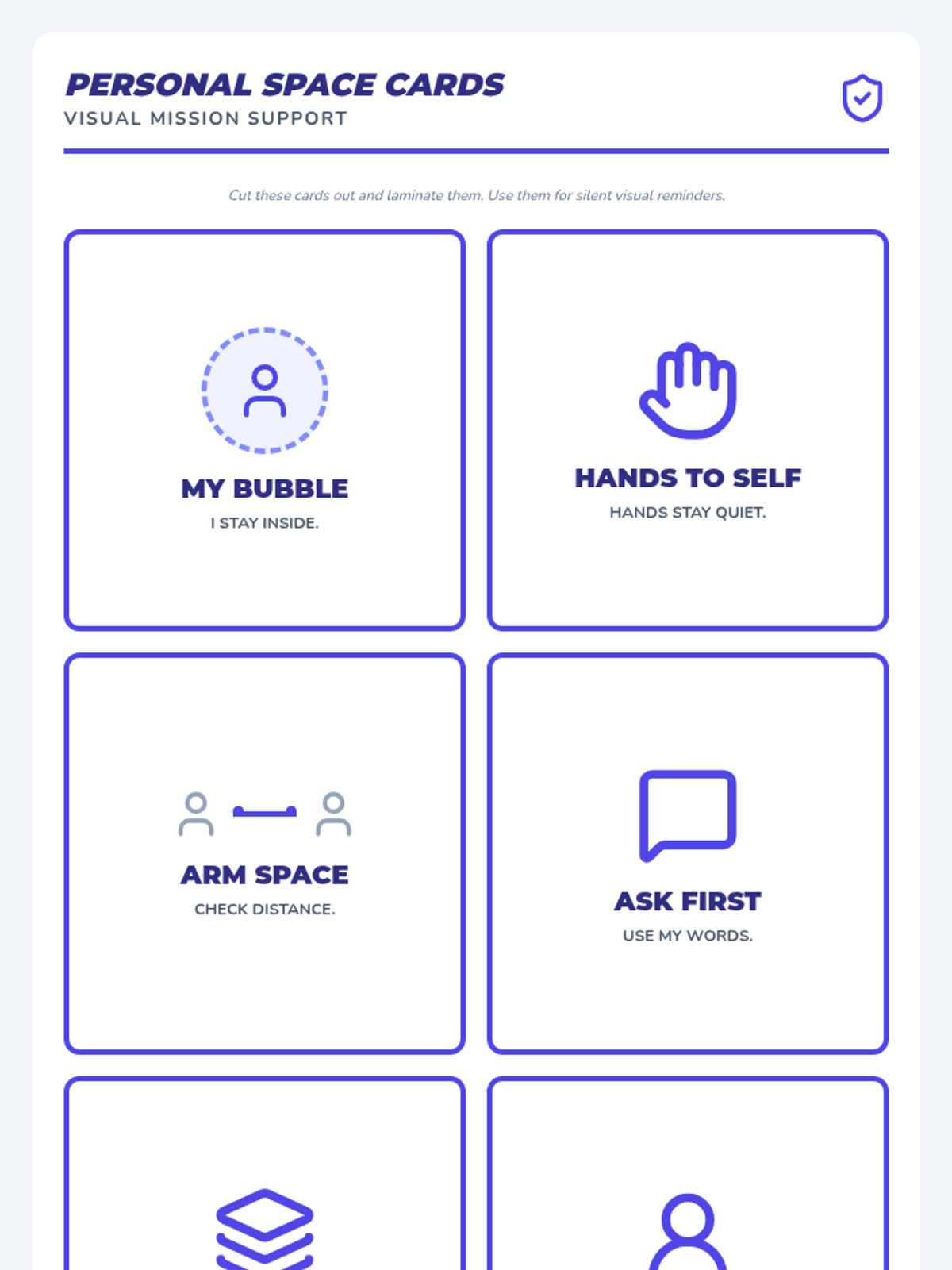
A social-emotional learning unit focusing on physical boundaries, personal space, and impulse control for students who need visual supports.
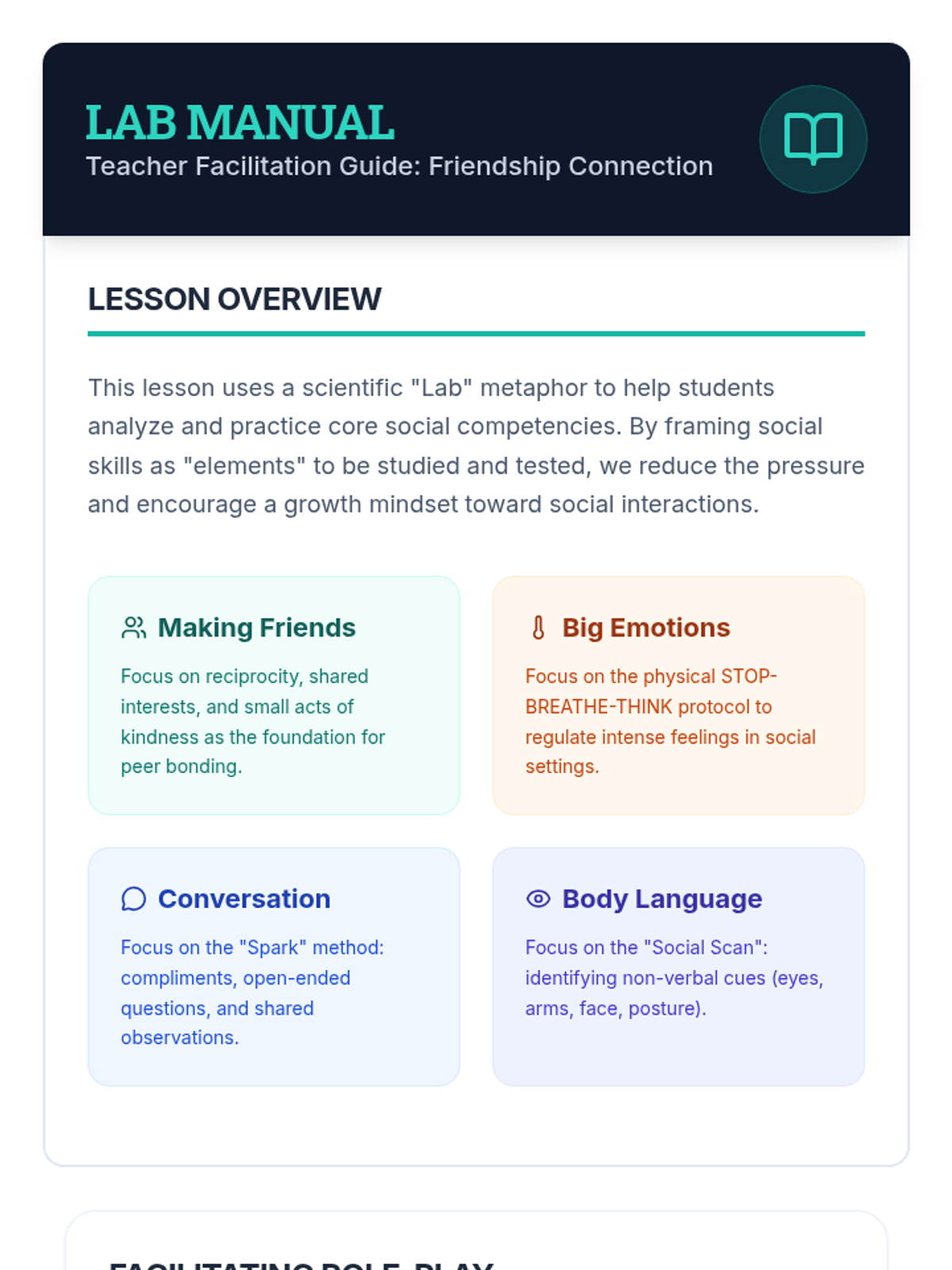
A comprehensive sequence focused on developing core social competencies through hands-on role-play, observation, and analysis. Students learn to navigate friendships, manage intense emotions, and decode non-verbal communication.
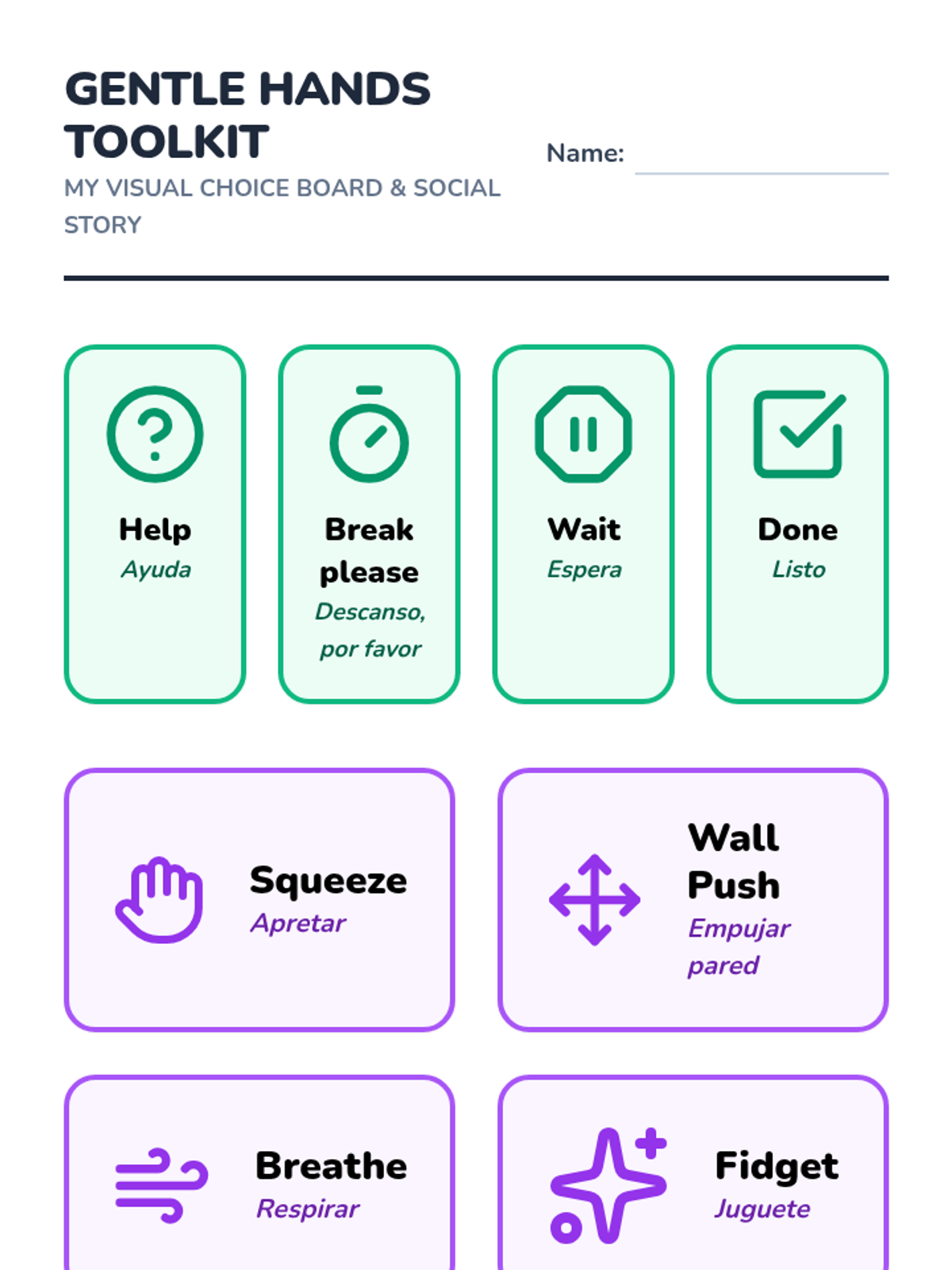
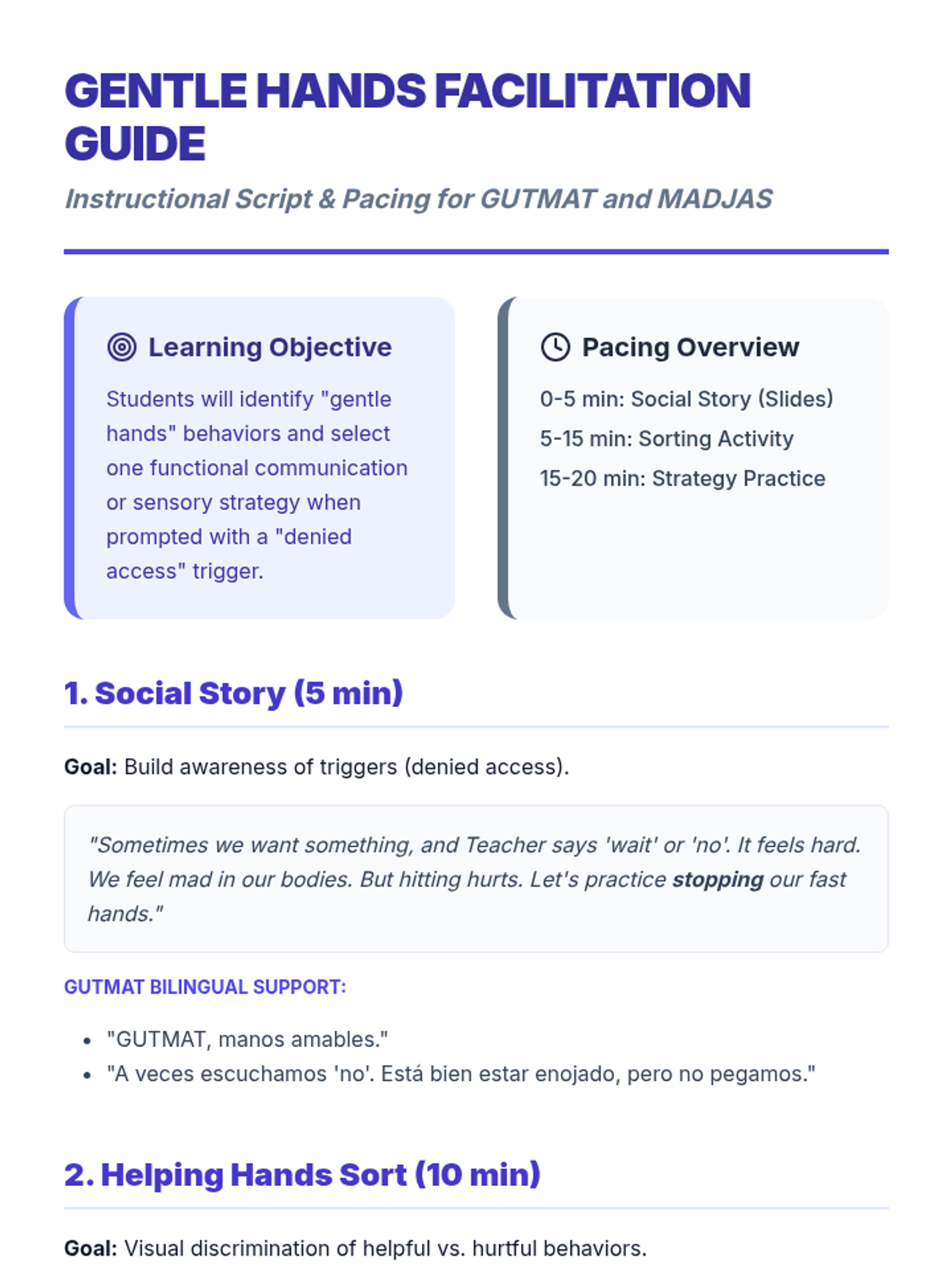
A specialized counseling sequence focused on replacing physical aggression with functional communication and sensory regulation for students with high-needs autism. This sequence emphasizes 'Gentle Hands' and provides visual tools for managing frustration when denied access.
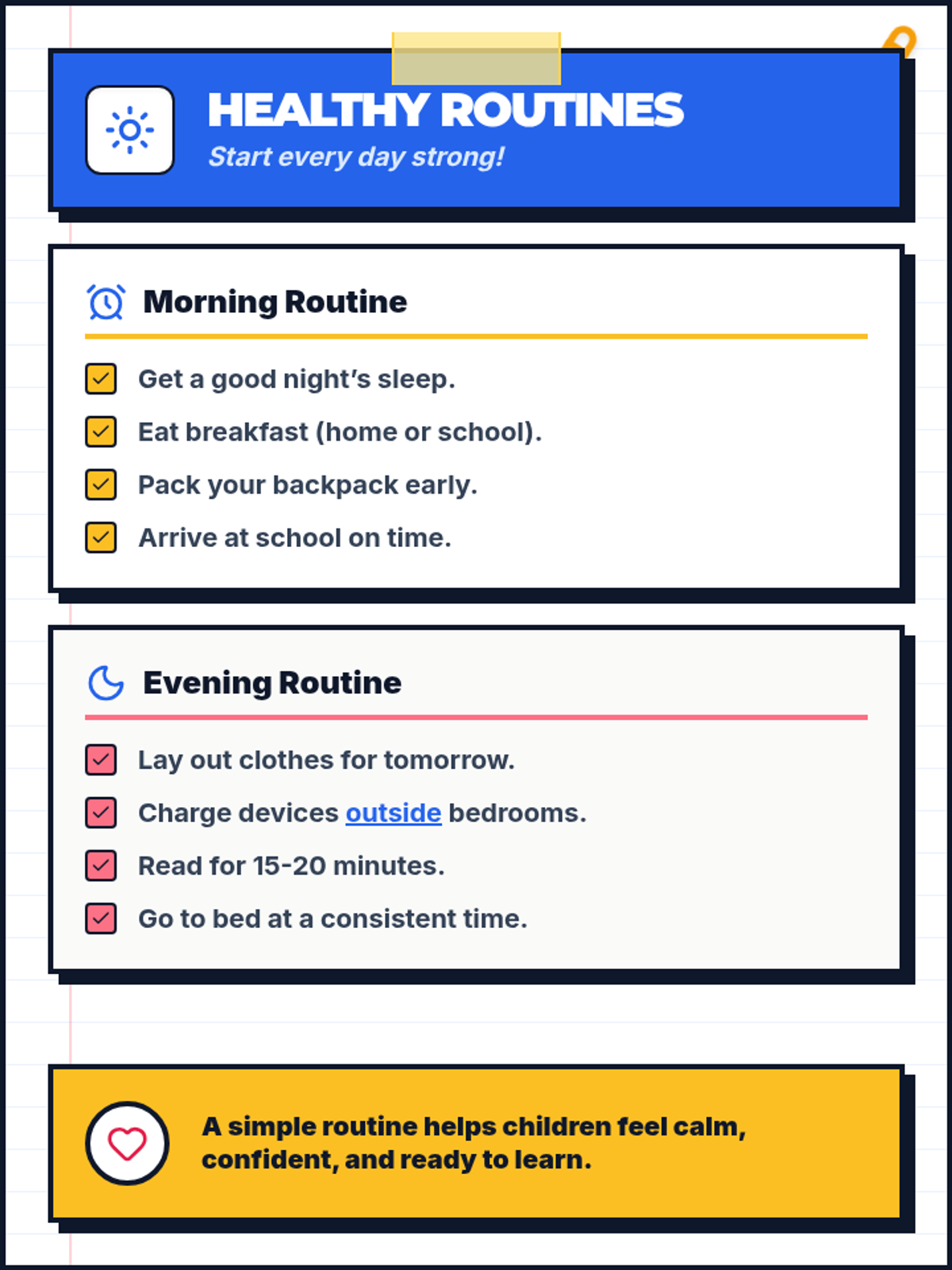
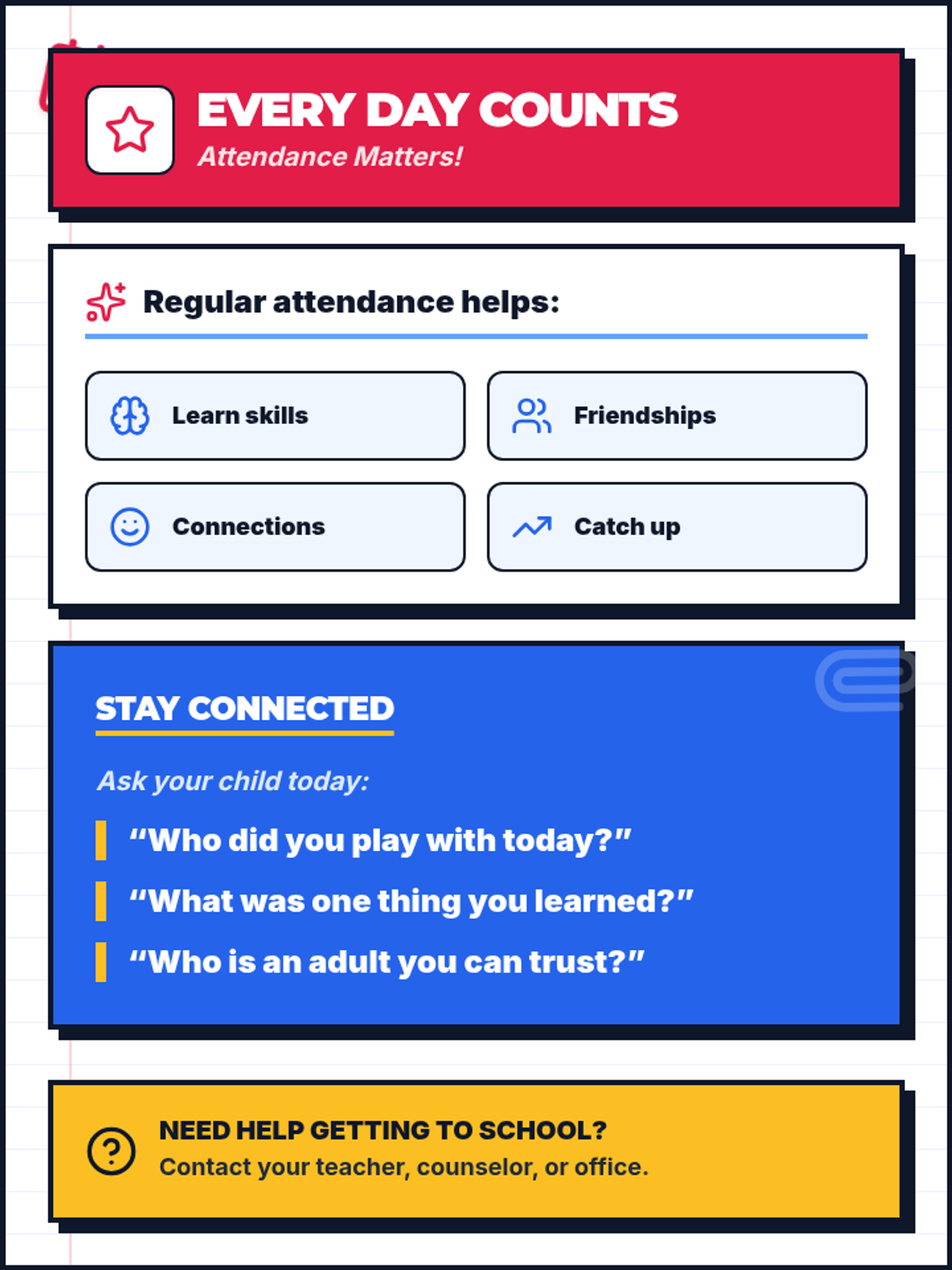
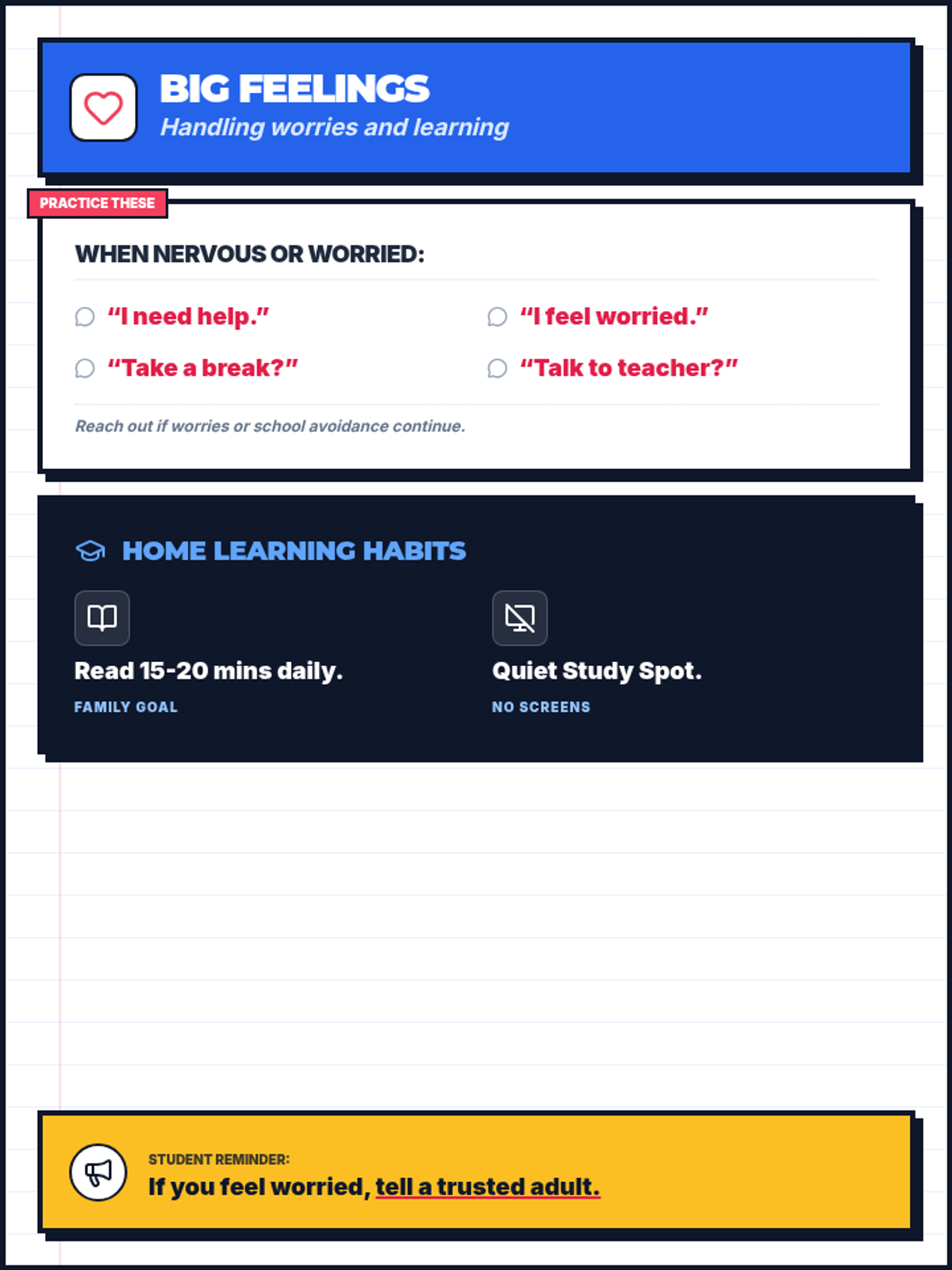
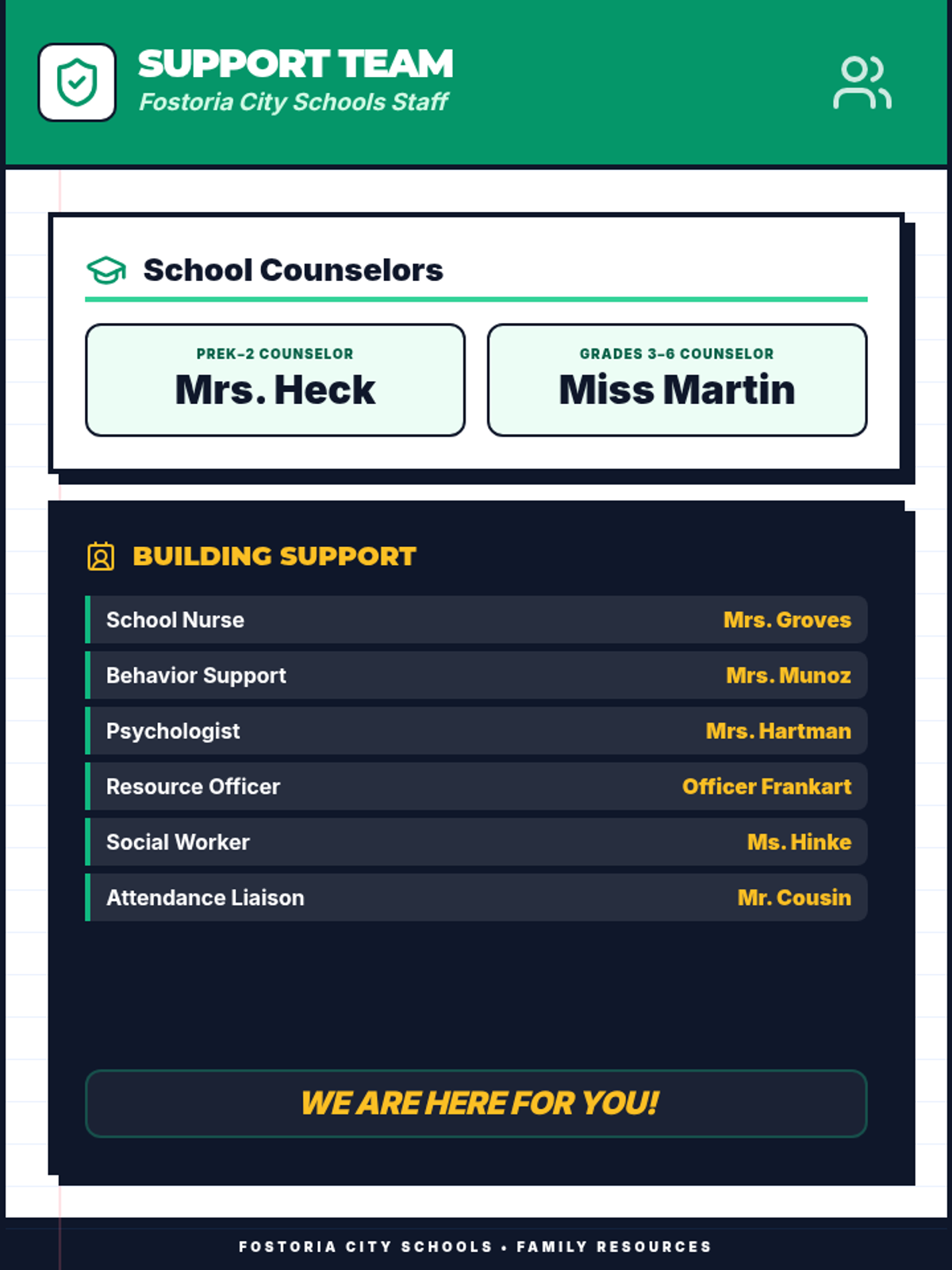
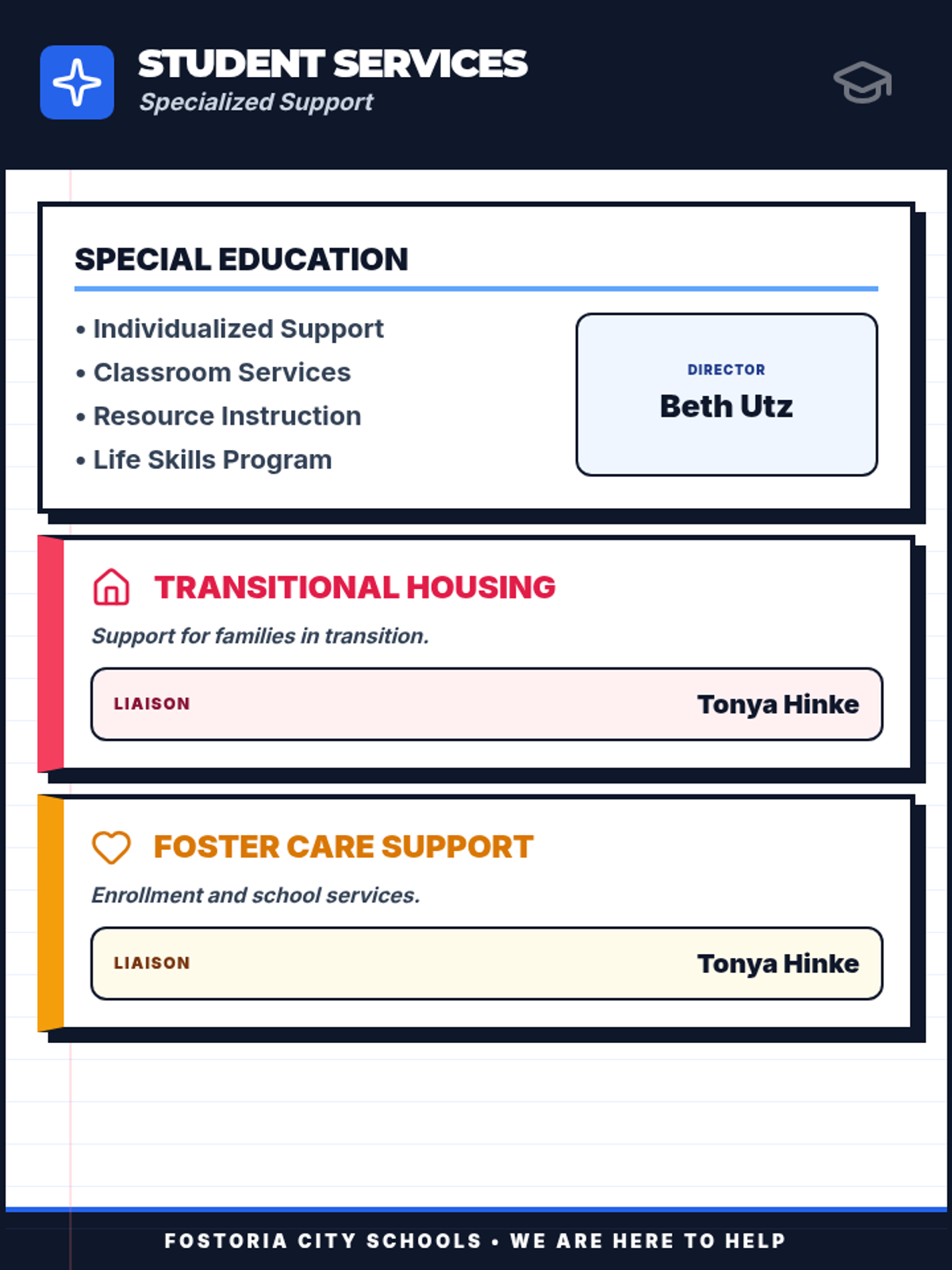
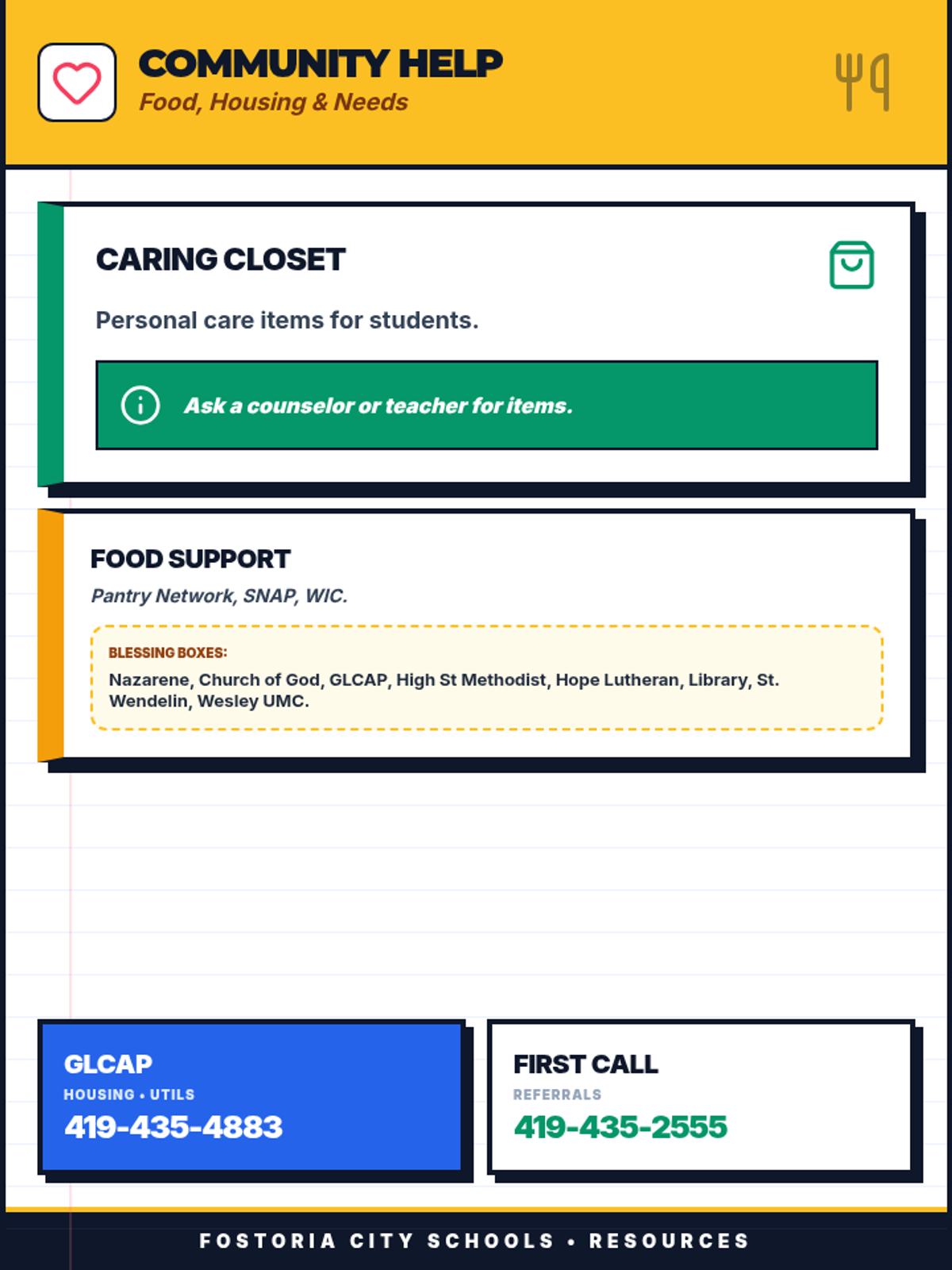
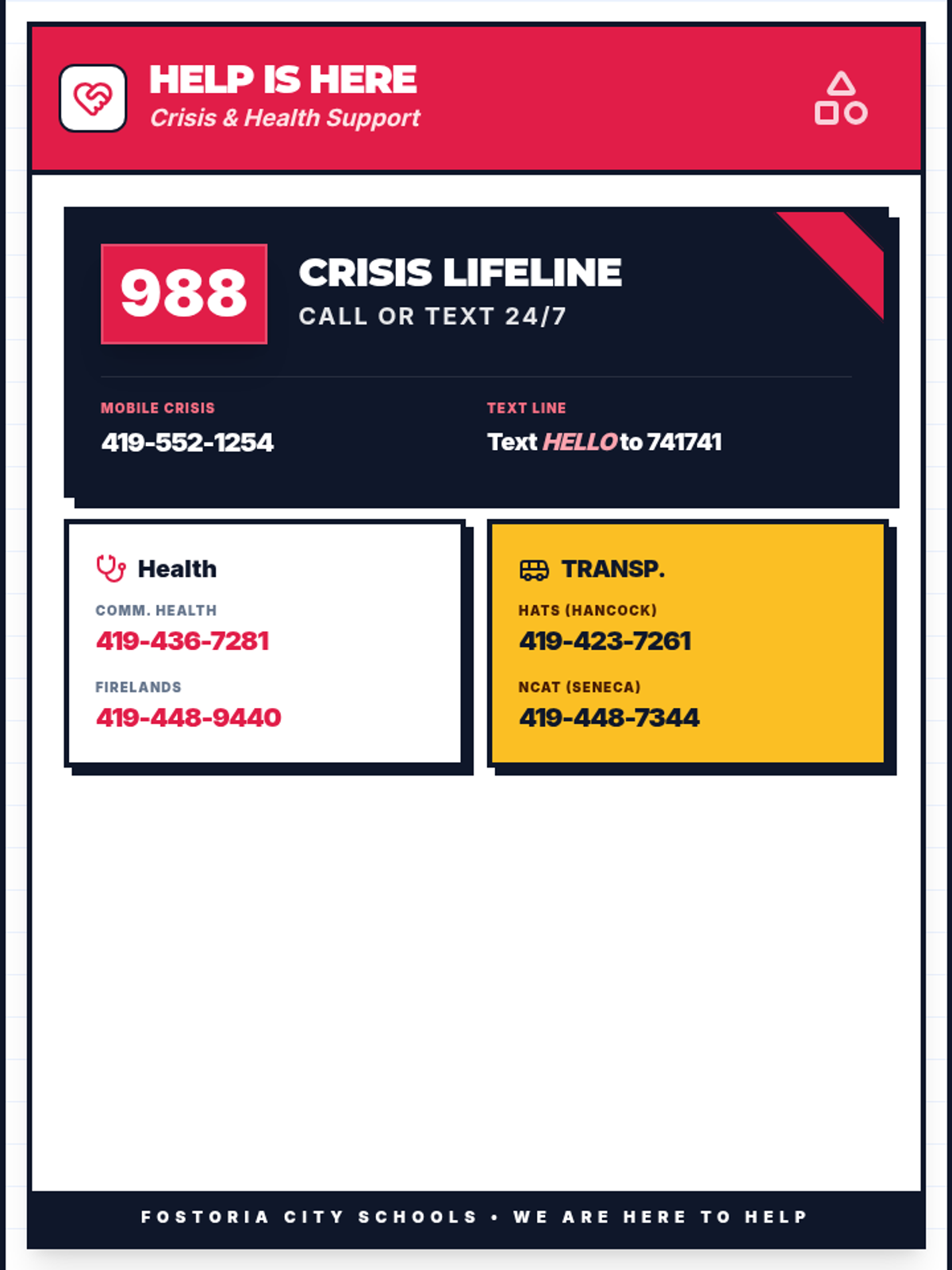
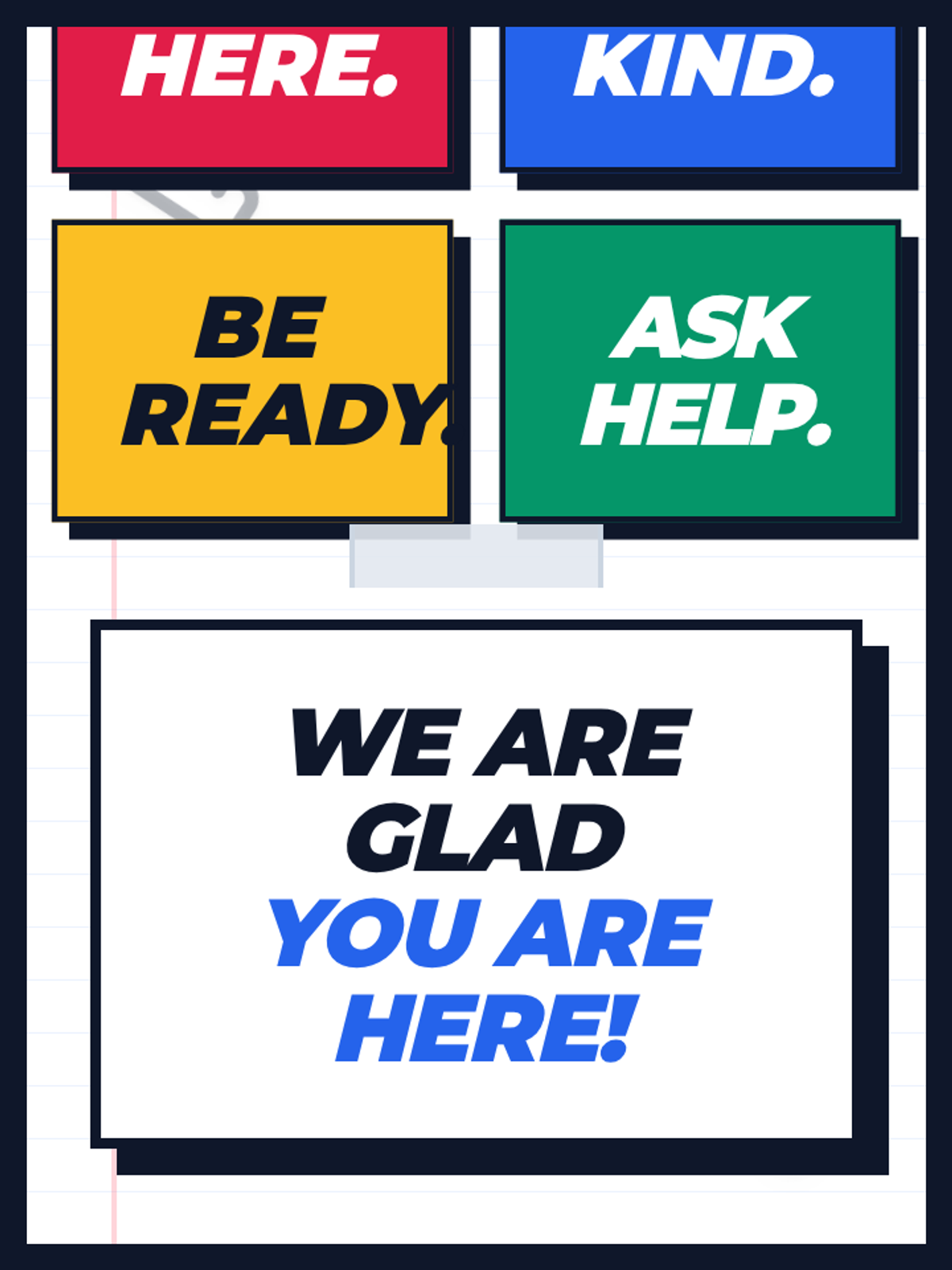
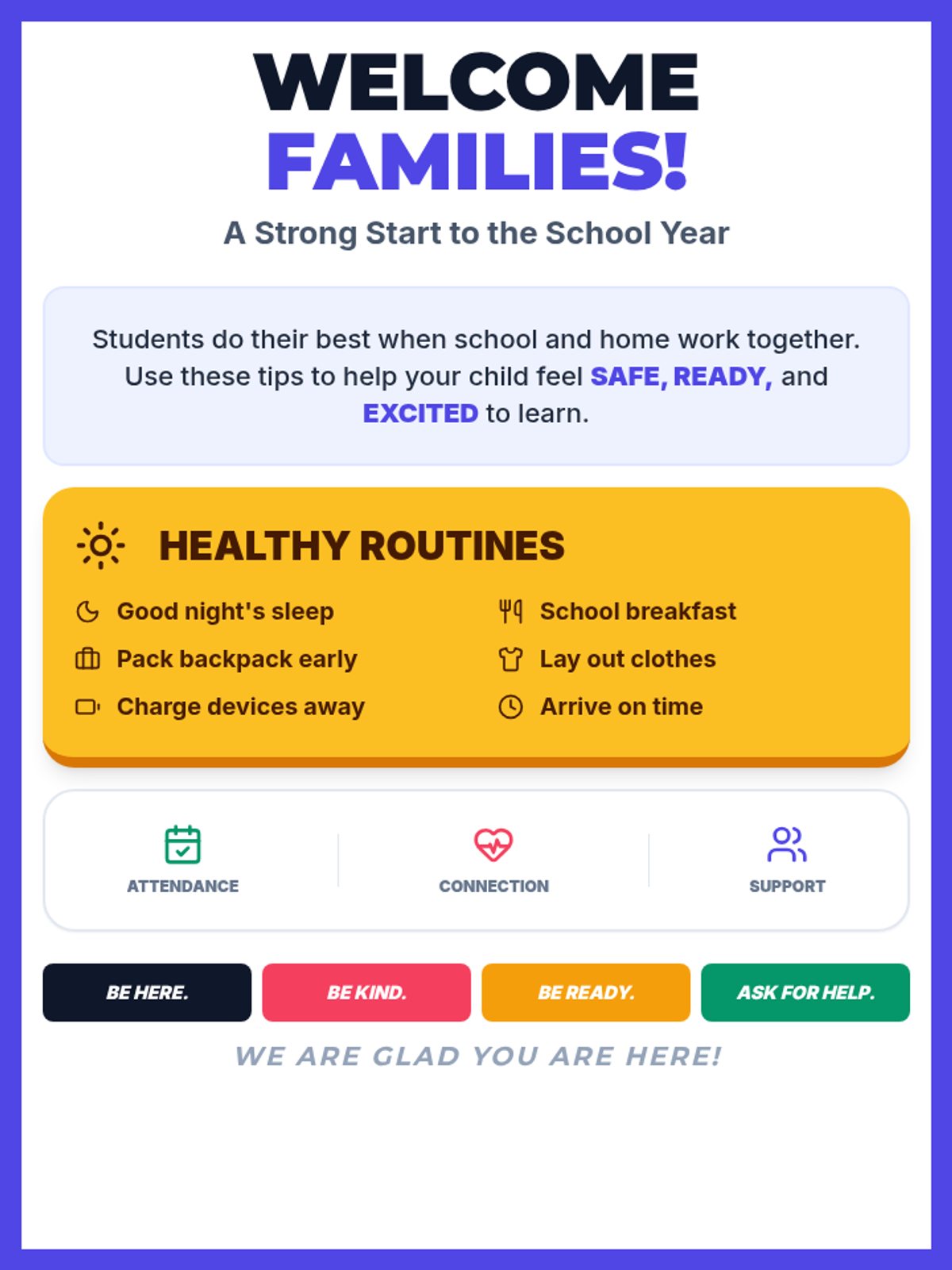
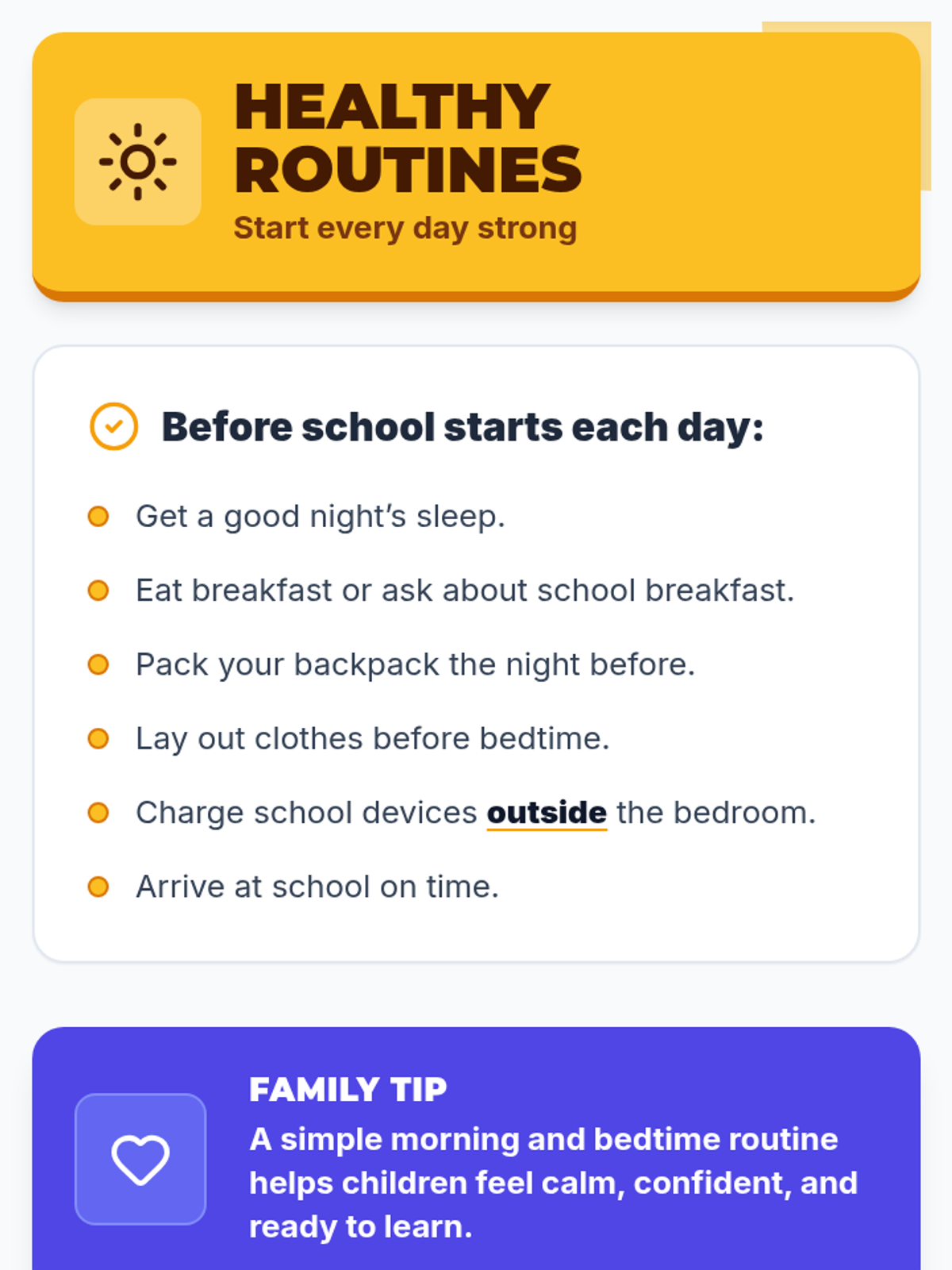
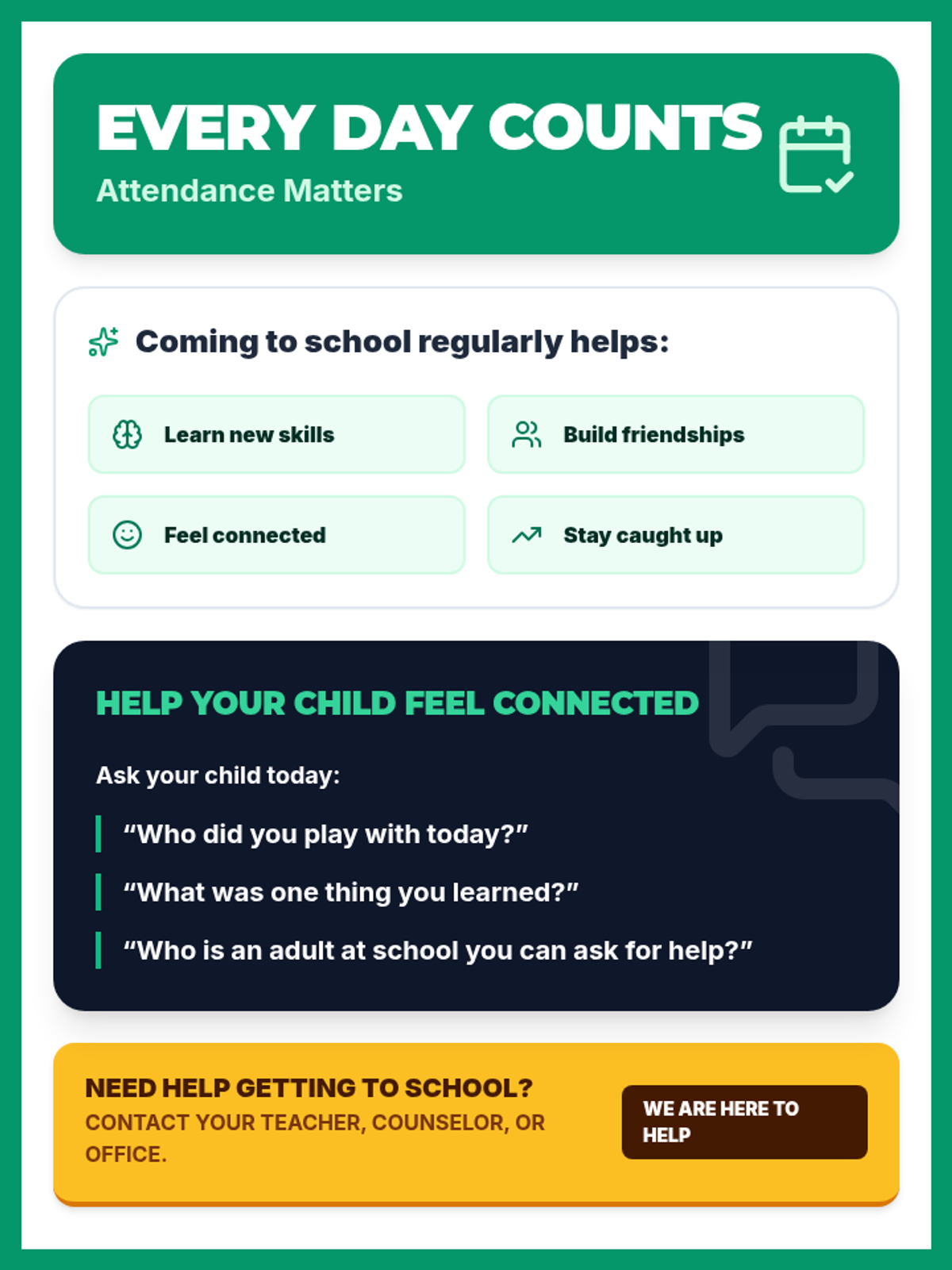
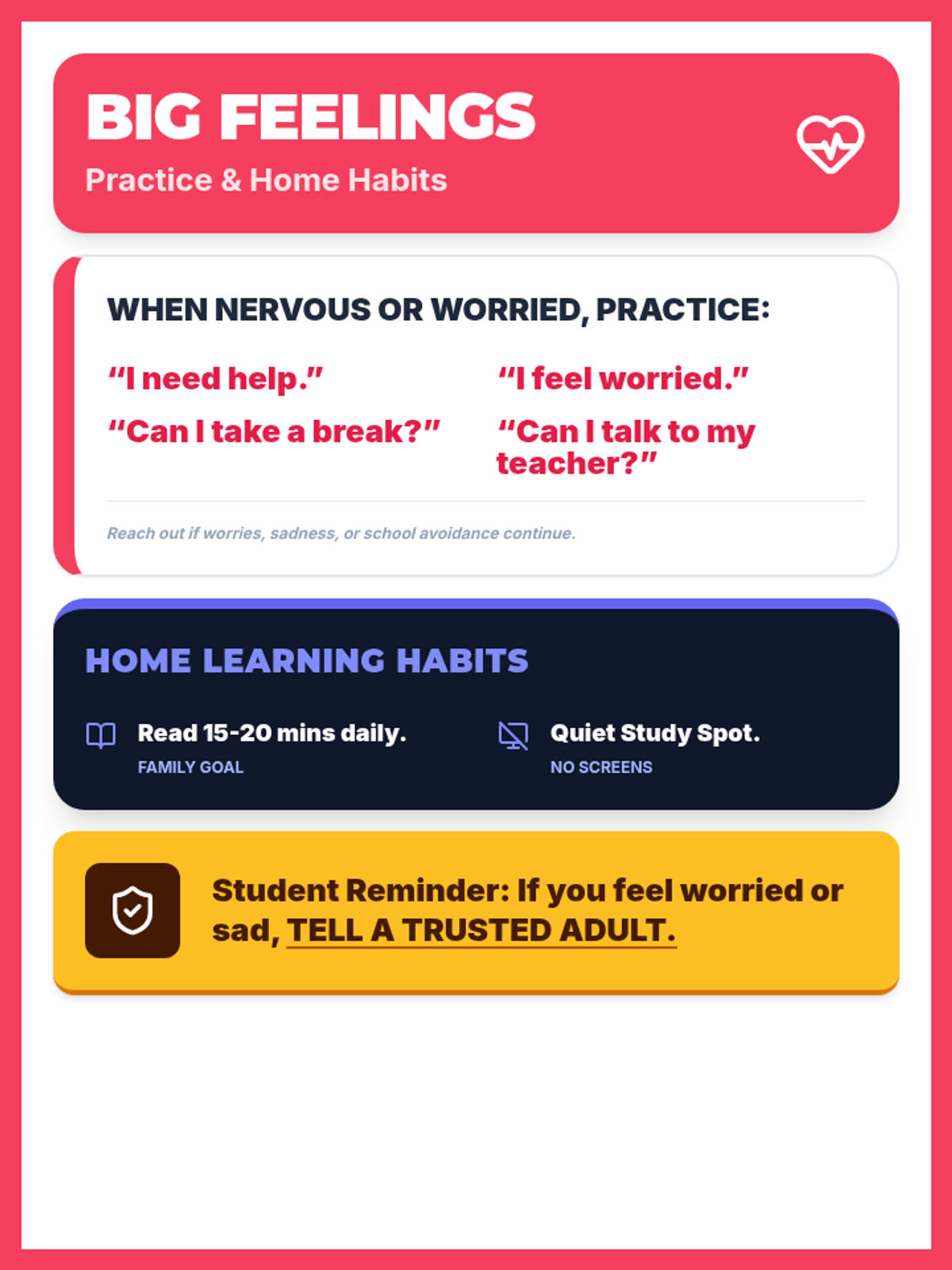
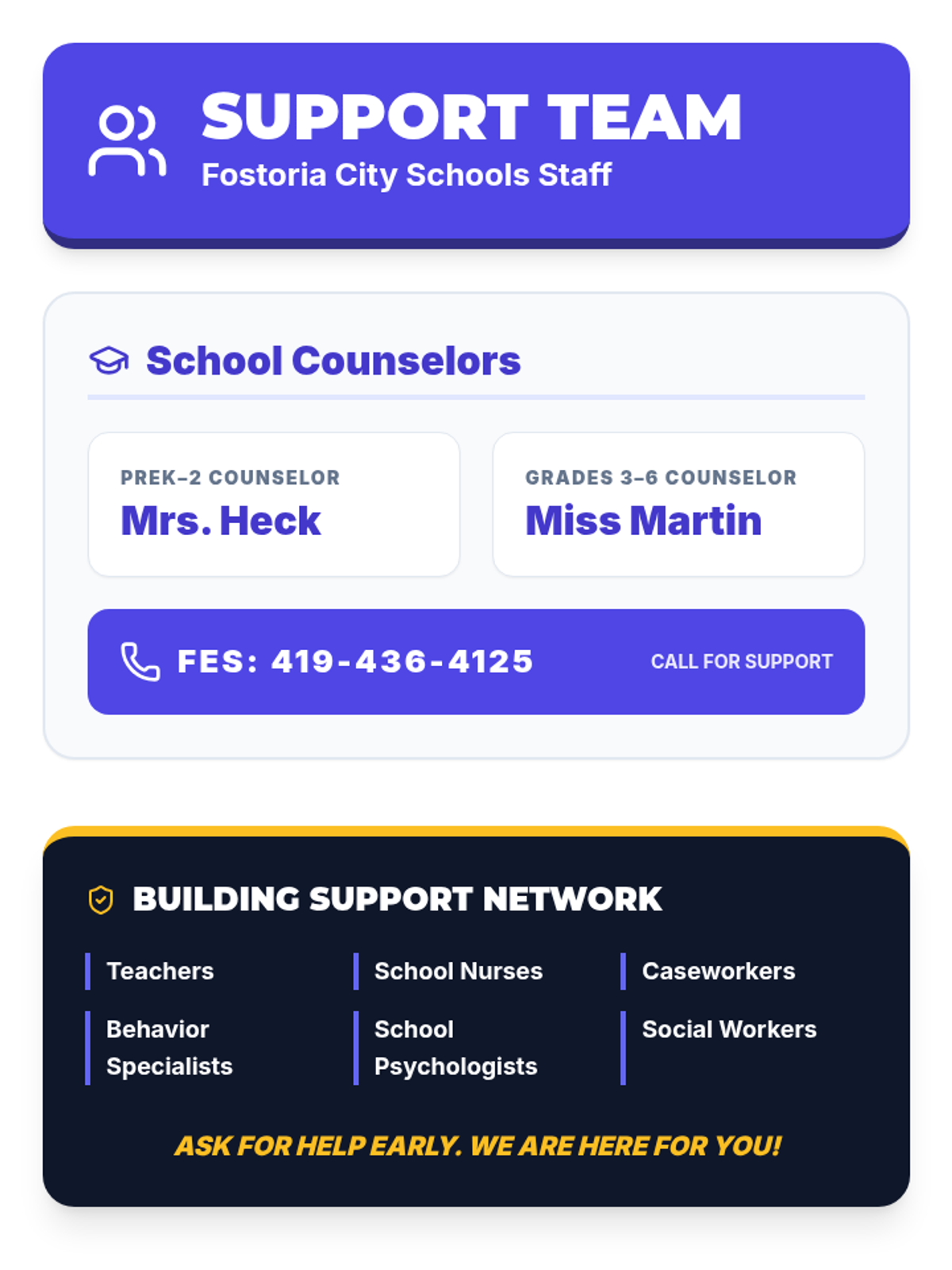
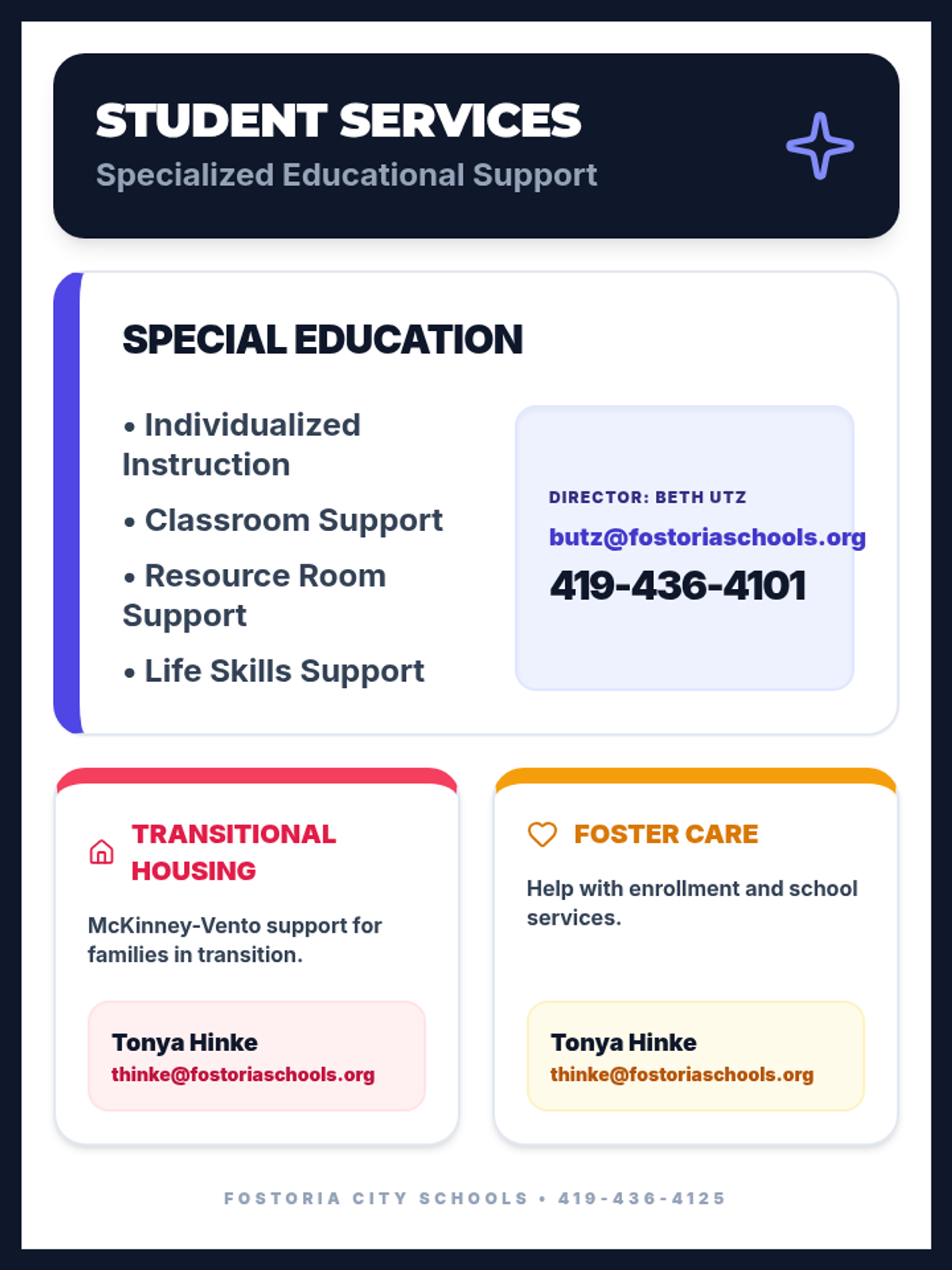
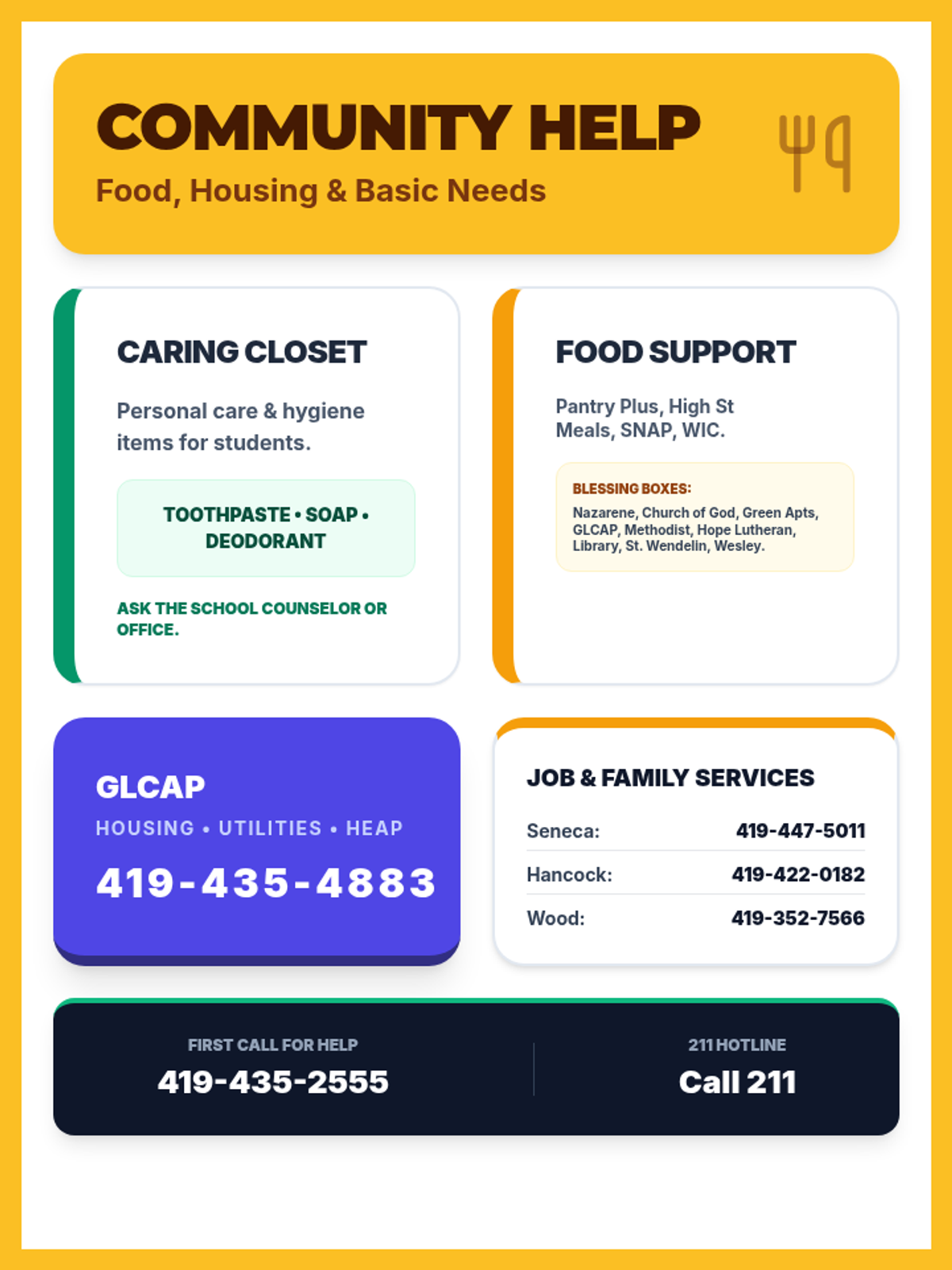
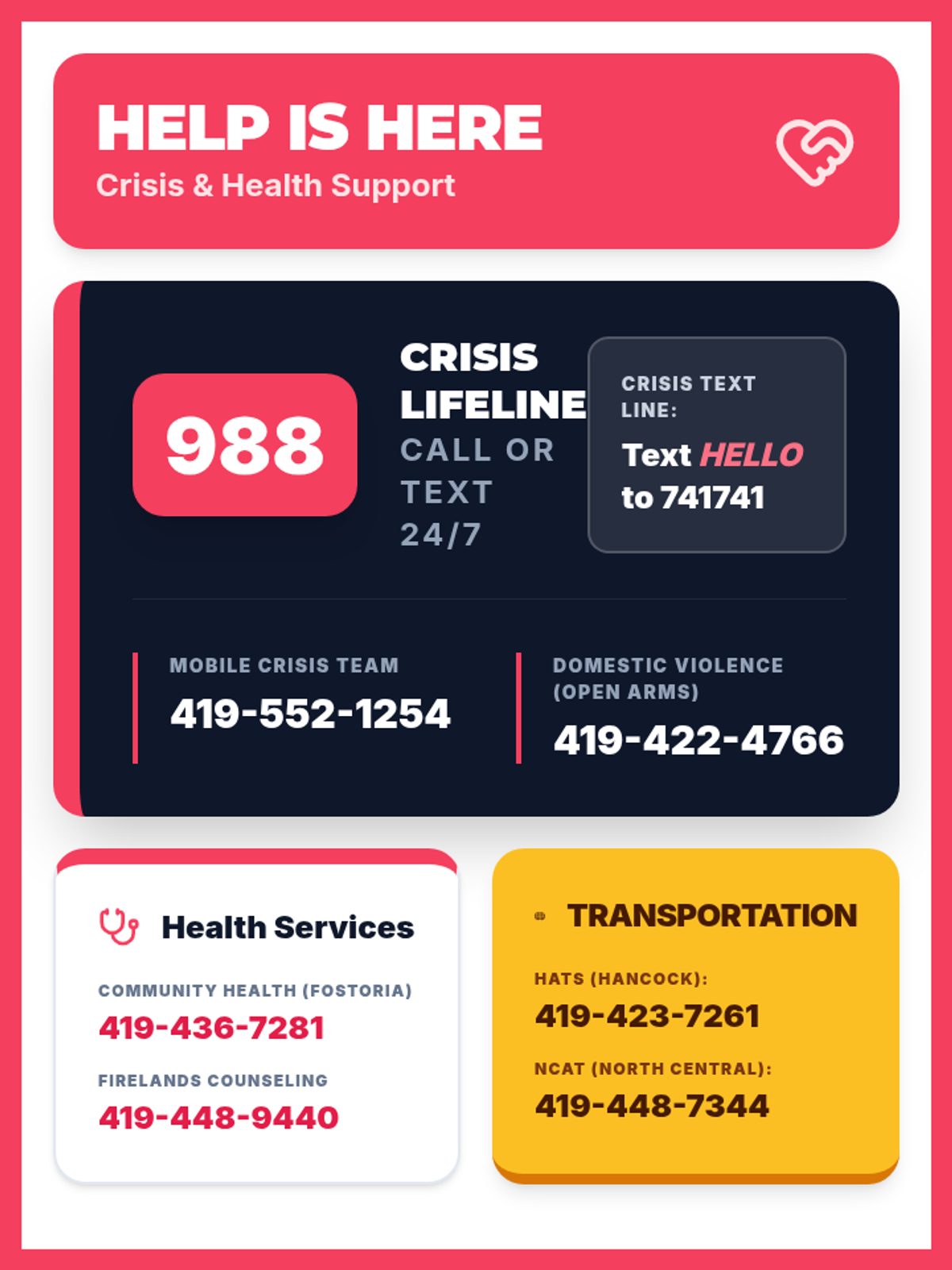
A collection of colorful, minimalist posters for an elementary school bulletin board, providing families with routines, school support information, and community resources.
A counseling sequence focused on cognitive reframing and problem-scaling for high-energy students who enjoy hands-on construction and building activities.
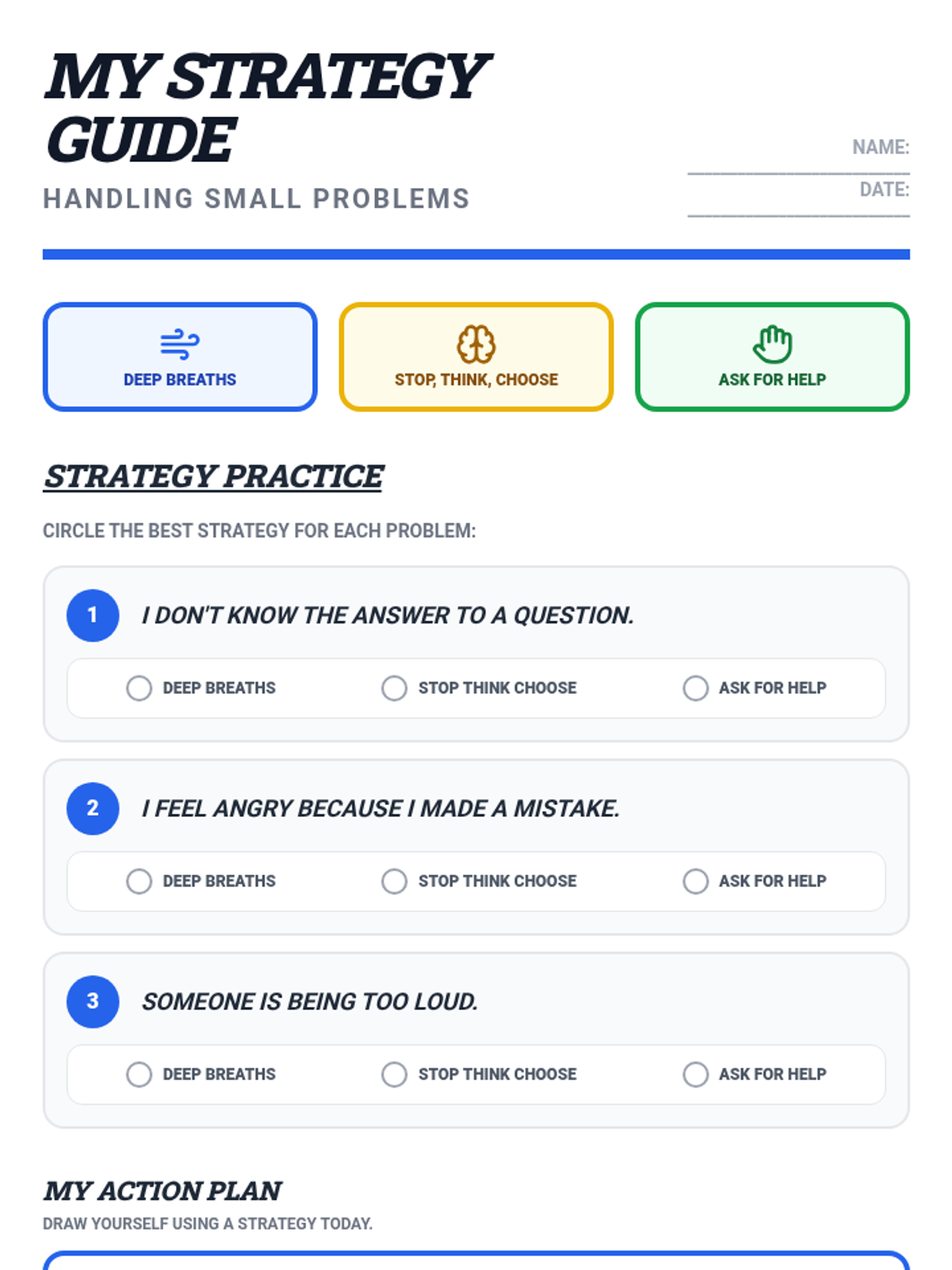
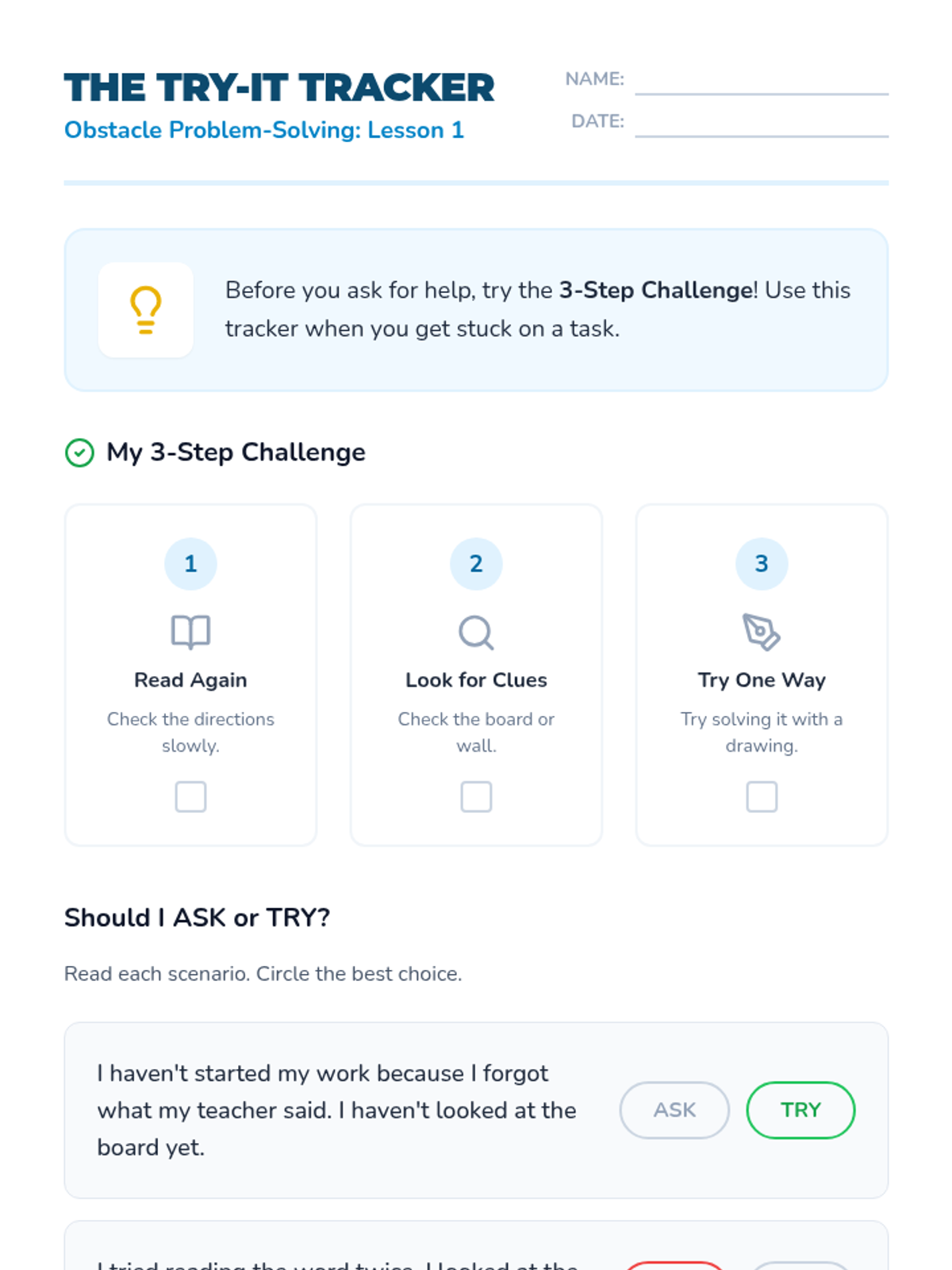
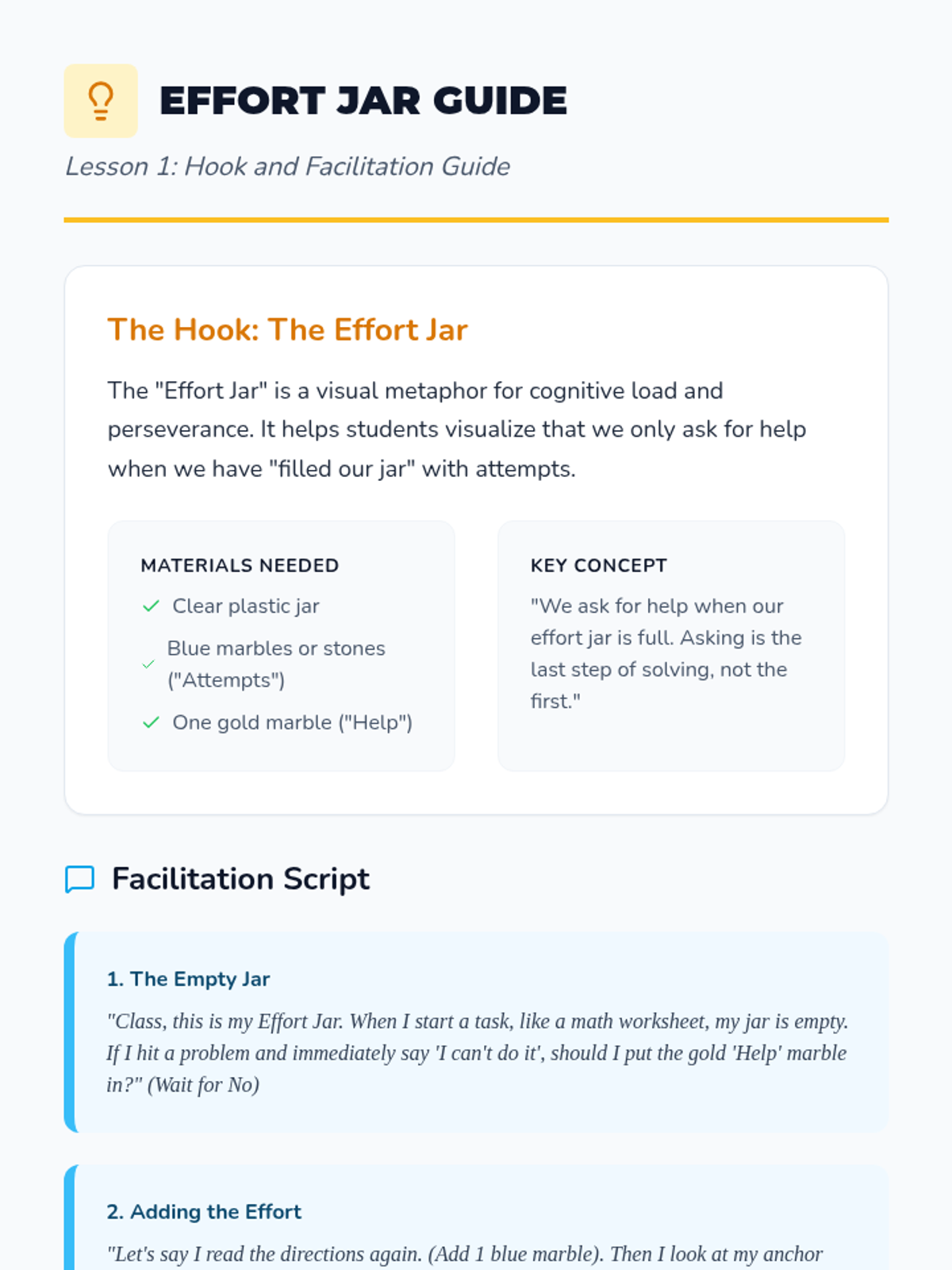
This sequence empowers 2nd-grade students with self-advocacy skills to navigate obstacles. It moves from recognizing when help is needed to choosing the right helper and using specific, actionable language or non-verbal signals.
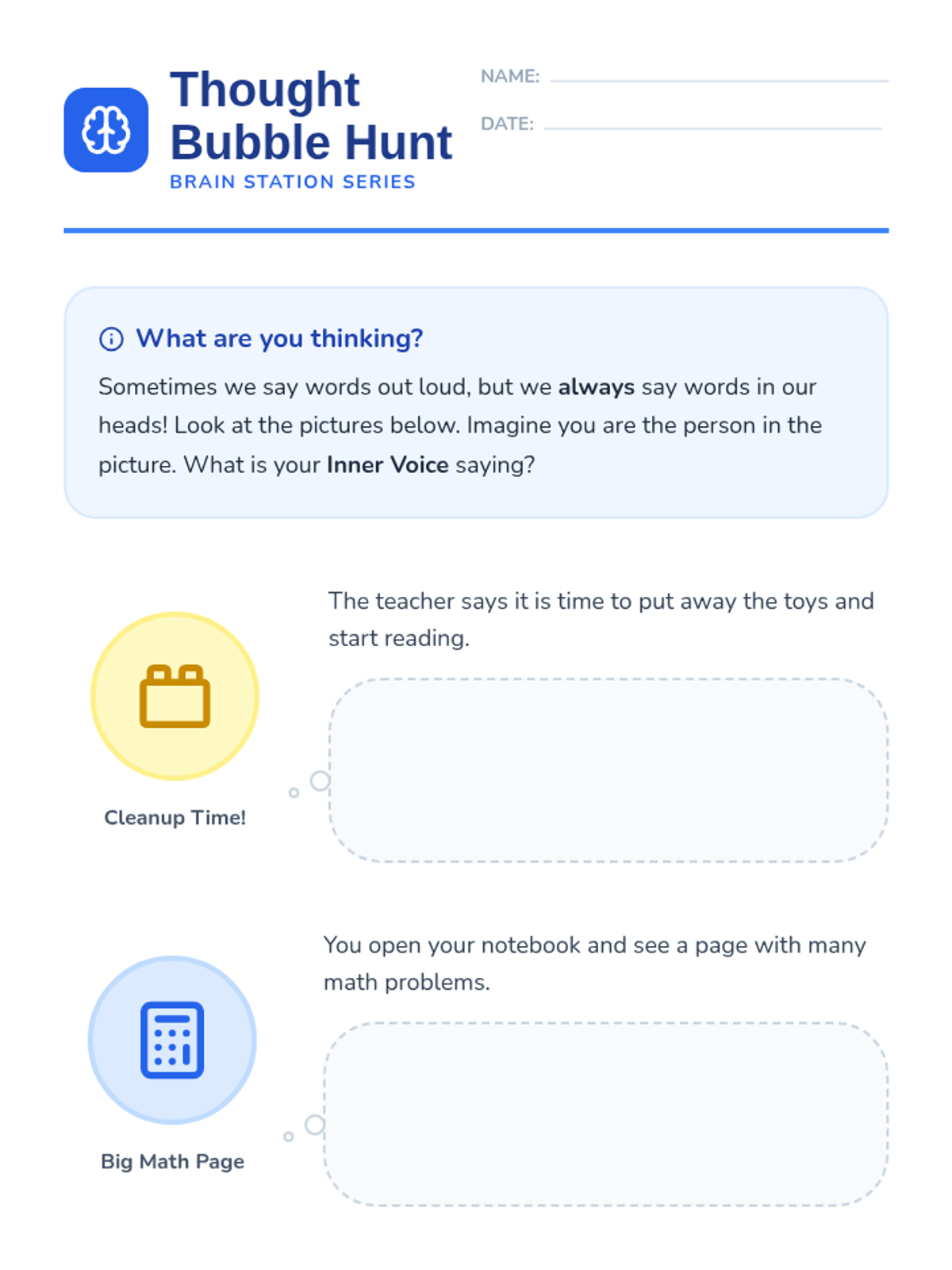
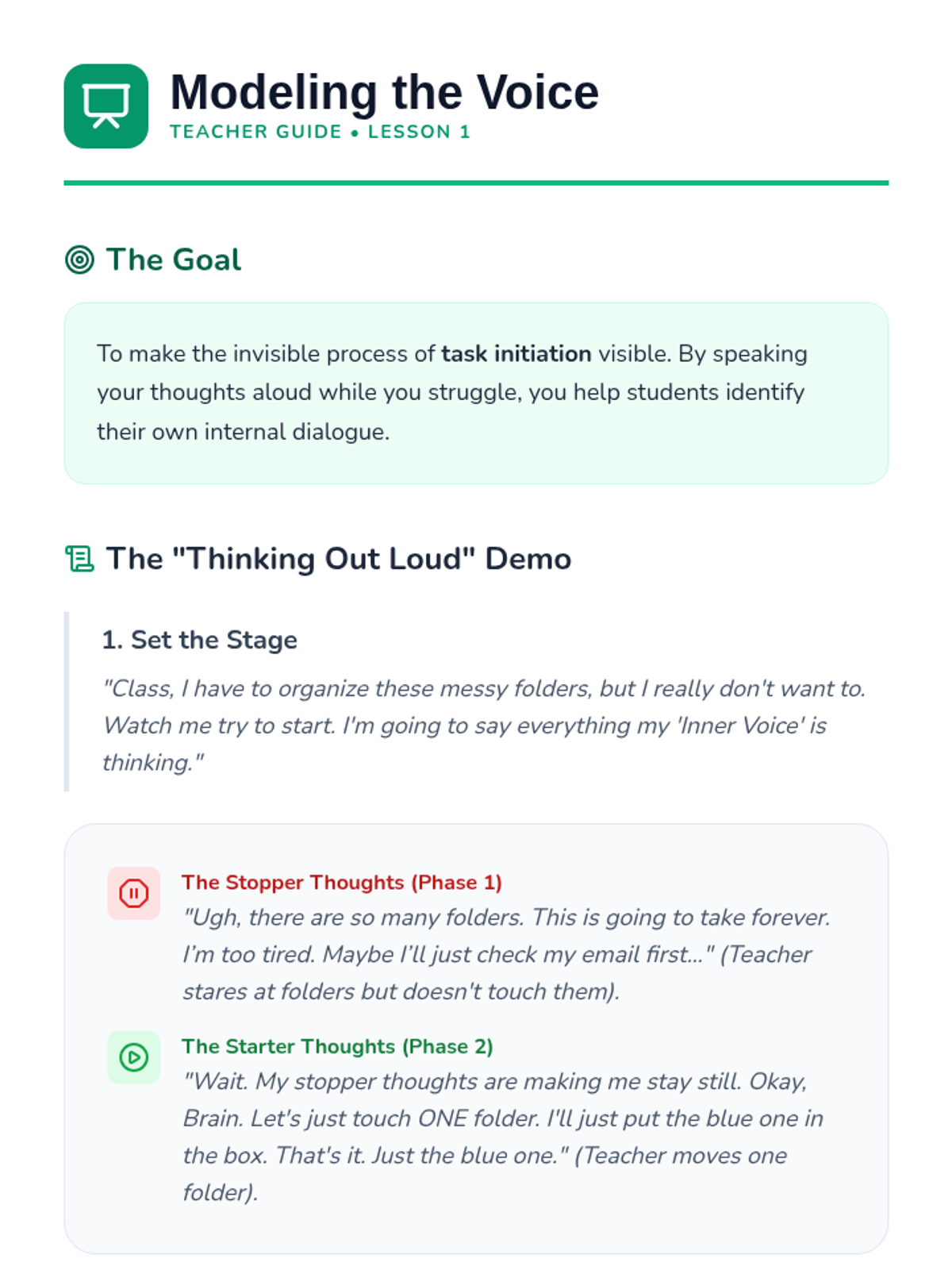
This sequence helps 2nd graders understand their 'inner voice' and use it as a tool for task initiation. Students learn to identify 'stopper' thoughts and replace them with 'starter' thoughts to overcome resistance and get to work.
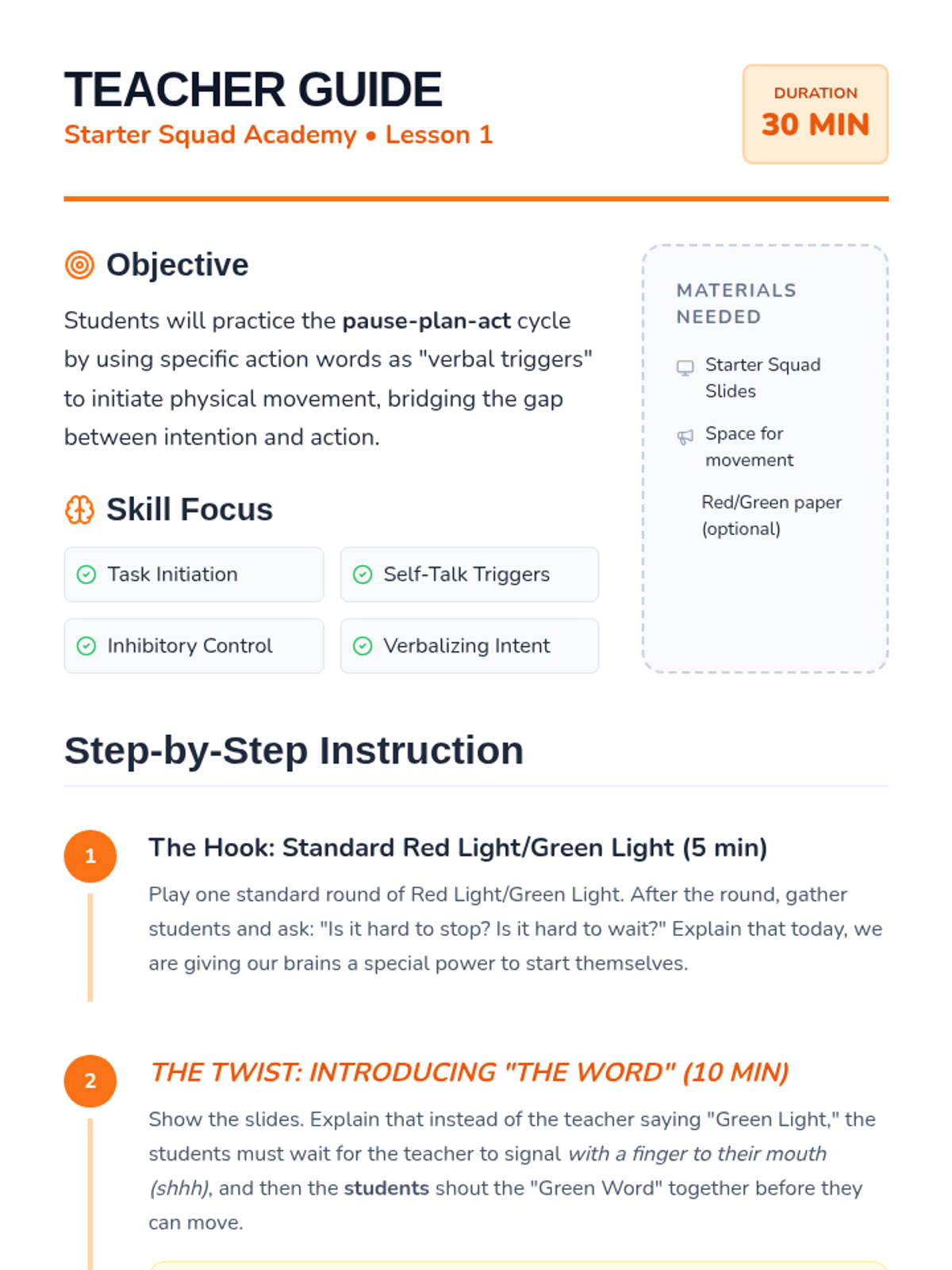
A gamified sequence for 1st graders to master task initiation through verbal self-talk triggers, using physical games and simulations to make executive functioning concrete.
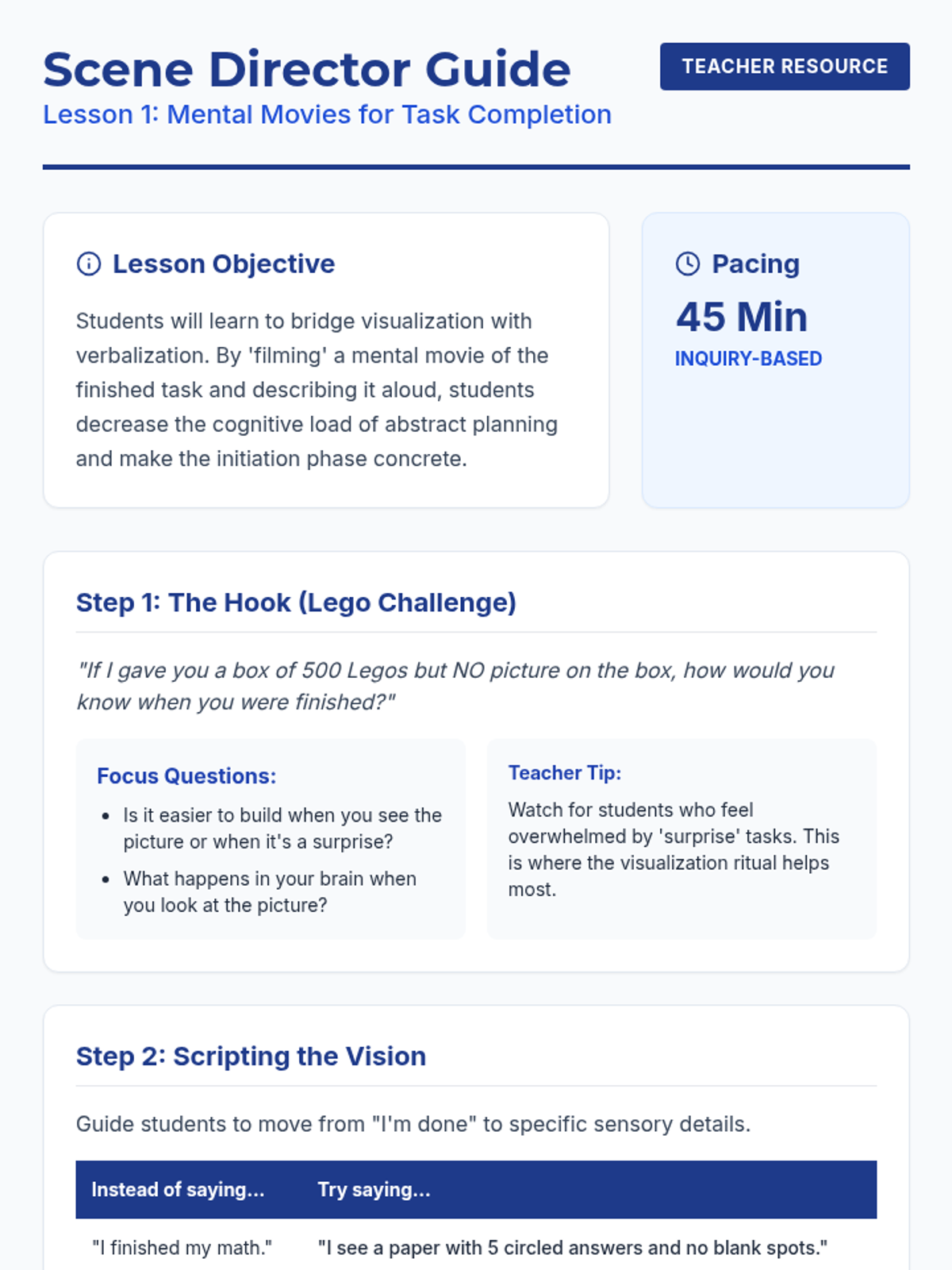
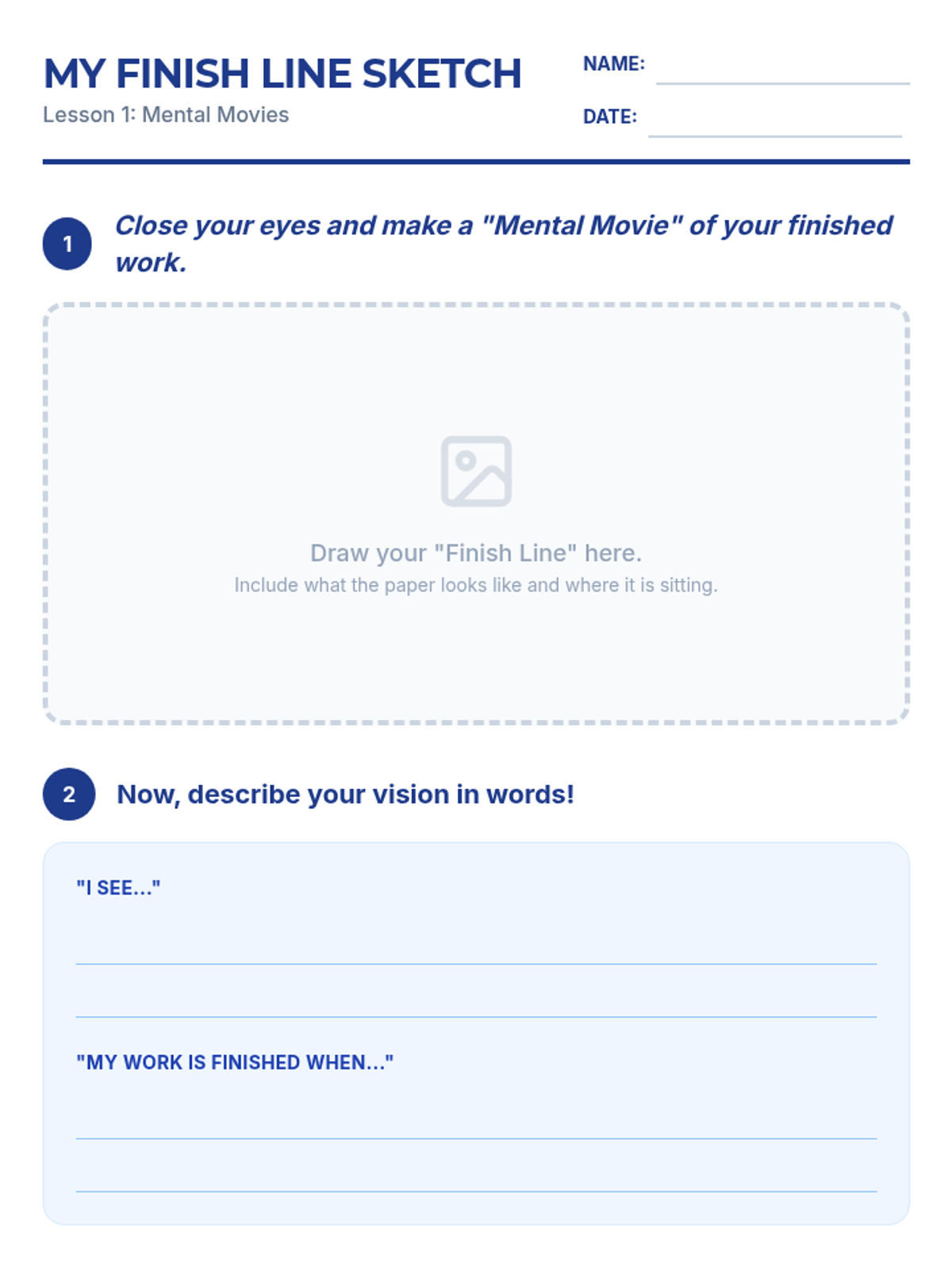
This sequence helps students overcome task initiation hurdles by combining visualization and verbal self-talk. Students learn to 'see' the finished product, reverse engineer the steps, estimate time accurately, and use micro-goals to take the first step.
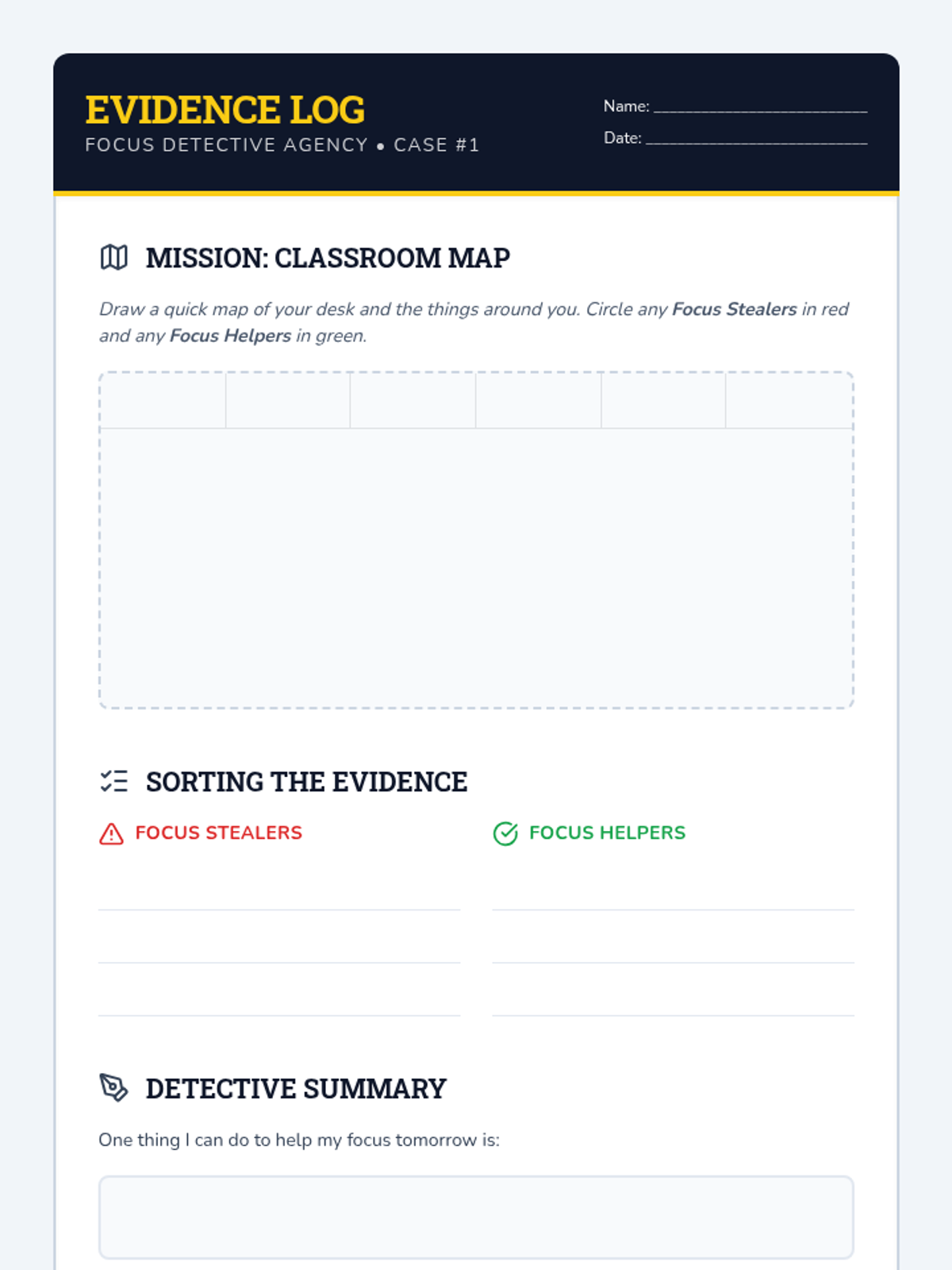
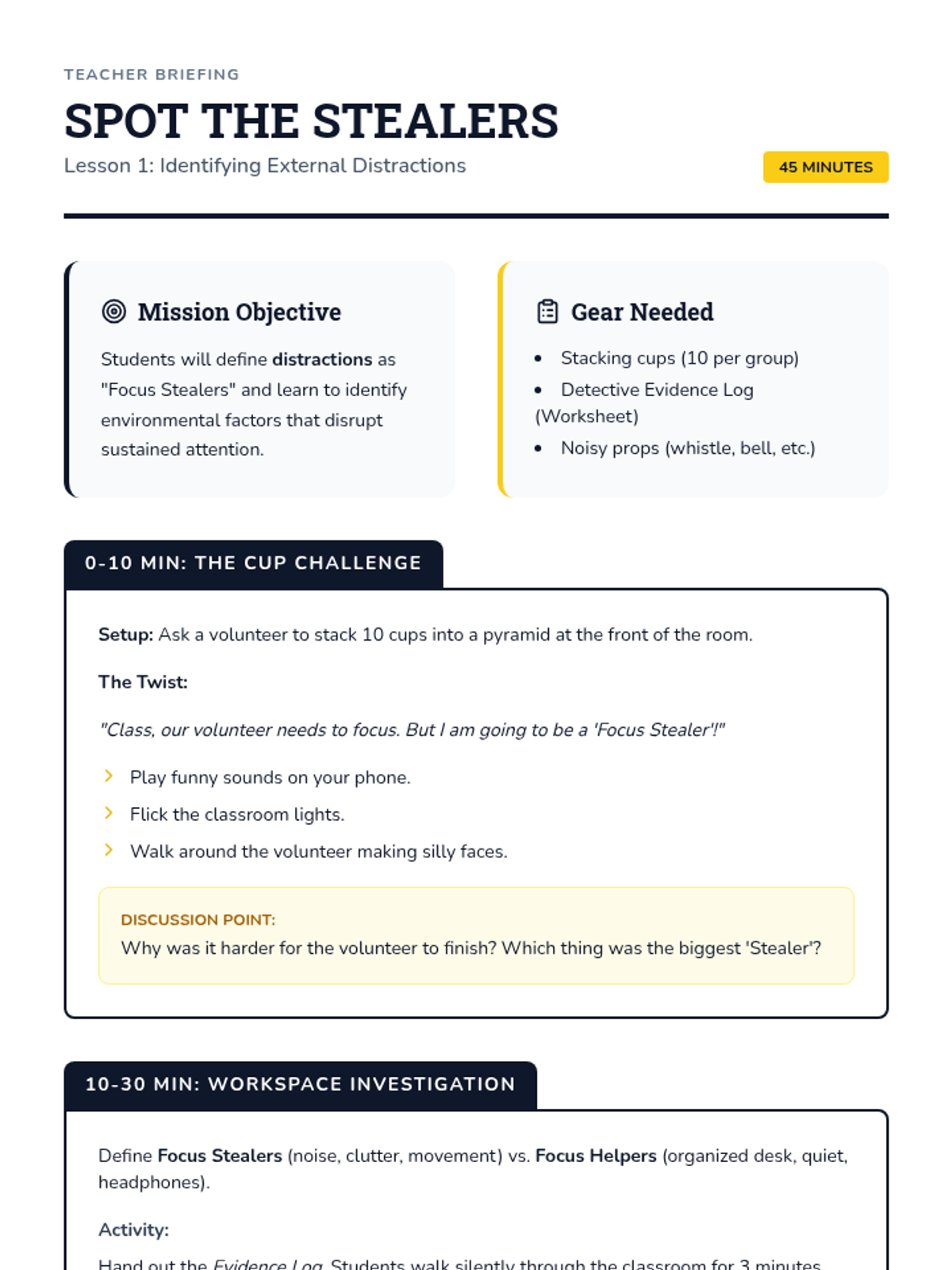
A 5-lesson metacognitive sequence for 2nd graders to identify environmental and internal distractions, using a 'detective' theme to develop sustained attention strategies for complex tasks.
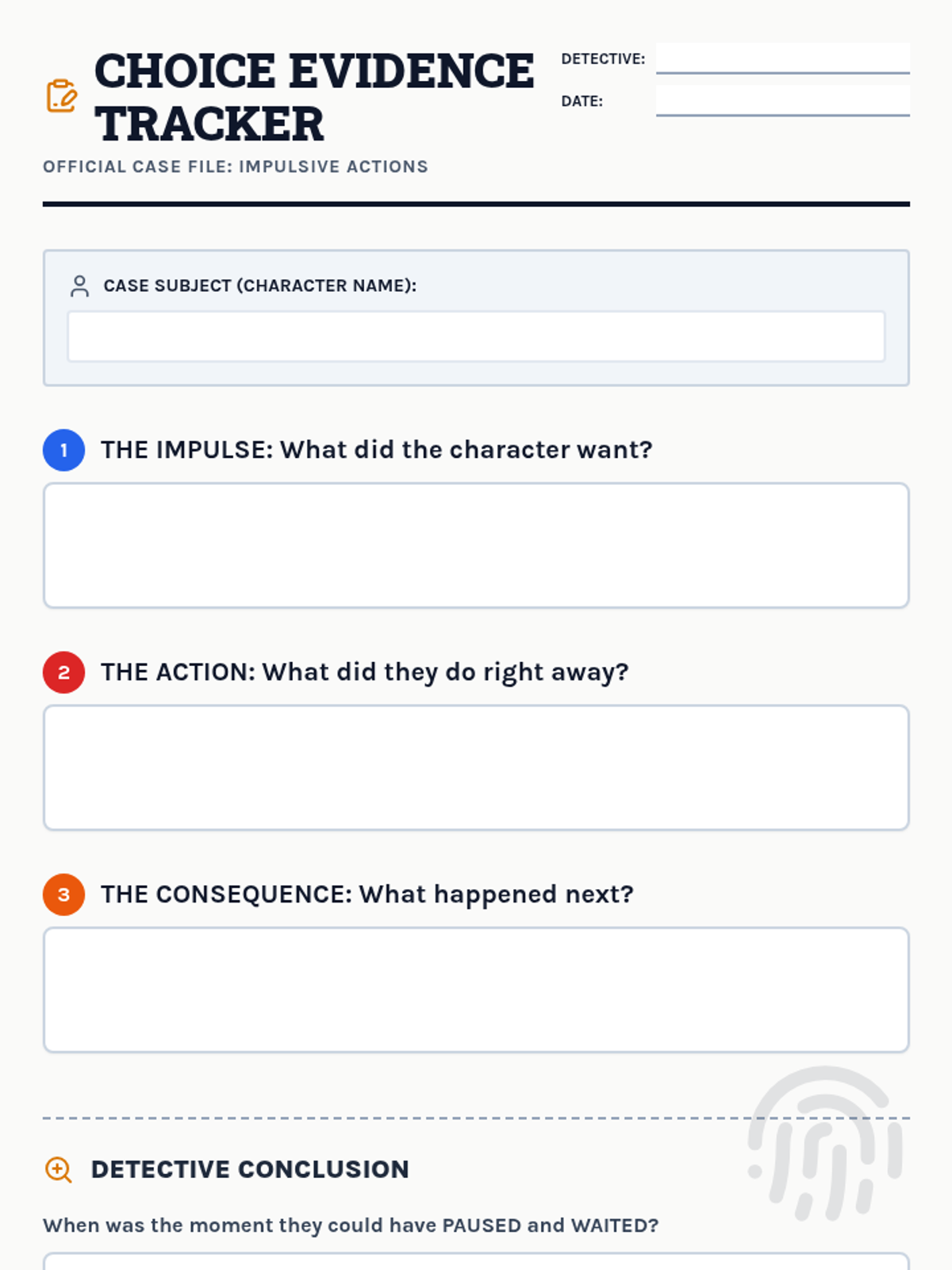
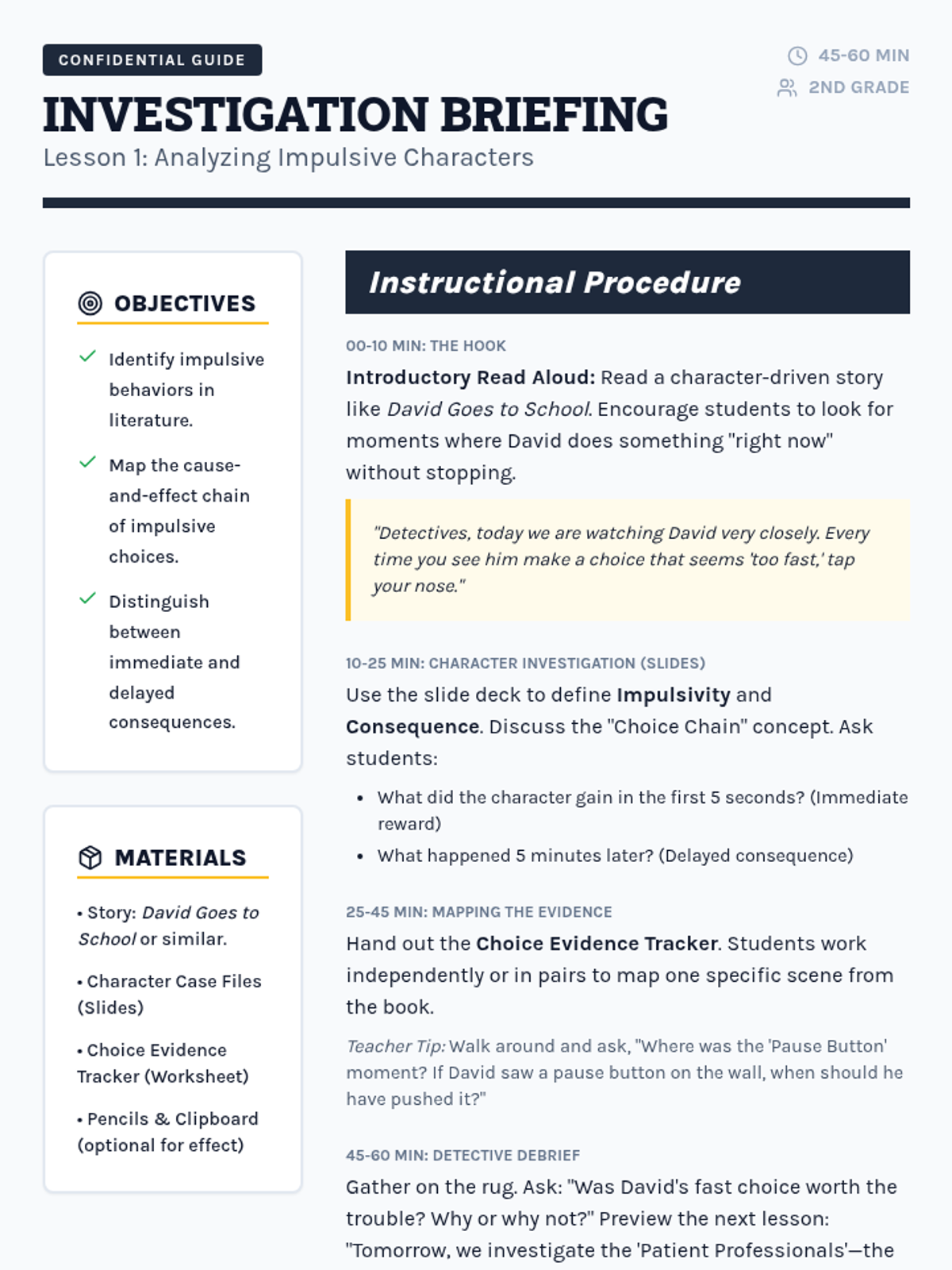
An inquiry-based sequence for 2nd graders to explore the relationship between choices, waiting, and consequences. Students act as 'Choice Detectives' to analyze characters, predict outcomes, and develop personal strategies for delaying gratification.
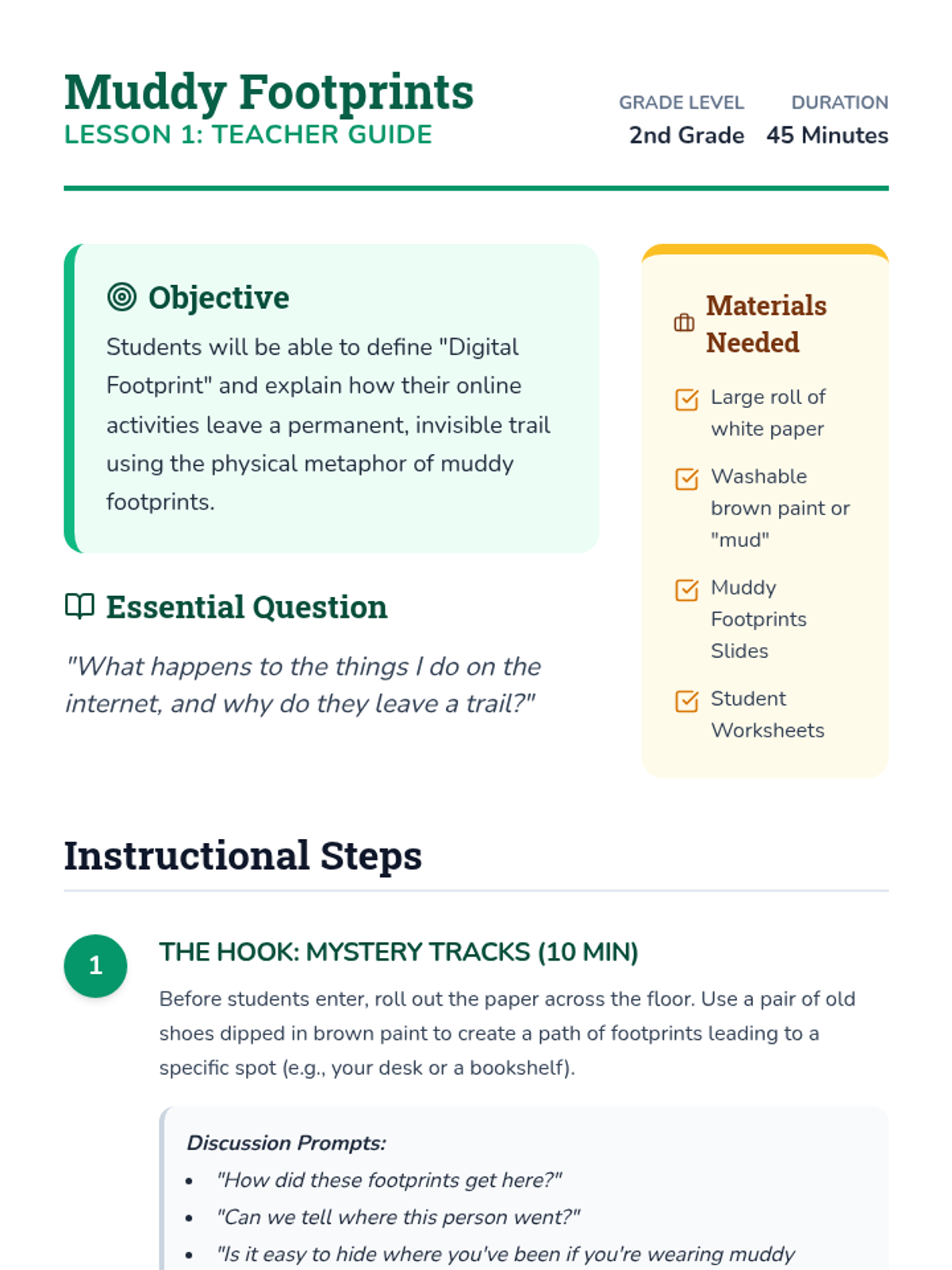
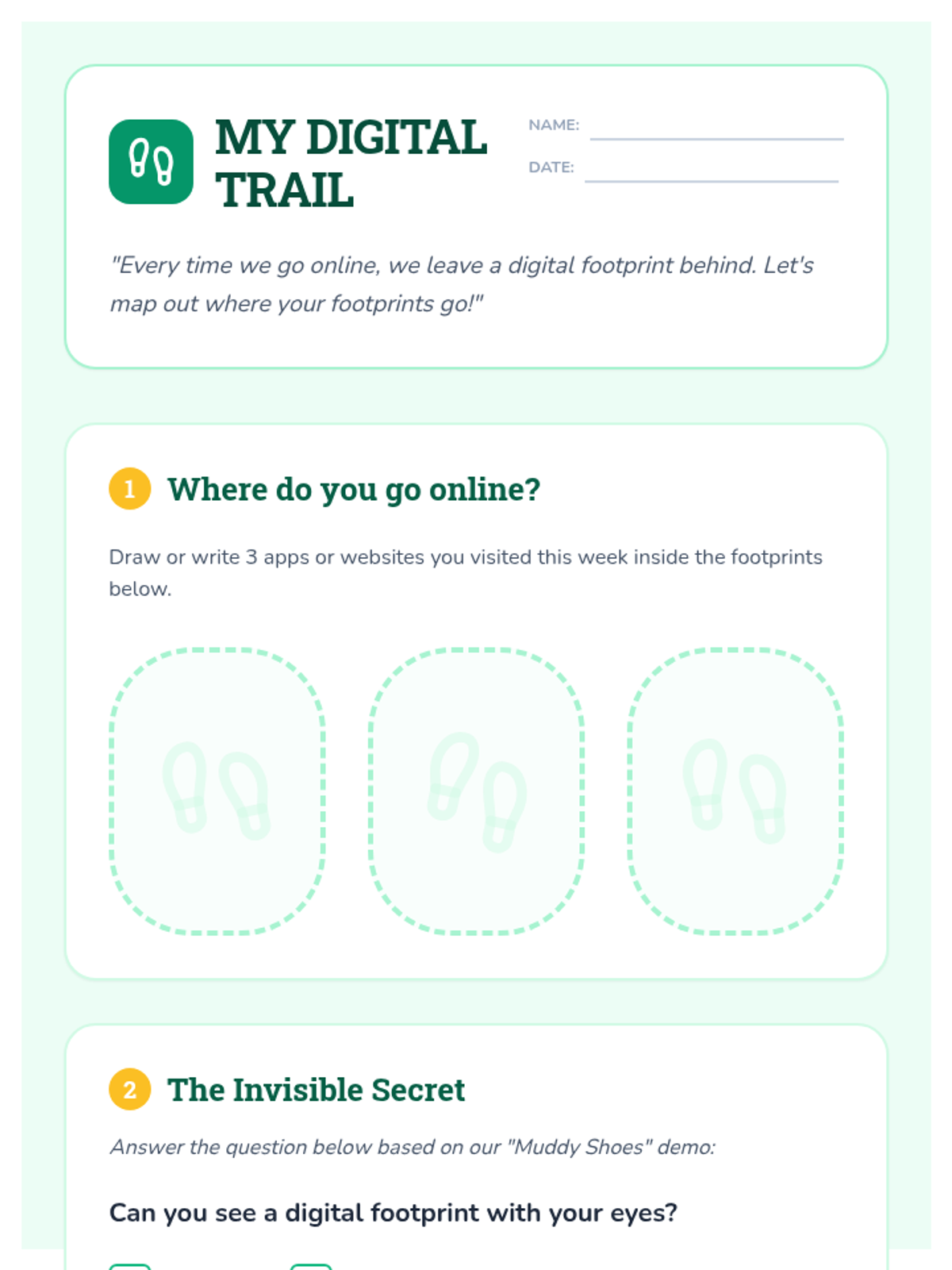
This sequence introduces 2nd graders to the concept of digital footprints, the permanence of the internet, and healthy media balance using concrete metaphors and a 'Nature Trail' theme.
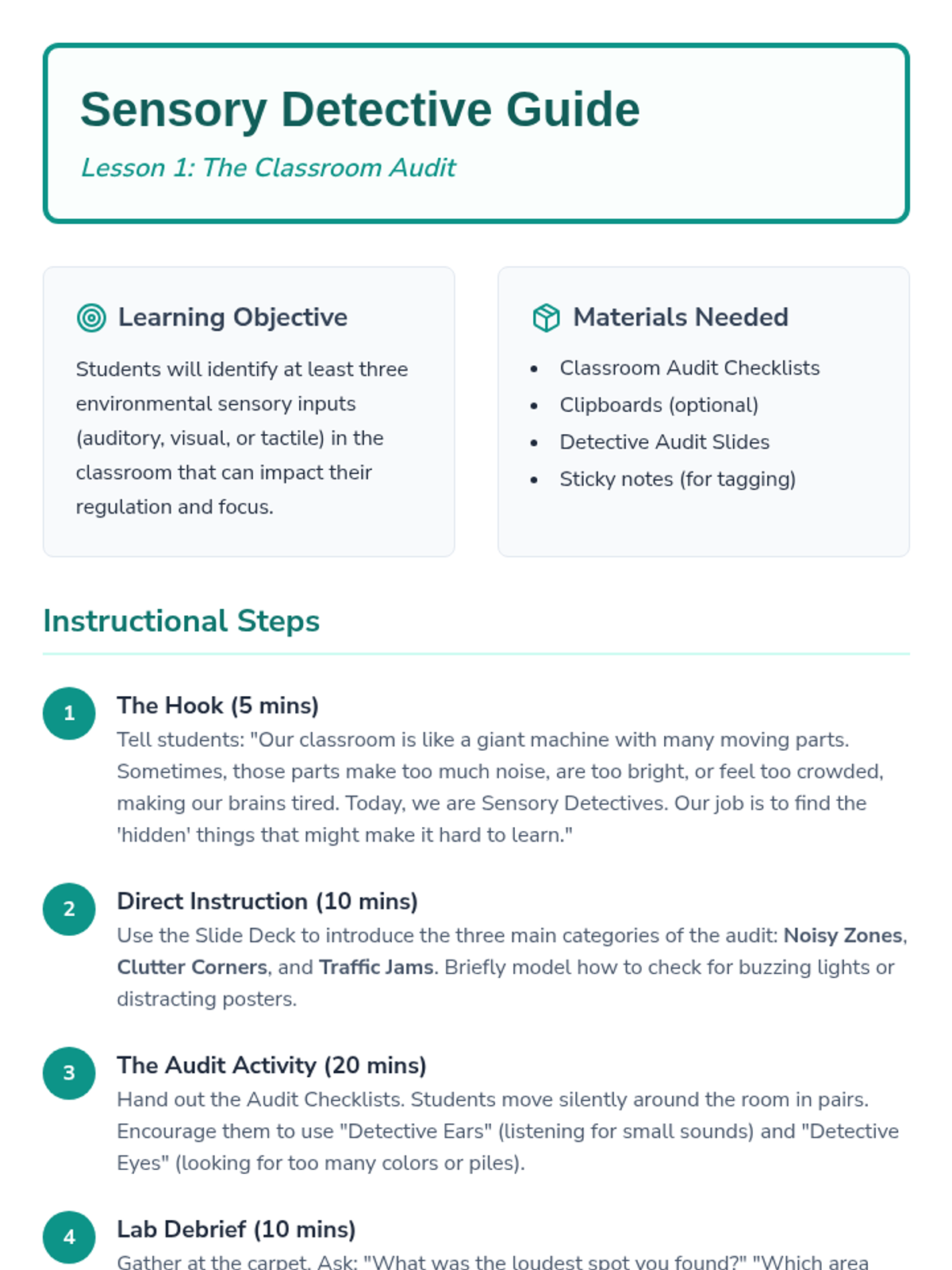
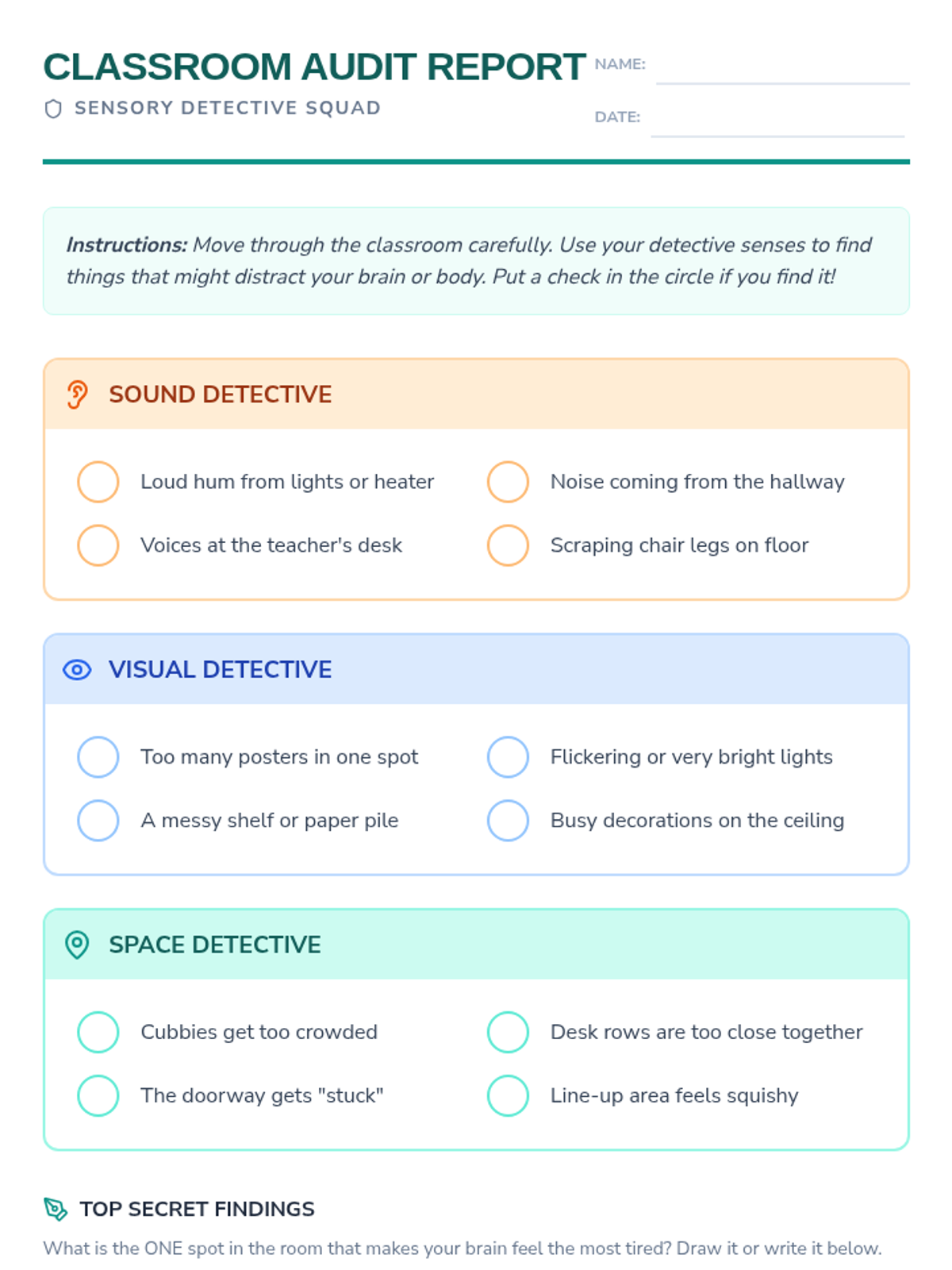
This sequence explores how environmental factors and community interactions impact sensory regulation. Students learn to audit their surroundings, respect diverse sensory needs, practice co-regulation, troubleshoot transitions, and collaboratively create a classroom sensory contract.
A comprehensive 5-lesson sequence designed for 2nd-grade students to master down-regulation and environmental adjustments. Students move from identifying sensory triggers to building a personalized toolkit for emotional regulation and focus.
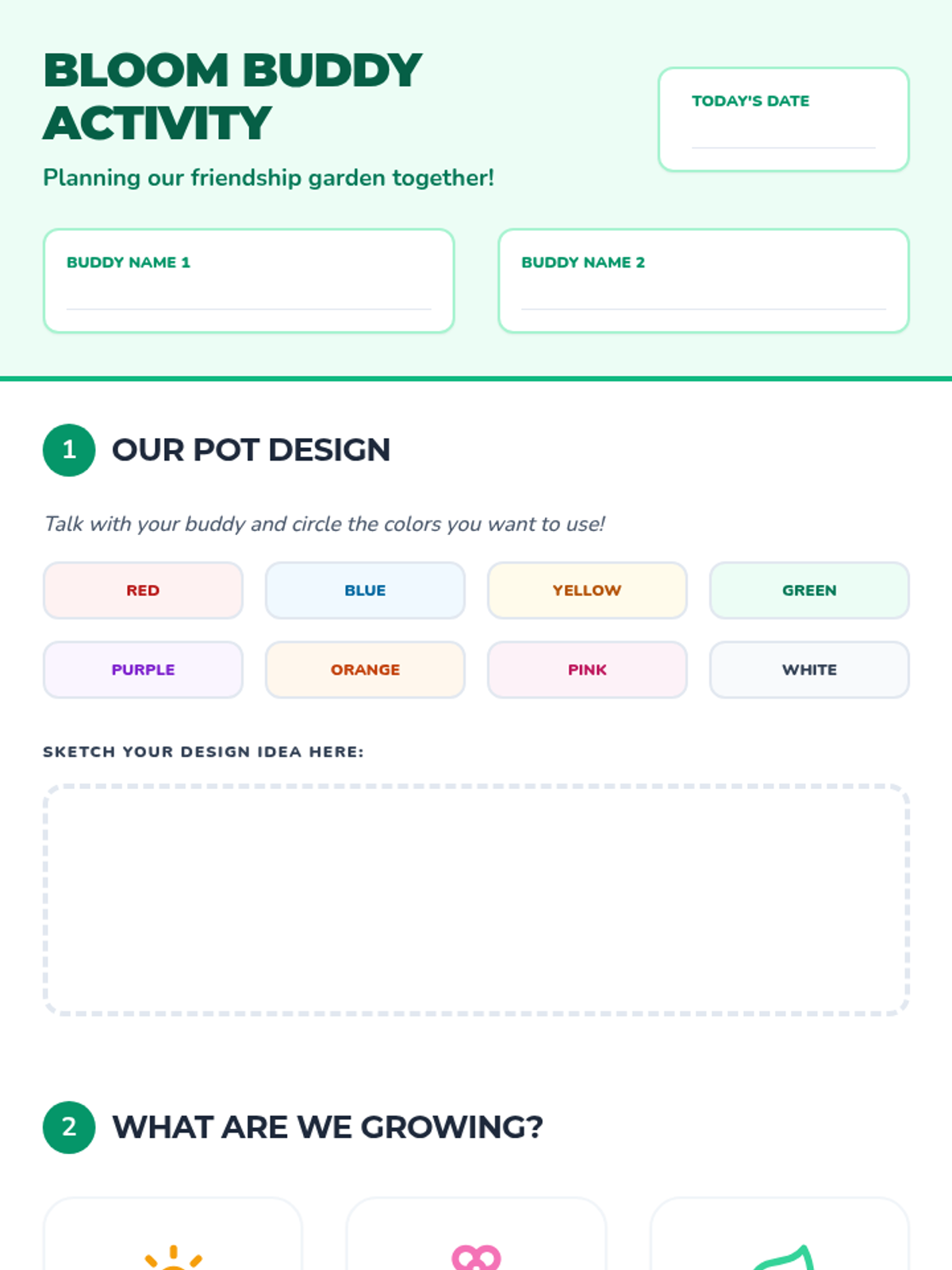
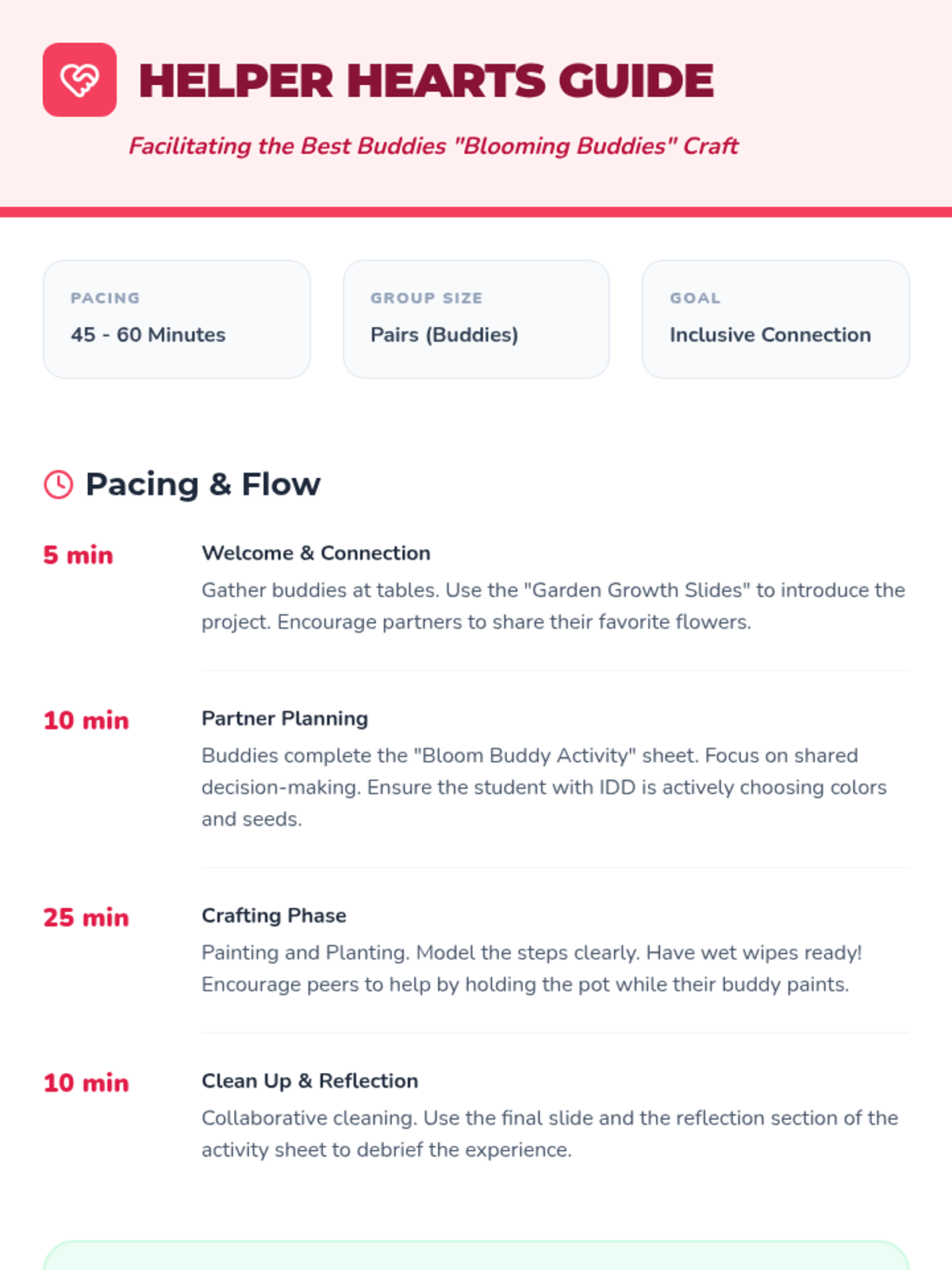
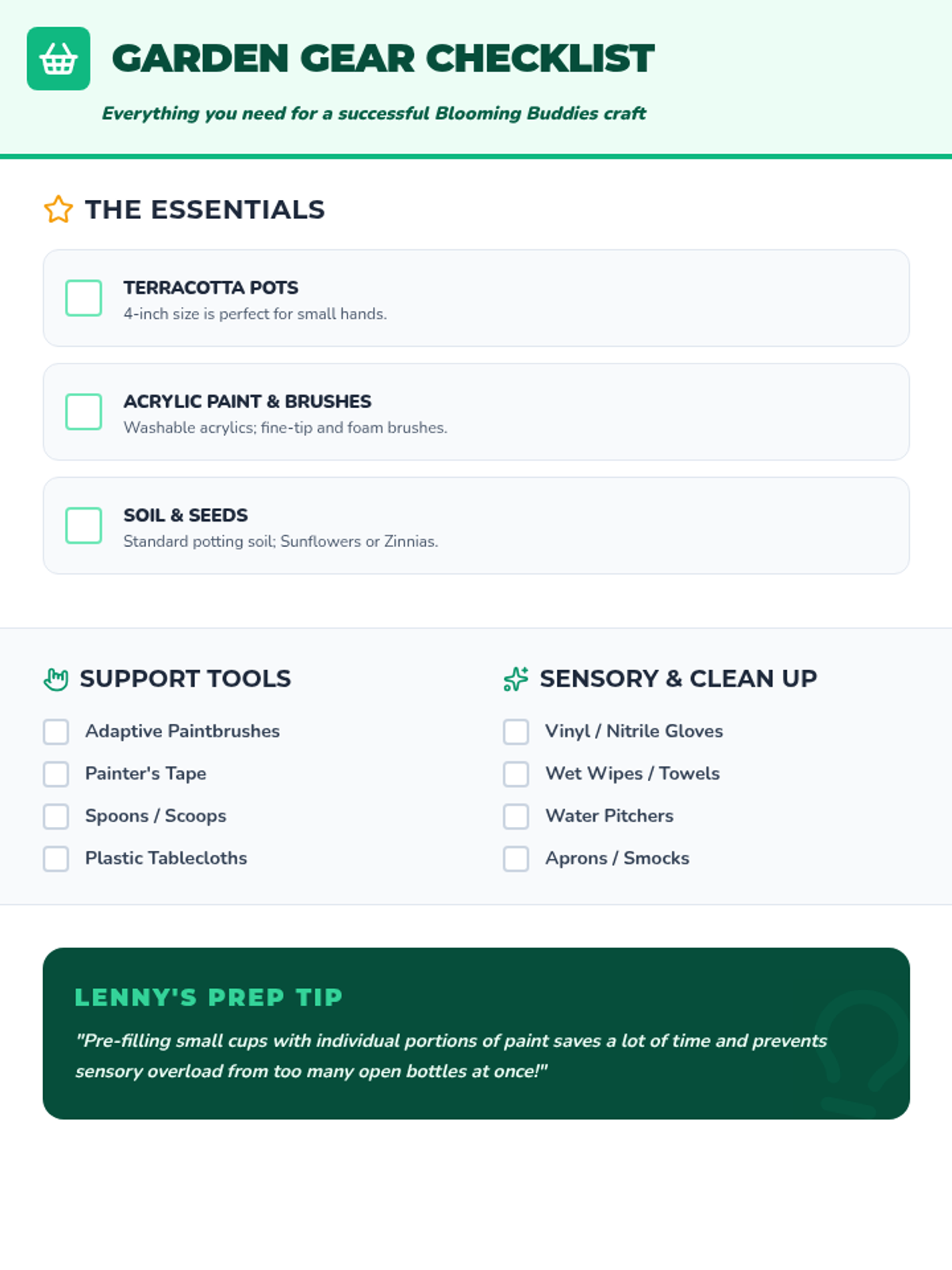
A series of collaborative lessons designed for Best Buddies pairs to foster social connection through shared creative projects, from gardening to storytelling.
A comprehensive K-12 Social-Emotional Learning curriculum focusing on behavior regulation, social skills, and mental health resilience. This sequence provides a developmental pathway from emotional foundations in elementary school to complex coping strategies and social navigation in high school.
A series of lessons focused on emotional intelligence, self-regulation, and life skills for children using creative and expressive modalities.
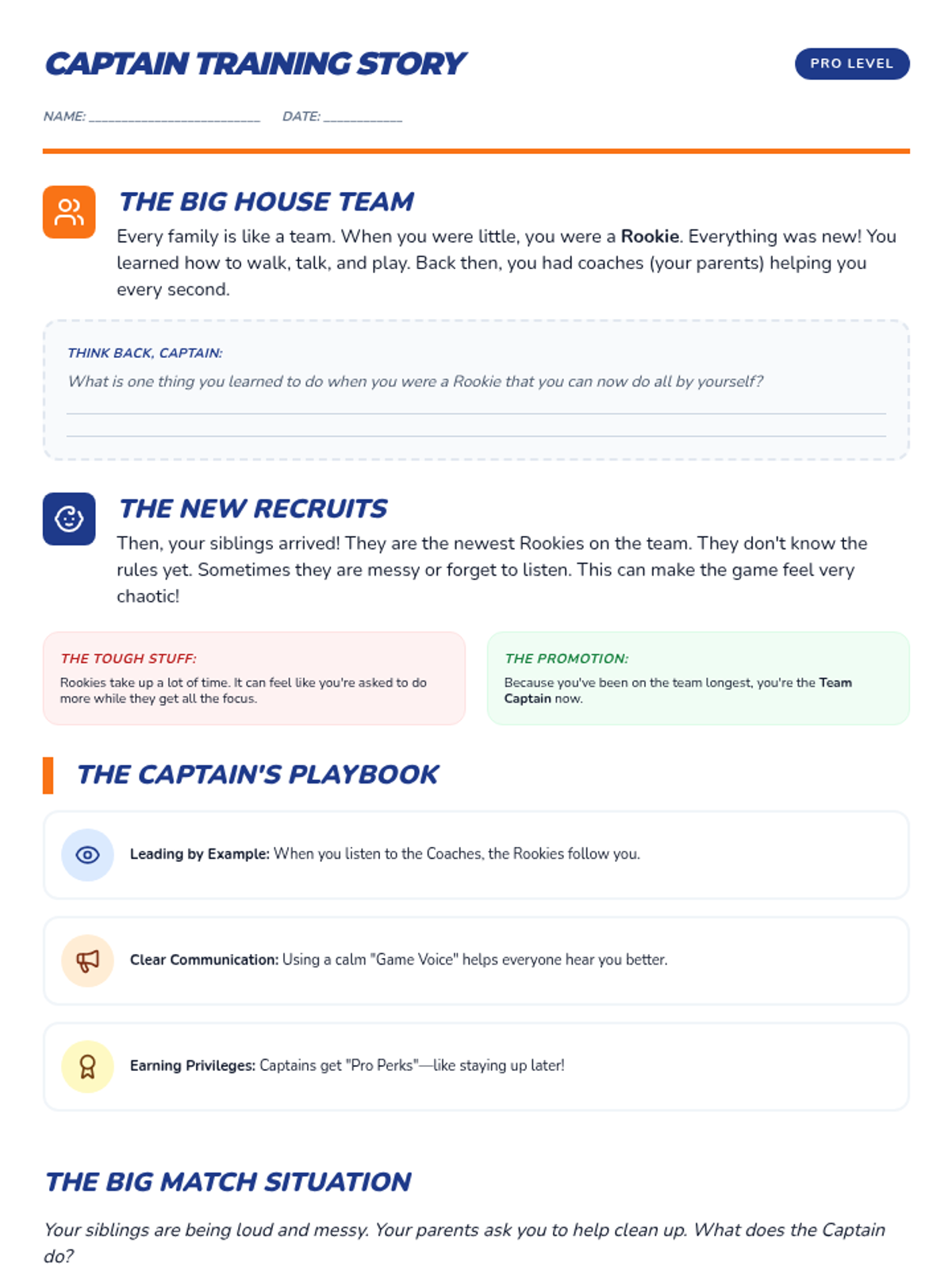
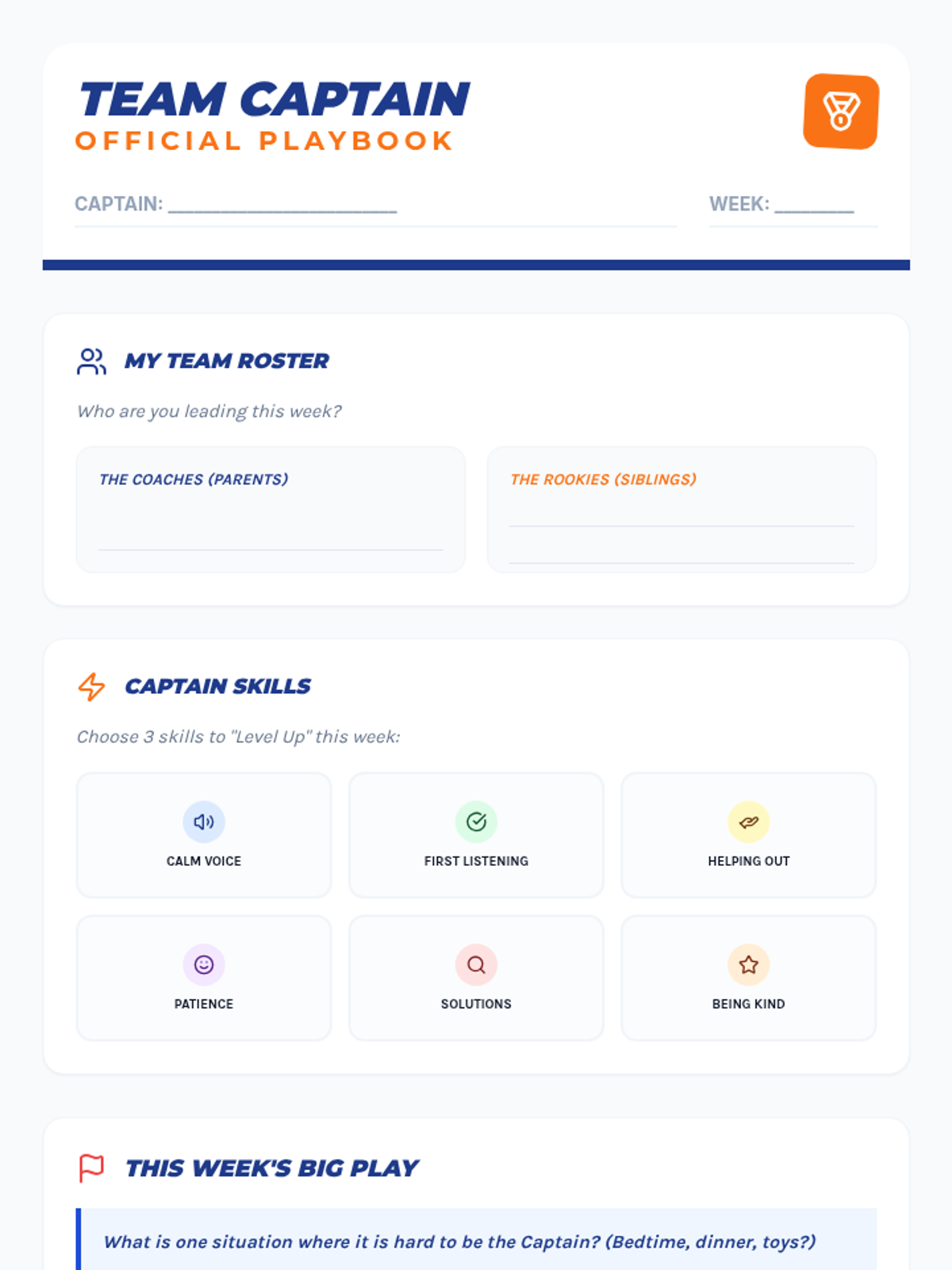
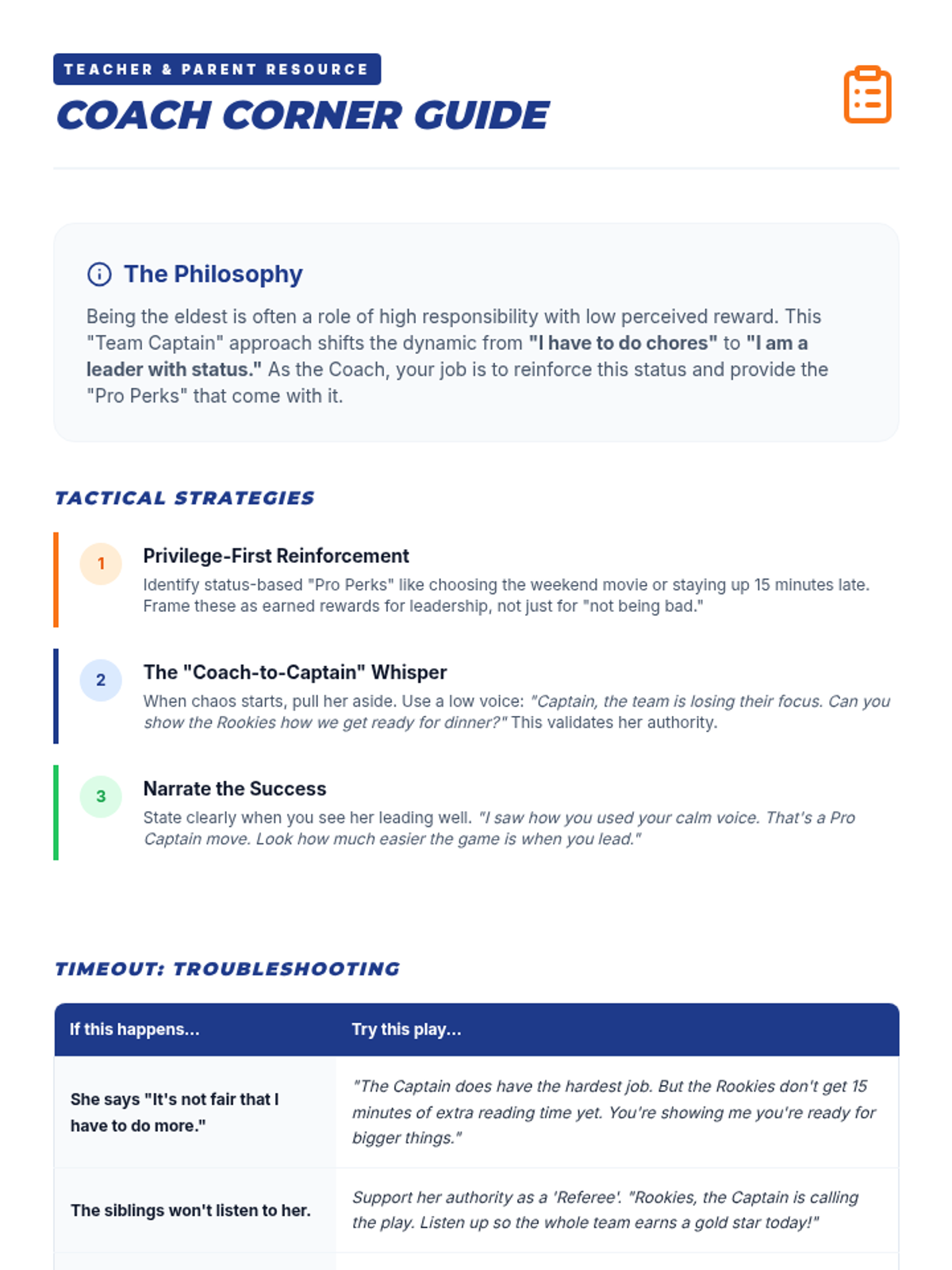
A supportive sequence designed to help the eldest child in a family transition from feeling burdened by expectations to feeling empowered as a 'Family Team Captain'. It uses sports metaphors to teach leadership, patience, and the rewards of being a role model.
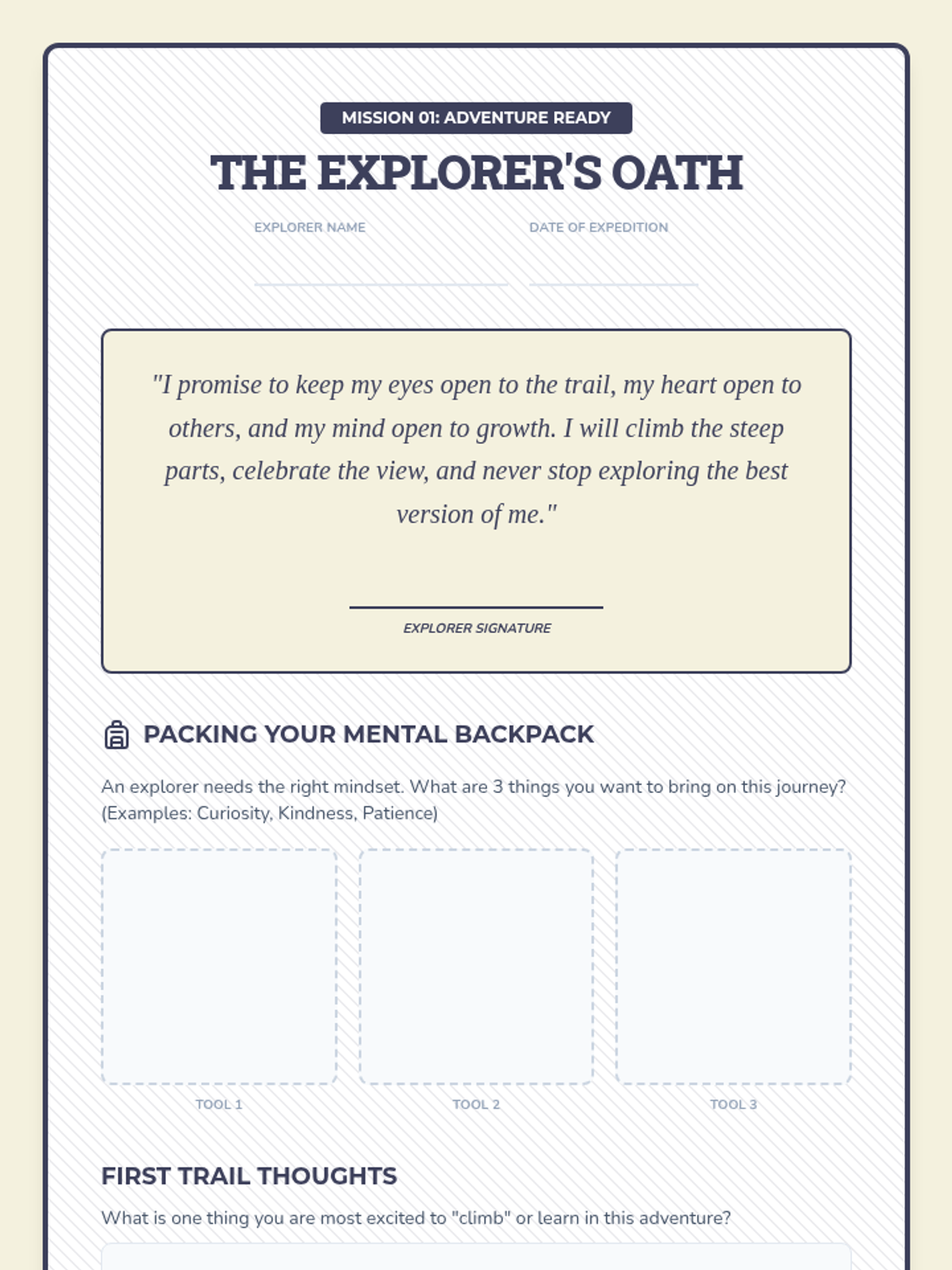
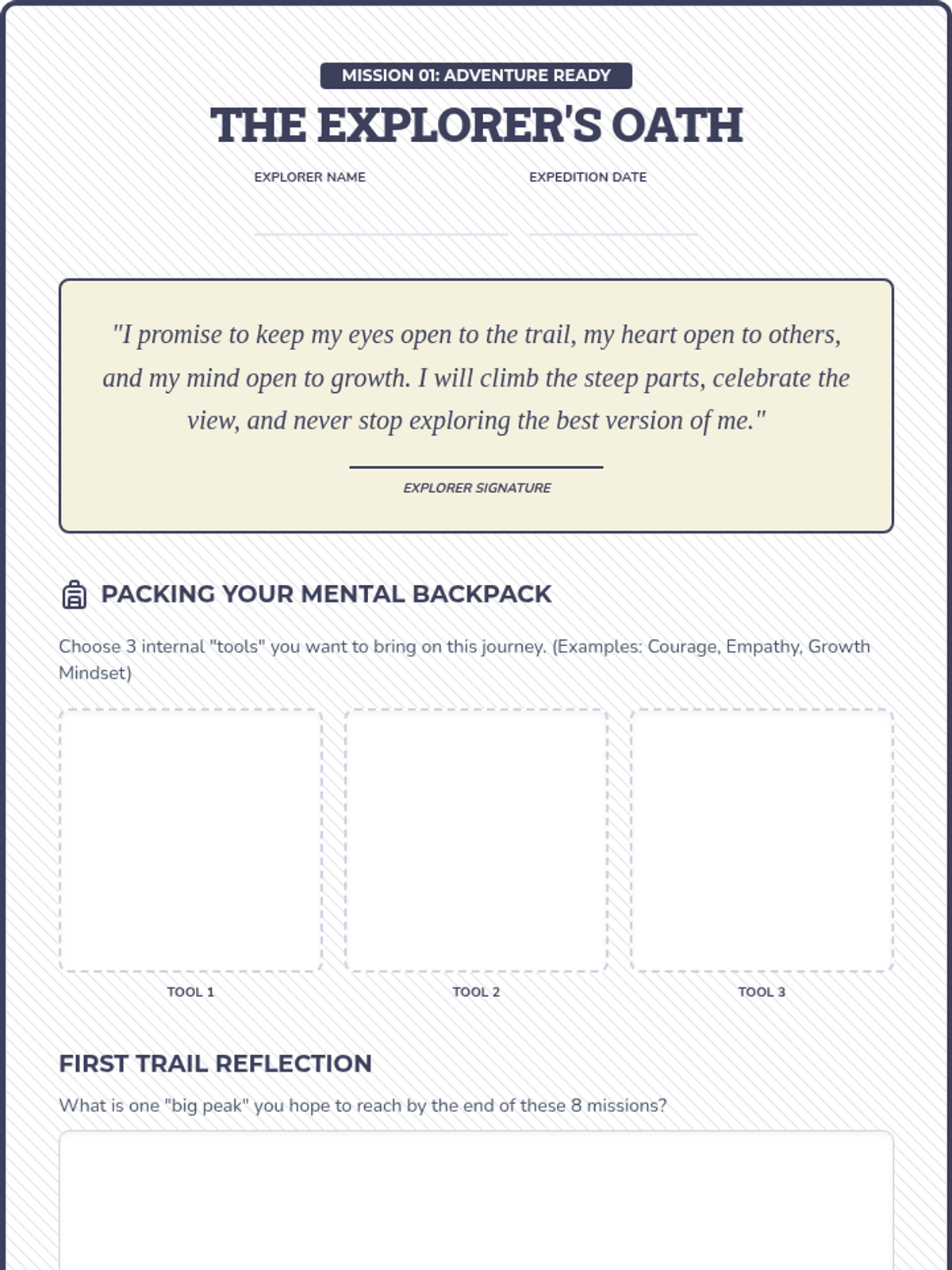
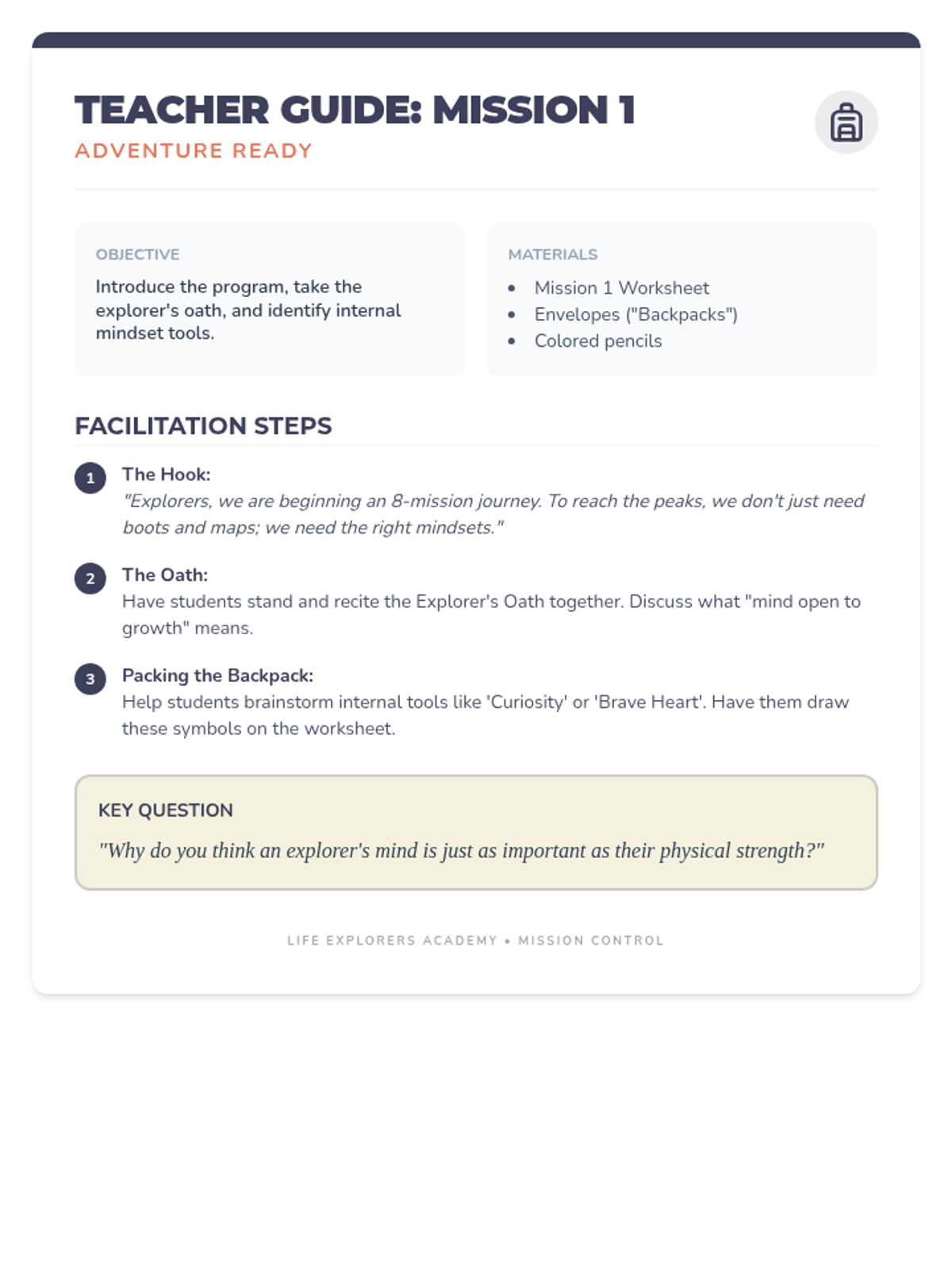
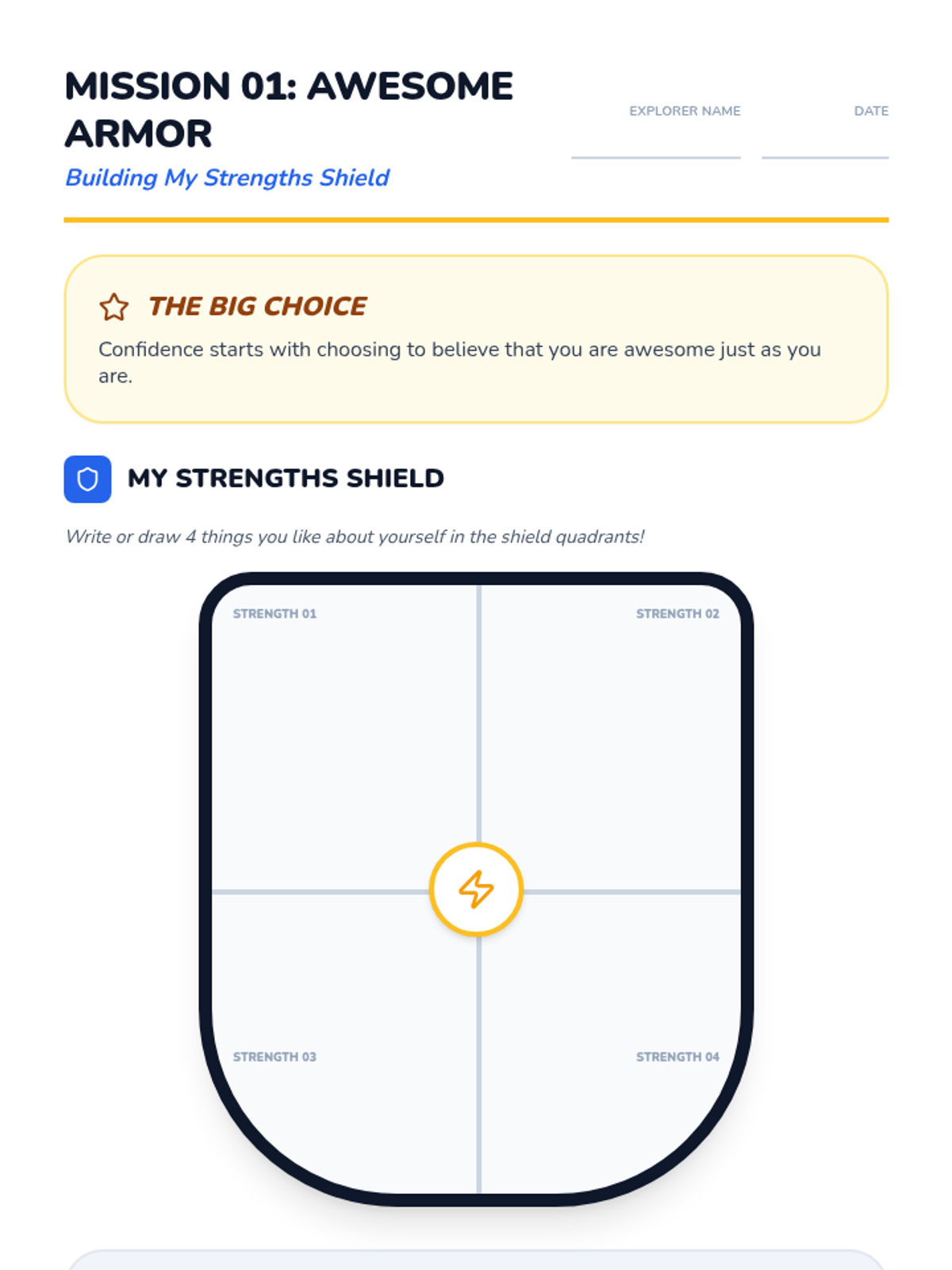
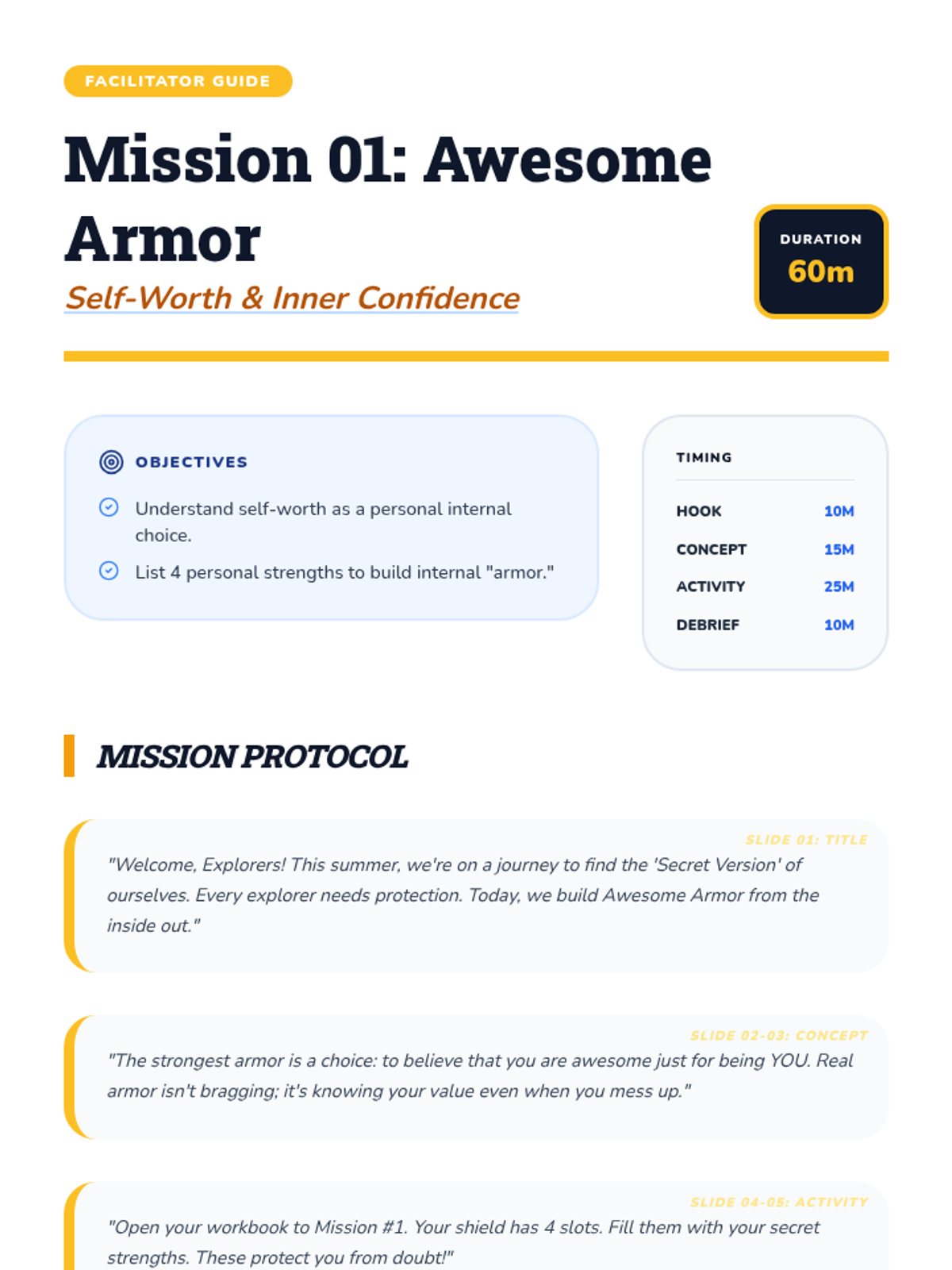
An 8-mission adventure for kids ages 7-10 focused on building social-emotional skills, growth mindset, and confidence through the lens of a grand explorer's journey.
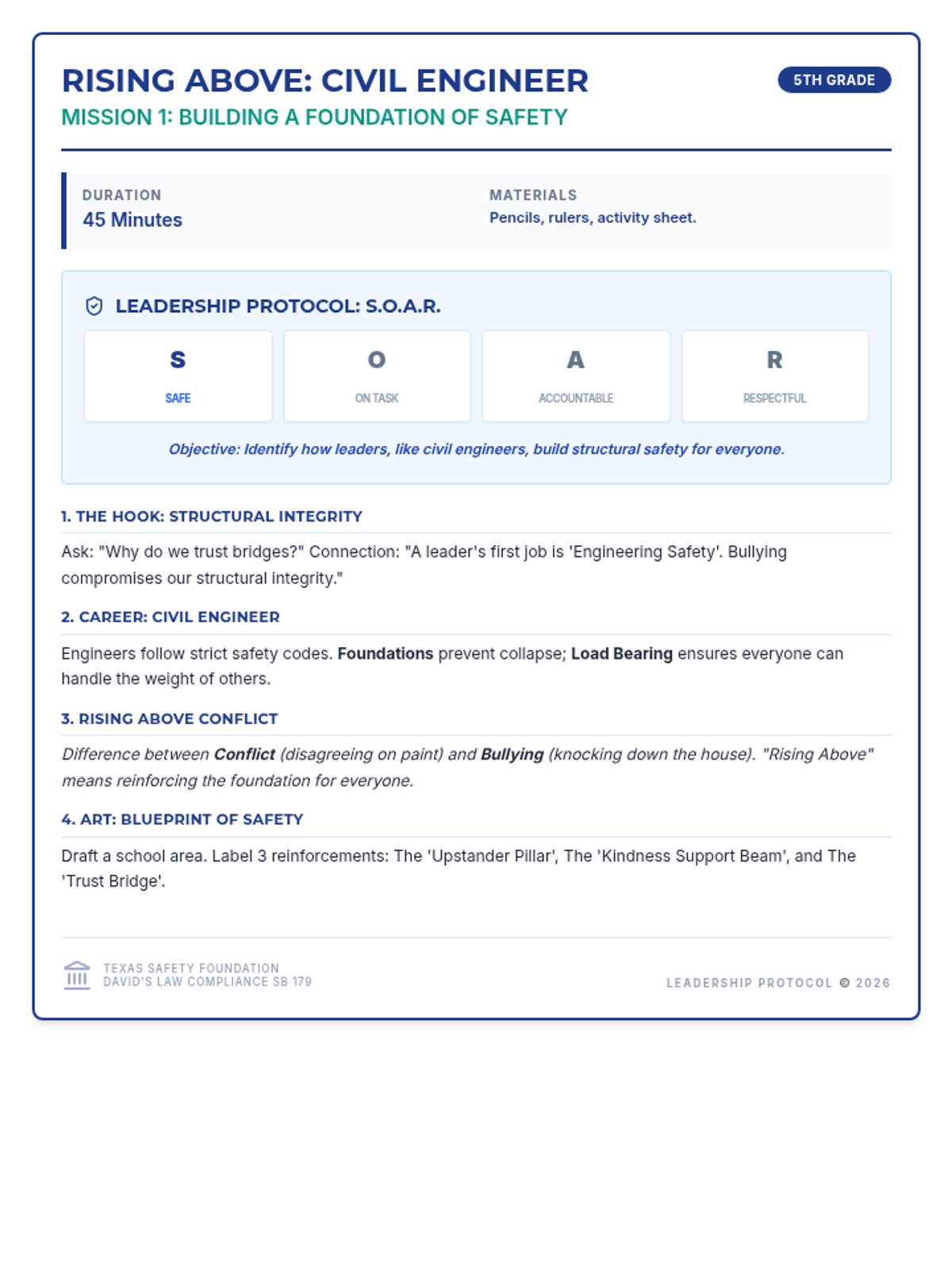
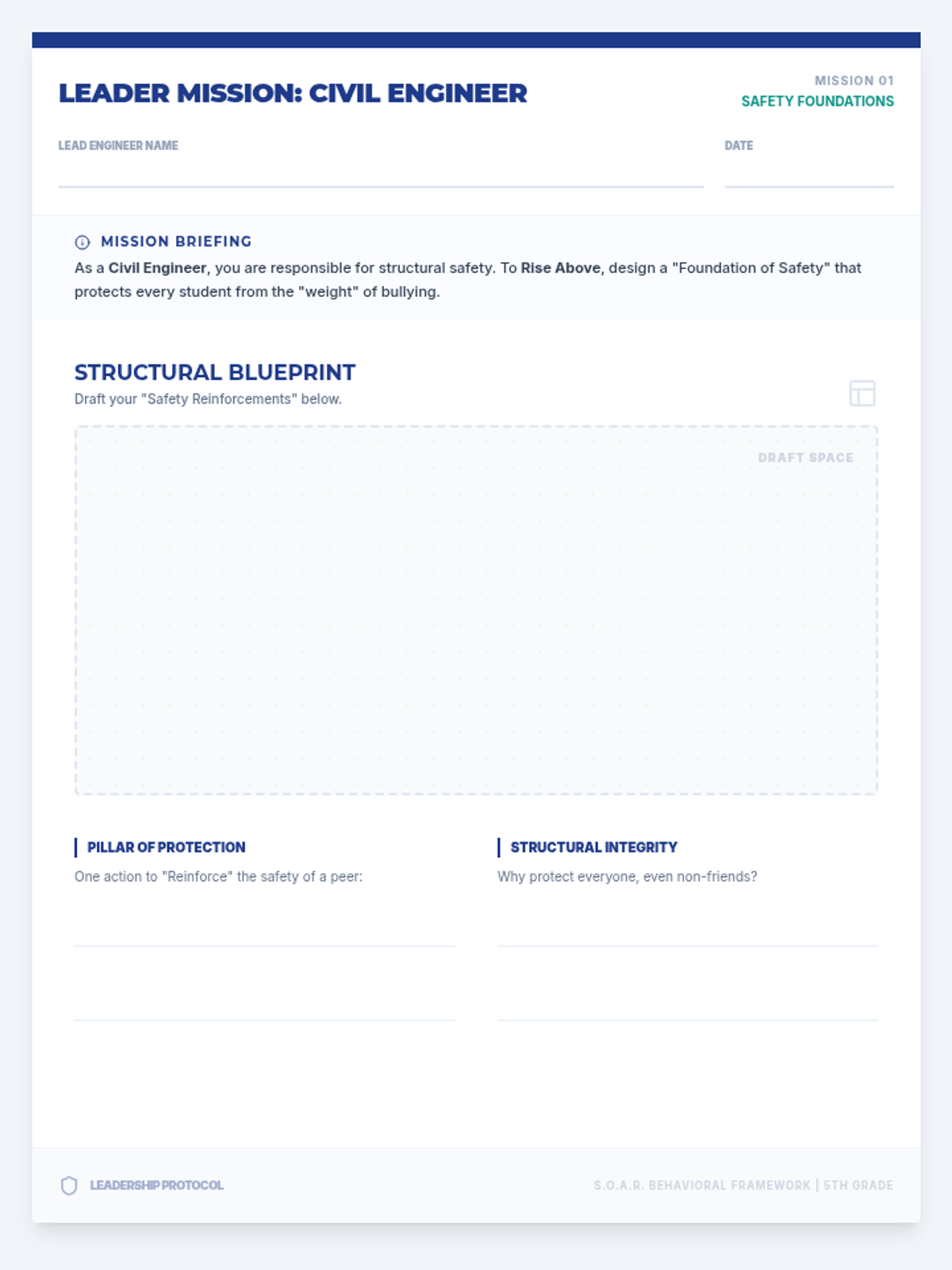
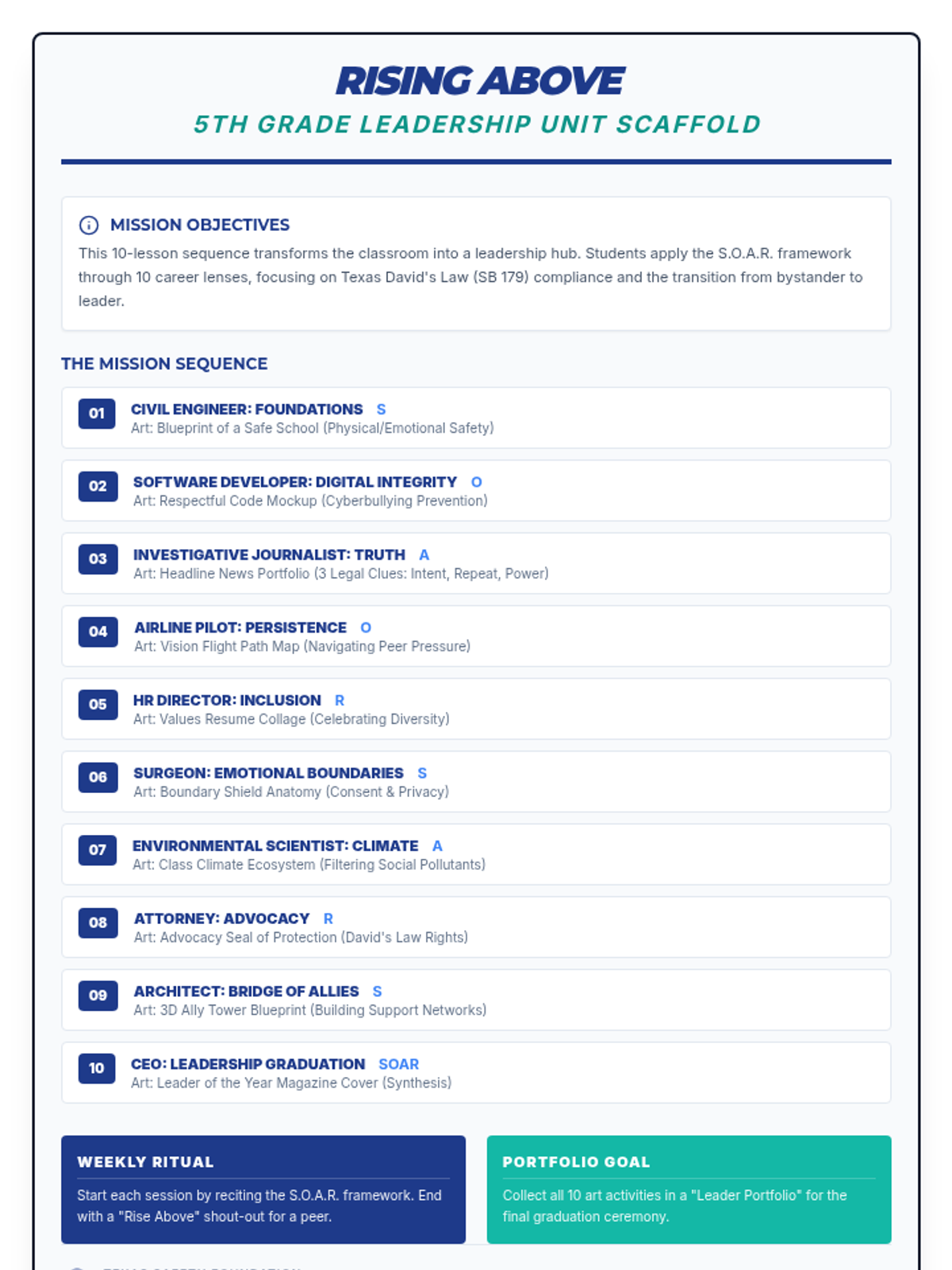
A comprehensive K-12 bullying prevention curriculum strictly aligned with Texas David's Law and TEC Chapter 37, focusing on the distinction between conflict and bullying, cyberbullying, and school safety. Now renamed to the Leadership Protocol.
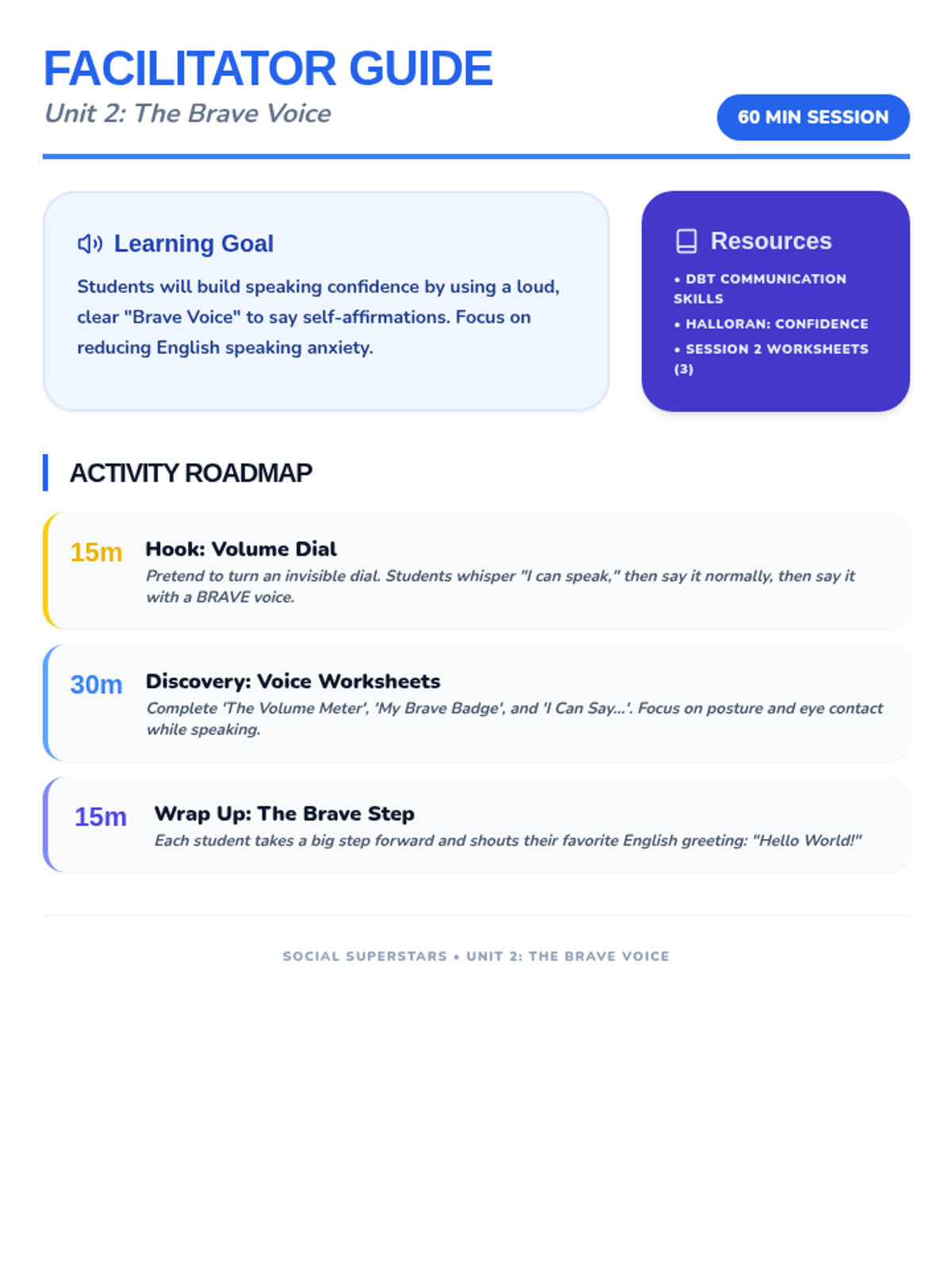
A 12-unit social-emotional and English communication curriculum designed for learners aged 5-7. Integrating Janine Halloran's 'Social Skills for Kids' and DBT frameworks, this program focuses on building confidence, basic conversation flow, and reasoning skills through simplified language and role-play.
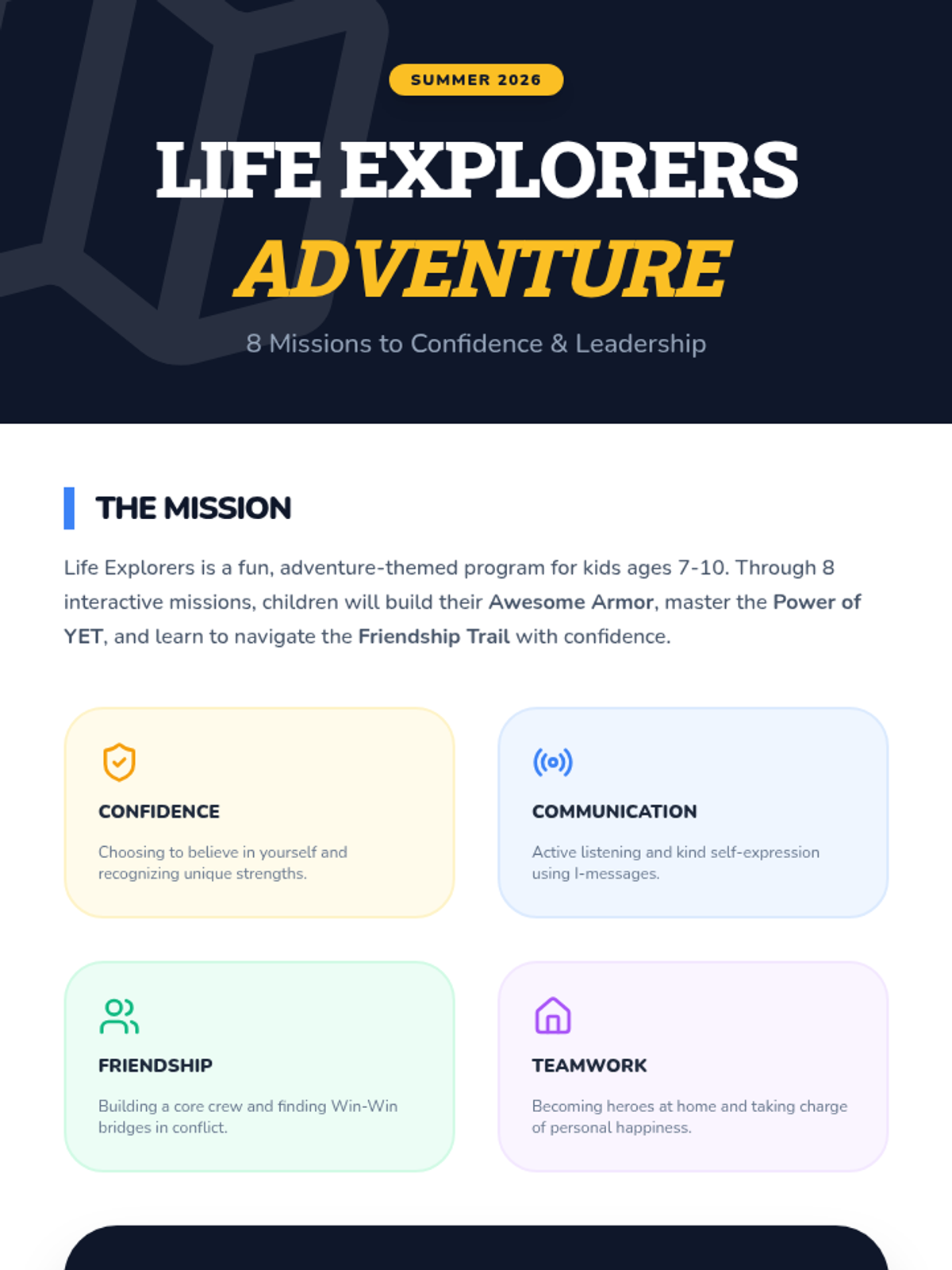
A fun, adventure-themed 8-lesson summer program for kids ages 7-10. This curriculum uses simple language and playful metaphors to teach confidence, communication, friendship, and family teamwork.
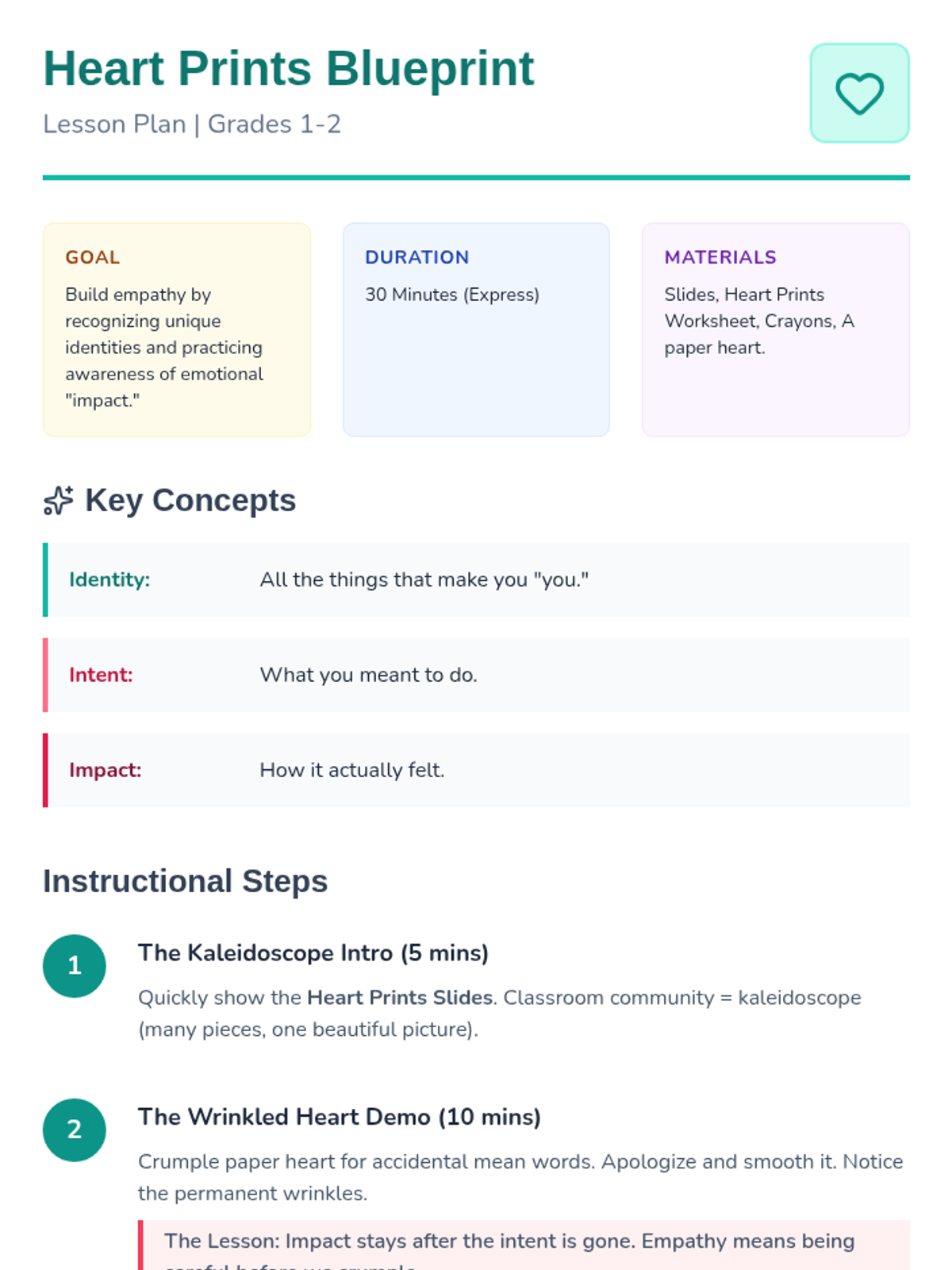
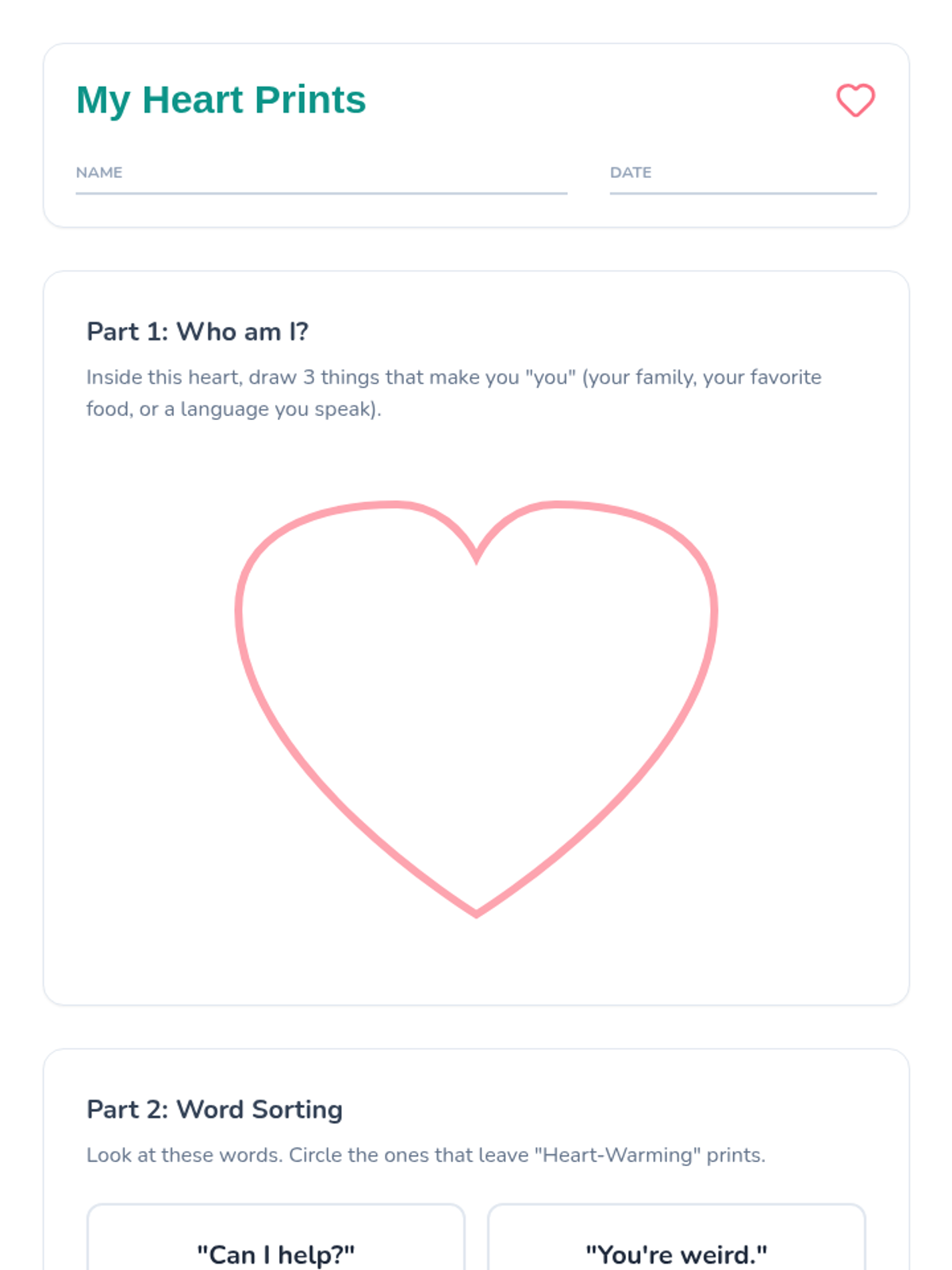
A comprehensive curriculum for grades 1-5 focused on building empathy by exploring identity, bias, and the difference between intent and impact. These lessons use the metaphor of a kaleidoscope to celebrate diversity and foster inclusive classroom communities.
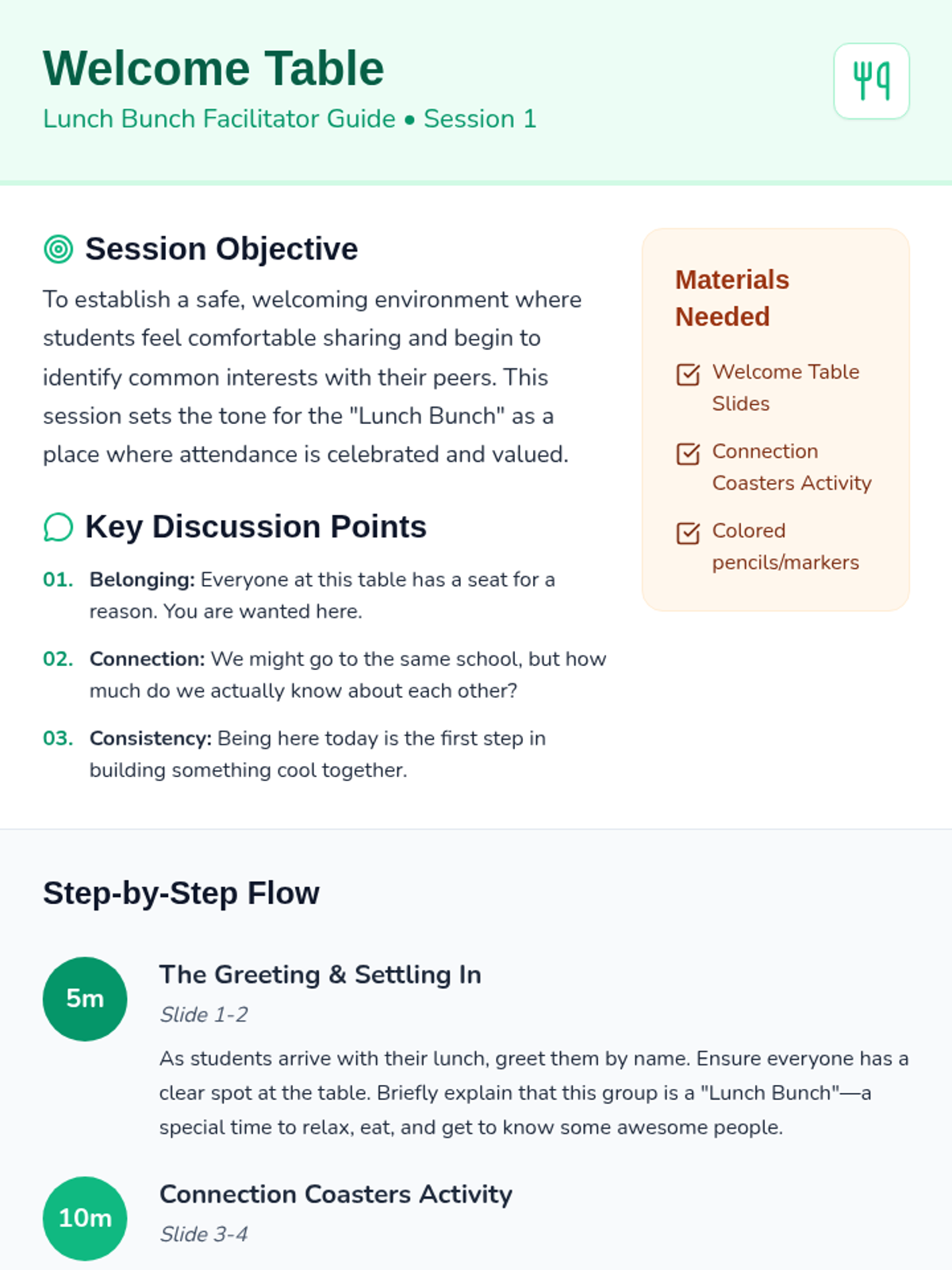
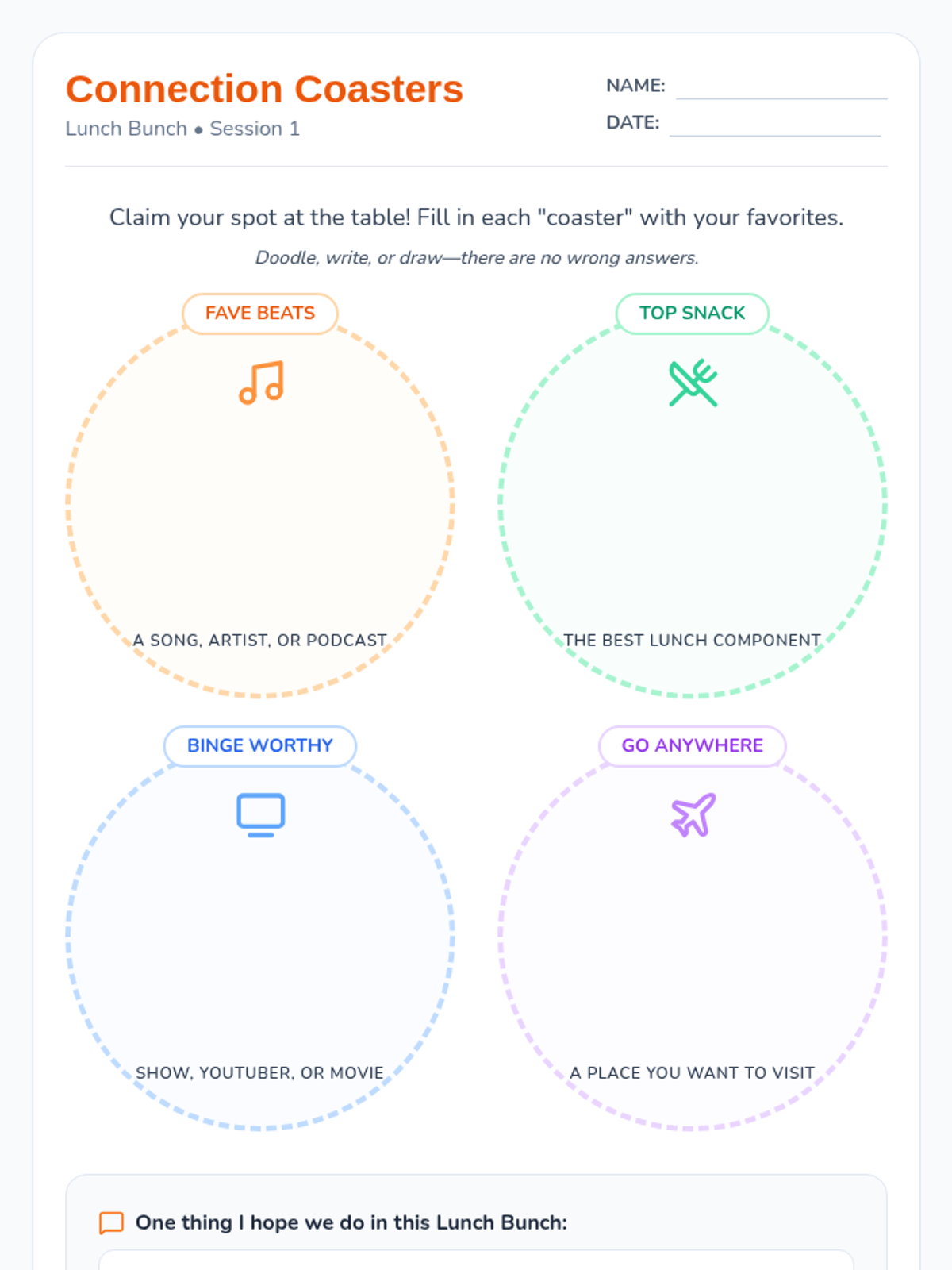
A four-session series for a small group lunch bunch focused on building a sense of belonging and community to improve school attendance. Students participate in low-pressure, connection-building activities that highlight the importance of their presence in the school community.
A two-part sequence designed to help students navigate complex emotional landscapes and understand the social and personal implications of their choices, specifically focusing on emotional regulation and honesty.
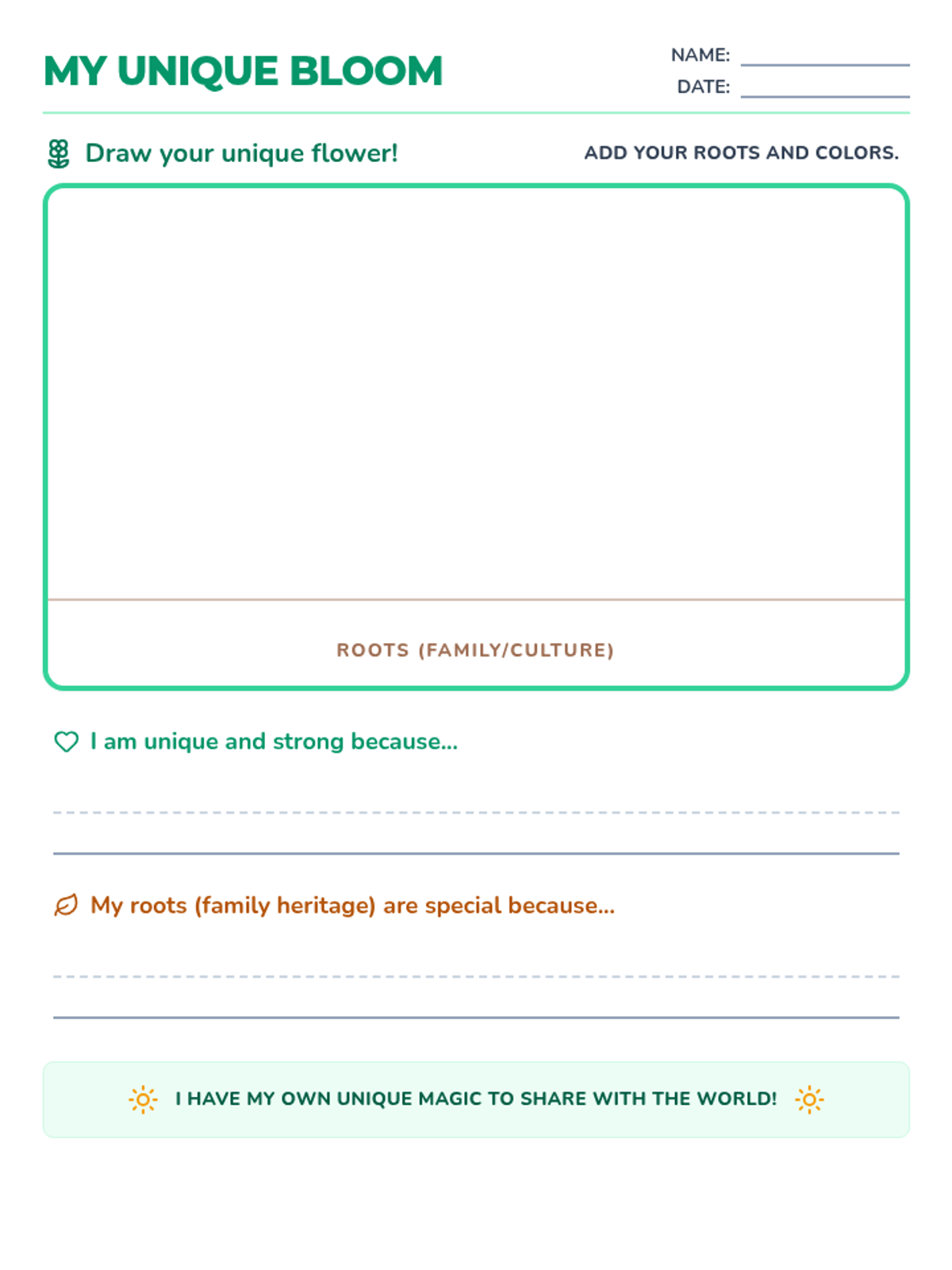
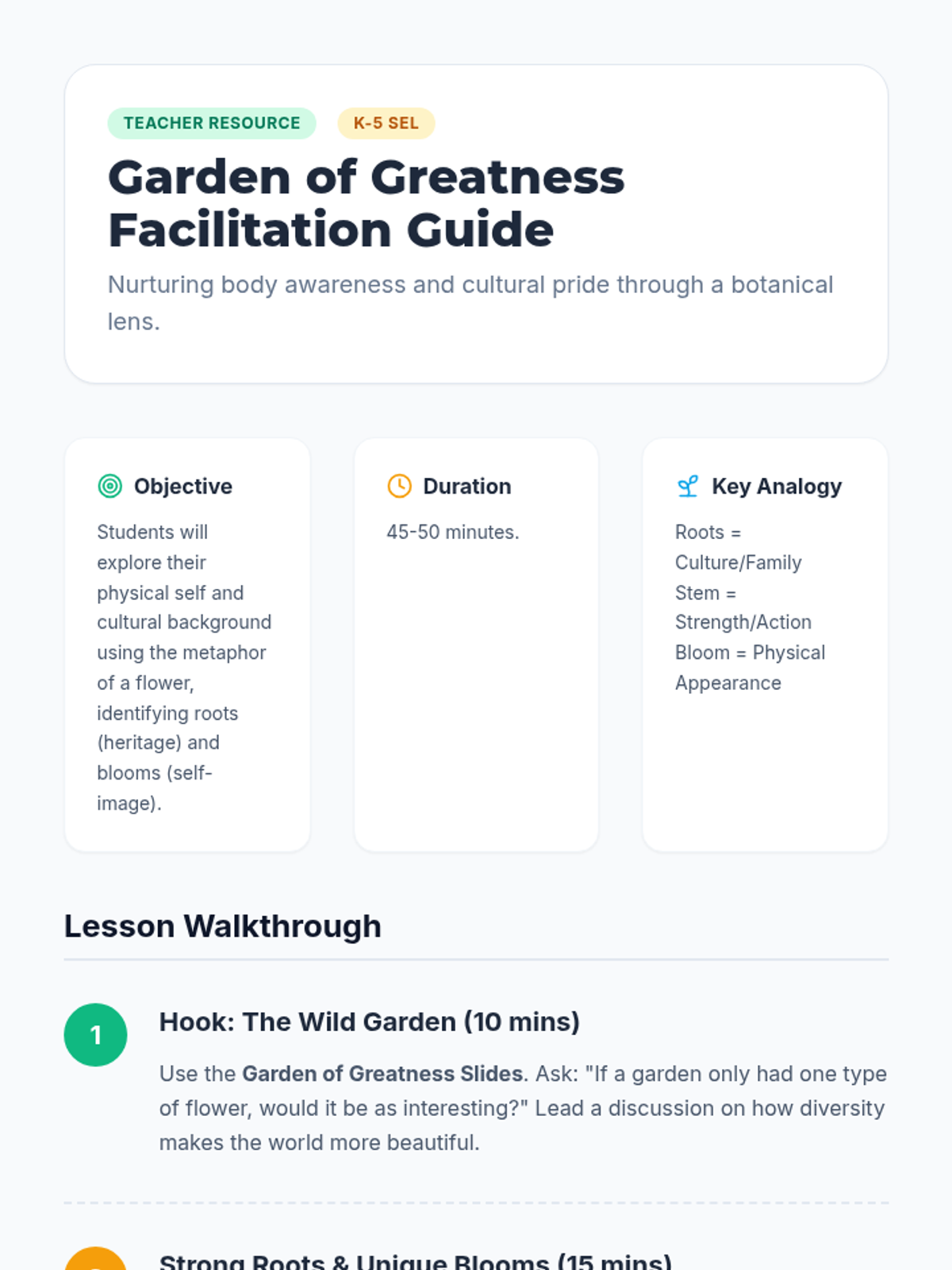
A sequence focused on developing positive self-image, body awareness, and appreciation for cultural diversity through the analogy of a vibrant, growing garden.
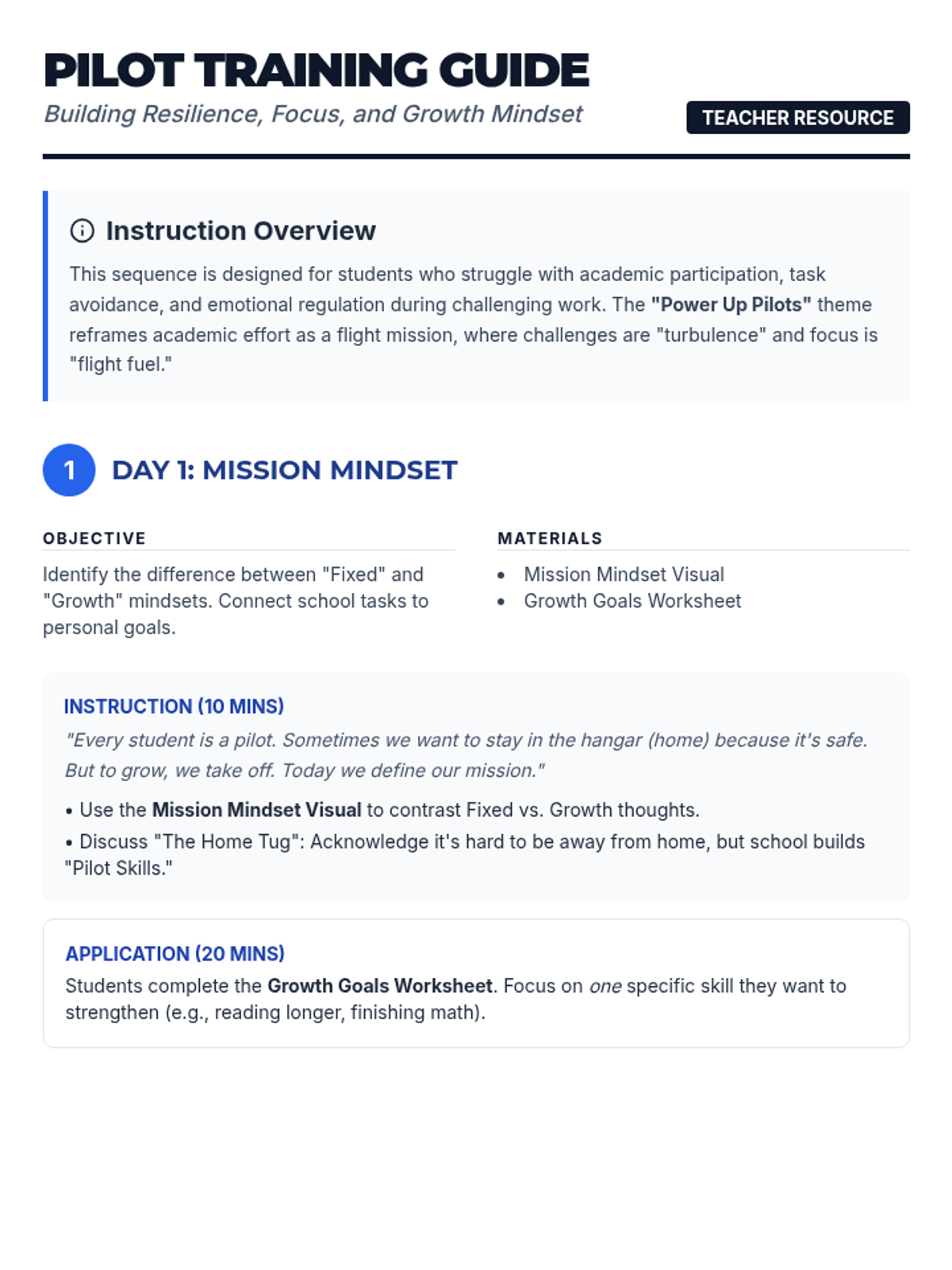
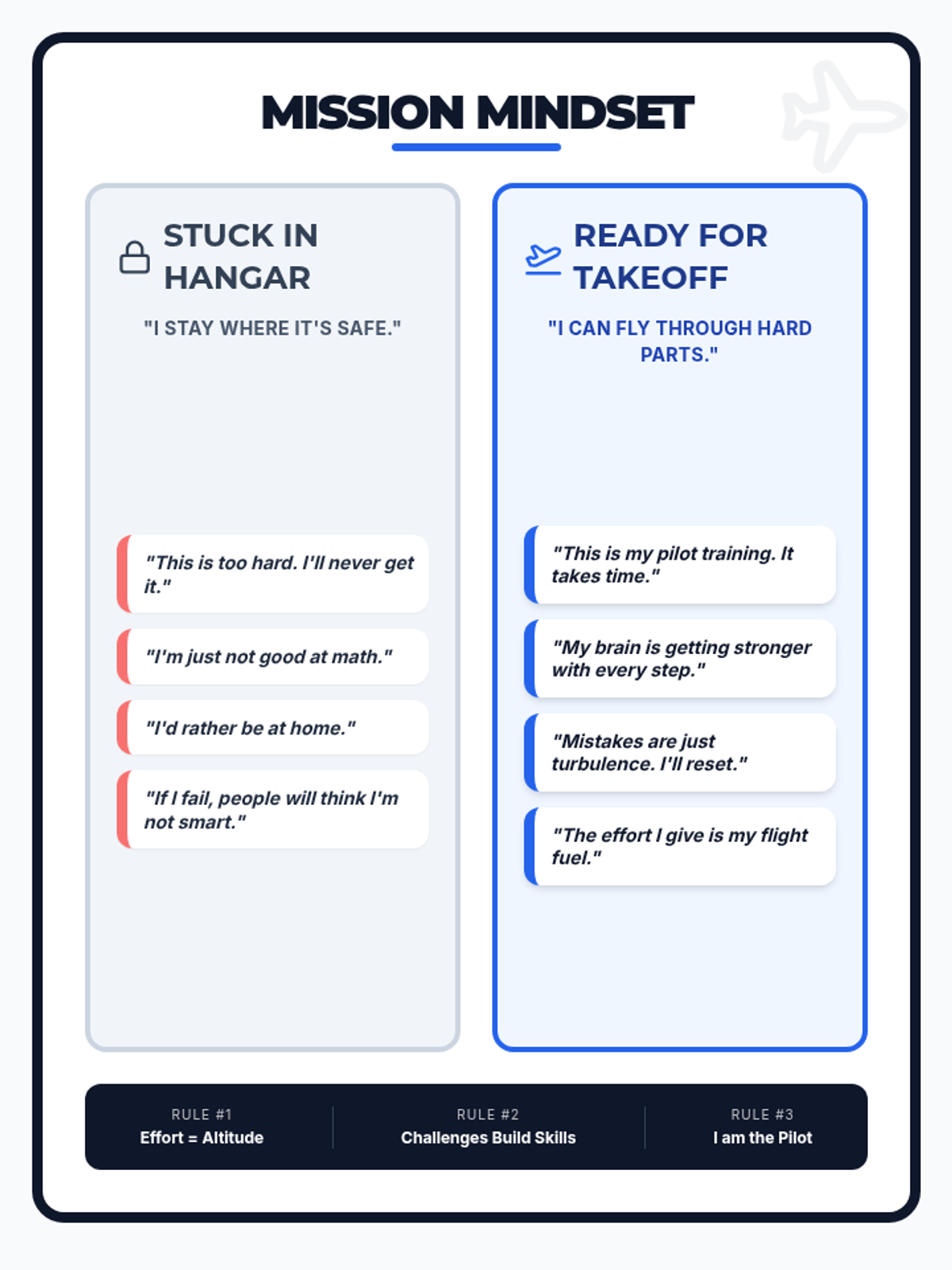
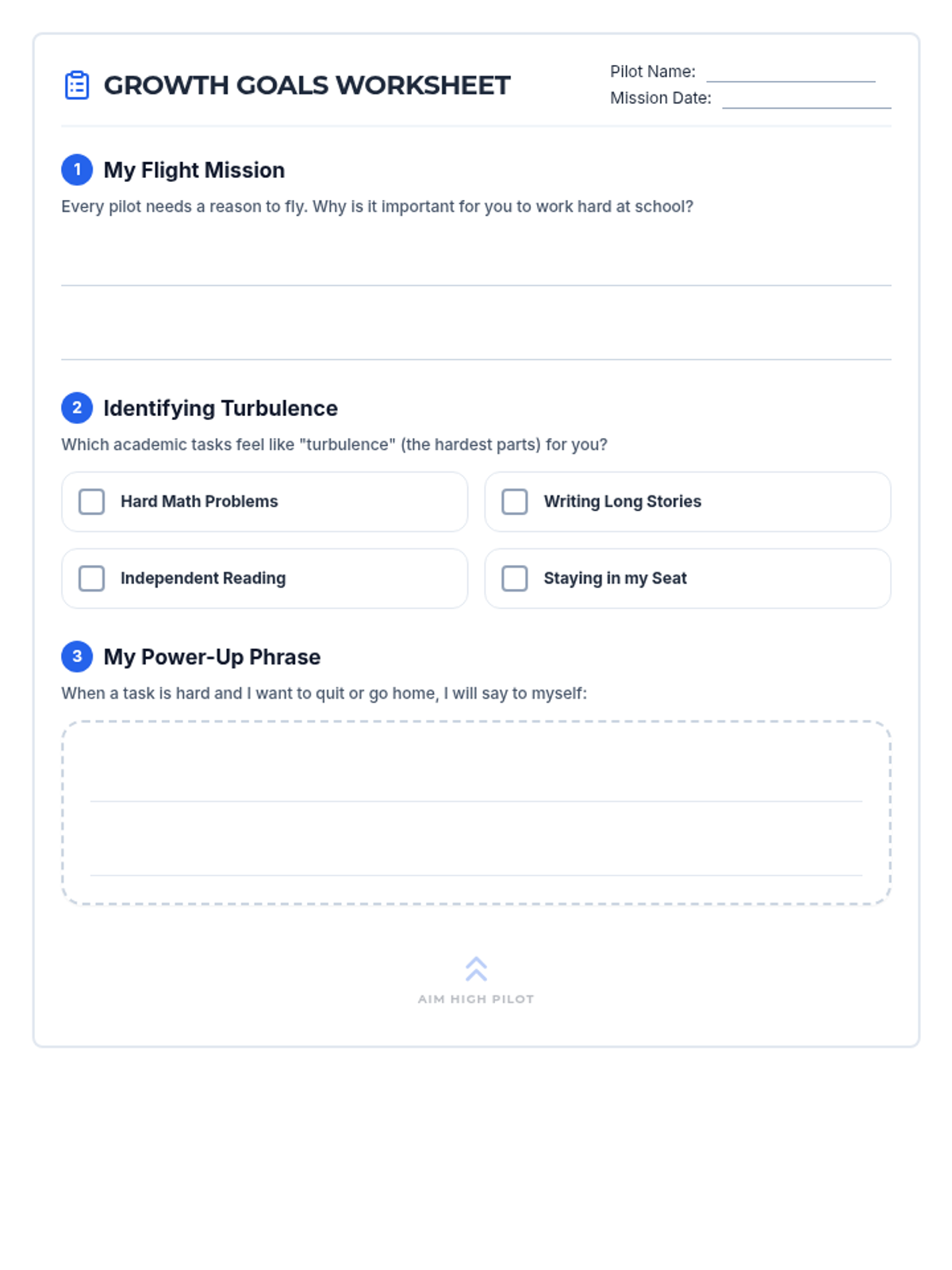
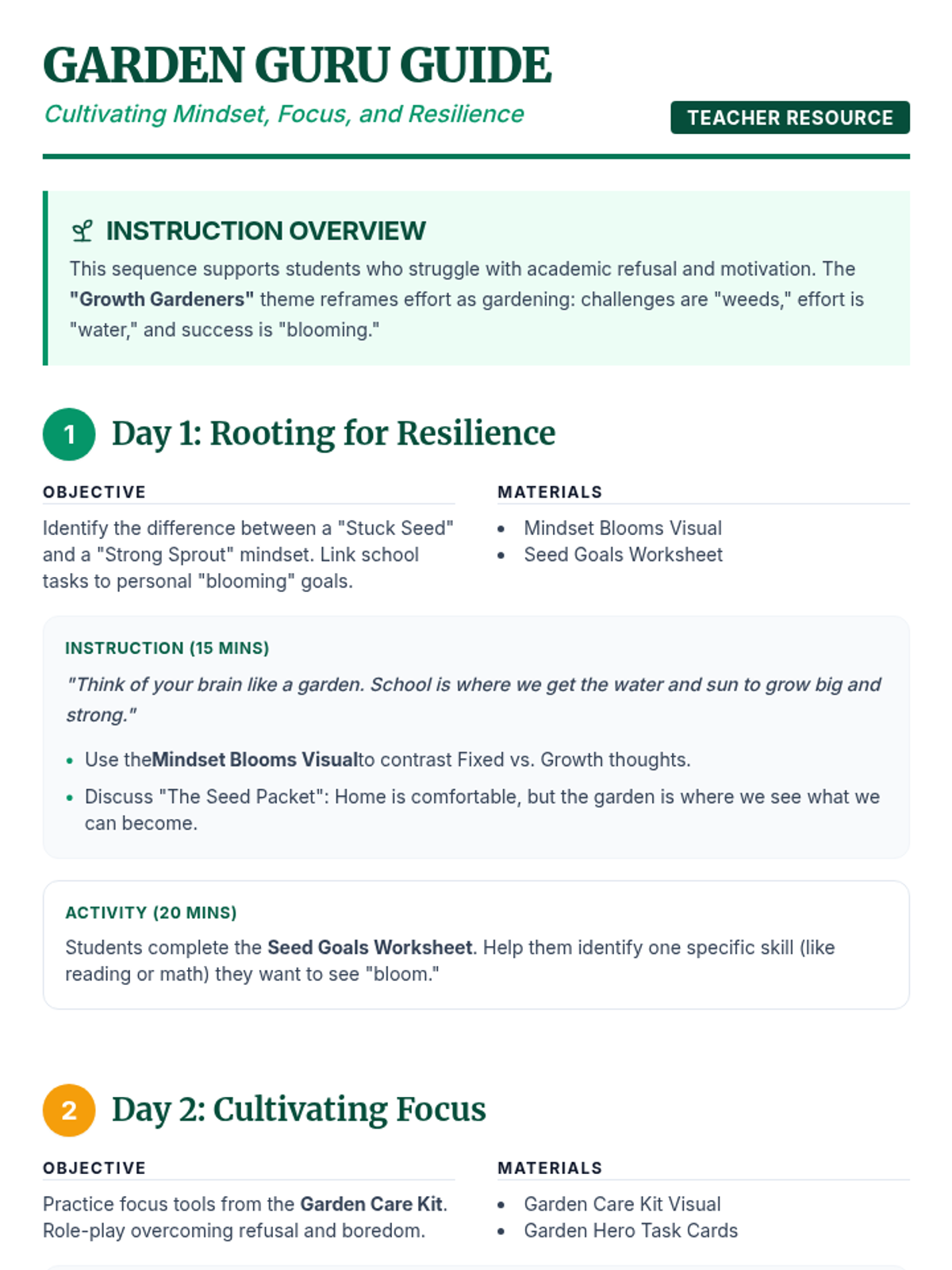
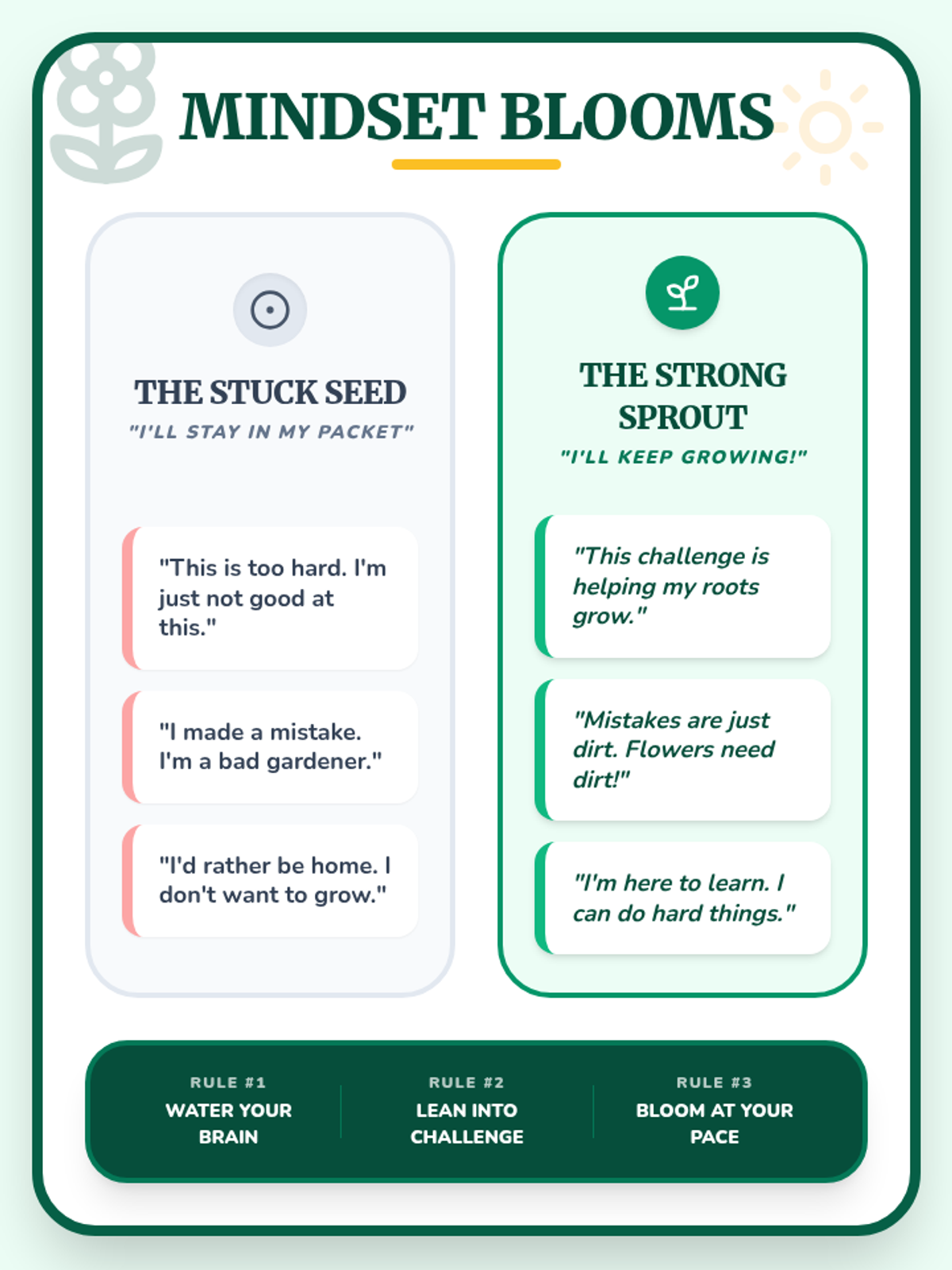
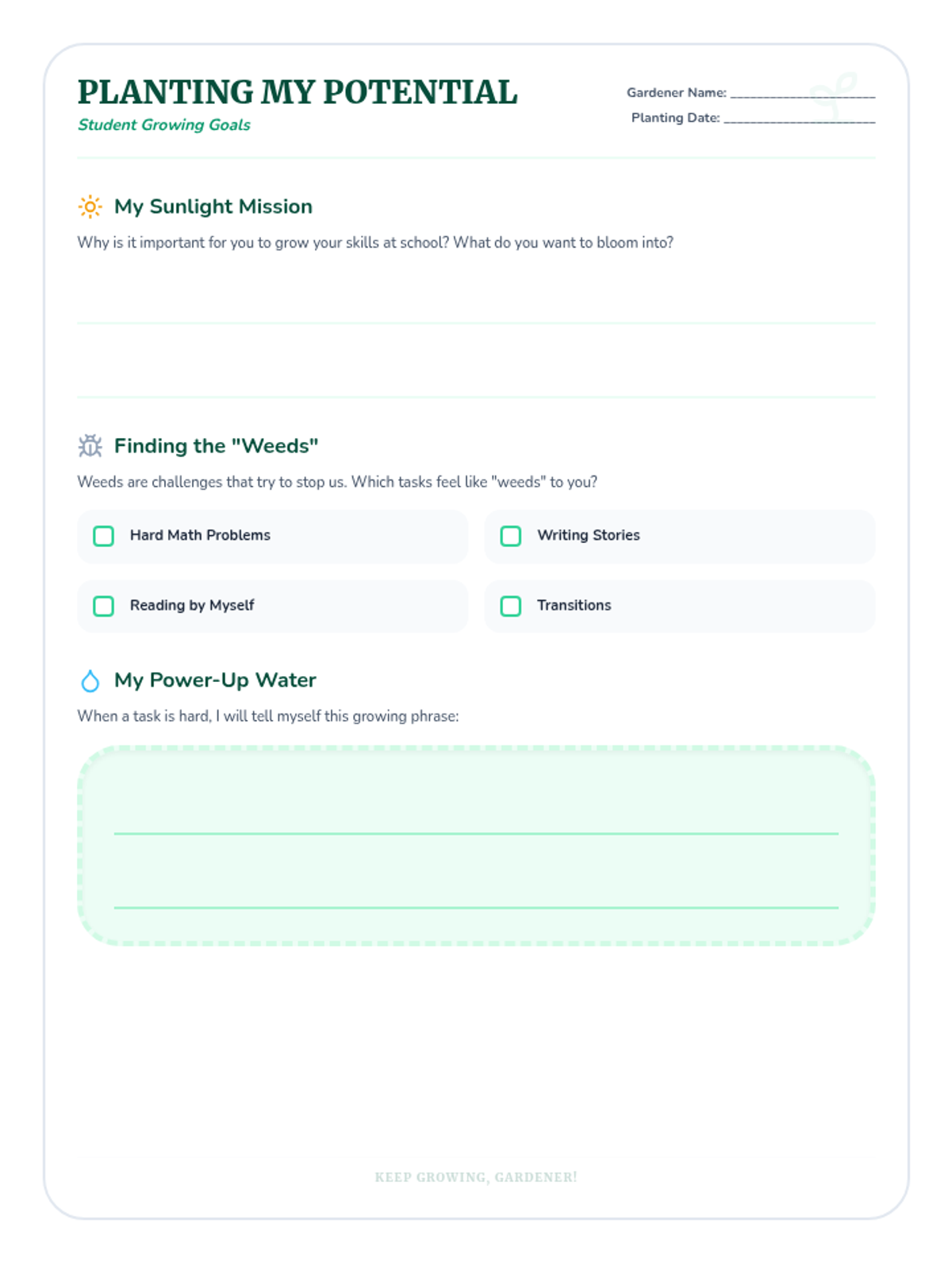
A multi-theme social-emotional learning sequence for 2nd and 3rd grade students, focusing on growth mindset, executive function, emotional regulation, and goal setting. Includes 'Garden Growth', 'Animal Adventurer', and 'Power Up Pilot' themes to support students with academic refusal and resilience.
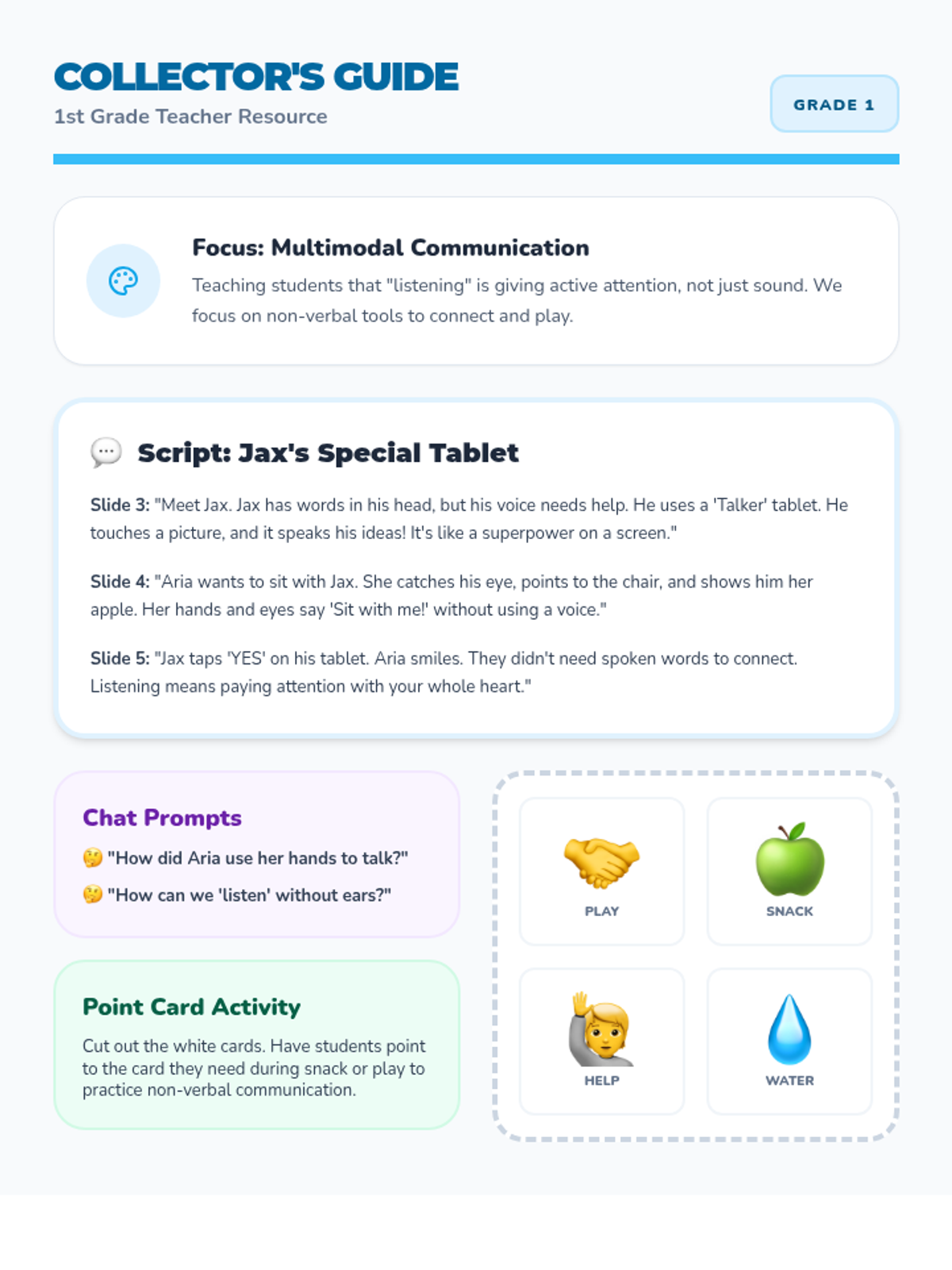
A multi-grade series of lessons focused on empathy, kindness, and celebrating the unique ways students play, communicate, and feel, without specific medical labels.