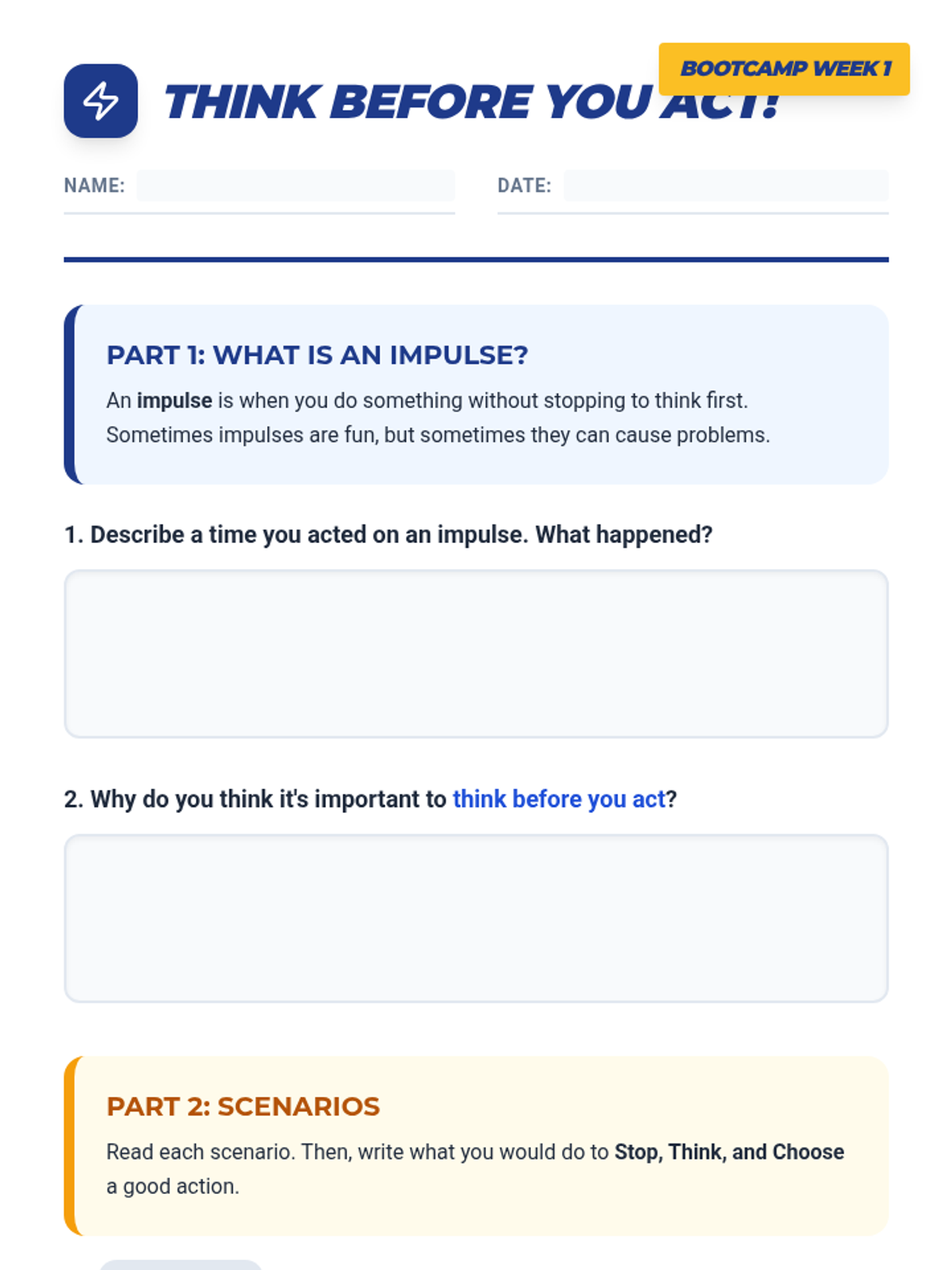
Stop-and-think strategies, impulse management, and SMART goal setting for personal growth. Develops internal motivation, stress reduction techniques, and resilience through proactive planning and monitoring.
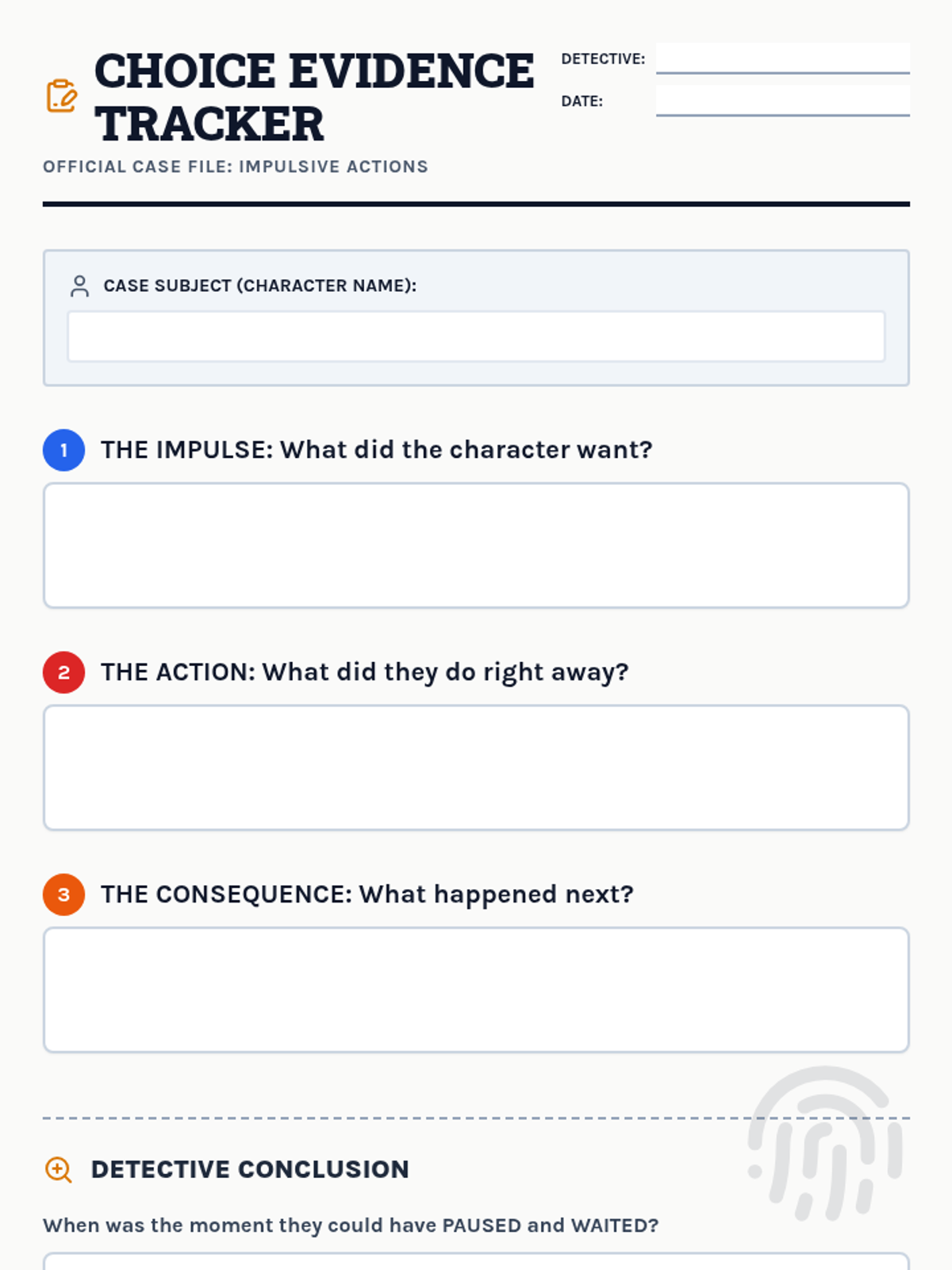
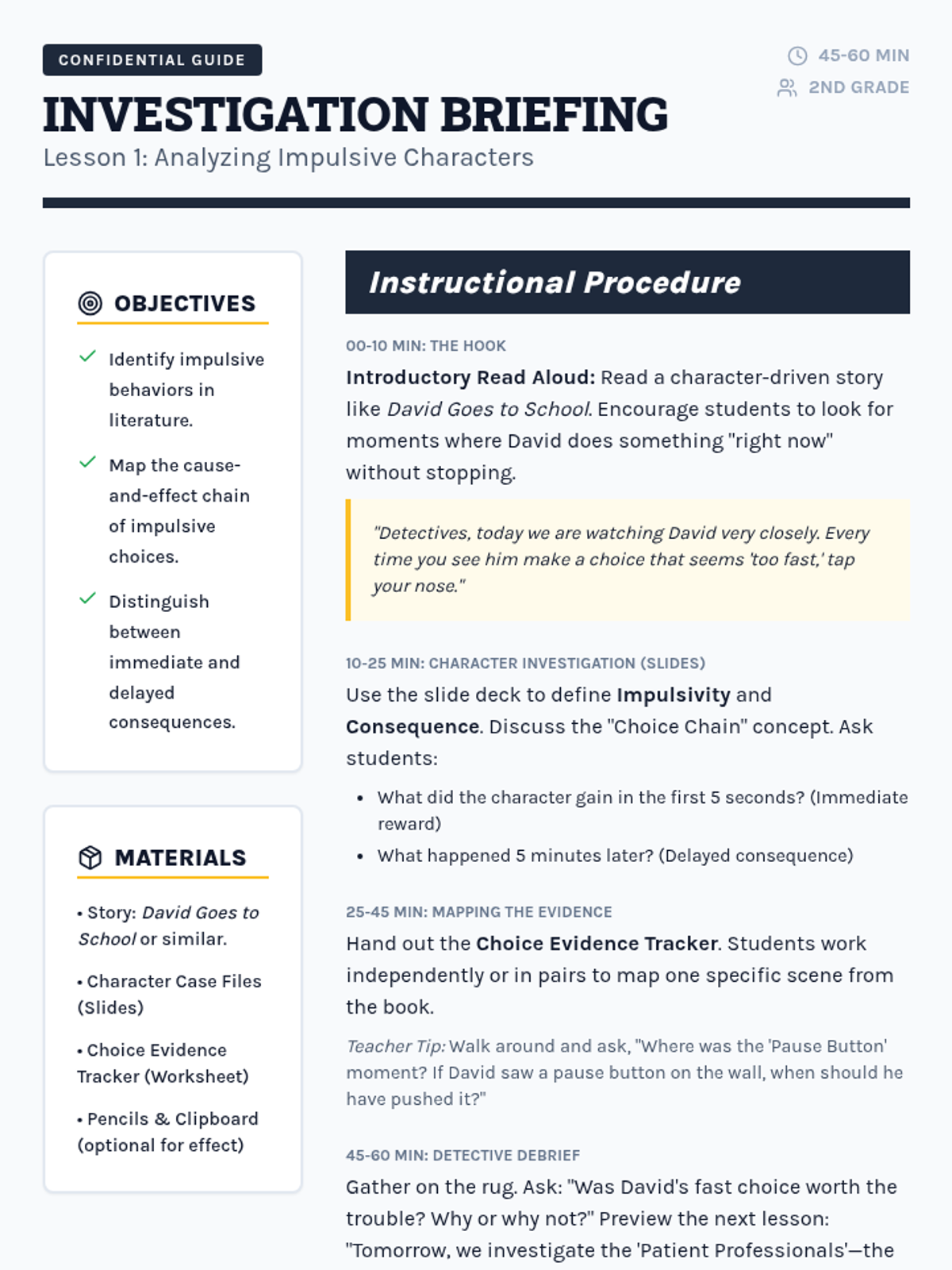
An inquiry-based sequence for 2nd graders to explore the relationship between choices, waiting, and consequences. Students act as 'Choice Detectives' to analyze characters, predict outcomes, and develop personal strategies for delaying gratification.
This project-based sequence teaches 2nd-grade students the concept of delayed gratification through goal setting and sustained effort. Students learn to distinguish between immediate and long-term rewards, plan a multi-step project, and develop strategies to persevere through the 'boring middle' to achieve a significant final outcome.
A 5-lesson unit for 2nd graders to develop impulse control and delayed gratification through the 'Stop, Think, Act' framework, distraction techniques, and positive self-talk.
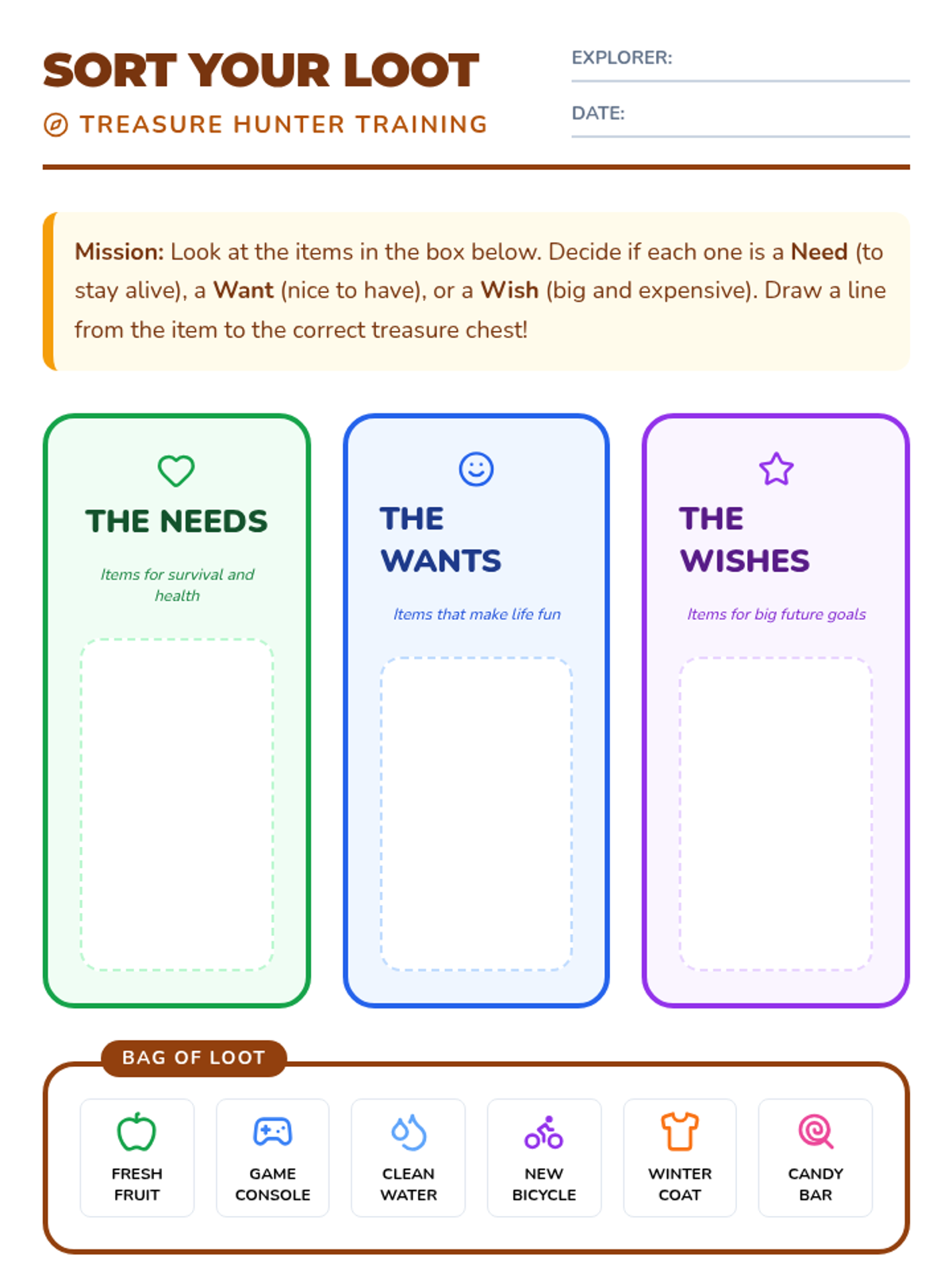
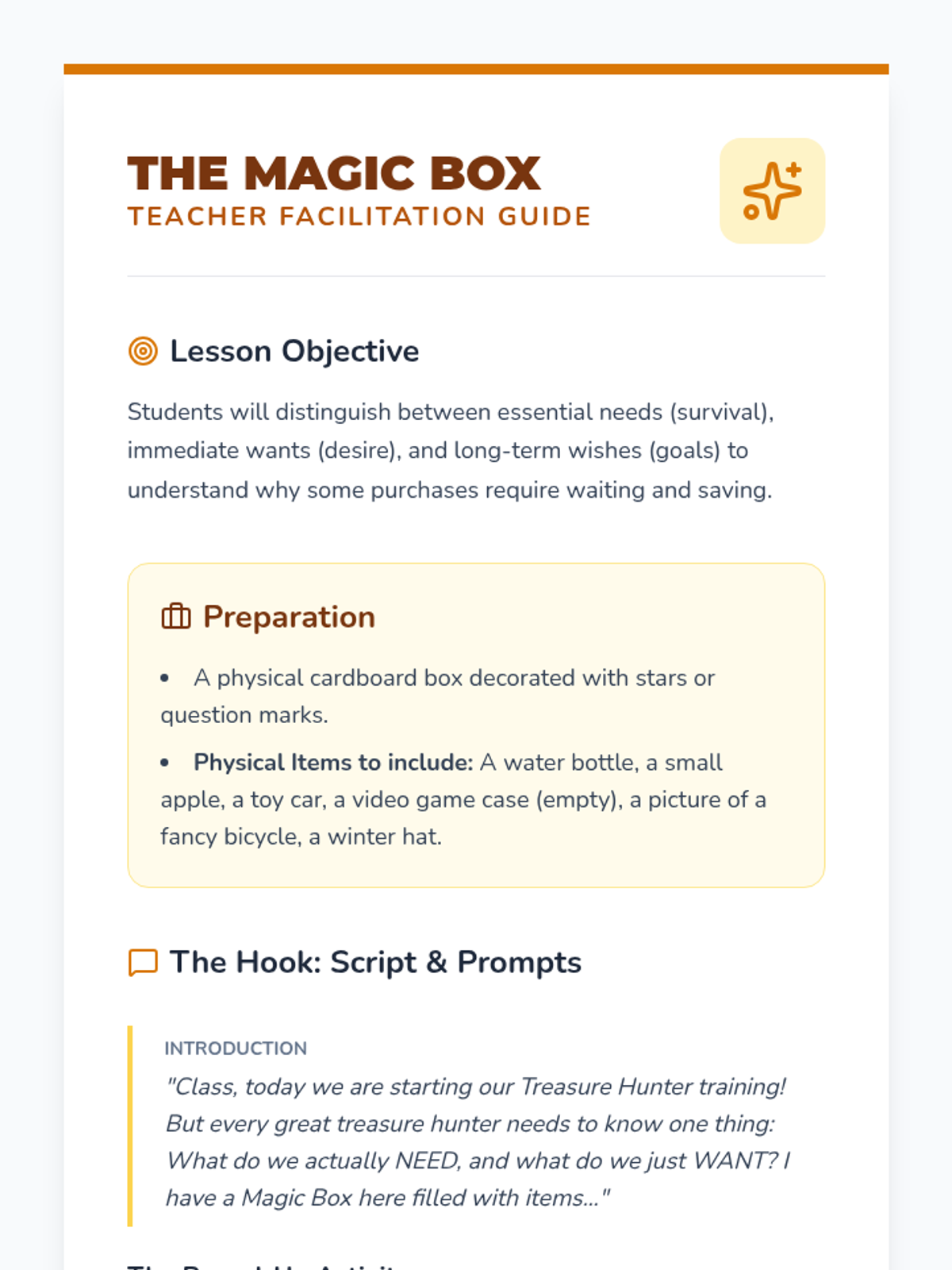
This sequence introduces 2nd graders to saving through a 'Treasure Hunter' theme, covering needs vs. wants, the three-jar method, goal setting, patience, and progress tracking.
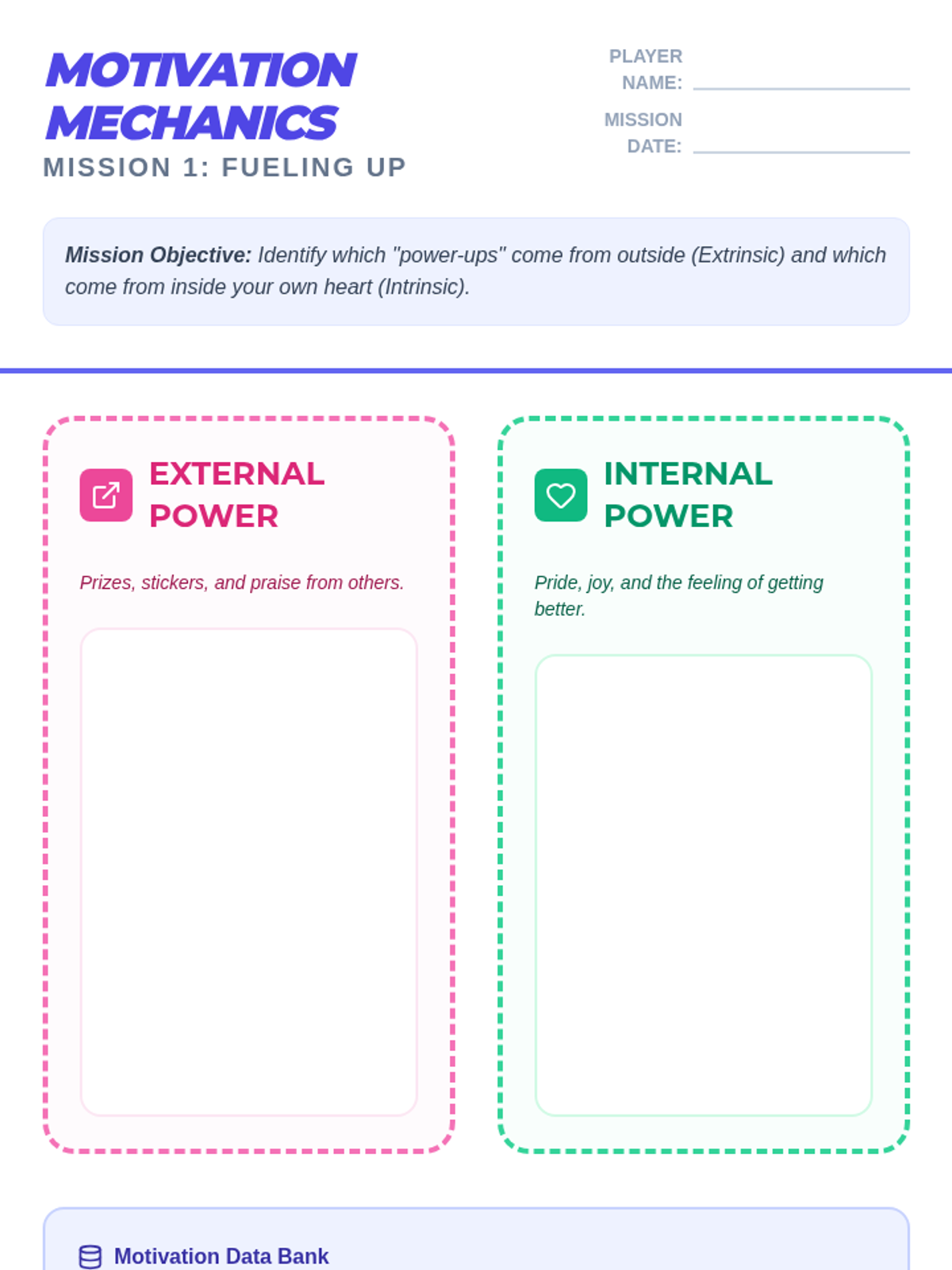
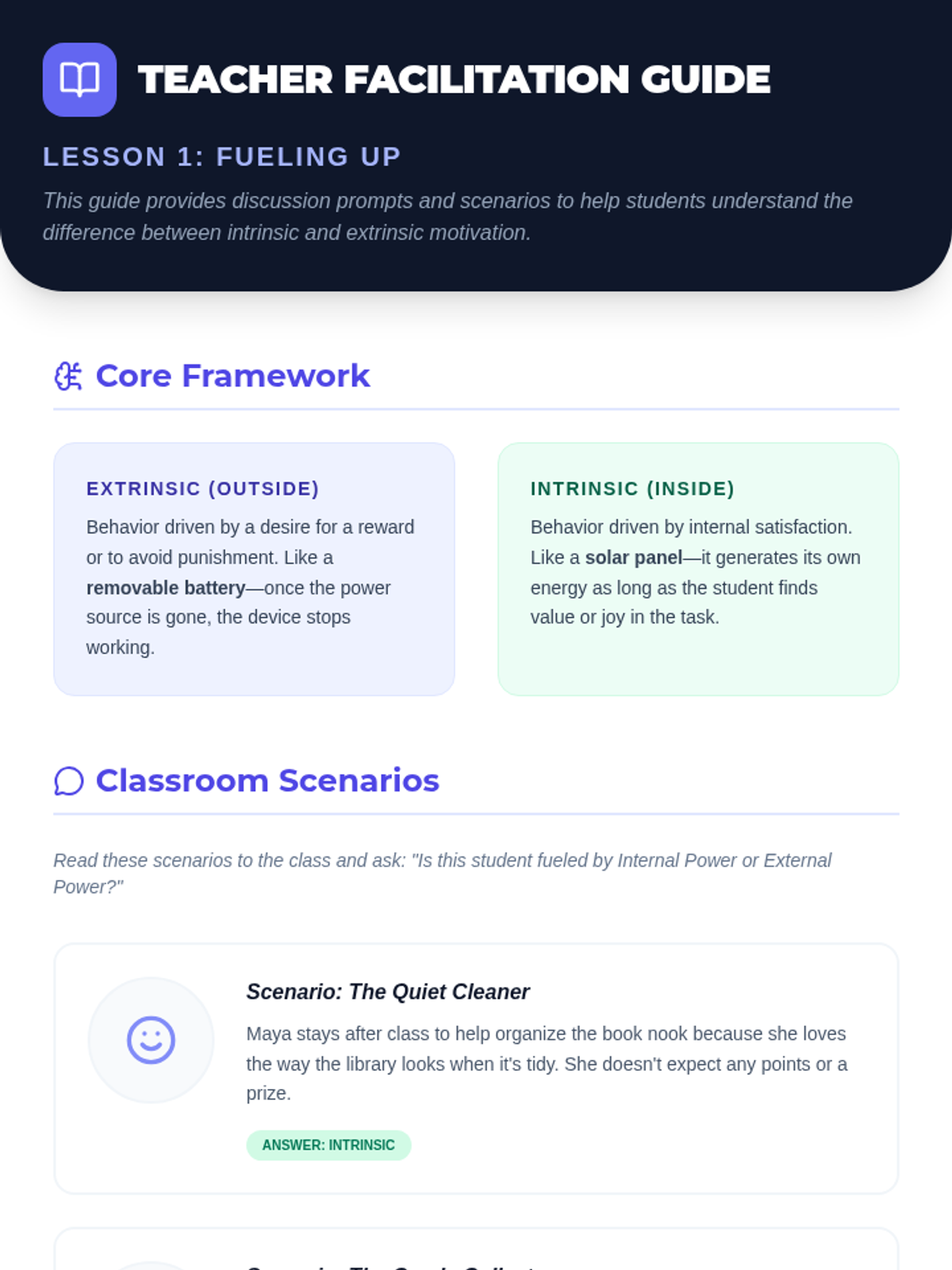
This sequence explores the psychology of motivation and reward systems. Students learn to distinguish between internal and external rewards, design meaningful reinforcement menus, and plan for long-term growth and independence.
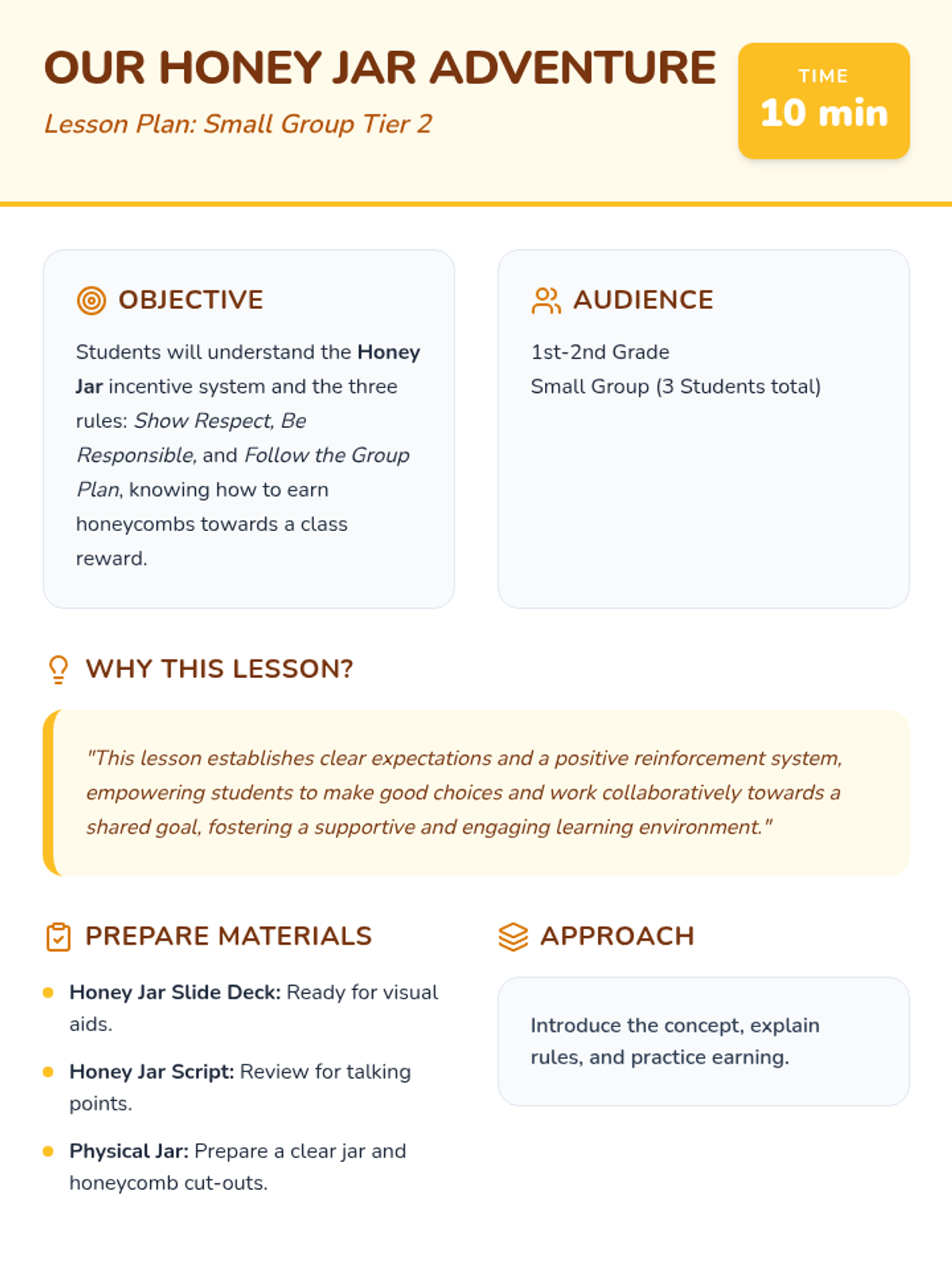
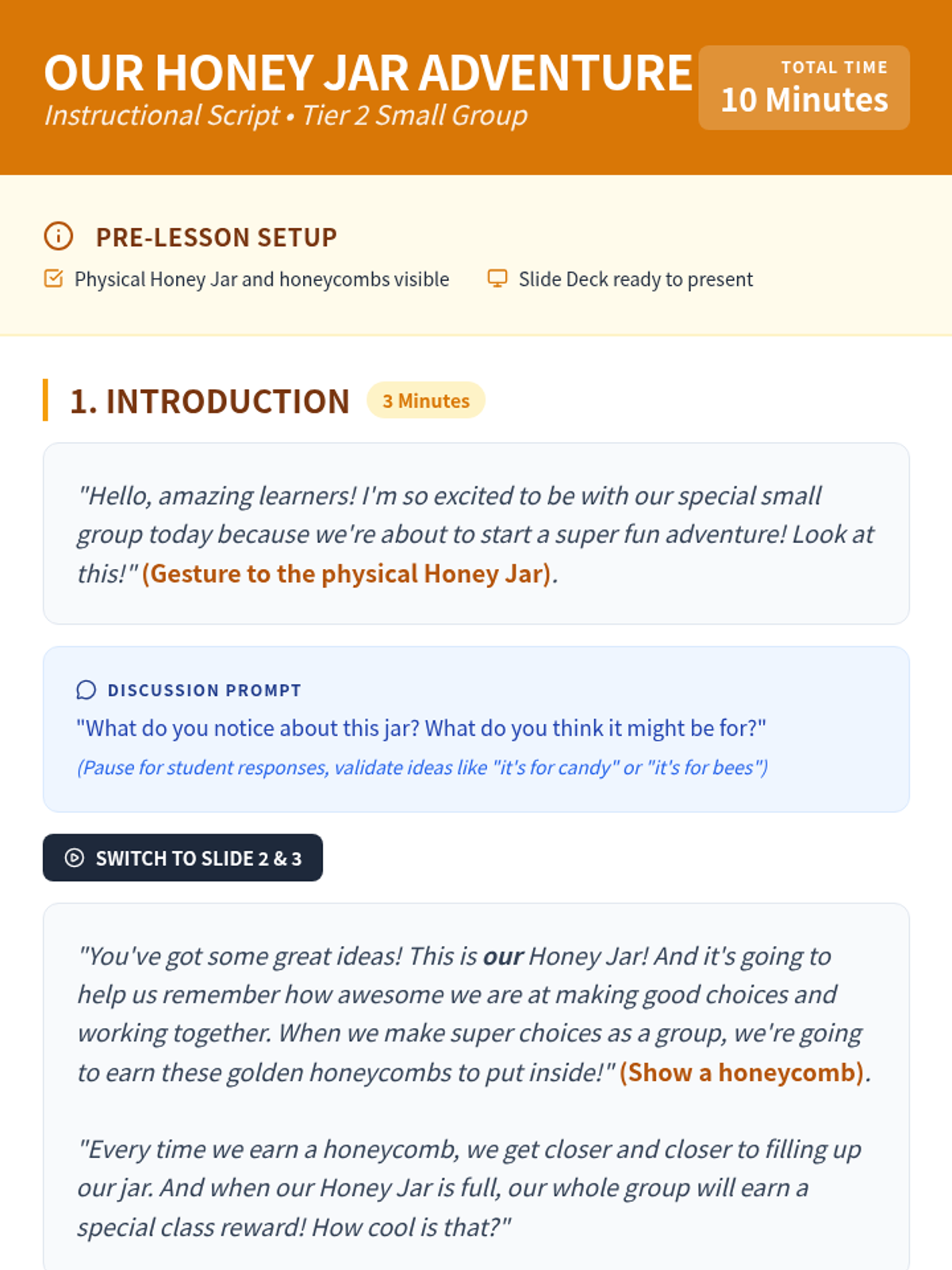
A short, engaging lesson to introduce the Honey Jar incentive system to small groups of 1st-2nd grade students, focusing on teamwork and positive behavior.
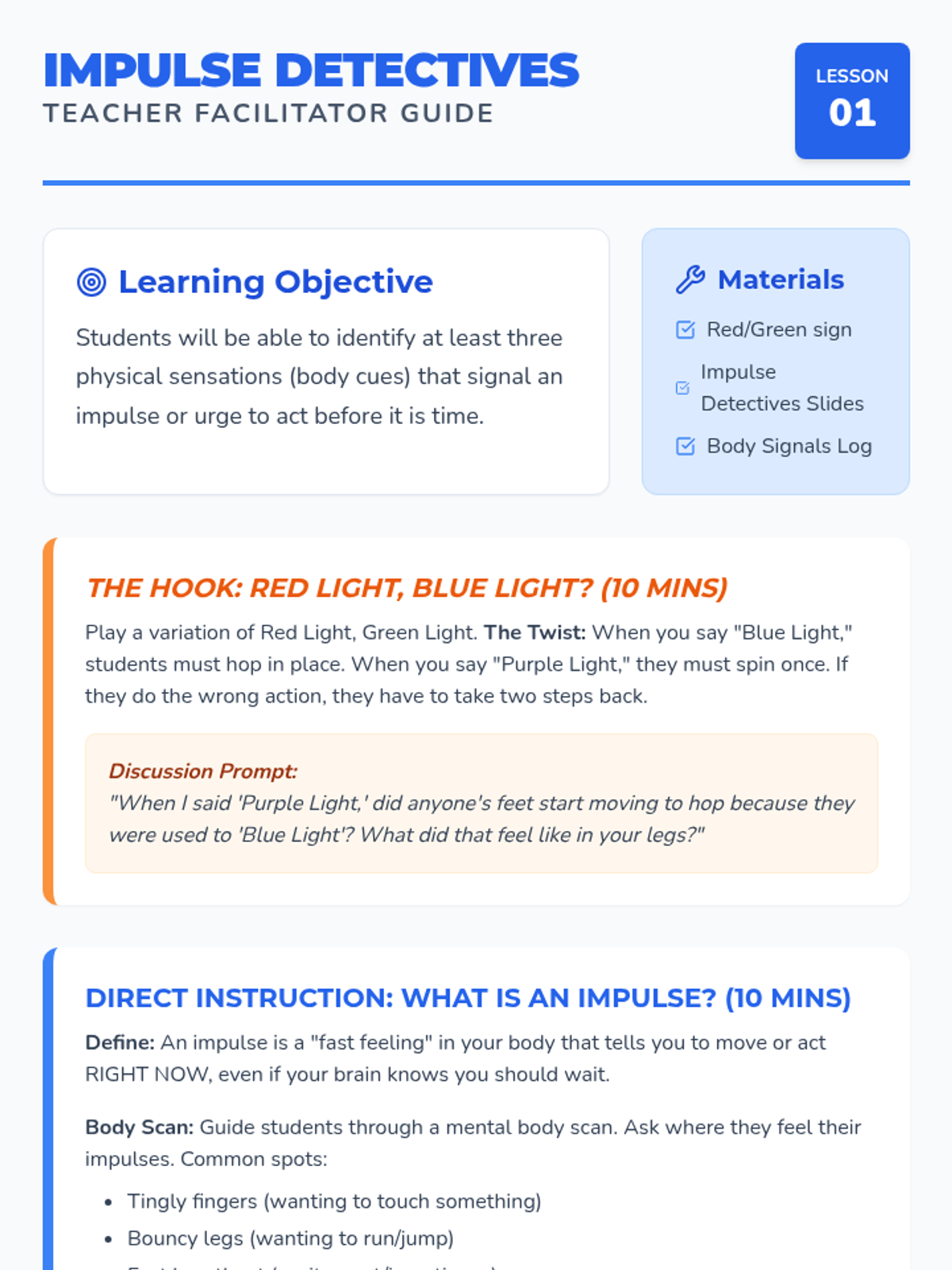
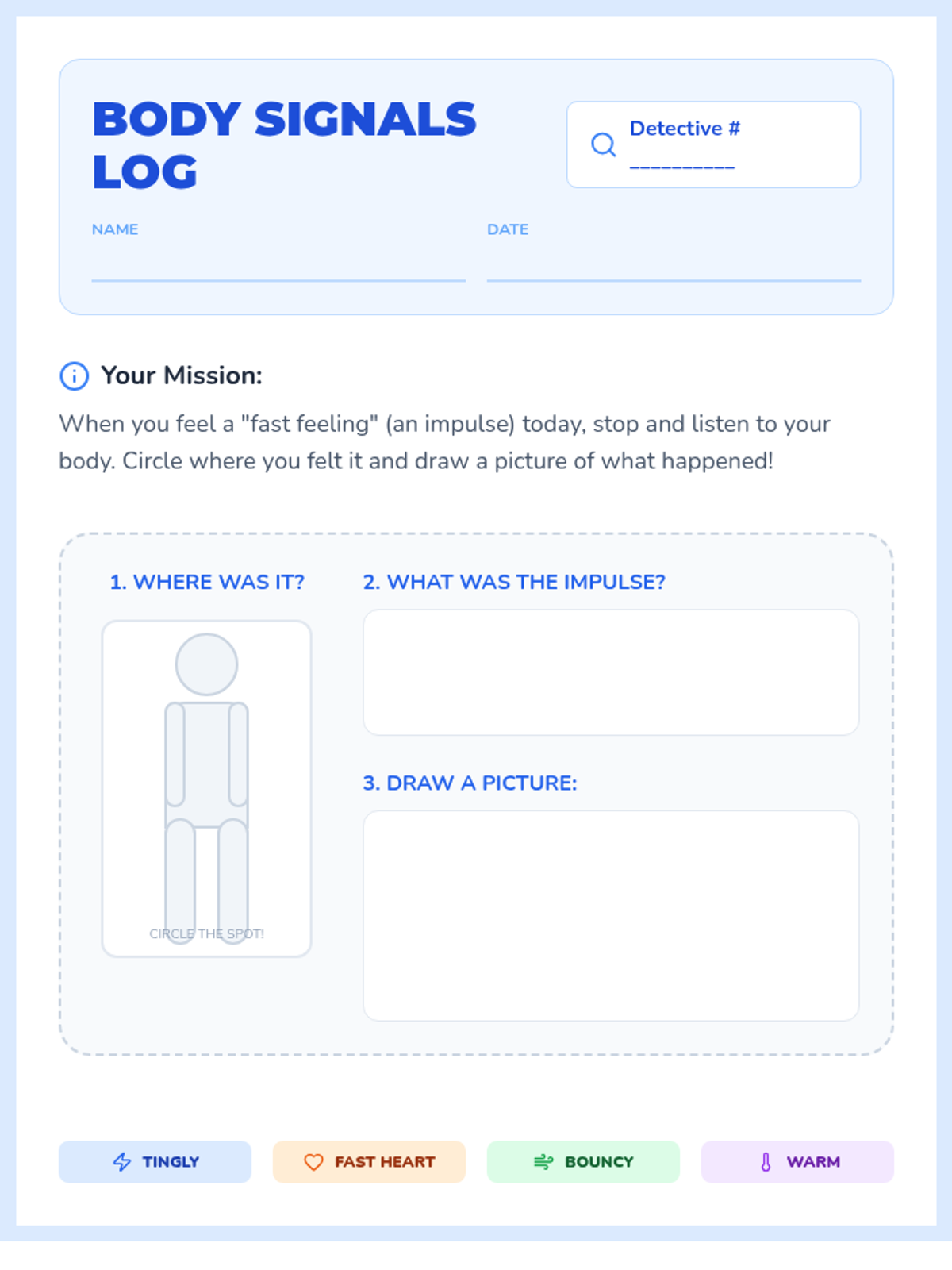
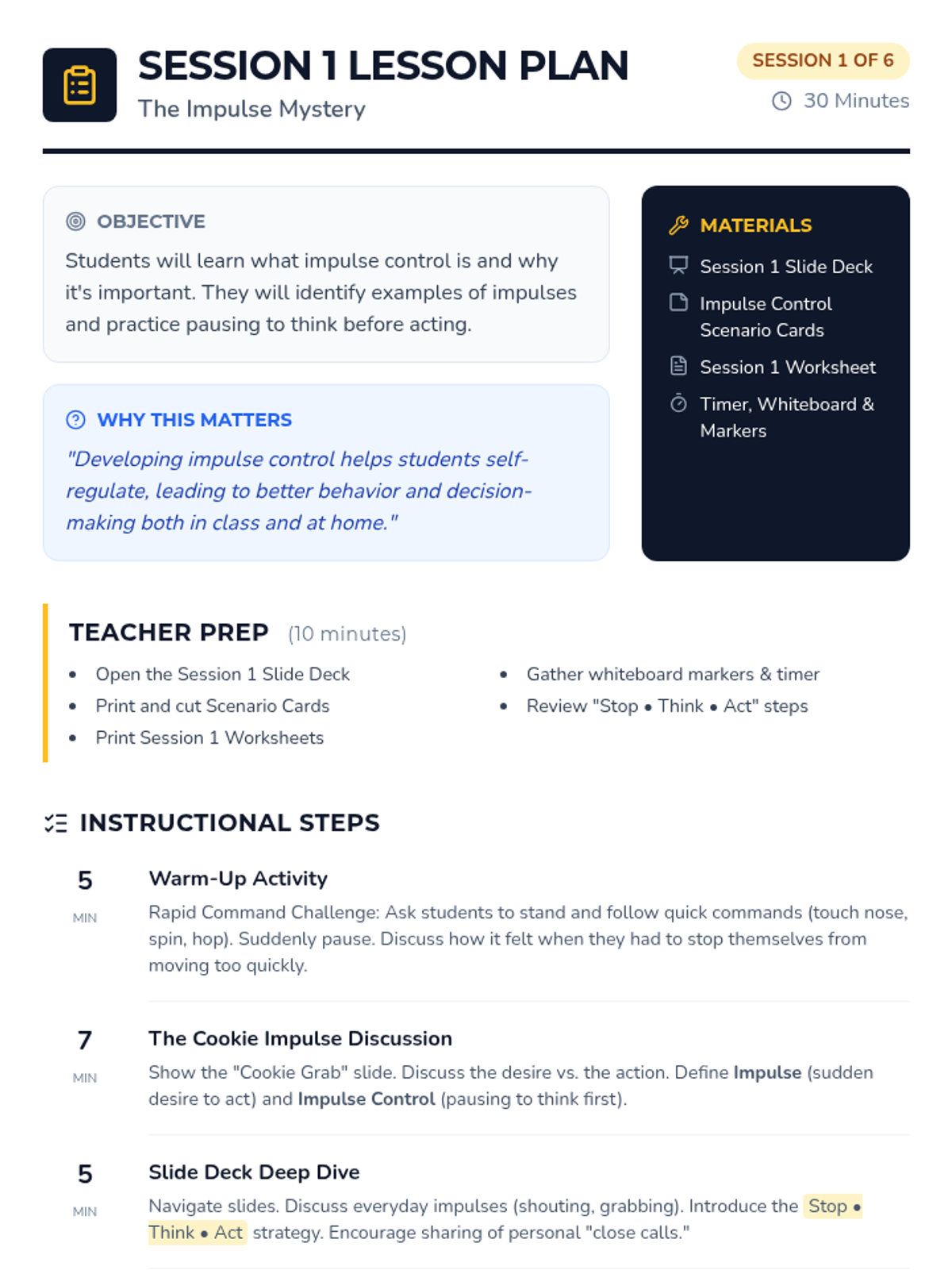
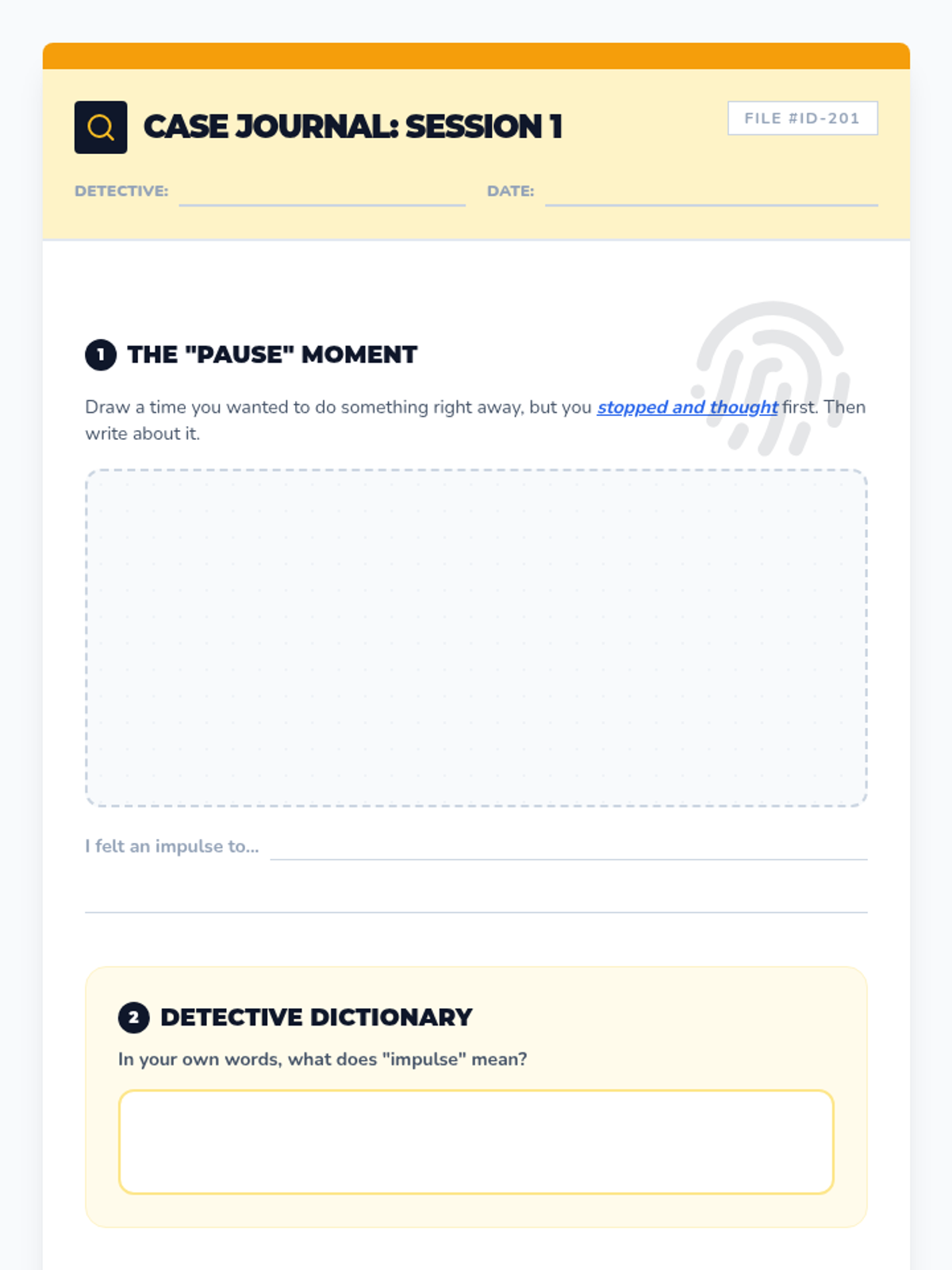
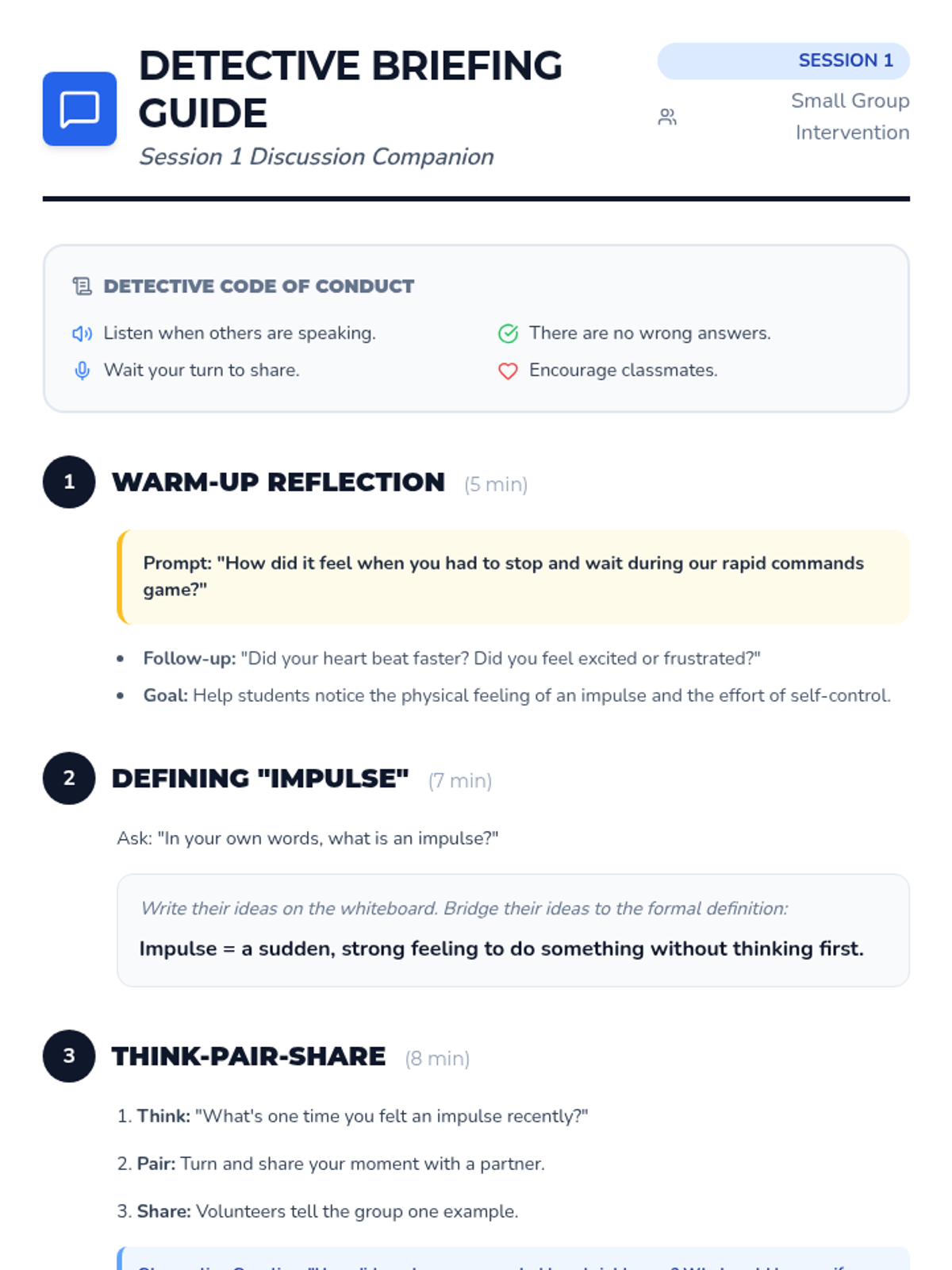
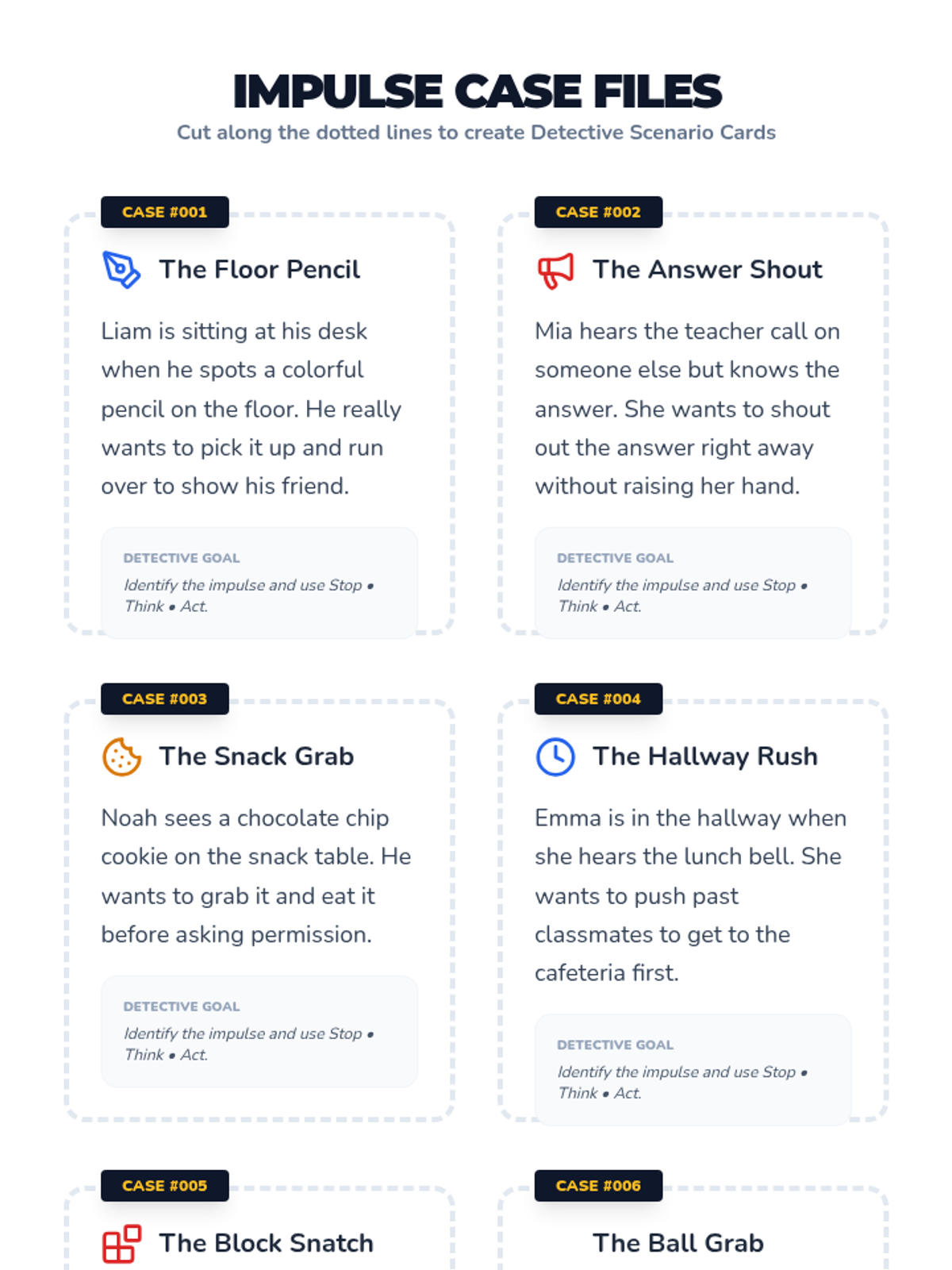
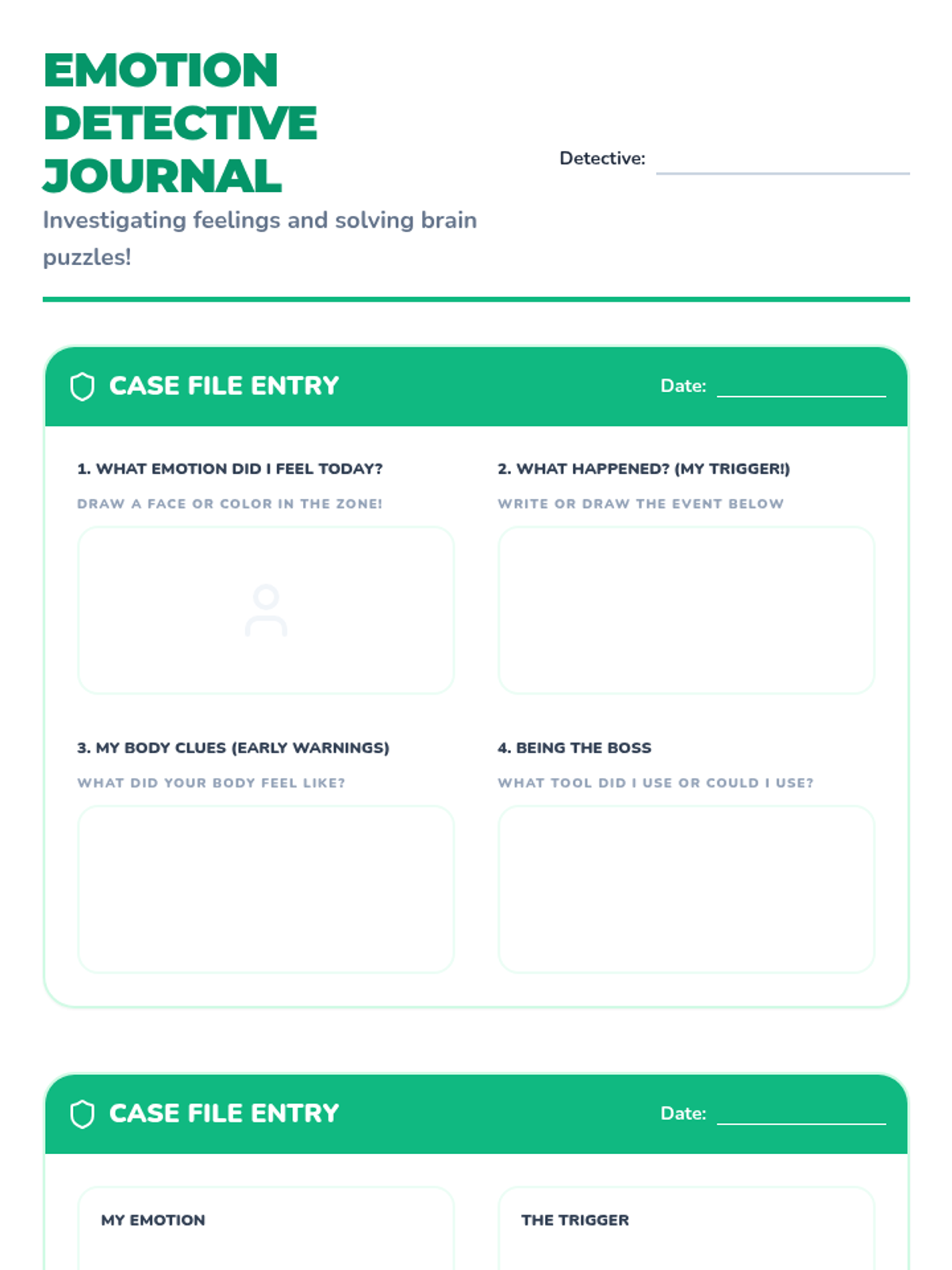
A 6-session small group intervention for 2nd graders focused on developing impulse control and self-regulation skills using a fun detective theme. Students learn to identify impulses, recognize body signals, and apply the Stop-Think-Act strategy to make better choices.
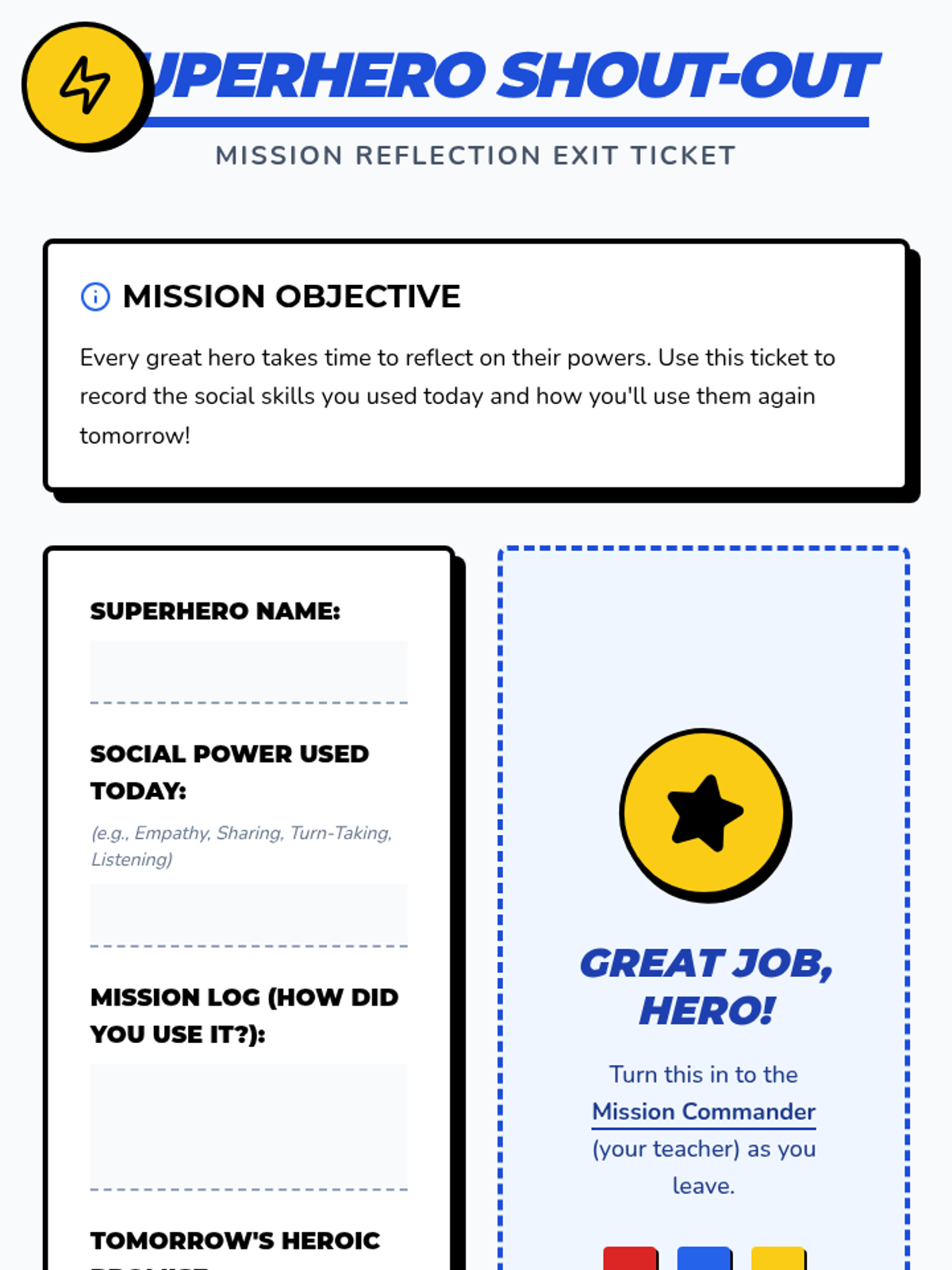
An 11-session Tier 2 social skills intervention for elementary students, focusing on friendship, empathy, patience, and conflict resolution through a superhero-themed creative curriculum.
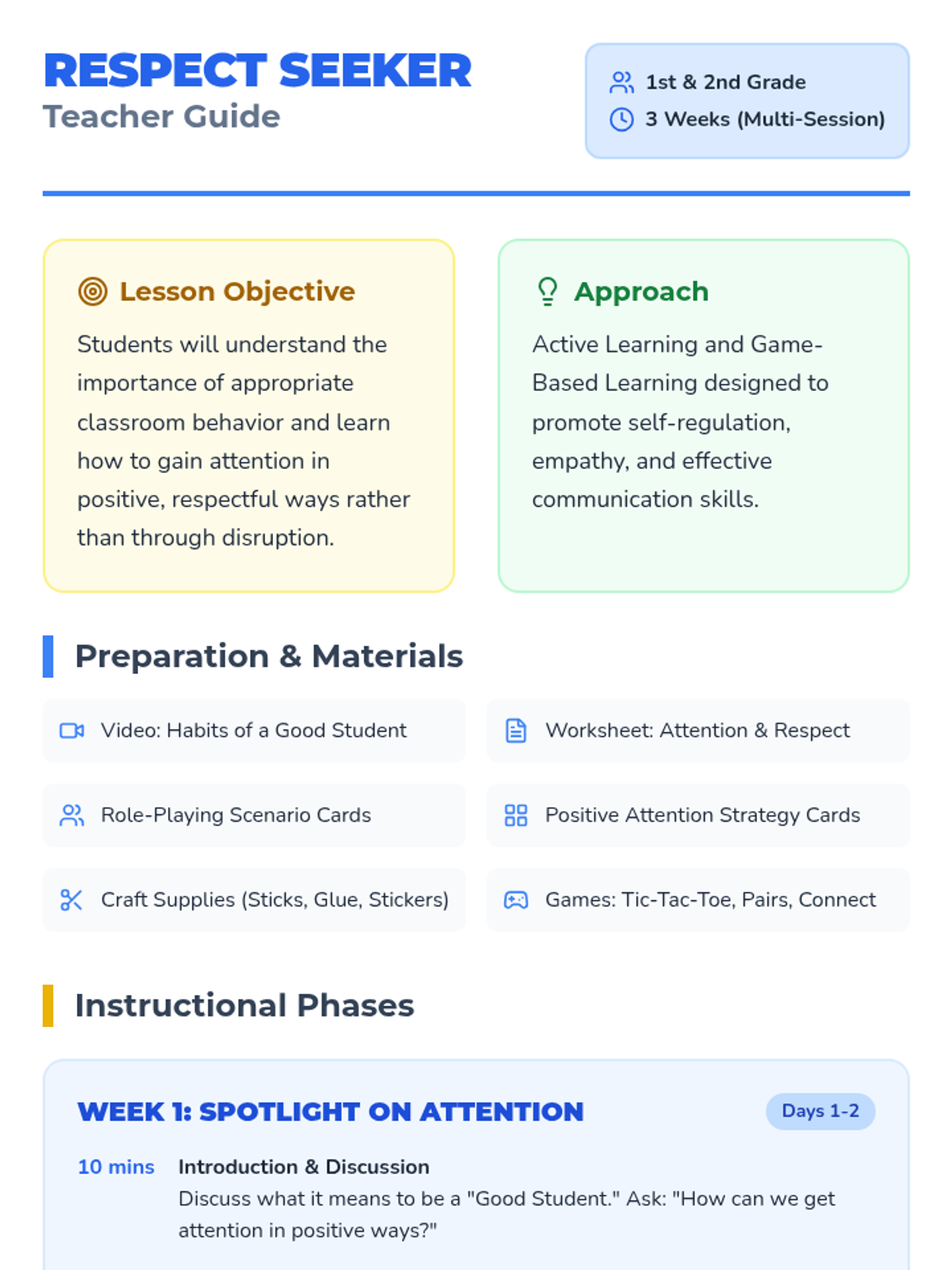
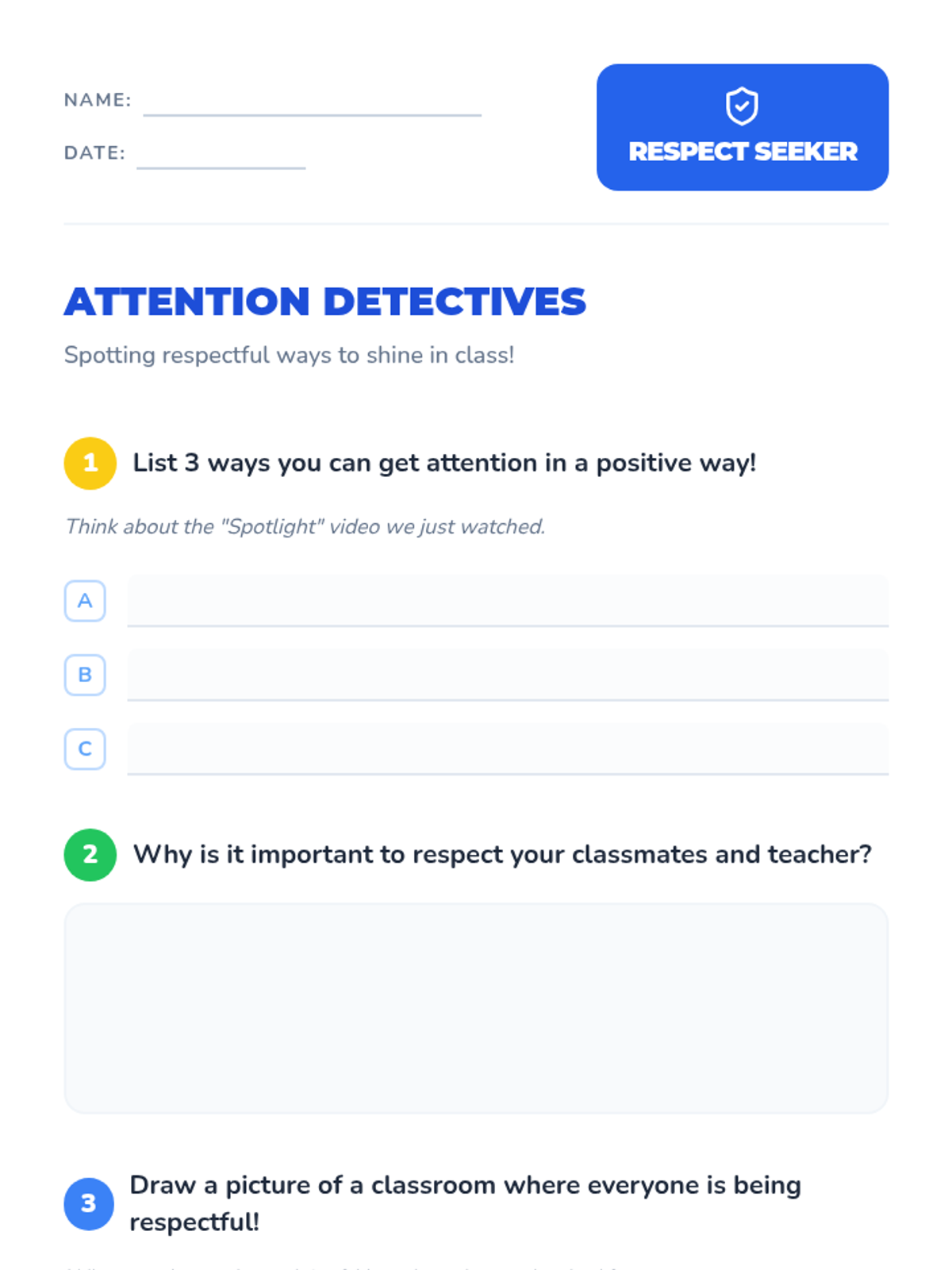
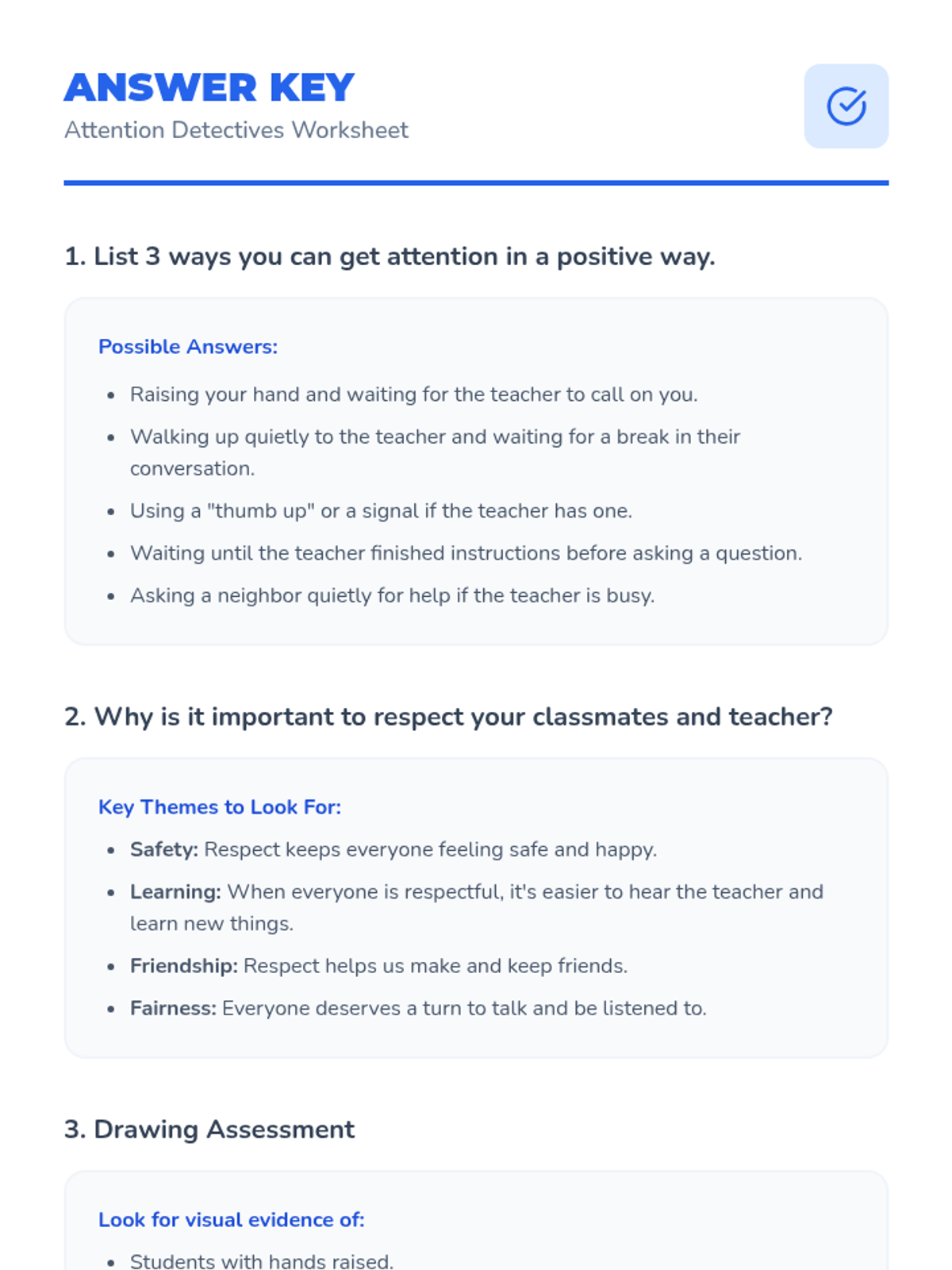
A three-week sequence for 1st and 2nd graders to learn appropriate classroom behavior, focusing on positive attention-seeking strategies, self-regulation, and respectful communication through games and role-play.
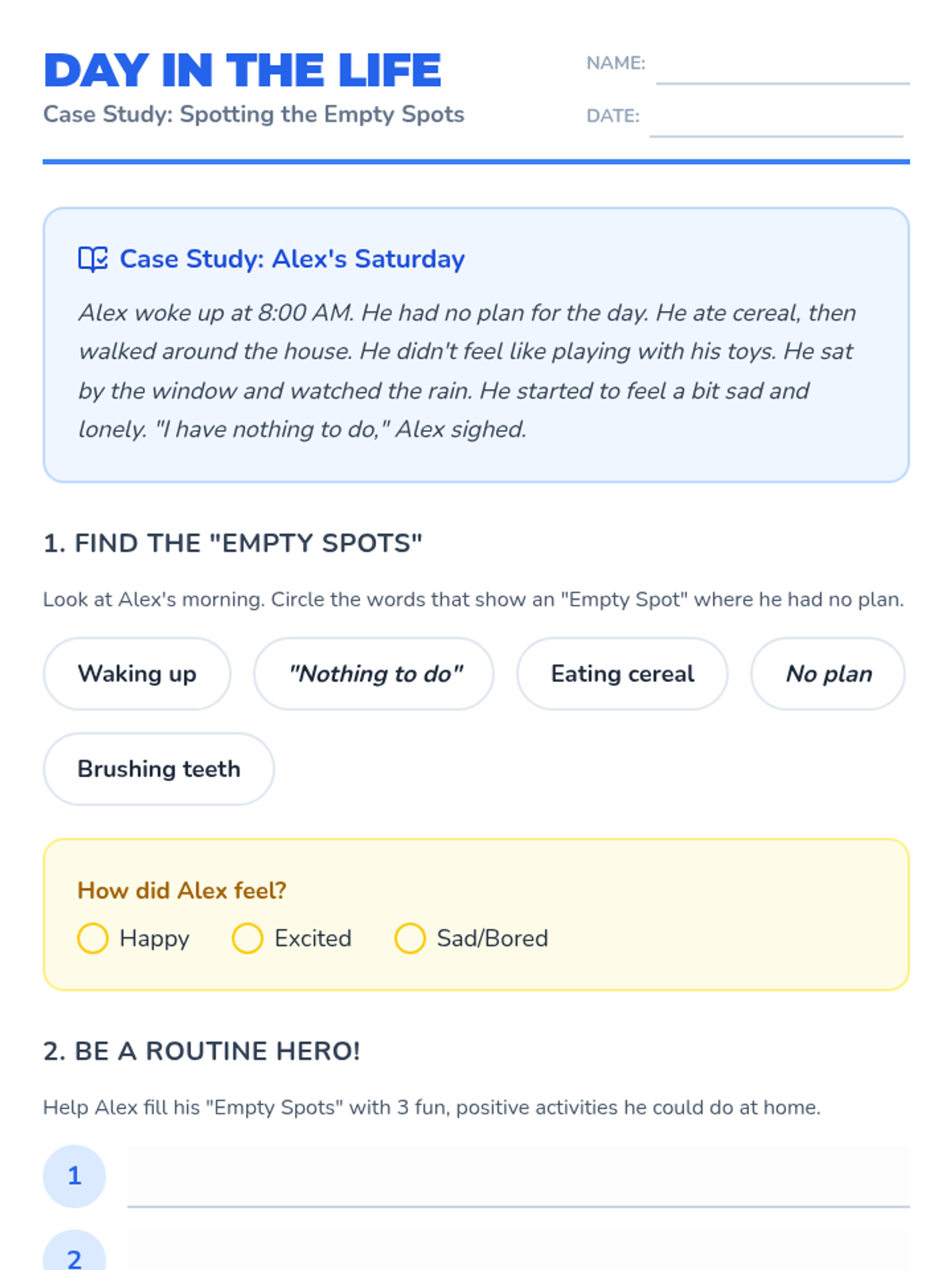
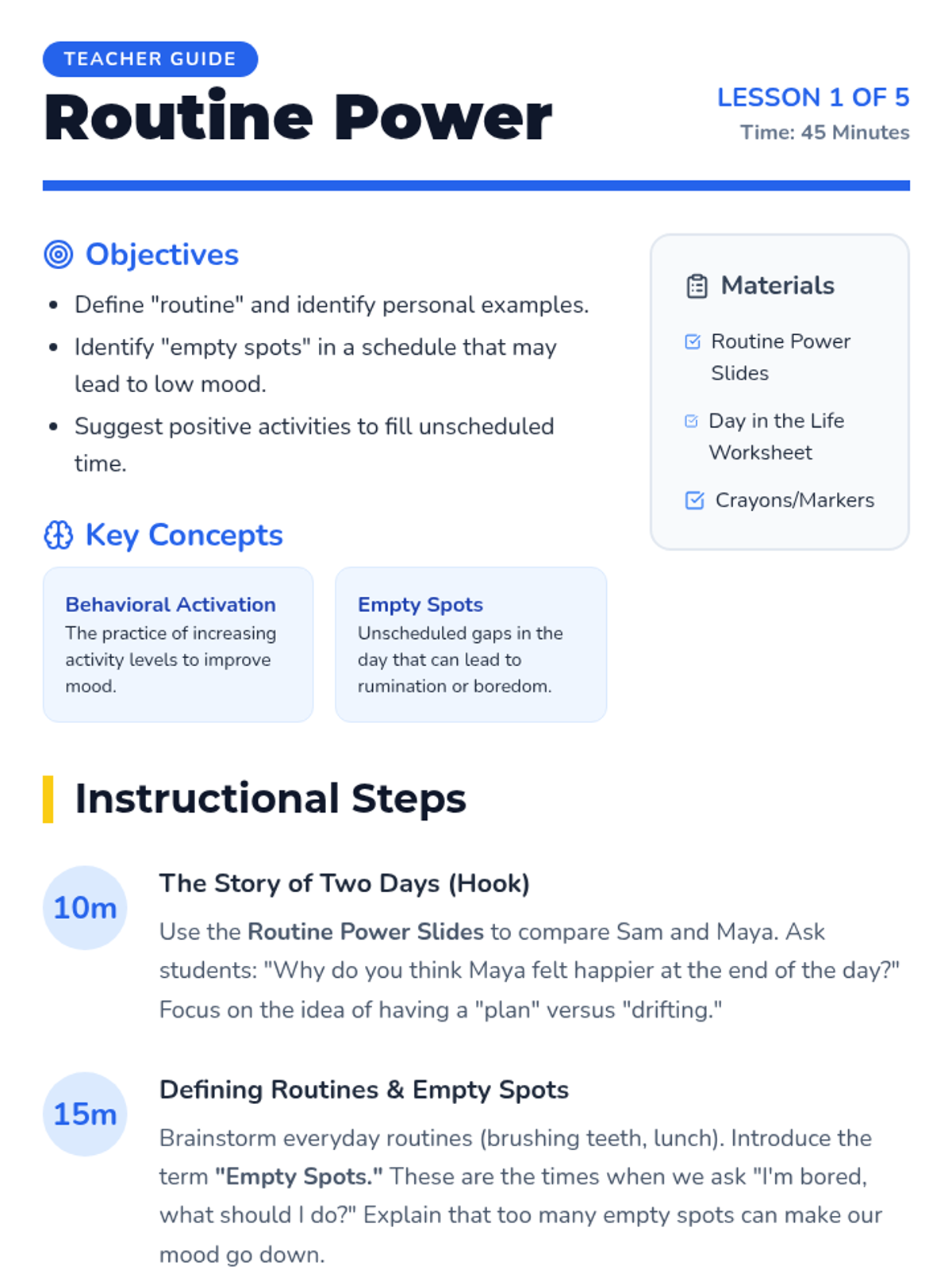
This sequence introduces 2nd-grade students to behavioral activation by teaching them how to integrate positive activities into their daily routines to support emotional well-being. Students will create tools like a 'Happiness Jar' and a 'Positive Habit Tracker' to learn the connection between their actions and their mood.
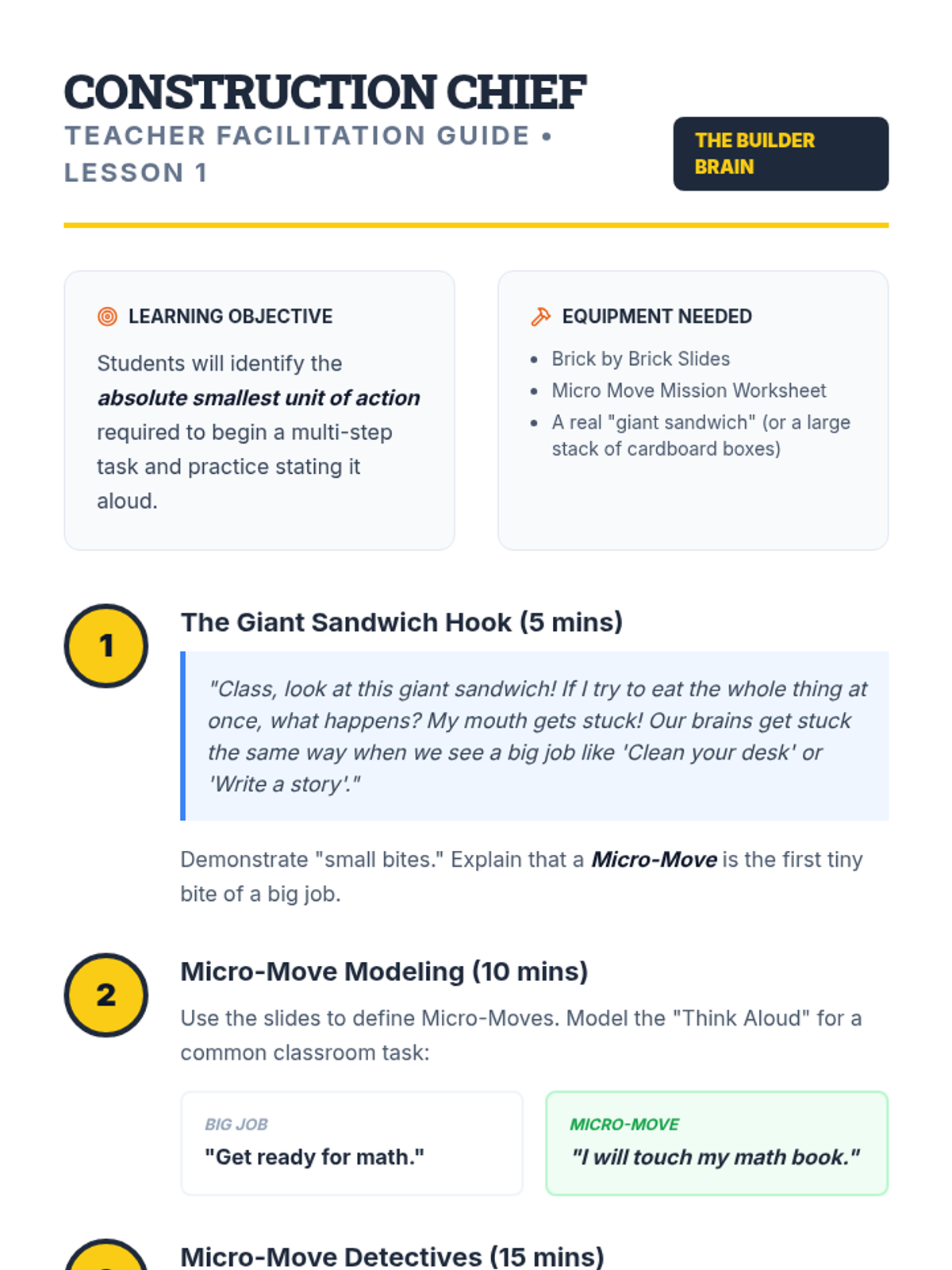
Students learn to use verbal prompts to break complex tasks down into manageable actions. The sequence moves from identifying the immediate first step to narrating a sequence of actions and troubleshooting challenges.
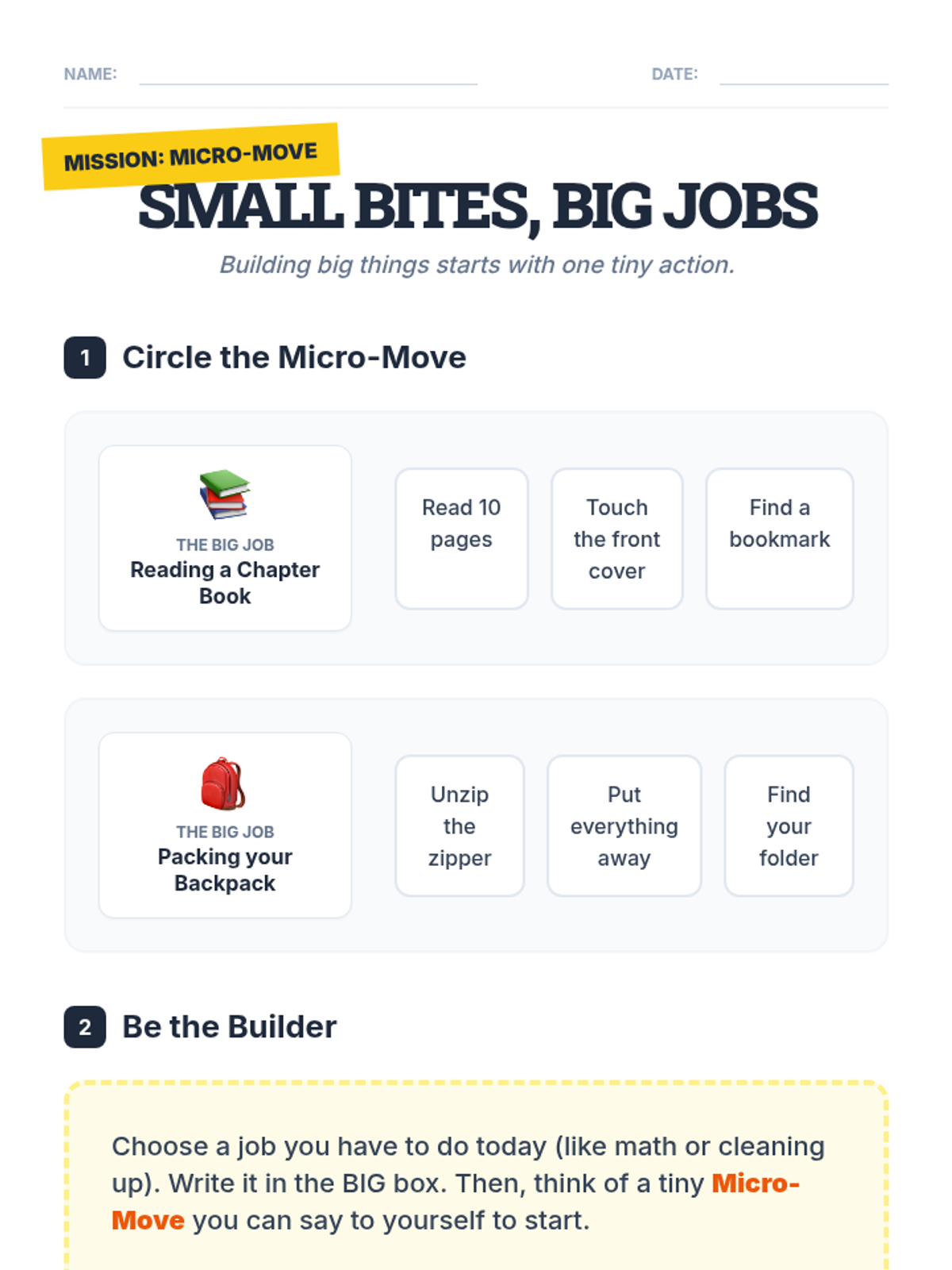
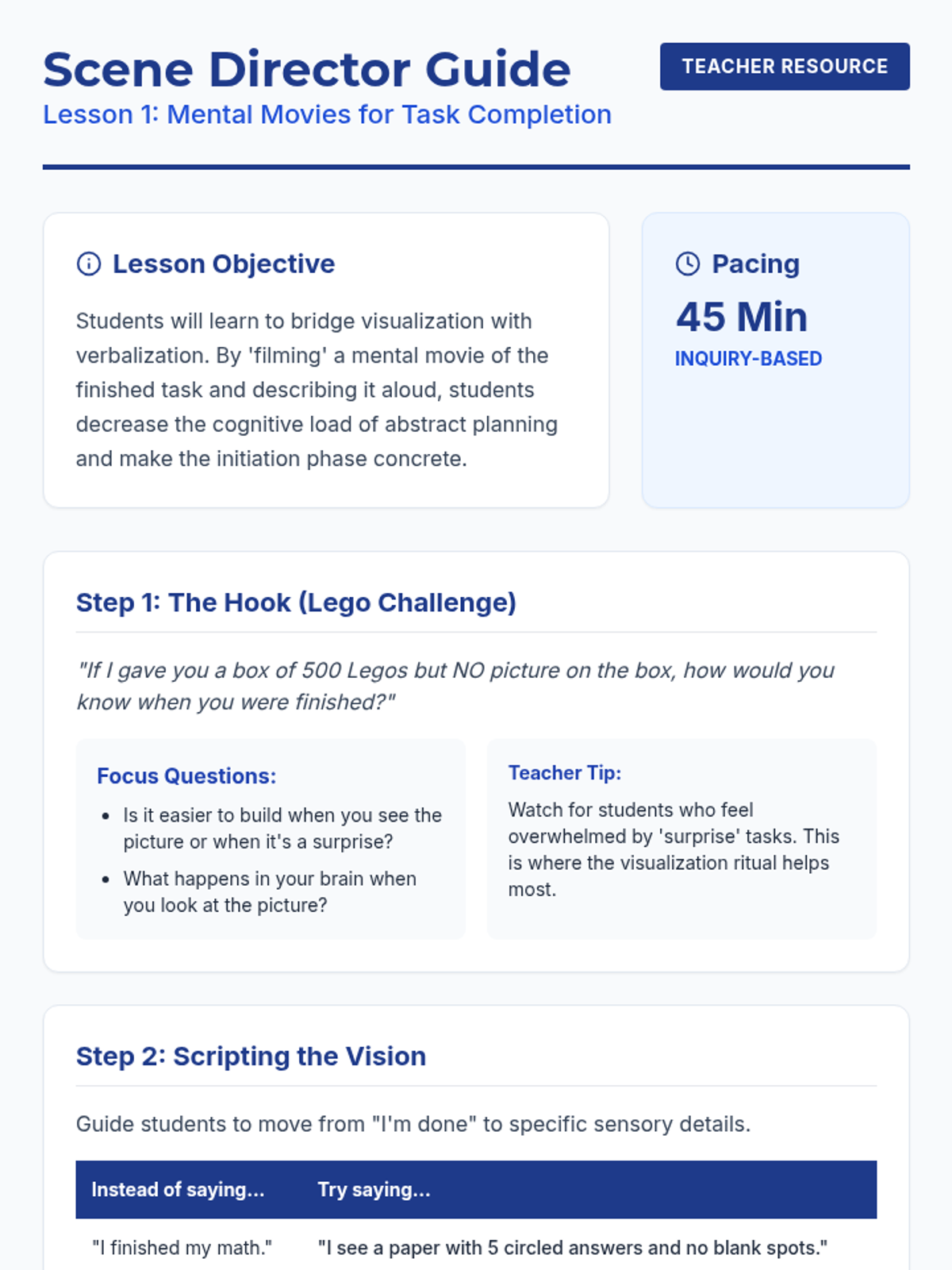
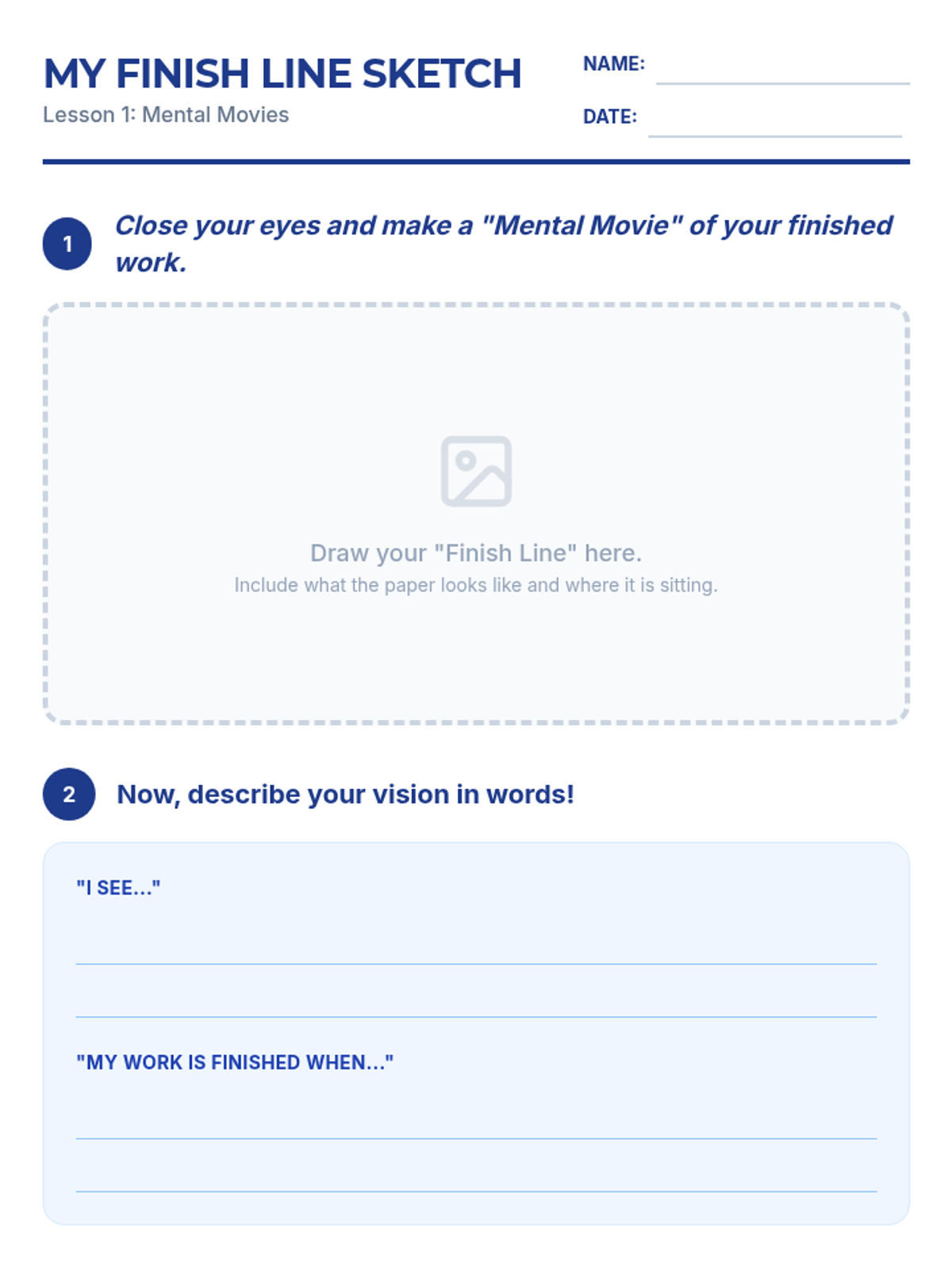
This sequence helps students overcome task initiation hurdles by combining visualization and verbal self-talk. Students learn to 'see' the finished product, reverse engineer the steps, estimate time accurately, and use micro-goals to take the first step.
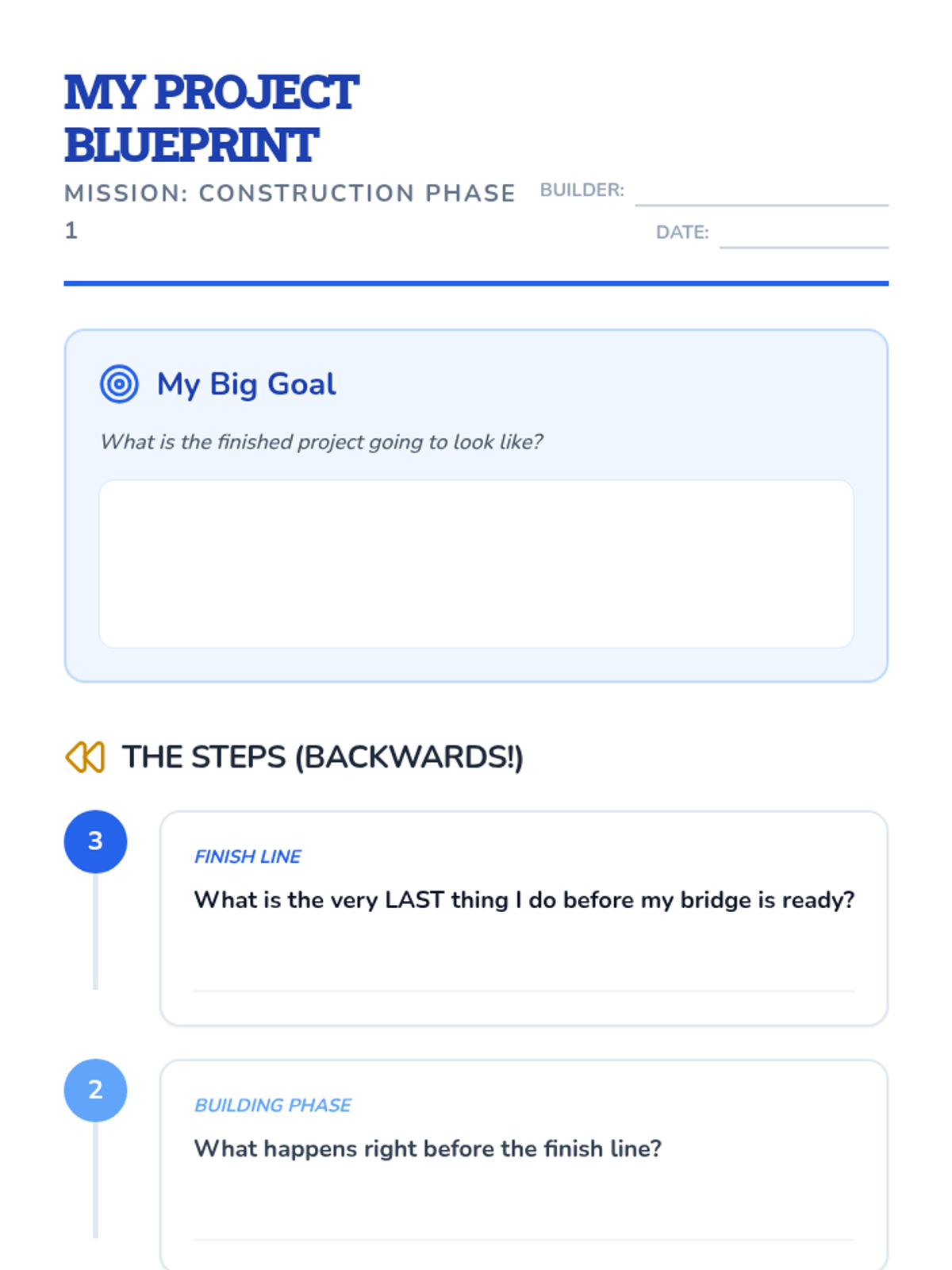
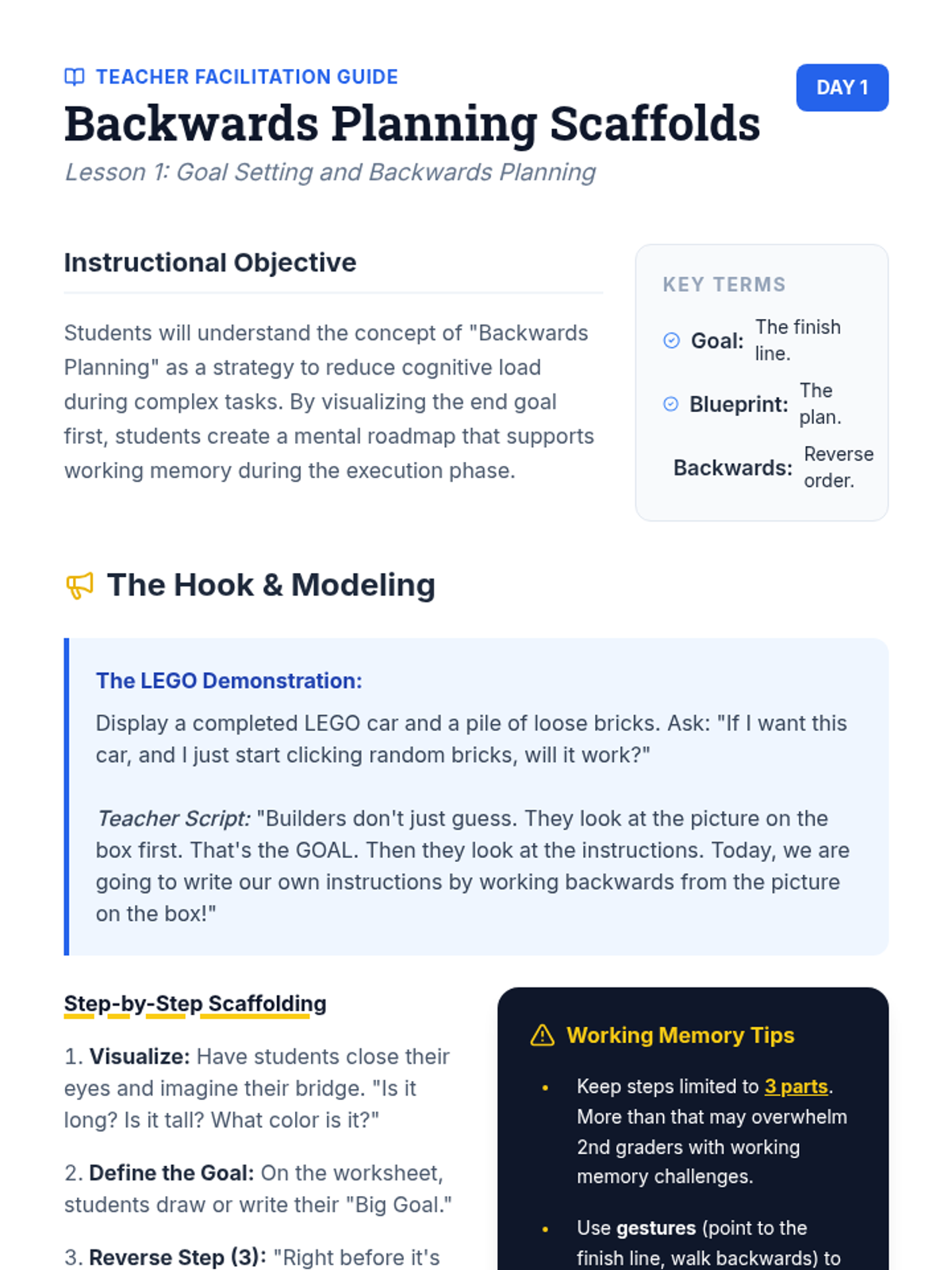
A multi-day project-based unit where 2nd-grade students build a construction project while practicing working memory and executive functioning skills. The unit focuses on backwards planning, material management, and sustained focus through a 'Blueprint to Building' theme.
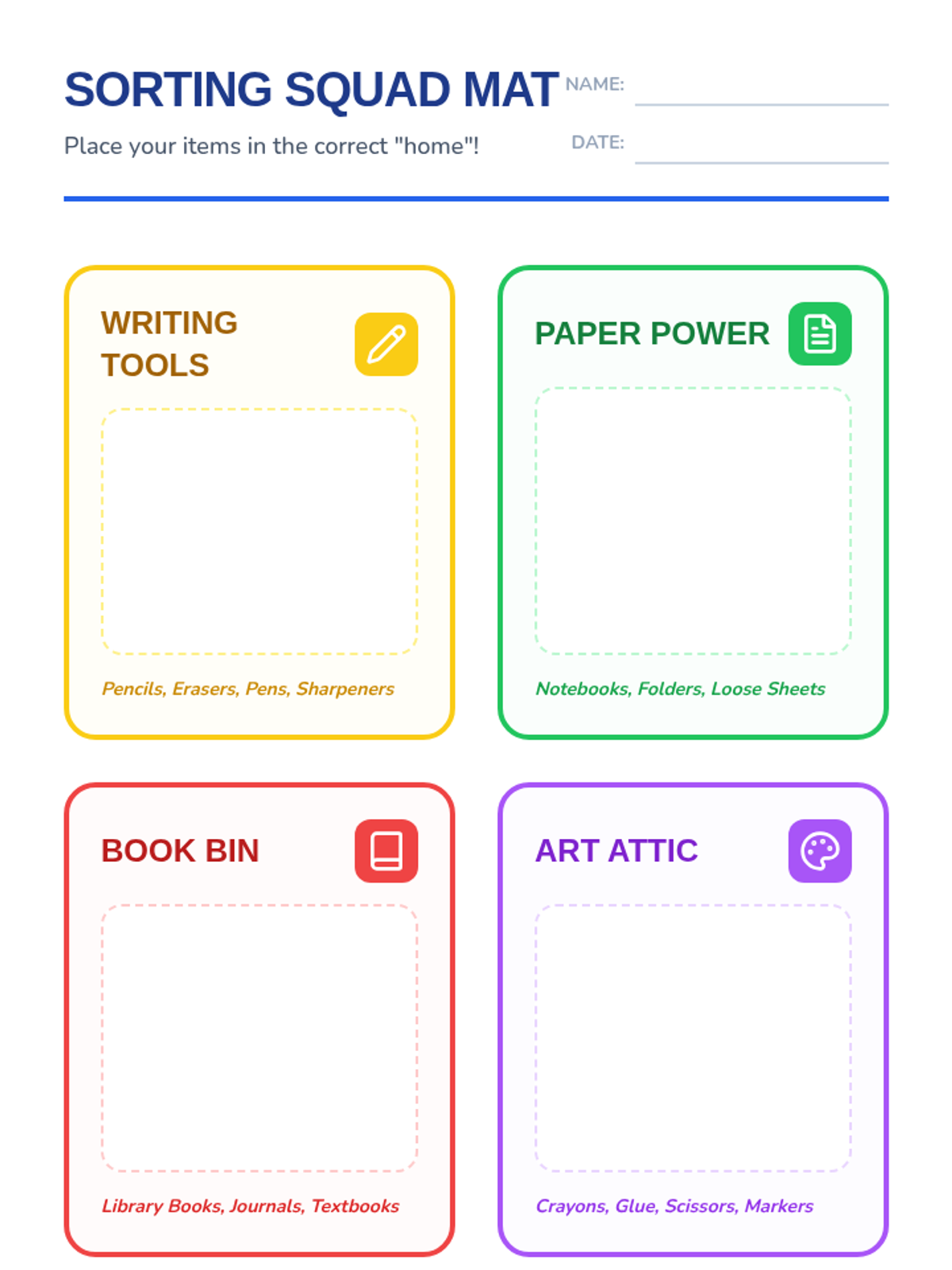
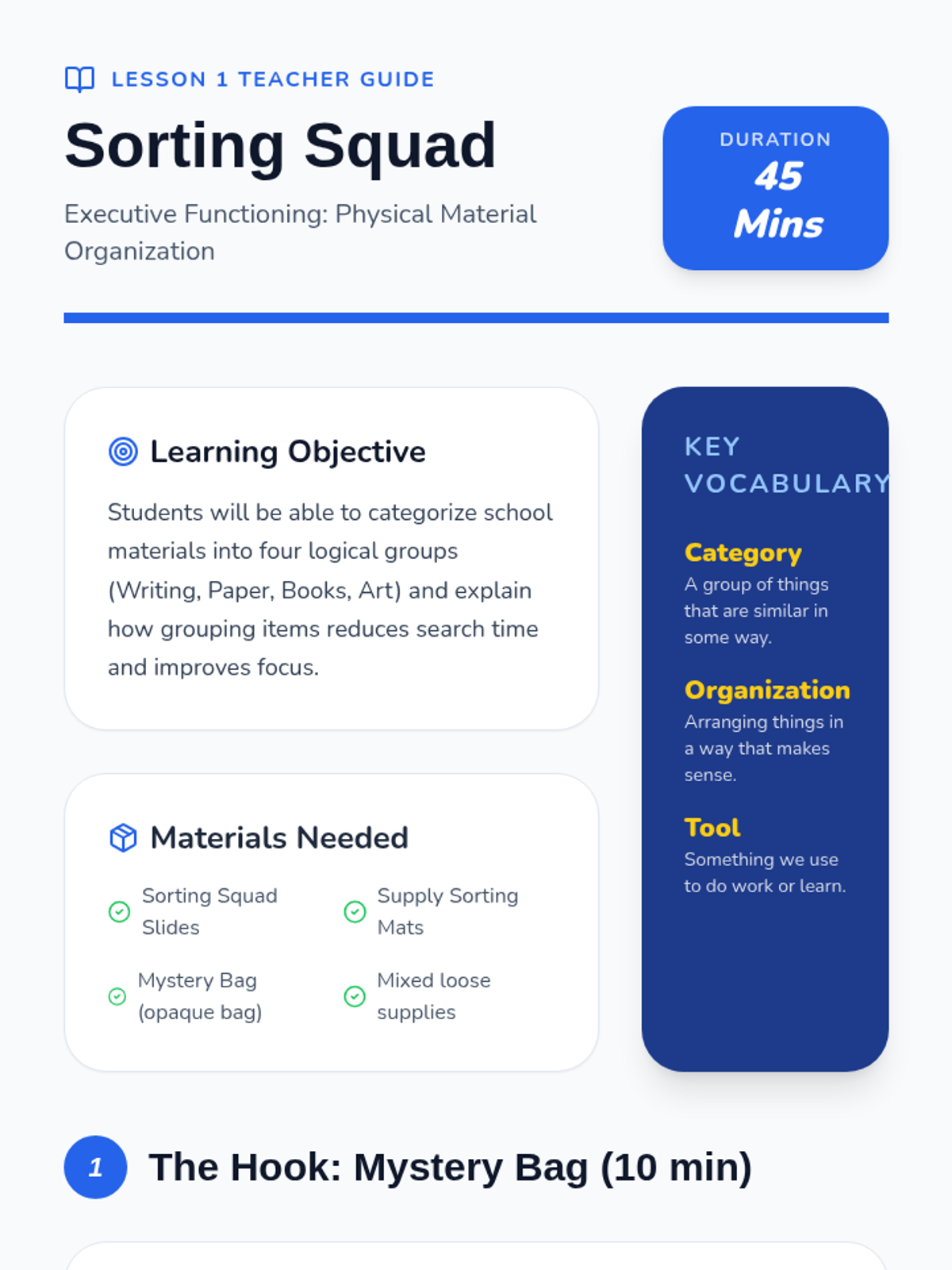
A comprehensive sequence for 2nd Grade students to master the executive functioning skills of personal workspace organization. Through categorization, spatial planning, and routine development, students learn to maintain an efficient desk or bin system to support their learning.
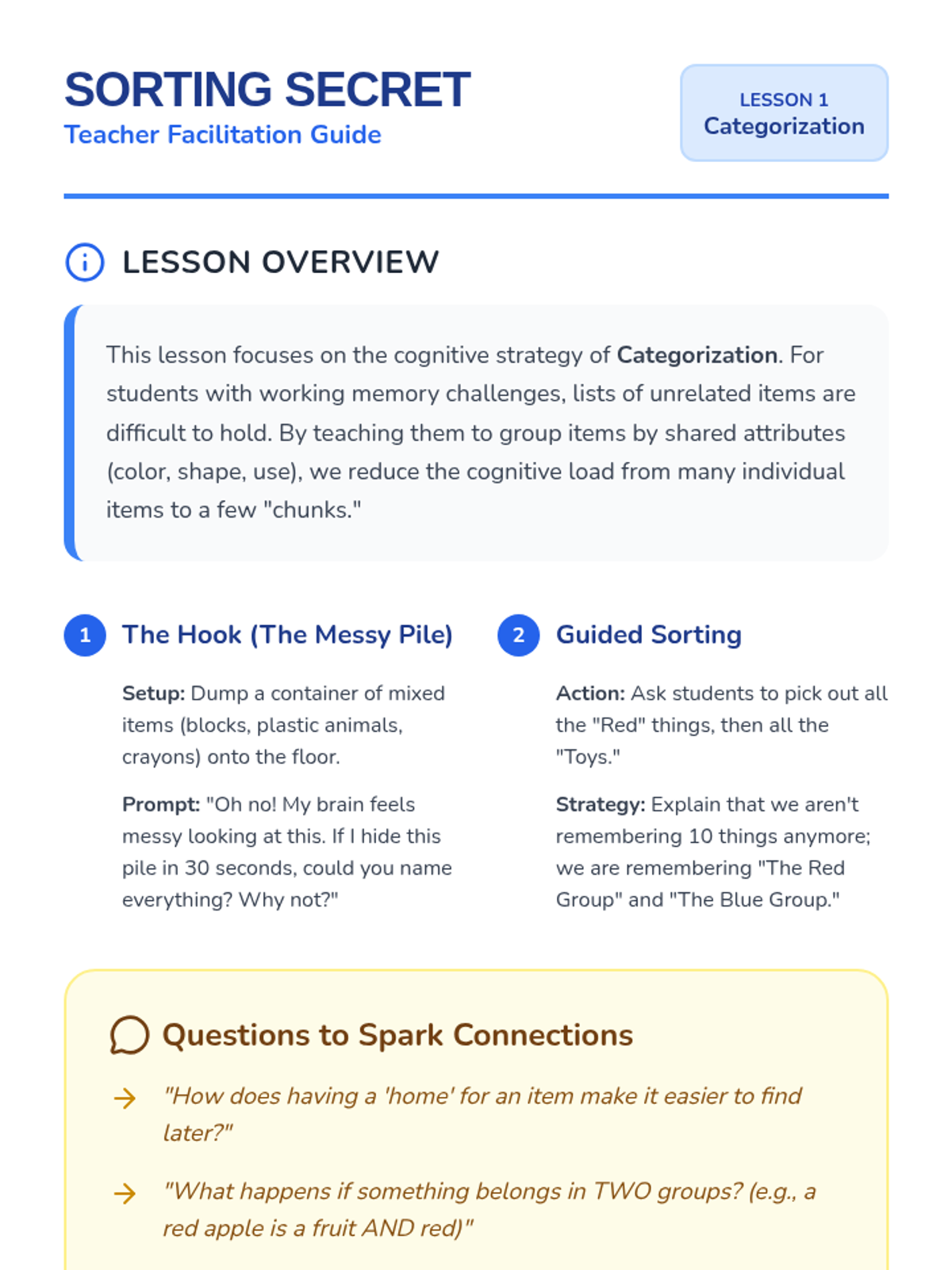
A foundational sequence for 1st-grade students to develop working memory strategies using association and grouping. Students progress from basic sorting to advanced mnemonic techniques like story chaining and initial letter cues to enhance information retention.
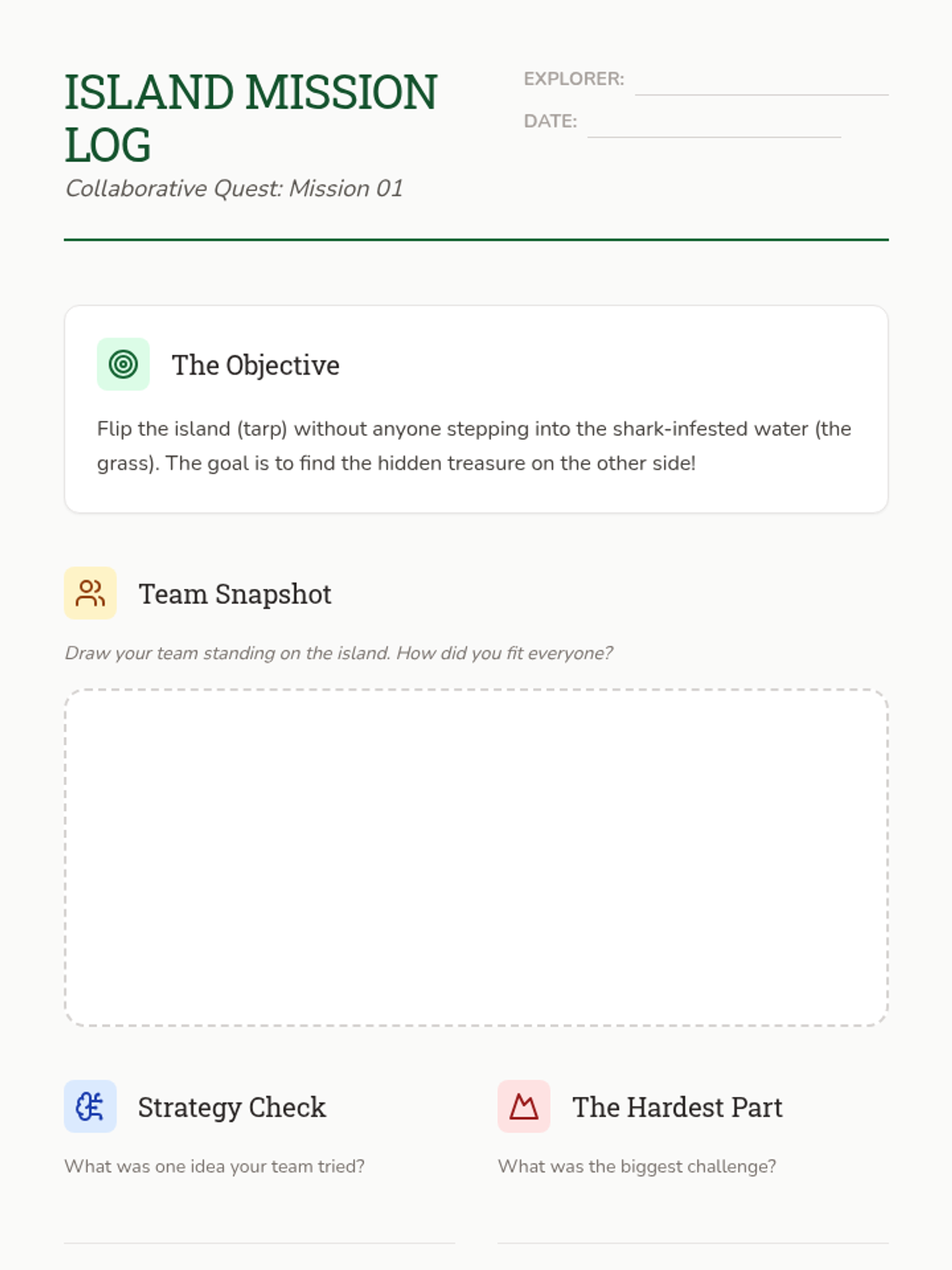
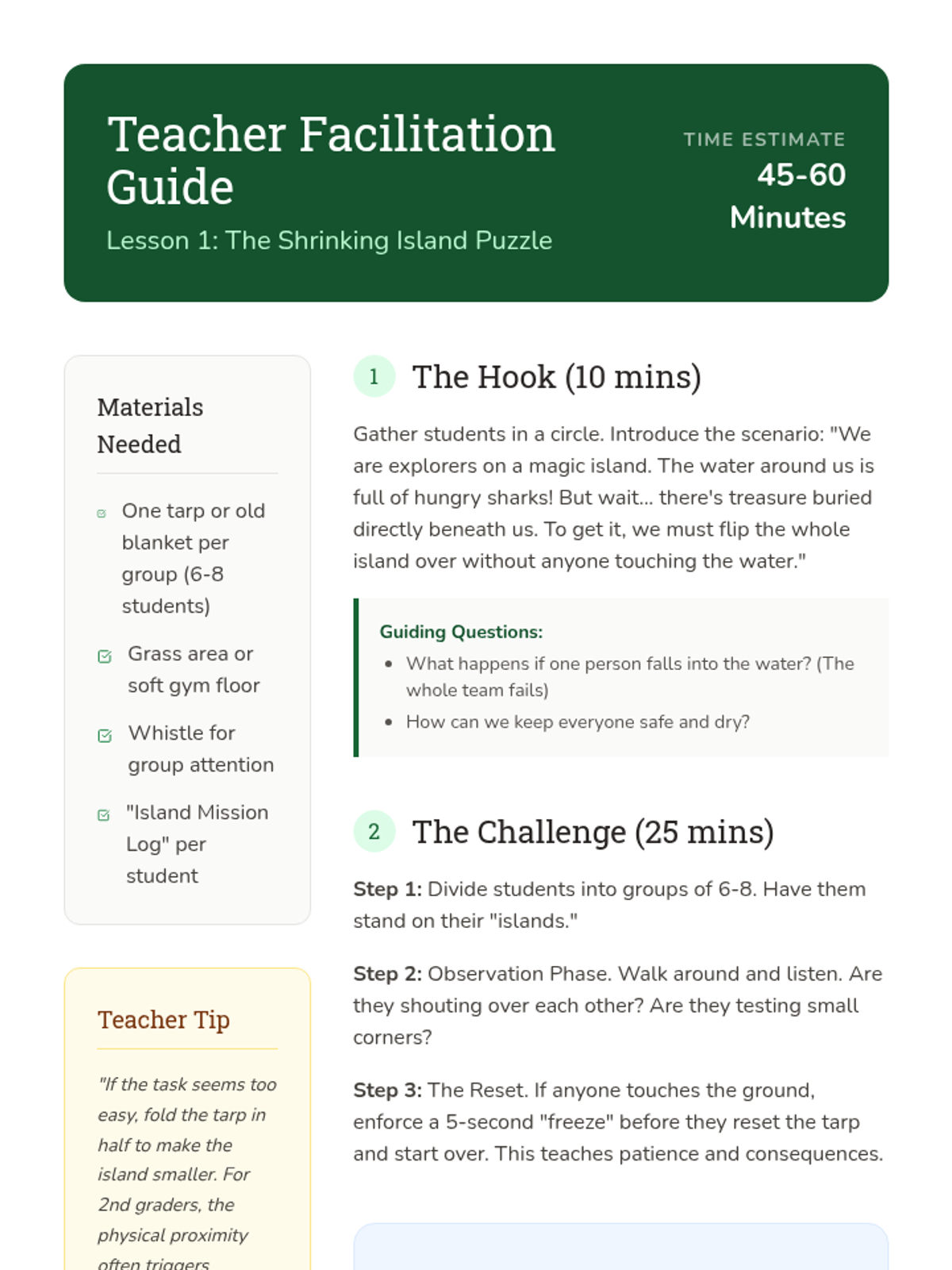
A 5-lesson series for 2nd graders focused on team-building and collaborative problem-solving through outdoor adventure scenarios. Students develop communication, strategic thinking, and resilience as they navigate physical and mental challenges.
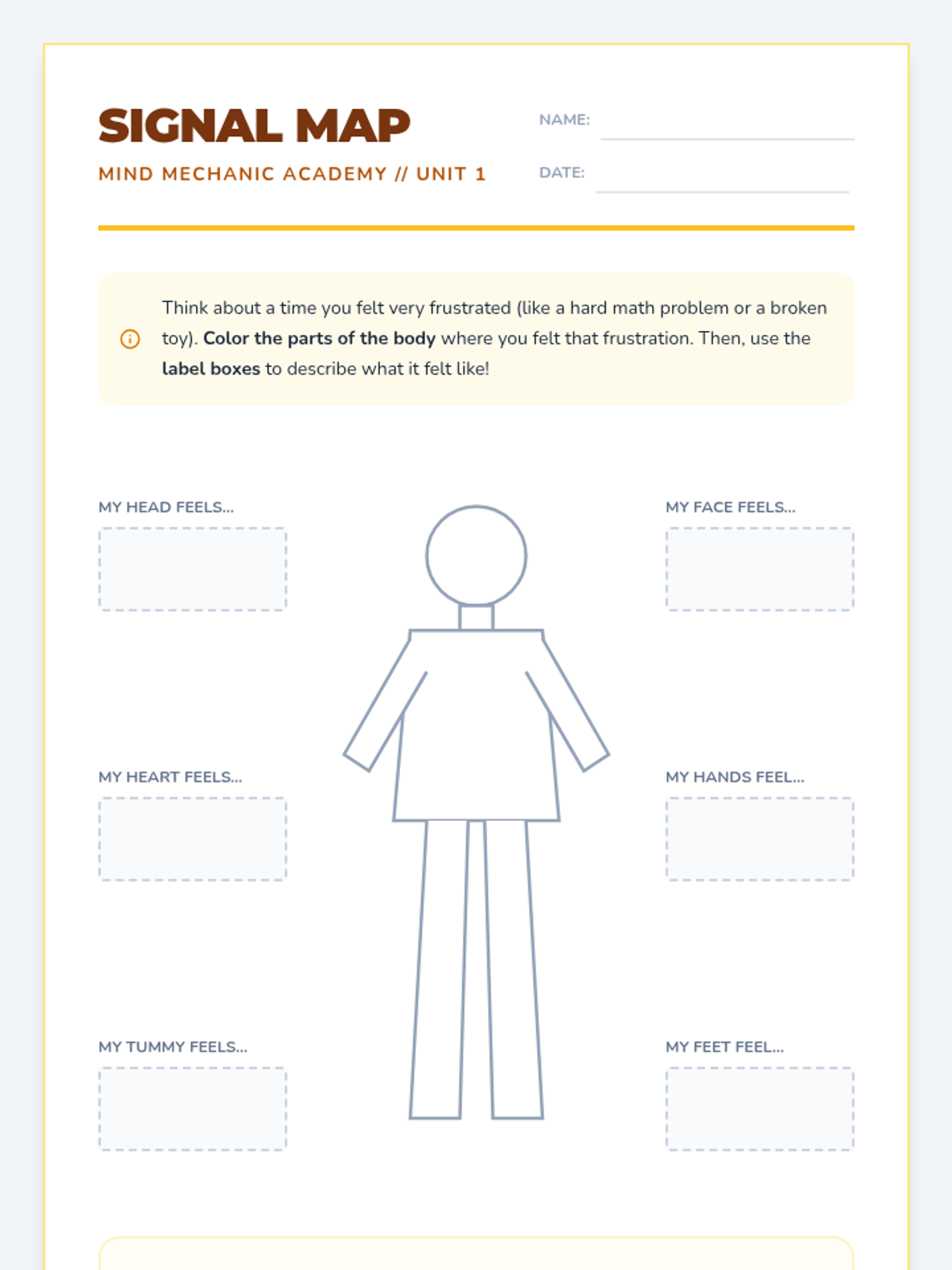
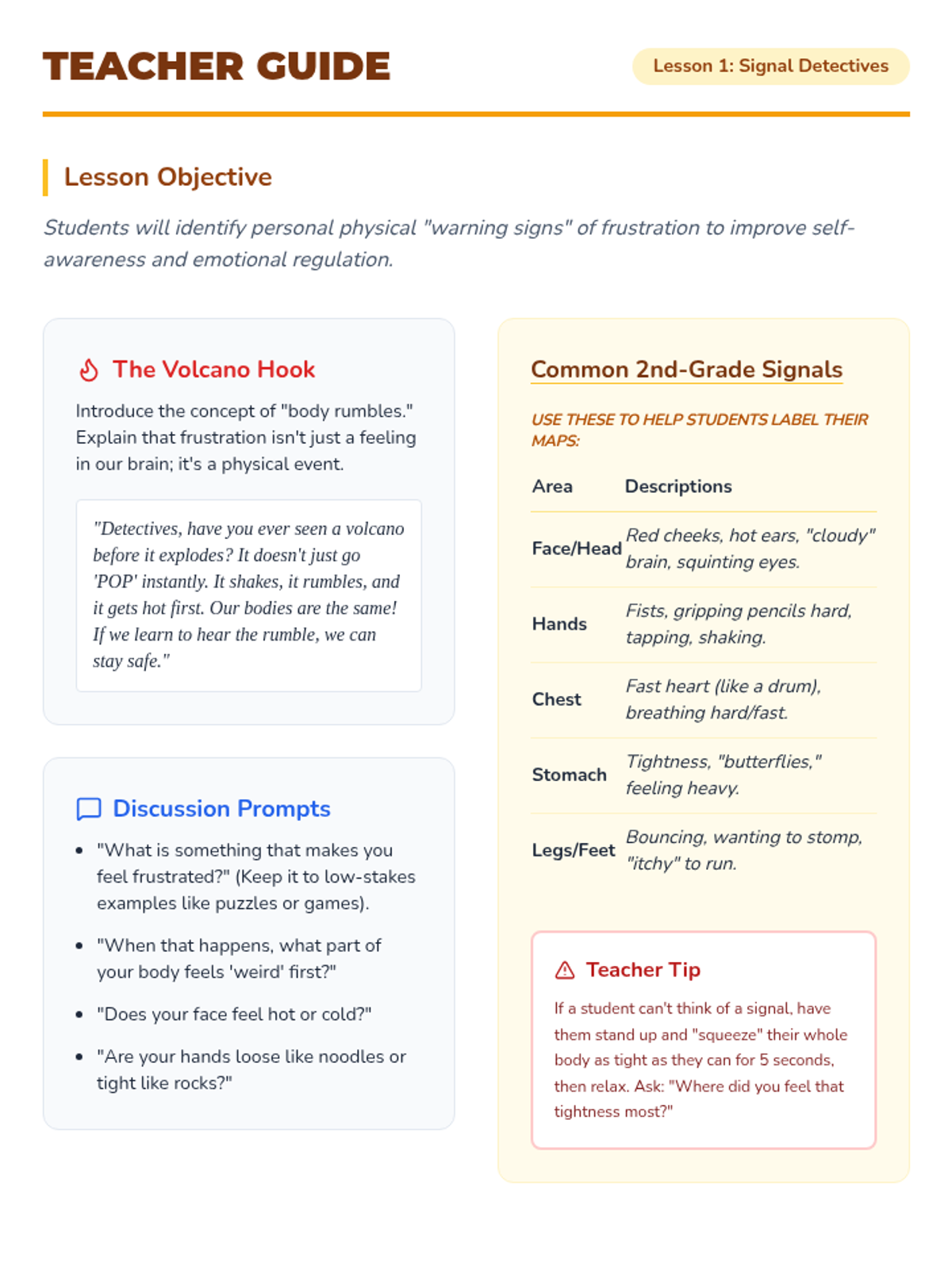
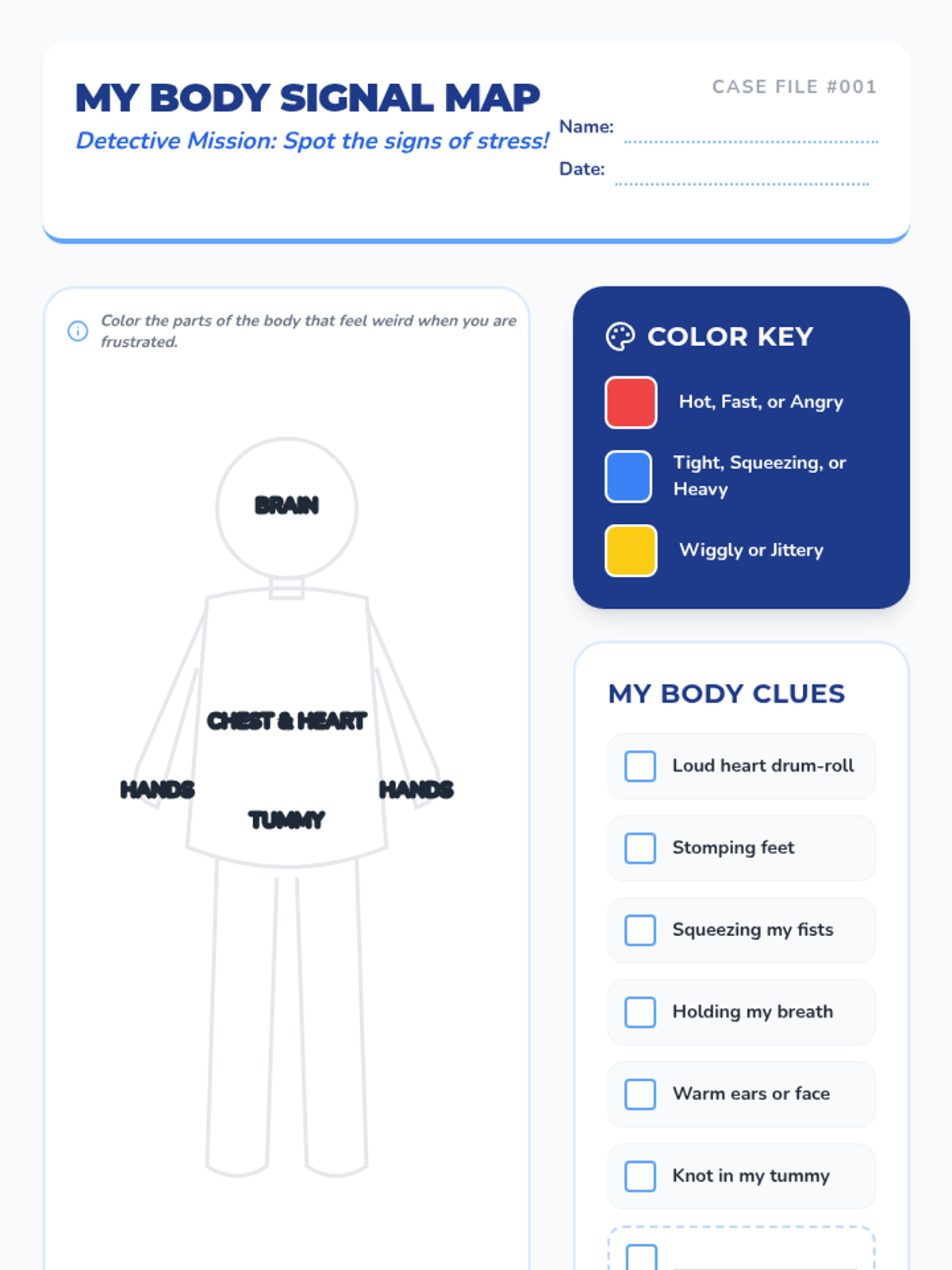
This sequence teaches 2nd-grade students how to recognize physical signs of frustration and use emotional regulation and problem-solving strategies to build resilience. Through body mapping, calming techniques, and the 'Ladder Strategy' for task segmentation, students develop a tangible toolkit for overcoming setbacks.
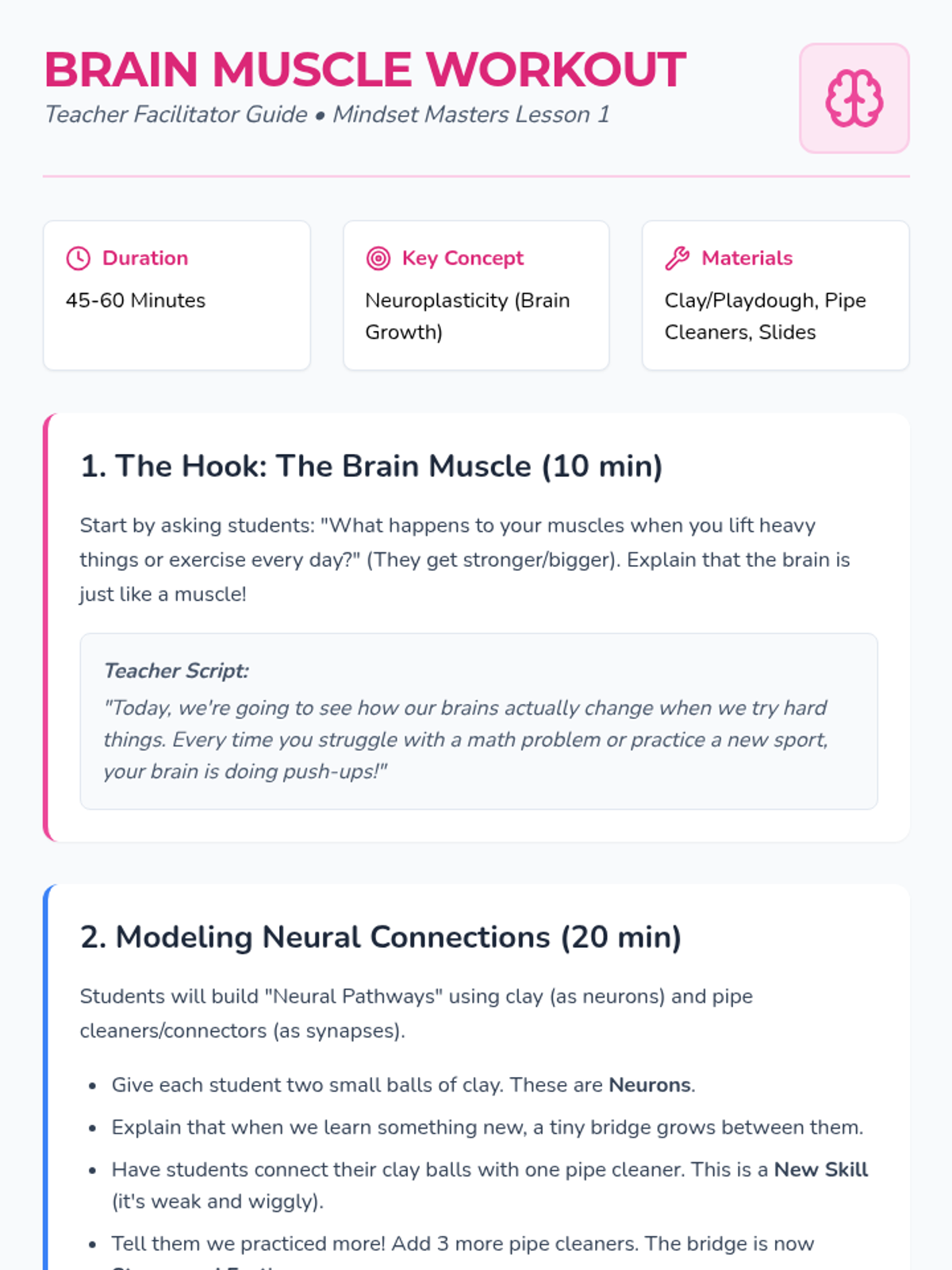
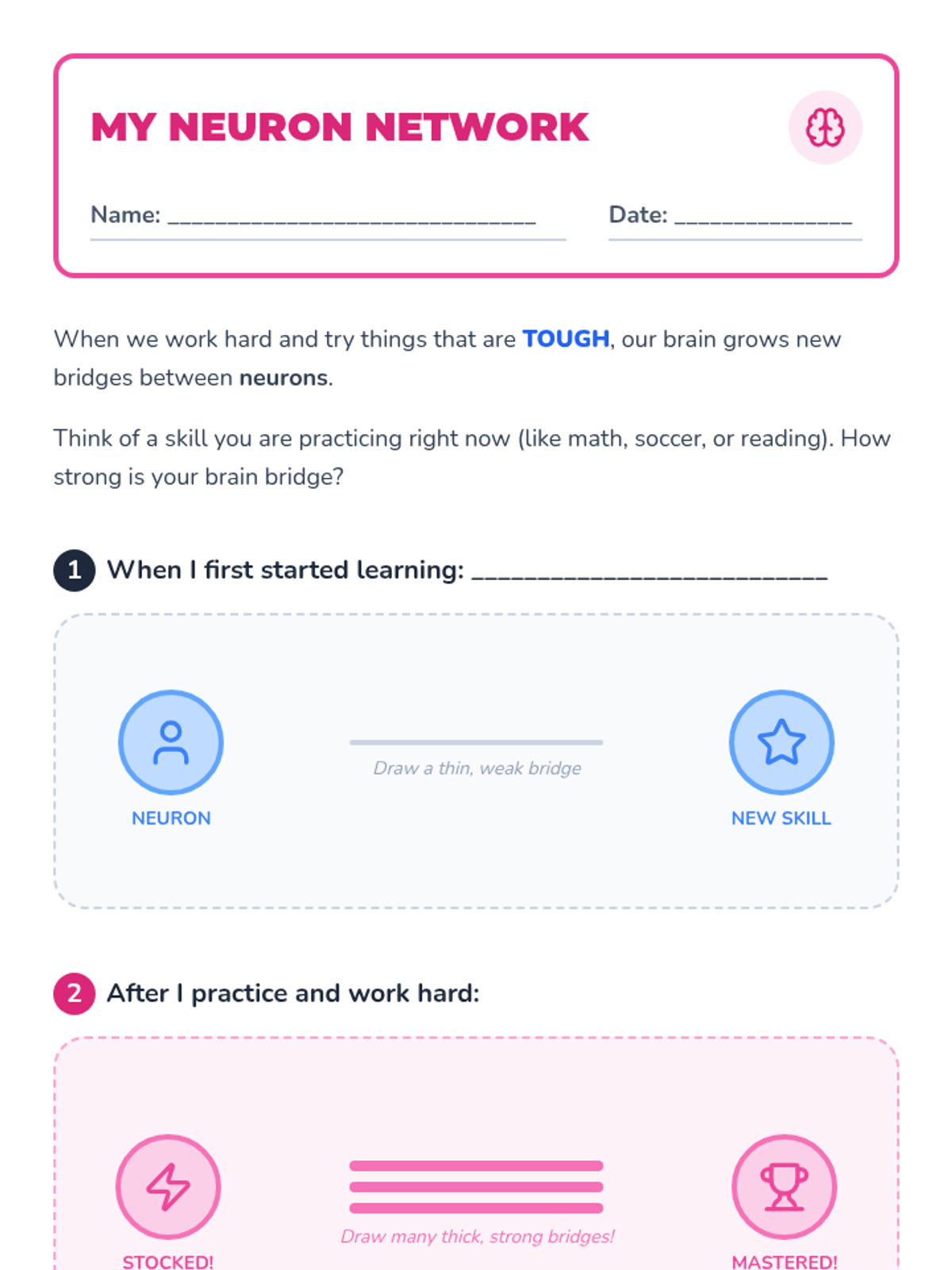
This sequence introduces second-grade students to growth mindset and neuroplasticity. Students learn that their brains grow like muscles through effort, practice reframing 'fixed' thoughts with the 'power of yet', and develop personal resilience strategies through positive self-talk and goal setting.
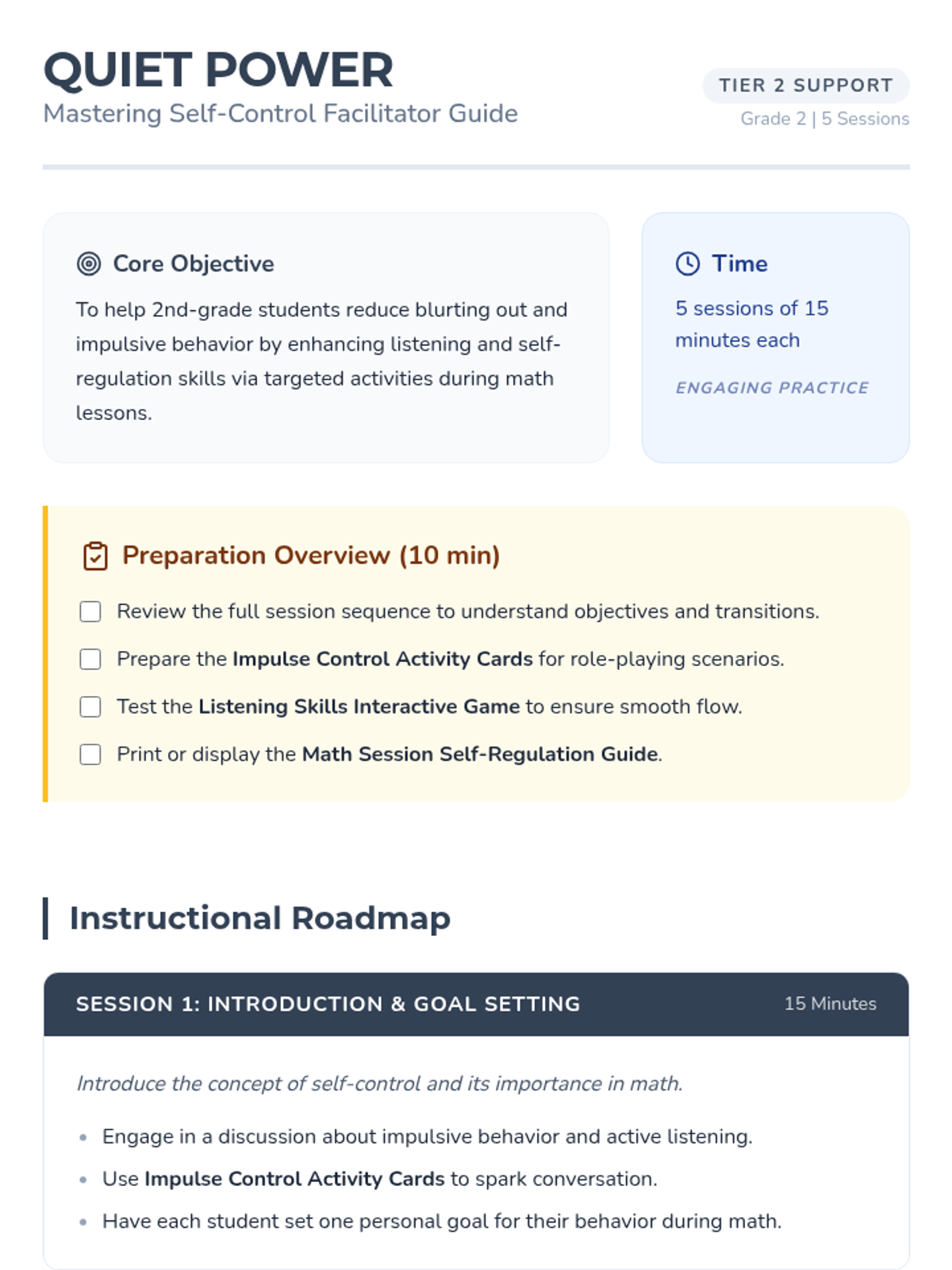
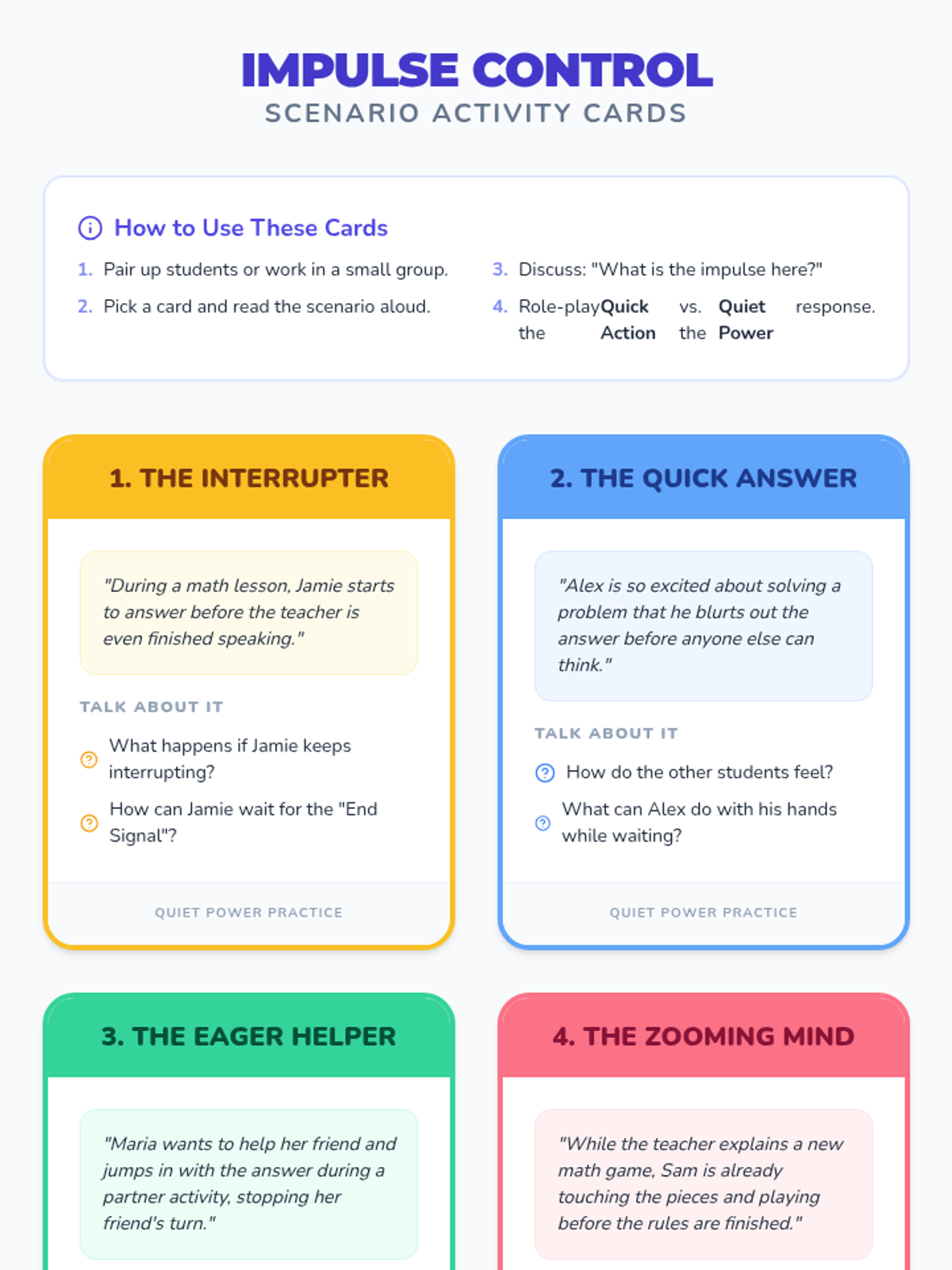
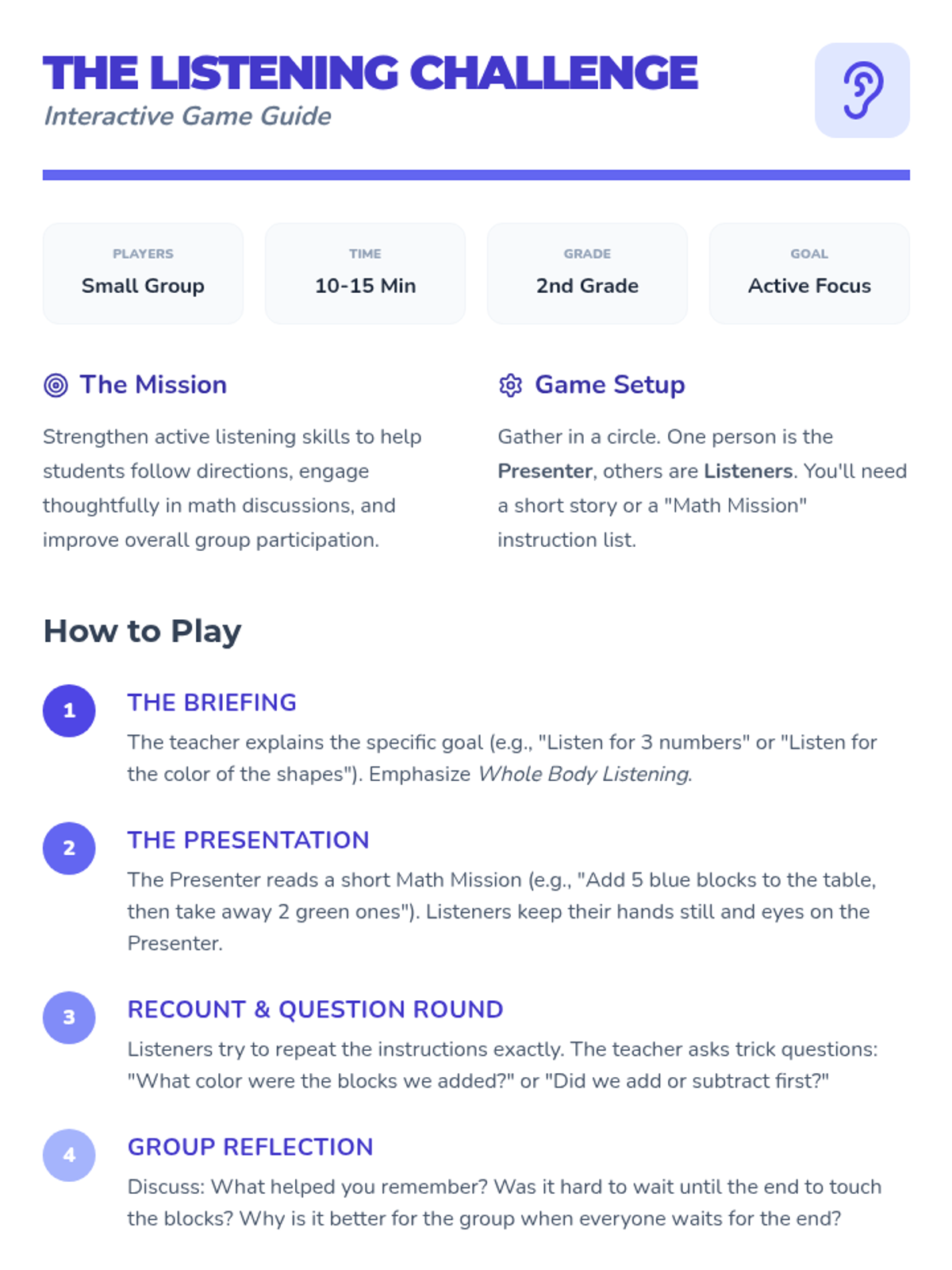
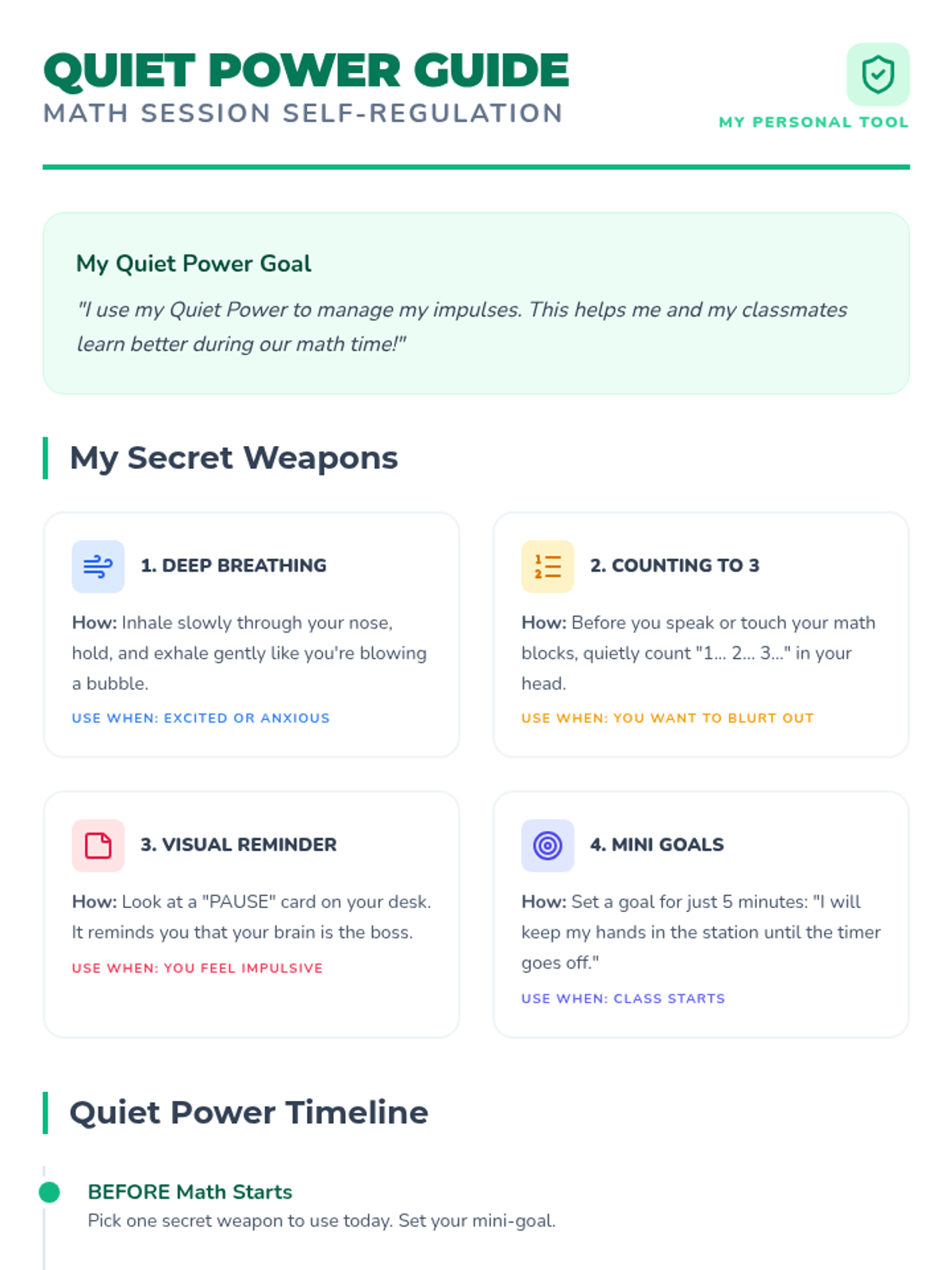
A 5-session social-emotional learning sequence for 2nd-grade students focused on reducing impulsive behaviors, enhancing active listening, and practicing self-regulation specifically during math instruction.
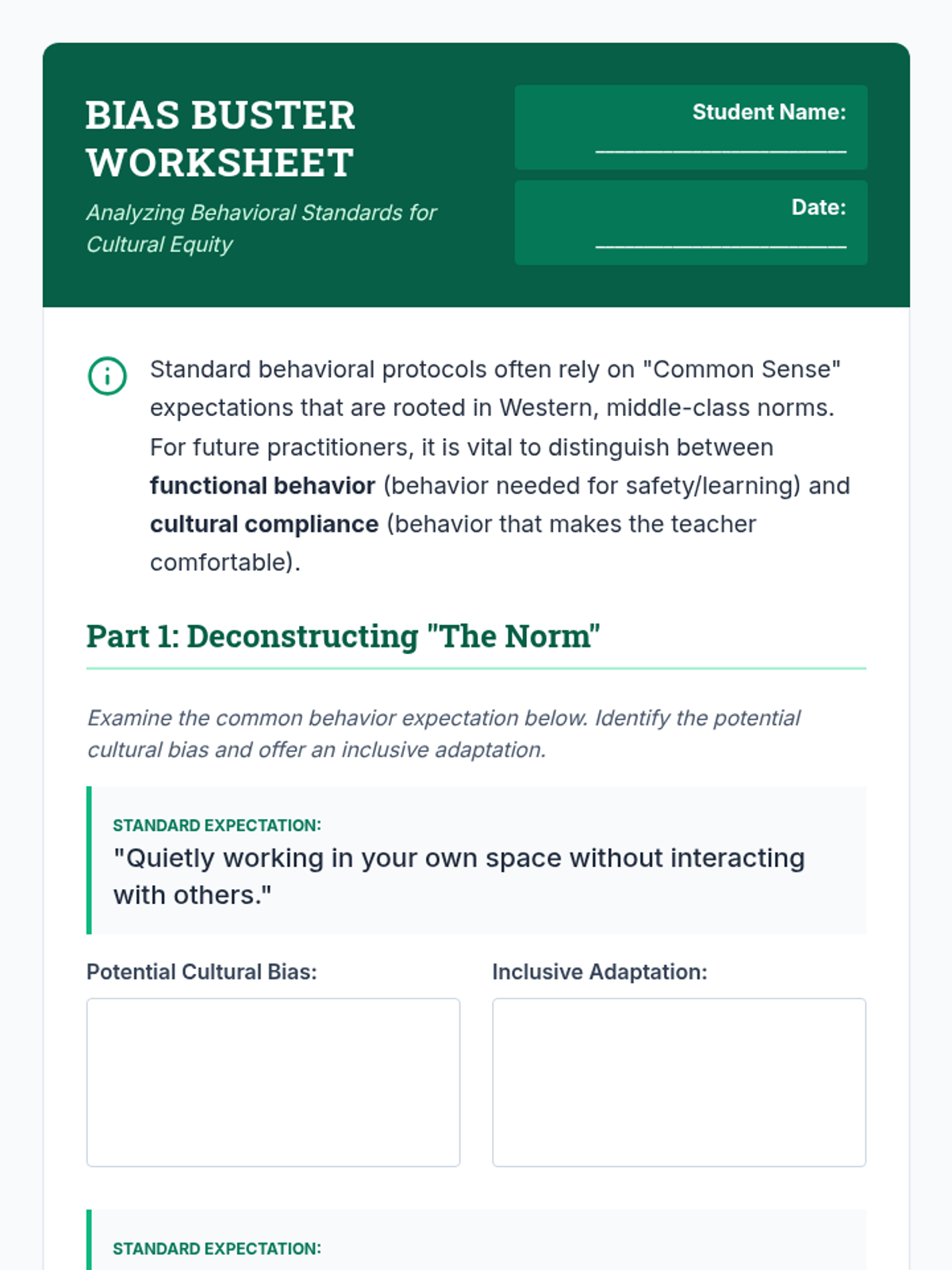
This sequence prepares undergraduate students in counseling and education to adapt standard behavioral check-in procedures (like Check-In/Check-Out) for diverse populations. It emphasizes cultural responsiveness, developmental appropriateness, neurodiversity, and modern remote contexts to ensure equity and accessibility in behavioral support.
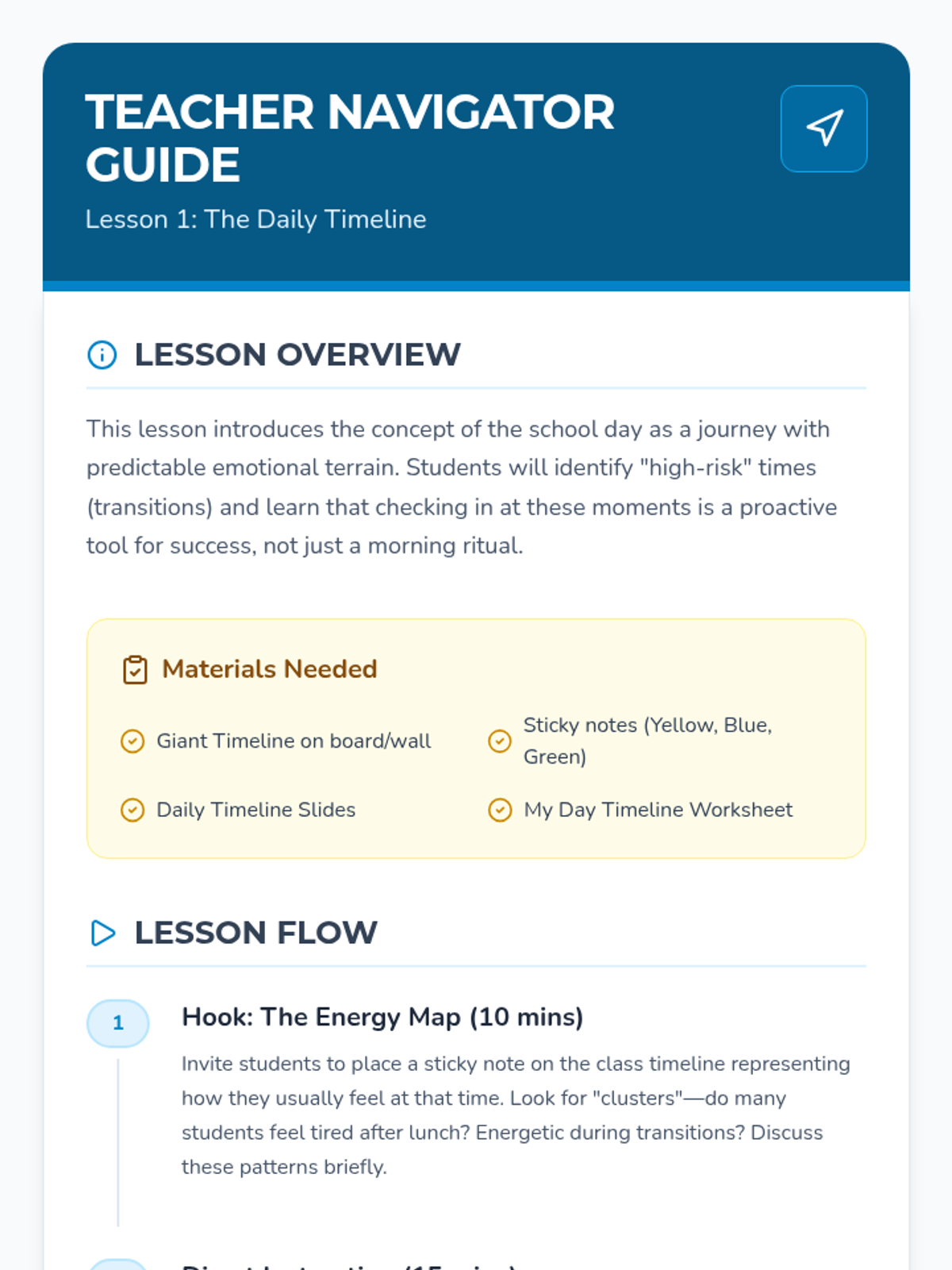
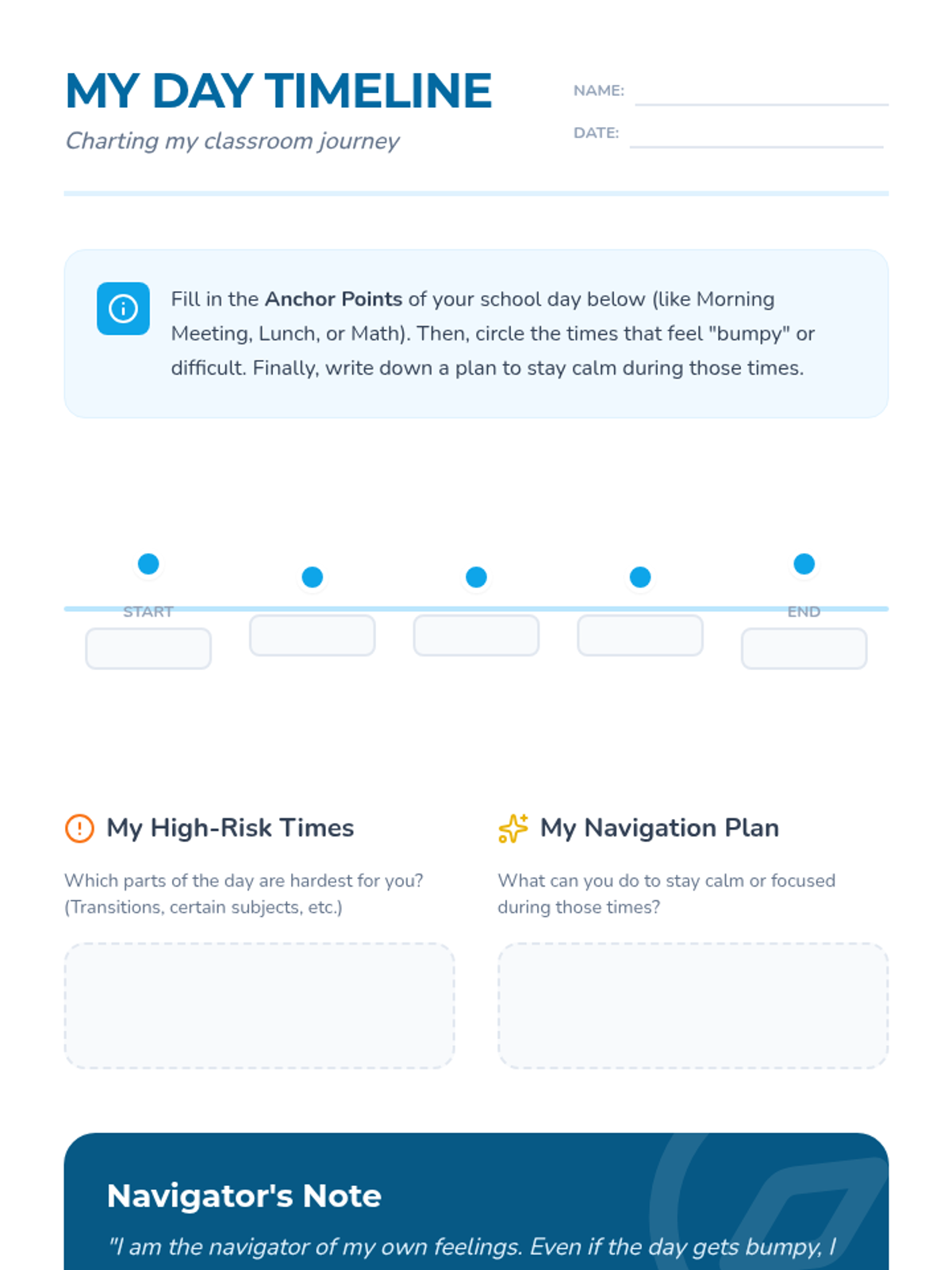
This mastery-based sequence teaches students to view check-ins not just as a morning event, but as a continuous cycle of self-monitoring and reflection. Students learn to track their emotional patterns over time, identifying triggers and successful interventions to develop long-term metacognitive habits.
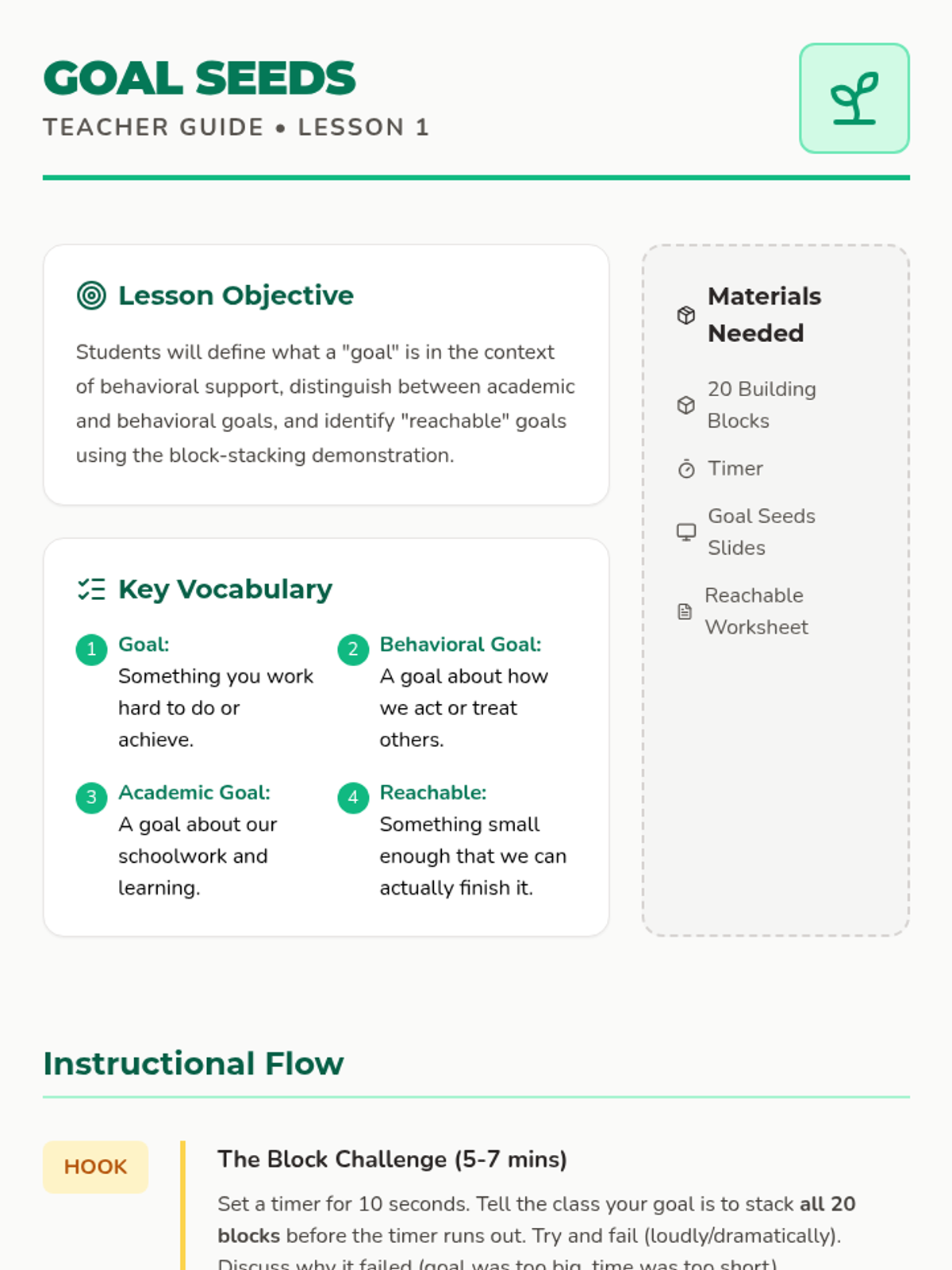
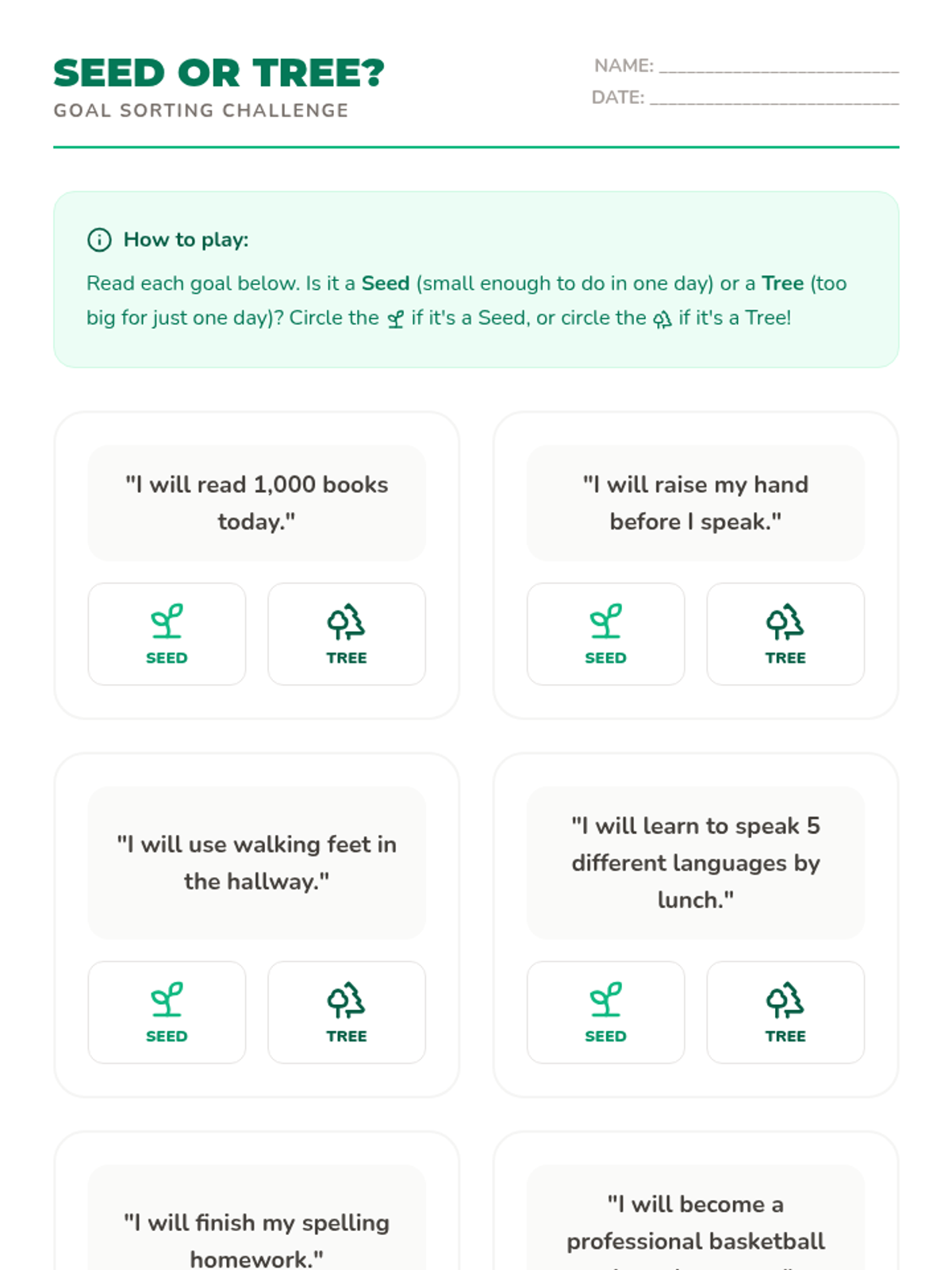
A comprehensive sequence for 2nd-grade students to transition from emotional check-ins to actionable behavioral goal setting. Students learn to set reachable goals, design personal tracking tools, and perform mid-day and end-of-day reflections to build autonomy and resilience.
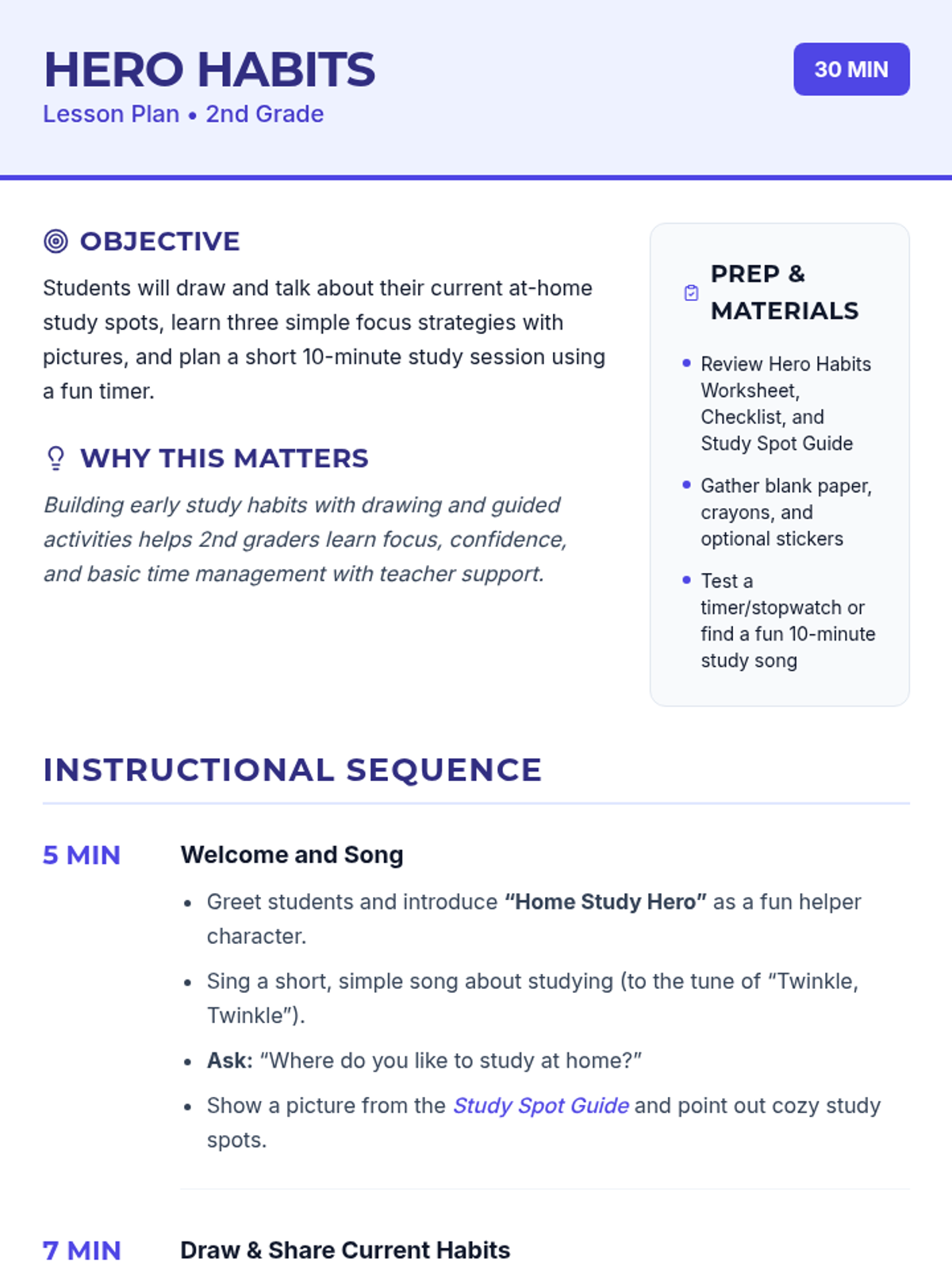
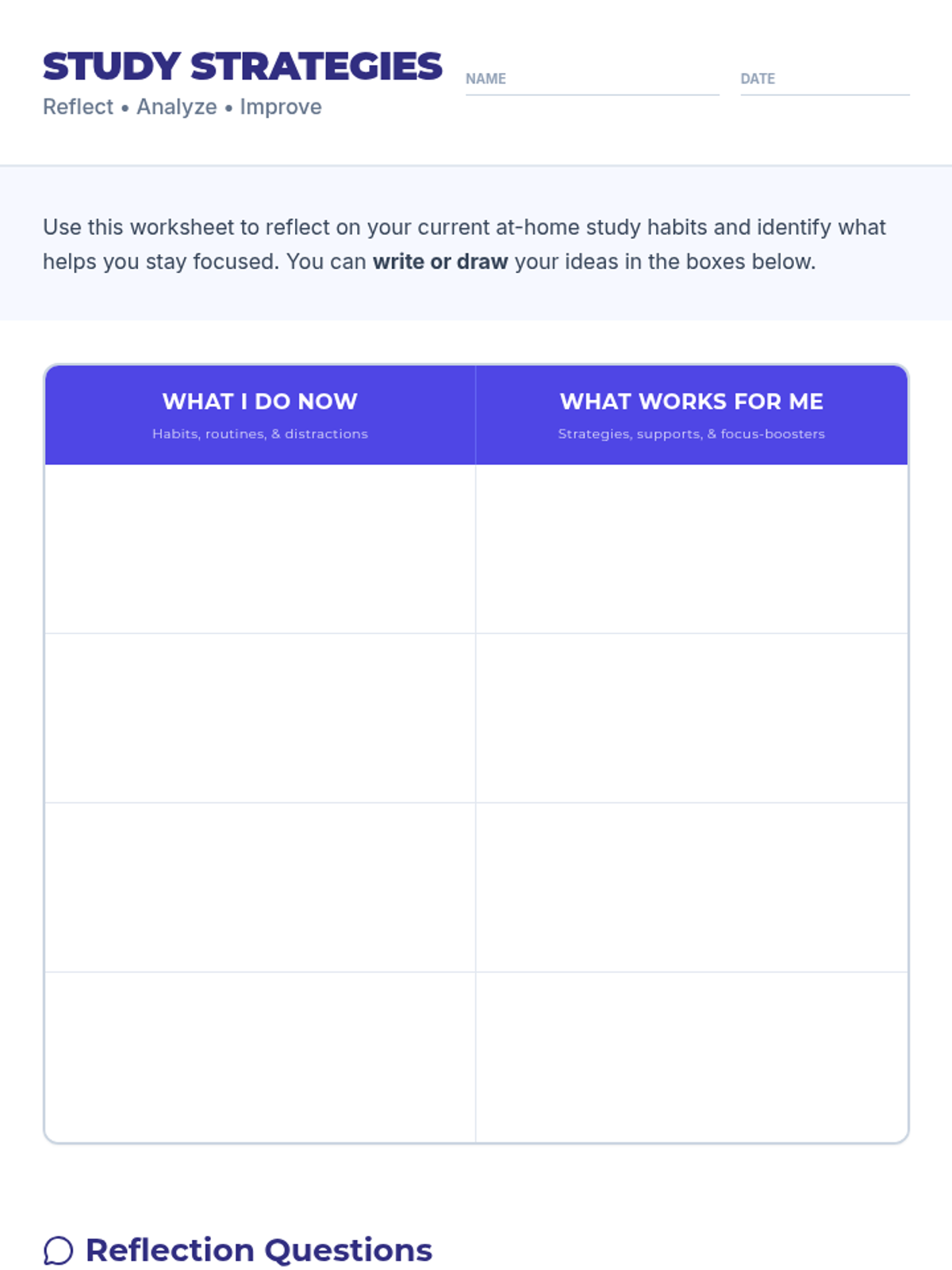
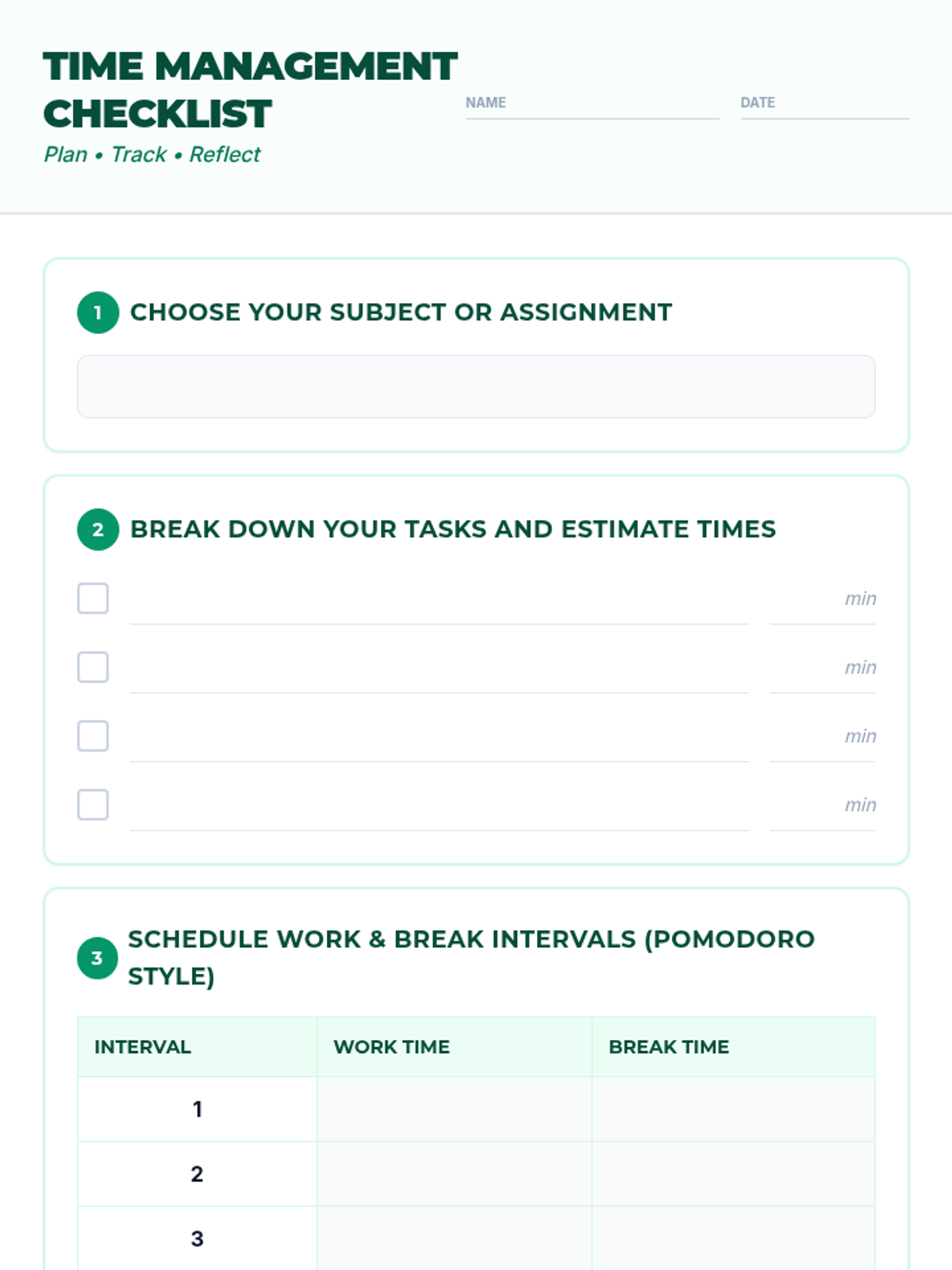
This sequence provides age-appropriate sessions for building effective at-home study routines, ranging from primary grade 'Home Study Hero' activities to middle school 'Homework Power-Up' collaborative planning. Students and parents learn to optimize their environment, manage time with the Pomodoro Technique, and reflect on their growth as learners.
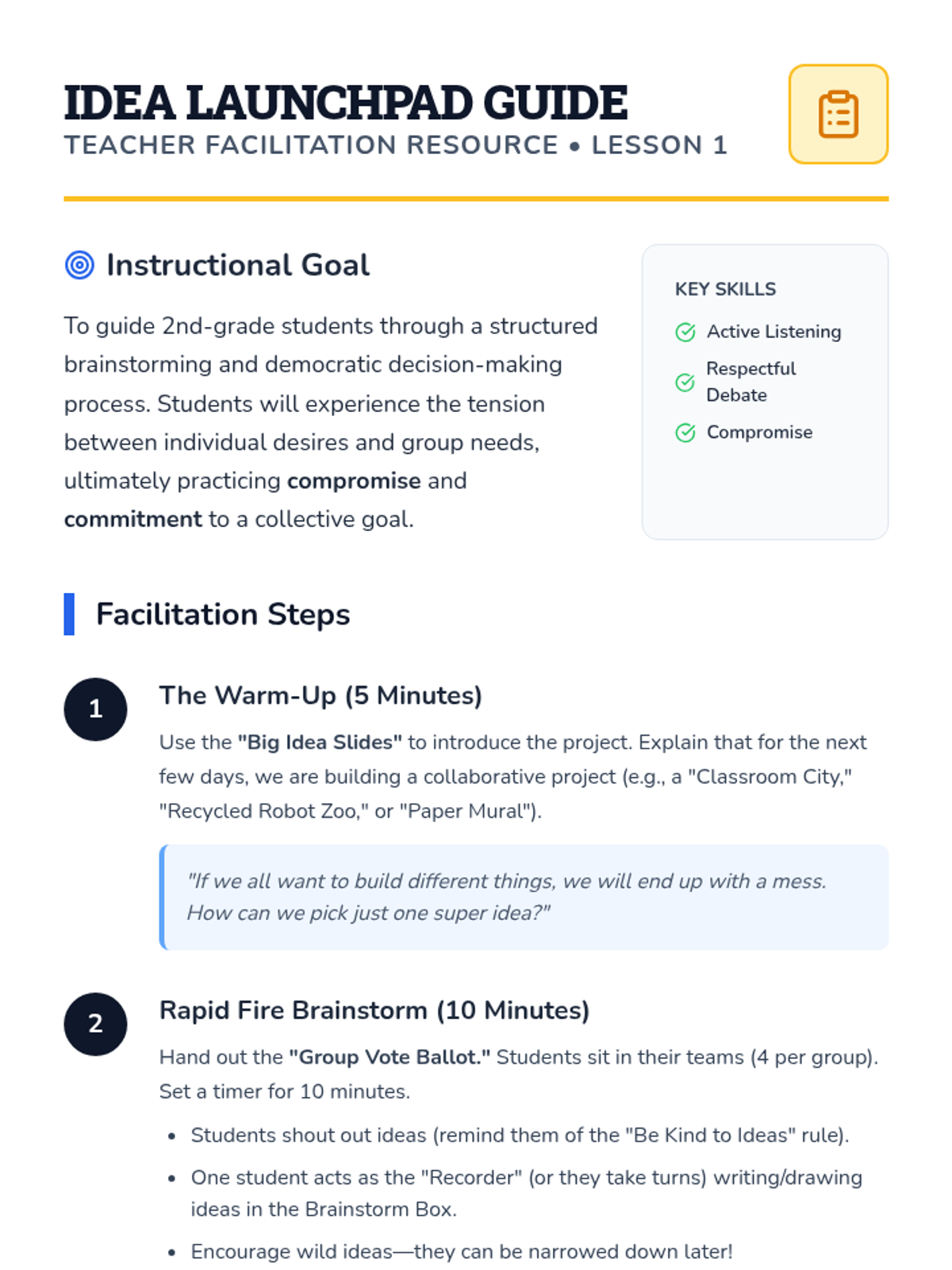
Students move through the phases of professional project management, from brainstorming and consensus-building to execution and review. They will learn to apply listening and conflict resolution skills to a tangible, collaborative objective: planning and building a shared project.
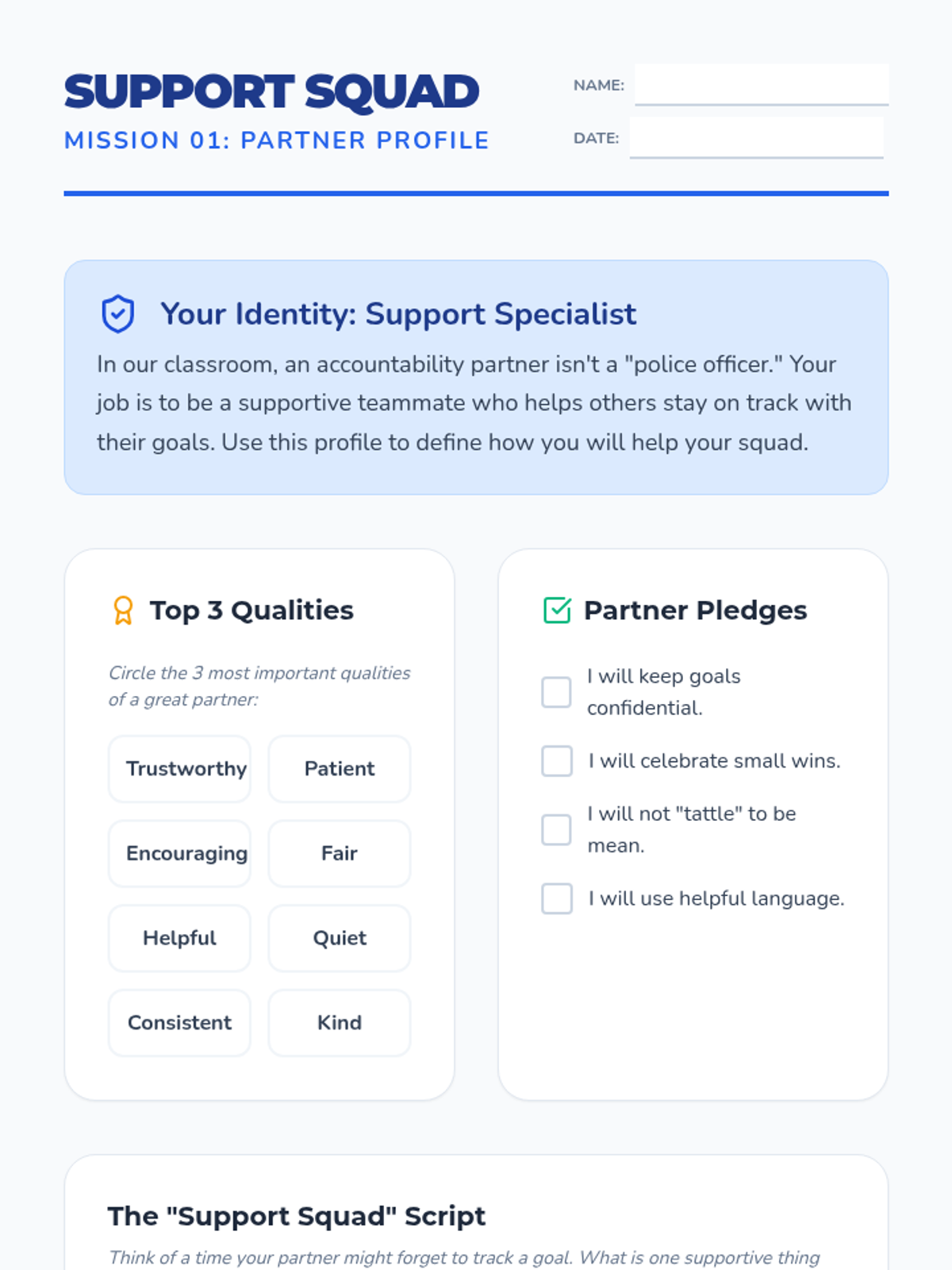
Focusing on the social aspect of behavioral growth, this sequence introduces peer accountability and collaborative goal setting. Students participate in simulations to learn how to be supportive accountability partners without being critical. The sequence builds social-emotional skills by teaching students that individual tracking contributes to the community environment.
A sequence for 2nd graders to learn how behavioral activation—choosing positive actions—can help regulate emotions like sadness and anxiety. Students learn to recognize physical emotional cues and develop a personal 'Bounce-Back Plan' to shift their mood.
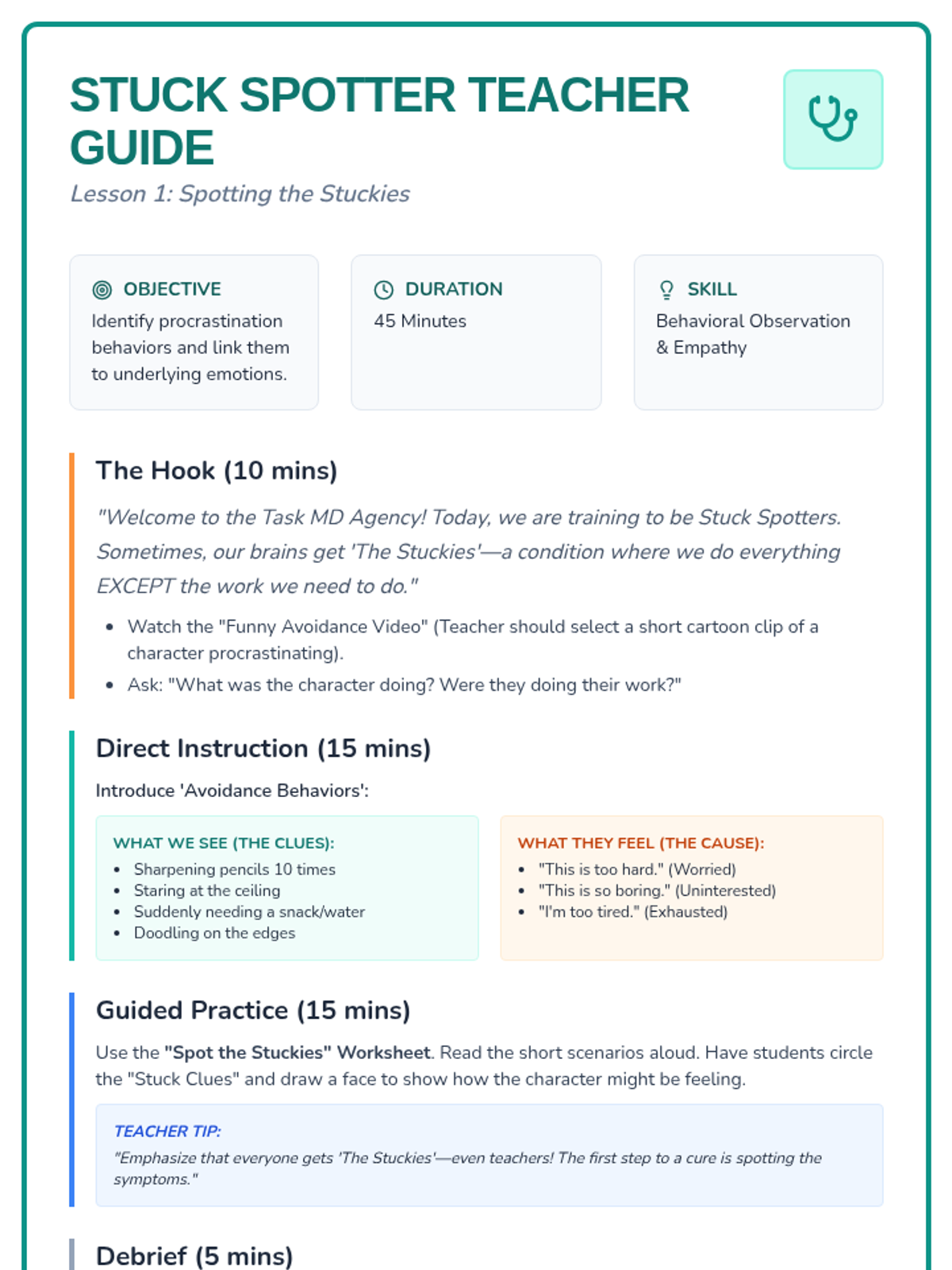
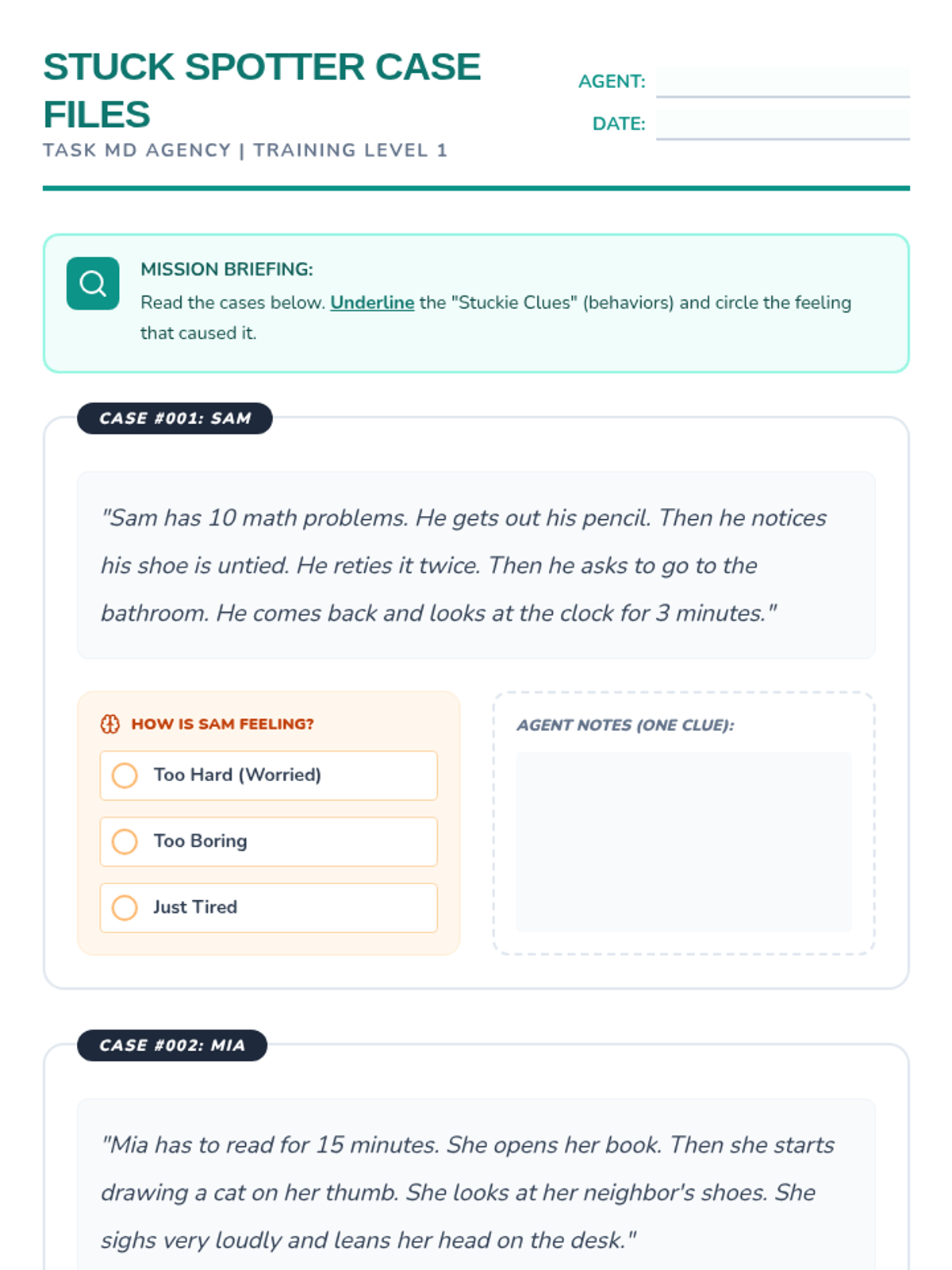
A sequence focused on helping students overcome emotional barriers to task initiation using a 'Task Doctor' theme. Students learn to identify avoidance behaviors, diagnose the root cause of being 'stuck', and prescribe effective self-talk solutions through role-play and reflection.
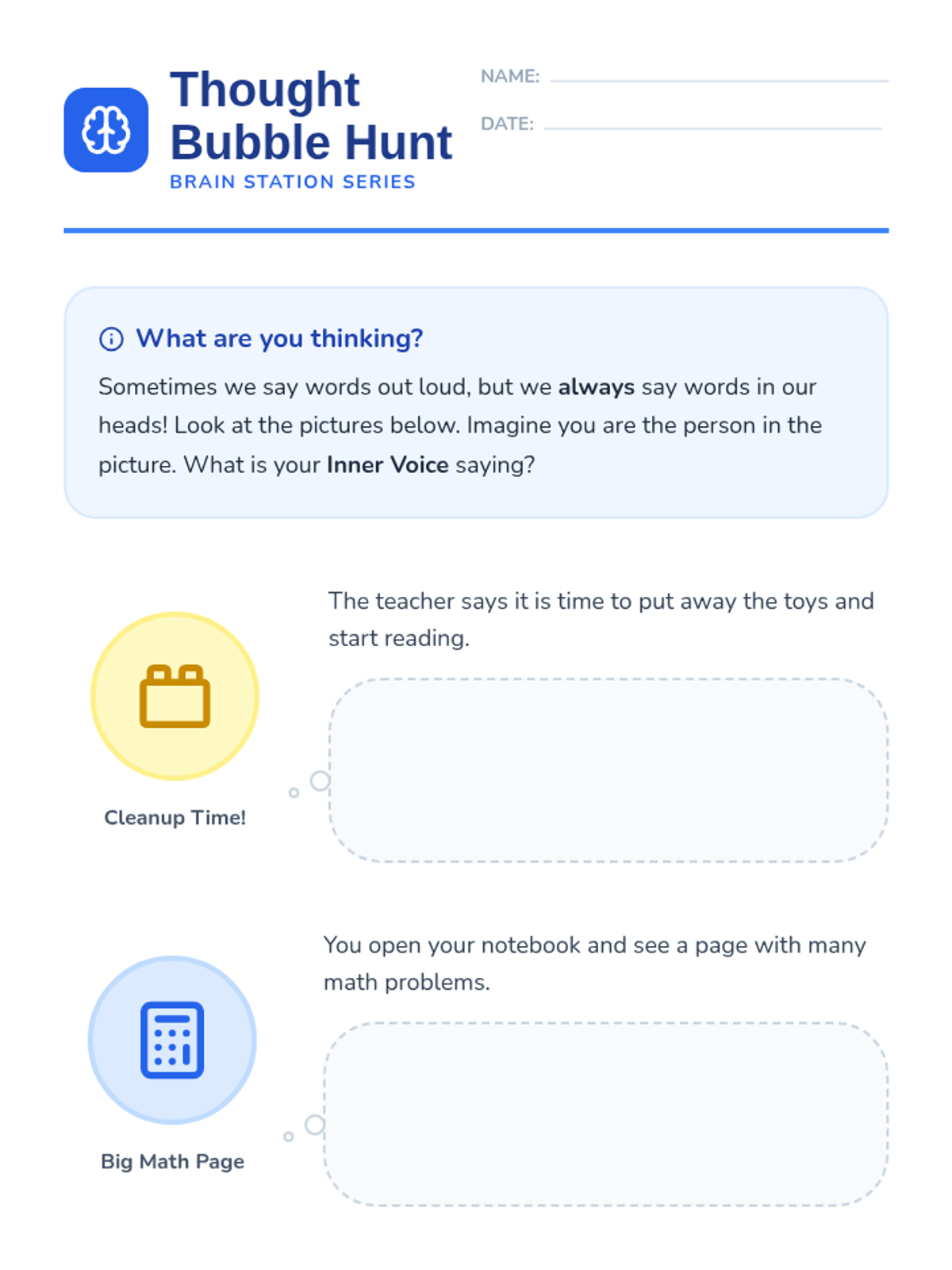
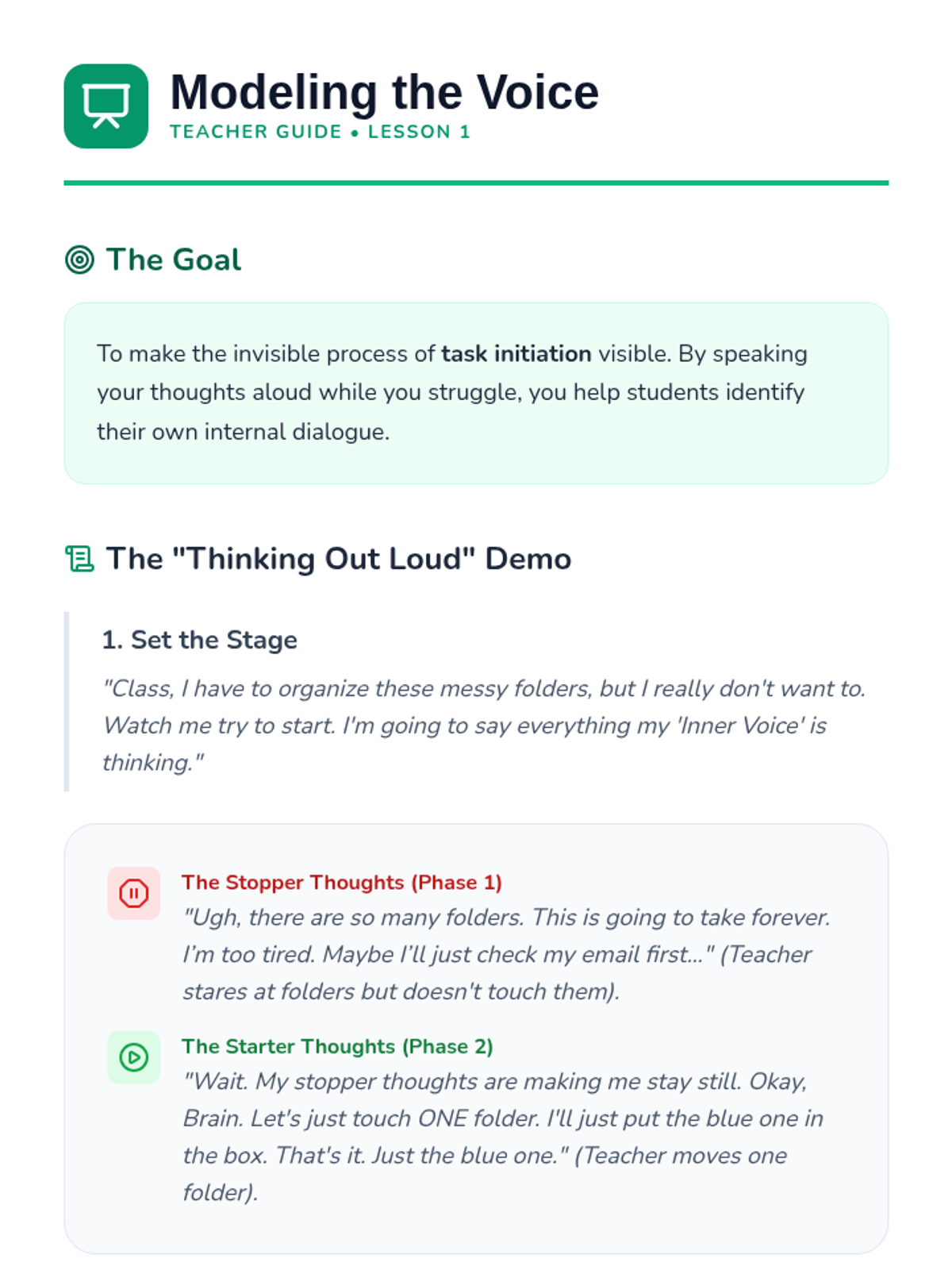
This sequence helps 2nd graders understand their 'inner voice' and use it as a tool for task initiation. Students learn to identify 'stopper' thoughts and replace them with 'starter' thoughts to overcome resistance and get to work.
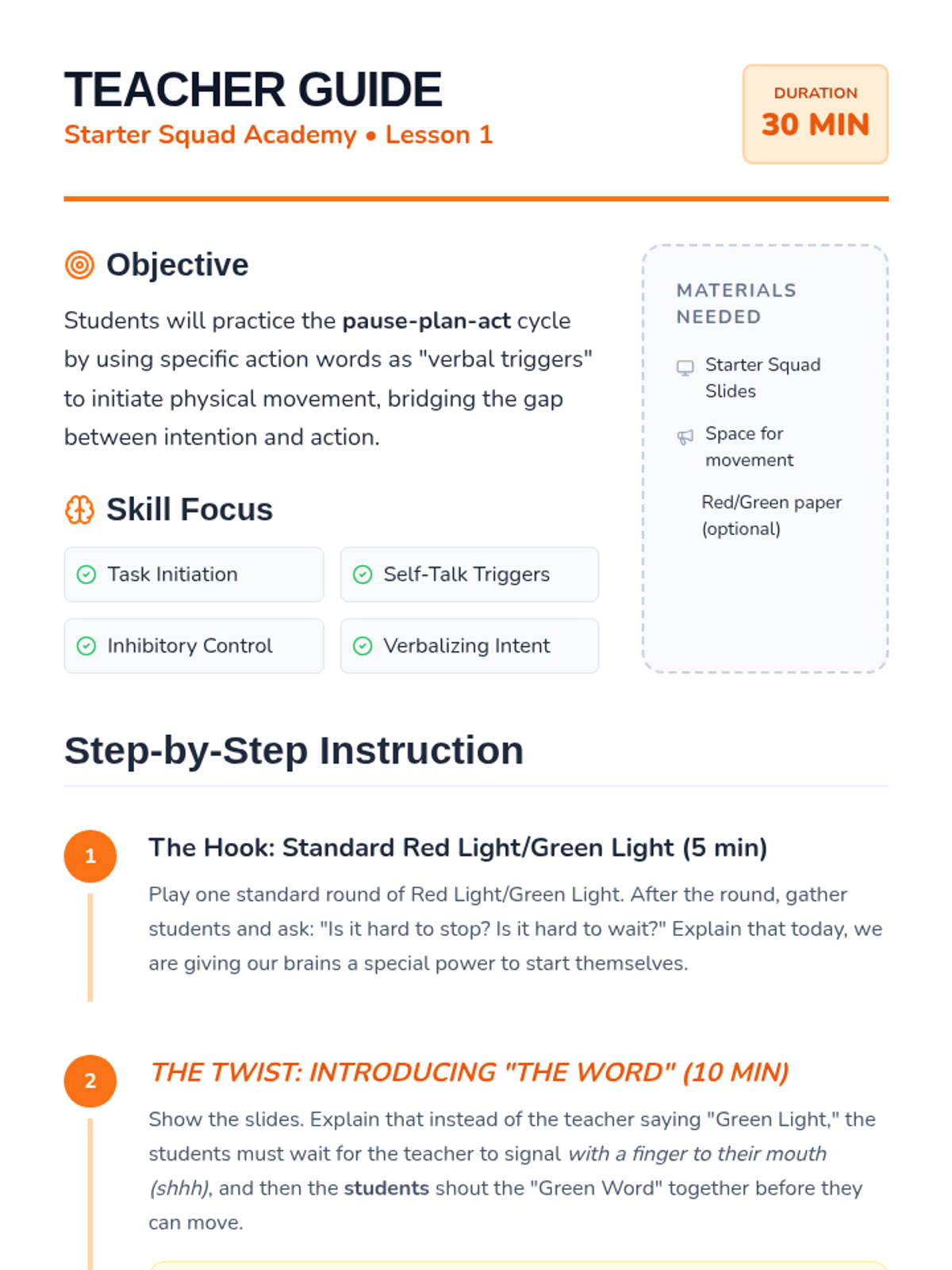
A gamified sequence for 1st graders to master task initiation through verbal self-talk triggers, using physical games and simulations to make executive functioning concrete.
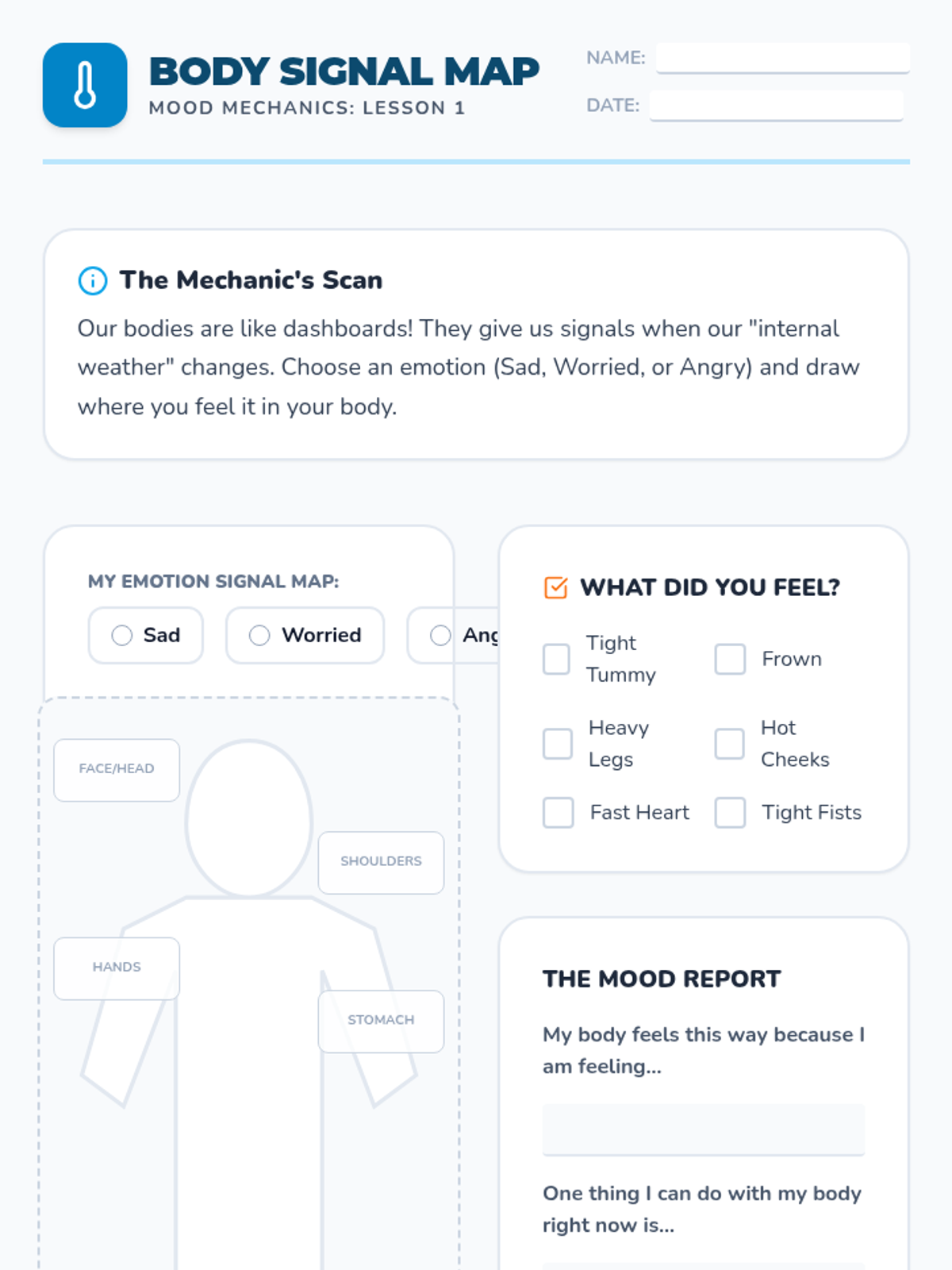
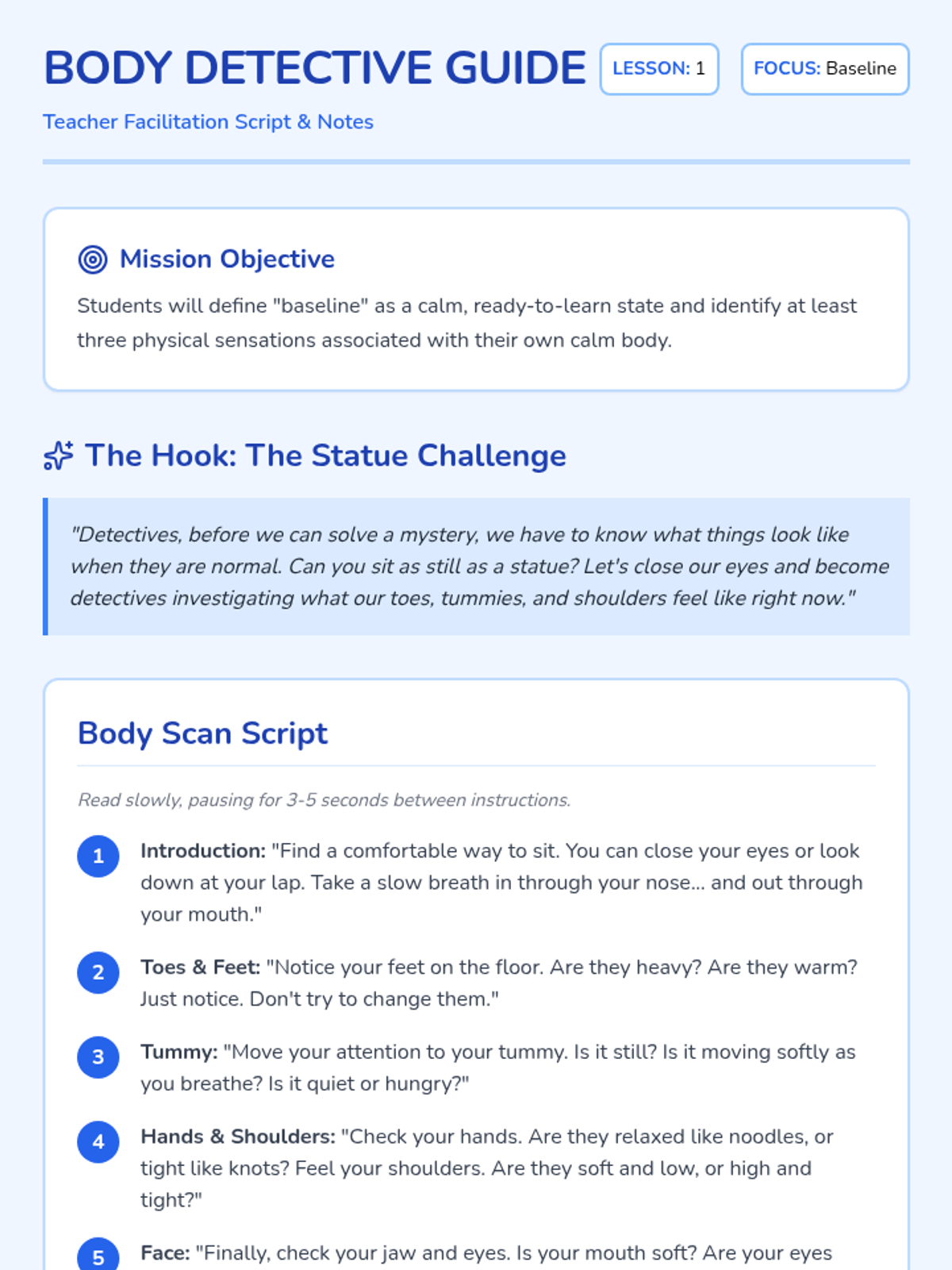
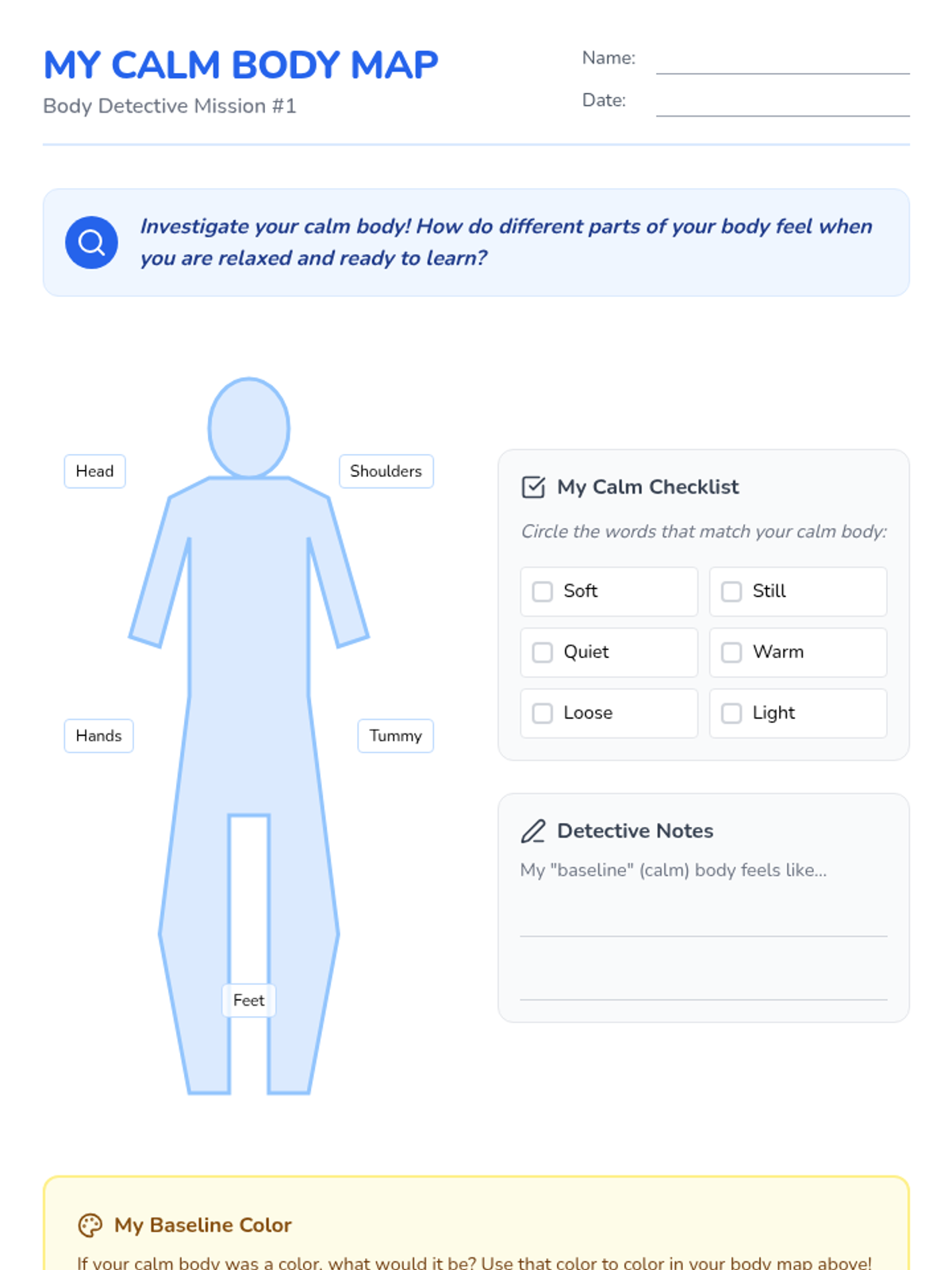
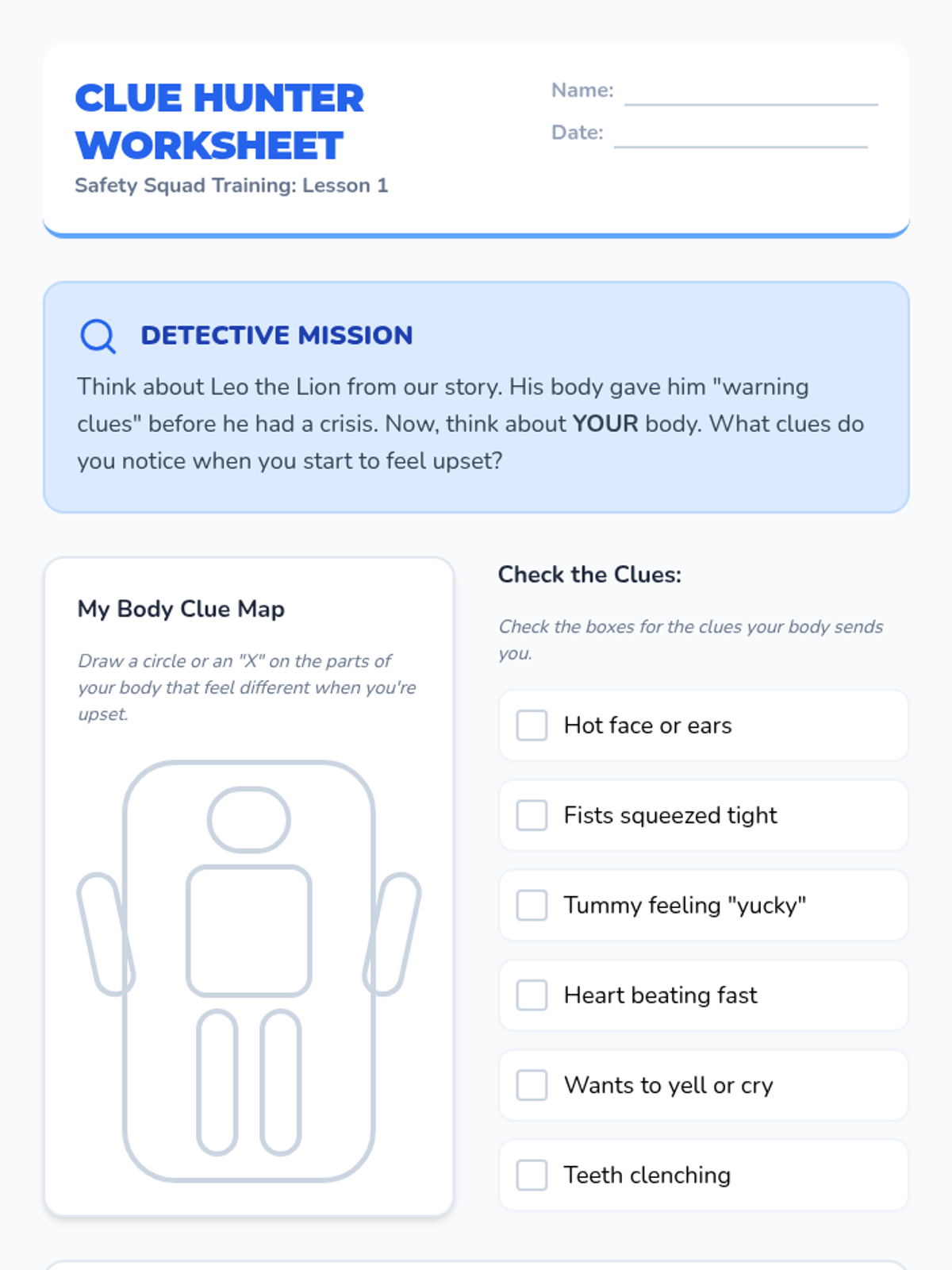
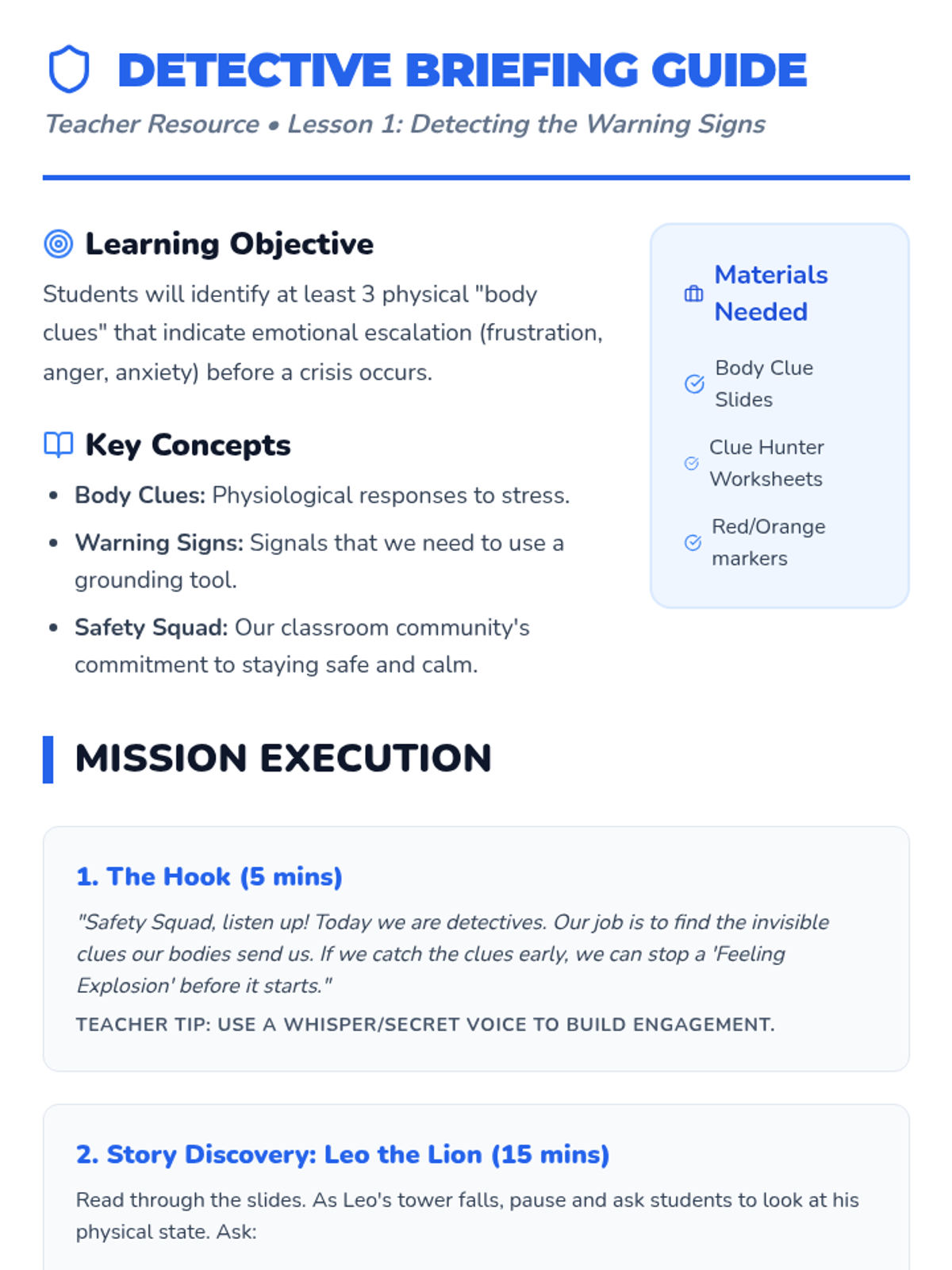
A comprehensive 5-lesson unit for 2nd graders to build somatic awareness, identifying physiological and behavioral signs of emotional escalation before they reach a crisis point. Students learn to recognize their 'baseline' calm state, map sensations to emotions, use an emotional thermometer, and identify personal warning signals.
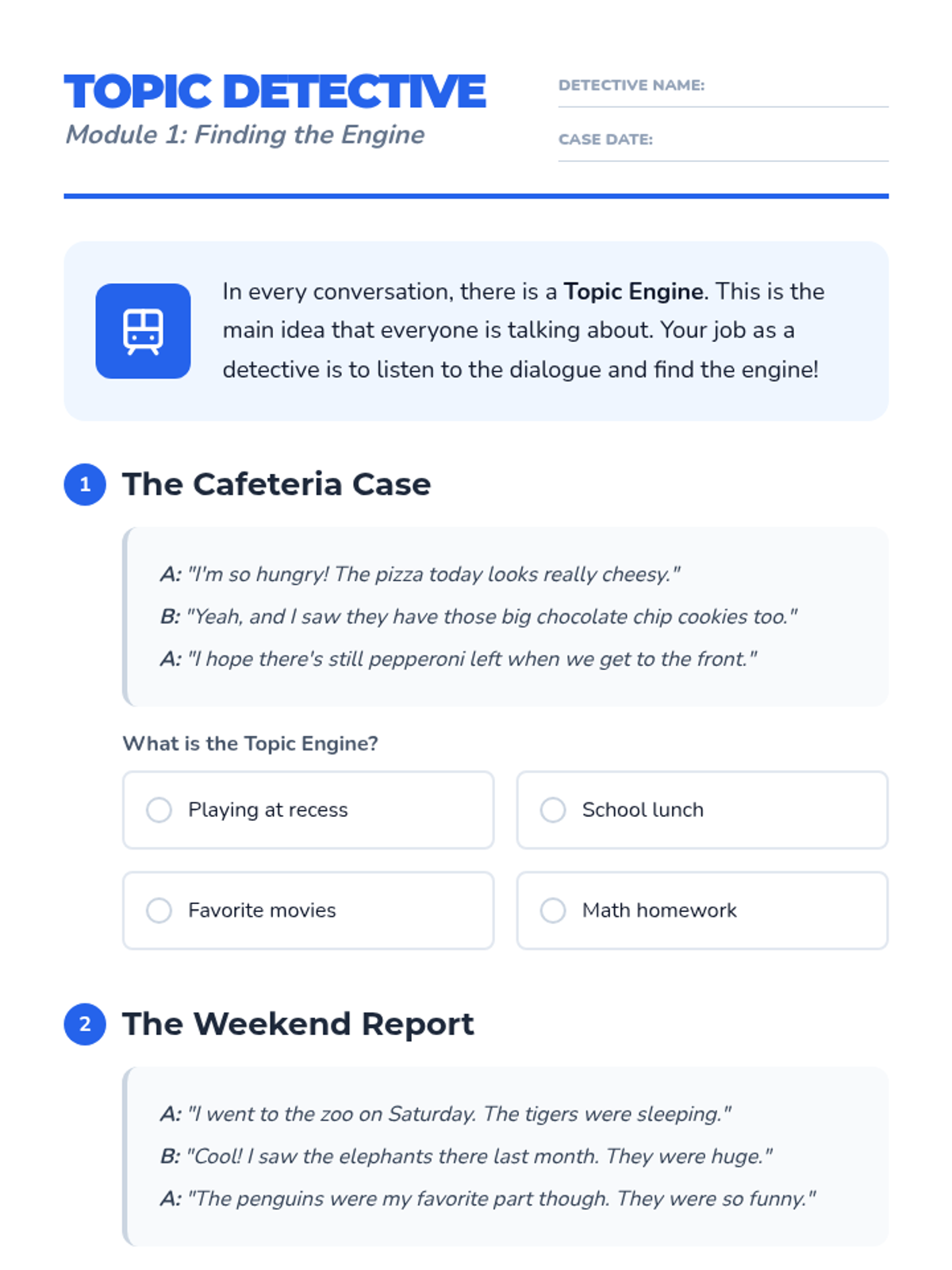
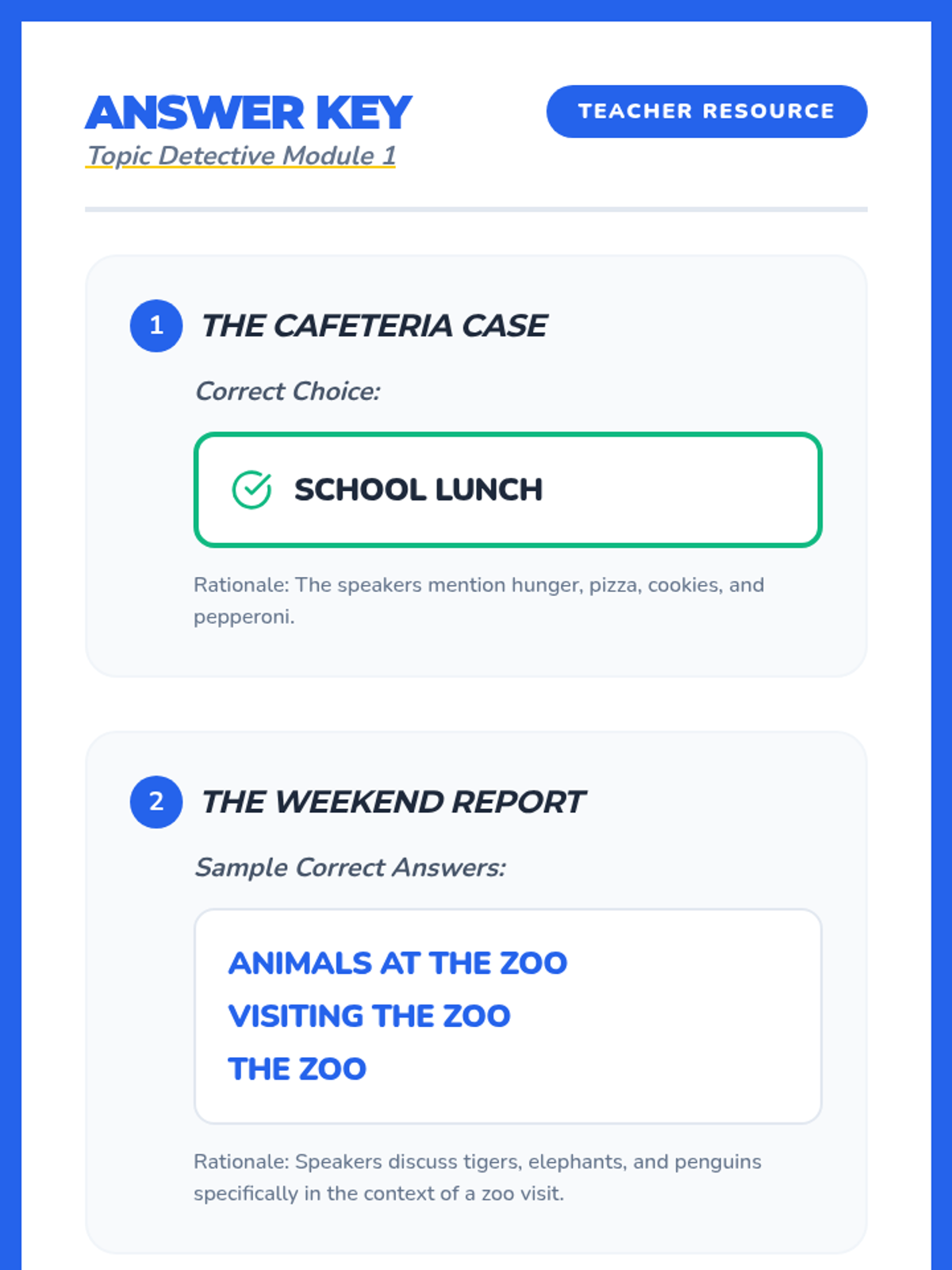
A game-based sequence focused on topic maintenance, using the 'Conversation Train' metaphor to help students visualize linear coherence, filter relevance, and utilize smooth transitions in discussion.
A 5-lesson sequence for 2nd-grade students focusing on auditory working memory and verbal rehearsal strategies. Students learn to use their 'inner voice', mental visualization, and physical gestures to retain and process multi-step instructions.
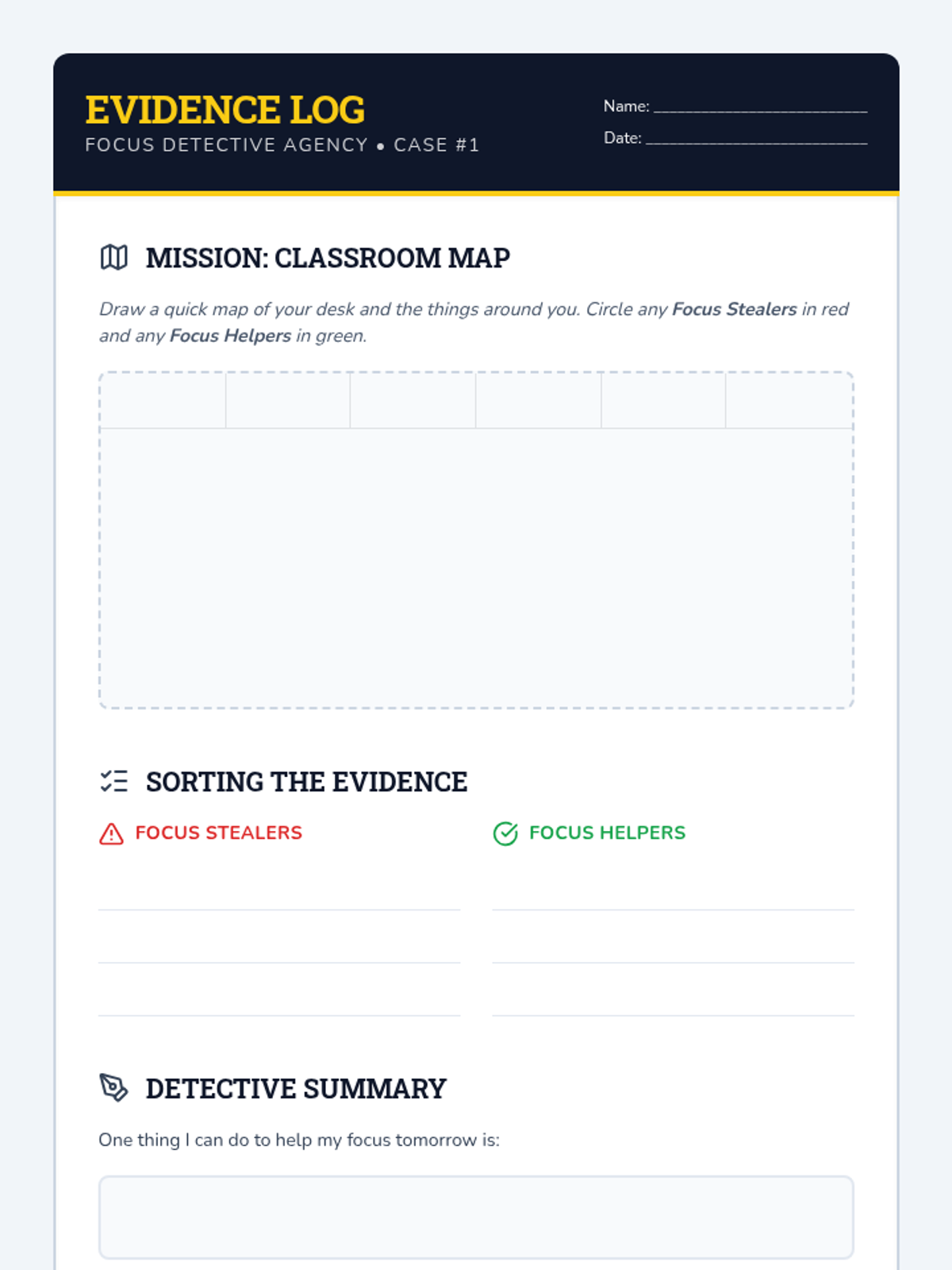
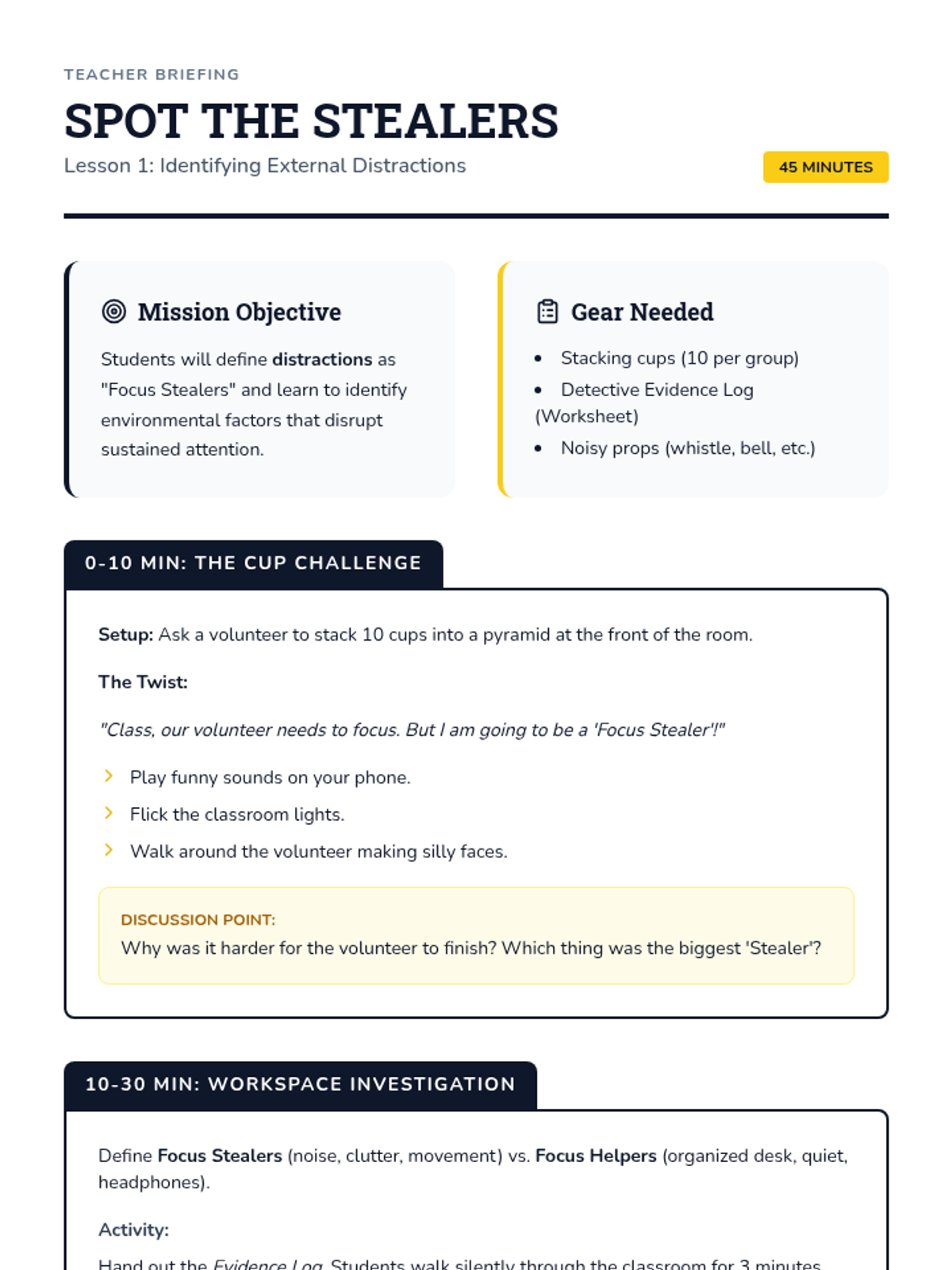
A 5-lesson metacognitive sequence for 2nd graders to identify environmental and internal distractions, using a 'detective' theme to develop sustained attention strategies for complex tasks.
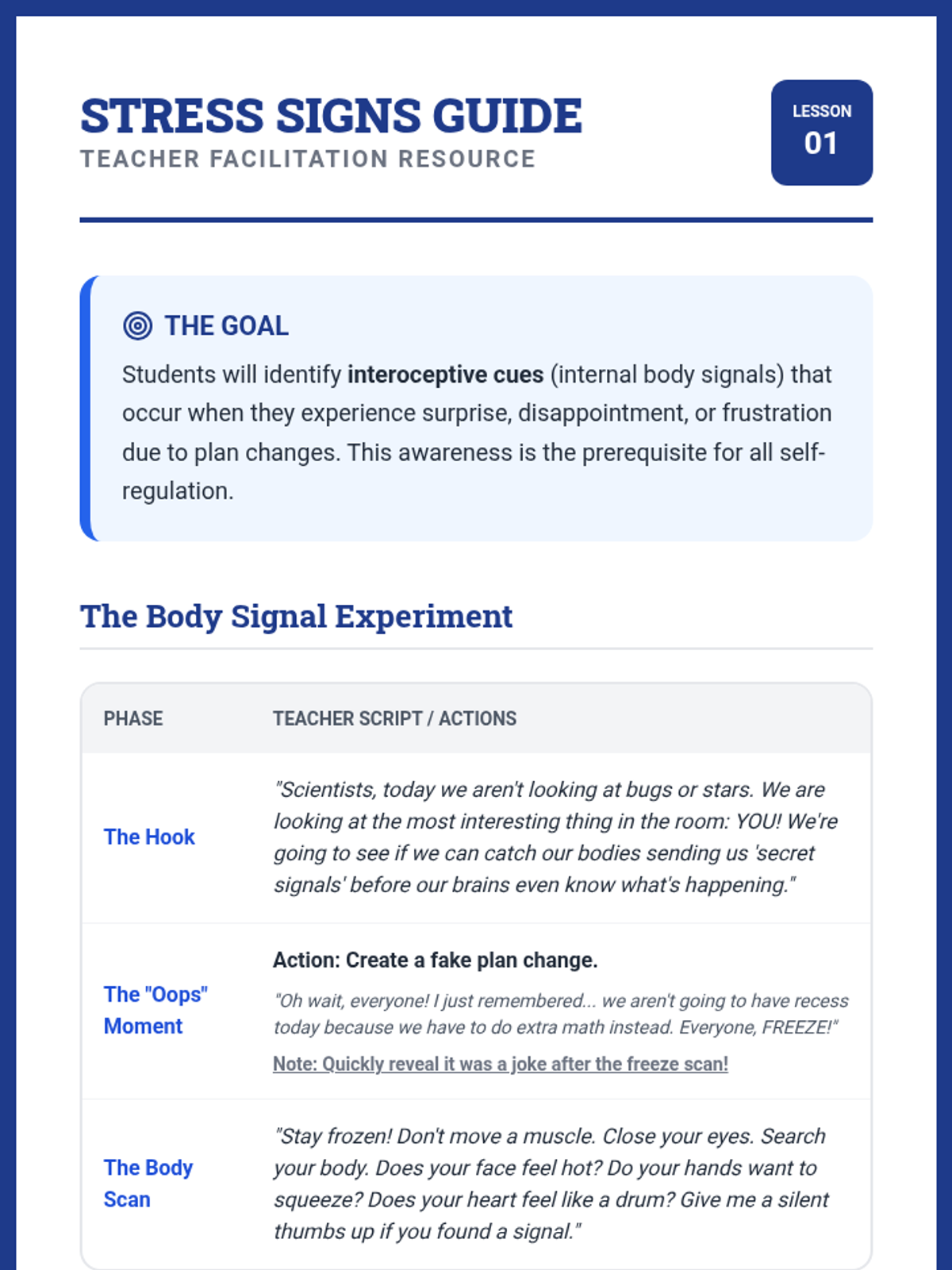
This sequence teaches 2nd-grade students to recognize physical signs of stress and use specific emotional regulation tools (breathing, self-talk, sensory) to adapt when plans change. Students build a physical 'Coping Toolbox' and practice applying strategies to real-world scenarios.
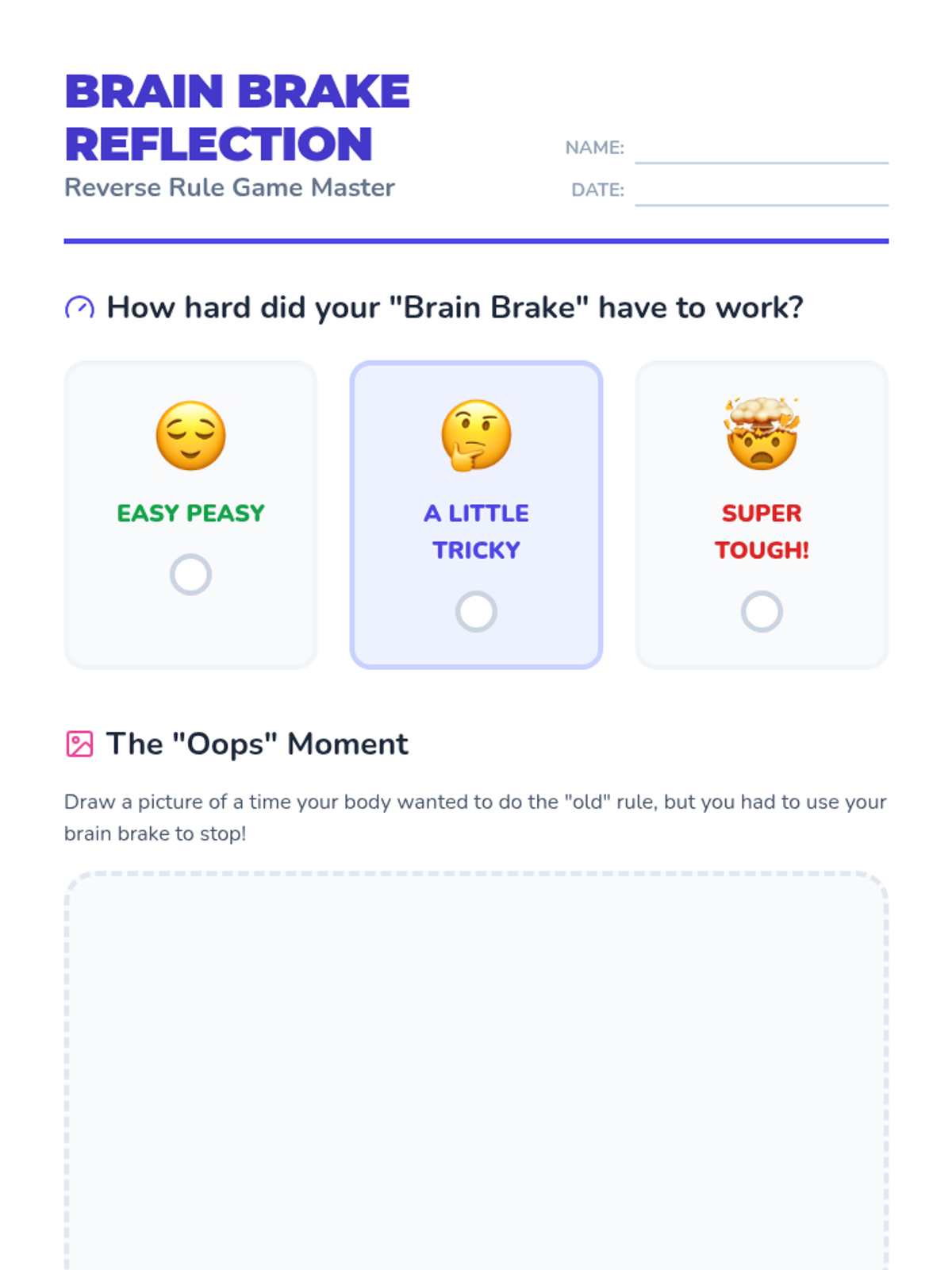
A 5-lesson unit for 2nd Grade students focused on developing cognitive flexibility and adaptability through gamified challenges and structured play. Students practice inhibition, task switching, and resilience by navigating changing rules and unexpected obstacles in a low-stakes environment.
A 5-lesson sequence for 2nd graders to develop cognitive flexibility by distinguishing between rigid and flexible thinking, identifying emotions, sizing problems, and creating Plan B alternatives.
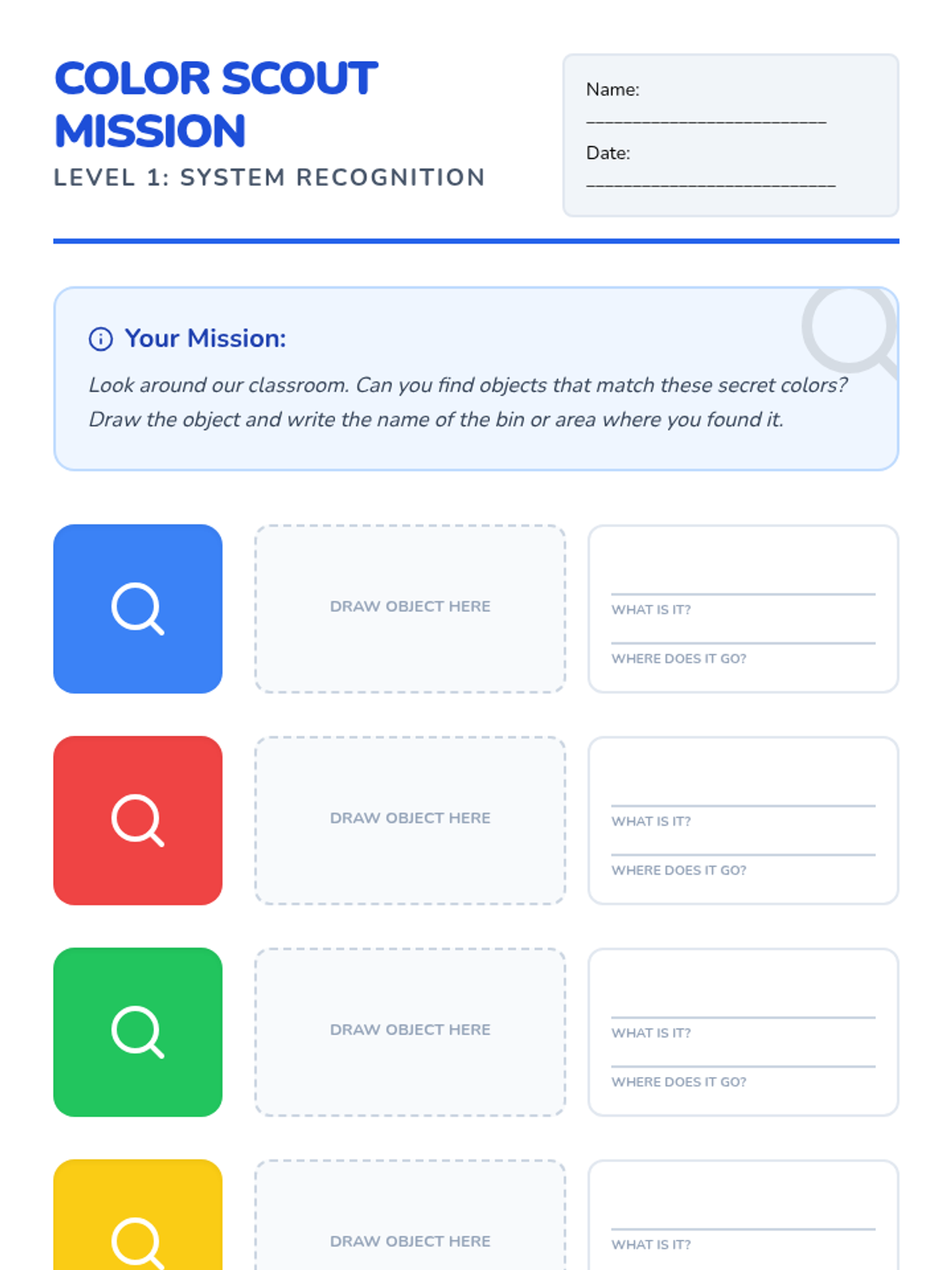
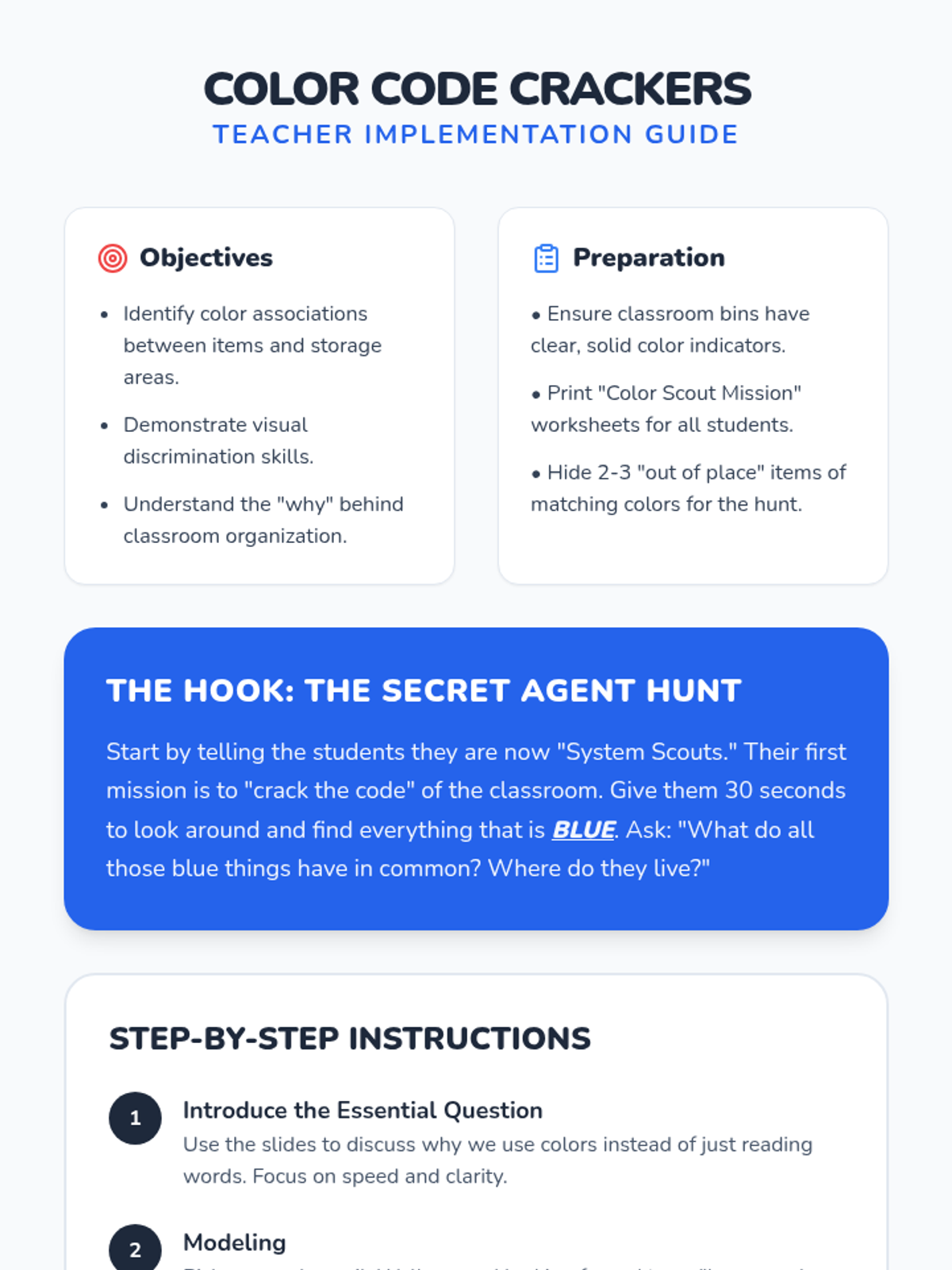
This sequence teaches 2nd-grade students how to navigate and contribute to classroom organization using color-coding and visual labels. Students move from identifying existing systems to designing their own, fostering independence and responsibility in shared spaces.
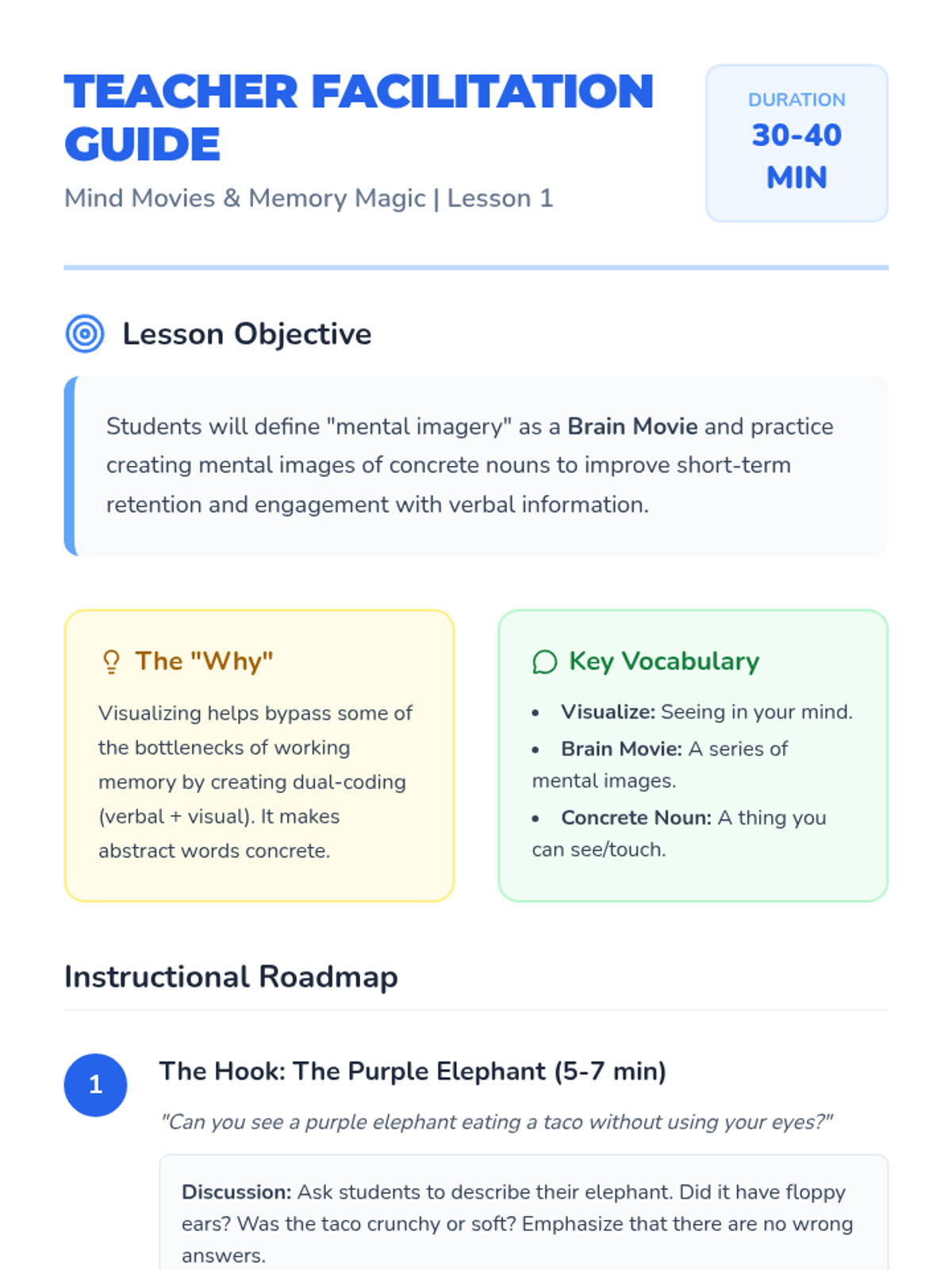
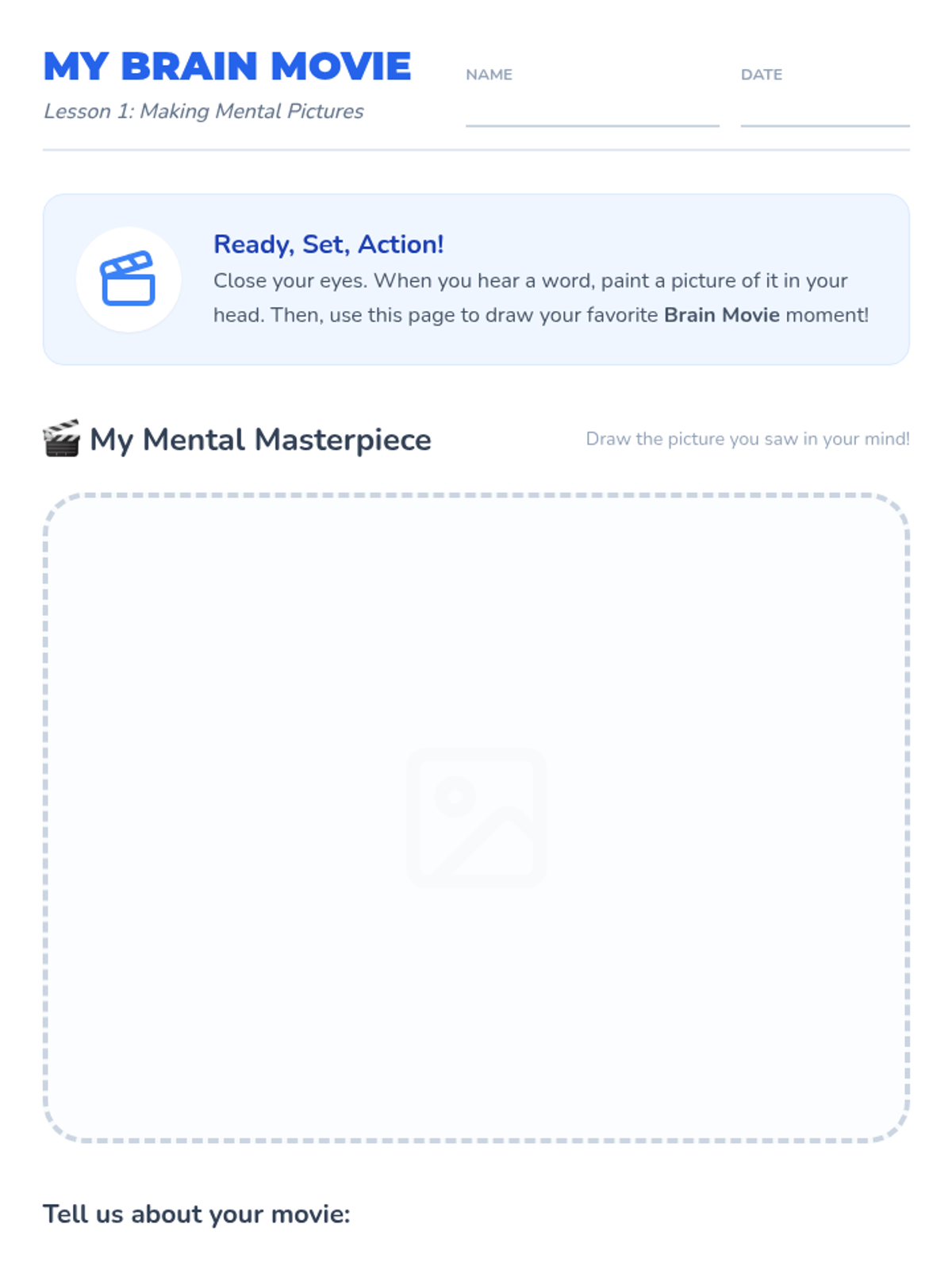
This sequence teaches 2nd grade students how to use visualization and mnemonic linking to improve working memory and information retention. Students move from visualizing simple objects to connecting complex ideas through 'brain movies' and narrative chaining.
A comprehensive unit for 2nd-grade students to recognize emotional escalation and apply appropriate grounding strategies. Through storytelling, mapping, and simulation, students build self-awareness and co-regulation skills to navigate crisis moments effectively.
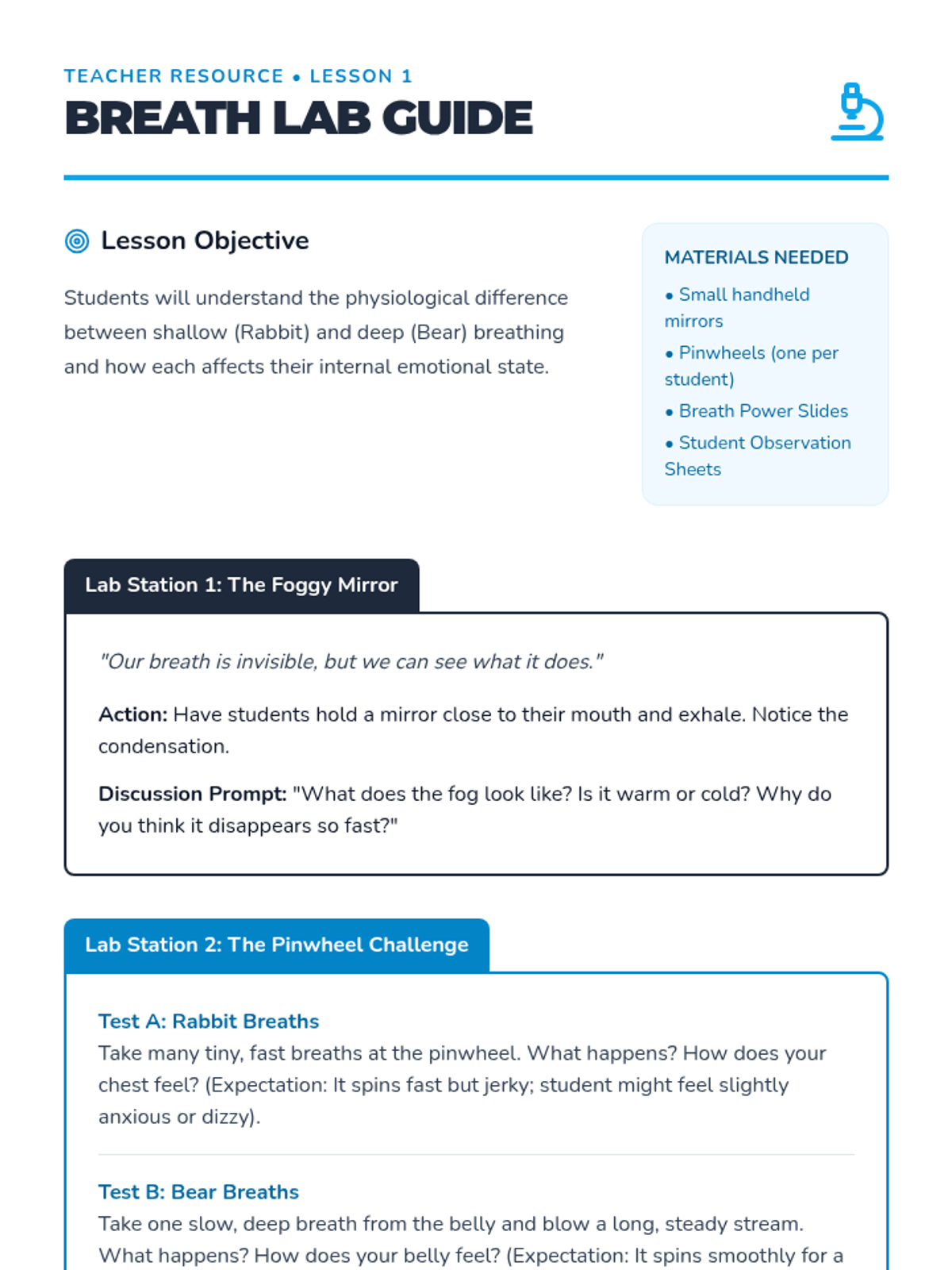
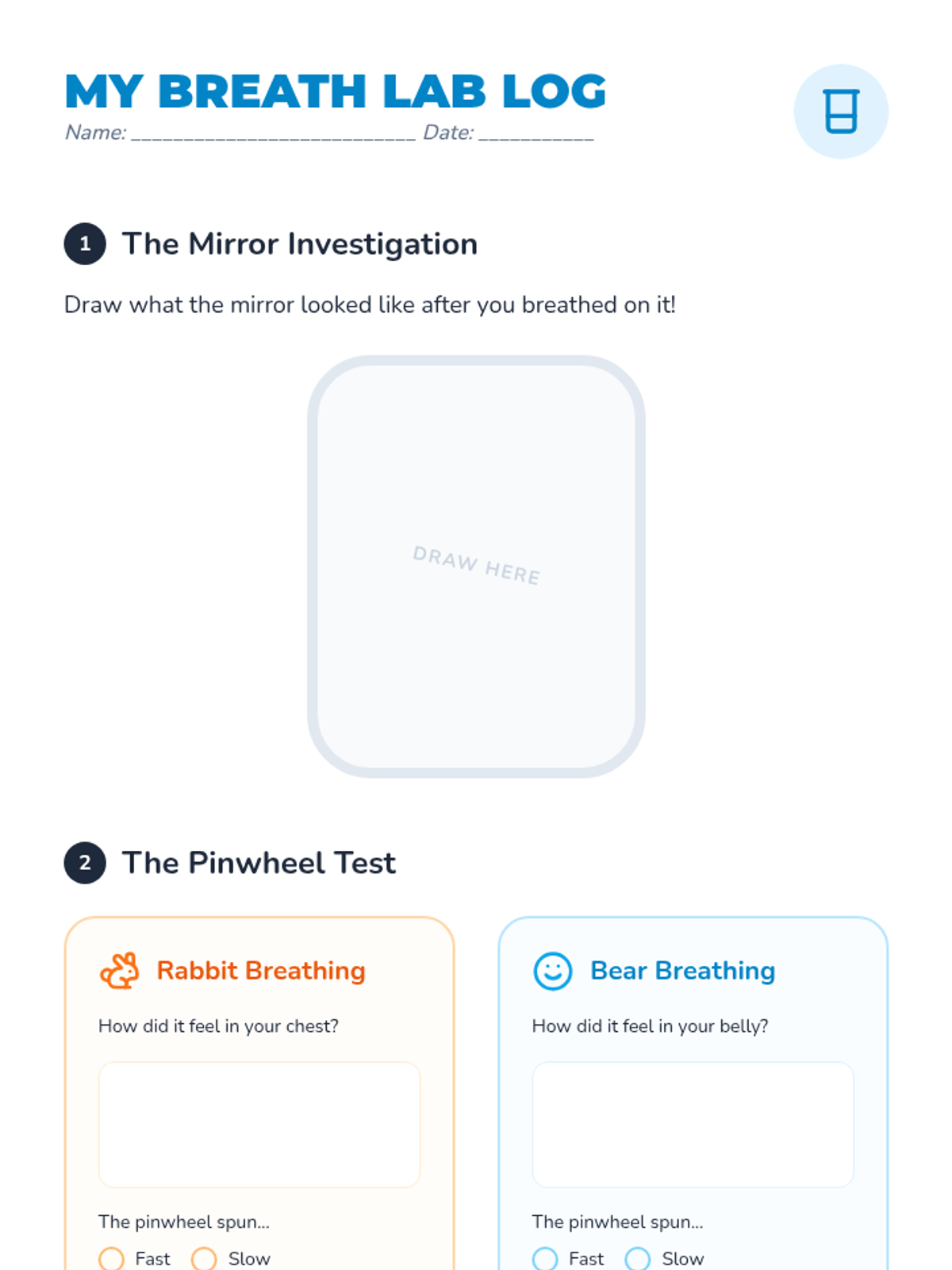
A sequence for 2nd graders to learn breath control and mental visualization as portable grounding strategies. Students progress from concrete breathing props to internal visualizations and self-talk.
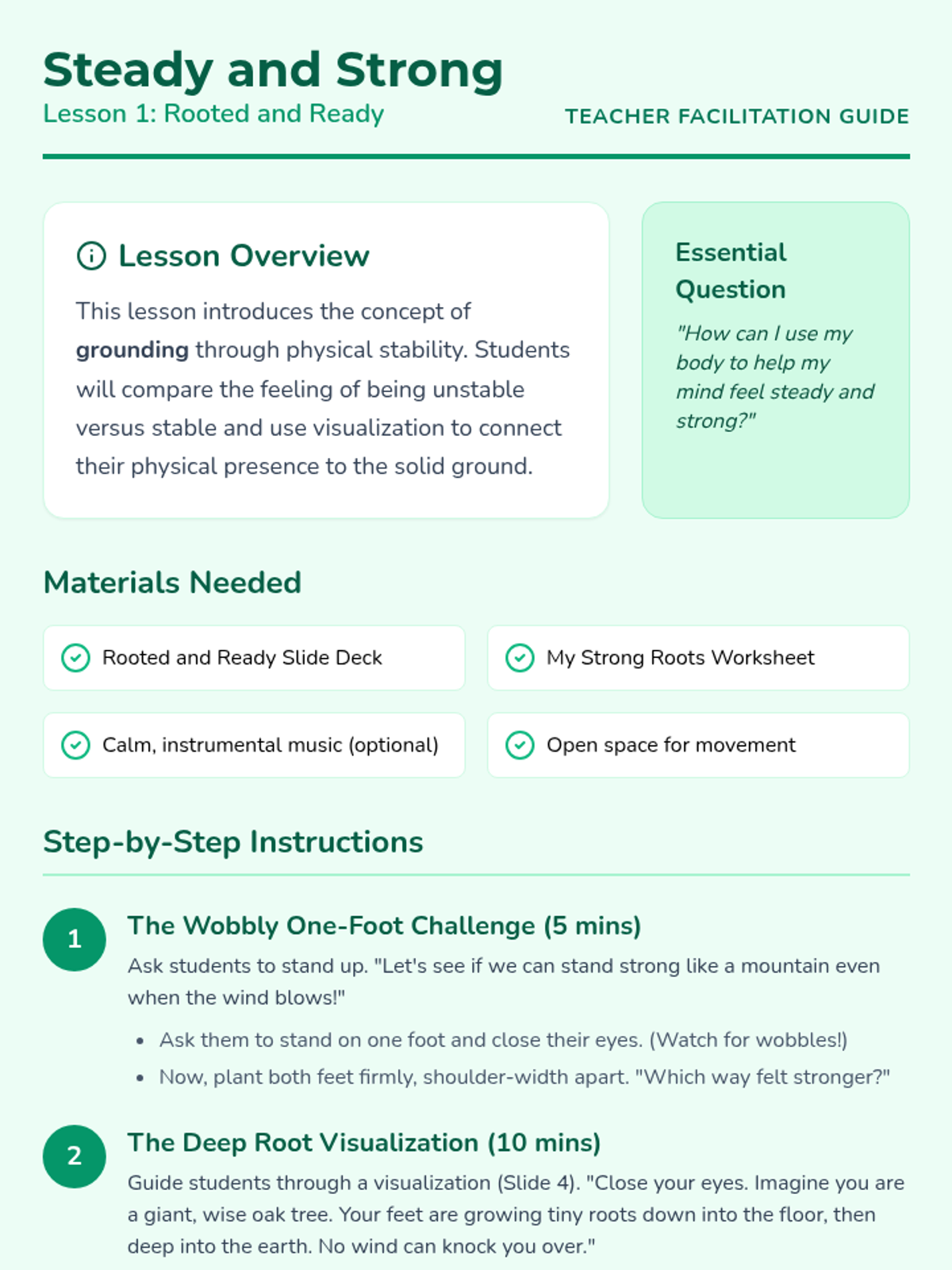
A 5-lesson sequence for 2nd graders focused on using body awareness, proprioception, and movement to find stability and grounding during moments of high stress or crisis. Students move from gross motor stability to discreet, desk-based techniques.
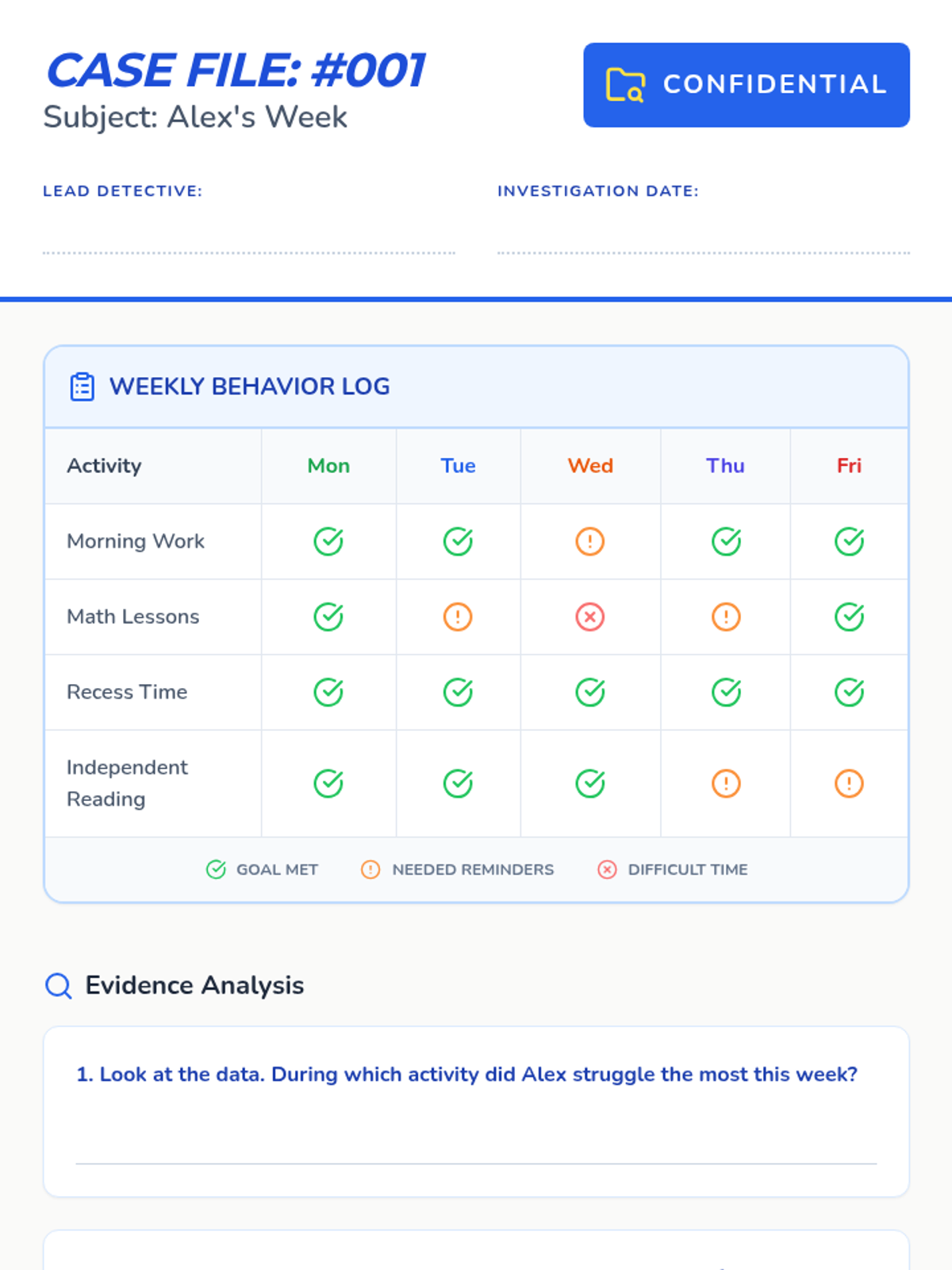
A sequence for 2nd-grade students to learn how to interpret behavior chart data objectively and with kindness. By analyzing a fictional character named Alex, students develop data literacy, empathy, and problem-solving skills before applying these same insights to their own behavioral tracking.
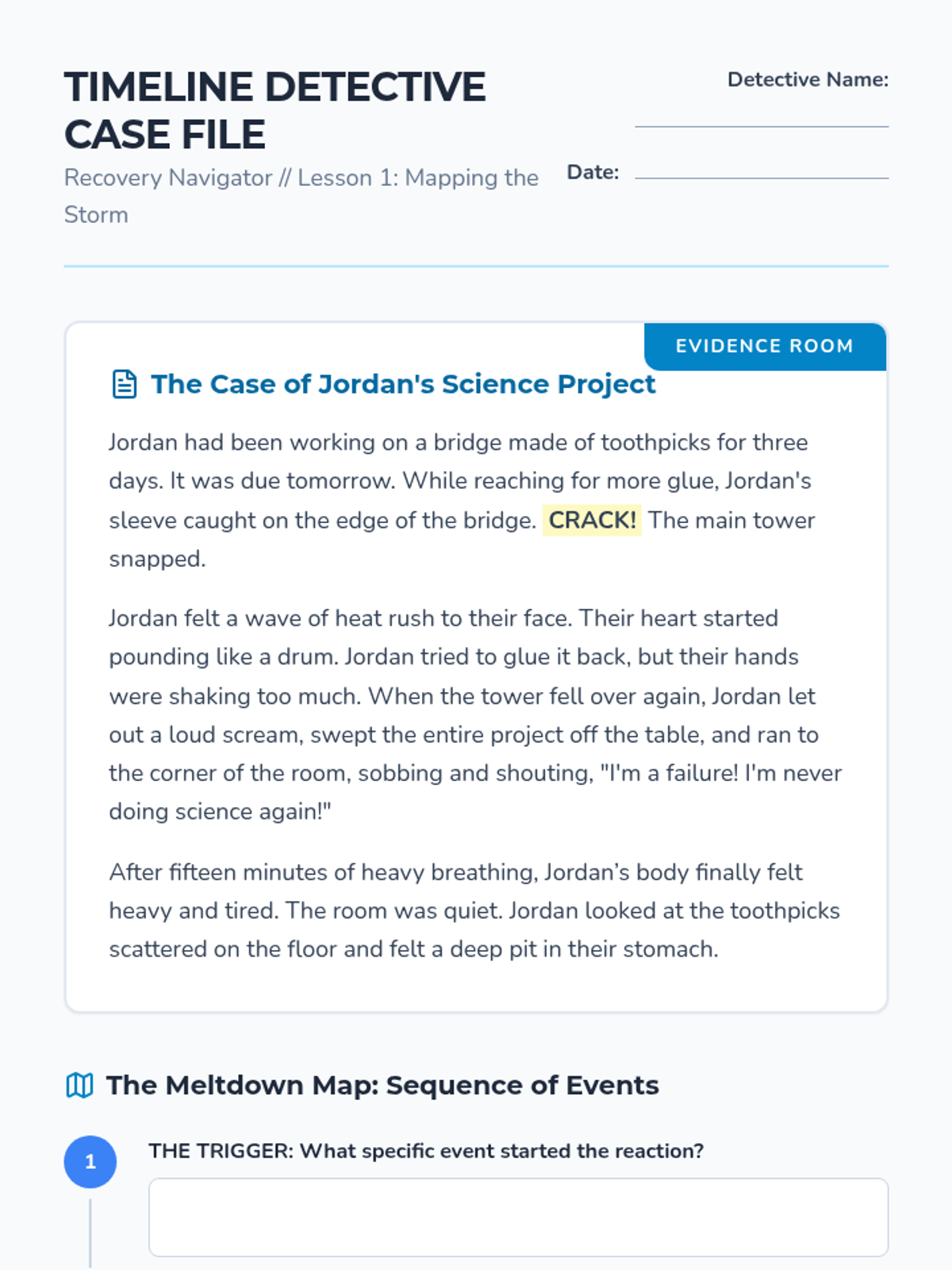
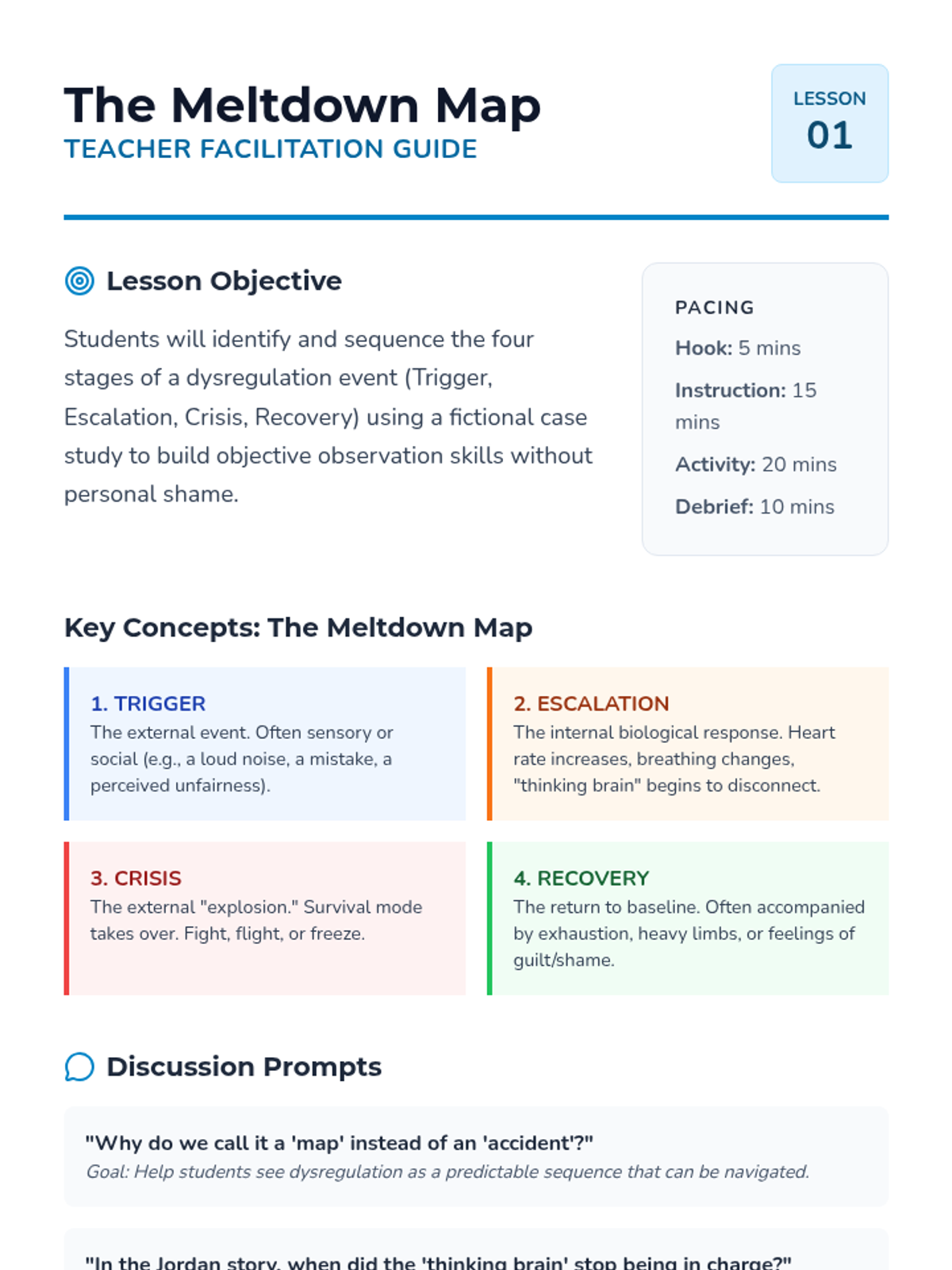
This sequence explores dysregulation recovery through a restorative lens. Students use case studies and fictional scenarios to analyze meltdowns, separate behavior from identity to reduce shame, and master the art of repair conversations. The unit culminates in creating personal debriefing habits and future planning for emotional resilience.
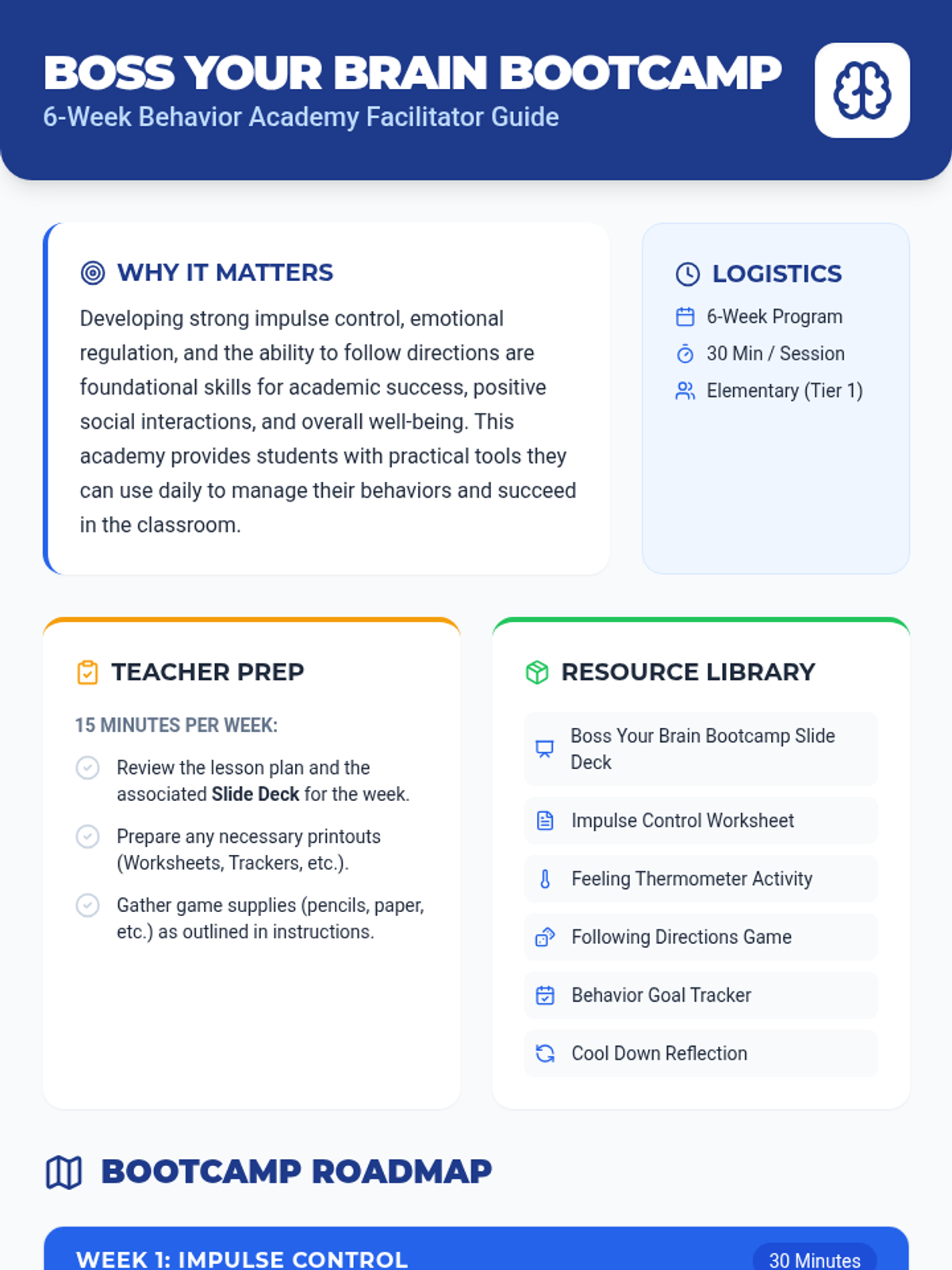
A 6-week behavior academy sequence designed for Tier 1 classroom instruction, focusing on impulse control, emotional regulation, and following directions to foster a positive learning environment.
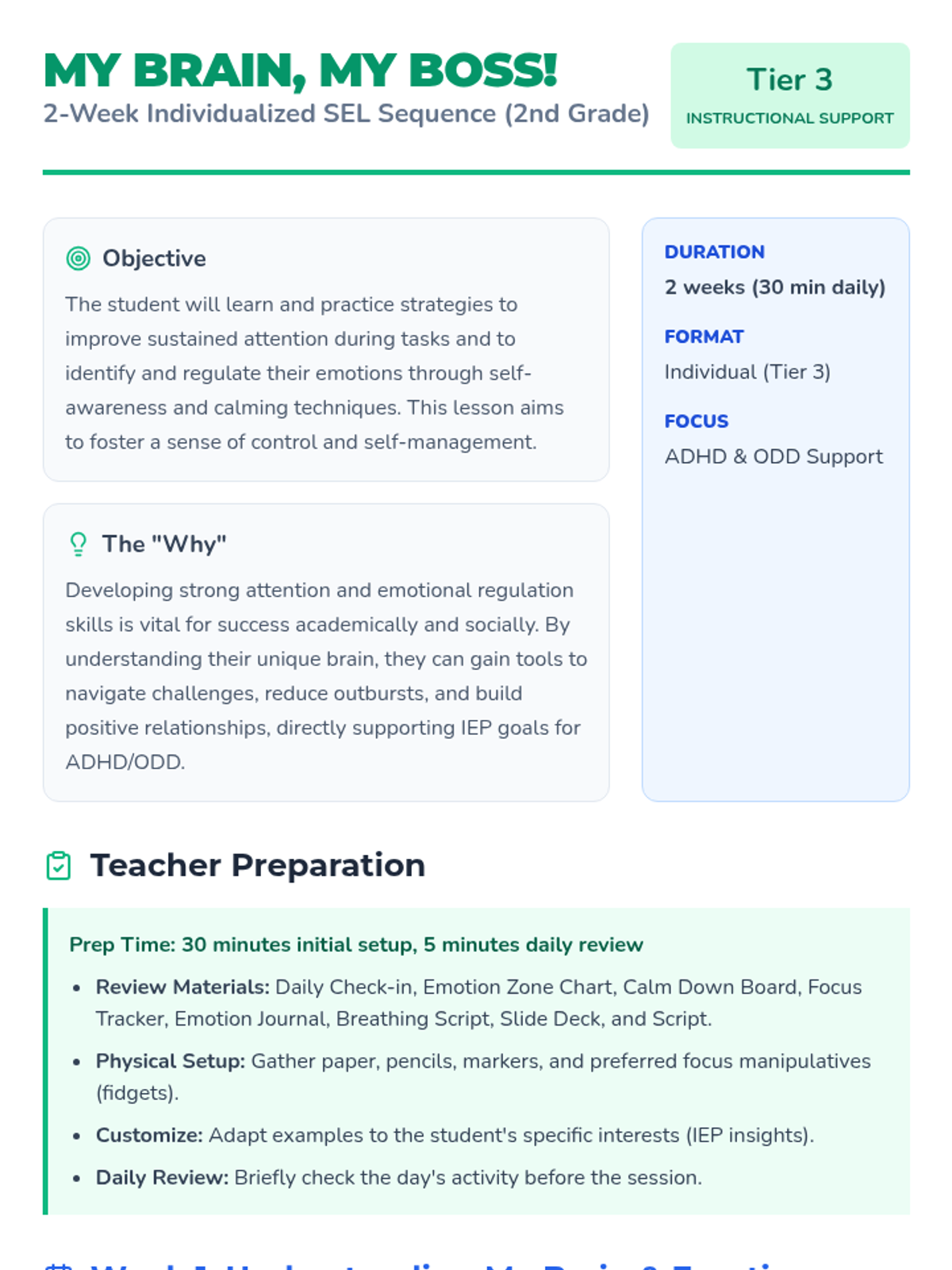
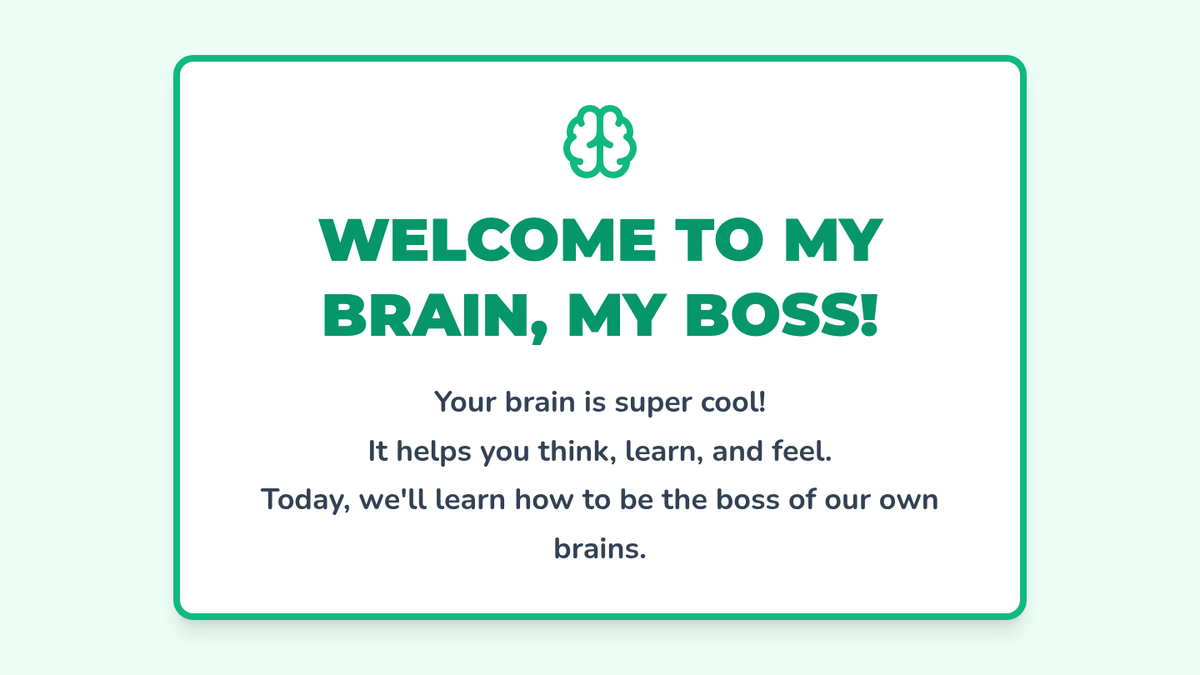
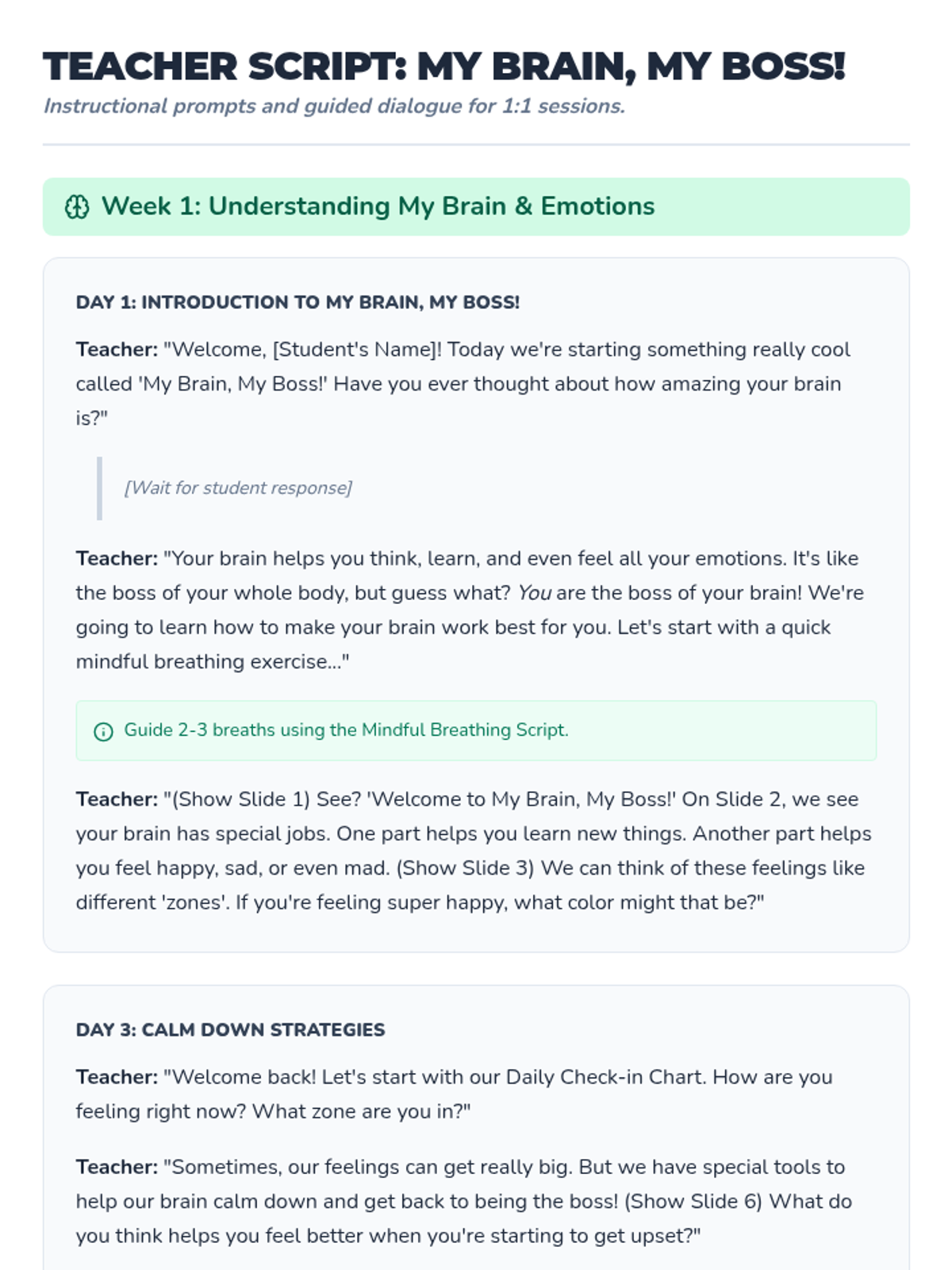
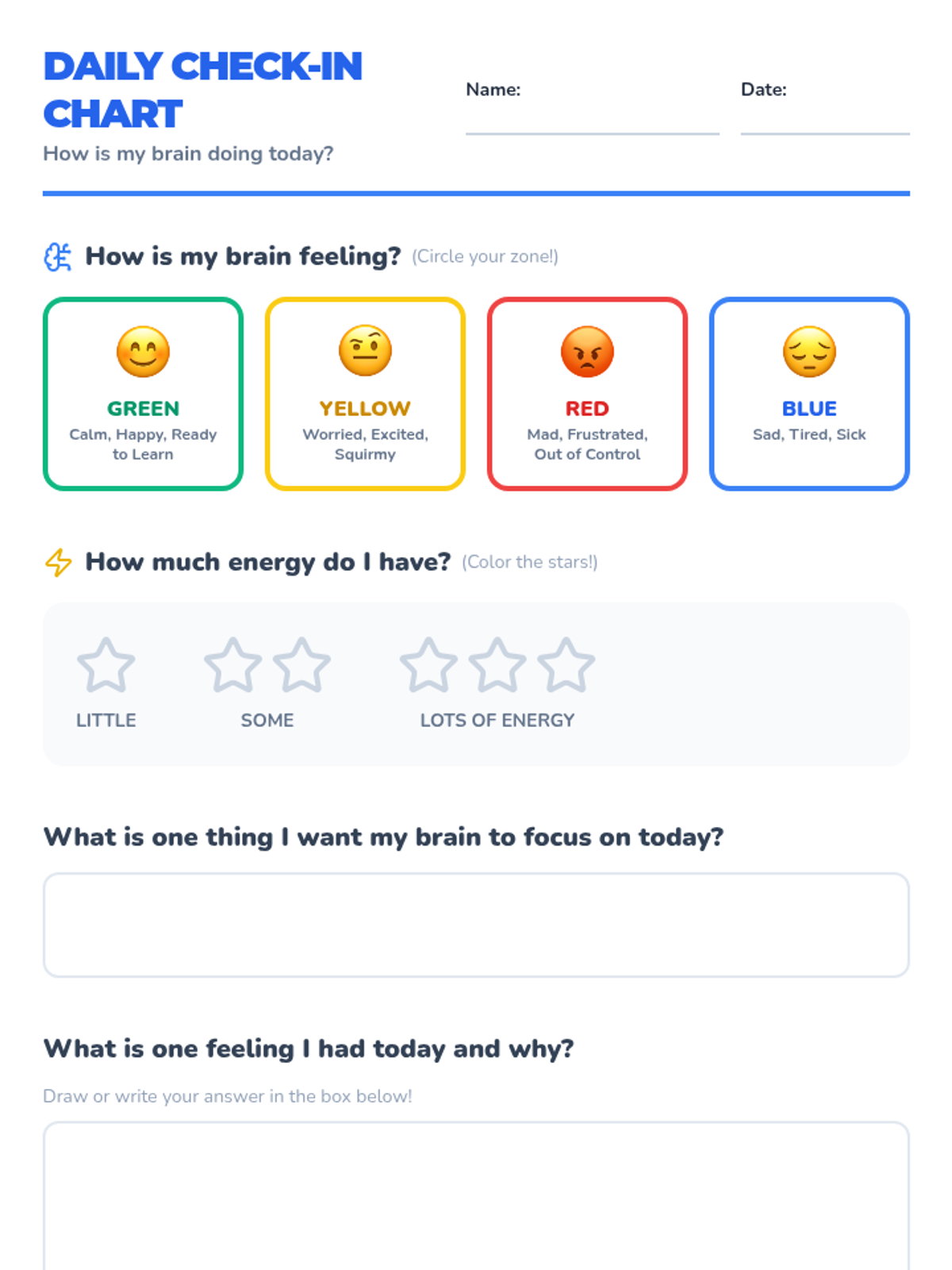
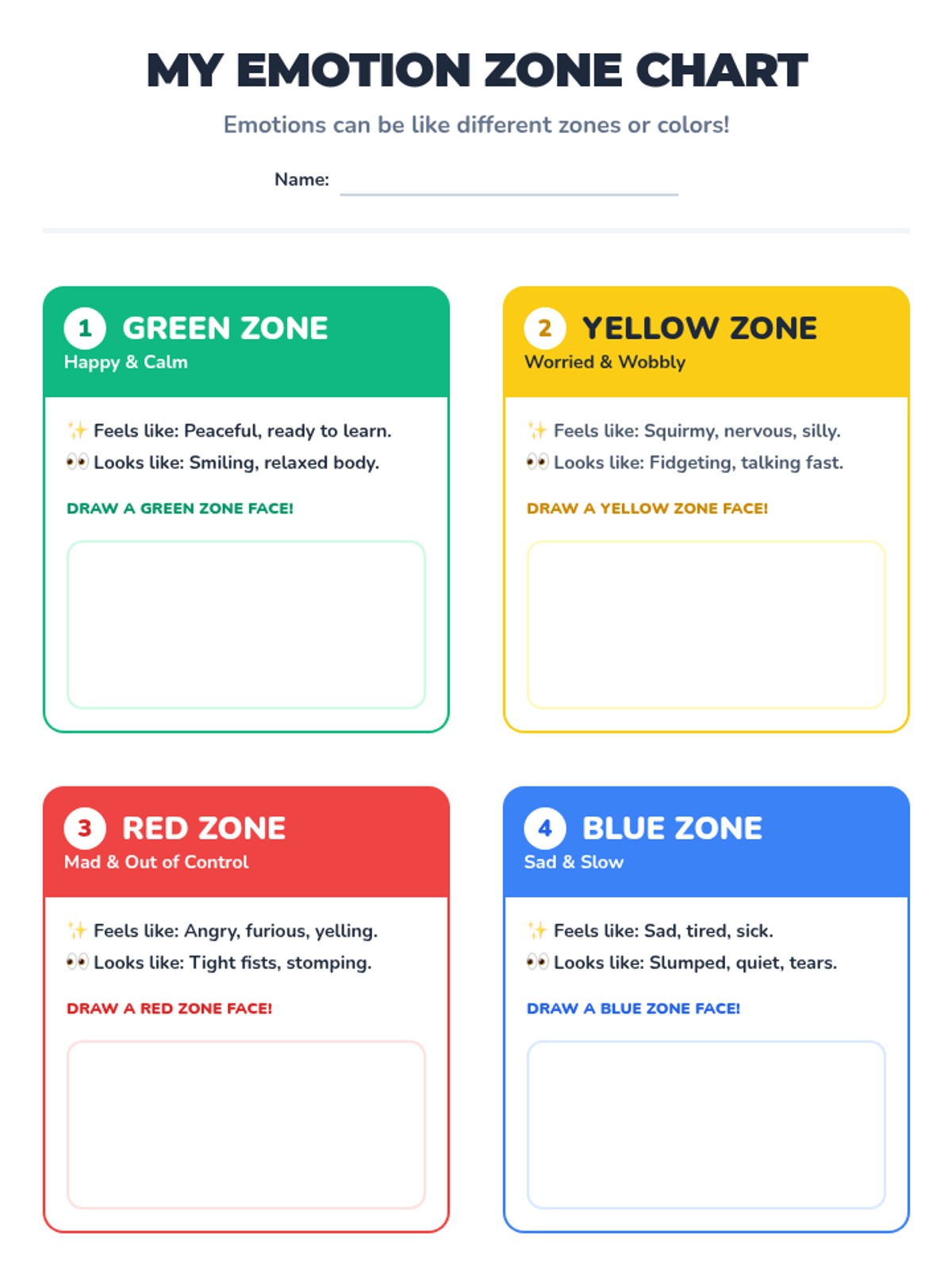
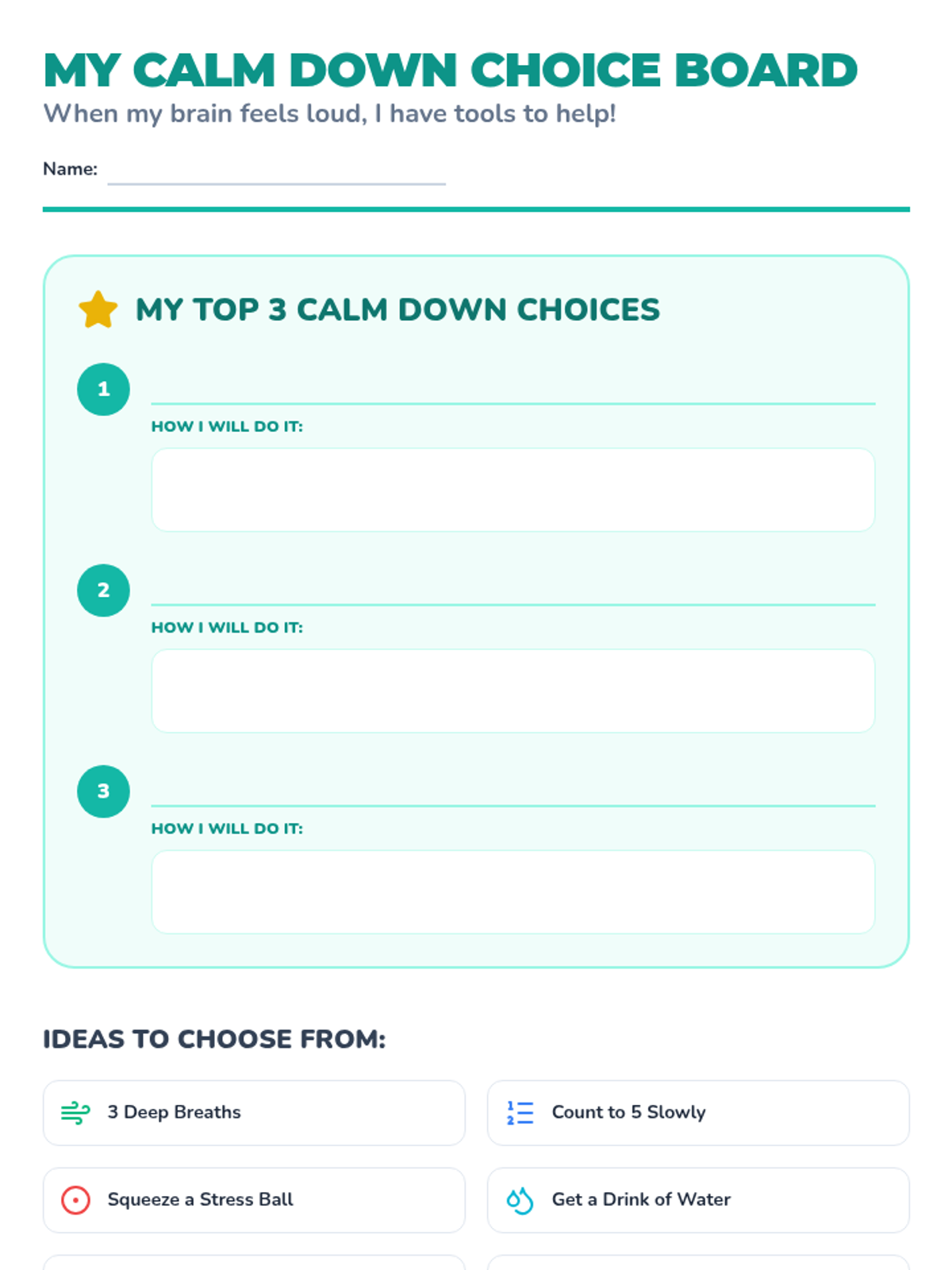
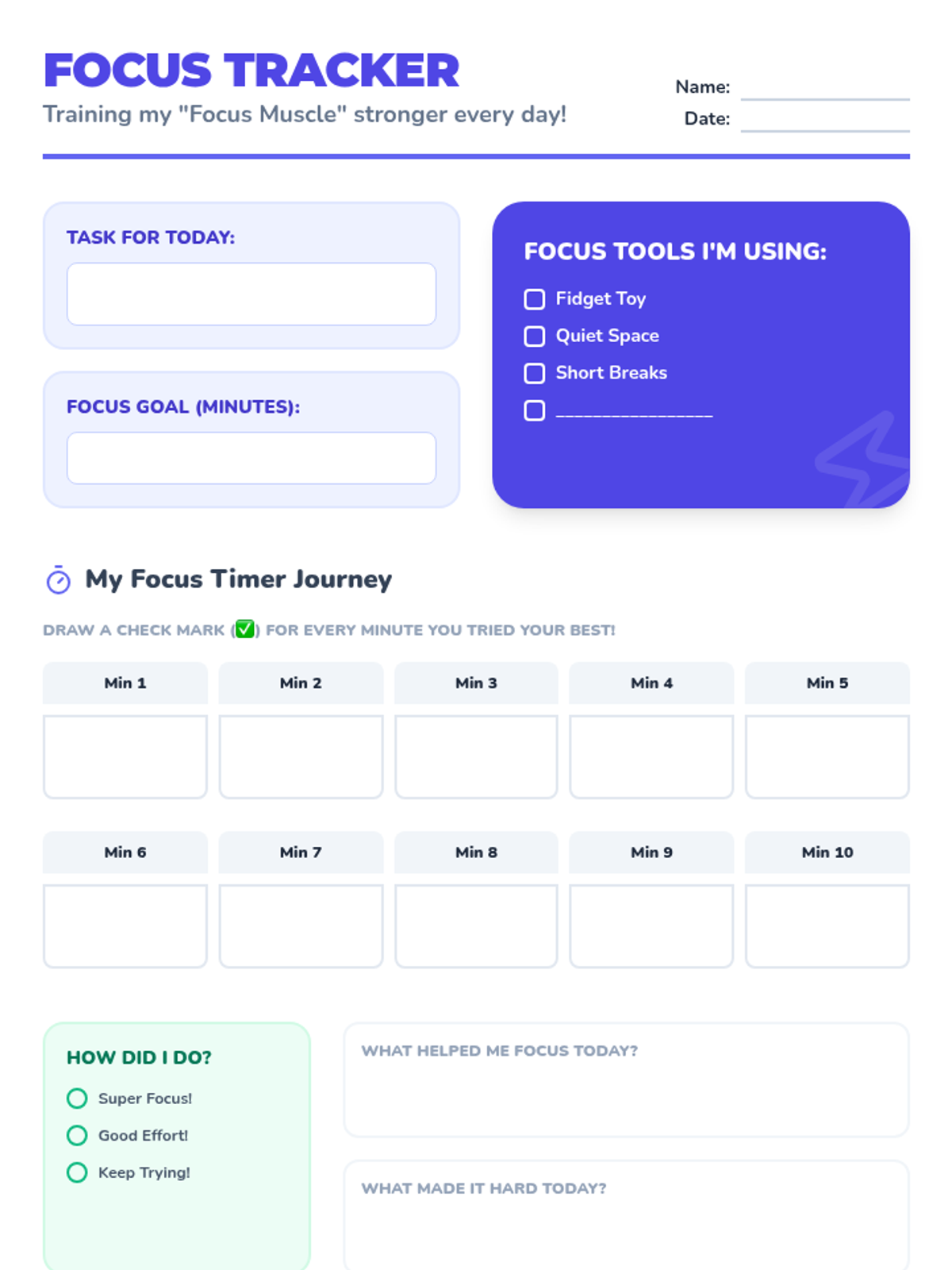
A comprehensive two-week social-emotional learning sequence for 2nd-grade students focusing on attention and emotional regulation. Students learn to understand their brain, identify emotional zones, use calming strategies, and build focus muscles.
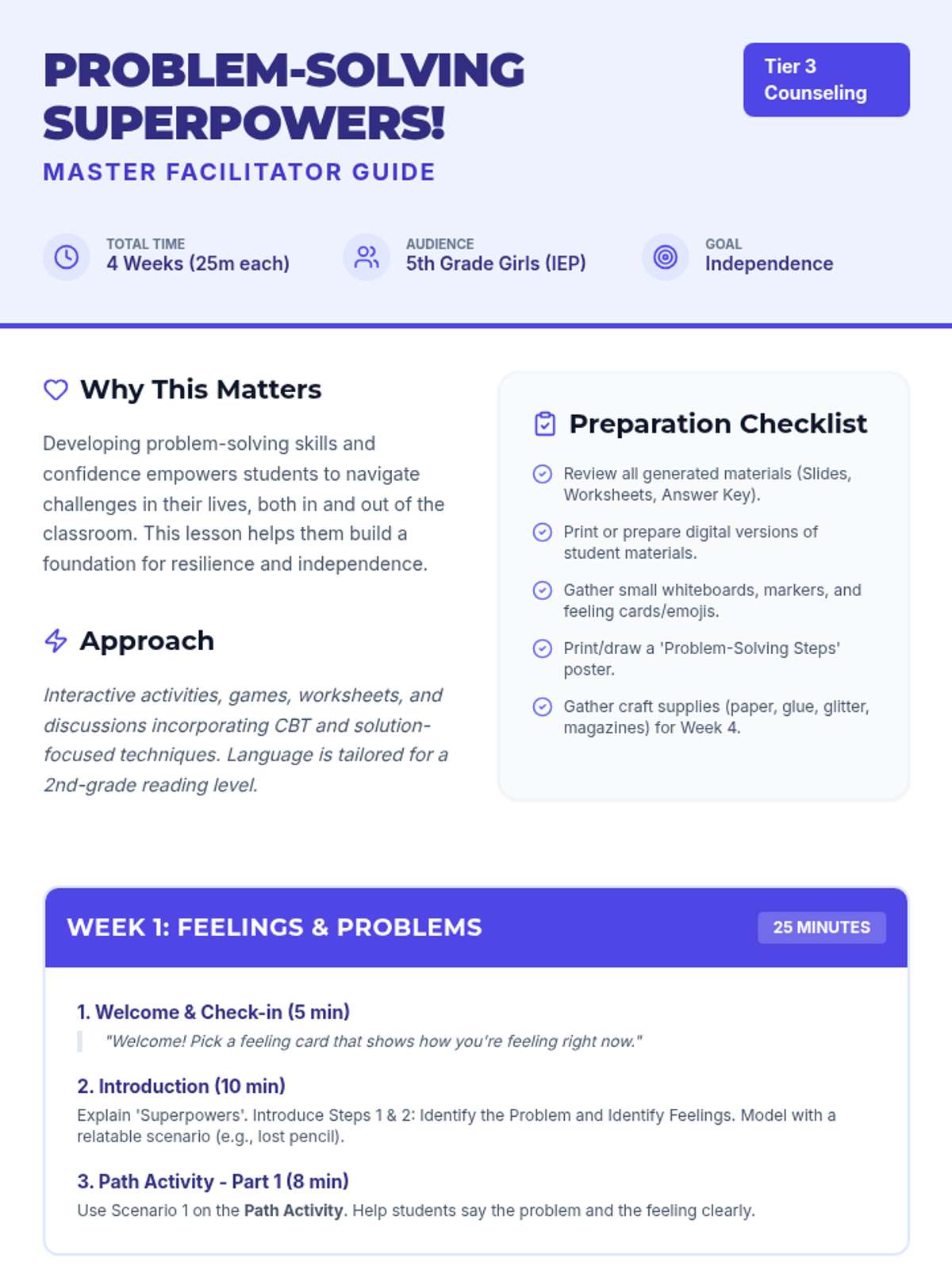
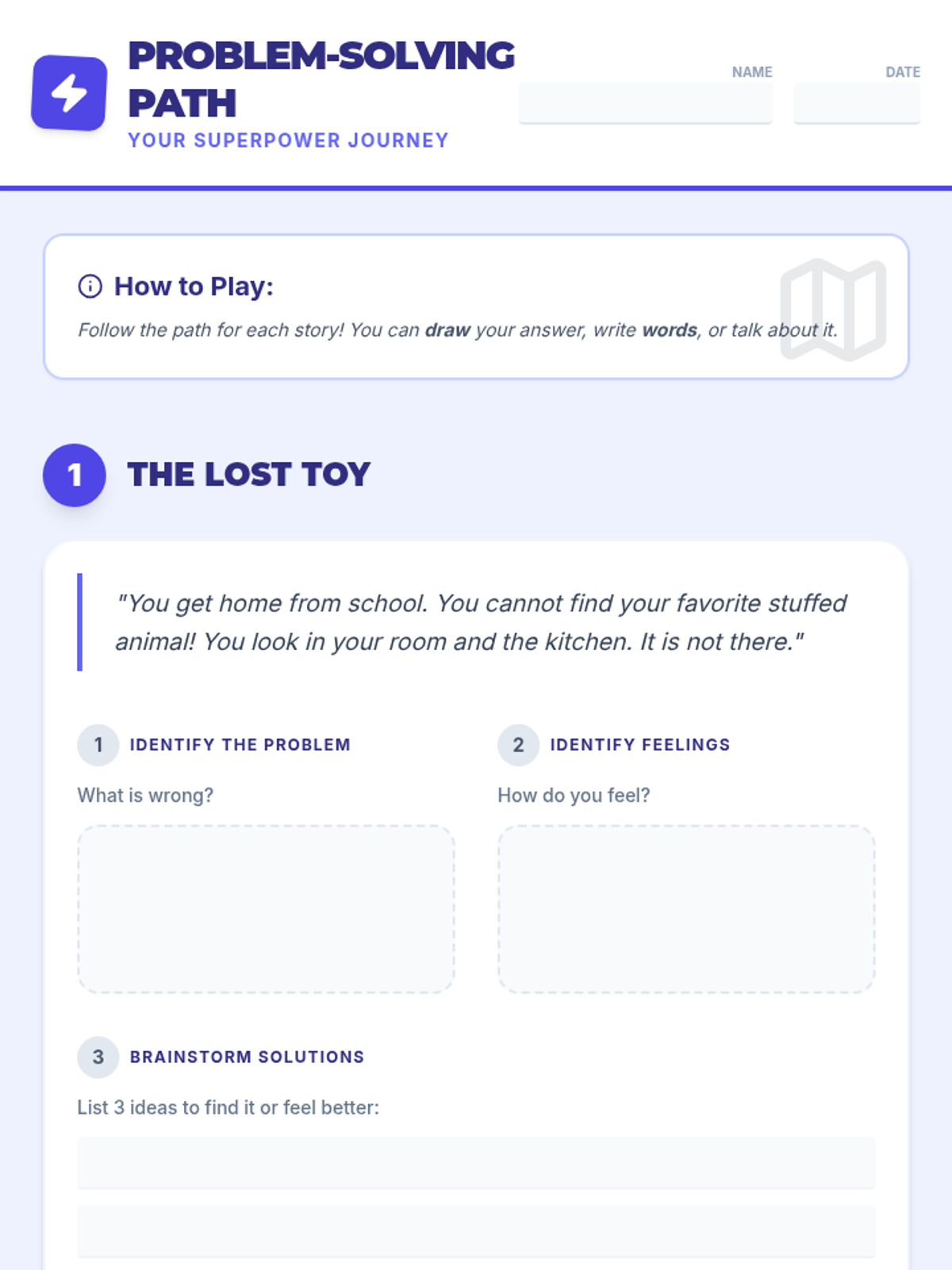
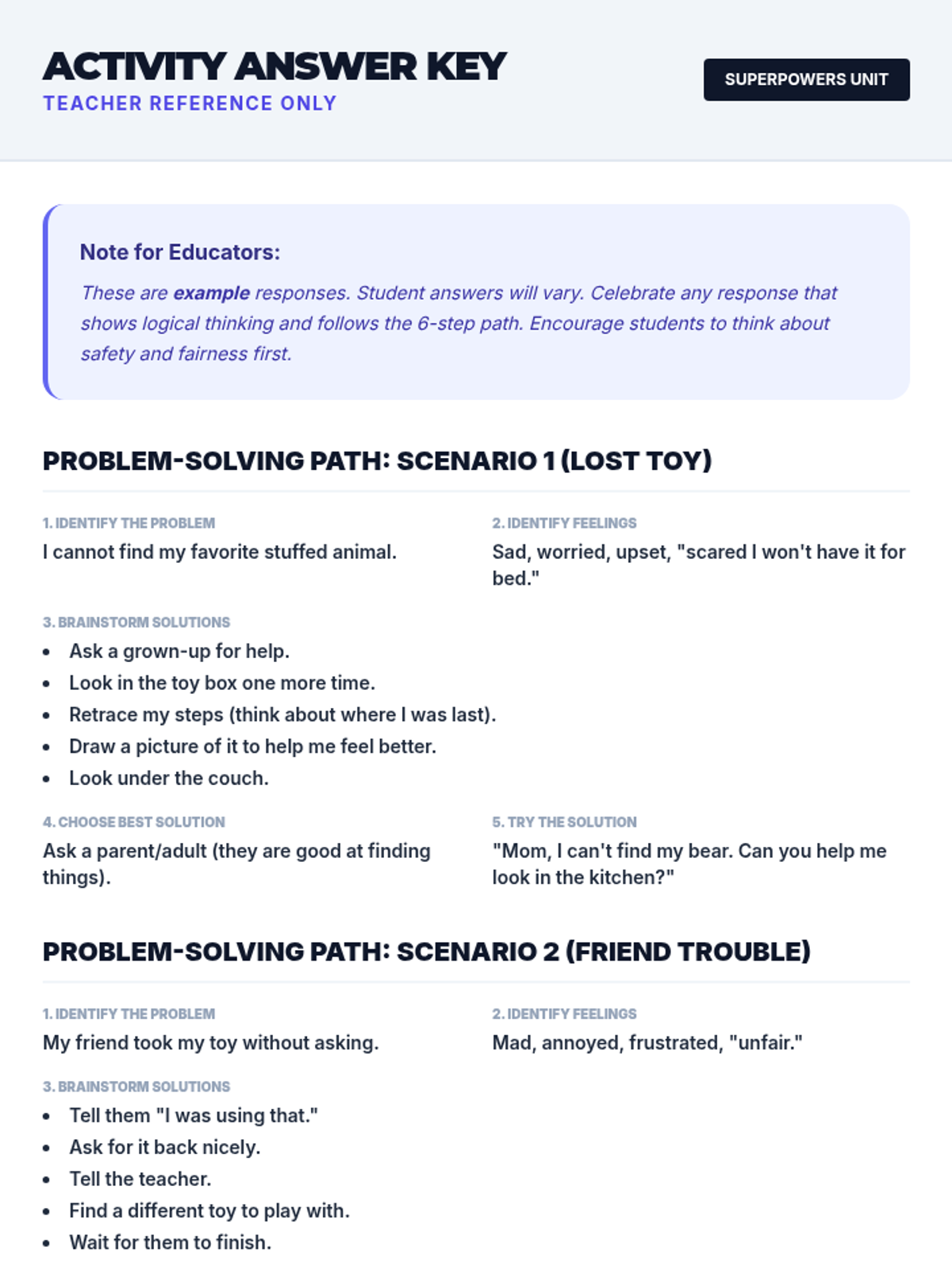
A 4-week, Tier 3 individual counseling sequence for 5th-grade students functioning at a 2nd-grade level. This unit uses a superhero theme to teach a 6-step problem-solving process through CBT and solution-focused strategies.
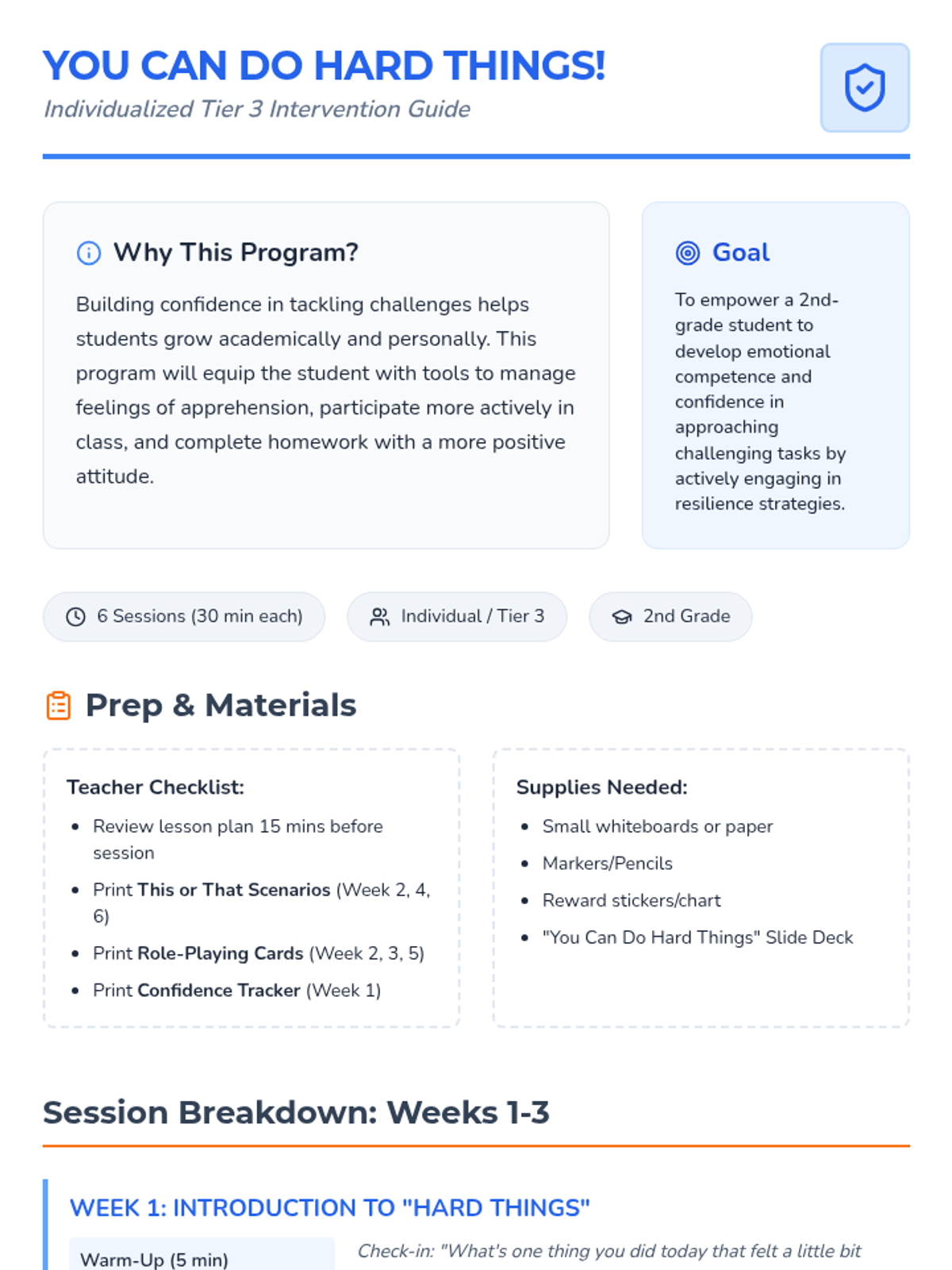
A 6-week individualized Tier 3 program designed to help 2nd-grade students build emotional competence and resilience when facing challenging tasks through role-playing and growth mindset strategies.
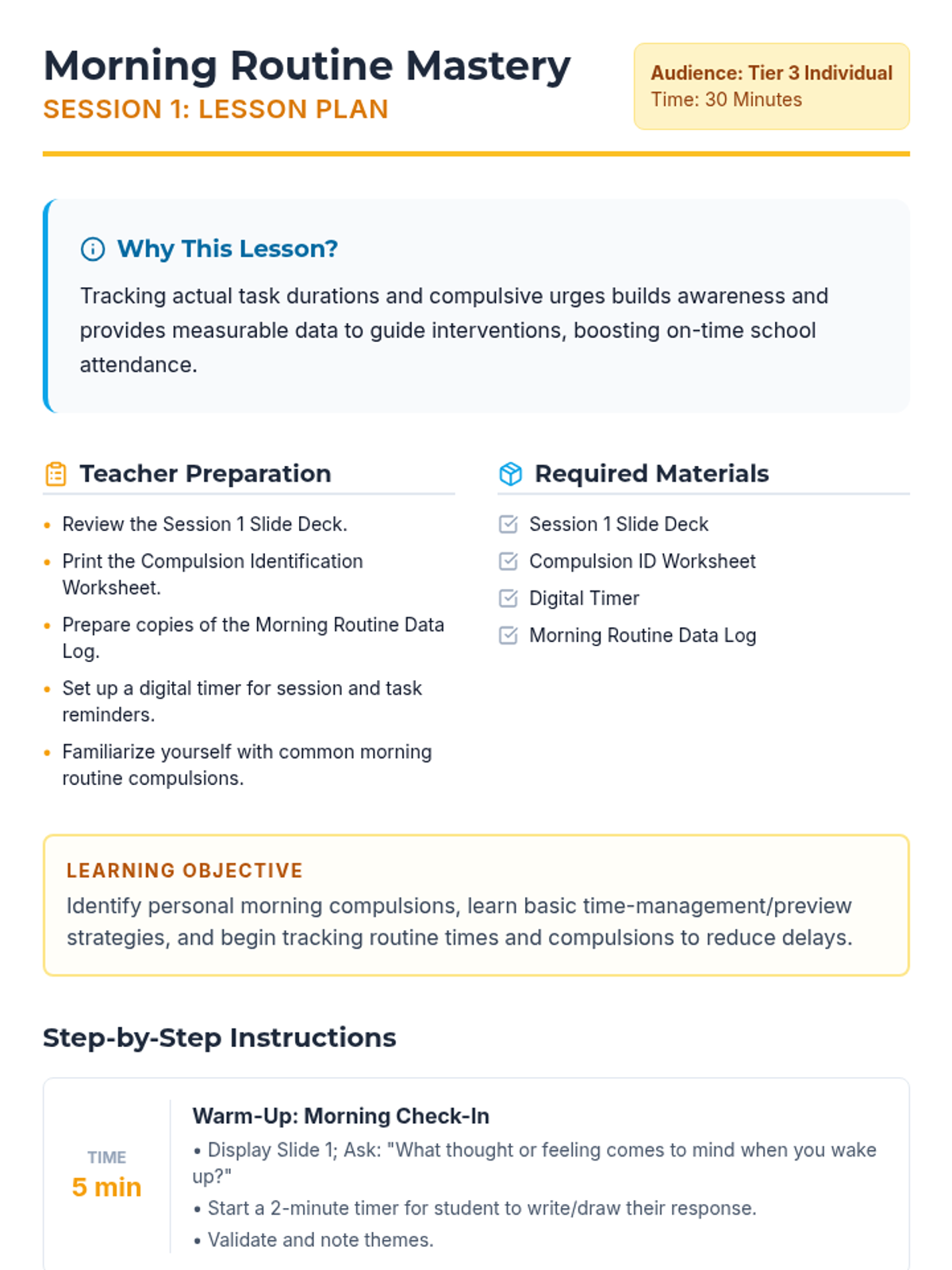
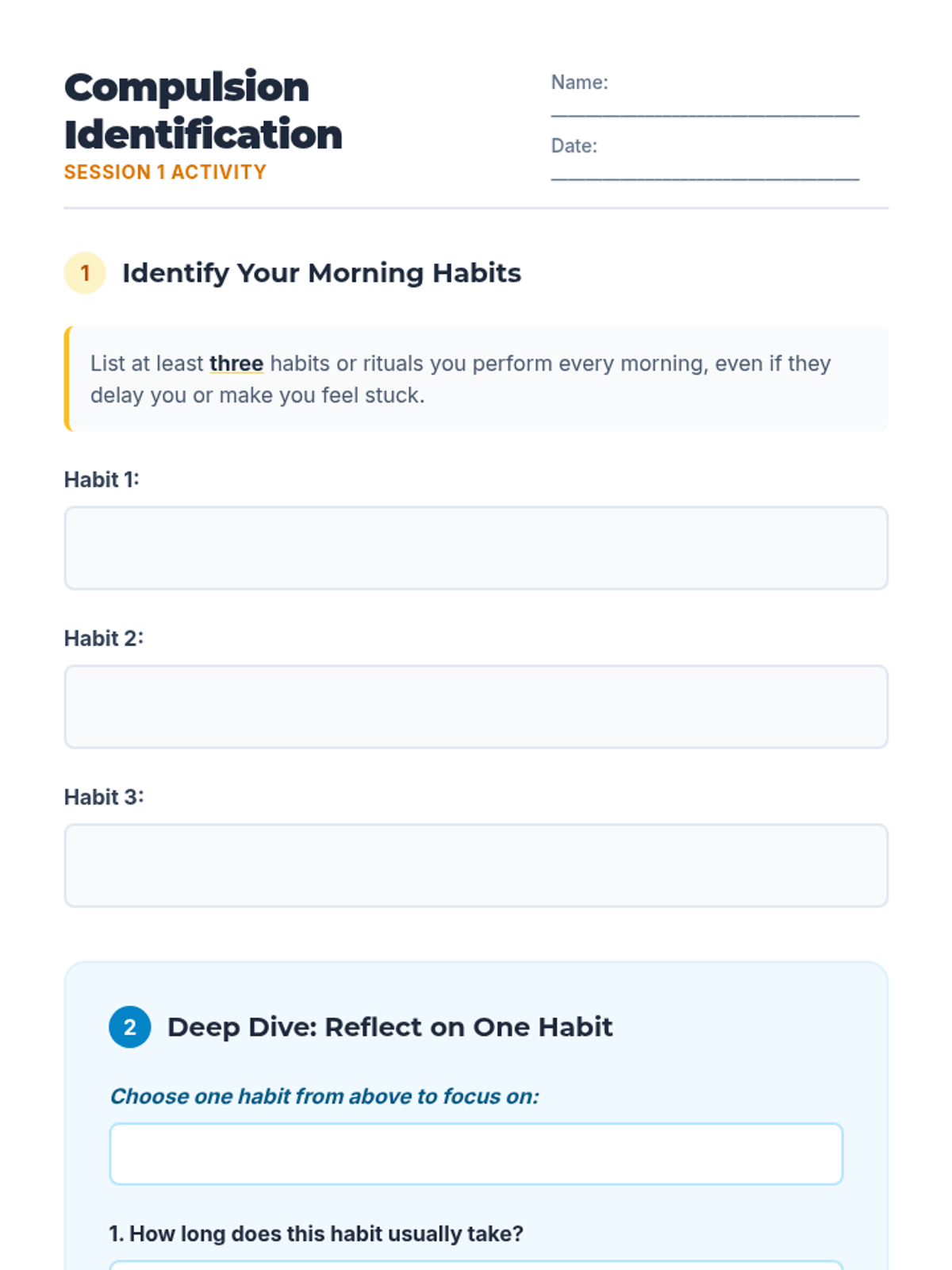
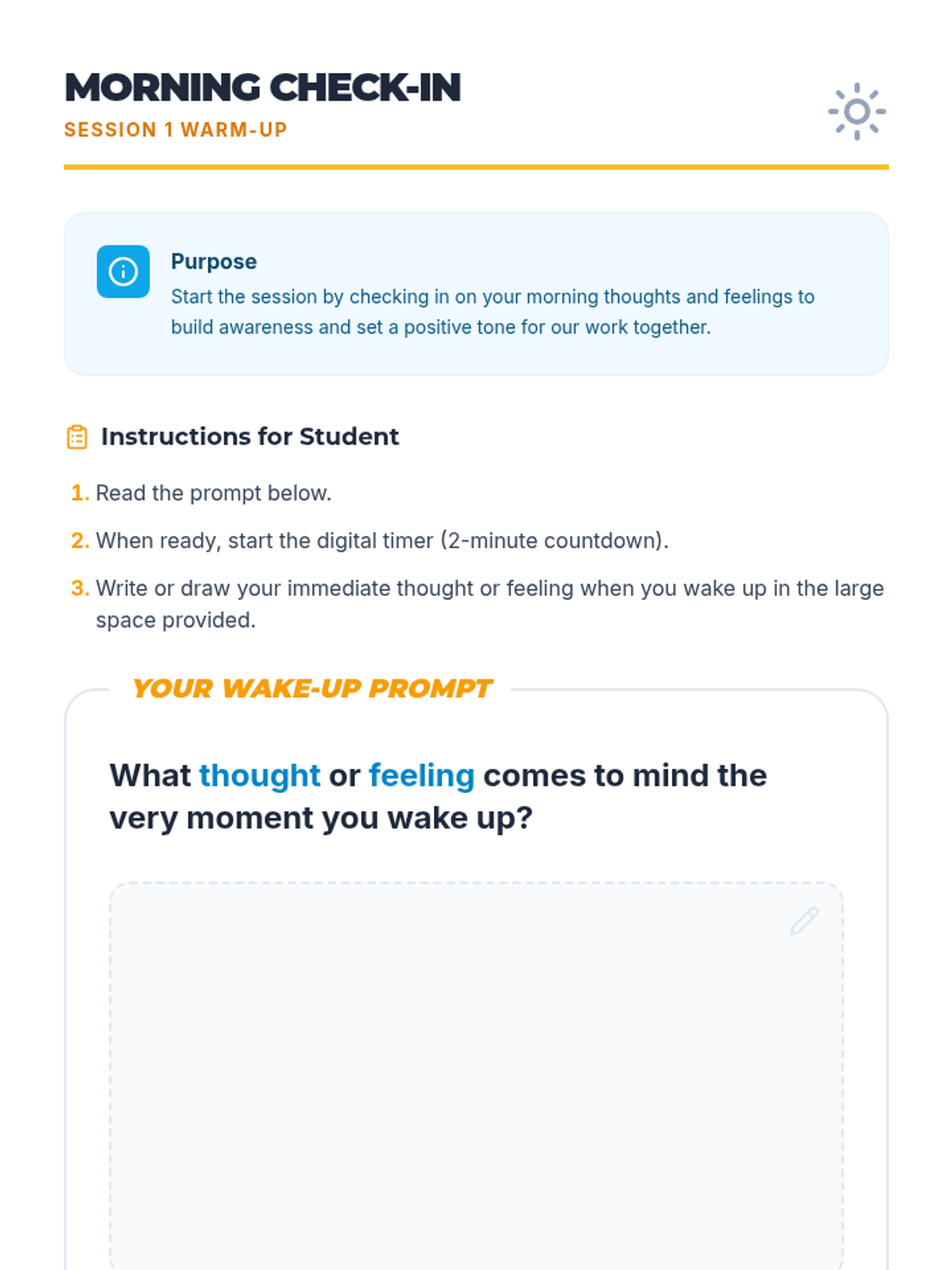
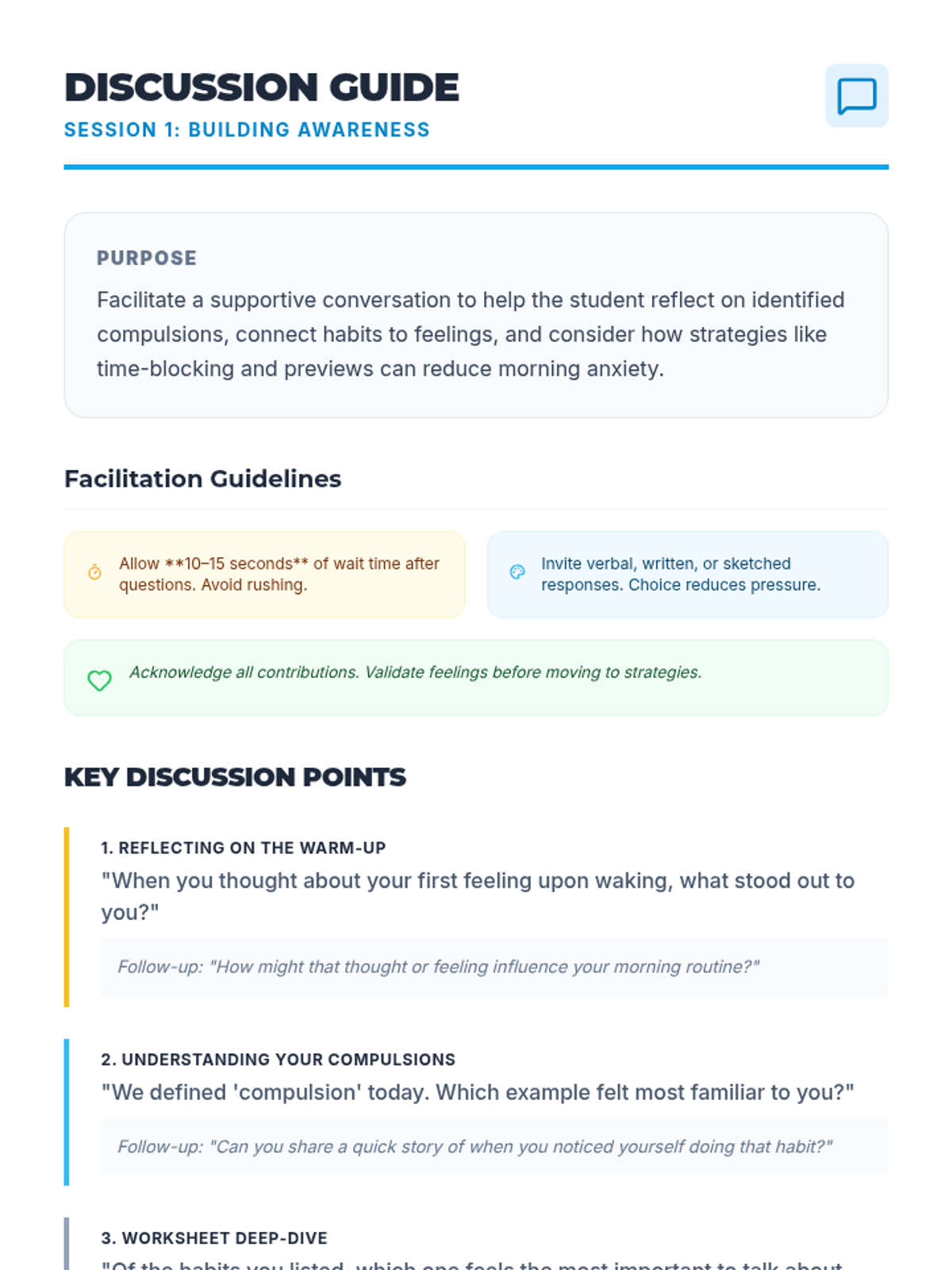
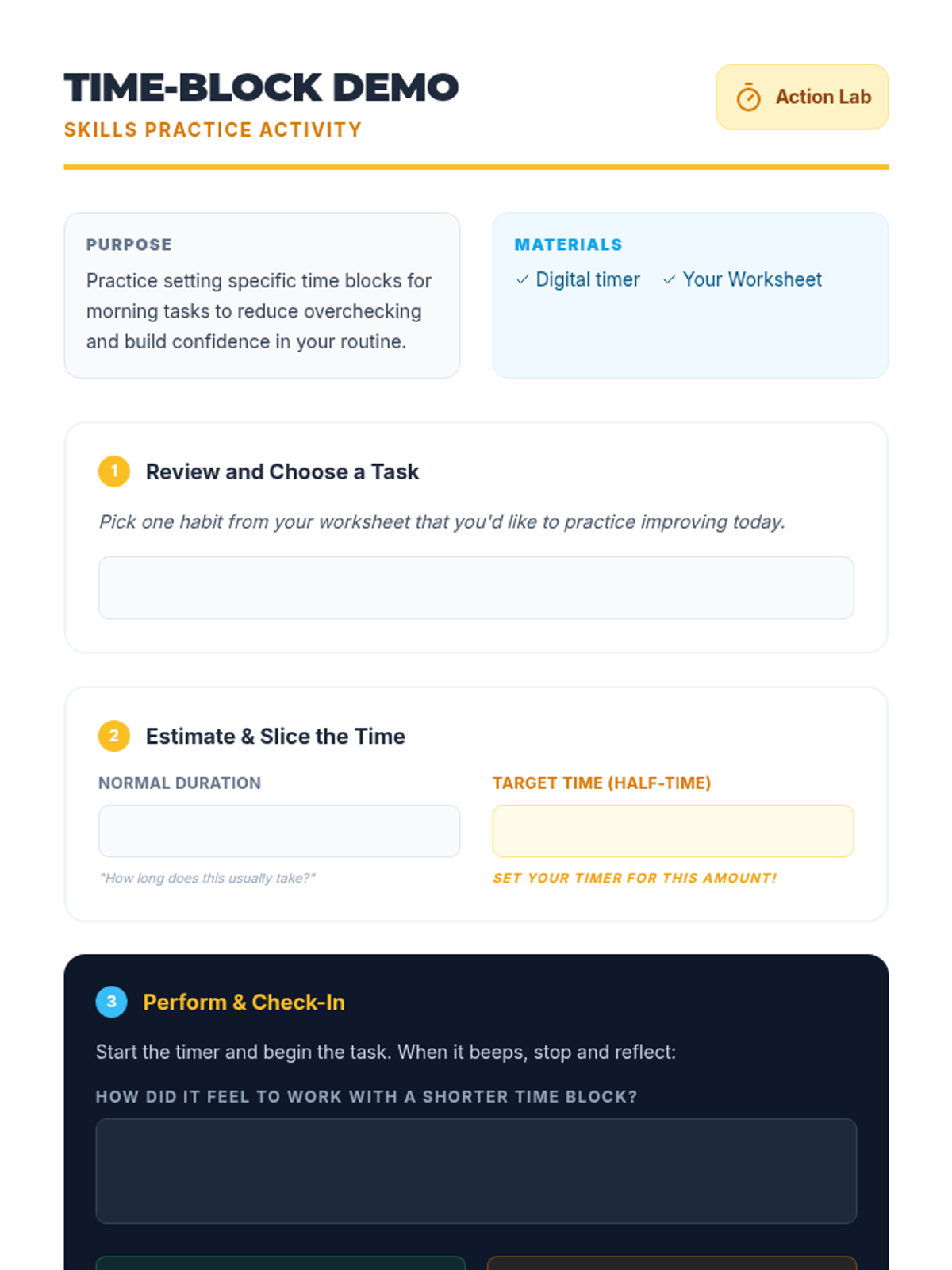
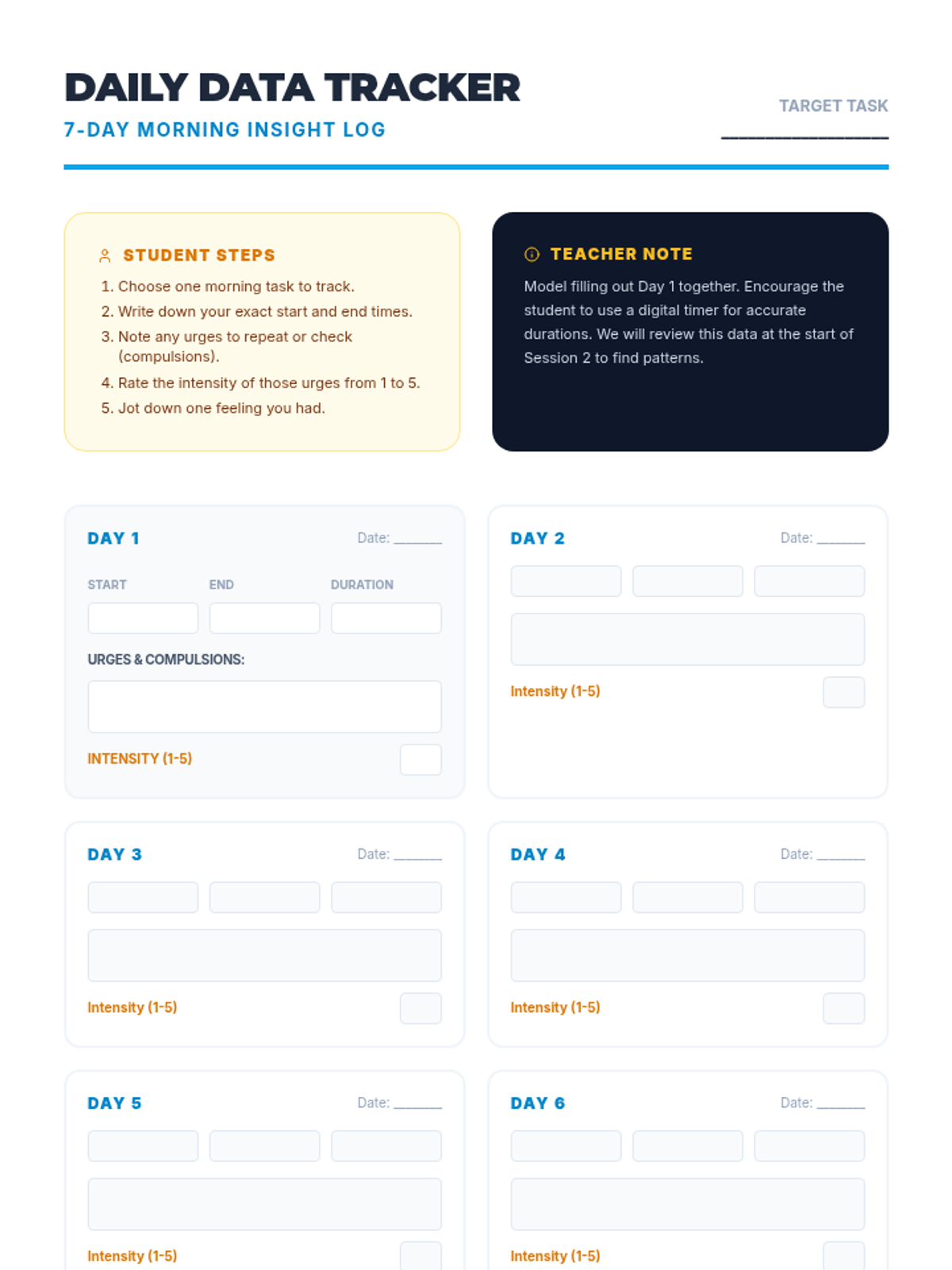
A comprehensive 3-session intervention designed for Tier 3 support, focusing on reducing morning compulsions and improving school attendance for students with anxiety, depression, OCD, and ADHD through data-driven strategies and time management.
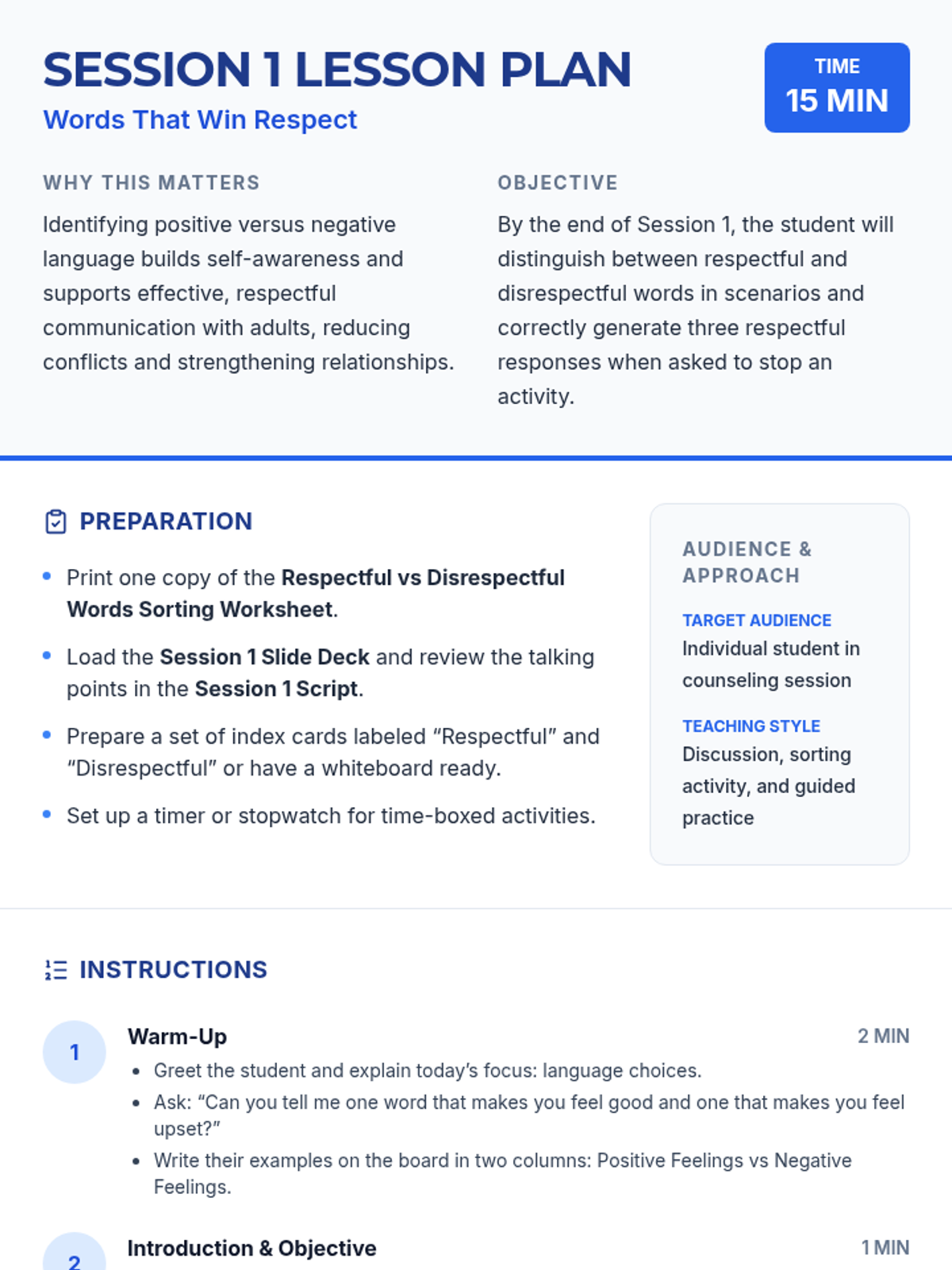
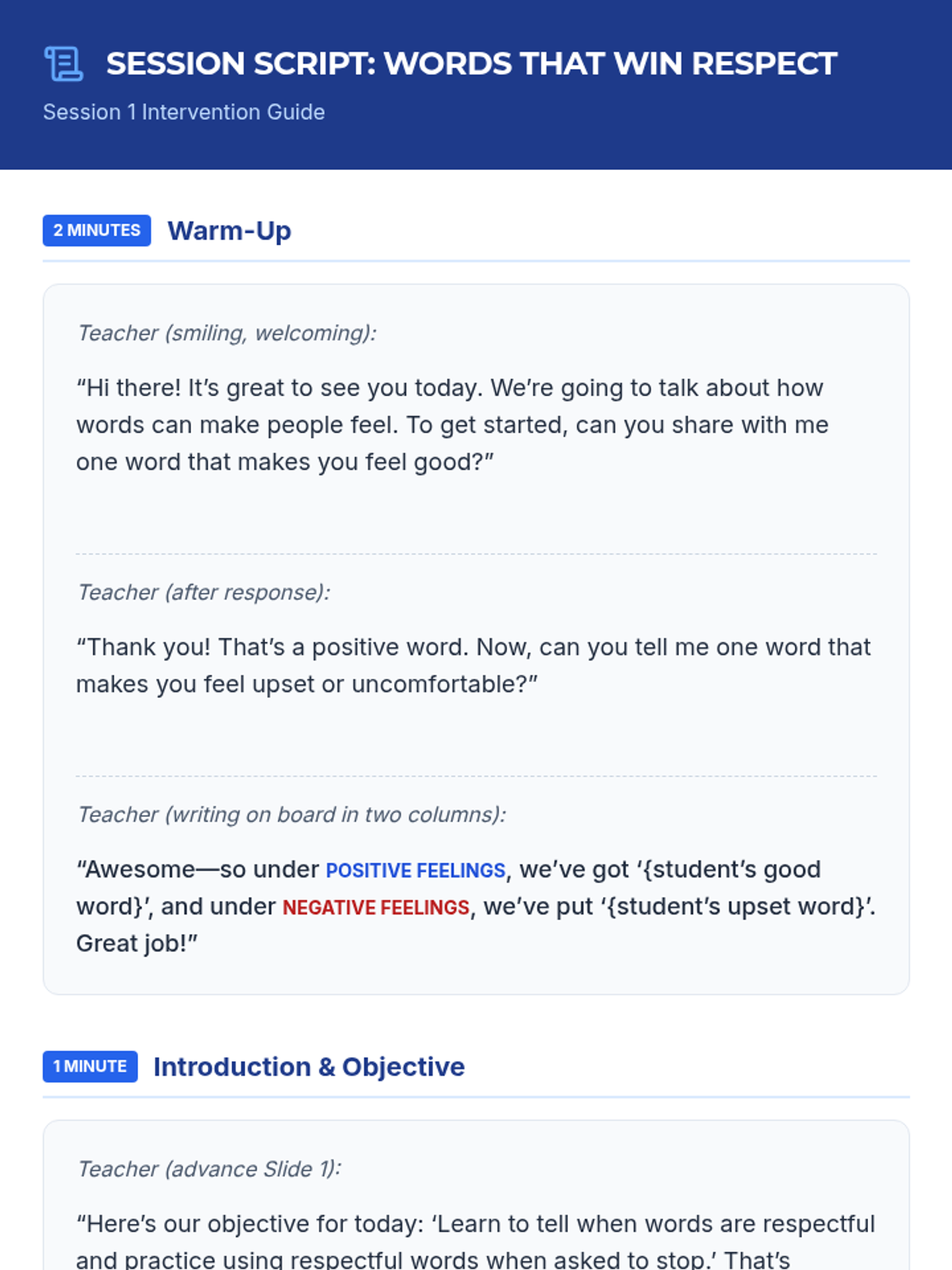
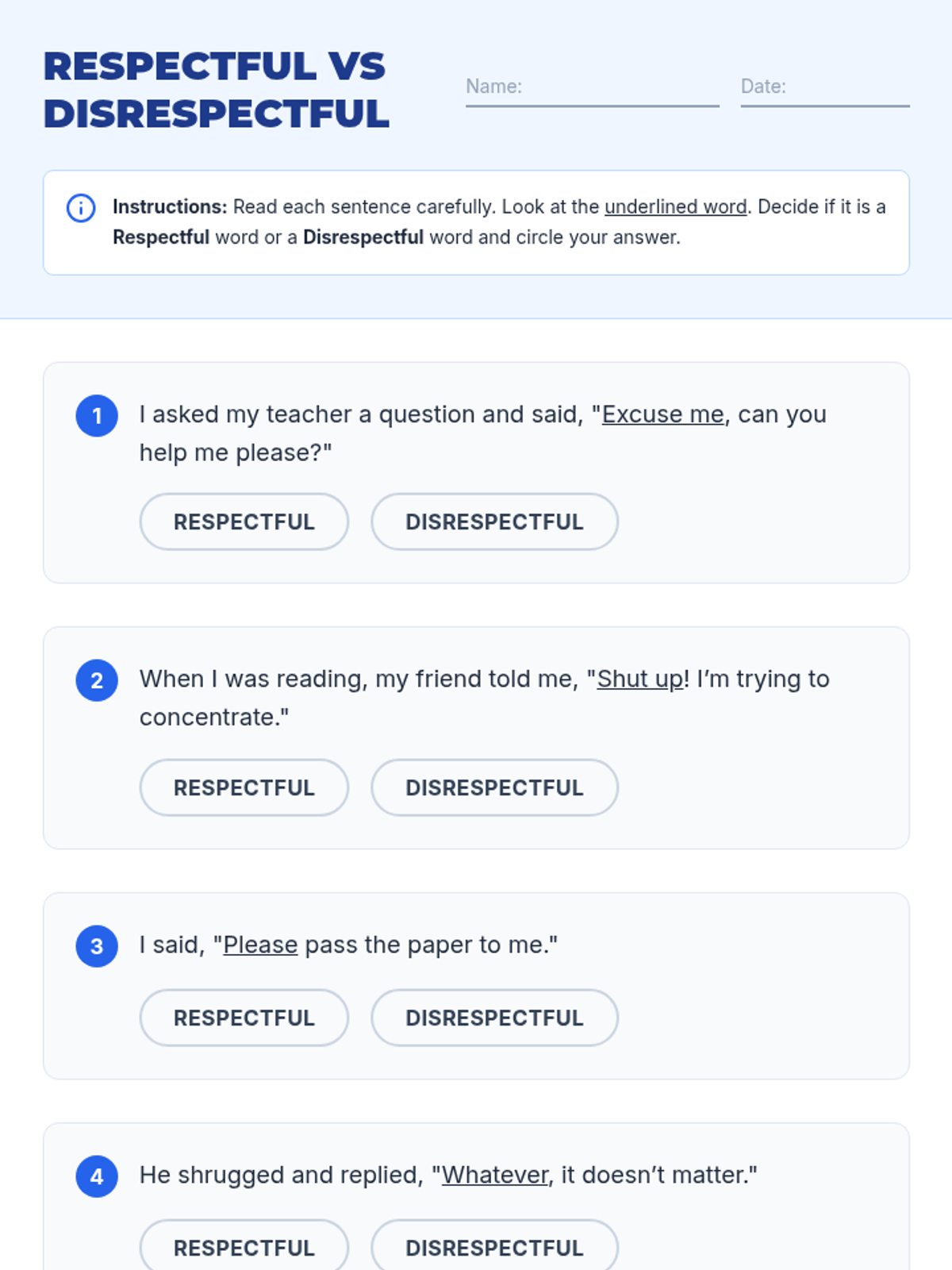
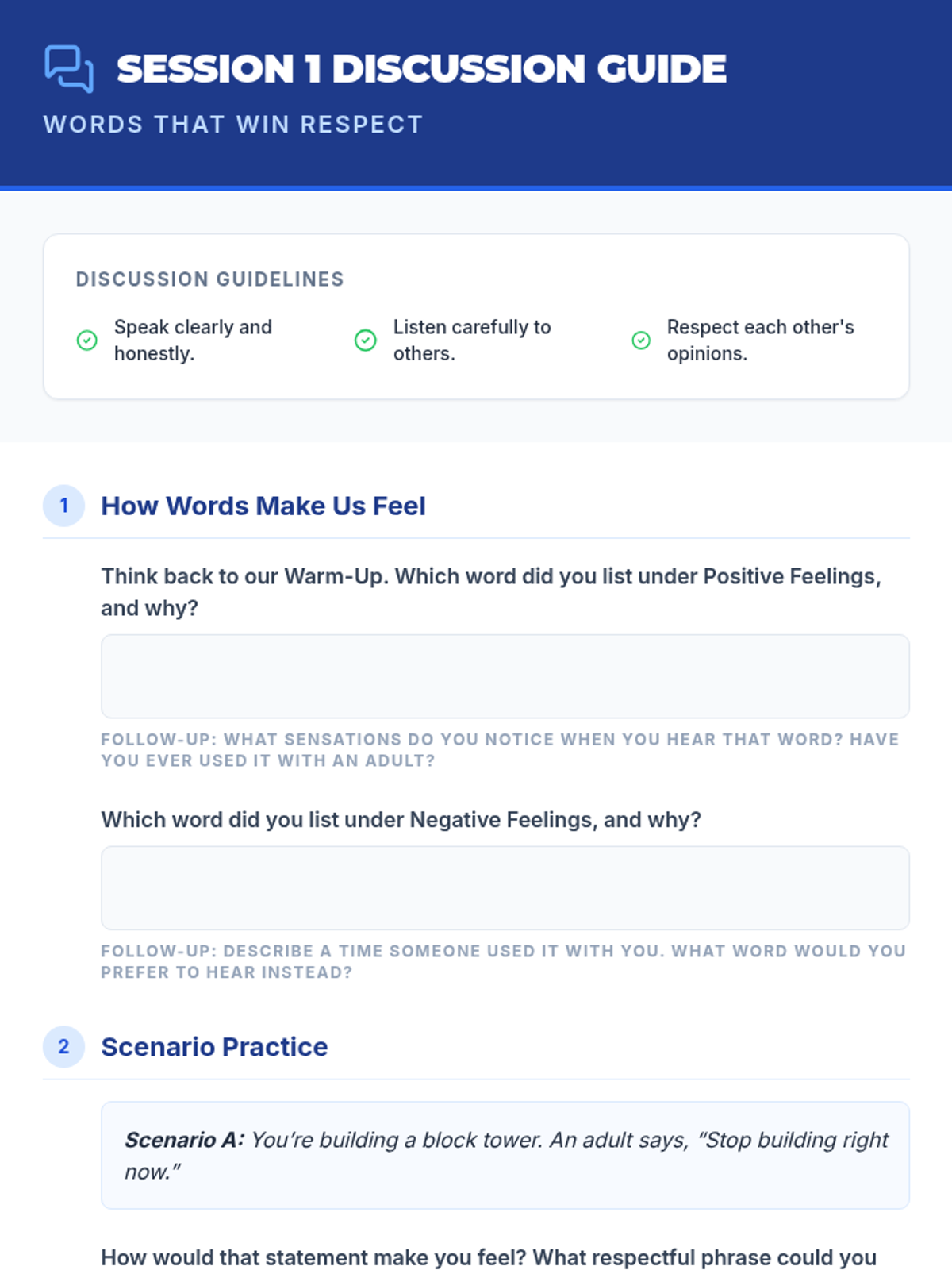
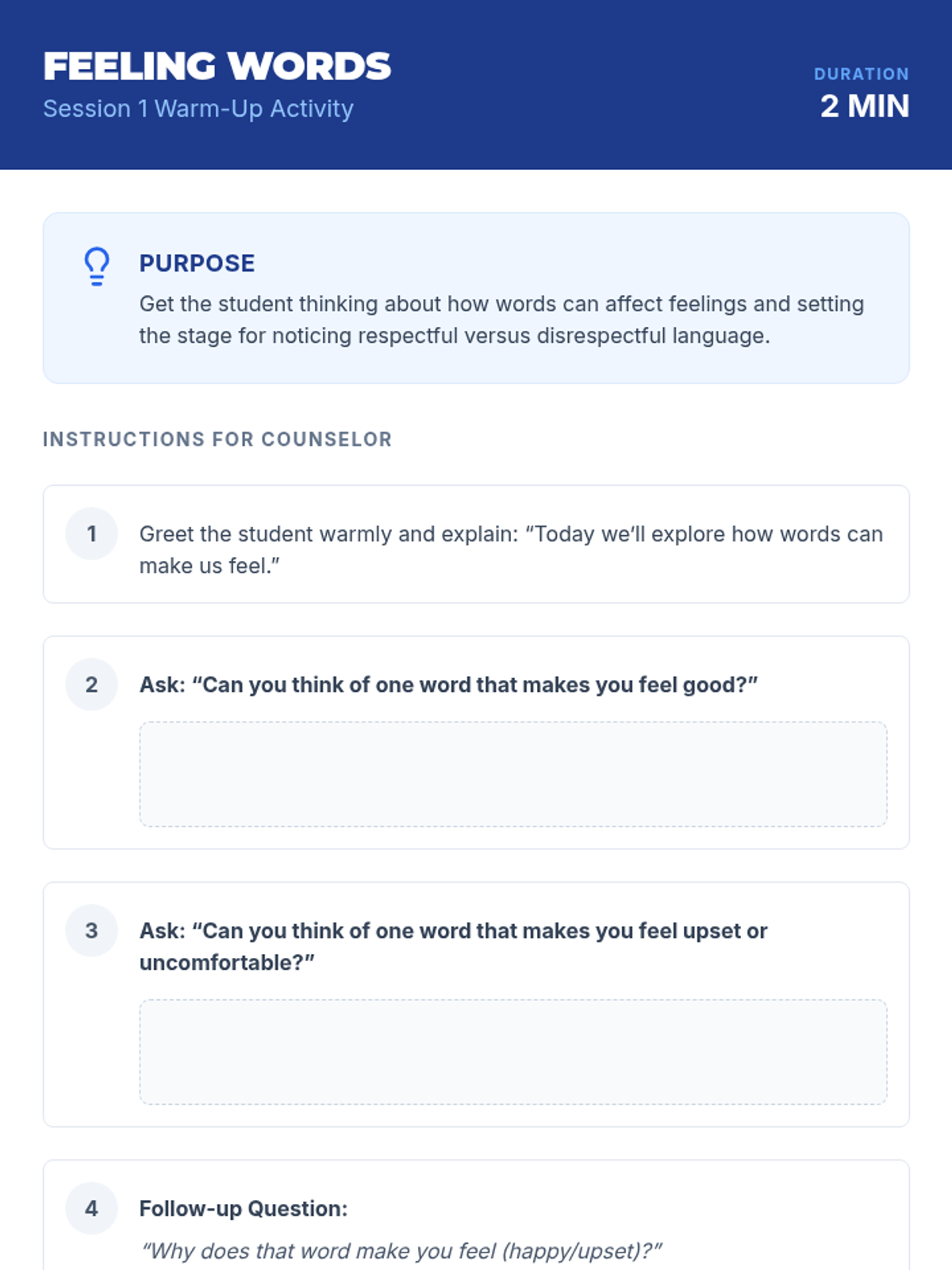
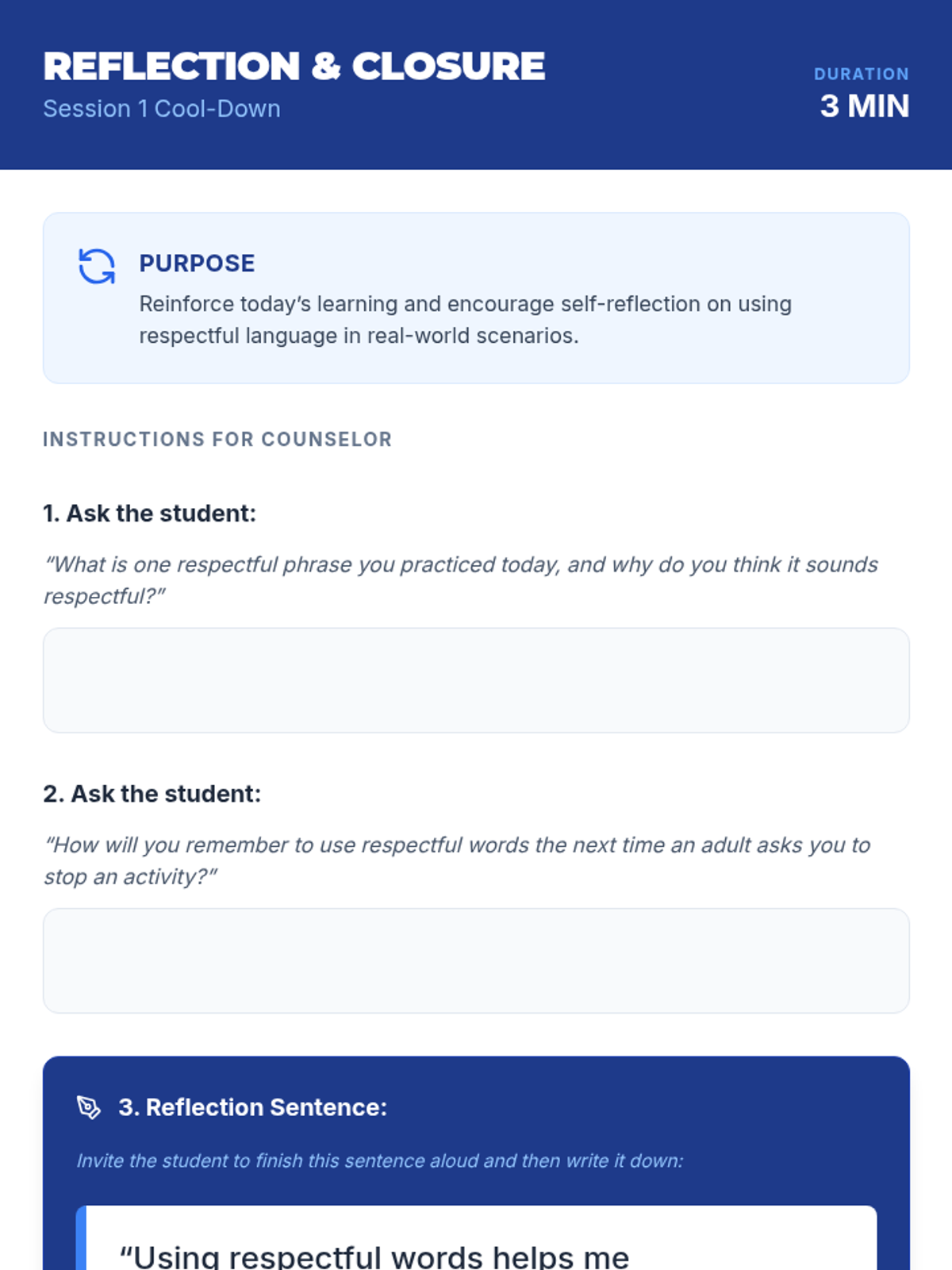
A 4-session Tier 3 intervention mini-course designed for individual counseling to help students learn and practice respectful language when asked to stop an activity. The course moves from identifying respectful words to mastering the use of respectful phrases in real-world scenarios.
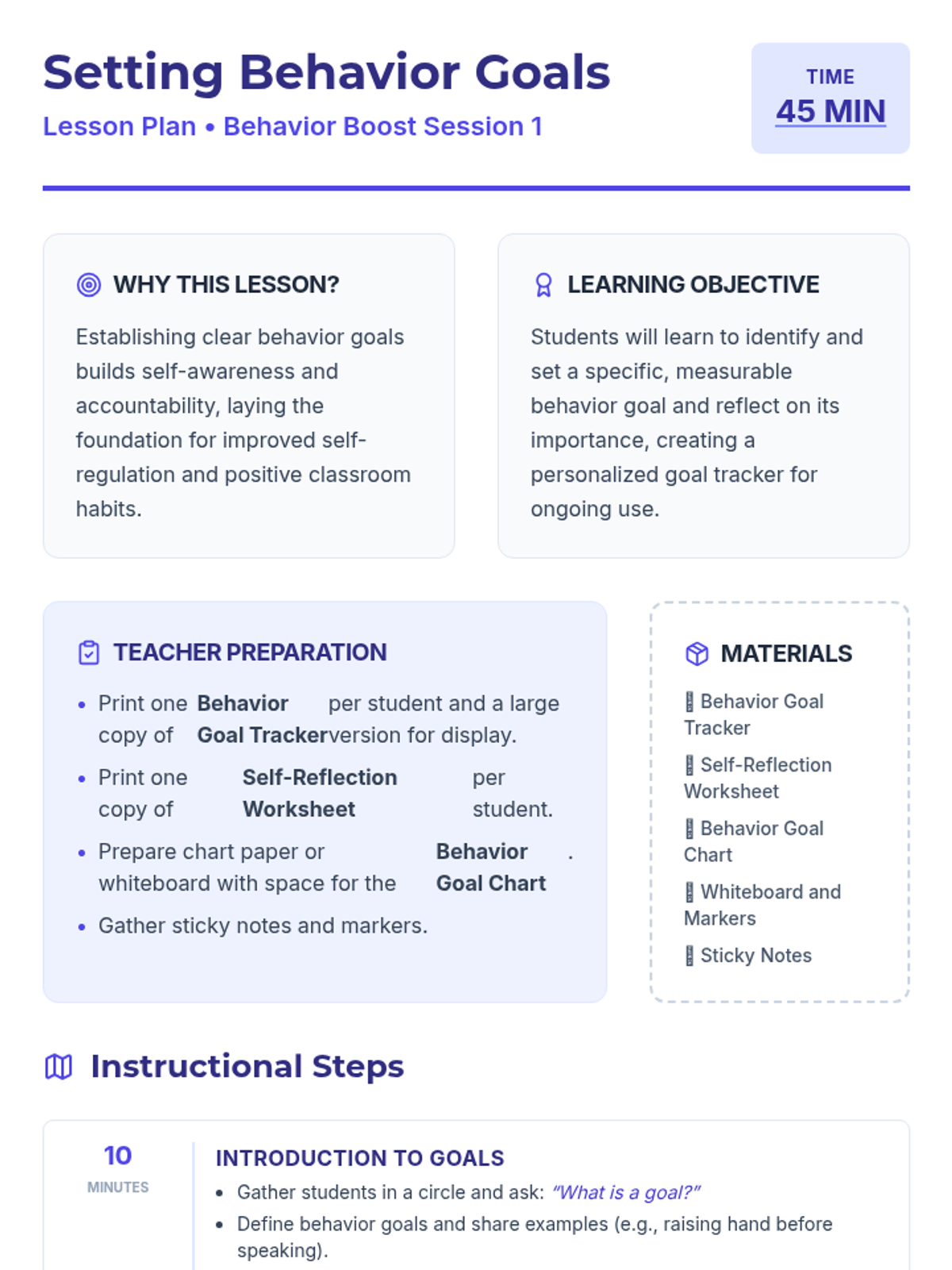
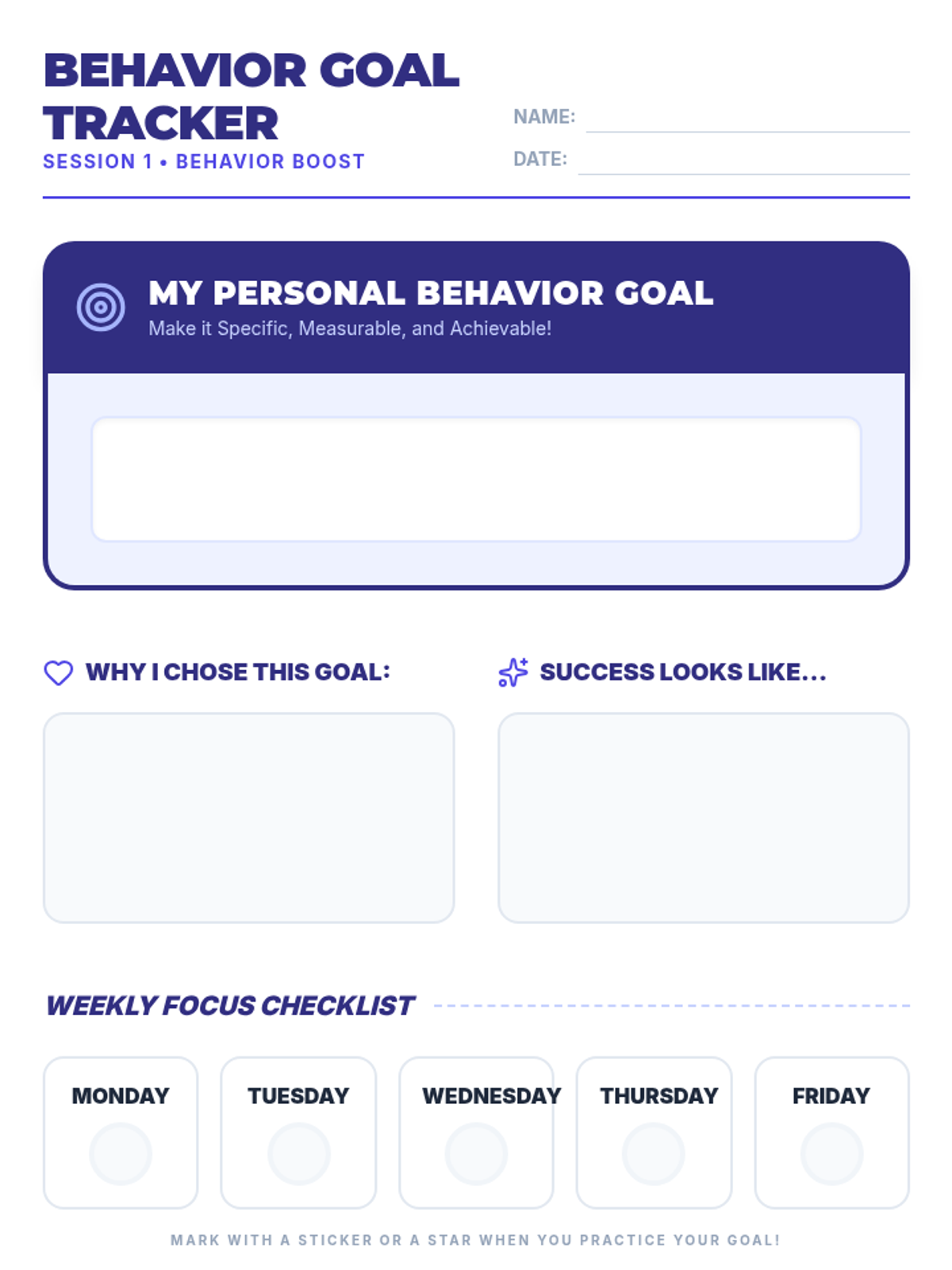
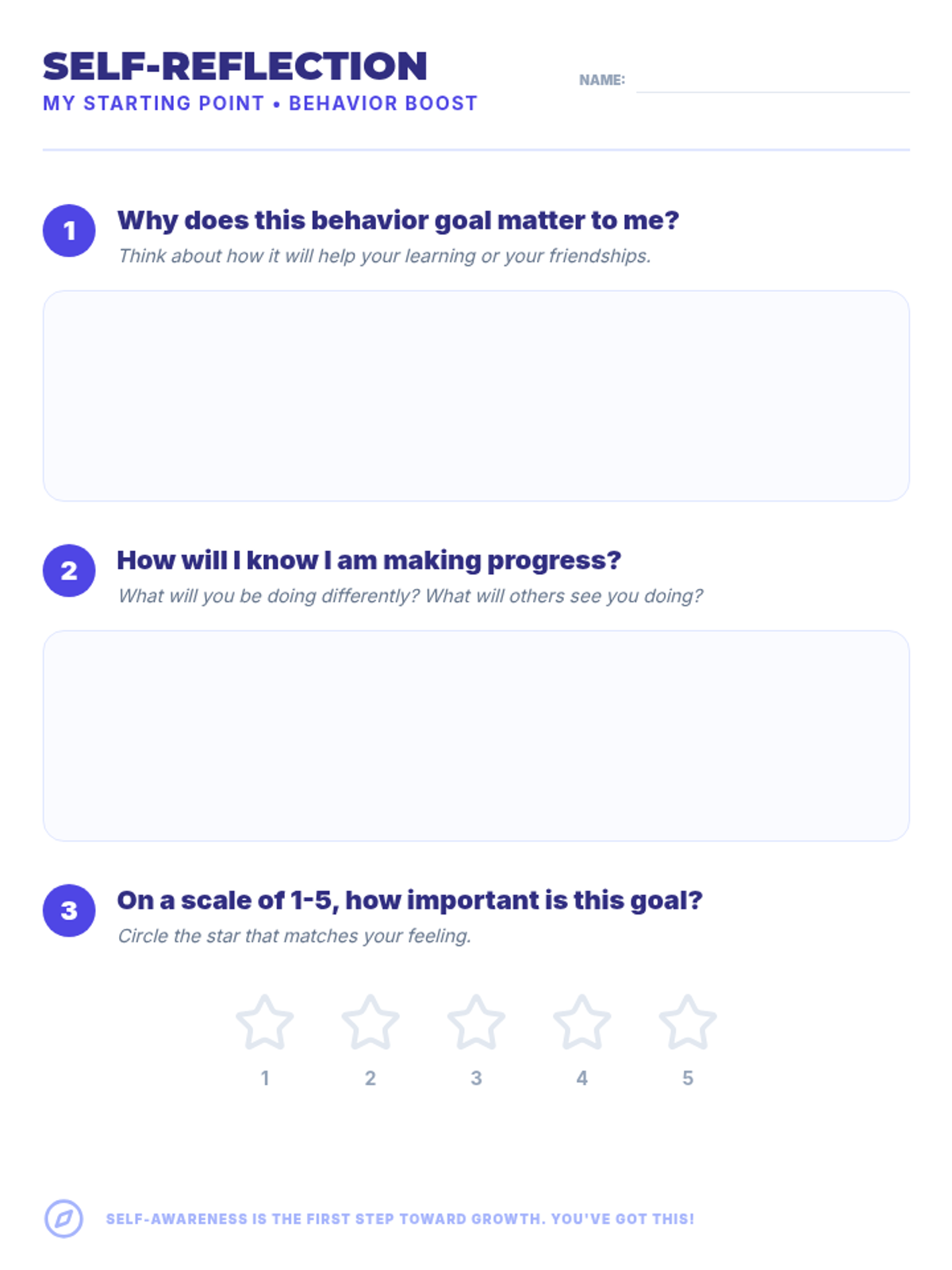
A four-session series designed for Tier 1 instruction, helping students build self-regulation through goal setting, tracking, and reflection. students develop personal accountability and positive classroom habits using interactive tools and peer support.
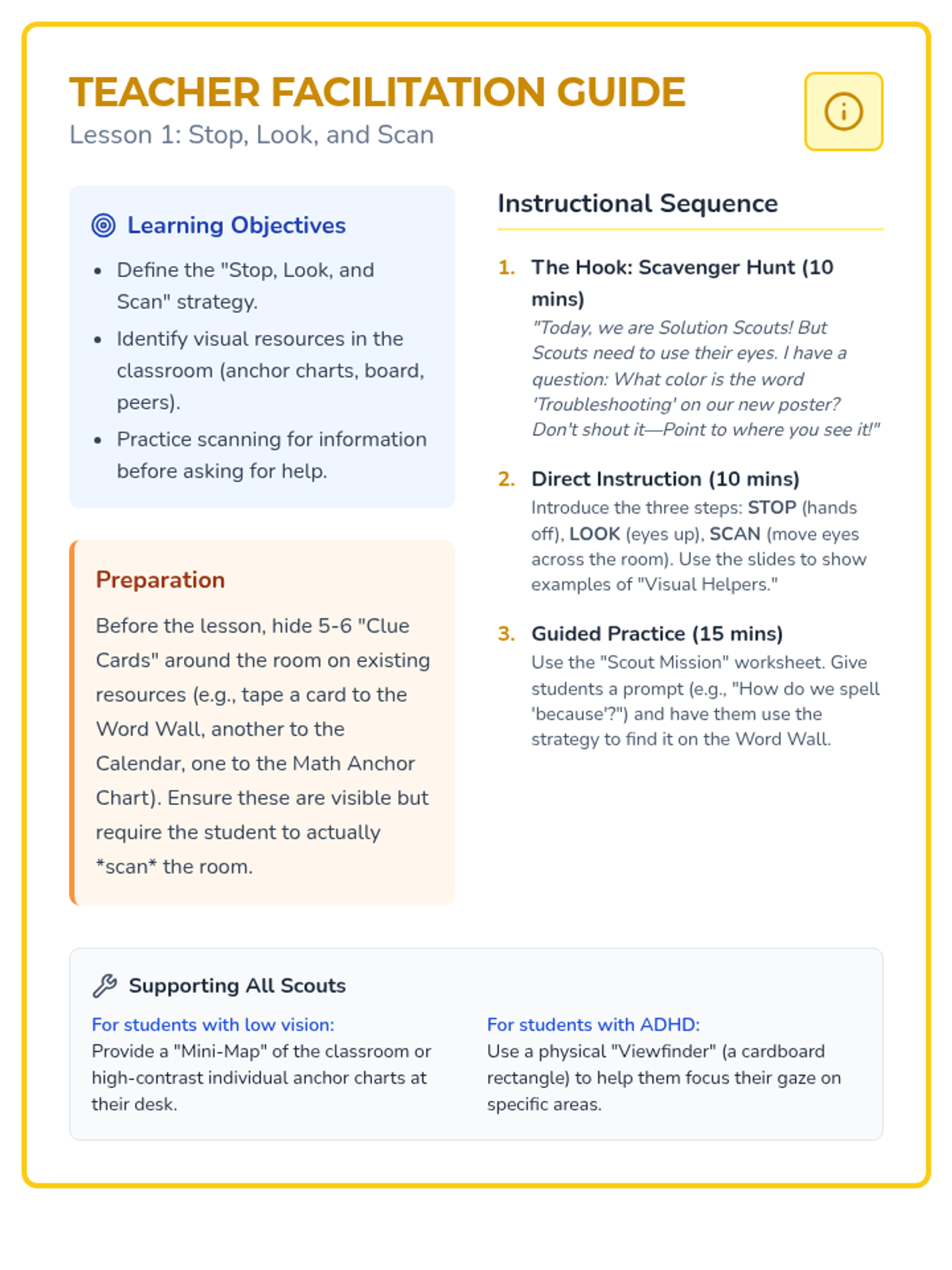
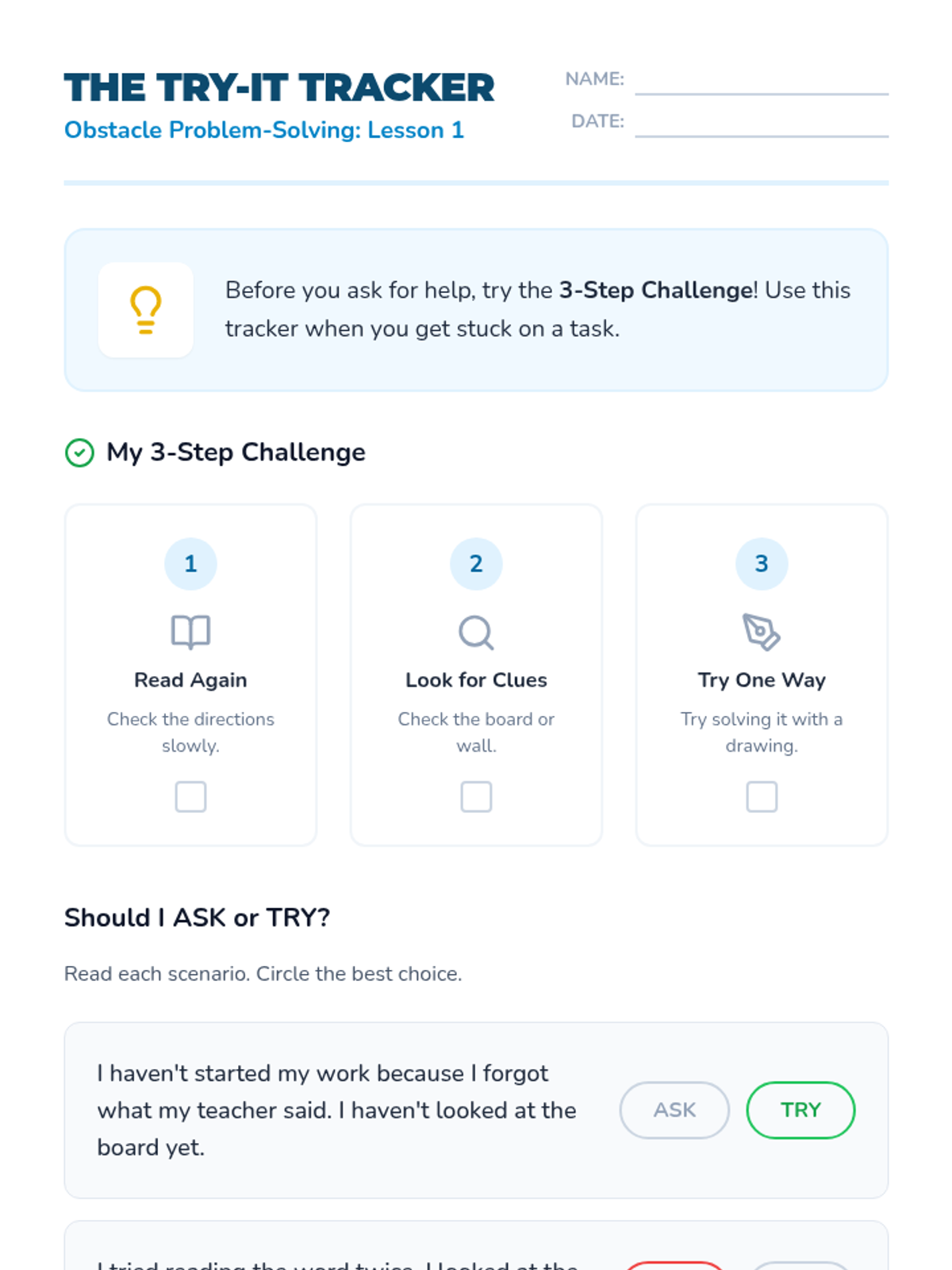
A 5-lesson sequence for 2nd-grade students focusing on independent problem-solving strategies. Students move from identifying obstacles to testing multiple solutions using a 'Solution Scout' toolkit approach.
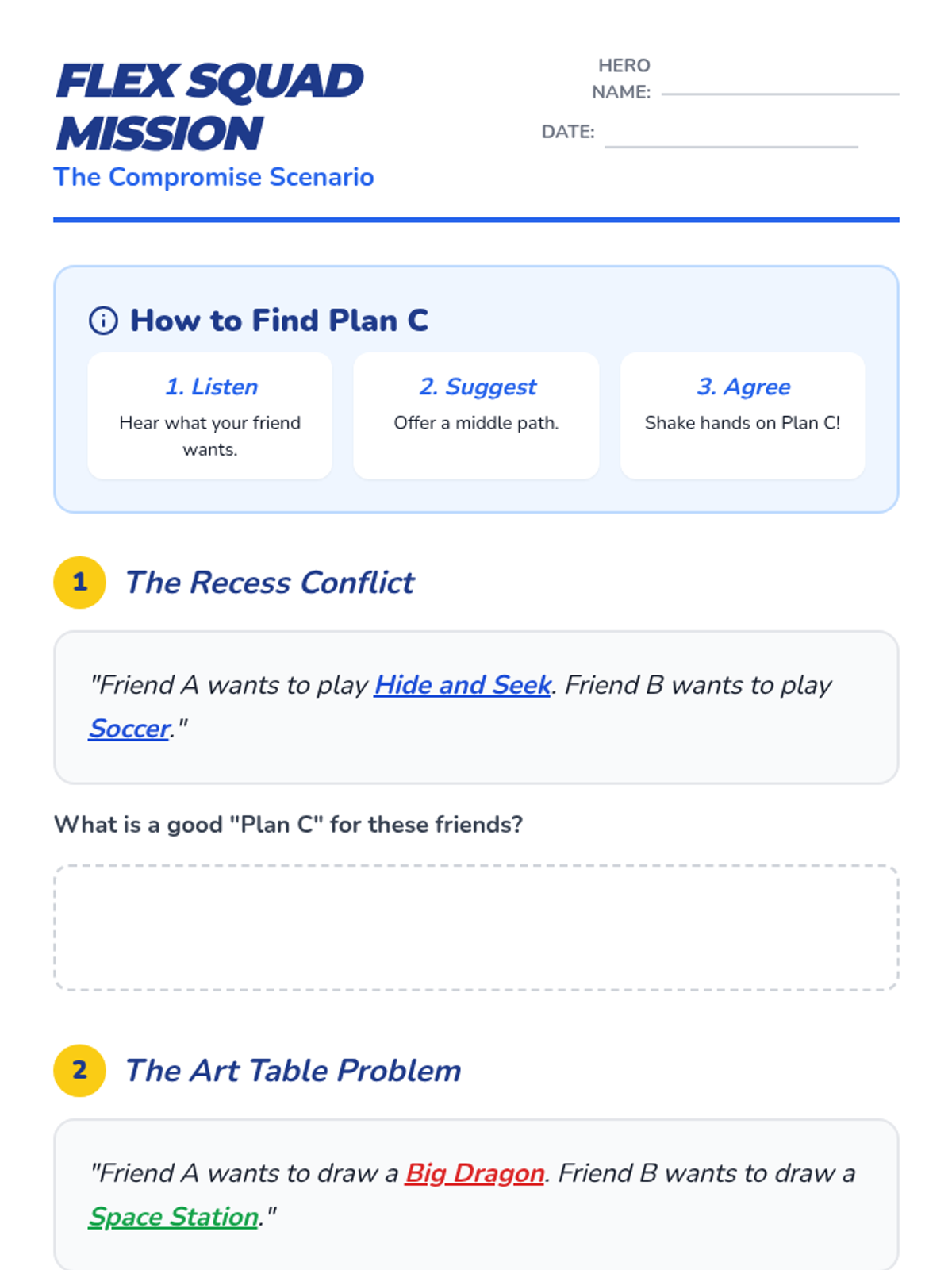
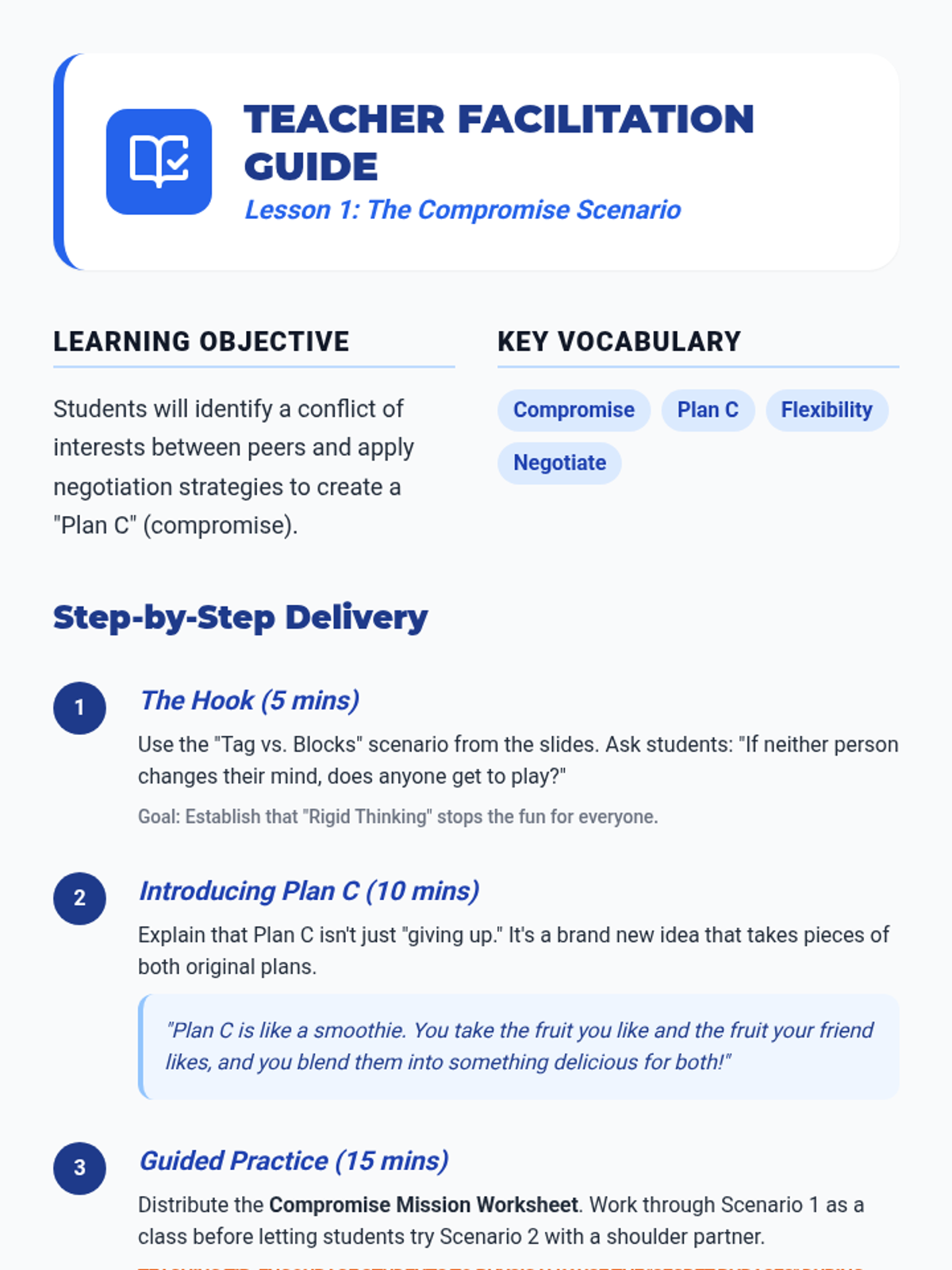
This sequence teaches 2nd-grade students how to adapt to social plan changes and peer conflicts using flexibility strategies. Students learn to negotiate compromises, handle absent partners, solve resource problems, and support peers experiencing change-related distress.
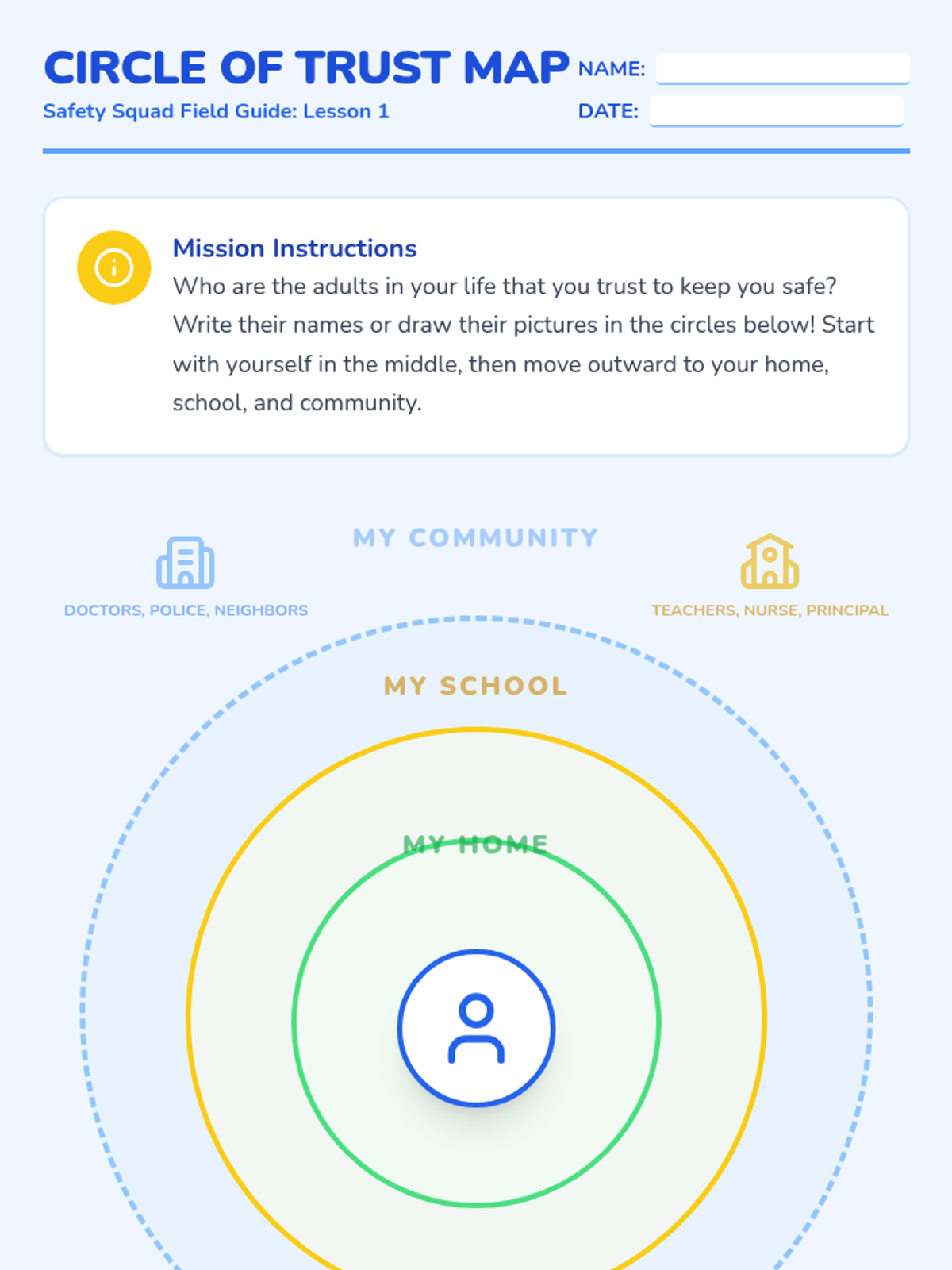
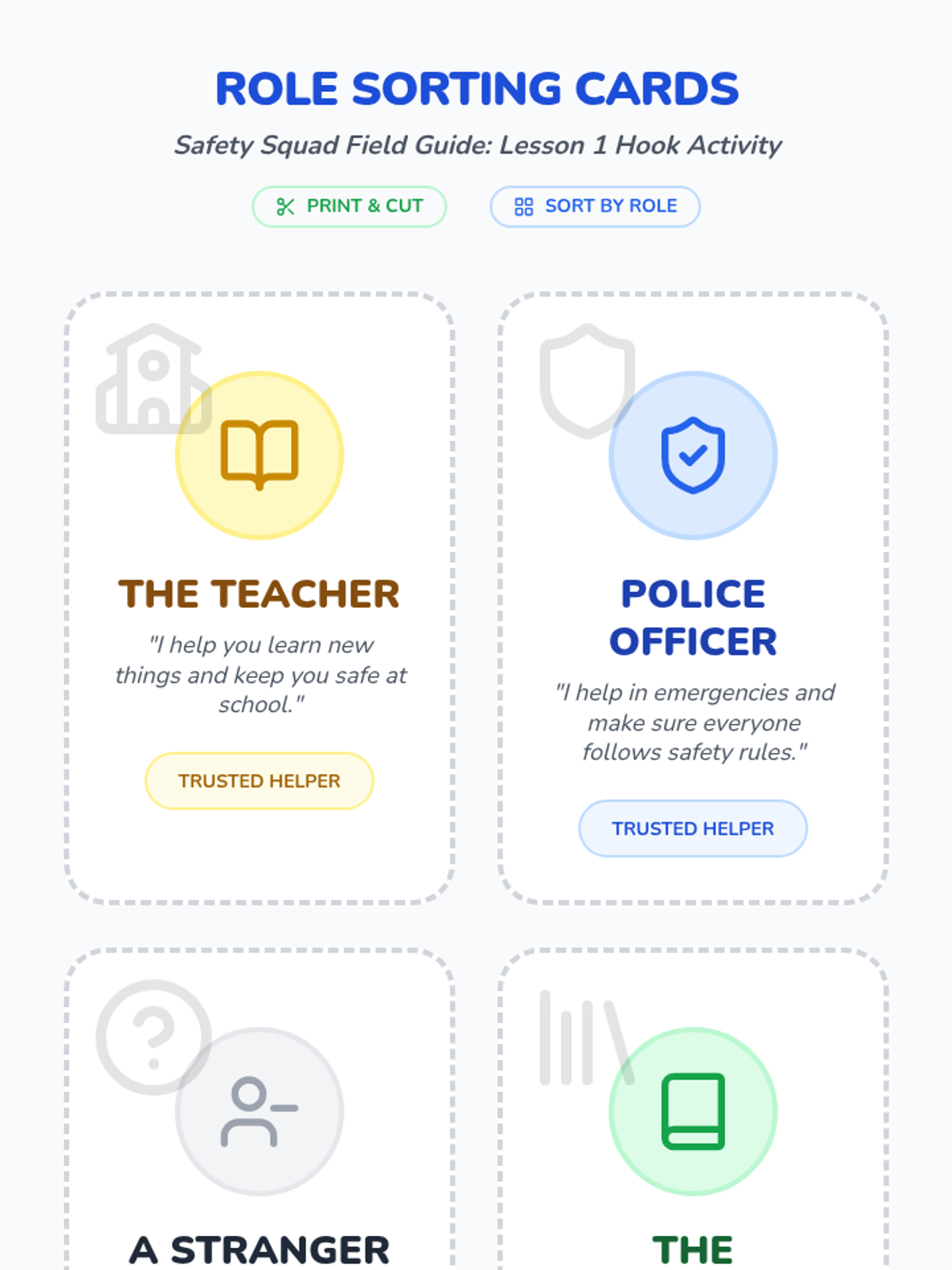
A five-lesson sequence for 2nd-grade students focusing on identifying trusted adults, distinguishing between problem sizes, and using assertive communication to seek help effectively. students will build a personal support network and practice the persistence needed to ensure their safety and well-being.
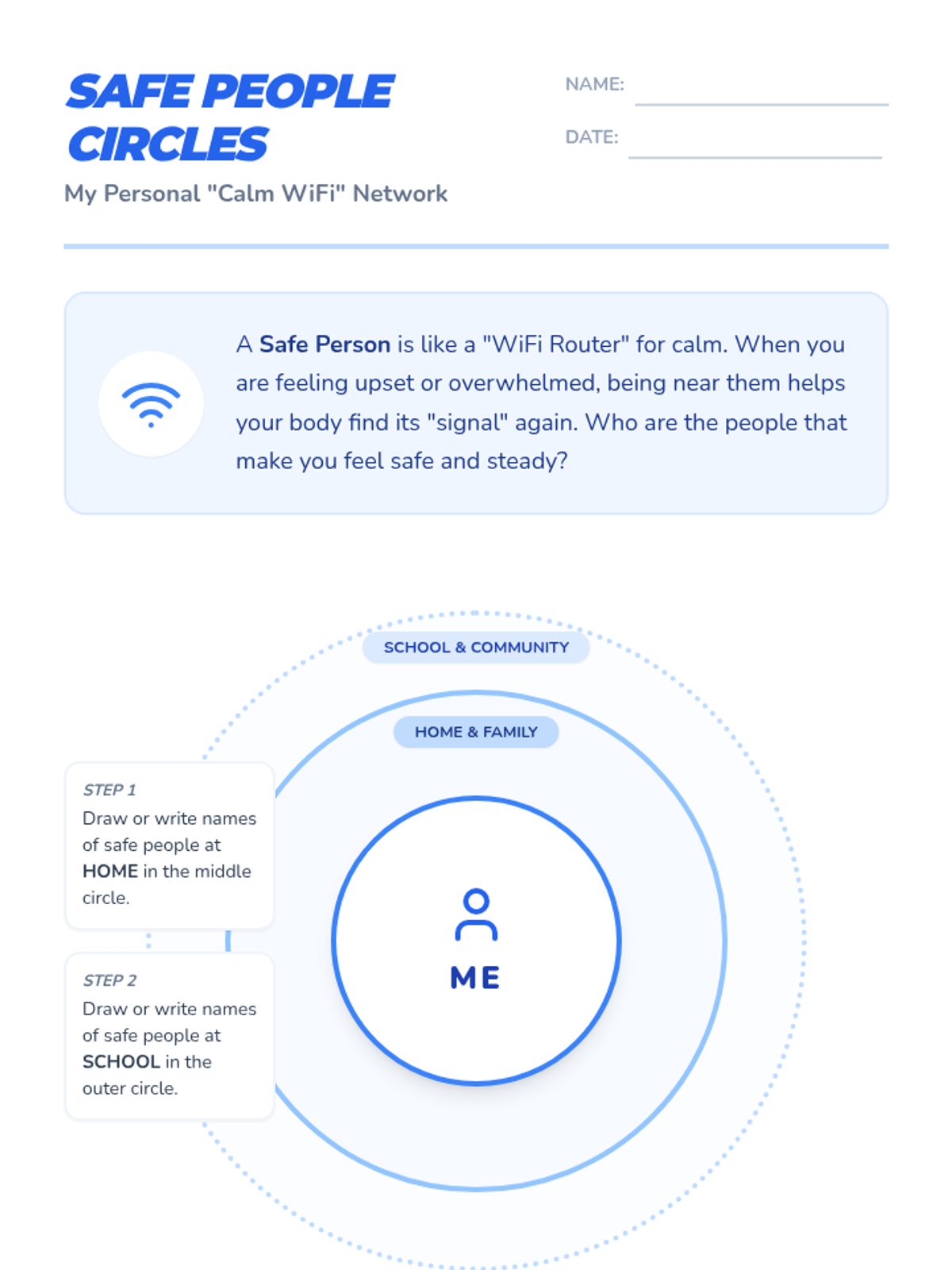
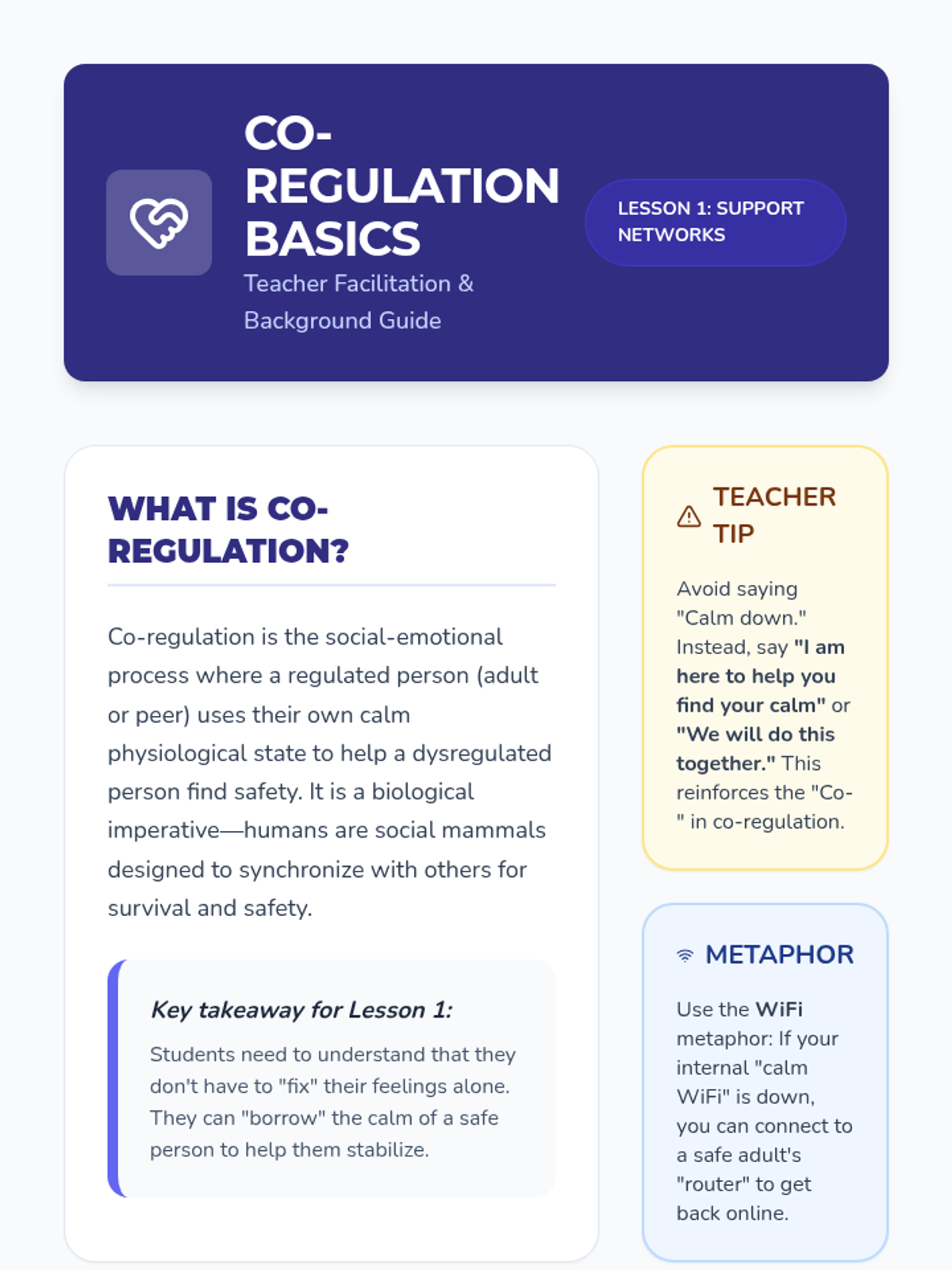
A sequence for 2nd graders focused on dysregulation recovery, teaching students how to 'borrow calm' from safe adults, use non-verbal signals, and successfully rejoin their classroom community after a meltdown or sensory overload.
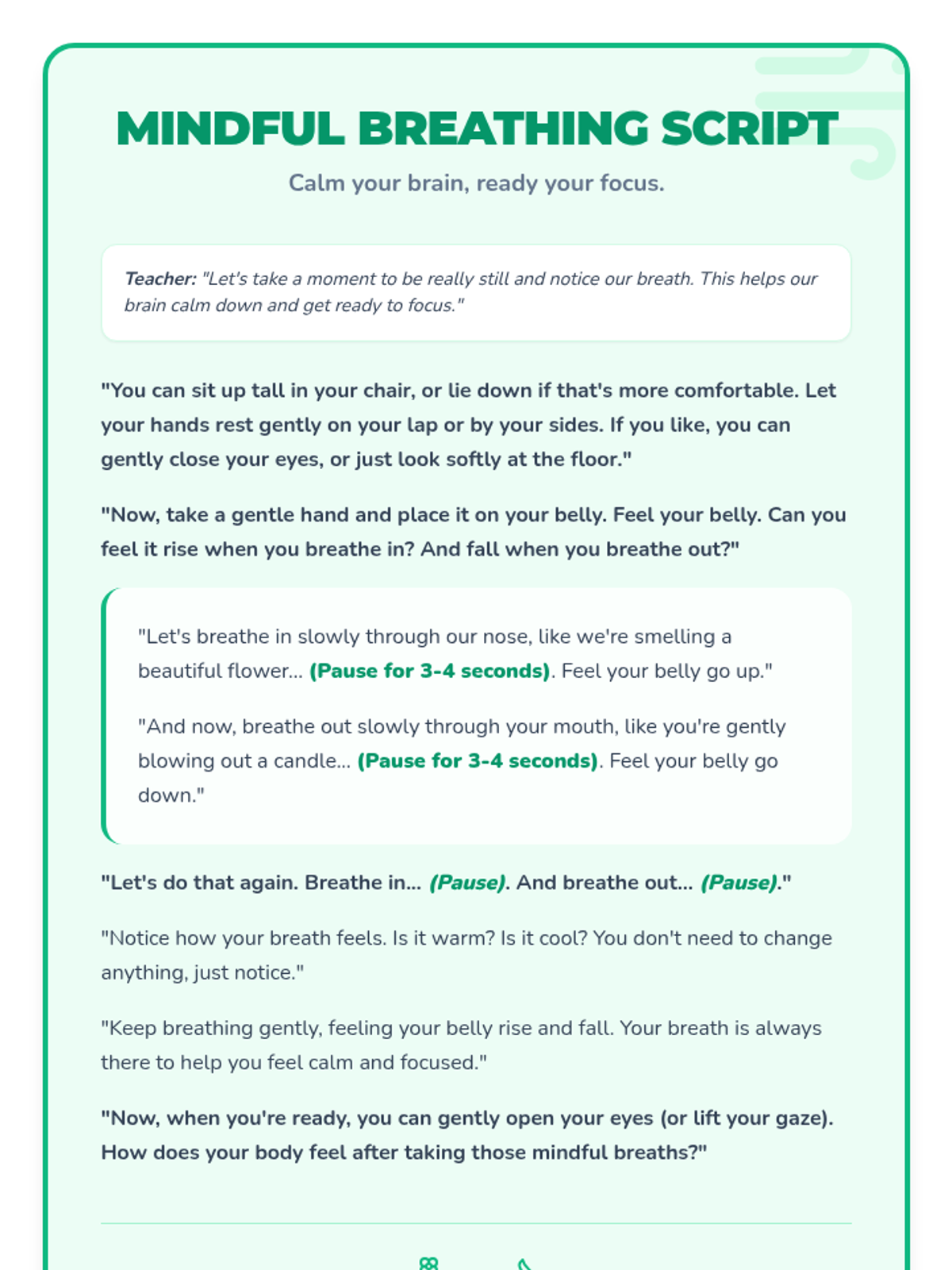
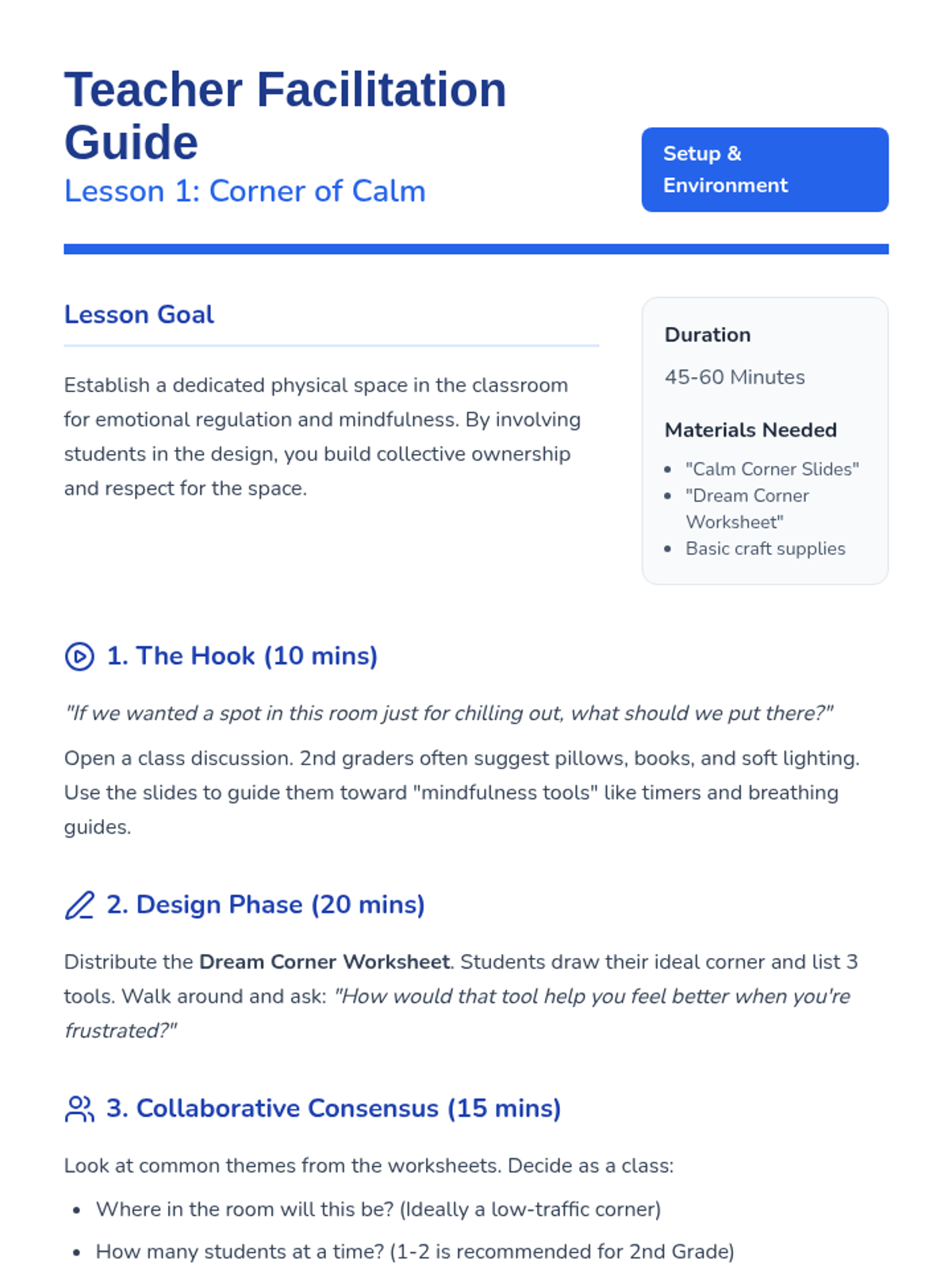
A 5-lesson series for 2nd graders to build a daily mindfulness routine, focusing on environment, intentions, transitions, reflection, and personal choice.
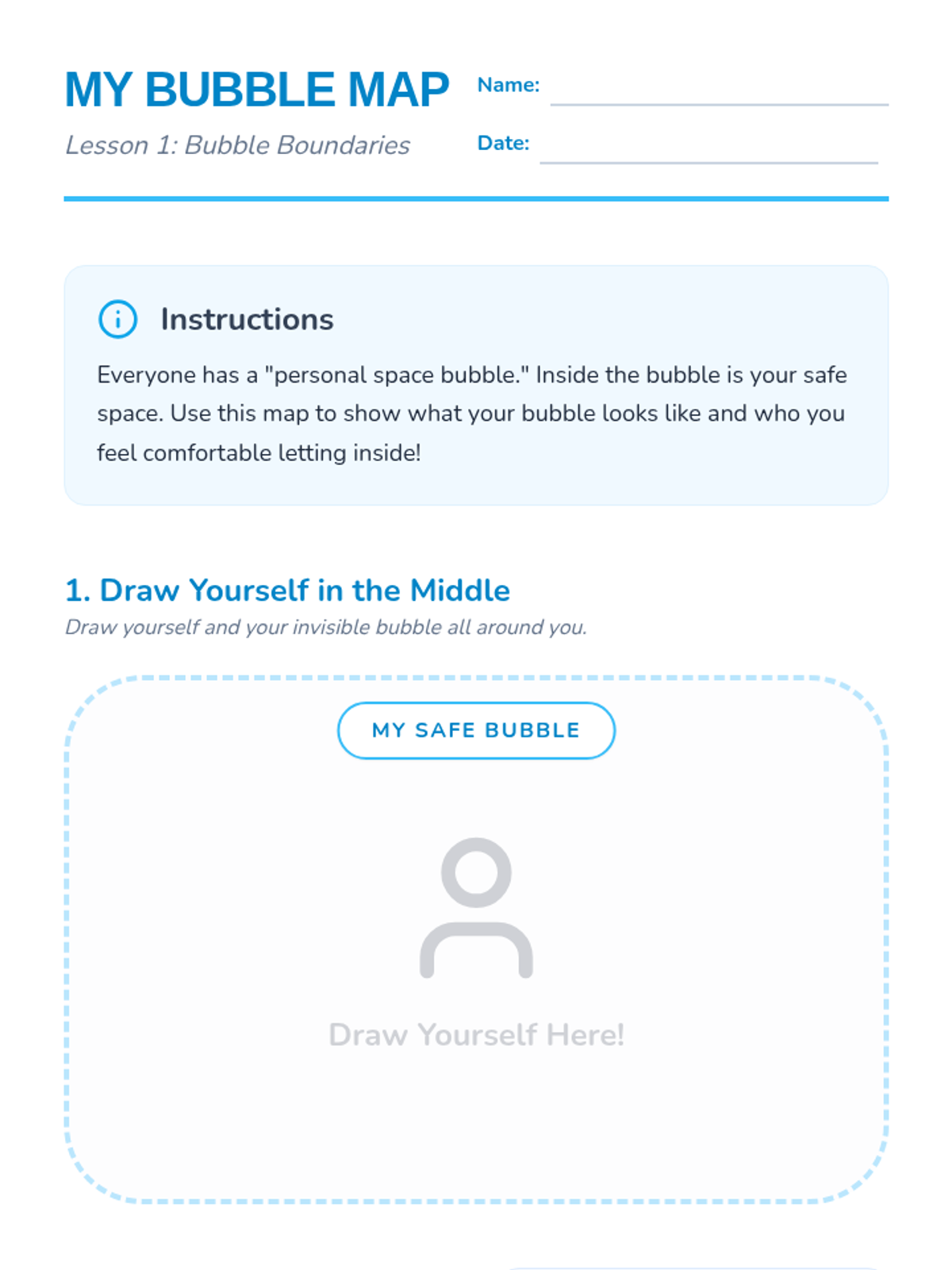
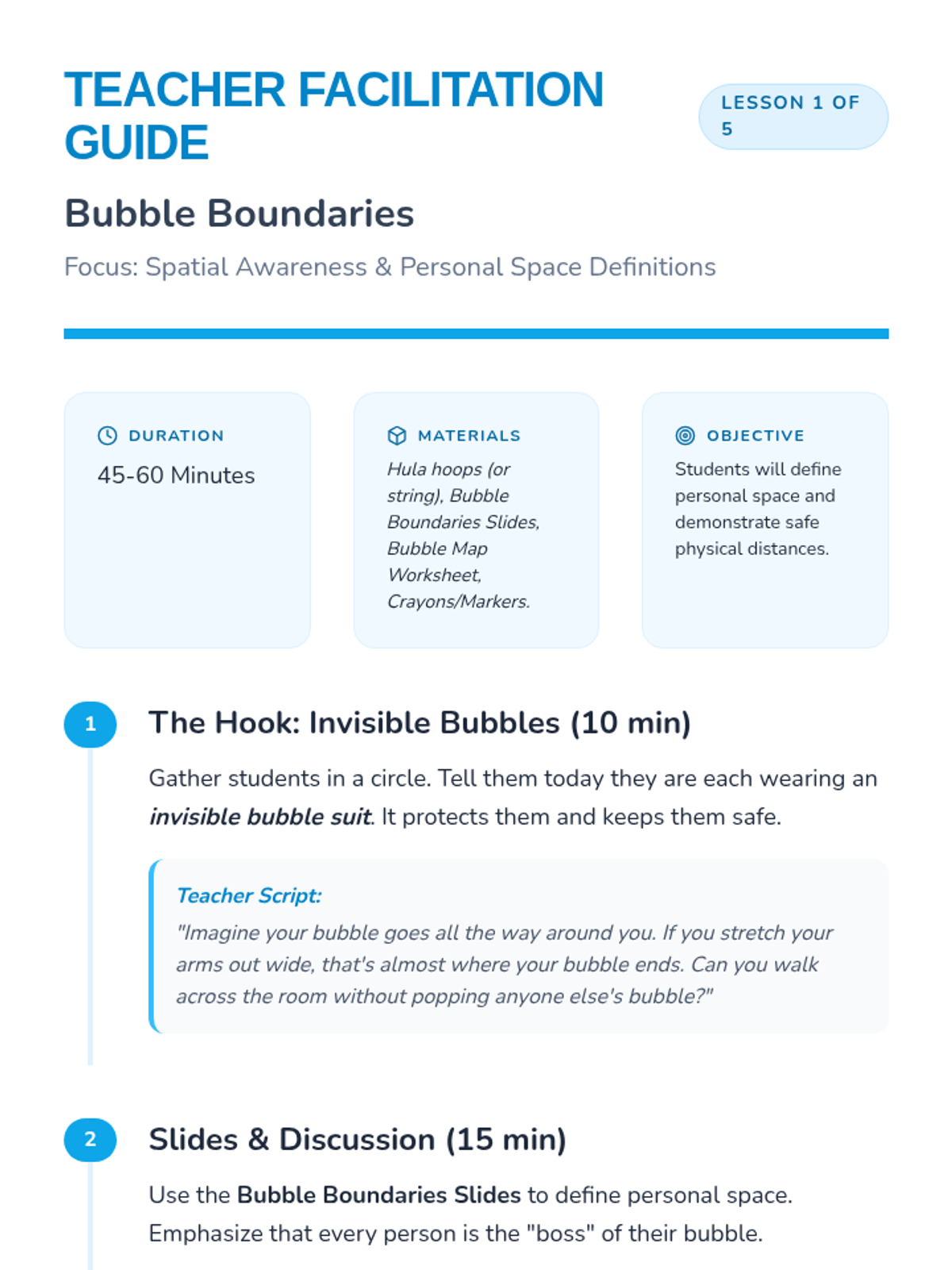
This sequence introduces students to the fundamental concepts of personal space and physical boundaries through interactive movement and role-playing activities. Students learn to define their personal space, practice asking for consent, and develop assertive communication skills to maintain their safety and respect the boundaries of others.
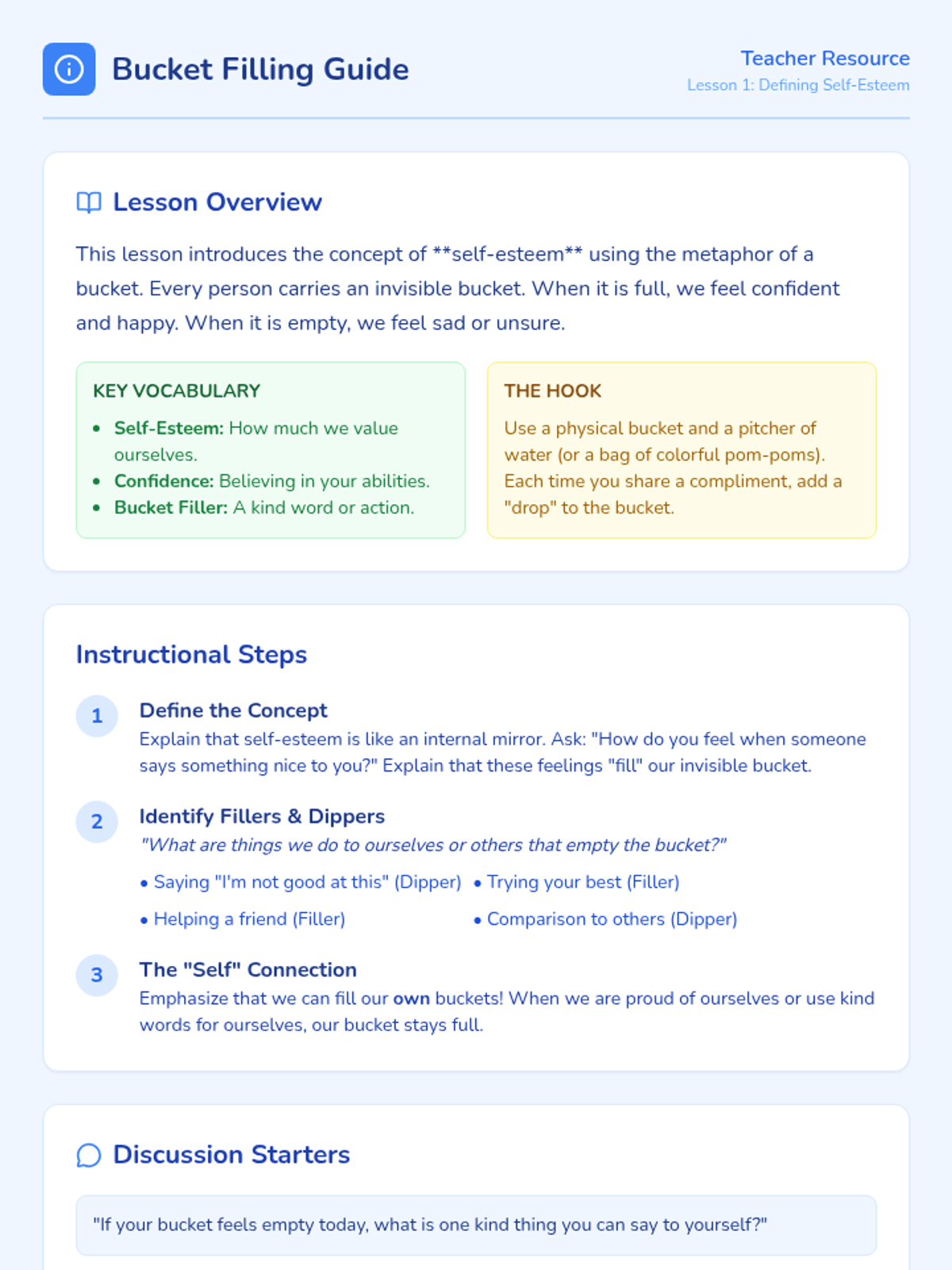
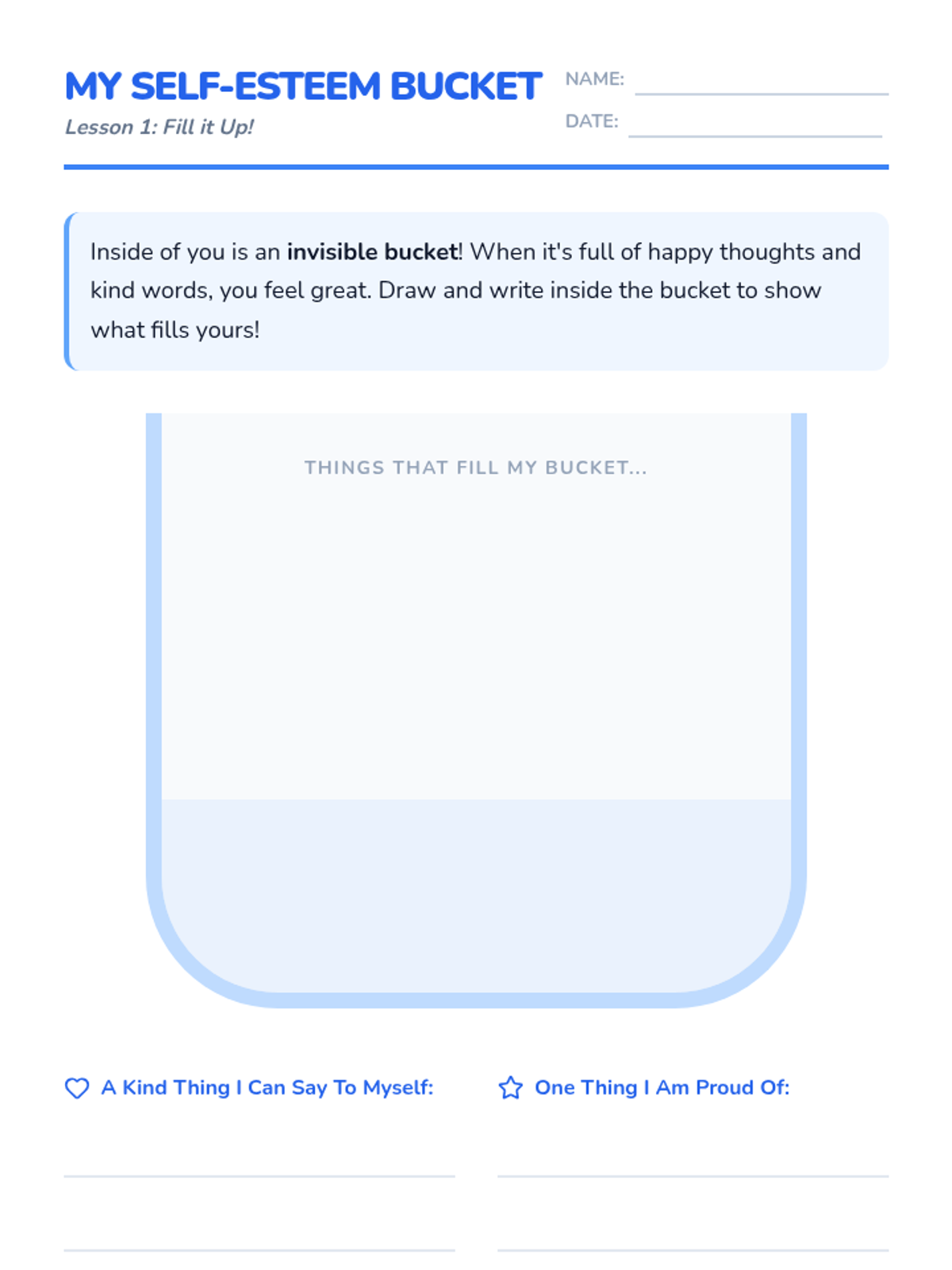
A 5-lesson sequence for 2nd graders focused on building self-esteem and a growth mindset. Students learn to navigate mistakes, use positive self-talk, and handle criticism through the metaphor of a garden that needs tending and a bucket that needs filling.
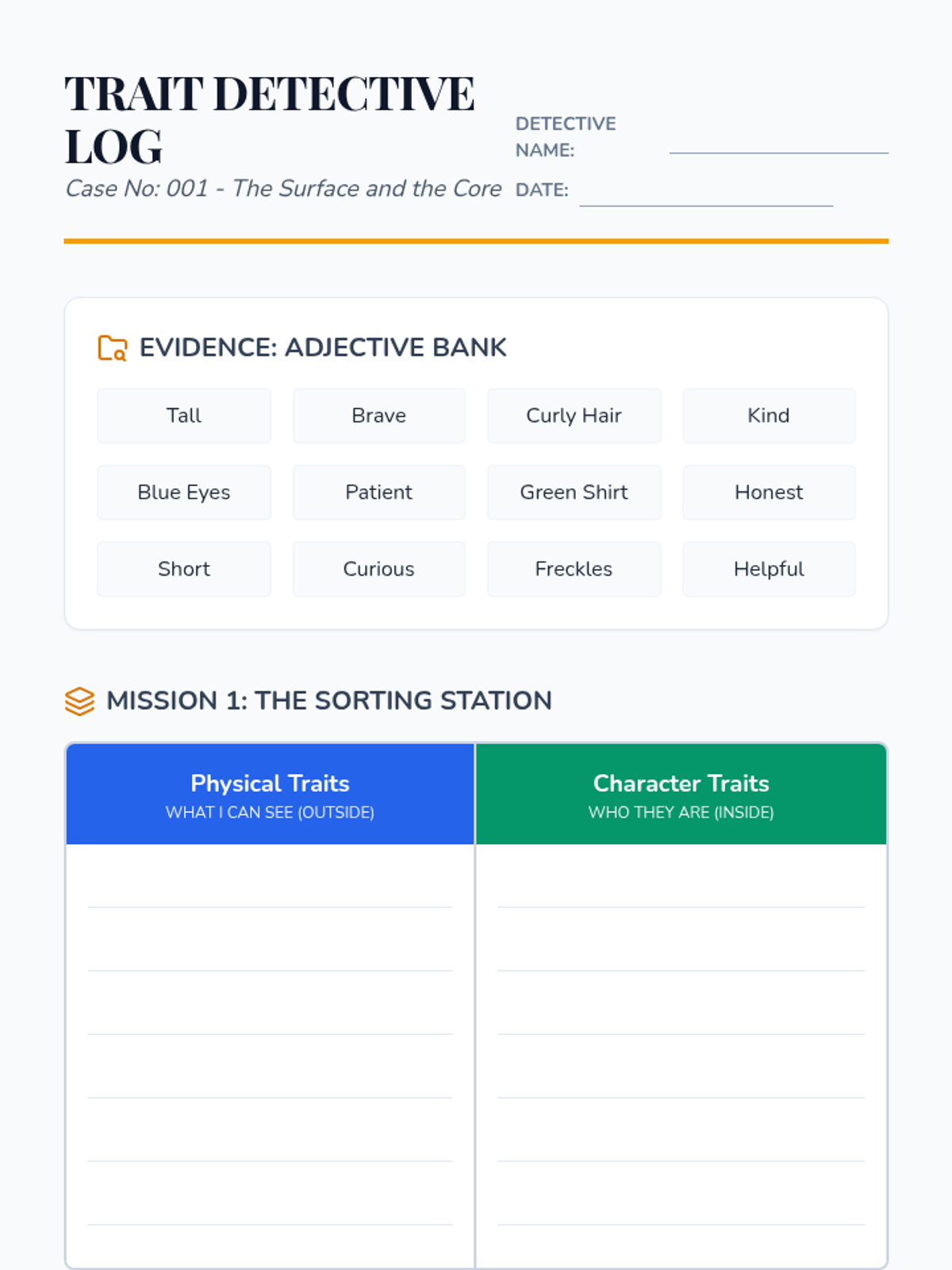
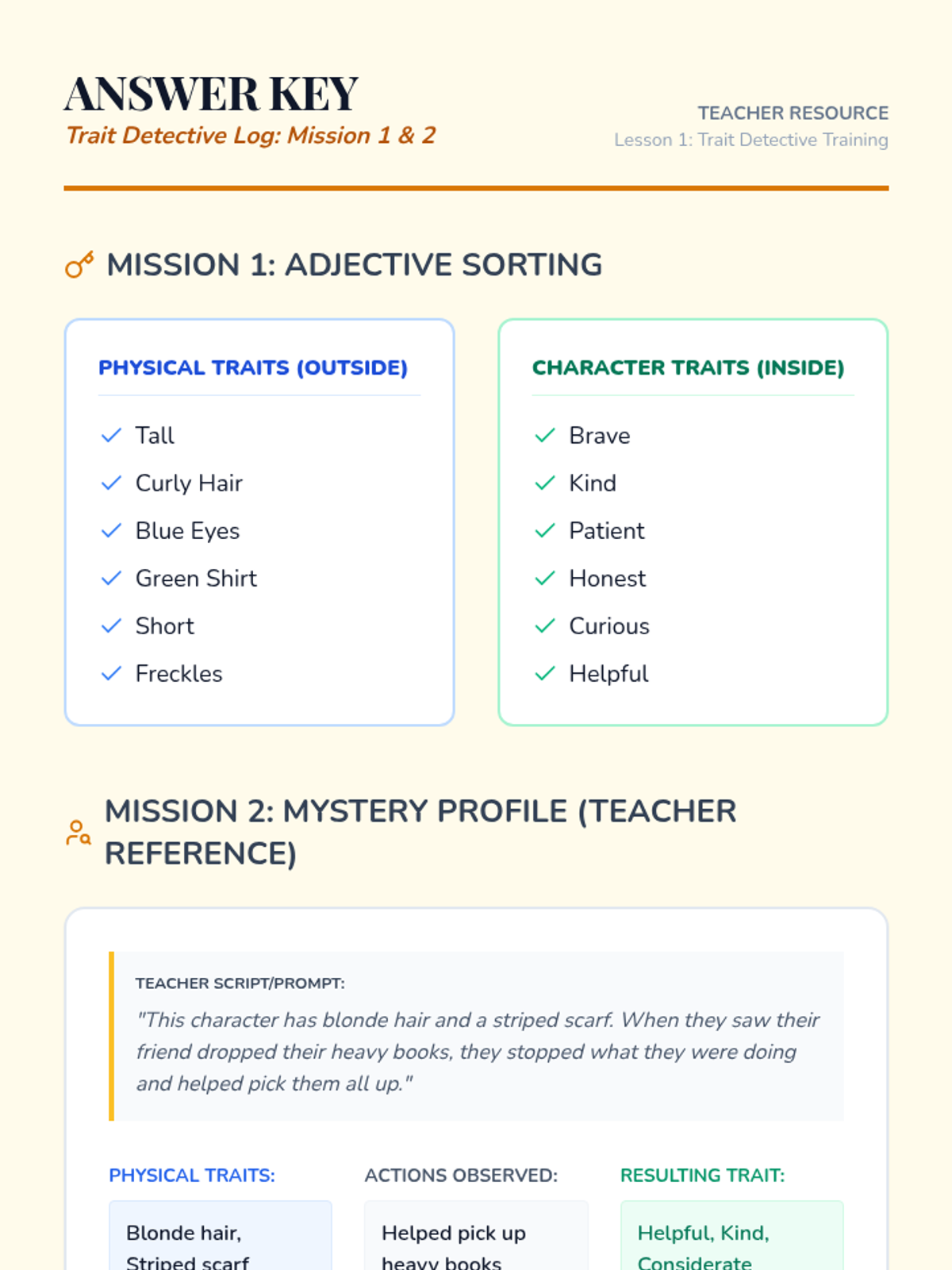
This sequence introduces students to the concept of personal identity by distinguishing between physical attributes and internal character traits. Students explore their own strengths, recognize how actions reflect identity, and learn to view growth areas through a growth mindset, culminating in a symbolic self-portrait.
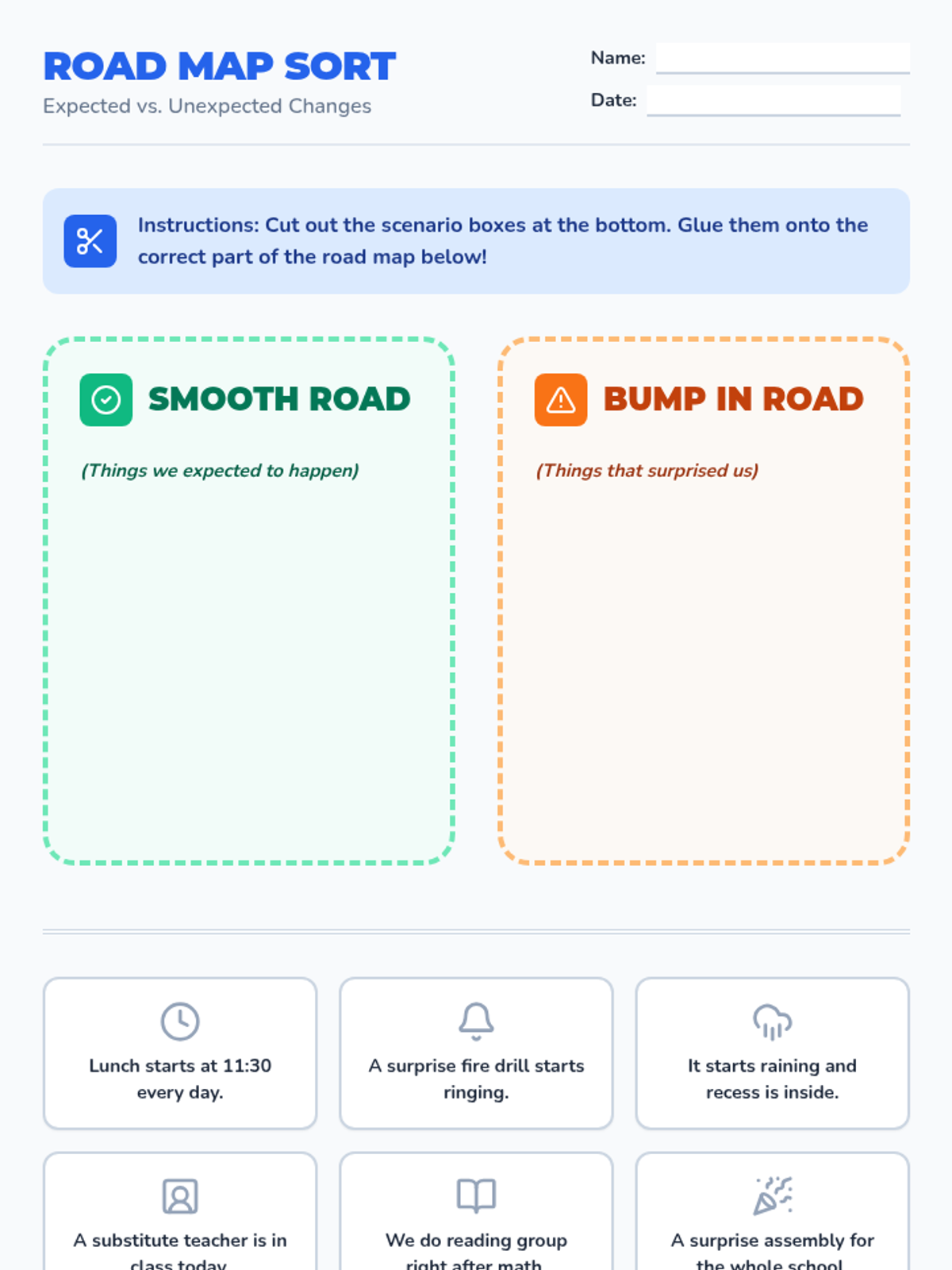
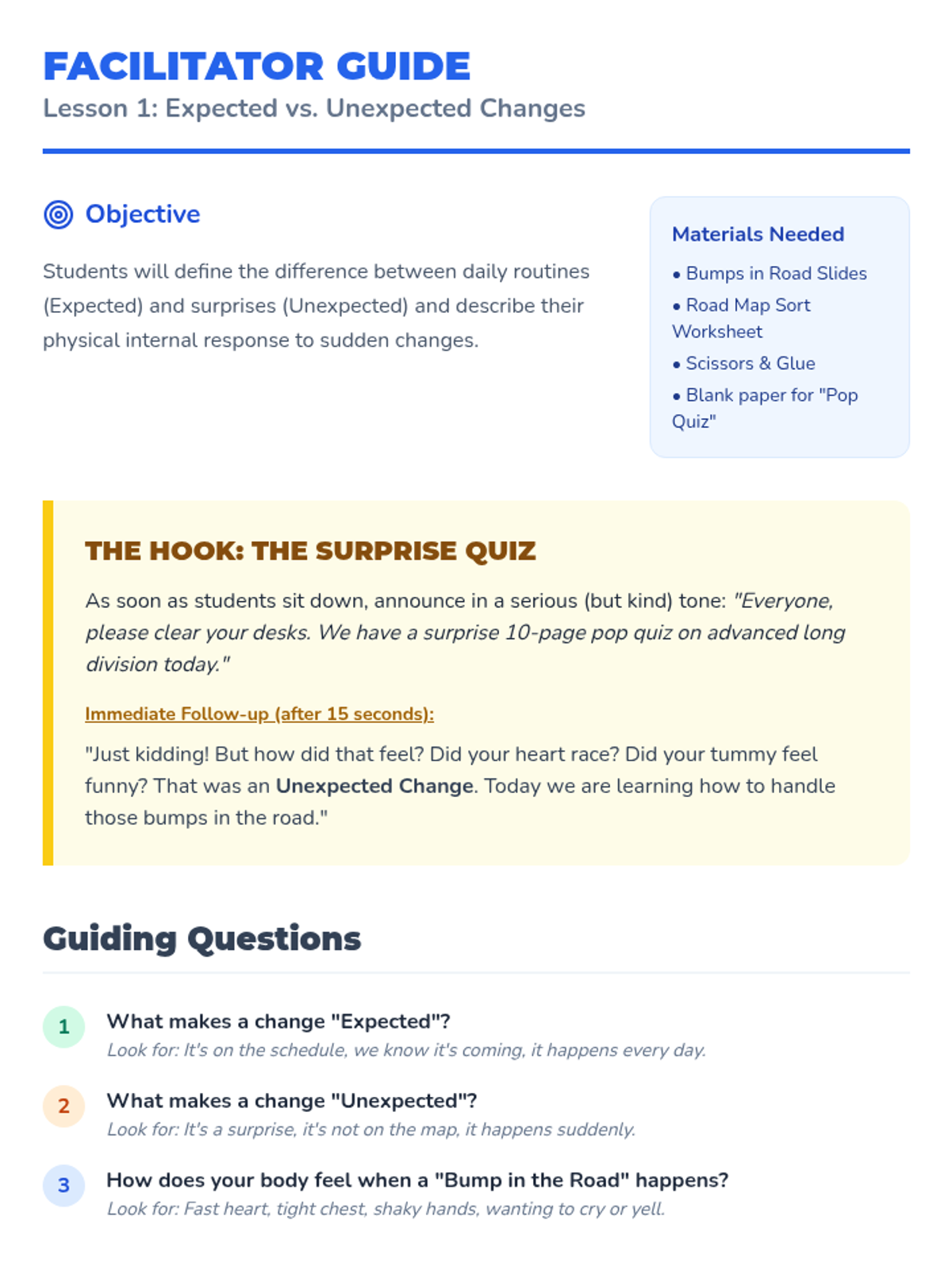
This sequence helps 2nd-grade students navigate unexpected changes and transitions. Using social stories and practical coping tools, students learn to identify their feelings, practice calming strategies, and develop flexible 'Plan B' thinking to handle life's 'bumps in the road'.
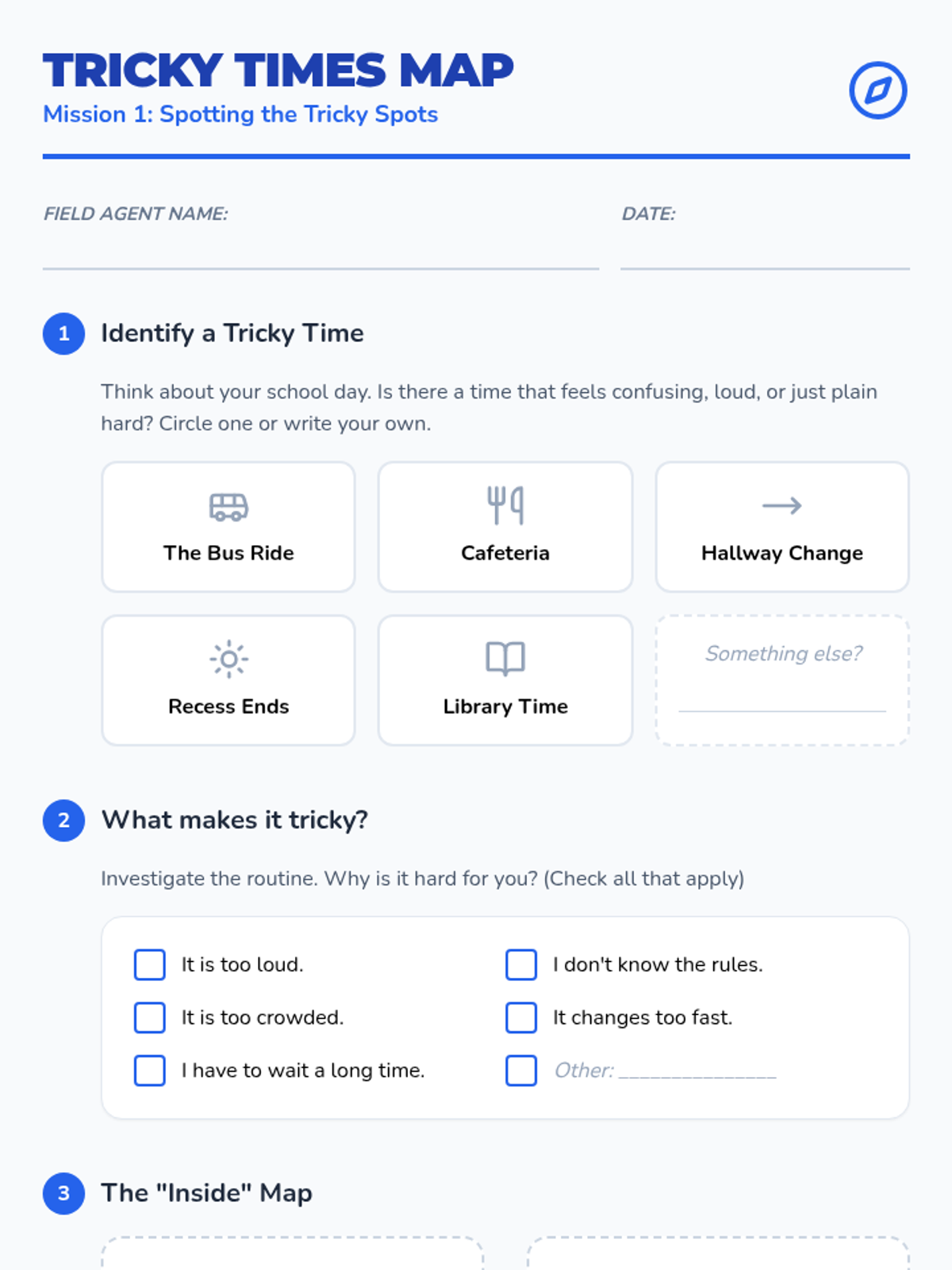
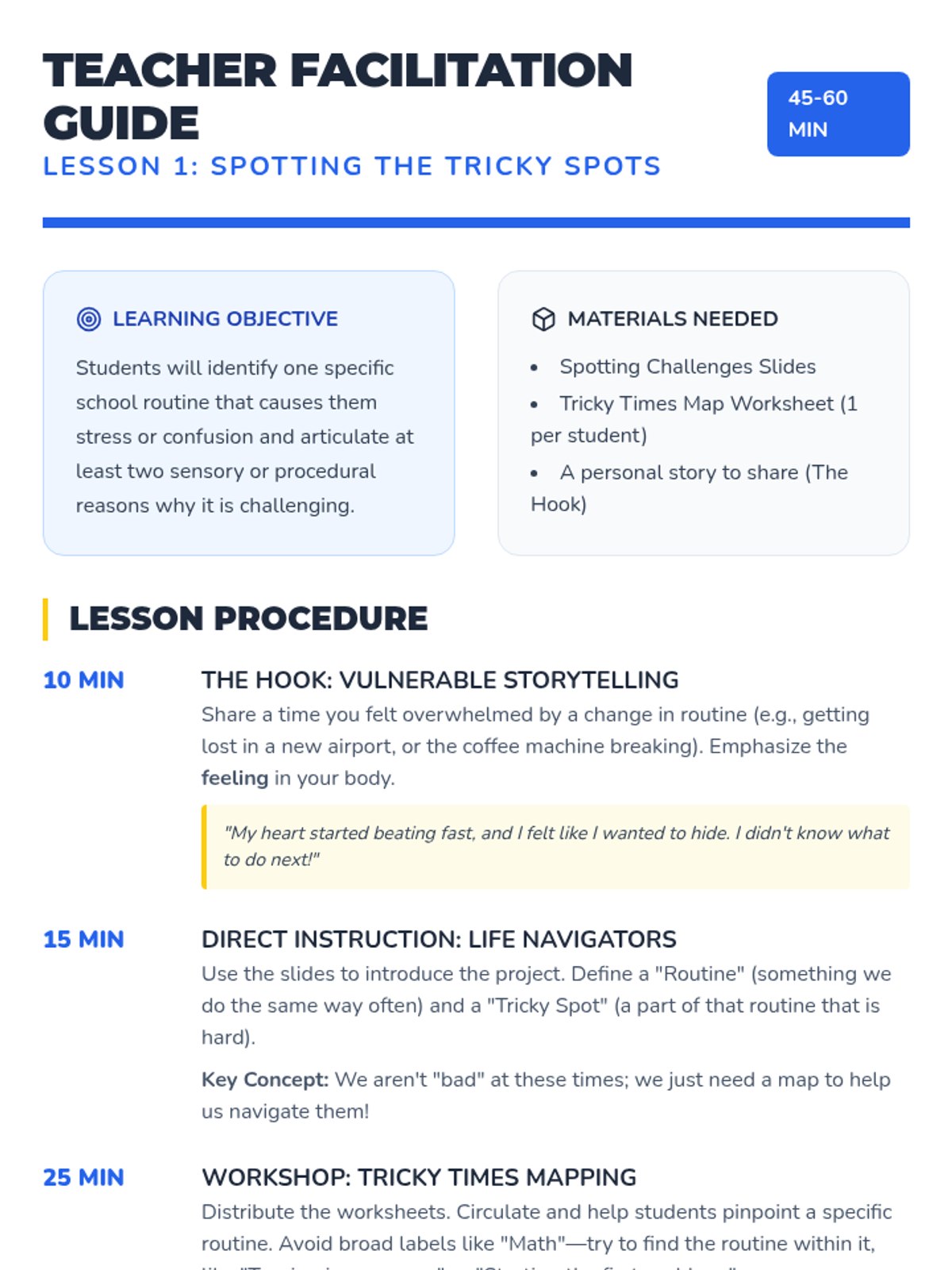
A 5-lesson project-based sequence where 2nd-grade students learn to create their own social narratives (Life Navigator Guides) to manage challenging school routines through self-awareness and positive self-talk.
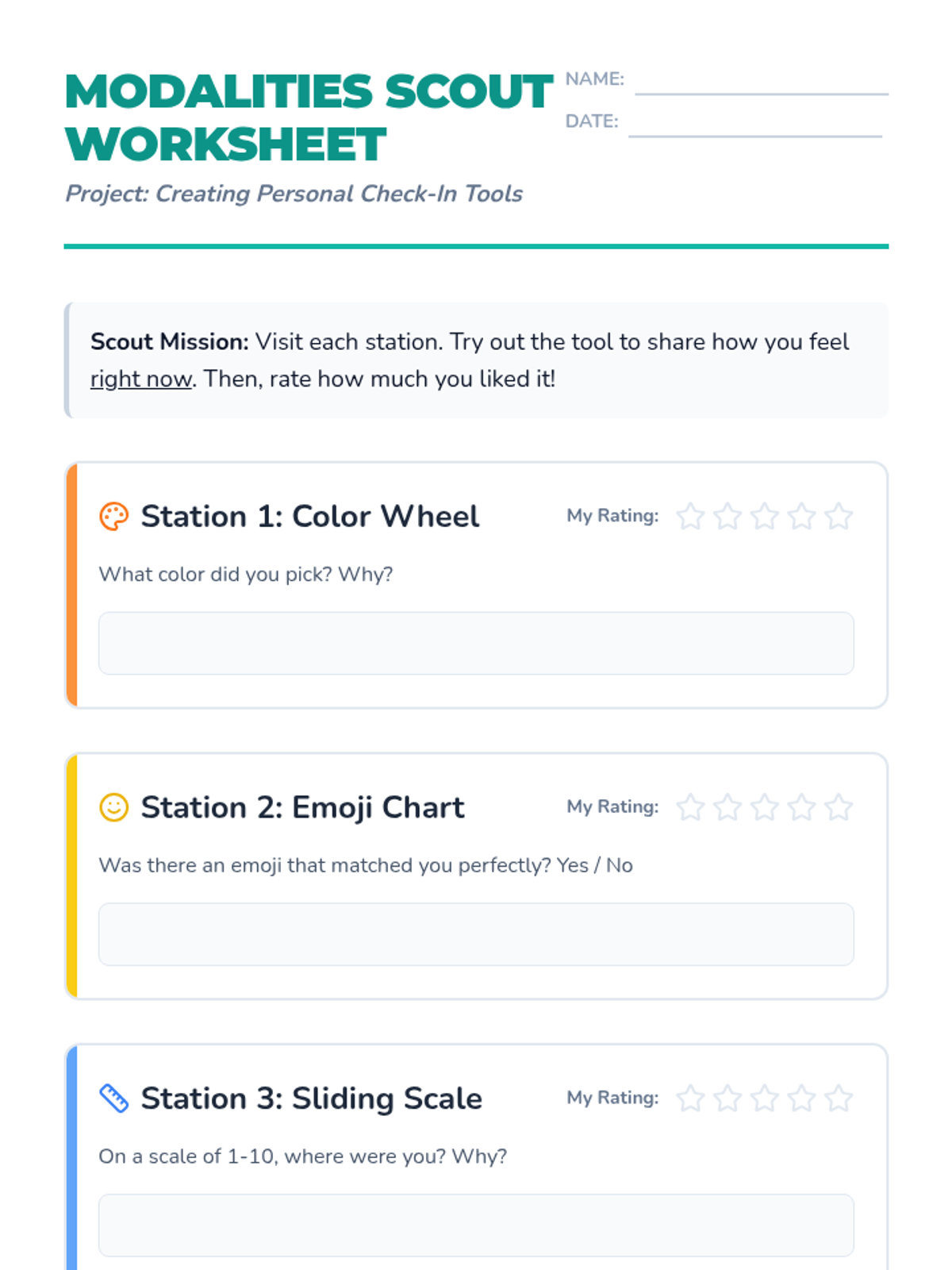
Students design and create their own personalized check-in tools to foster ownership over the behavioral check-in process. The sequence moves from exploration of different modalities to the design, construction, and implementation of a personal 'Check-In Toolkit'.
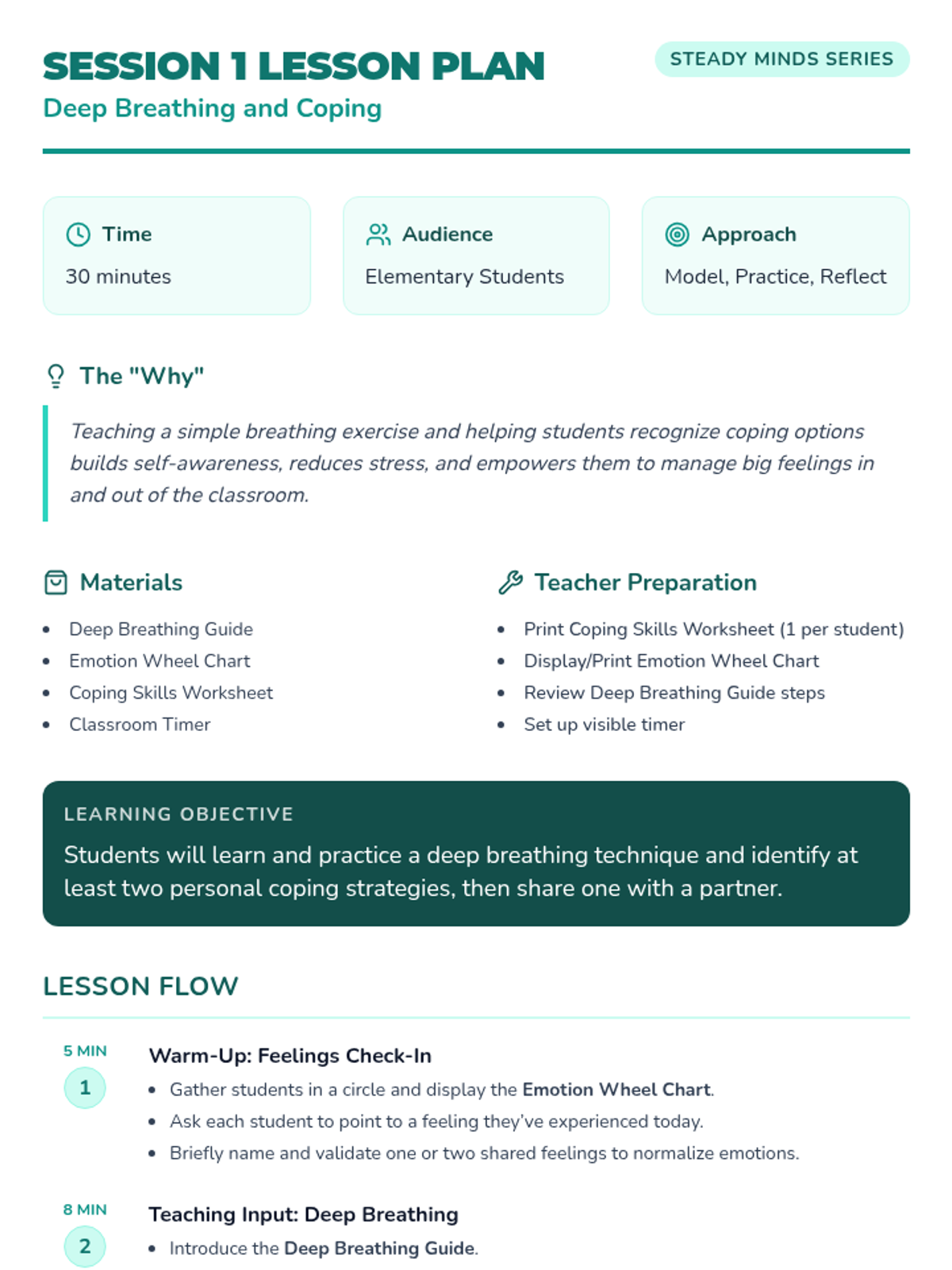
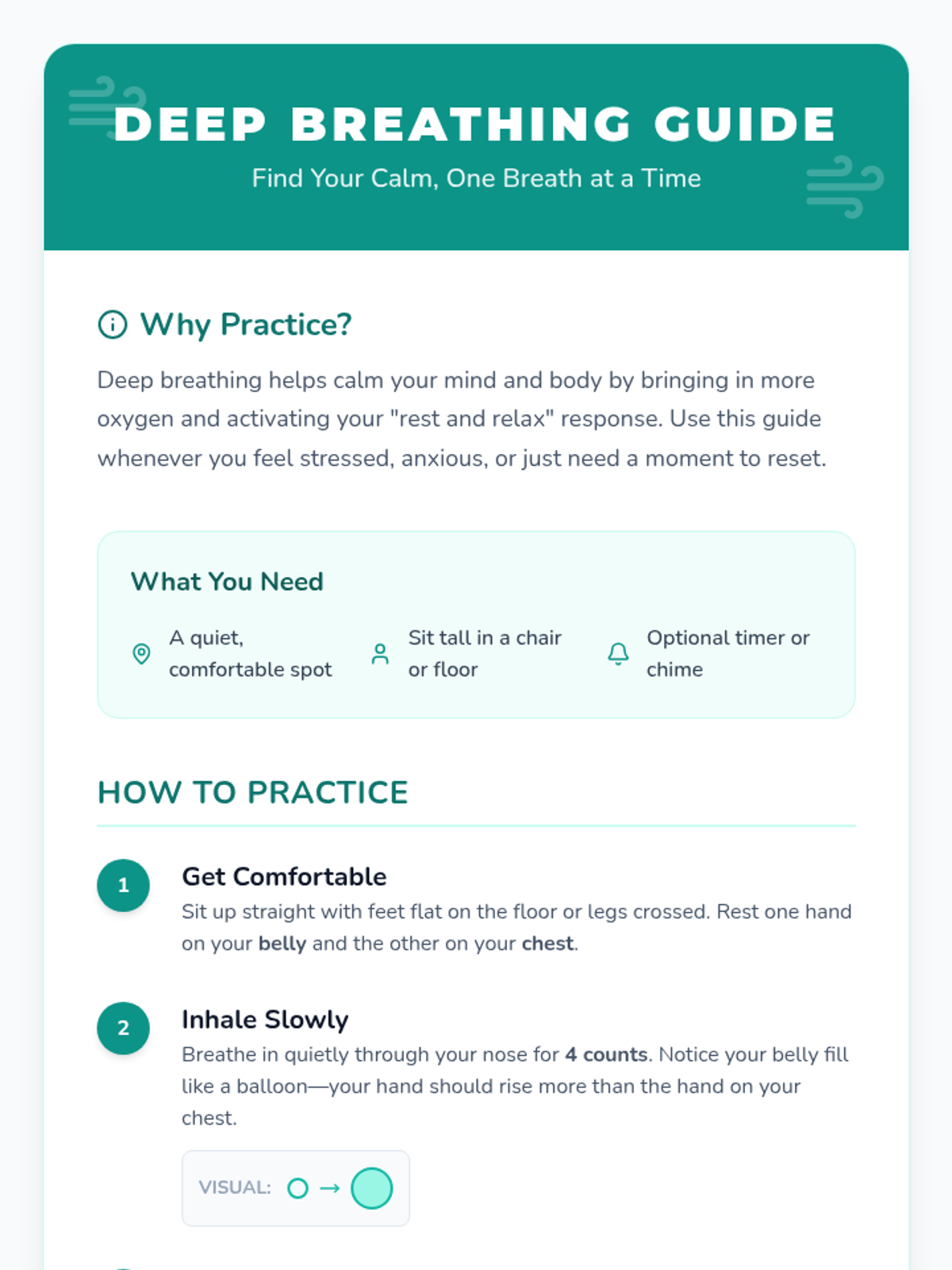
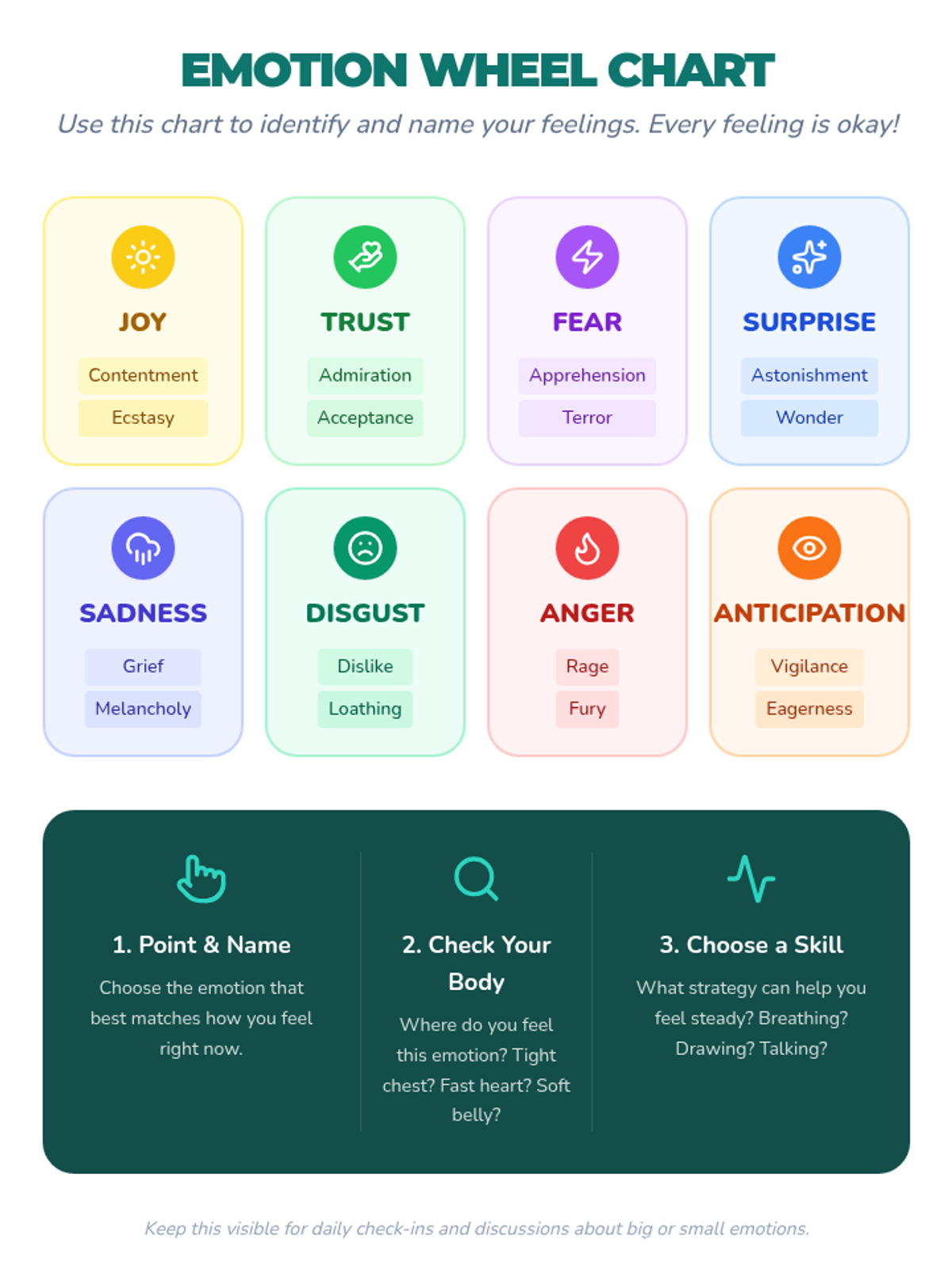
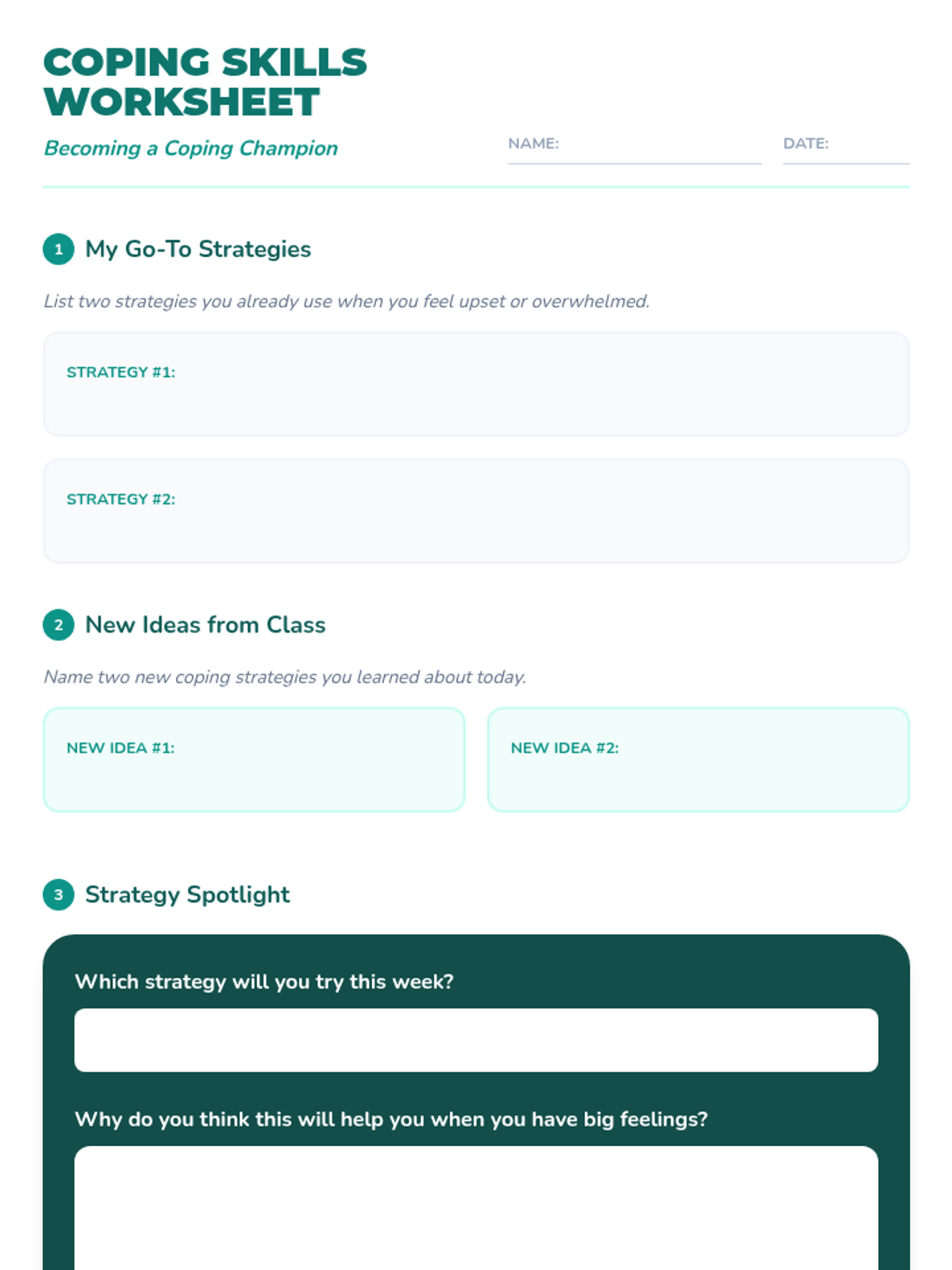
An 8-session Tier 1 classroom series on emotion regulation to help students develop and practice coping skills in 30-minute lessons. Includes mindfulness, self-reflection, and practical strategies.
This sequence empowers 2nd-grade students with self-advocacy skills to navigate obstacles. It moves from recognizing when help is needed to choosing the right helper and using specific, actionable language or non-verbal signals.
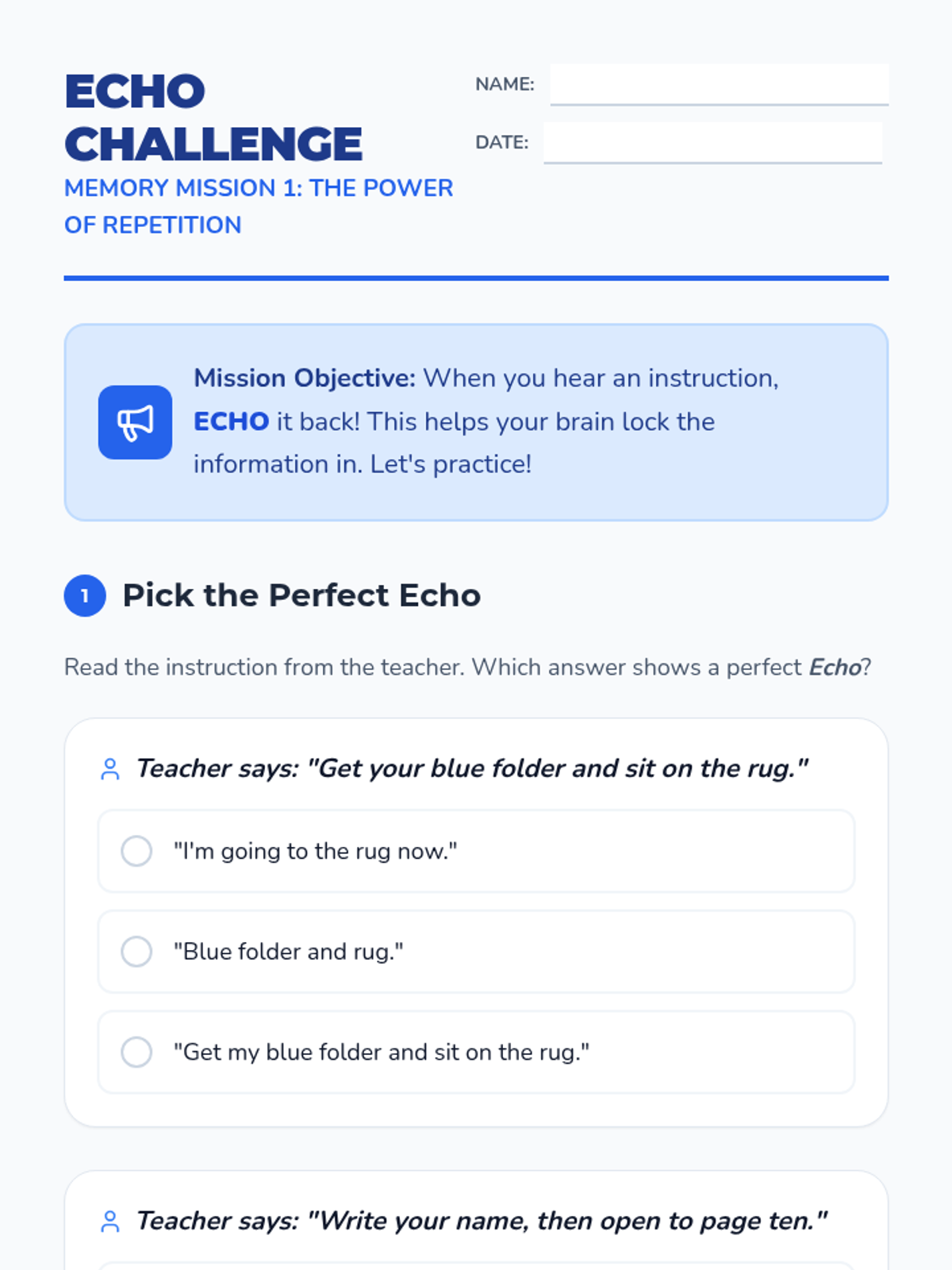
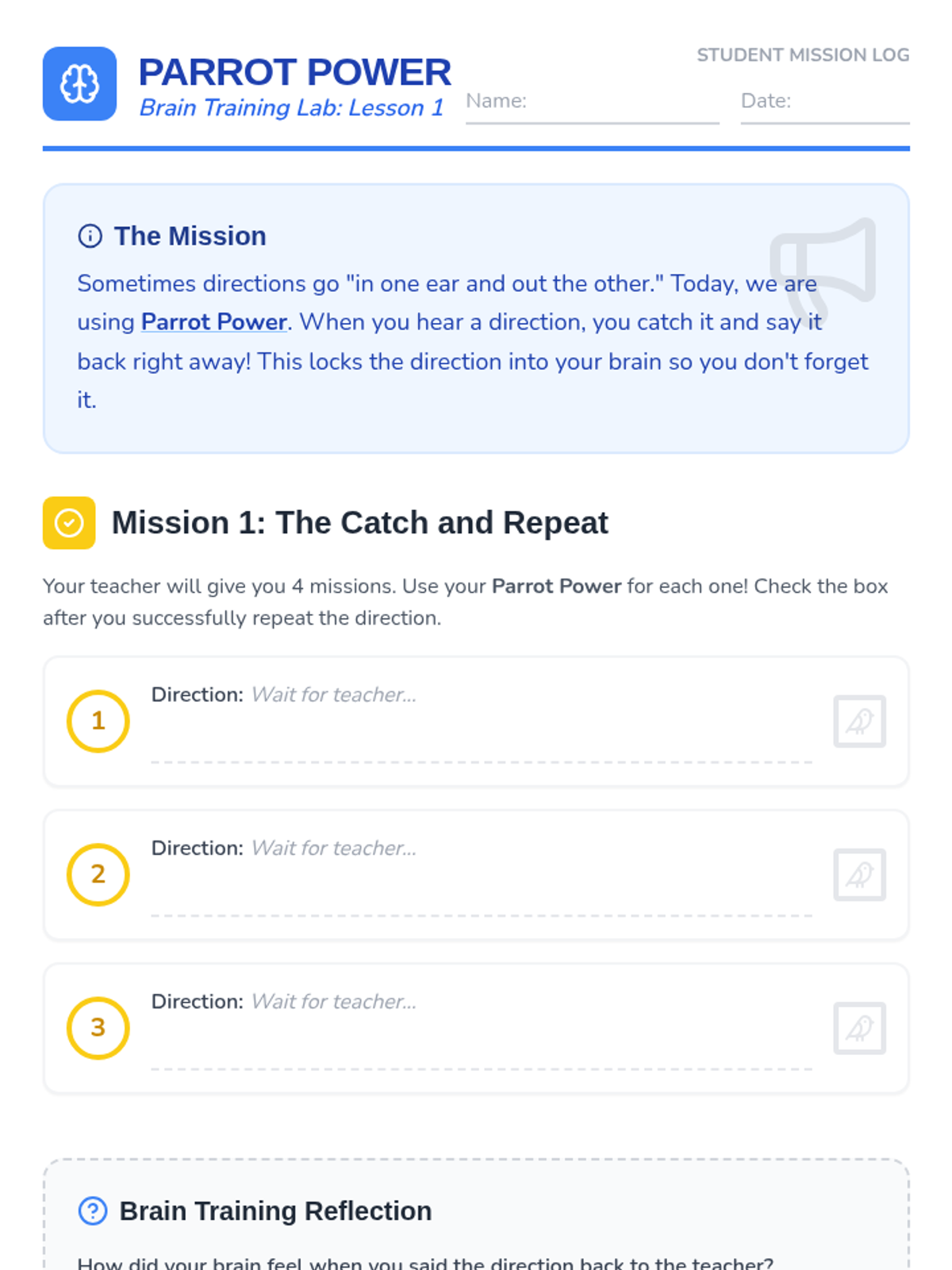
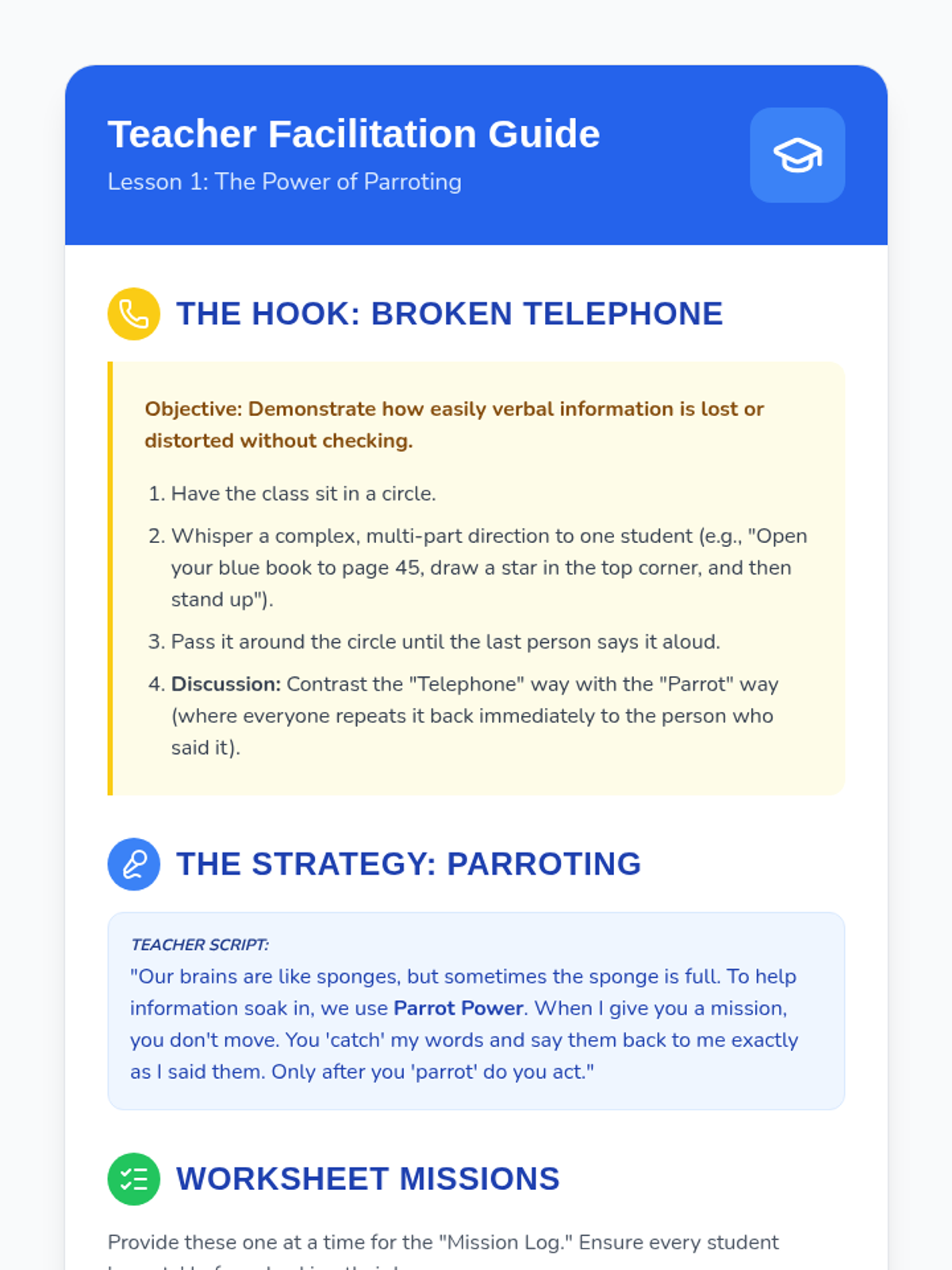
This sequence focuses on auditory processing and the cognitive strategy of verbal rehearsal (self-talk) to hold information in working memory. Students learn to 'catch' a verbal instruction, repeat it to themselves or a peer, and then execute it.
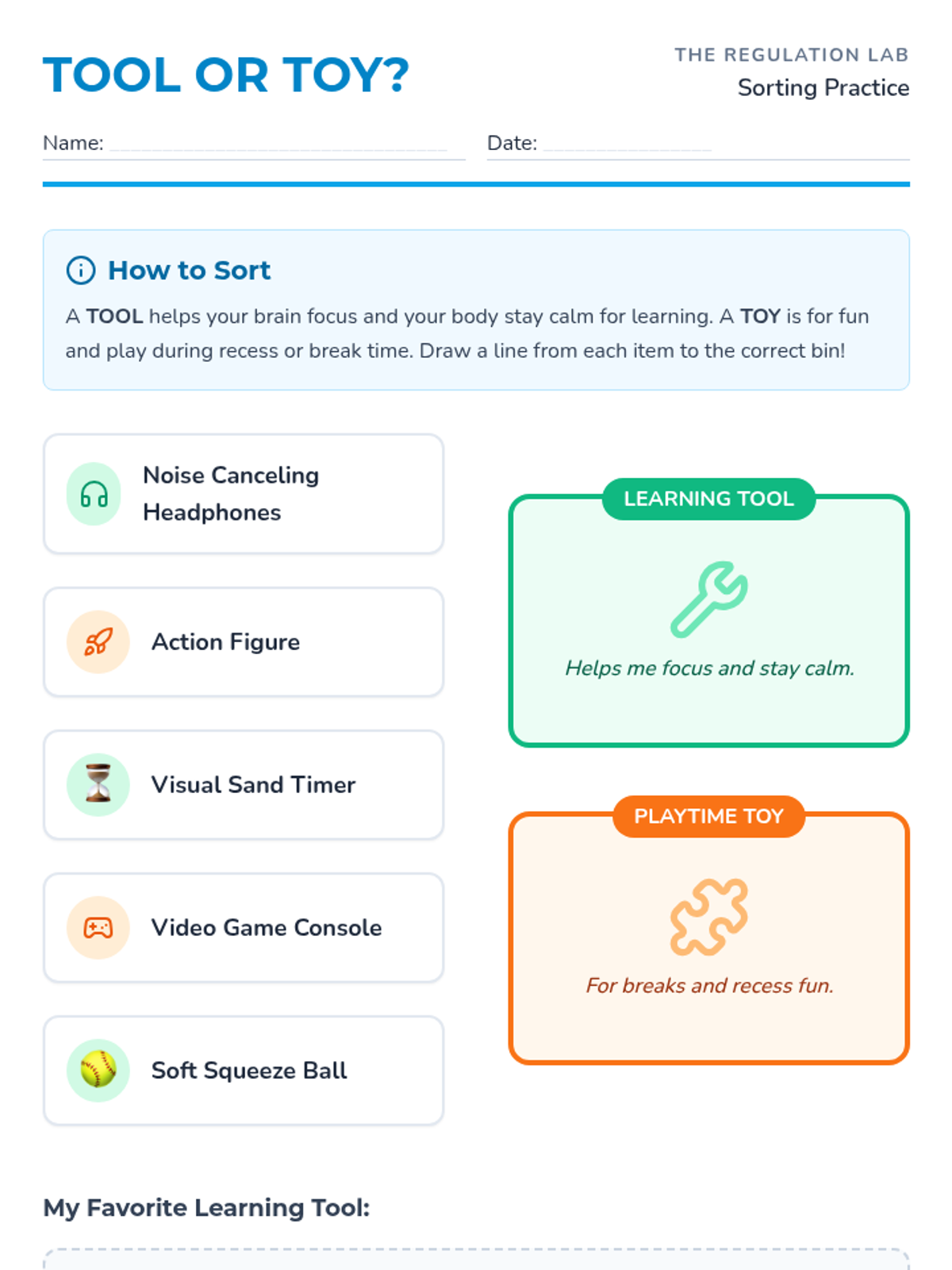
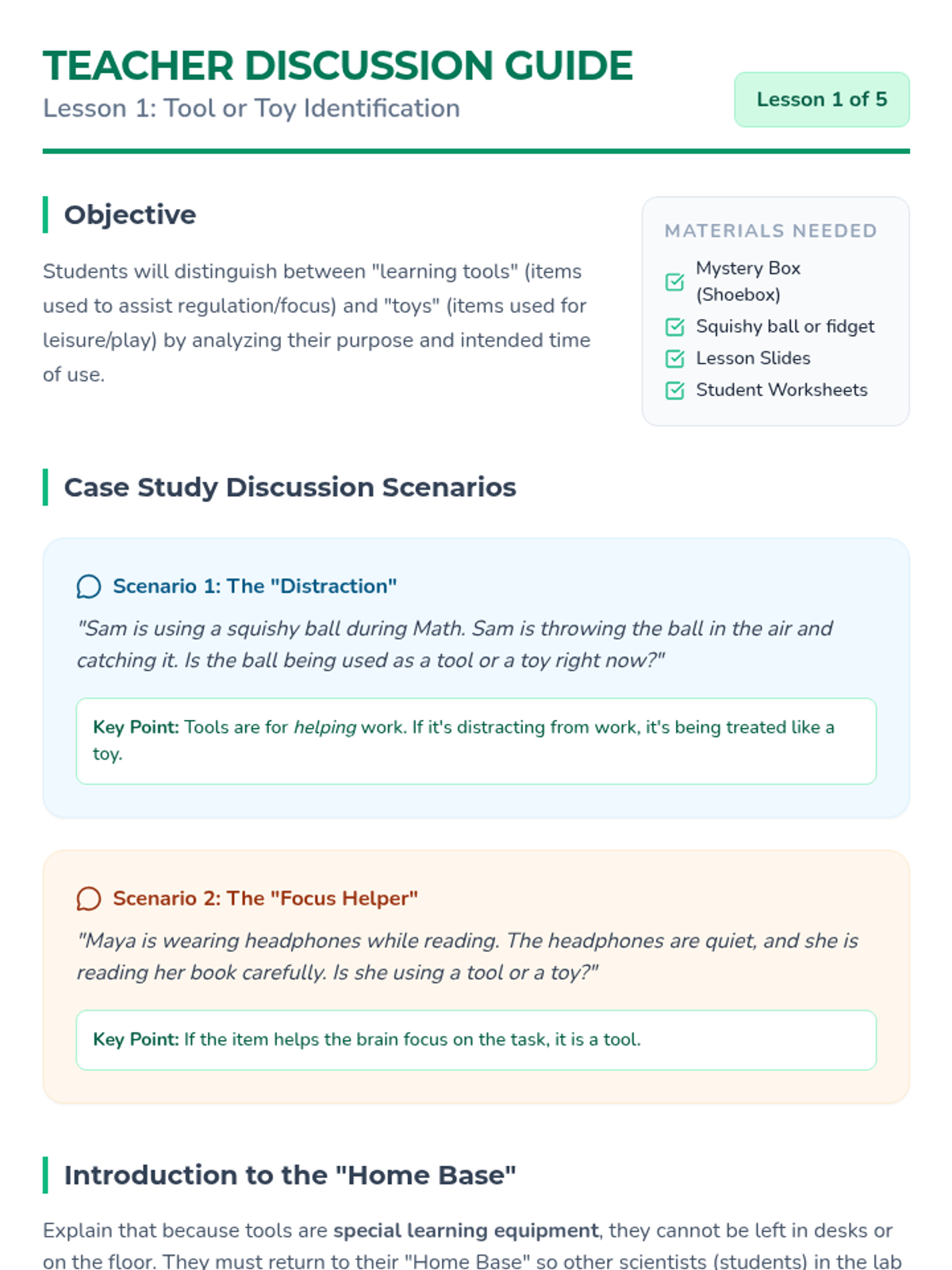
A 5-lesson sequence for 2nd grade students focused on the organization, care, and management of sensory regulation tools in the classroom. Students learn to distinguish tools from toys, follow check-out procedures, maintain hygiene, and communicate about tool availability.