Stop-and-think strategies, impulse management, and SMART goal setting for personal growth. Develops internal motivation, stress reduction techniques, and resilience through proactive planning and monitoring.
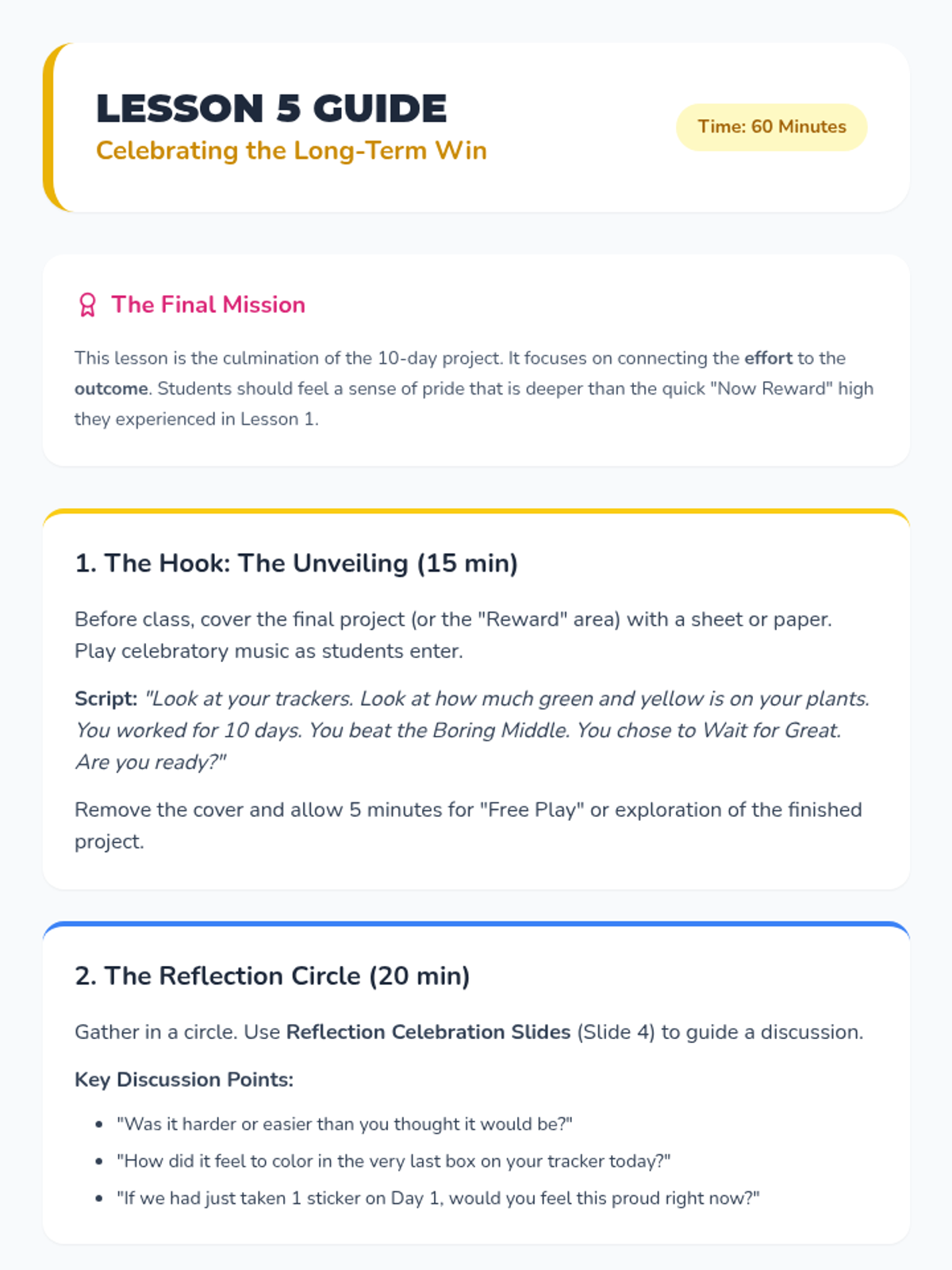
Facilitator guide for Lesson 5, focusing on the satisfaction of completing the long-term goal and awarding the Persistence Badges.
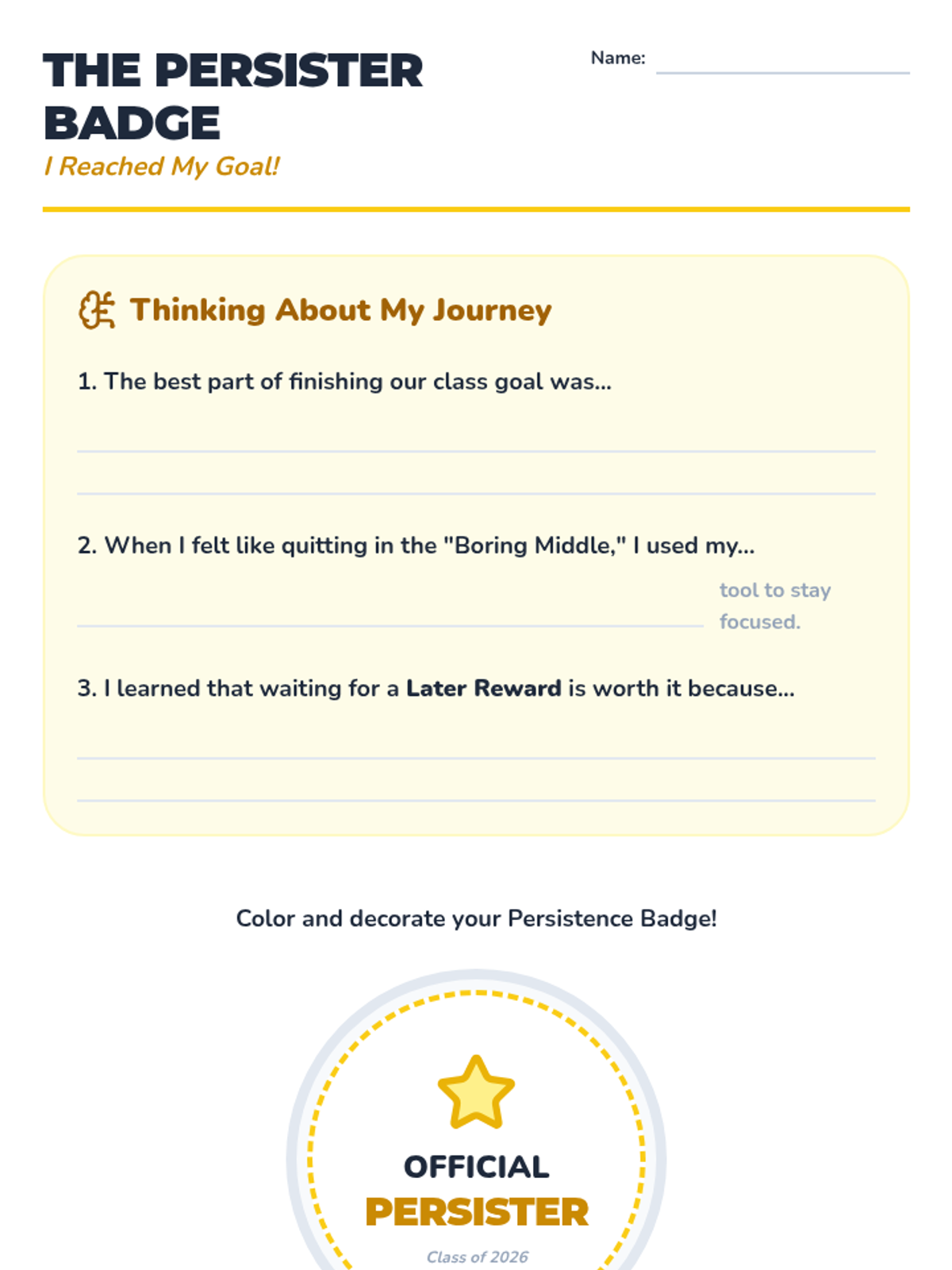
Reflection sheet for Lesson 5, where students decorate a 'Persister Badge' and answer prompts about their experience with delayed gratification.
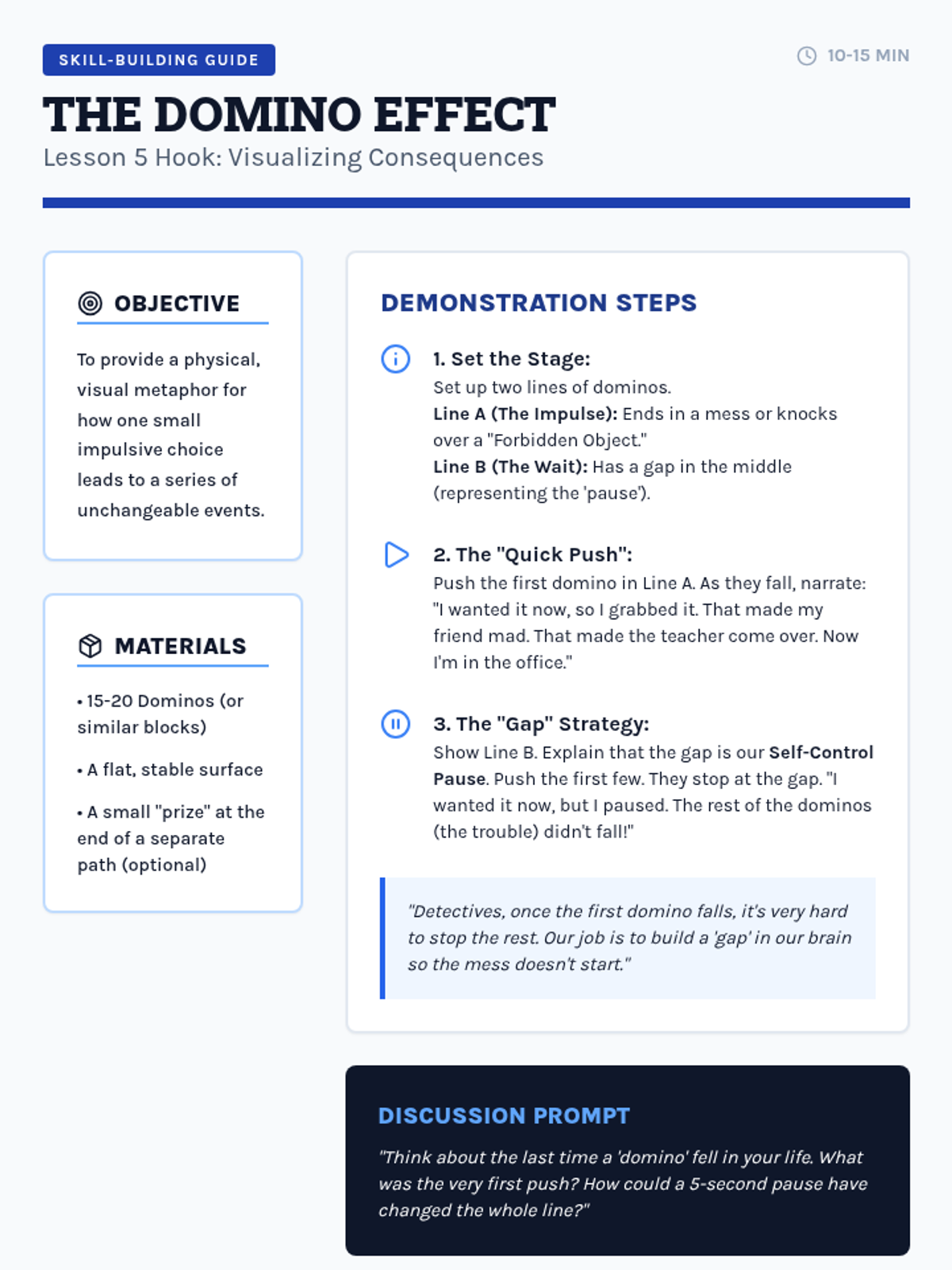
A teacher guide for a 'Domino Effect' demonstration that visually illustrates the chain reaction of impulsive choices versus the power of a pause.
Final recap and achievement slides for Lesson 5, focusing on the satisfaction of completing the long-term goal.
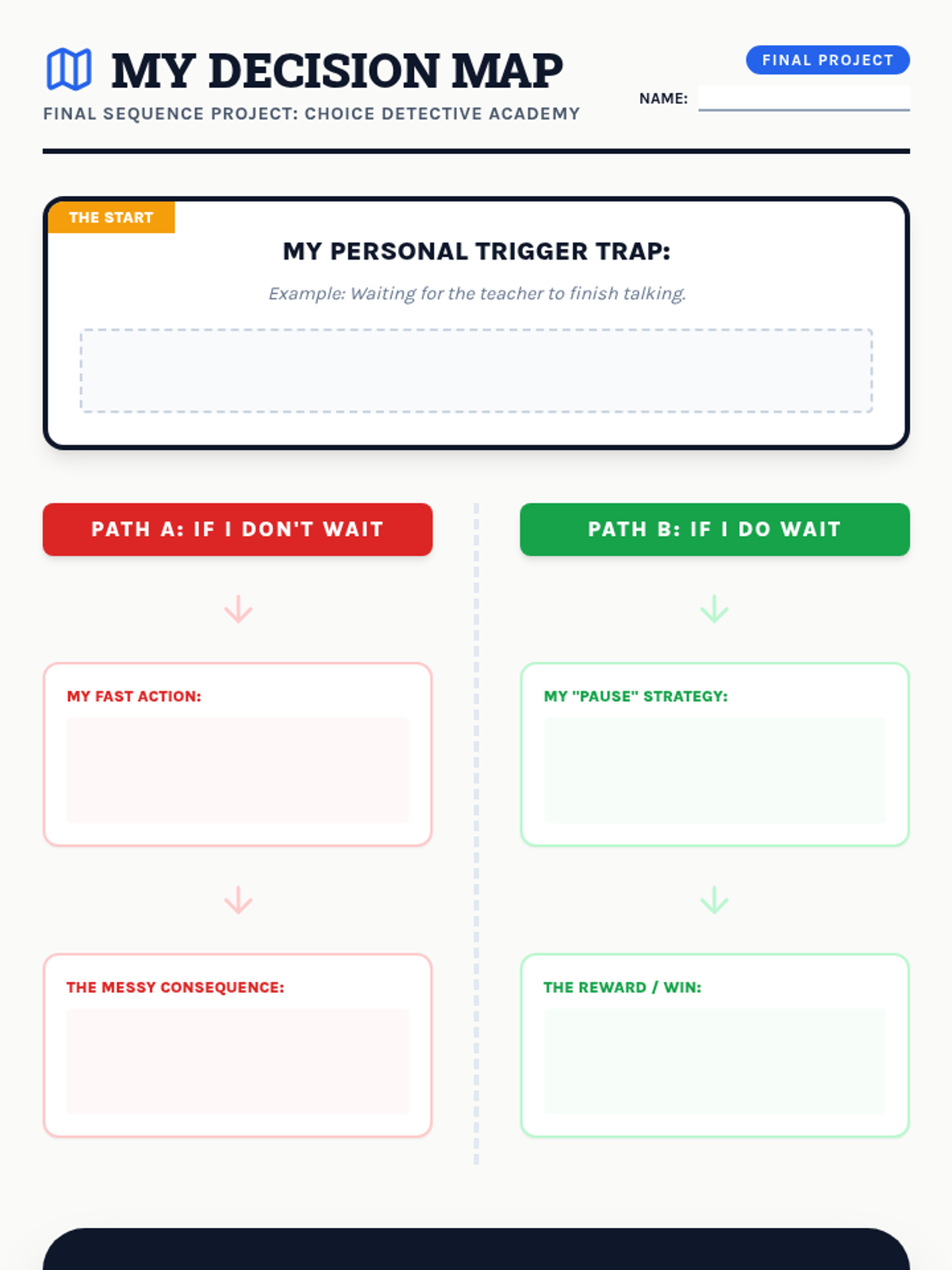
A capstone project worksheet where students create a personal decision-making flowchart to navigate their specific triggers using impulsive and patient pathways.
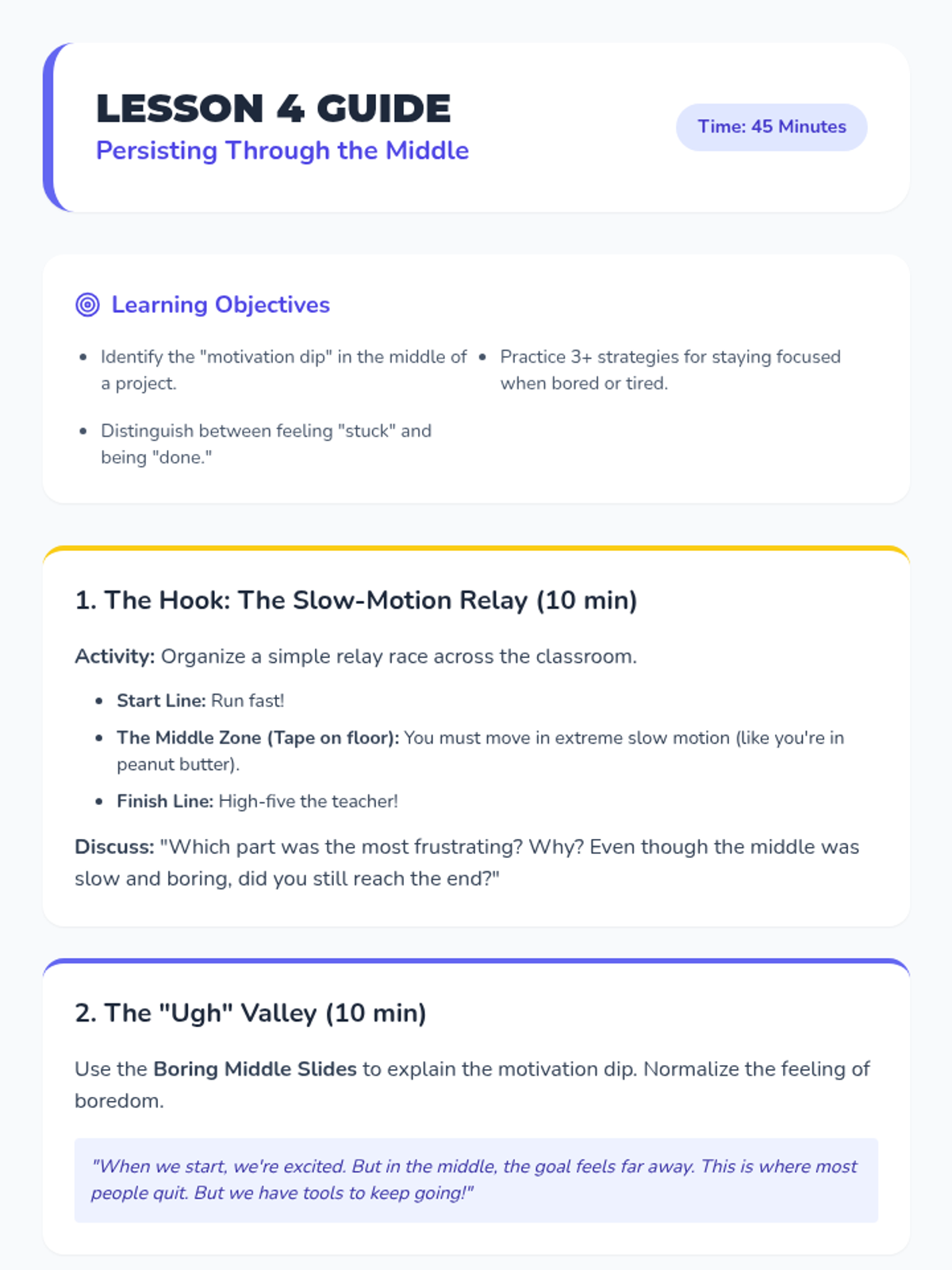
Teacher guide for Lesson 4, focusing on the relay race hook and managing the 'motivation dip' during the project.
Final slides of the sequence, introducing the concept of a 'Consequence Map' and how to visualize the domino effect of personal choices.
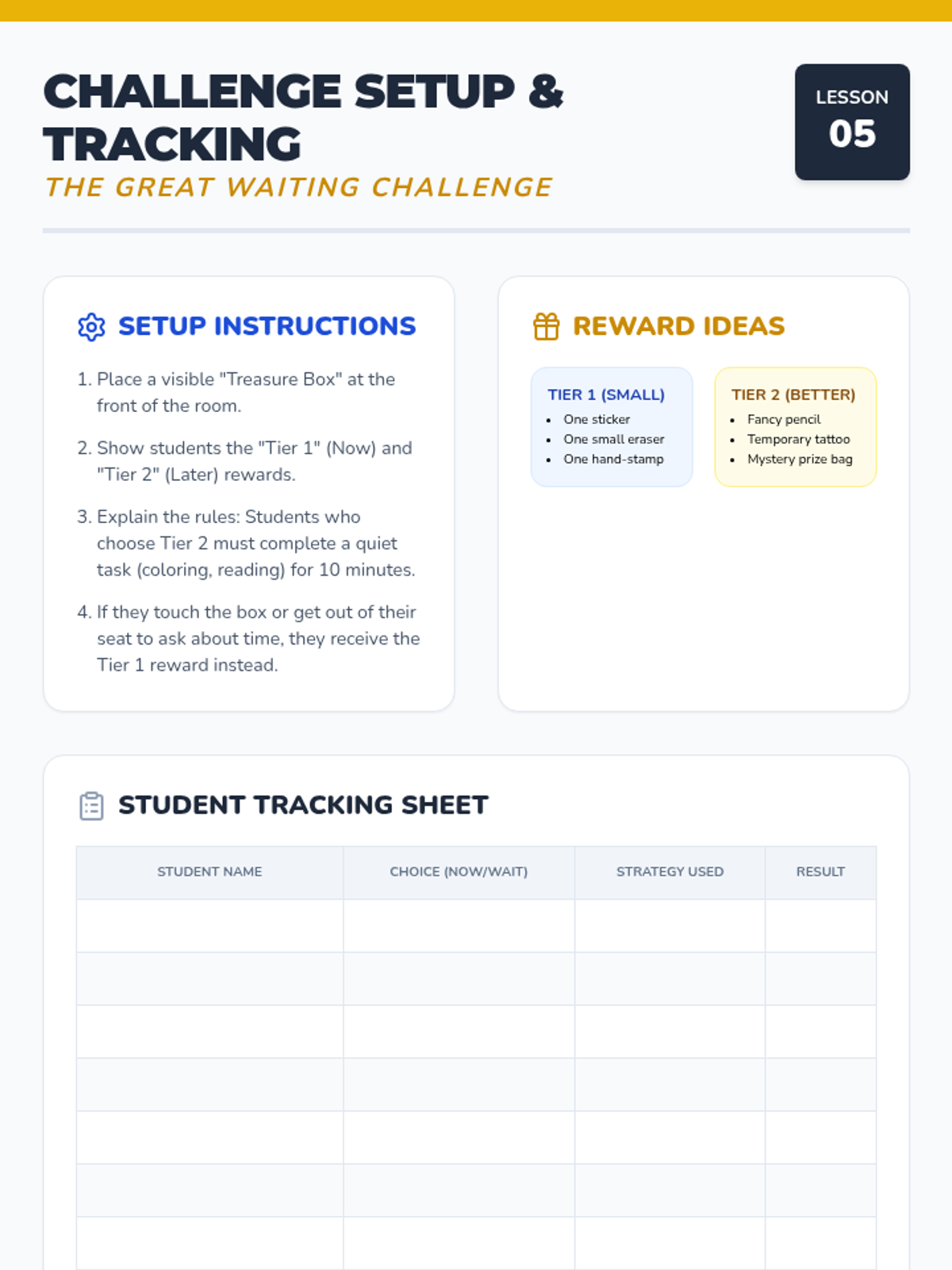
A teacher resource for setting up the stepped-reward challenge, including reward ideas and a student tracking sheet.
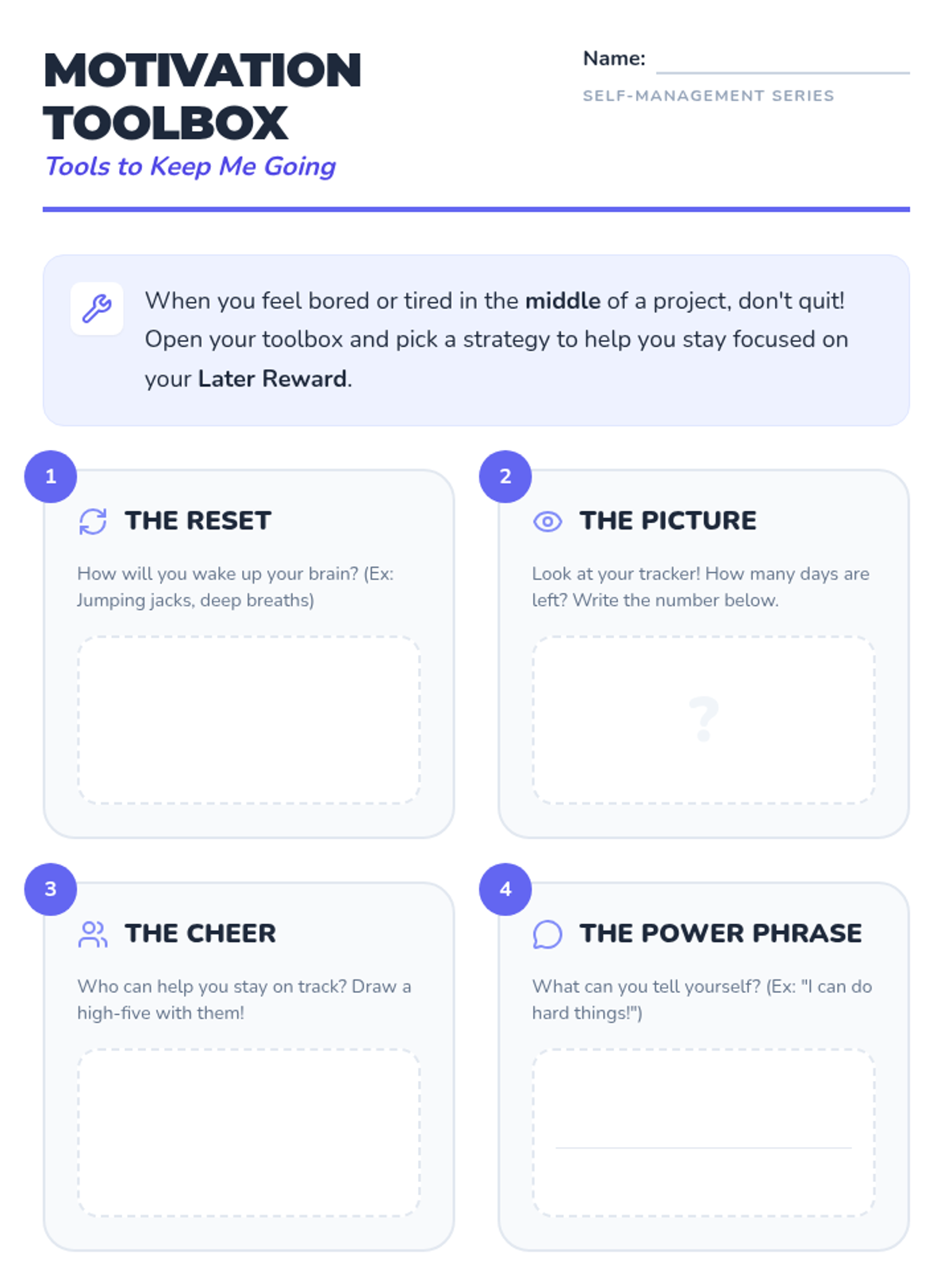
Worksheet for students to identify and draw personal motivation strategies to use when a project becomes difficult or boring.
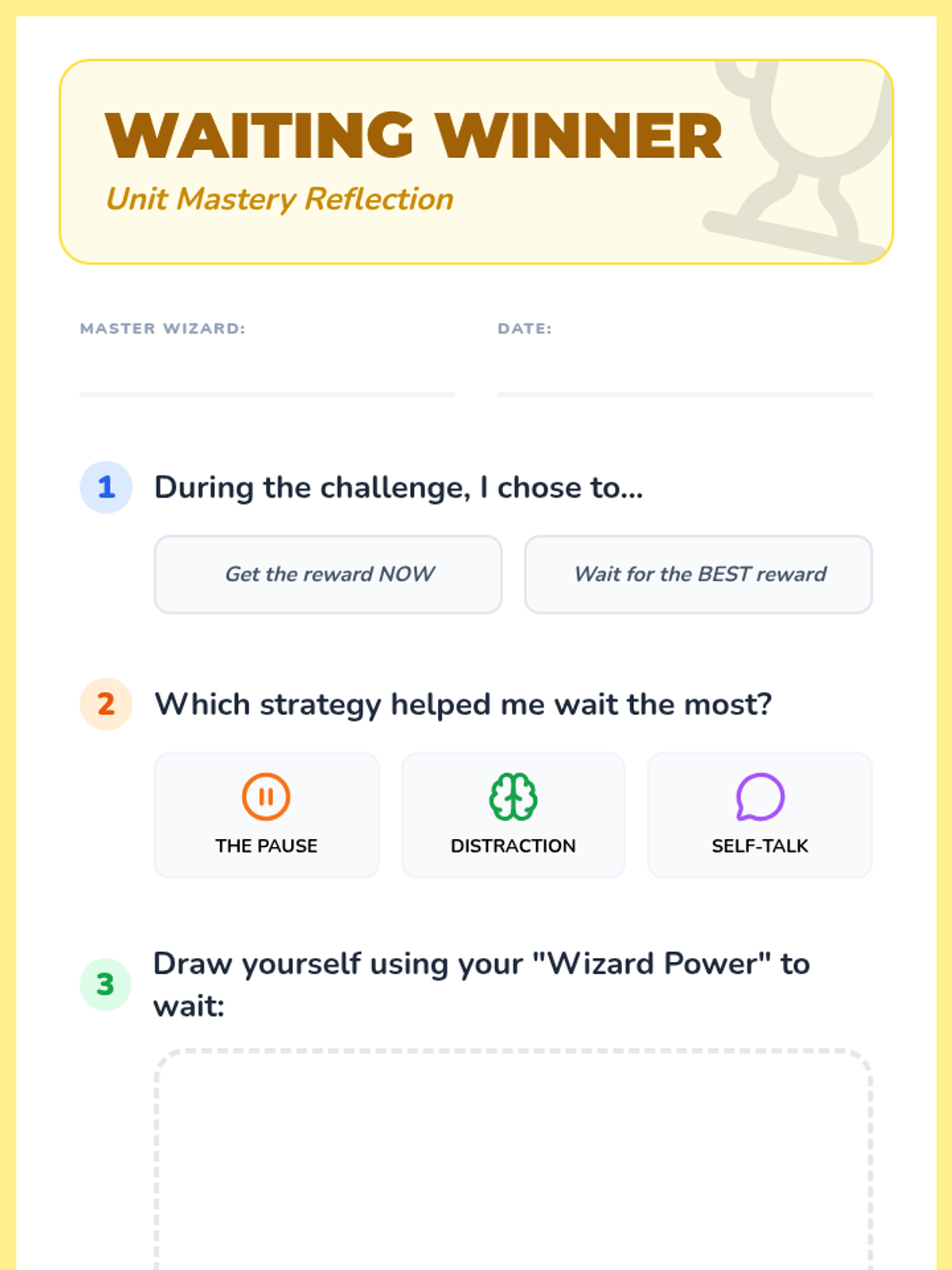
A student reflection worksheet for students to evaluate their performance and strategy use after the final waiting challenge.
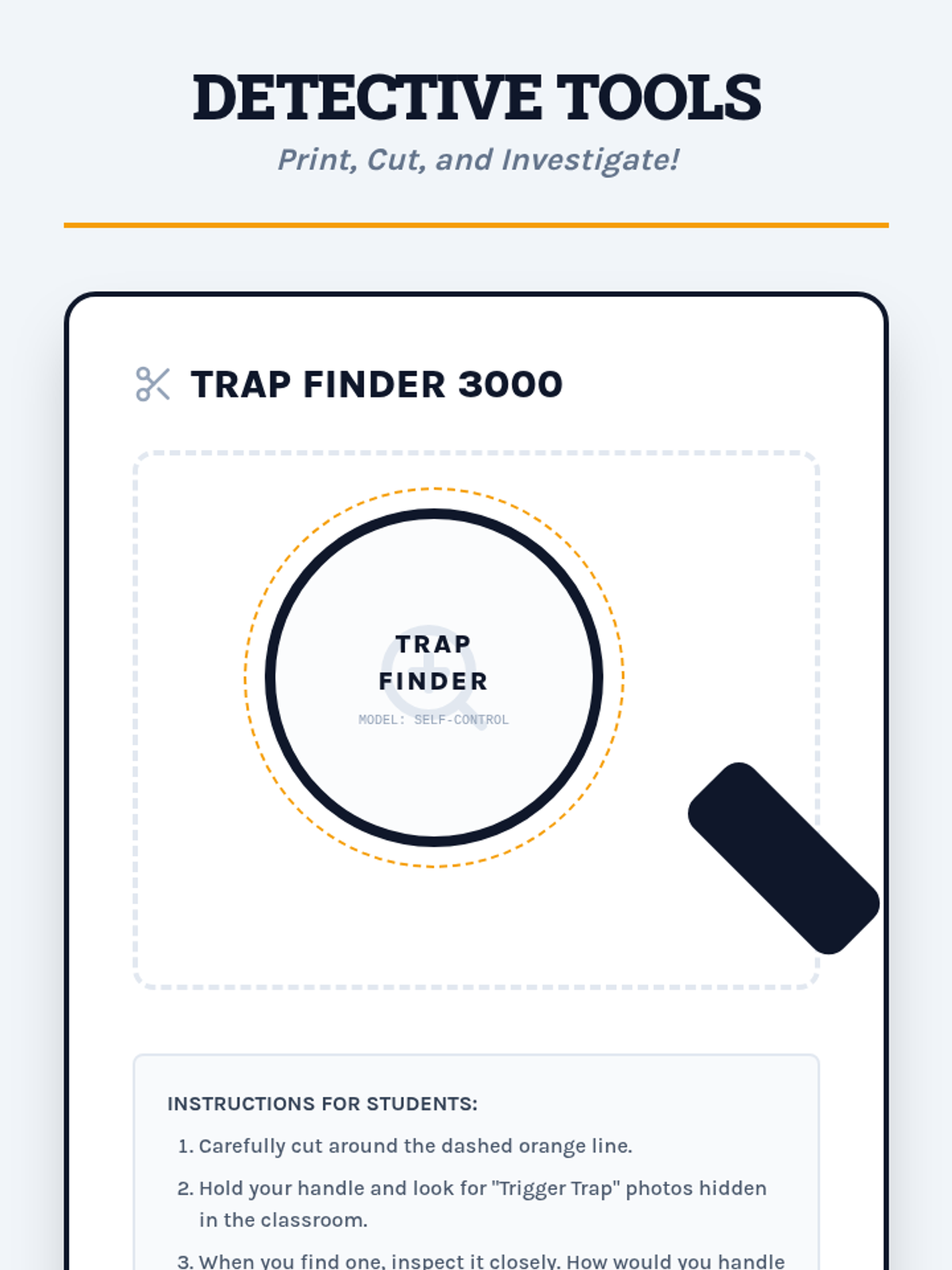
A printable 'Detective Magnifying Glass' template for students to use during a classroom scavenger hunt to identify personal triggers.
Slide deck for Lesson 4, addressing the 'dip' in motivation and introducing the 'Motivation Toolbox' strategies.
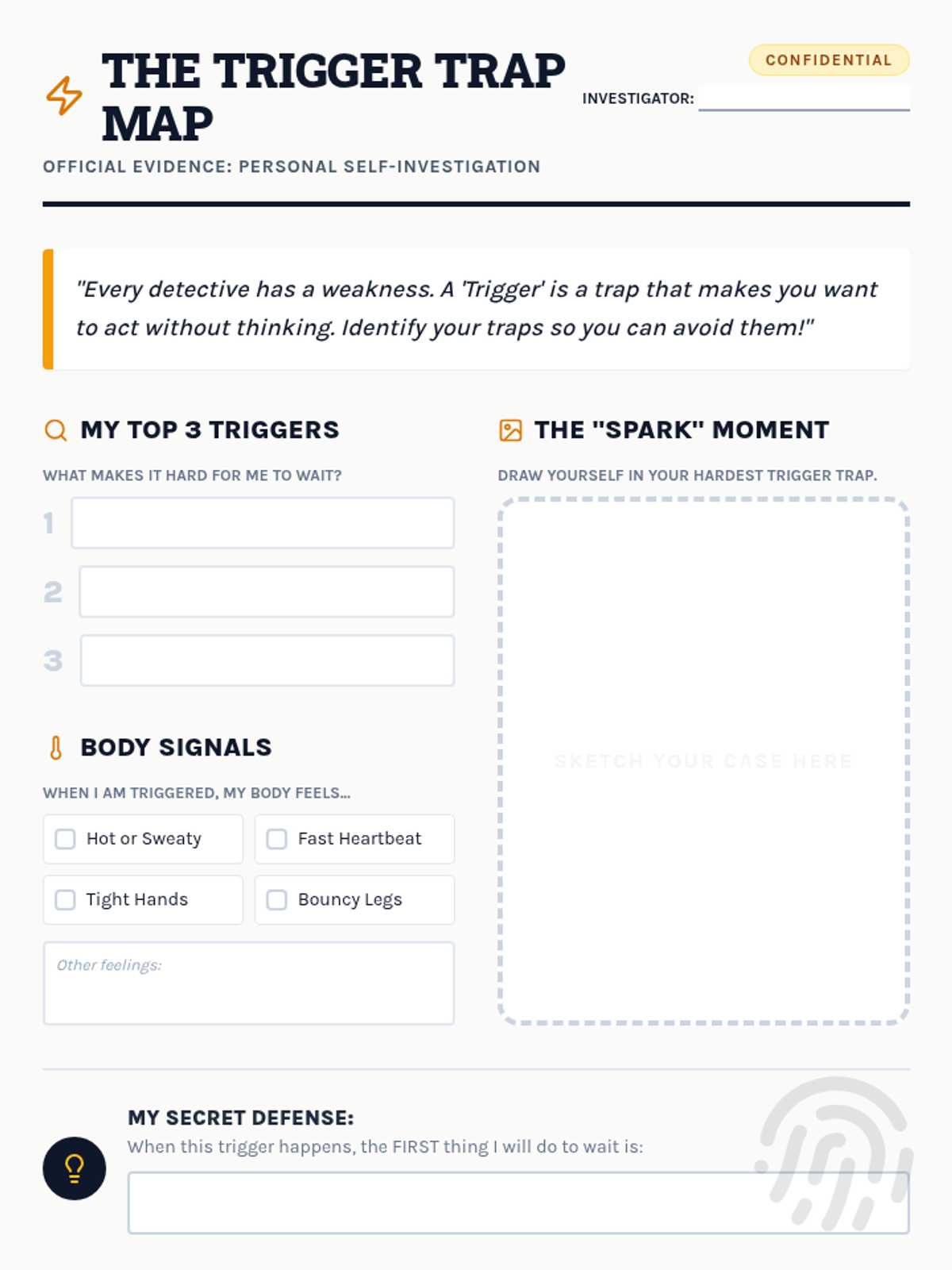
A reflective worksheet for students to identify their personal triggers and recognize the physical signals of impulsivity.
Visual aids for Lesson 5 to help students apply the strategies learned throughout the unit during a final waiting challenge.
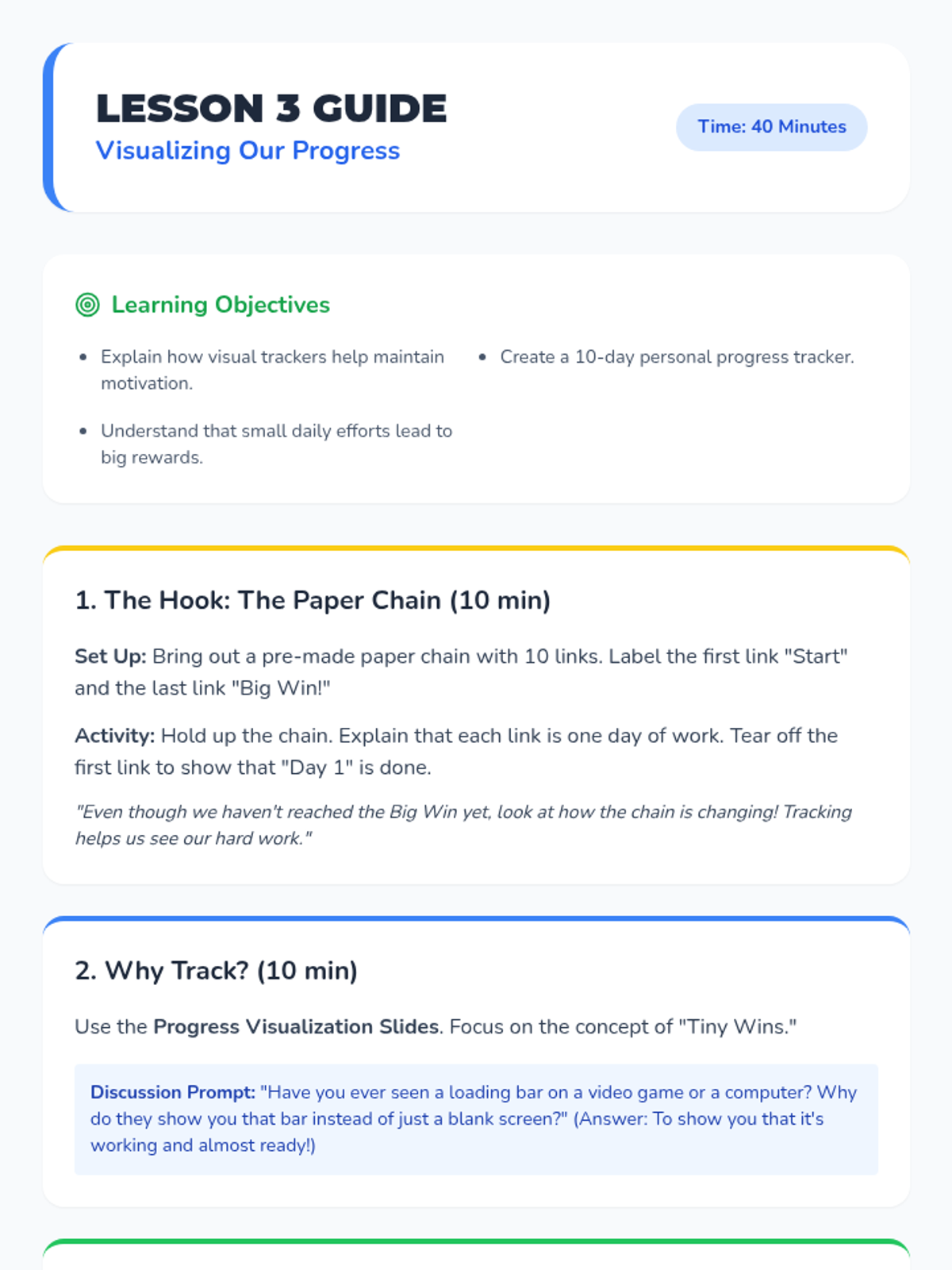
Teacher guide for Lesson 3, focusing on the paper chain hook and establishing the daily tracker routine for students.
Slides for Lesson 4 that help students understand the concept of 'triggers'—internal and external stimuli that lead to impulsive reactions.
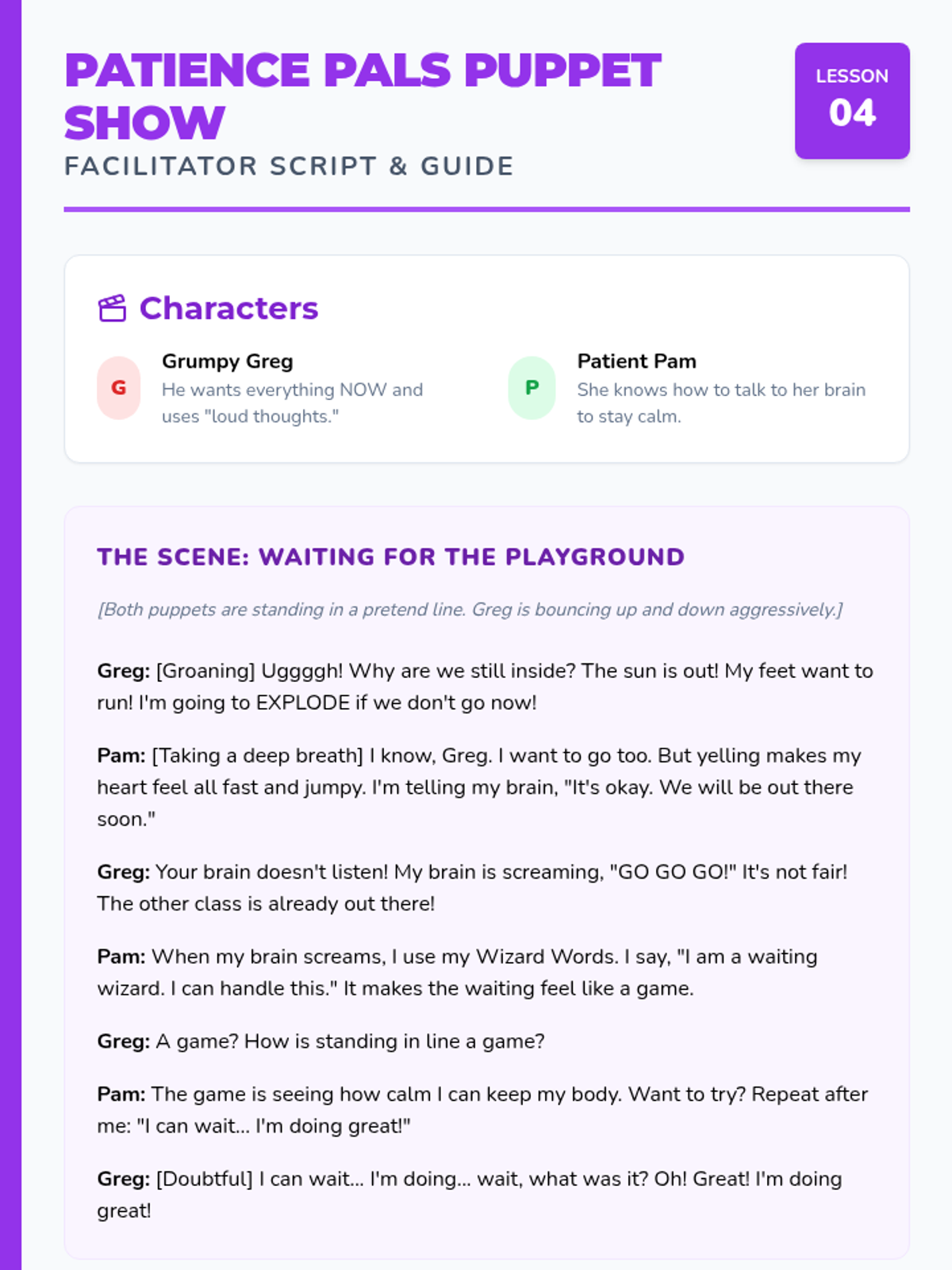
A puppet show script featuring characters 'Grumpy Greg' and 'Patient Pam' to demonstrate the power of self-talk during waiting periods.
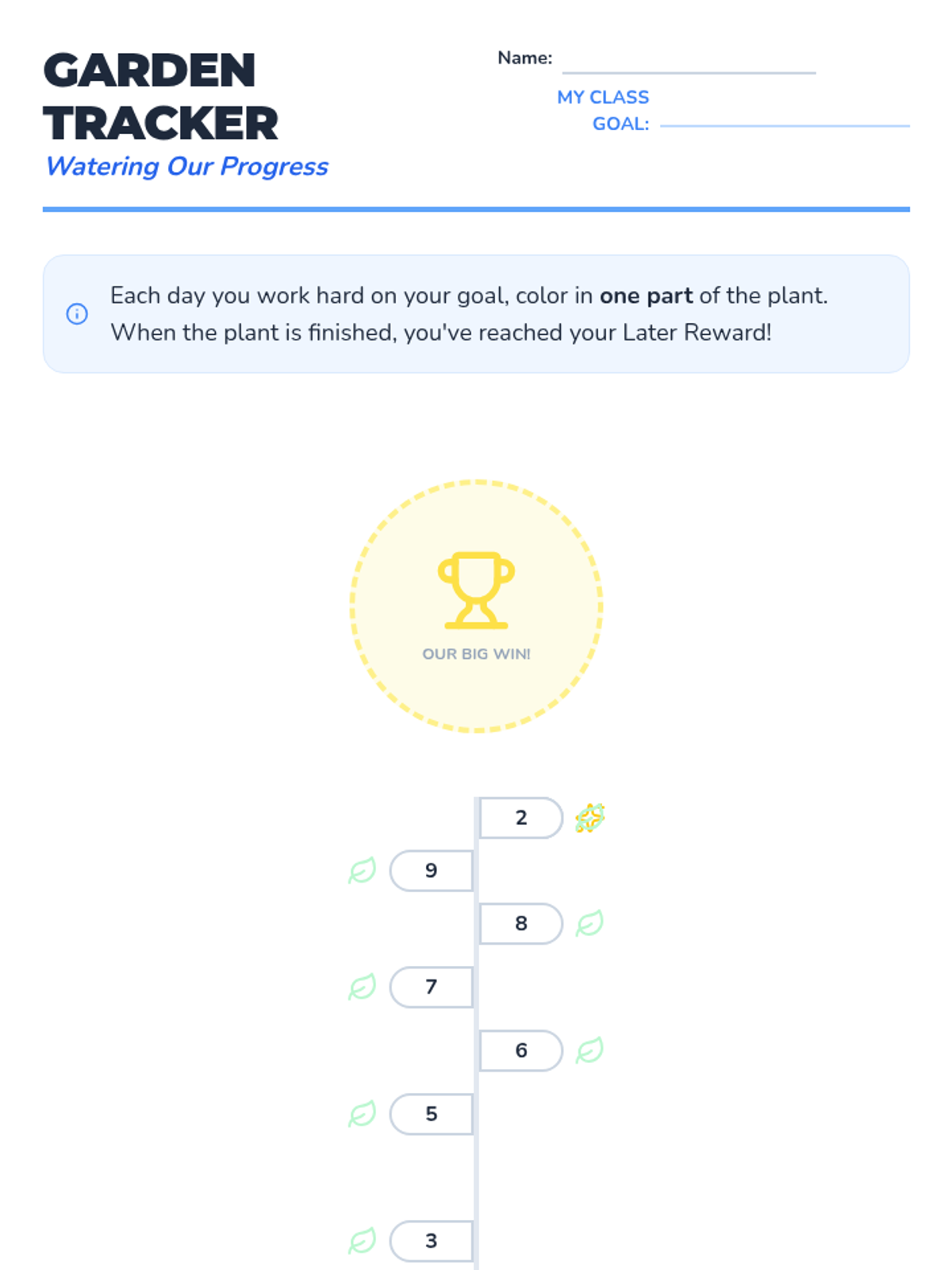
Individual progress tracker shaped like a growing plant, where students color in sections each day to visualize their progress toward the goal.
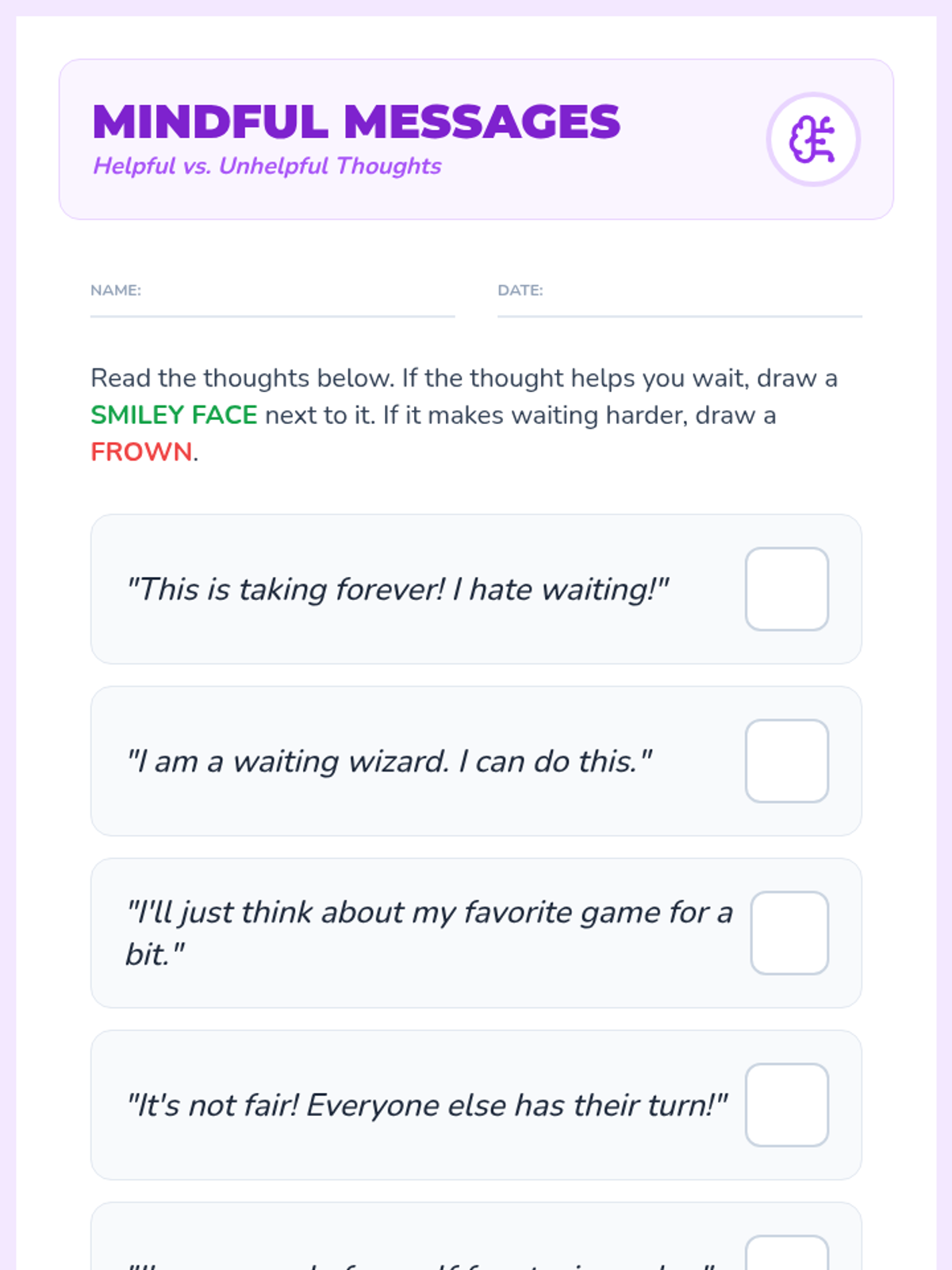
A student worksheet for identifying and generating helpful vs. unhelpful thoughts during waiting periods.
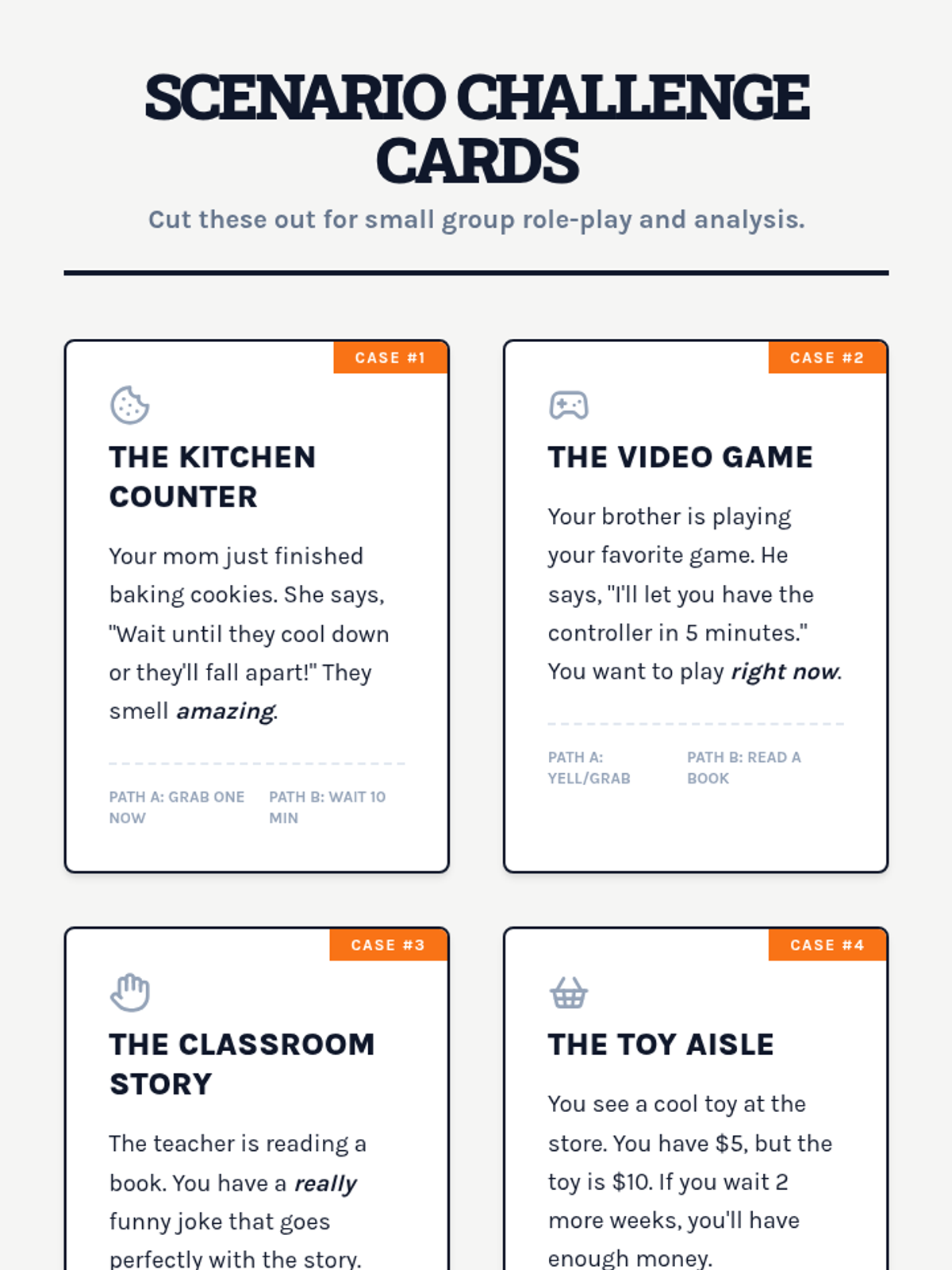
A set of scenario cards for small-group role-play activities where students practice impulsive versus patient responses to common triggers.
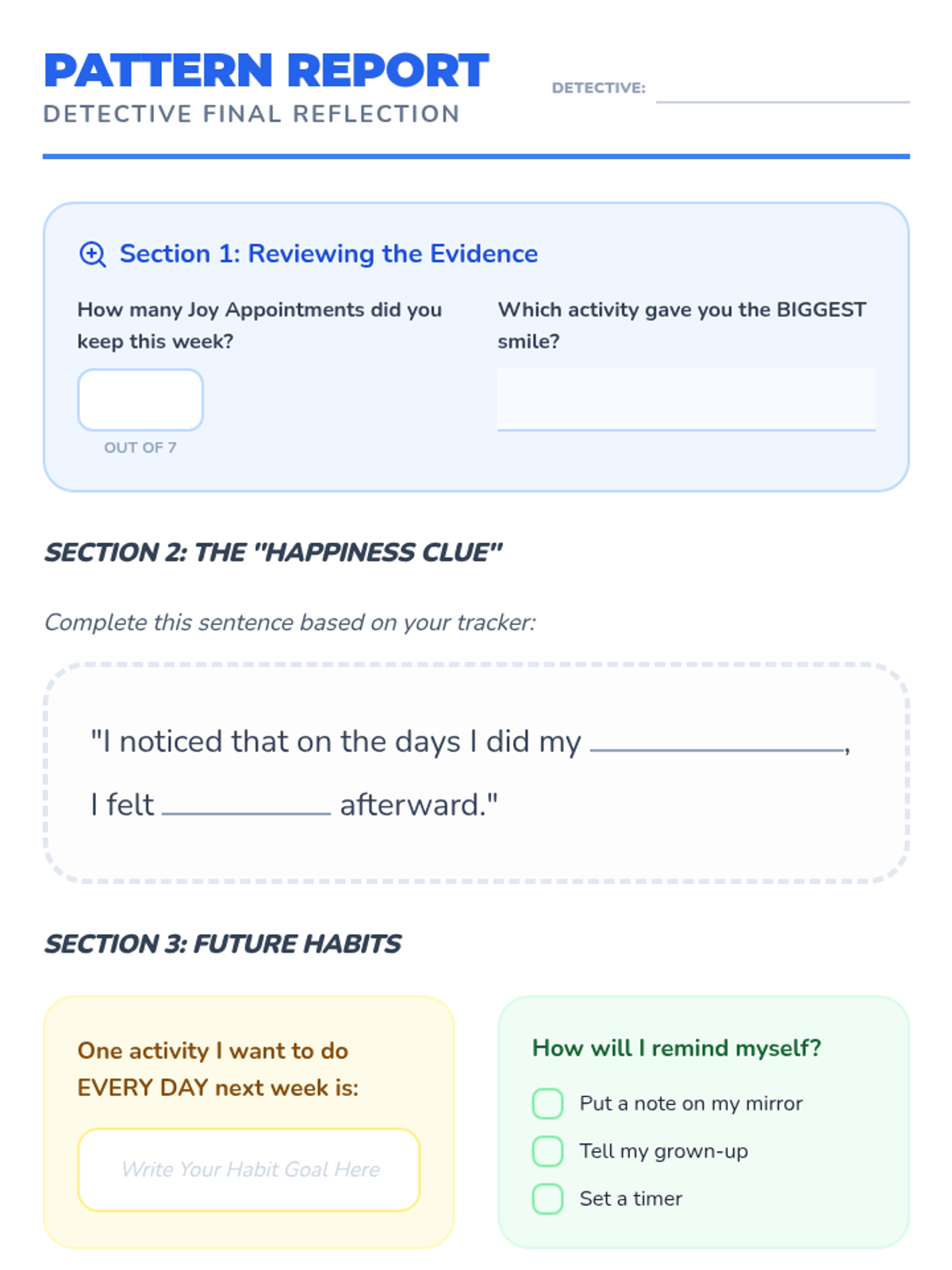
Student reflection activity for Lesson 5, where they analyze their completed habit tracker and set personal goals for future positive routines.
Instructional slides for Lesson 5, guiding students through reflecting on their activity and mood patterns to set personal goals.
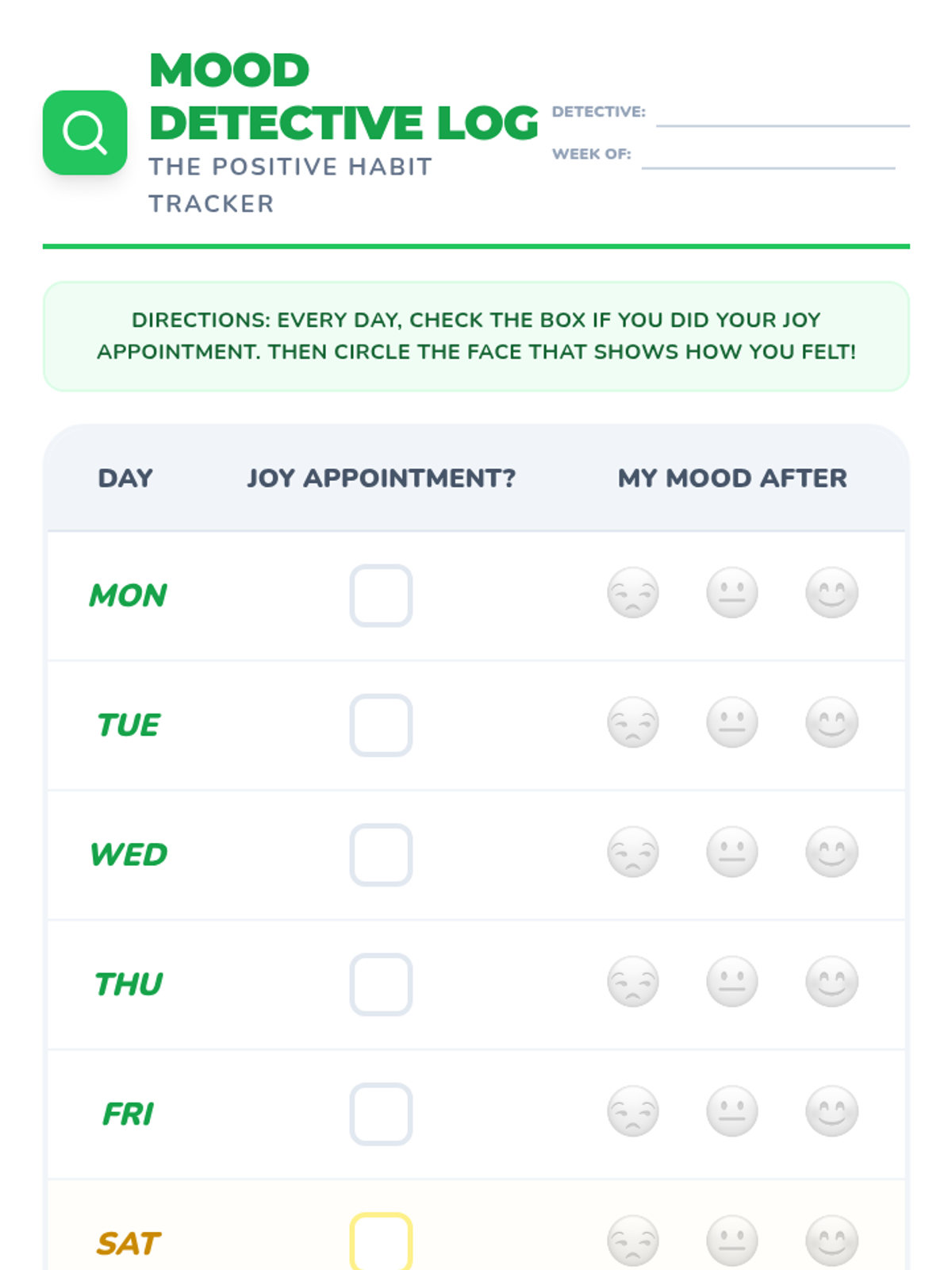
Student weekly habit tracker for Lesson 4, designed for monitoring engagement in positive activities and recording mood ratings.
Instructional slides for Lesson 4, guiding students through the concept of tracking activities and their mood to see the link between action and emotion.
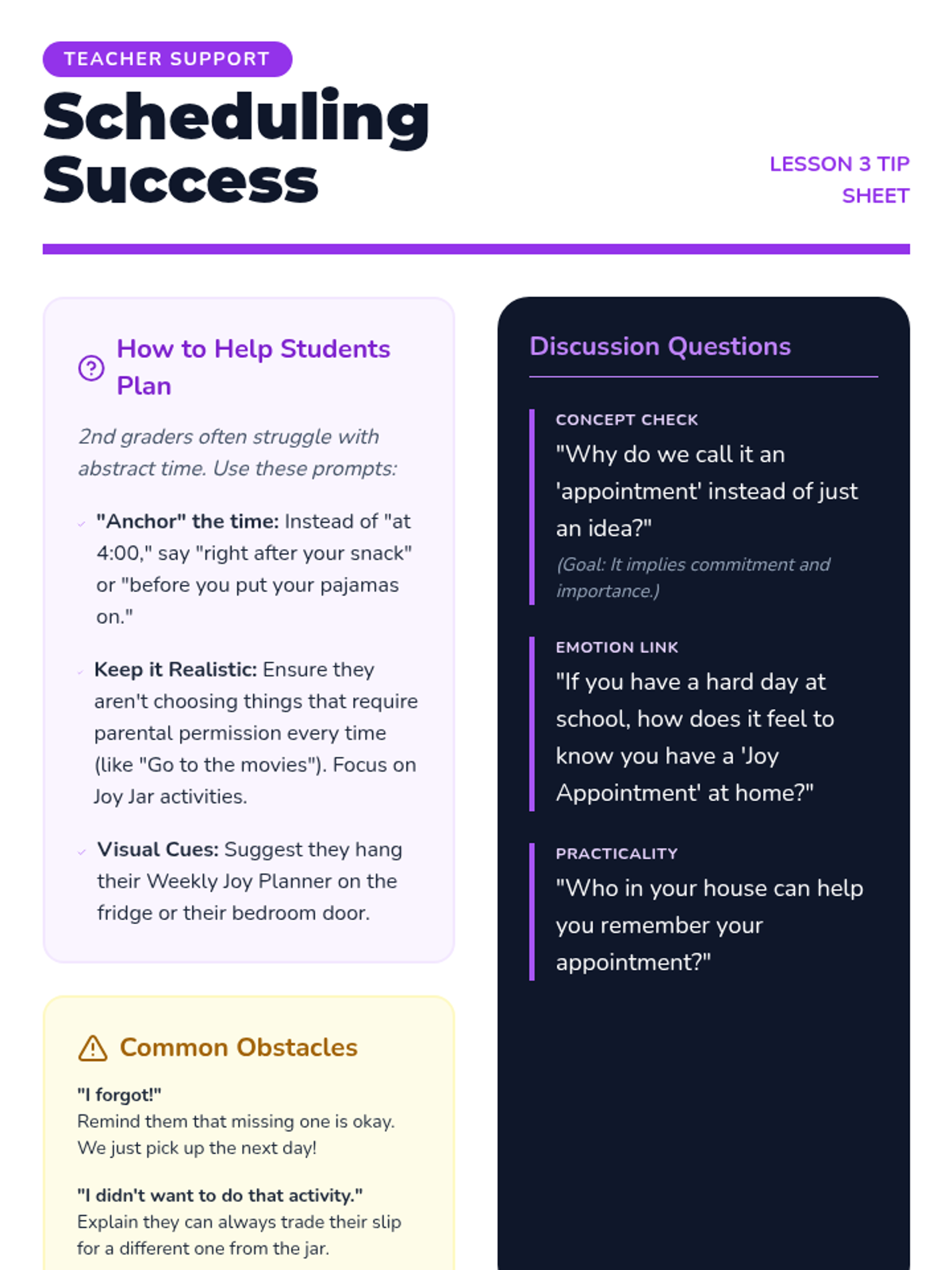
Facilitation guide for teachers for Lesson 3, providing practical strategies for helping students schedule realistic joy breaks and manage obstacles.
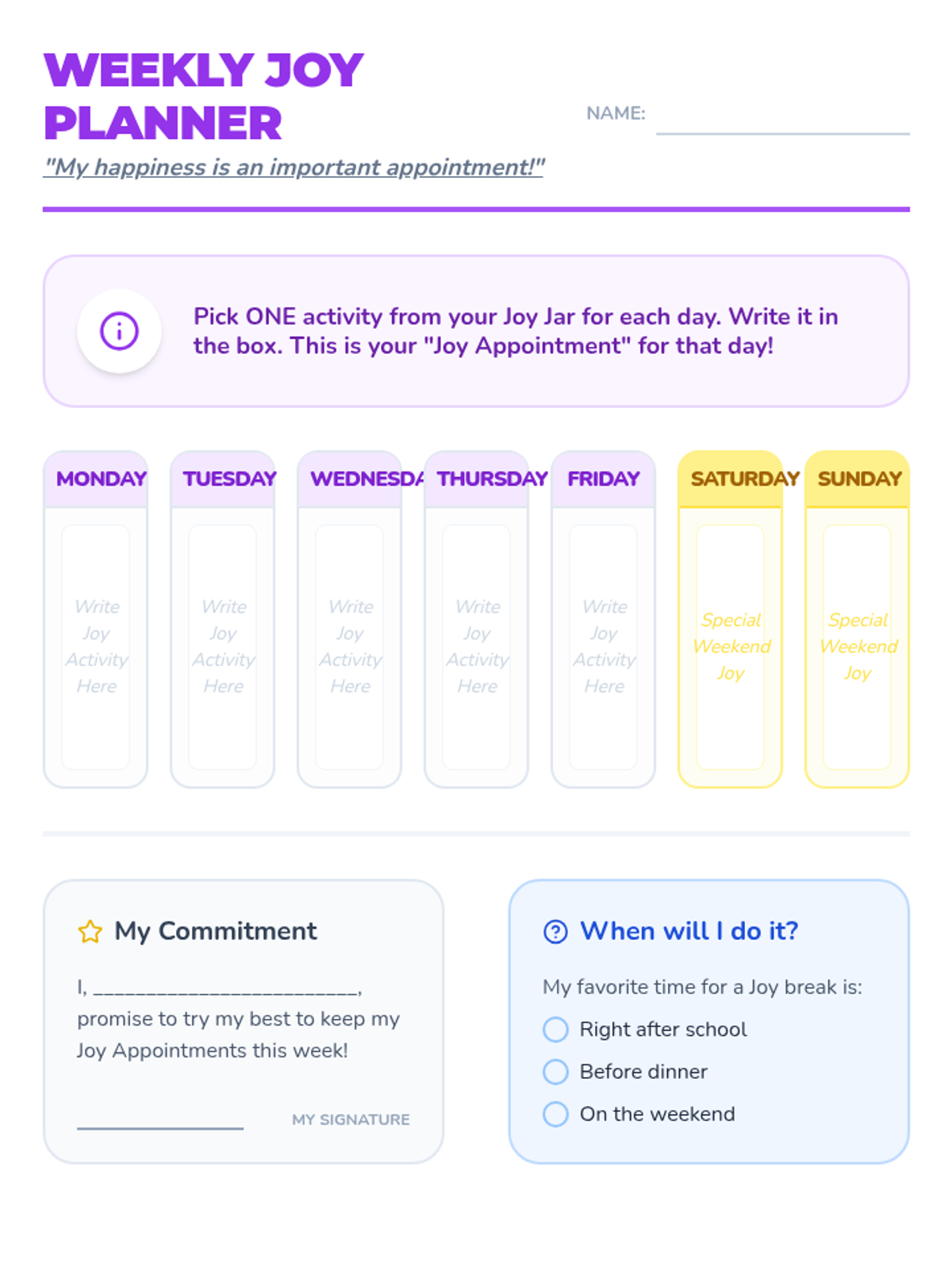
Student weekly planning document for Lesson 3, where they schedule one intentional positive activity for each day of the upcoming week.
Instructional slides for Lesson 3, guiding students through the concept of scheduling intentional 'joy breaks' into their weekly calendar.
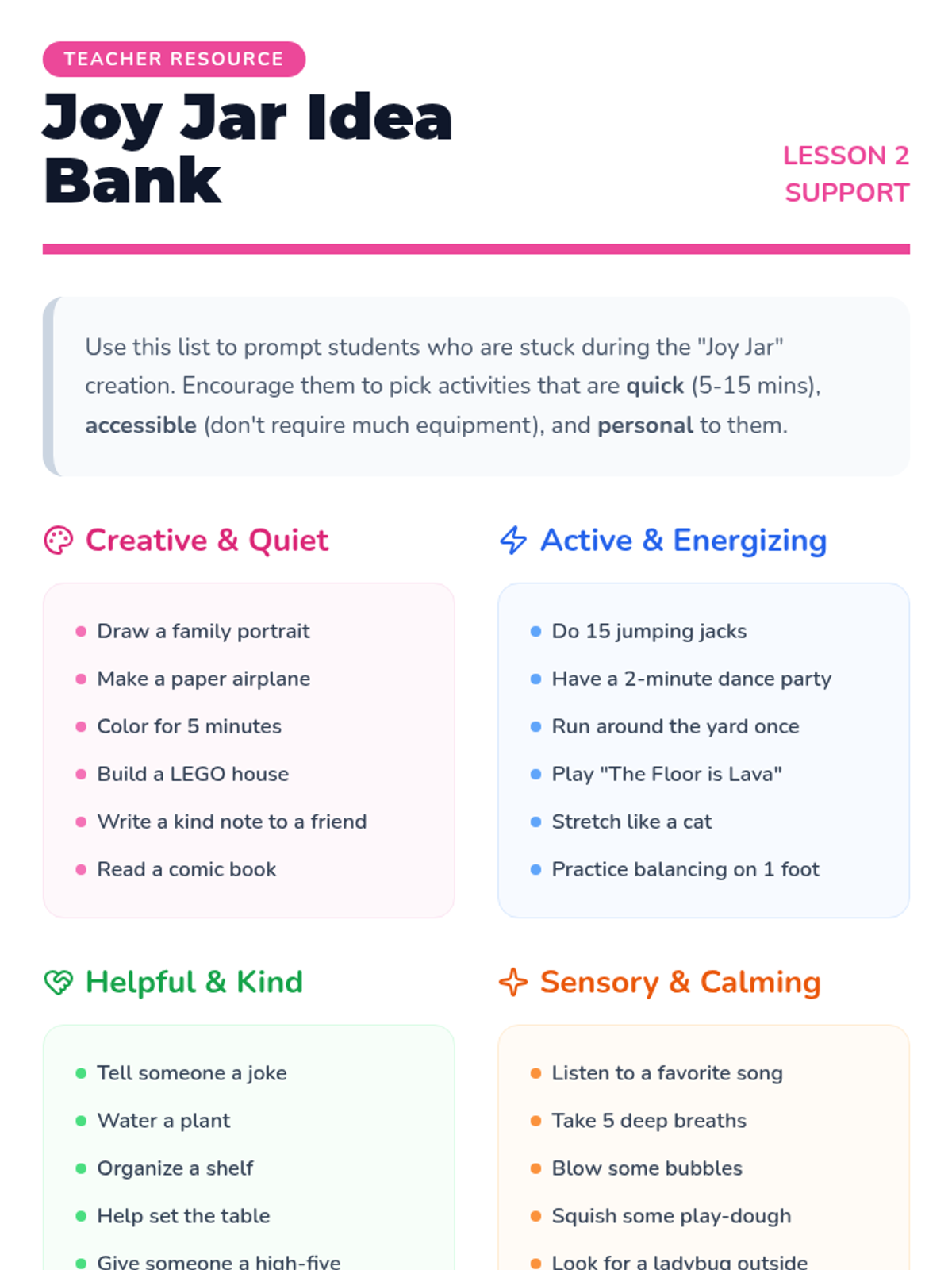
Teacher resource for Lesson 2, providing a categorized bank of quick and accessible positive activity ideas to prompt student creativity.
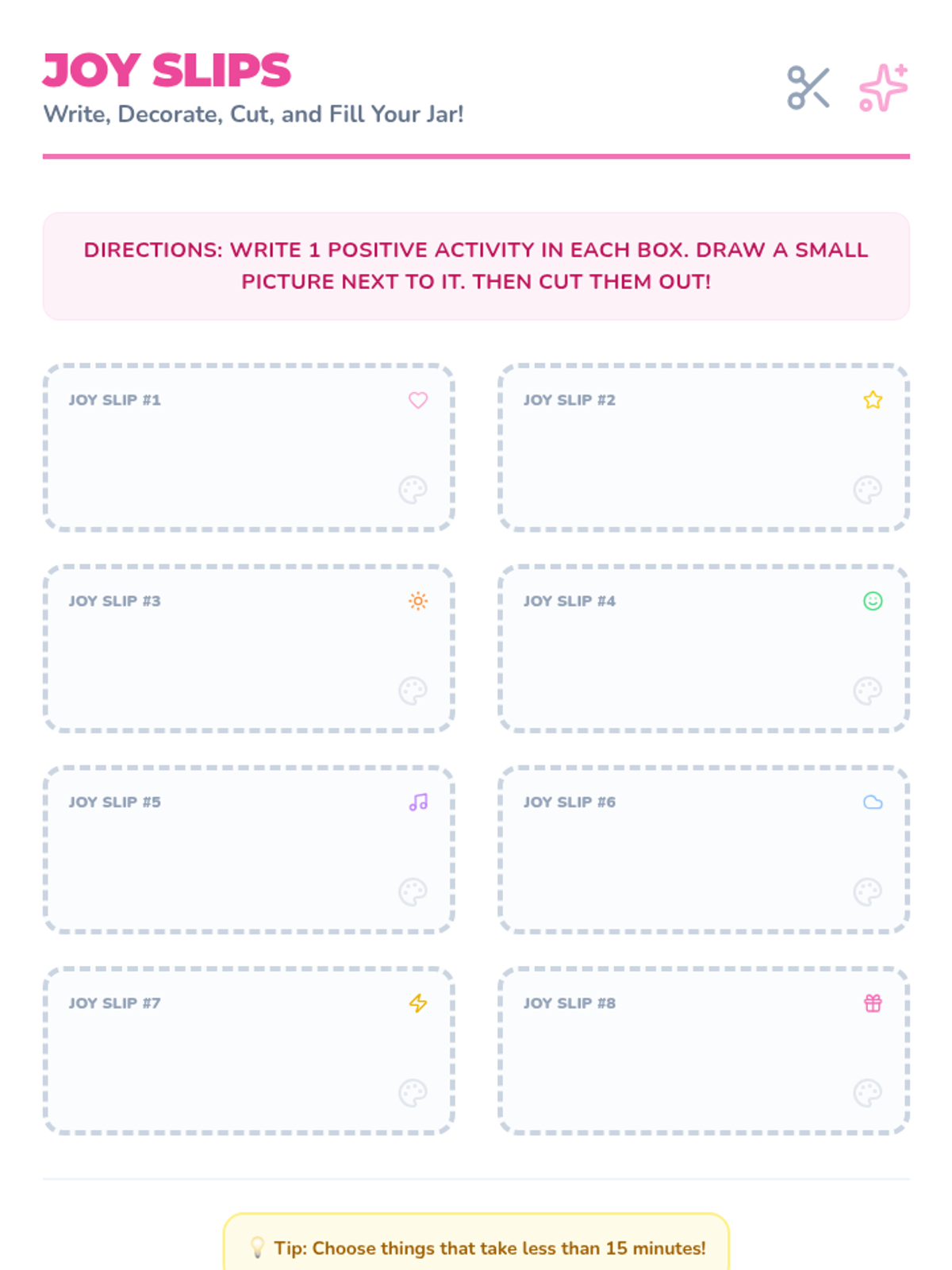
Student activity template for Lesson 2, providing patterned slips for students to write and illustrate positive activities for their Happiness Jar.
Instructional slides for Lesson 2, guiding students through the concept and creation of a Joy Jar as a tool for managing mood during empty spots.
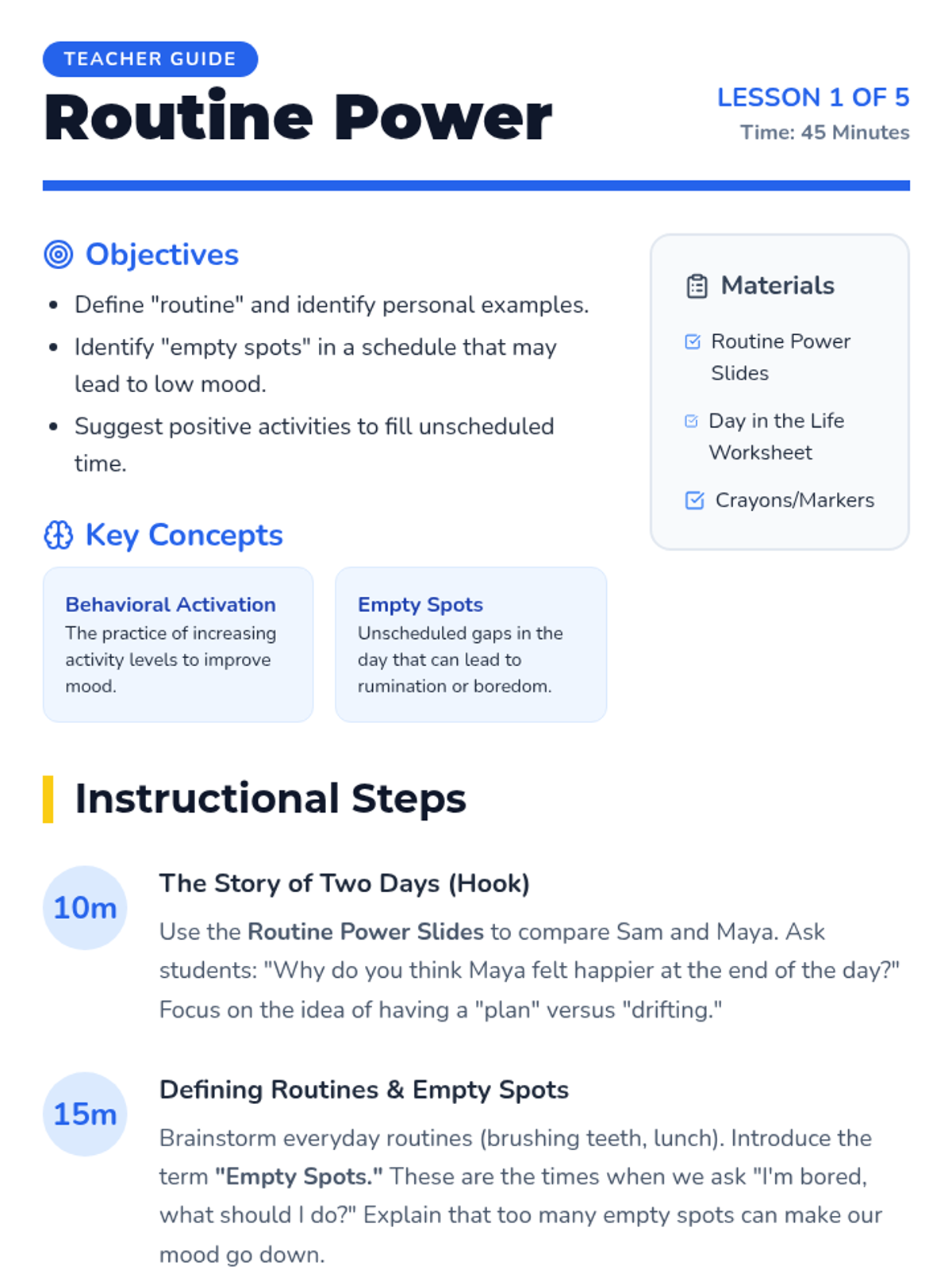
Facilitation guide for teachers for Lesson 1, including objectives, instructional steps, discussion prompts, and differentiation strategies.
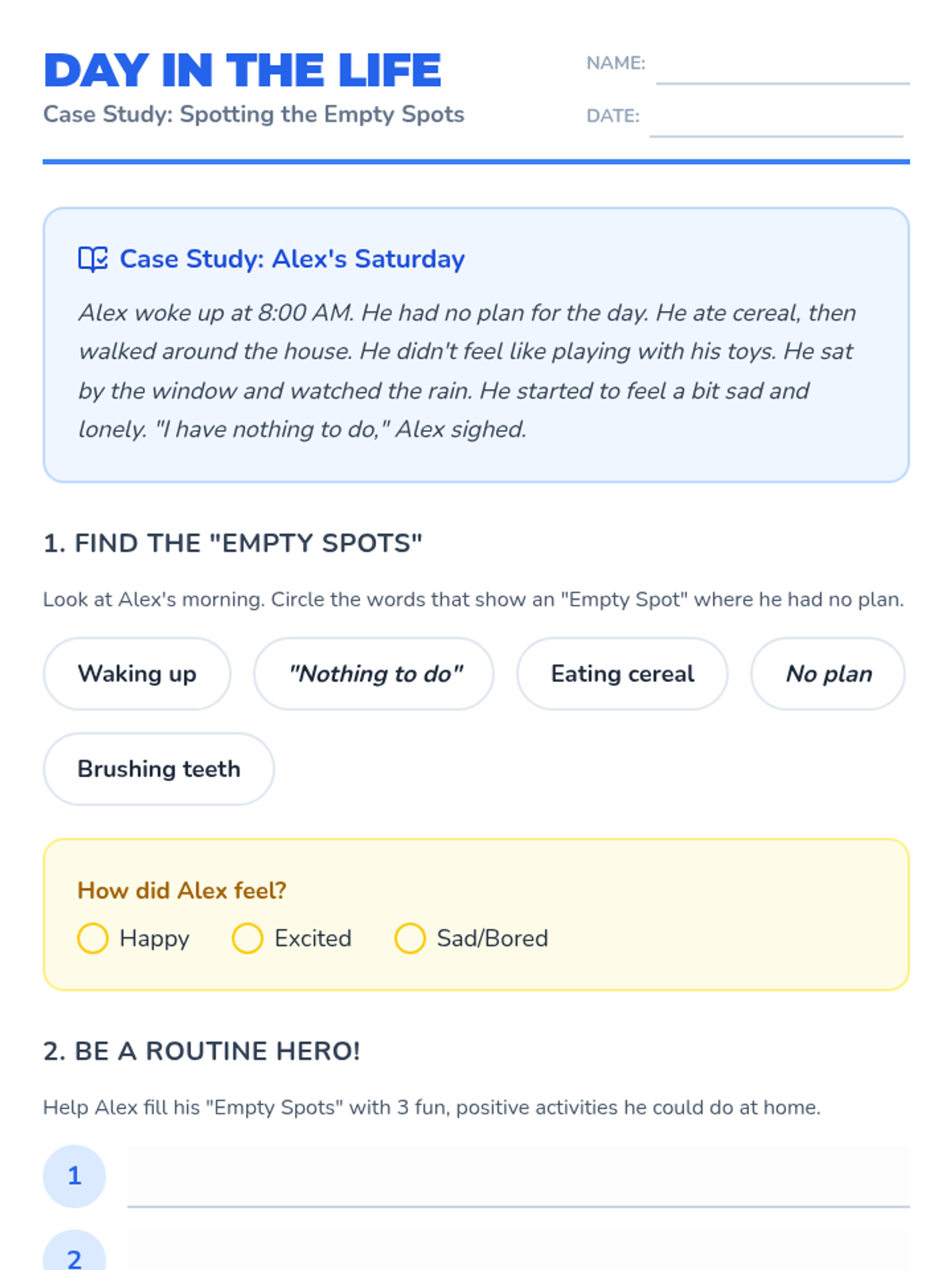
Worksheet for Lesson 1 where students analyze a case study to identify 'empty spots' in a daily routine and suggest positive activities to improve mood.
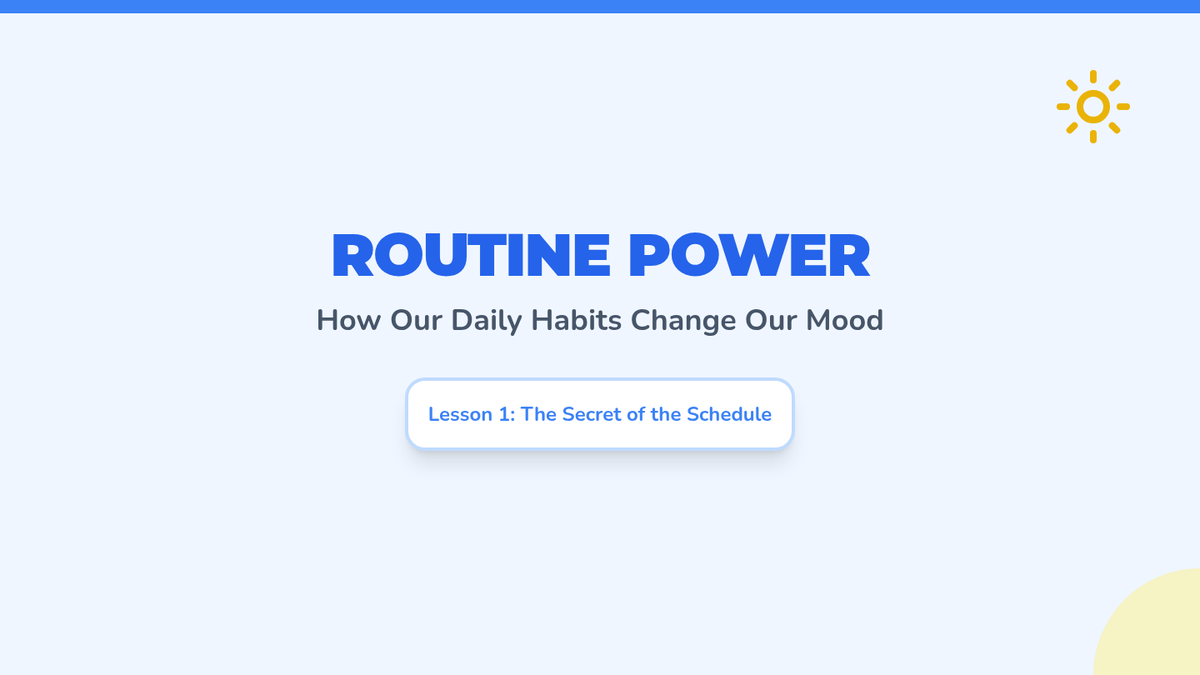
Introductory slides for Lesson 1, exploring the concept of routines, 'empty spots' in schedules, and how planning activities can improve mood.
Gallery walk instructions and reflection prompts for the final lesson, emphasizing the transfer of working memory strategies to other subjects.
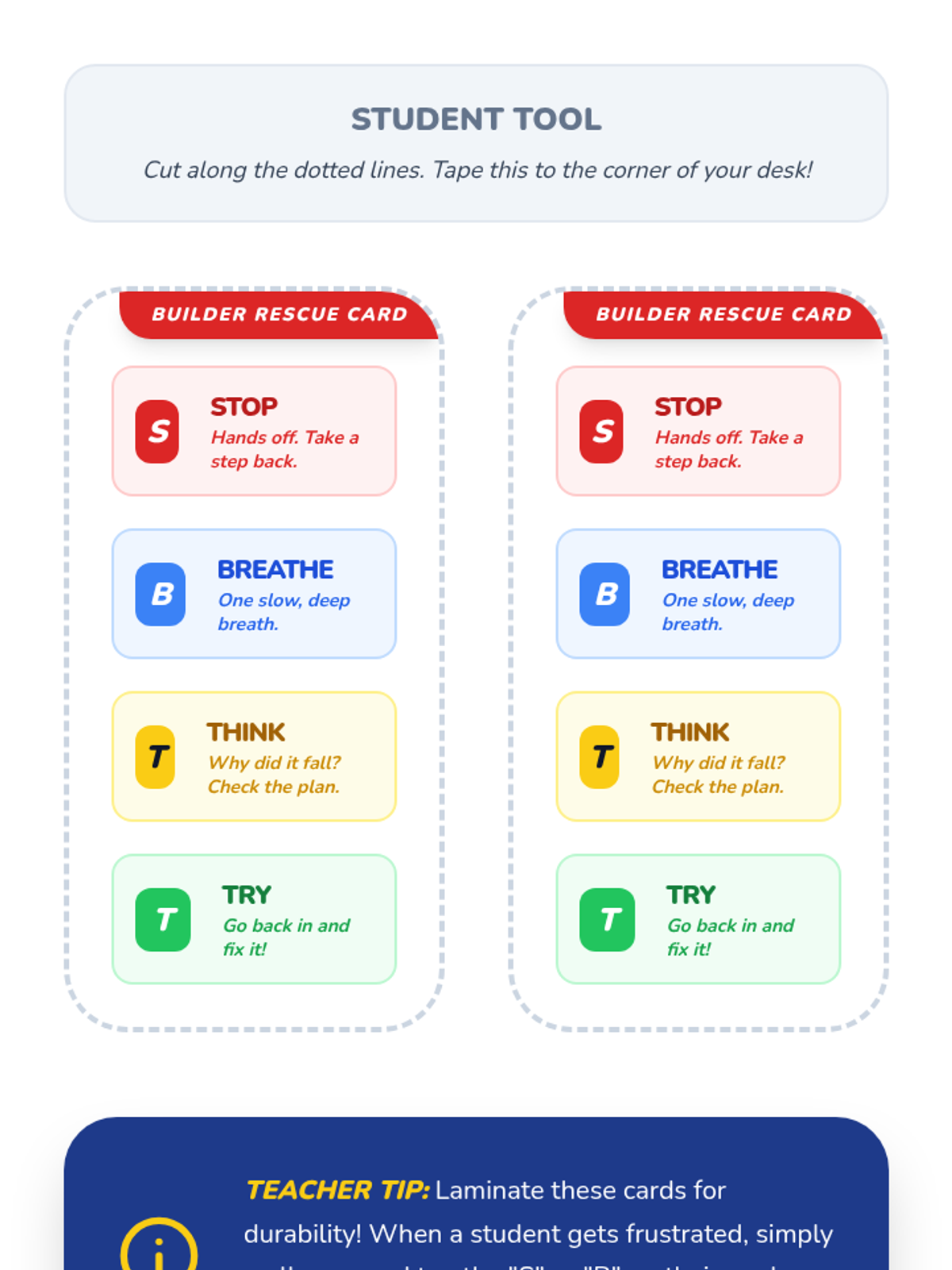
A visual reference card for students to keep at their desks, featuring the S.B.T.T. (Stop, Breathe, Think, Try) protocol for emotional regulation.
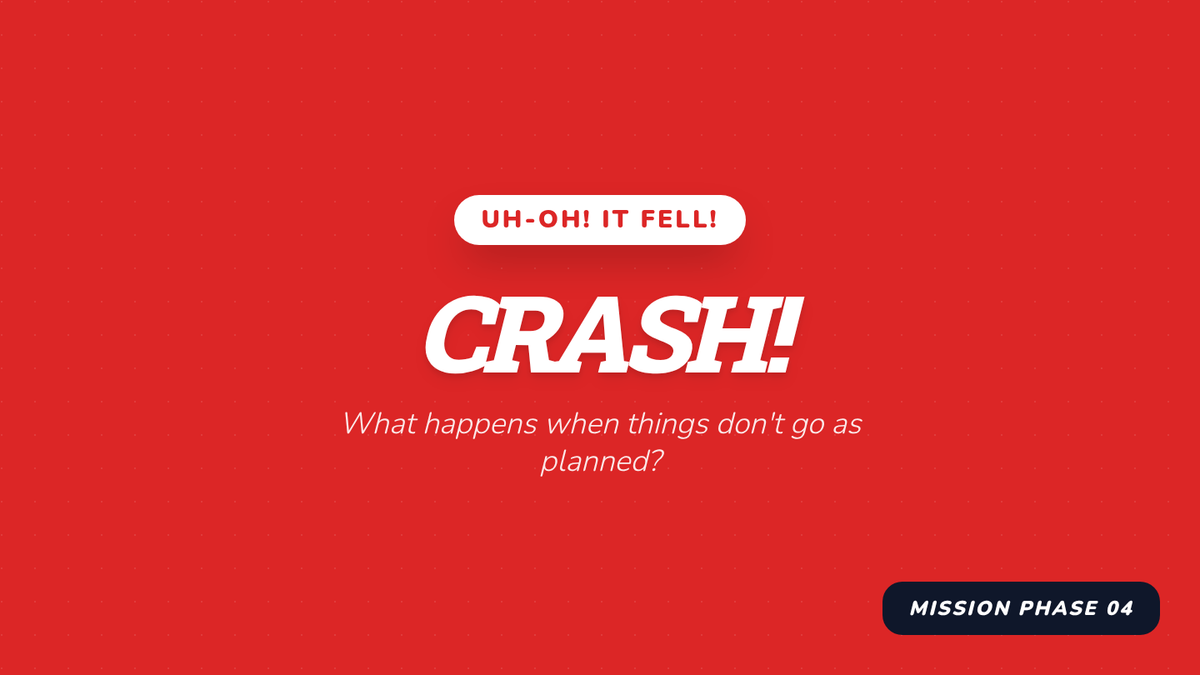
Visual presentation for the "Overcoming Obstacles" lesson, modeling the Stop-Breathe-Think-Try (SBTT) protocol for emotional regulation during structural failures.
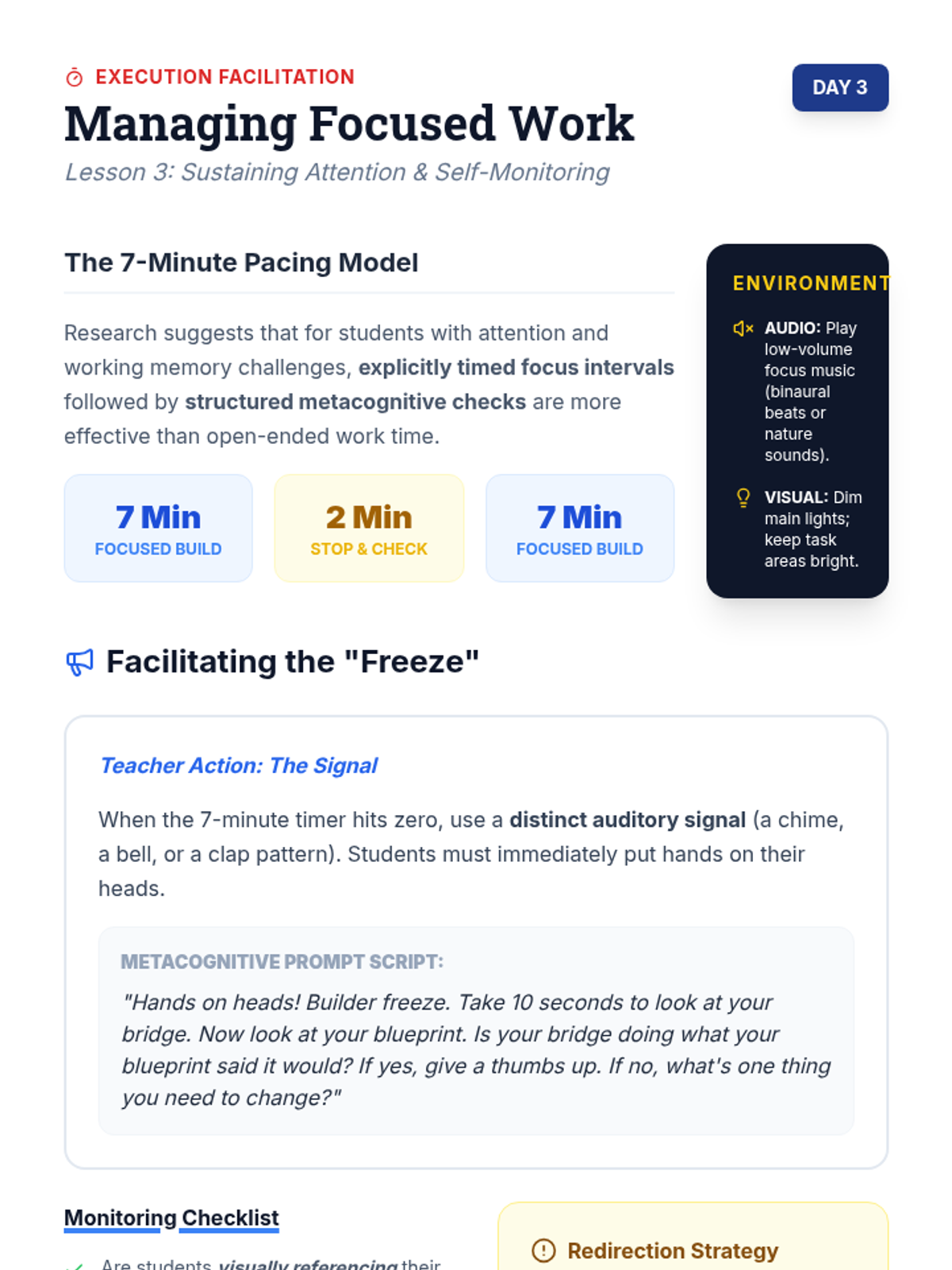
A facilitation guide for teachers on managing the "Stop and Check" intervals, including pacing models and non-verbal redirection strategies.
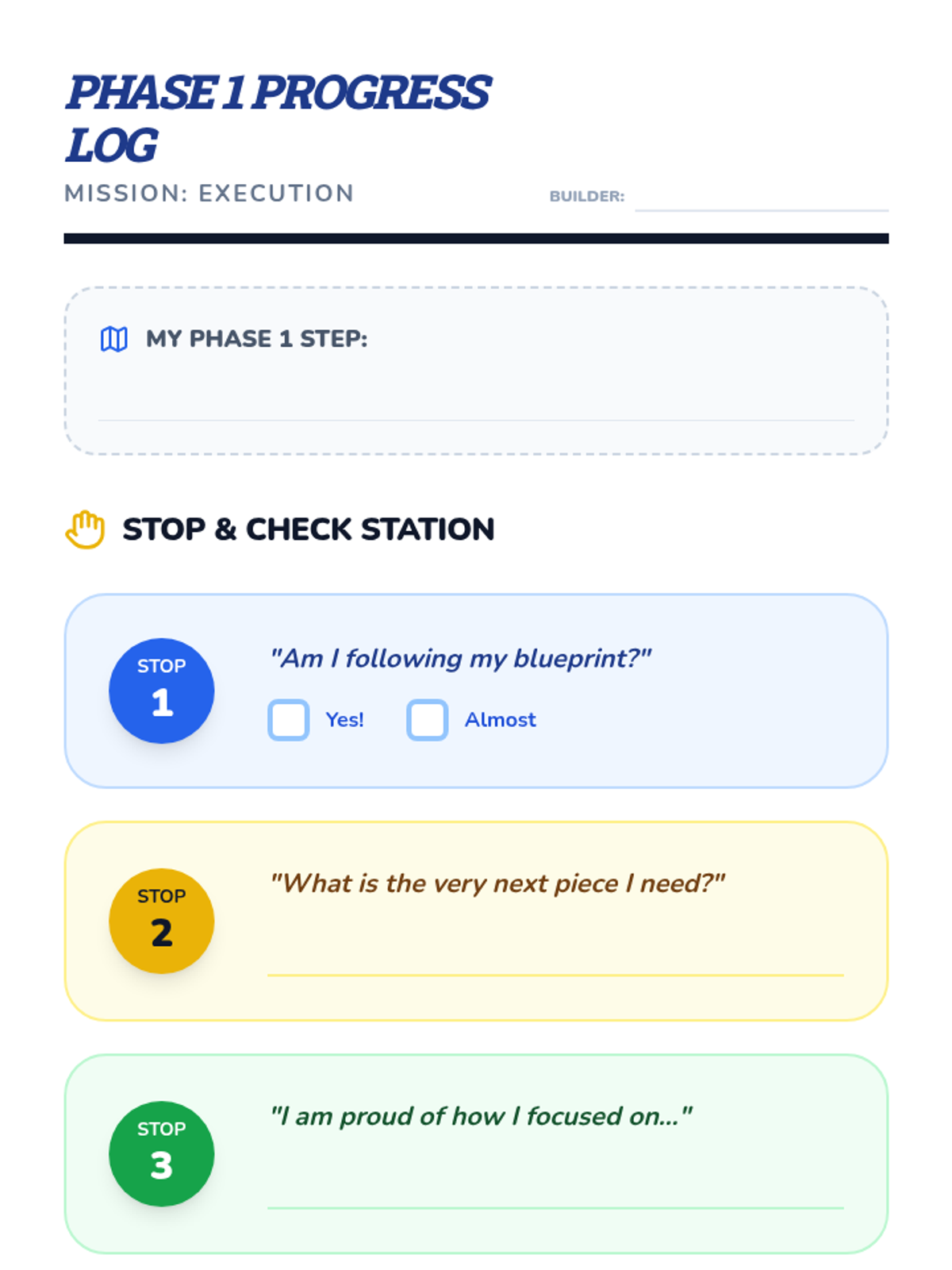
A student log for the "Stop and Check" intervals, designed to encourage self-monitoring and task adherence during the building phase.
Visual presentation for the construction phase, introducing the 7-minute focus challenge and the "Stop and Check" intervals to support task adherence.
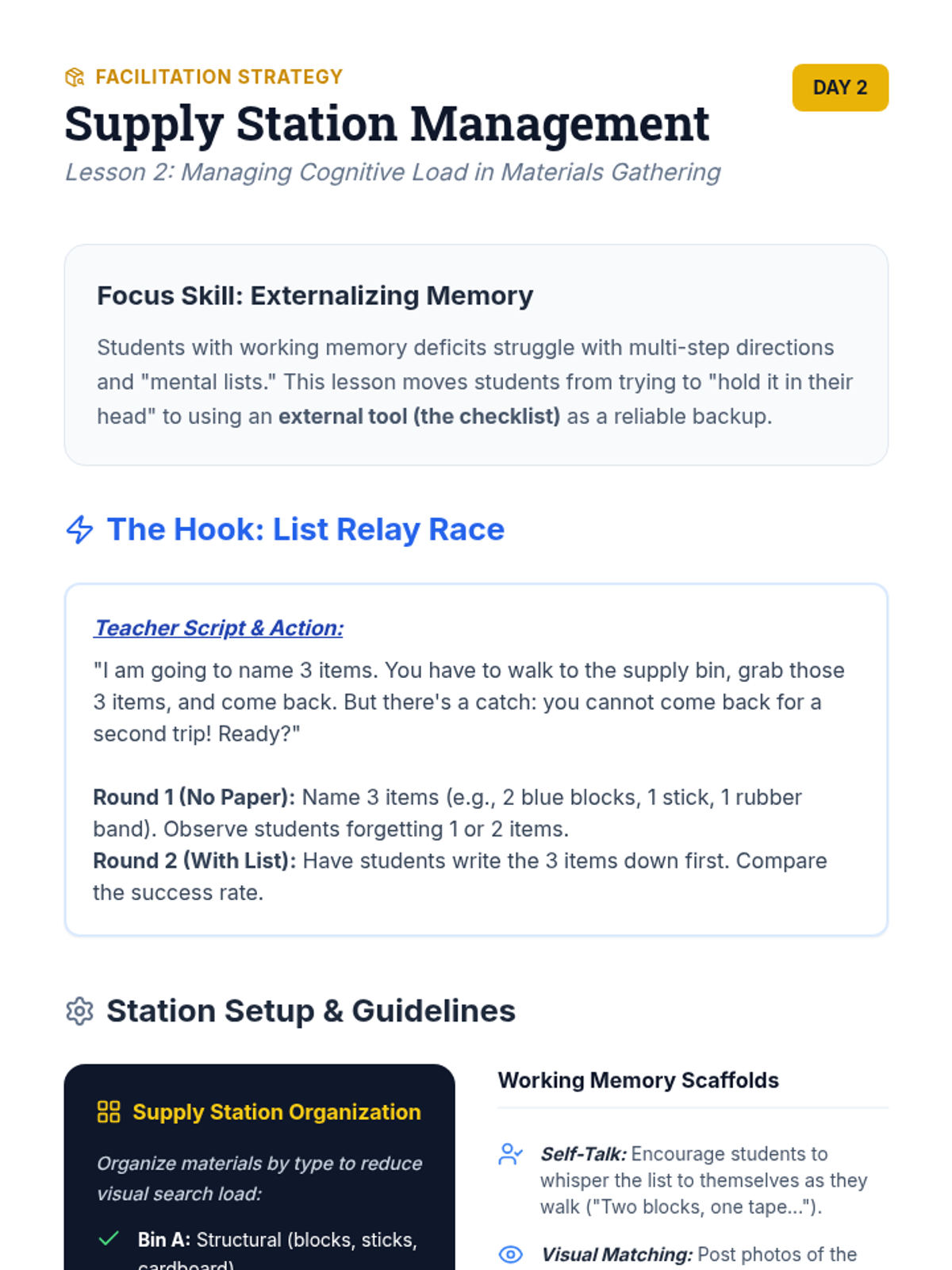
Instructions for teachers on setting up the supply station simulation and facilitating the "one-trip" working memory challenge.
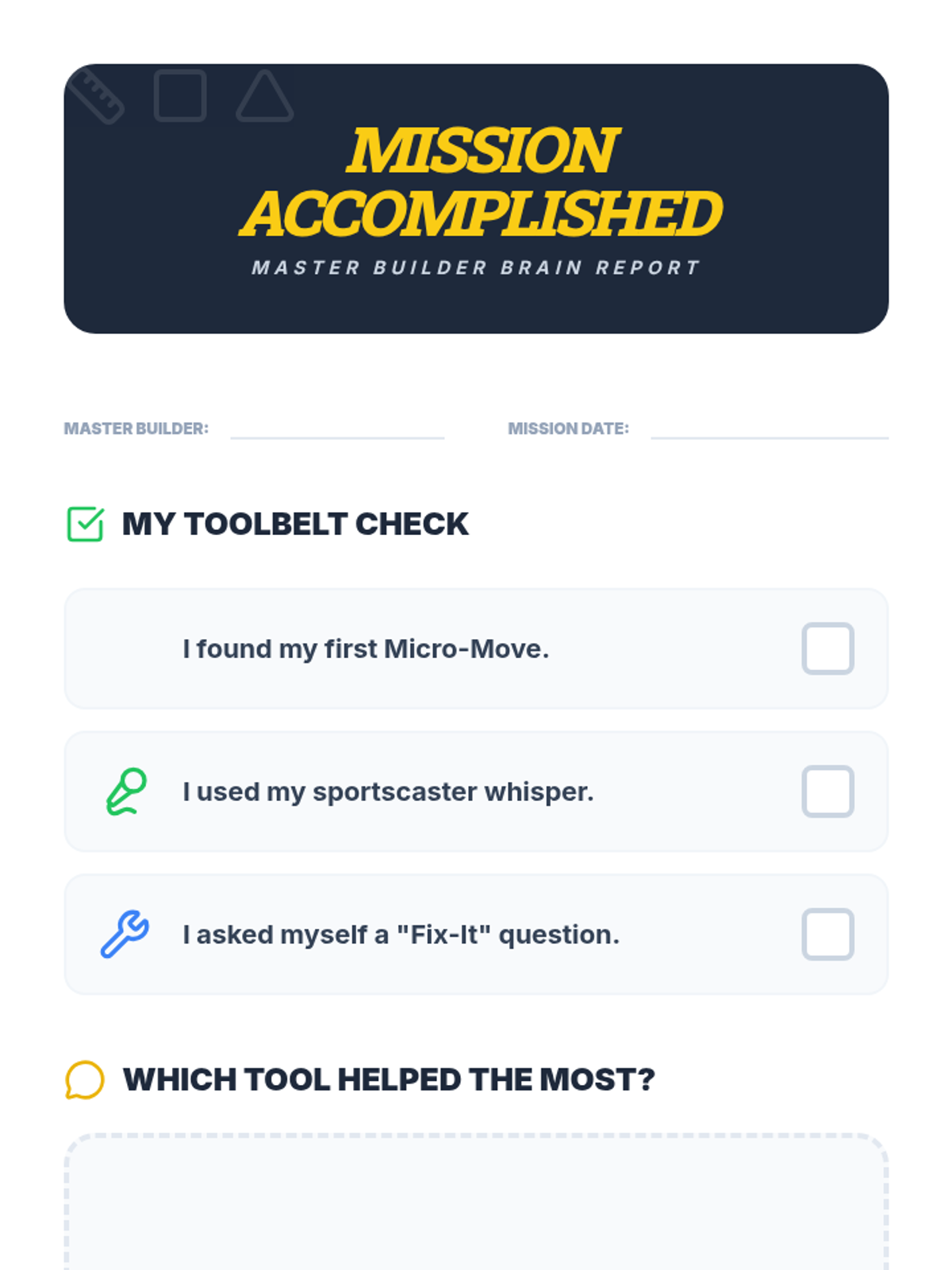
Student self-assessment and reflection worksheet for the final mission of the Builder Brain sequence.
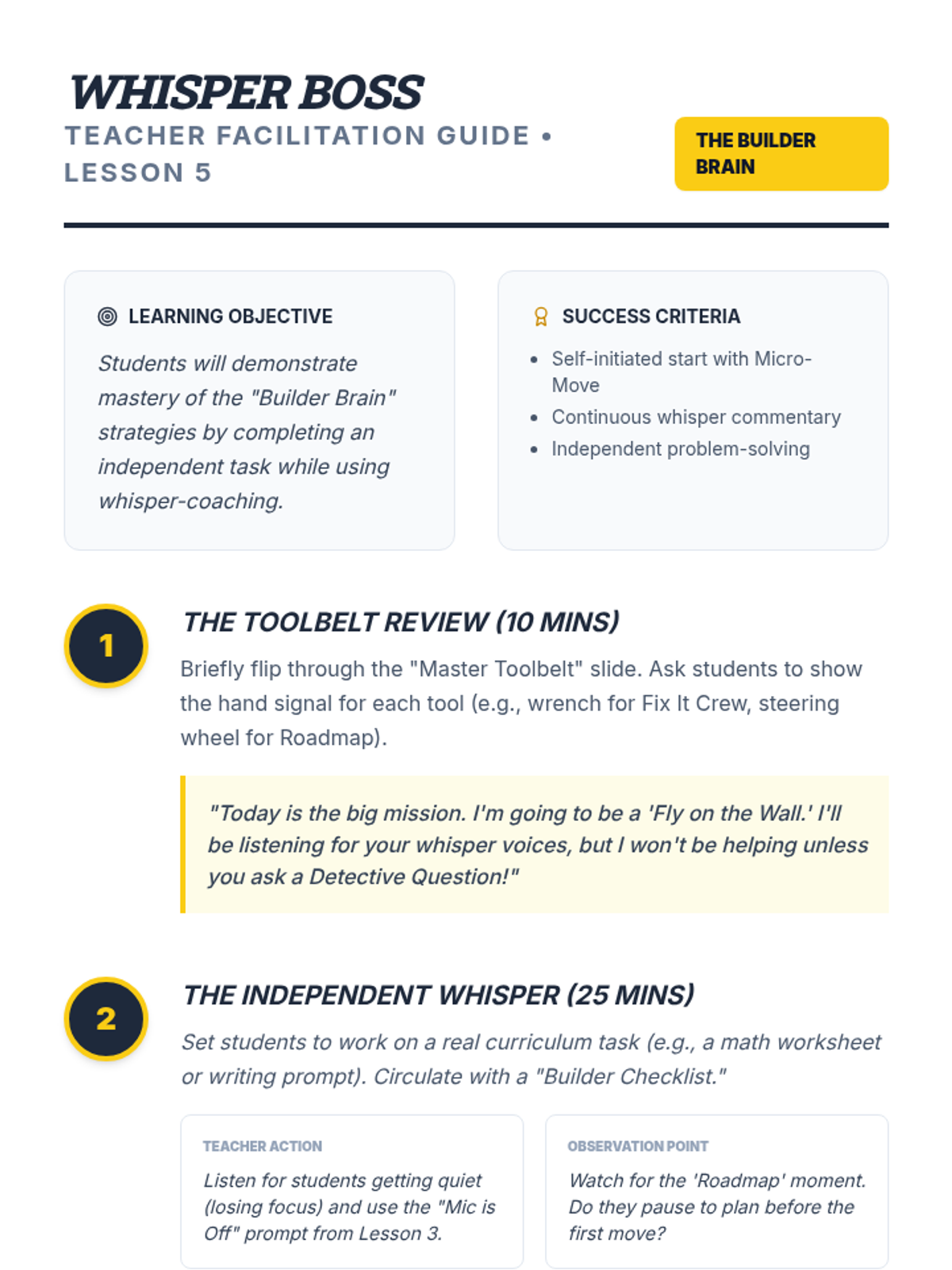
Teacher guide for Lesson 5: Master Builder, focusing on the culminating 'Whisper Challenge' and assessment of all self-talk strategies.
Visual presentation for Lesson 5: Master Builder, teaching students to apply all self-talk strategies to independent work.
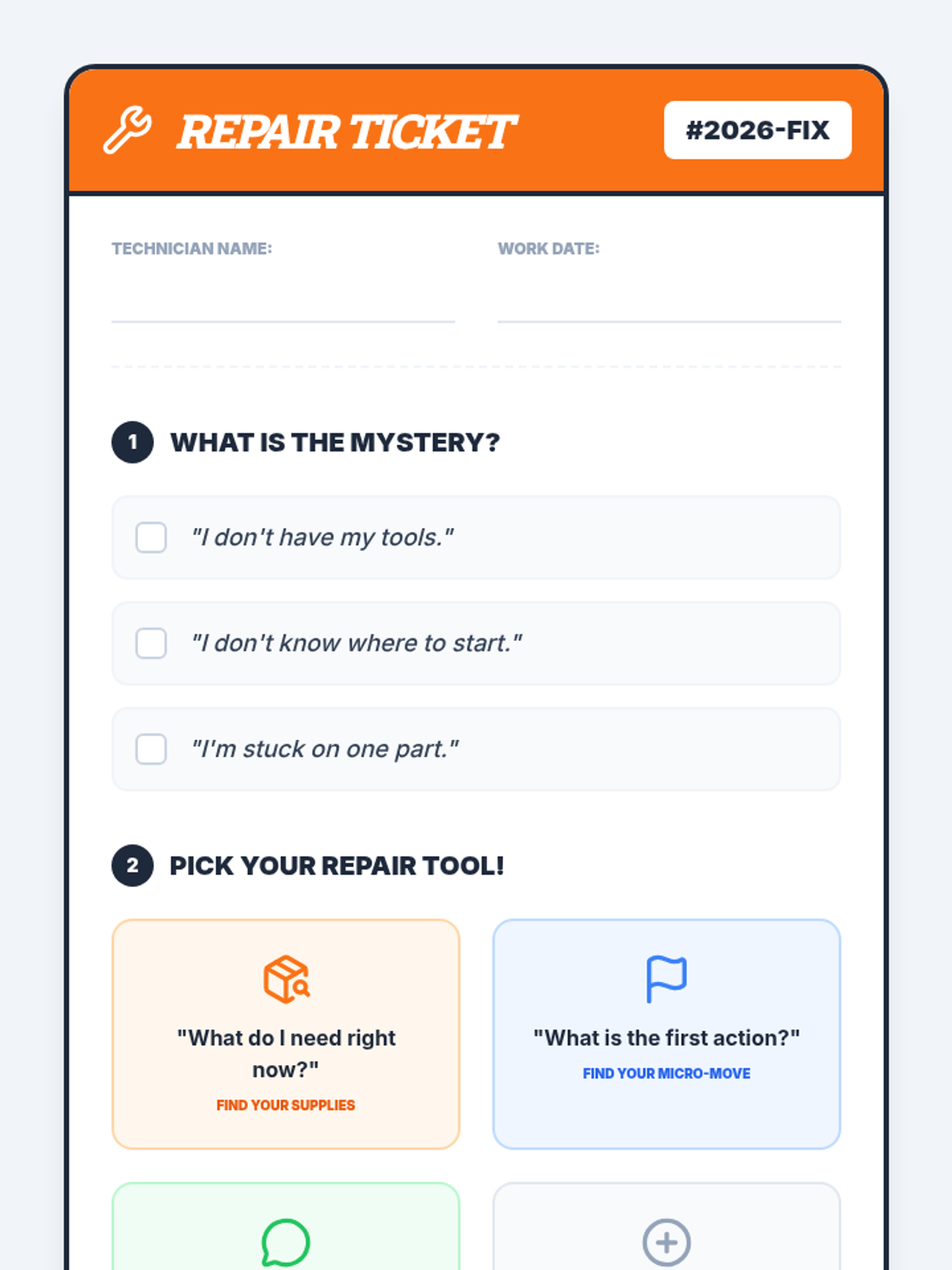
Student worksheet designed as a 'repair ticket' for choosing problem-solving questions when stuck on a task.
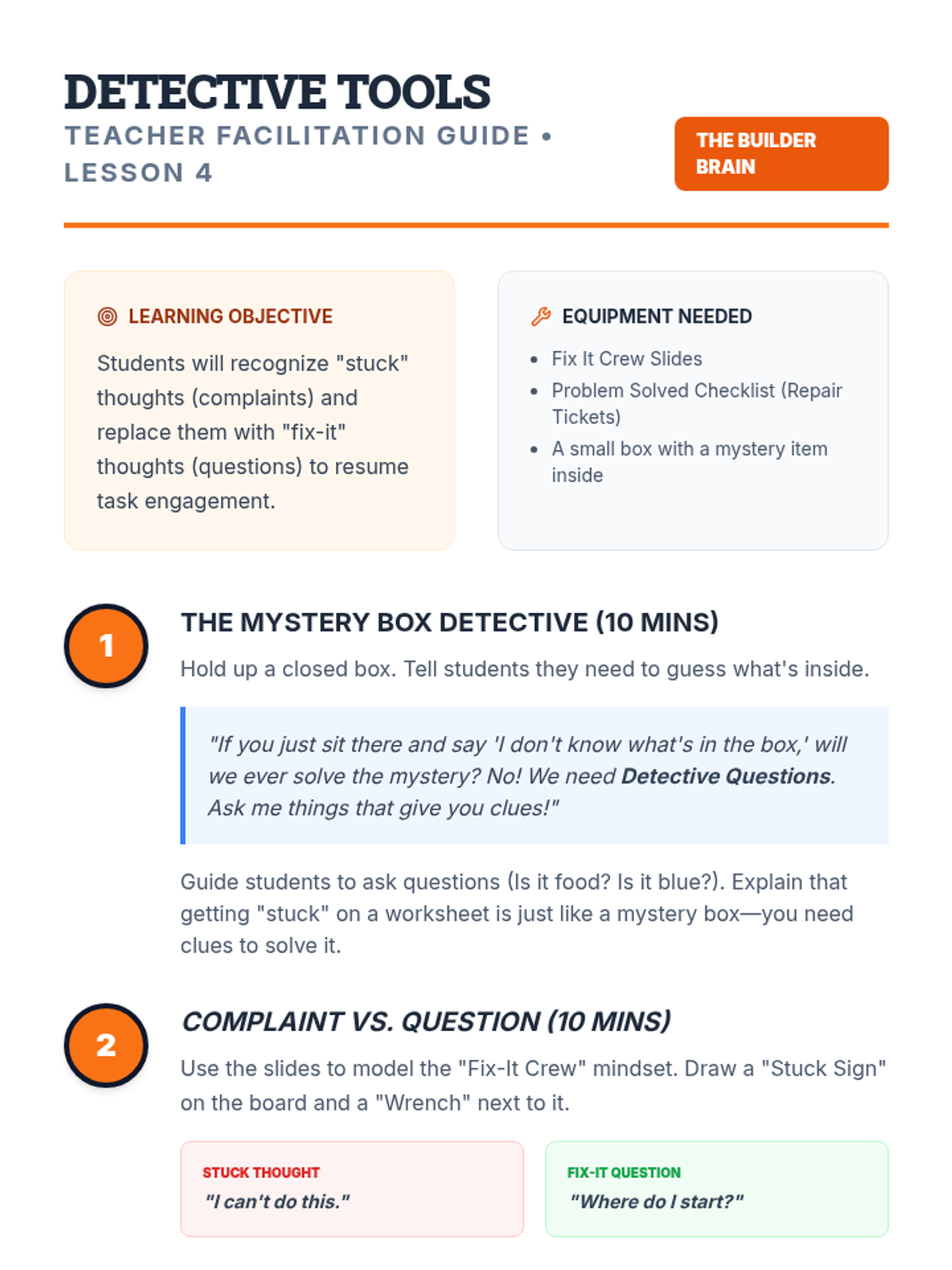
Teacher guide for Lesson 4: Fix It Crew, focusing on teaching students to ask themselves specific questions when they get stuck.
Visual presentation for Lesson 4: Fix It Crew, teaching students to ask themselves specific questions when they get stuck.
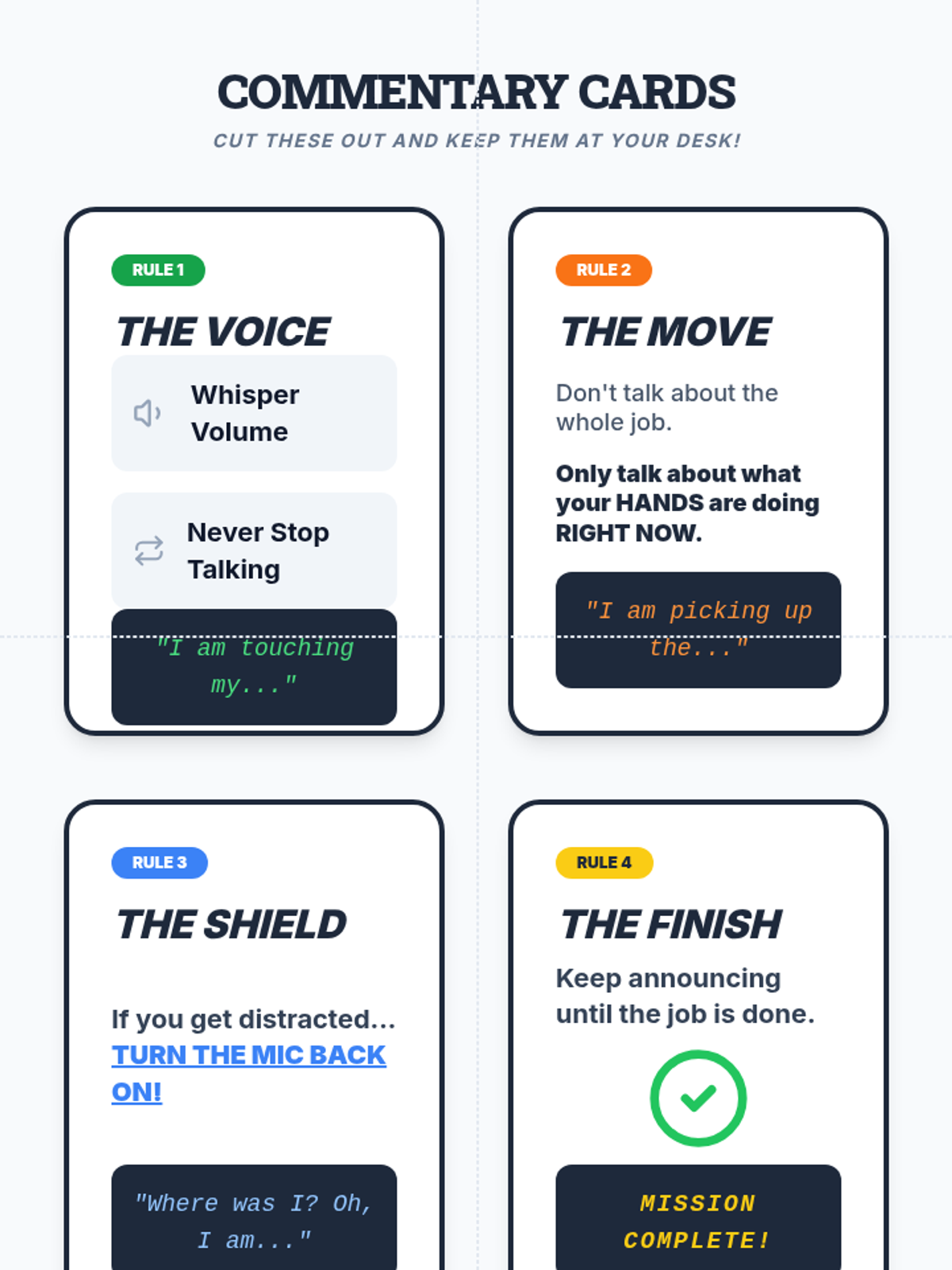
Student desk reference cards with rules and prompts for sportscasting actions during tasks.
Slide deck for Lesson 5 summarizing all strategies and introducing the 'Expert Pilot' checklist concept for the final project.
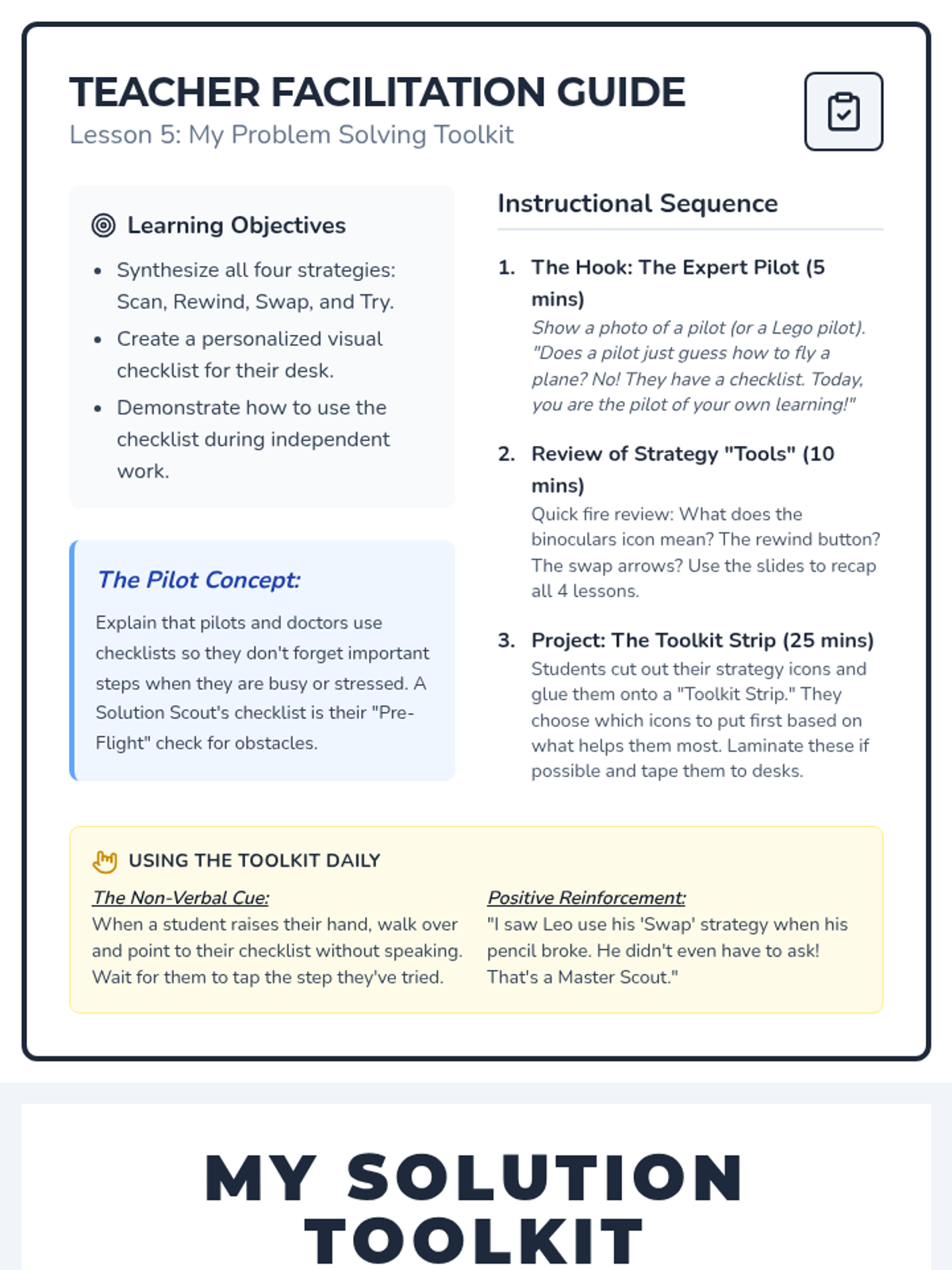
Teacher facilitation guide and a cut-and-paste 'Troubleshooting Toolkit' desk strip for Lesson 5, helping students finalize their personal problem-solving system.
Slide deck for Lesson 4 that normalizes the trial-and-error process and teaches students resilience through 'Scout Talk' and the 'Success Loop'.
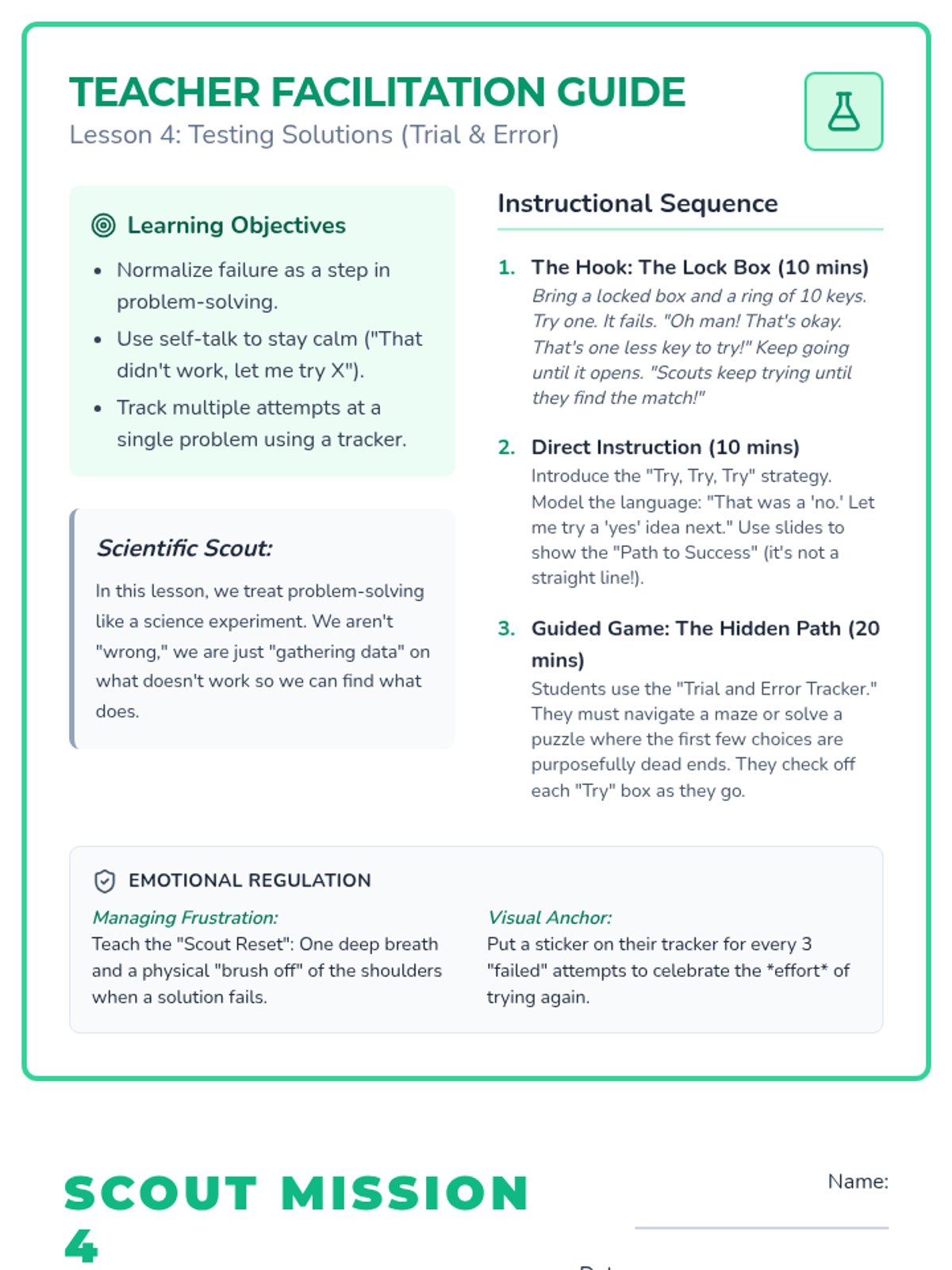
Teacher facilitation guide and 'Trial and Error Tracker' for Lesson 4, designed to help students persevere through multiple attempts at a task.
Slide deck for Lesson 3 focusing on cognitive flexibility and finding 'Plan B' solutions when classroom tools or methods are unavailable.
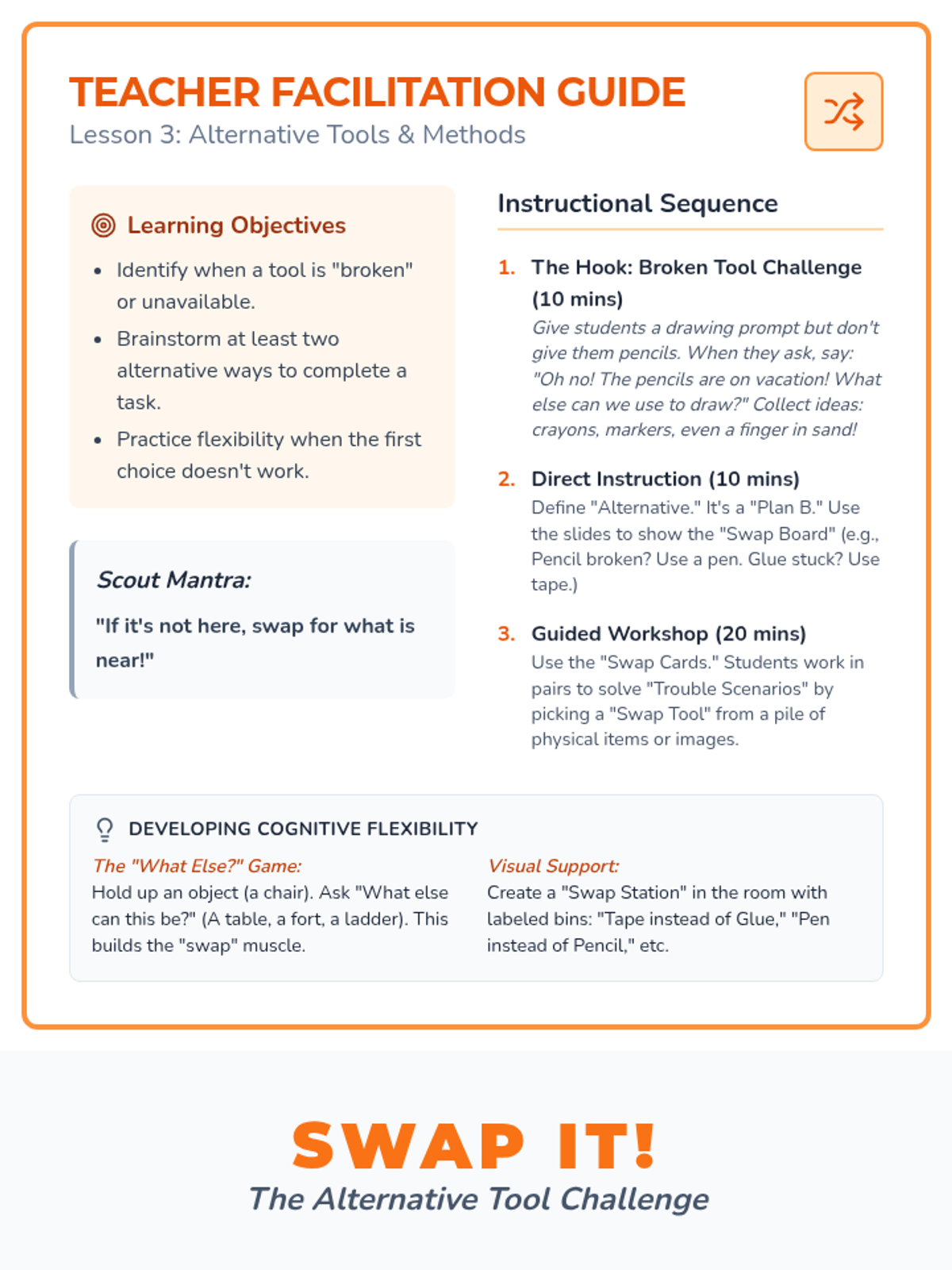
Teacher facilitation guide and 'Swap It!' challenge cards for Lesson 3, encouraging students to find alternative tools and methods when facing obstacles.
Slide deck for Lesson 2 focusing on the 'Rewind' cognitive strategy, providing visual examples of sequencing actions backward to solve problems.
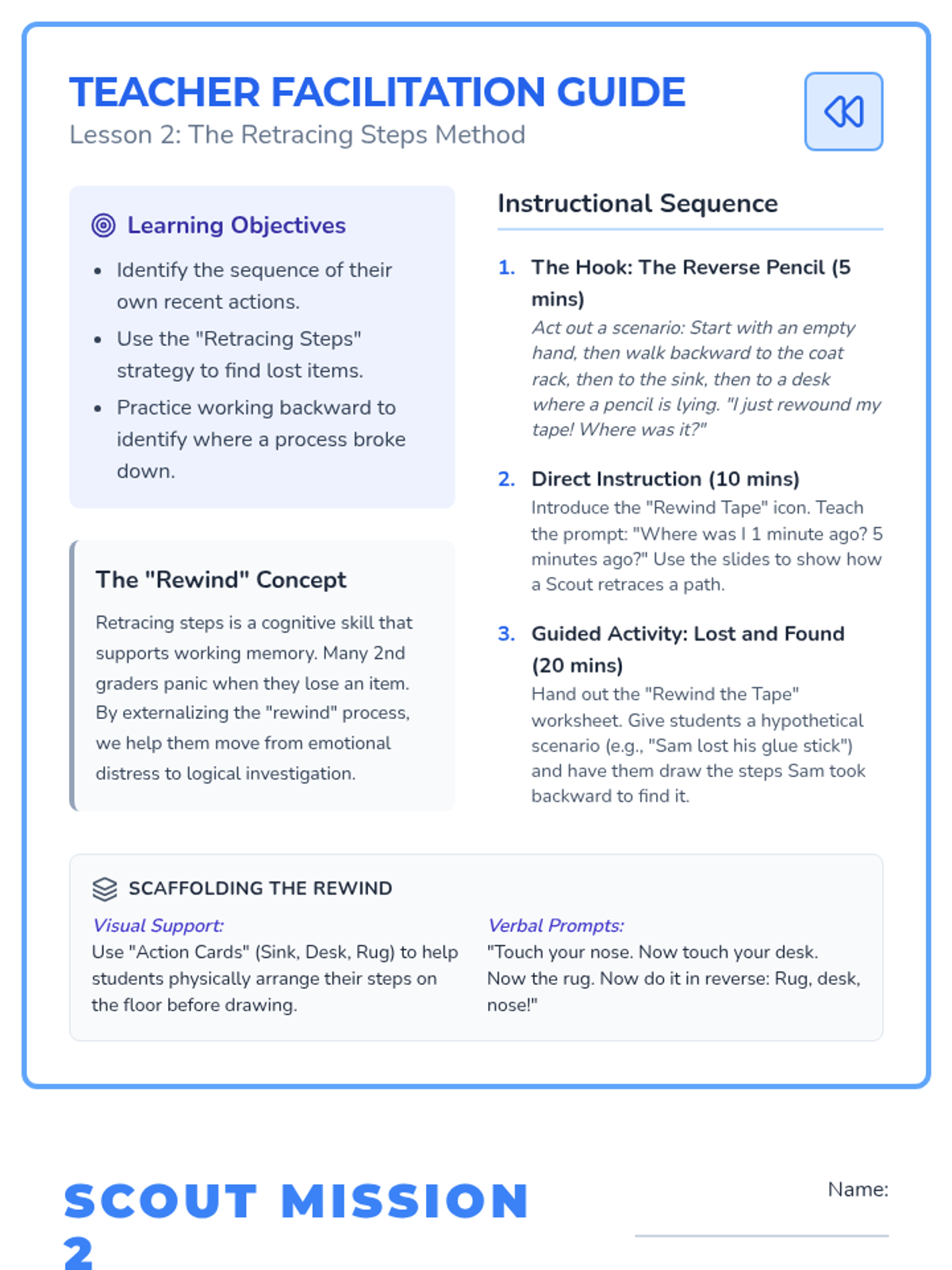
Teacher facilitation guide and a 'Rewind the Tape' worksheet for Lesson 2, teaching students how to sequence their actions backward to find lost items.
Visual slide deck for Lesson 1 introducing the 'Stop, Look, and Scan' strategy with clear steps and visual examples of classroom resources.
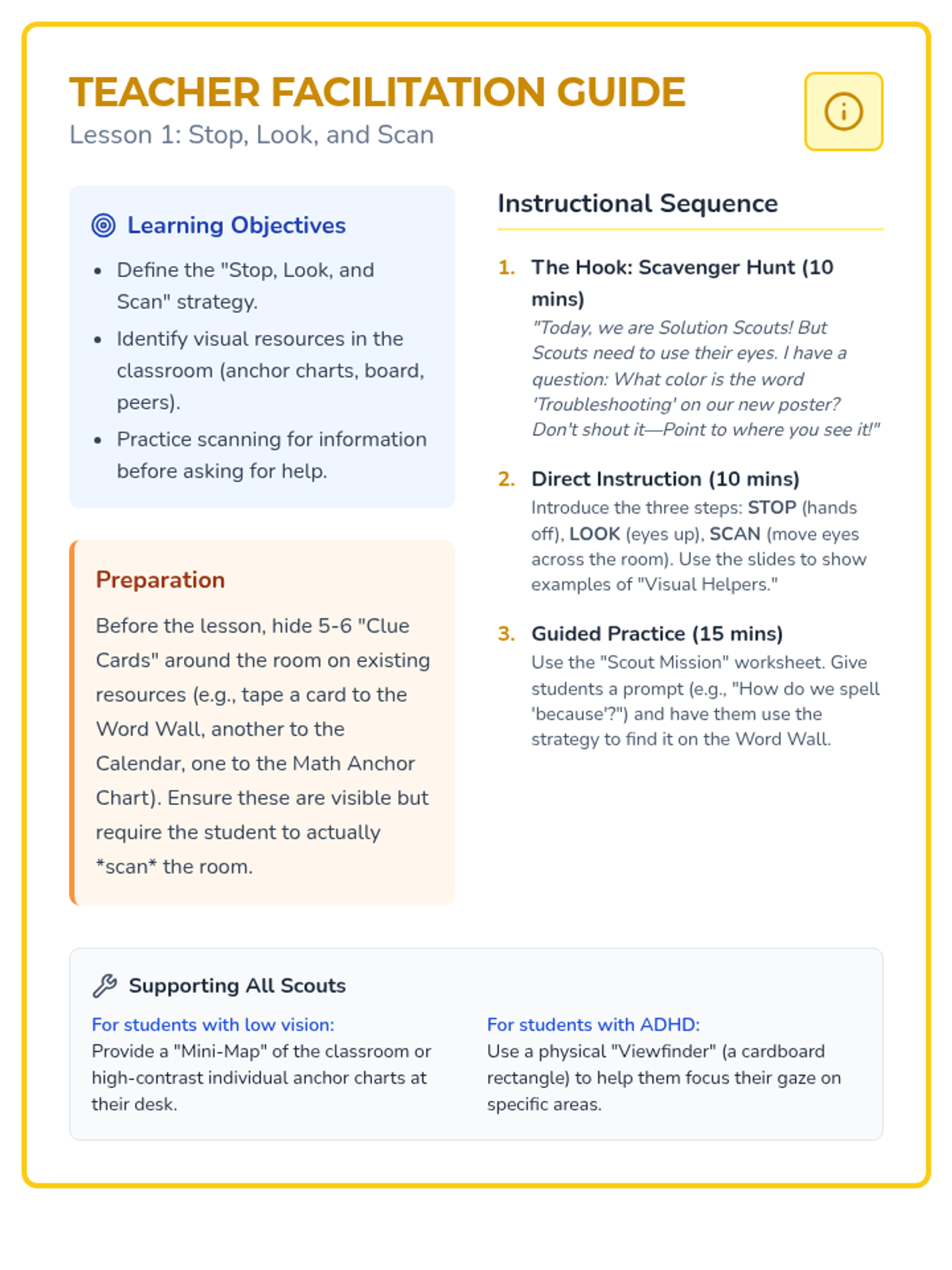
A teacher facilitation guide and student activity sheet for Lesson 1, focusing on the 'Stop, Look, and Scan' strategy for classroom problem-solving.
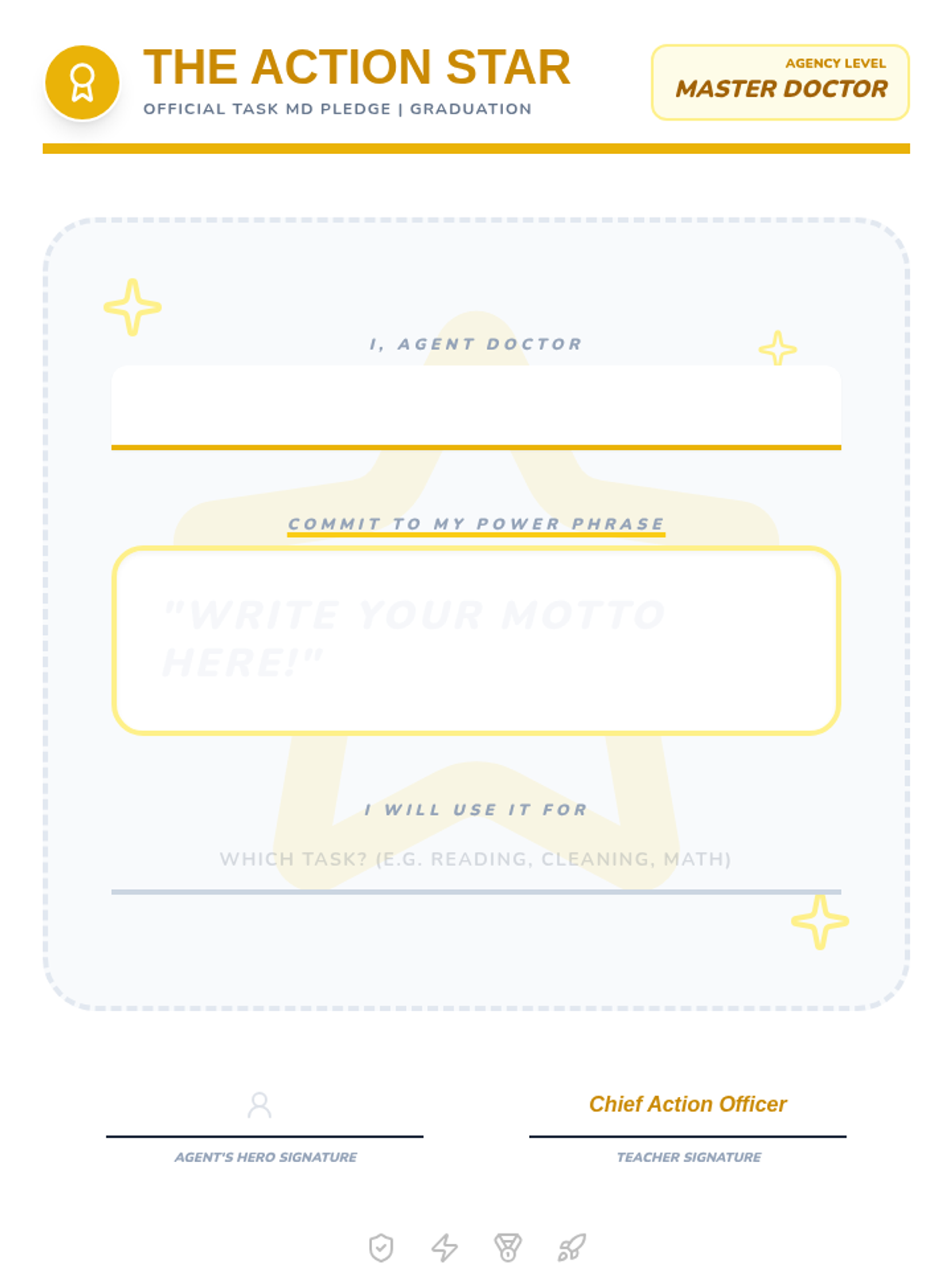
A student worksheet for the final lesson, where students write their personal 'Power Phrase' motto on a star-themed pledge sheet to be displayed on the 'Wall of Action'.
Engaging slides for Lesson 5 that guide the student self-reflection process and introduce the 'Wall of Action' graduation ceremony.
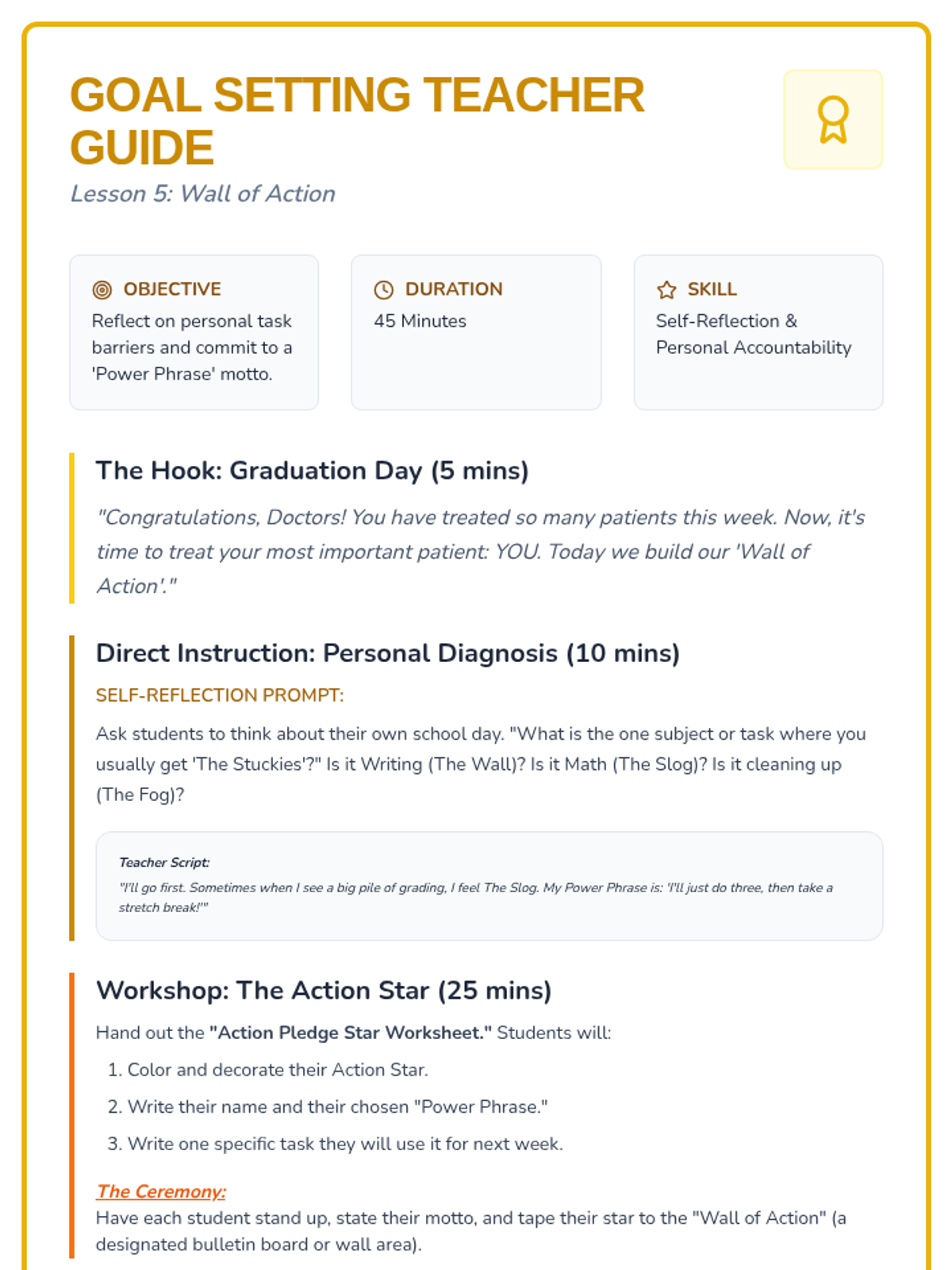
A comprehensive teacher's guide for the fifth lesson, focused on student self-reflection and creating a 'Wall of Action' with personal self-talk mottos.
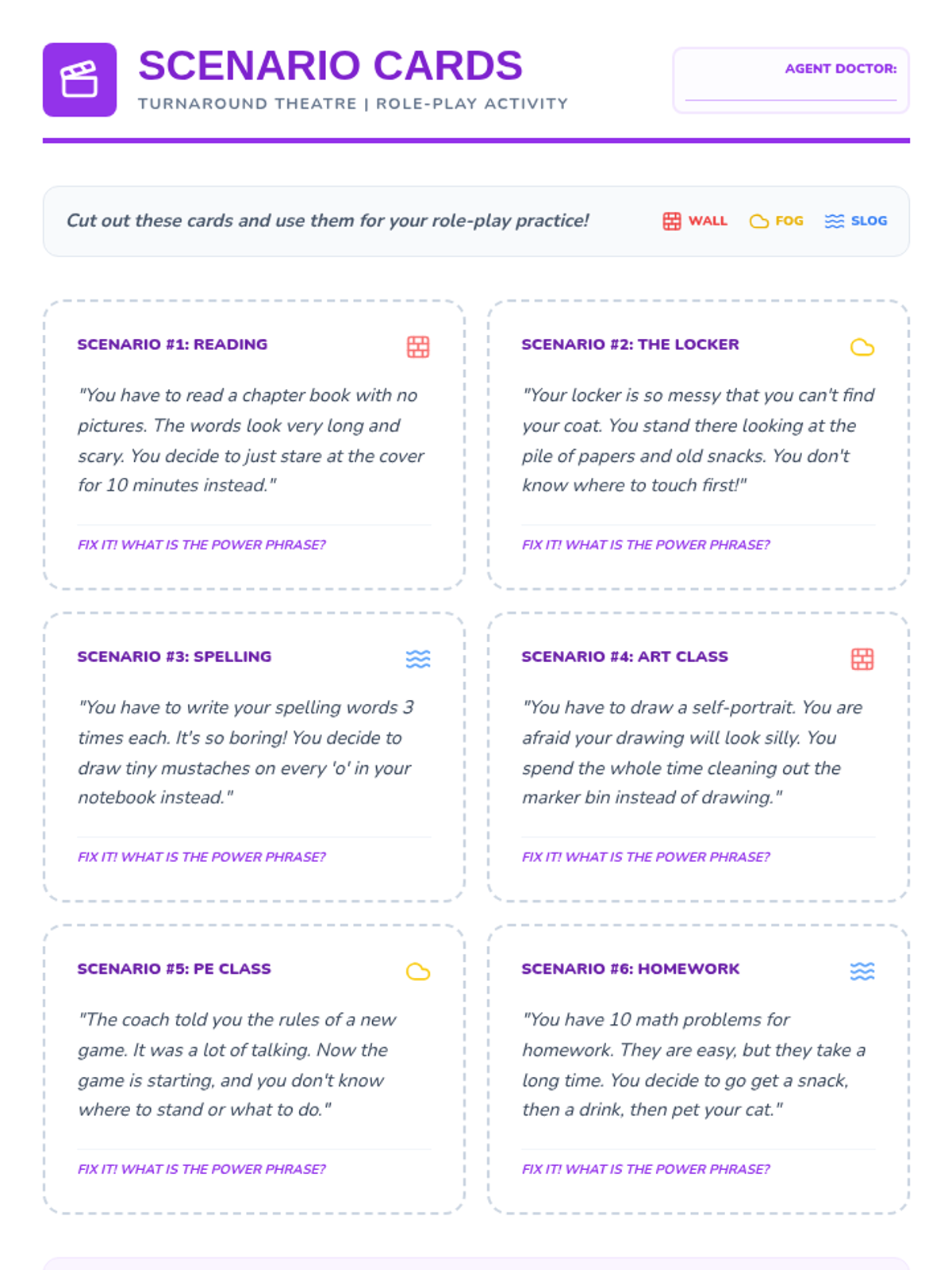
A set of role-play scenario cards for Lesson 4, allowing students to practice diagnosing barriers (Wall, Fog, Slog) and delivering self-talk prescriptions.
Engaging slides for Lesson 4 that guide the "Freeze and Fix" improvisational game and present role-play scenarios for students to practice self-talk solutions.
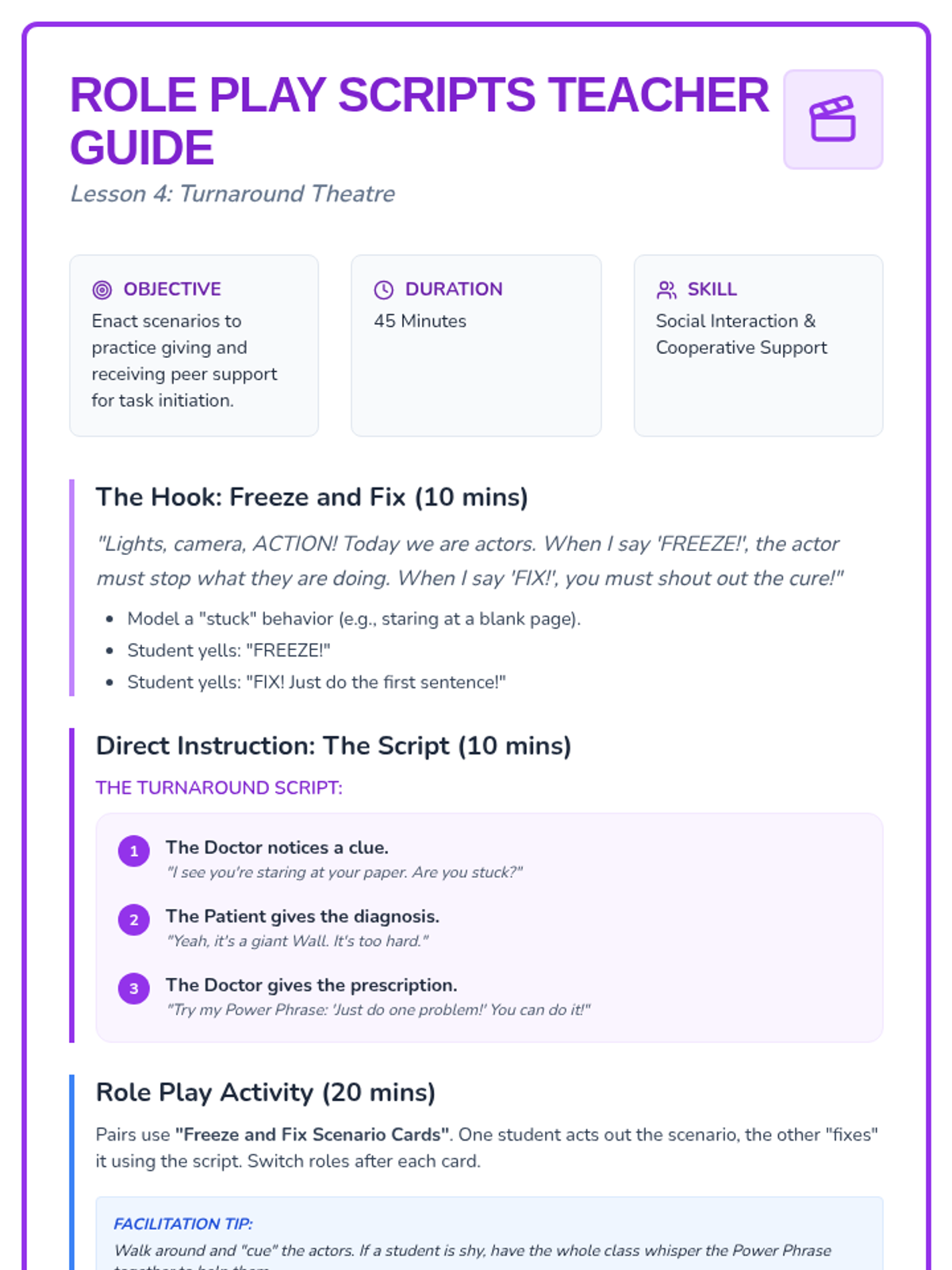
A comprehensive teacher's guide for the fourth lesson, outlining role-playing scripts and the "Freeze and Fix" improvisational activity.
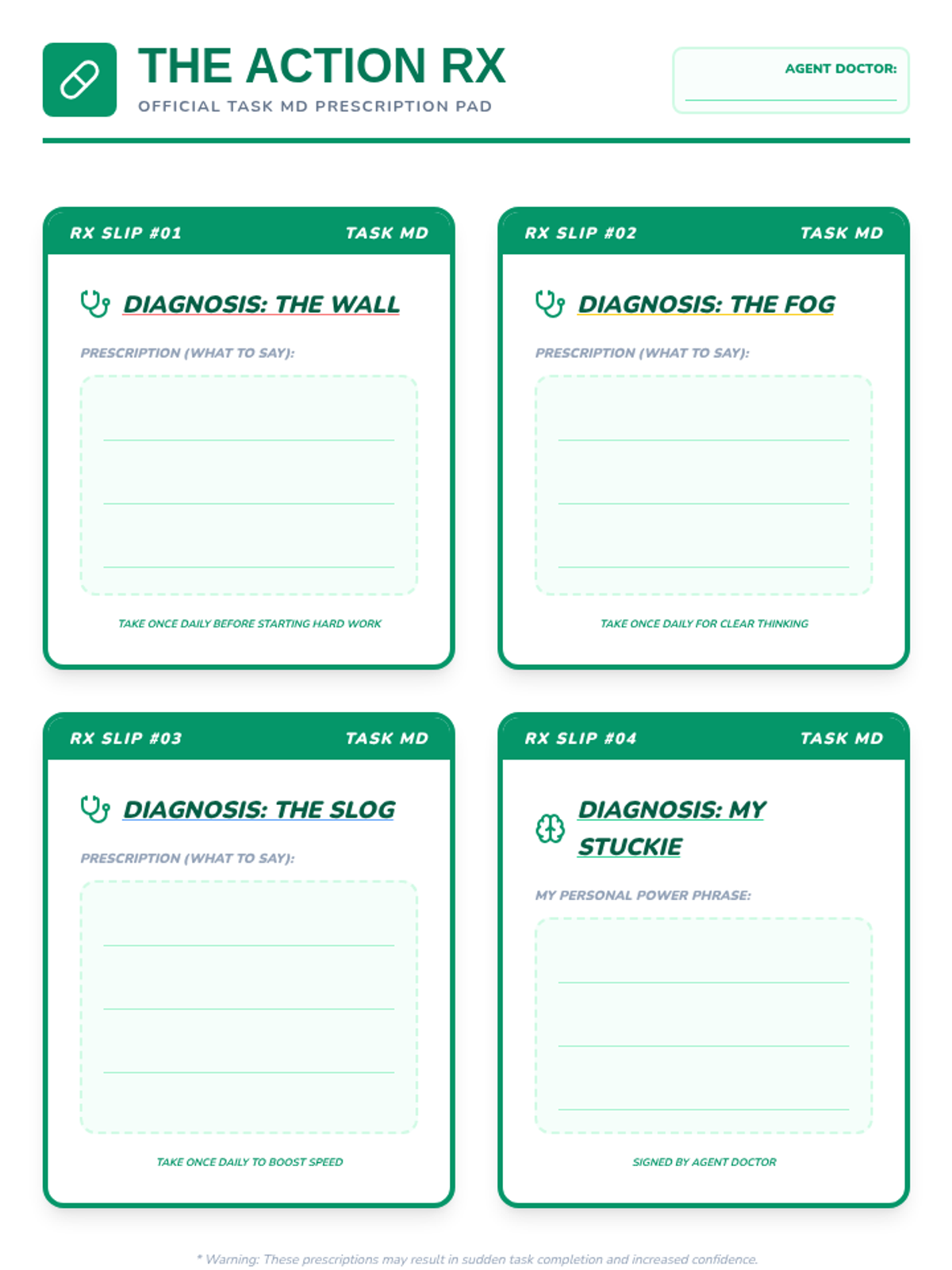
A student worksheet for the third lesson, using an oversized 'prescription pad' design to practice writing self-talk power phrases for different task barriers.
Engaging slides for Lesson 3 that match specific self-talk 'prescriptions' to diagnosed problems like boredom and difficulty.
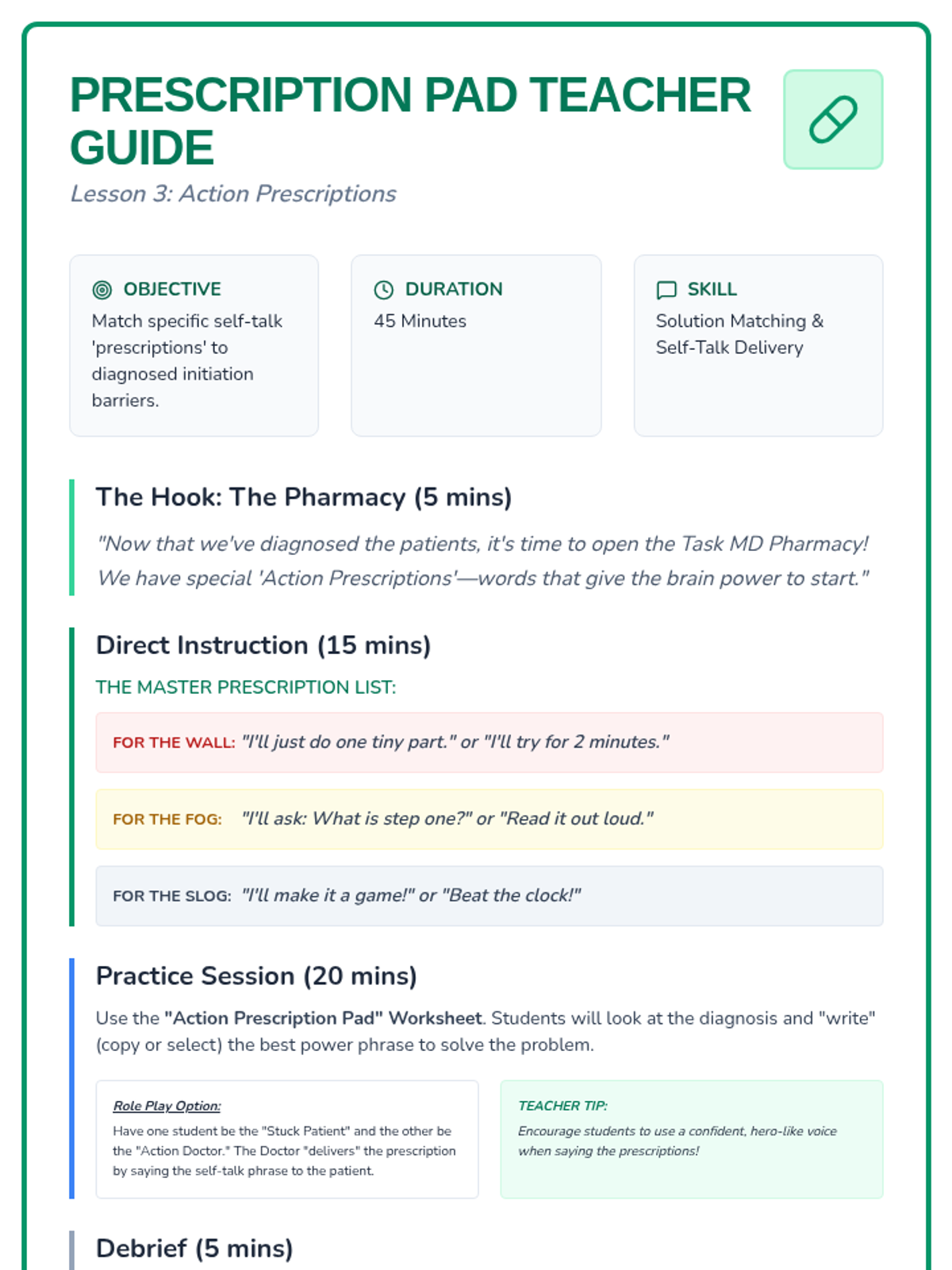
A comprehensive teacher's guide for the third lesson, matching specific self-talk 'prescriptions' to diagnosed problems like boredom and difficulty.
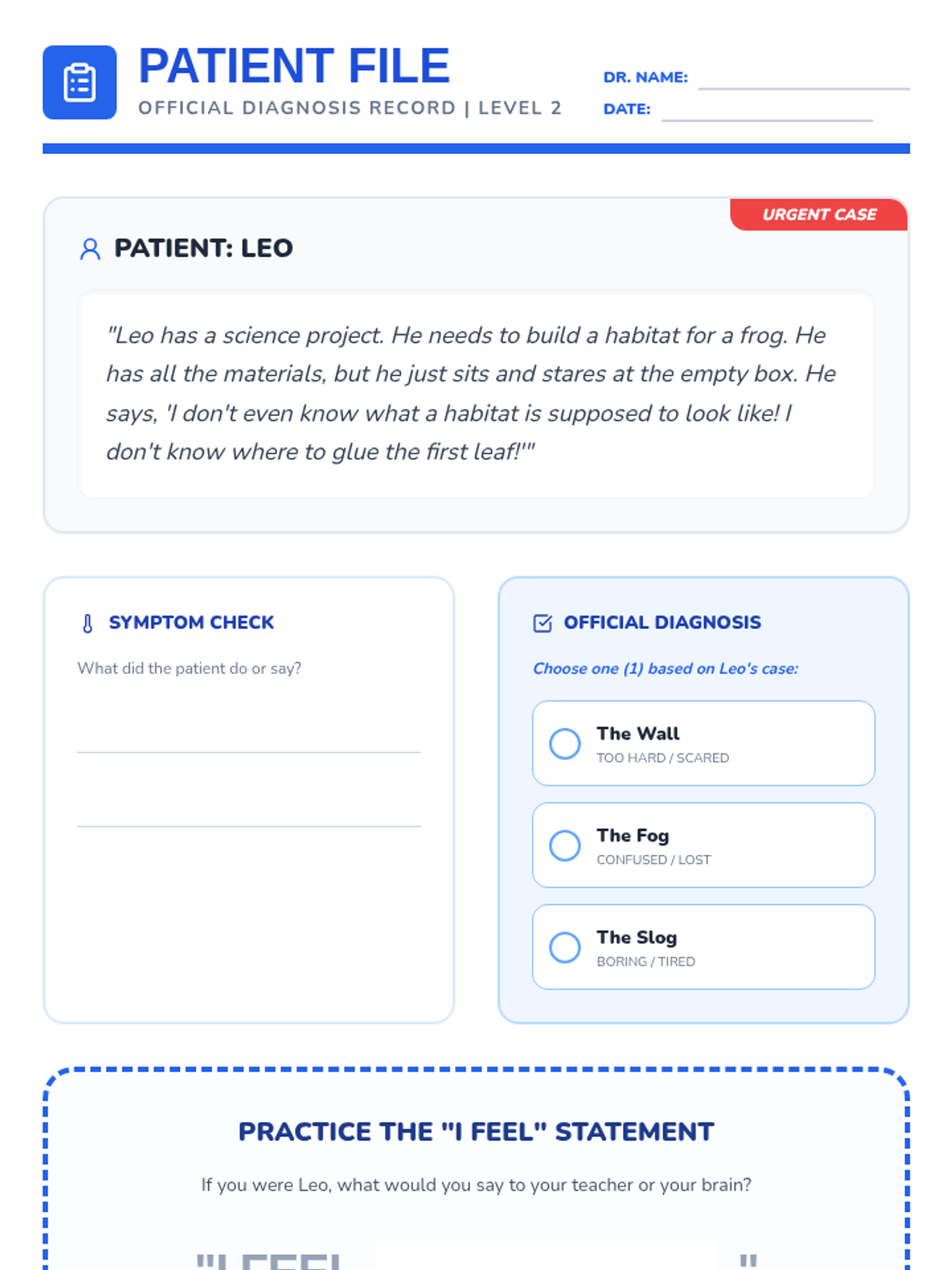
A student worksheet for the second lesson, acting as a 'Patient File' where students diagnose a character's barrier to task initiation and practice 'I feel' statements.
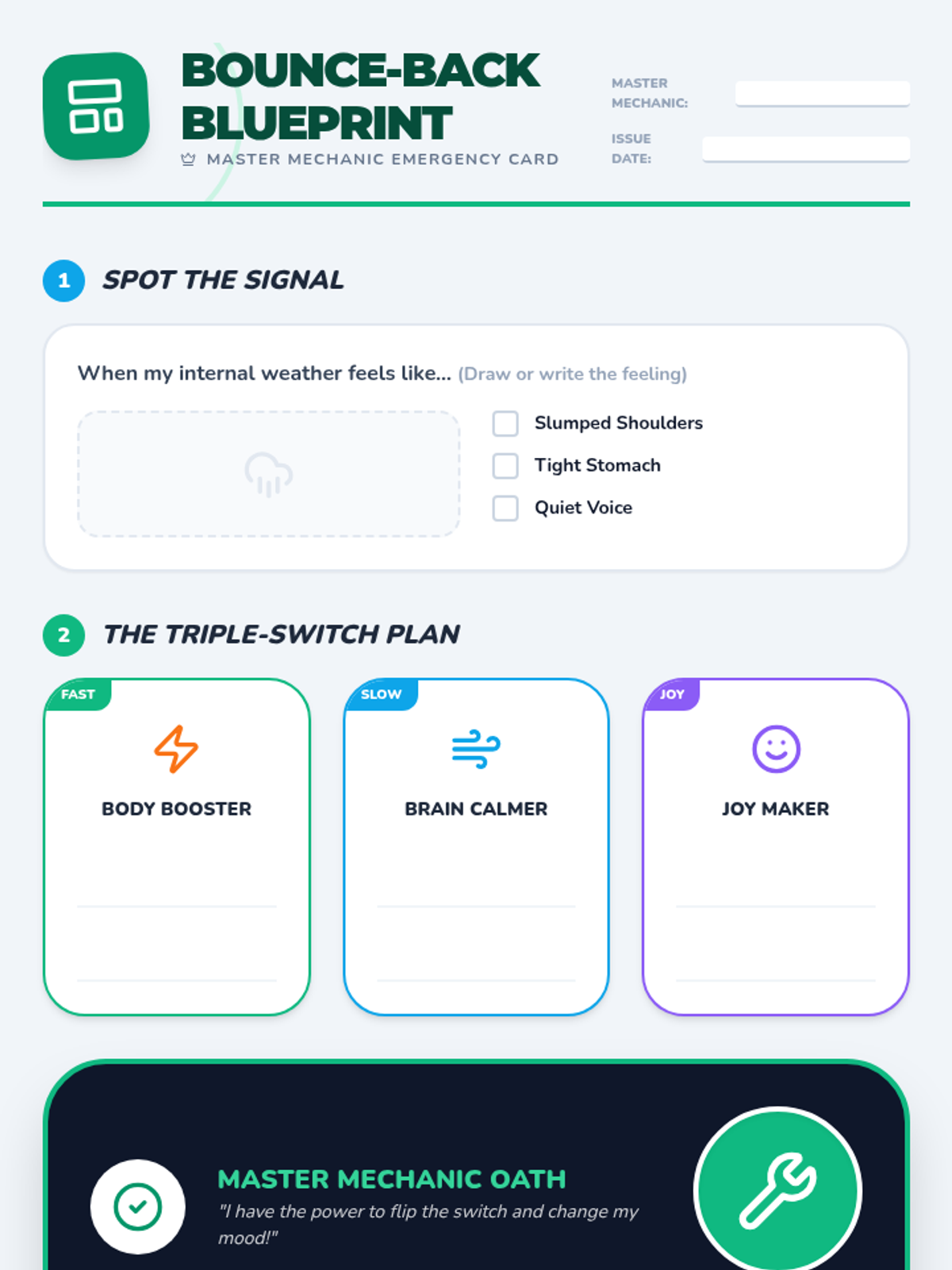
A culminating activity sheet for Lesson 5 where students create their own personal 'Bounce-Back Plan' emergency card, selecting body boosters, brain calmers, and joy makers.
Visual presentation for the final lesson in the Mood Mechanics sequence, guiding students through creating their personal 'Bounce-Back Plan' for emotional regulation.
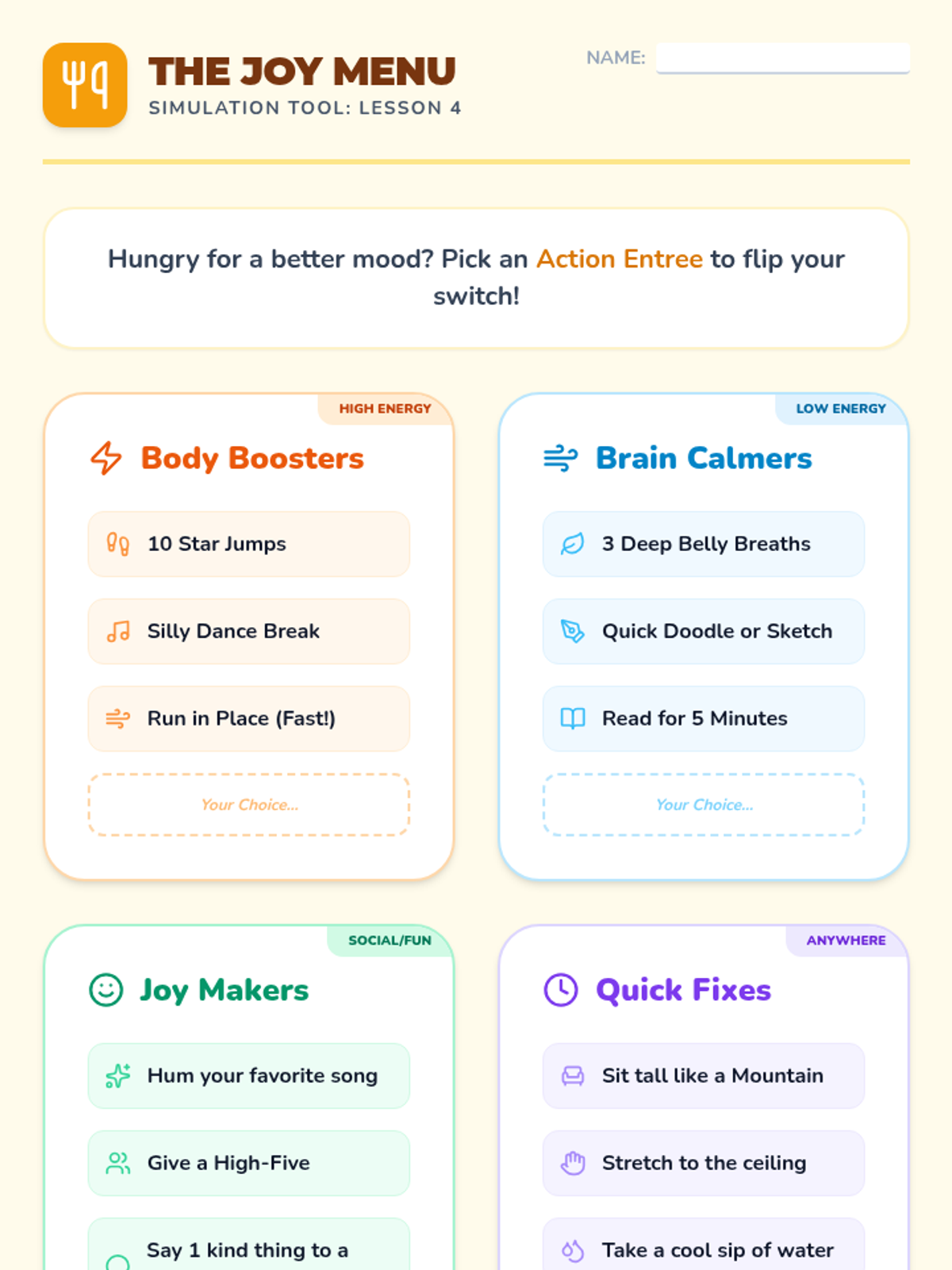
A visual reference sheet and interactive tool for Lesson 4 where students choose positive actions from categorized lists to practice emotional regulation during simulations.
Visual presentation for Lesson 4 that introduces the 'Mood Switch' concept and guides students through role-playing simulations using 'Joy Menus'.
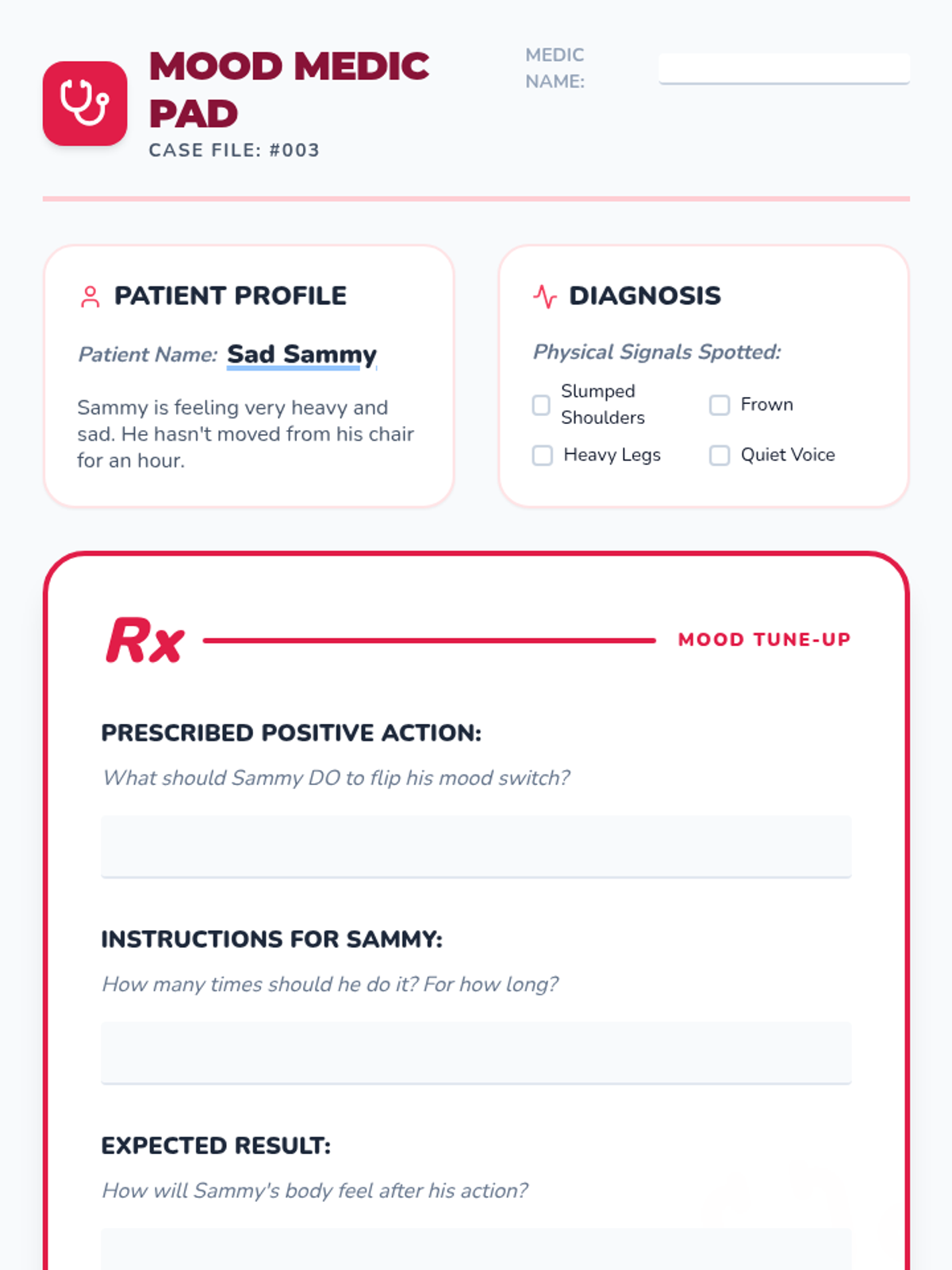
A character-focused worksheet for Lesson 3 where students play the role of a 'Mood Medic' and prescribe positive actions for characters in emotional distress.
Visual presentation for Lesson 3 using character scenarios (Sad Sammy and Worried Wendy) to teach students how to prescribe positive actions to regulate emotions.
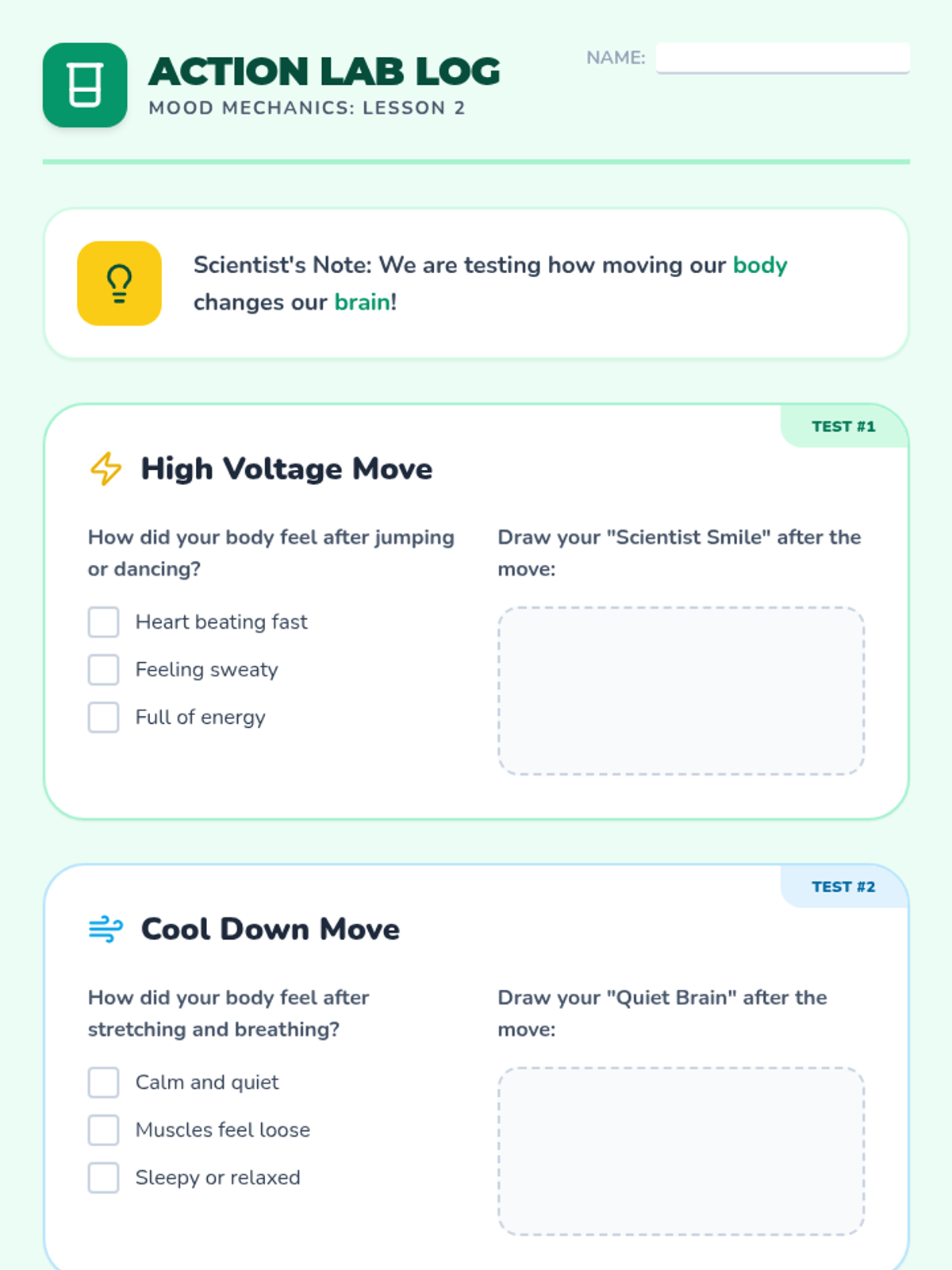
A recording sheet for Lesson 2 where students document their physical and emotional observations during movement experiments.
Visual presentation for Lesson 2 that guides students through physical "experiments" to observe how different types of movement (fast vs. slow) impact their emotional state and mindset.
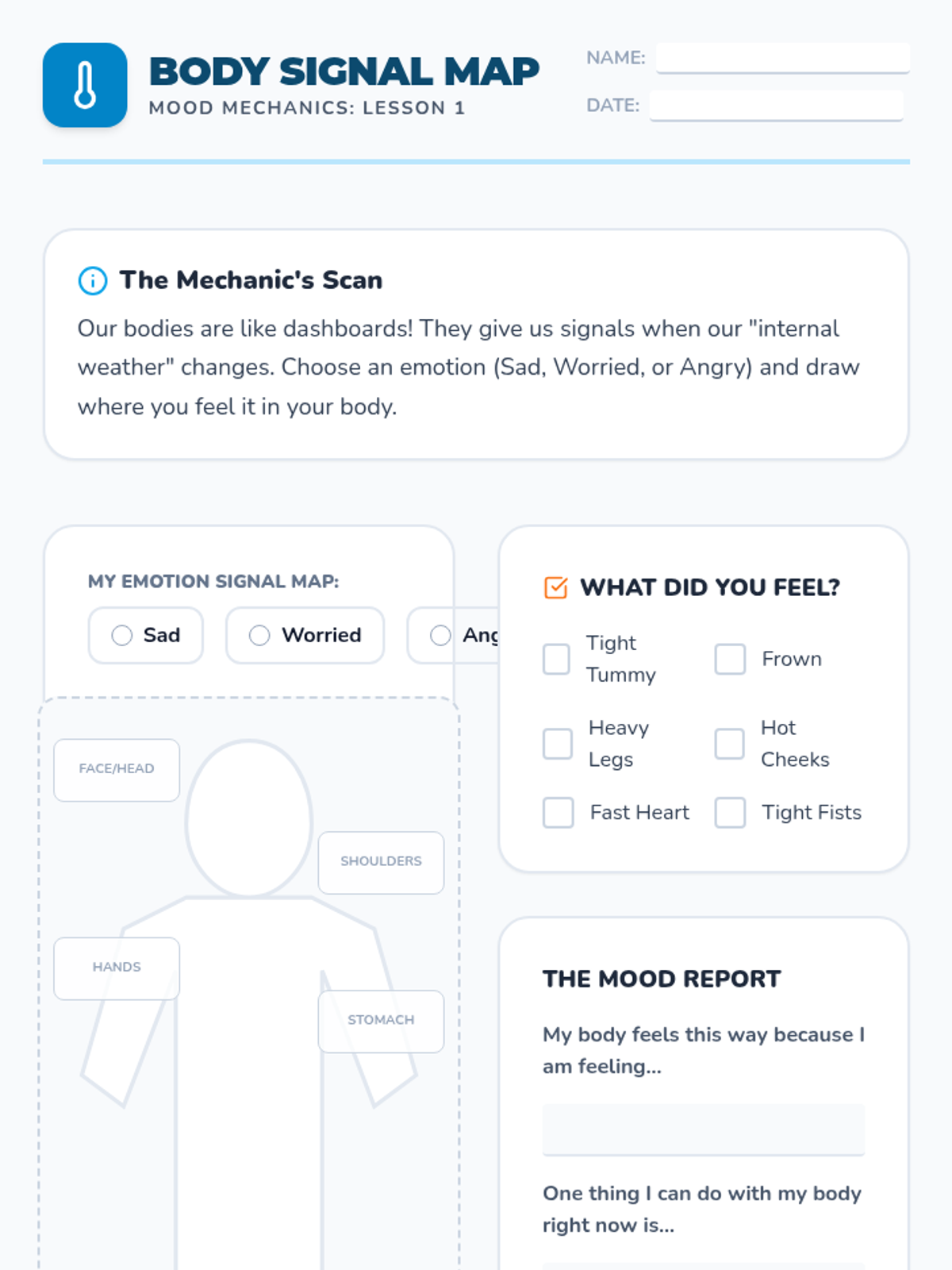
A worksheet for Lesson 1 where students map their physical sensations of specific emotions onto a body outline to build self-awareness.
Introductory slides for the Mood Mechanics sequence, teaching students to identify physical signals of emotions through the metaphor of an internal weather report.
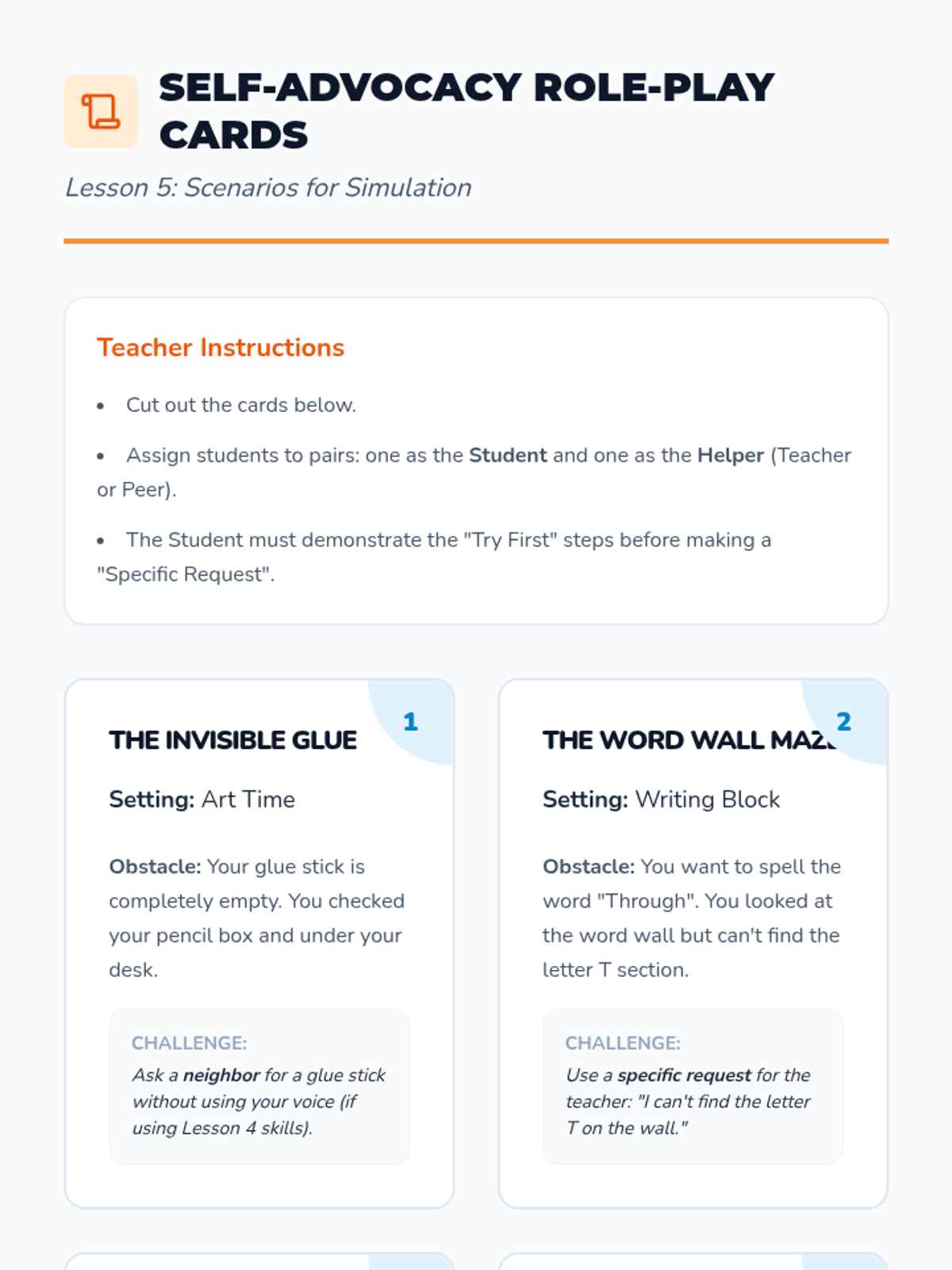
Scenario cards for teacher use during Lesson 5 to facilitate role-playing exercises on self-advocacy and obstacle problem-solving.
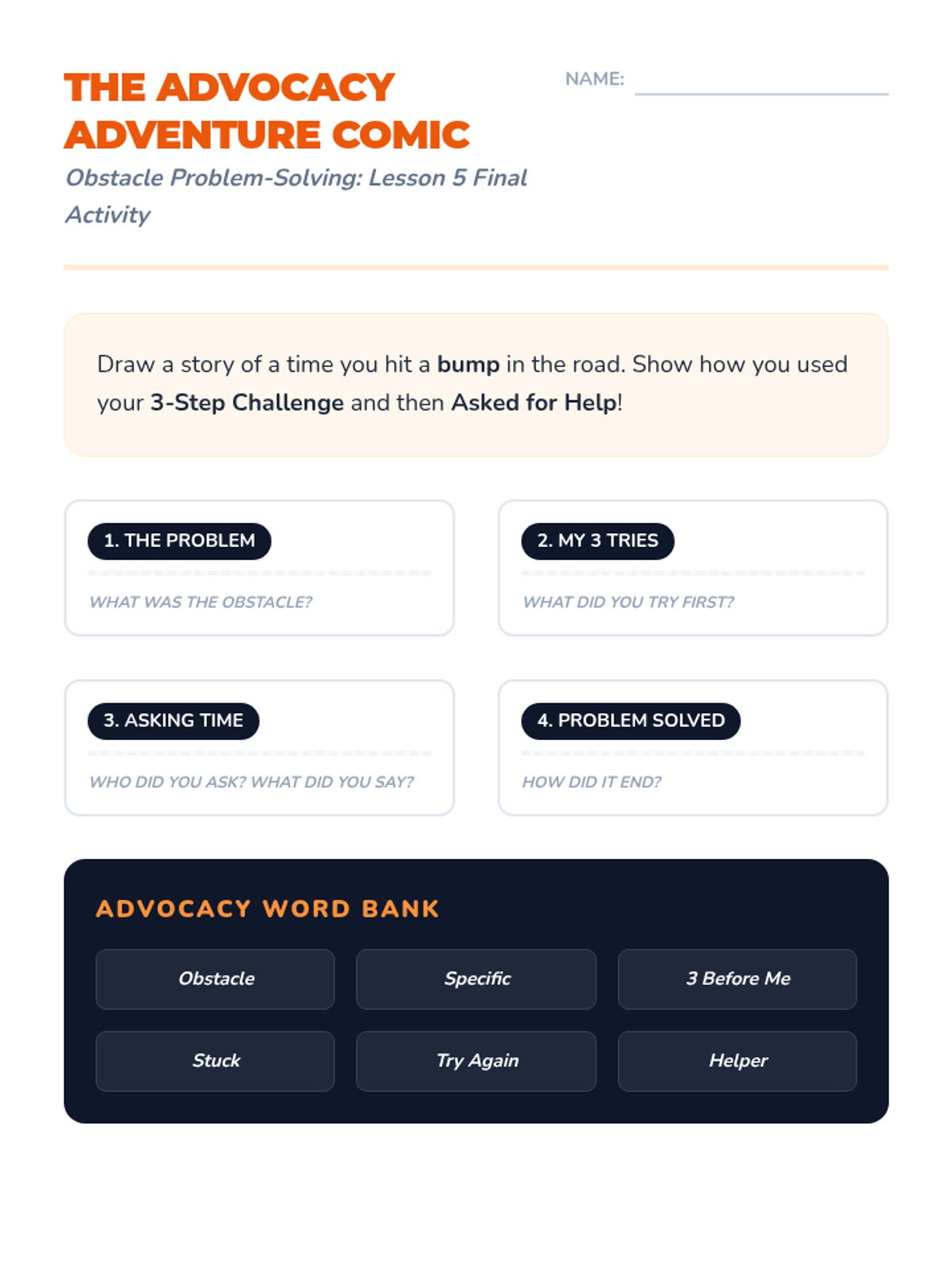
A final project worksheet where students create a comic strip illustrating a personal self-advocacy experience, from obstacle to resolution.
Visual slides for Lesson 5 that facilitate role-playing scenarios where students practice applying all the self-advocacy skills learned in the sequence.
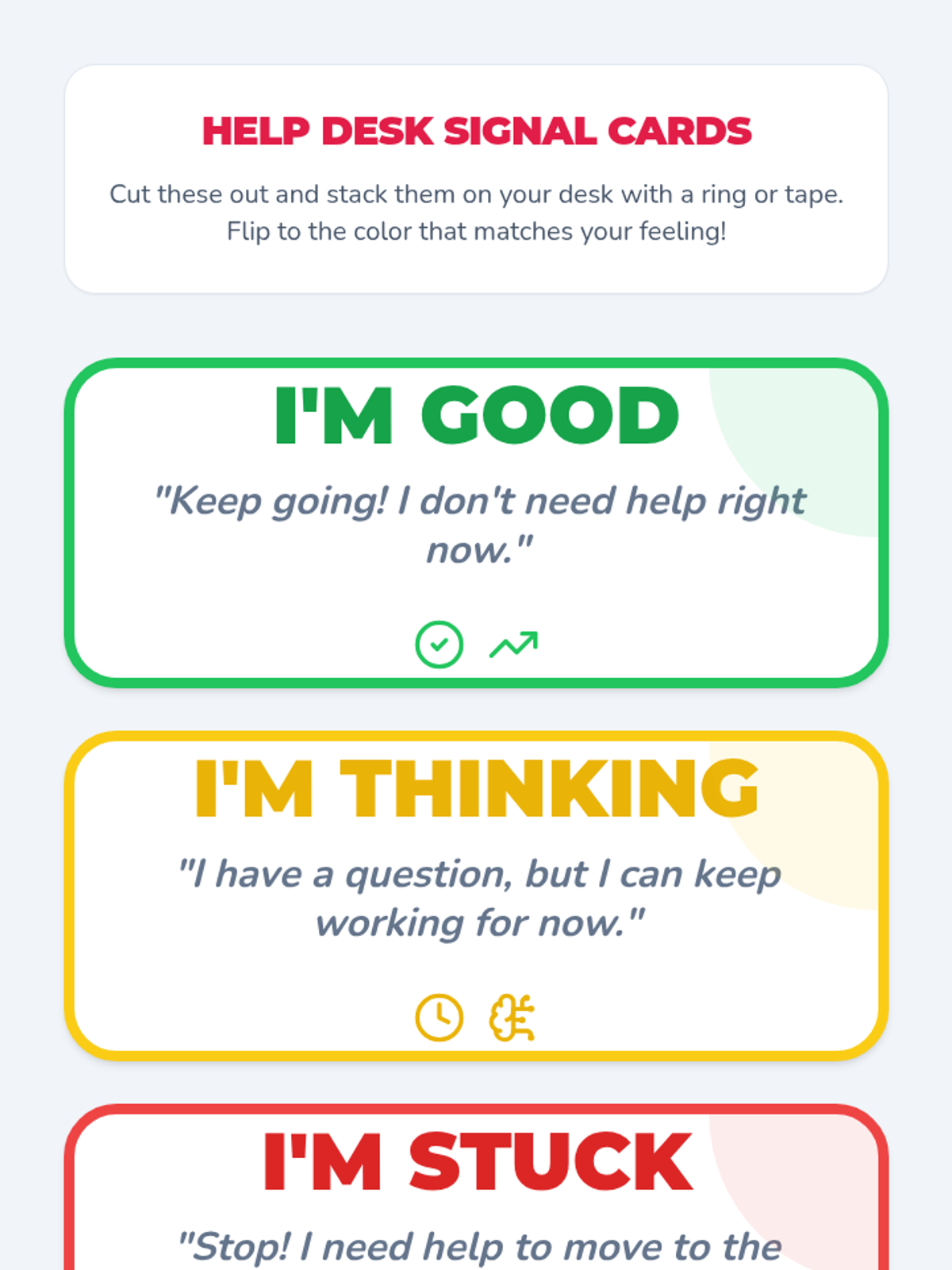
Printable desk flip cards (Green, Yellow, Red) for students to communicate their task status and need for assistance non-verbally.
Visual slides for Lesson 4 that introduce non-verbal communication tools like desk flip cards and hand signals for effective classroom self-advocacy.
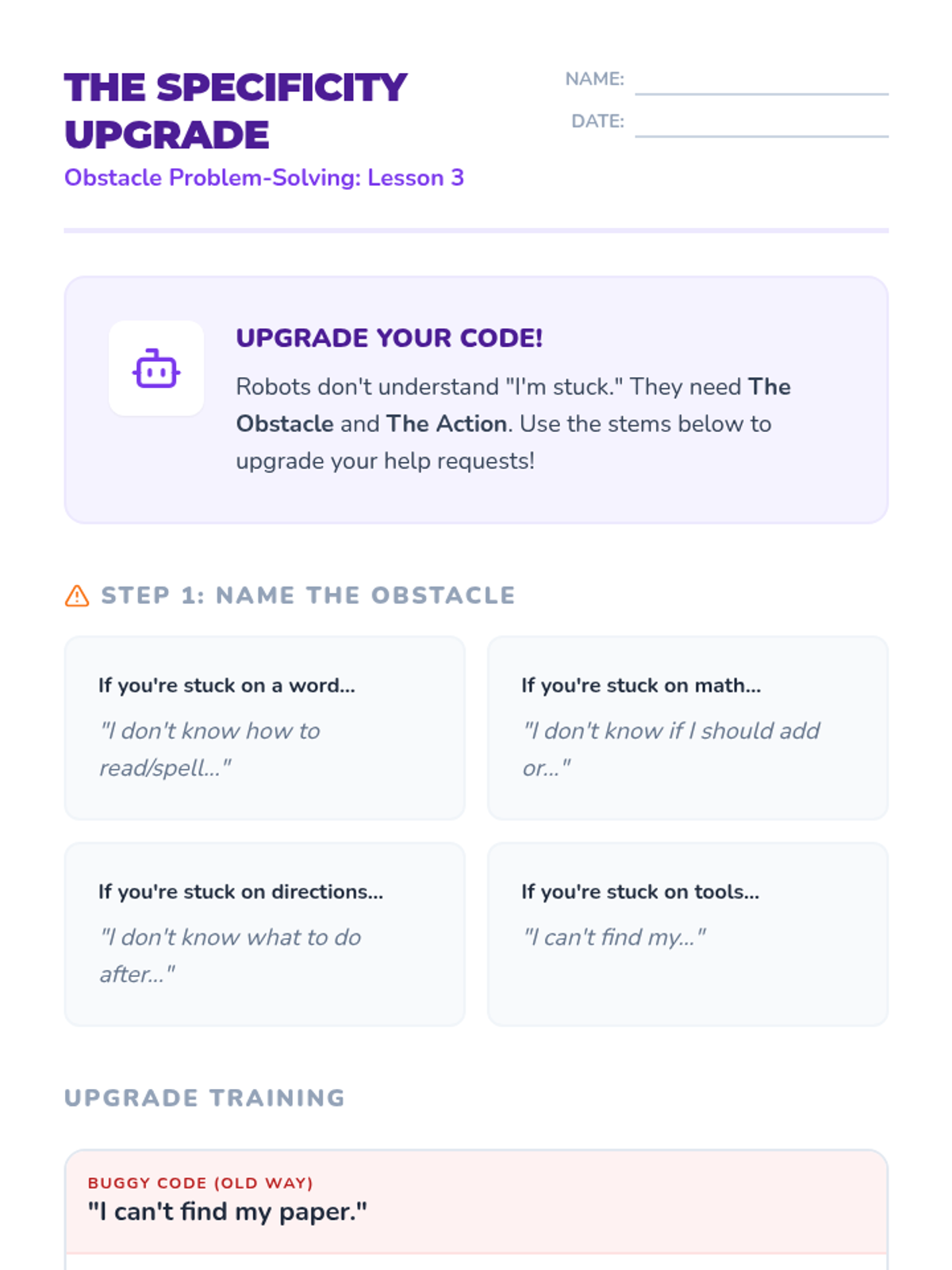
A student worksheet for practicing the language of specificity, transforming vague requests into clear, two-part help commands.