Budgeting, saving, and investment strategies alongside practical skills for managing credit, taxes, and banking. Addresses insurance needs, employment income, and major purchase decisions to support comprehensive long-term financial planning.
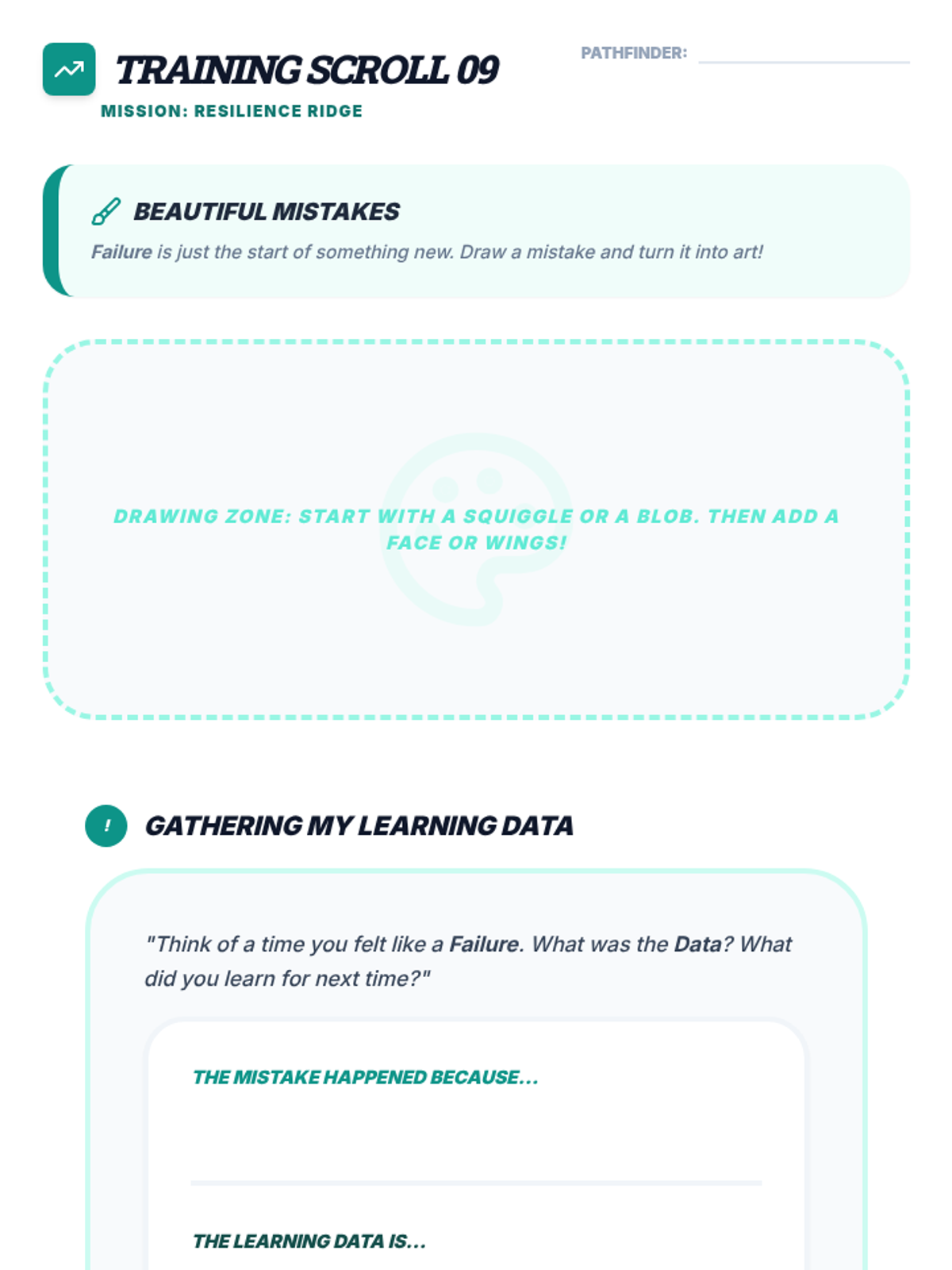
Learner workbook for Mission 09: Resilience Ridge. Features a "Beautiful Oops" drawing canvas, a "Data Collection" reflection area for learning from mistakes, and vocabulary definitions. Revised to emphasize failure as data and include vocabulary matching. No "ninja" references.
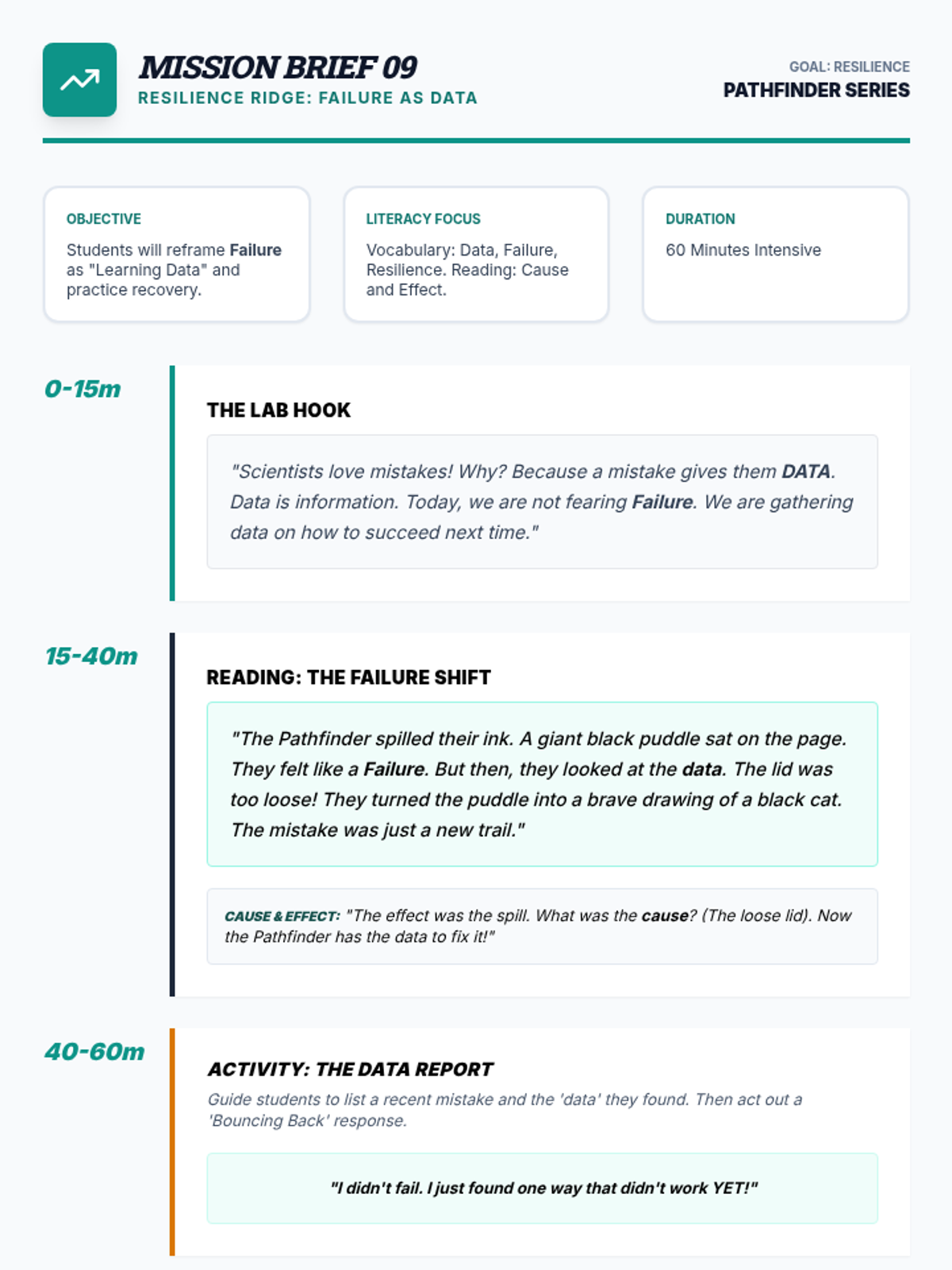
Facilitator script for Mission 09: Resilience Ridge. Teaches students to reframe failure as "learning data" and practice cause-and-effect thinking. Revised to emphasize the concept of failure as a learning opportunity. No "ninja" references.
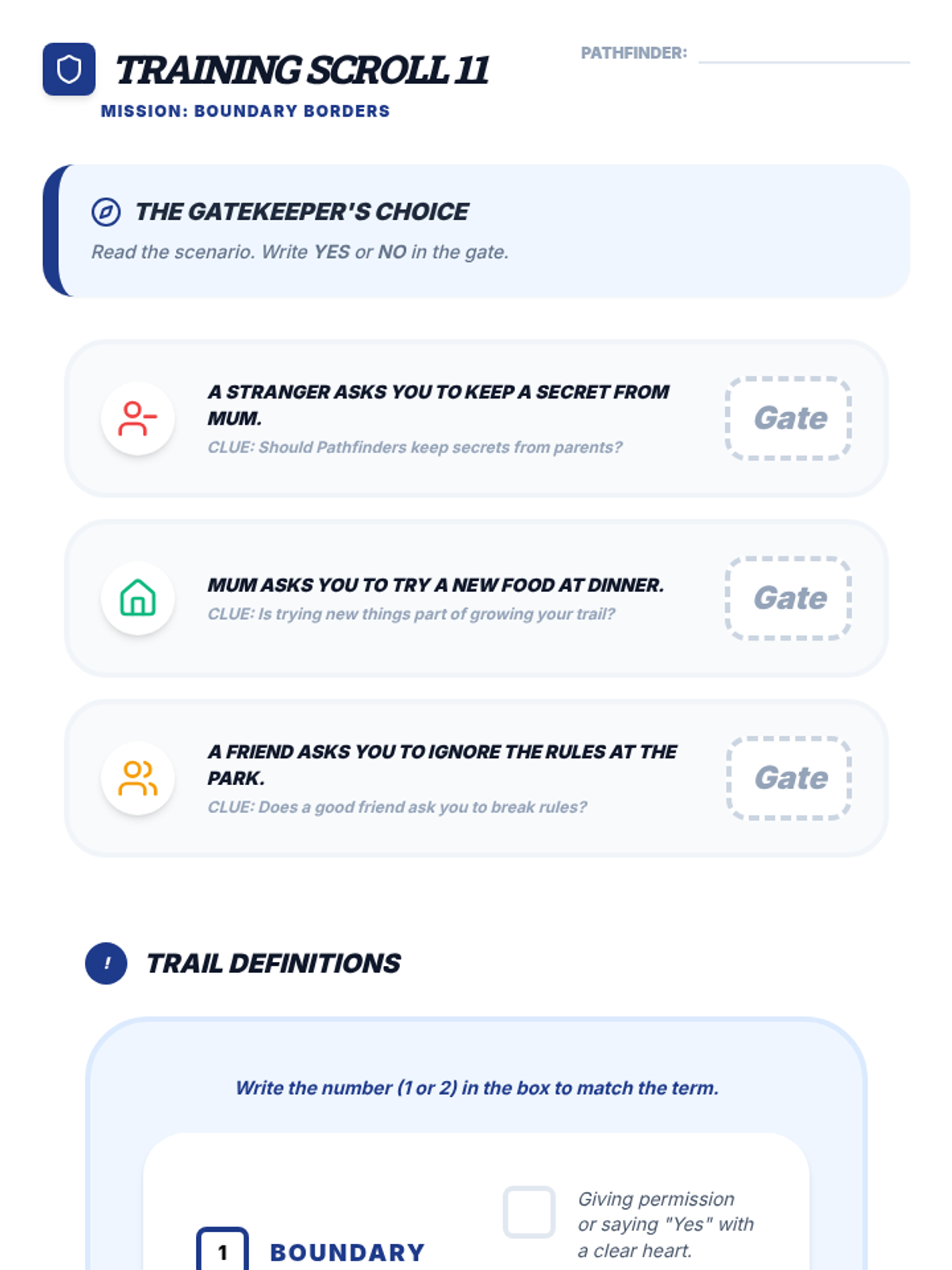
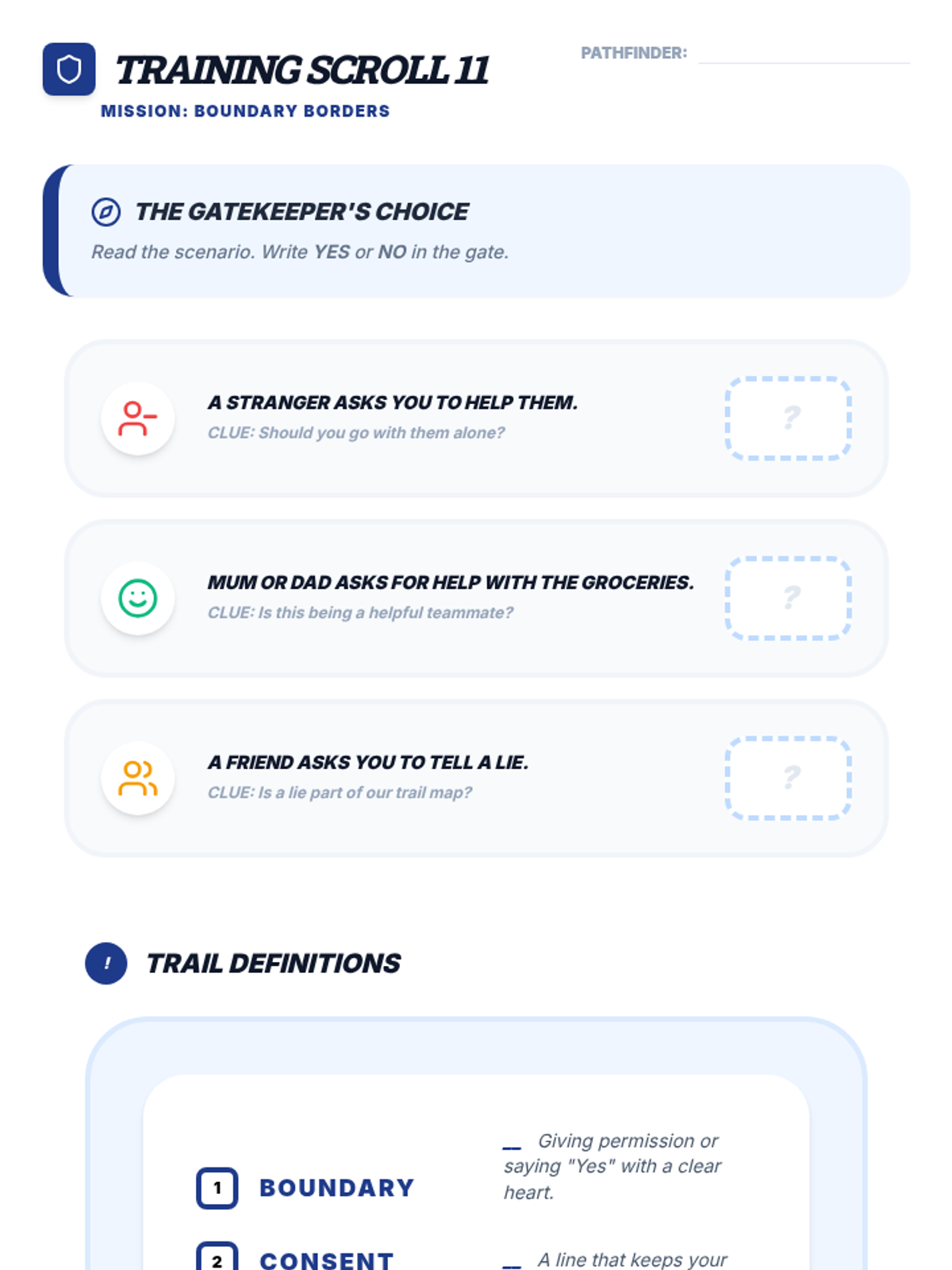
Learner workbook for Mission 11: Boundary Borders. Condensed to a single page with explicit scenario decision-making (Strangers, Family, Friends) and vocabulary matching. Revised for contrast, handwriting space, and missing keyword integration. No pre-filled "NO!".
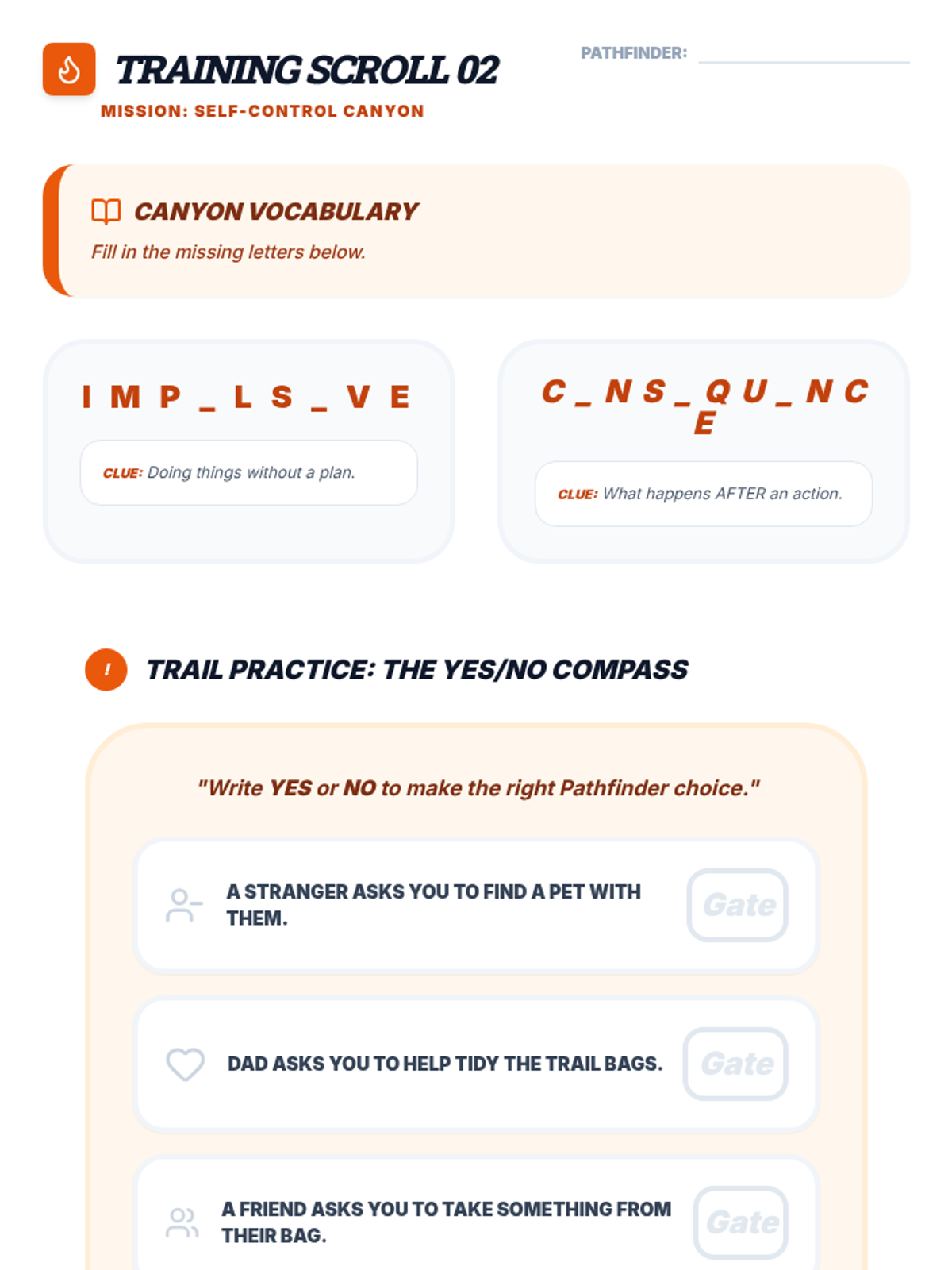
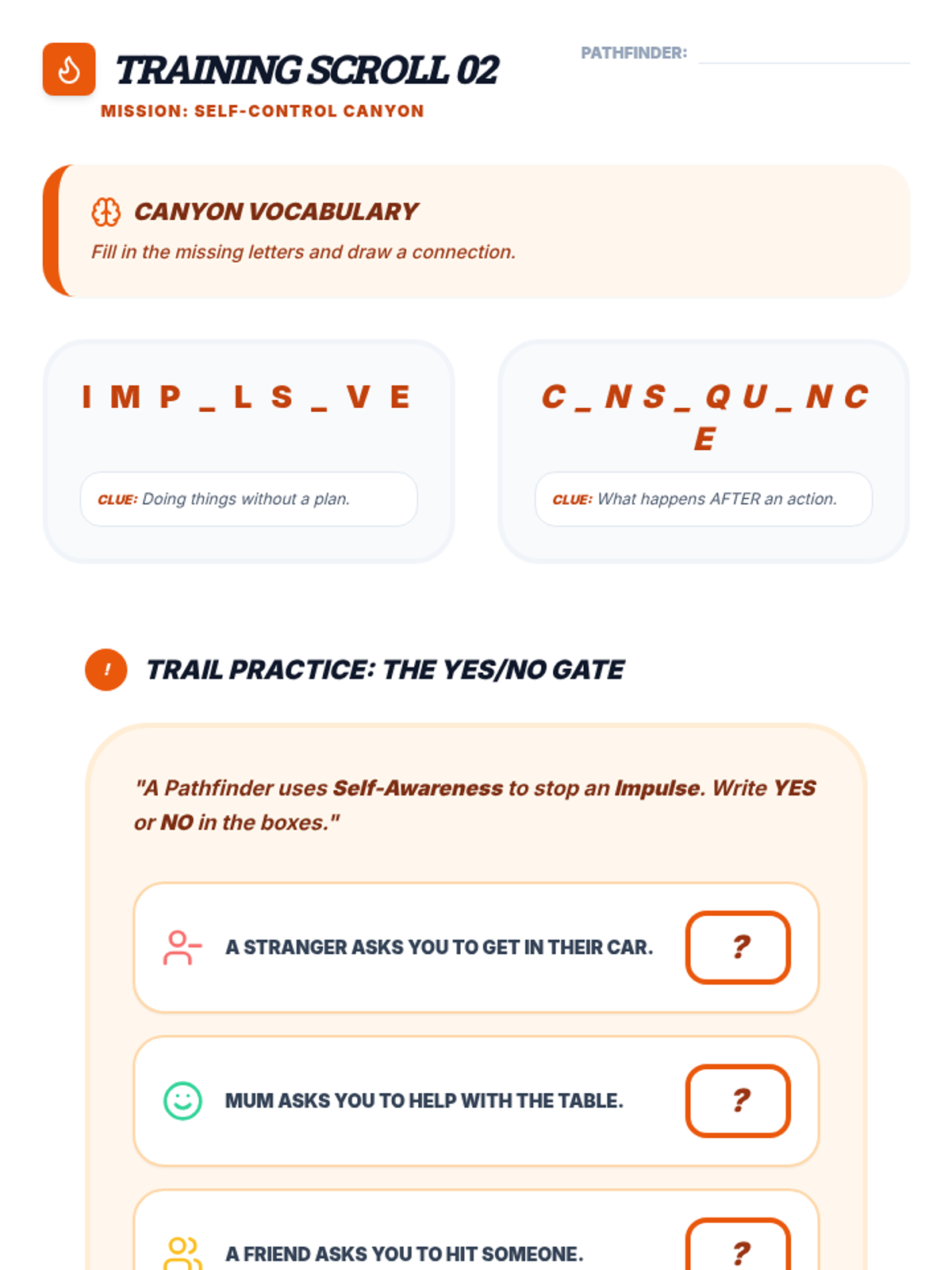
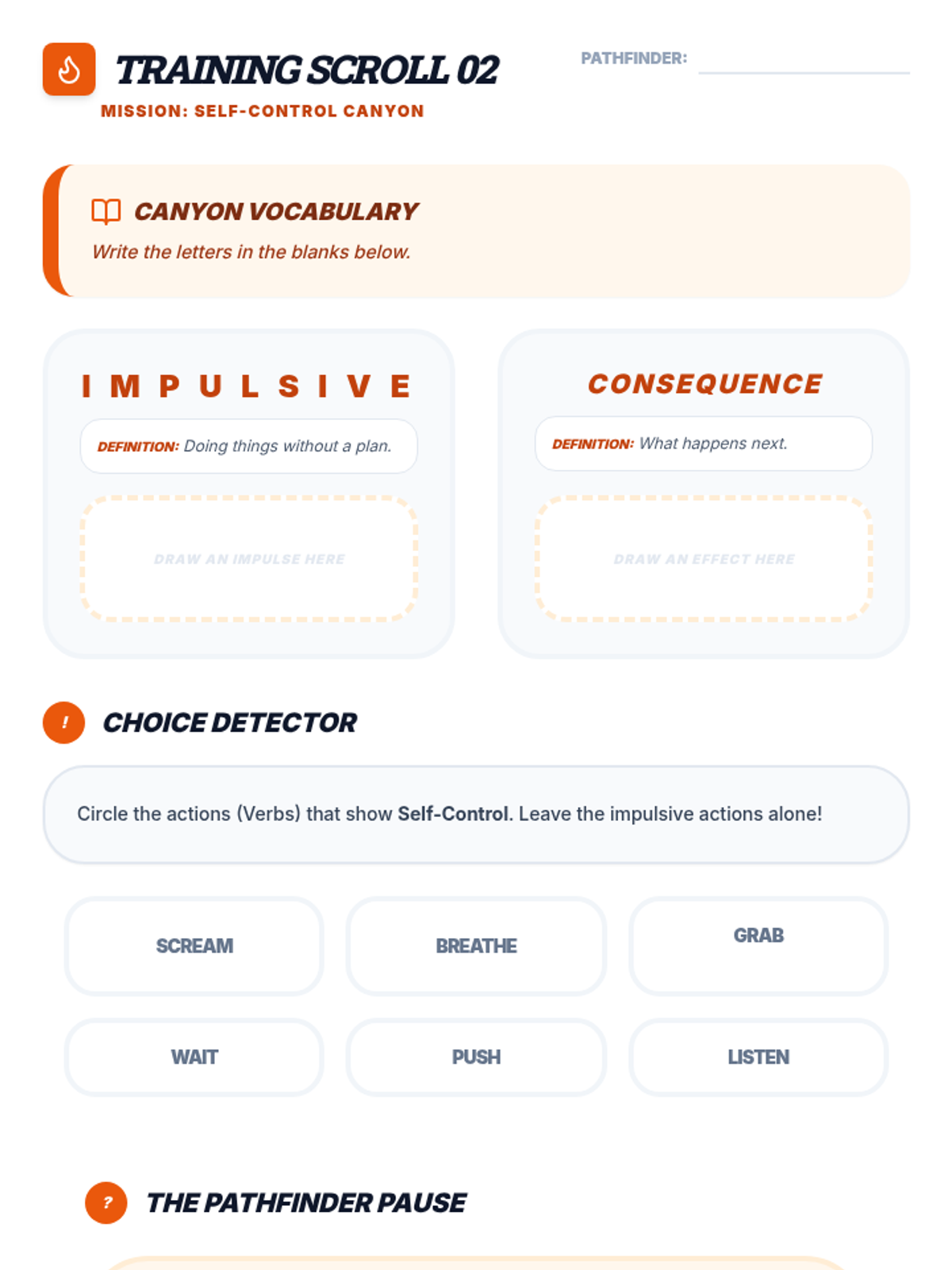
Learner workbook for Mission 02: Self-Control Canyon. Revised to include uniform styling for choices, increased writing space for creative reflection, and the requested parent/stranger scenarios. No "ninja" references. No telegraphing answers with colors.
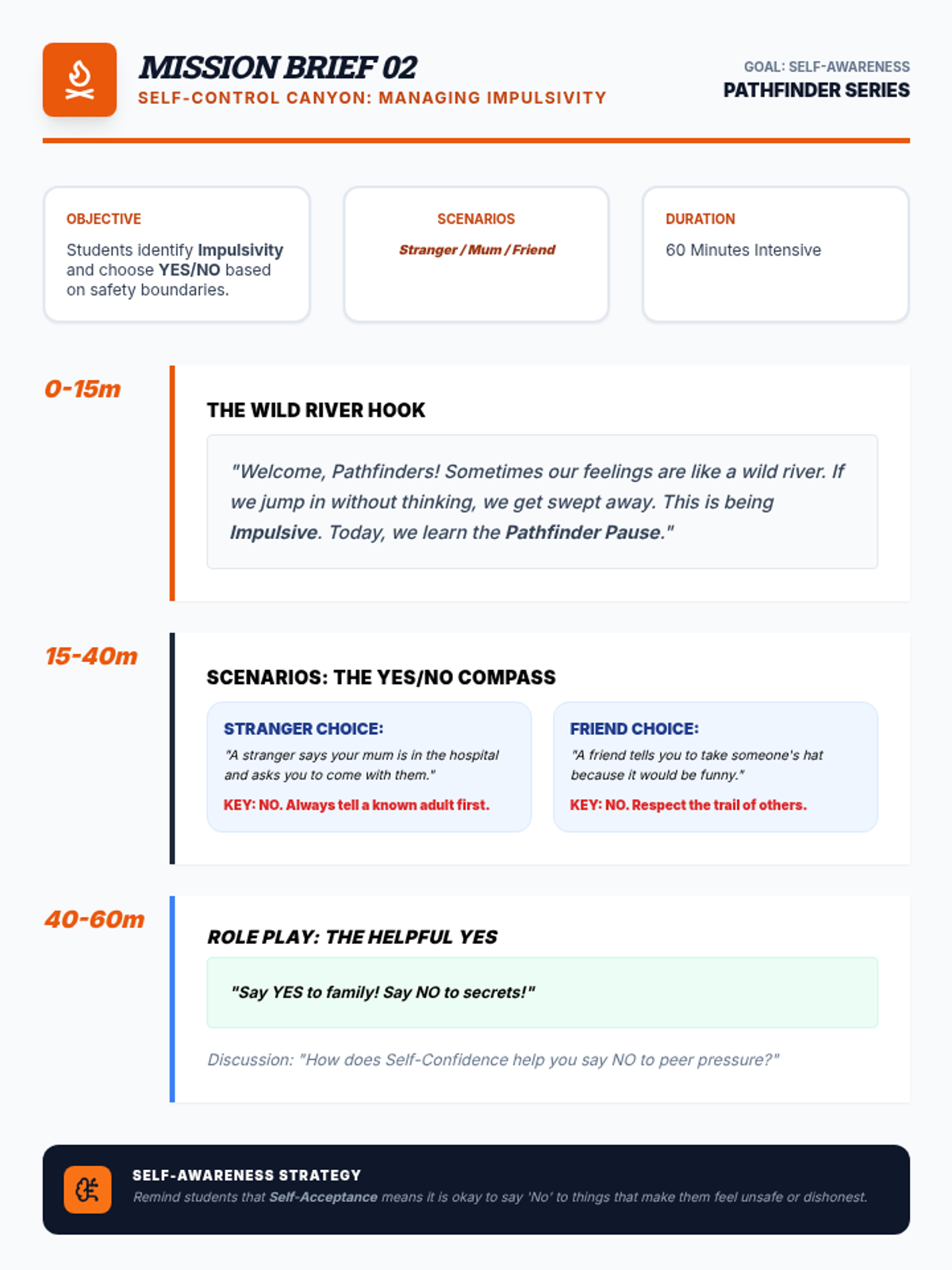
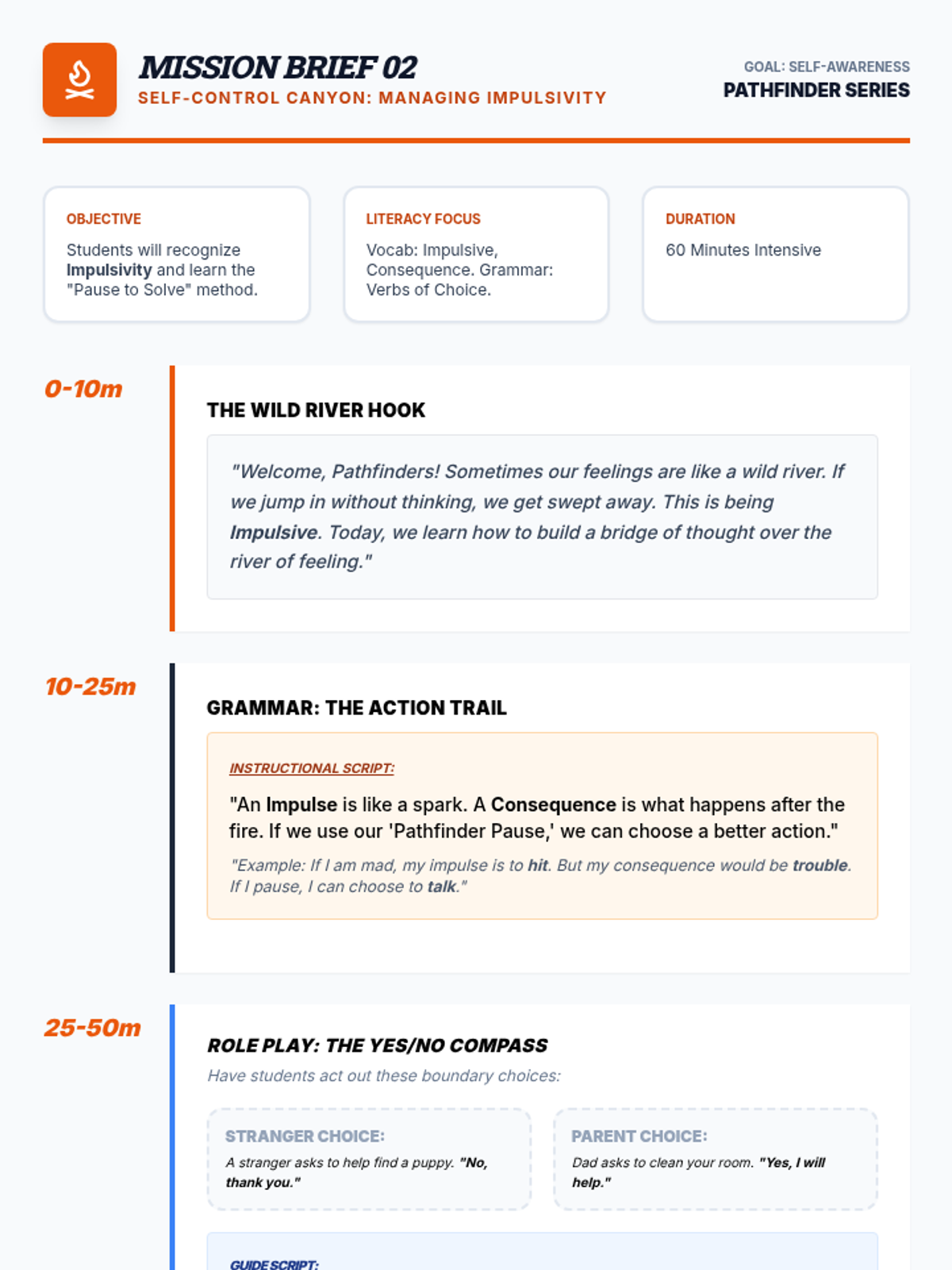
Facilitator script for Mission 02: Self-Control Canyon. Revised to remove "ninja" references, include full 60-minute duration, and add the requested social scenarios for parents and strangers. No self-referential draft notes.
Learner workbook for Mission 11: Boundary Borders. Condensed to a single page with explicit scenario decision-making (Strangers, Family, Friends) and vocabulary matching. Revised for contrast, handwriting space, and missing keyword integration.
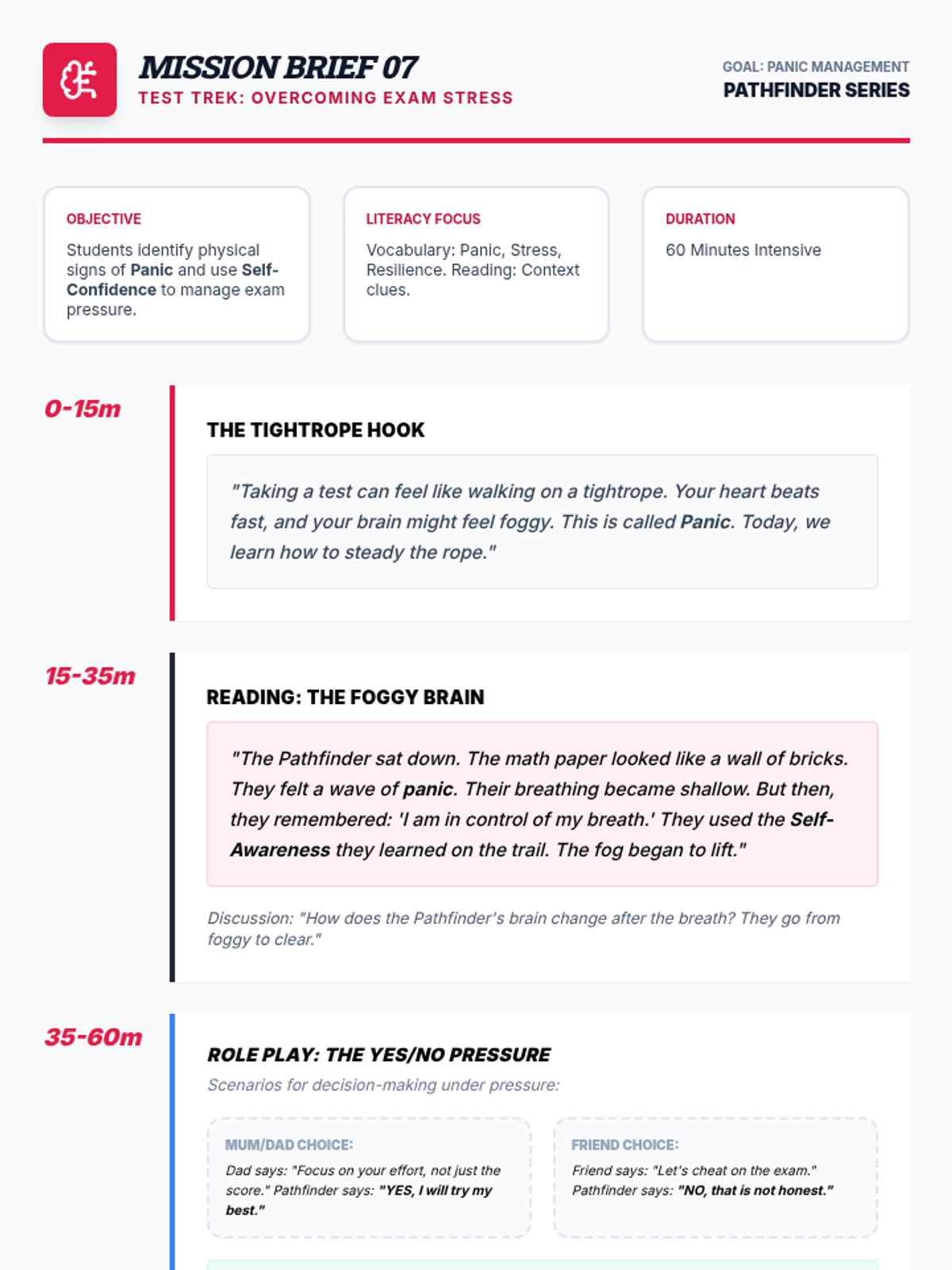
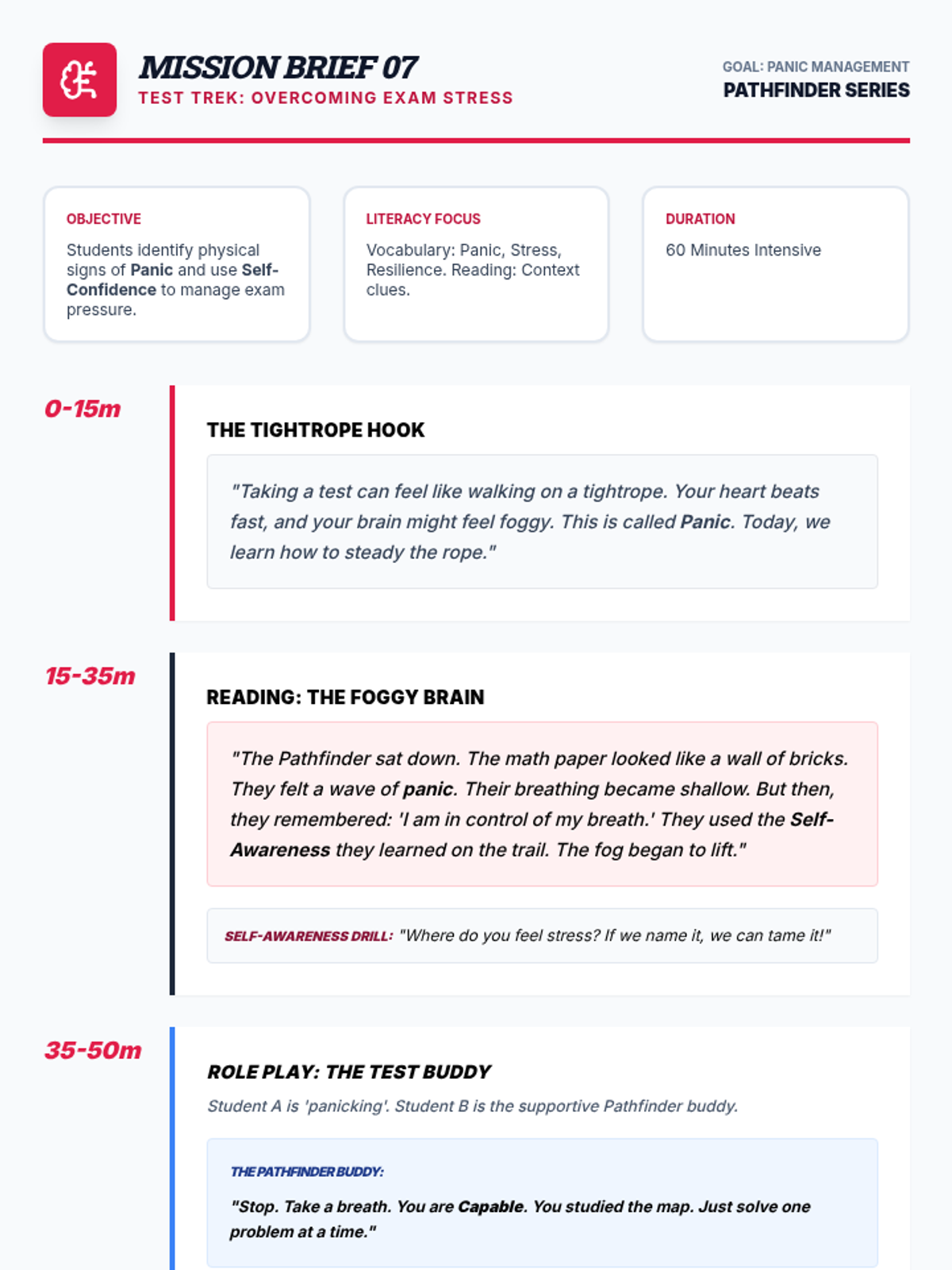
Facilitator script for Mission 07: Test Trek. Revised for better spacing, full 60-minute duration, and removed "ninja" references. Includes core concepts of Self-Awareness, integrity scenarios with Mom/Dad/Friends, and Exam Stress.
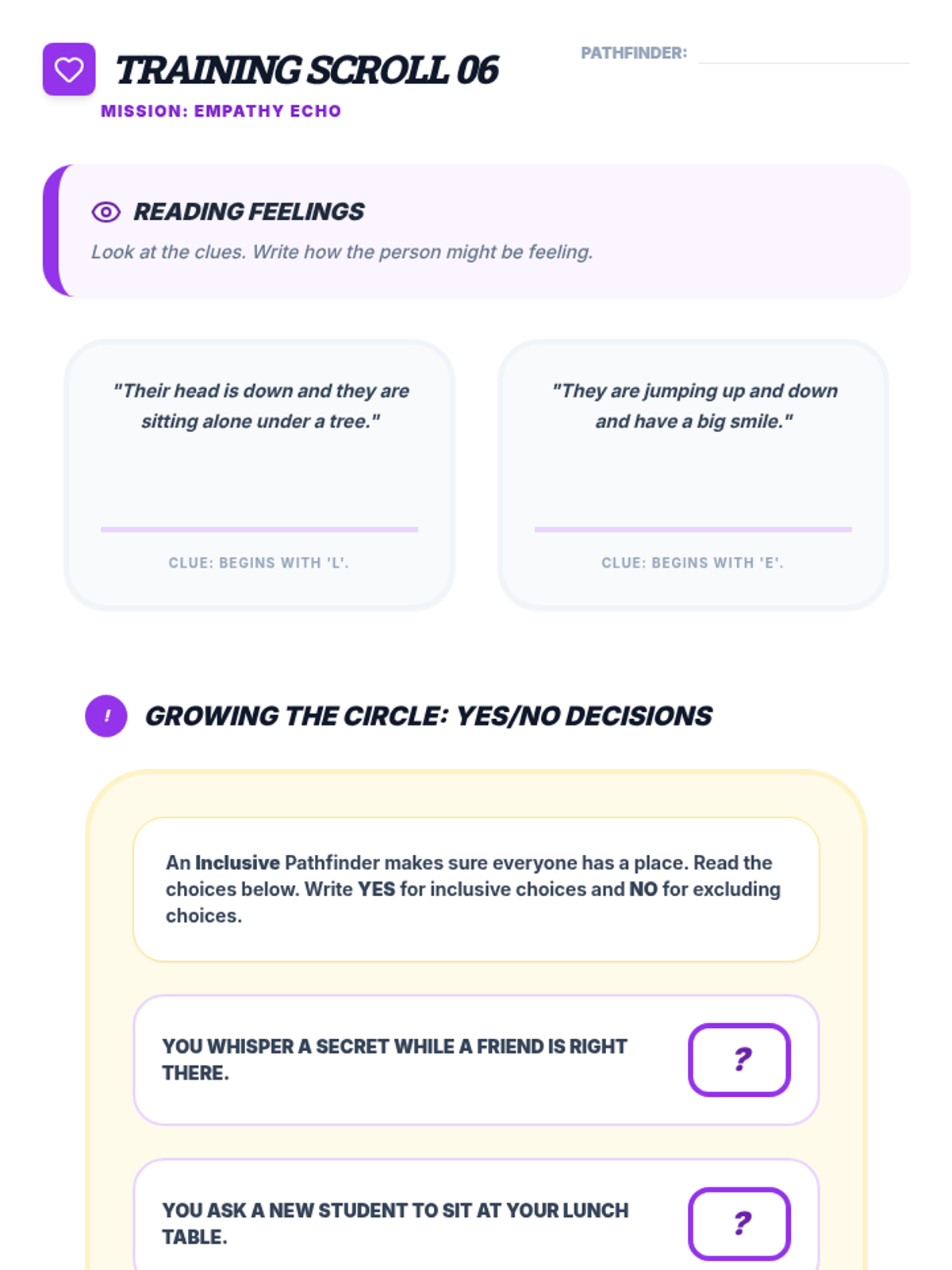
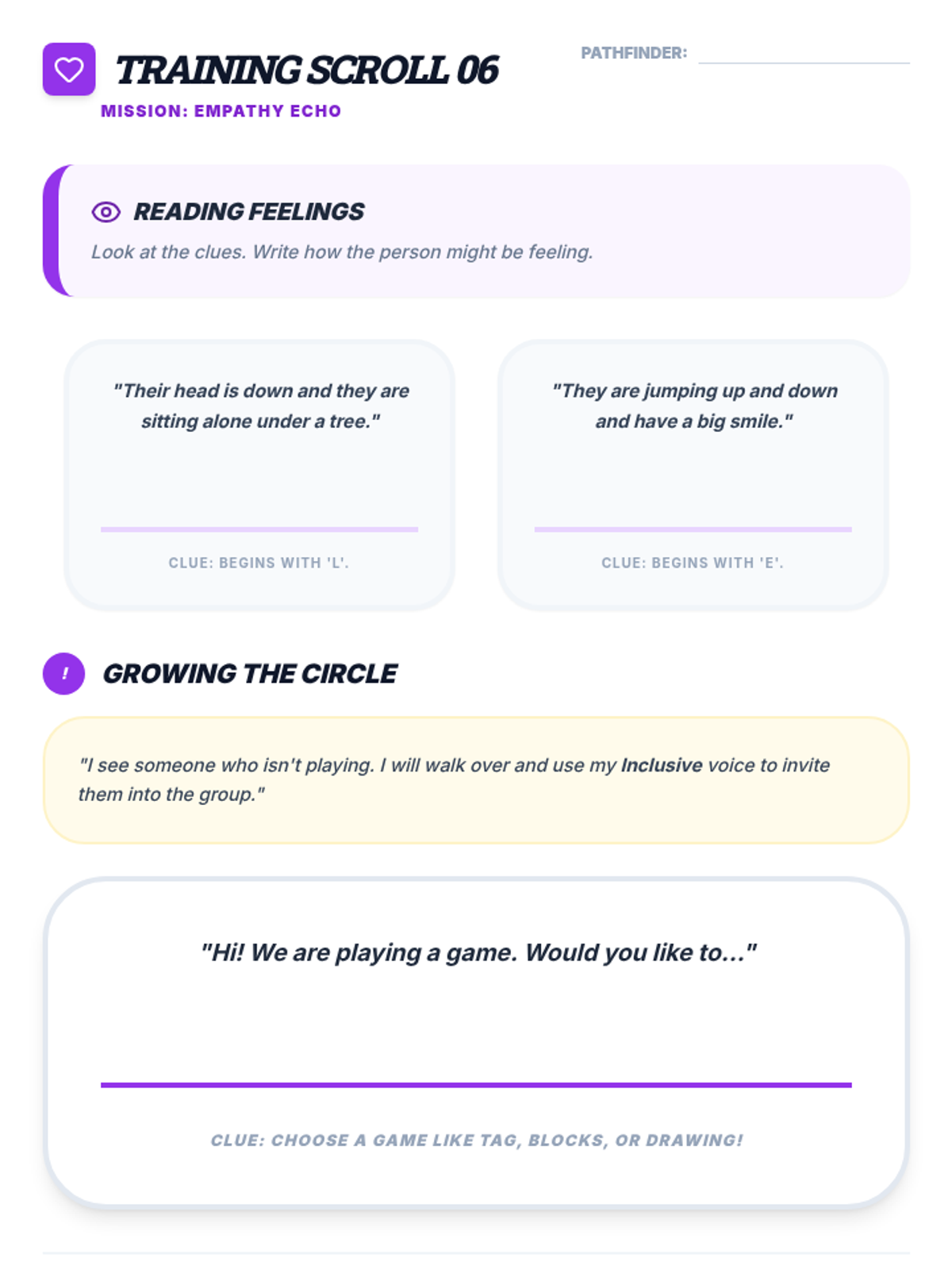
Learner workbook for Mission 06: Empathy Echo. Features emotion detection based on body language clues and new "Yes/No" inclusion decision scenarios. Revised to remove pre-filled answers and fill the full page.
Learner workbook for Mission 02: Self-Control Canyon. Revised to include uniform styling for choices, increased writing space for creative reflection, and the requested parent/stranger scenarios. No "ninja" references.
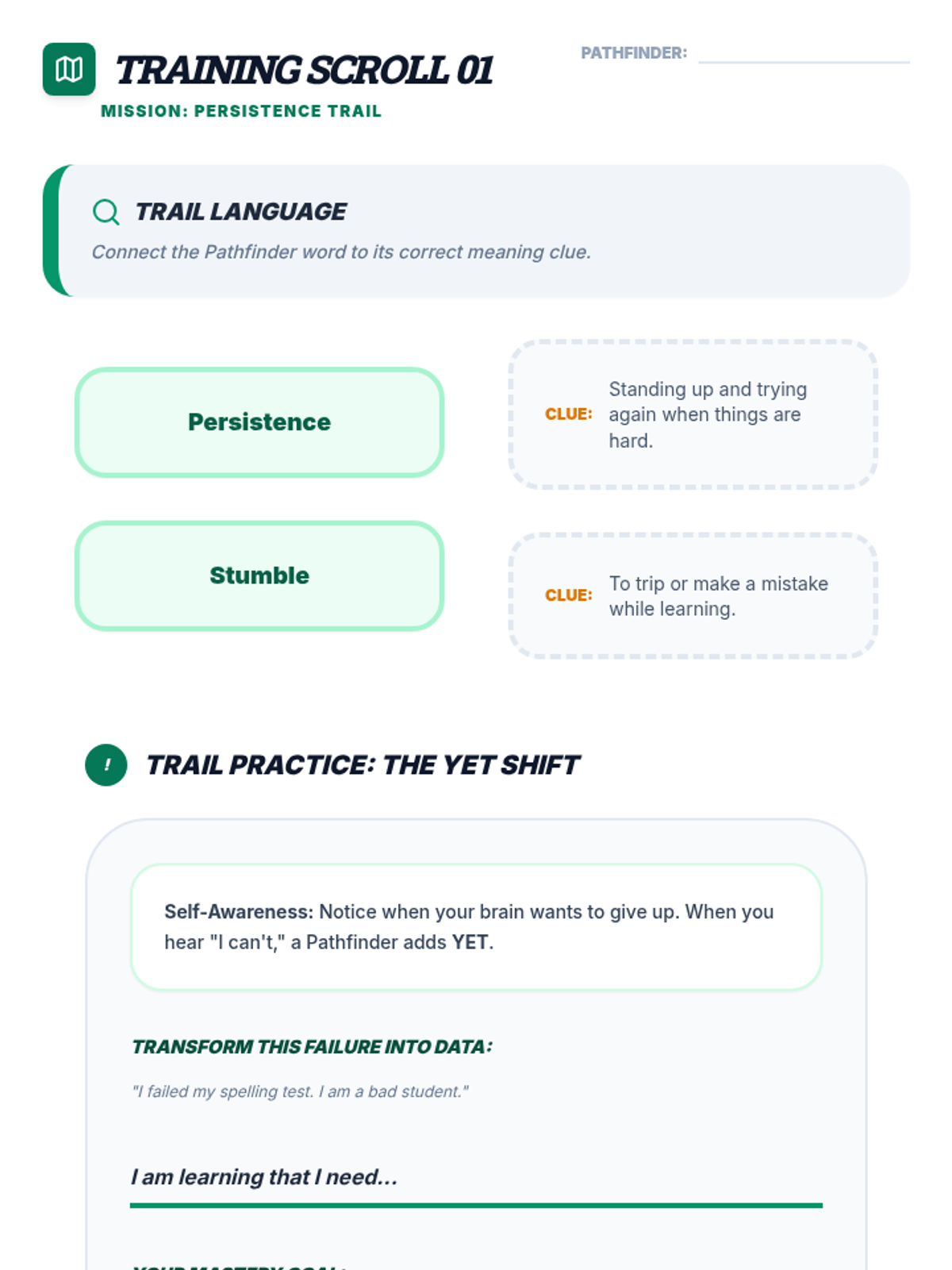
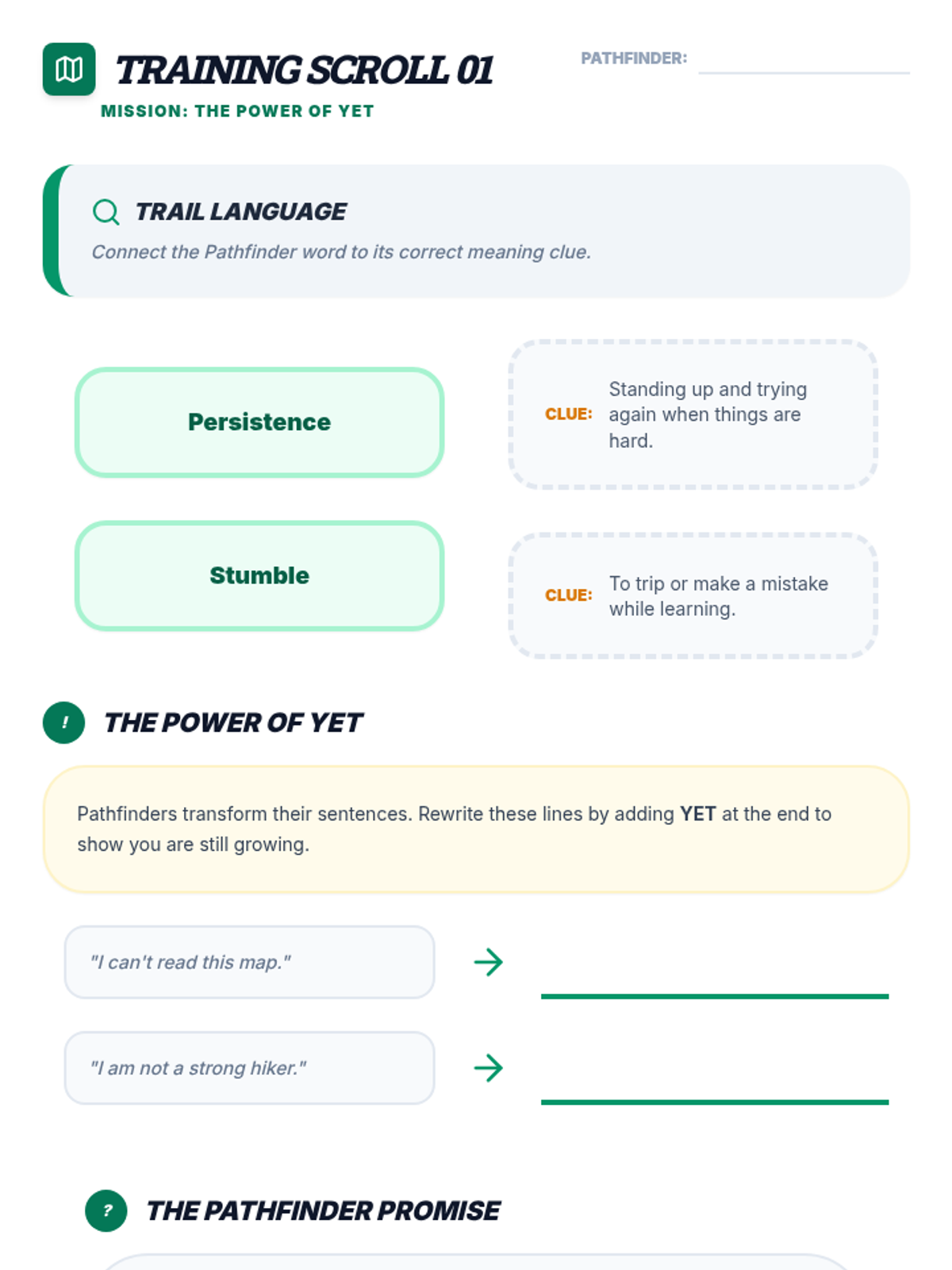
Learner workbook for Mission 01: Persistence Trail. Features corrected vocabulary matching, increased font sizes for clues, and expanded writing areas for student goals. Revised to include exam stress scenarios and data-based reframing. No reference to "ninja" term.
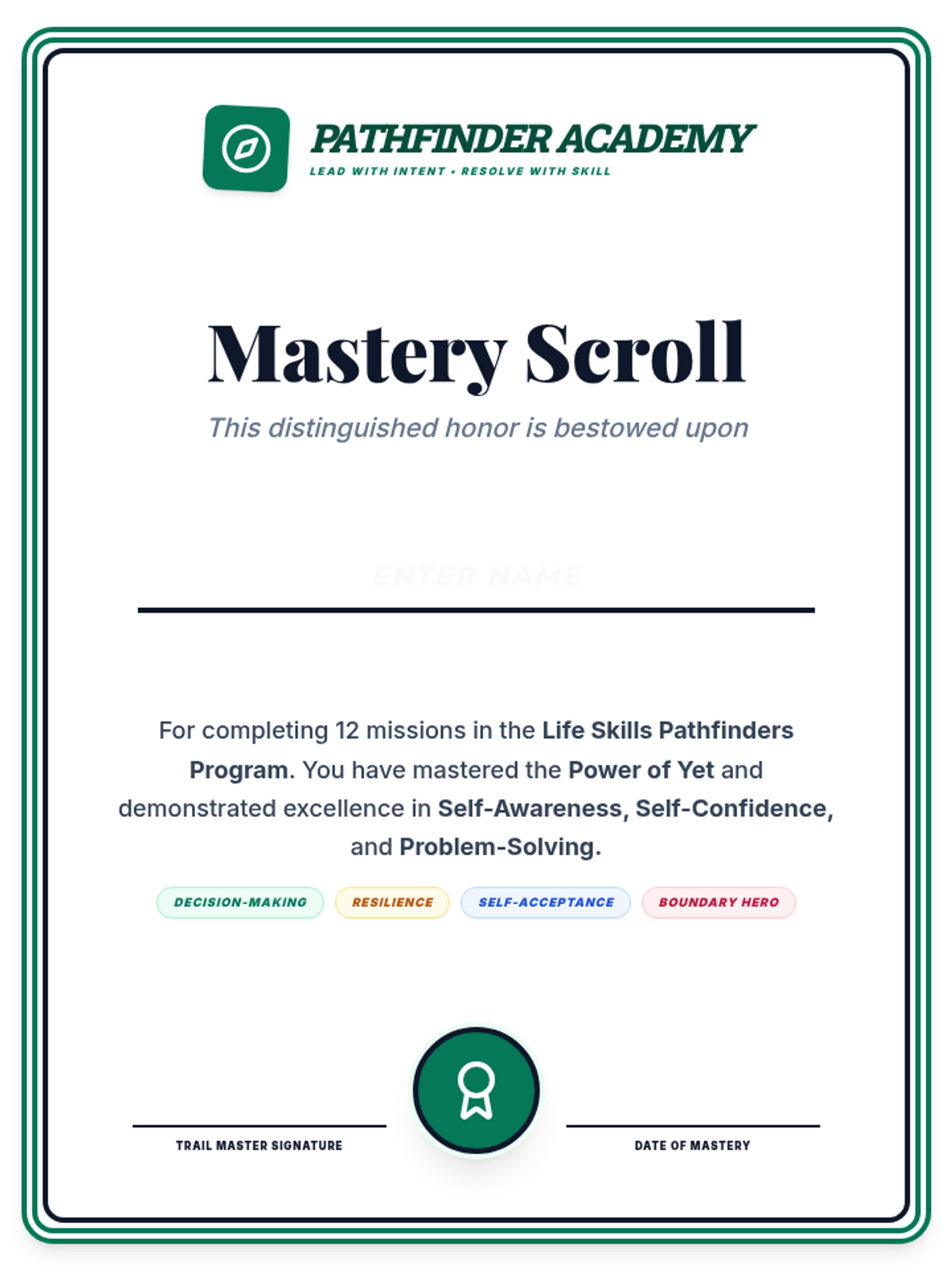
A student-friendly completion certificate for the Pathfinders Program. Revised for clear handwriting space, darker signature lines, and centered content. Fits on a single page and includes keywords like Power of Yet, Self-Awareness, and Problem-Solving.
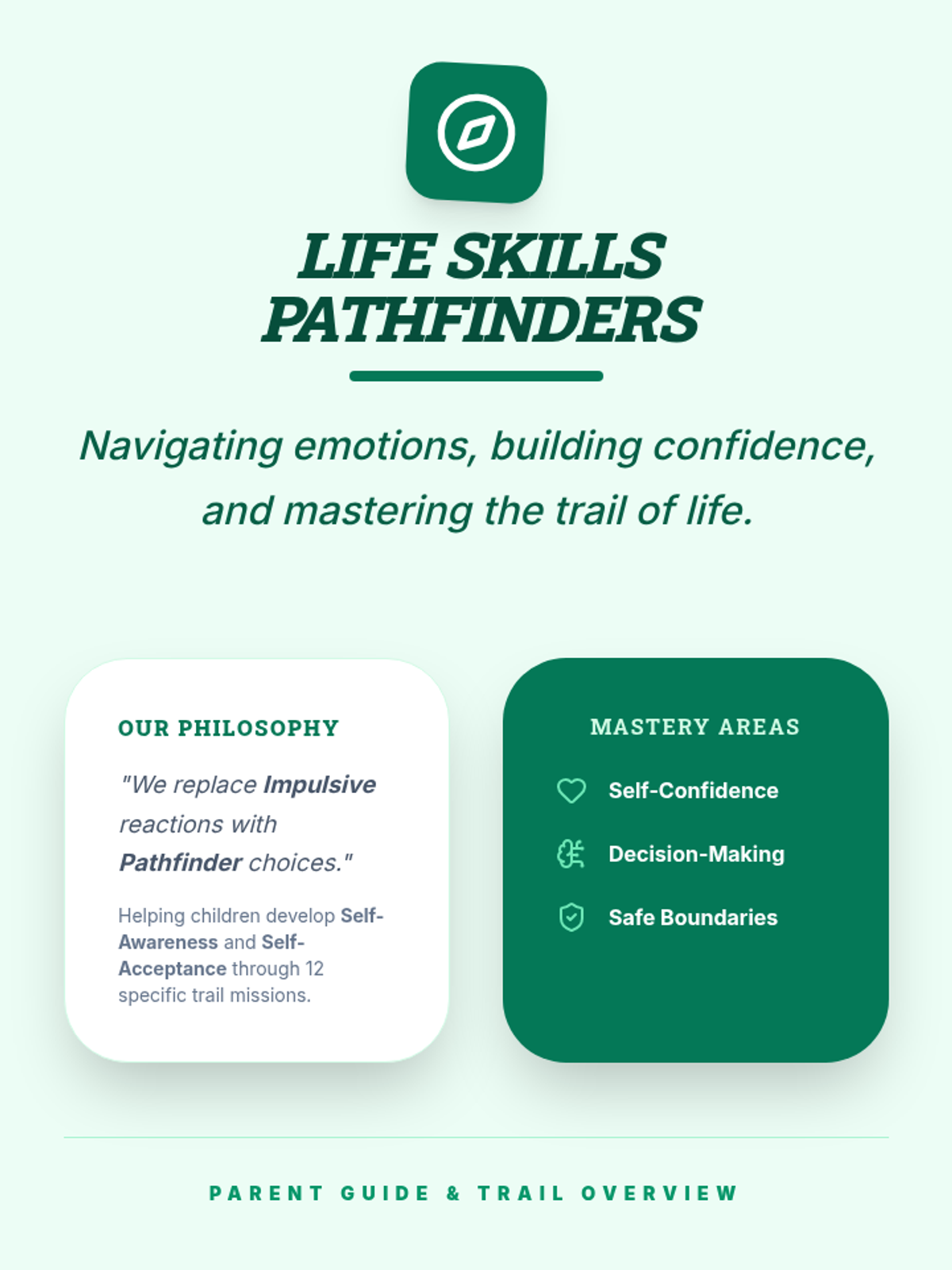
A complete 2-page parent brochure for the Life Skills Pathfinders Program. Lists all 12 missions, program philosophy, and a detailed "Boundary Cheat Sheet" with scenarios for saying no/yes to various figures. Revised for content completeness and specific scenario details.
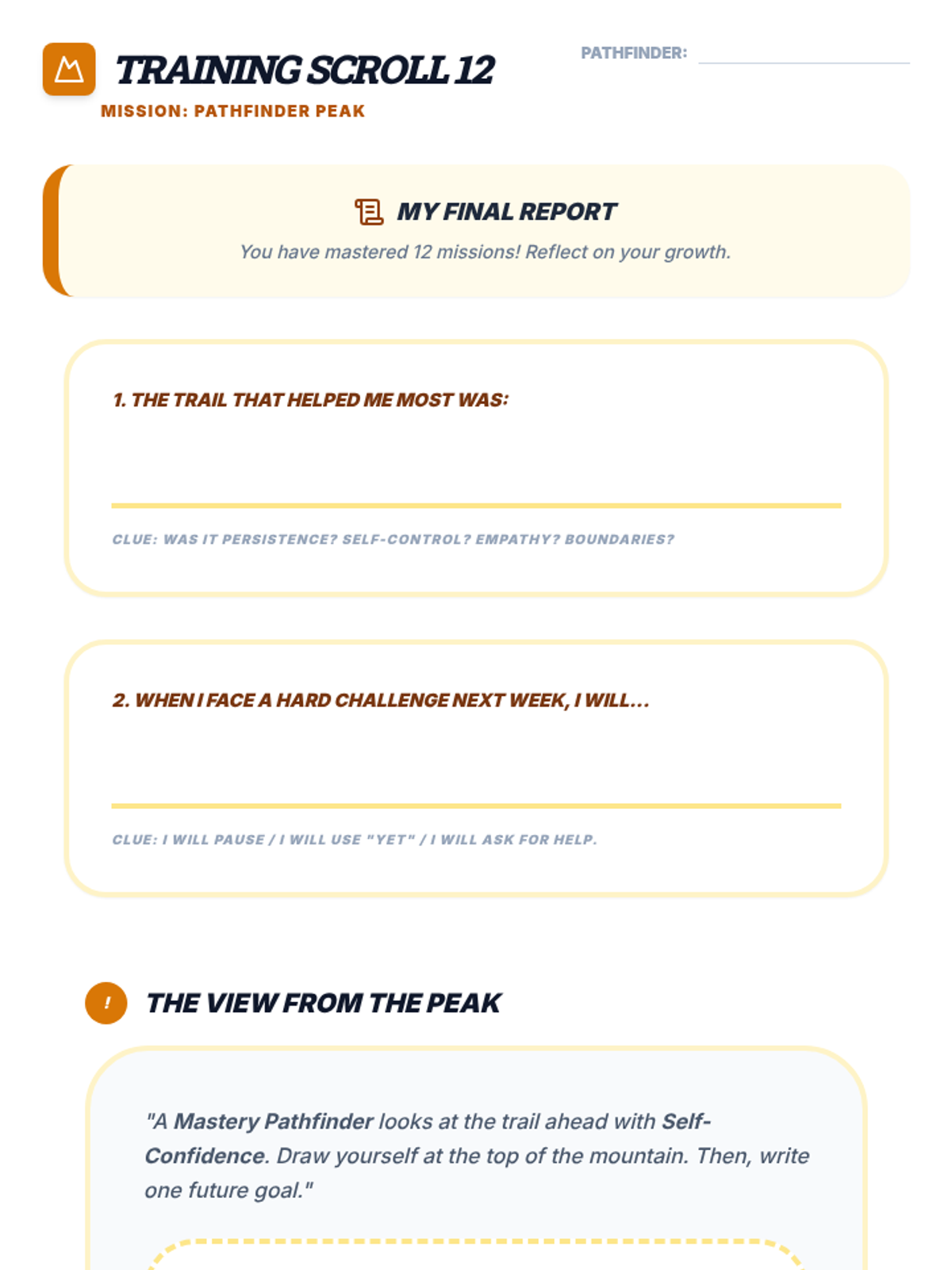
Learner workbook for Mission 12: Pathfinder Peak. Features reflective growth prompts, a visualization drawing area, and a future-goal writing task. Revised for content completeness, handwriting space, and layout stability. No "ninja" references.
Learner workbook for Mission 06: Empathy Echo. Features an emotion detection activity based on body language clues, a fill-in-the-blank inclusion prompt, and vocabulary matching. Revised to remove pre-filled answers and placeholder text.
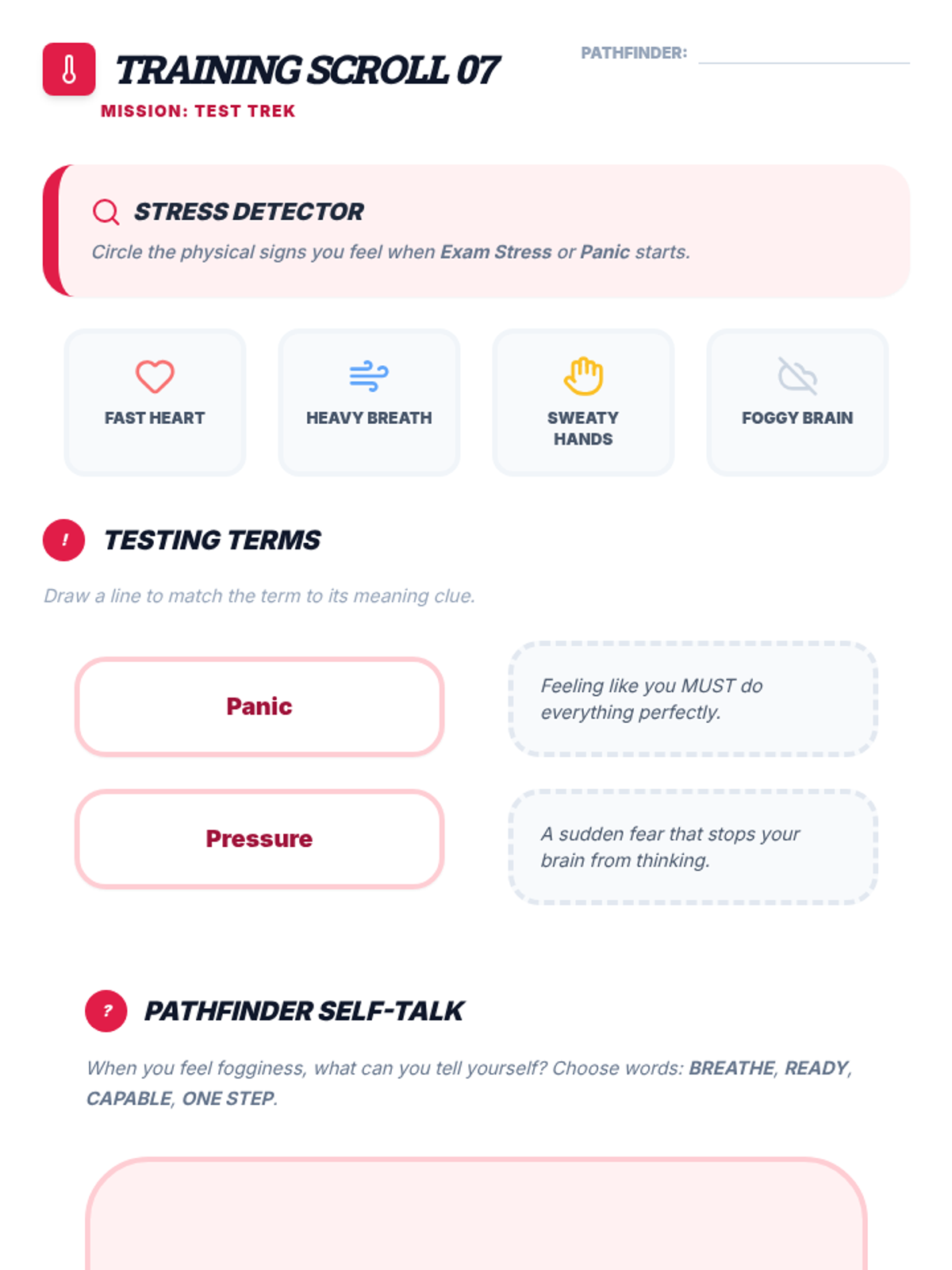
Learner workbook for Mission 07: Test Trek. Revised for better text alignment, matching activity for vocabulary, and removed "ninja" references. Includes high-contrast matching and self-talk script.
Facilitator script for Mission 07: Test Trek. Revised for better spacing, a full 60-minute duration, and removed "ninja" references. Includes core concepts of Self-Awareness and Exam Stress.
Learner workbook for Mission 02: Self-Control Canyon. Revised to include uniform styling for choices, increased writing space for creative reflection, and a sequencing task for the "Pathfinder Pause." No references to "ninja."
Facilitator script for Mission 02: Self-Control Canyon. Revised to remove "ninja" references, include full 60-minute duration, and add the requested social scenarios for parents and strangers.
Learner workbook for Mission 01: Persistence Trail. Features corrected vocabulary matching, increased font sizes for clues, and expanded writing areas for student goals. No reference to "ninja" term. Revised for single-page logic and student space.
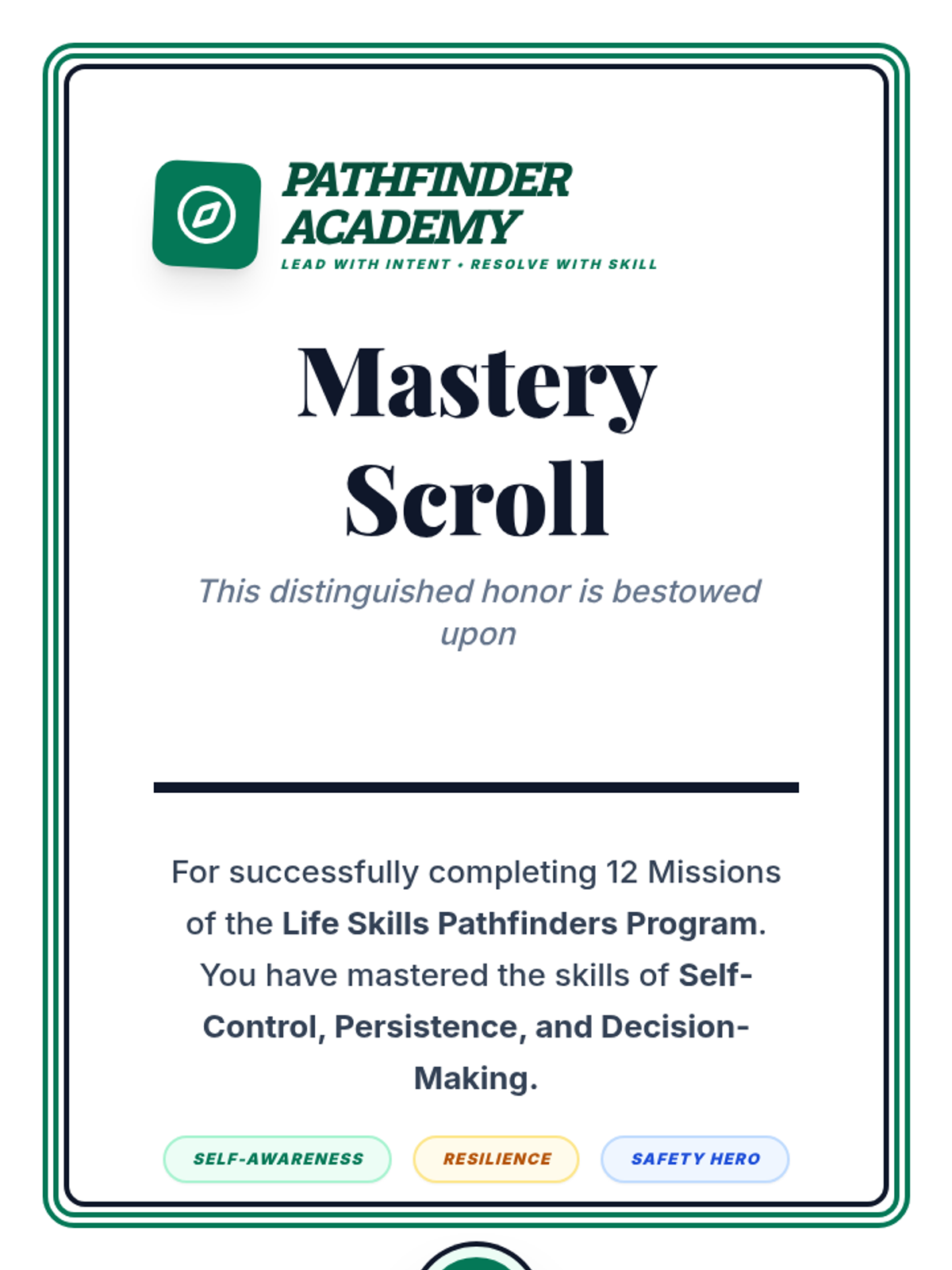
A student-friendly completion certificate for the Pathfinders Program. Revised for clear handwriting space, darker signature lines, and centered content. No placeholder text in name field.
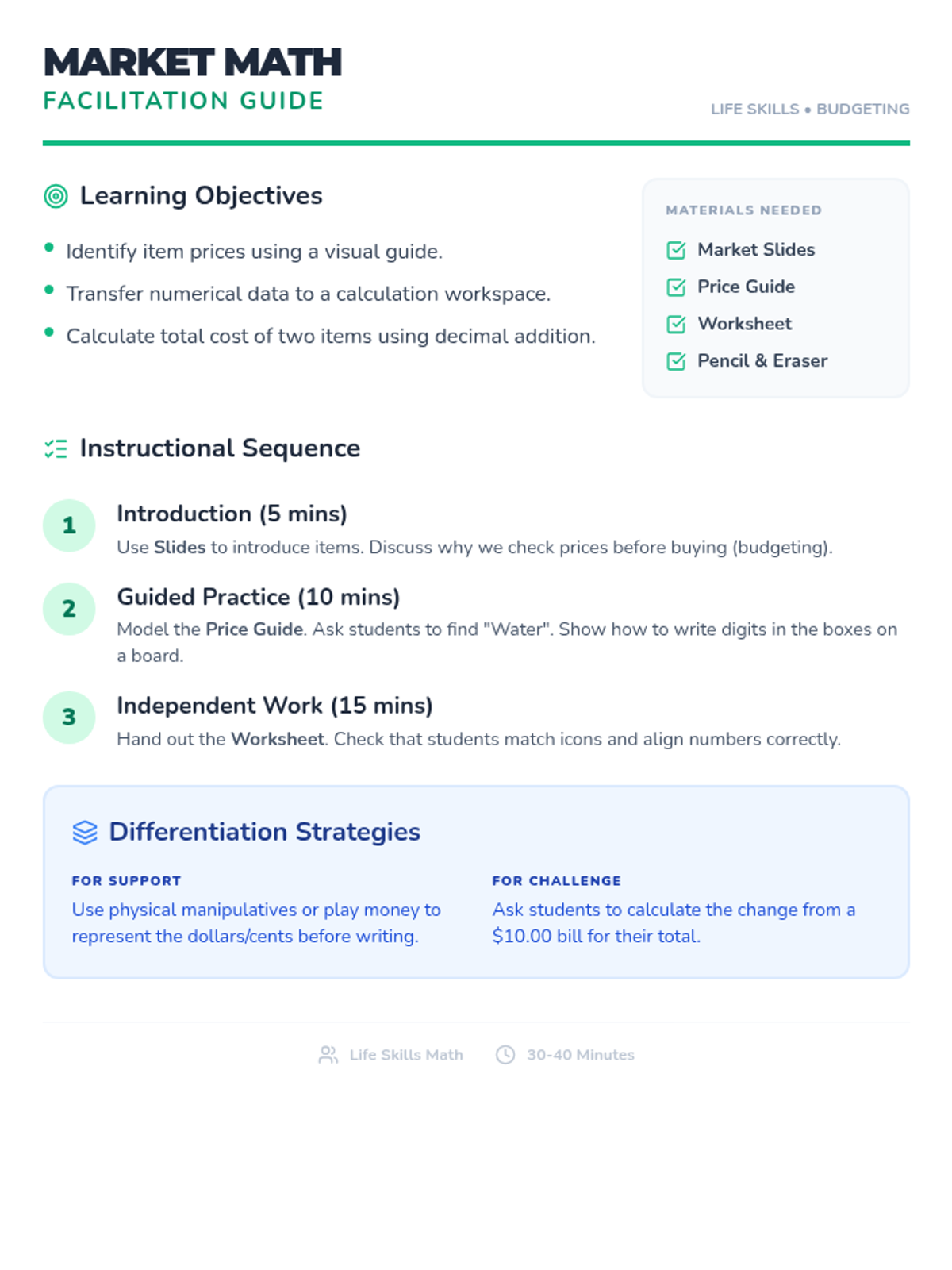
A facilitation guide for teachers to deliver the Market Math lesson, including objectives, material checklists, step-by-step instructions, and differentiation strategies.
A visual presentation for introducing the Market Math activity, featuring grocery item prices, shopping steps, and a demonstration of the color-coded addition process.
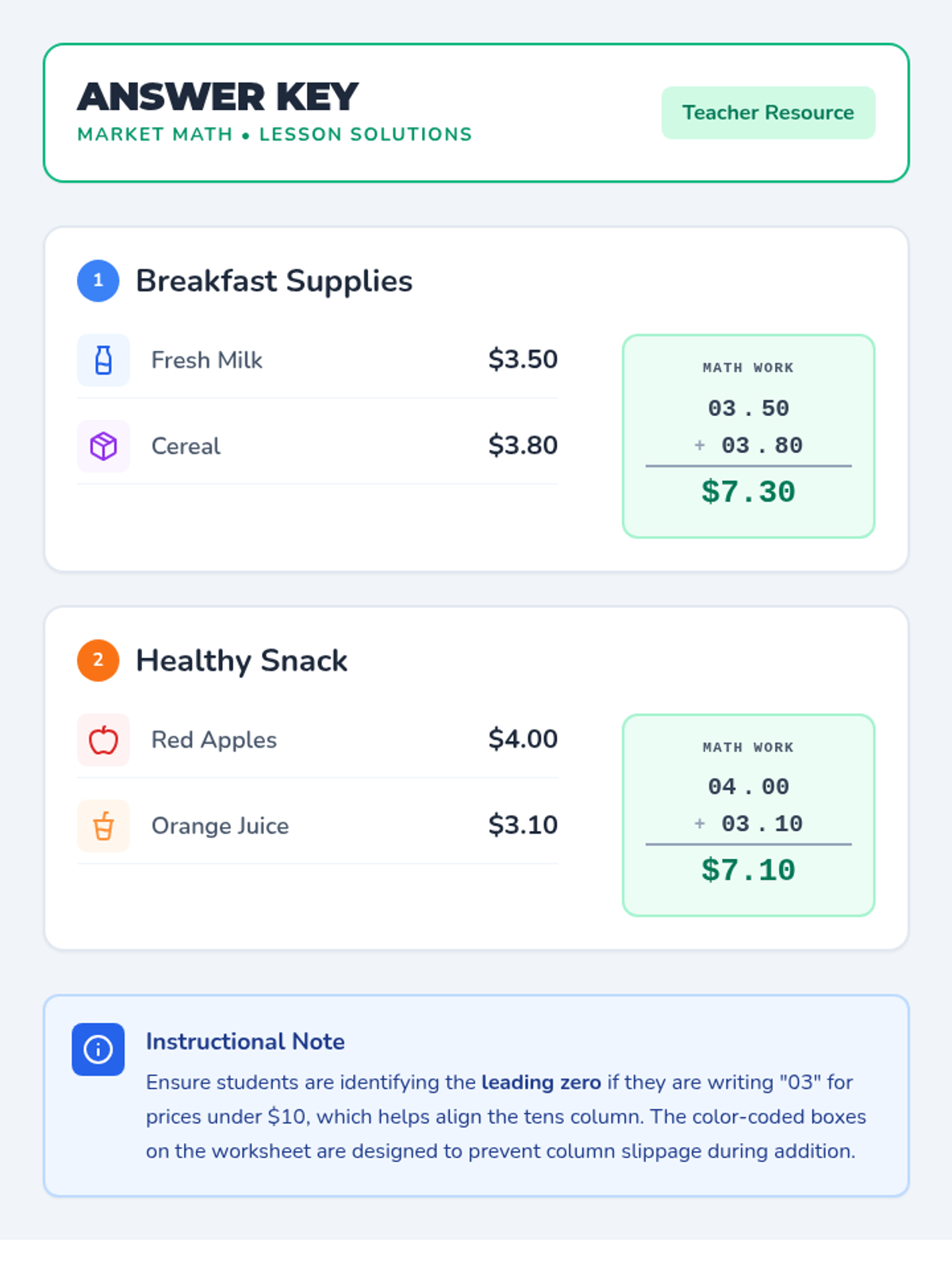
A teacher's answer key for the Market Math worksheet, including item prices, total calculations, and instructional notes.
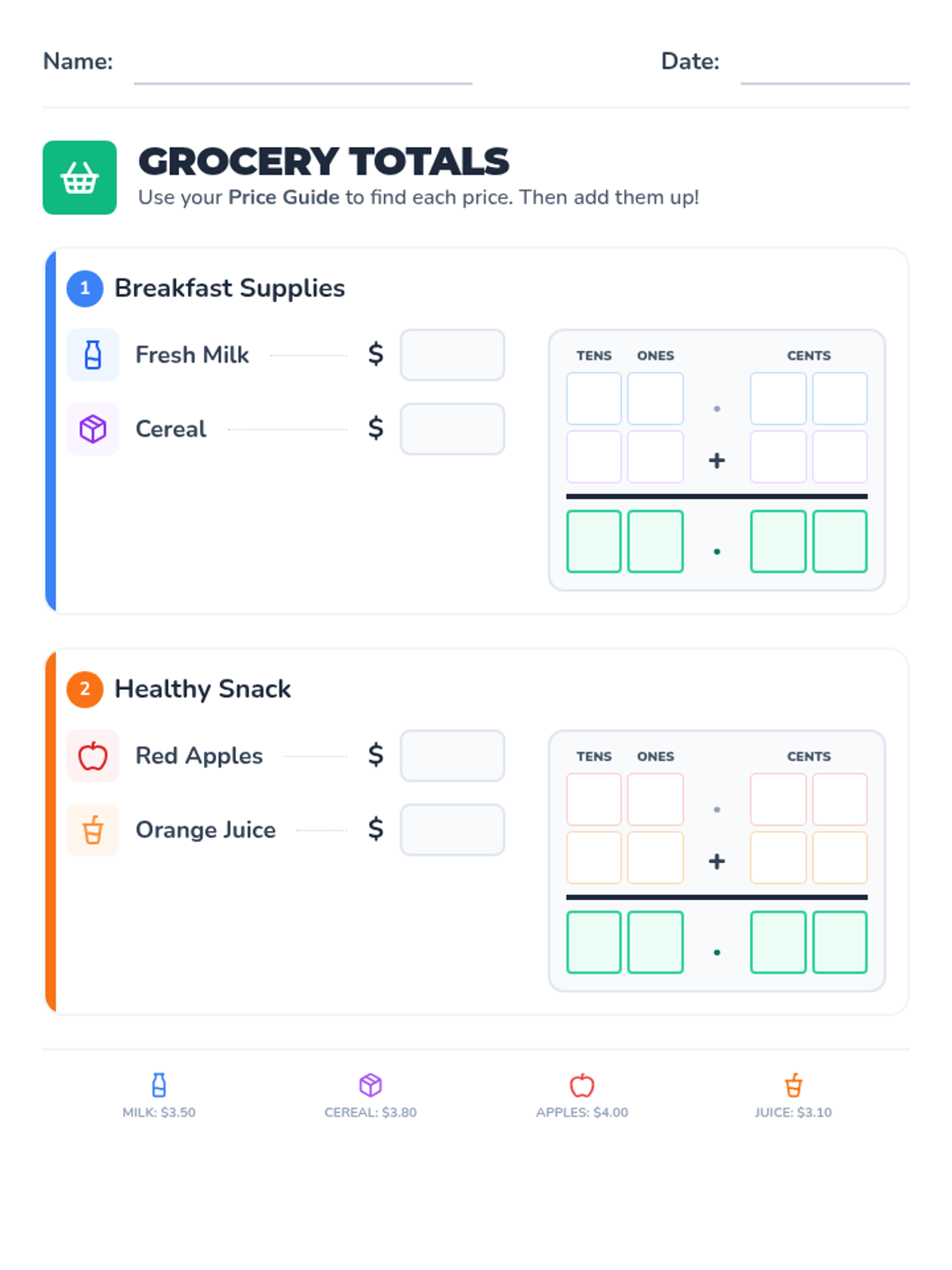
A budget worksheet for totaling two items using color-coded addition columns and icon-based grocery lists. Students find prices from the guide and calculate the sum.
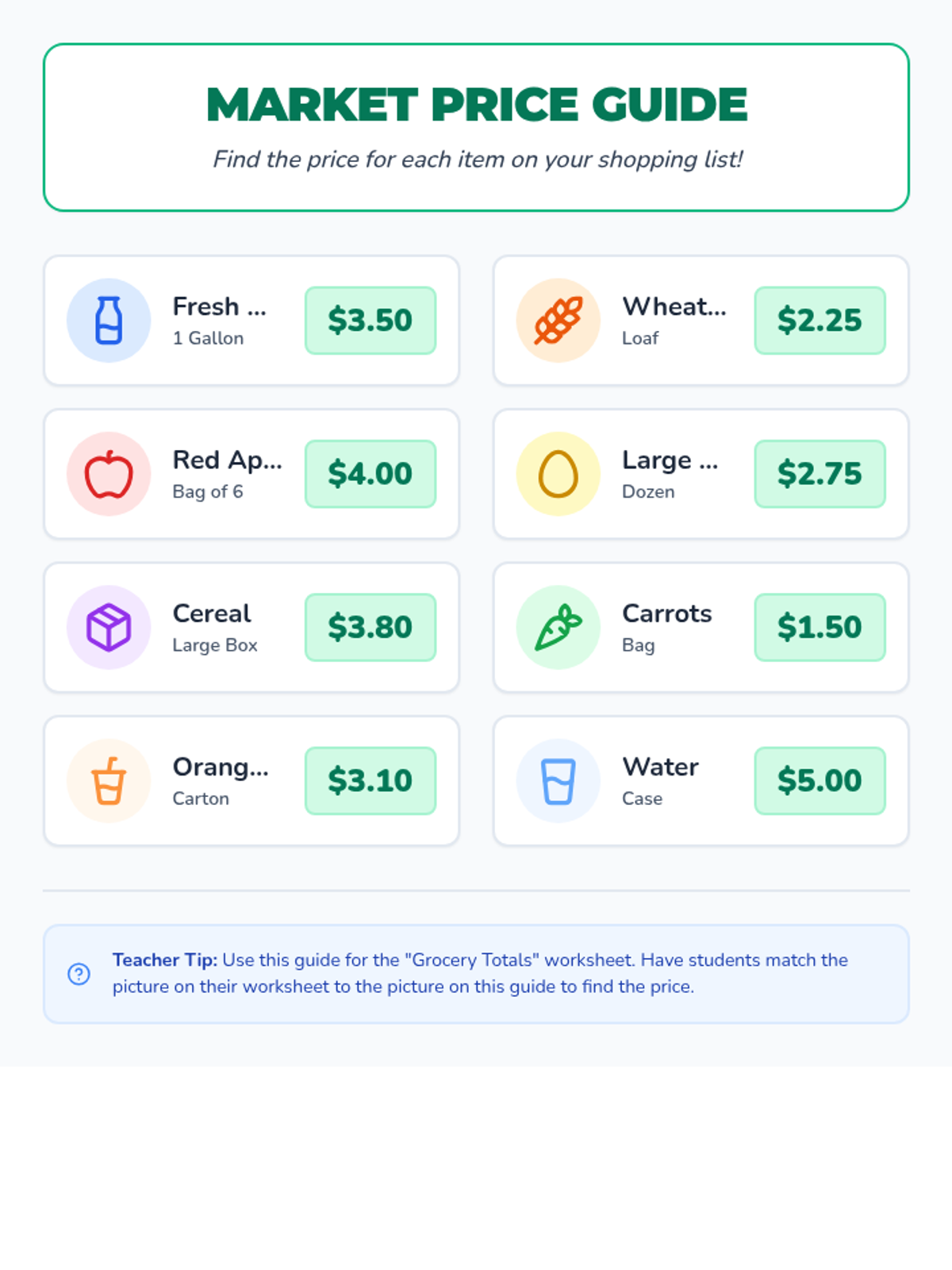
A visual price guide featuring grocery items with large icons, clear labels, and prominent prices for students to use as a reference during budgeting activities.
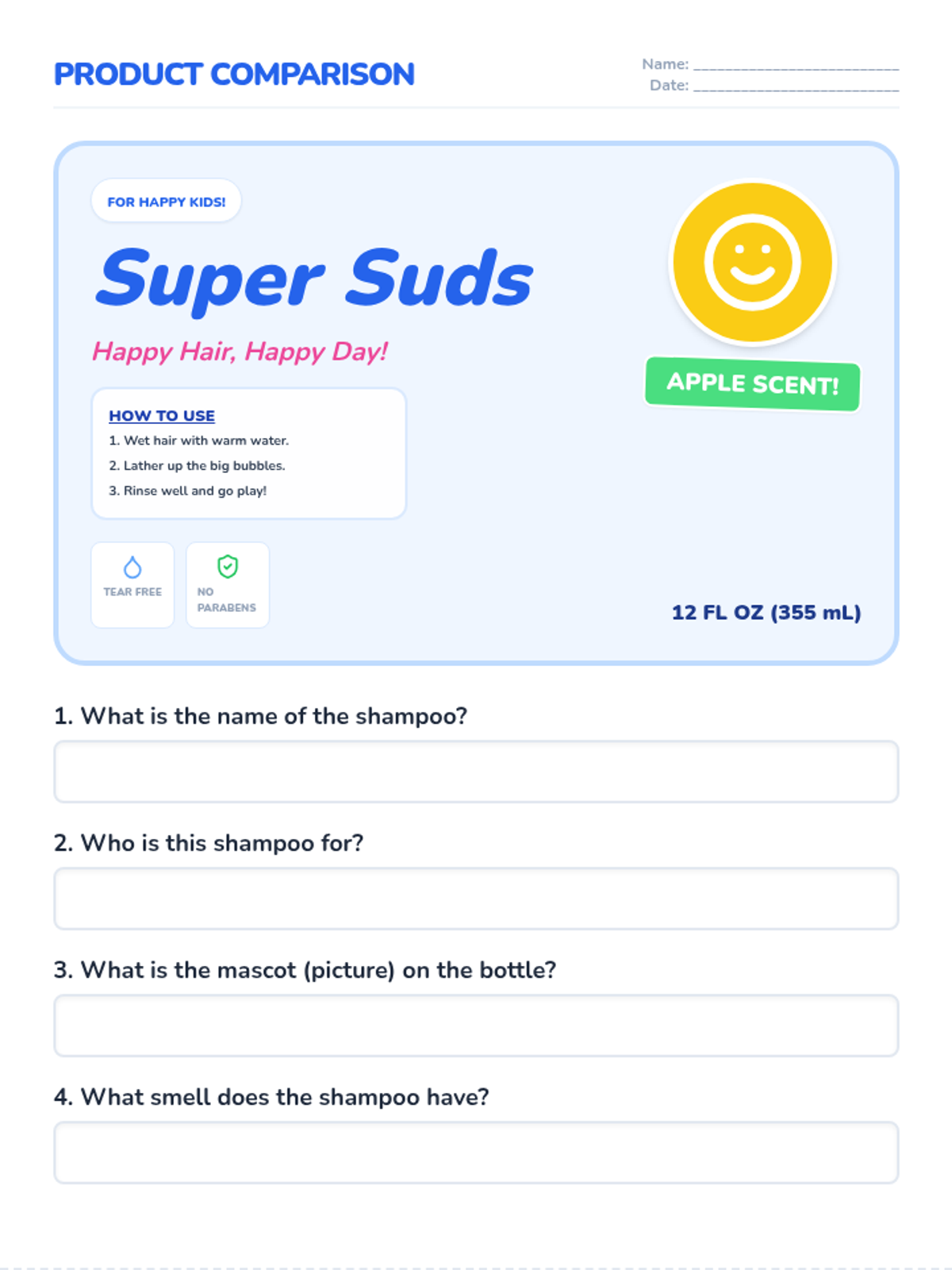
A compare and contrast reading comprehension worksheet featuring two different shampoo brands. Includes improved spacing, larger handwriting areas, and clearly separated customer scenarios for easier student use.
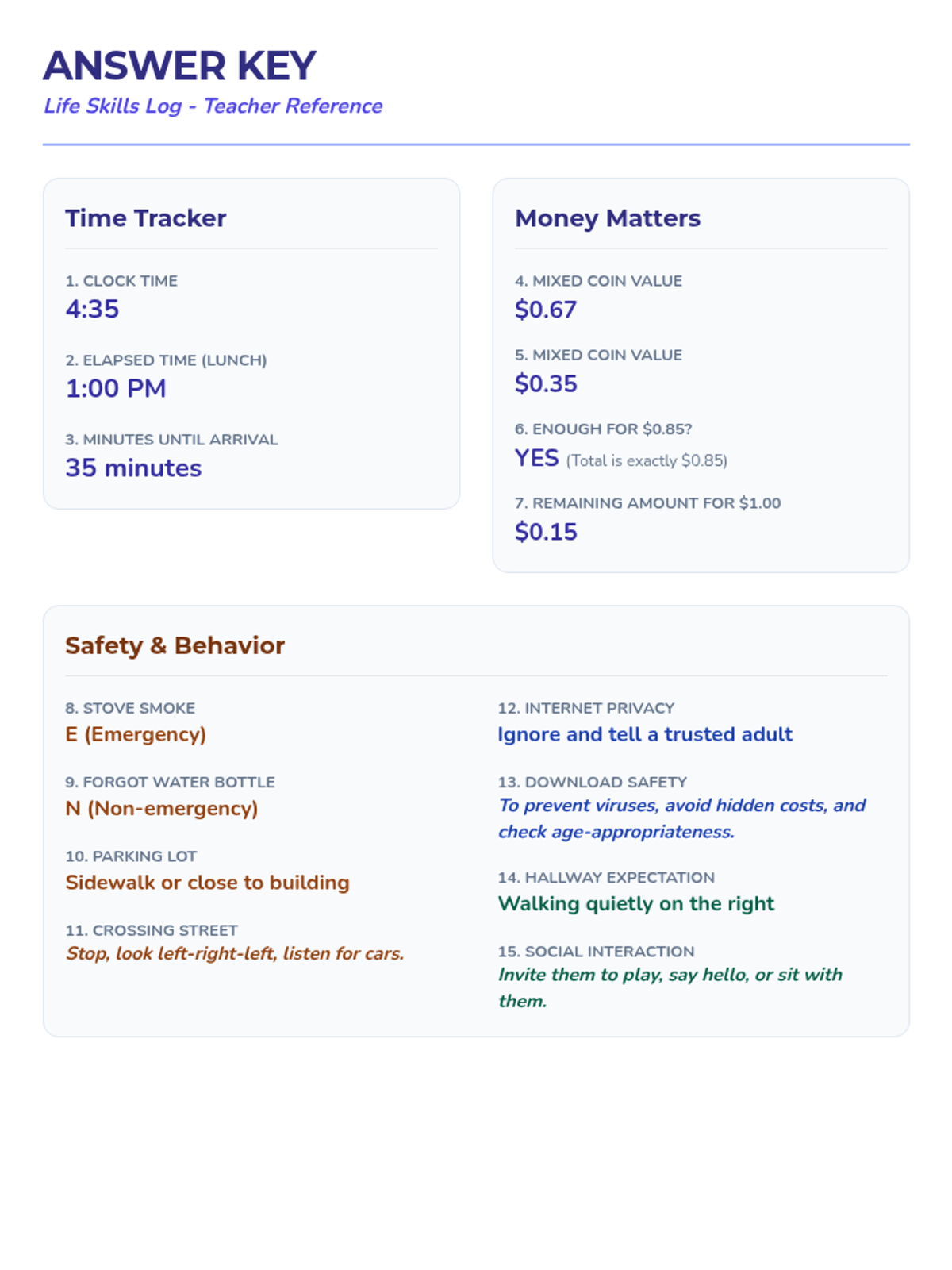
An answer key for the Life Skills Log Worksheet, providing clear solutions and logic for time, money, and behavioral scenarios. Optimized for single-page printing.
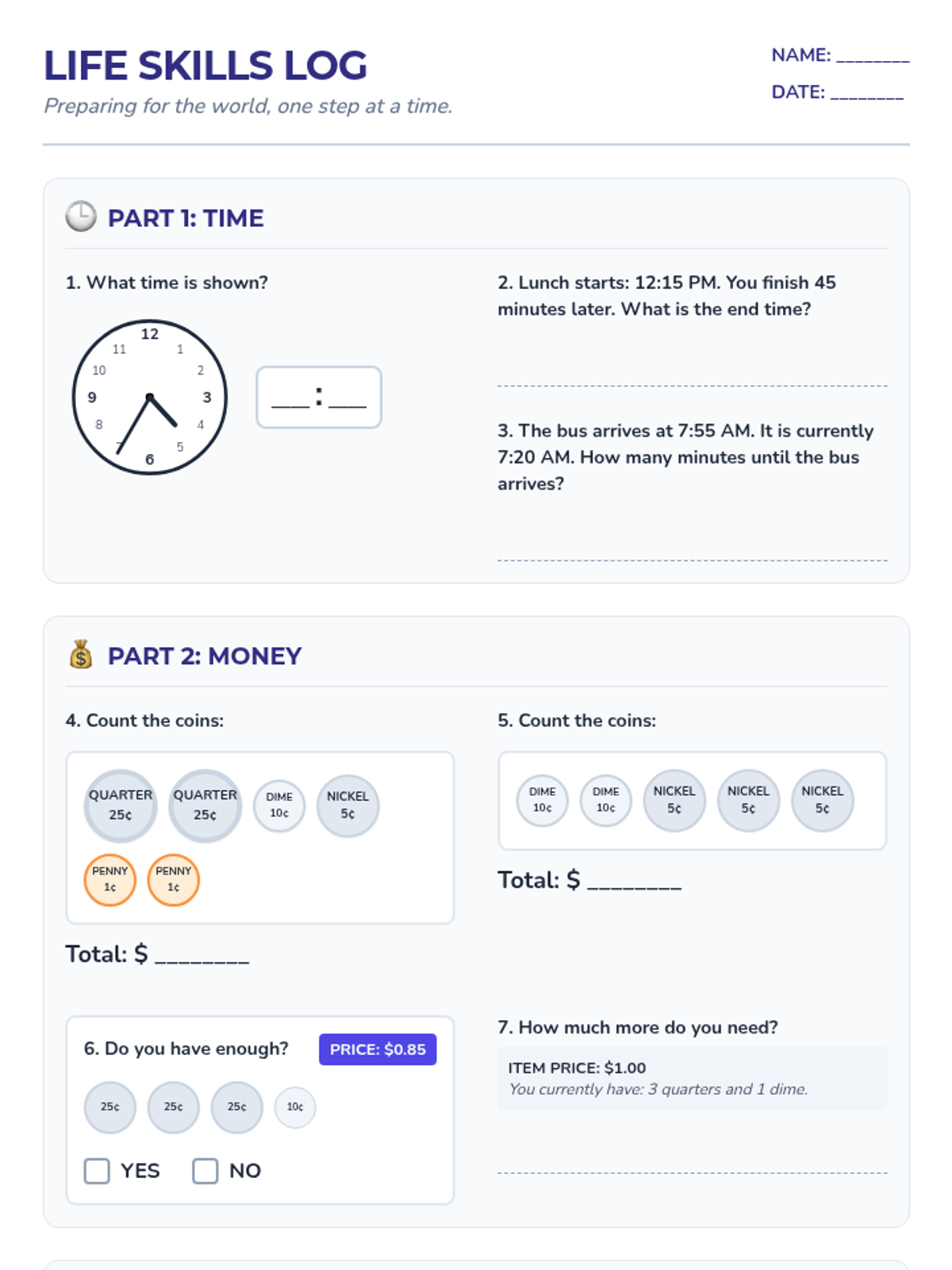
A morning work document for students to practice counting mixed coins with realistic coin representations, telling time to the nearest 5 minutes on a labeled clock, and identifying safe behaviors. Features expanded work areas for handwriting and clear sequential numbering.
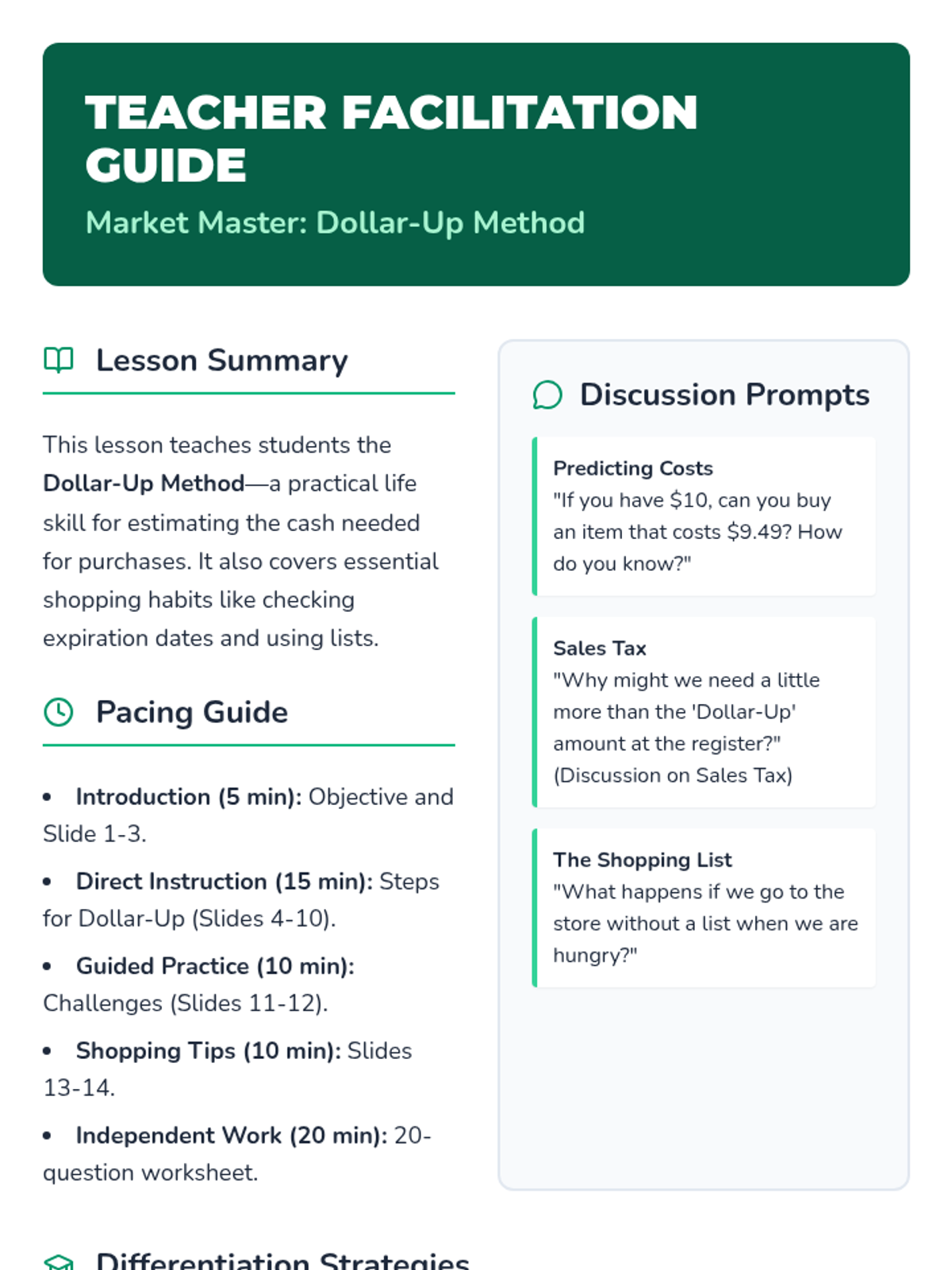
A teacher facilitation guide for the Market Master lesson, including pacing, discussion prompts, differentiation, and common misconceptions.
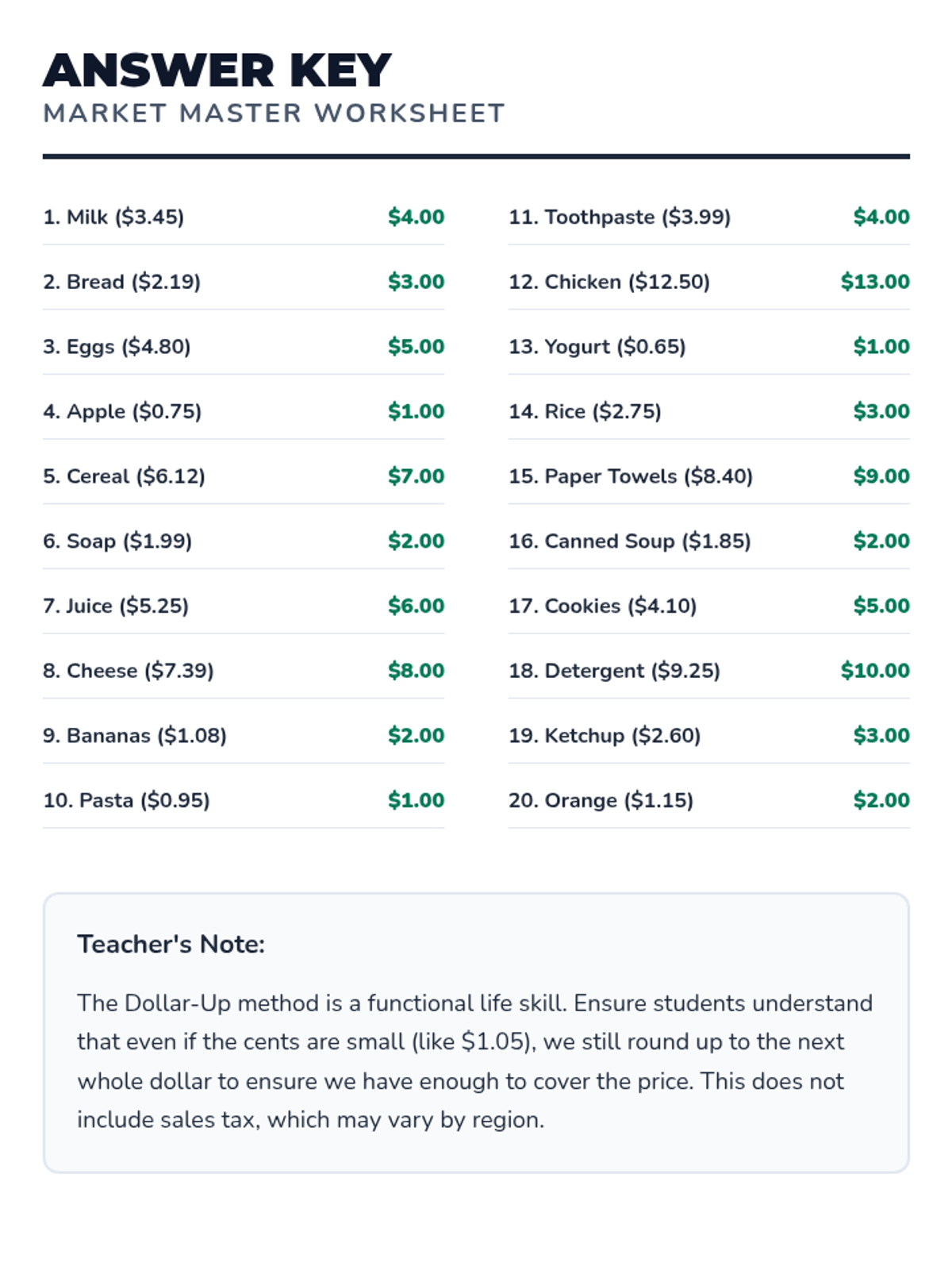
The answer key for the Market Master Worksheet, providing the correct dollar-up rounded values for all 20 questions.
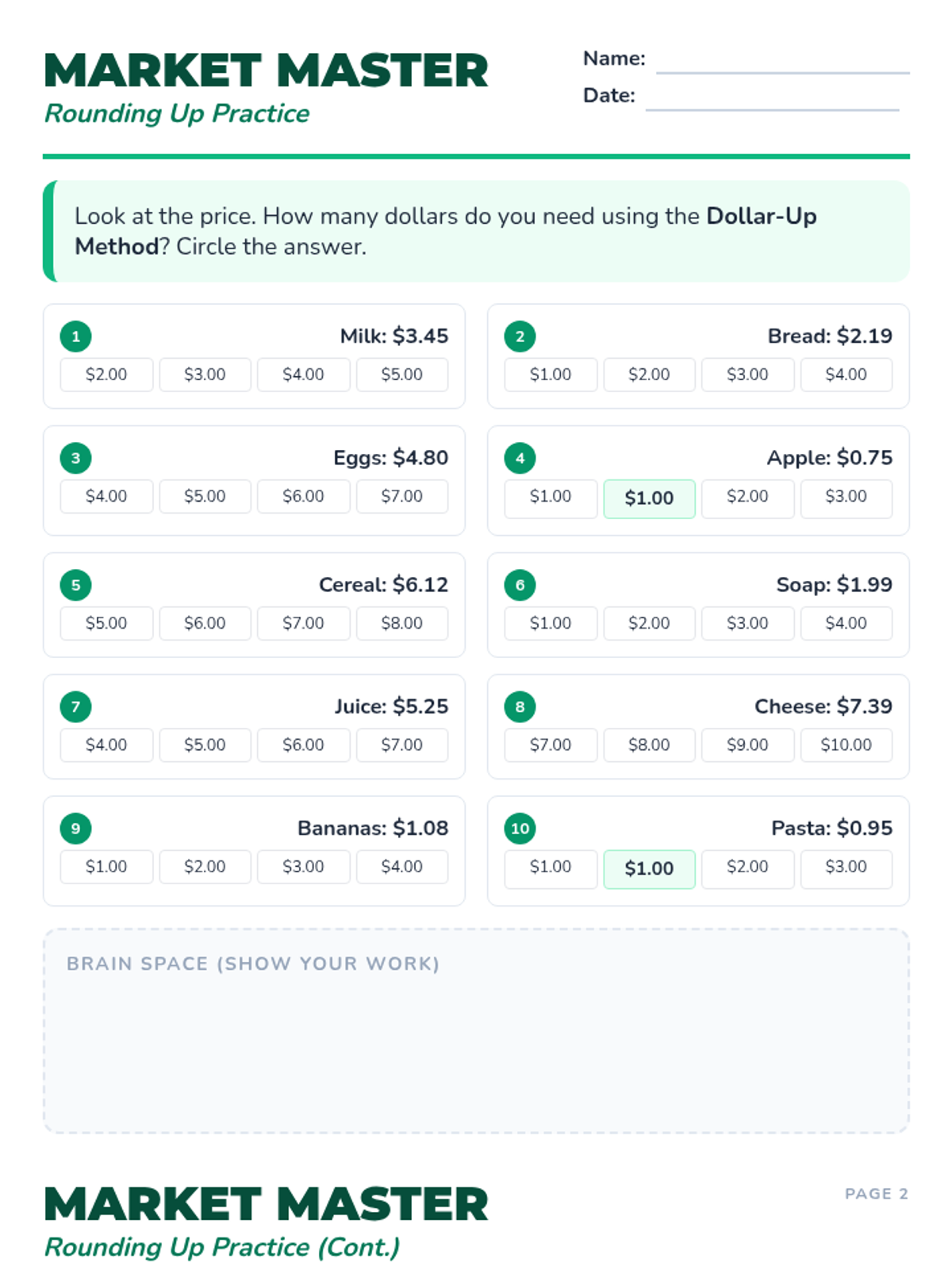
A 20-question multiple choice worksheet for practicing the dollar-up rounding method with grocery items, now optimized for 2-page printing with student work space and a clean grid layout.
A 15-slide presentation teaching the dollar-up rounding method for grocery shopping and essential shopping tips, now featuring answer reveal slides for practice challenges.
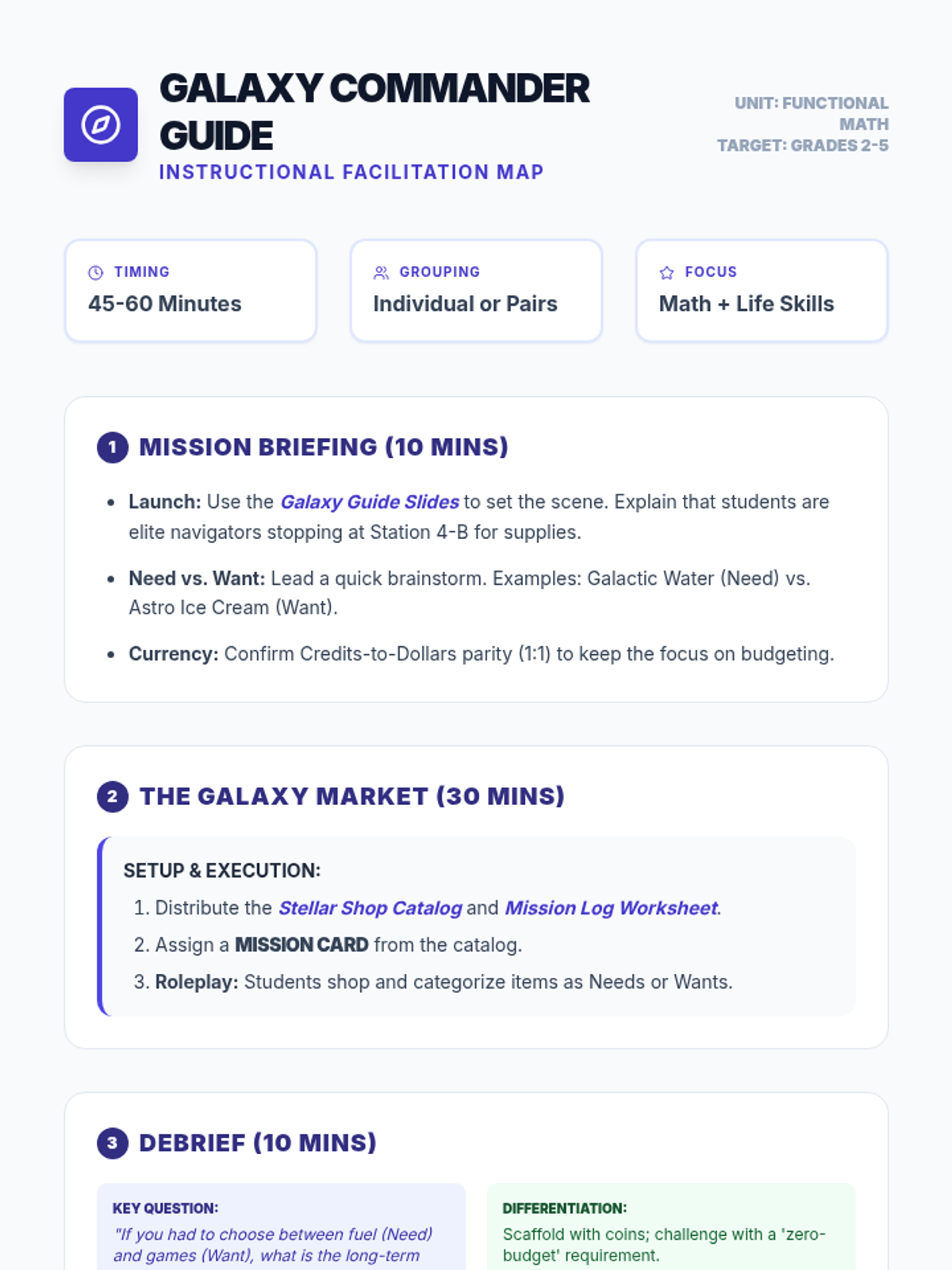
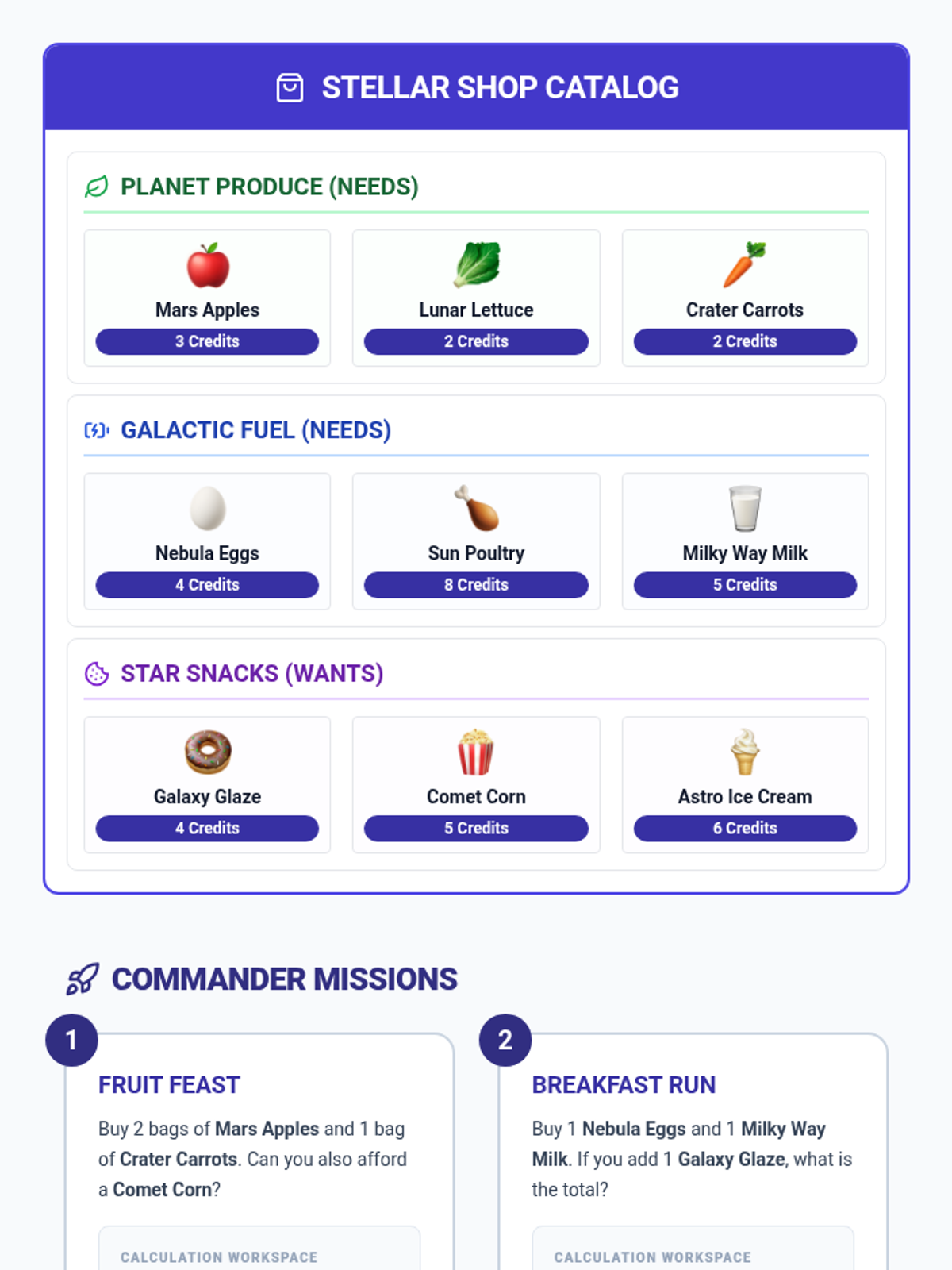
A comprehensive teacher's guide for 'The Grocery Galaxy'. Includes lesson phasing, differentiation tips, and an expanded answer key that provides both mathematical solutions and need/want categorization for all mission scenarios.
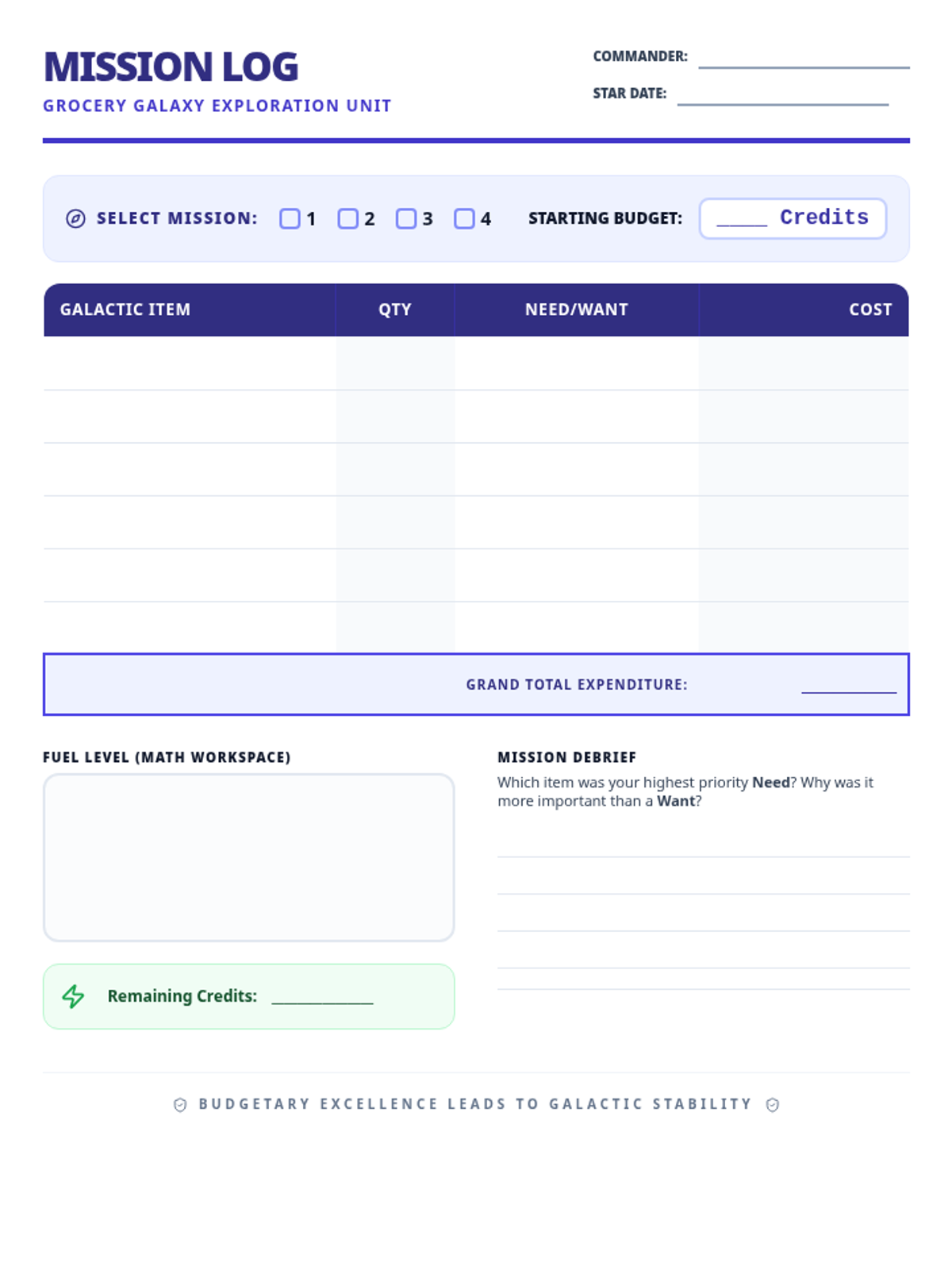
A refined student mission log with 6 entry rows for complex shopping simulations. Includes structured sections for budget calculation, need vs. want categorization, and written reflection.
A consolidated 2-page price catalog and mission card set for 'The Grocery Galaxy'. Featuring themed food items with costs and scenario cards with dedicated math workspaces for student calculations.
An instructional slide deck for 'The Grocery Galaxy' lesson, introducing students to budgeting concepts, galactic currency, and the distinction between needs and wants within a space-themed market simulation.
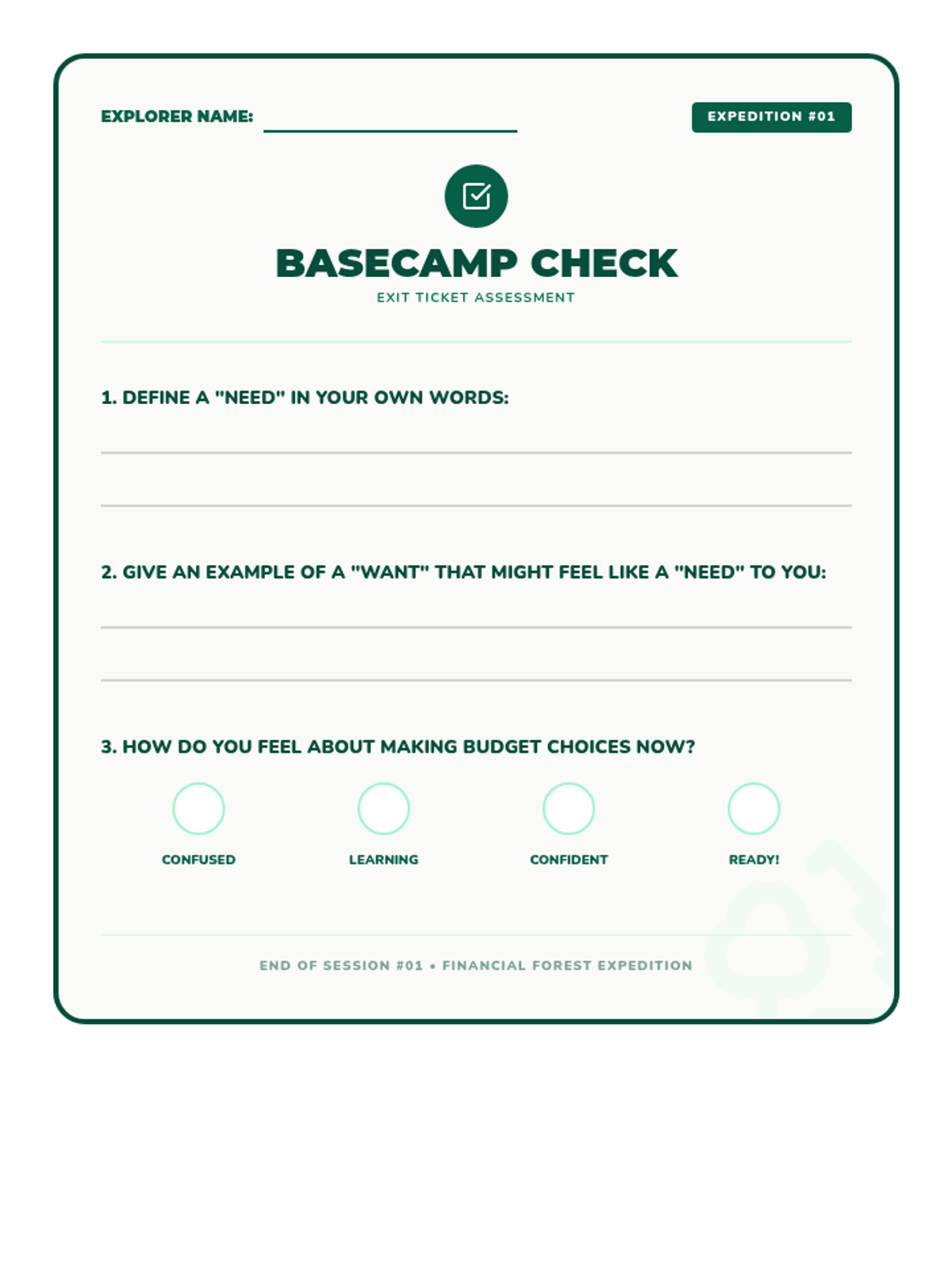
A brief exit ticket to assess student understanding after the 1:1 session. Features open-ended definition questions and a confidence self-assessment.
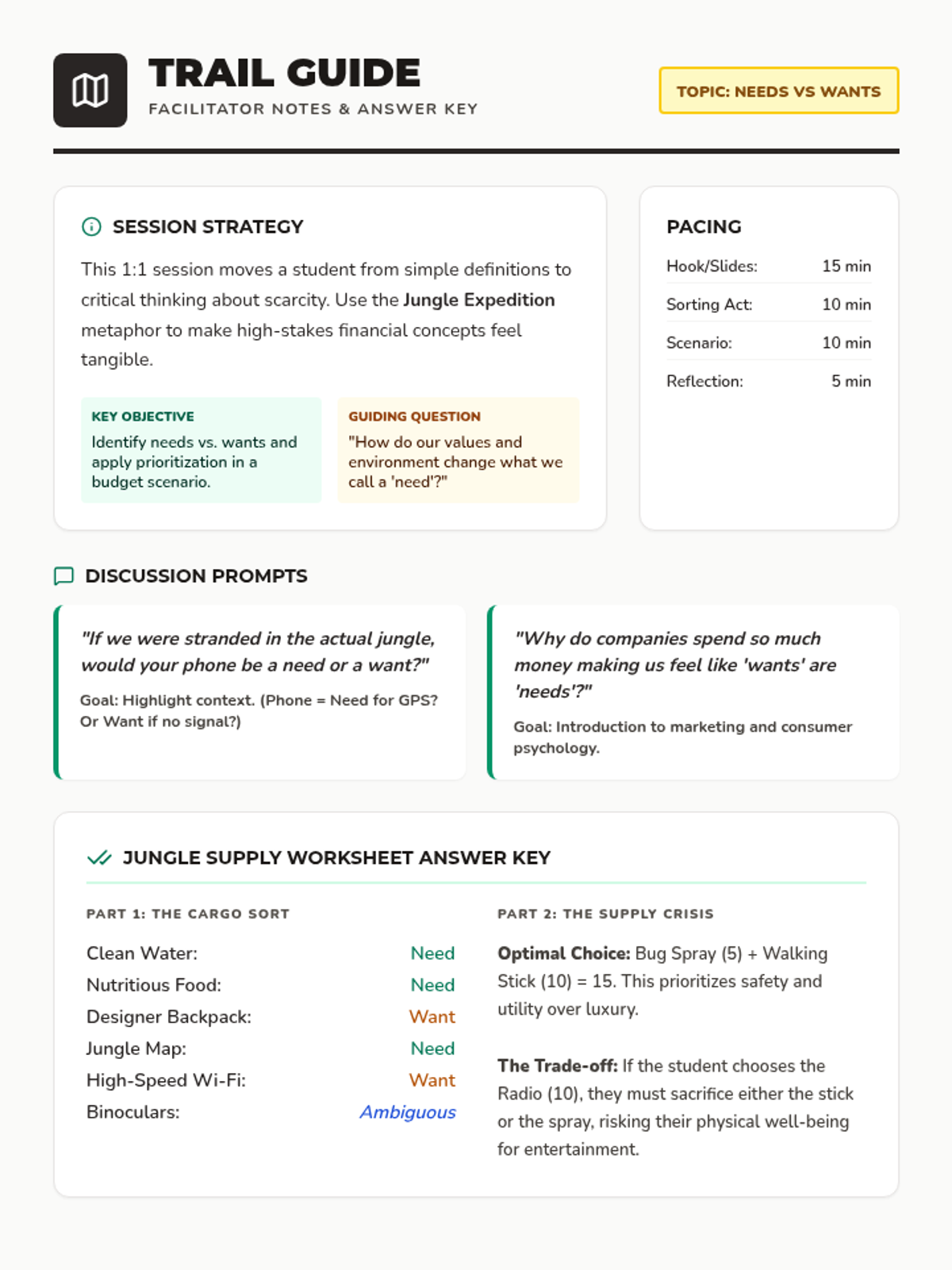
A comprehensive facilitator guide for the instructor. It includes session pacing, strategic discussion prompts, and a detailed answer key for the student worksheet.
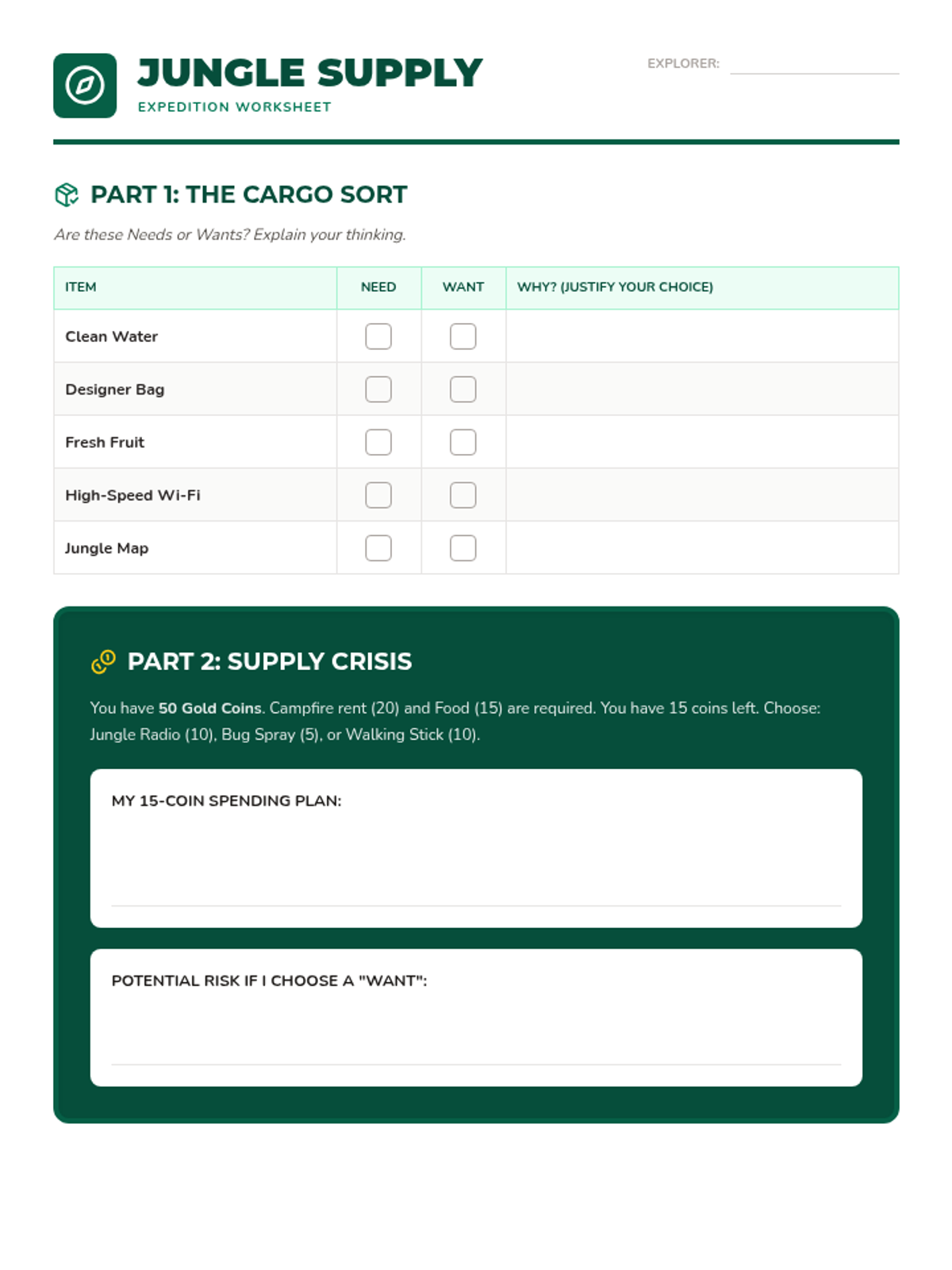
A student worksheet using the jungle expedition theme. It includes a sorting activity for needs and wants, a budget scenario challenge, and a reflection prompt.
A visually engaging slide deck using a jungle expedition theme to teach the difference between financial needs and wants. Includes clear definitions, examples, and a framework for prioritization.