Mindful breathing and body scan meditation techniques integrated with daily self-care routines. Develops strategies for balancing life demands and advocating for personal wellness needs.
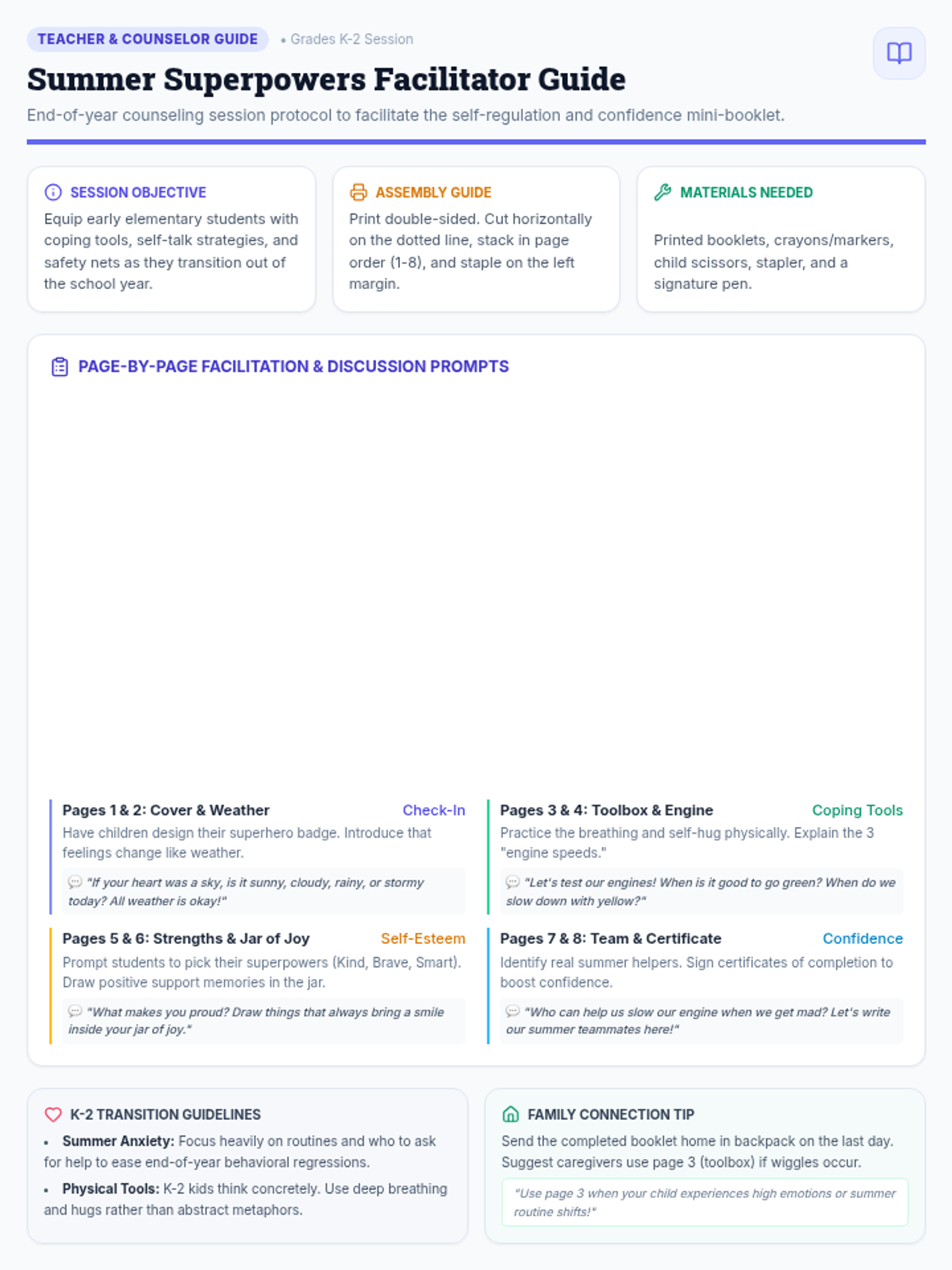
A counselor's facilitation guide for the 'Summer Superpowers' K-2 booklet, including session objectives, printing setup instructions, step-by-step scripts, discussion prompts, and cognitive transition strategies for young children.
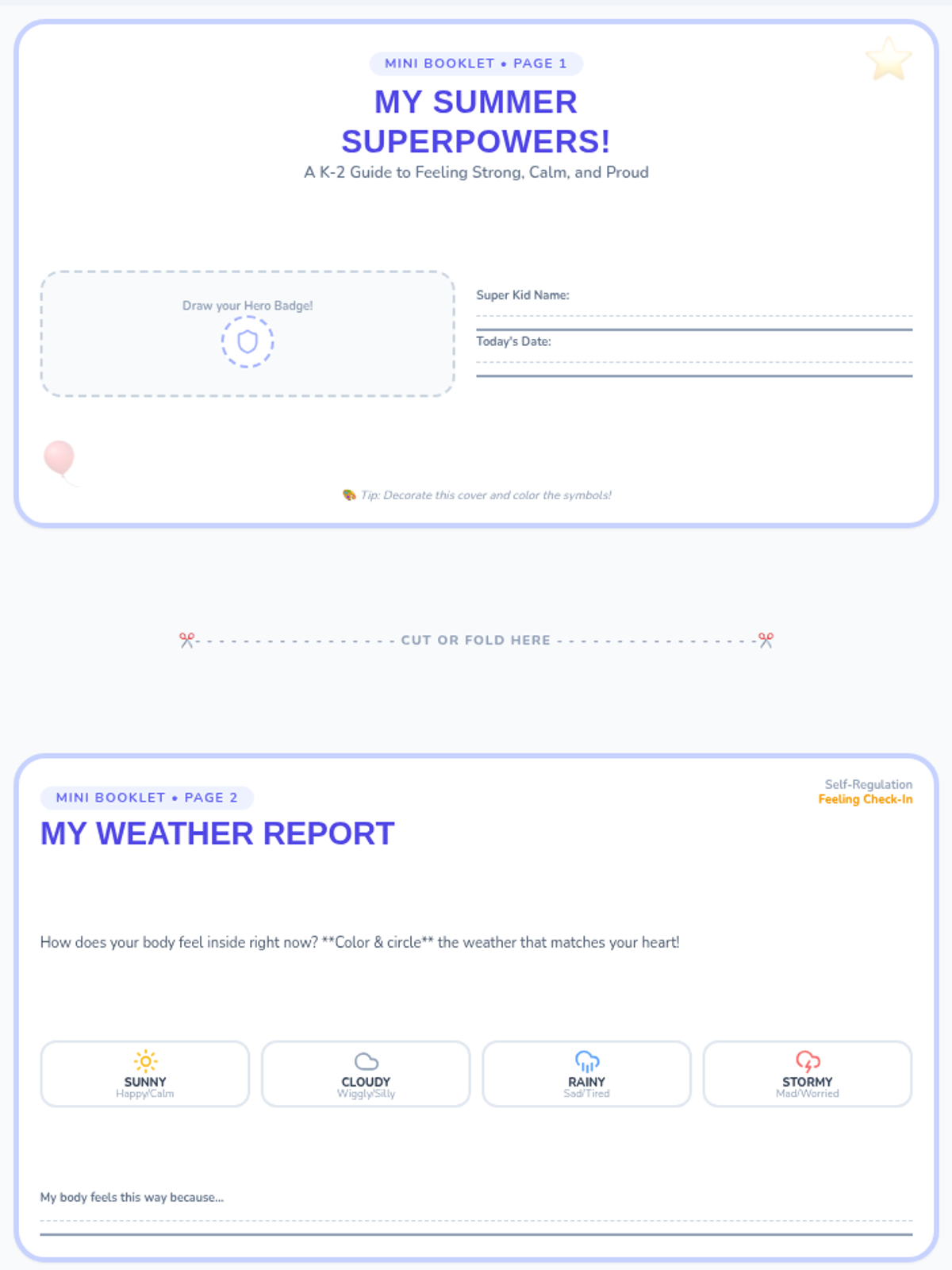
An interactive mini-booklet for K-2 students focused on self-regulation check-ins, coping skills toolbox, zones of regulation speeds, self-esteem strengths, and a coloring transition certificate. Formatted as horizontal cut/fold halves on 4 printable landscape sheets.
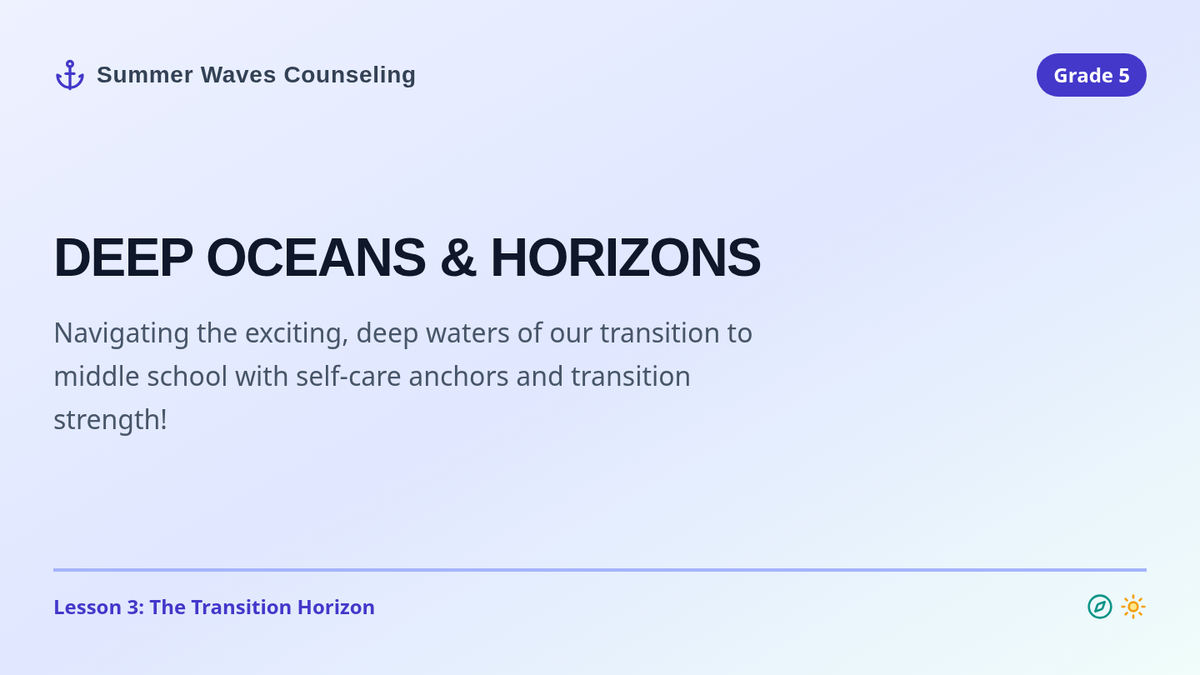
An encouraging transition presentation for 5th-grade groups preparing for middle school. Explores worries, hopes, and independent skills while introducing the 'Self-Care Anchor' framework.
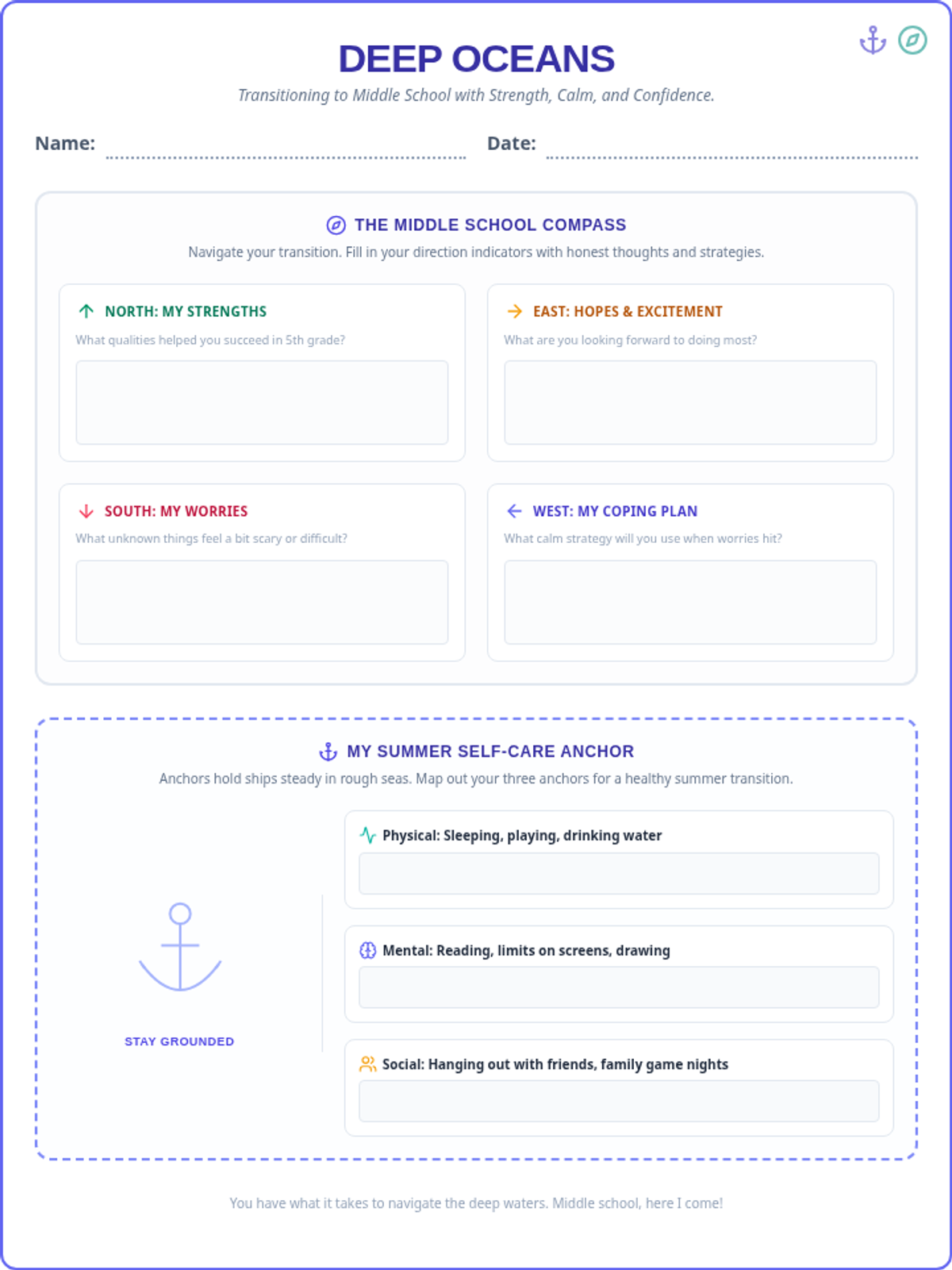
A developmental transition printable for 5th-grade students preparing for middle school. Features a 'Middle School Compass' transition mapping activity and a 'Summer Self-Care Anchor' planning section.
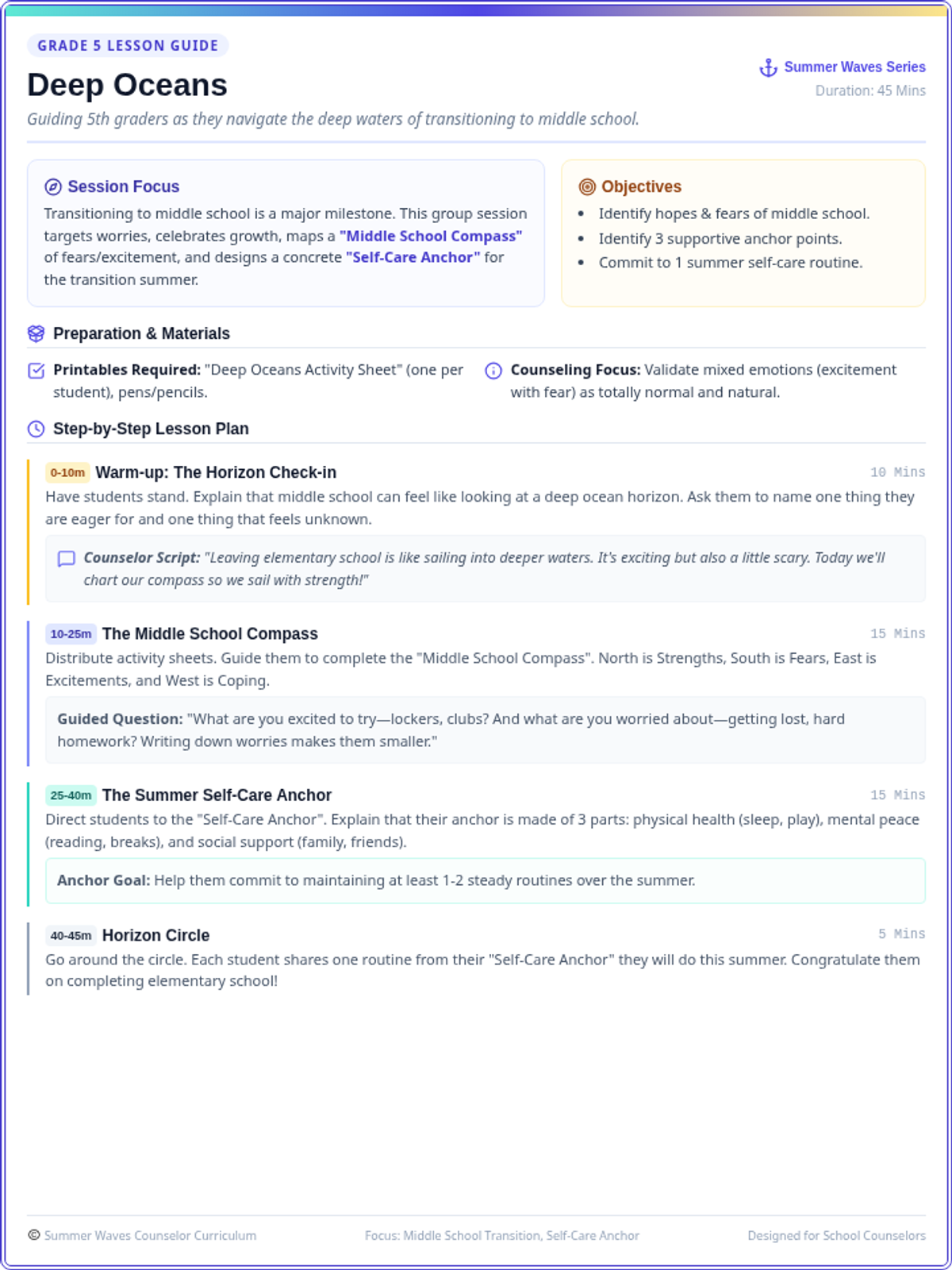
A structured 5th-grade transition lesson plan focusing on Middle School Compass transition goals and constructing a personal Summer Self-Care Anchor.
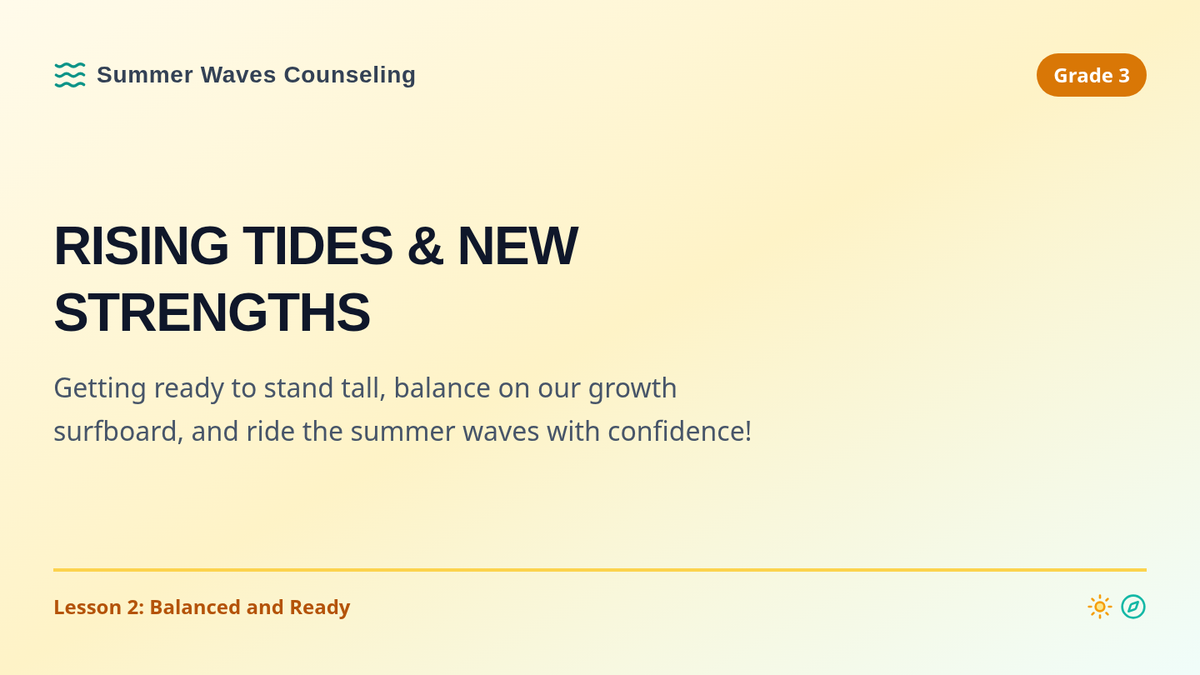
An interactive presentation for 3rd-grade groups. Covers the 'Summer Weather Feelings' check-in, explains internal strengths as a growth surfboard, and guides students to select items to pack in their summer coping suitcase.
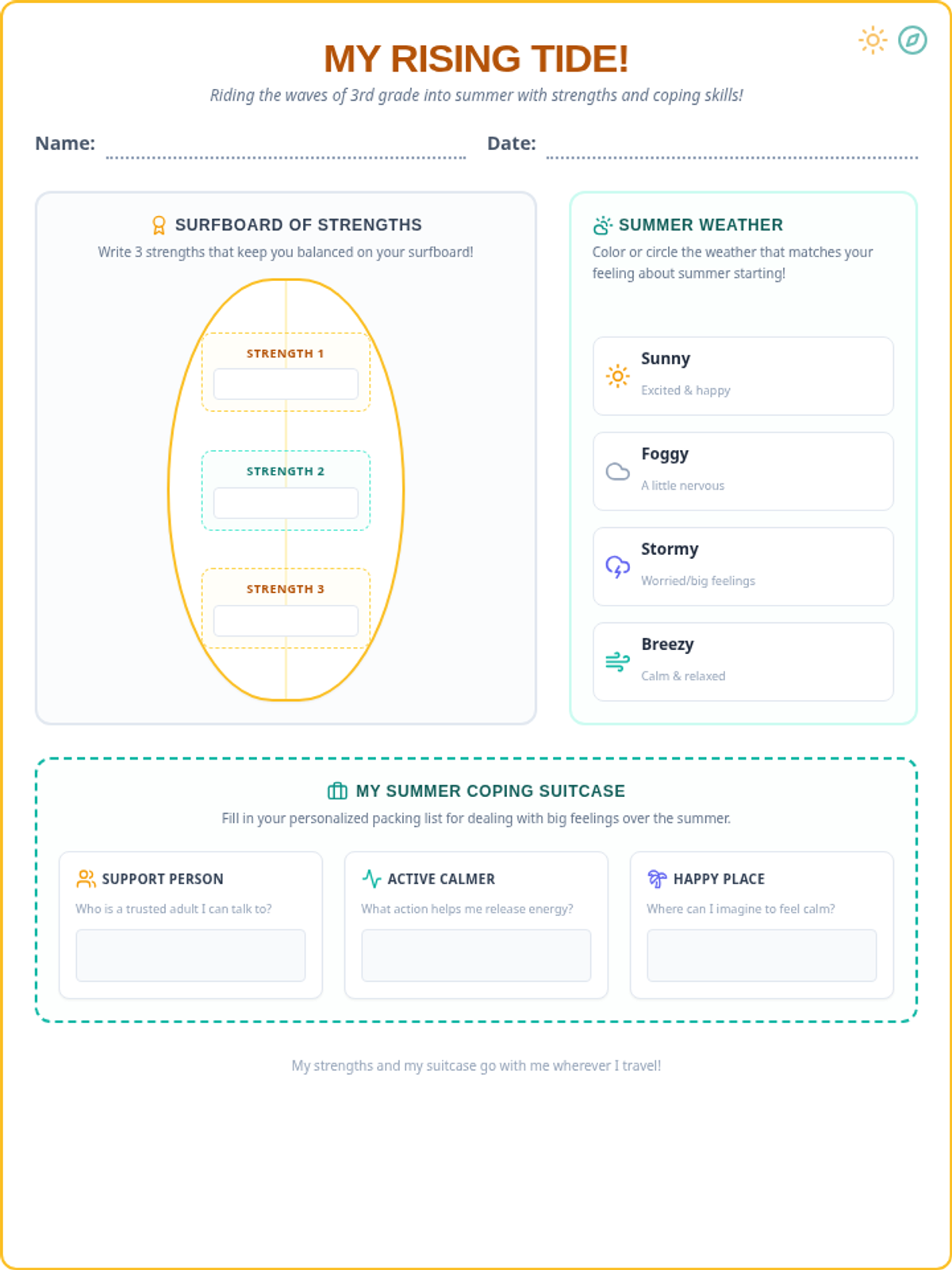
A developmental self-reflection printable for 3rd-grade students. Outlines a 'Surfboard of Strengths' for personal traits and a 'Summer Coping Suitcase' for documenting action steps to regulate big feelings.
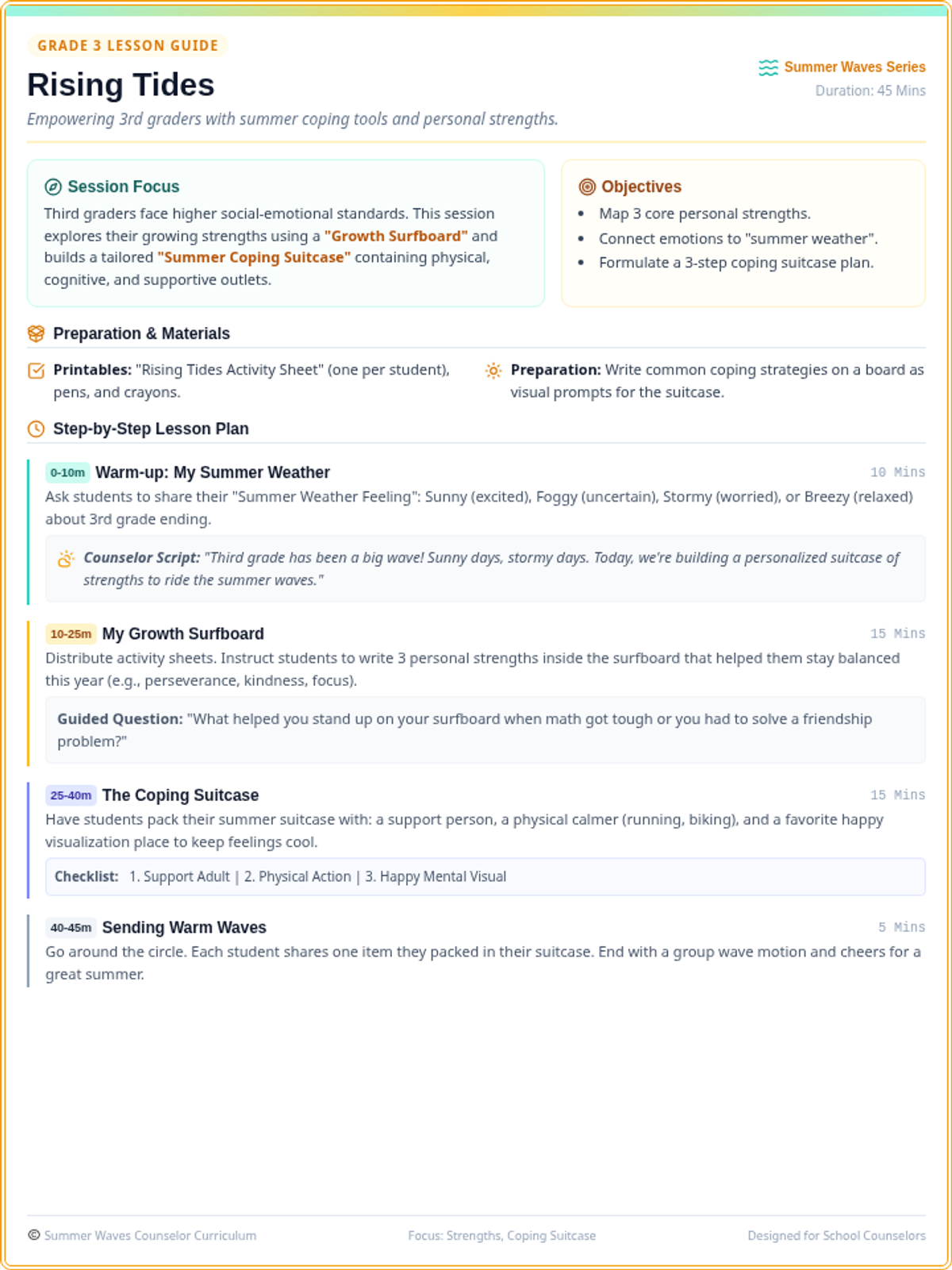
A structured school counselor guide tailored for 3rd grade, outlining procedures to map strengths using a 'Growth Surfboard' and create a comprehensive summer coping strategy suitcase.
An interactive and friendly presentation for 1st-grade counseling groups. High-contrast, easy-to-read layout using larger font elements (minimum 24px) to practice identifying emotional growth and learning 'Ocean Breathing'.
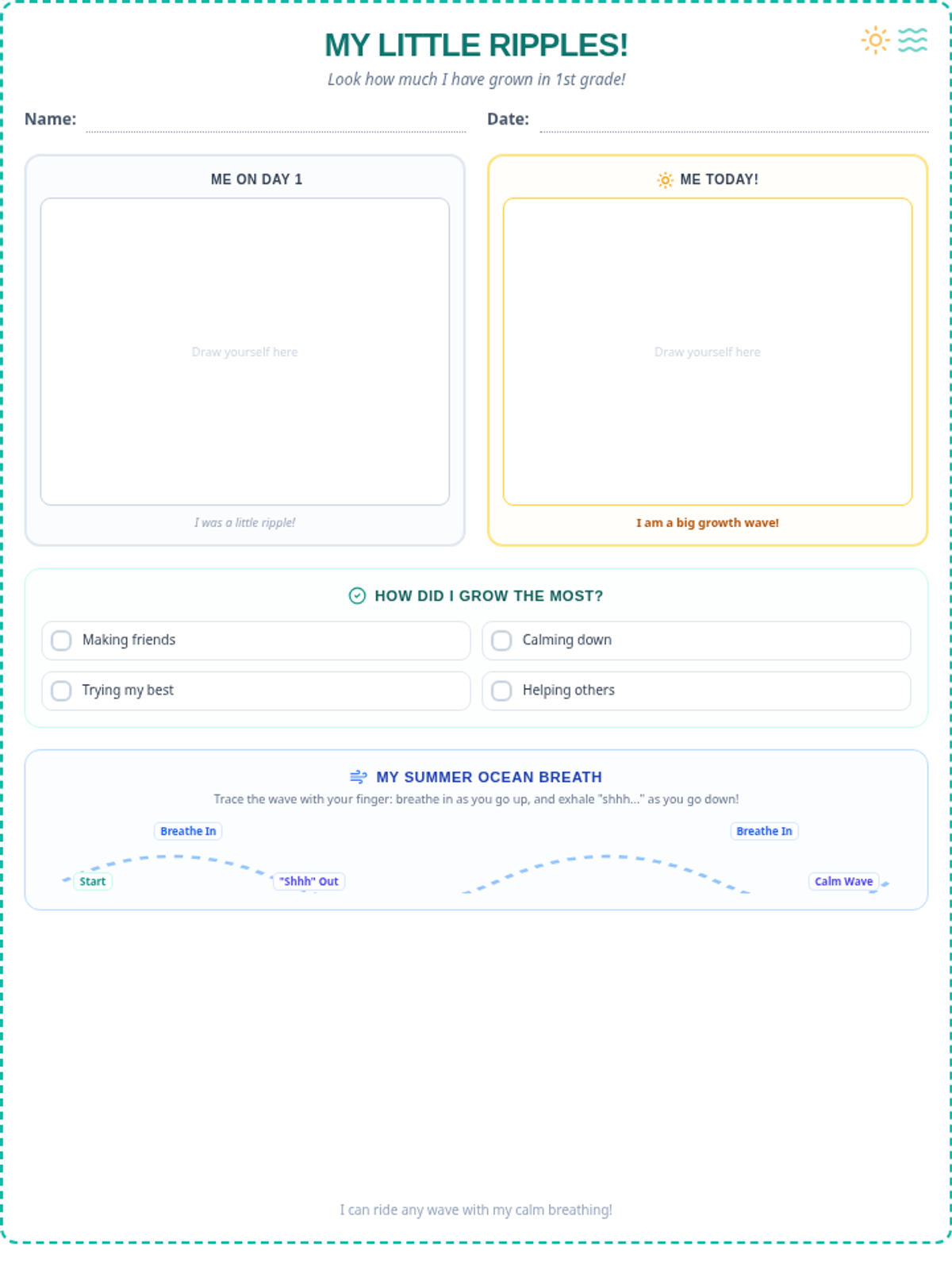
A highly visual, low-color 1st-grade school counseling printable. Features me-then vs me-now drawing panels, simple checkboxes for social-emotional accomplishments, and an interactive 'Ocean Breath' trace-and-breathe wave graphic.
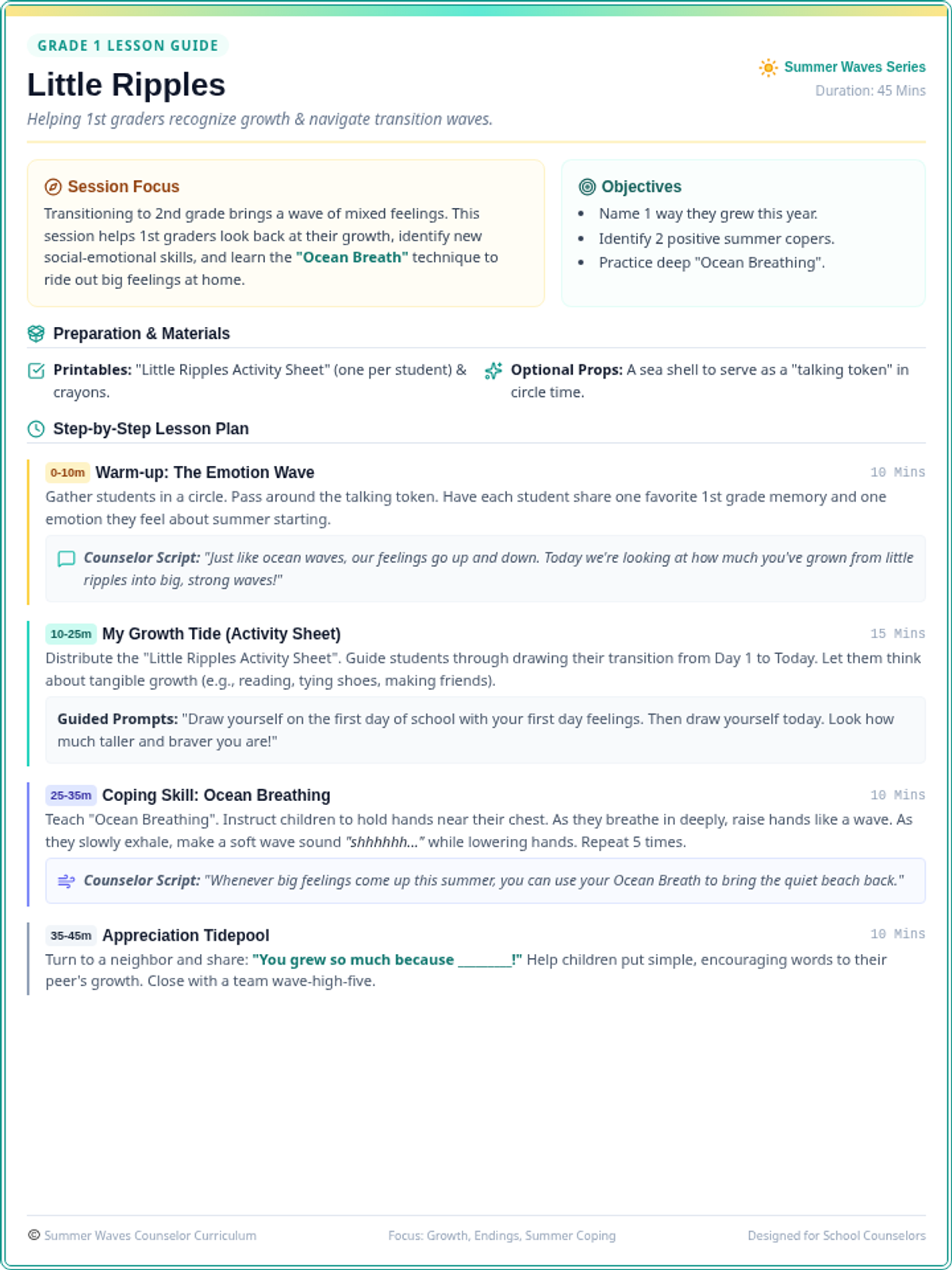
A professional, highly-structured school counselor lesson guide for 1st grade students, focusing on emotional reflection, growth tracing, and 'Ocean Breathing' coping mechanics. Designed to be highly print-friendly and easy to read.
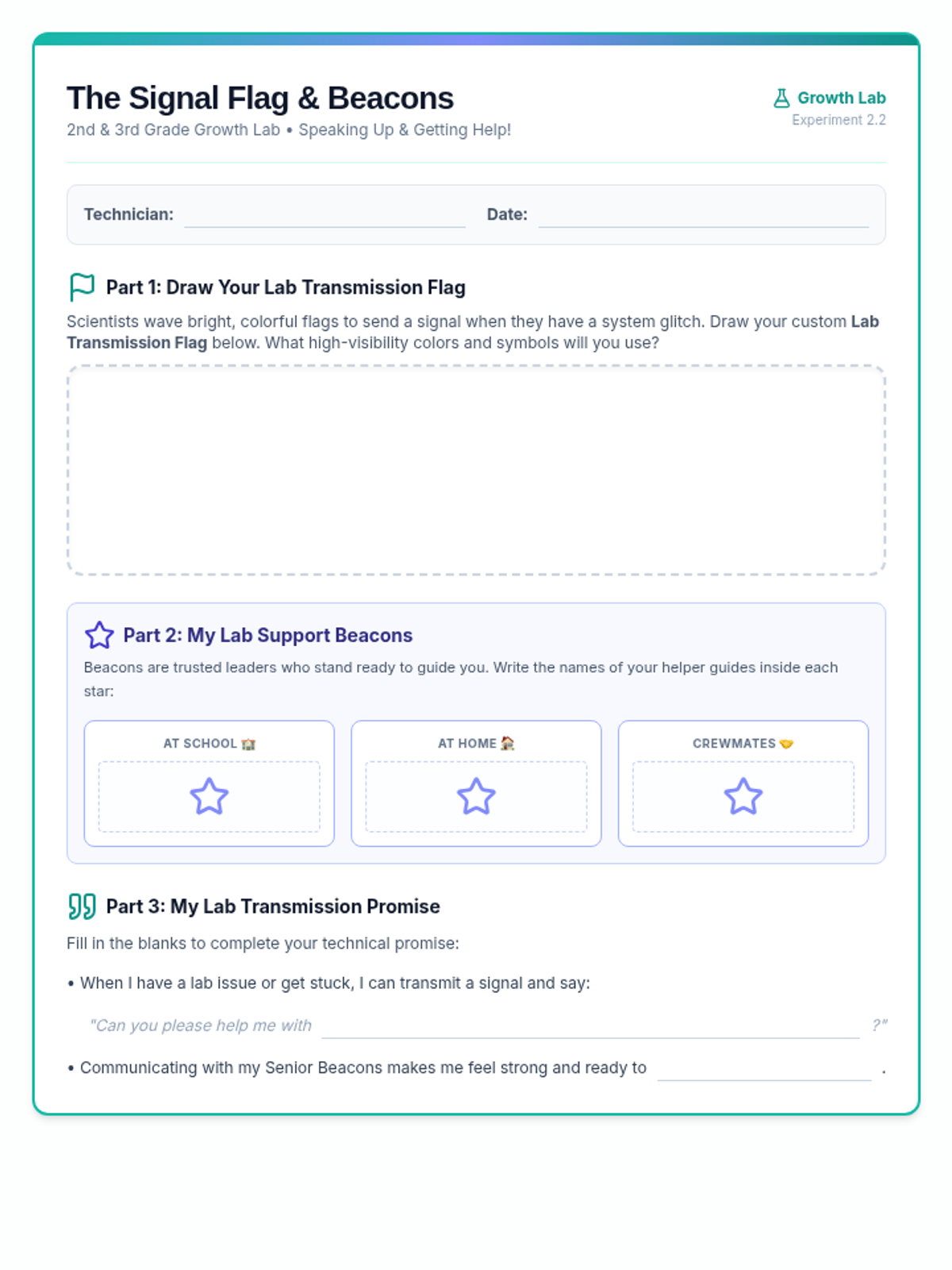
An interactive self-advocacy and support mapping worksheet designed for 2nd and 3rd-grade students. Features a 'Help Signal Flag' design space, a 'Guide Stars' helper mapping exercise, and simple fill-in-the-blank safety prompts.
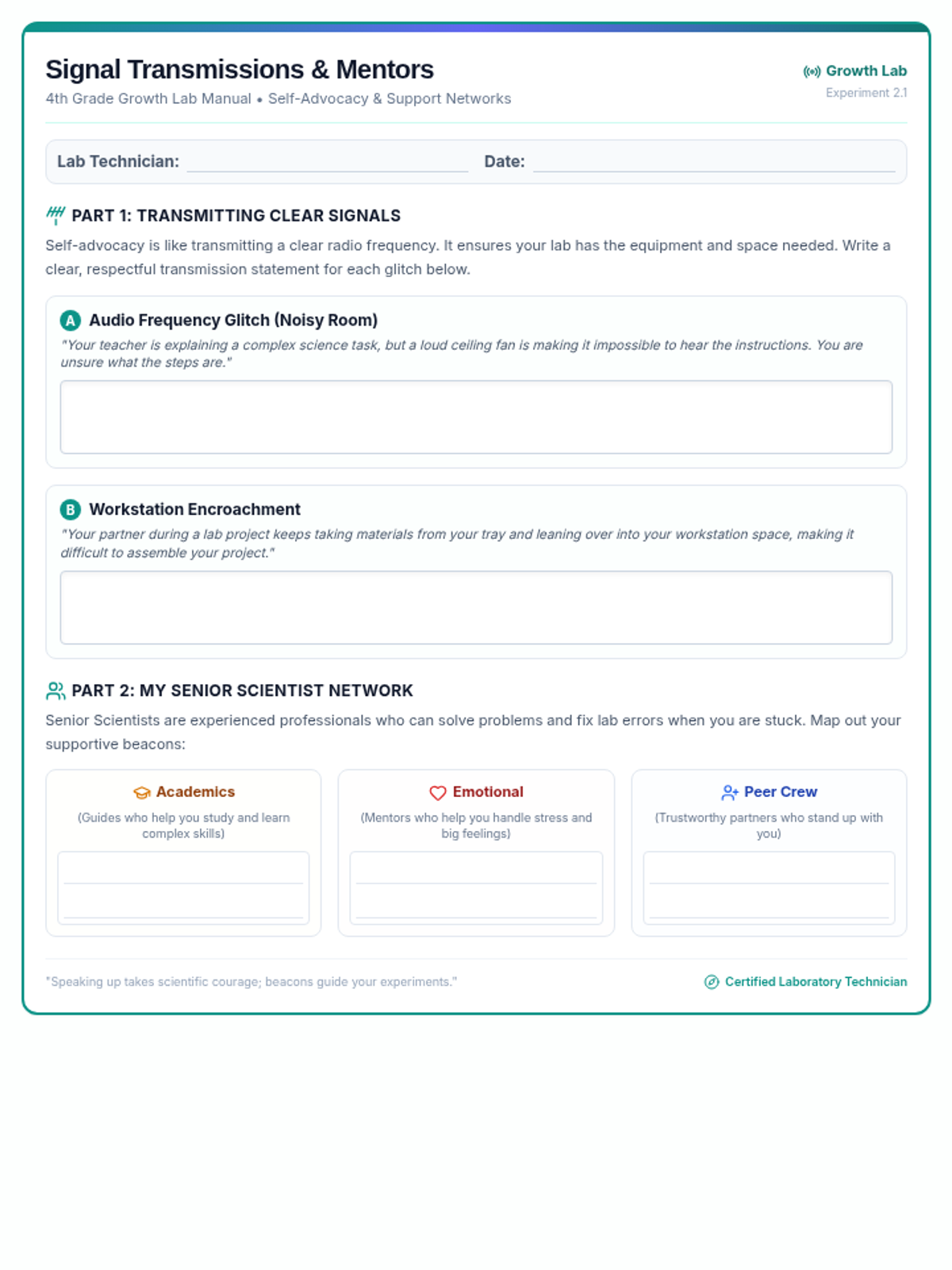
An independent self-advocacy and support mapping worksheet for 4th-grade students. Prompts students to draft self-advocacy responses to common school scenarios and map their personal support systems across academic, emotional, and social dimensions.
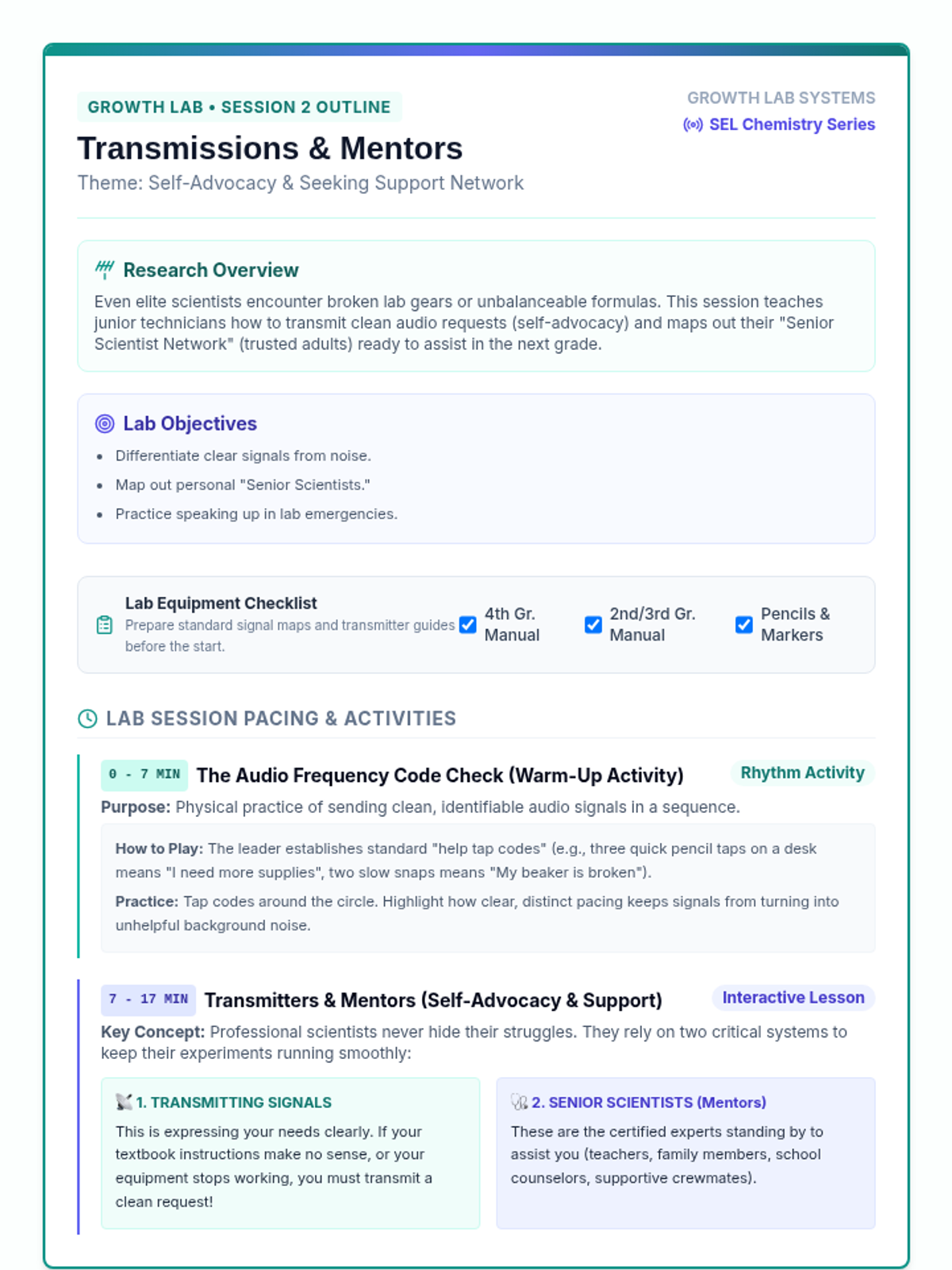
A premium facilitation guide for the second session of the end-of-year reflection series, focusing on self-advocacy and seeking support. Includes pacing, SOS Morse Code warm-ups, 'Trail Signals & Guides' role-play scenarios, grade-differentiated instructions, and collaborative group discussion prompts.
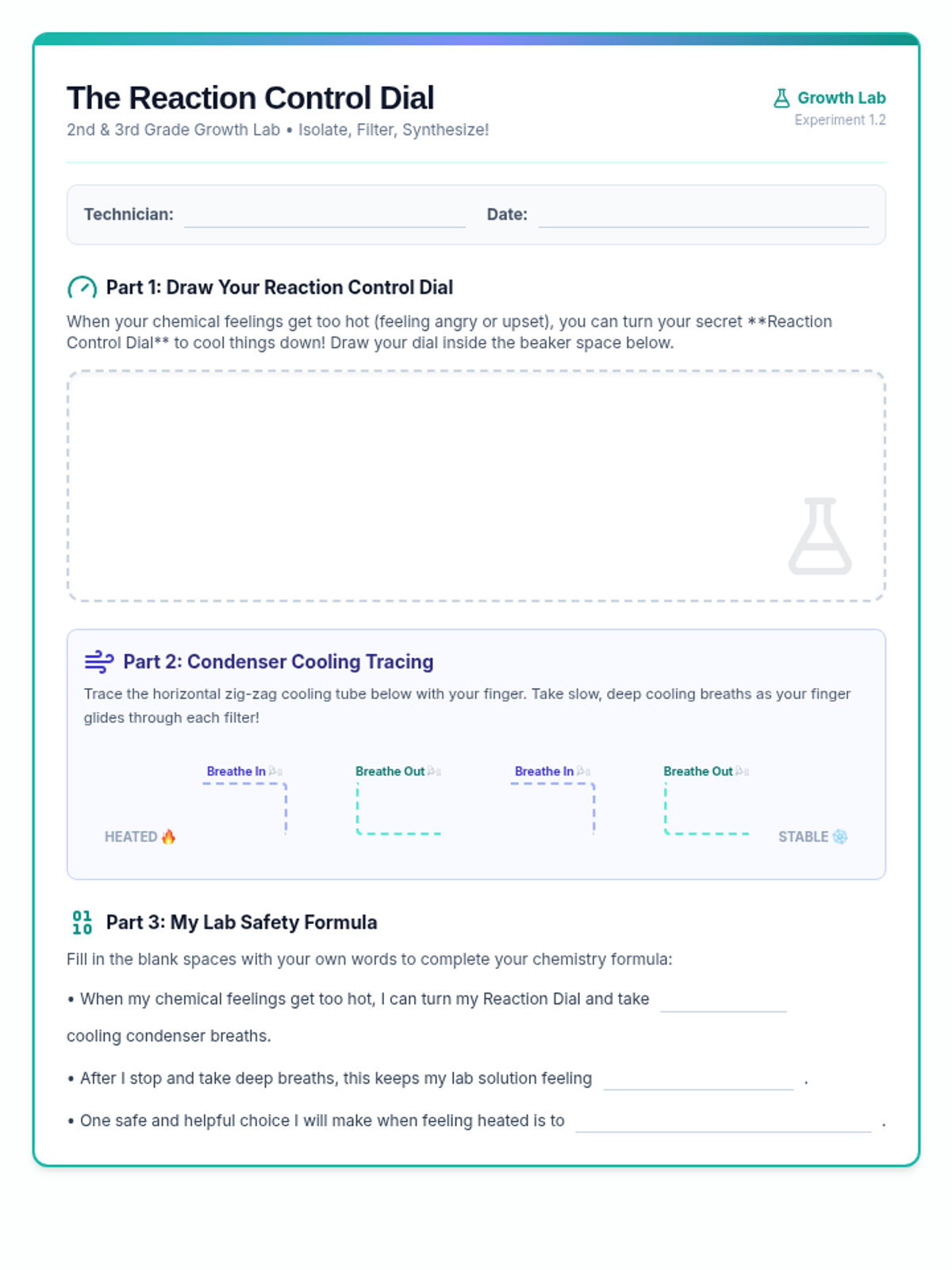
An interactive reflection and drawing activity designed for 2nd and 3rd-grade students to practice self-regulation. Features a design-your-own 'Pause Button' space, a tactile mountain-breathing tracing graphic, and guided fill-in-the-blank sentences to solidify personal self-soothing goals.
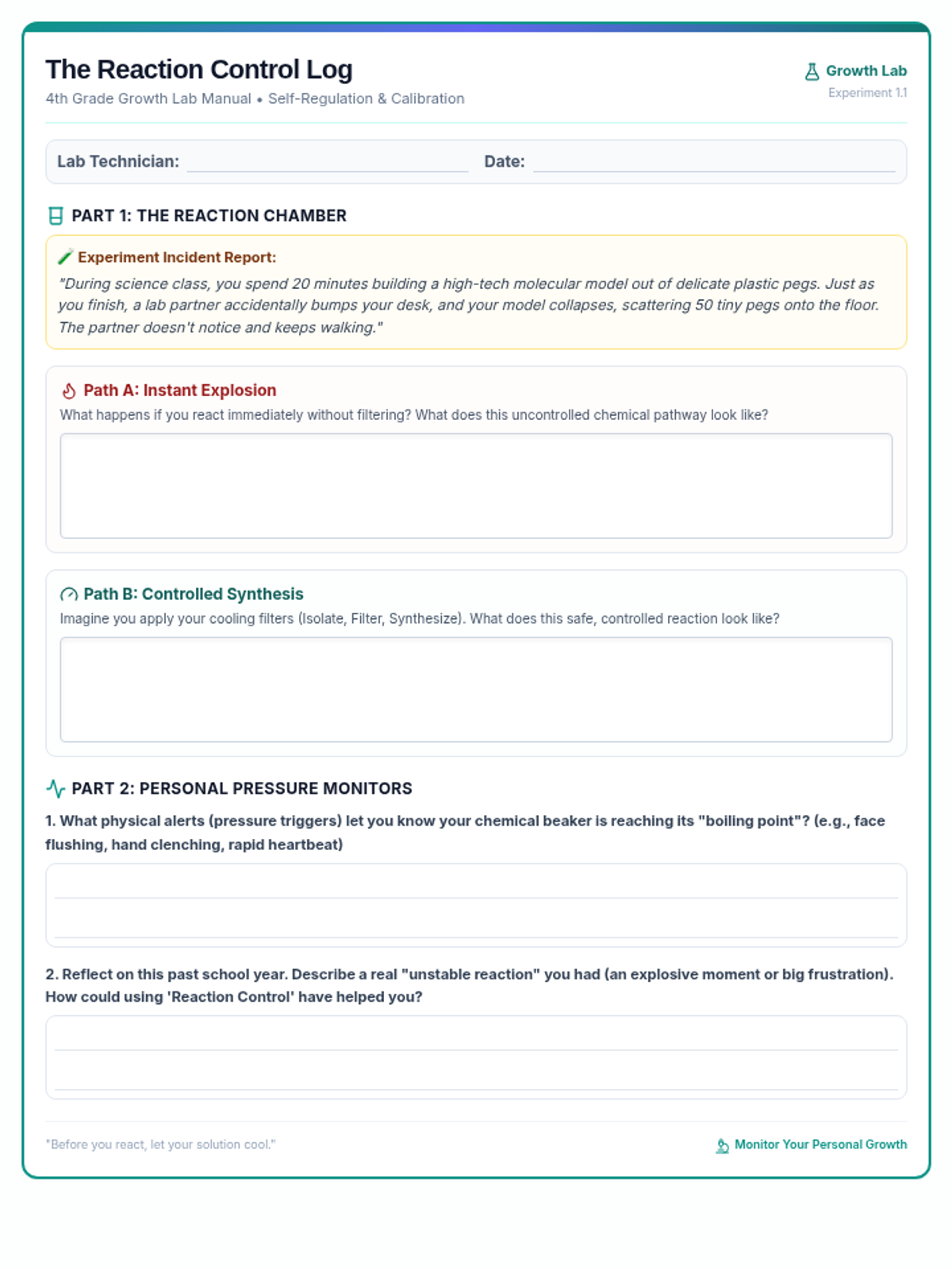
An independent reflection worksheet designed for 4th-grade students. Features a real-world scenario where students analyze and contrast impulsive immediate reactions with deliberate, 'paused' decision-making, followed by guided prompts to identify physiological body signals and reflect on personal growth over the past school year.
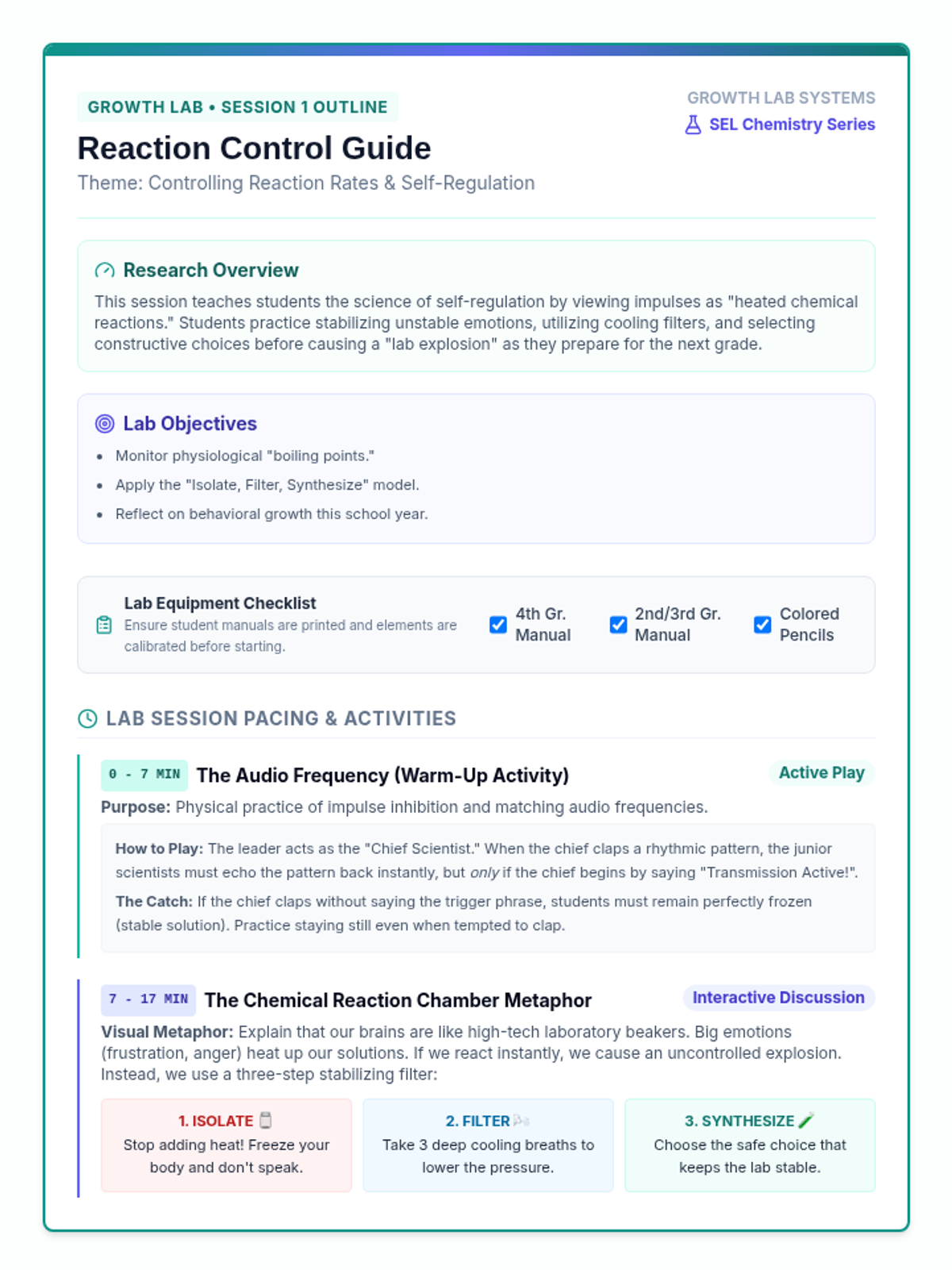
A premium facilitation guide for the first session of the end-of-year reflection series, focusing on impulse control and self-regulation. Includes pacing, active play warm-ups, the 'Trail Fork' physical/mental model, grade-differentiated instructions, and collaborative group discussion prompts.
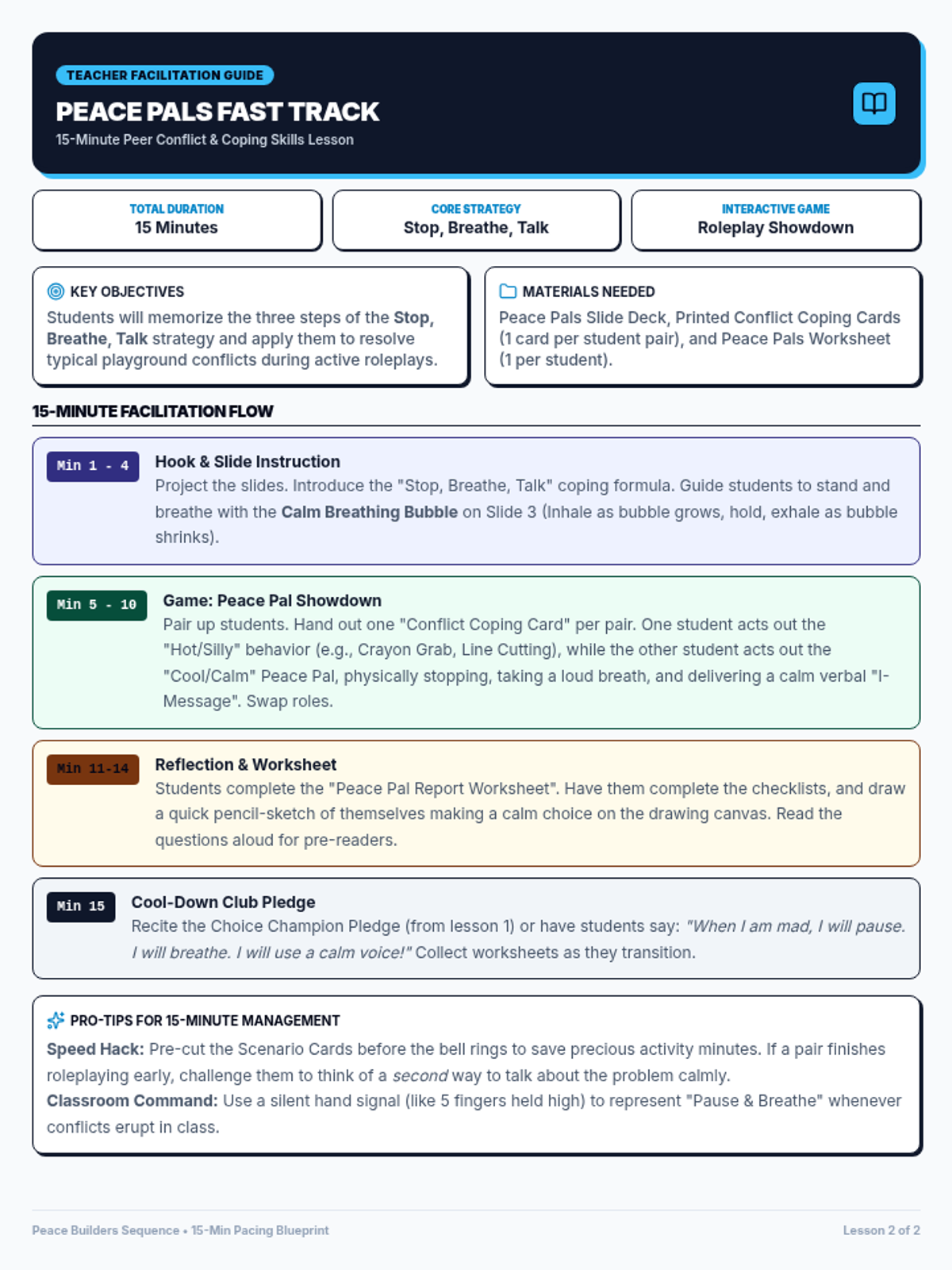
A comprehensive pacing and facilitation guide for teachers to deliver the Peace Pals lesson. It details a fast-track 15-minute delivery timeline with specific scripts, active roleplay management, and rapid transitions.
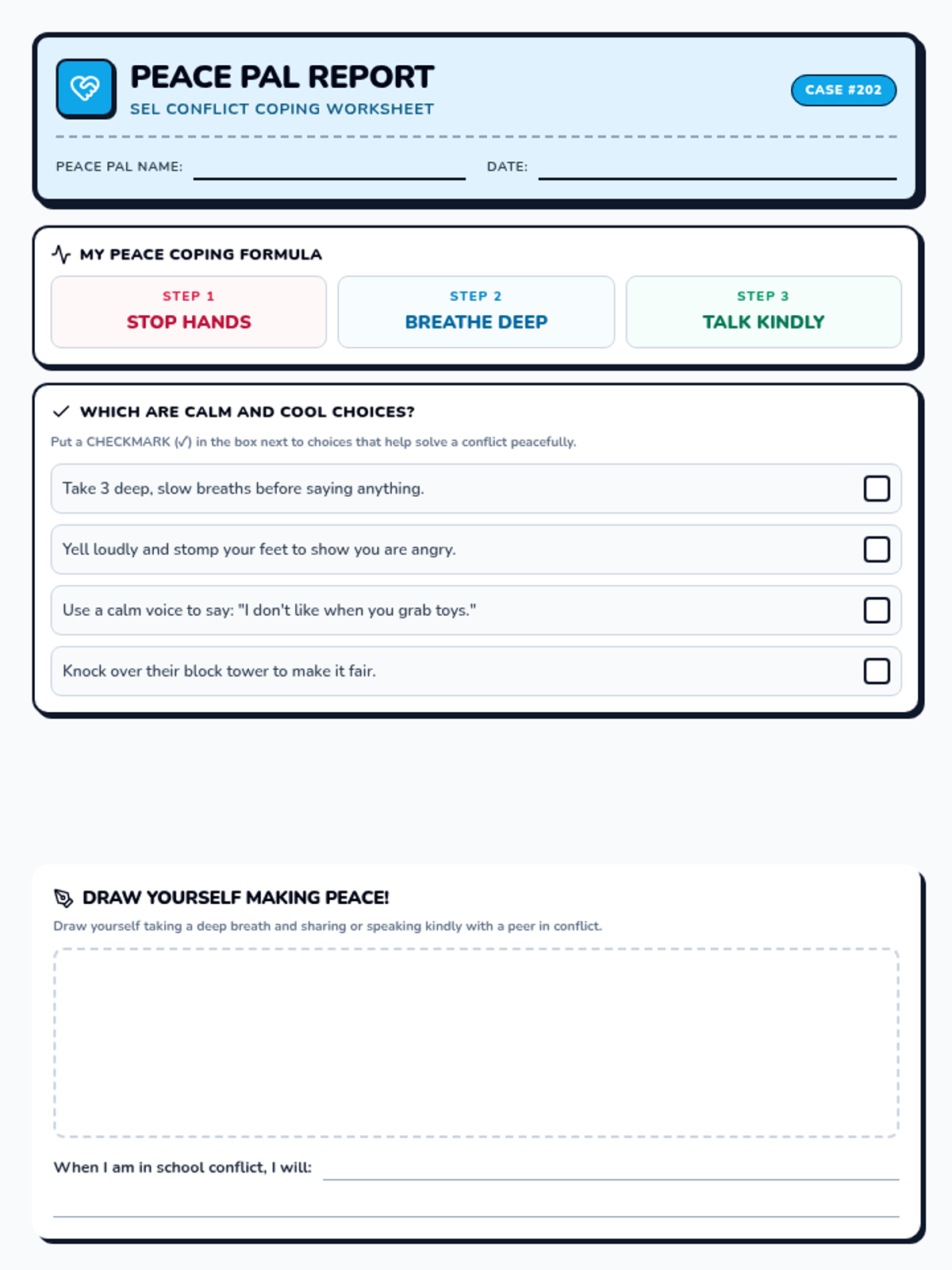
A reflection and matching worksheet for K-3 students to practice conflict self-regulation. Students identify calm coping choices (with identically styled check-boxes) and draw a visual representation of peaceful conflict resolution.
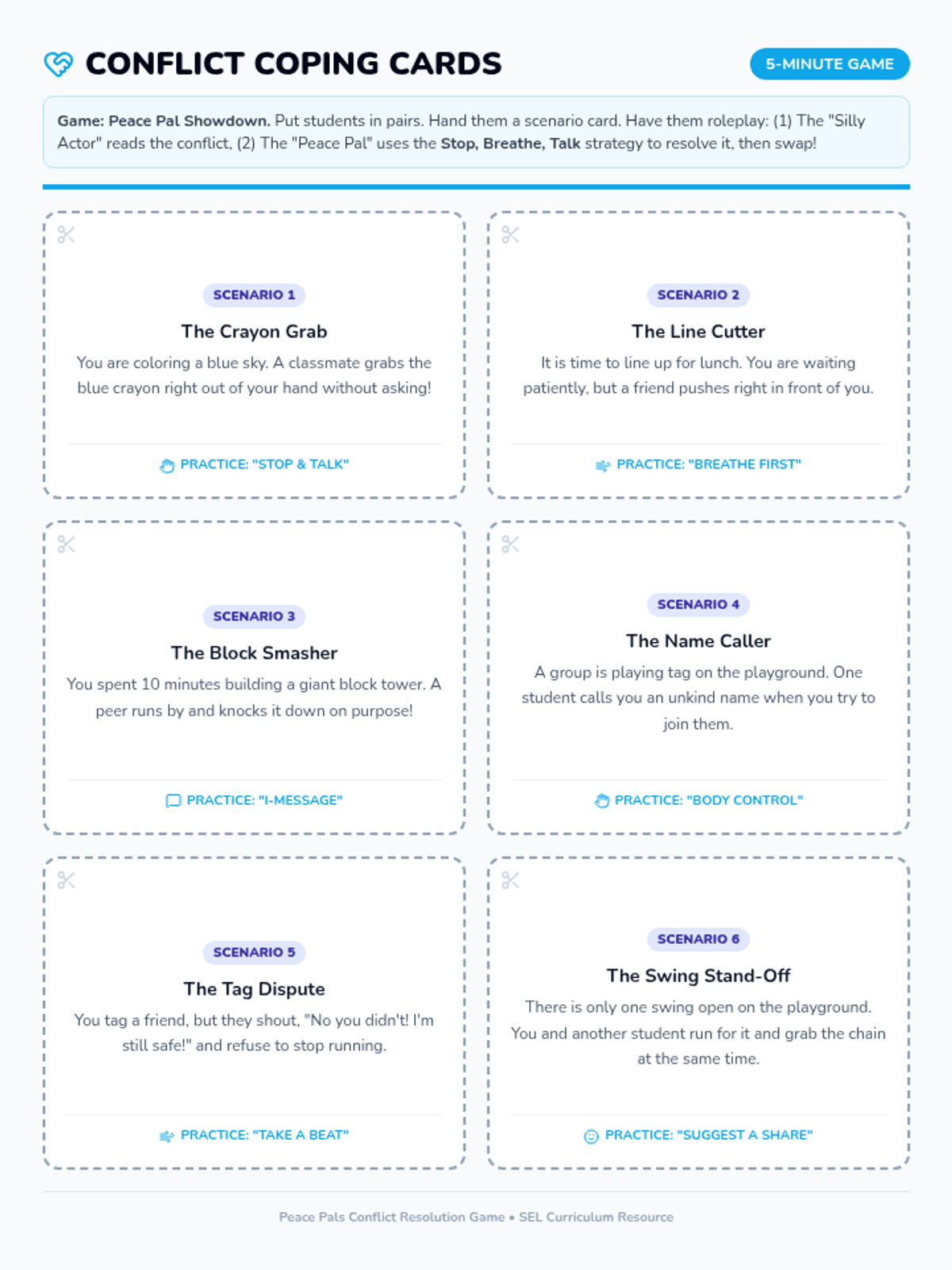
Print-ready role-play activity cards designed to be done as a fast-paced classroom game called 'Peace Pal Showdown'. Includes 6 distinct student-centered peer conflict scenarios to practice positive self-regulation and verbal resolution.
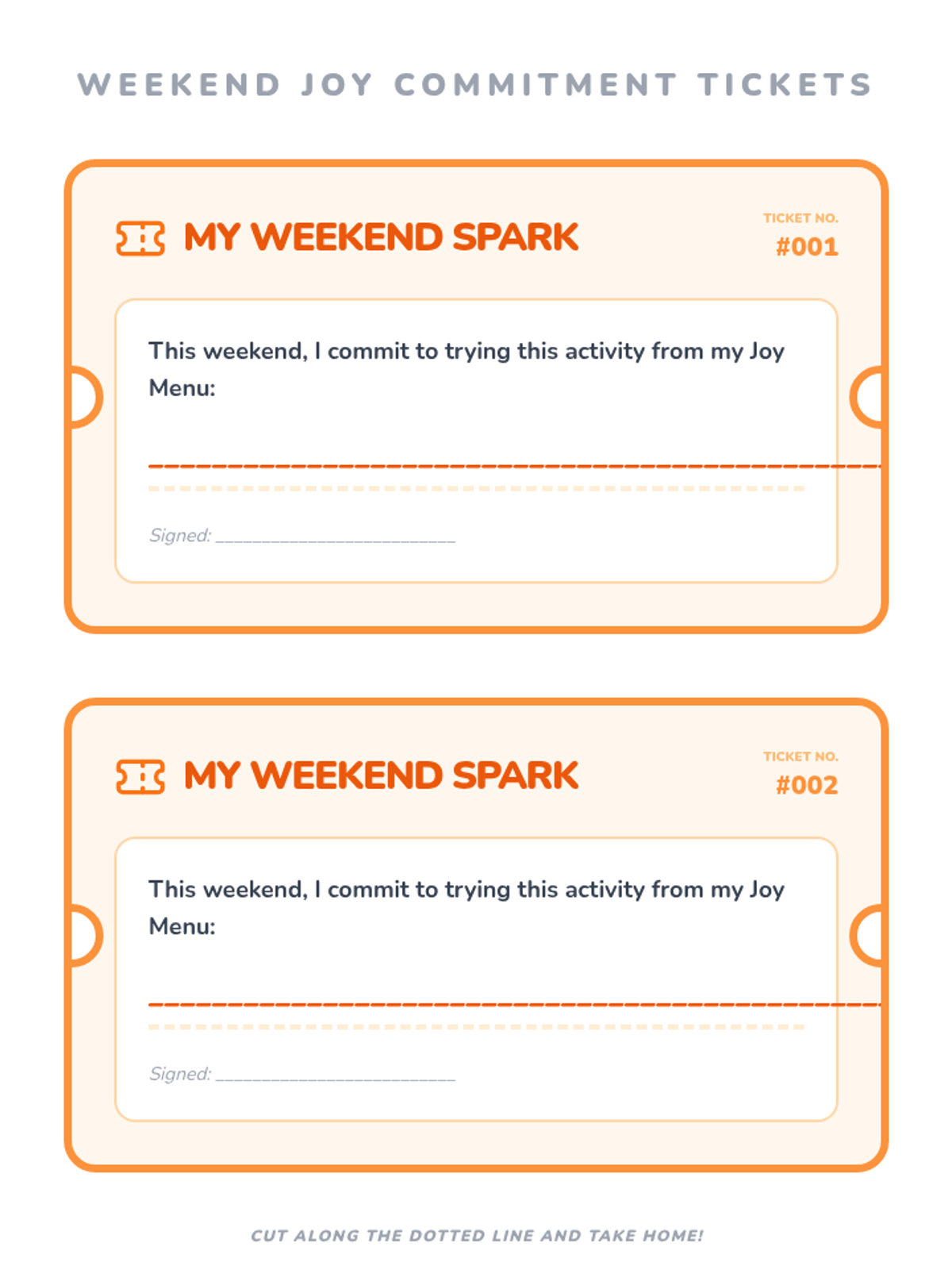
Weekend commitment exit tickets for Lesson 5, where students pledge to try one activity from their Joy Menu.
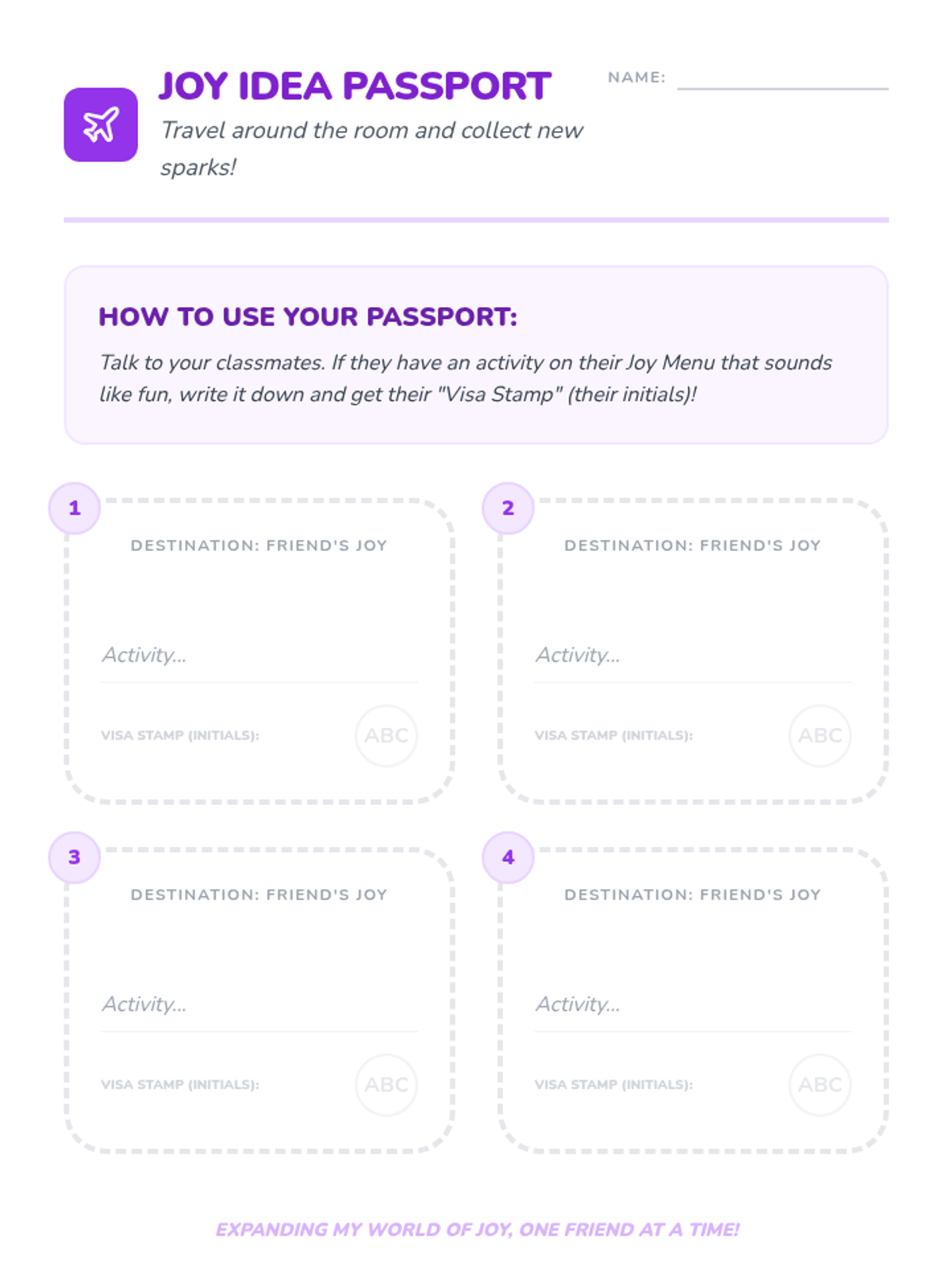
Student worksheet for Lesson 5, used during the Joy Exchange to collect activity ideas from classmates.
Visual presentation for Lesson 5, guiding the 'Joy Scavenger Hunt' and the sharing of personalized menus.
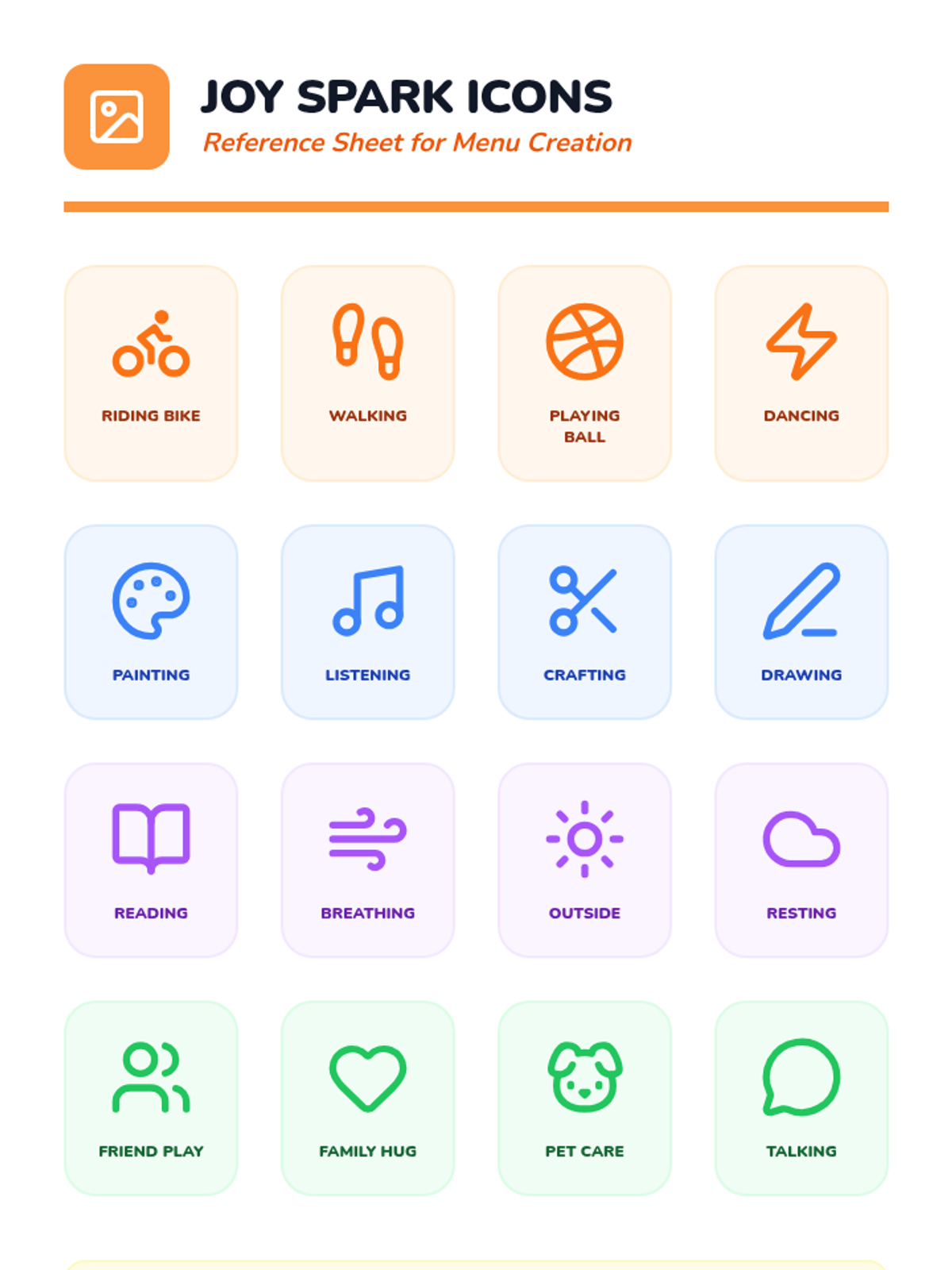
Reference sheet for students to use when illustrating their Joy Menus, providing simple icons and labels for various activities.
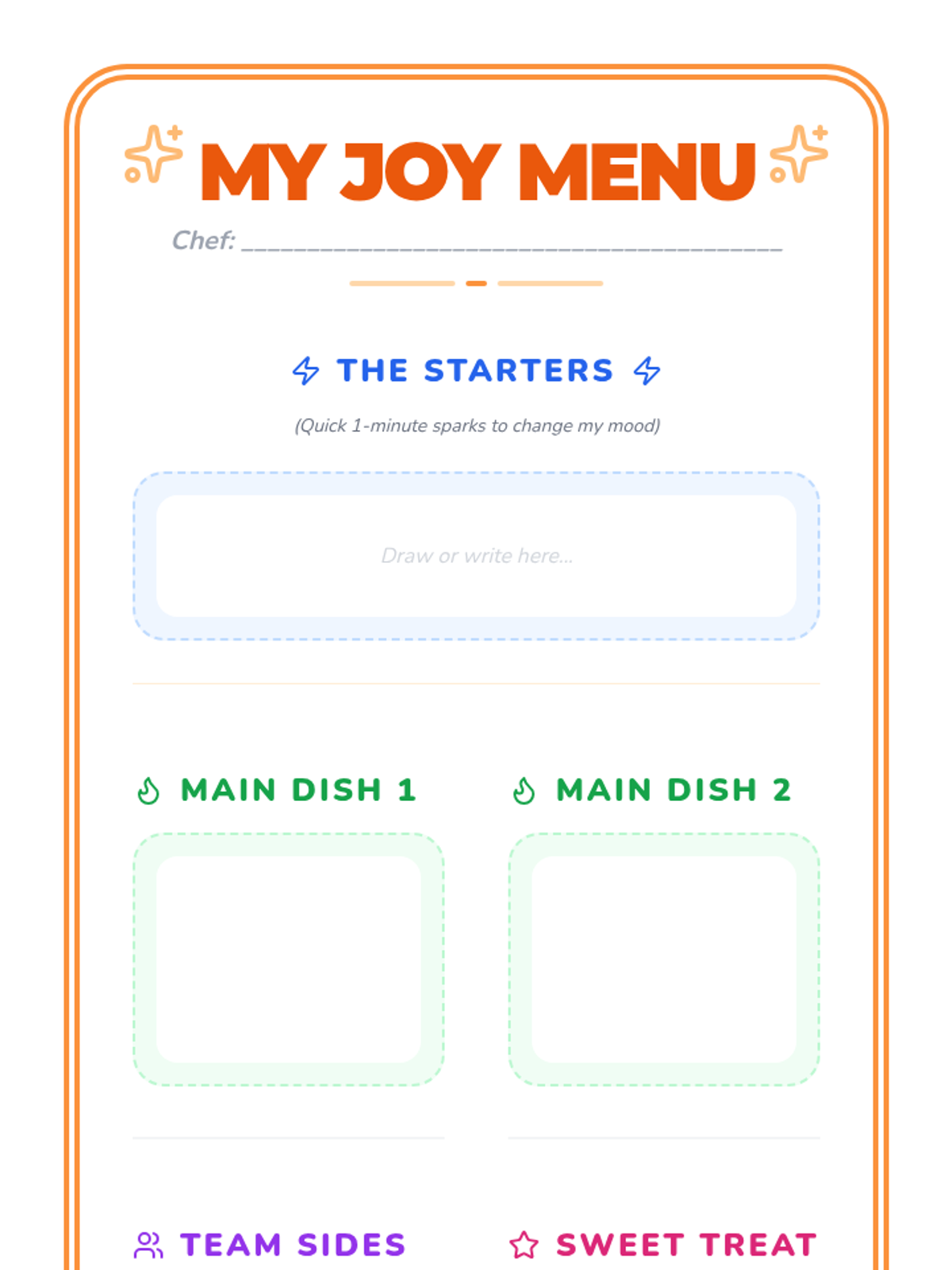
Personalized Joy Menu template for Lesson 4, designed like a restaurant menu for students to fill with their favorite activities.
Visual presentation for Lesson 4, introducing the concept of a 'Joy Menu' with categories for different types of activities.
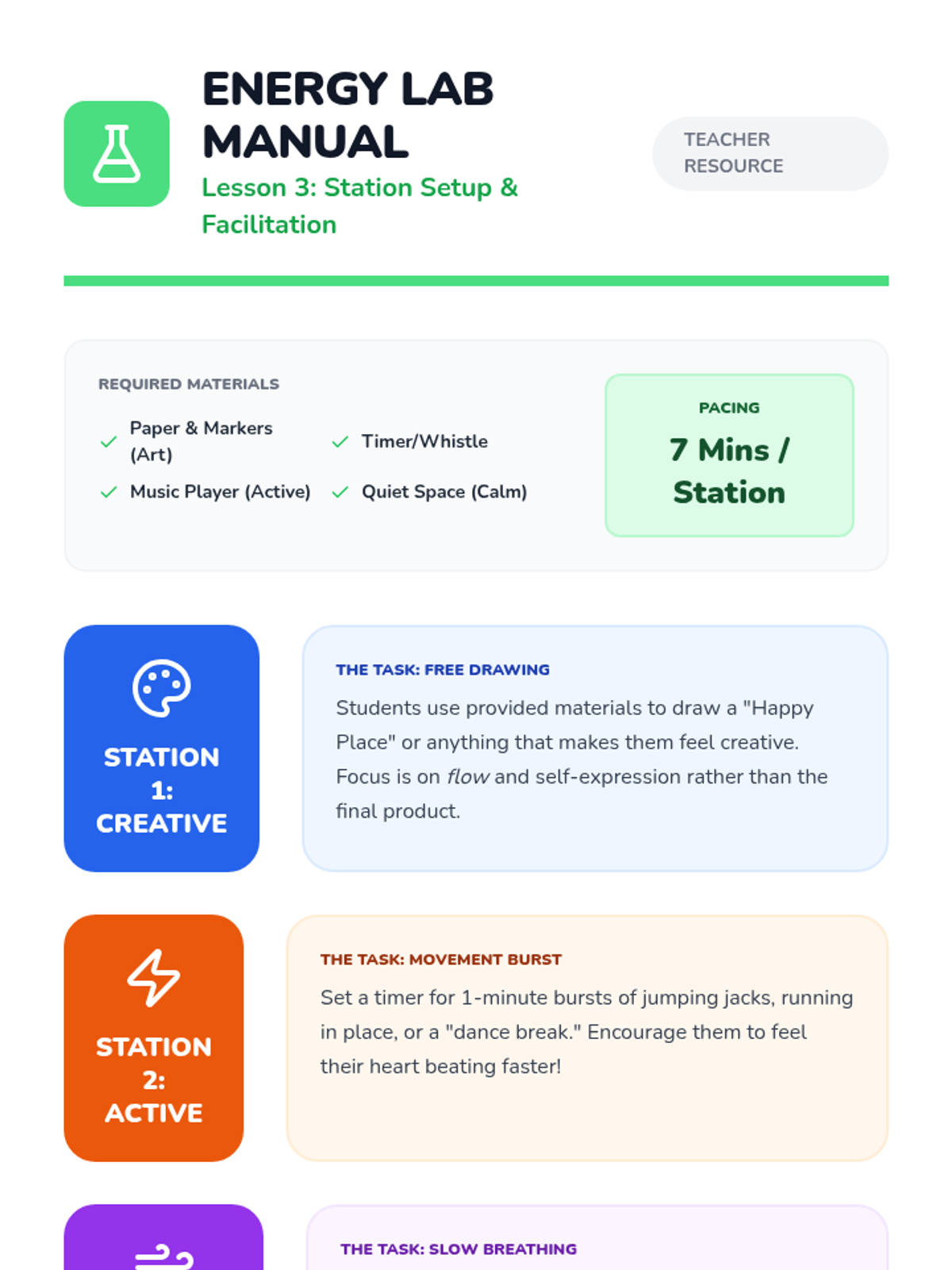
Facilitator guide for Lesson 3, including station setup instructions and debrief questions.
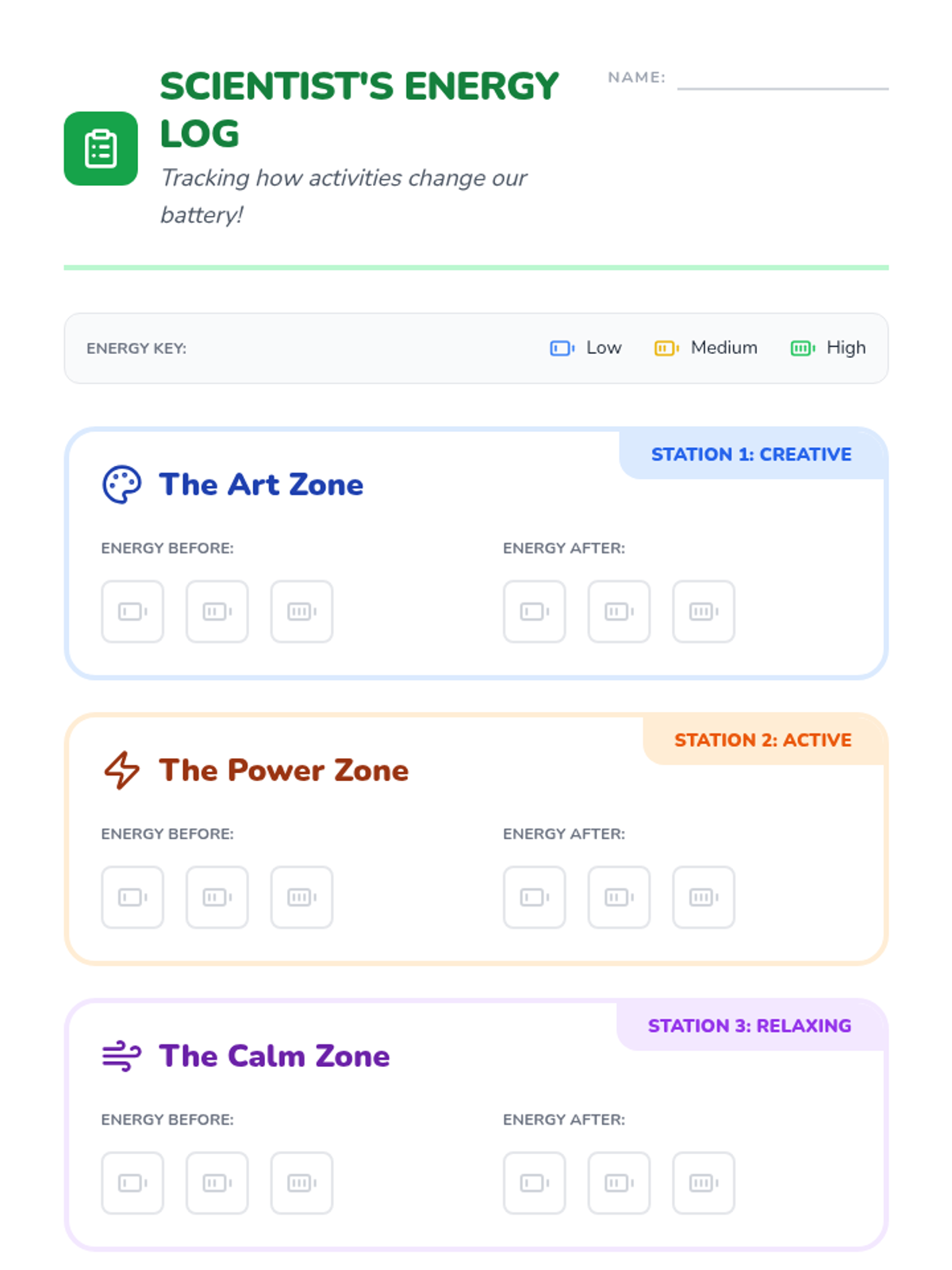
Energy Lab Log for Lesson 3, where students record their energy levels before and after different types of activities.
Visual presentation for Lesson 3, introducing the 'Energy Lab' stations and the human thermometer activity.
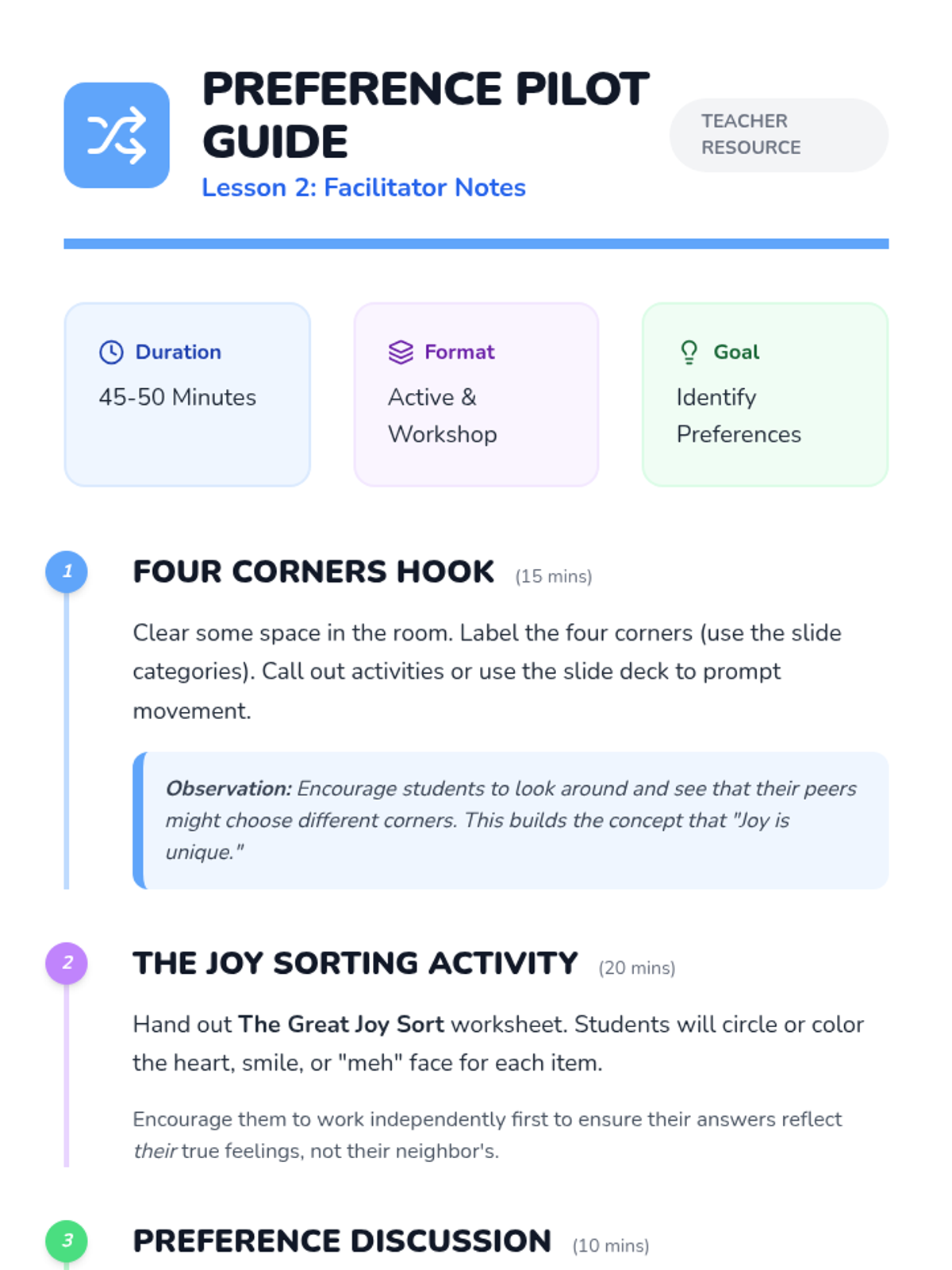
Facilitator guide for Lesson 2, including the Four Corners setup, activity management, and discussion prompts.
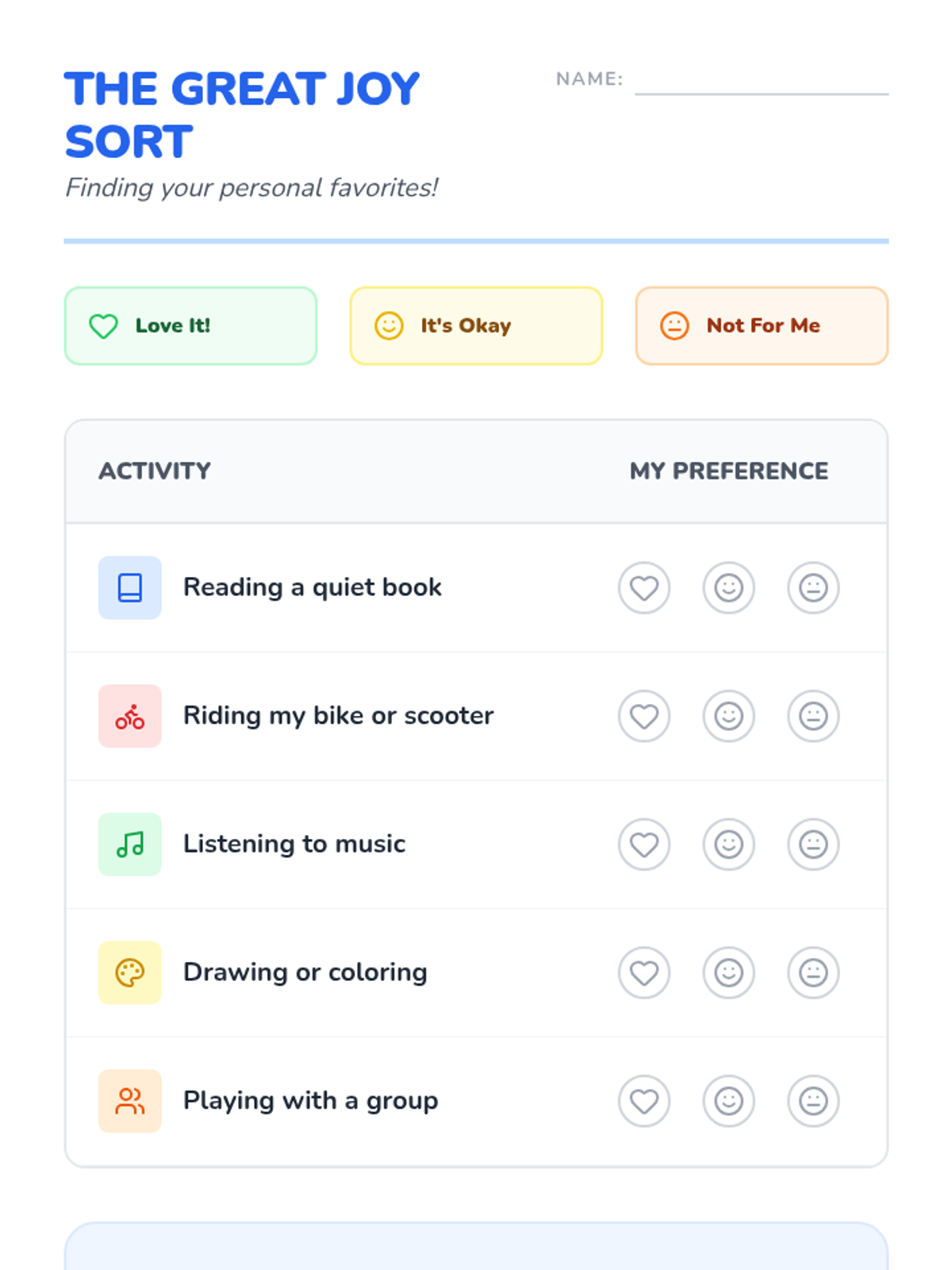
Activity worksheet for Lesson 2, where students categorize various pastimes into preference levels.
Visual presentation for Lesson 2, guiding the 'Four Corners' hook and explaining the concept of individual preferences.
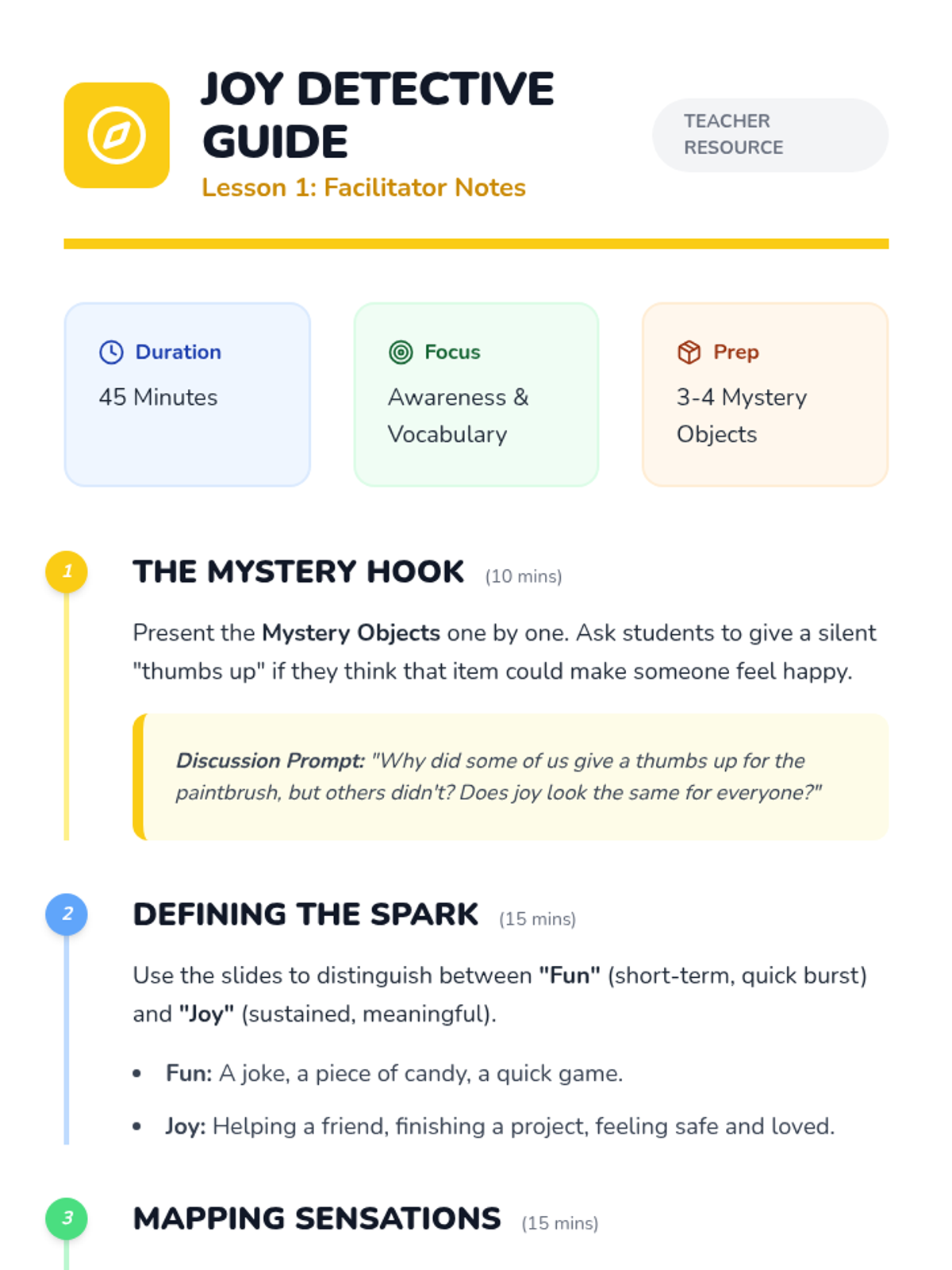
Facilitator guide for the first lesson, including discussion prompts, time breakdown, and troubleshooting tips.
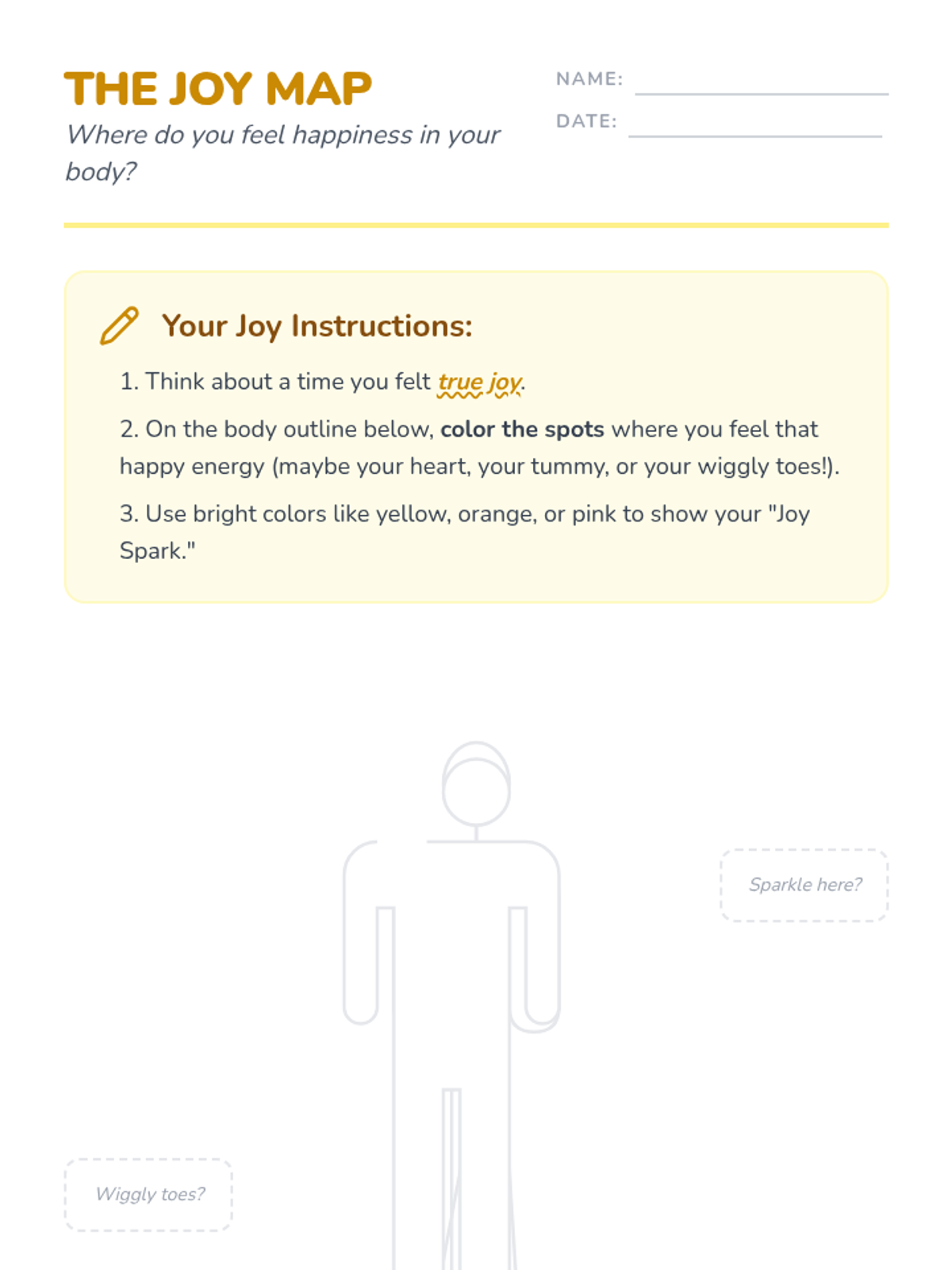
Student worksheet for Lesson 1, where students map the physical sensations of joy onto a body outline.
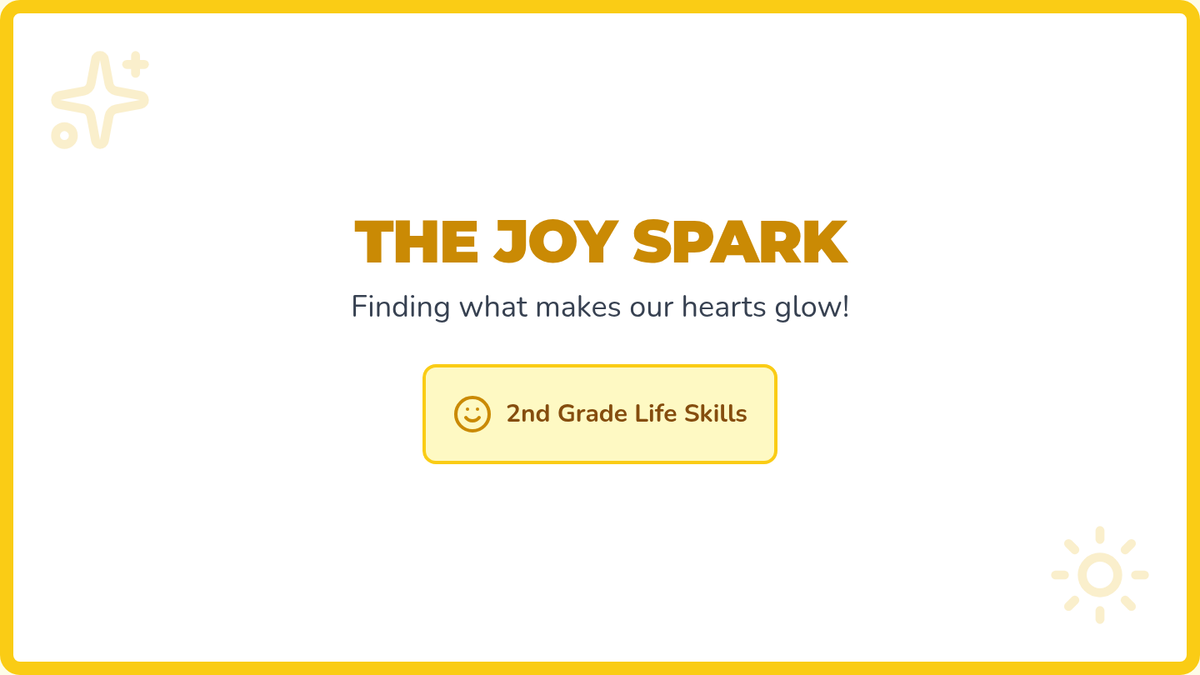
Introductory presentation for Lesson 1, defining joy and exploring the physical sensations of happiness.
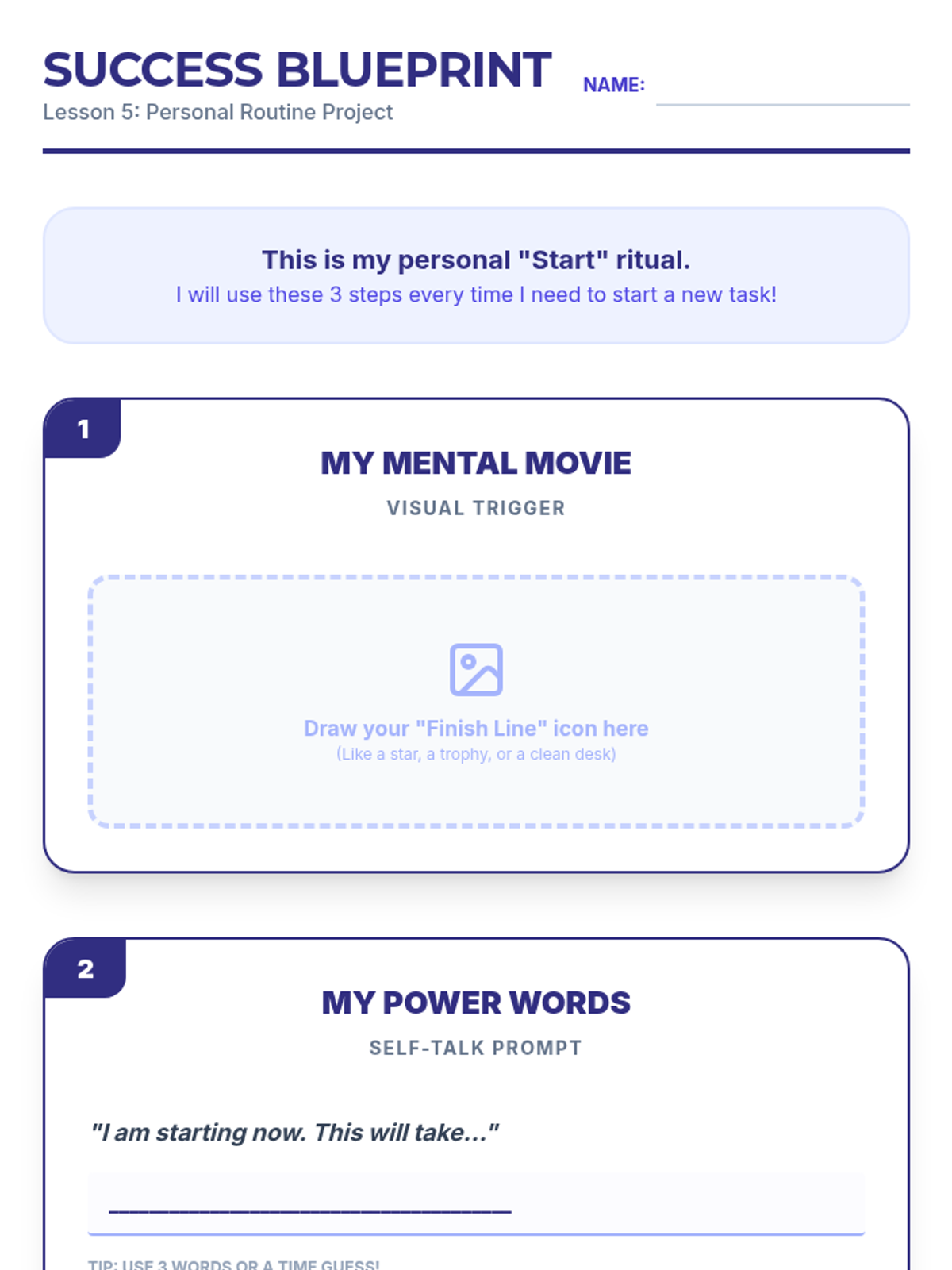
Final project worksheet for Lesson 5, where students synthesize everything they have learned to create a personal three-step 'Success Blueprint' for starting tasks.
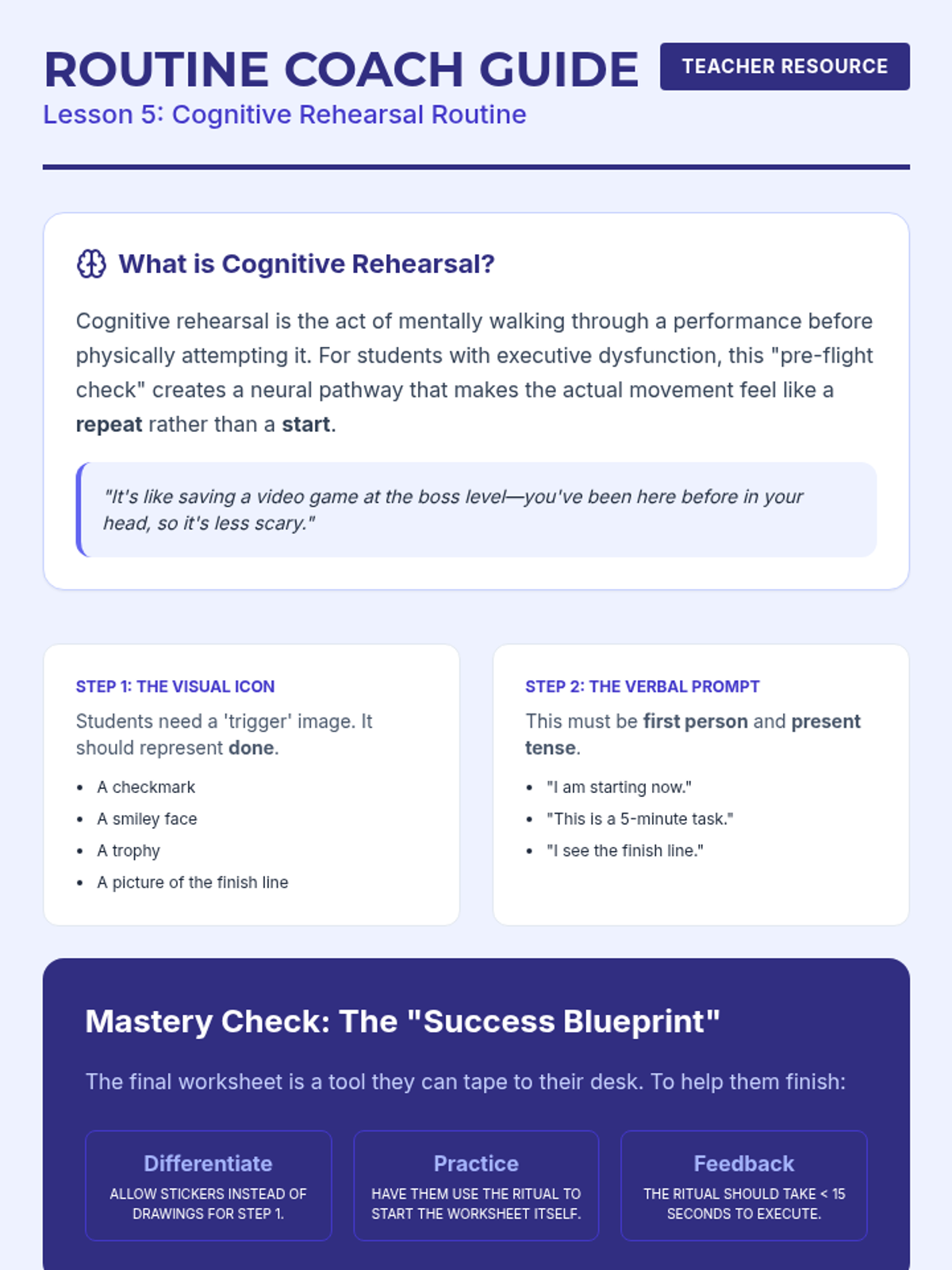
Teacher guide for Lesson 5, focusing on cognitive rehearsal and providing instructions for supporting students as they design their own success rituals.
Slides for Lesson 5, guiding students through the final project of creating their own personal 'Success Ritual' for task initiation.
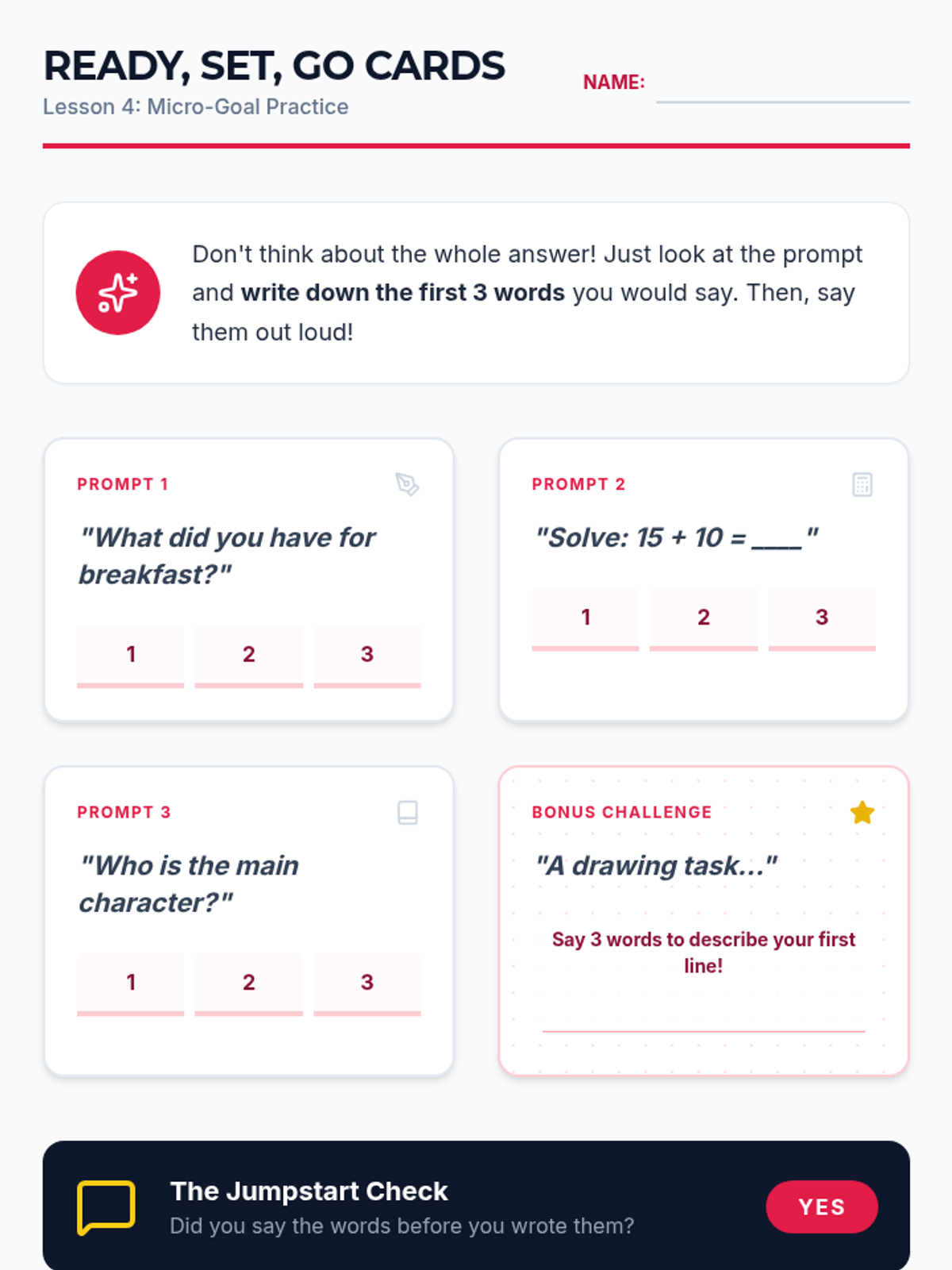
Student practice worksheet for Lesson 4, featuring prompt cards where students practice identifying and writing the first three words of a response.
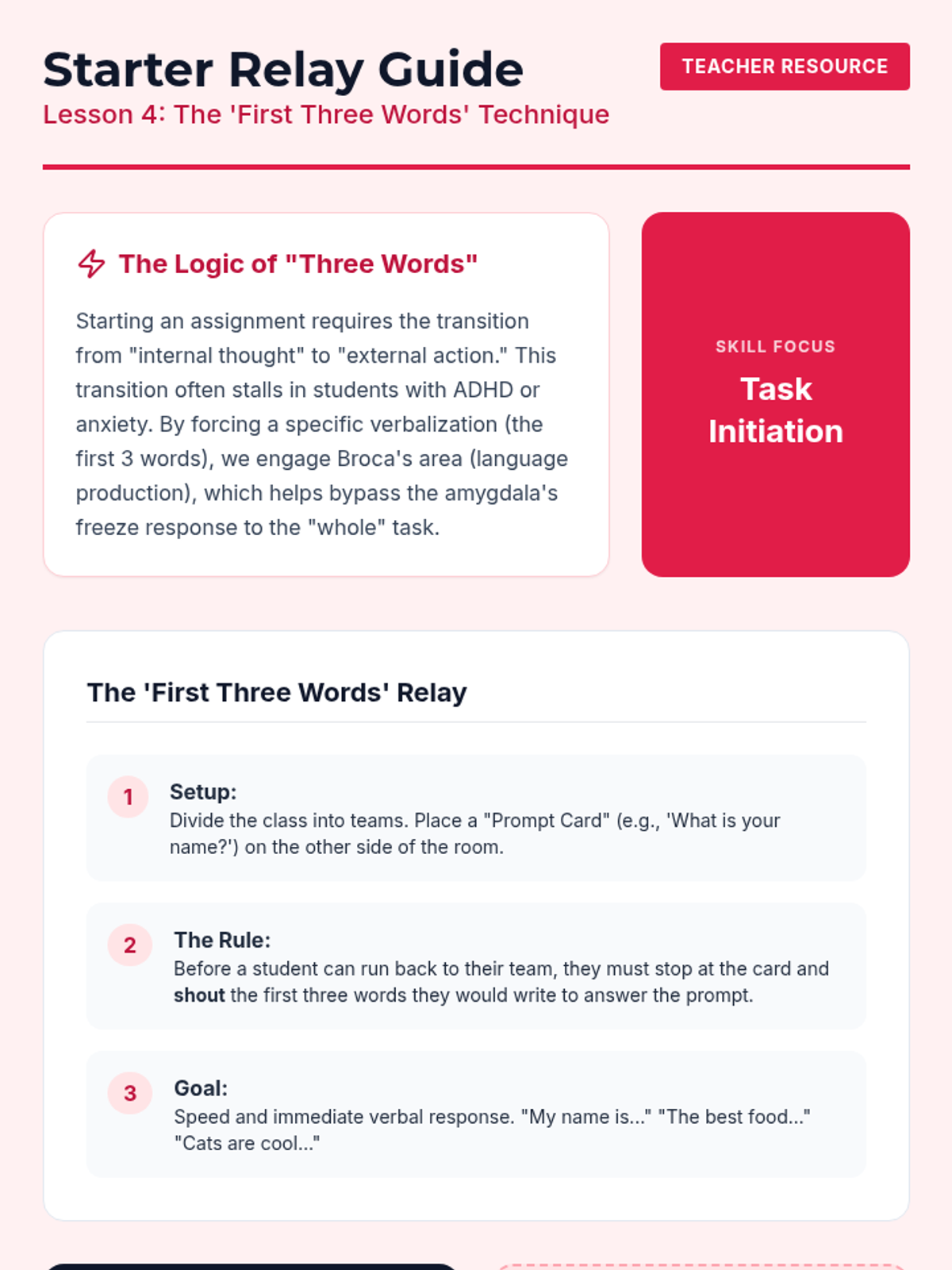
Teacher guide for Lesson 4, explaining the neurological basis for the 'First Three Words' technique and providing instructions for the relay race activity.
A set of two printable exit tickets for Grades 2-3, focusing on identifying the "evidence" of self-regulation and reflecting on strategy application.
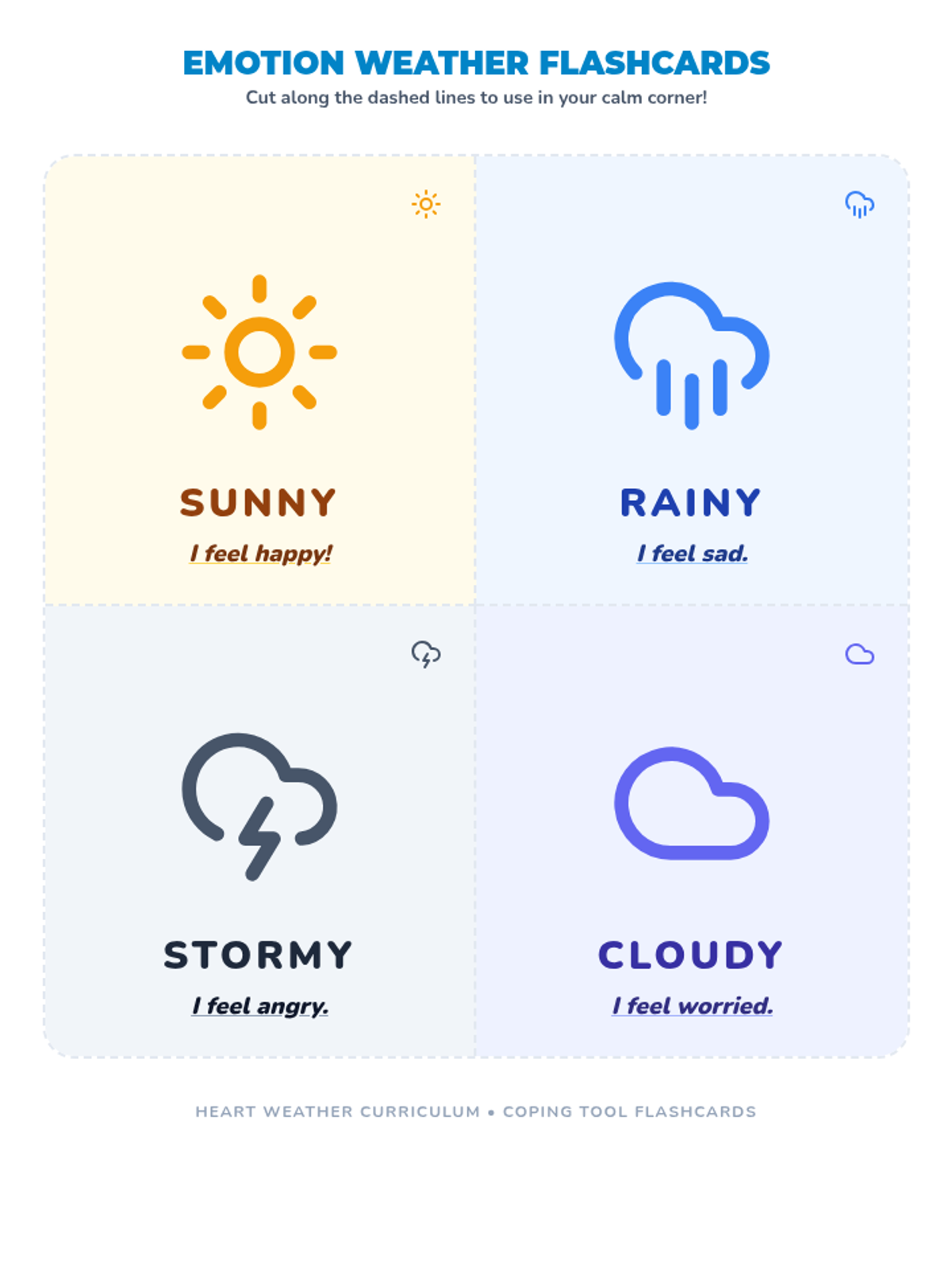
A set of six visual flashcards for Grades 2-3 representing nuanced emotions as weather types with improved contrast, simplified actions, and consistent color-coding.
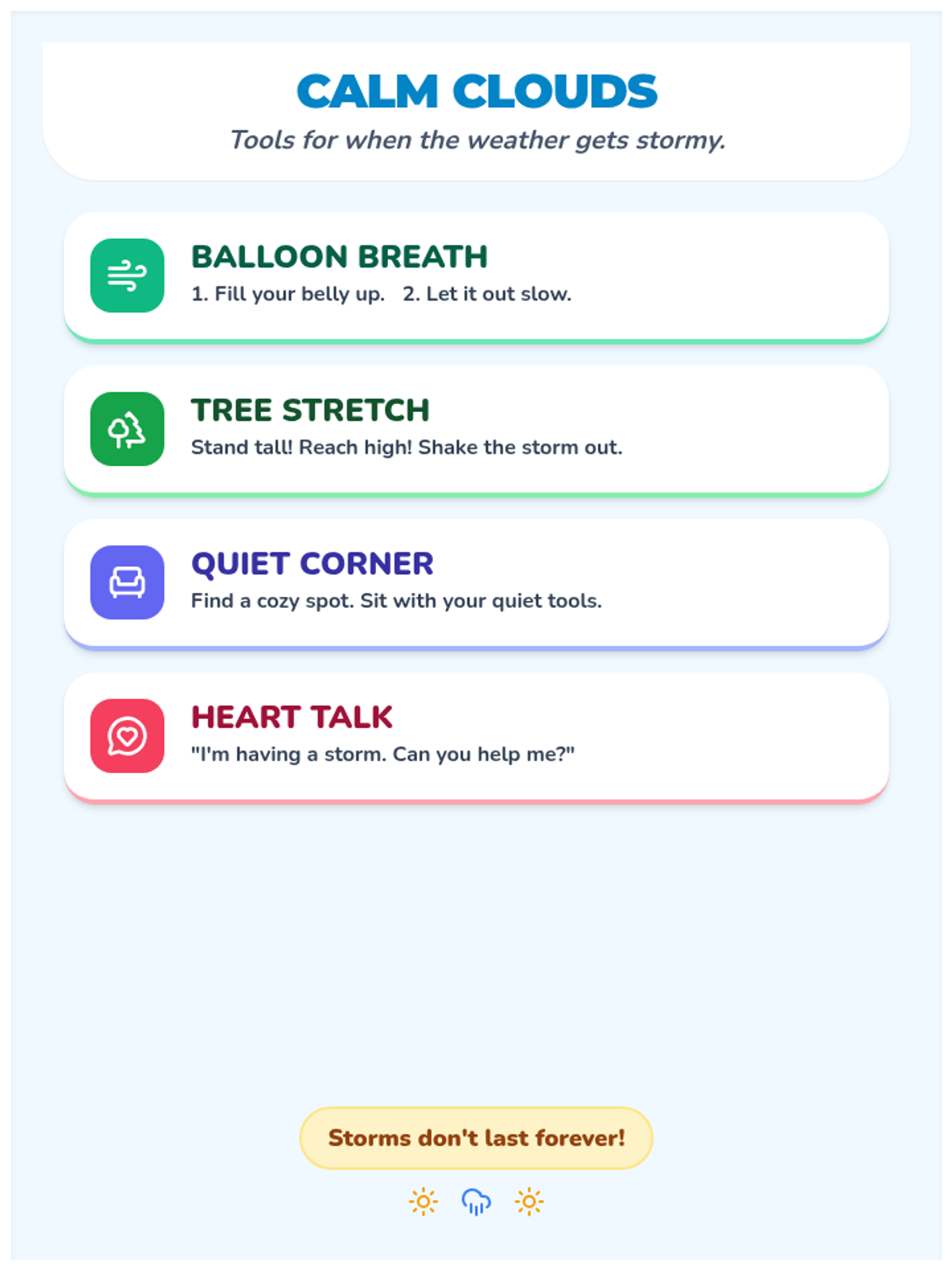
A bold, visual anchor chart for Grades 2-3 classroom display that summarizes four coping strategies with a focus on self-regulation and communication using simplified, age-appropriate vocabulary and a helpful metaphor key.
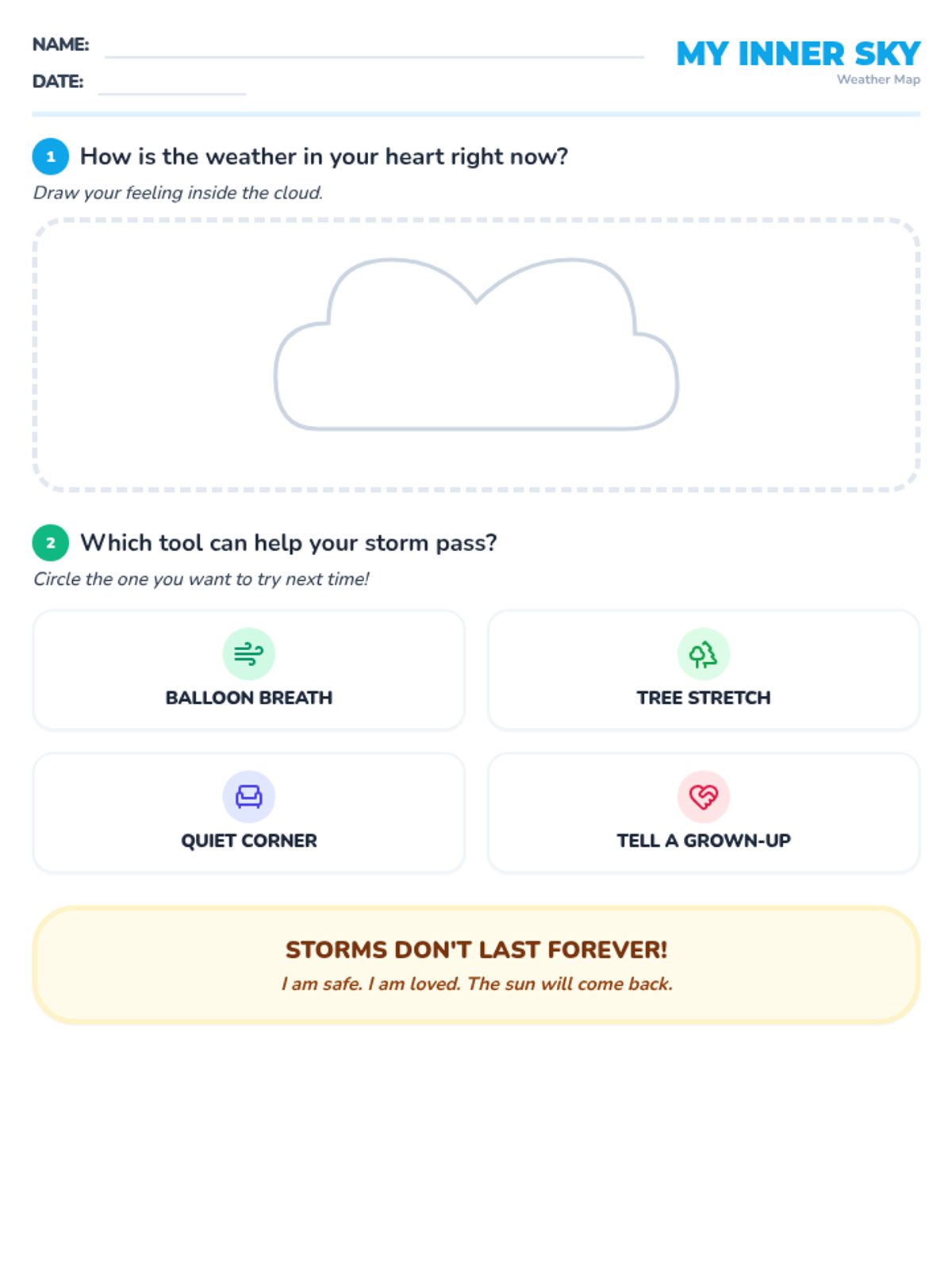
An interactive worksheet for Grades 2-3 that focuses on identifying internal/external triggers and developing a multi-step self-regulation plan with user-requested strategies and increased writing space.
A visually engaging slide deck for Grades 2-3 students using a weather metaphor to explain emotional triggers and introduced four specific coping strategies.
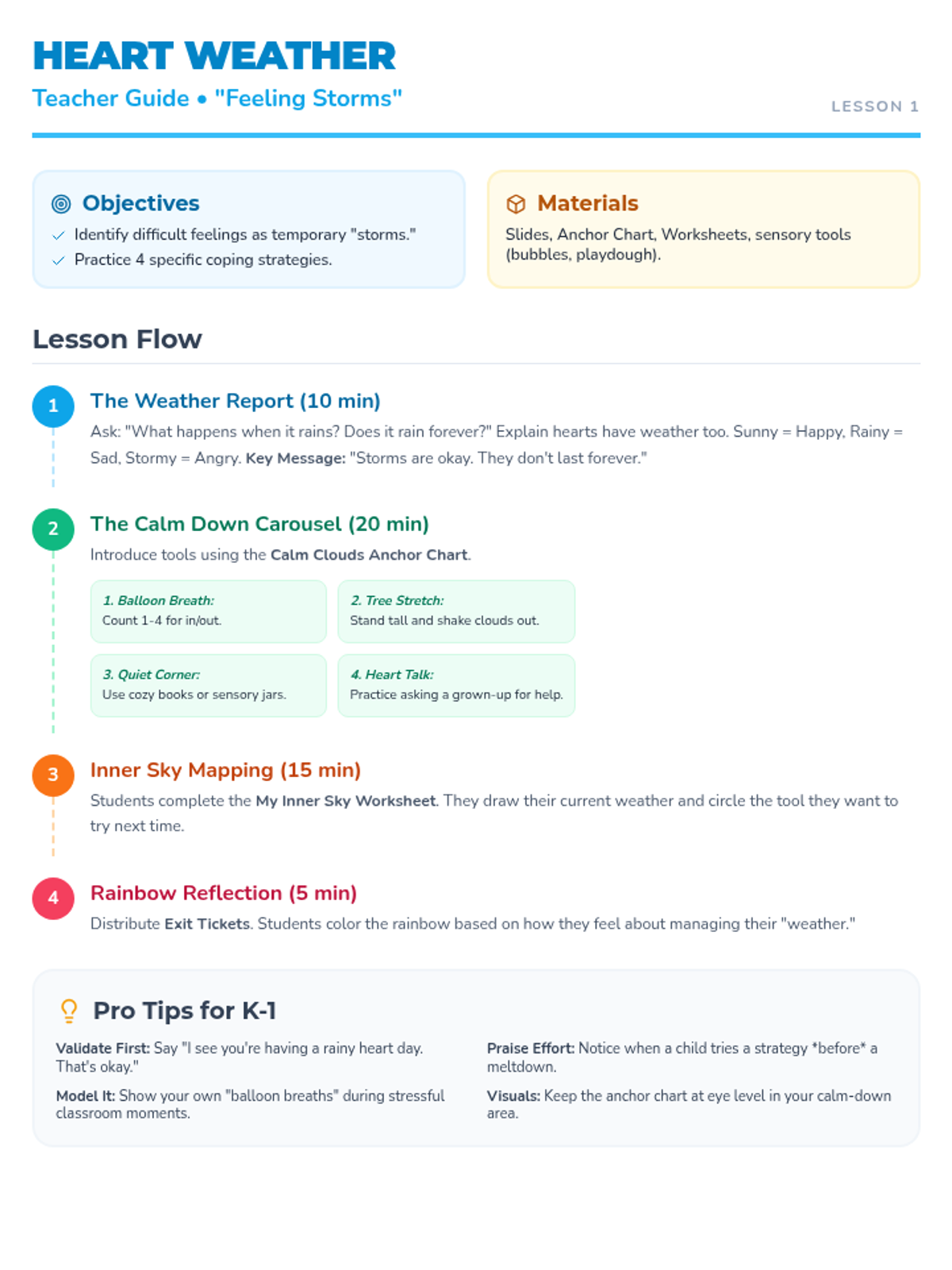
A comprehensive teacher's guide for a Grades 2-3 social-emotional learning lesson, introducing the "Heart Weather" metaphor and outlining step-by-step activities to teach coping strategies.
A highly structured 6-page visual coping skills kit designed for students with high-needs autism. Features clear First/Then logic, visual feelings check, high-contrast safe people identification, and muscle magic with a lemon icon. Print-friendly white backgrounds. Revised for layout and spacing.
A simplified 9-page summer coping skills kit for Kindergarten students. Features emoji-based muscle magic, simplified 3-2-1 grounding, and scannable video links. Visual-heavy and easy to follow. Revised for consistency and clarity.
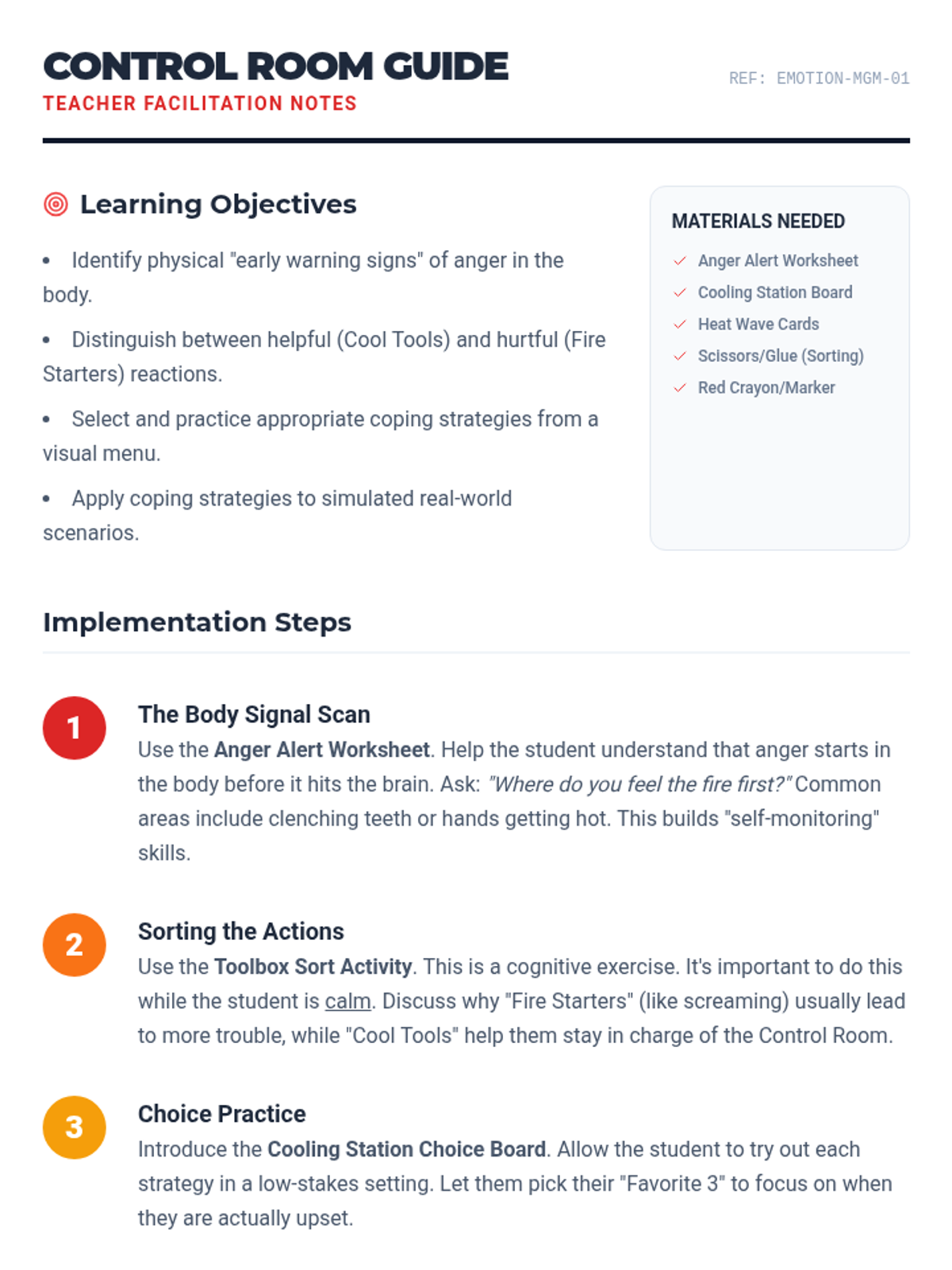
A comprehensive facilitation guide for educators, providing instructional steps and best practices for teaching anger management using the Control Room resource set.
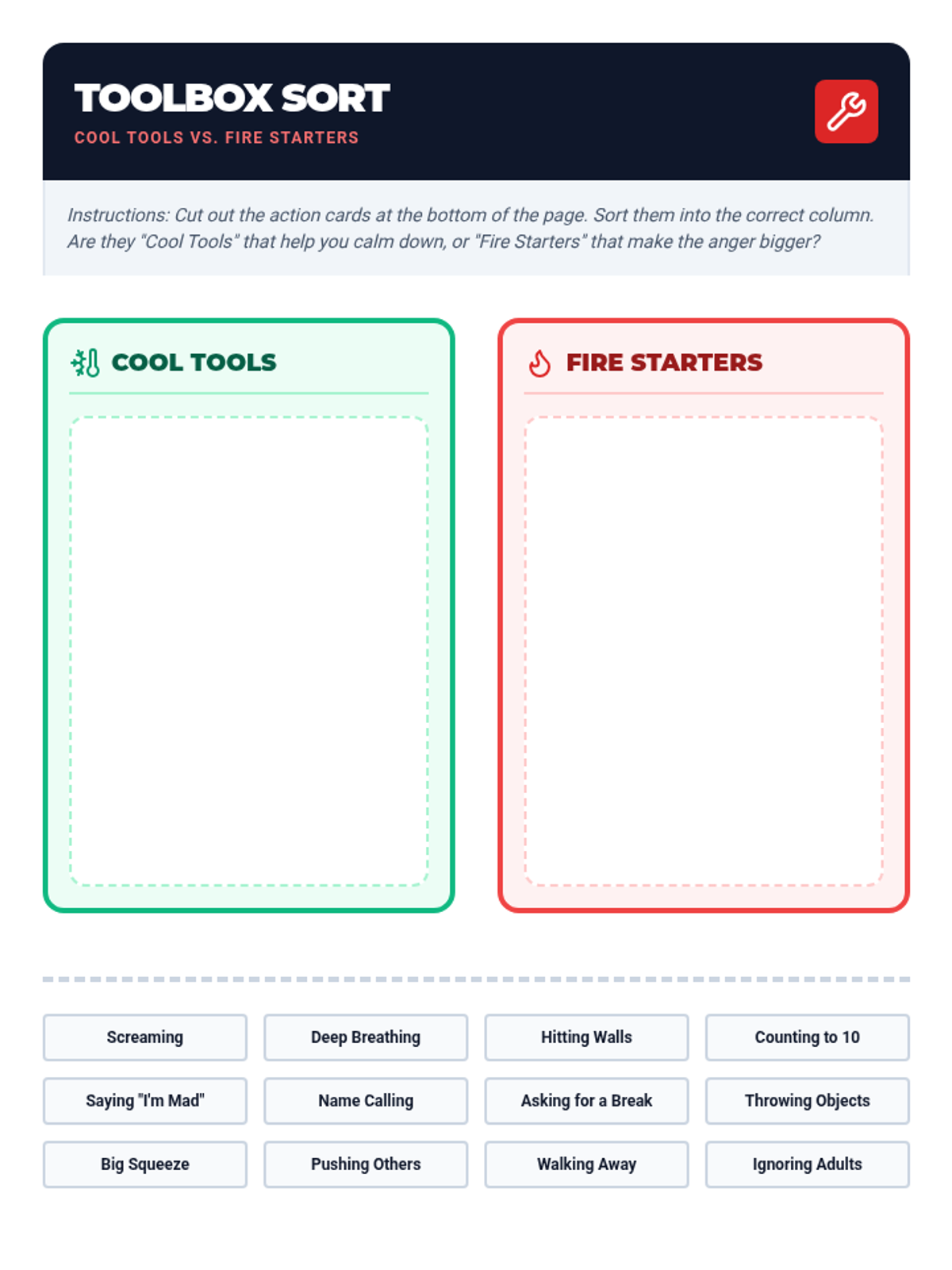
A hands-on sorting activity where students categorize different reactions to anger as 'Cool Tools' (helpful strategies) or 'Fire Starters' (hurtful reactions).
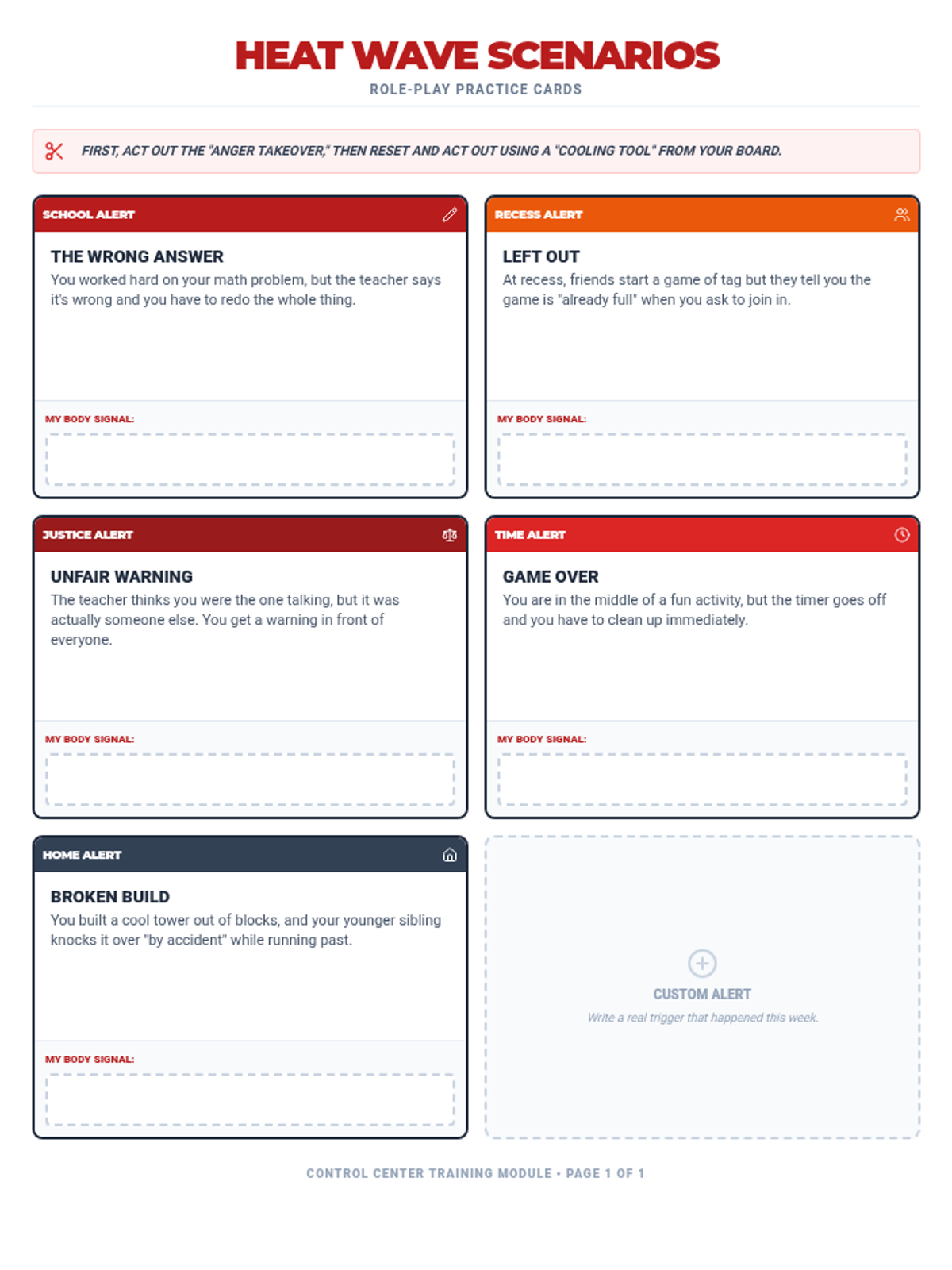
A set of six role-play scenario cards focused on common school and home triggers for anger, designed to help students practice identifying body signals and using coping tools.
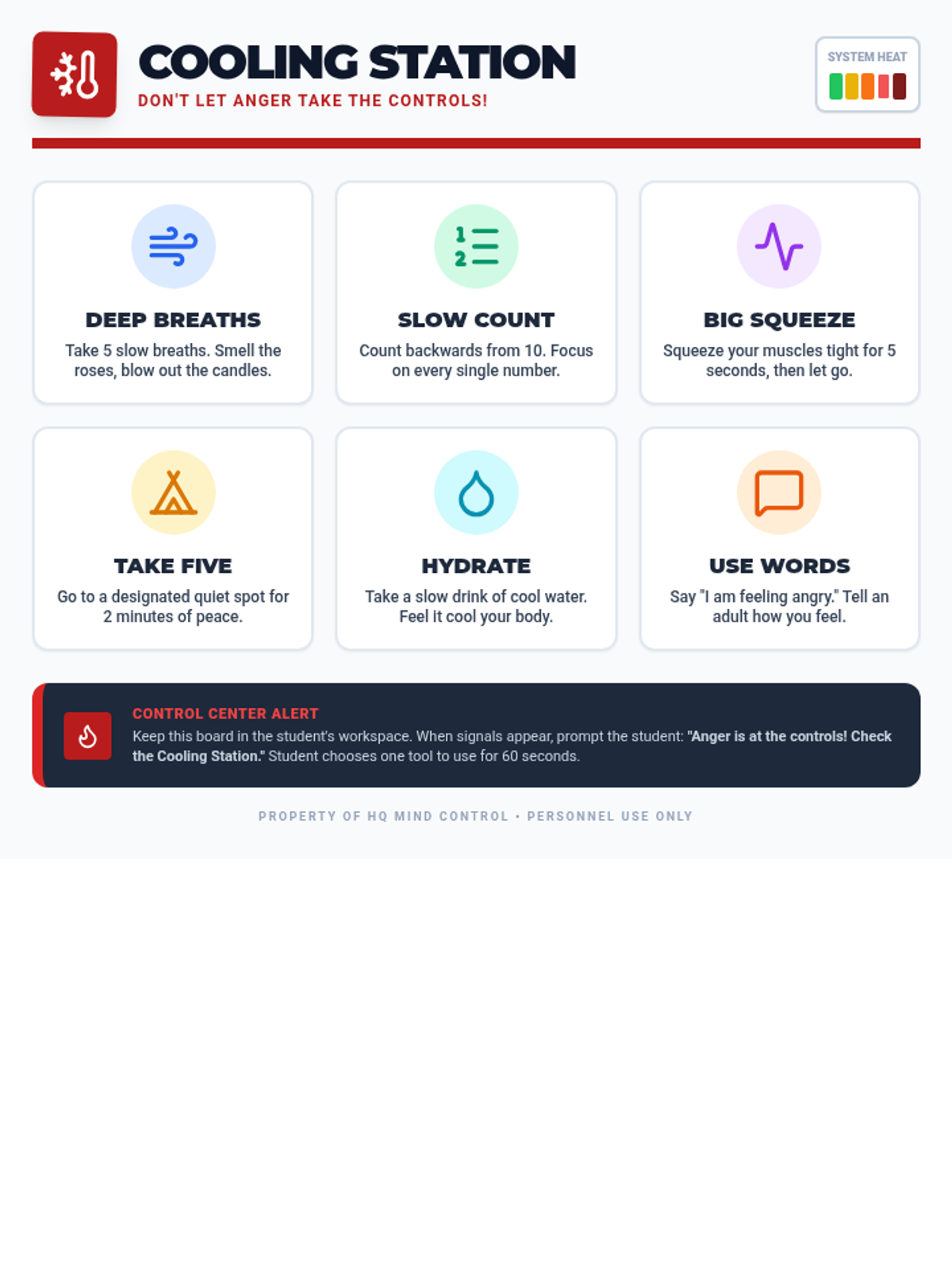
A visual choice board featuring six simple, effective coping strategies for cooling down when anger levels rise, presented in a clean 'Control Room' aesthetic.
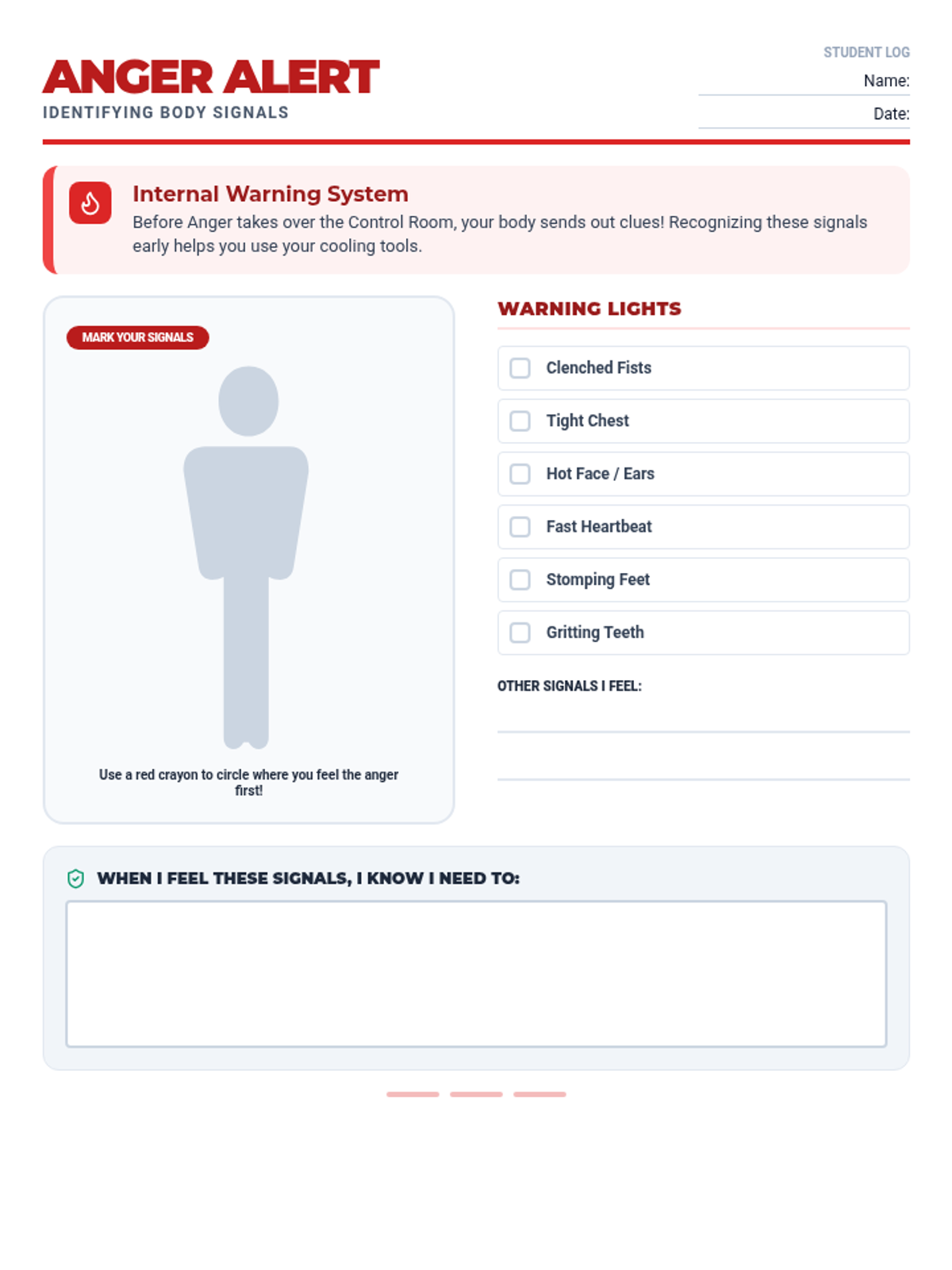
A worksheet for students to identify and label physical sensations in their body when they start to feel angry, featuring a body map and common signal checklists.
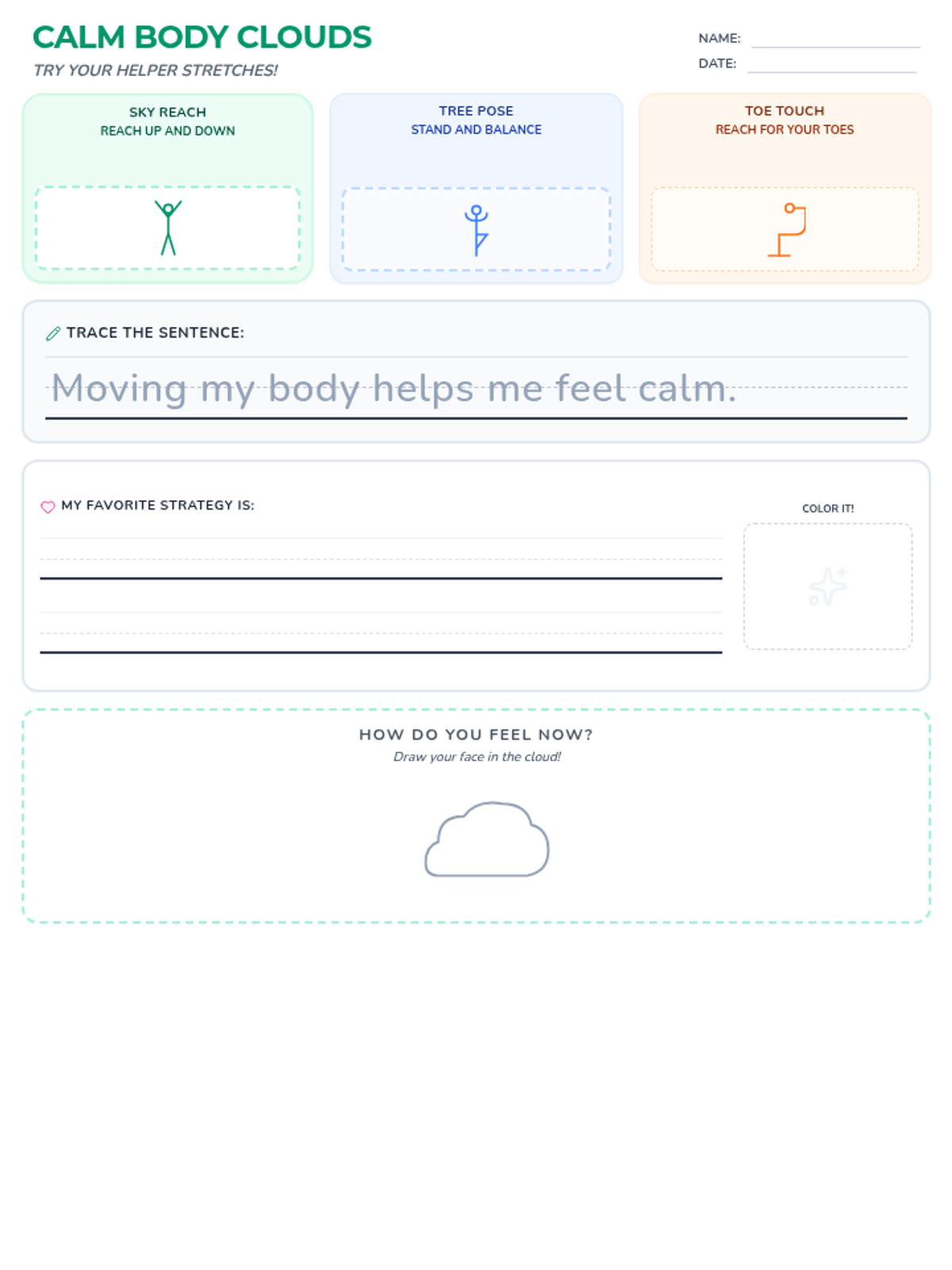
A movement-based regulation worksheet for K-2 students featuring body visuals for Sky Reach, Tree Pose, and Toe Touch strategies. All sections and headers are capitalized for a more standard presentation. Includes updated 1-line sentence tracing activity "Moving my body helps me feel calm.", and a favorite strategy section with two writing lines. Optimized layout to fit on one page. Fixed alignment and page break. Corrected human visuals.
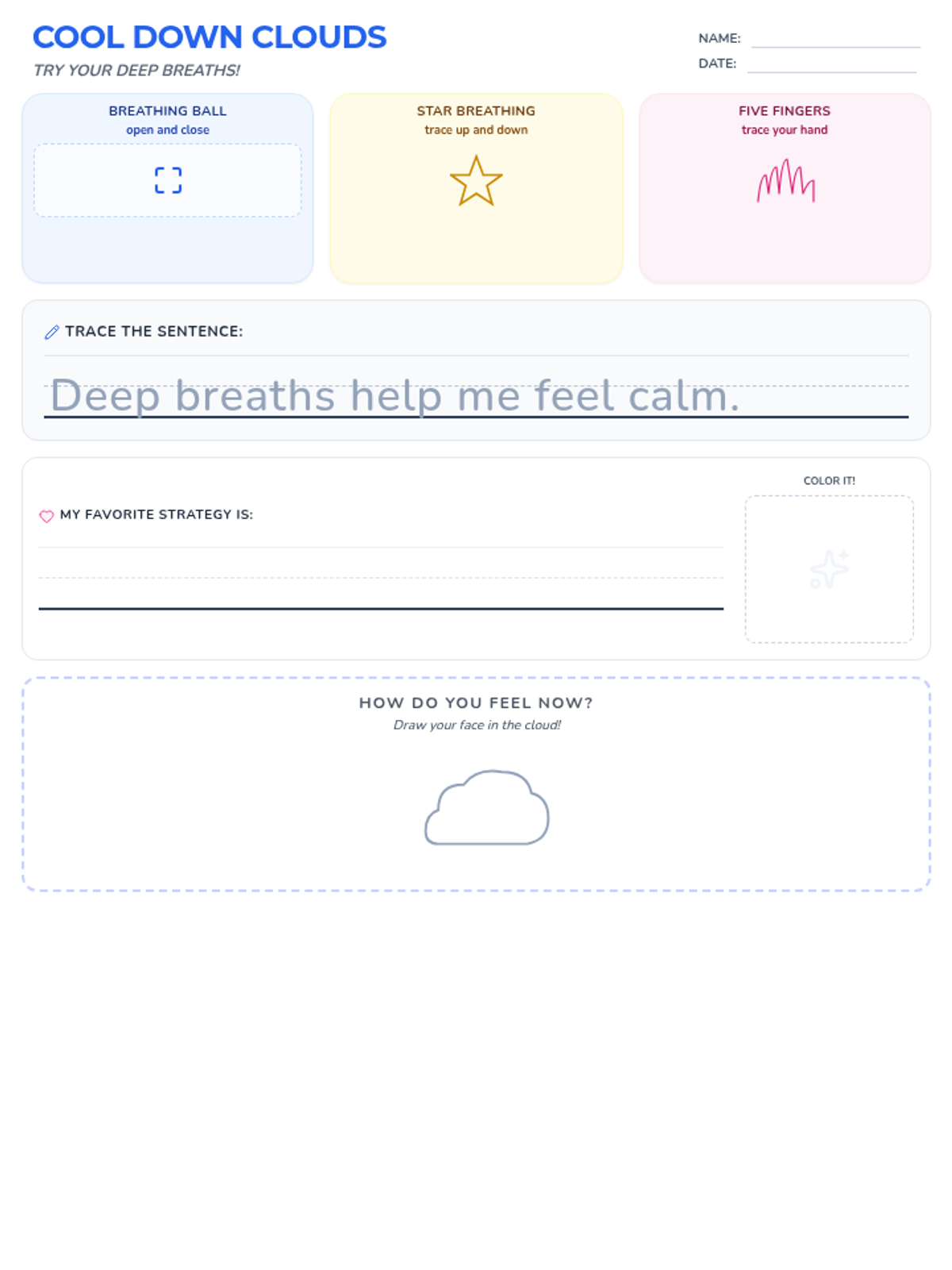
A visually engaging worksheet for K-2 students featuring three breathing strategies, a 1-line sentence tracing activity, and an enlarged 'favorite strategy' writing and drawing box with primary-styled guide lines. All strategy labels are now lowercase. Updated with tall letters and consistent unit structure.
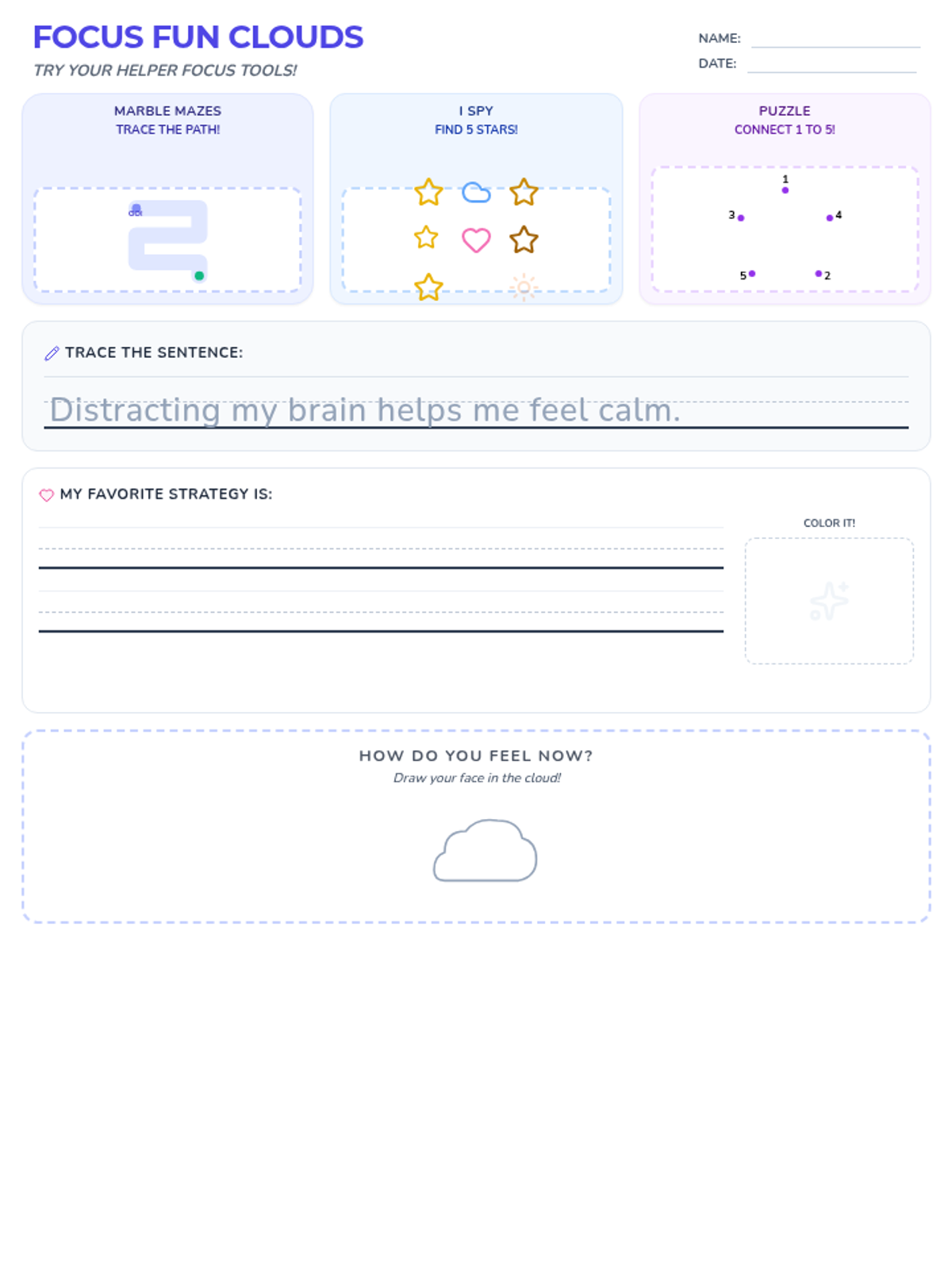
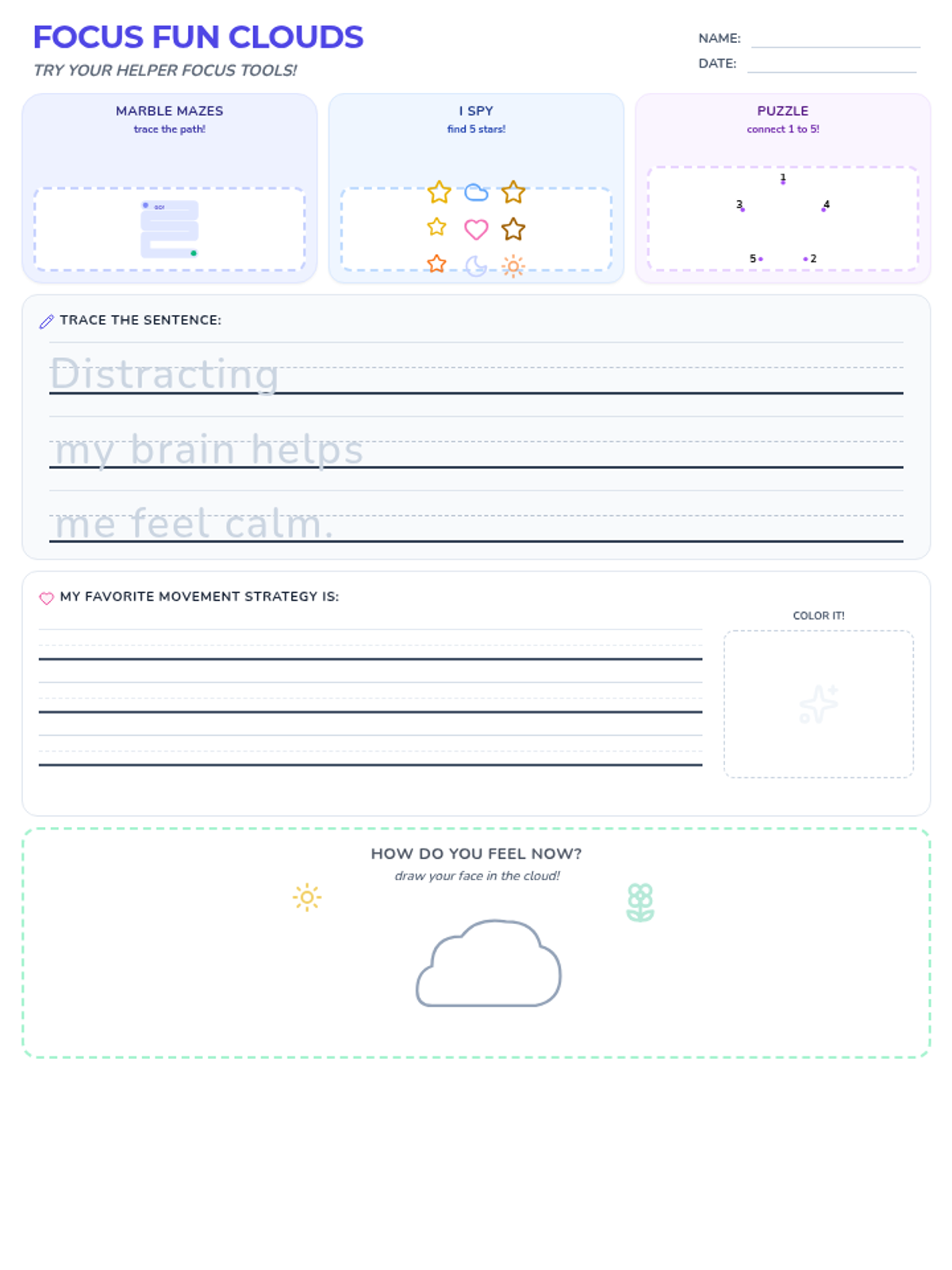
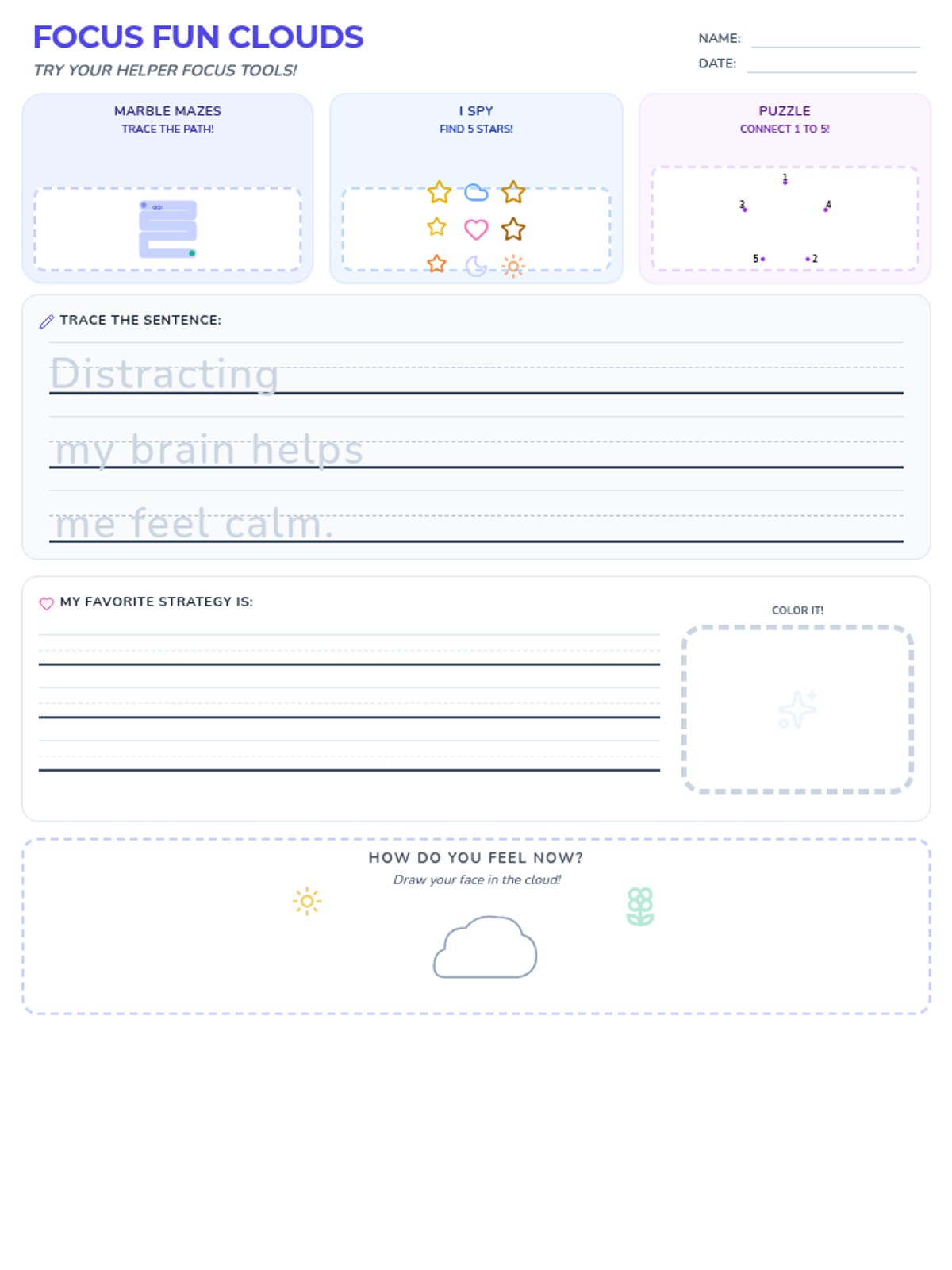
A distraction-based regulation worksheet for K-2 students. The Marble Maze and Dot-to-Dot Puzzle have been reverted to their previous versions, while the I Spy section remains in the updated 5-star dense version. All instructions and section headers are capitalized for consistency. Layout includes tracing, writing, and drawing areas.
A movement-based regulation worksheet for K-2 students featuring body visuals for Sky Reach, Tree Pose, and Toe Touch strategies. Includes a 3-line sentence tracing activity and a 'How do you feel now?' drawing section. Optimized layout to fit on one page. No "grades 2-5" references. All strategy titles capitalized. Fixed tracing text alignment. Standardized box heights. Corrected dot-to-dot star sequence. 3 lines for favorite strategy section.
A distraction-based regulation worksheet for K-2 students featuring body visuals for focus strategies. Includes a 3-line sentence tracing activity, an enlarged 'favorite strategy' writing and drawing box with primary-styled guide lines, and a reflection cloud. Optimized for motor skill development.
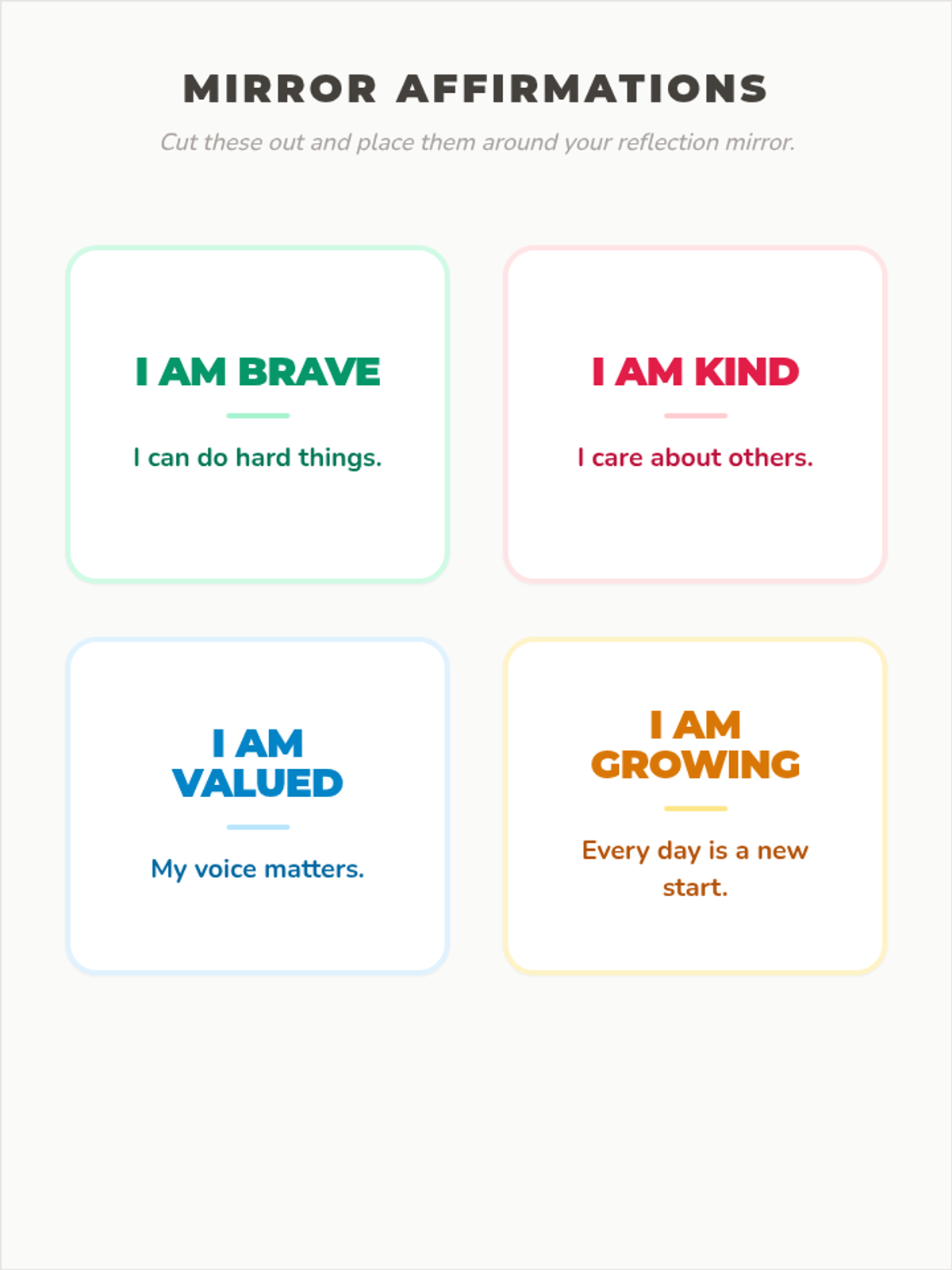
Affirmation cards for mirror placement and a set of smaller square prints for decorative bulletin boards. Revised for better contrast, alignment, and completeness.
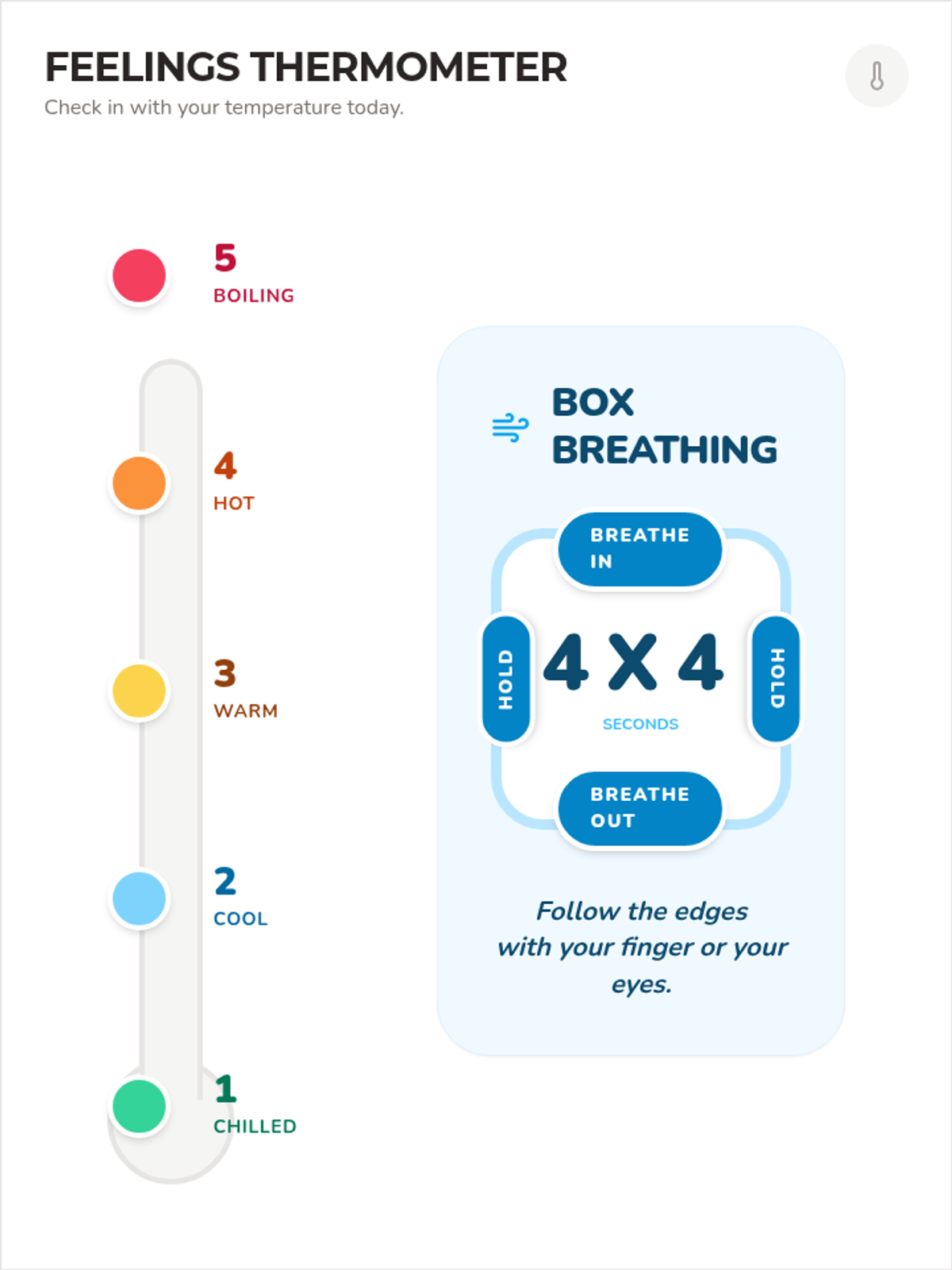
Interactive office tools including a feelings thermometer visual (revised for alignment), box breathing tool, and cut-out 'I Need' choice cards with improved cutting gutters.