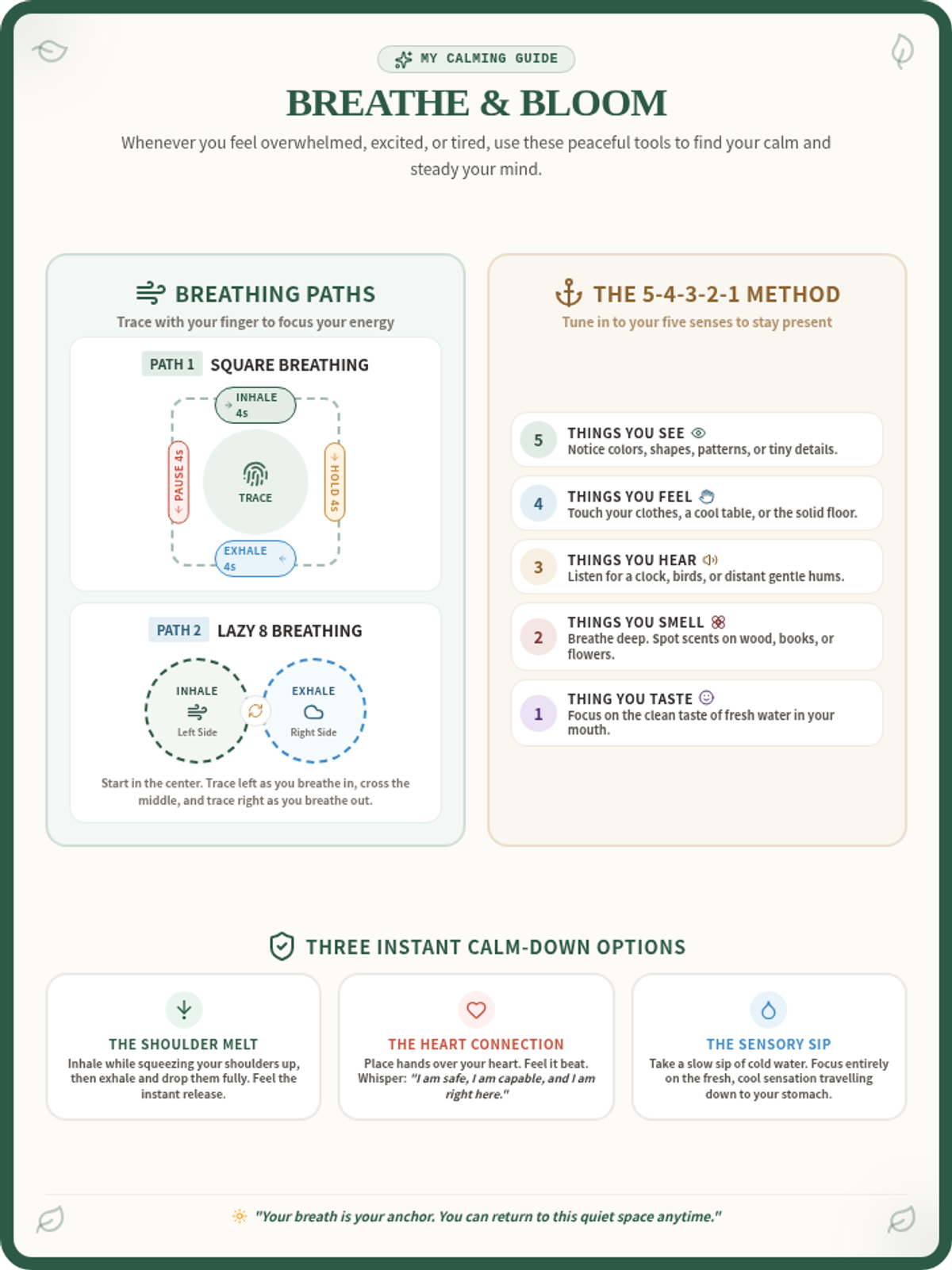
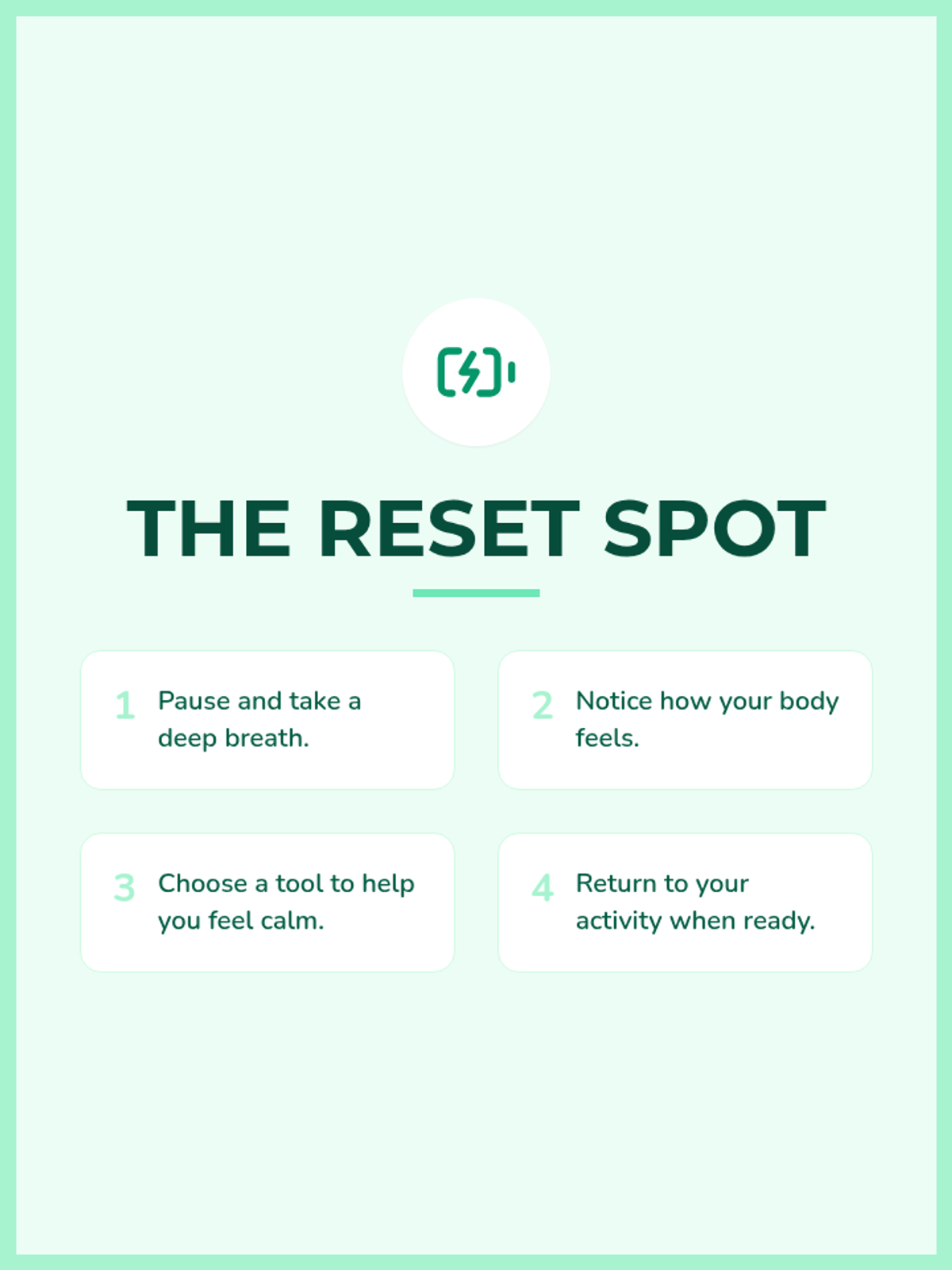
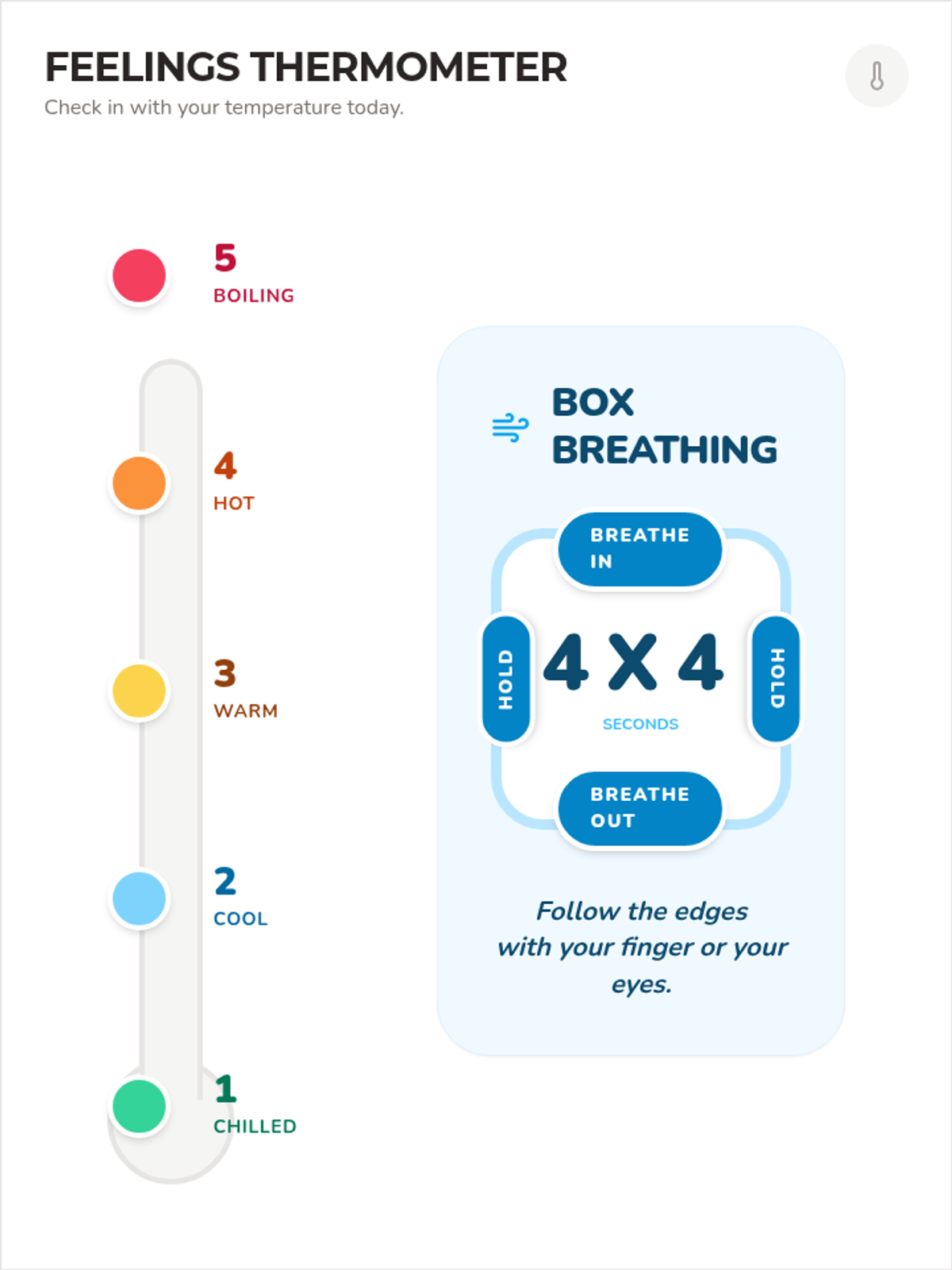
Mindful breathing and body scan meditation techniques integrated with daily self-care routines. Develops strategies for balancing life demands and advocating for personal wellness needs.
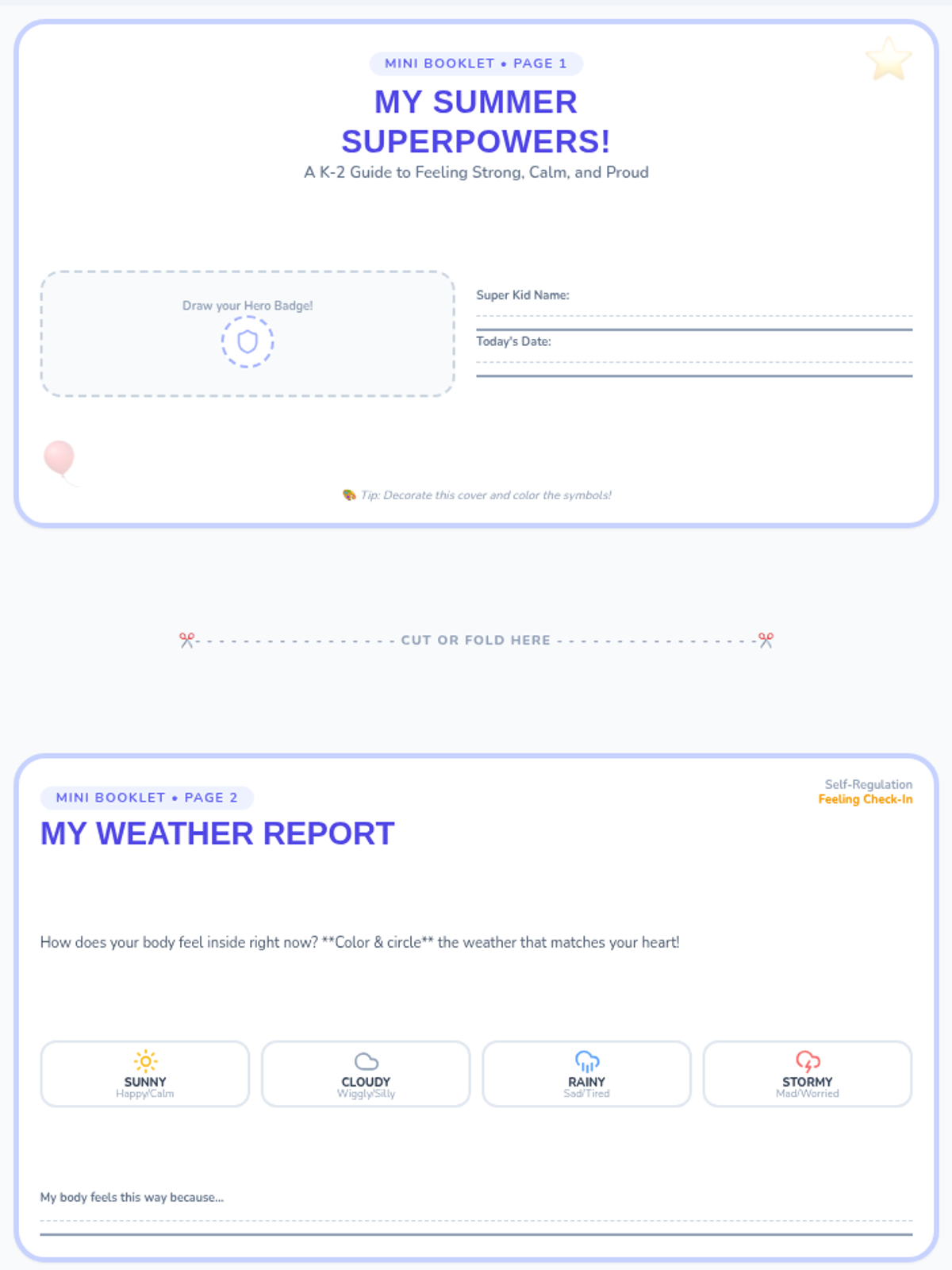
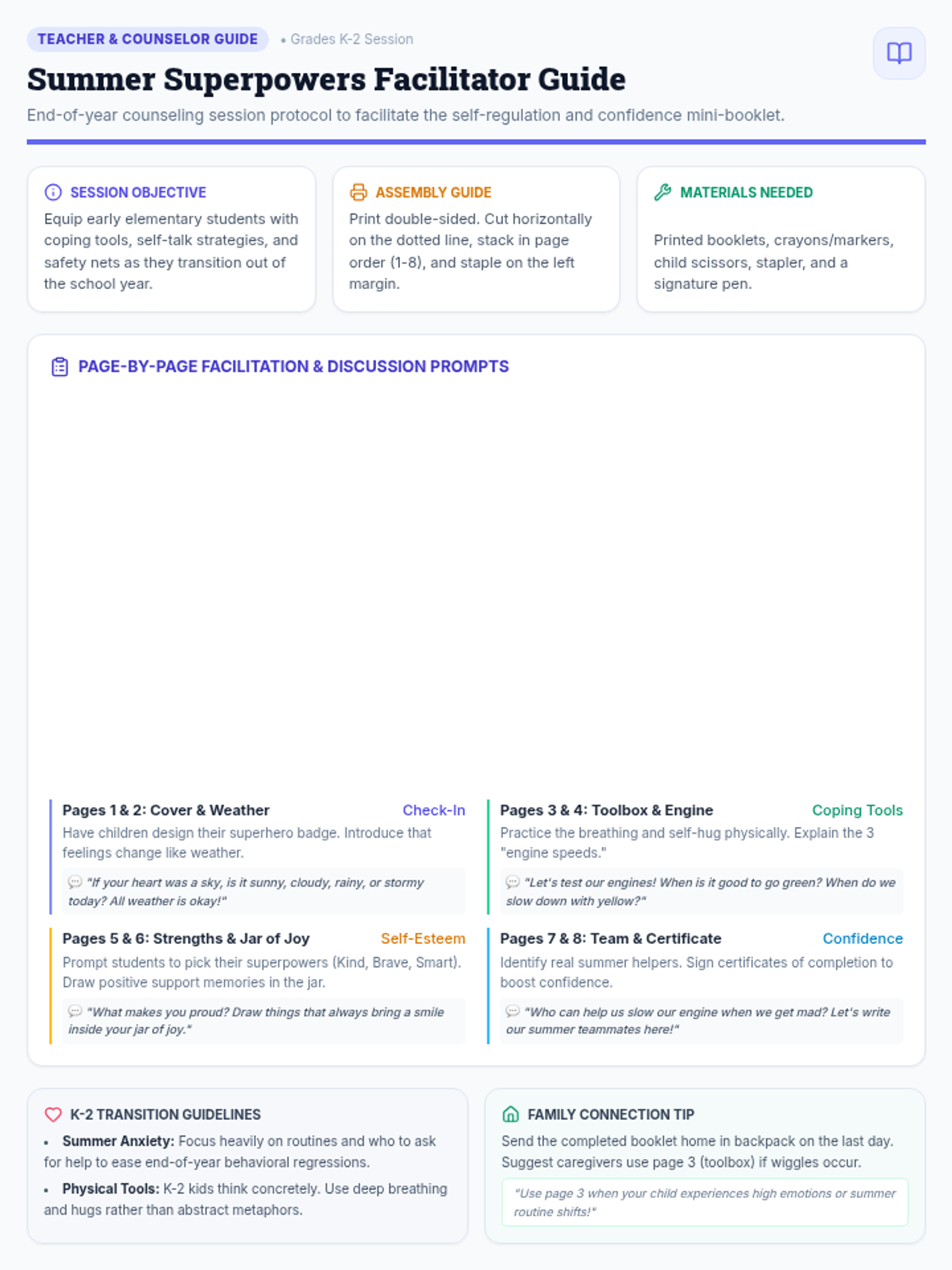
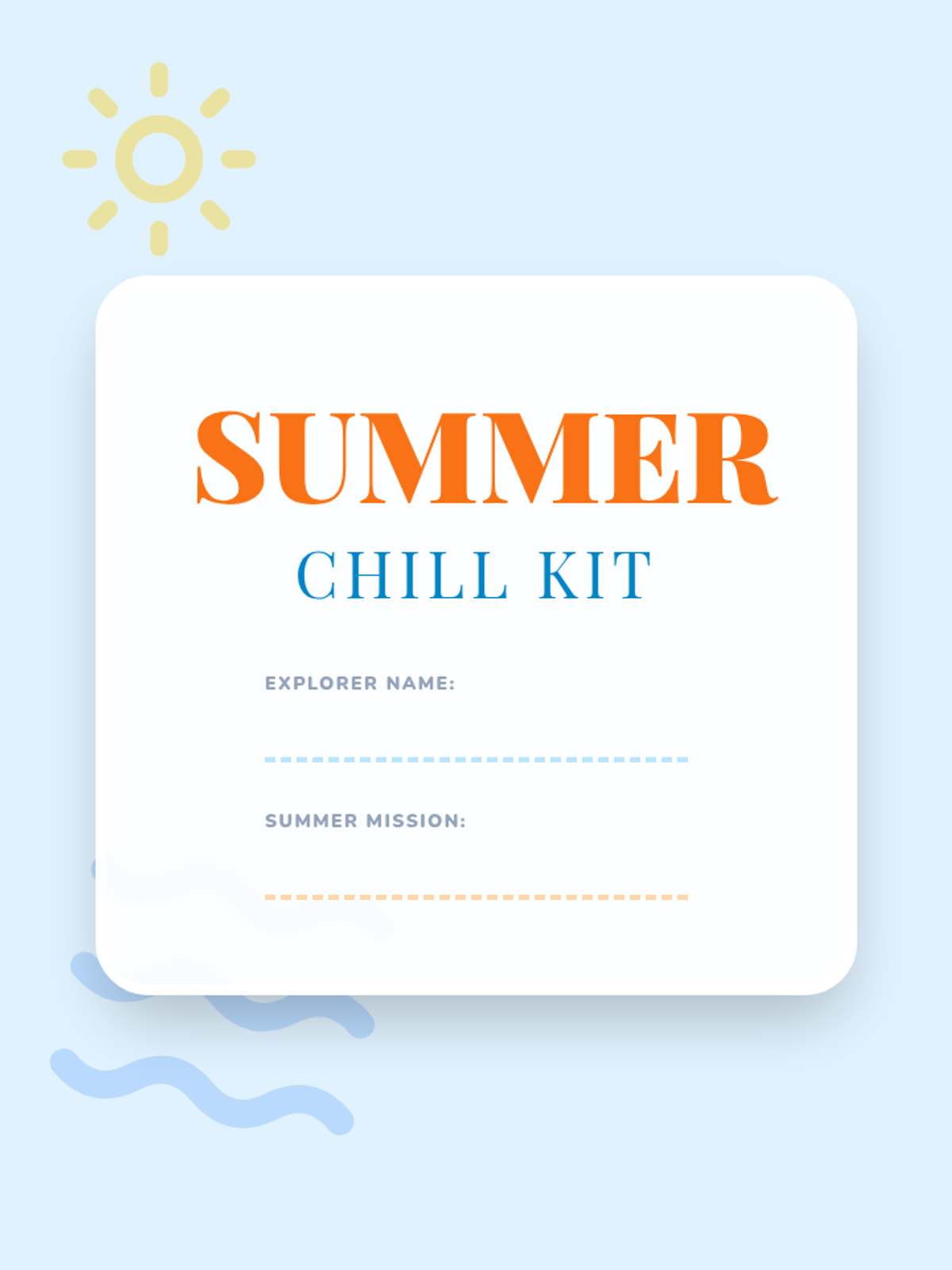
An engaging, end-of-year counseling session for K-2 students. Focuses on equipping young learners with self-regulation tools and self-esteem boosters as they transition to the summer break.
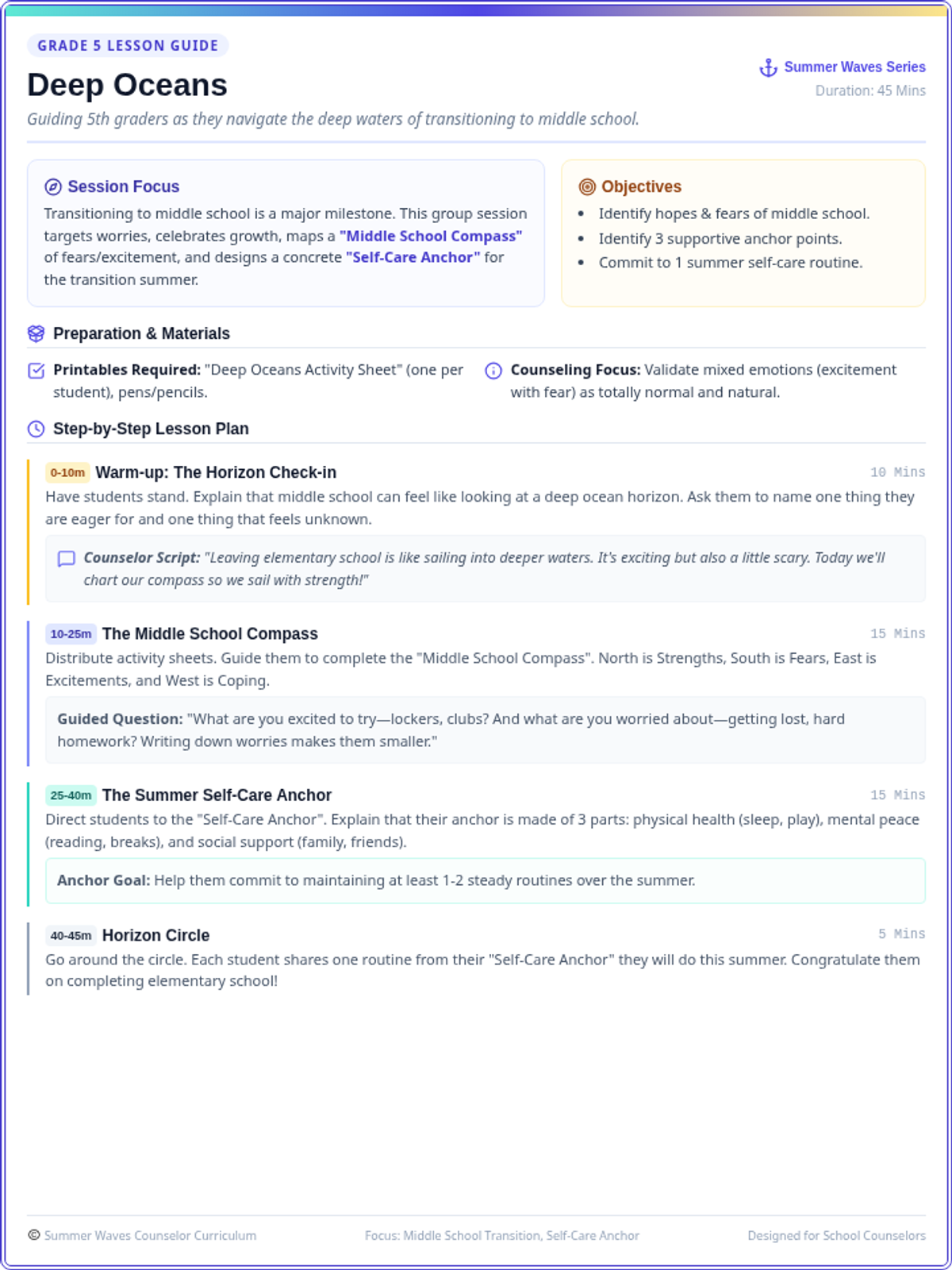
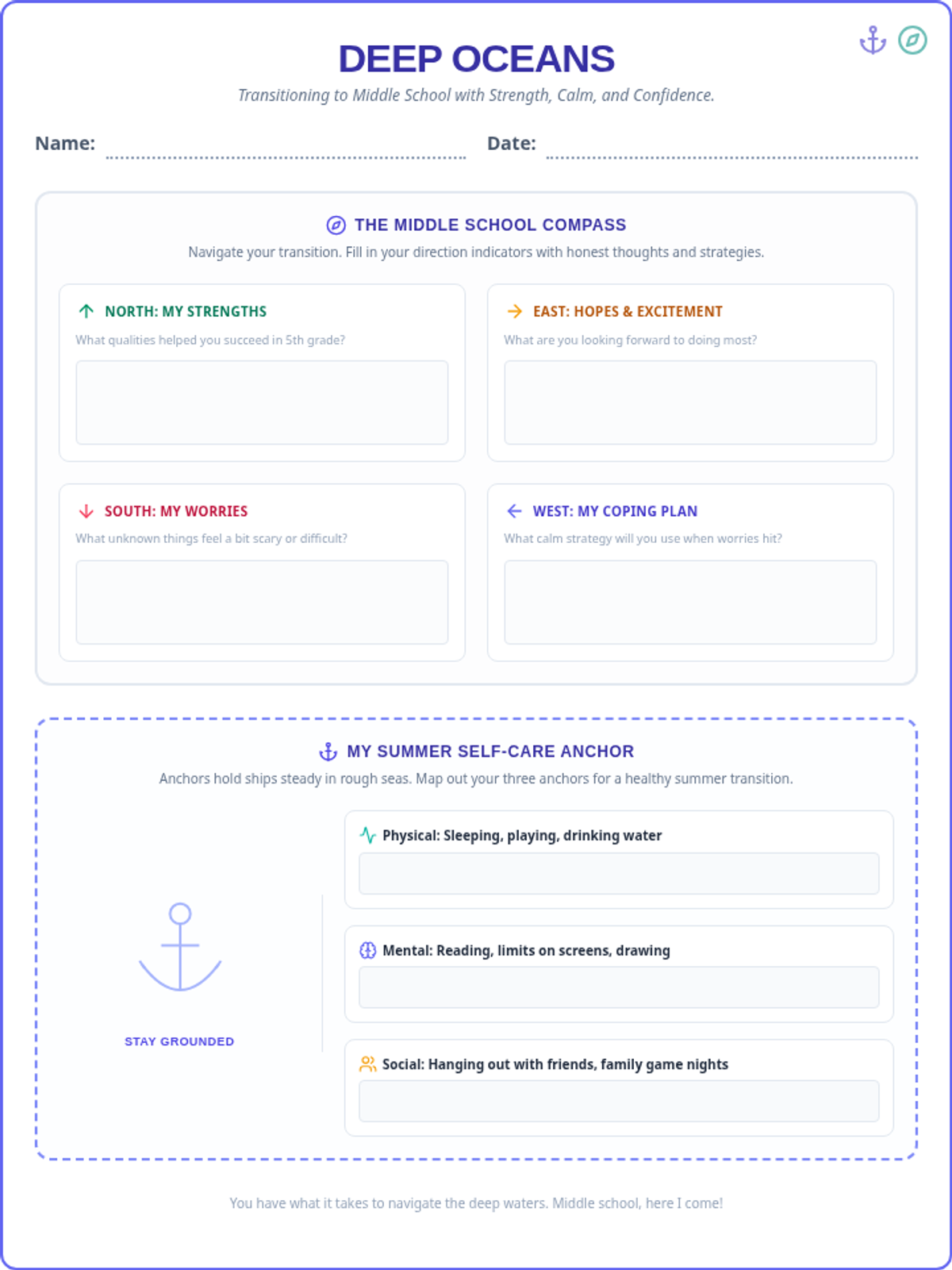
A transition-focused counseling lesson for 5th-grade students preparing for the major shift to middle school, centering on identifying core supportive networks, framing complex feelings about change, and building a self-care anchor.
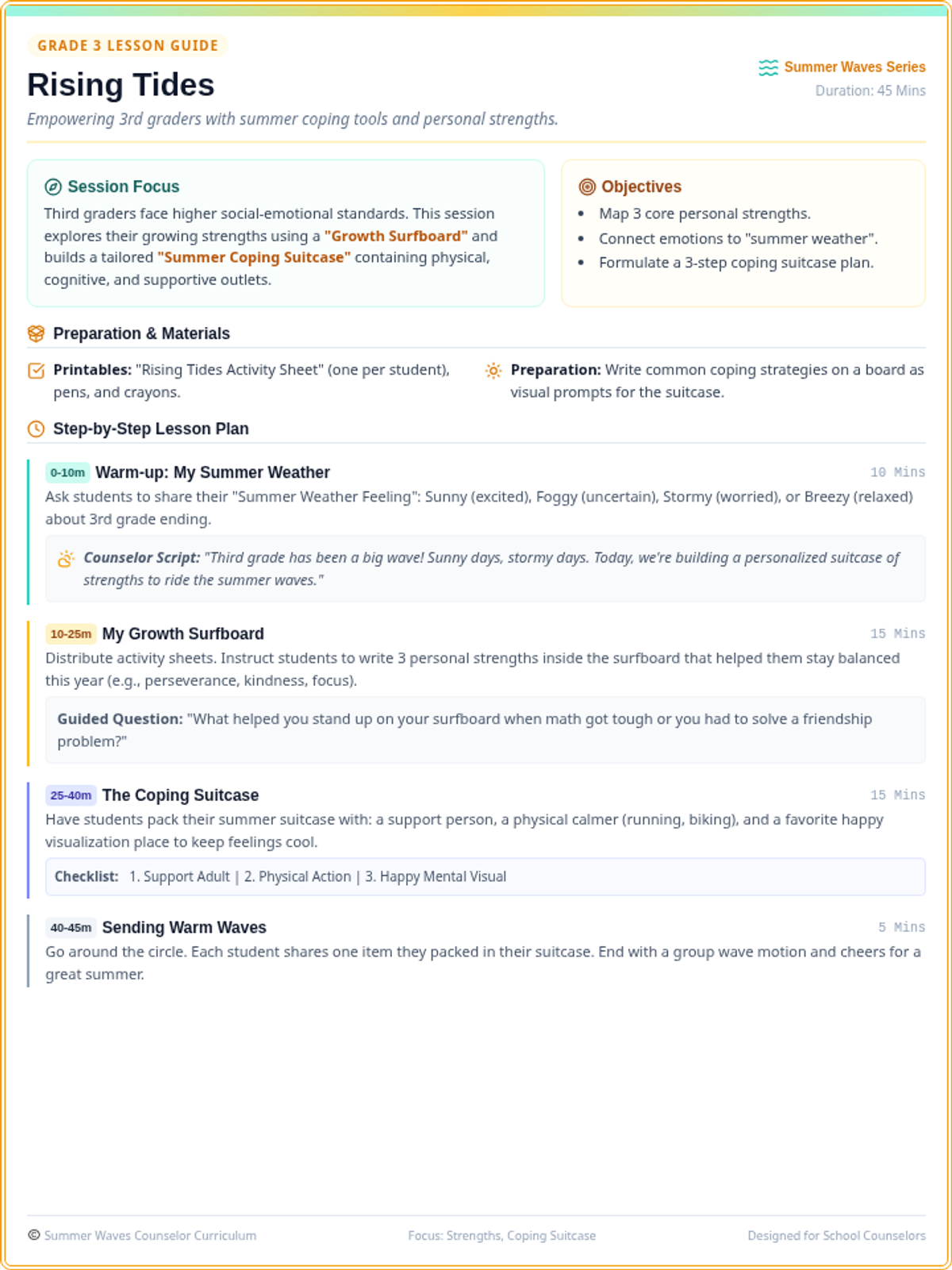
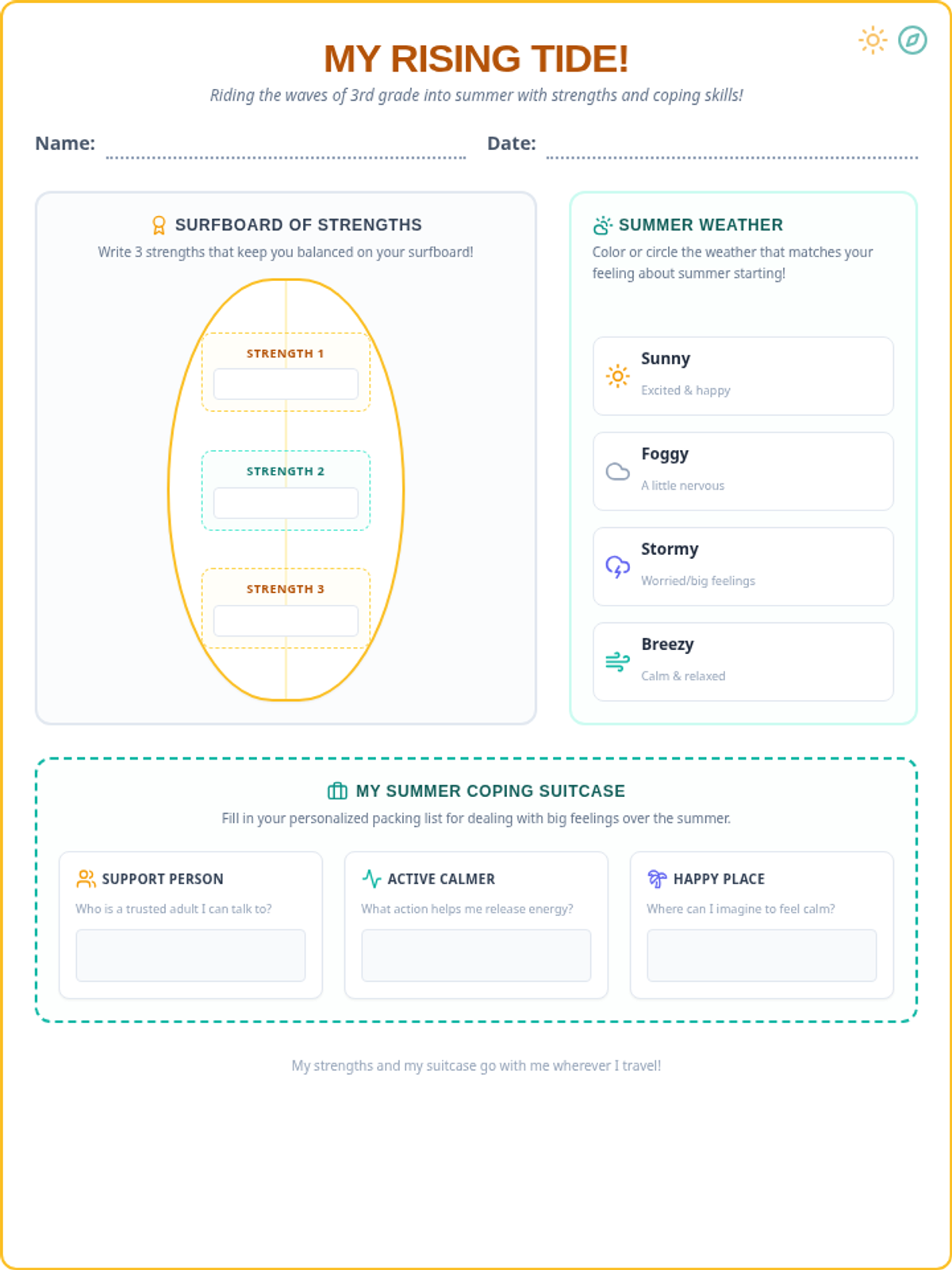
A developmental counseling lesson for 3rd-grade students focused on identifying personal strengths, tracking school year progress, and building a customizable summer coping suitcase to manage big feelings.
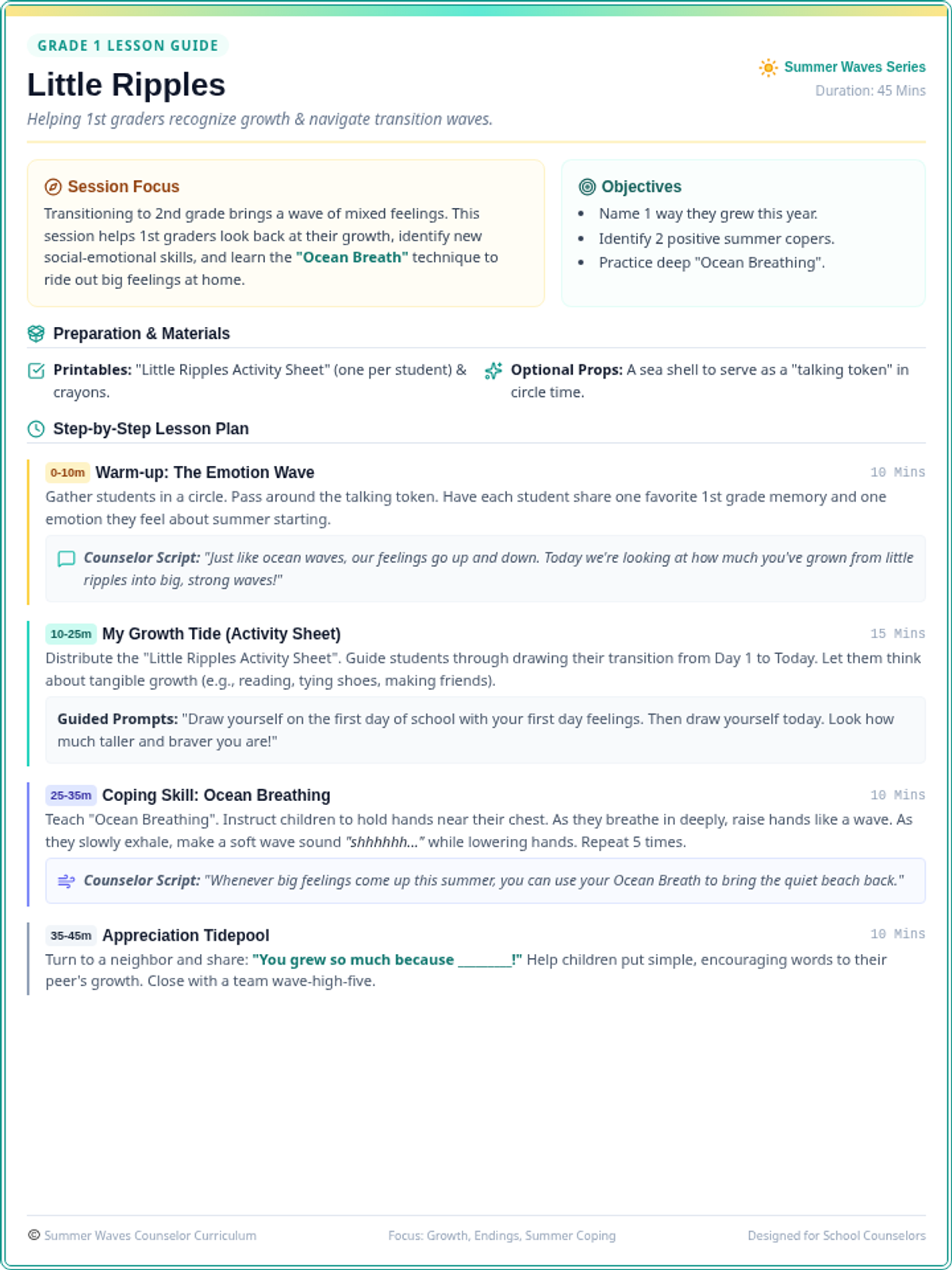
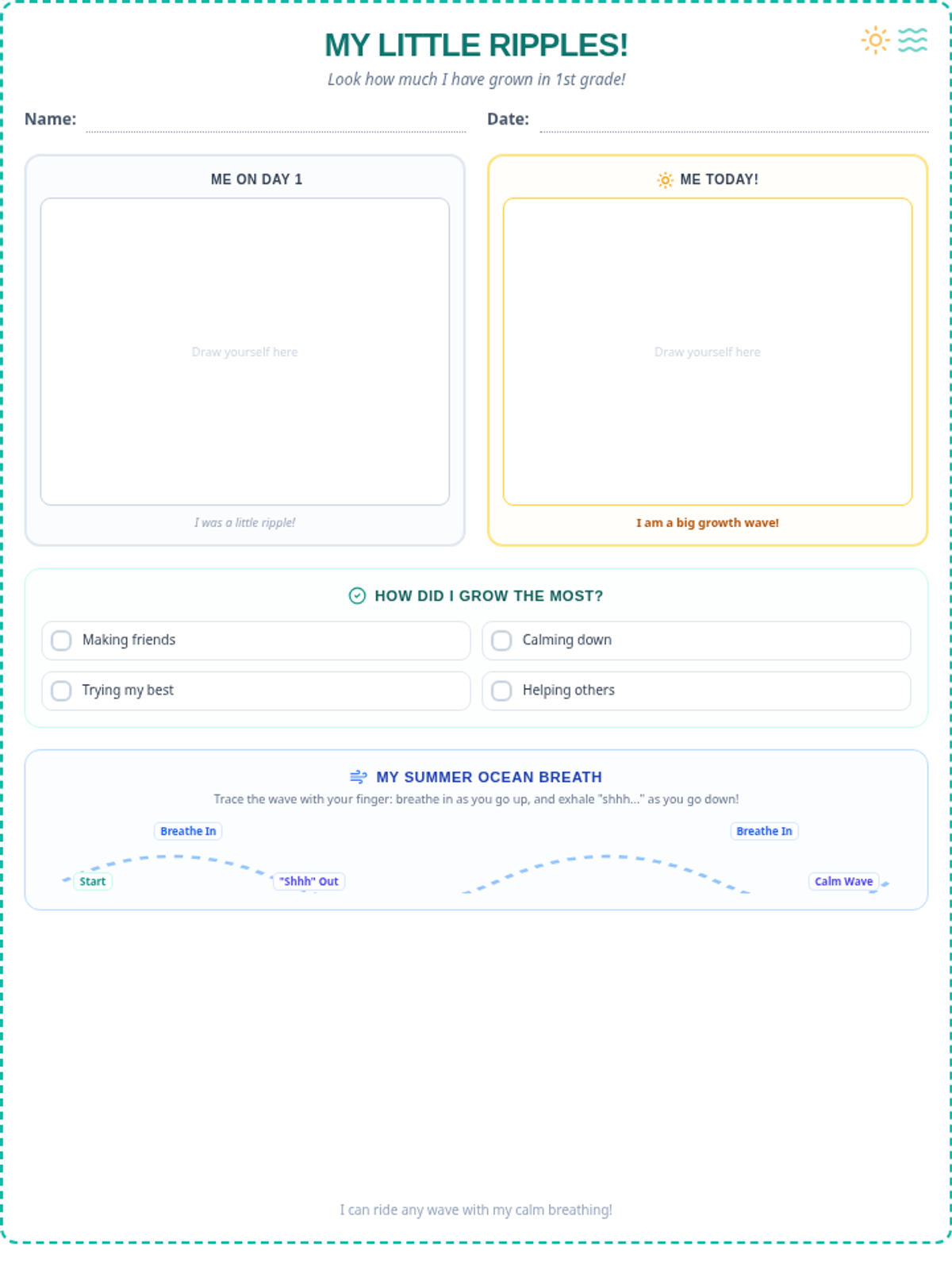
A supportive counseling session tailored for 1st-grade students to celebrate their visible emotional and social growth this year, introduce interactive 'Ocean Breathing' coping techniques, and capture their accomplishments in a highly visual, low-color printable keepsake.
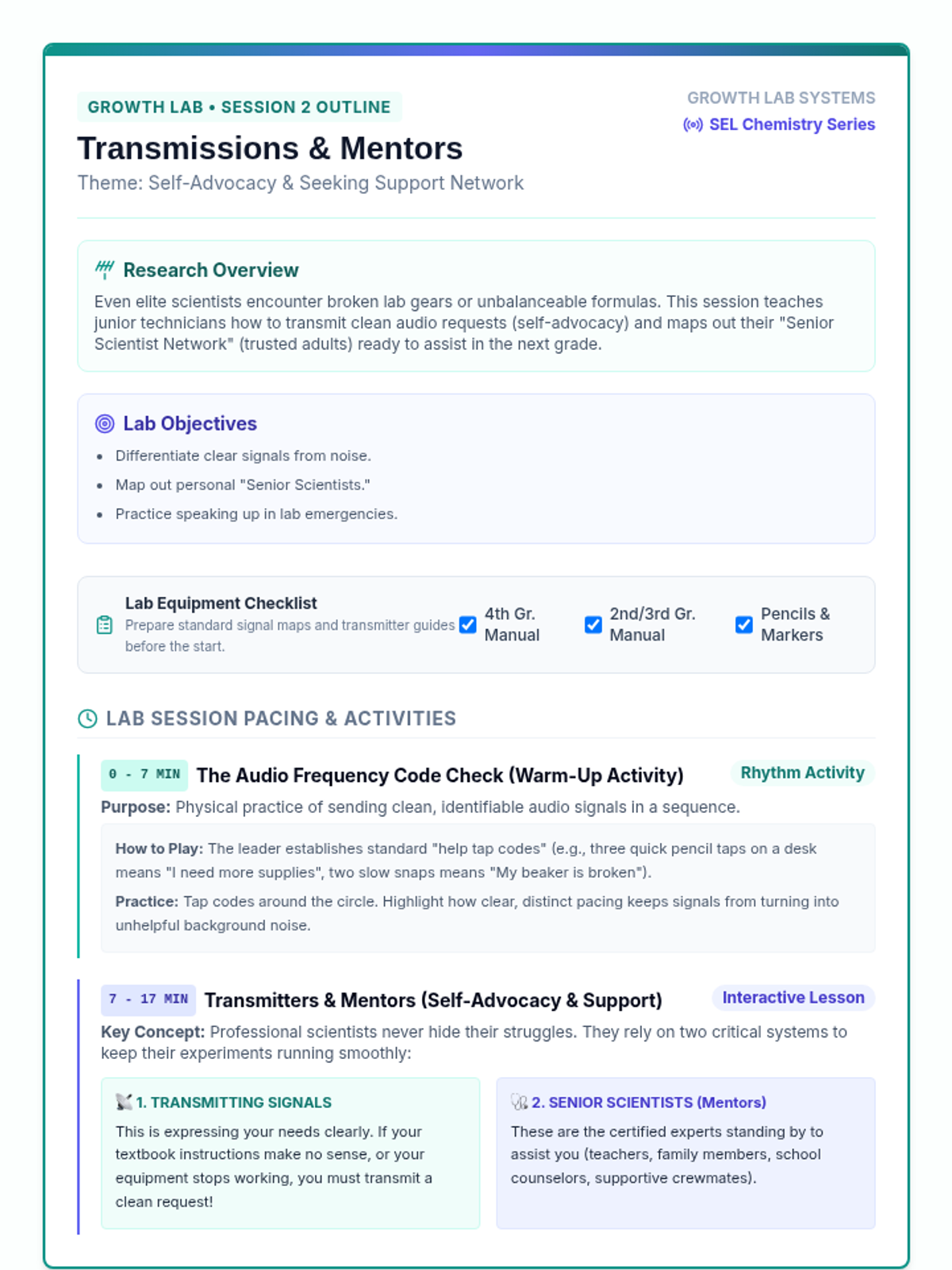
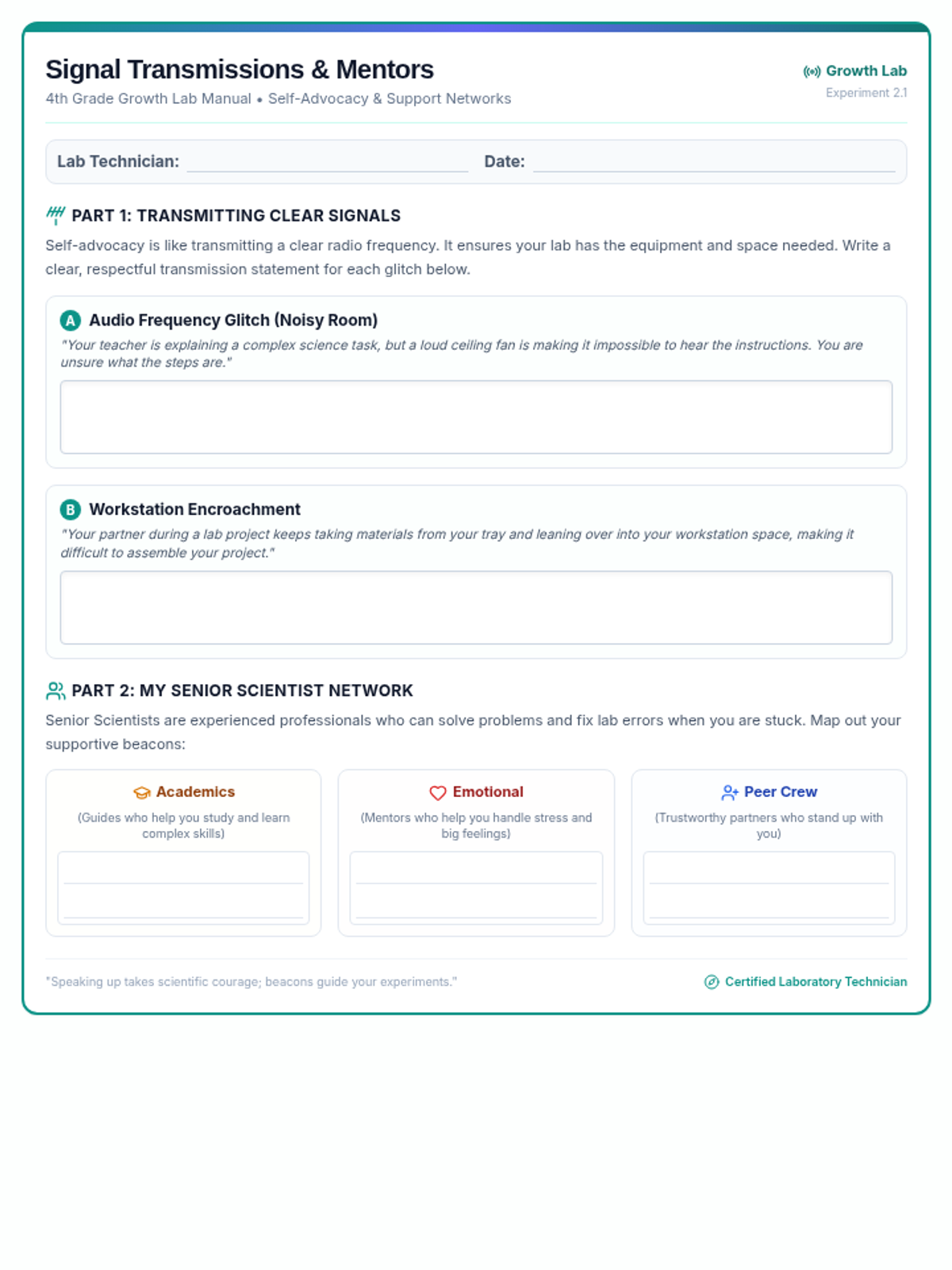
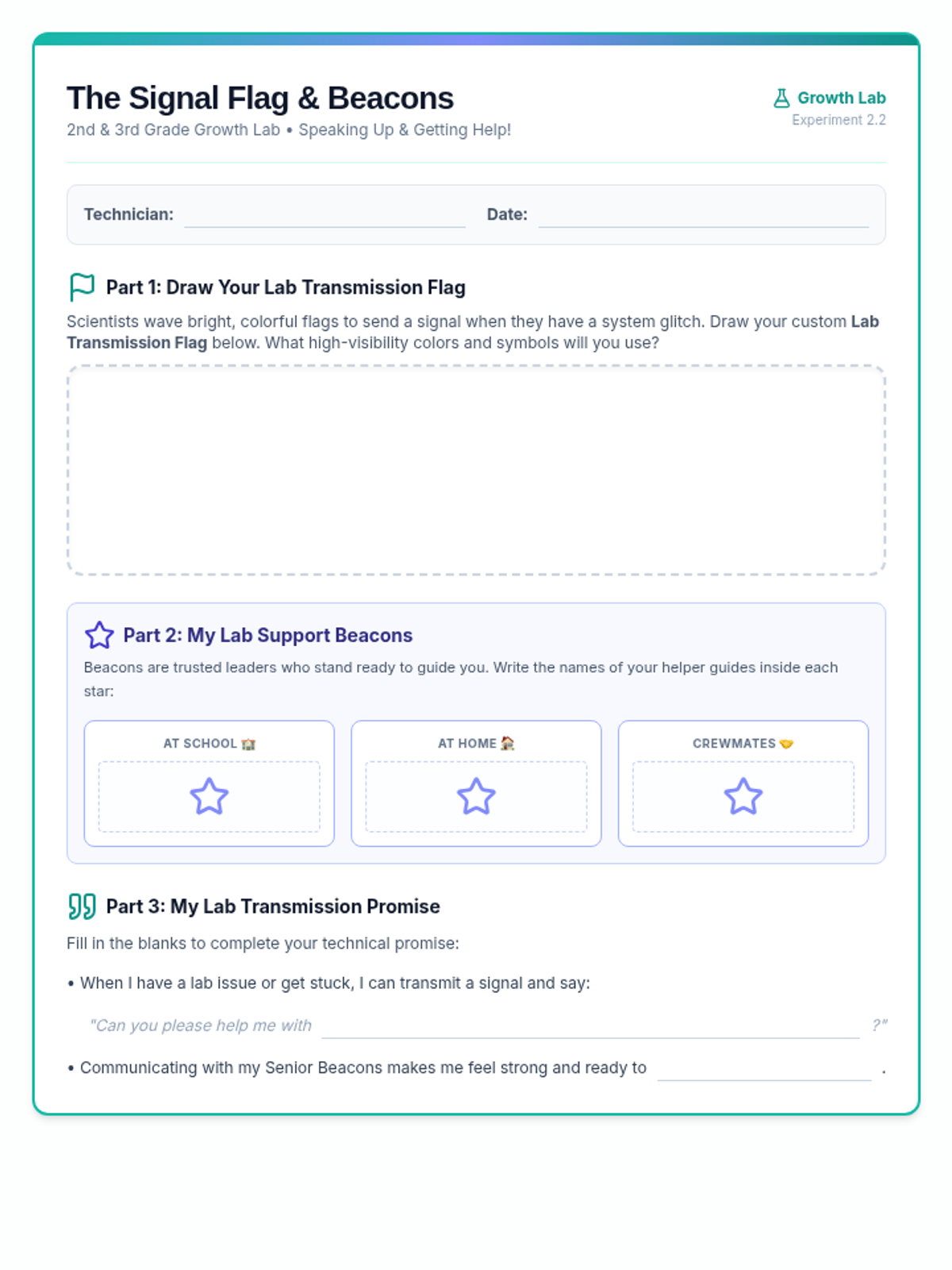
This session focuses on self-advocacy and seeking support. Students learn to recognize when to speak up for their physical and learning needs (trail signals) and identify trusted individuals who can help them navigate challenges (trail guides).
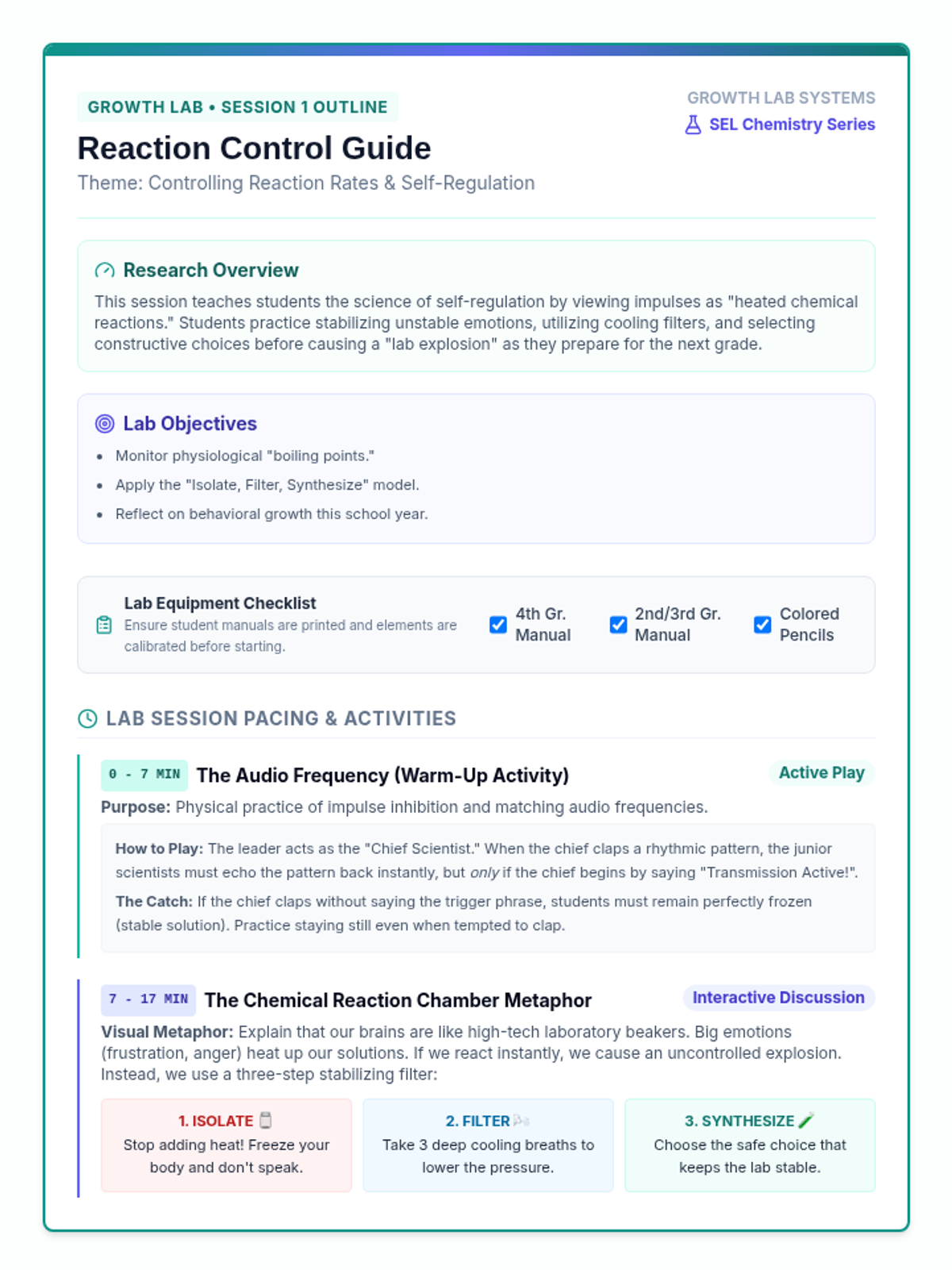
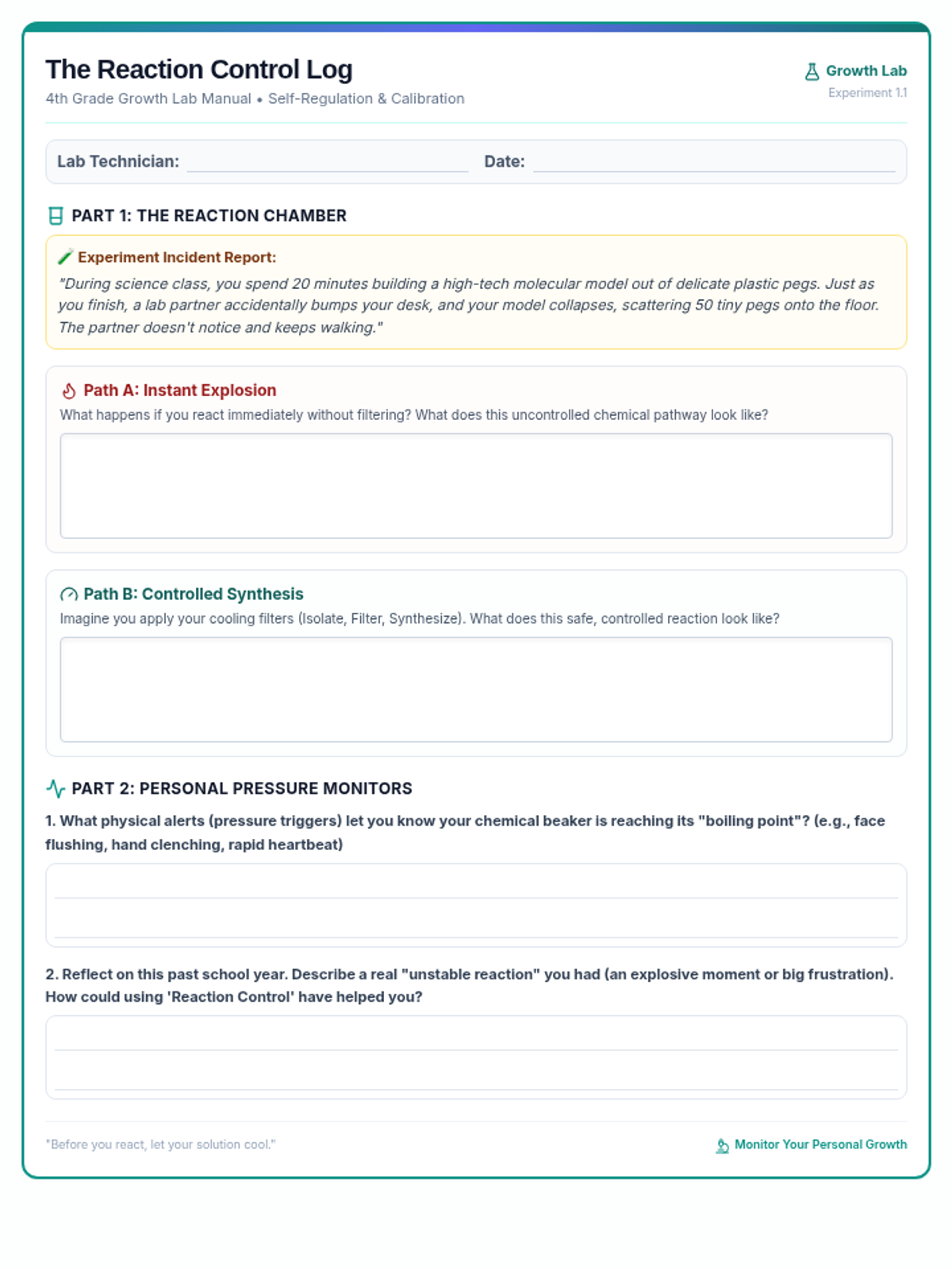
This session teaches students the science of self-regulation and reflection by studying 'reaction control' (thinking before acting). Students explore chemical-themed cooling strategies and reflect on their personal progress over the past school year.
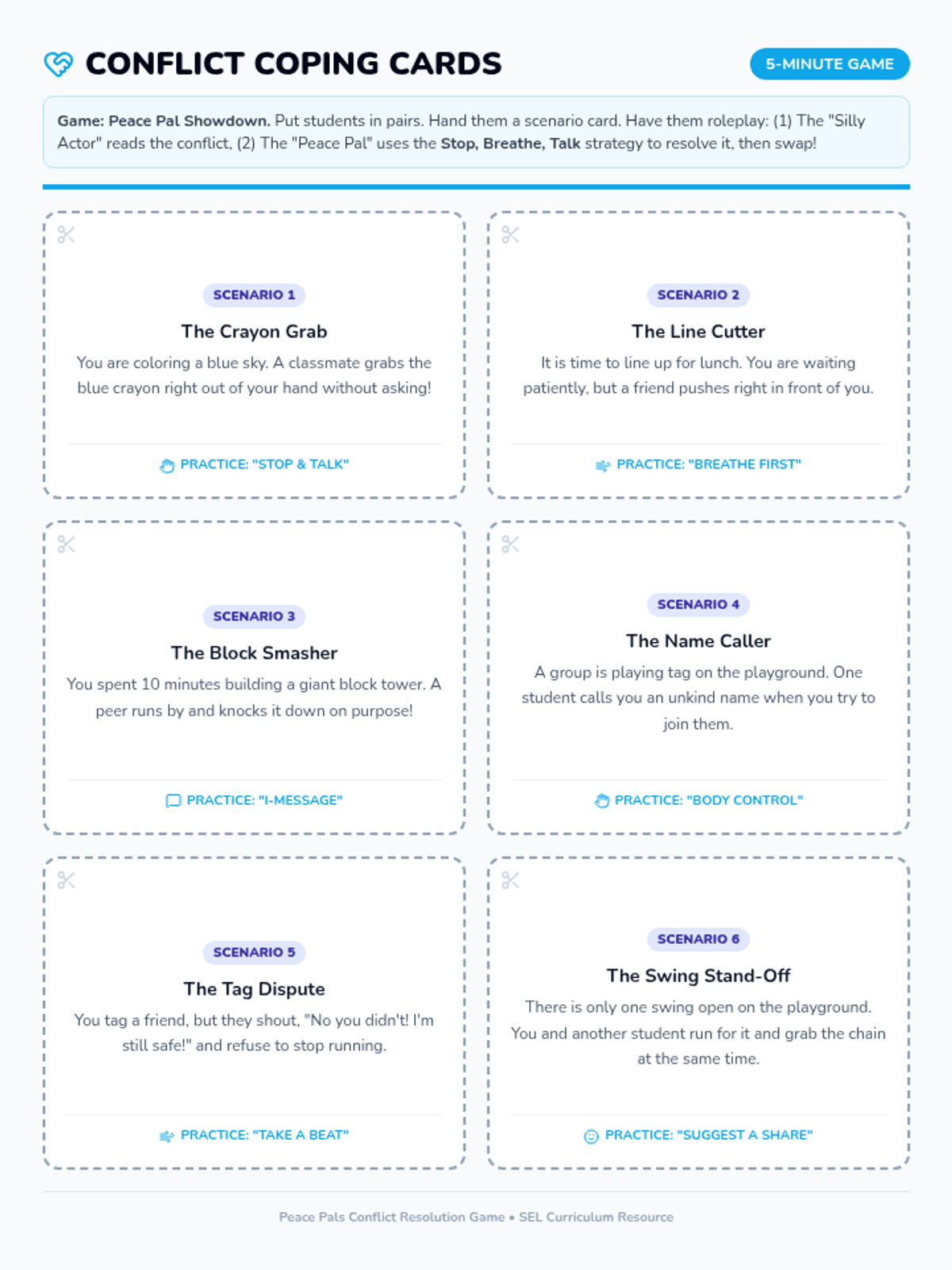
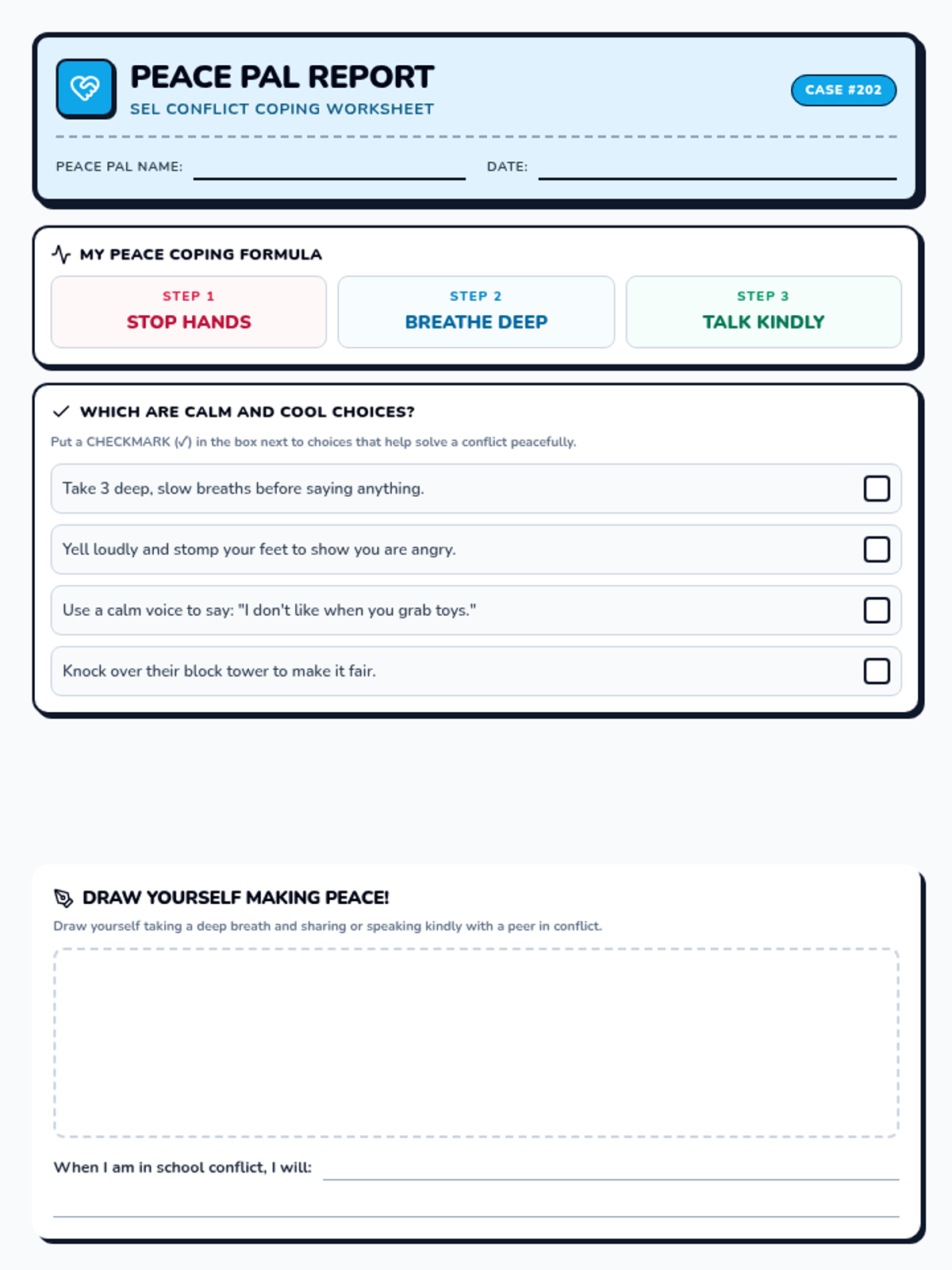
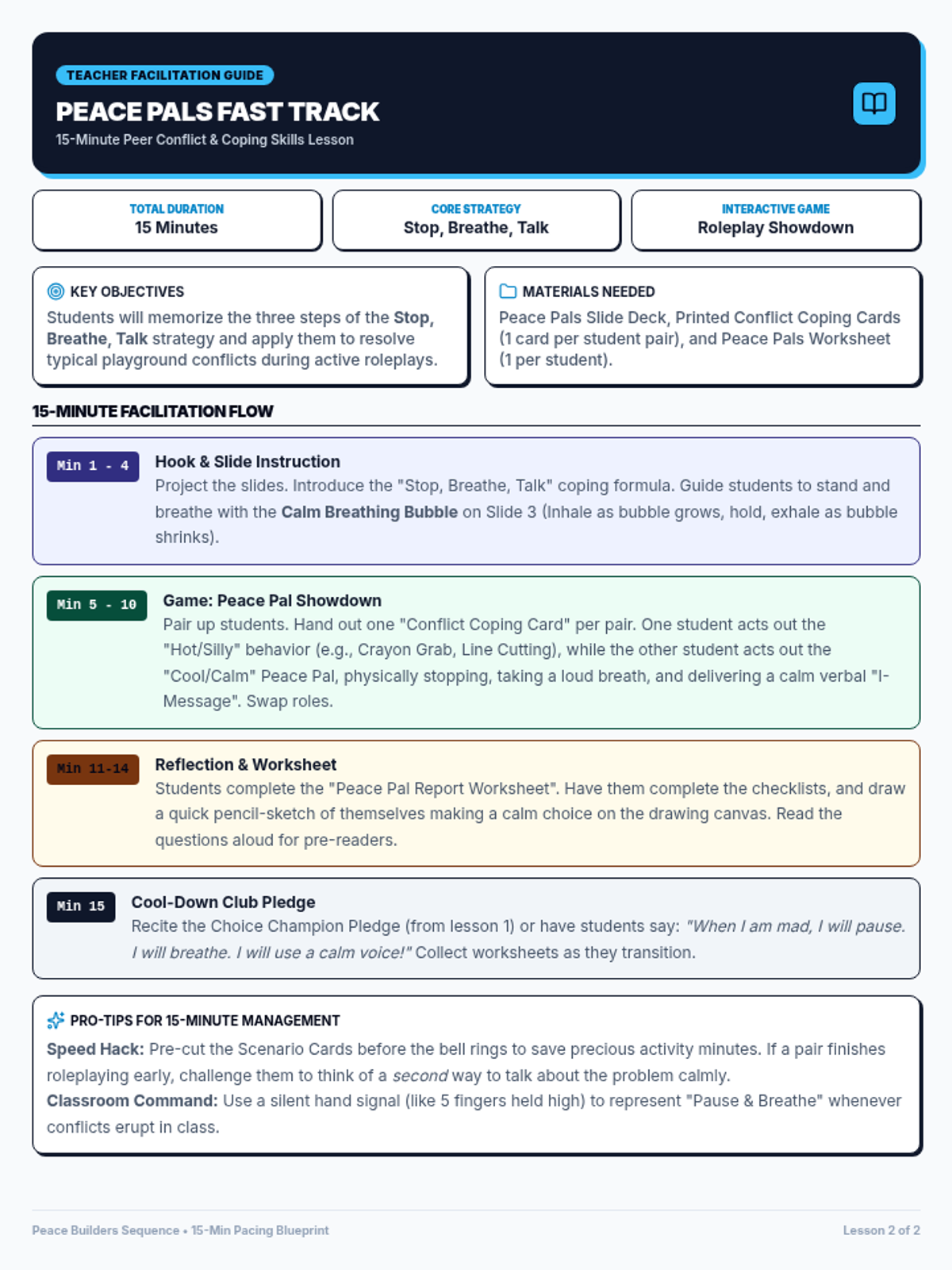
A fast-paced, 15-minute SEL lesson targeting early elementary students to resolve peer conflict and practice emotional regulation. It introduces the "Stop, Breathe, Talk" coping strategy with interactive slides, role-playing scenario cards, and a reflection worksheet.
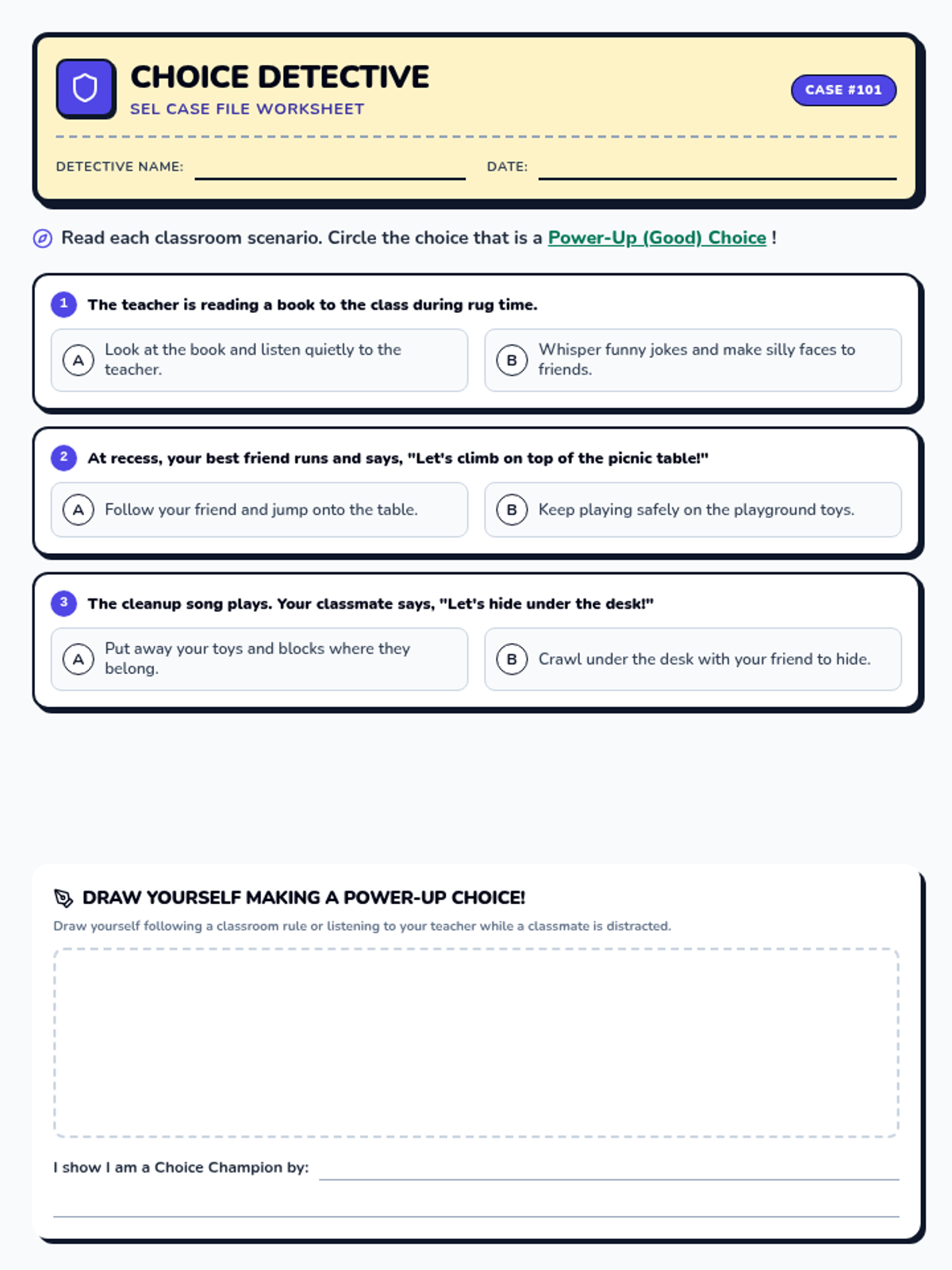
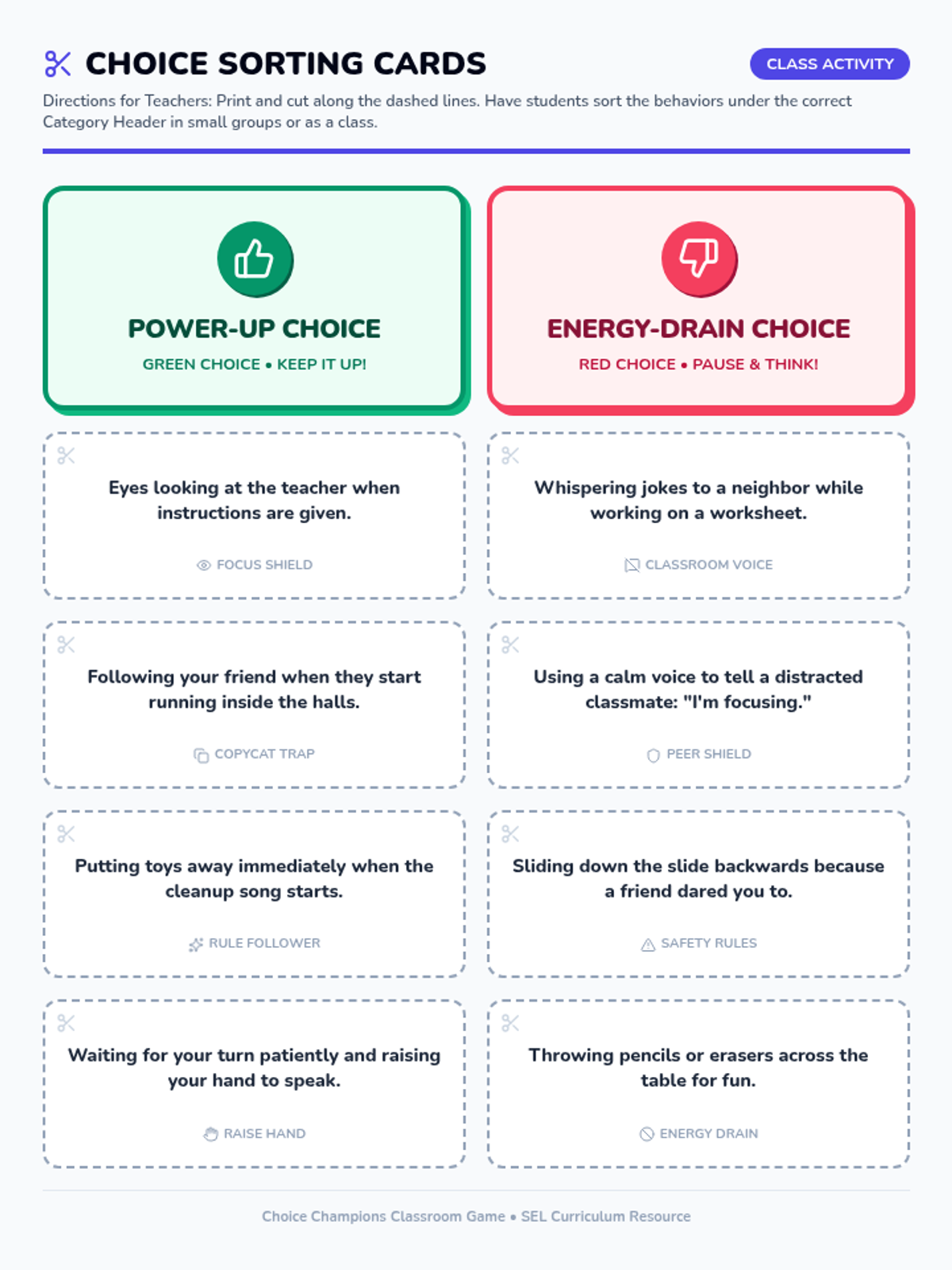
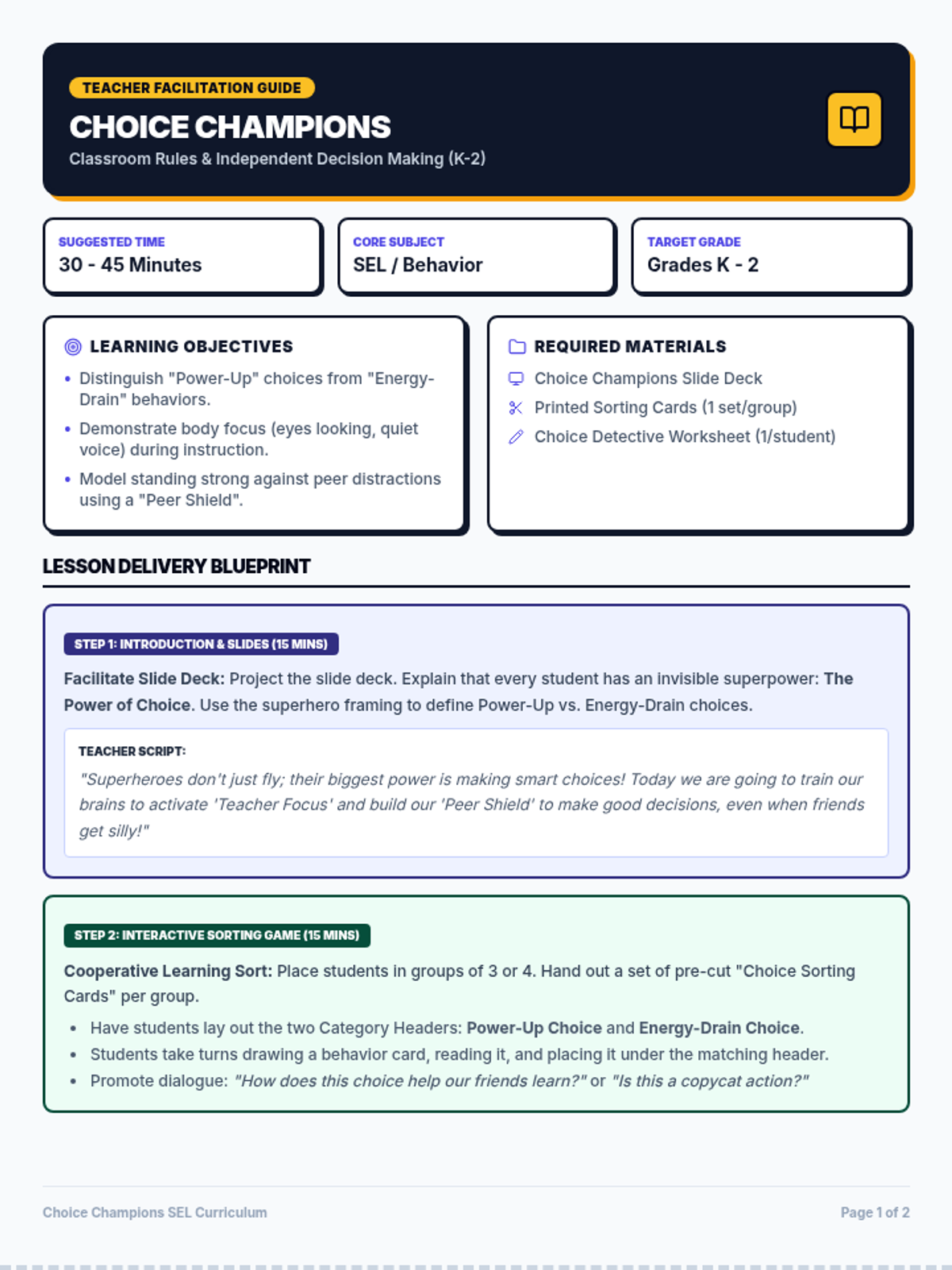
A social-emotional learning lesson designed for early elementary students (K-2) to teach the difference between good and bad classroom choices. It focuses on listening to the teacher, following rules, and maintaining independent positive behavior despite peer distractions.
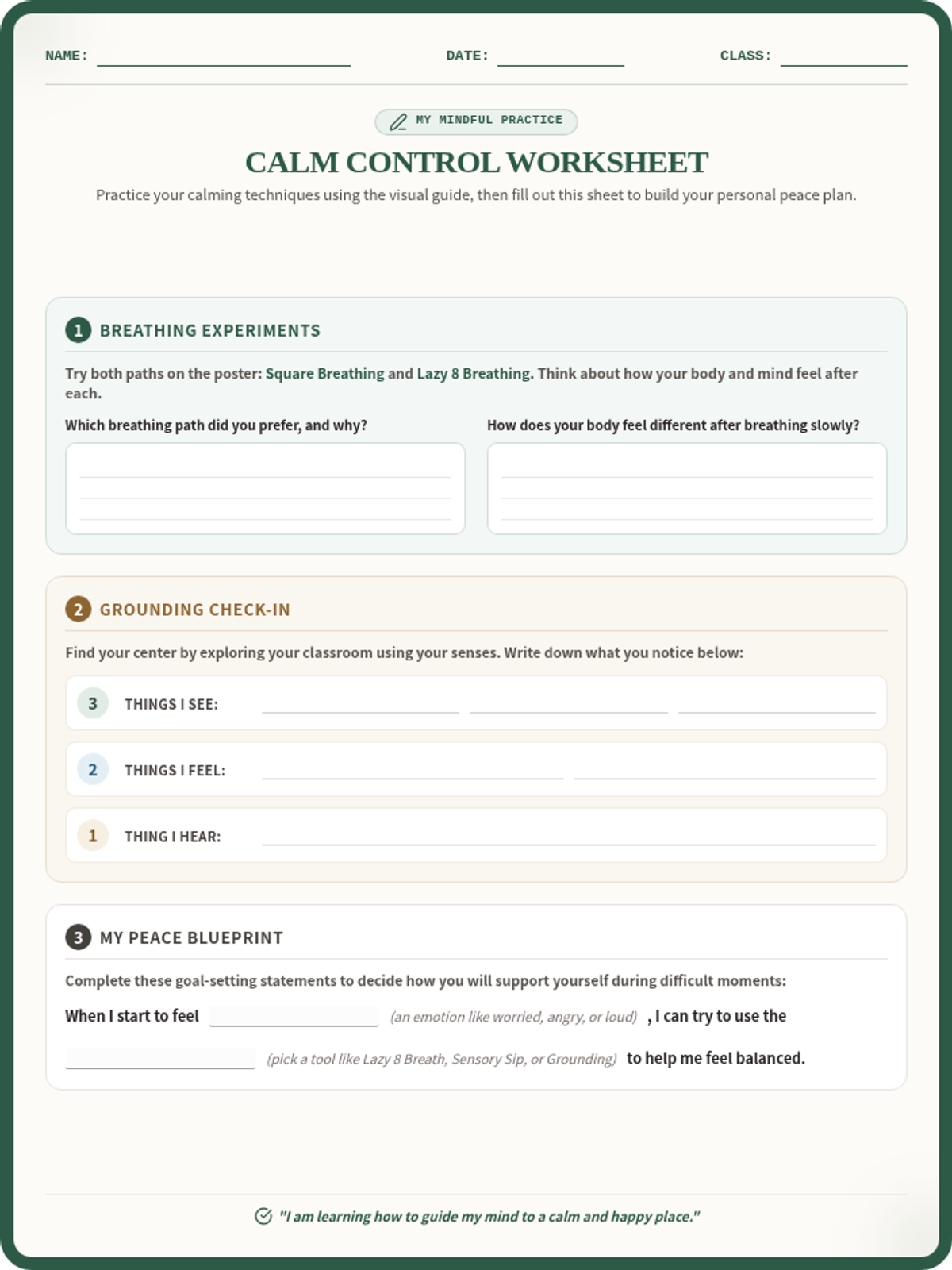
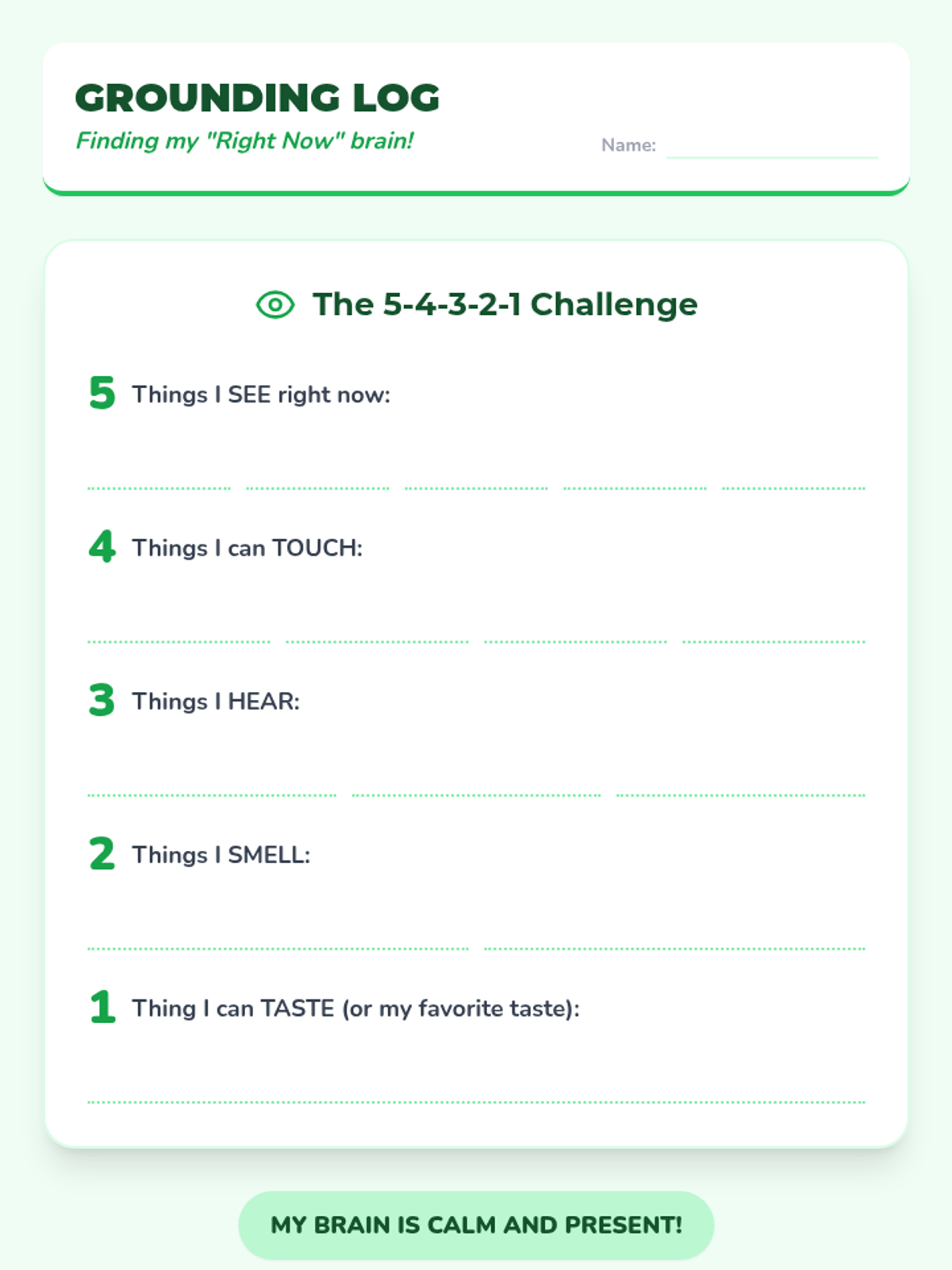
A supportive social-emotional lesson designed to help students discover and practice key deep breathing, sensory grounding, and mindfulness techniques for daily emotional regulation.
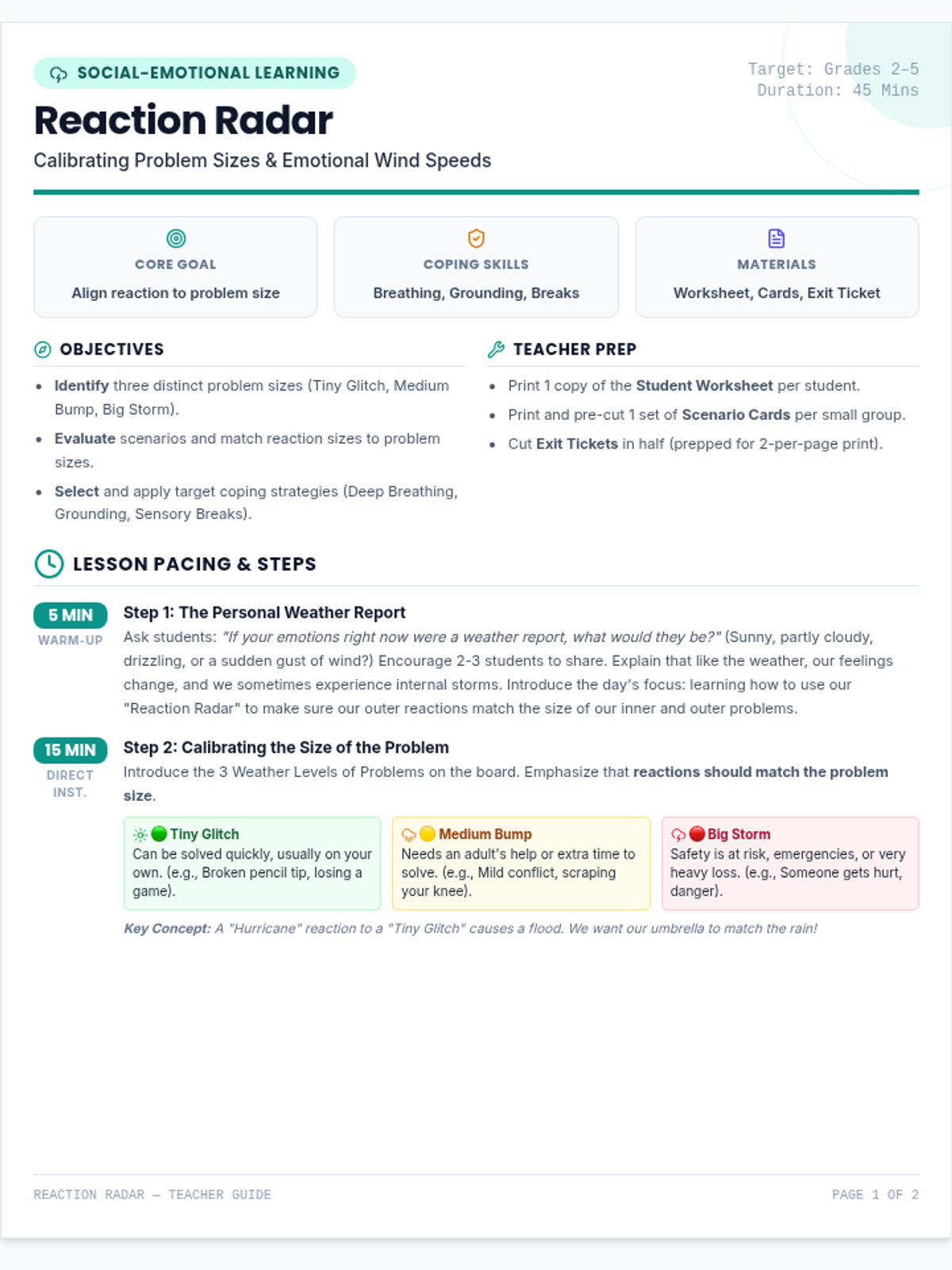
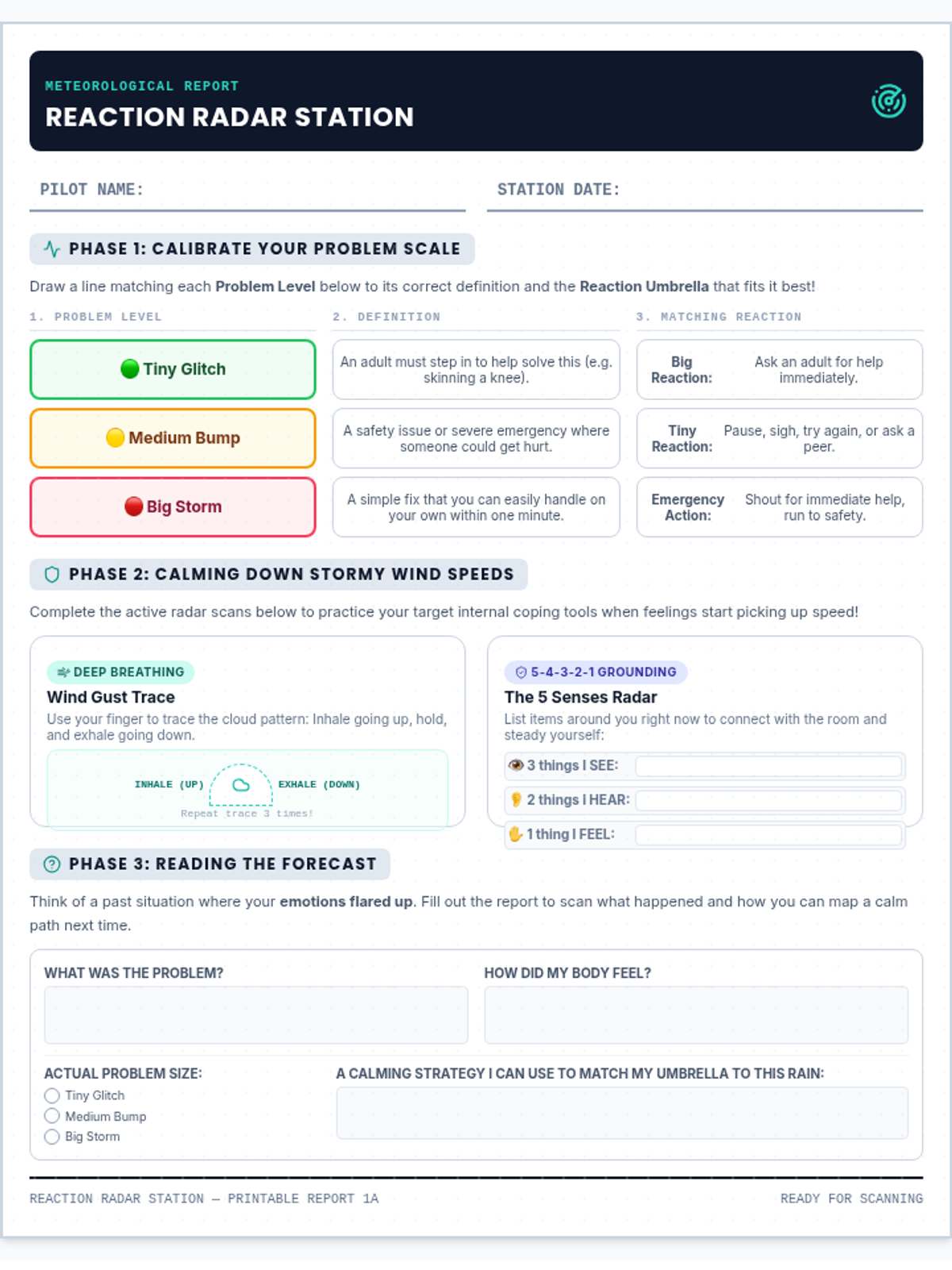
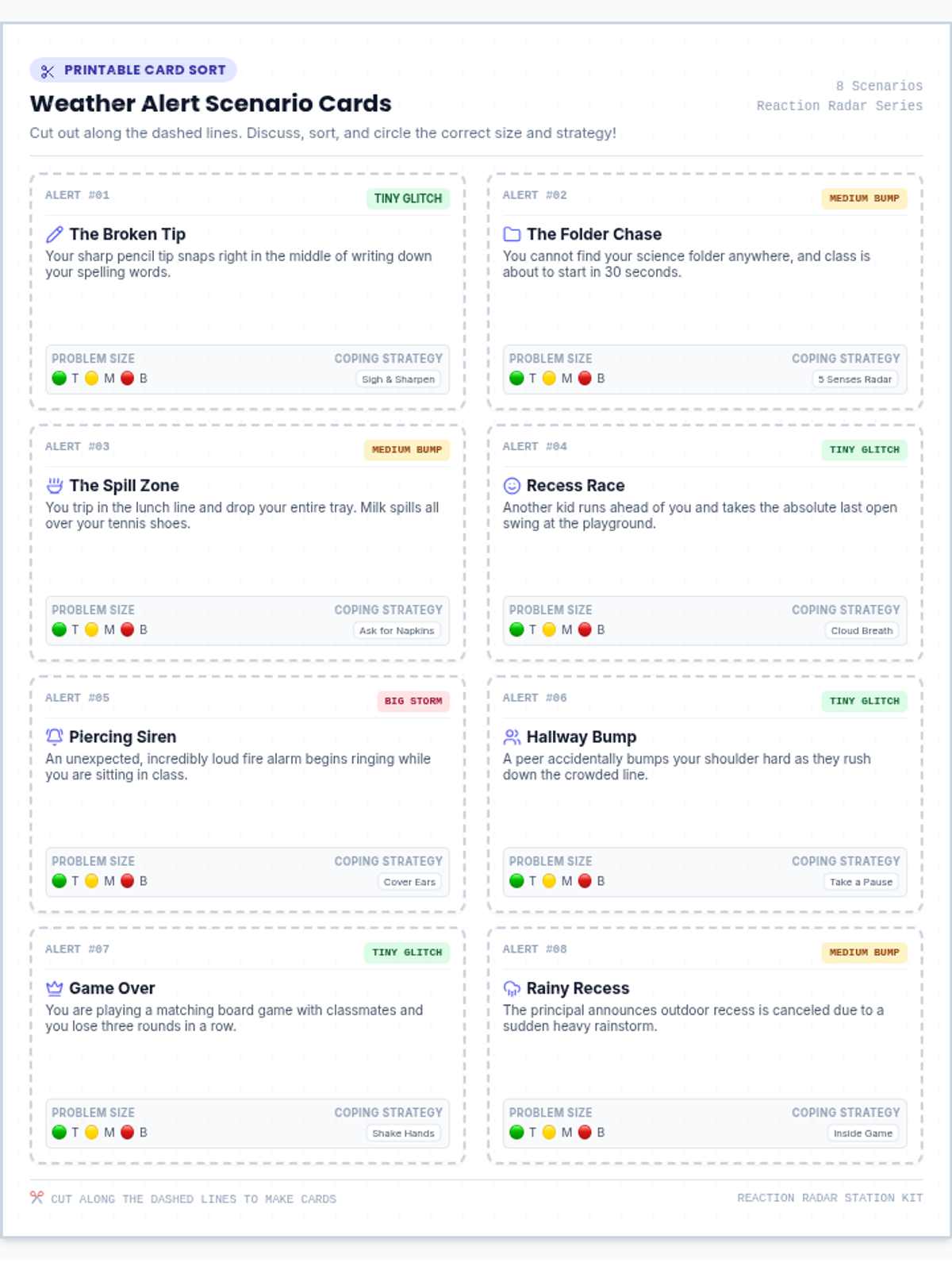
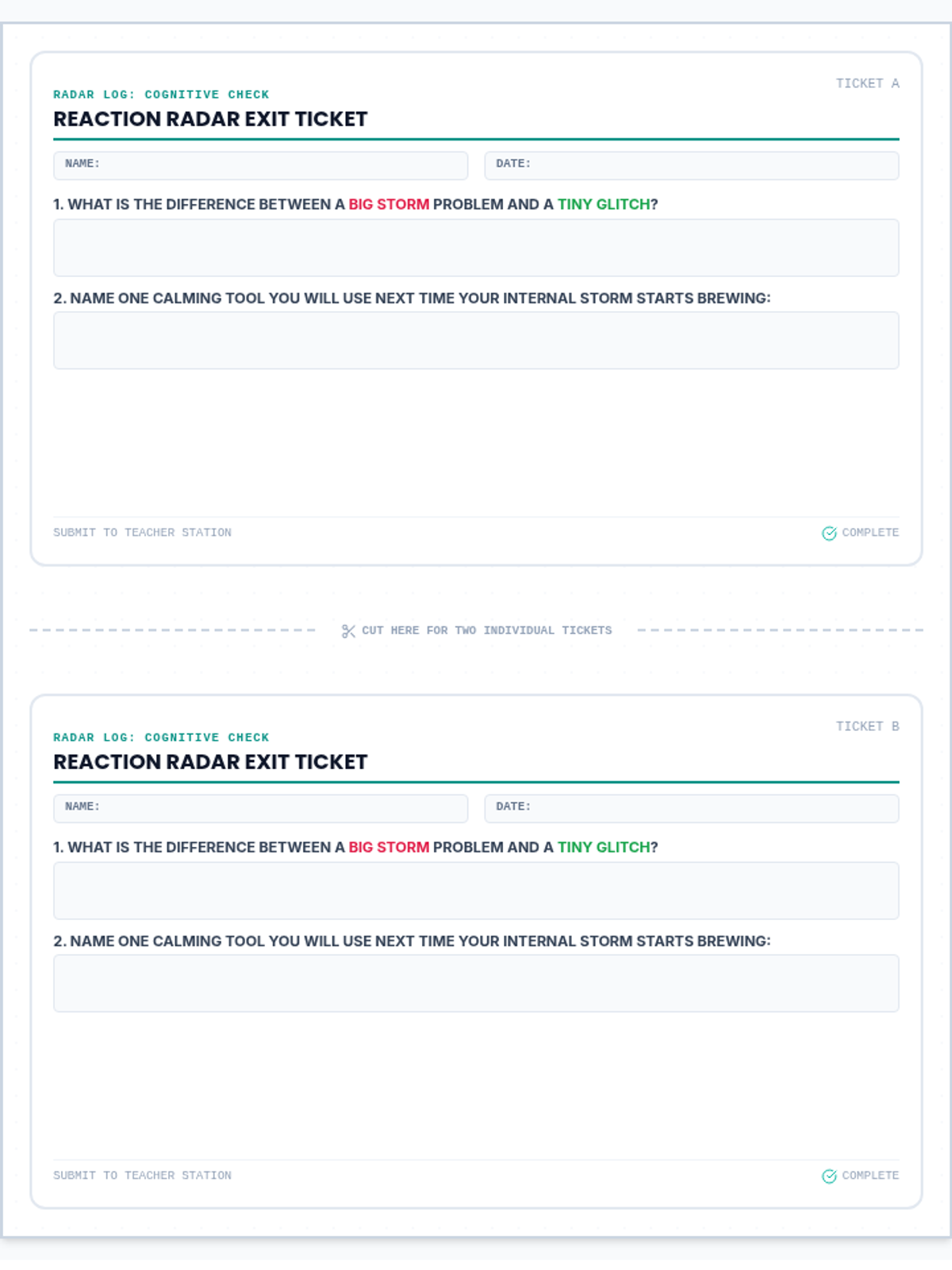
An emotional regulation and social-emotional learning lesson focused on helping students identify, measure, and match the size of their reactions to the size of their problems. Students will learn critical coping skills like deep breathing, grounding, taking a break, and sensory tools using a fun meteorological 'Weather Radar' theme.
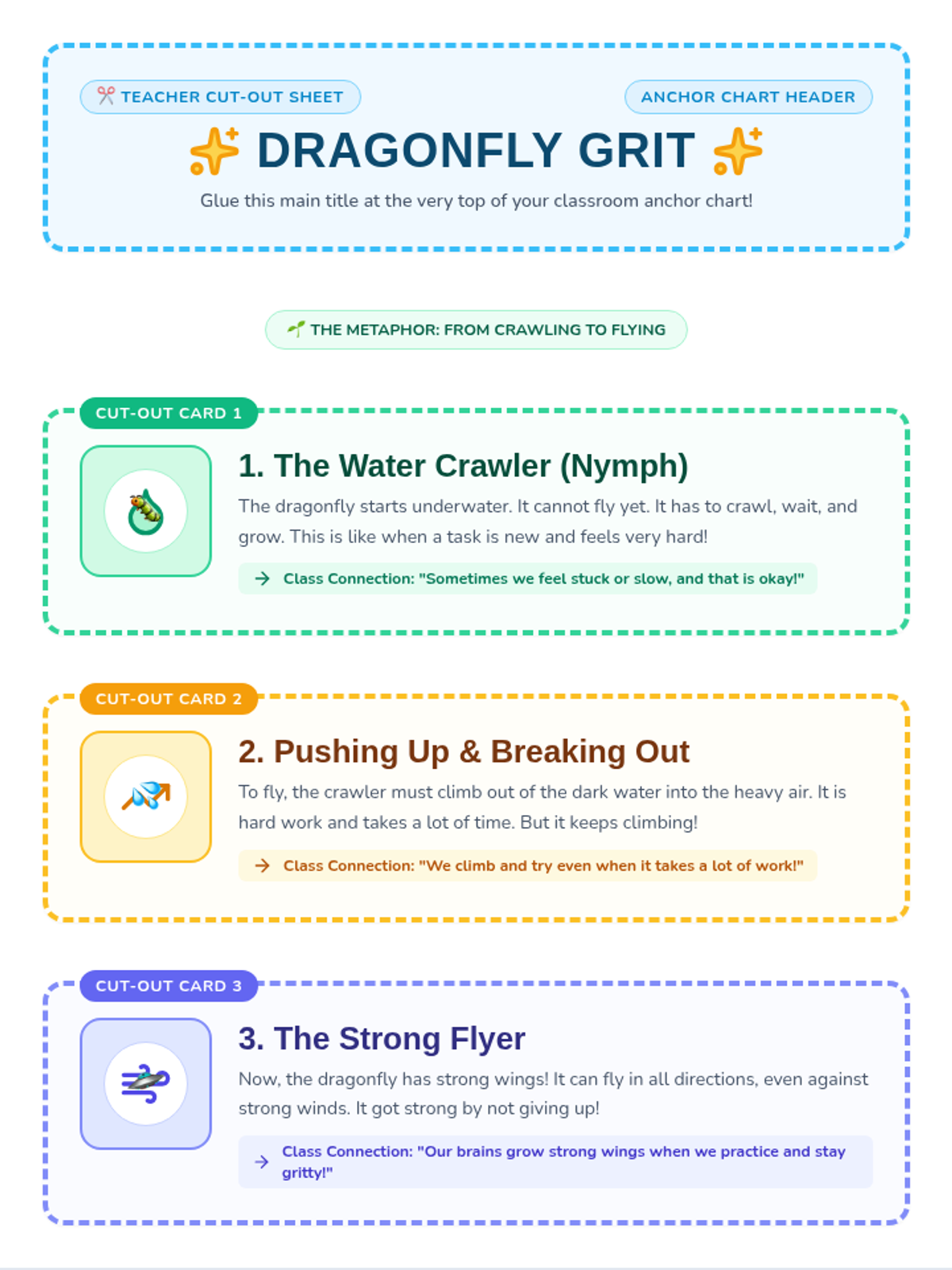
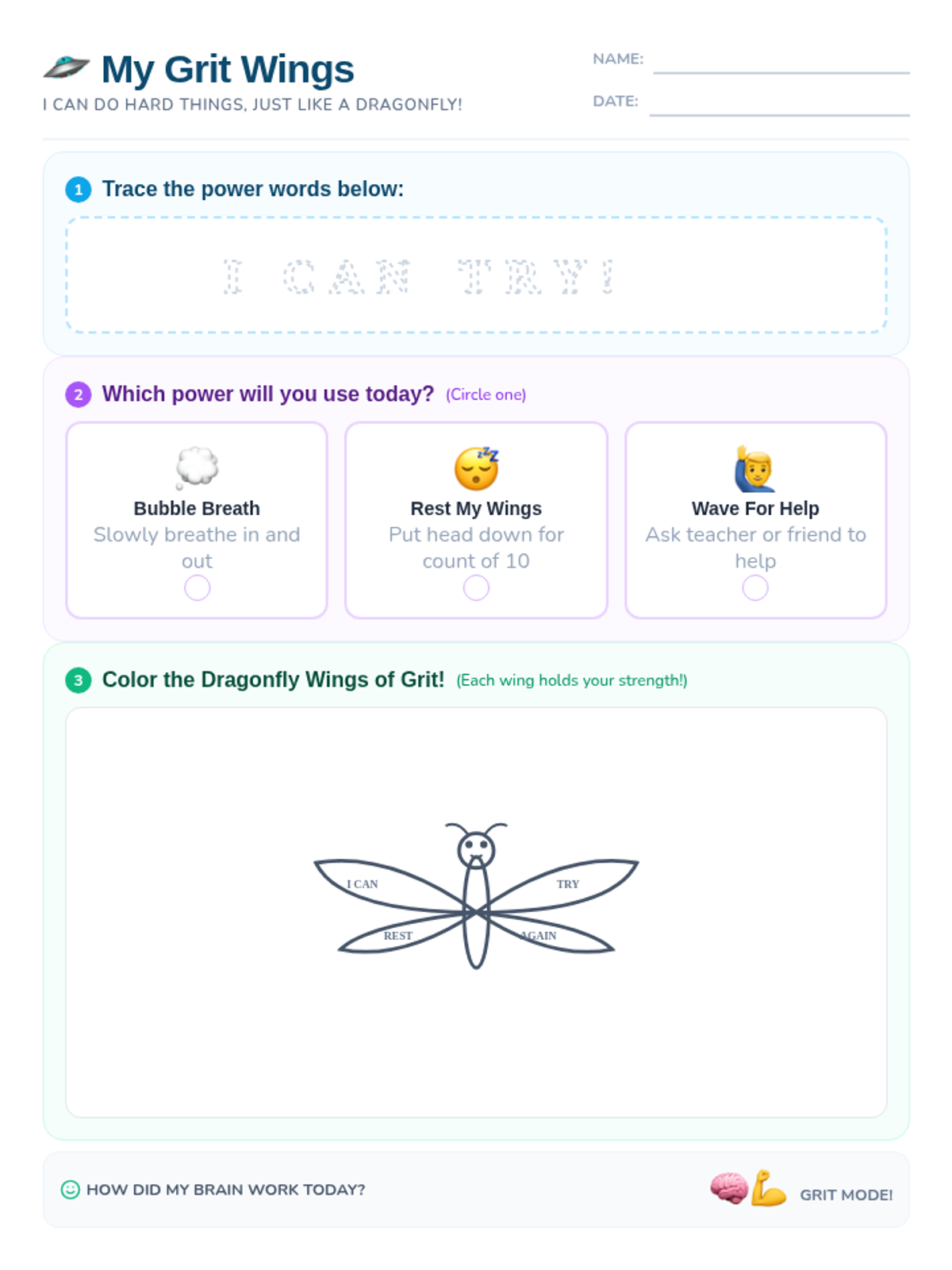
A 30-minute social-emotional learning lesson designed for Grade 1-2 students with low cognitive needs. It uses the dragonfly's transition from a water crawler (nymph) to a strong flier as a simple, concrete metaphor for perseverance and pushing through difficult situations.
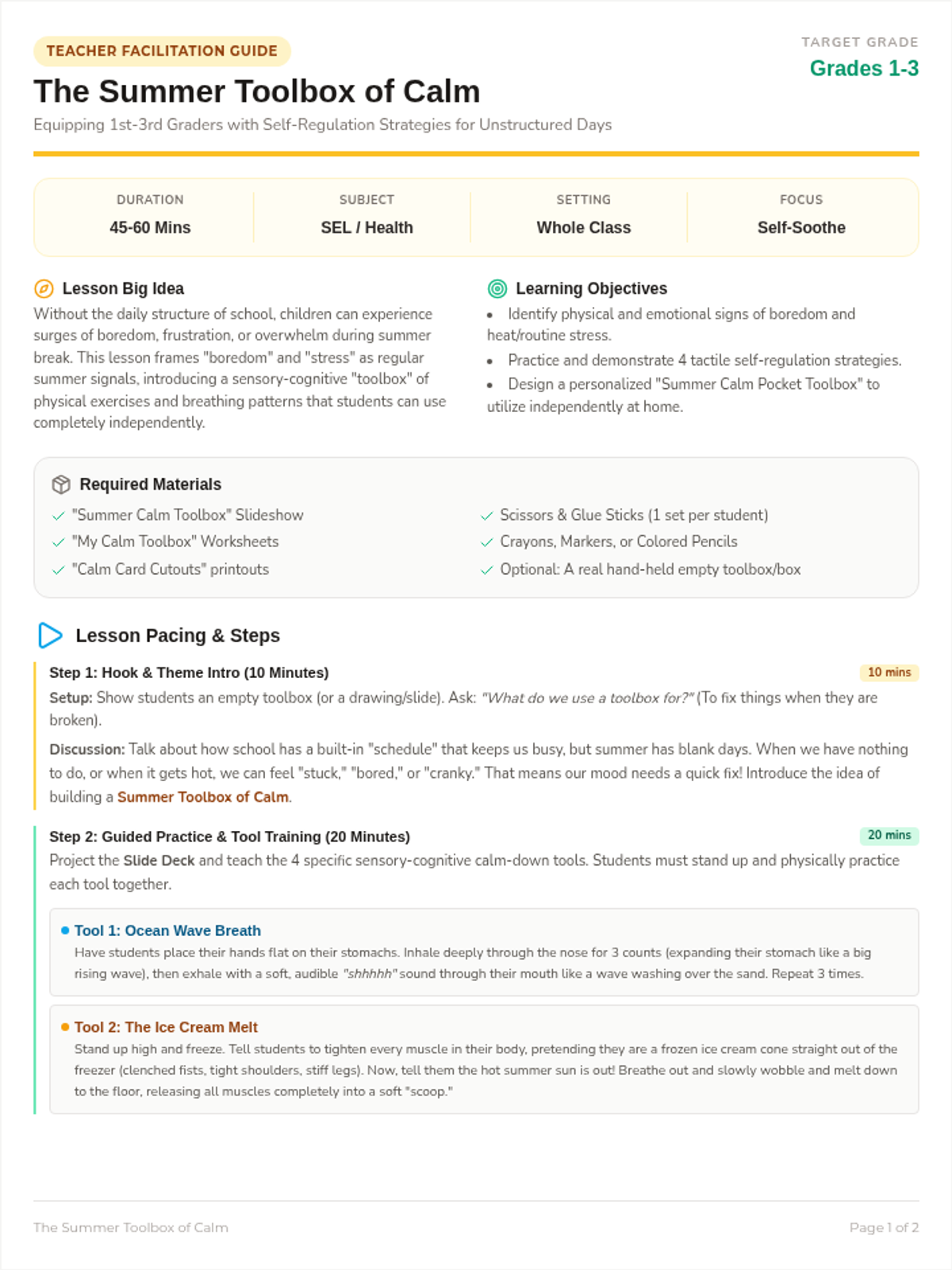
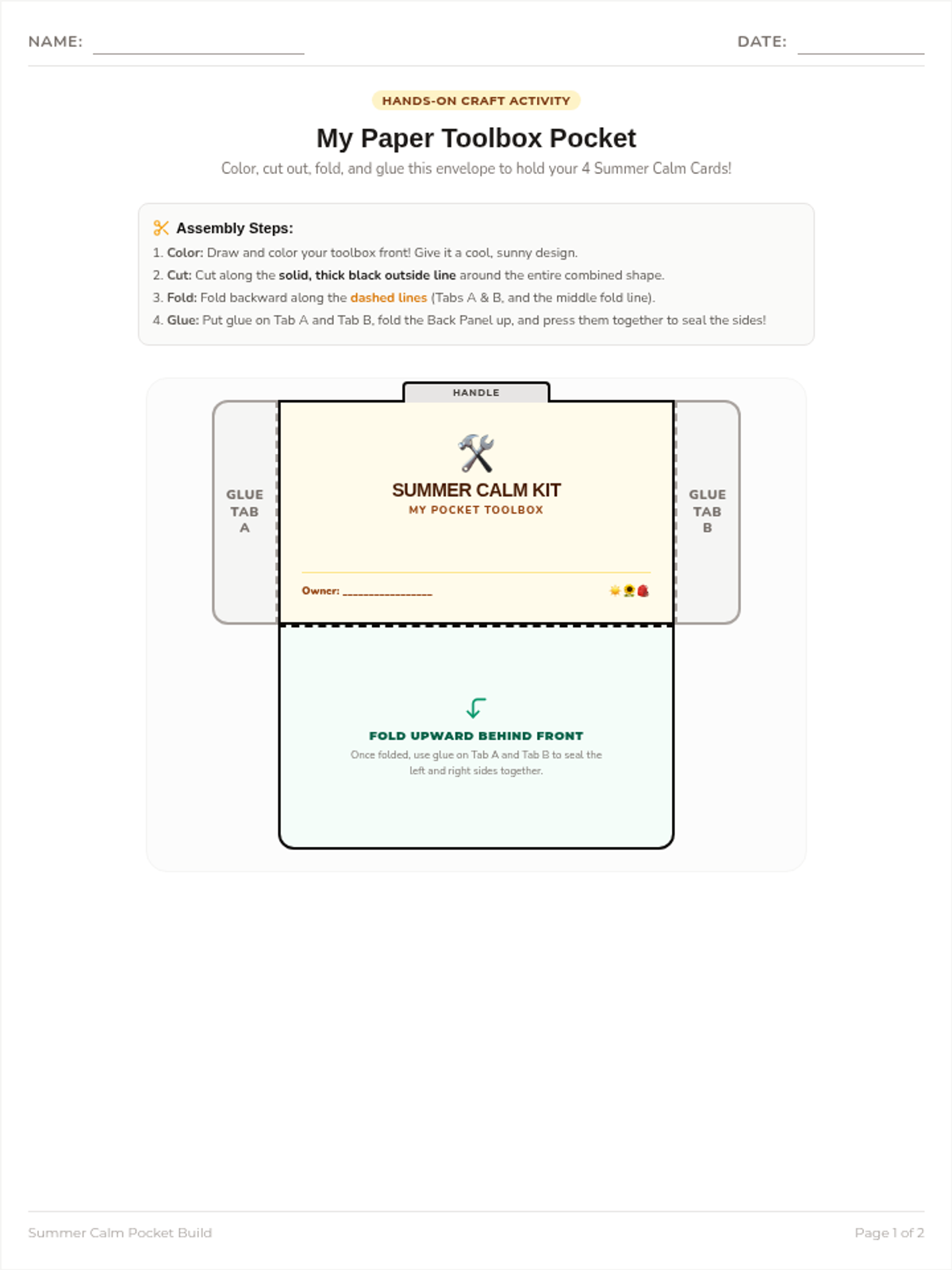
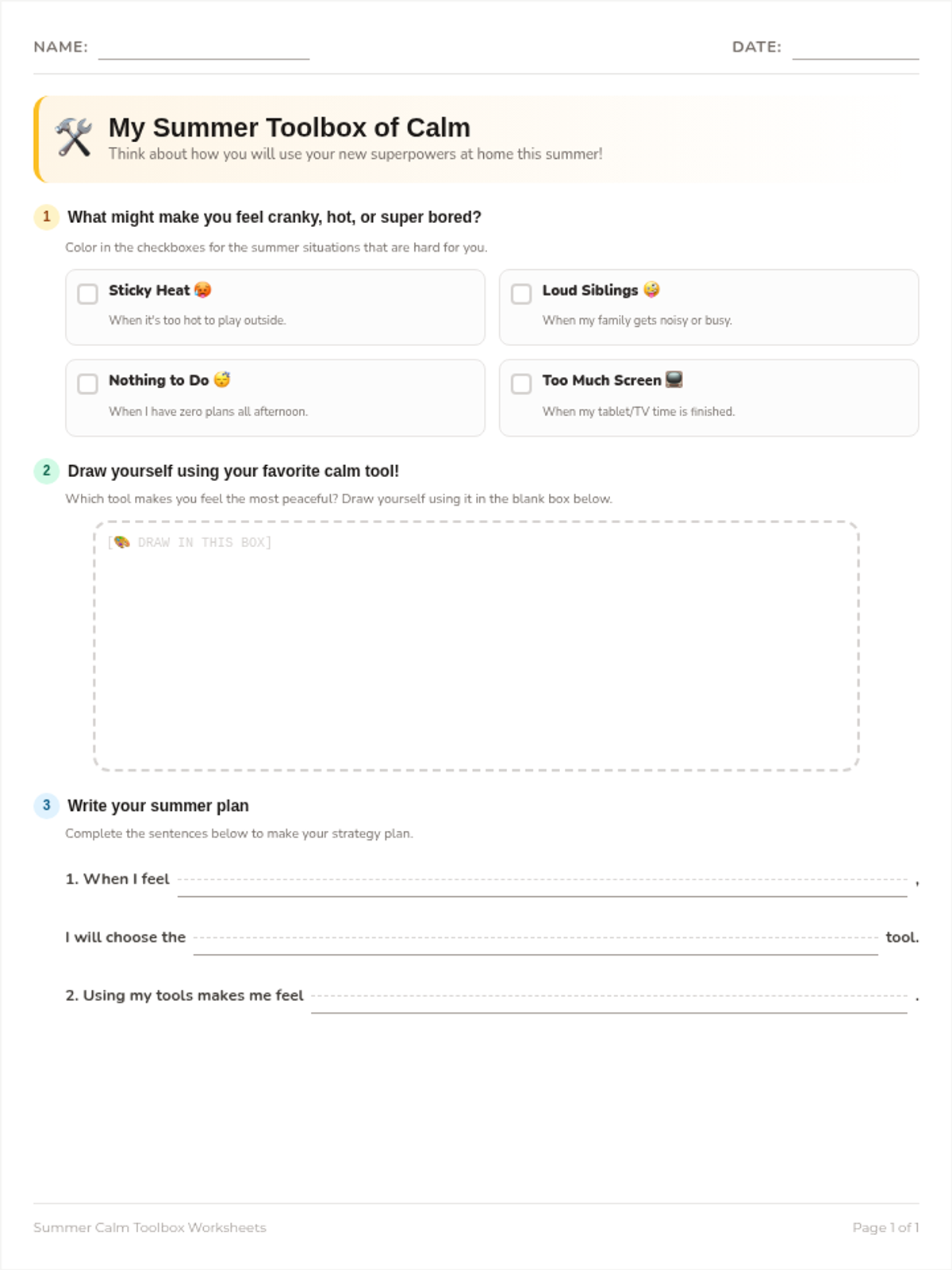
This lesson equips 1st-3rd graders with a 'toolbox' of sensory and cognitive strategies to manage boredom or stress during the unstructured summer months. Students learn and practice concrete physical and breathing exercises to use independently when school routines are absent.
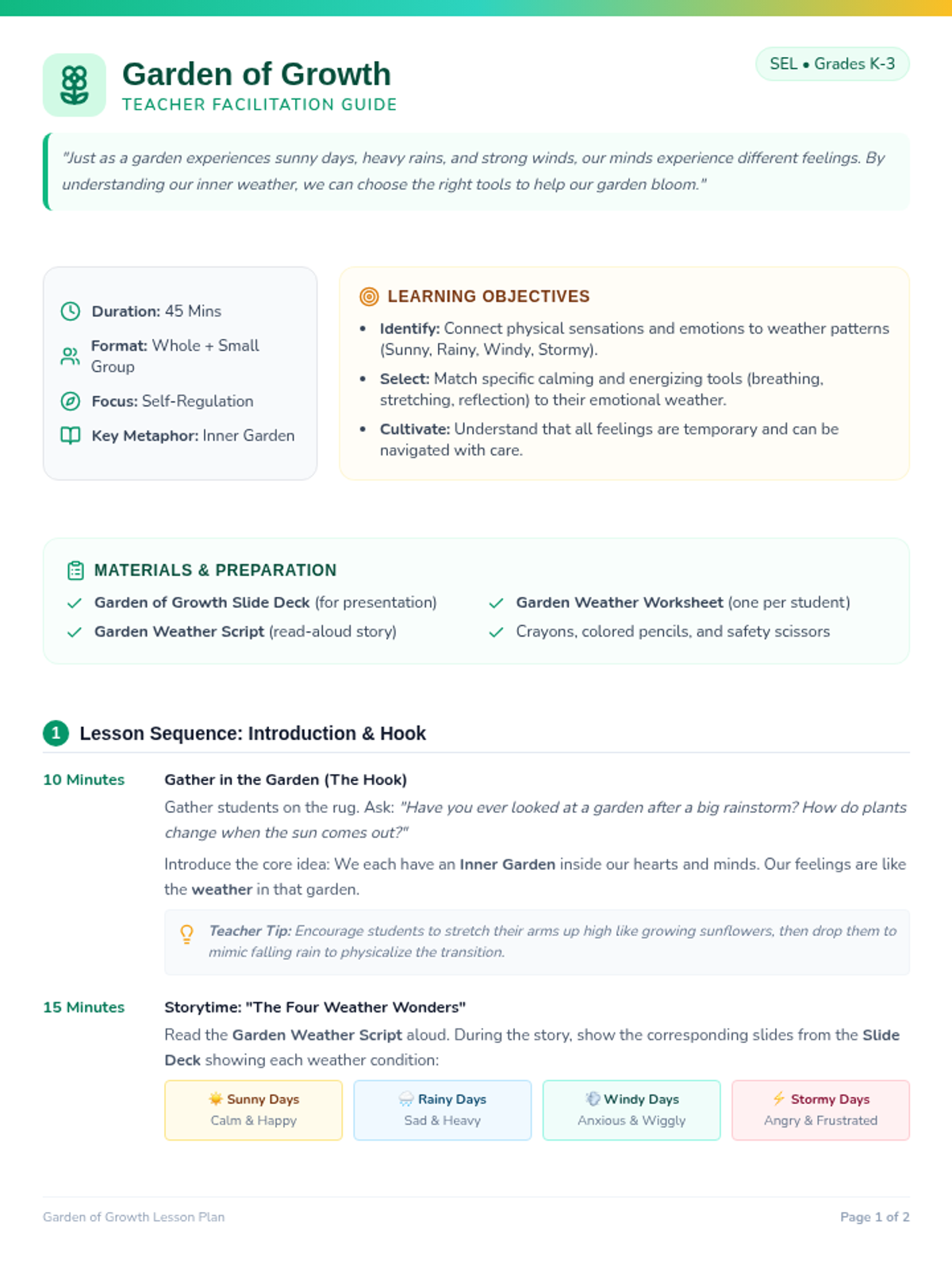
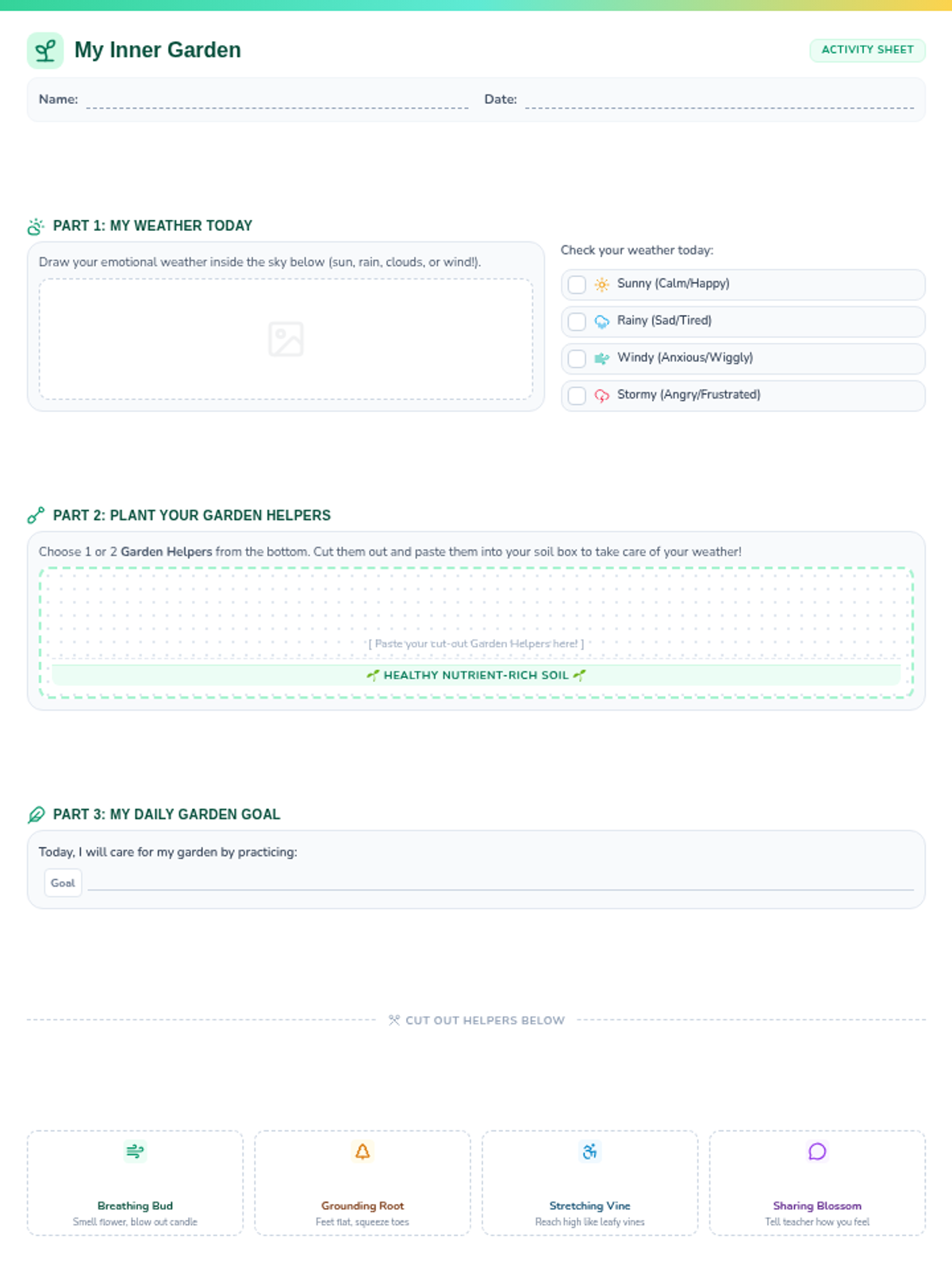
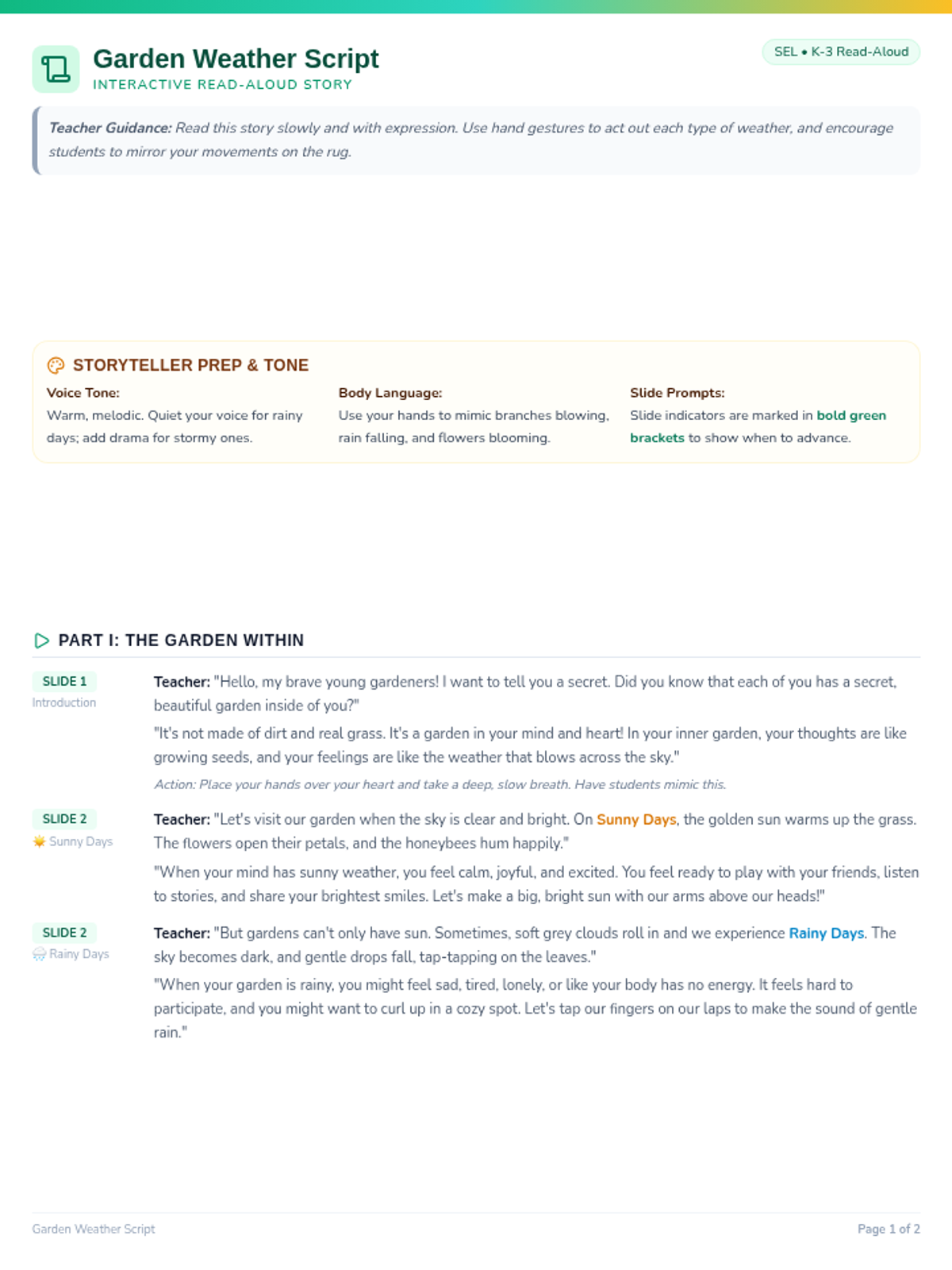
A nature-themed lesson for K-3 students using a garden metaphor to understand self-regulation, identify emotional 'weather', and cultivate healthy coping strategies.
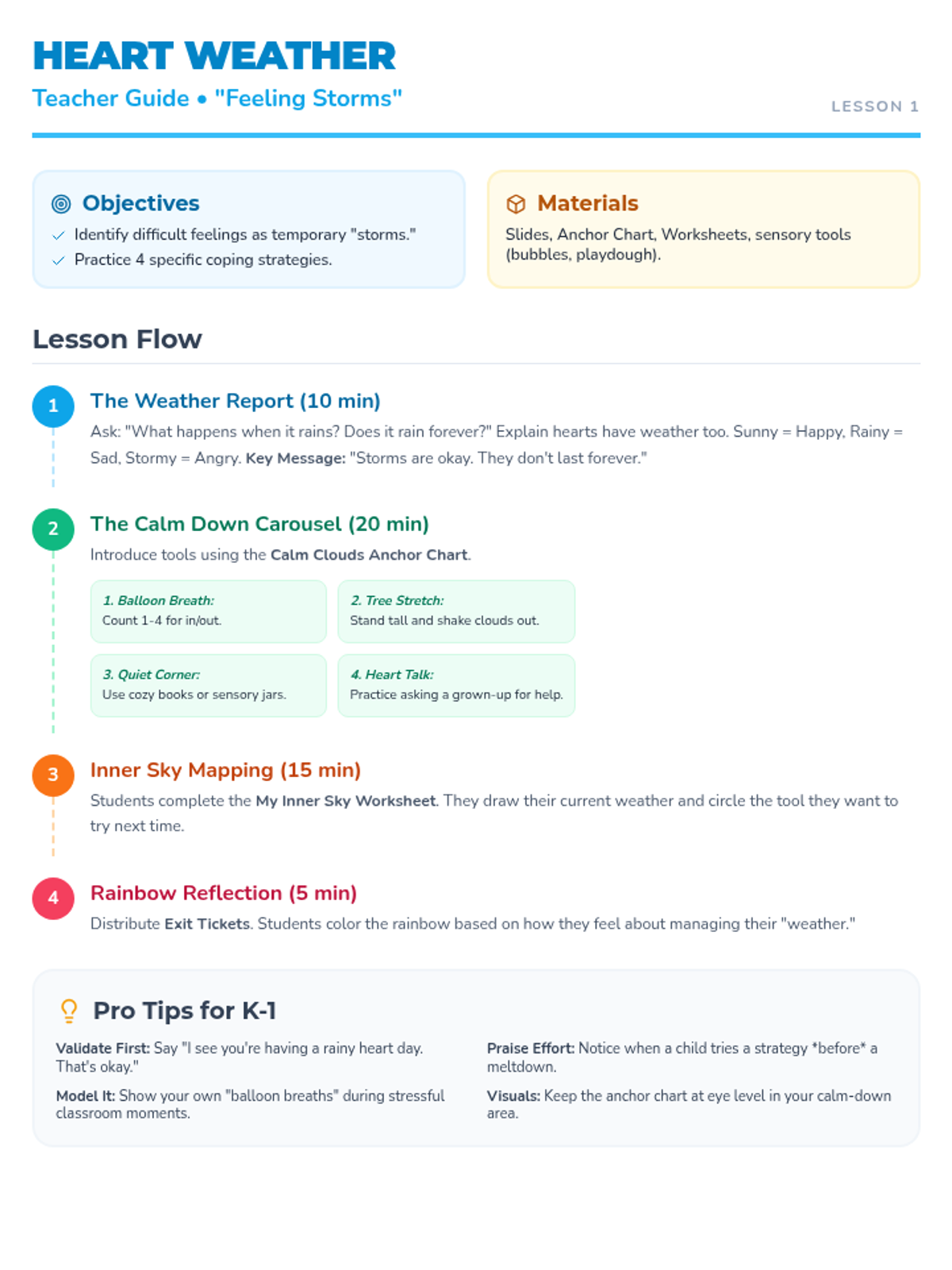
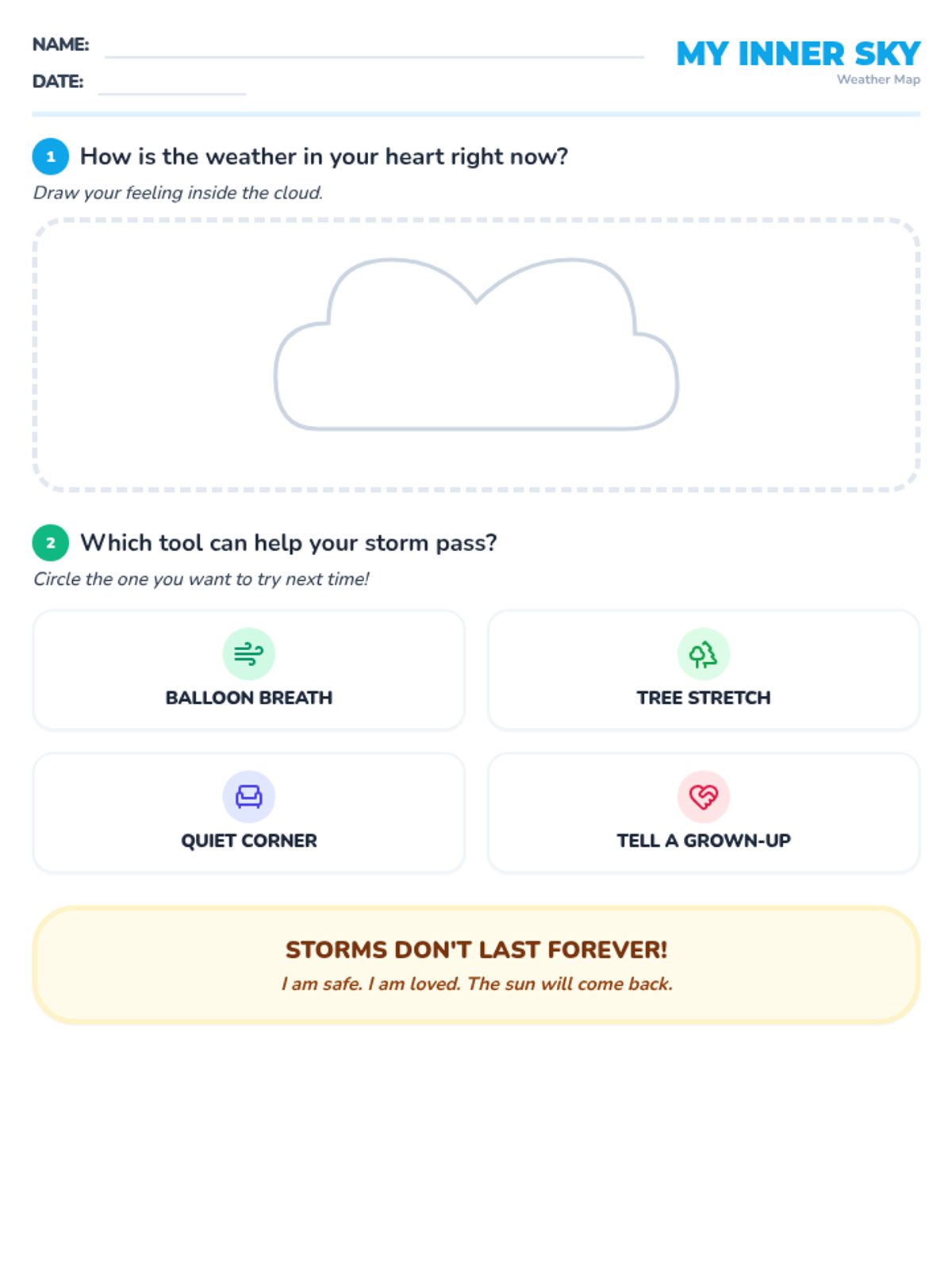
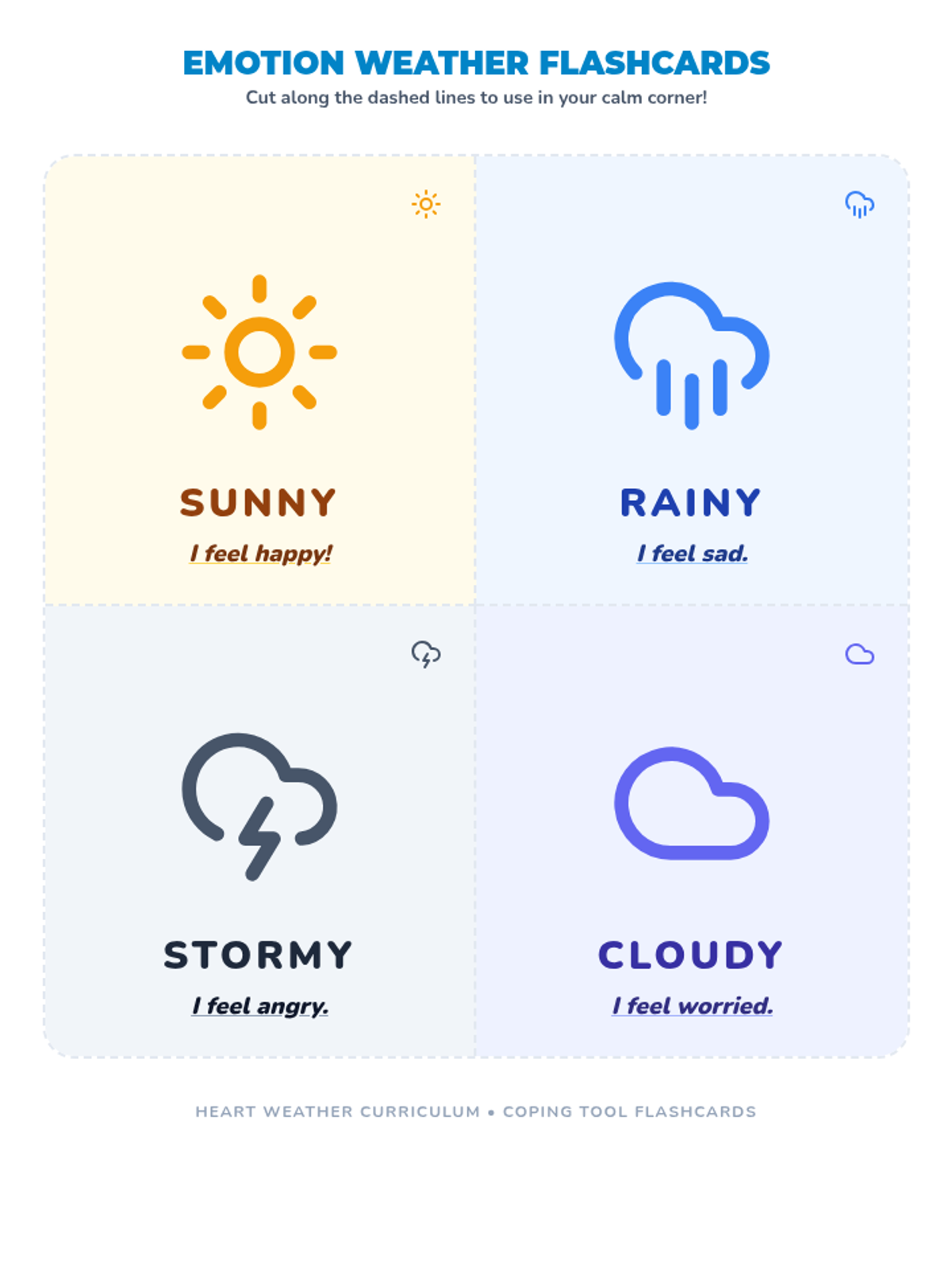
Students in grades 2-3 will use the "Heart Weather" metaphor to analyze emotional triggers, understand the science of self-regulation (the brain's weather station), and develop personalized resilience plans.
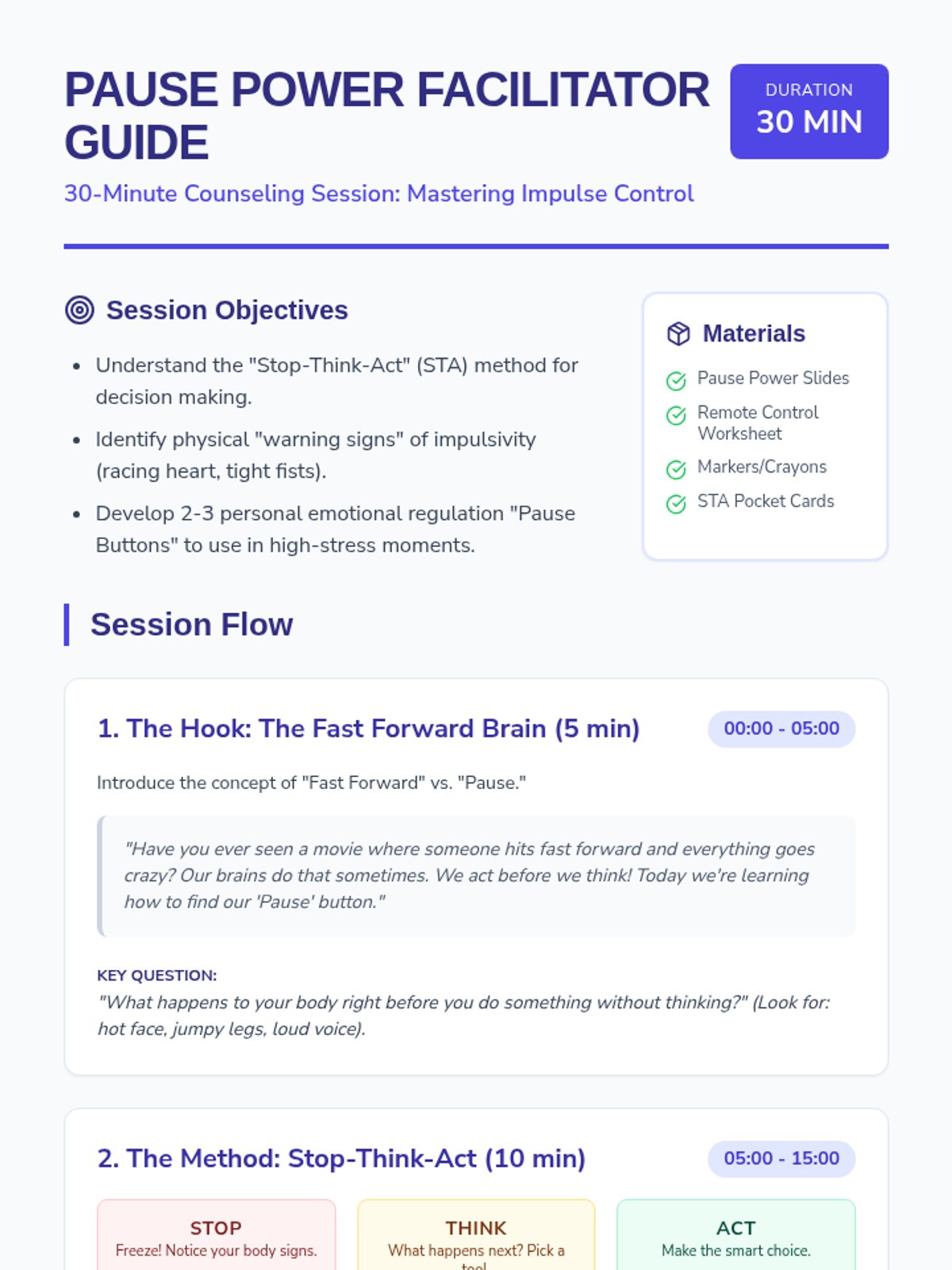
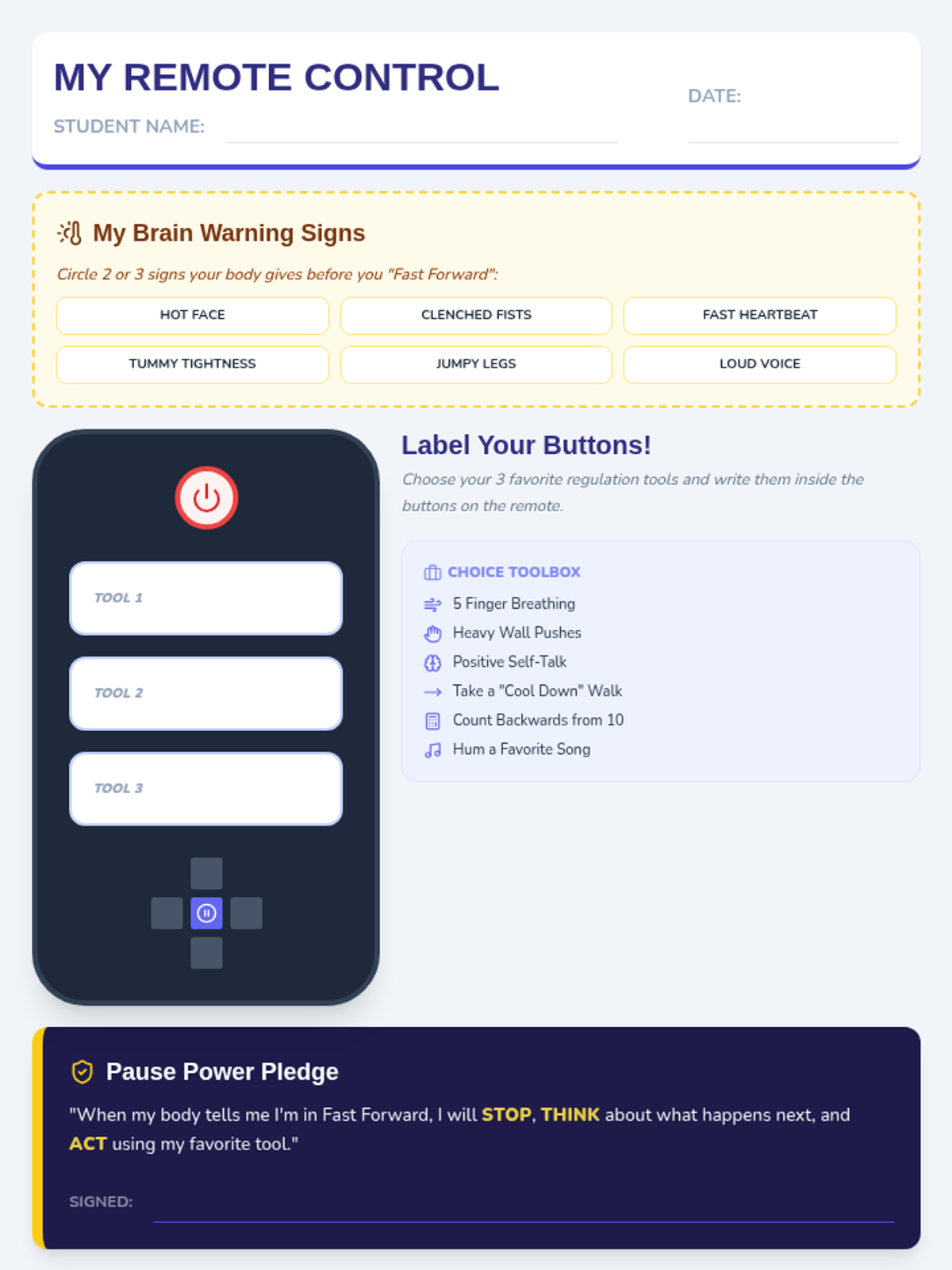
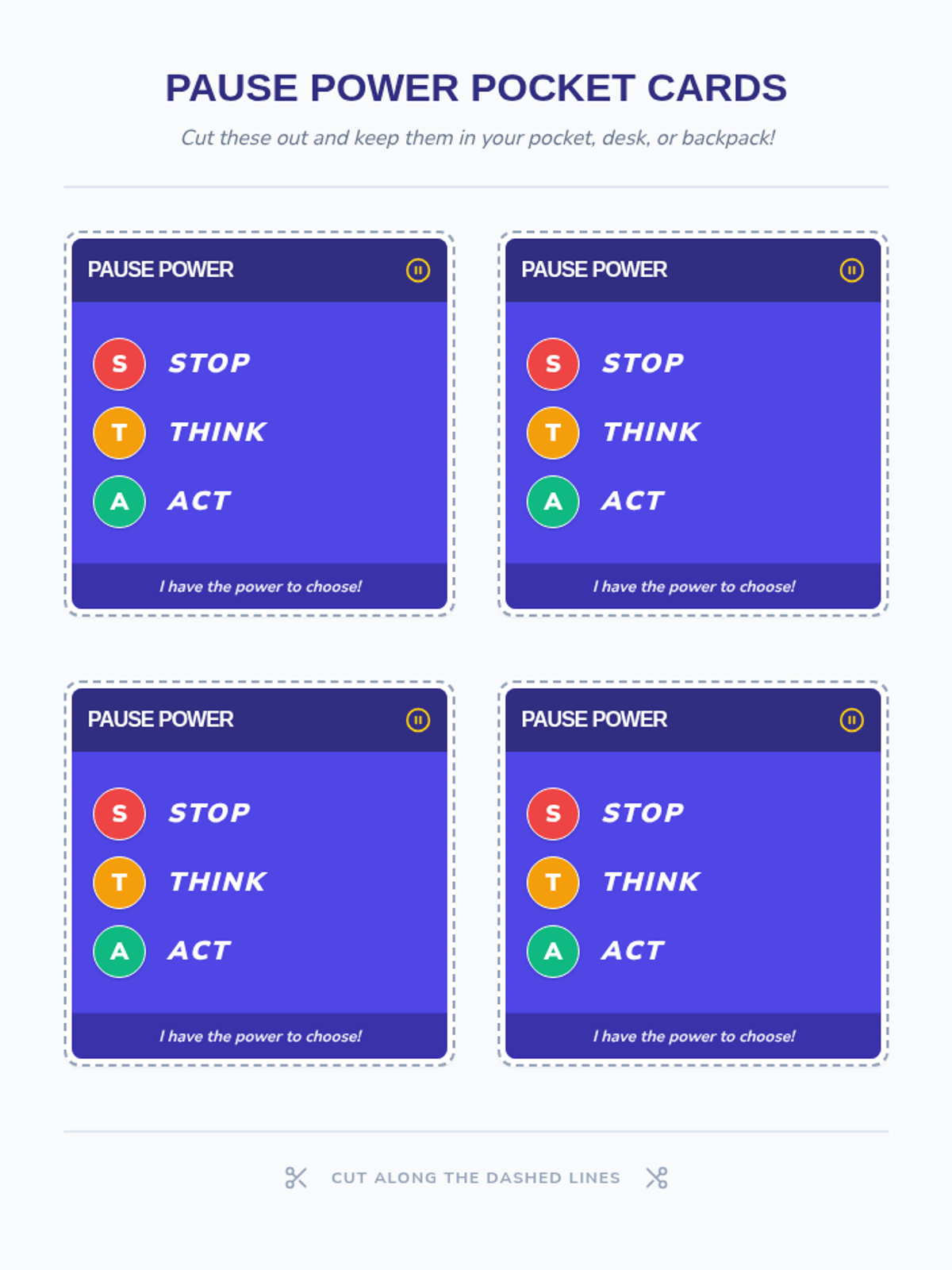
A 30-minute counseling session focused on the Stop-Think-Act method and emotional regulation tools to help students master impulse control.
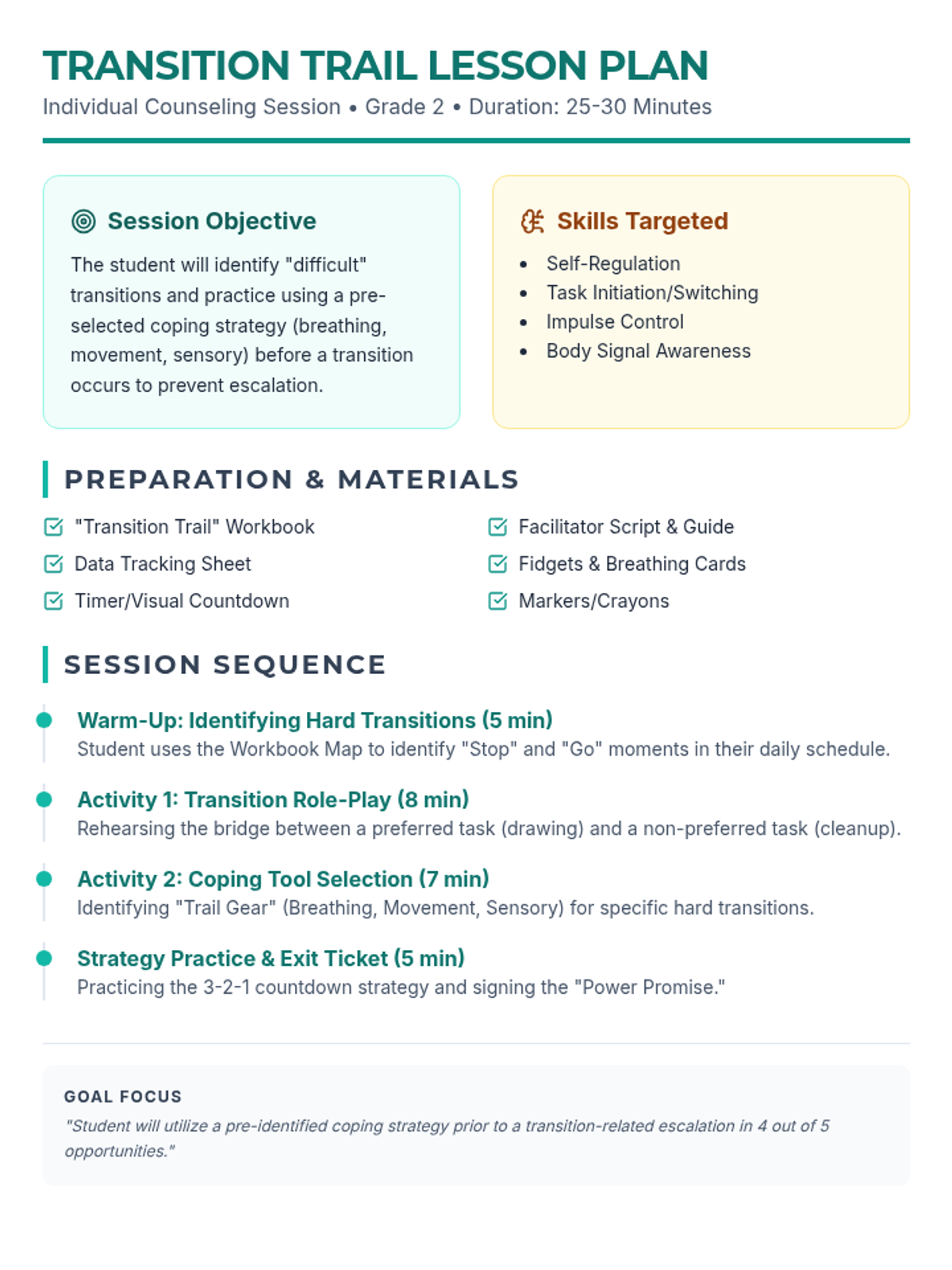
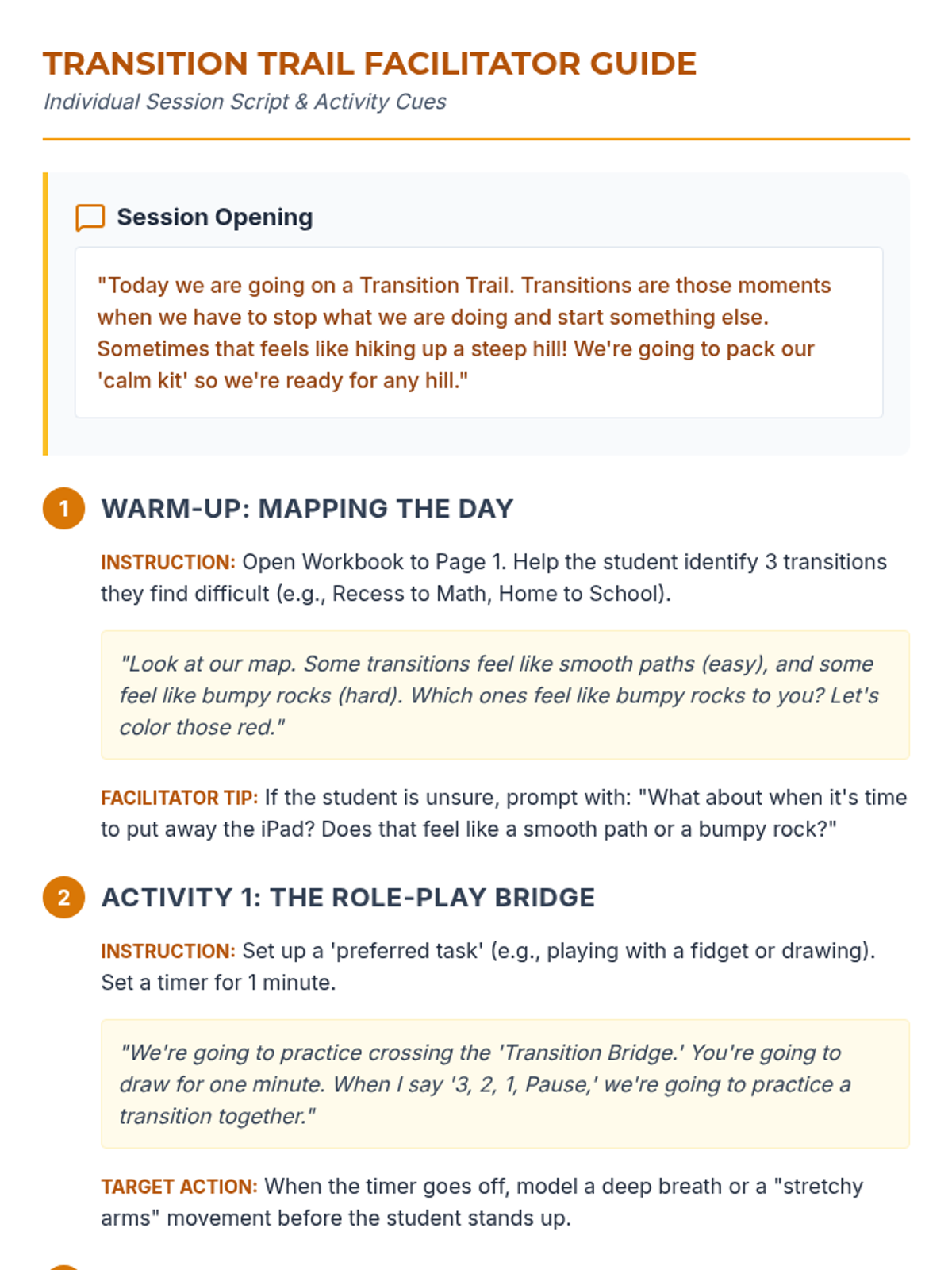
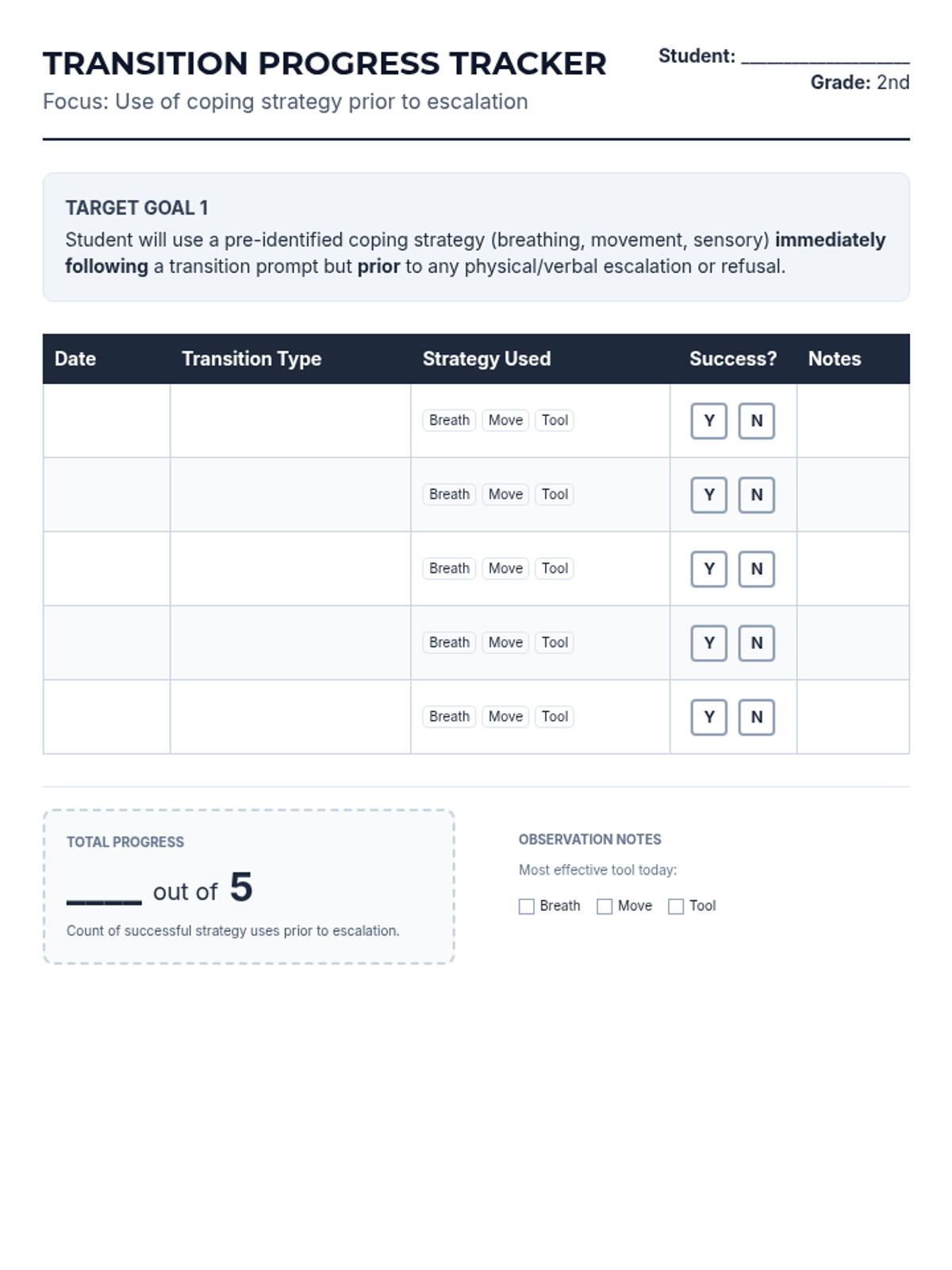
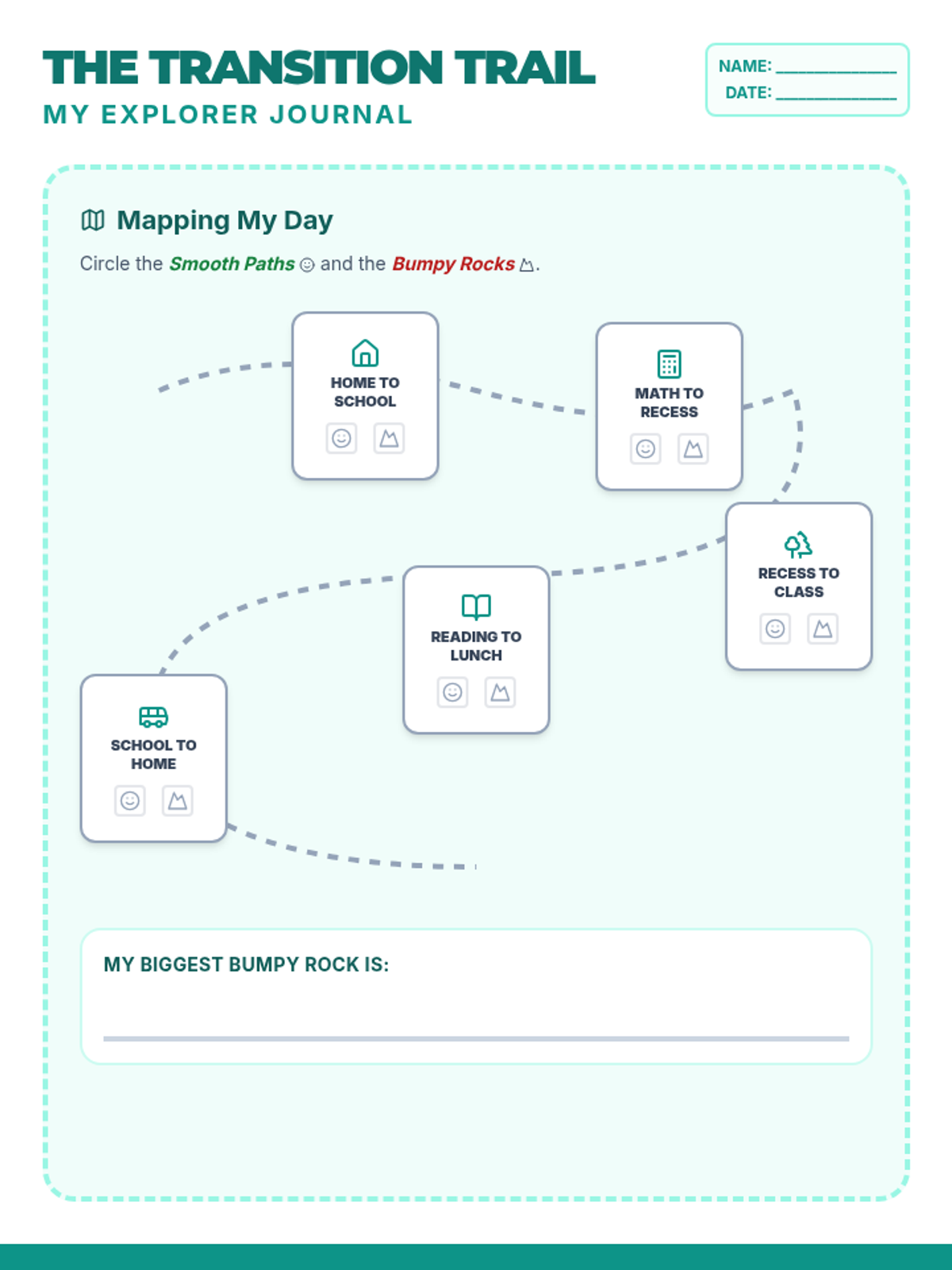
A comprehensive individual counseling session for a 2nd grader focusing on self-regulation and coping strategies during difficult transitions between tasks.
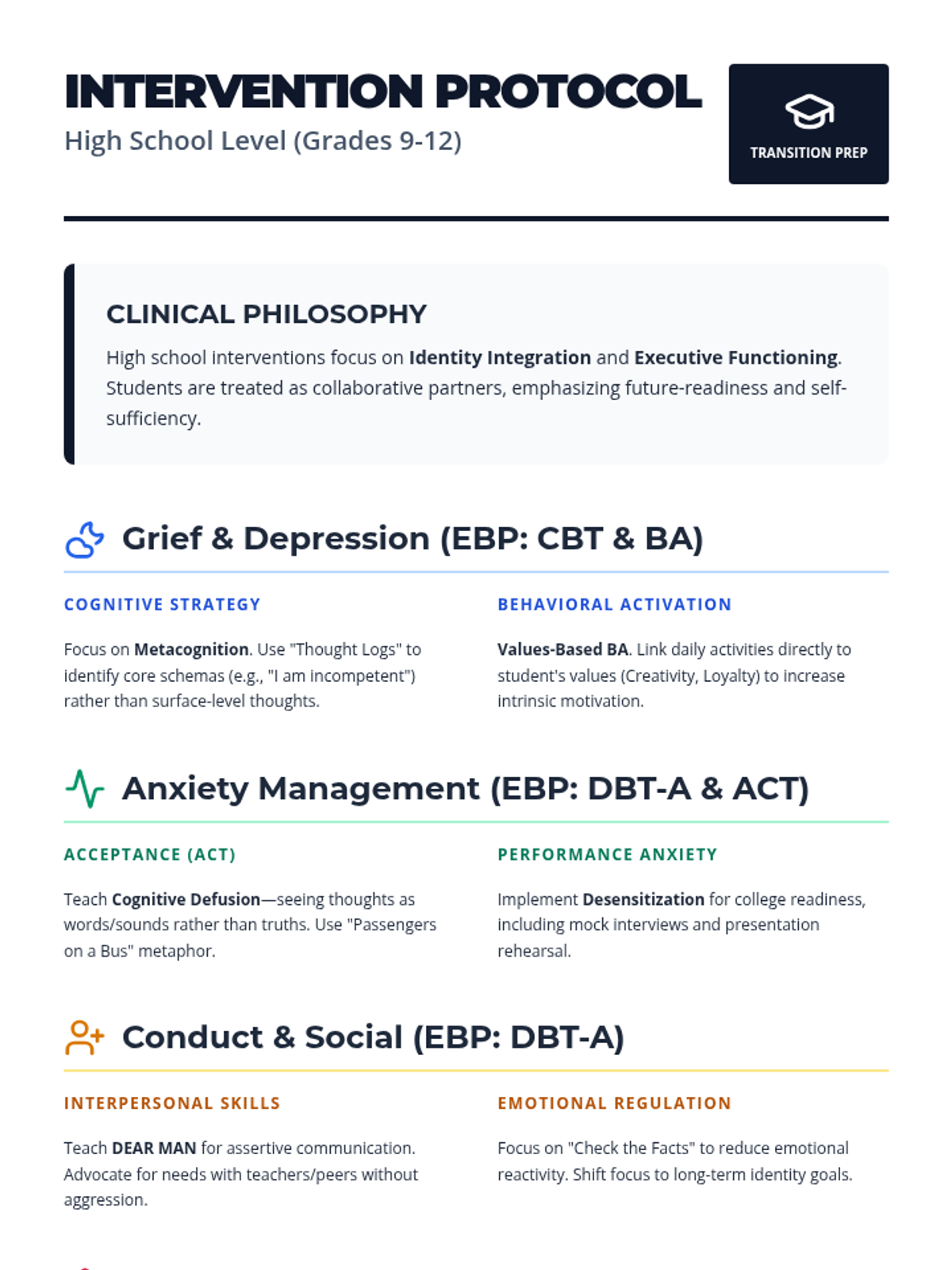
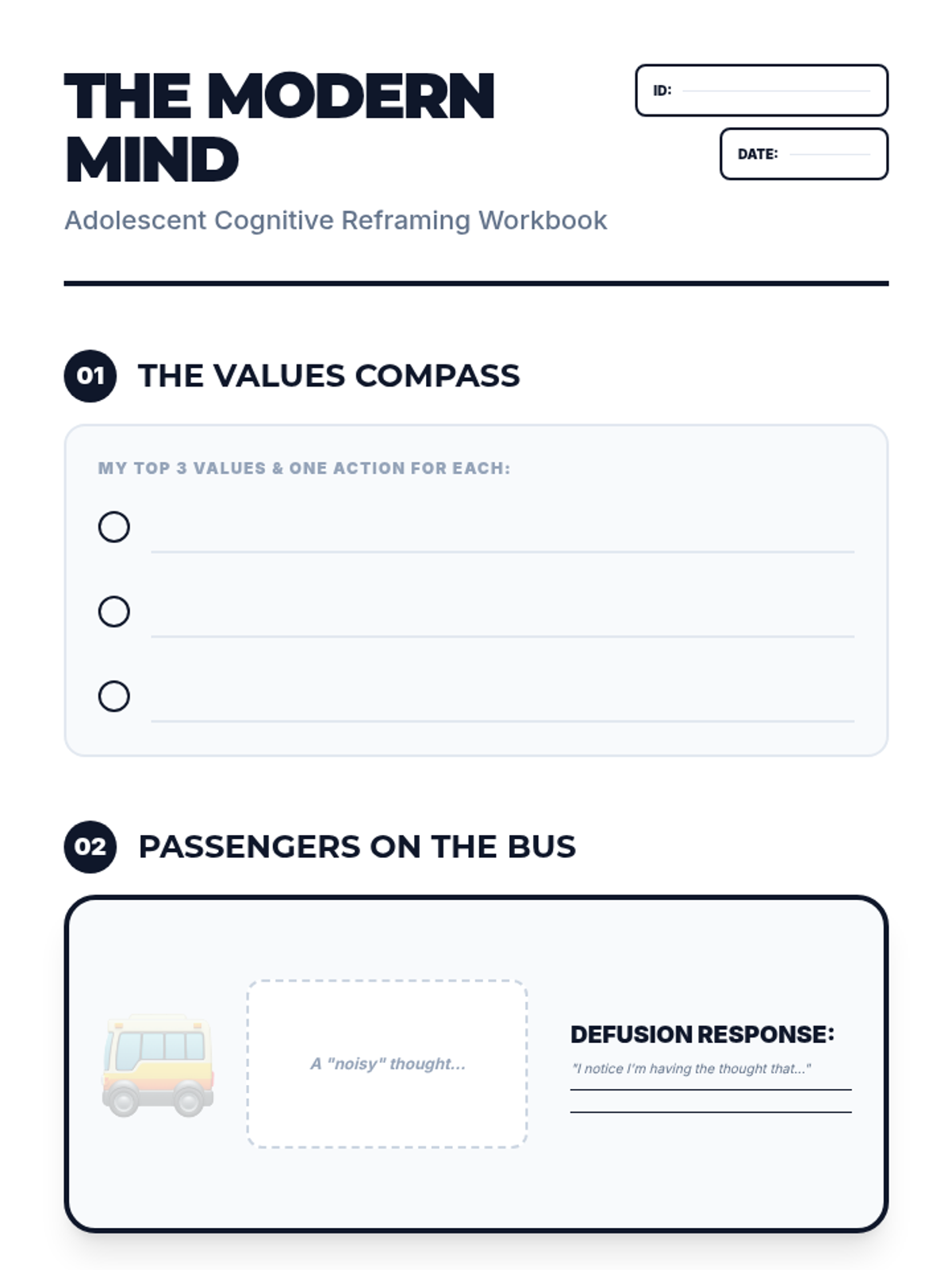
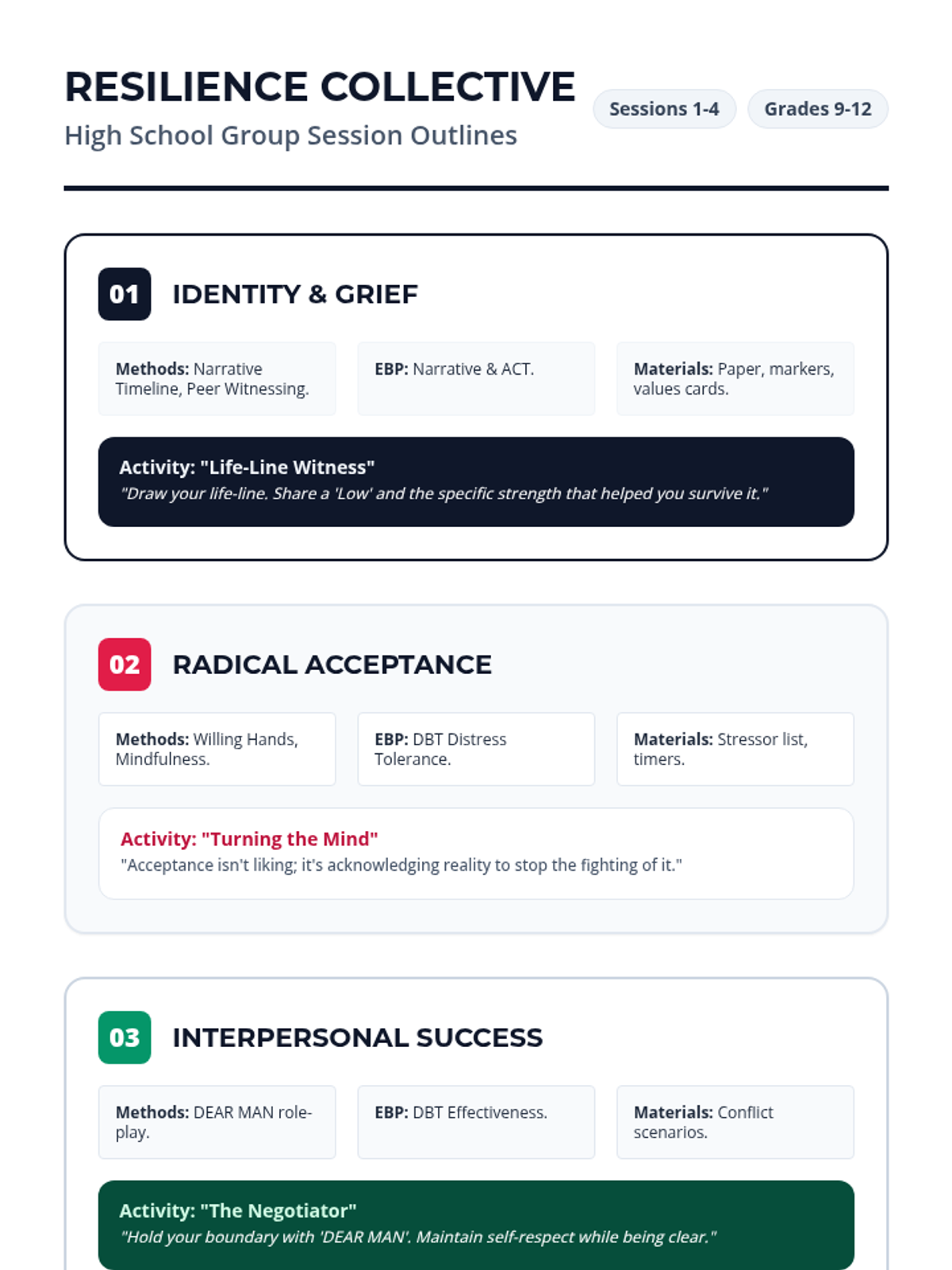
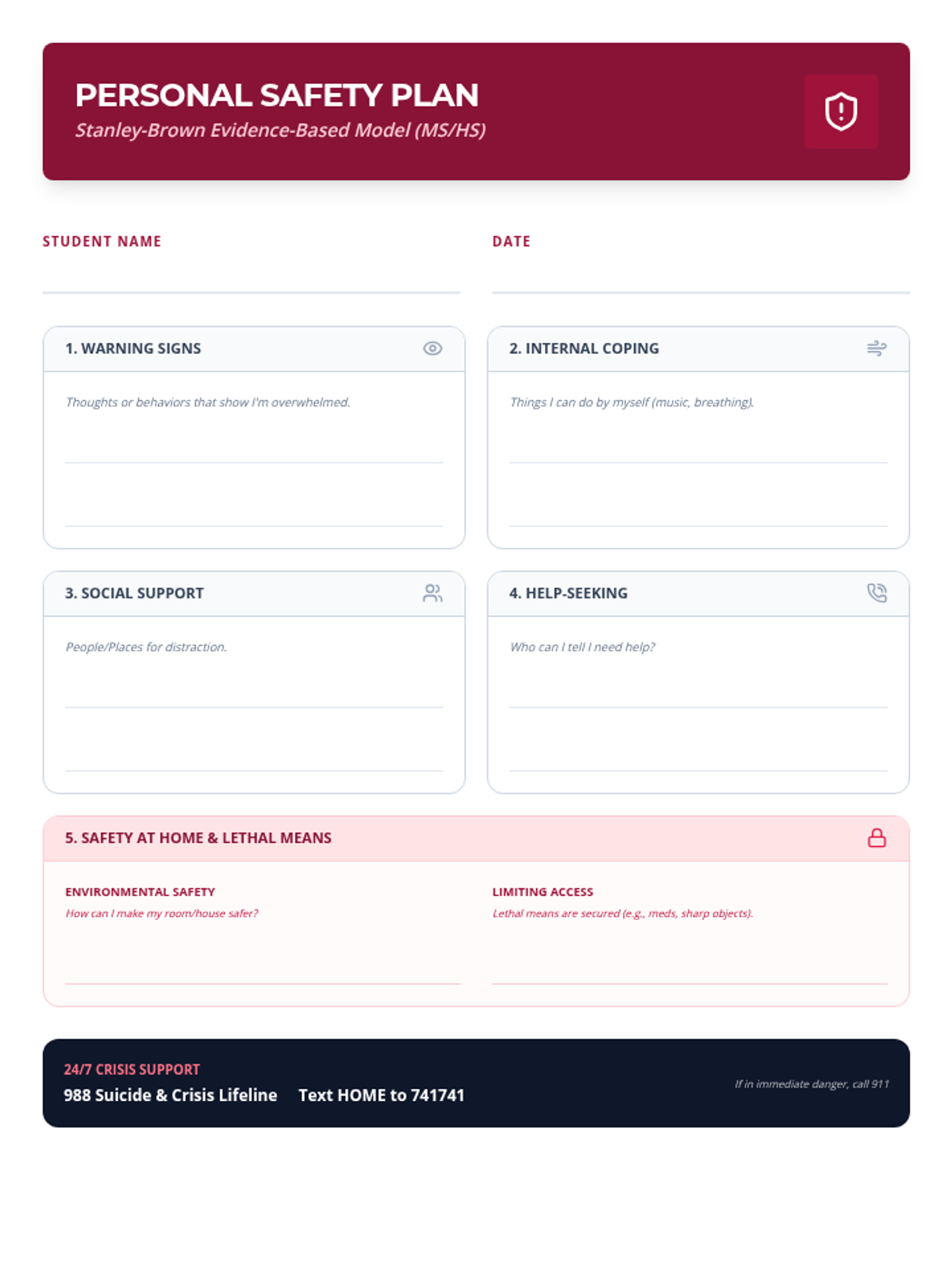
Advanced therapeutic interventions for high schoolers, emphasizing autonomy, complex cognitive reframing, interpersonal effectiveness, and comprehensive crisis protocols.
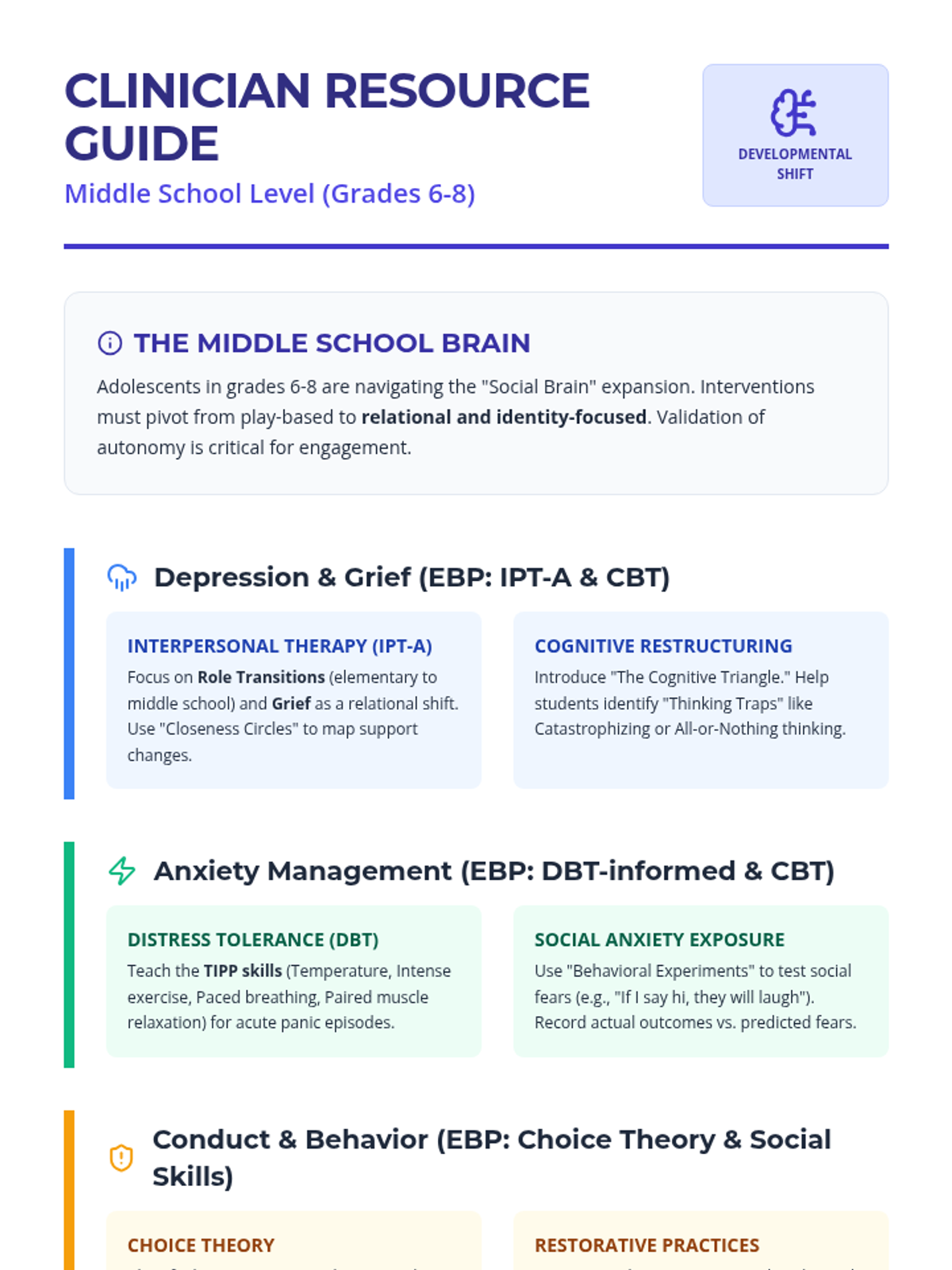
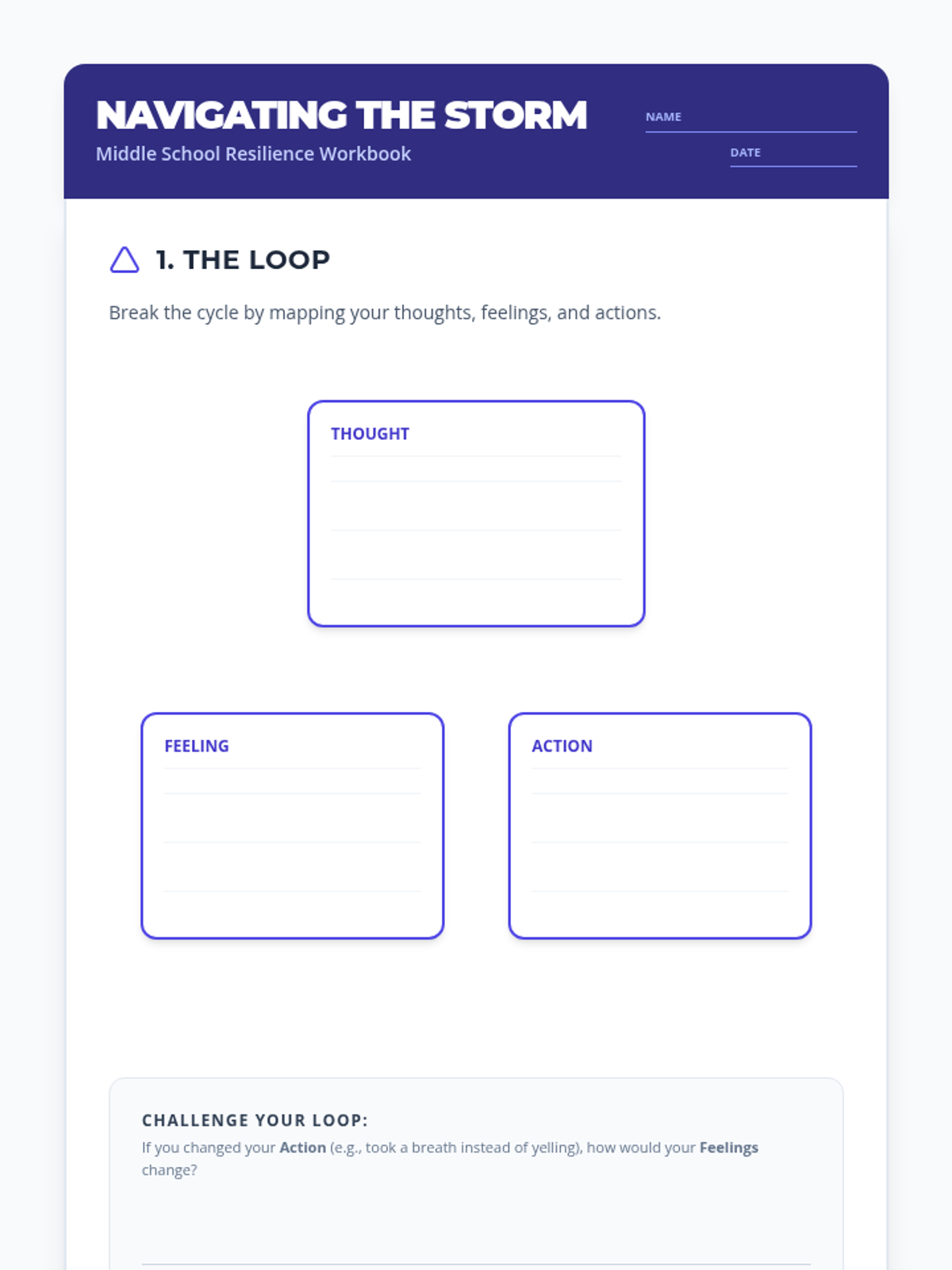
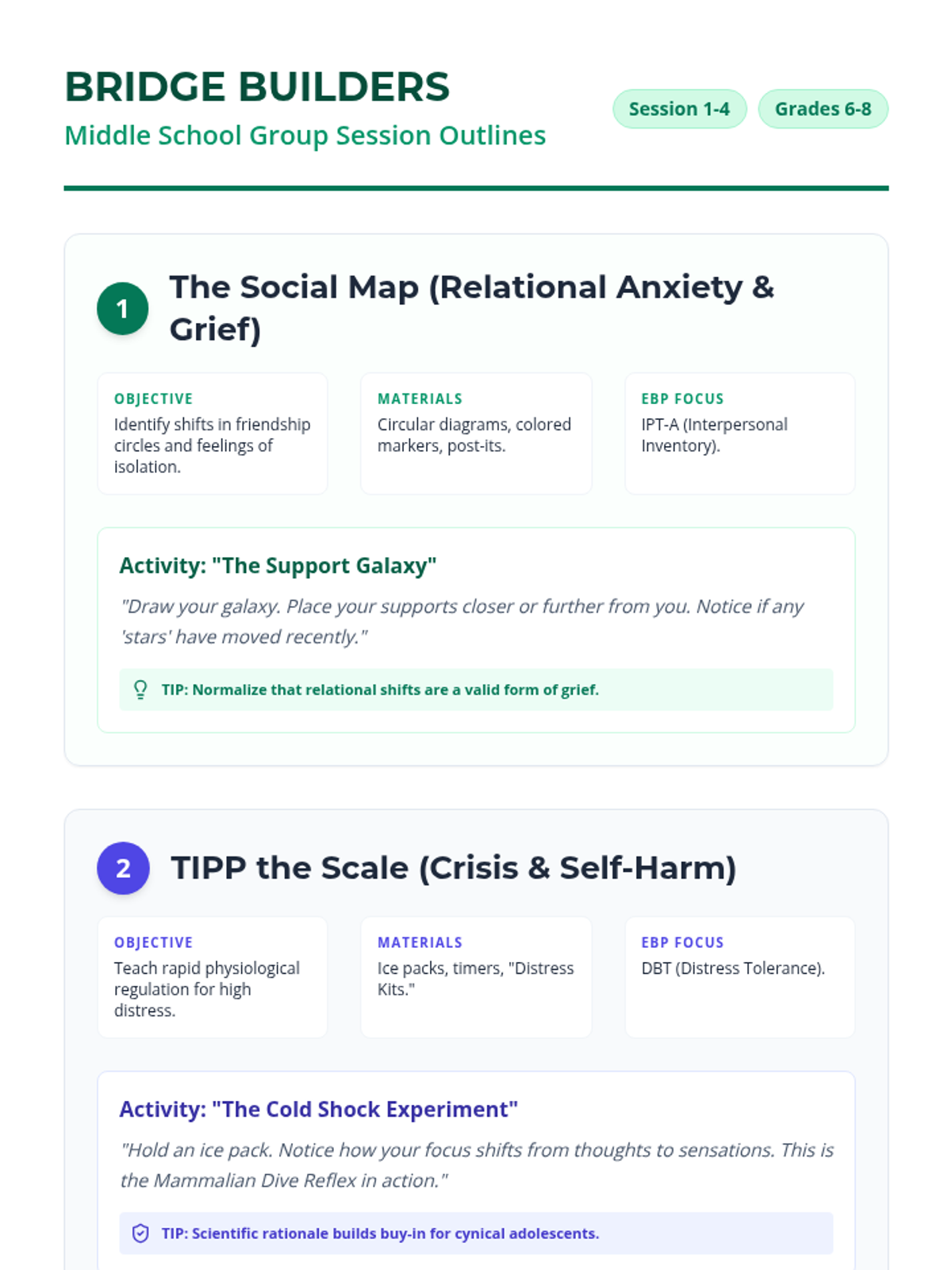
CBT and DBT-informed strategies tailored for the middle school transition, focusing on peer relationships, emotional regulation, and structured safety plans.
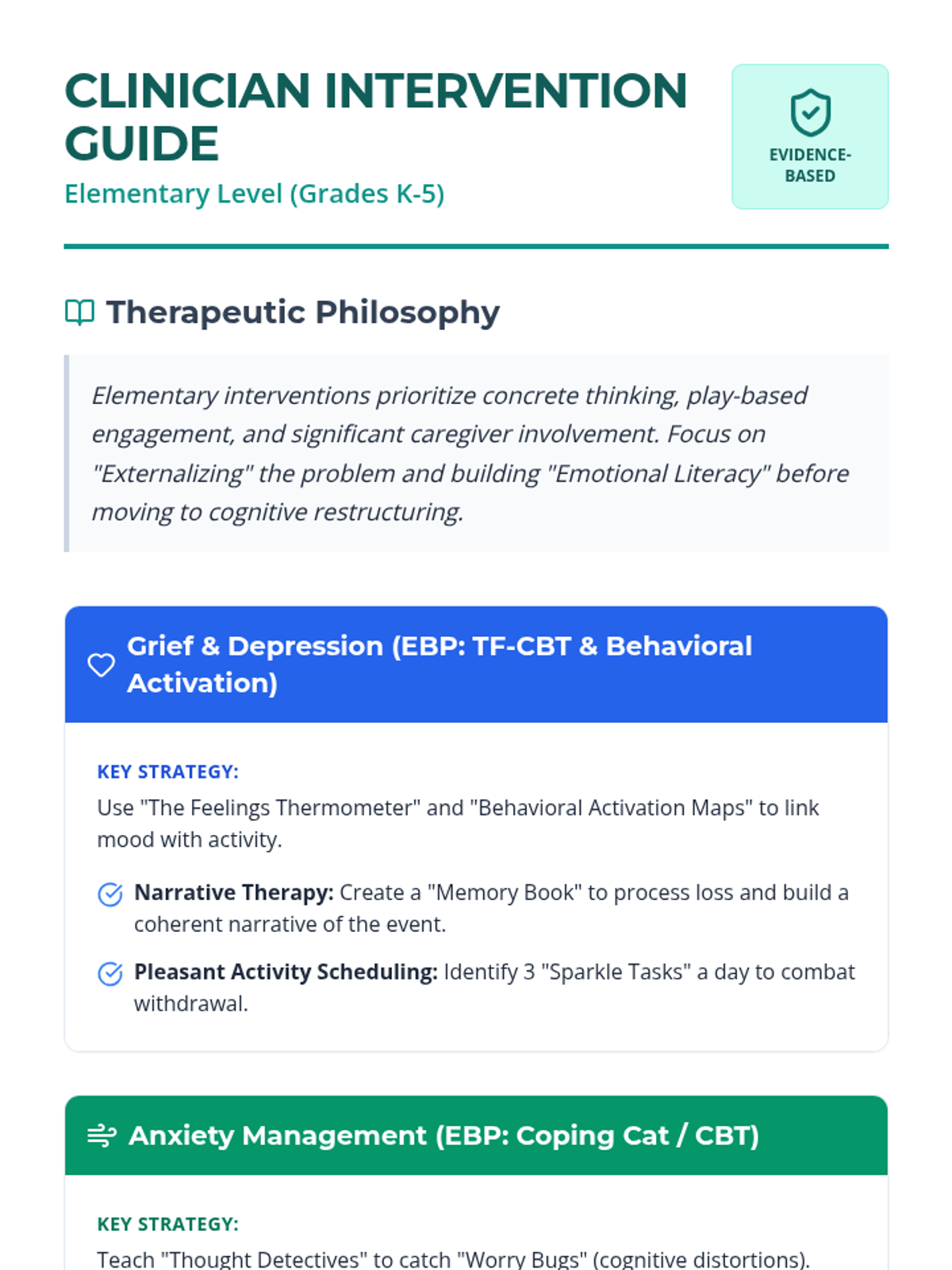
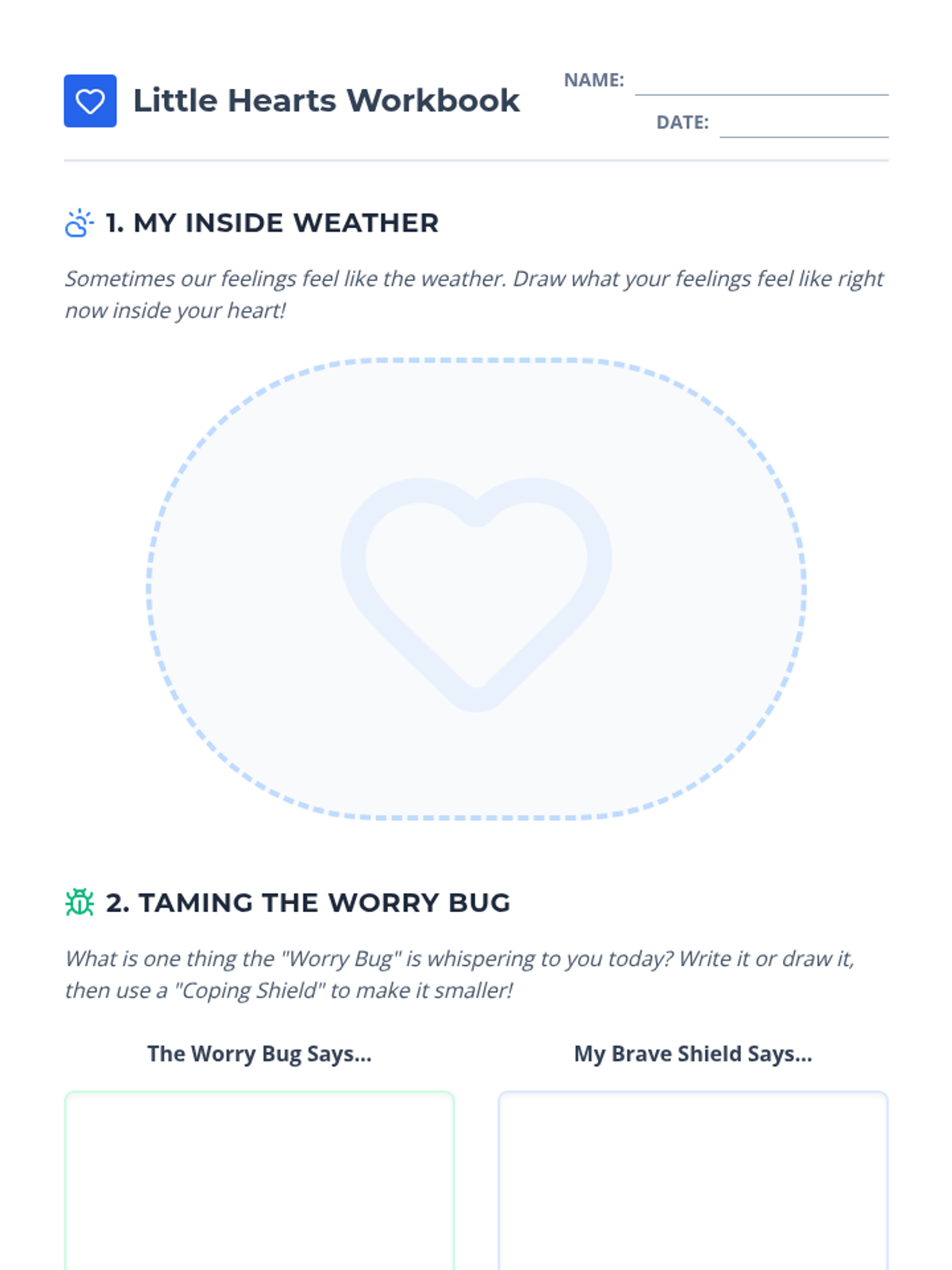
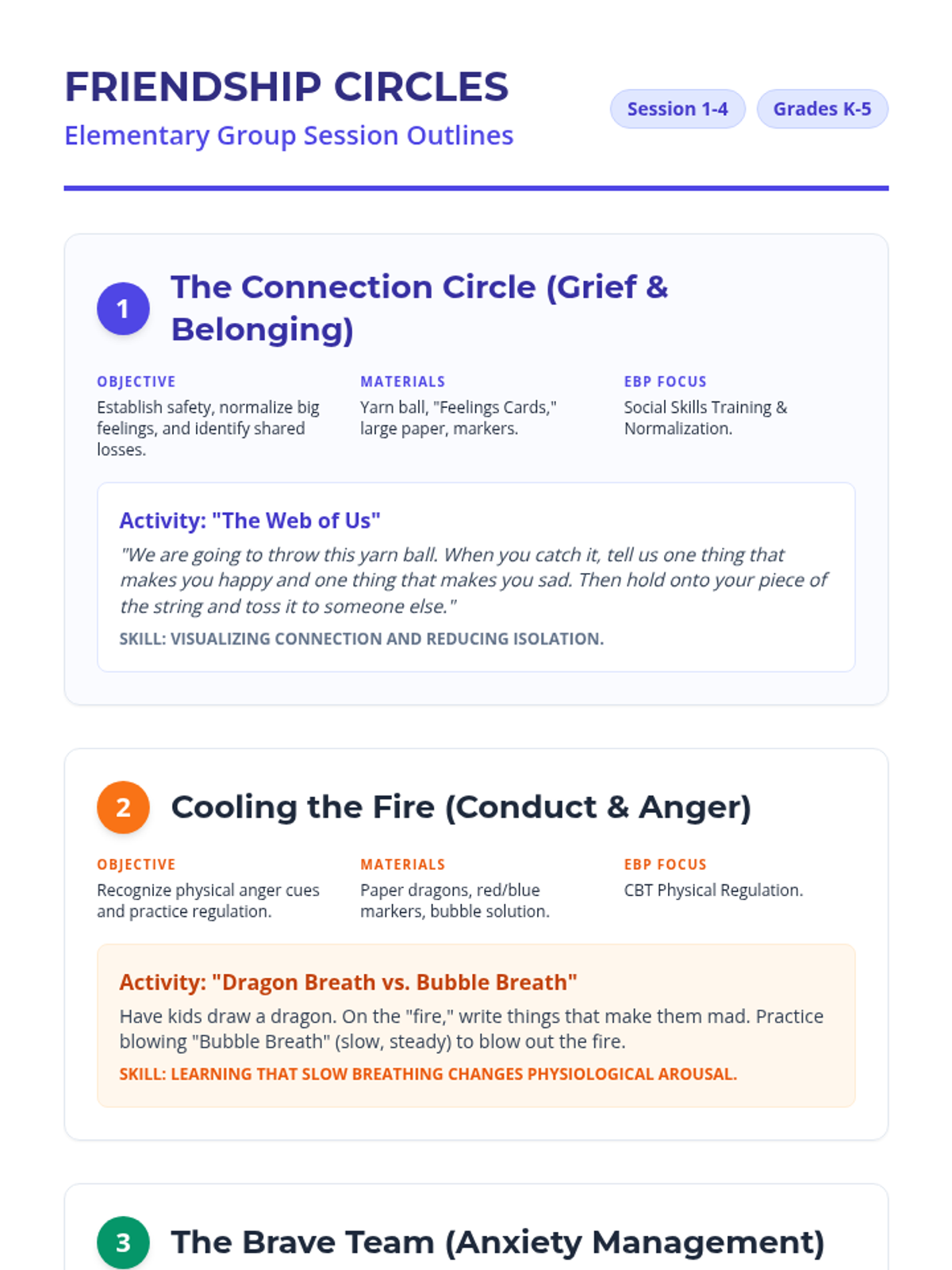
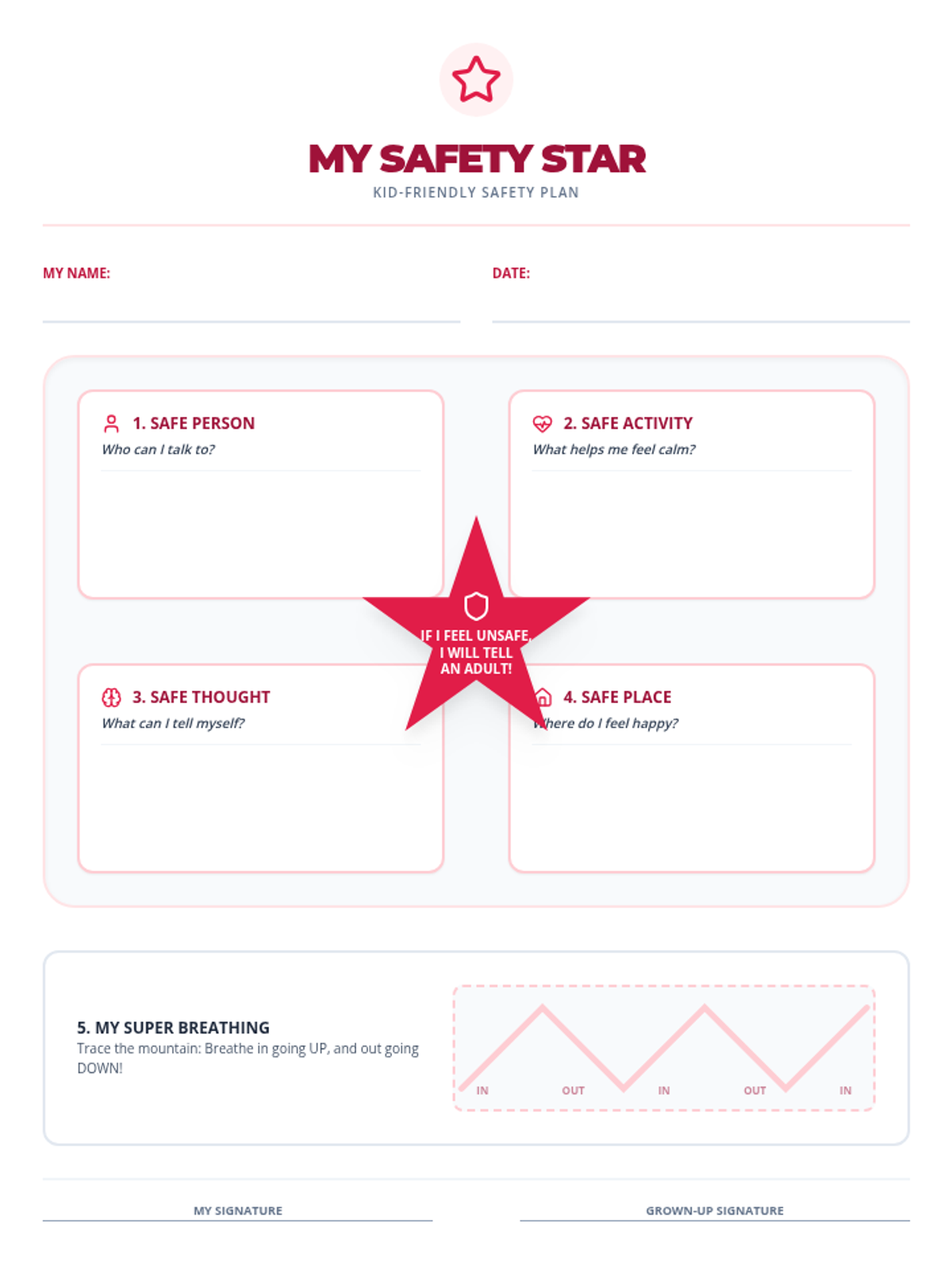
Developmentally appropriate interventions for elementary students focusing on play-based CBT, social-emotional learning, and kid-friendly safety planning.
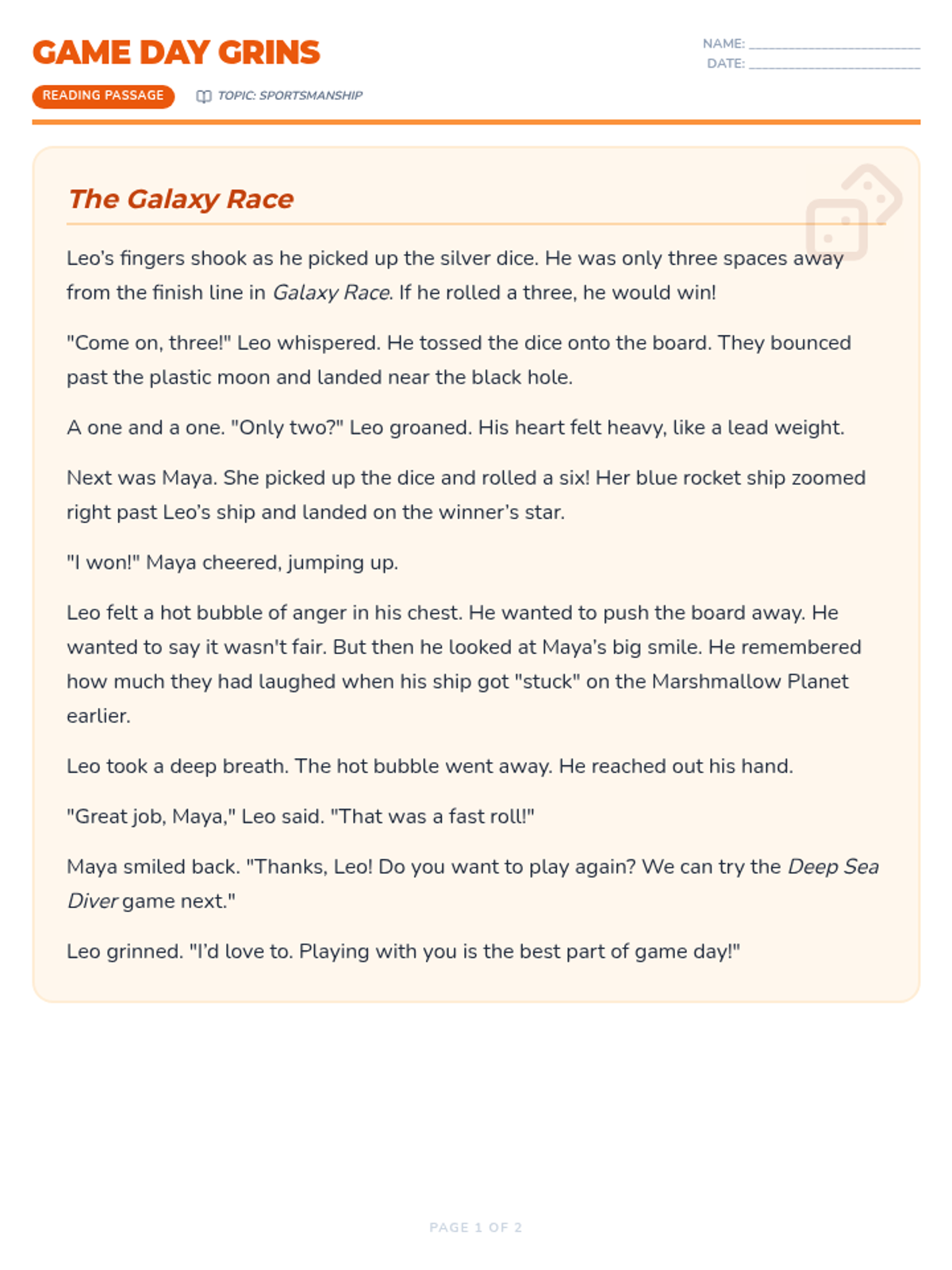
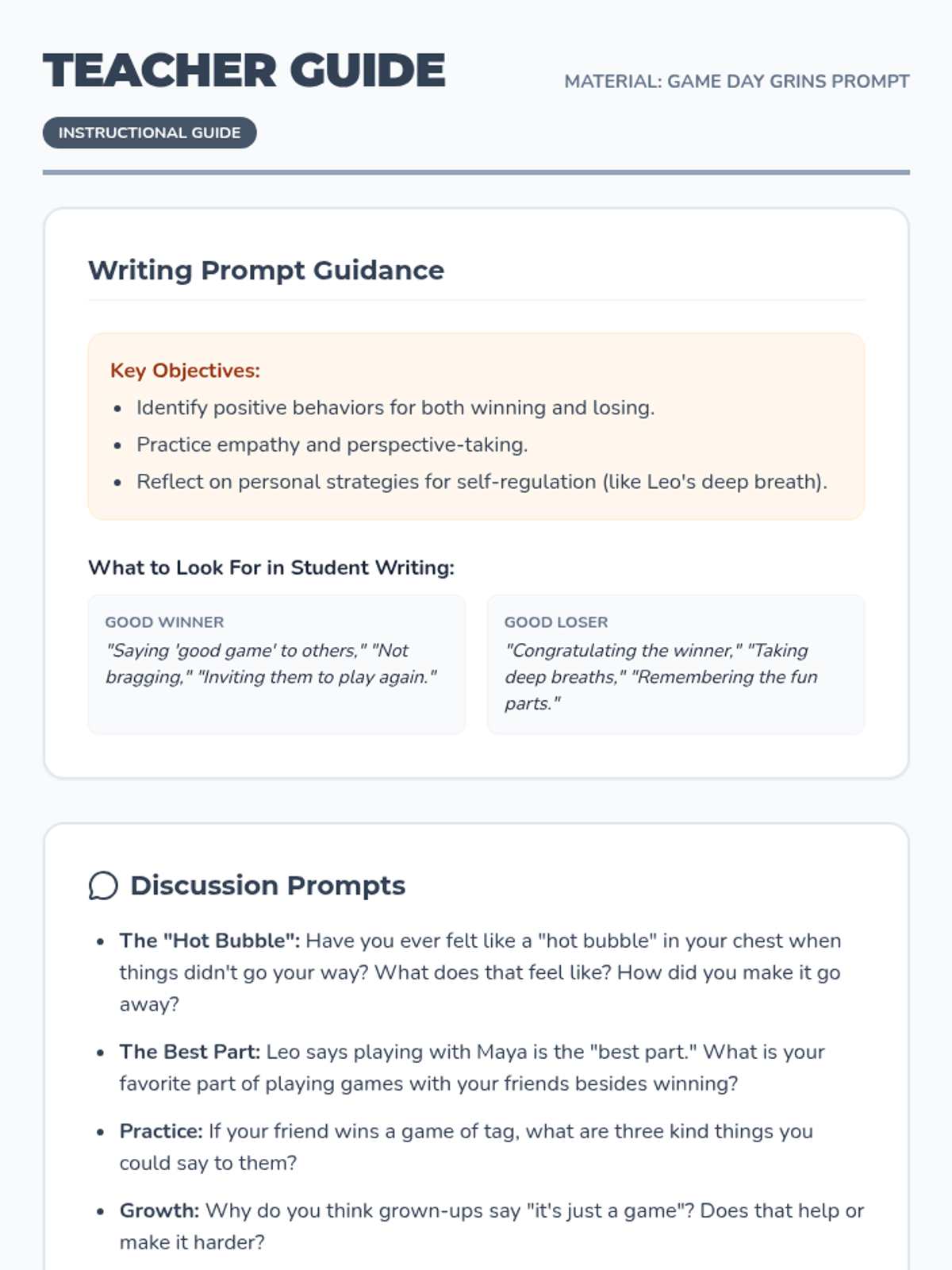
A reading comprehension lesson for second graders focused on sportsmanship, handling losing, and finding joy in shared play.
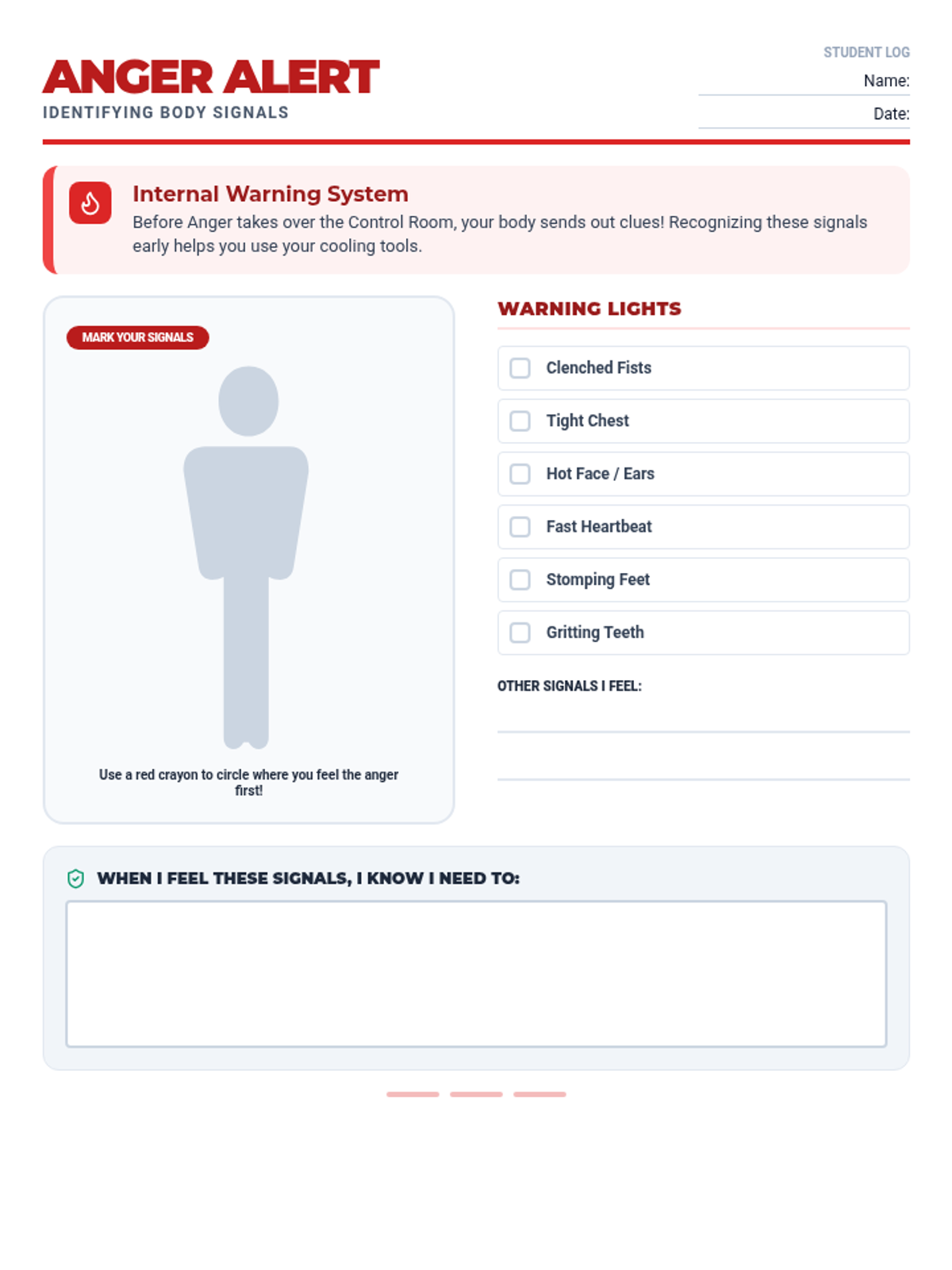
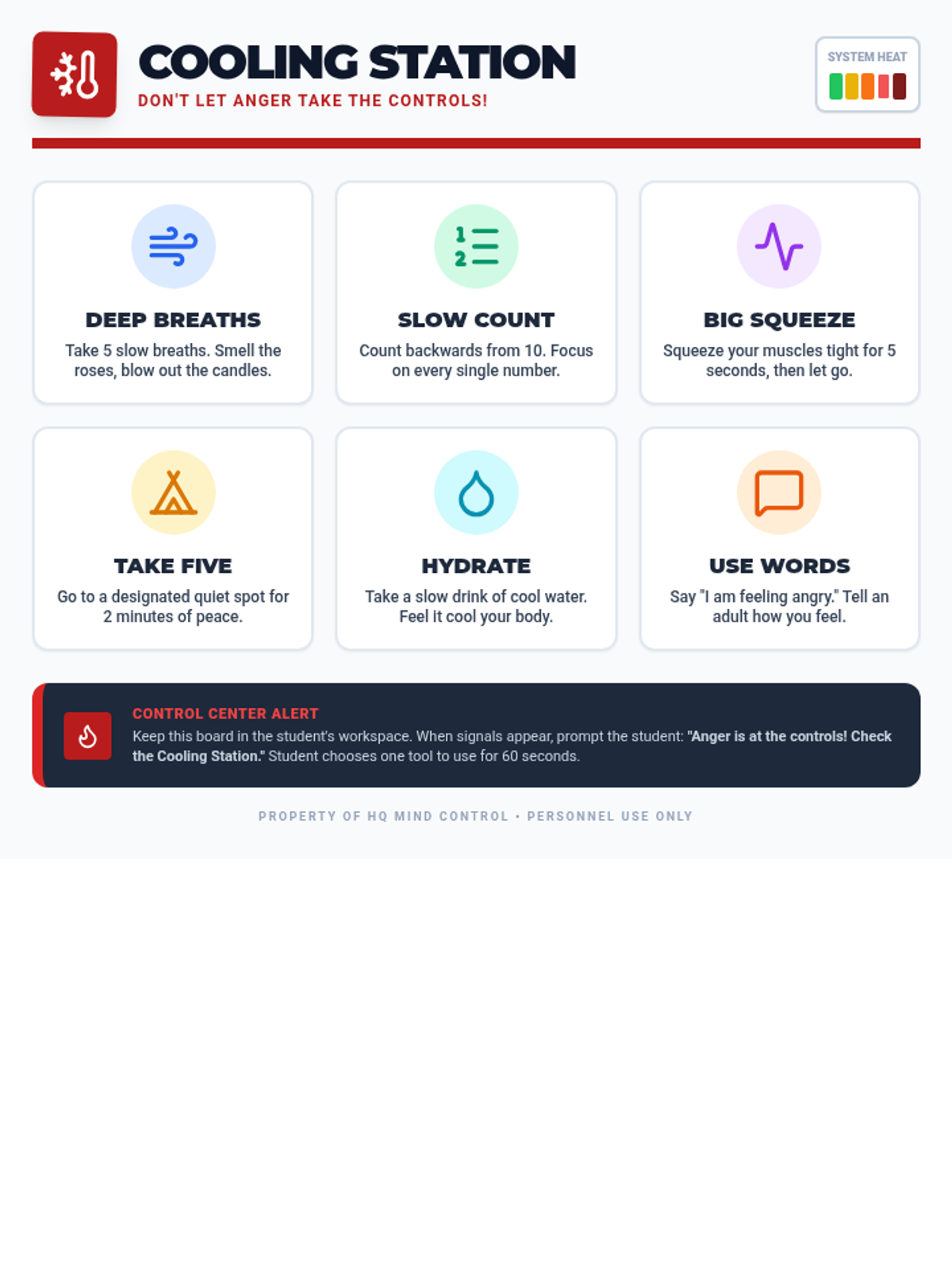
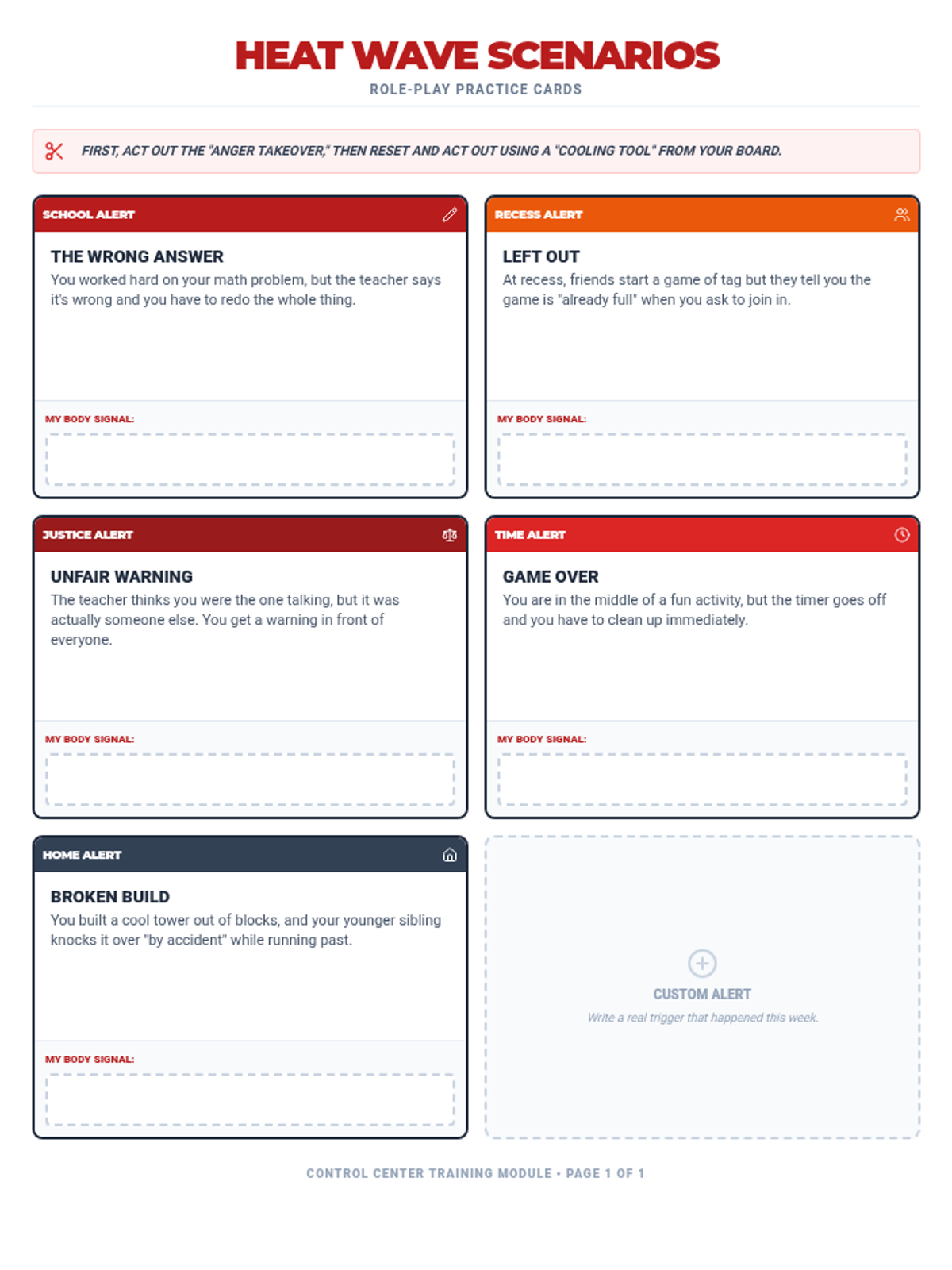
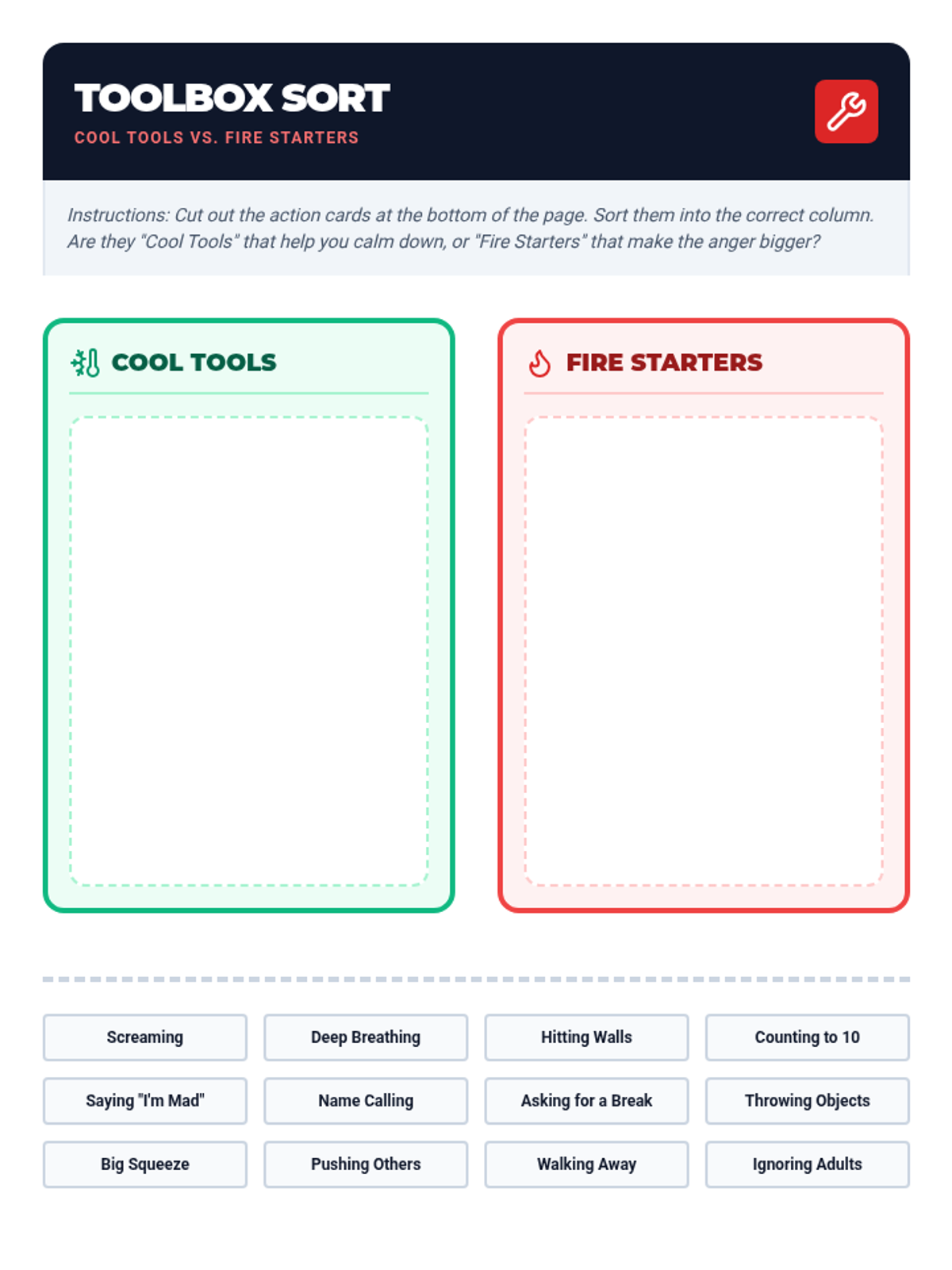
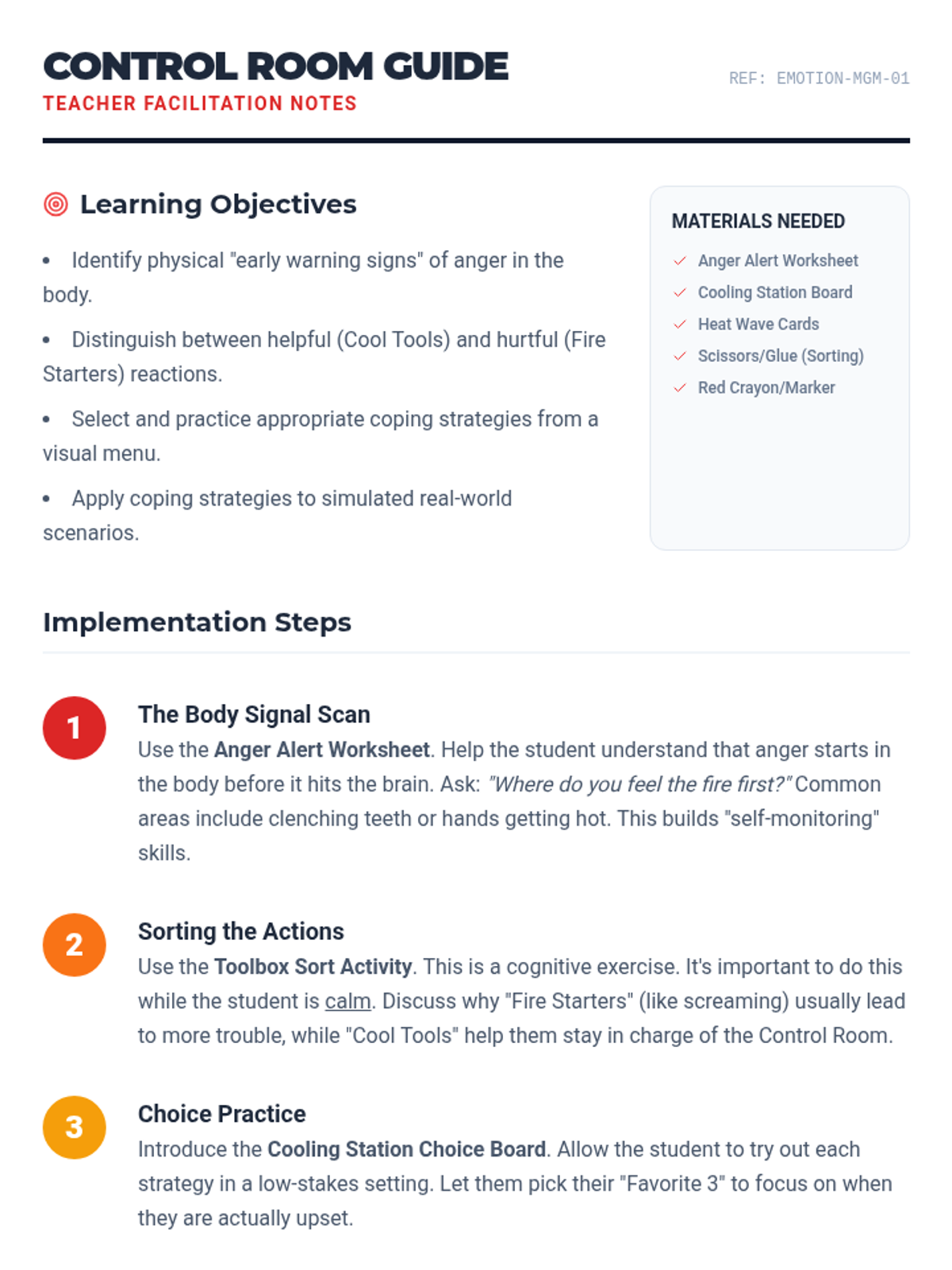
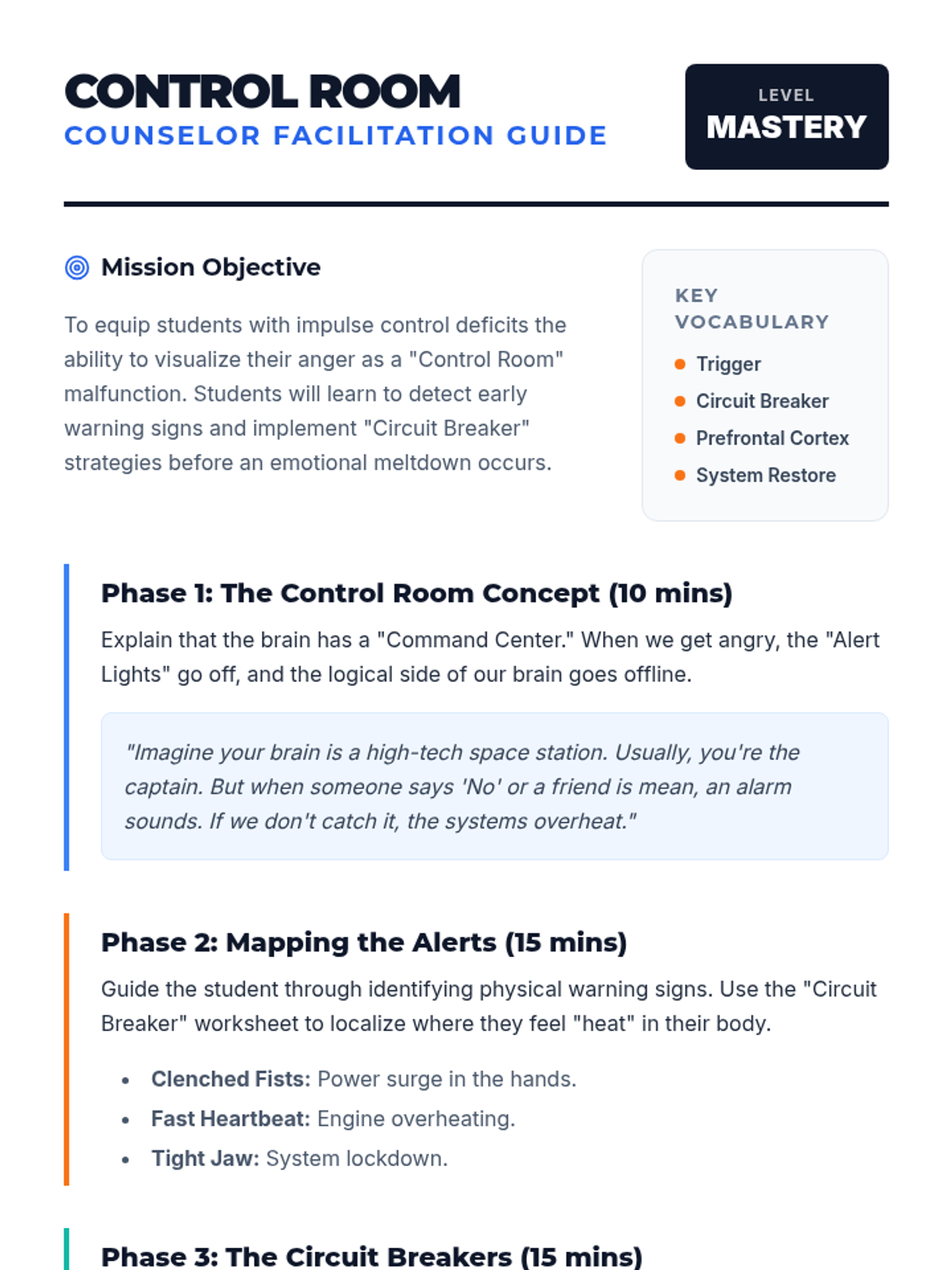
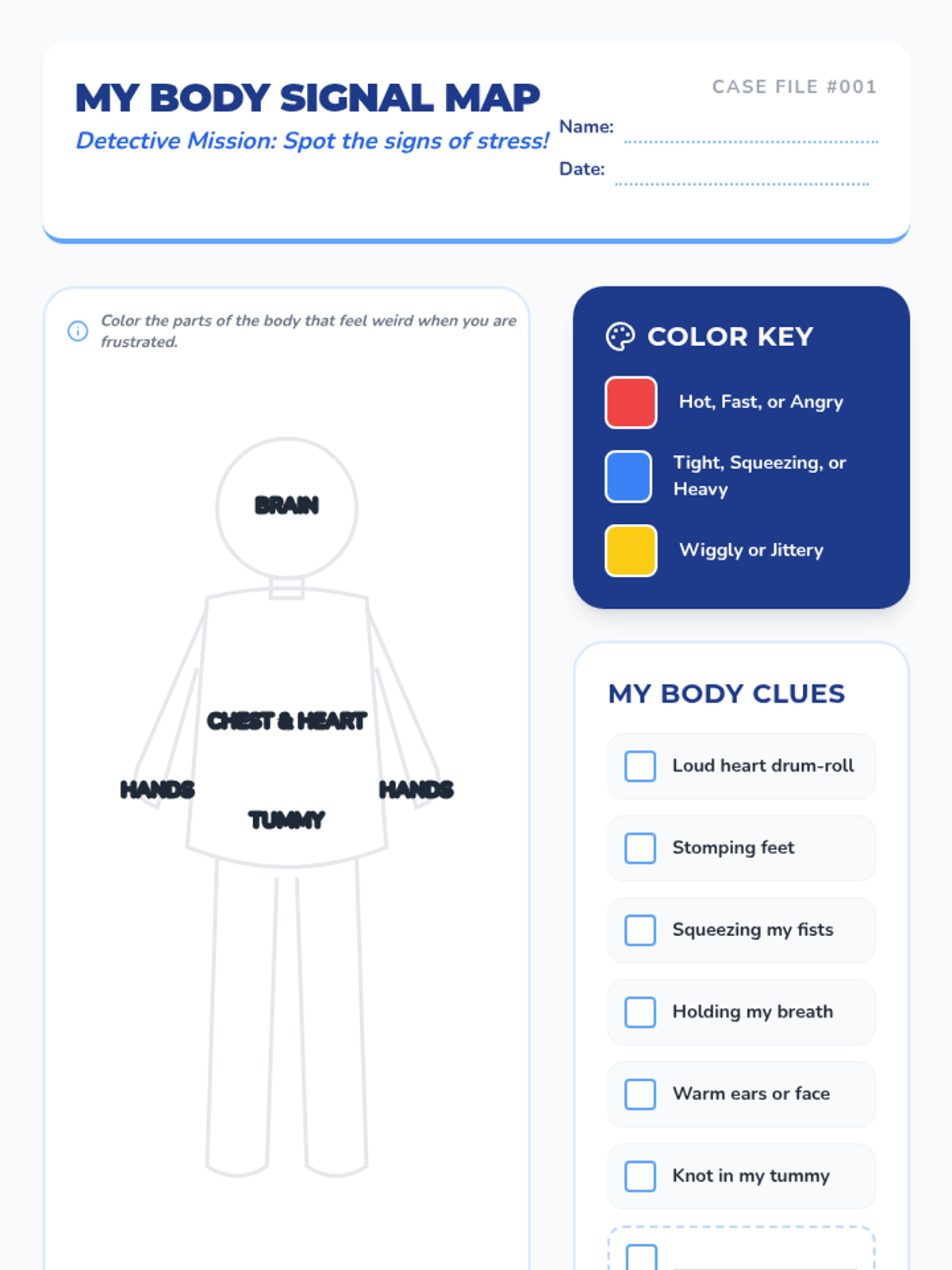
A set of resources designed to help students identify anger triggers, recognize physical body signals, and practice using coping strategies through a theme inspired by the 'Inside Out' Control Room.
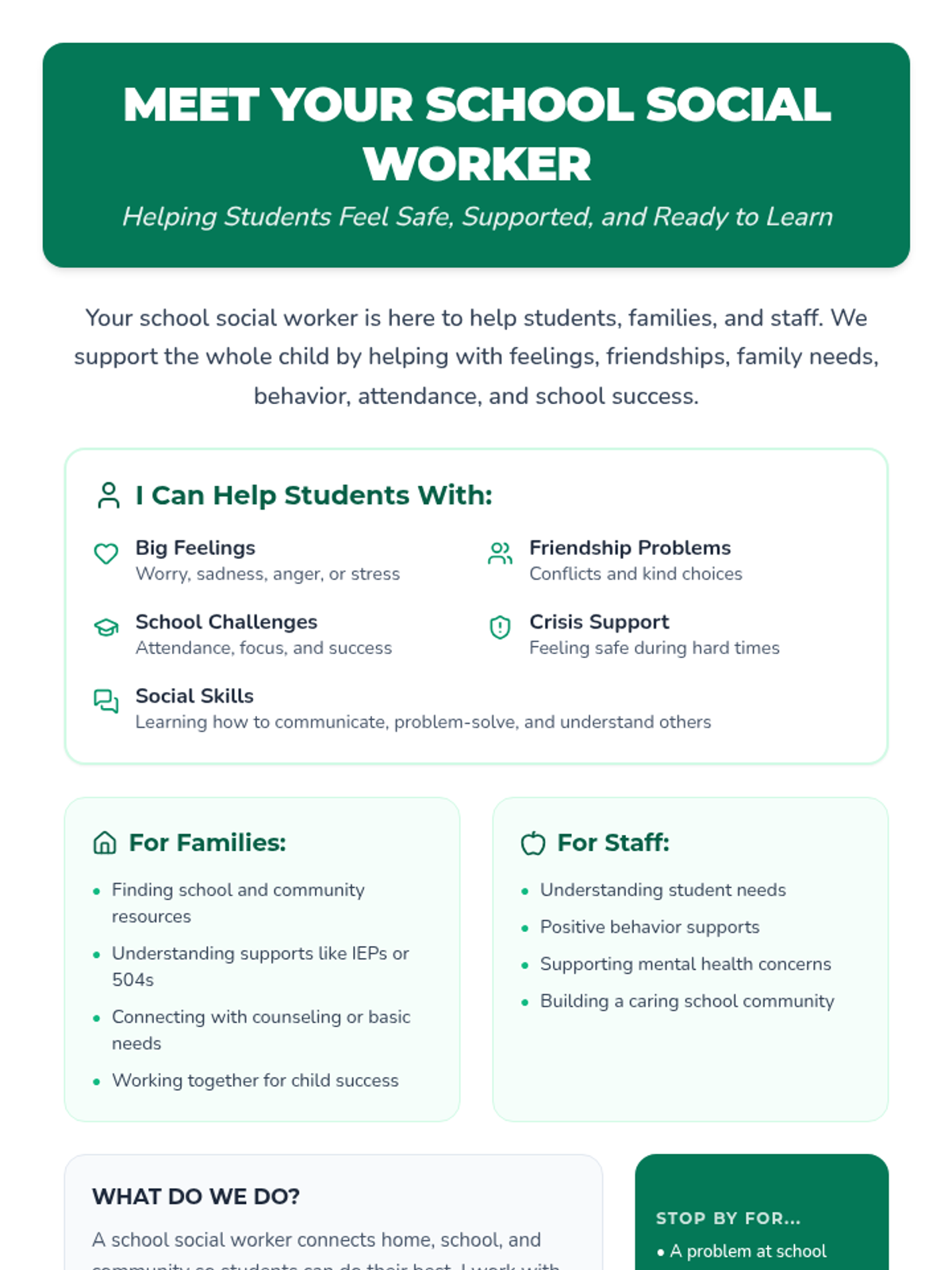
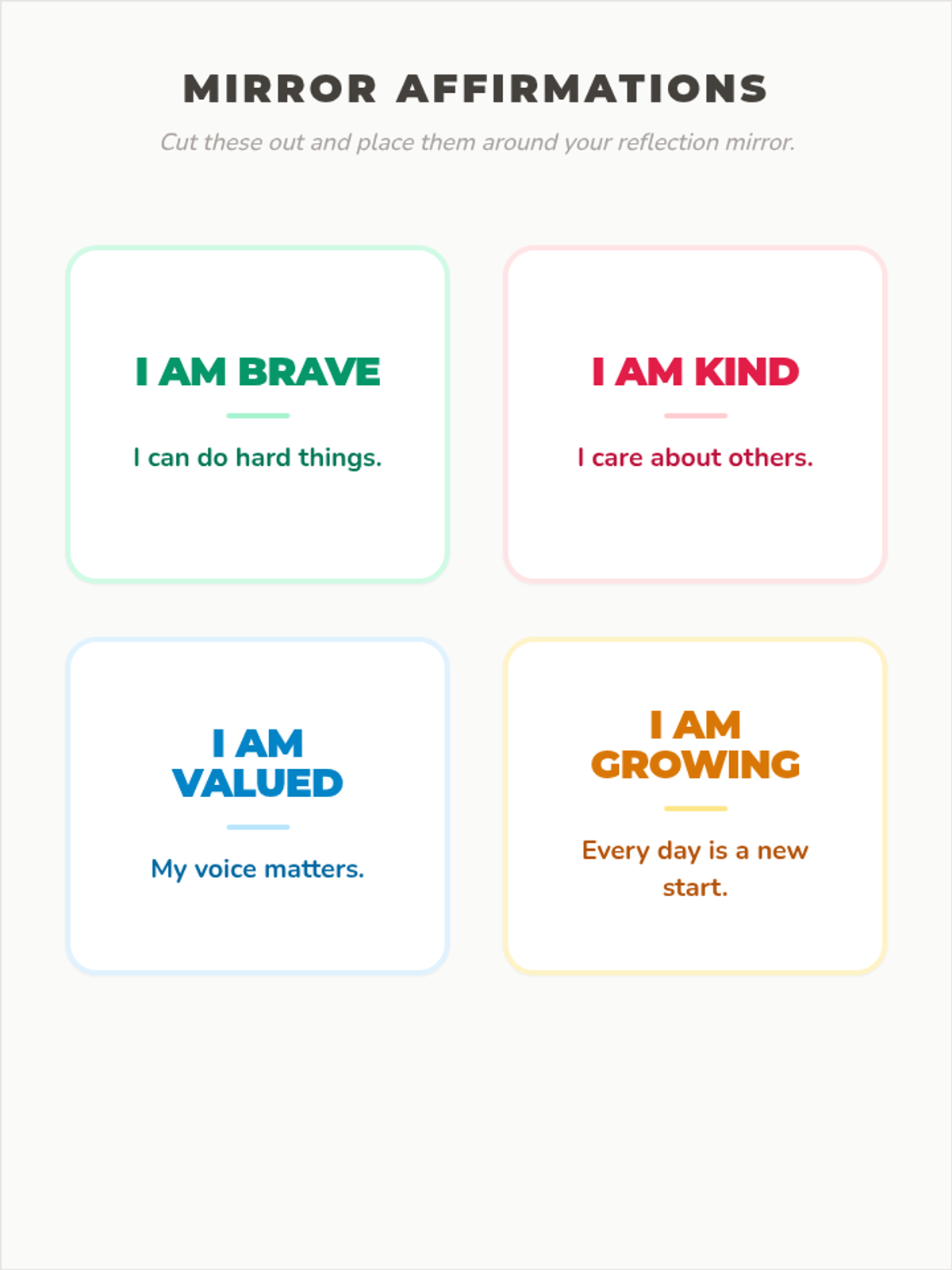
A comprehensive suite of calming, nature-inspired office decor for a school social worker, featuring posters, interactive tools, and affirmation cards.
A comprehensive update to the summer coping skills packet, featuring interactive movement activities, new grounding techniques, and a video vault for digital support.
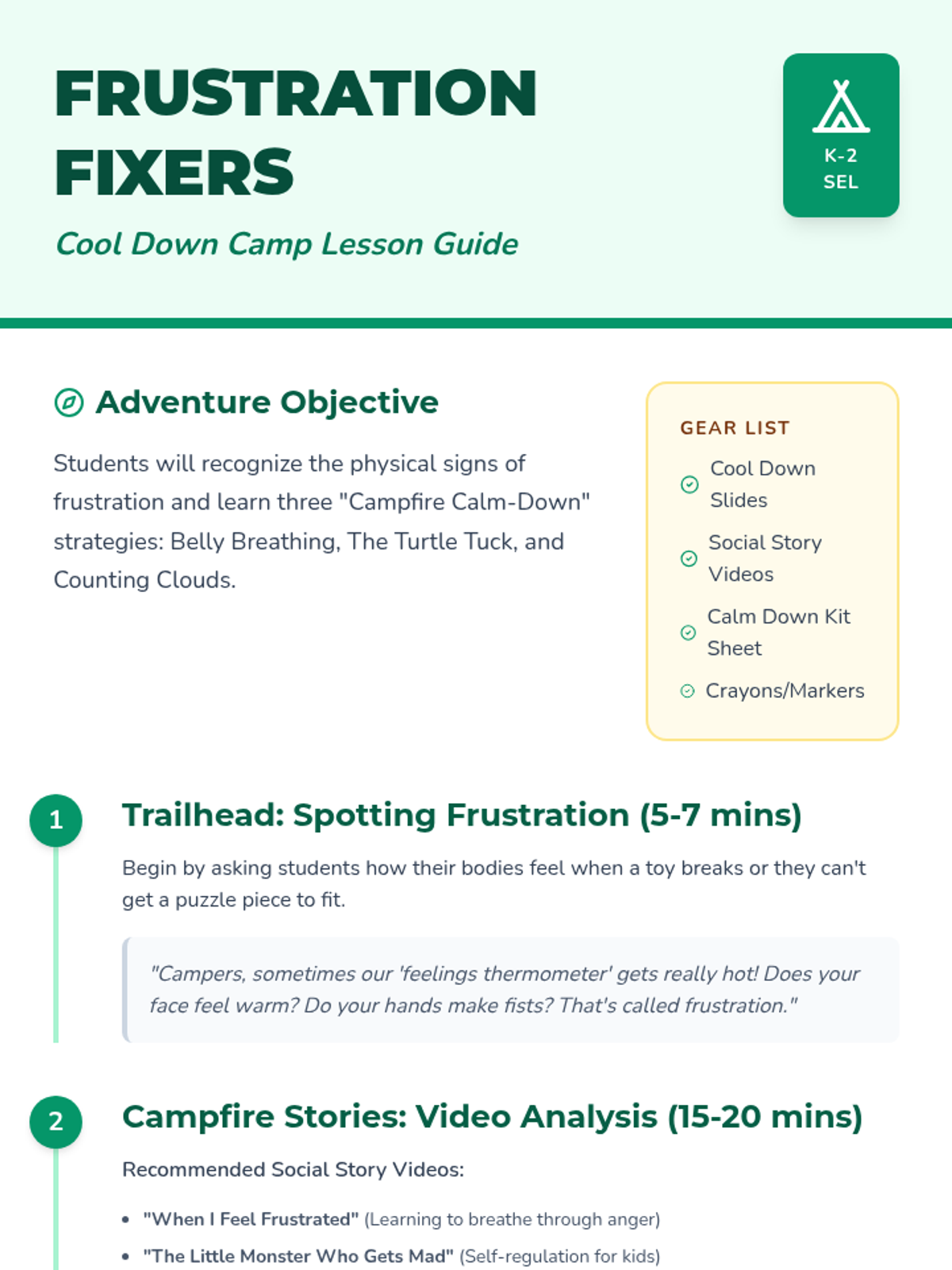
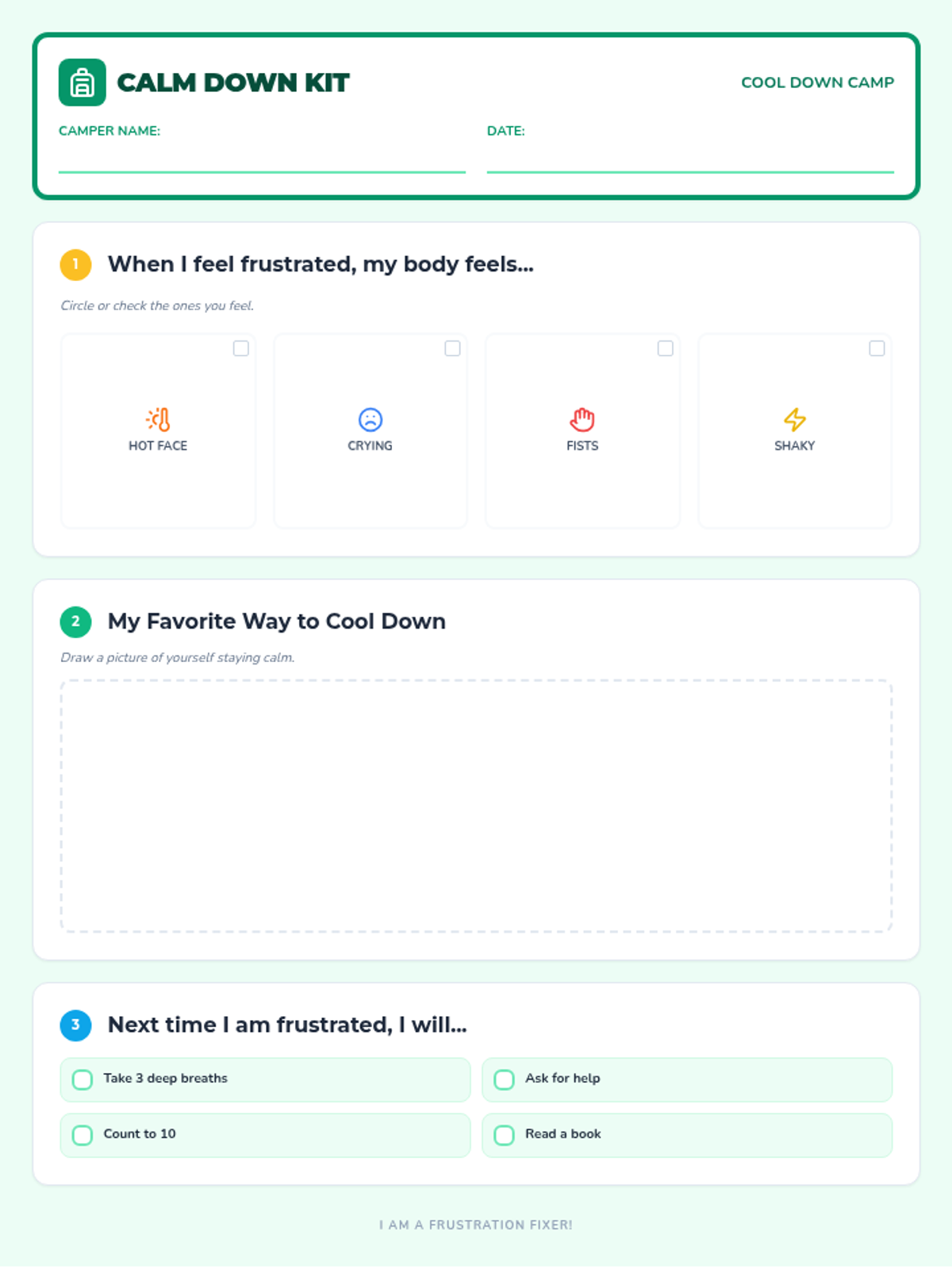
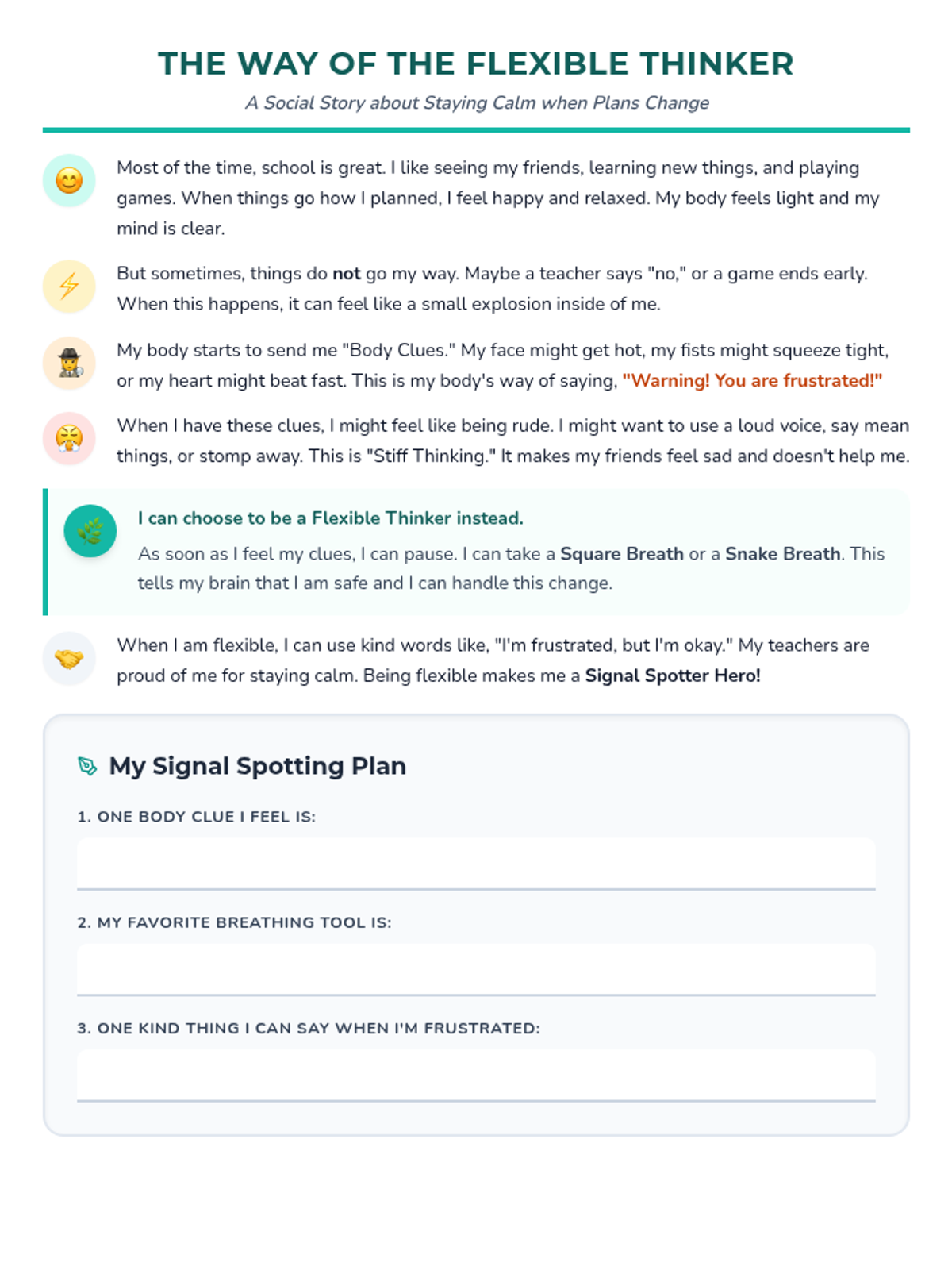
A lesson for K-2 students on identifying and managing frustration using calming strategies and social story analysis.
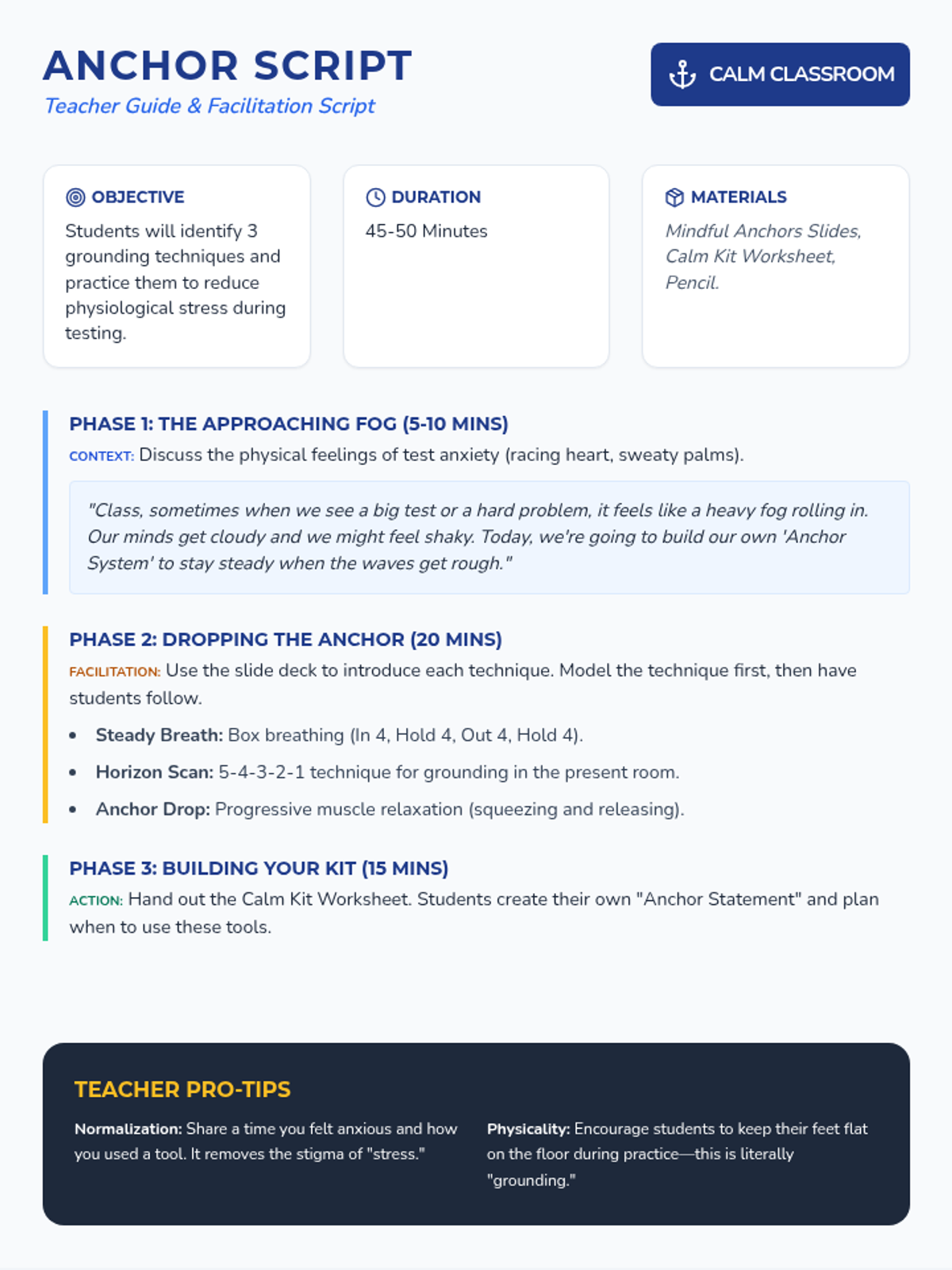
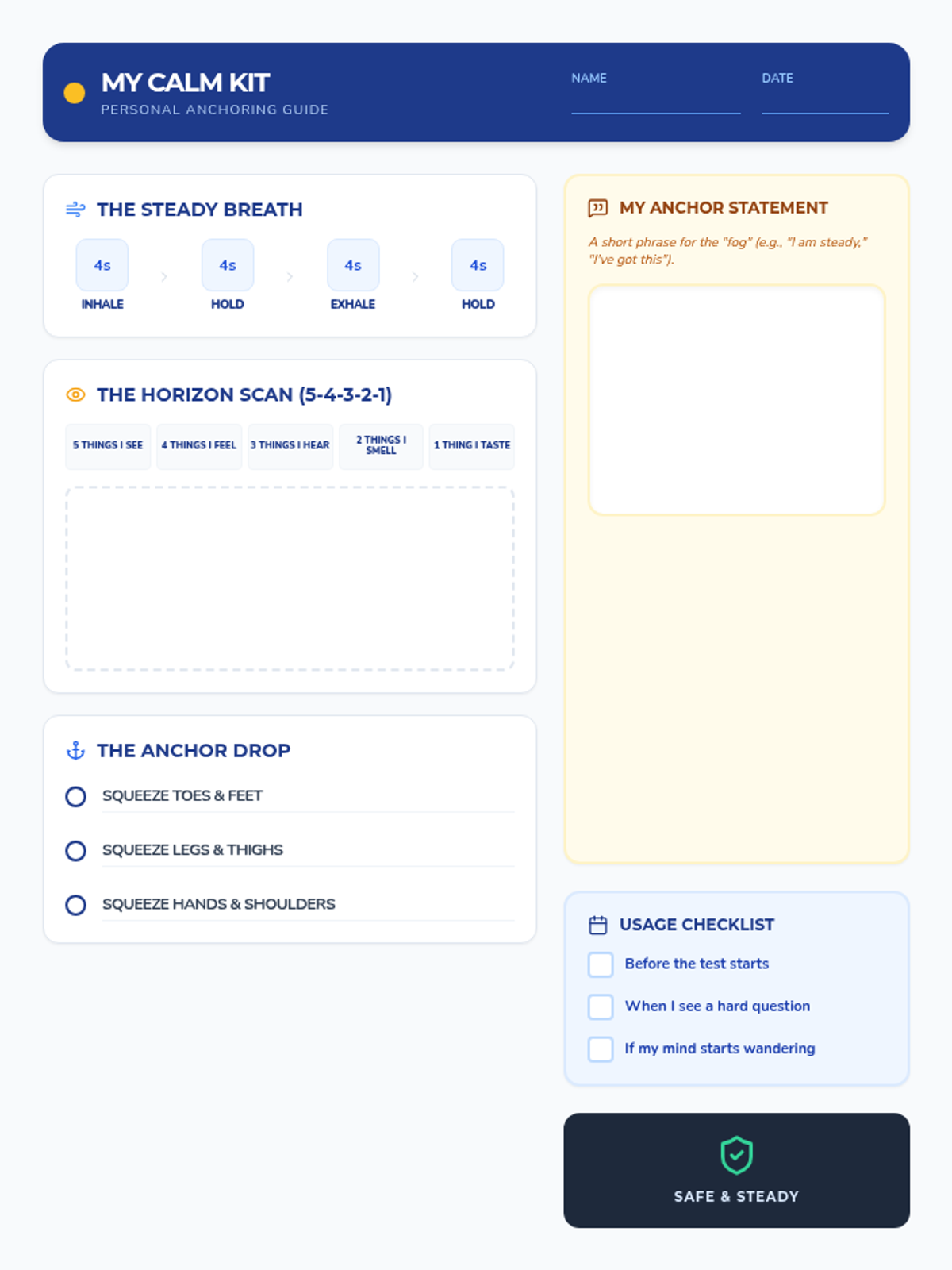
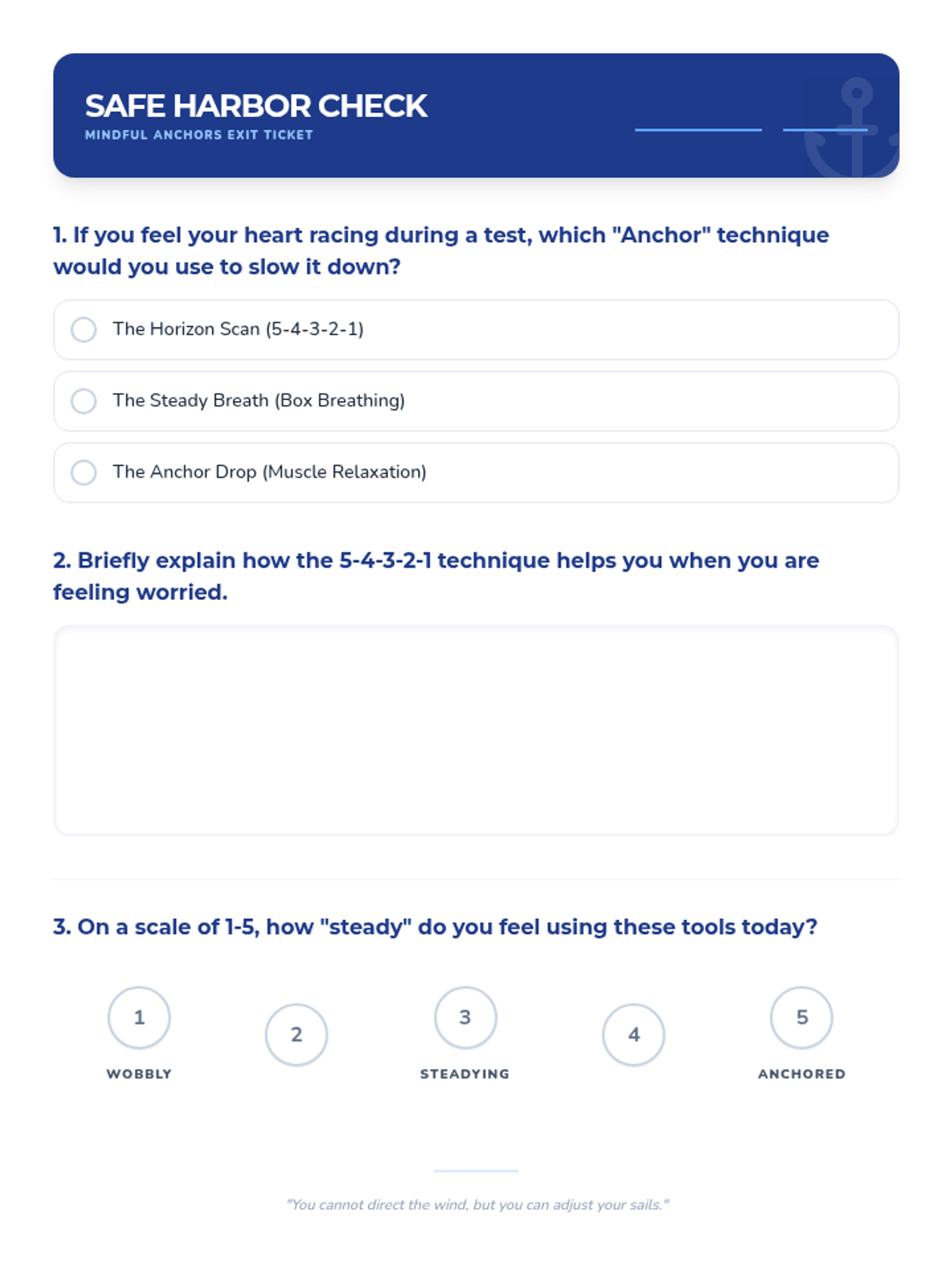
A practical lesson designed to equip students with immediate grounding techniques to navigate test anxiety and academic stress using the metaphor of a lighthouse and anchor. Students will learn and practice box breathing, the 5-4-3-2-1 method, and progressive muscle relaxation.
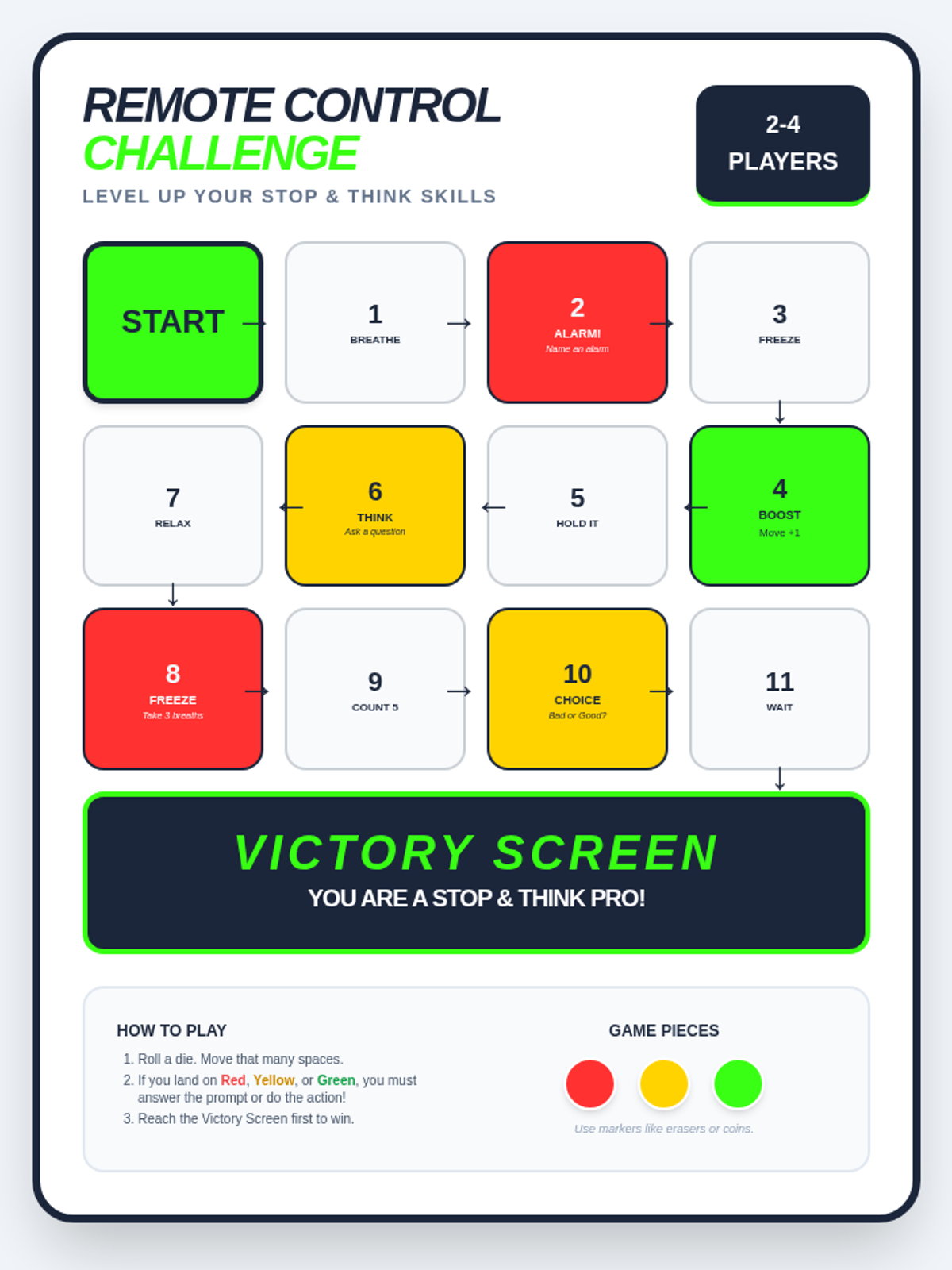
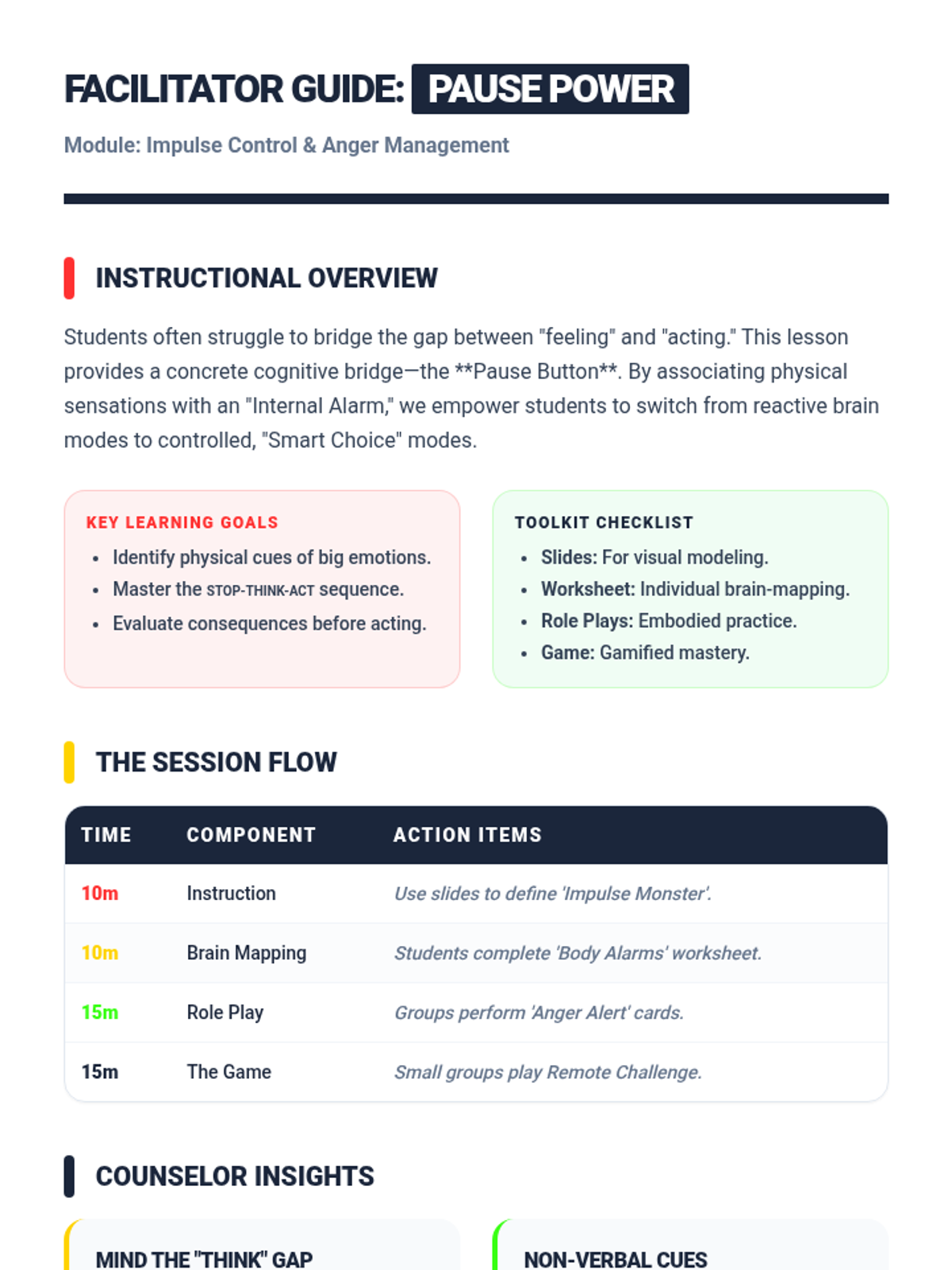
A comprehensive lesson teaching elementary students how to use the 'Stop and Think' strategy to manage anger and impulsive behaviors using a 'Remote Control' theme.
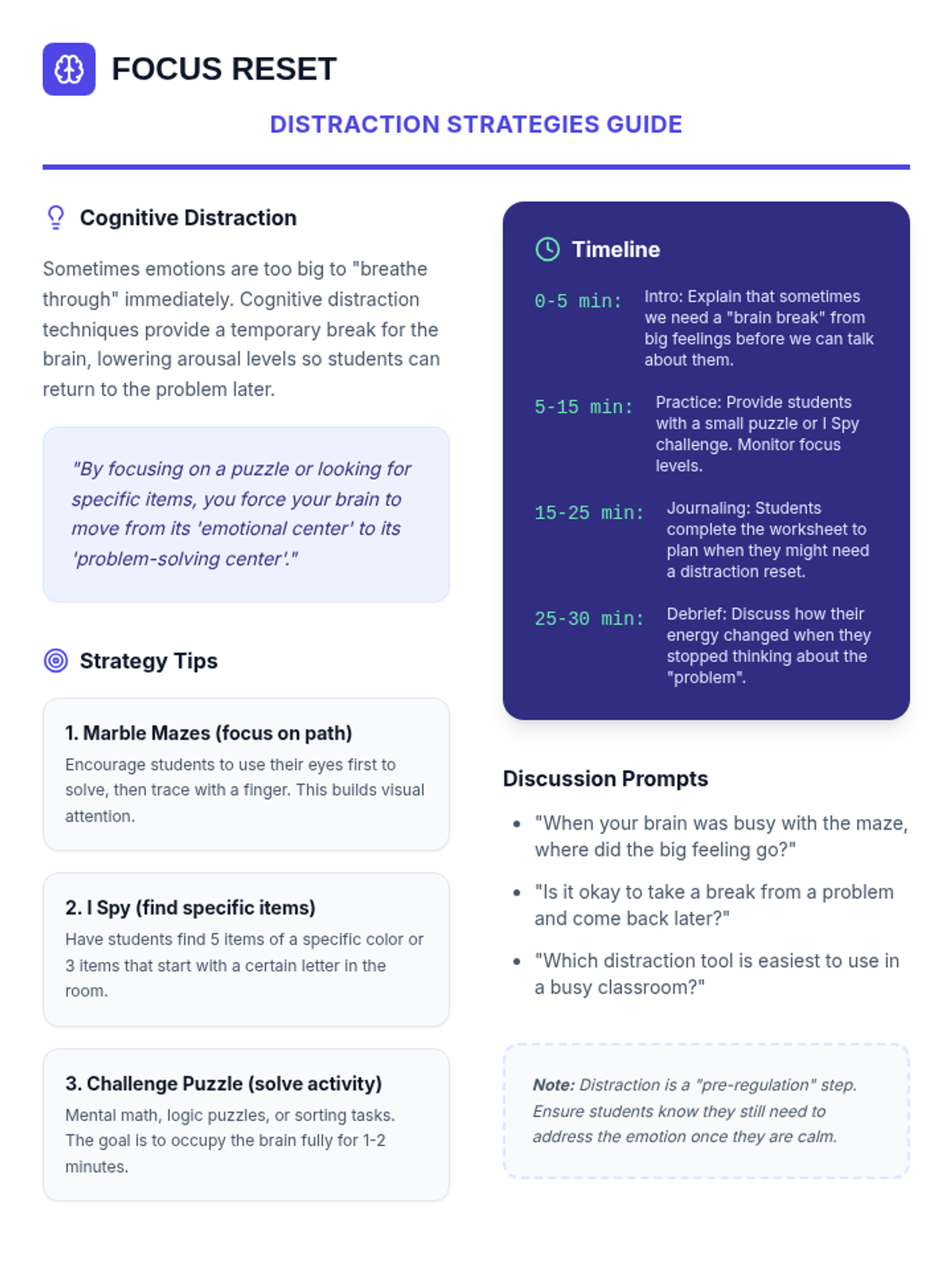
A regulation lesson for older students focused on using cognitive distraction techniques to manage high-intensity emotions.
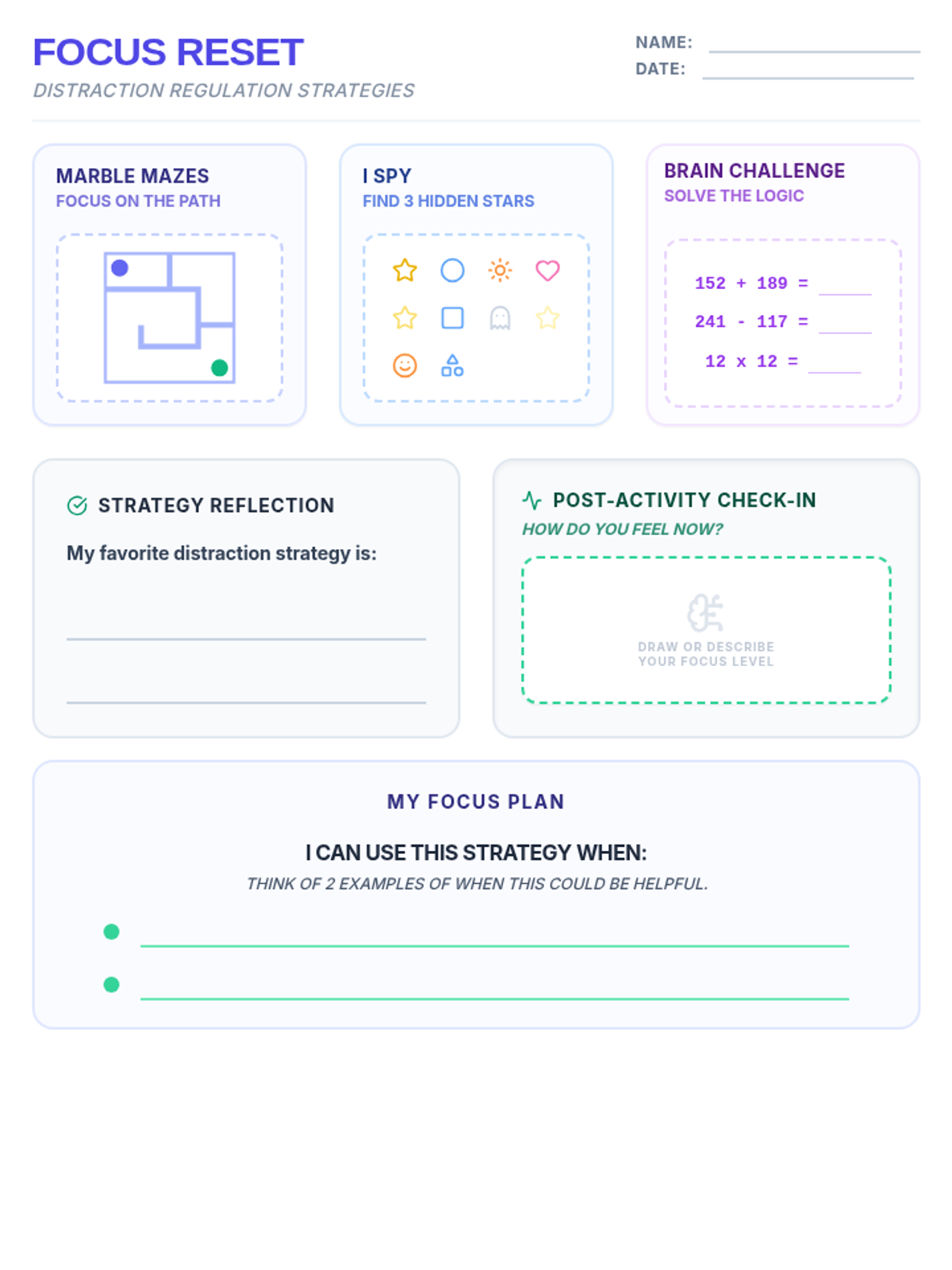
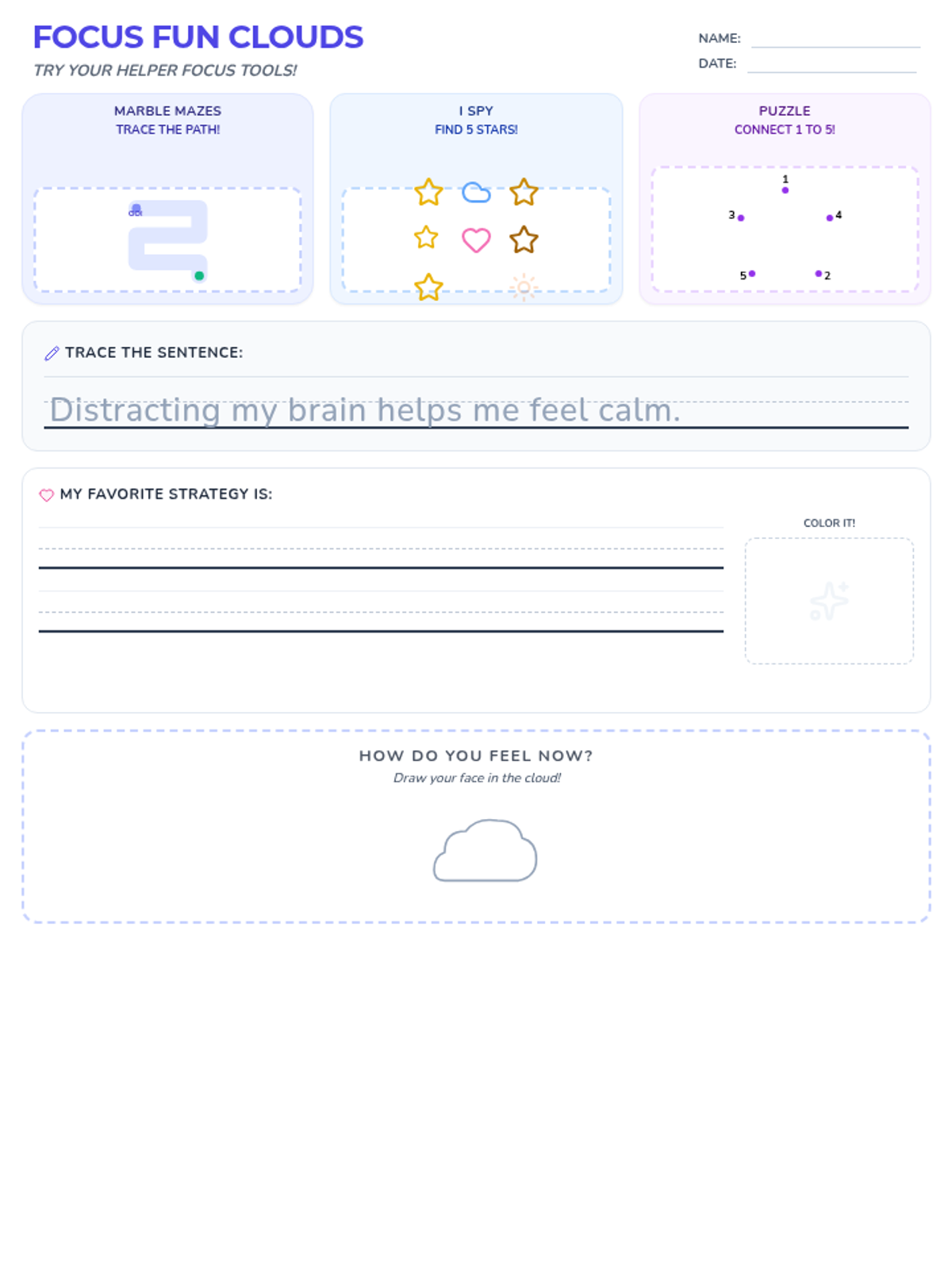
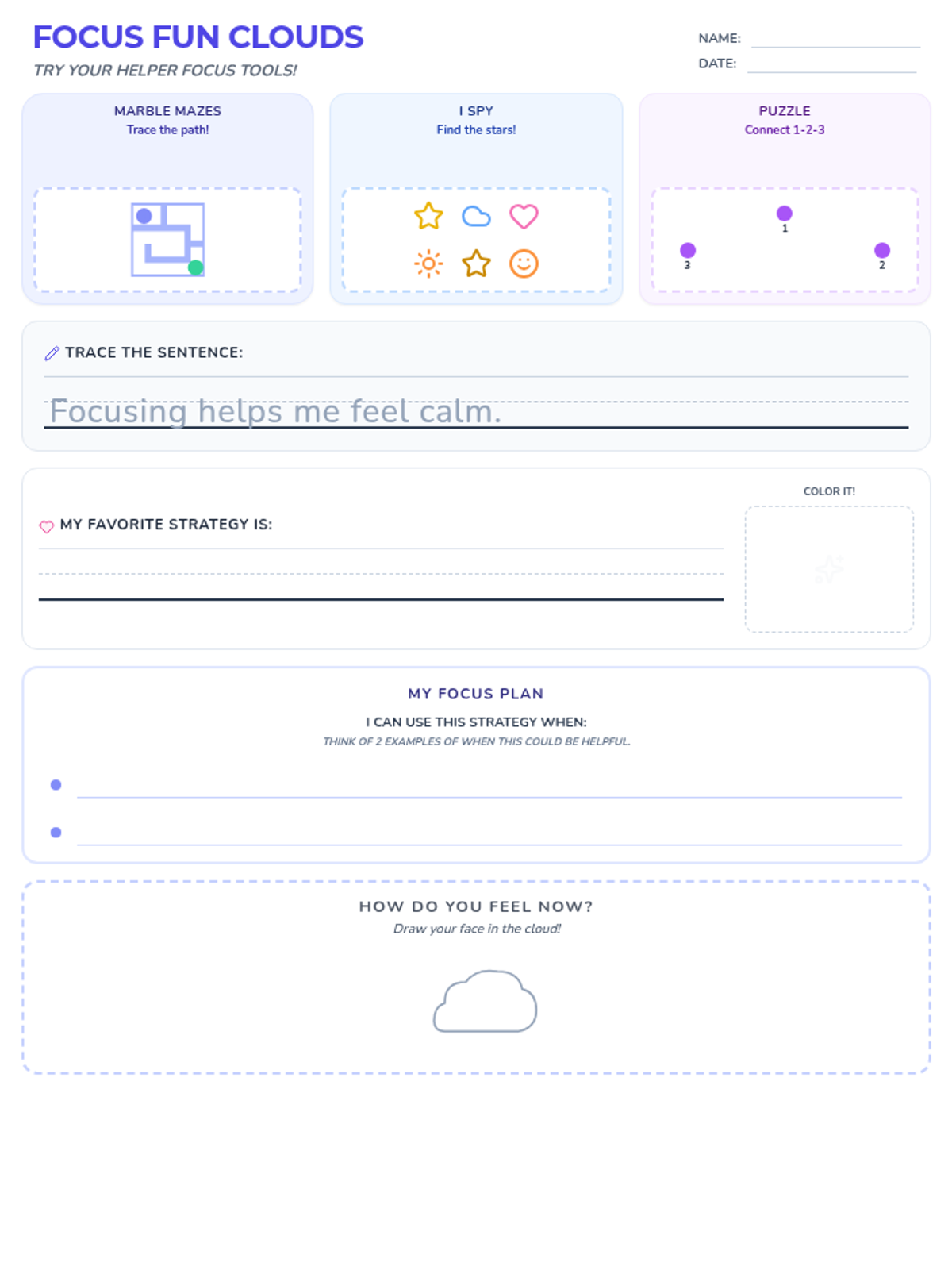
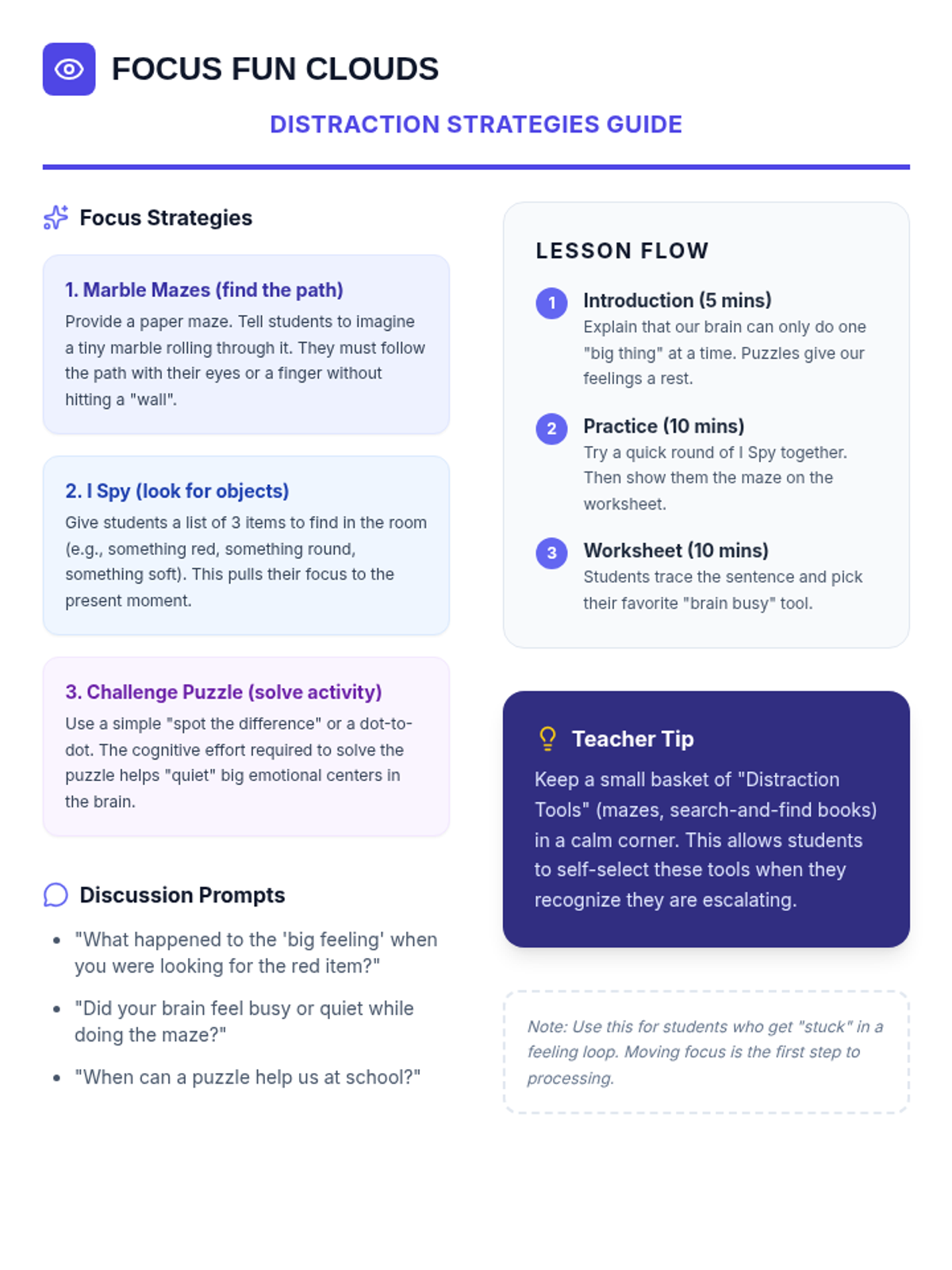
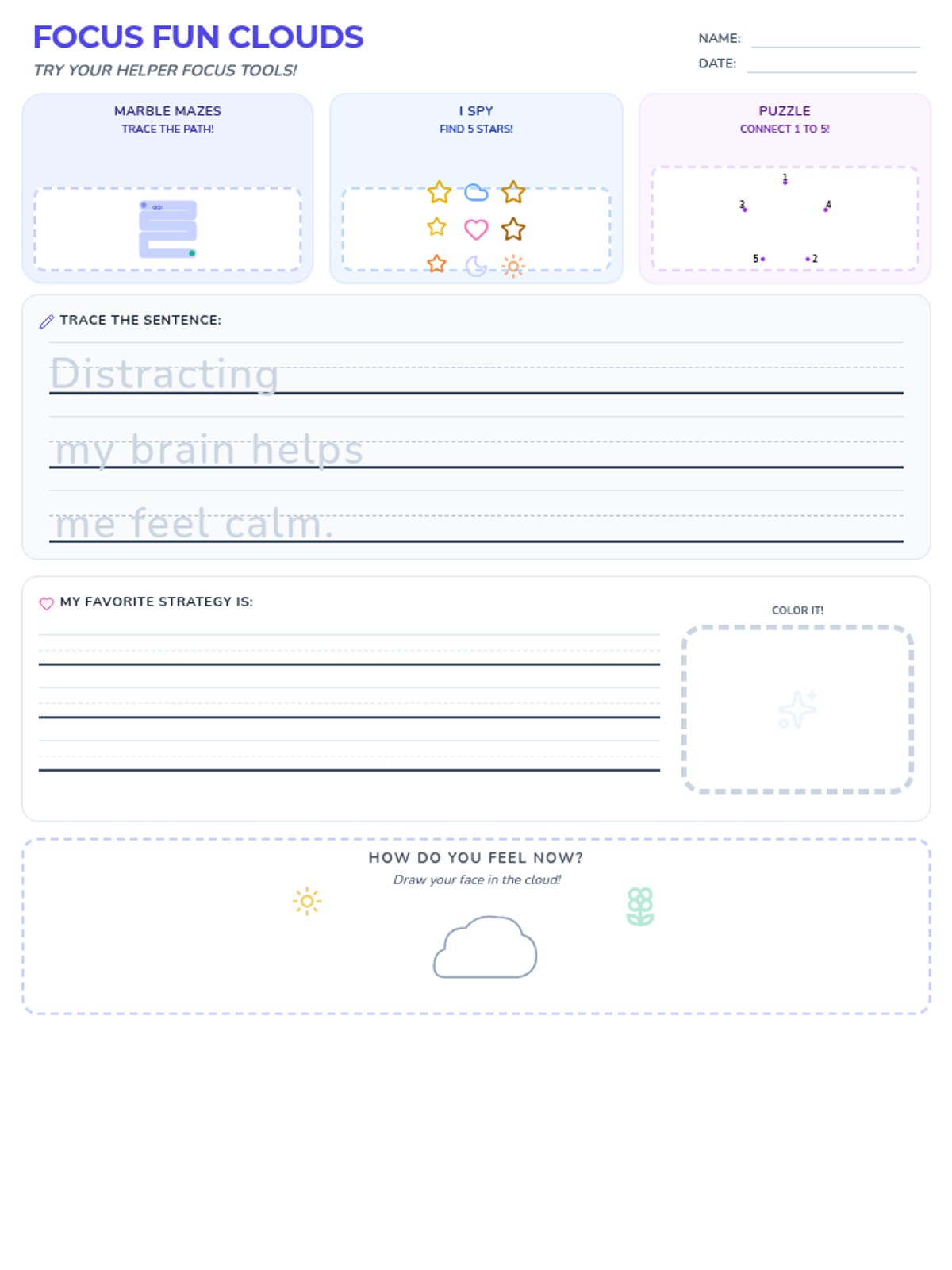
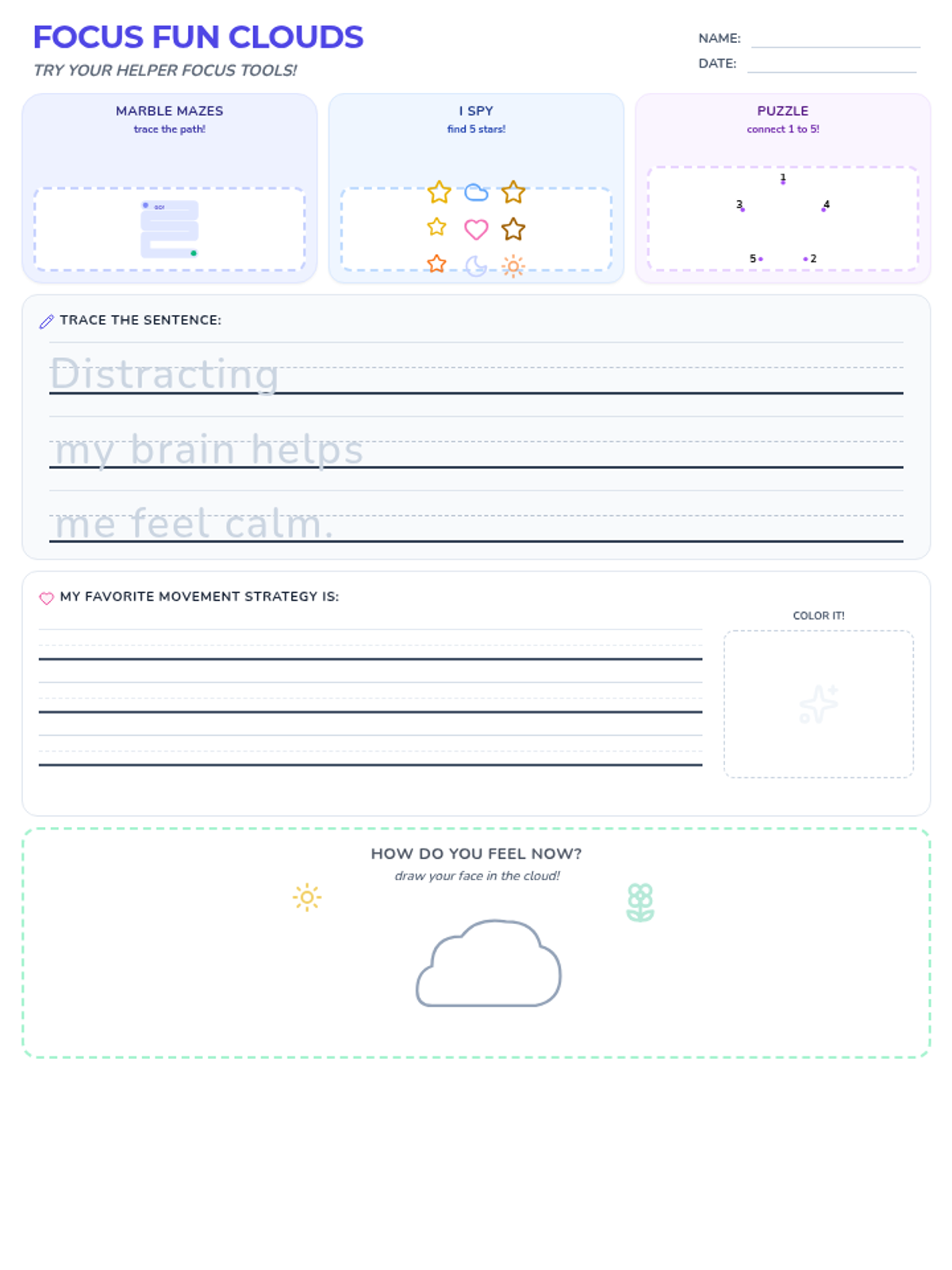
A social-emotional learning lesson for younger students focused on using distraction strategies like mazes and puzzles to regulate emotions.
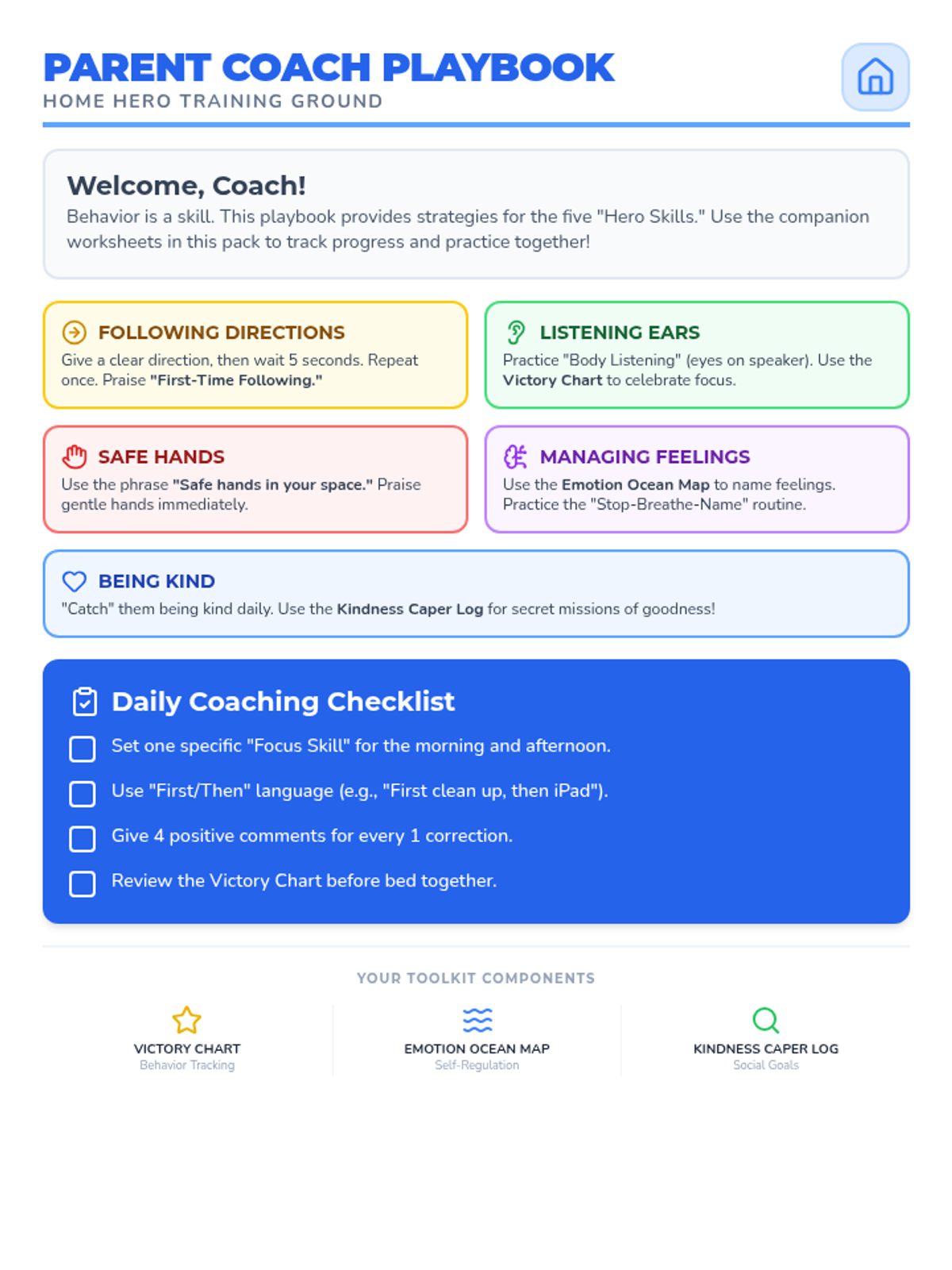
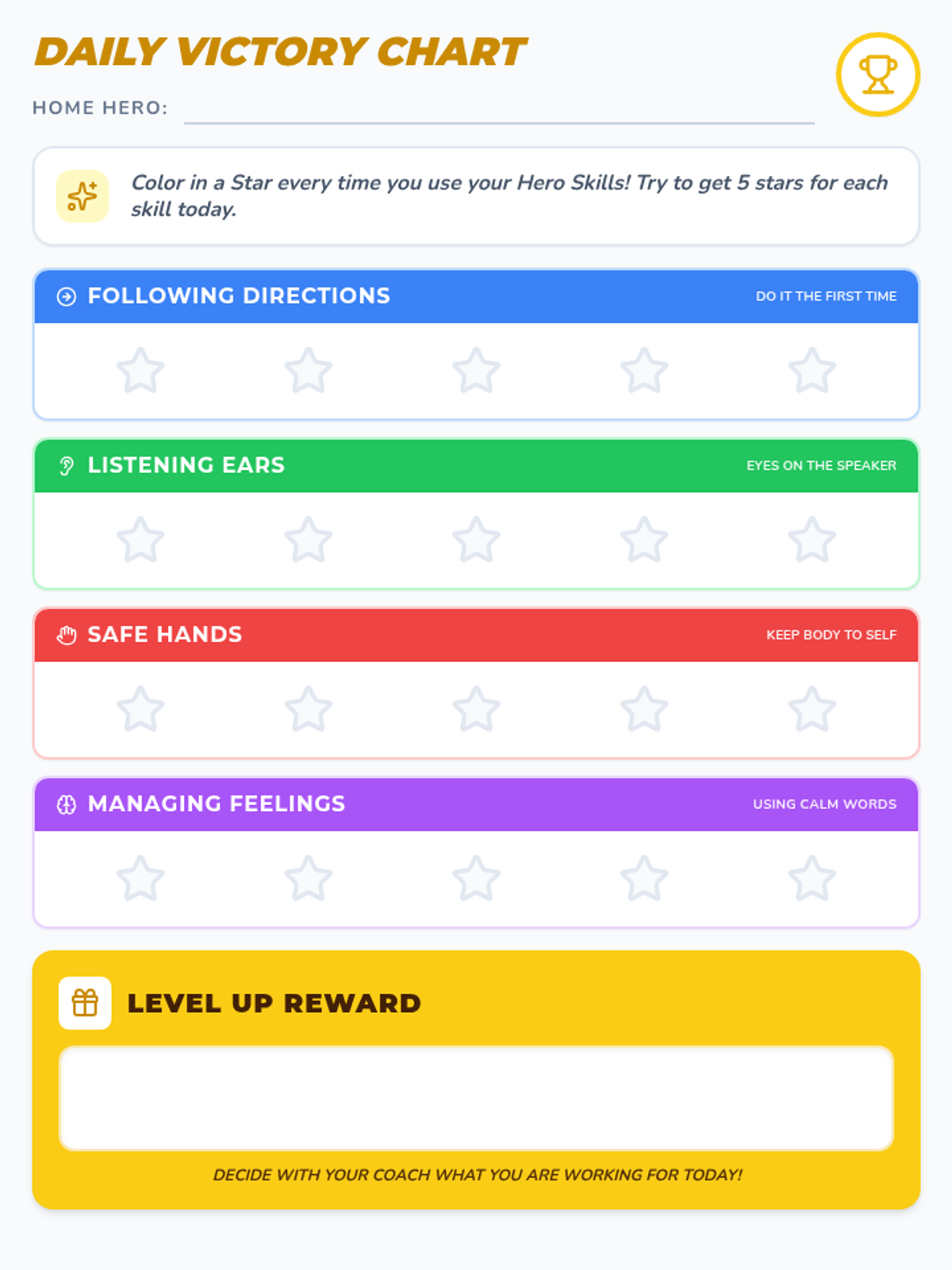
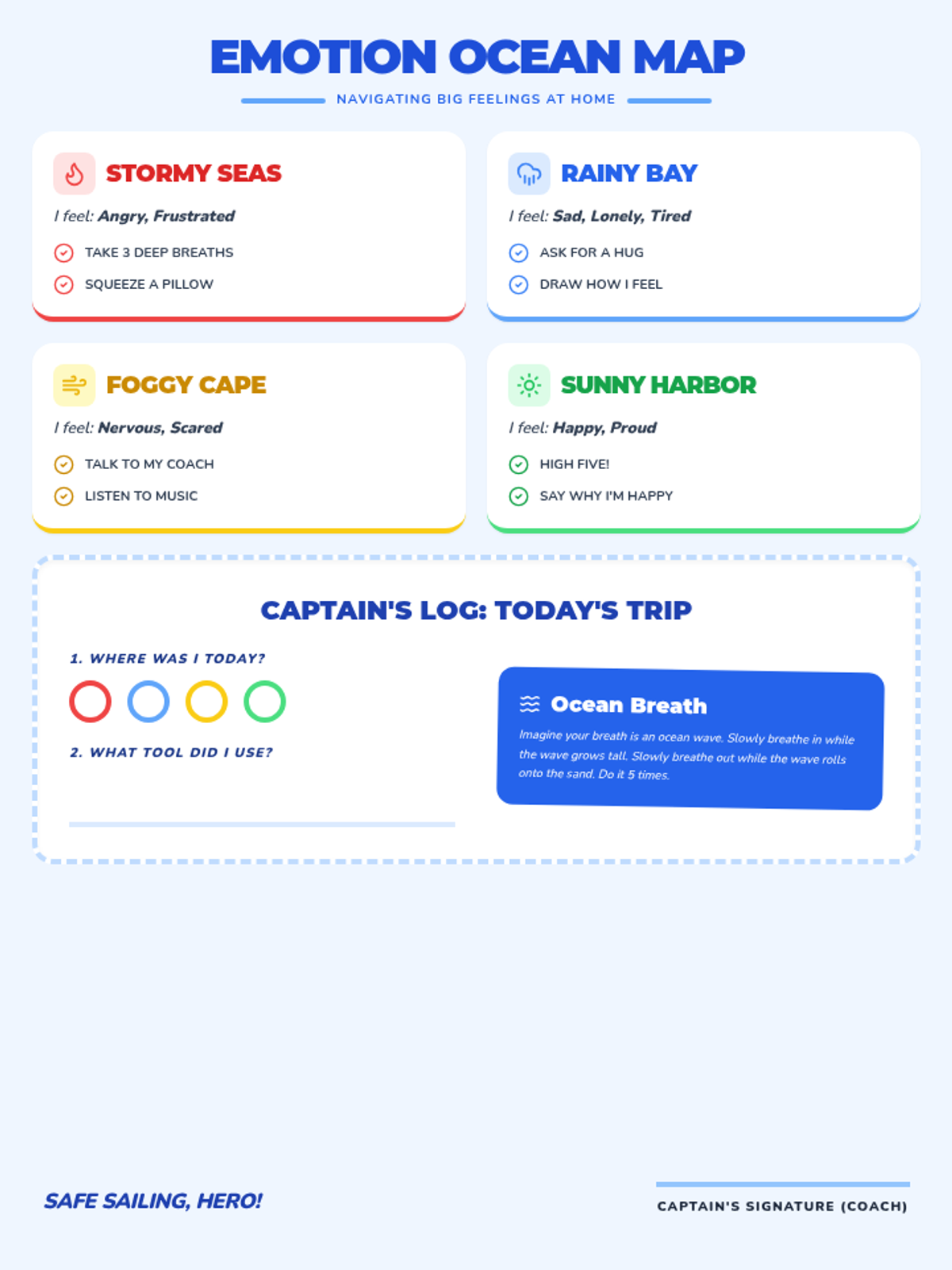
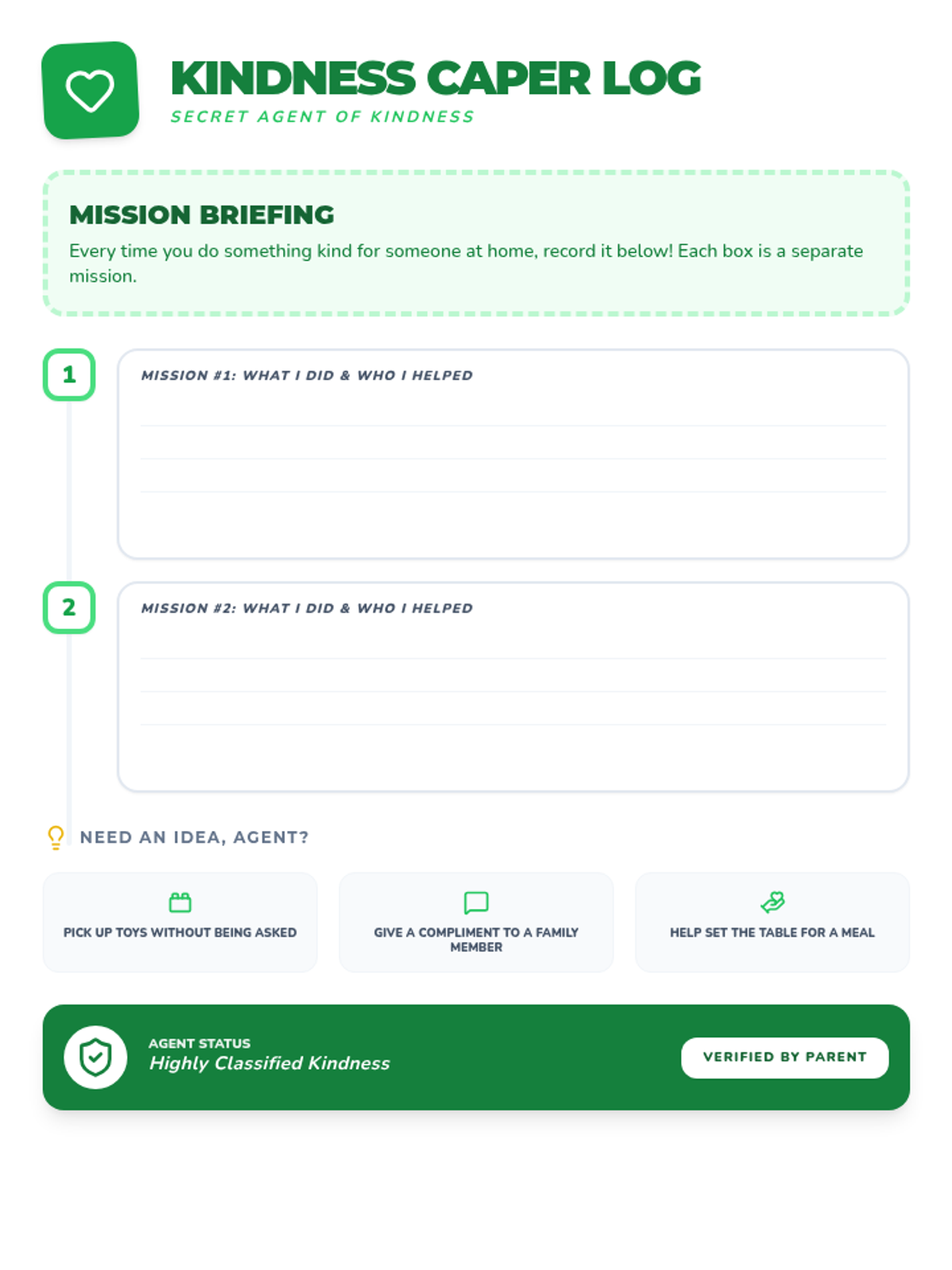
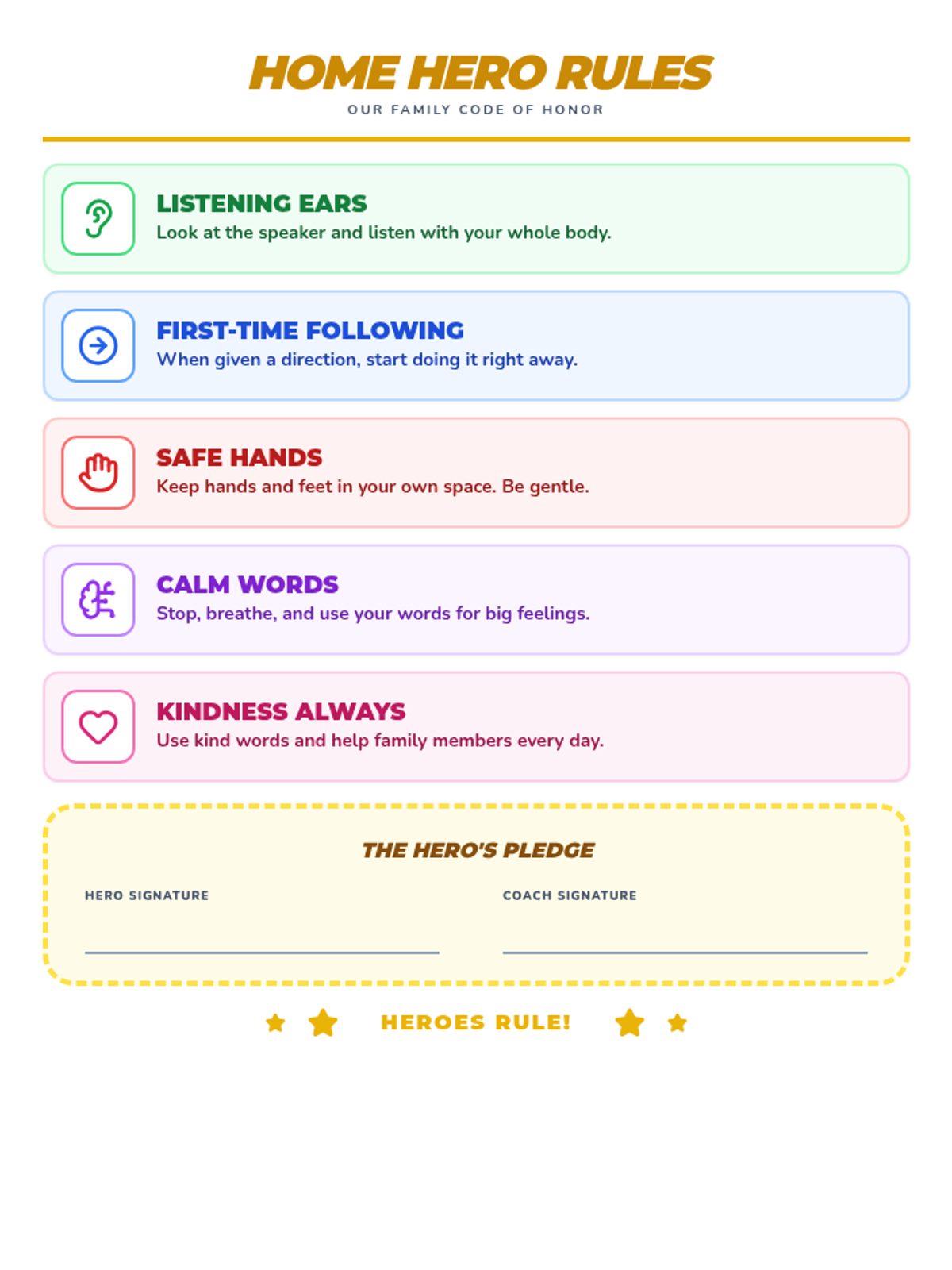
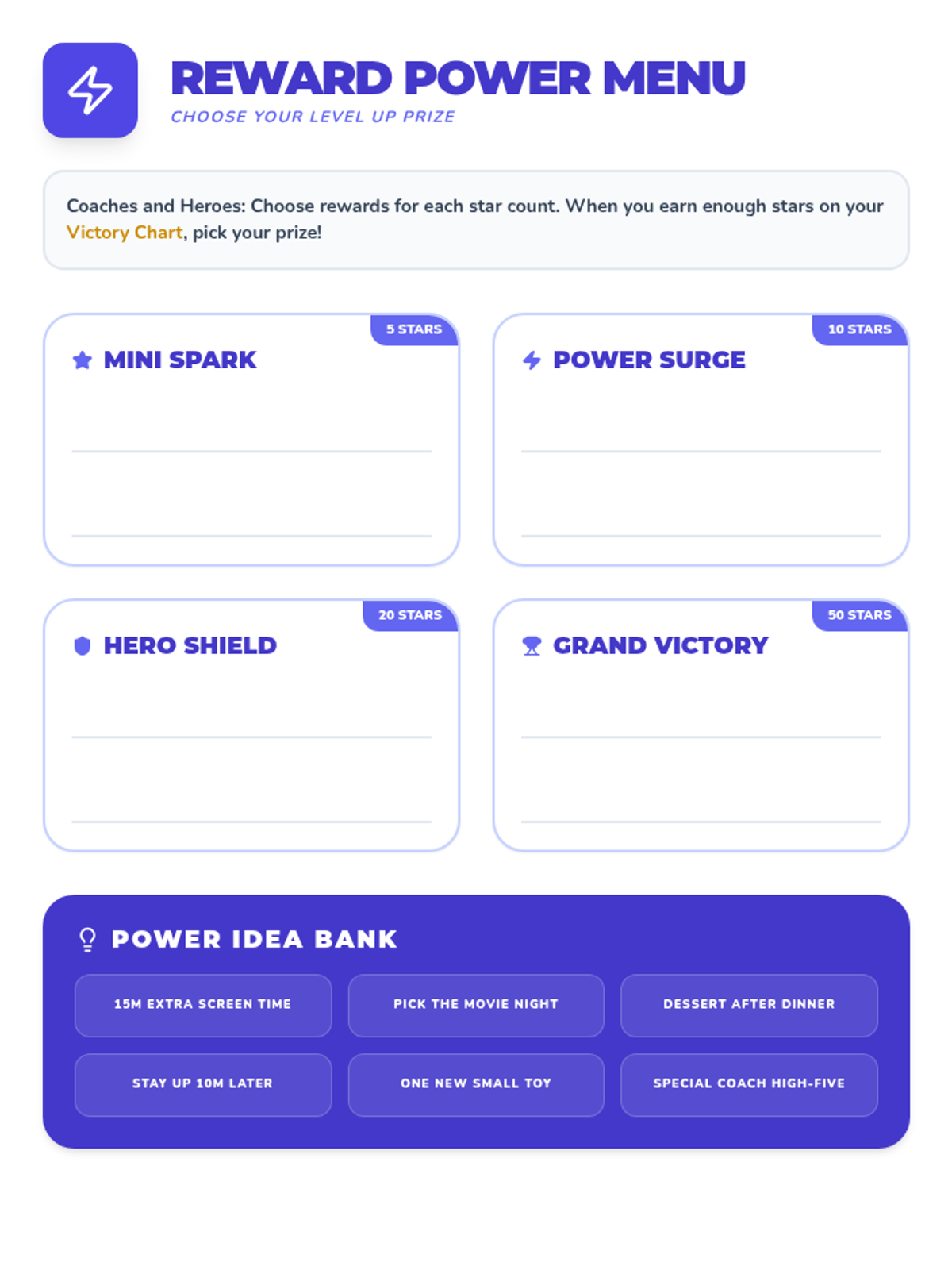
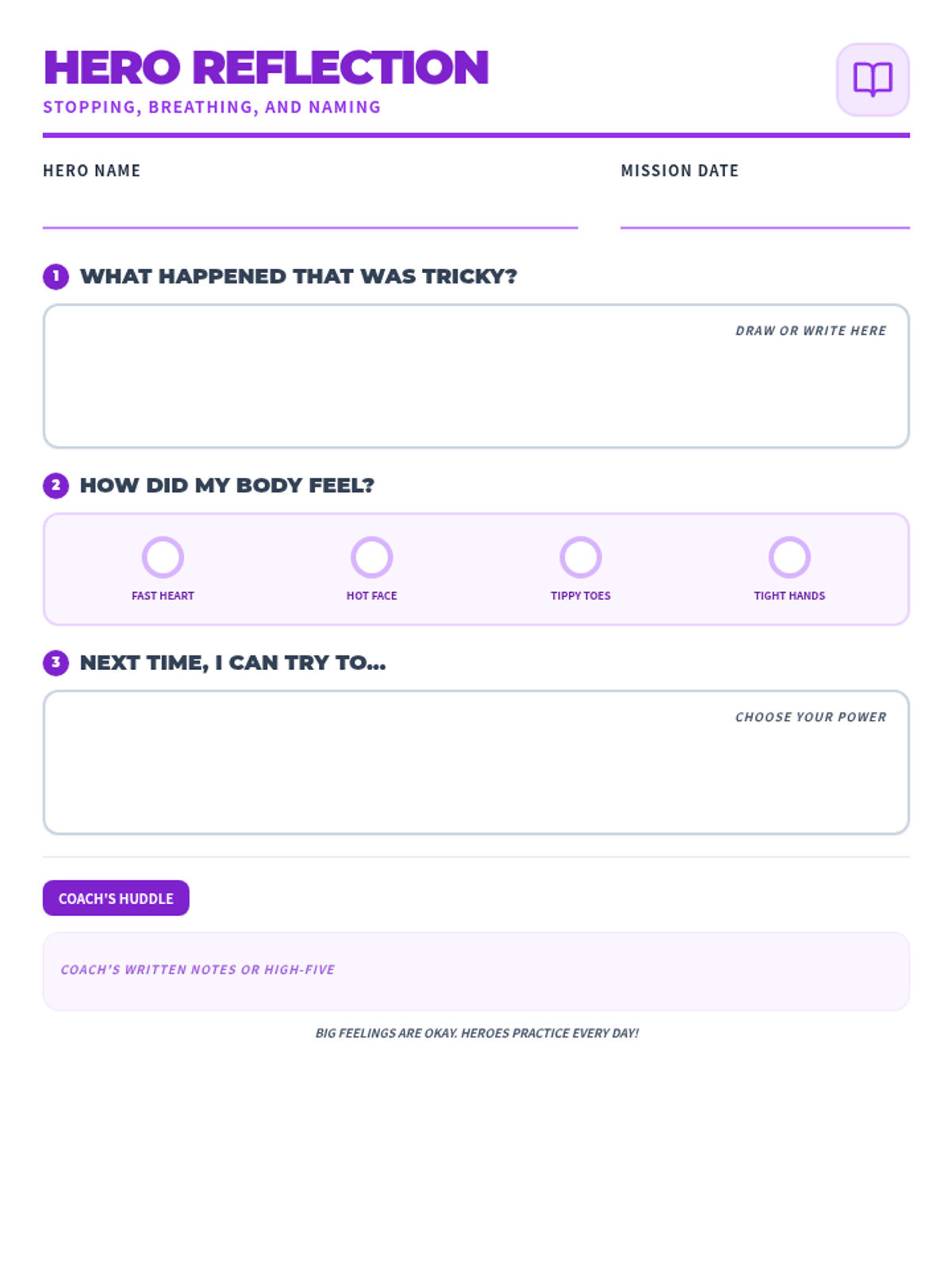
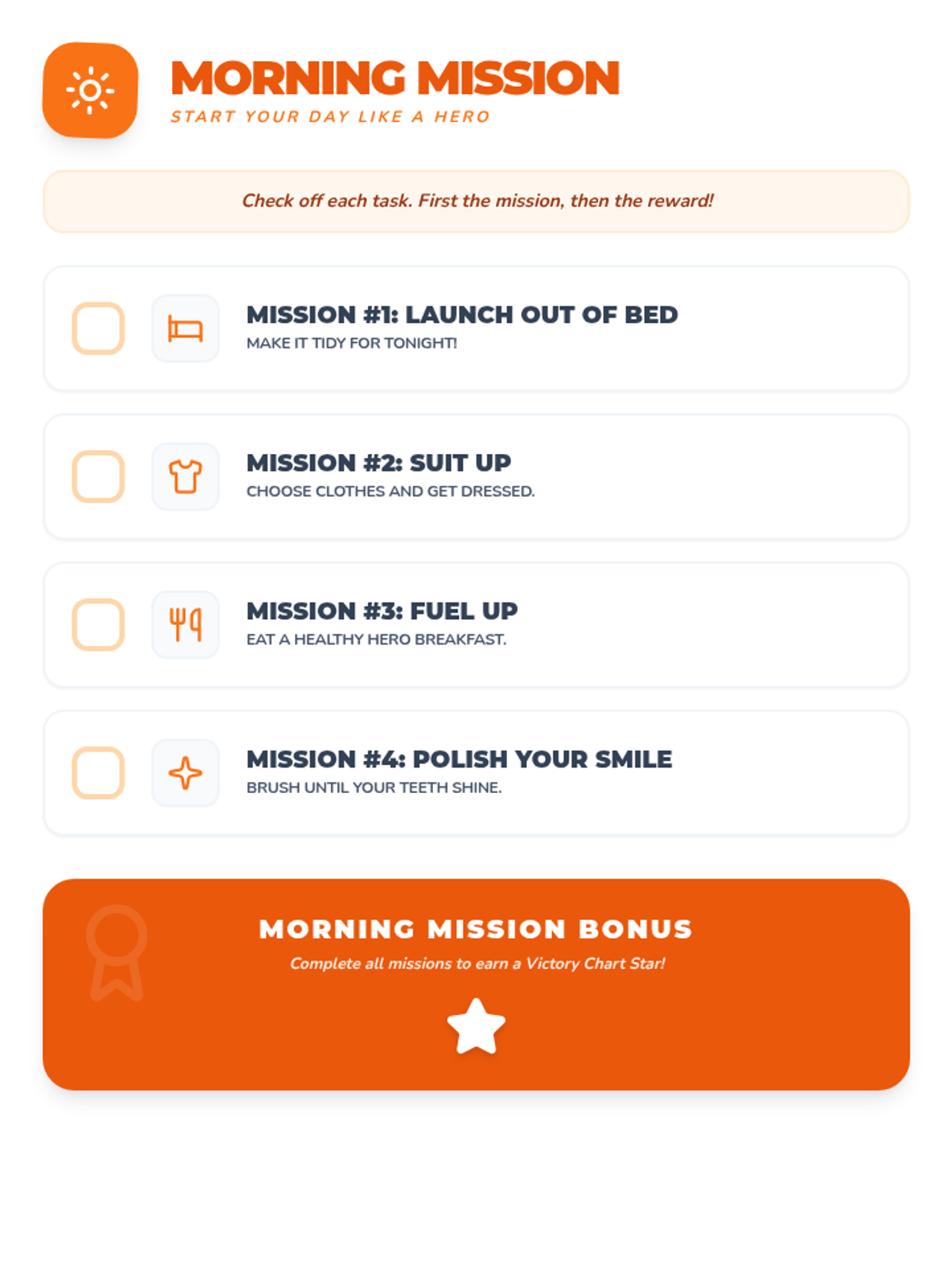
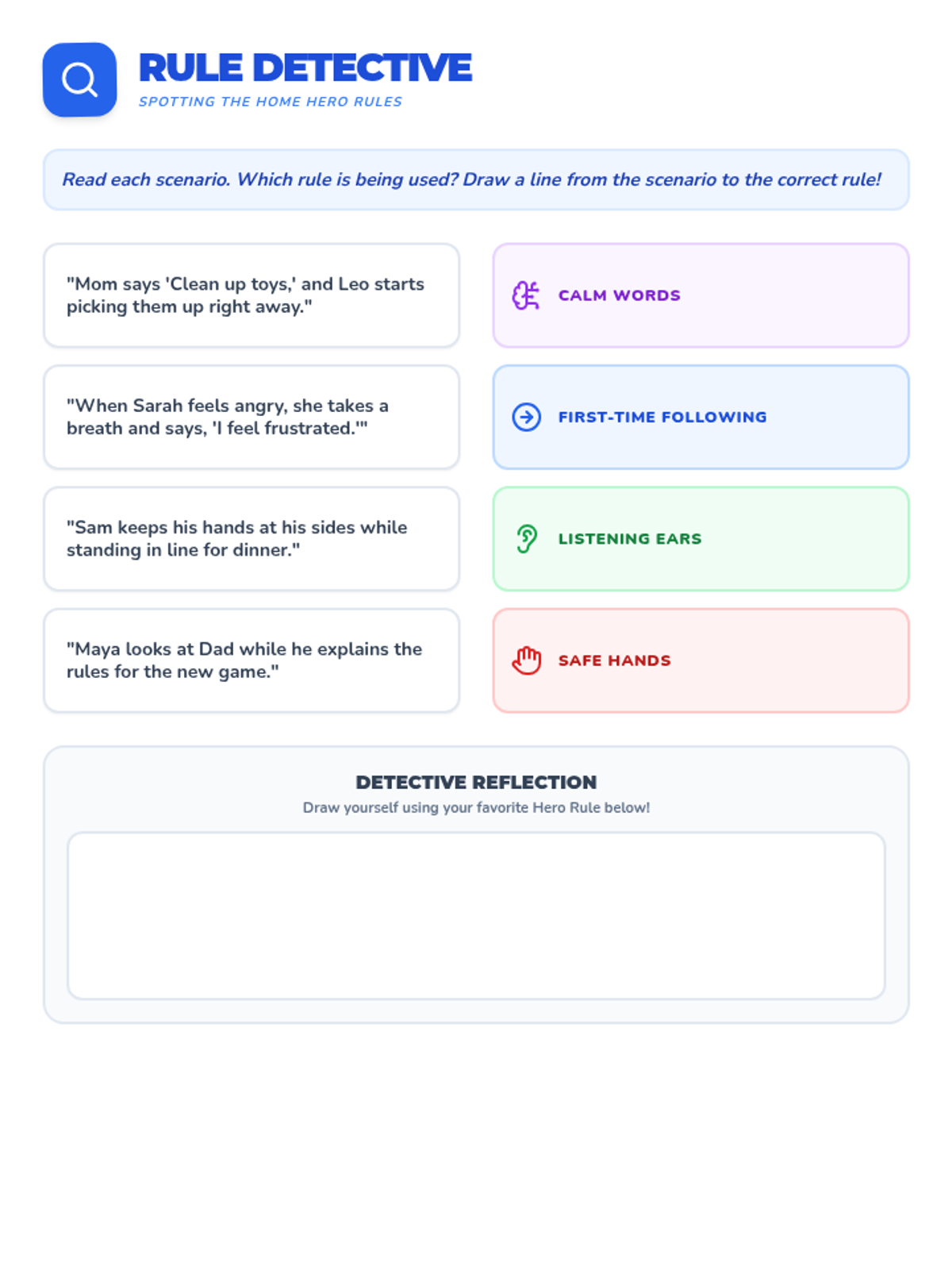
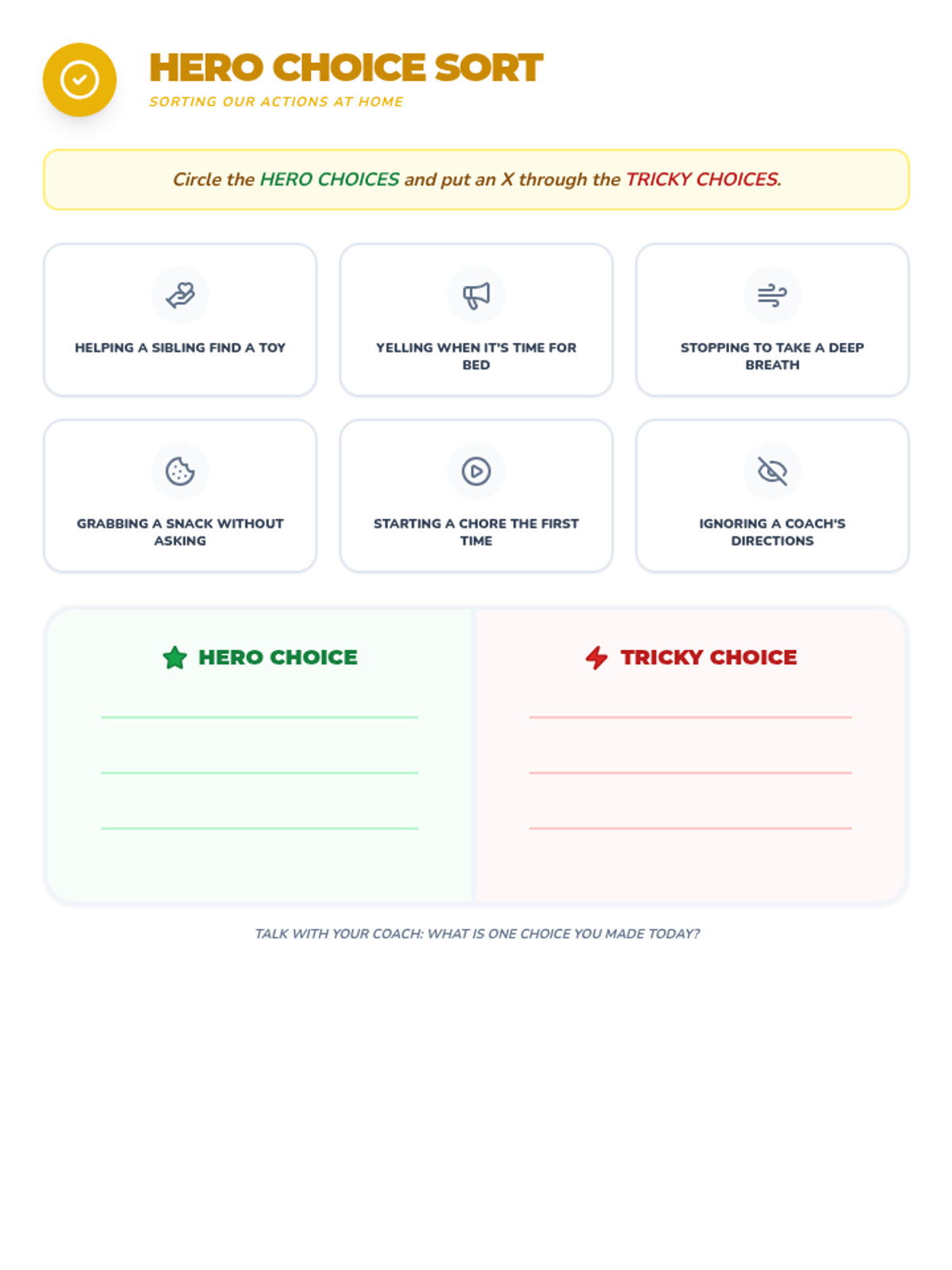
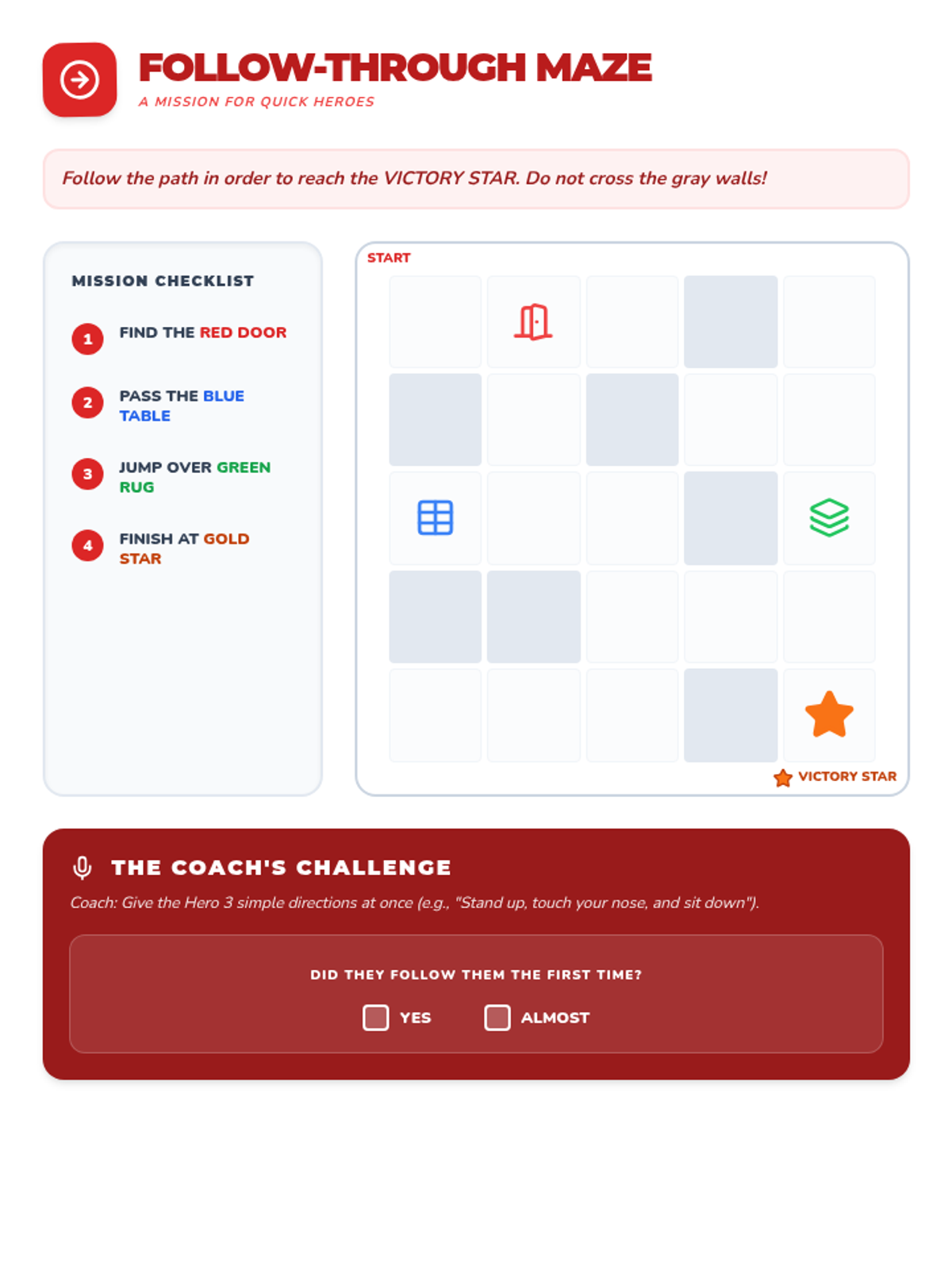
A comprehensive set of home-based tools designed to help parents support their child's behavioral growth in following directions, emotional regulation, and social kindness.
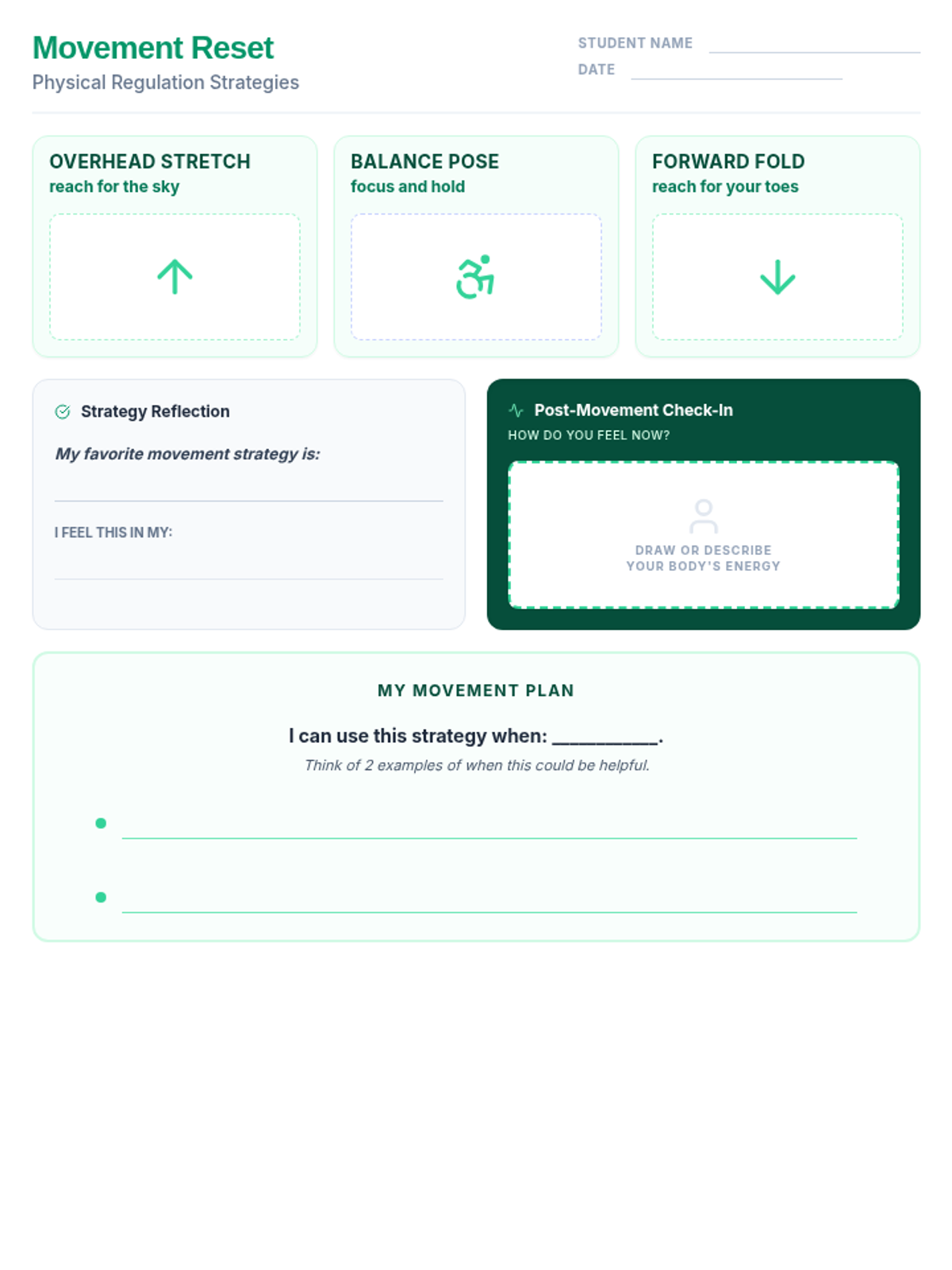
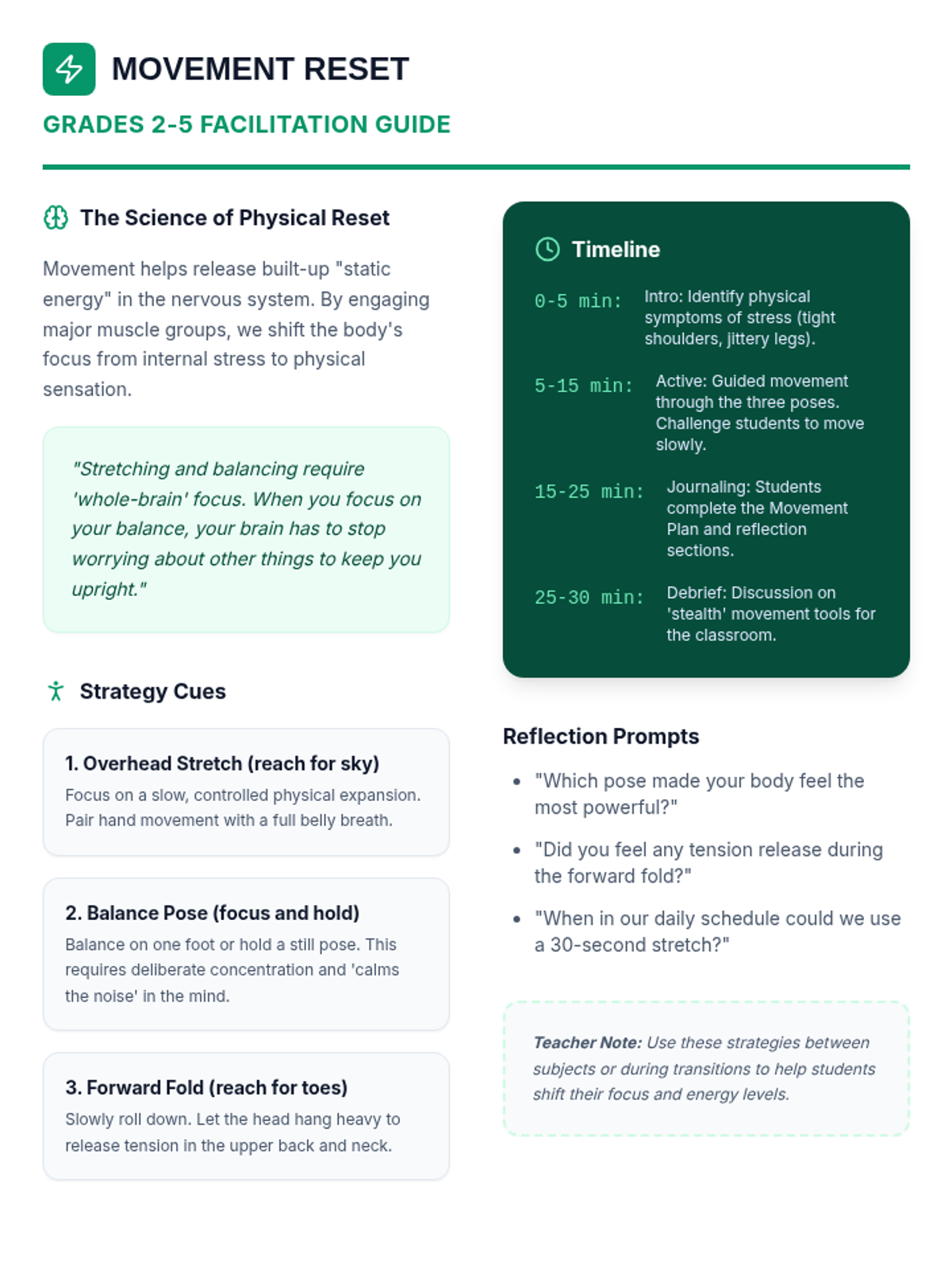
An advanced movement regulation lesson for older students, focusing on the physical and mental benefits of stretching and balance poses.
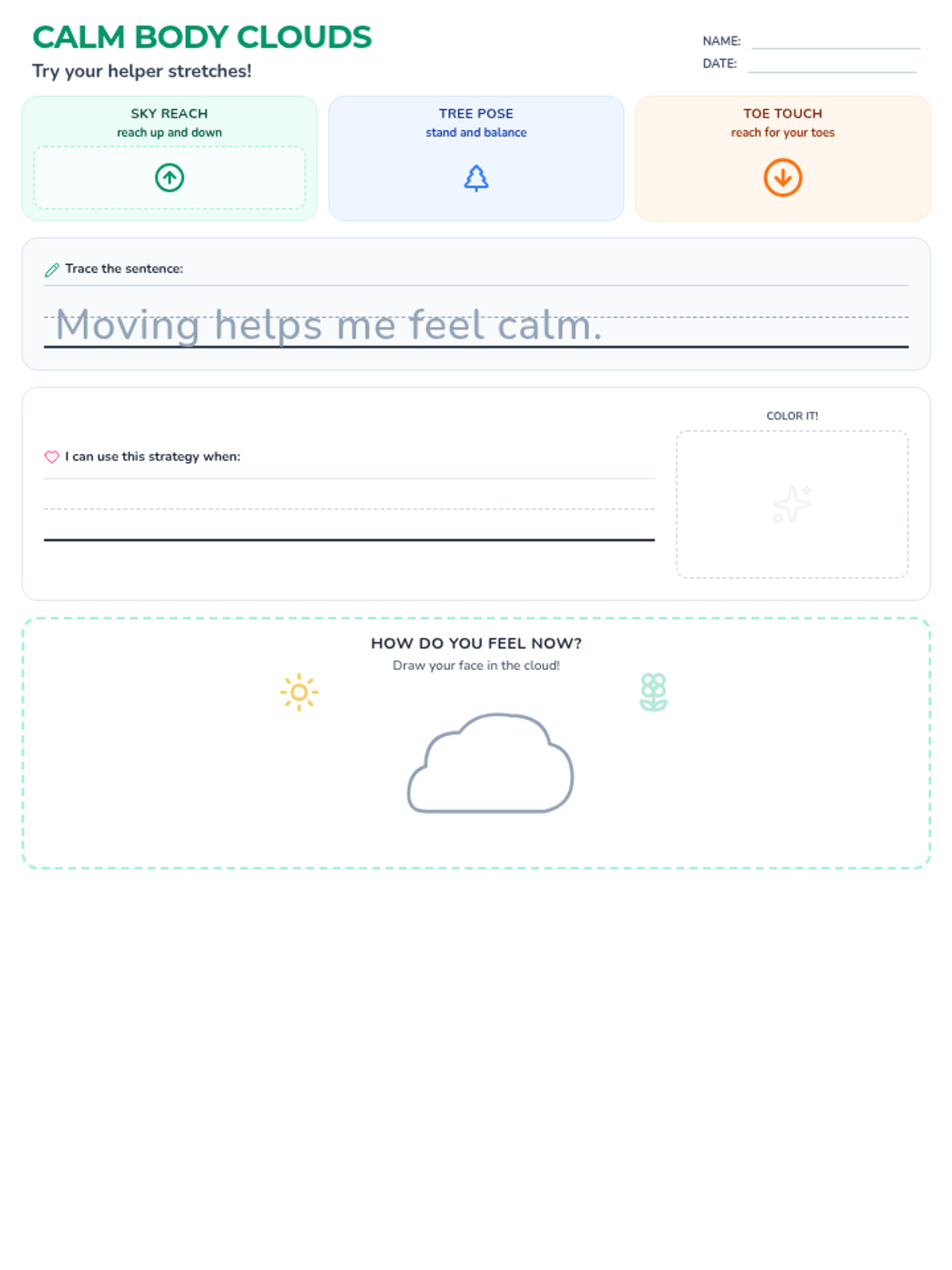
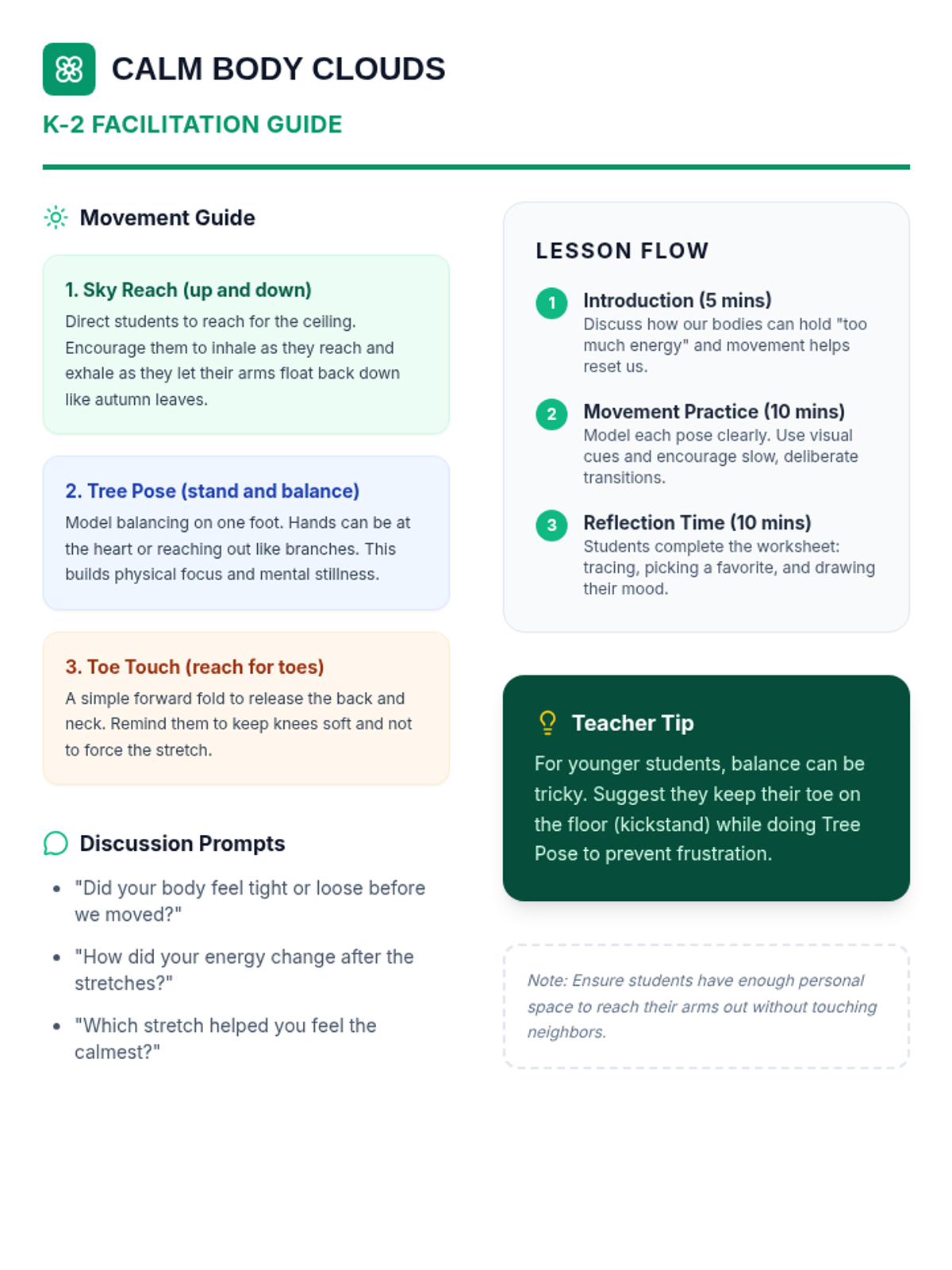
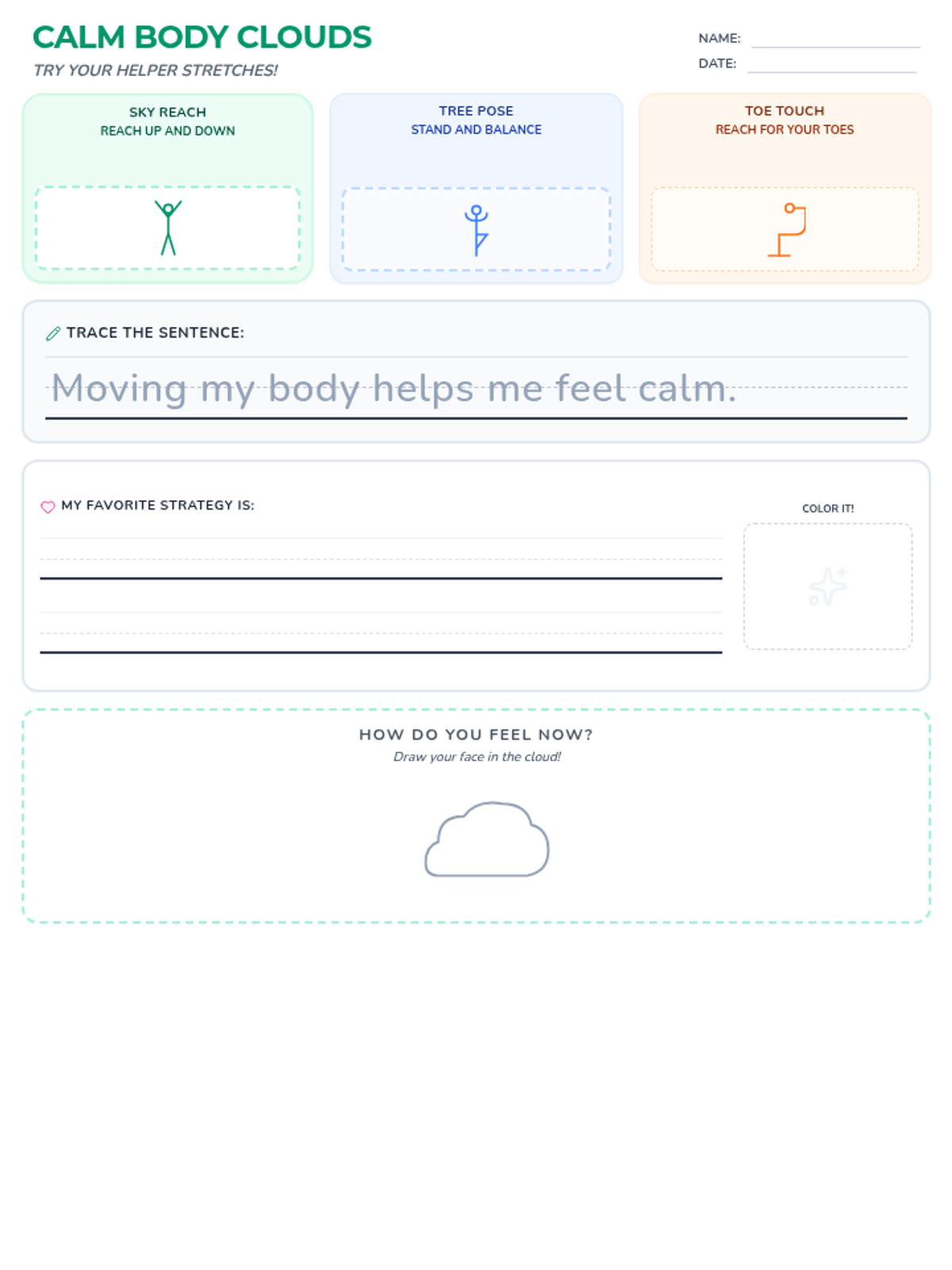
A movement-based regulation lesson for K-2 students focused on using stretches and simple yoga poses to calm their bodies and minds.
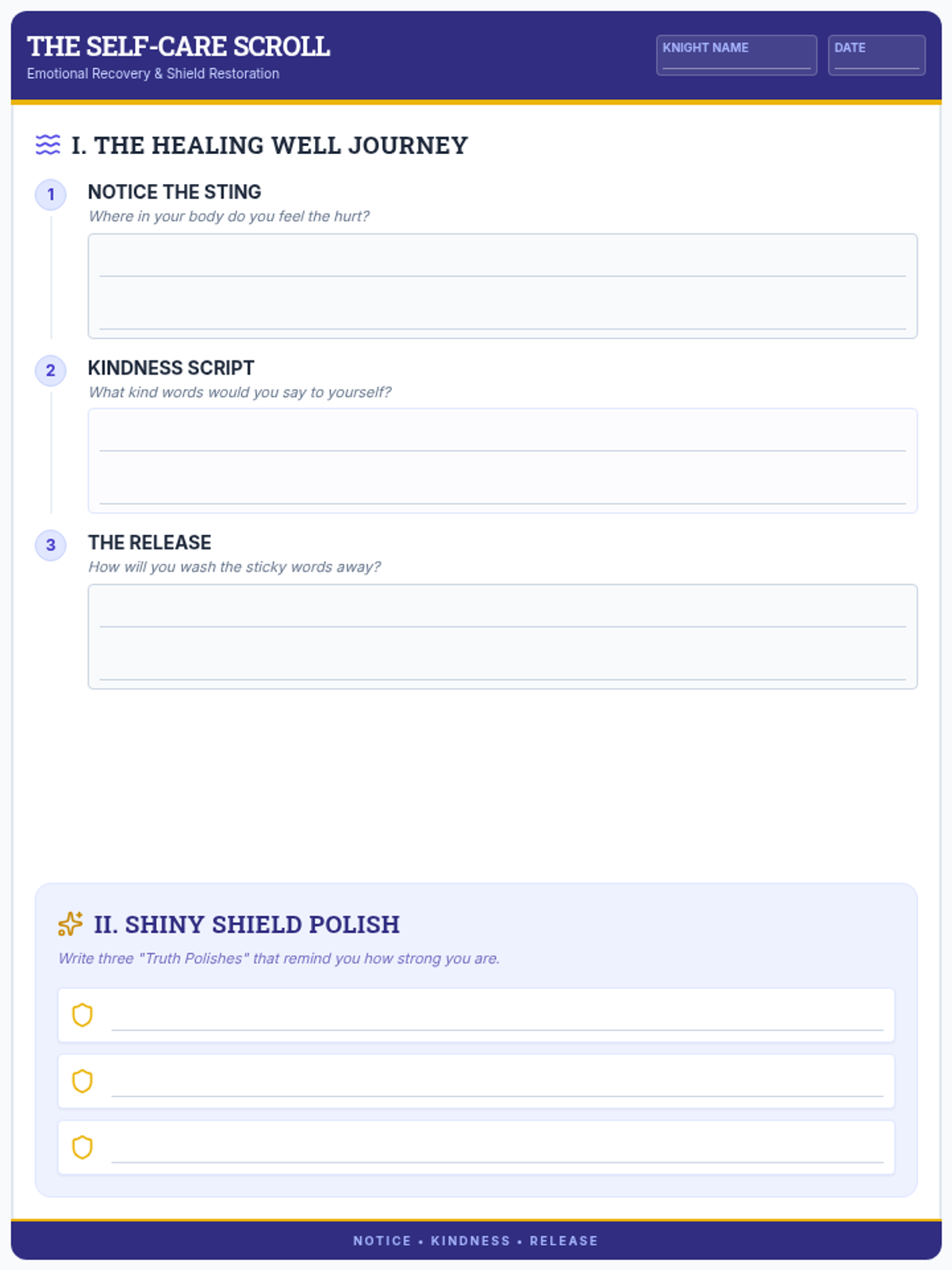
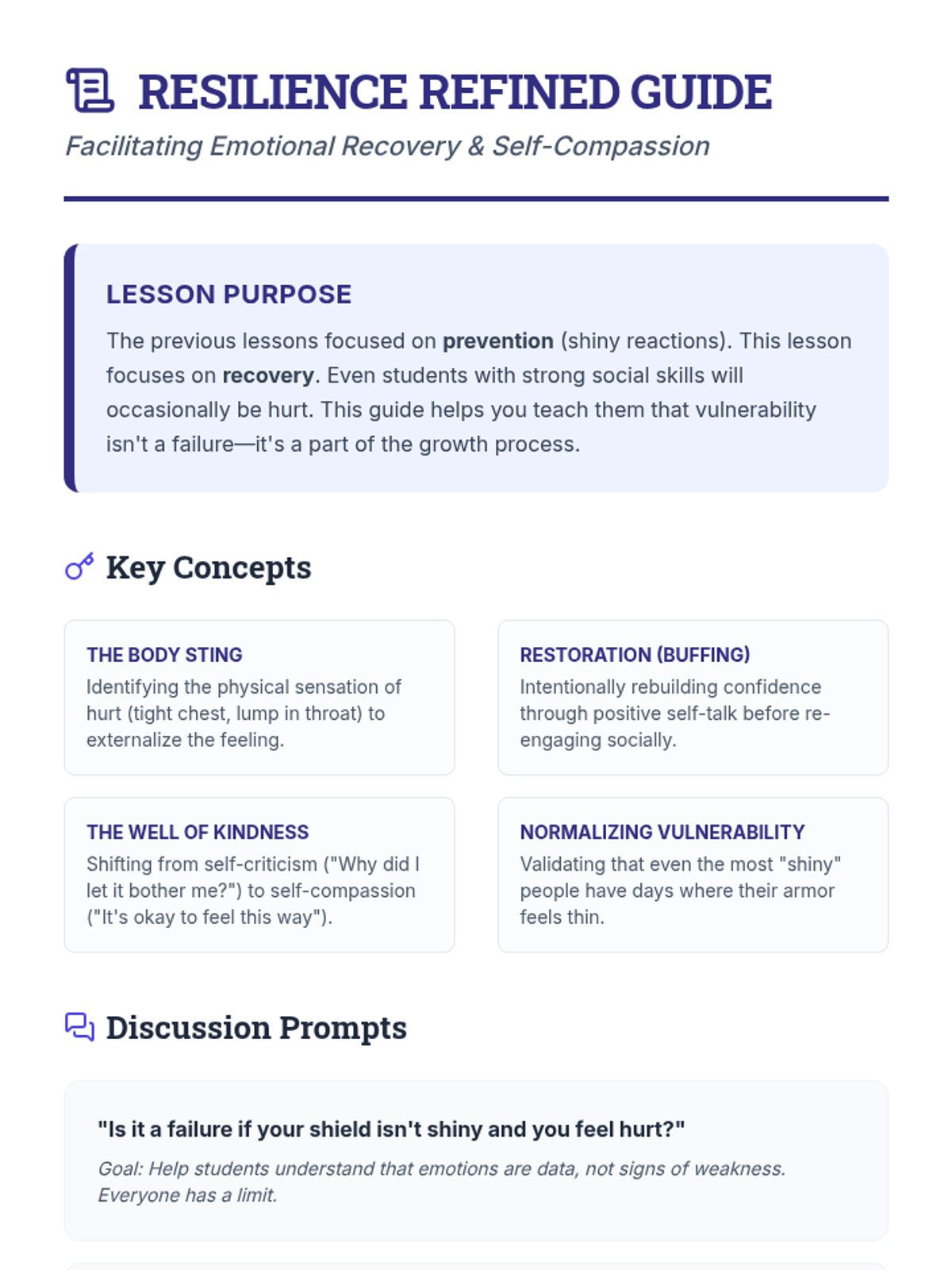
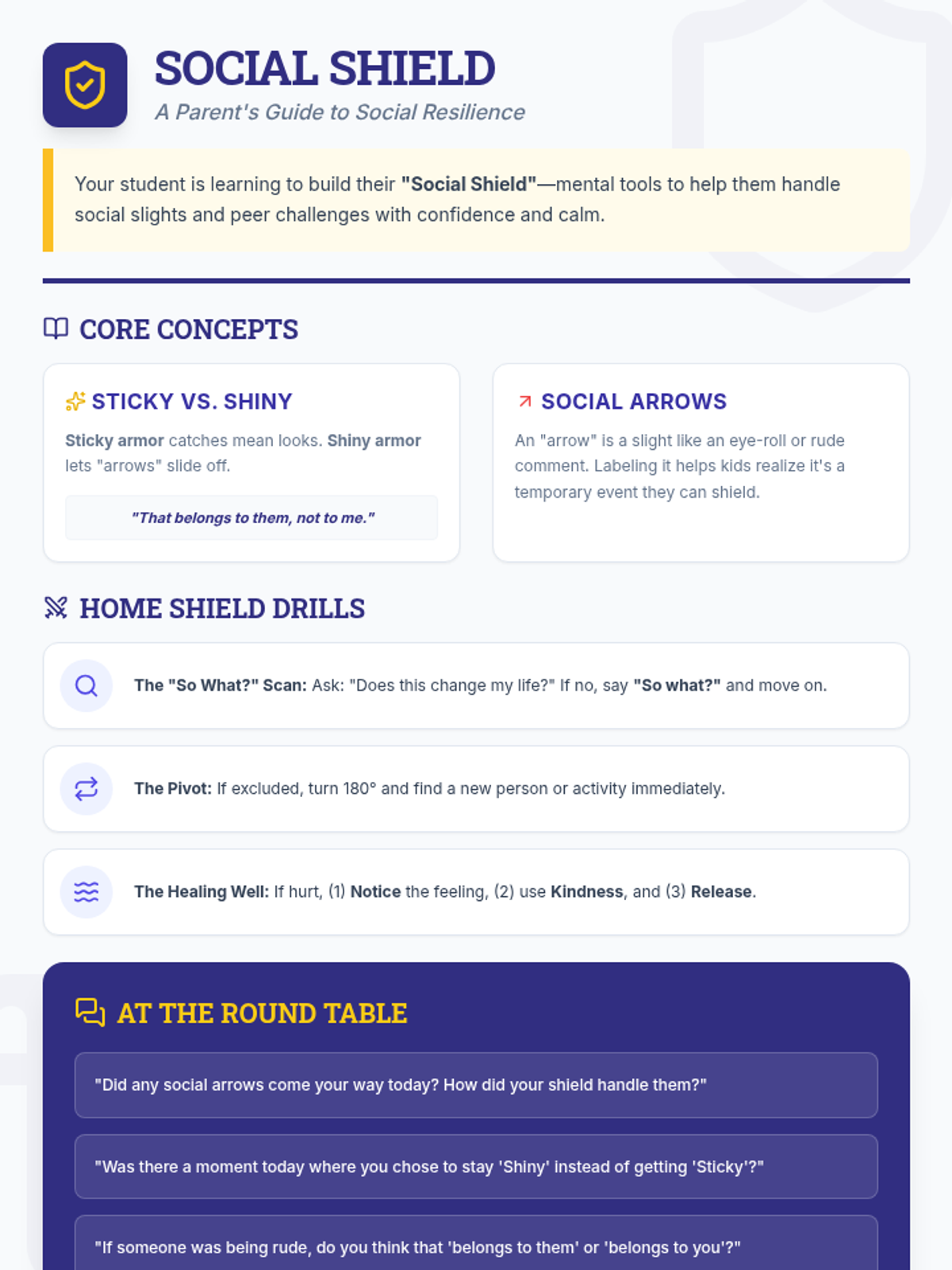
This session focuses on emotional recovery and self-compassion, teaching students how to process hurt feelings when a social slight successfully 'sticks' and how to restore their 'social shield.'
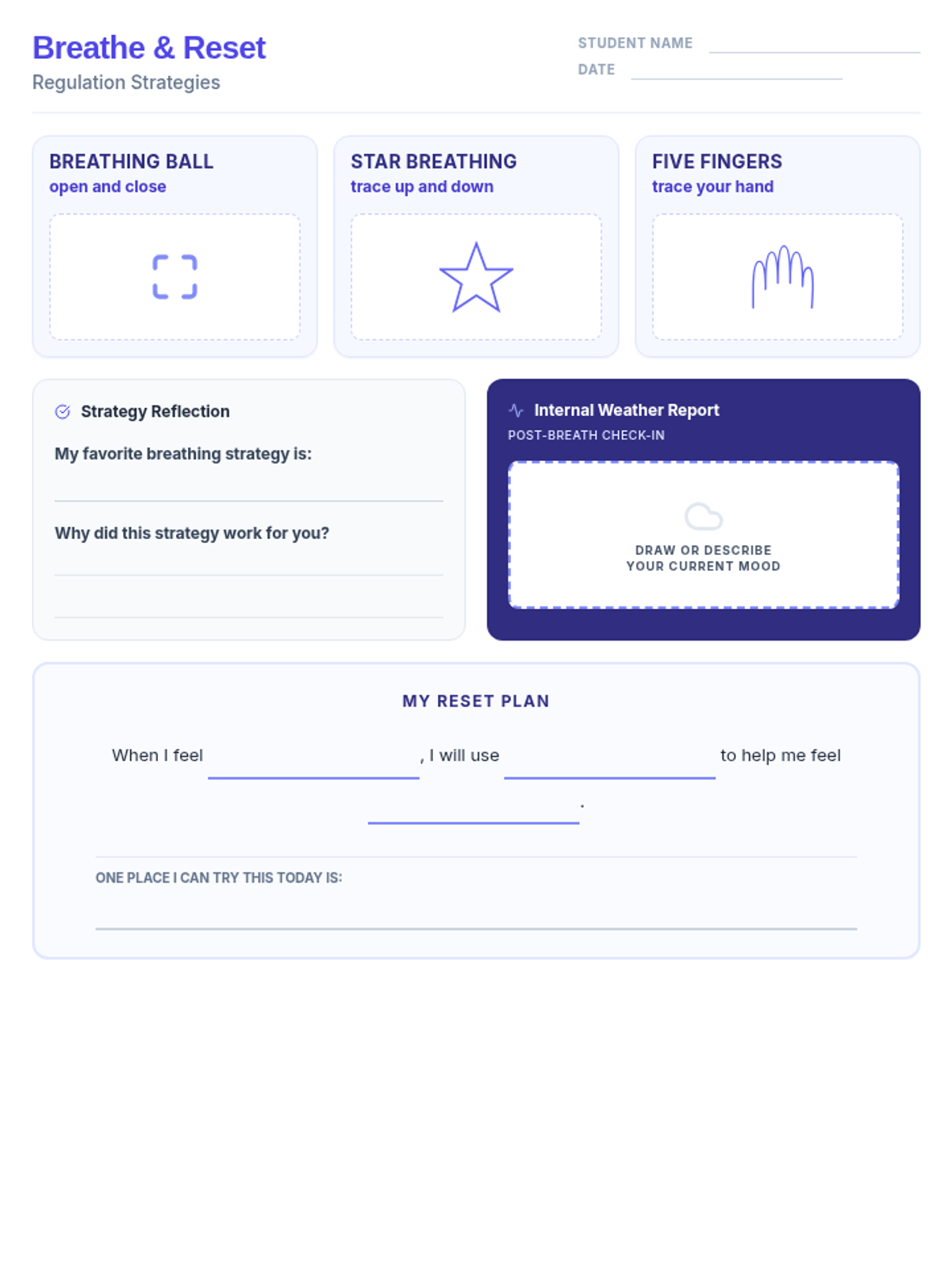
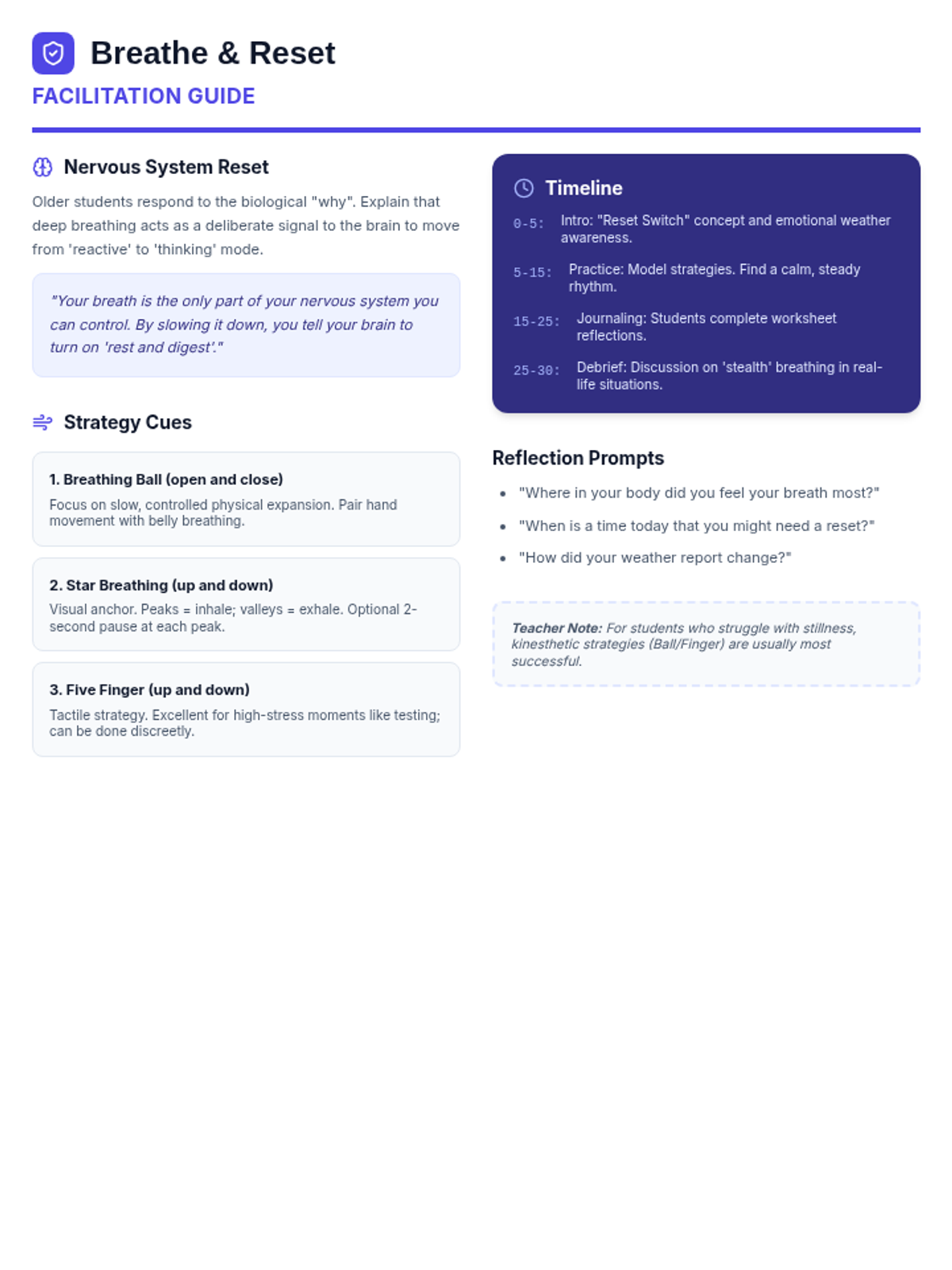
A mindful breathing lesson designed for older students, focusing on the same three techniques but with more advanced reflection on self-regulation and emotional awareness.
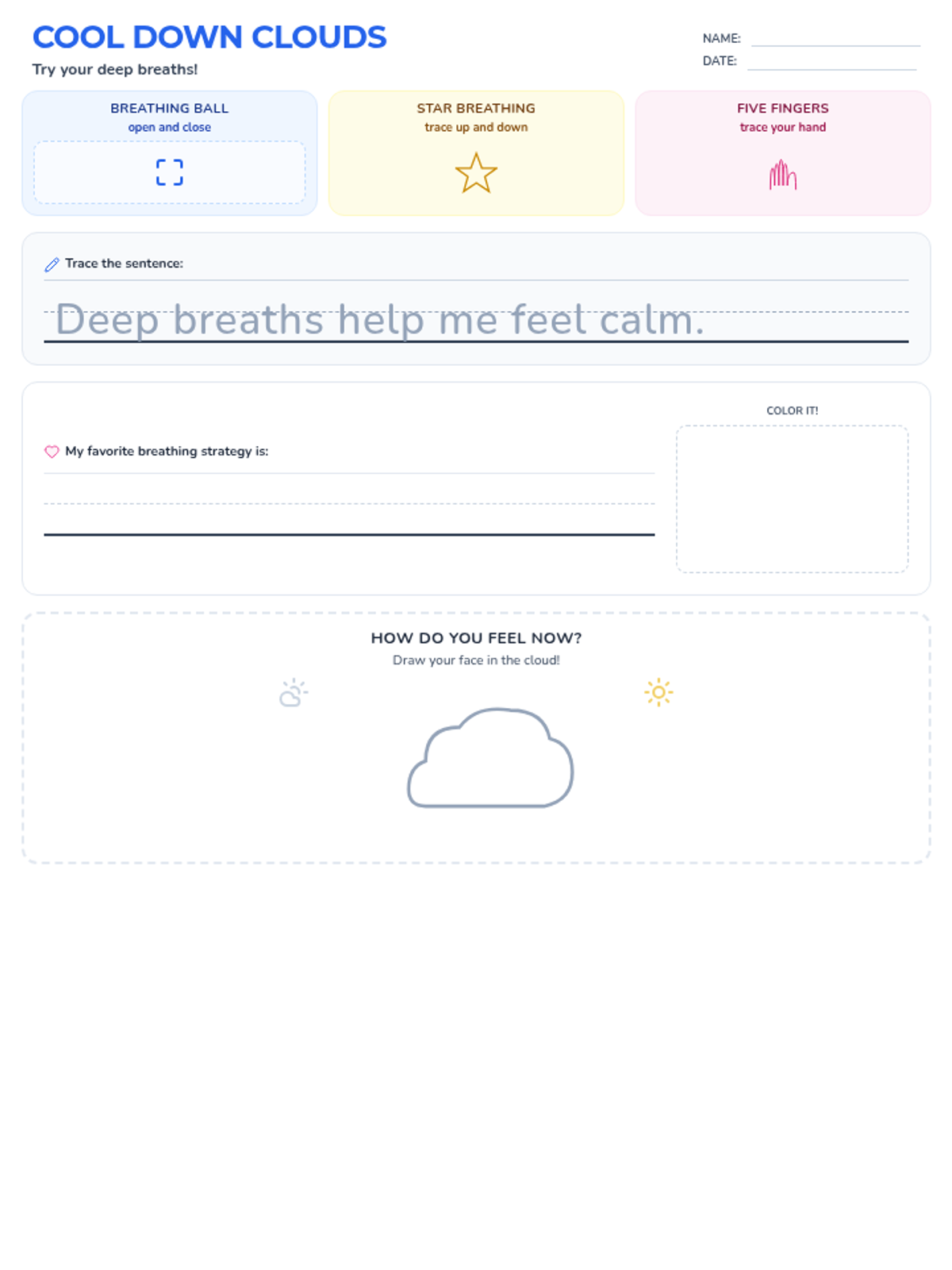
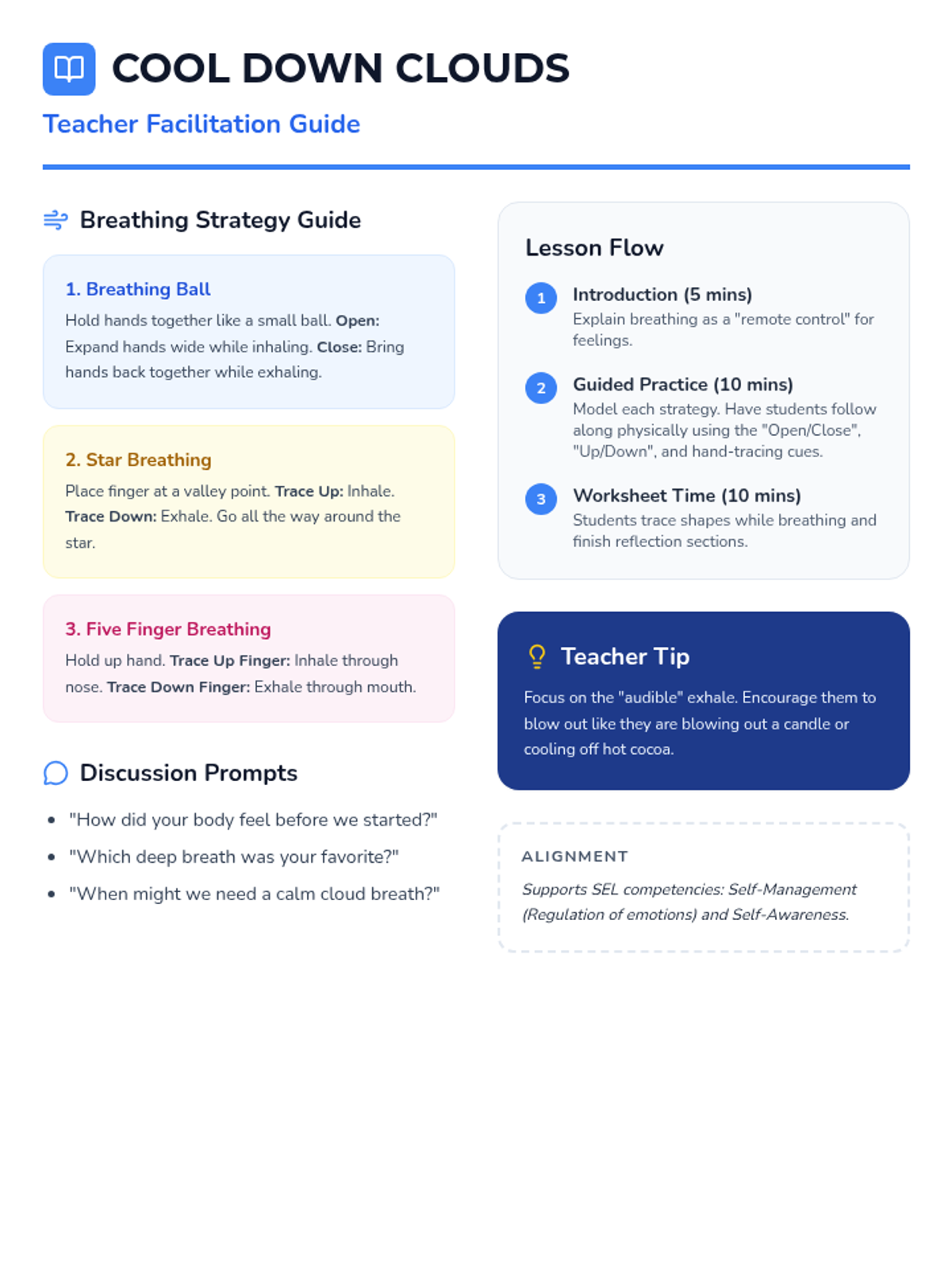
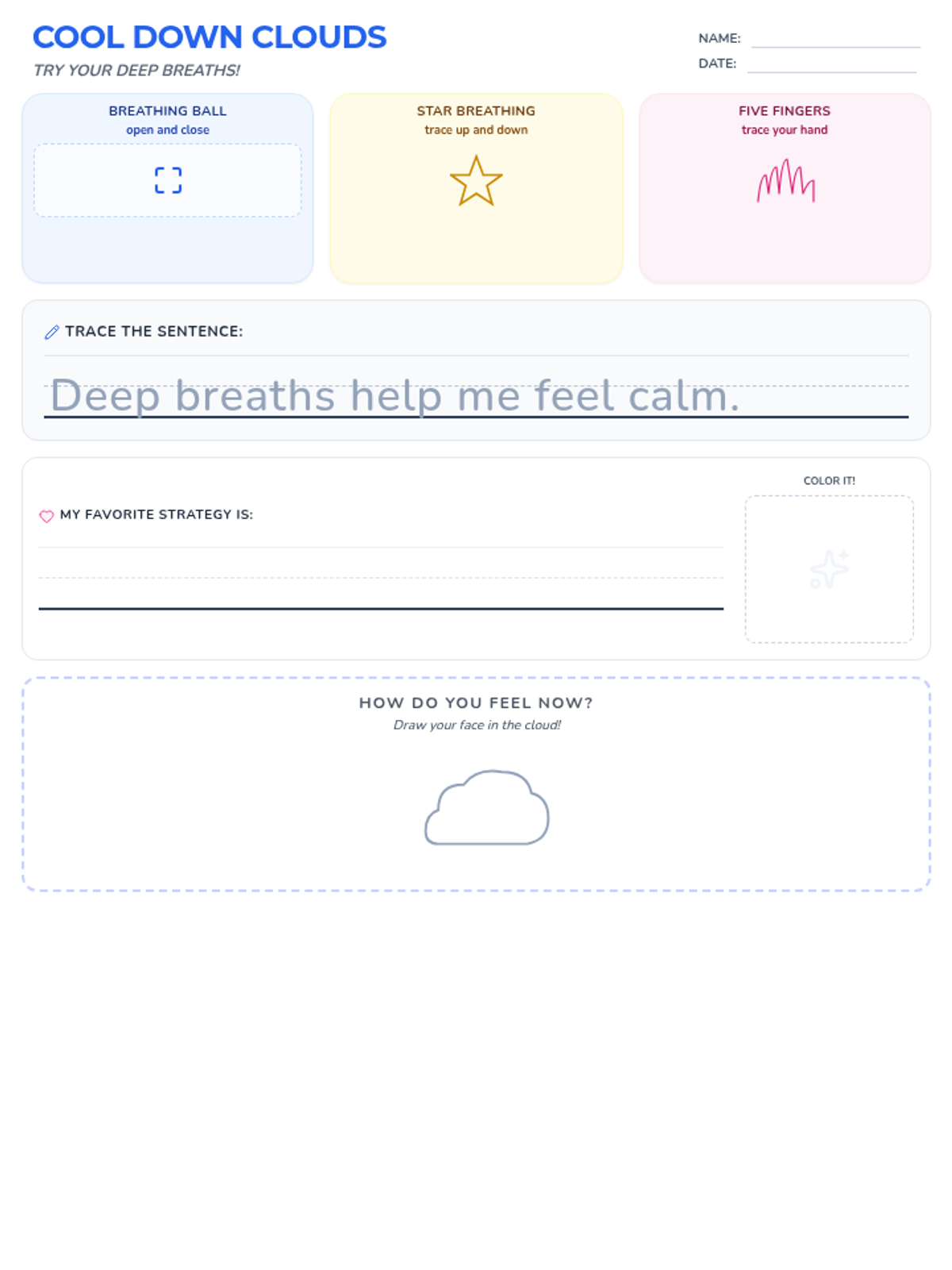
A foundational social-emotional learning lesson for K-2 students focused on practicing and reflecting on three specific breathing techniques to manage emotions.
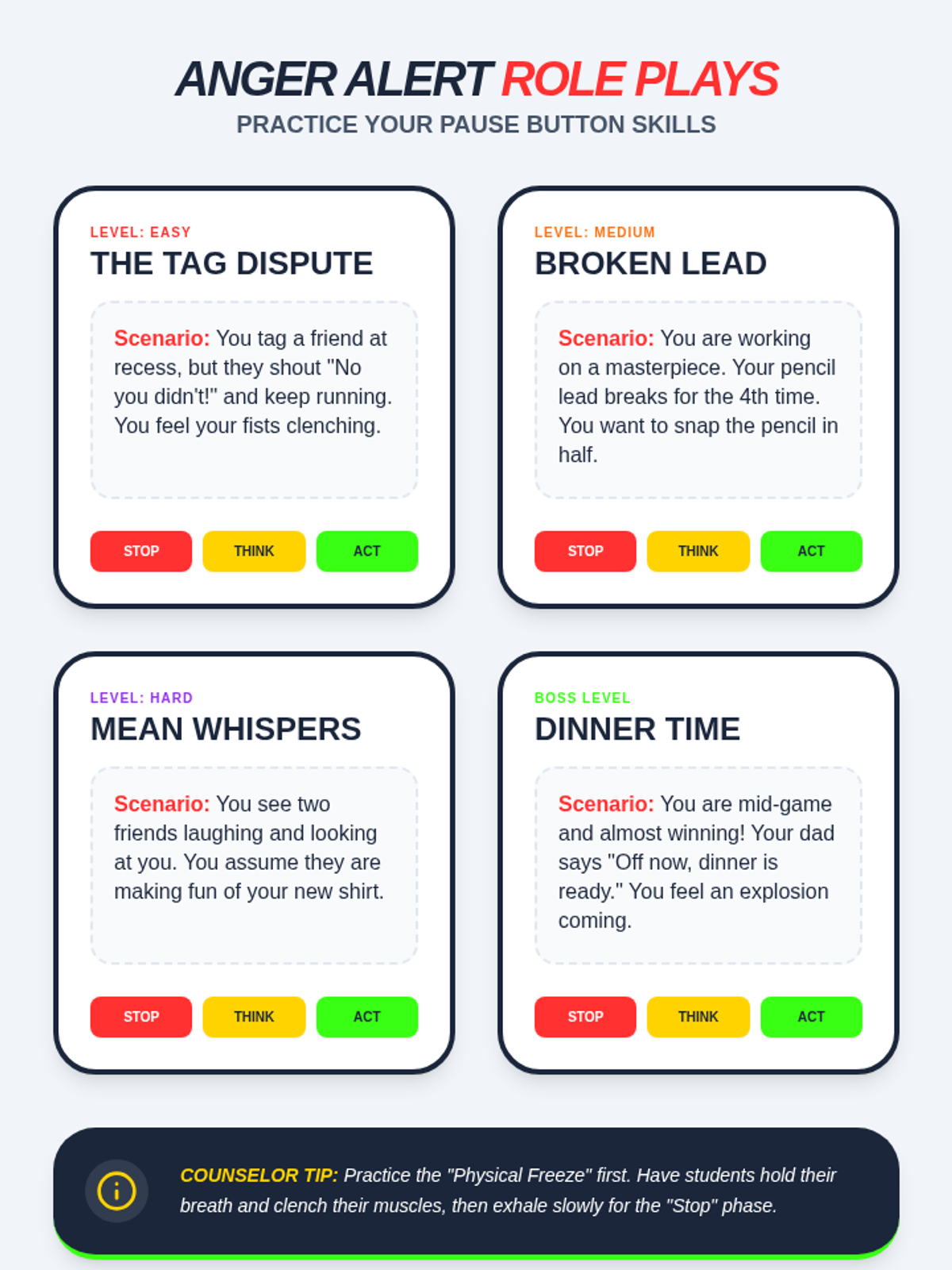
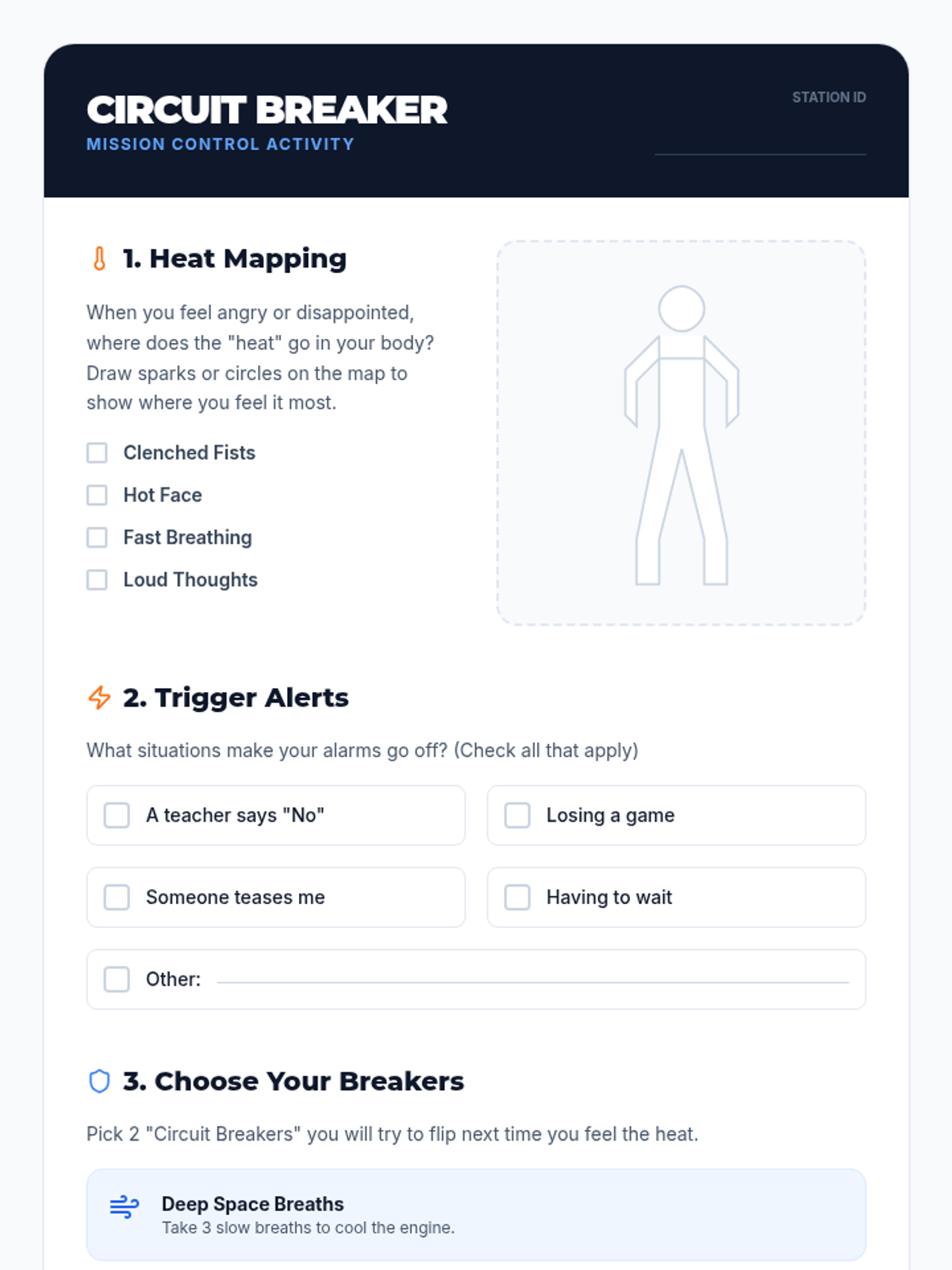
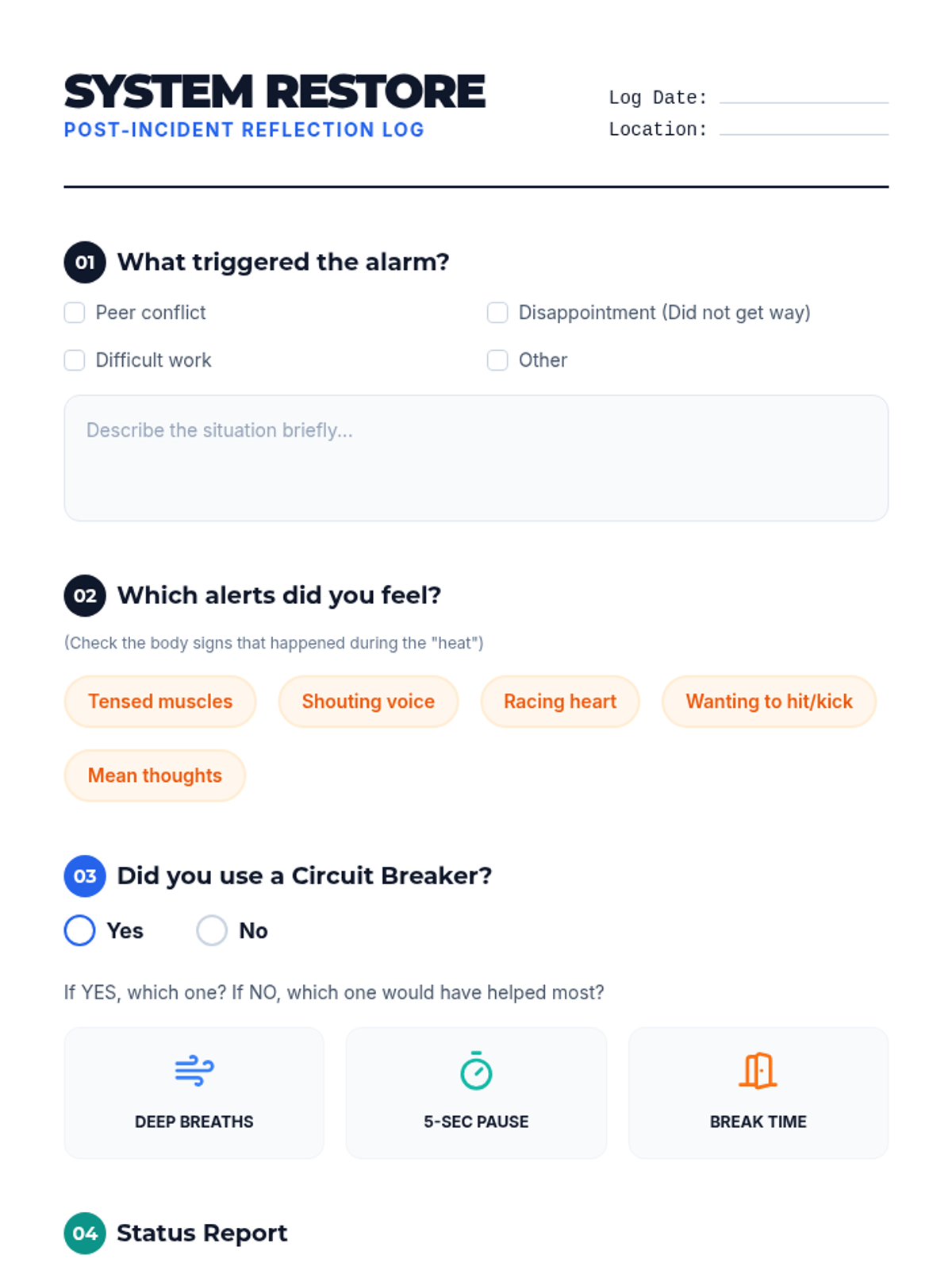
A comprehensive counseling module designed to help students identify anger triggers, recognize physical warning signs, and implement 'pause' strategies during peer conflicts or when faced with disappointment. Students learn to view their emotional responses as a 'Control Room' they can master.
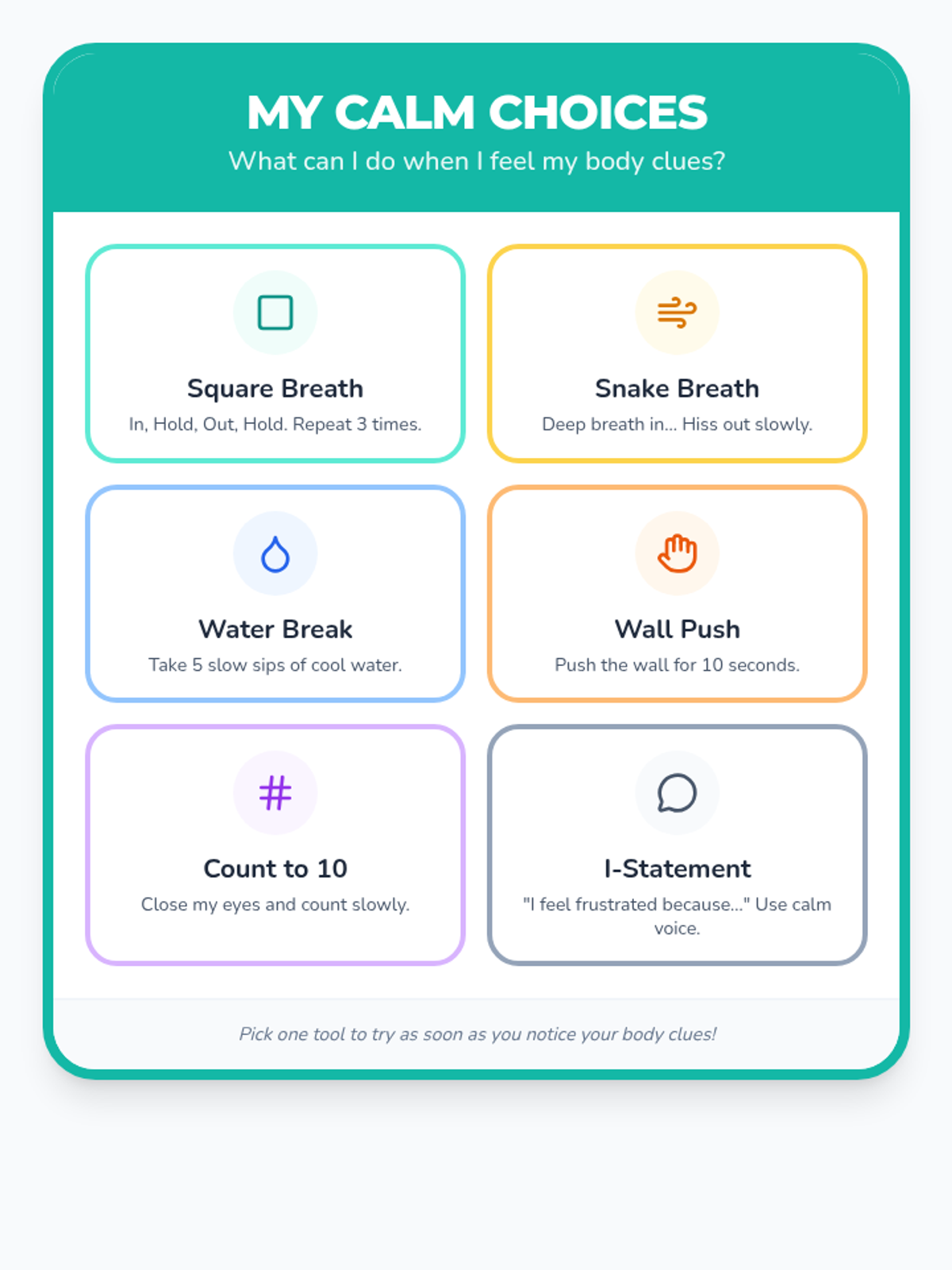
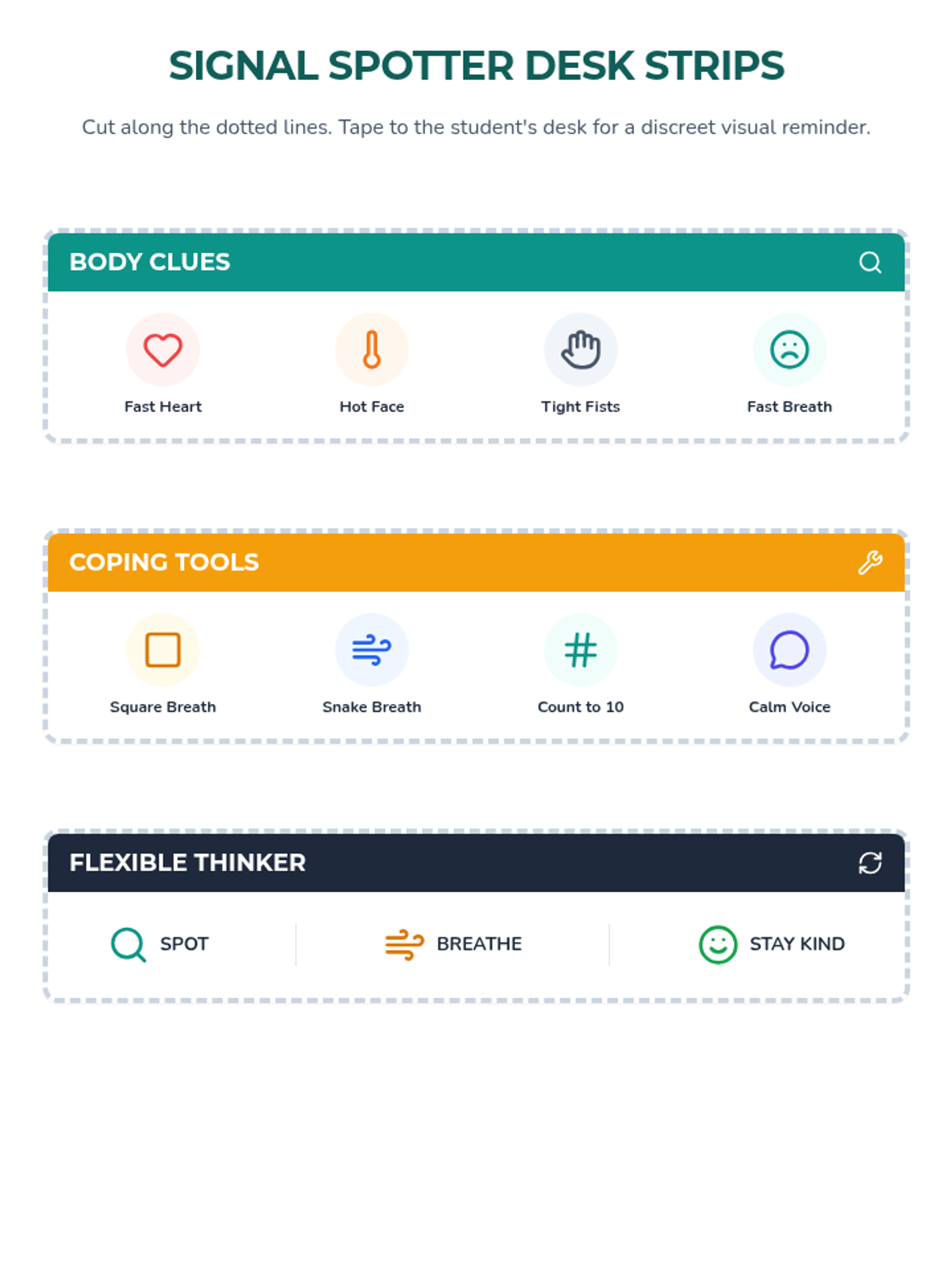
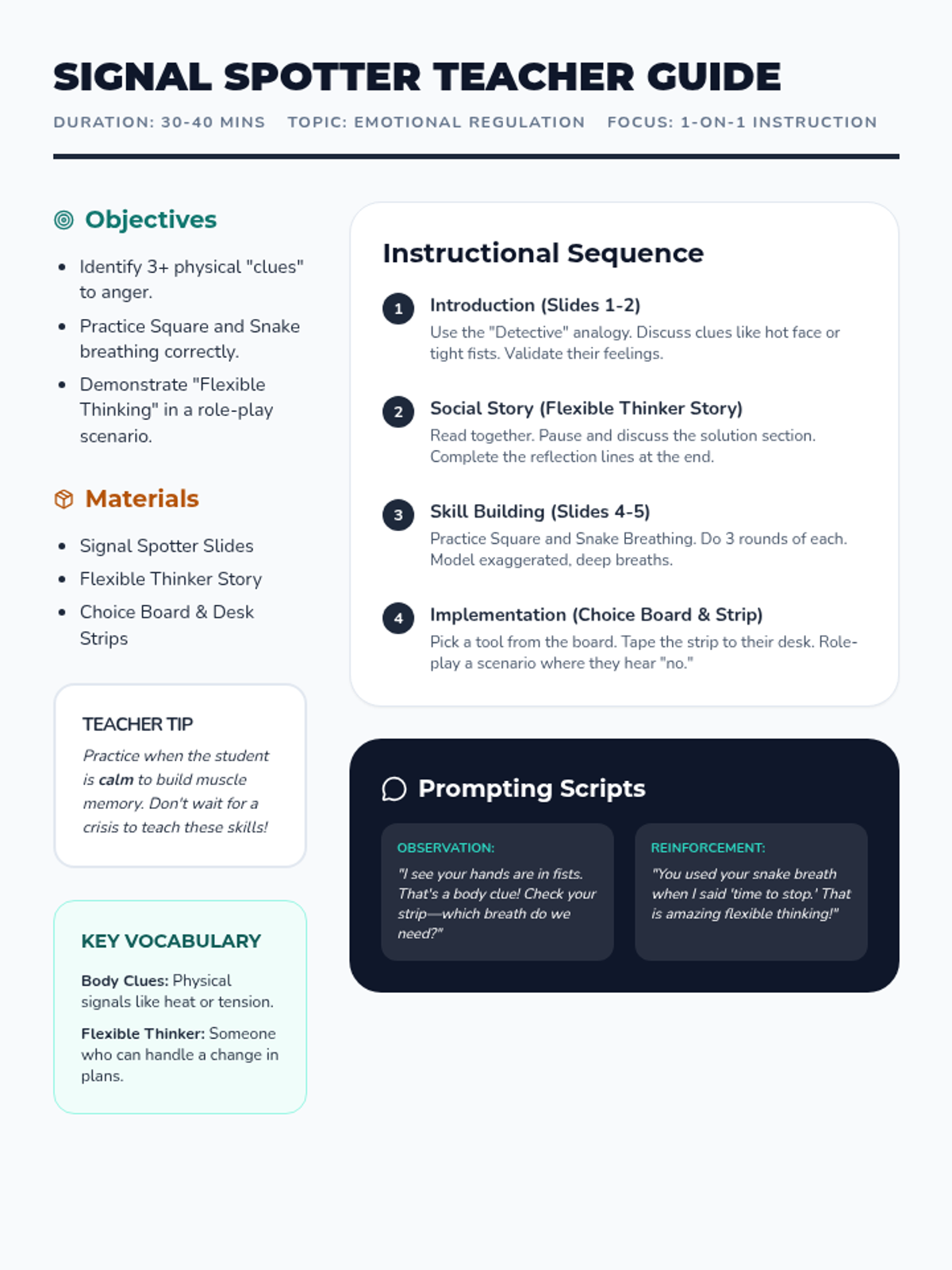
A 1-on-1 lesson designed to help students recognize physical body signals of frustration and implement deep breathing techniques to maintain flexibility and respect.
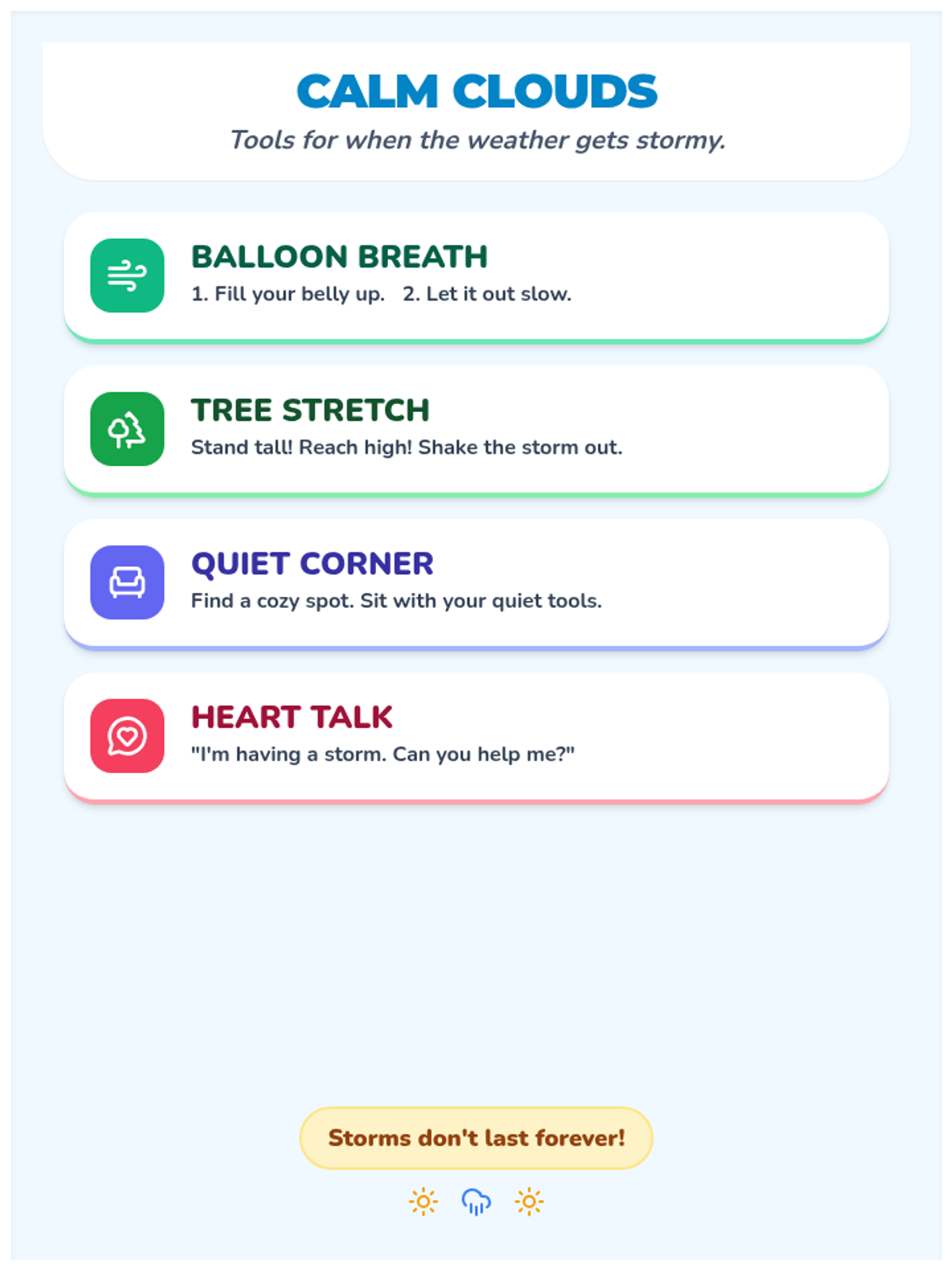
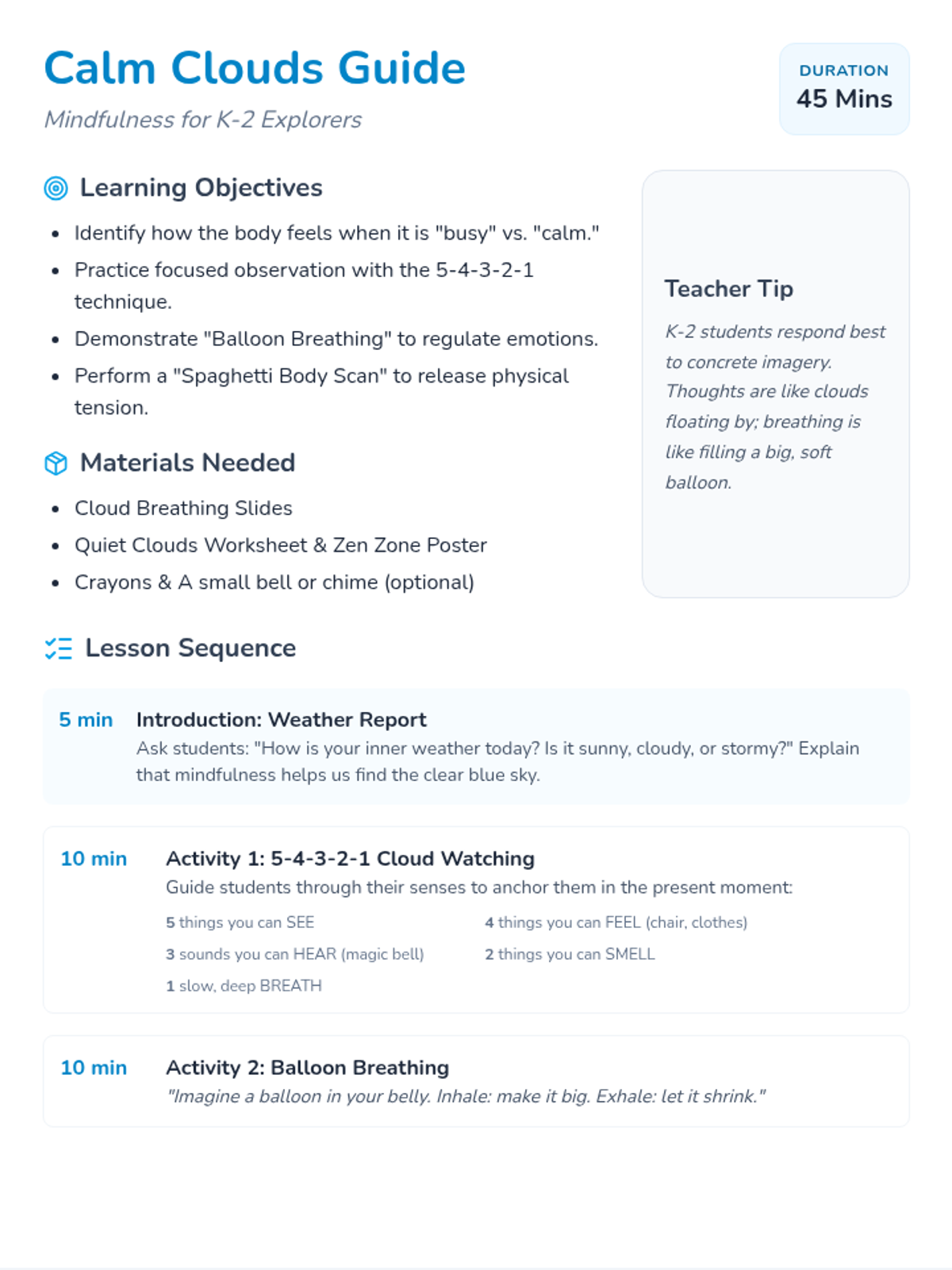
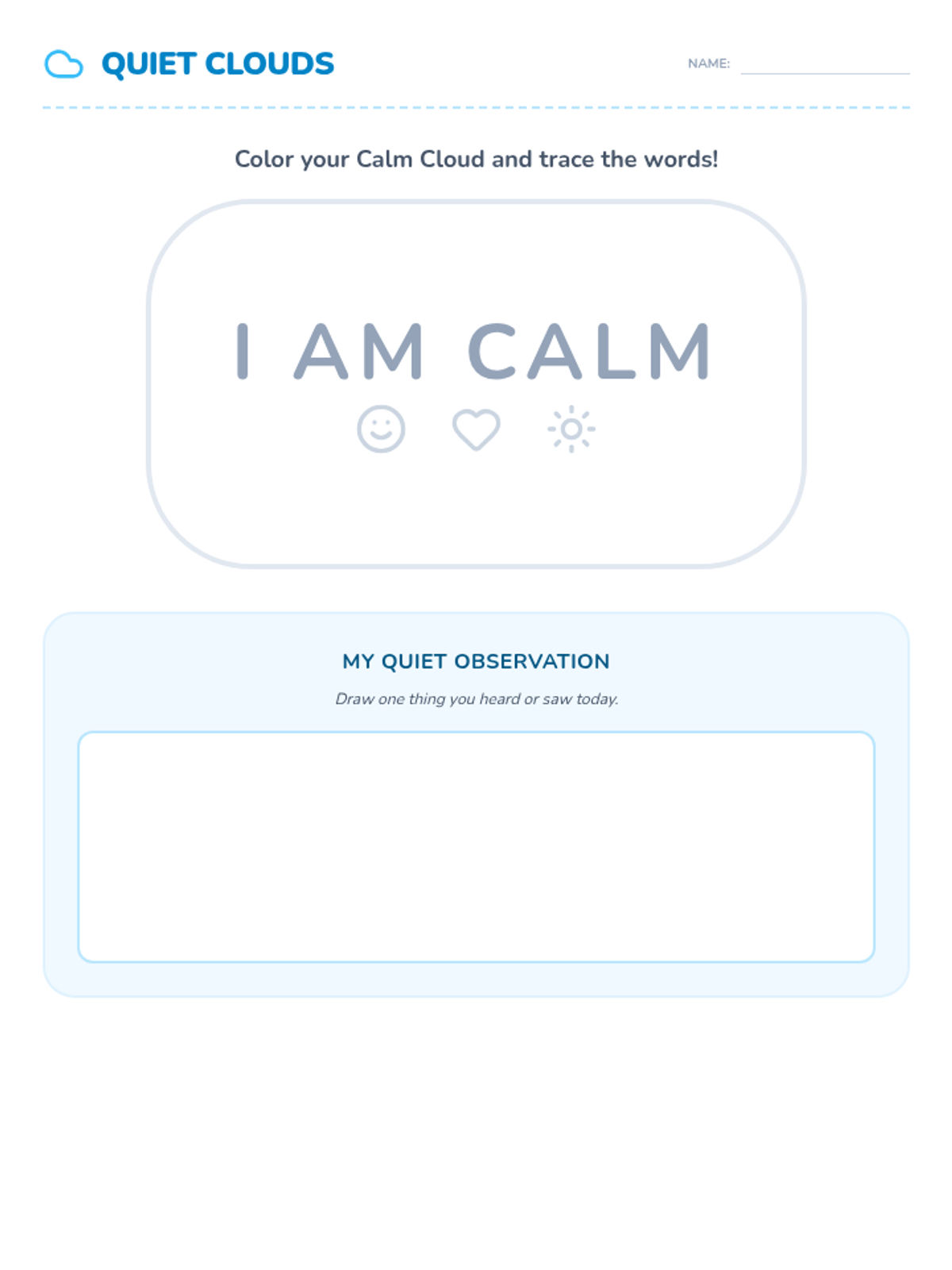
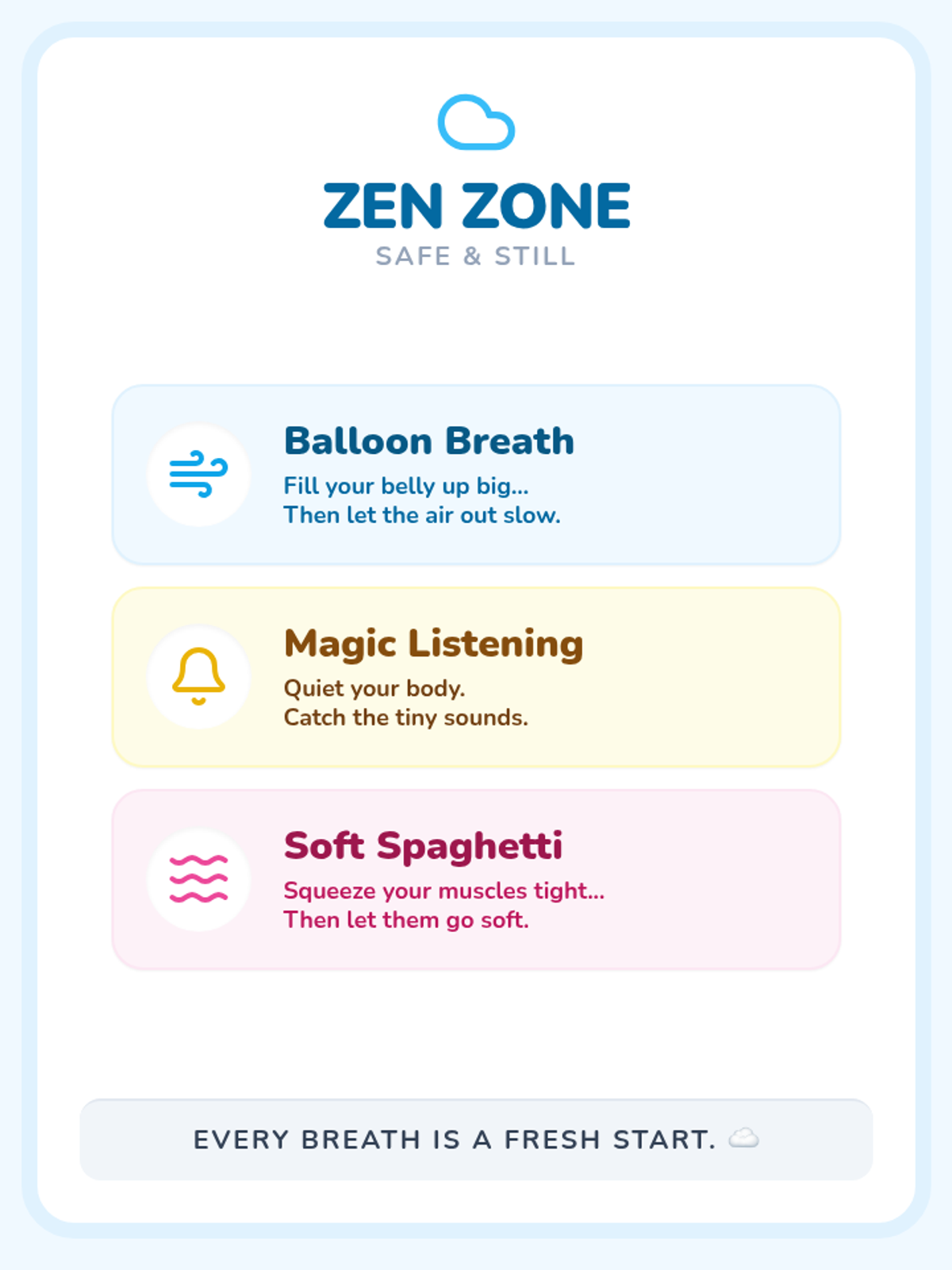
An introductory mindfulness lesson for K-2 students focusing on mindful listening, deep breathing, and body relaxation through a 'Calm Clouds' theme.
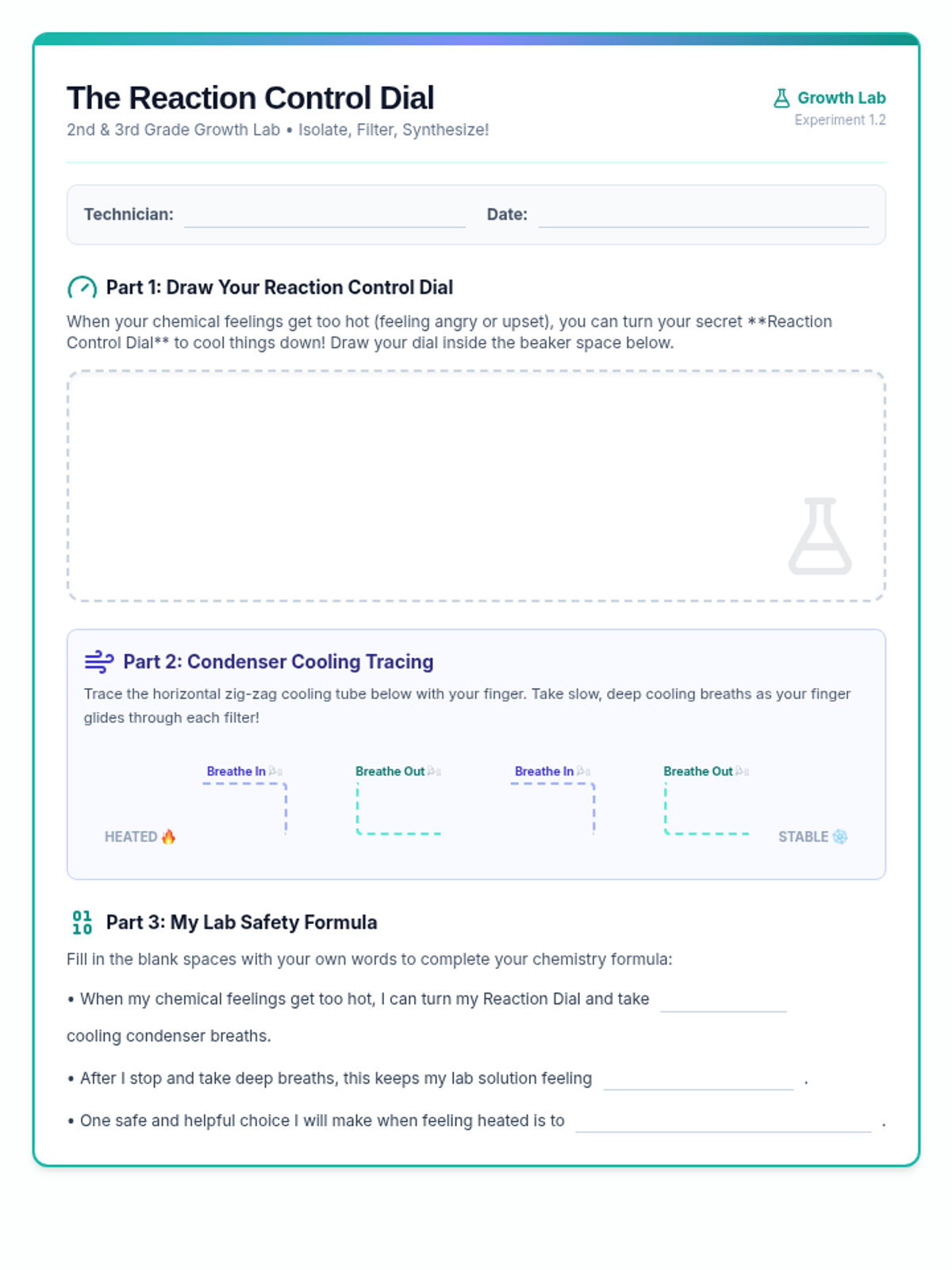
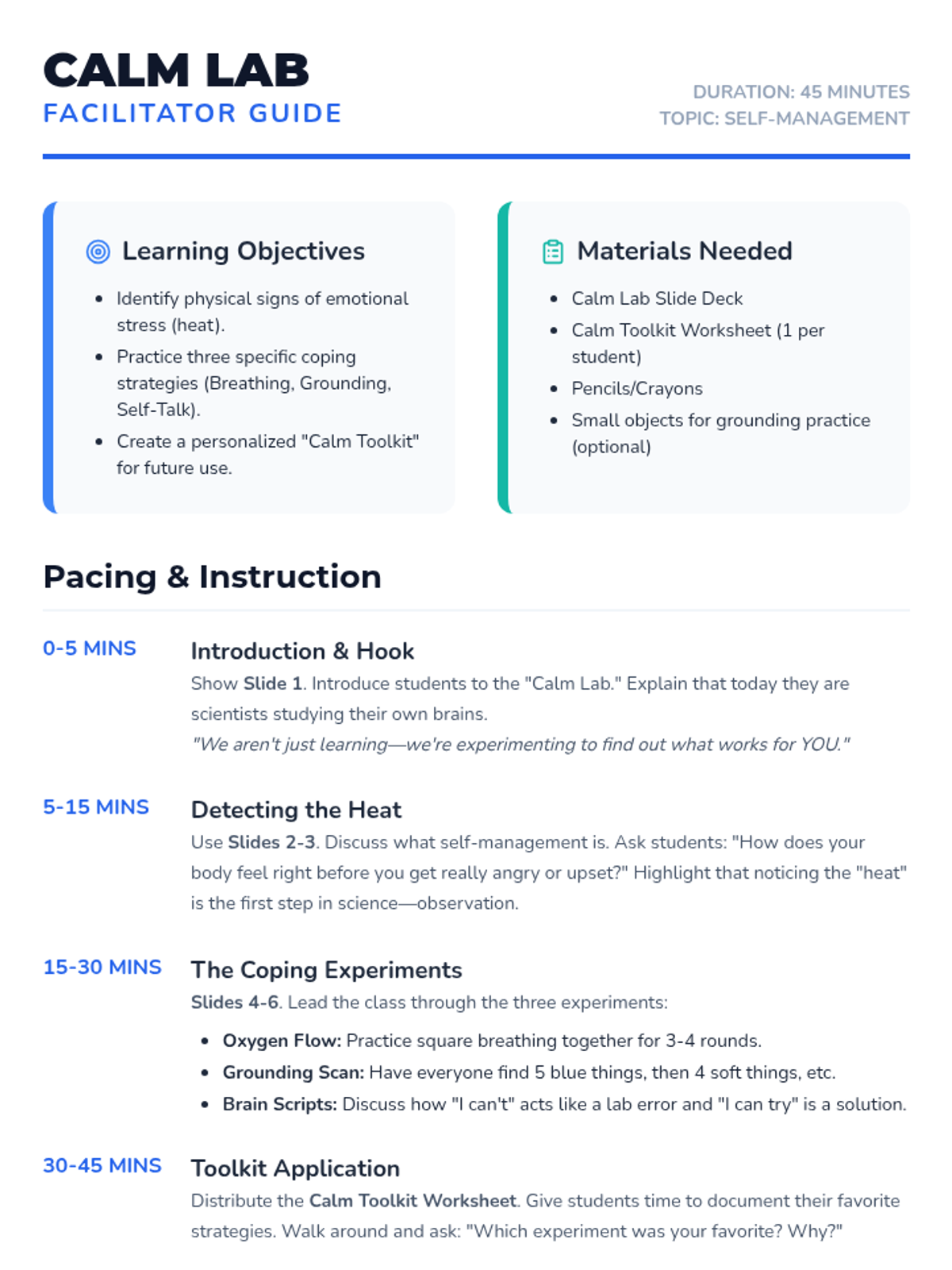
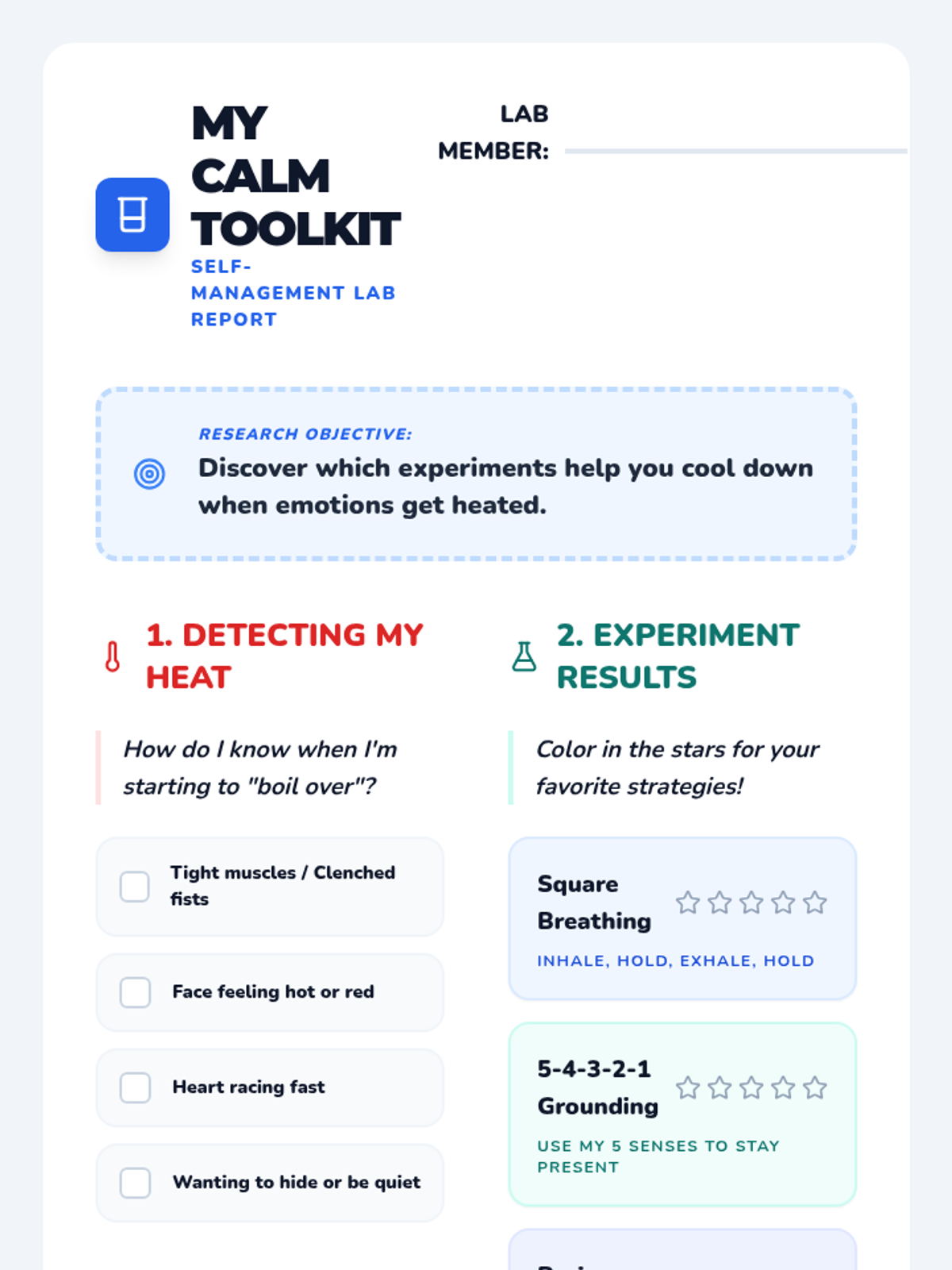
A 45-minute introductory lesson on self-management and coping strategies, using a scientific 'lab' theme to help students experiment with and discover their own emotional regulation tools.
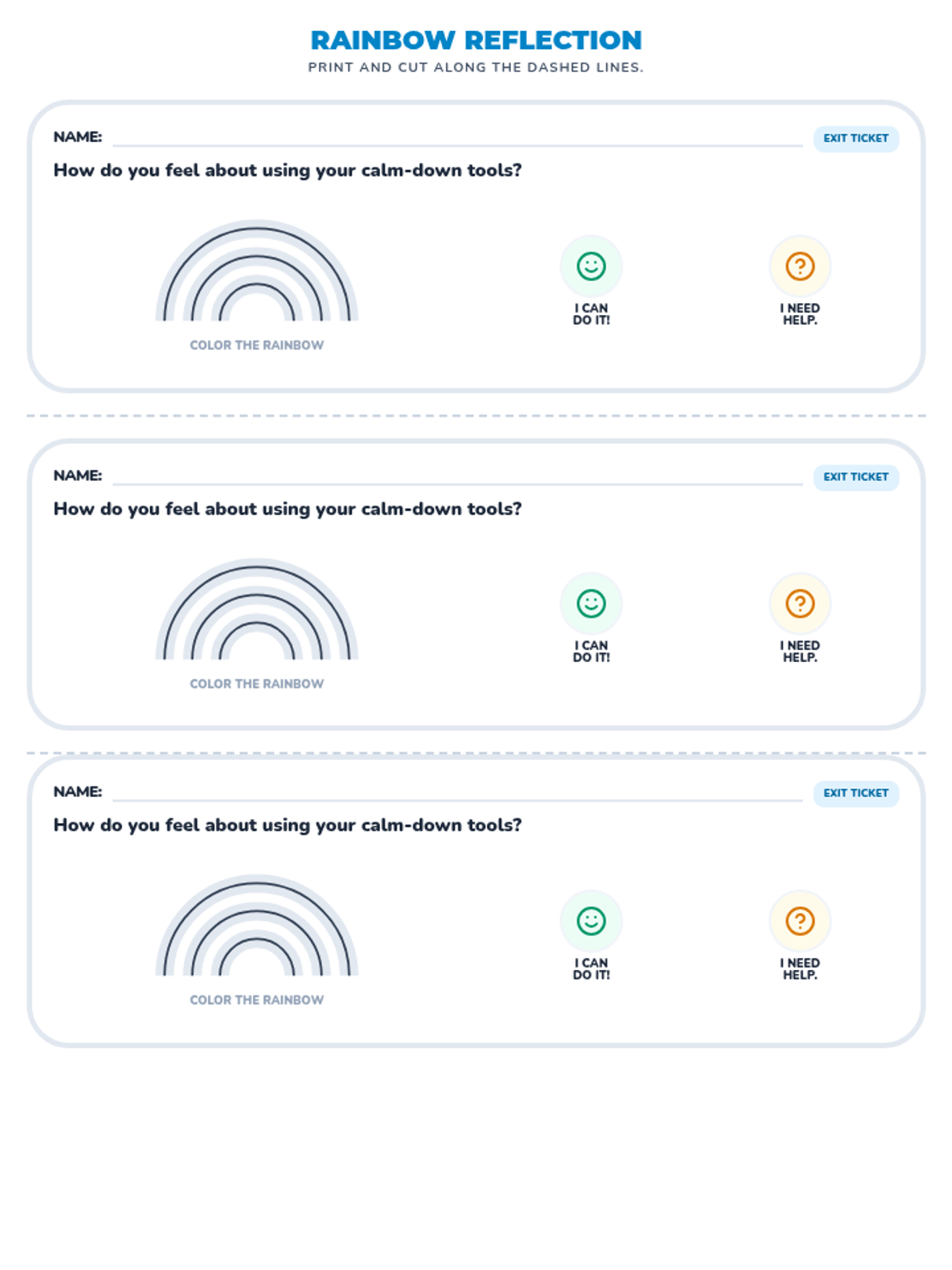
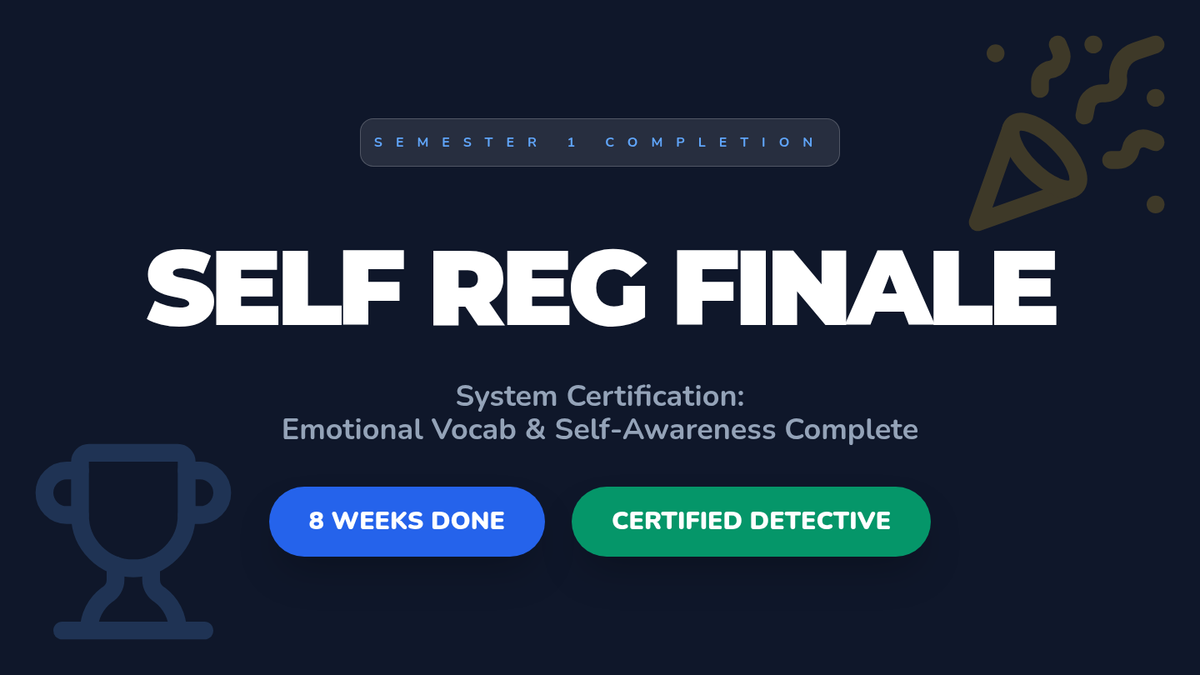
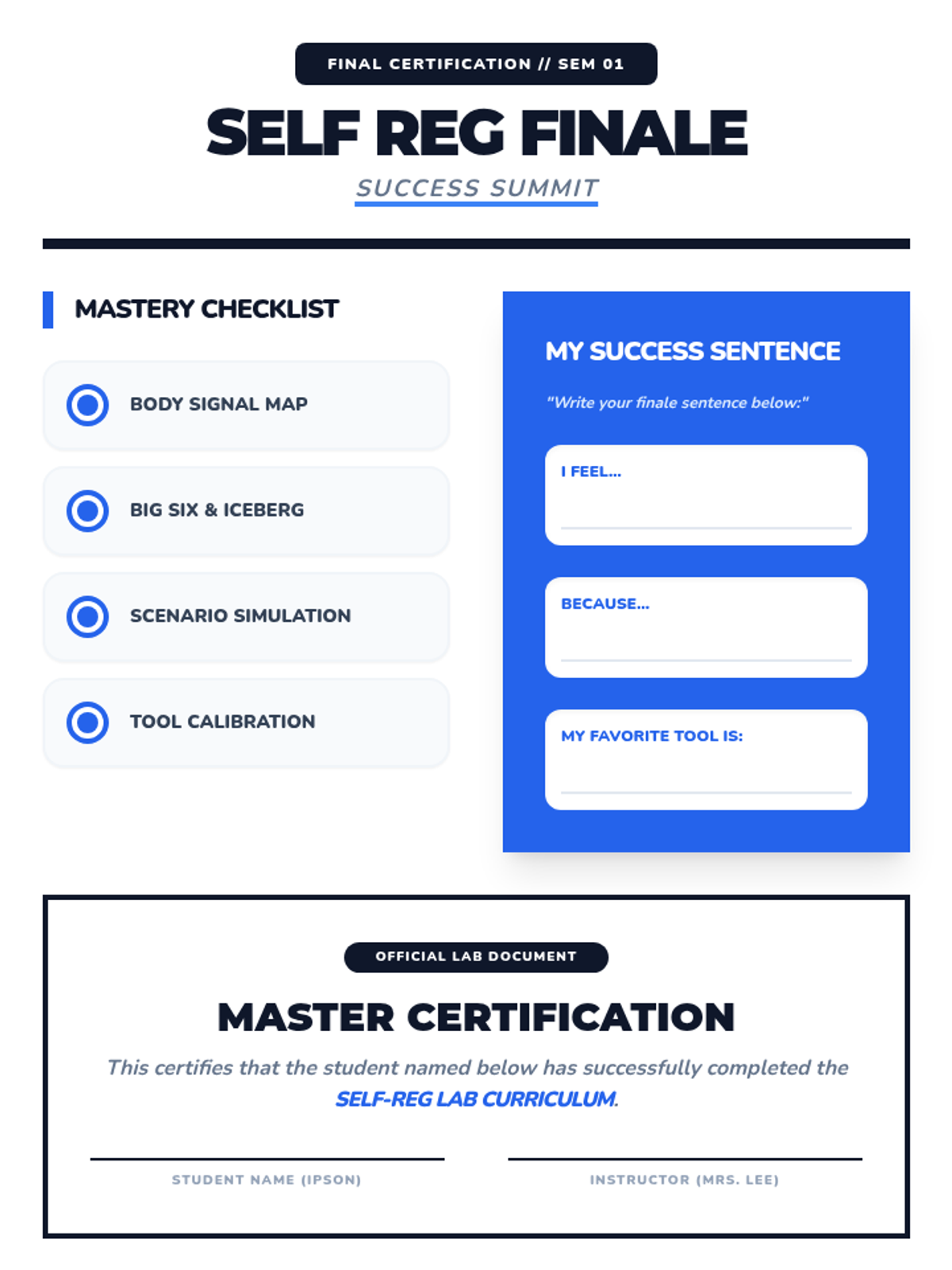
Review all semester concepts and complete a final self-assessment of emotional self-regulation skills.
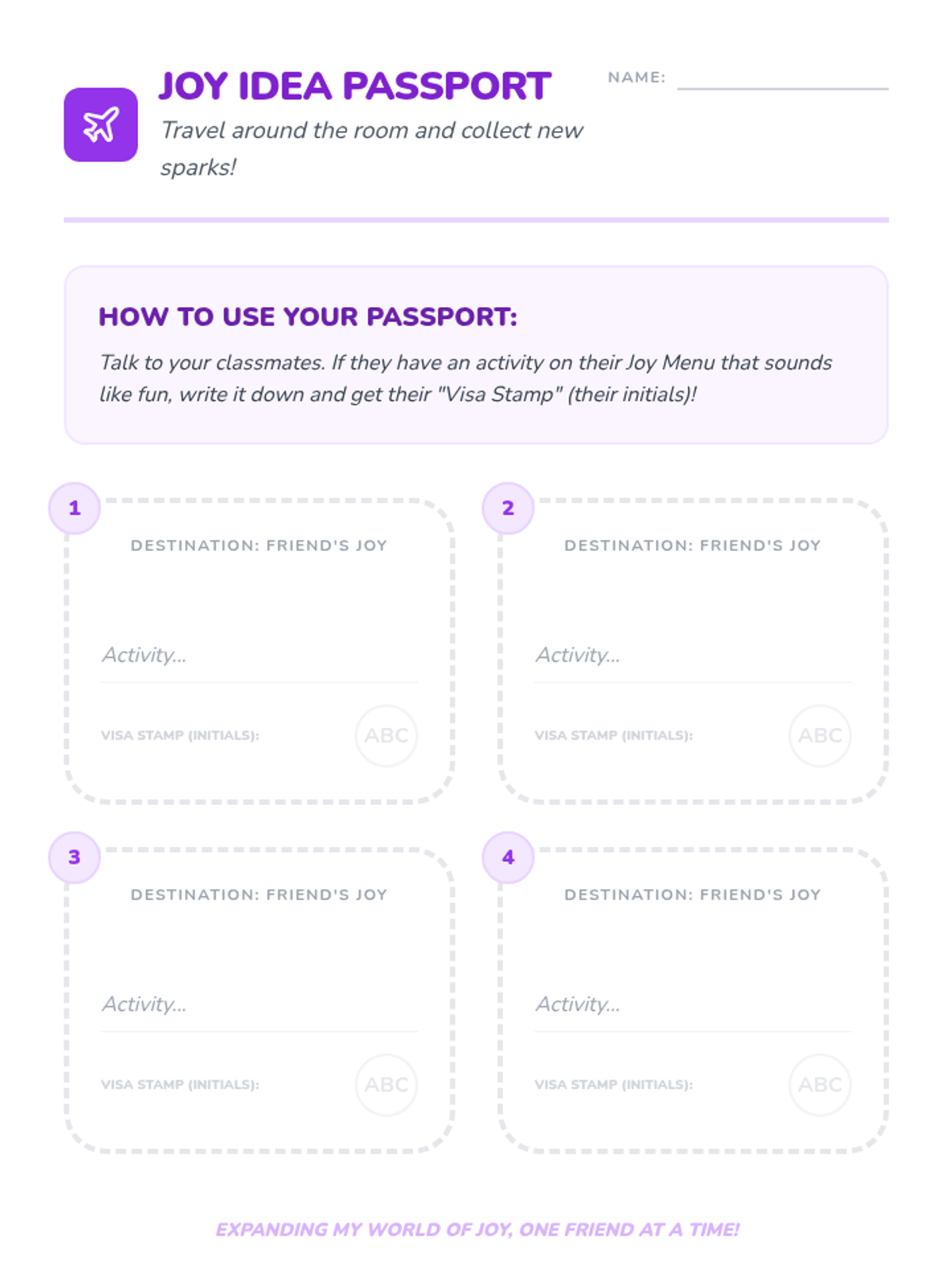
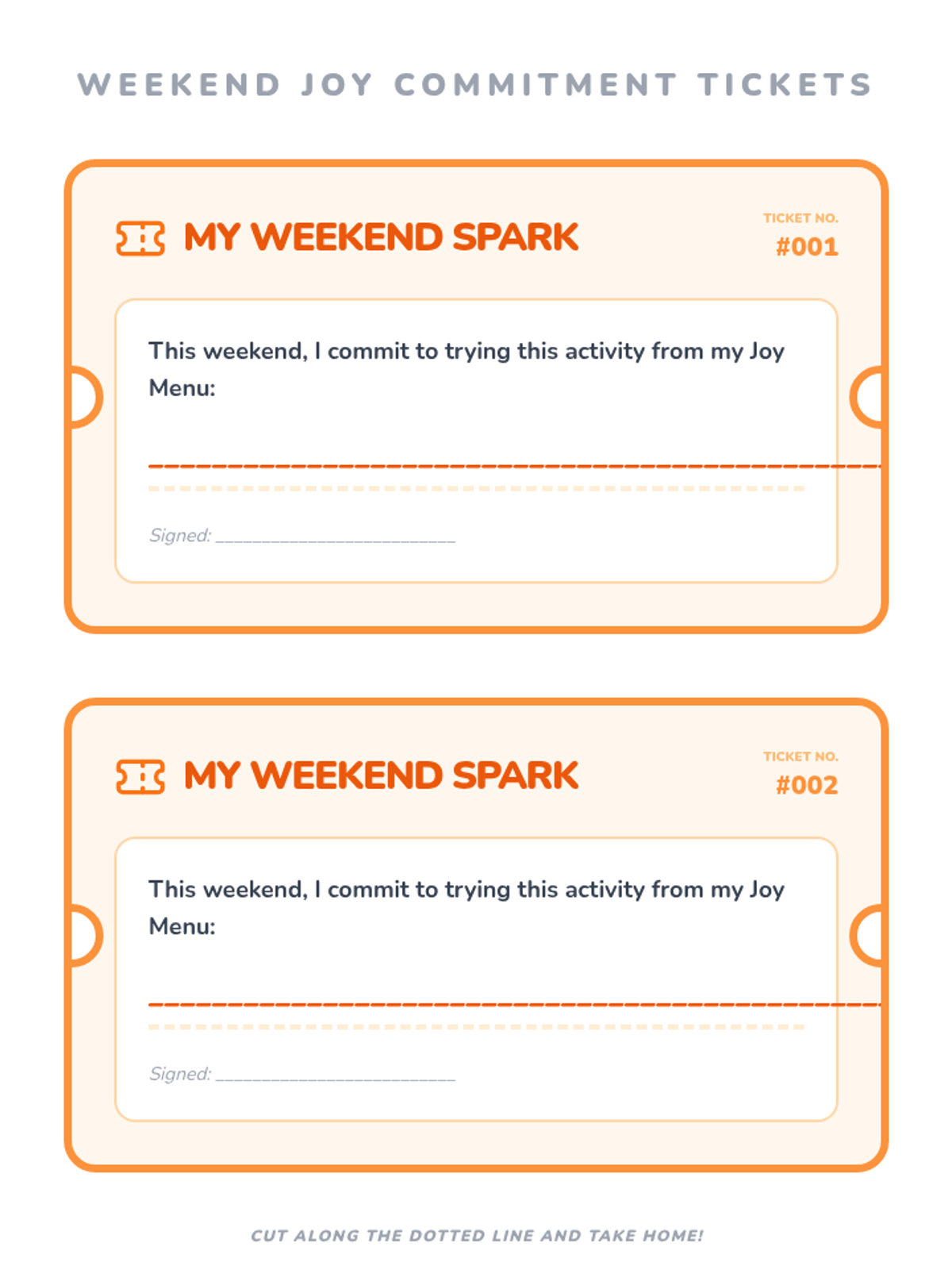
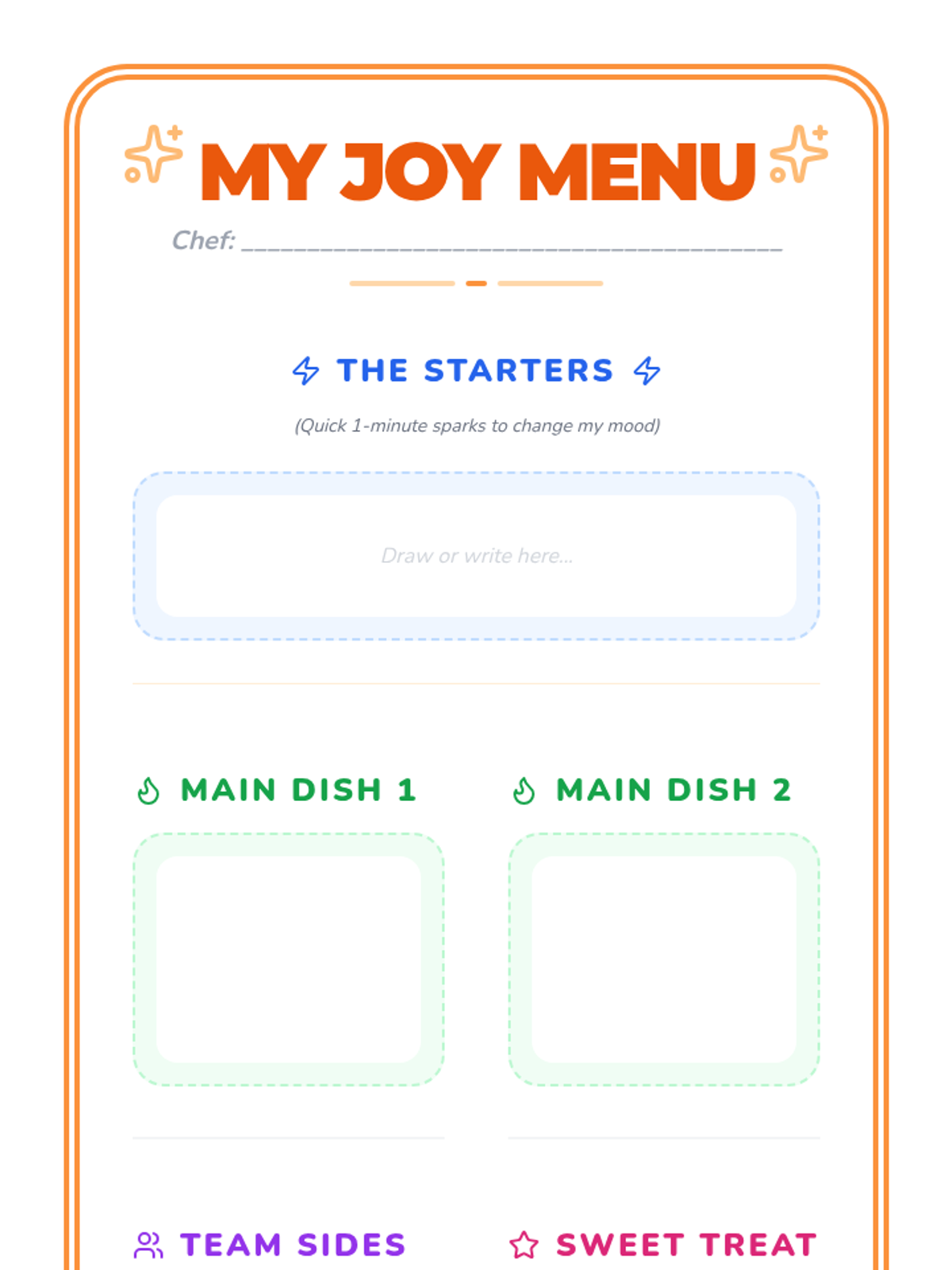
Students present their Joy Menus to small groups, allowing peers to borrow ideas to add to their own lists. The lesson concludes with a commitment to try one menu item over the weekend.
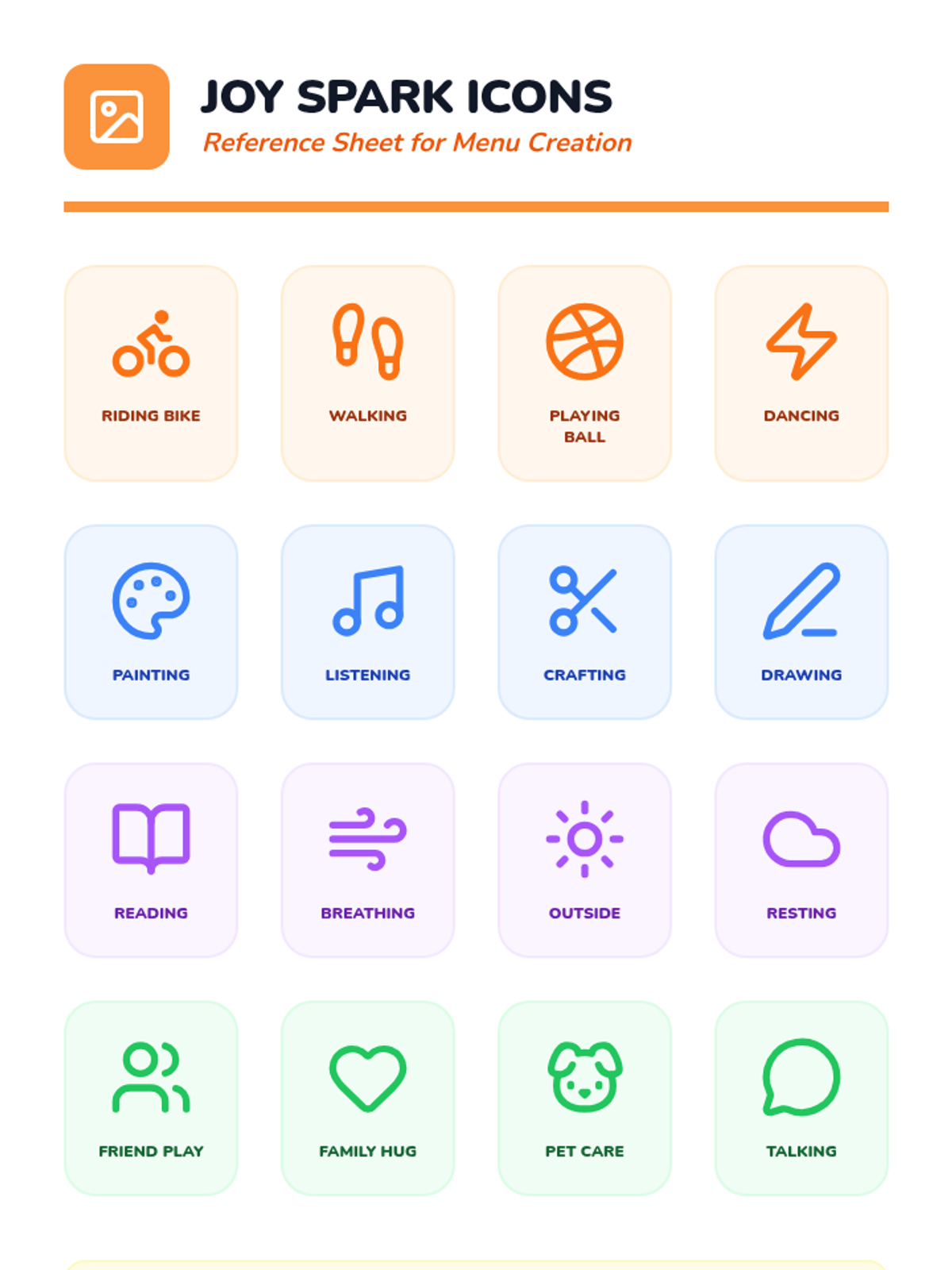
Using their investigations, students create a visual 'menu' or choice board of their top 5 reliable mood-boosting activities. They illustrate these options to serve as a reference tool.
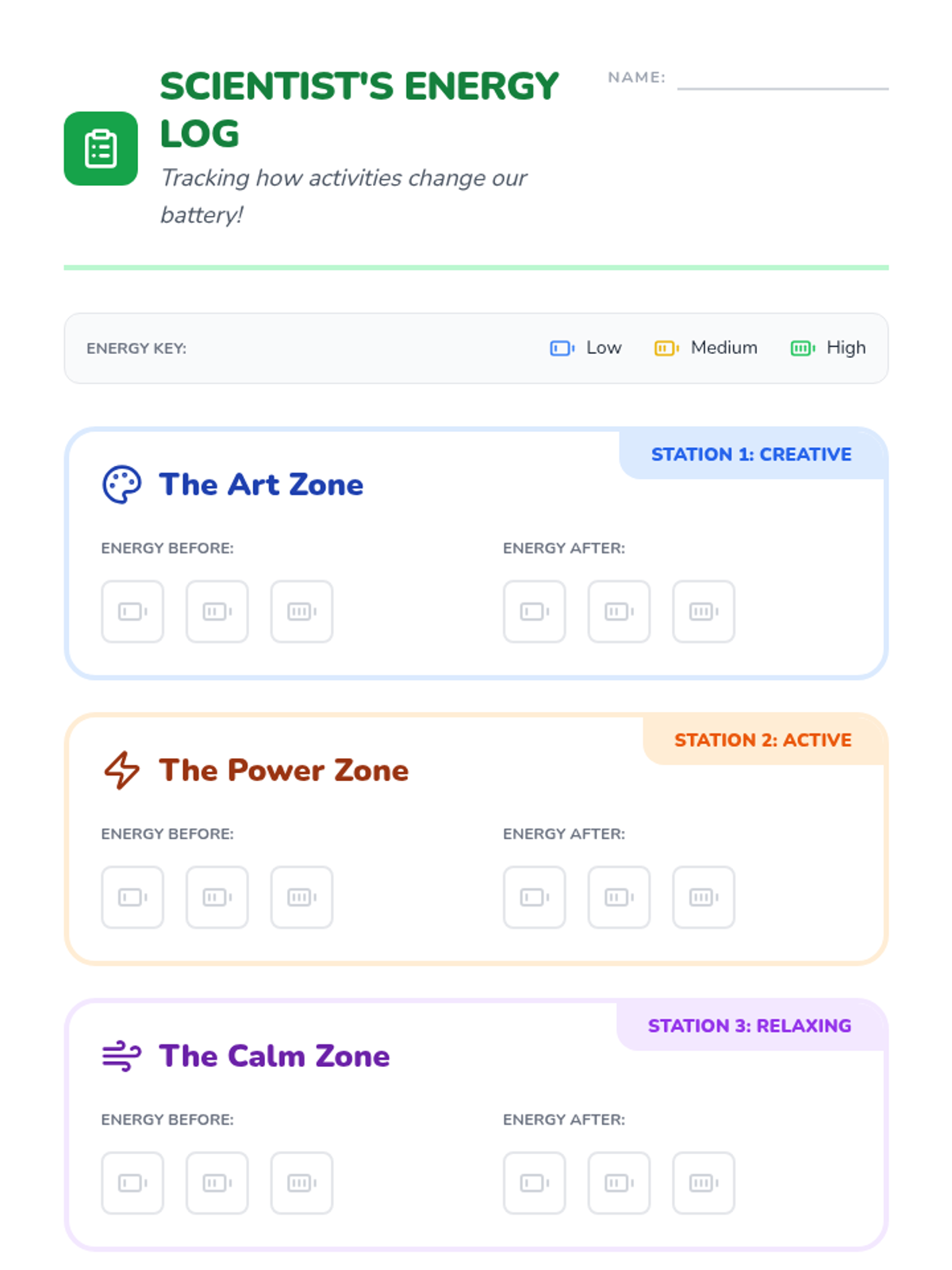
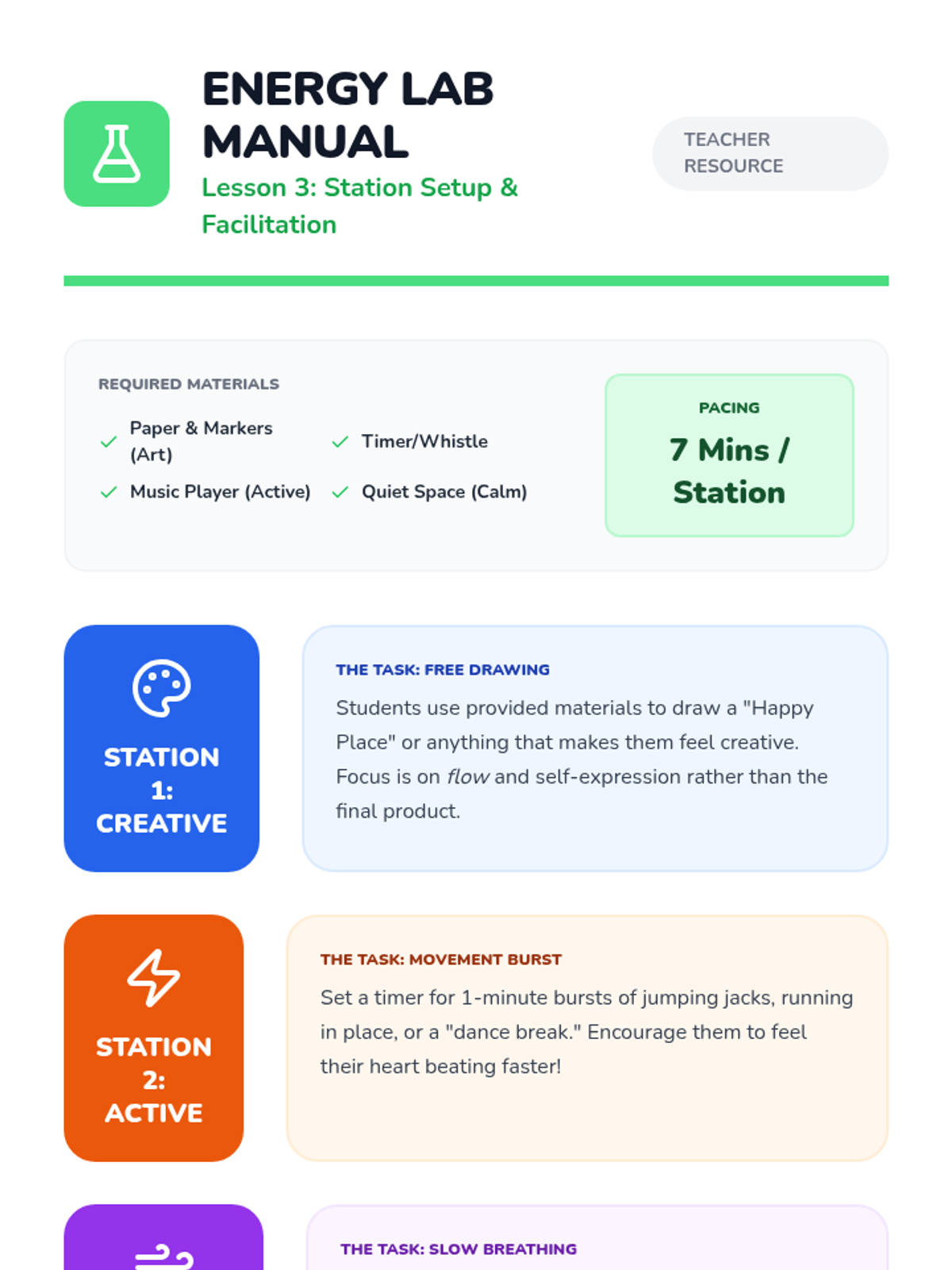
Students rotate through stations testing different types of positive engagement: creative (drawing), active (jumping jacks), and relaxing (deep breathing). They record how each station changes their energy level.
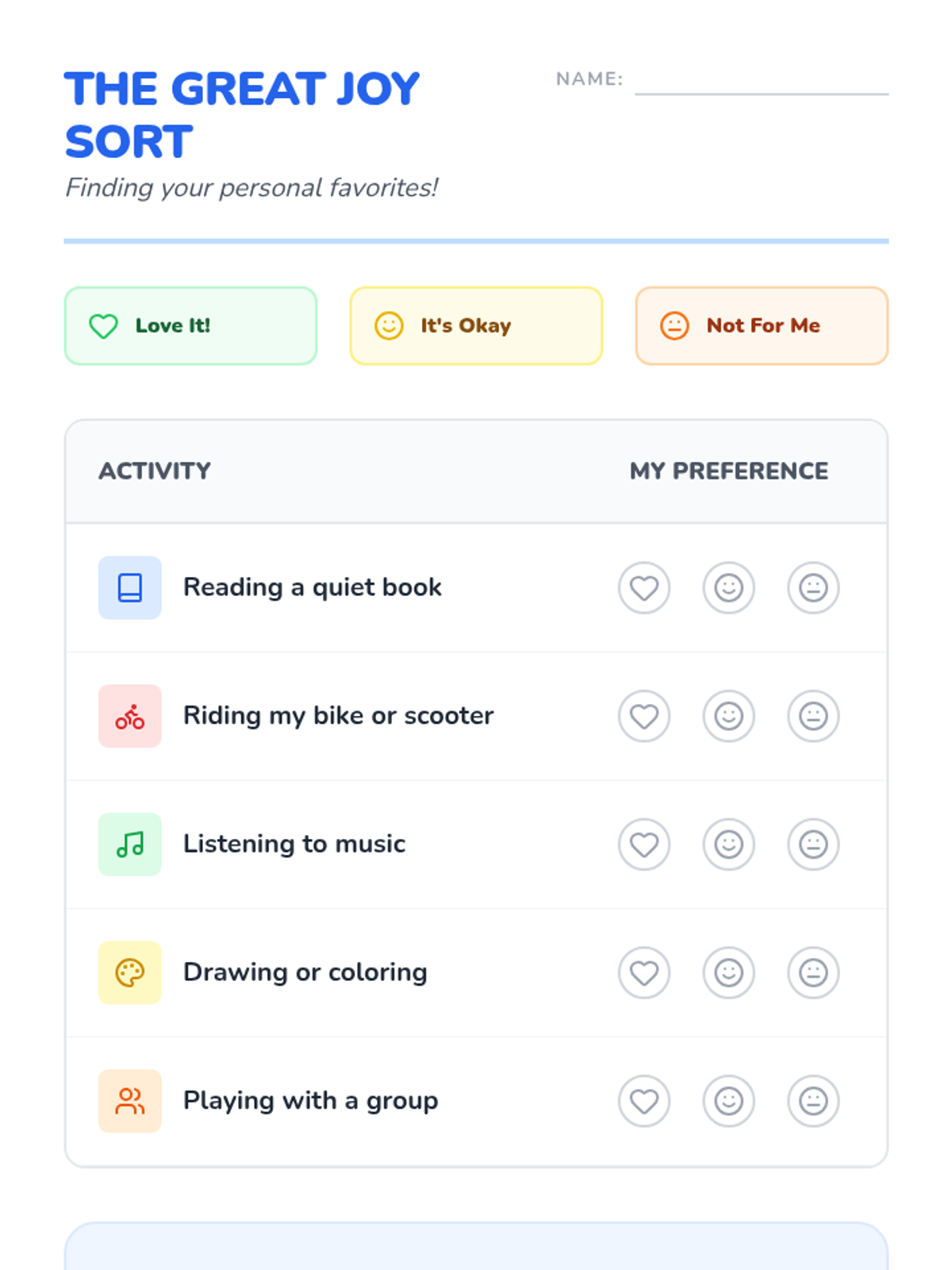
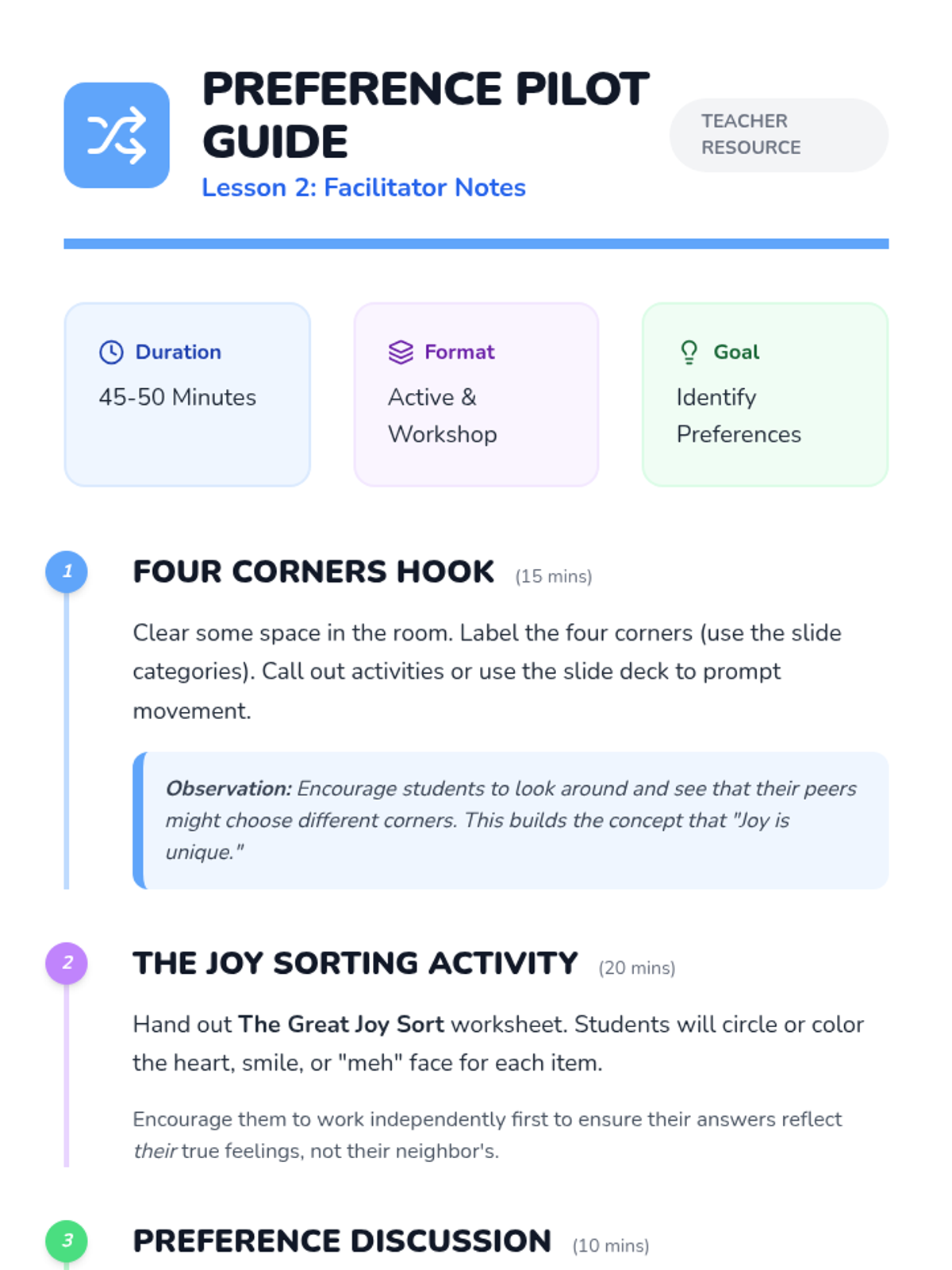
Students engage in an activity sorting game where they categorize various pastimes into 'Love it,' 'It's okay,' and 'Not for me.' This helps them realize that positive experiences are unique to each individual.
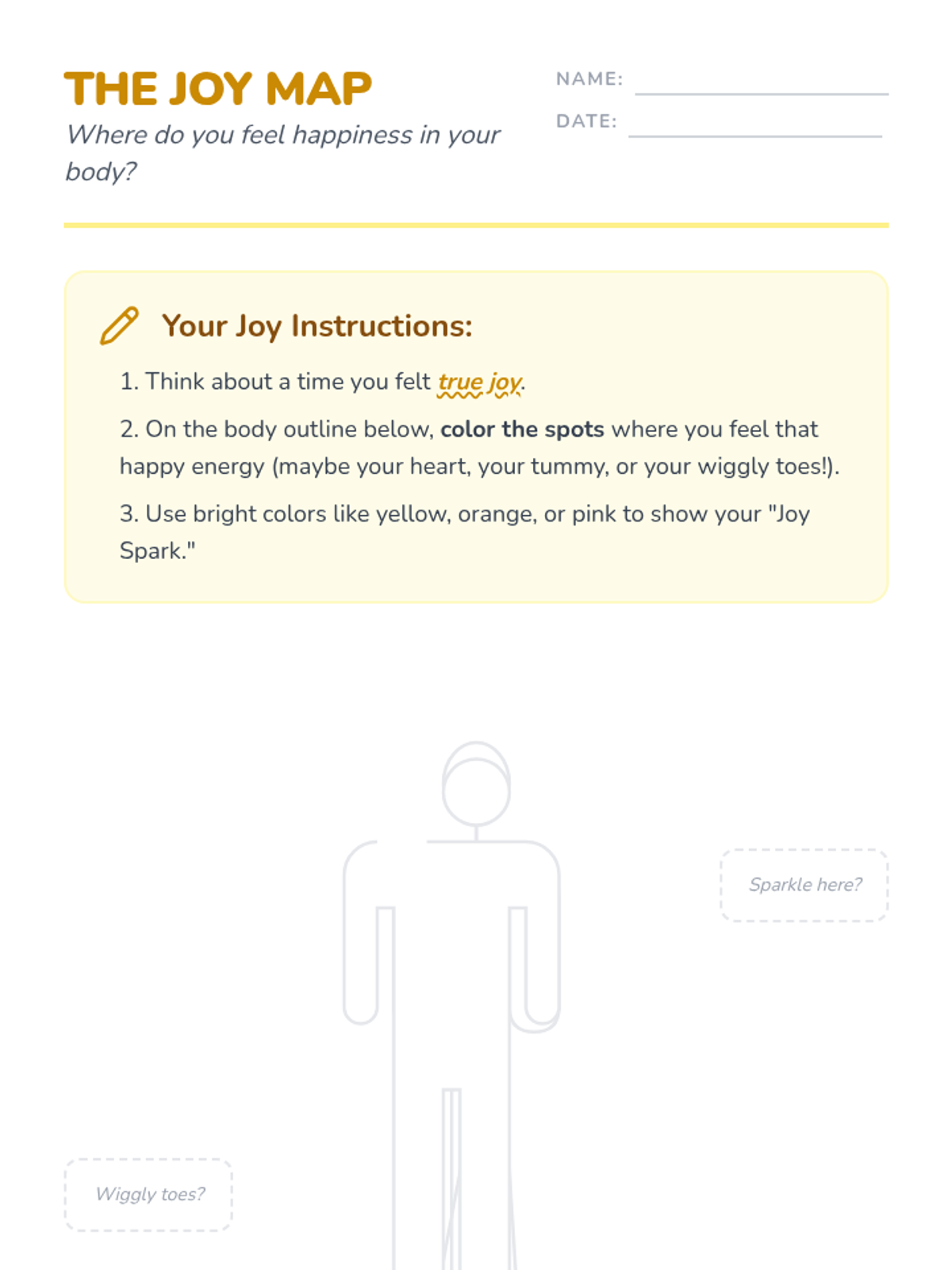
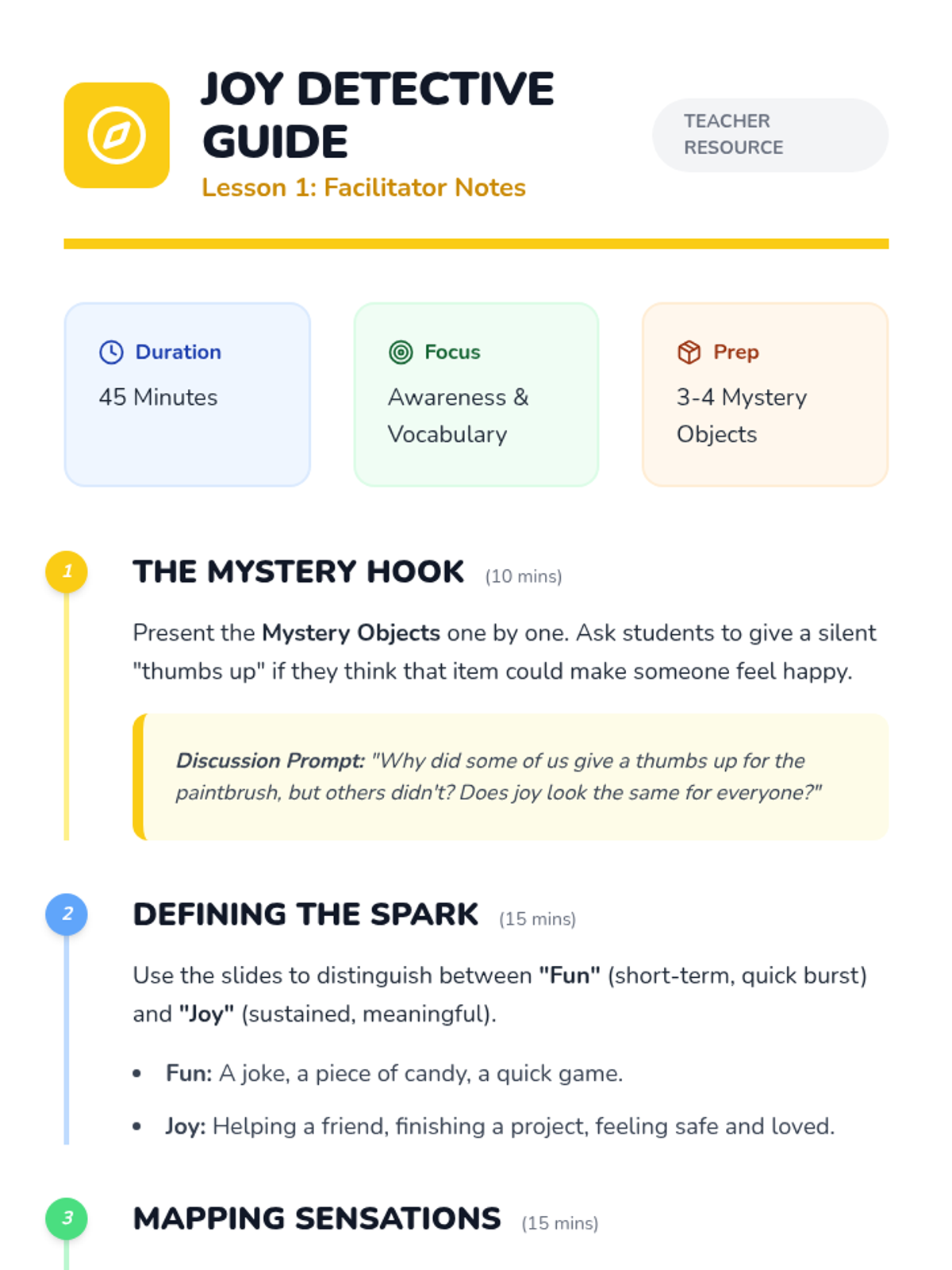
Students define joy and identify what happiness feels like in their bodies. They brainstorm activities that elicit positive emotions and distinguish between short-term fun and long-term happiness.
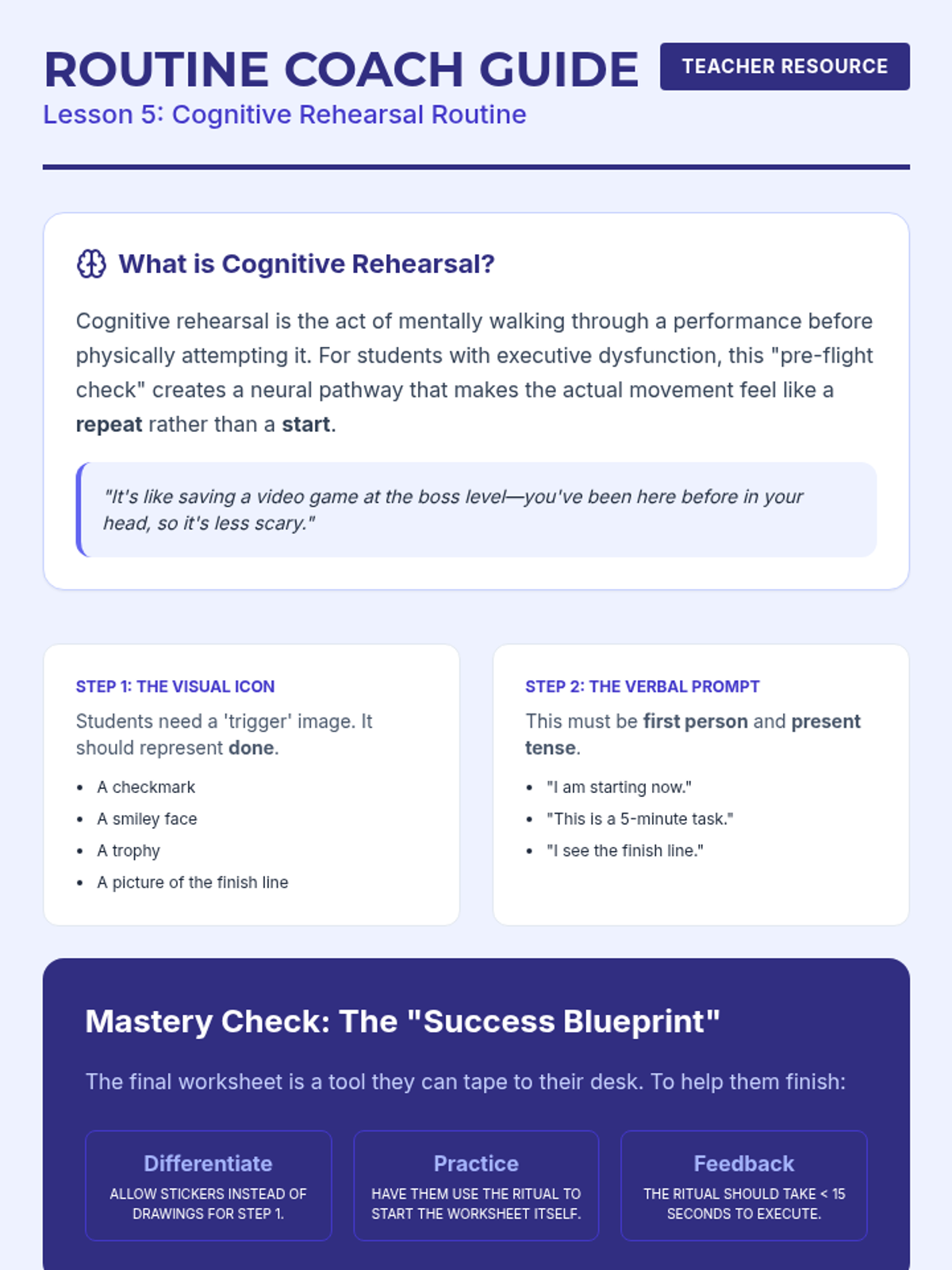
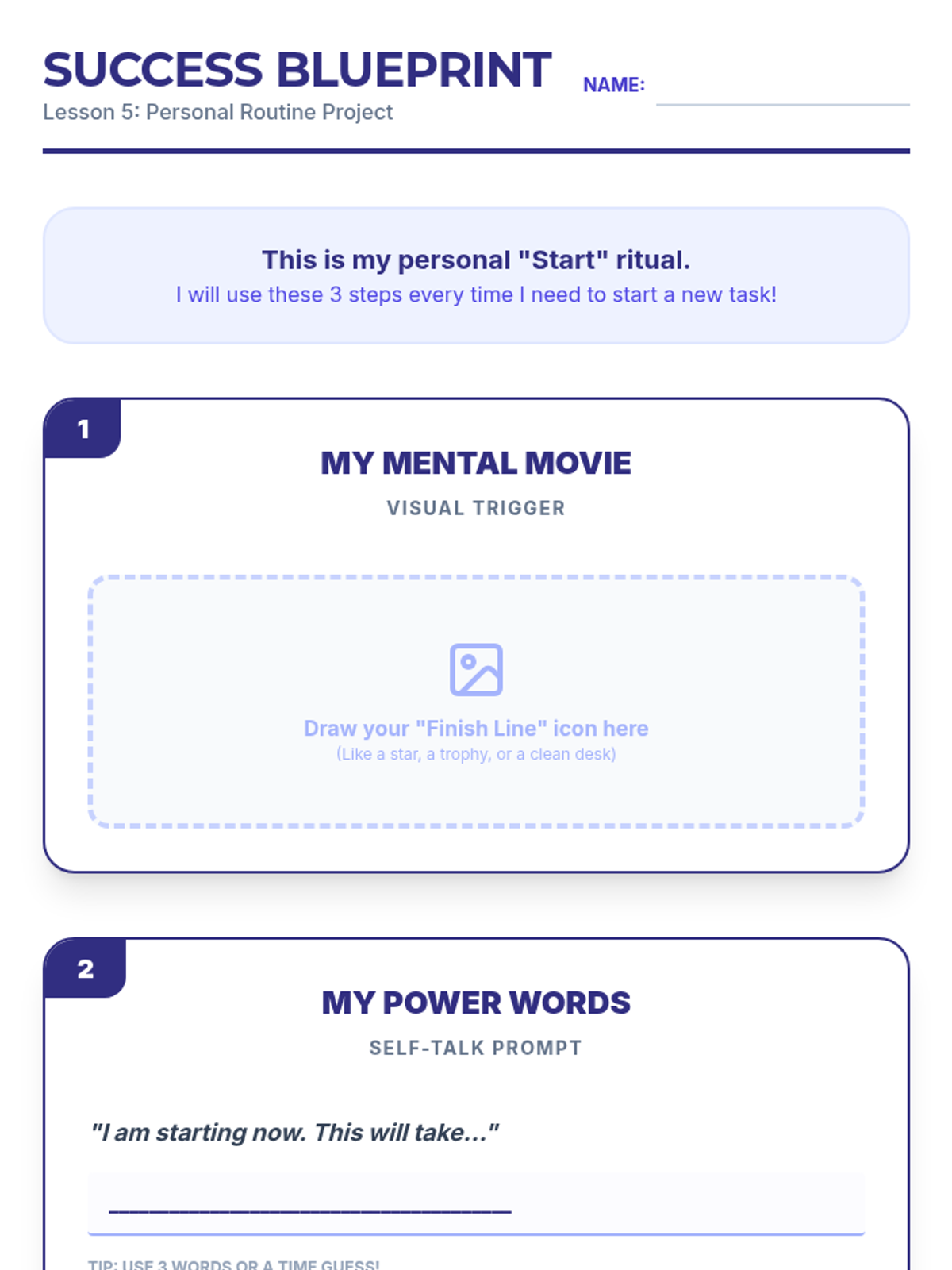
Students create a personal storyboard or checklist that combines a visual icon with a verbal prompt for task initiation.
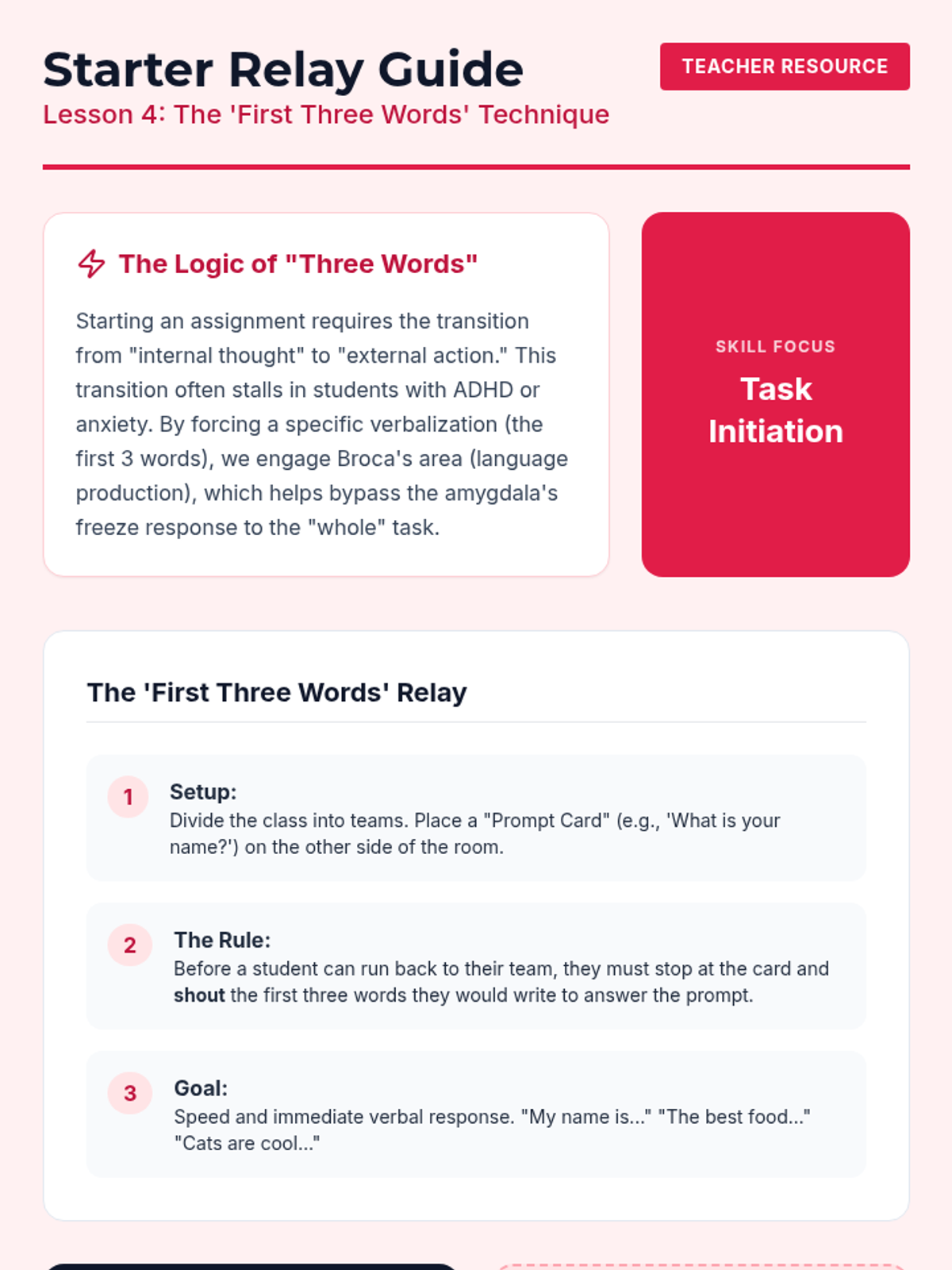
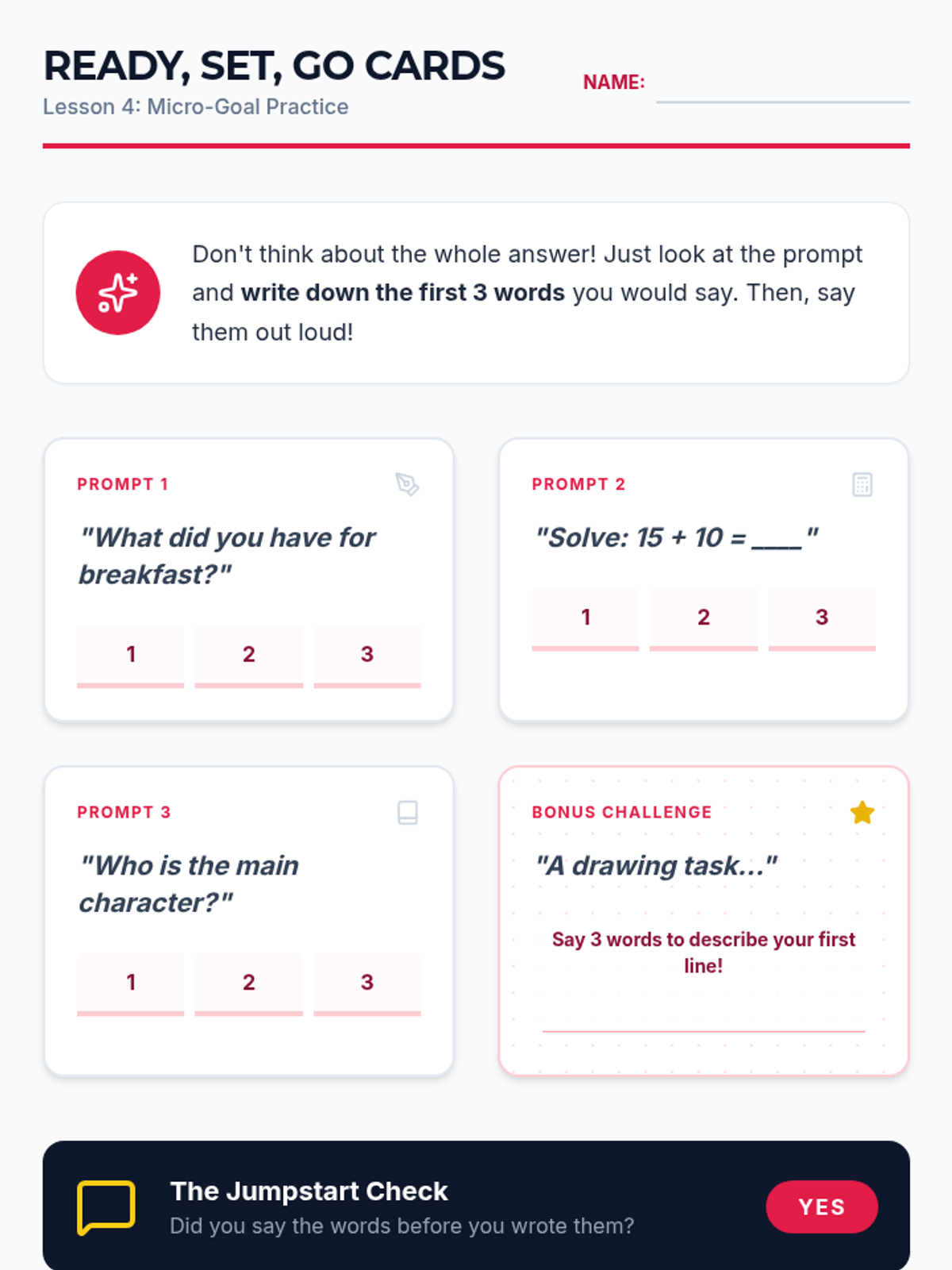
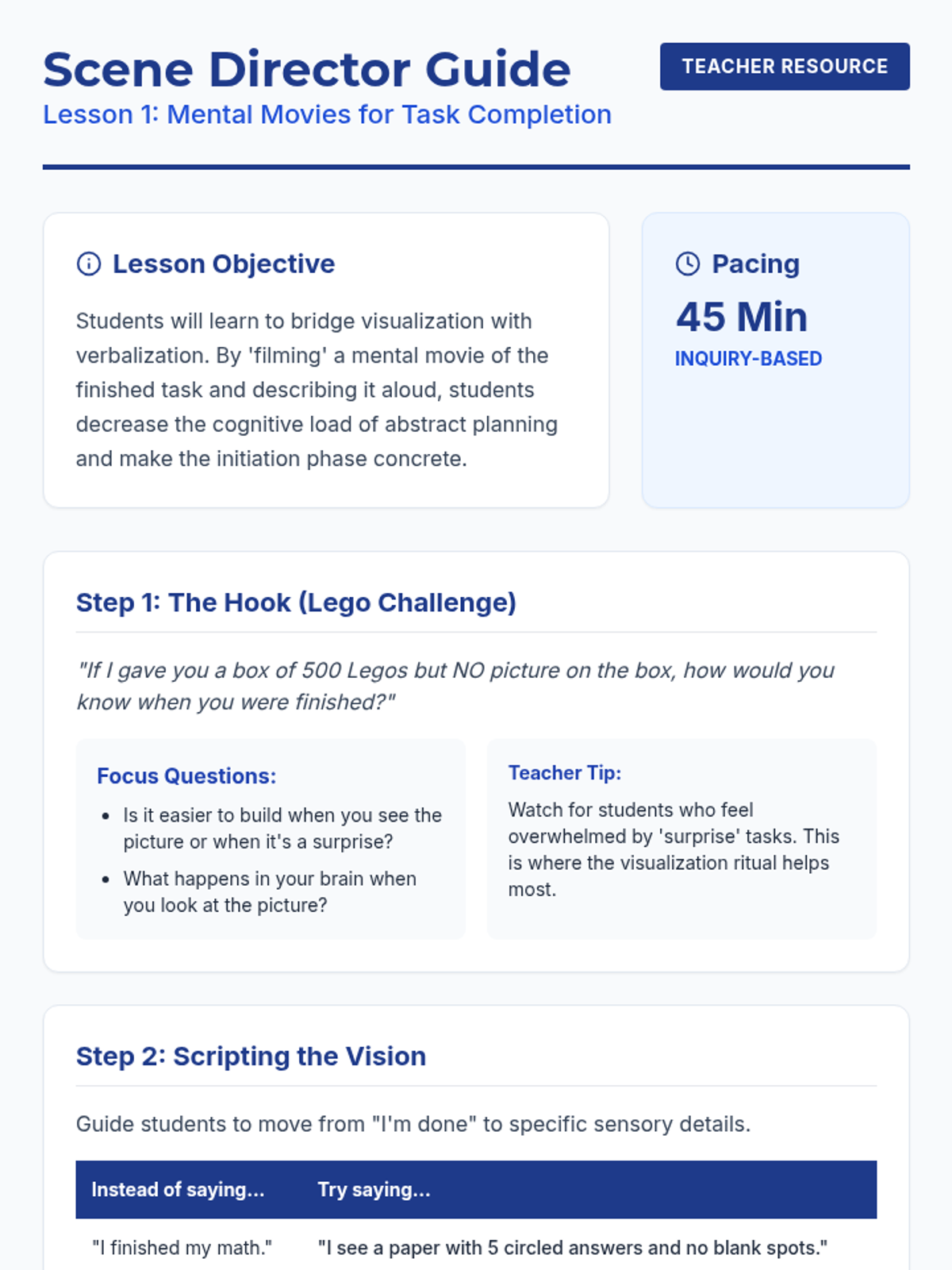
Students learn to identify the first three words of a task to lower the barrier to entry and engage the brain's language center.
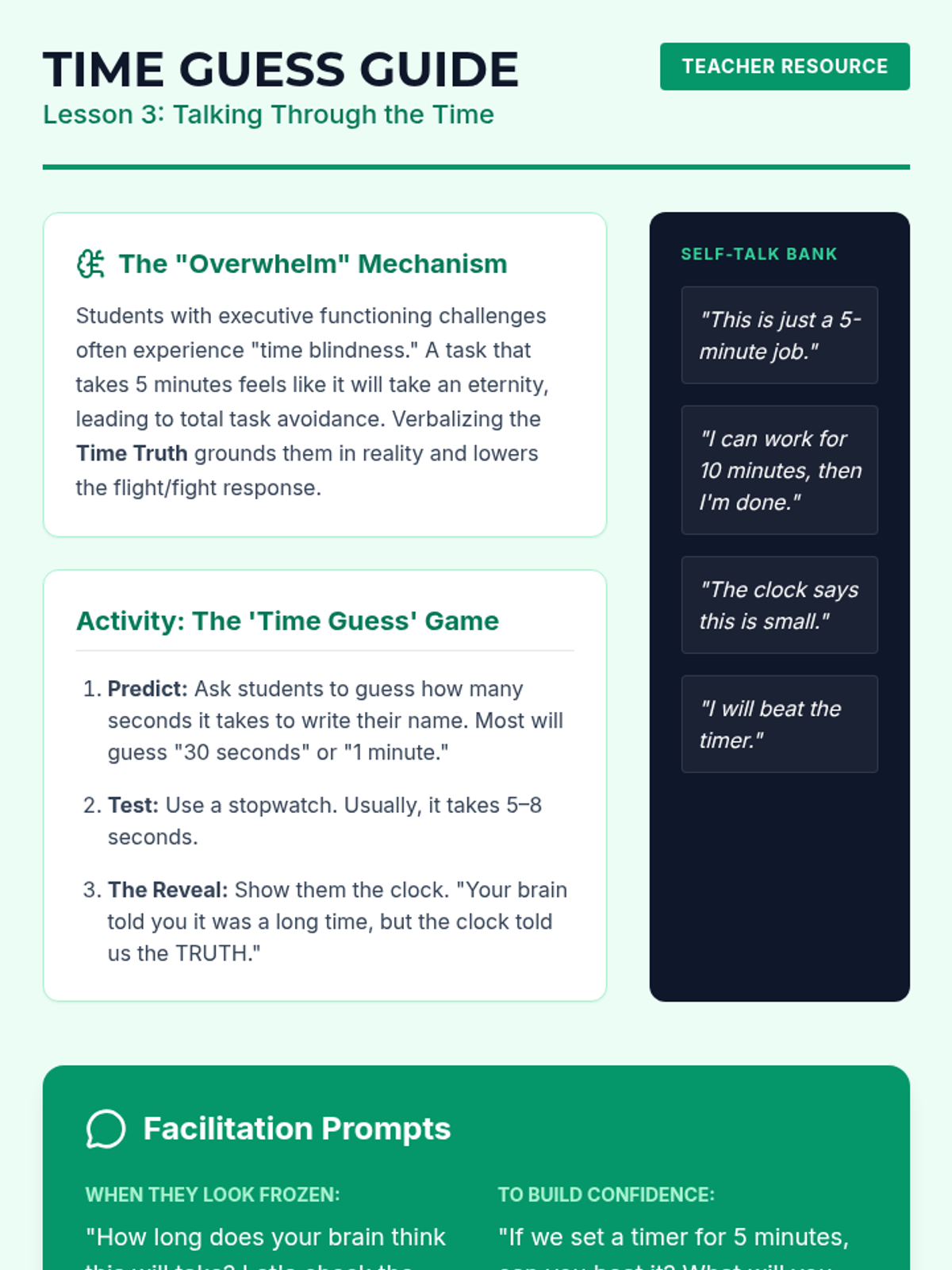
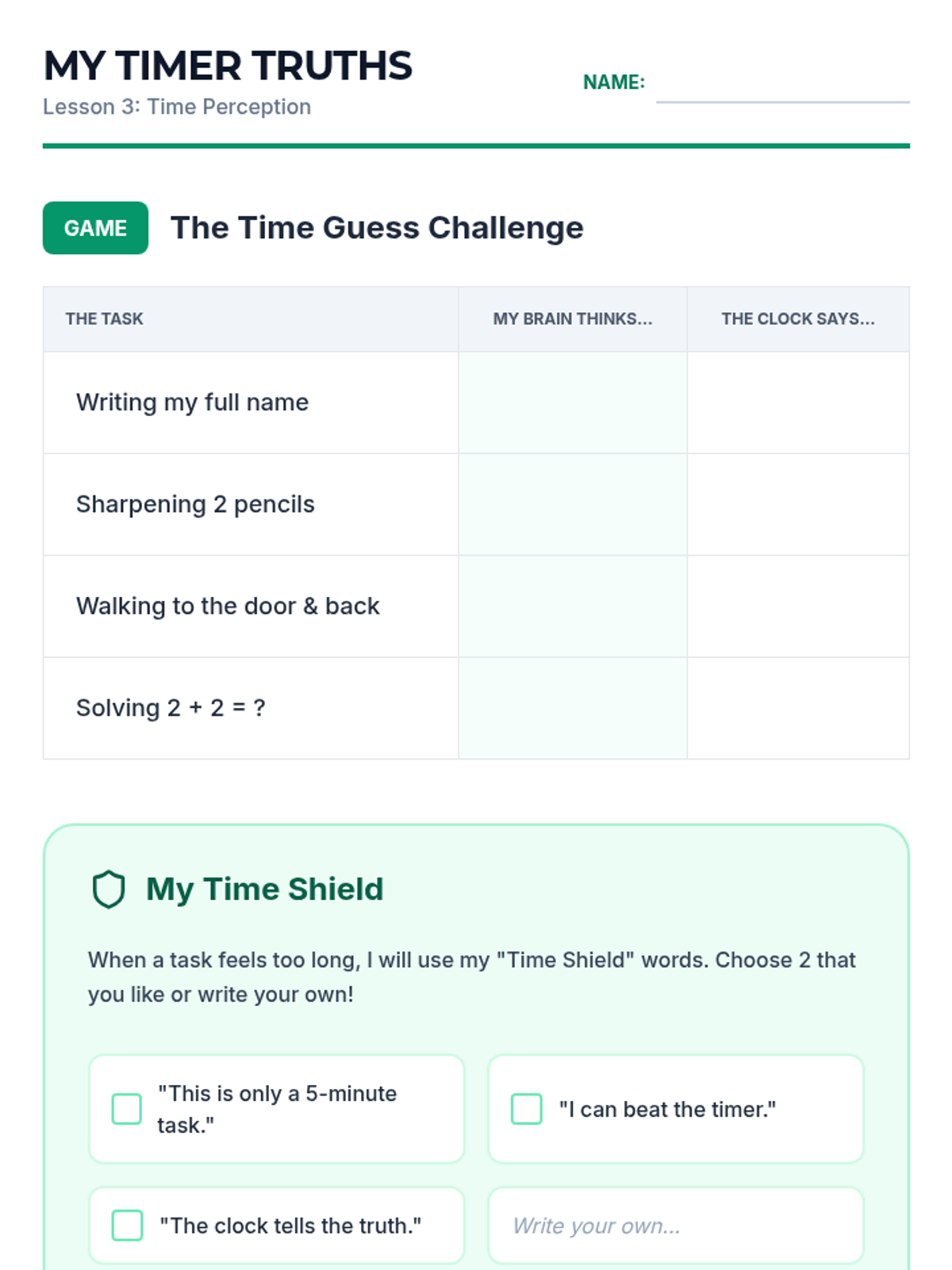
Students learn to estimate time and use verbal reassurance to reduce overwhelm.
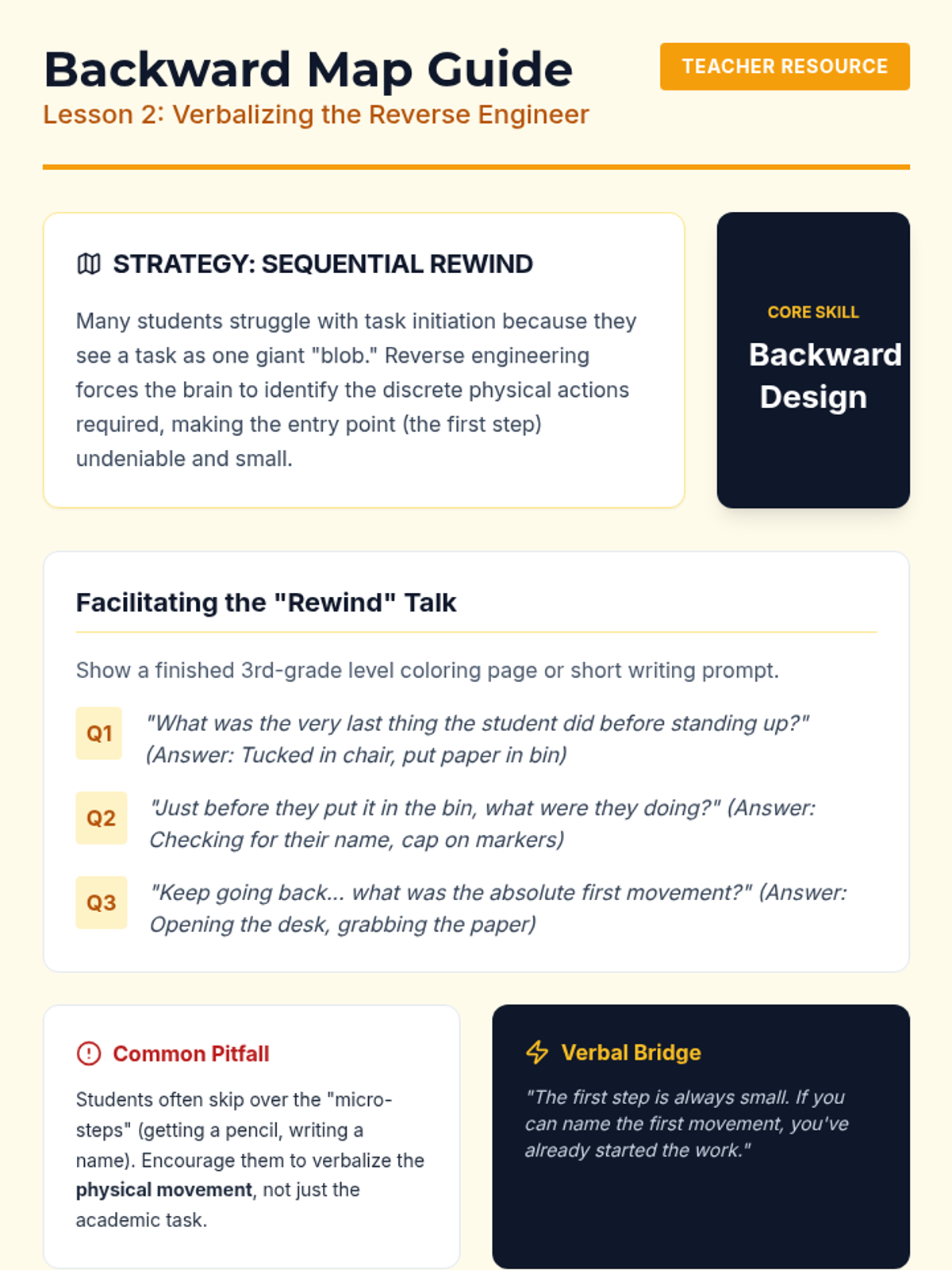
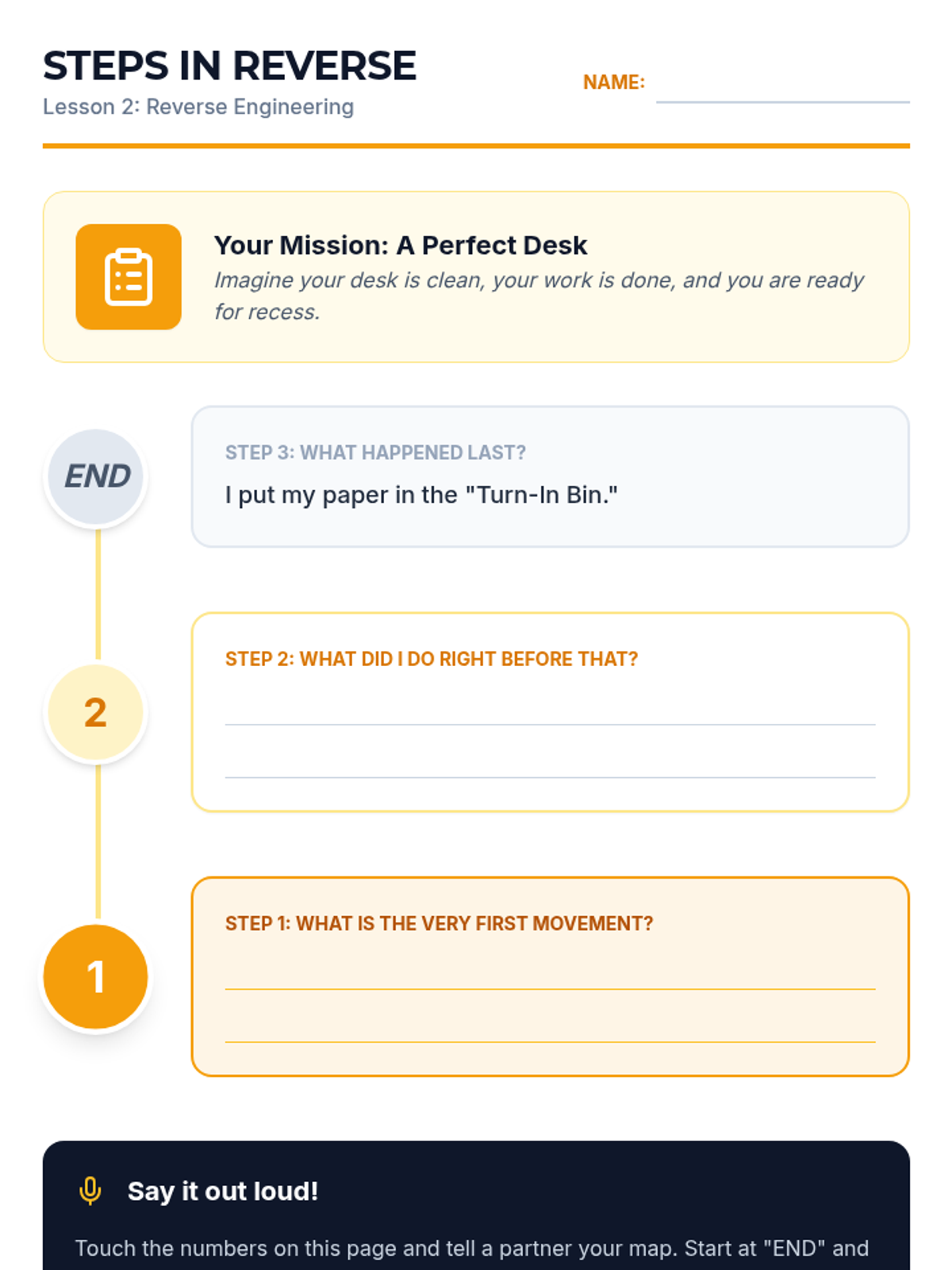
Students talk backward through the steps of a completed sample to make the first step obvious and approachable.
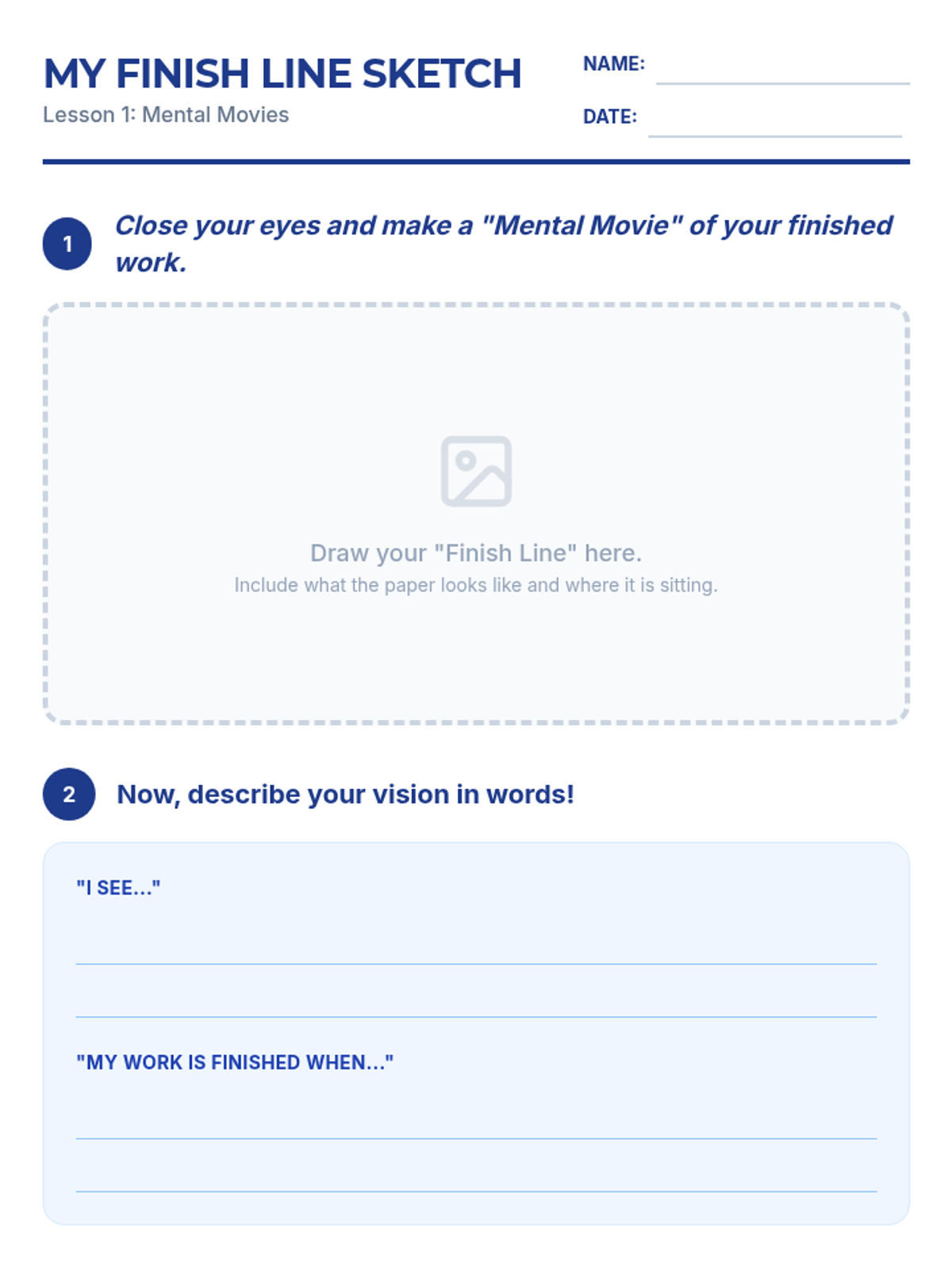
Students practice closing their eyes and creating a detailed mental image of what 'finished' looks like before describing it aloud.
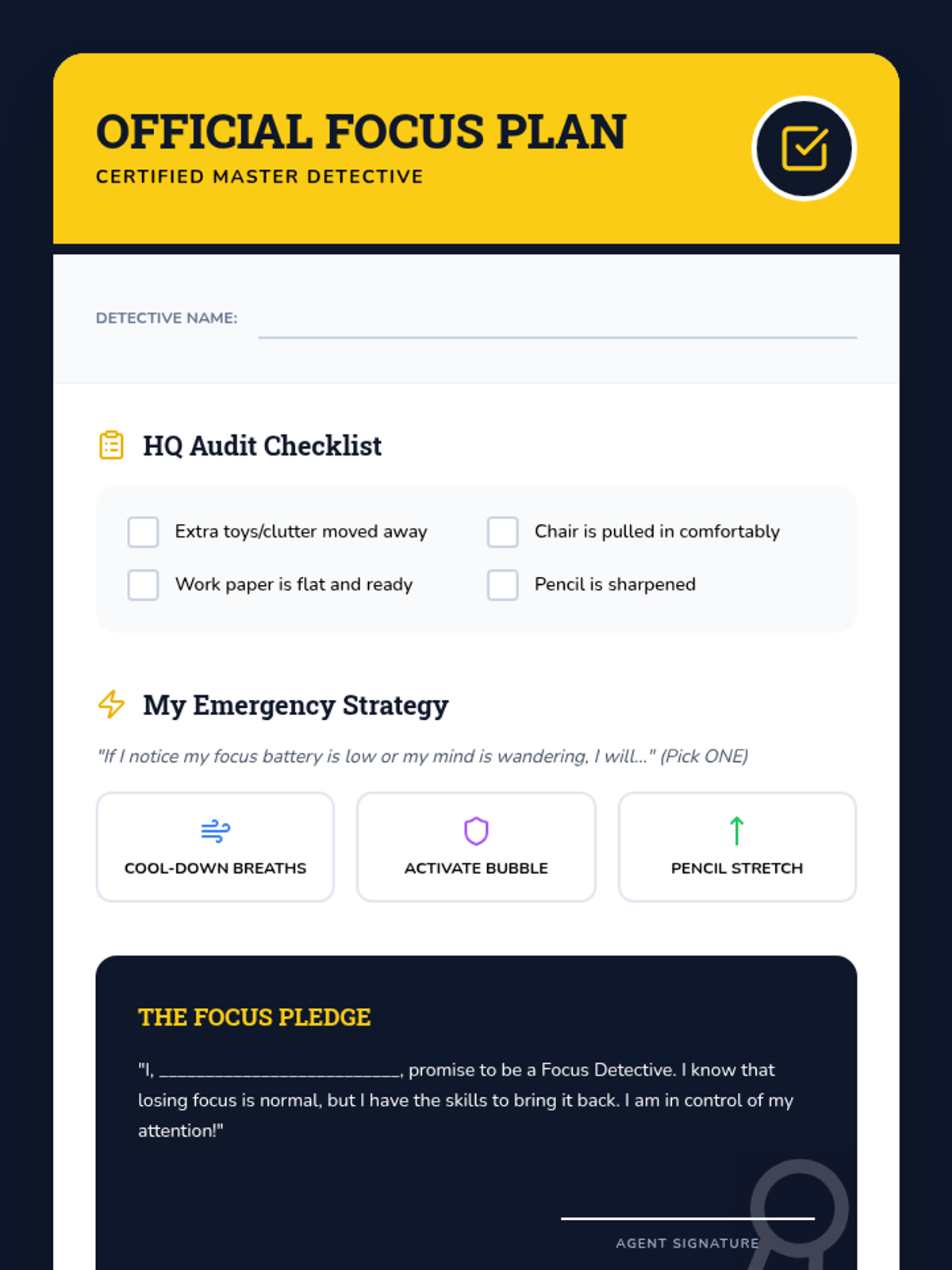
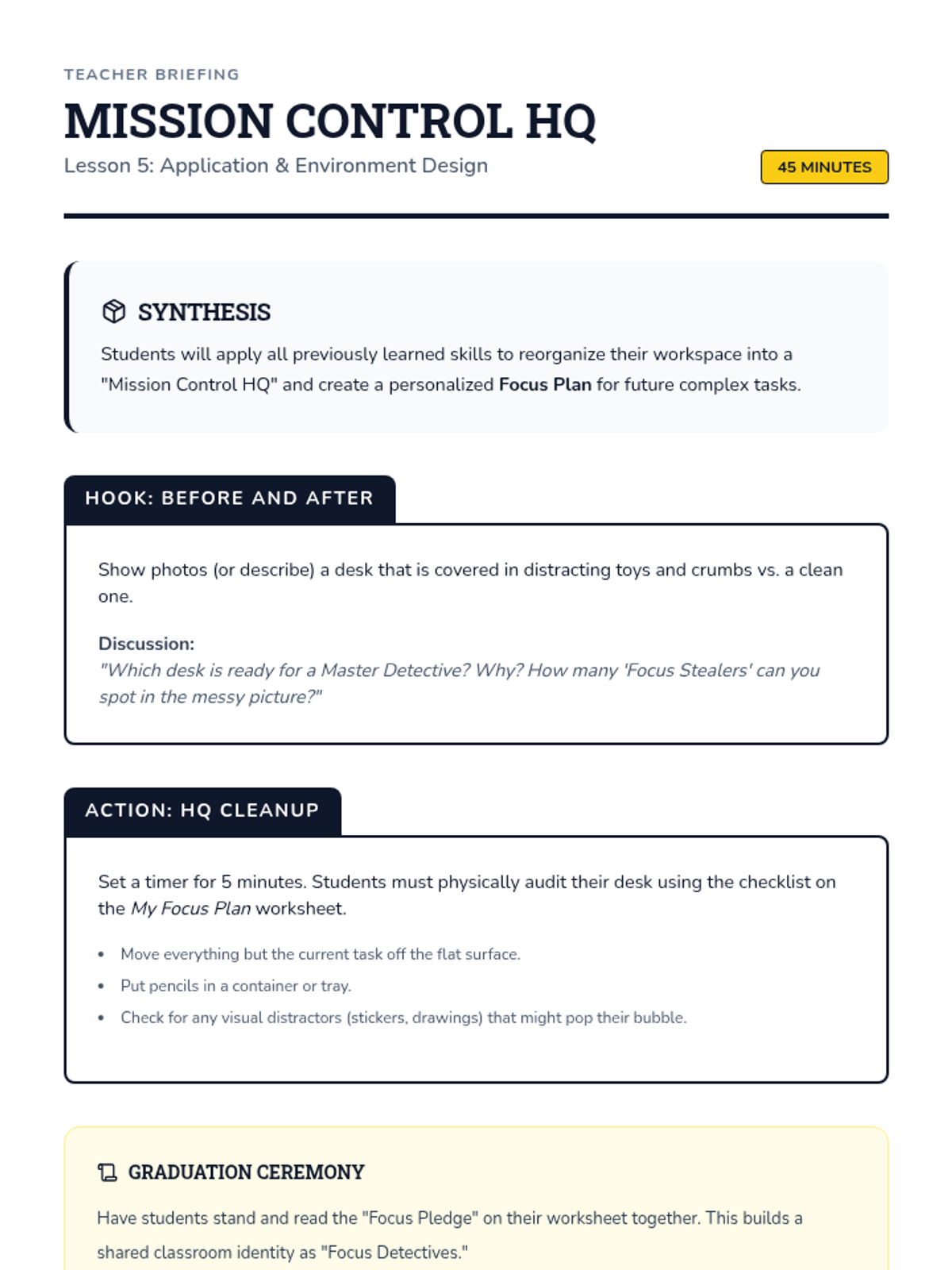
Students design their ideal workspace and create a personalized Focus Plan for future complex tasks.
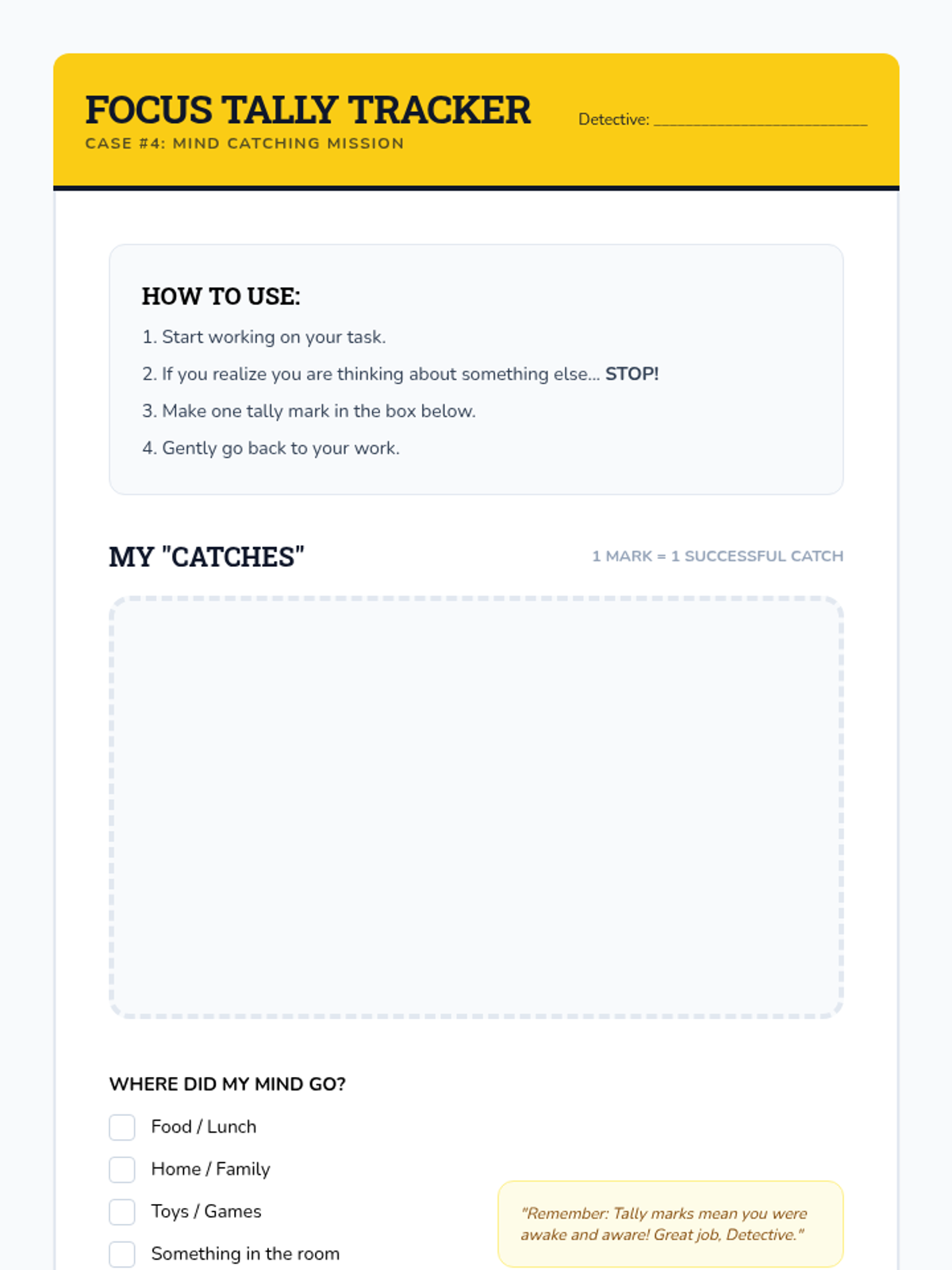
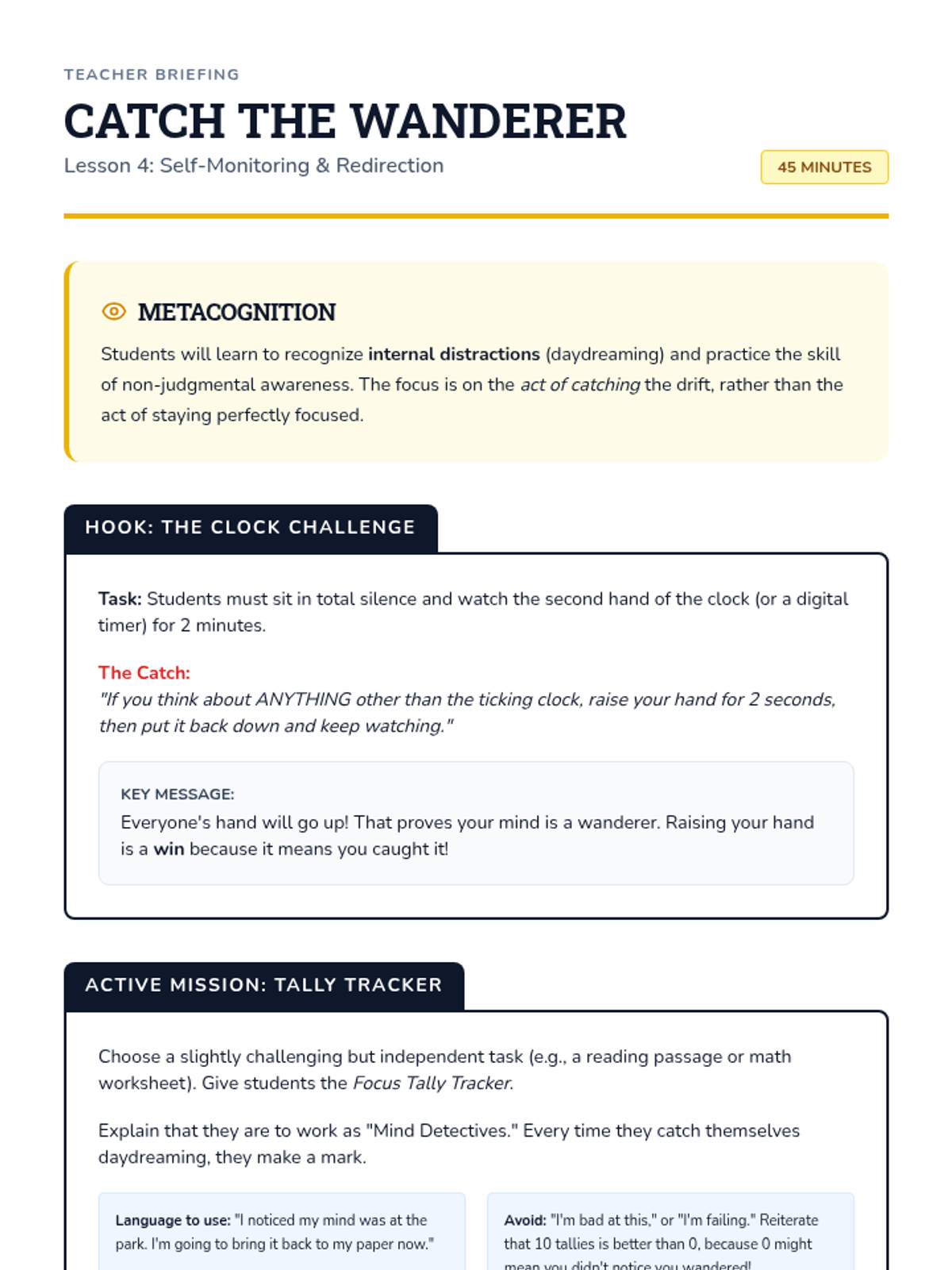
Learning to catch the mind when it wanders and practicing non-judgmental redirection of attention.
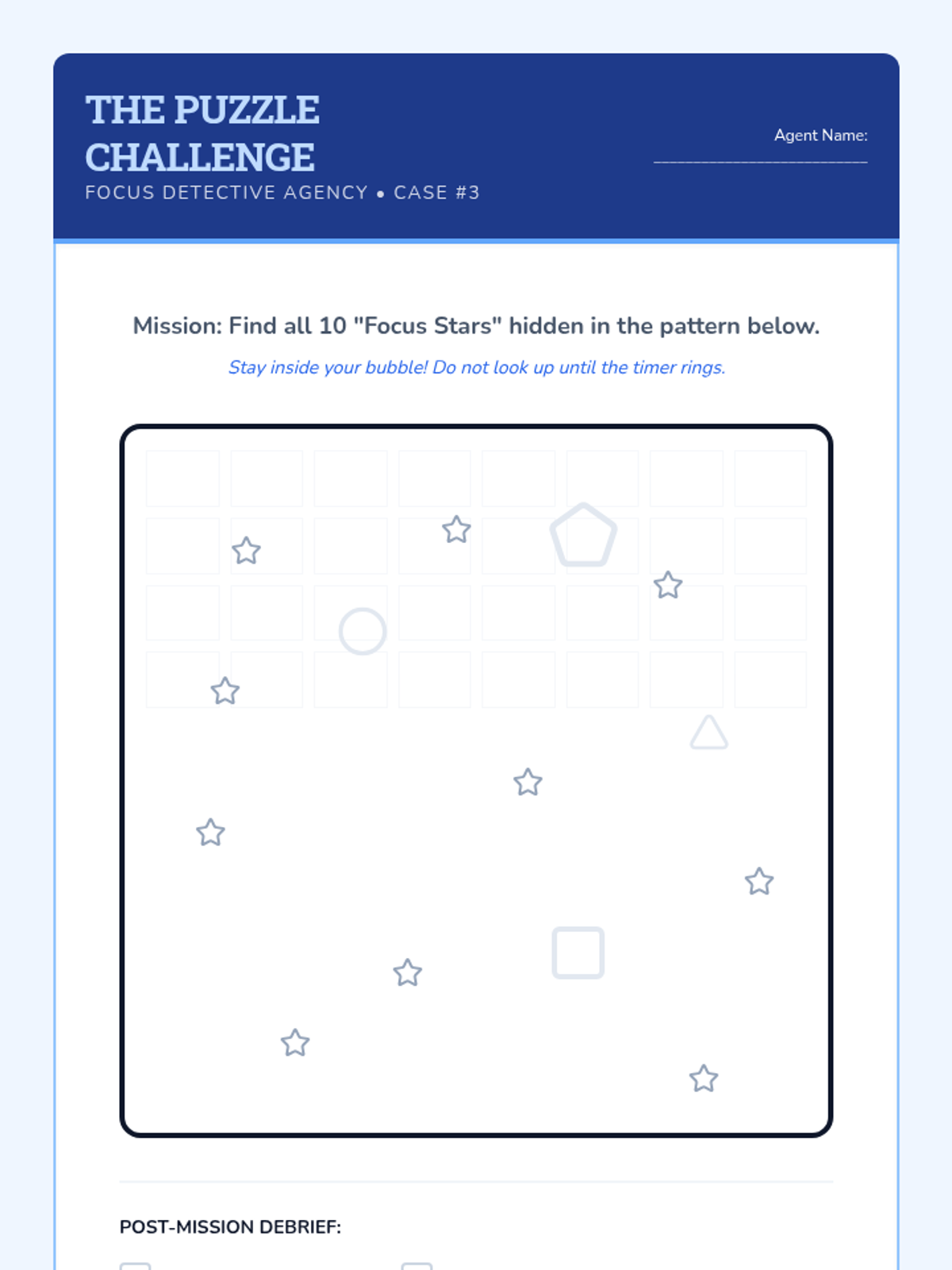
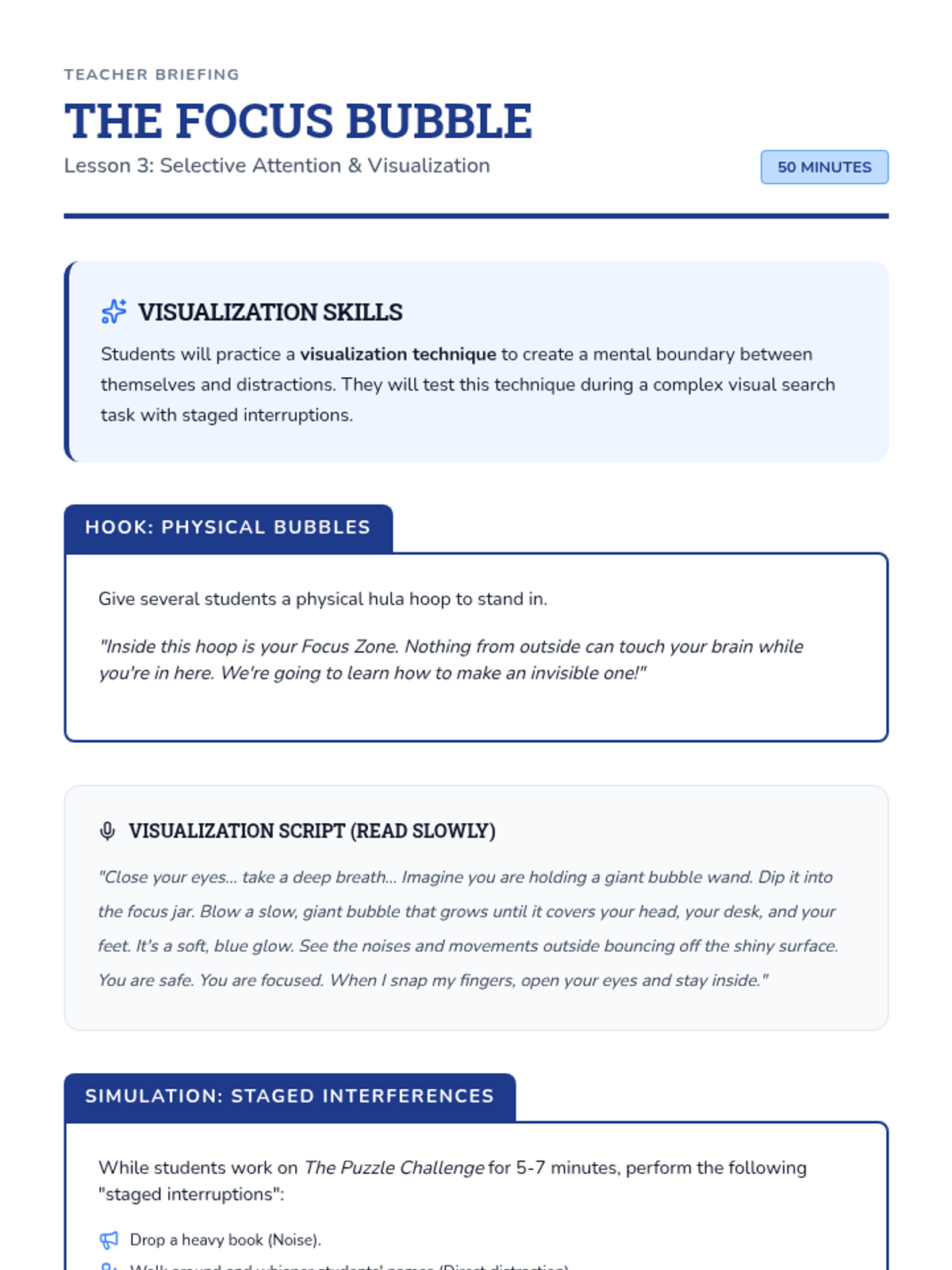
Practicing a visualization technique to block out surroundings and maintain sustained attention during a complex task.
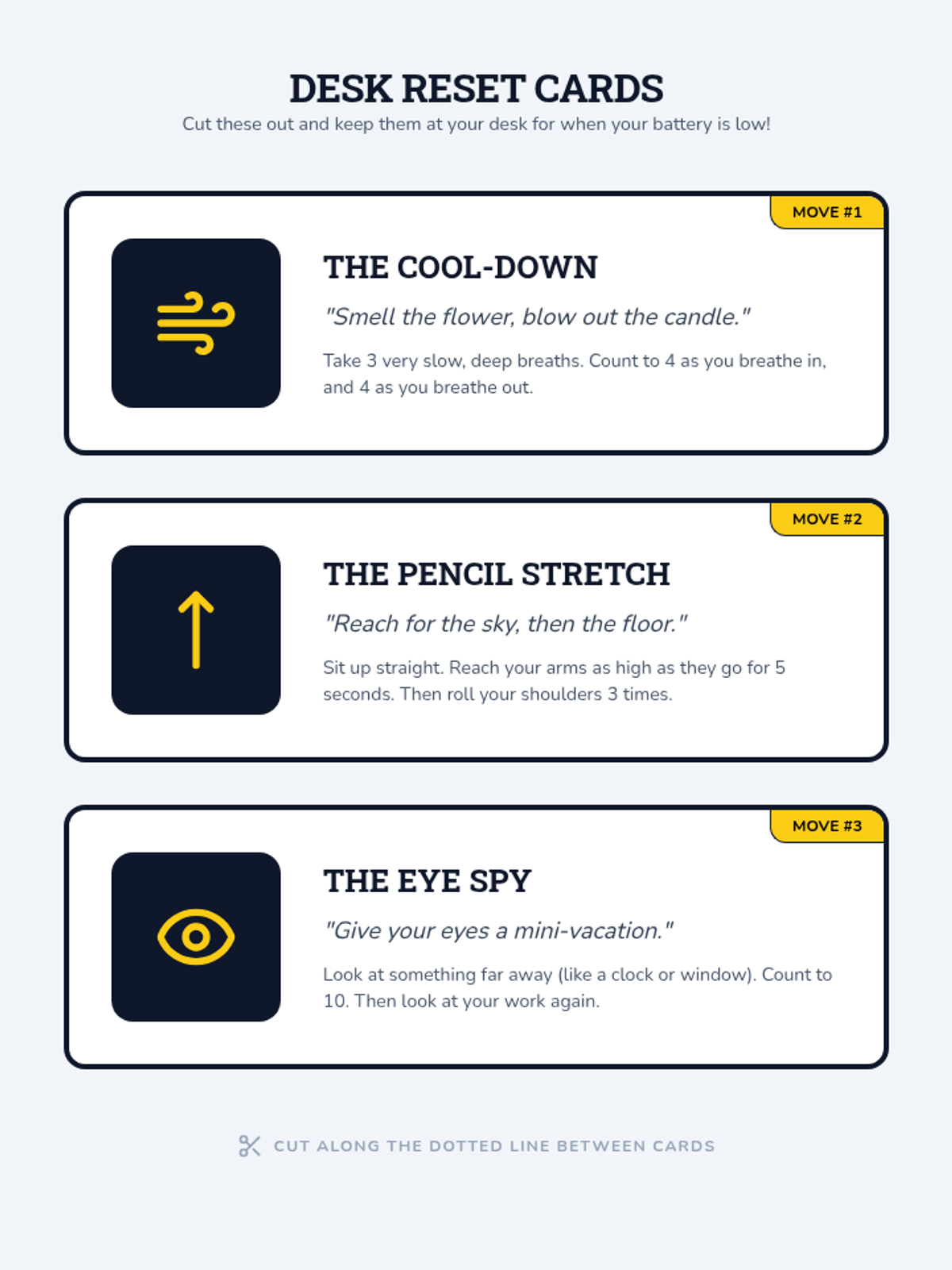
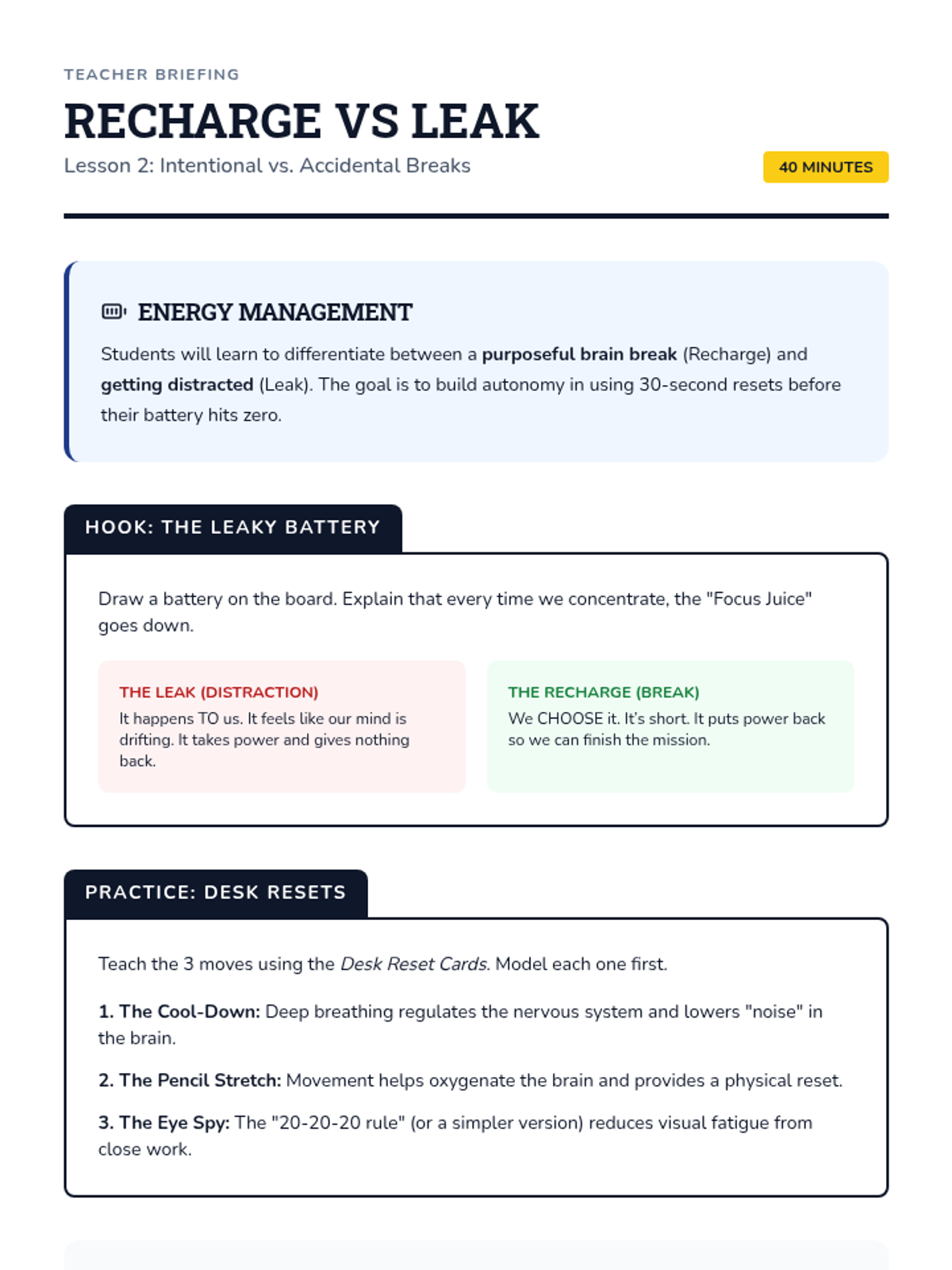
Differentiating between purposeful brain breaks that recharge working memory and distractions that drain it, while learning desk-based reset strategies.
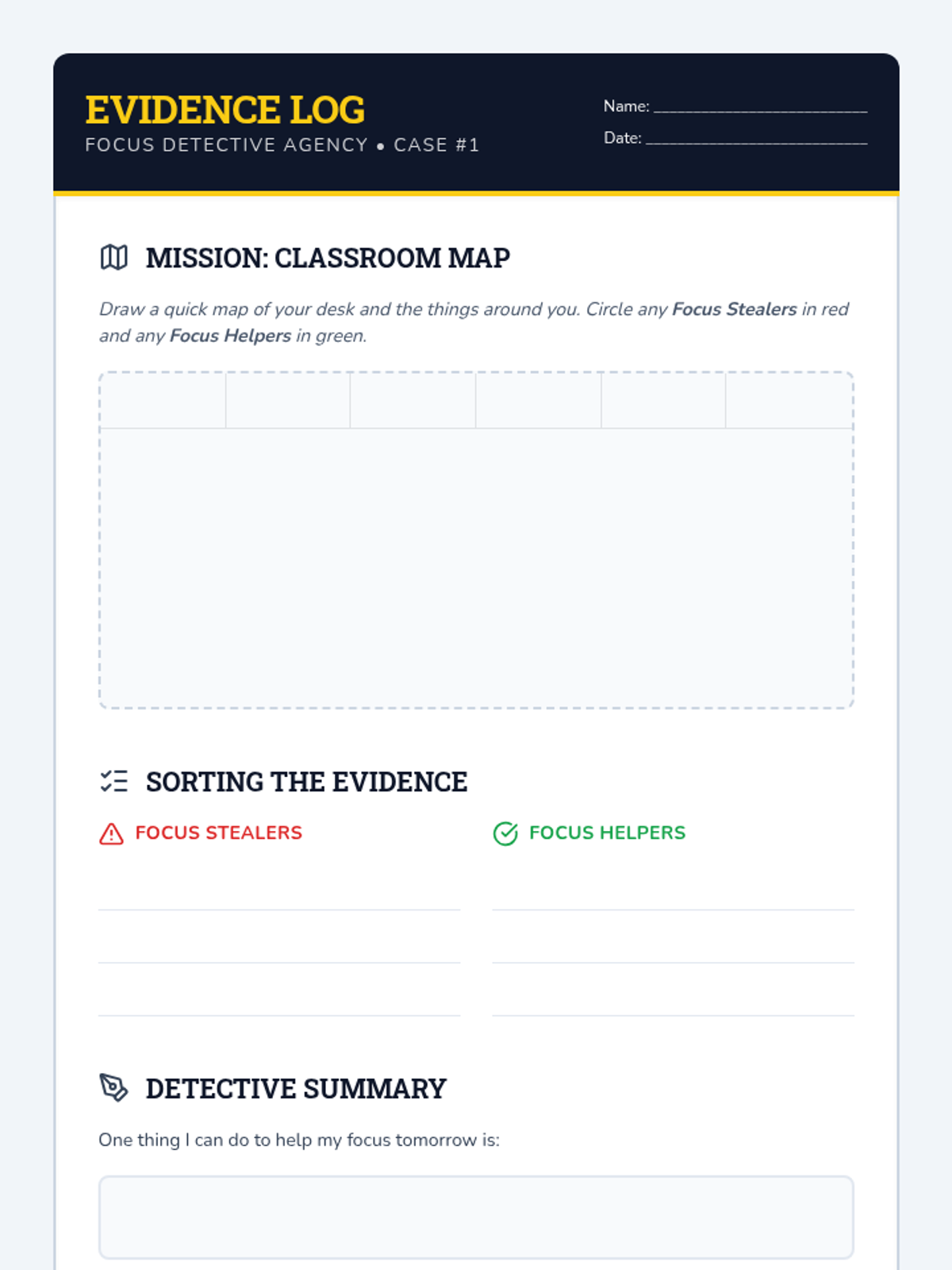
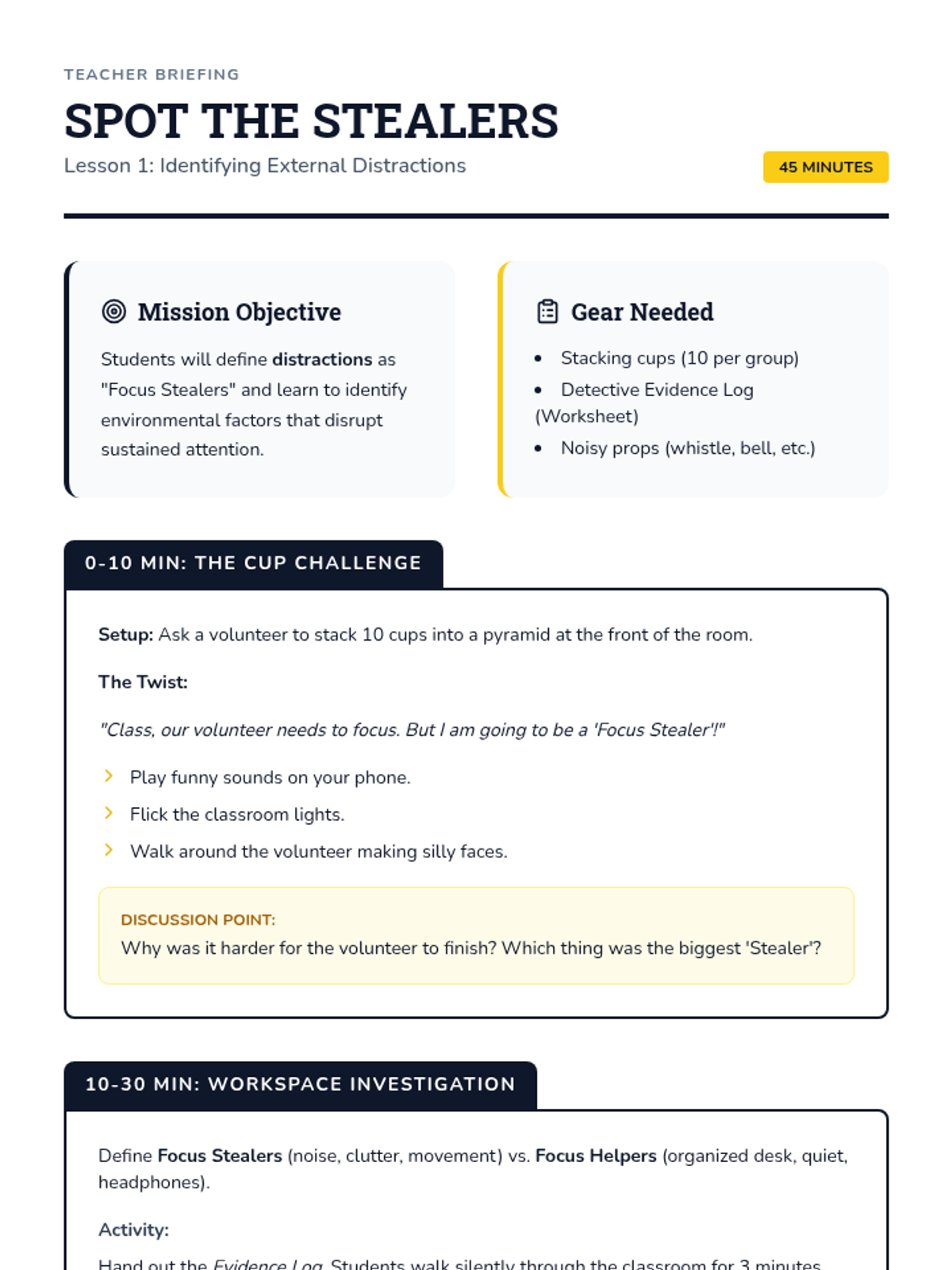
Students categorize classroom inputs into 'Focus Helpers' and 'Focus Stealers' and create a map of their workspace to identify potential distractions.
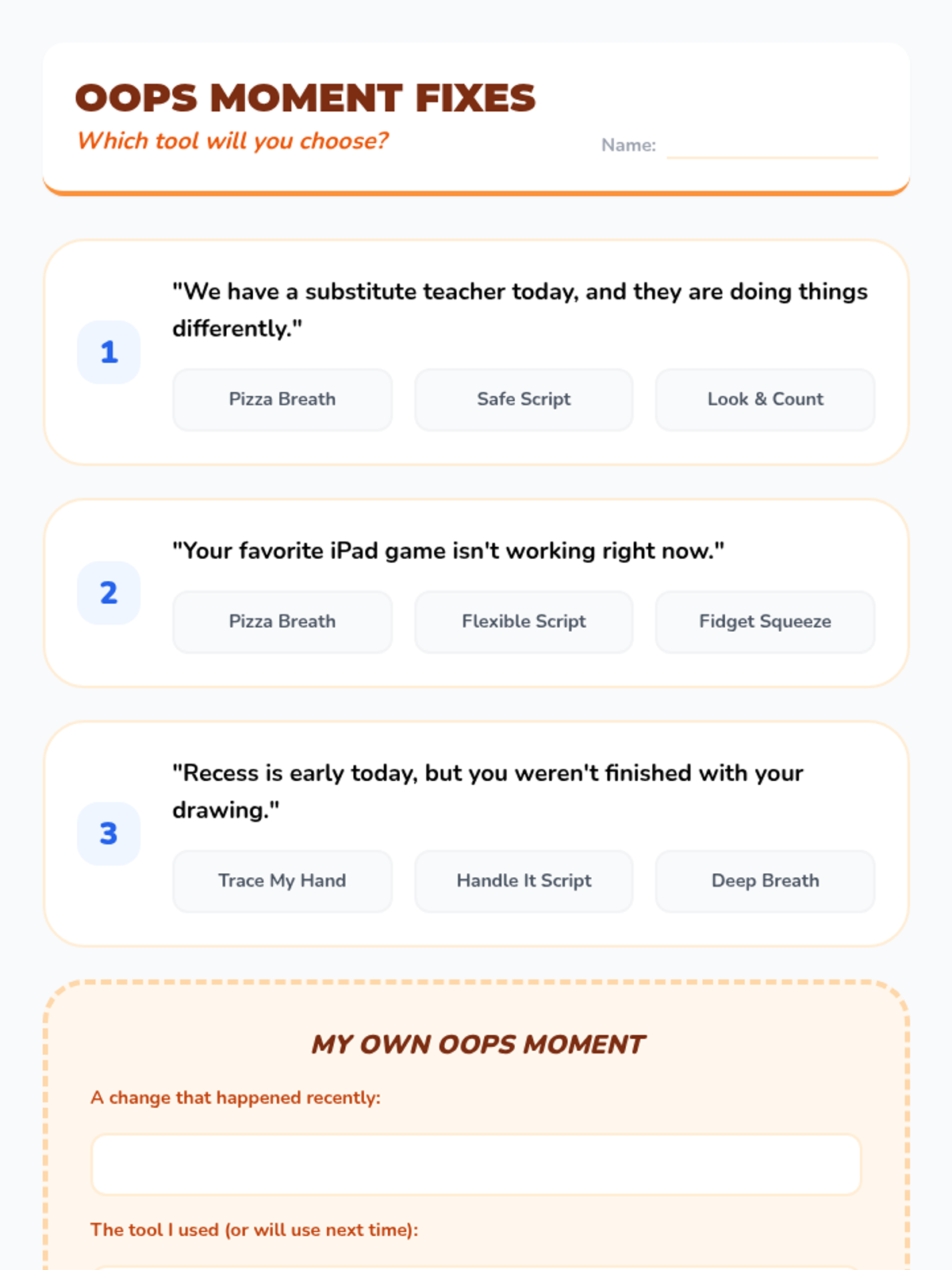
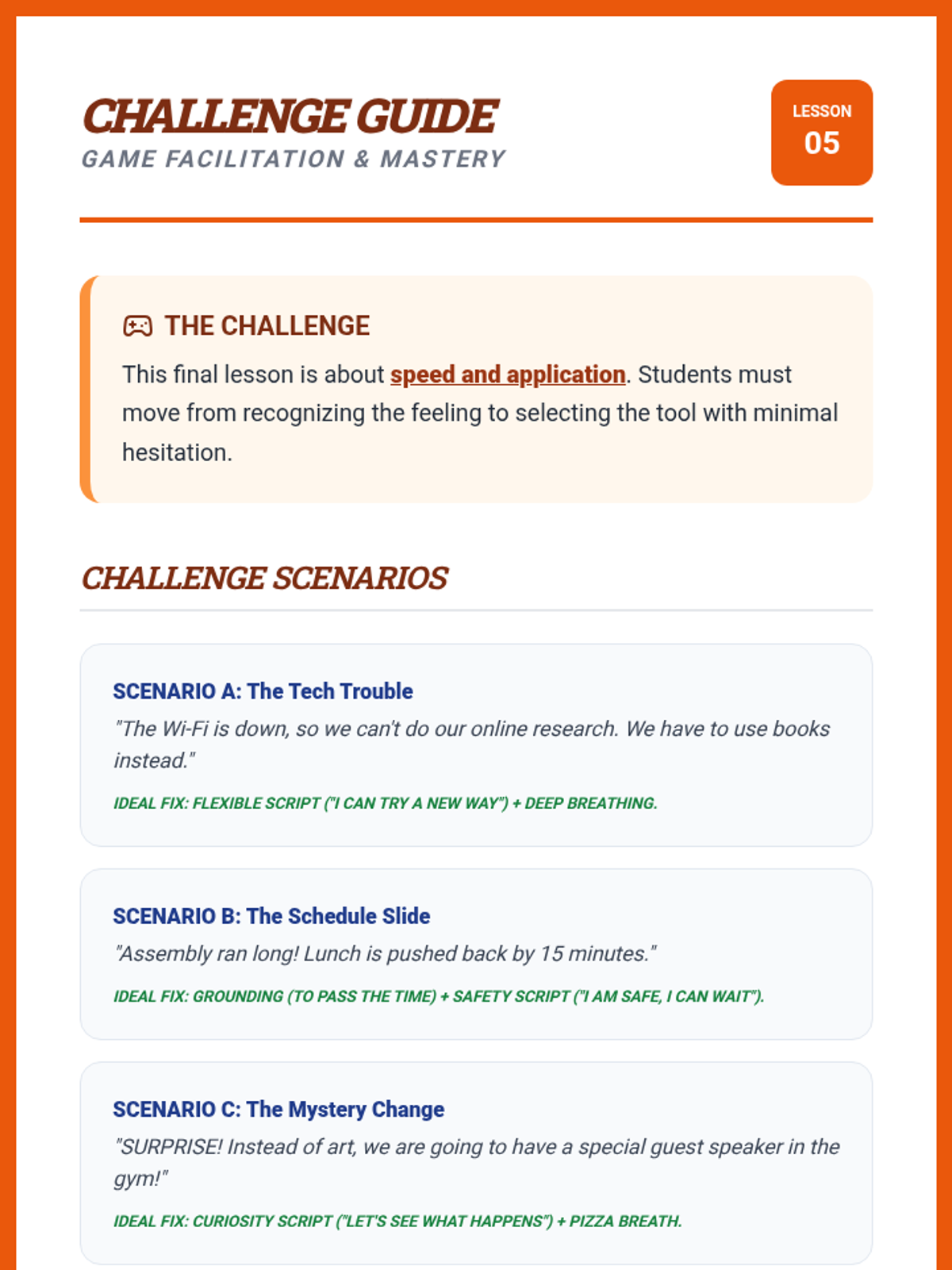
Students participate in a 'Toolbox Challenge' game where they match specific coping strategies to various change-based scenarios.
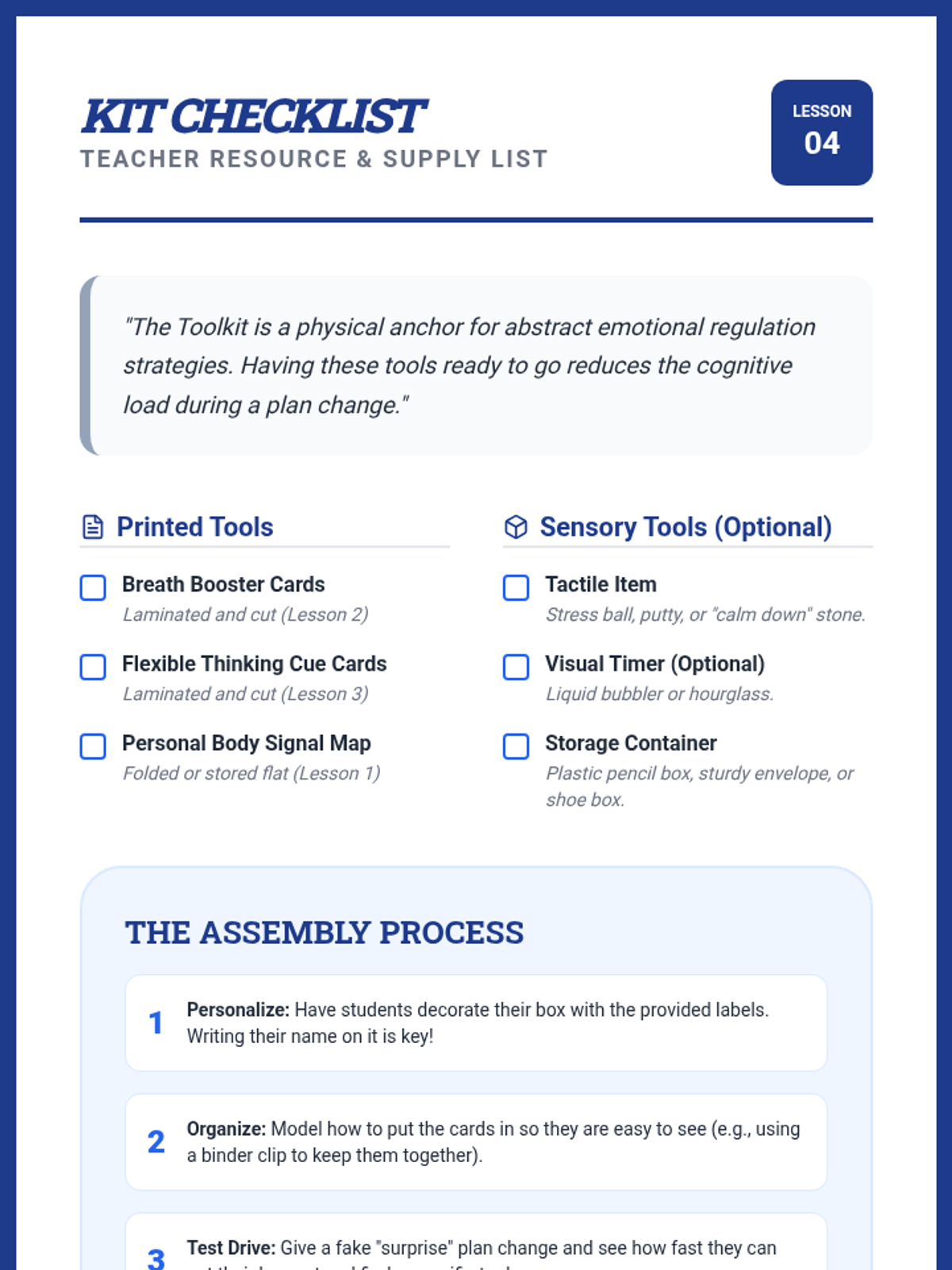
Students physically assemble their Coping Toolbox, organizing their breathing cards, self-talk scripts, and sensory tools into a personal kit.
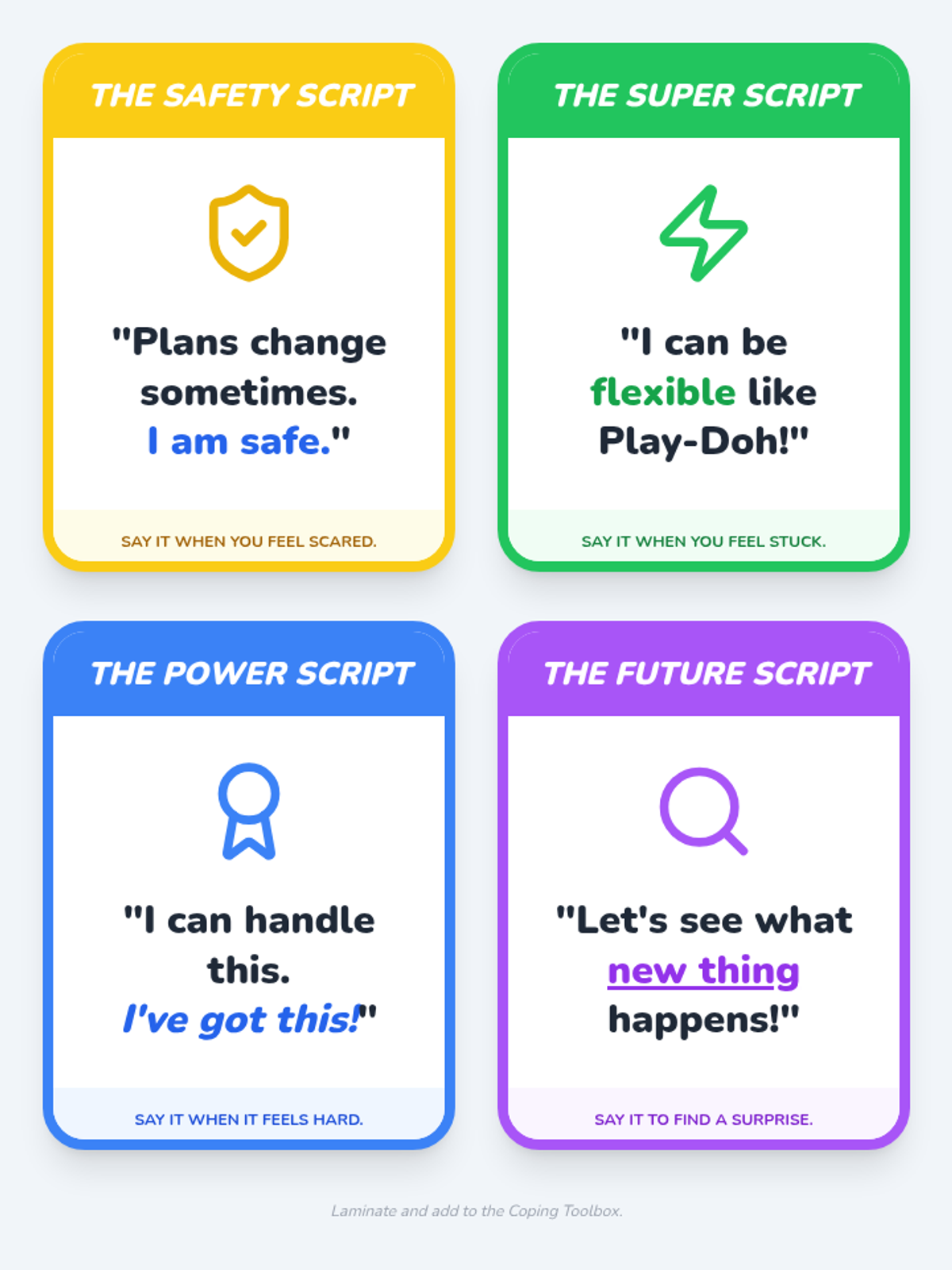
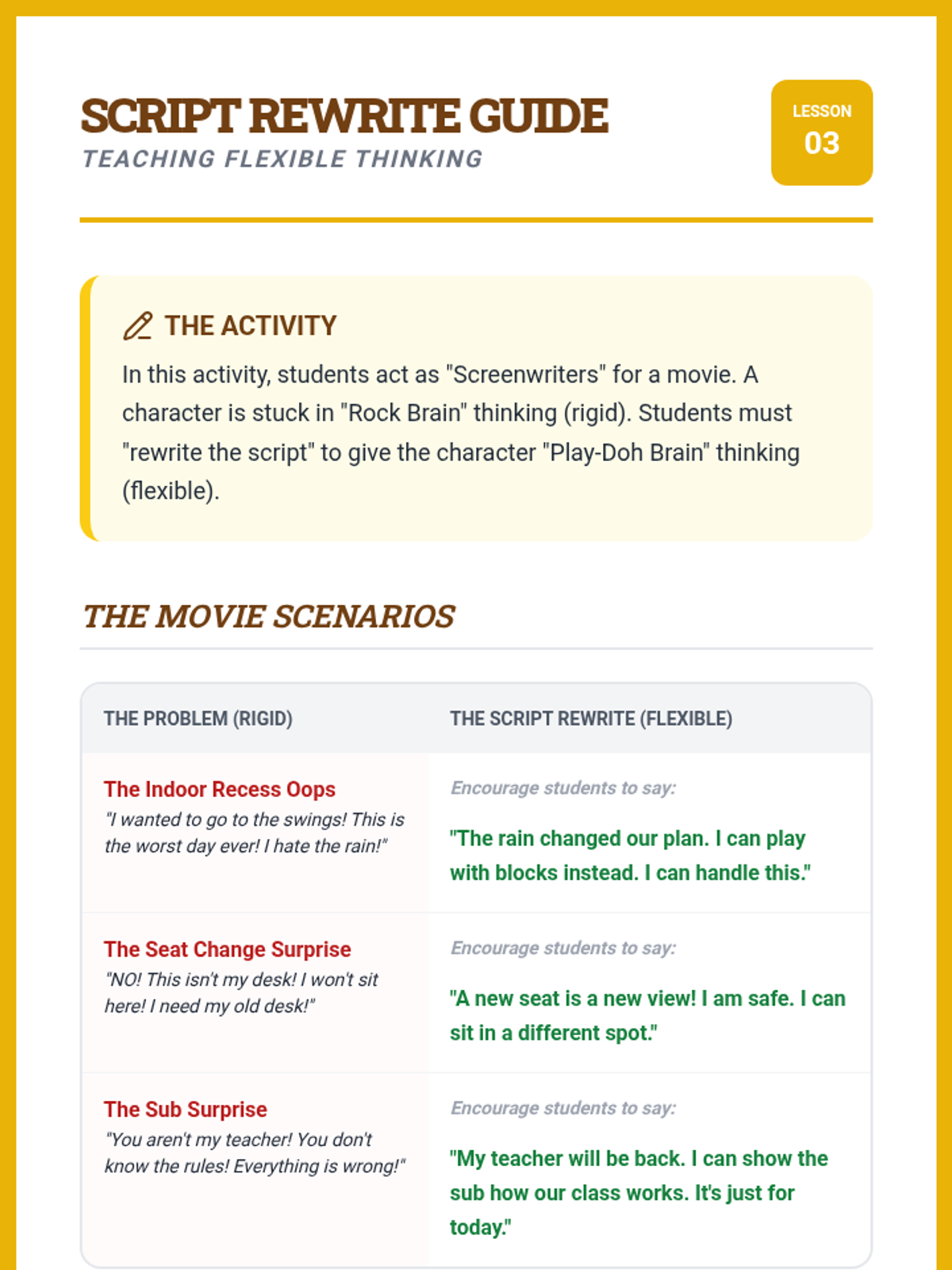
Students shift from rigid to flexible thinking by practicing positive self-talk scripts and creating visual cue cards for difficult moments.
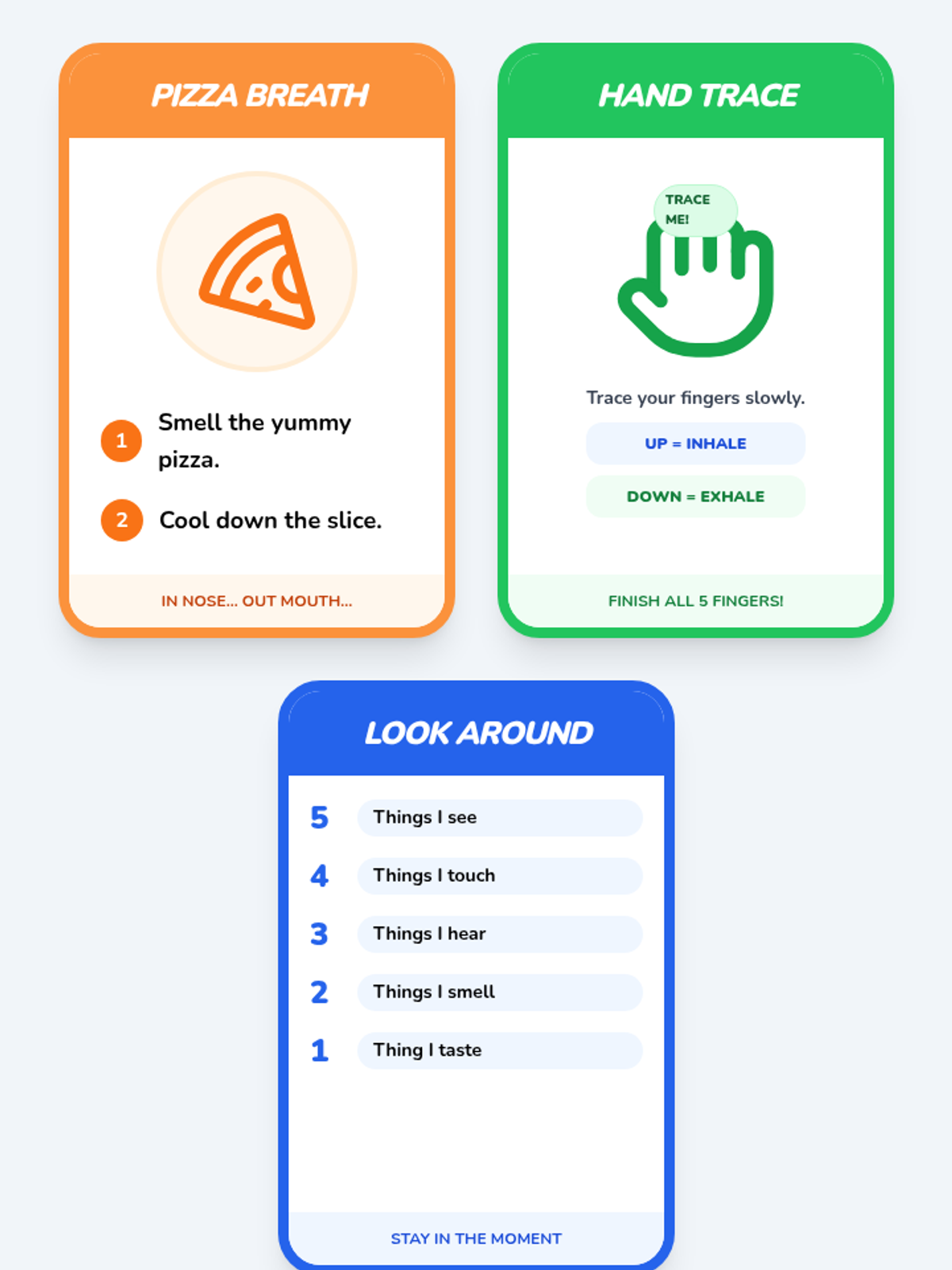
Students learn and practice specific breathing and grounding techniques (5-finger breathing, pizza breath) to lower their physiological arousal during transitions.
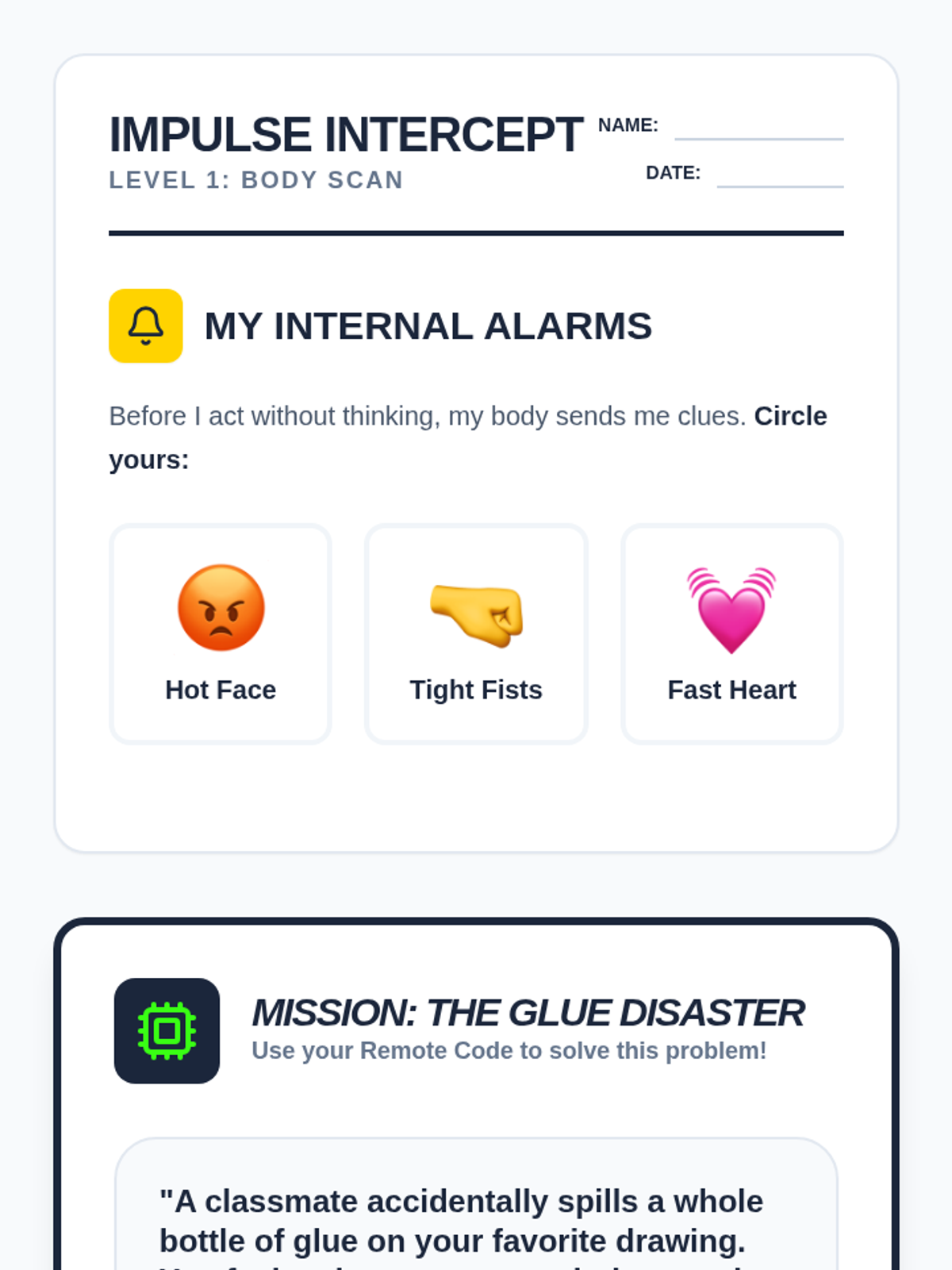
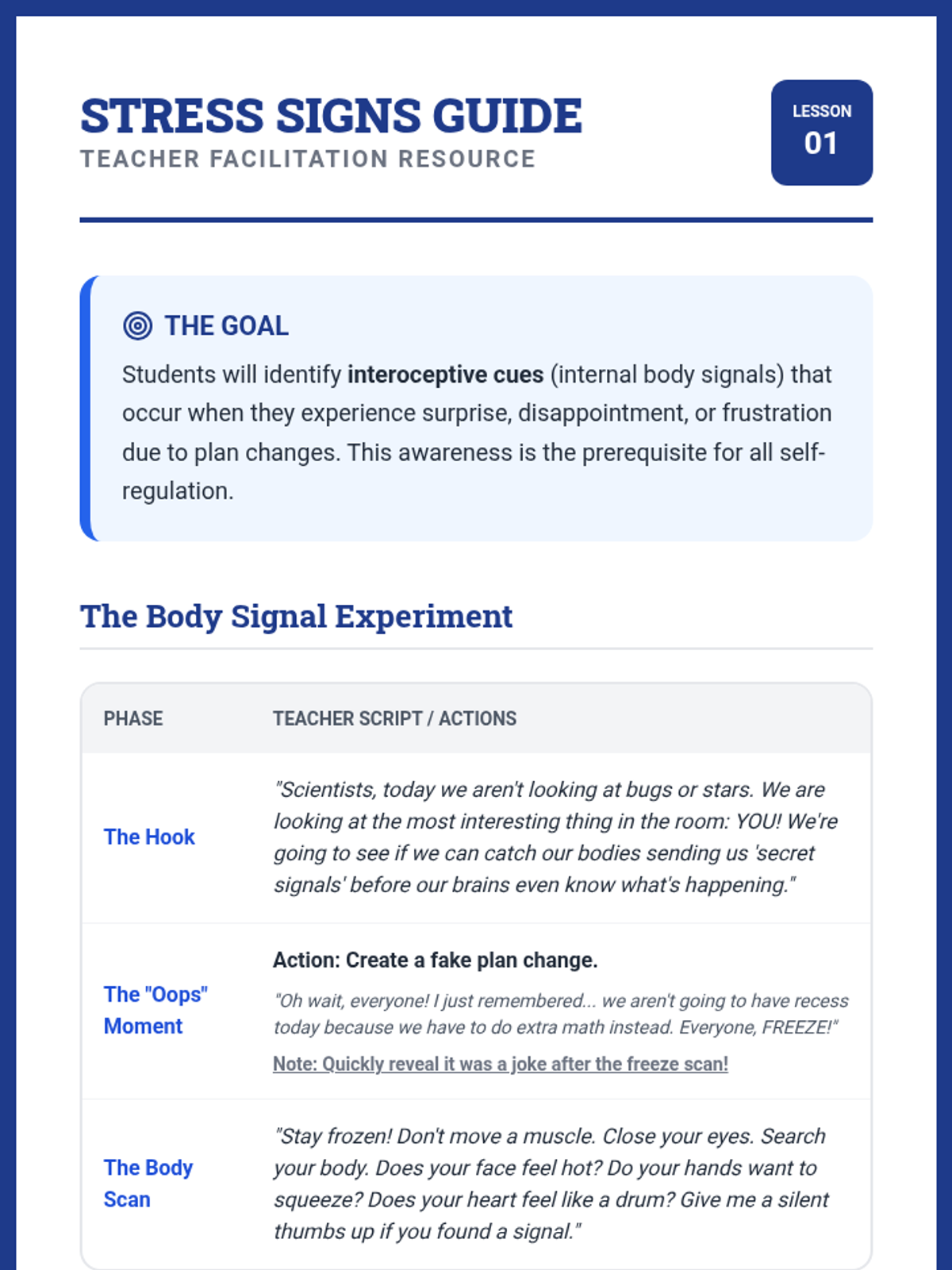
Students explore interoception by identifying how their bodies feel when frustrated or surprised. They create a 'Stress Map' to visualize physical signals like heart racing or tight fists.