Lenny LearningLenny
Create
Explore
Workspace
LoginSign up
MathEnglish Language ArtsScience & EngineeringSocial StudiesGlobal LanguagesHealth & Physical EducationSpecial EducationCounseling & Life SkillsArts & CreativityESL
Lenny LearningLenny
Lenny Learning
About
Training
Pricing
Support
Contact
© 2026 Lenny Learning Inc.
Counseling & Life SkillsSelf-AwarenessBasic Emotion RecognitionComplex Emotion IdentificationEmotional Nuance & Mixed FeelingsBuilding Positive Self-ImageRecognizing Strengths & Growth AreasAccurate Self-AssessmentPersonal Values IdentificationCultural & Individual Identity ExplorationValues-Based Decision MakingSelf-ManagementStop-and-Think StrategiesDelaying GratificationIndependent Impulse ManagementIdentifying Stress TriggersShort-Term Goal SettingSMART Goals DevelopmentGoal Monitoring & AdjustmentBuilding Perseverance & ResilienceInternal Motivation DevelopmentComprehensive Stress Reduction PlanningSocial AwarenessRecognizing Others' FeelingsDemonstrating EmpathyRespecting Individual DifferencesUnderstanding Cultural DiversityComplex Empathetic ResponsesMultiple Viewpoint ConsiderationMulti-Perspective AnalysisChallenging Stereotypes & BiasRelationship SkillsActive ListeningClear Verbal & Nonverbal CommunicationBuilding Positive FriendshipsWorking Cooperatively in GroupsCommunicating Personal BoundariesRespecting Others' BoundariesAssertive ExpressionPeaceful Problem-SolvingContributing to Team GoalsComplex Conflict NavigationMediation & NegotiationHealthy Romantic RelationshipsResponsible Decision-MakingDaily Problem IdentificationBrainstorming Multiple SolutionsEvaluating Pros & ConsRecognizing Risks & ConsequencesApplying Ethical FrameworksInformed Risk-Benefit DecisionsRoot Cause AnalysisMindfulnessMindful BreathingBody Scan MeditationDaily Mindfulness ApplicationDaily Self-Care RoutinesBalancing Life DemandsAdvocating for Wellness NeedsMental Health SupportUnderstanding Anxiety SymptomsWorry Management StrategiesProgressive Muscle RelaxationRecognizing Depression SignsBuilding Mood-Supporting RoutinesBehavioral Activation for MoodUnderstanding Grief StagesHealthy Grief CopingCreative Expression of LossBehavioral SupportDaily Check-In ProceduresDaily Goal Setting & ReviewRecognizing Escalation Warning SignsRequesting Breaks & SupportSelf-Calming During DistressUnderstanding Positive ReinforcementToken Economy ImplementationBehavior Chart TrackingAnalyzing Behavior PatternsIdentifying Antecedents & ConsequencesDetermining Behavior FunctionFunction-Based InterventionsIndividualized Behavior ContractsData-Driven Behavior AdjustmentTherapeutic ApproachesThoughts-Feelings-Behaviors ConnectionRecognizing Thinking PatternsChallenging Negative ThoughtsPositive Self-Talk PracticeThought Record TrackingAdvanced Cognitive RestructuringComprehensive CBT PlansBehavioral Activation TechniquesBuilding Positive ExperiencesExposure Hierarchies for AnxietyPresent-Moment AwarenessNon-Judgmental ObservationSelf-Soothing & DistractionComplex Emotion LabelingReducing Emotional Vulnerability (PLEASE)DEAR MAN CommunicationGIVE Skills for RelationshipsFAST Skills for Self-RespectRadical Acceptance PracticeCrisis Survival Skills (TIPP)Understanding Trauma EffectsTrauma Responses & TriggersIdentifying Trauma FeelingsGrounding TechniquesRegulation During Trauma DistressSafe Place VisualizationProcessing Through NarrativeDeveloping Trauma StoryPersonalized Safety PlanningGroup SupportTurn-Taking & SharingGroup Conversation SkillsSharing in Supportive EnvironmentLearning from Similar ChallengesBuilding Community & BelongingNavigating Peer RelationshipsGroup Skill PracticeGroup Mental Health EducationStress & Anxiety UnderstandingCrisis Support & SafetyKnowing When to Seek HelpIdentifying Mental Health CrisesGrounding During CrisisUsing Crisis HotlinesBuilding Support NetworksAccessing Mental Health ResourcesWarning Signs & Coping StrategiesDeveloping Personal Safety PlansUnderstanding Suicide Warning SignsGatekeeper Skills for PeersDigital LiteracySocial MediaTechnology BasicsProductivity ToolsInternet and Online ResearchWeb Design and PublishingDigital CitizenshipOnline Safety and PrivacyEmerging TechnologiesFinancial LiteracyMaking Financial DecisionsBanking and AccountsConsumer SkillsSaving and InvestingCredit and DebtEmployment and IncomeTaxesInsuranceMajor PurchasesEconomic ConceptsFinancial PlanningCollege & Post-Secondary PlanningCareer ExplorationUnderstanding Post-Secondary OptionsCollege Research & SelectionAdmission RequirementsCollege Application ProcessPersonal Statement WritingFAFSA CompletionScholarship Search & ApplicationsUnderstanding Student LoansContinuing Education PlanningInterview PreparationResearching EmployersCommon Interview QuestionsSTAR Method ResponsesProfessional Interview PresenceVirtual Interview SkillsInterview Follow-UpJob Search SkillsUnderstanding Job PostingsEffective Job Search StrategiesNetworking for OpportunitiesResume Writing BasicsAction Verbs & AchievementsTailoring Resumes to JobsCover Letter WritingProfessional ReferencesProfessional CommunicationBusiness Email EtiquettePhone & Voicemail ProfessionalismMeeting ParticipationPresentation SkillsProfessional Work EthicTime Management & ProductivityTeamwork & CollaborationAdaptability & FlexibilityProblem-Solving at WorkConstructive FeedbackWorkplace RightsUnderstanding Employment LawsPay & Benefits UnderstandingWorkplace SafetyAnti-Discrimination & Harassment

Crisis Support & Safety

SequencesLessonsMaterialsVideos
  1. Counseling & Life Skills

Crisis Support & Safety

SequencesLessonsMaterialsVideos

Identifies mental health crises and suicide warning signs while developing personal safety plans and grounding techniques. Equips users with peer gatekeeper skills and direct pathways to professional crisis resources and hotlines.

Knowing When to Seek HelpBehavioral red flags, mental health warning signs, and physical indicators requiring immediate professional intervention. Establishes criteria for accessing emergency services, hotlines, and school-based support systems.
Grounding During CrisisImmediate sensory-based techniques and mental anchors to stabilize individuals during acute emotional distress or panic attacks. Equips practitioners with specific exercises for re-establishing presence and focus in high-stress moments.
Building Support NetworksIdentification of trusted peers, community resources, and professional services to establish reliable safety nets. Develops communication strategies and outreach protocols for navigating personal or mental health crises.
Lesson
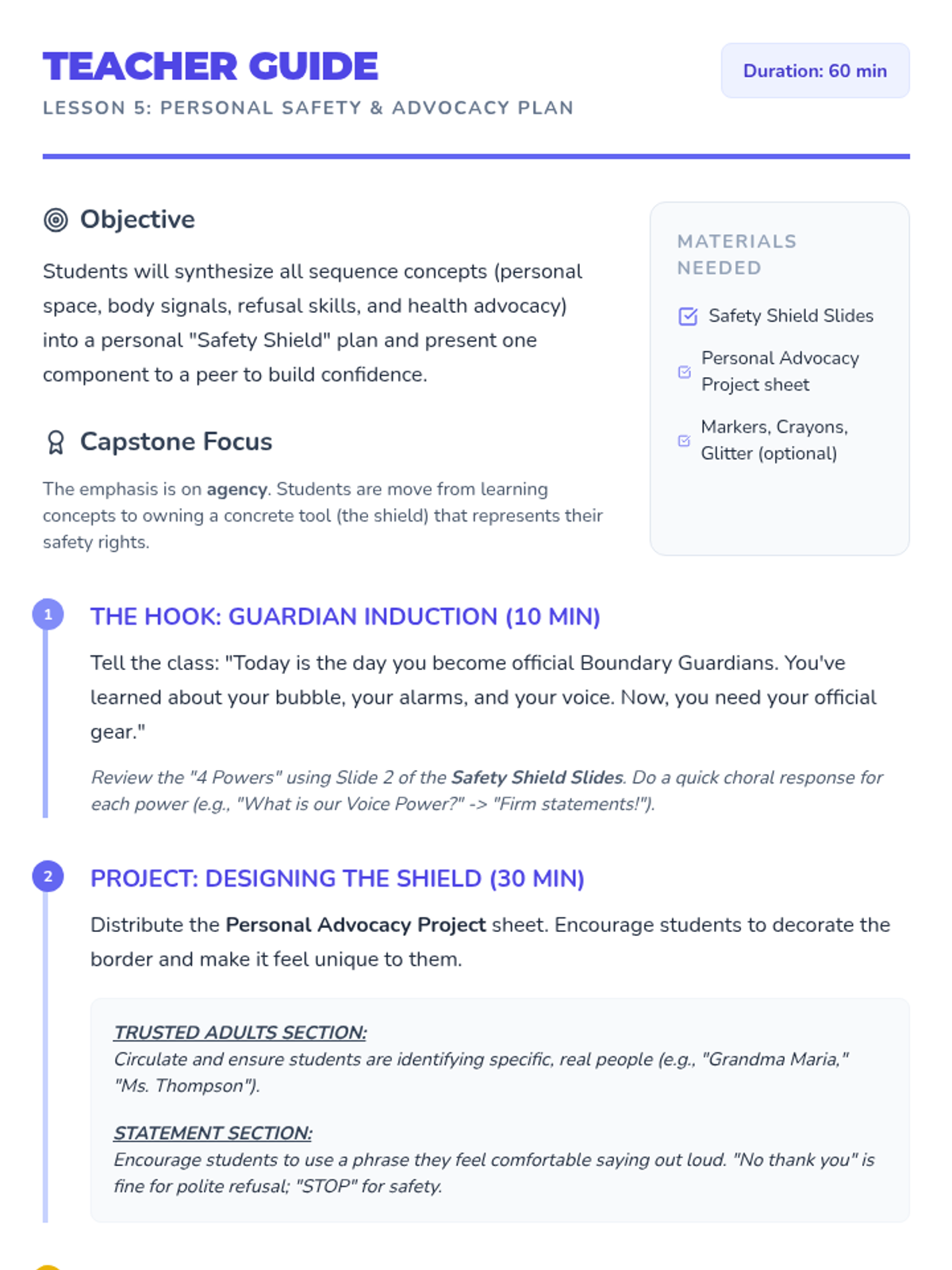
Safety Shield Slides
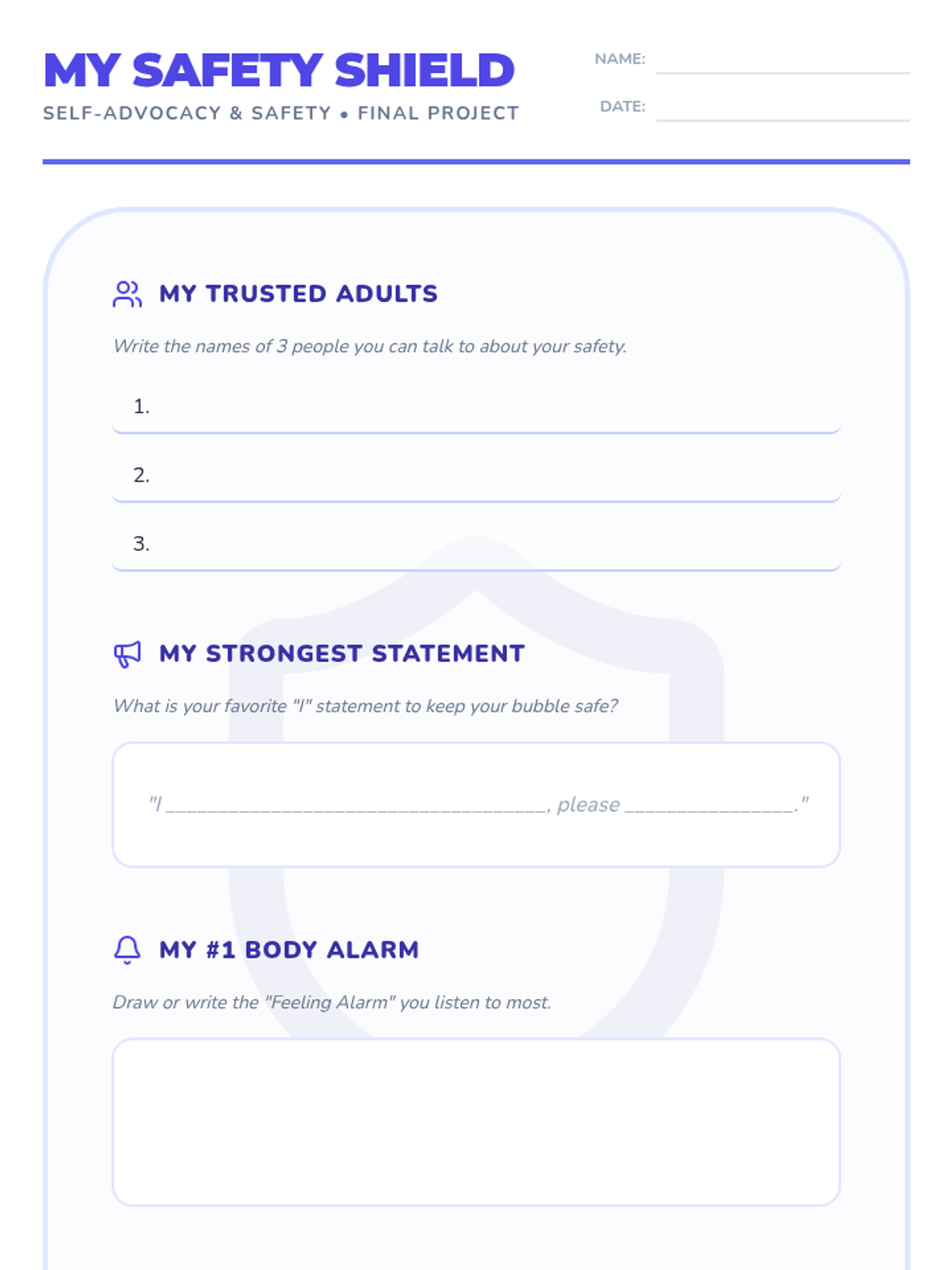
Personal Advocacy Project
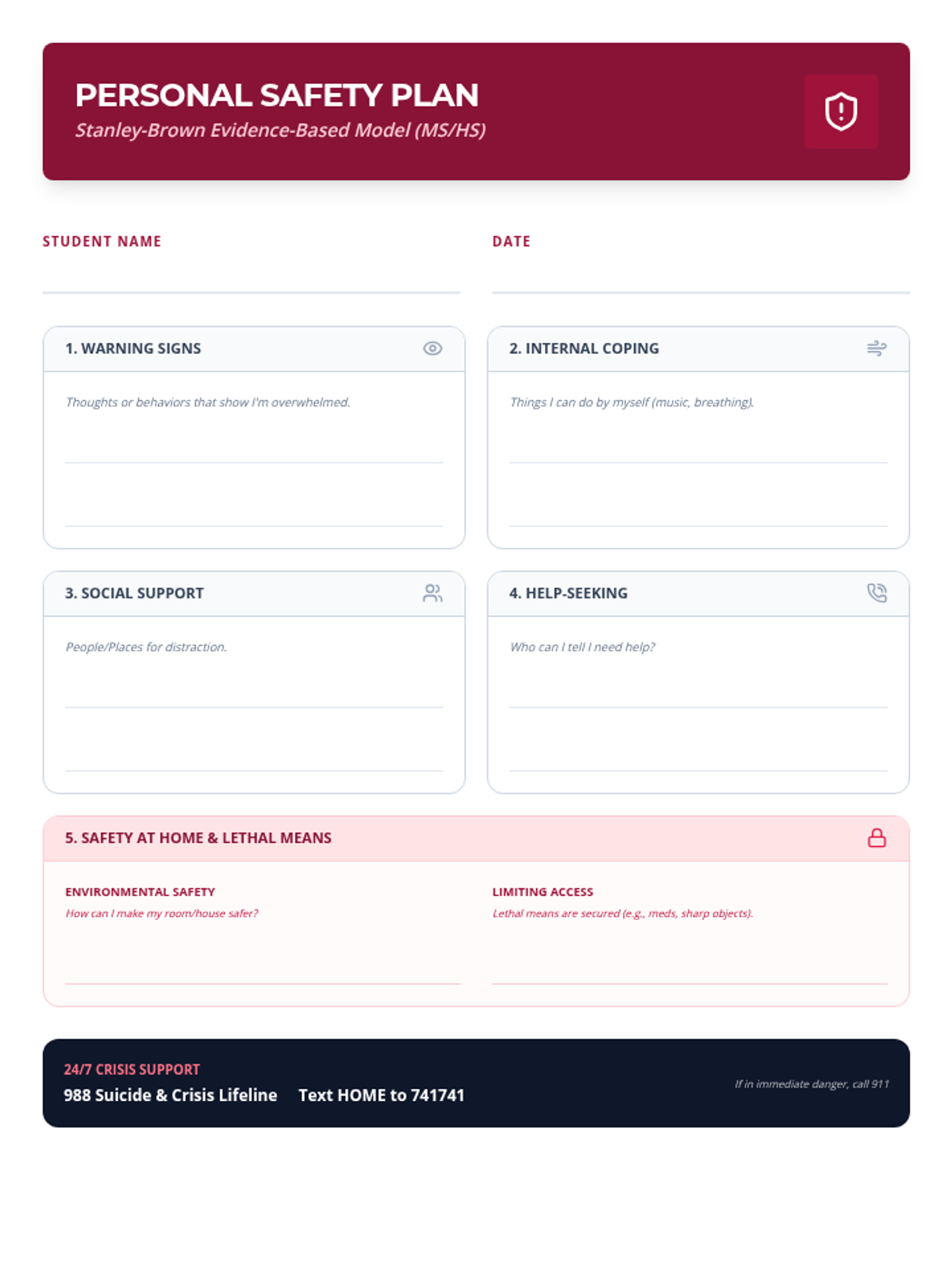
Safety Plan Teacher Guide

Creating a Personal Safety and Advocacy Plan

Students synthesize the sequence's concepts by creating a personal advocacy card. This tool lists their trusted adults, preferred boundary statements, and a checklist for when to seek the nurse or counselor. The lesson concludes with students presenting one part of their plan to a partner to reinforce confidence.

Lenny Avatar
Lenny
1/18
Lesson
Body Detective Slides
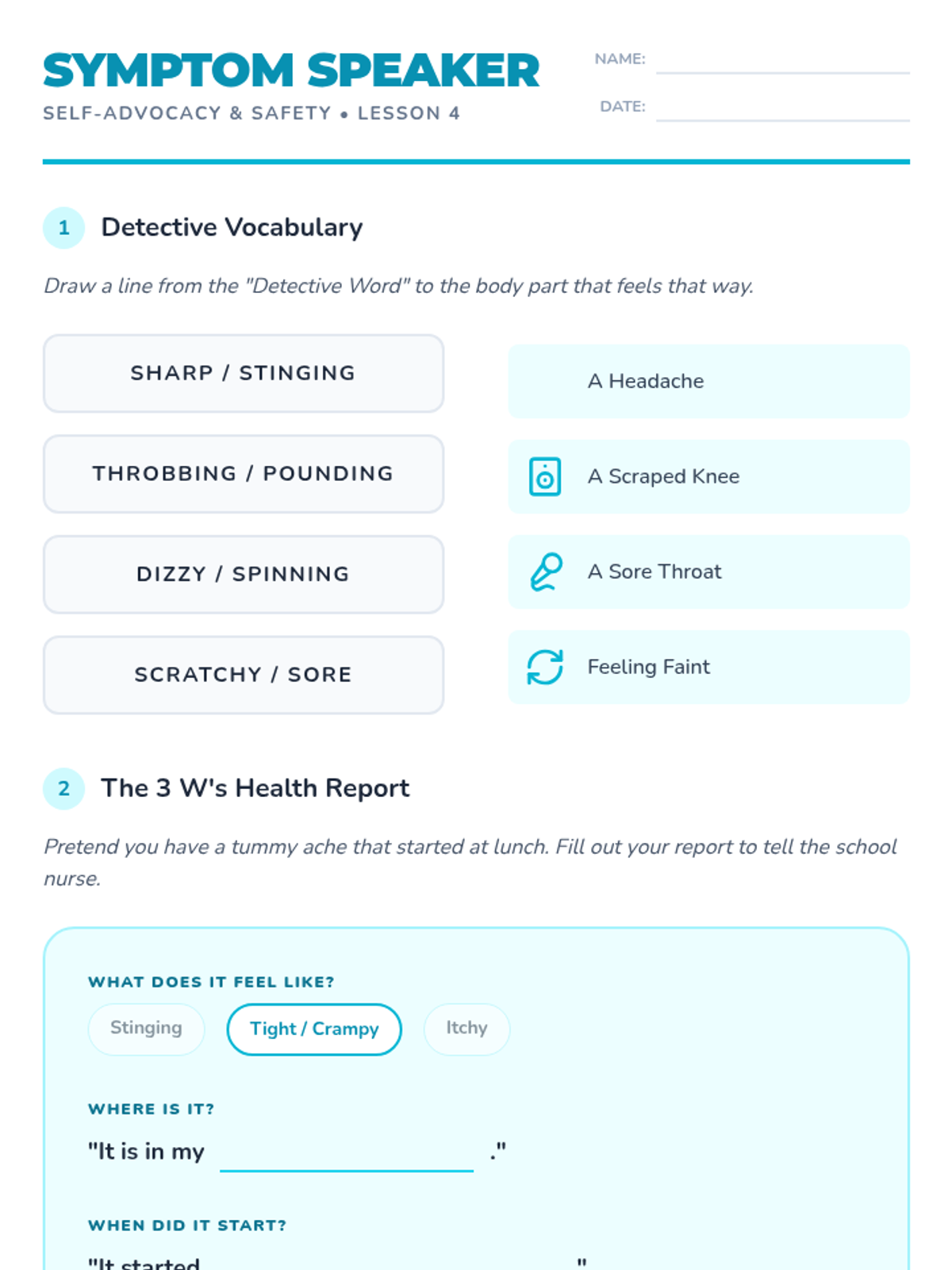
Symptom Speaker Worksheet
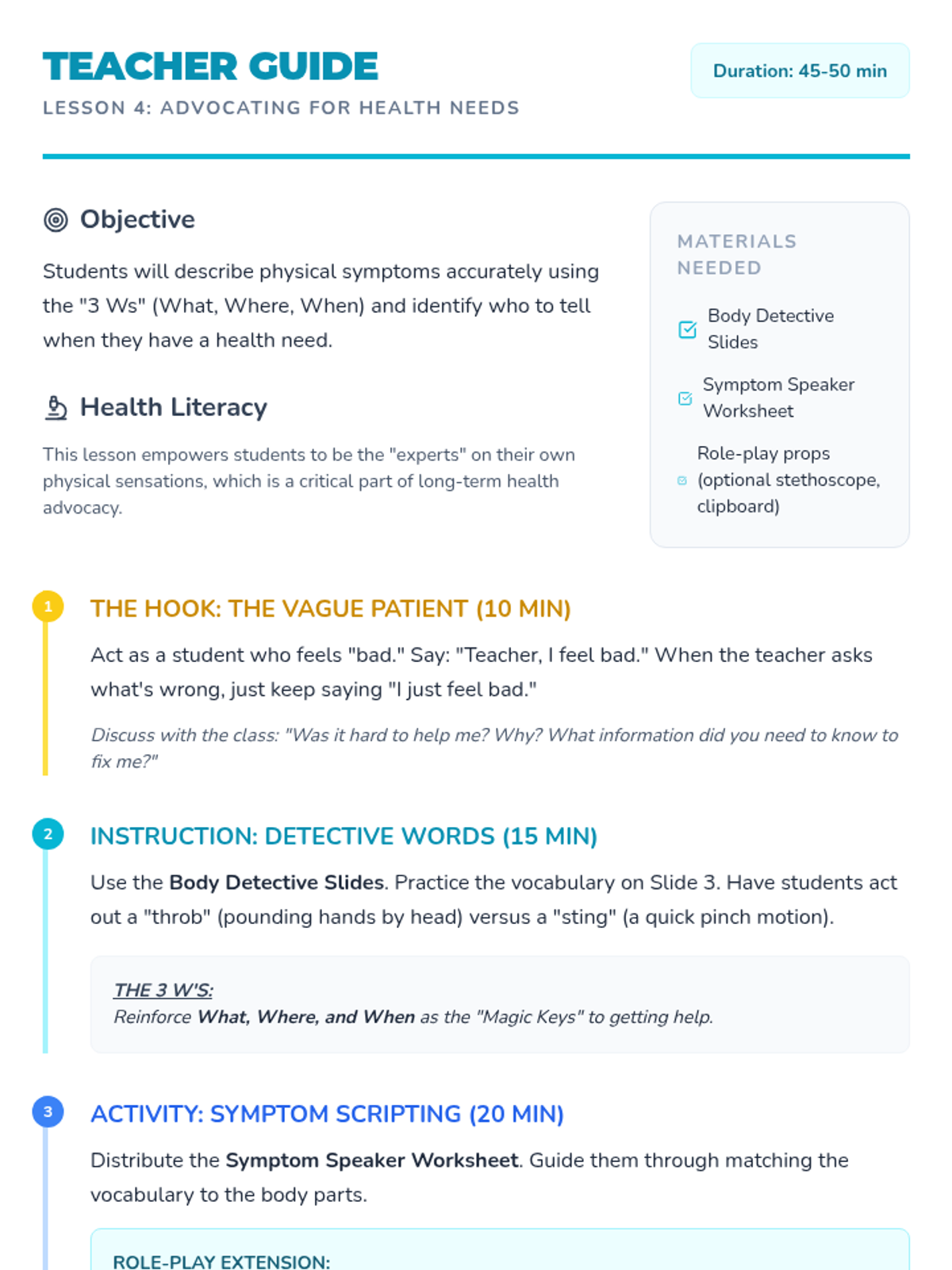
Health Advocacy Teacher Guide

Advocating for Health Needs

This lesson shifts focus to physical health advocacy, teaching students how to describe symptoms accurately to a school nurse or parent. Students role-play explaining pain or illness clearly to ensure they receive appropriate care.

Lenny Avatar
Lenny
1/18
Lesson
Power of No Slides
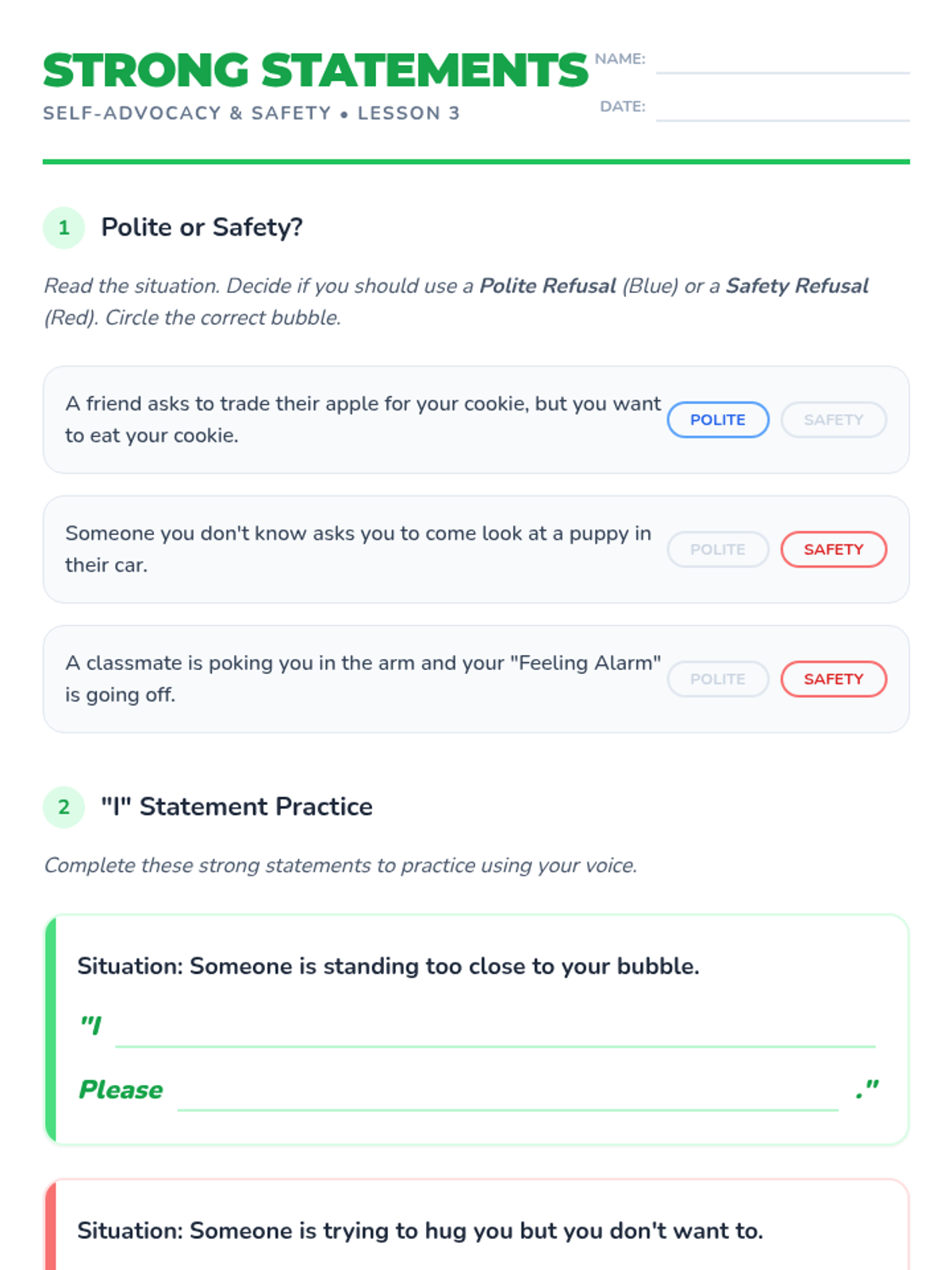
Strong Statements Practice Sheet
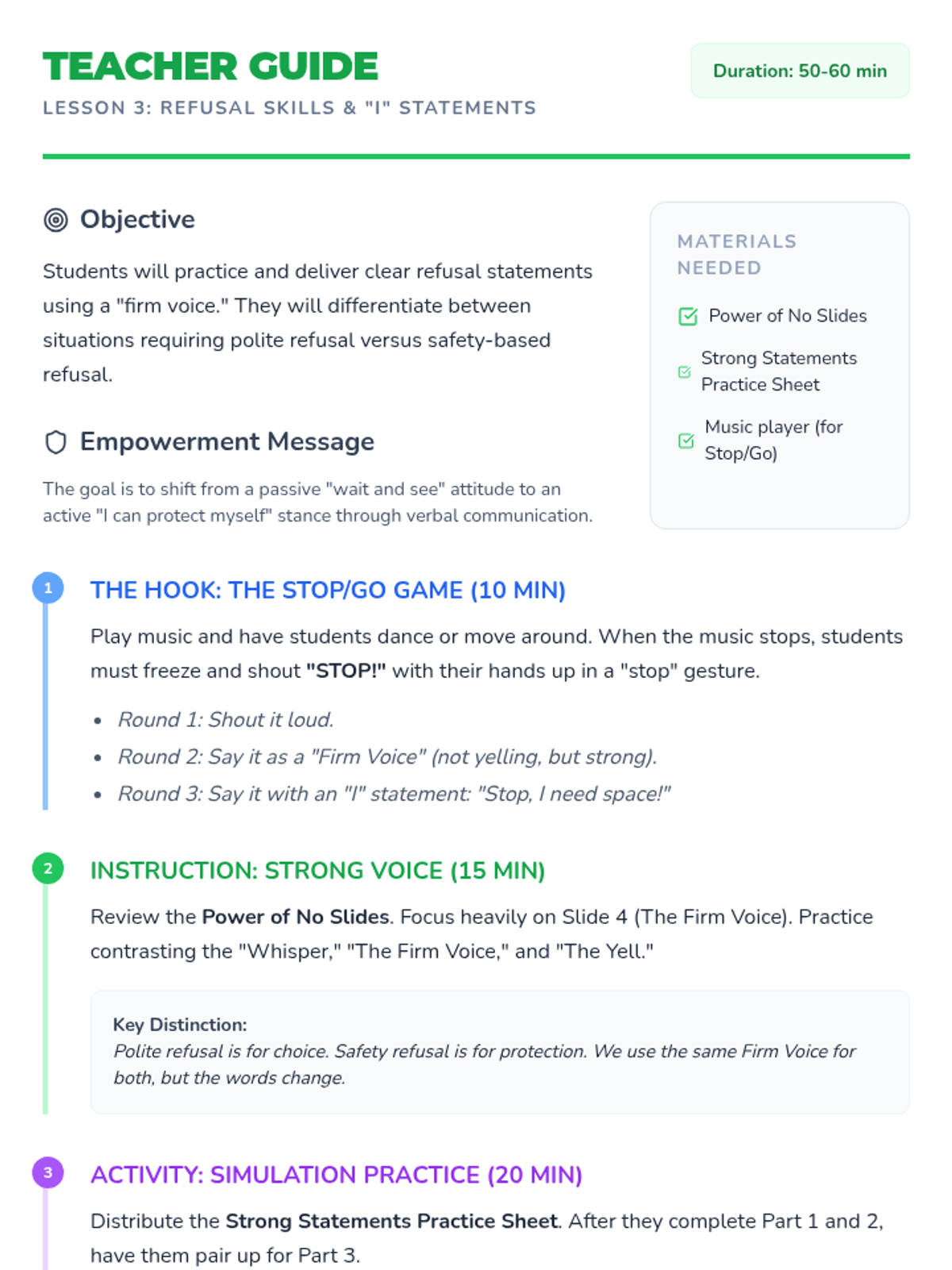
Refusal Skills Teacher Guide

Using Refusal Skills and 'I' Statements

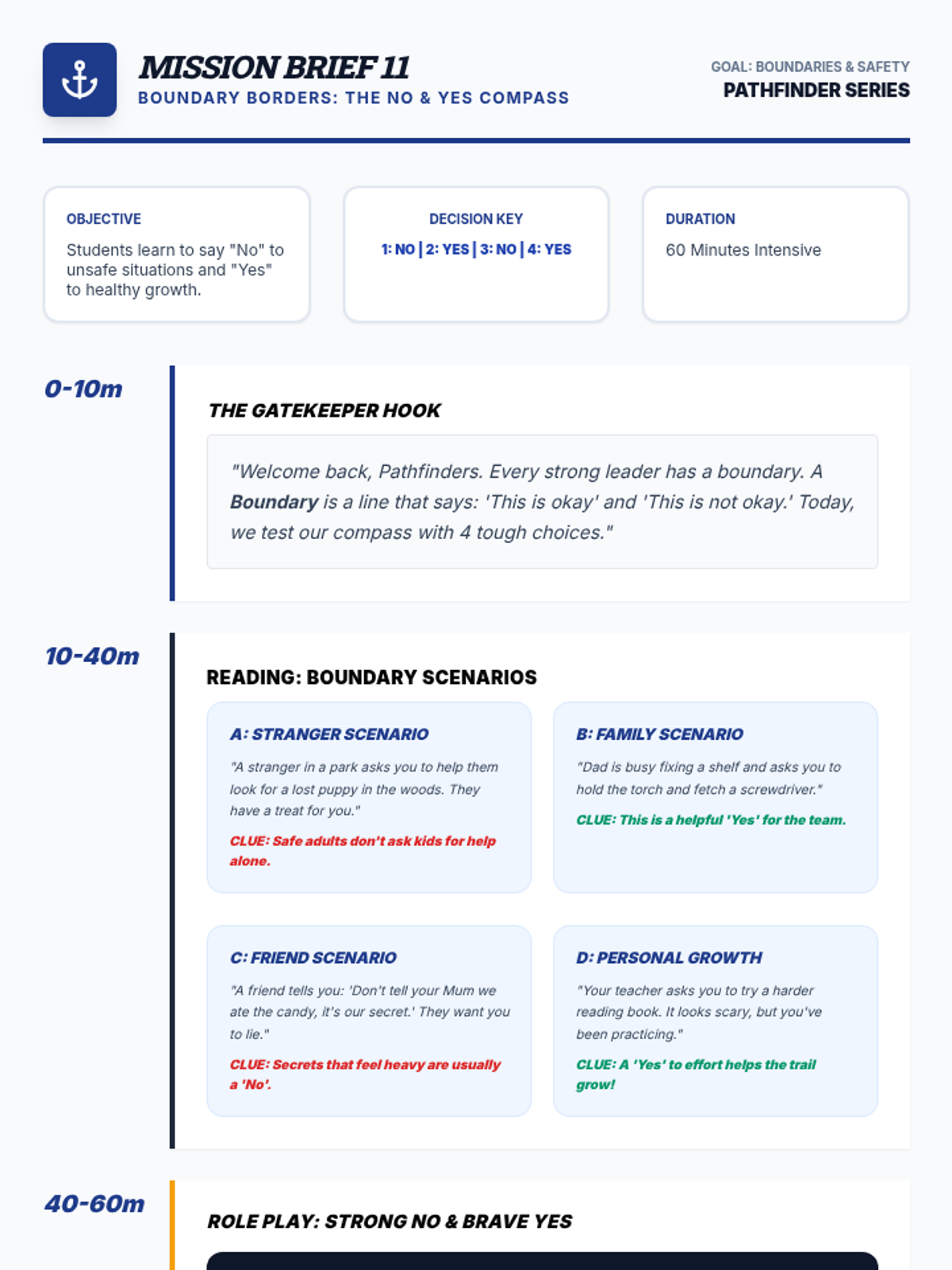
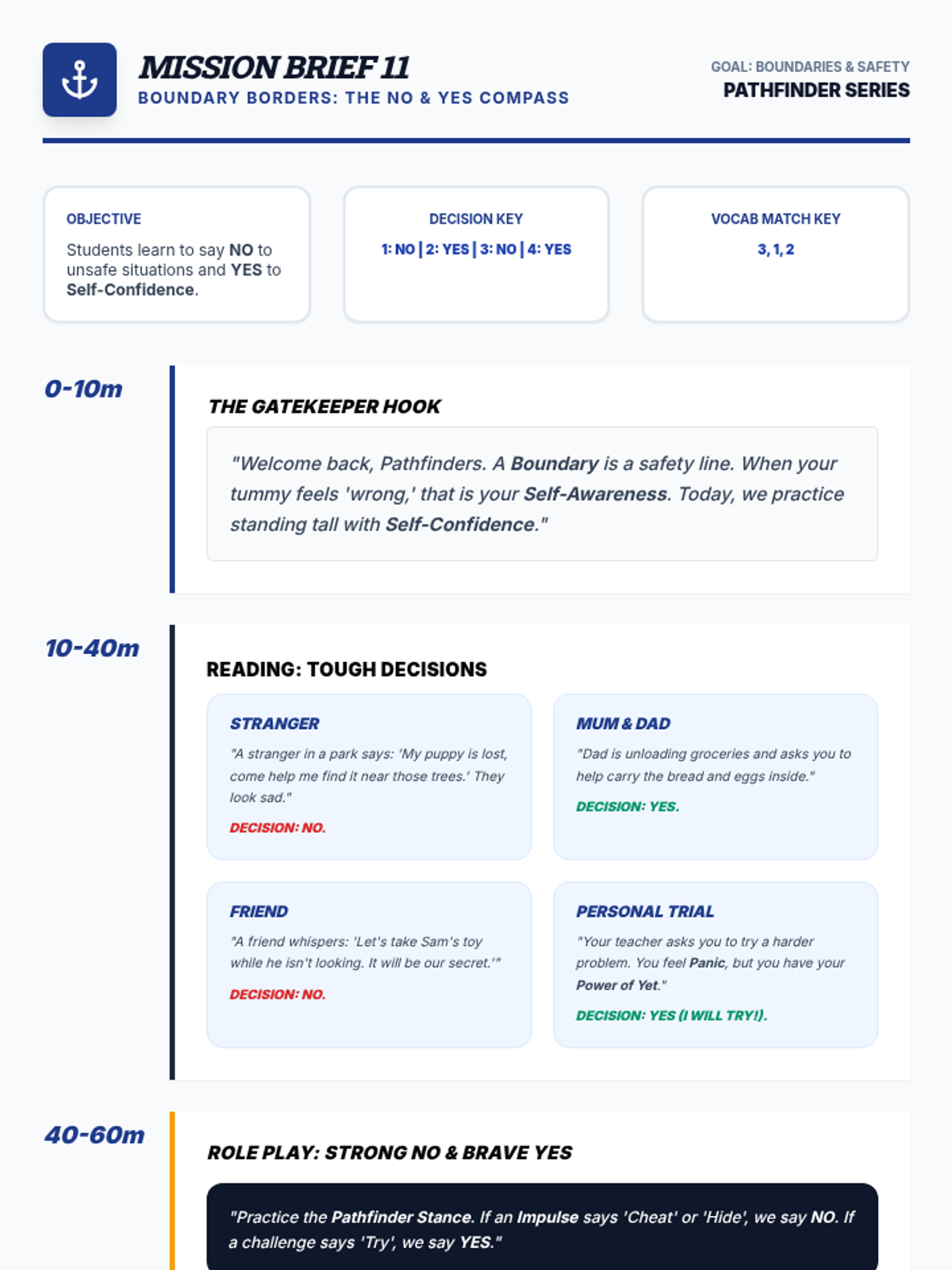
Students learn standardized phrases to enforce boundaries, such as 'I don't like that, please stop' or 'I need space.' The lesson focuses on the power of the word 'No' and differentiates between polite refusal and safety refusal.

Lenny Avatar
Lenny
1/18
Lesson
Feeling Alarms Slides
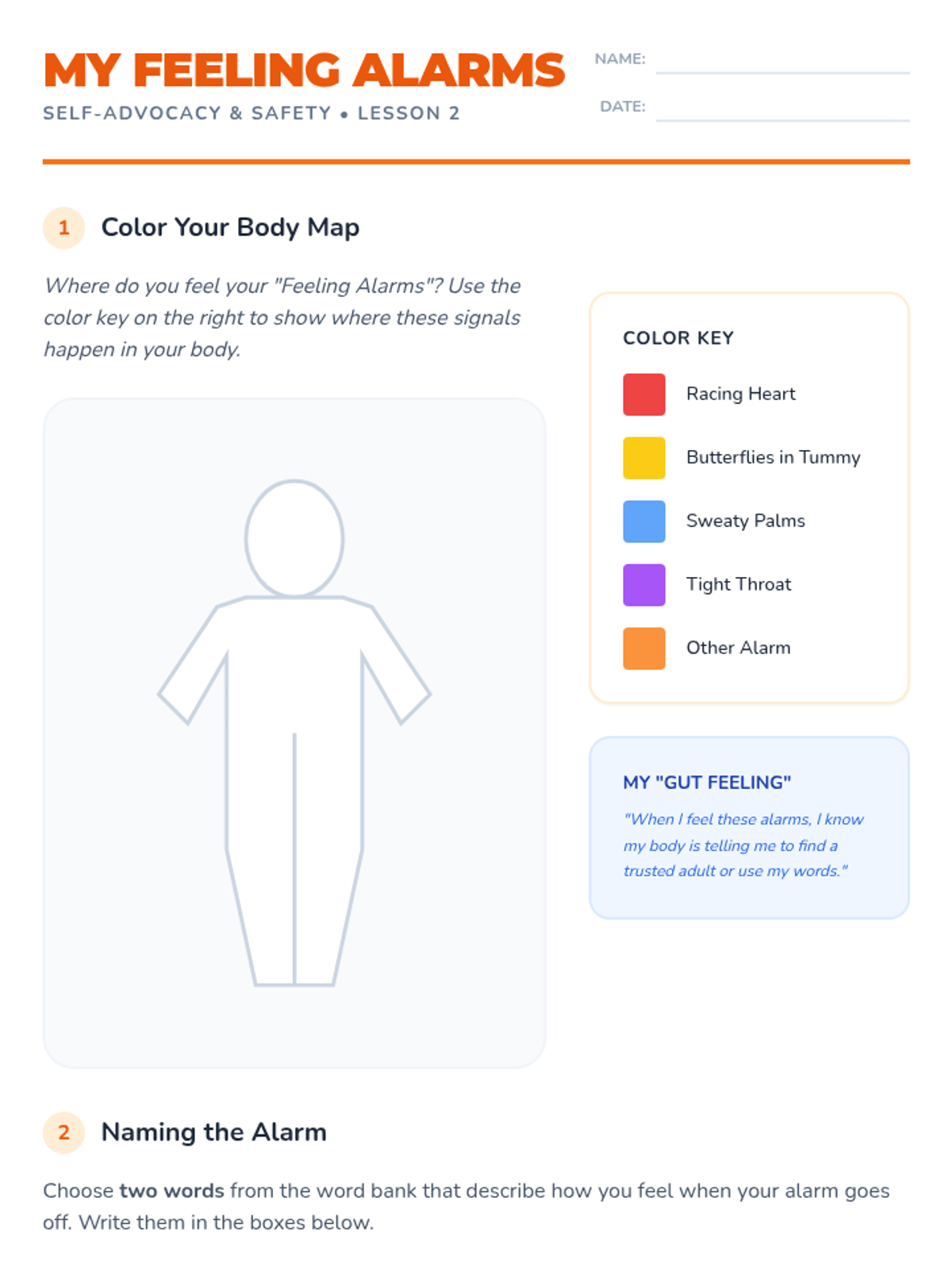
Body Signals Worksheet
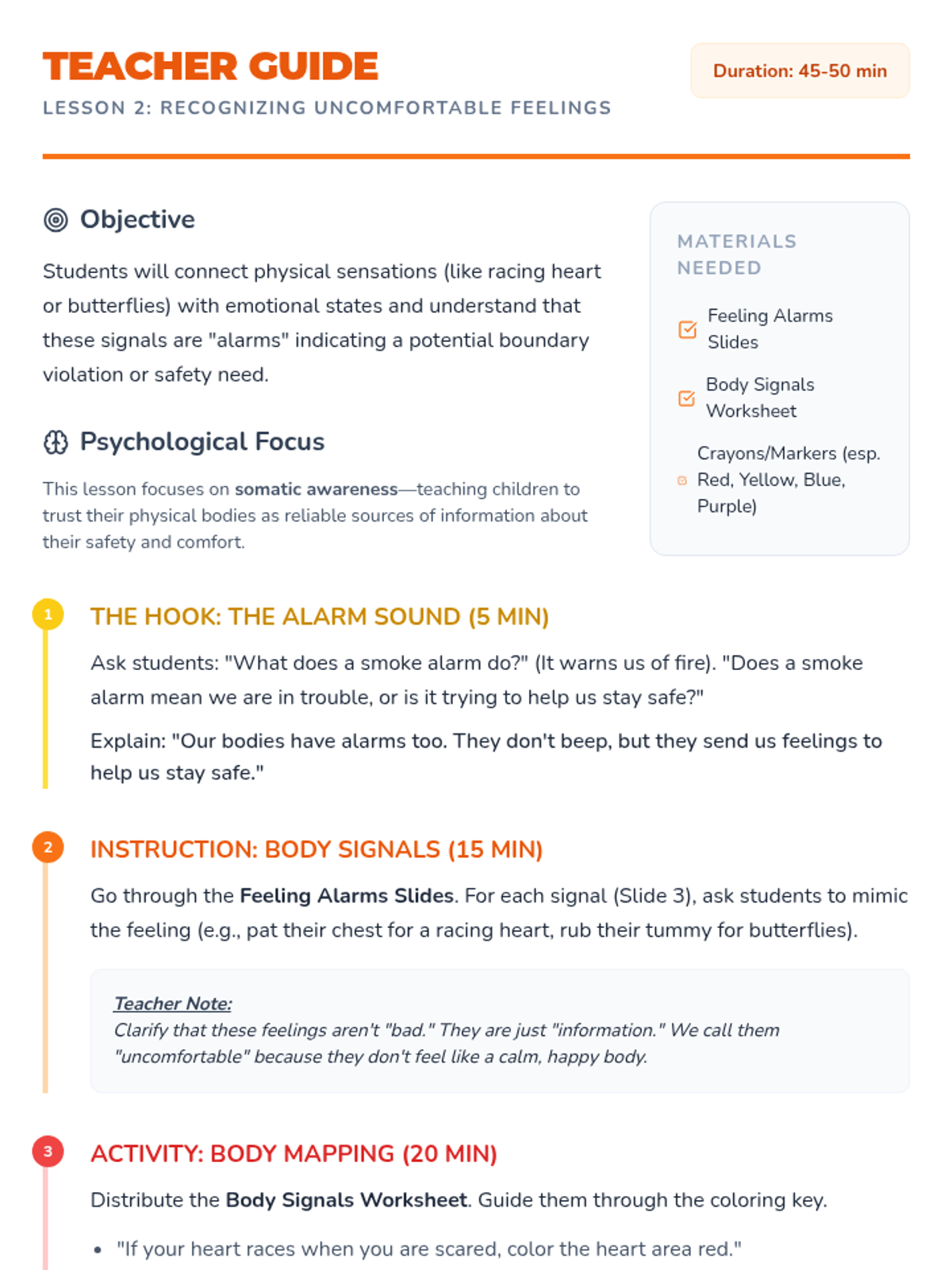
Gut Feelings Teacher Guide

Recognizing Uncomfortable Feelings

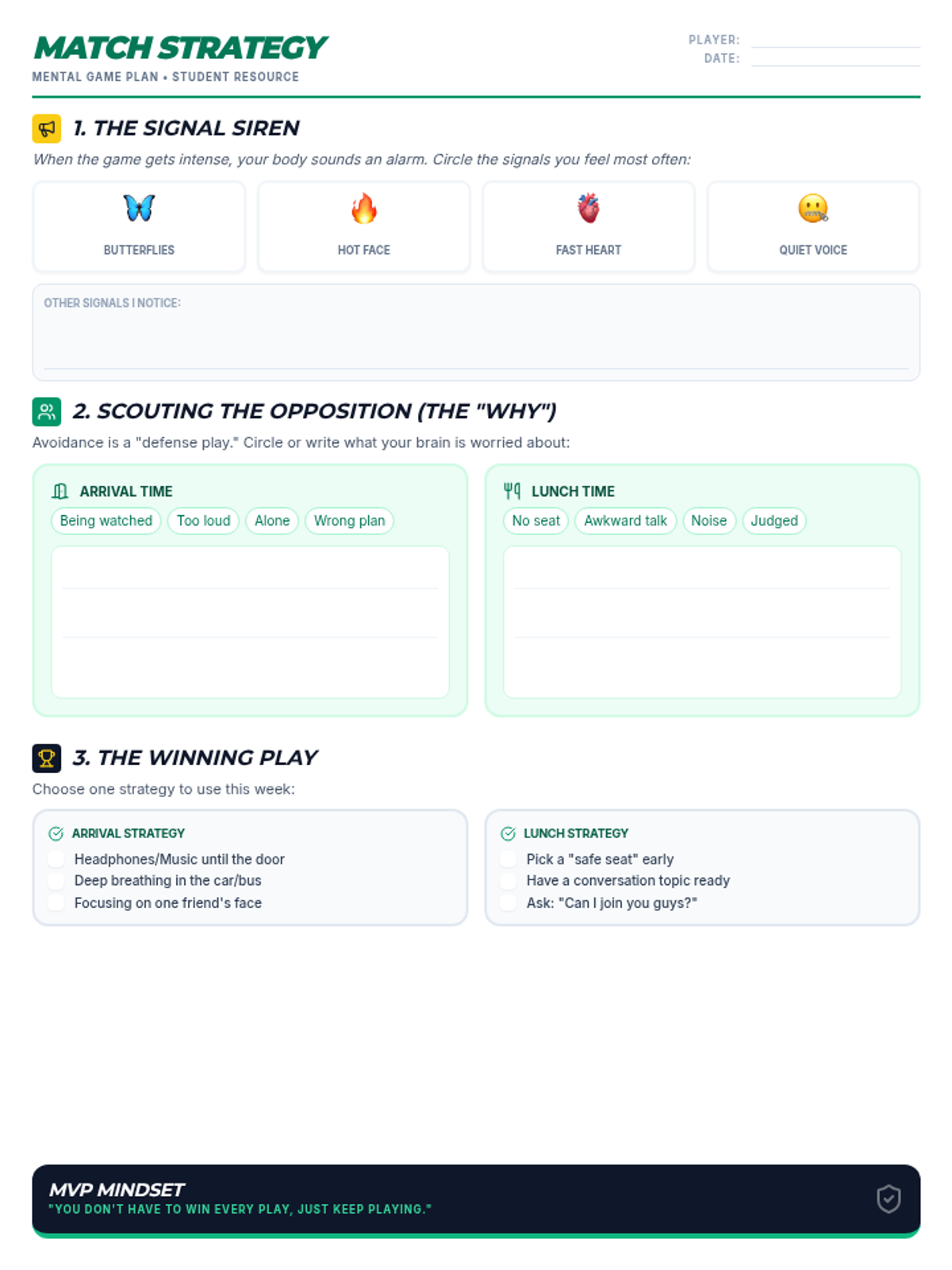
This lesson connects physical sensations (butterflies in stomach, racing heart) with the need for self-advocacy. Students learn to interpret their 'gut feelings' as alarm systems telling them a boundary is being crossed.

Lenny Avatar
Lenny
1/18
Lesson
Bubble Boundaries Slides
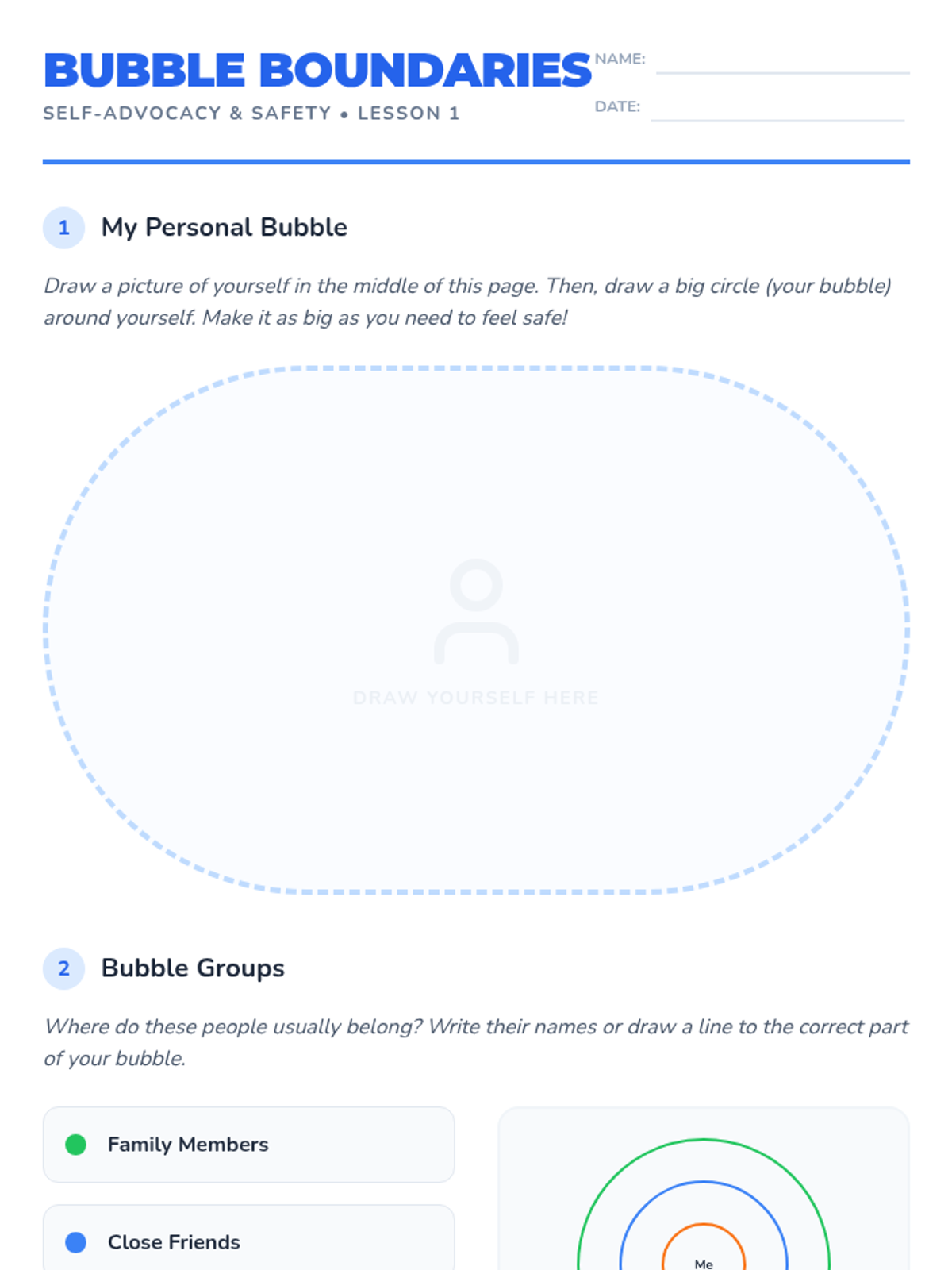
Bubble Boundaries Worksheet
Personal Space Teacher Guide

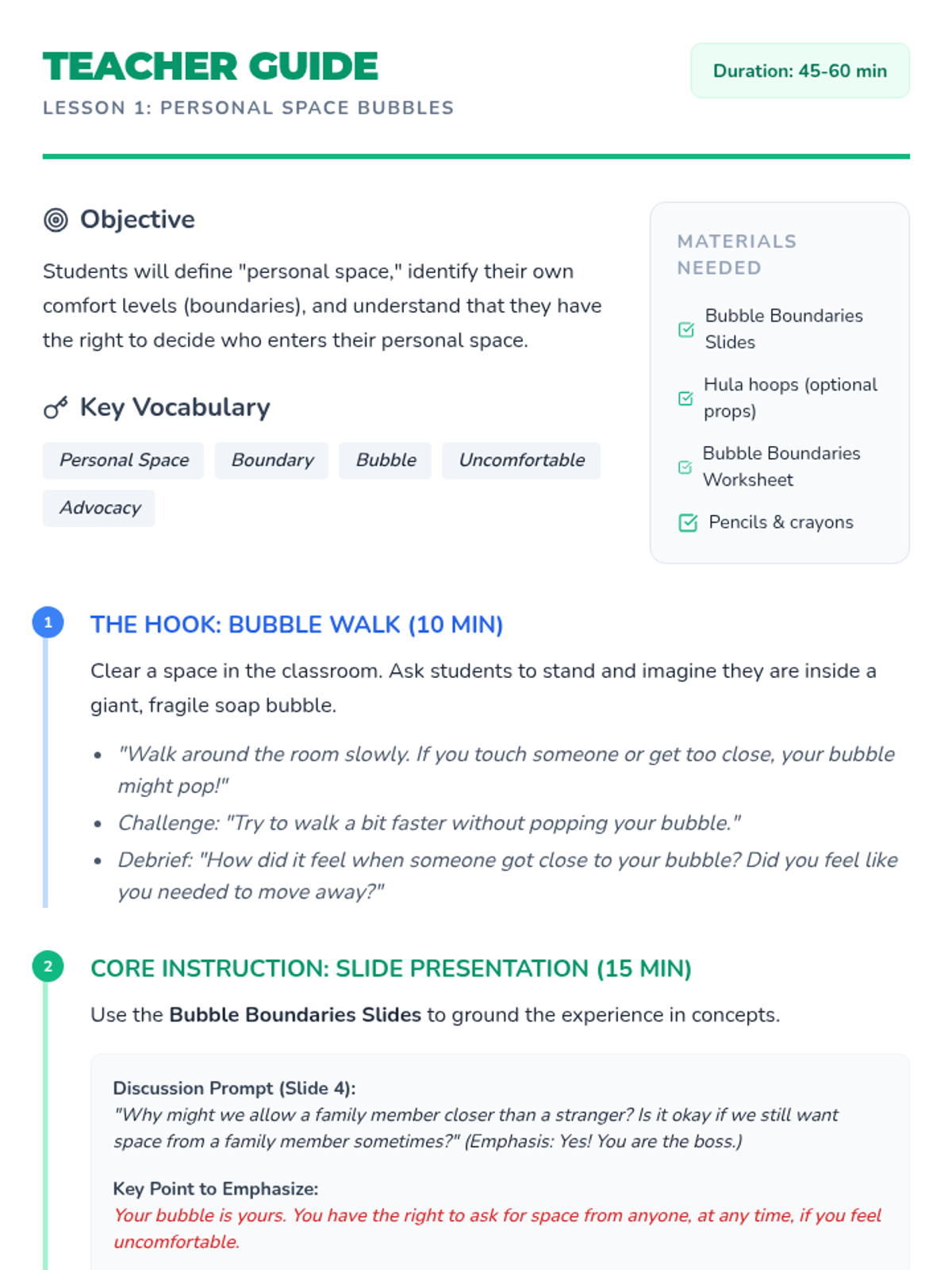
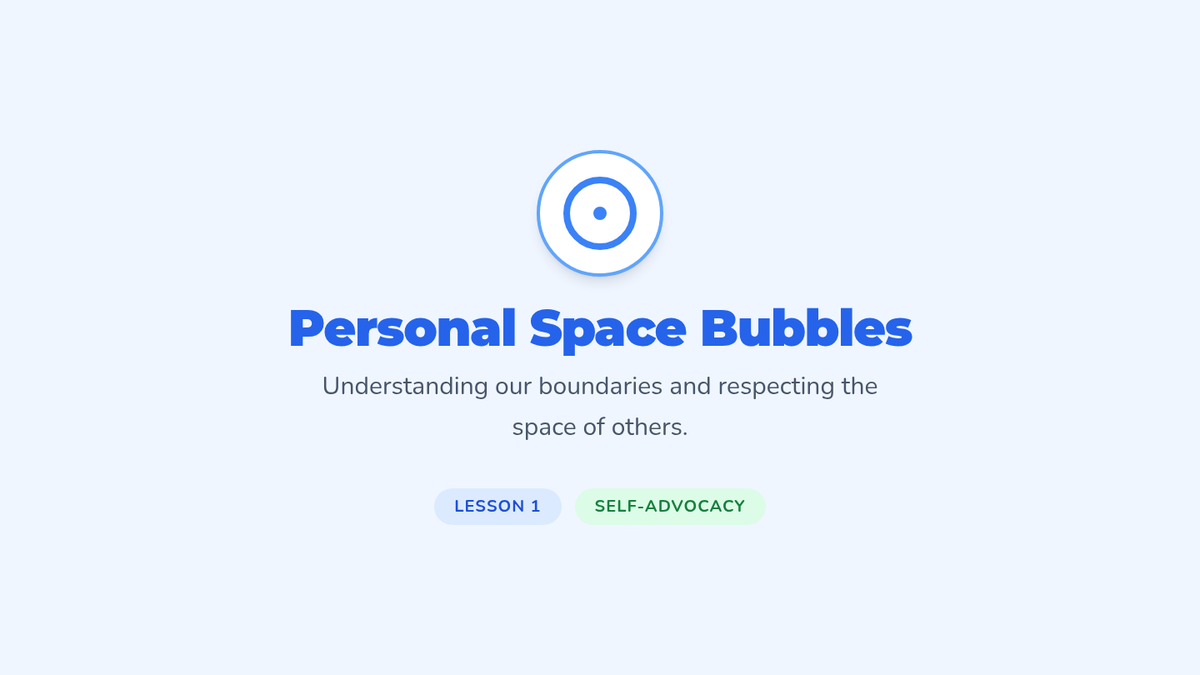
Personal Space Bubbles

Students explore the concept of a 'personal bubble' to understand physical boundaries and practice defining their comfort levels. The lesson establishes that everyone has the right to decide who enters their personal space.

Lenny Avatar
Lenny
1/18
Lesson
Circle of Trust Worksheet
Trusted Adults Introduction Slides
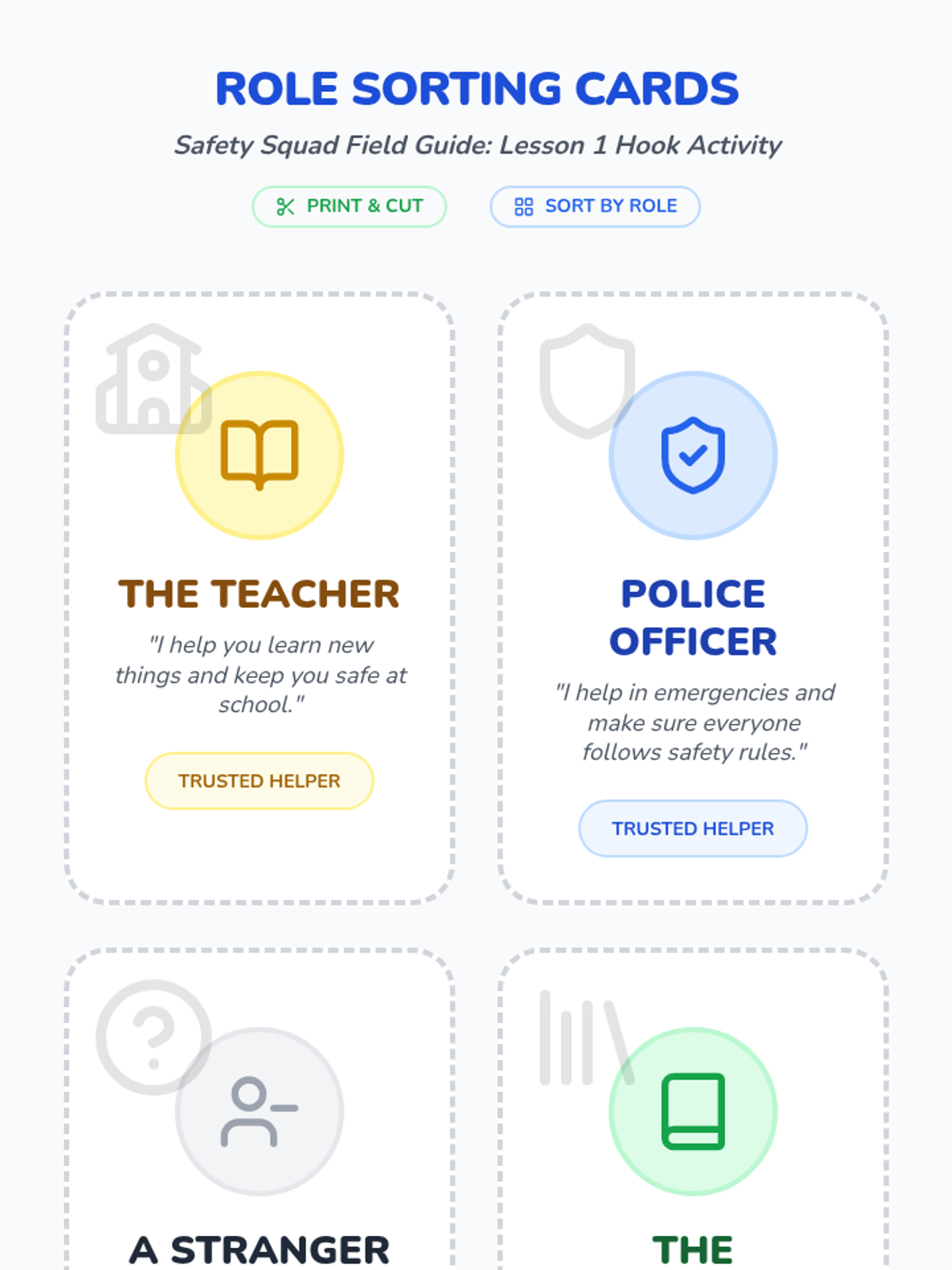
Adult Role Sorting Cards

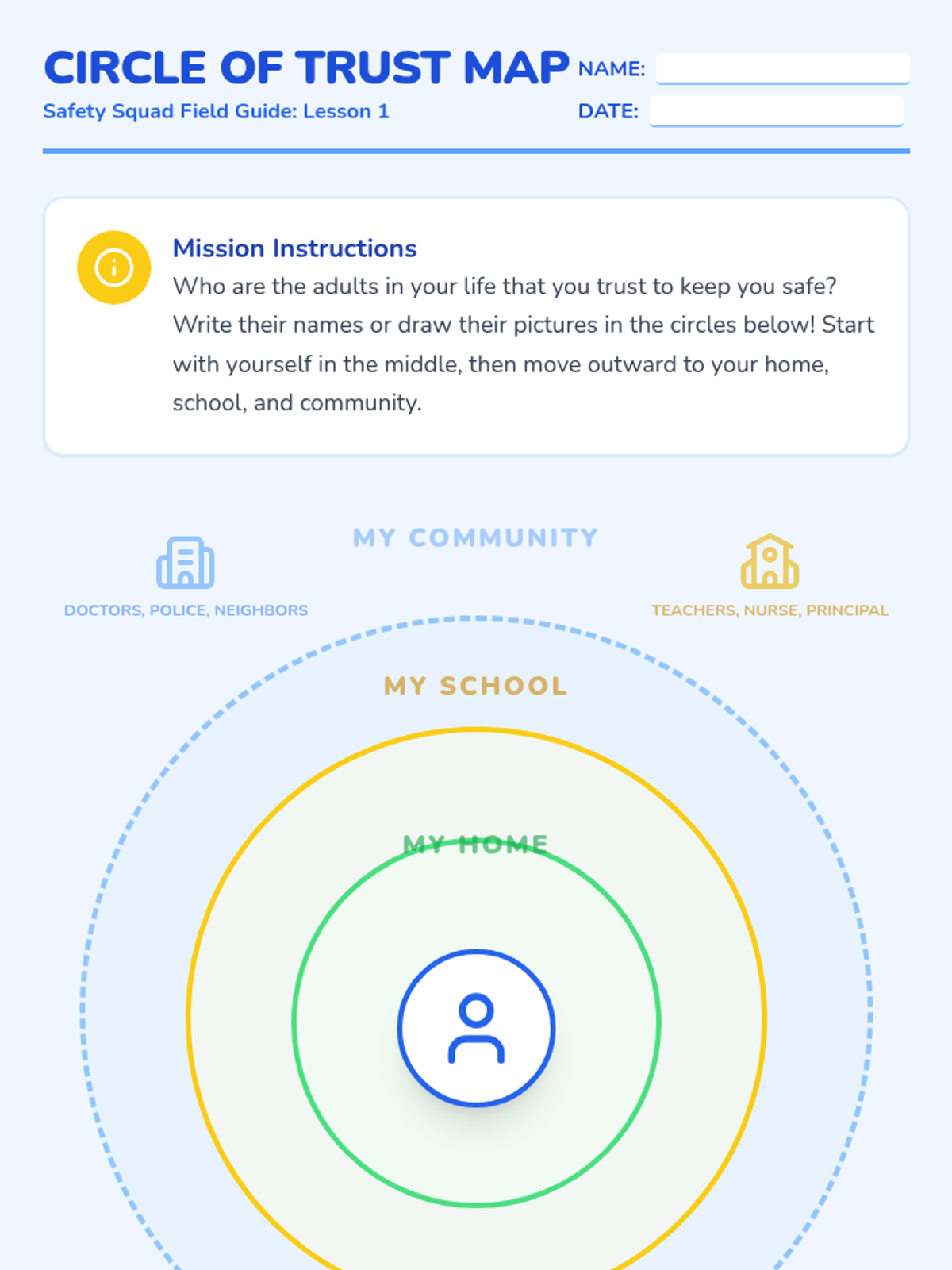
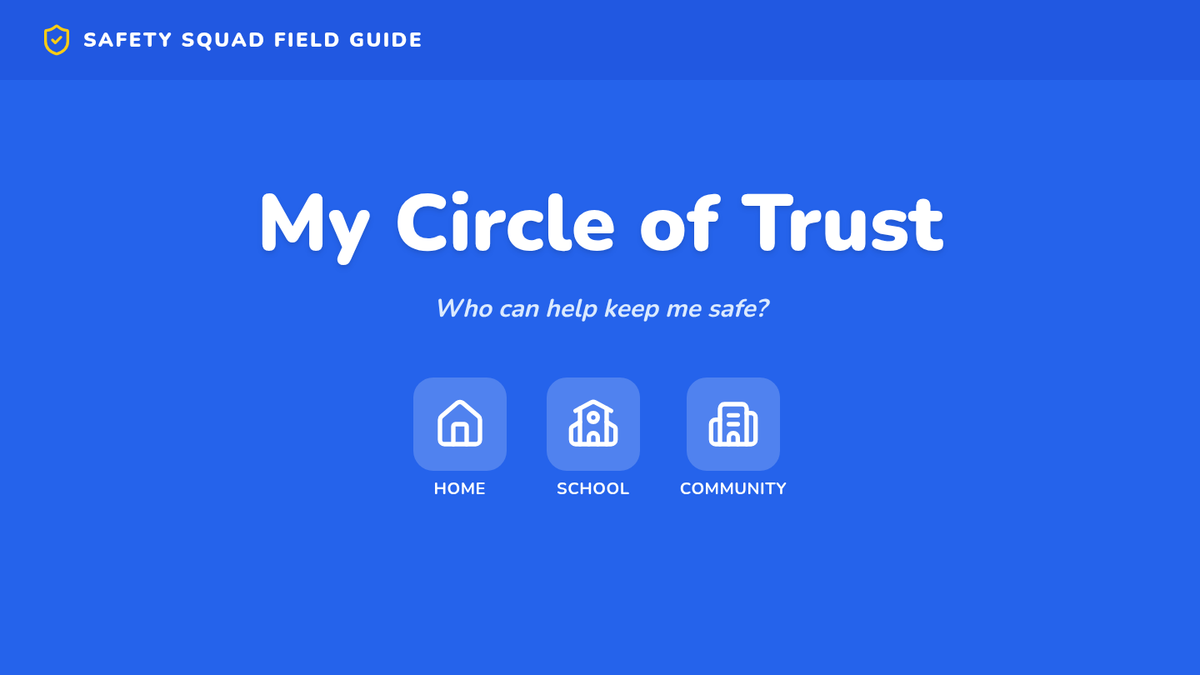
My Circle of Trust

Students identify specific adults in their home, school, and community who can help keep them safe and learn the characteristics of a trusted adult.

Lenny Avatar
Lenny
1/18
Lesson
Community Circle Facilitation Guide
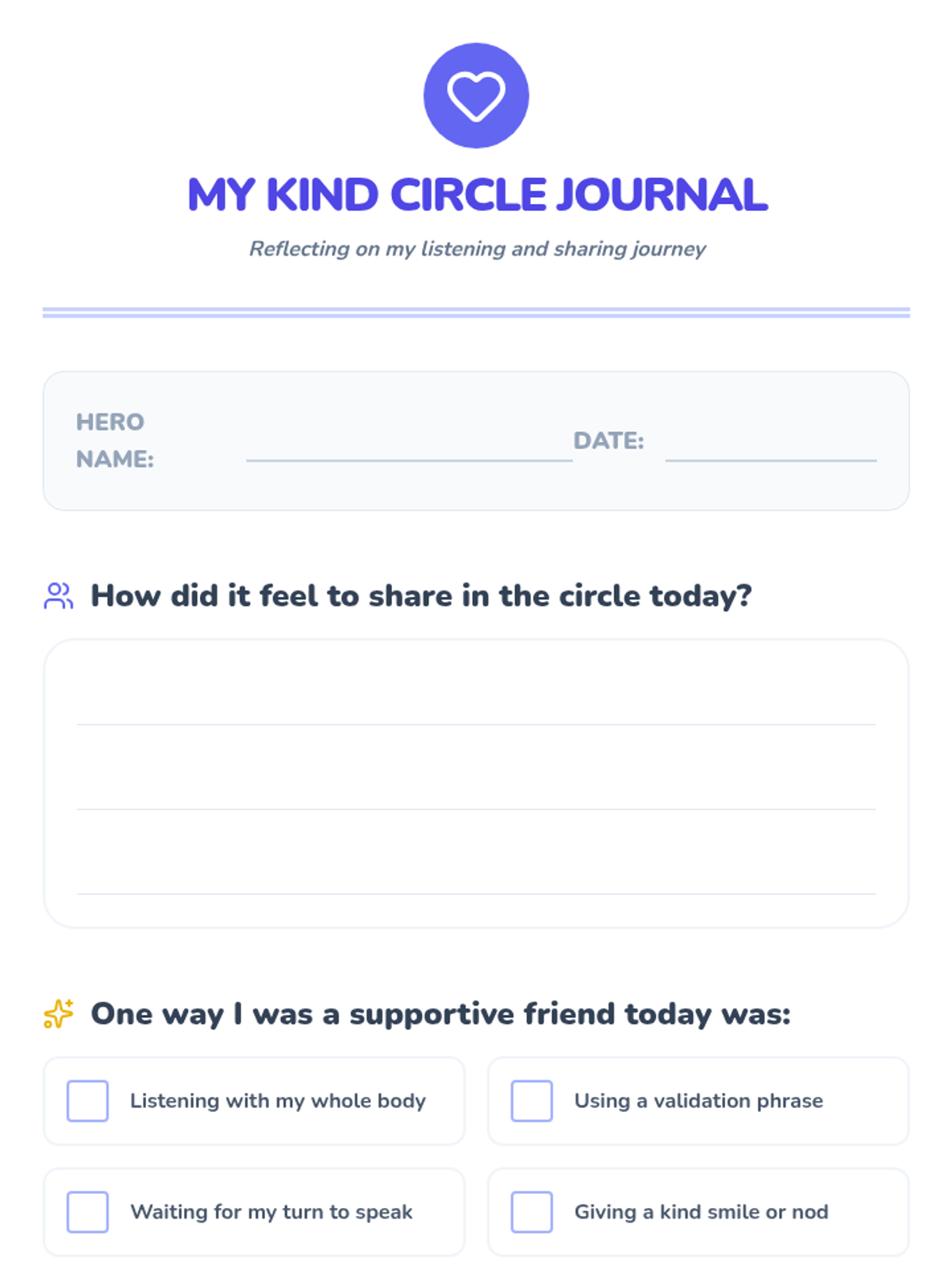
Kind Circle Reflection Journal
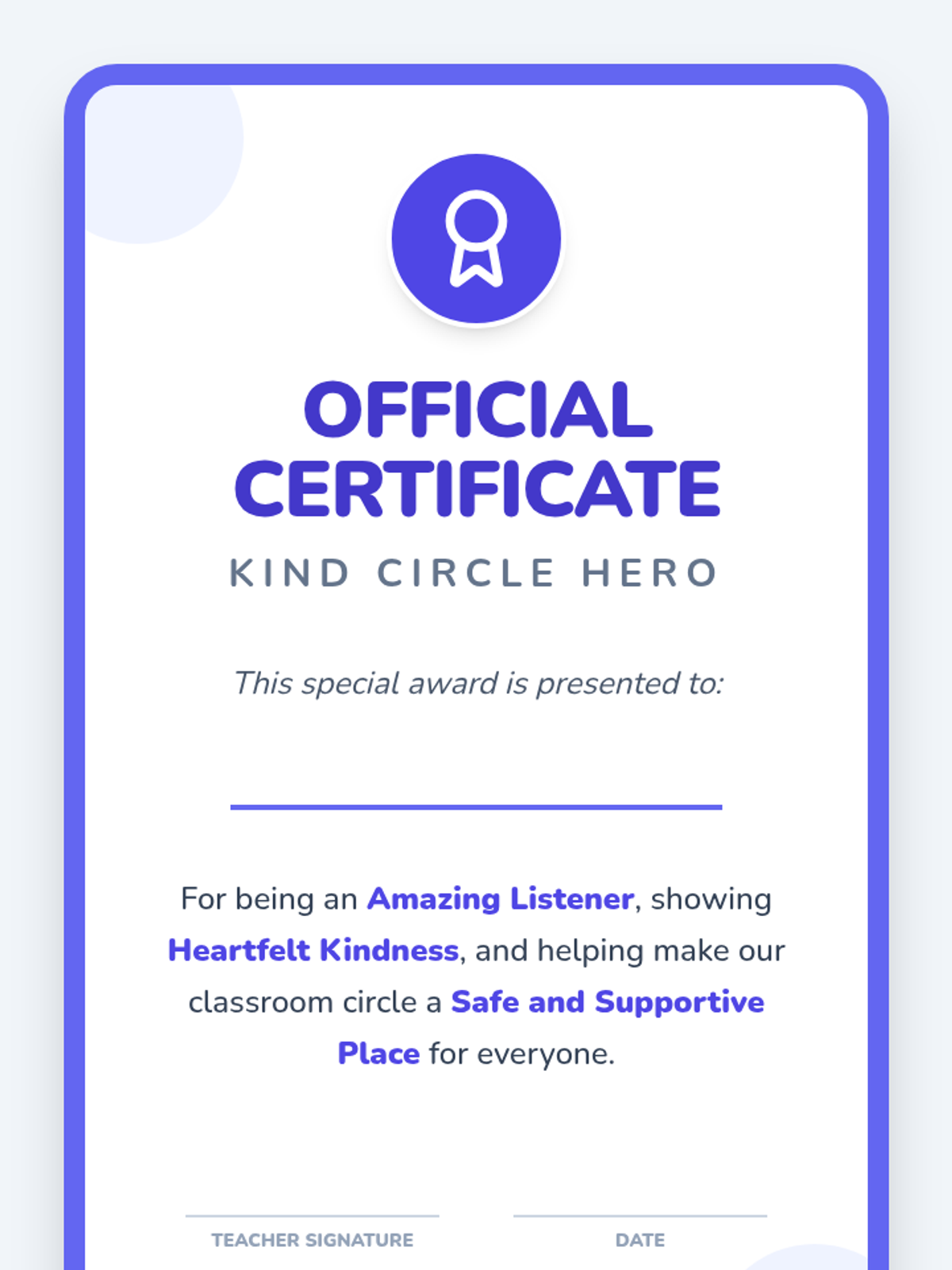
Kind Circle Hero Certificate

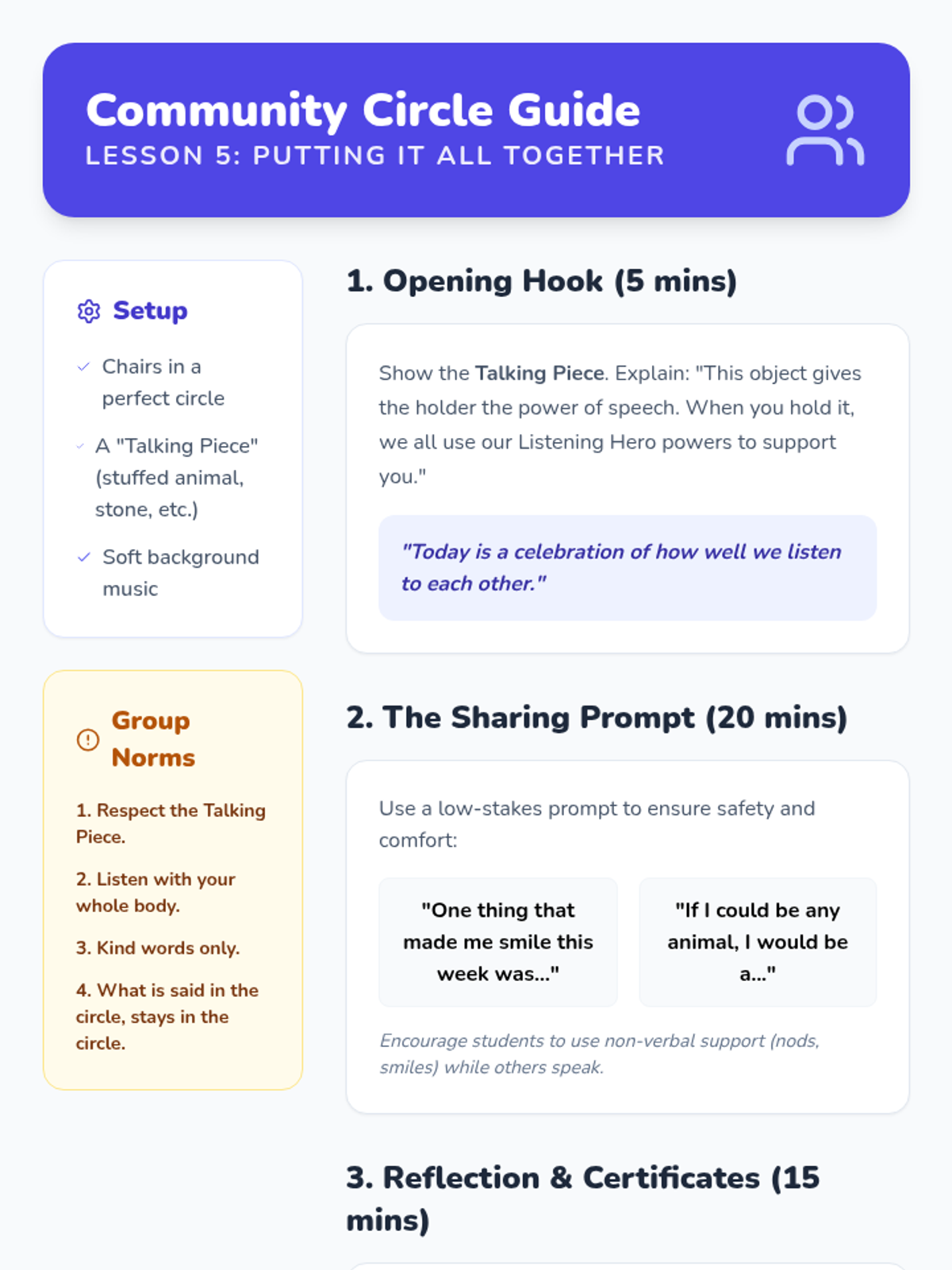
Community Circle Celebration

Students synthesize their skills in a structured community circle, using a talking piece to practice respectful sharing and listening.

Lenny Avatar
Lenny
1/17
Lesson
Kindness Scripts Slides
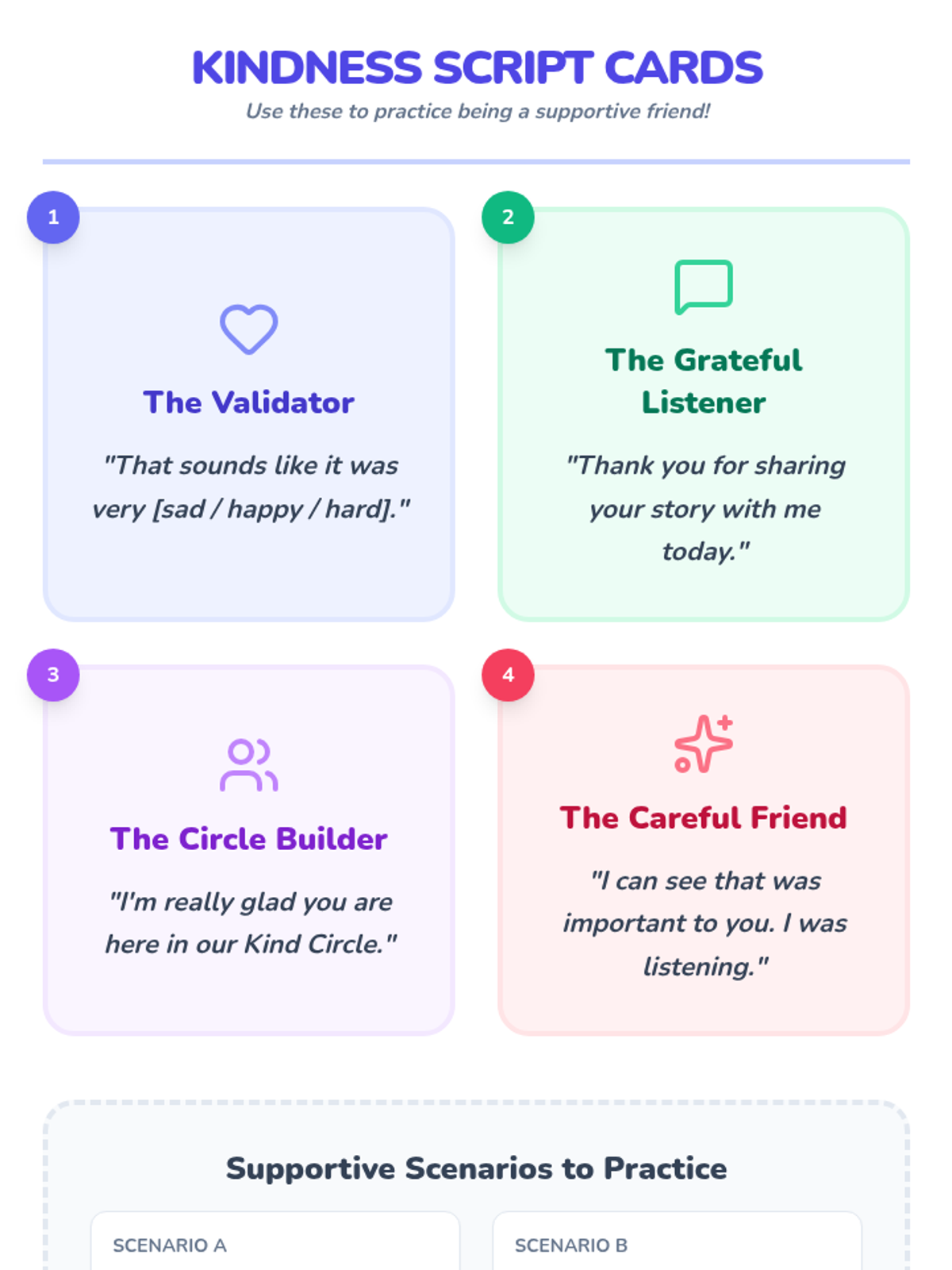
Kindness Script Practice Cards

Kindness Scripts

Students practice responding to peers without judging or interrupting, using supportive sentence starters to build kindness.

Lenny Avatar
Lenny
1/17
Lesson
Safety Circle Slides
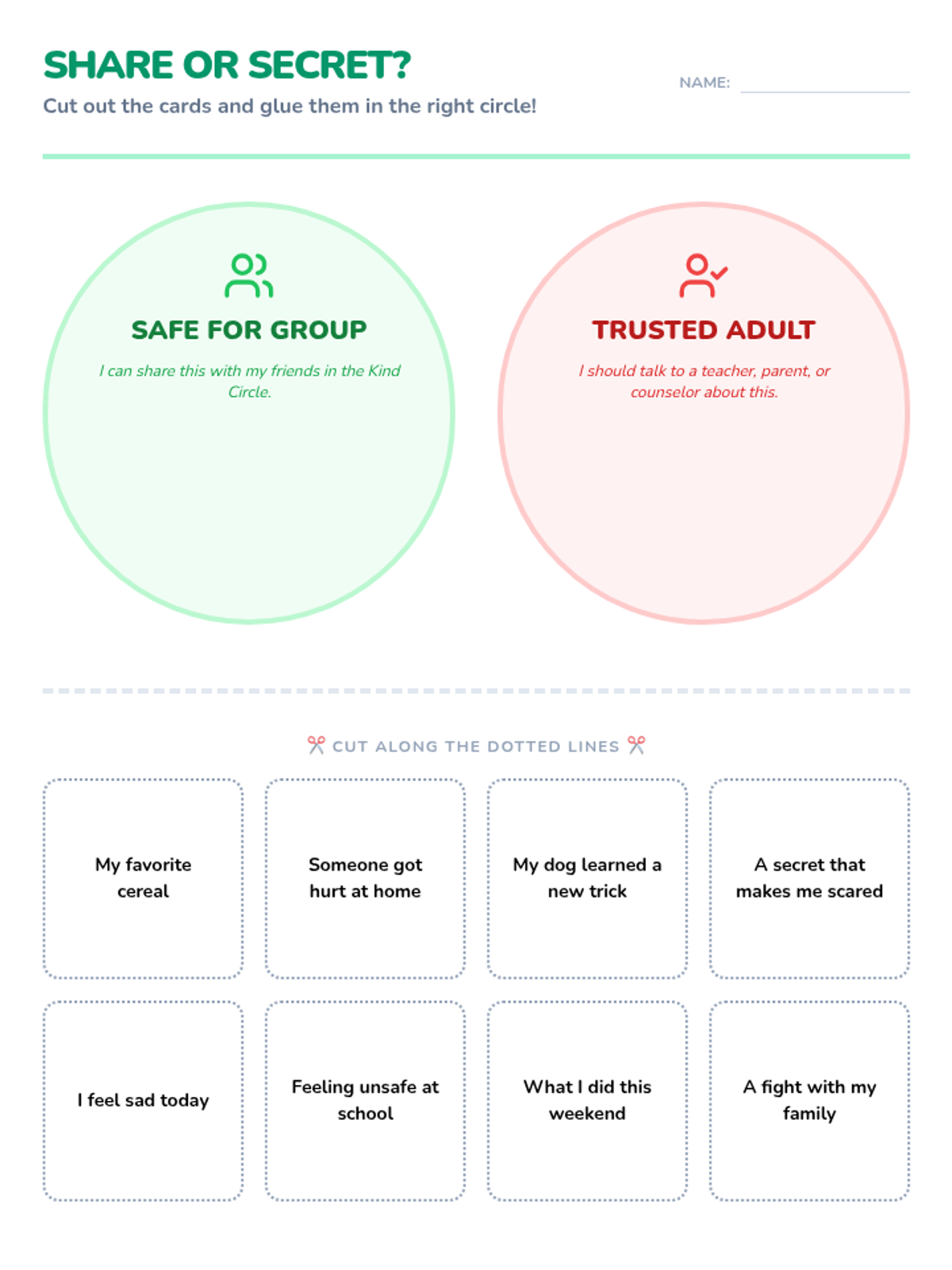
Share or Secret Activity

Safety Circle

Students distinguish between topics safe for group sharing and those that should be kept private or shared only with a trusted adult.

Lenny Avatar
Lenny
1/17
Lesson
Emotion Detectives Slides
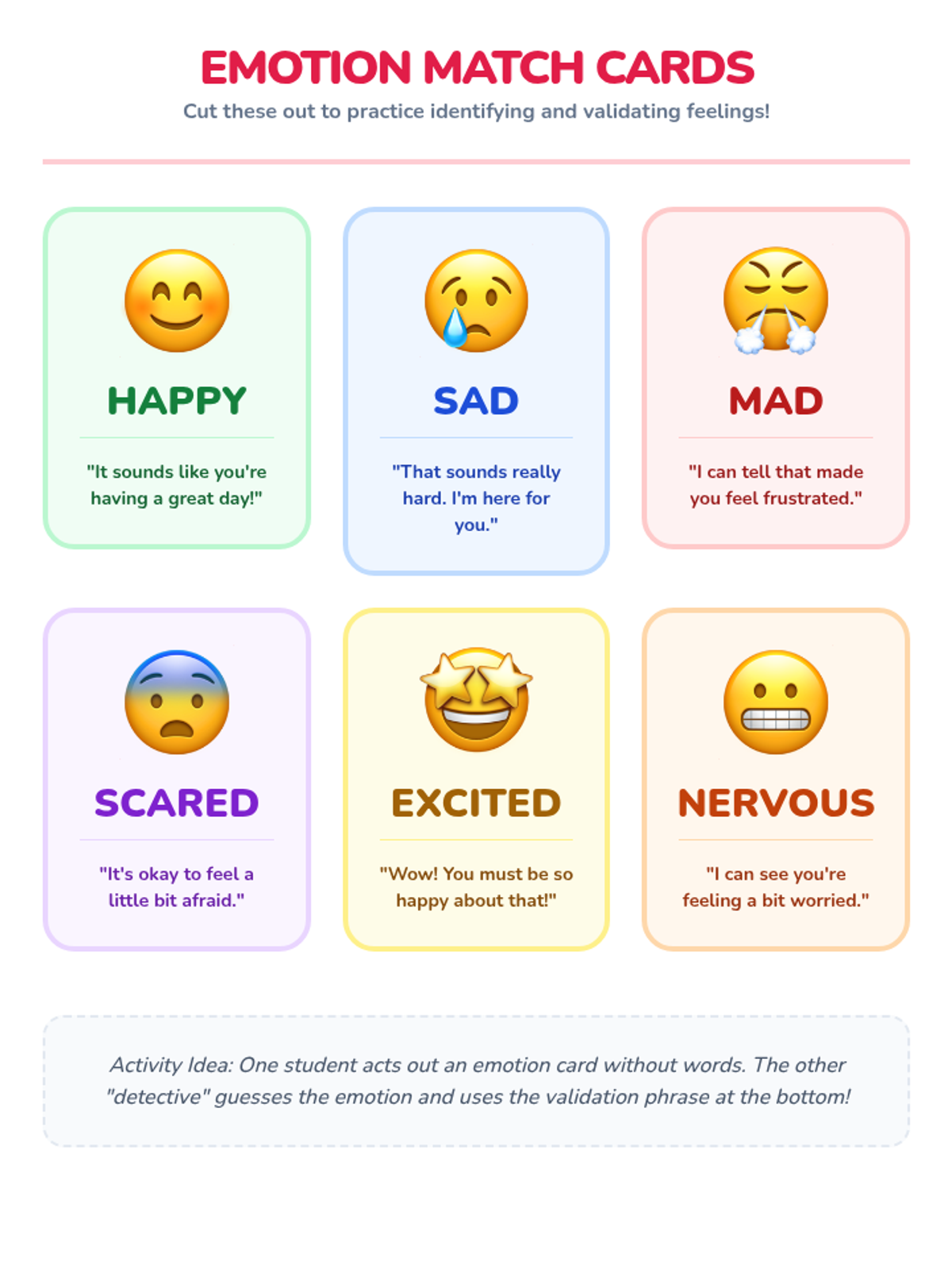
Emotion Match Cards
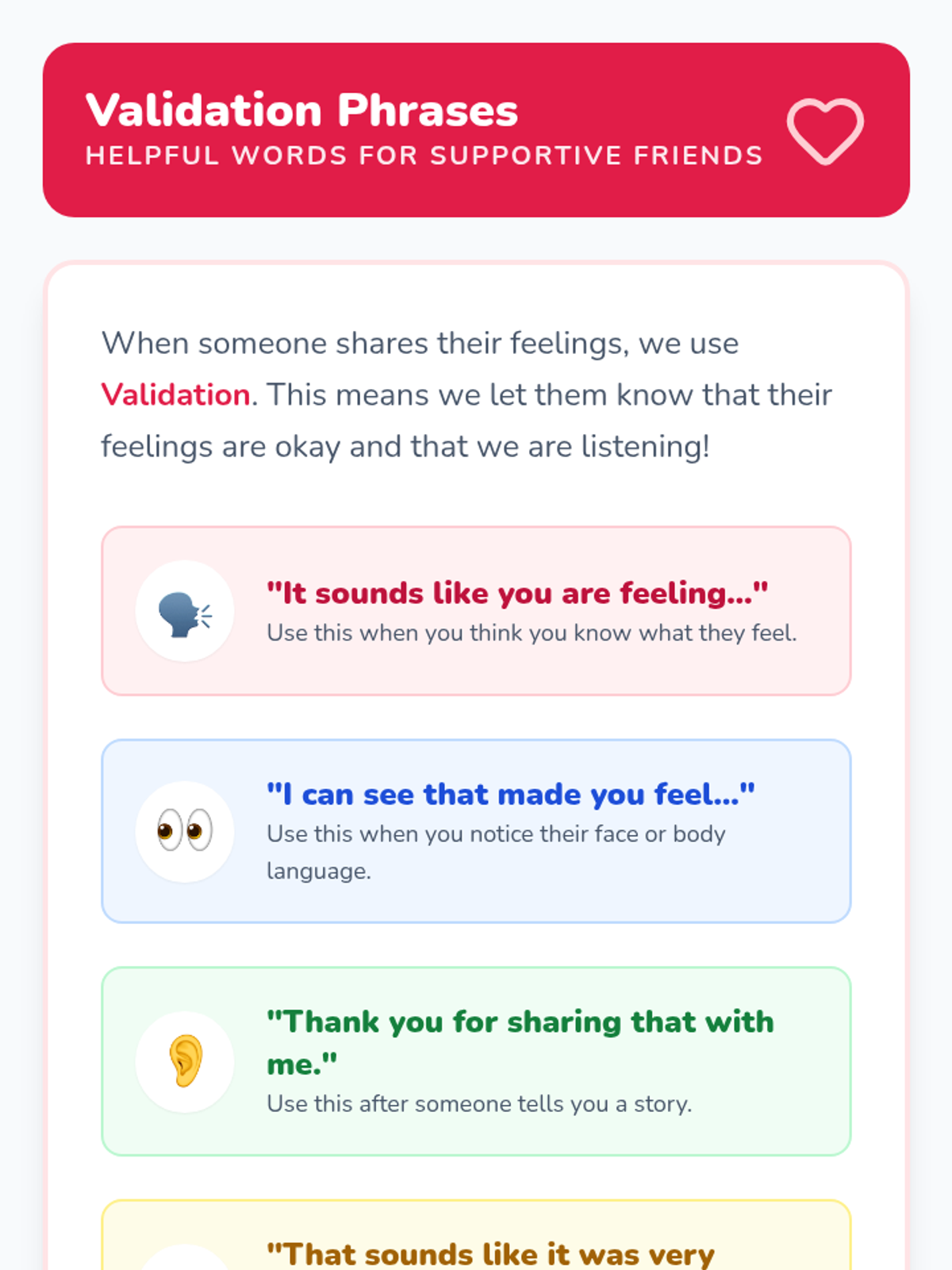
Validation Phrases Cheat Sheet

Emotion Detectives

Students learn to identify feelings through facial expressions and tone of voice, practicing simple phrases to validate others.

Lenny Avatar
Lenny
1/17
Lesson
Listening Heroes Slides
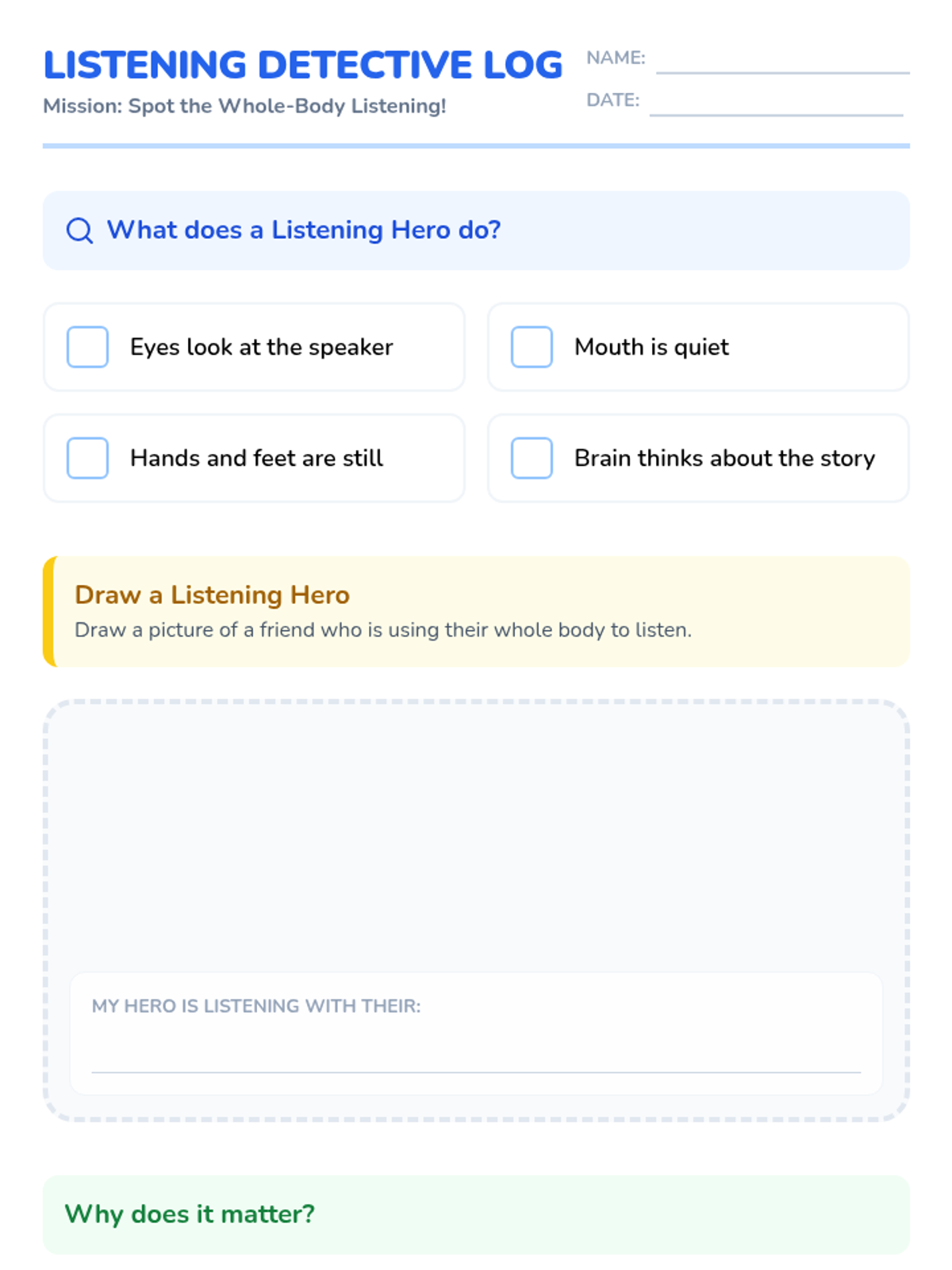
Listening Detective Log Worksheet
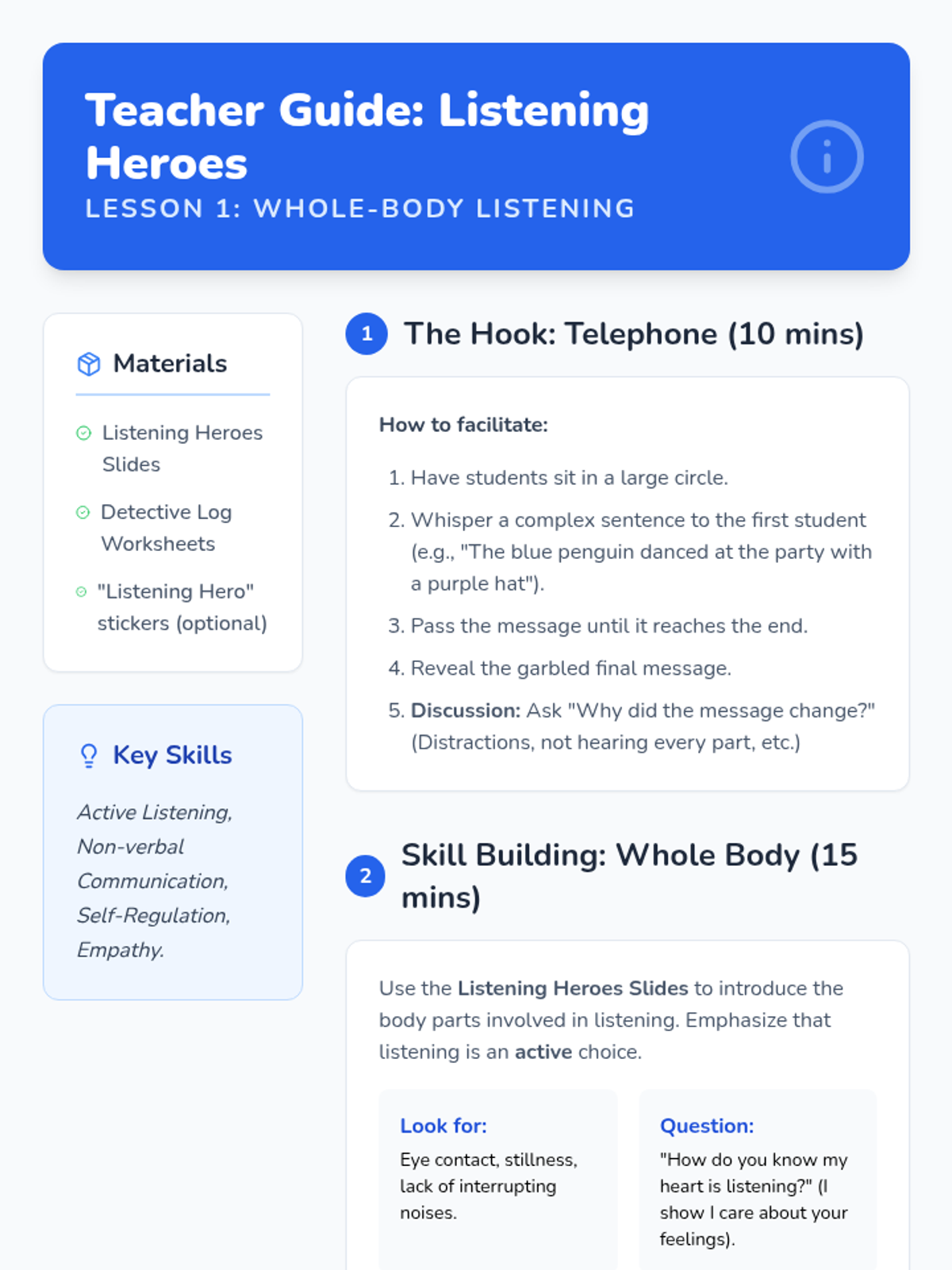
Listening Heroes Teacher Guide

Listening Heroes

Students explore the concept of 'whole-body listening' involving eyes, ears, mouth, and hands to show respect and attention.

Lenny Avatar
Lenny
1/17
Lesson
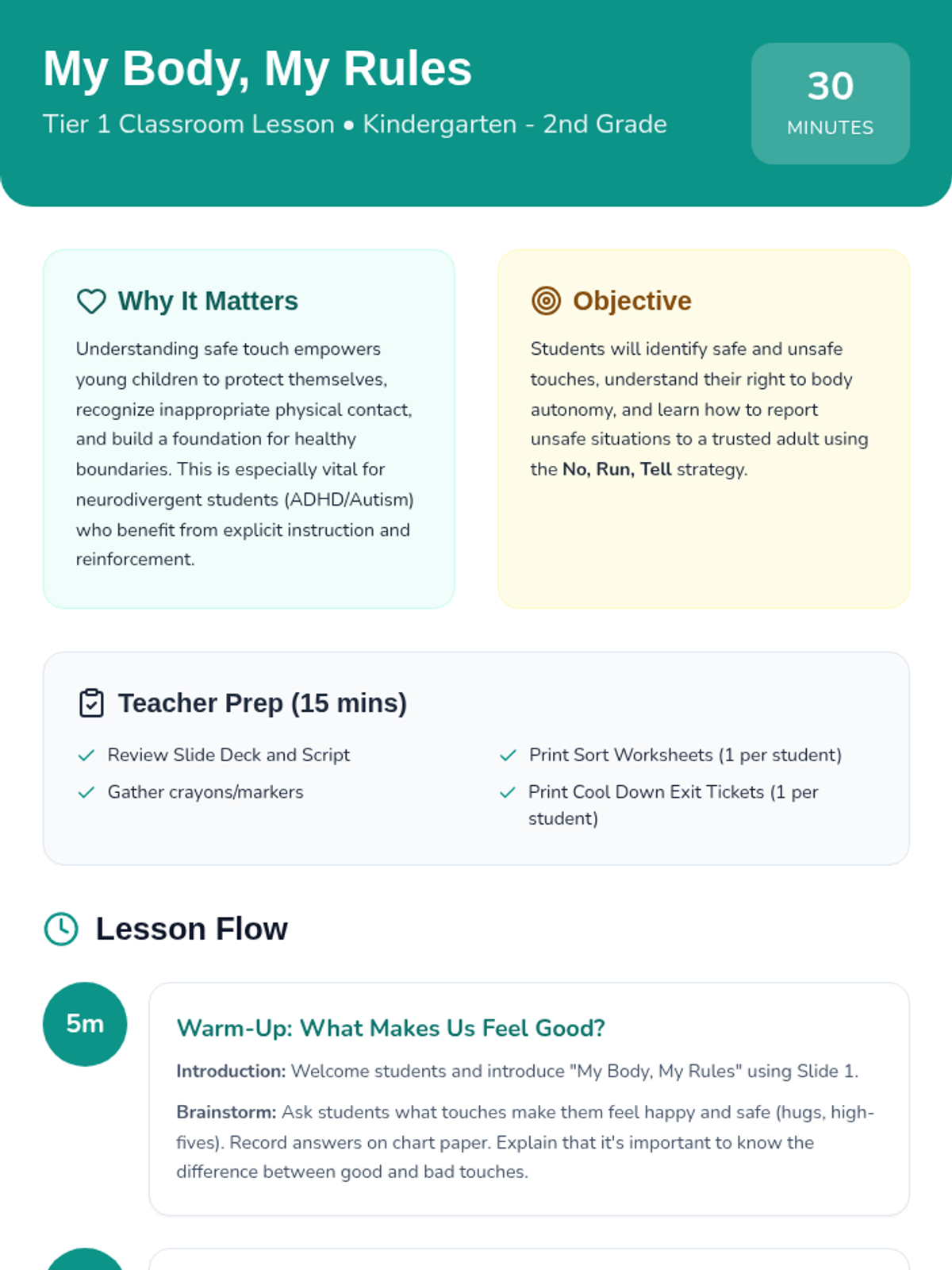
My Body My Rules Lesson Plan
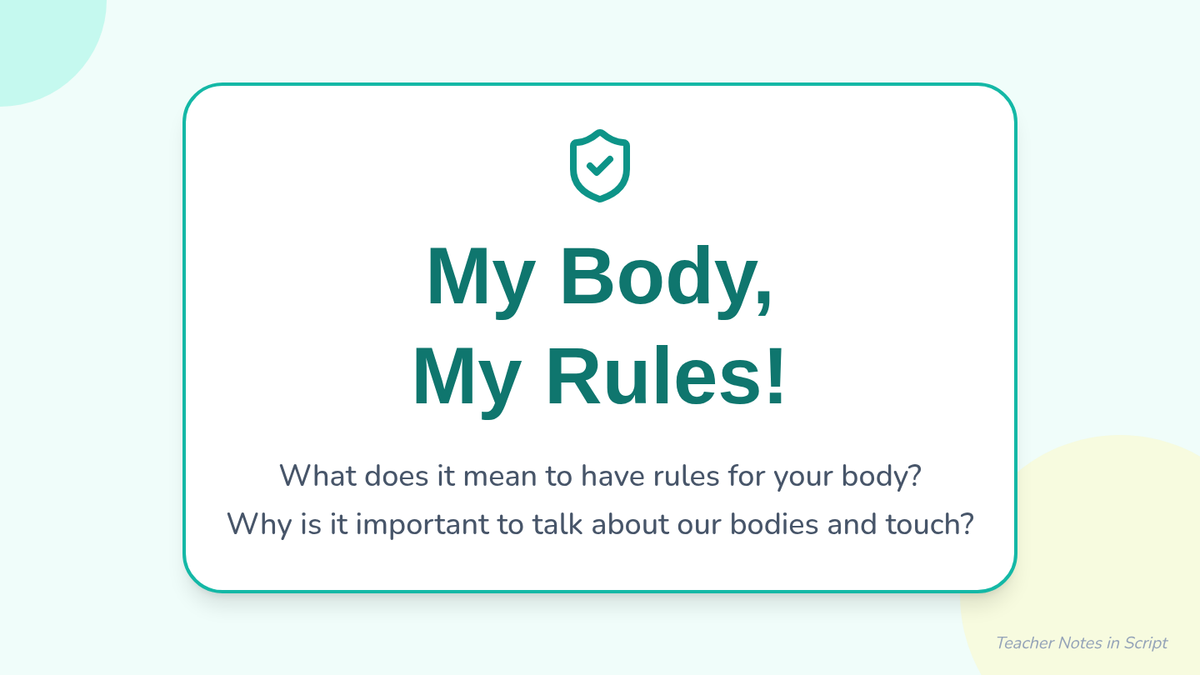
My Body My Rules Slides
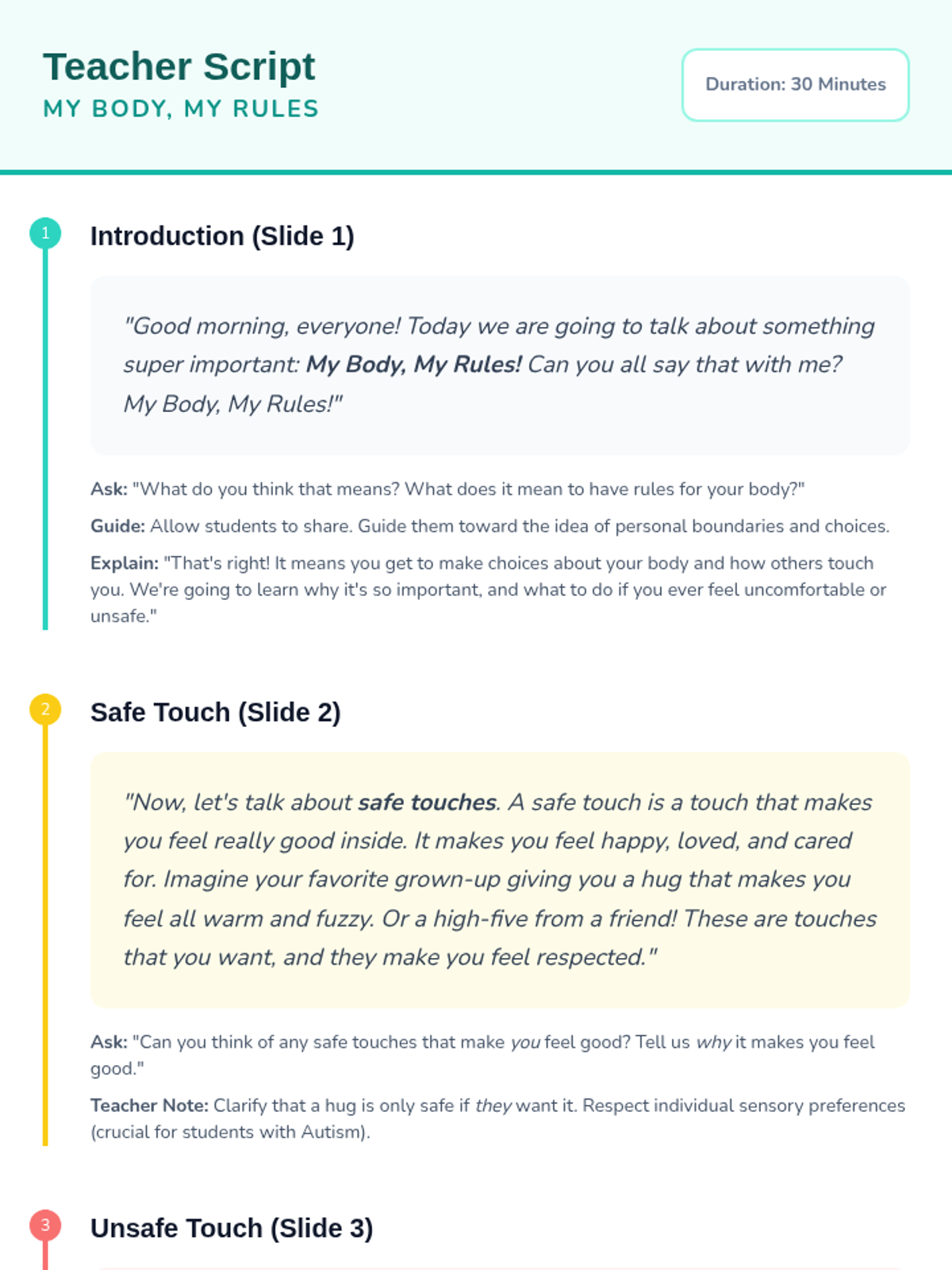
My Body My Rules Script
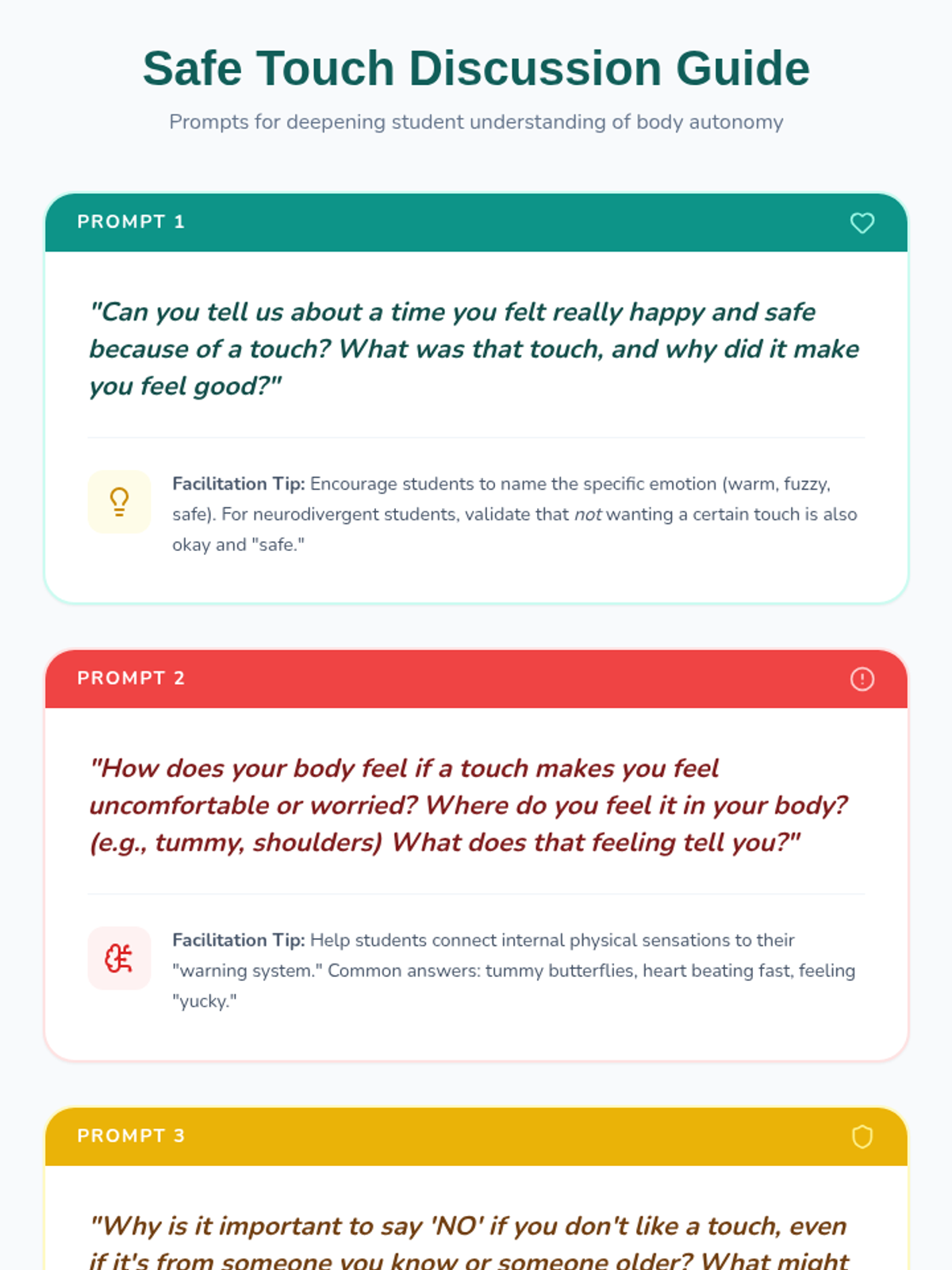
Safe Touch Discussion Prompts
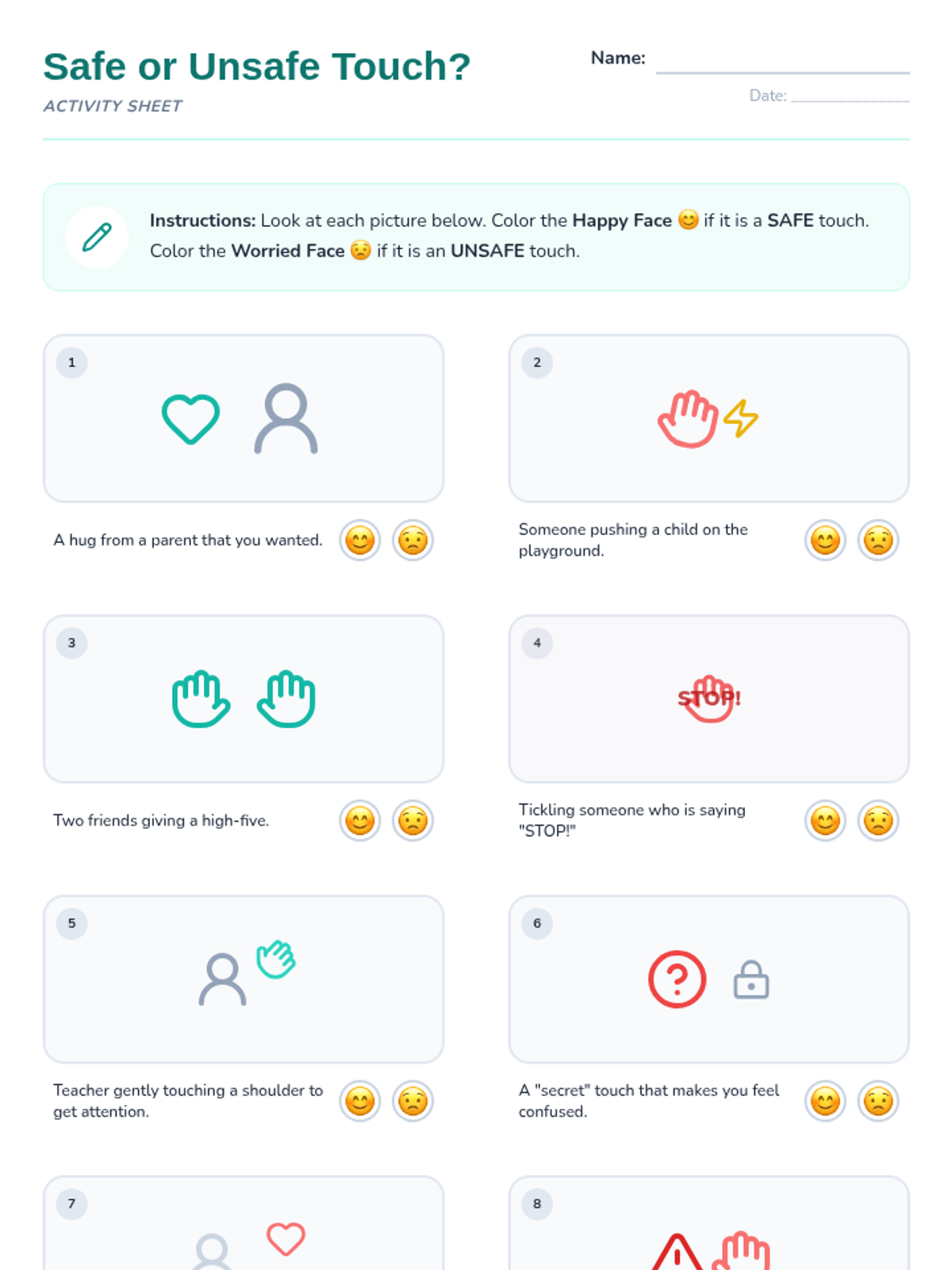
Safe Unsafe Touch Sort Worksheet
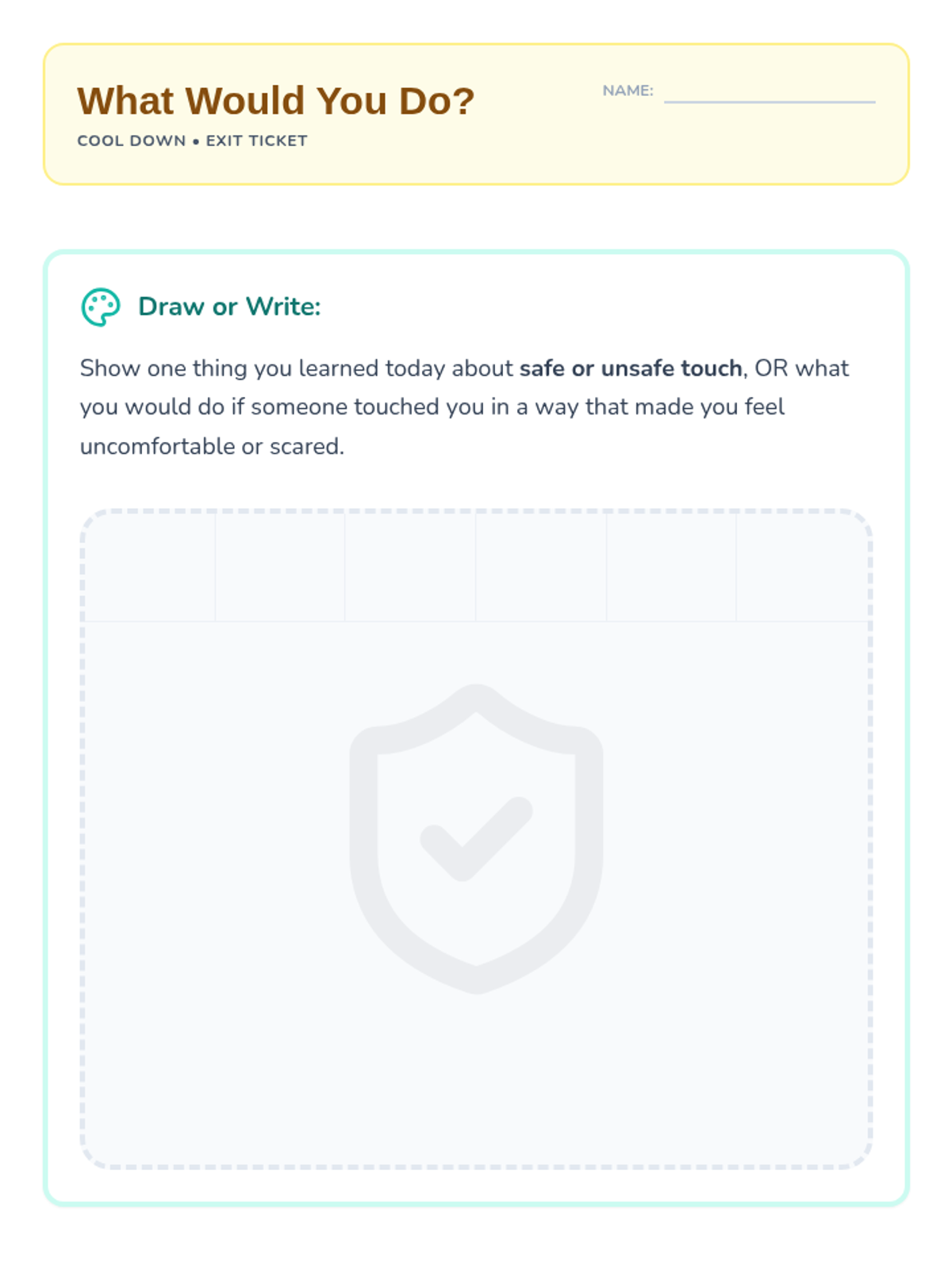
What Would You Do Cool Down
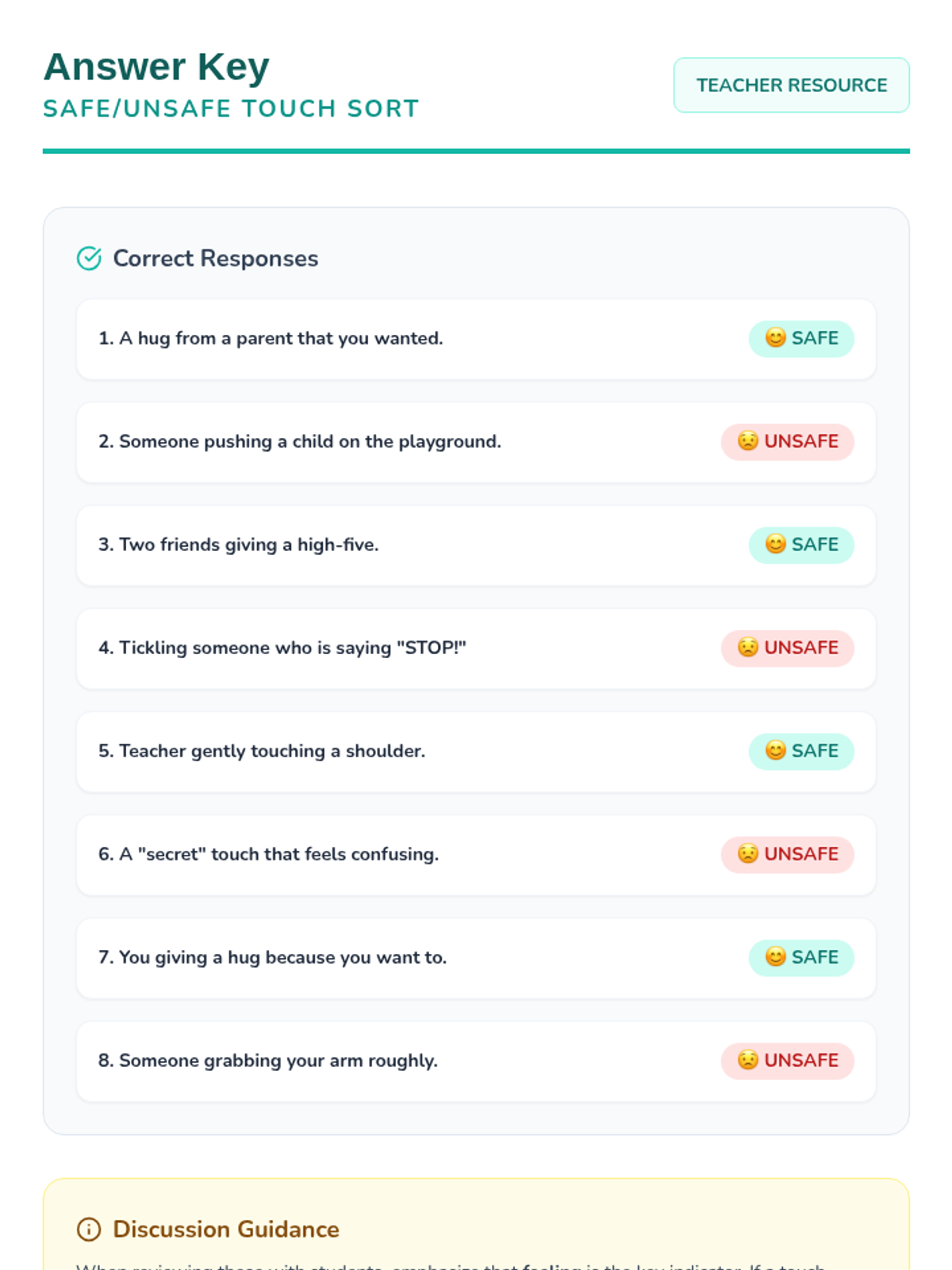
Safe Unsafe Touch Sort Answer Key

My Body My Rules

This lesson introduces Kindergarten students to the concept of safe and unsafe touch, emphasizing body autonomy and the importance of speaking up to a trusted adult. Students will learn to identify boundaries and the 'No, Run, Tell' strategy to ensure their safety and well-being.

Lenny Avatar
Lenny
1/17
Lesson
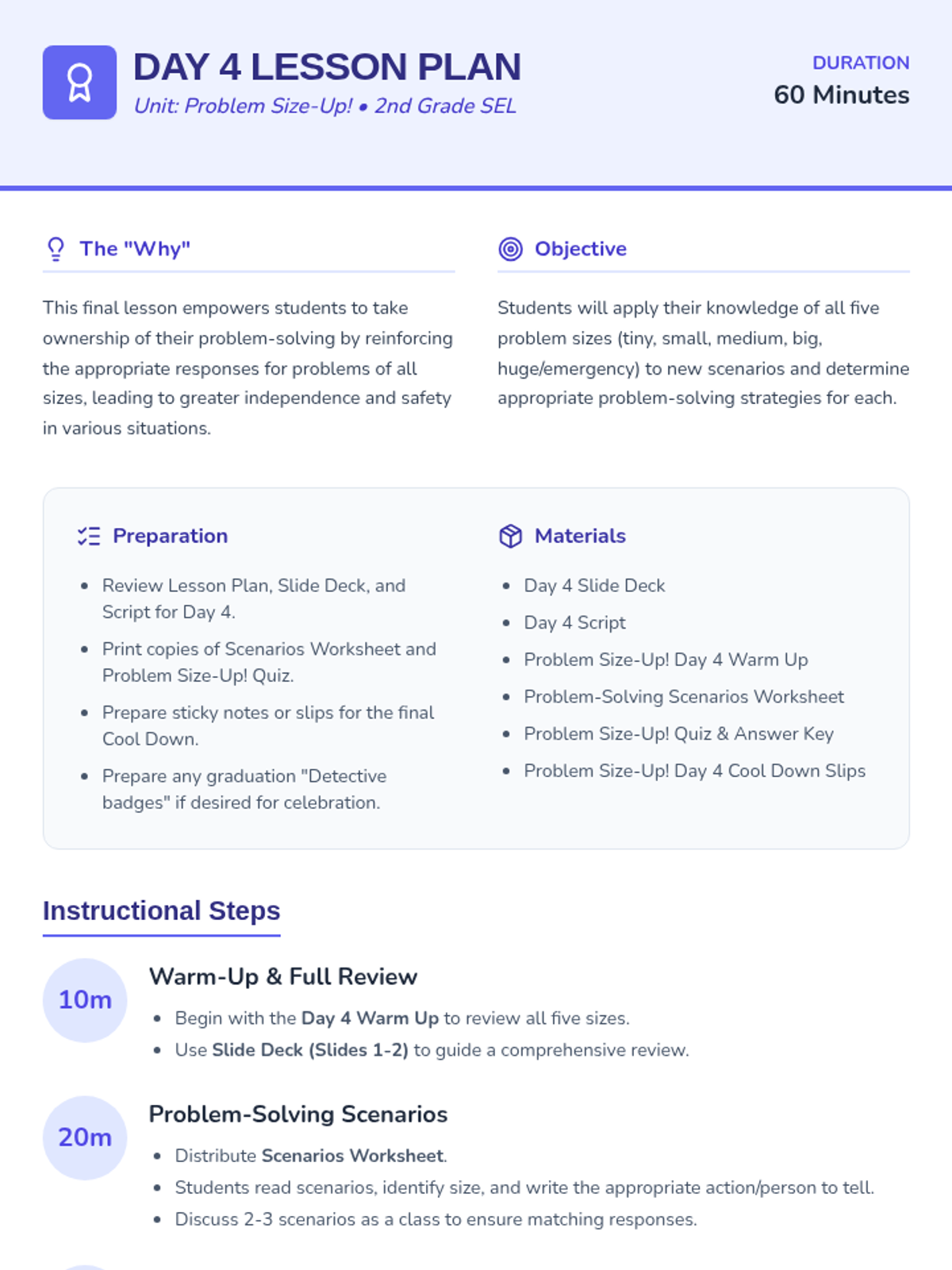
Day 4 Lesson Plan

Problem Solving Pros

Students review all five problem sizes and demonstrate their understanding through scenario practice and a final assessment.

Lenny Avatar
Lenny
1/17
Lesson
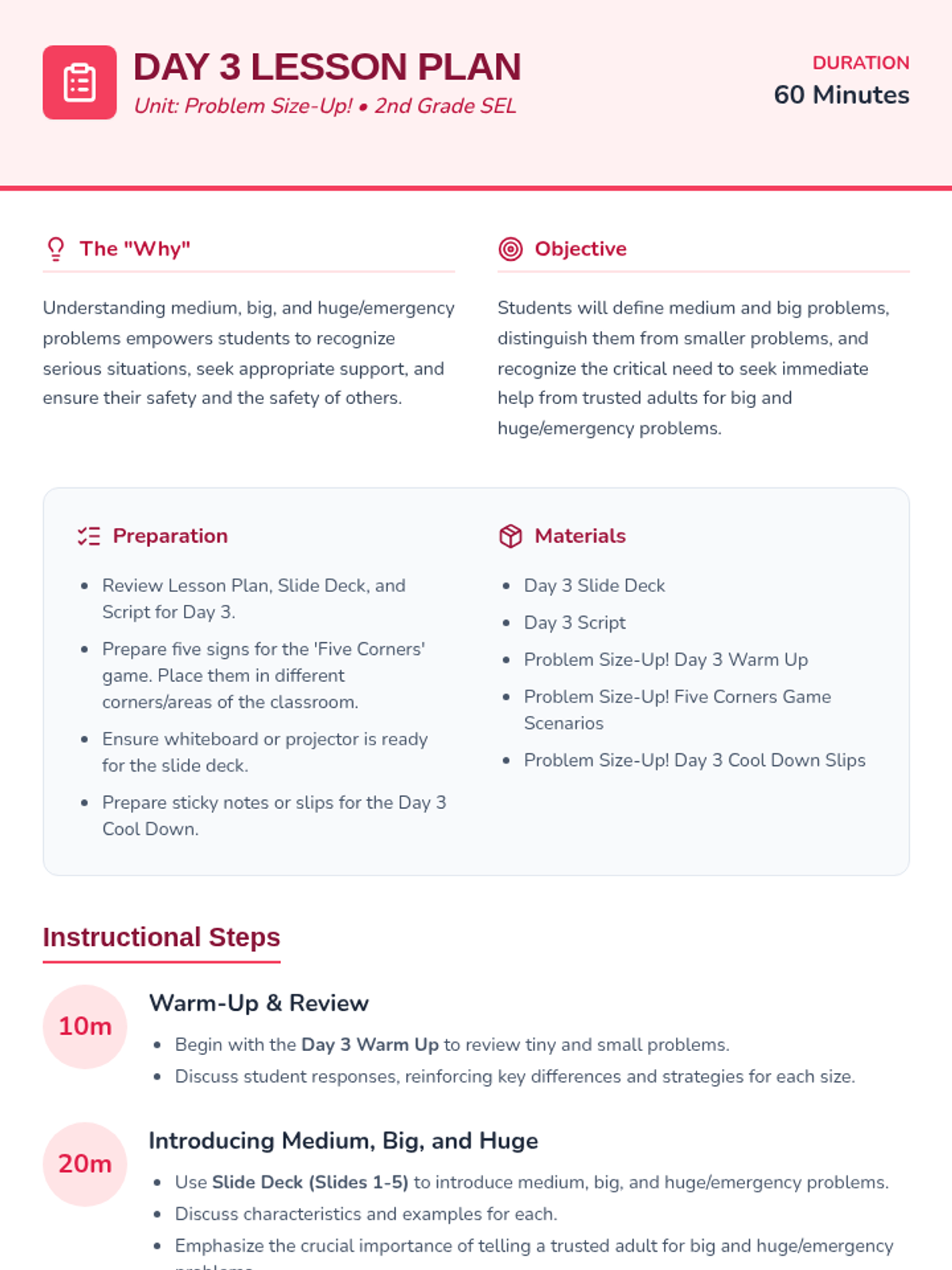
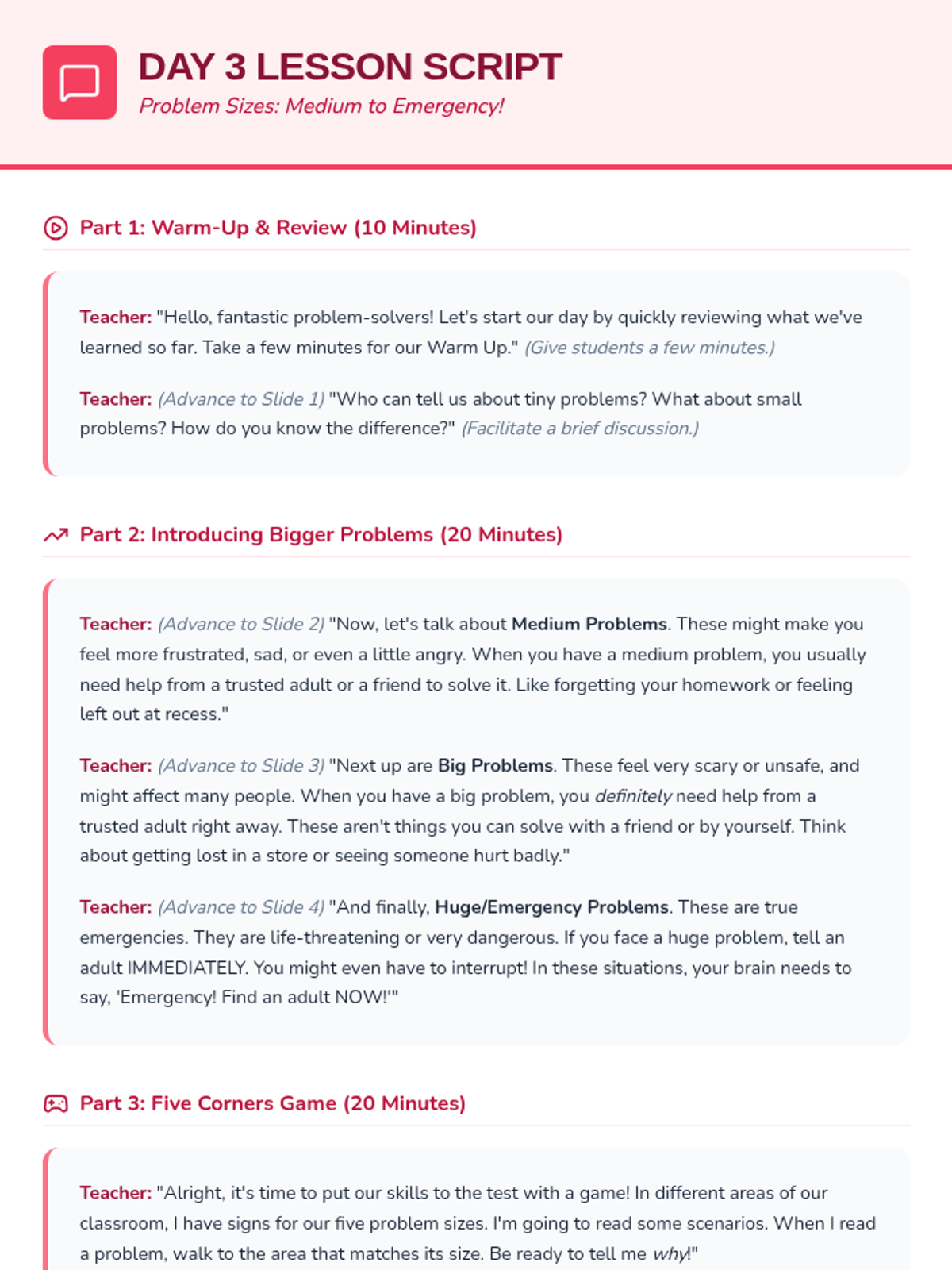
Day 3 Lesson Plan
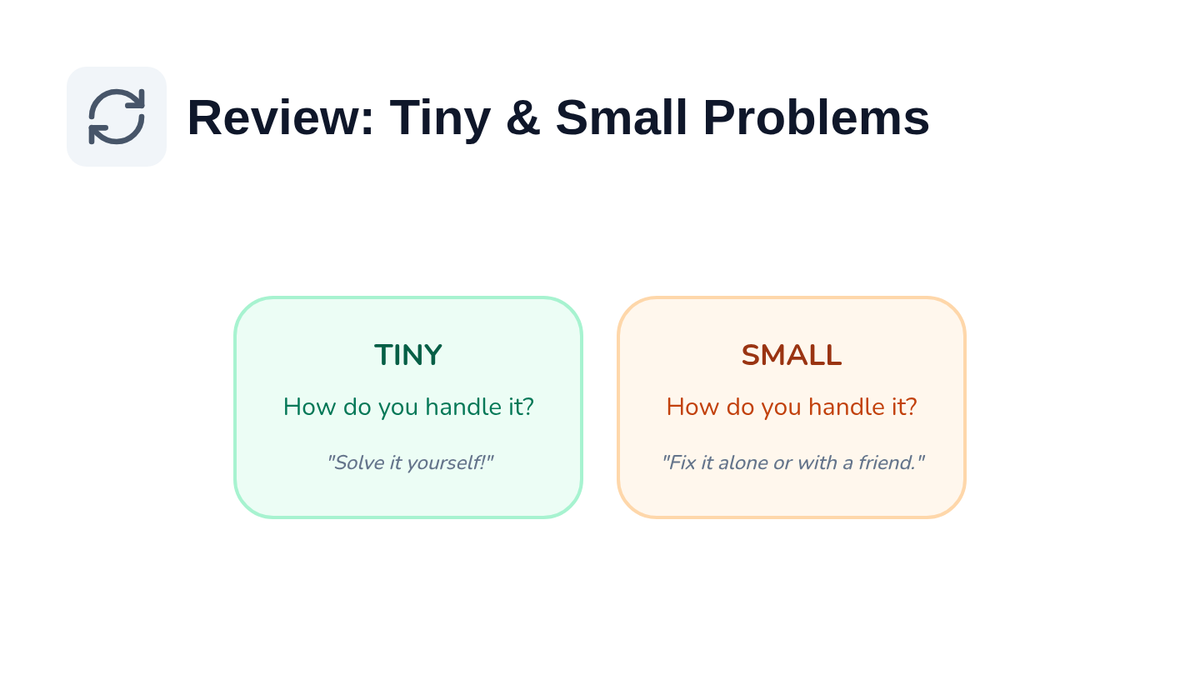
Day 3 Slide Deck
Day 3 Script
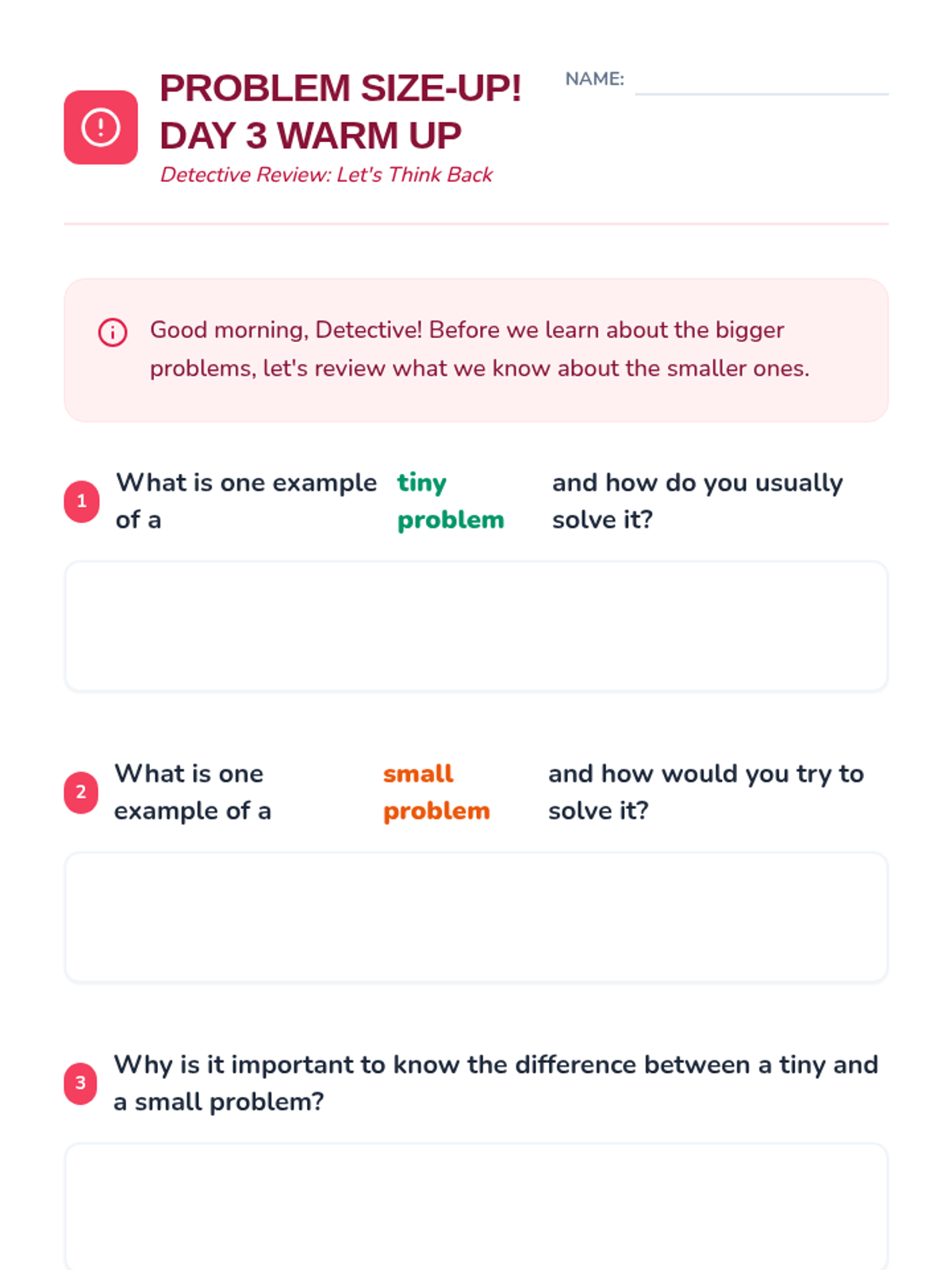
Problem Size Up Day 3 Warm Up
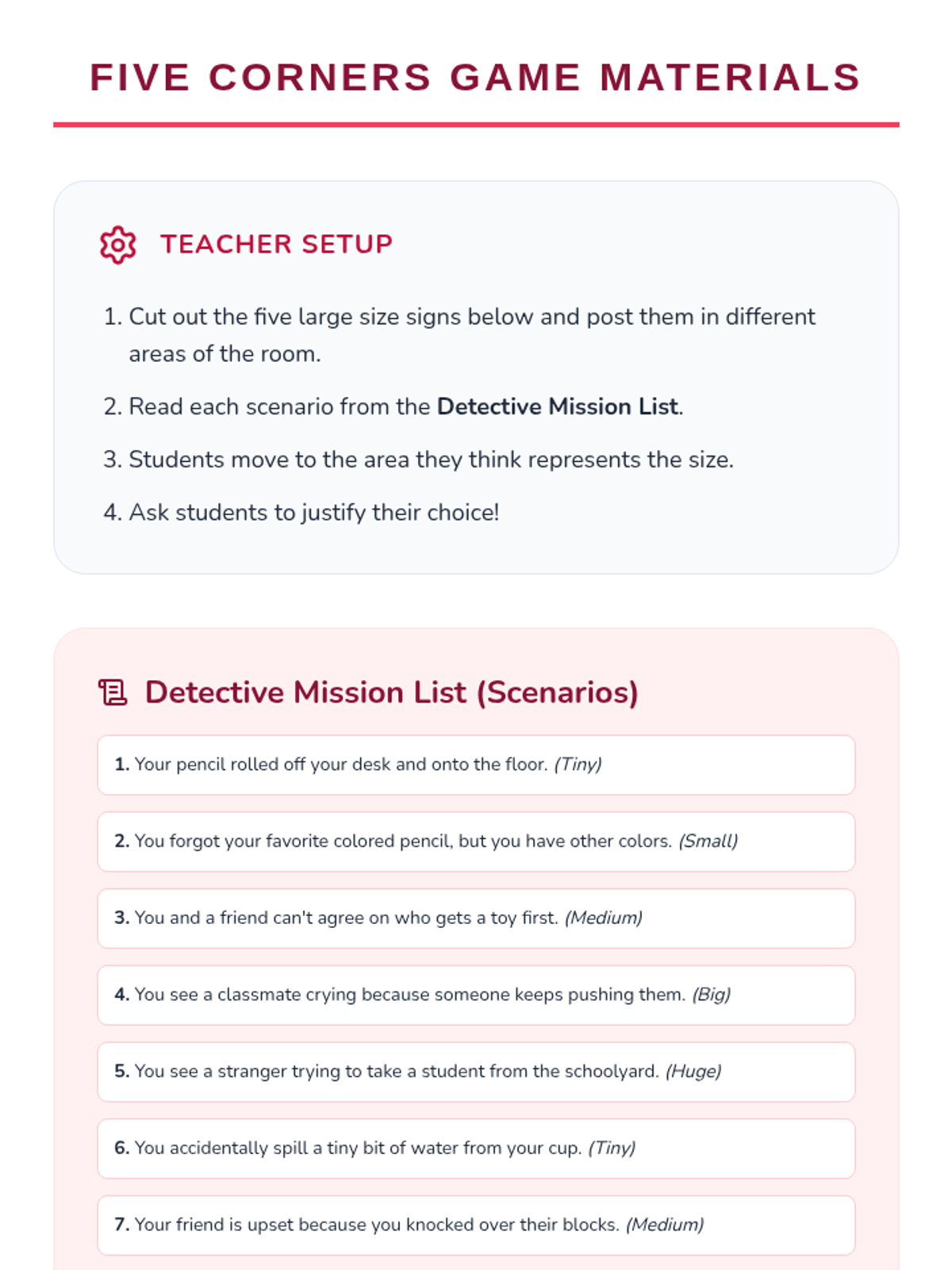
Problem Size Up Five Corners Game
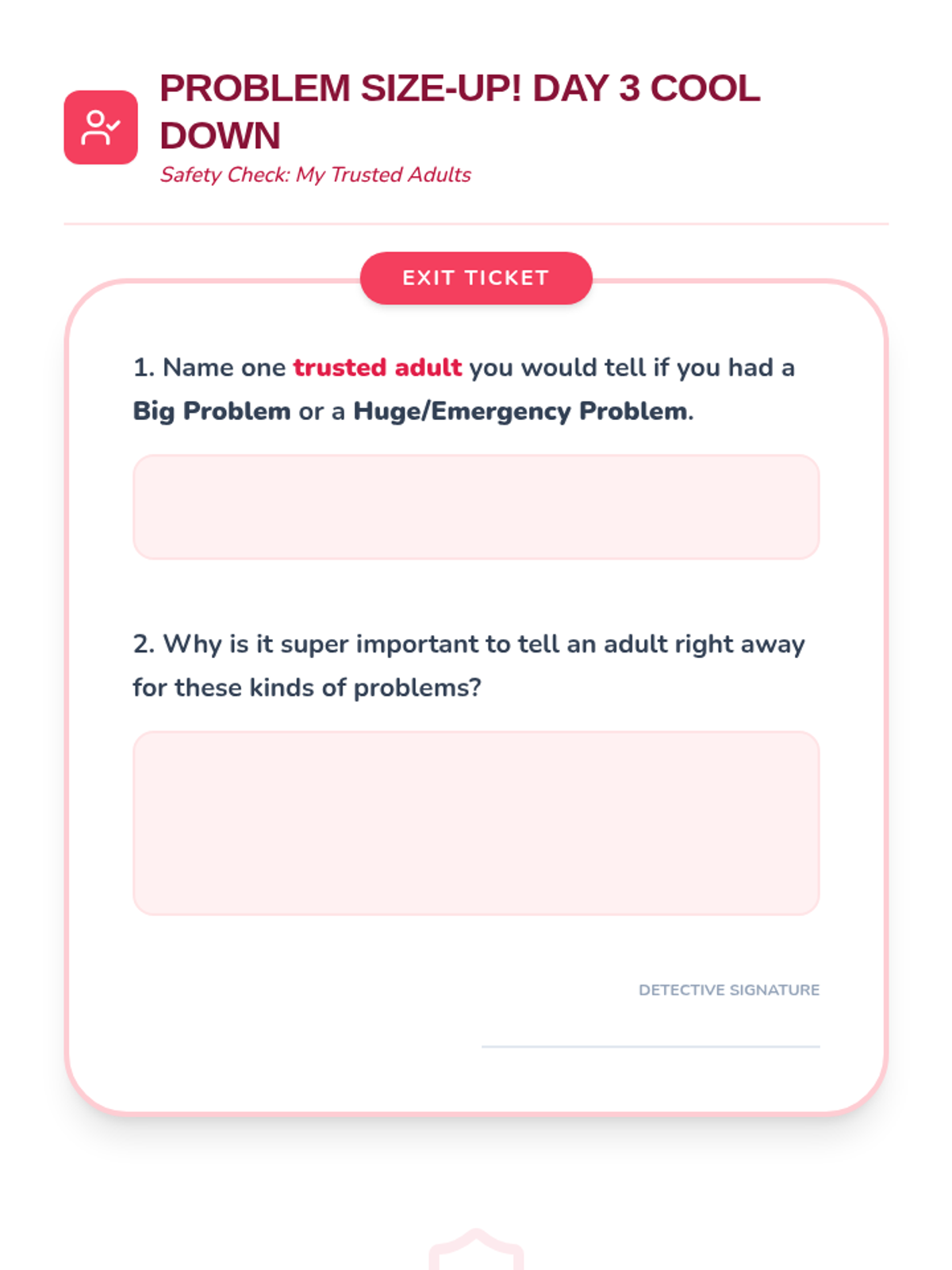
Problem Size Up Day 3 Cool Down

Managing Major Mishaps

Students learn about medium, big, and huge/emergency problems, emphasizing when and how to seek help from trusted adults.

Lenny Avatar
Lenny
1/17
Lesson
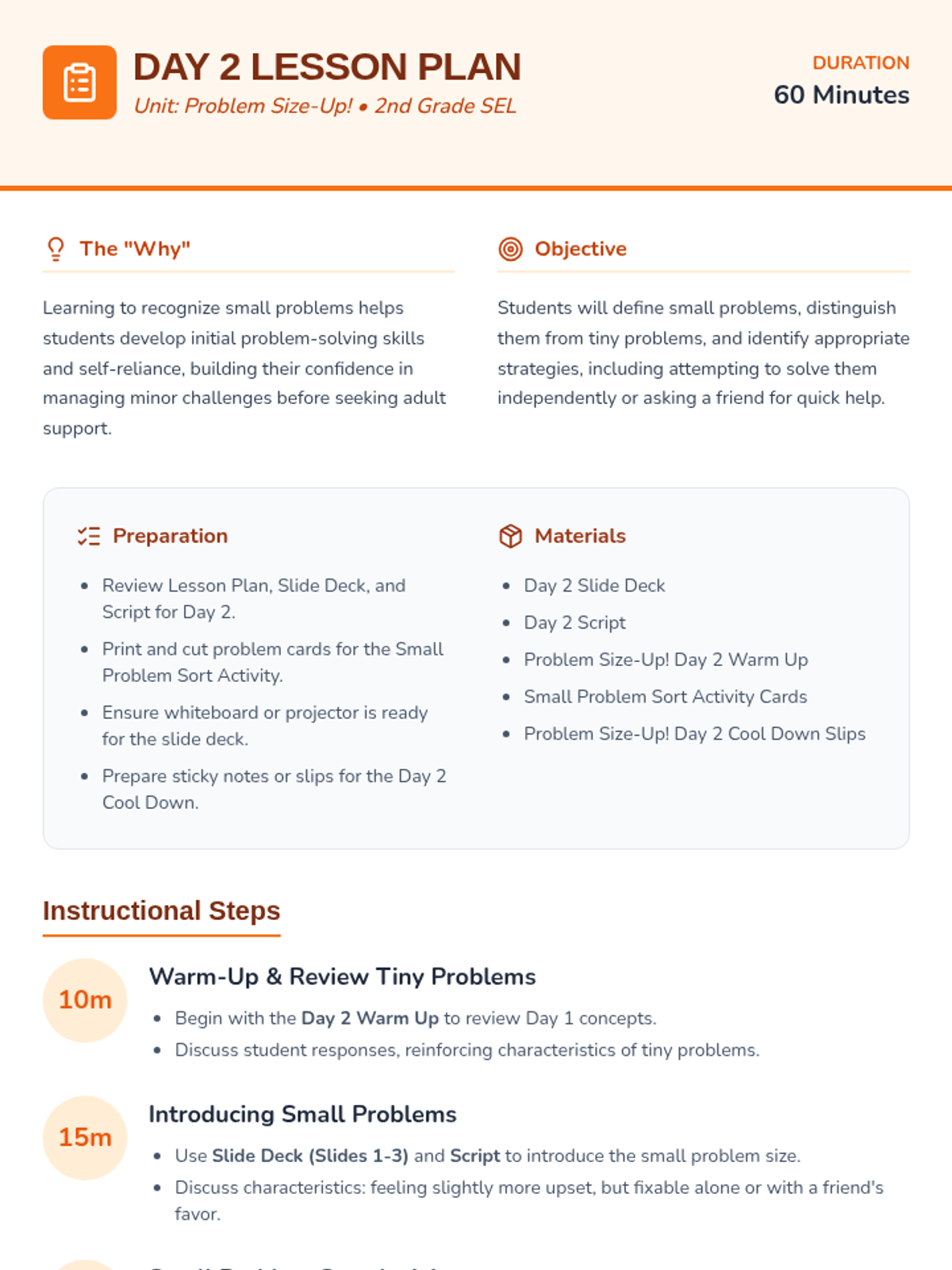
Day 2 Lesson Plan Project
Day 2 Slide Deck
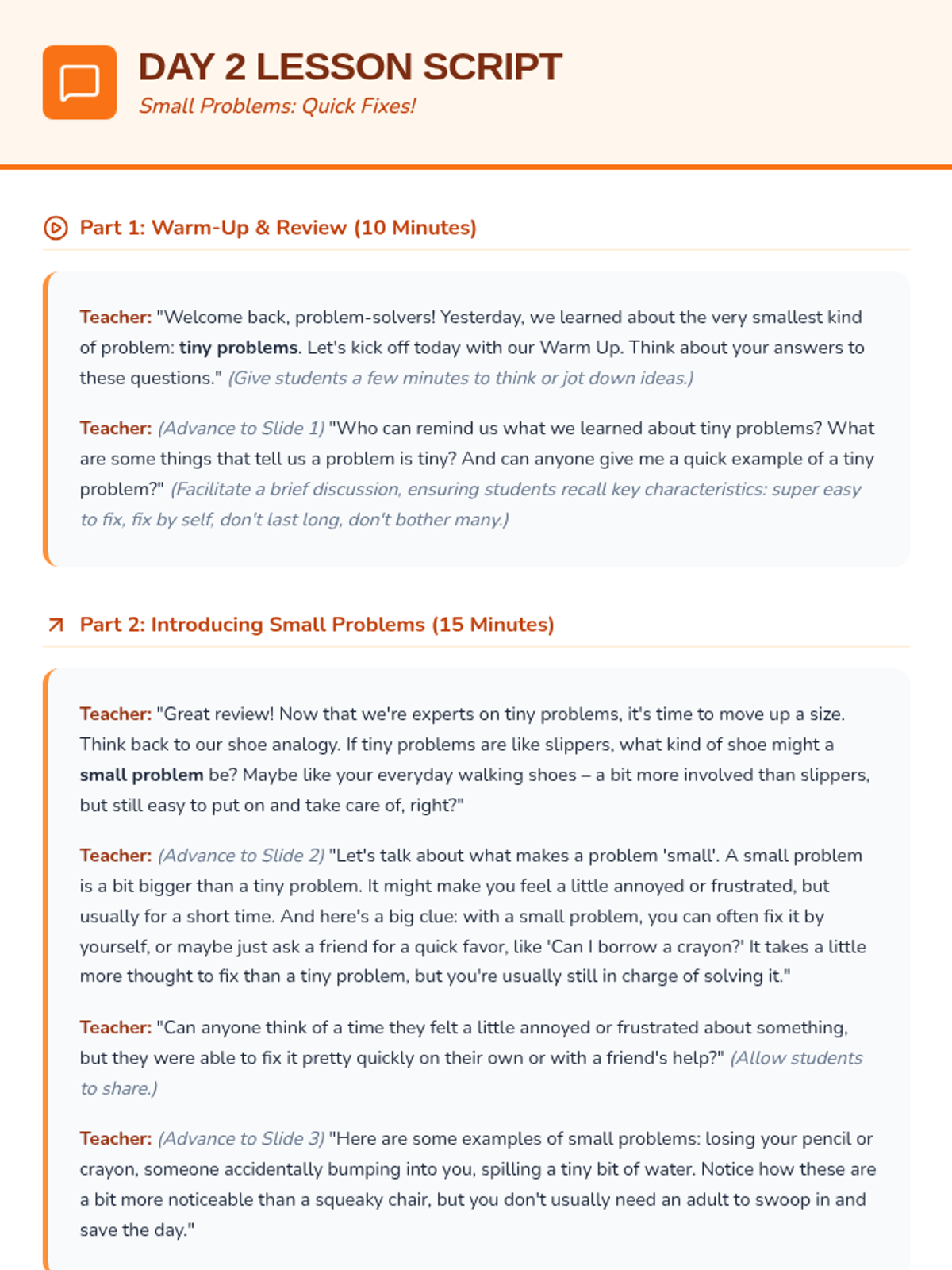
Day 2 Script
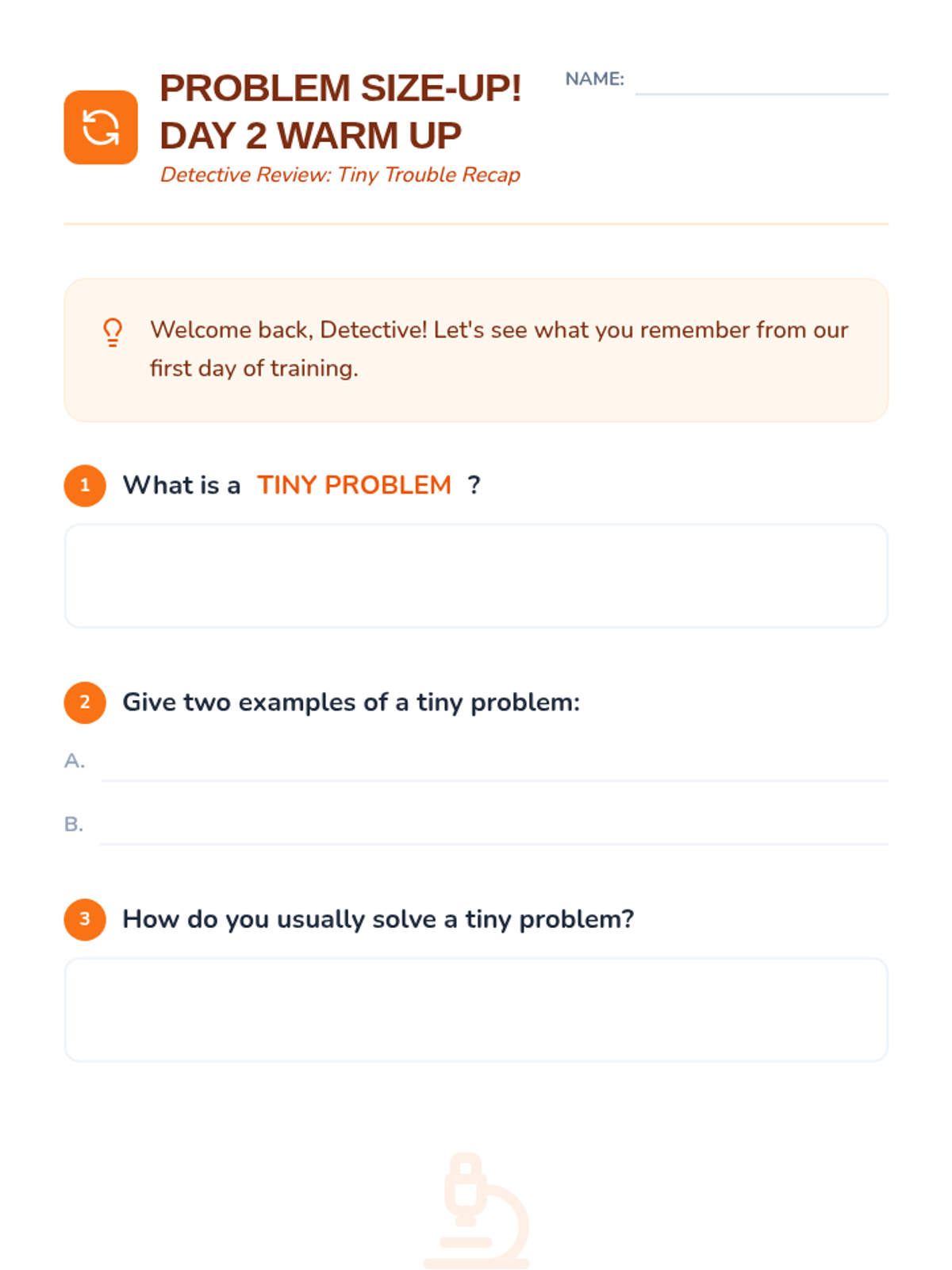
Problem Size Up Day 2 Warm Up
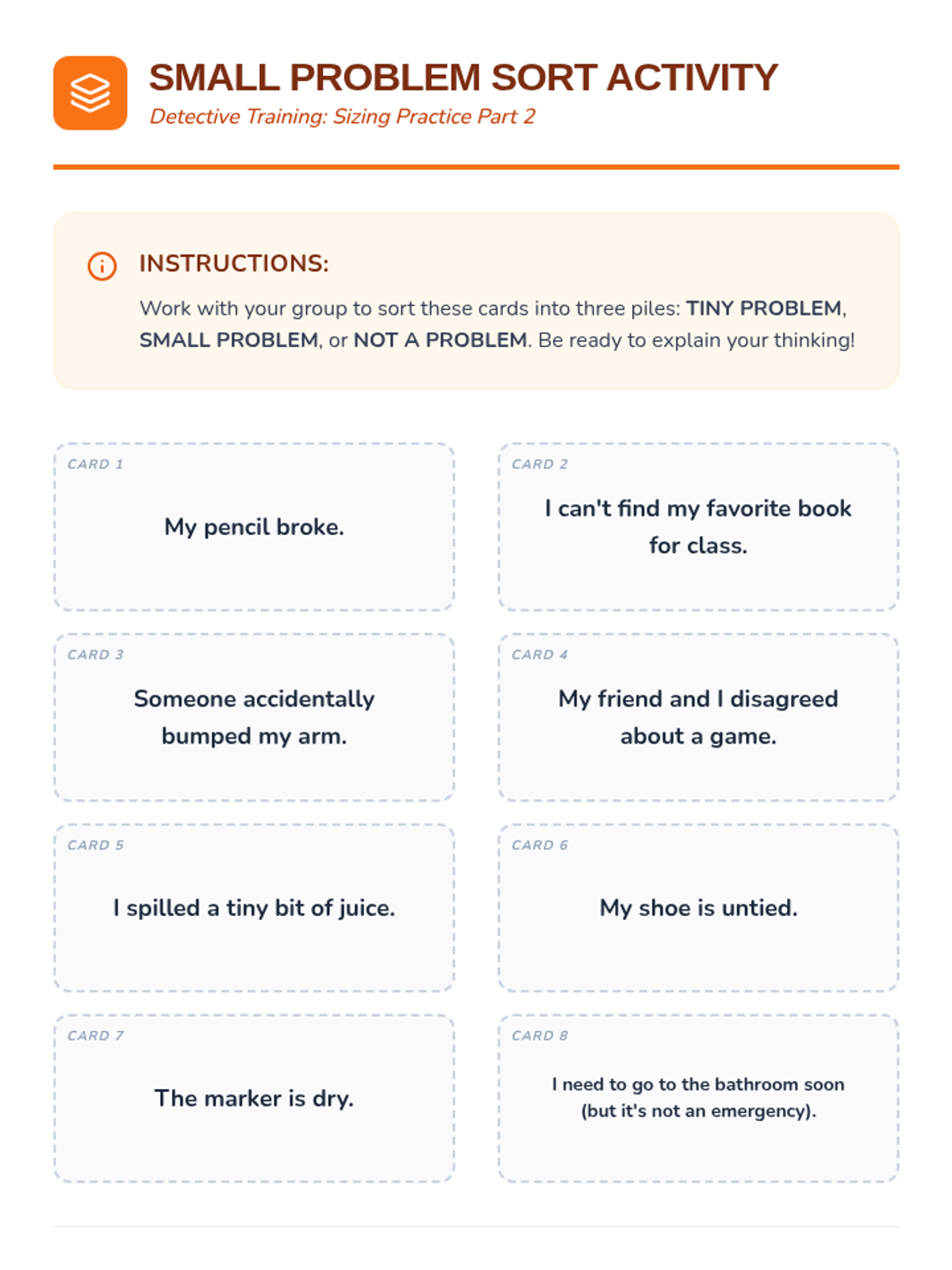
Small Problem Sort Activity
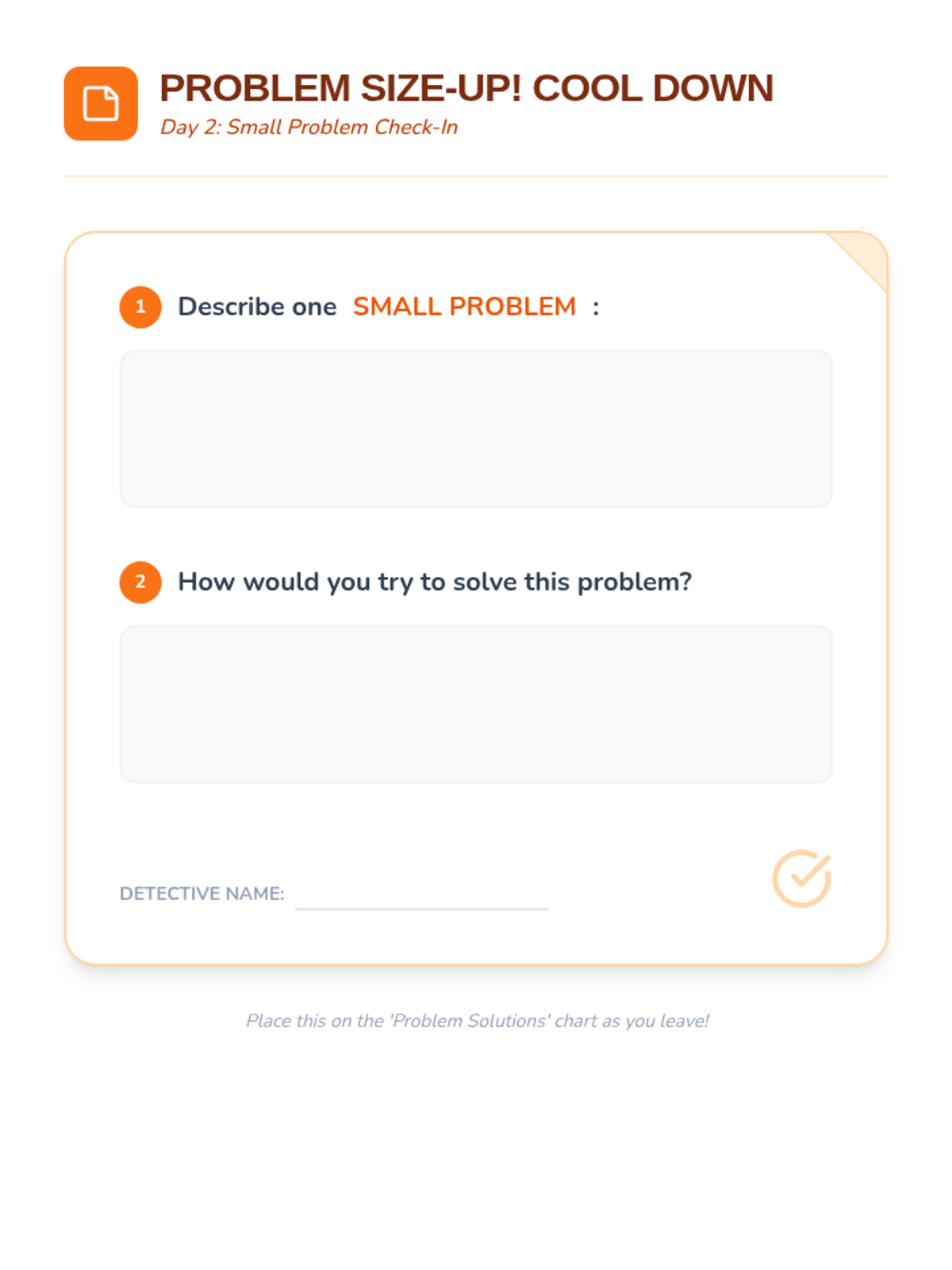
Problem Size Up Day 2 Cool Down

Sorting Small Scrapes

Students explore 'small' problems, learning to distinguish them from tiny ones and identifying quick-fix strategies or seeking minimal peer help.

Lenny Avatar
Lenny
1/17
Lesson
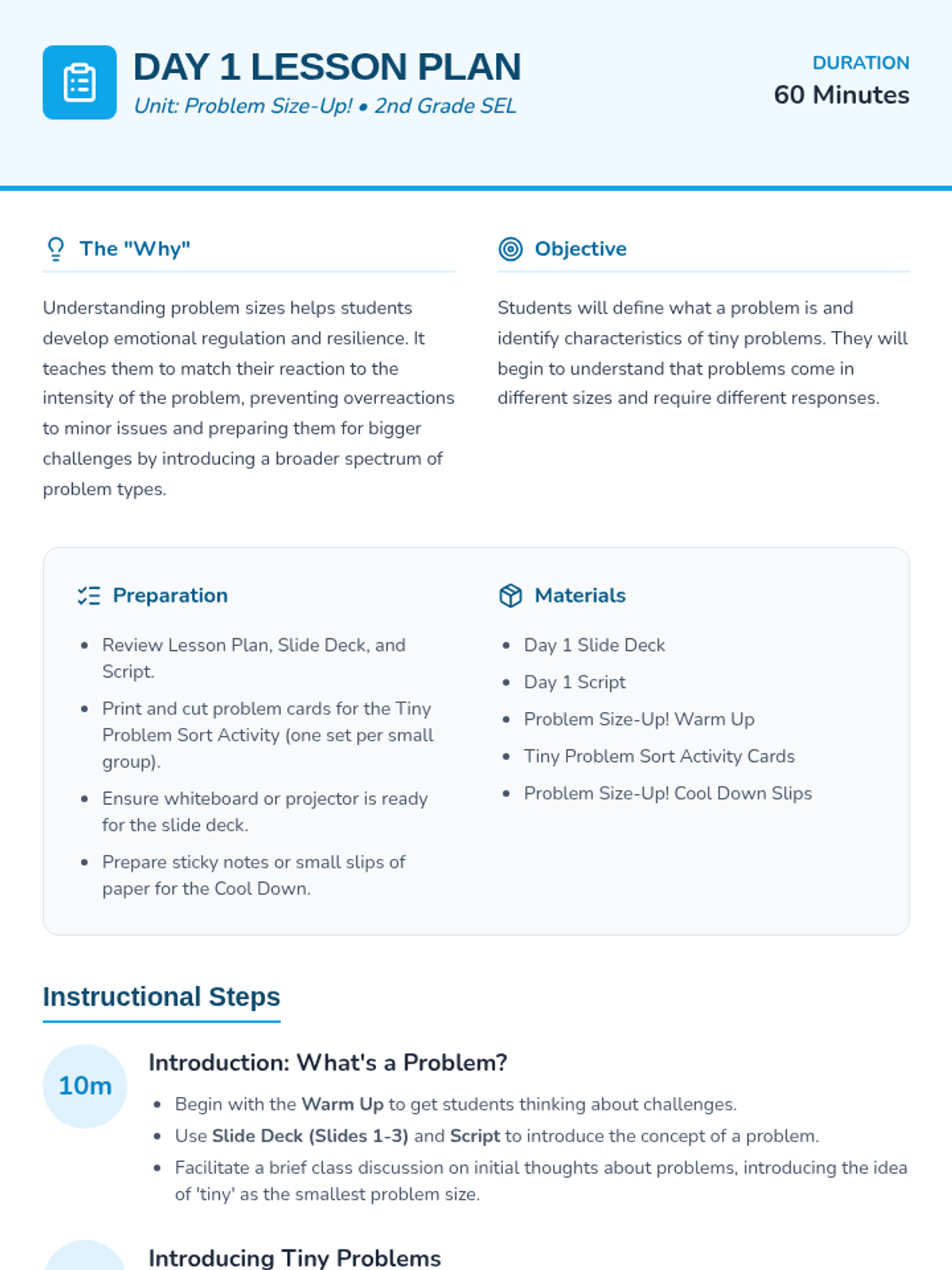
Day 1 Lesson Plan
Day 1 Slide Deck
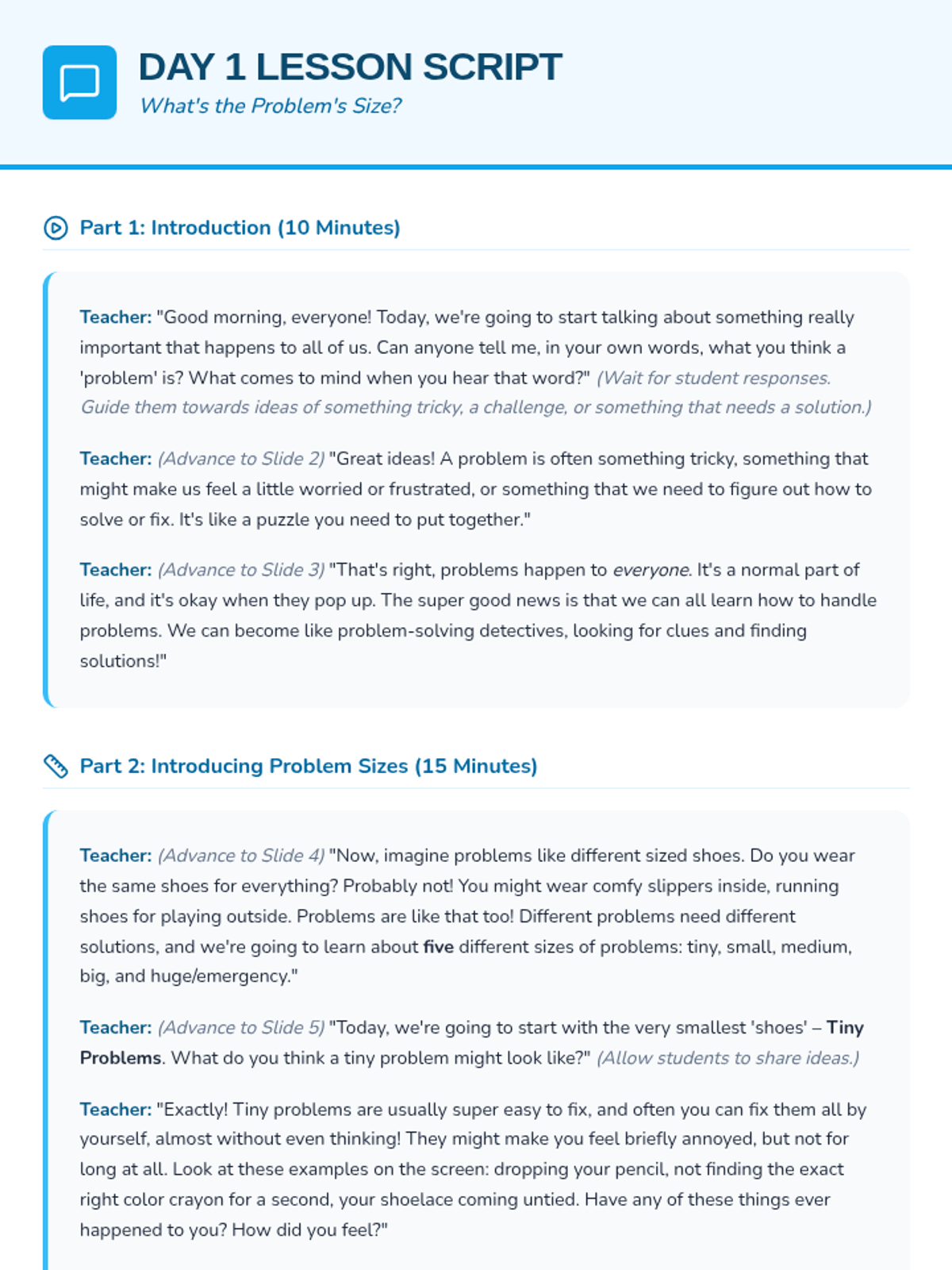
Day 1 Script
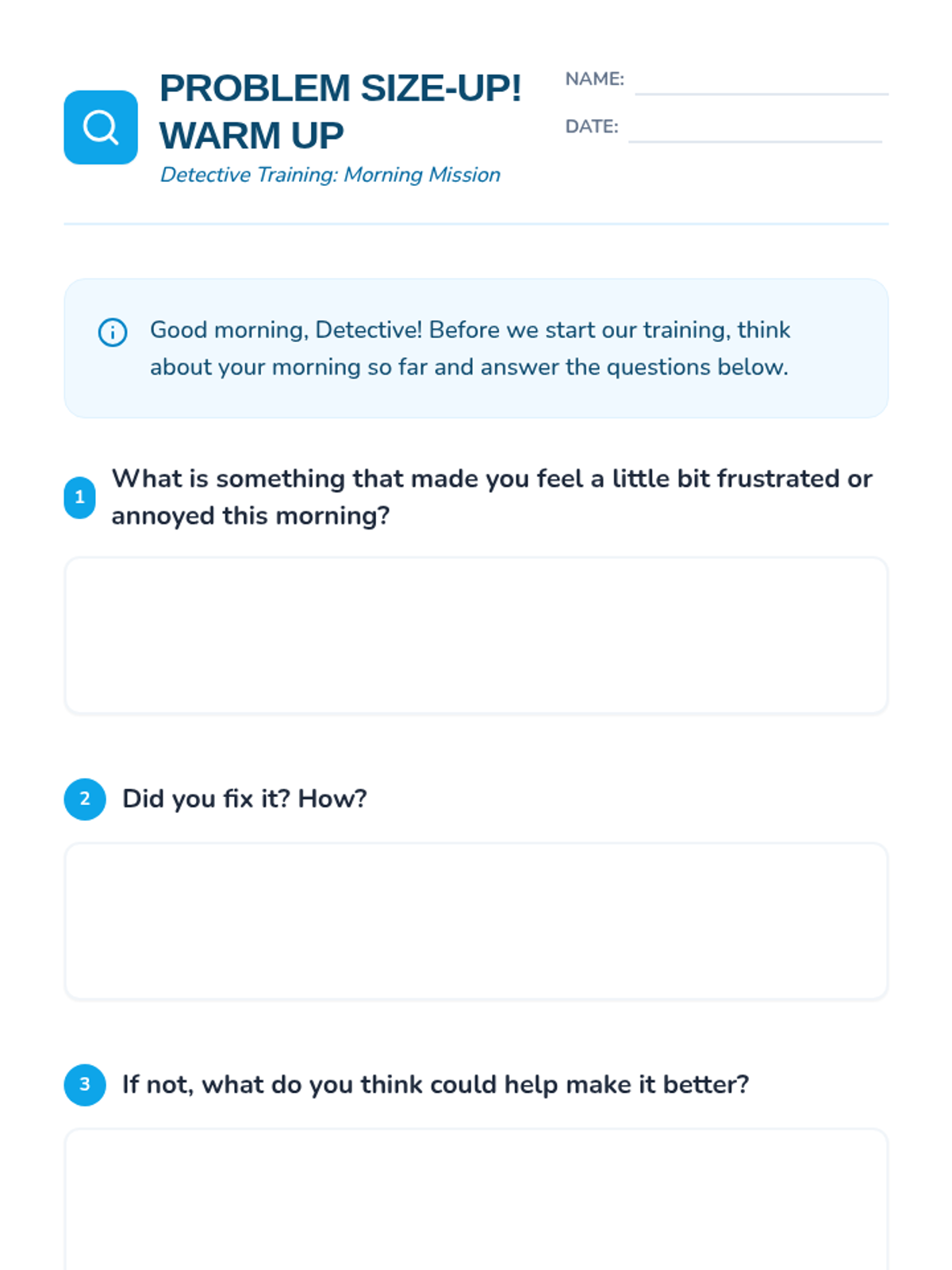
Problem Size Up Warm Up
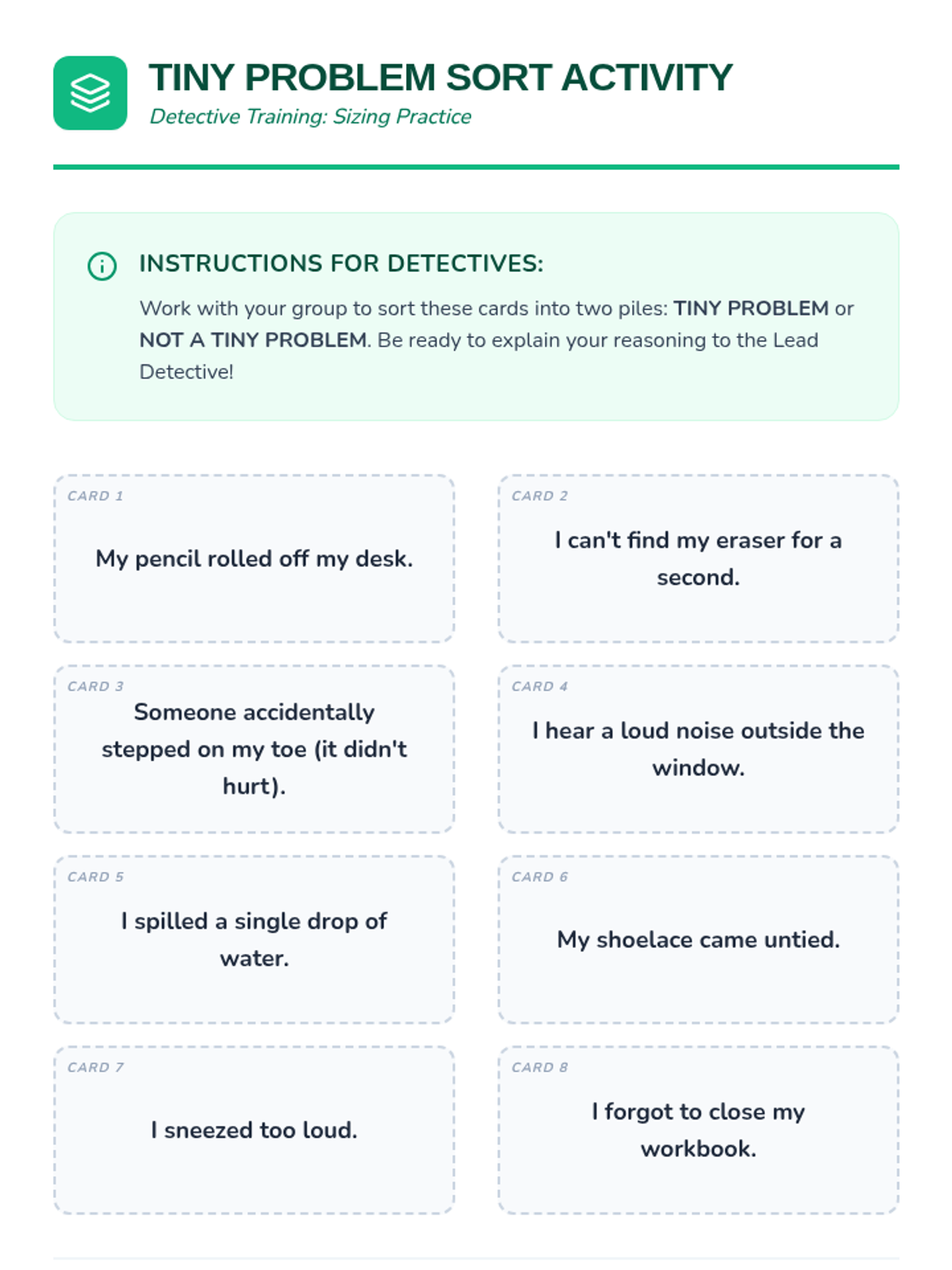
Tiny Problem Sort Activity

Detecting Tiny Troubles

Students are introduced to the concept that problems come in different sizes, focusing on 'tiny' problems that are easily solved independently.

Lenny Avatar
Lenny
1/17
Lesson
Superhero Brain Plan Worksheet
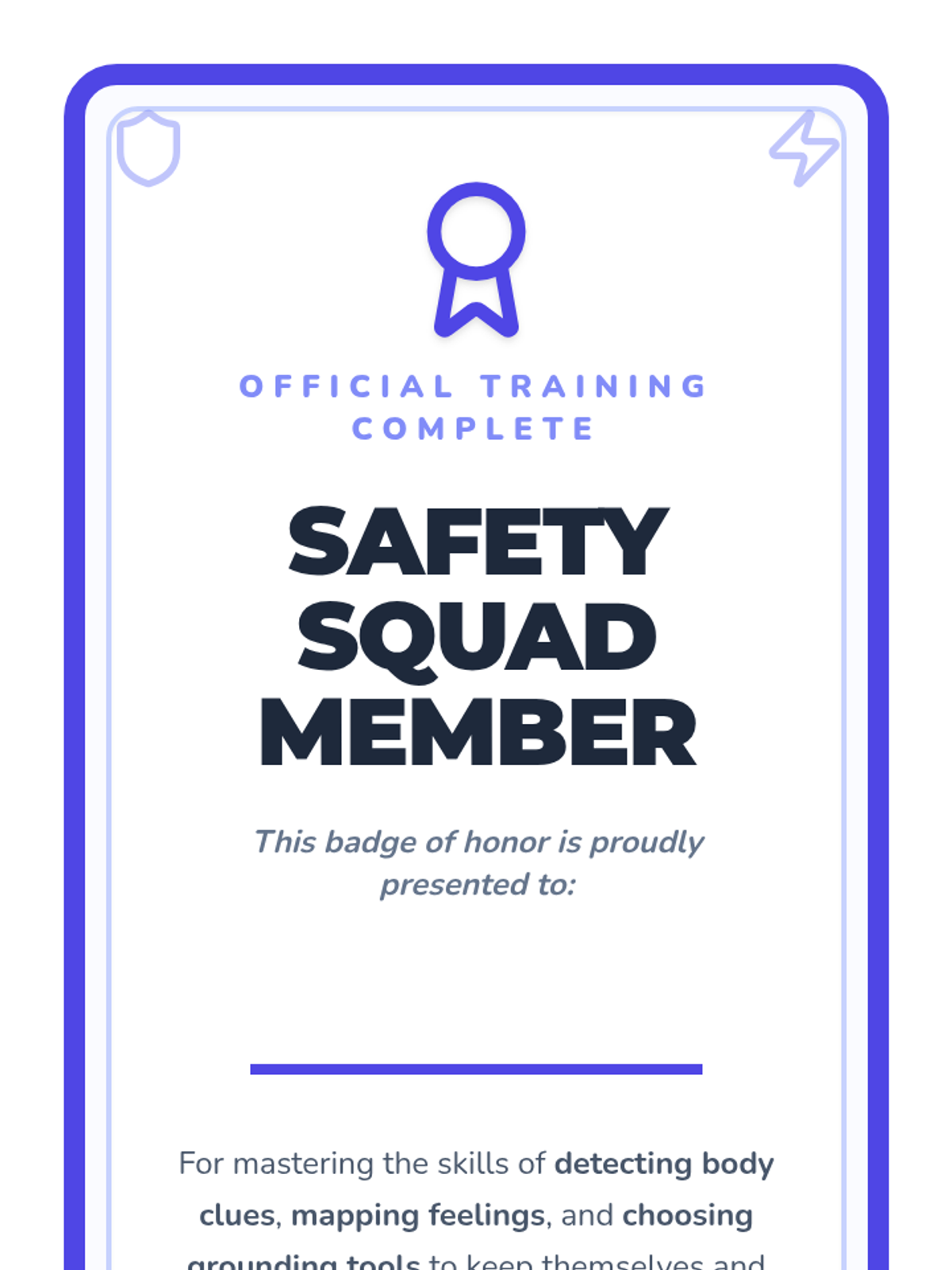
Safety Squad Certificate
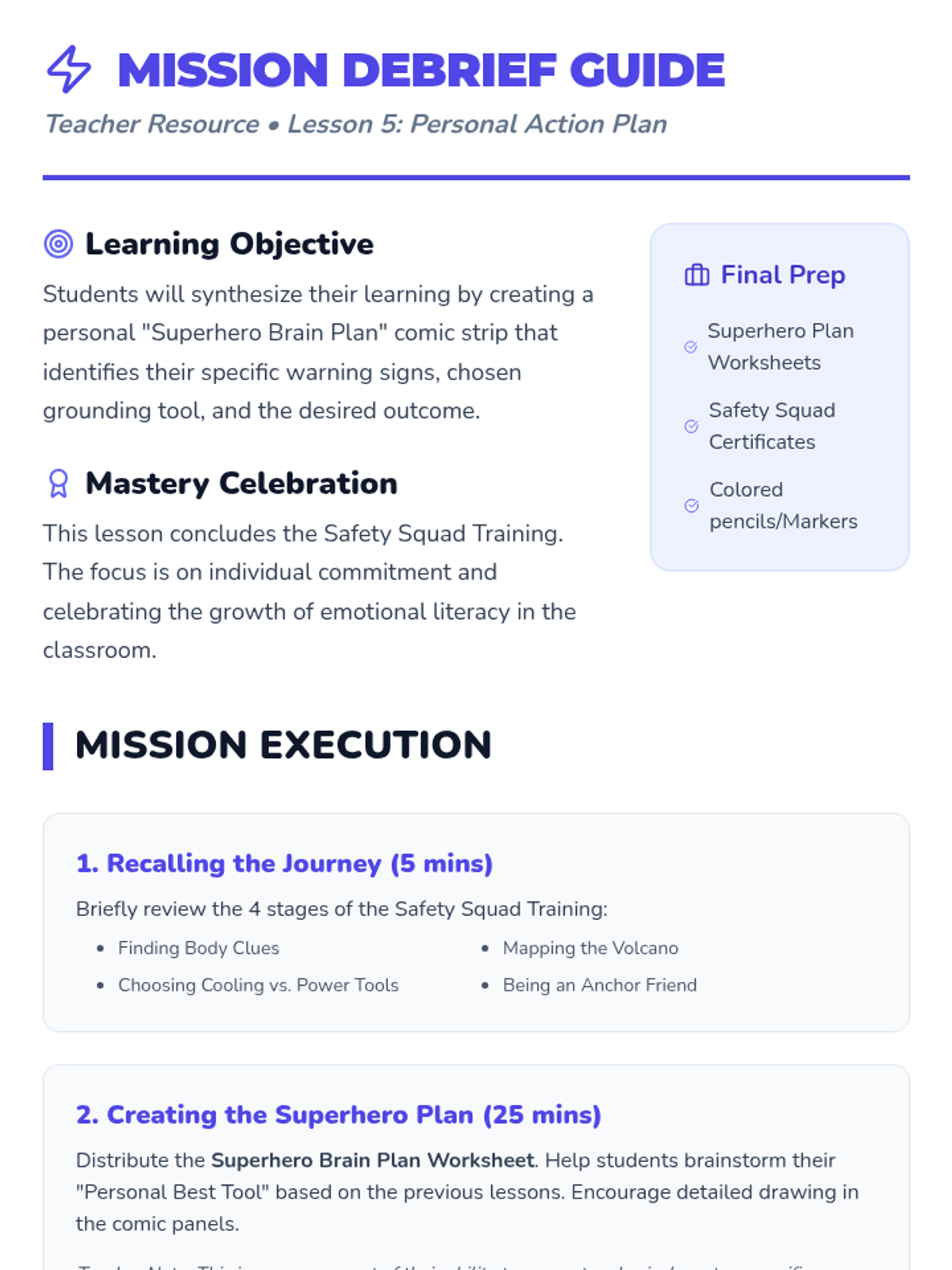
Superhero Plan Guide

Personal Action Plan

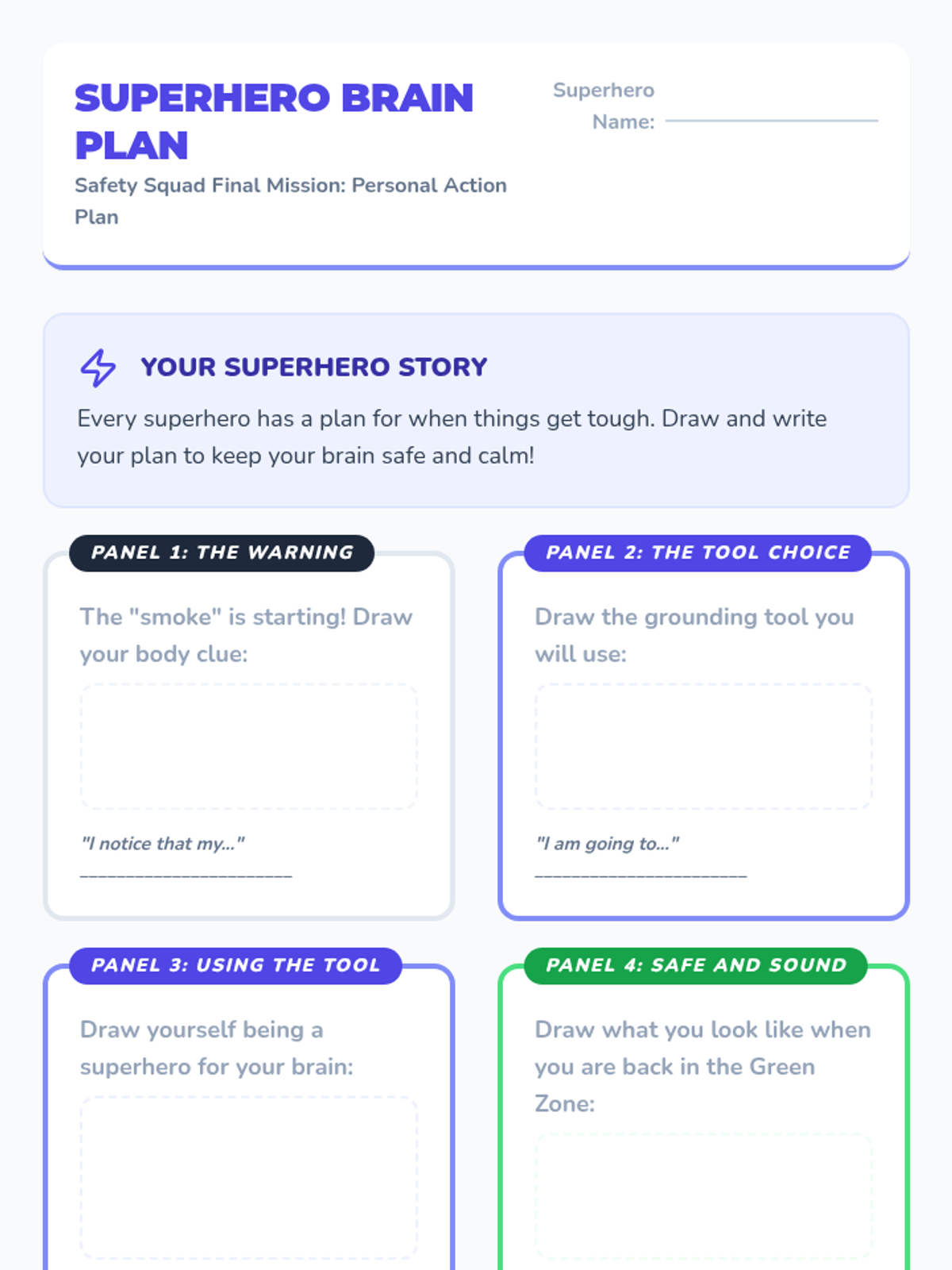
Students create a simple flowchart or storyboard showing what they look like when they are stressed, and drawing the specific action they promise to take next time it happens.

Lenny Avatar
Lenny
1/18
Lesson
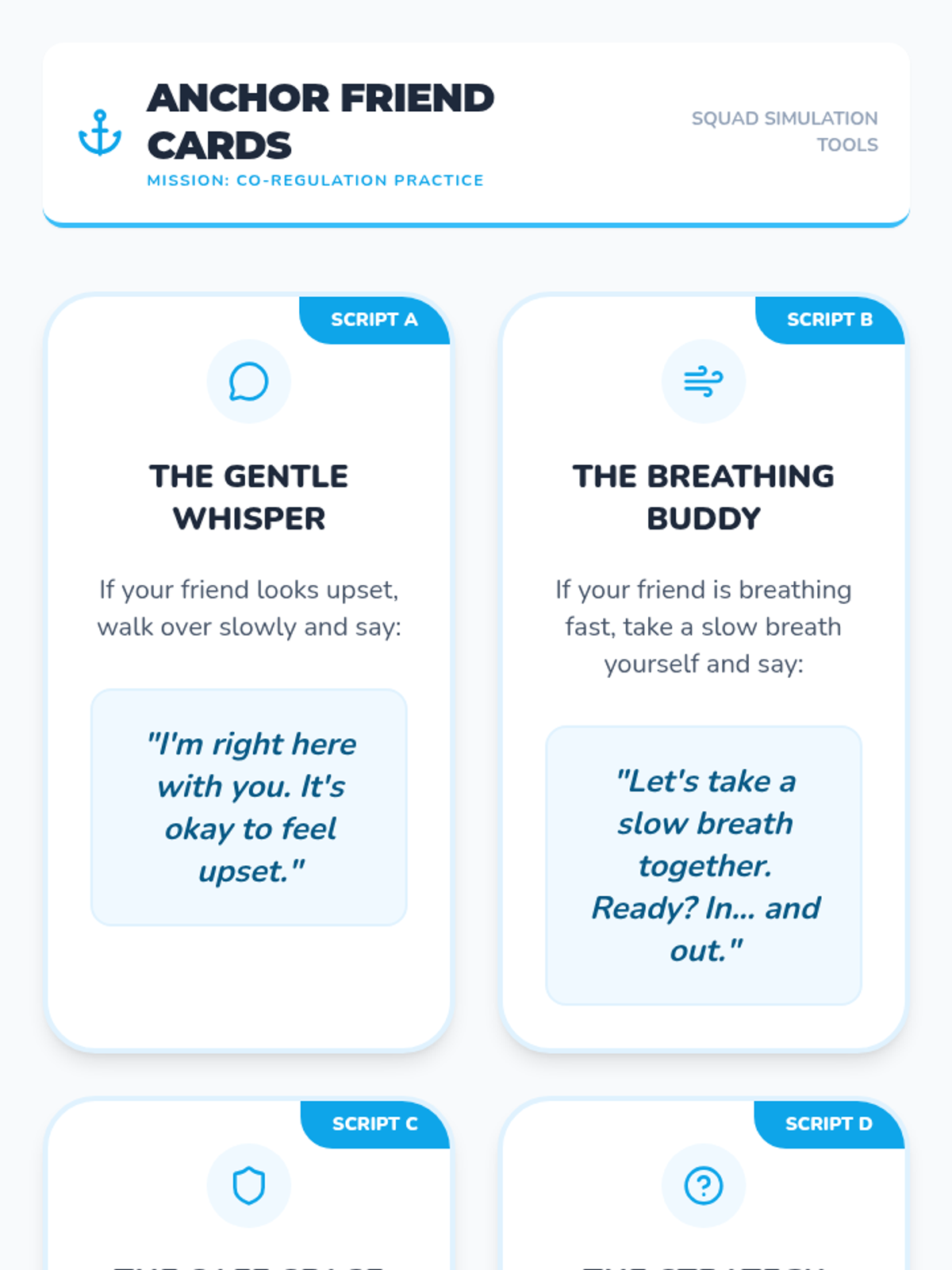
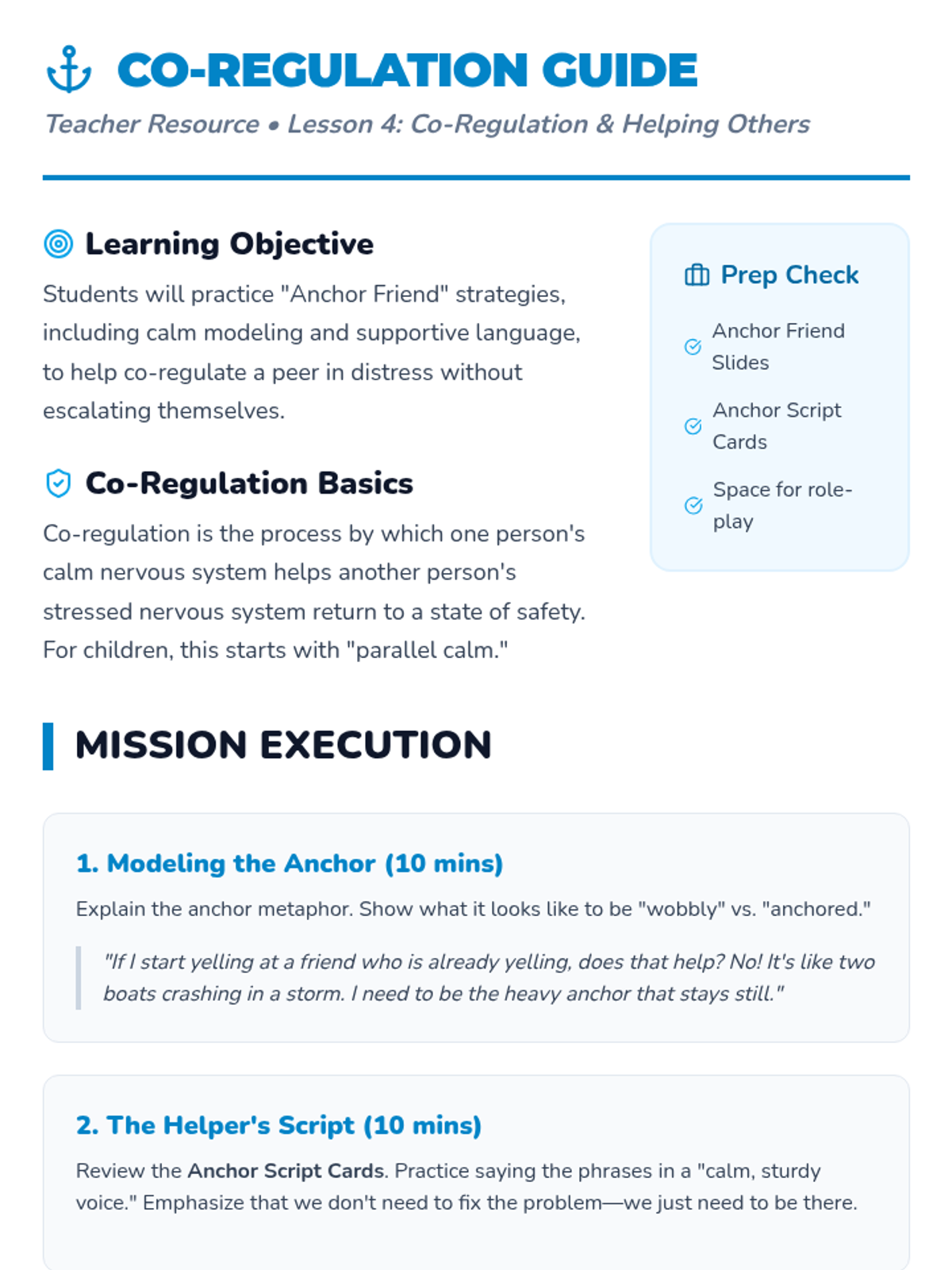
Anchor Friend Slides
Anchor Script Cards
Co-Regulation Facilitation Guide

Co-Regulation and Helping Others

Students practice how to help a friend who is struggling by modeling a strategy (e.g., saying 'Breathe with me'). They learn that staying calm themselves is the best way to help.

Lenny Avatar
Lenny
1/18
Lesson
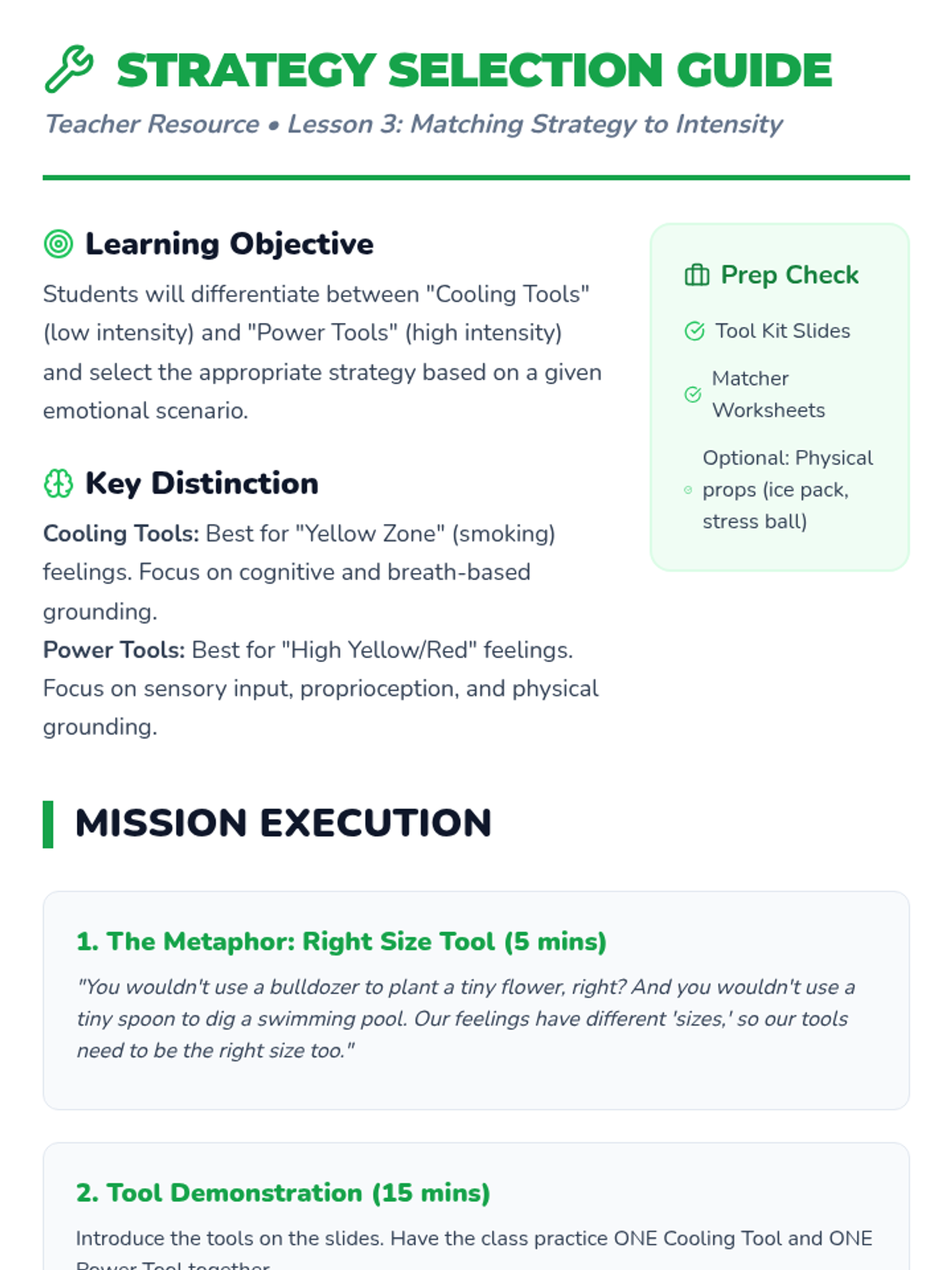
Tool Kit Slides
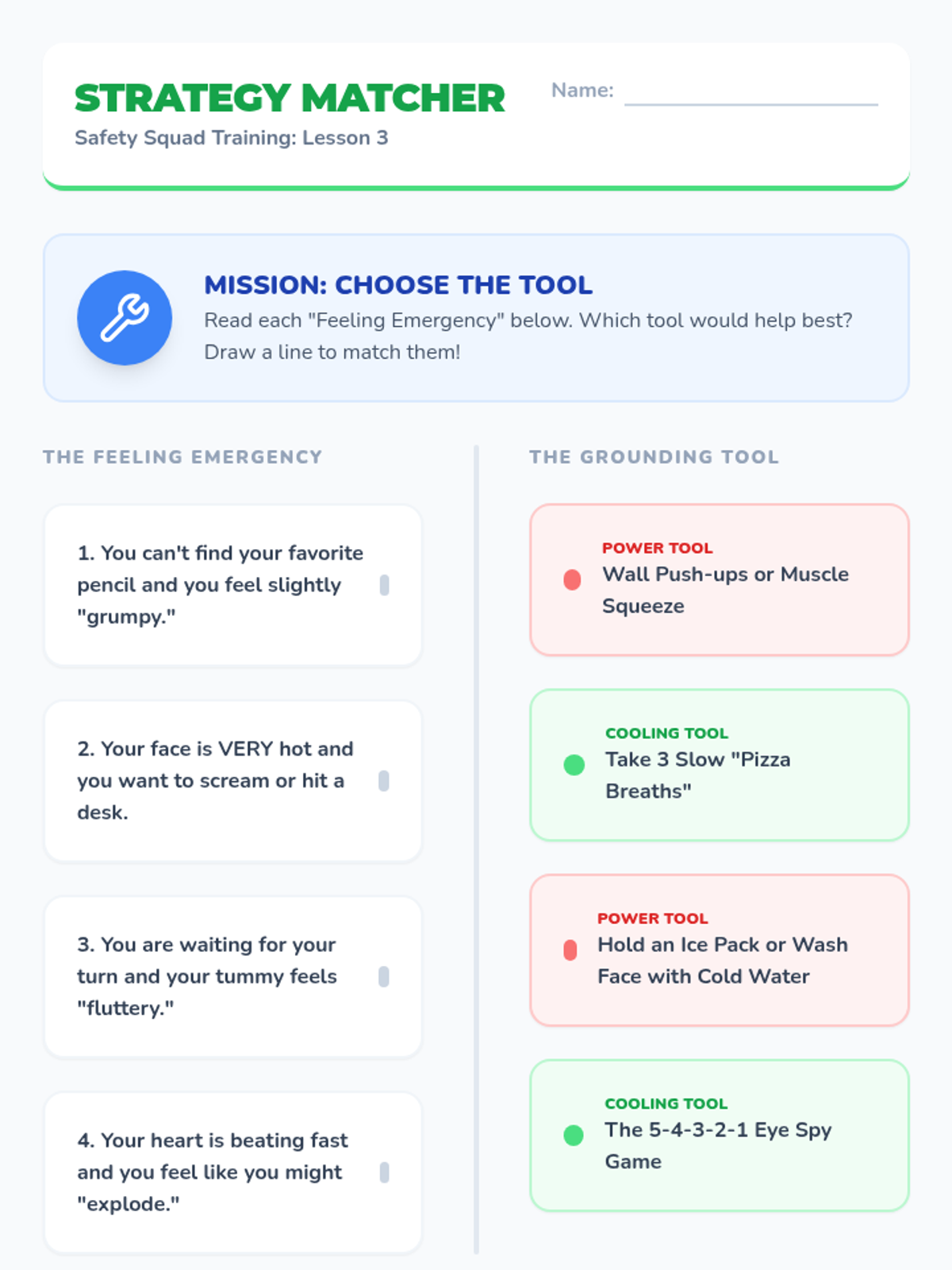
Strategy Matcher Worksheet
Strategy Selection Guide

Matching Strategy to Intensity

Students engage in a matching game where they pair low-intensity feelings with simple strategies (deep breath) and high-intensity feelings with strong grounding actions (wall push, ice pack).

Lenny Avatar
Lenny
1/18
Lesson
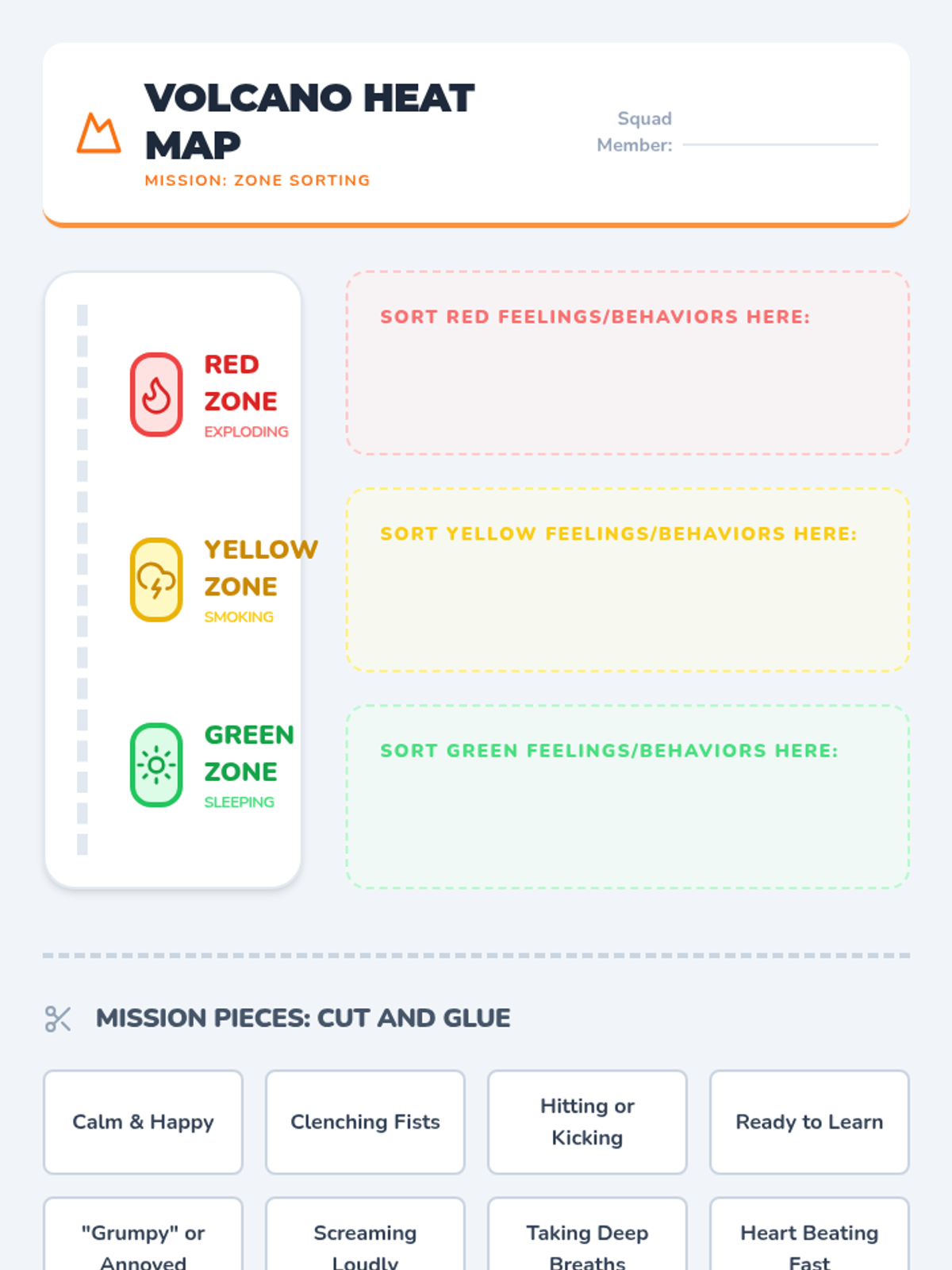
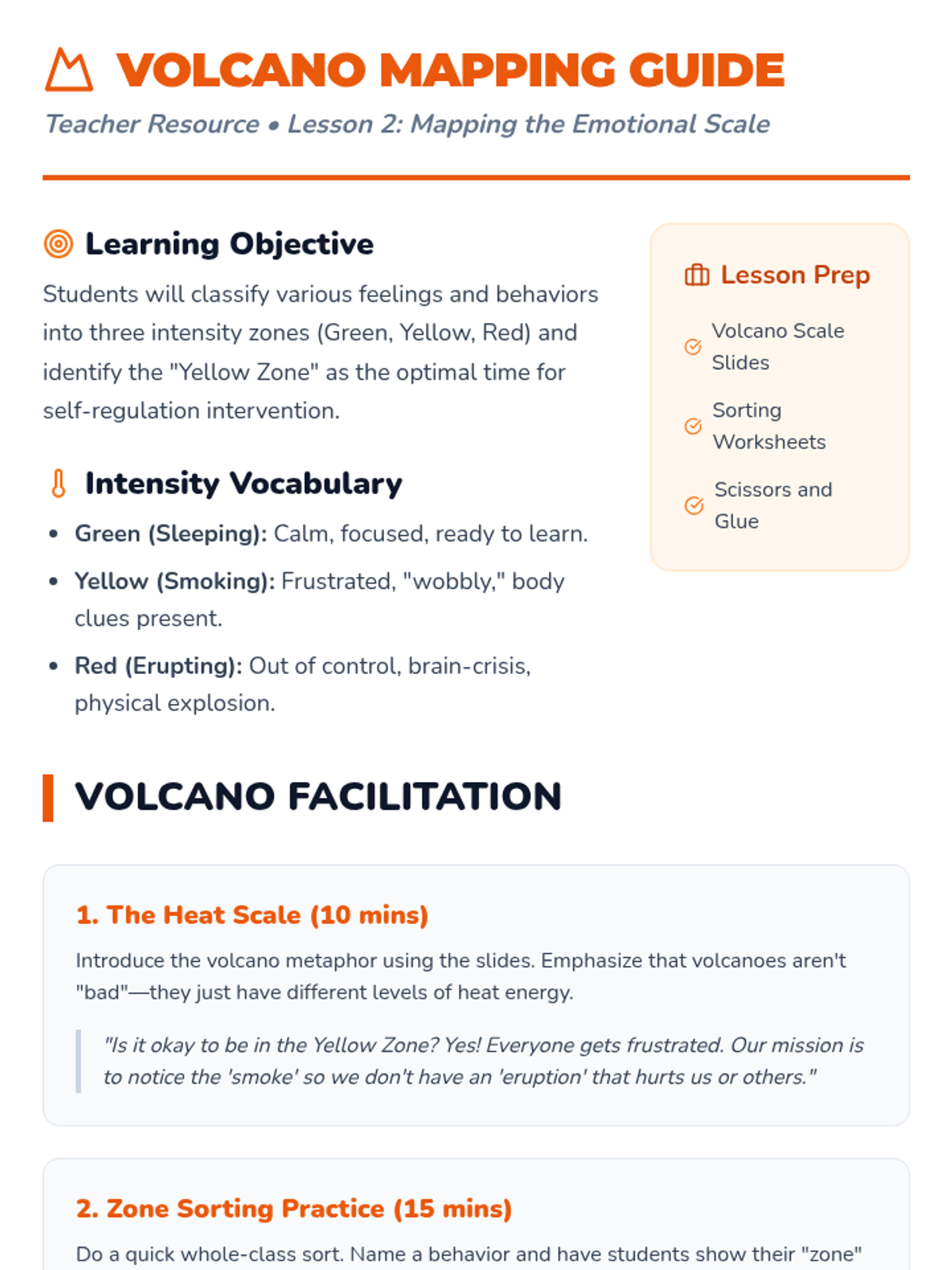
Volcano Scale Slides
Volcano Sorting Worksheet
Volcano Mapping Guide

Mapping the Emotional Scale

The class creates a 'thermometer' or 'volcano' visual. They sort different behaviors and feelings into zones (Green/Okay, Yellow/Wobbly, Red/Crisis) to understand intensity levels.

Lenny Avatar
Lenny
1/18
Lesson
Body Clues Slides
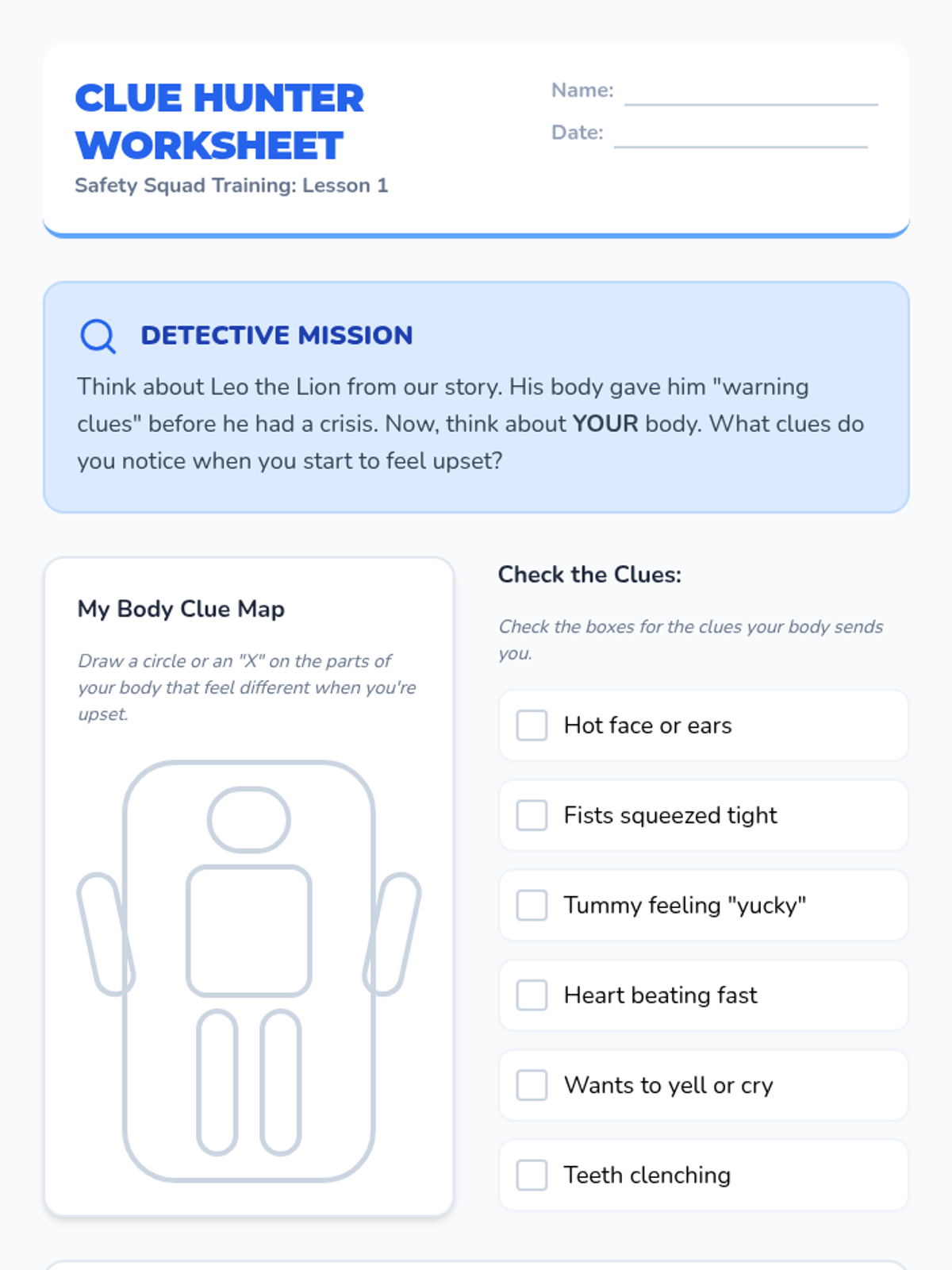
Clue Hunter Worksheet
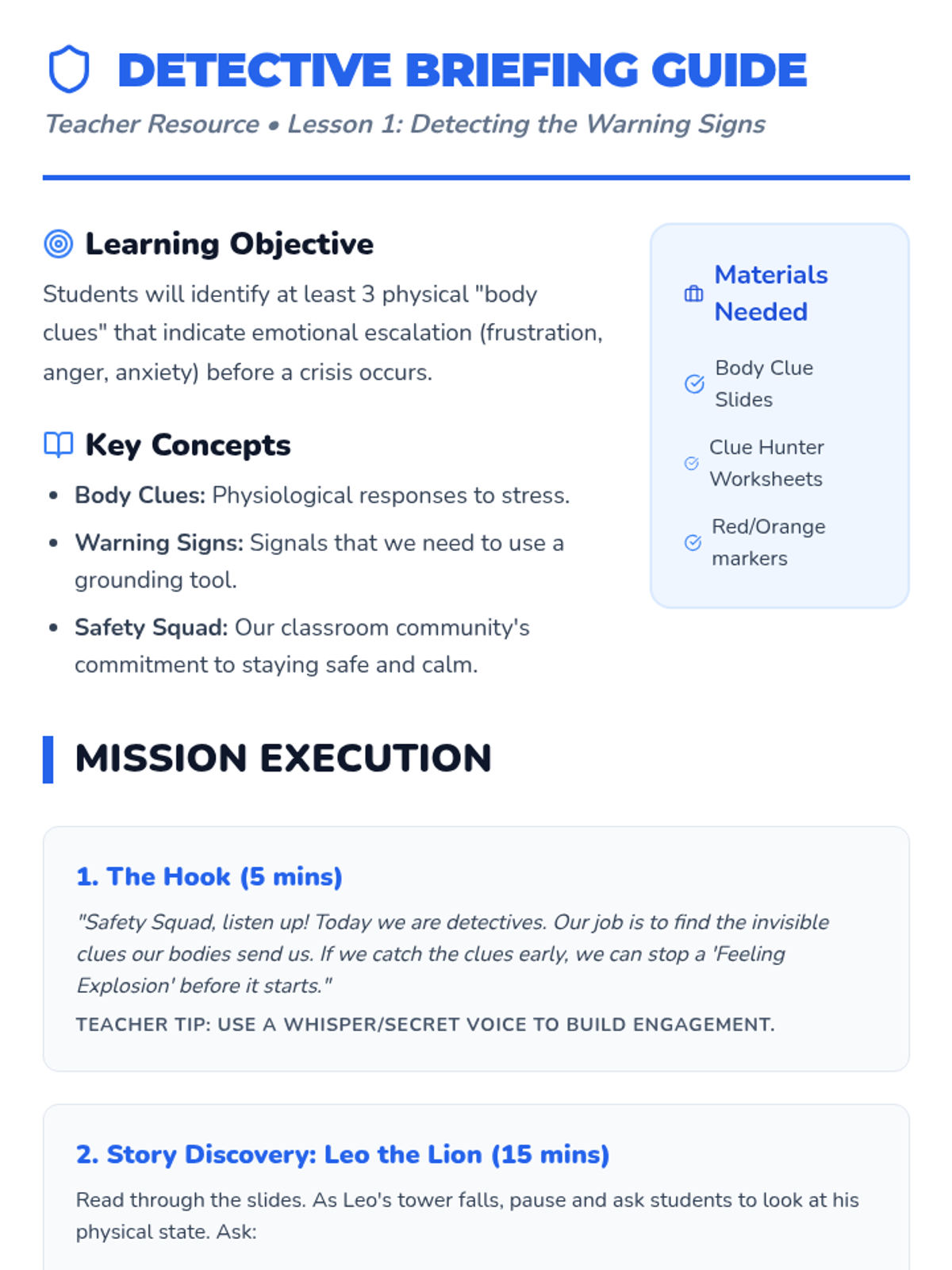
Detective Briefing Guide

Detecting the Warning Signs

Students read a story about a character whose frustration builds slowly. They act as detectives, identifying the physical clues (clenched fists, hot face) that showed the character needed to ground themselves.

Lenny Avatar
Lenny
1/18
Lesson
Safety Shield Slides
Personal Advocacy Project
Safety Plan Teacher Guide

Creating a Personal Safety and Advocacy Plan

Students synthesize the sequence's concepts by creating a personal advocacy card. This tool lists their trusted adults, preferred boundary statements, and a checklist for when to seek the nurse or counselor. The lesson concludes with students presenting one part of their plan to a partner to reinforce confidence.

Lenny Avatar
Lenny
1/18
Lesson
Body Detective Slides
Symptom Speaker Worksheet
Health Advocacy Teacher Guide

Advocating for Health Needs

This lesson shifts focus to physical health advocacy, teaching students how to describe symptoms accurately to a school nurse or parent. Students role-play explaining pain or illness clearly to ensure they receive appropriate care.

Lenny Avatar
Lenny
1/18
Lesson
Power of No Slides
Strong Statements Practice Sheet
Refusal Skills Teacher Guide

Using Refusal Skills and 'I' Statements

Students learn standardized phrases to enforce boundaries, such as 'I don't like that, please stop' or 'I need space.' The lesson focuses on the power of the word 'No' and differentiates between polite refusal and safety refusal.

Lenny Avatar
Lenny
1/18
Lesson
Feeling Alarms Slides
Body Signals Worksheet
Gut Feelings Teacher Guide

Recognizing Uncomfortable Feelings

This lesson connects physical sensations (butterflies in stomach, racing heart) with the need for self-advocacy. Students learn to interpret their 'gut feelings' as alarm systems telling them a boundary is being crossed.

Lenny Avatar
Lenny
1/18
Lesson
Bubble Boundaries Slides
Bubble Boundaries Worksheet
Personal Space Teacher Guide

Personal Space Bubbles

Students explore the concept of a 'personal bubble' to understand physical boundaries and practice defining their comfort levels. The lesson establishes that everyone has the right to decide who enters their personal space.

Lenny Avatar
Lenny
1/18
Lesson
Circle of Trust Worksheet
Trusted Adults Introduction Slides
Adult Role Sorting Cards

My Circle of Trust

Students identify specific adults in their home, school, and community who can help keep them safe and learn the characteristics of a trusted adult.

Lenny Avatar
Lenny
1/18
Lesson
Speak Up Lesson Plan
Speak Up Slides
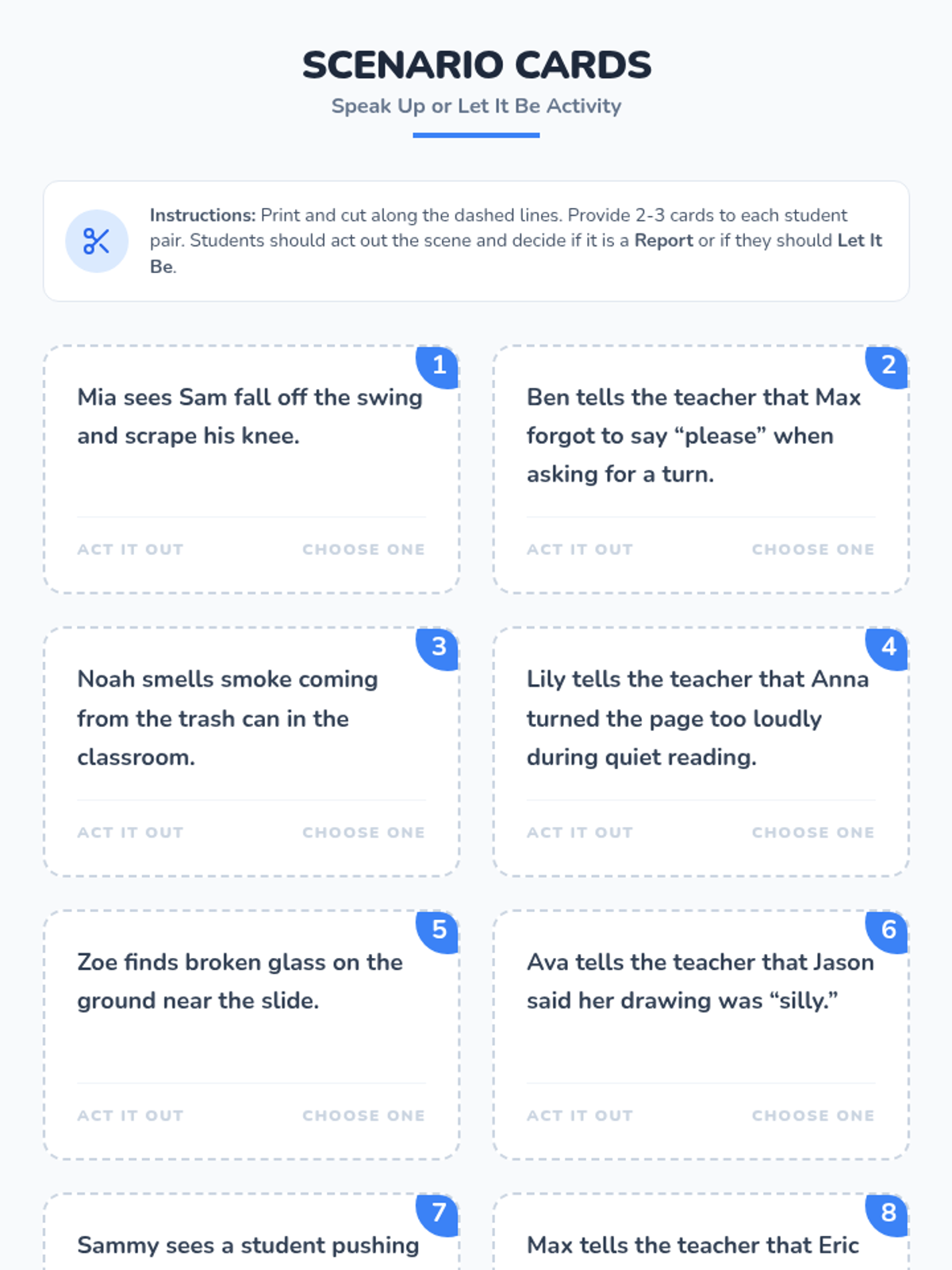
Speak Up Scenario Cards
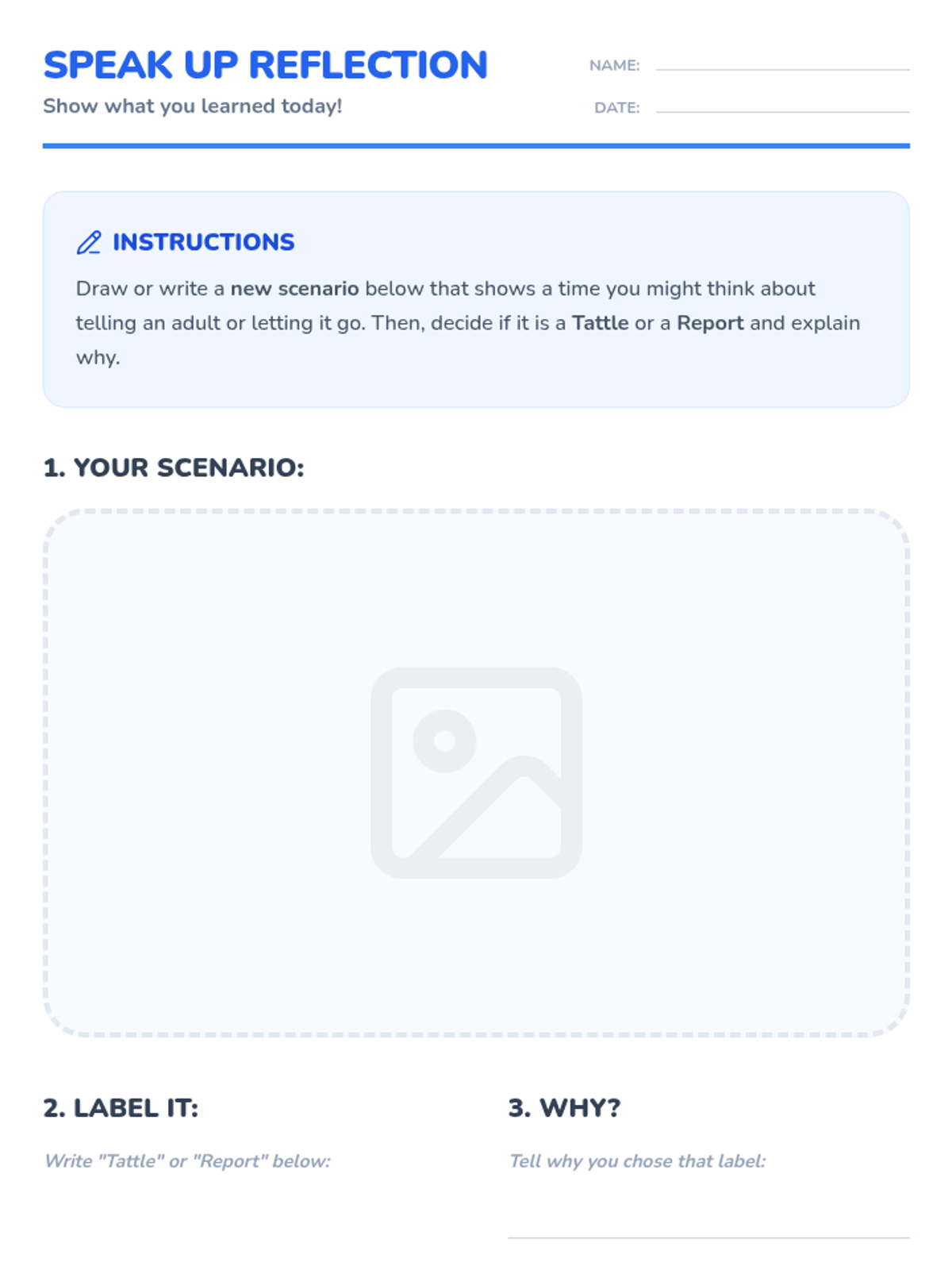
Speak Up Reflection Worksheet
Speak Up Parent Resource

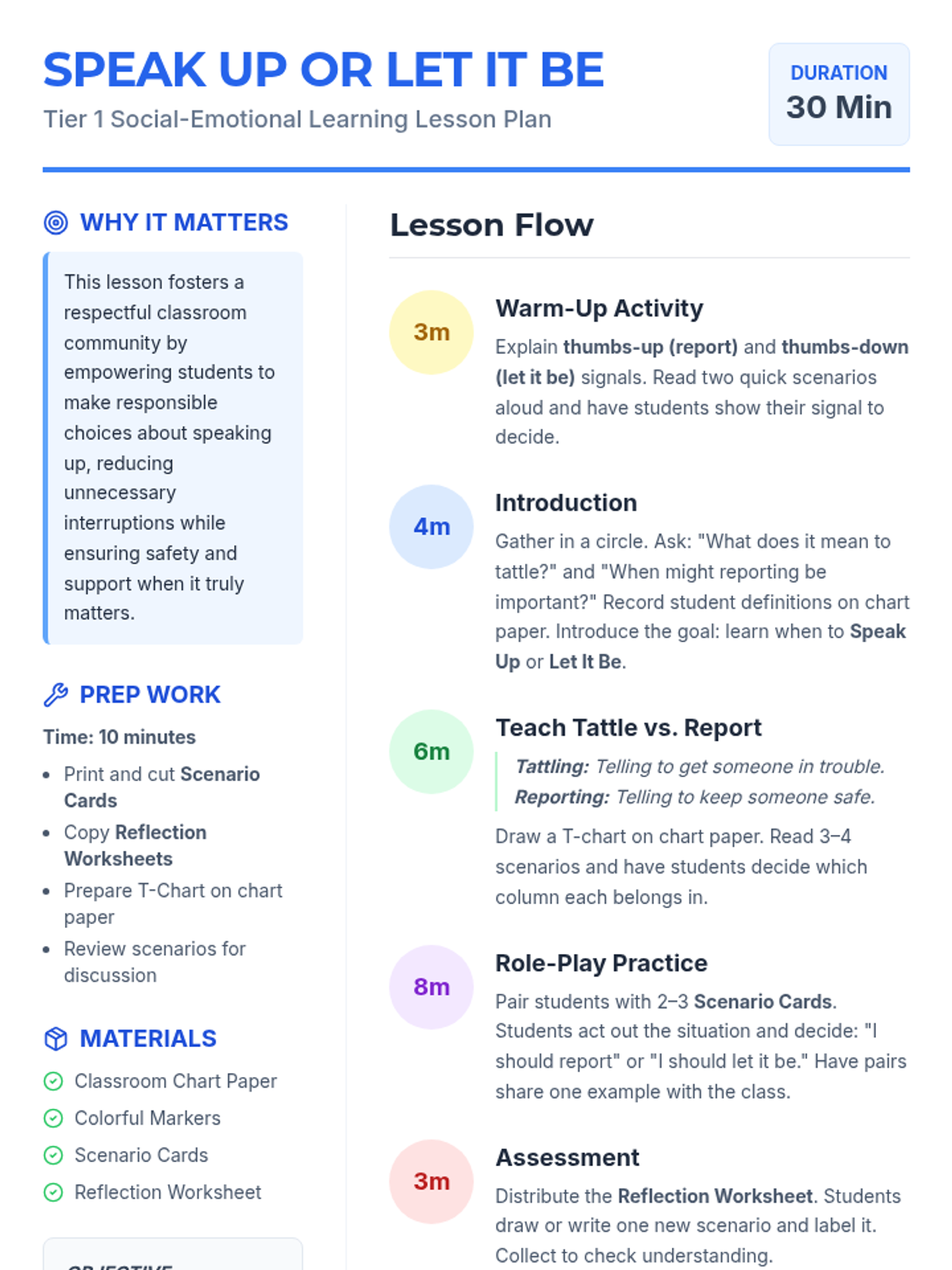
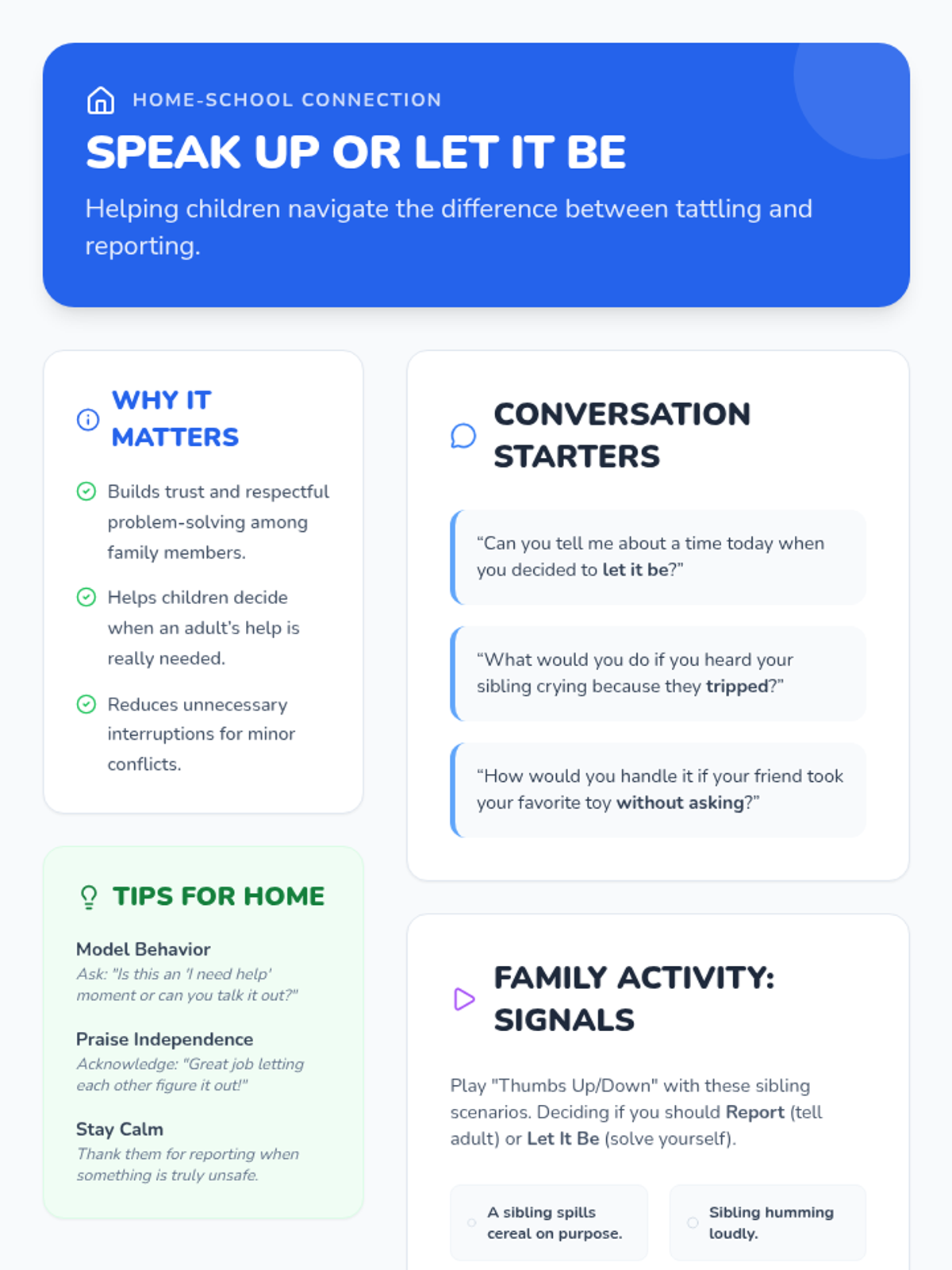
Speak Up or Let It Be

A 30-minute Tier 1 lesson for 2nd graders to distinguish between tattling and reporting, focusing on safety versus getting others in trouble.

Lenny Avatar
Lenny
1/17
Lesson
Community Circle Facilitation Guide
Kind Circle Reflection Journal
Kind Circle Hero Certificate

Community Circle Celebration

Students synthesize their skills in a structured community circle, using a talking piece to practice respectful sharing and listening.

Lenny Avatar
Lenny
1/17
Lesson
Kindness Scripts Slides
Kindness Script Practice Cards

Kindness Scripts

Students practice responding to peers without judging or interrupting, using supportive sentence starters to build kindness.

Lenny Avatar
Lenny
1/17
Lesson
Safety Circle Slides
Share or Secret Activity

Safety Circle

Students distinguish between topics safe for group sharing and those that should be kept private or shared only with a trusted adult.

Lenny Avatar
Lenny
1/17
Lesson
Emotion Detectives Slides
Emotion Match Cards
Validation Phrases Cheat Sheet

Emotion Detectives

Students learn to identify feelings through facial expressions and tone of voice, practicing simple phrases to validate others.

Lenny Avatar
Lenny
1/17
Lesson
Soft Landing Guide Worksheet
Bridge the Gap Teacher Guide

The Great Return

A supportive lesson focused on easing school-re-entry anxiety and providing concrete strategies for students transitioning back after a break.

K

krobinson

Psychologist
3/27
Lesson
Scripting Success Guide
Strengths Compass Worksheet
Confidence Catalyst Checklist
Connection Cards Activity

Inner Voice Voz Interior

A collection of bilingual resources designed to help a shy Spanish-speaking student identify personal strengths, manage social anxiety, and practice self-advocacy through structured scripts and visual goals.

LC

Lillian Cortes-Oyola

Counselor
3/26
Lesson
Expert Investigator Exam Worksheet

Expert Investigators

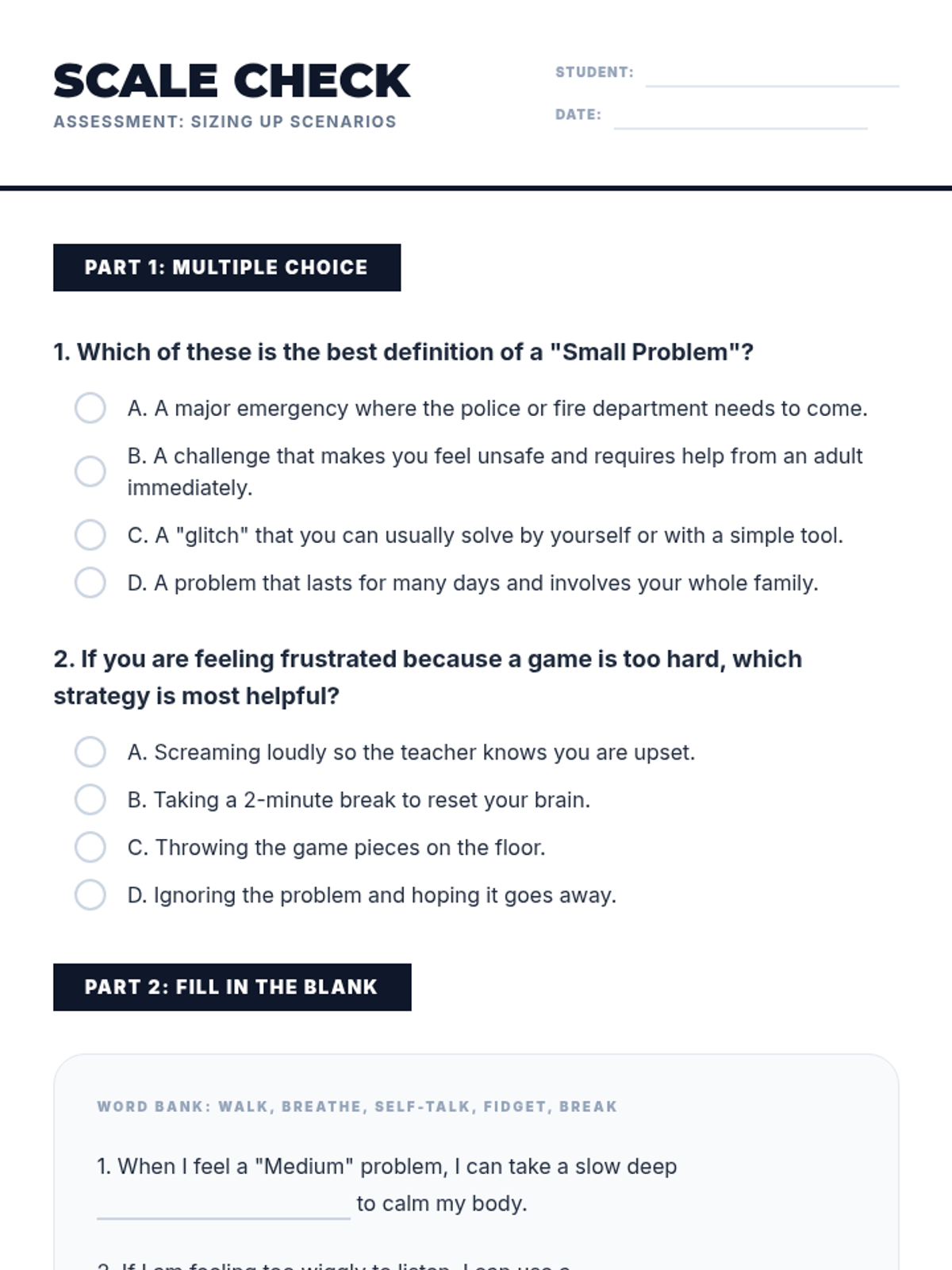
A final review of all 5 levels and strategies, where students solve complex scenarios to earn their 'Expert Investigator' certification.

KD

Katie Dominici

Other
3/23
Lesson
Solution Lab Tools Visual
Tool Selector Worksheet

Solution Science

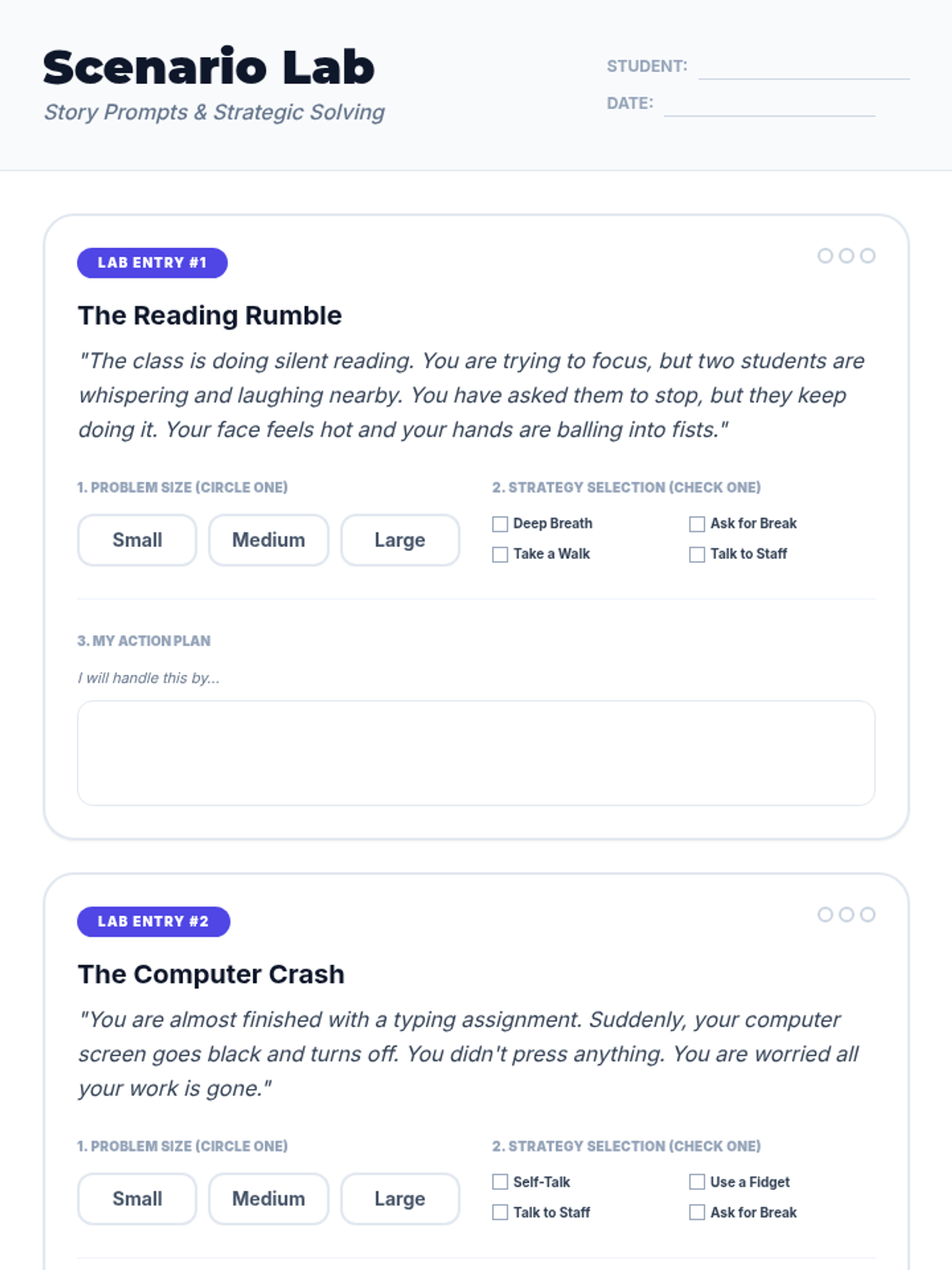
Practicing specific strategies and 'lab tools' to solve problems of different sizes effectively.

KD

Katie Dominici

Other
3/23
Lesson
Reaction Rescue Worksheet

Reaction Rescue

Students learn to match the size of their emotional reaction to the size of the problem, understanding that overreacting or underreacting can complicate situations.
KD

Katie Dominici

Other
3/23
Lesson
Red Alerts Visual
Red Alerts Worksheet

Red Alerts

Focus on Big and Huge problems (Levels 4 and 5), identifying emergencies and serious situations that require immediate adult intervention.

KD

Katie Dominici

Other
3/23
Lesson
Middle Muddles Worksheet

Middle Muddles

Focus on Medium problems (Level 3) that require help from an adult or a friend and may take more time to resolve.

KD

Katie Dominici

Other
3/23
Lesson
Glitch Hunters Worksheet

Glitch Hunters

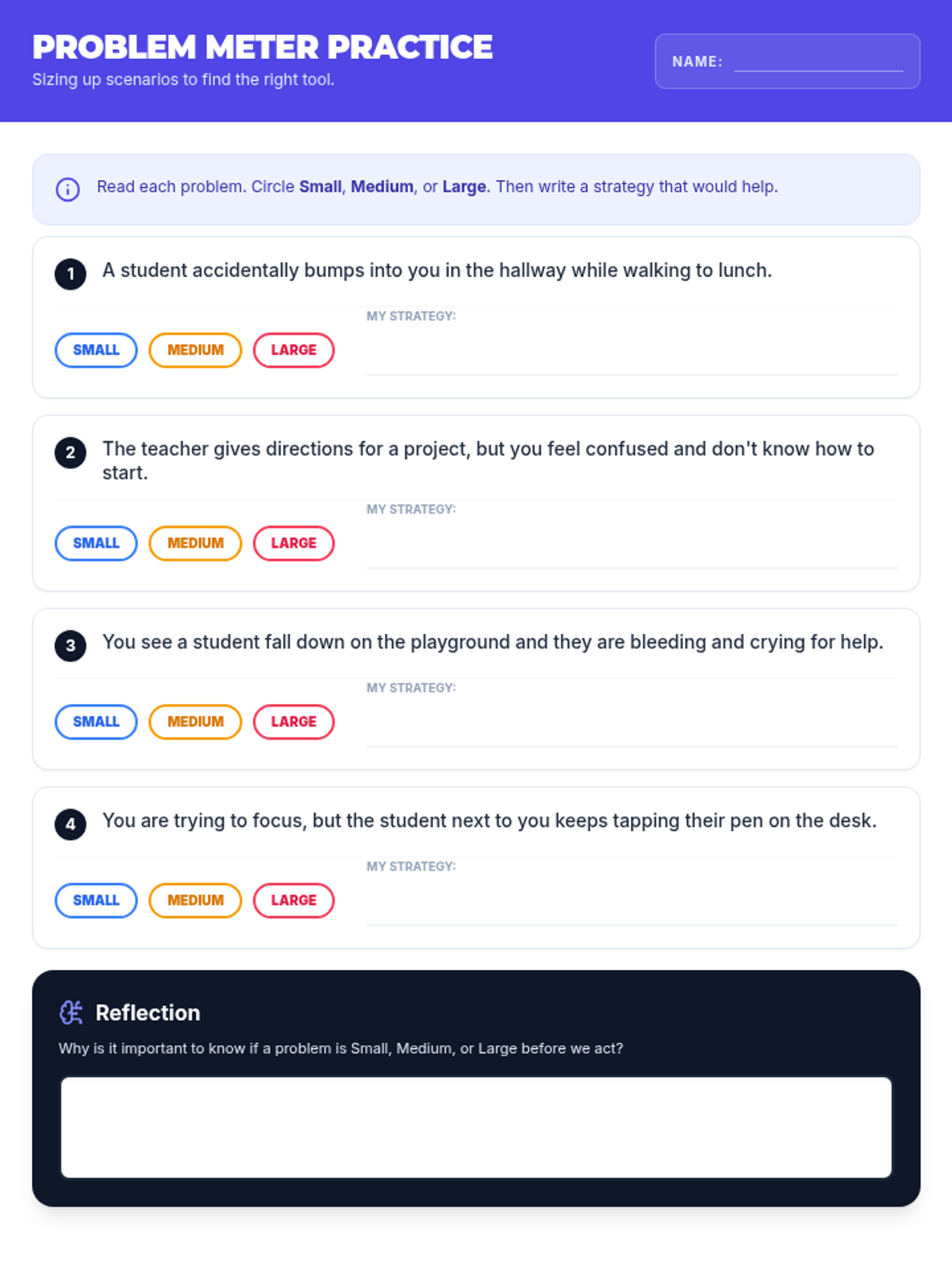
Focus on Tiny and Small problems (Levels 1 and 2), teaching students that these are 'glitches' they can often solve themselves or ignore.

KD

Katie Dominici

Other
3/23
Lesson
Problem Scale Poster
Problem Sizer Worksheet

Level Up

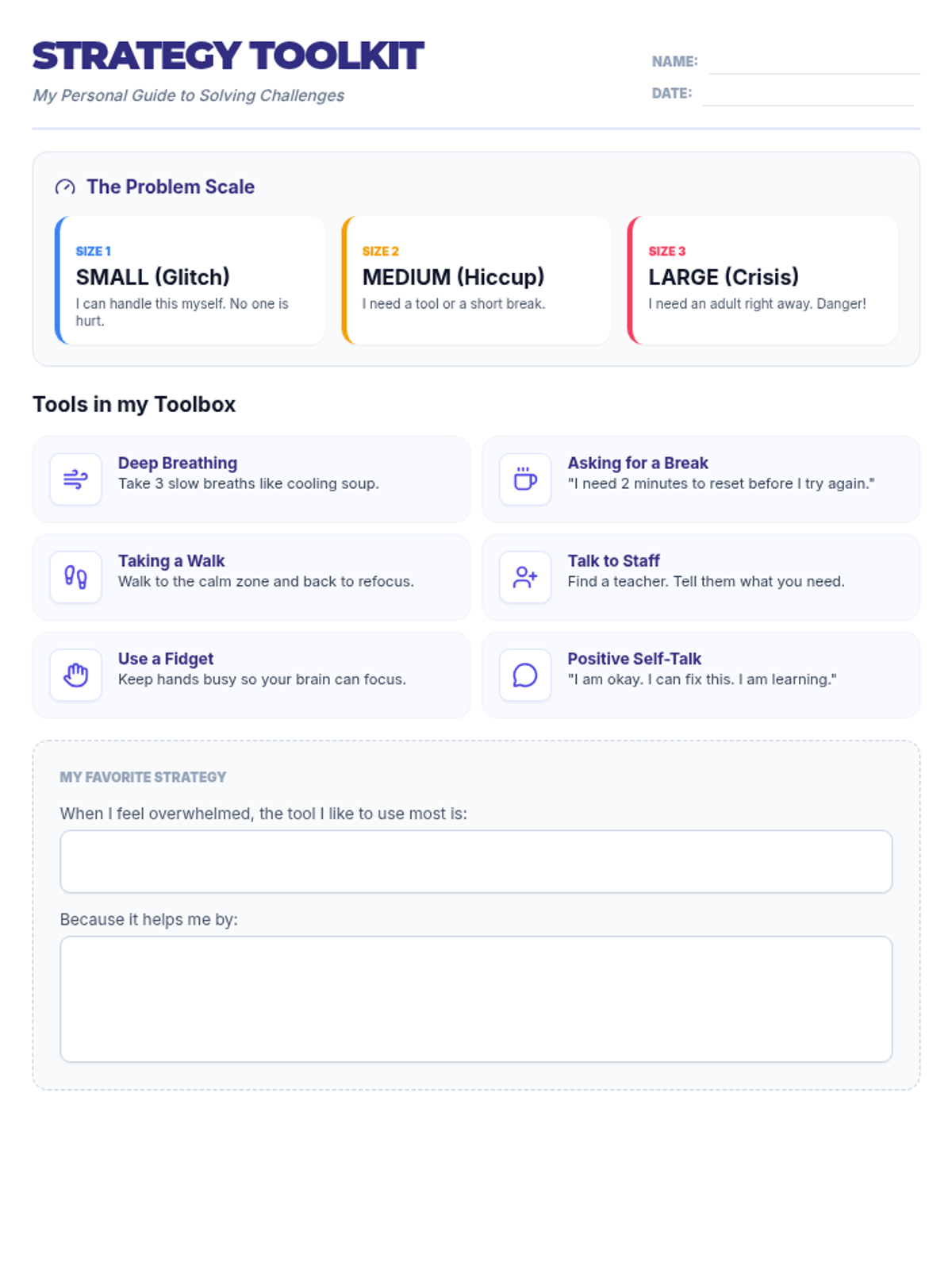
Introduction of the 5-level problem scale: Tiny, Small, Medium, Big, and Huge. Students learn to categorize different situations based on intensity and impact.

KD

Katie Dominici

Other
3/23
Lesson
Trouble Tracer Log Worksheet
Problem Detective Intro Worksheet

Trouble Tracing

Students are introduced to the concept of a 'problem' and begin to identify everyday challenges in the classroom and at home.

KD

Katie Dominici

Other
3/23
Lesson
Problem Scale Anchor Chart
Scenario Navigator Cards
Reaction Roadmap Slides
Navigator Facilitation Guide
Internal Compass Worksheet Proficient
Internal Compass Worksheet Intermediate
Internal Compass Worksheet Emerging

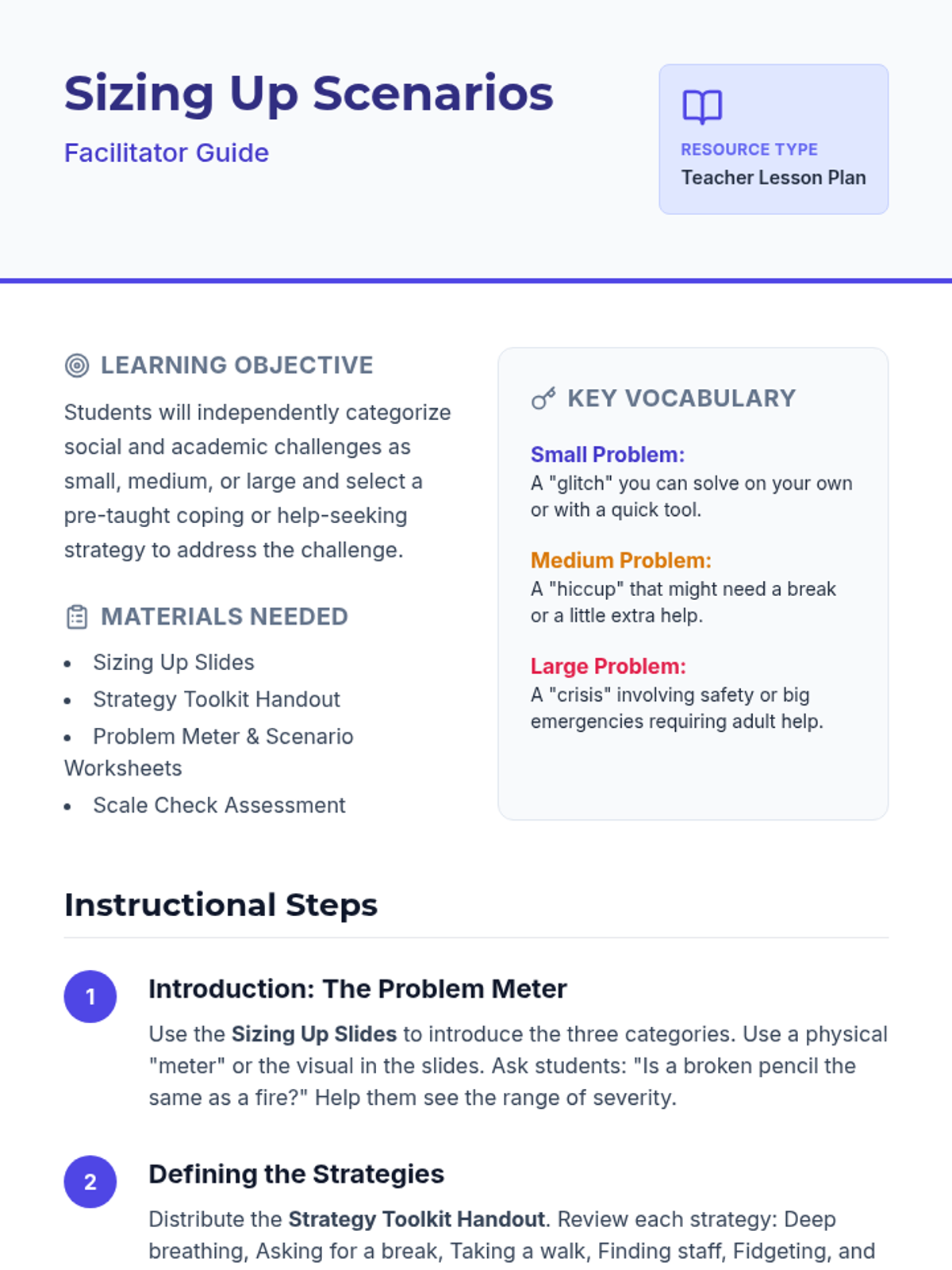
Emotional Navigation

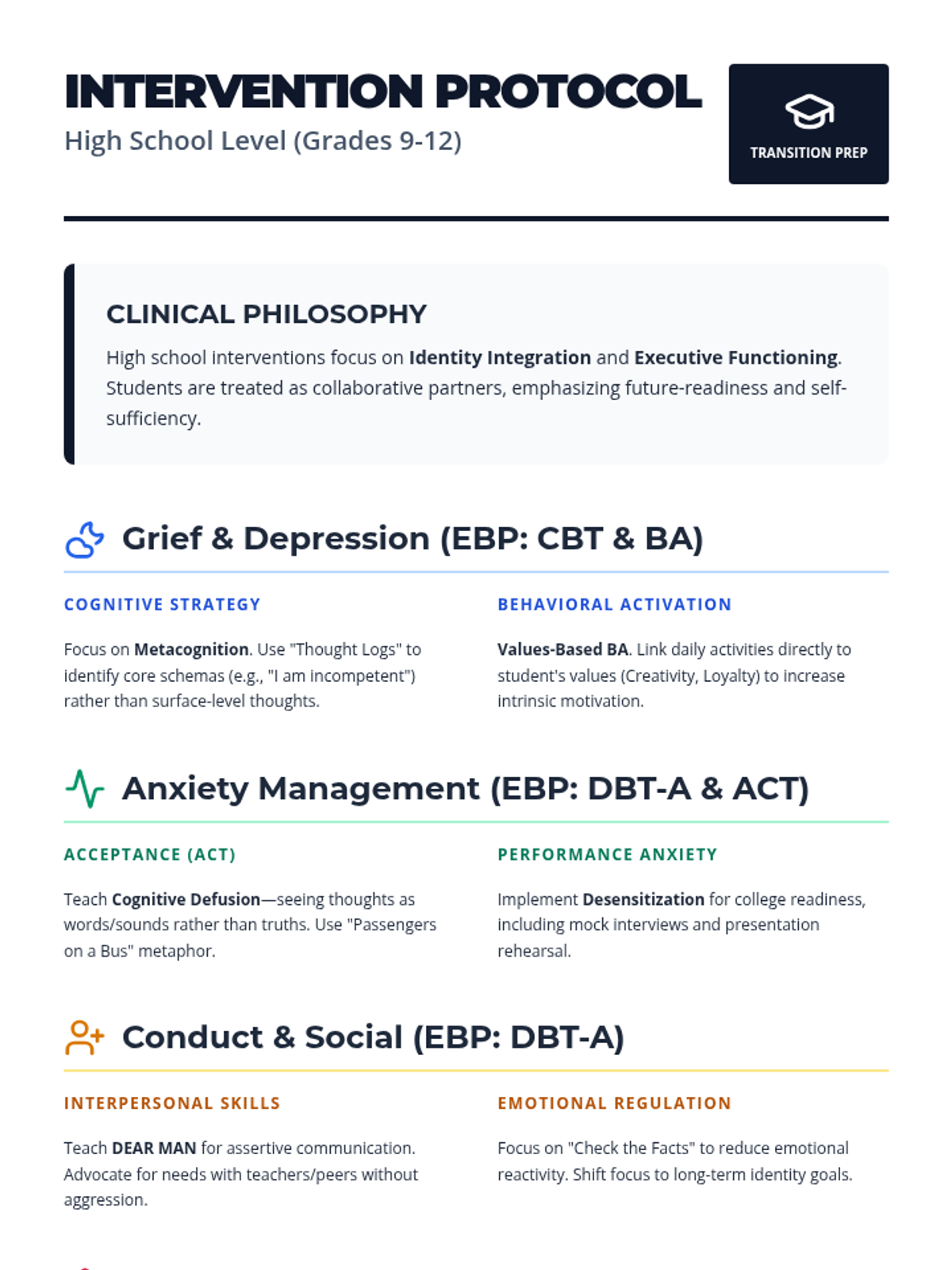
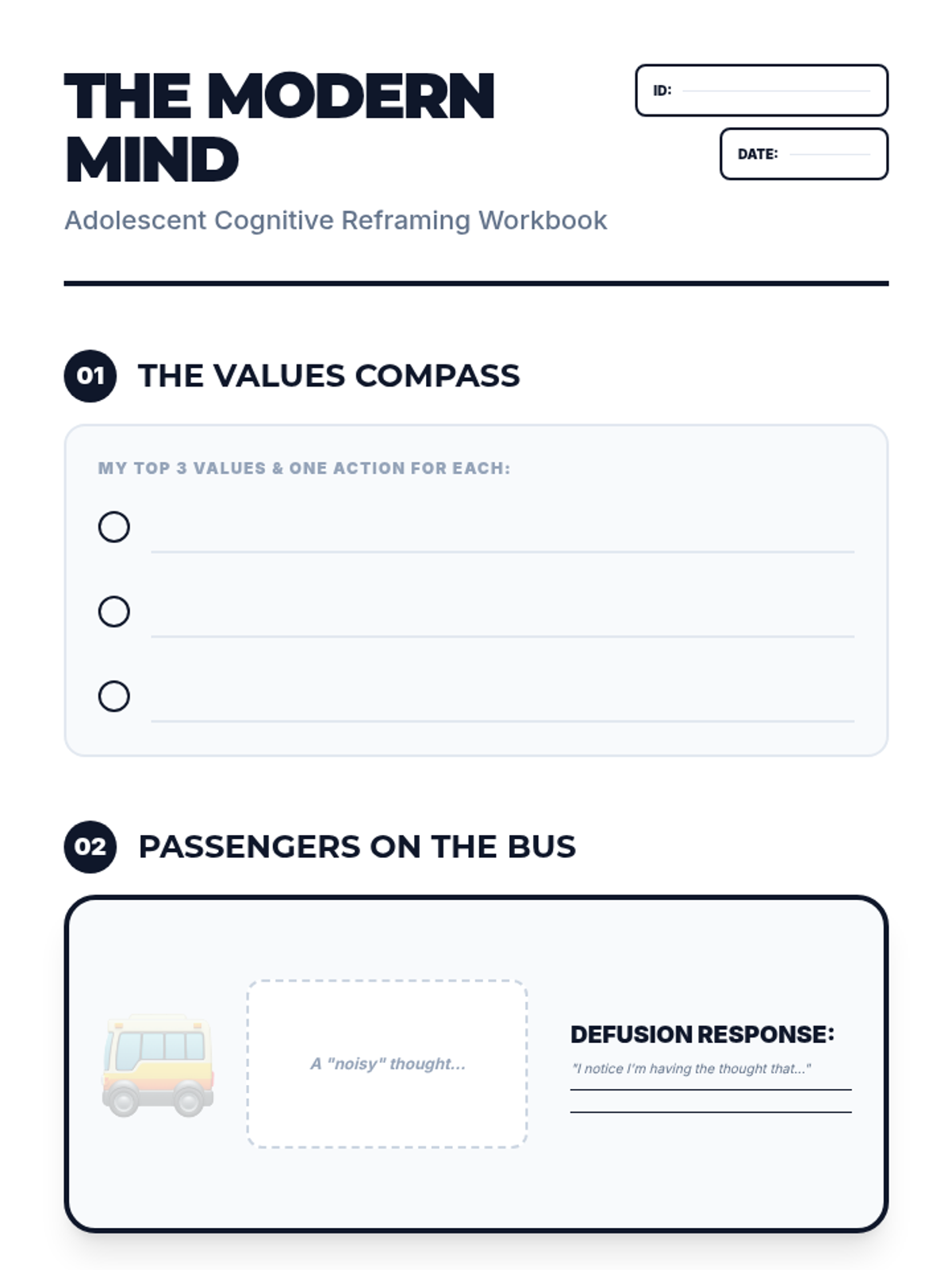
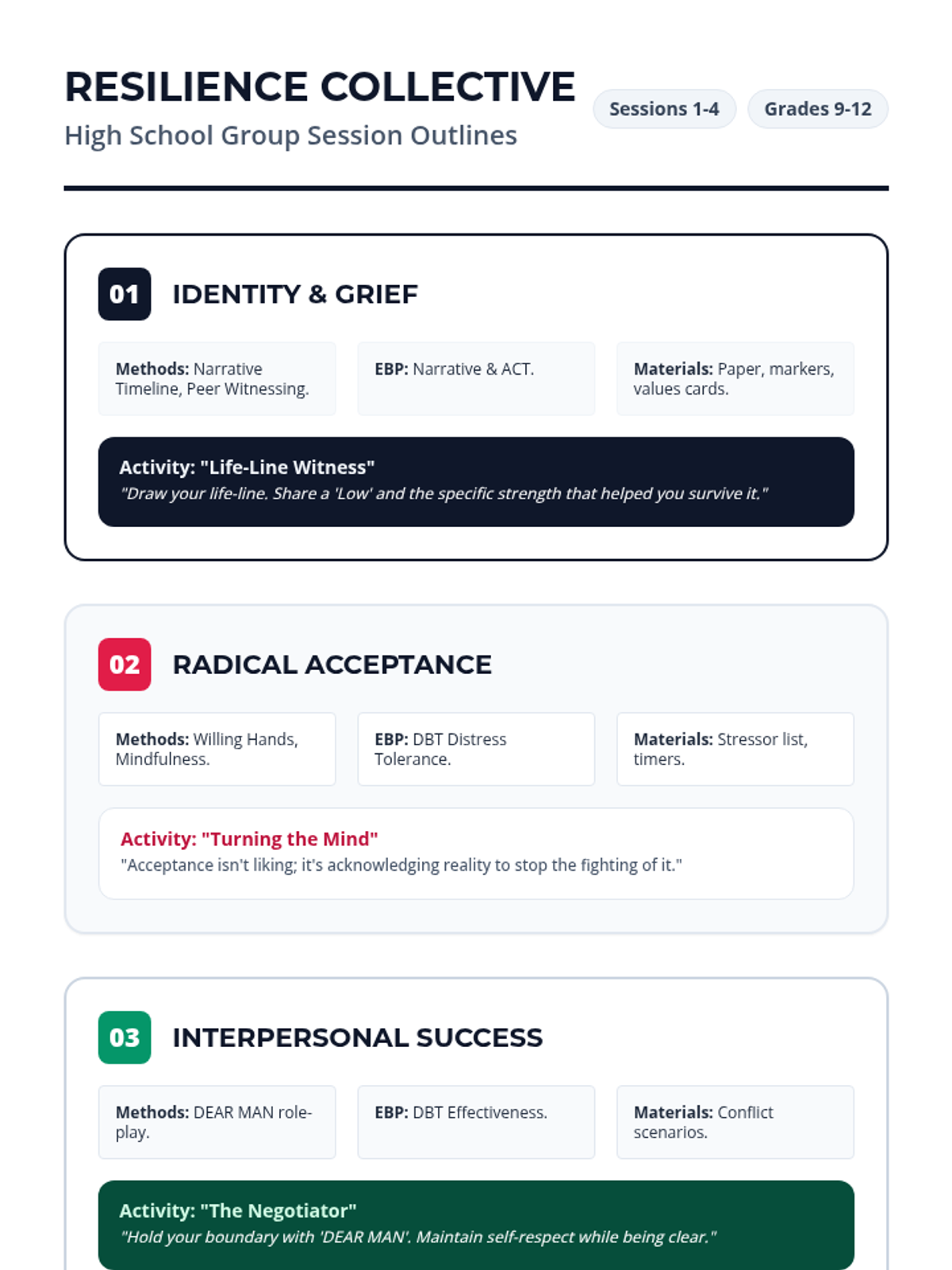
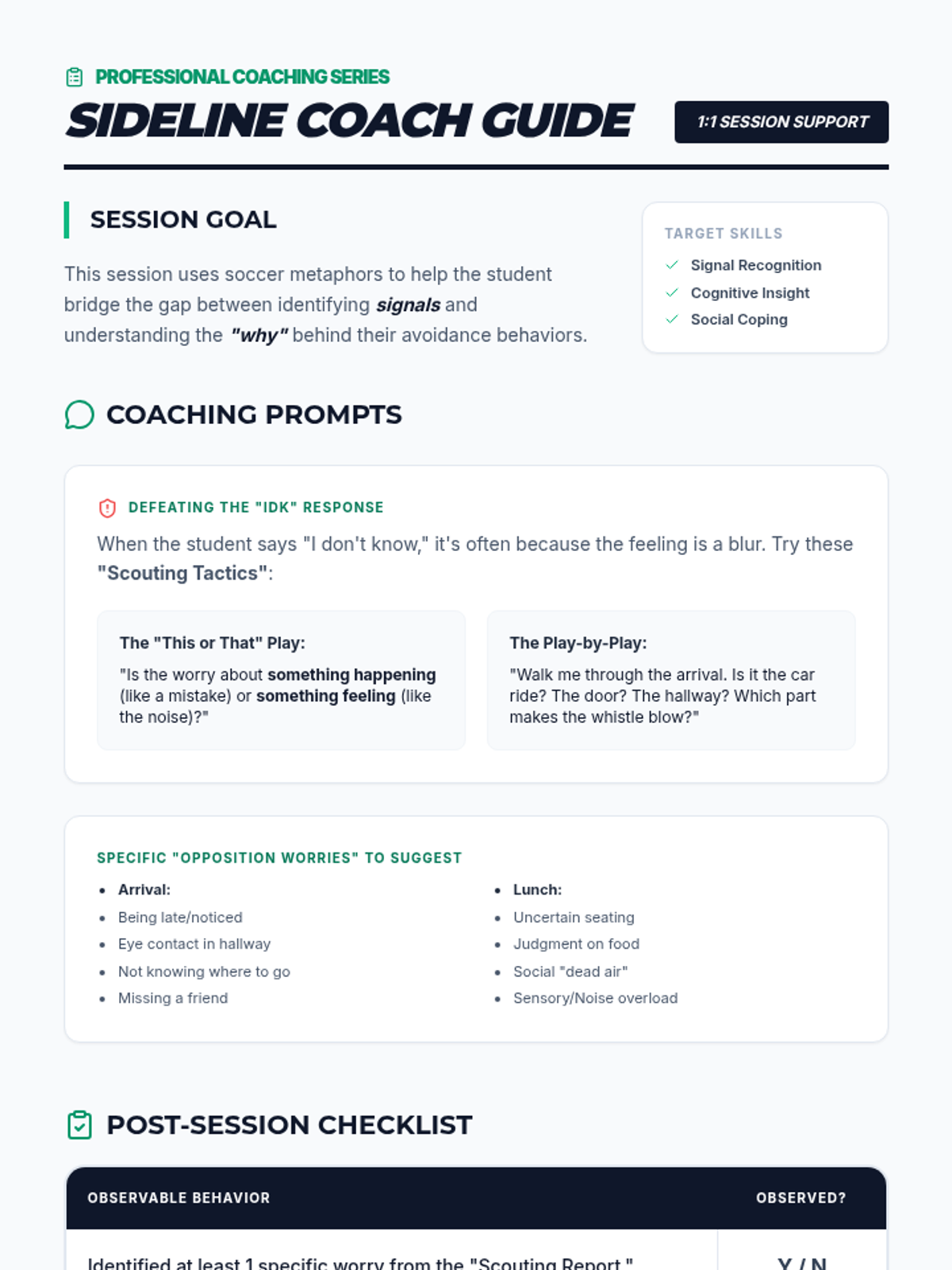
A lesson designed for 7th graders to identify the 'size' of their problems, match their emotional reactions accordingly, and build a toolkit of coping strategies for anxiety and stress.
TG

Ting Gao

Behavior Interventionist
3/20
Lesson
Clear Requests Slides
DEAR MAN Anchor Chart
The Negotiator's Log Social Narrative
Request Master Book Guide
Script Drafting Worksheet
Lab Negotiation Roleplay Worksheet

Clear Requests

A lesson for grades 3-5 to teach the DEAR MAN skill for effective communication, called 'Clear Requests,' helping students learn how to ask for things or say no while maintaining relationships.
MB

Megan Bjork

Behavior Interventionist
3/19
Lesson
Healthy Habits Handout
ABC/PLEASE Anchor Chart
The Vulnerability Shield Social Narrative
Healthy Habit Master Book Guide
Vulnerability Research Worksheet
Habit Build Log Worksheet

Healthy Habits

A lesson for grades 3-5 on the 'ABC' and 'PLEASE' skills, called 'Healthy Habits,' focusing on building a life that reduces emotional vulnerability through accumulation of positive events and physical health.

MB

Megan Bjork

Behavior Interventionist
3/19
Lesson
Solution Lab Handout
Problem Solving Anchor Chart
The Lab Repair Social Narrative
Solution Master Book Guide
Problem Analysis Worksheet
The Solution Prototype Worksheet

Solution Lab

A lesson for grades 3-5 focused on Problem Solving, using the 'Solution Lab' metaphor to teach a step-by-step approach to resolving situations that can be changed.

MB

Megan Bjork

Behavior Interventionist
3/19
Lesson
Acceptance Lab Handout
Radical Acceptance Anchor Chart
The Truth Lab Notes Social Narrative
Radical Specimen Book Guide
Acceptance Data Log Worksheet
Reality Mapping Worksheet

Acceptance Lab

A lesson for grades 3-5 focused on the concept of Radical Acceptance, called the 'Acceptance Lab,' where students learn to accept reality as it is to reduce suffering and move toward problem-solving.

MB

Megan Bjork

Behavior Interventionist
3/19
Lesson
Fact Finder Handout
The Facts Filter Visual
The Mystery of the Wave Social Narrative
Wise Mind Book Guide
Fact or Fiction Analysis Worksheet
Investigation Log Worksheet

The Fact Finder

A lesson for grades 3-5 to teach the 'Check the Facts' skill. Students learn to use a 'Facts Filter' to determine if their emotional reaction matches the reality of a situation.

MB

Megan Bjork

Behavior Interventionist
3/19
Lesson
Relationship & Self-Respect Visual
GIVE Connection Lab Worksheet
Relationship & Self-Respect Slides
Integrity Check Social Narrative
Being Your Best Self Worksheet
Integrity Specimen Book Guide
Best Self Book Guide

Relationship and Self-Respect Codes

The final Interpersonal Effectiveness lesson for grades 3-5, teaching the GIVE and FAST skills for maintaining relationships and self-respect.

MB

Megan Bjork

Behavior Interventionist
3/19
Lesson
Stress Shield Visual
Stress Shield Slides
Stress Shield Social Narrative
Stress Shield Book Guide
Stress Shield Blueprint Worksheet
Distraction Deployment Station Worksheet

The Stress Shield Lab

A Distress Tolerance lesson for grades 3-5 focusing on strategic distraction using the IMPROVE and Distraction skills (renamed Stress Shield).

MB

Megan Bjork

Behavior Interventionist
3/19
Lesson
Action Flip Visual
Action Flip Slides
Opposite Action Social Narrative
Opposite Action Book Guide
The Action Urge Lab Report
The Opposite Switch Worksheet

The Action Flip Experiment

A lesson for grades 3-5 students to teach the 'Opposite Action' skill. Students learn to identify action urges and perform behaviors that are opposite to an emotion that doesn't fit the facts.
MB

Megan Bjork

Behavior Interventionist
3/19
Lesson
Focus Shift Handout
The SEA Distractors Visual
The RED Zone Social Narrative
Wise Mind Book Guide
Chain Reaction Analysis Worksheet
My SEA Wheel Worksheet

The Focus Shift

A Distress Tolerance lesson for grades 3-5 focusing on using strategic distraction (SEA: Sensations, Emotions, Activities) to manage high emotional arousal without acting impulsively.
MB

Megan Bjork

Behavior Interventionist
3/19