Identifies mental health crises and suicide warning signs while developing personal safety plans and grounding techniques. Equips users with peer gatekeeper skills and direct pathways to professional crisis resources and hotlines.
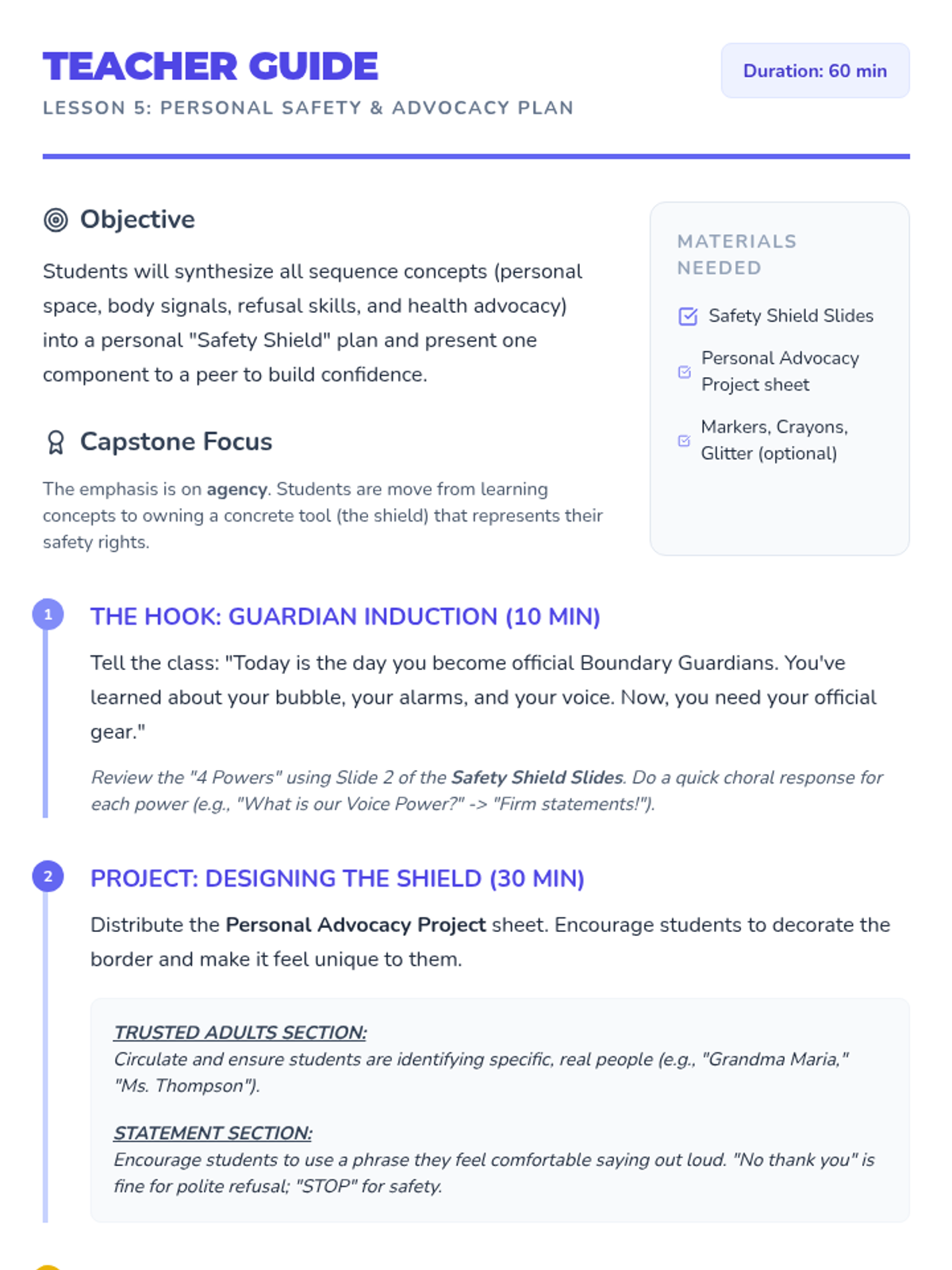
Teacher facilitation guide for Lesson 5. Focuses on the synthesis of concepts into a final project and the sharing of personal safety plans.
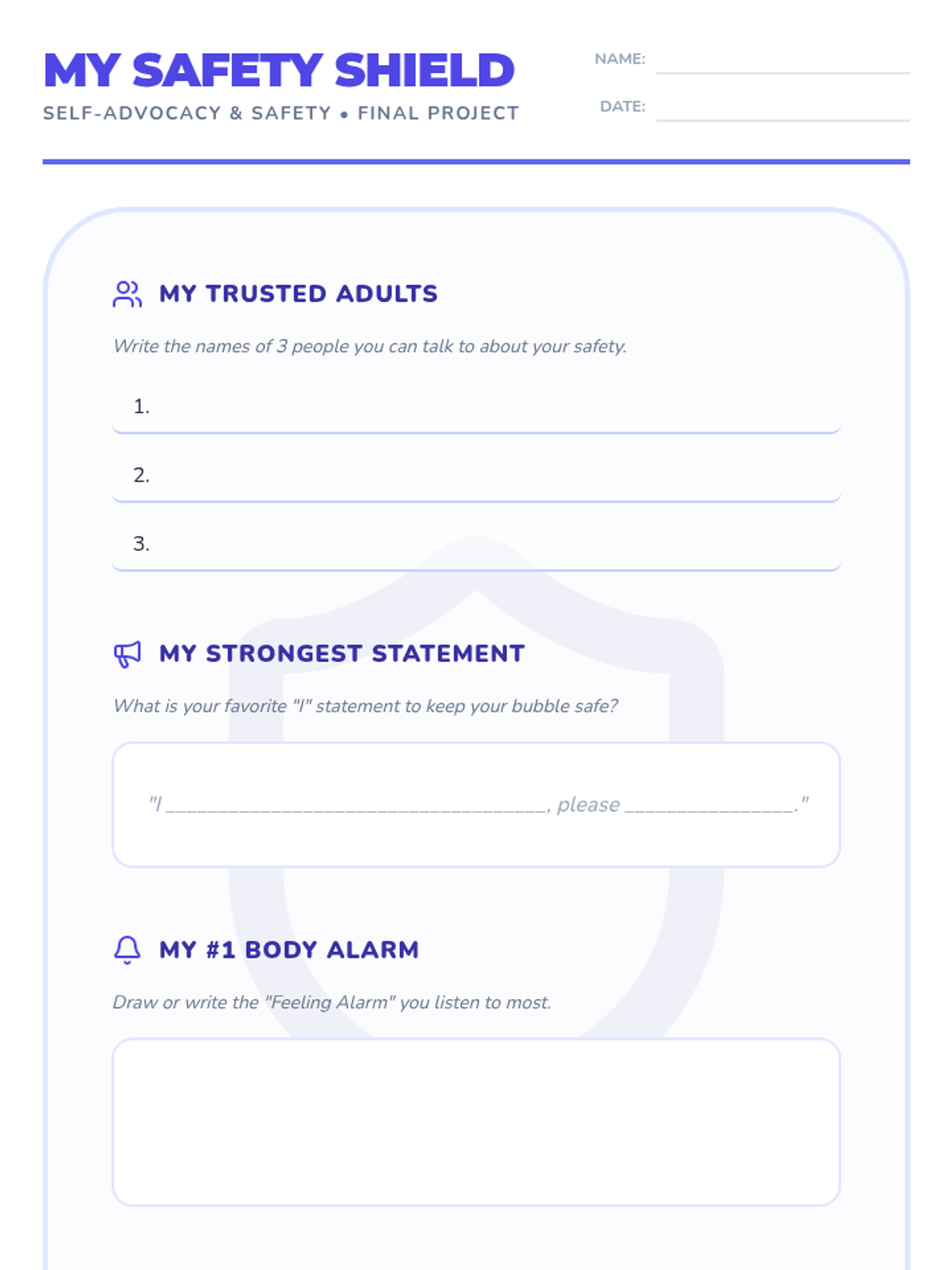
Capston project worksheet where students synthesize all sequence concepts into a personal 'Safety Shield'. Includes sections for trusted adults, strongest 'I' statements, and body alarms.
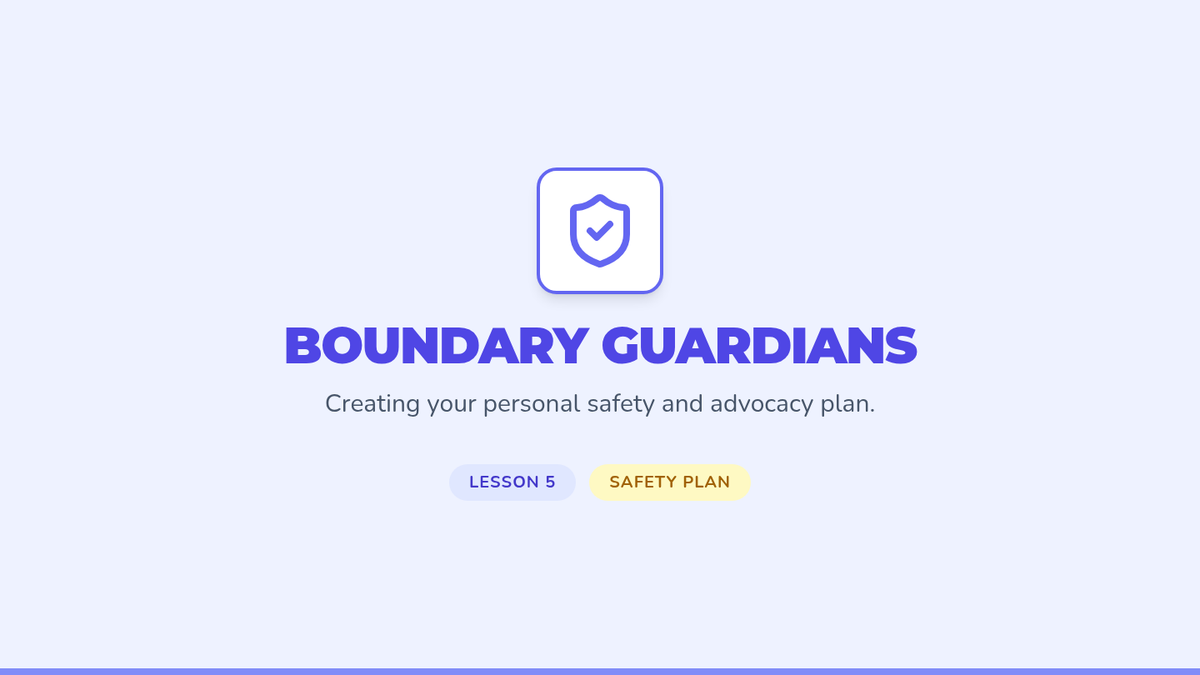
Visual slide deck for Lesson 5 synthesizing all previous concepts into a 'Safety Shield' framework. Includes a review of core skills and introduction to the trusted adult team concept.
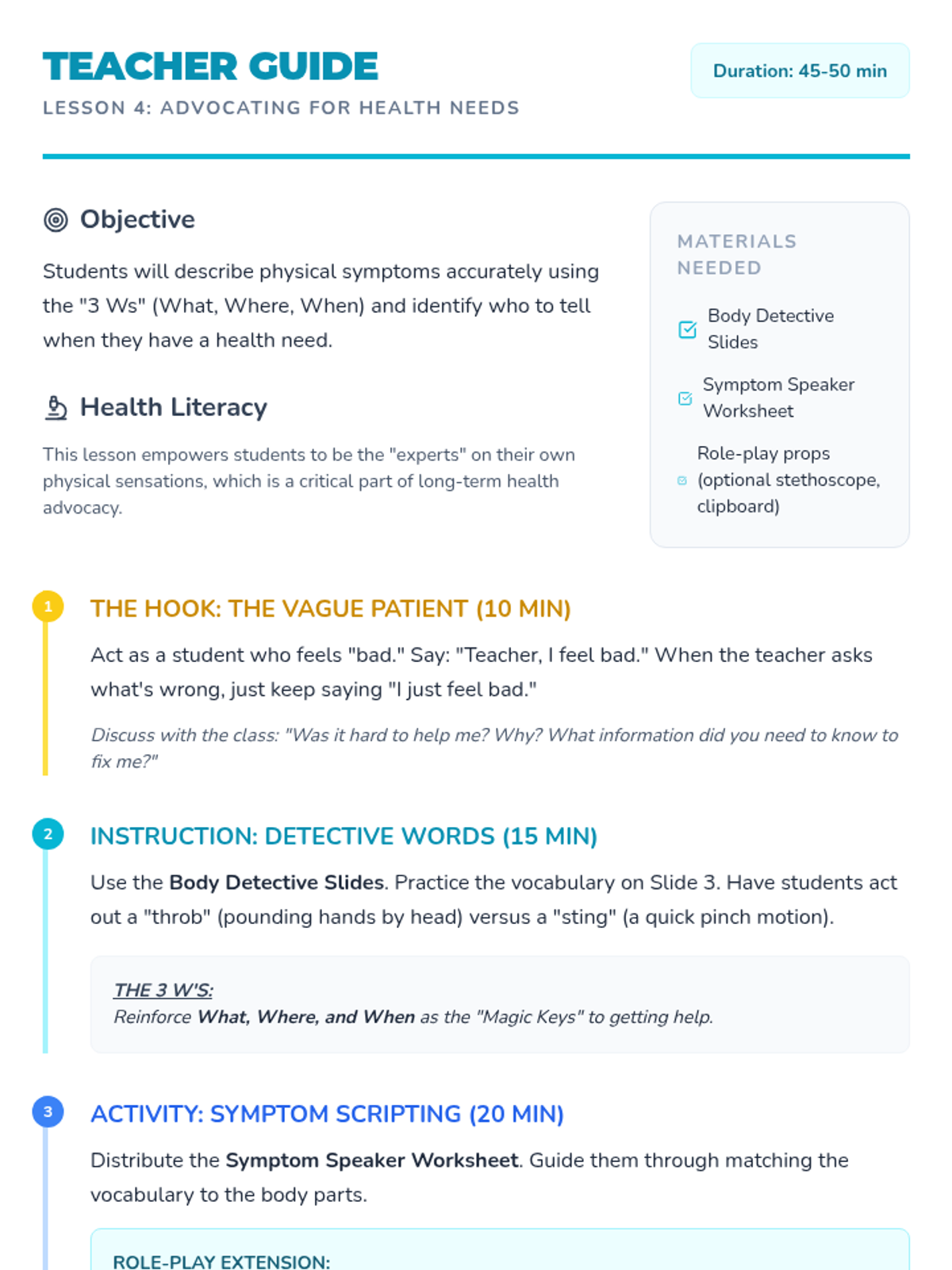
Teacher facilitation guide for Lesson 4. Focuses on health advocacy and guiding students through describing physical symptoms using the '3 Ws'.
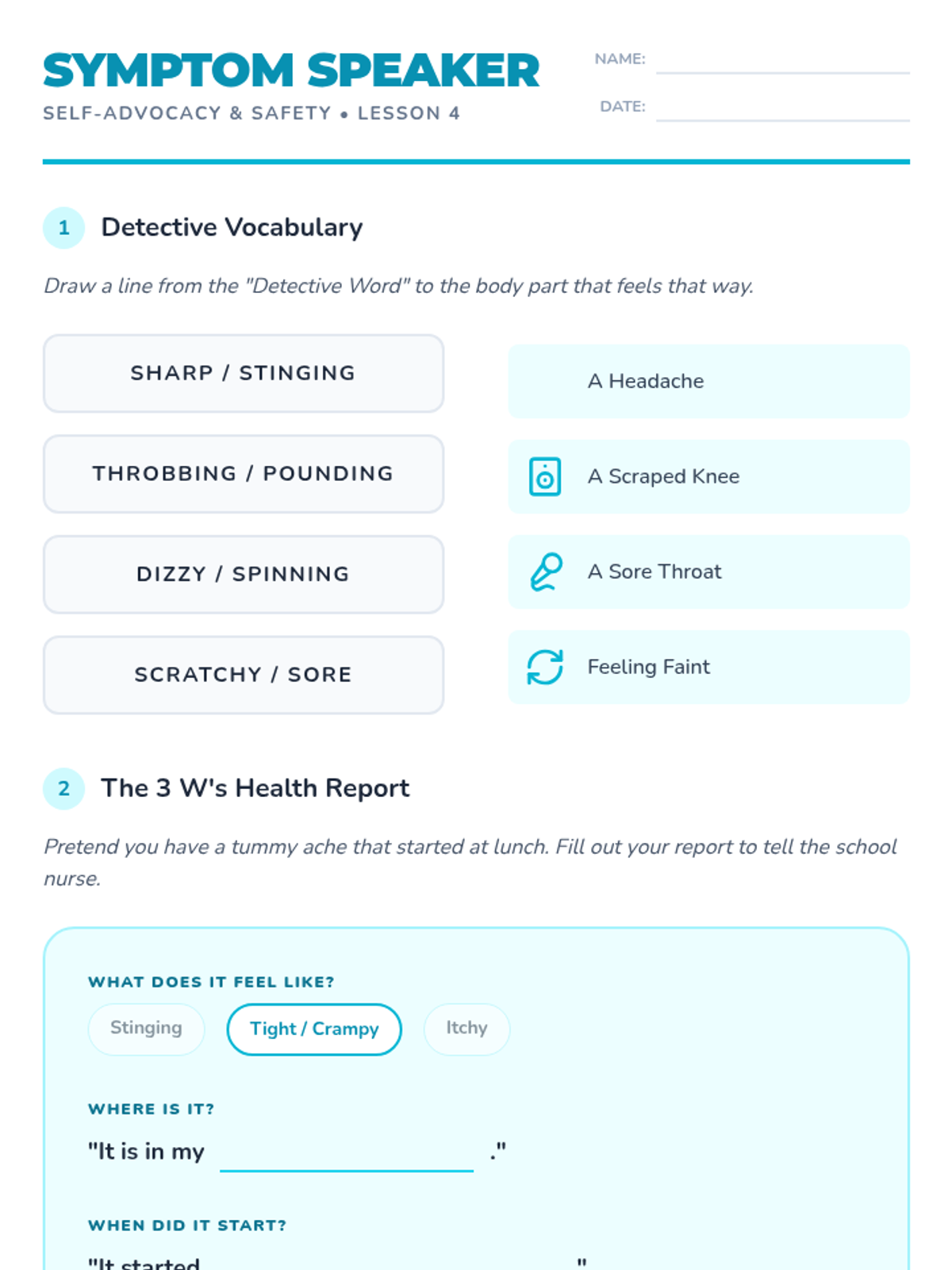
Student worksheet focusing on symptom vocabulary and practicing the '3 Ws' (What, Where, When) to describe physical illness or injury to an adult.
Introductory slide deck for Lesson 4 focusing on health advocacy, teaching students how to describe physical symptoms using the '3 Ws' (What, Where, When) to ensure they receive proper care.
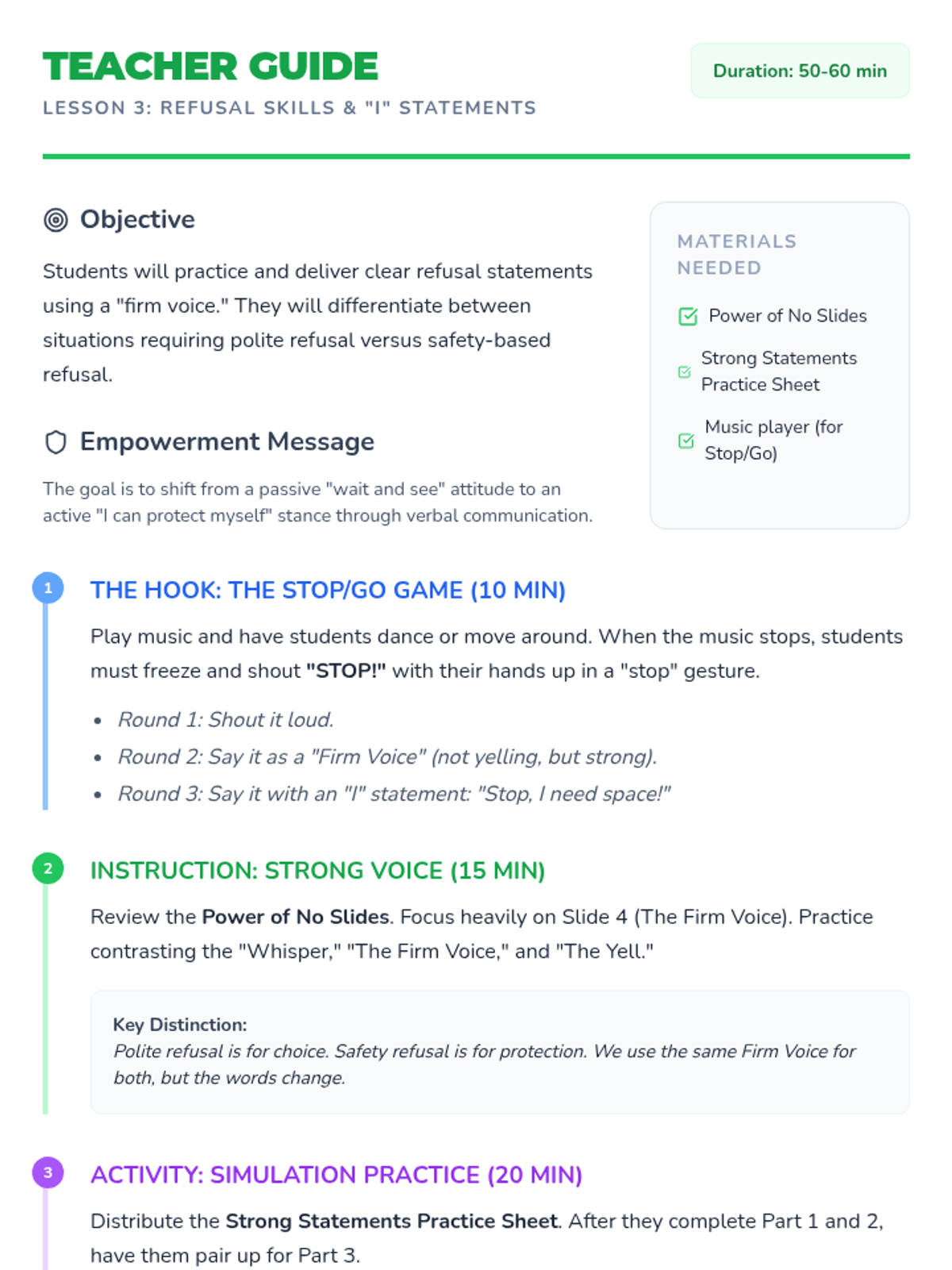
Teacher facilitation guide for Lesson 3 focusing on refusal skills, differentiating between polite and safety refusals, and practicing the 'firm voice' through 'I' statements.
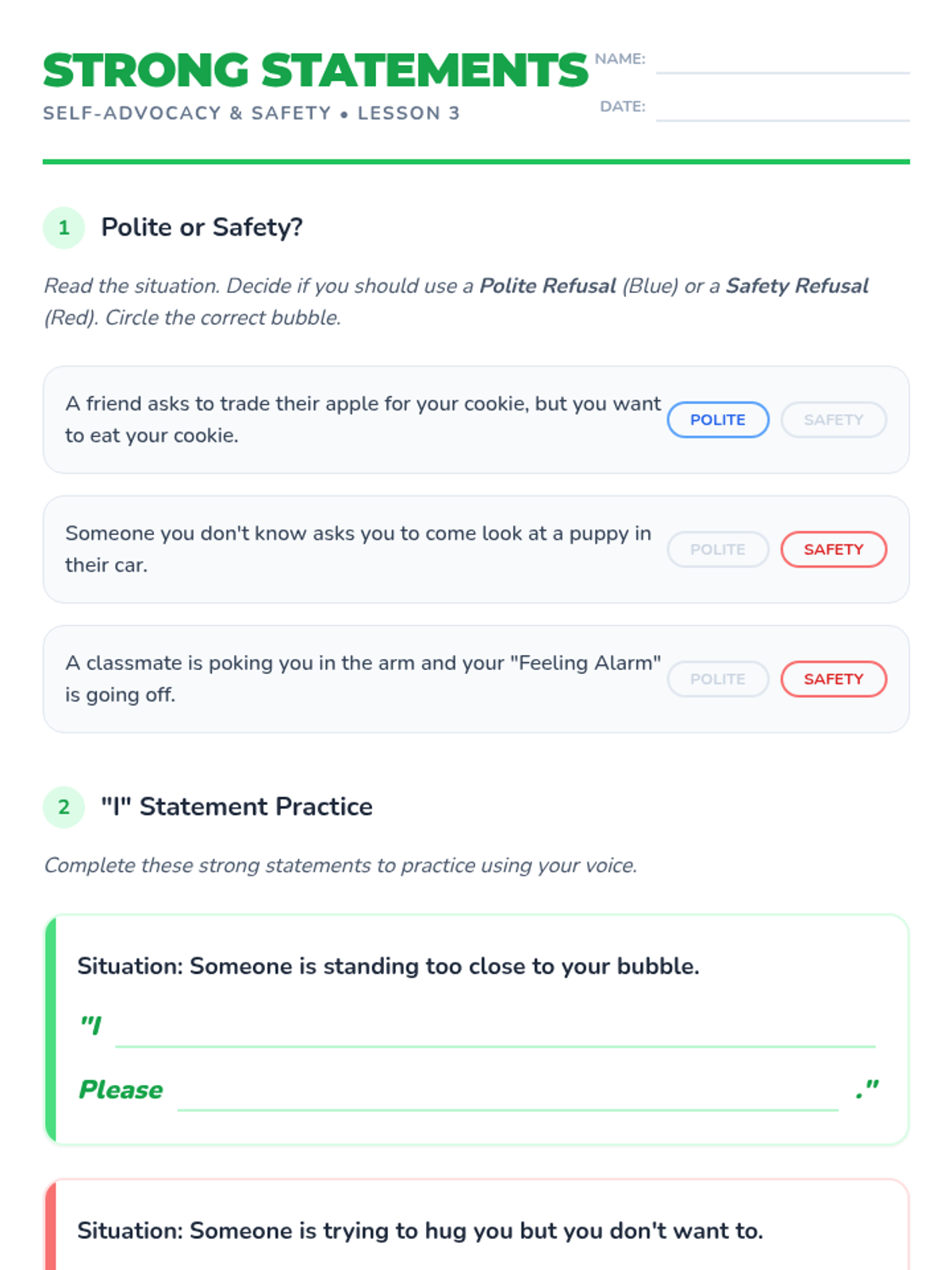
Student worksheet for practicing the formulation of 'I' statements and differentiating between polite and safety-based refusals. Includes scenarios and a phrase bank.
Introductory slide deck for Lesson 3 focusing on refusal skills, differentiating between polite and safety refusals, and practicing the 'firm voice' through 'I' statements.
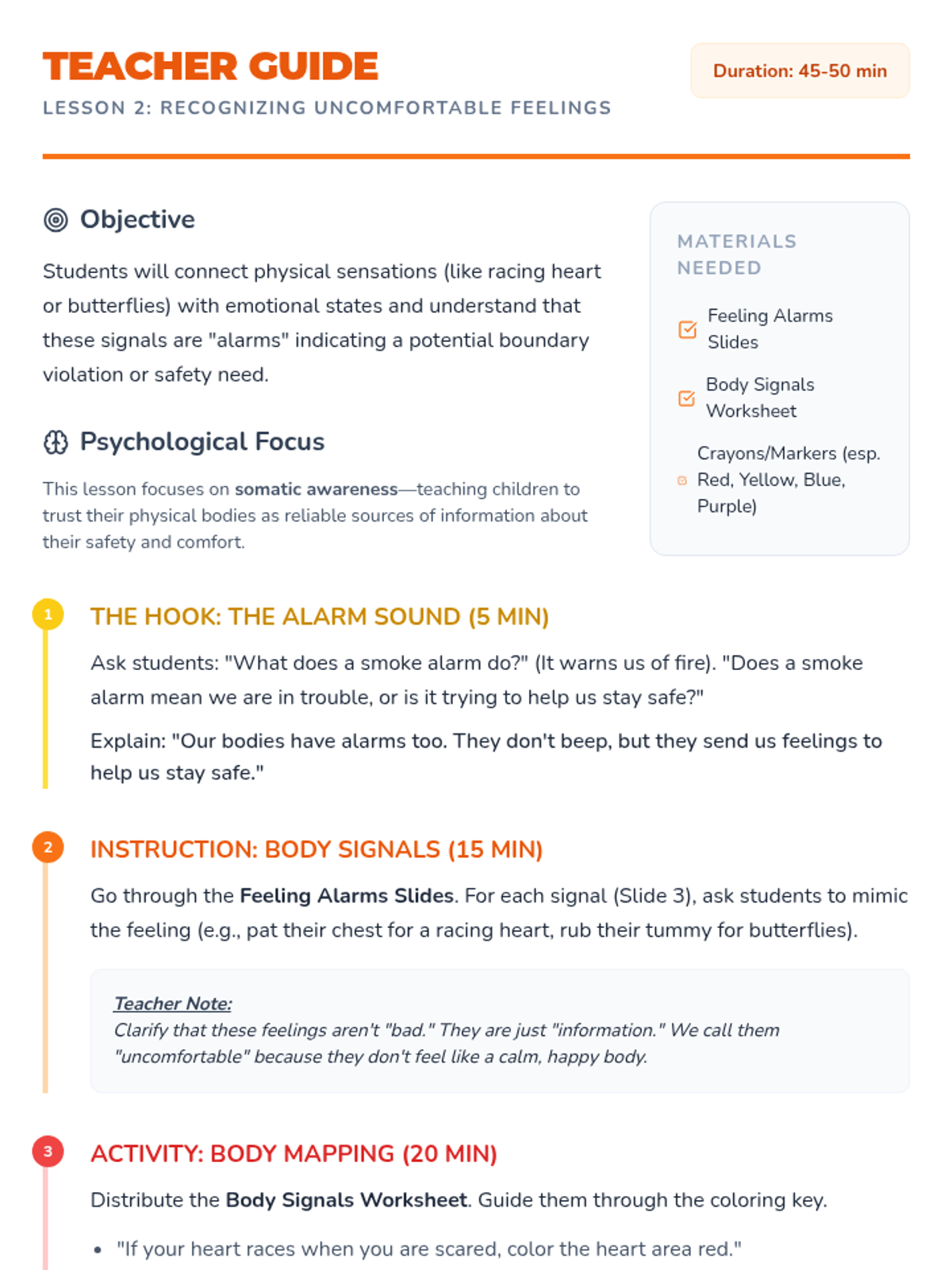
Teacher facilitation guide for Lesson 2. Focuses on somatic awareness and guiding students through identifying physical 'alarms' as internal indicators of discomfort.
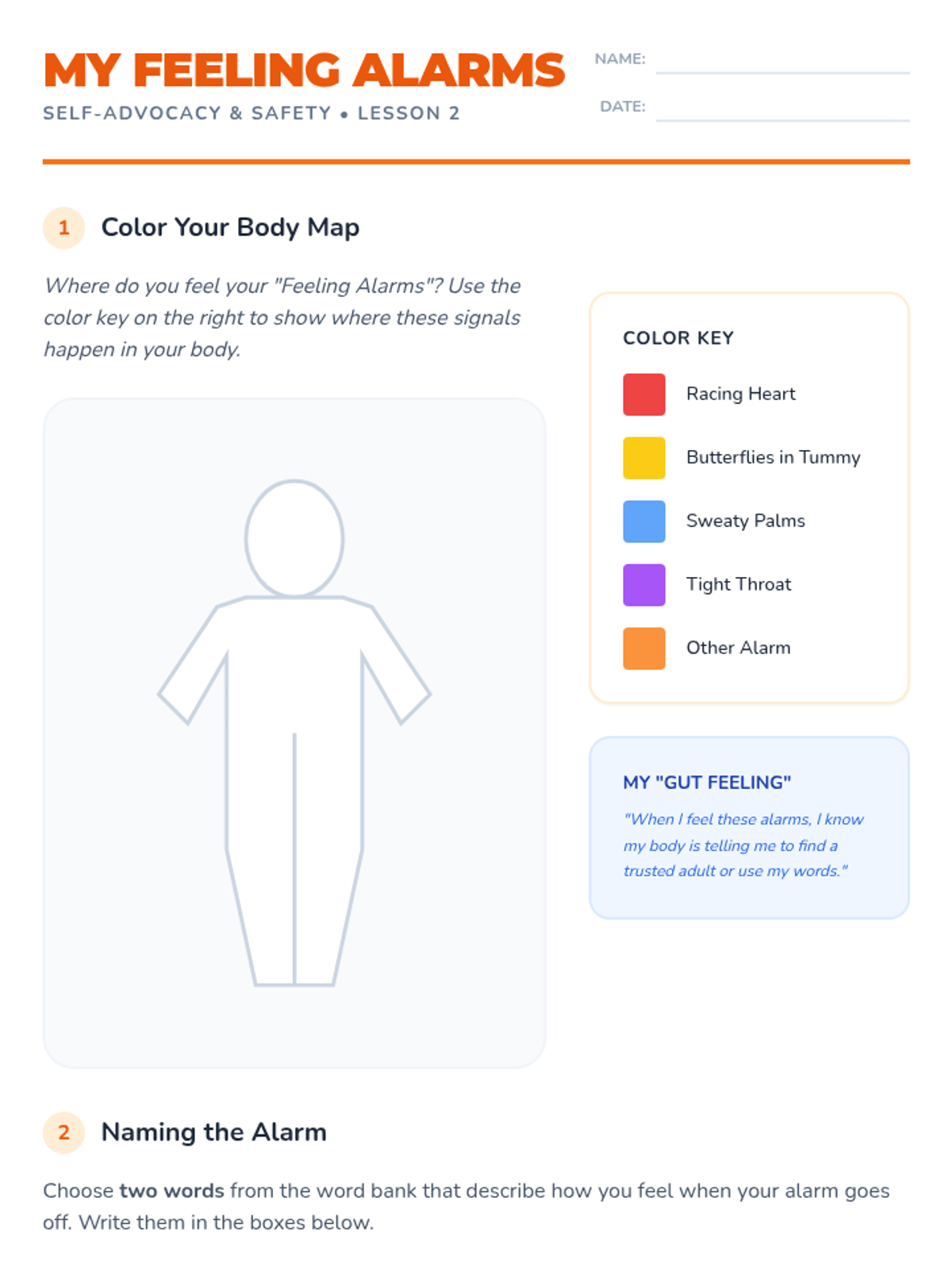
Student worksheet featuring a body outline for mapping physical sensations associated with 'Feeling Alarms'. Includes a color key and vocabulary matching section for identifying emotions.
Introductory slide deck for Lesson 2 explaining 'Feeling Alarms'—physical body signals that indicate discomfort or a crossed boundary. Focuses on identifying racing hearts, butterflies, and sweaty palms.
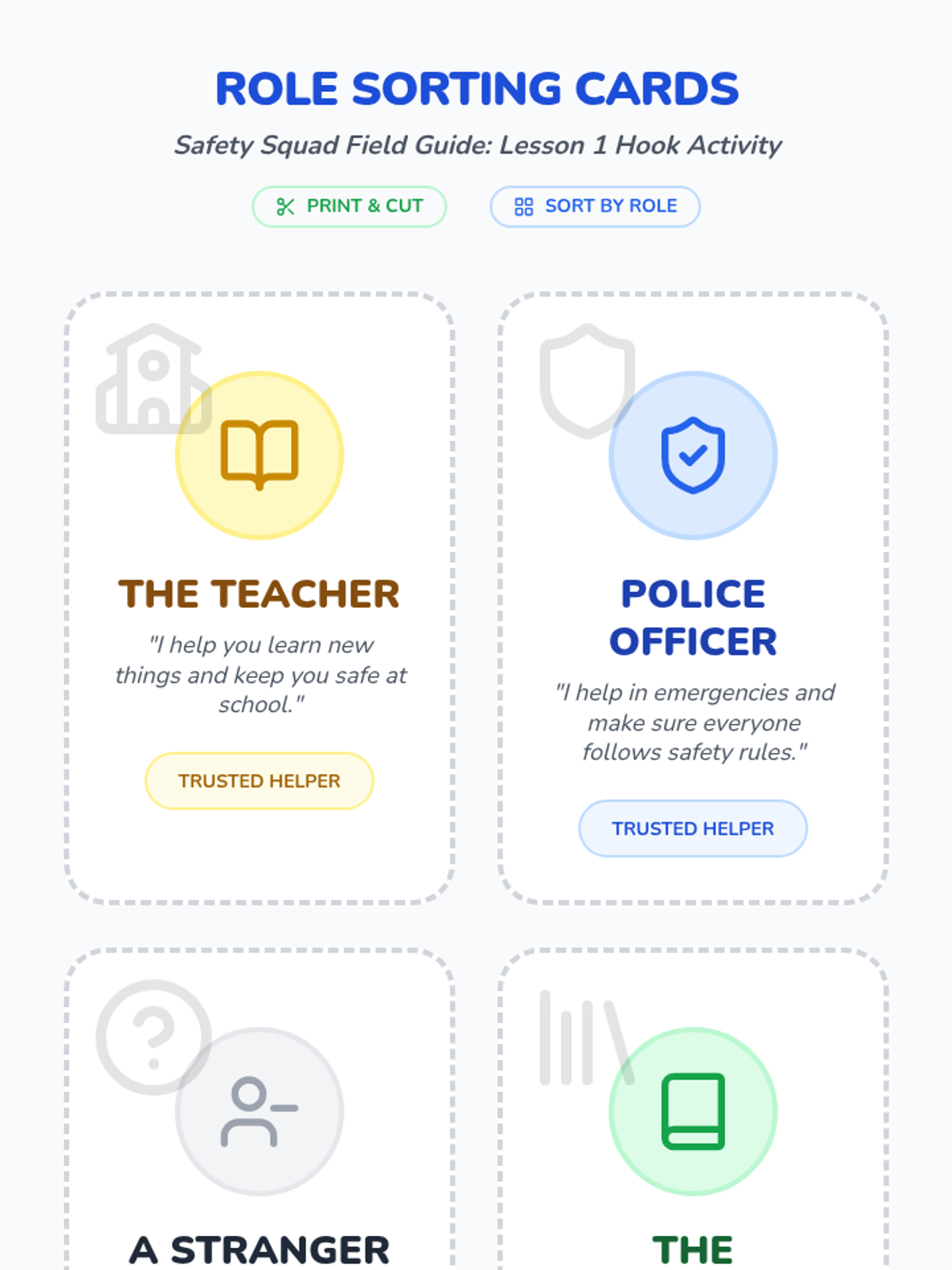
A set of printable cards featuring different community roles for students to sort into 'Trusted Helpers' and 'Strangers' as part of an introductory activity.
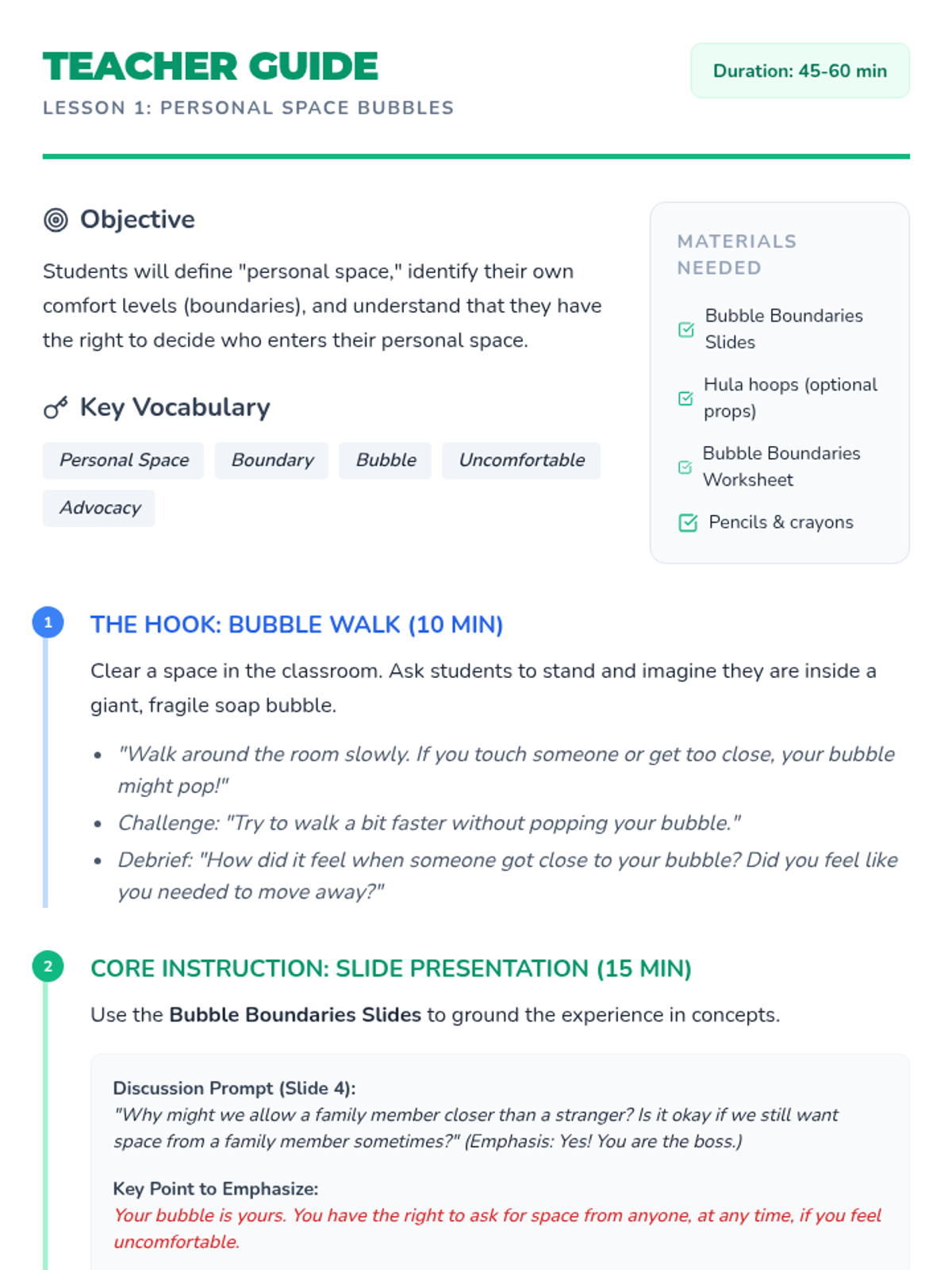
Facilitation guide for teachers conducting Lesson 1. Includes pacing, key talking points for slides, instructions for the 'Bubble Walk' hook, and differentiation strategies.
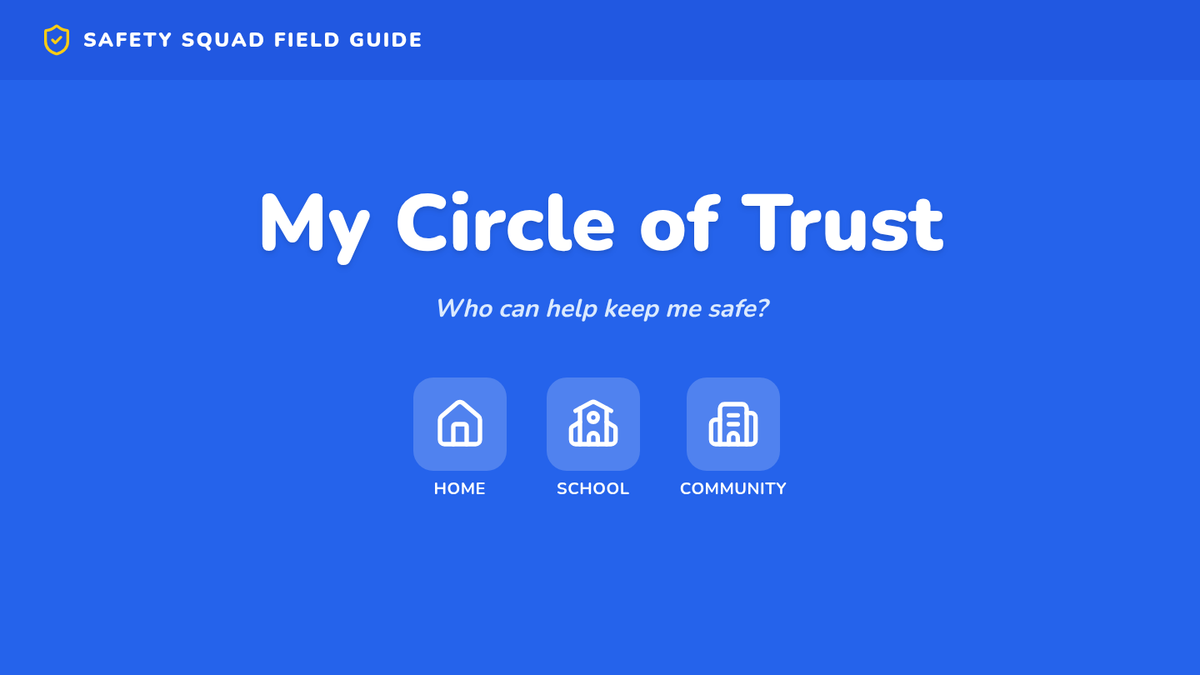
Introductory slides for Lesson 1, defining what a trusted adult is and identifying them across home, school, and community.
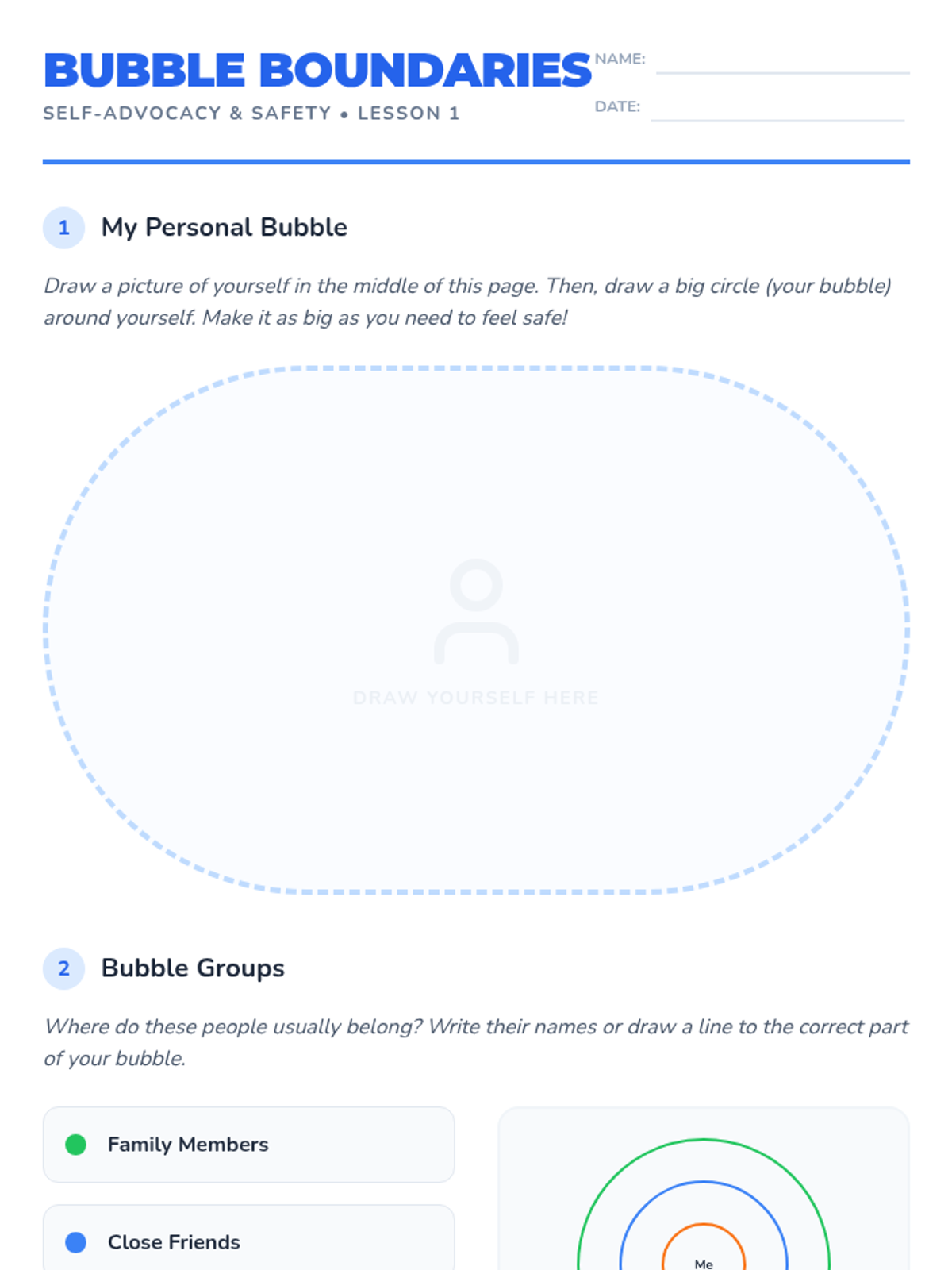
Student worksheet for mapping personal space boundaries. Includes a drawing area for their 'bubble' and a section for categorizing different groups of people by proximity.
Visual slide deck for Lesson 1 introducing the concept of personal space through the 'Bubble' metaphor. Includes physical space expectations for different groups and the core message of body autonomy.
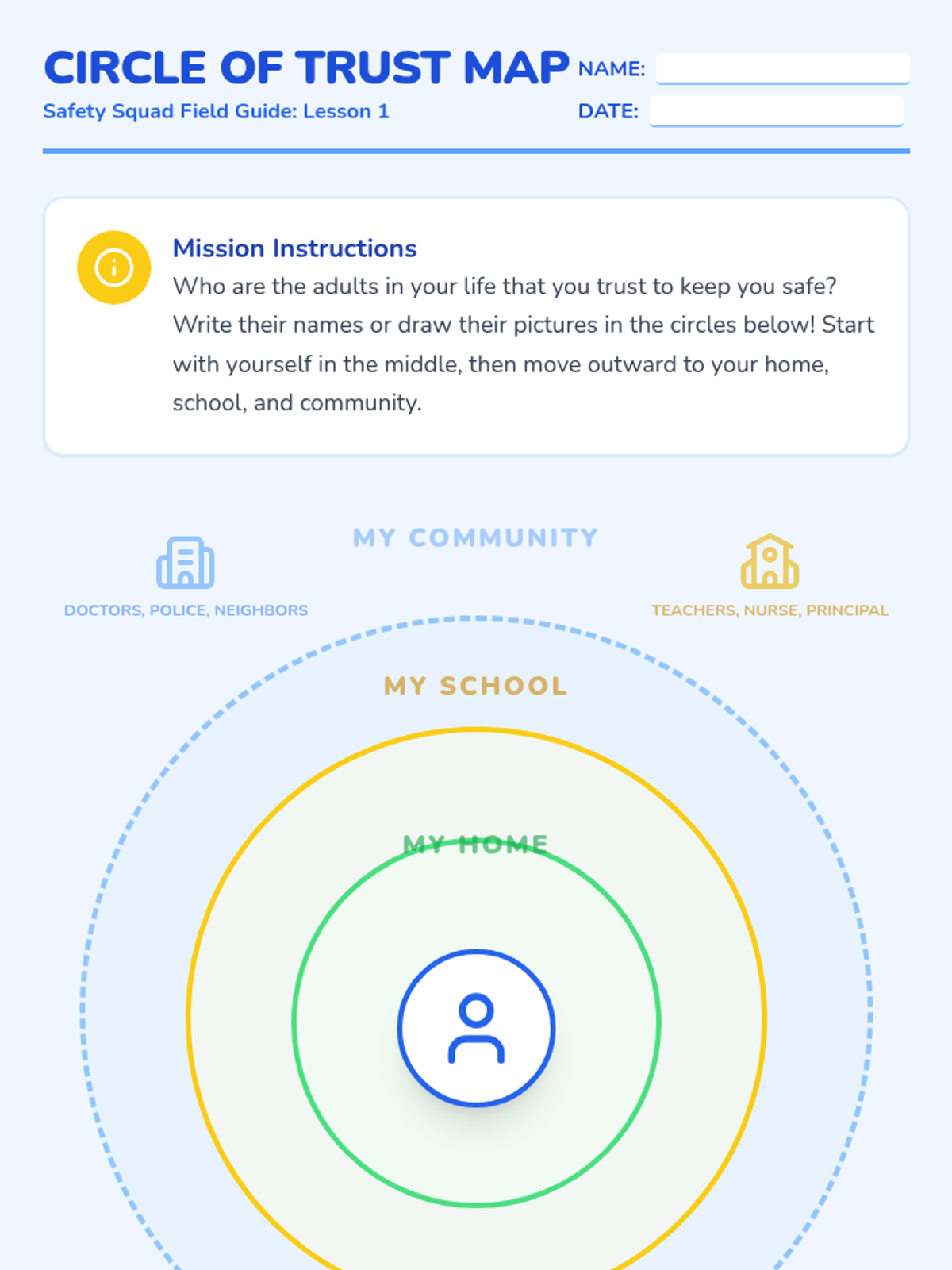
A visual mapping worksheet where students identify trusted adults in their home, school, and community environments.
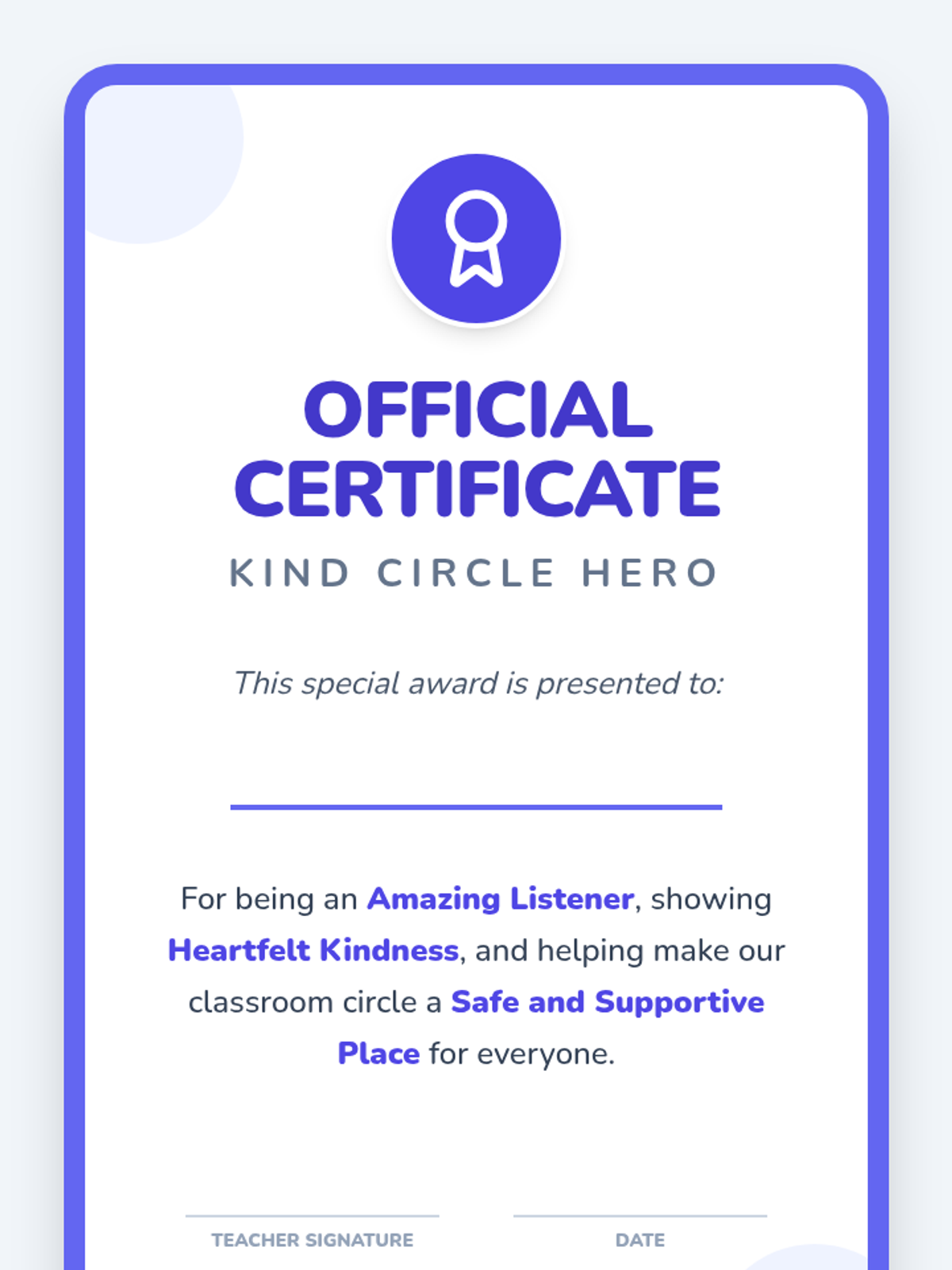
A decorative completion certificate for students who have participated in the Kind Circles sequence and demonstrated supportive behaviors.
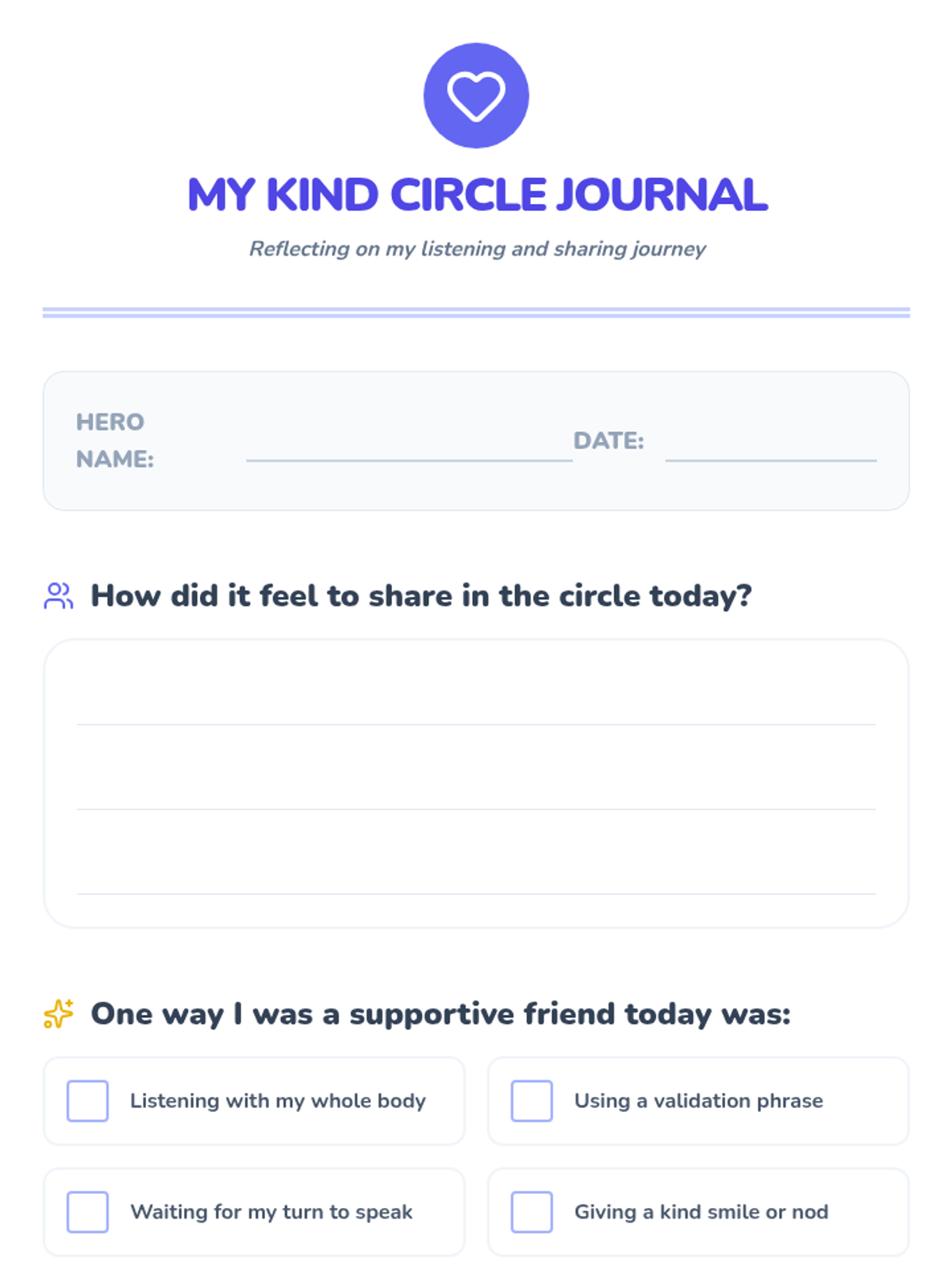
A reflection journal for students to record their feelings and experiences after participating in the community circle.
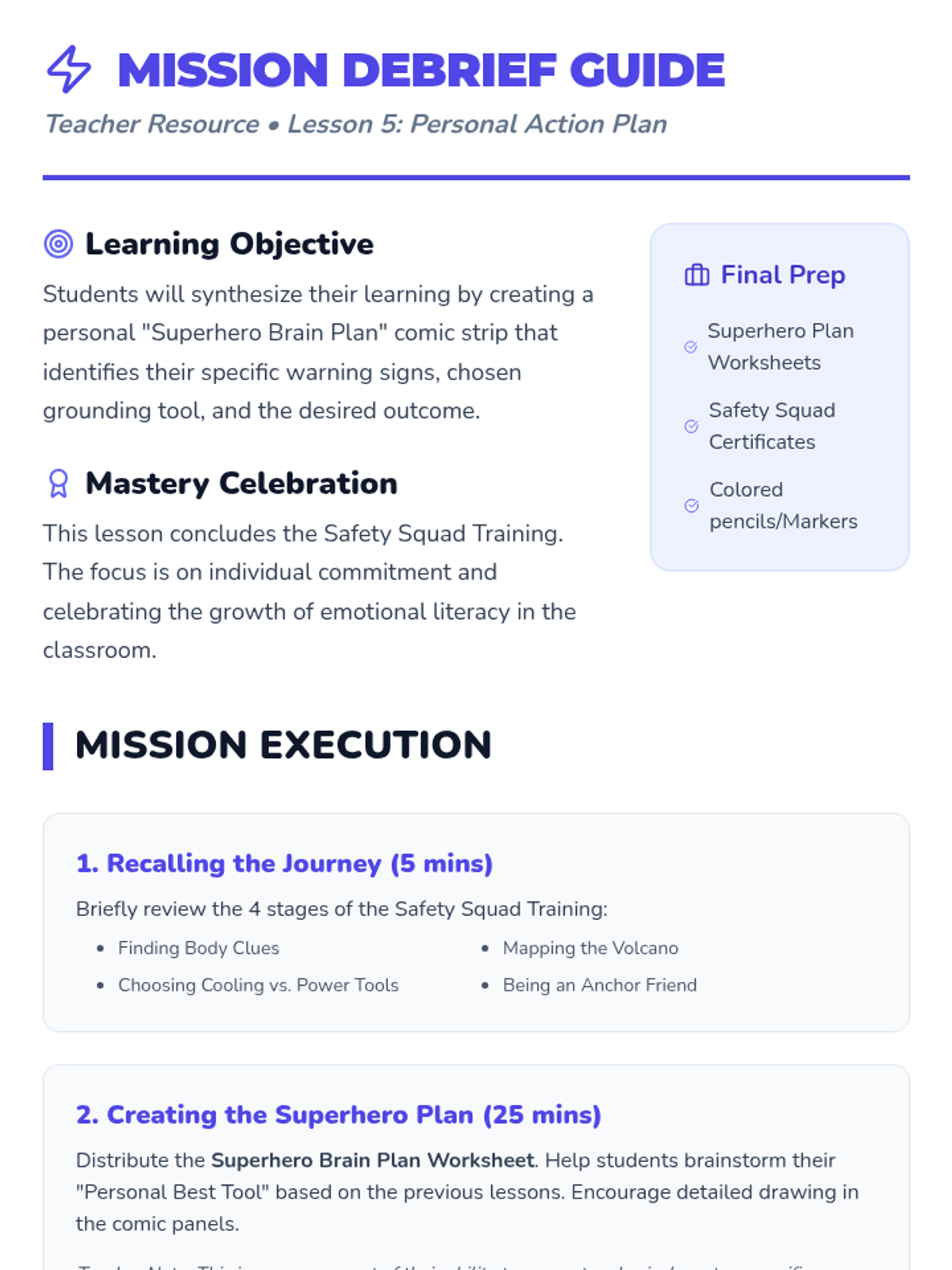
A teacher guide for the final lesson of the Safety Squad unit. It provides a summary of the unit's learning, instructions for the personal action plan activity, and tips for implementing the plans in the classroom.
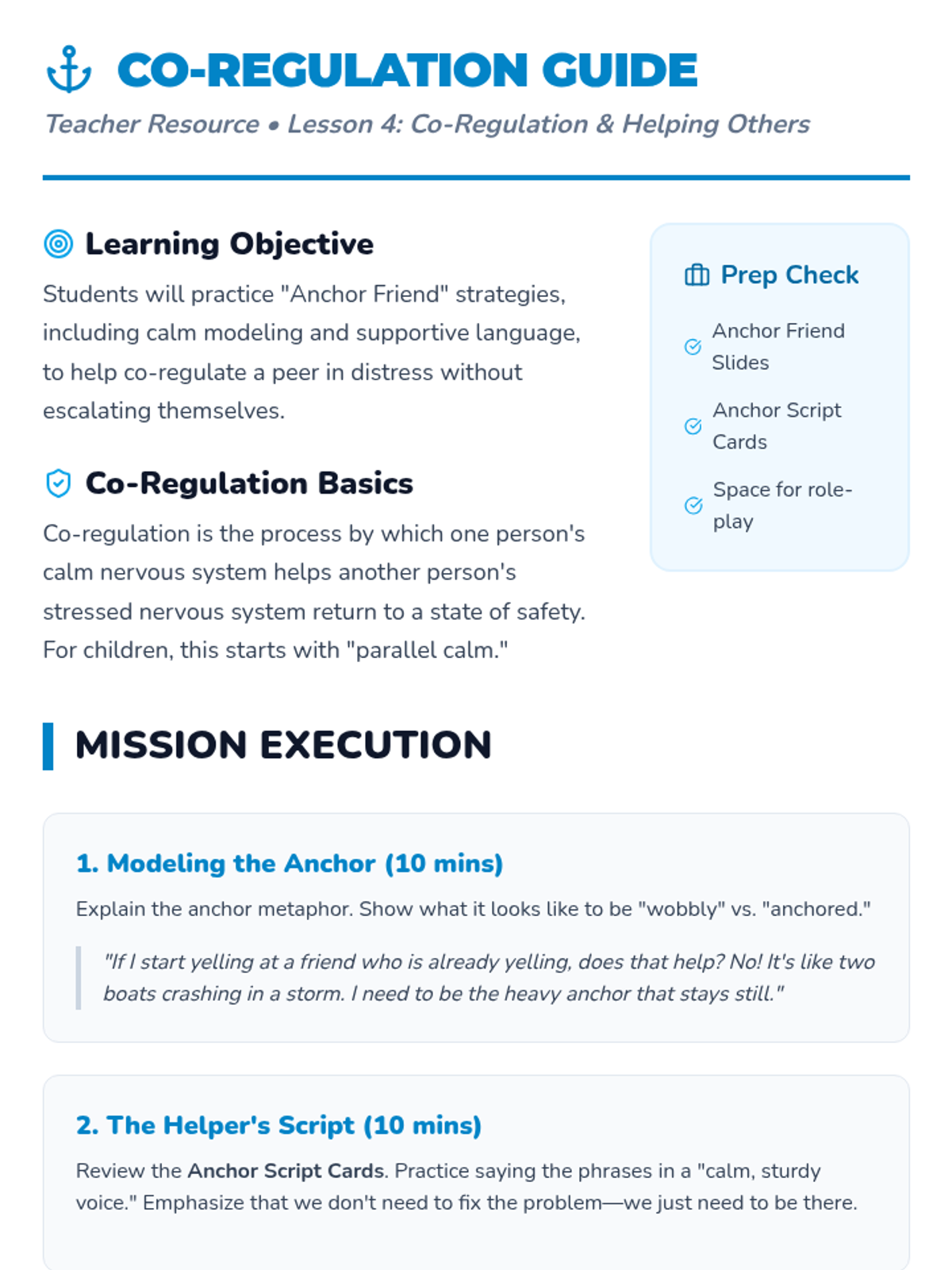
A teacher guide for Lesson 4 of the Safety Squad unit. It provides co-regulation principles, role-play facilitation steps, and important safety boundaries for students helping peers.
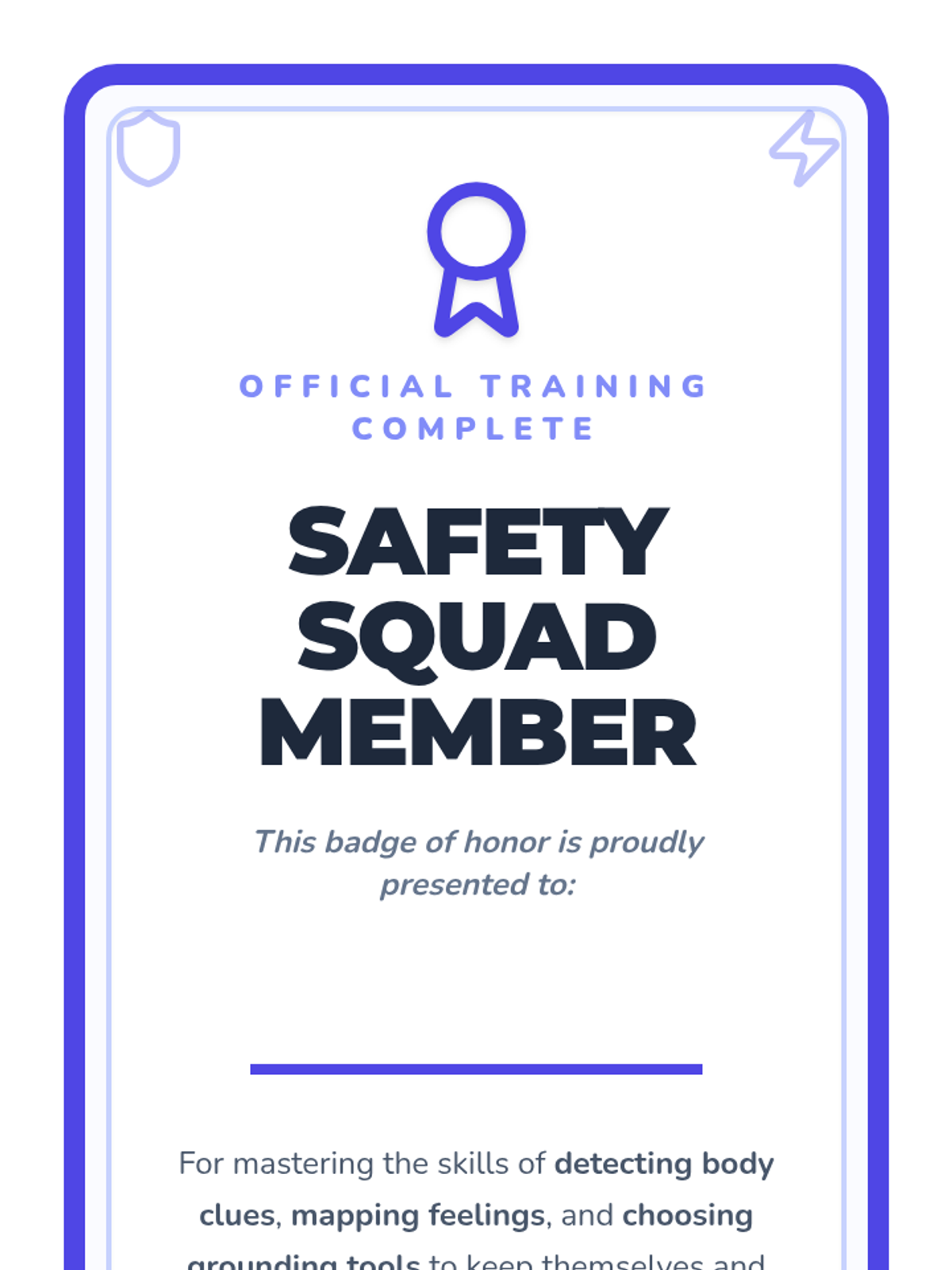
A celebratory completion certificate for the Safety Squad Training unit. This material marks the student's mastery of emotional grounding and co-regulation skills.
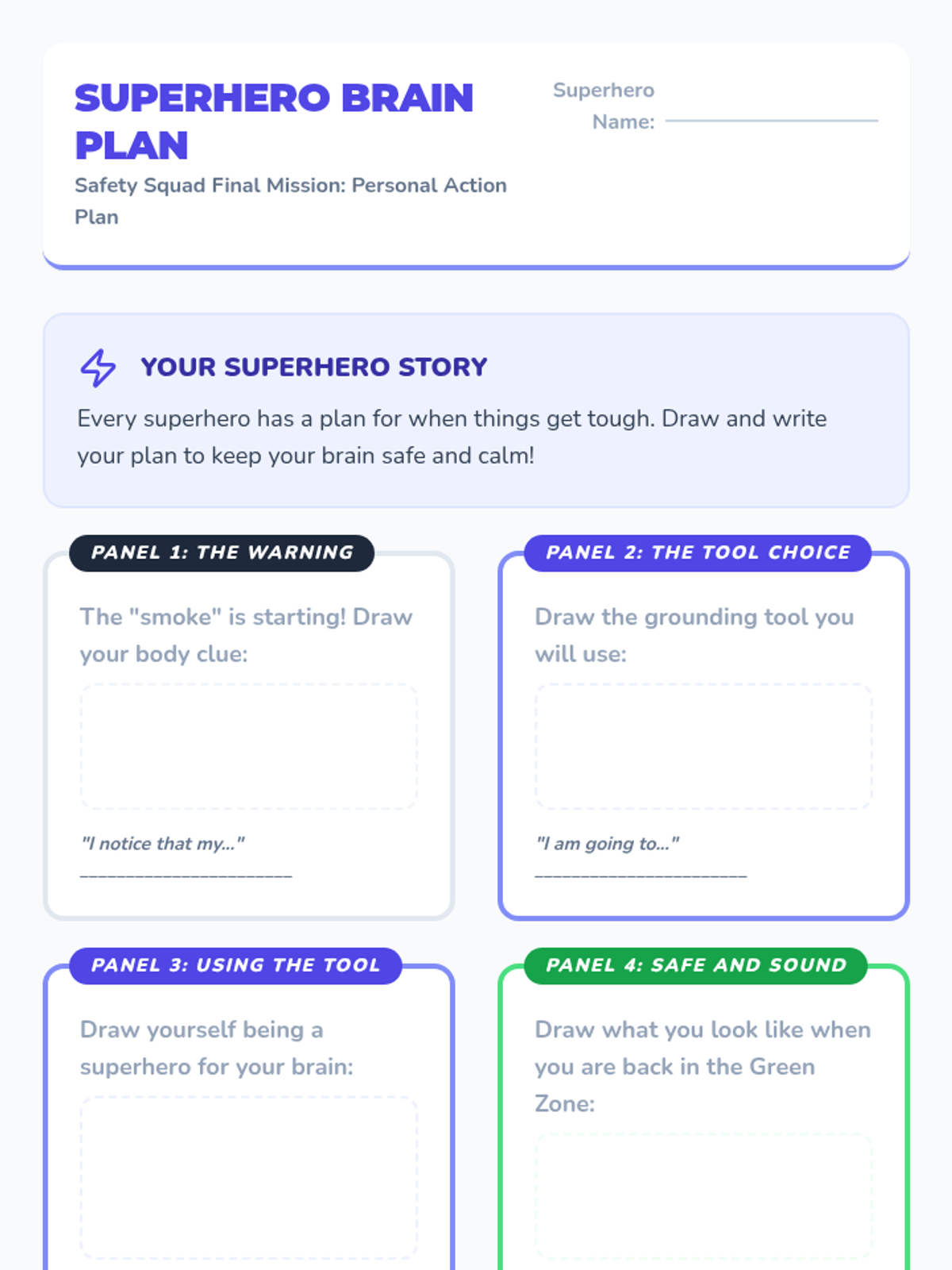
A comic-strip style action plan worksheet for Lesson 5. Students draw and write their personal grounding plan, identifying their specific warning signs, chosen strategy, and the desired calm outcome.
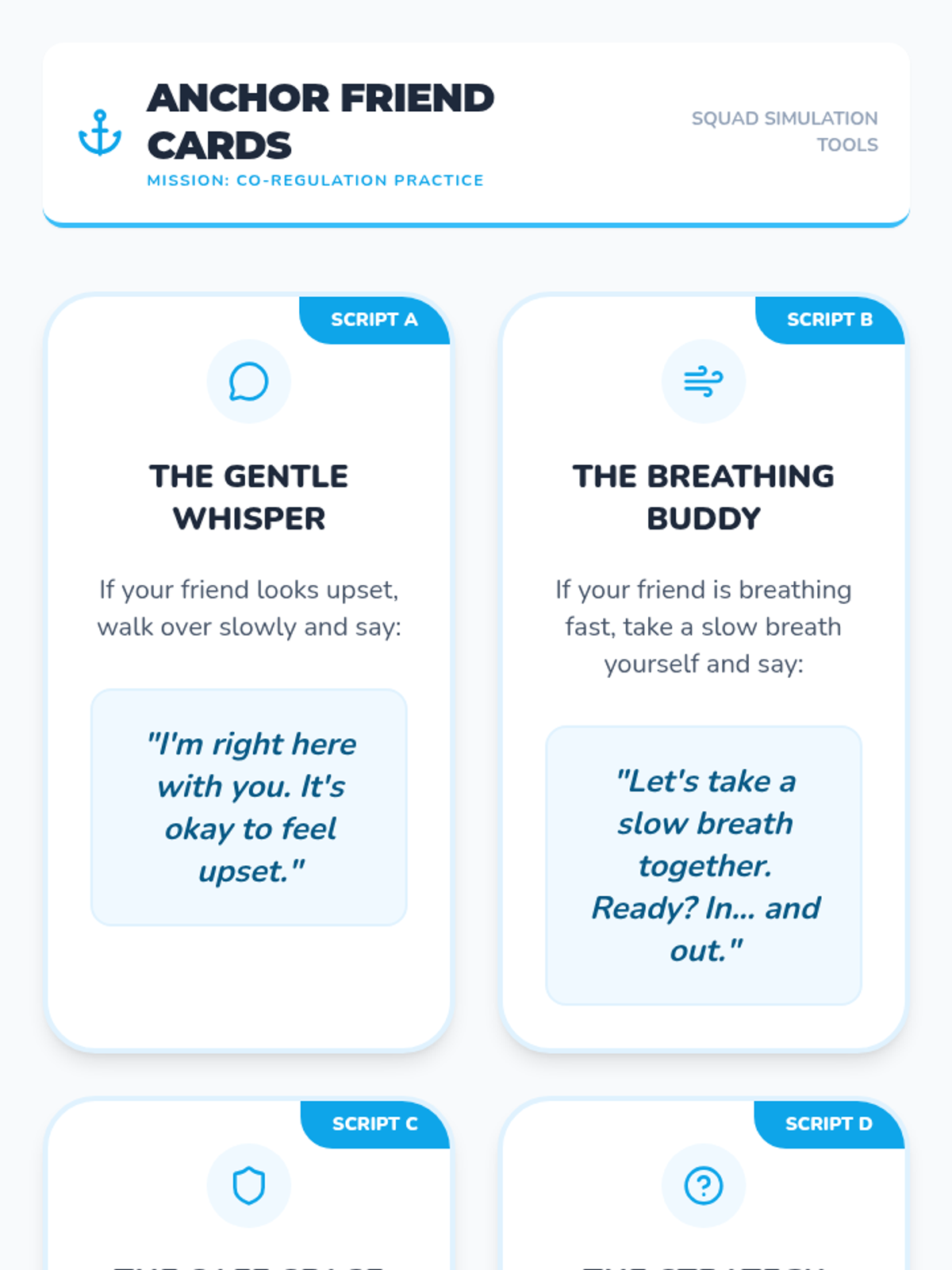
Simple "What to Say" script cards for Lesson 4. Students use these during co-regulation simulations to practice supportive language and calm modeling for peers in distress.
A visual presentation for Lesson 4 of the Safety Squad unit. It introduces the "Anchor Friend" metaphor for co-regulation and teaches students how to help a peer through calm modeling and supportive language.
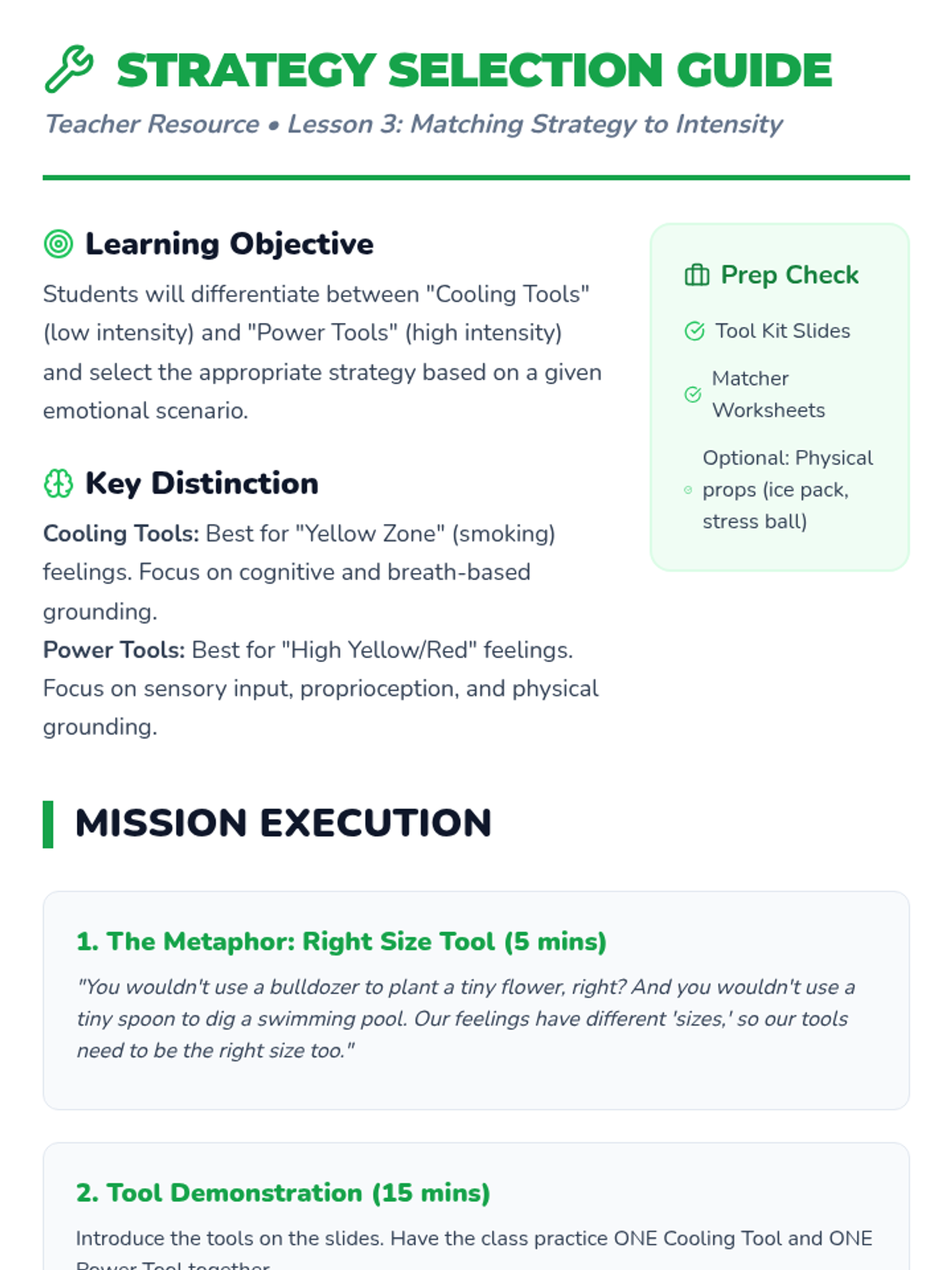
A teacher guide for Lesson 3 of the Safety Squad unit. It provides instructional strategies, tool definitions, and modeling tips for teaching students how to match grounding strategies to emotional intensity.
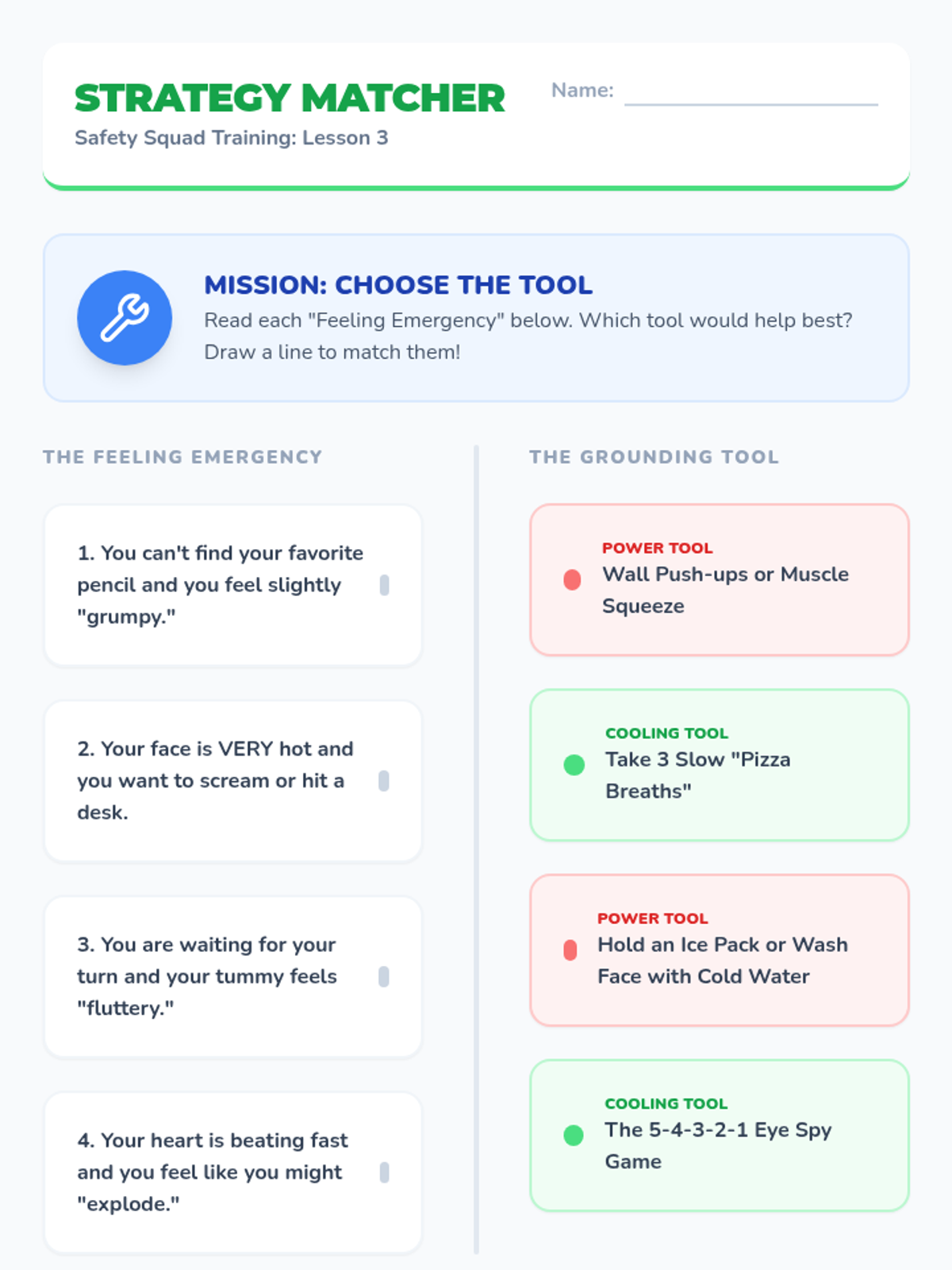
A scenario-based worksheet for Lesson 3. Students match emotional situations of varying intensity to the appropriate "Cooling Tool" or "Power Tool."
A visual presentation for the third lesson of the Safety Squad unit. It introduces "Cooling Tools" for low intensity and "Power Tools" for high intensity grounding, helping students match the strategy to the emotional heat level.
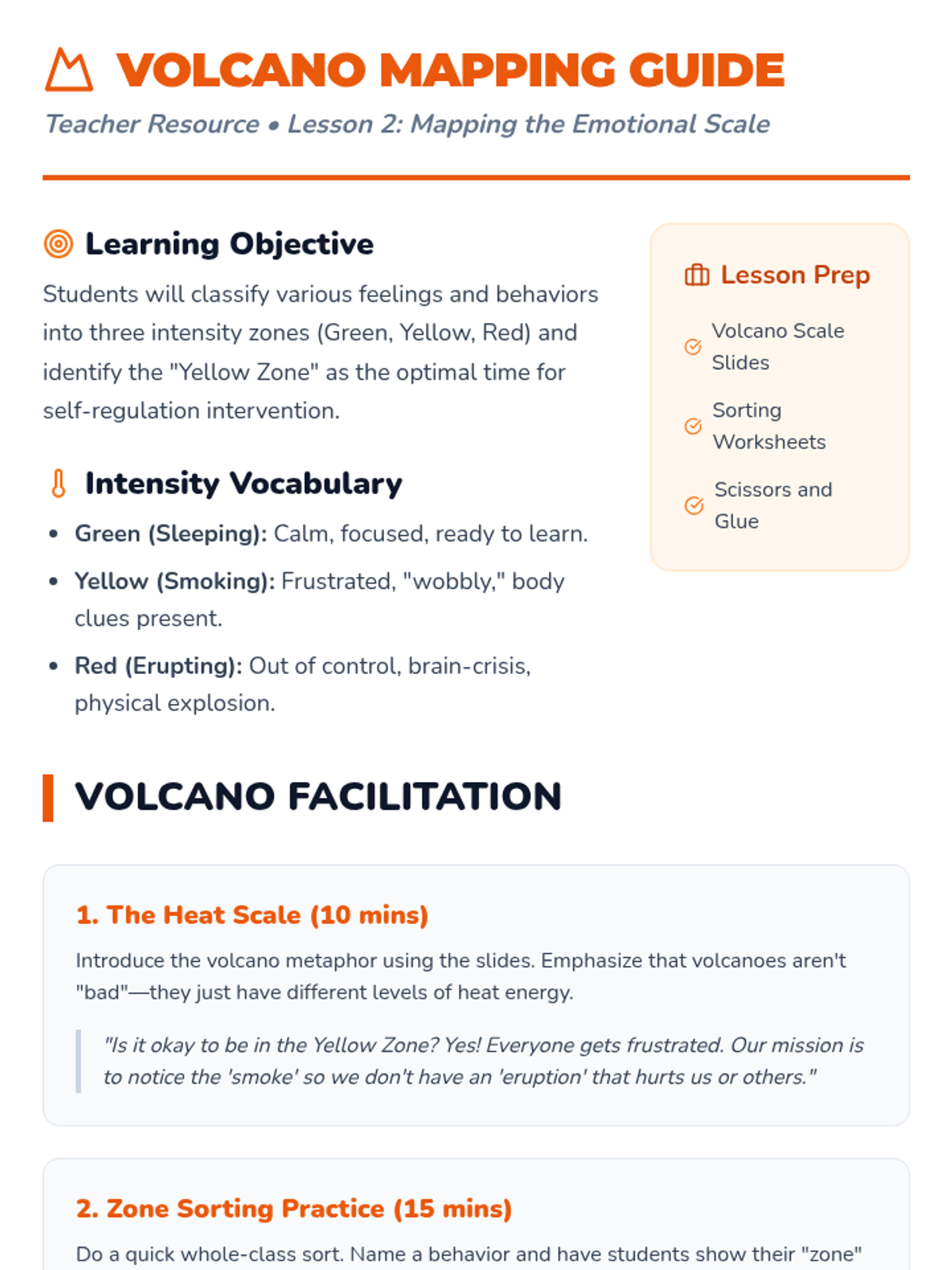
A teacher guide for Lesson 2 of the Safety Squad unit. It provides facilitation steps, zone definitions, and discussion prompts for teaching the "Feeling Volcano" emotional scale.
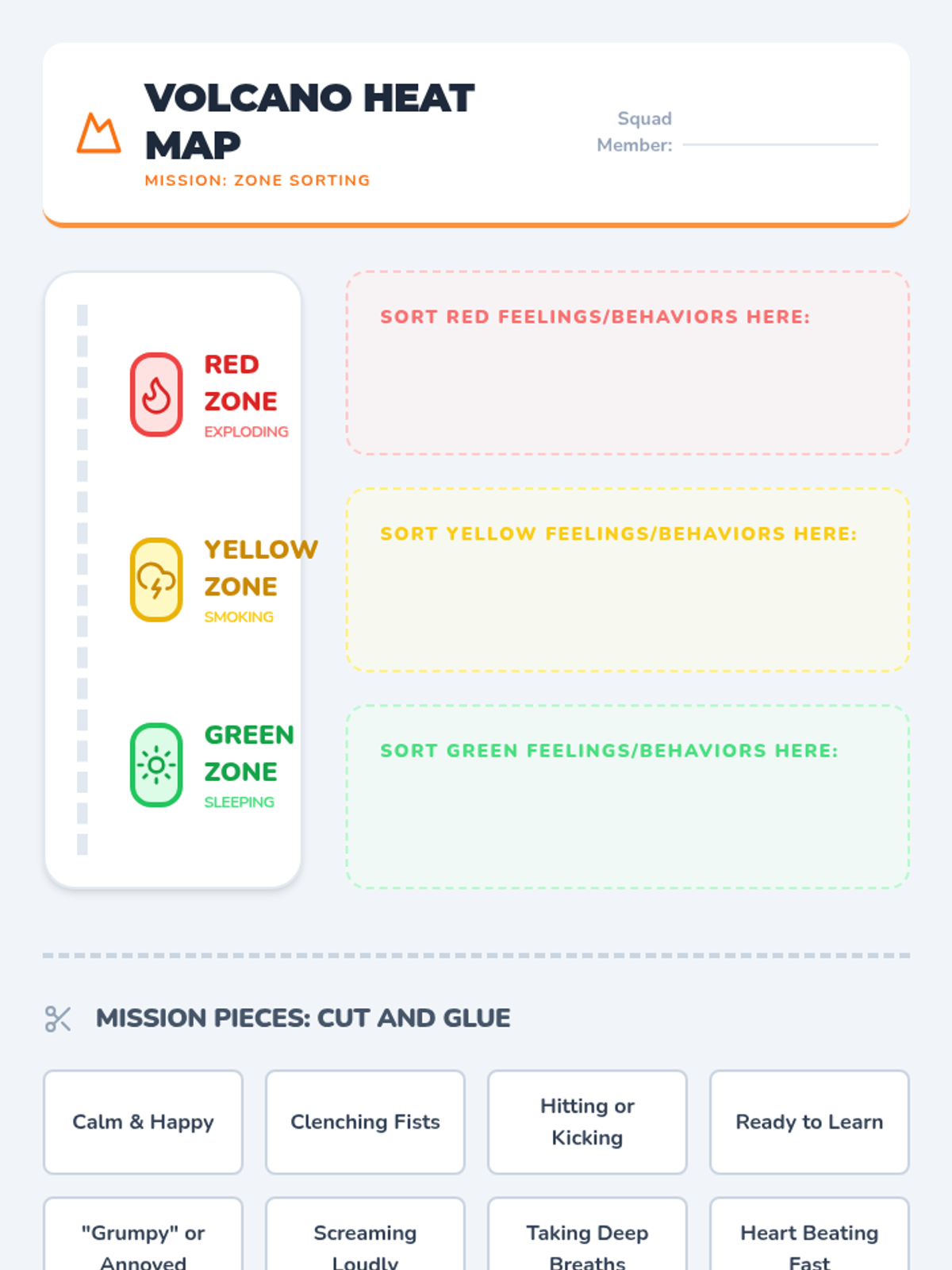
A cut-and-paste sorting worksheet for Lesson 2. Students sort different feelings and behaviors into the Green (Sleeping), Yellow (Smoking), and Red (Erupting) zones of the Feeling Volcano.
A visual presentation for the second lesson of the Safety Squad unit. It introduces the "Feeling Volcano" scale (Green, Yellow, Red) and explains why the Yellow Zone is critical for intervention.
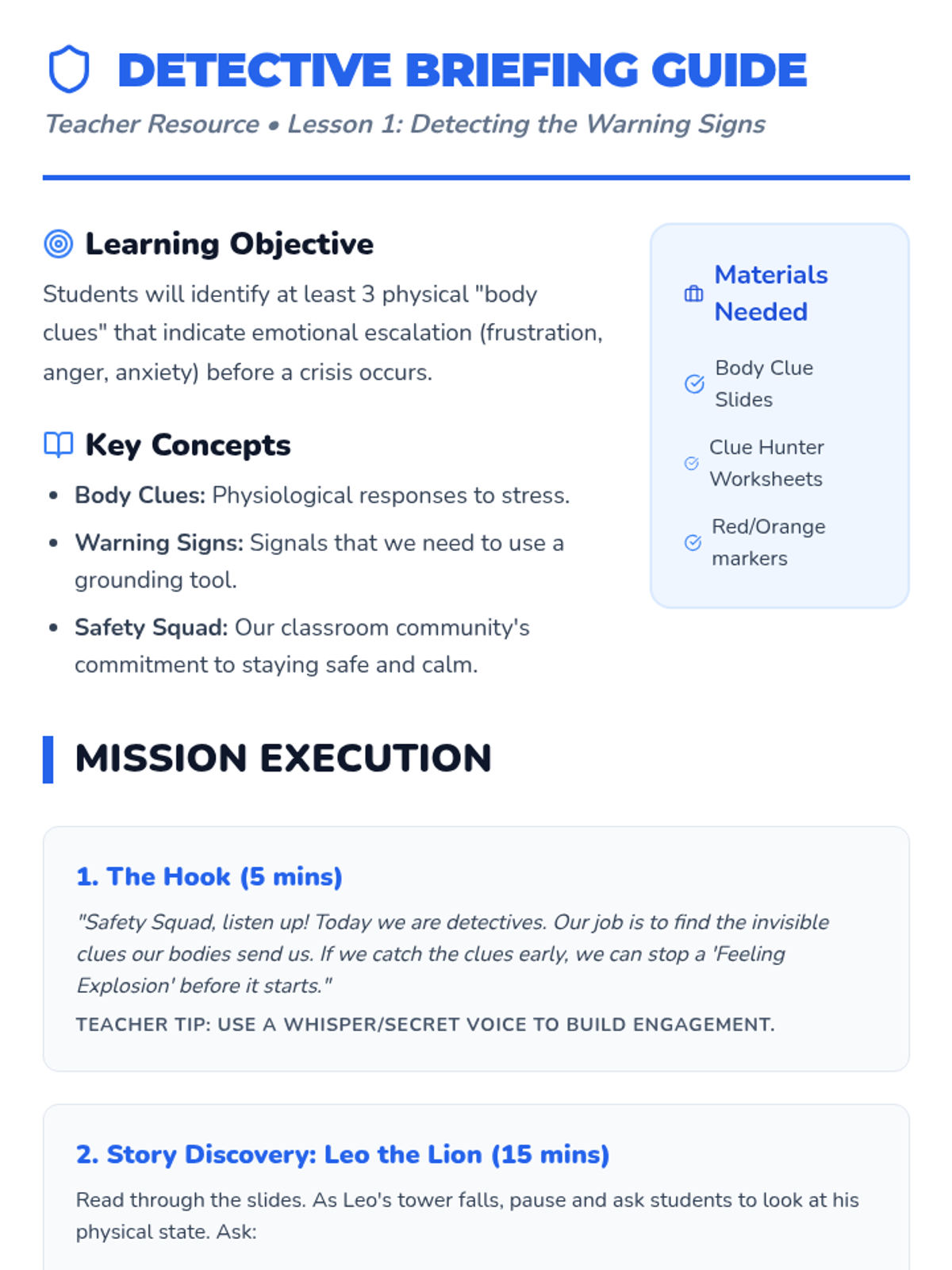
A teacher guide for the first lesson of the Safety Squad unit. It provides instructional scripts, key concepts, and common misconceptions for teaching students about physical warning signs of emotional escalation.
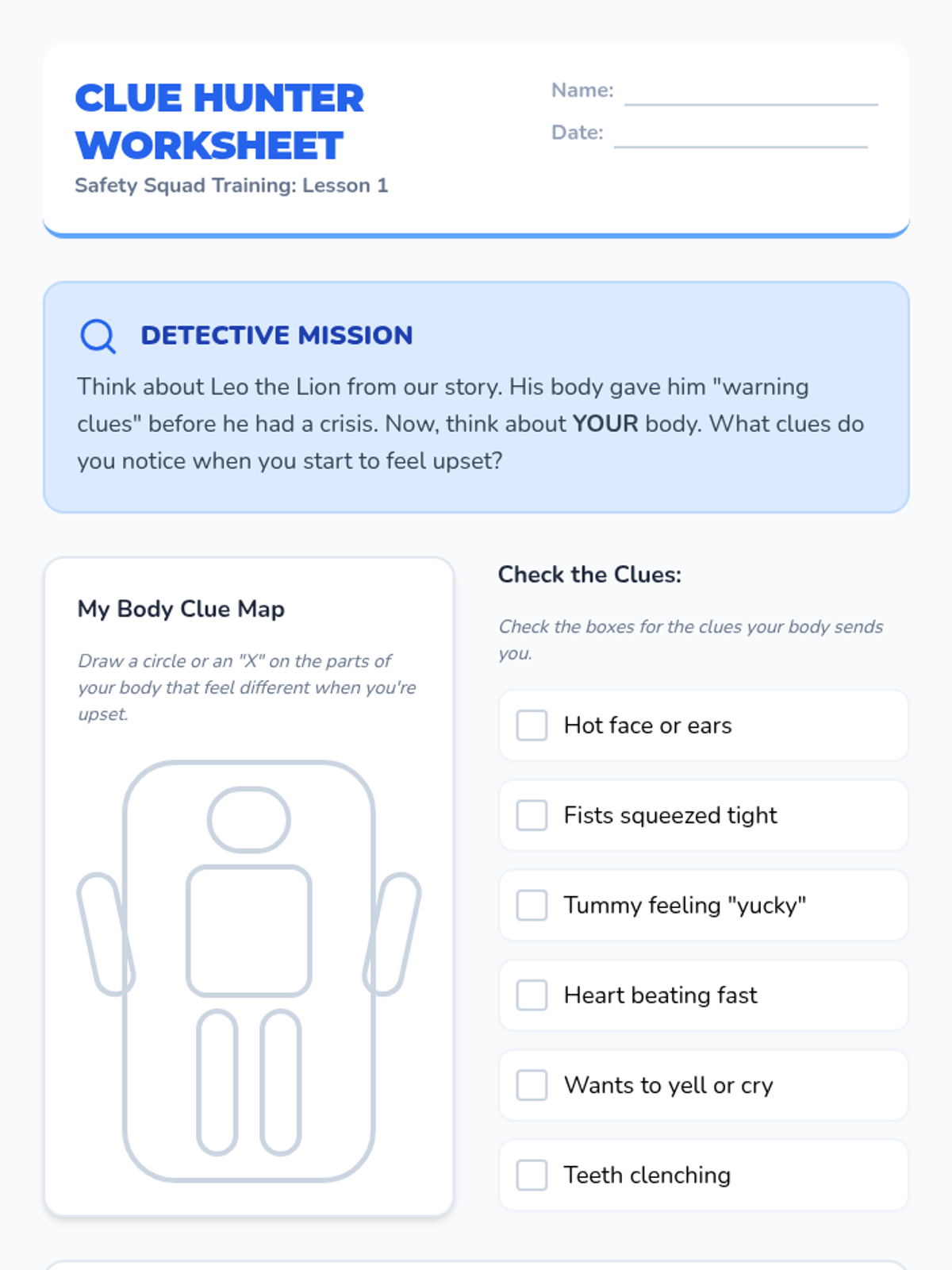
A student worksheet for identifying personal physical warning signs of emotional escalation. Includes a body map for visual identification and a checklist of common physiological responses.
A visual presentation for the first lesson of the Safety Squad unit. It introduces the concept of body clues through a story about Leo the Lion and guides students in identifying physical warning signs of emotional escalation.
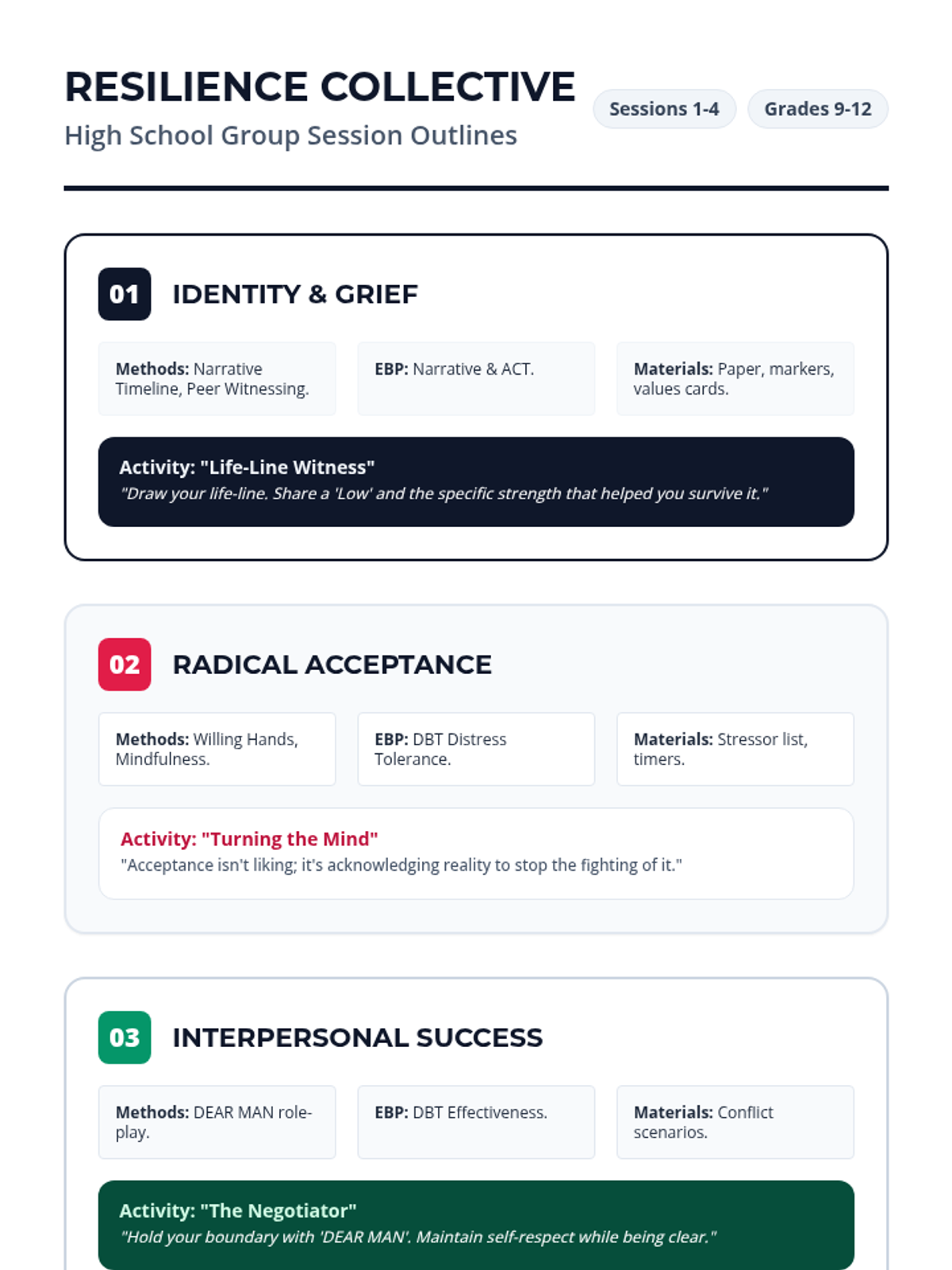
Structured group session outlines for high school students, incorporating advanced ACT and DBT-A concepts like Radical Acceptance and Interpersonal Effectiveness. Emphasizes peer witnessing and identity integration.
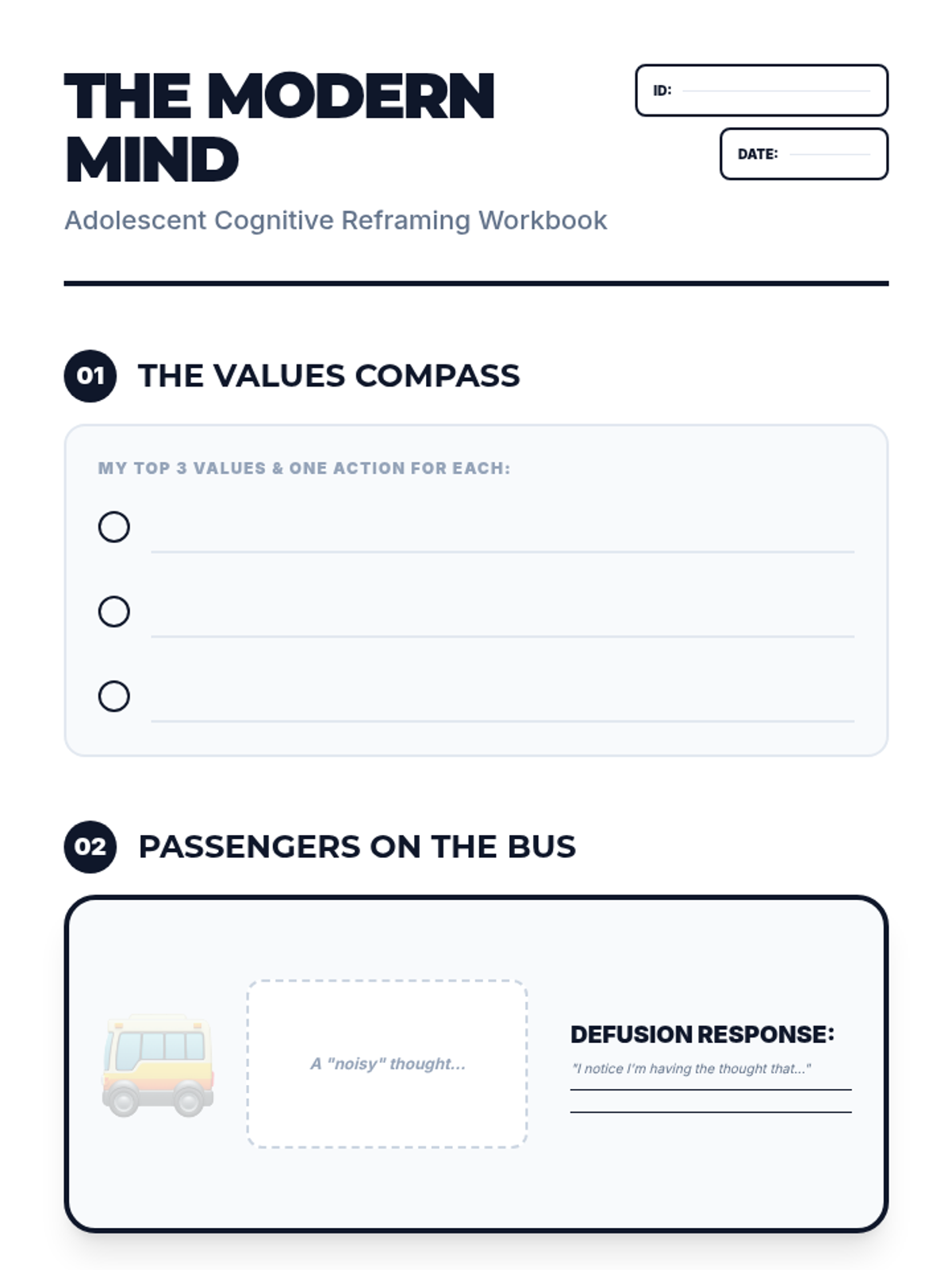
An advanced student workbook for high schoolers, featuring complex therapeutic exercises including Values-Based Mapping (ACT), Cognitive Defusion (ACT), and DEAR MAN interpersonal effectiveness (DBT). Designed for identity-level therapeutic work.
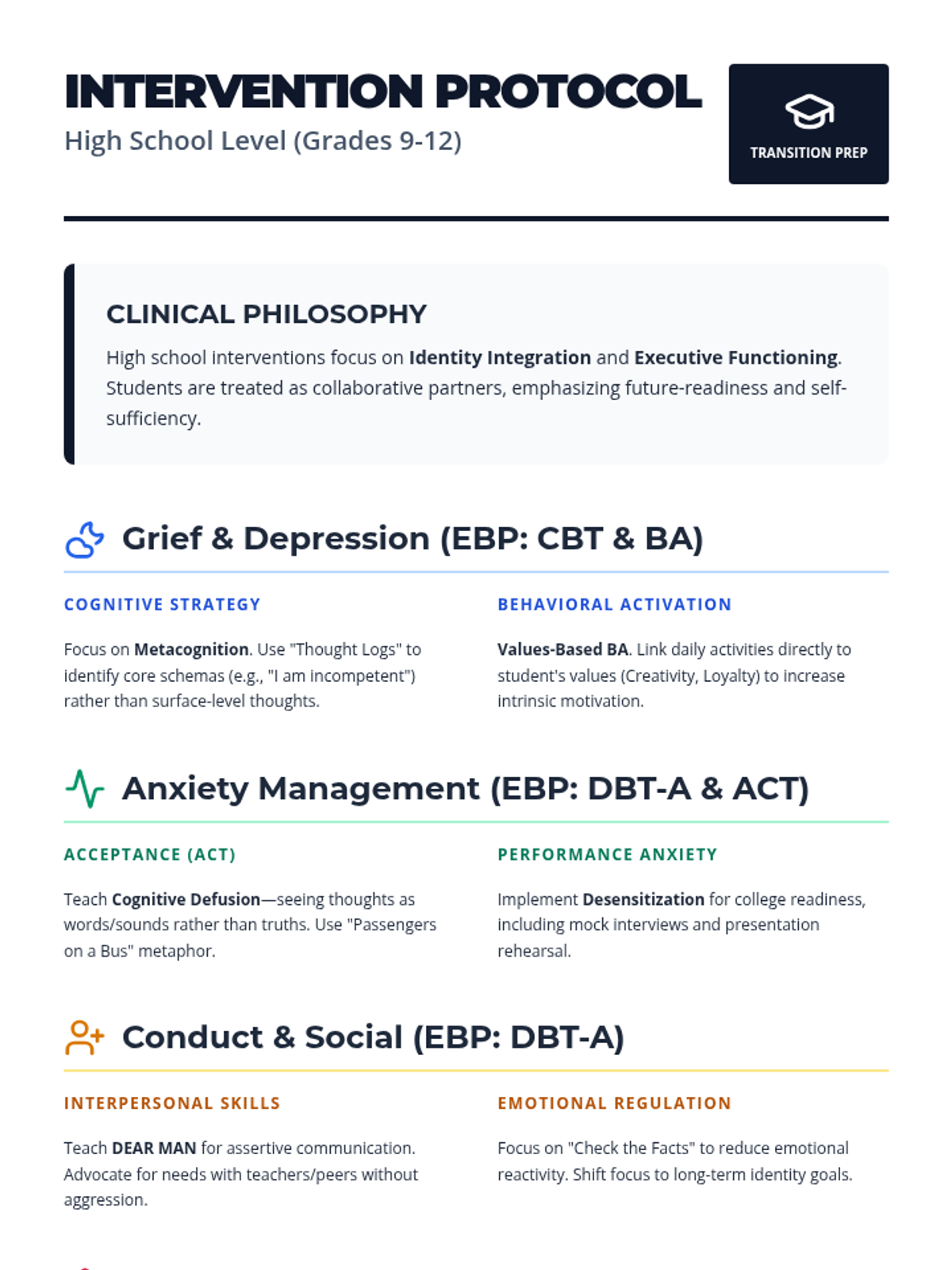
A high-level clinician guide for high school interventions, focusing on ACT, DBT-A, and CAMS protocols. Addresses cognitive complexity, identity integration, and interpersonal effectiveness.
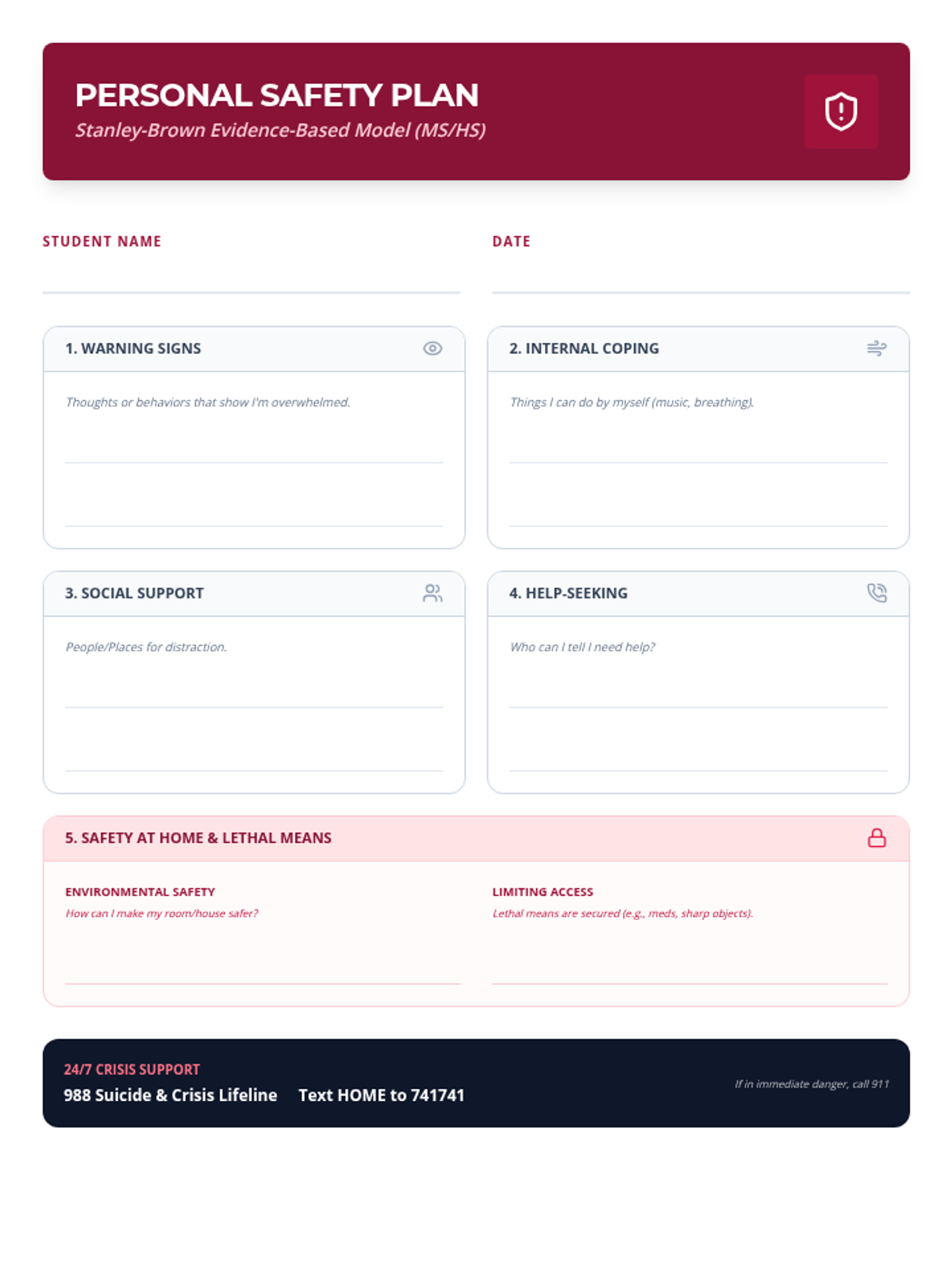
A standardized, evidence-based safety plan template for middle and high school students, following the Stanley-Brown model. Includes steps for warning signs, coping strategies, and emergency contacts.
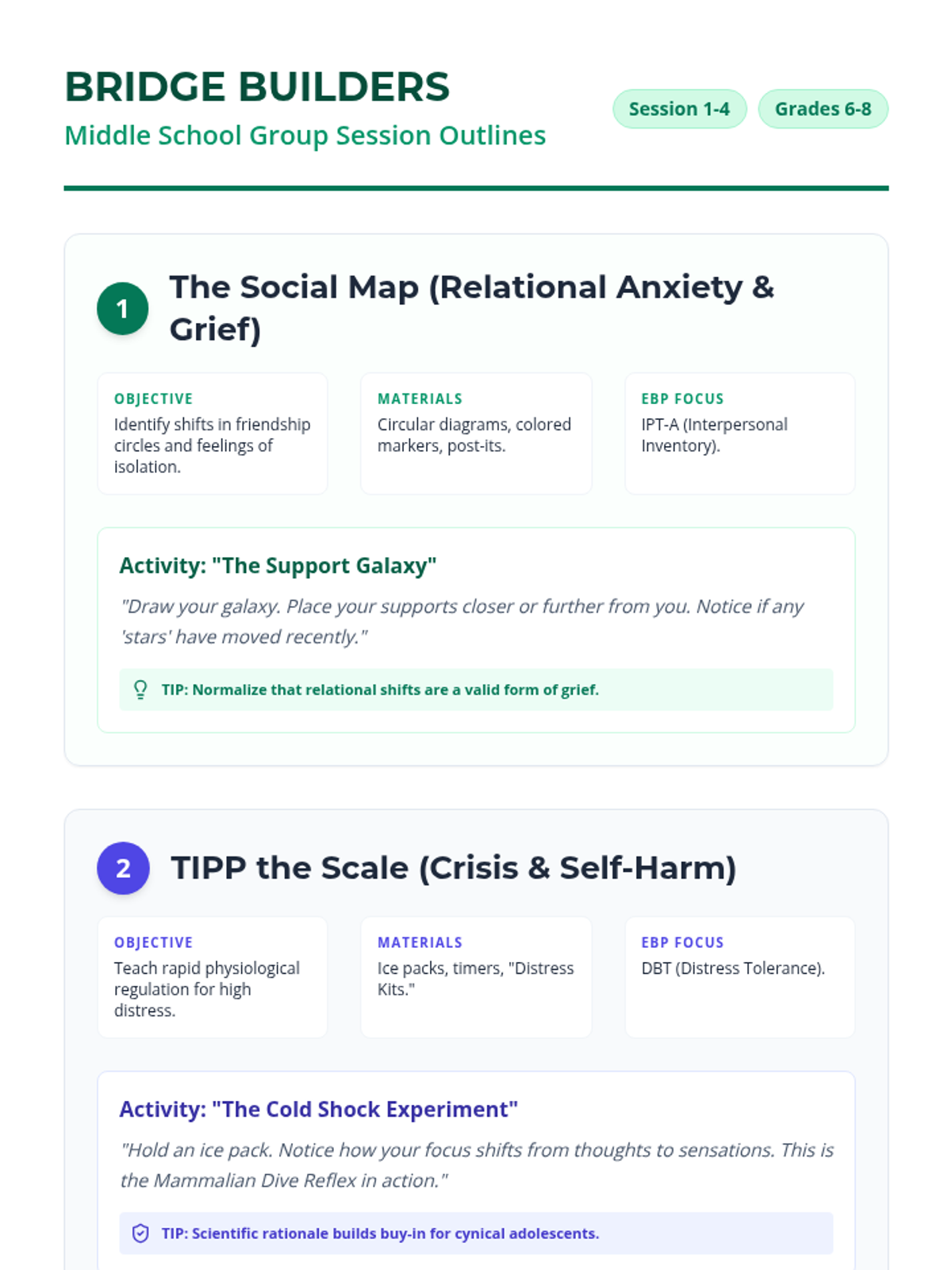
Structured group session outlines for middle school students, utilizing IPT-A, DBT, and Choice Theory to address social anxiety, conduct, and crisis prevention. Includes specific activities like "The Support Galaxy" and "The Cold Shock Experiment."
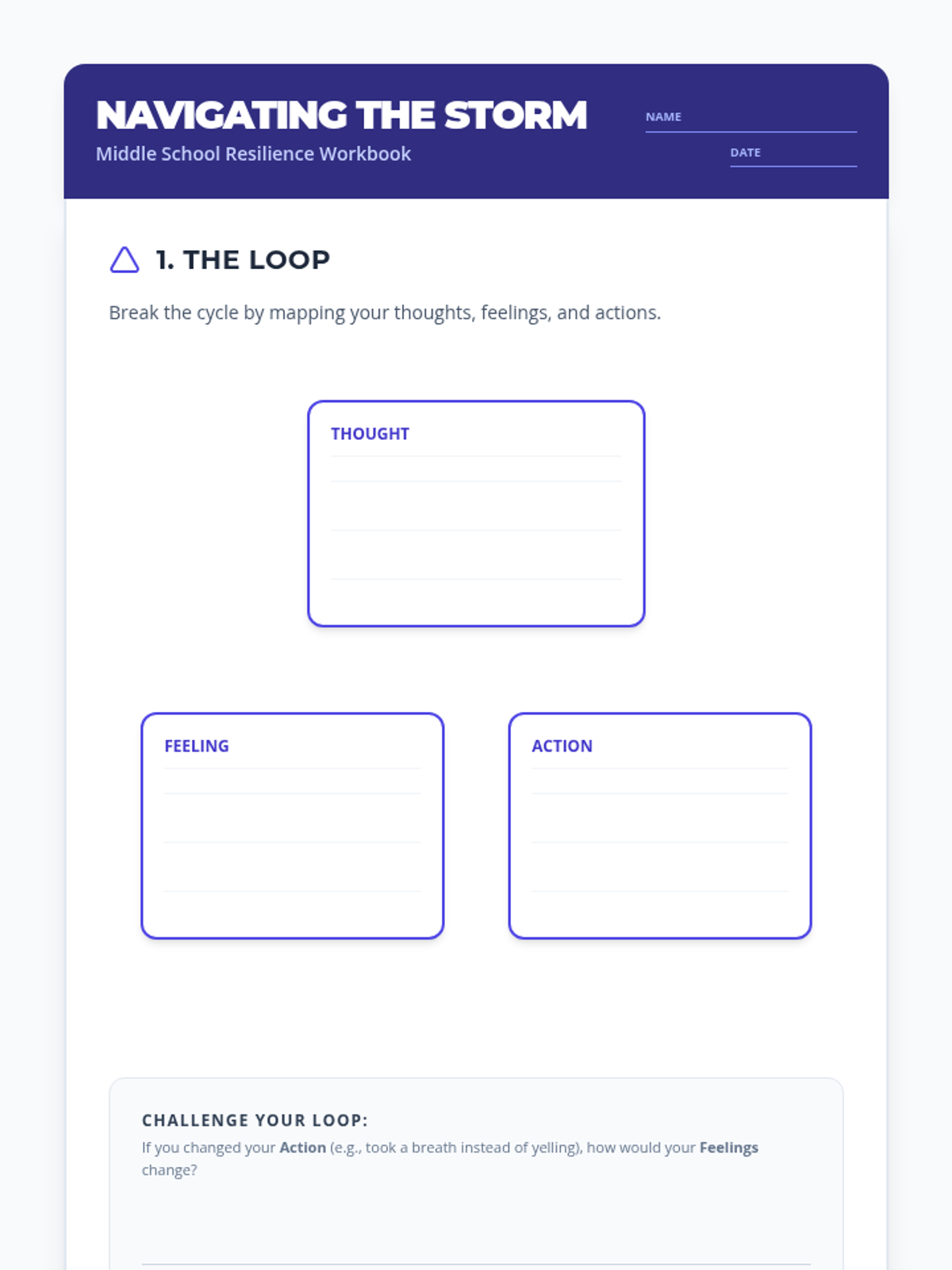
A middle school student workbook focused on CBT concepts like the Cognitive Triangle and Thinking Traps. Designed to help adolescents navigate complex emotions, social anxiety, and behavioral loops with autonomy-focused exercises.
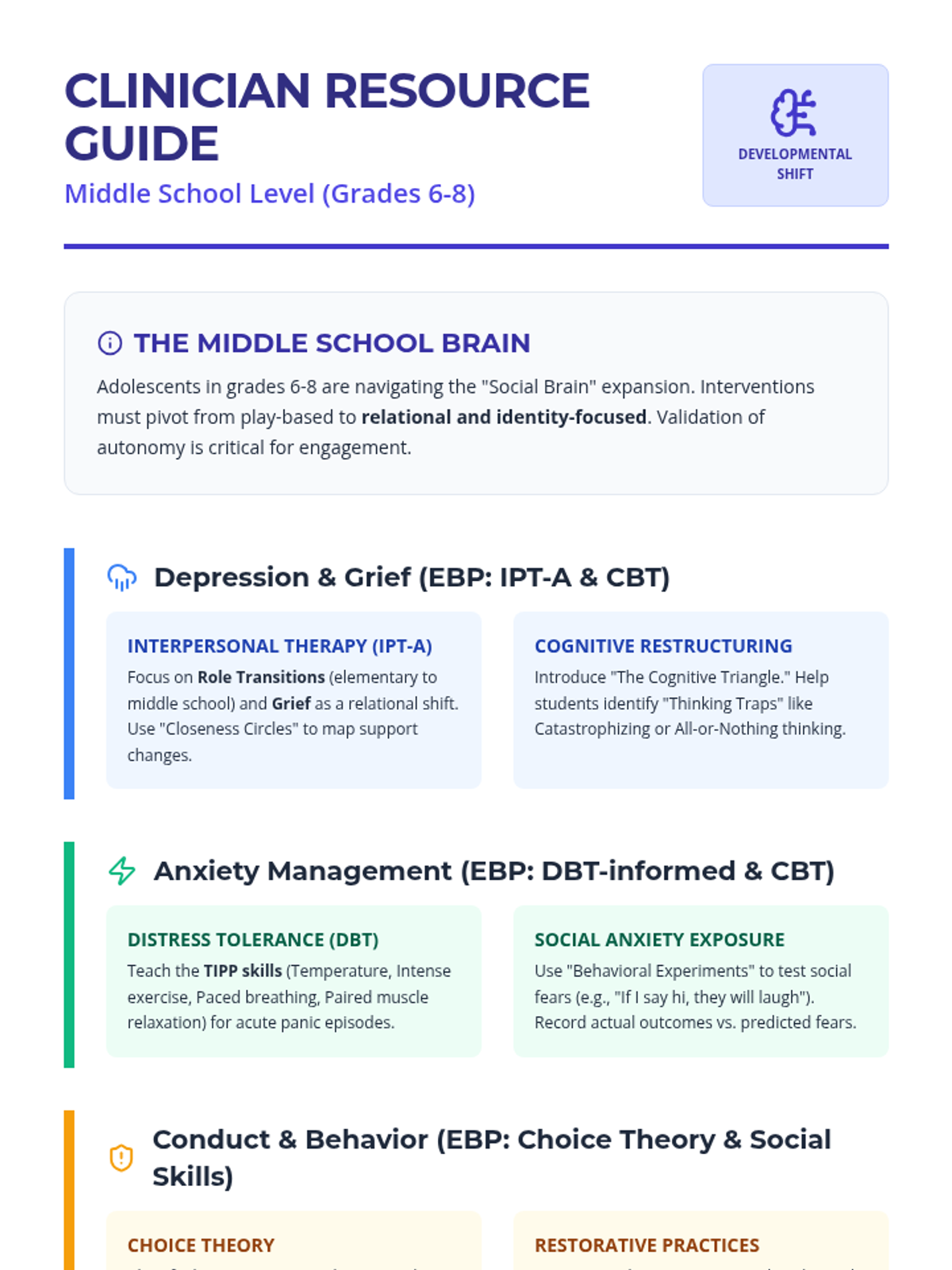
A comprehensive clinician guide for middle school mental health interventions, focusing on IPT-A, CBT, and DBT-informed strategies for grief, anxiety, and conduct, with a focus on the adolescent "Social Brain."
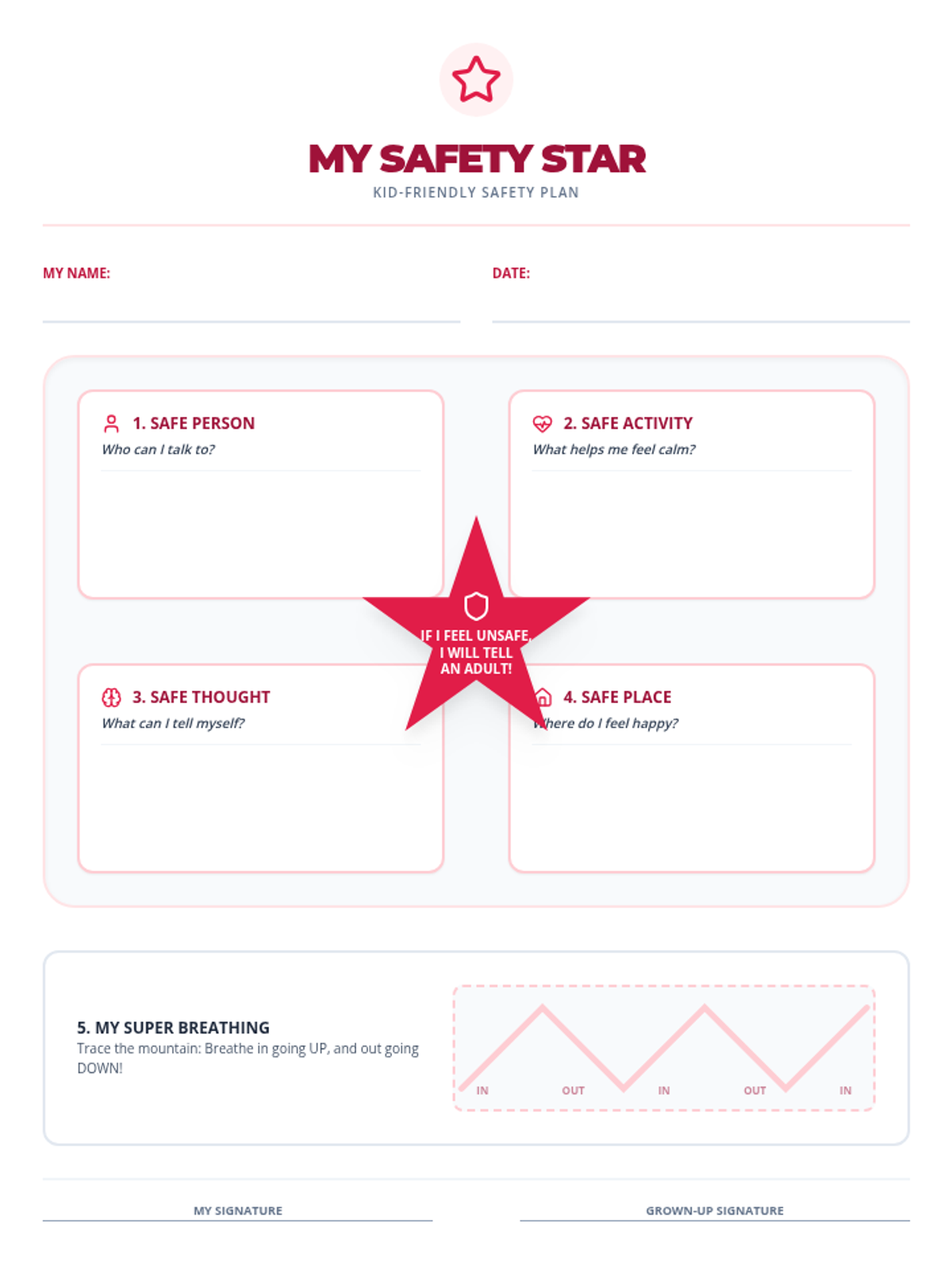
A visual, kid-friendly safety planning template for elementary students, focusing on five key points: Safe Person, Safe Activity, Safe Thought, Safe Place, and Breathing. Includes spaces for signatures and student drawing.
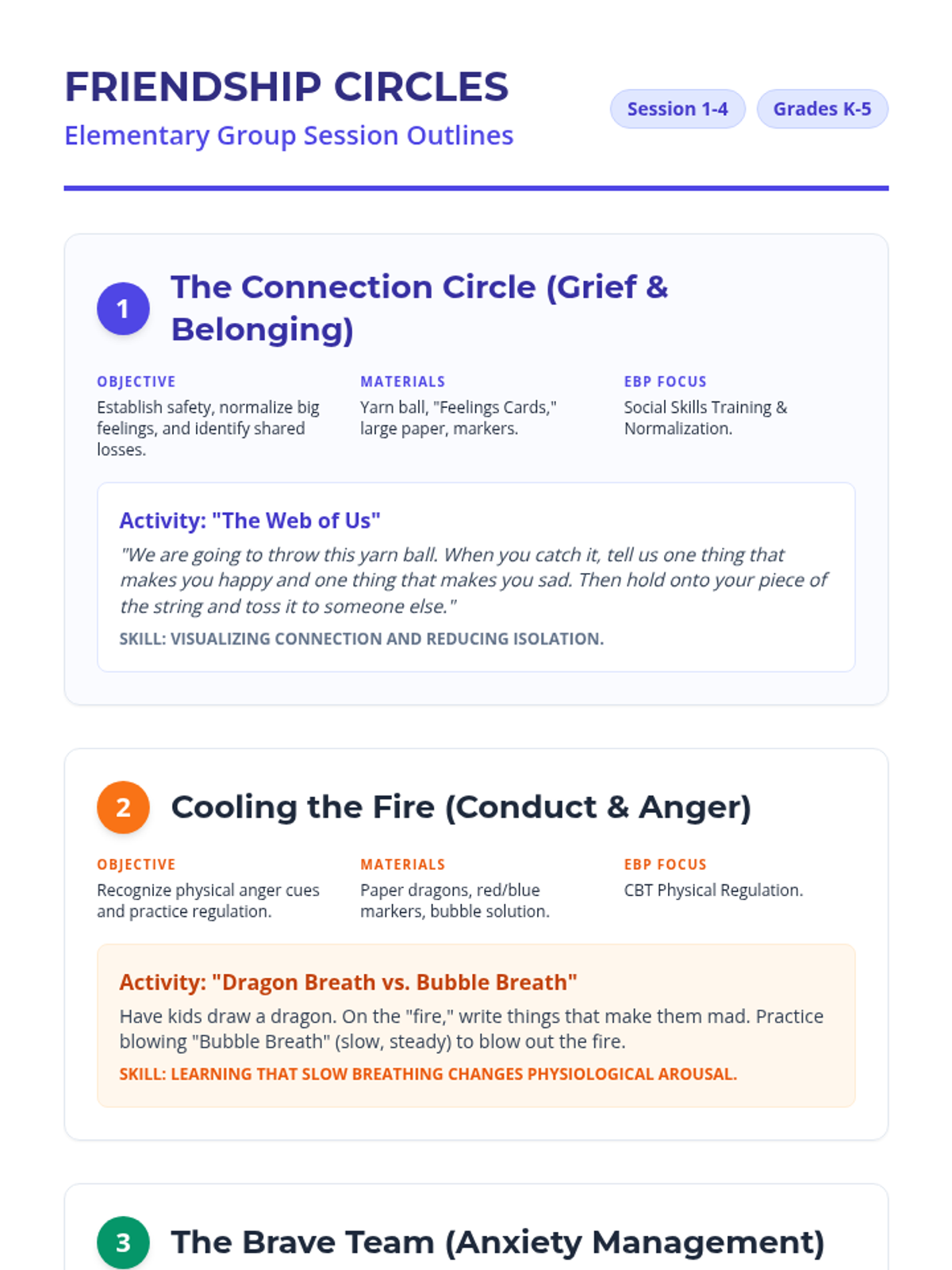
Structured group session outlines for elementary students, covering connection (grief), regulation (conduct), bravery (anxiety), and safety (crisis). Includes objectives, materials, and evidence-based practice focuses.
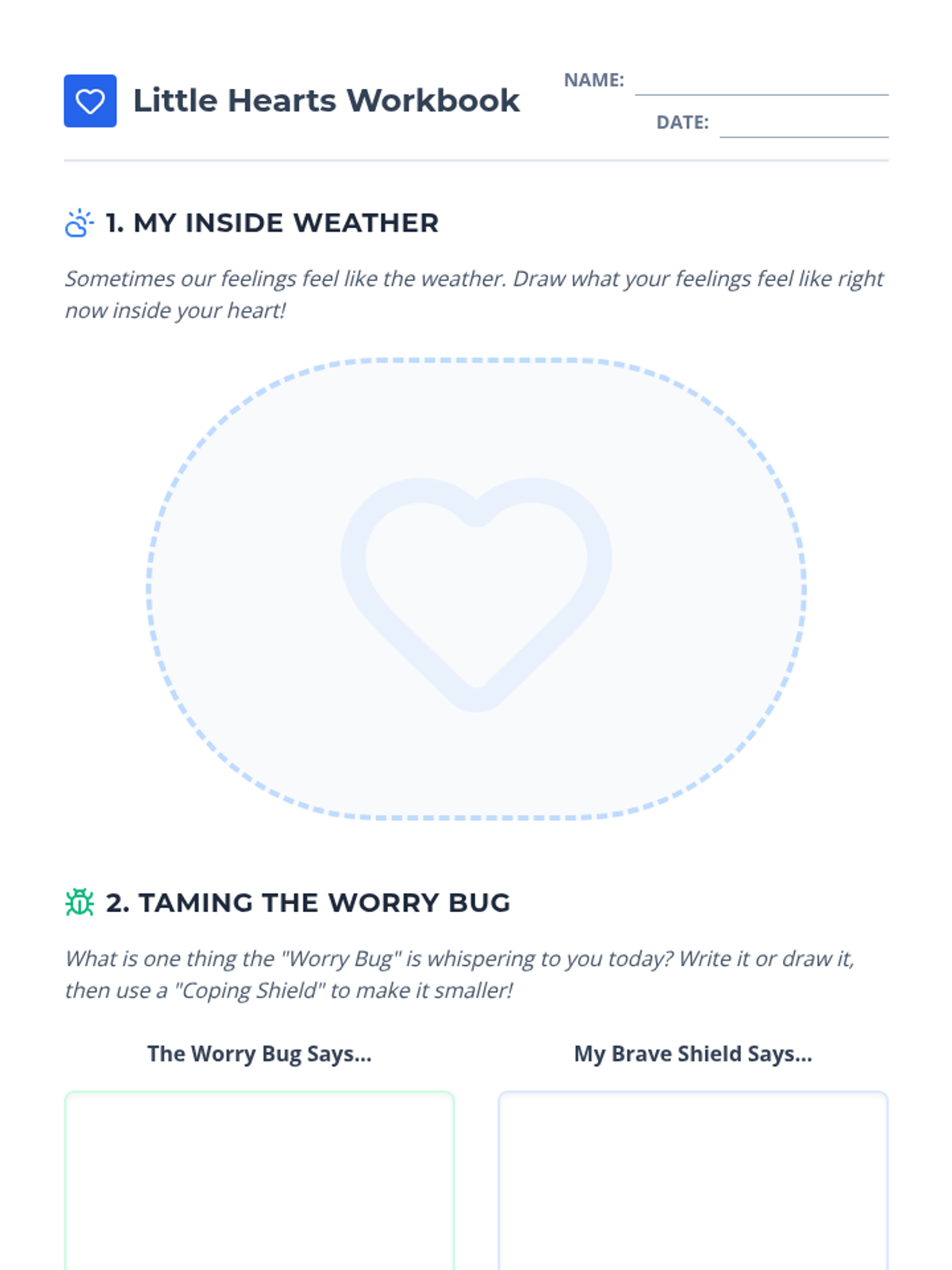
A kid-friendly student workbook for elementary students, containing interactive drawing and writing activities to help manage feelings, anxiety (The Worry Bug), and behavioral choices (The Choice Point).
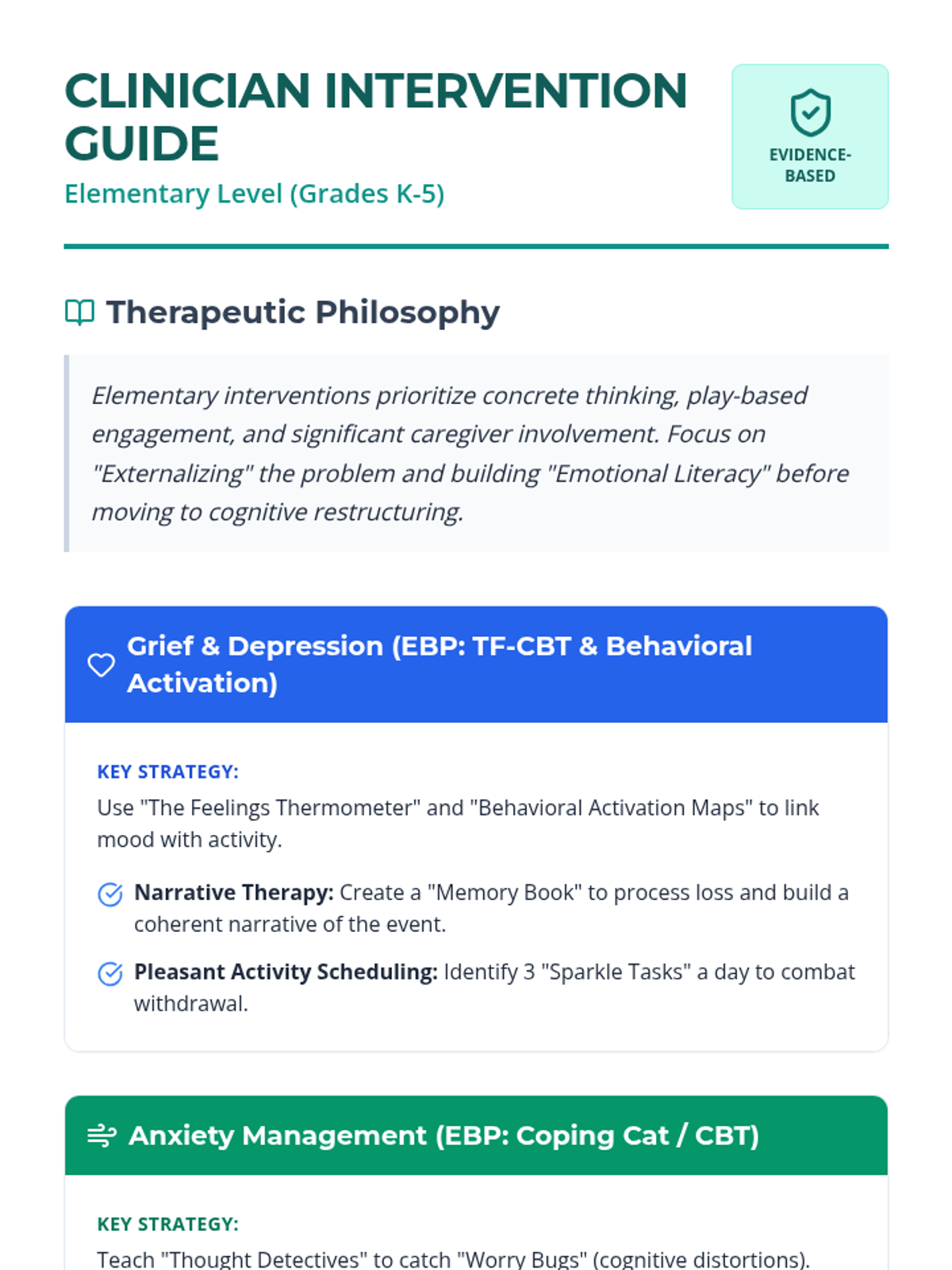
An evidence-based clinician guide for elementary school counselors, providing key strategies and interventions for grief, anxiety, conduct, and crisis management using developmentally appropriate language.
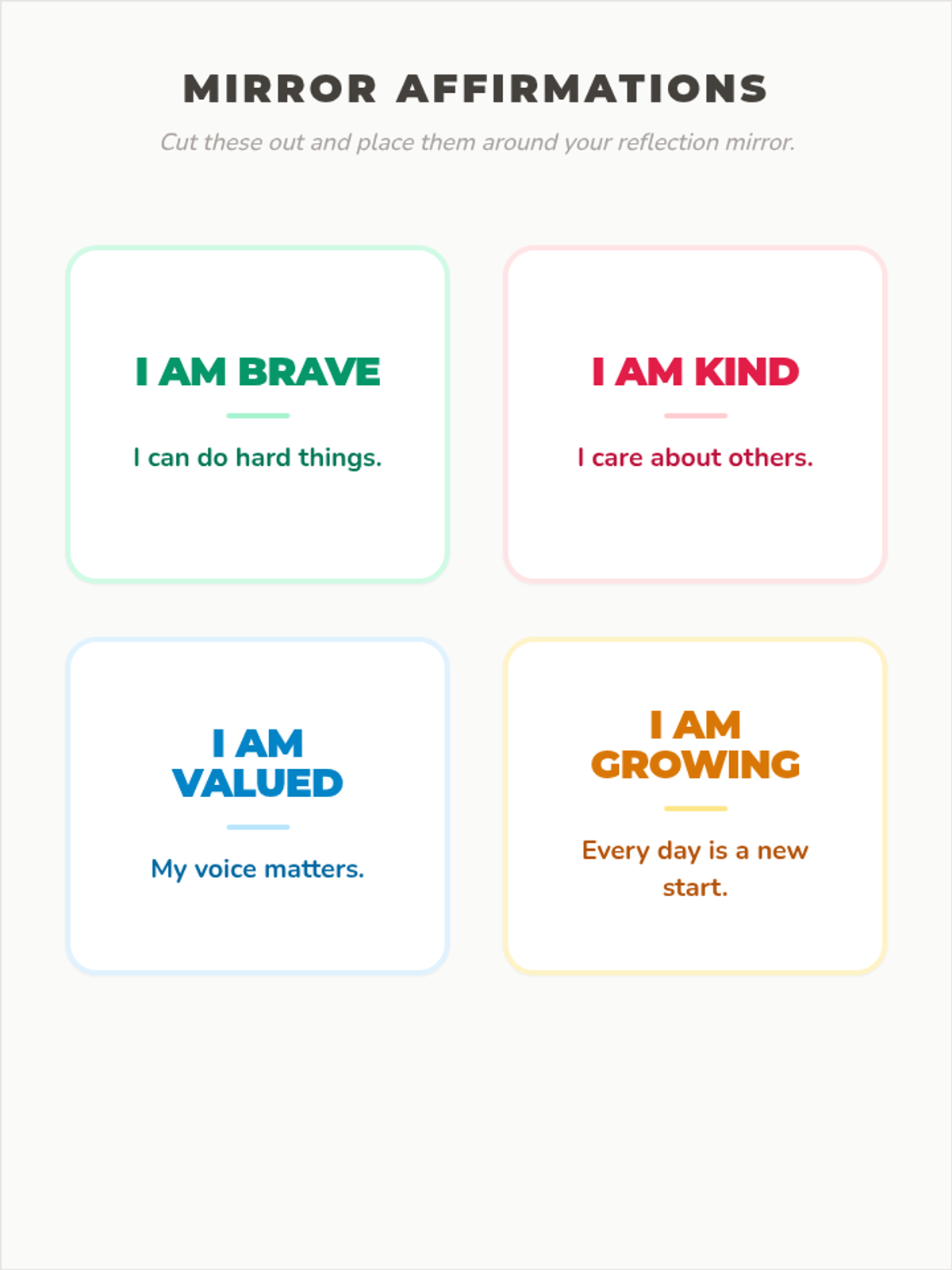
Affirmation cards for mirror placement and a set of smaller square prints for decorative bulletin boards. Revised for better contrast, alignment, and completeness.
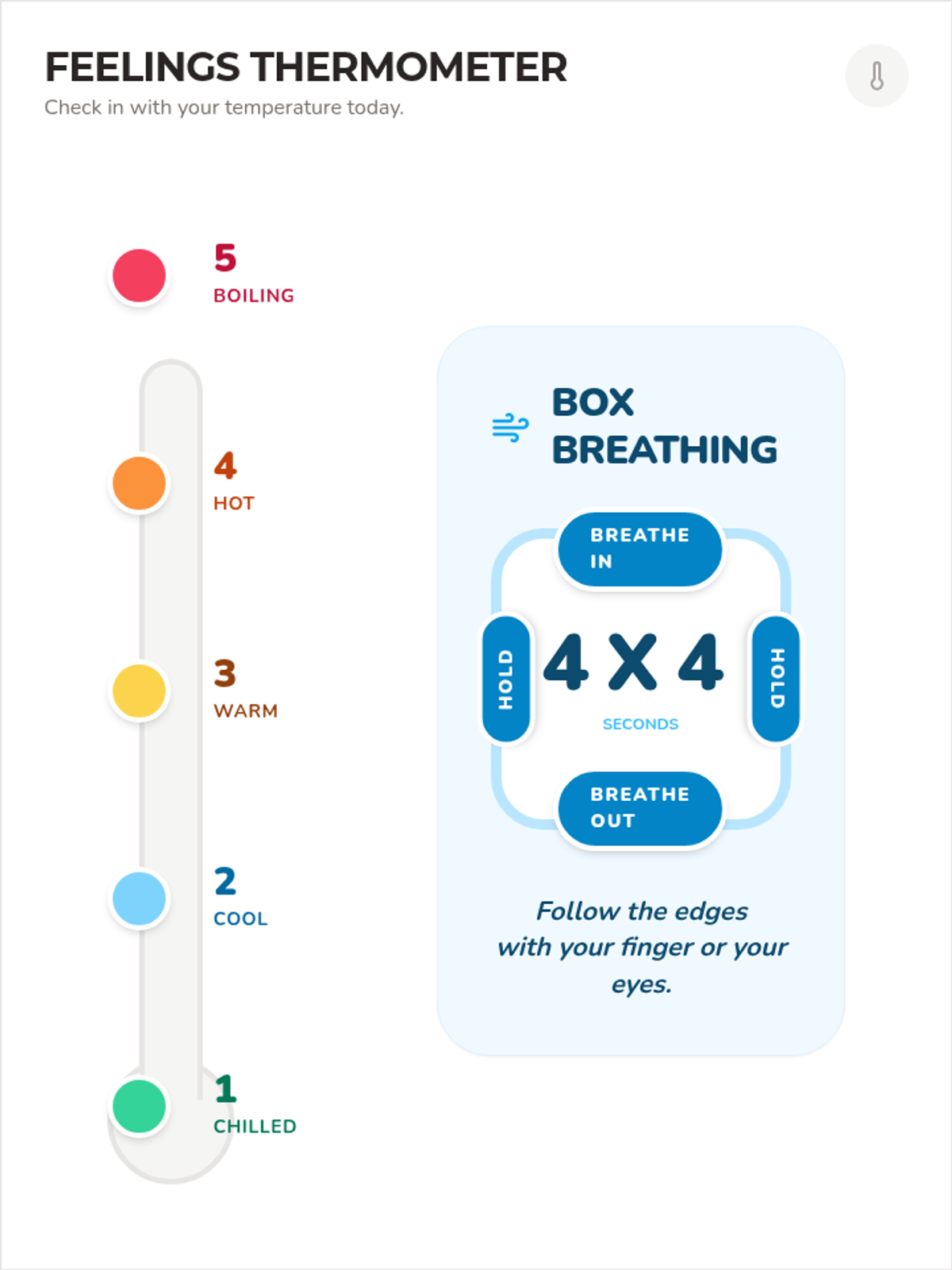
Interactive office tools including a feelings thermometer visual (revised for alignment), box breathing tool, and cut-out 'I Need' choice cards with improved cutting gutters.
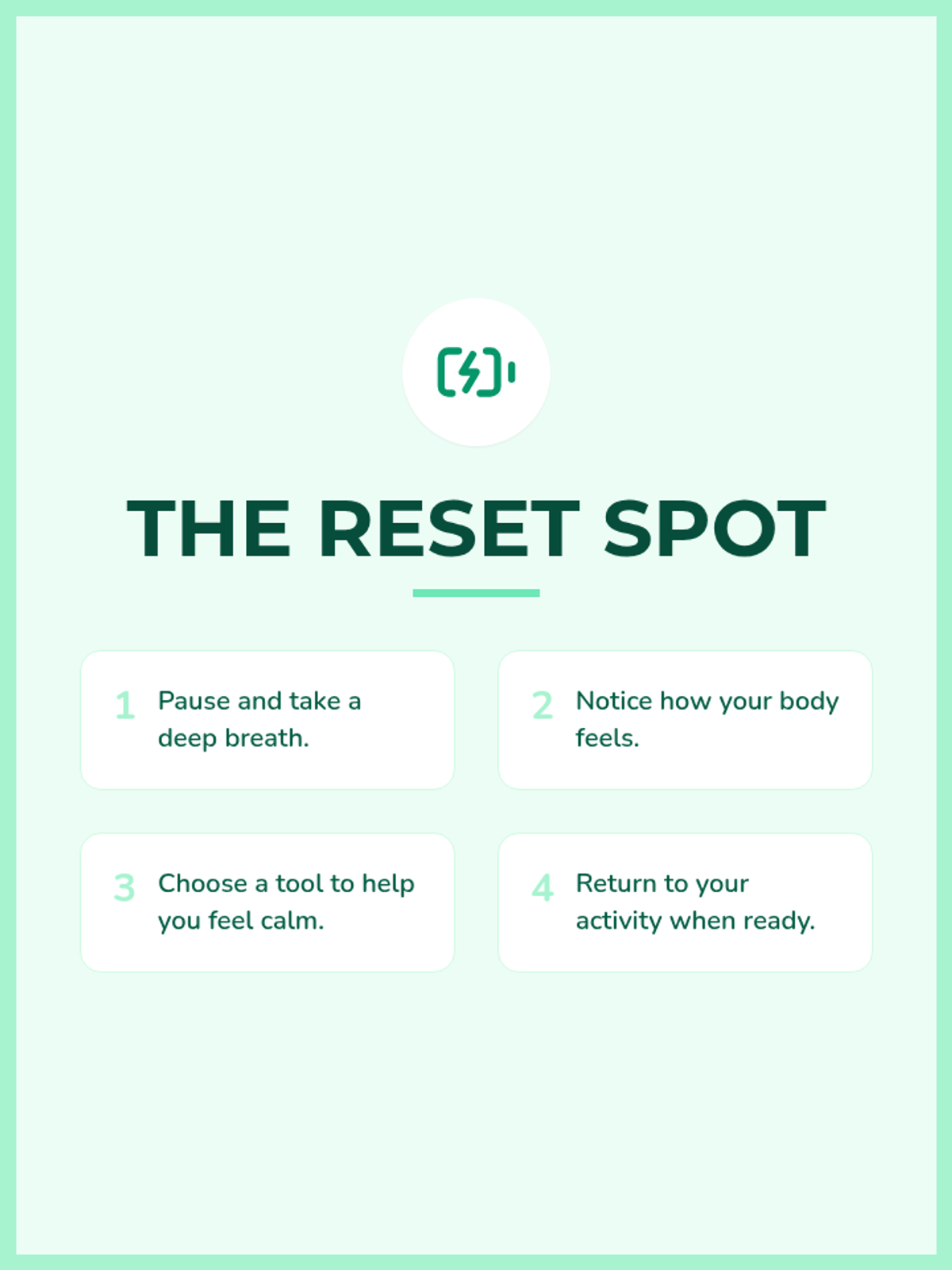
A pack of five zone-specific posters for 'The Reset Spot', 'Peace Pause', 'Connection Wall', 'Resource Nook', and 'Reflection Area'. Revised for visual balance, better text rendering, and increased contrast.
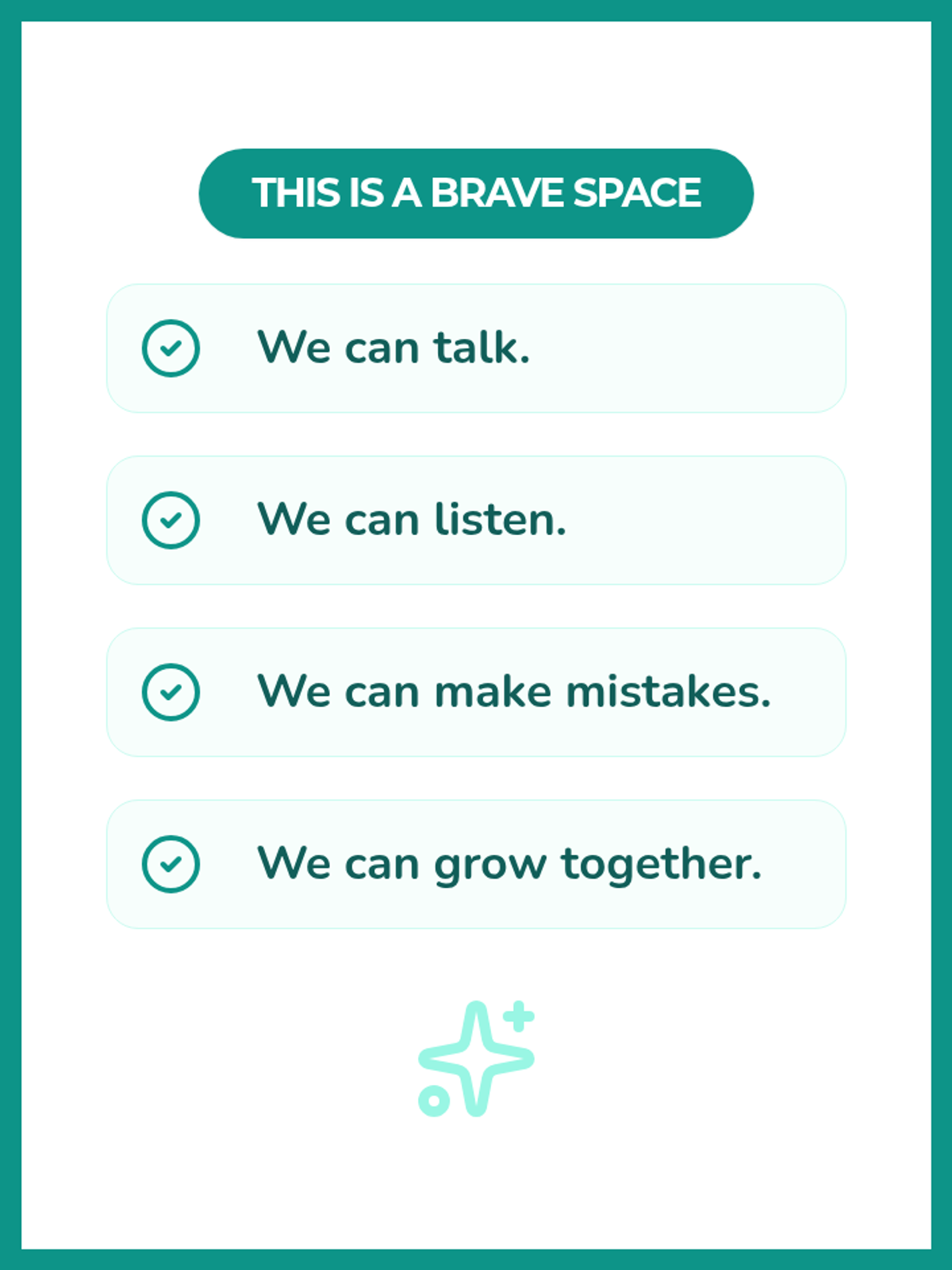
High-impact 18x24 scale posters for 'Brave Space', 'My Voice Matters', and the role of the School Social Worker. Revised for better icon alignment and sage green theme integration.
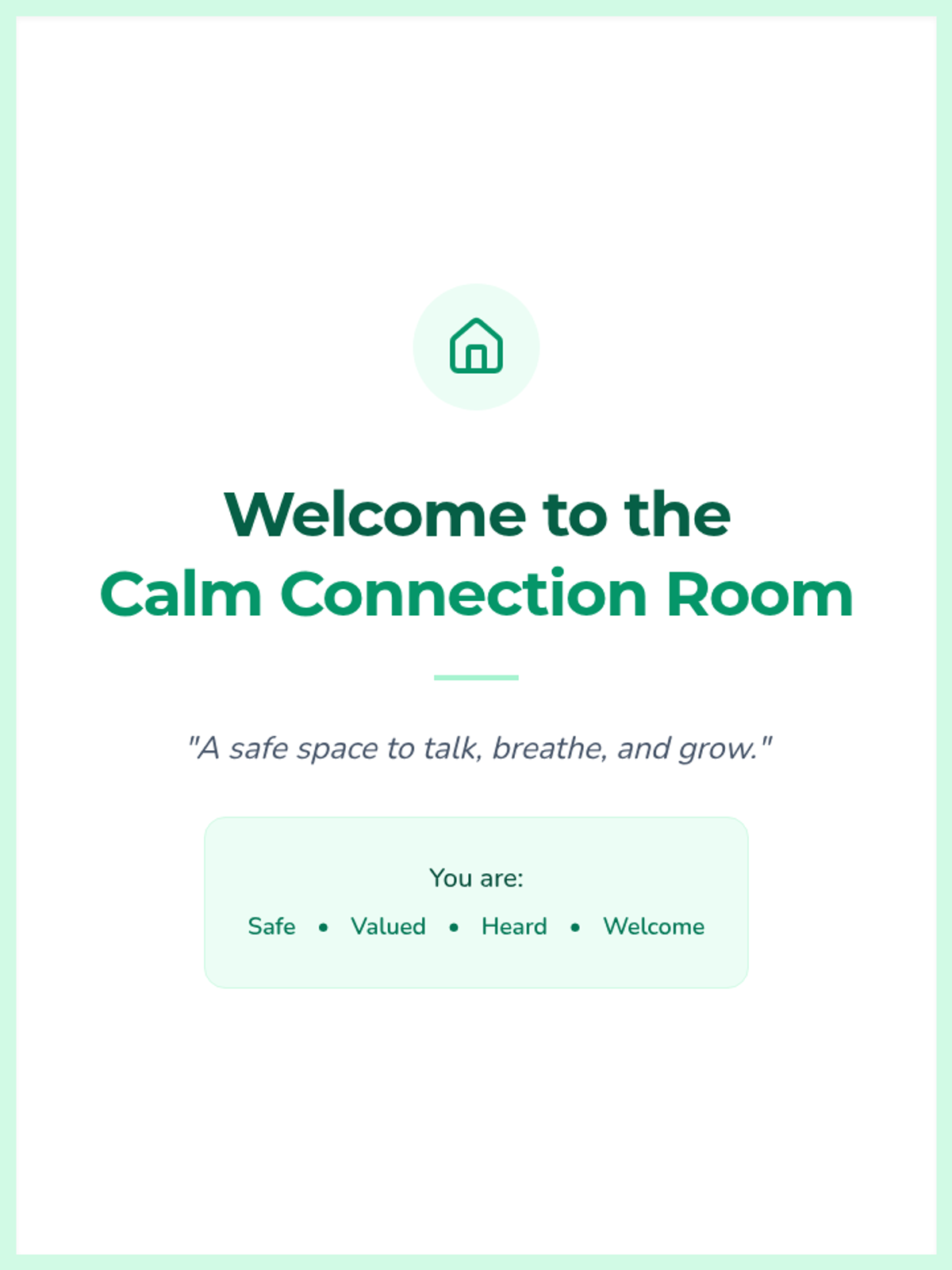
A set of three 8.5x11 desk and wall signs including a Welcome sign, Office Agreements, and a safety affirmation poster.
Expanded 24-slide presentation for school social workers featuring detailed DSM-5-TR diagnostic criteria for anxiety, depression, ODD, IED, grief, and SI/NSSI. Includes a developmental matrix and 3 comprehensive case studies (Elementary, Middle, and High School) to apply clinical learning.
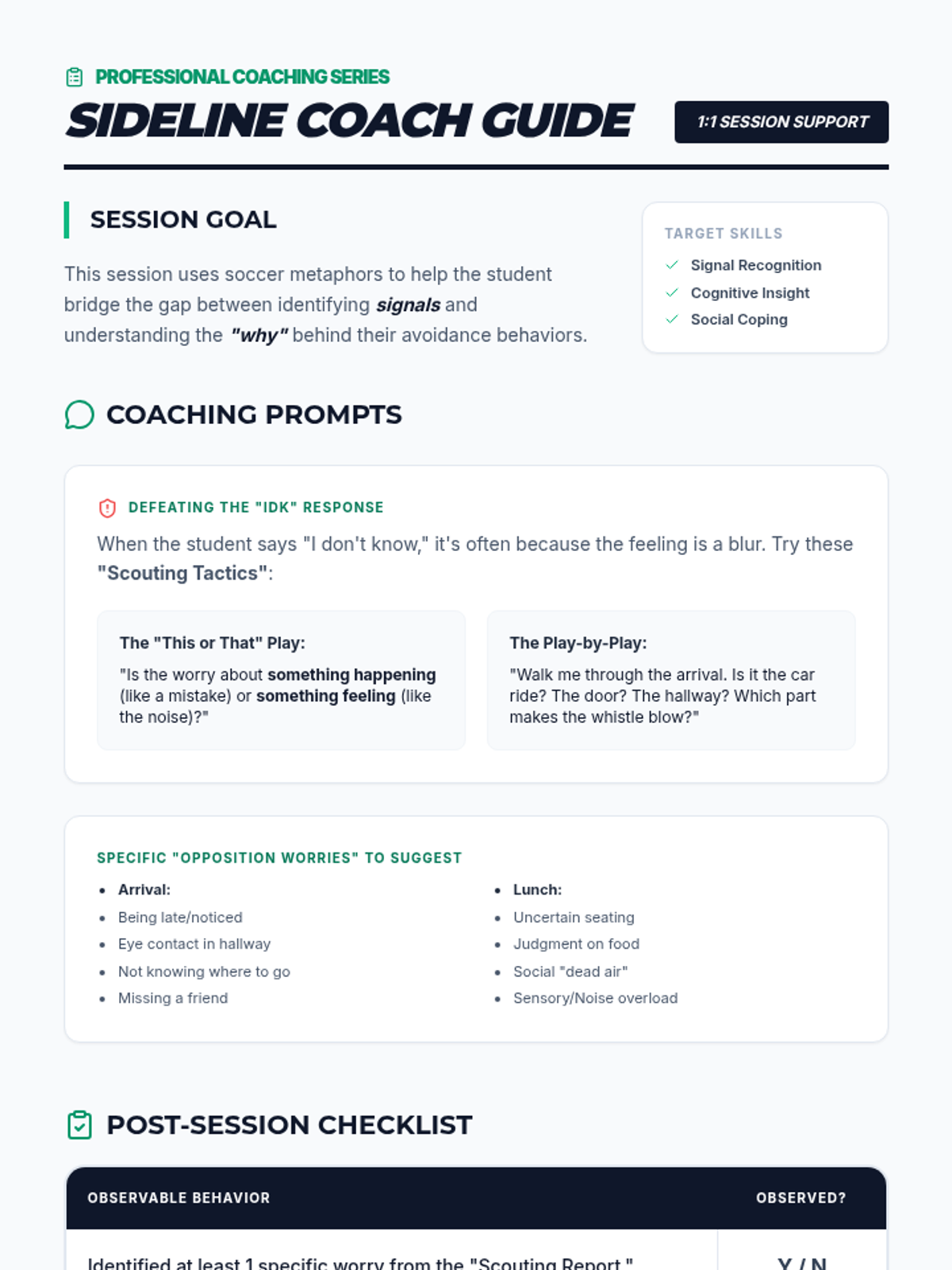
A teacher's facilitation guide updated with specific "Scouting Tactics" and prompts to help defeat the "I don't know" response. Updated to ensure full content visibility and flow during printing.
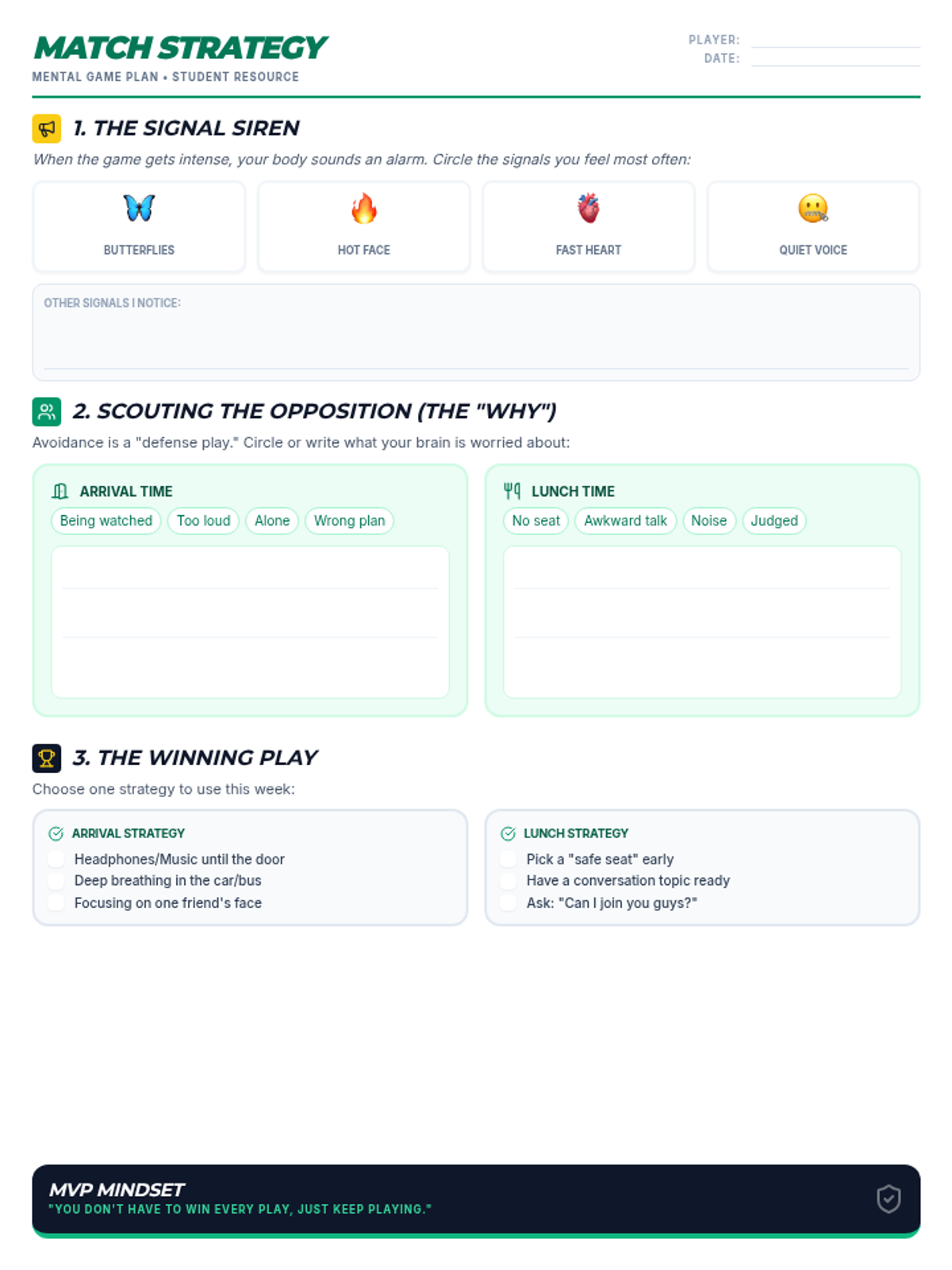
A soccer-themed student worksheet updated with "word bank" tags in the avoidance section to help students select common social anxiety triggers when they are unsure of their "why". Updated to ensure full content visibility during printing.
A soccer-themed slide deck updated with a "Scouting Report" menu to help students identify specific social anxiety triggers when they struggle to verbalize their "why".