Active listening, assertive expression, and boundary-setting strategies for interpersonal success. Develops proficiency in conflict mediation, cooperative teamwork, and the cultivation of healthy romantic and platonic connections.
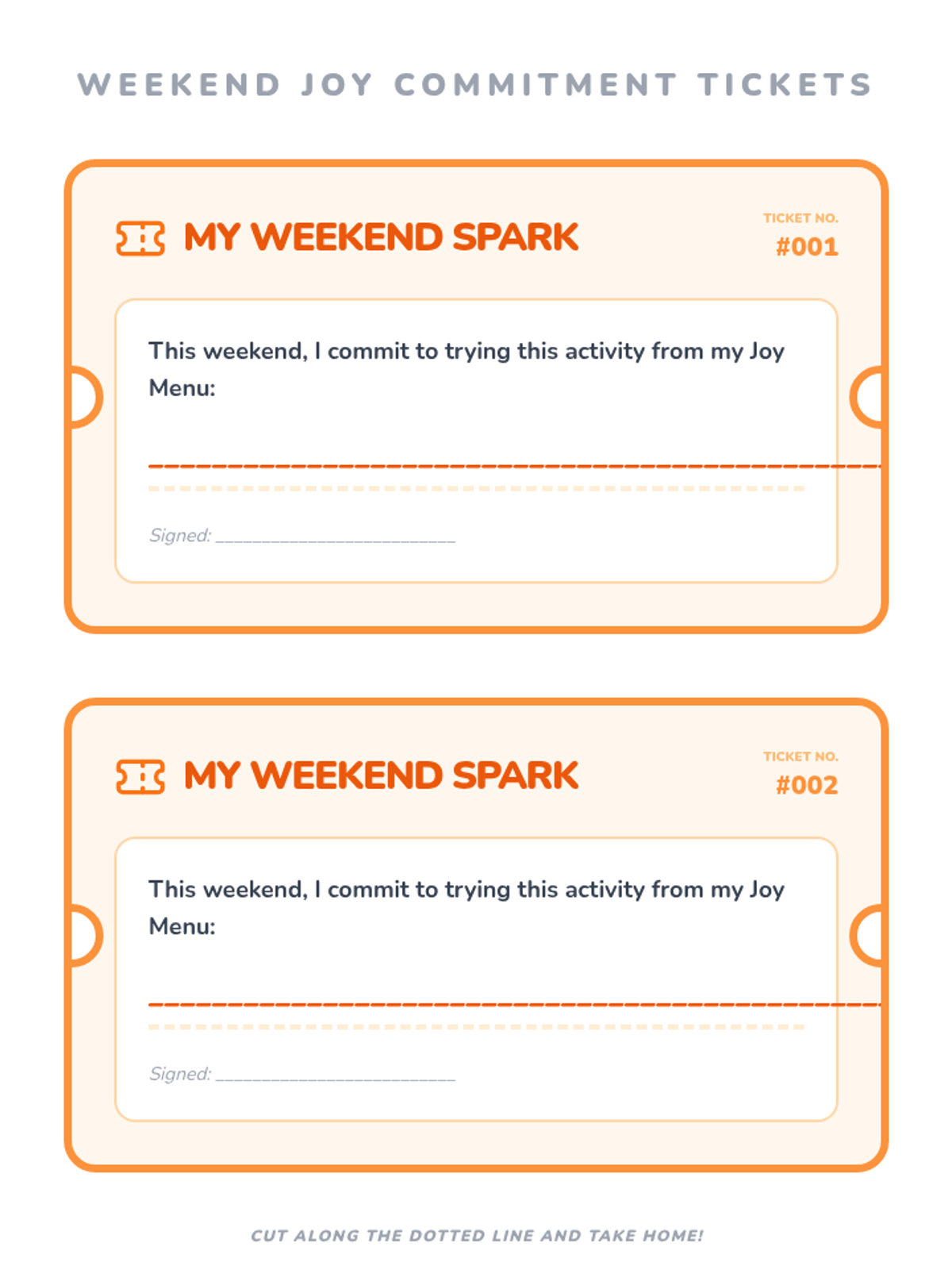
Weekend commitment exit tickets for Lesson 5, where students pledge to try one activity from their Joy Menu.
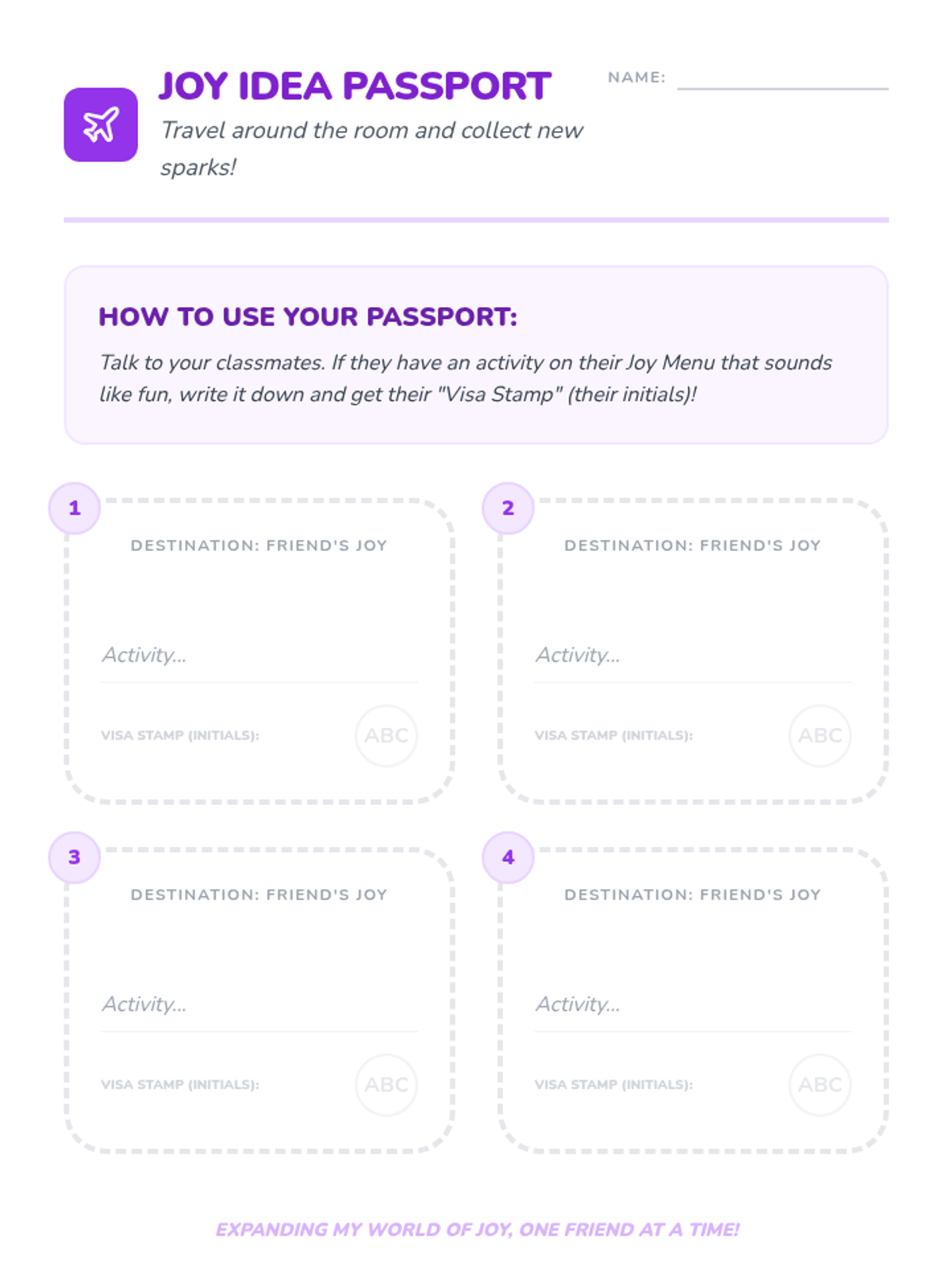
Student worksheet for Lesson 5, used during the Joy Exchange to collect activity ideas from classmates.
Visual presentation for Lesson 5, guiding the 'Joy Scavenger Hunt' and the sharing of personalized menus.
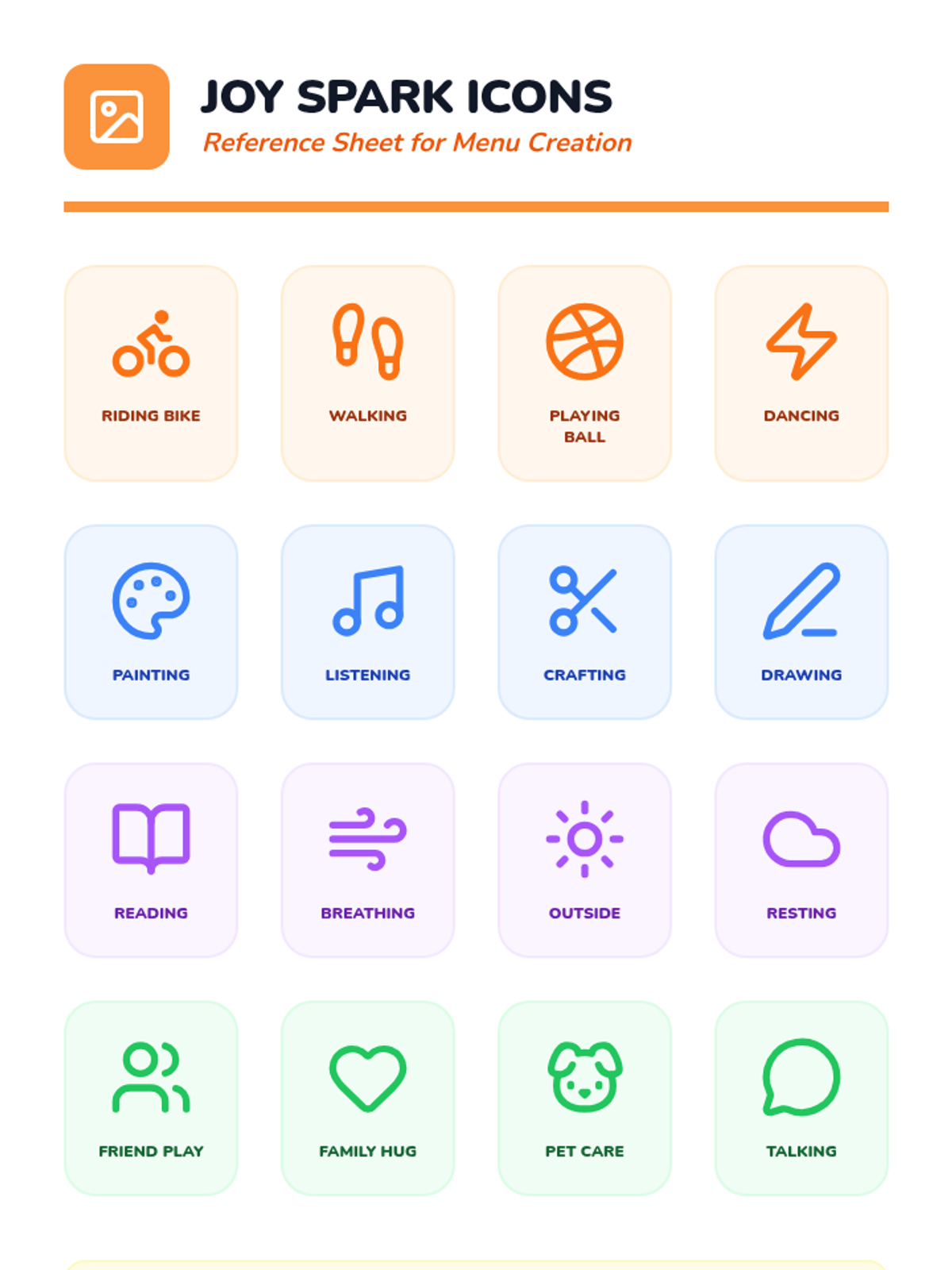
Reference sheet for students to use when illustrating their Joy Menus, providing simple icons and labels for various activities.
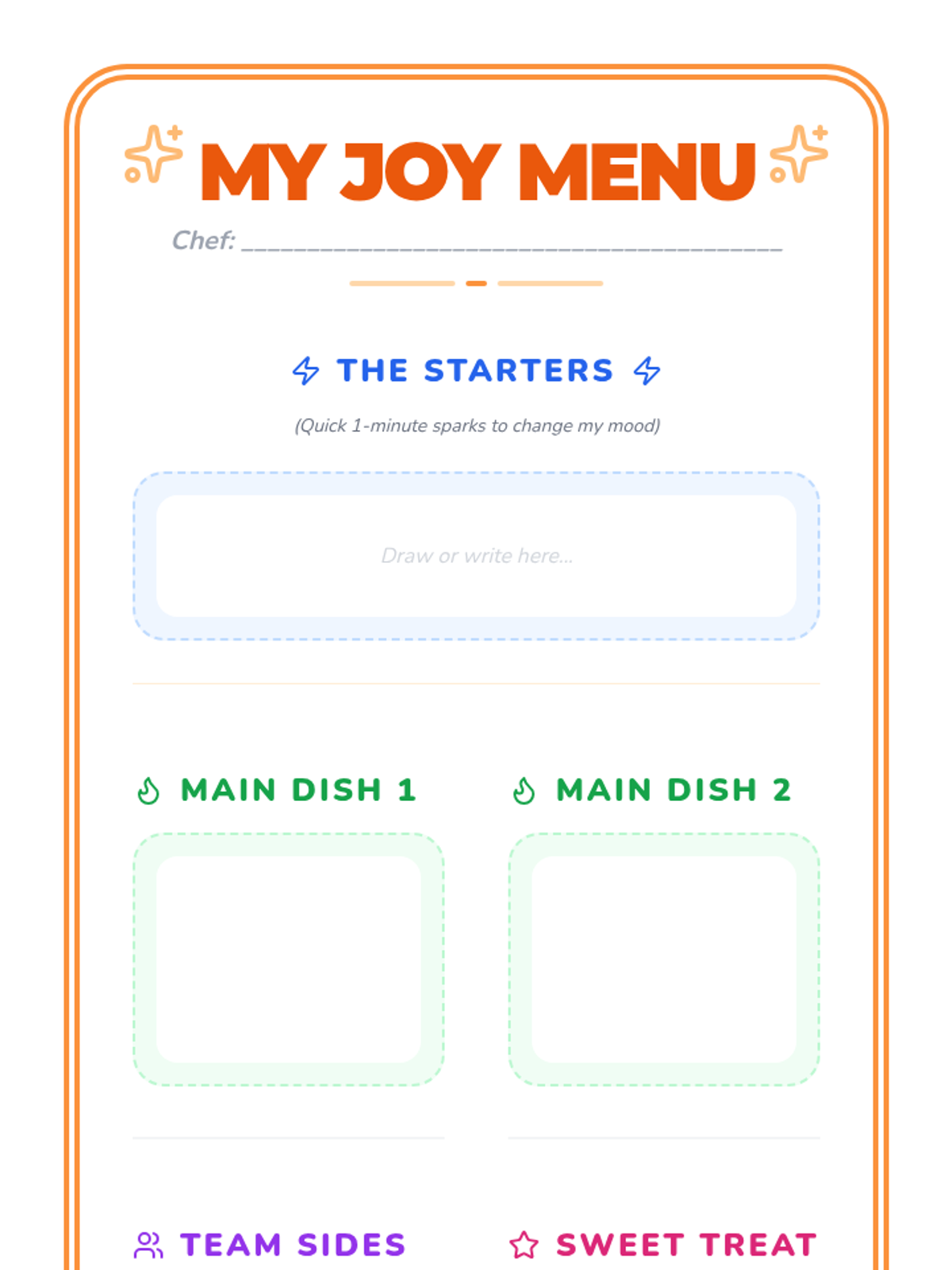
Personalized Joy Menu template for Lesson 4, designed like a restaurant menu for students to fill with their favorite activities.
Visual presentation for Lesson 4, introducing the concept of a 'Joy Menu' with categories for different types of activities.
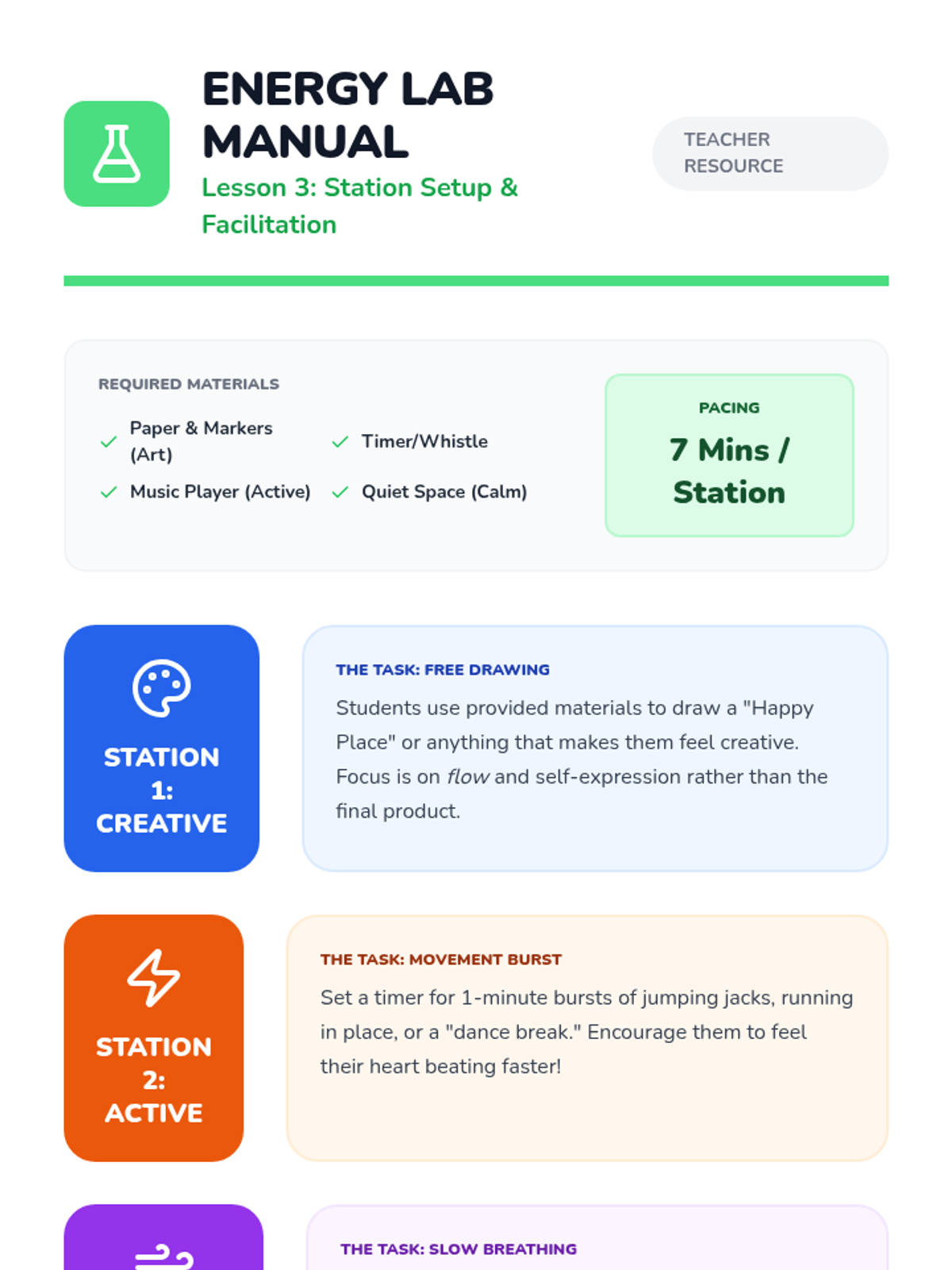
Facilitator guide for Lesson 3, including station setup instructions and debrief questions.
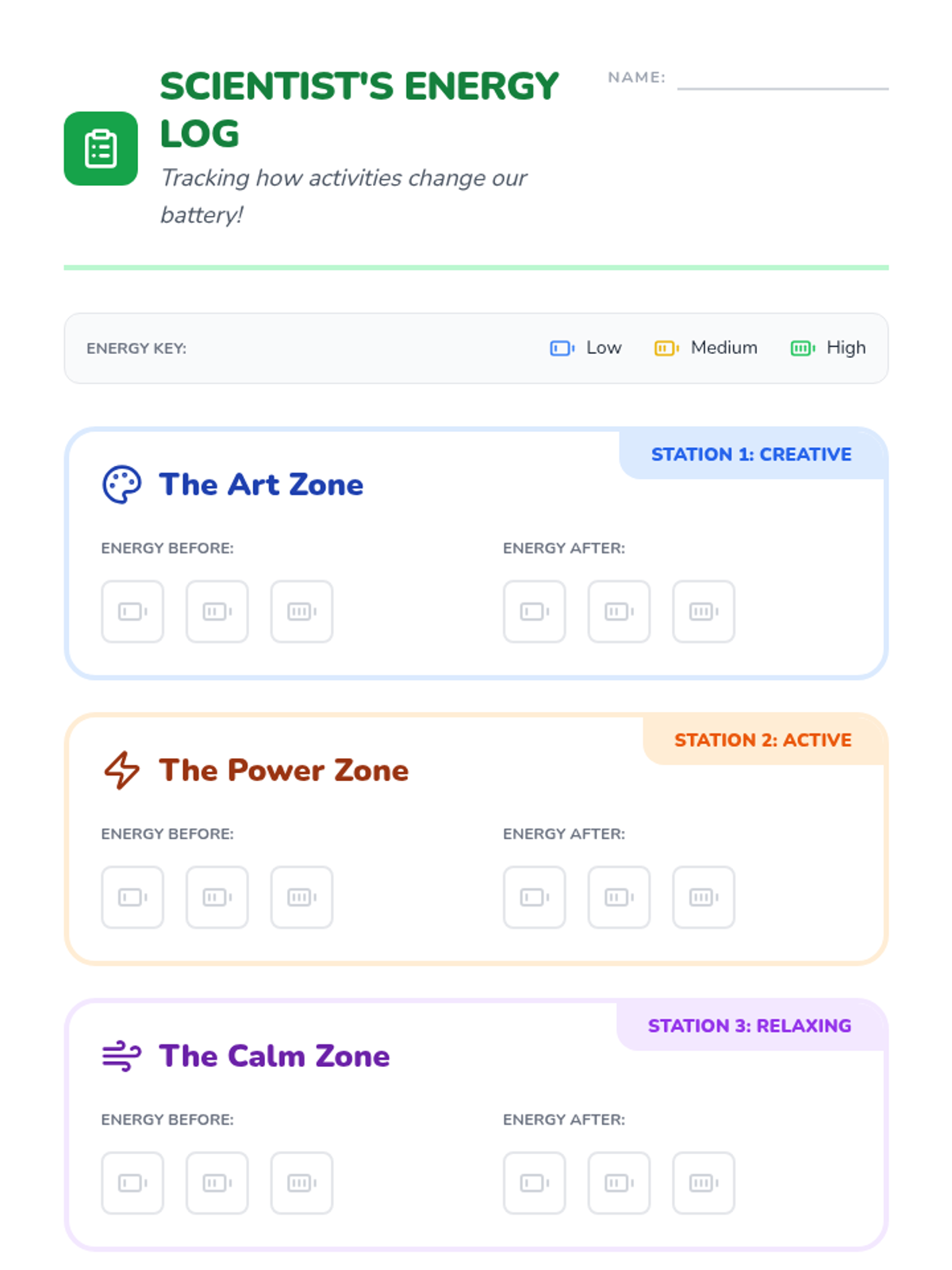
Energy Lab Log for Lesson 3, where students record their energy levels before and after different types of activities.
Visual presentation for Lesson 3, introducing the 'Energy Lab' stations and the human thermometer activity.
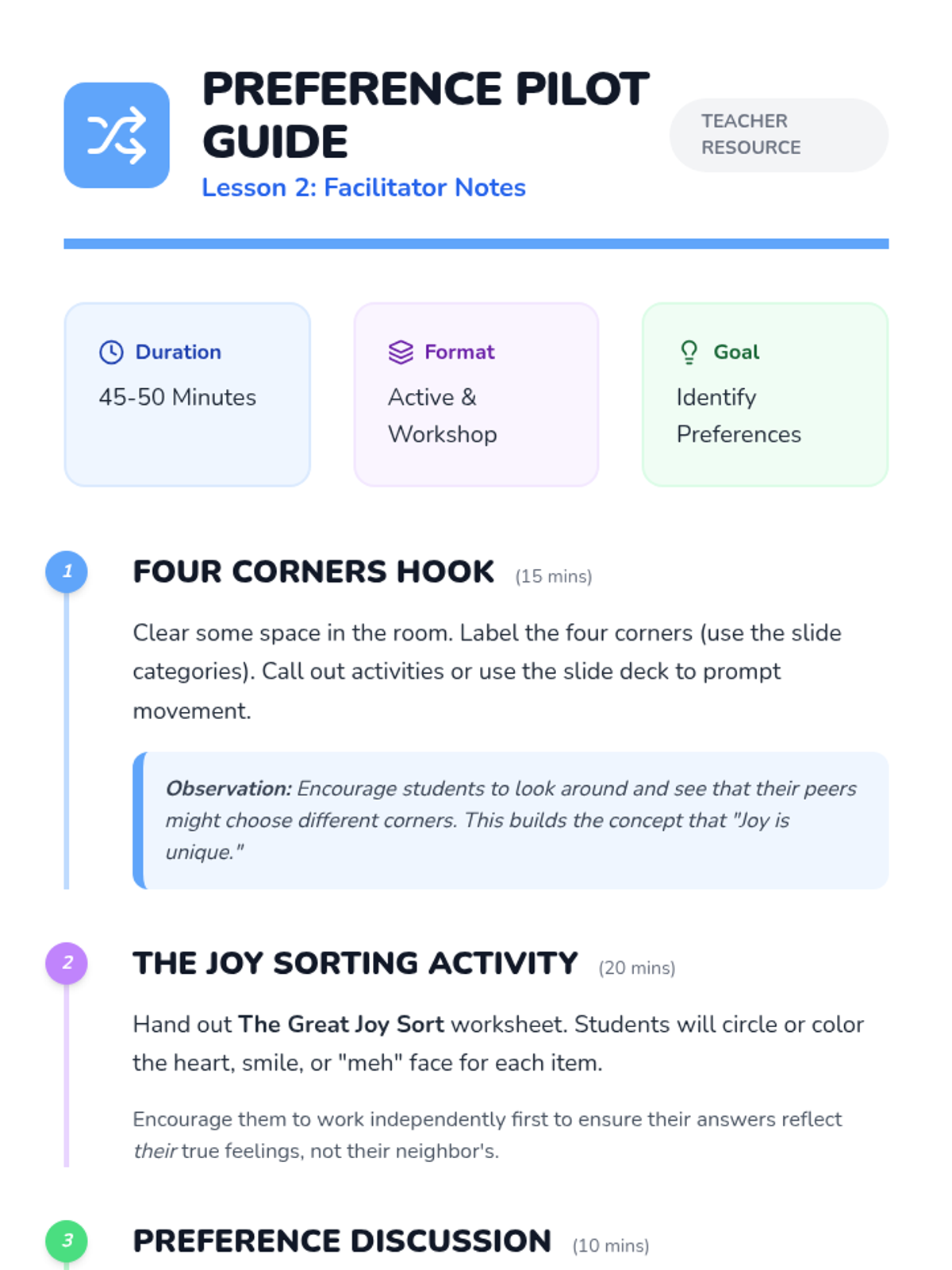
Facilitator guide for Lesson 2, including the Four Corners setup, activity management, and discussion prompts.
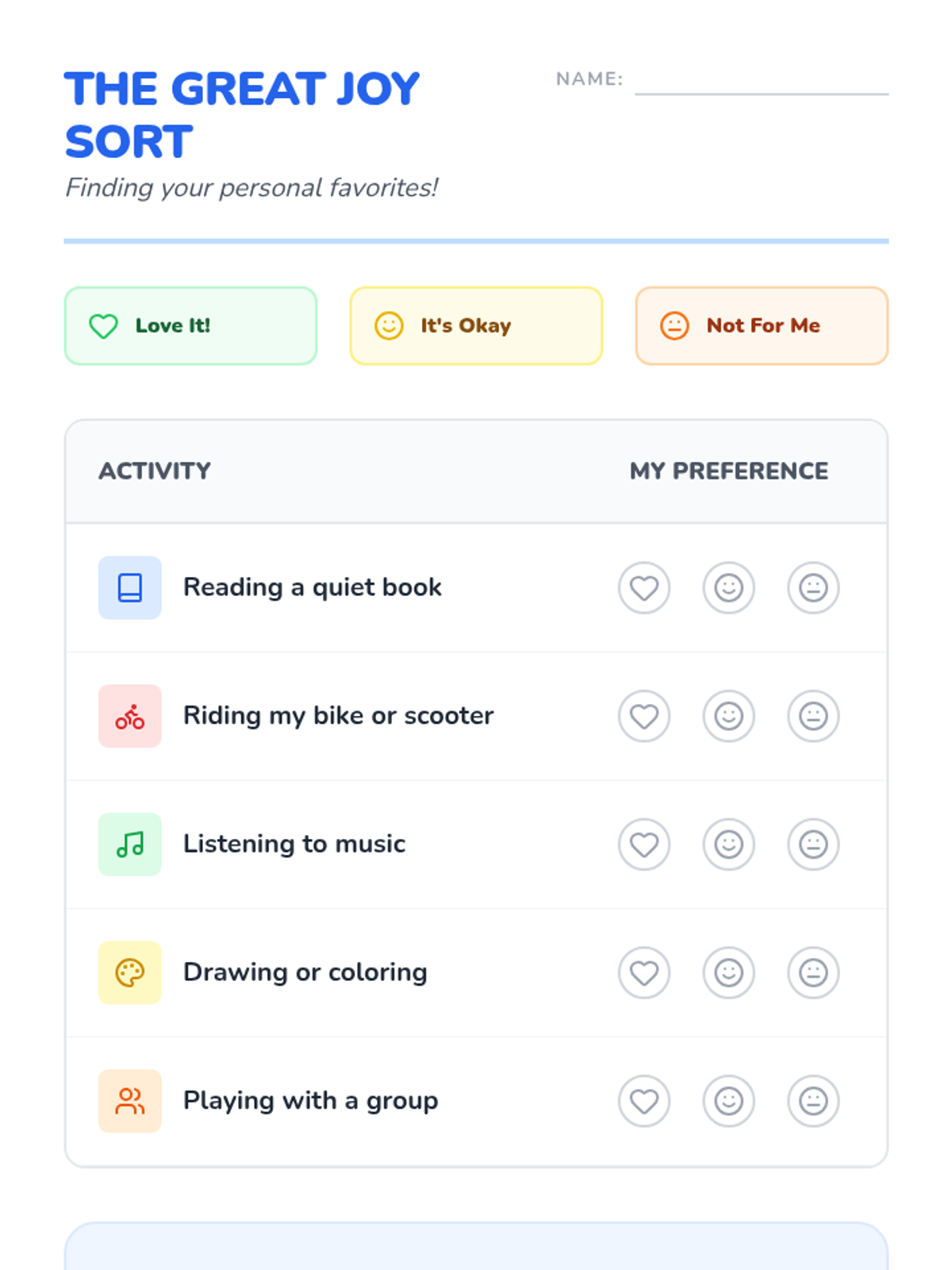
Activity worksheet for Lesson 2, where students categorize various pastimes into preference levels.
Visual presentation for Lesson 2, guiding the 'Four Corners' hook and explaining the concept of individual preferences.
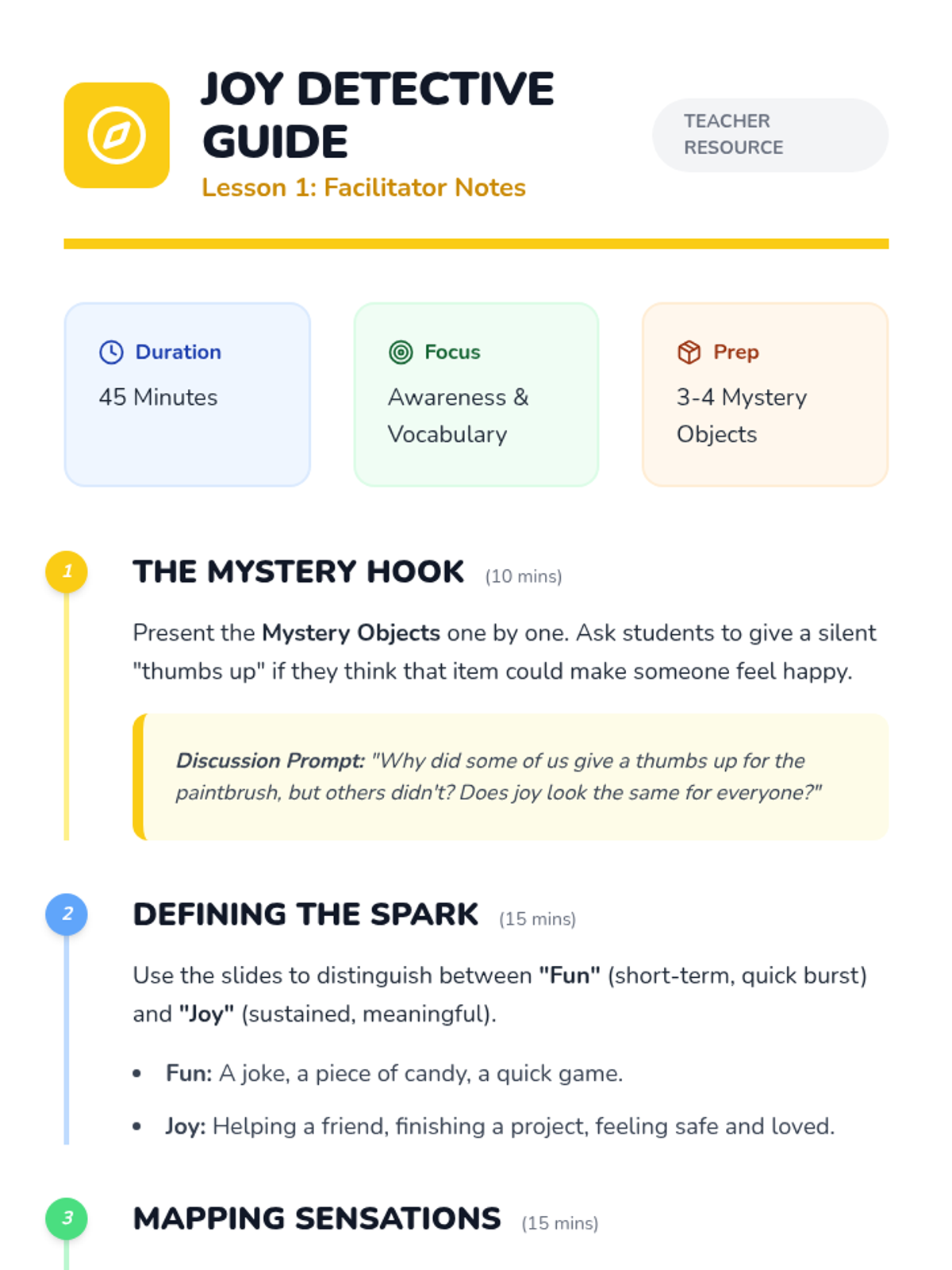
Facilitator guide for the first lesson, including discussion prompts, time breakdown, and troubleshooting tips.
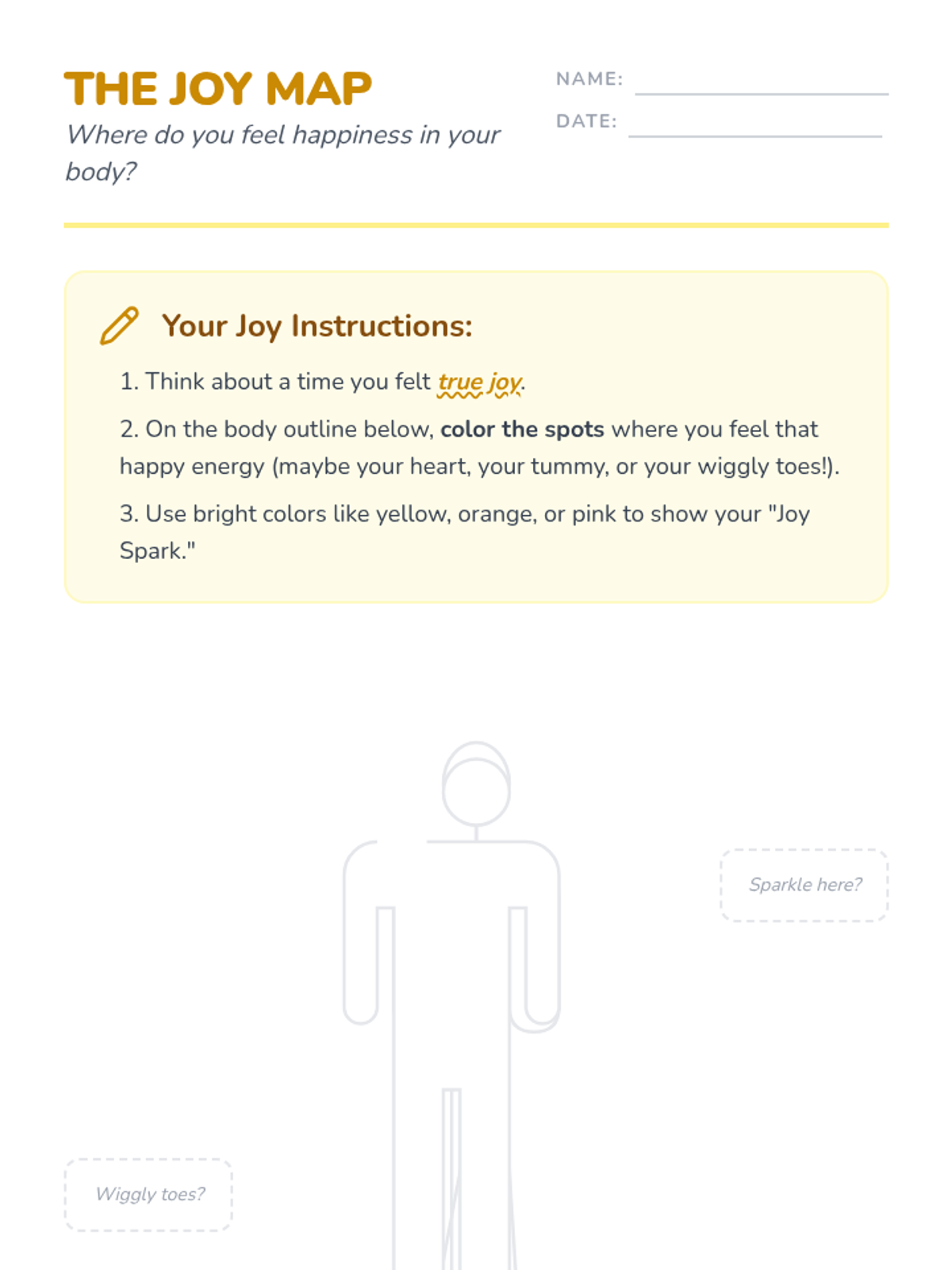
Student worksheet for Lesson 1, where students map the physical sensations of joy onto a body outline.
Introductory presentation for Lesson 1, defining joy and exploring the physical sensations of happiness.
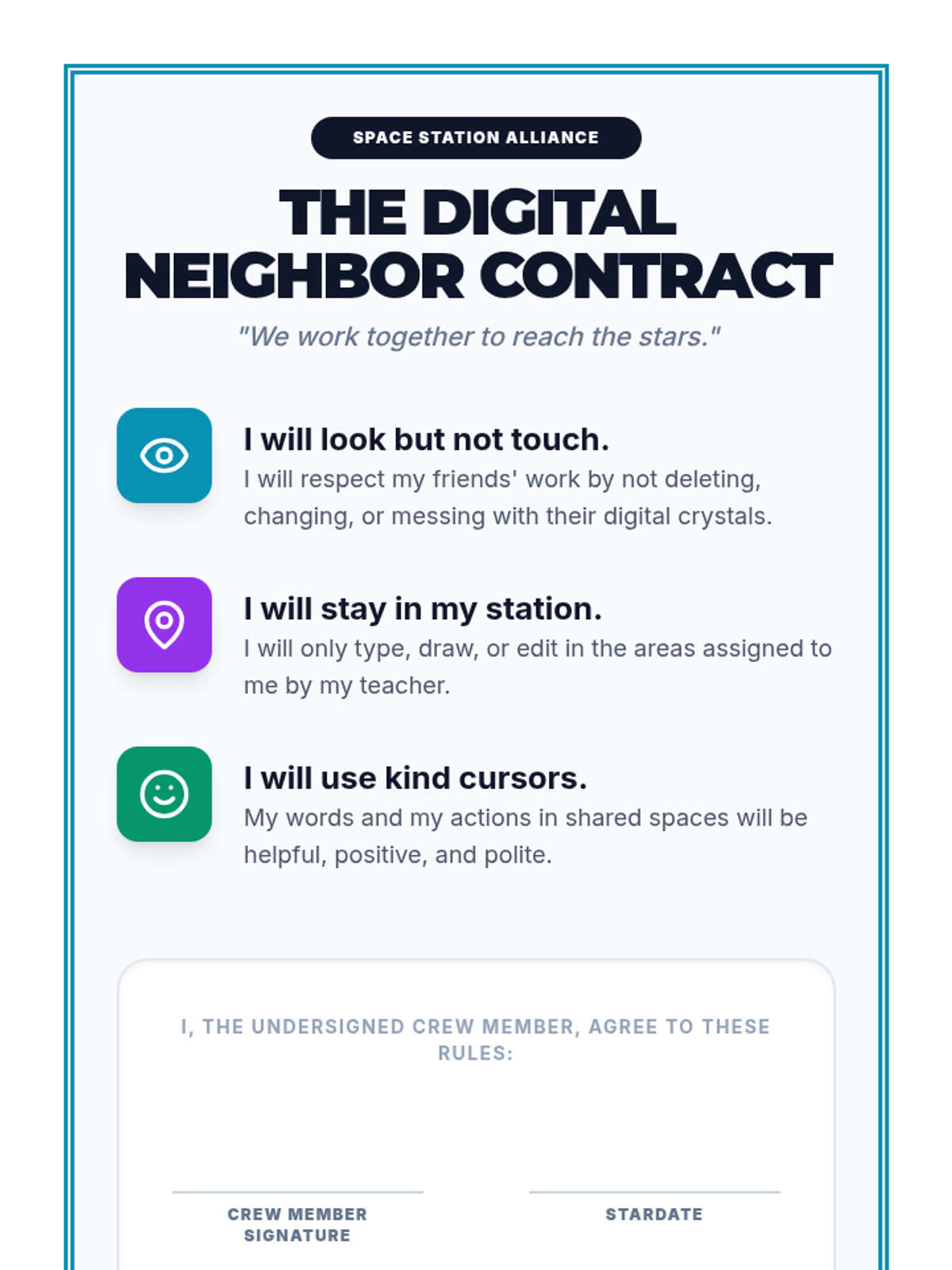
A formal 'Digital Neighbor Contract' for 2nd-grade students to sign, reinforcing the rules of collaborative digital work and etiquette. Designed for print and display.
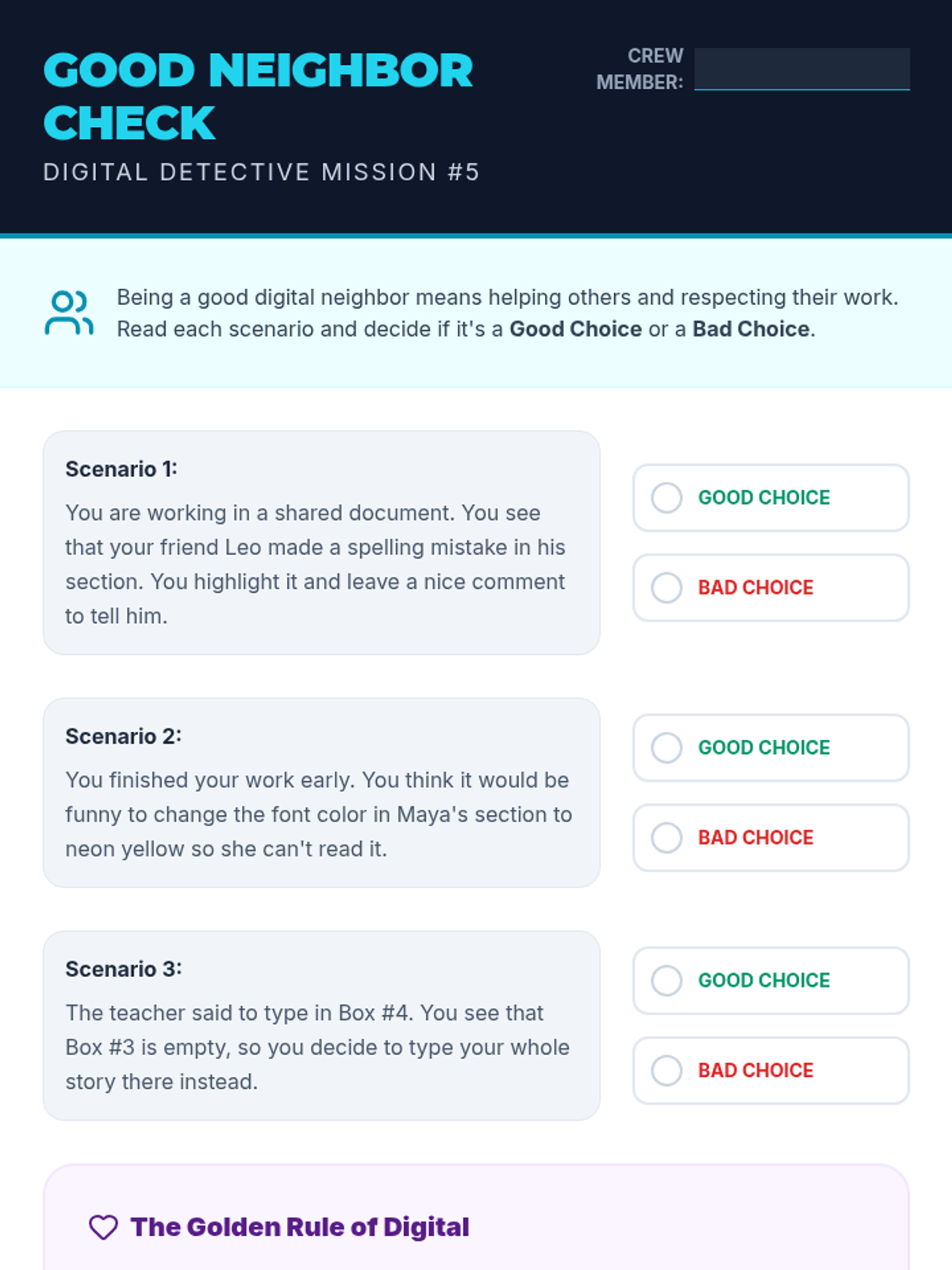
A digital etiquette worksheet for 2nd graders. Features scenarios of collaborating in shared documents and asks students to identify good vs bad choices.
A slide deck for 2nd graders on digital collaboration. Covers the basics of shared documents, real-time editing visibility (cursors), and the 'Rules of the Room' for digital etiquette.
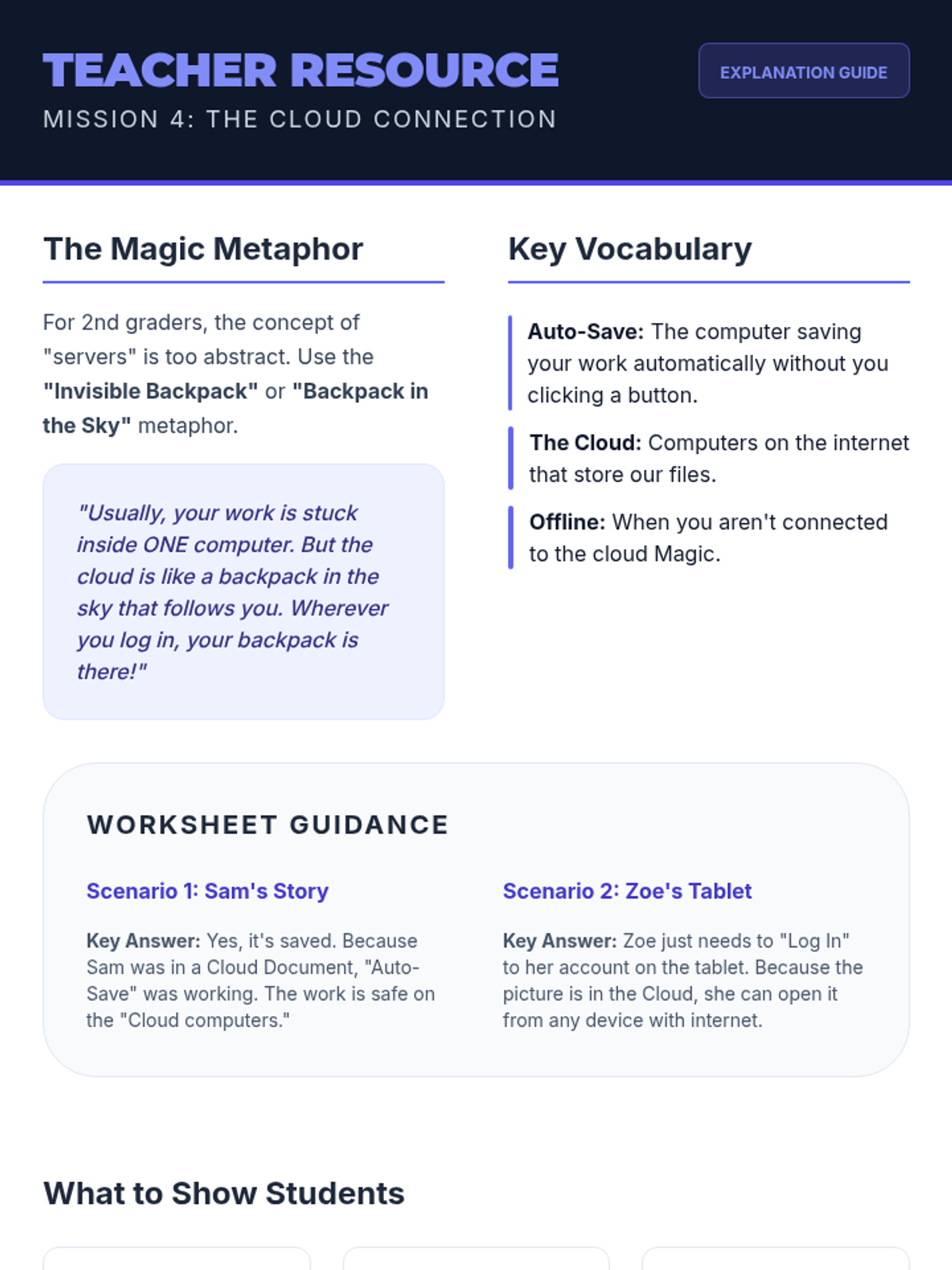
Teacher resource for teaching cloud storage concepts to 2nd graders. Includes metaphors, vocabulary, answer guidance for the student worksheet, and visual checkpoints.
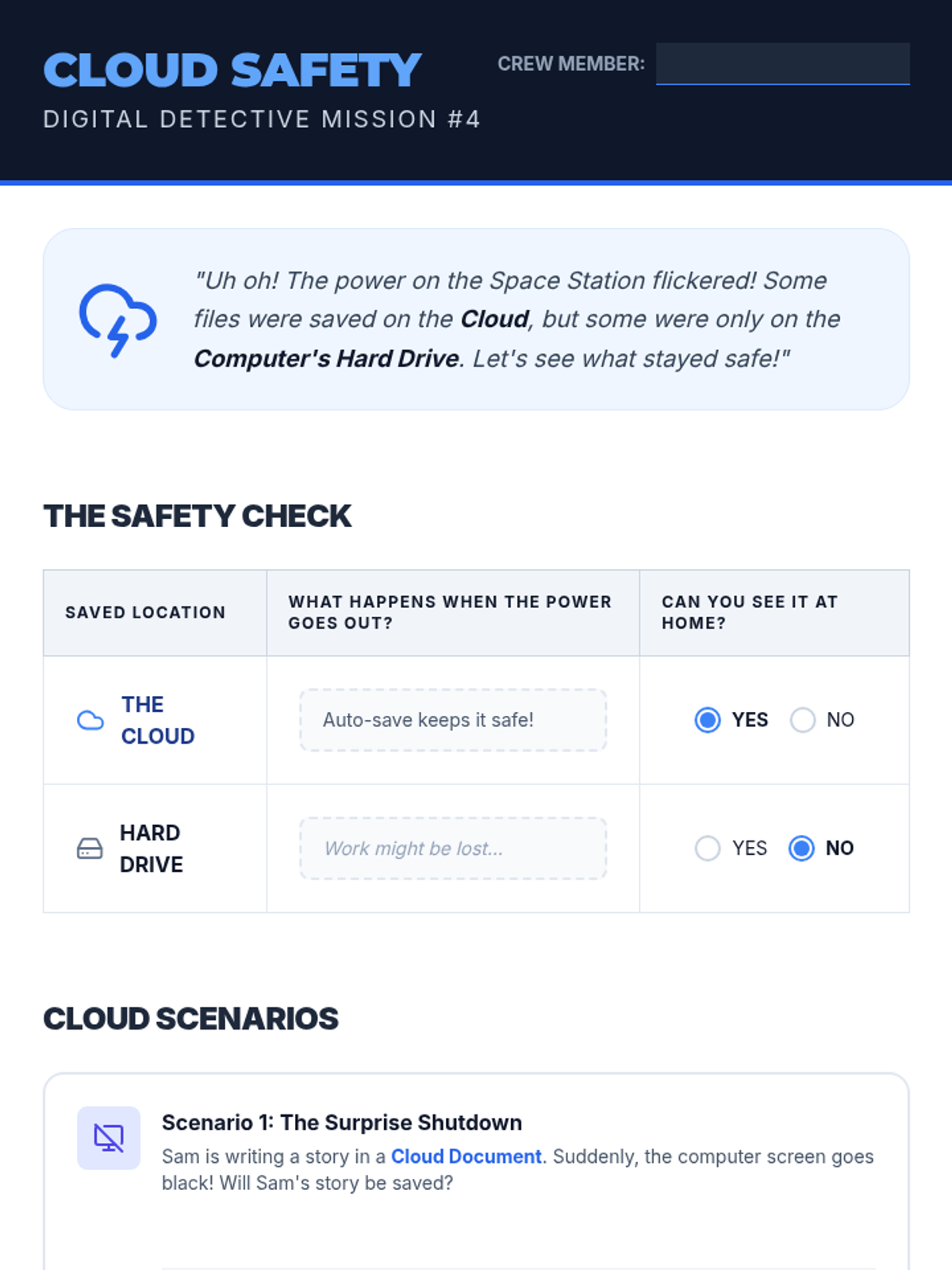
A 2nd-grade worksheet about cloud storage concepts. Includes a comparison between cloud and hard drive saving, and scenario-based questions to assess understanding.
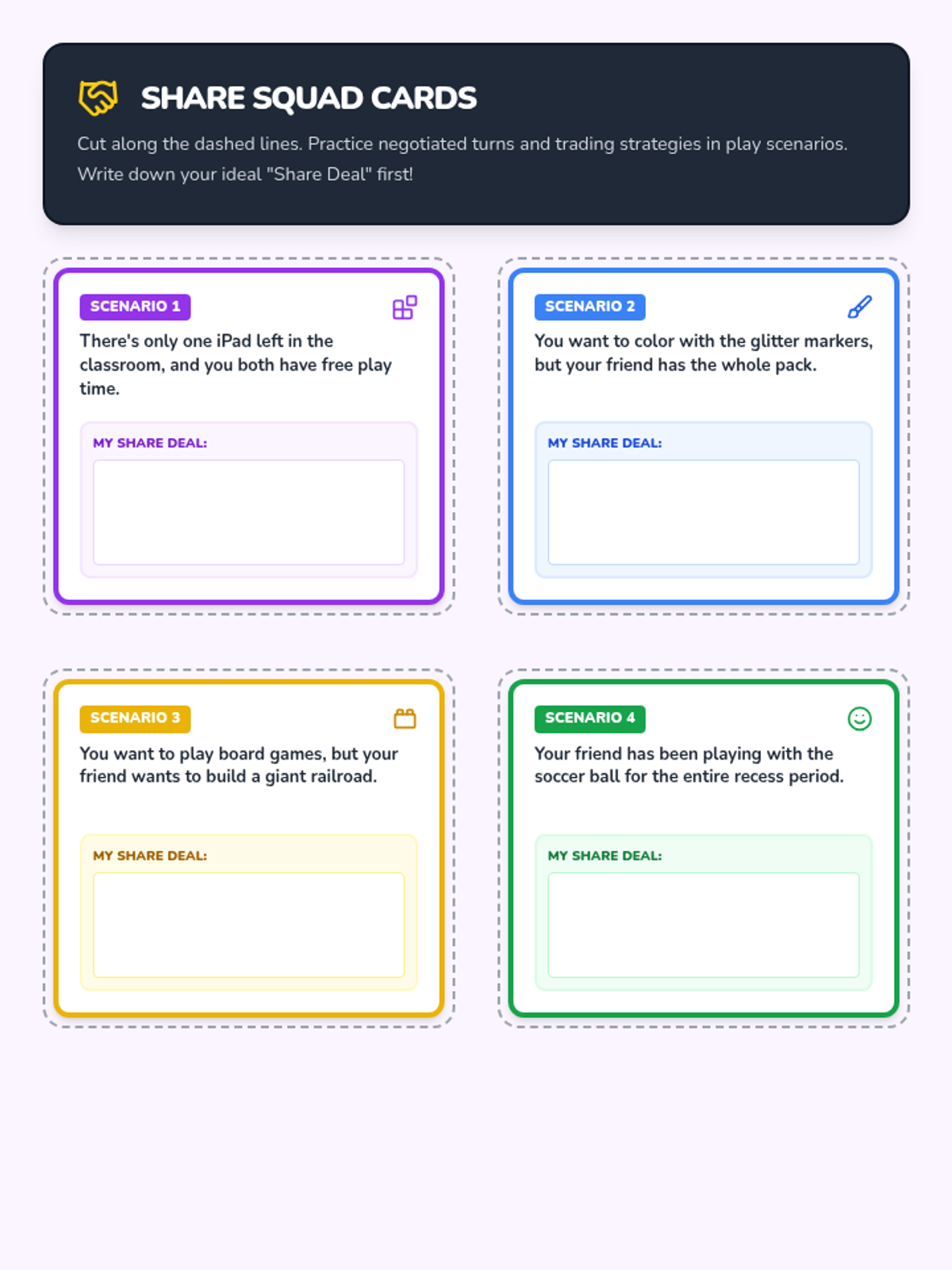
Scenario cards for turn-taking, sharing, and compromise role-play scenarios.
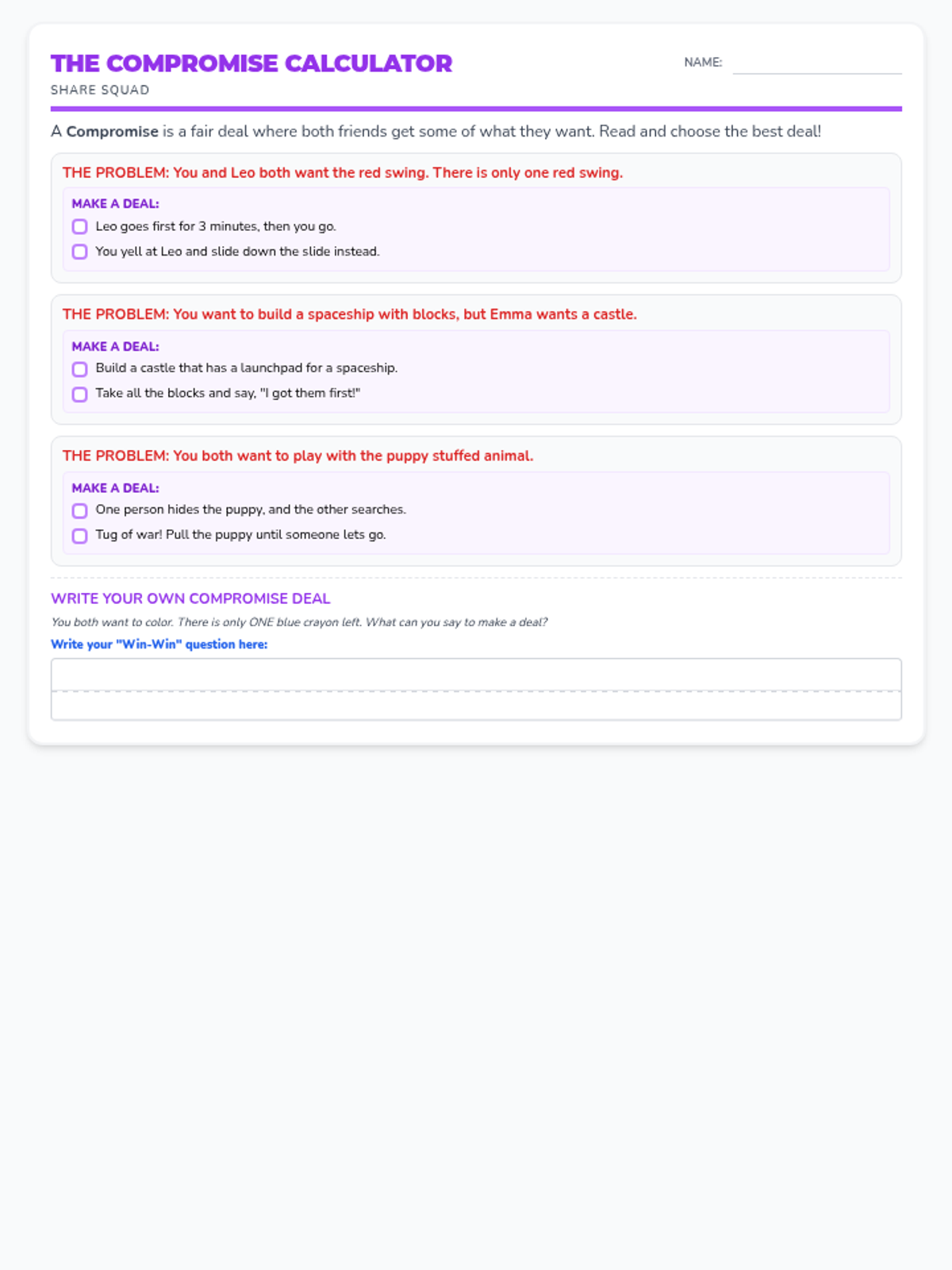
A worksheet where students practice calculating compromises and turn-taking plans for playground conflicts. Optimized to fit on a single page.
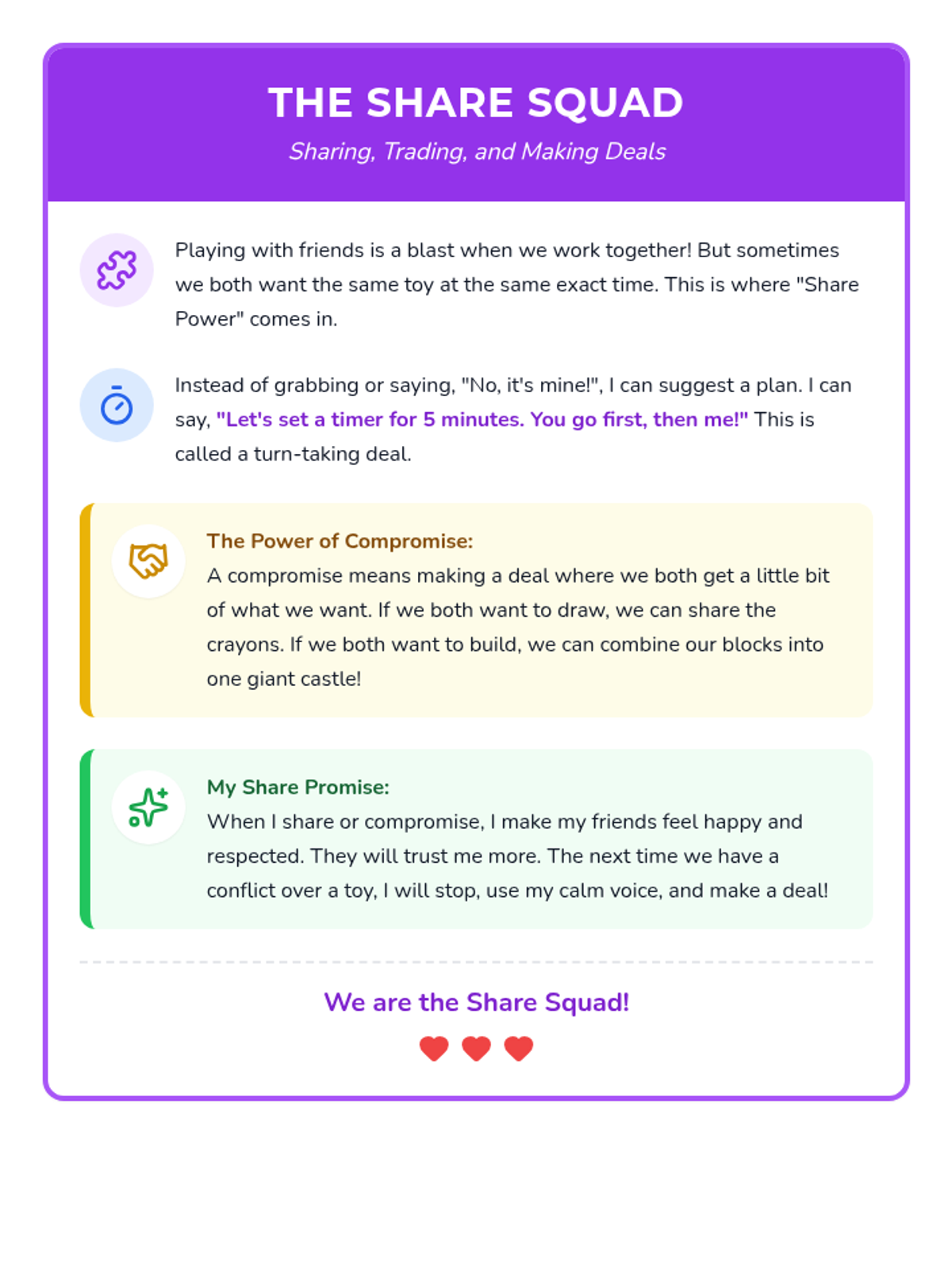
A social story focusing on cooperative sharing, Negotiating rules, and turn-taking.
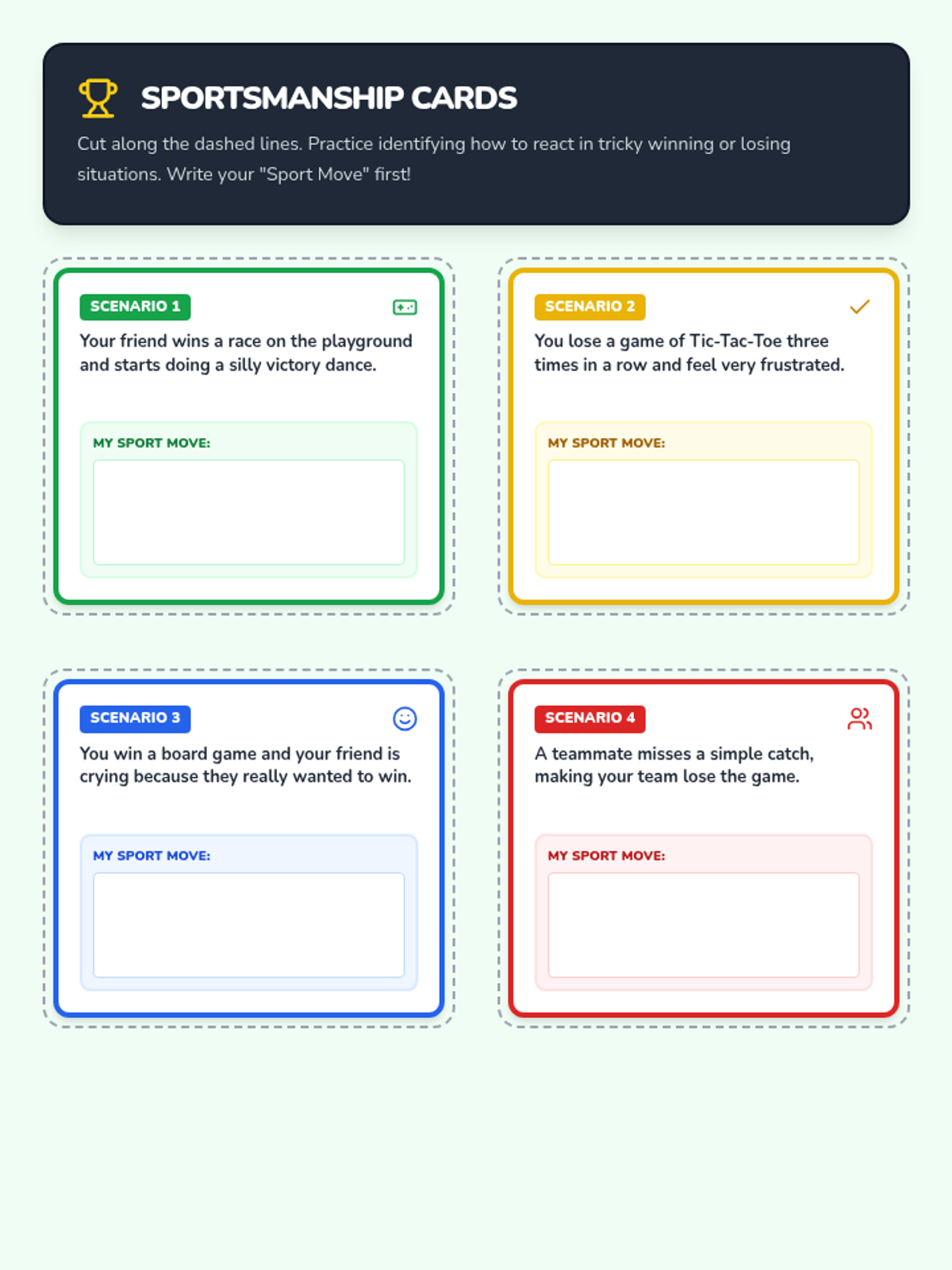
A set of scenario cards for role-playing positive sportsmanship behaviors.
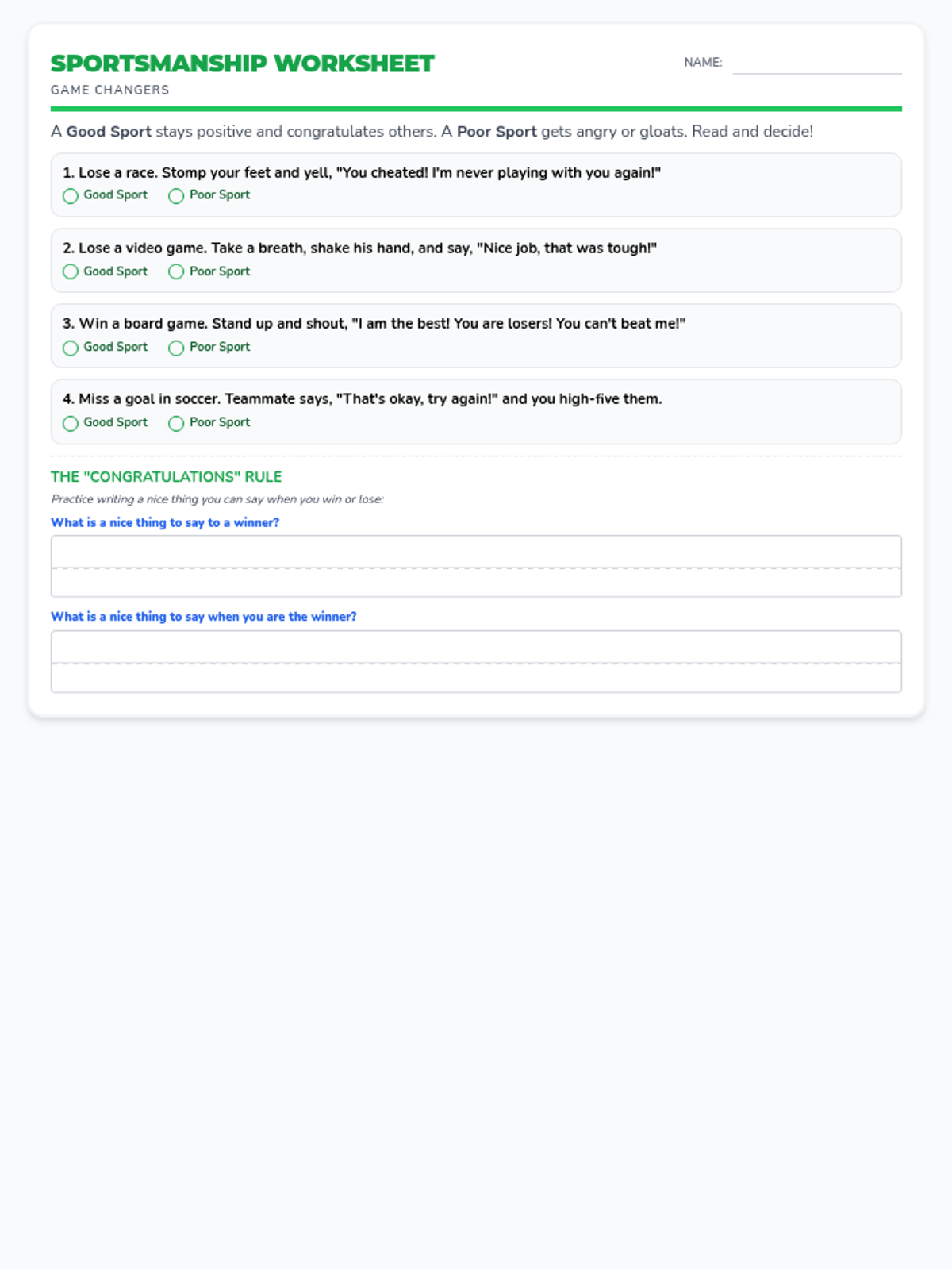
A worksheet helping students distinguish between positive and negative reactions to winning and losing, and practice expressing sportsmanship. Optimized to fit on a single page.
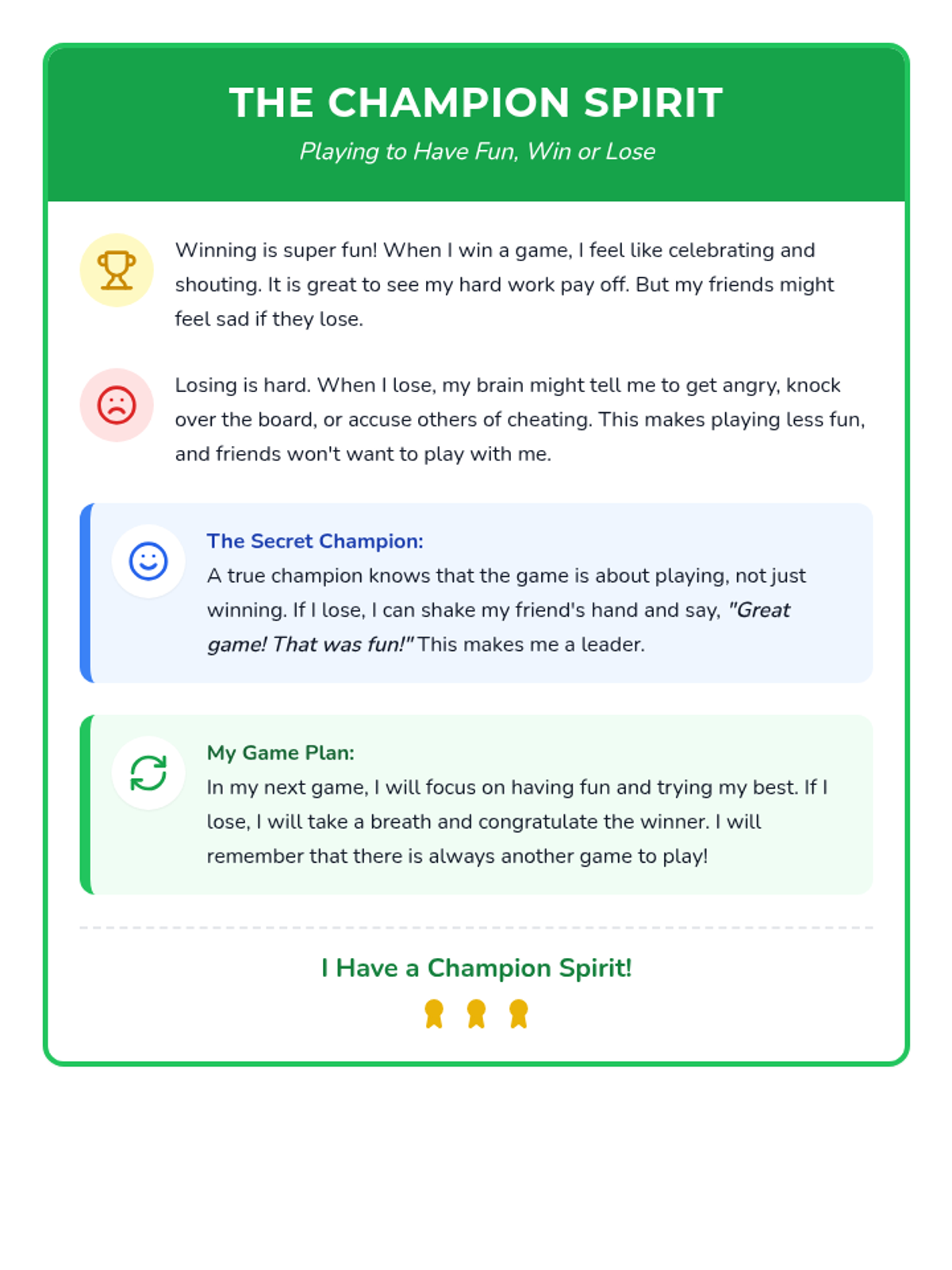
A social story focusing on sportsmanship, managing disappointment when losing a game, and maintaining positive peer relationships regardless of the game outcome.
A presentation for the follow-up session focused on personal responsibility and control. It uses the "Only Remote" metaphor to clarify "Focus on Self" and provides interactive scenarios to discuss how individual choices affect the class "machine." Now featuring 5 challenging scenarios (Challenge 1: 2 options; Challenges 2-3: 4 options; Challenges 4-5: open-ended). No cafeteria references.
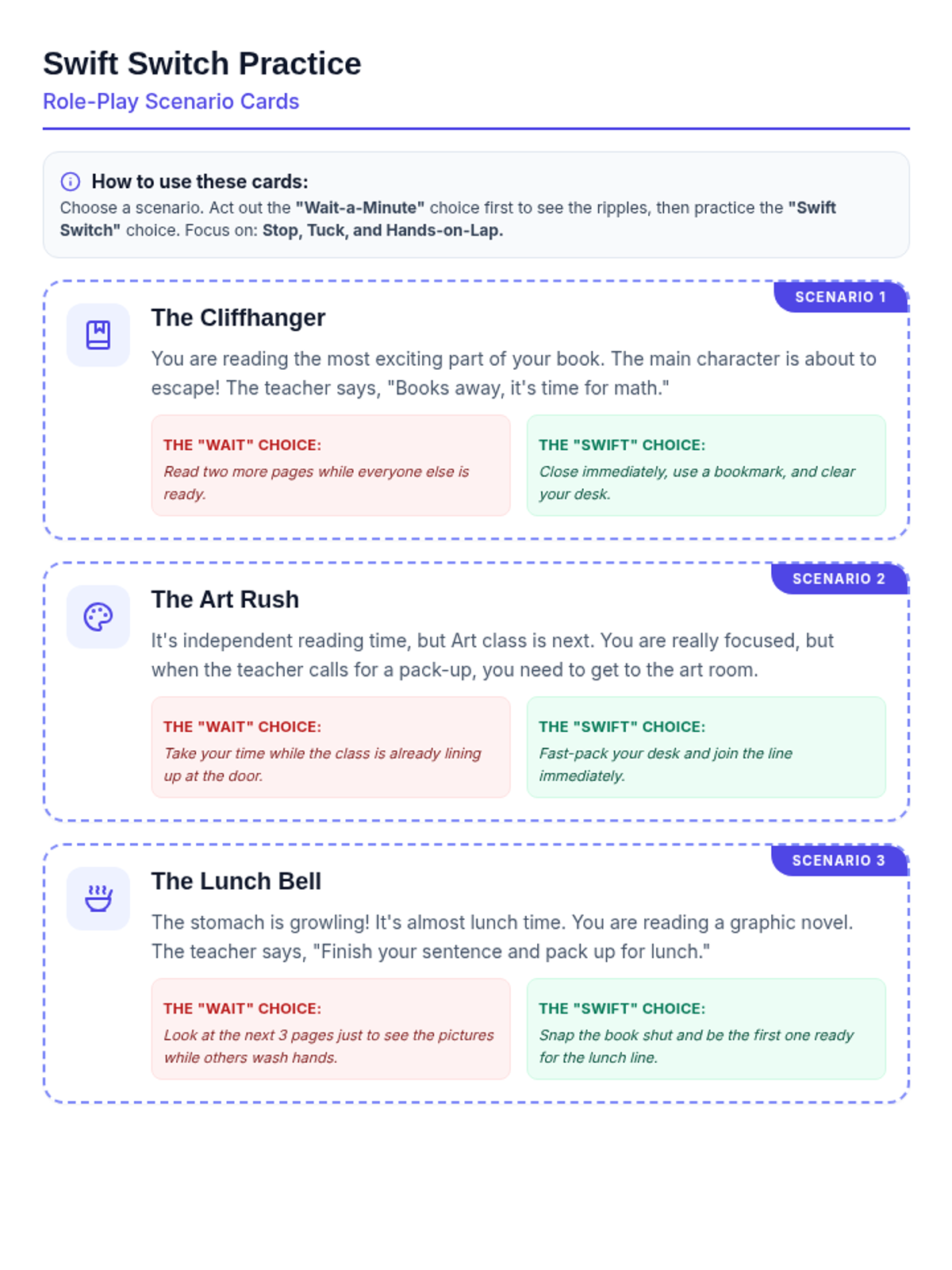
A set of 6 practice scenarios for role-playing transition skills across various activities like reading, art, tech, math, and science. Each scenario presents a "Wait" choice and a "Swift" choice to help students practice prompt packing routines.
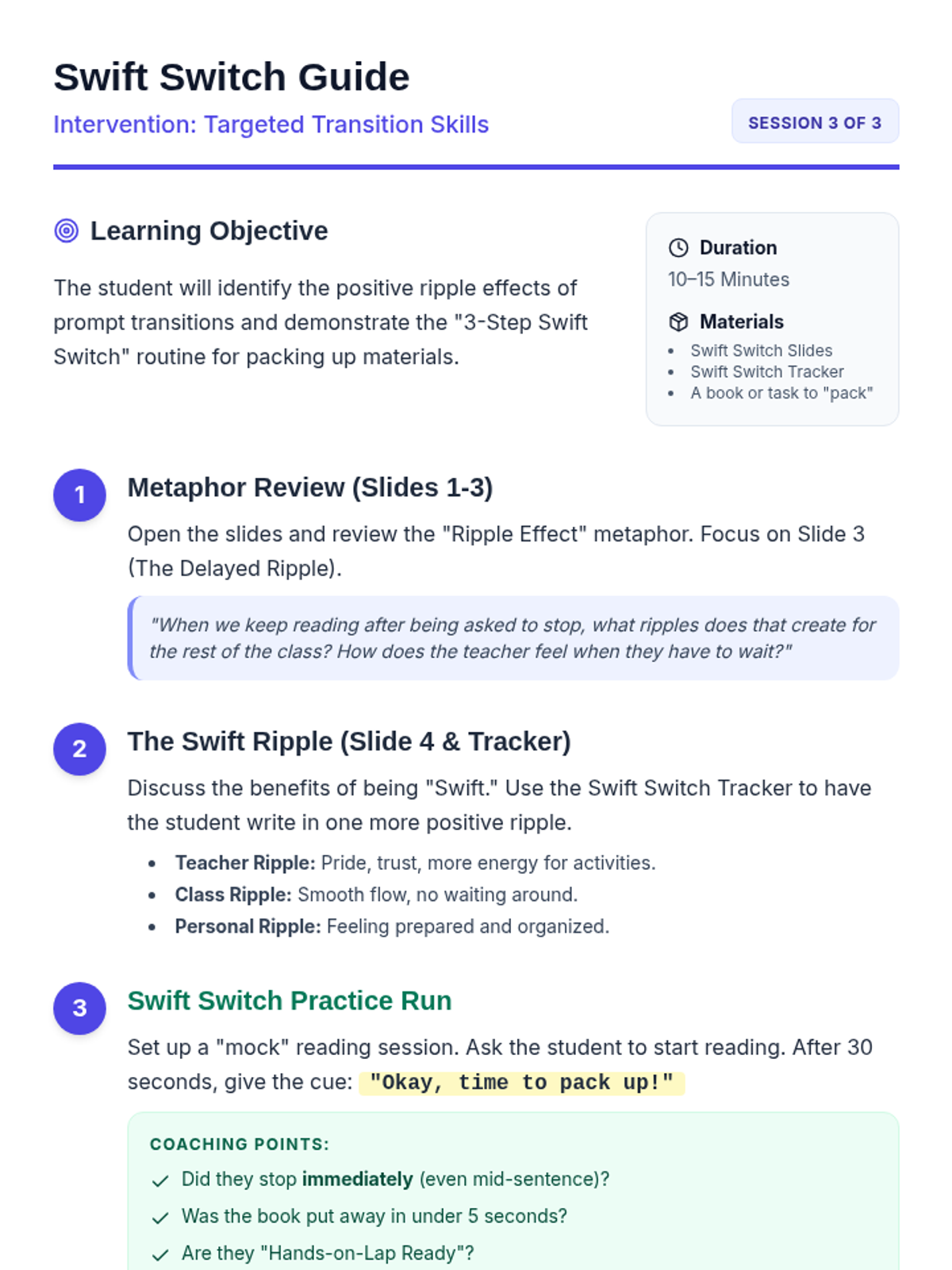
A facilitator guide for the "Swift Switch" intervention, providing structured steps for reviewing the ripple effect of transitions and conducting a "Swift Switch" practice drill. Updated to remove markdown artifacts and improve layout flow.
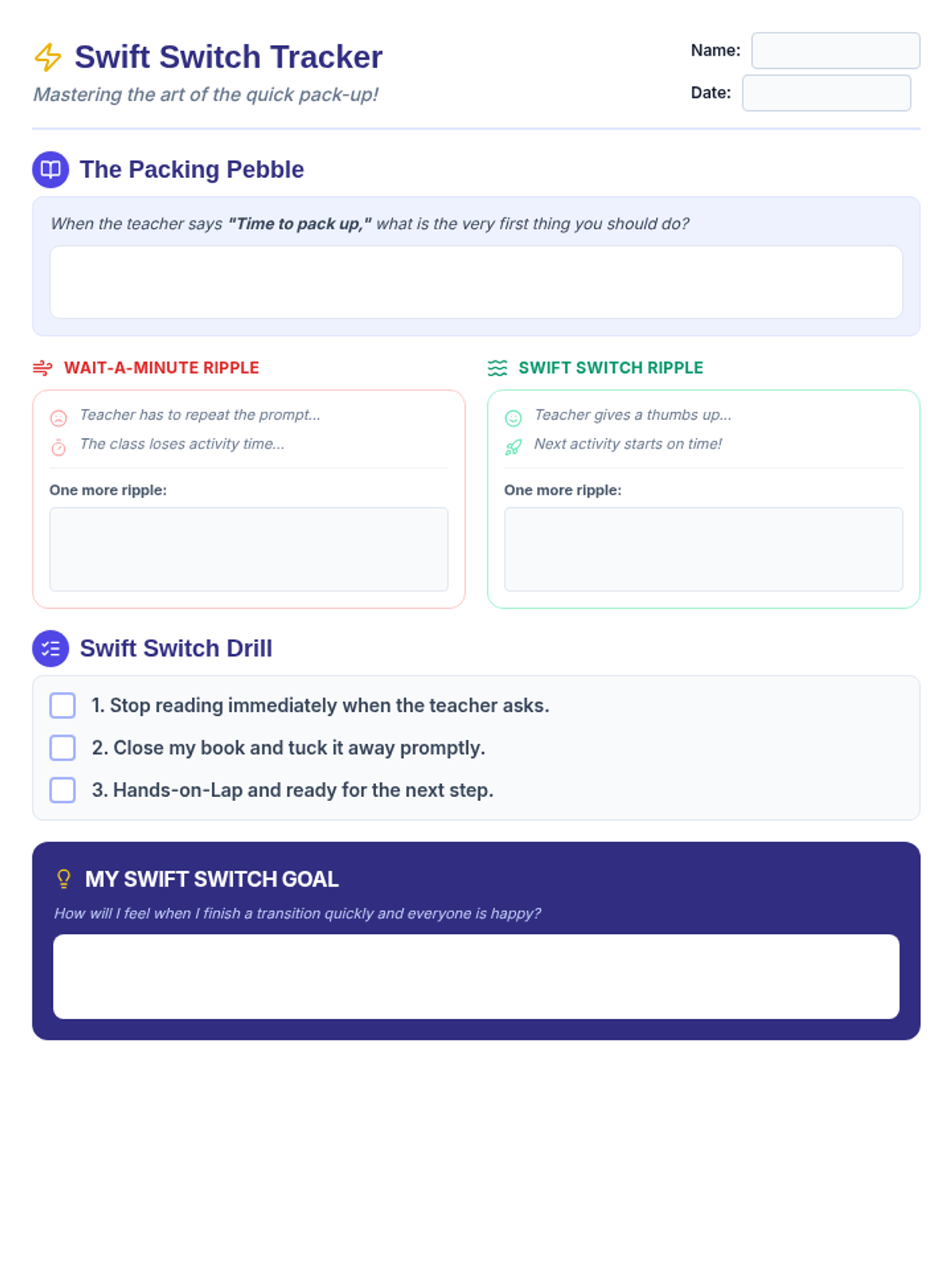
A student-facing worksheet to track the ripples of transition choices. Includes a comparison between "Slow" and "Swift" ripples and a 3-step practice checklist for packing up materials. Updated to ensure handwriting legibility and fit on one page.
A 6-slide presentation designed to teach students the "Swift Switch" transition skill. It compares the negative ripple effects of delayed packing with the positive benefits of prompt transitions, including a 3-step practice guide.
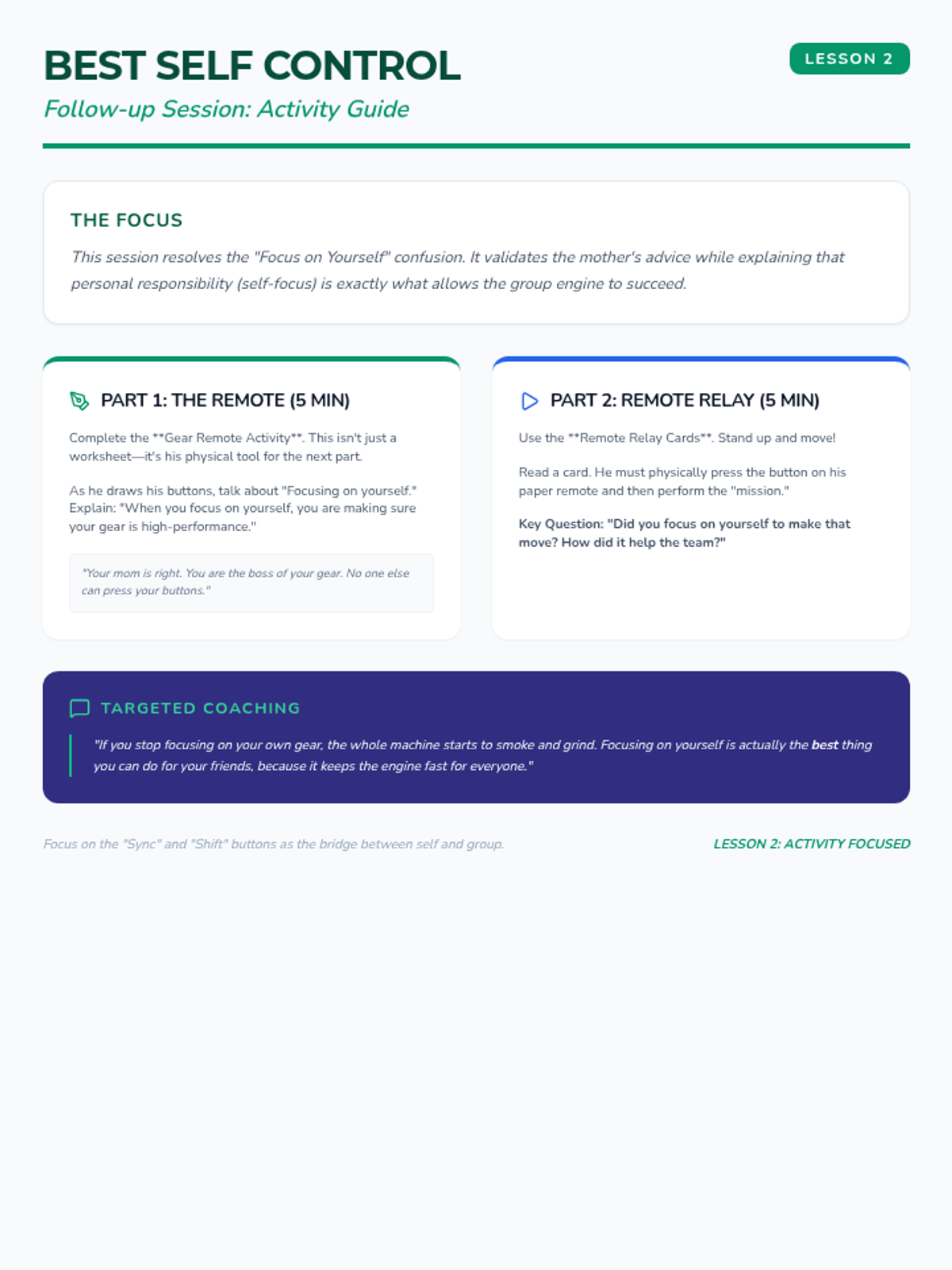
A teacher-facing facilitation guide for Lesson 2 of the Gear Switch series. Focuses on the "Remote Control" metaphor to clarify "Focus on Self" and provides specific coaching dialogue to handle parental advice confusion. Updated for the new 5-scenario slide deck.
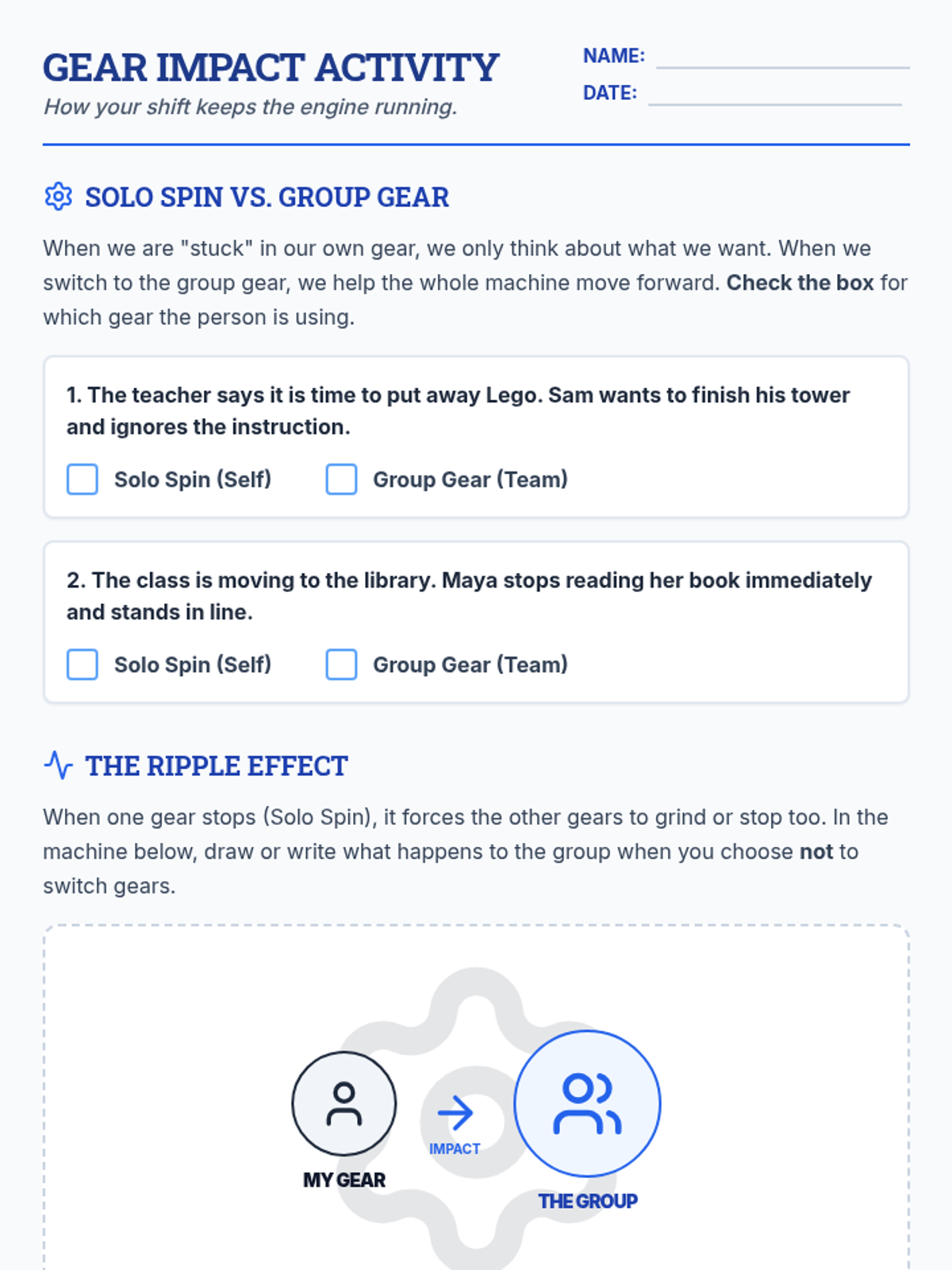
A student-facing activity worksheet that explores the difference between self-focused actions ("Solo Spin") and group-focused cooperation ("Group Gear"). It includes scenario analysis, a visual map of the "ripple effect" on others, and a personal strategy section for smoother transitions.
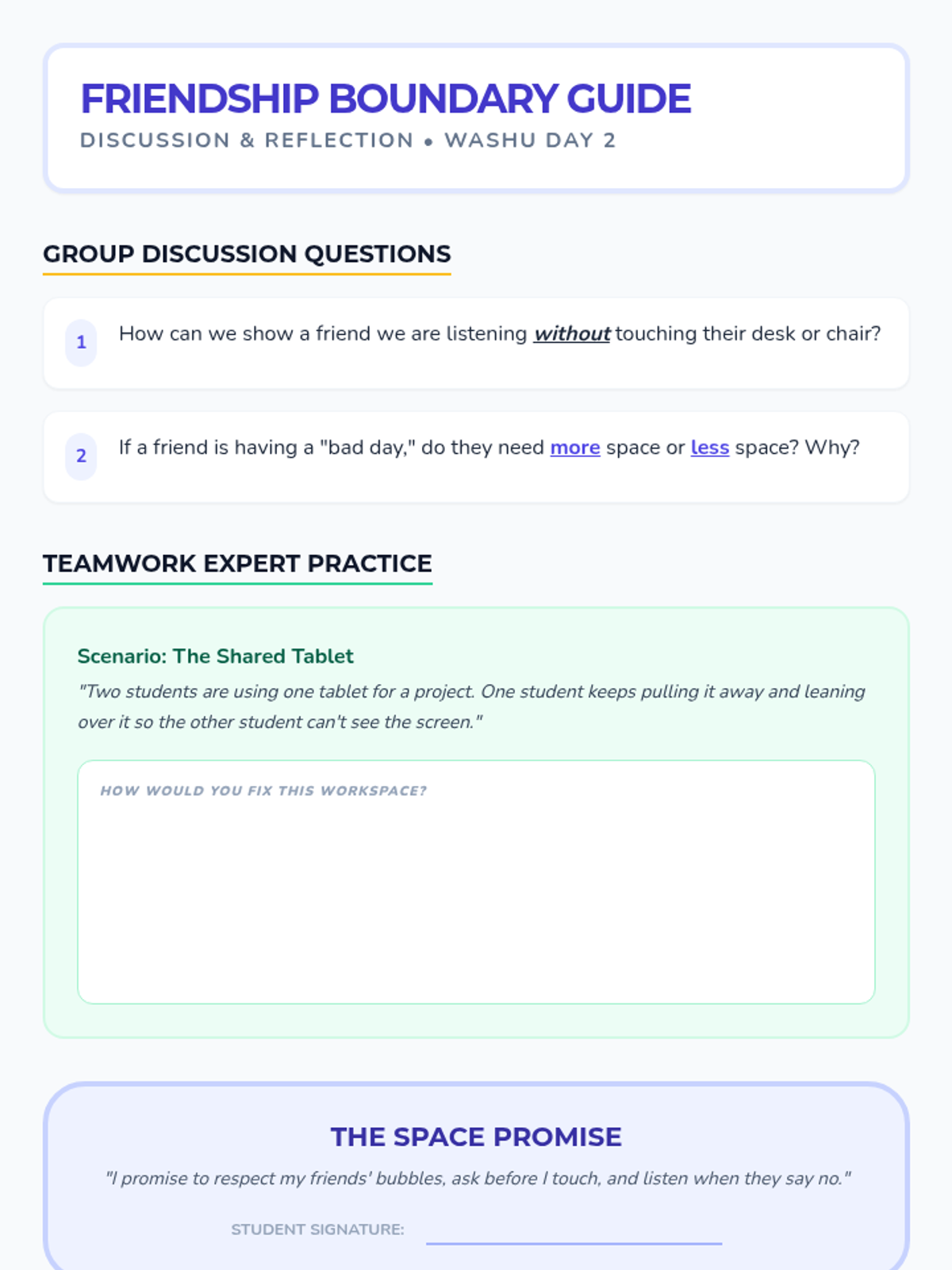
Revised Friendship Boundary Guide for WashU. Converted background to white, condensed layout to ensure the signature section stays on the same page, and expanded the brainstorming area.
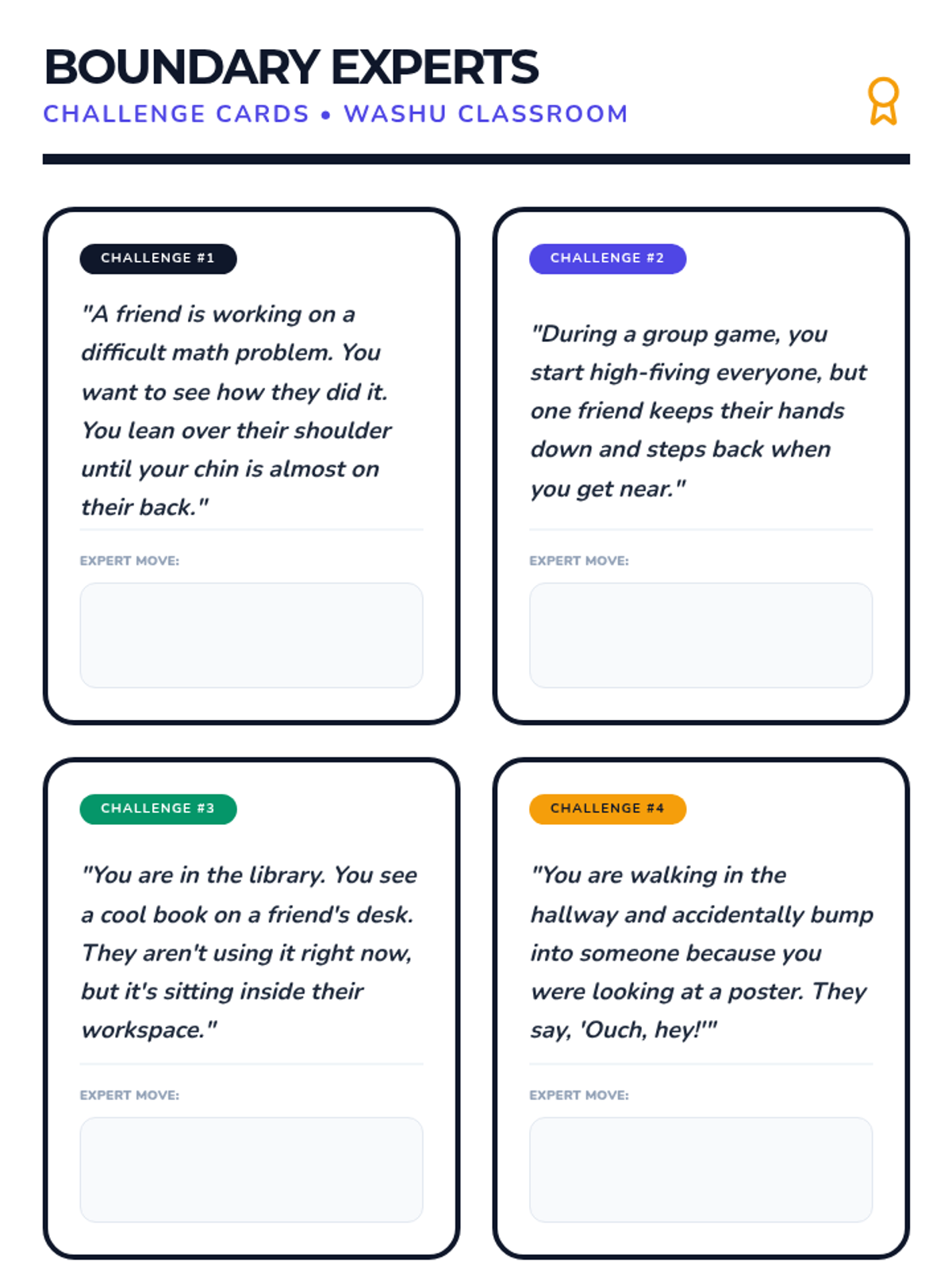
Revised challenge cards for WashU. Increased icon visibility, optimized response box backgrounds to white for better handwriting legibility, and improved footer readability.
Advanced slide deck for WashU students focusing on nuanced social boundaries. Covers teamwork, friendship etiquette, respecting the word "No," and complex school scenarios like group projects.
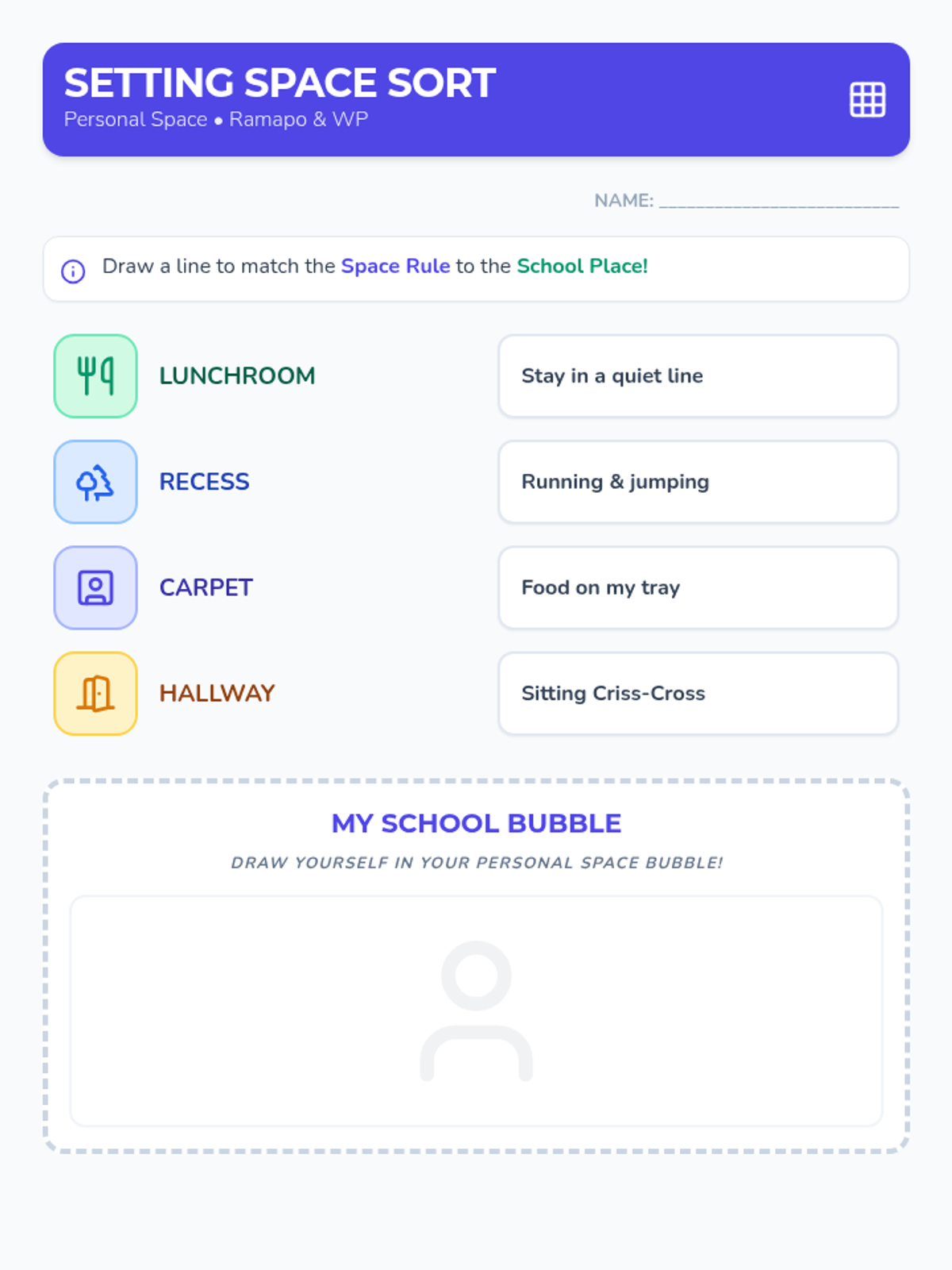
Revised Setting Space Sort worksheet for Ramapo and WP. Randomized the matching items, aligned the name field with the page margins, and removed the background icon from the drawing area for better legibility.
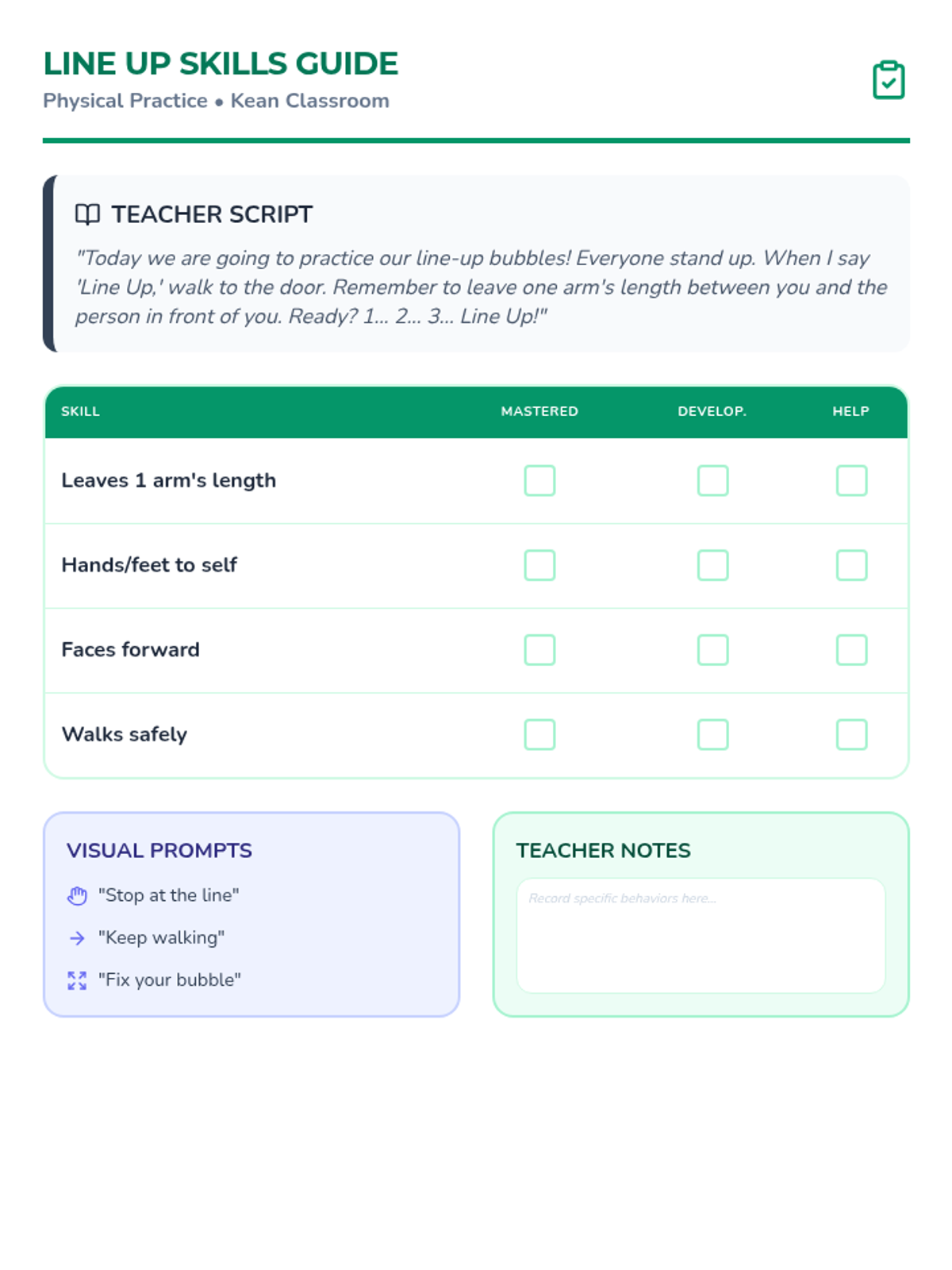
Revised teacher-facing resource for line-up practice, condensed to a single page with optimized table and larger notes area for classroom use.
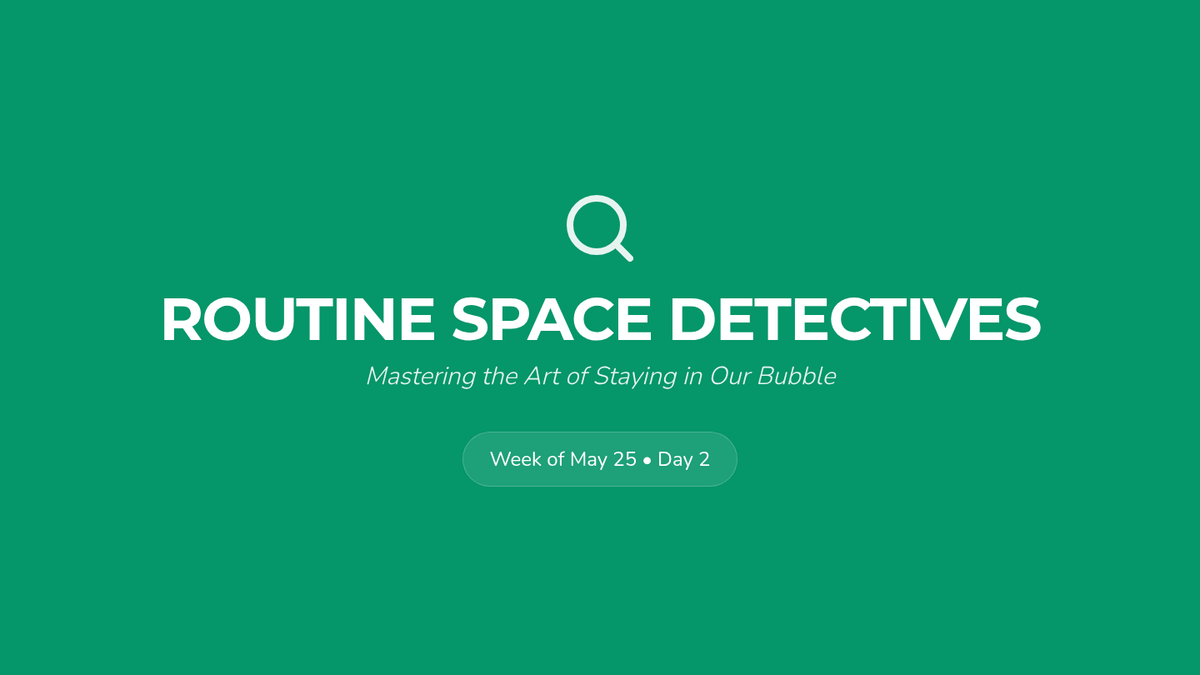
Visual presentation for Day 2 focusing on specific school settings (Lunchroom, Recess, Hallway). Includes specific instructions for Kean (lining up) and sorting logic for Ramapo/WP.
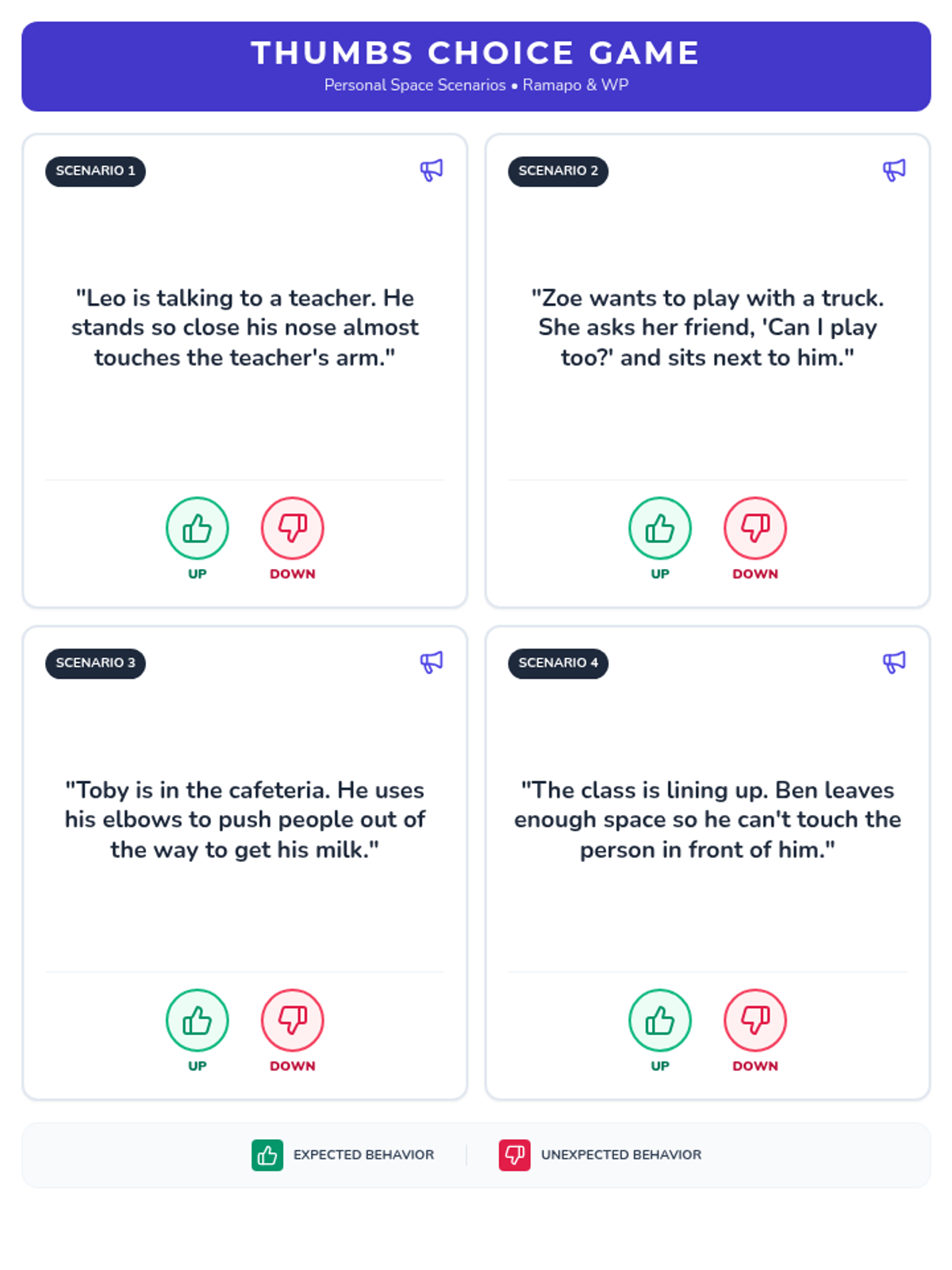
Revised Thumbs Choice Cards for Ramapo/WP. Added consistent labels to all cards, increased contrast on icons, and adjusted height to ensure the footer fits on a single page.
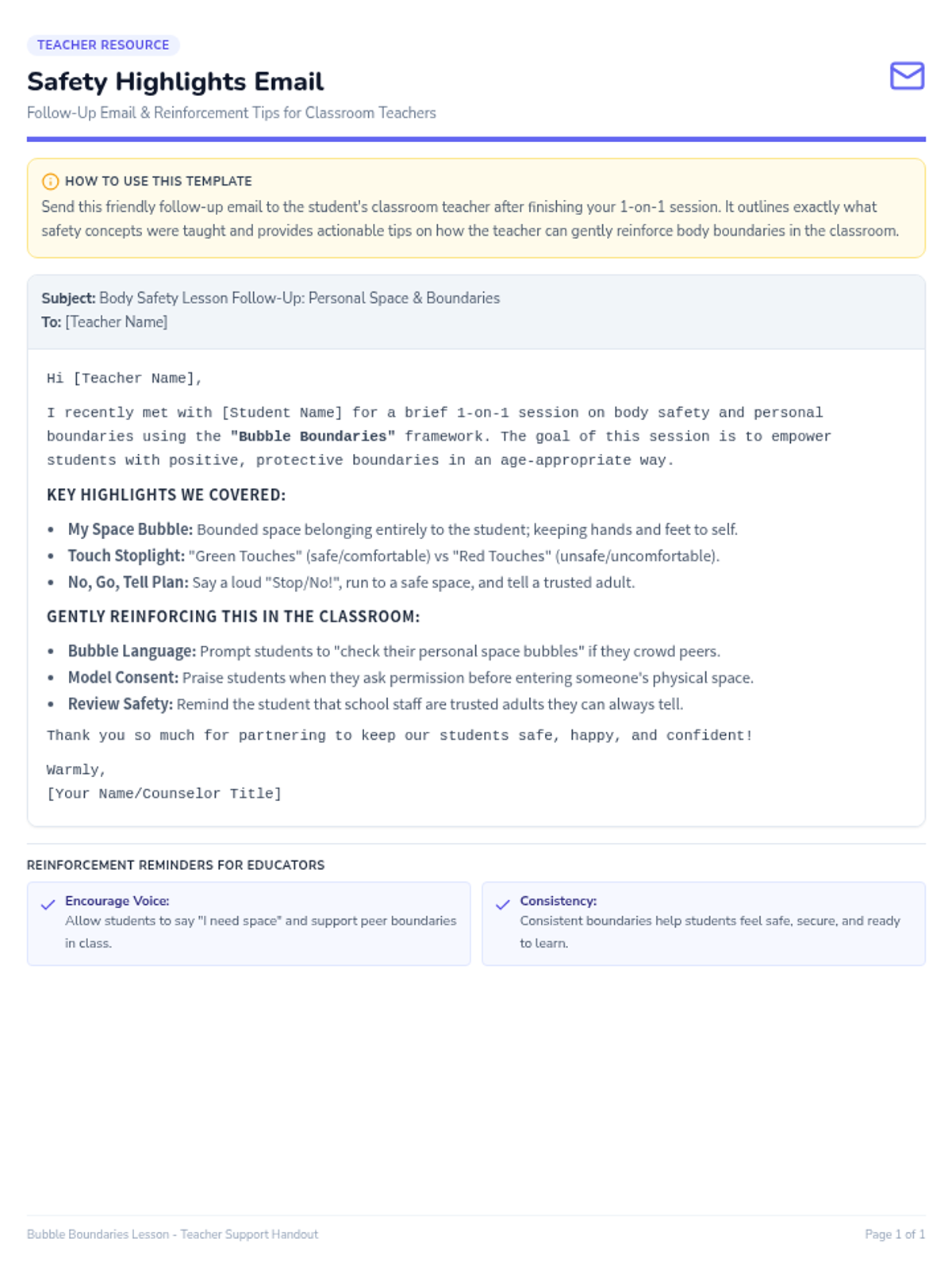
A follow-up email template and classroom reinforcement guide for teachers. Helps counselors share key session highlights, classroom vocabulary, and tips on body boundaries.
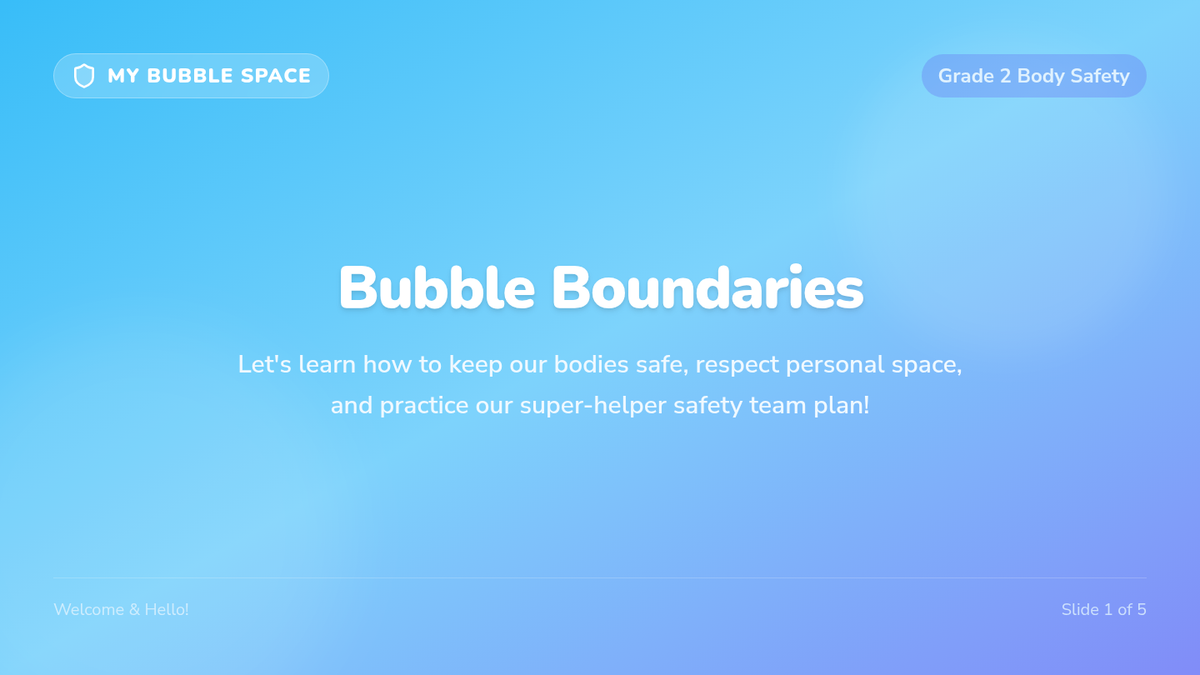
A beautiful, vibrant 5-slide visual slide deck for presentation during 1-on-1 body safety sessions with 2nd graders. Covers personal space, safe/unsafe touches with a stoplight analogy, and the core 'No, Go, Tell' safety response.
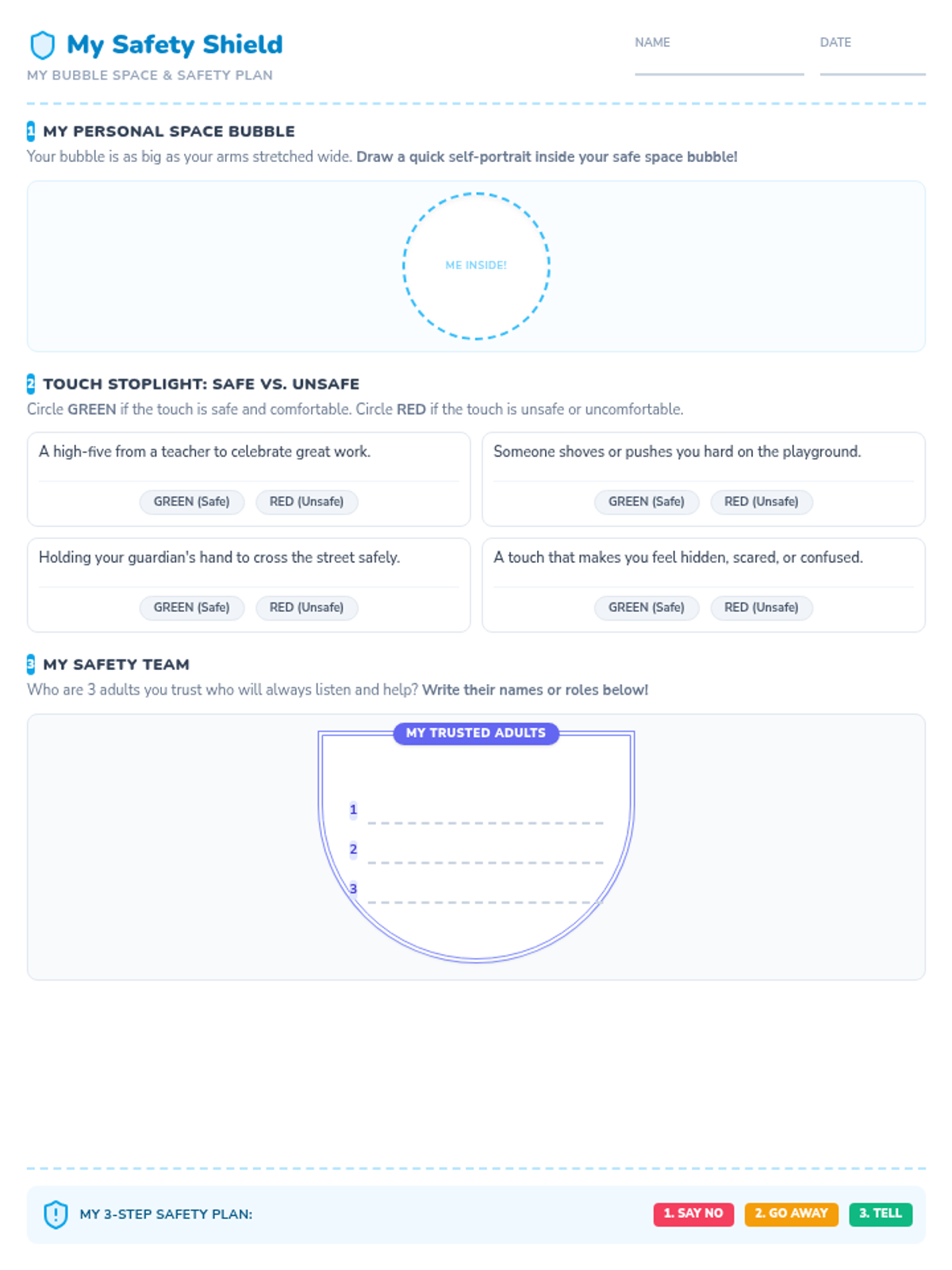
A highly visual, interactive student activity sheet for 2nd graders to complete during or after their body safety discussion. Features a personal space bubble drawing area, a safe/unsafe scenarios categorization section, and a 'Trusted Adults' safety shield to fill out.
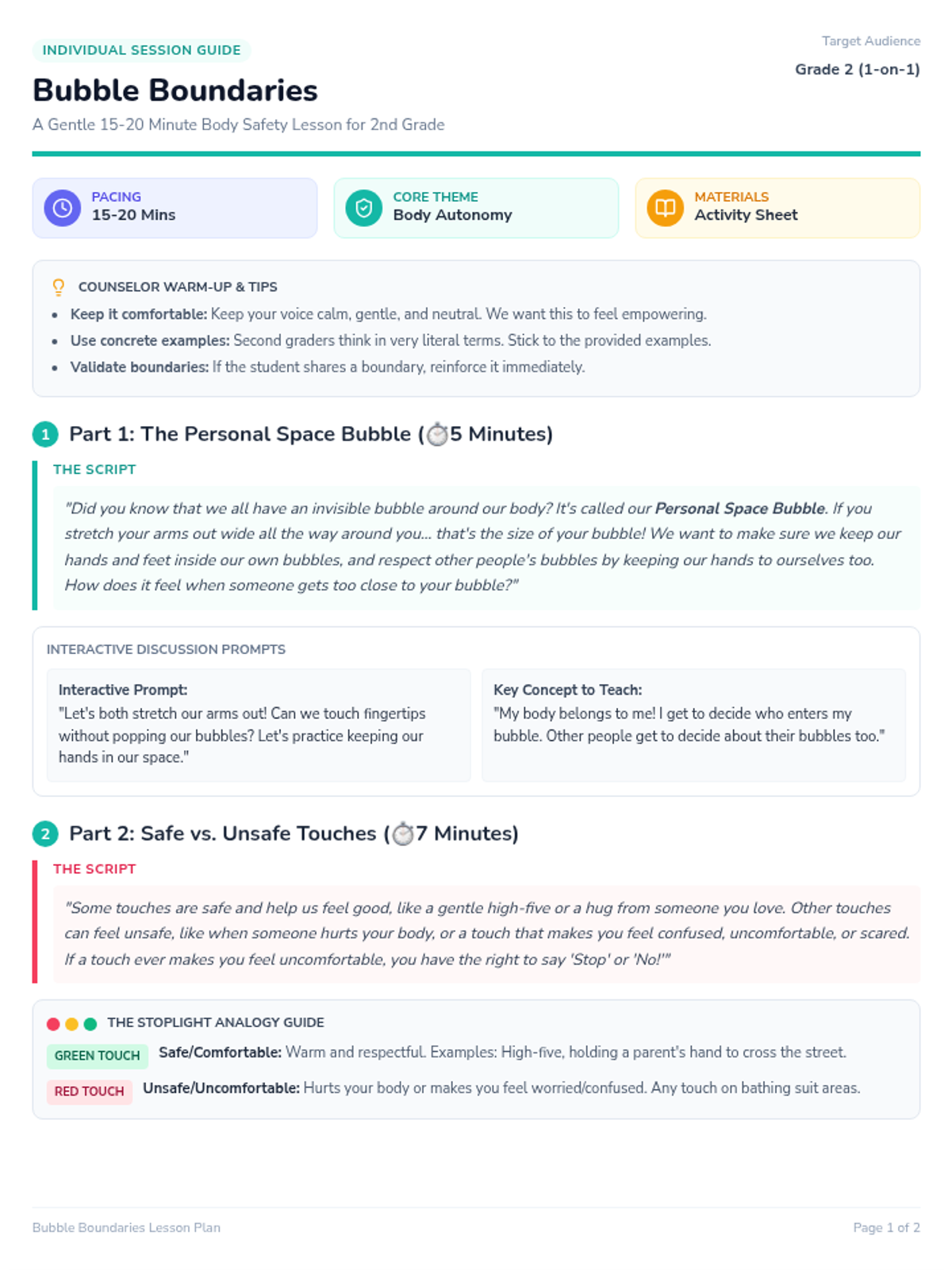
A comprehensive counselor and educator facilitation guide for leading a 15-20 minute individual session on body safety. Includes scripts, interactive prompts, and guided questions focused on personal space, touching rules, and the 'No, Go, Tell' safety response.
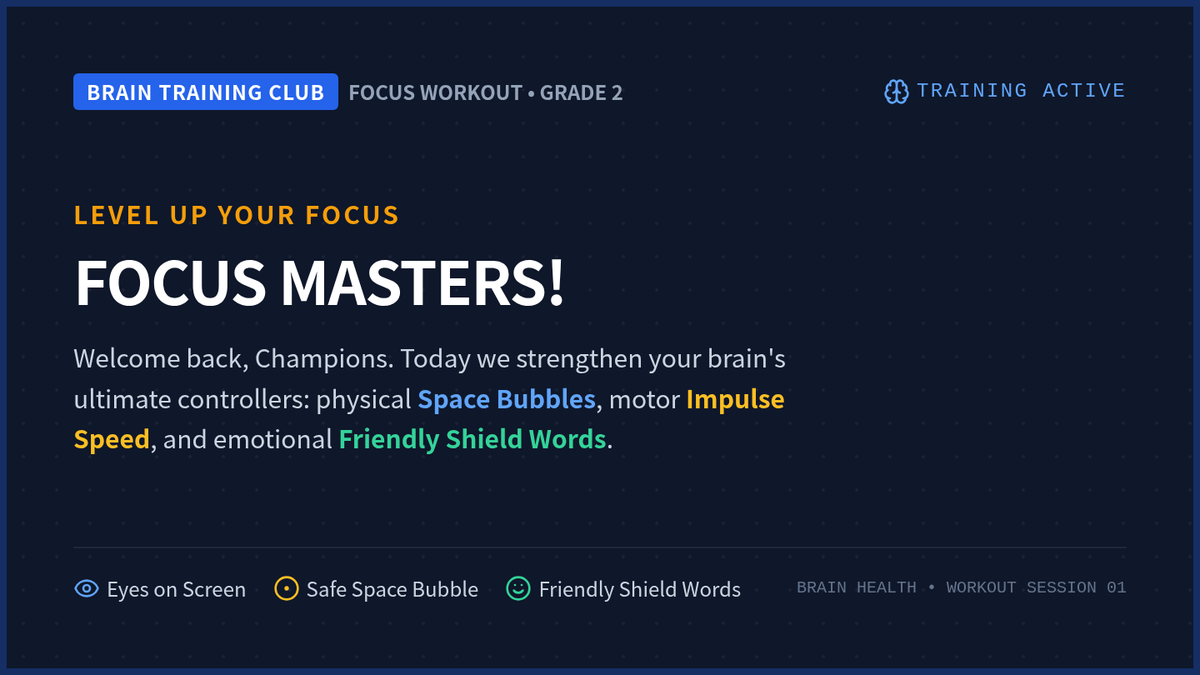
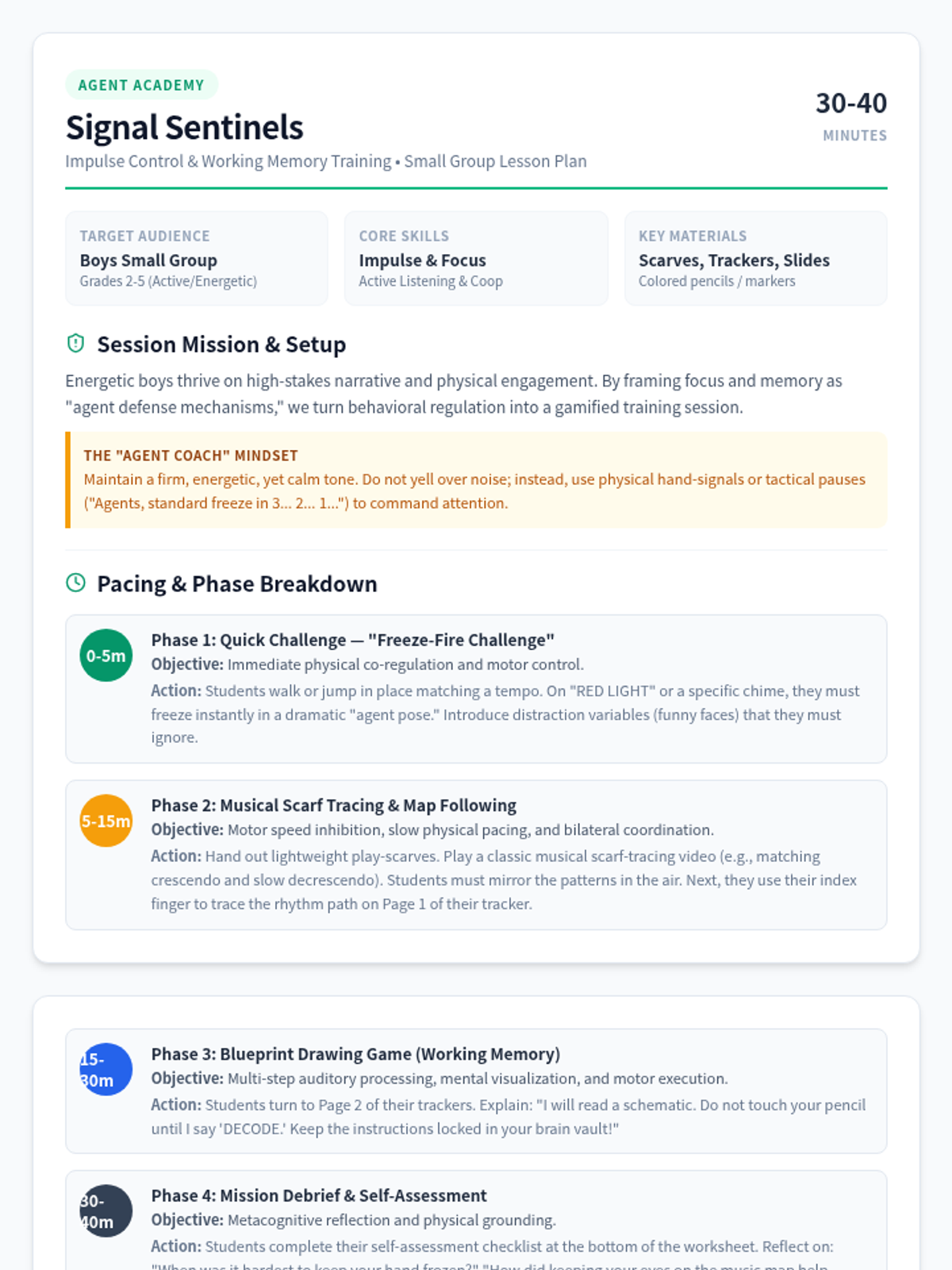
A highly engaging visual slide deck styled with a cyber-spy academy aesthetic to guide a 30-40 minute focus session for boys. It features rules, physical cues for the quick challenge, a video placeholder card for scarf-tracing, instructions for the blueprint memory game, and reflective discussion slides.
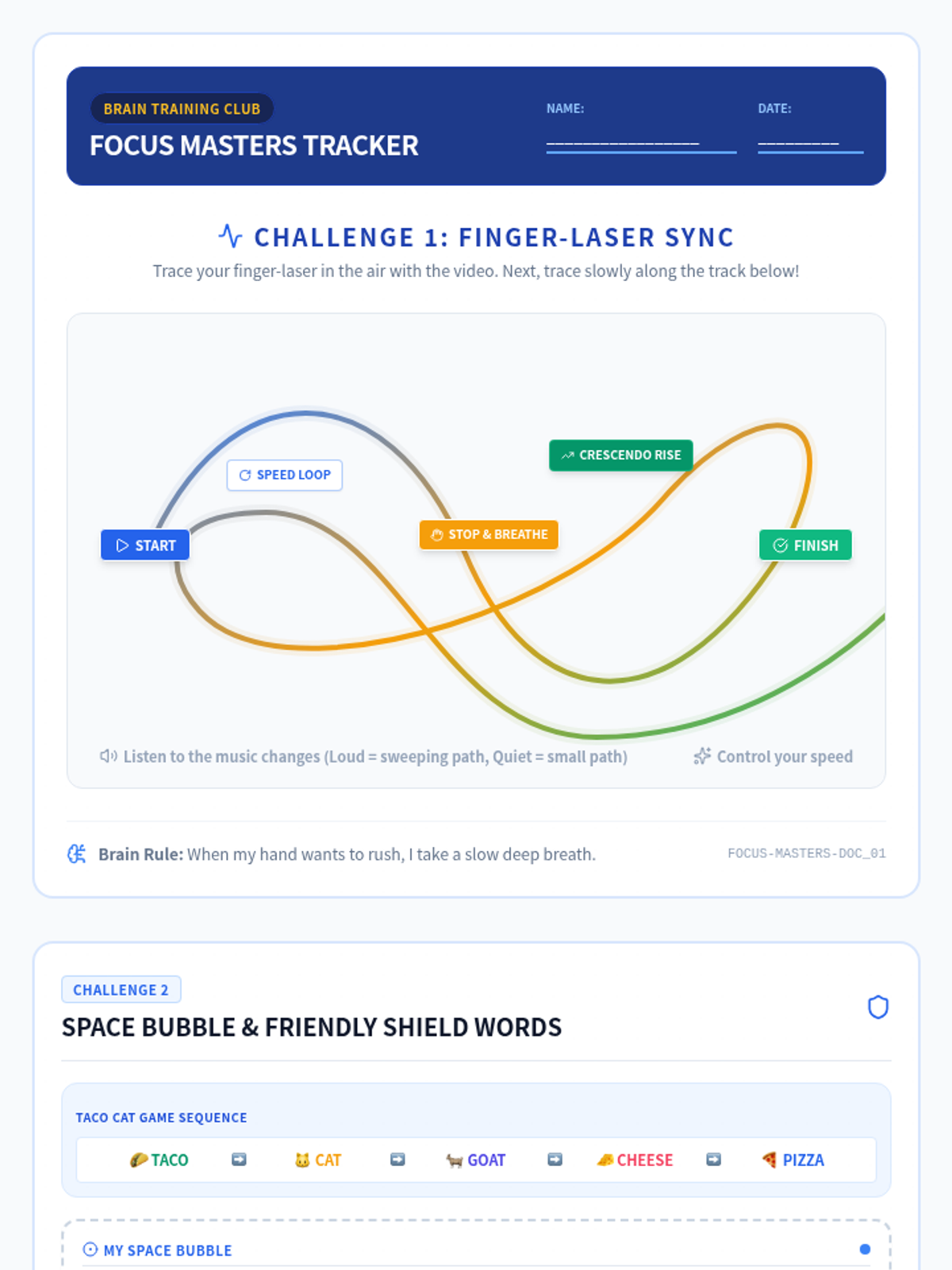
A matching 2-page print-ready student worksheet for Grade 2 boys. Page 1 displays an active, glowing multi-tempo scarf-tracing 'circuit map' to practice focus, and Page 2 features visual space bubble drawings, friendly shield words, and a daily scorecard self-assessment panel.
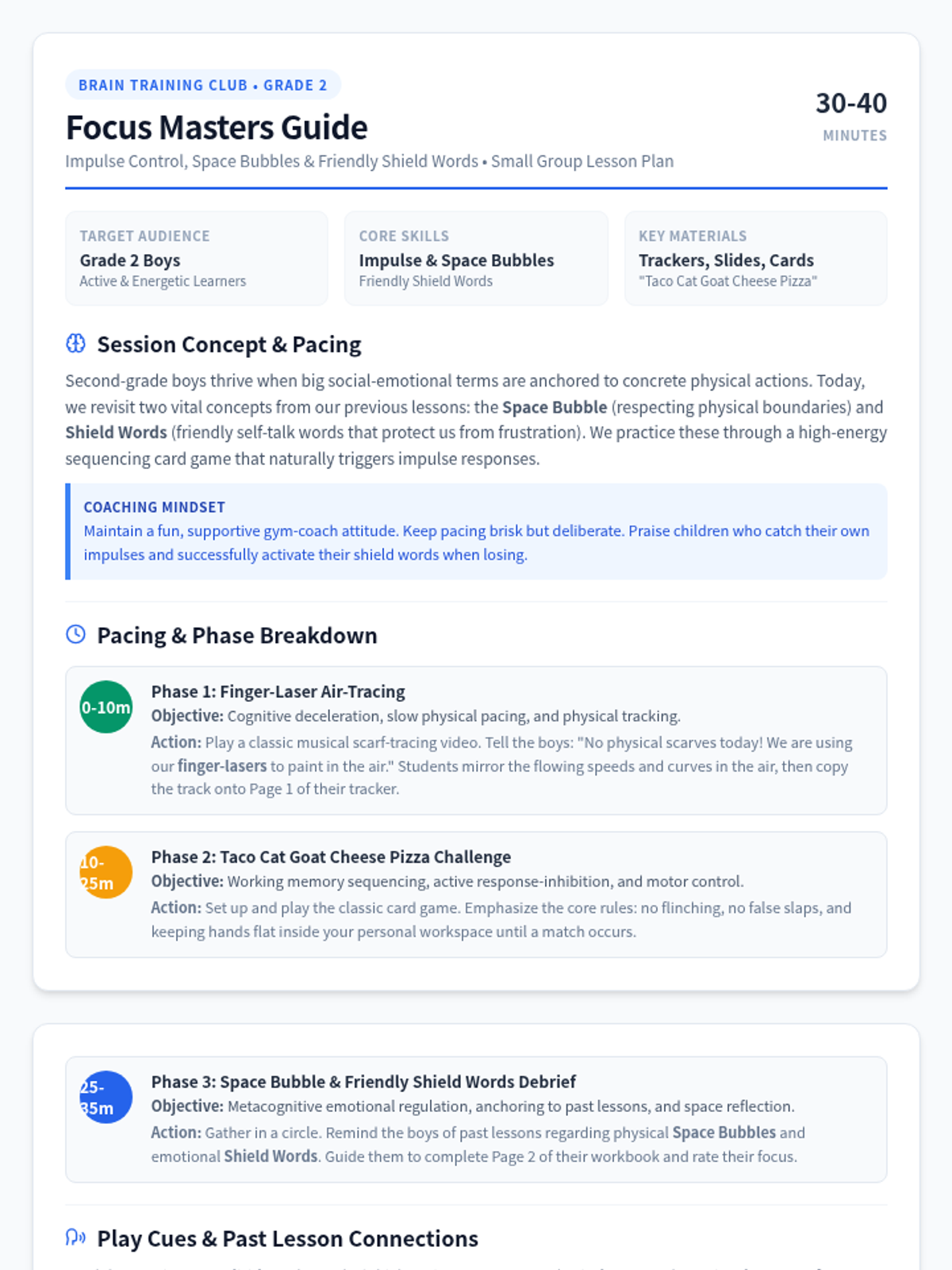
A structured, highly engaging 2-page lesson guide for educators to run a 30-40 minute focus and impulse control group for Grade 2 boys. It replaces physical warm-ups with finger-laser tracing in the air, implements the game 'Taco Cat Goat Cheese Pizza' to practice impulse control, and provides scripts for managing space bubbles and teaching friendly shield words.
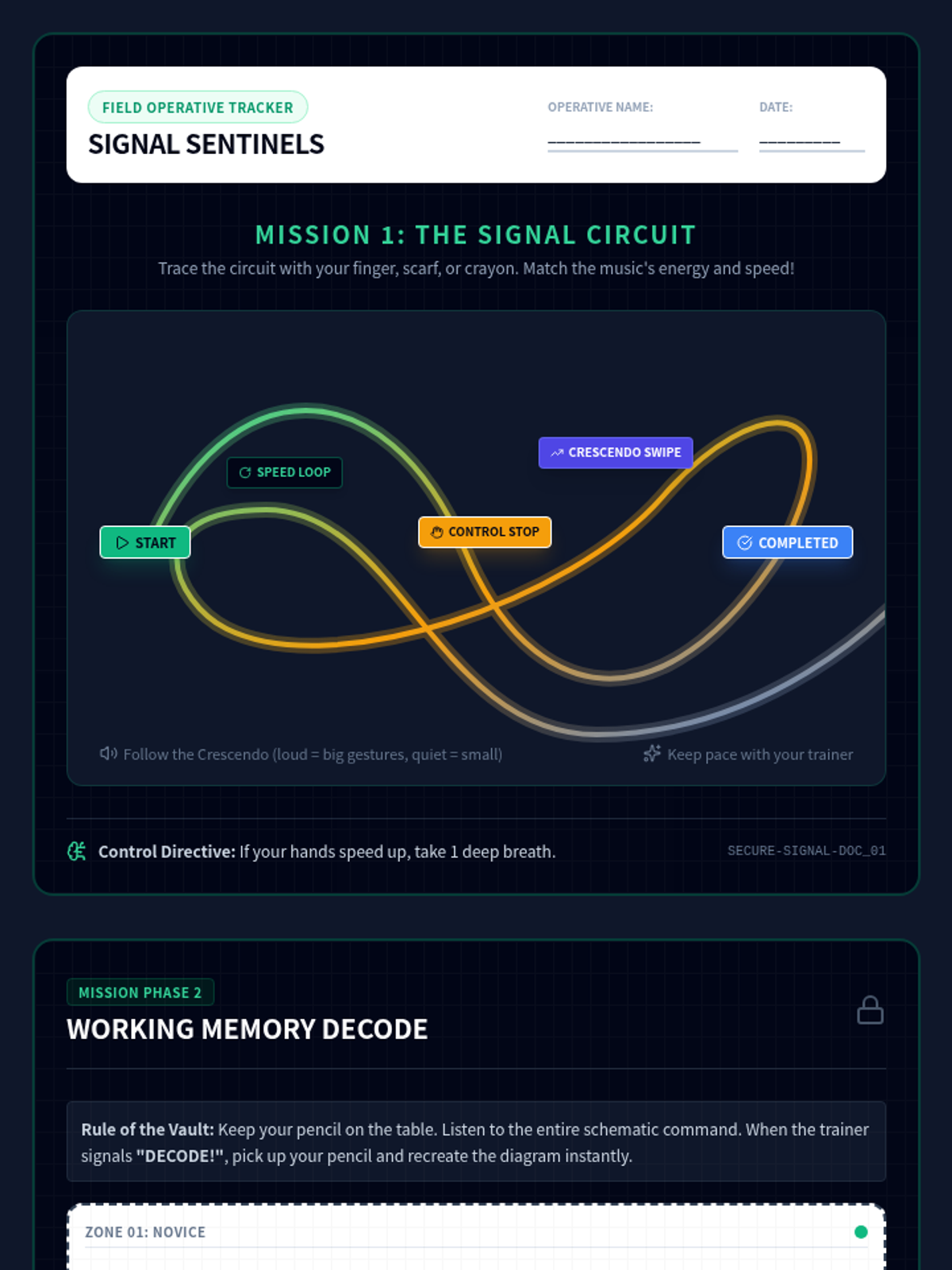
A matching 2-page print-ready student worksheet styled like an tactical spy-agent manual. Page 1 displays an active, glowing multi-tempo scarf-tracing 'circuit map' to practice focus, and Page 2 features three clean blank white 'blueprint zones' for auditory working memory challenges and an interactive focus rating panel.
A structured, highly engaging 2-page lesson guide for educators to run a 30-40 minute active focus group for boys. It includes warm-up physical control exercises, guided scarf-tracing cues, auditory memory-drawing scripts, and behavioral management strategies.
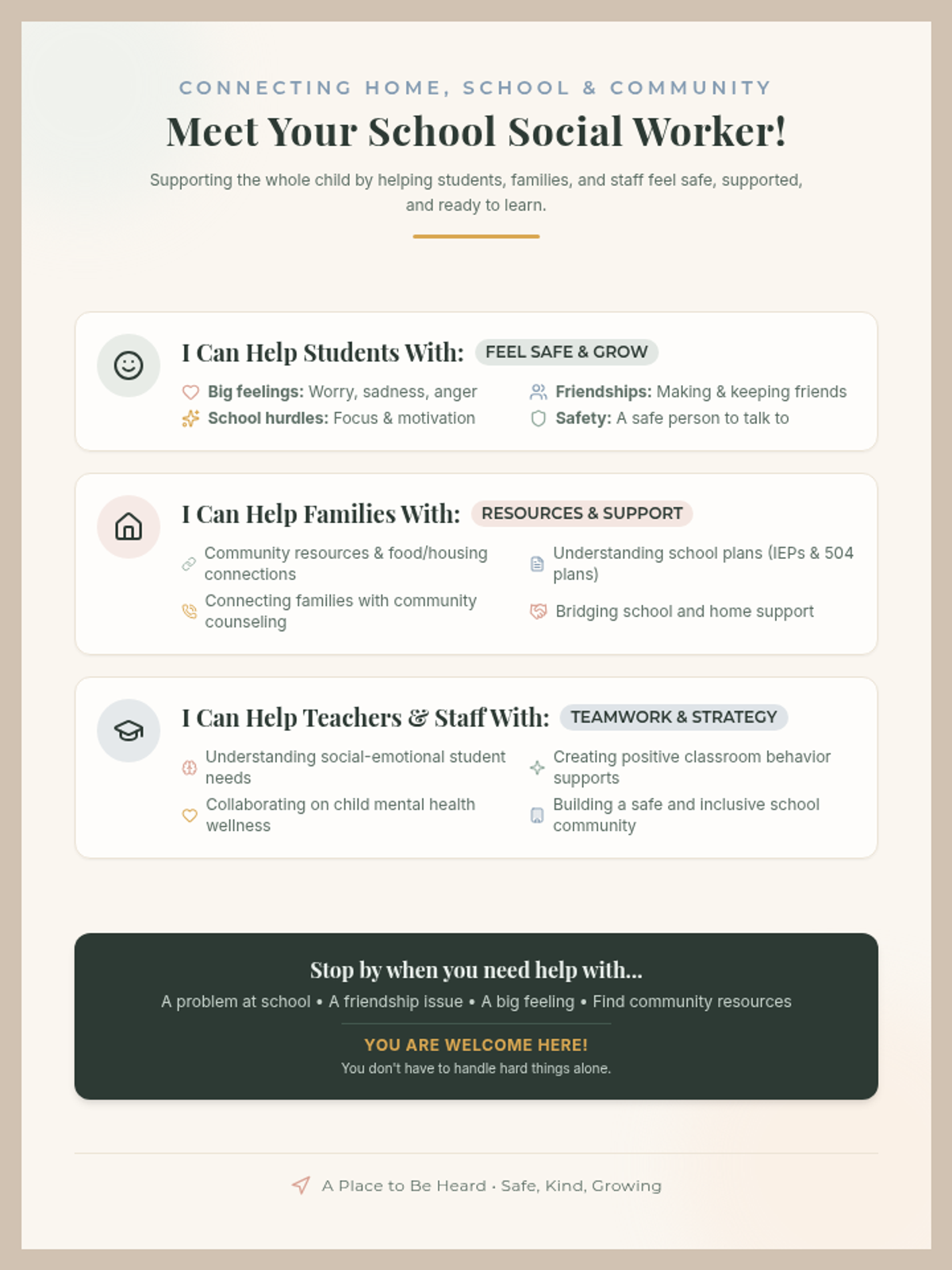
A beautifully designed informational poster for elementary schools detailing the supportive role of a School Social Worker, featuring color-coded sections for students, families, and staff.
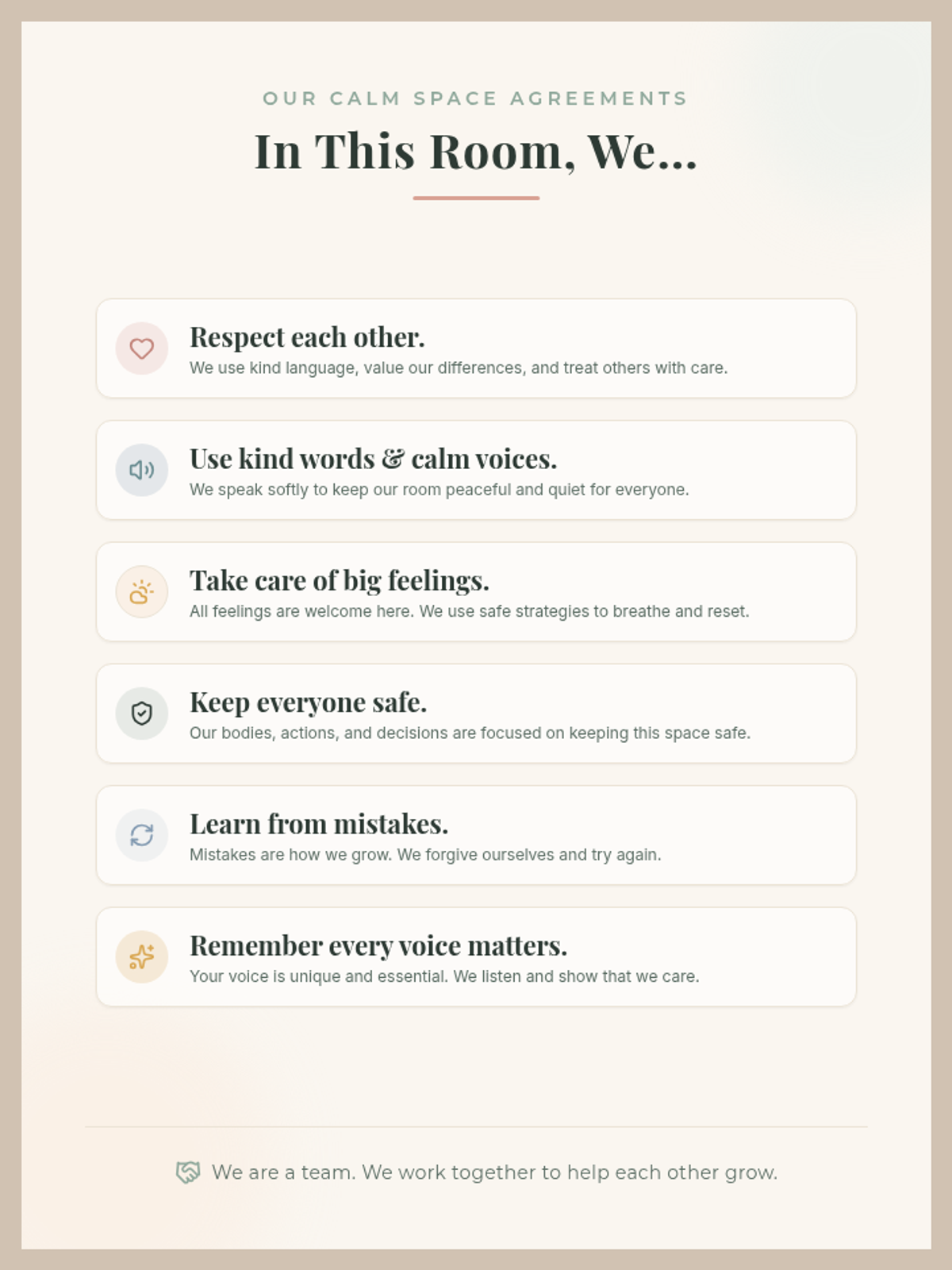
A beautifully redesigned 'Office Agreements' poster that transforms the uploaded grid-based design into the Calm Office Decor theme. Features offset grid cards in terracotta, sage, slate blue, and warm gold with delicate icons and clear, supportive language about respecting others, learning from mistakes, and building team spirit.
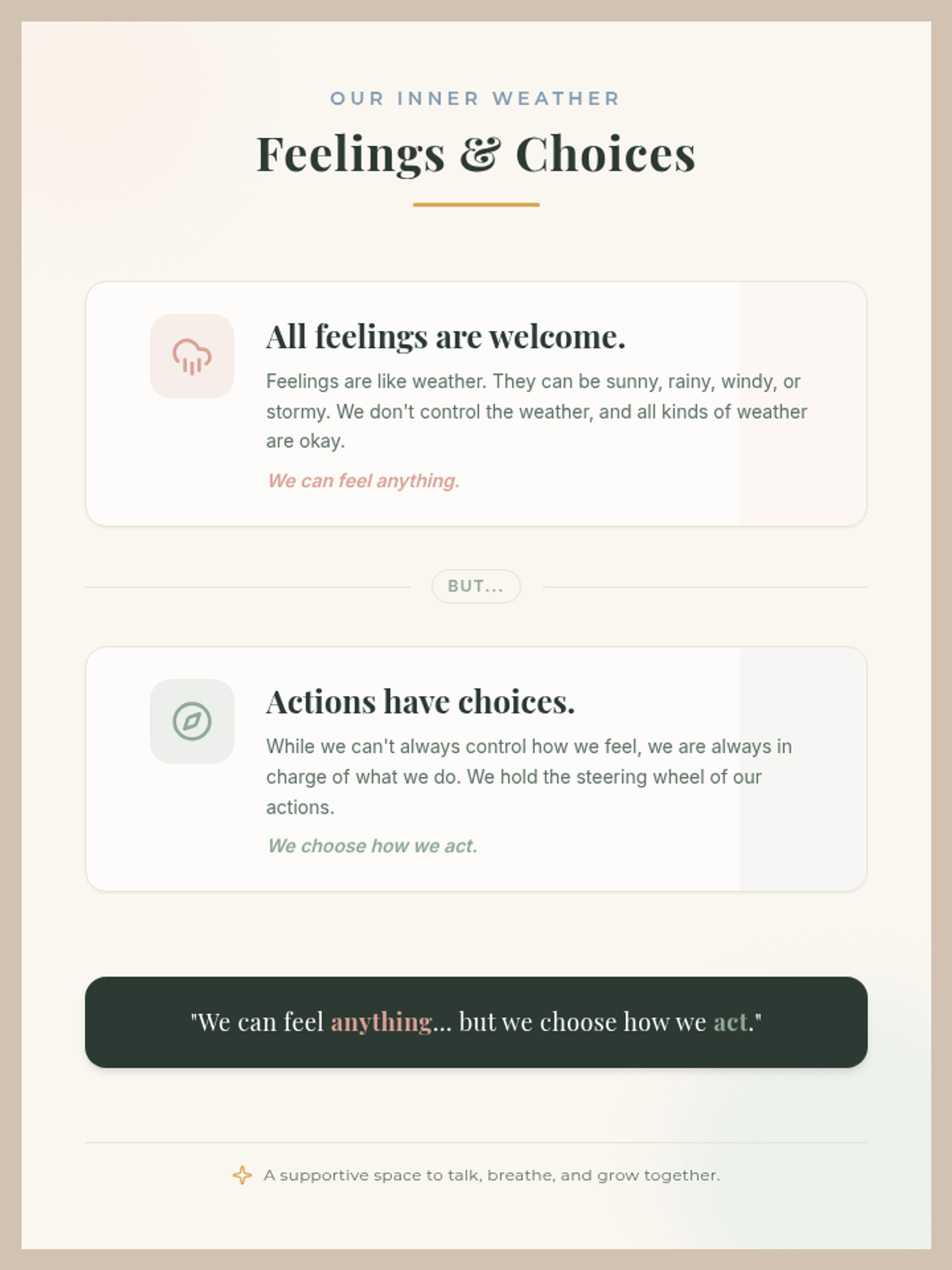
A beautiful poster emphasizing the connection between feelings and behavioral choices. Great for elementary social work offices or classrooms to teach self-regulation.
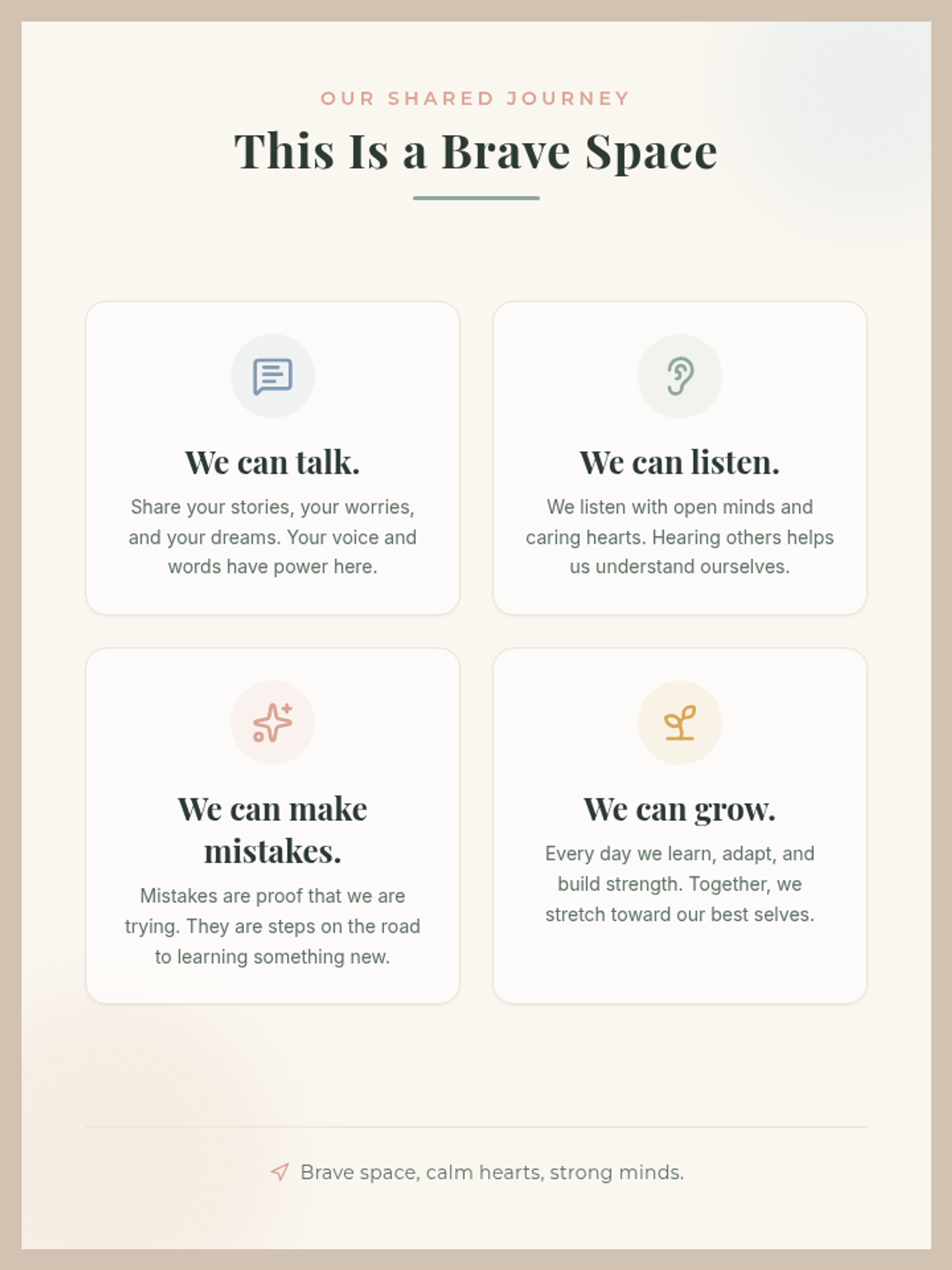
An empowering 'This Is a Brave Space' poster for a school social work office. Encourages healthy sharing, active listening, learning from mistakes, and personal growth using supportive symbols.
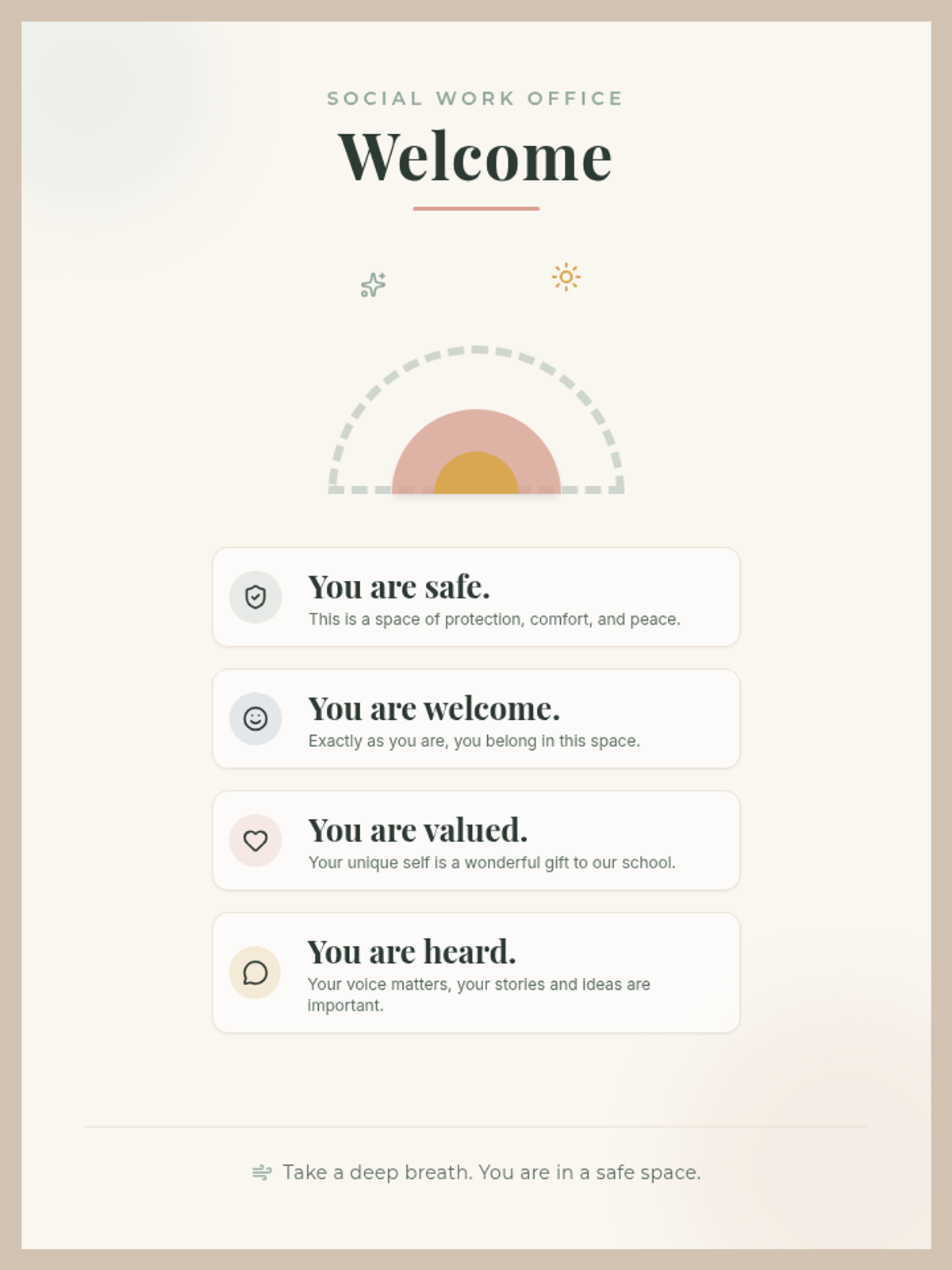
A stunning, two-page printable affirmation poster that remakes the uploaded 'You Are...' sheets. Page 1 contains the 'LOVED, VALUED, SPECIAL, WELCOME, SAFE here' block stack with beautiful earth tones, custom handwritten-style script headers, and delicate icons, while Page 2 features 'KIND, SMART, BRAVE, STRONG, AMAZING' styled identically for a perfectly cohesive and high-end look.
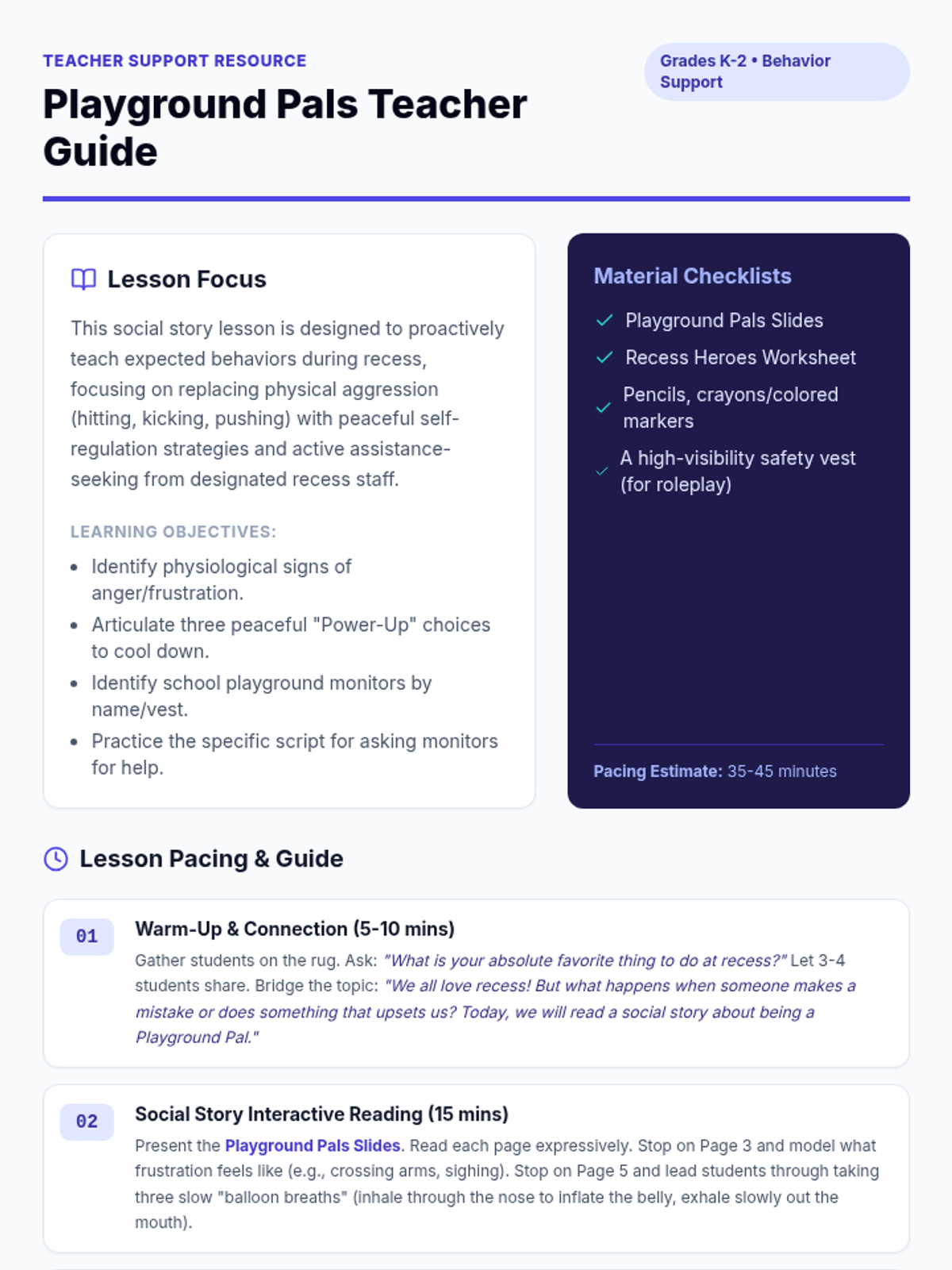
A teacher-facing lesson plan and facilitation guide for the social story. Includes detailed pacing, specific discussion prompts, roleplay scenario cards, and classroom management strategies.
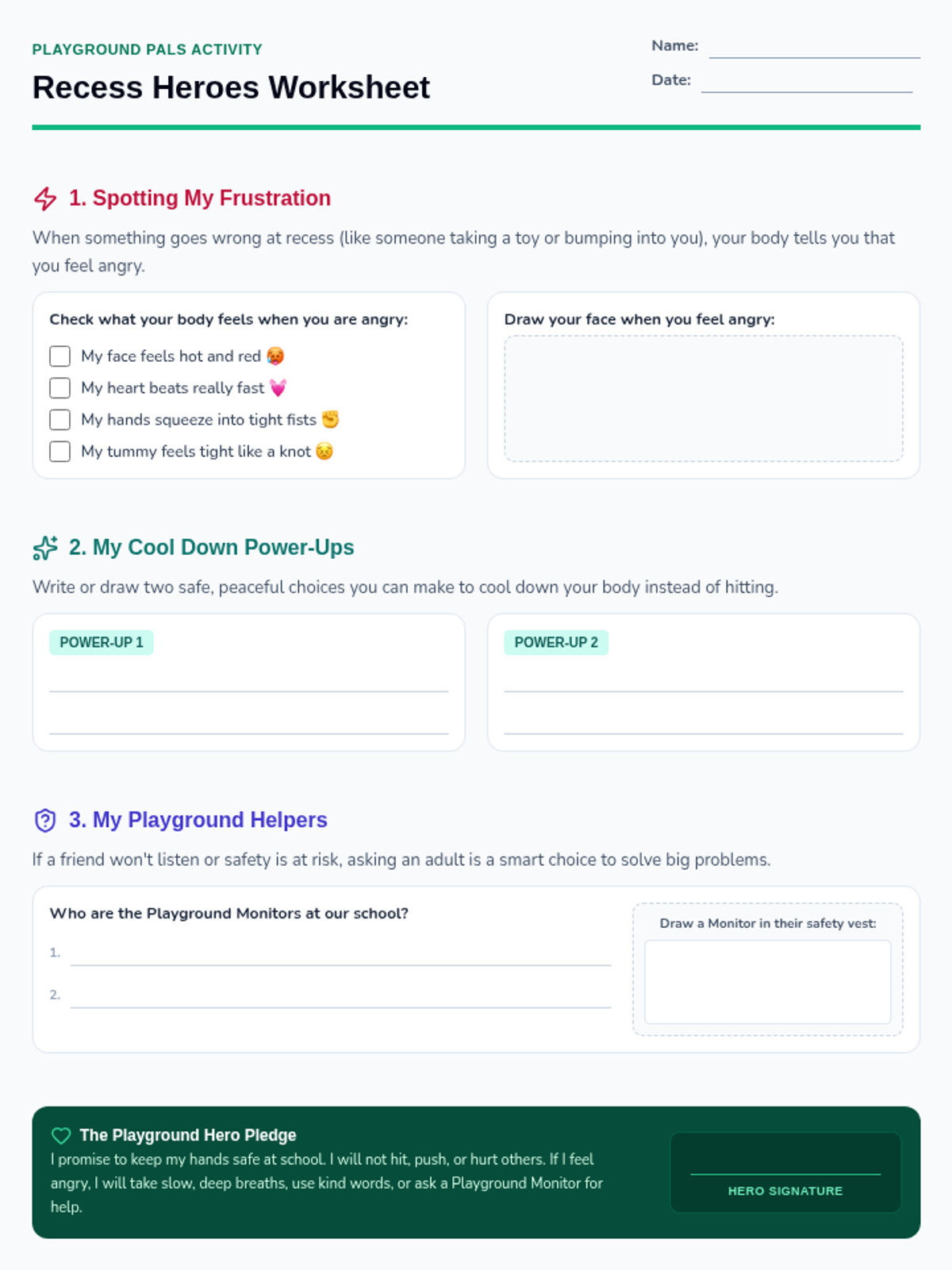
An interactive student-facing activity sheet reinforcing the social story. Includes frustration body mapping, cool down choice identification, names of school playground monitors, and a safe recess pledge.
Social story slide deck with read-aloud pages and highly descriptive illustration prompts. Empowers students to keep hands safe, cool down, and confidently seek help from playground monitors.
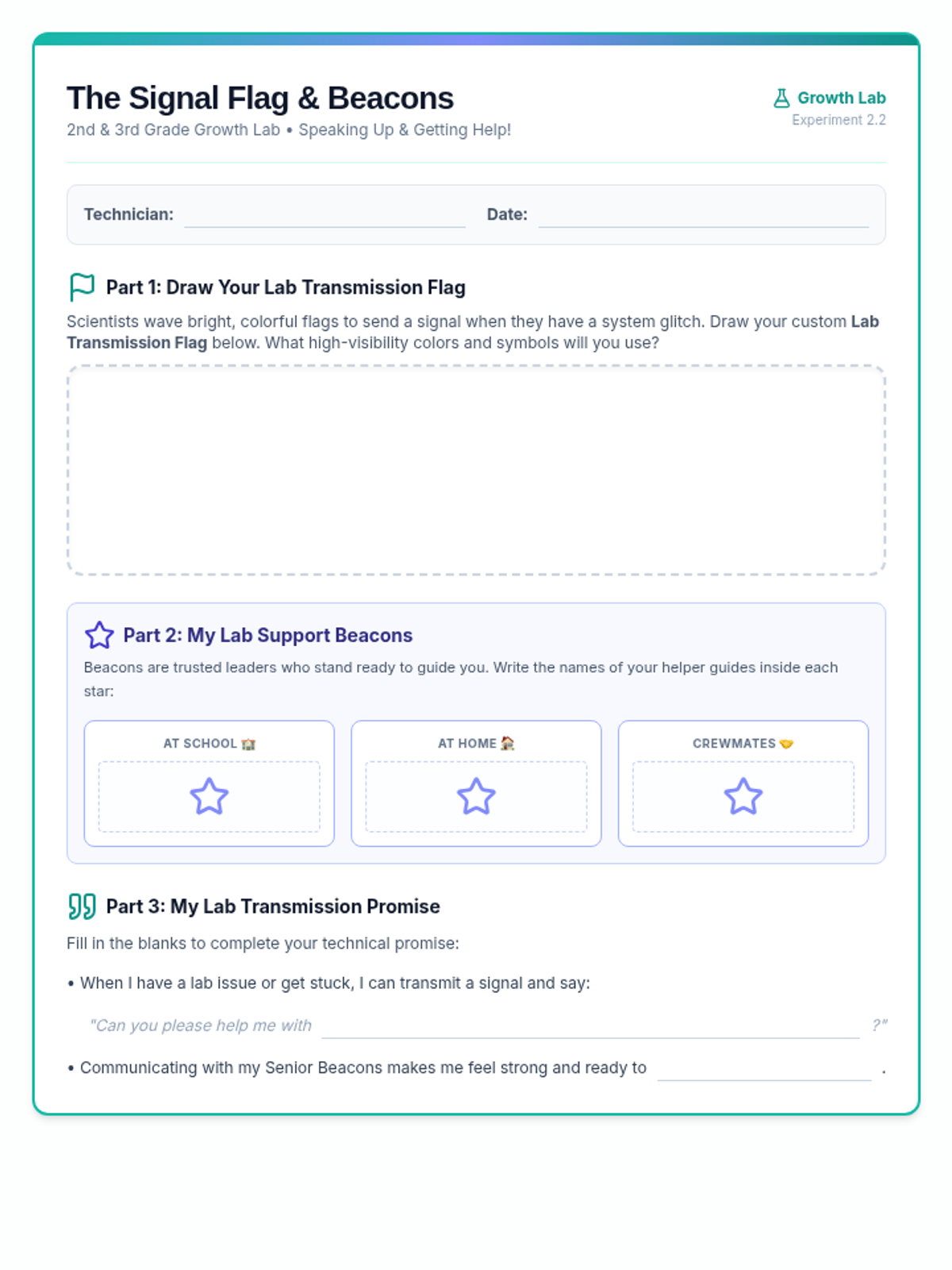
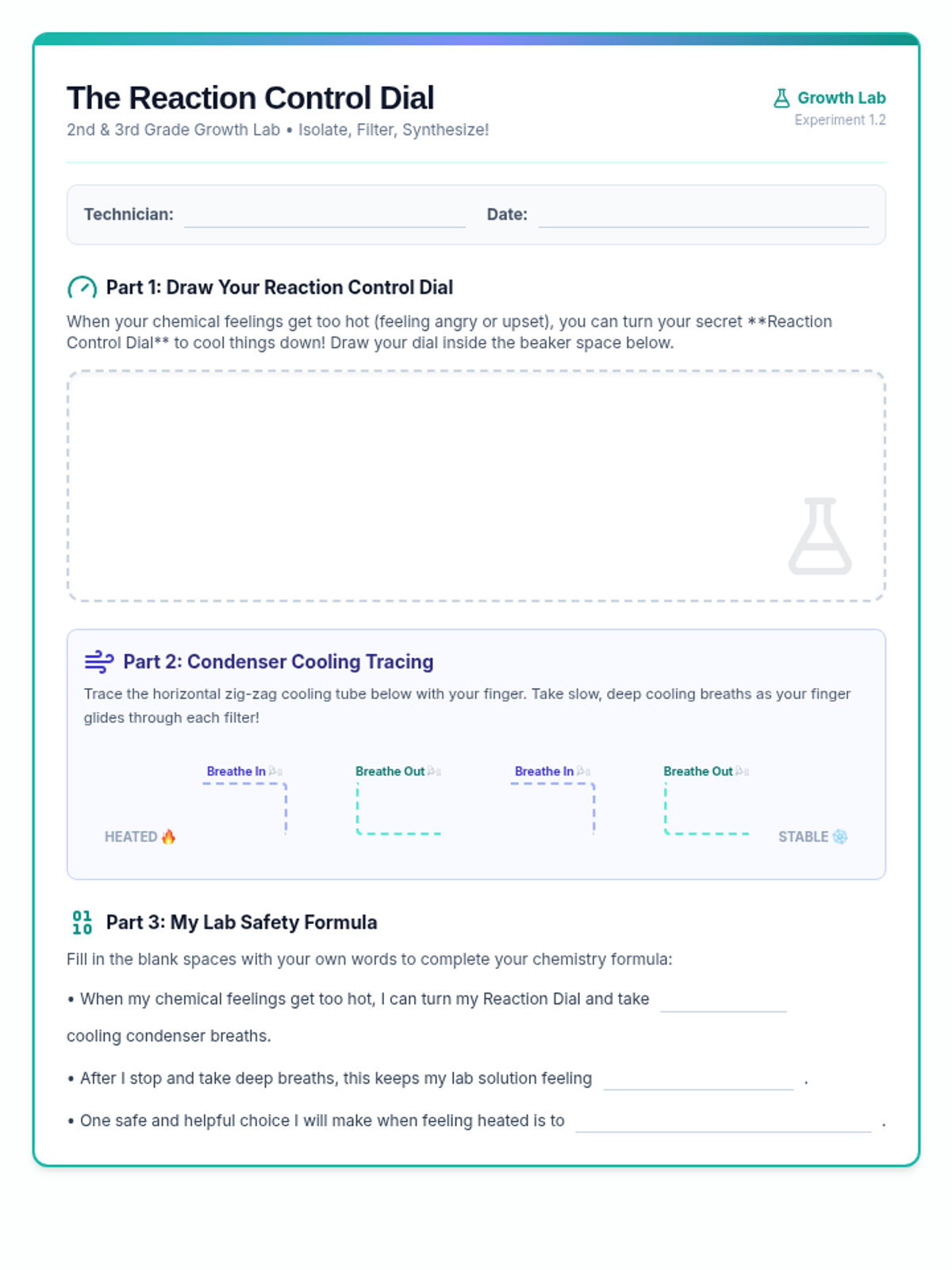
An interactive self-advocacy and support mapping worksheet designed for 2nd and 3rd-grade students. Features a 'Help Signal Flag' design space, a 'Guide Stars' helper mapping exercise, and simple fill-in-the-blank safety prompts.
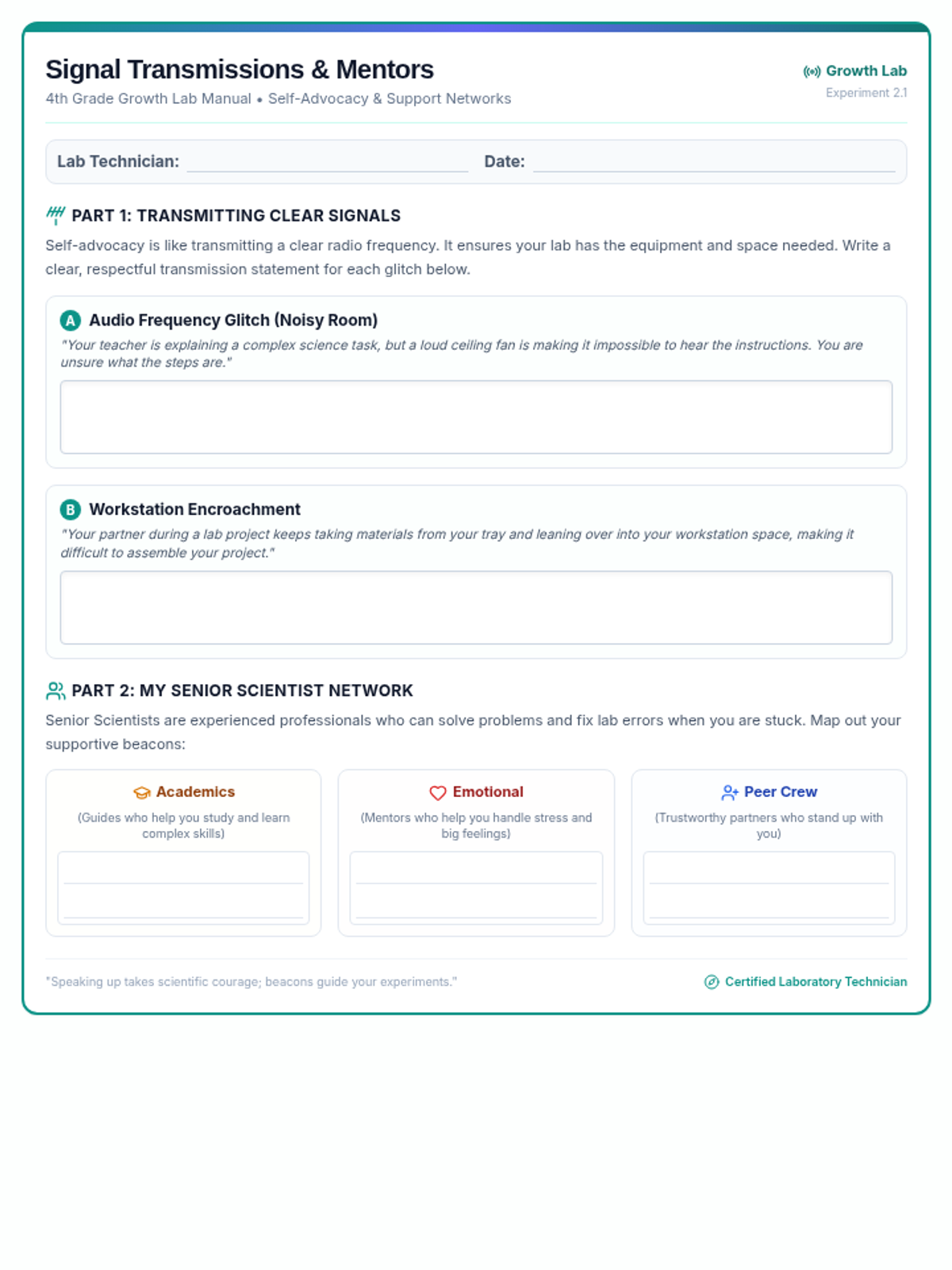
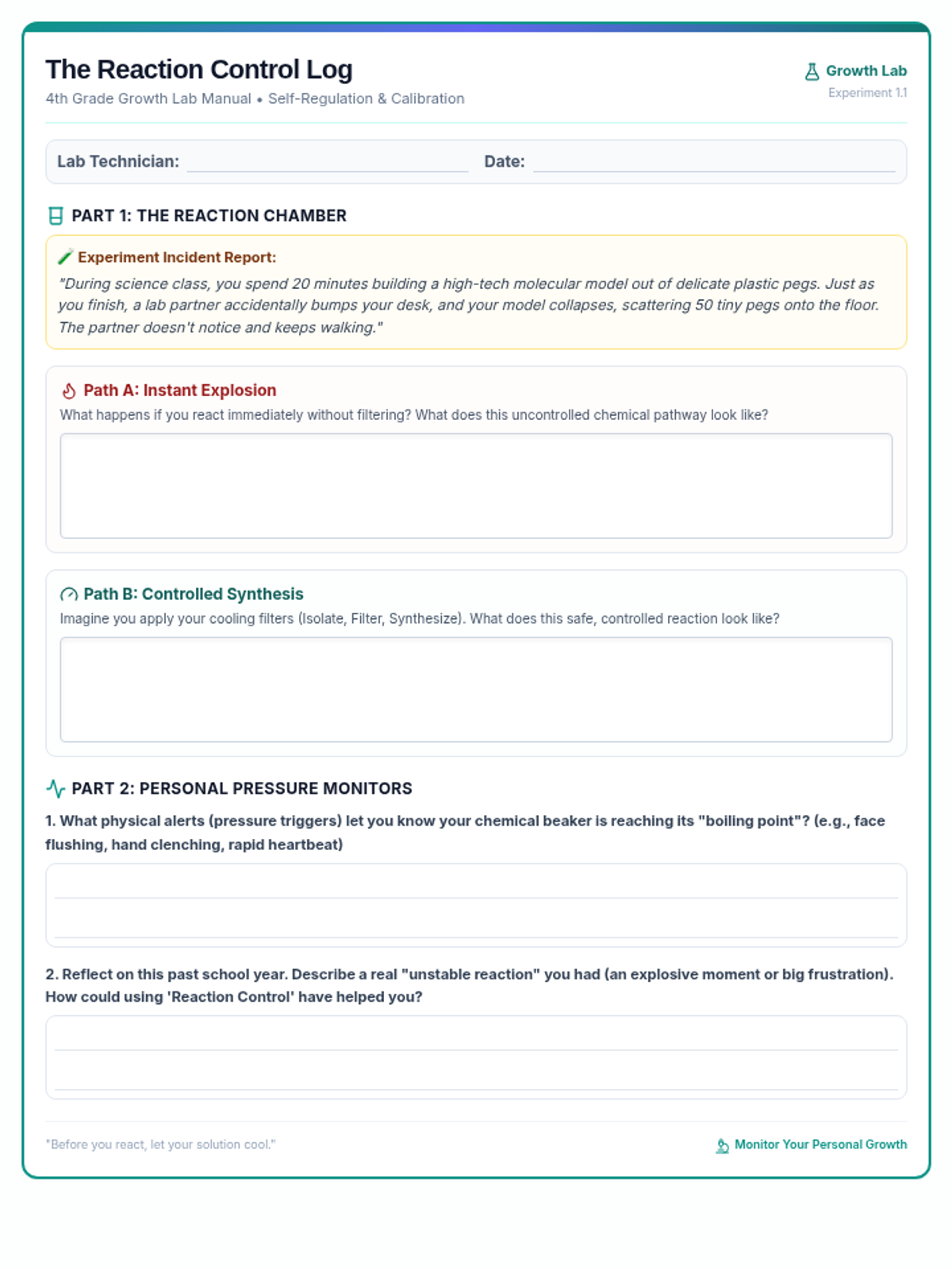
An independent self-advocacy and support mapping worksheet for 4th-grade students. Prompts students to draft self-advocacy responses to common school scenarios and map their personal support systems across academic, emotional, and social dimensions.
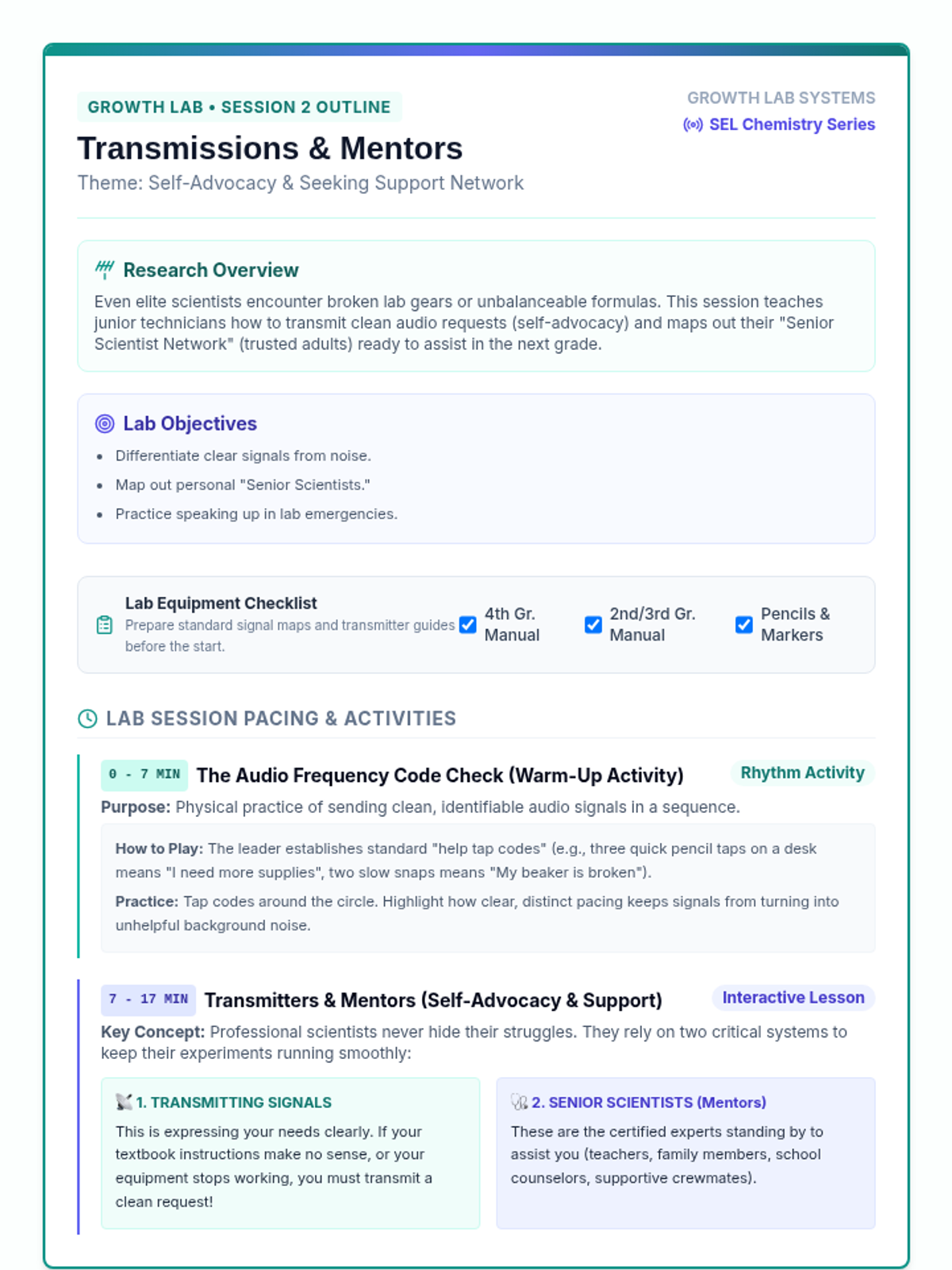
A premium facilitation guide for the second session of the end-of-year reflection series, focusing on self-advocacy and seeking support. Includes pacing, SOS Morse Code warm-ups, 'Trail Signals & Guides' role-play scenarios, grade-differentiated instructions, and collaborative group discussion prompts.
An interactive reflection and drawing activity designed for 2nd and 3rd-grade students to practice self-regulation. Features a design-your-own 'Pause Button' space, a tactile mountain-breathing tracing graphic, and guided fill-in-the-blank sentences to solidify personal self-soothing goals.
An independent reflection worksheet designed for 4th-grade students. Features a real-world scenario where students analyze and contrast impulsive immediate reactions with deliberate, 'paused' decision-making, followed by guided prompts to identify physiological body signals and reflect on personal growth over the past school year.
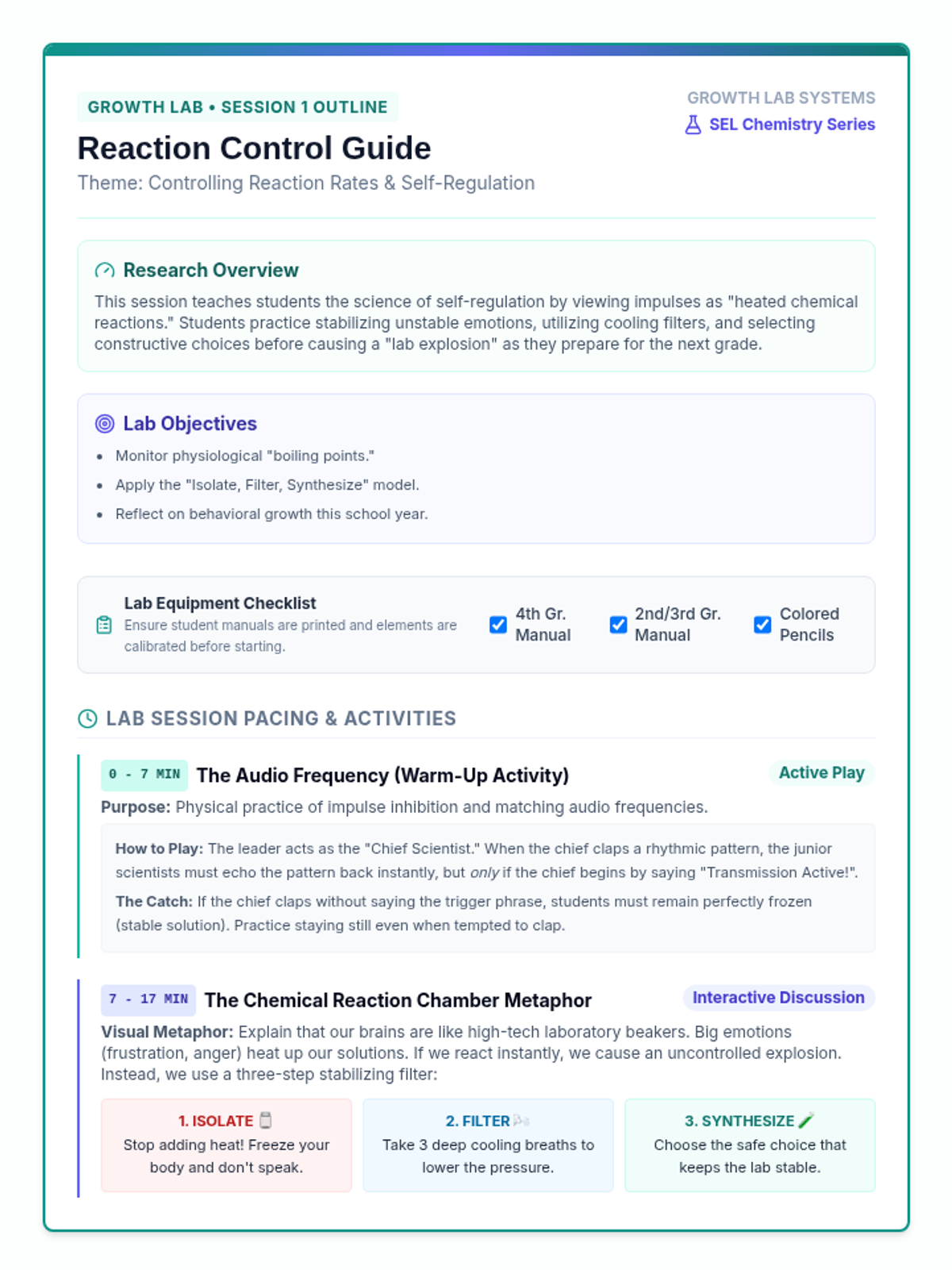
A premium facilitation guide for the first session of the end-of-year reflection series, focusing on impulse control and self-regulation. Includes pacing, active play warm-ups, the 'Trail Fork' physical/mental model, grade-differentiated instructions, and collaborative group discussion prompts.
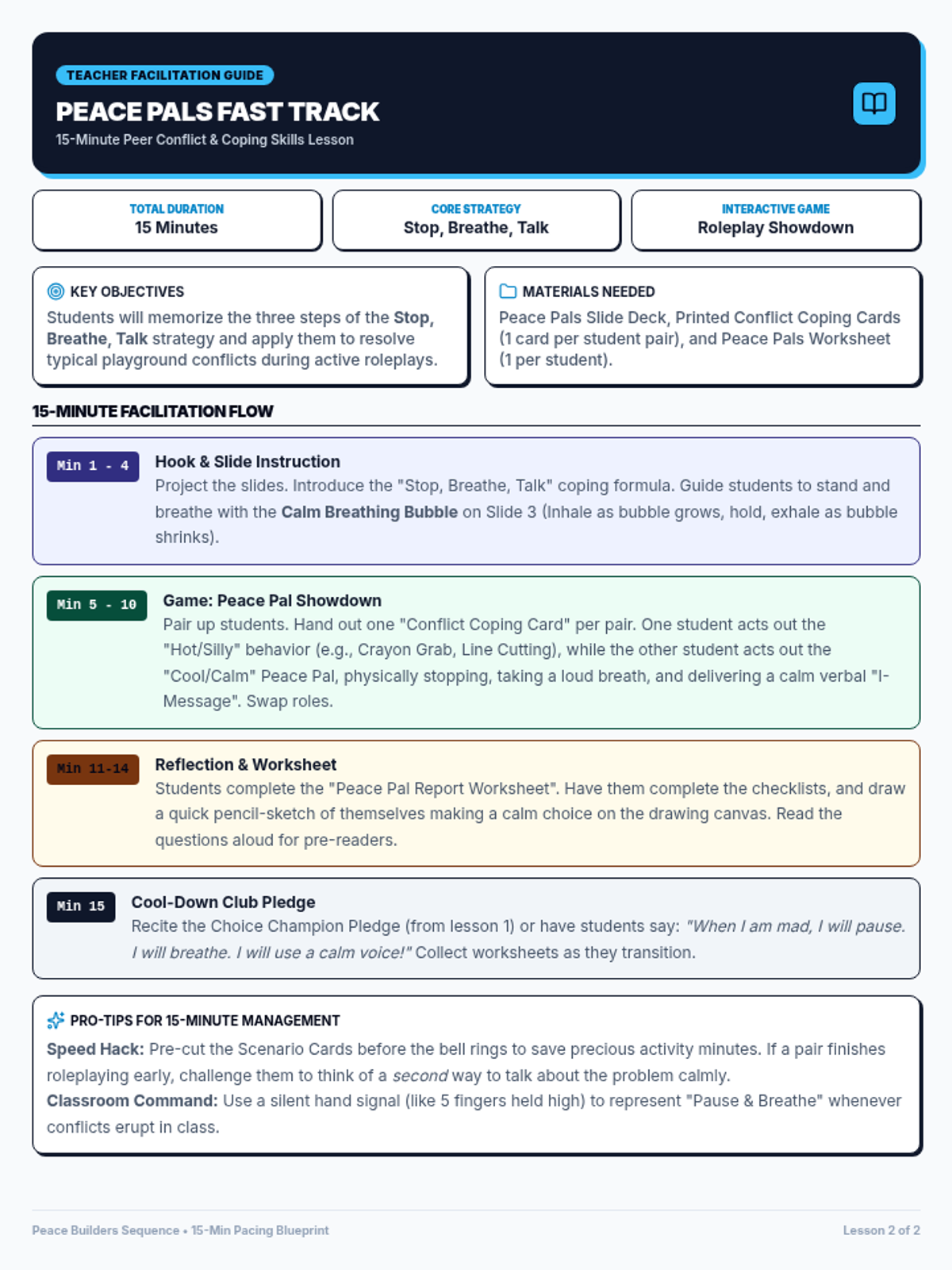
A comprehensive pacing and facilitation guide for teachers to deliver the Peace Pals lesson. It details a fast-track 15-minute delivery timeline with specific scripts, active roleplay management, and rapid transitions.
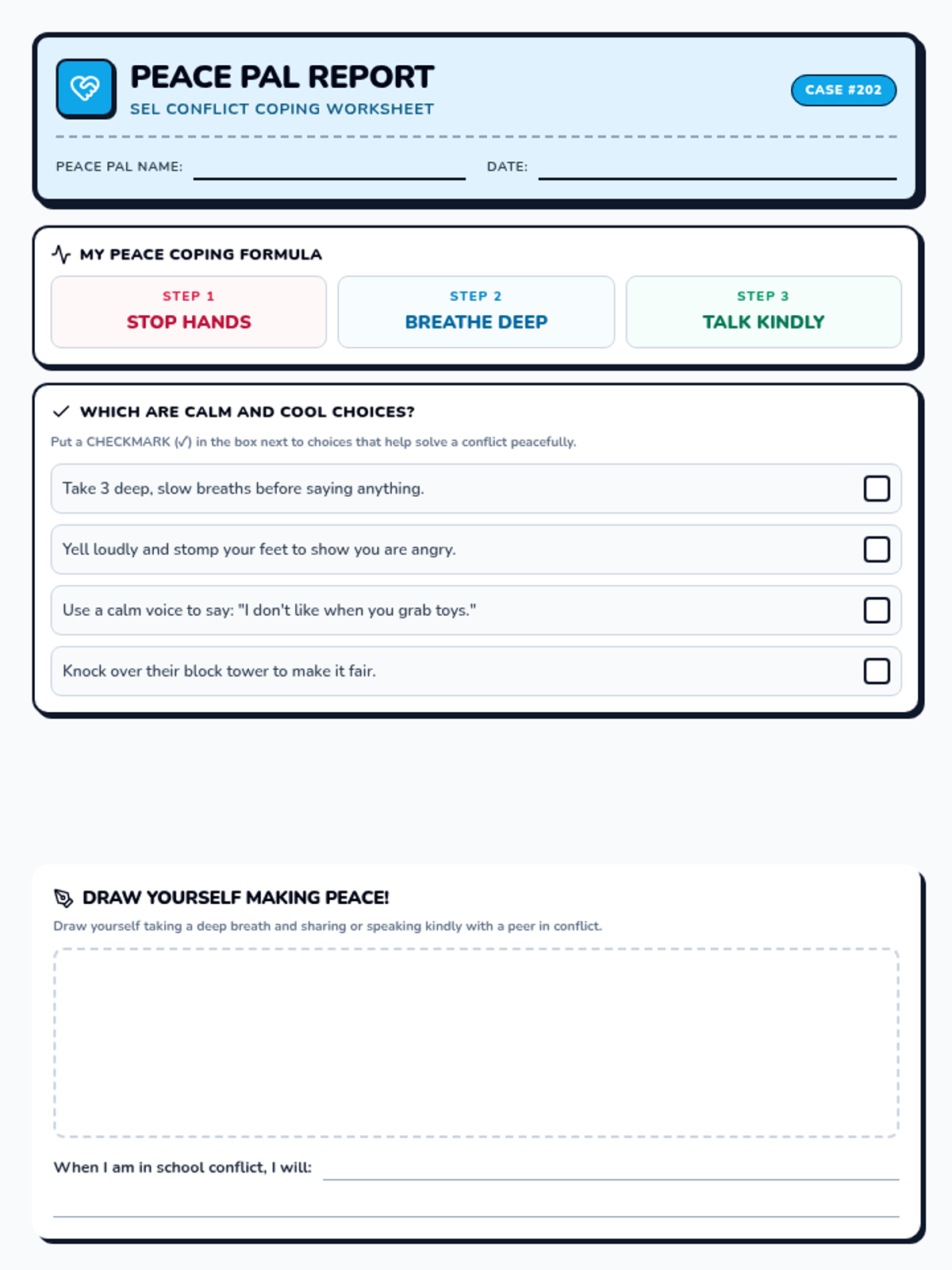
A reflection and matching worksheet for K-3 students to practice conflict self-regulation. Students identify calm coping choices (with identically styled check-boxes) and draw a visual representation of peaceful conflict resolution.
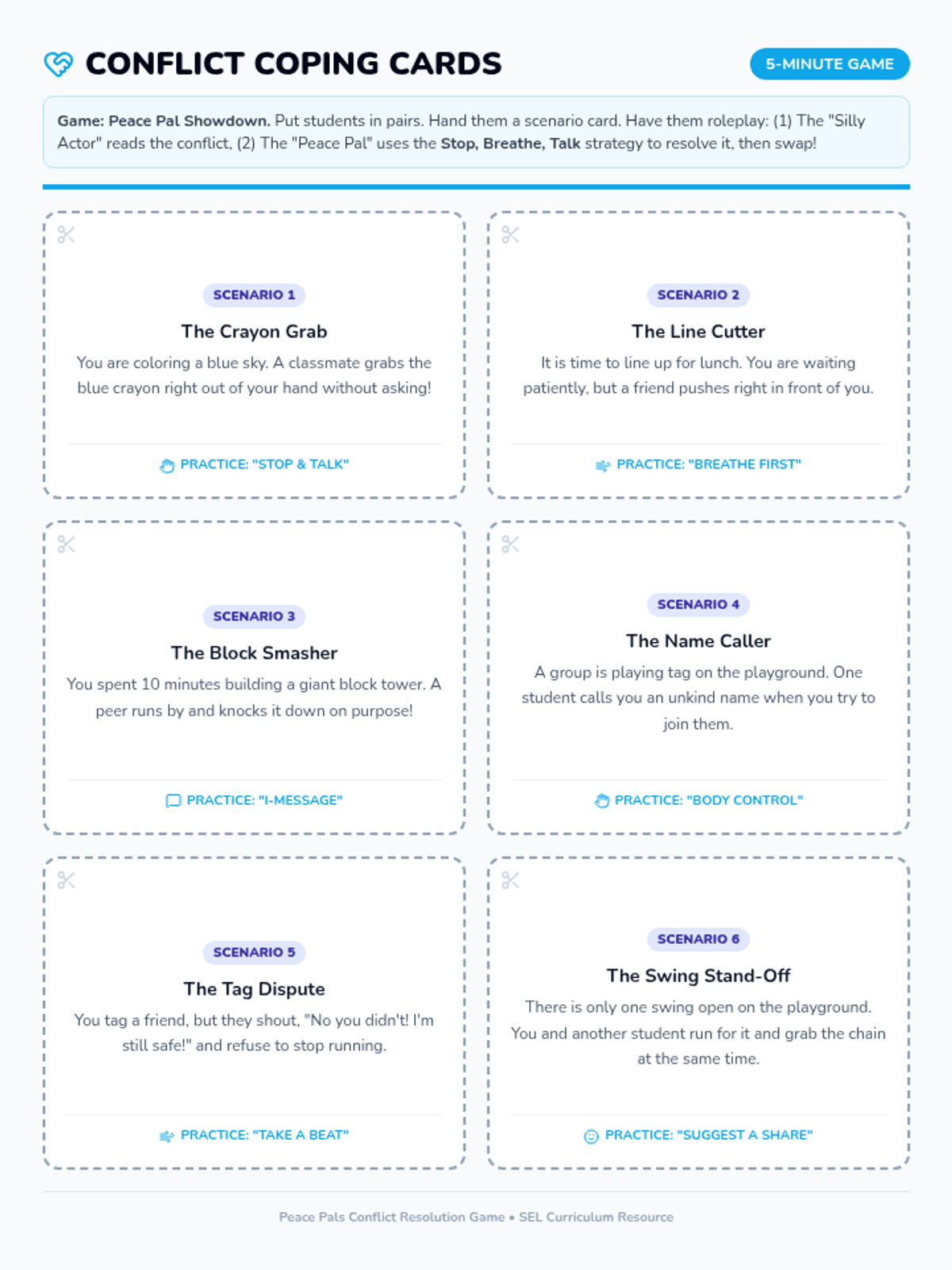
Print-ready role-play activity cards designed to be done as a fast-paced classroom game called 'Peace Pal Showdown'. Includes 6 distinct student-centered peer conflict scenarios to practice positive self-regulation and verbal resolution.
Interactive slides for a K-3 classroom lesson on conflict resolution. Introduces the "Stop, Breathe, Talk" coping strategy with custom CSS animated breathing exercises, and includes an interactive playground conflict voting scenario.
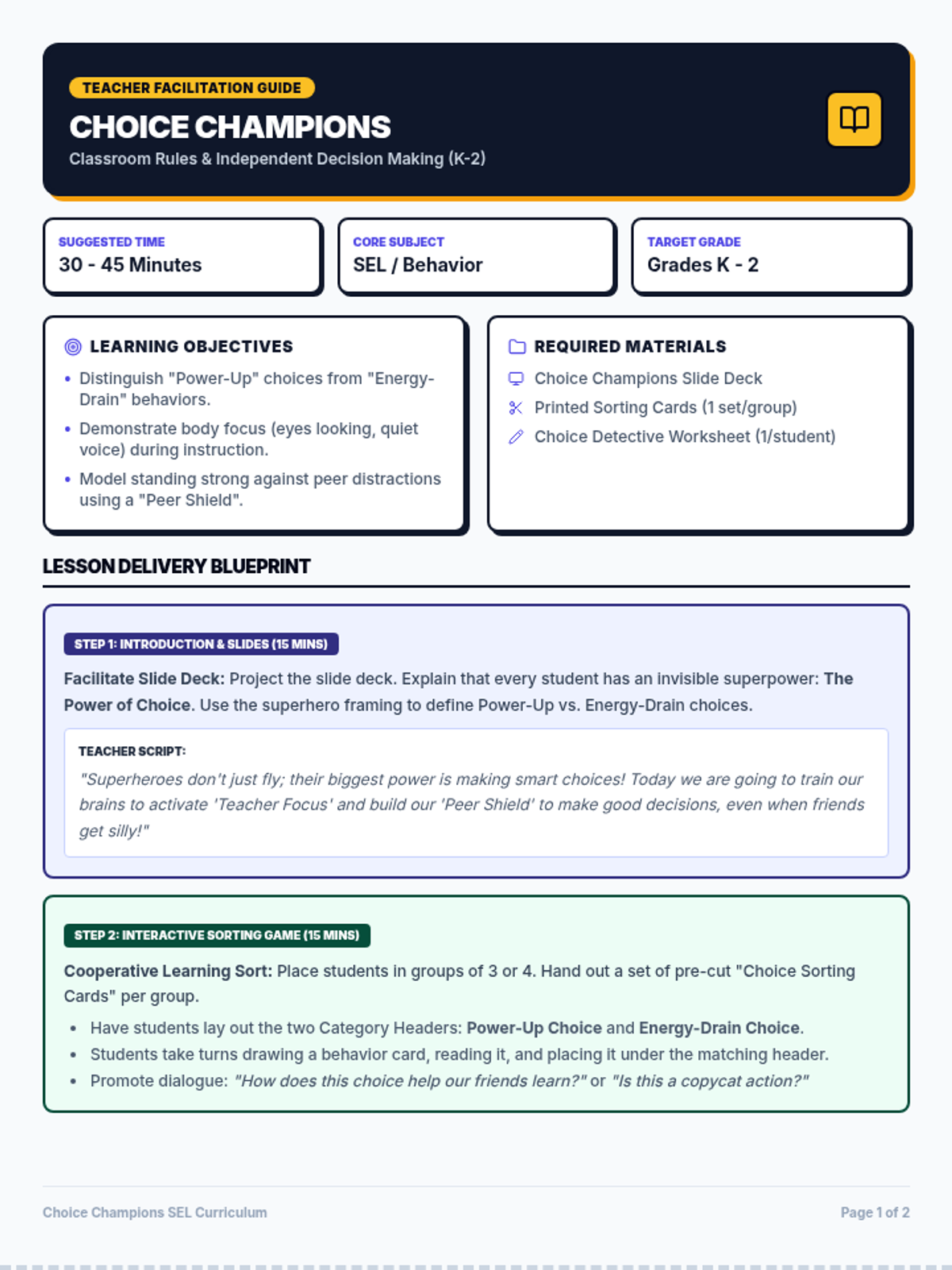
A comprehensive 2-page pacing and facilitation guide for teachers to deliver the Choice Champions lesson. It includes learning objectives, materials checklist, step-by-step instructions, verbal scripts, and targeted classroom management and differentiation tips.
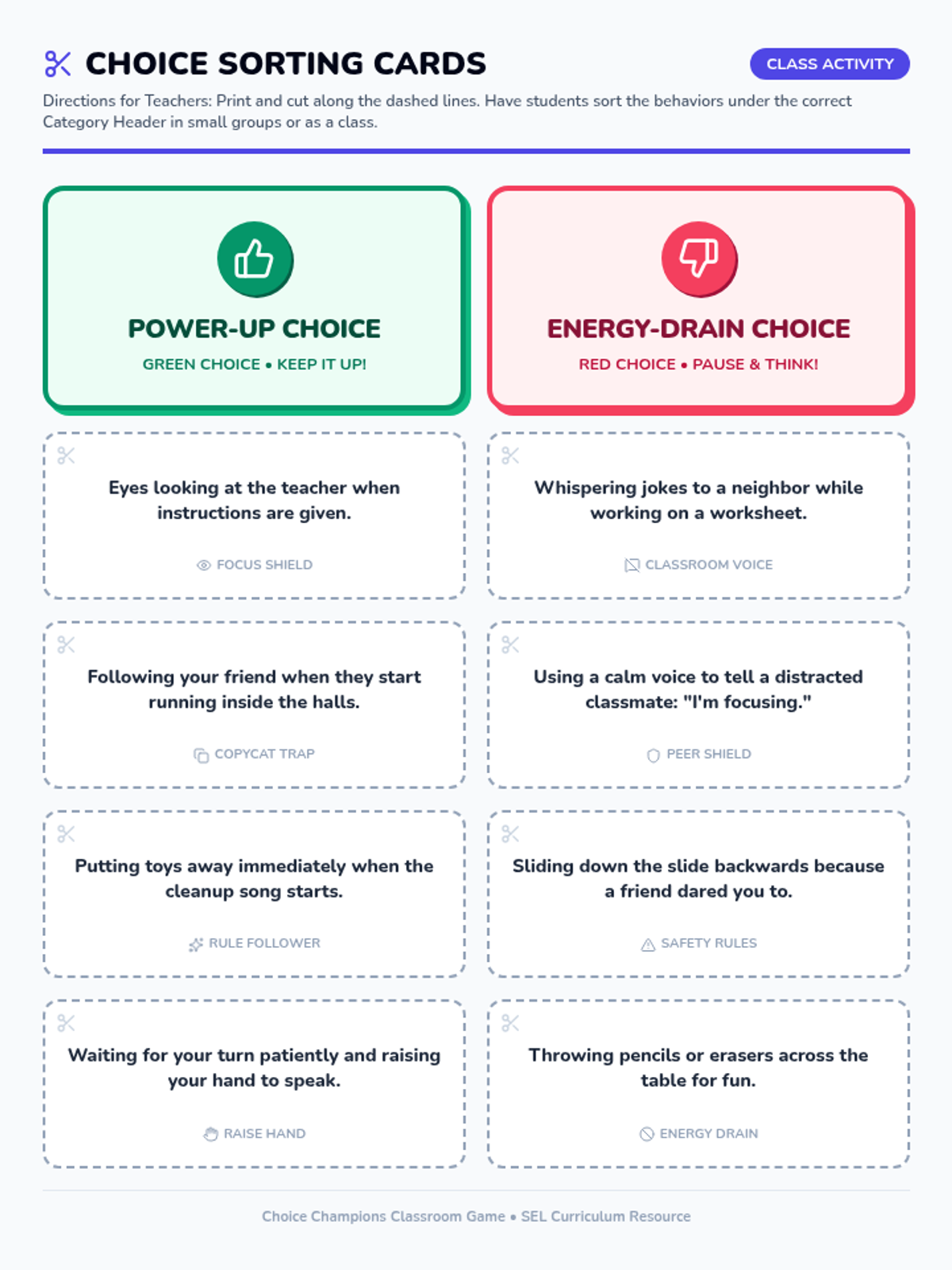
A set of printable sorting cards featuring two main category header cards (Power-Up Choice vs Energy-Drain Choice) and eight behavior scenario cards designed to be cut and sorted. Helps early childhood students visually distinguish between following rules and succumbing to peer distractions.
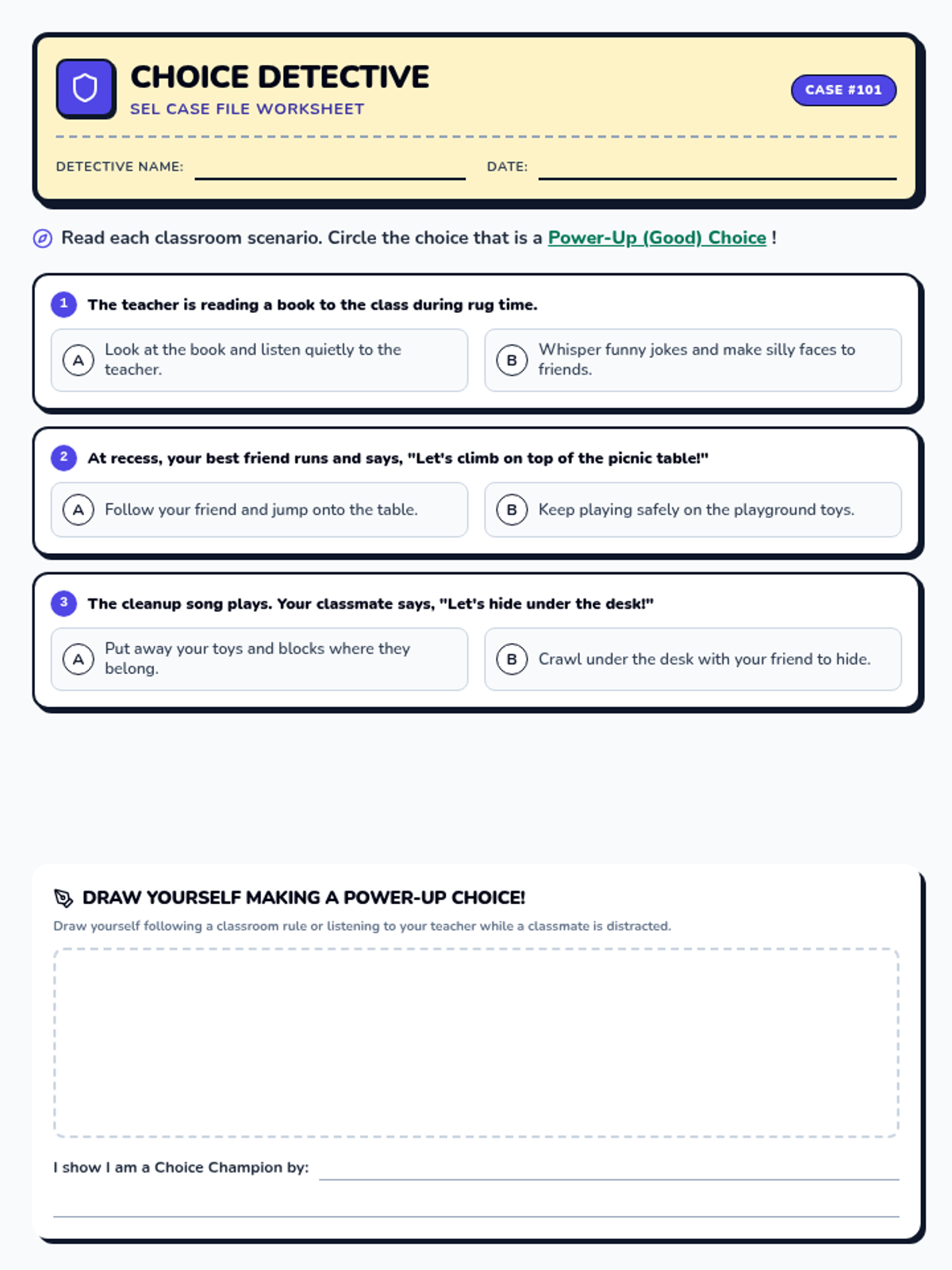
A matching and drawing worksheet for students (K-2) to demonstrate knowledge of 'Power-Up' choices vs 'Energy-Drain' choices. Students circle smart choices from identical options to avoid styling hints, and then draw themselves making a positive independent decision on a clean white drawing canvas.
Interactive slides for a K-2 classroom lesson on making good choices. It features a superhero theme ('Choice Champions') and guides students through learning to listen to the teacher, following rules, and using their 'peer shield' to resist negative peer behaviors. includes multiple voting scenarios.
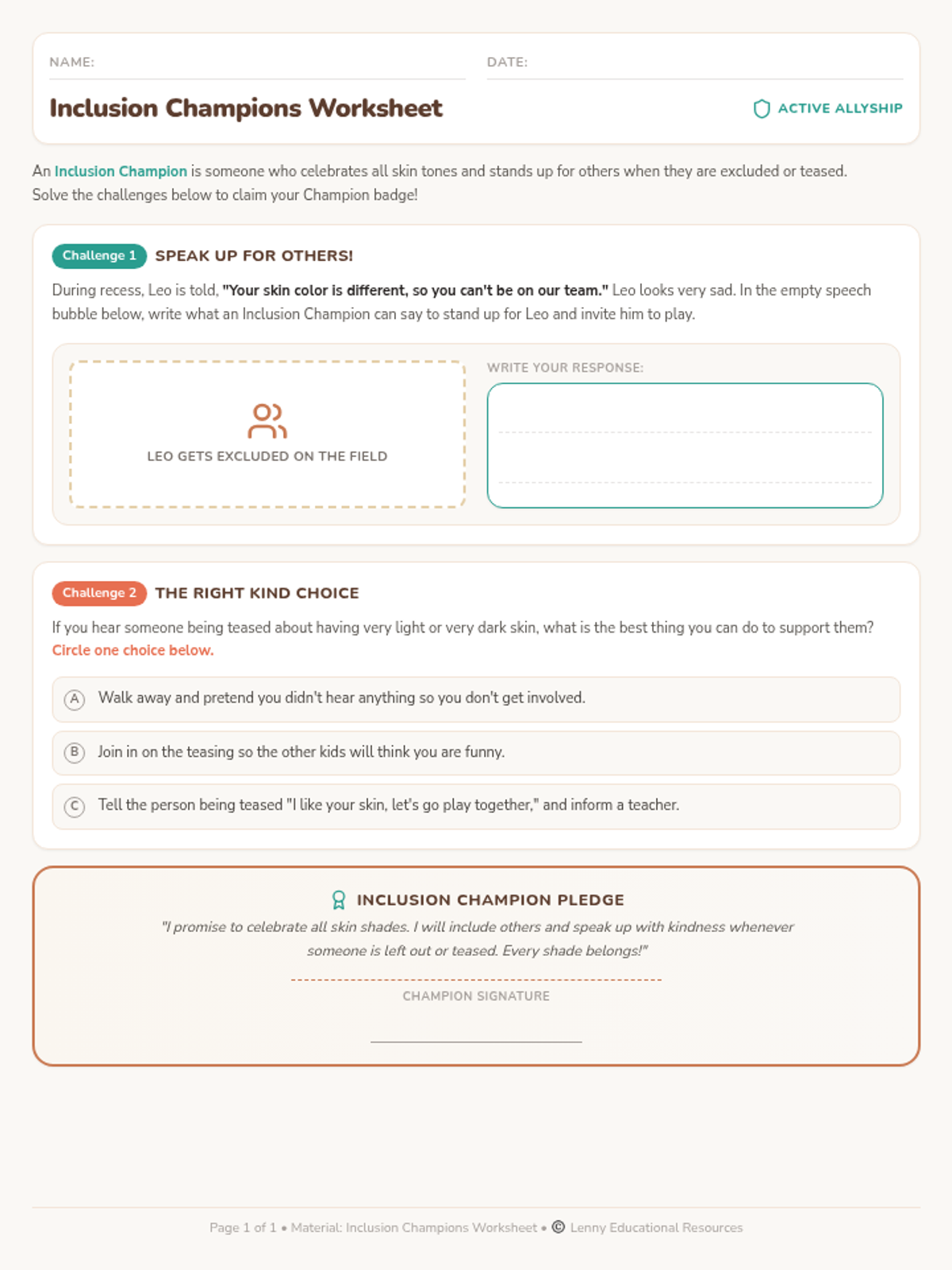
An interactive, student-facing scenarios worksheet designed for 2nd graders to apply bully prevention concepts, practice speaking up against skin-tone exclusion, and sign an active inclusion champion pledge. Includes uniform multiple-choice layout and responsive speech bubble writing areas.
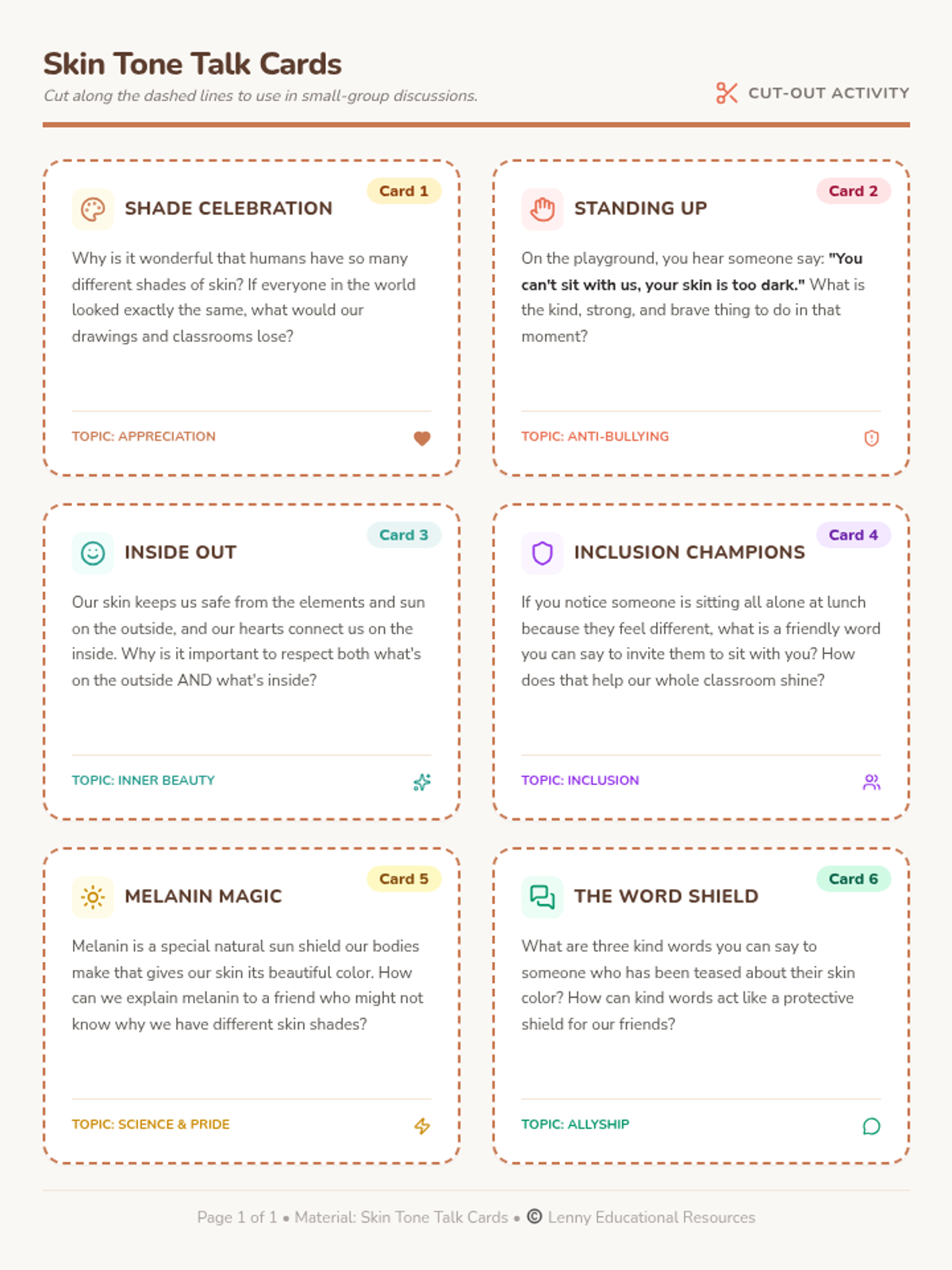
A set of 6 printable discussion cards featuring kid-friendly scenarios and reflection prompts focused on celebrating diversity, understanding colorism, standing up to bullying, and practicing active inclusion in 2nd-grade classrooms.
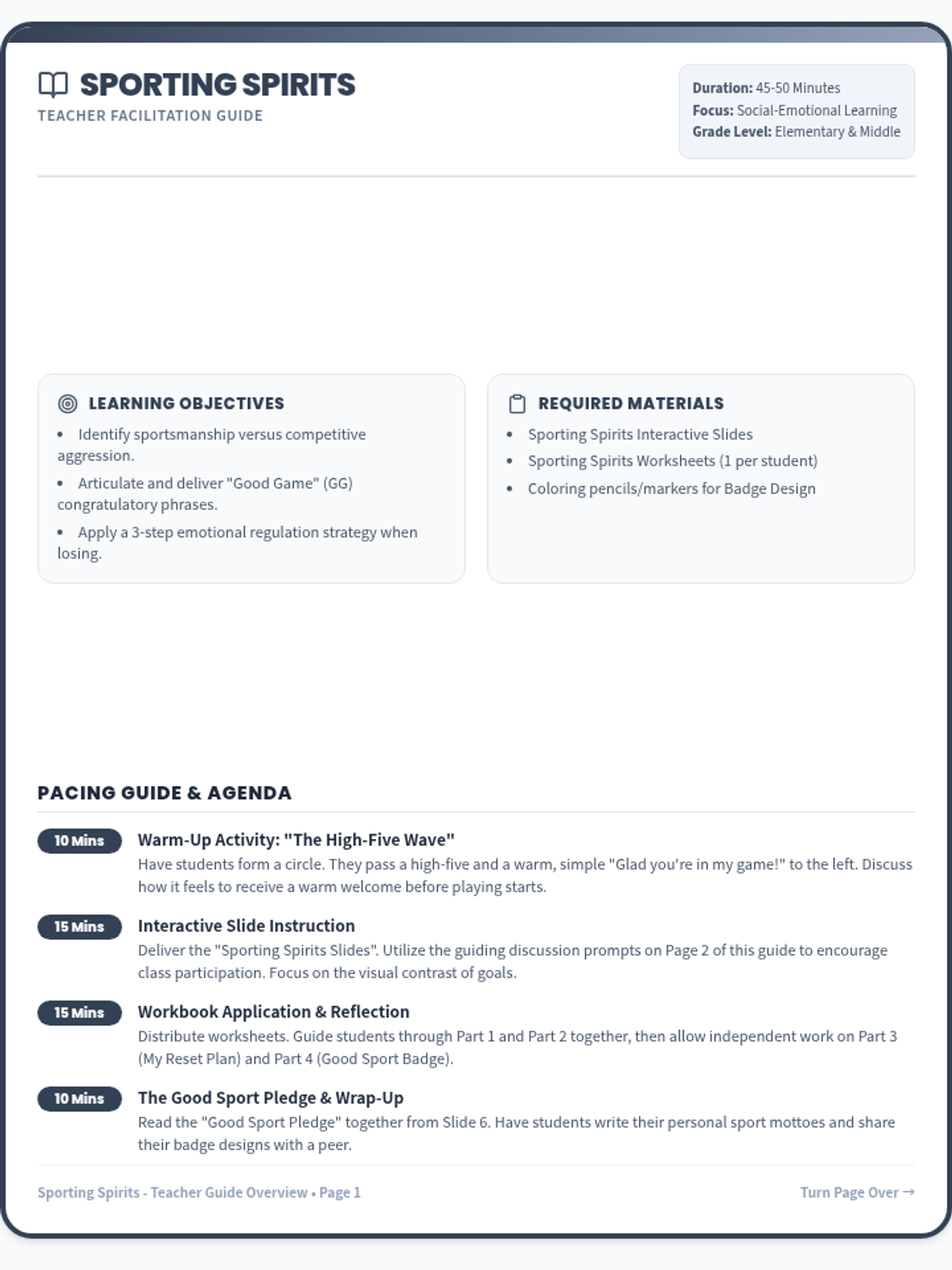
A comprehensive 2-page teacher guide designed to accompany the Sporting Spirits lesson. Includes clear pacing details, SEL-aligned learning goals, slide facilitation prompts, and a full answer key/response guide.
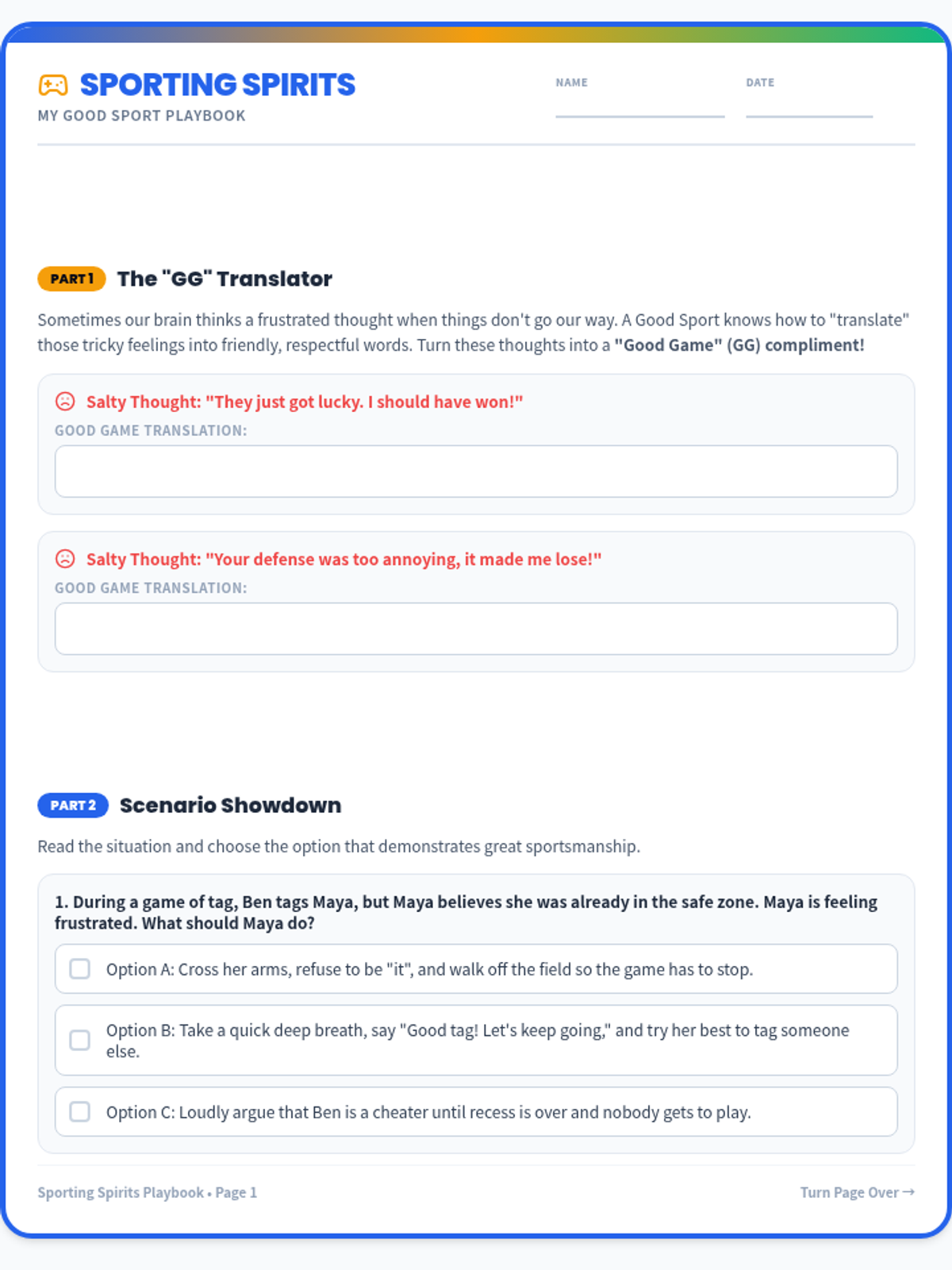
A 2-page student workbook containing translation exercises, multiple-choice scenario analysis, a structured emotional reset planner, and a creative design activity for a personalized 'Good Sport Badge'.
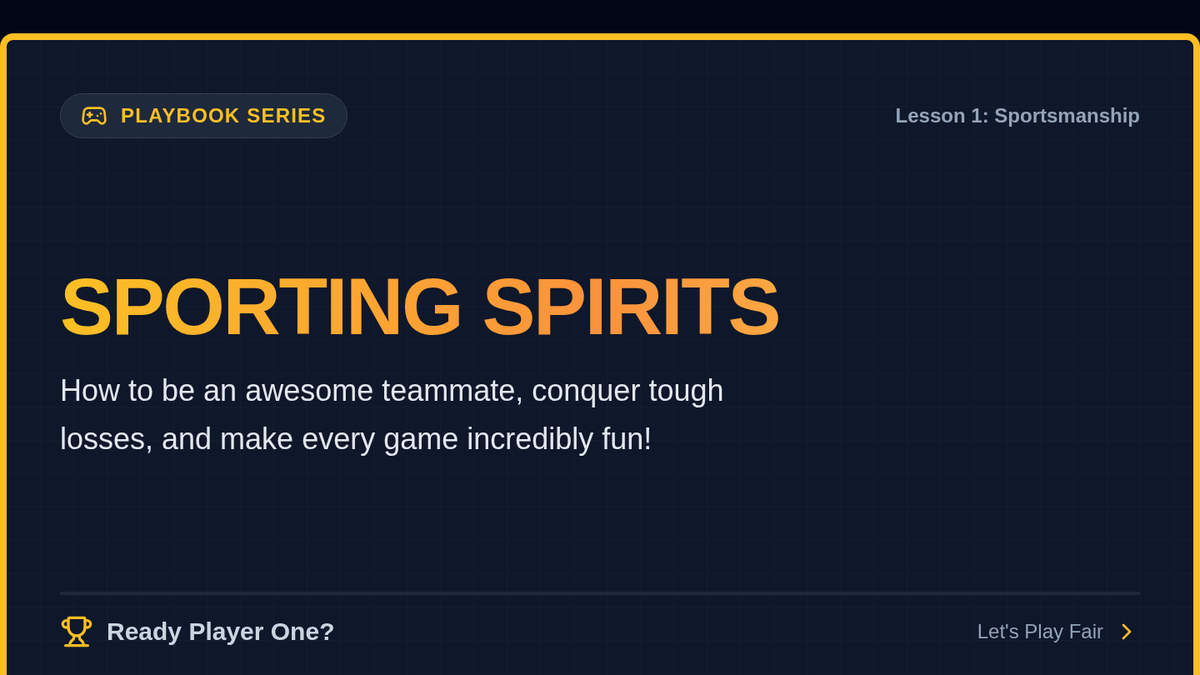
A vibrant, 6-slide presentation covering sportsmanship, 'GG' congratulatory habits, managing emotional reset when losing, and a team pledge. Includes rich retro arcade elements and clear structured layouts.
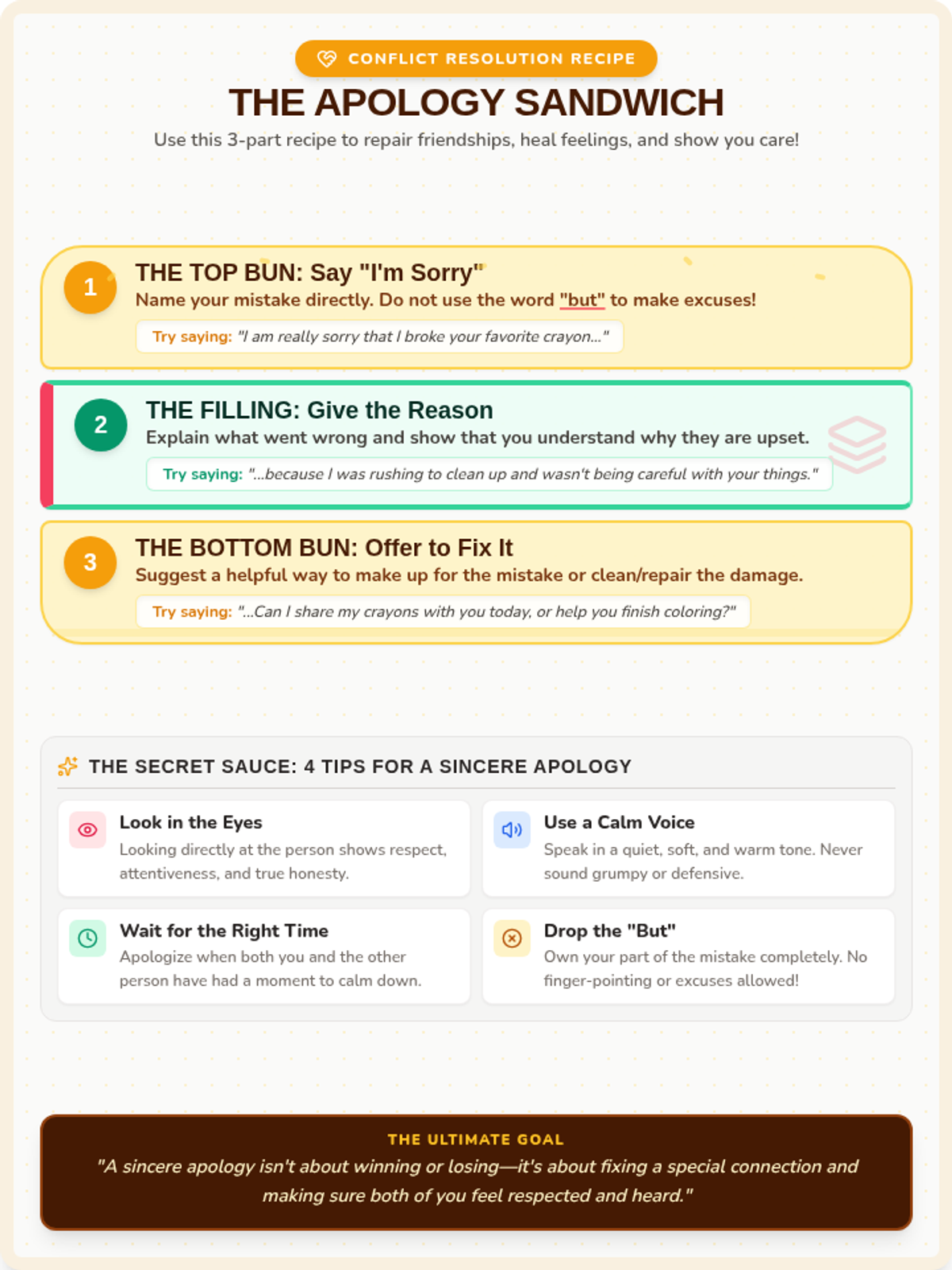
A beautifully formatted one-page classroom poster and infographic displaying the 3-step Apology Sandwich model and four golden tips for delivering a sincere apology. Perfect for posting as a reminder on Google Classroom.
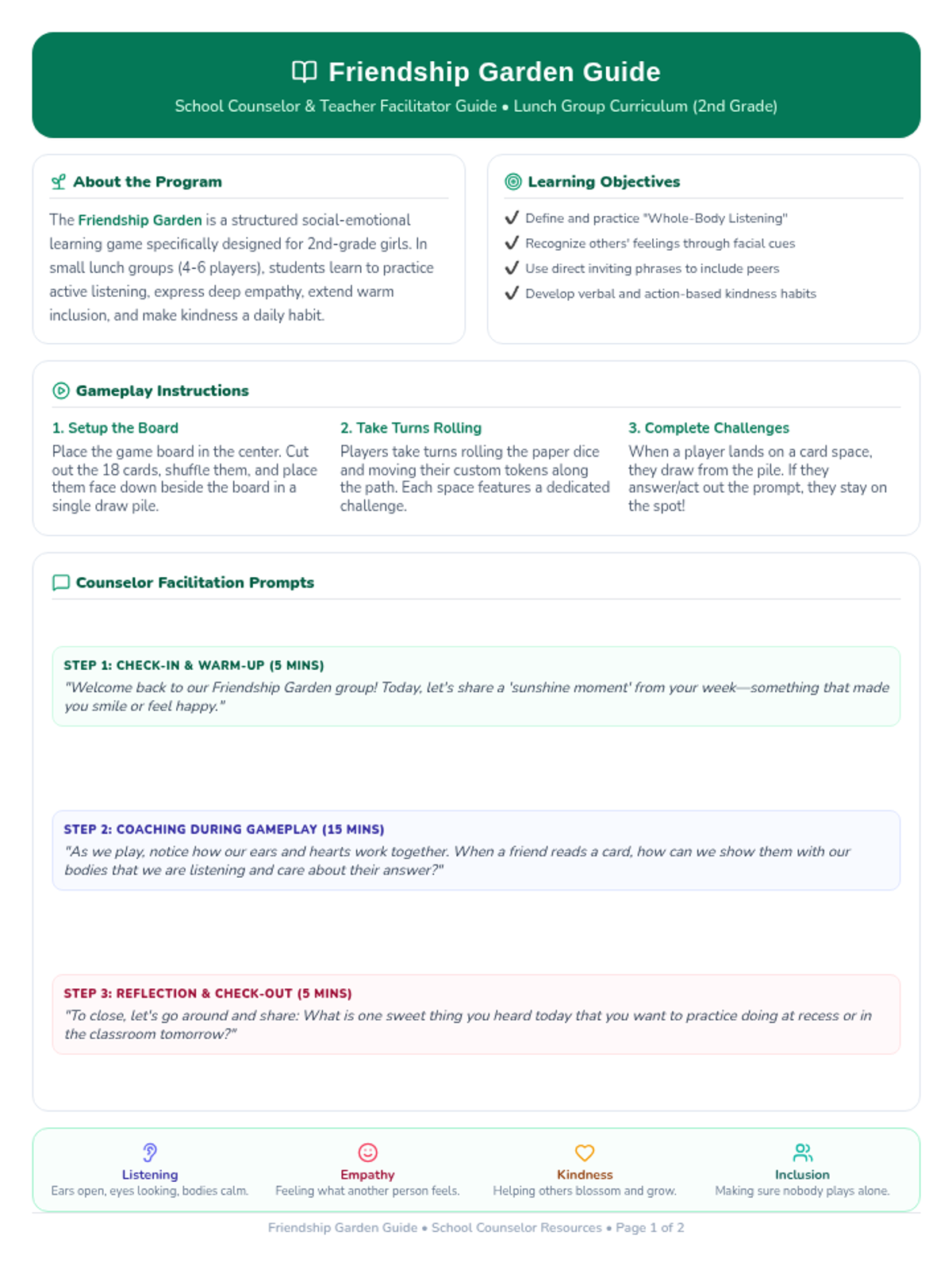
A counselor and teacher facilitation guide containing group check-in strategies, classroom reflection prompts, active listening guidelines, and a second page featuring printable DIY paper dice and foldable character tokens to play the game immediately with no extra resources needed.
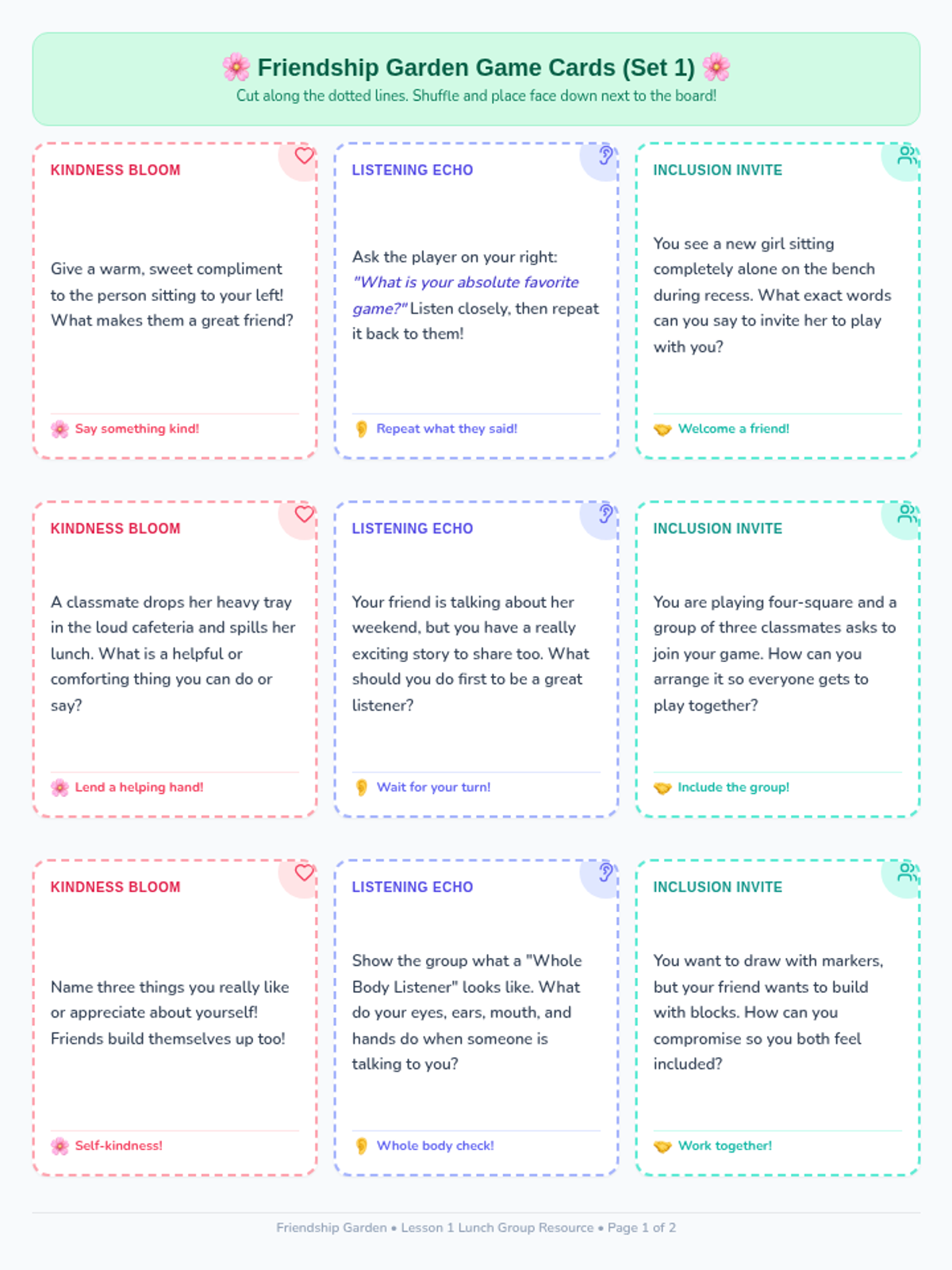
A printable, double-sided sheet containing 18 beautiful scenario-based game cards categorized into Kindness Blooms, Listening Echoes, and Inclusion Invitations. Tailored to 2nd-grade levels for school social skills circles.
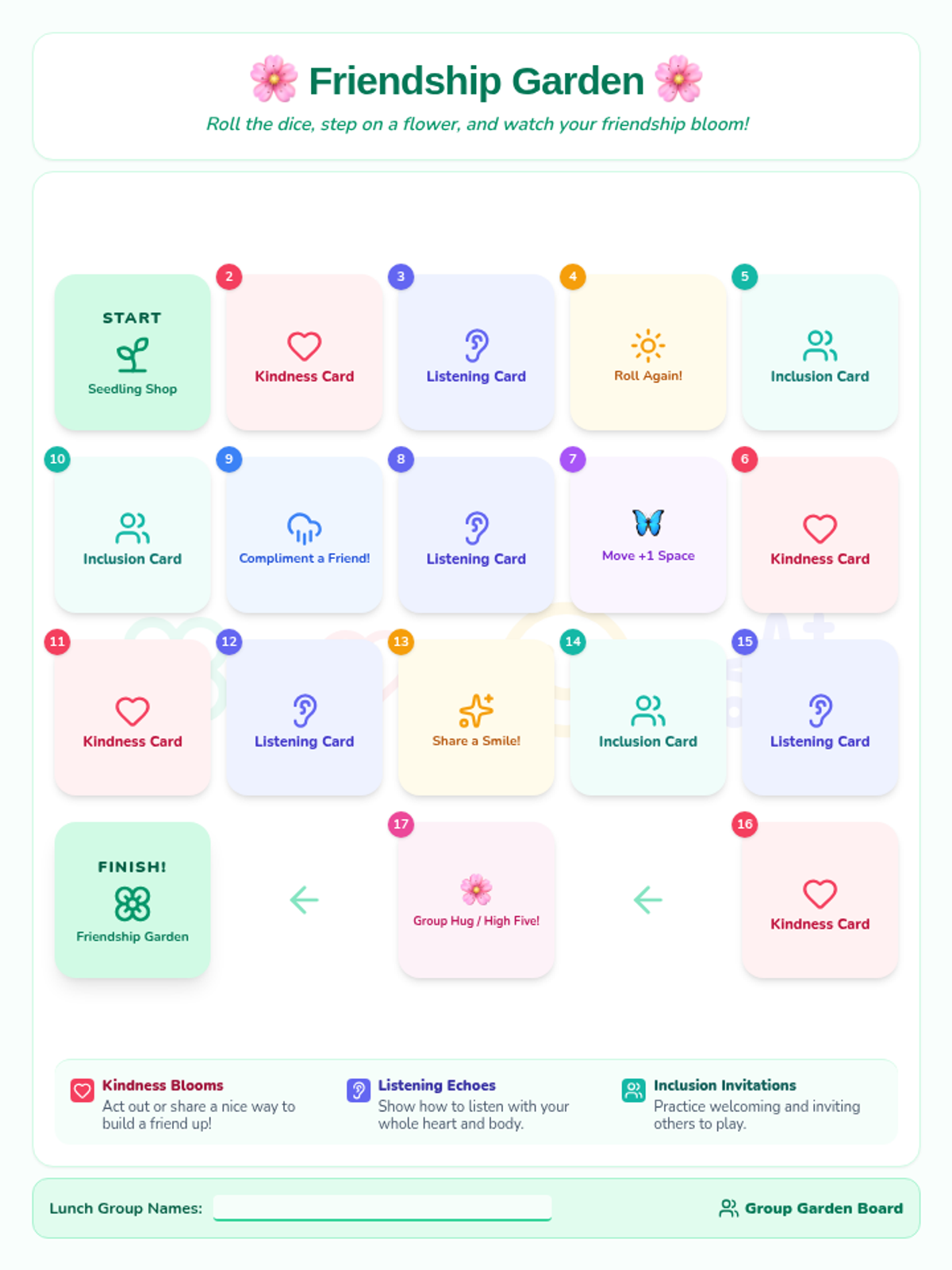
A printable, colorful board game board designed for a 2nd-grade lunch group. It features a garden theme with an S-shaped winding trail from Start (Seedling Shop) to Finish (Friendship Garden in Full Bloom), highlighting Kindness, Listening, and Inclusion spaces.
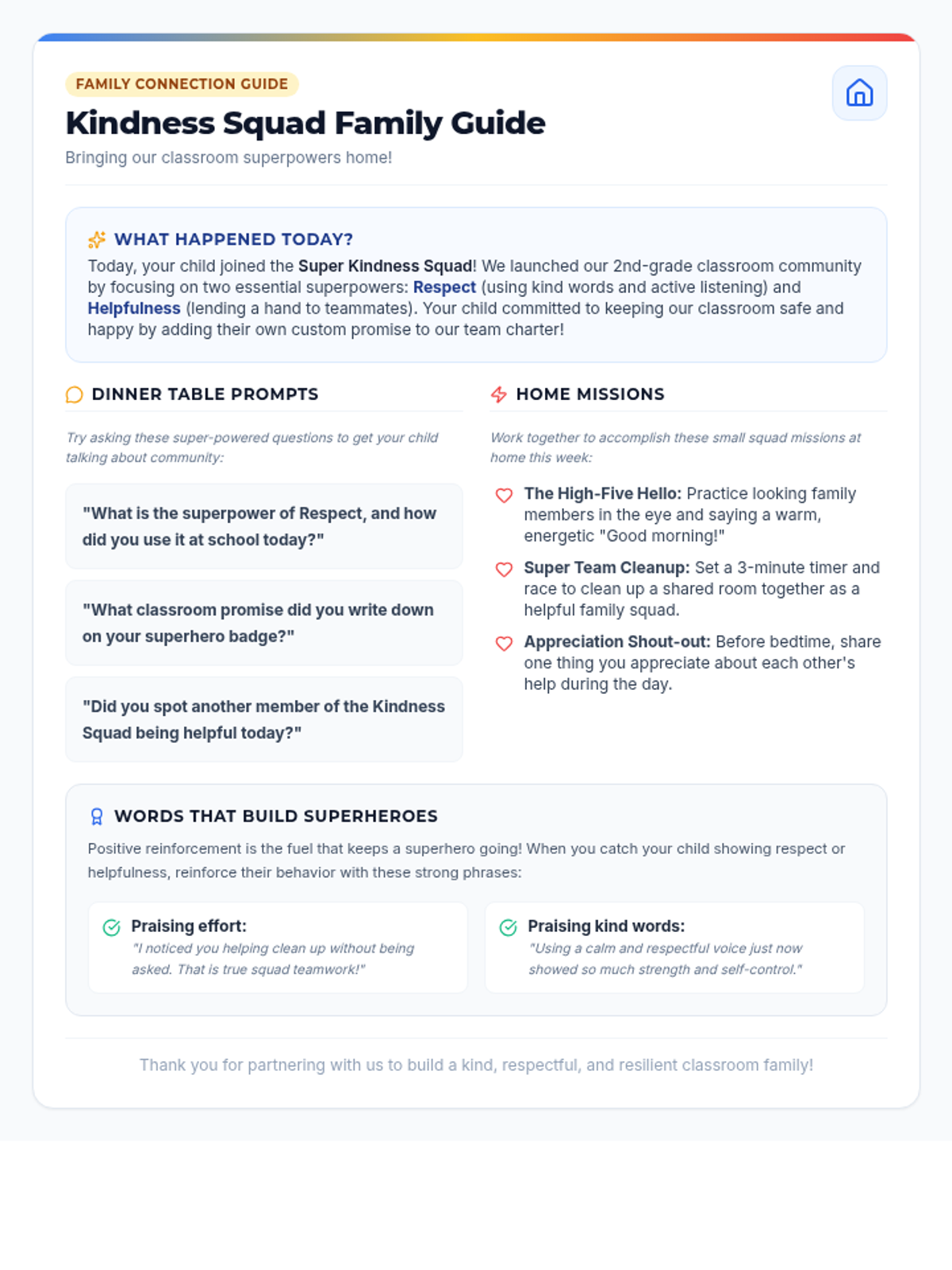
A warm, practical 1-page guide for parents and caregivers to extend the "Super Kindness Squad" lessons into the home, including quick daily conversations, family acts of kindness, and positive reinforcement.
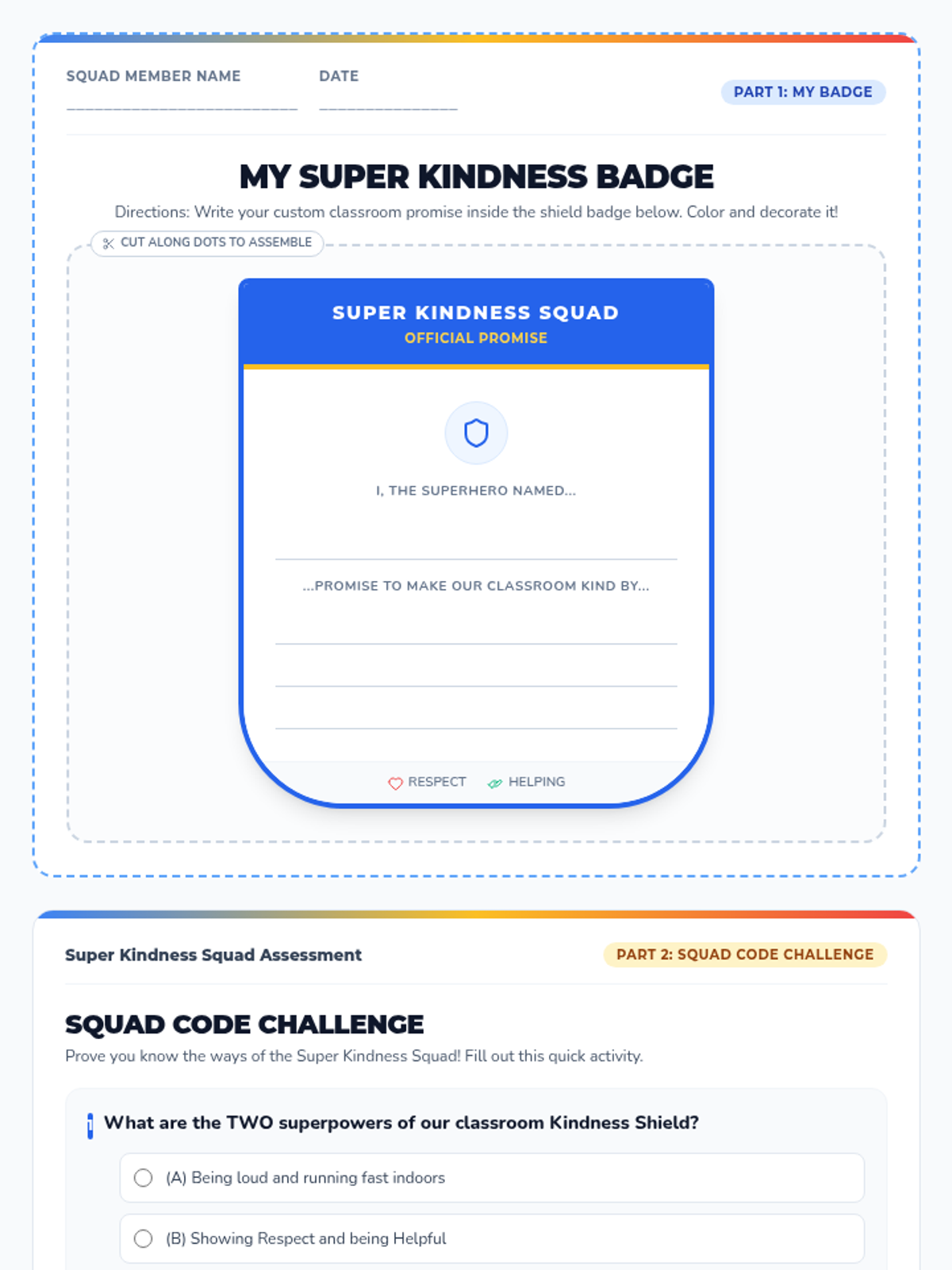
A multi-page print resource including a custom Superhero badge worksheet for students to write and illustrate their own Classroom Promise, plus a simple, kid-friendly assessment on kindness and respect.
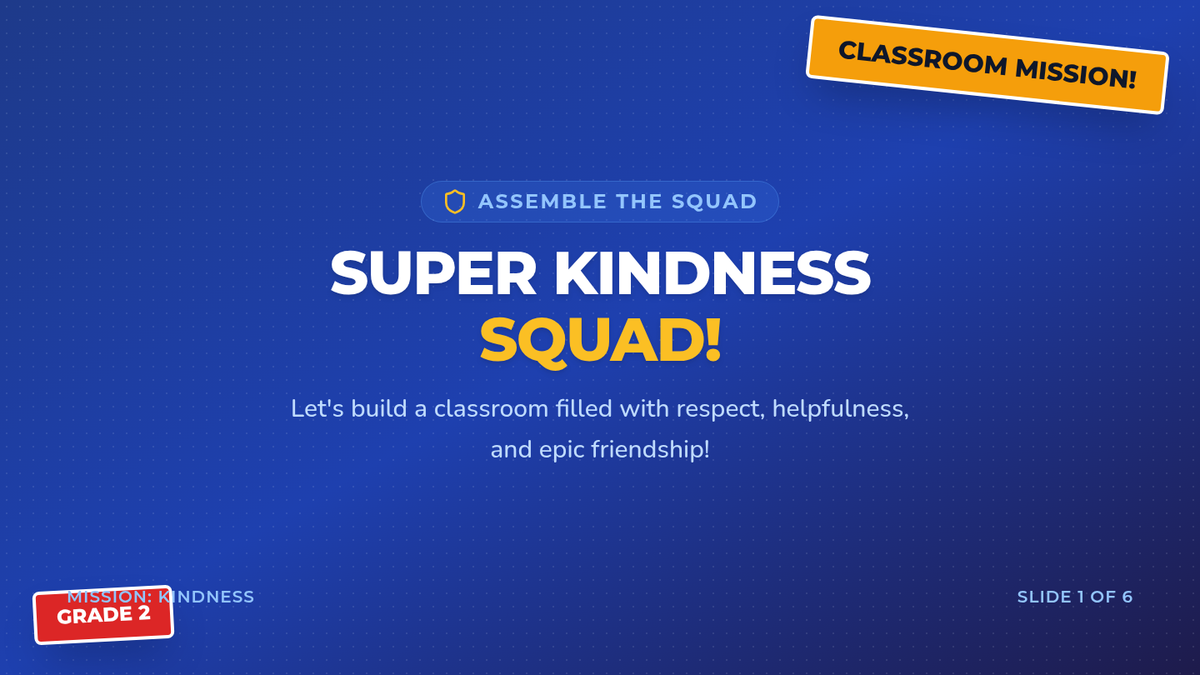
An energetic and visually rich presentation designed for classroom display to guide students through the Super Kindness Squad mission, kindness qualities, and collective classroom pledge.
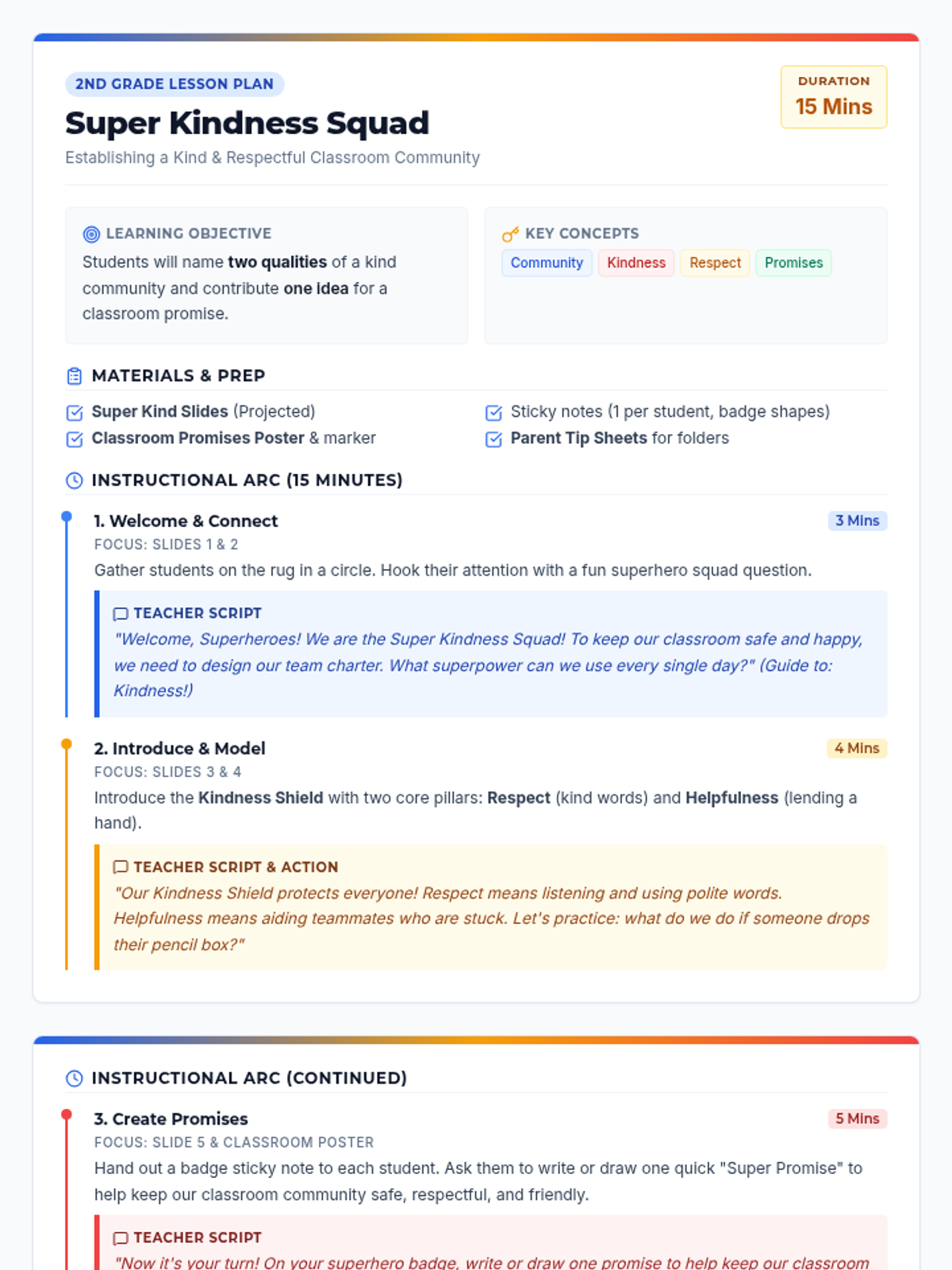
A highly detailed and structured 15-minute lesson plan for teachers to introduce the Super Kindness Squad concept, complete with scripts, timing, pacing tips, and differentiation.
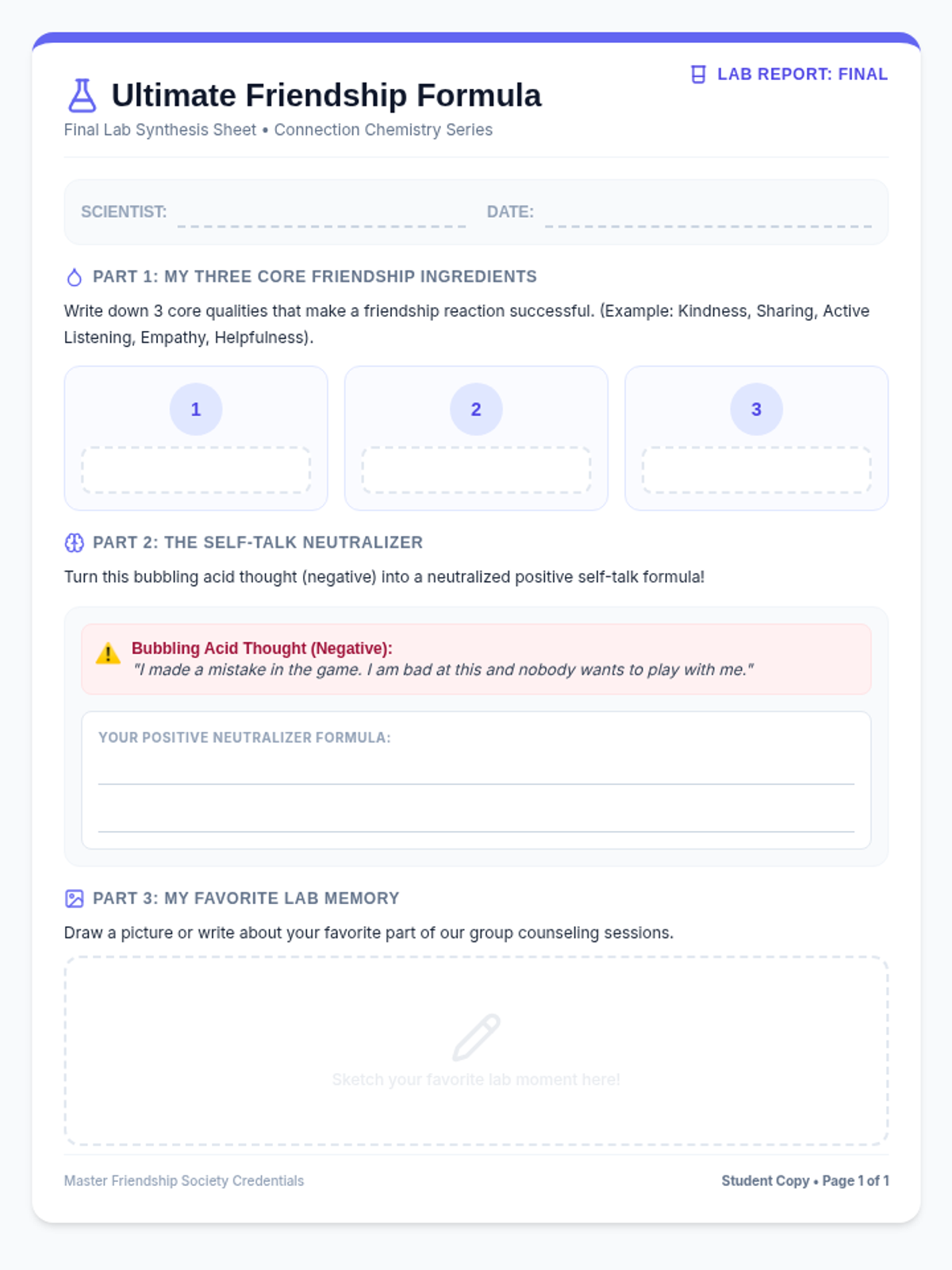
A science-themed 'Lab Report' worksheet for 2nd graders to practice friendship skills, emotional regulation, and peaceful conflict resolution. NOW UPDATED with a larger drawing area and compact layout to ensure single-page printing.
A vibrant, science-themed slide deck for the Ultimate Friendship Formula lesson, teaching making friends, emotional regulation, and conflict resolution with high-impact visuals. NOW UPDATED to prevent content overflow and improve alignment.
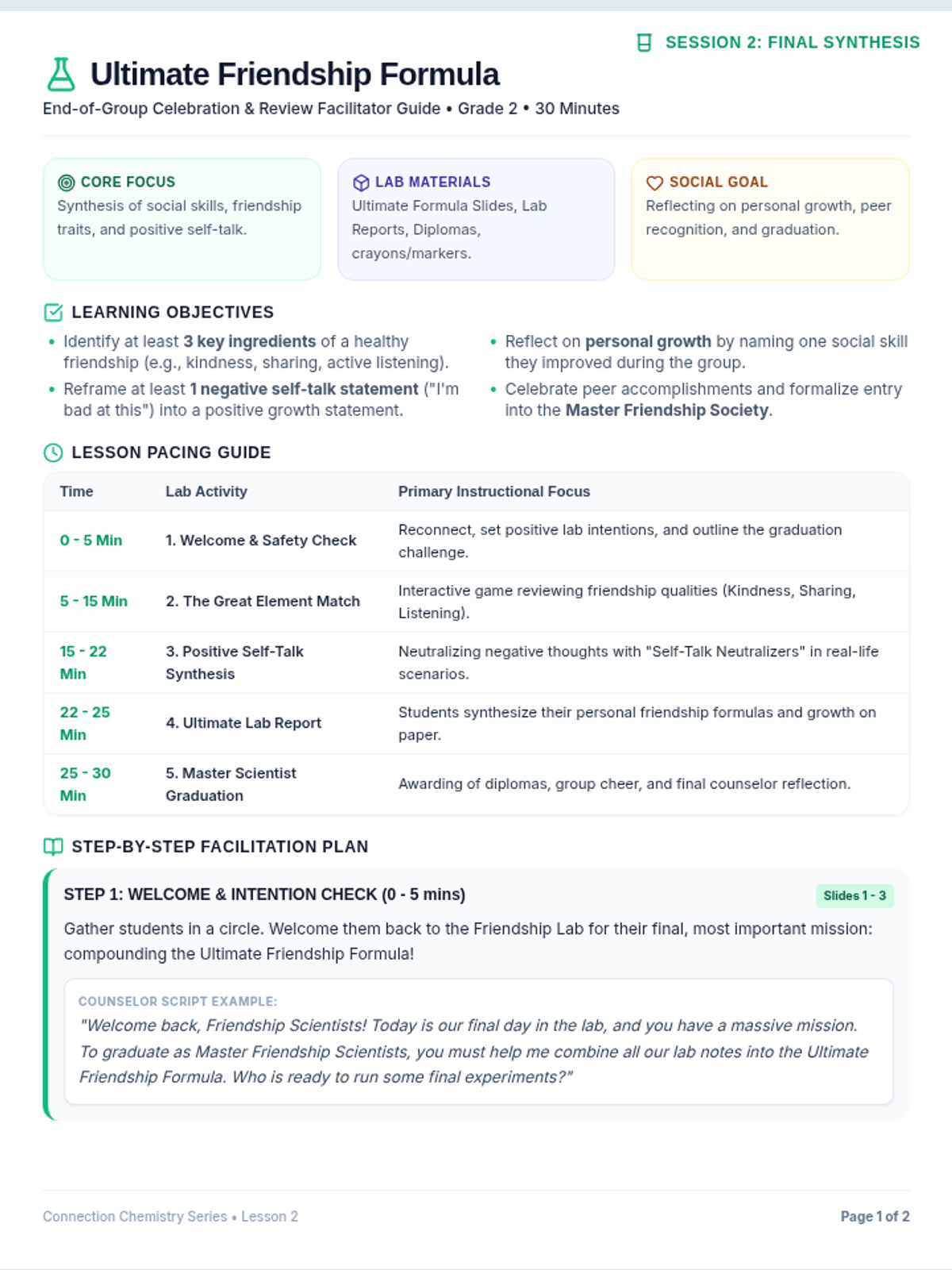
A comprehensive 2-page facilitator guide for the Ultimate Friendship Formula lesson. Includes lesson objectives, a detailed pacing table, counselor script examples, and step-by-step instructions for the group counseling review and graduation ceremony.
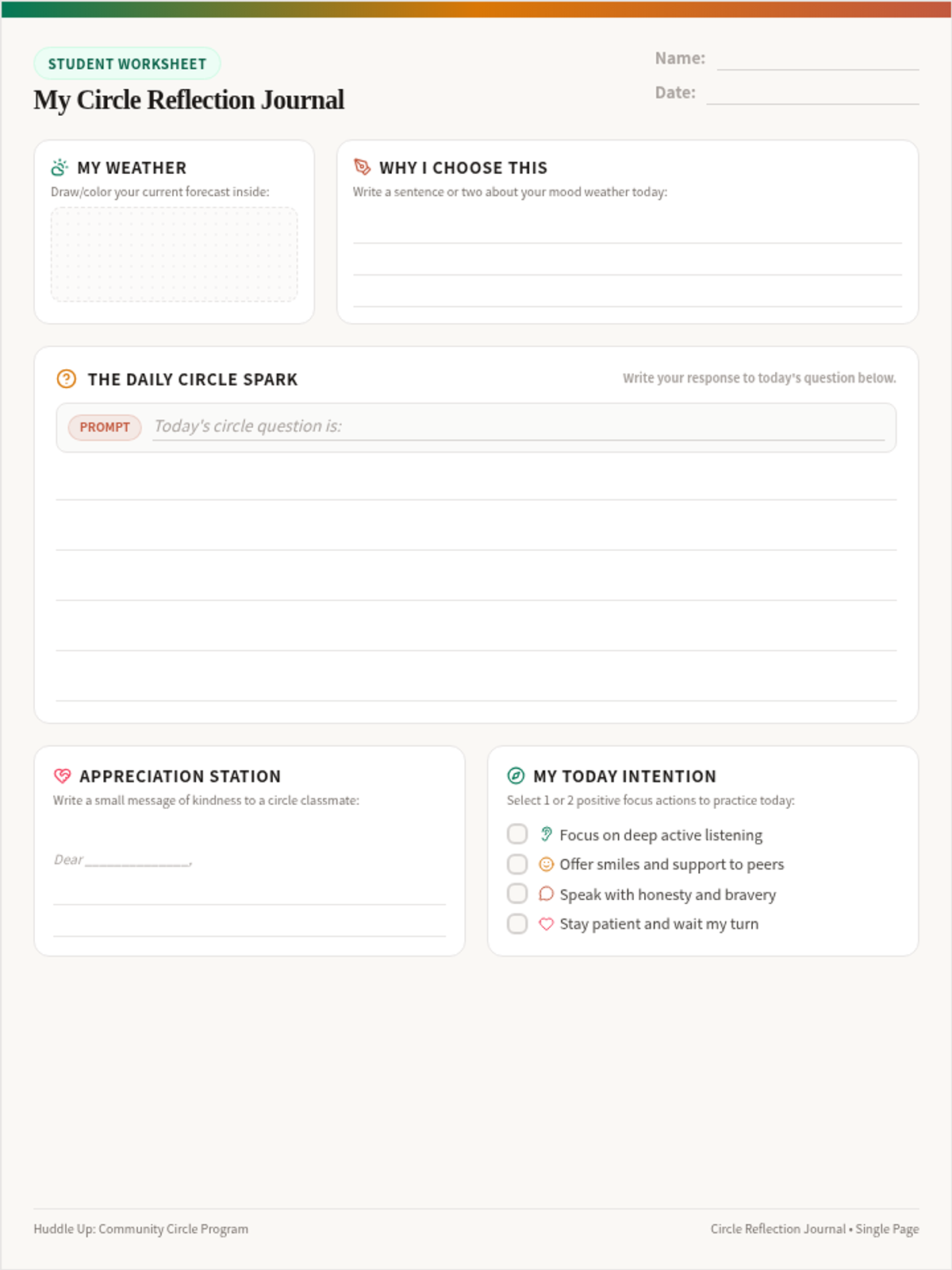
A clean, student-facing reflection sheet for daily intentions, weather report check-ins, and space to write reflections for the circle questions.
An engaging 5-slide presentation to guide community circles. Includes visual circle agreements, an emotional weather check-in scale, curated question choices, and exit rituals.
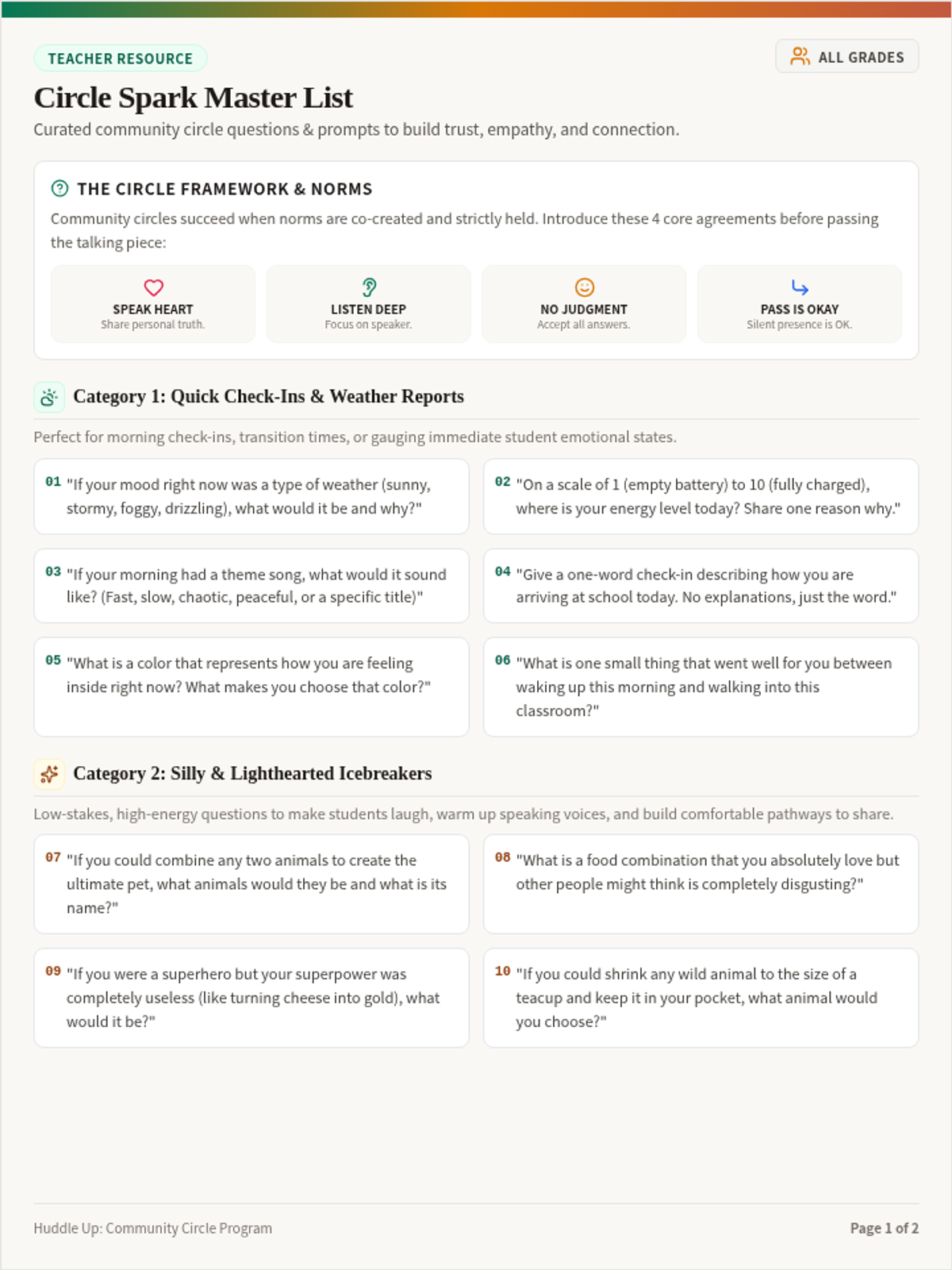
A comprehensive, beautifully typeset 2-page master list of categorized community circle questions ranging from light check-ins and icebreakers to relationship builders and reflective growth-mindset prompts.
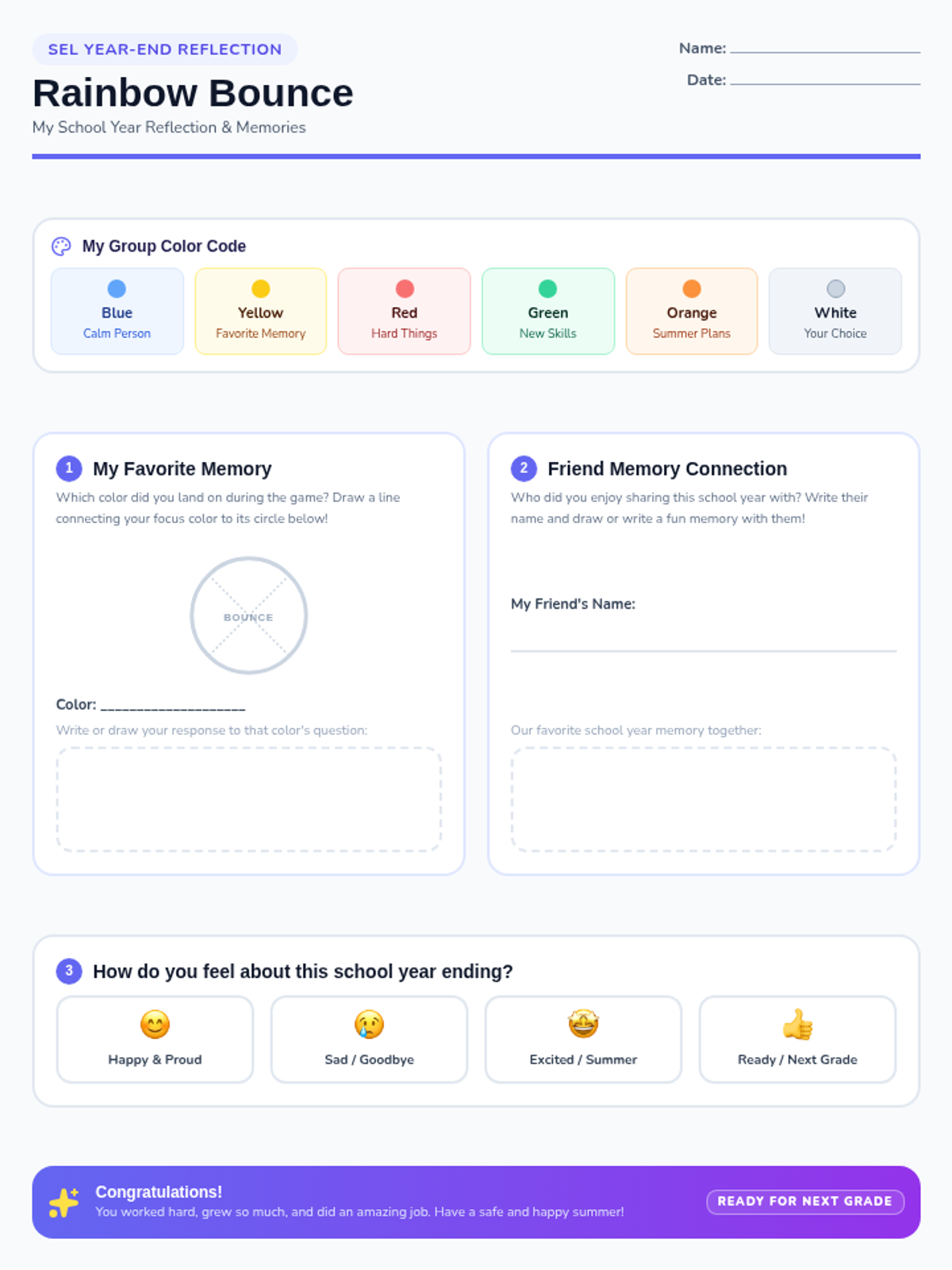
A beautifully structured student reflection worksheet for the Rainbow Bounce SEL check-in activity. Provides clean fields for names, spacious handwriting boxes, a coloring ball graphic, a friend connection section, and a simple feeling self-assessment grid to foster critical social-emotional skills.
A vibrant, multi-colored presentation with structured, engaging check-in prompts tailored to Blue, Yellow, Red, Green, Orange, and White colors. Designed specifically for young life skills groups with clear headings, minimal clutter, large legible fonts, and zero non-functional interactive elements to prevent student confusion.
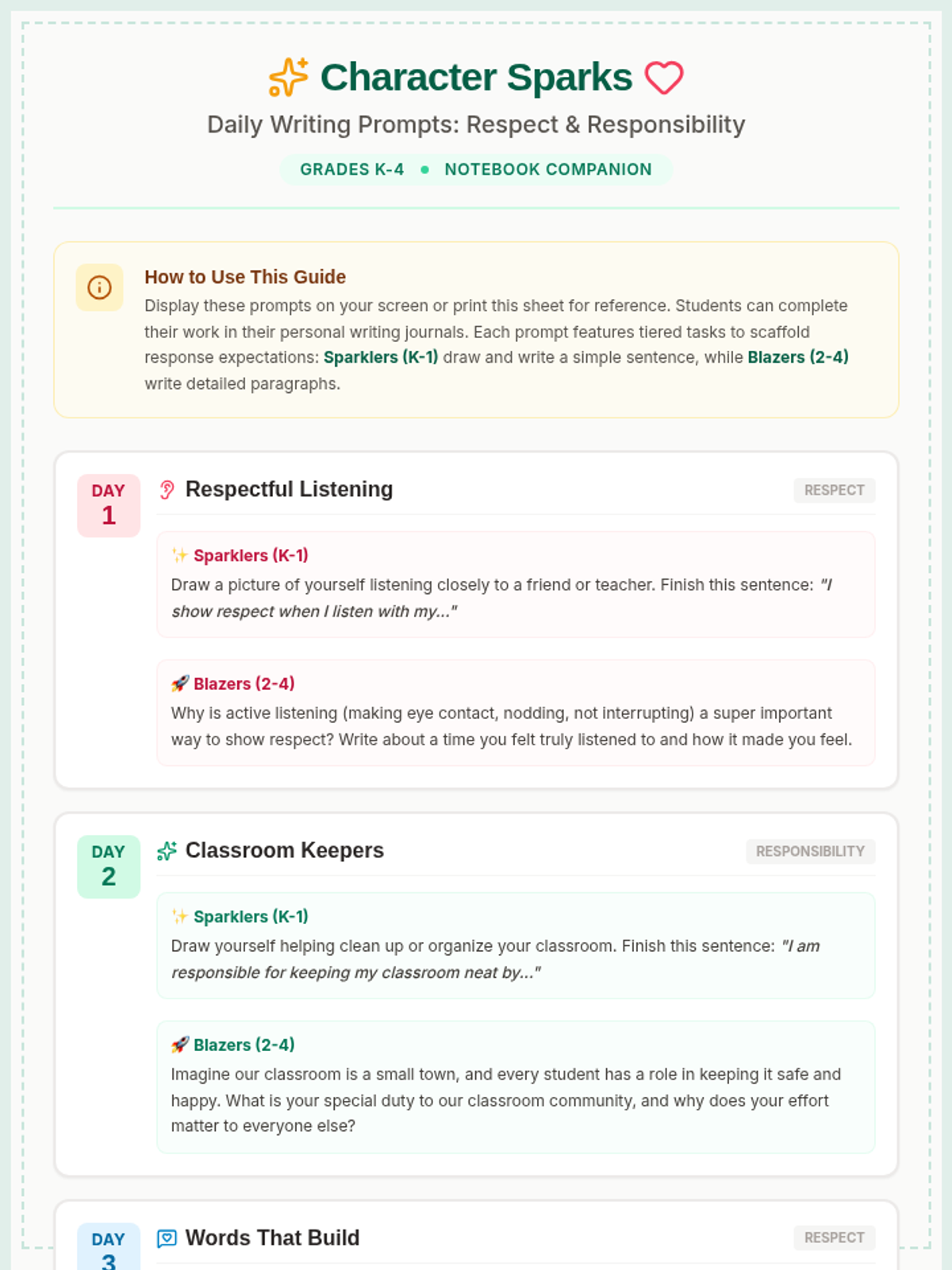
A daily writing prompt reference sheet for elementary classrooms (K-4). Features 10 structured prompts (2 full weeks) focused on respect, responsibility, readiness to learn, and safety, with differentiated requirements for younger (K-1) and older (2-4) students.
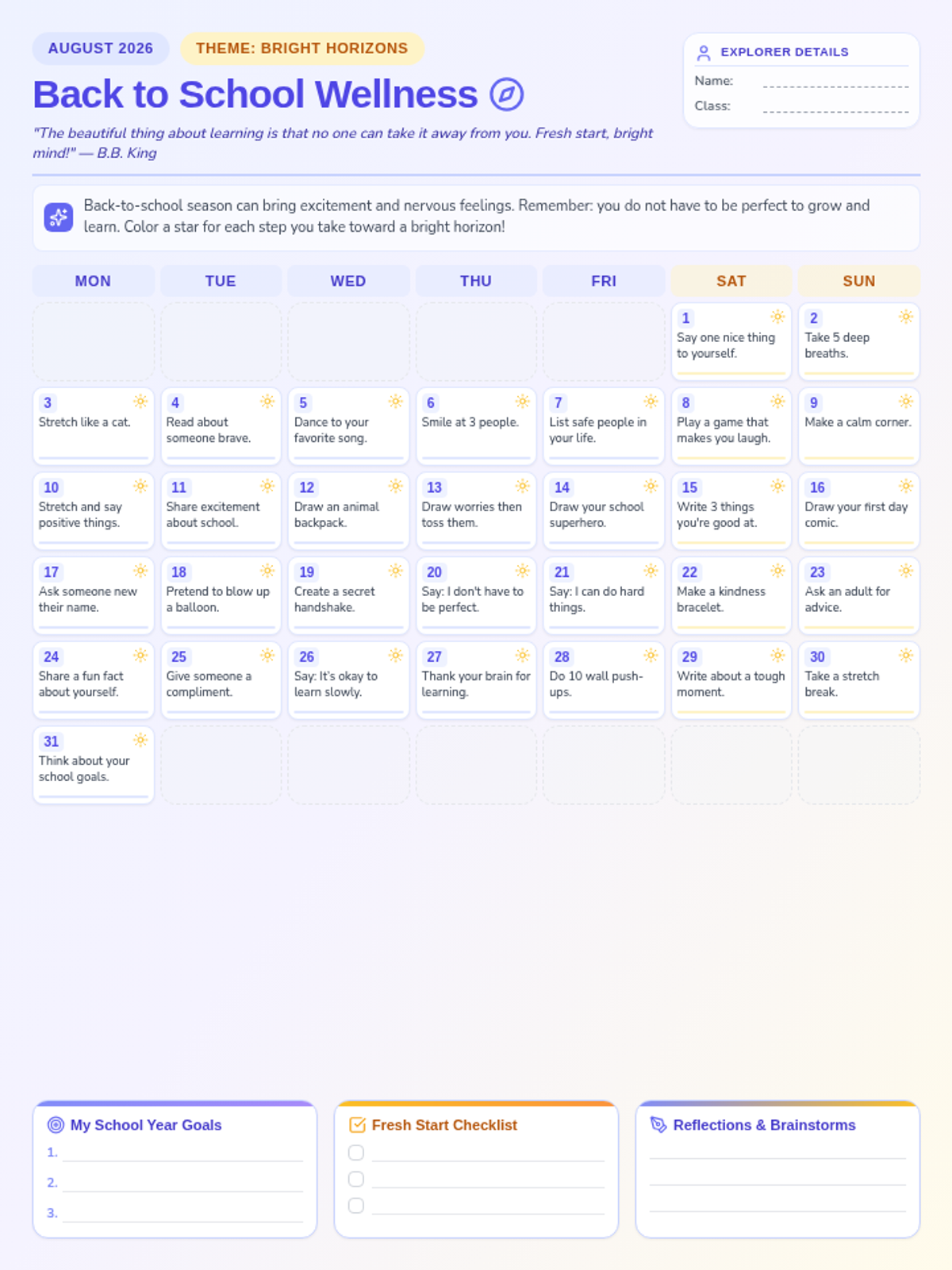
A beautiful, notebook-themed August 2026 wellness calendar centered on 'Bright Horizons' to help transition students back to school with daily mindfulness actions and goal tracking.
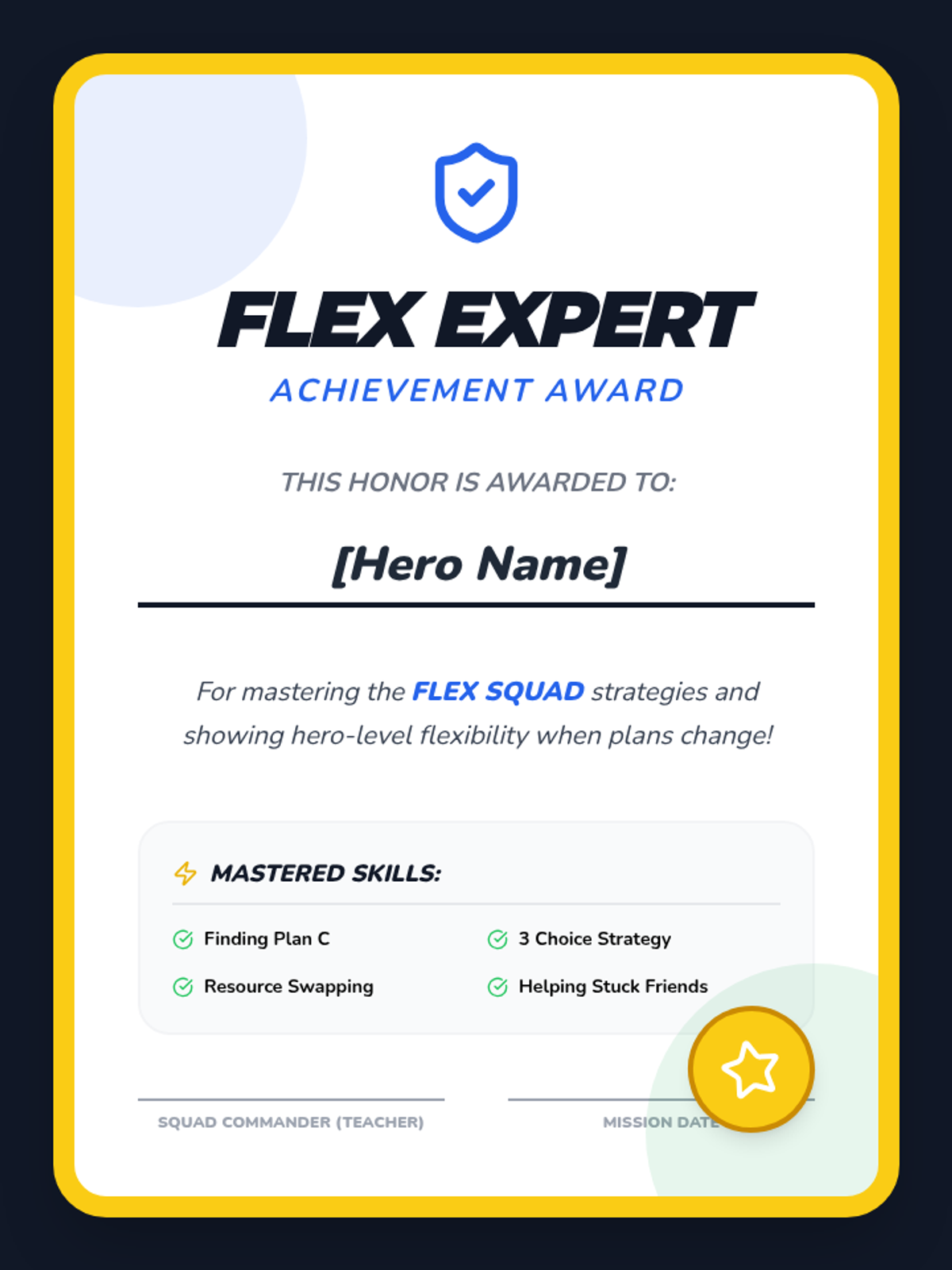
Commemorative certificate for Lesson 5, awarded to students who complete the Flex Squad sequence and demonstrate mastery of social flexibility strategies.
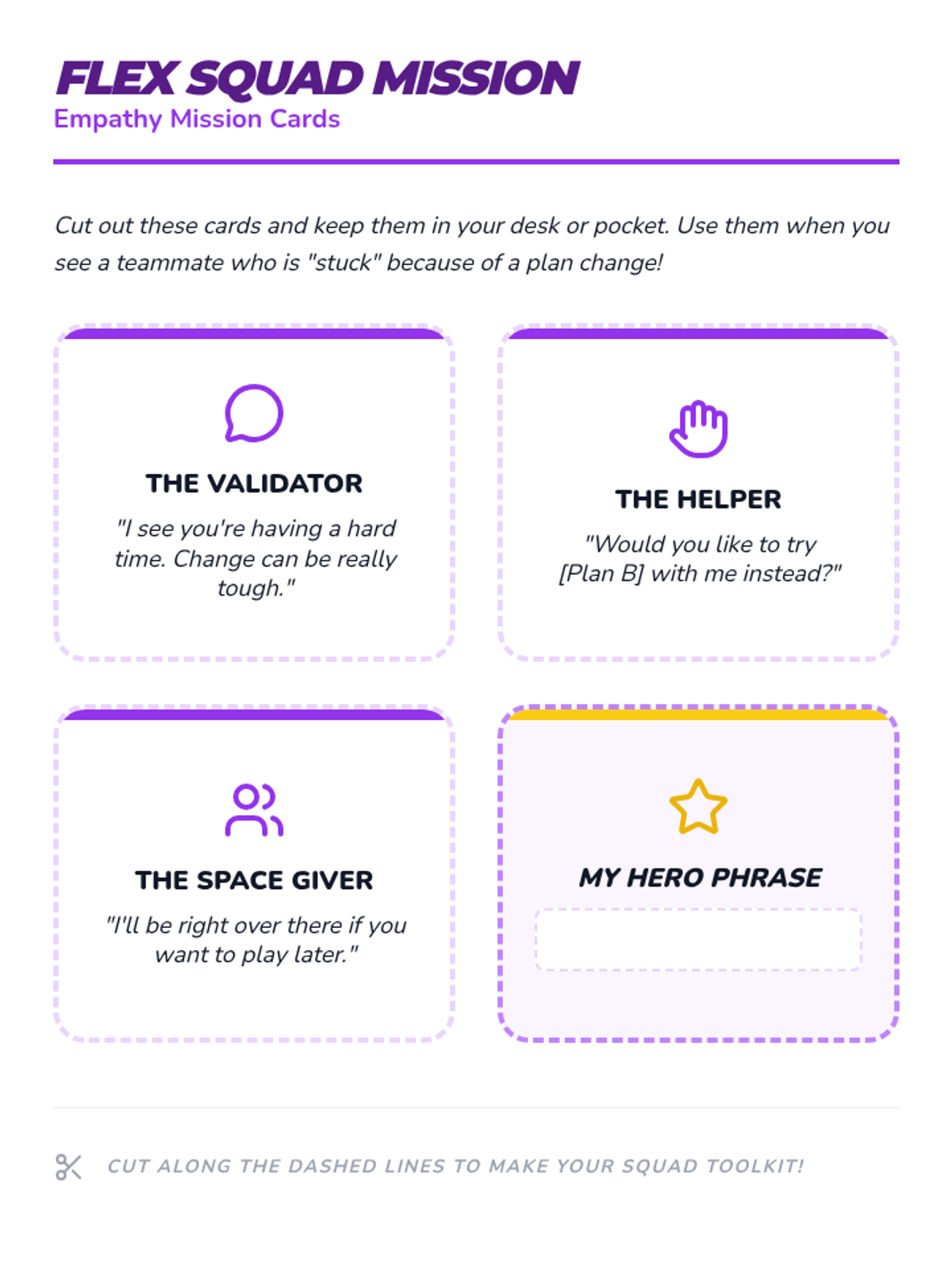
Visual support cards for Lesson 4 that students can cut out and keep to remember phrases to use with peers struggling with plan changes.
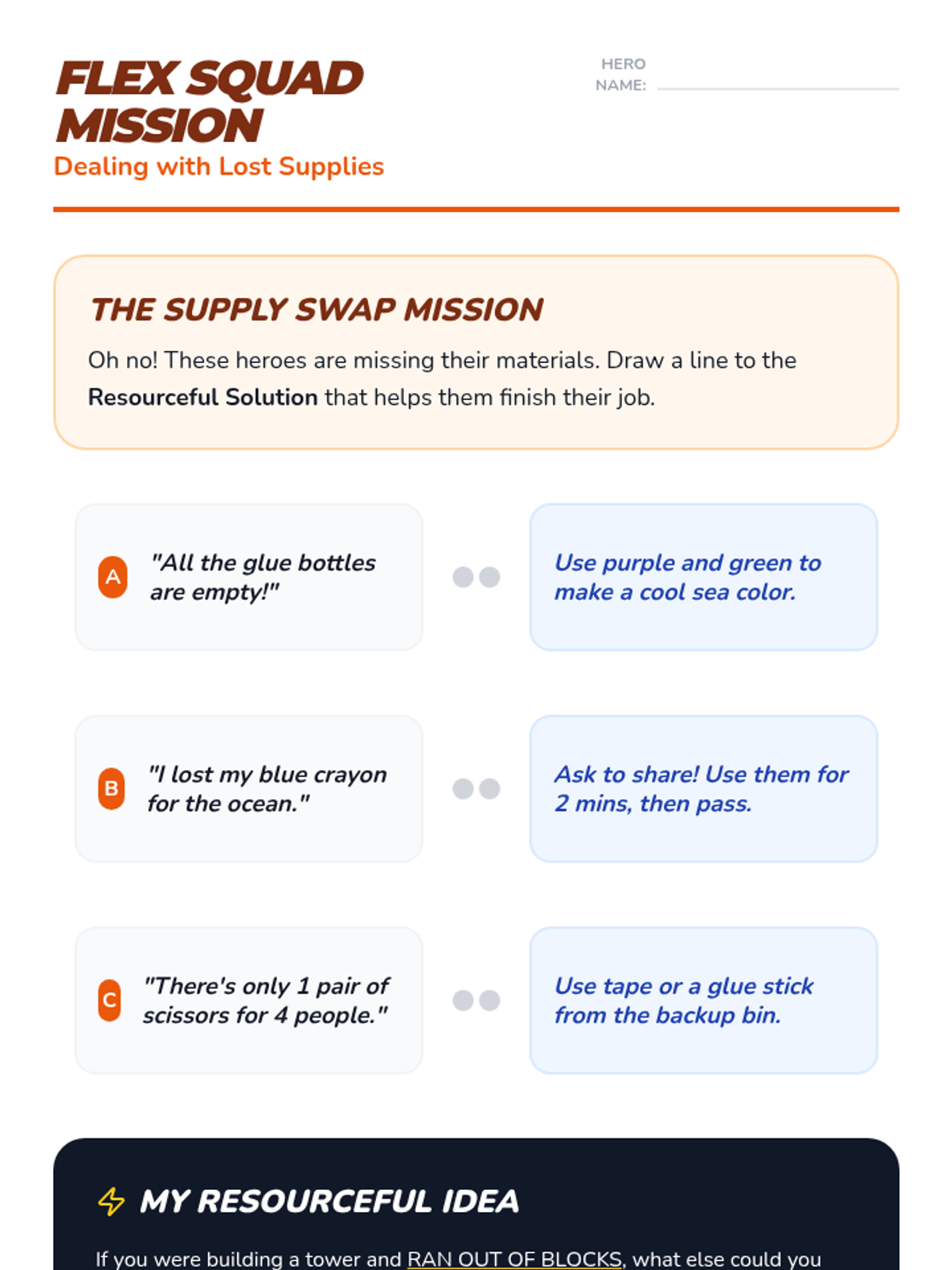
Student worksheet for Lesson 3 where students solve resource problems by matching missing supplies to creative solutions.
Introductory slide deck for Lesson 5, teaching students how to adapt to a substitute teacher or guest by practicing patience and flexibility.
Introductory slide deck for Lesson 4, teaching empathy and peer support strategies for when a friend is struggling with plan changes.
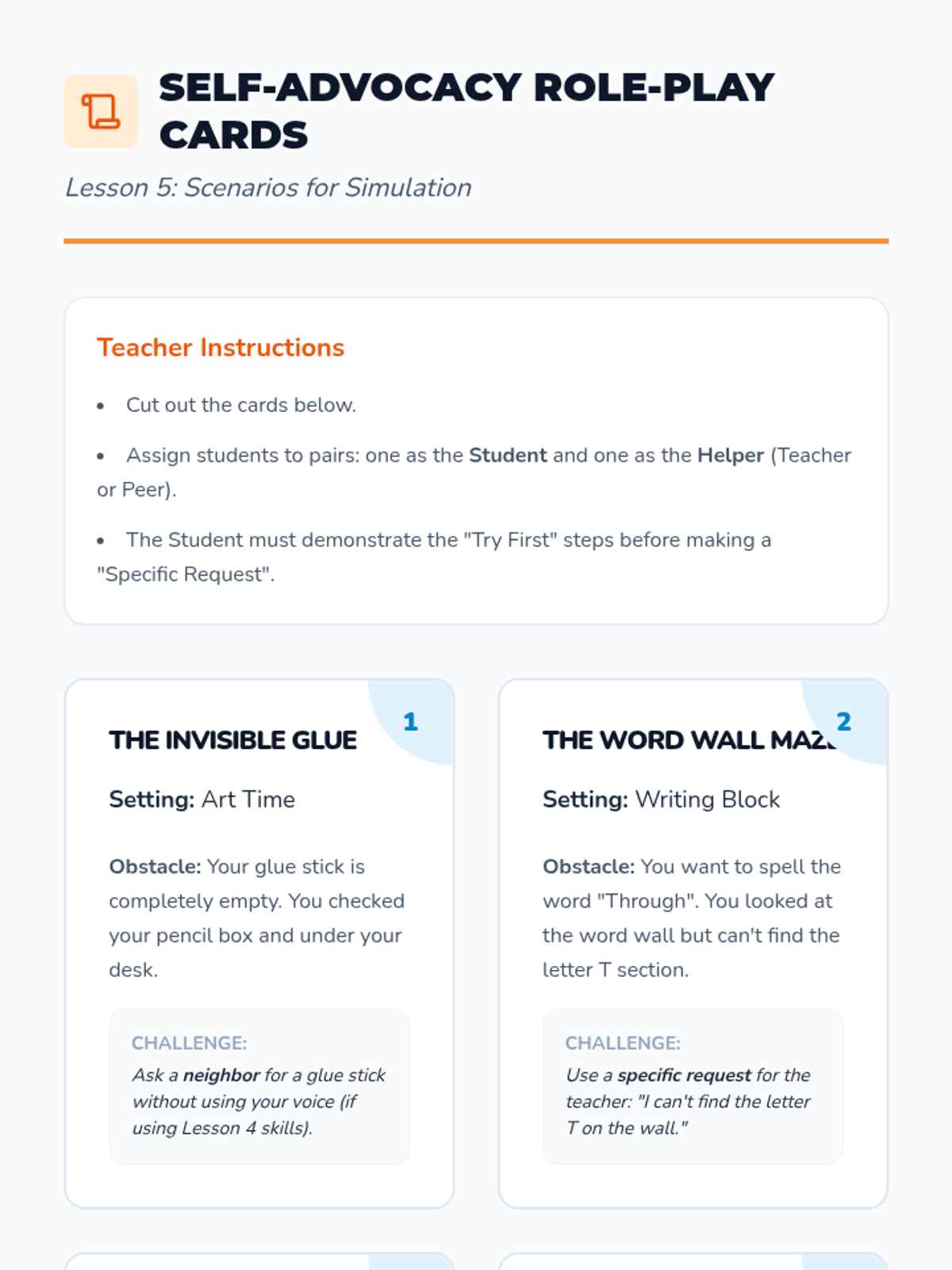
Scenario cards for teacher use during Lesson 5 to facilitate role-playing exercises on self-advocacy and obstacle problem-solving.
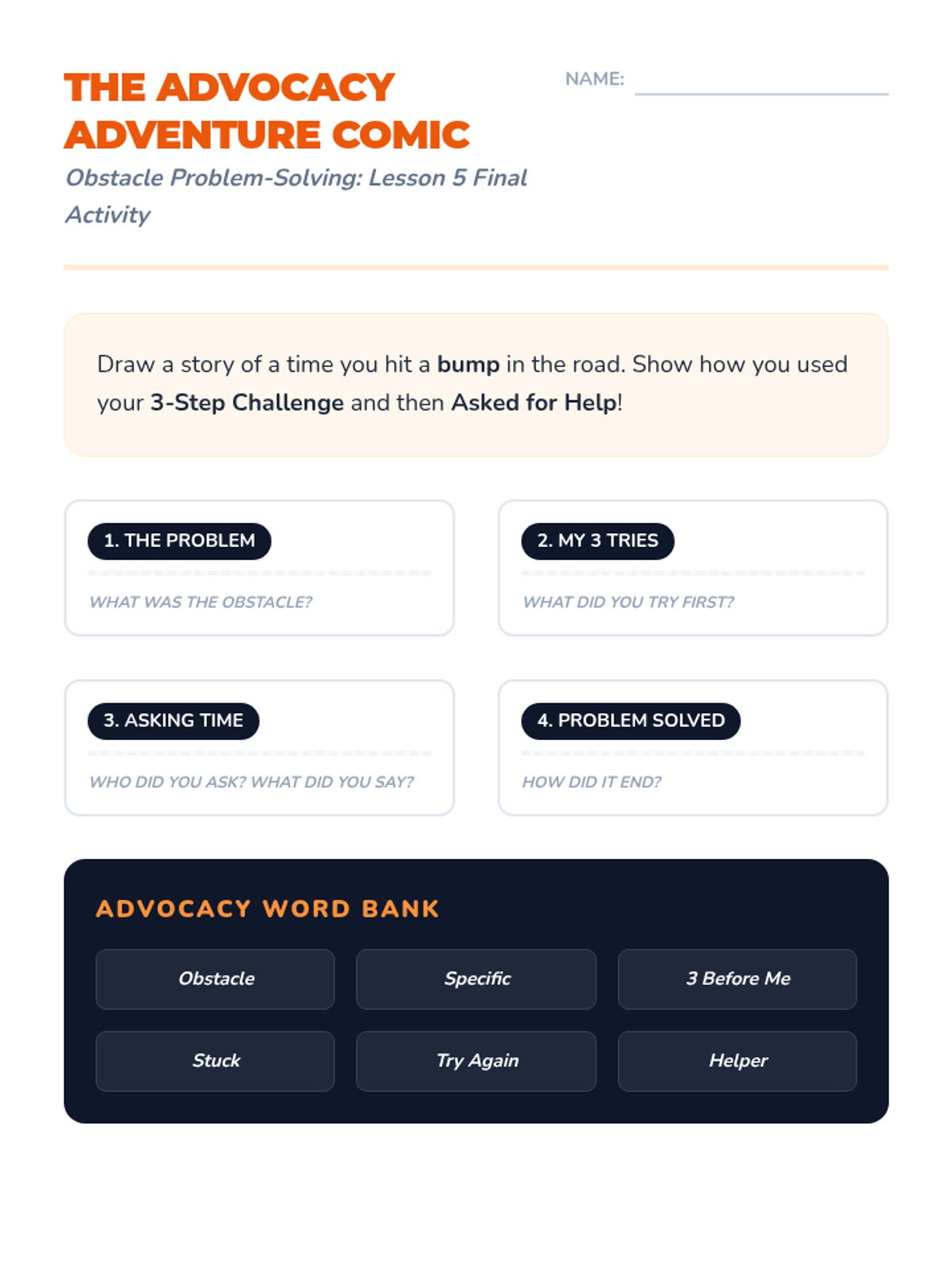
A final project worksheet where students create a comic strip illustrating a personal self-advocacy experience, from obstacle to resolution.
Visual slides for Lesson 5 that facilitate role-playing scenarios where students practice applying all the self-advocacy skills learned in the sequence.
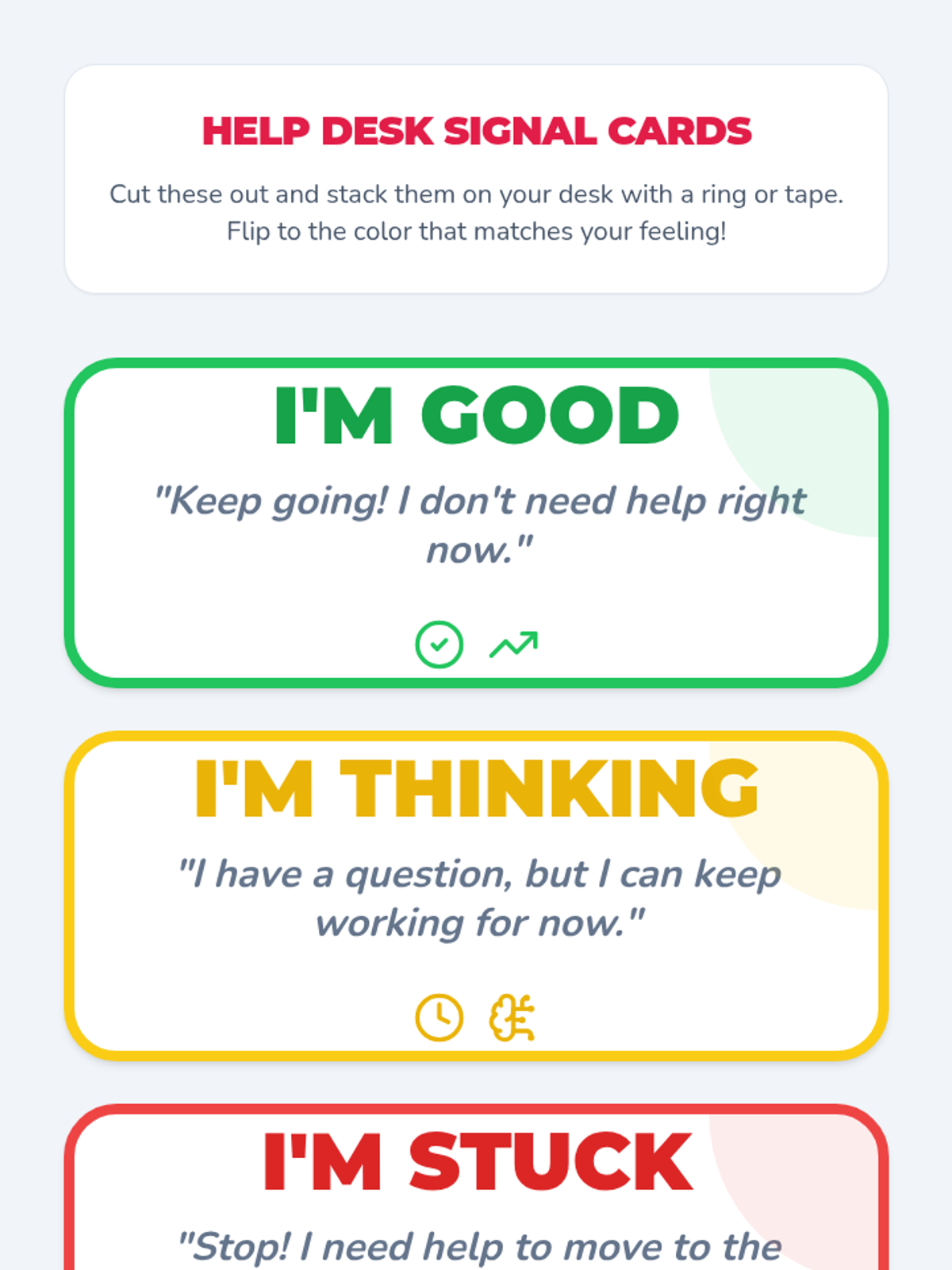
Printable desk flip cards (Green, Yellow, Red) for students to communicate their task status and need for assistance non-verbally.
Visual slides for Lesson 4 that introduce non-verbal communication tools like desk flip cards and hand signals for effective classroom self-advocacy.