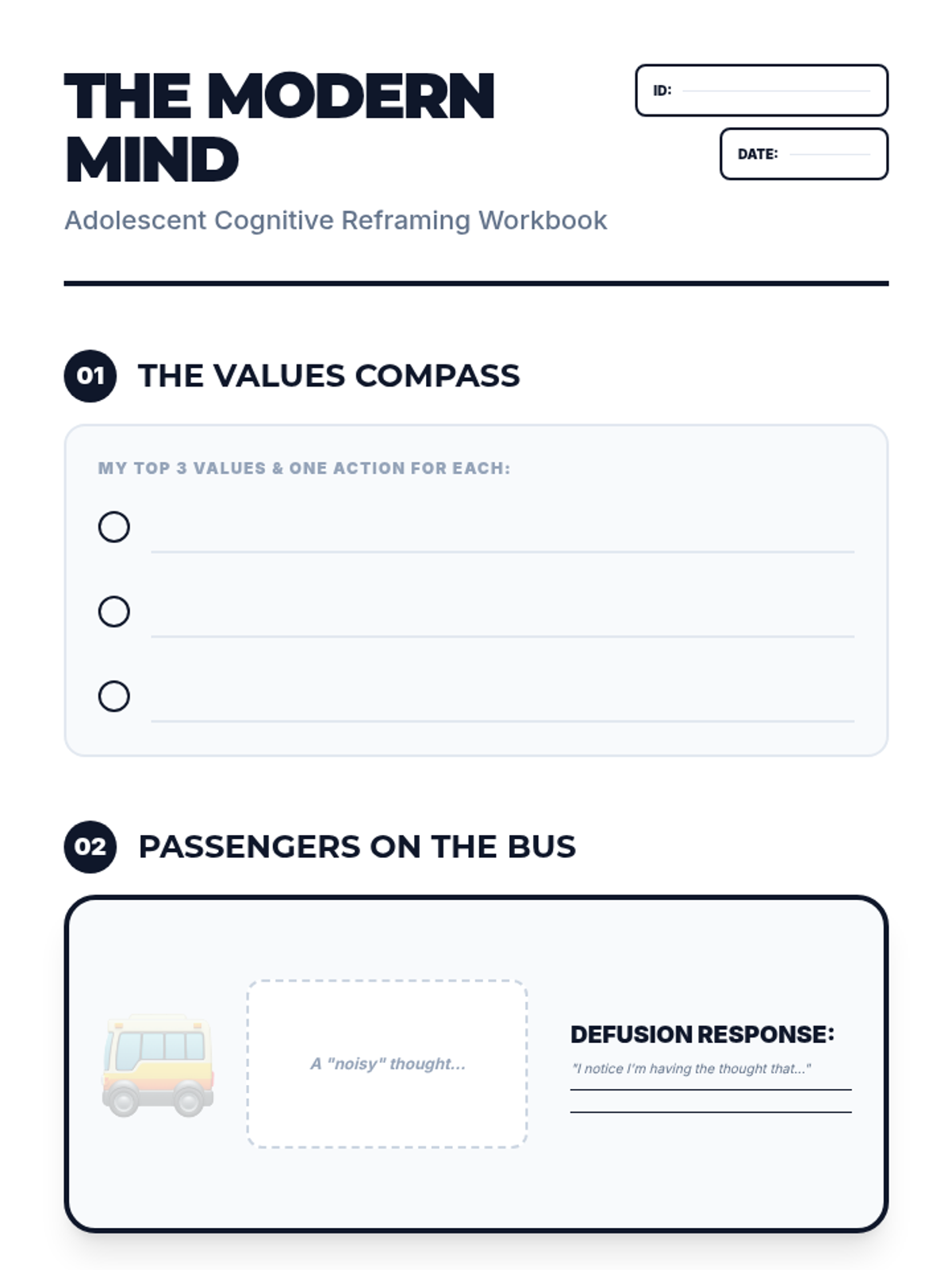
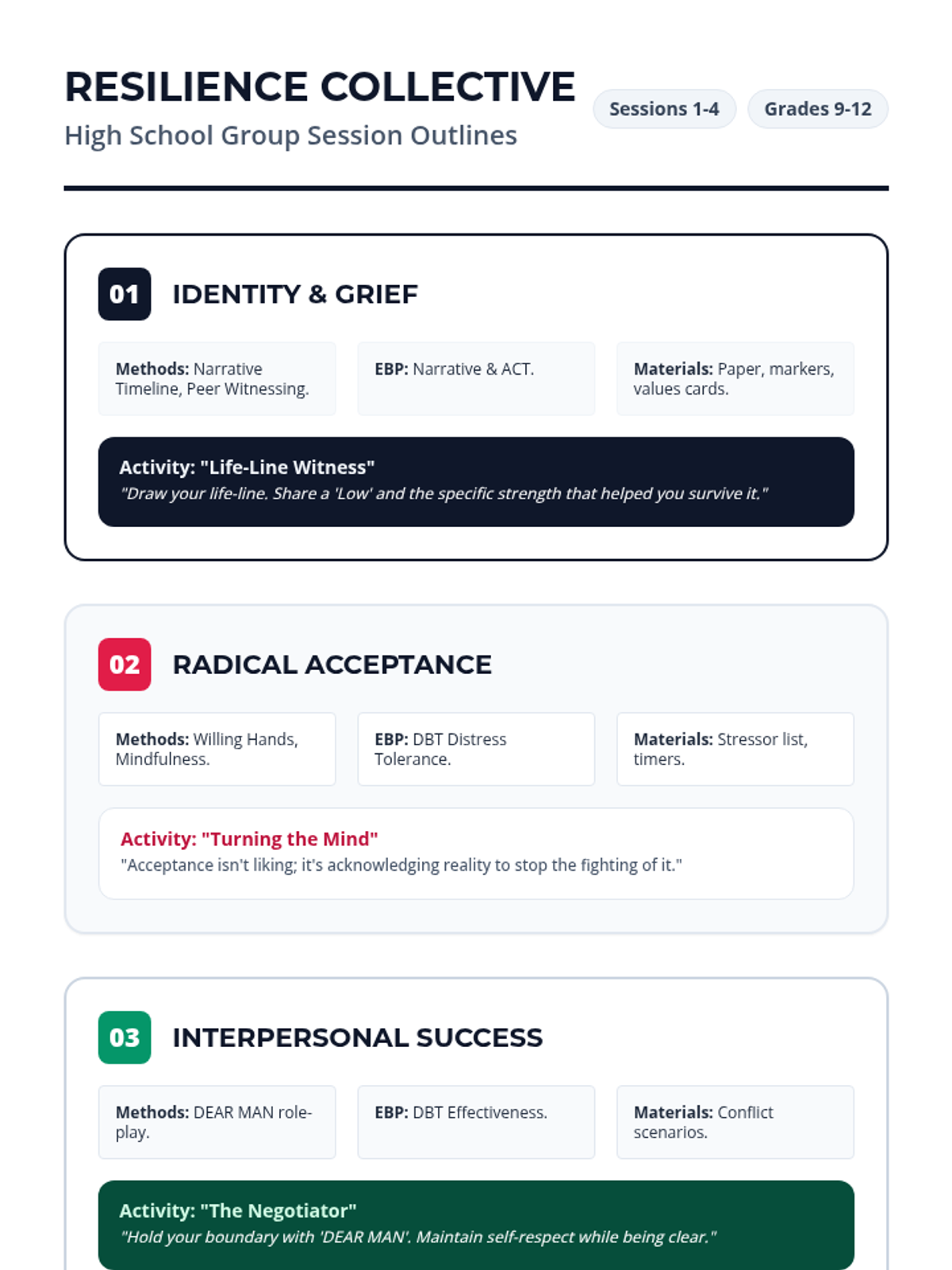
Active listening, assertive expression, and boundary-setting strategies for interpersonal success. Develops proficiency in conflict mediation, cooperative teamwork, and the cultivation of healthy romantic and platonic connections.
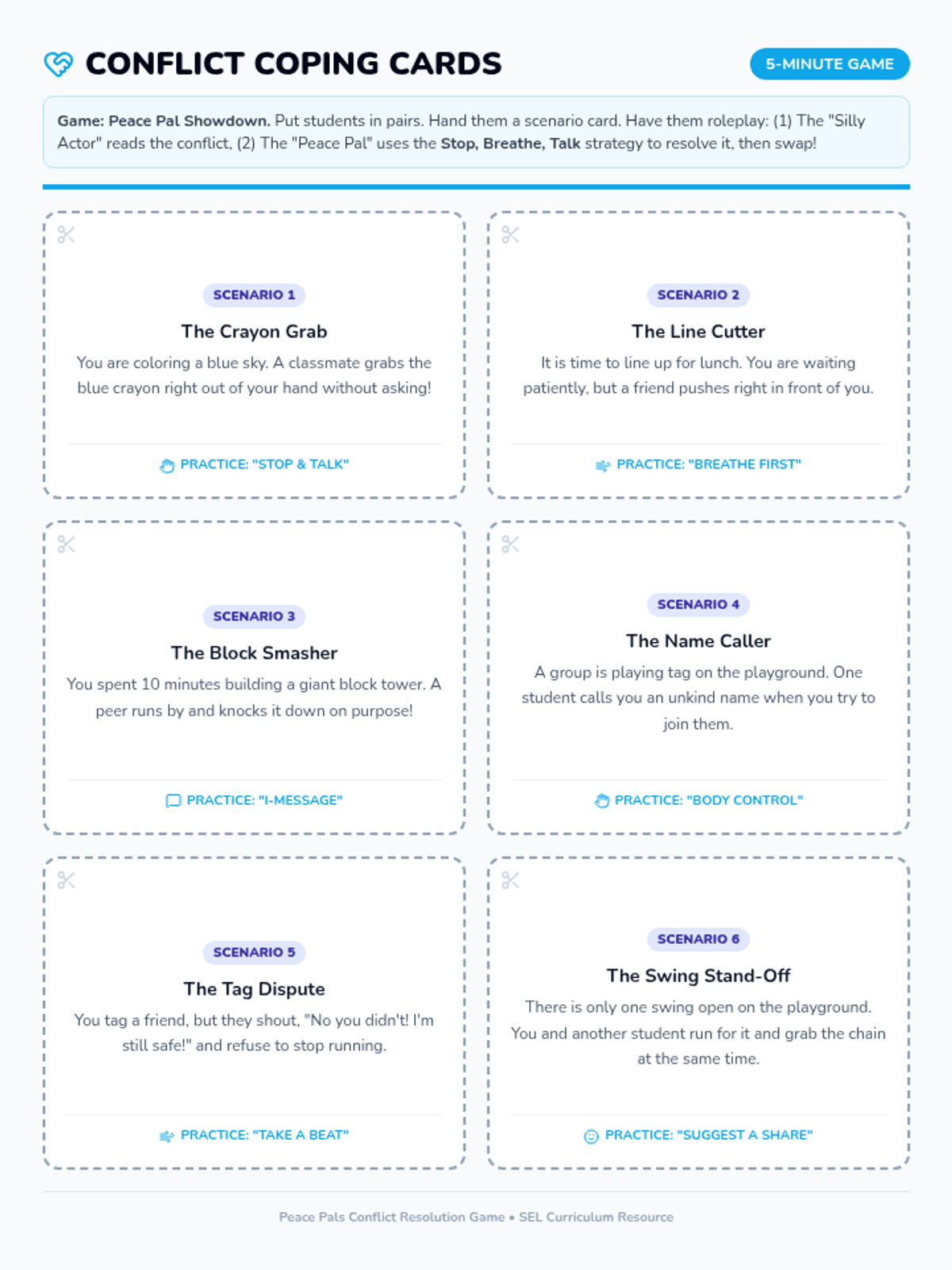
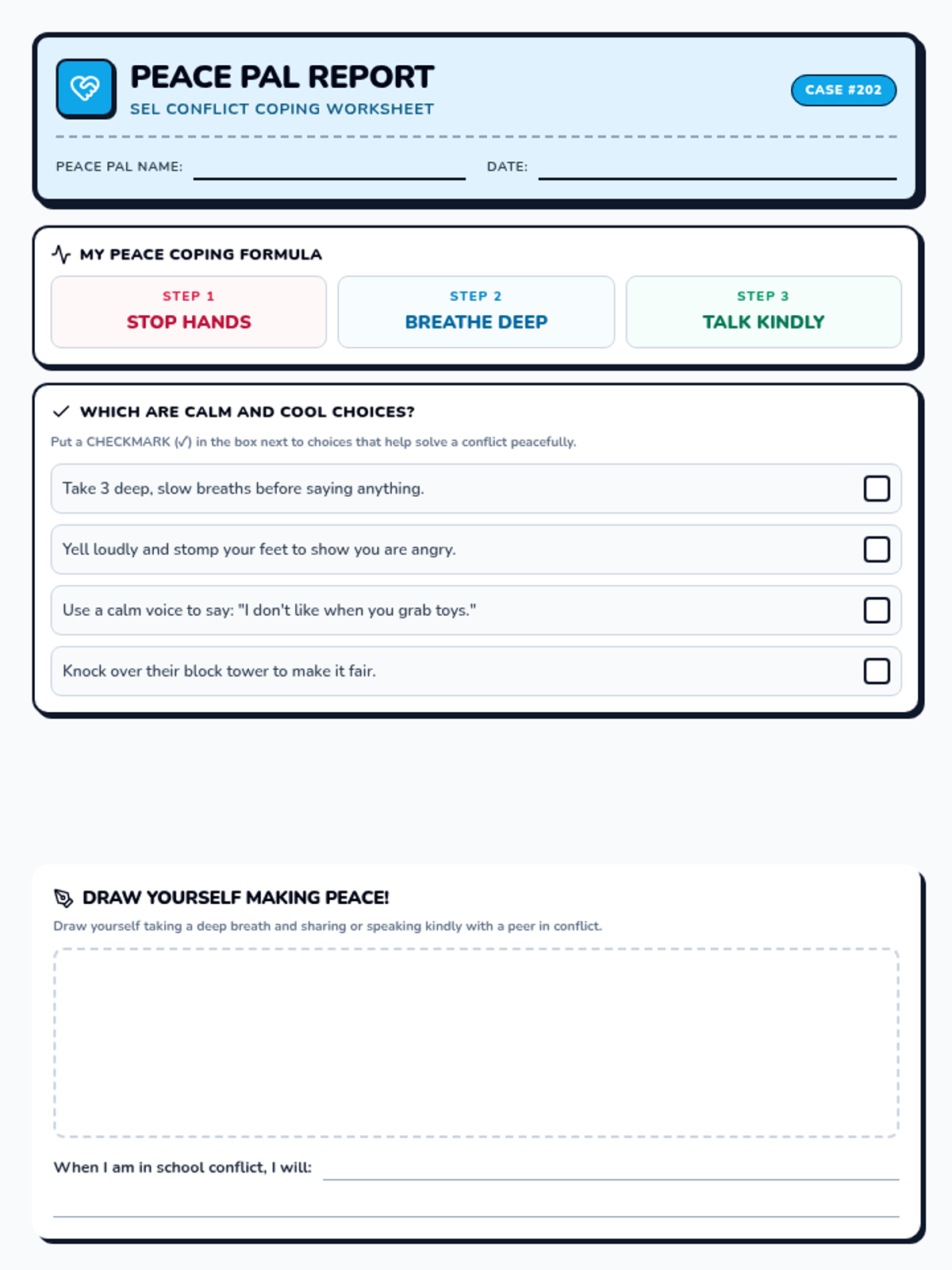
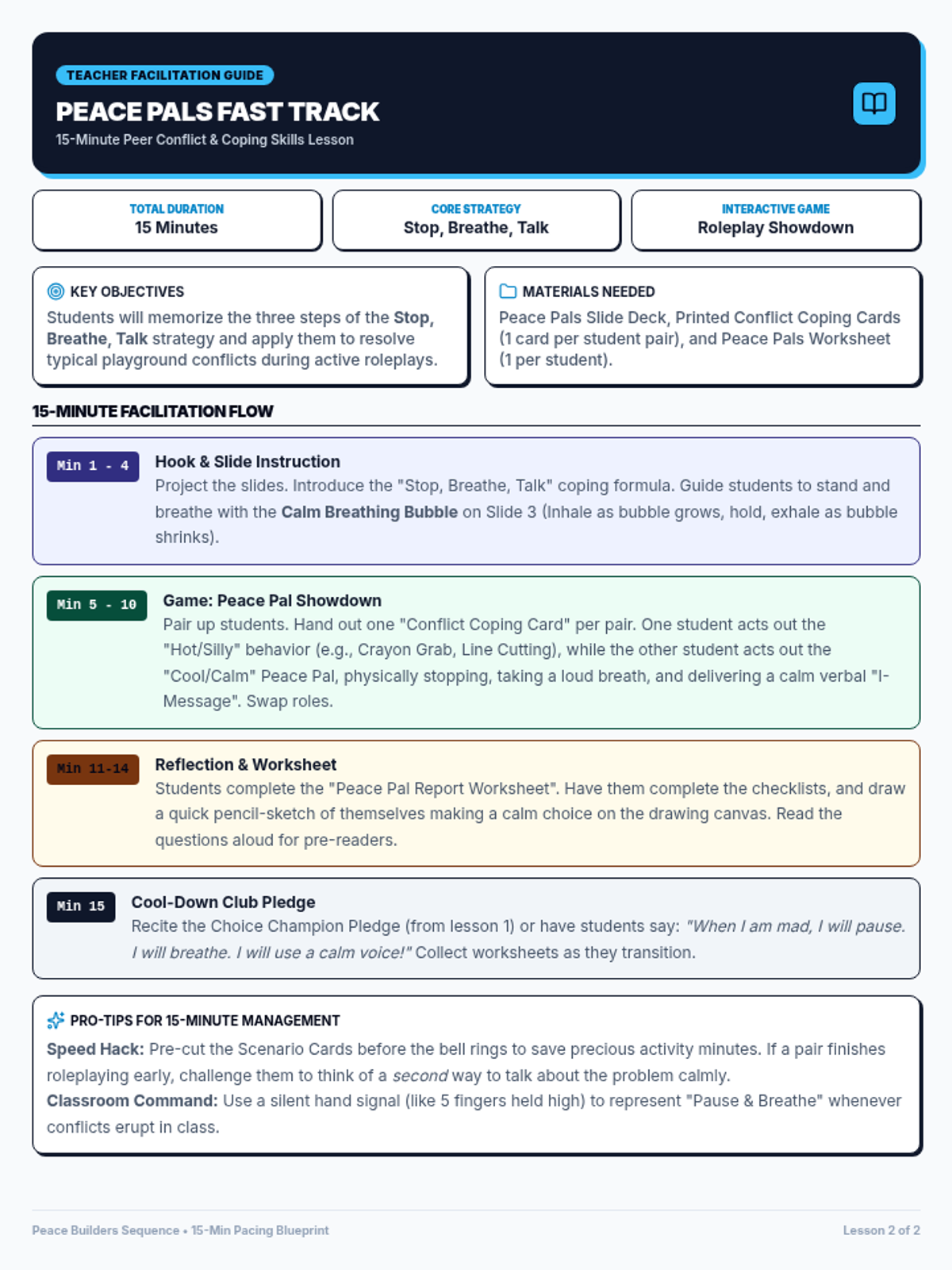
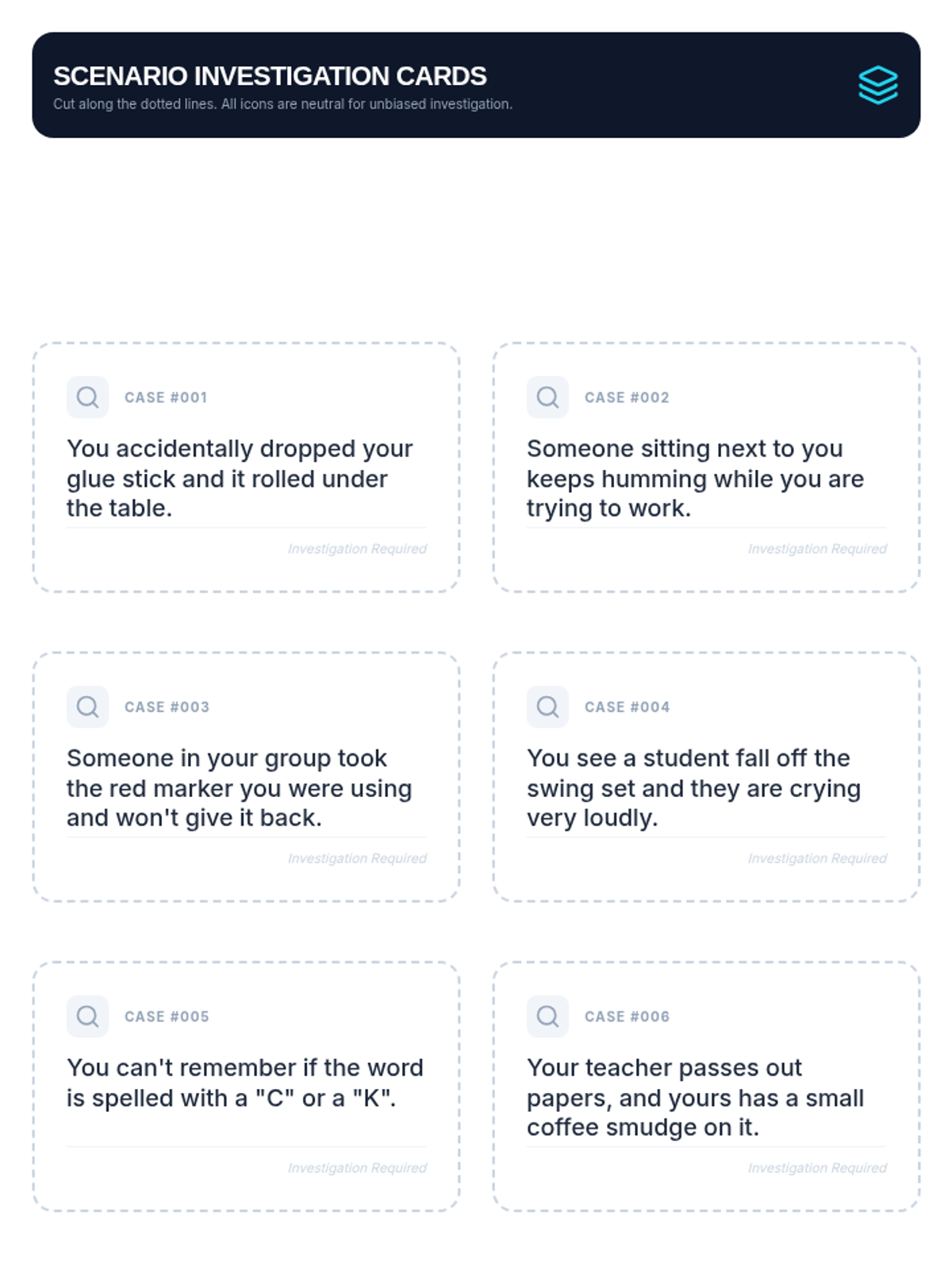
A fast-paced, 15-minute SEL lesson targeting early elementary students to resolve peer conflict and practice emotional regulation. It introduces the "Stop, Breathe, Talk" coping strategy with interactive slides, role-playing scenario cards, and a reflection worksheet.
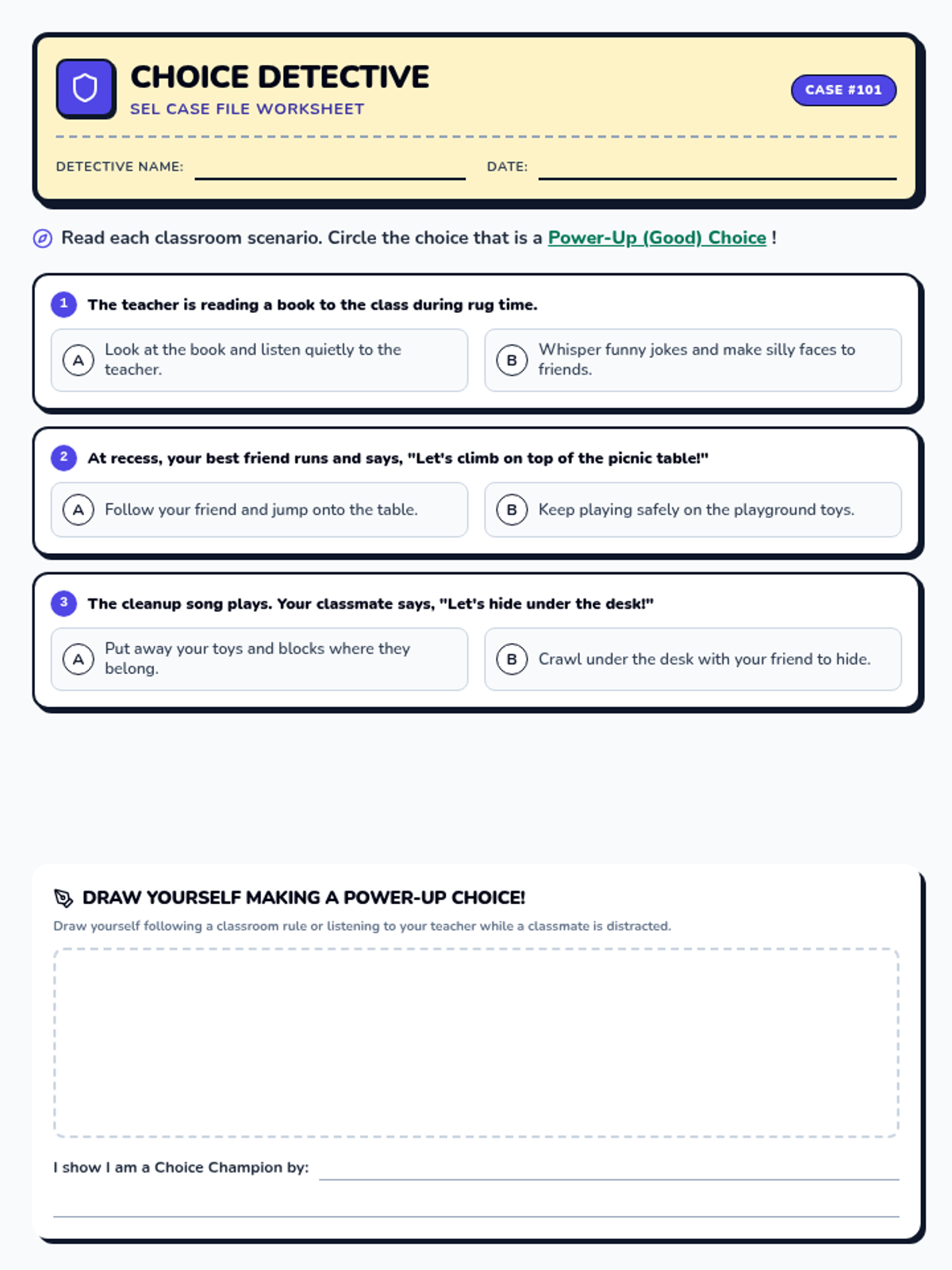
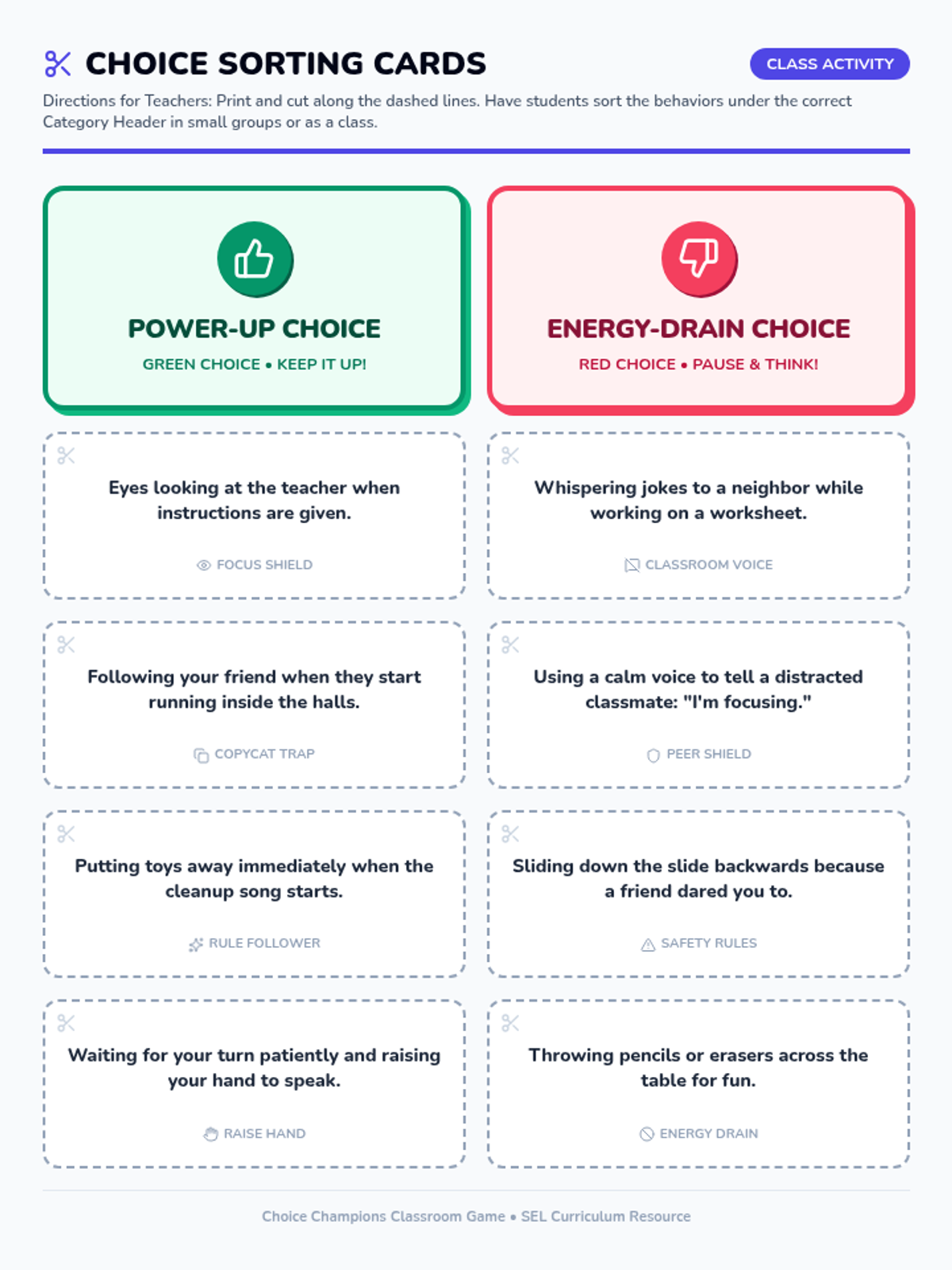
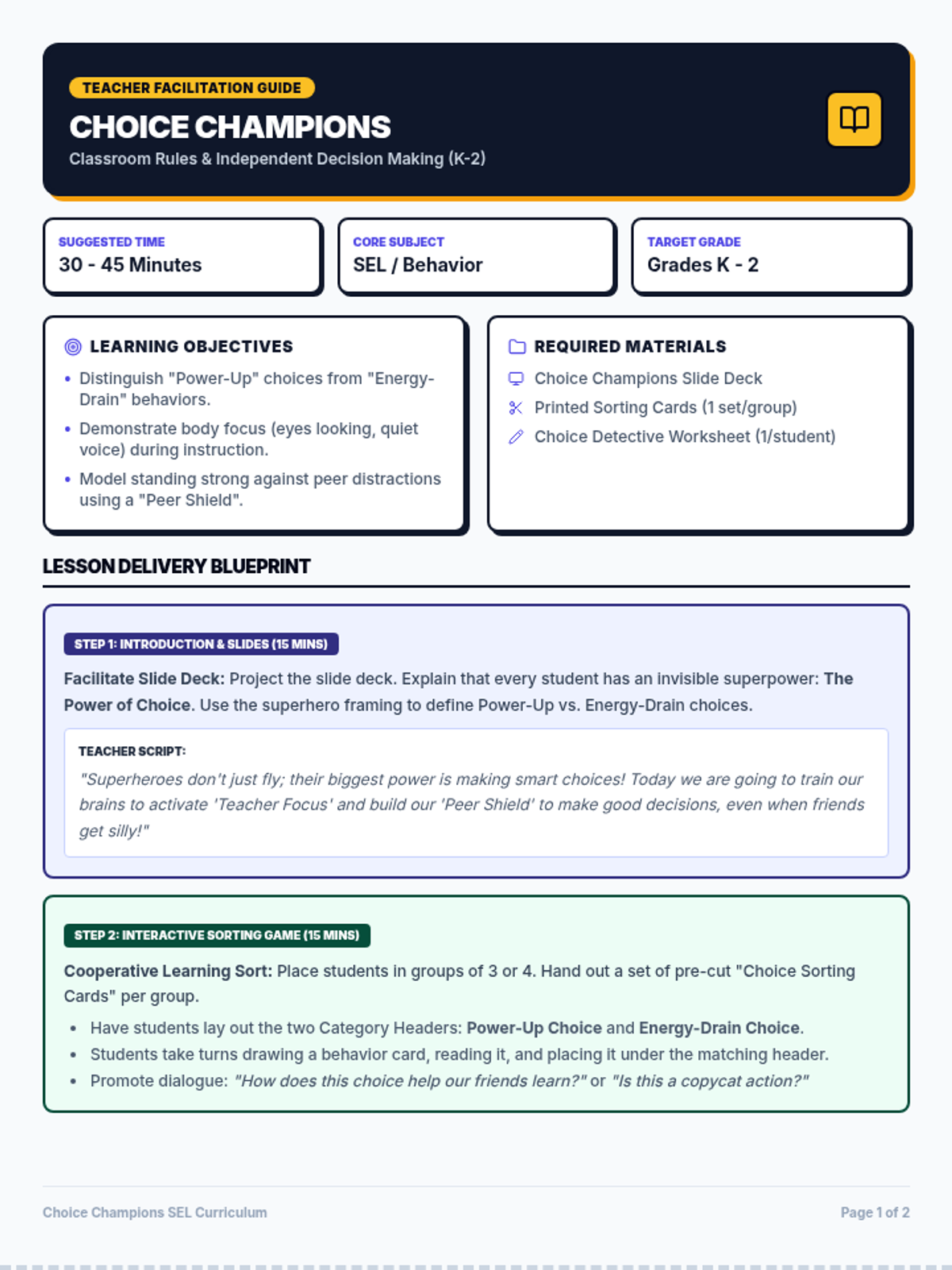
A social-emotional learning lesson designed for early elementary students (K-2) to teach the difference between good and bad classroom choices. It focuses on listening to the teacher, following rules, and maintaining independent positive behavior despite peer distractions.
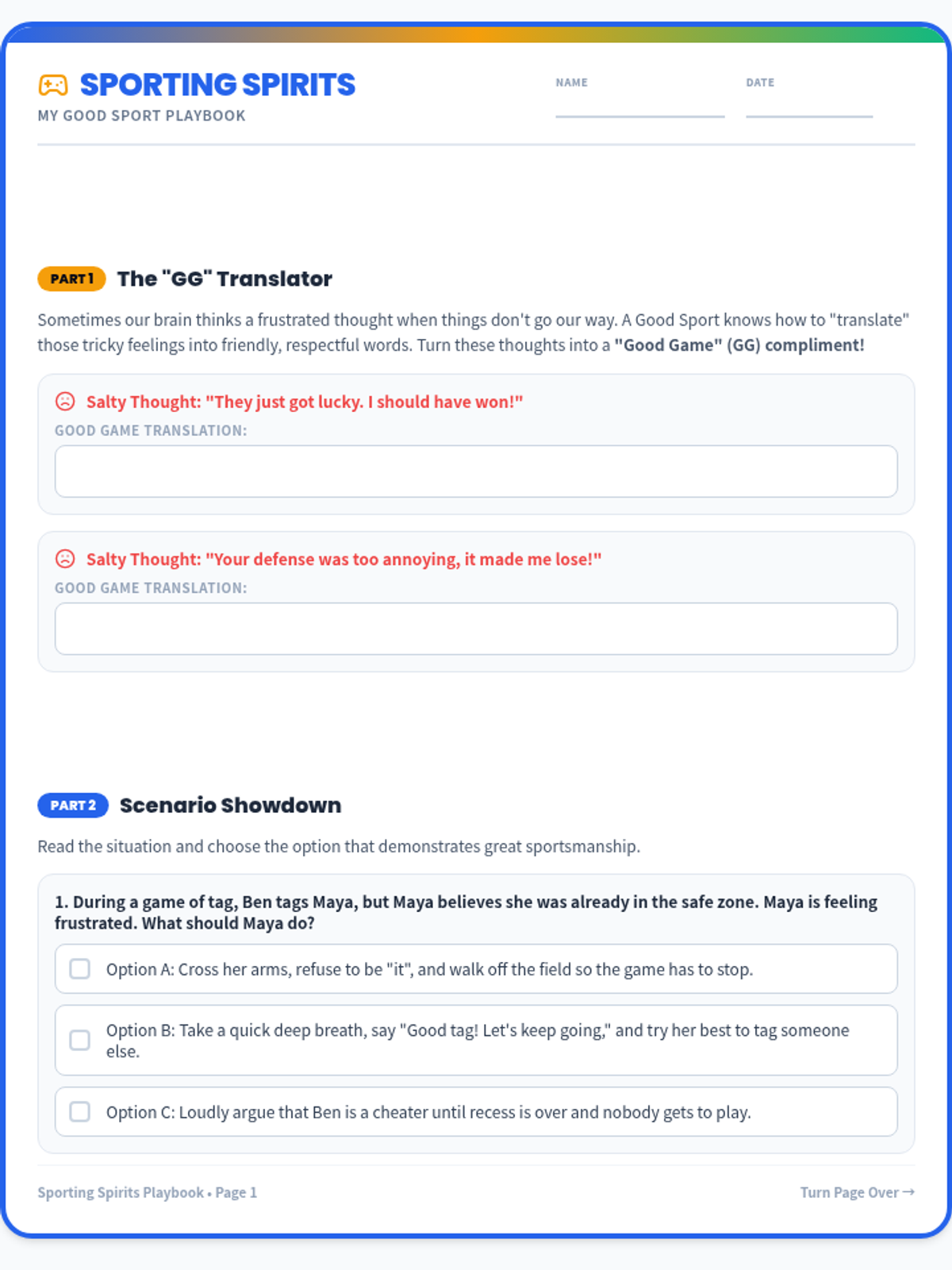
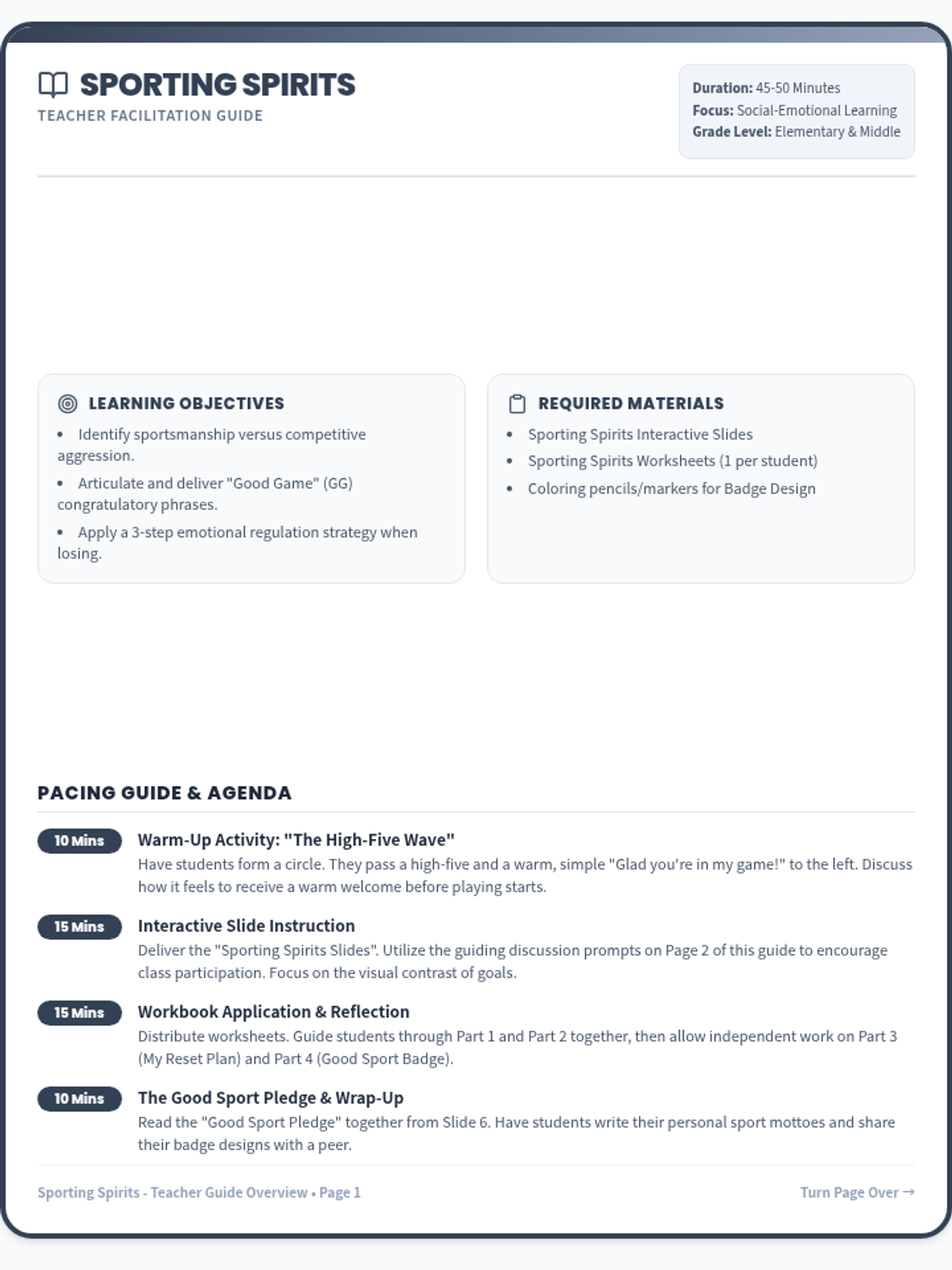
A dynamic, classroom-ready lesson designed to teach elementary and middle-school students how to be good sports. The lesson focuses on the core skills of congratulating others, saying 'Good Game' (GG), and managing the complex emotions of losing. It includes a vibrant, high-impact slide presentation, a scenario-driven student worksheet, and a structured teacher guide.
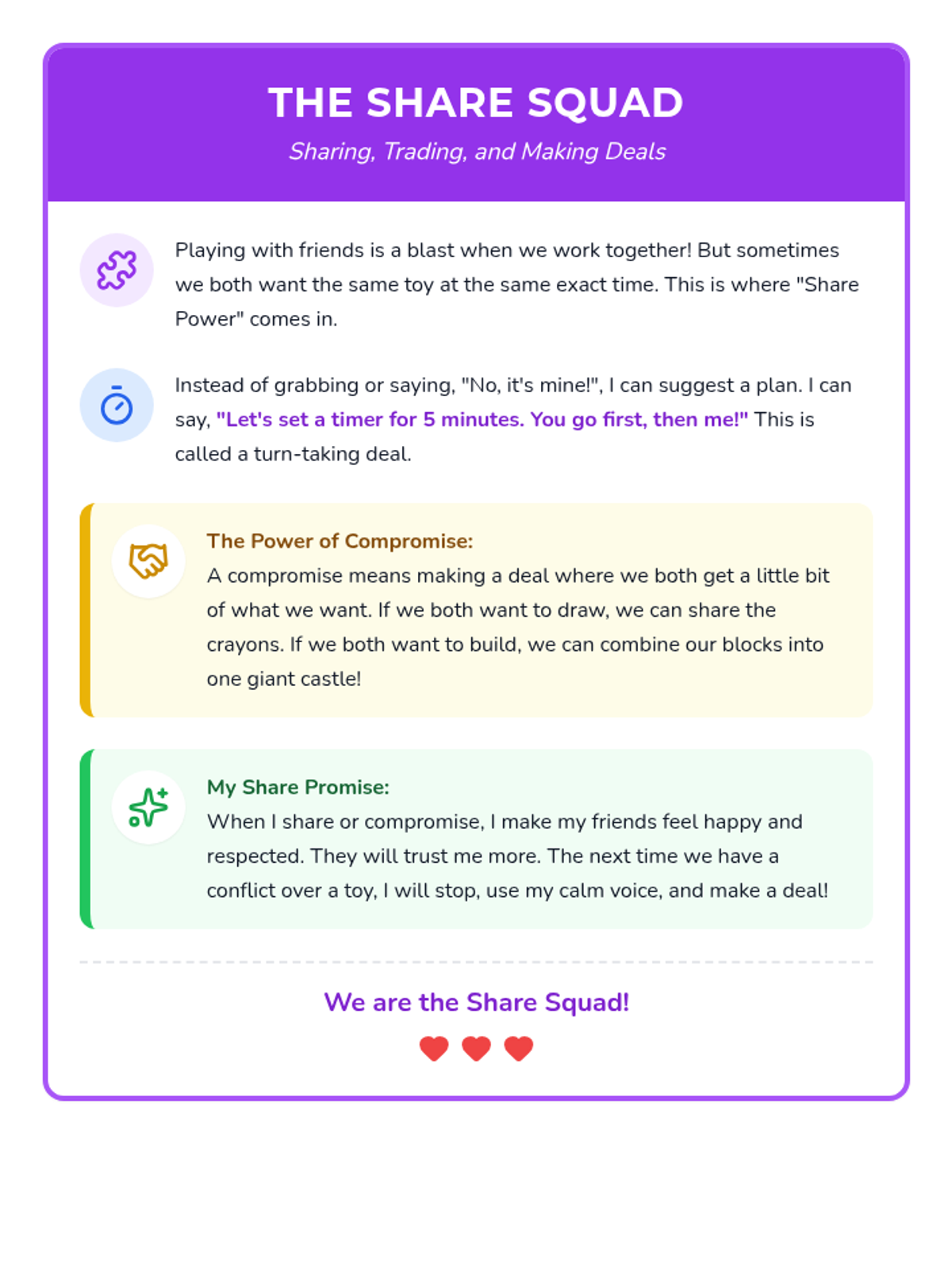
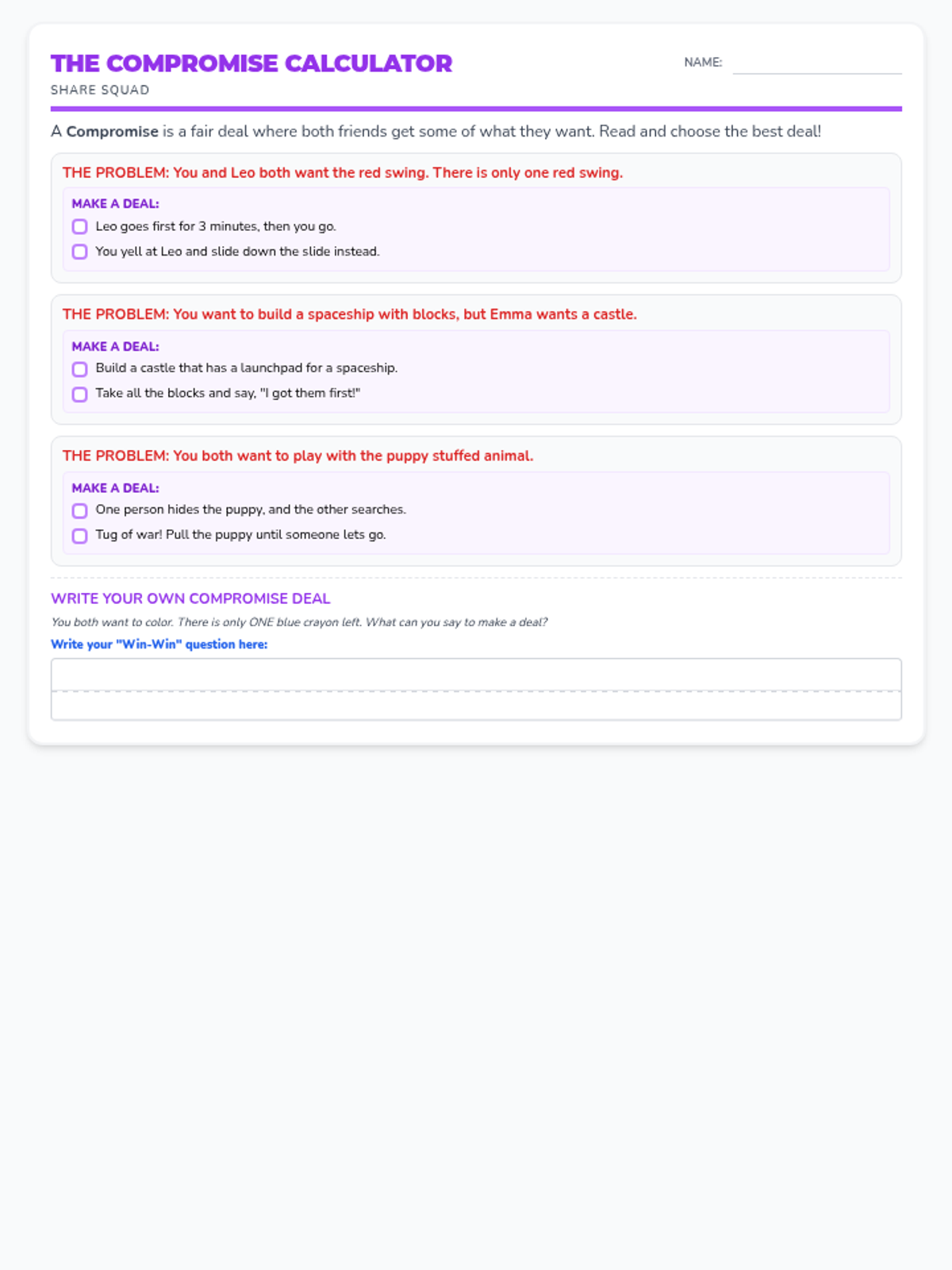
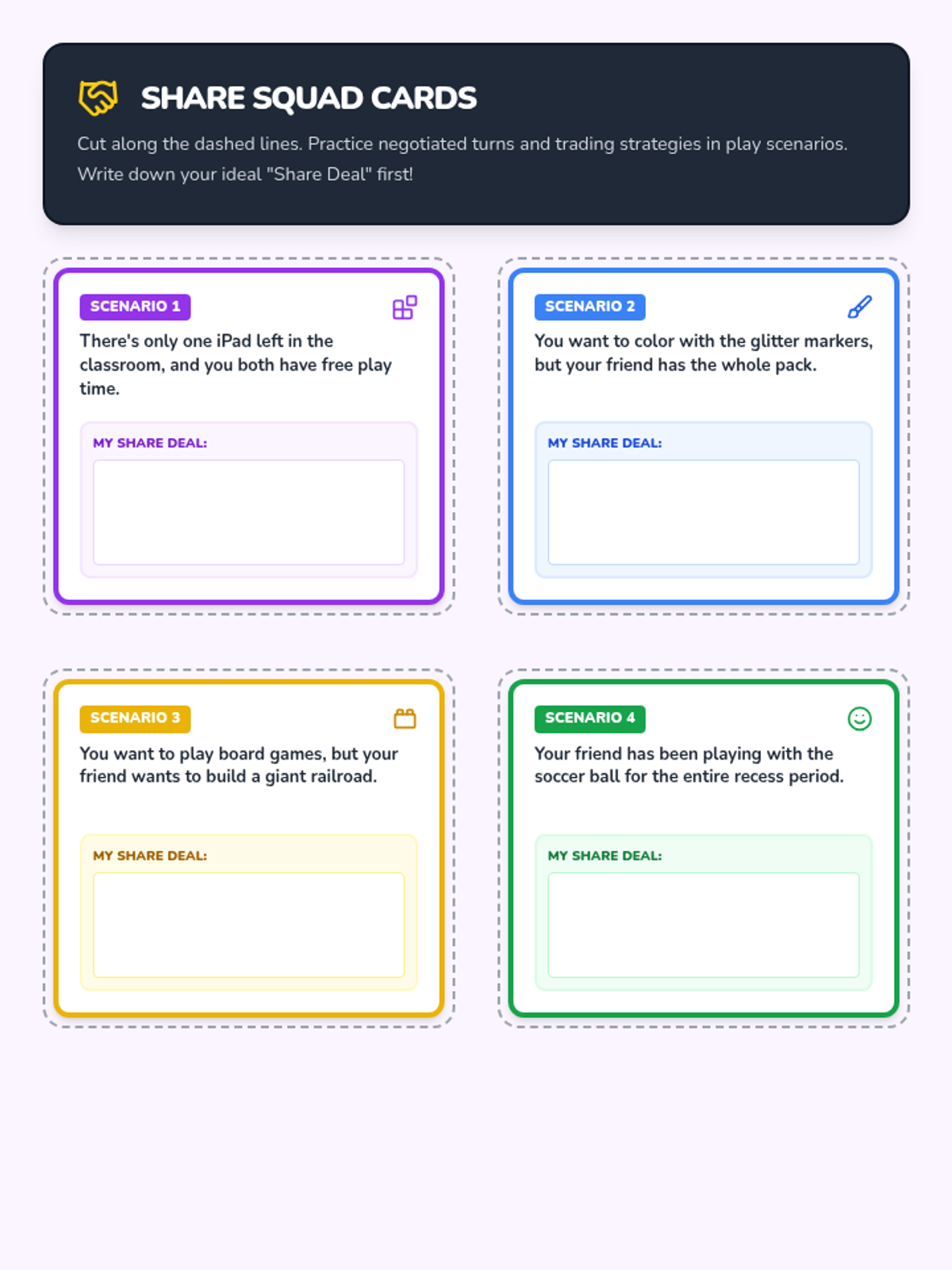
A lesson centered on cooperative sharing, negotiating rules, turn-taking, and making compromises during play with peers.
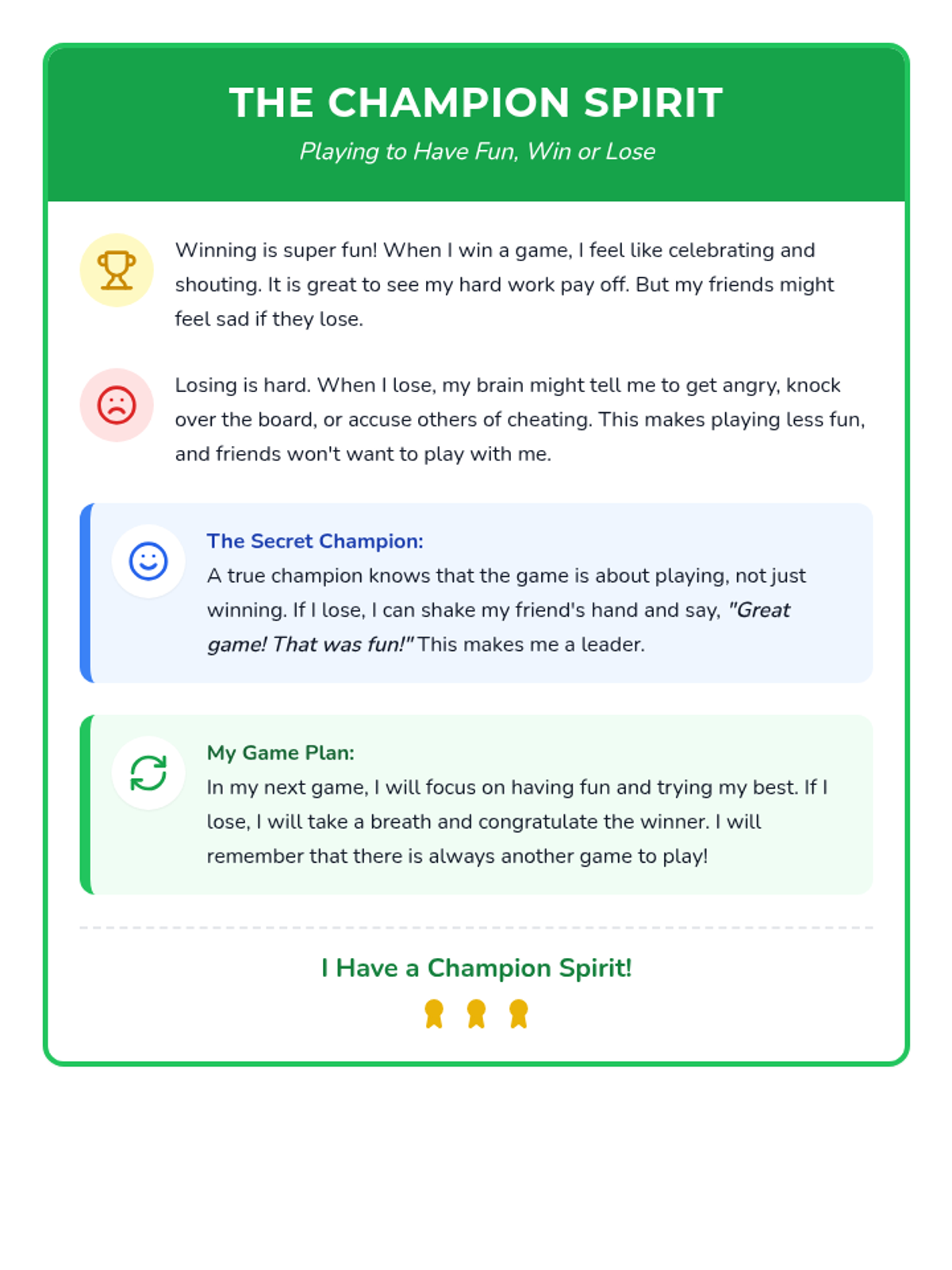
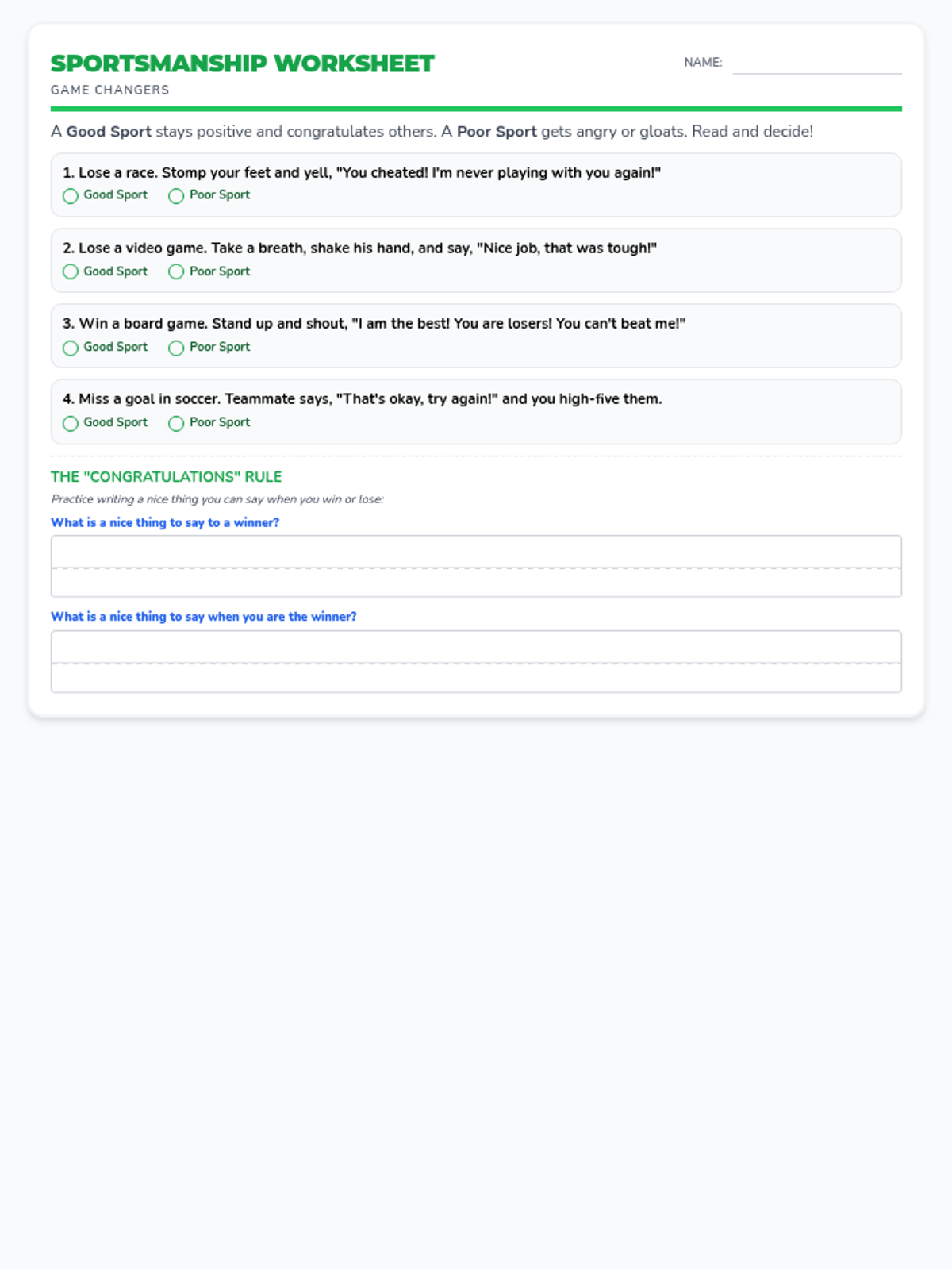
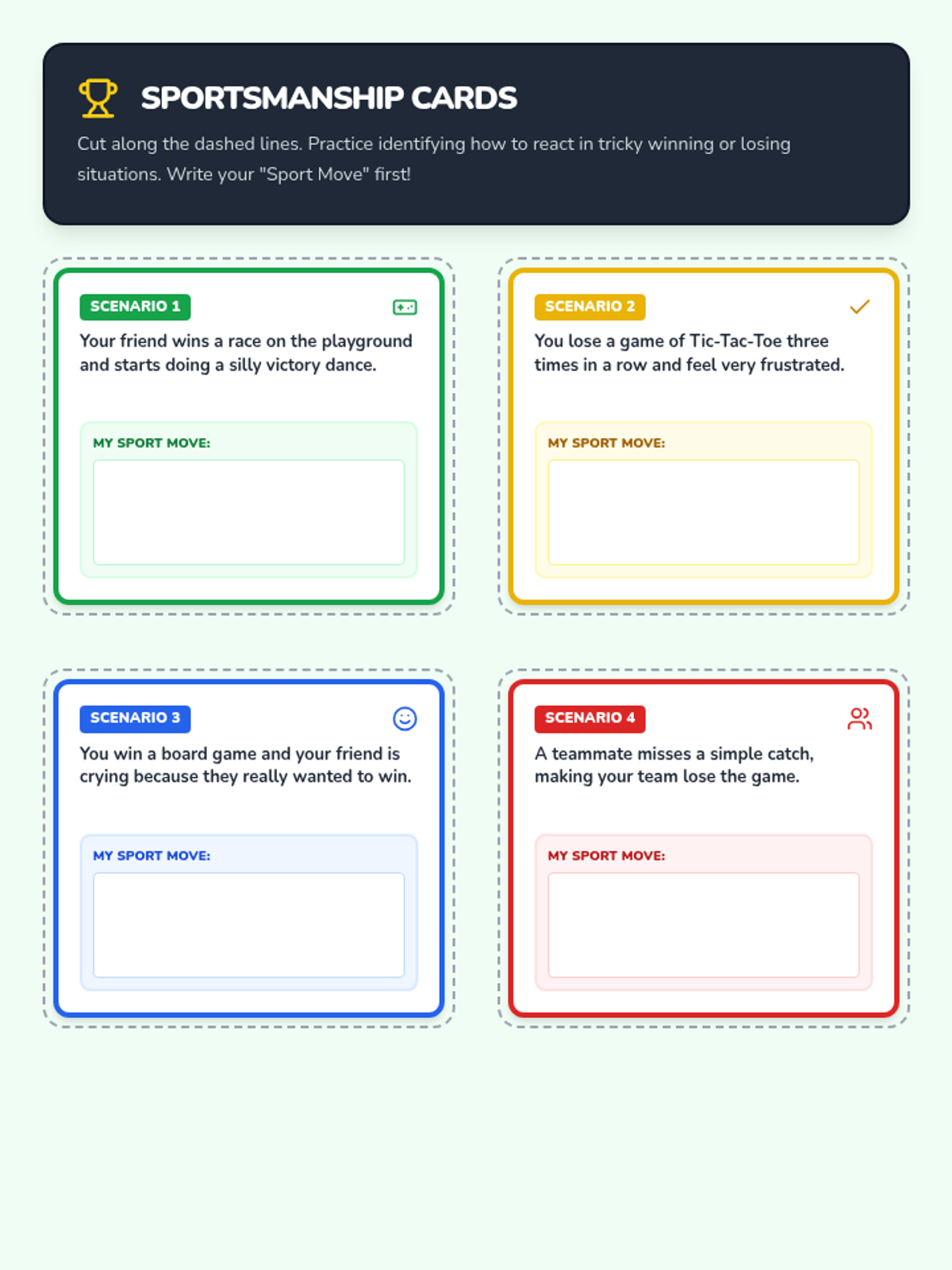
A lesson focused on sportsmanship, managing disappointment when losing a game, and maintaining positive peer relationships regardless of the game outcome.
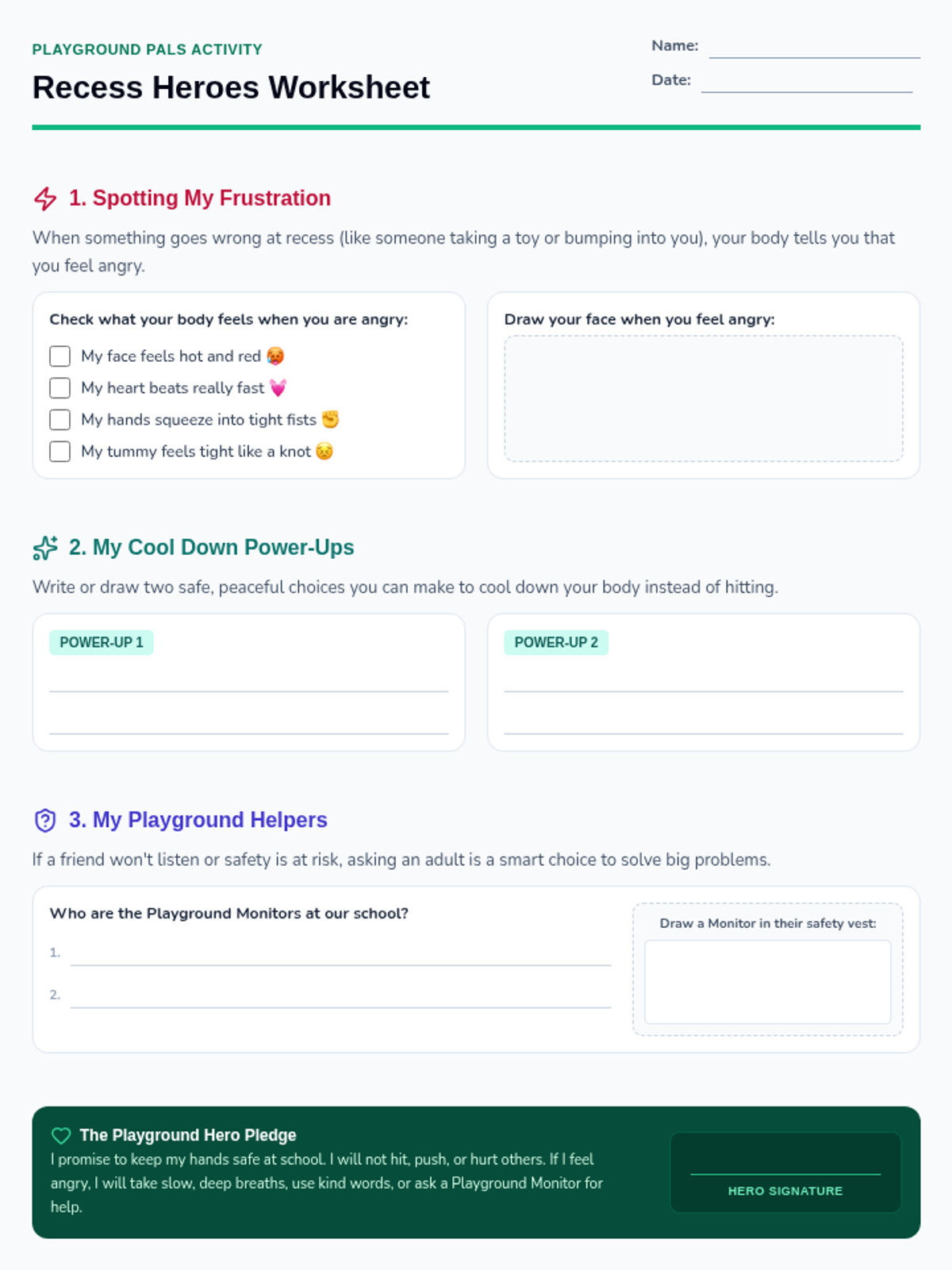
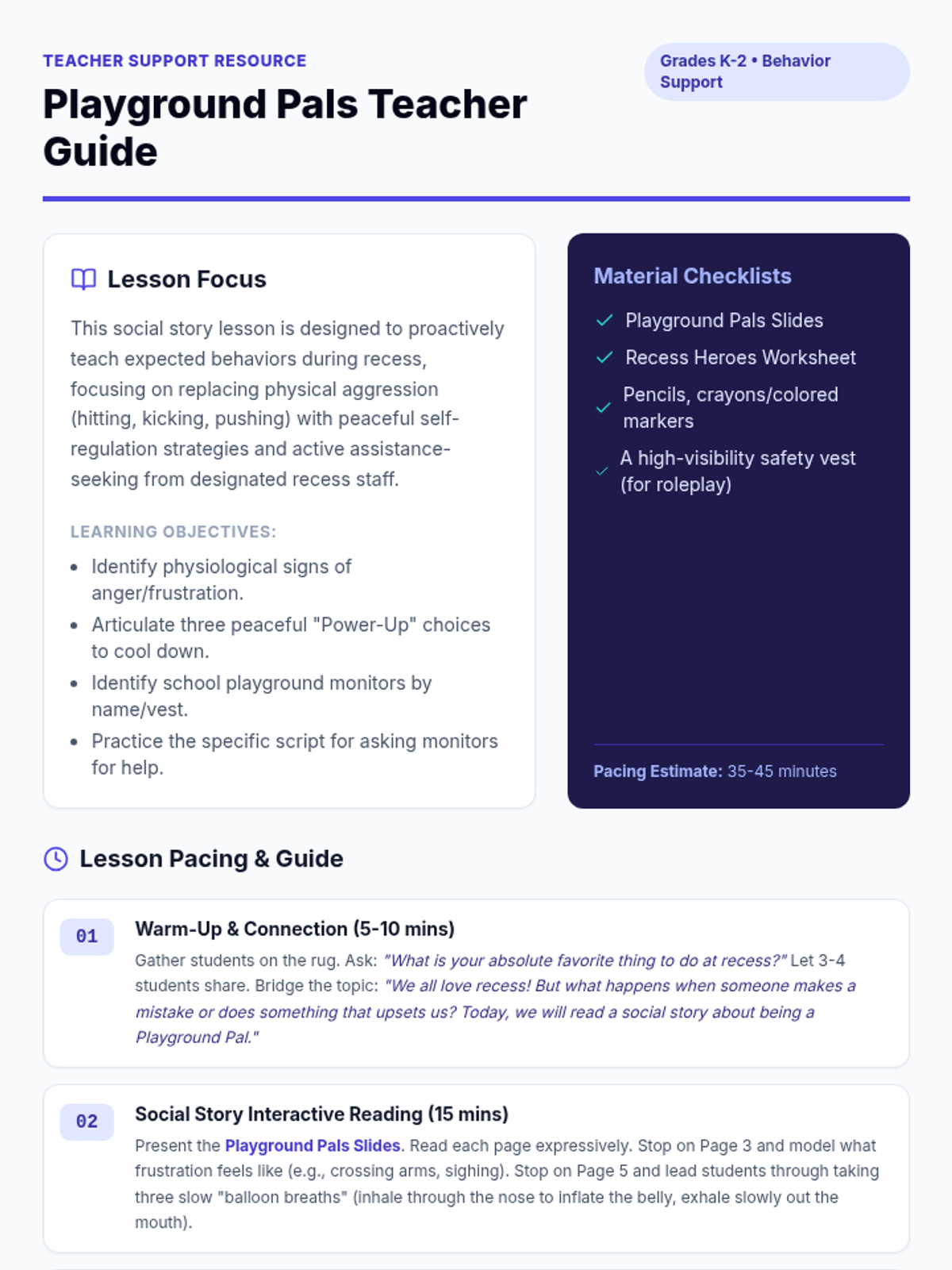
A social story lesson designed to teach students positive playground behaviors, focusing on replacing physical aggression with peaceful communication and seeking help from playground monitors.
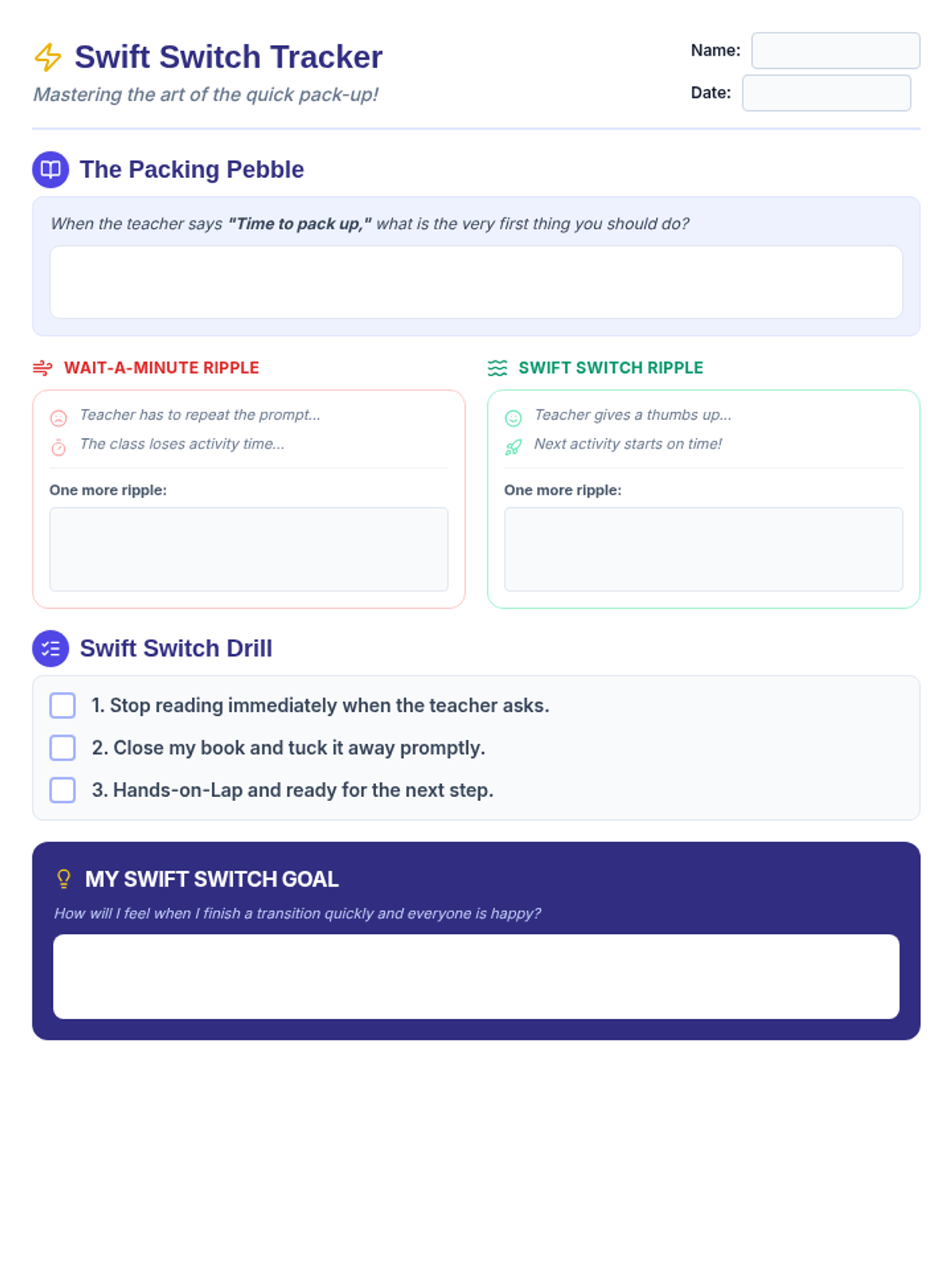
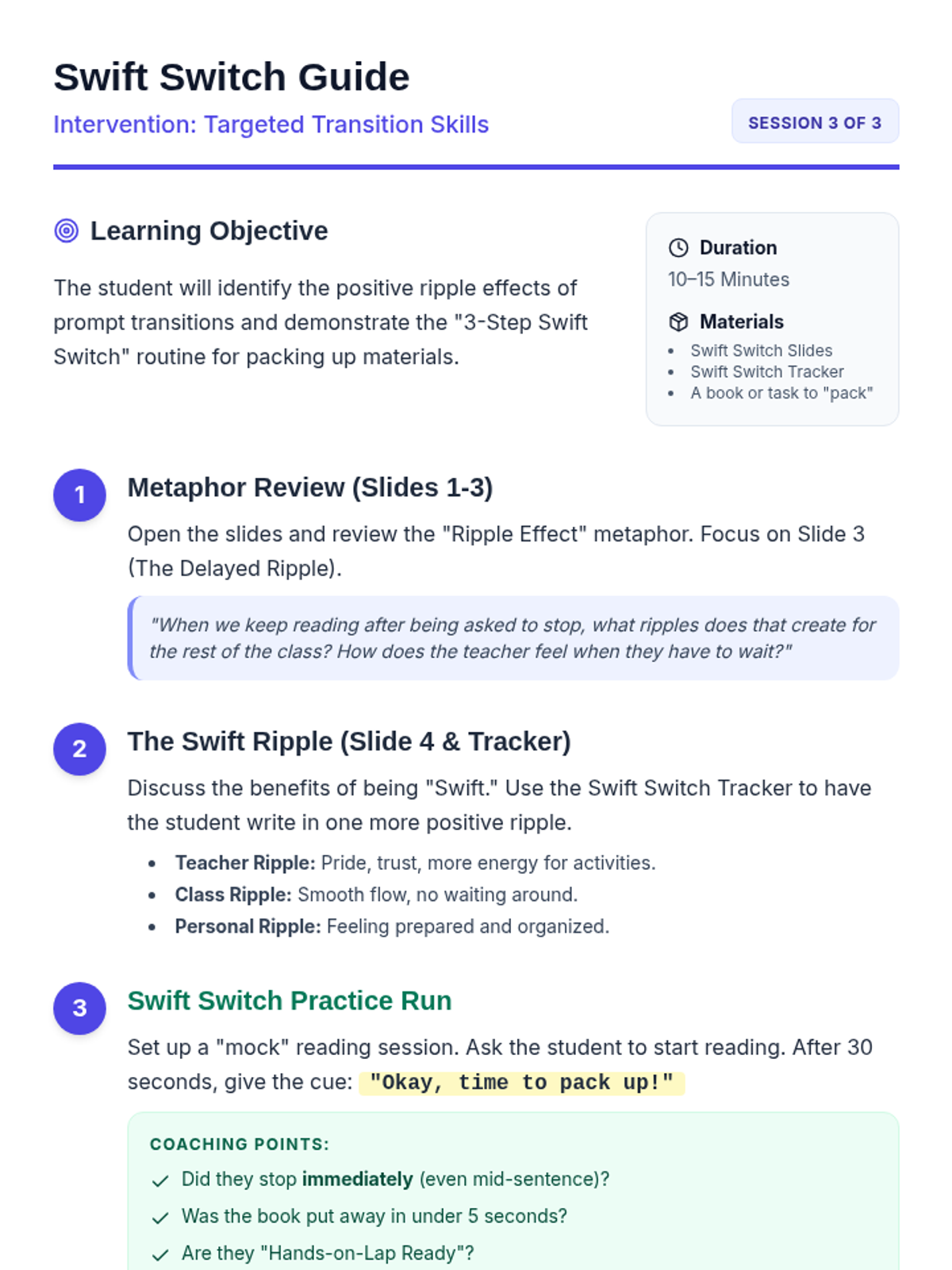
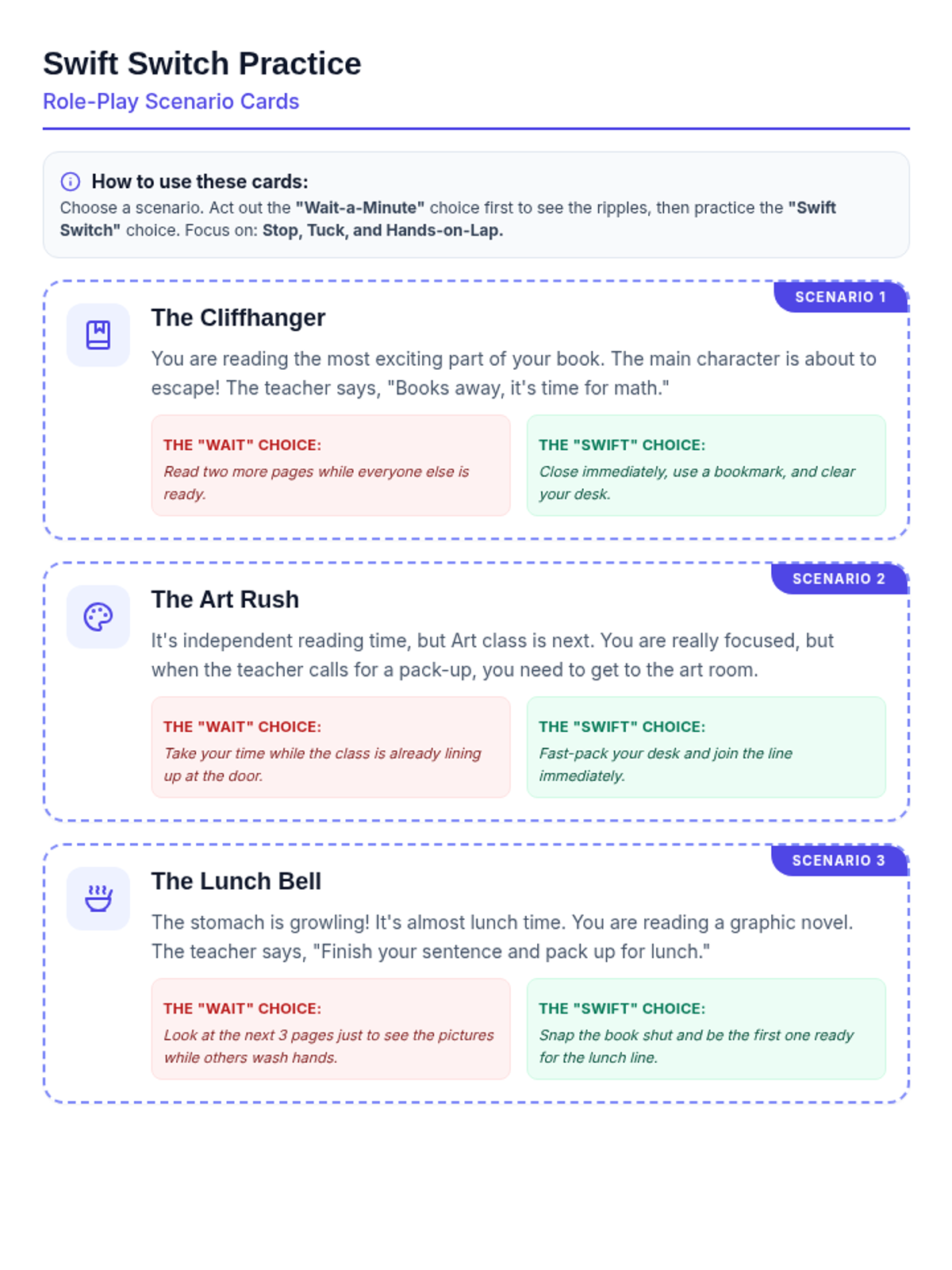
A targeted intervention focused on the transition skill of packing up materials promptly, highlighting the positive ripple effects of being ready for the next part of the day.
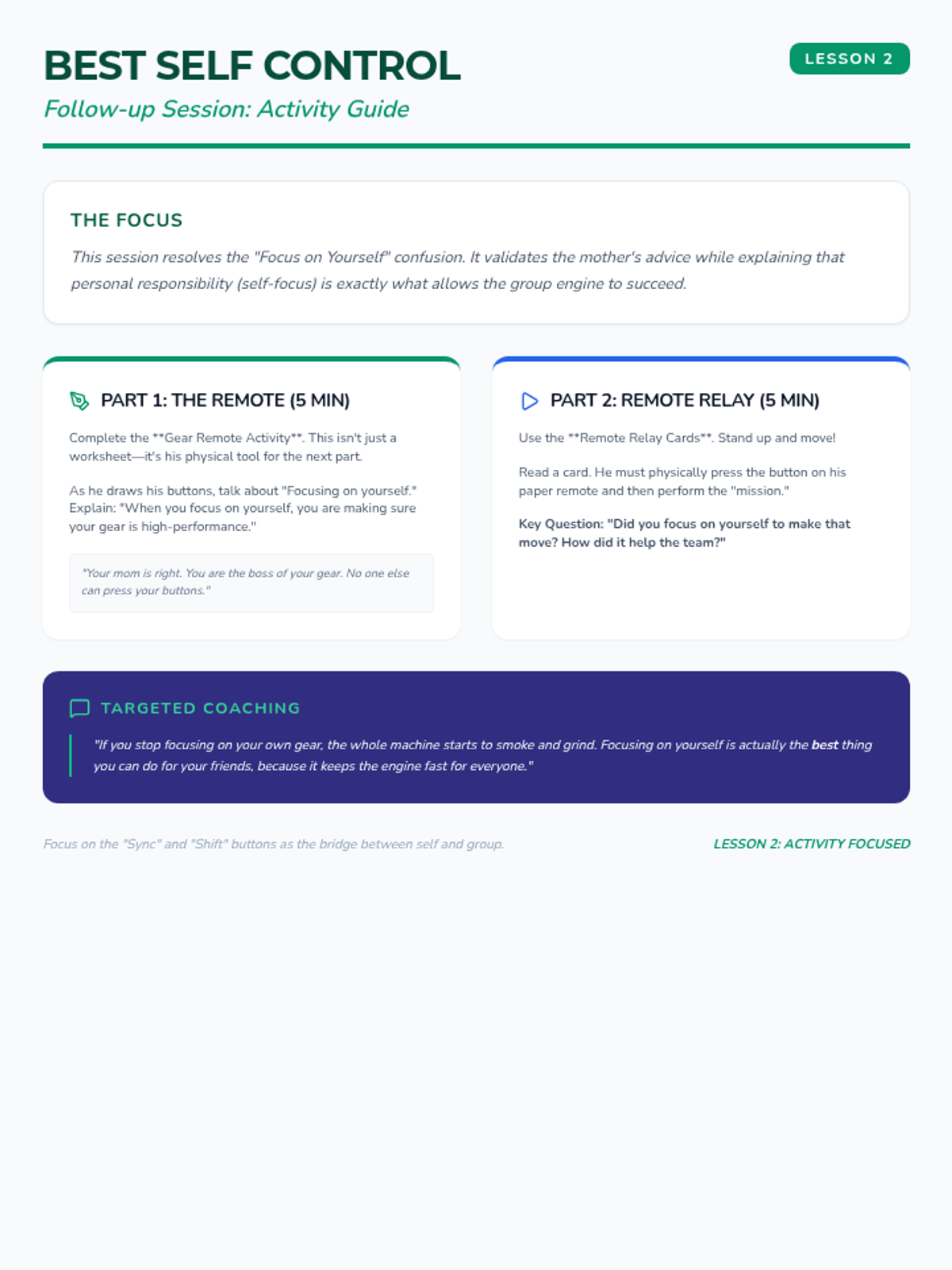
A follow-up session that clarifies the "Focus on Self" advice. It teaches that focusing on yourself means taking 100% responsibility for your own "Remote Control" to ensure your gear turns when the team needs it. Mostly activity-based.
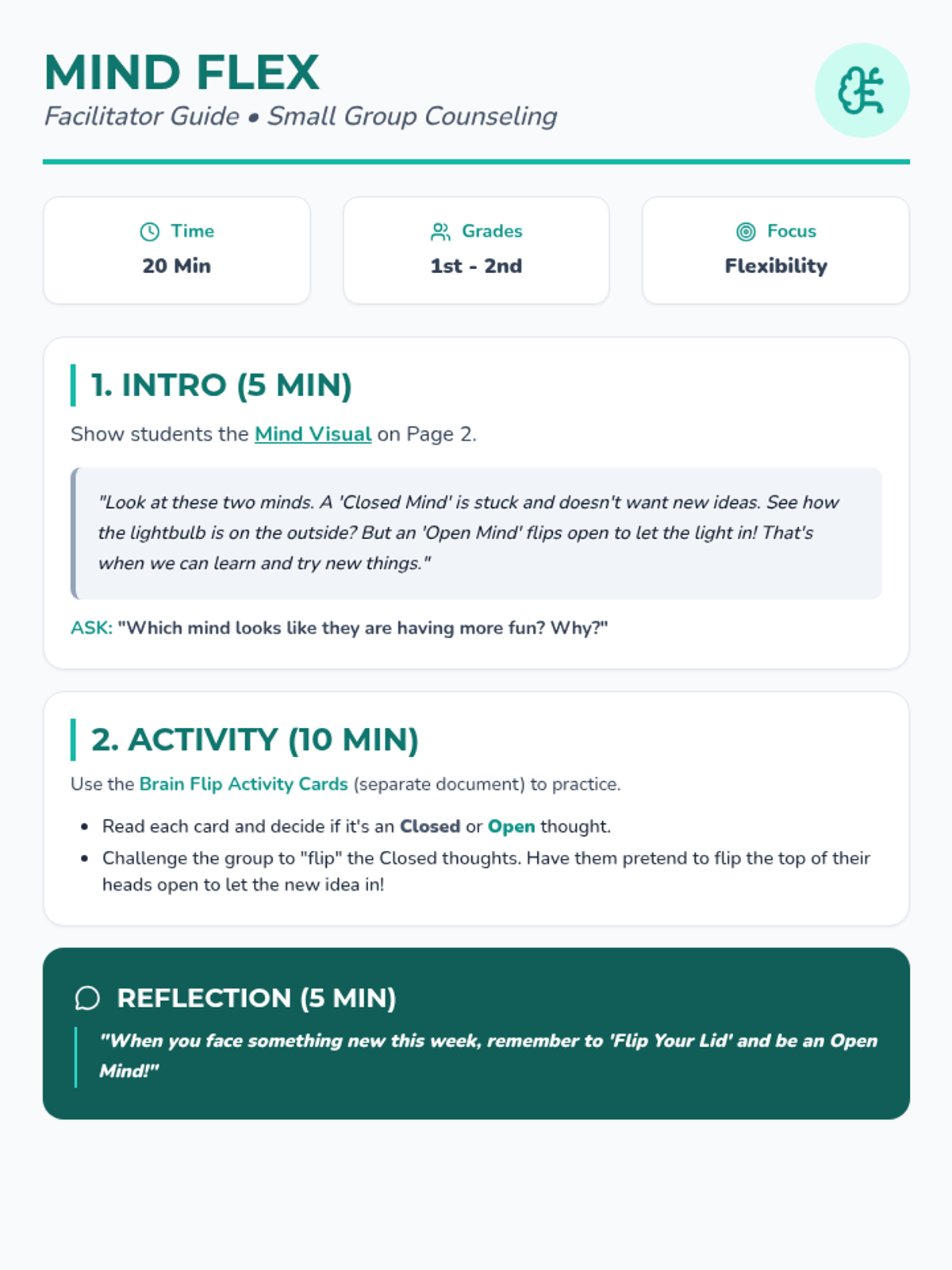
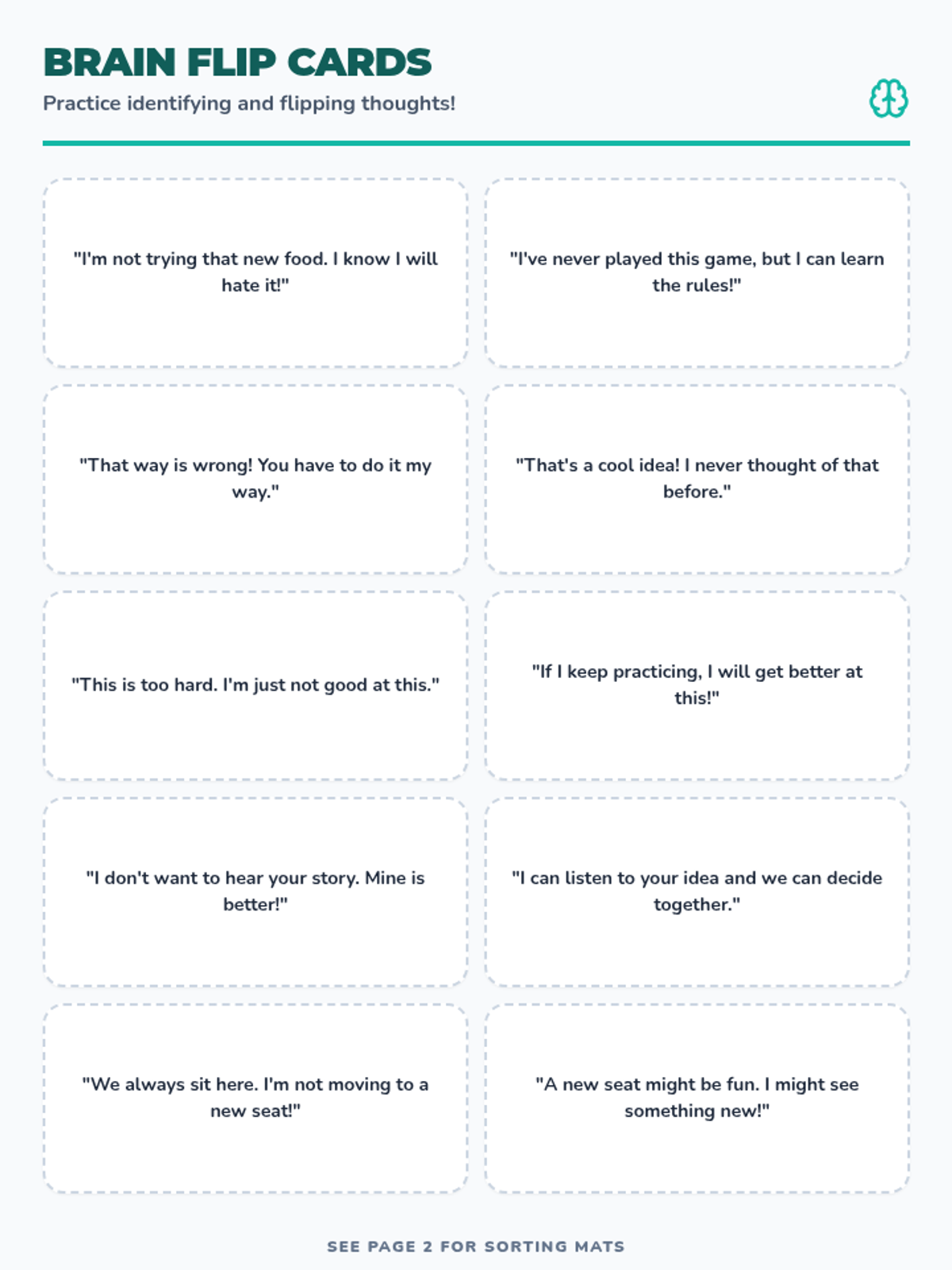
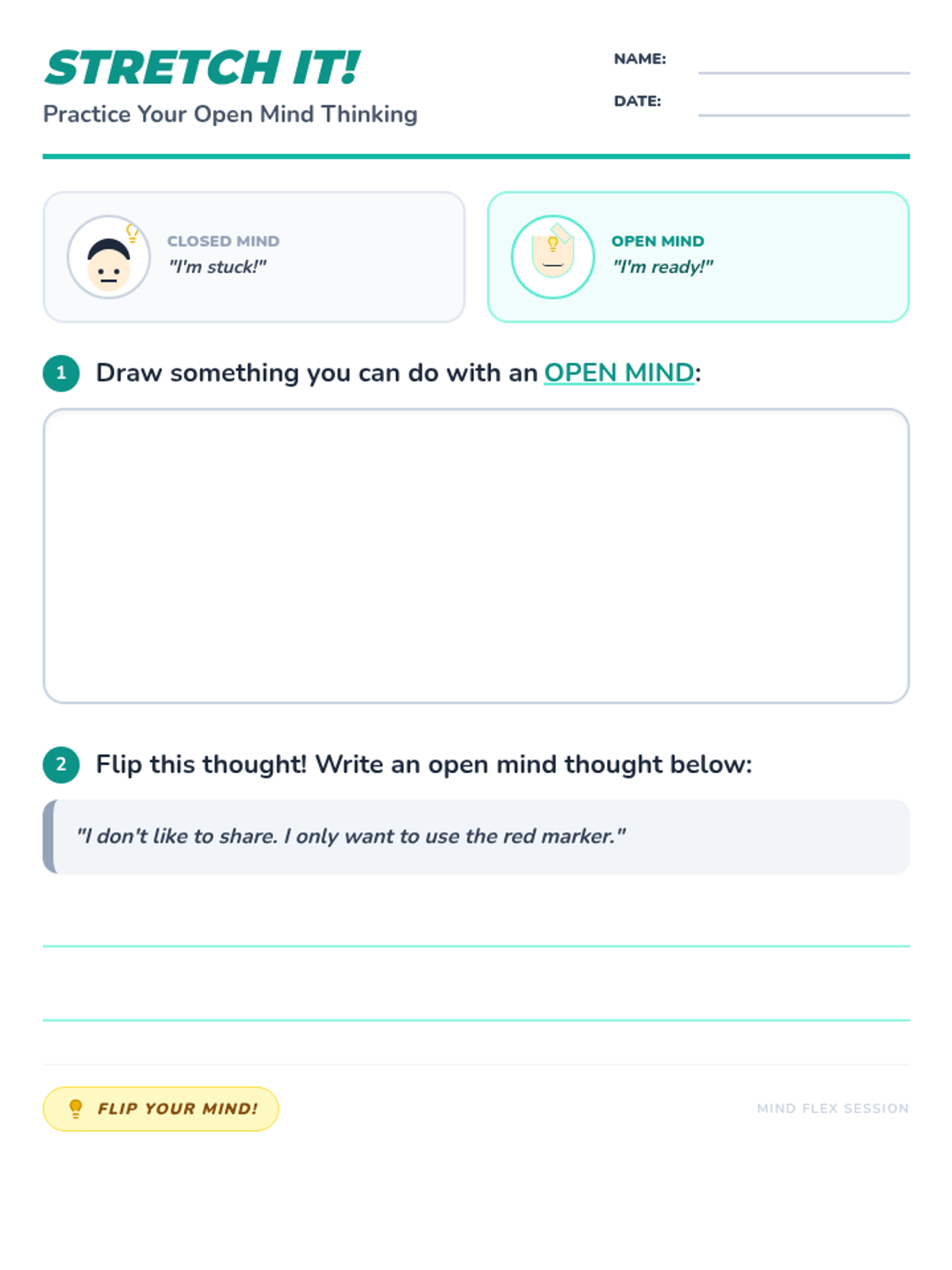
A 20-minute small-group counseling session designed to help early elementary students distinguish between closed-minded and open-minded thinking through hands-on practice.
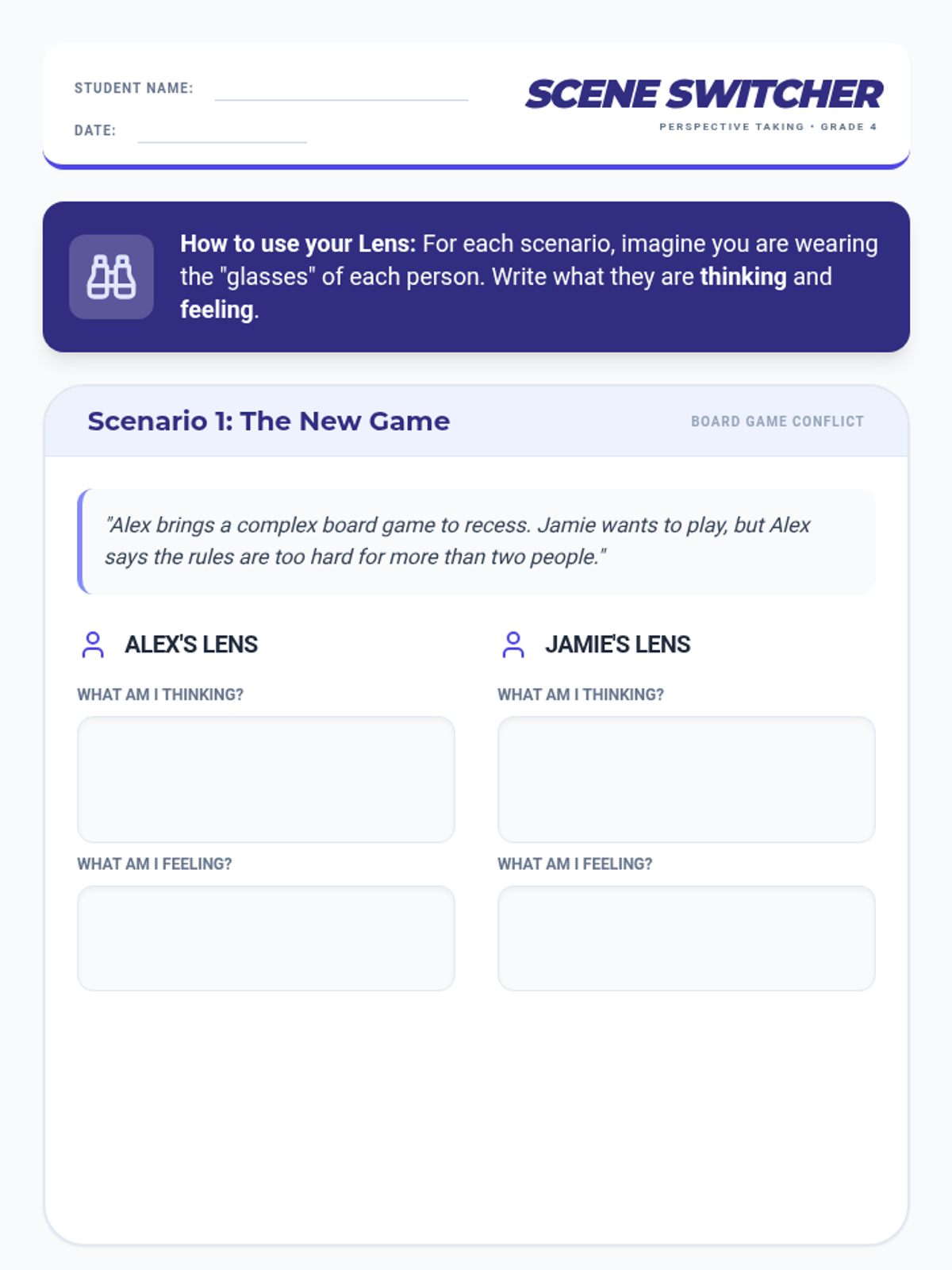
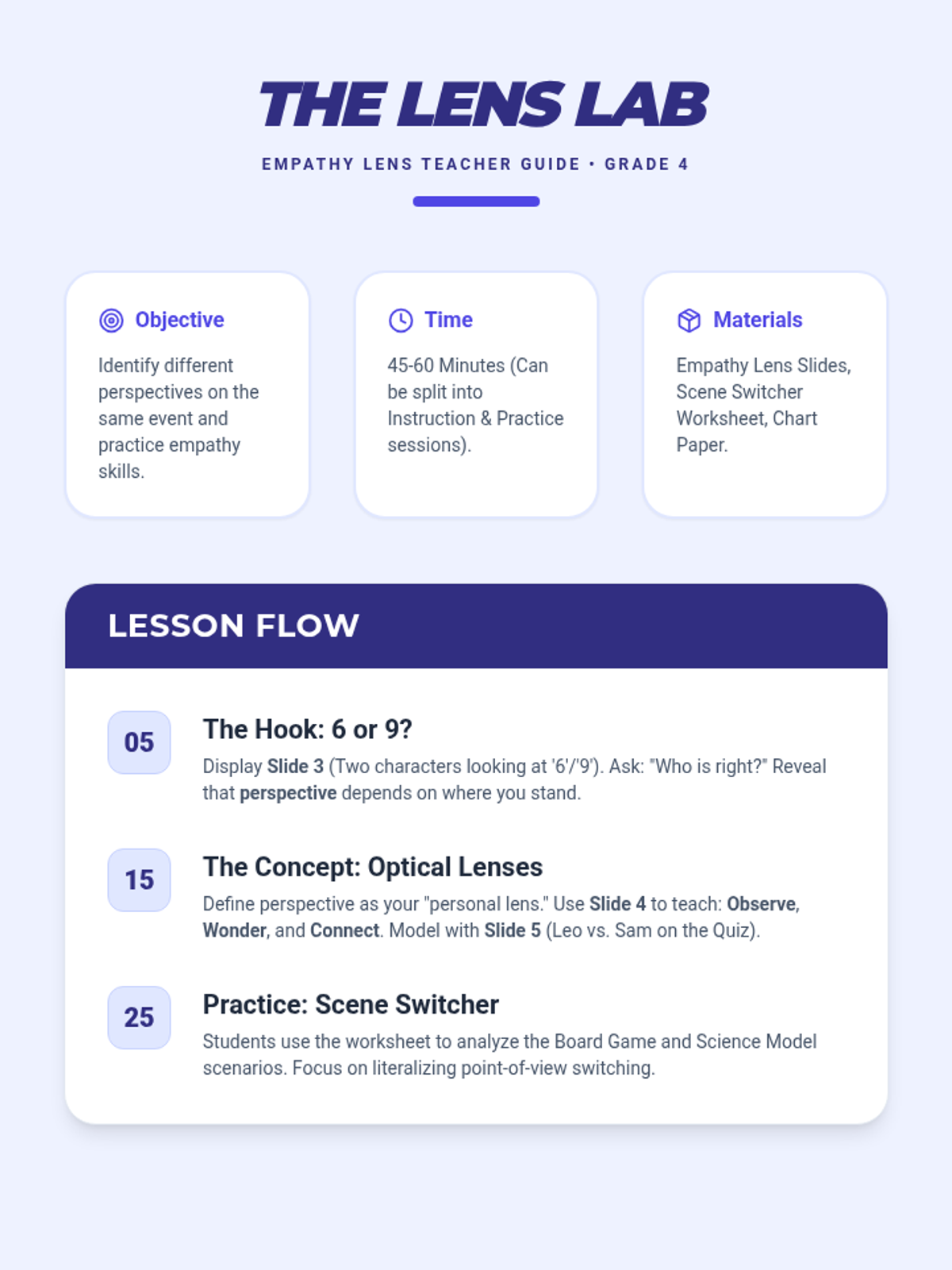
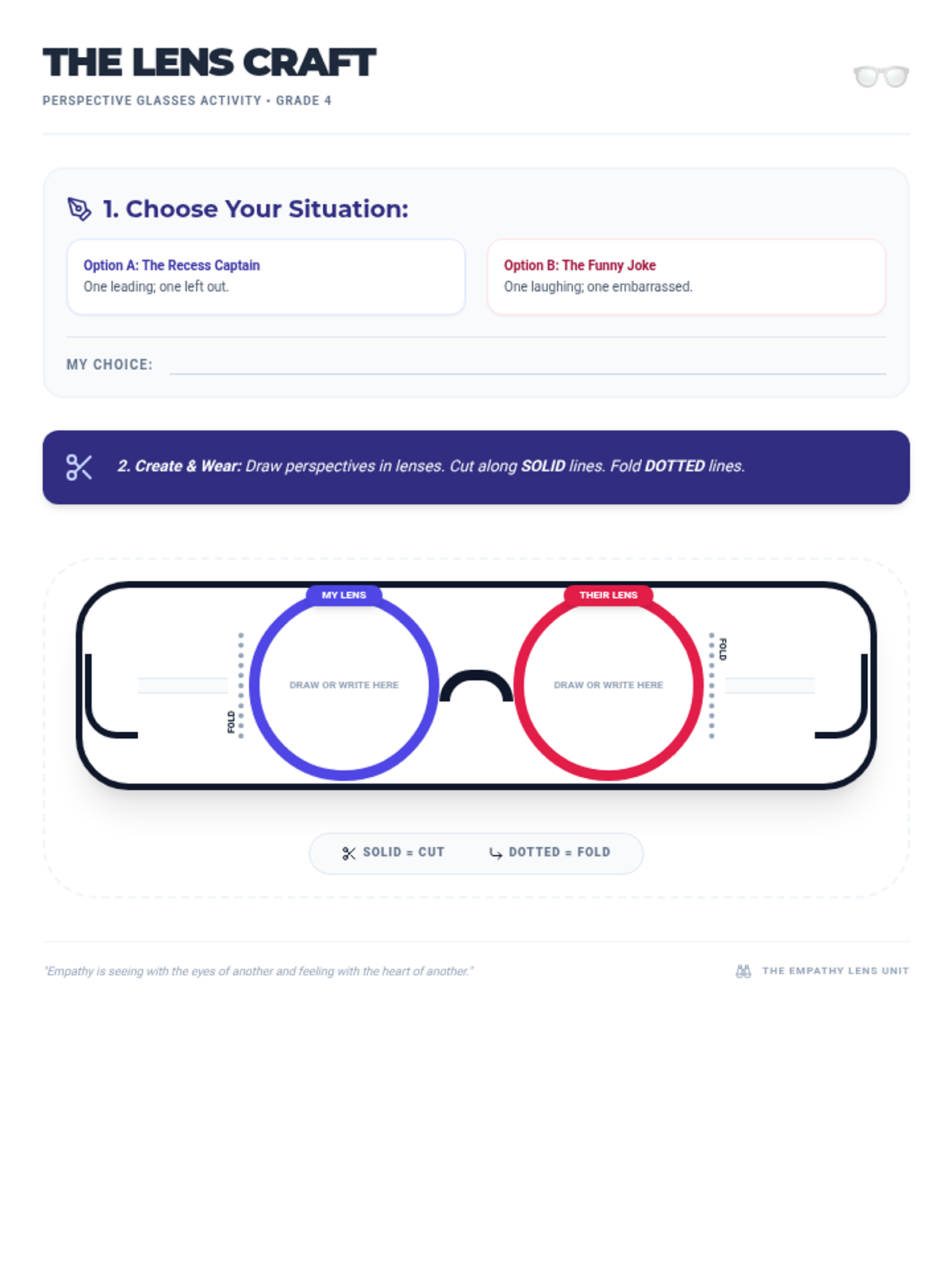
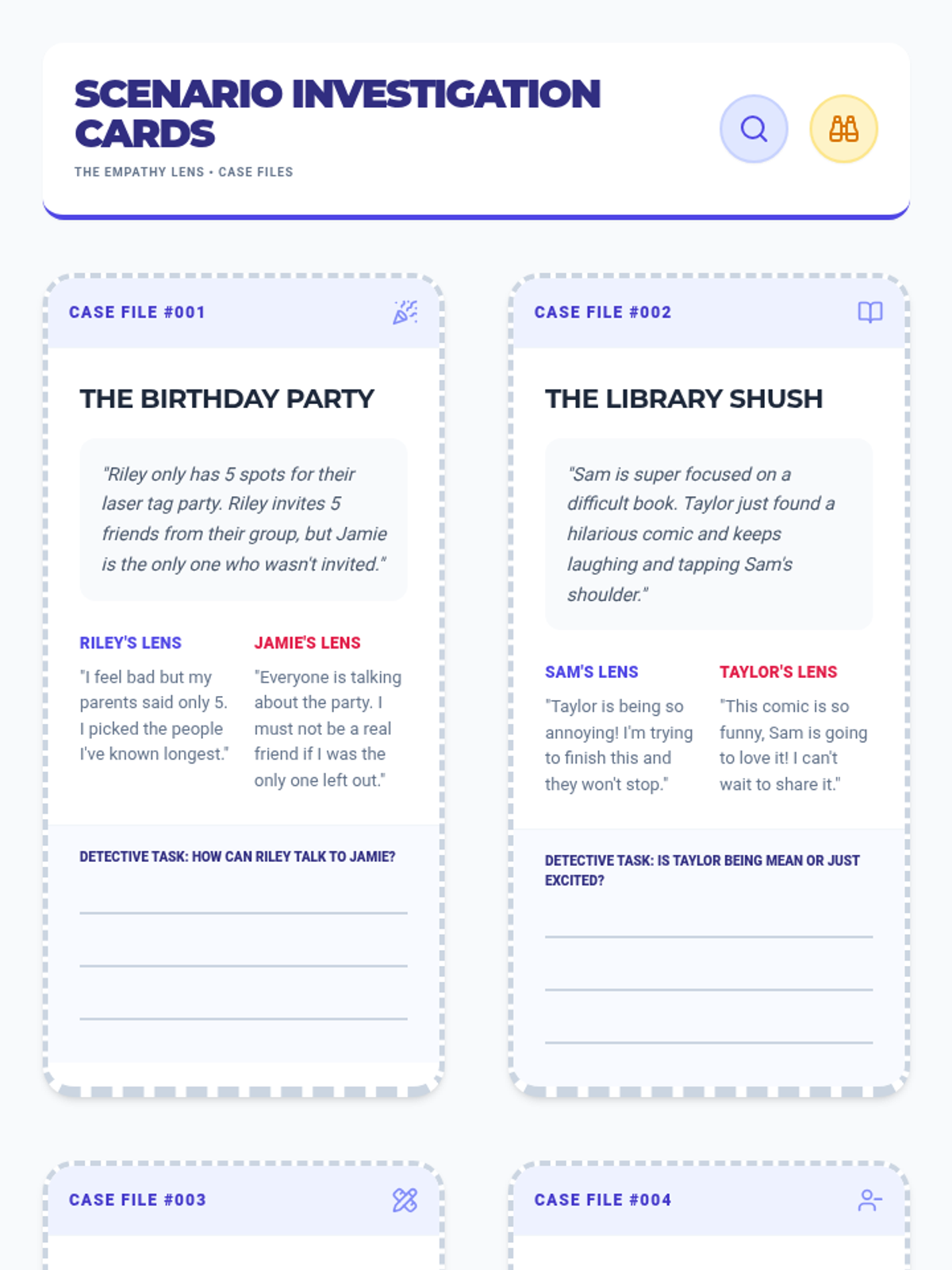
A perspective-taking lesson for fourth graders using the 'Optical Lens' metaphor. Students learn to recognize that two people can experience the same event differently and practice identifying others' feelings and thoughts.
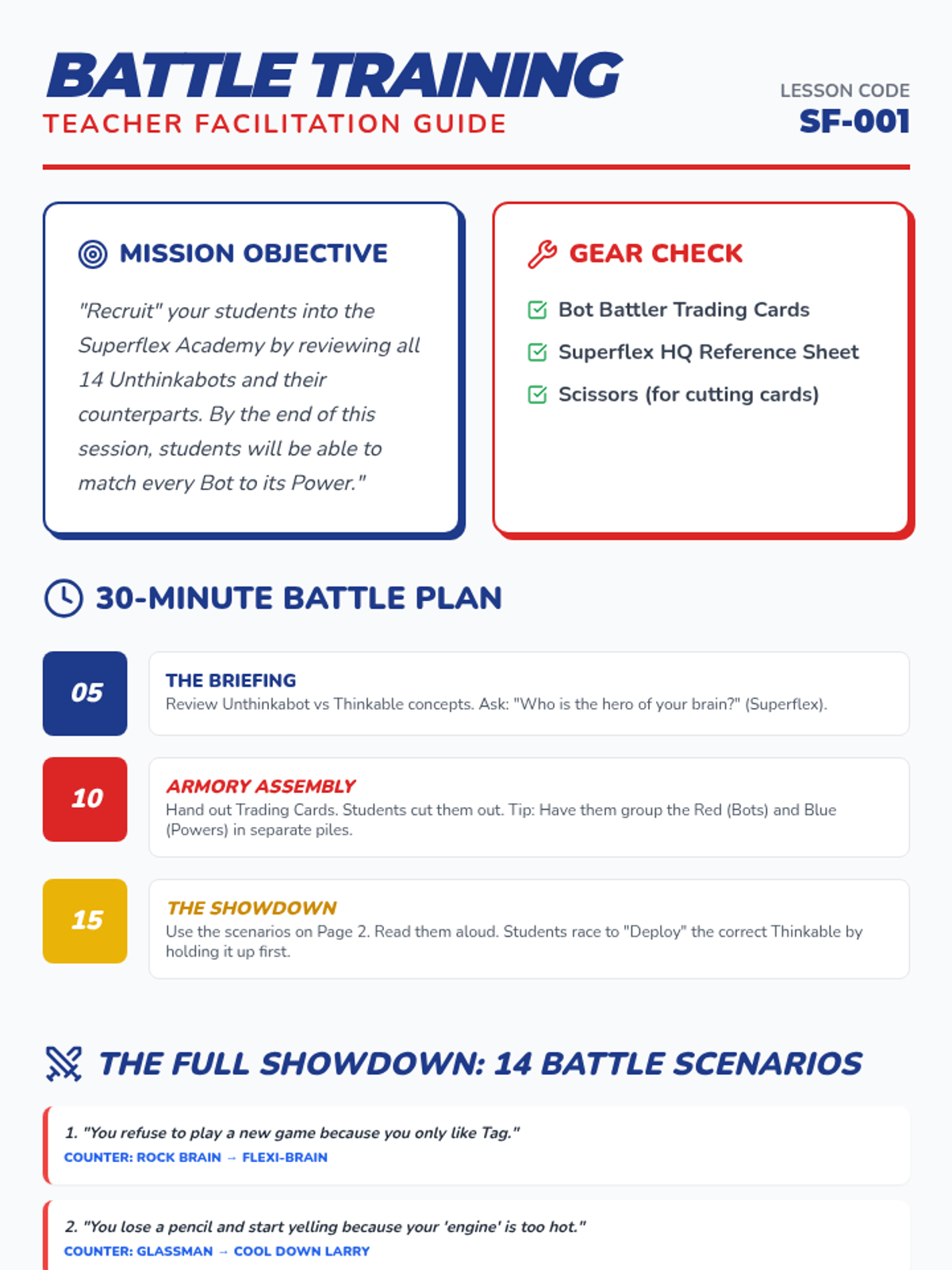
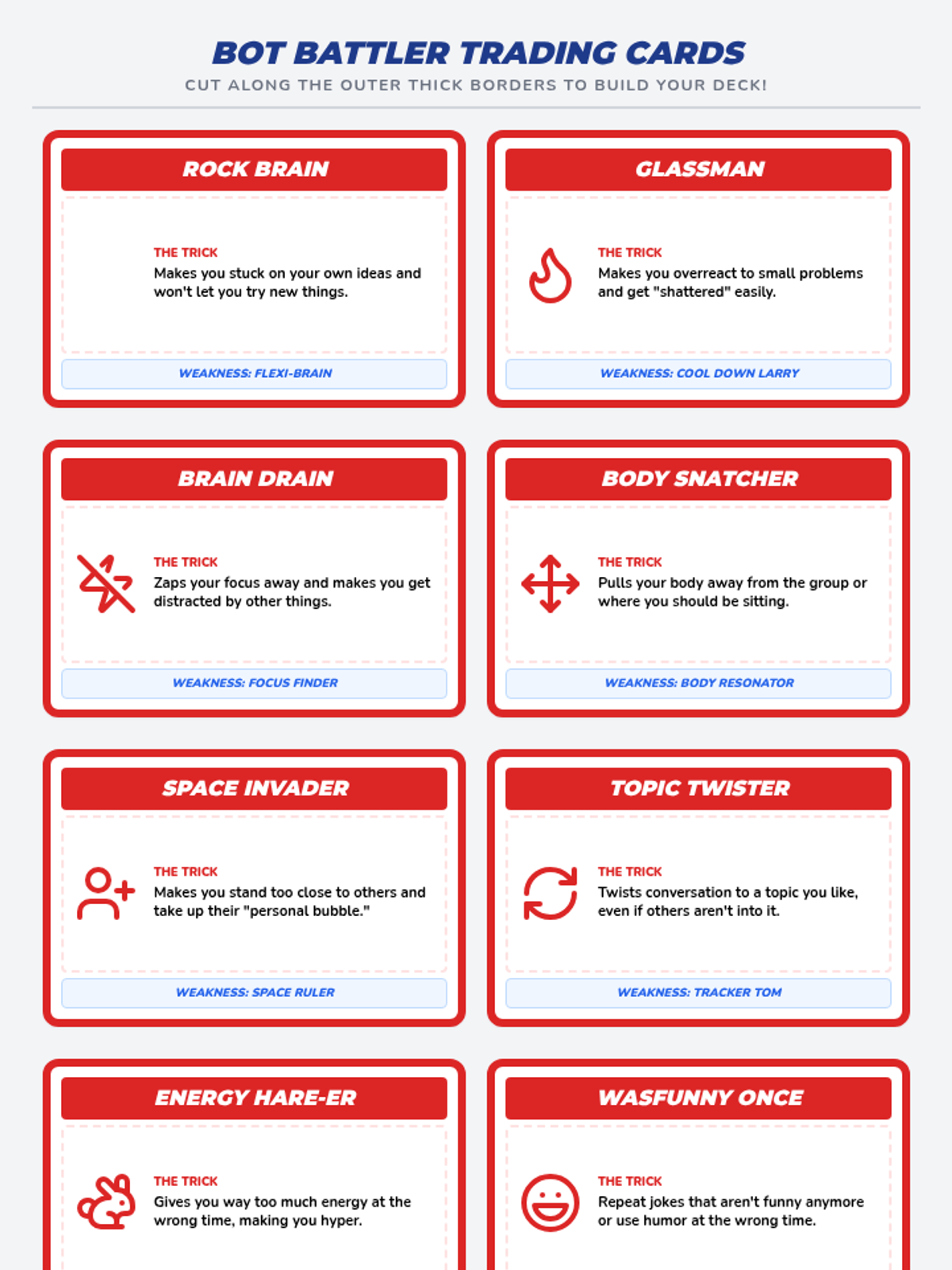
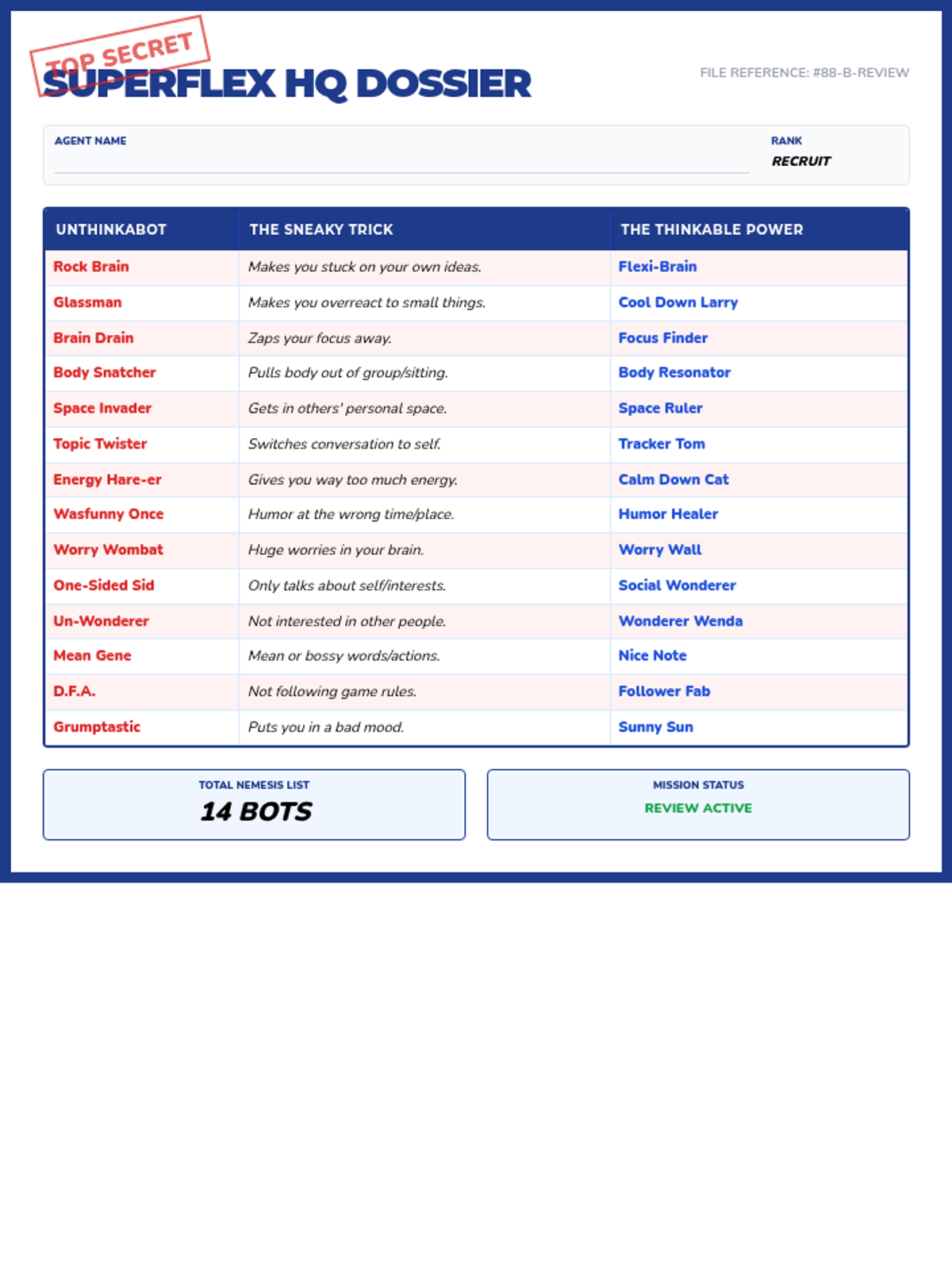
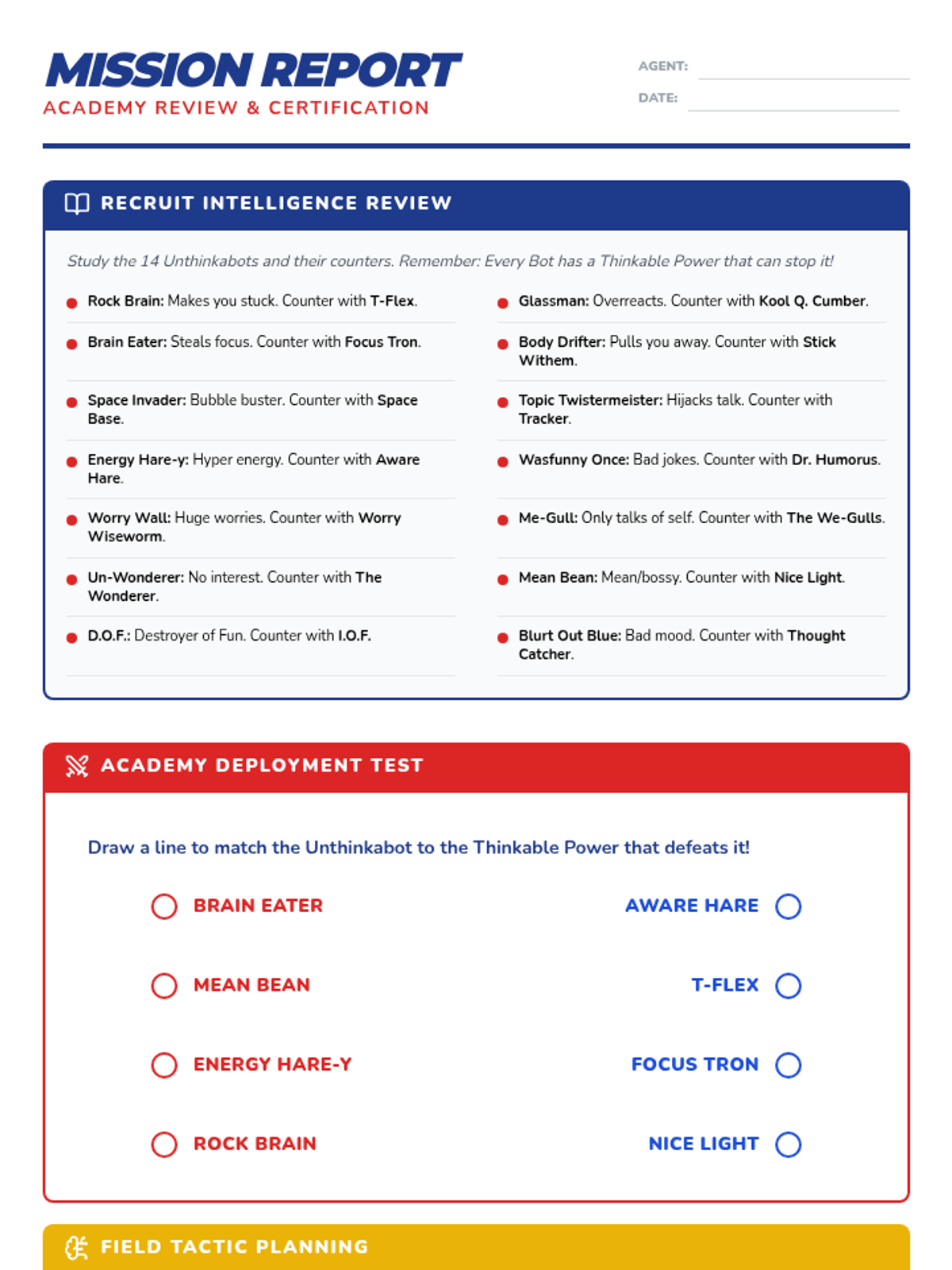
A fast-paced review session where students use character trading cards to identify Unthinkabot 'tricks' and deploy Thinkable 'powers' to defeat them. Includes a comprehensive reference guide and a teacher-led battle game.
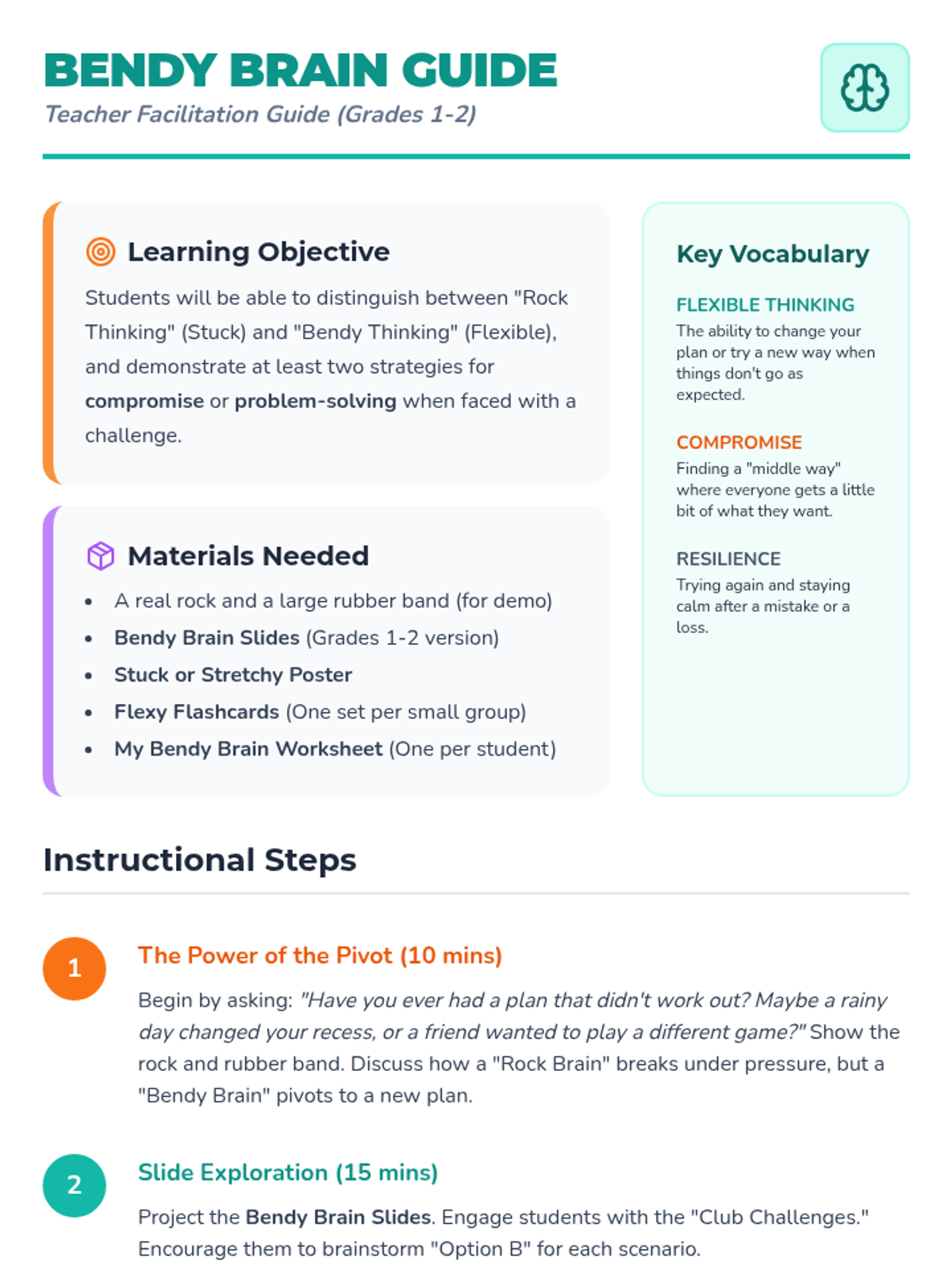
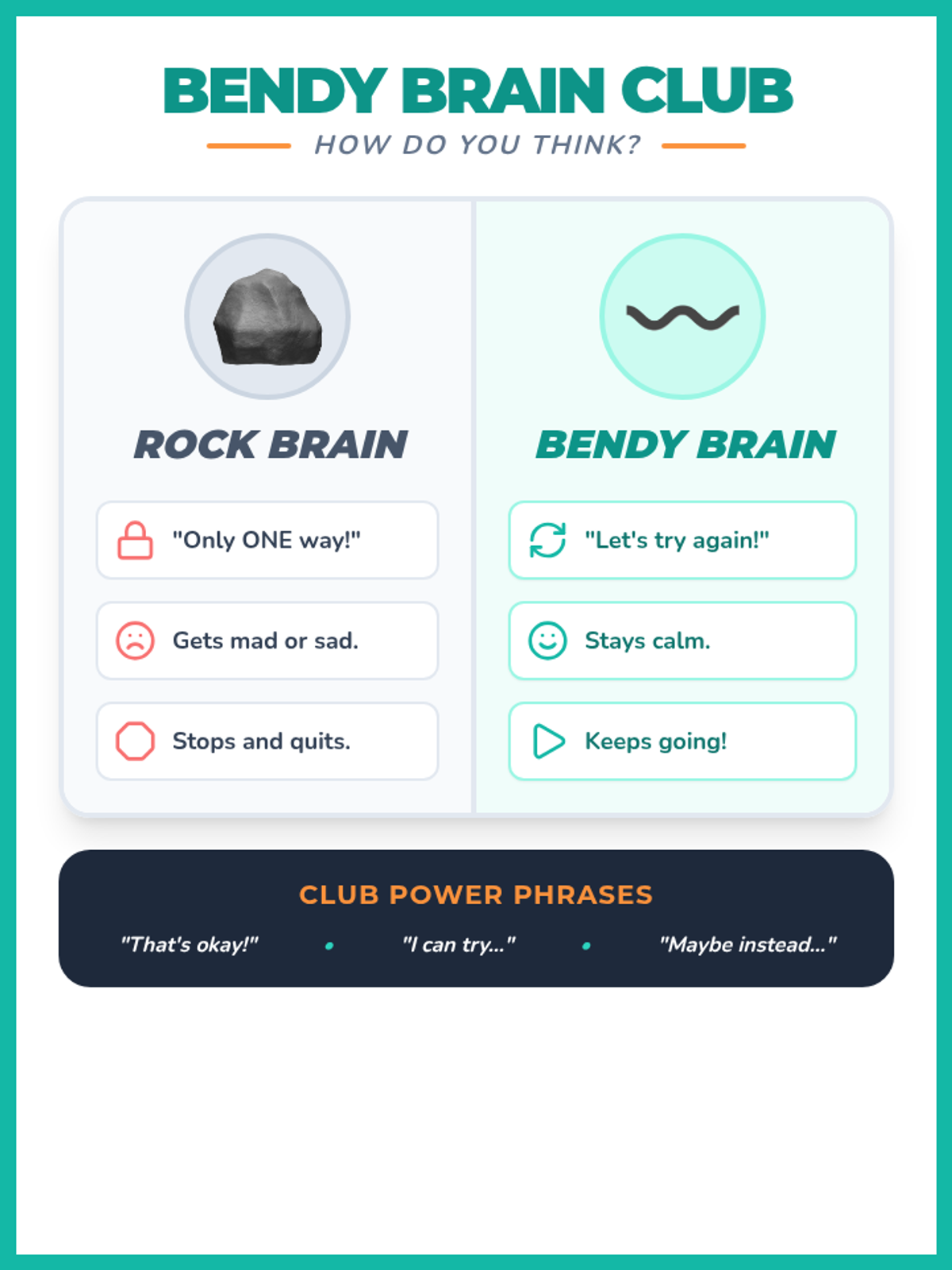
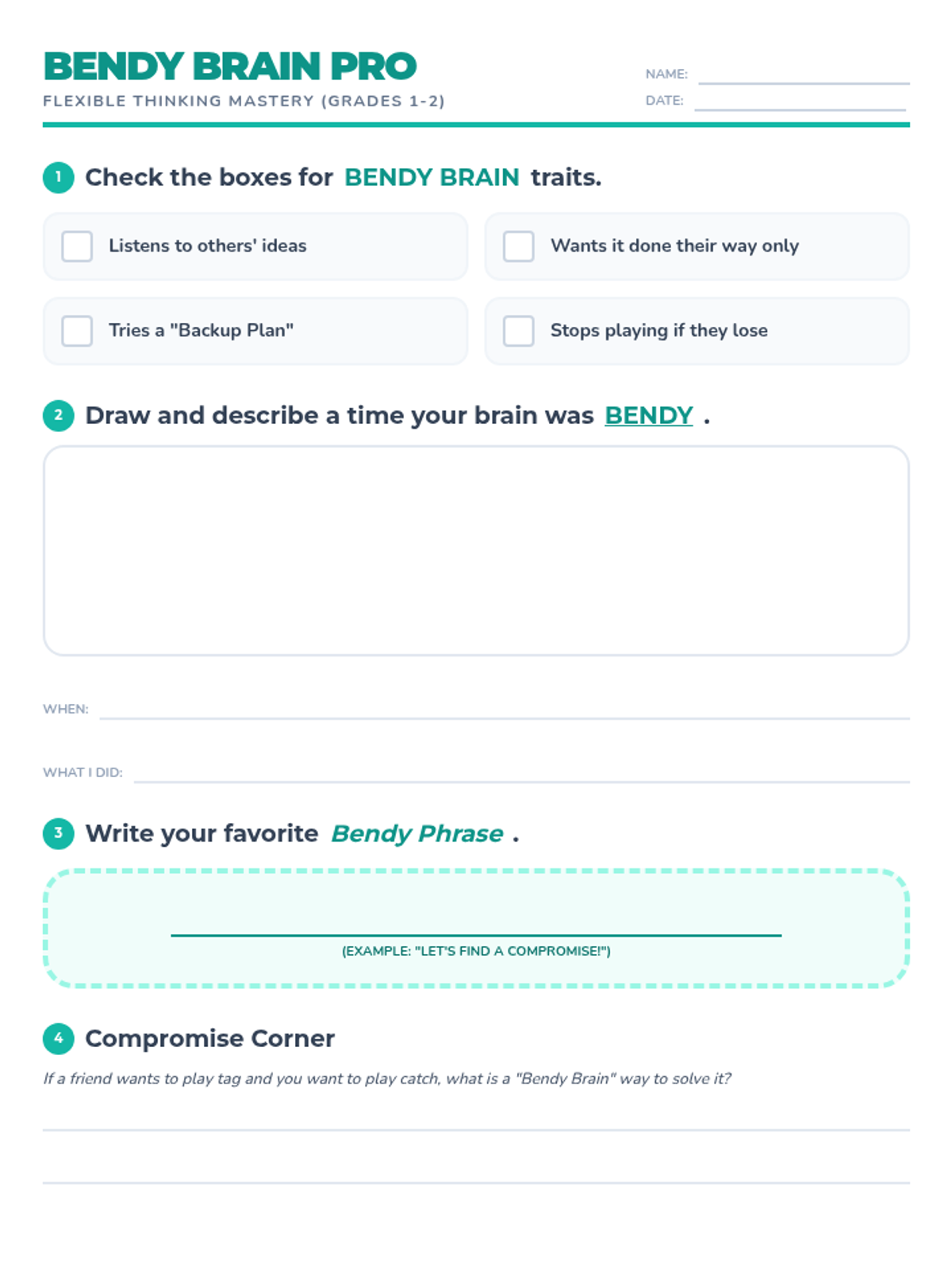
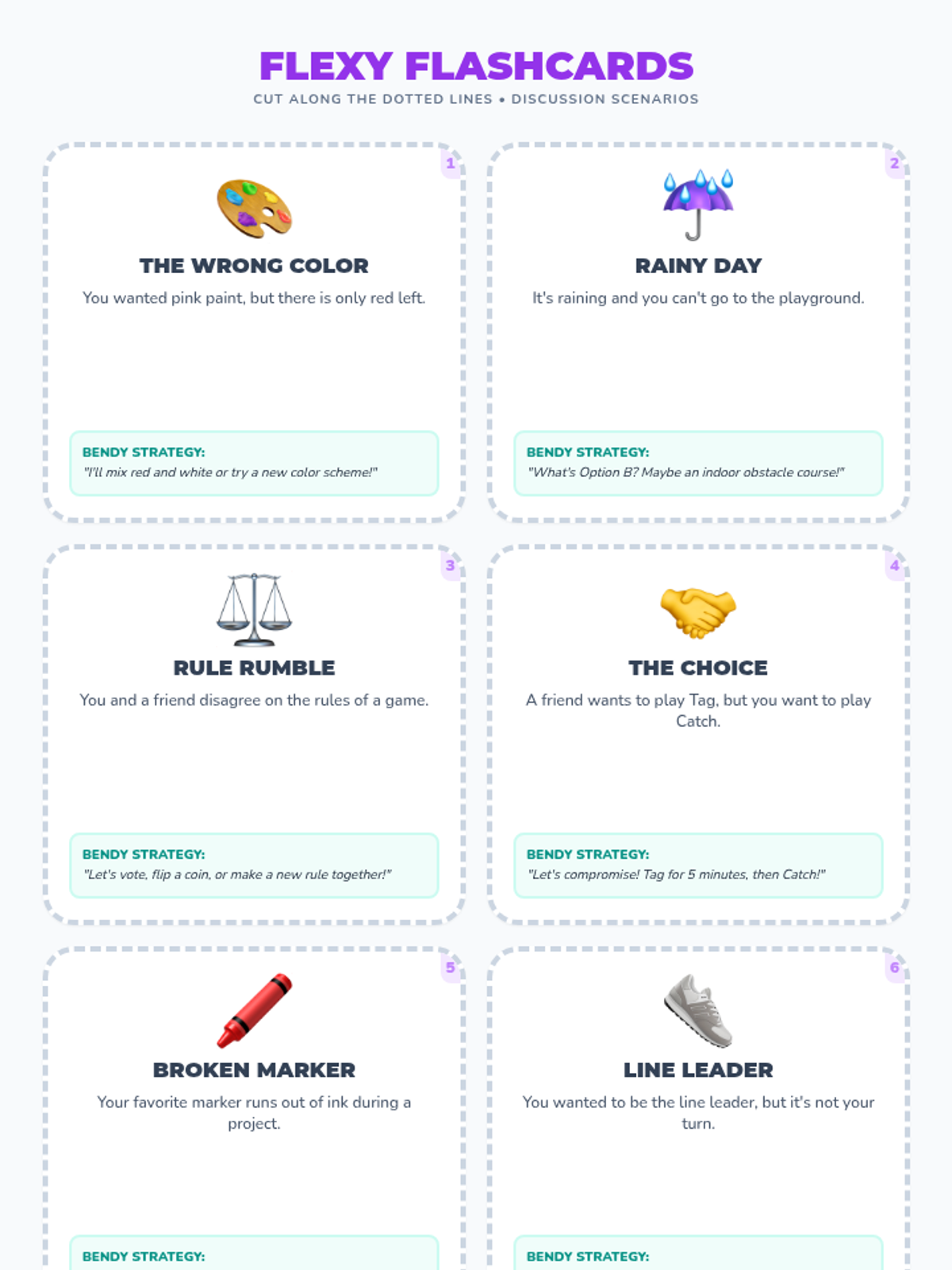
A foundational social-emotional learning lesson for K-1 students that introduces the concept of cognitive flexibility using the 'Rock Brain' vs. 'Bendy Brain' metaphor. Students learn to identify when they are stuck and practice 'stretching' their thinking in response to changes and challenges.
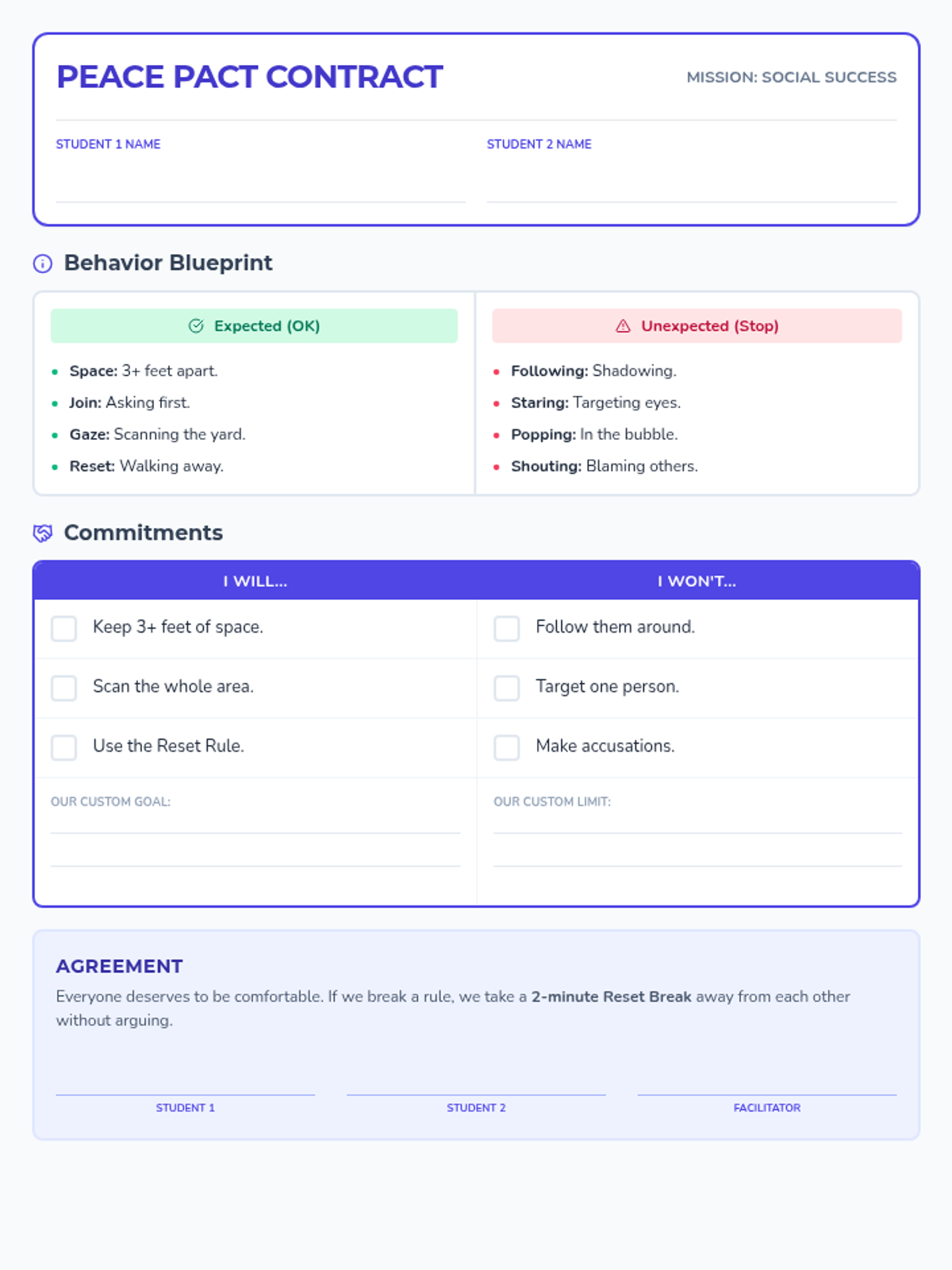
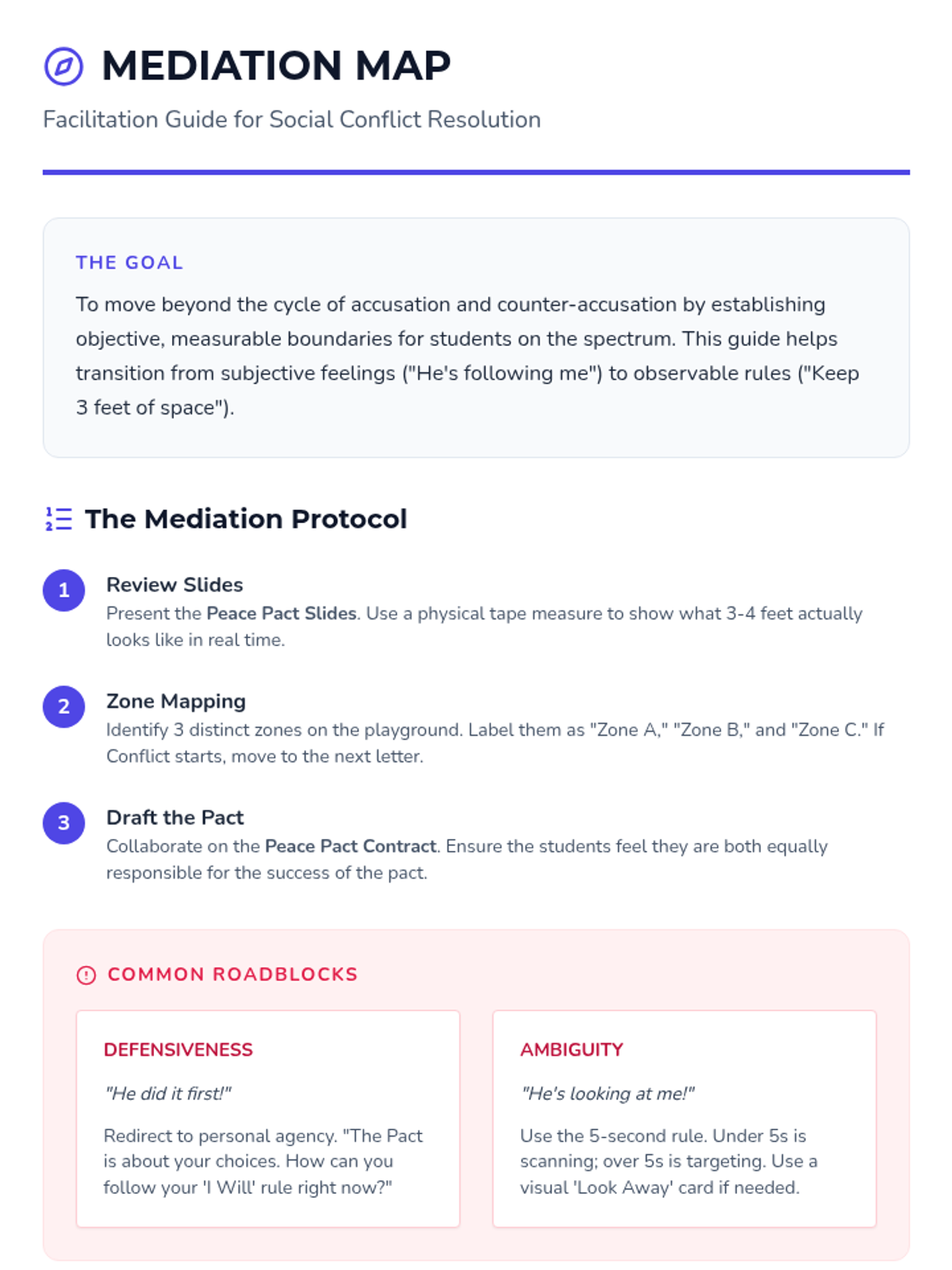
A structured approach to resolving recurring conflicts between students regarding personal space, physical boundaries, and perceived social behaviors during unstructured times.
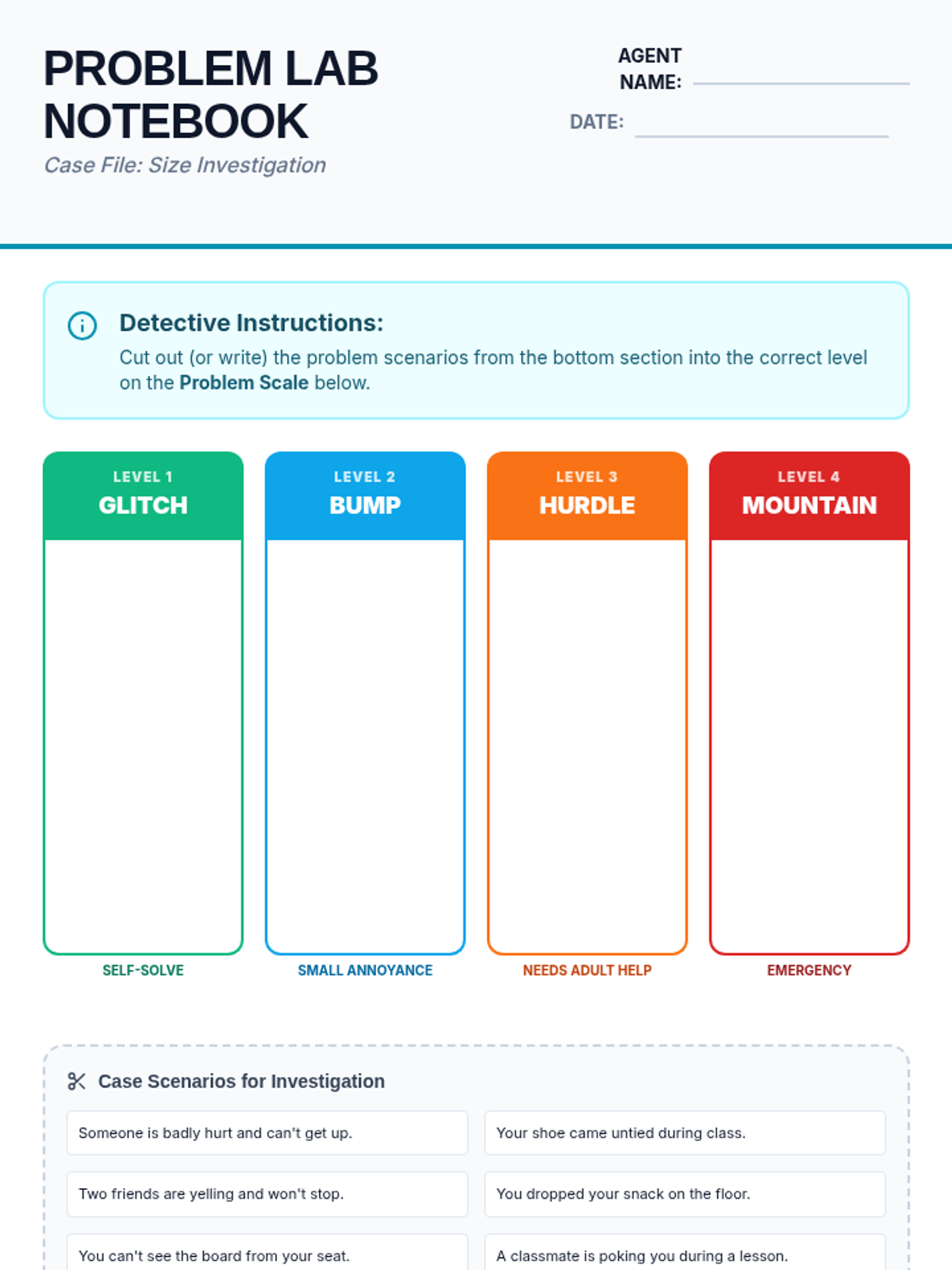
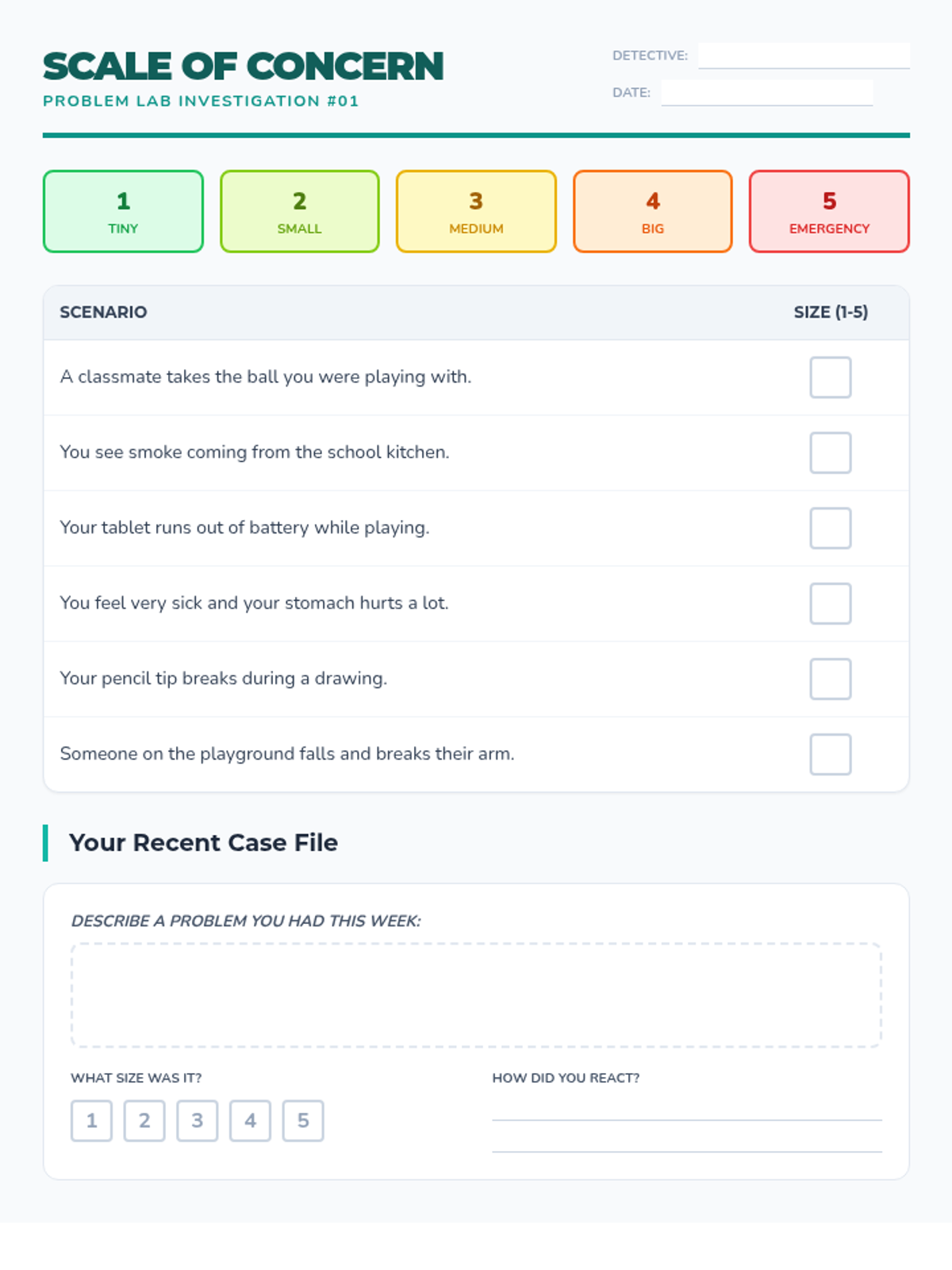
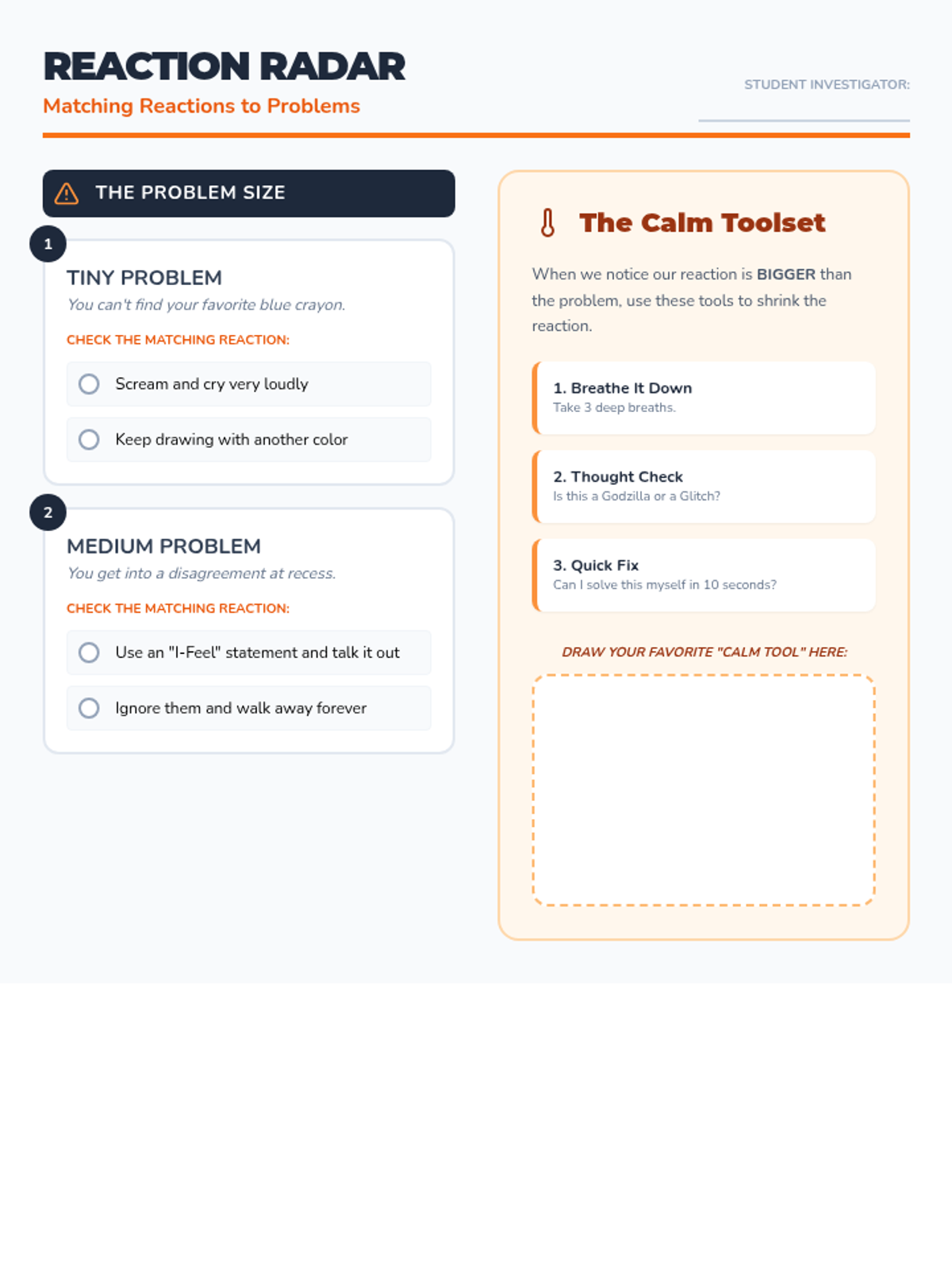
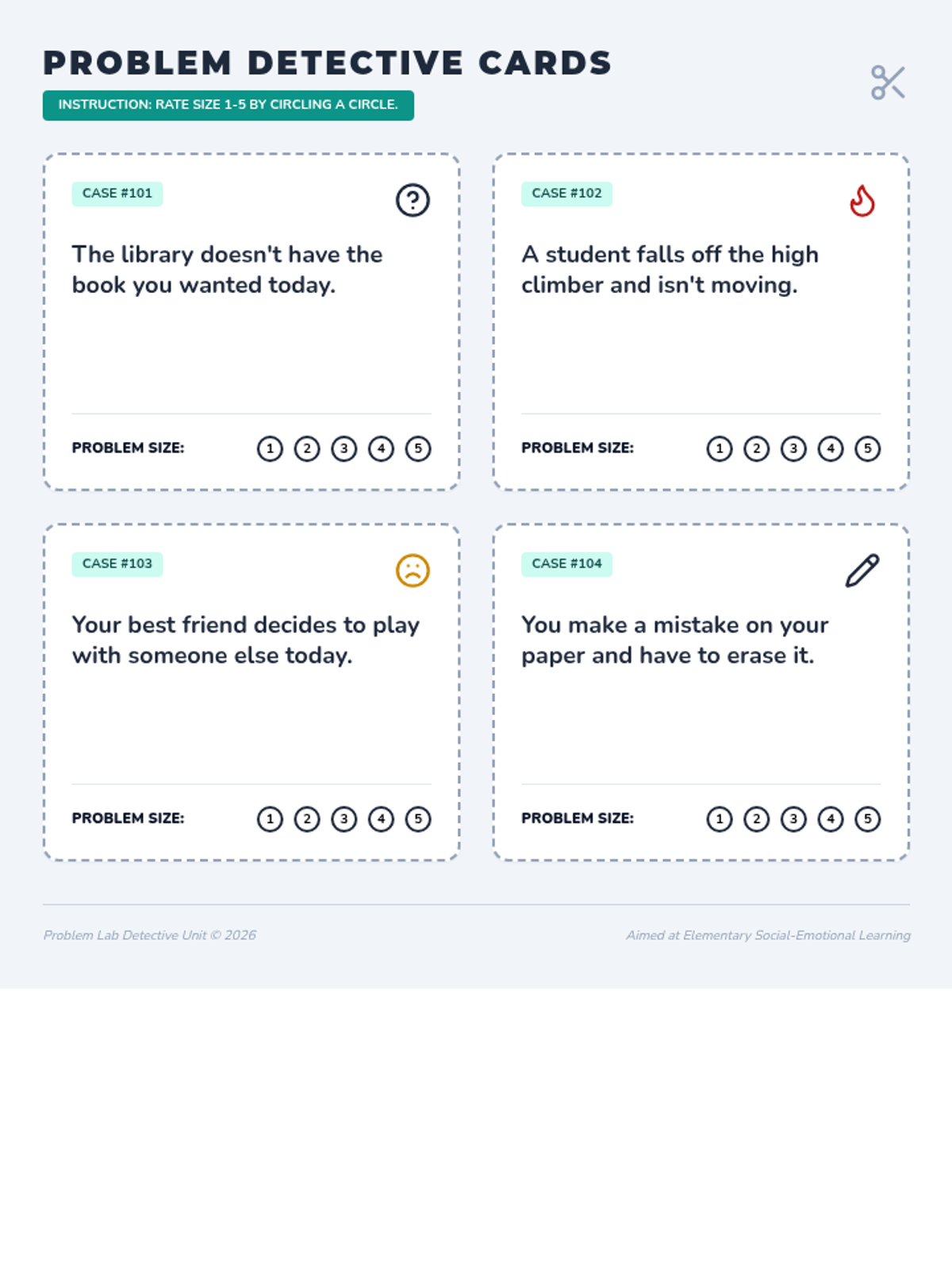
A lesson designed to help students categorize the magnitude of various problems and determine appropriate emotional and behavioral responses. Students will explore a four-level scale ranging from tiny 'glitches' to emergency 'mountains'.
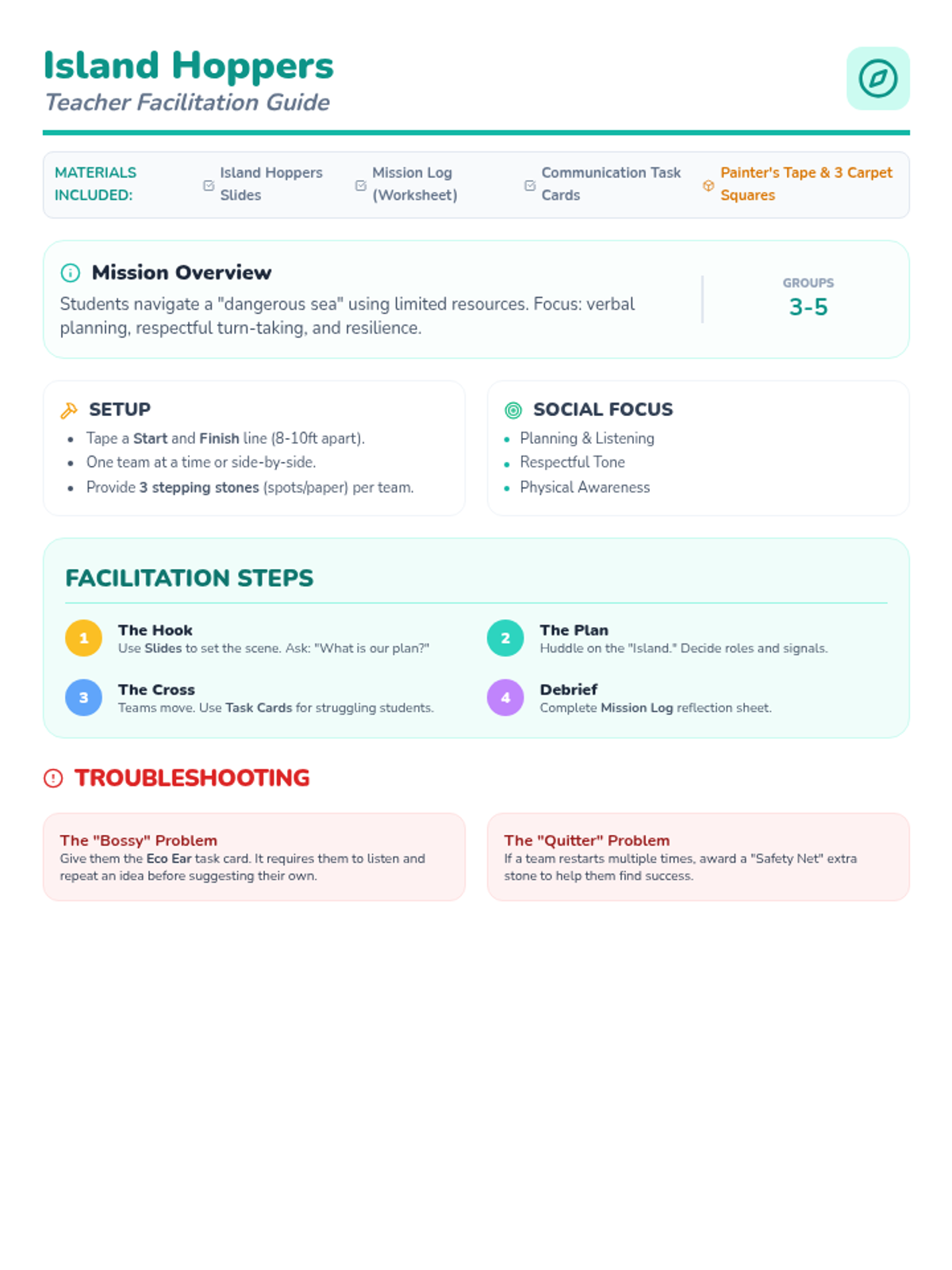
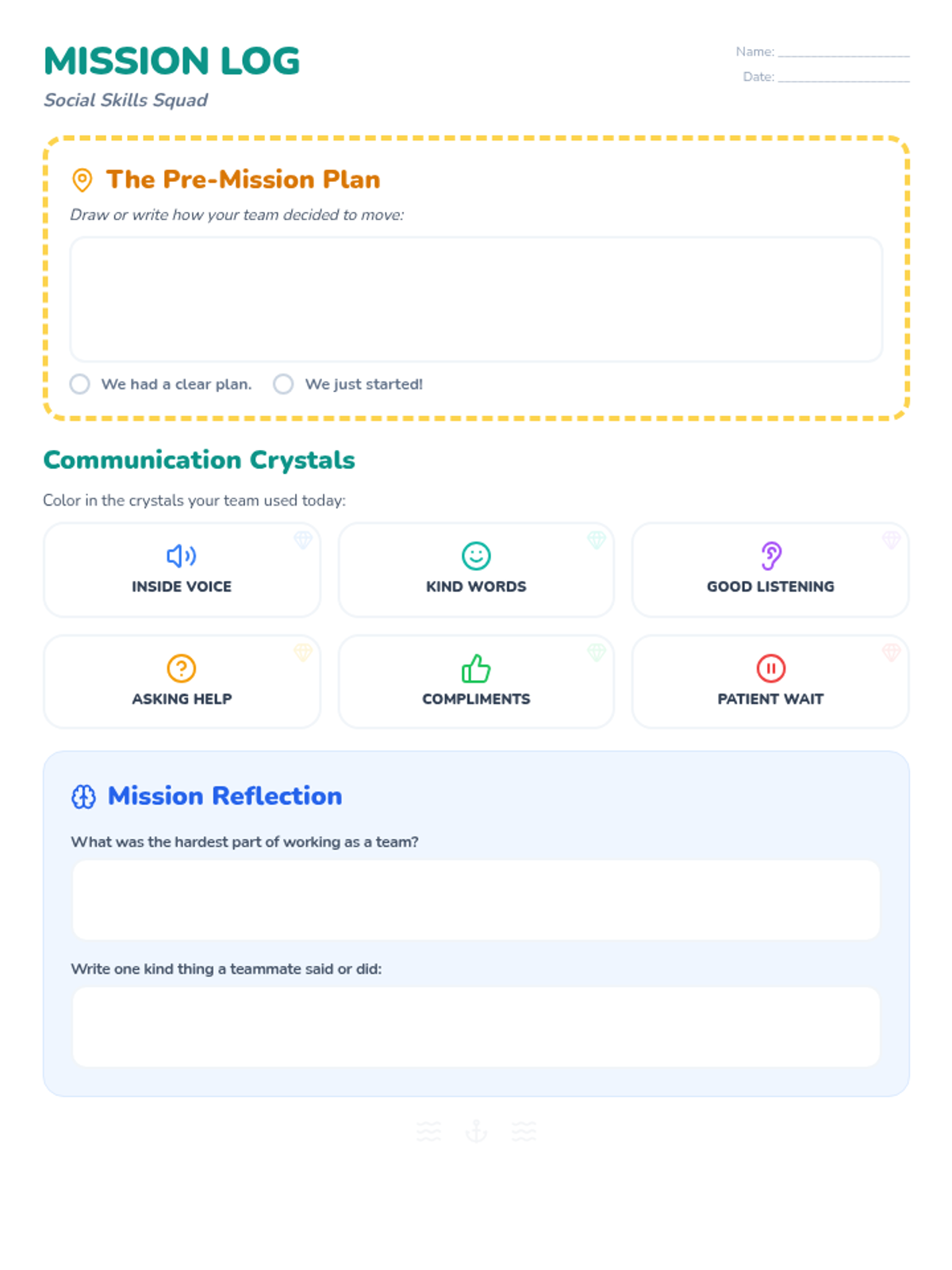
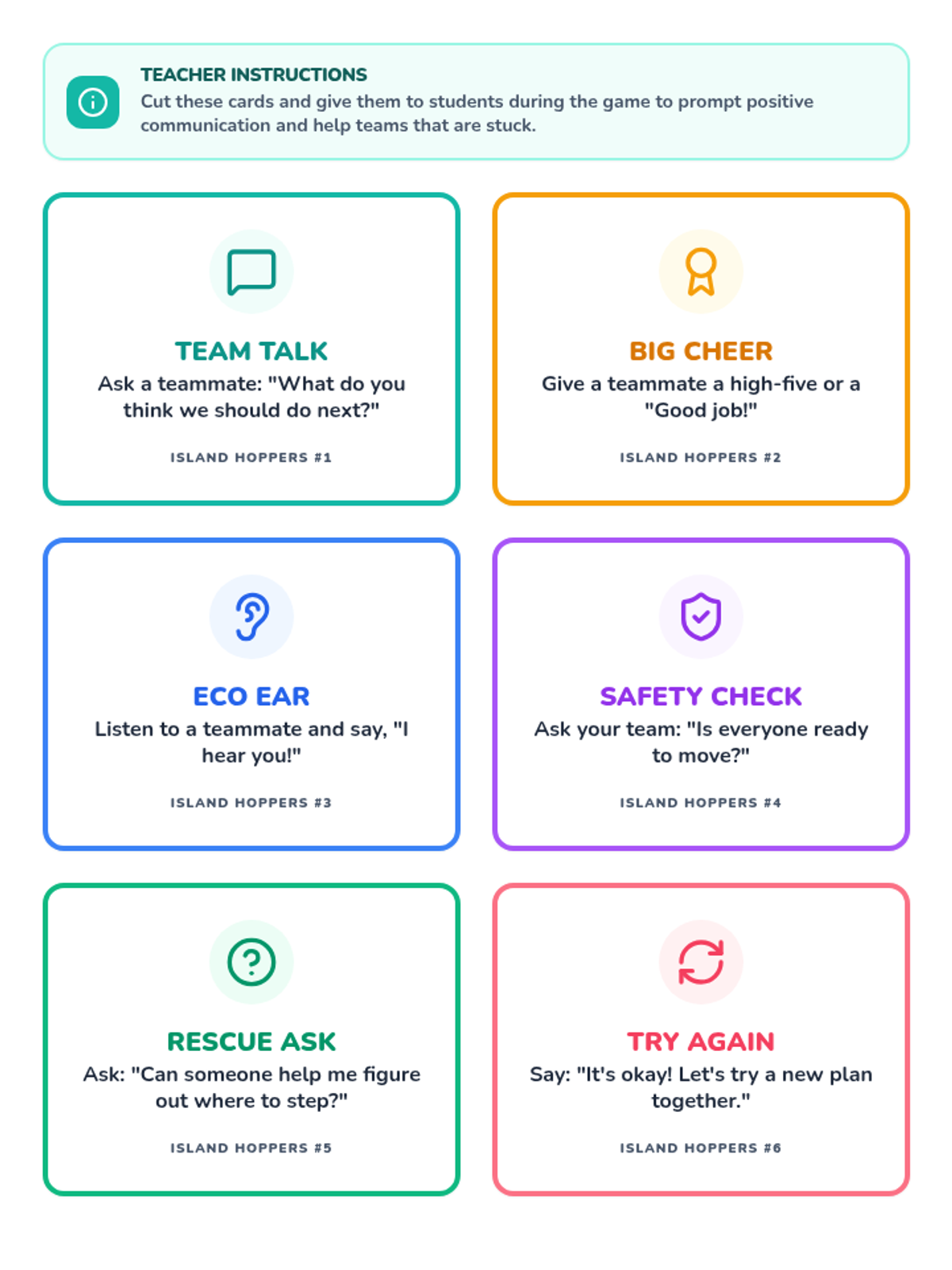
A collaborative movement-based lesson where students work together to navigate a series of 'islands' using limited resources and clear communication.
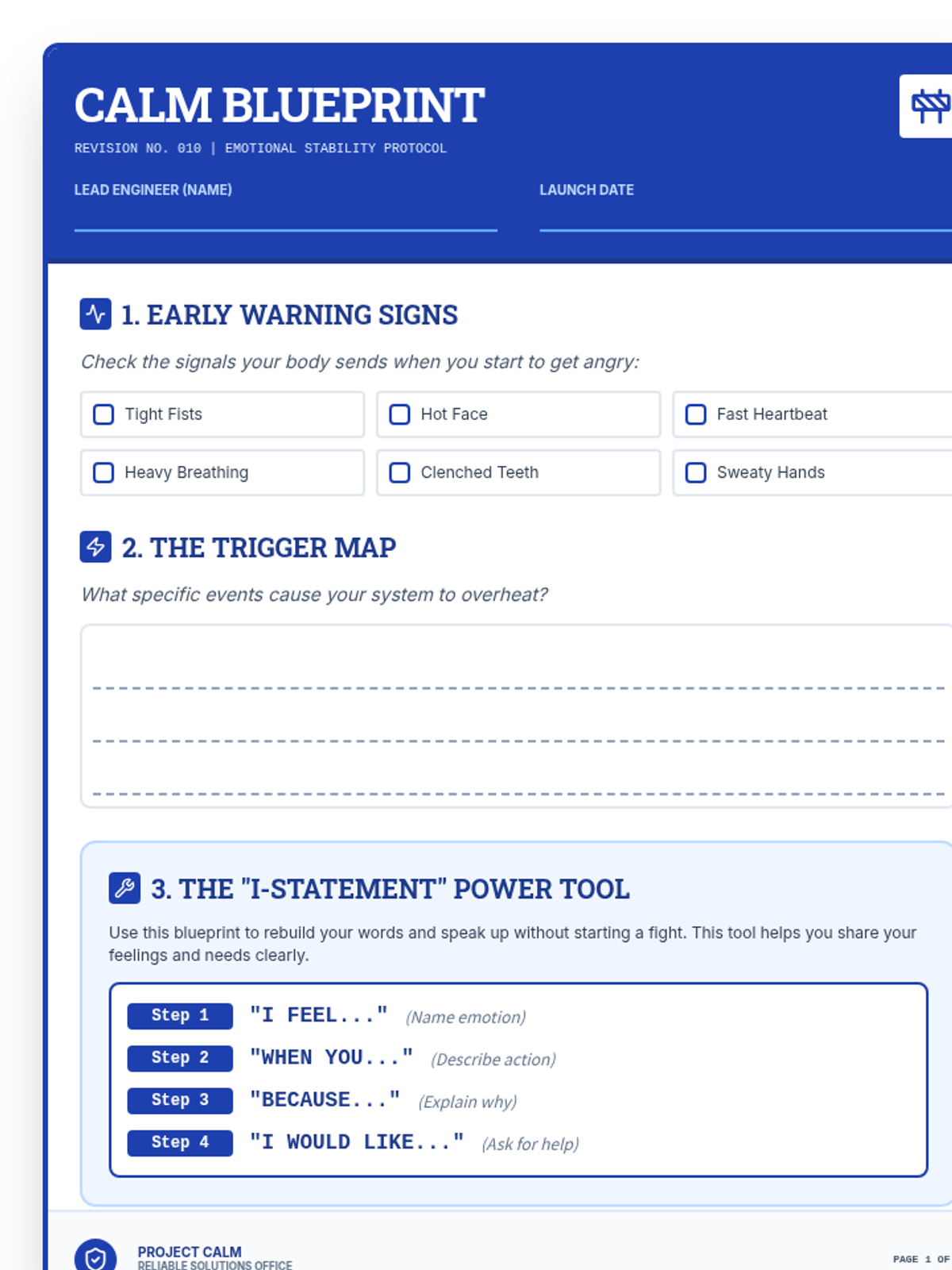
A lesson designed to help students identify their anger triggers and develop constructive communication strategies, specifically focusing on 'I' statements to replace aggressive physical threats.
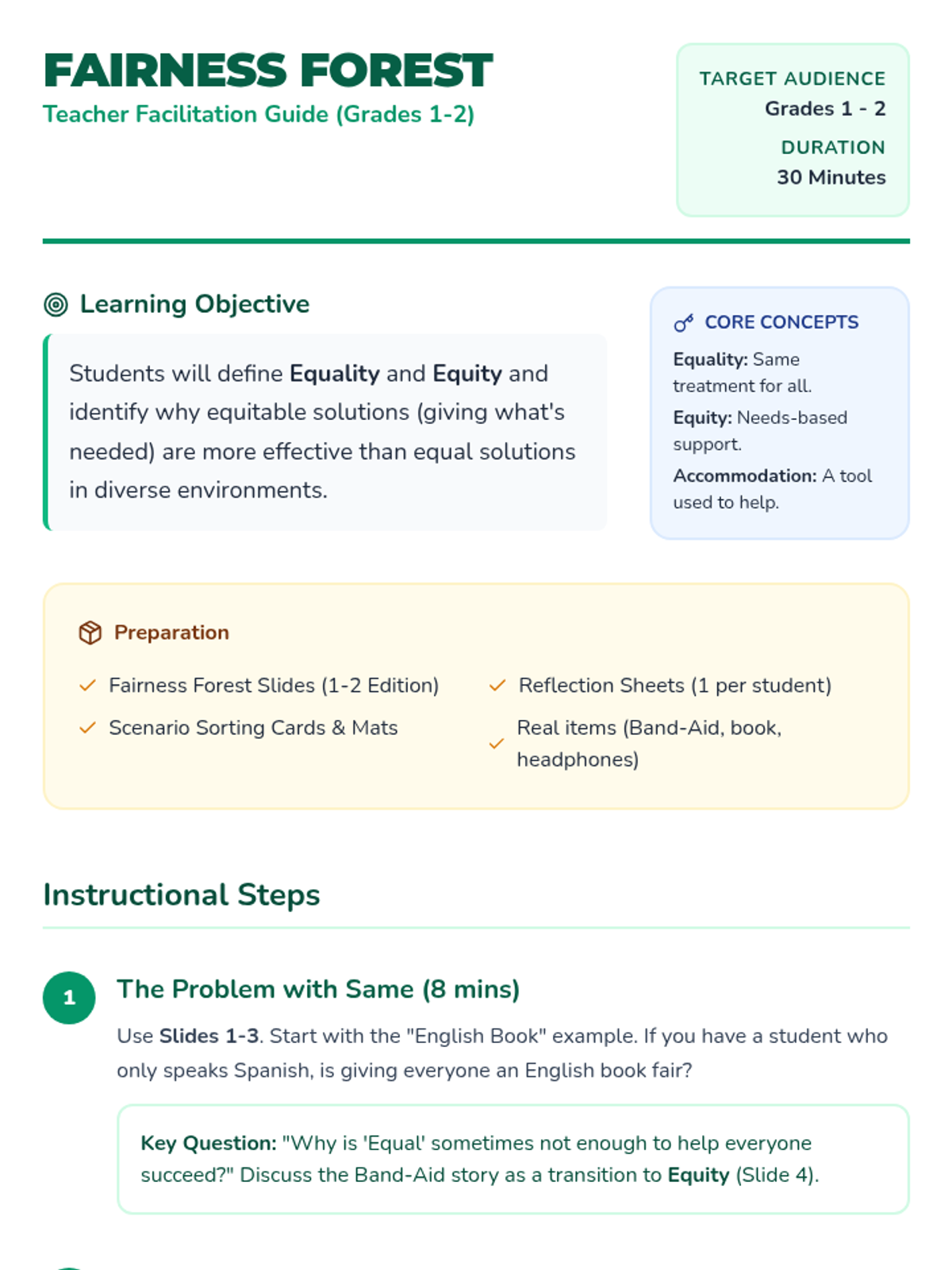
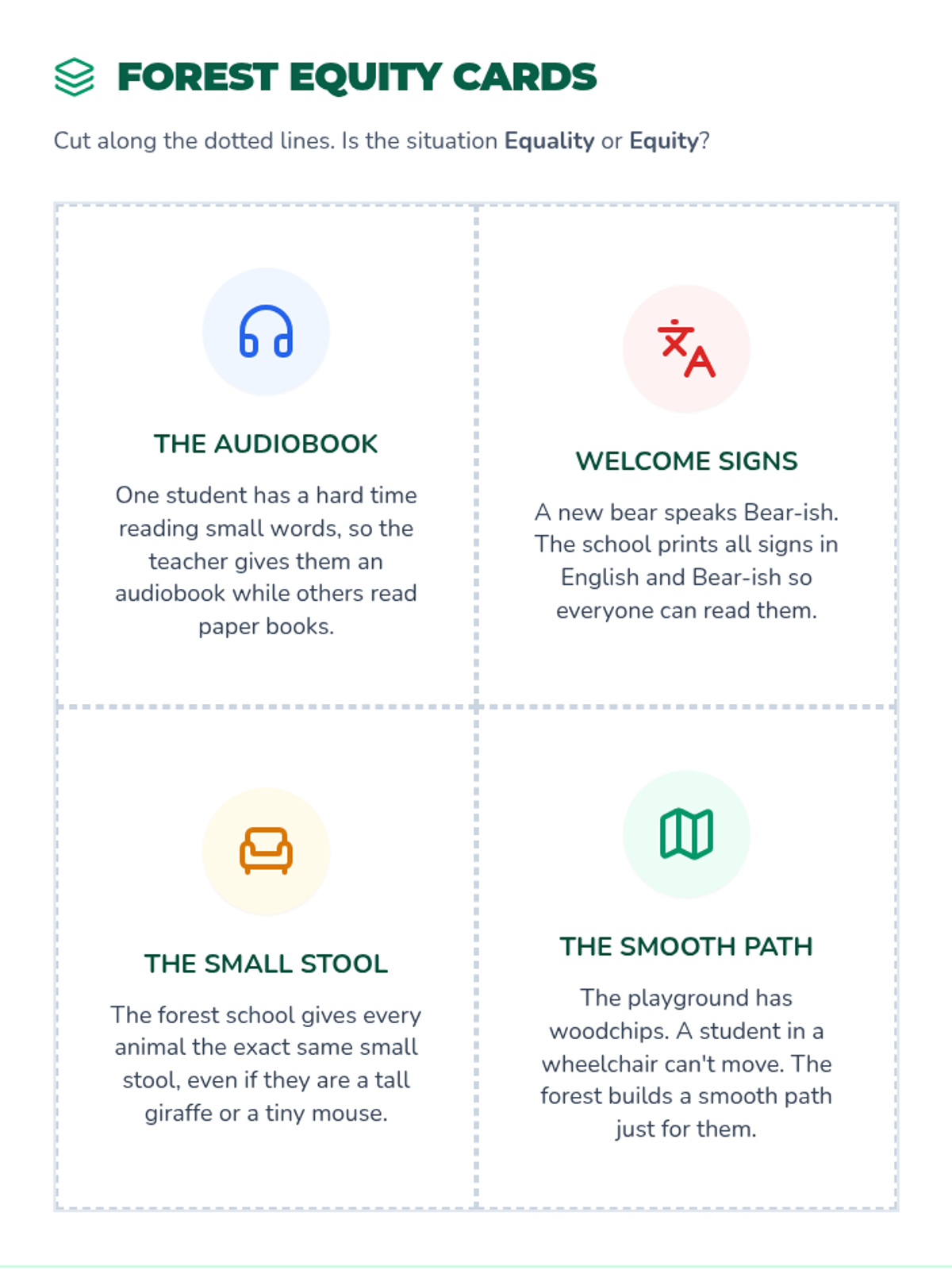
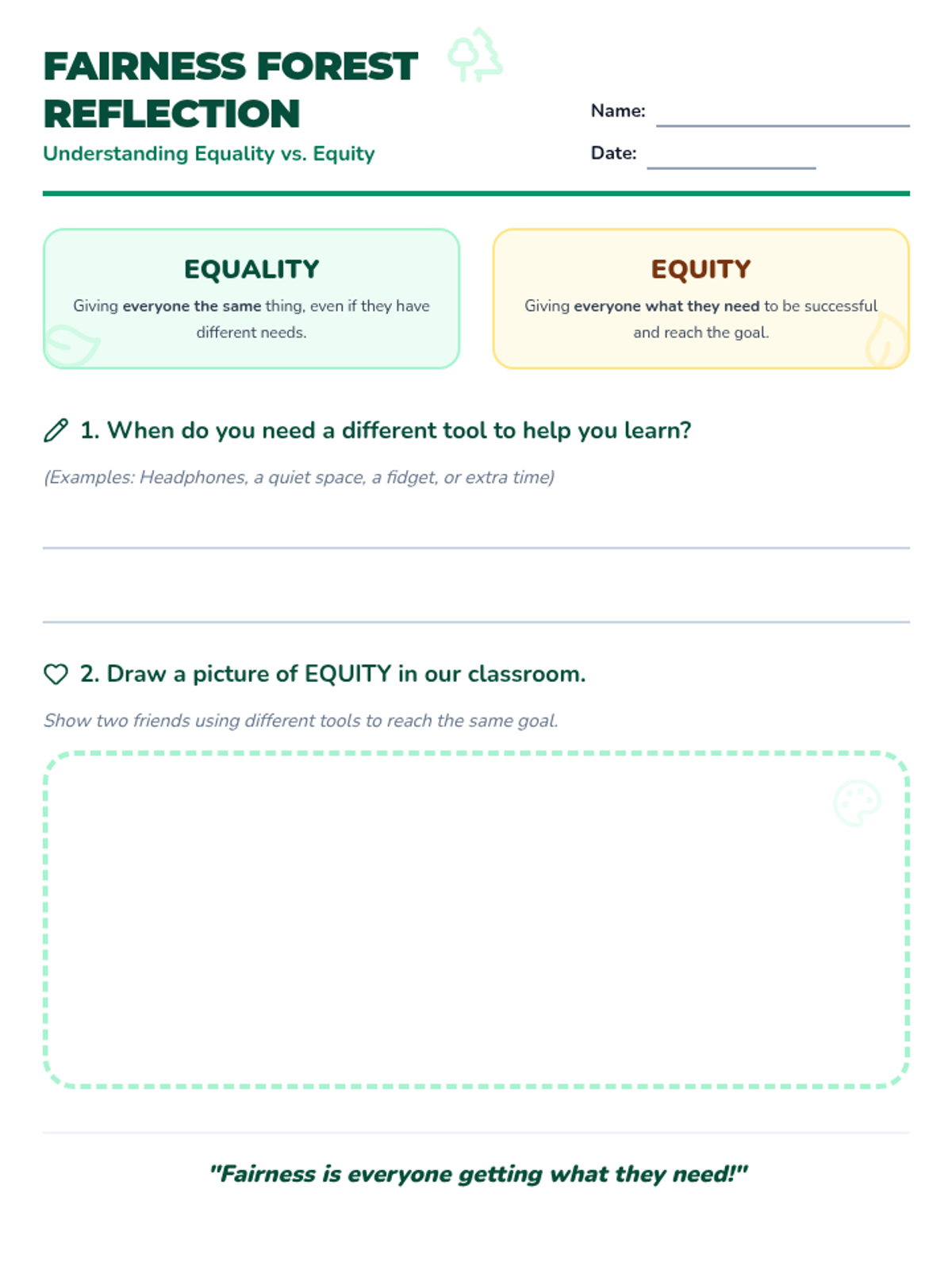
A 30-minute lesson for Grades 1-2 exploring 'Equality' (everyone getting the same) vs. 'Equity' (everyone getting what they need to succeed). Features the 'Fairness Forest' theme with expanded scenarios including learning accommodations.
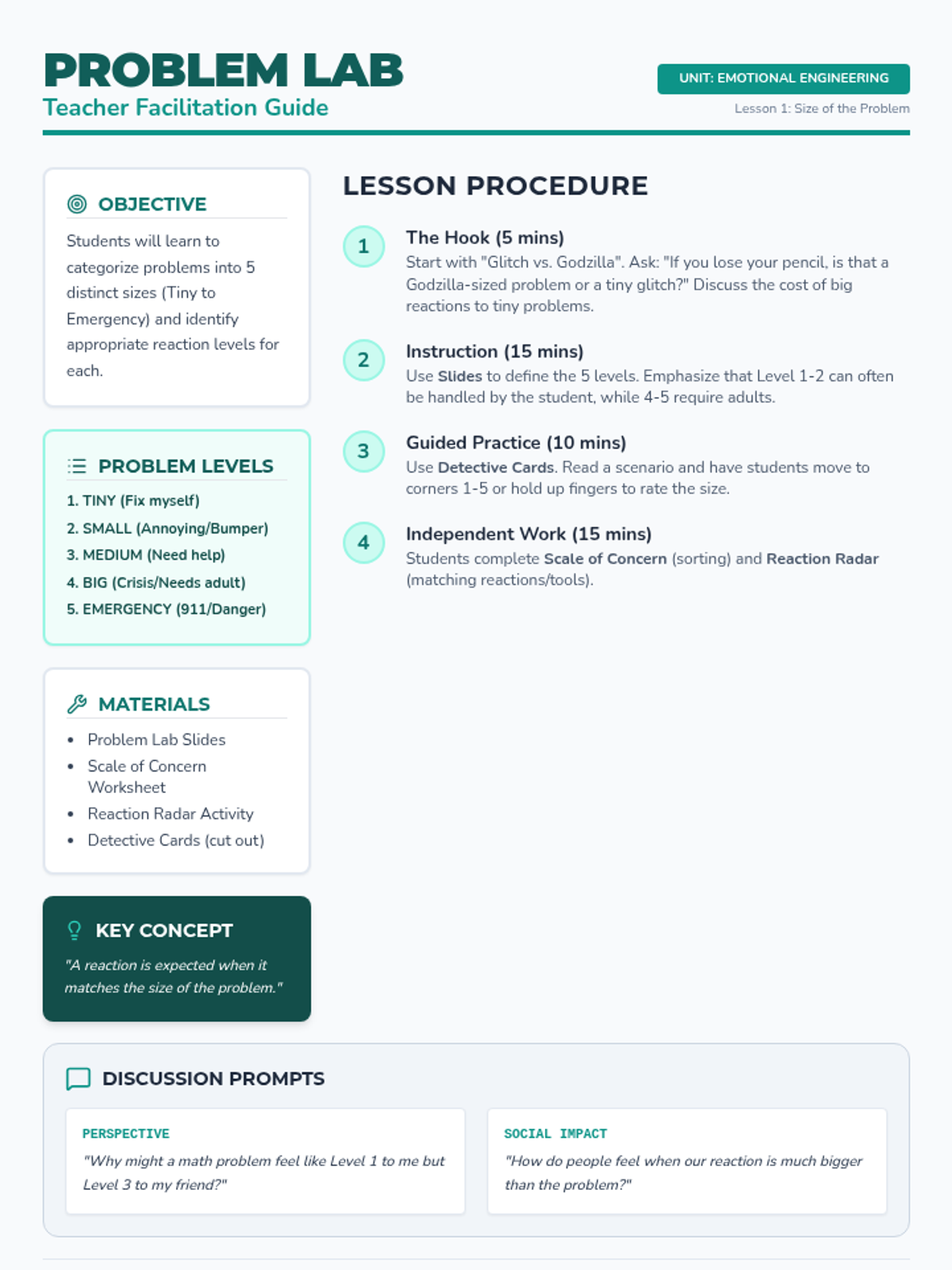
An interactive lesson teaching elementary students how to identify the size of their problems and match their reactions accordingly using a 'Problem Lab' theme.
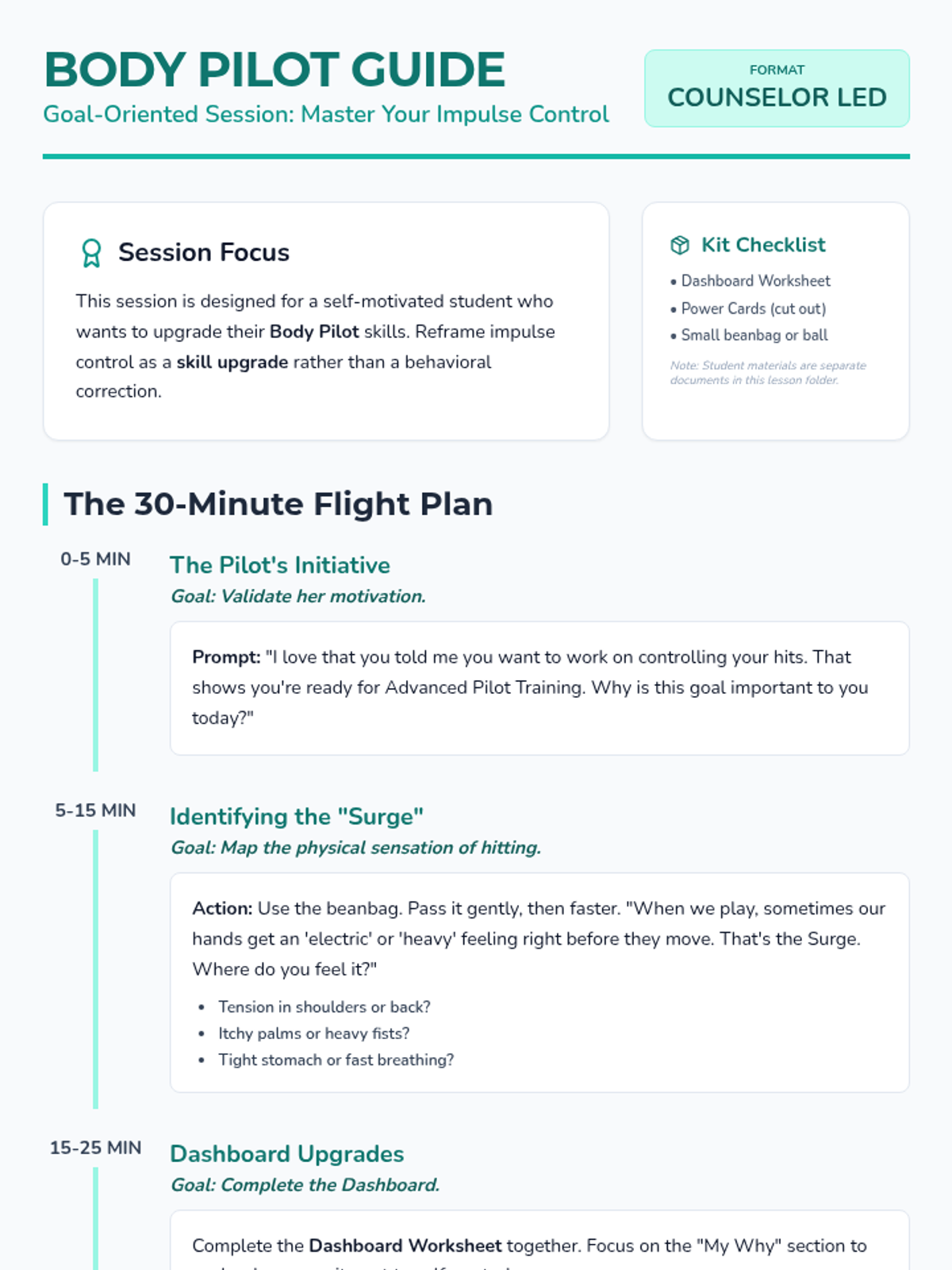
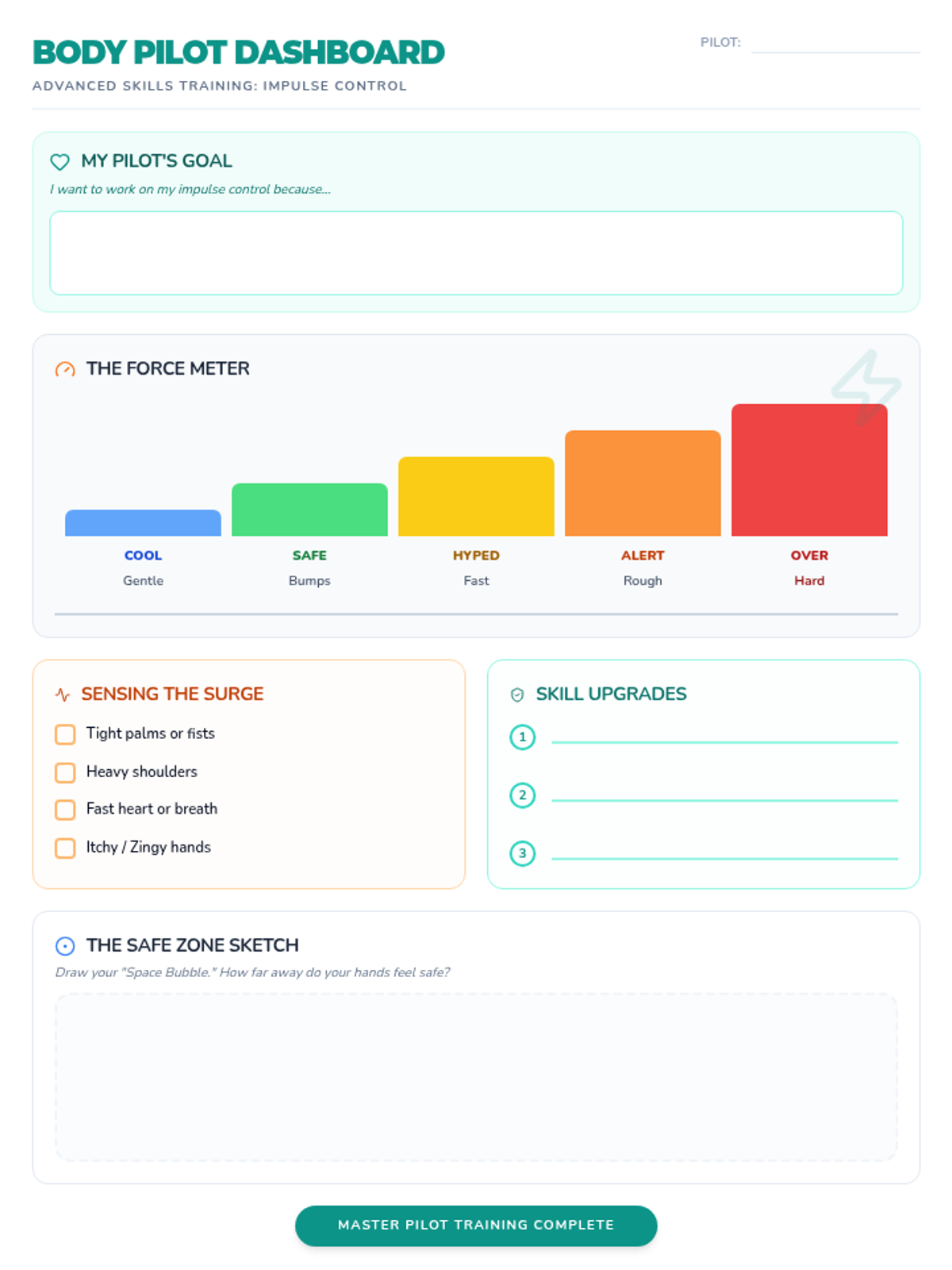
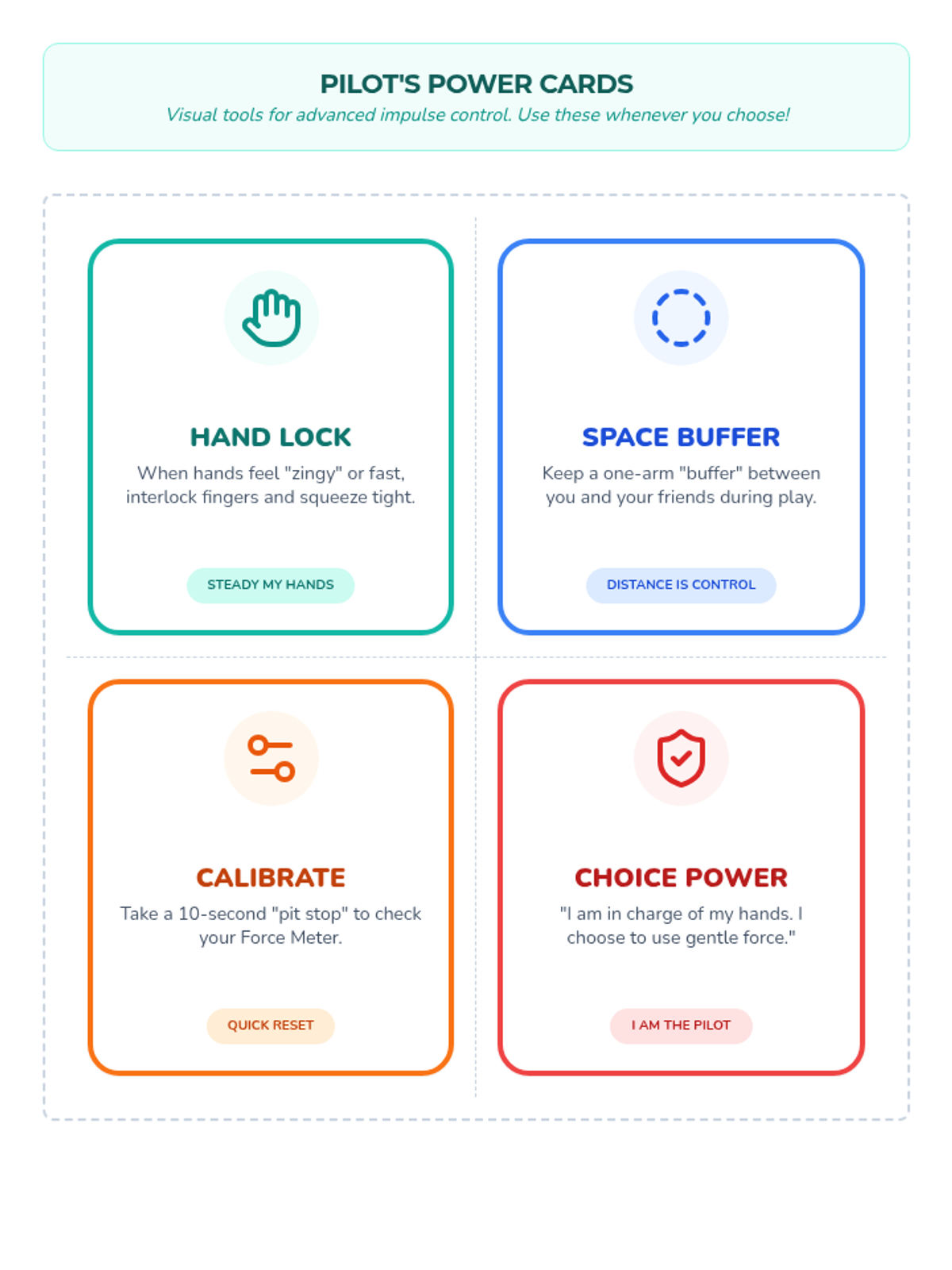
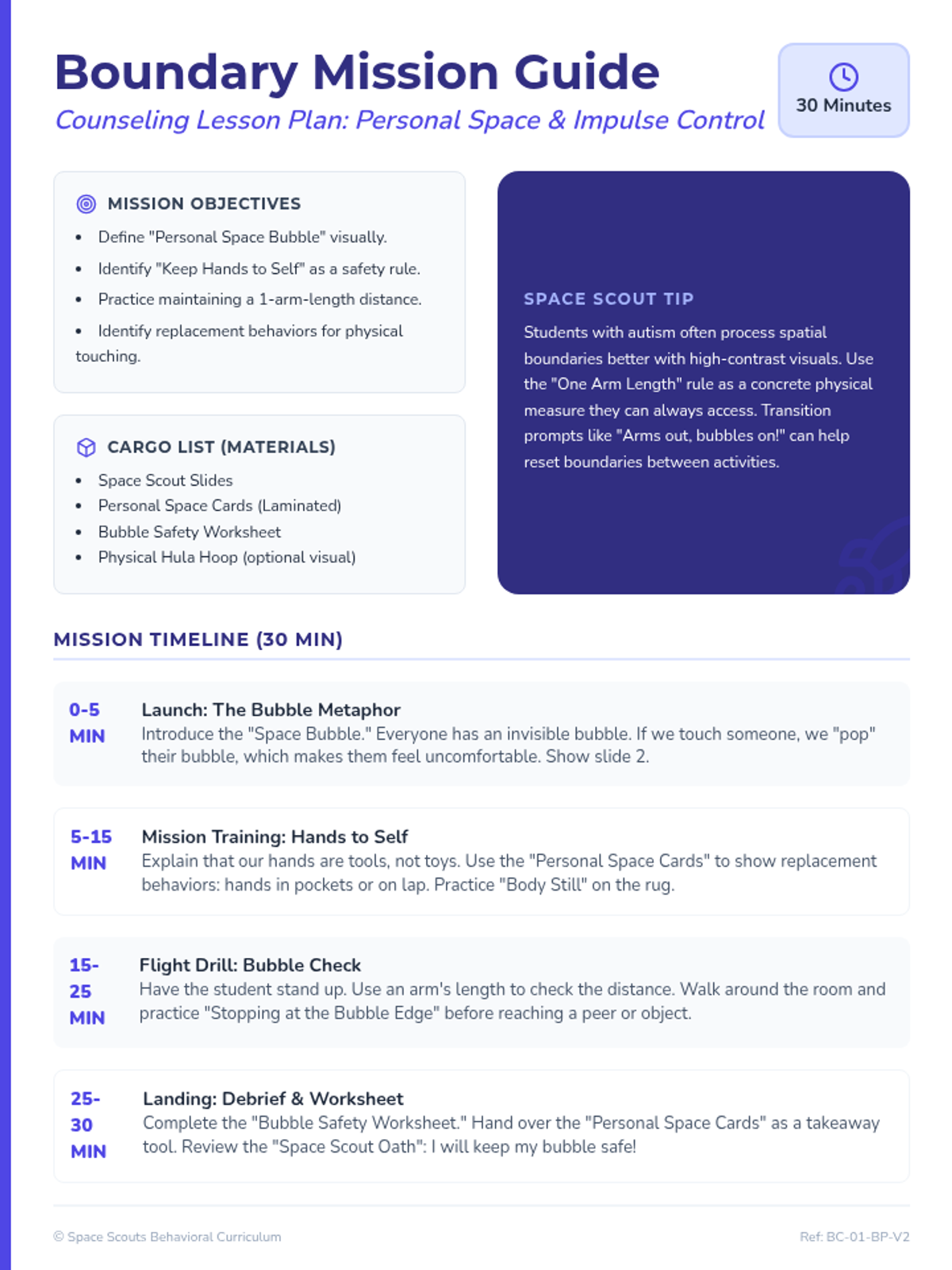
A 30-minute counseling session focused on helping students with autism understand and control physical impulses, specifically addressing 'play fighting' and personal space boundaries using the 'Body Pilot' metaphor.
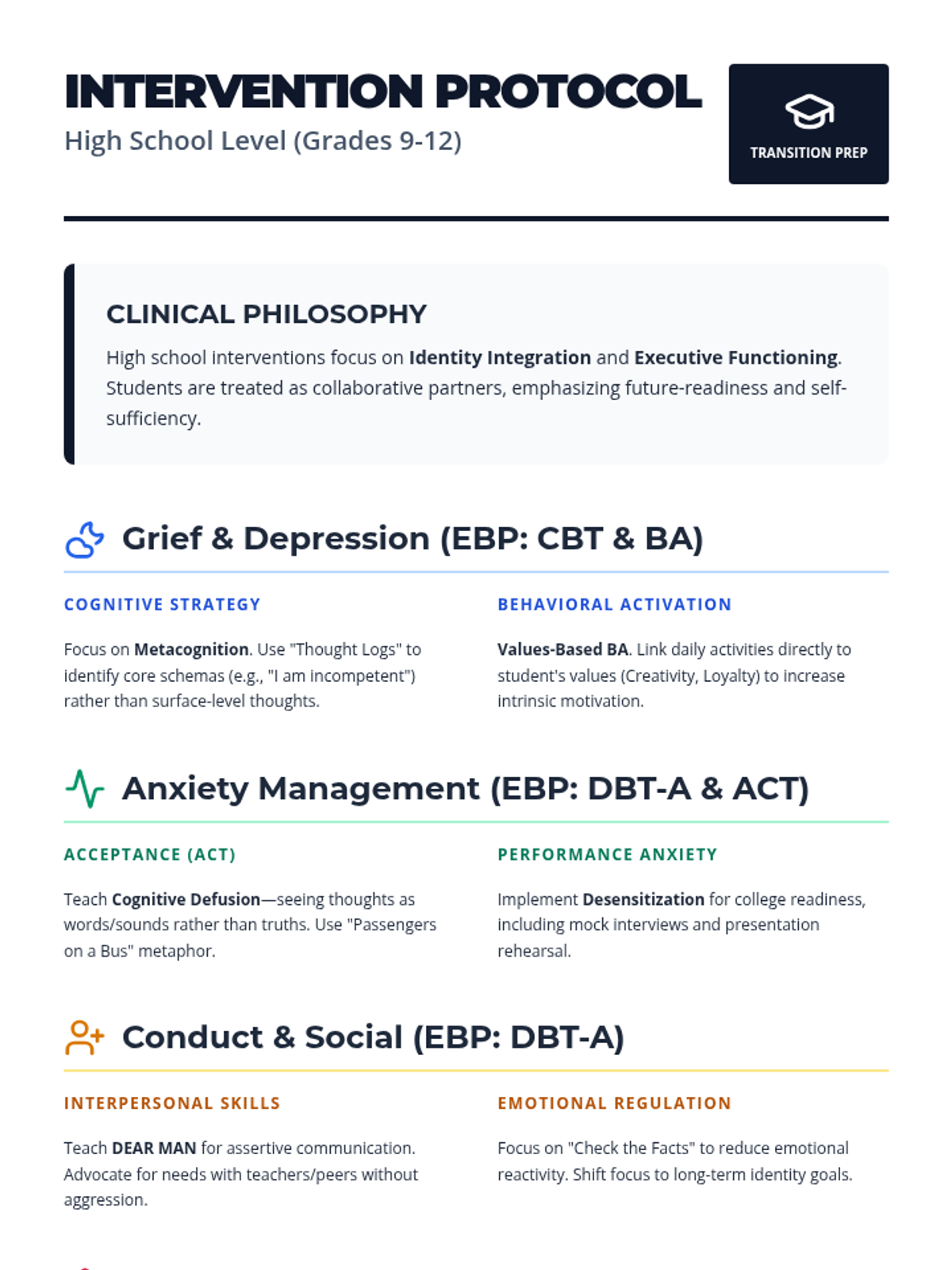
Advanced therapeutic interventions for high schoolers, emphasizing autonomy, complex cognitive reframing, interpersonal effectiveness, and comprehensive crisis protocols.
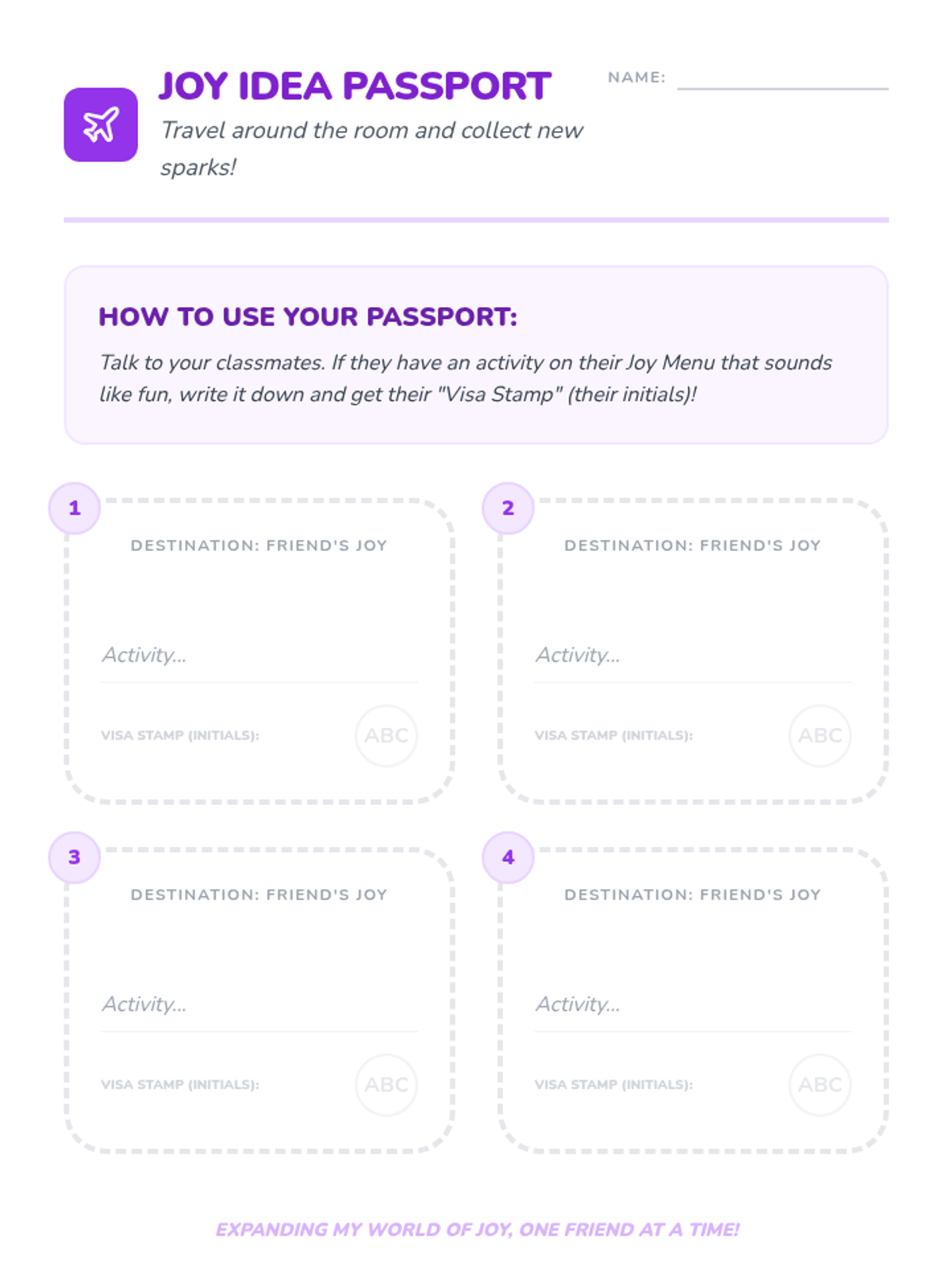
Students present their Joy Menus to small groups, allowing peers to borrow ideas to add to their own lists. The lesson concludes with a commitment to try one menu item over the weekend.
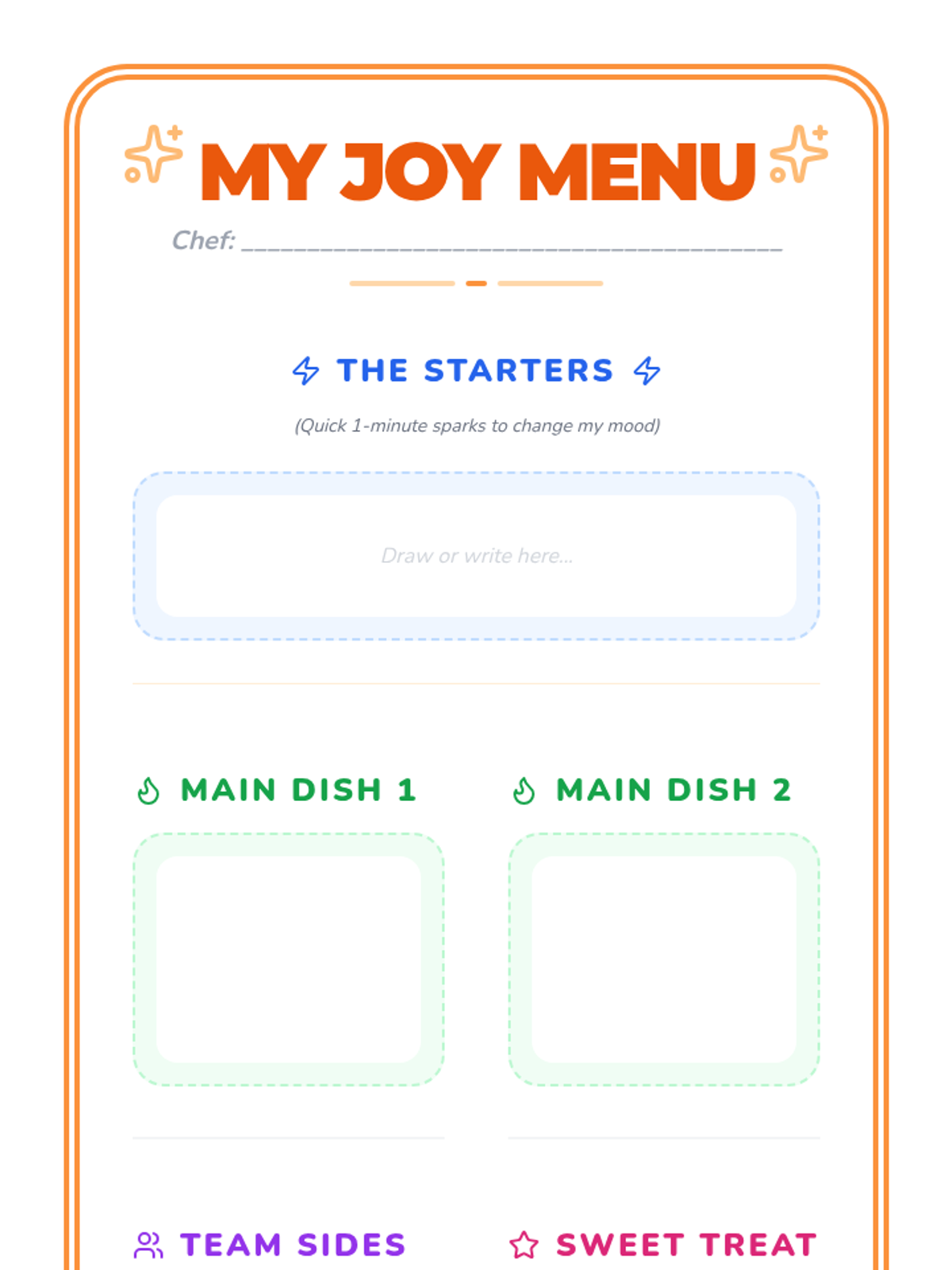
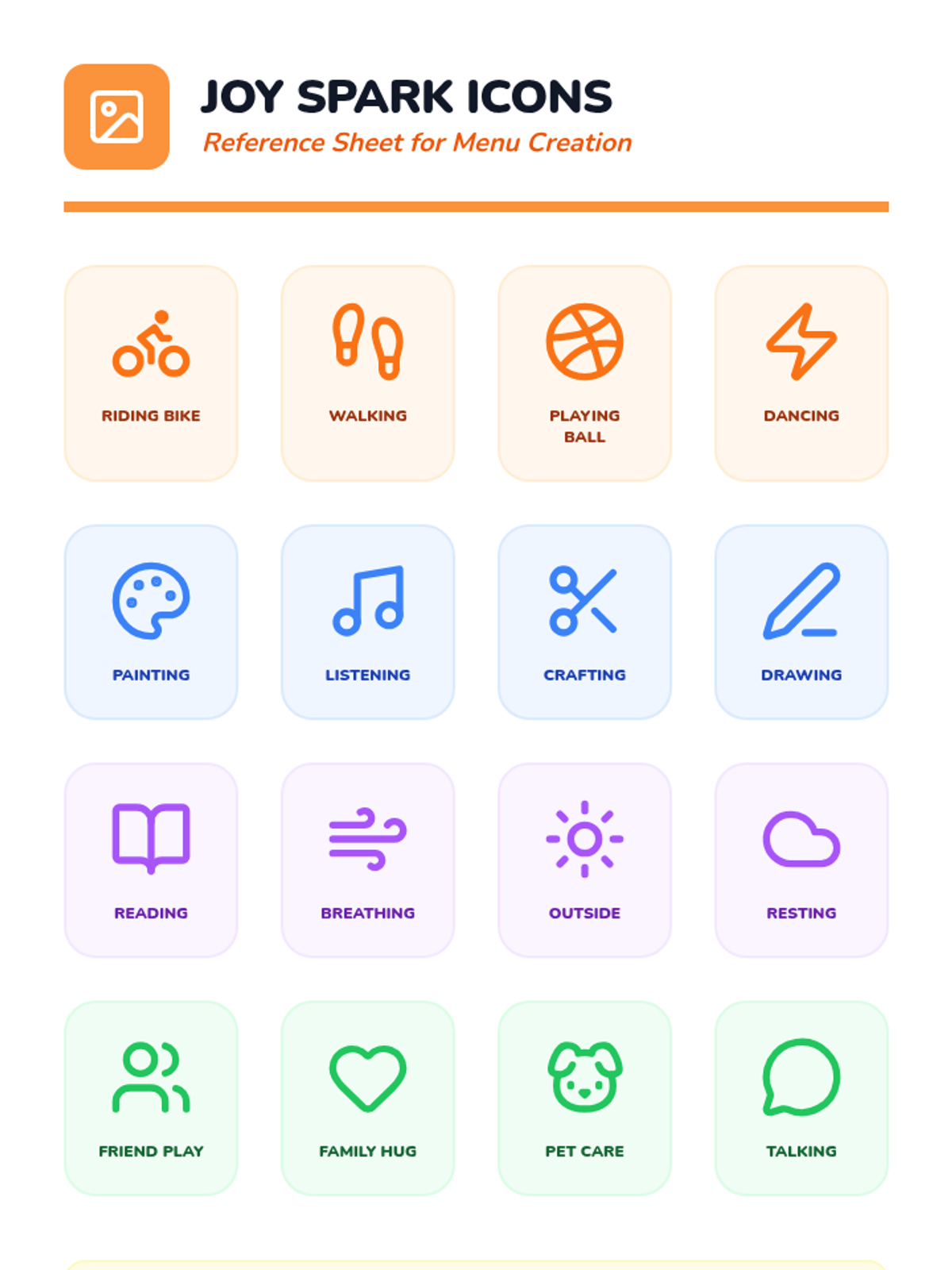
Using their investigations, students create a visual 'menu' or choice board of their top 5 reliable mood-boosting activities. They illustrate these options to serve as a reference tool.
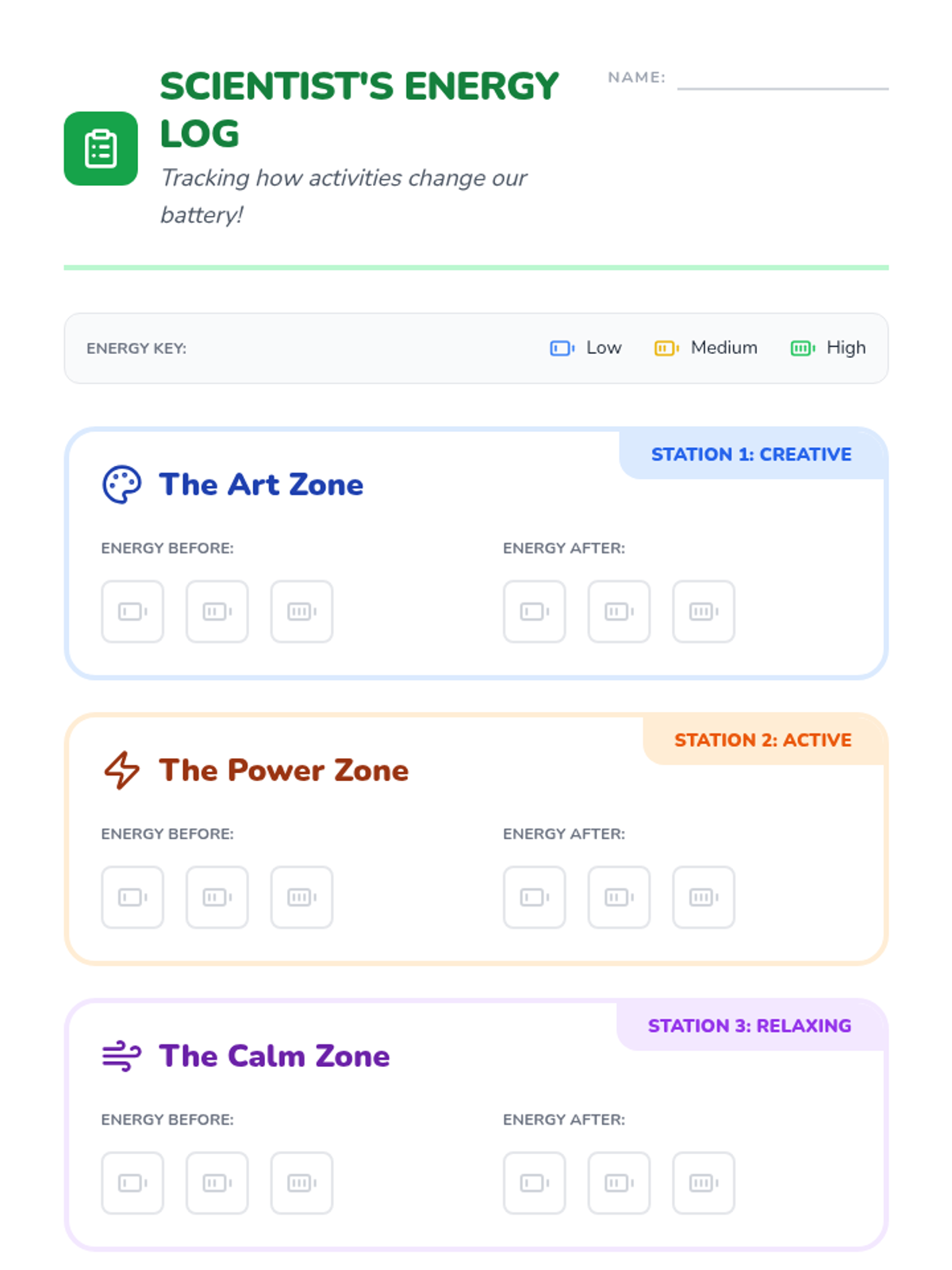
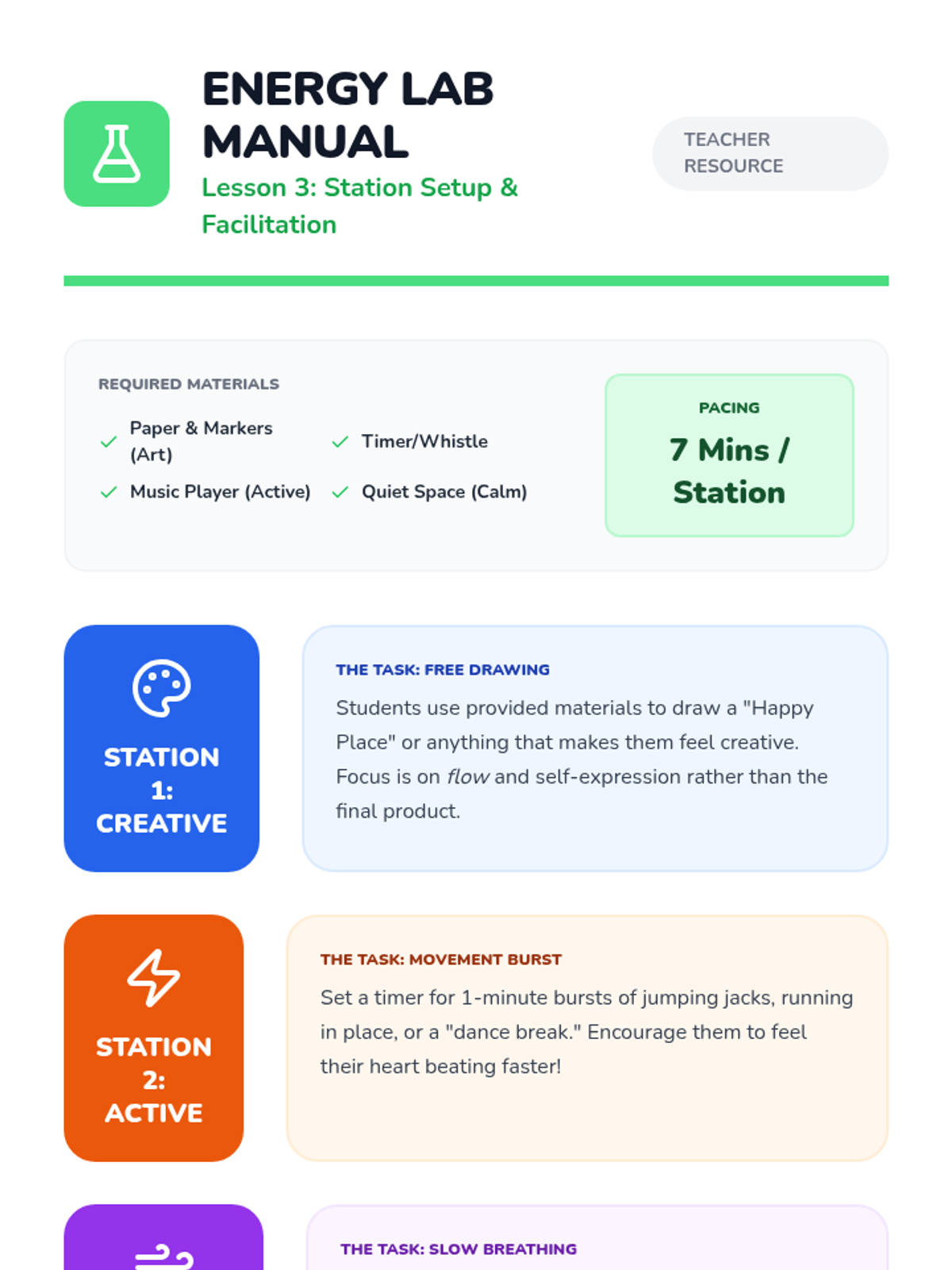
Students rotate through stations testing different types of positive engagement: creative (drawing), active (jumping jacks), and relaxing (deep breathing). They record how each station changes their energy level.
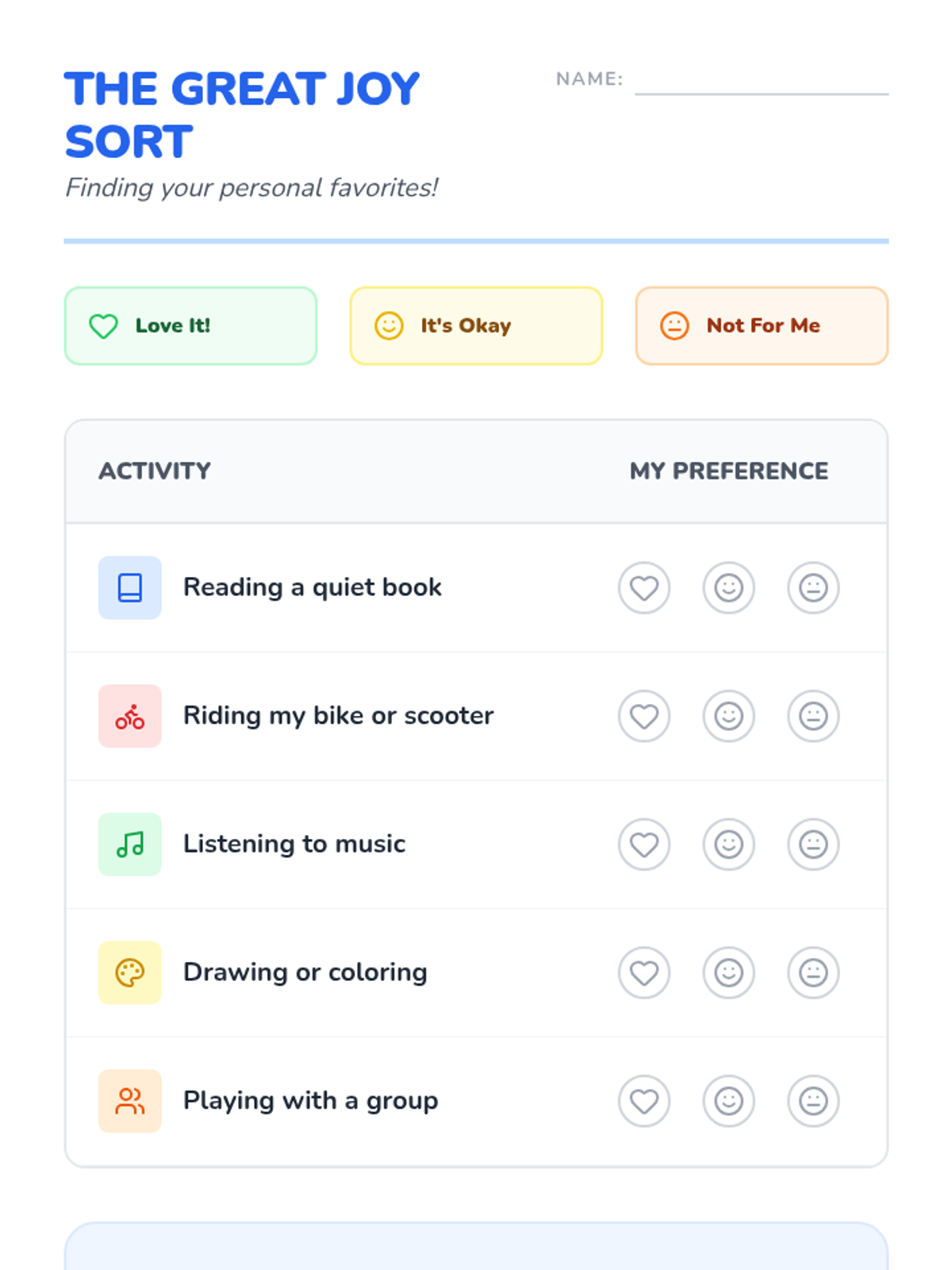
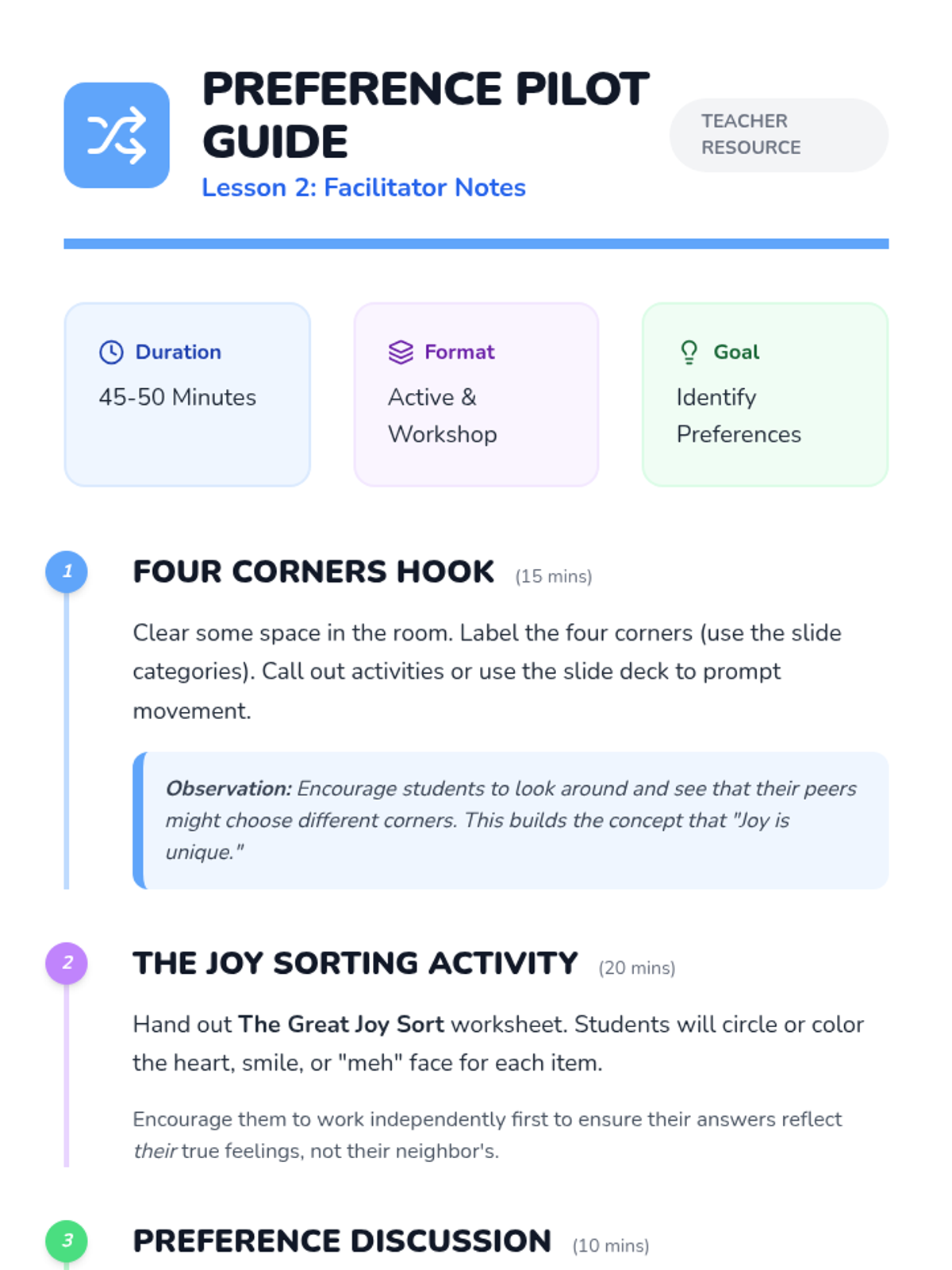
Students engage in an activity sorting game where they categorize various pastimes into 'Love it,' 'It's okay,' and 'Not for me.' This helps them realize that positive experiences are unique to each individual.
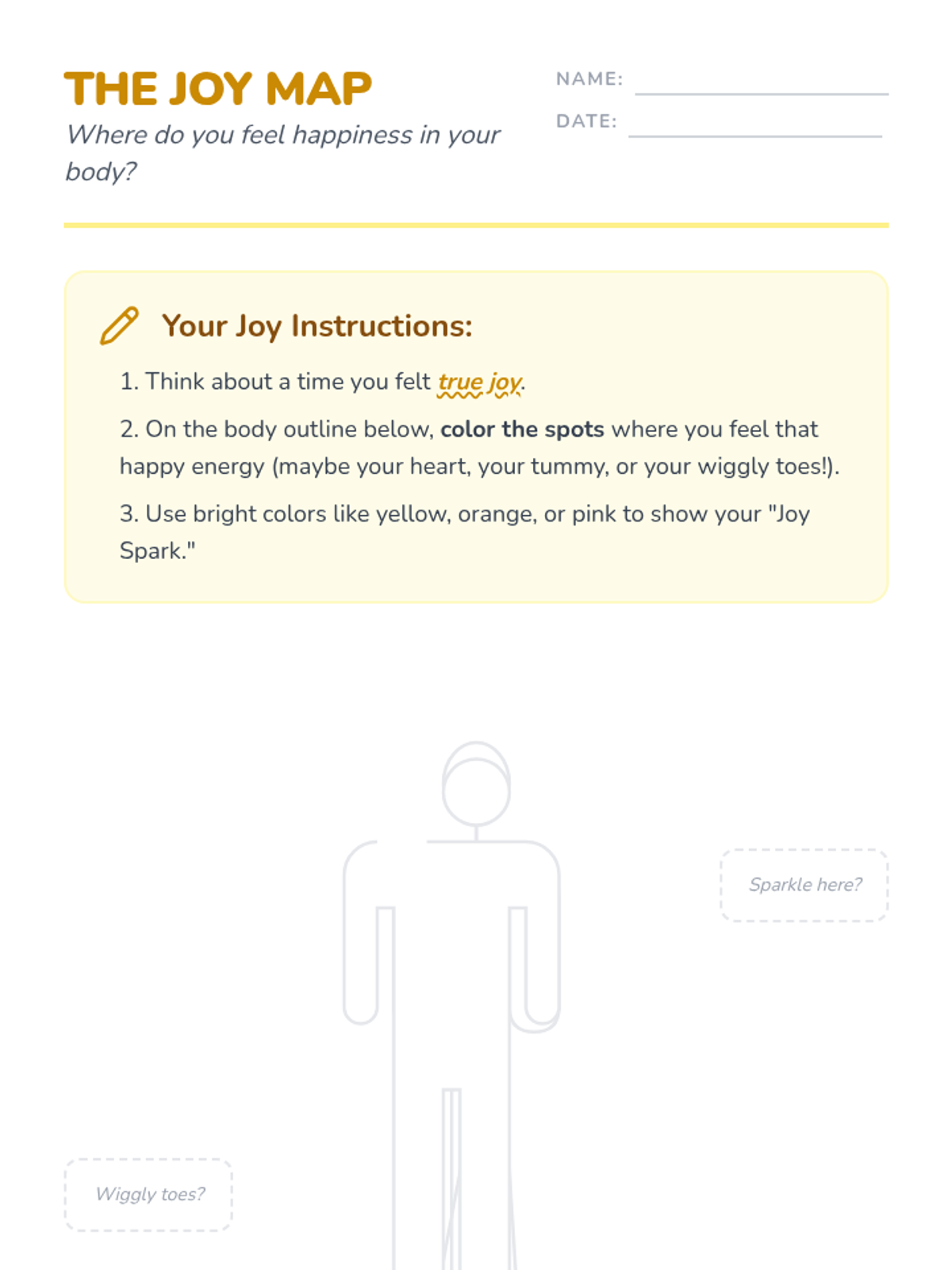
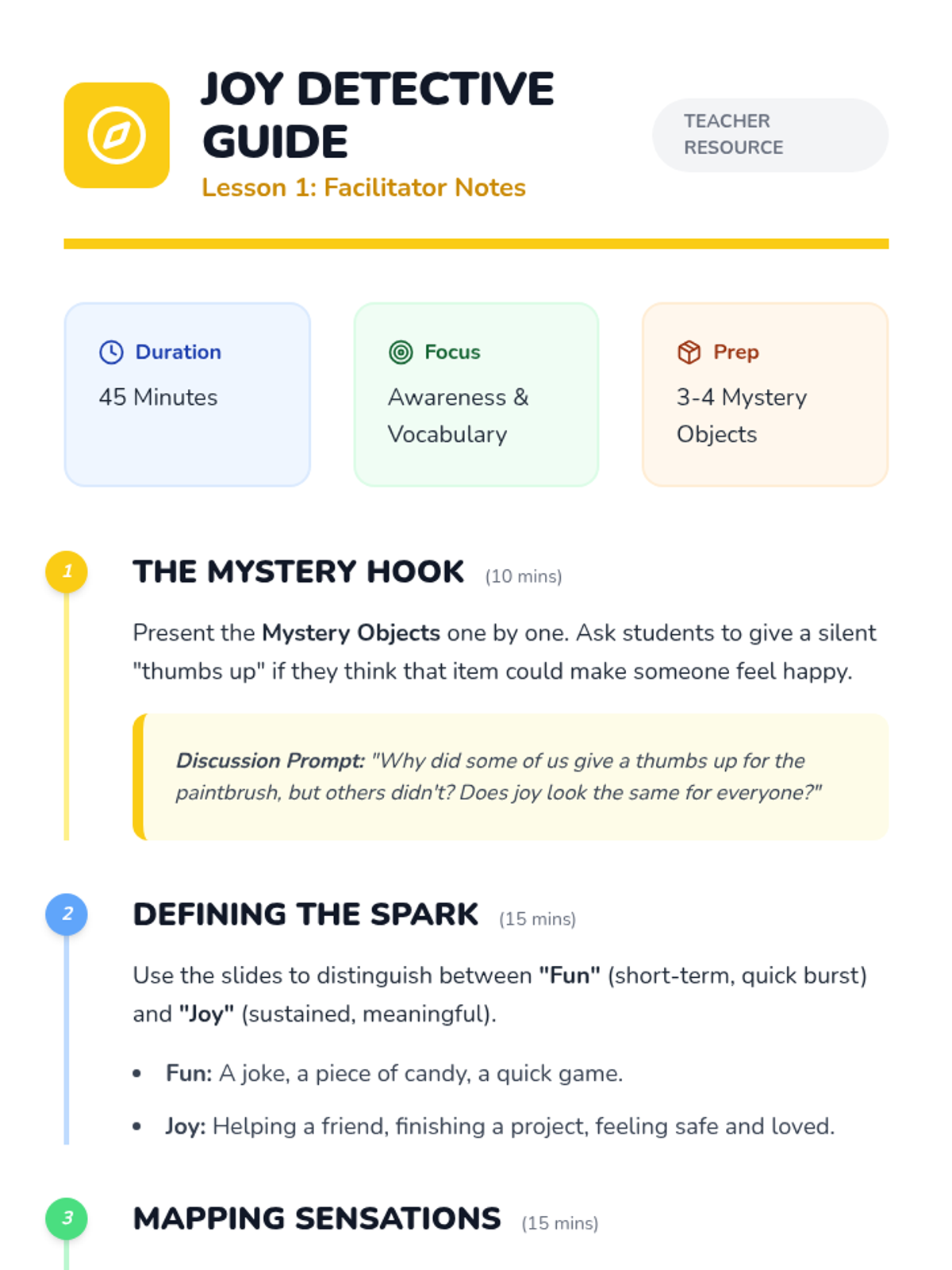
Students define joy and identify what happiness feels like in their bodies. They brainstorm activities that elicit positive emotions and distinguish between short-term fun and long-term happiness.
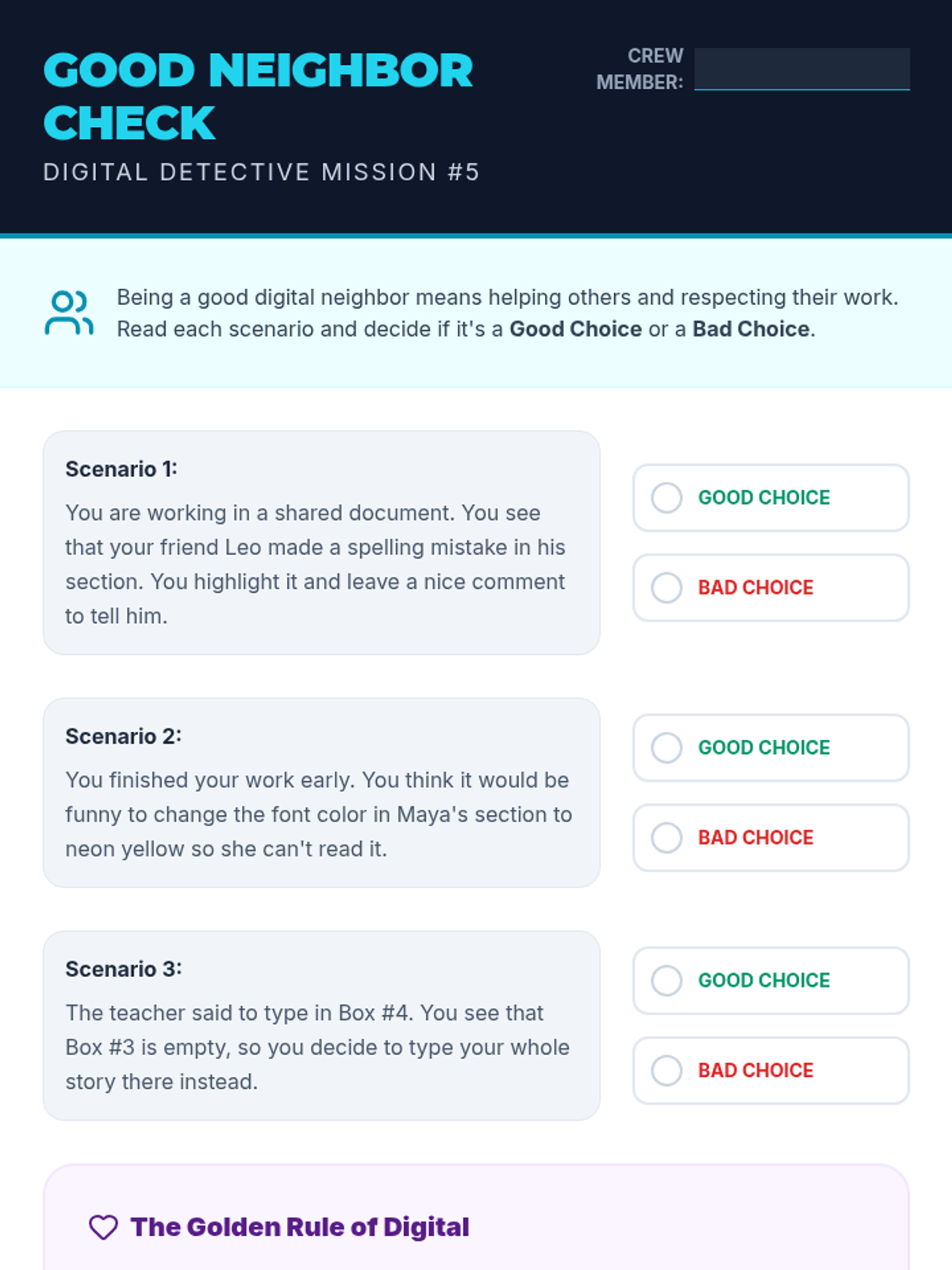
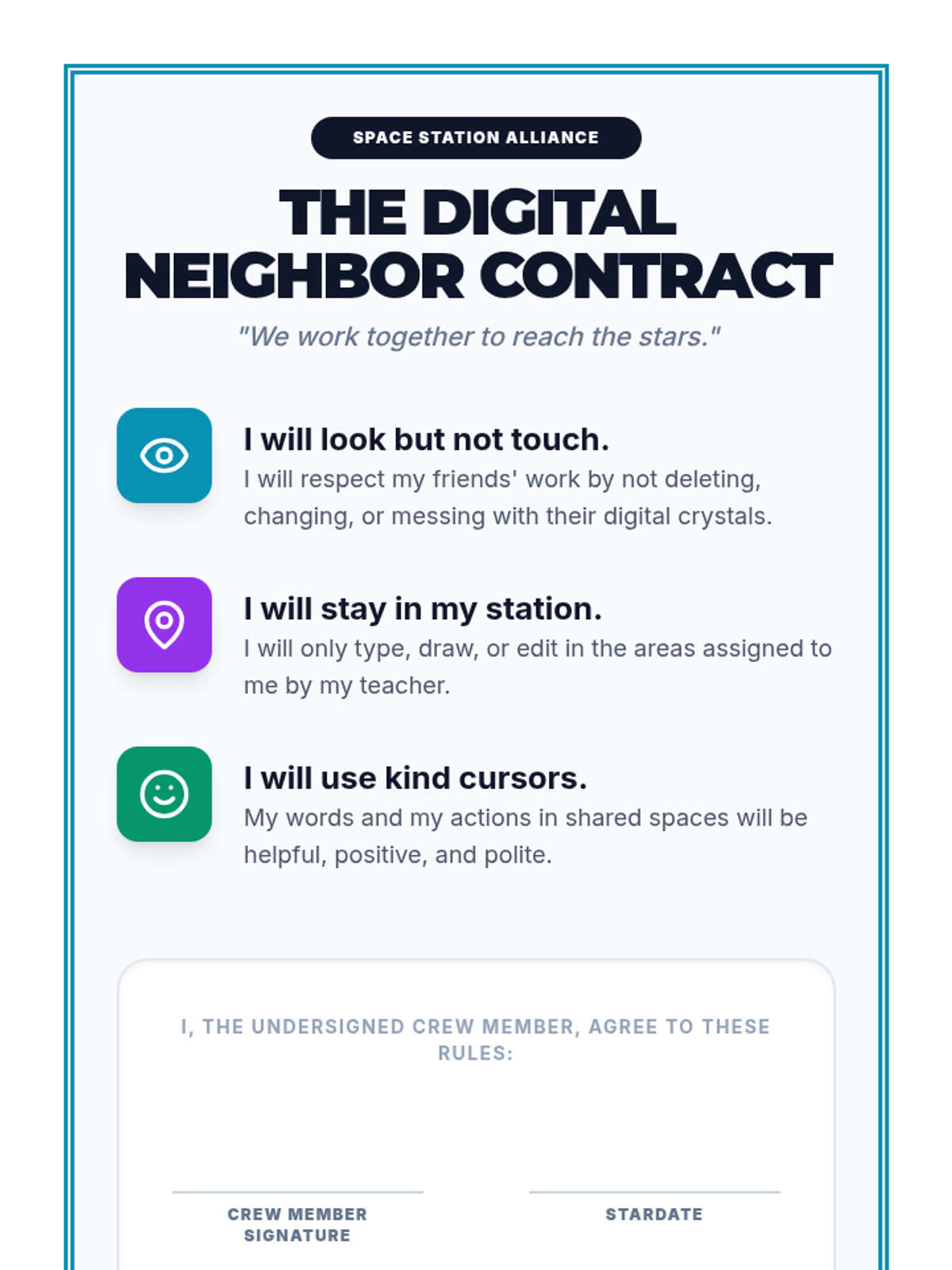
Students learn the rules of sharing digital spaces, focusing on collaborative editing and respecting others' work in a shared document.
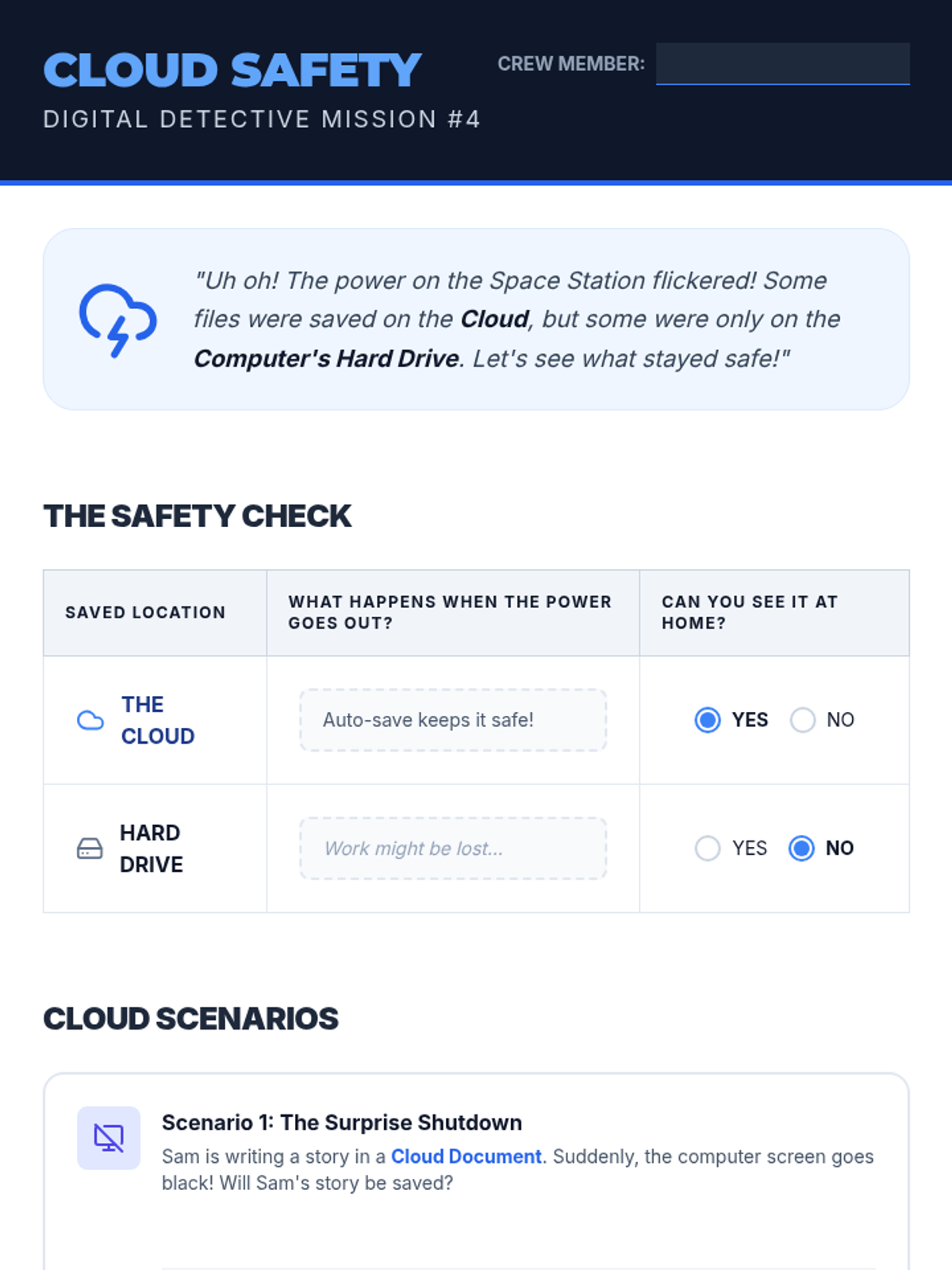
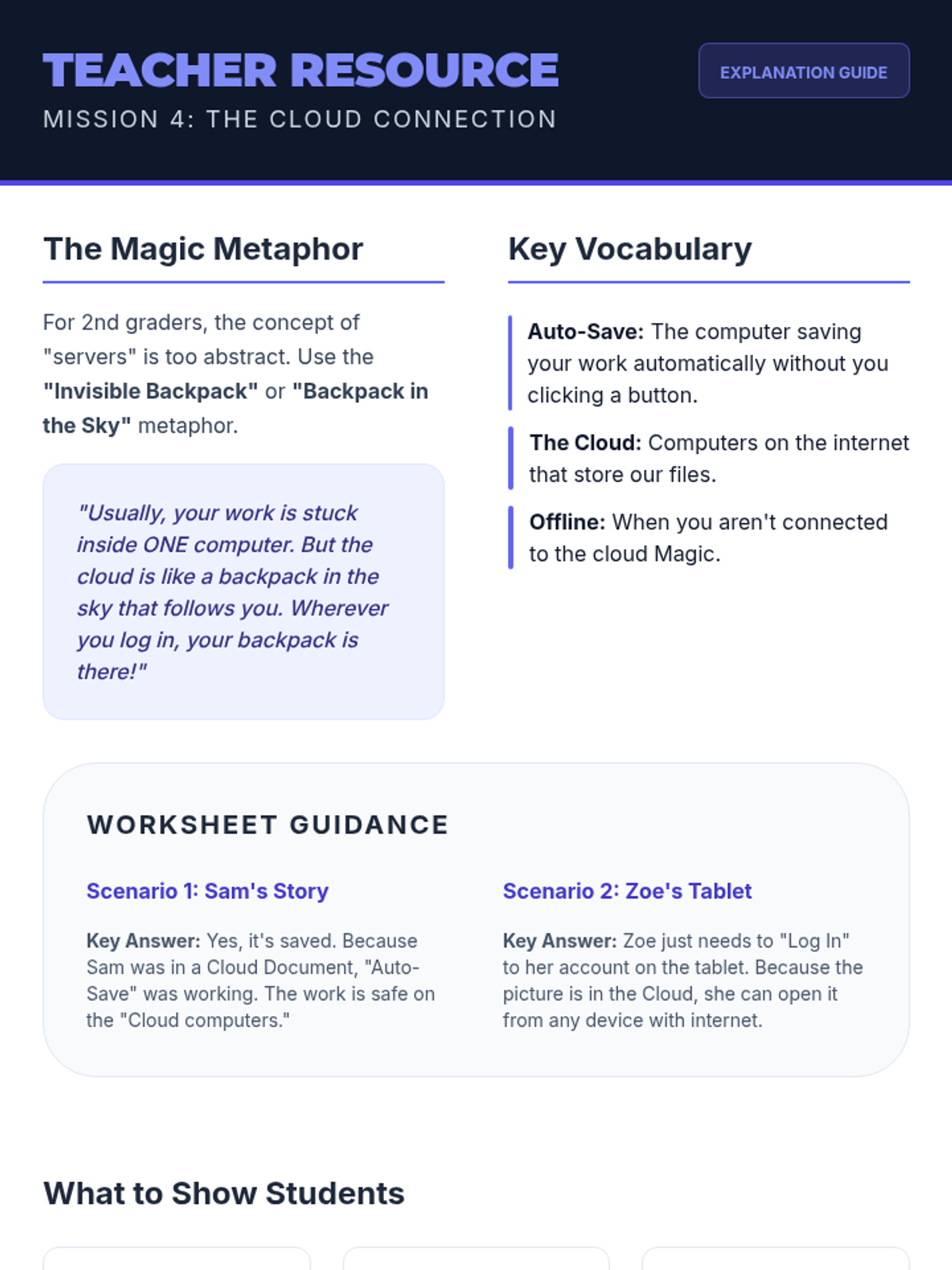
An introduction to cloud storage and the importance of saving work online to ensure accessibility across different devices.
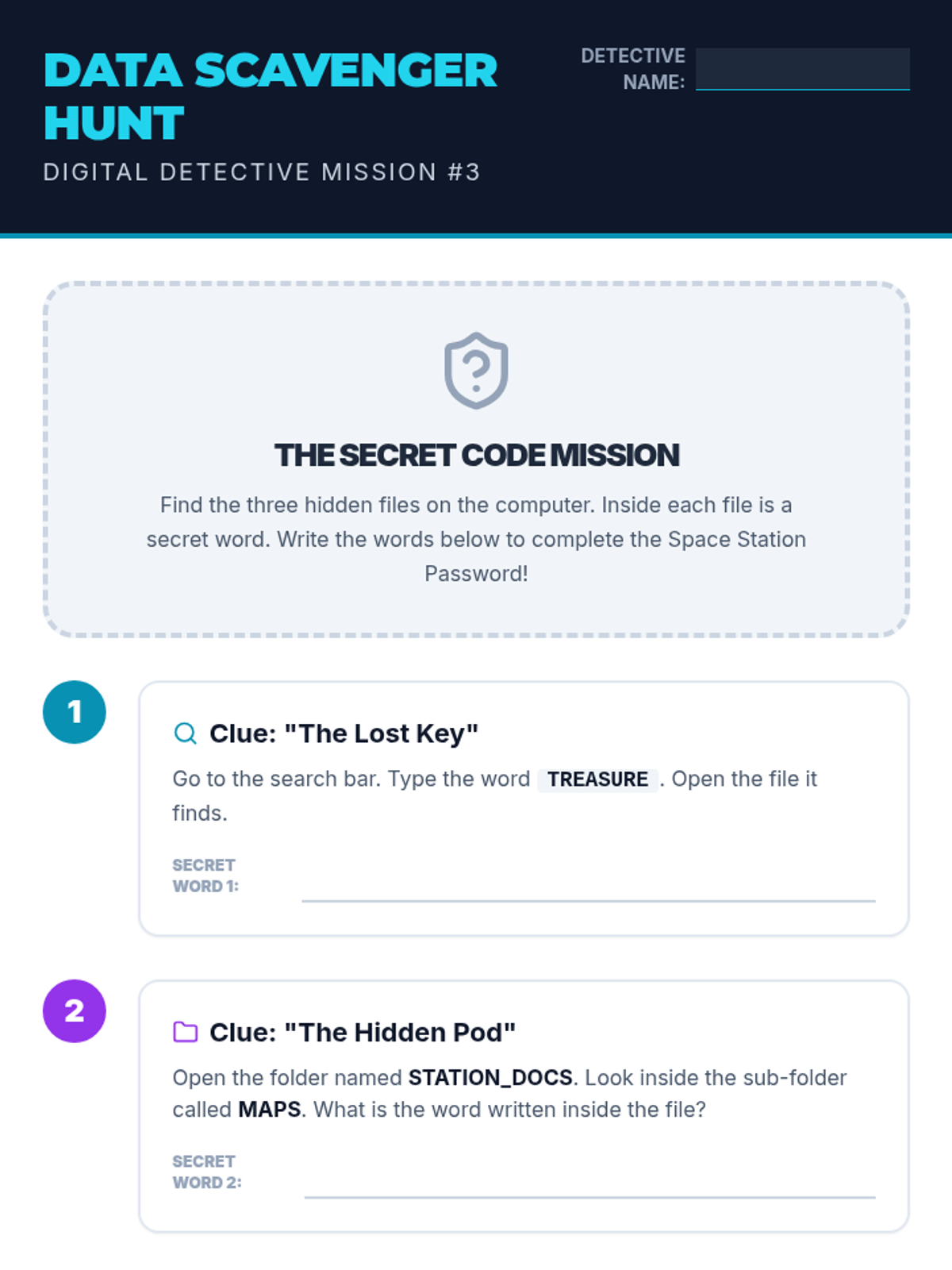
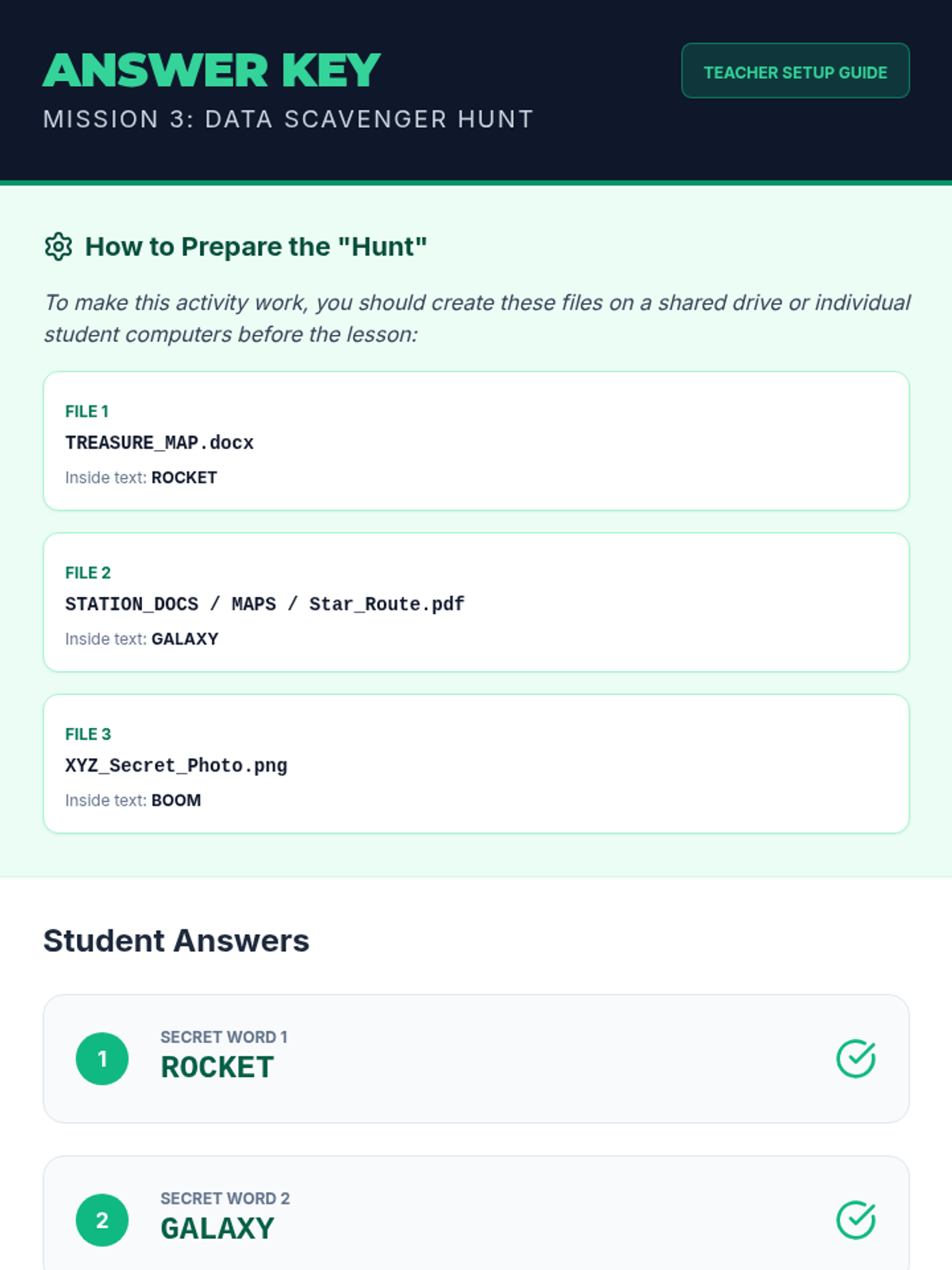
Students use search tools and folder navigation to find specific files in a simulated directory structure.
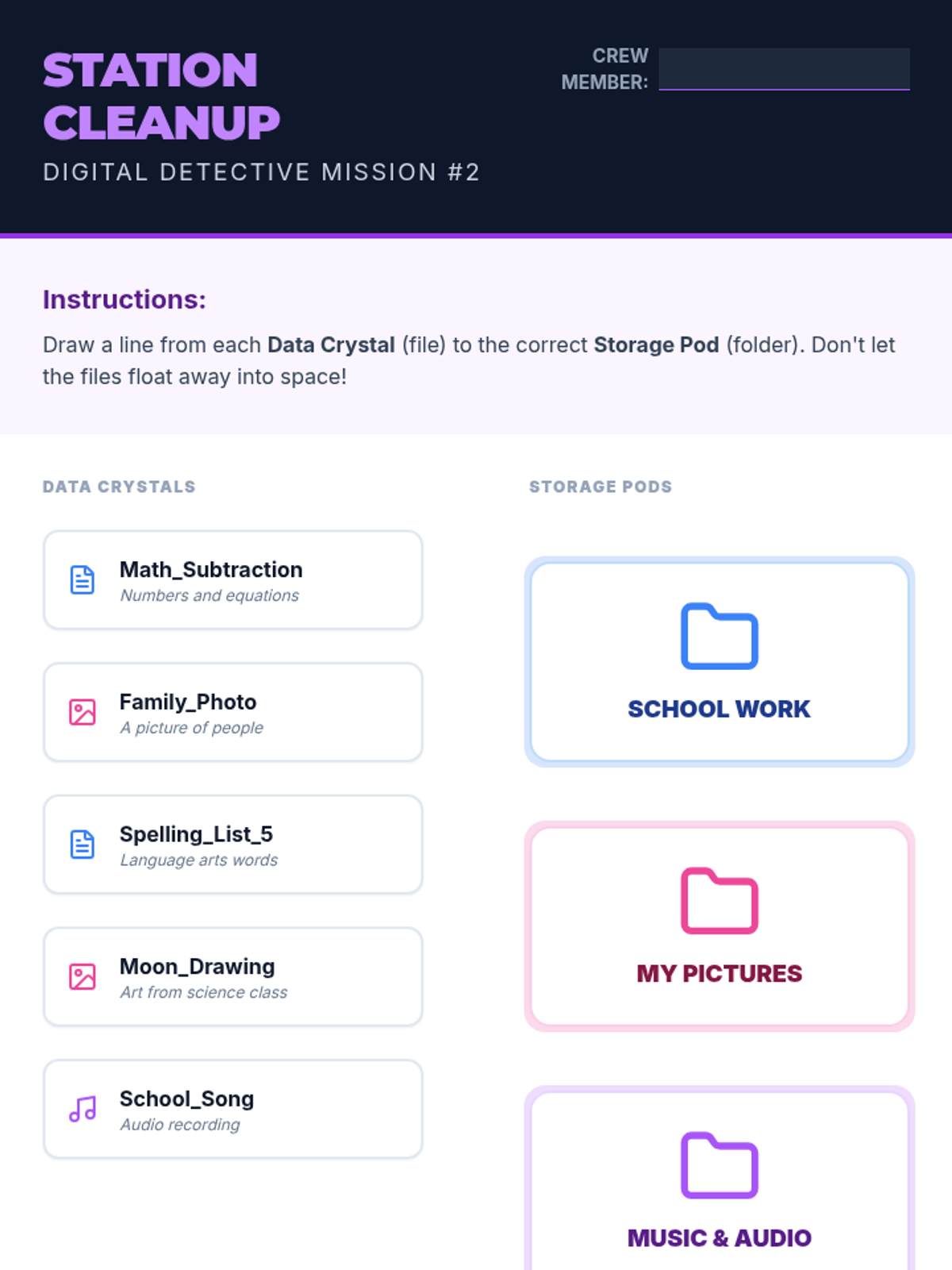
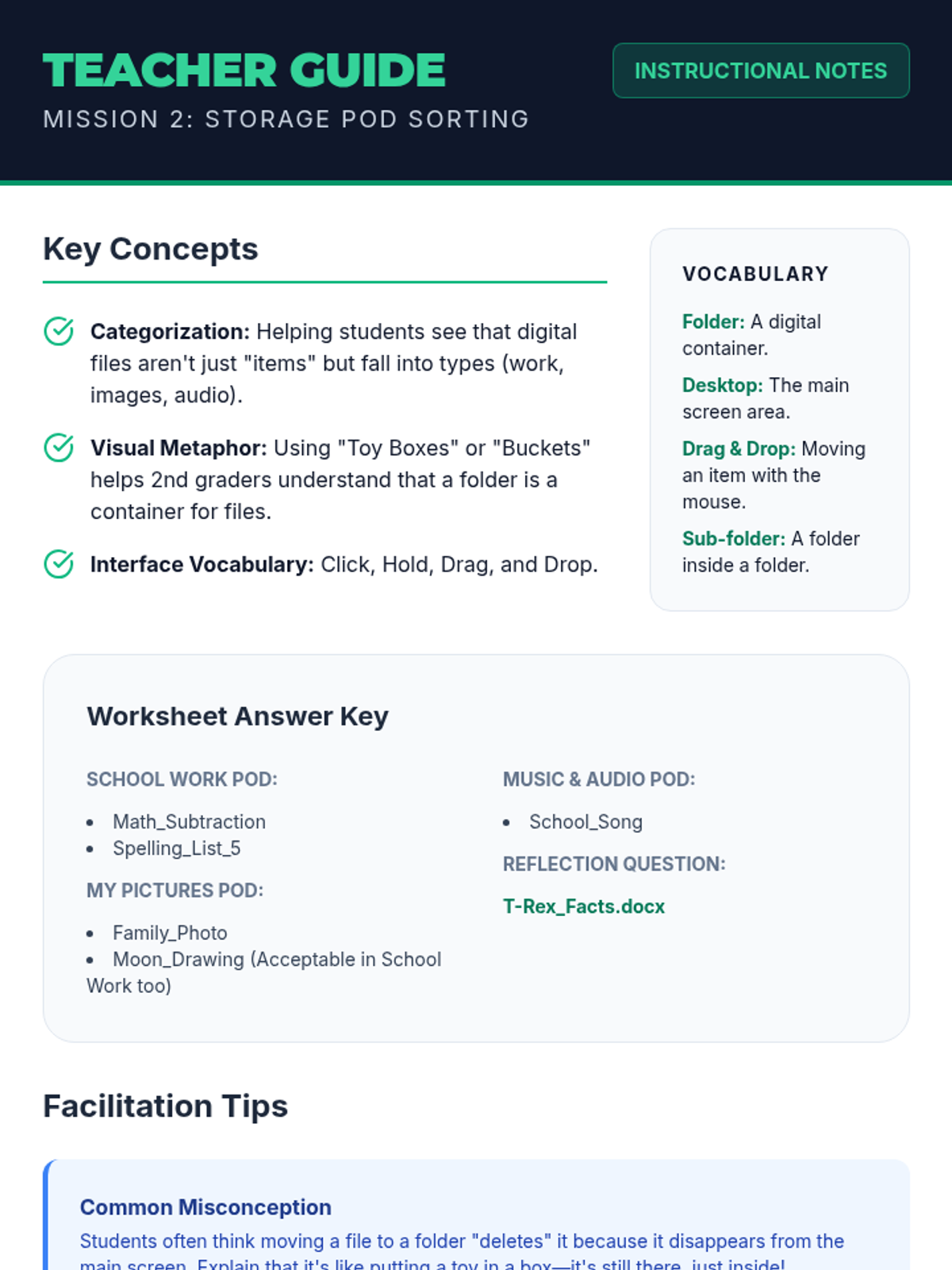
Learners practice creating storage pods (folders) and sorting data crystals (files) into categories using drag-and-drop concepts.
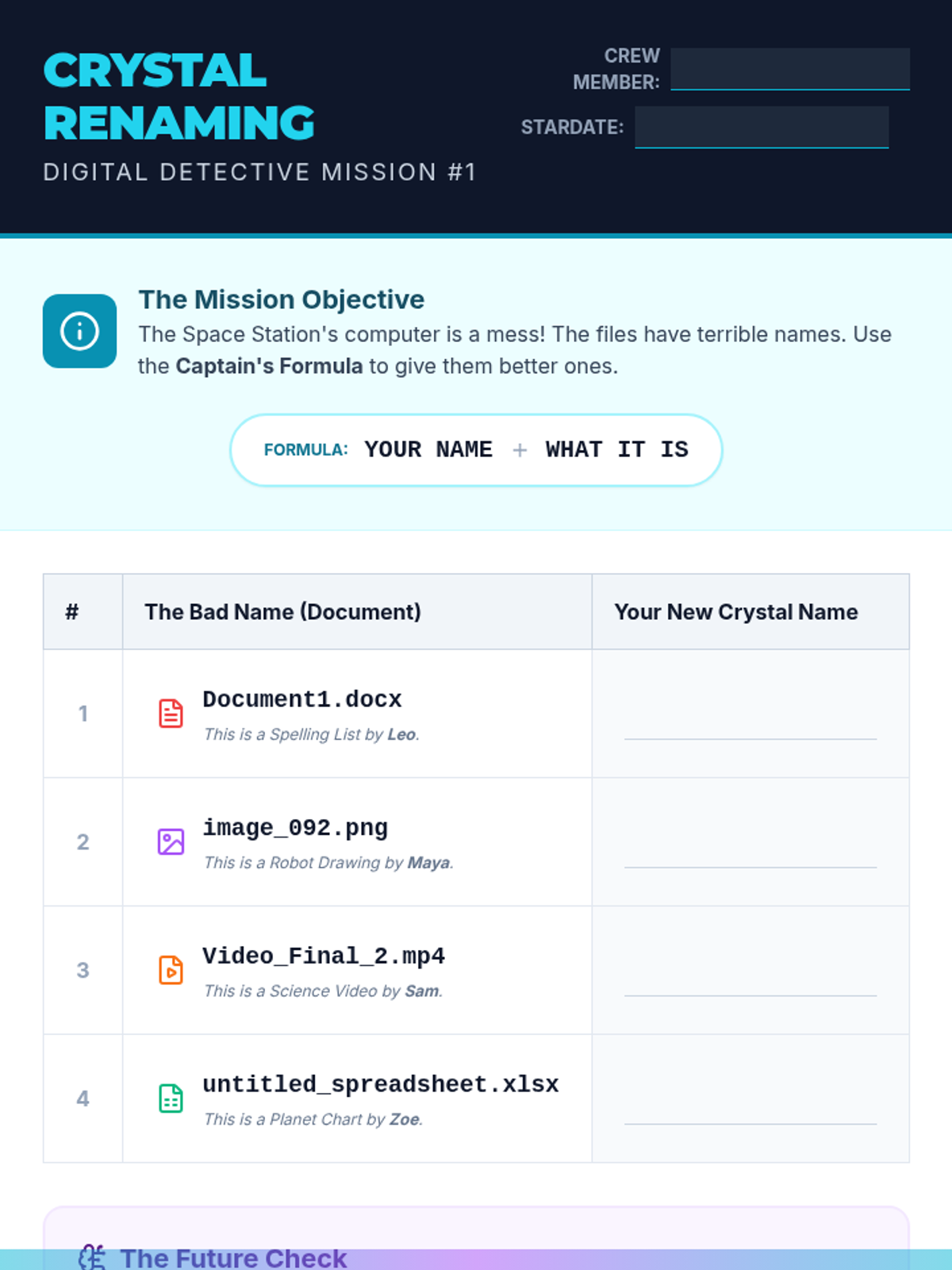
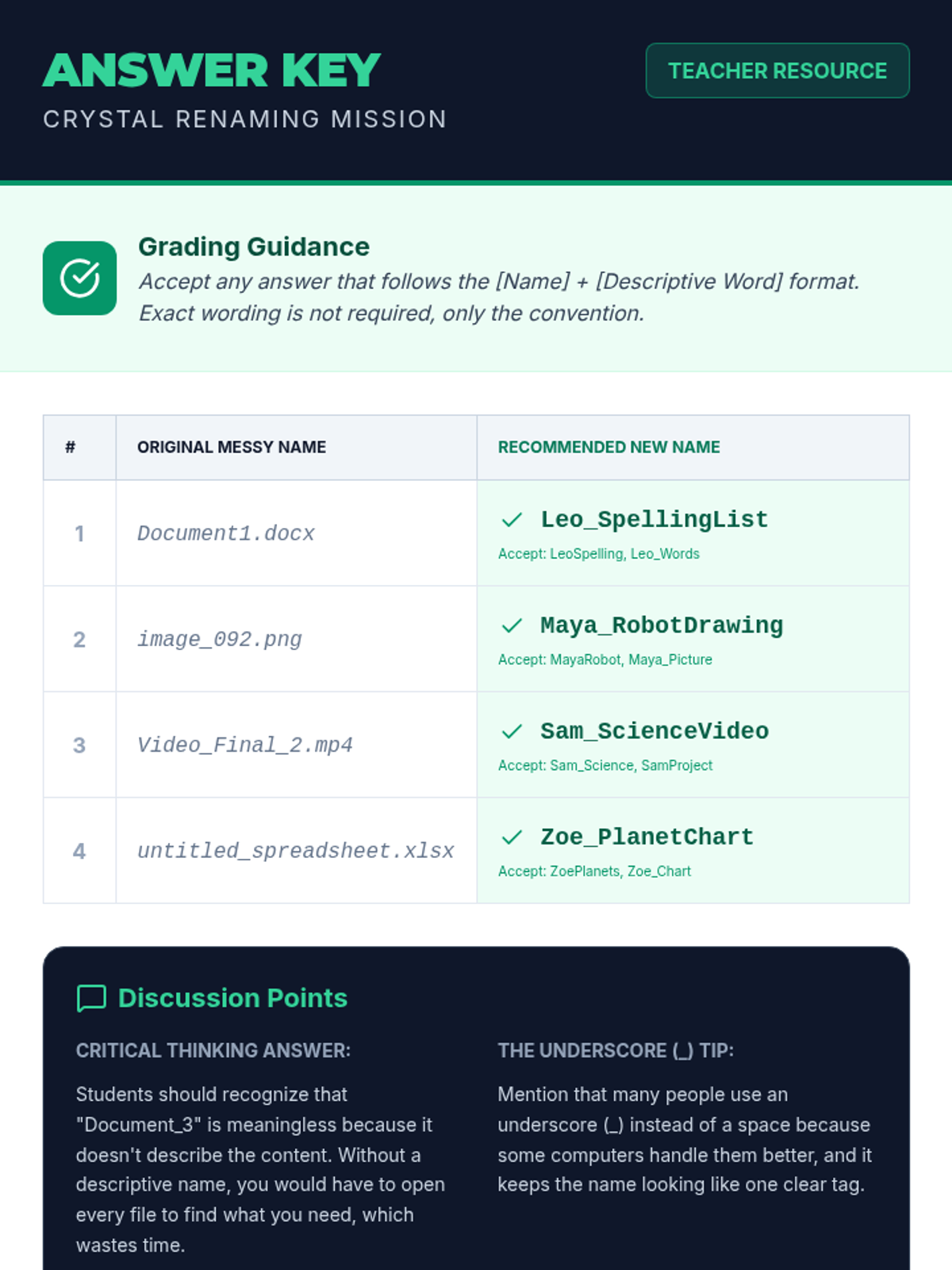
Students learn why specific file names are important and practice a naming convention (Name_Assignment) to keep their digital work identifiable.
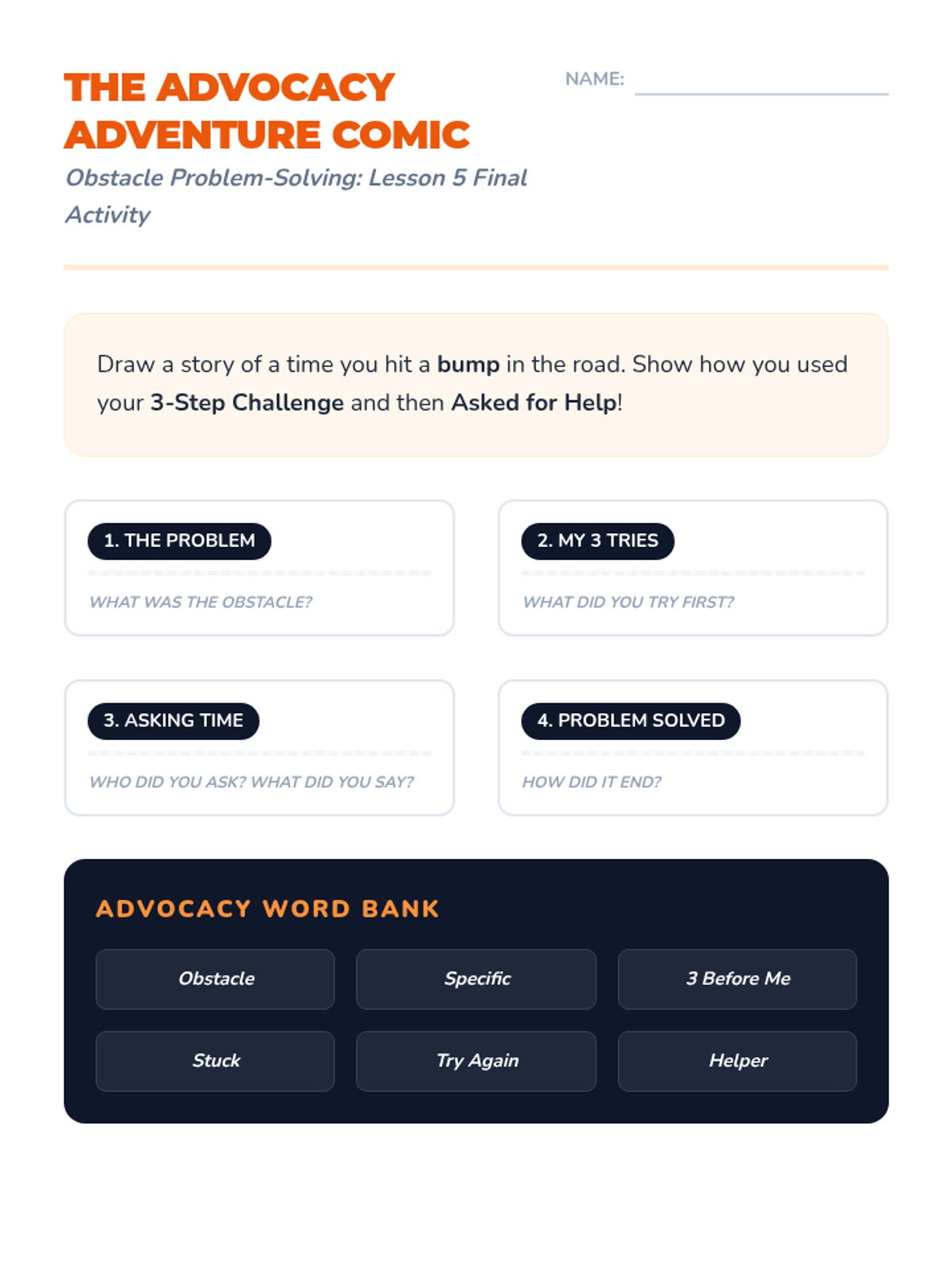
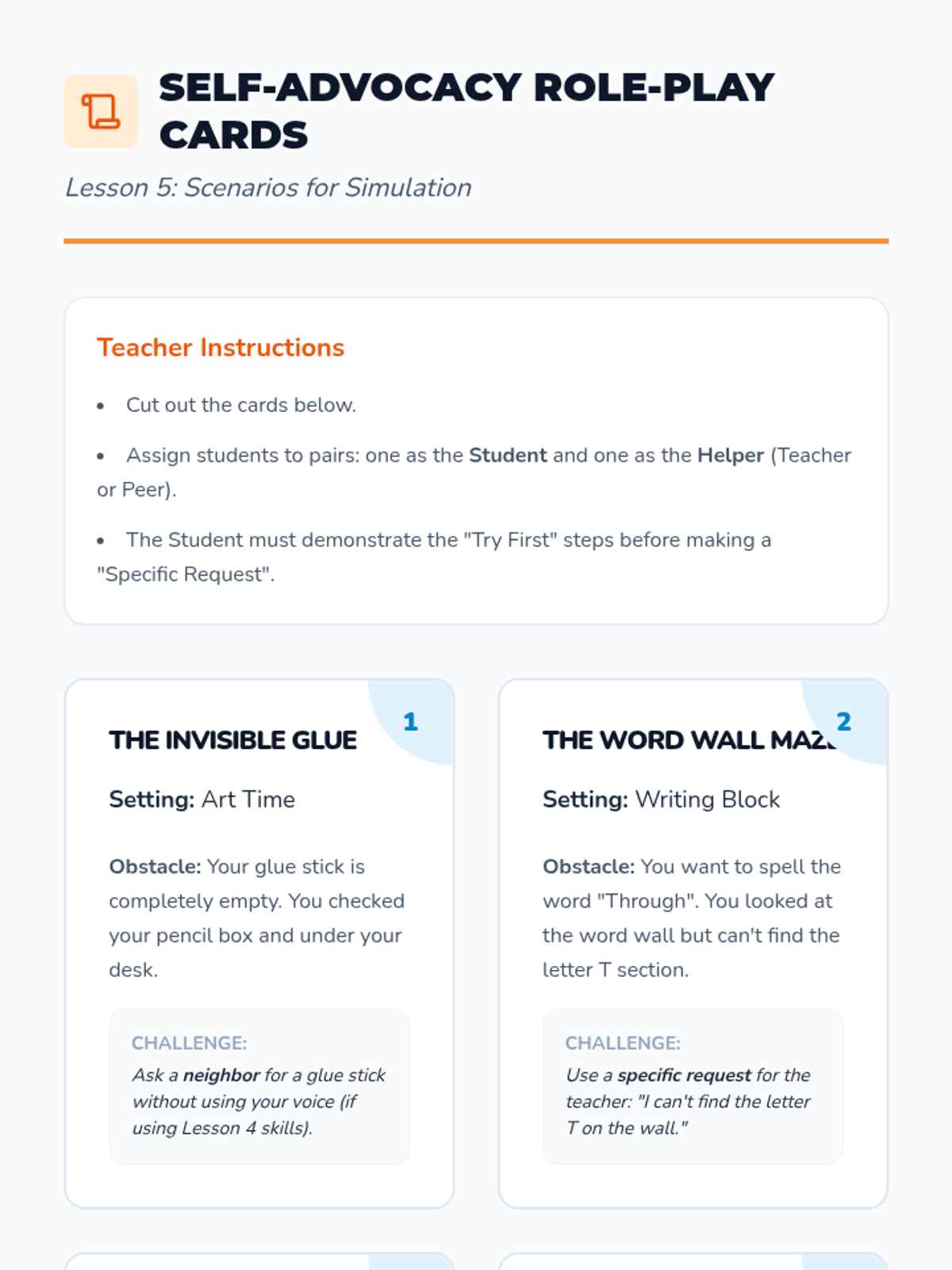
Students enact short skits facing obstacles and effectively asking for help, synthesizing the entire 'Try -> Assess -> Ask' sequence.
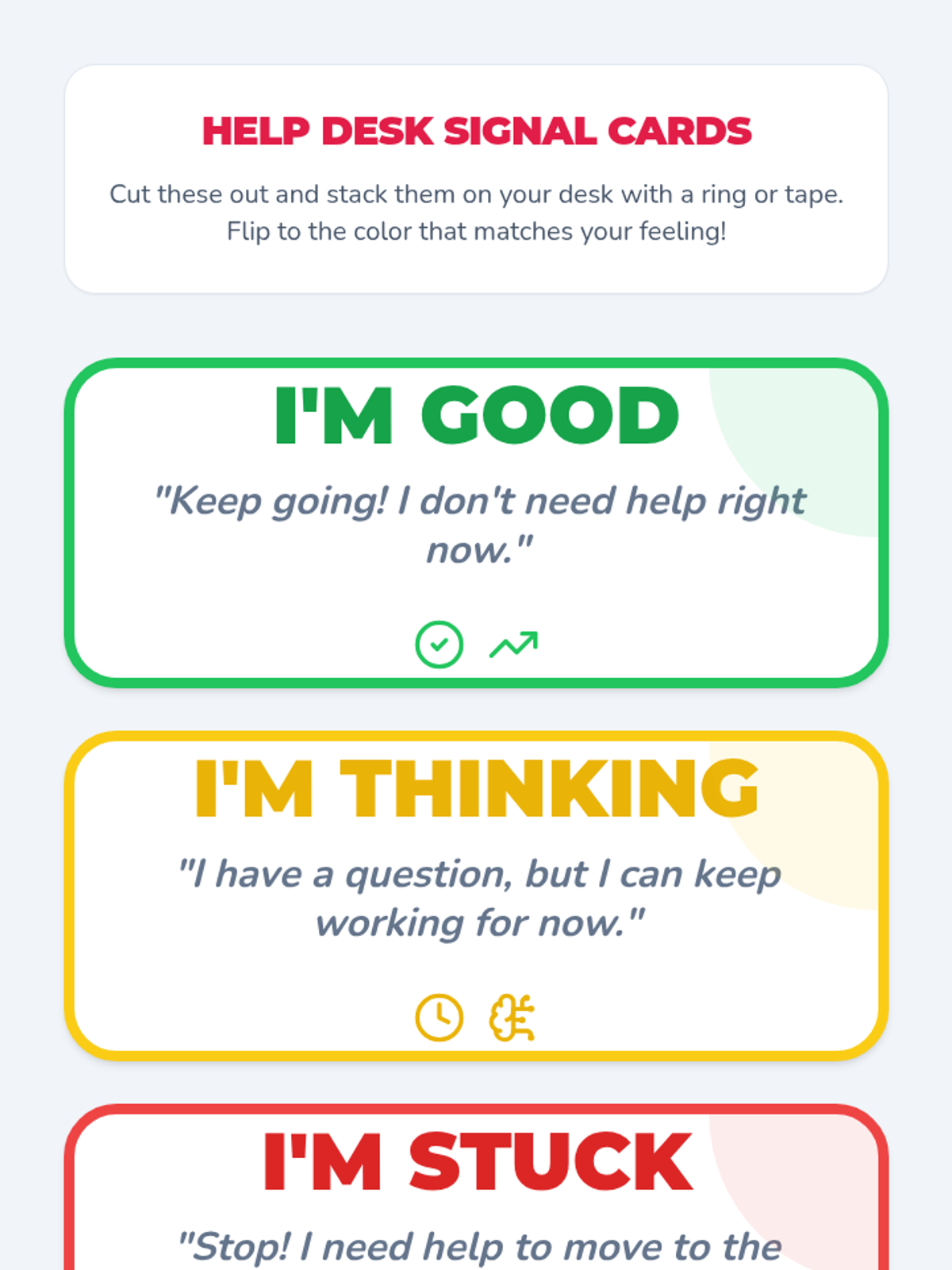
Introduces non-verbal advocacy tools like flip cards and hand signals for students who may be overwhelmed or need to signal for help without interrupting.
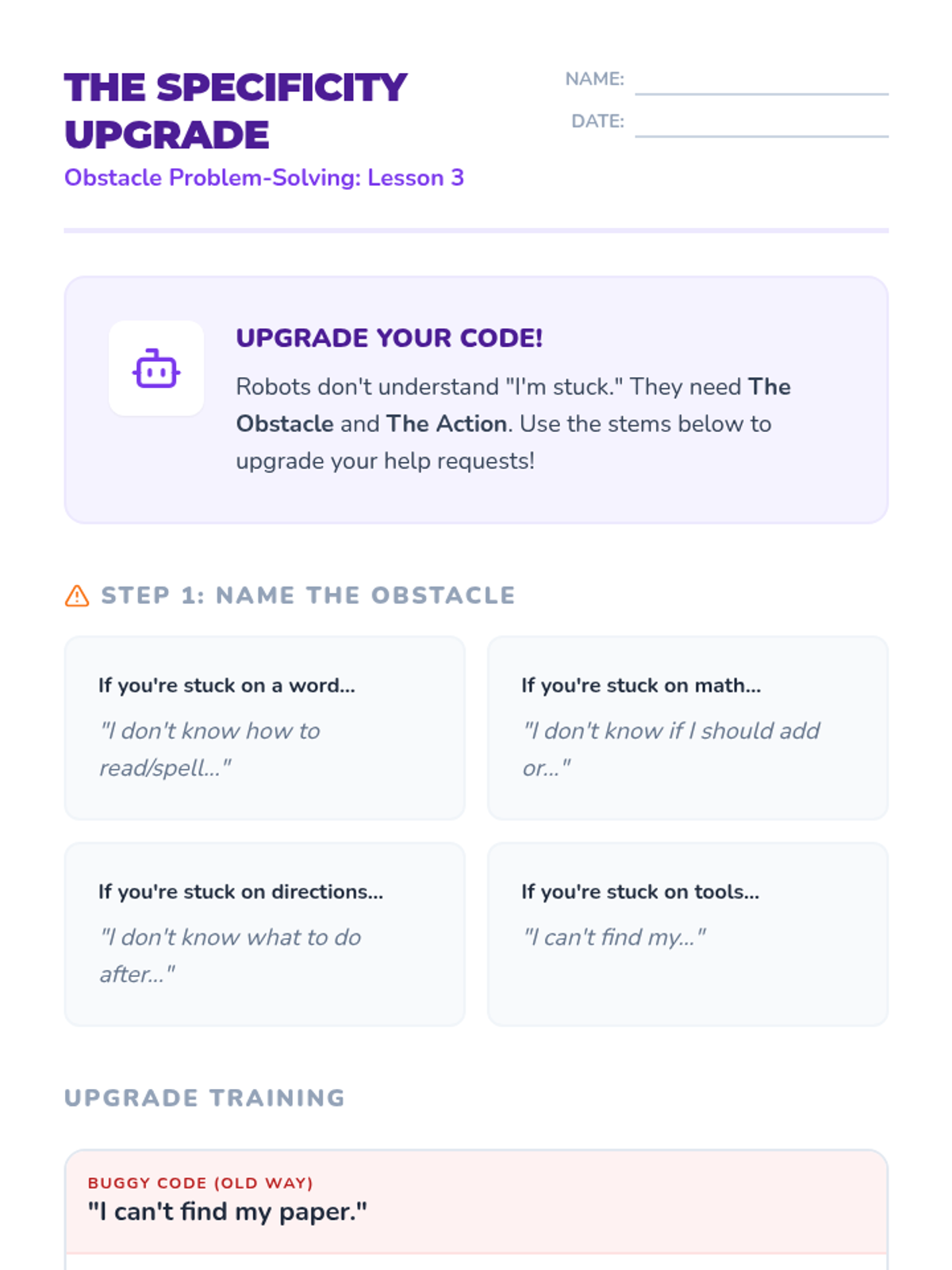
This lesson targets the language of self-advocacy. Students practice changing generic complaints into specific requests that identify the exact obstacle.
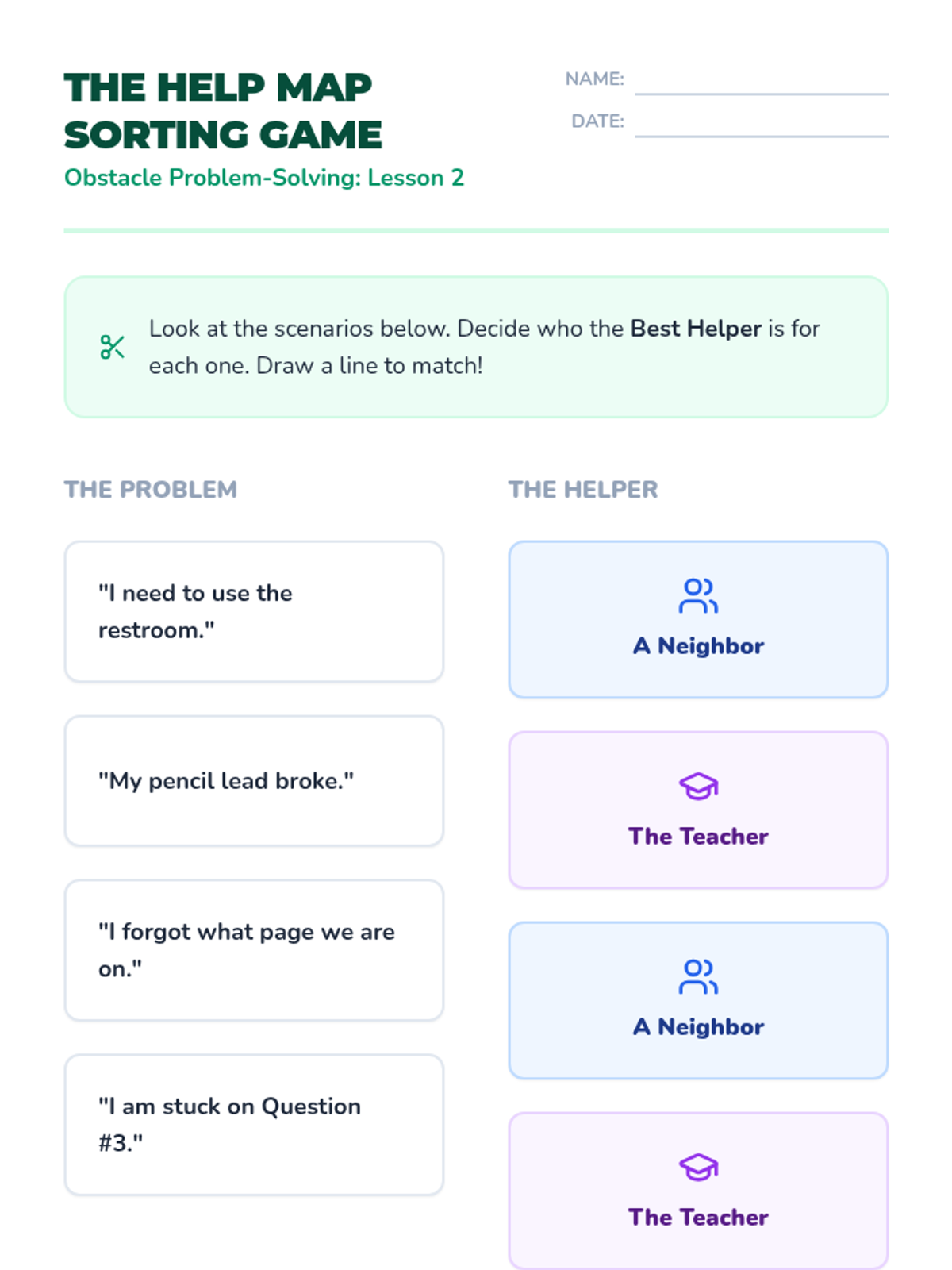
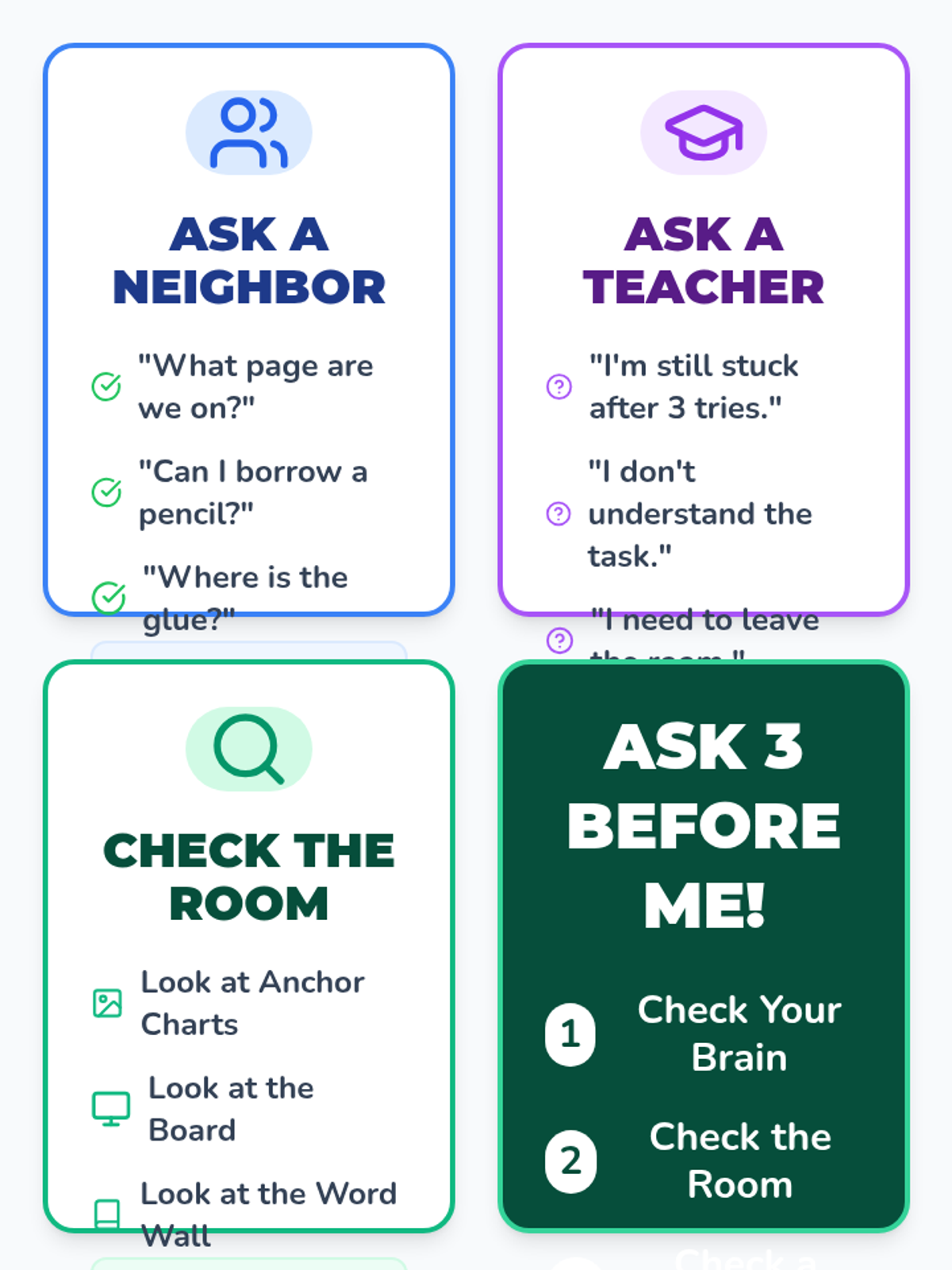
Students map out the classroom ecosystem to identify who can help with different problems. This fosters social awareness and reduces bottlenecks at the teacher's desk.
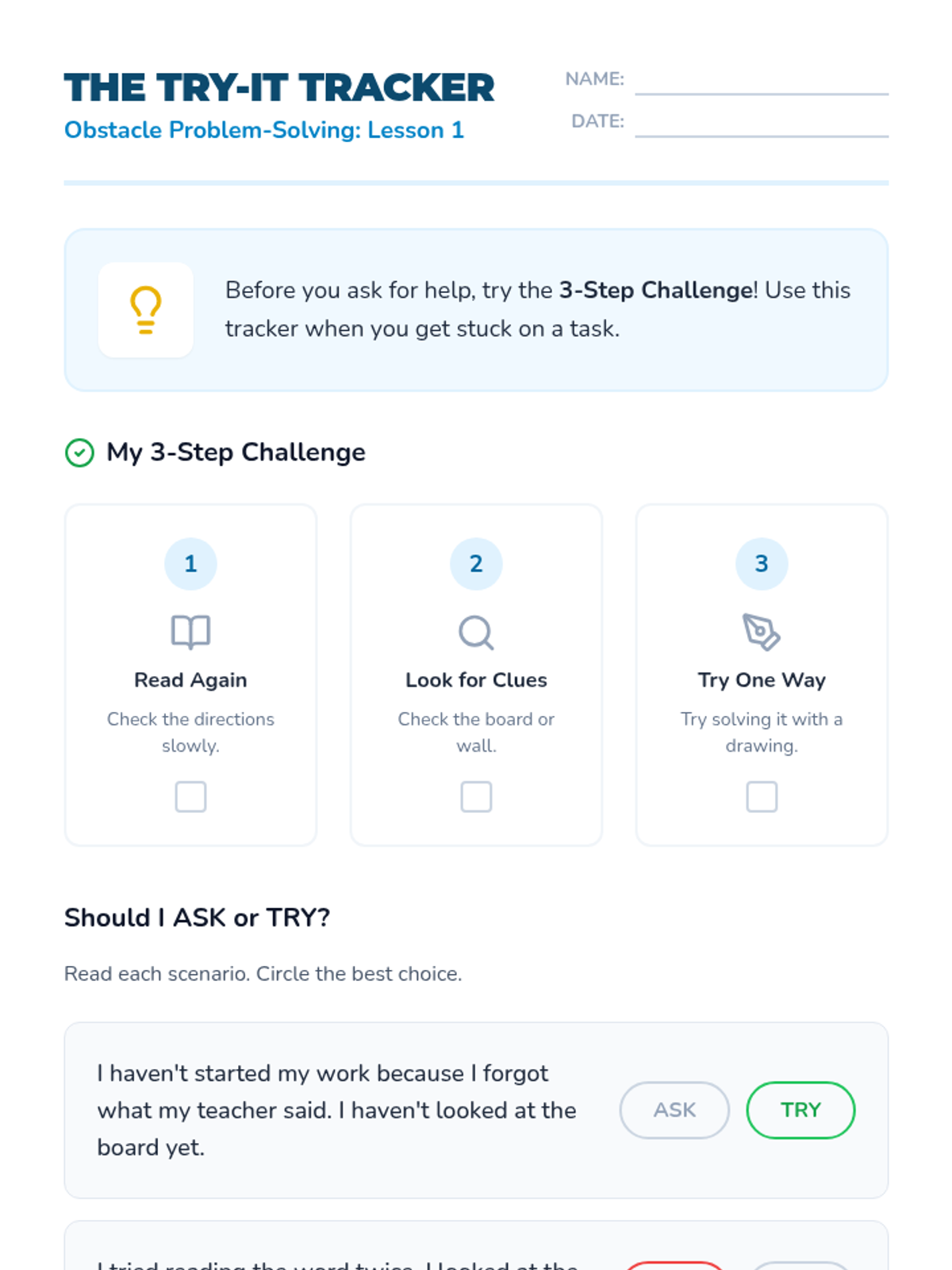
Students learn to identify the 'tipping point'—the moment after they have tried independent strategies but remain stuck. They categorize scenarios into 'Try more' vs. 'Ask now' to prevent immediate dependence on adults.
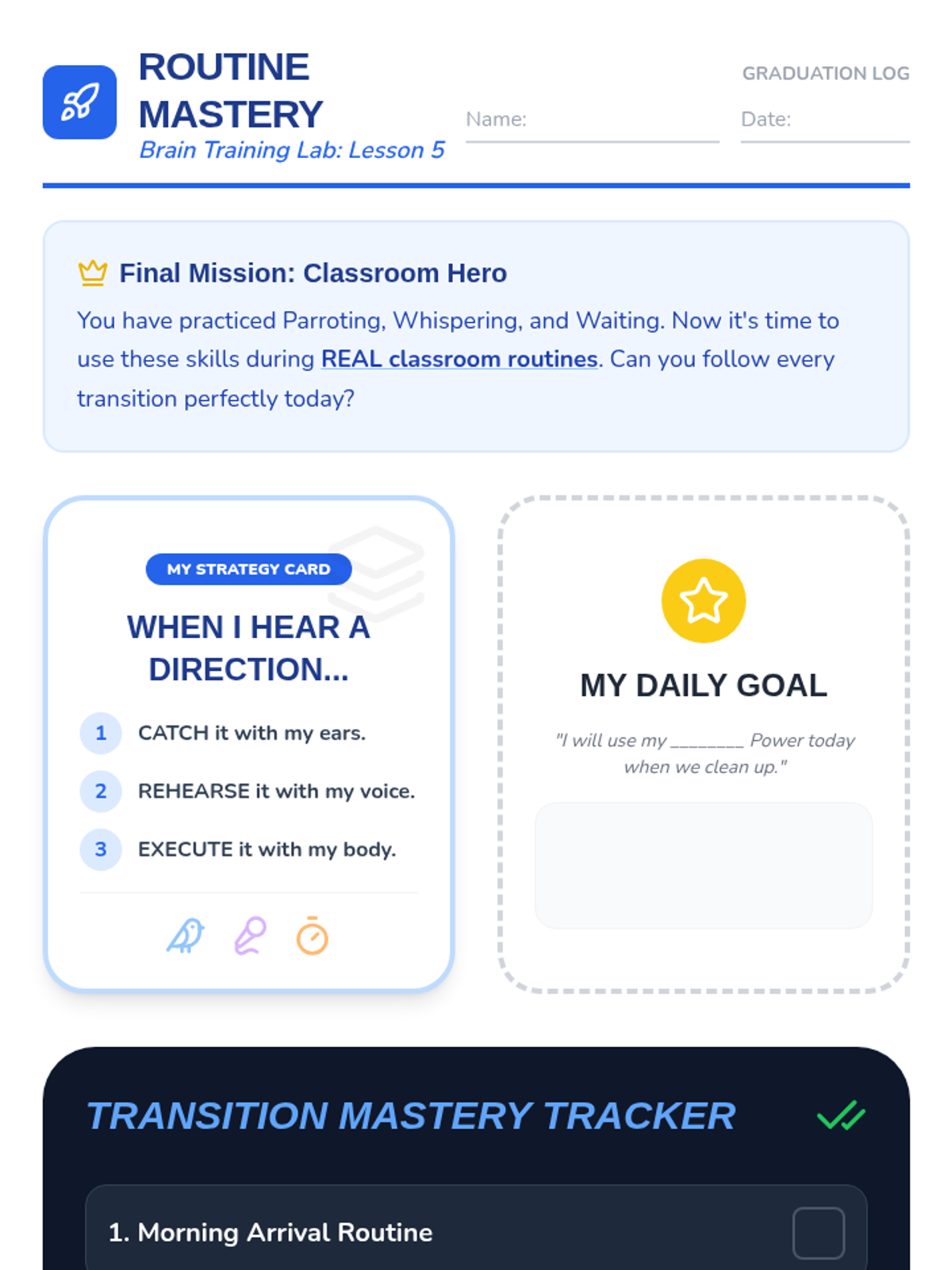
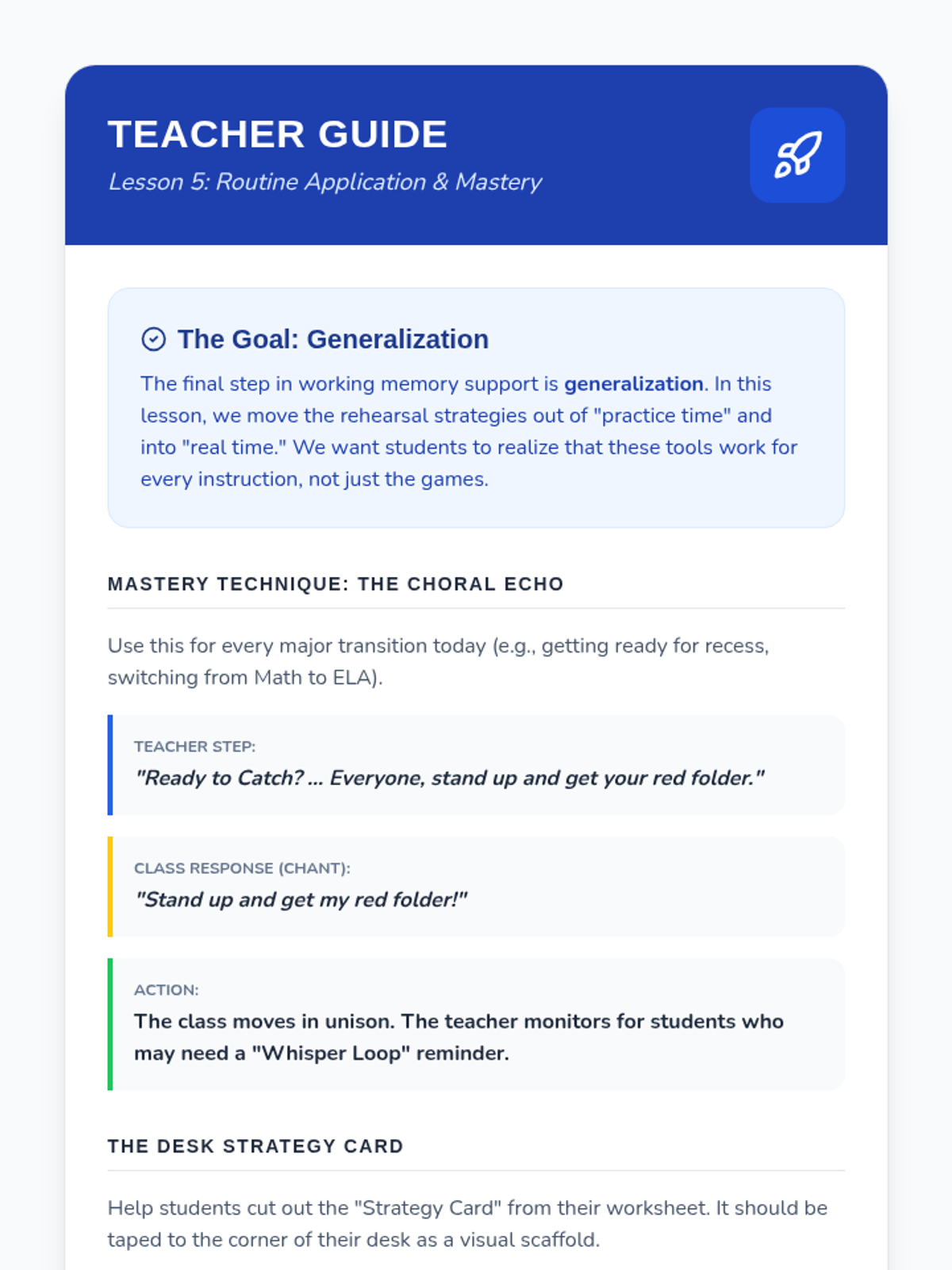
Students apply verbal strategies to actual classroom transition requests using choral responses to confirm steps.
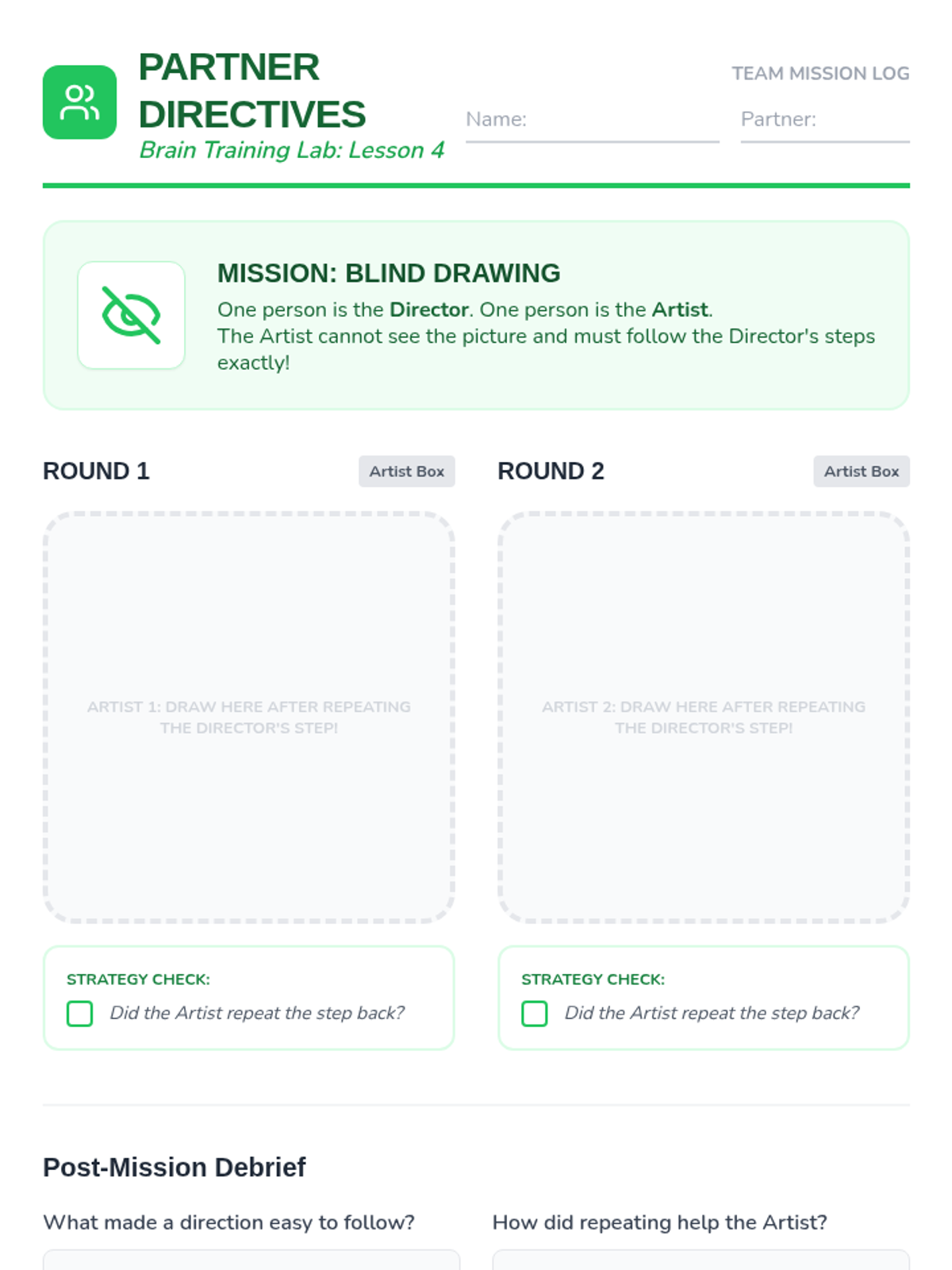
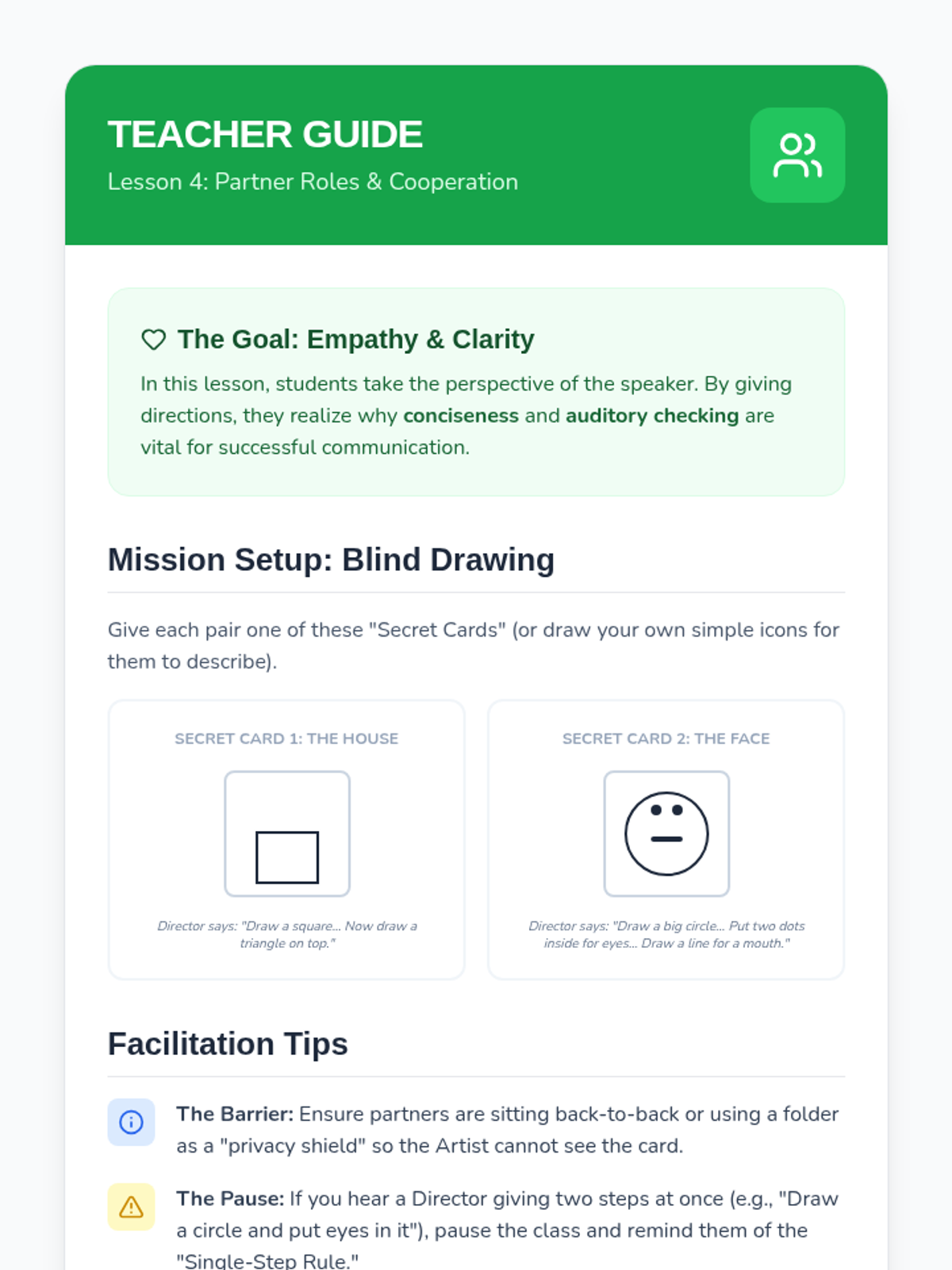
In pairs, students take turns being the 'Teacher' and the 'Student' to practice giving and repeating explicit steps.
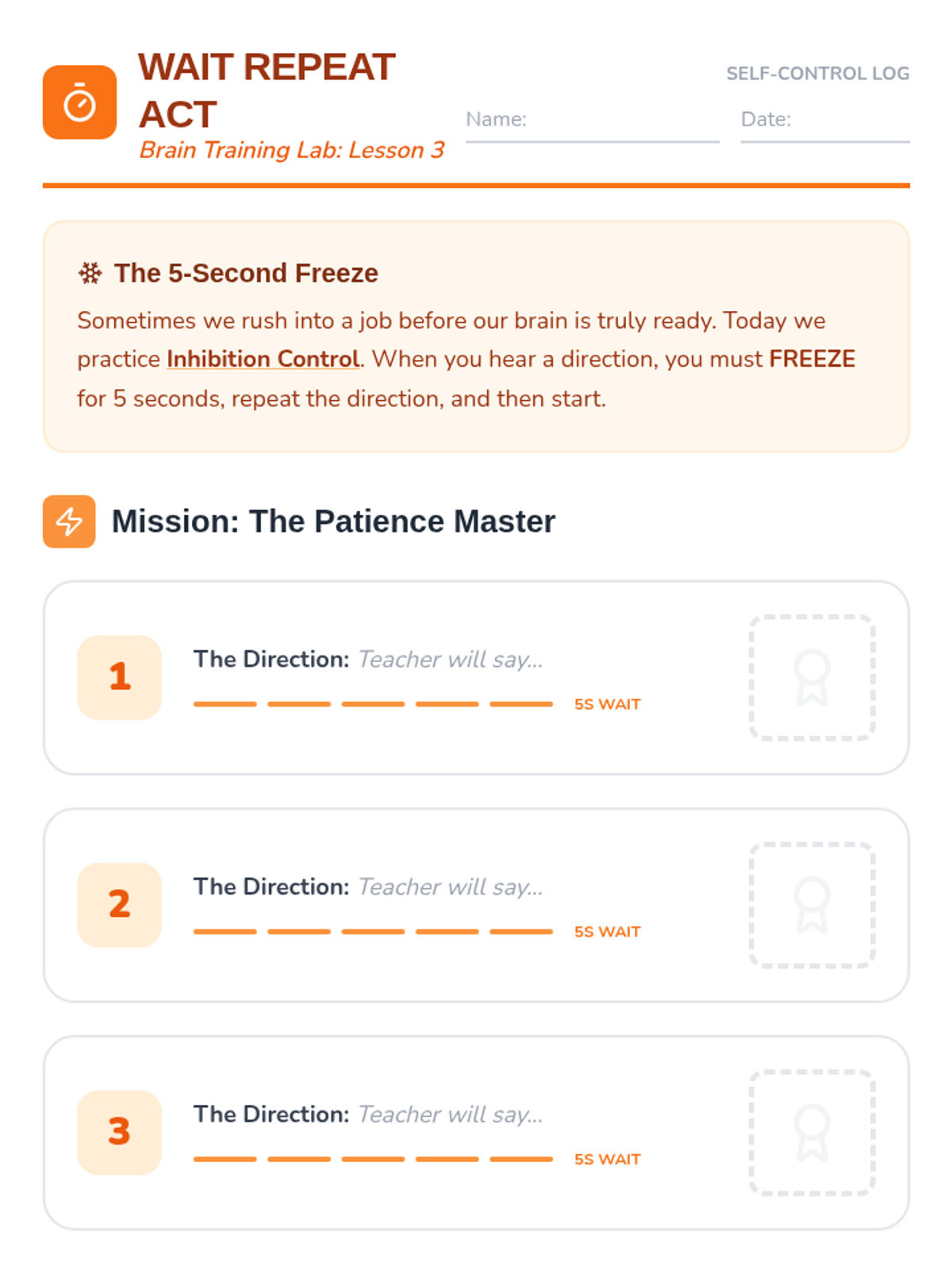
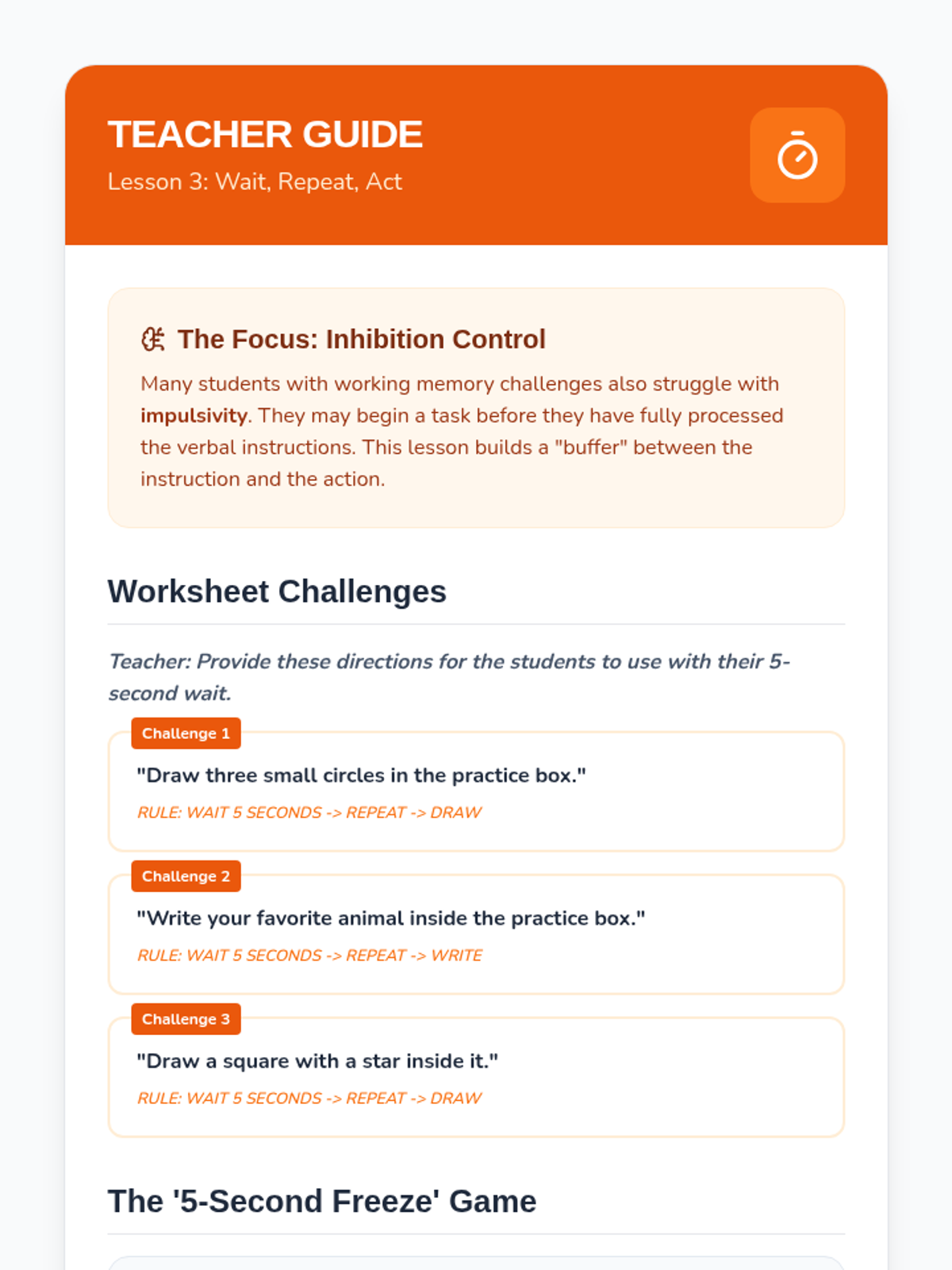
Students engage in inhibition control activities where they must wait 5 seconds after hearing a command, repeat it, and only then act.
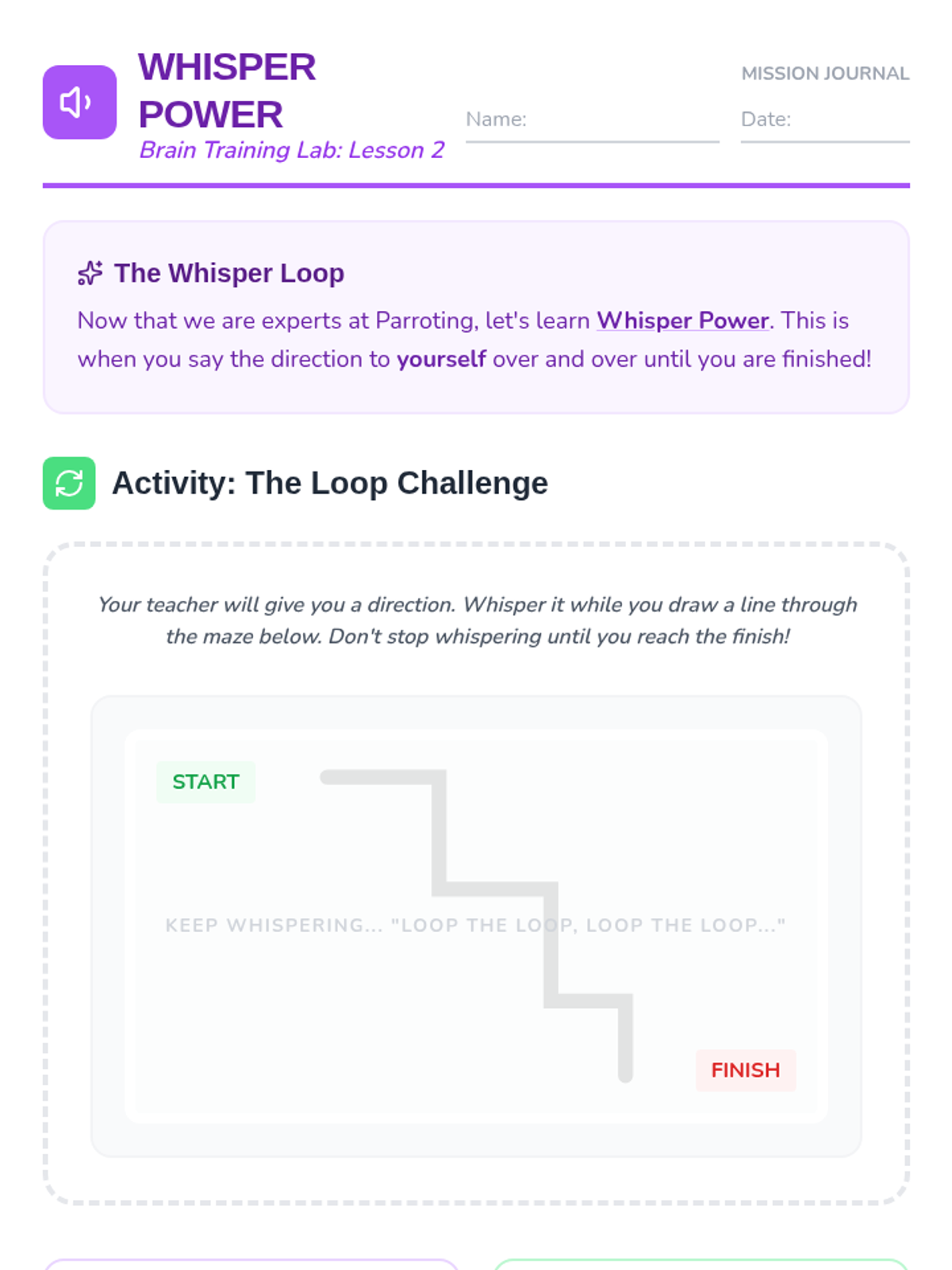
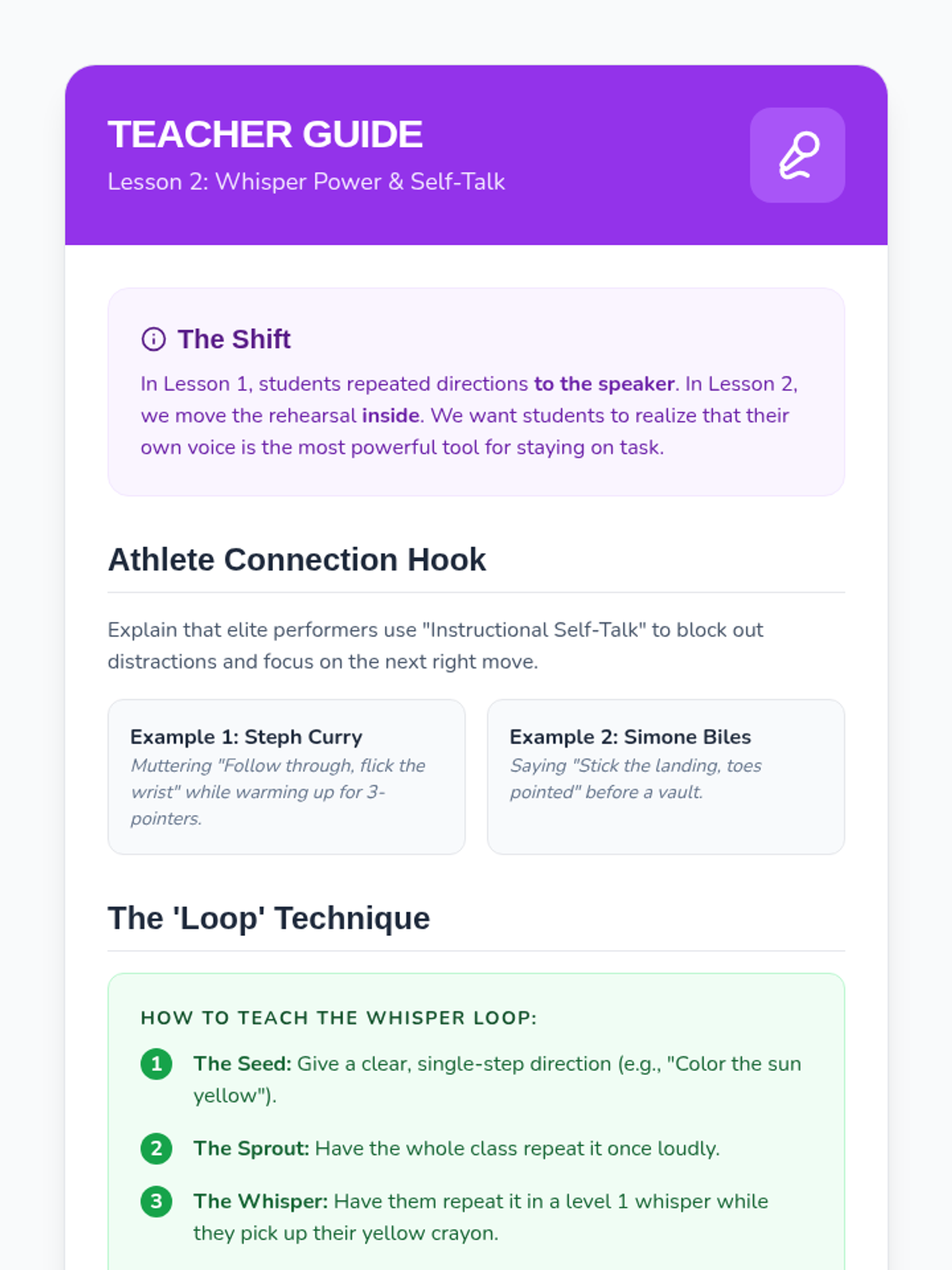
Moving from loud repetition to whispering, students practice 'self-talk.' They are given a single direction and must whisper it on a loop while performing the action.
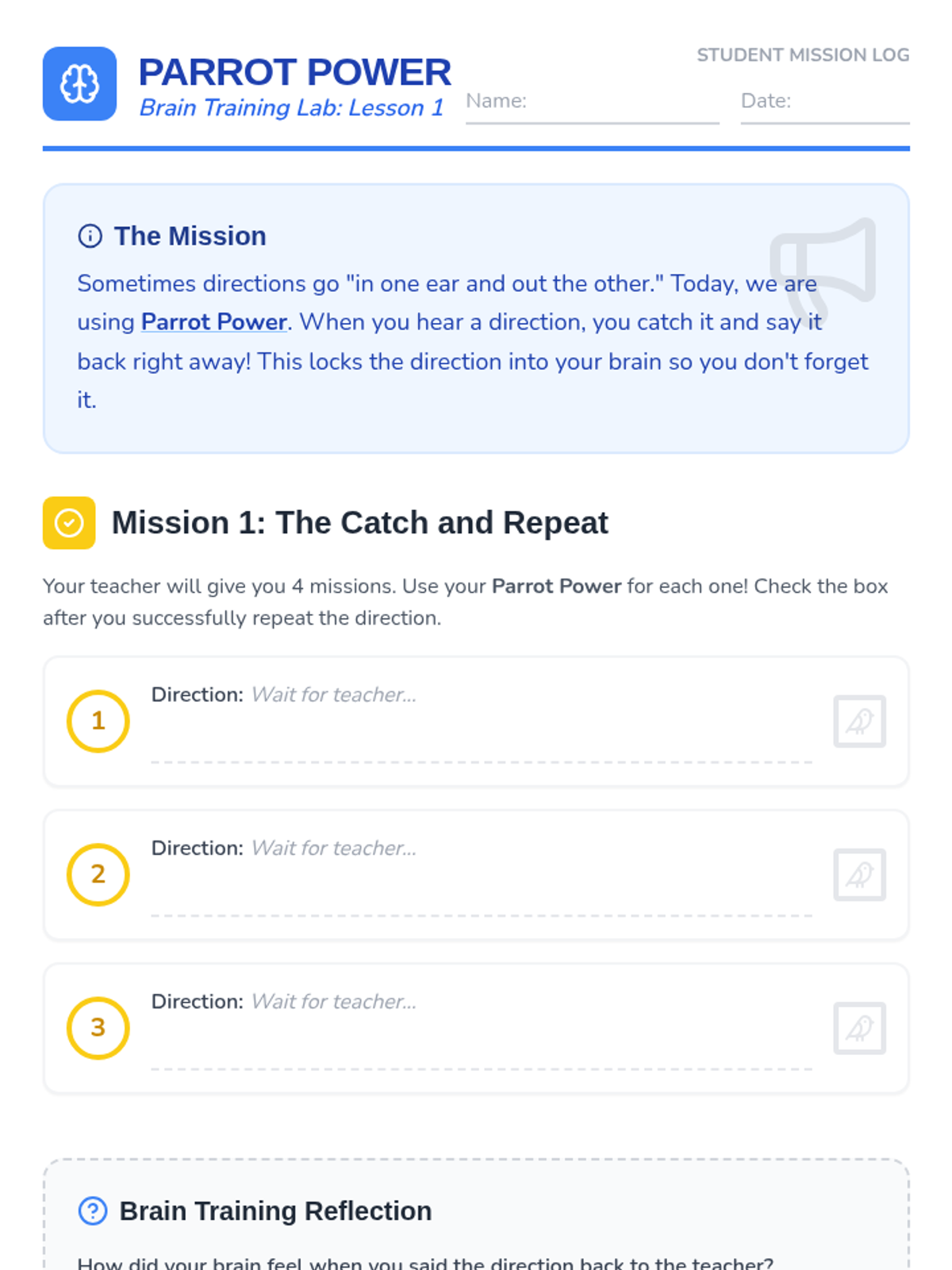
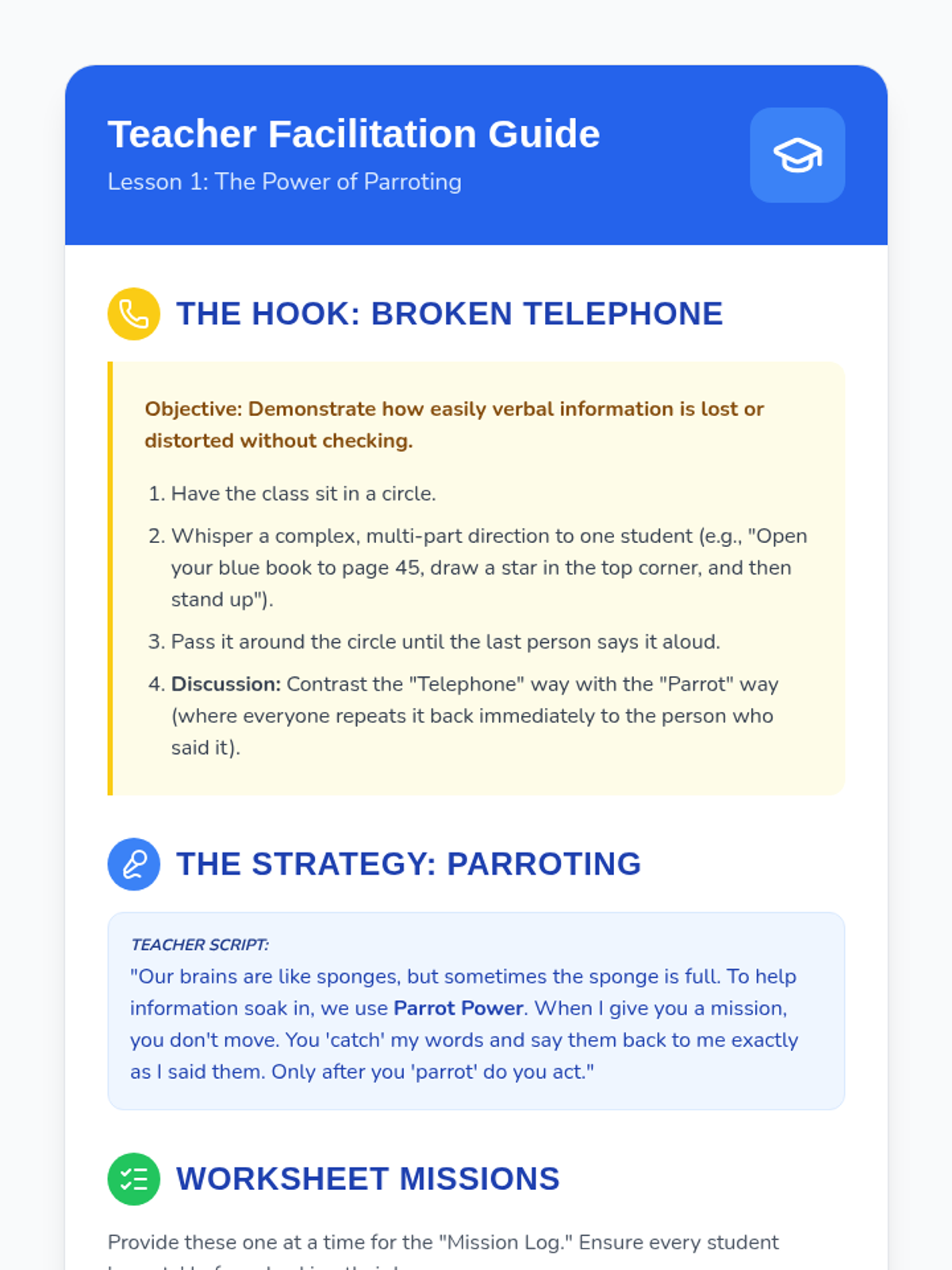
Students practice the 'parrot' technique, where they must immediately repeat a single-step direction back to the speaker before moving. The lesson emphasizes that saying it locks it into the brain.
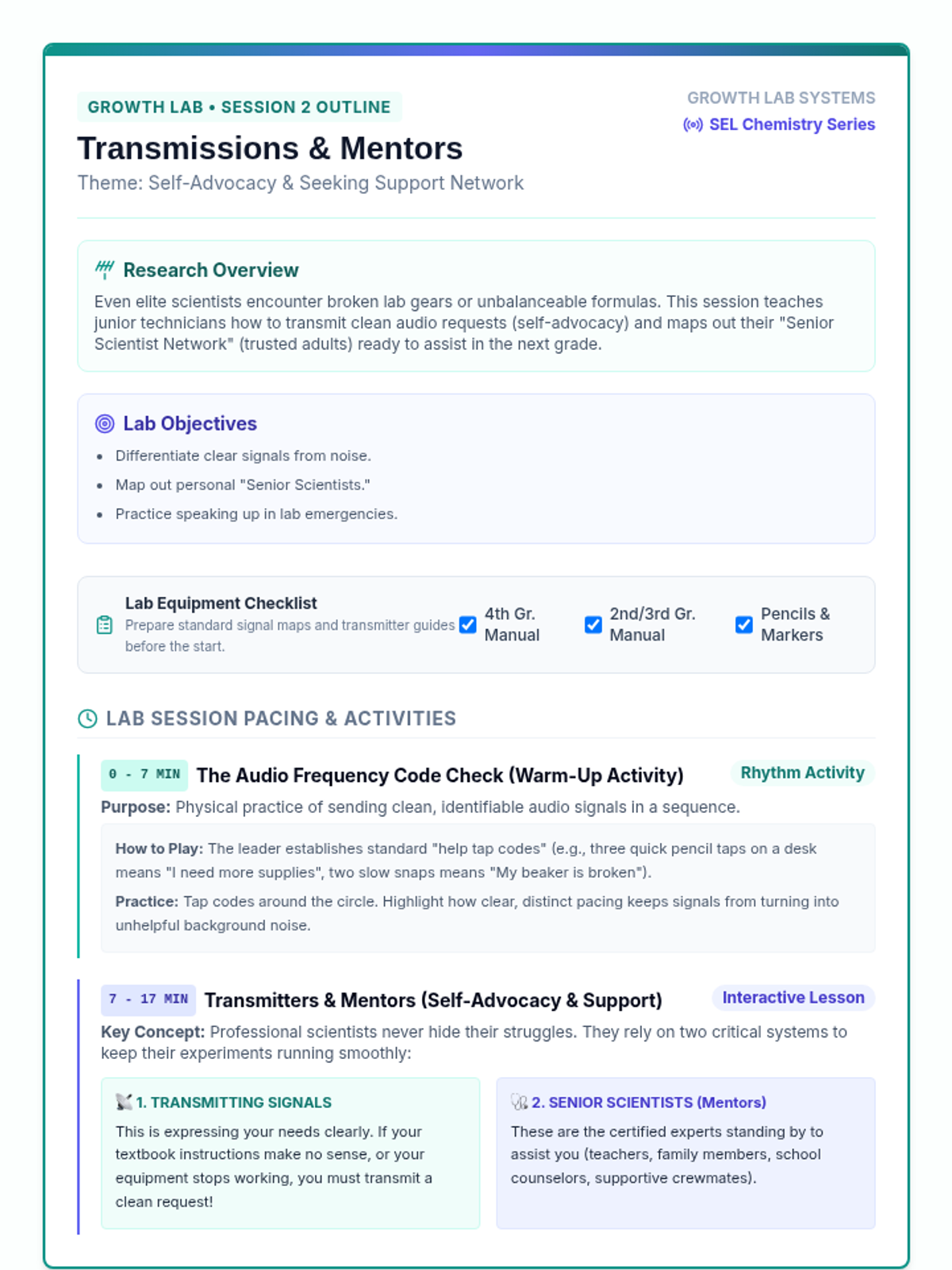
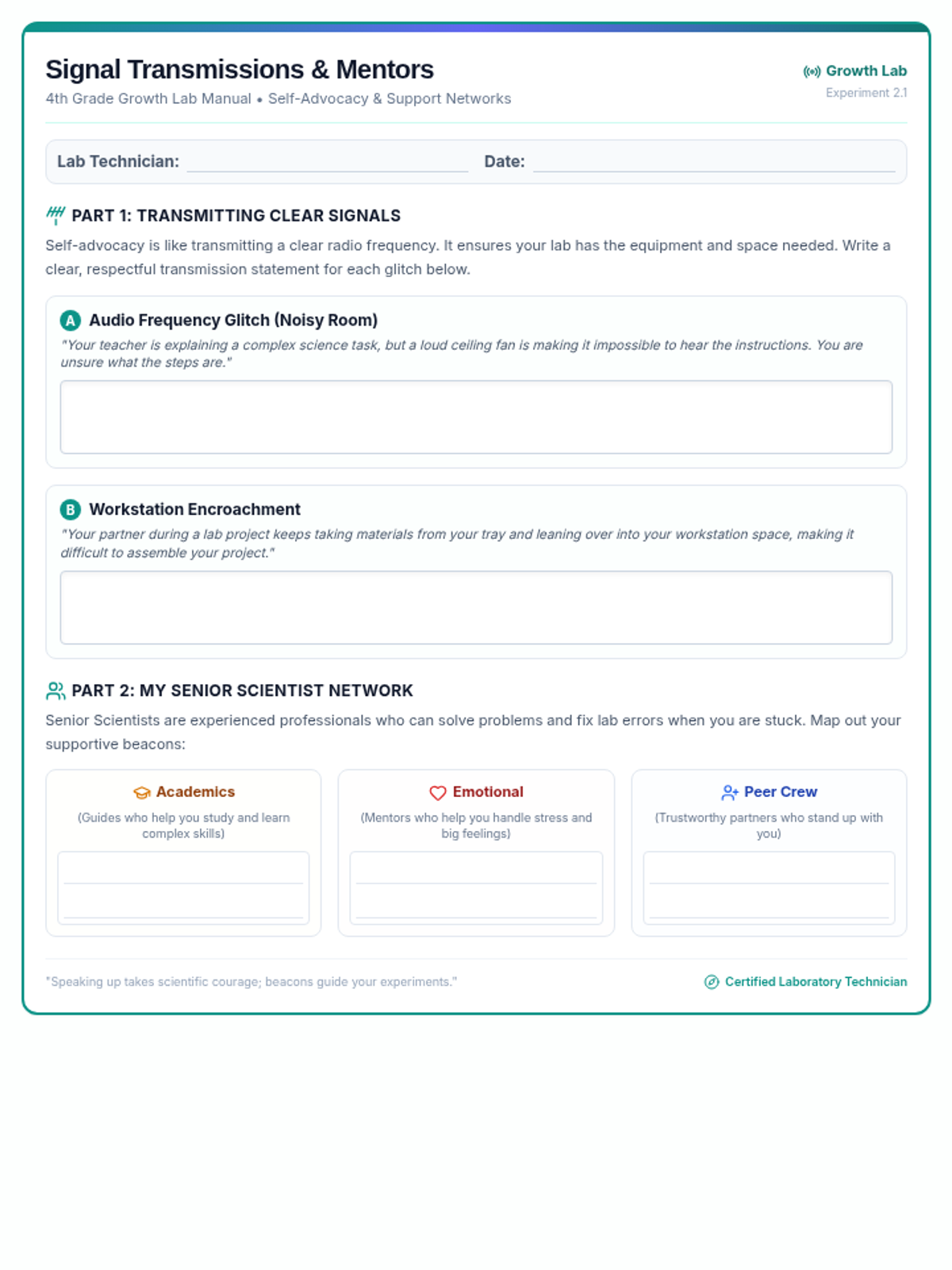
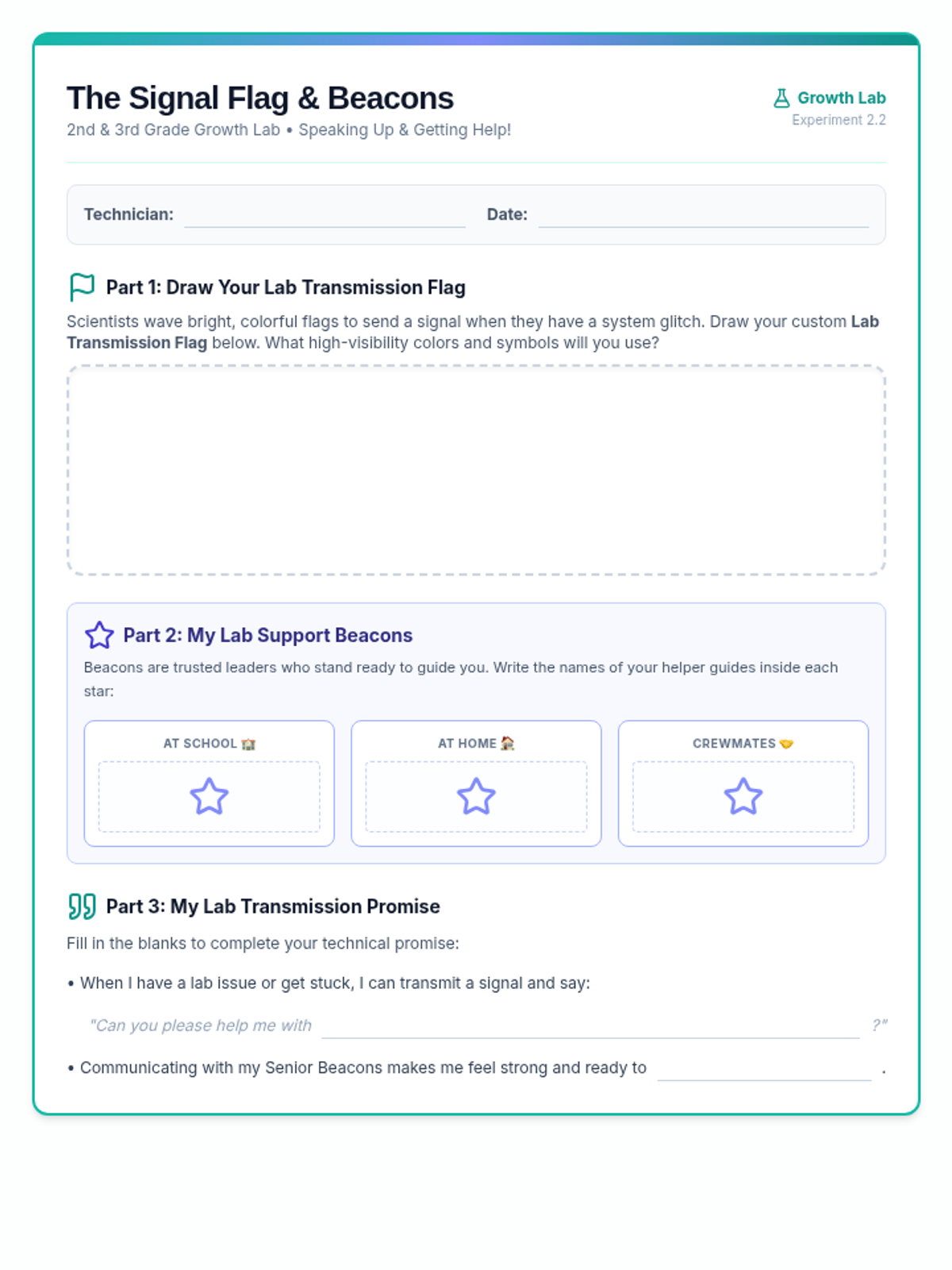
This session focuses on self-advocacy and seeking support. Students learn to recognize when to speak up for their physical and learning needs (trail signals) and identify trusted individuals who can help them navigate challenges (trail guides).
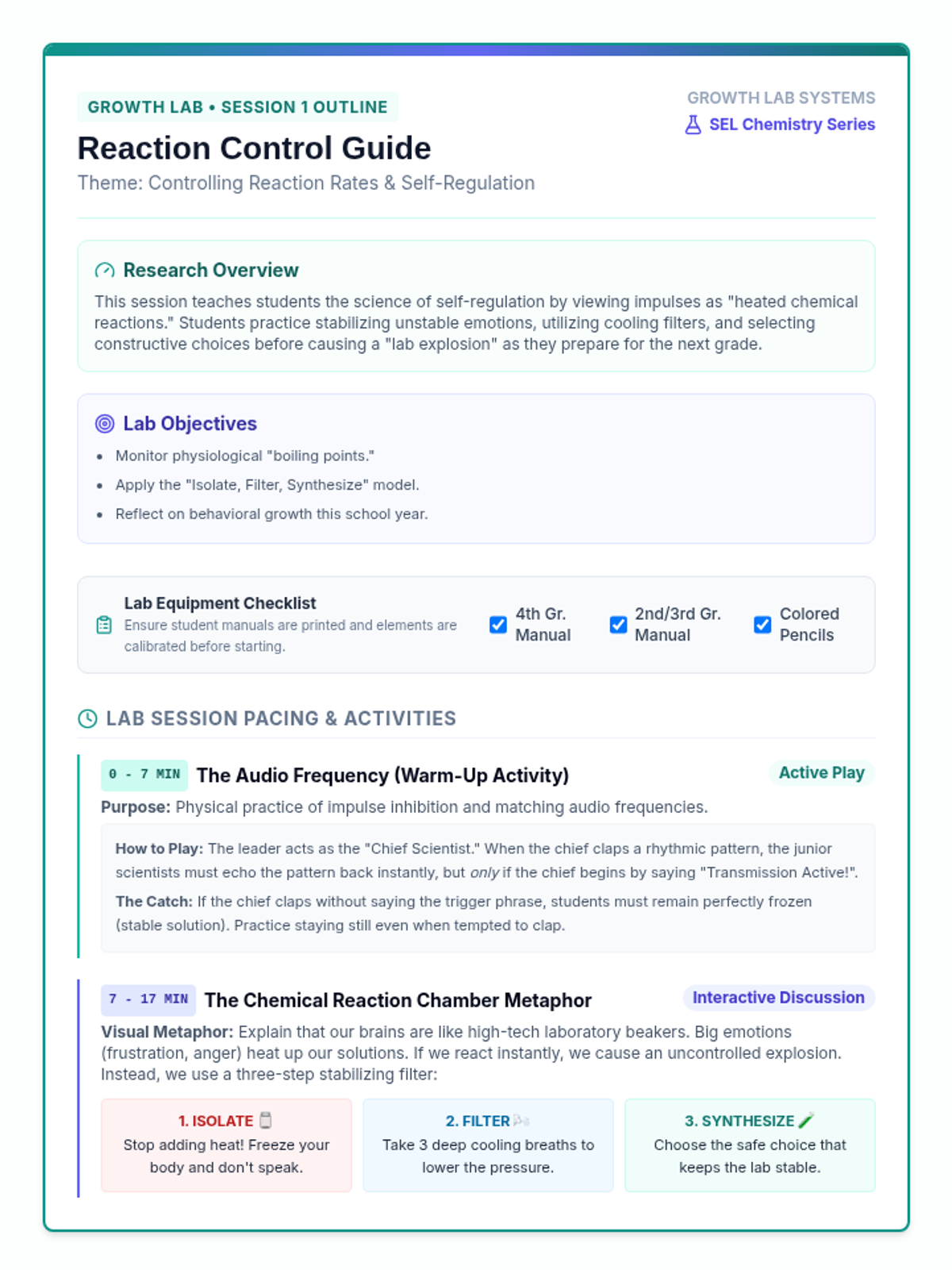
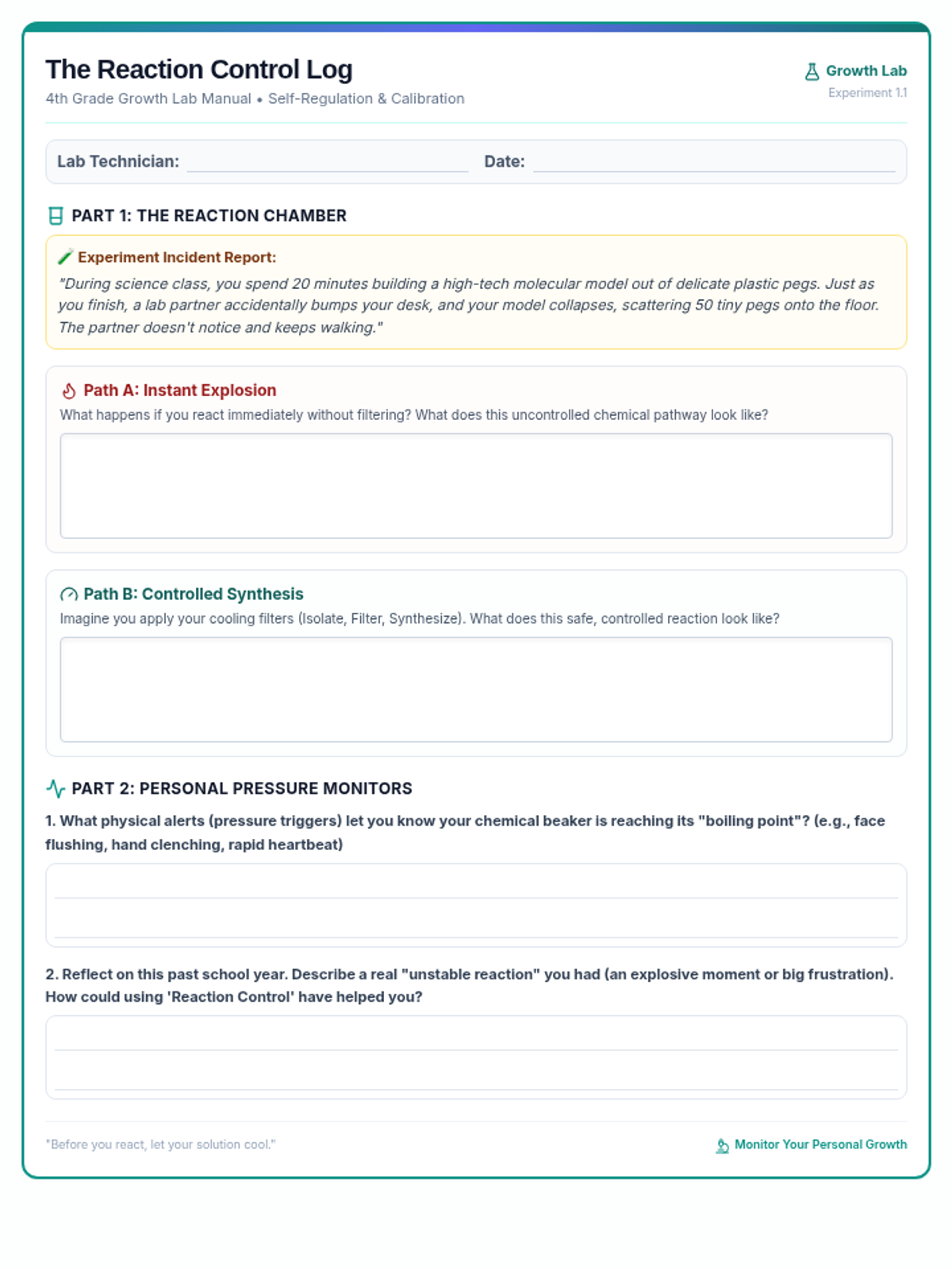
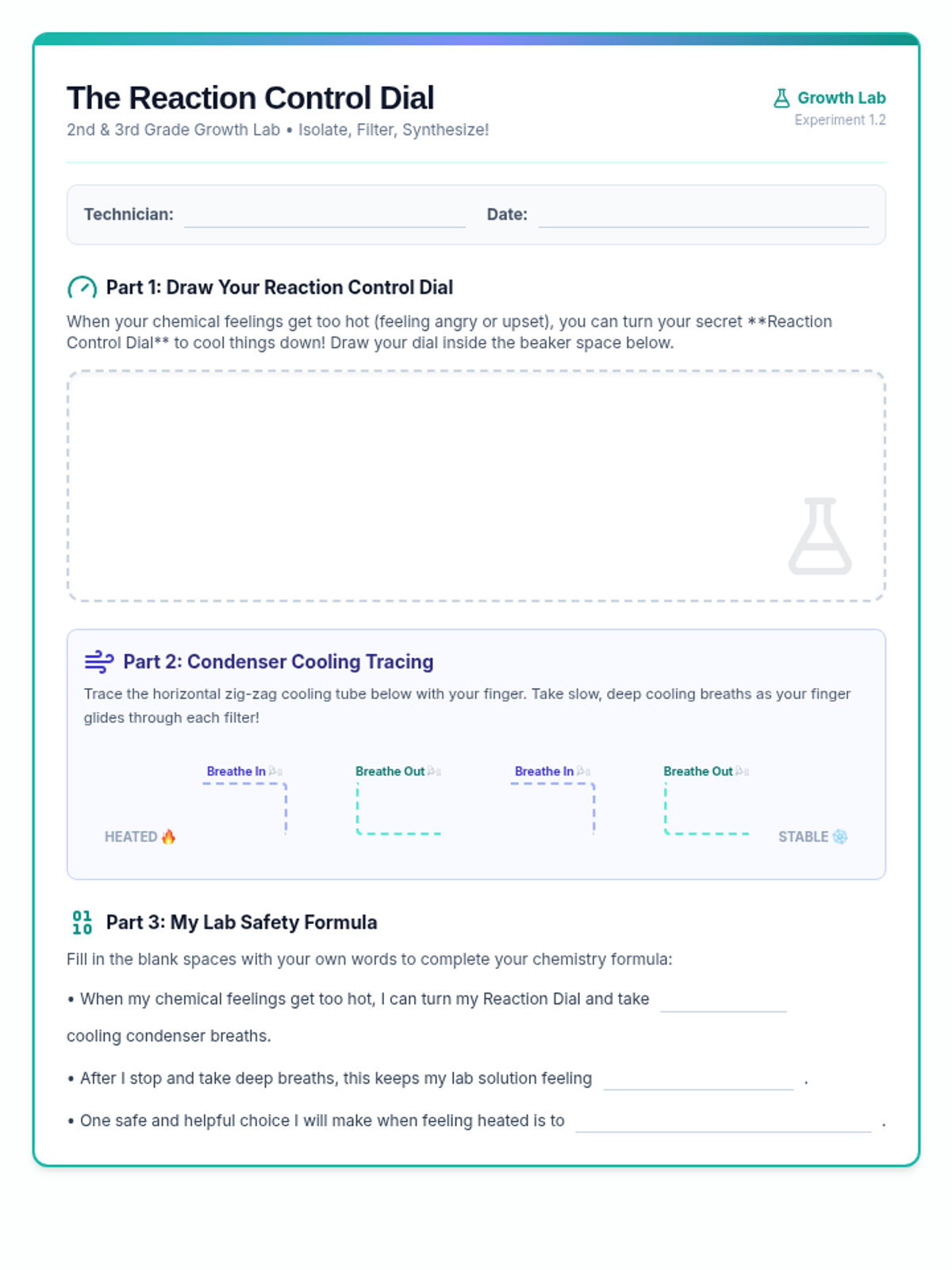
This session teaches students the science of self-regulation and reflection by studying 'reaction control' (thinking before acting). Students explore chemical-themed cooling strategies and reflect on their personal progress over the past school year.
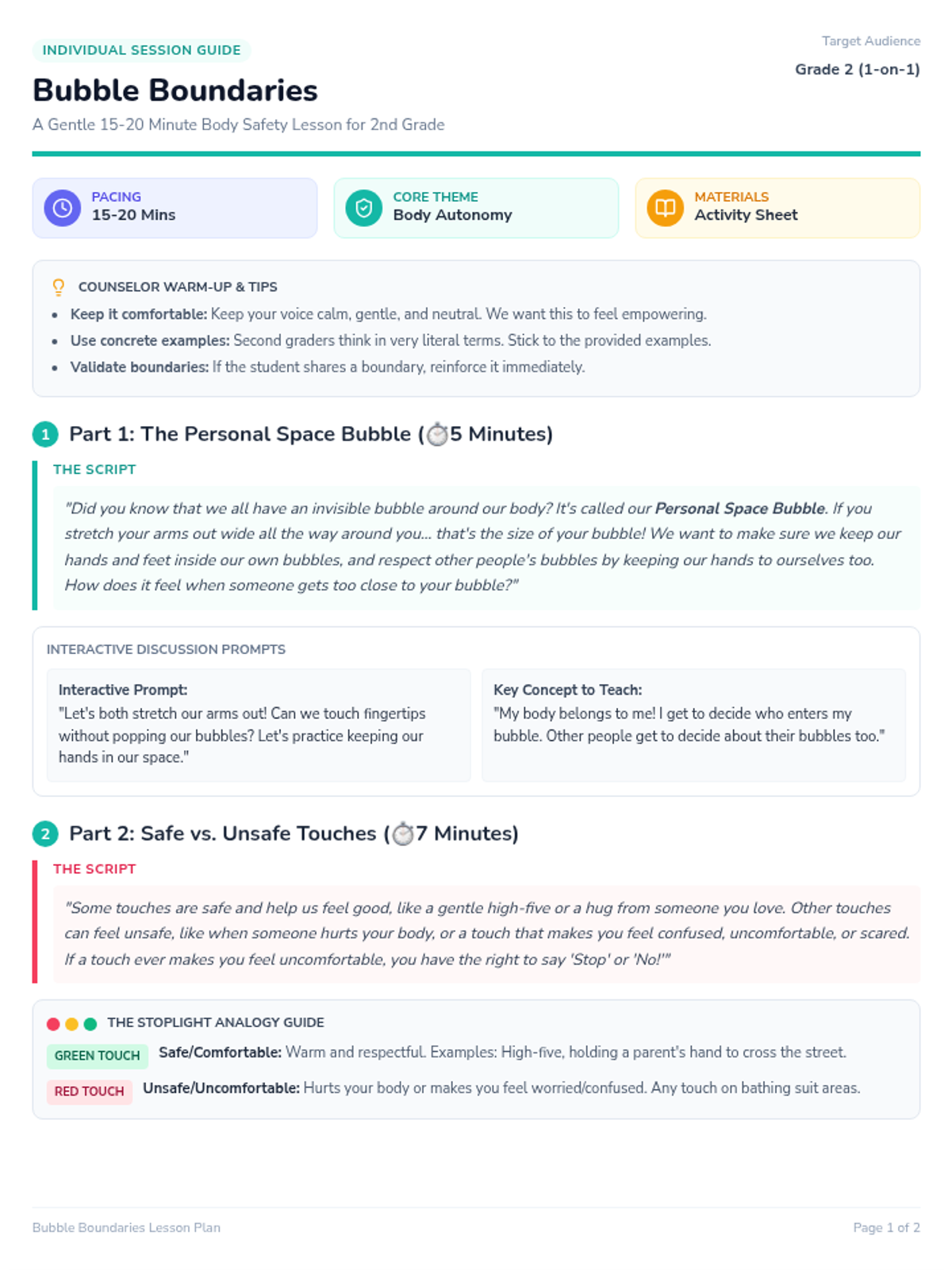
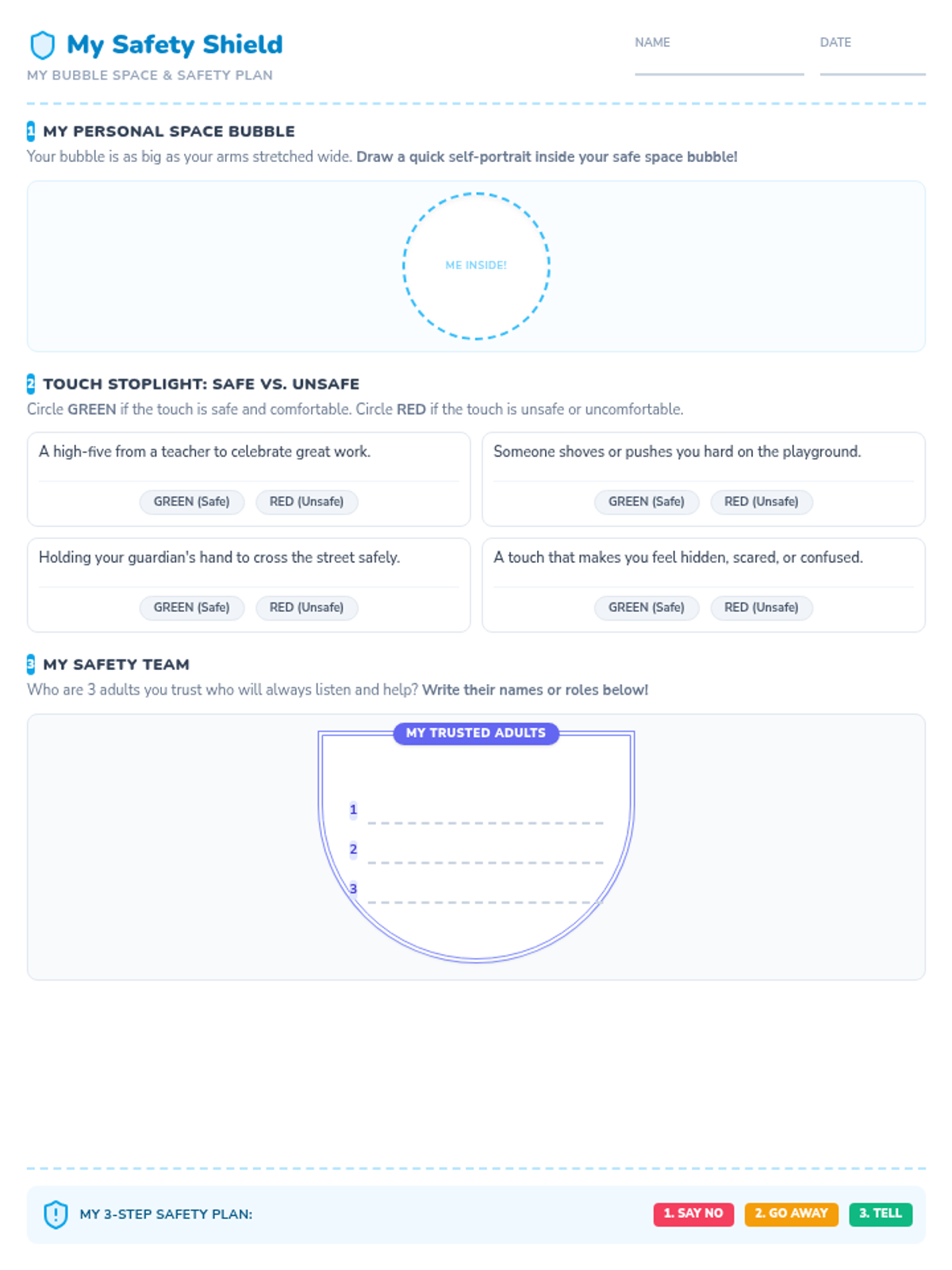
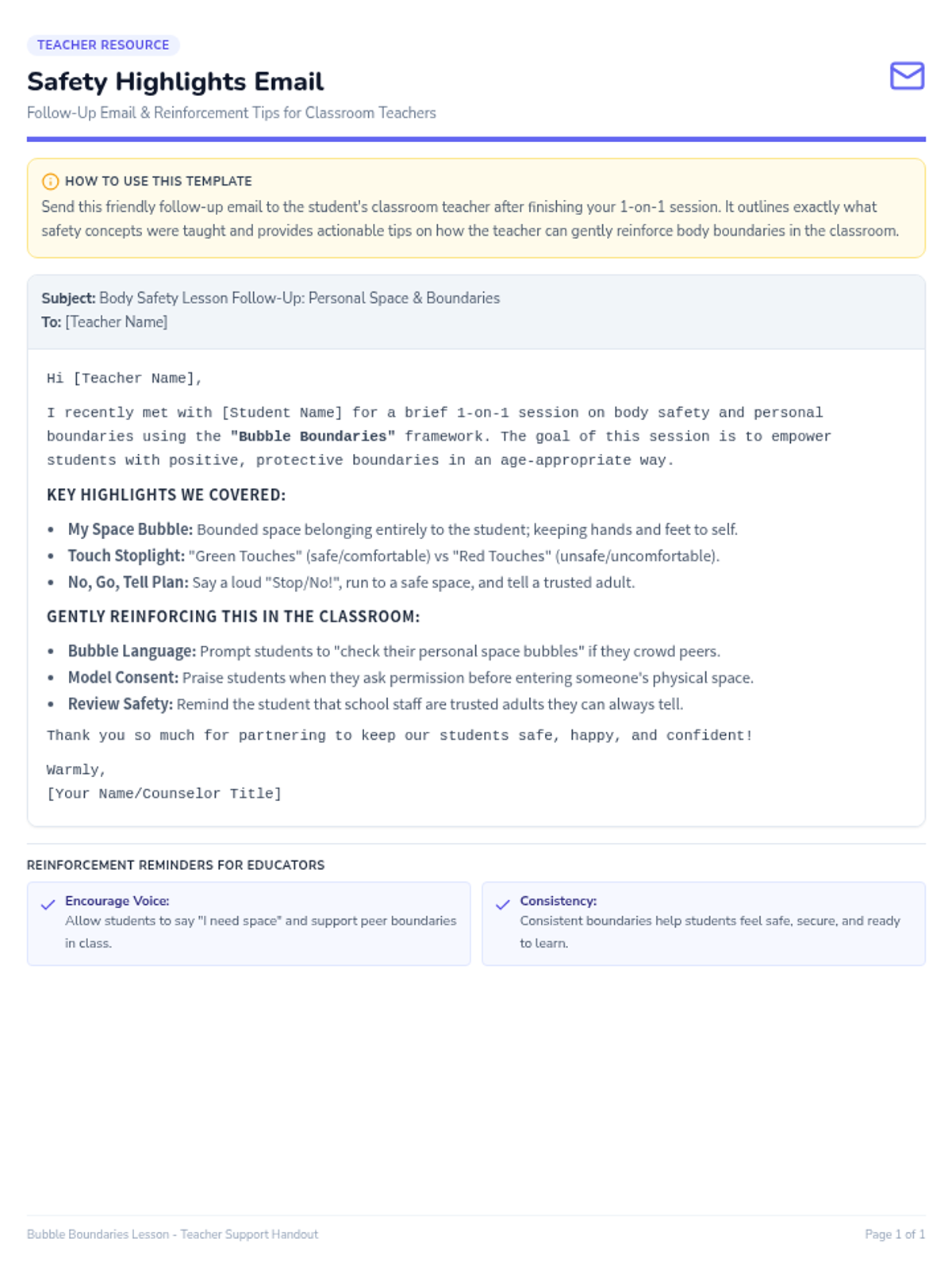
A gentle, empowering 15-20 minute lesson on personal space, body safety, and identifying safe versus unsafe touches. Designed specifically for individual counseling or one-on-one educator-student sessions with 2nd graders.
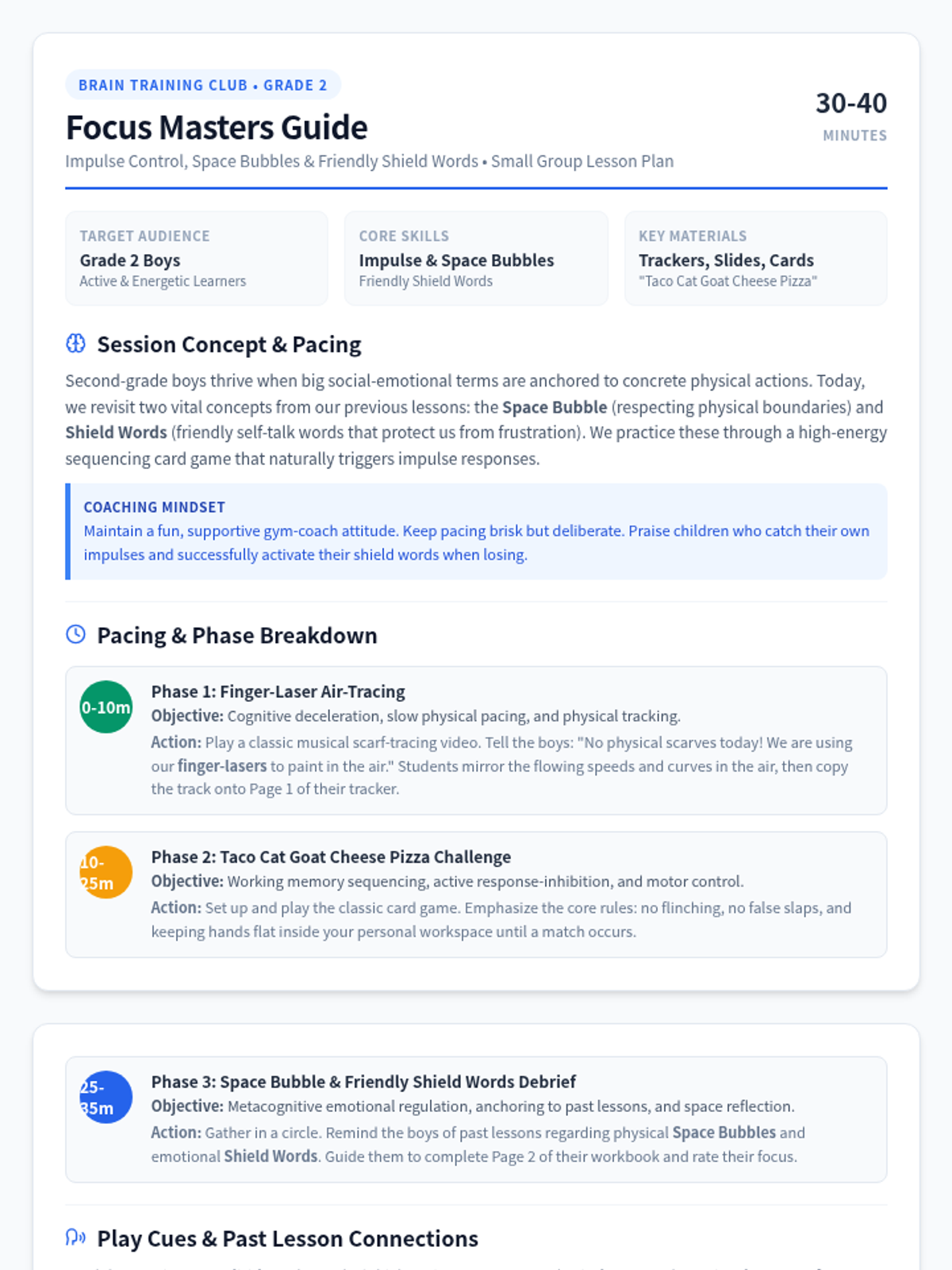
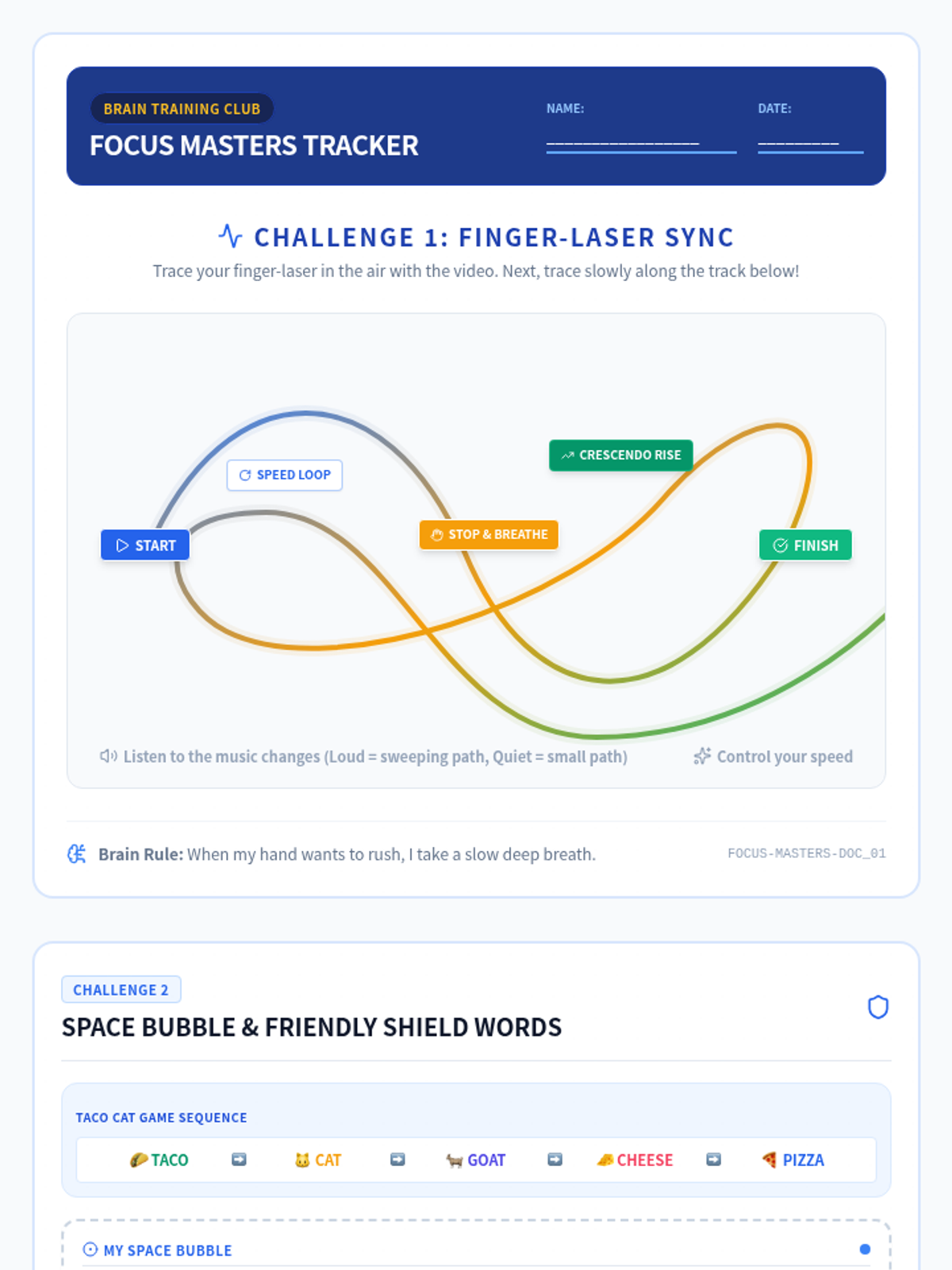
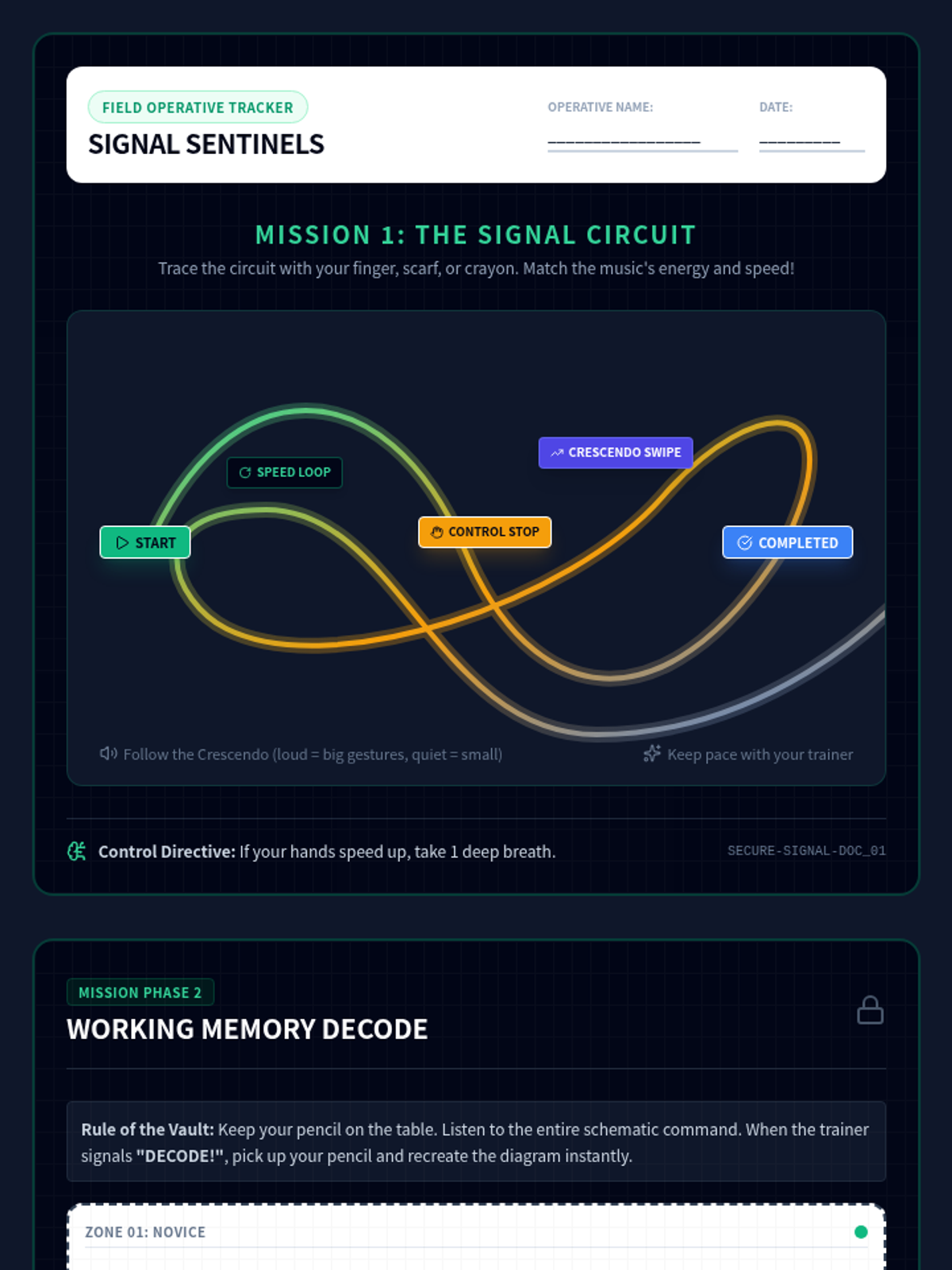
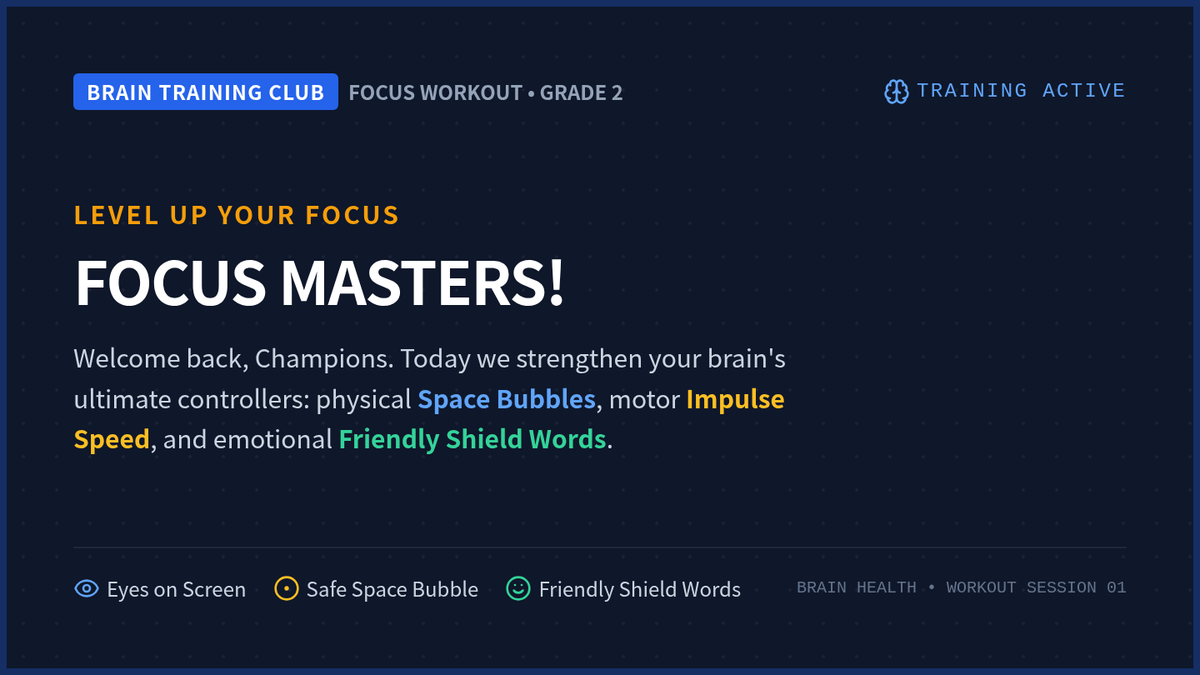
An active, high-engagement brain training session designed for small groups of Grade 2 boys to strengthen focus, active listening, and impulse control through physical finger-tracing exercises, cooperative sequencing games, and reflections on space bubbles and friendly shield words.
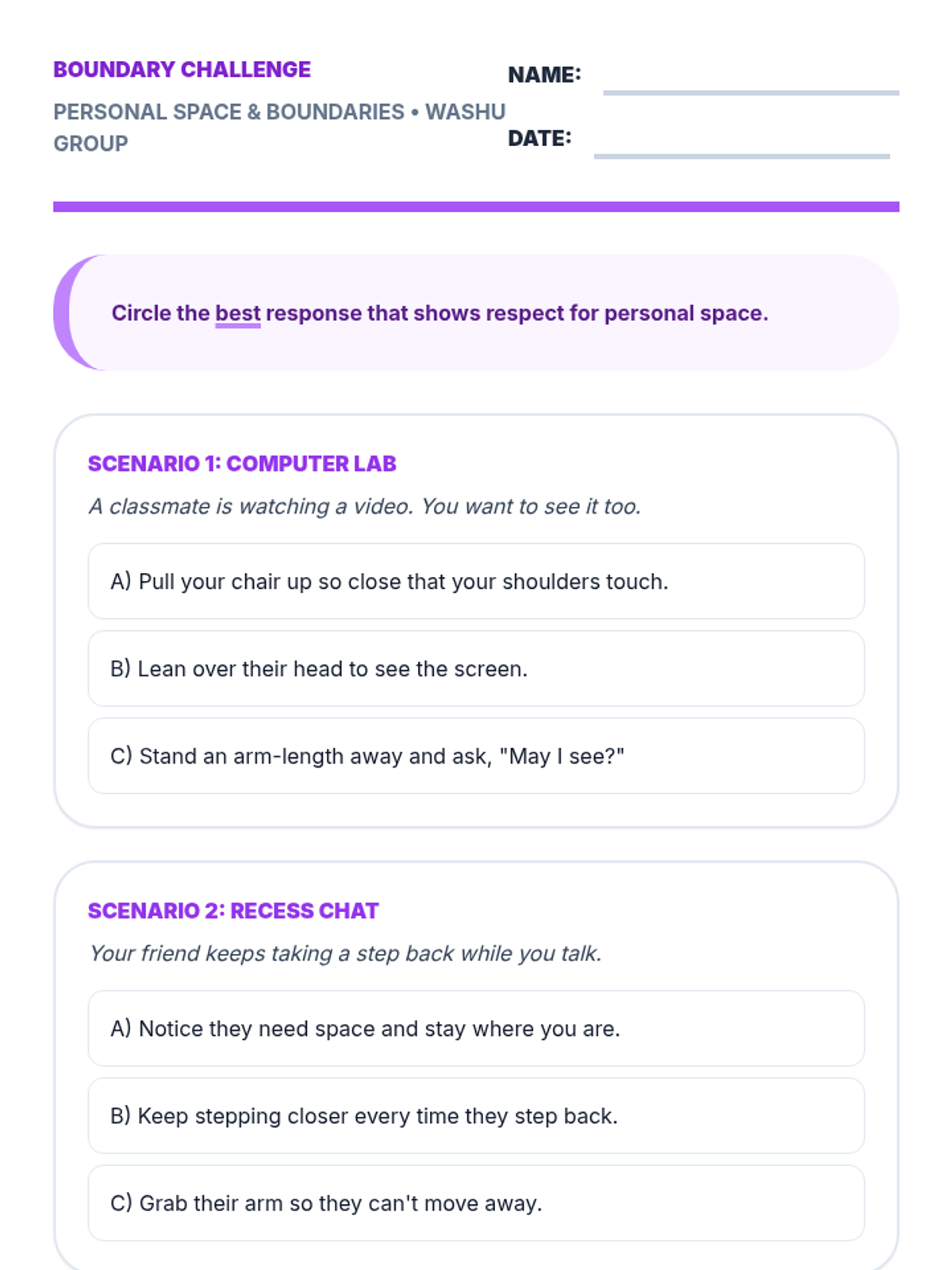
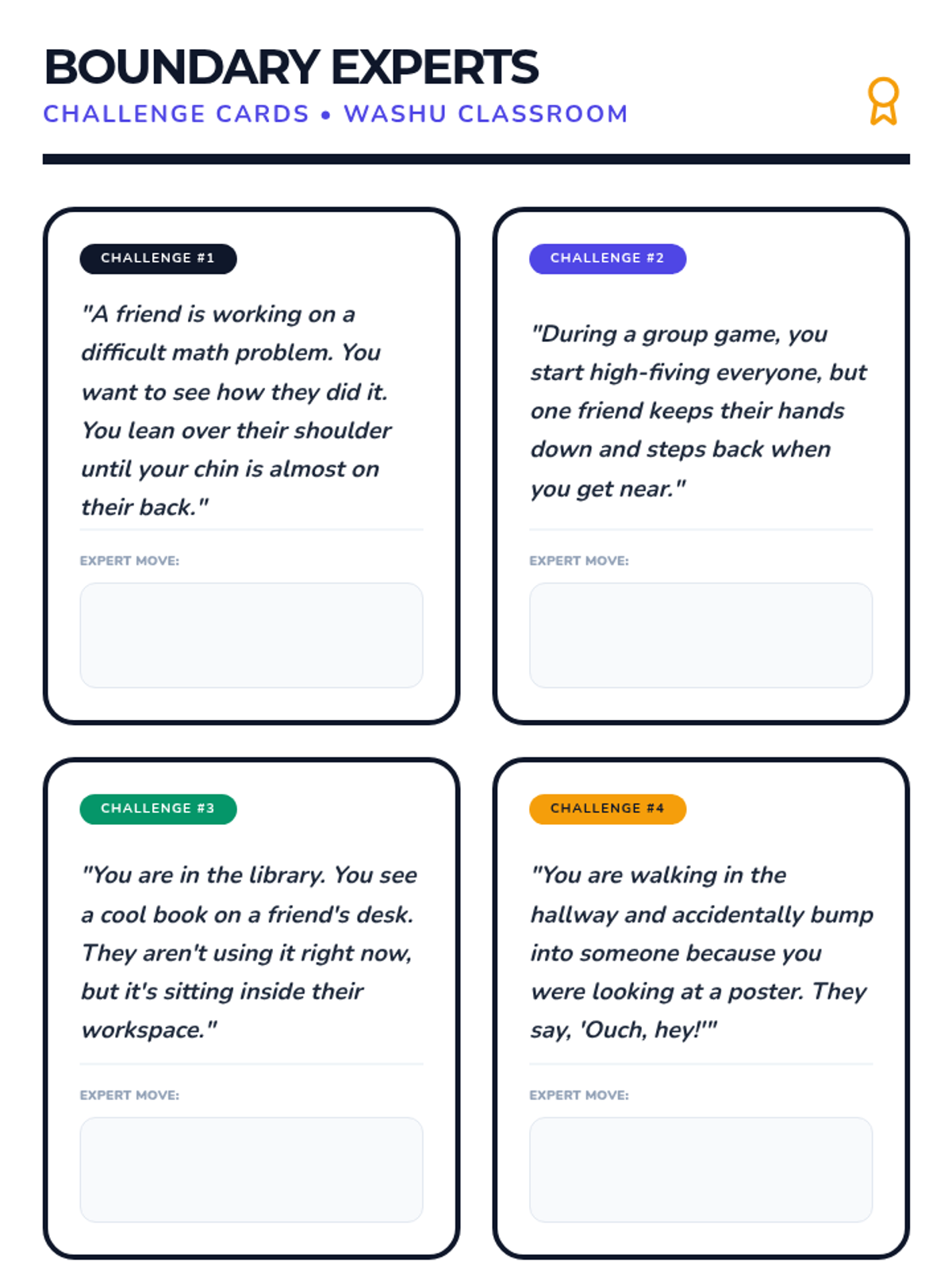
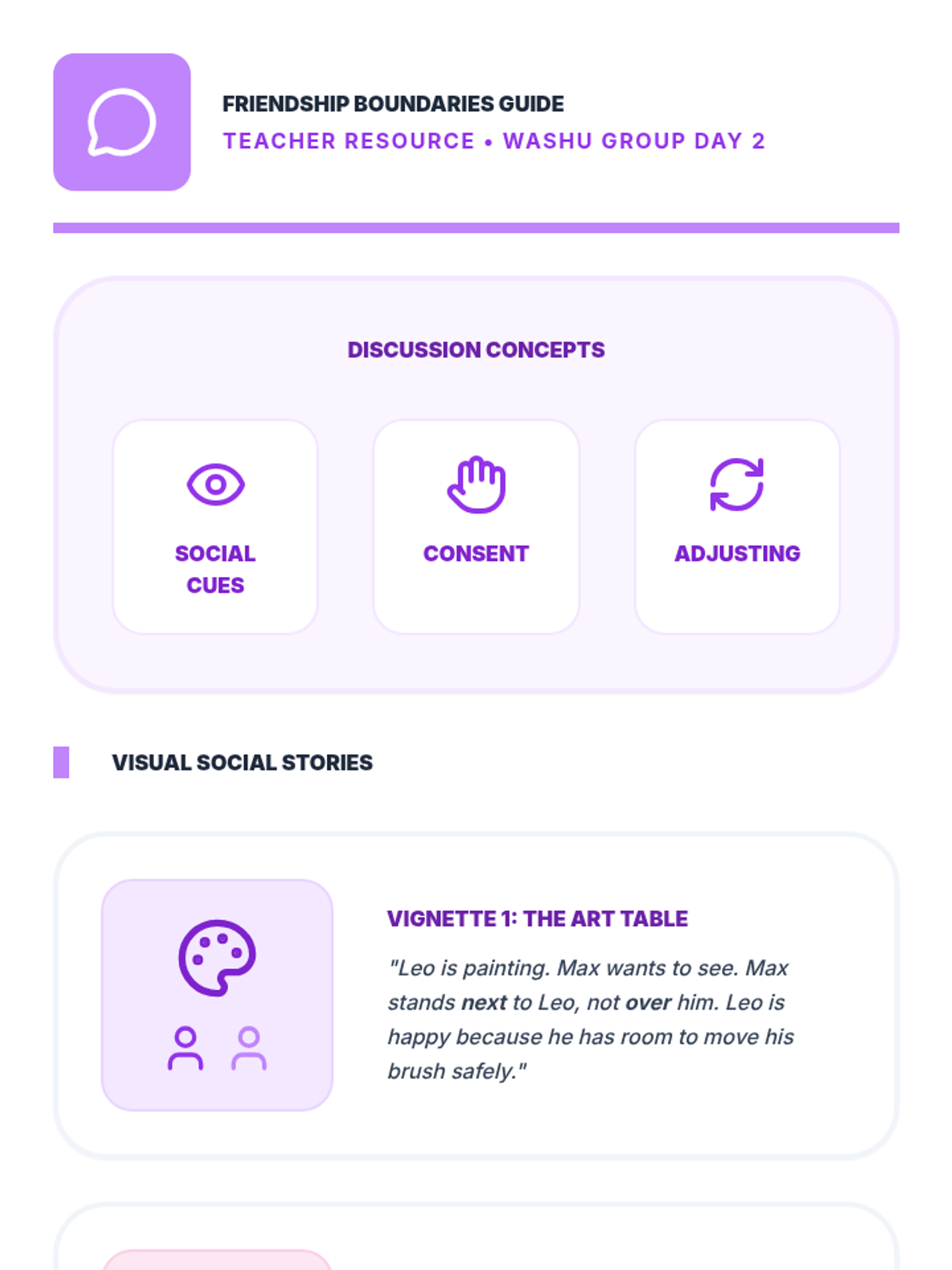
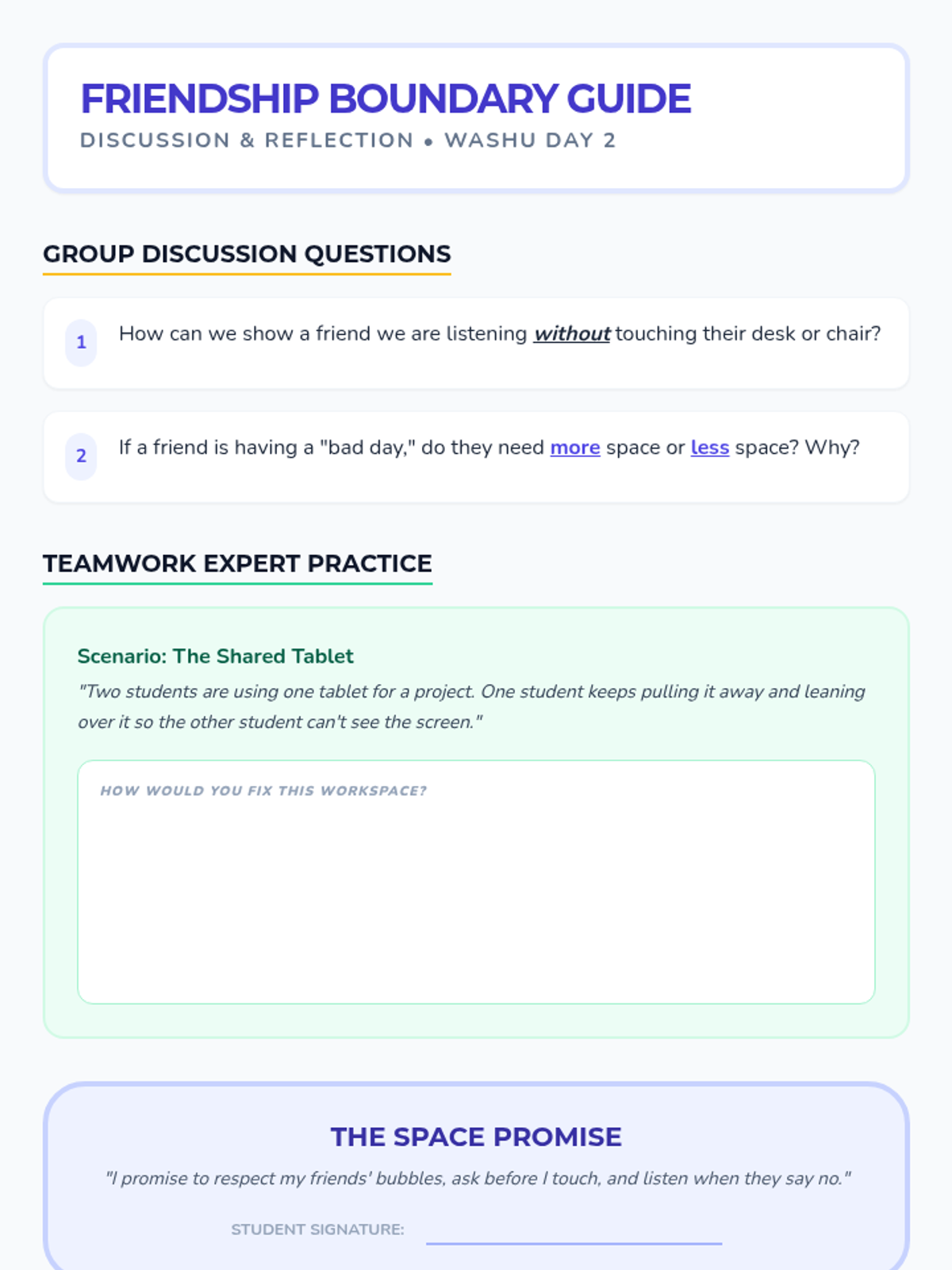
Advanced boundary application for WashU students, focusing on social challenges and respecting personal space within friendships and group work.
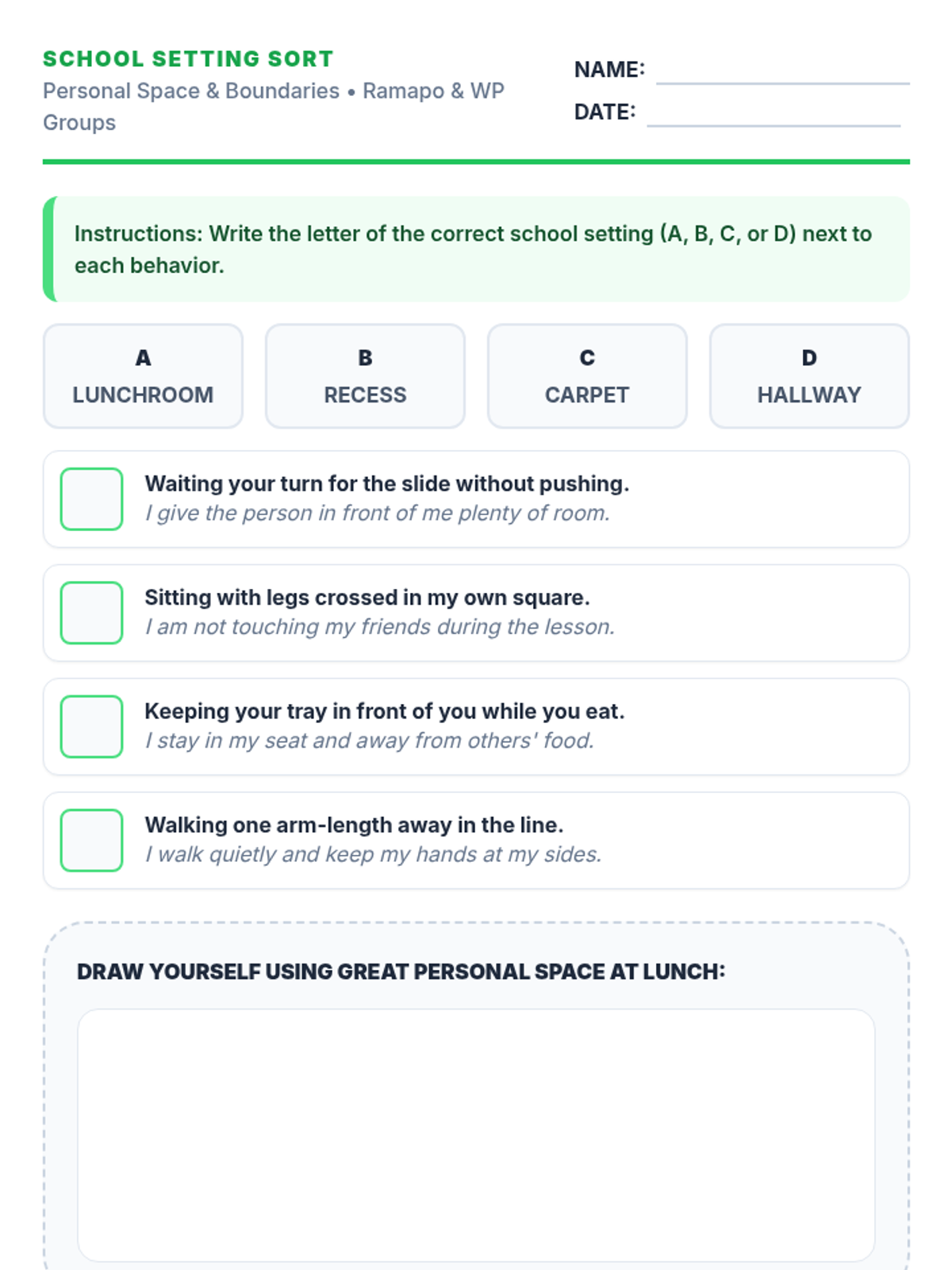
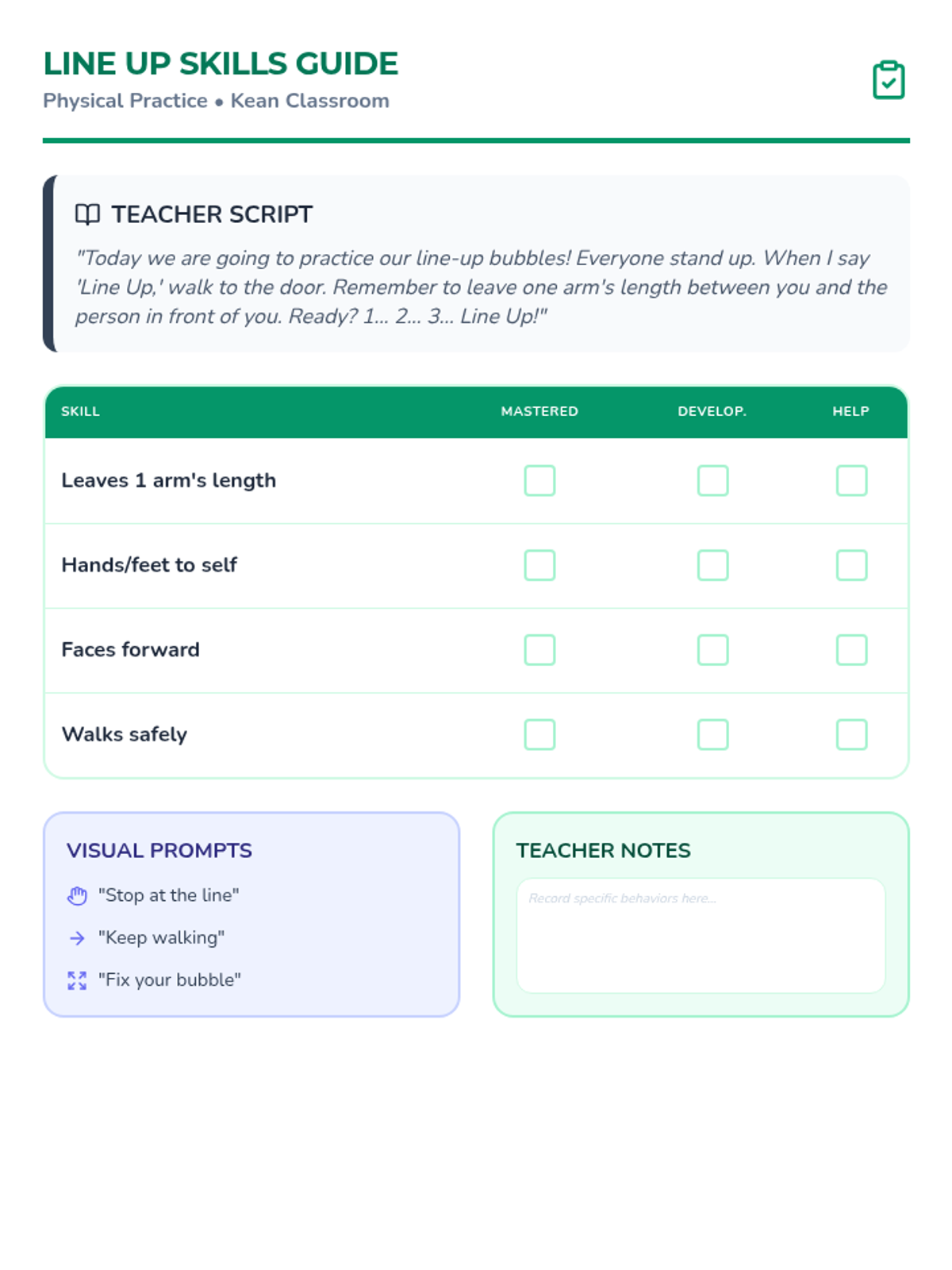
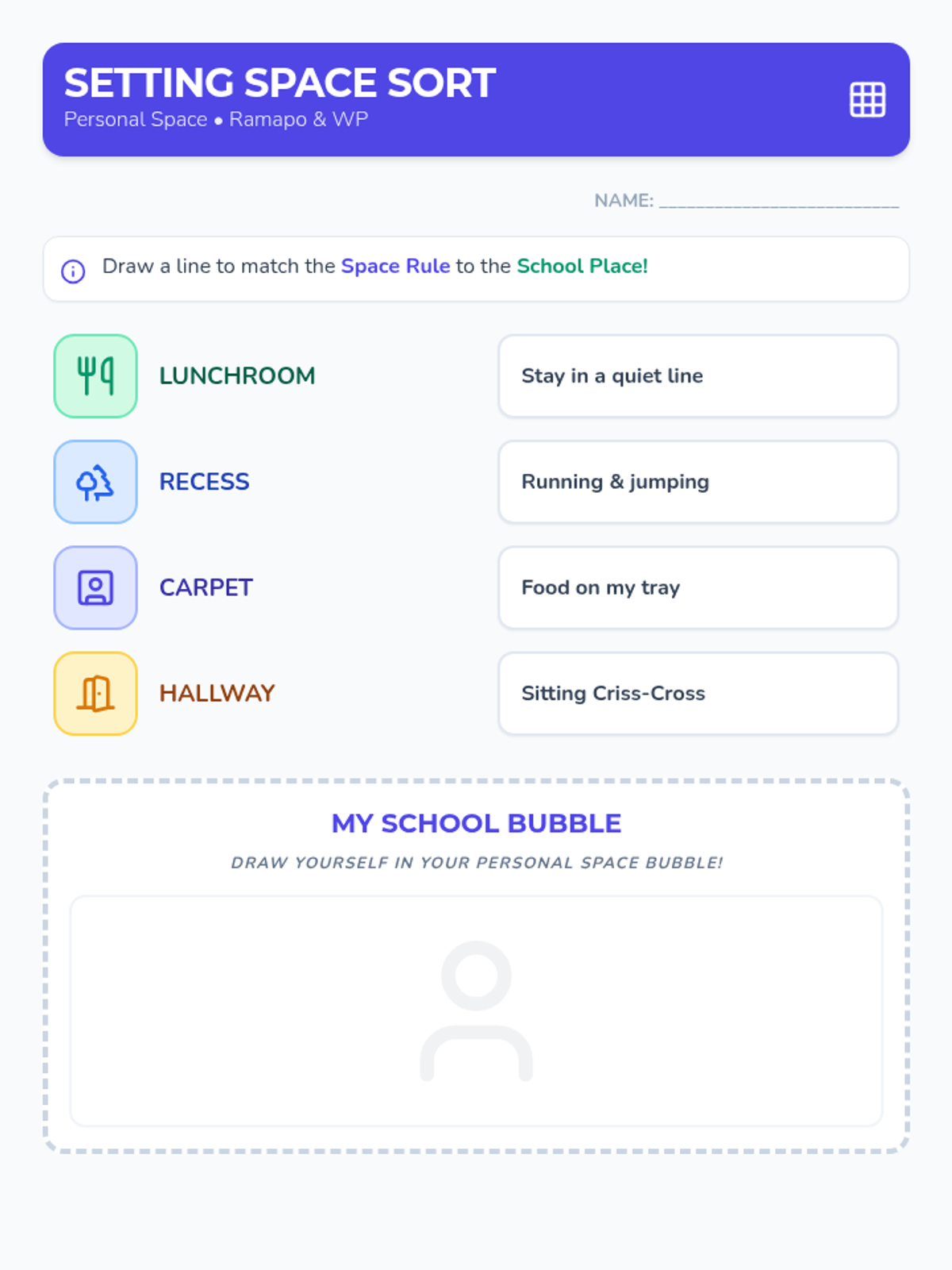
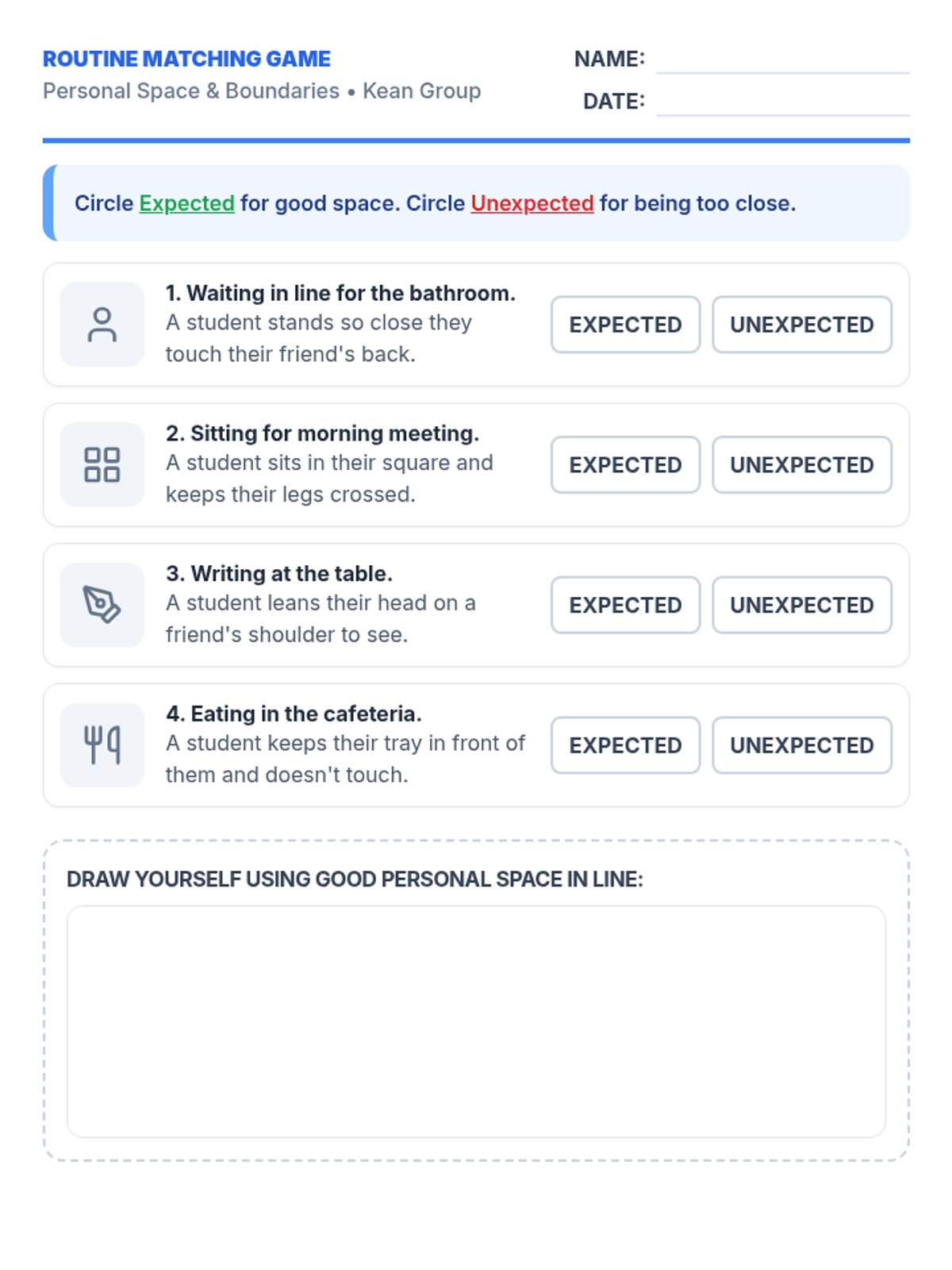
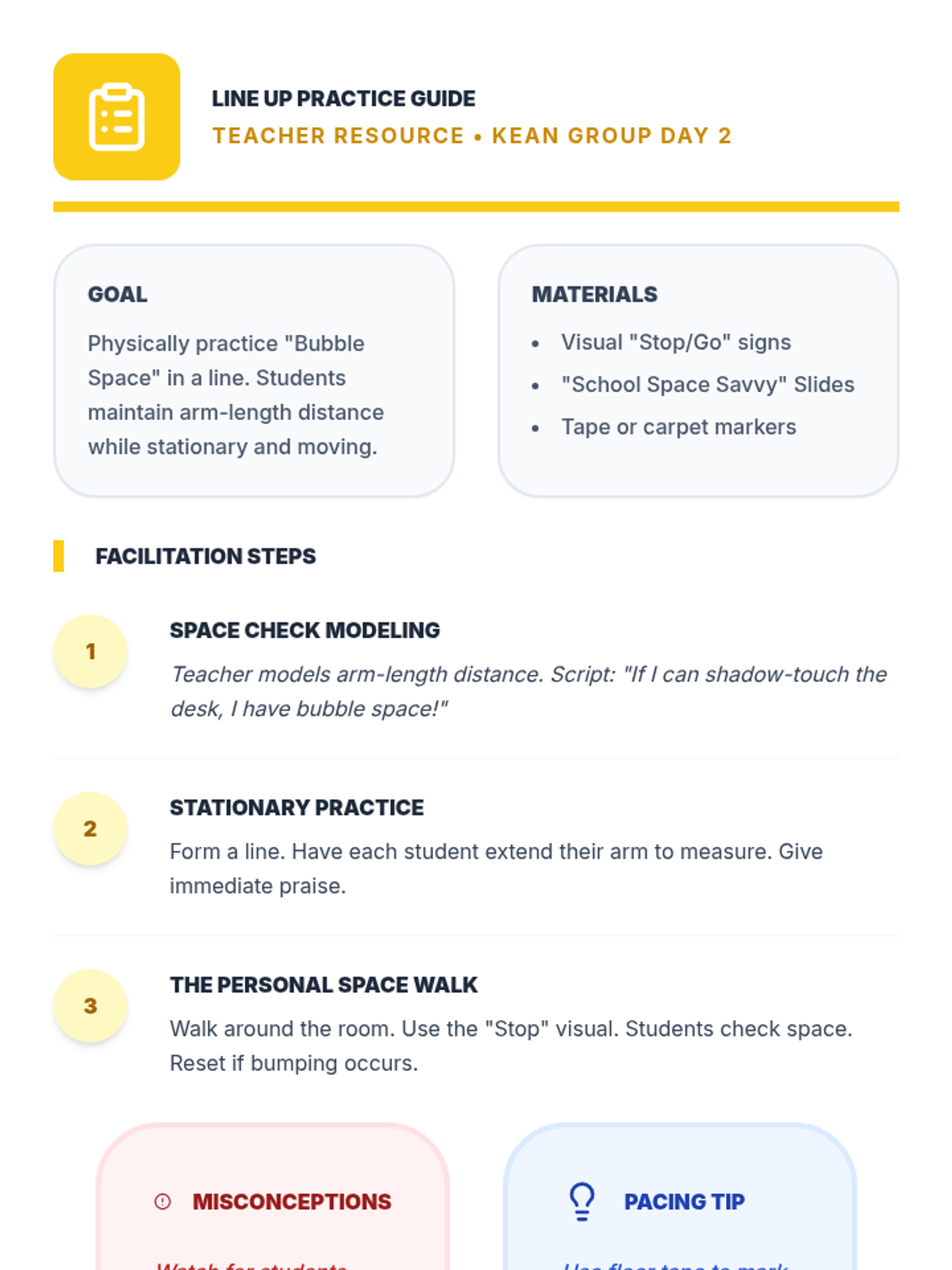
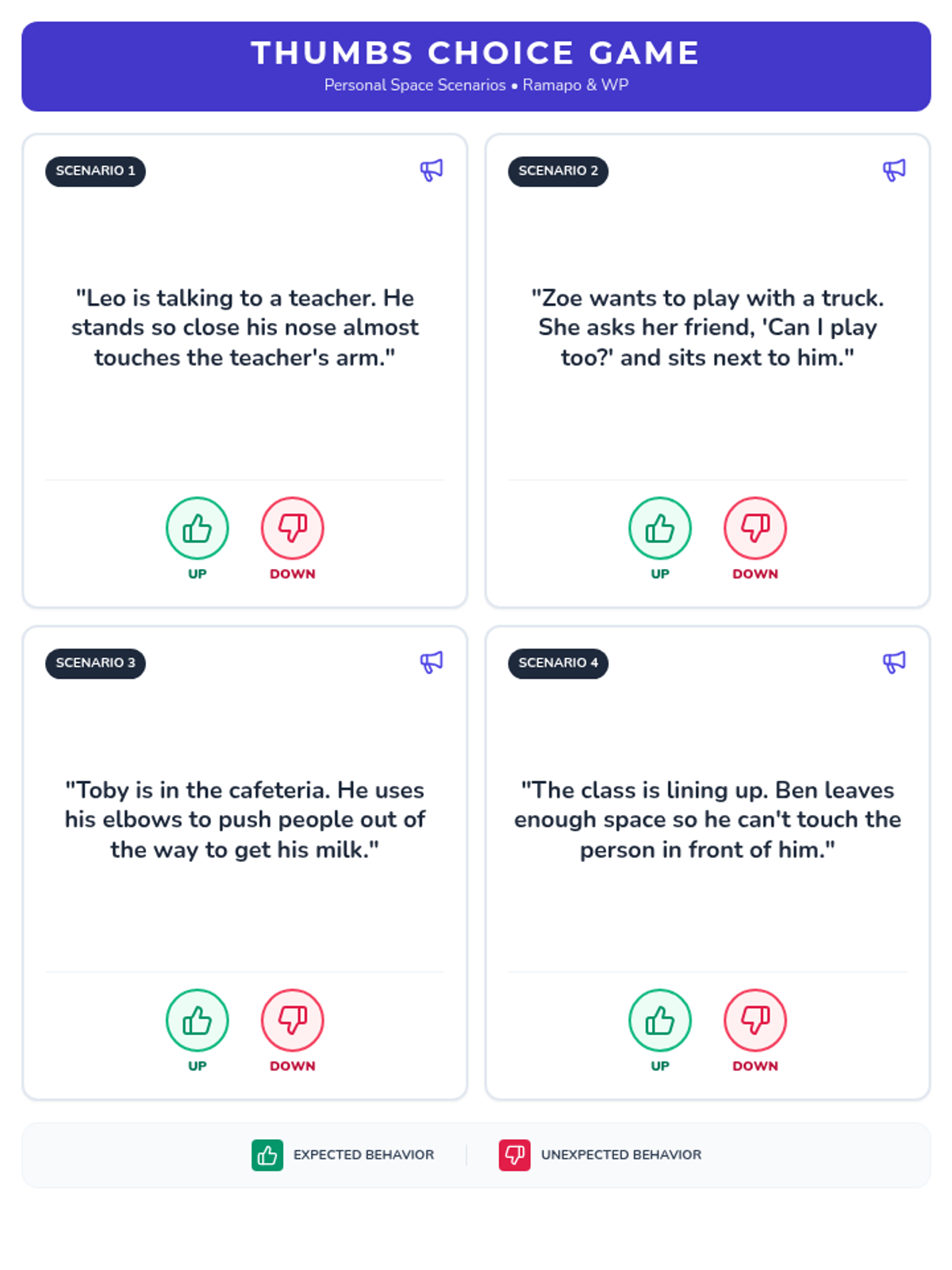
Involves hands-on practice for Kean (lining up) and sorting activities for Ramapo/WP to categorize expected vs. unexpected behaviors in specific school settings.
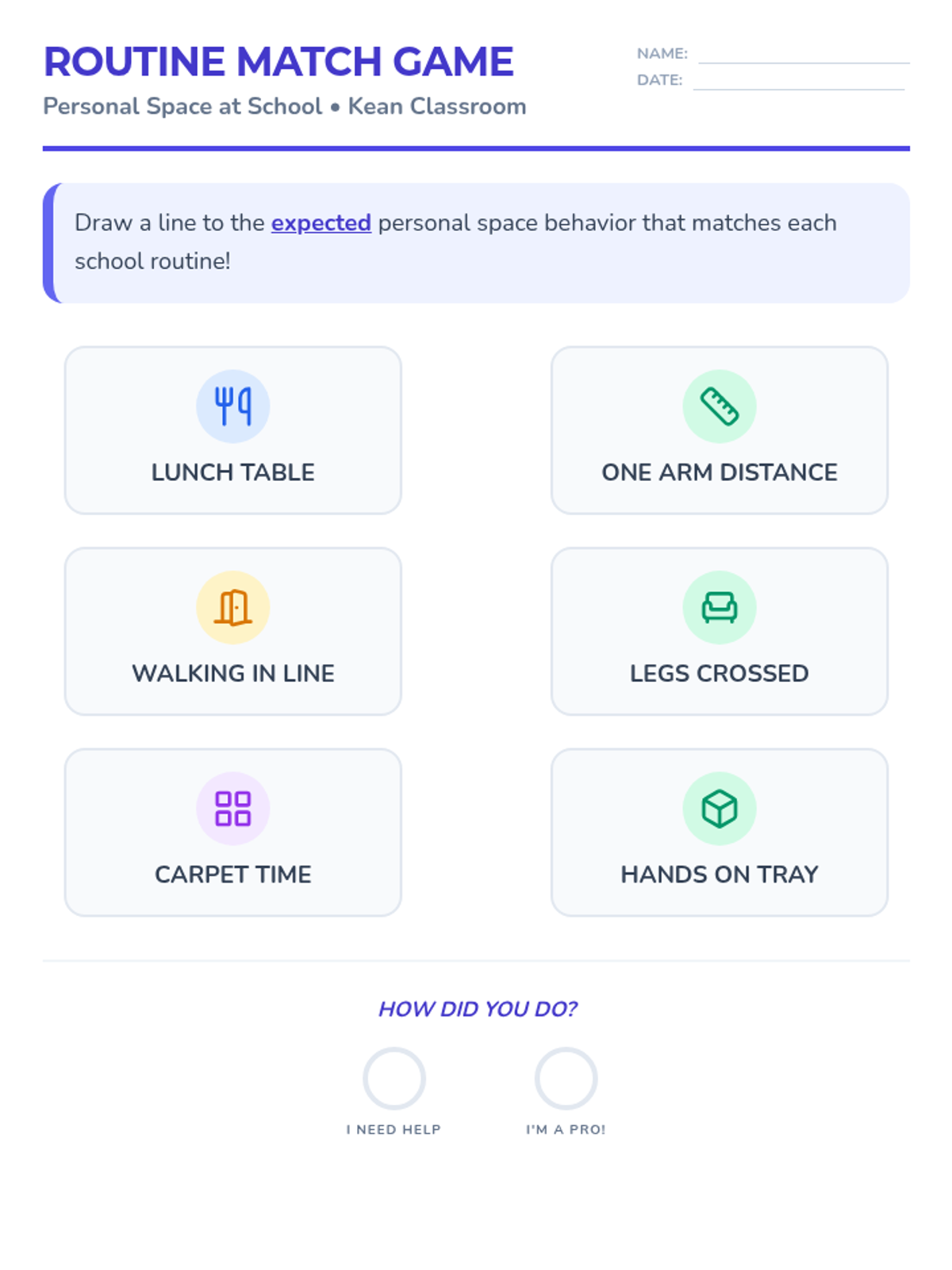
Focuses on identifying and practicing correct personal space behaviors during school routines such as lunch, recess, and transitions for Kean, Ramapo, and WP students.
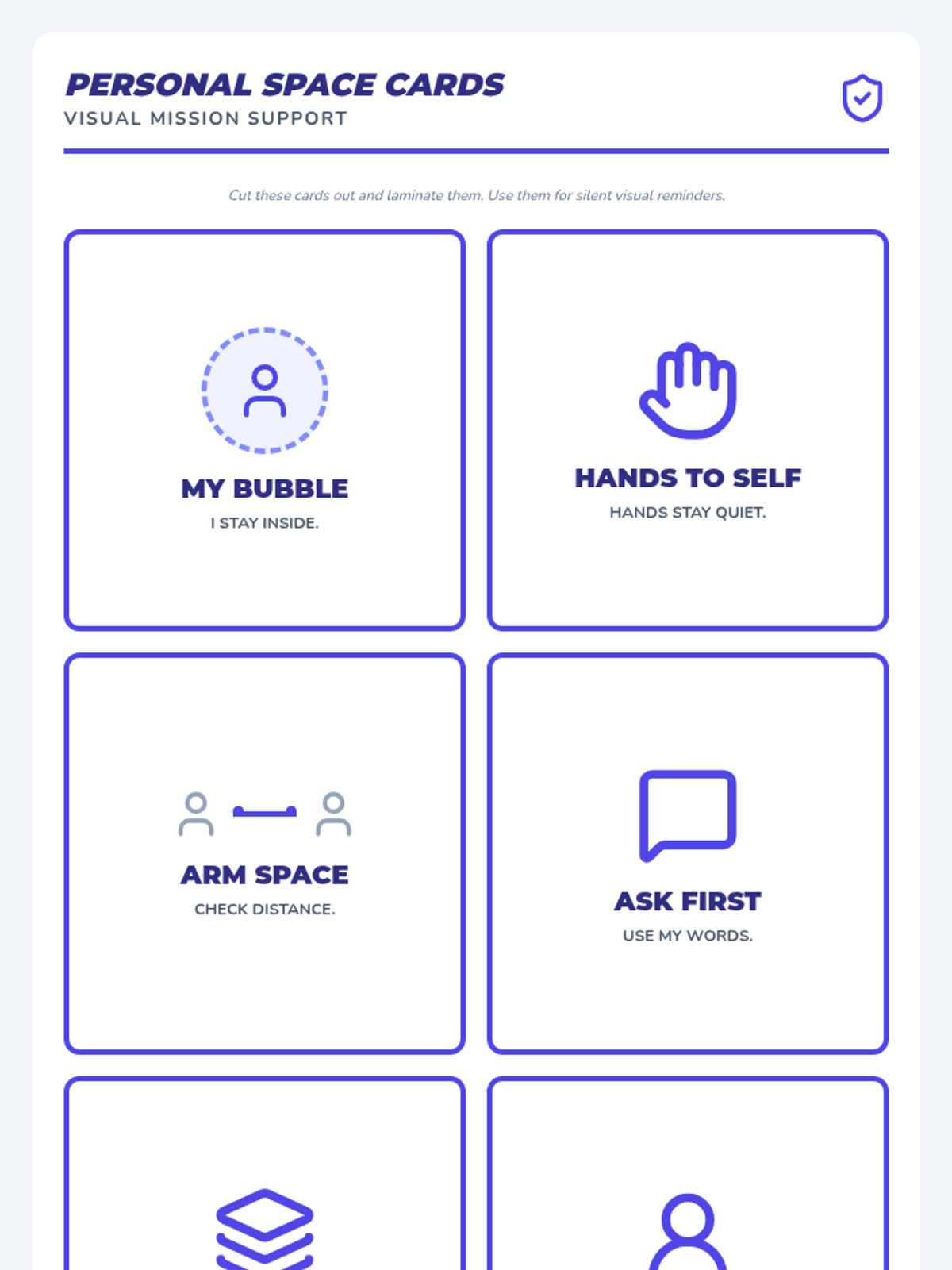
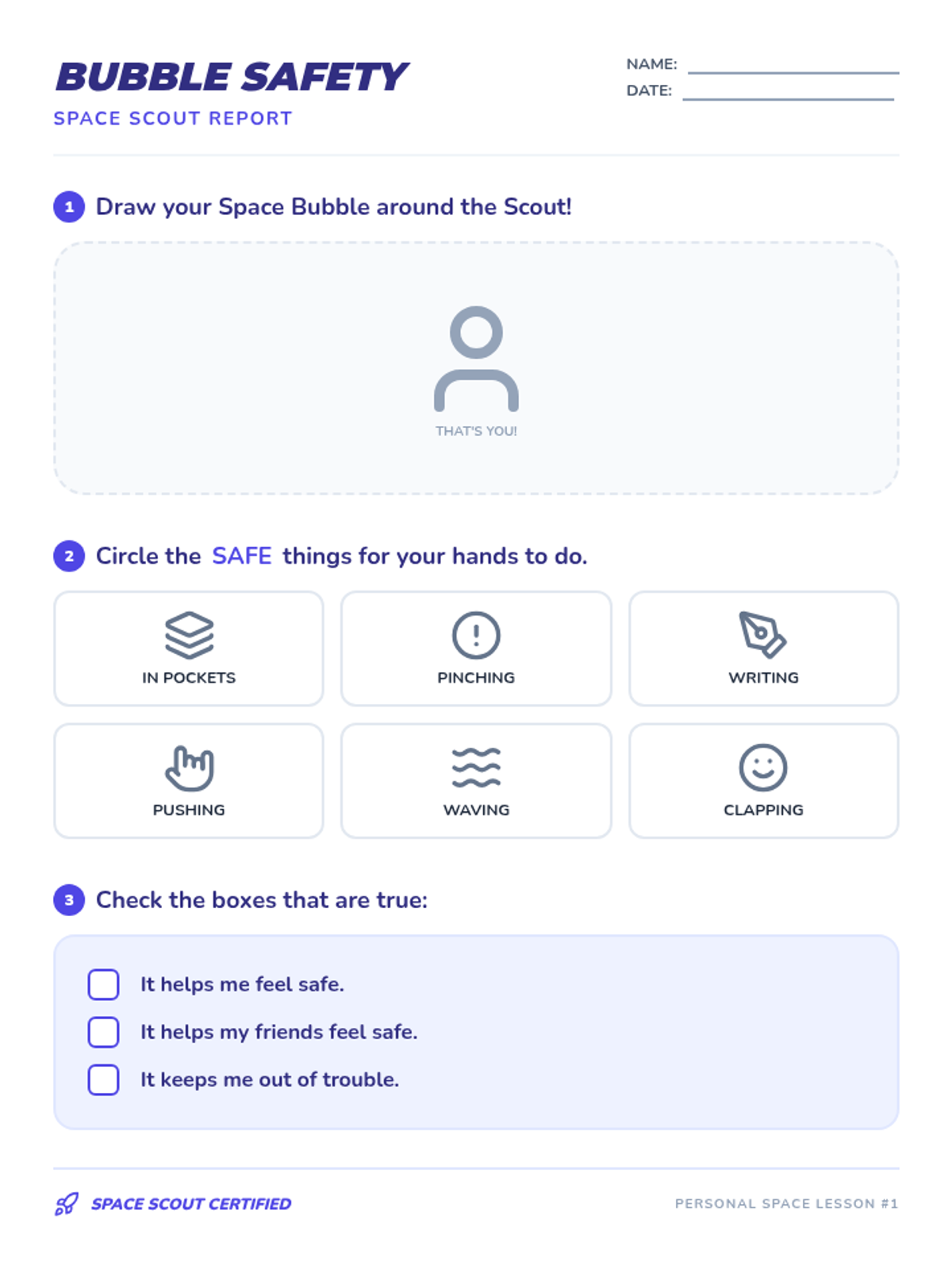
A 30-minute counseling session and supporting materials focused on teaching the 'personal space bubble' and keeping hands to self.
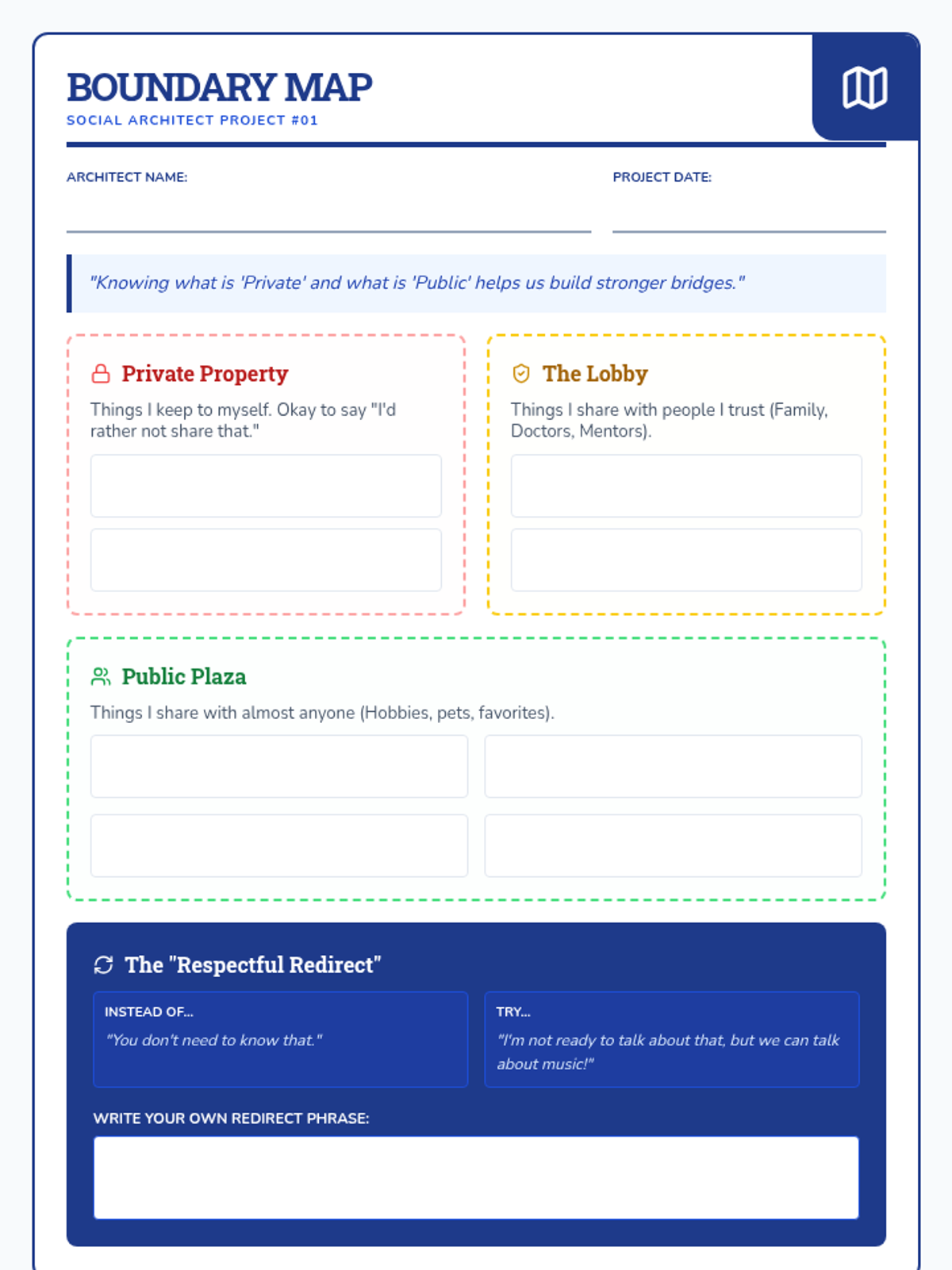
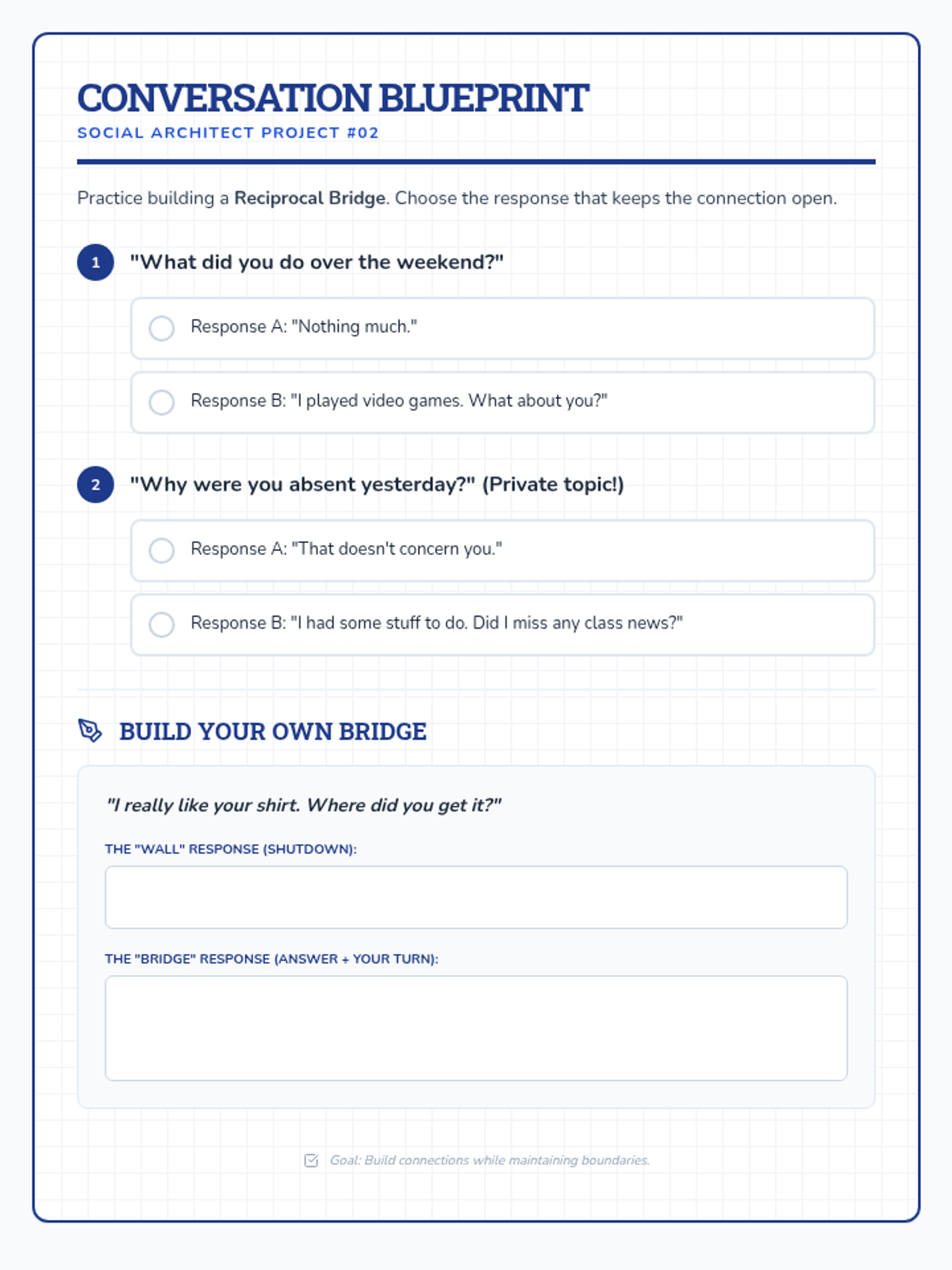
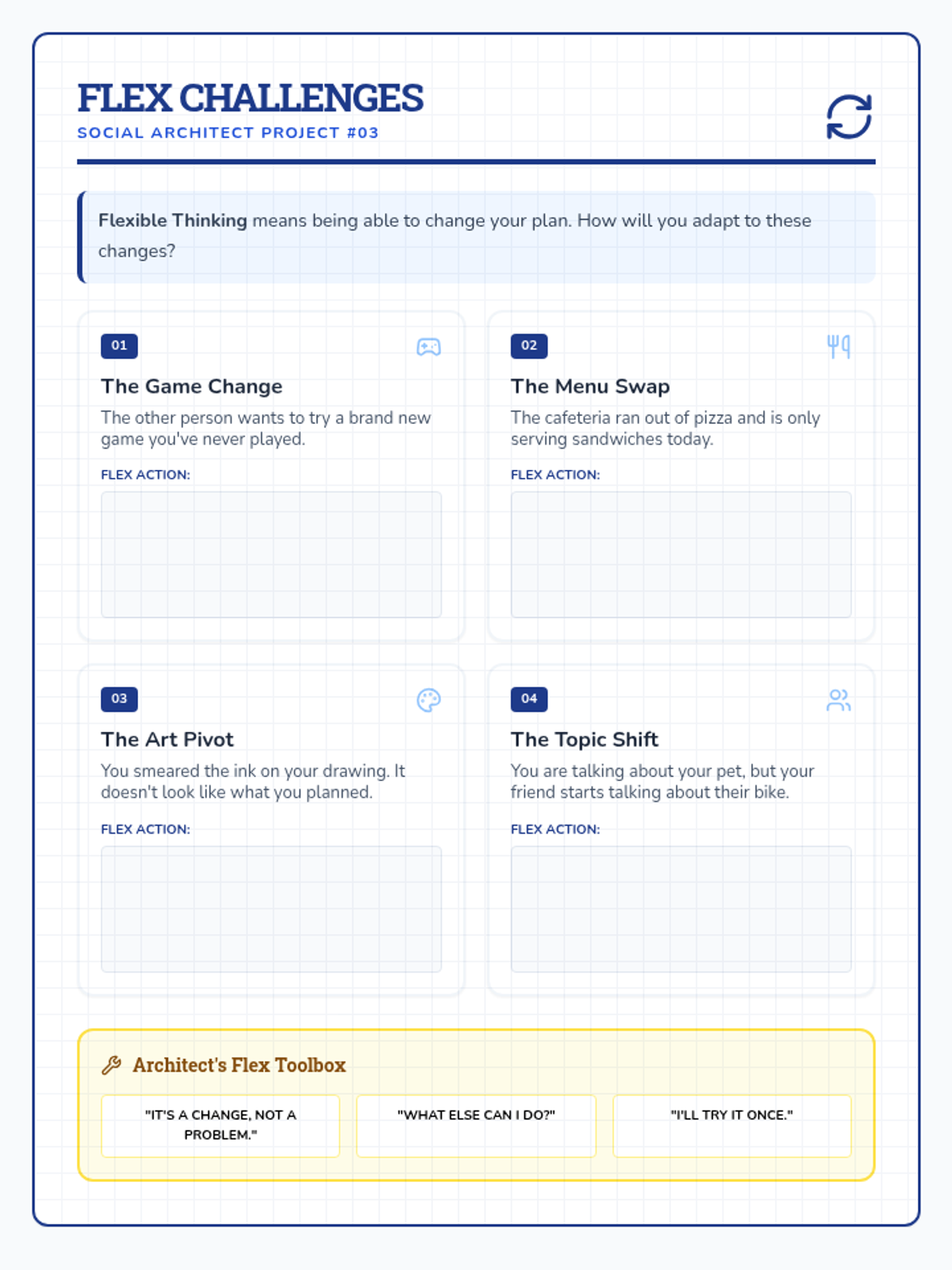
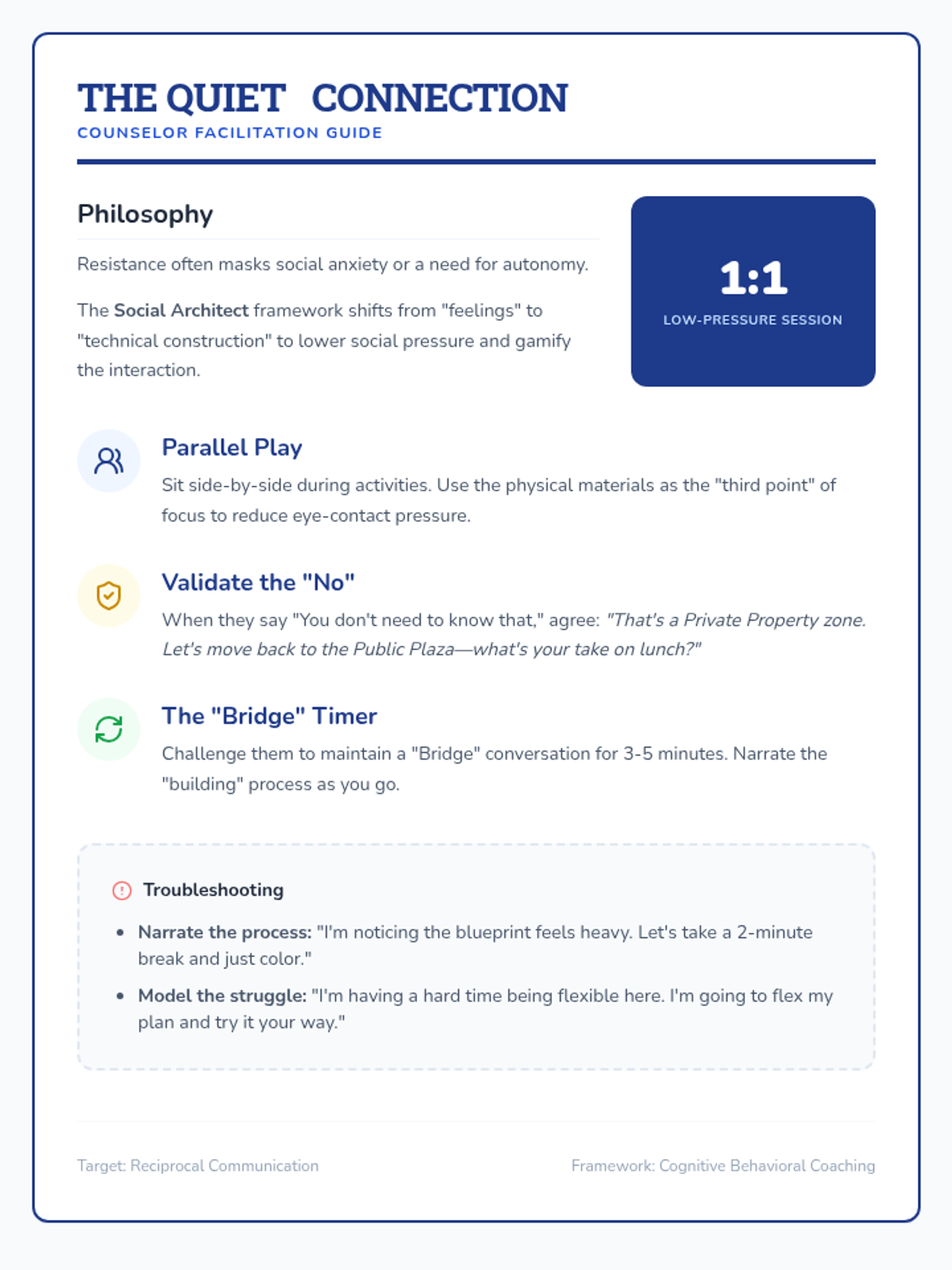
A series of low-pressure activities designed for students who struggle with reciprocal conversation and flexible thinking, using a 'Social Architect' theme to gamify communication skills.
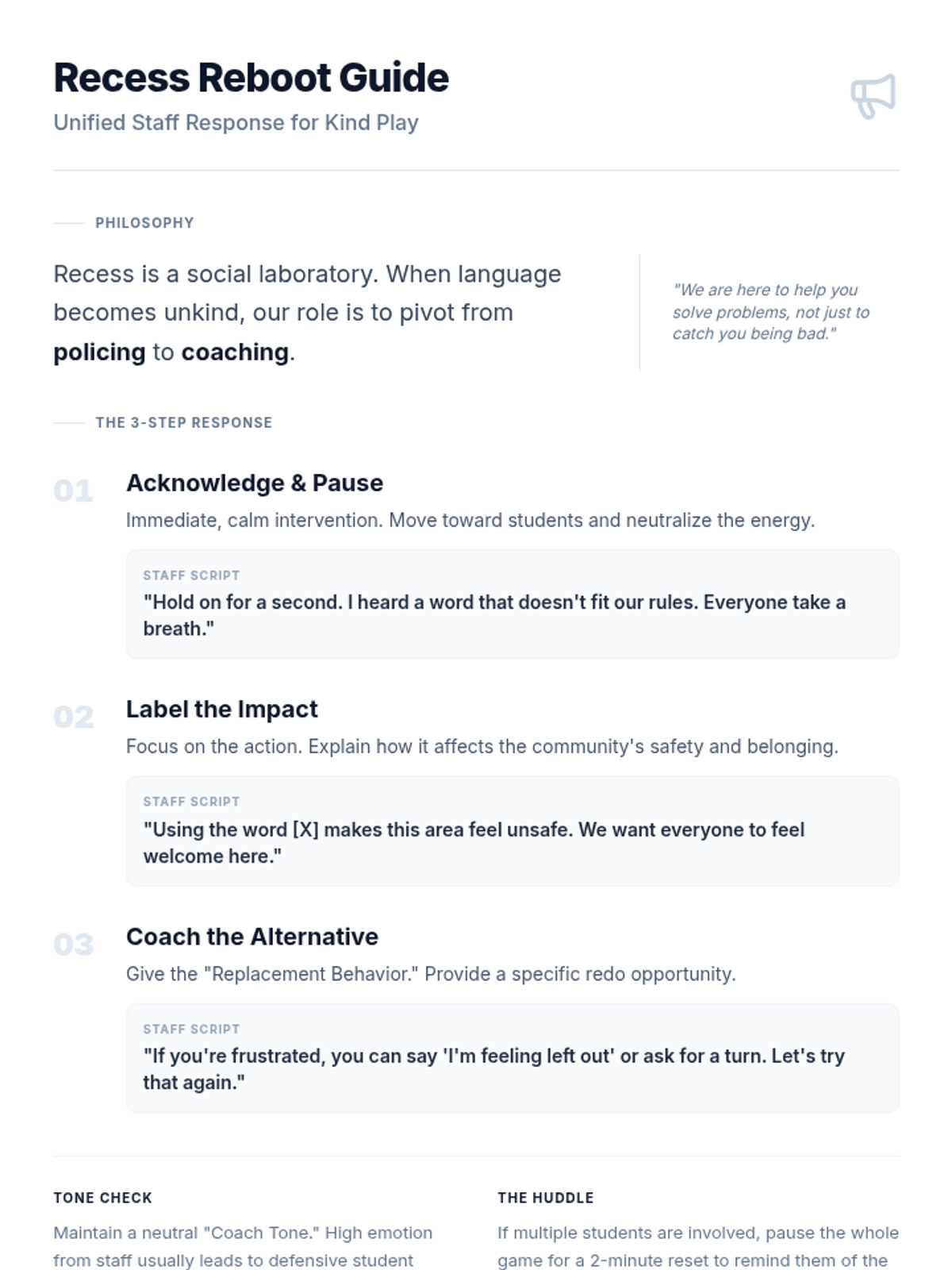
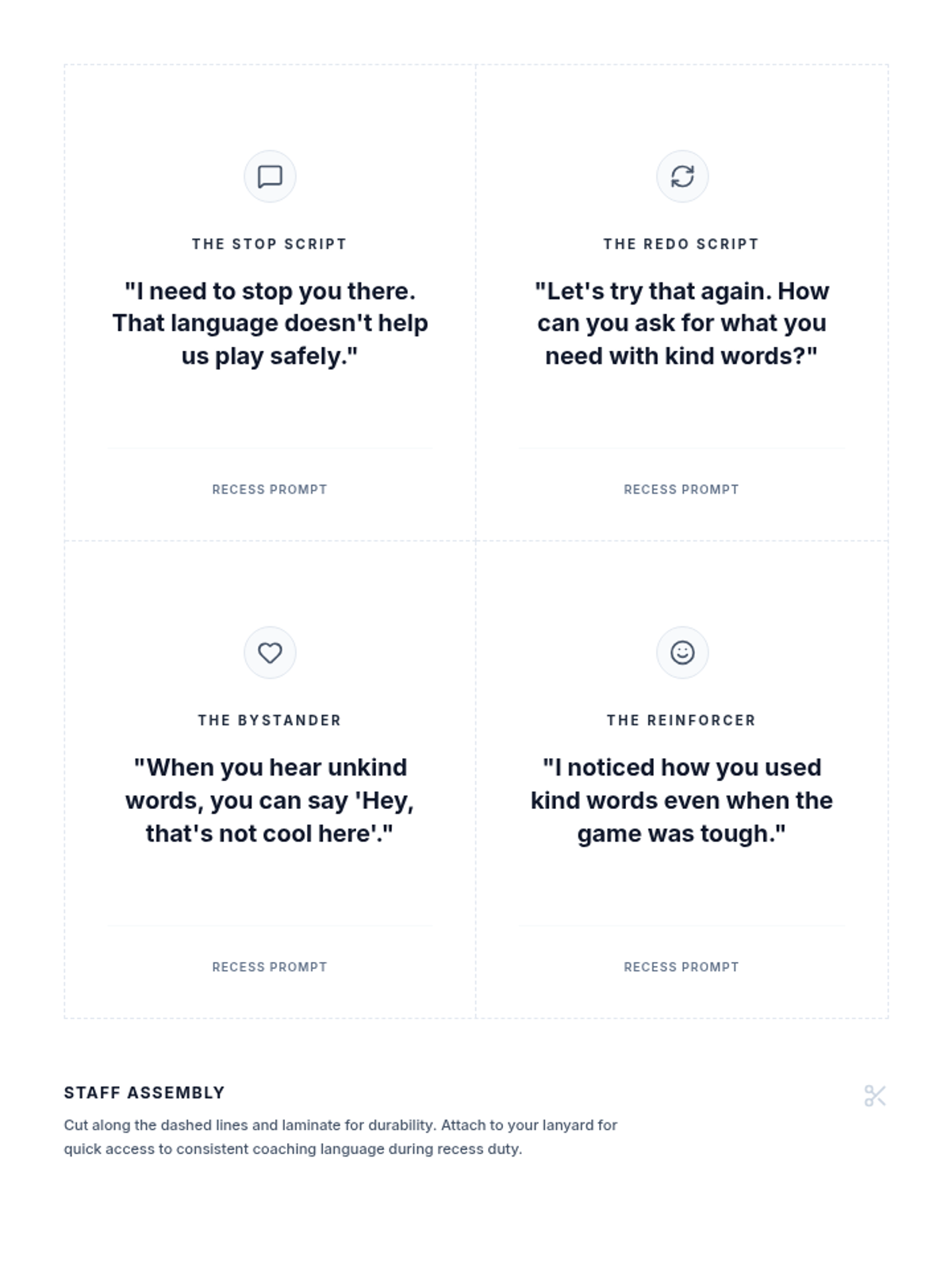
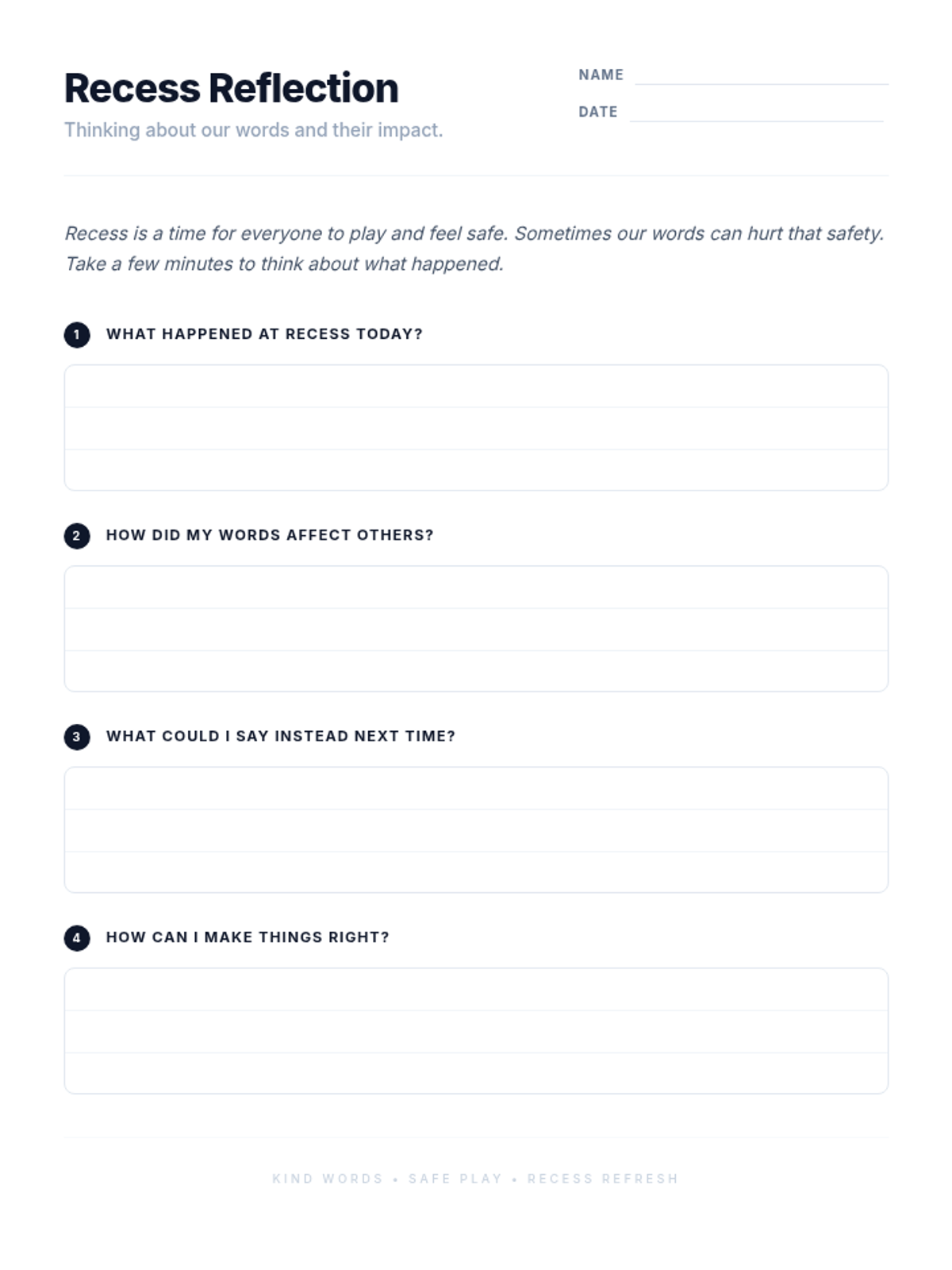
A comprehensive guide and toolkit for staff to address unkind language during recess, providing consistent response strategies and student reflection tools.
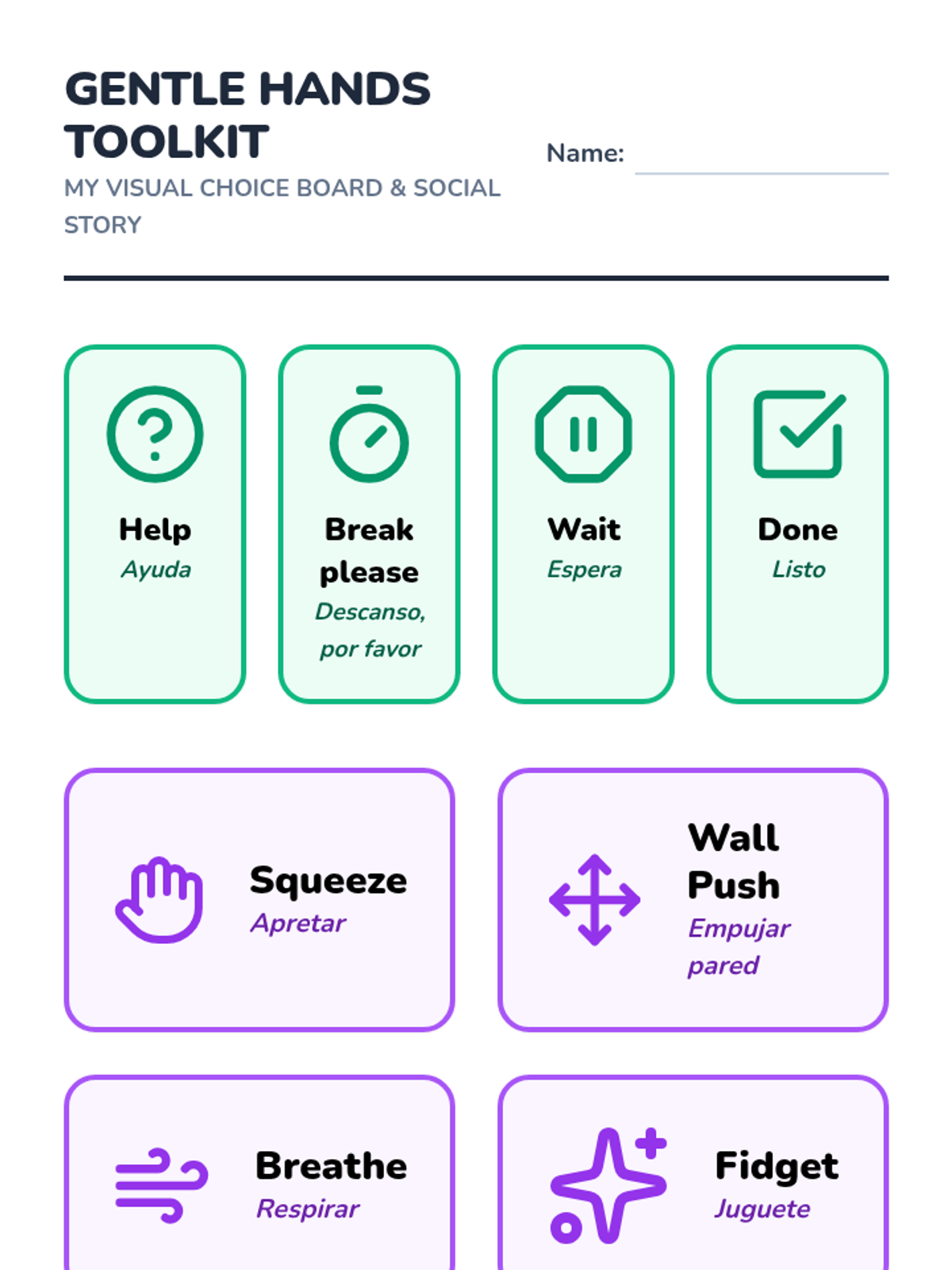
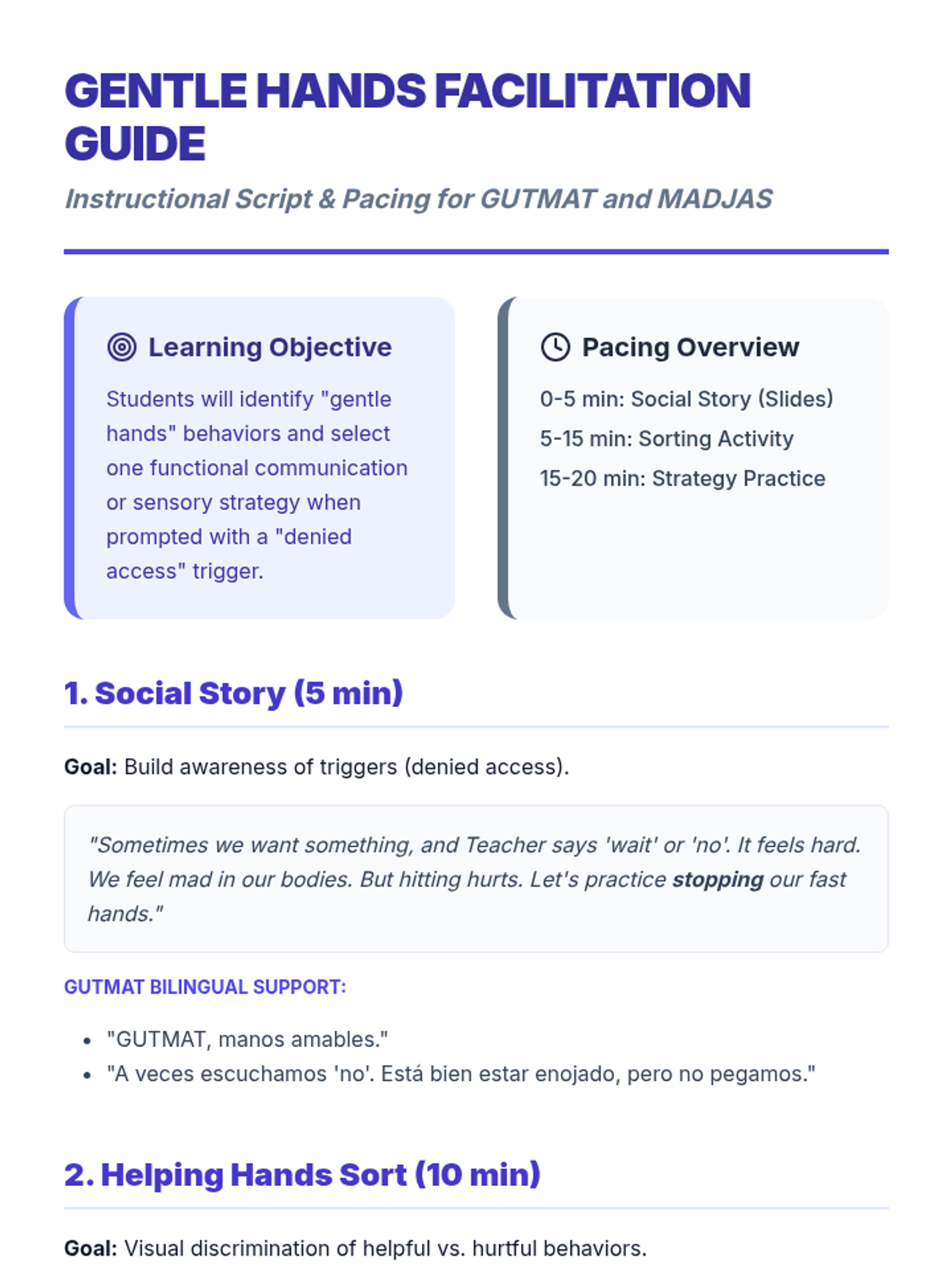
A 20-minute intensive counseling lesson focused on 'Gentle Hands' and 'Hands to Self' techniques. Includes a social story, role-play scenarios, and a visual choice board to replace hitting with functional communication.
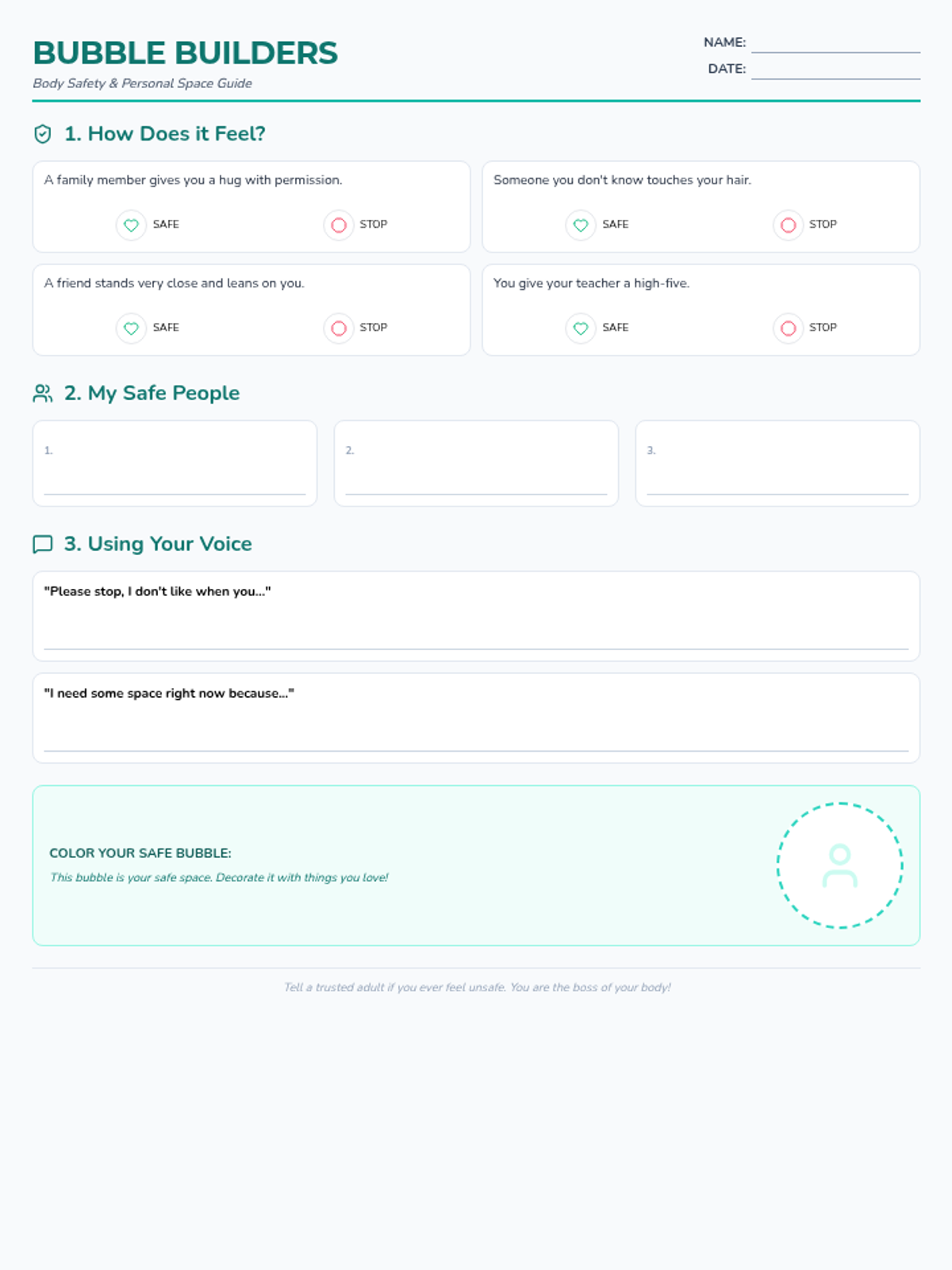
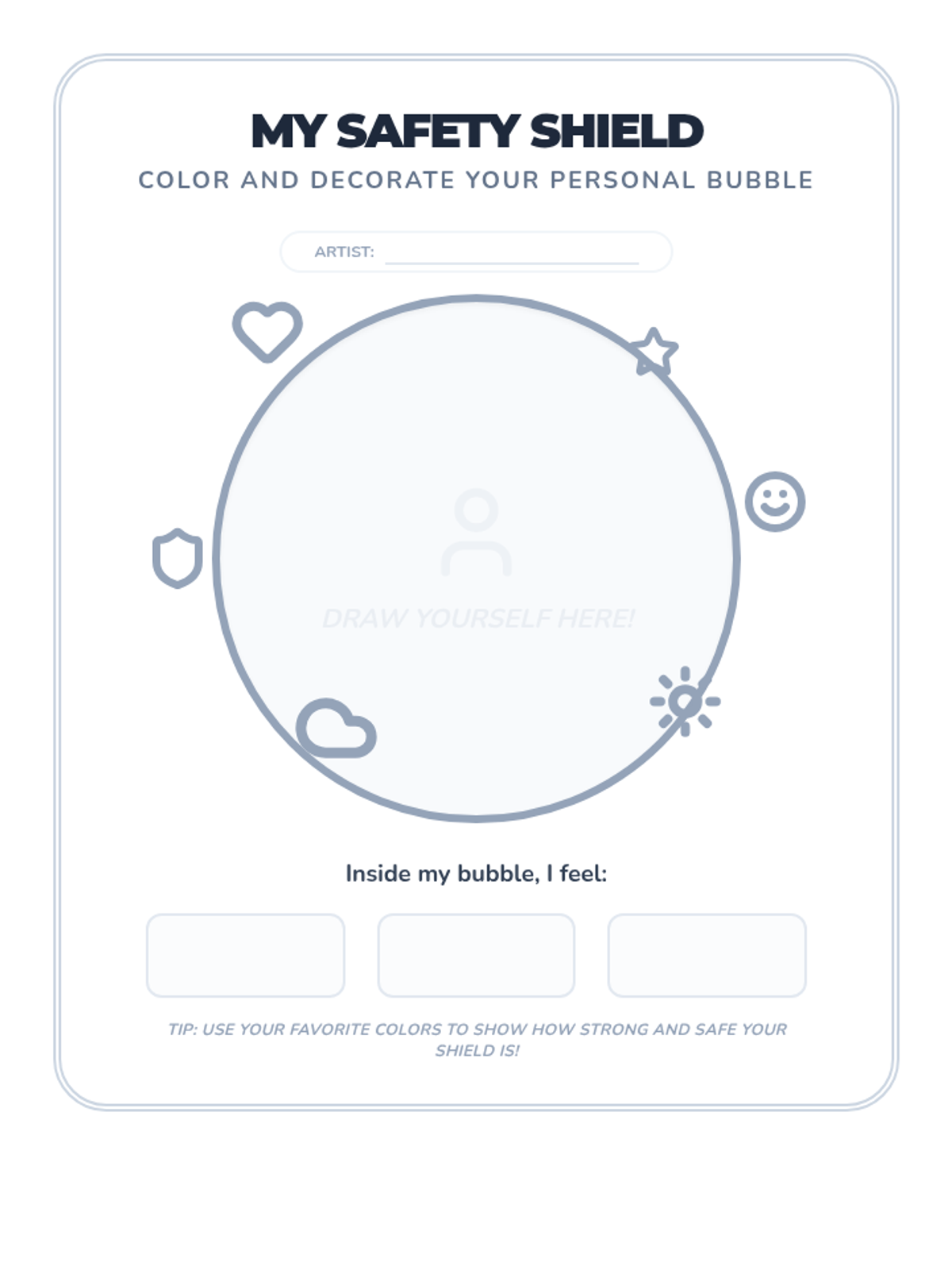
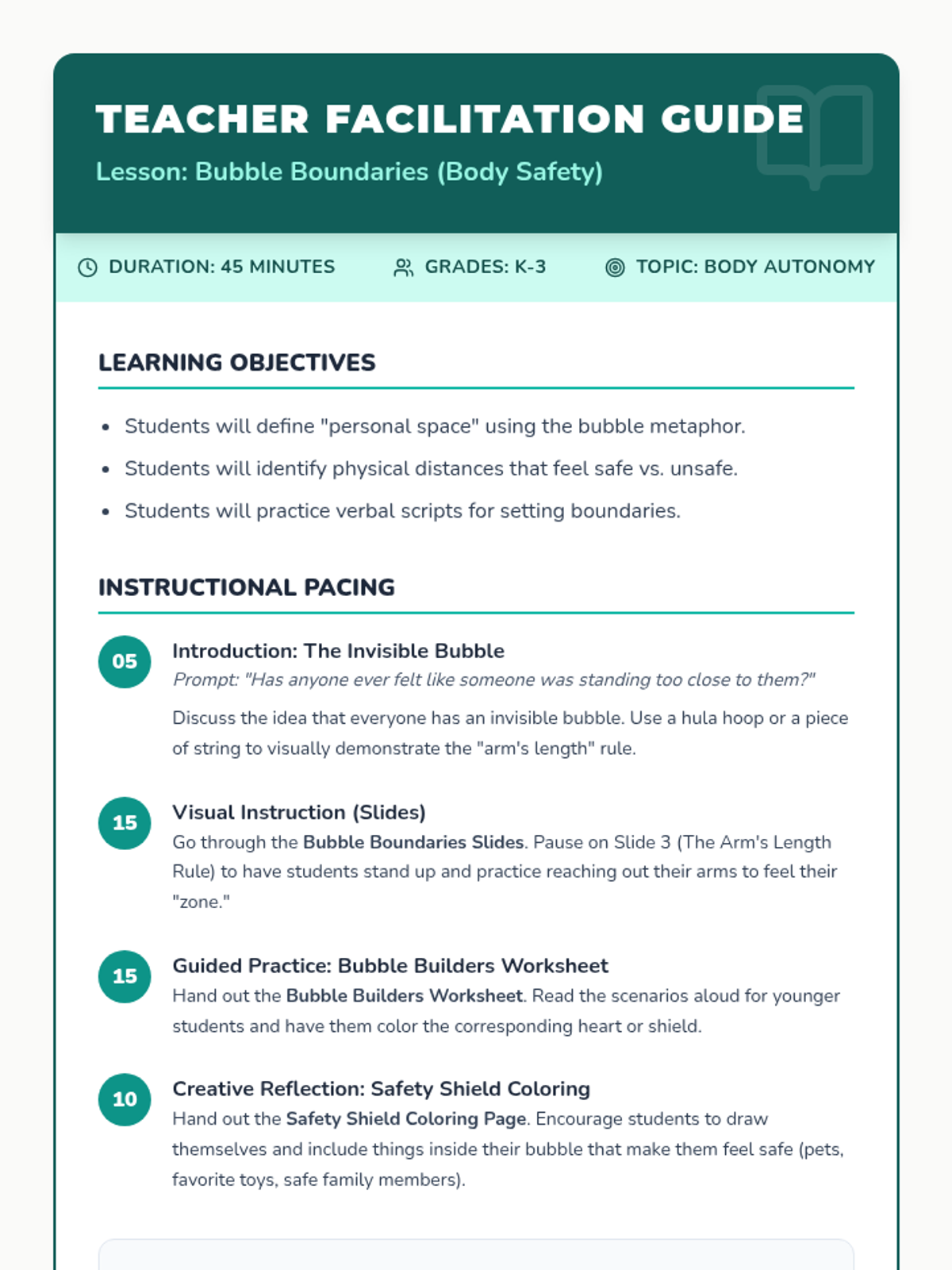
A foundational lesson on physical boundaries and body safety, using the 'Personal Bubble' metaphor to help students understand and communicate their comfort levels.
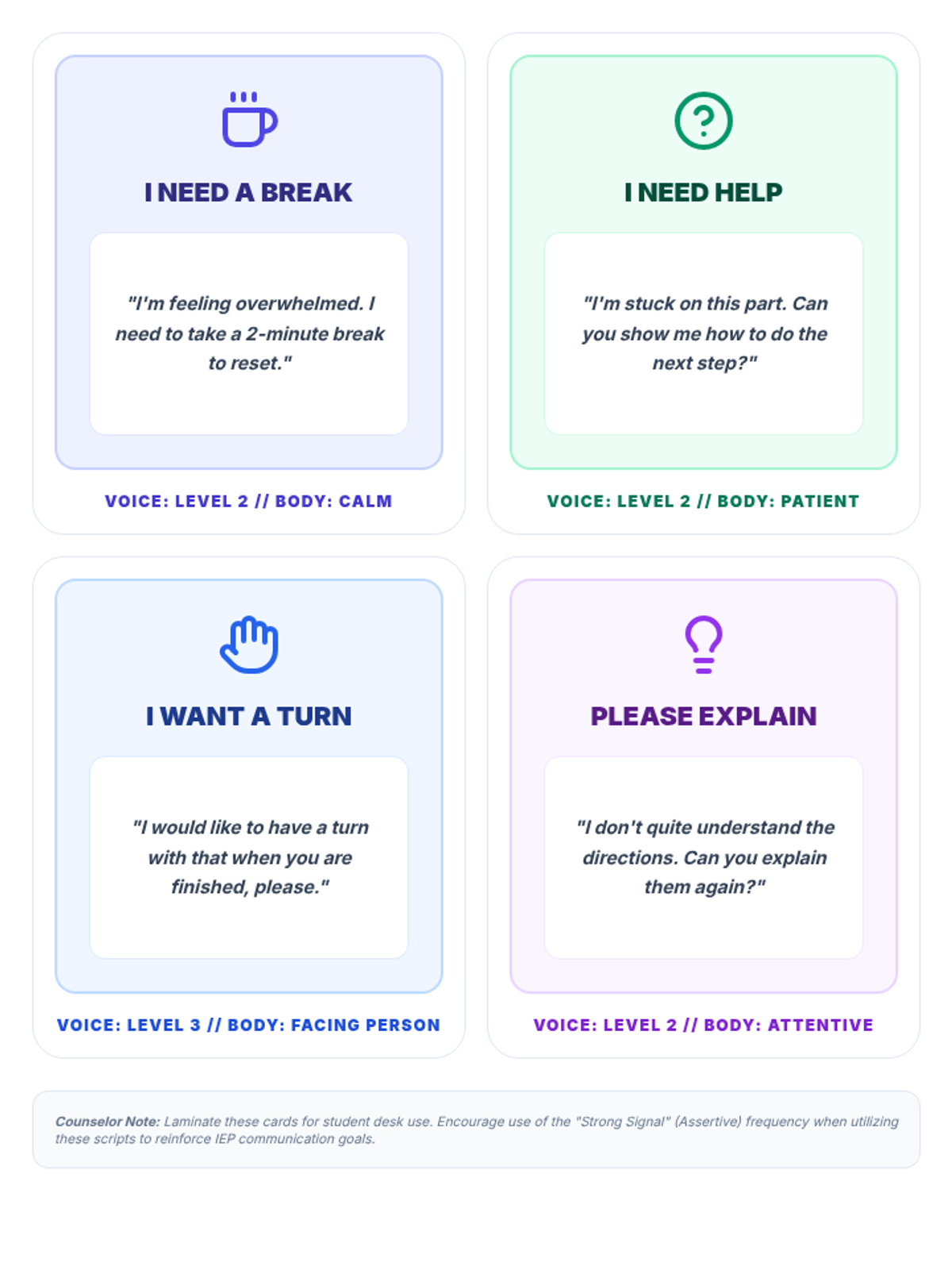
Practices specific strategies for asking for support and stating wants in academic and social settings.
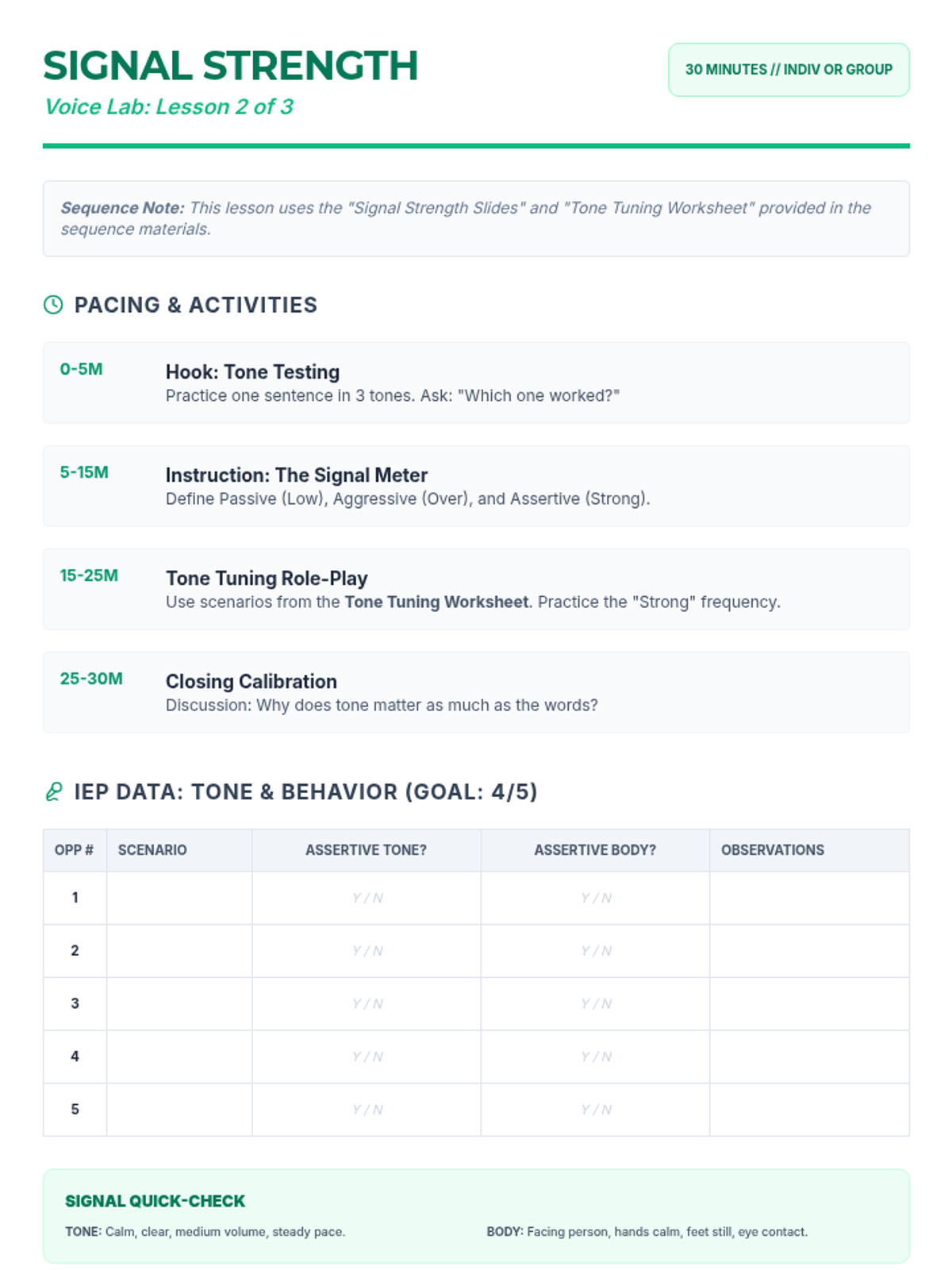
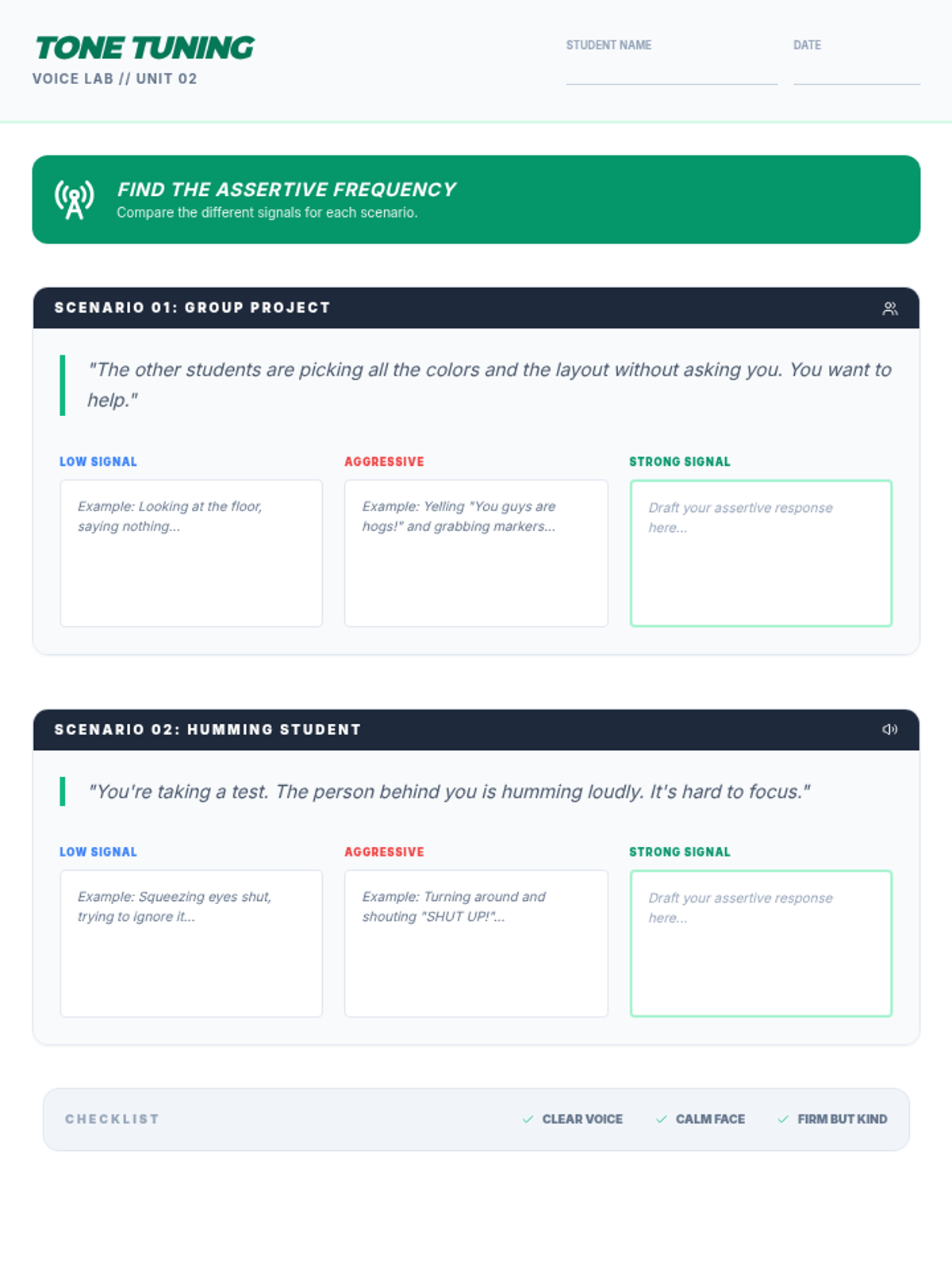
Explores how tone of voice and body language (behavior) impact the delivery and reception of a message.
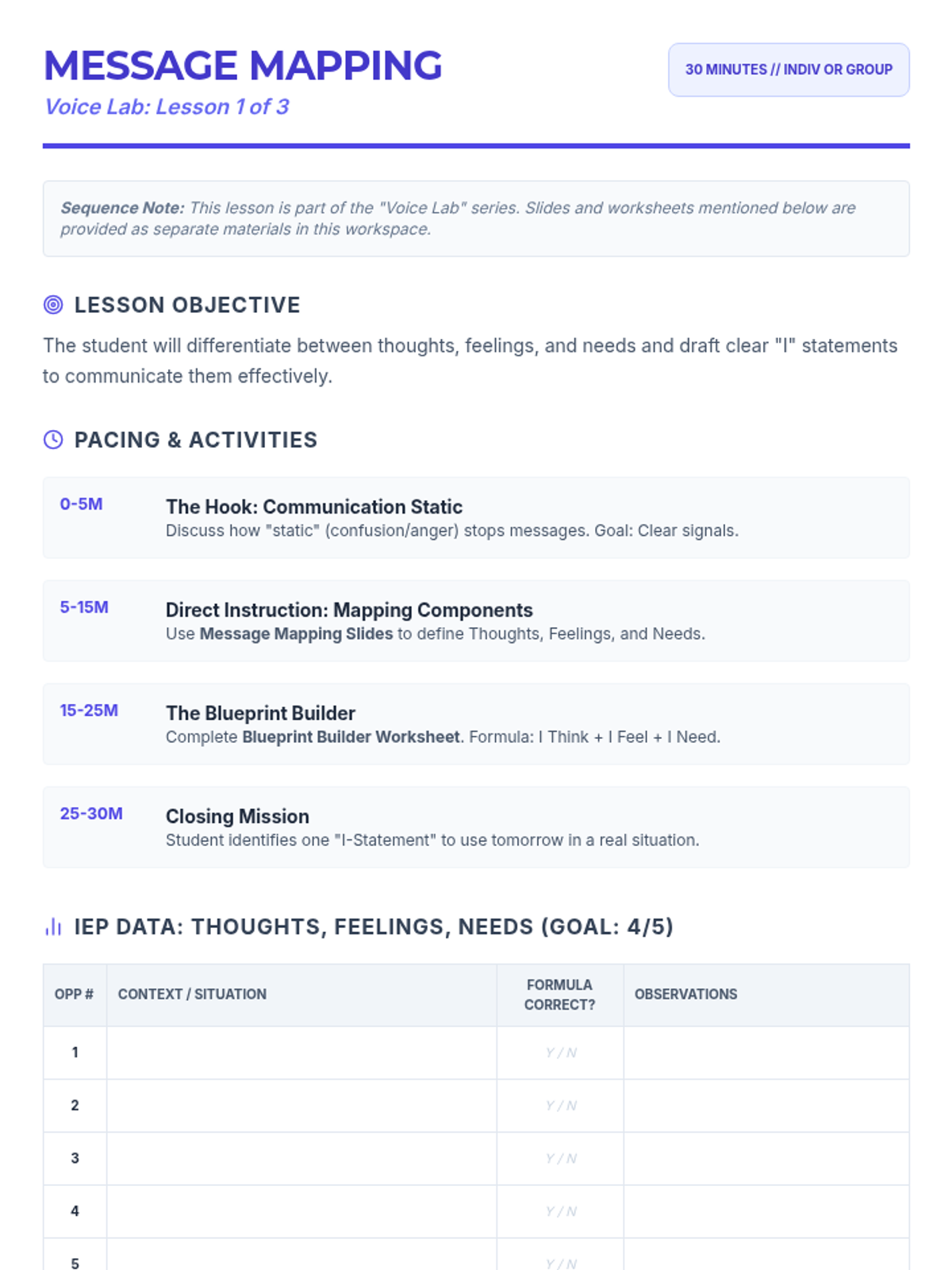
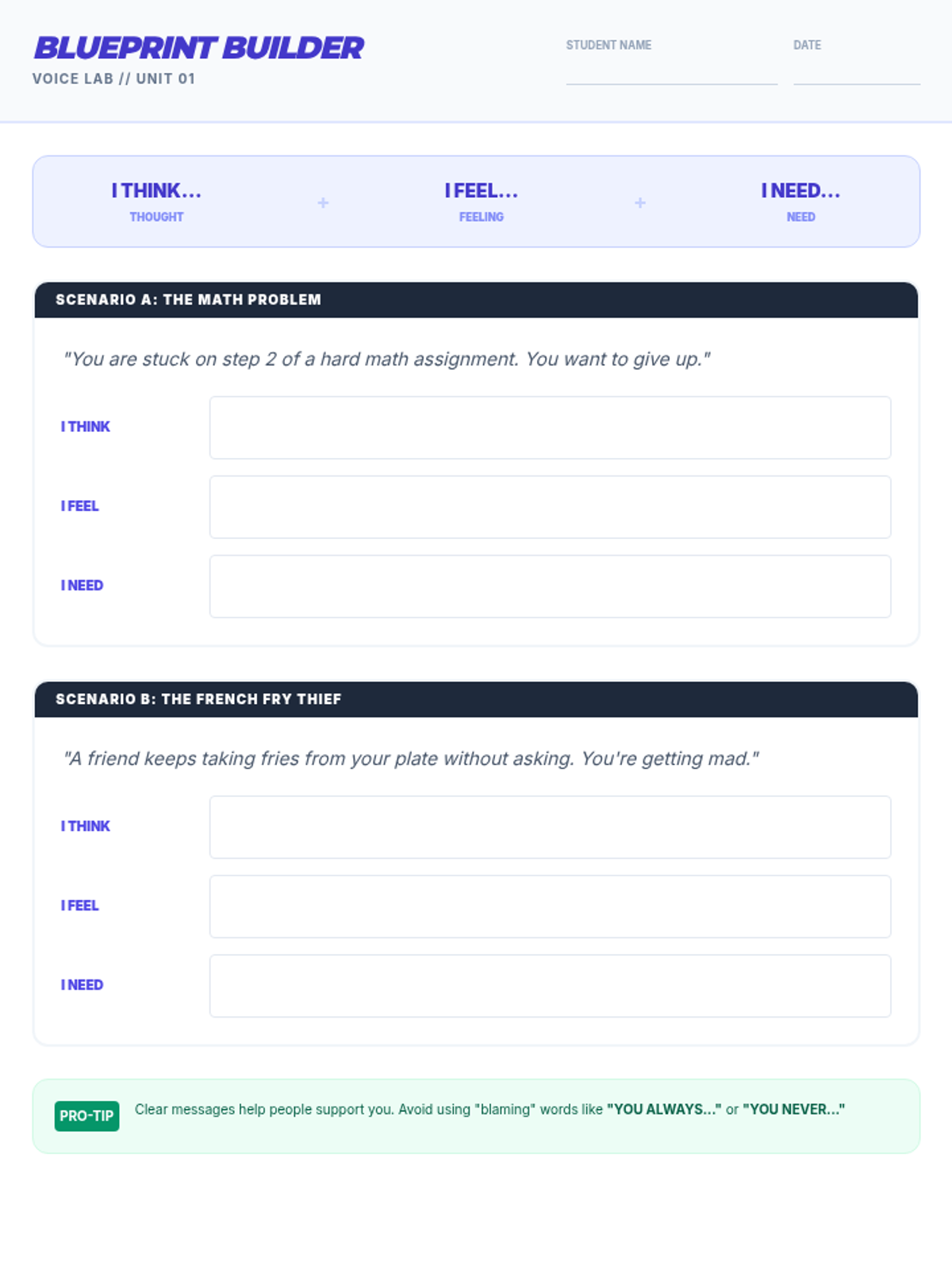
Focuses on identifying the difference between thoughts, feelings, and needs, and introduces 'I' statements as a tool for clear communication.
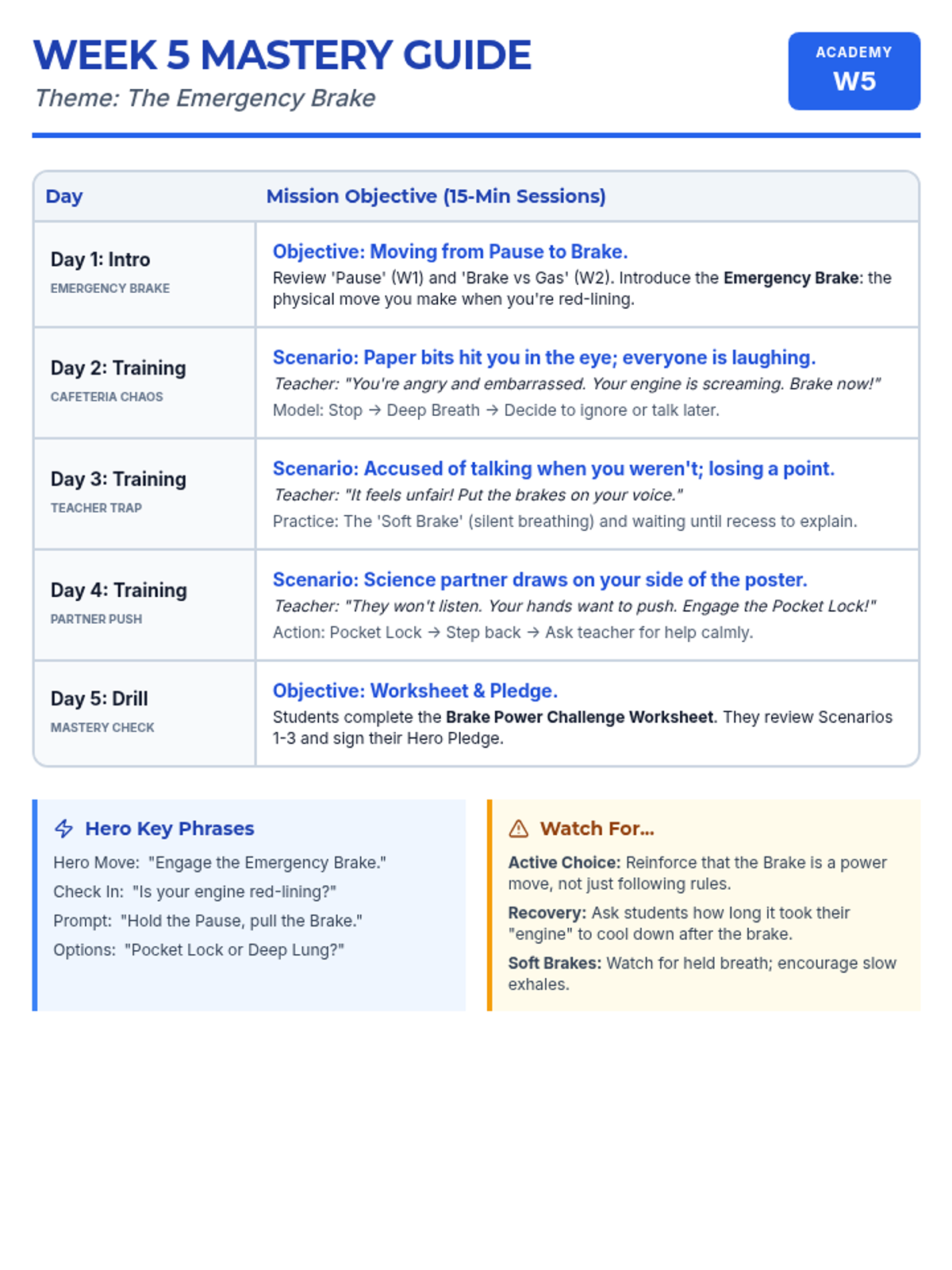
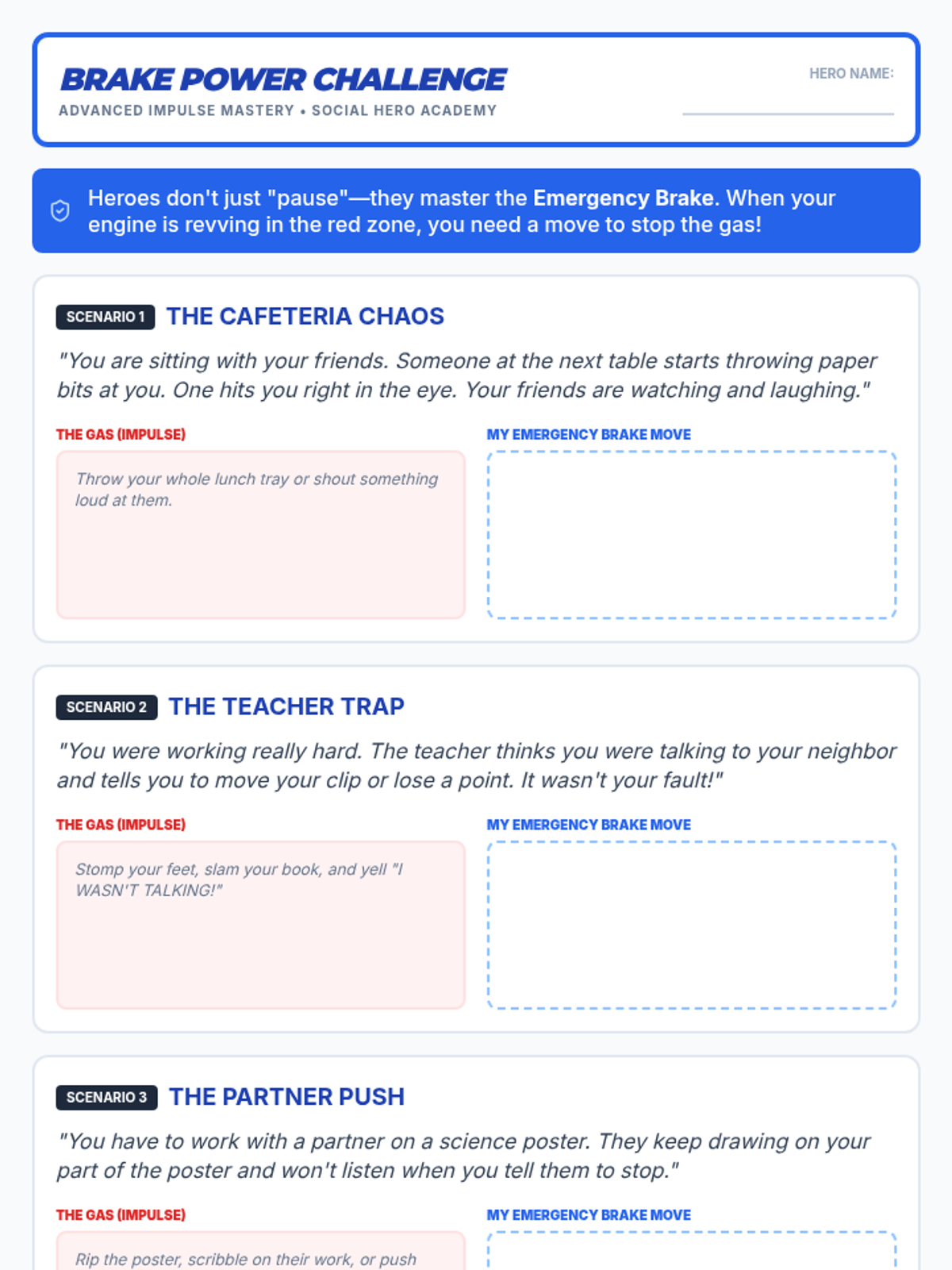
Advanced impulse control practice focusing on 'Emergency Brake' moves in high-pressure social scenarios. Students practice transitioning from 'Stop and Think' to intentional action.
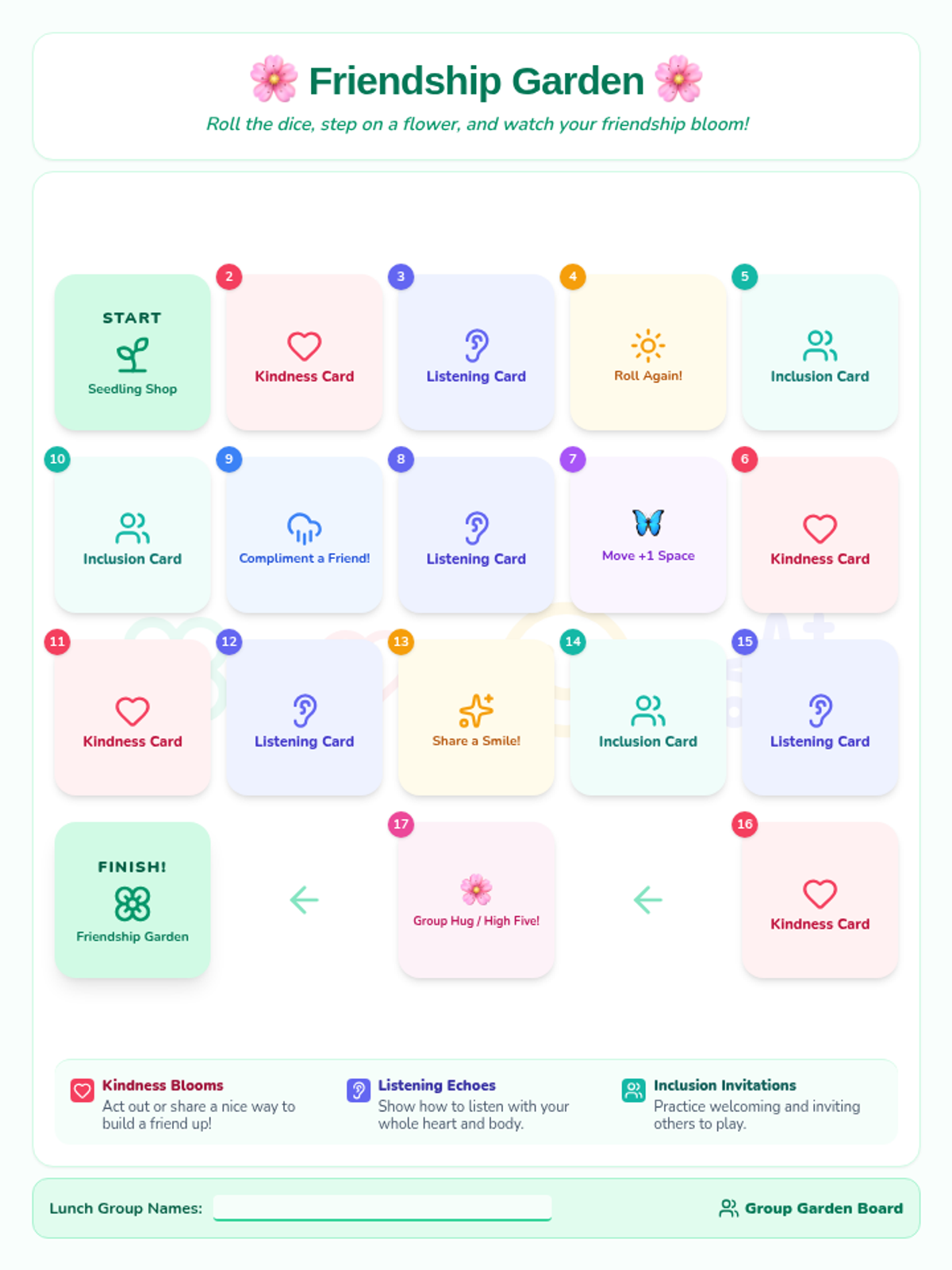
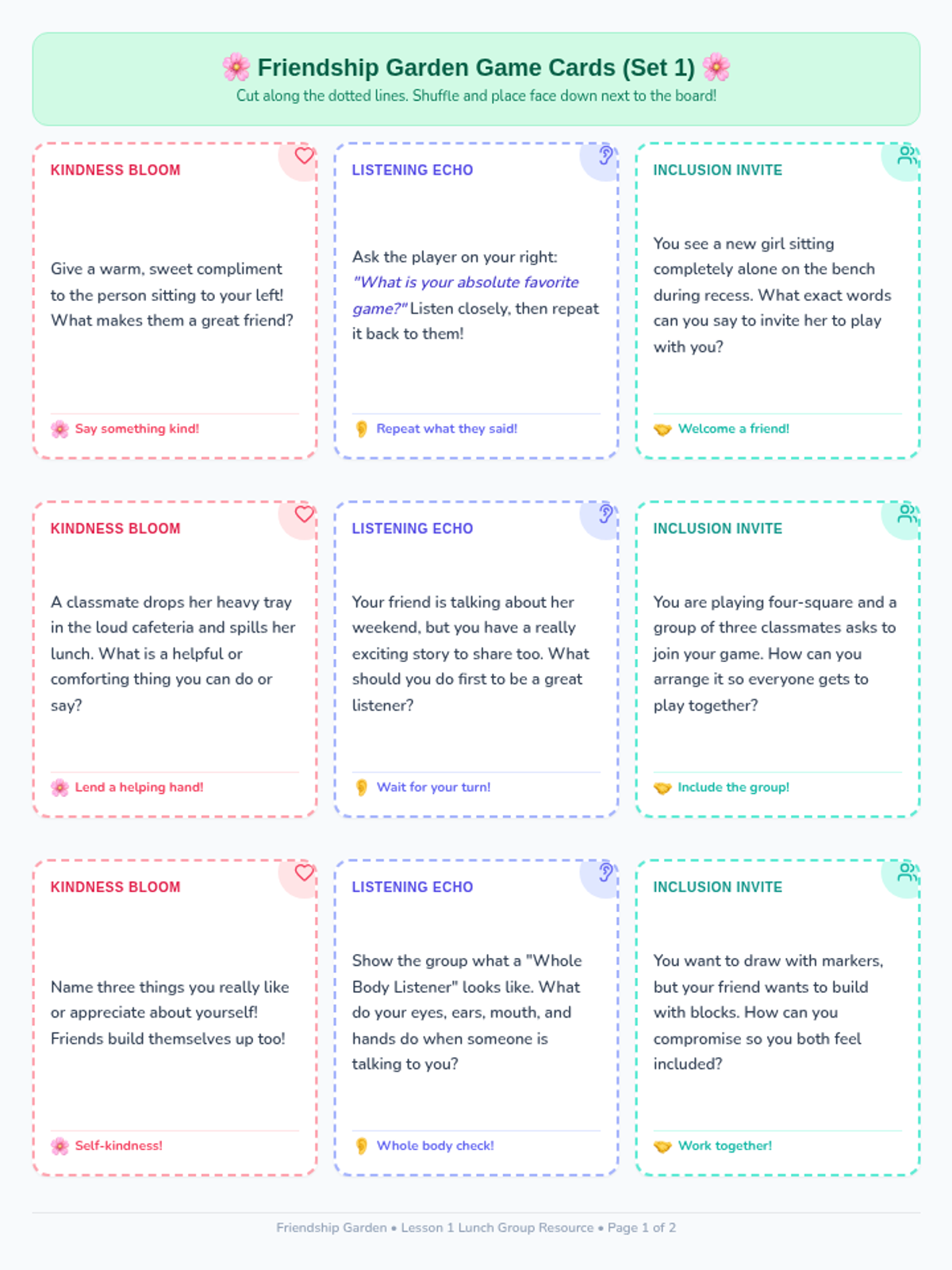
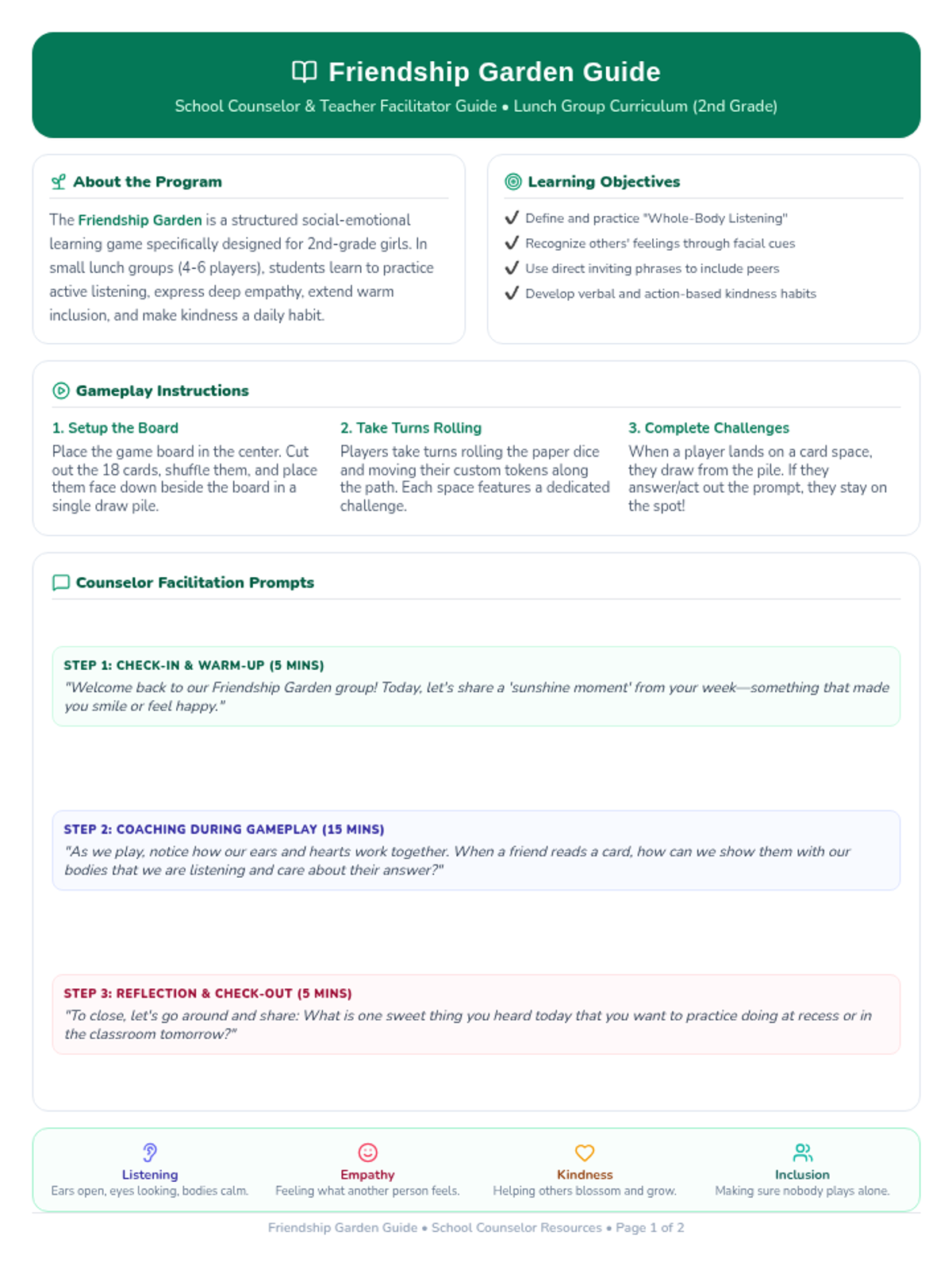
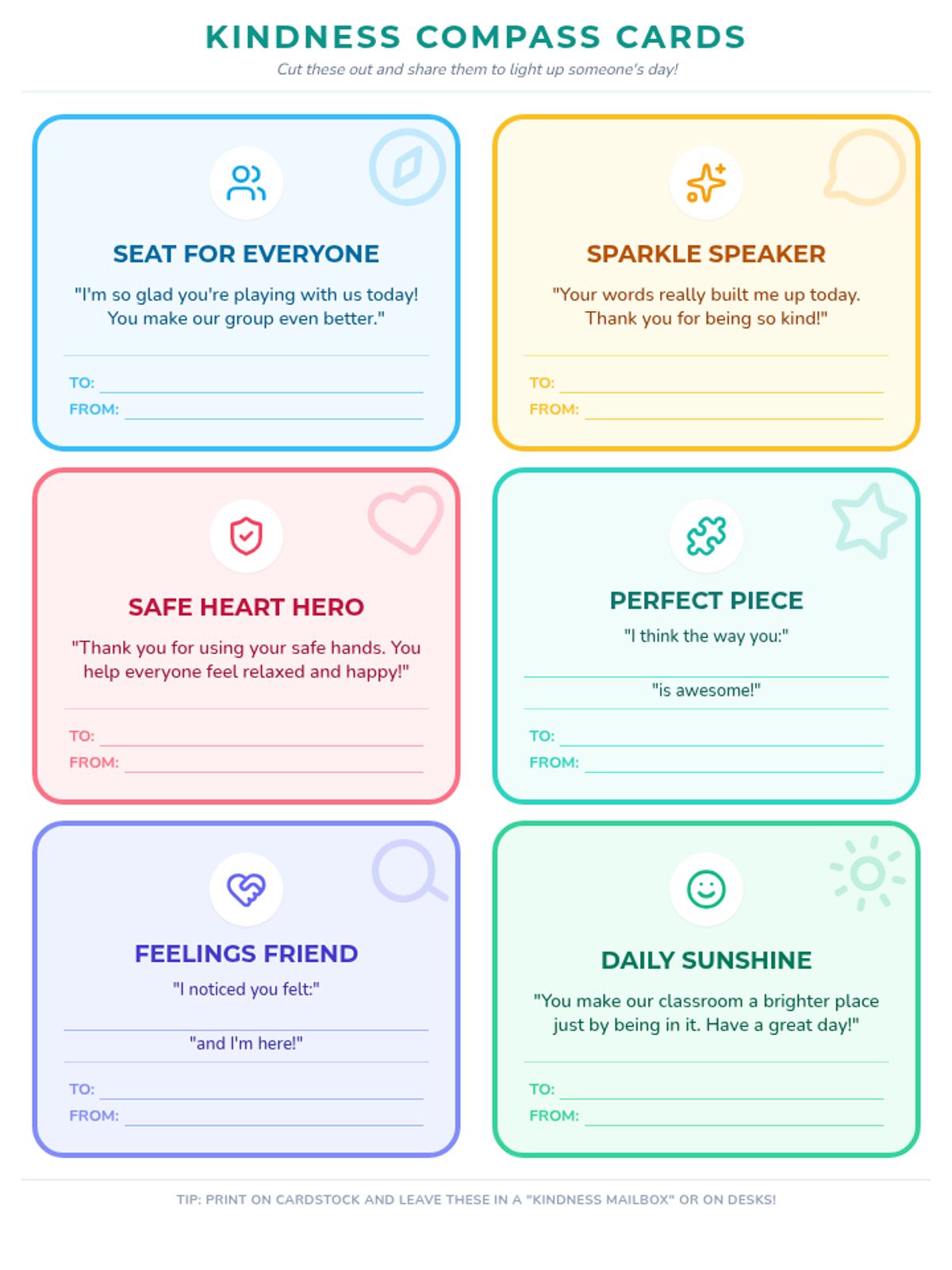
A lunch group board game curriculum for 2nd-grade girls designed to build social-emotional skills like empathy, active listening, kindness, and inclusion. Includes a printable game board, scenario-based prompt cards, and a counselor facilitator guide with paper dice and tokens.
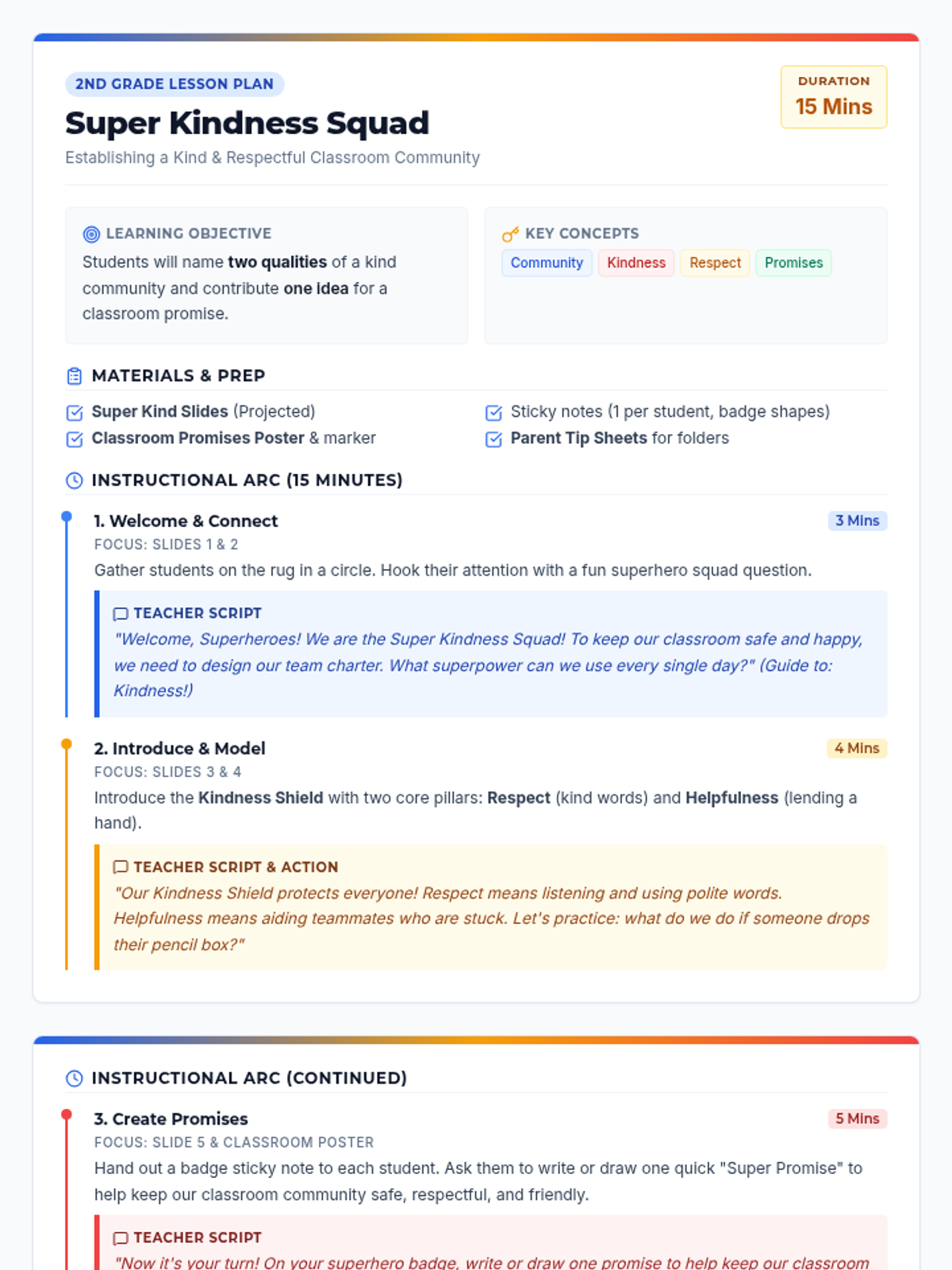
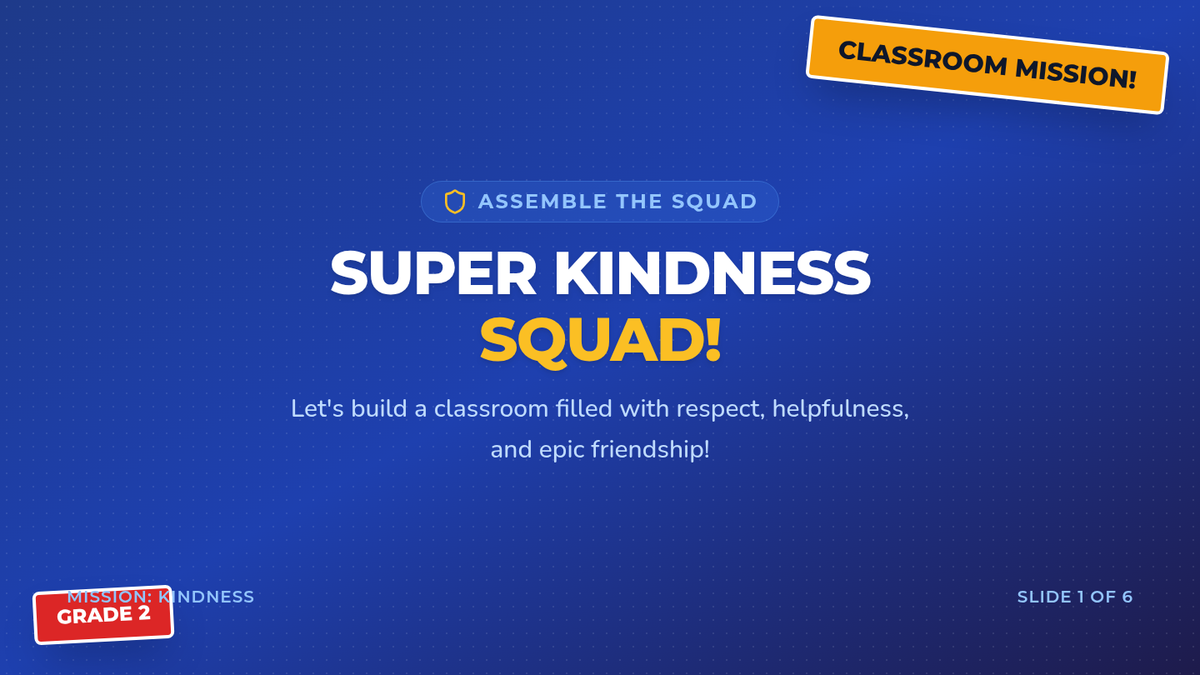
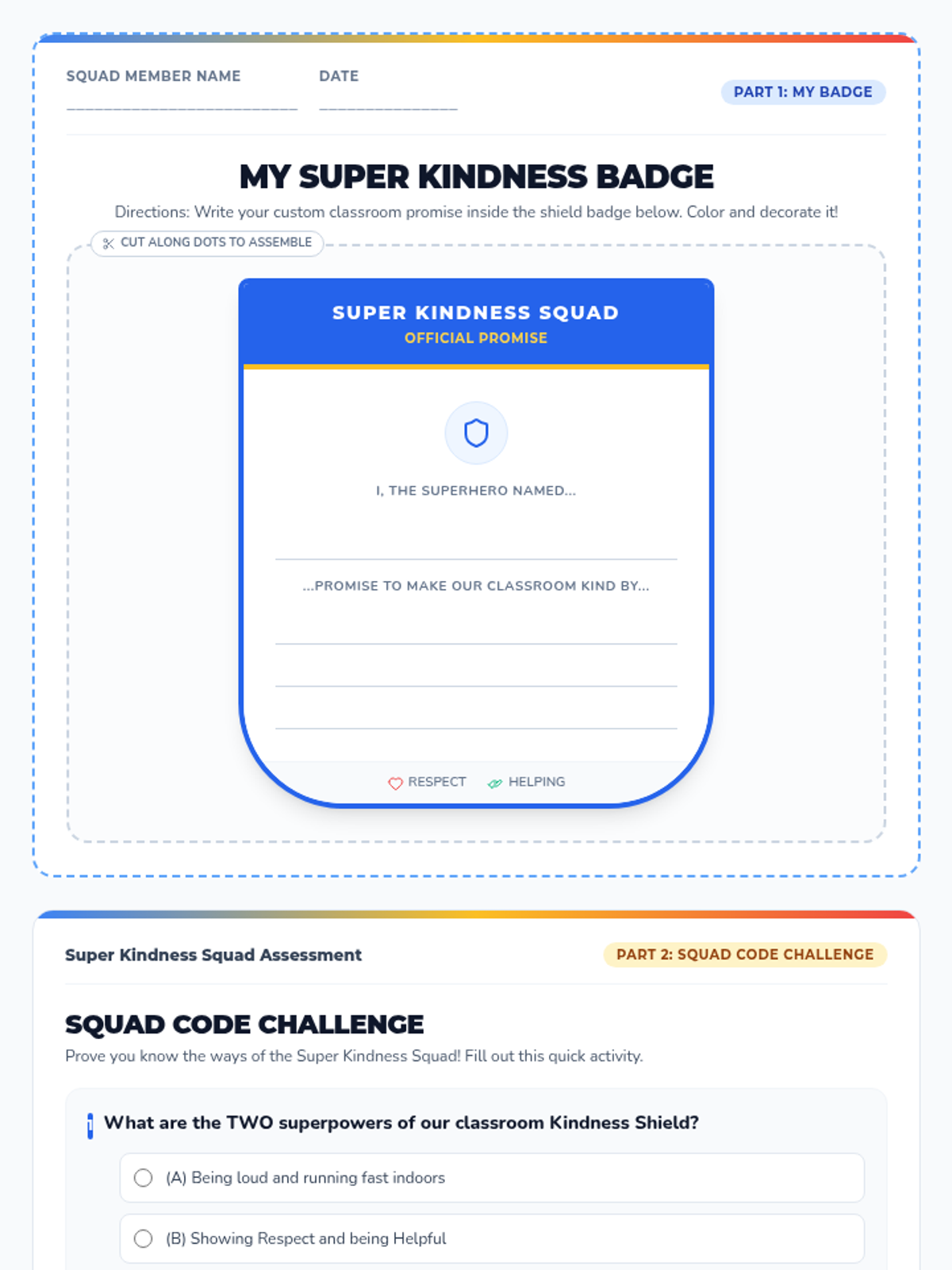
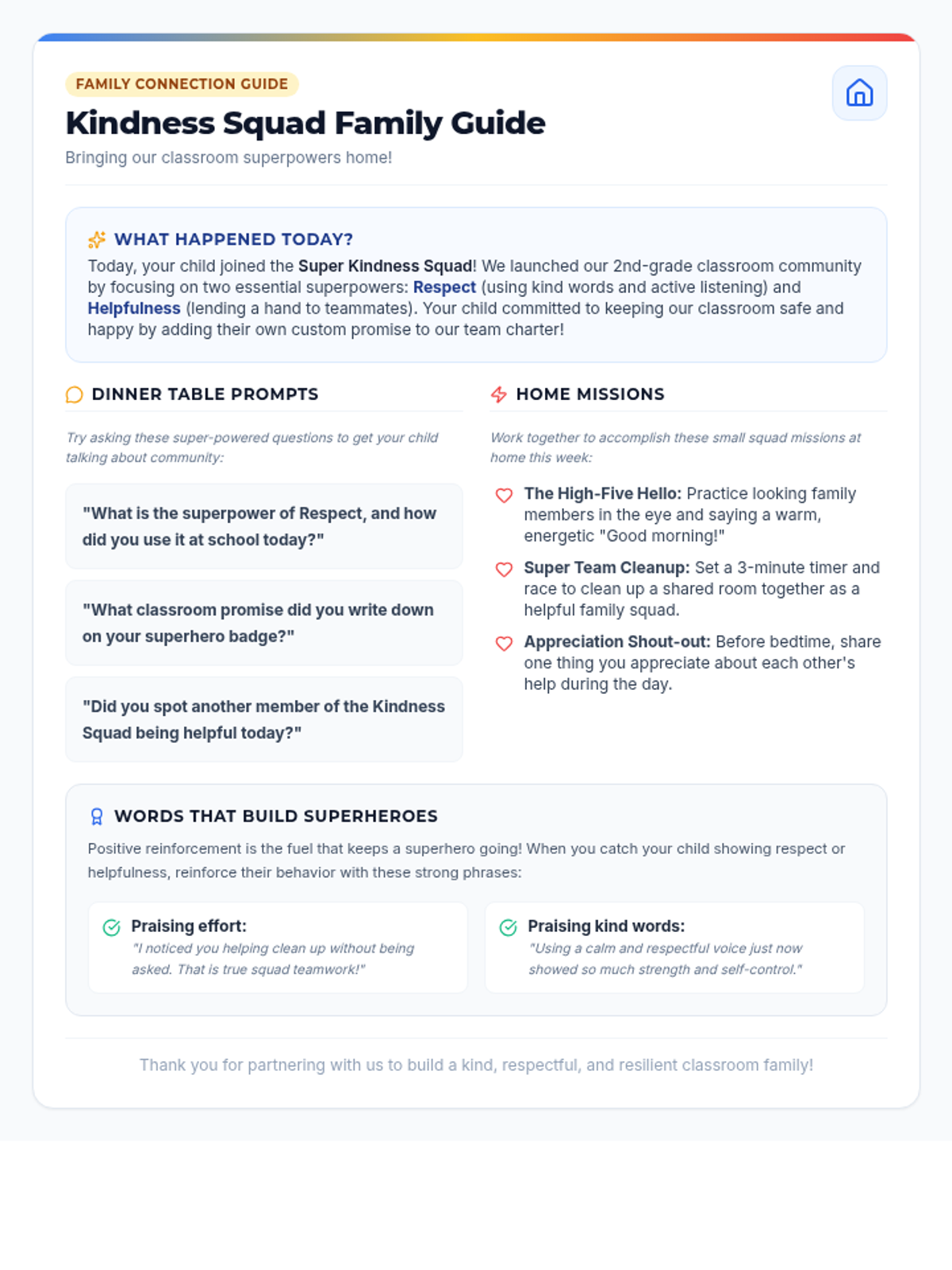
A high-energy, 15-minute introductory lesson for 2nd graders to discover what makes a community kind and respectful. Students will brainstorm and commit to their own Classroom Promises to build a super-powered kind classroom.
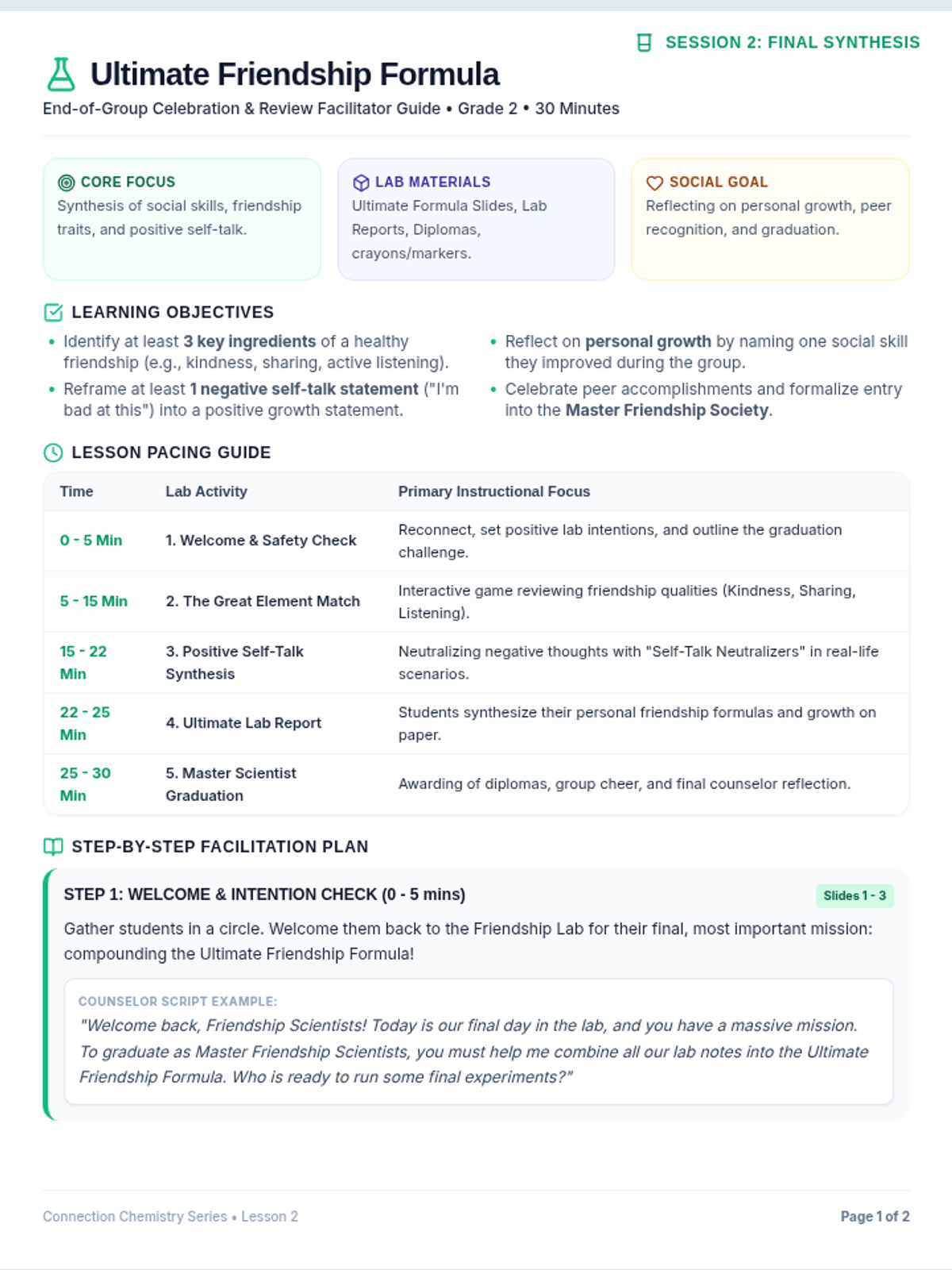
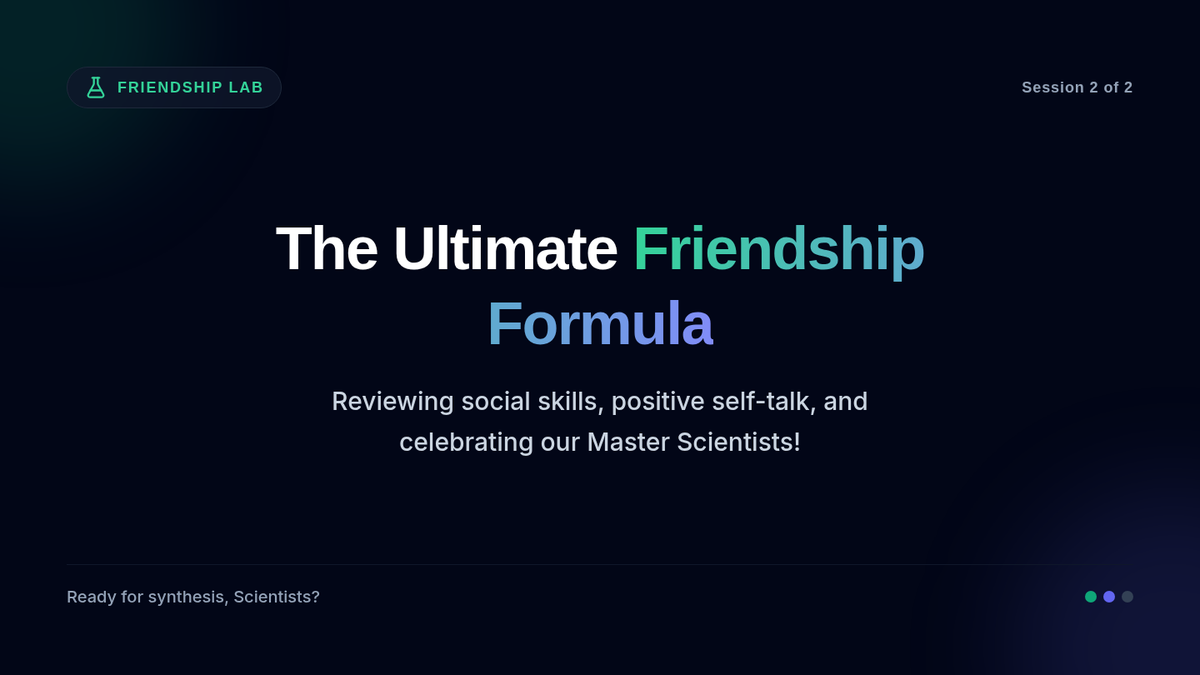
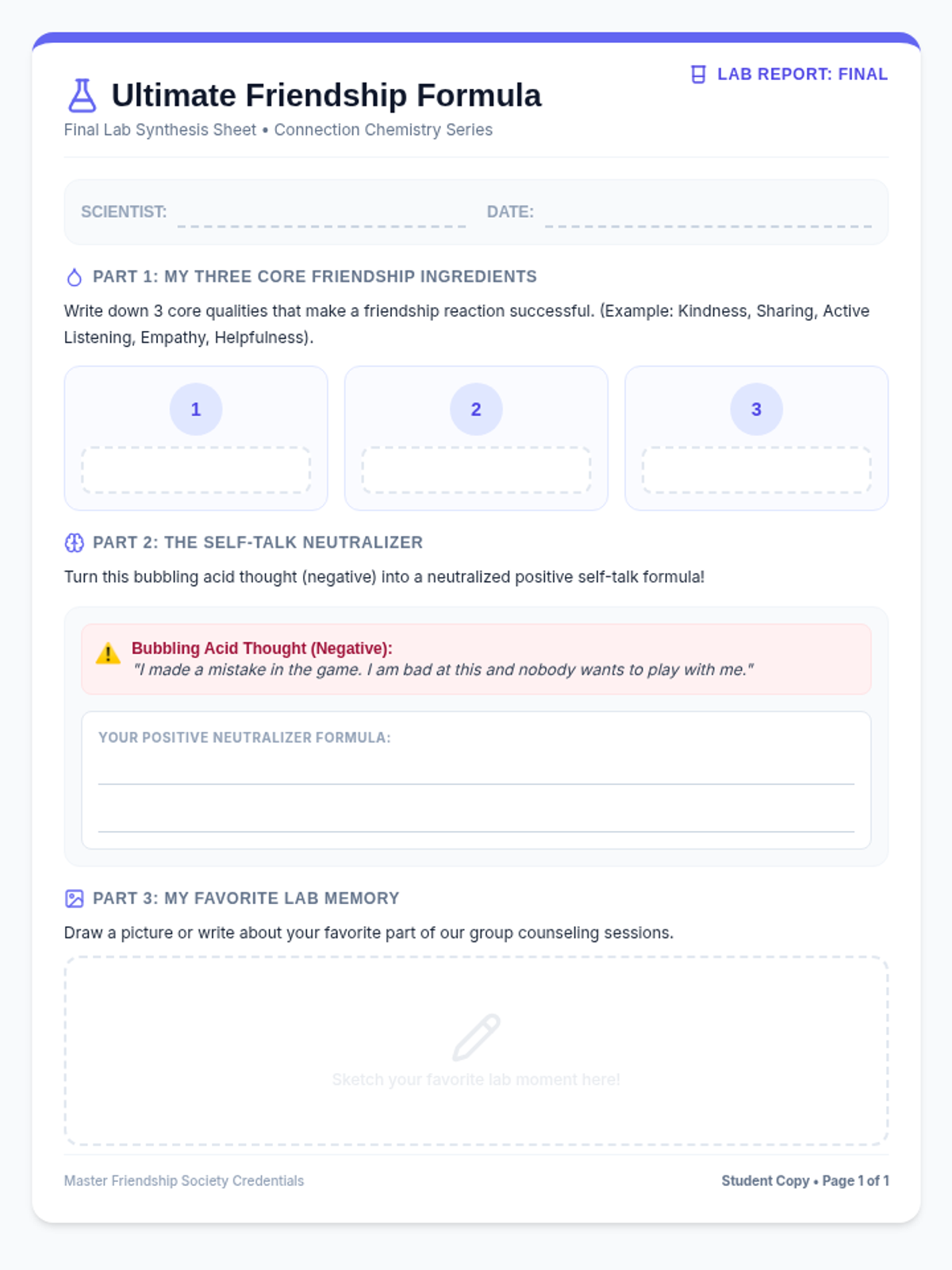
A celebratory 30-minute end-of-group session where 'Friendship Scientists' synthesize their learnings on social skills, friendship qualities, and positive self-talk into a master formula for lasting connections, concluding with a graduation ceremony.
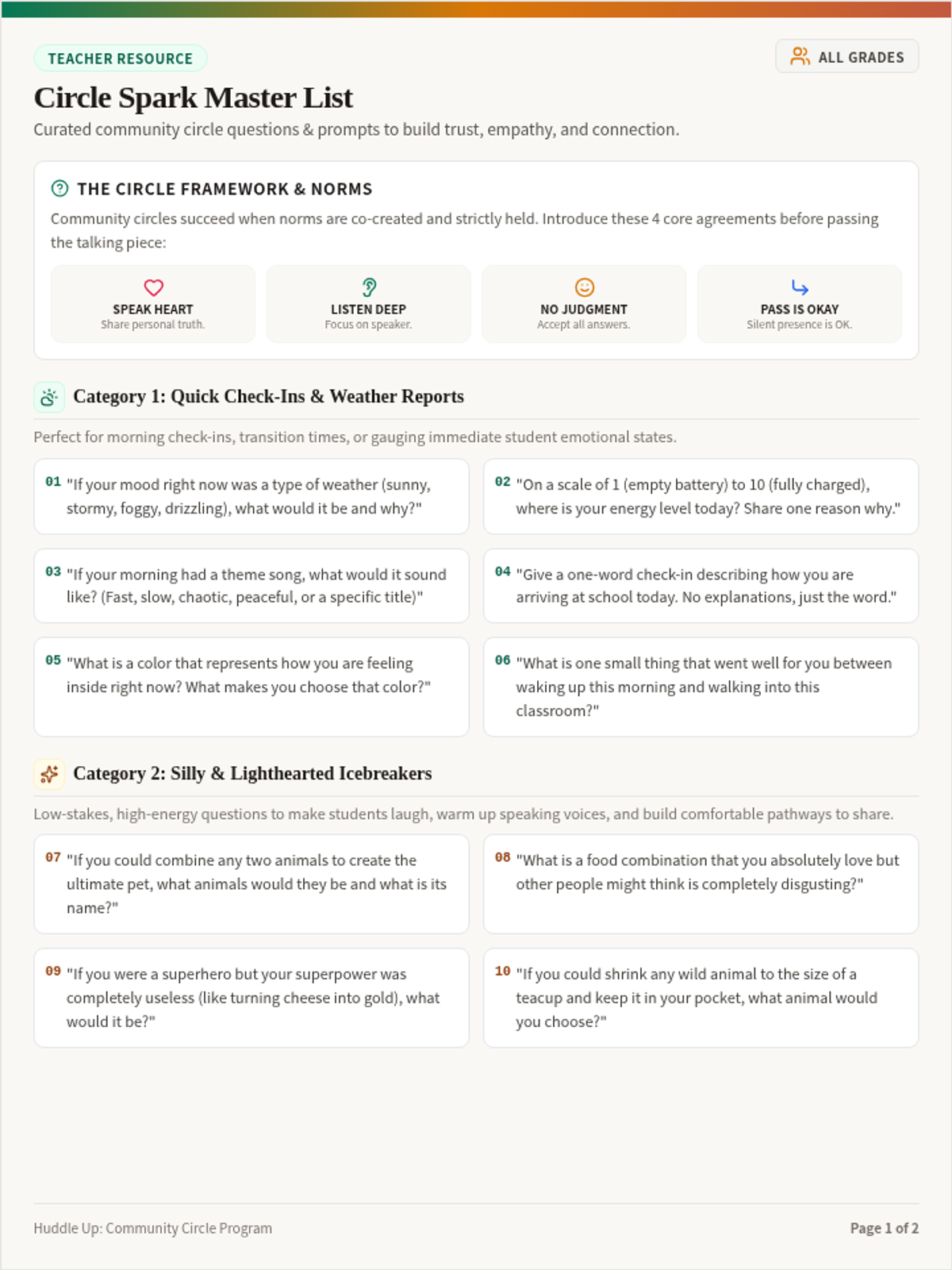
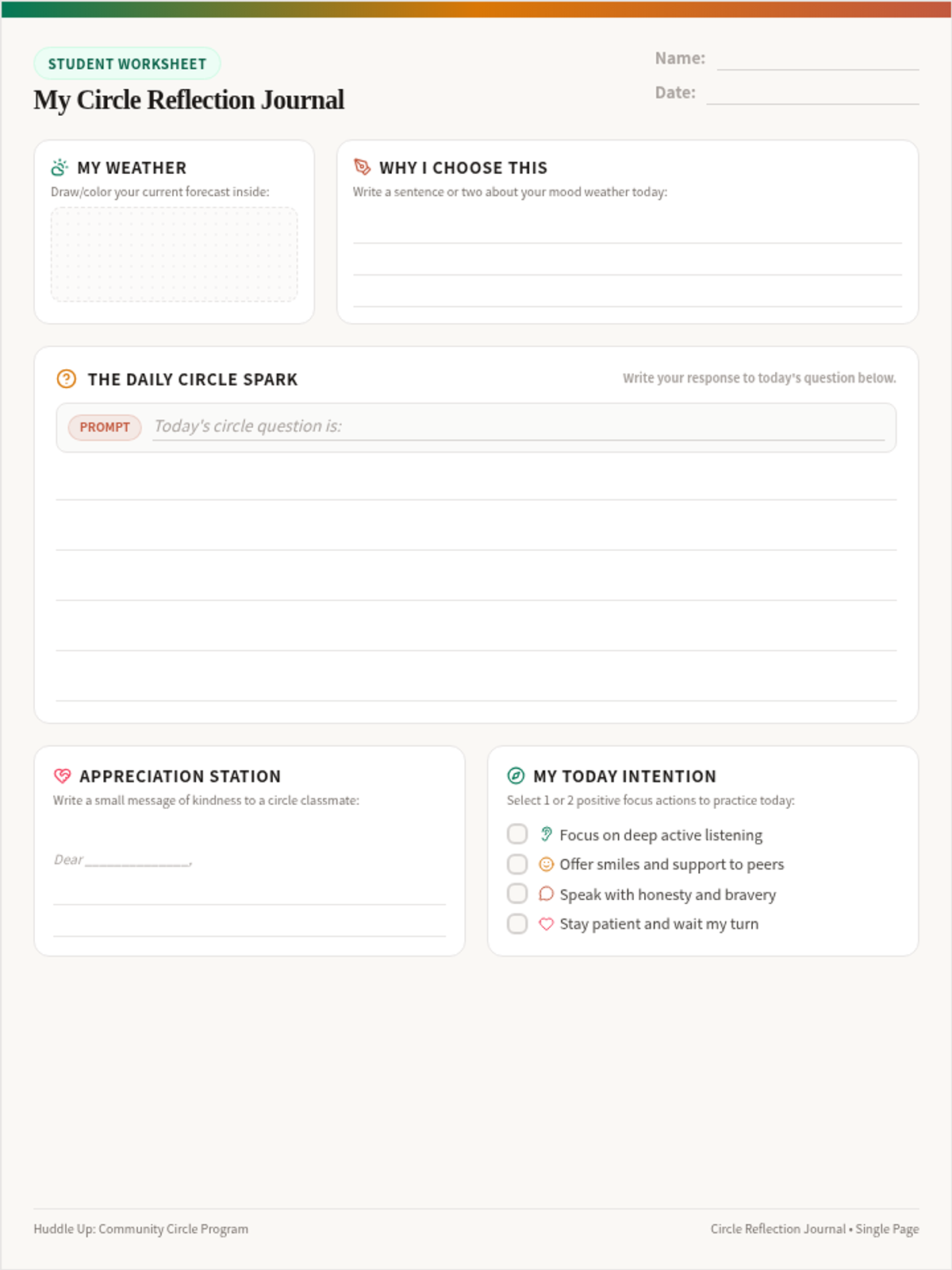
A complete toolkit to establish, run, and maintain engaging daily or weekly community circles that foster empathy, build classroom relationships, and check in on students' social-emotional well-being.
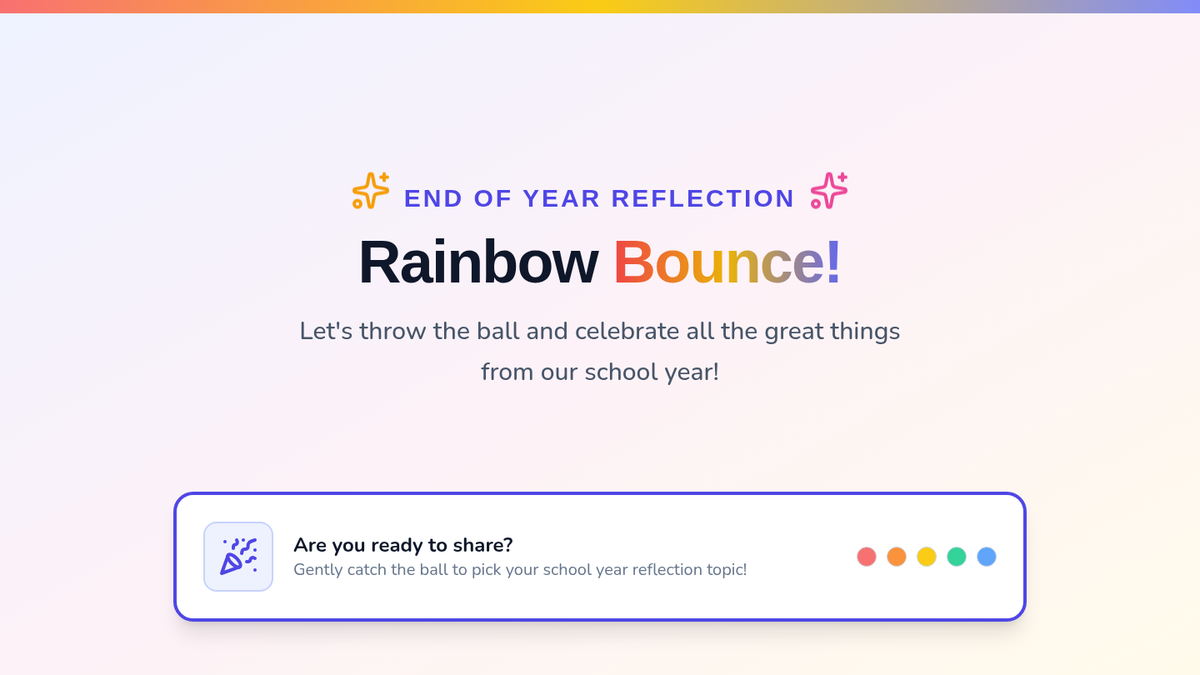
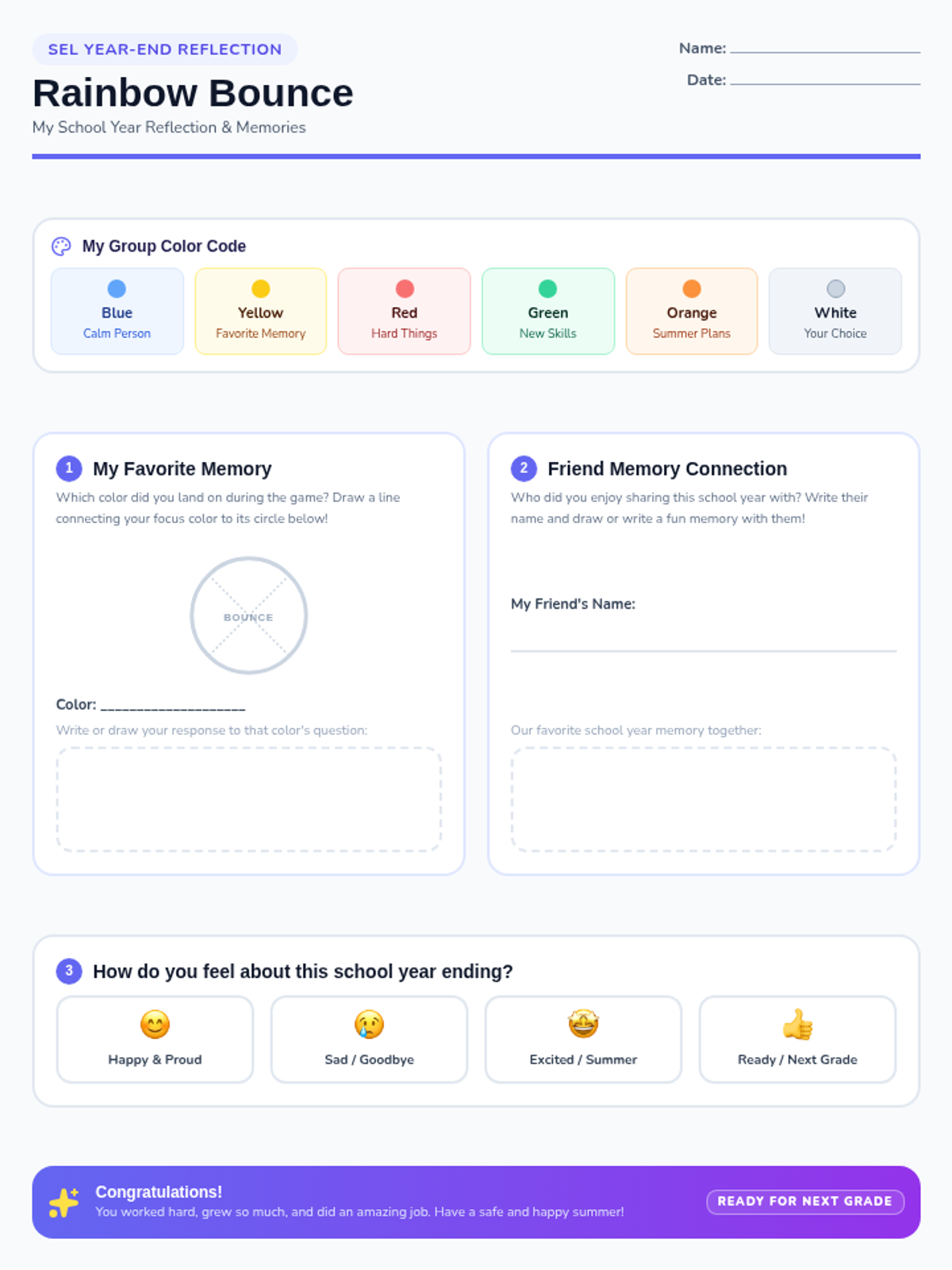
An active and engaging end-of-school-year reflection lesson using a multi-colored ball. Students toss the ball and answer simple, colorful prompts to share memories, achievements, challenges, and summer plans.
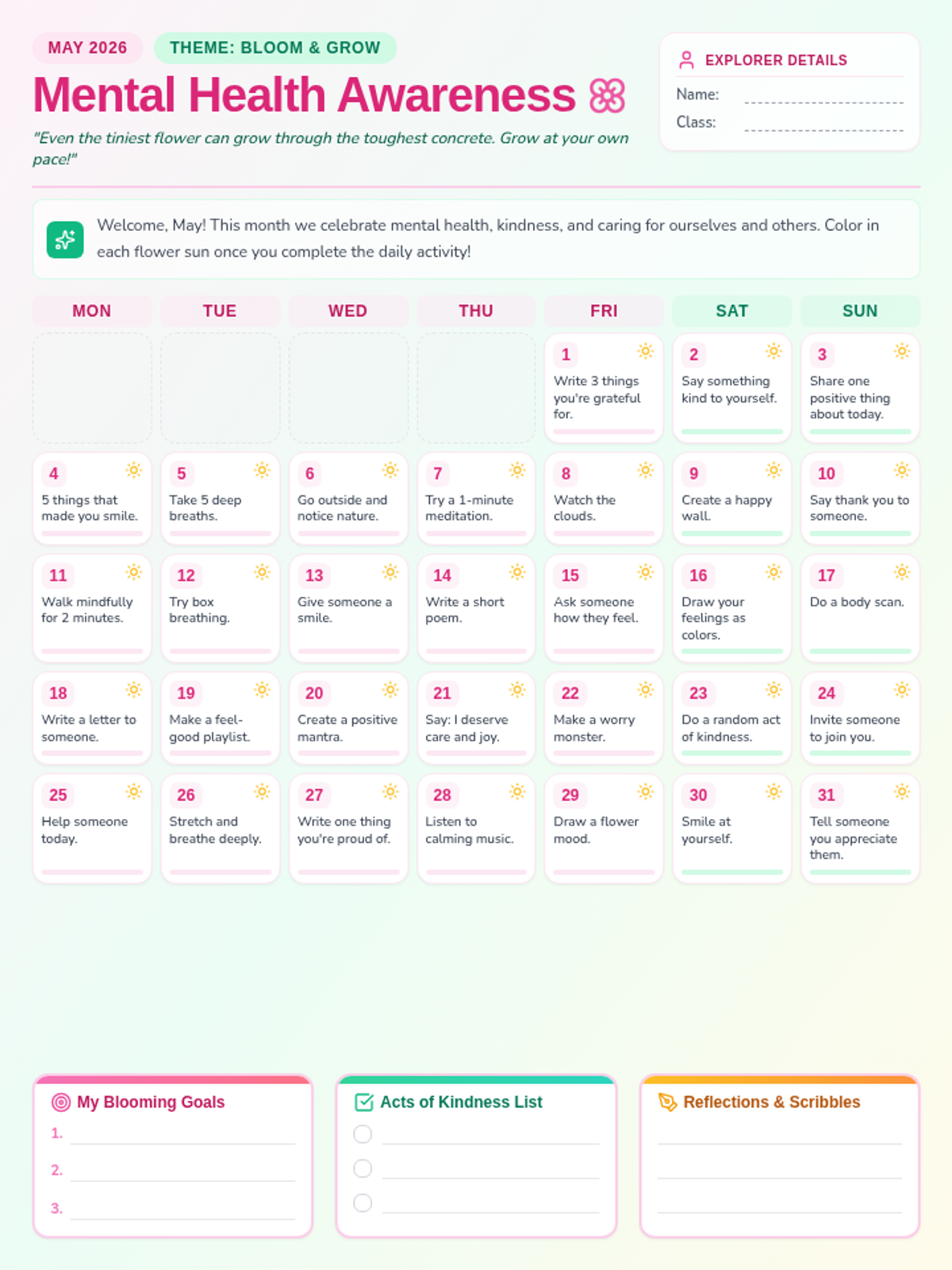
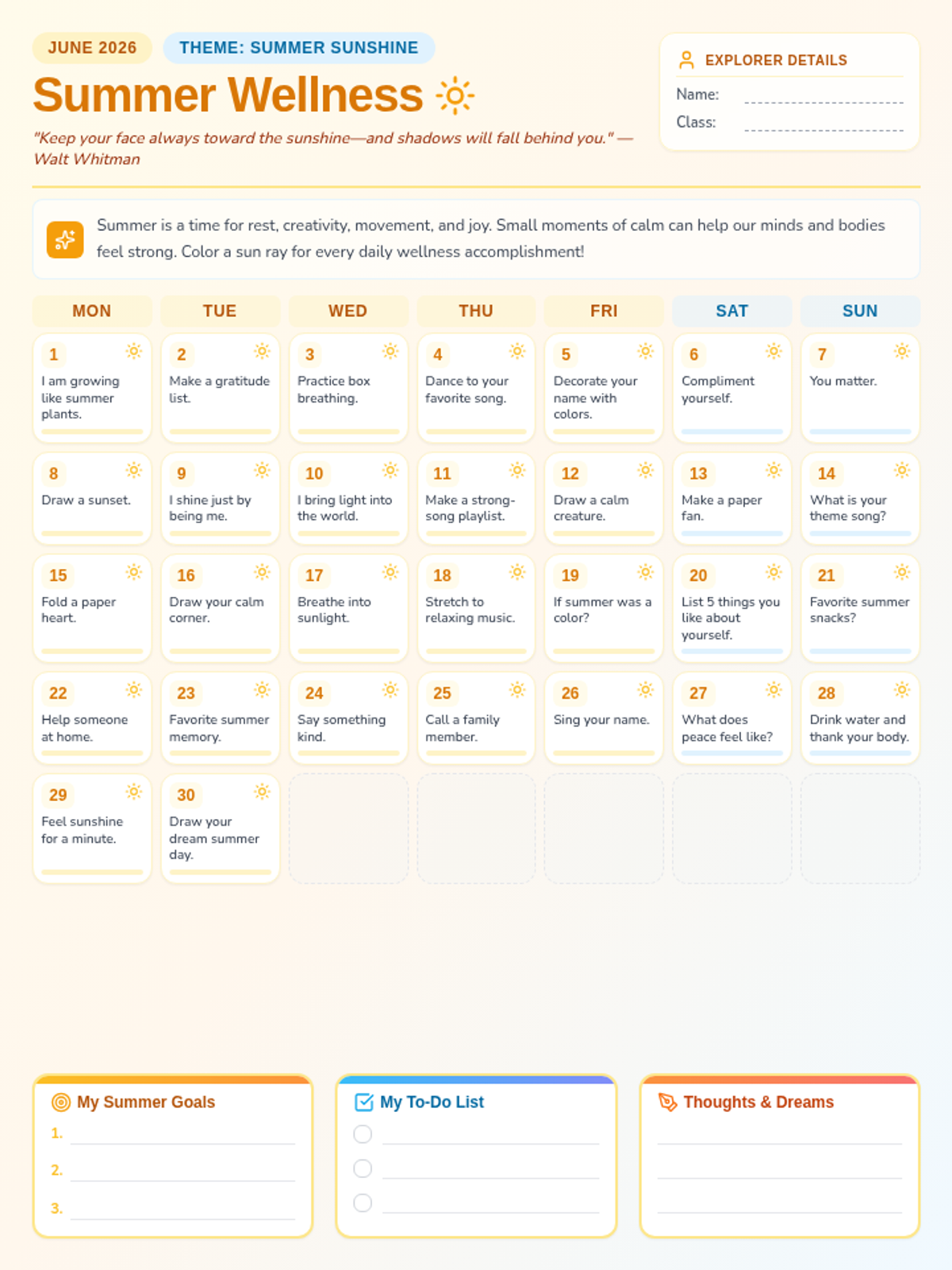
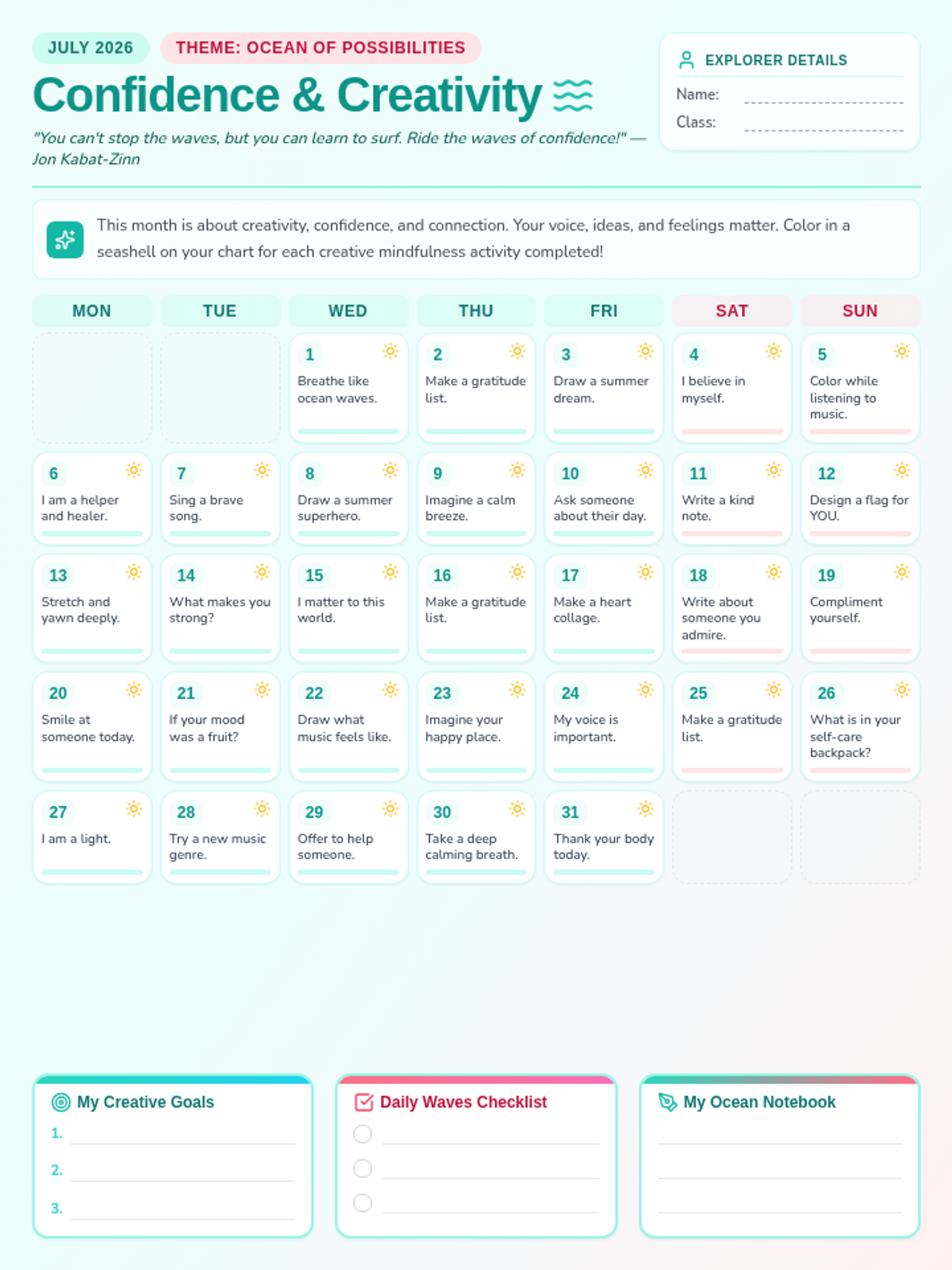
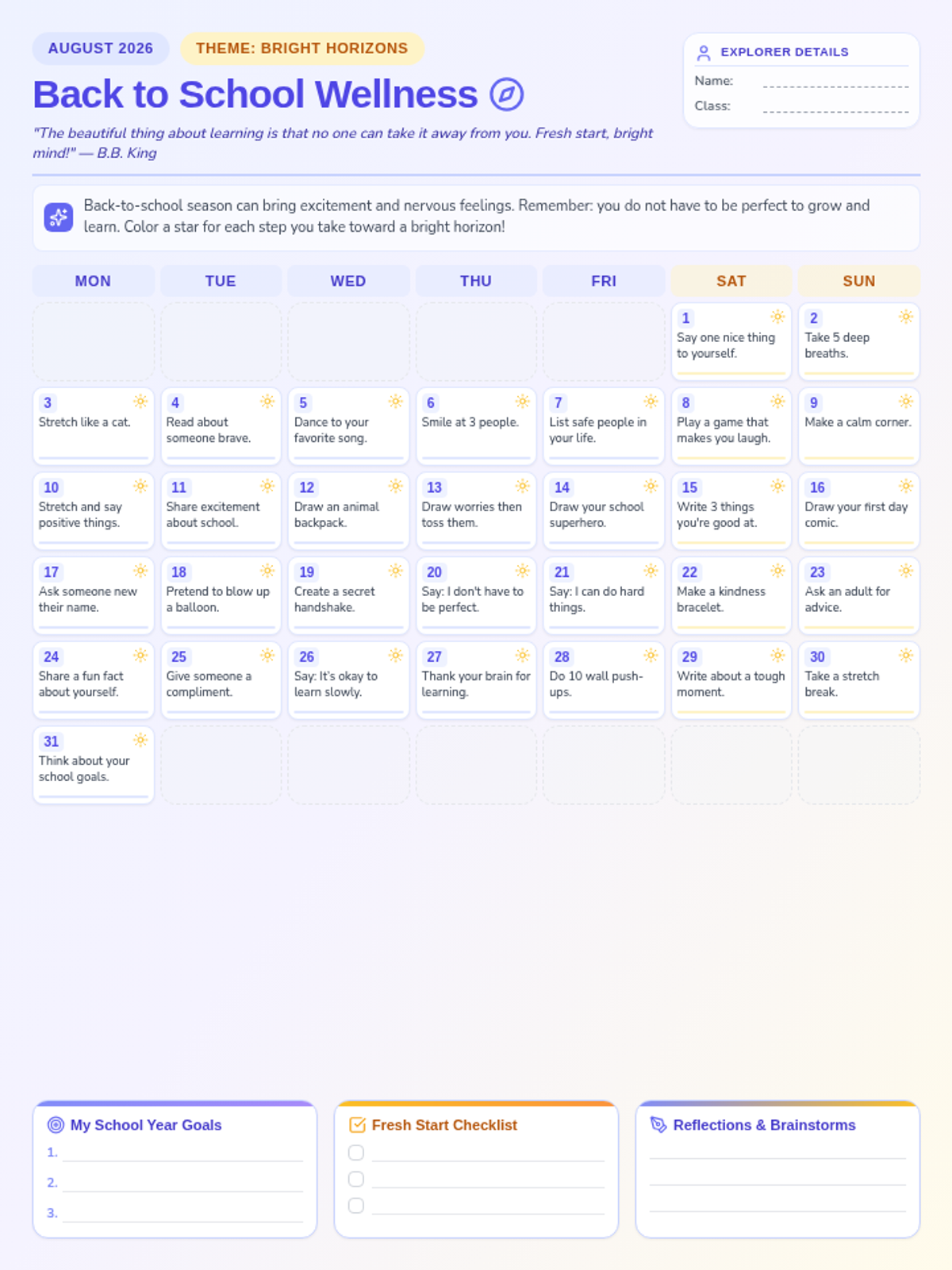
A vibrant series of four monthly mental health and wellness calendars for May through August 2026. Designed with playful bright colors, a distinct growth mindset theme for each month, and inspirational quotes, these calendars offer daily mindfulness activities suitable for K-12 students and their families.
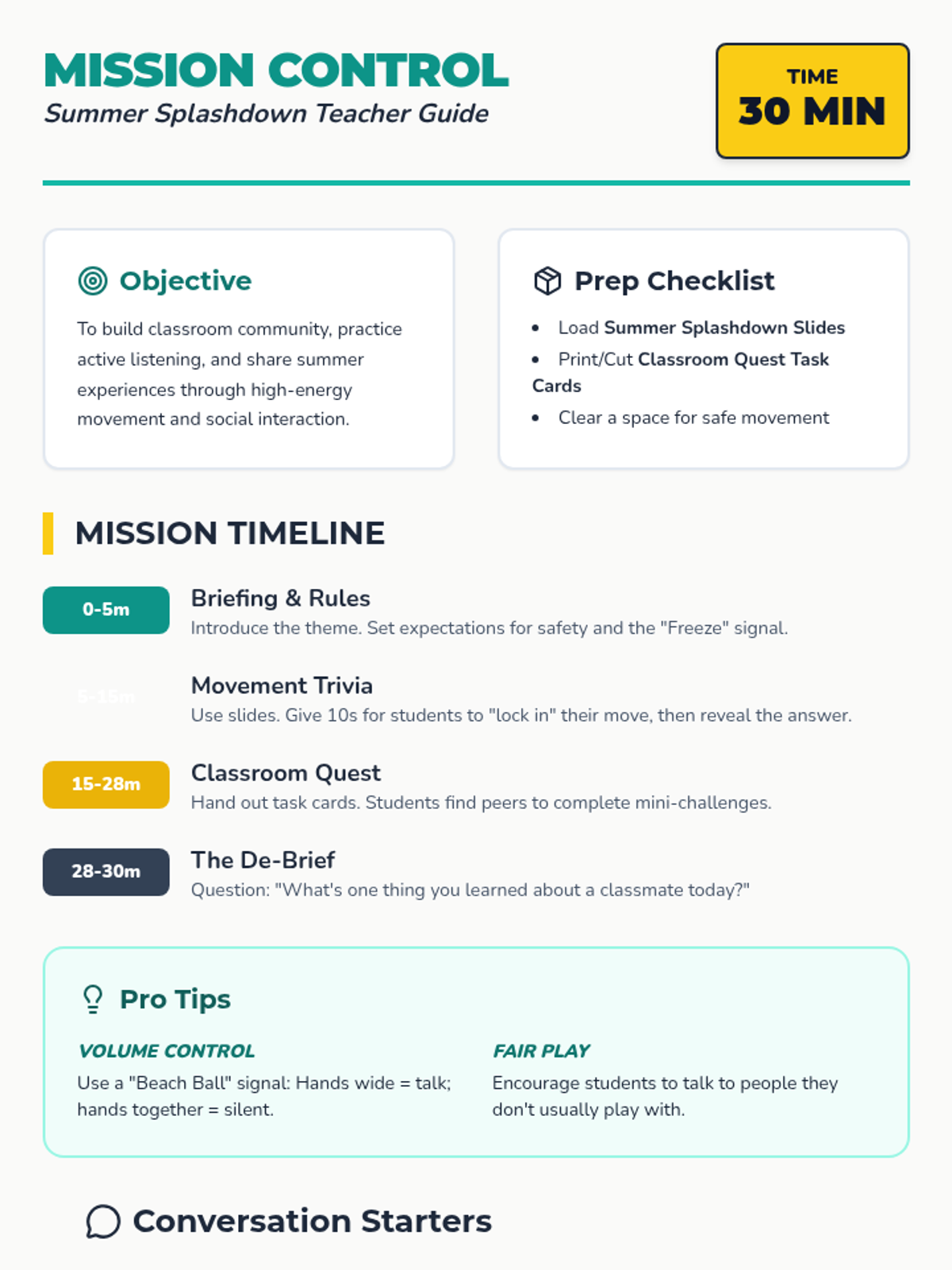
A high-energy, 30-minute session designed to build classroom community through summer-themed movement trivia and a social scavenger hunt.
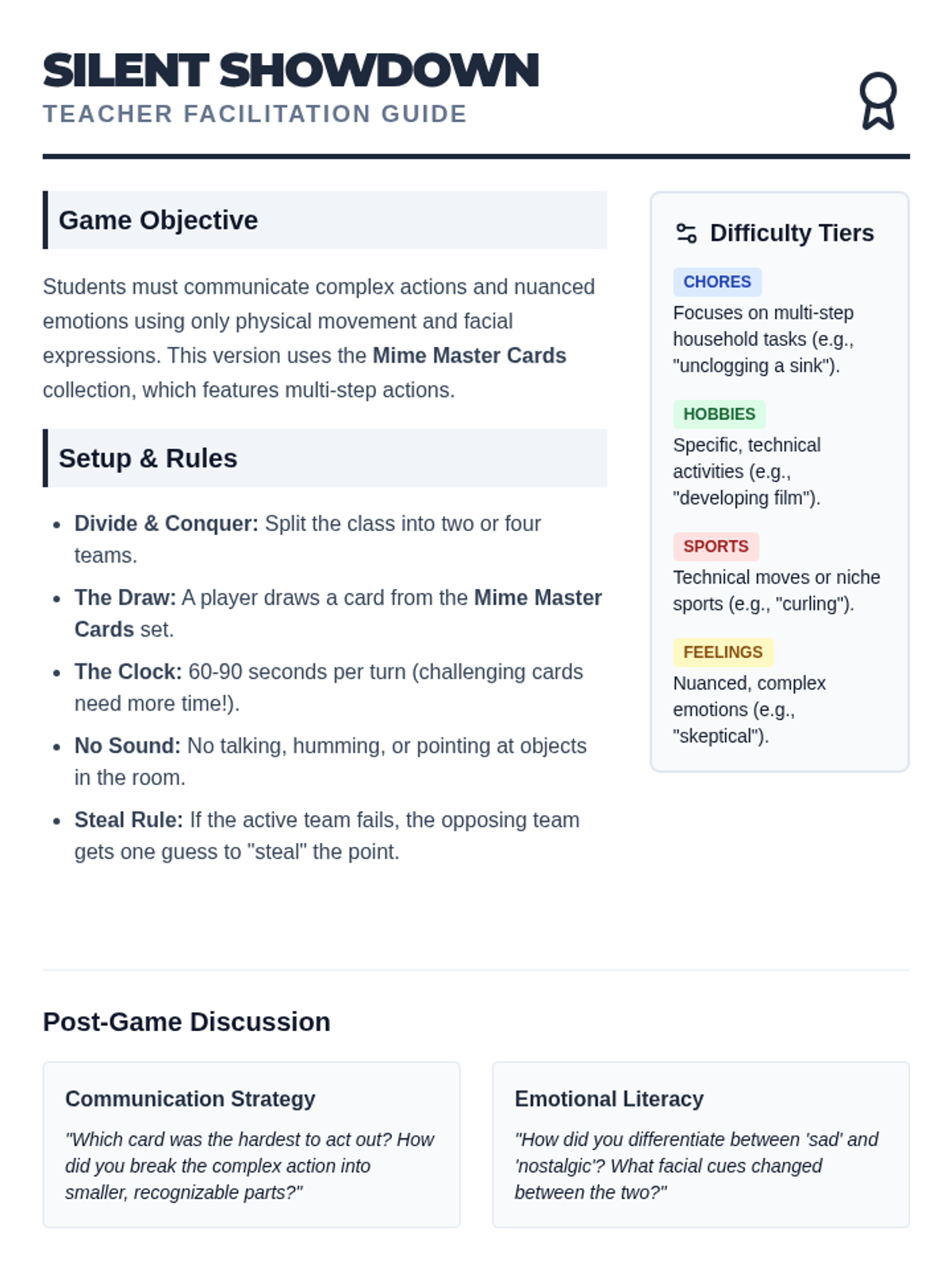
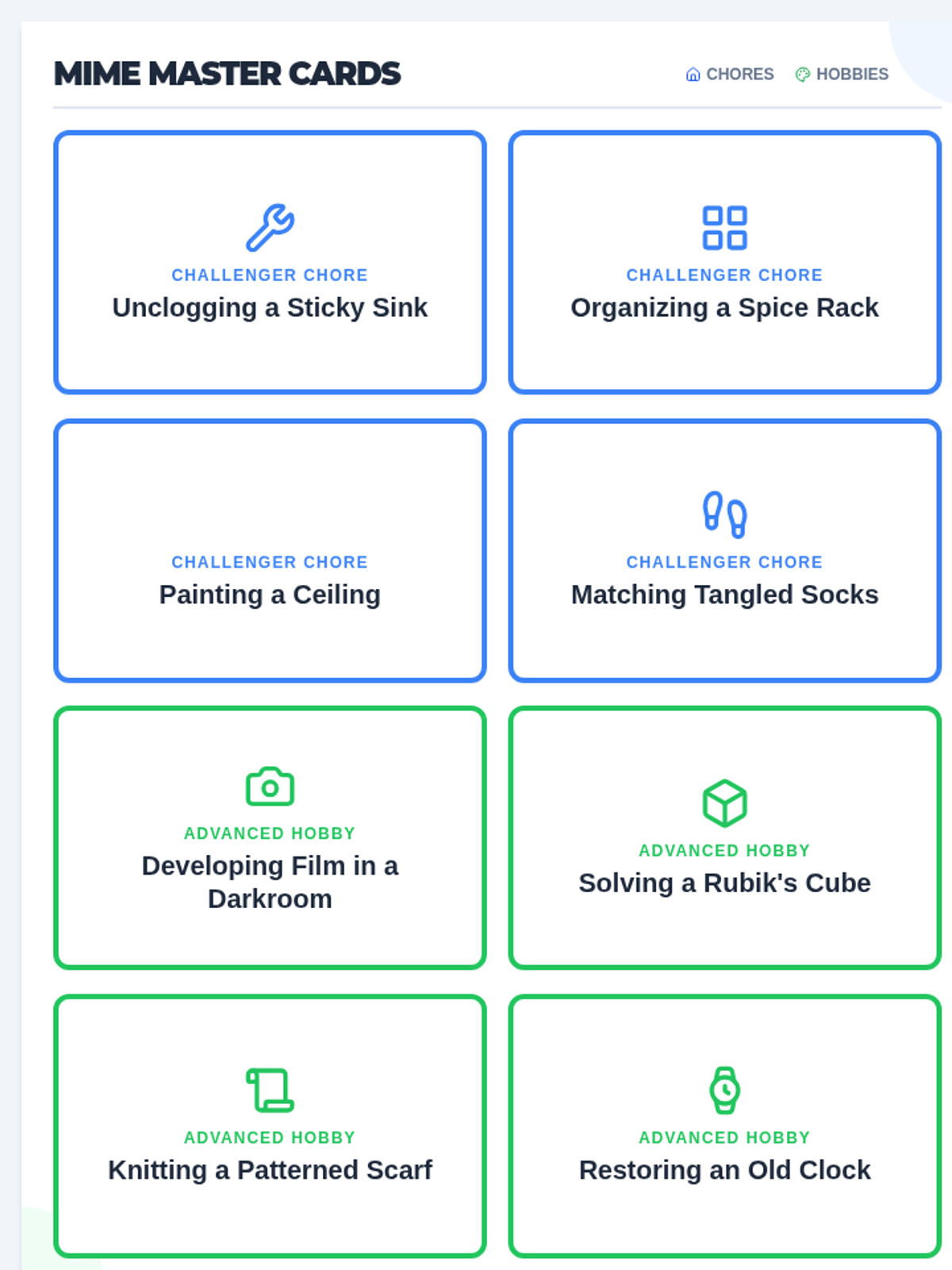
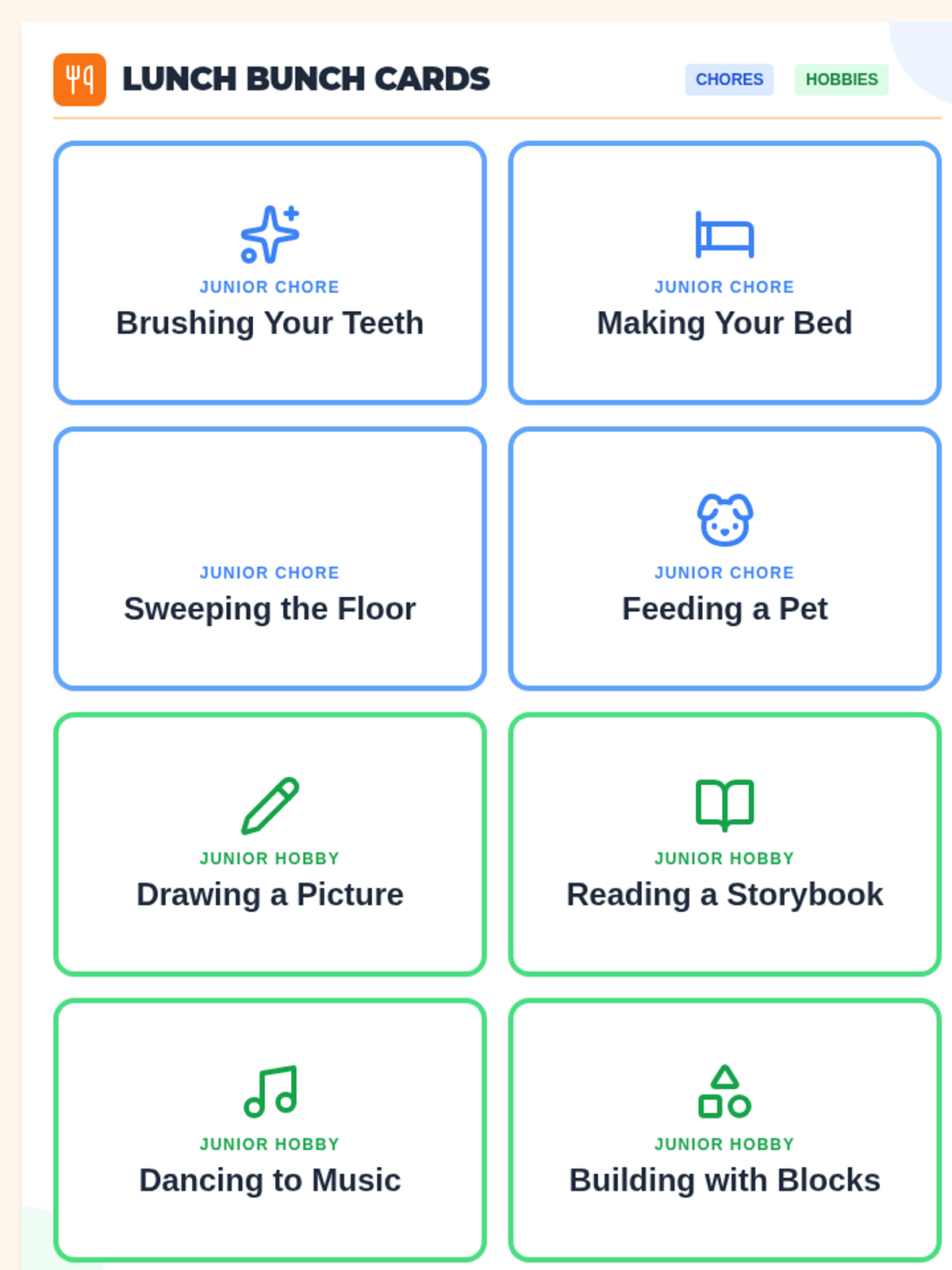
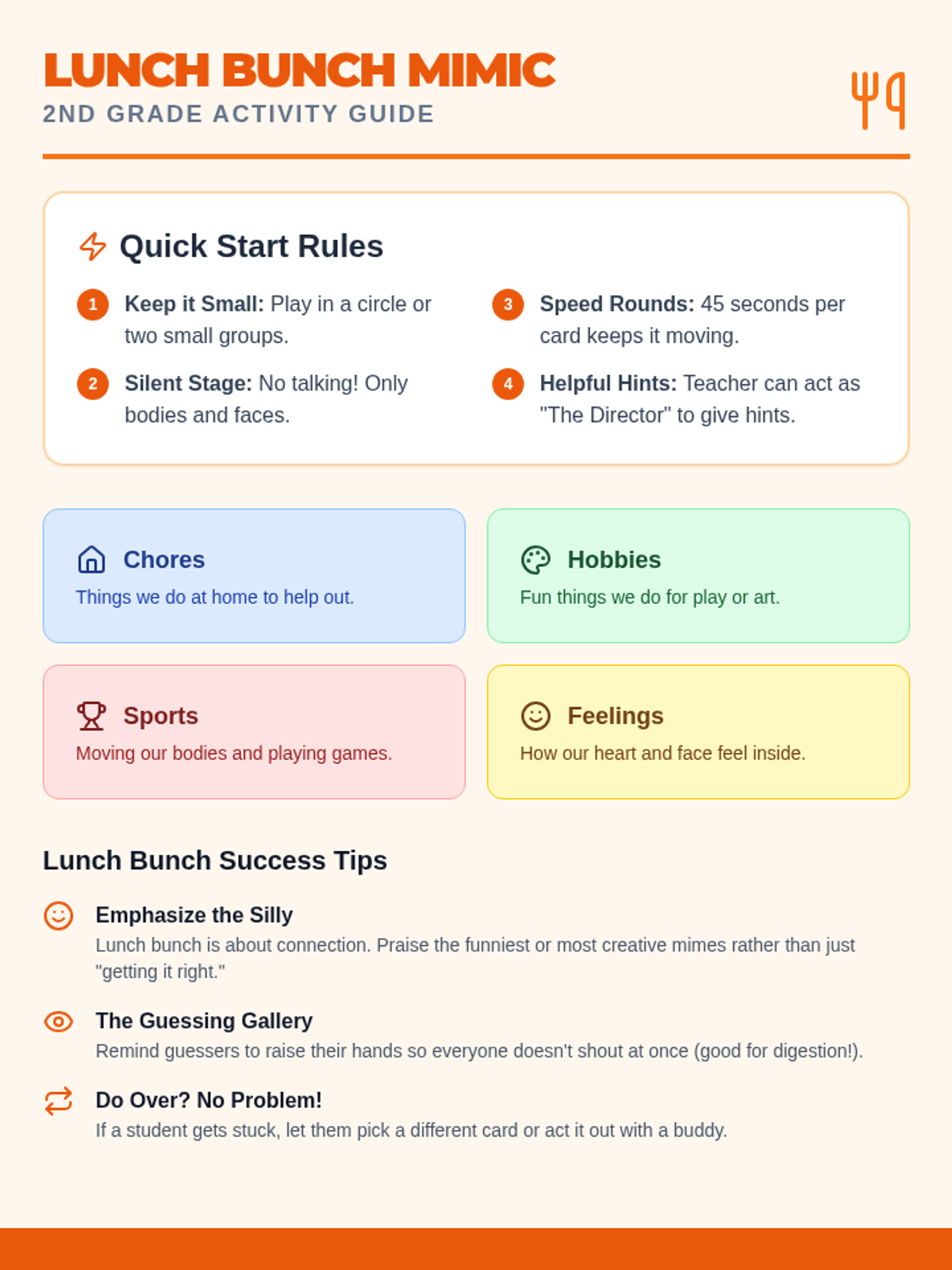
A dynamic lesson on non-verbal communication with two paths: a challenging 'Mime Master' level for older students and a simplified 'Lunch Bunch' version designed for 2nd grade social-emotional learning and casual play.
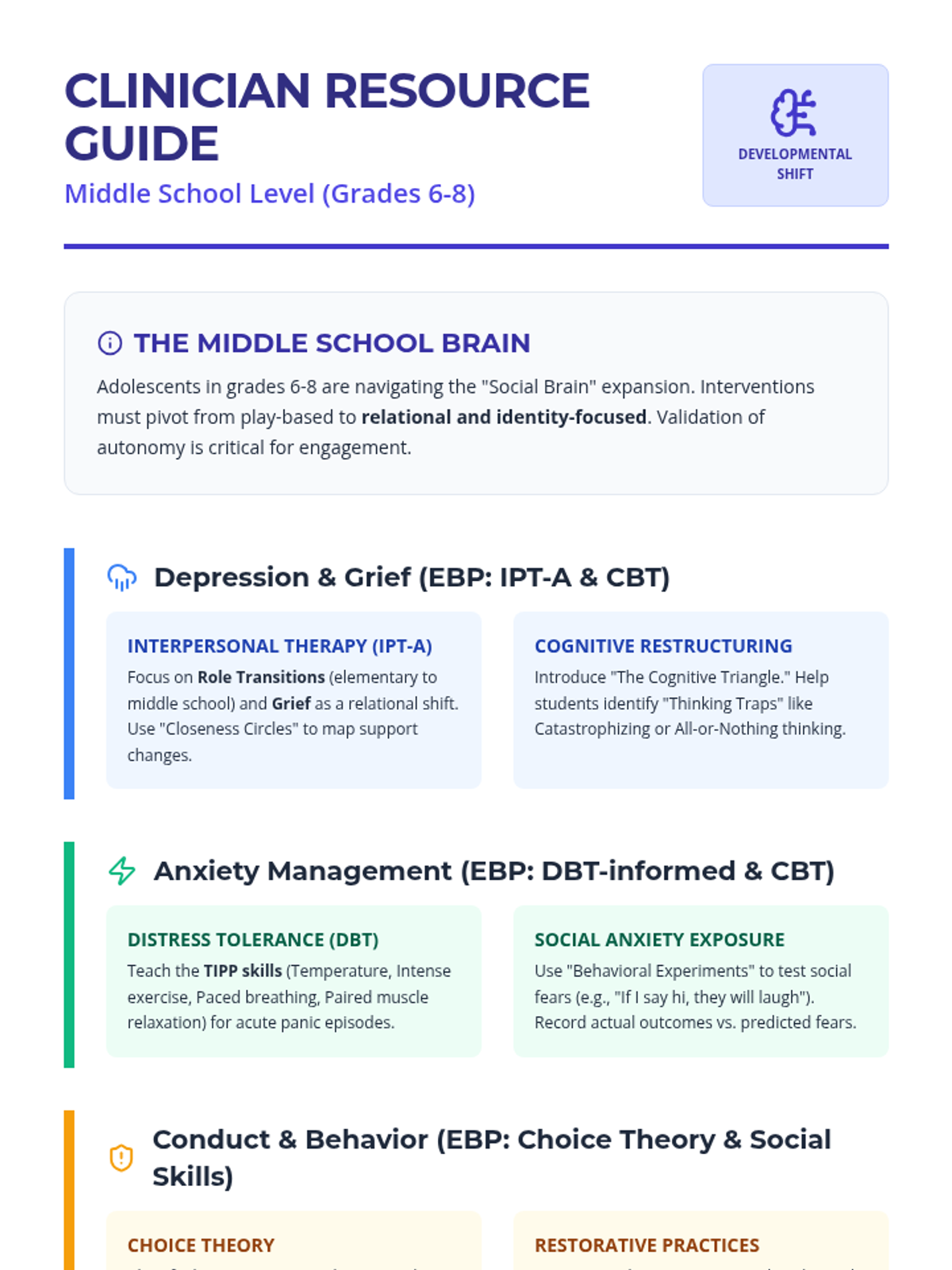
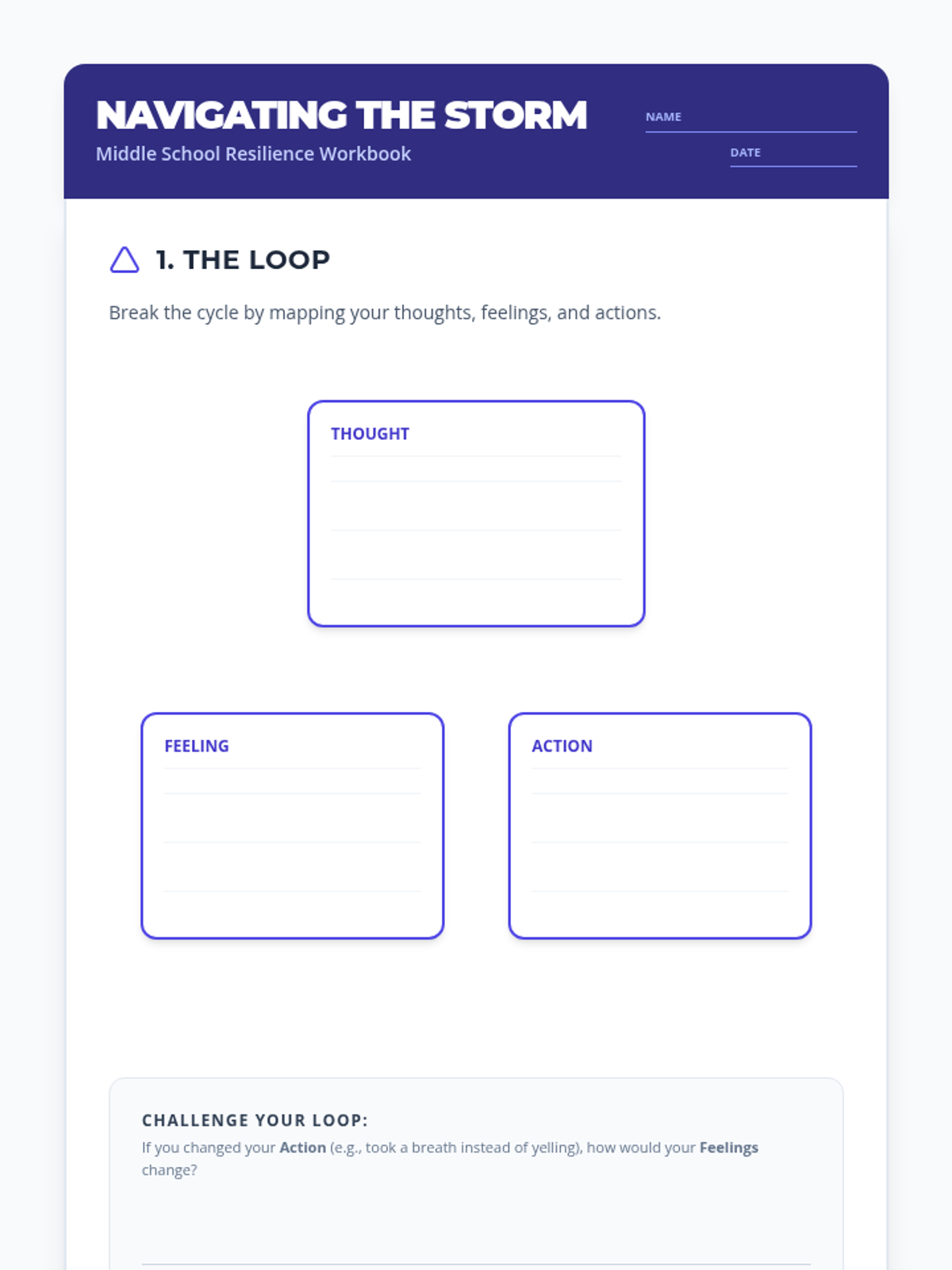
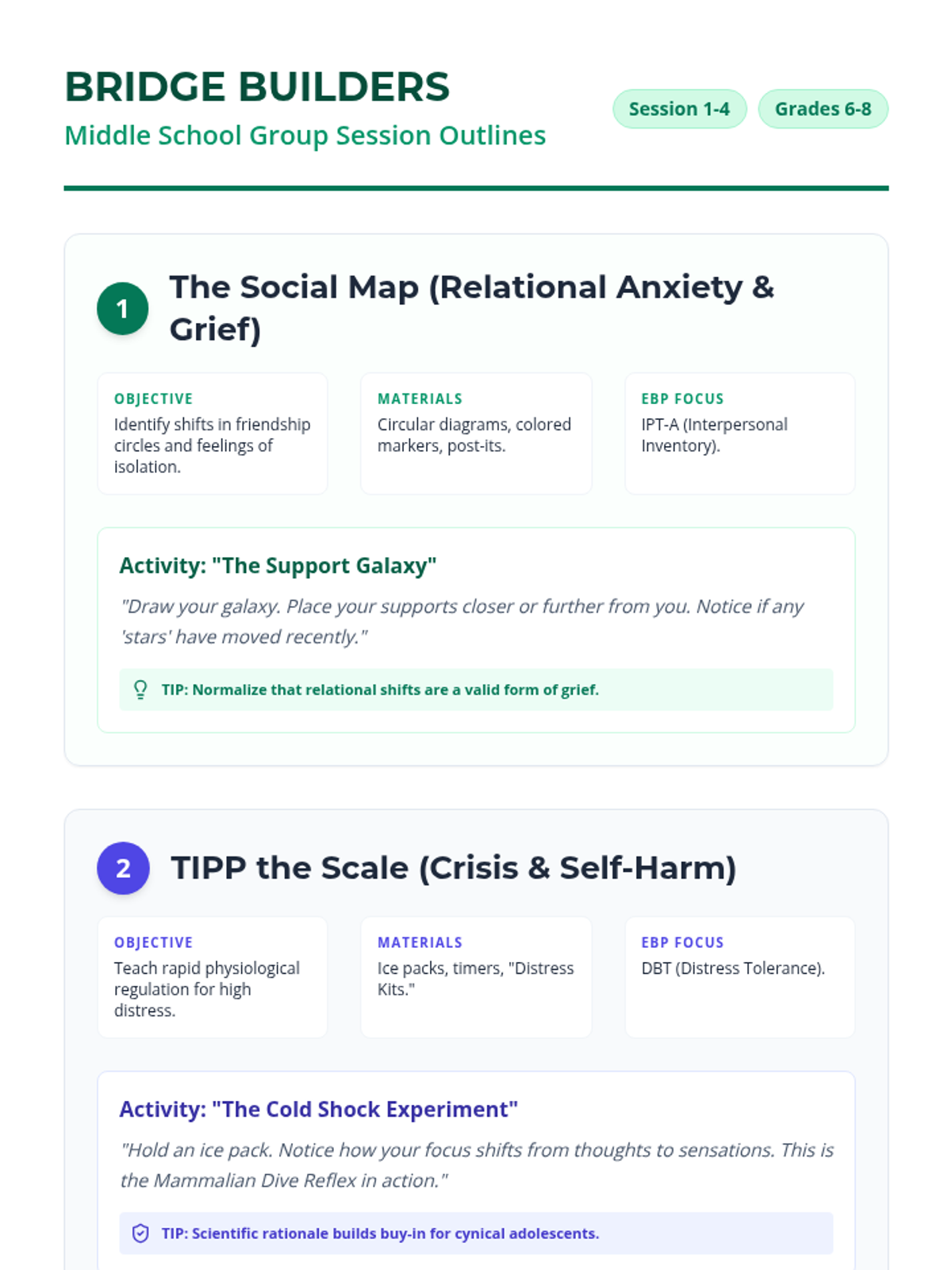
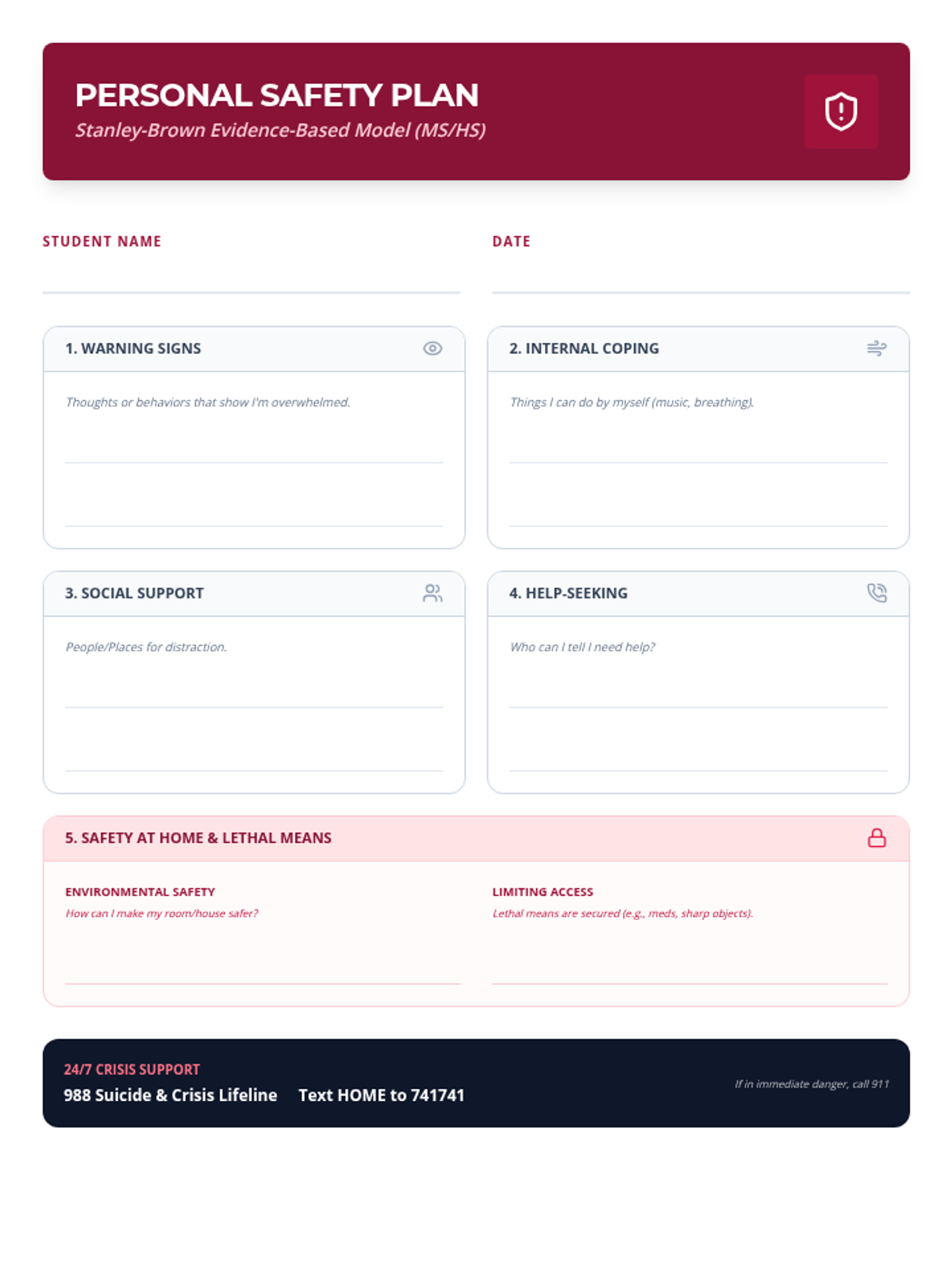
CBT and DBT-informed strategies tailored for the middle school transition, focusing on peer relationships, emotional regulation, and structured safety plans.
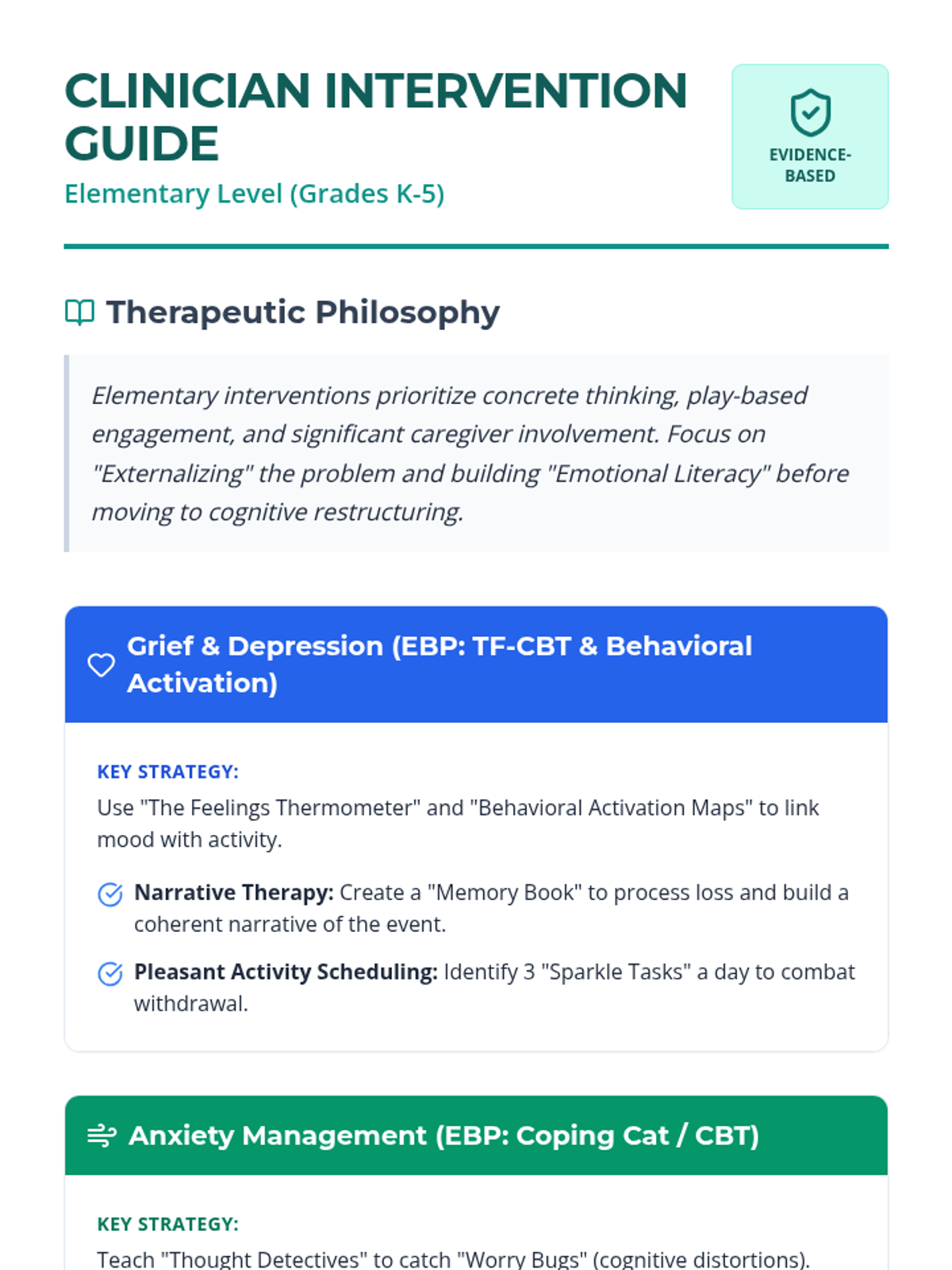
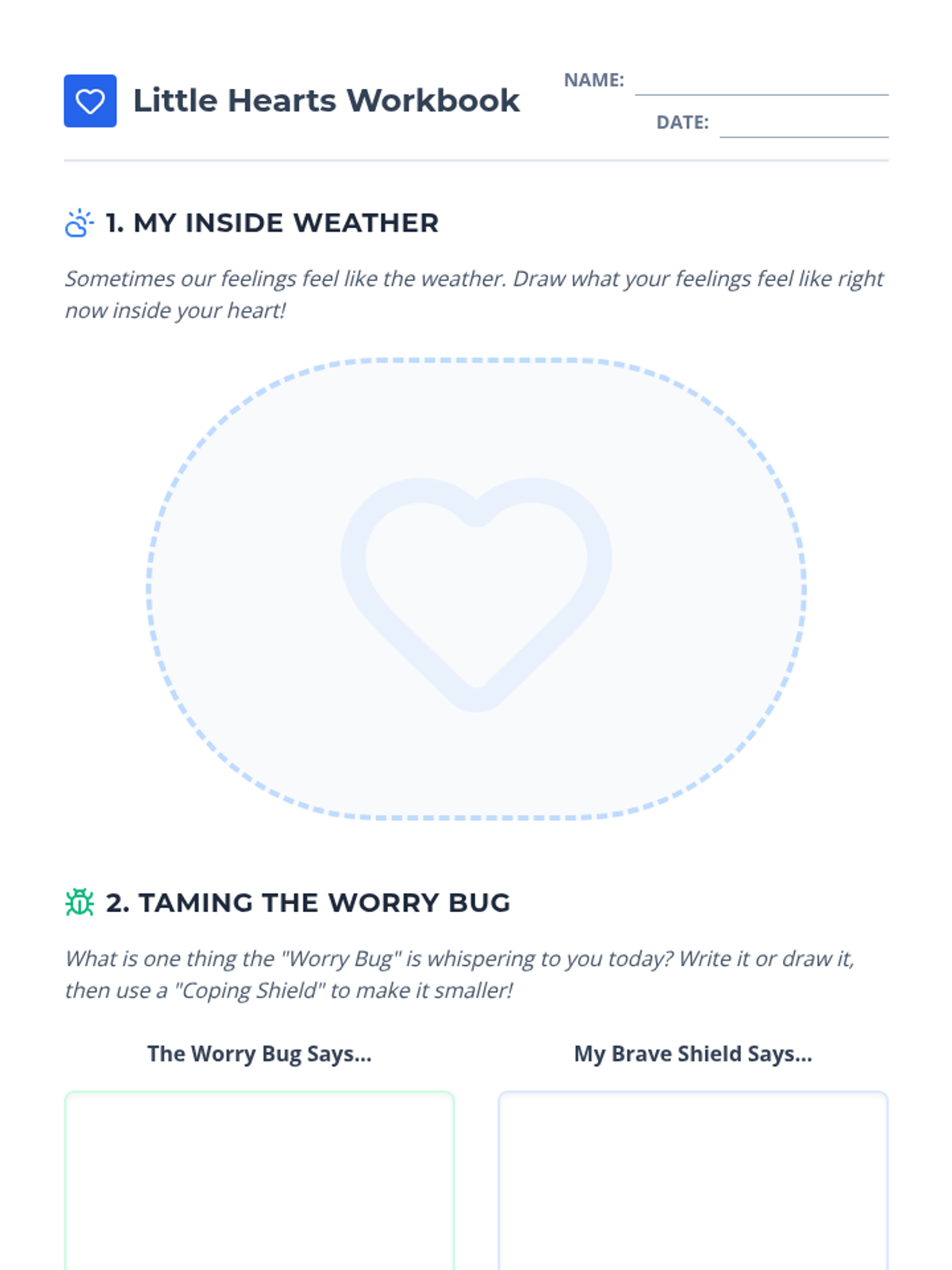
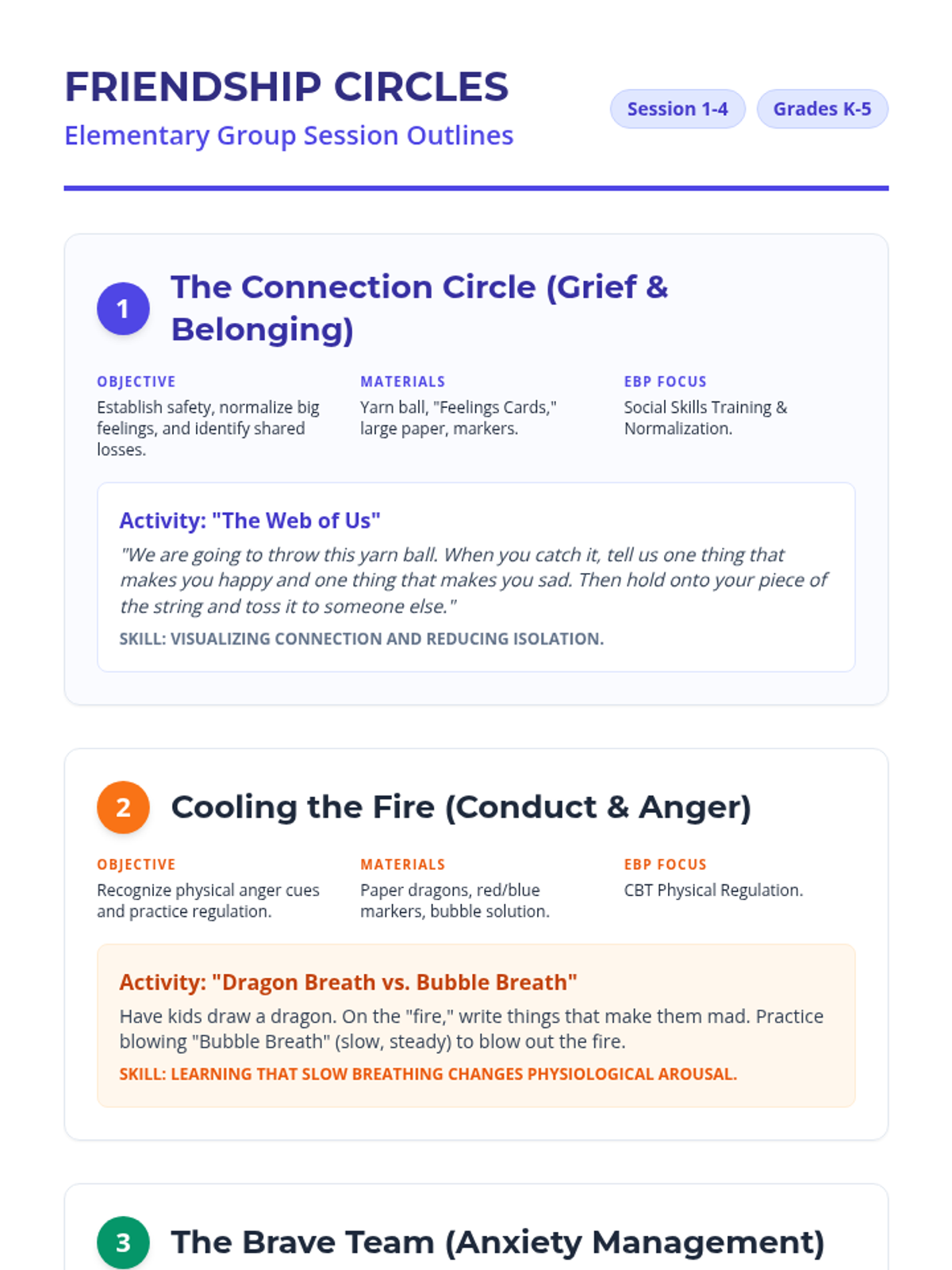
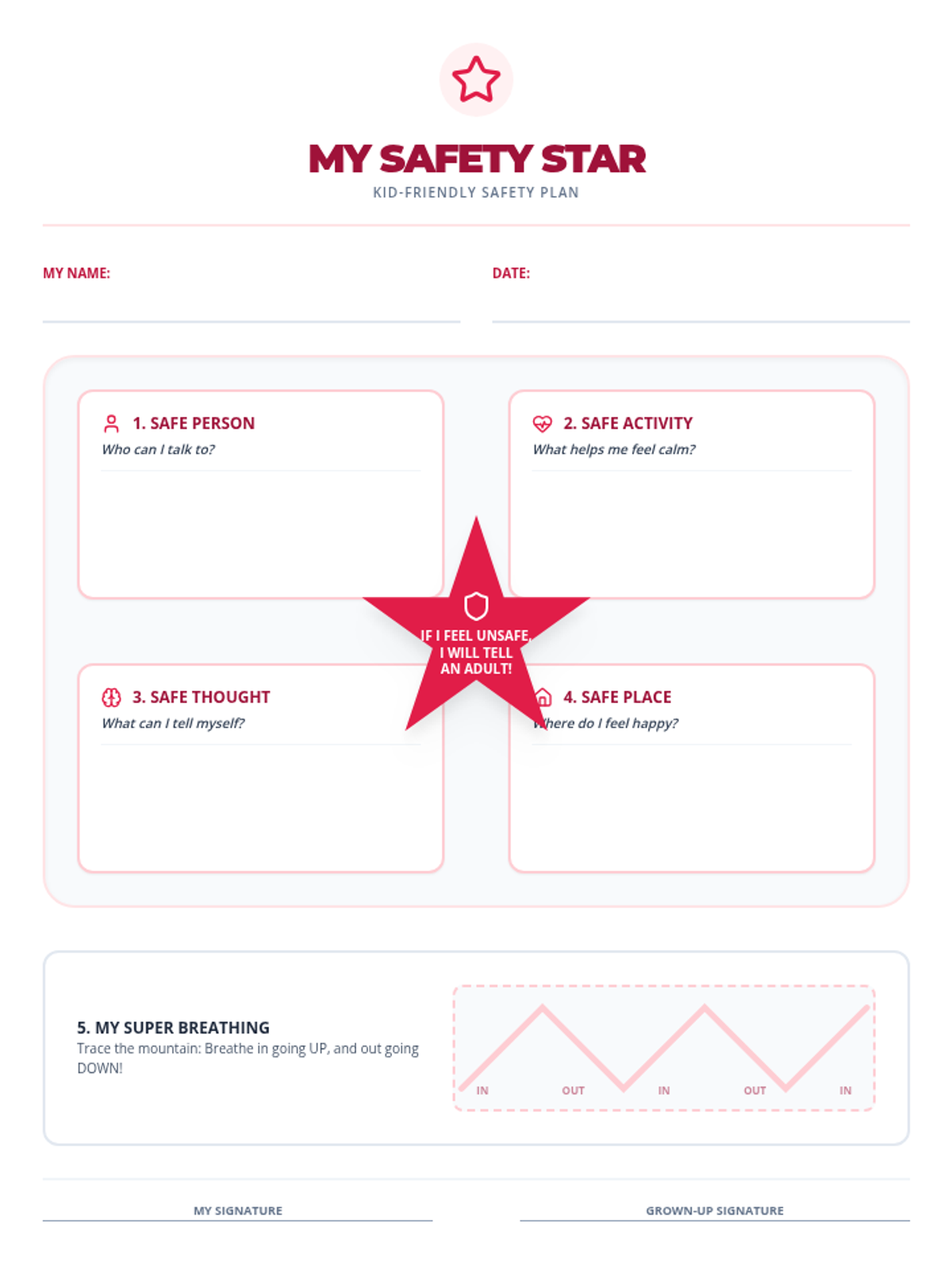
Developmentally appropriate interventions for elementary students focusing on play-based CBT, social-emotional learning, and kid-friendly safety planning.
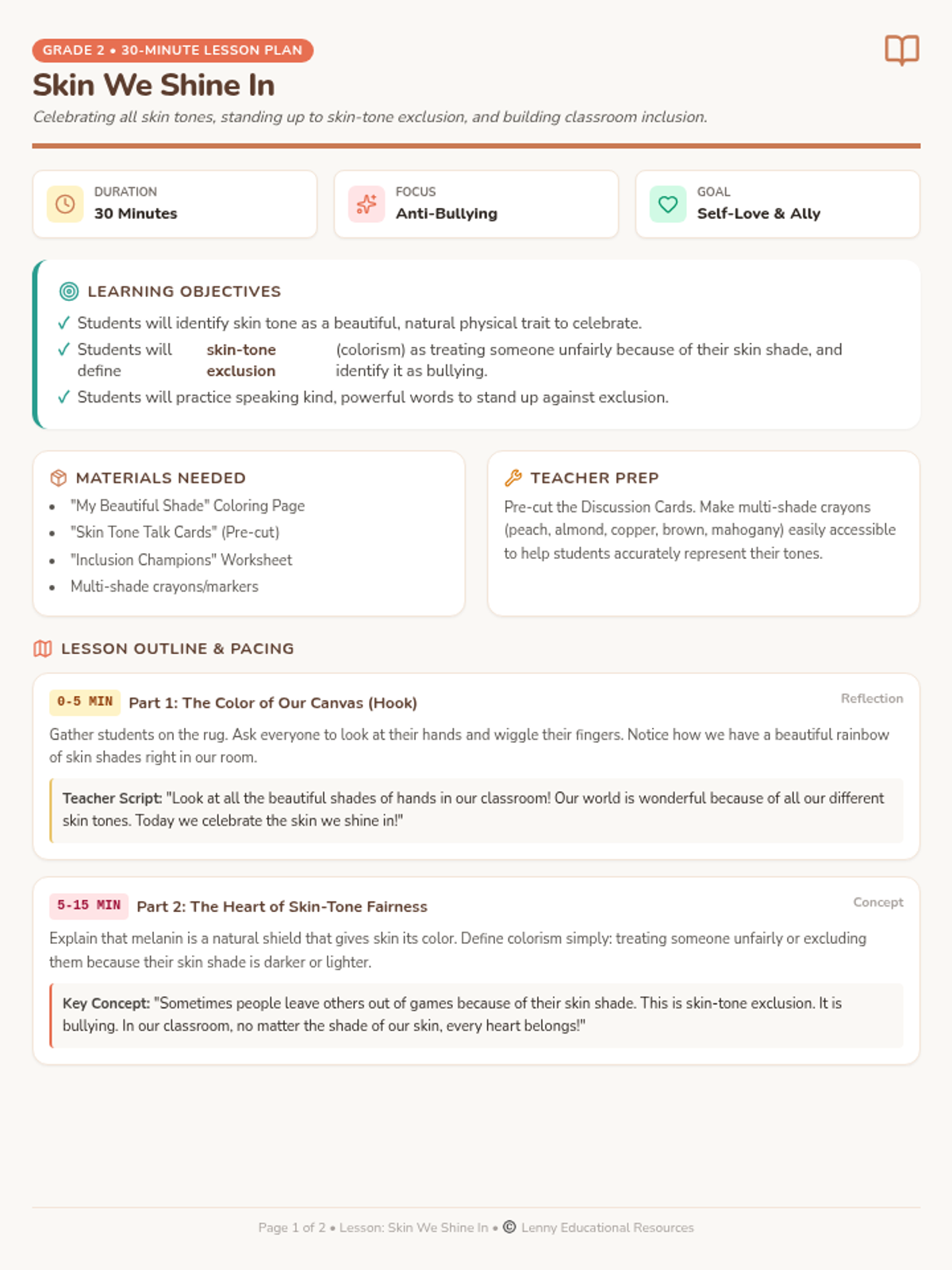
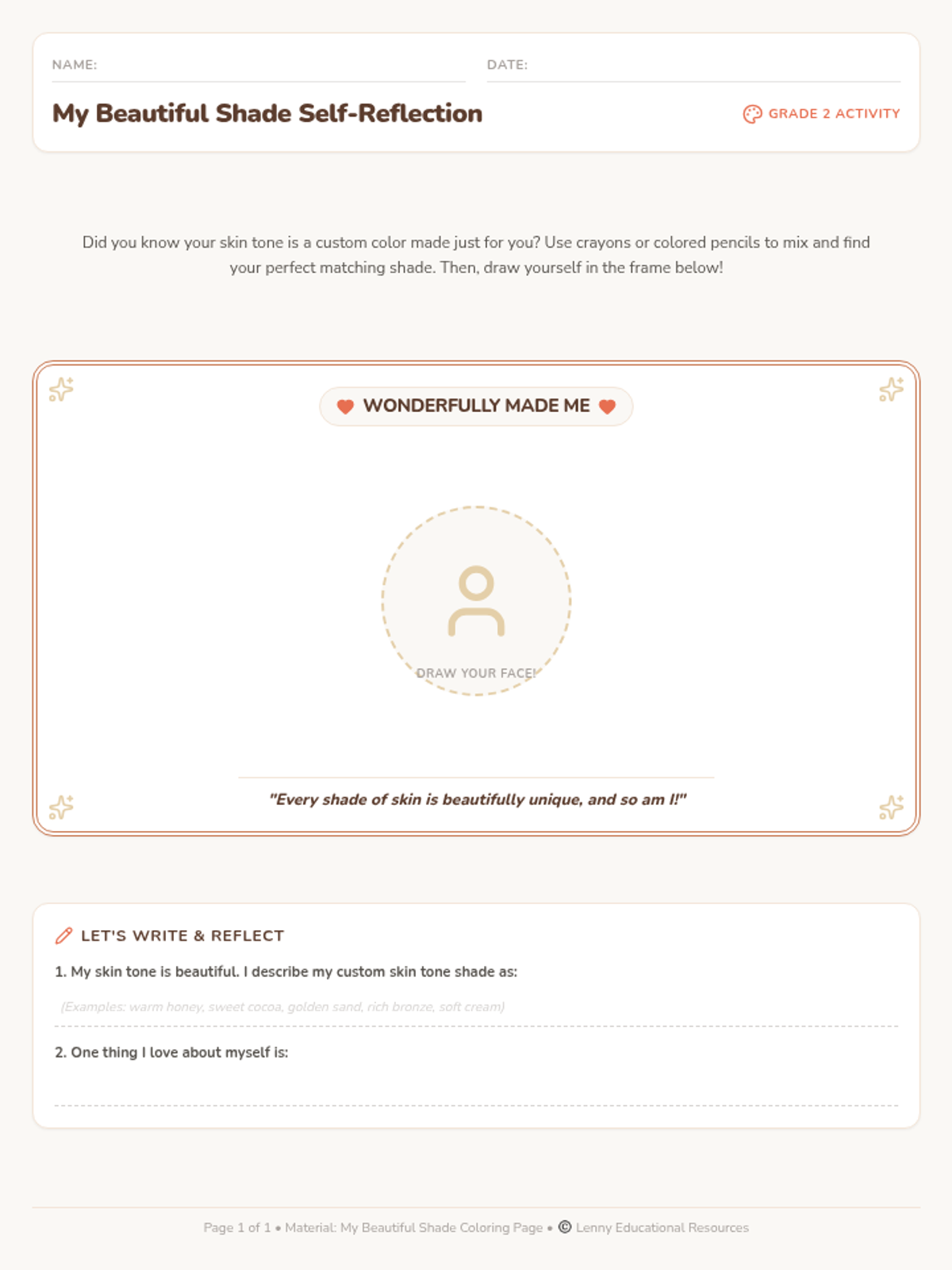
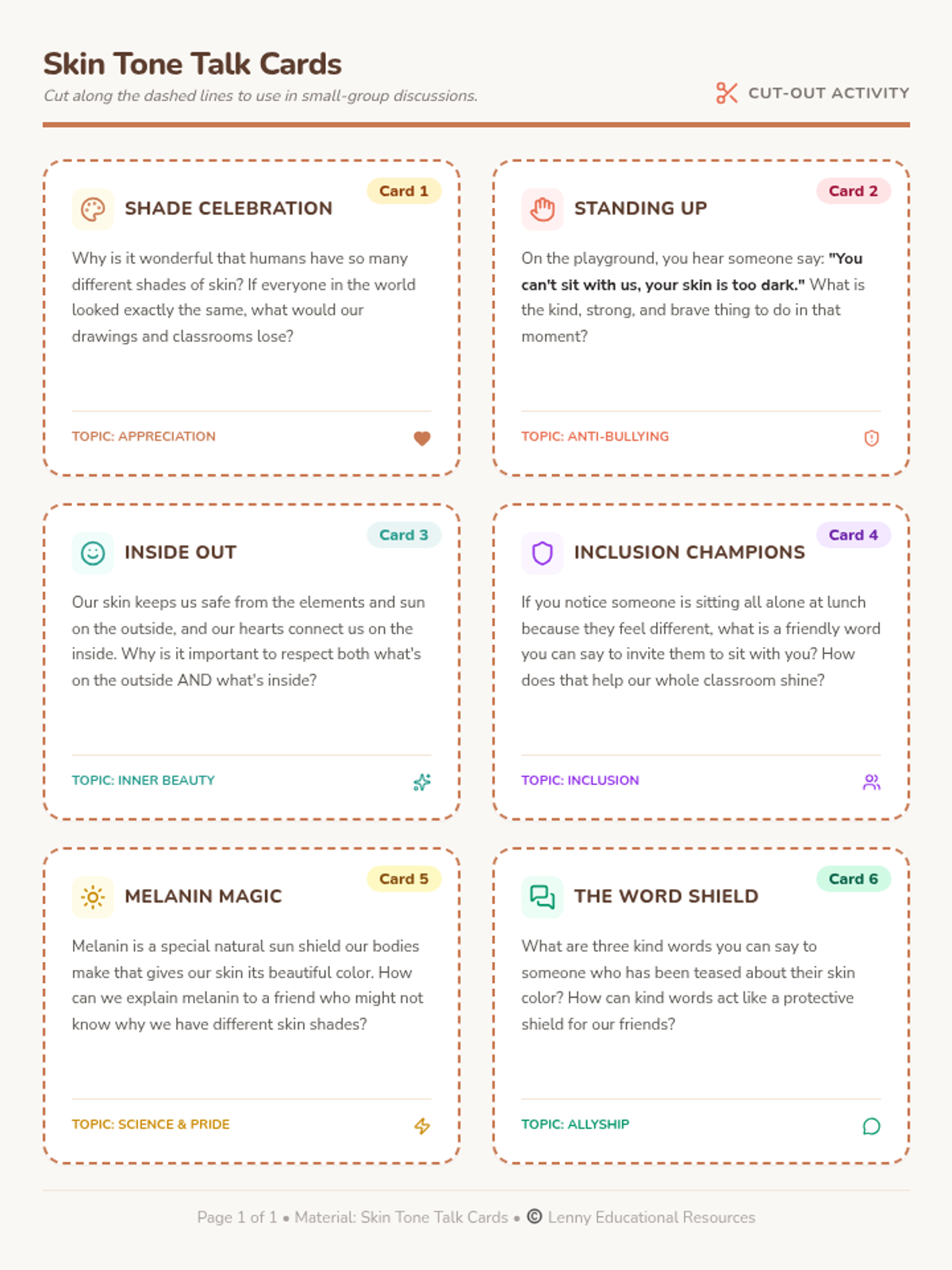
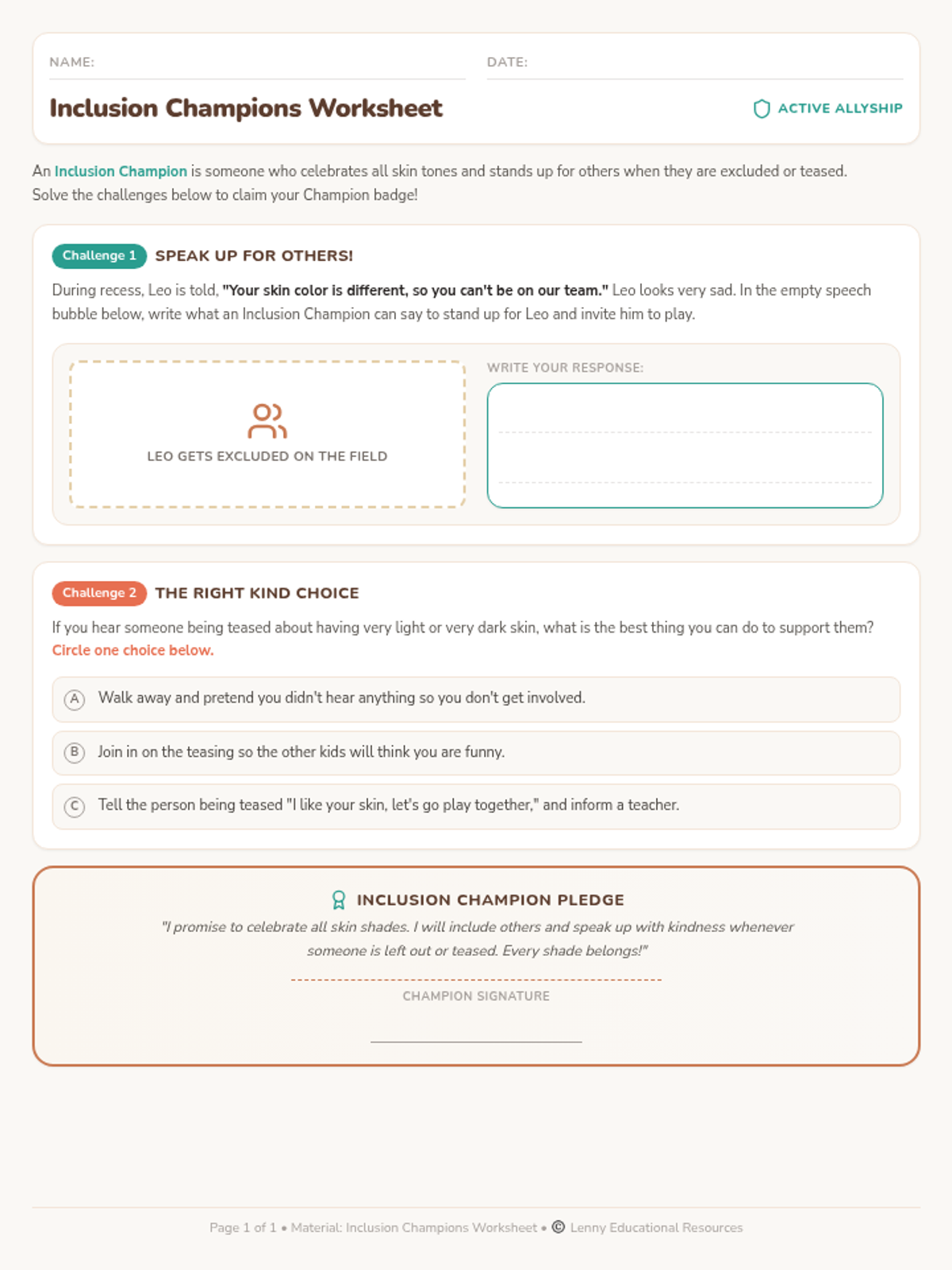
A warm, 30-minute interactive lesson for 2nd graders that celebrates all skin tones, addresses skin-tone exclusion (colorism) with compassion, and empowers students to stand up to bullying. Includes a comprehensive teacher's guide, a self-reflection coloring page, small-group discussion cards, and an interactive scenarios worksheet.
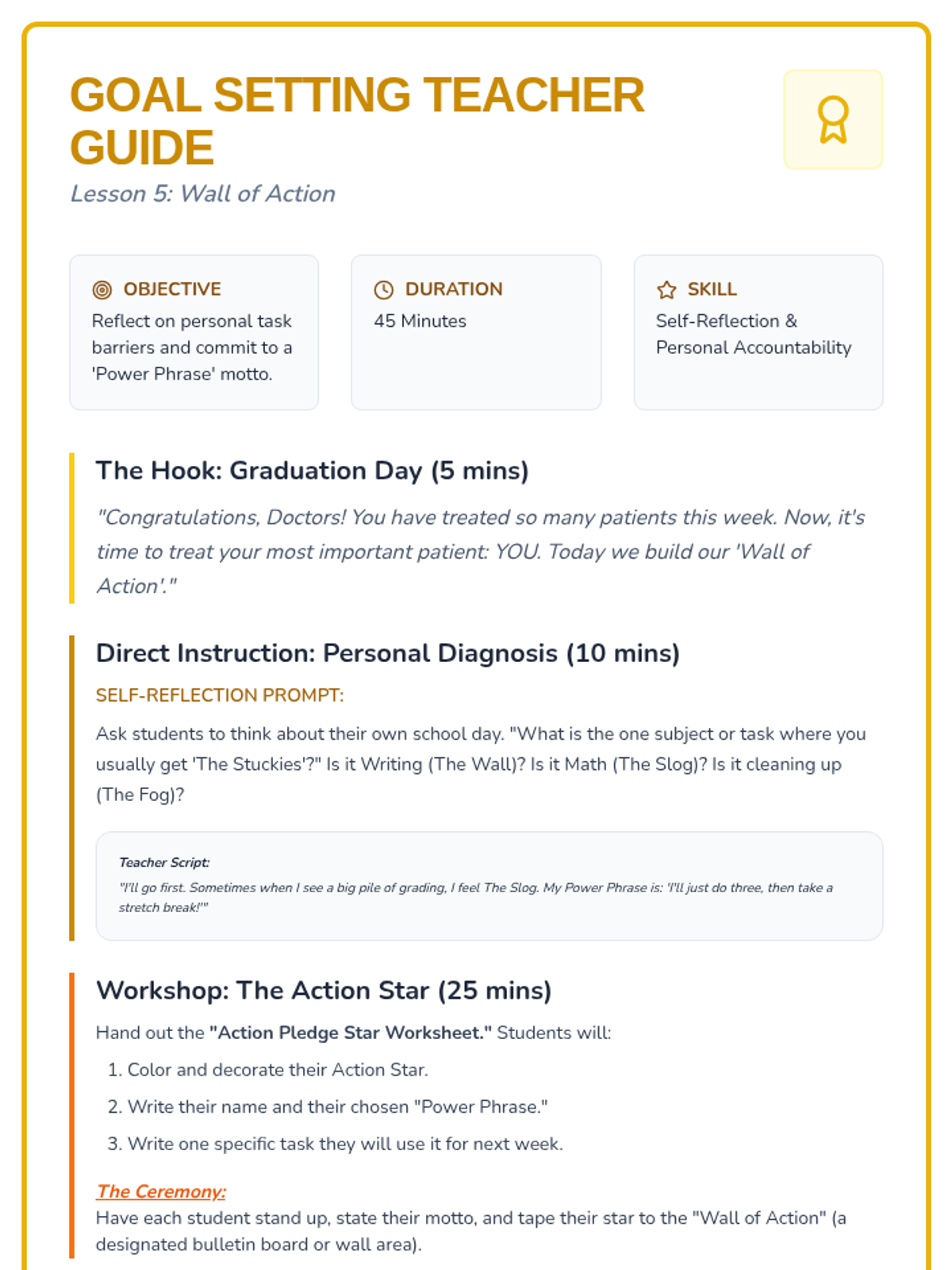
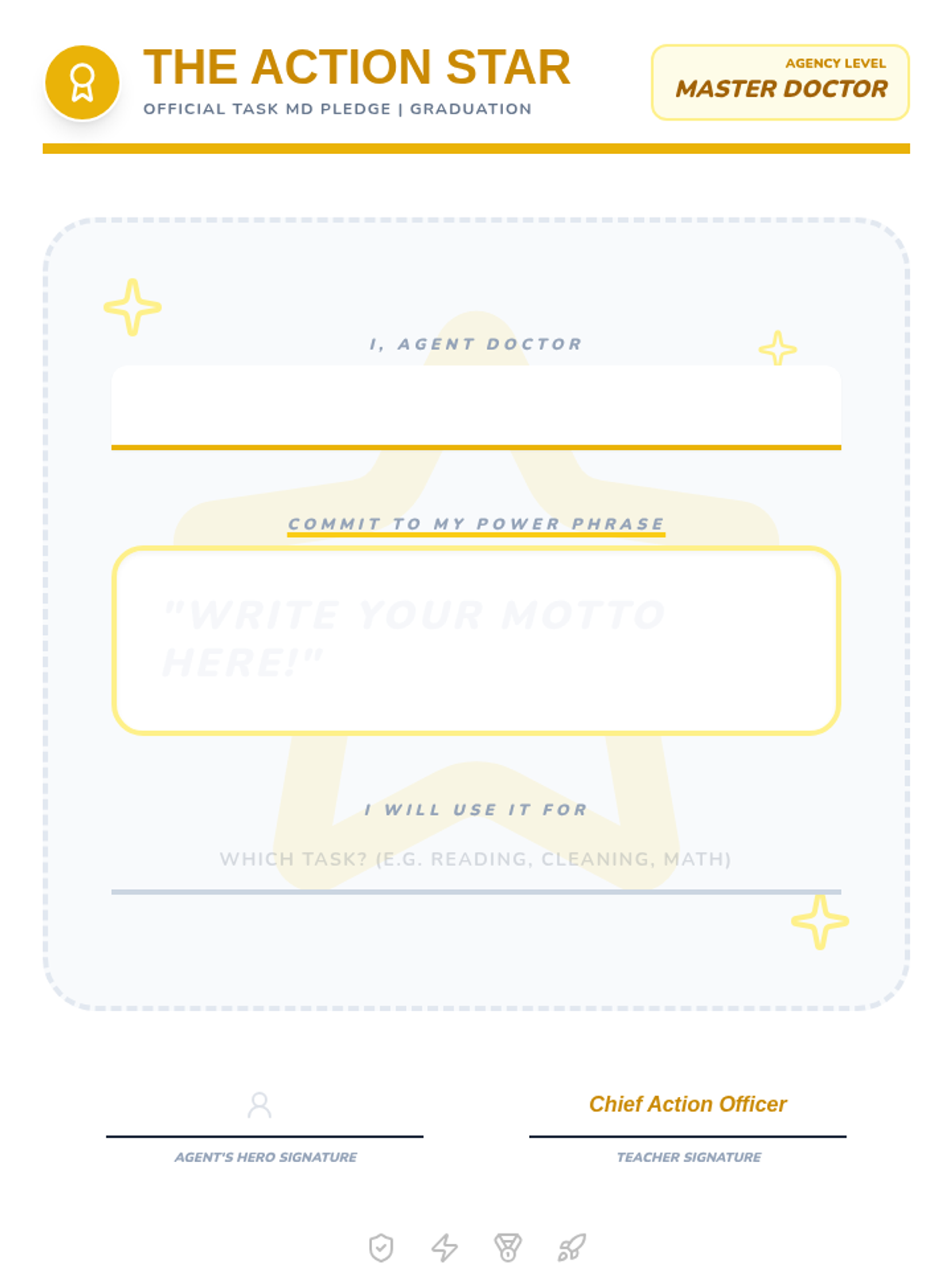
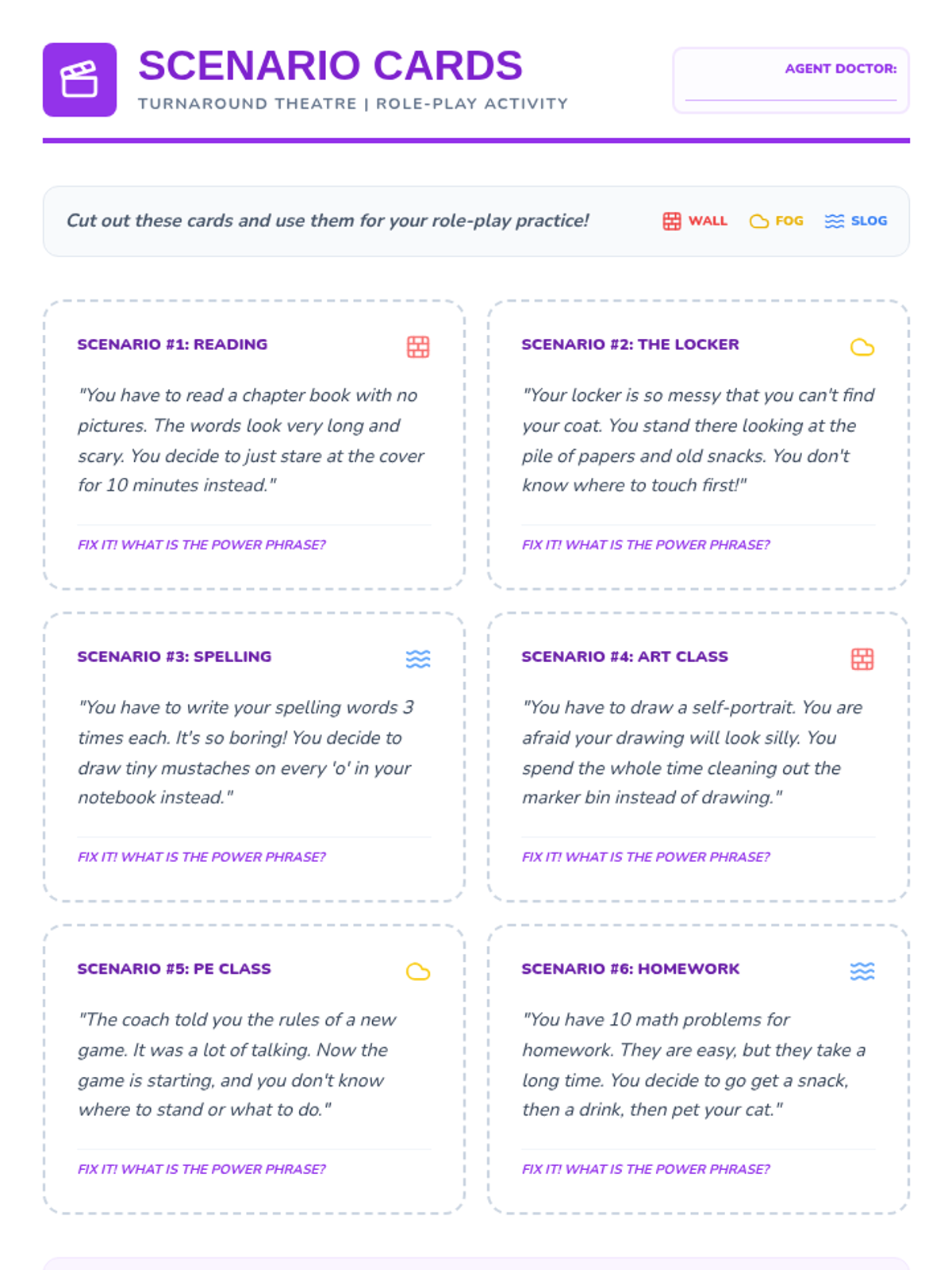
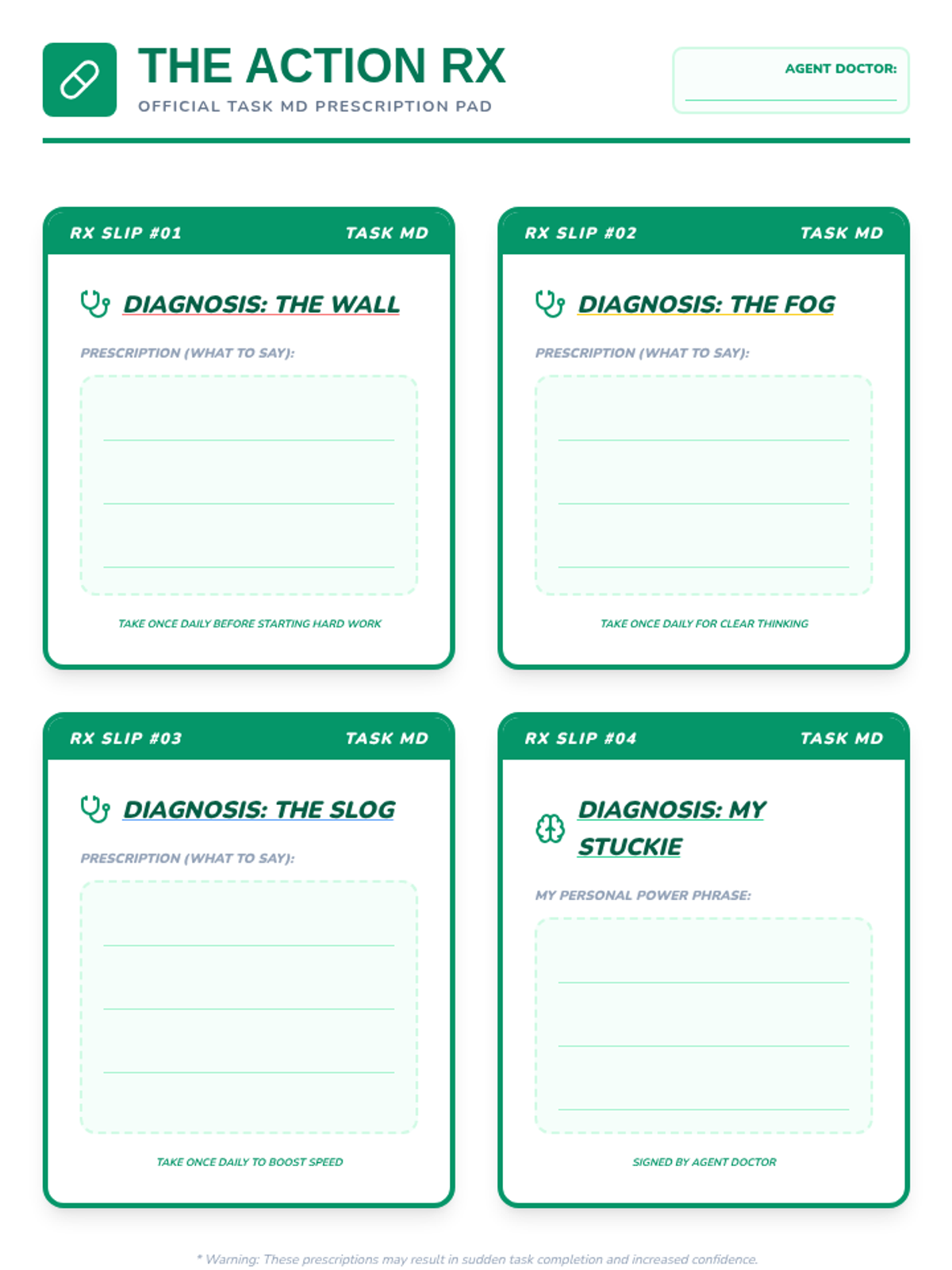
Students identify their own barriers to starting work and select a personal 'Power Phrase' motto for future tasks.
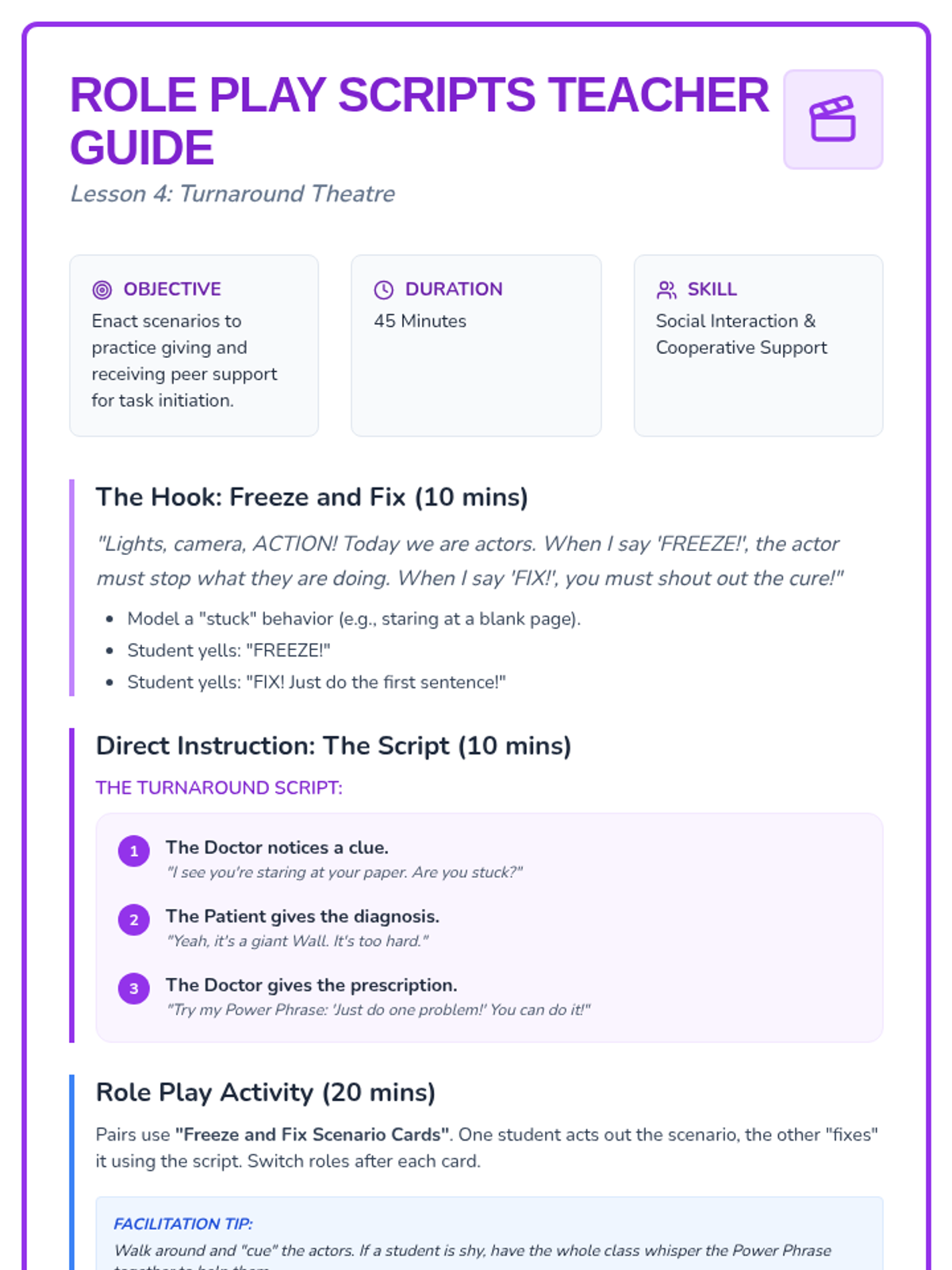
Students role-play scenarios where they help a peer get 'unstuck' using their self-talk prescriptions.
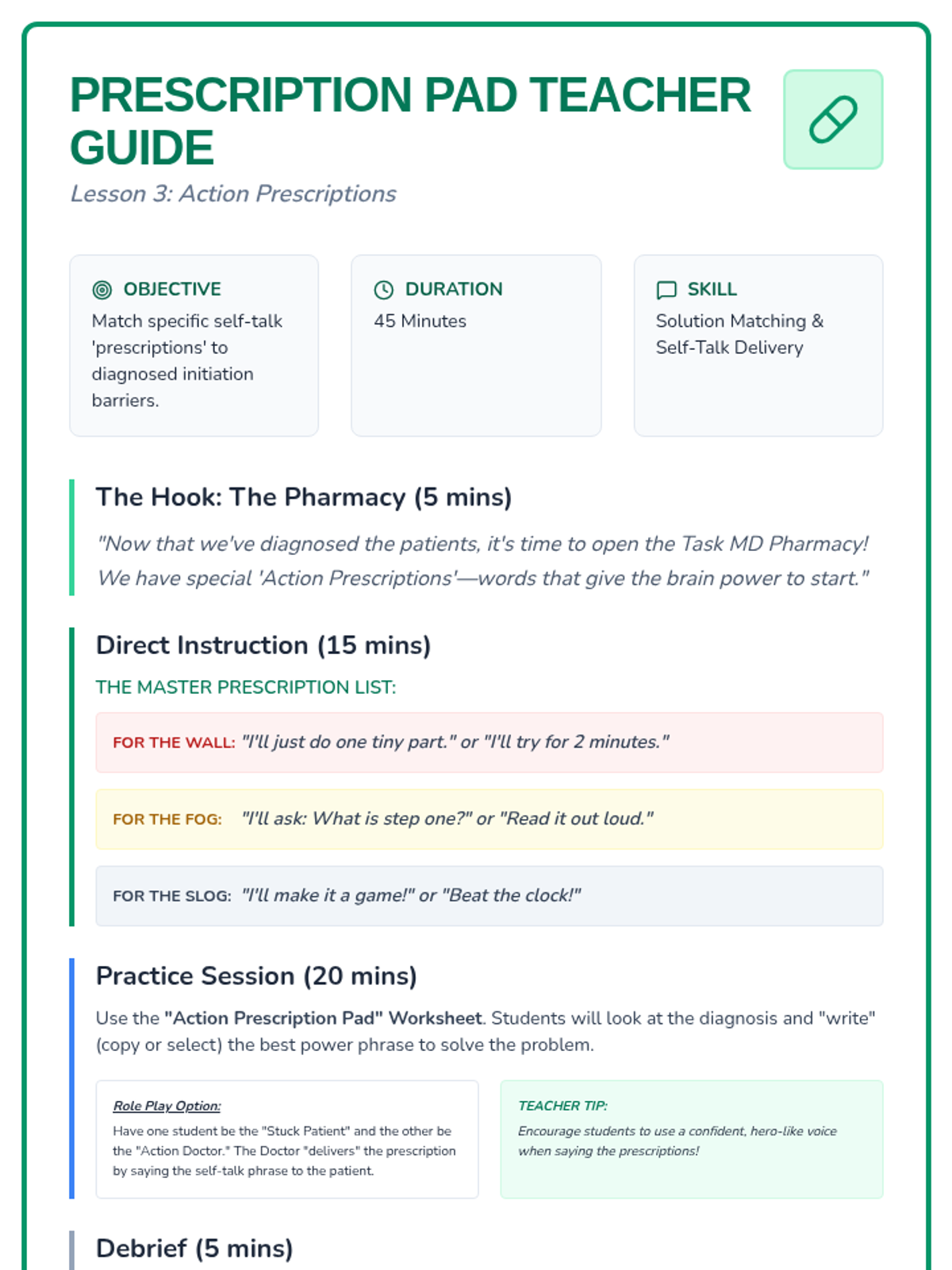
Students match specific self-talk 'prescriptions' to diagnosed problems and practice delivering these lines to characters.
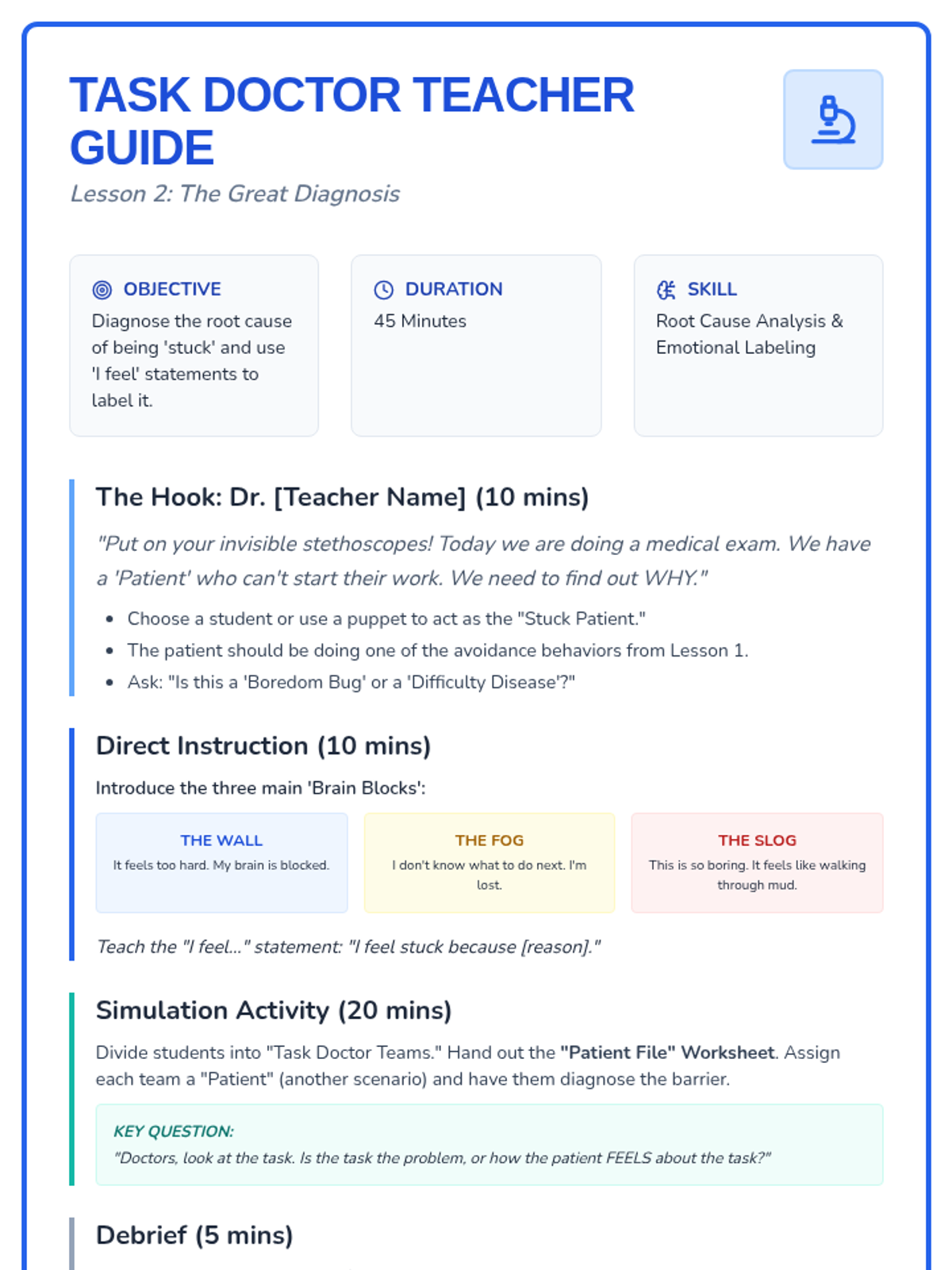
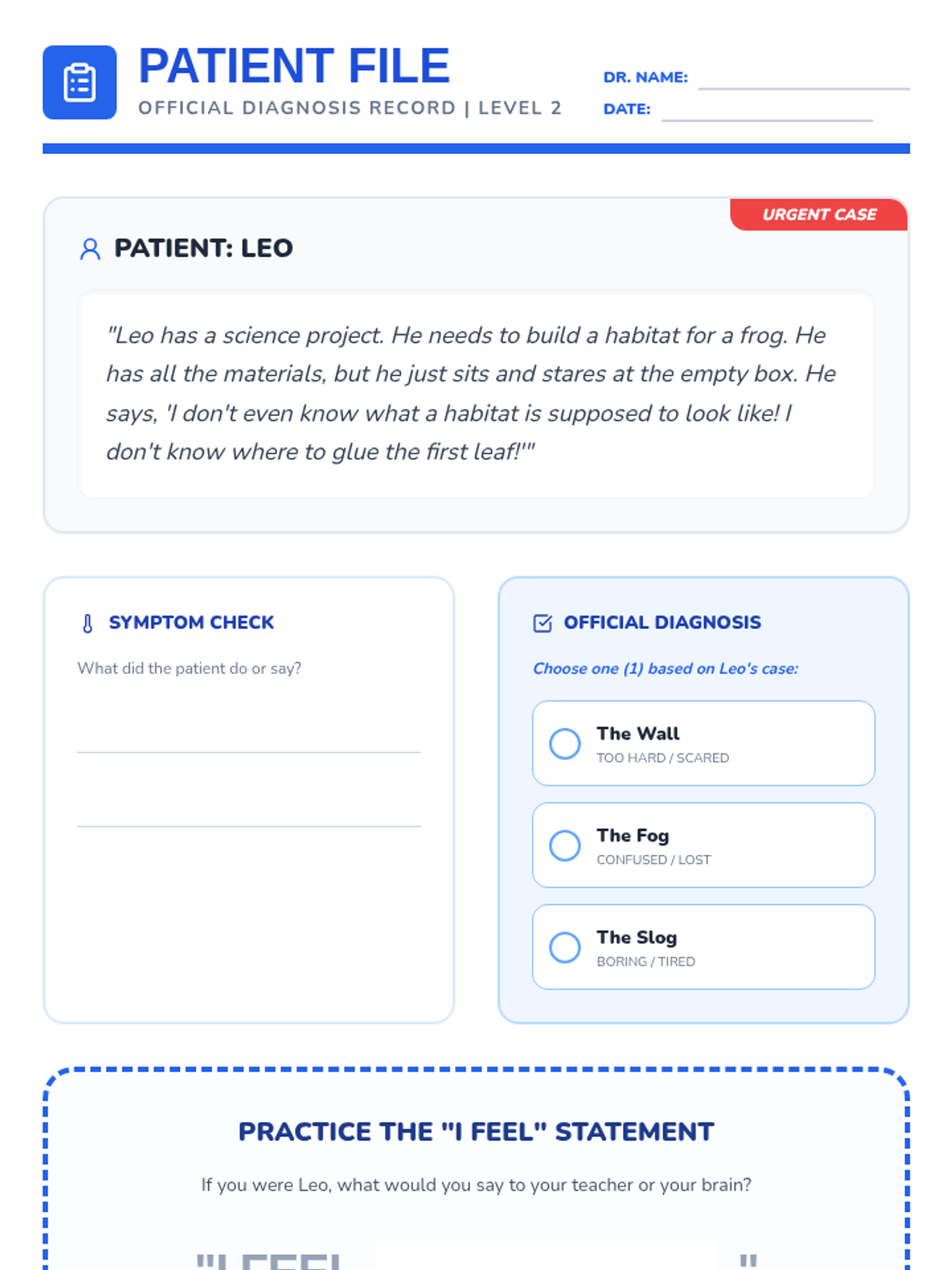
Students act as 'Task Doctors' to determine why a character is stuck (boredom, difficulty, fatigue) and practice labeling these emotions.
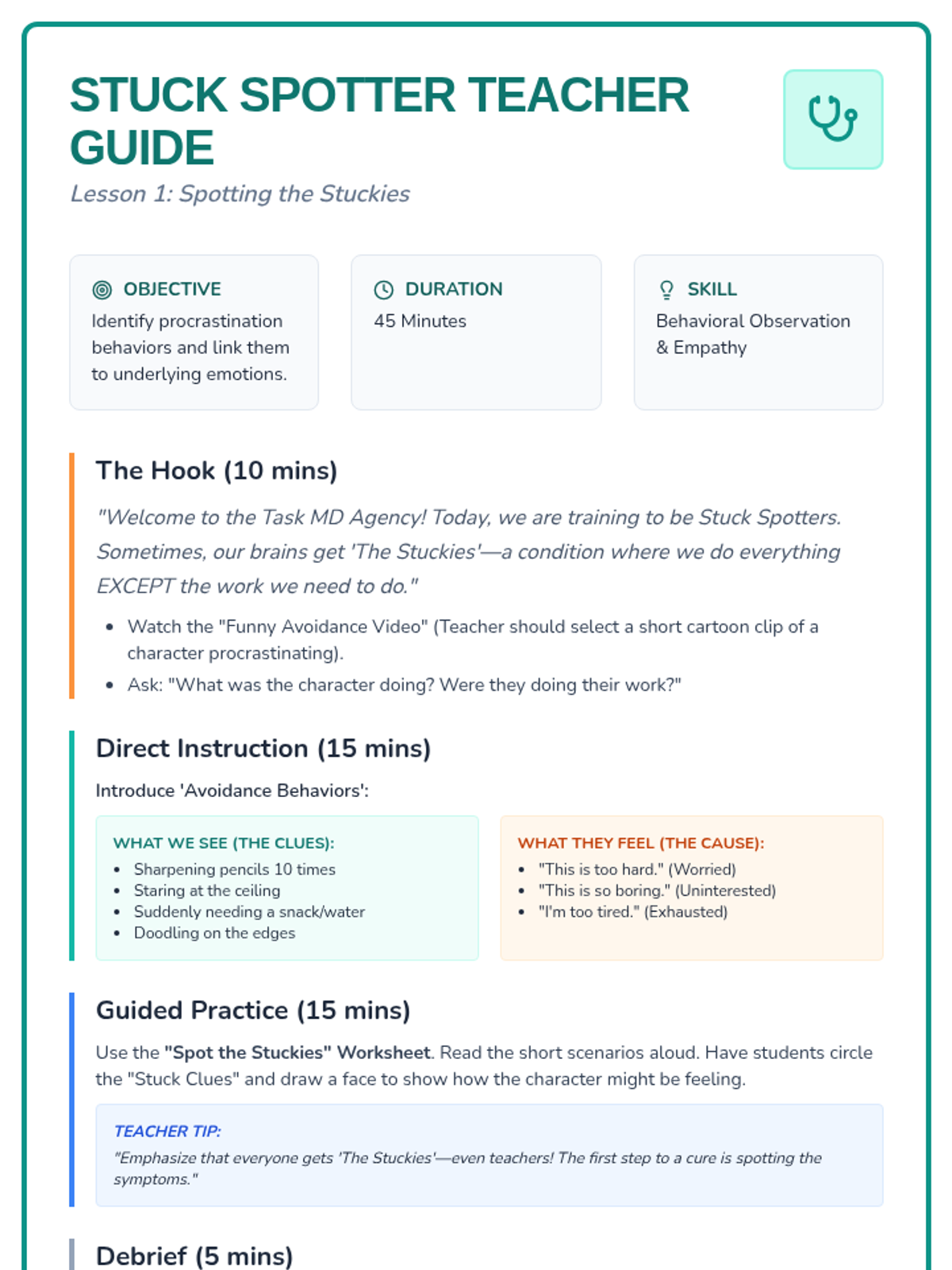
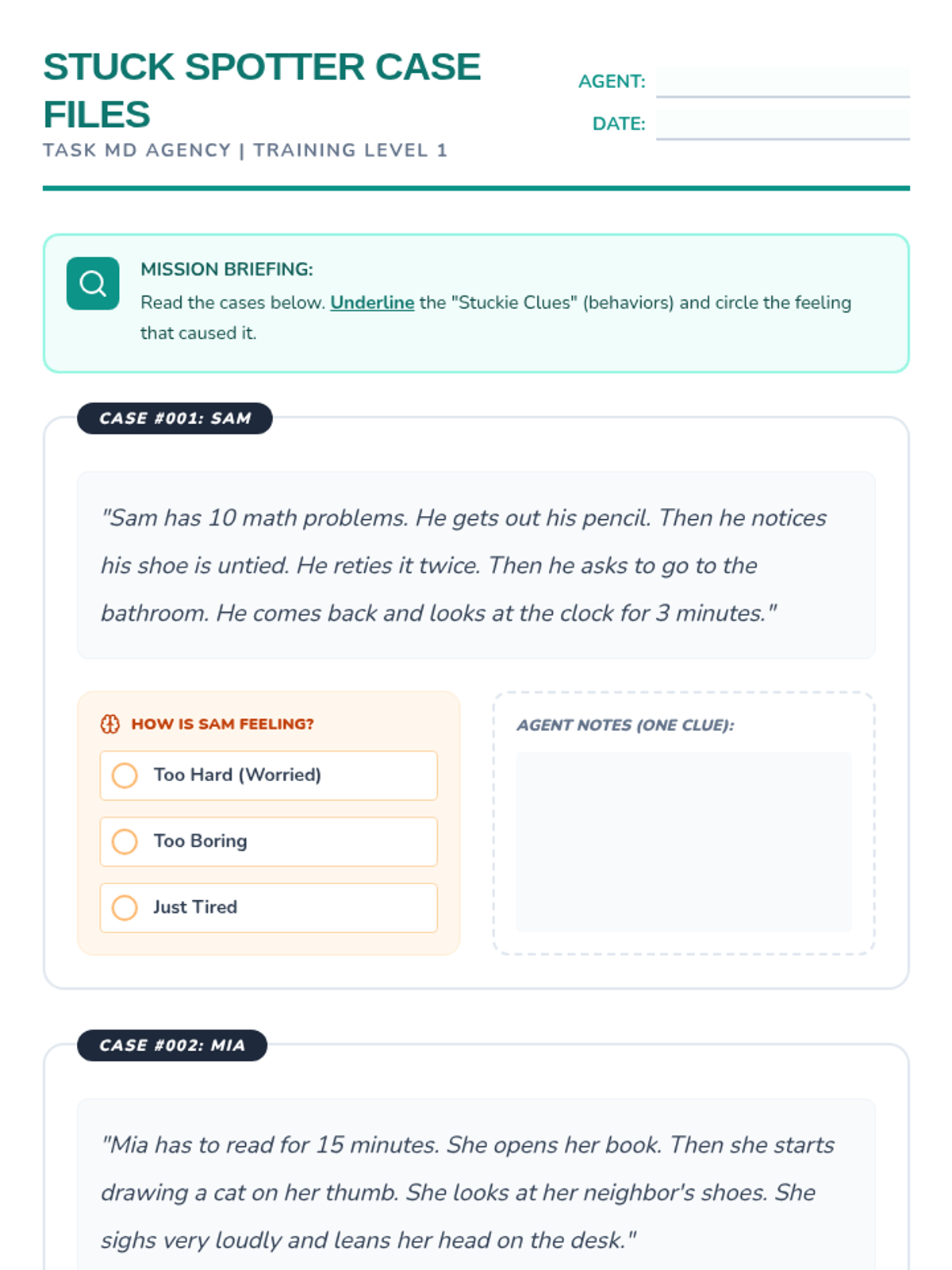
Students identify behaviors that show someone is avoiding work and brainstorm what emotions might be driving those behaviors through case studies.
Students practice adapting their behavior and expectations when a new adult (substitute) takes charge of the classroom.
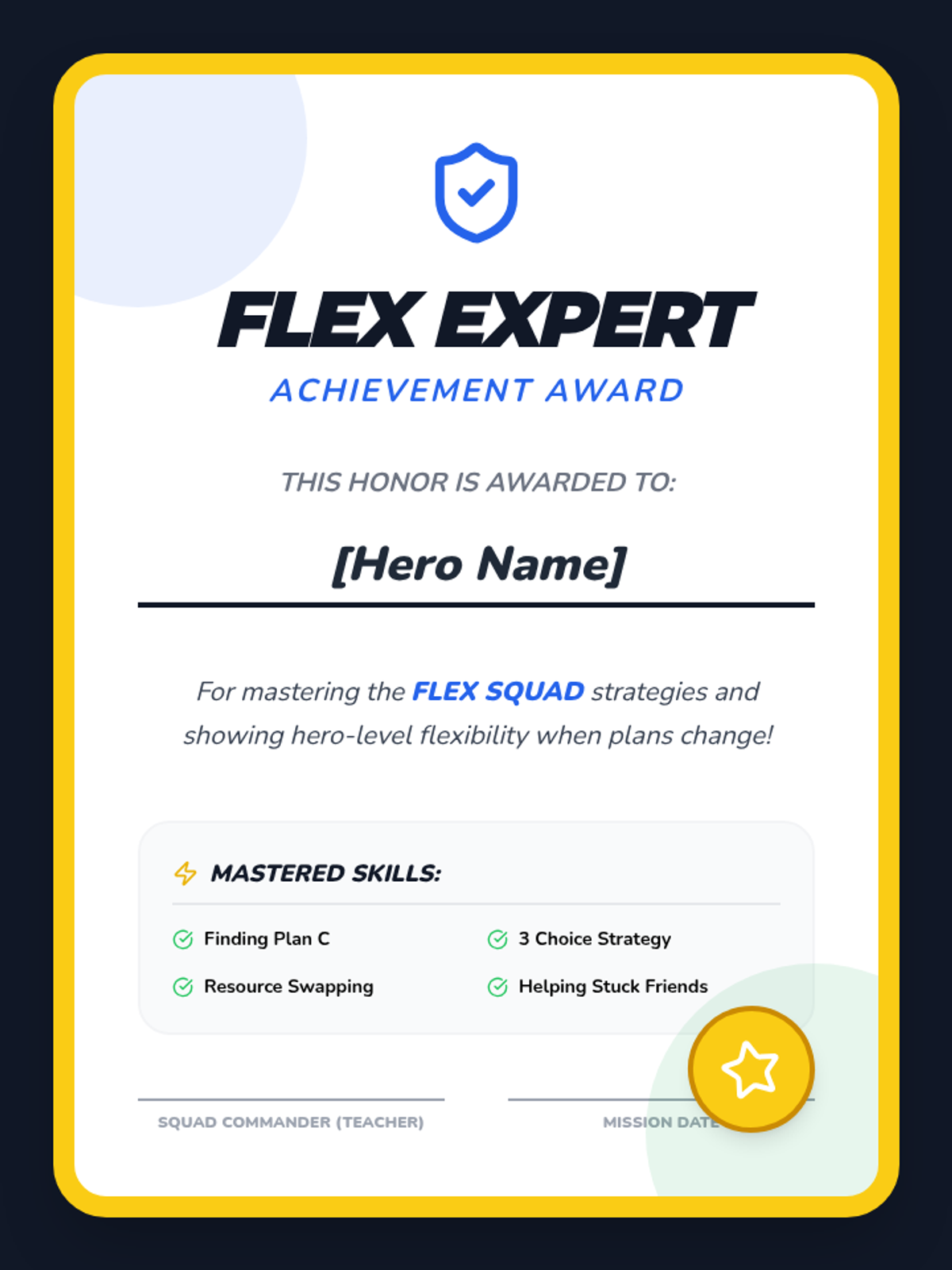
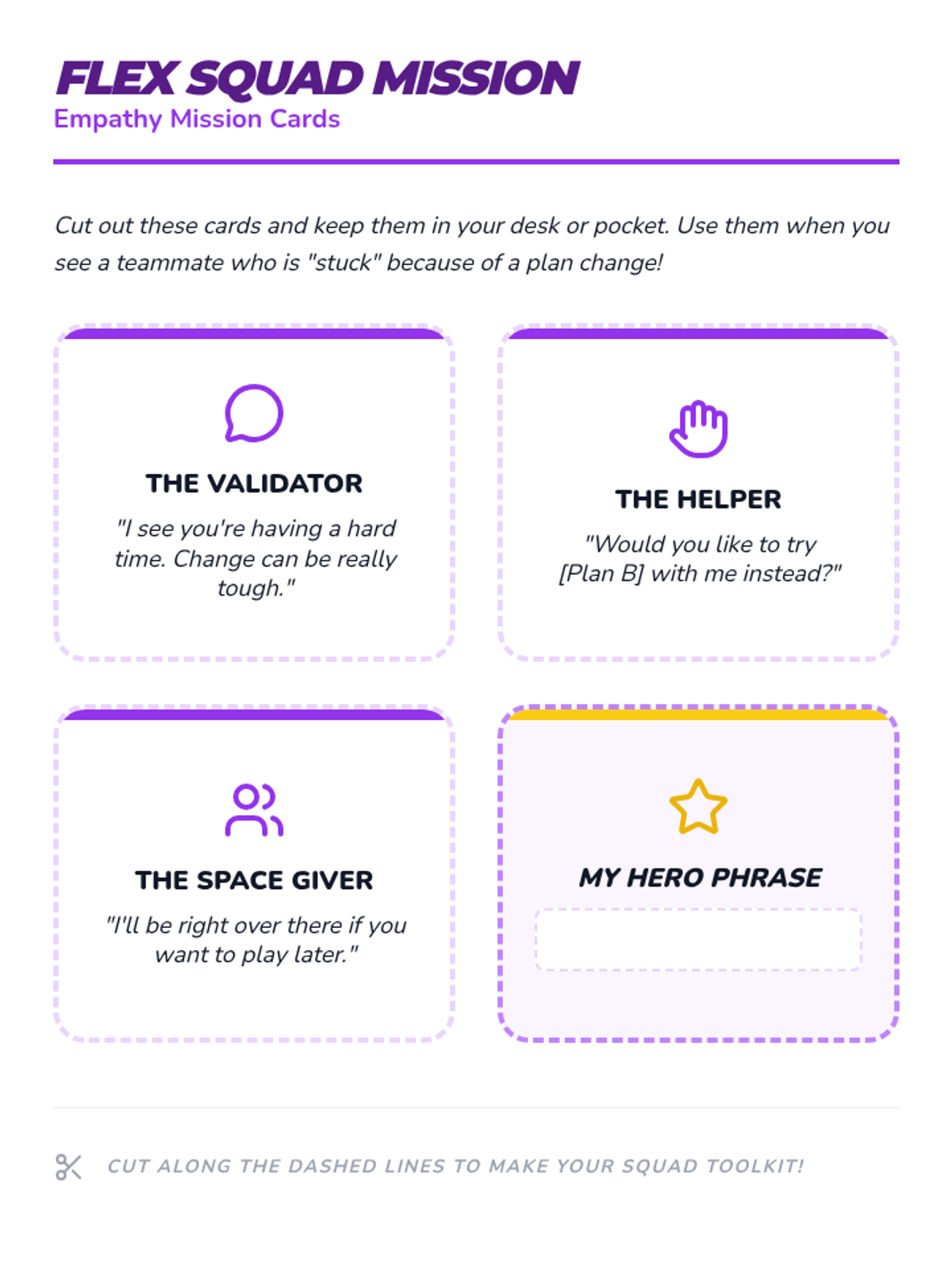
Students learn to identify when a peer is struggling with change and practice offering empathy and support.
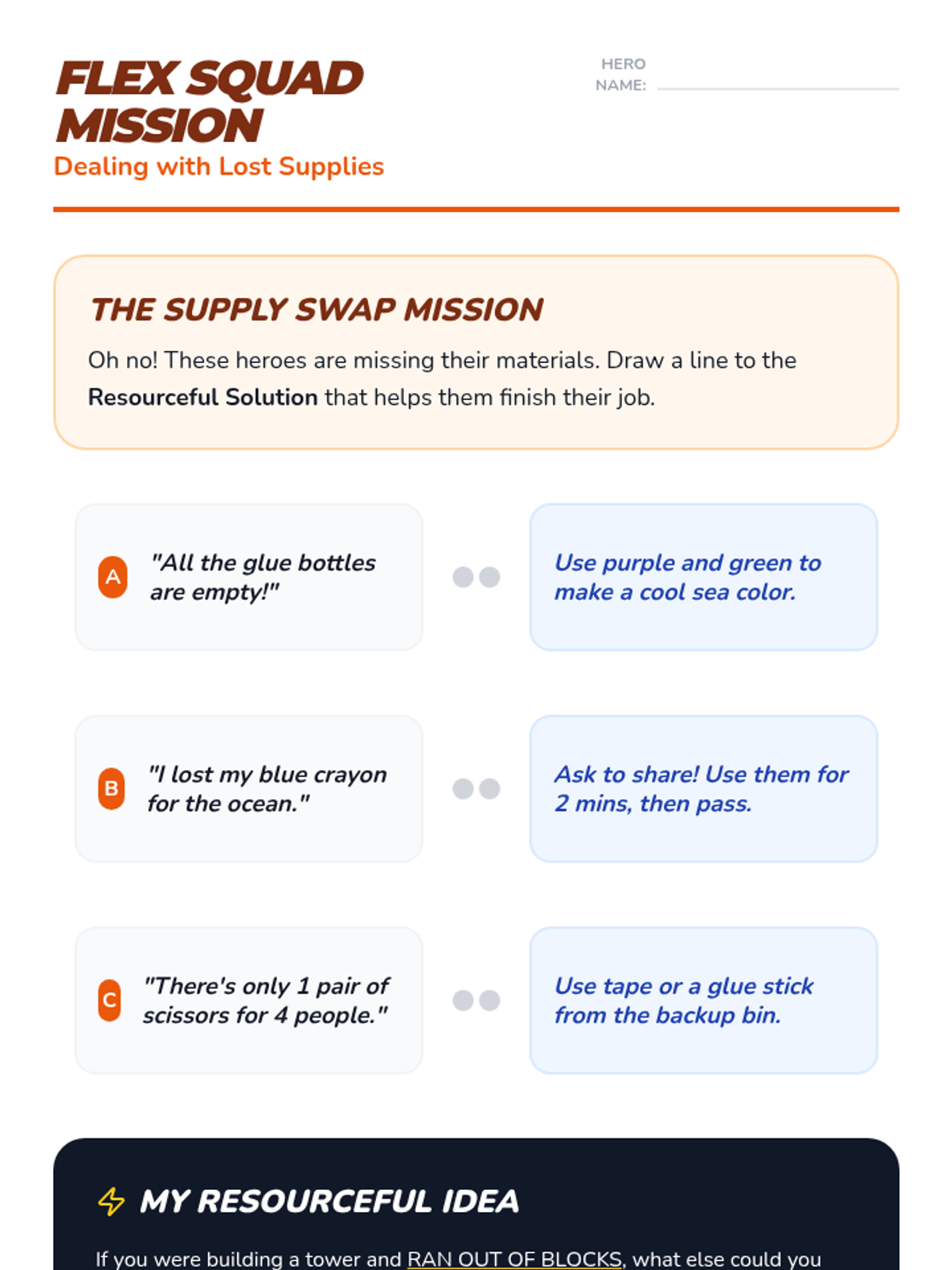
Students develop resourcefulness and help-seeking skills when materials for a task are missing or depleted.
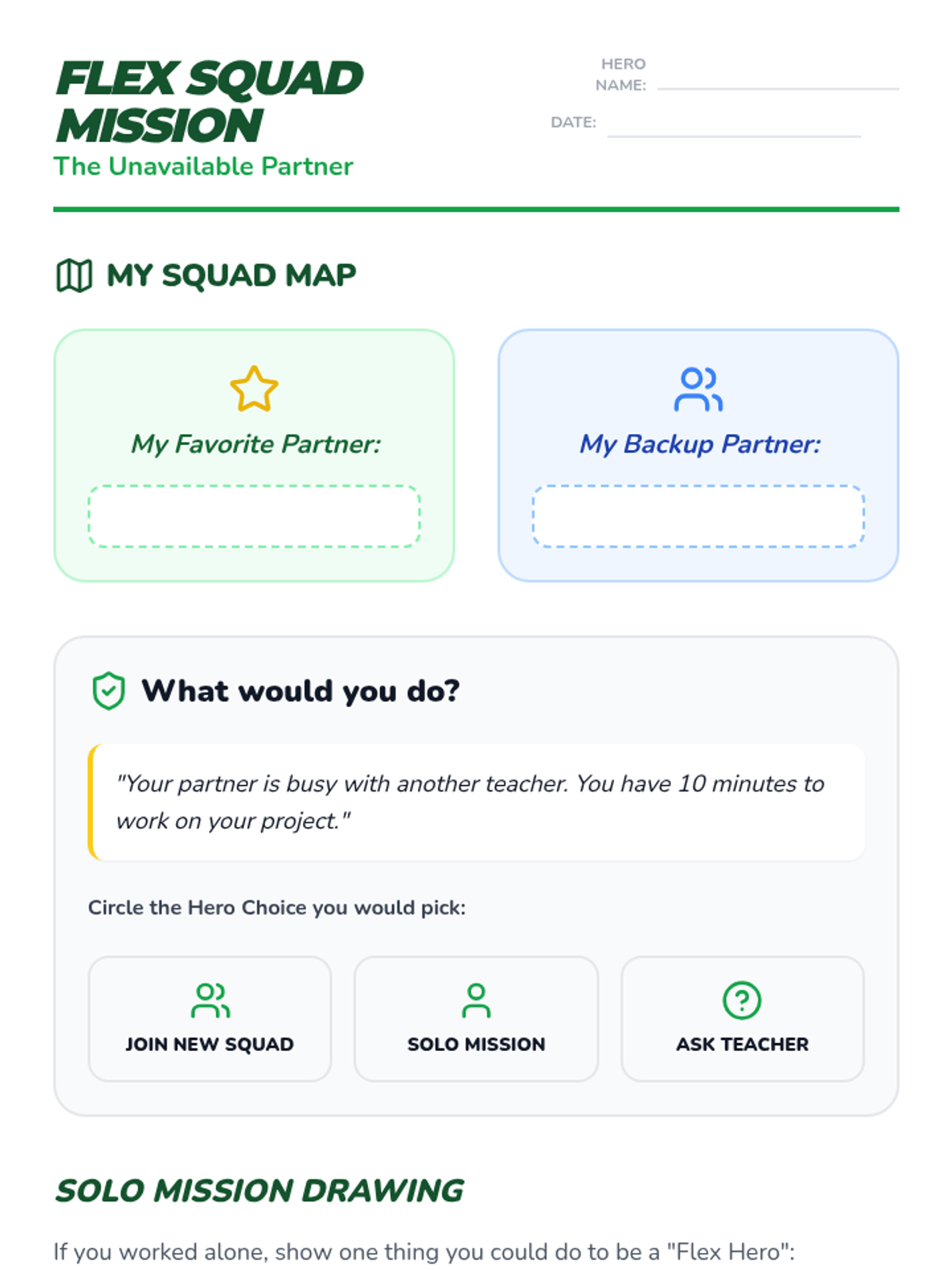
Students practice social initiation and independent work strategies for when an expected partner is unavailable.
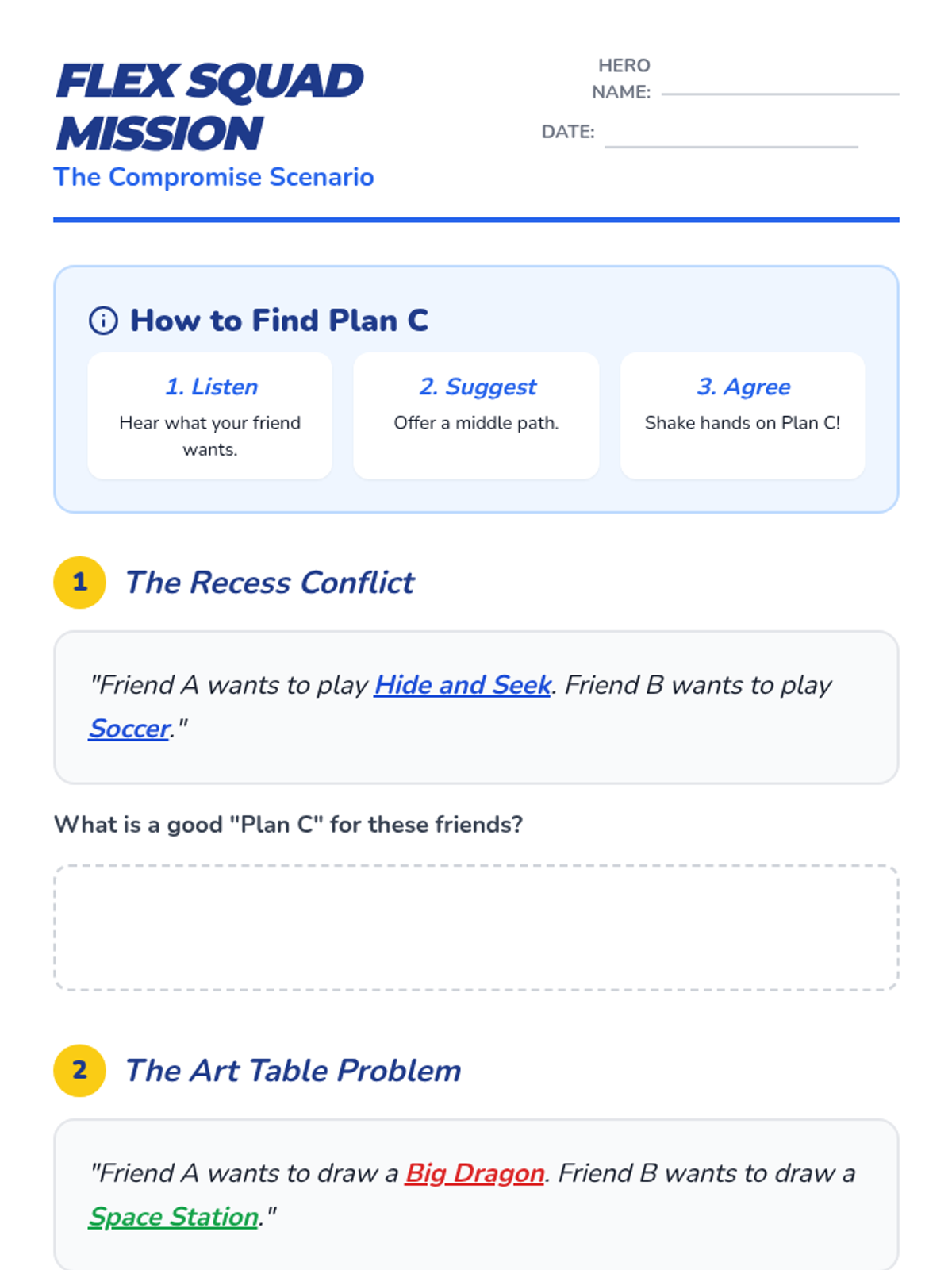
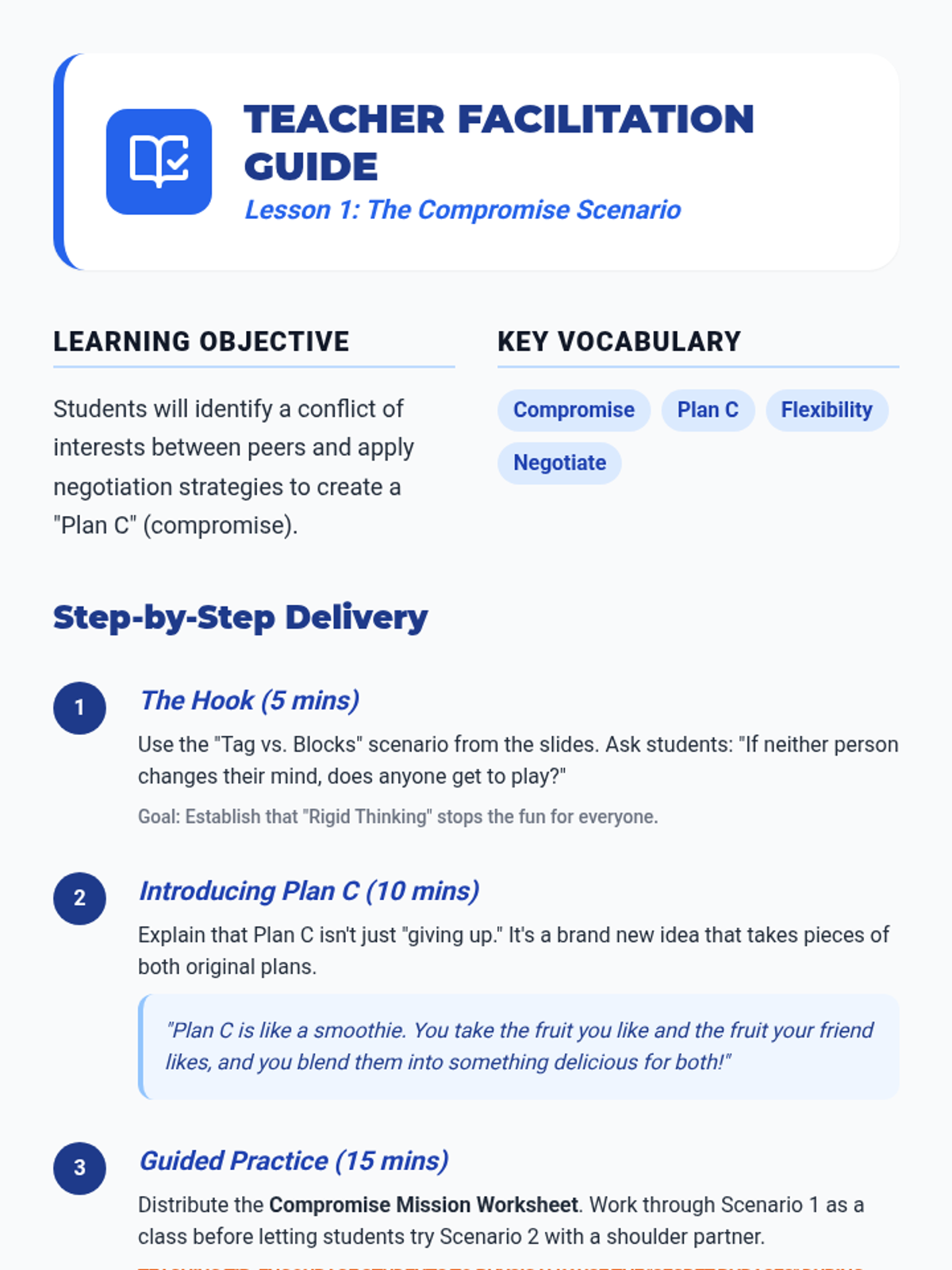
Students practice the language of negotiation and finding 'Plan C' when friends want to do different things.
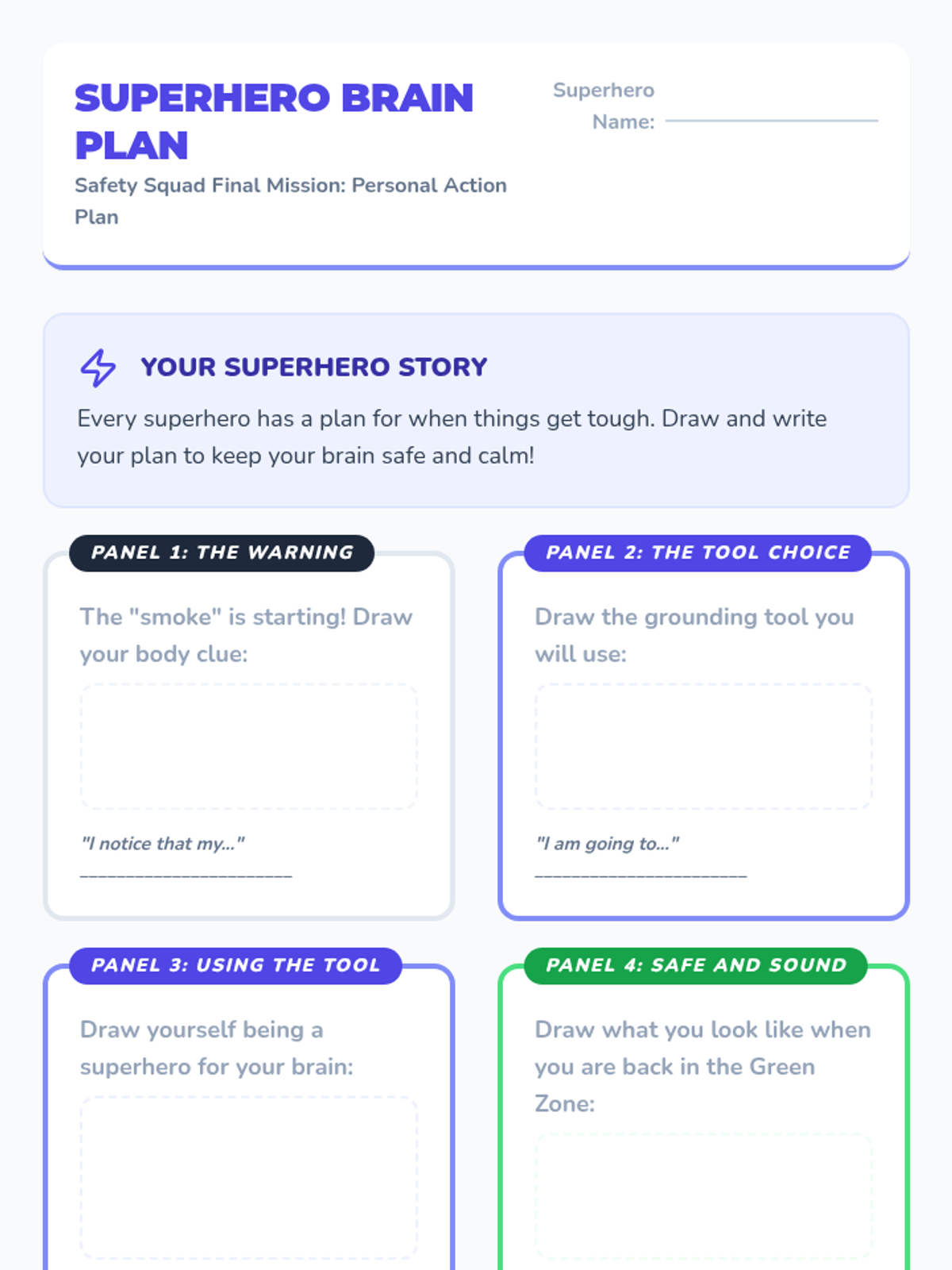
Students create a simple flowchart or storyboard showing what they look like when they are stressed, and drawing the specific action they promise to take next time it happens.
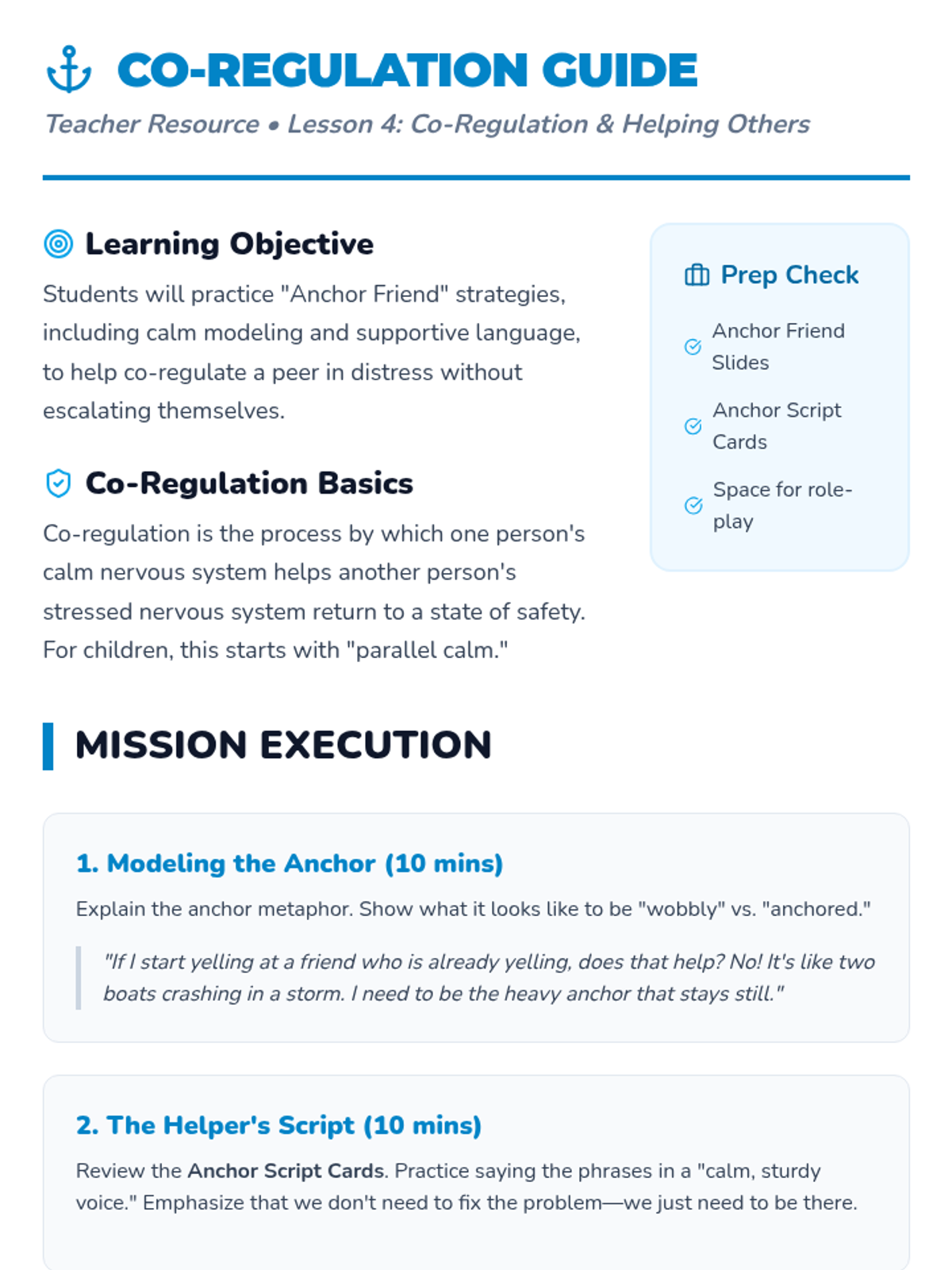
Students practice how to help a friend who is struggling by modeling a strategy (e.g., saying 'Breathe with me'). They learn that staying calm themselves is the best way to help.
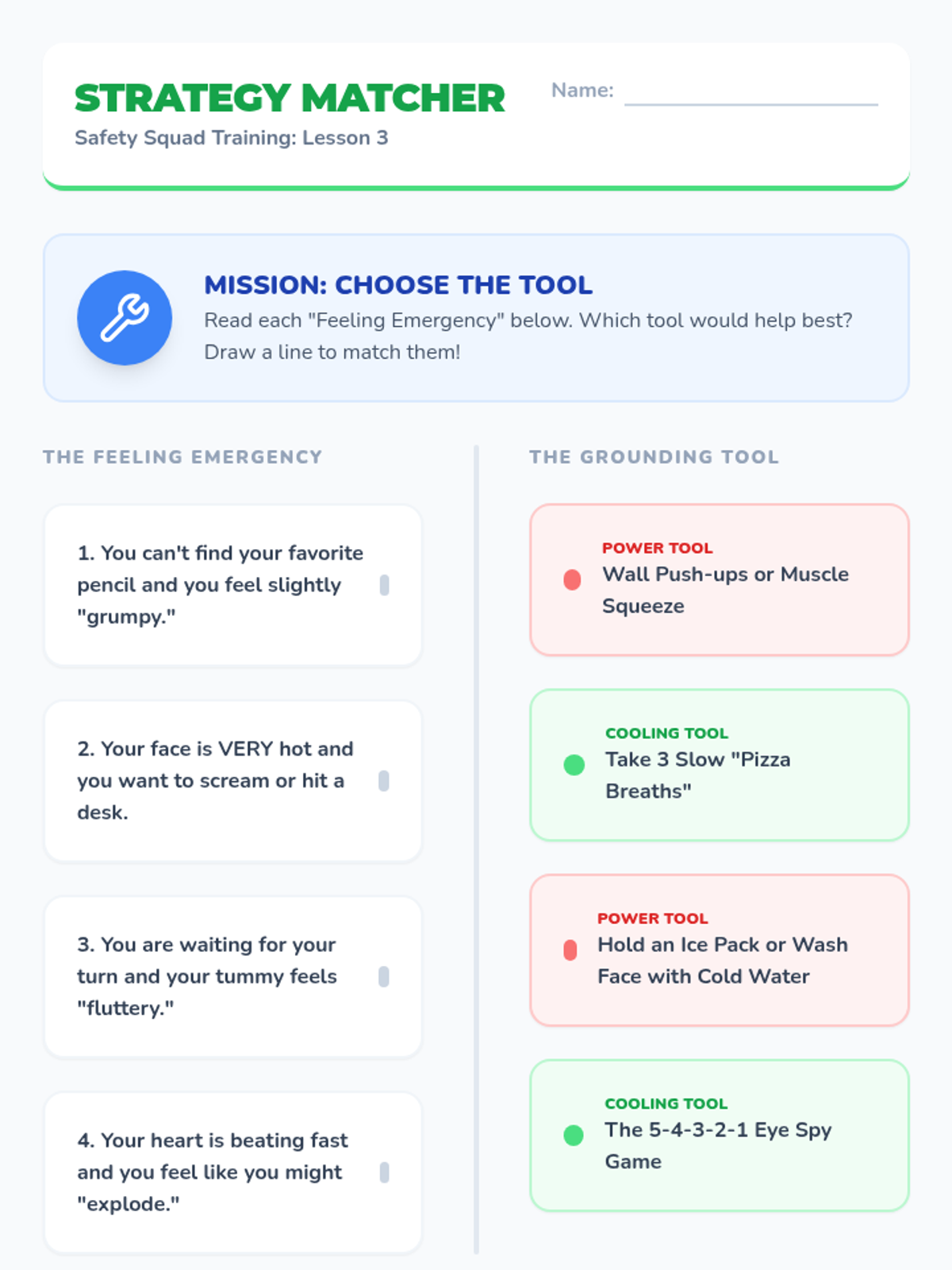
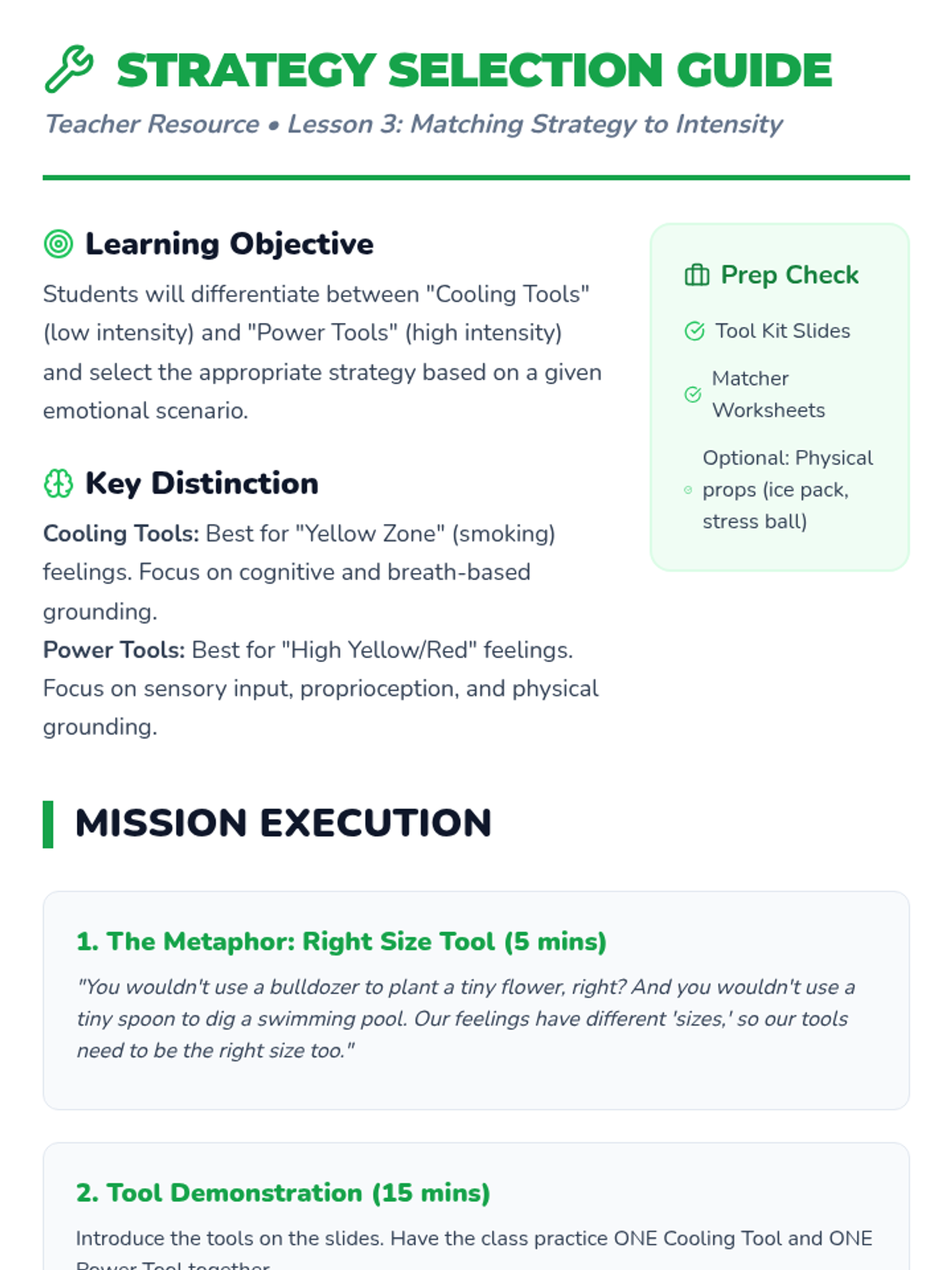
Students engage in a matching game where they pair low-intensity feelings with simple strategies (deep breath) and high-intensity feelings with strong grounding actions (wall push, ice pack).
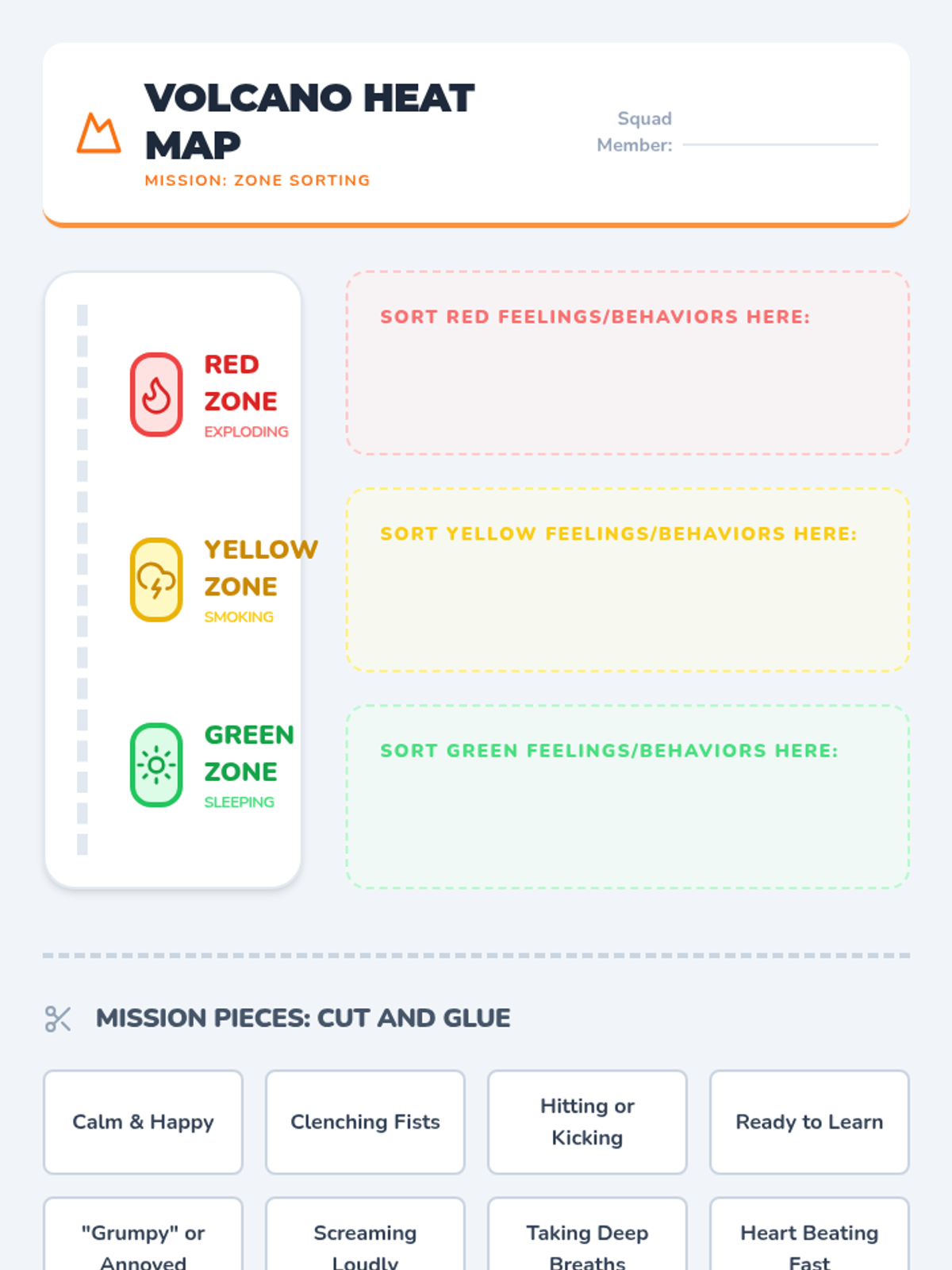
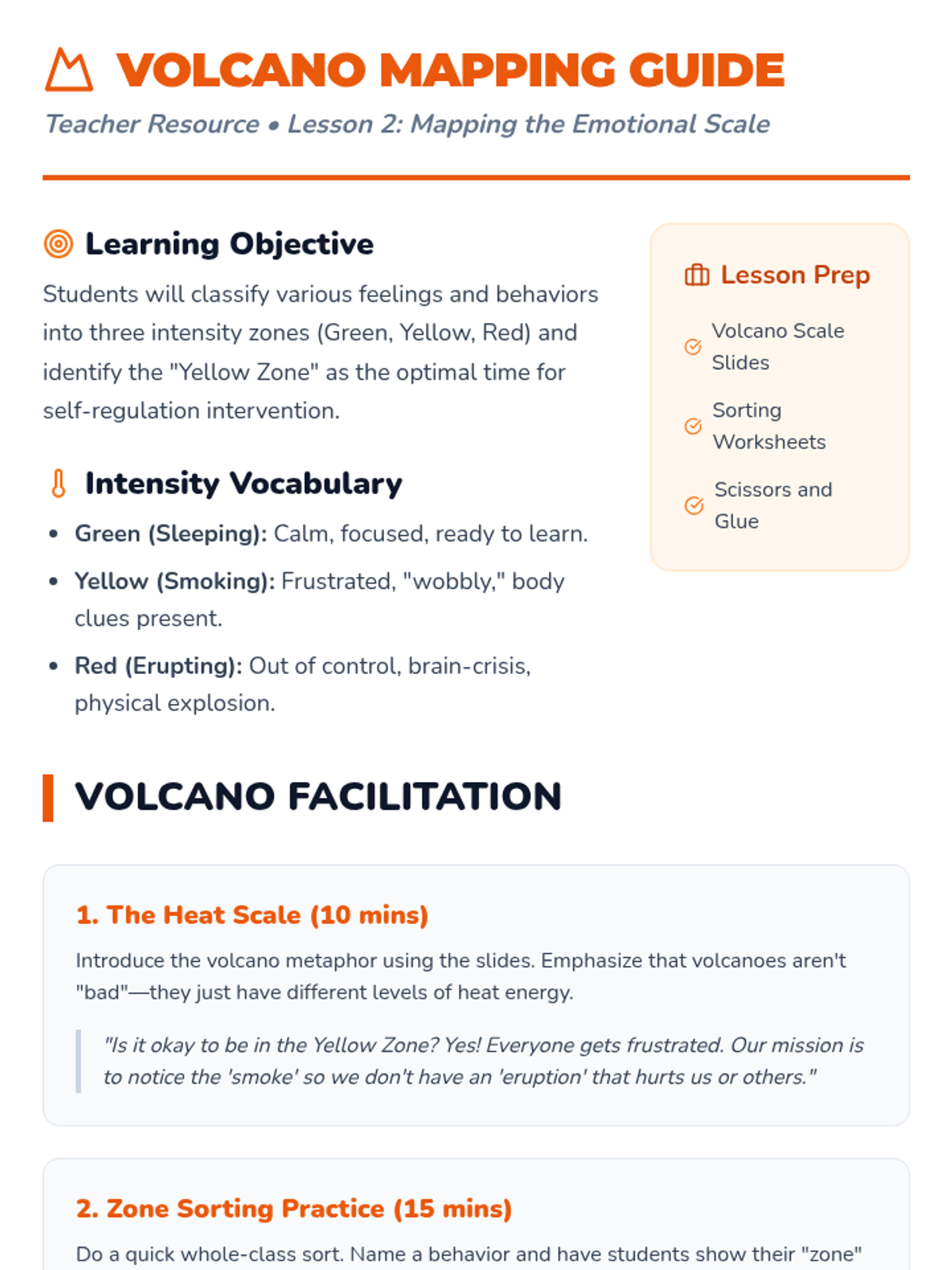
The class creates a 'thermometer' or 'volcano' visual. They sort different behaviors and feelings into zones (Green/Okay, Yellow/Wobbly, Red/Crisis) to understand intensity levels.
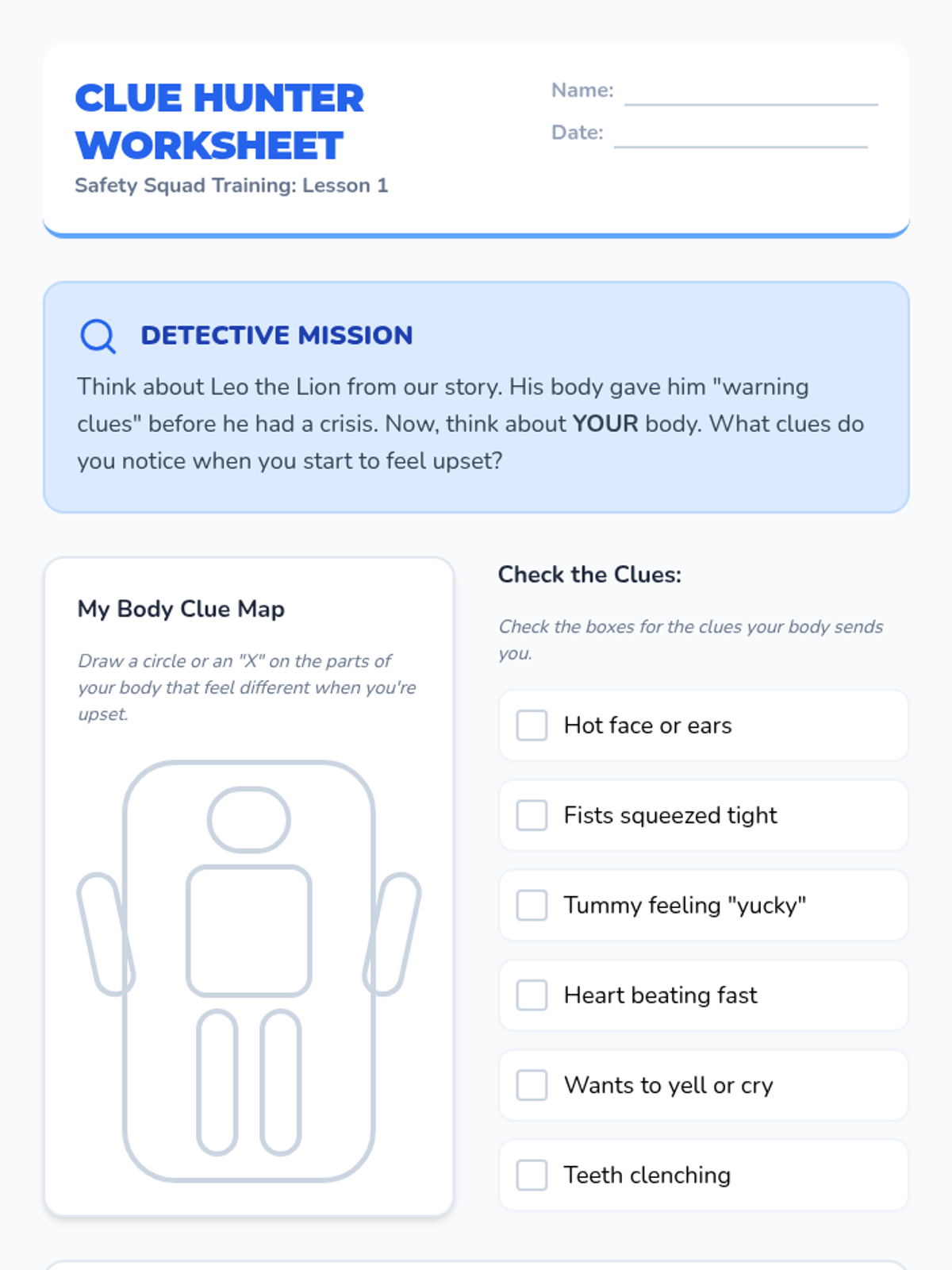
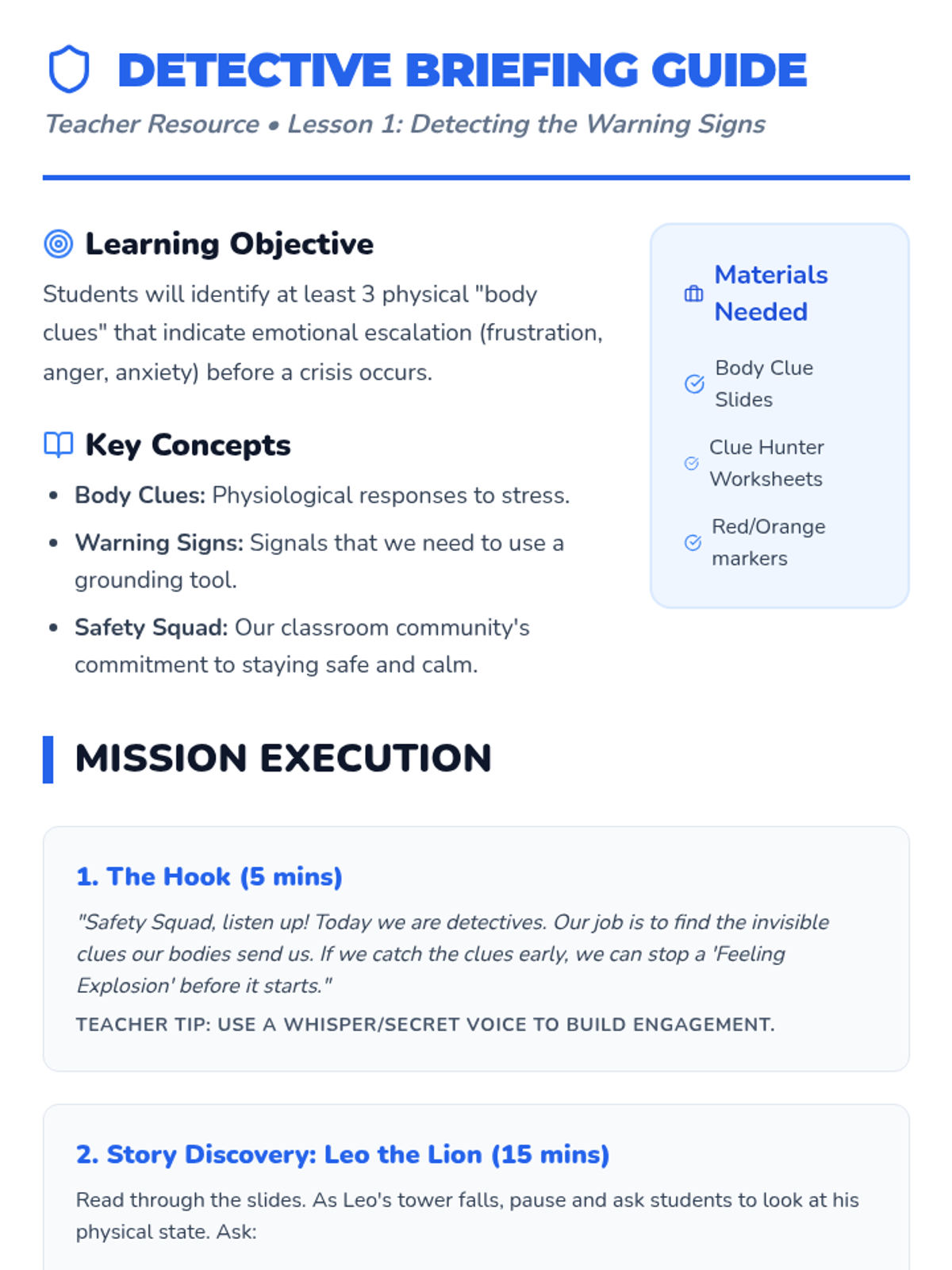
Students read a story about a character whose frustration builds slowly. They act as detectives, identifying the physical clues (clenched fists, hot face) that showed the character needed to ground themselves.
The sequence concludes with a high-energy activity where students form a tunnel with their arms. Peers take turns running through while the group cheers for them. This solidifies the concept of celebrating everyone's participation.
In small, tight circles of varying heights, one student stands stiff as a board in the center while the outer circle gently passes them around. Students learn the importance of 'spotting' posture and keeping their teammates safe.
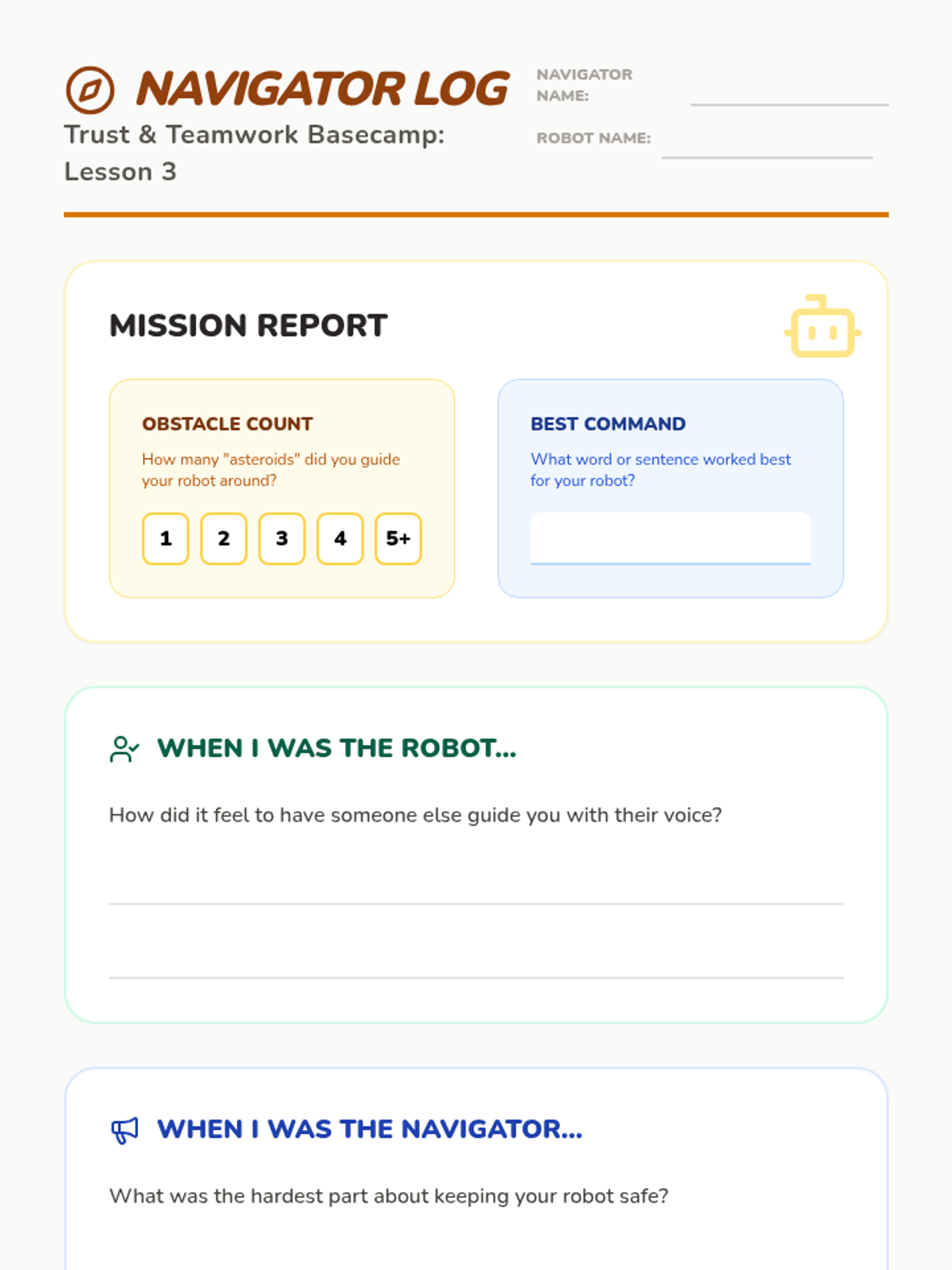
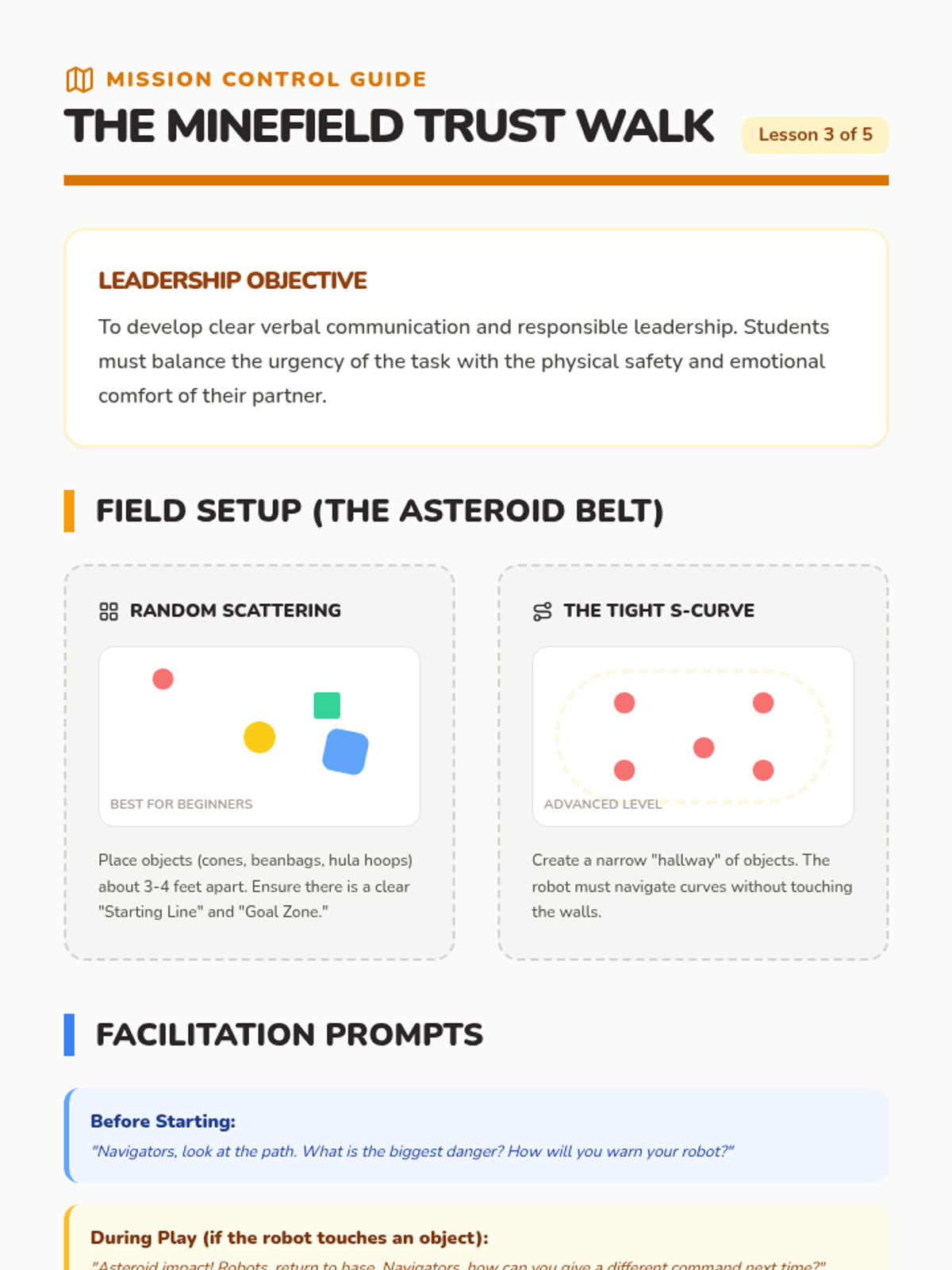
Objects are scattered in a designated area. Partners must guide a 'robot' (a student with eyes closed) through the field using only verbal commands, emphasizing safety and the responsibility of the leader.
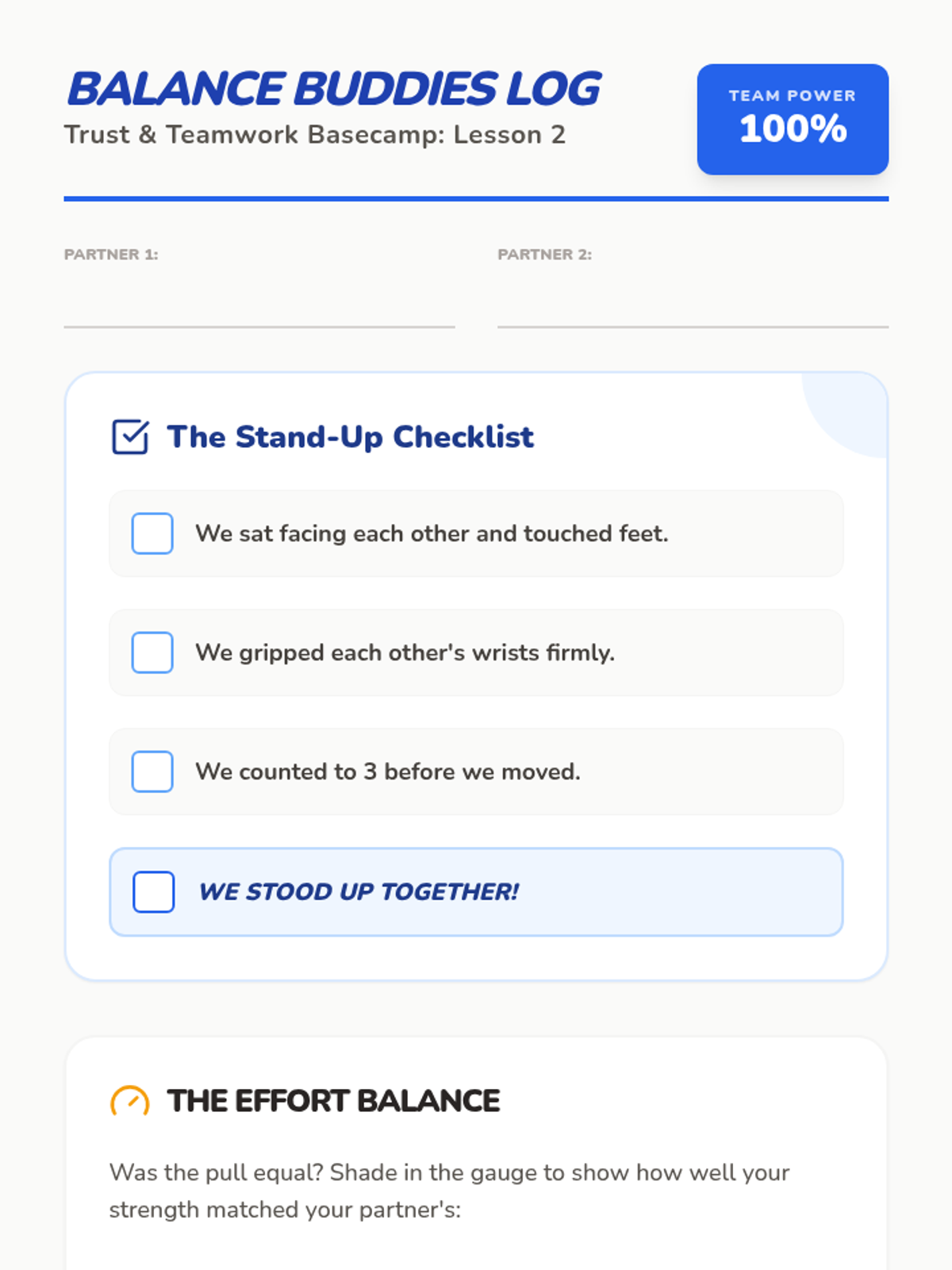
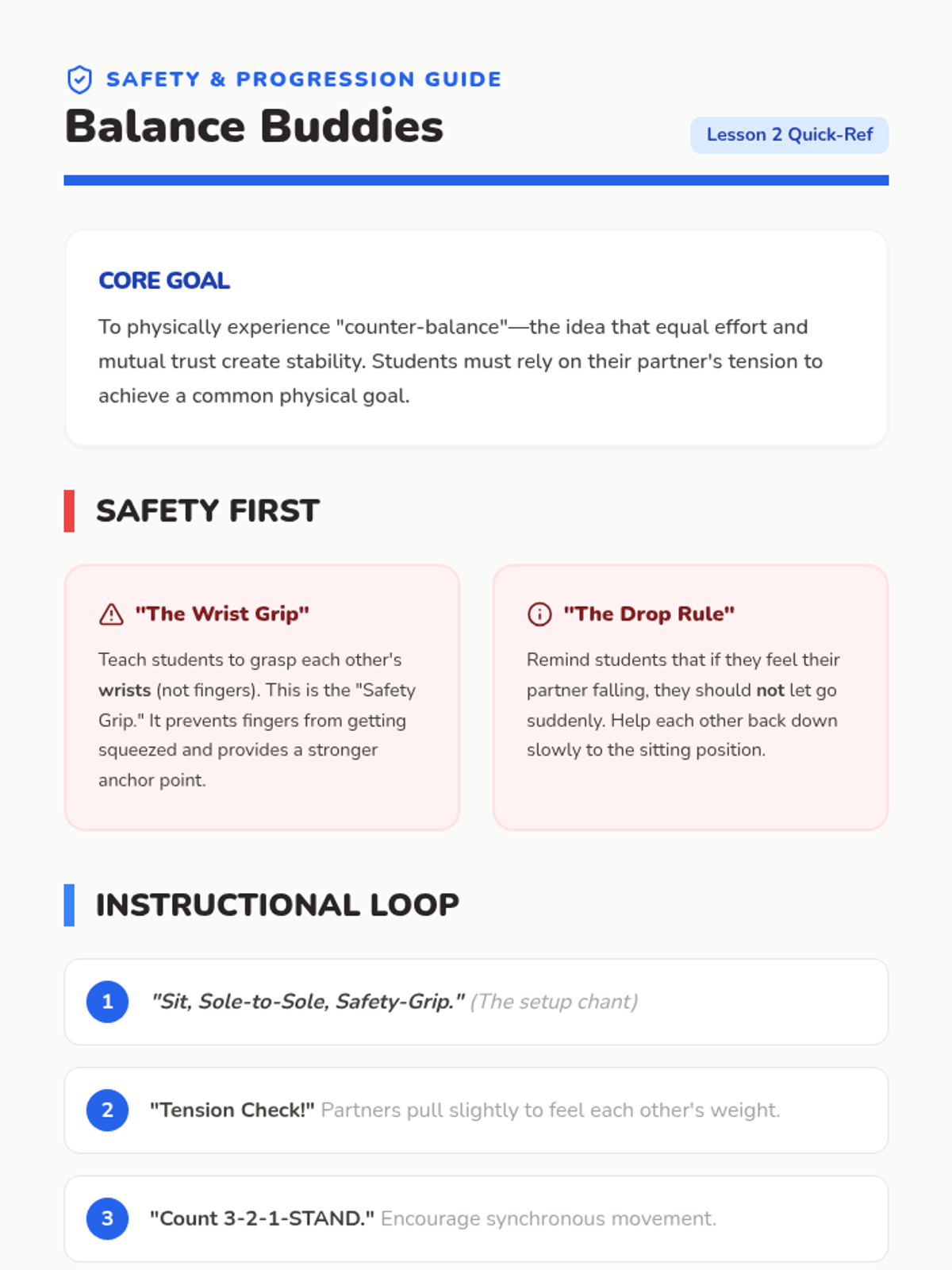
Pairs sit on the ground, place their feet together, and hold hands to pull each other up to a standing position. This requires physical reliance on a partner and equalizing effort so both succeed.
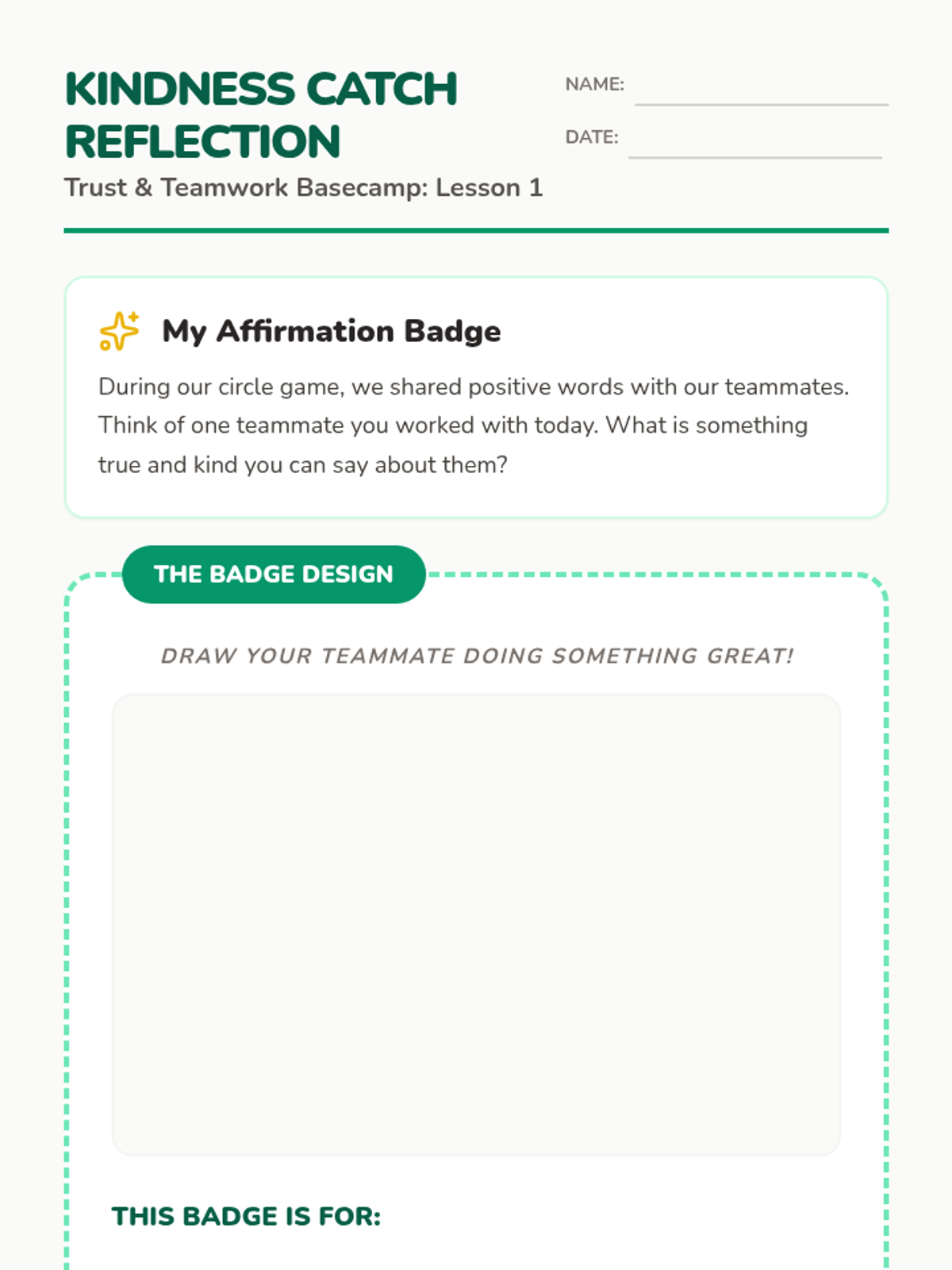
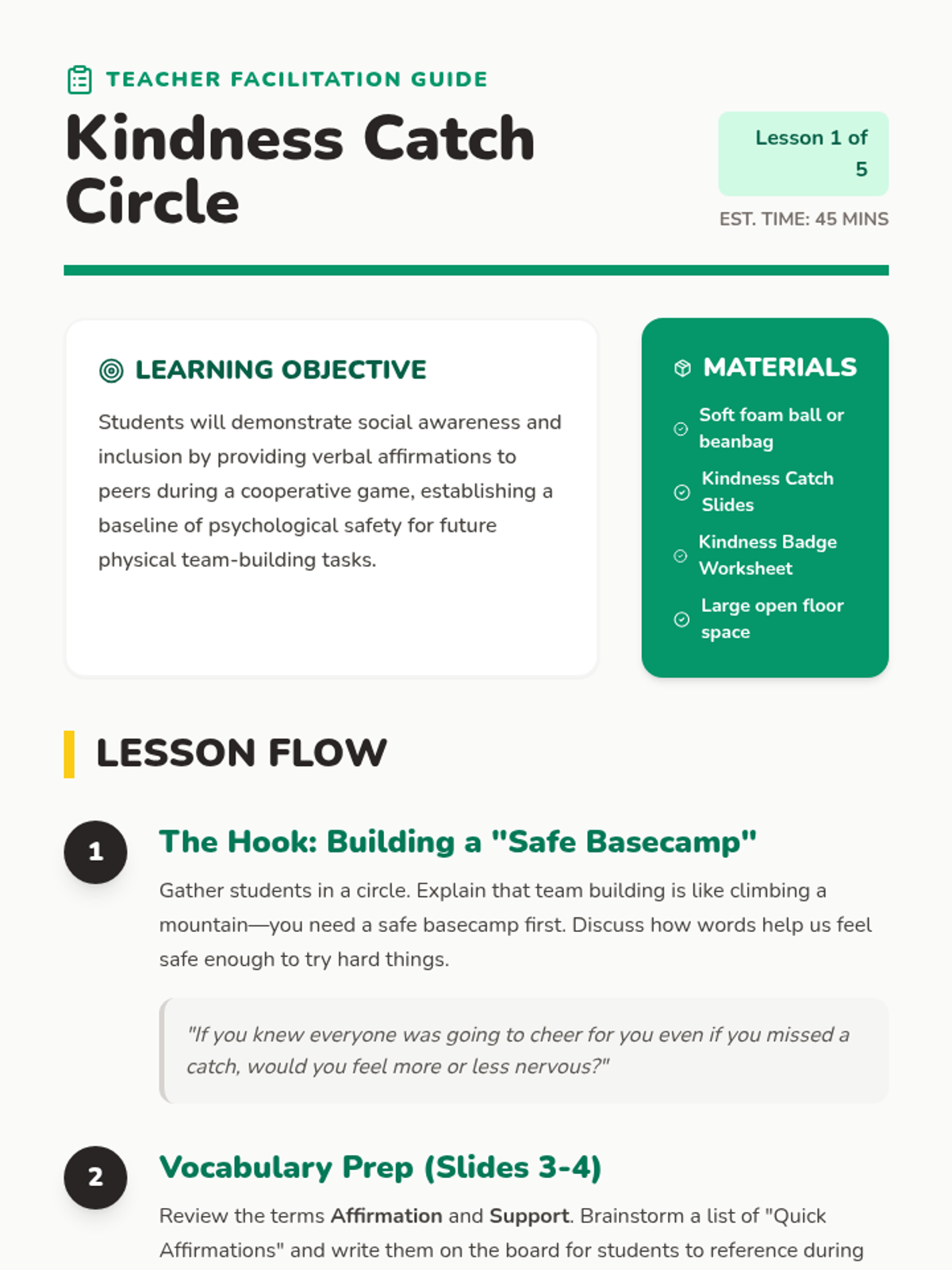
Students participate in a ball-toss game where they practice giving and receiving verbal encouragement to build a supportive team environment.
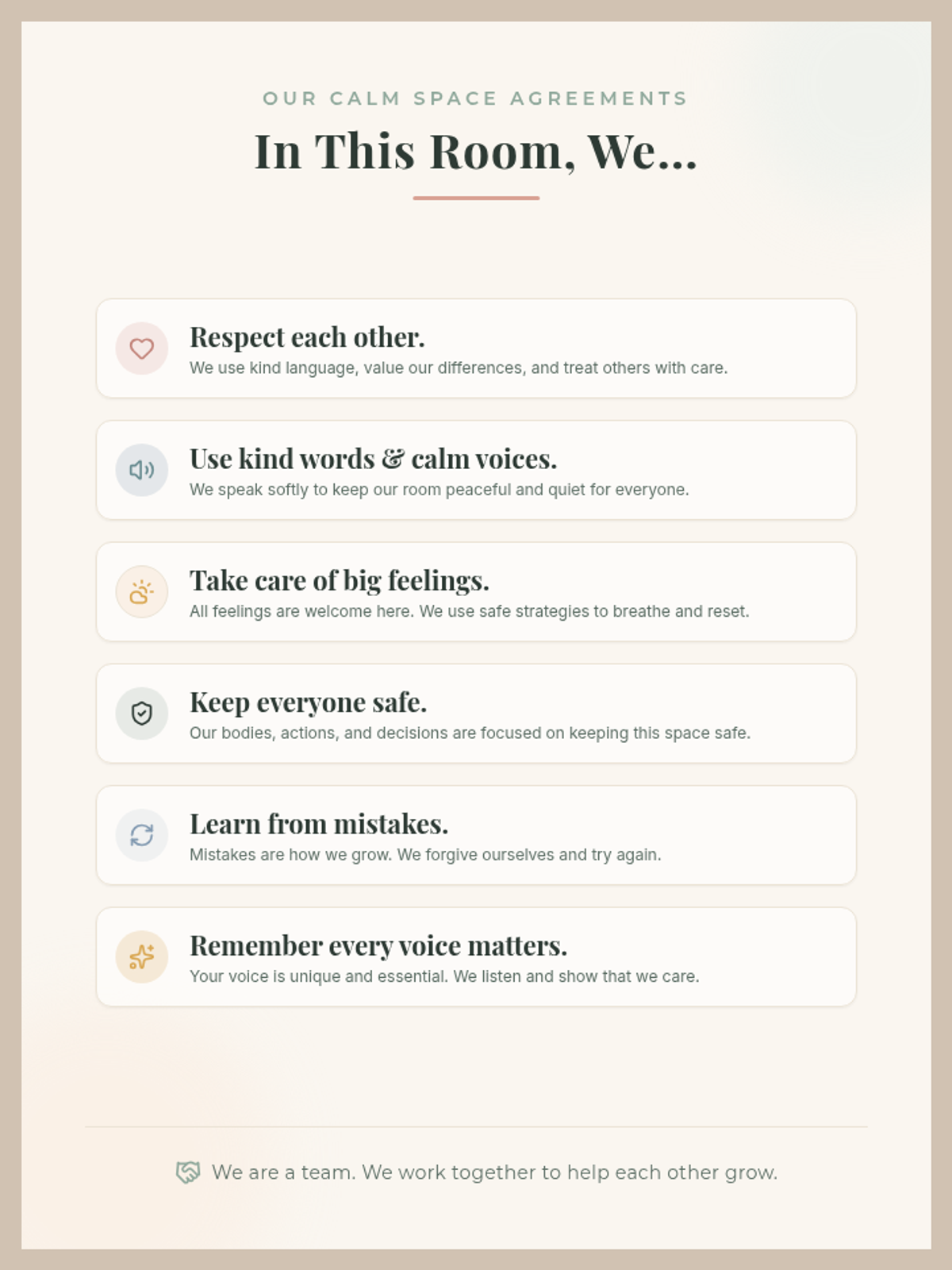
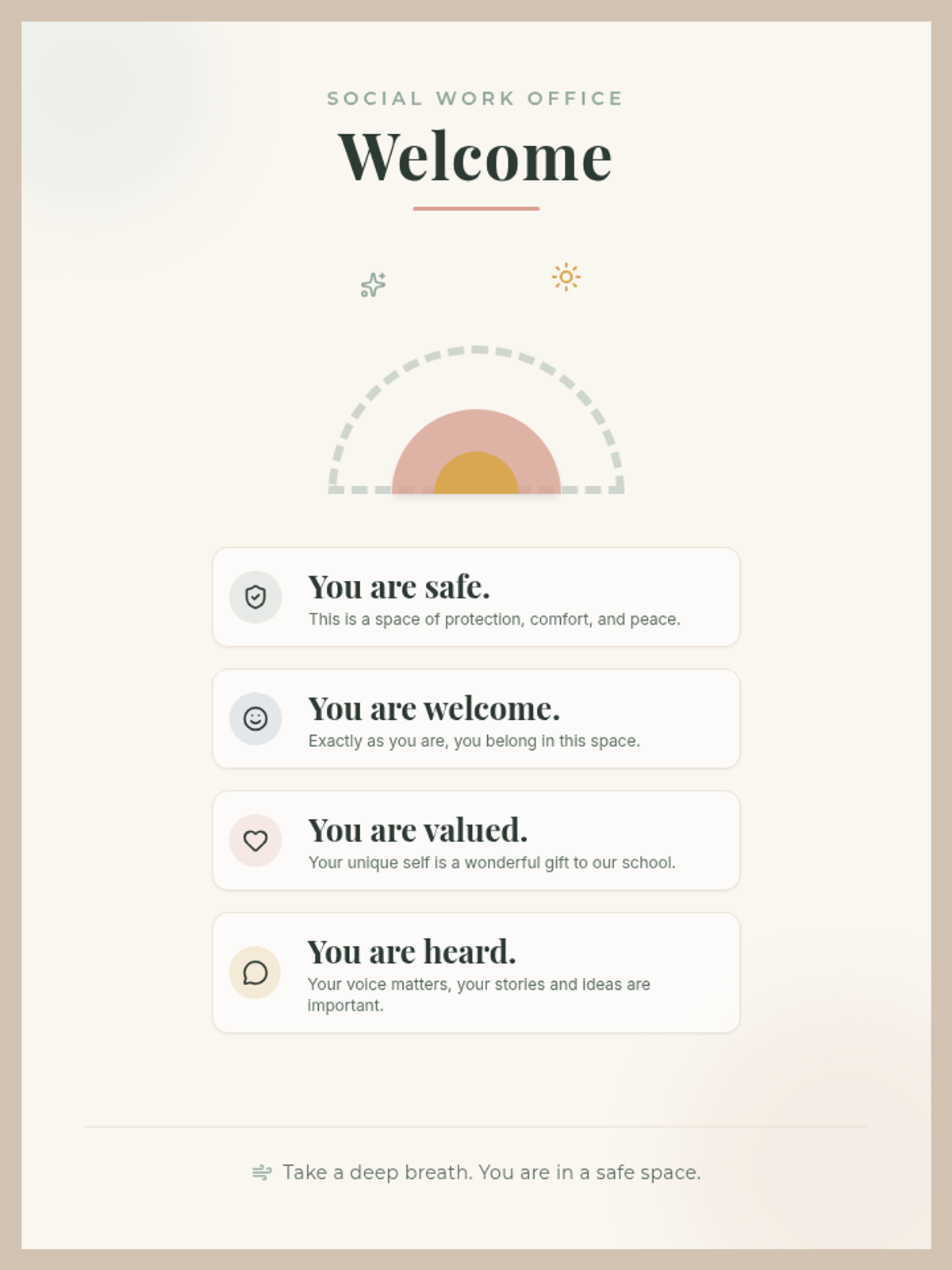
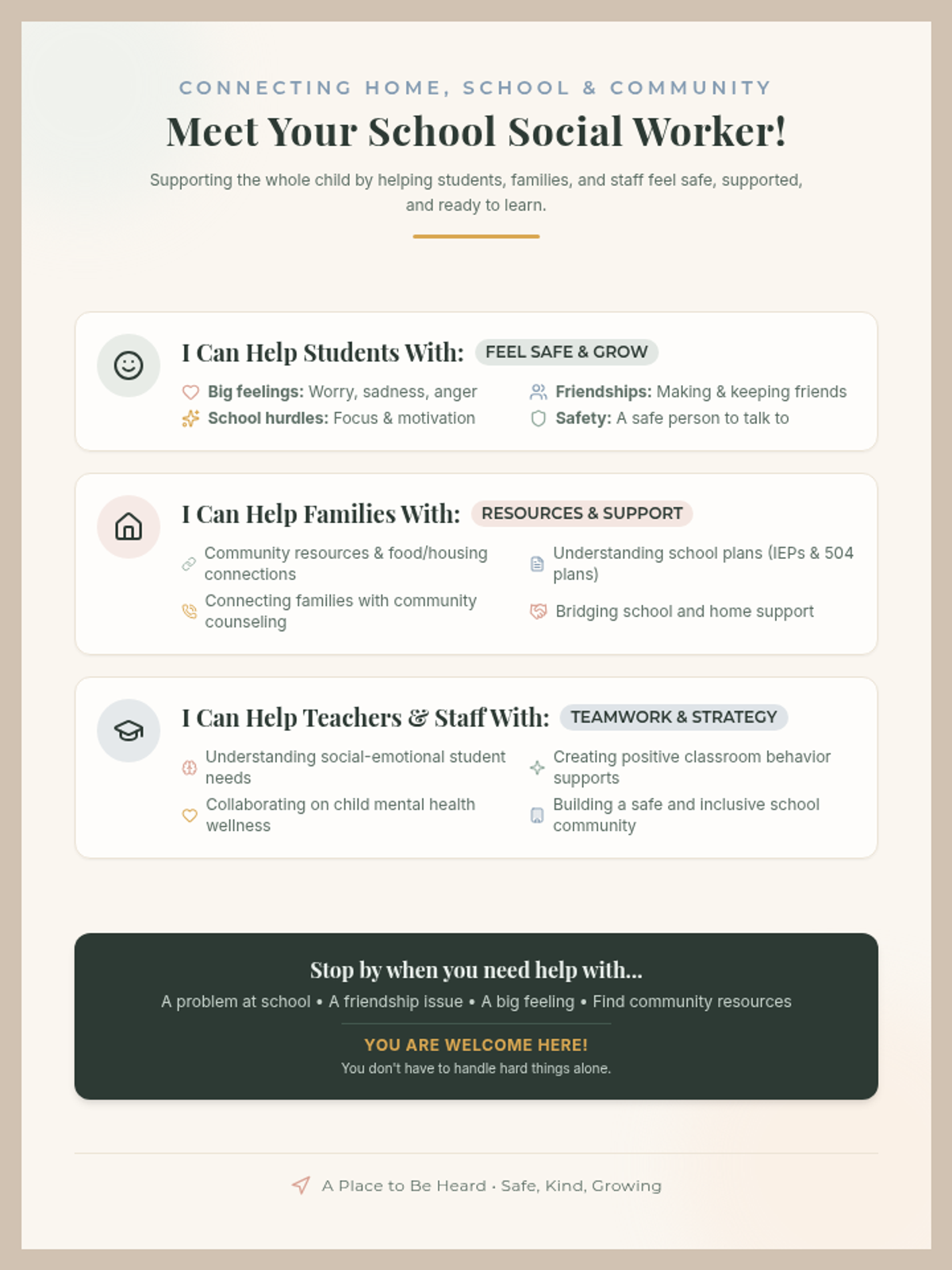
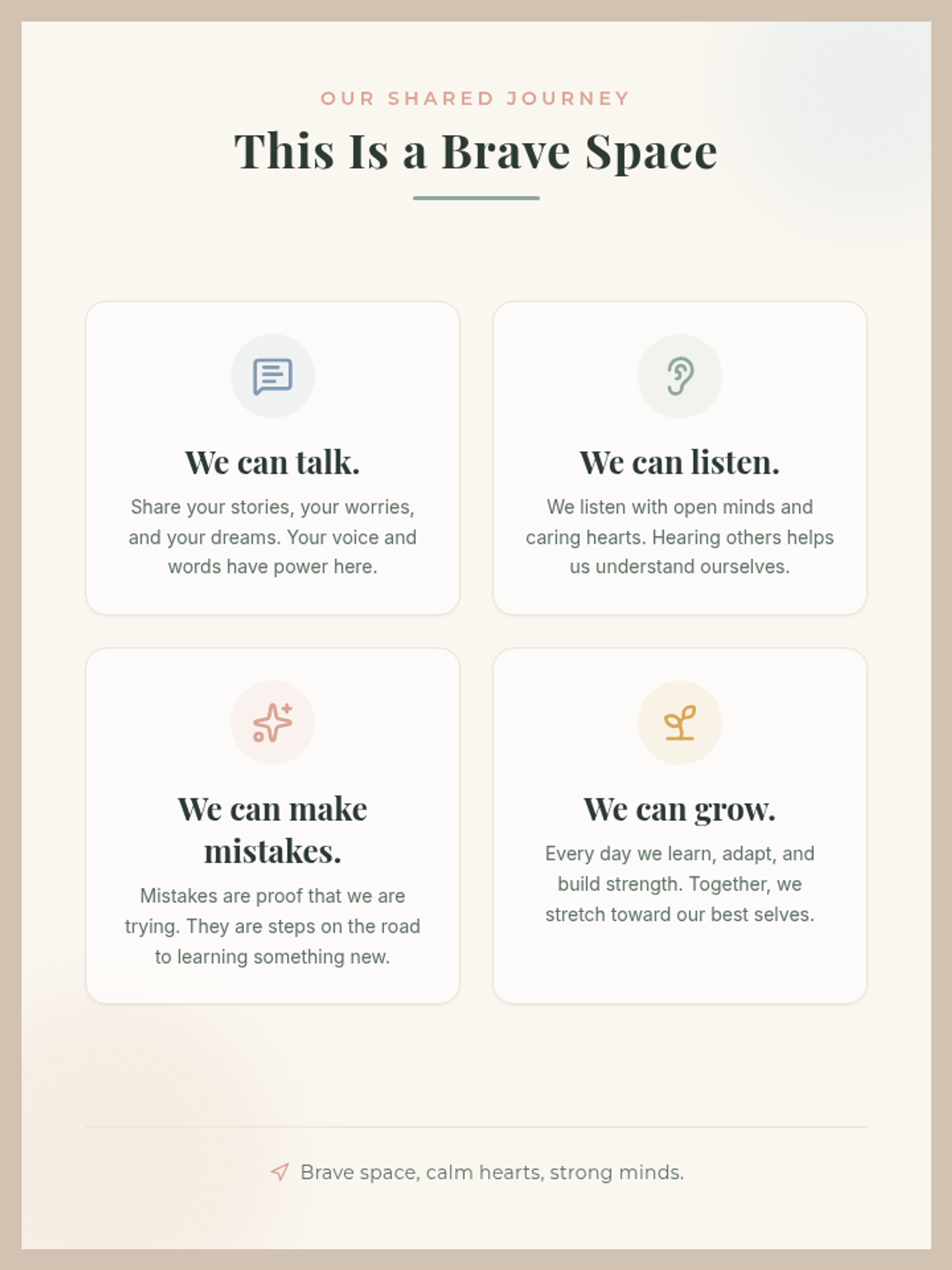
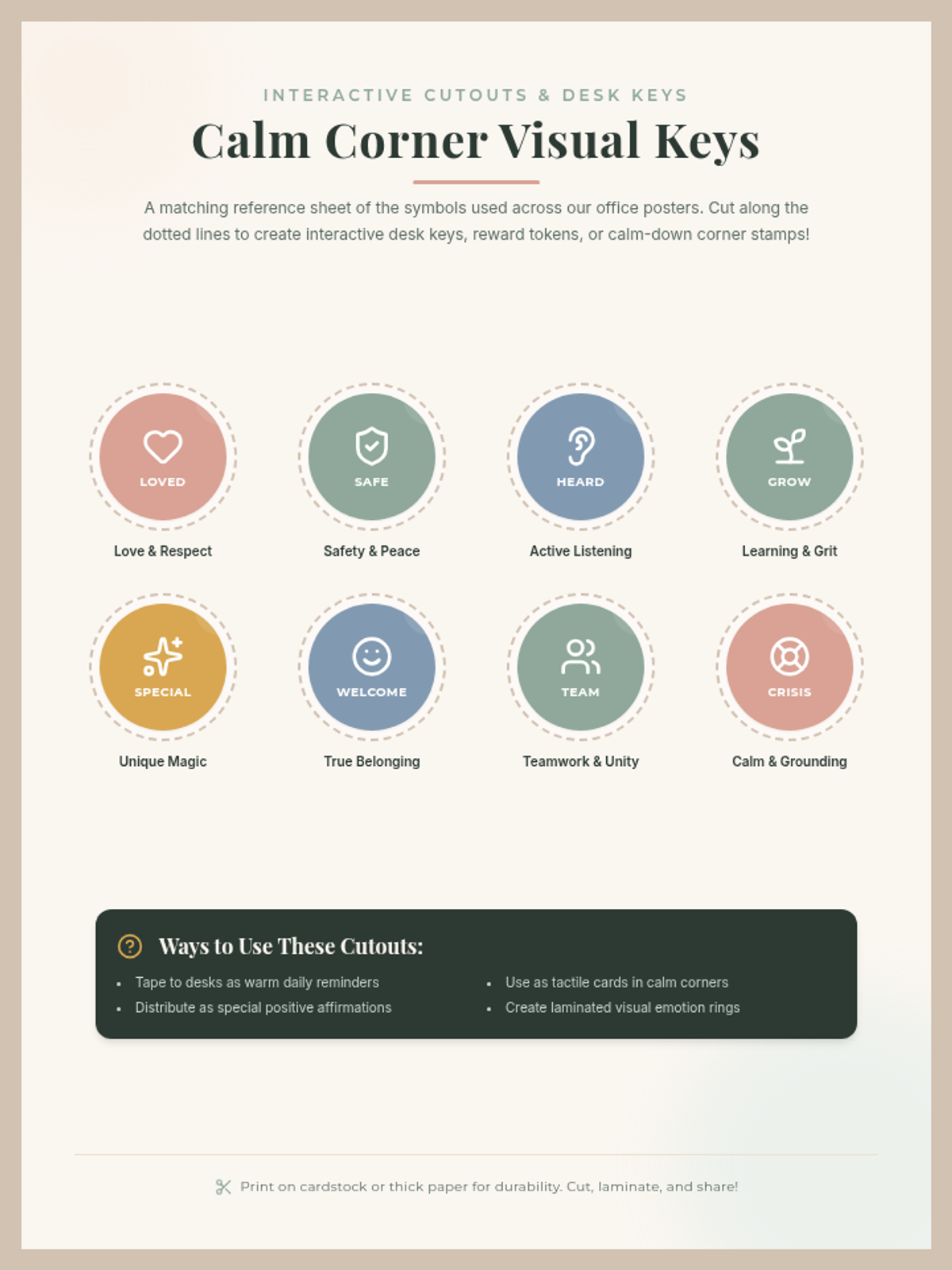
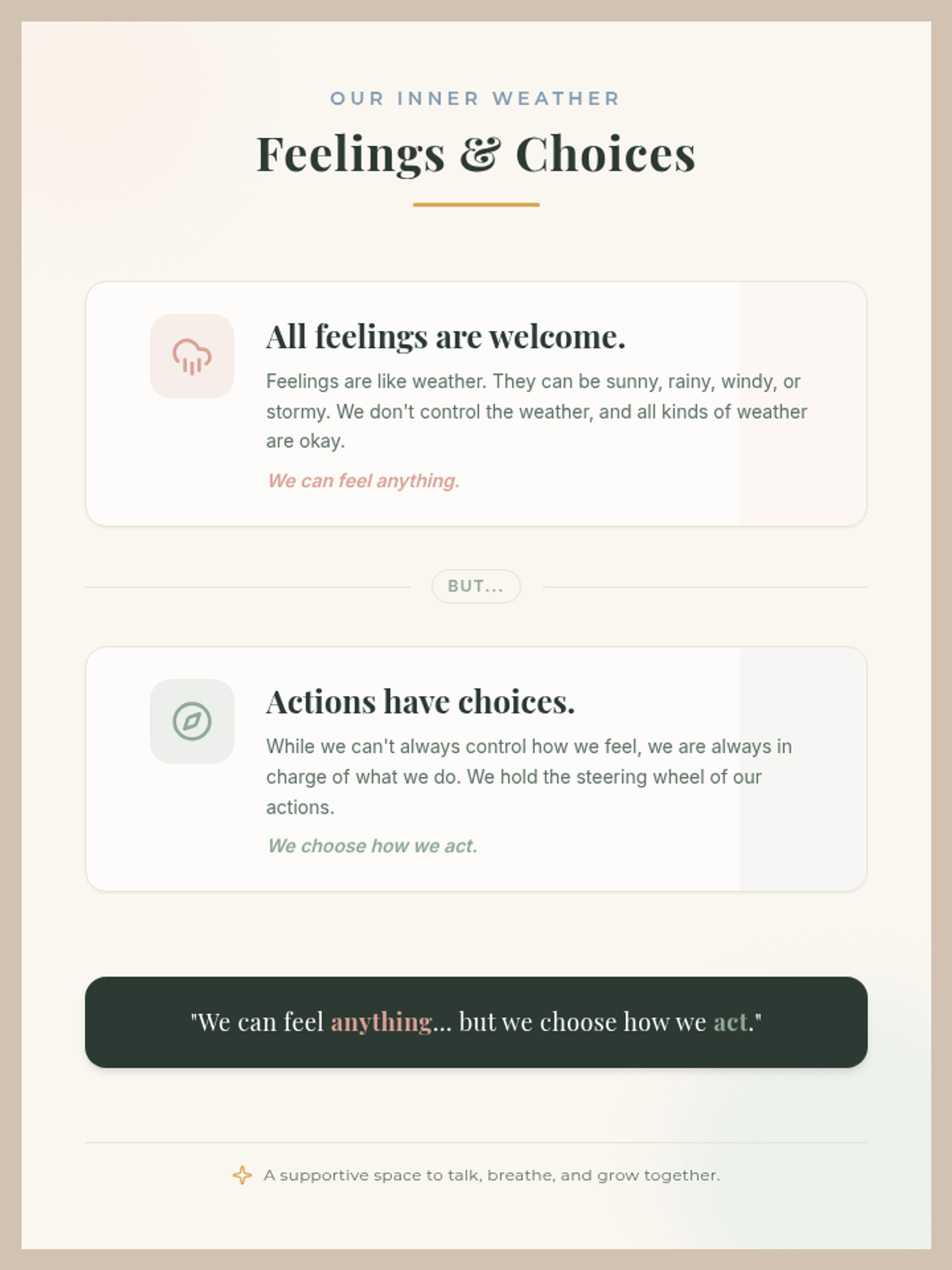
A cohesive suite of beautifully designed printable posters for an elementary school social work office or calm corner, utilizing soft earth tones, gentle affirmations, and clear supportive structures.
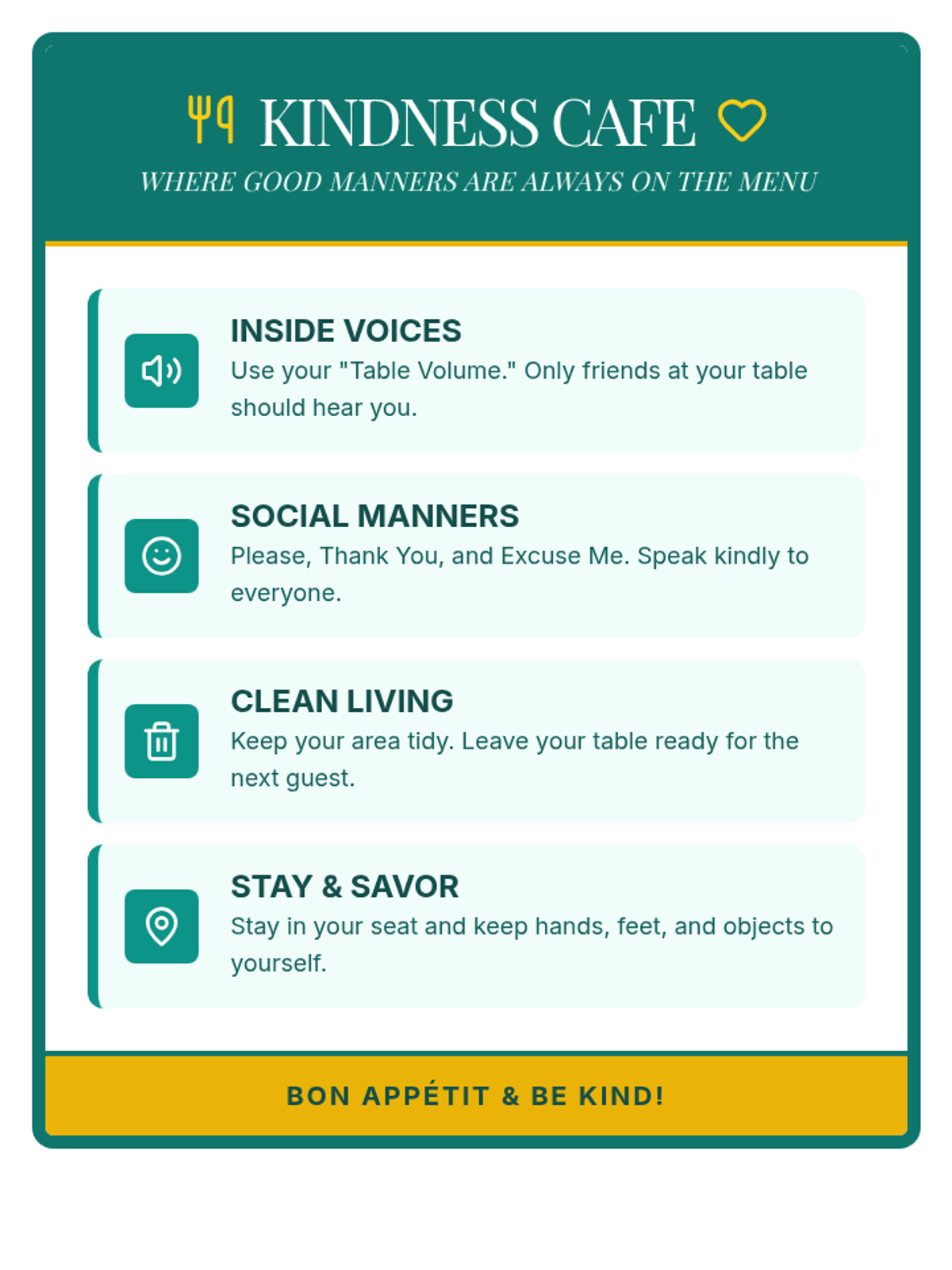
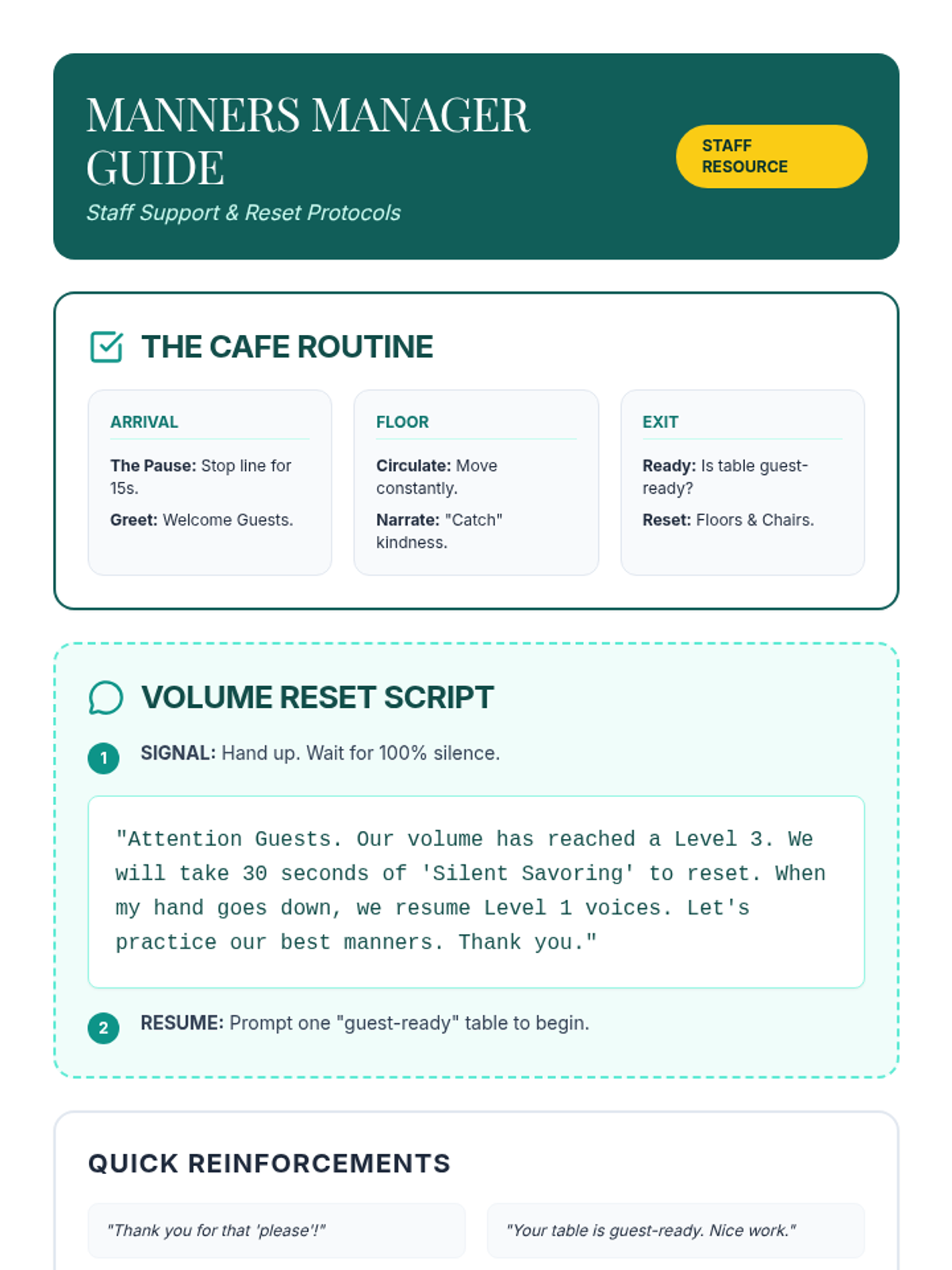
A behavior support package designed to transform the lunchroom into a calm, polite dining environment focused on kindness and social manners.
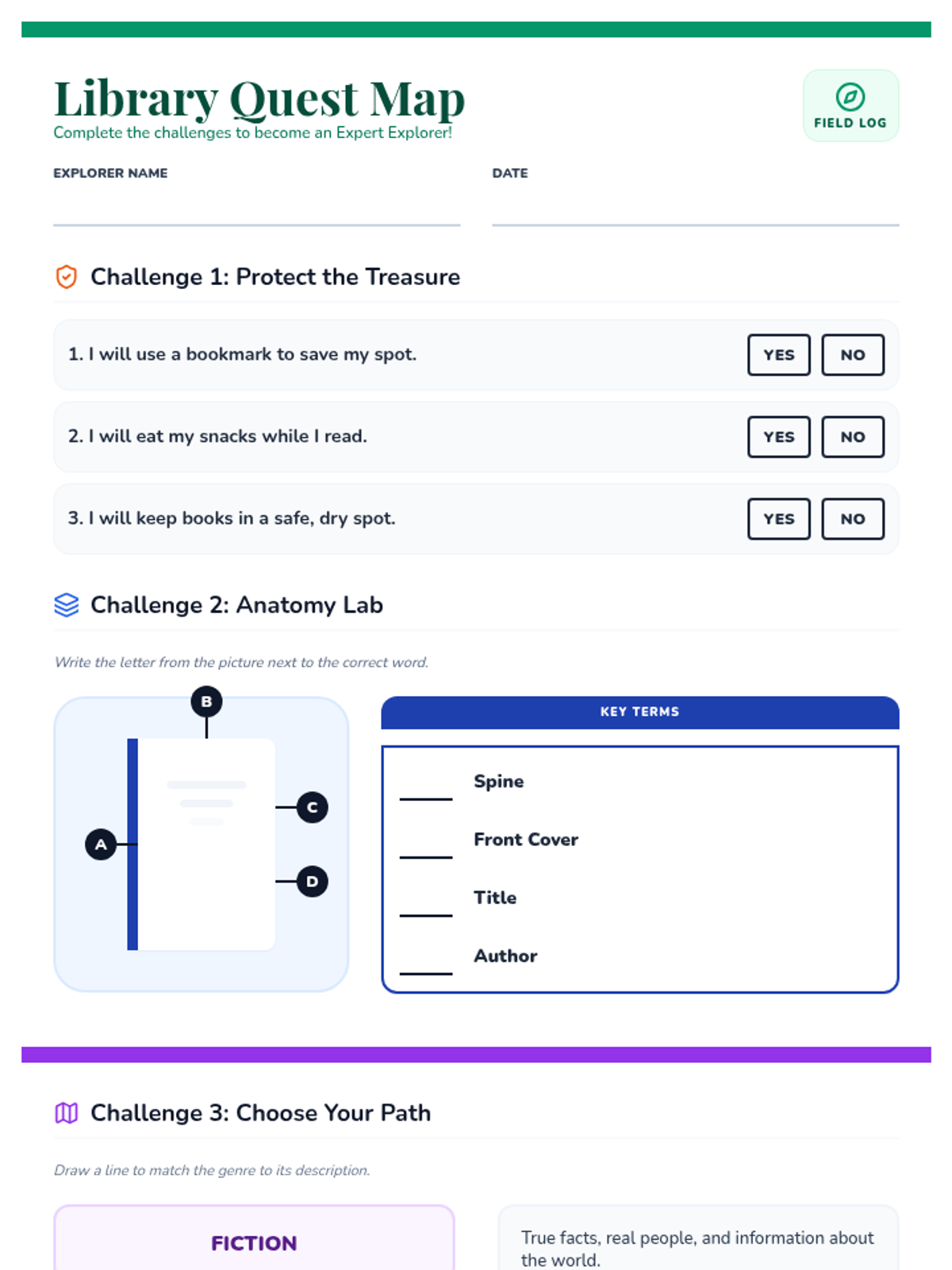
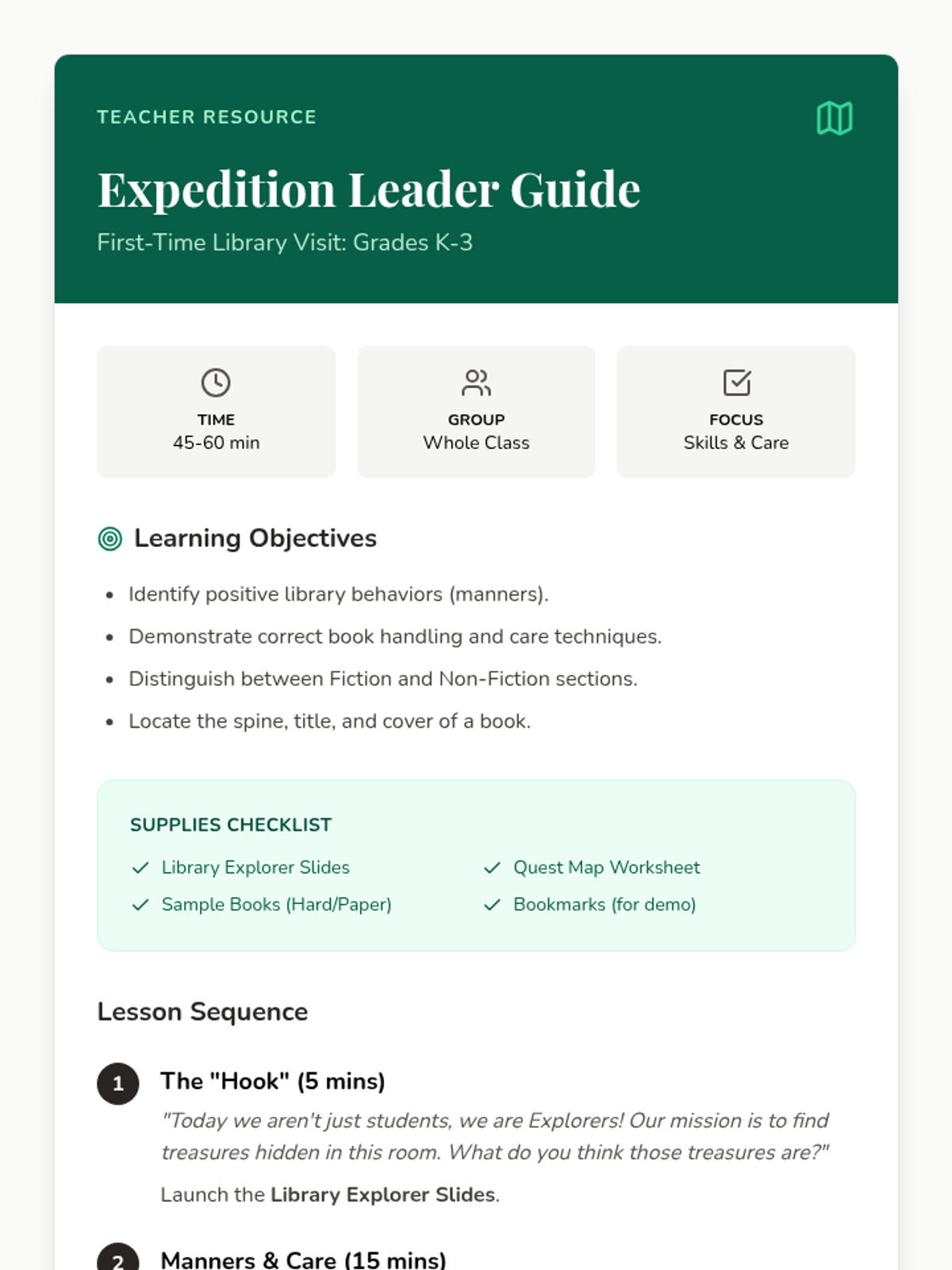
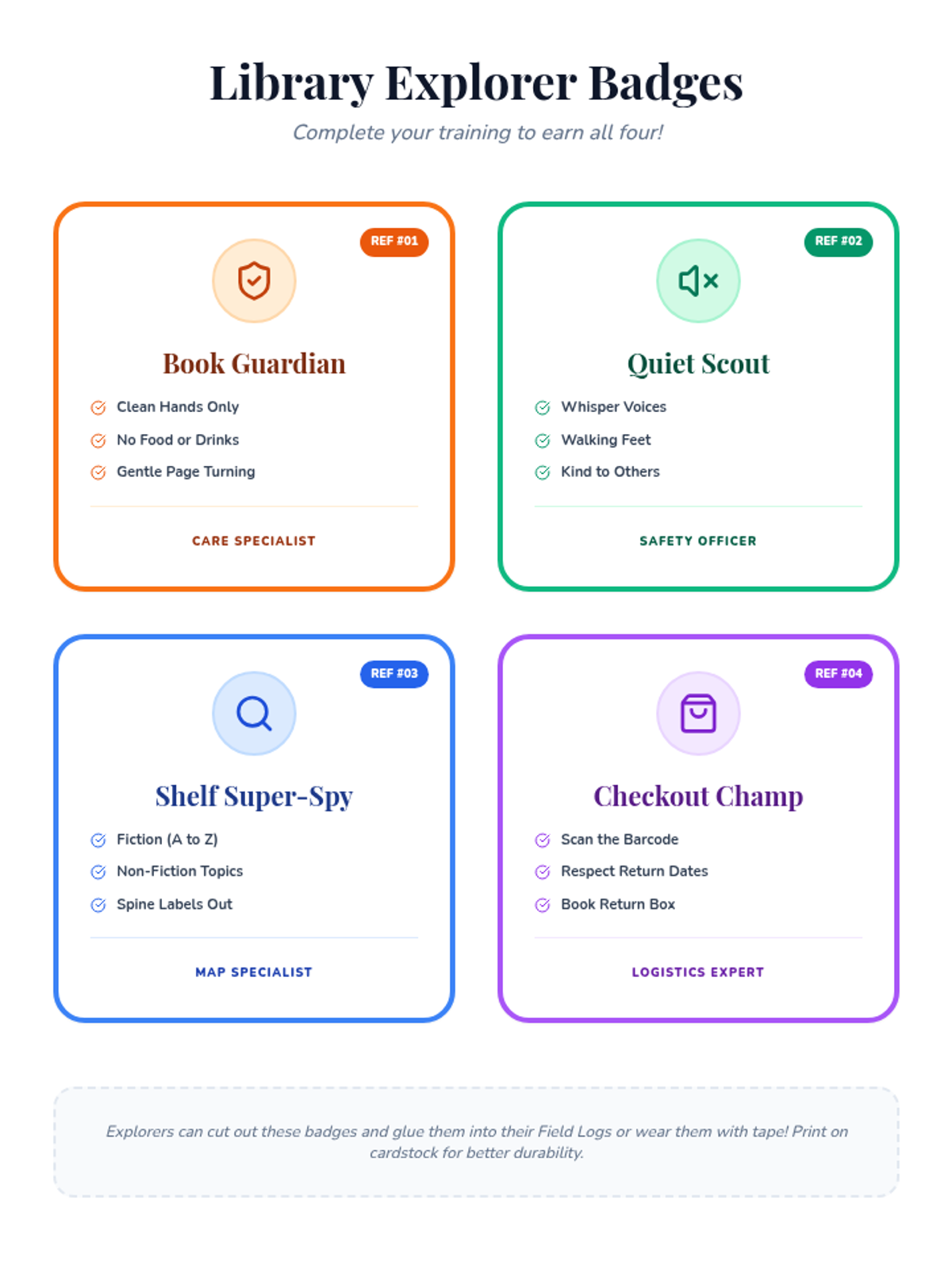
A foundational introduction to the library for elementary students, covering book care, library manners, genres, and the checkout process through an 'explorer' theme.
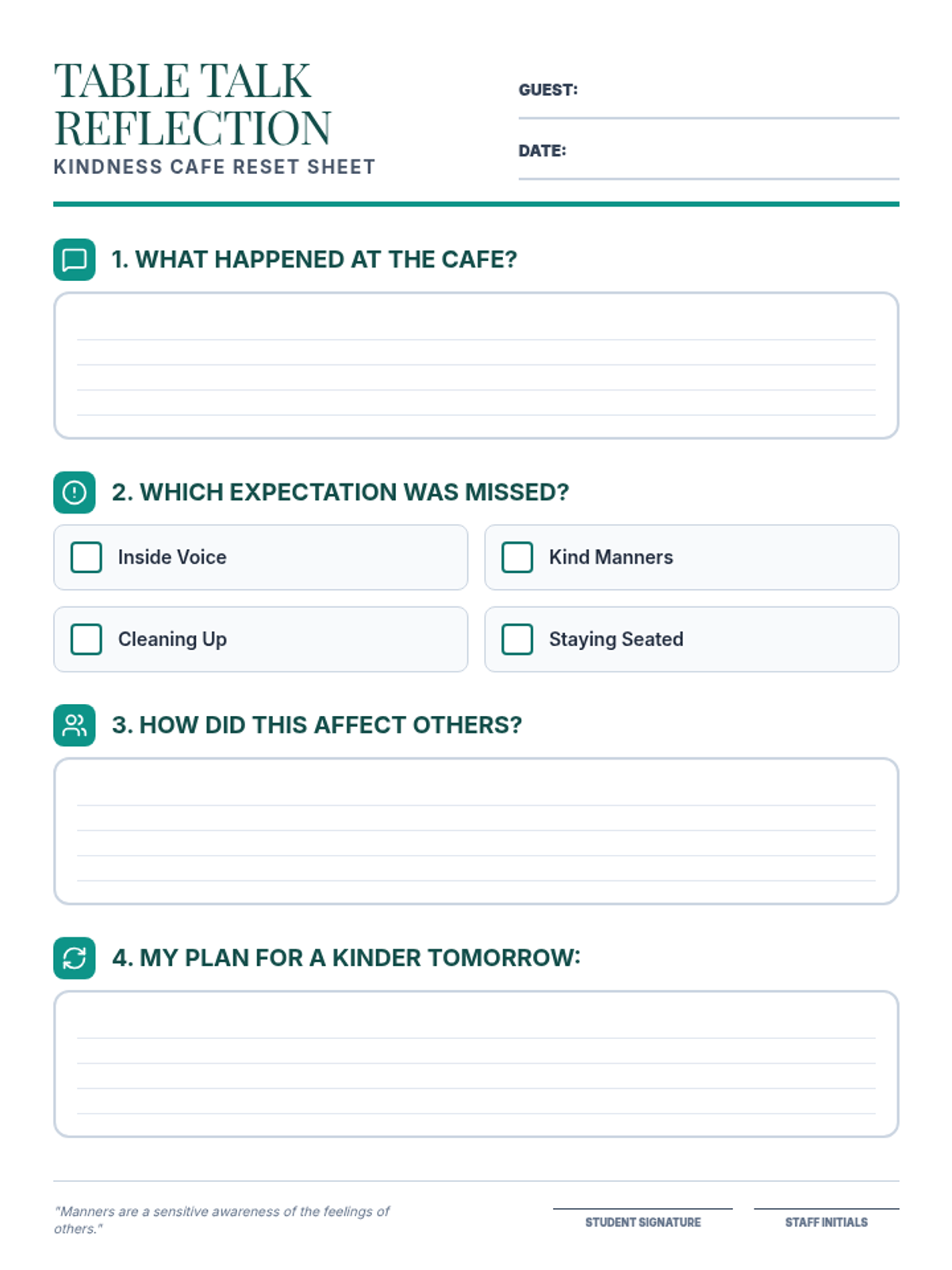
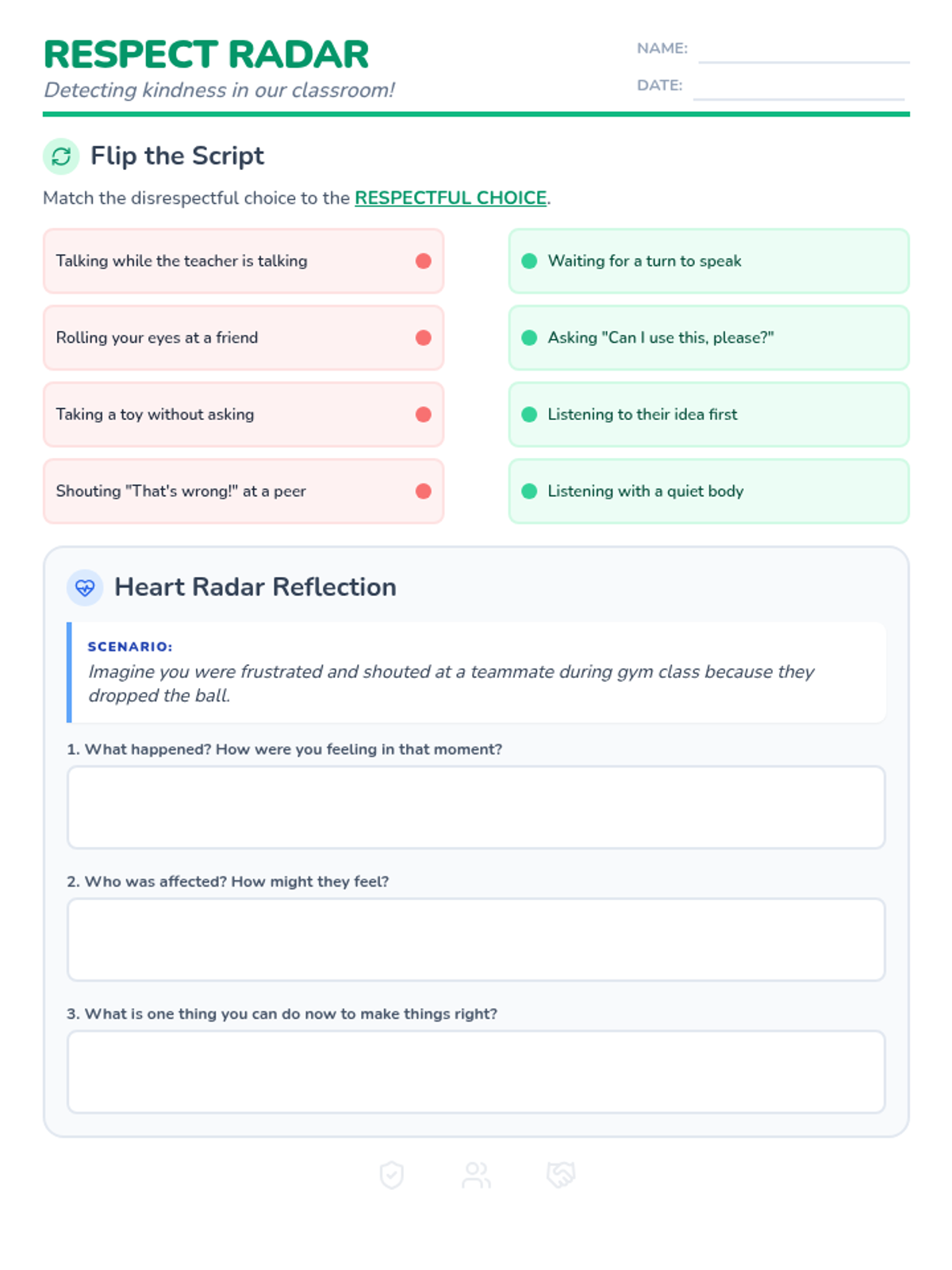
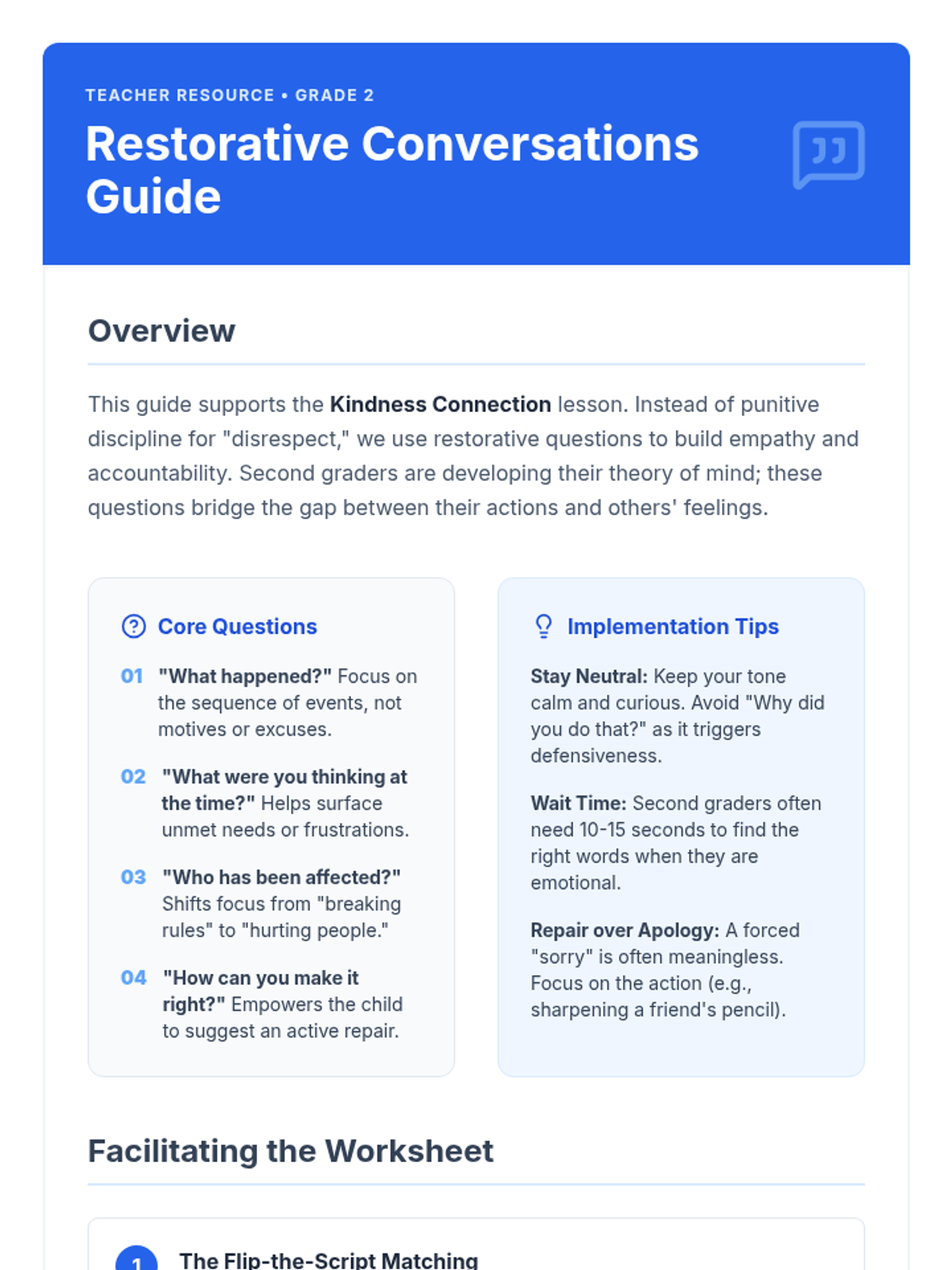
A social-emotional learning lesson focused on identifying disrespectful behaviors and practicing restorative reflection to build stronger classroom relationships.
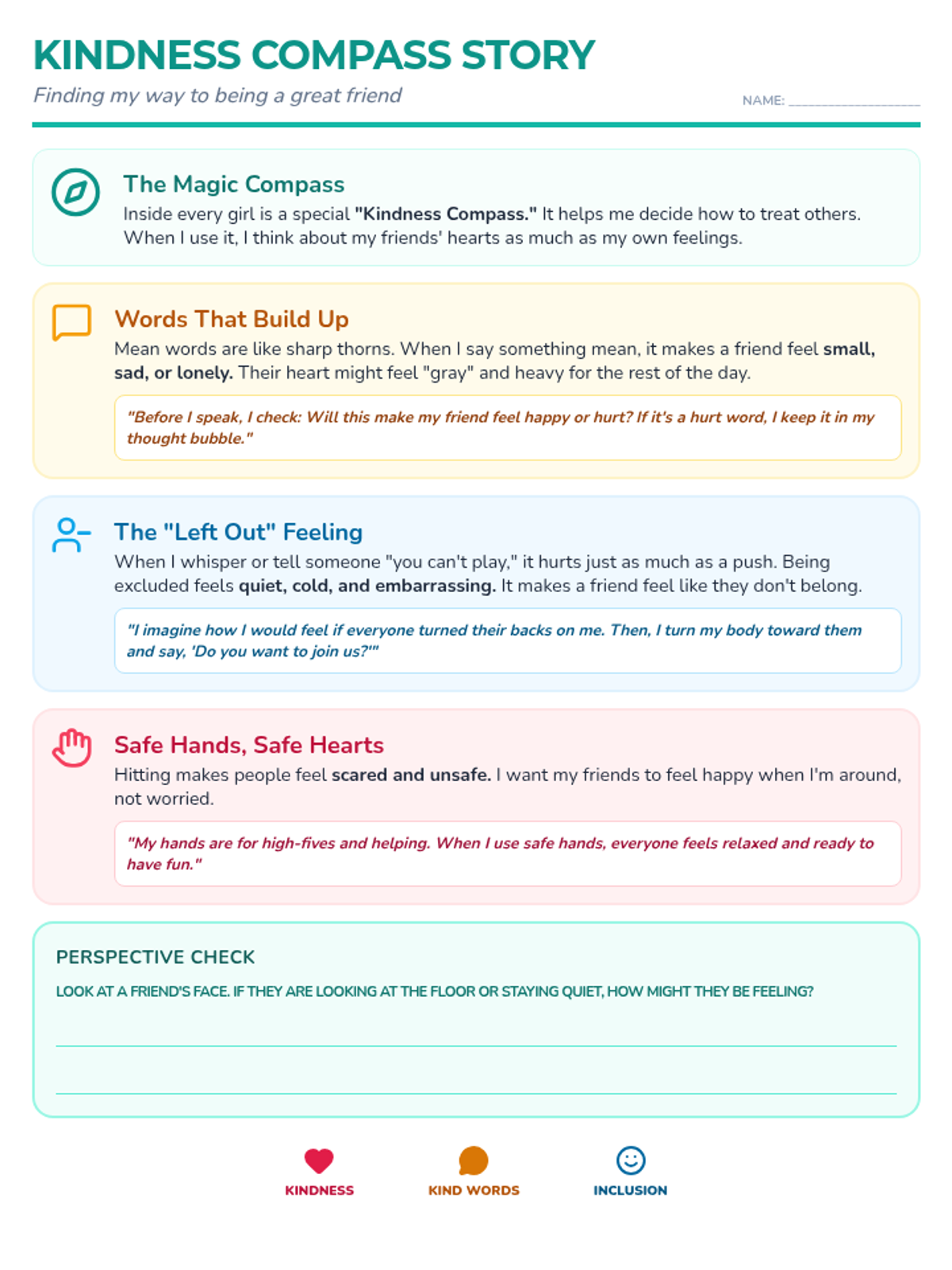
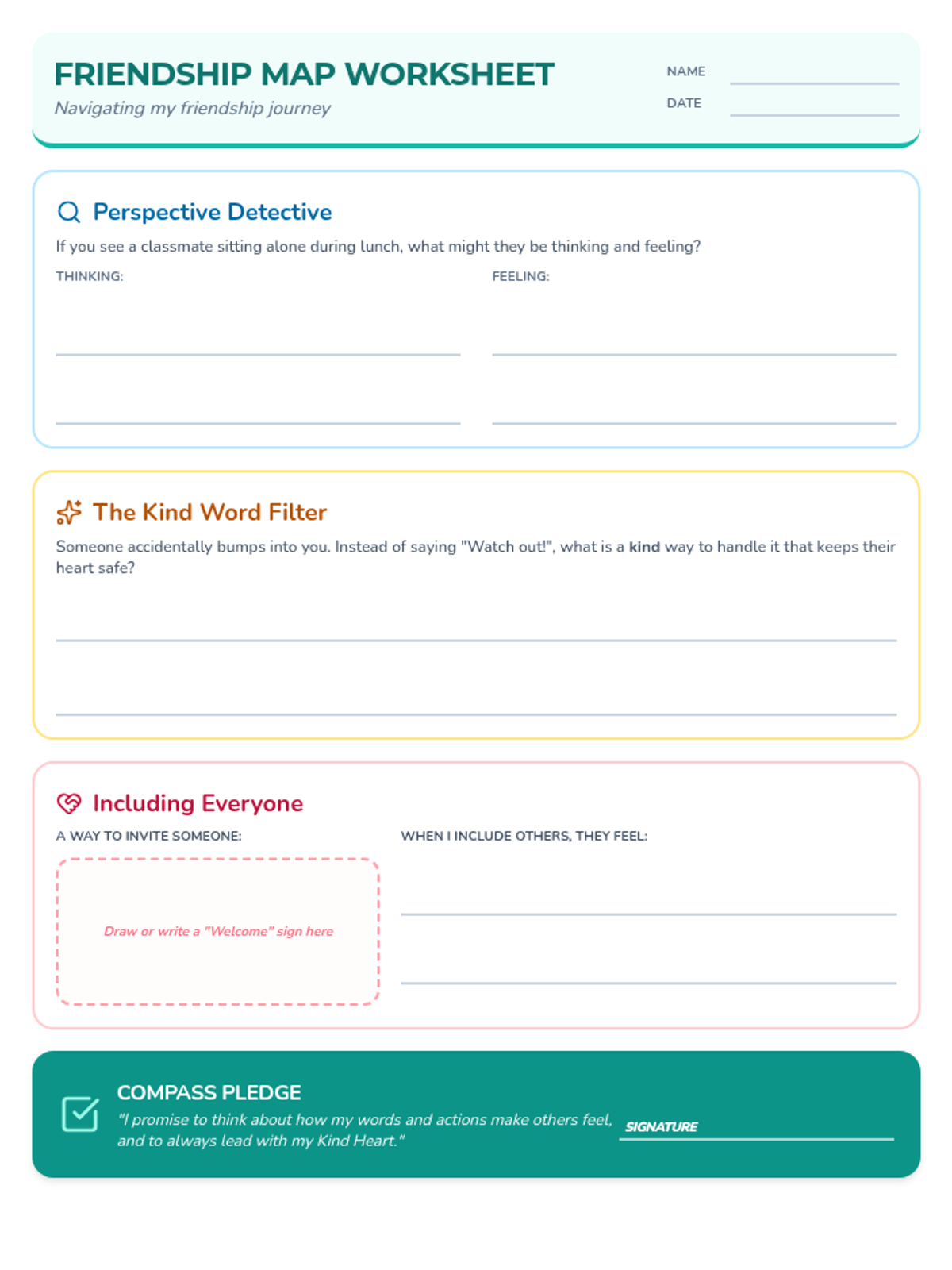
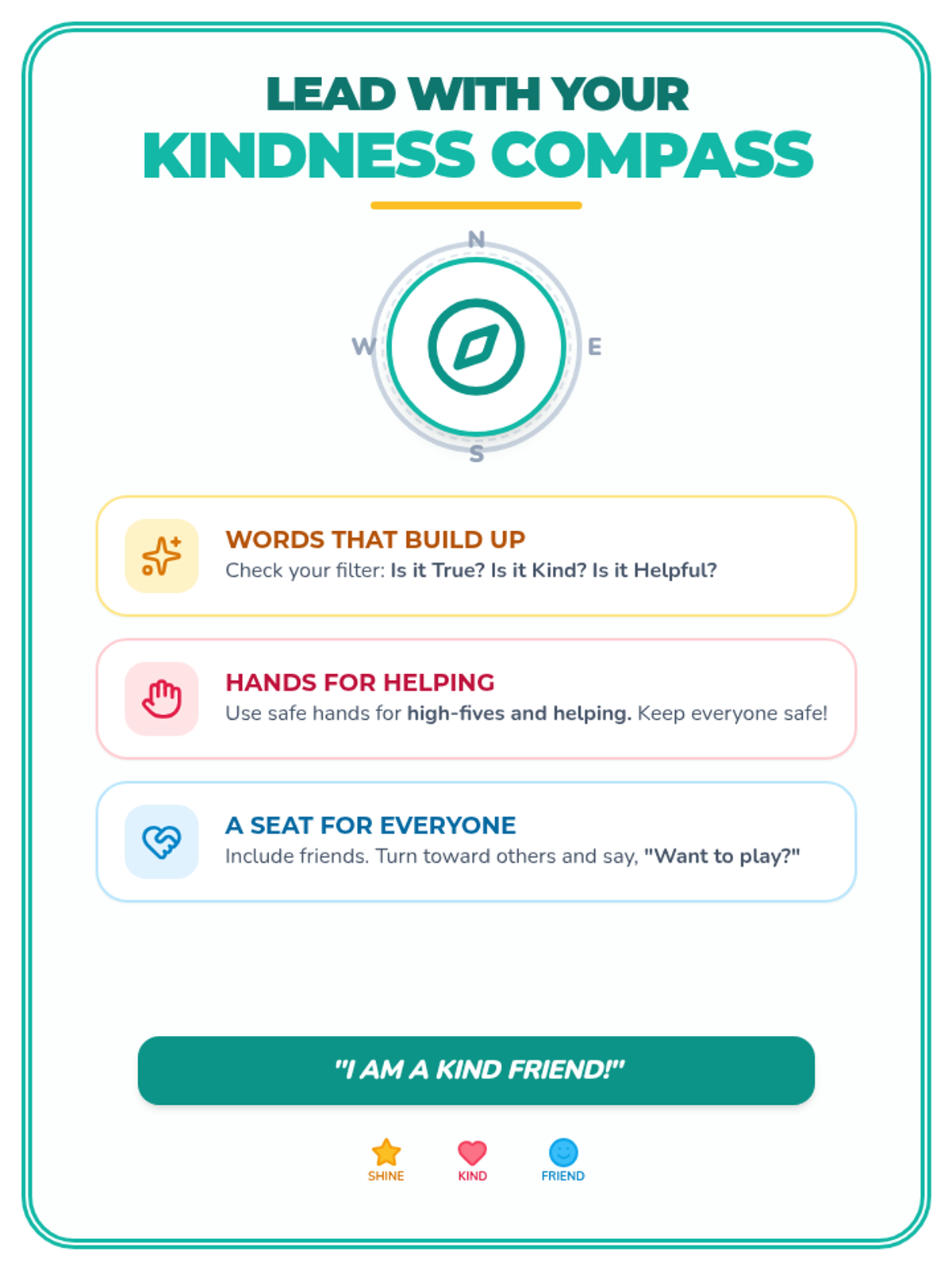
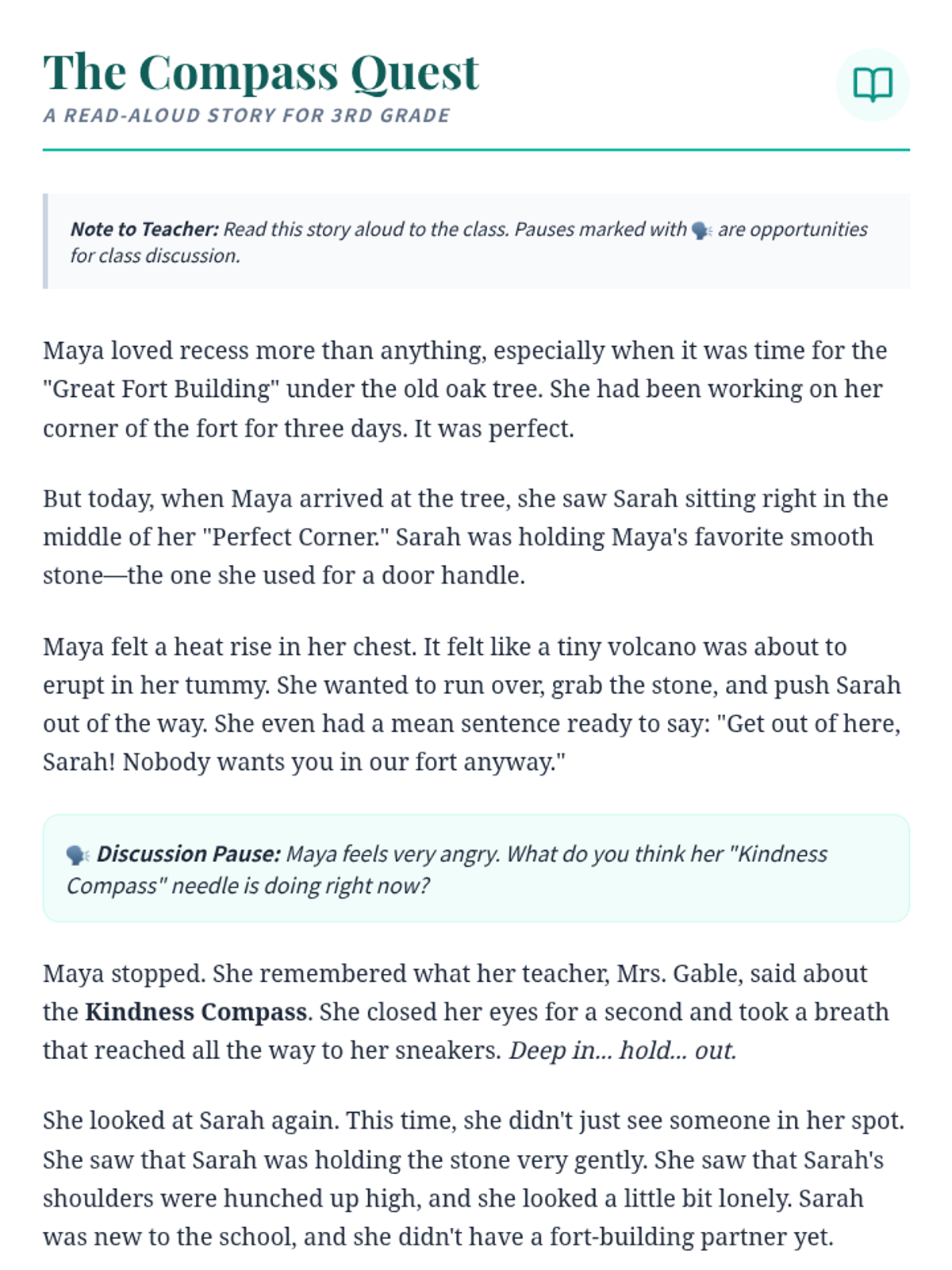
A social-emotional learning lesson focused on developing kindness, self-control, and acceptance of others through a relatable social story and reflective activities.
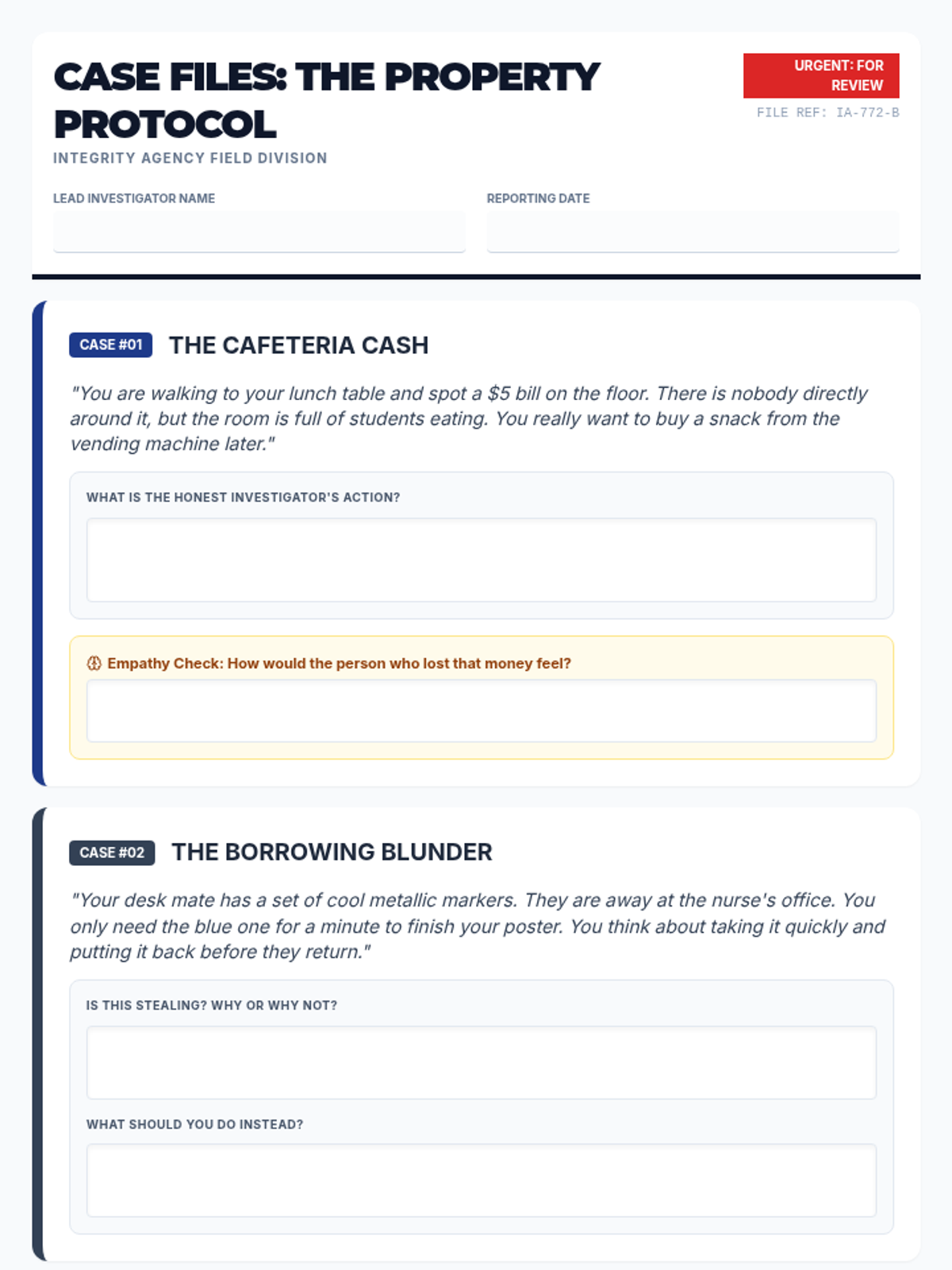
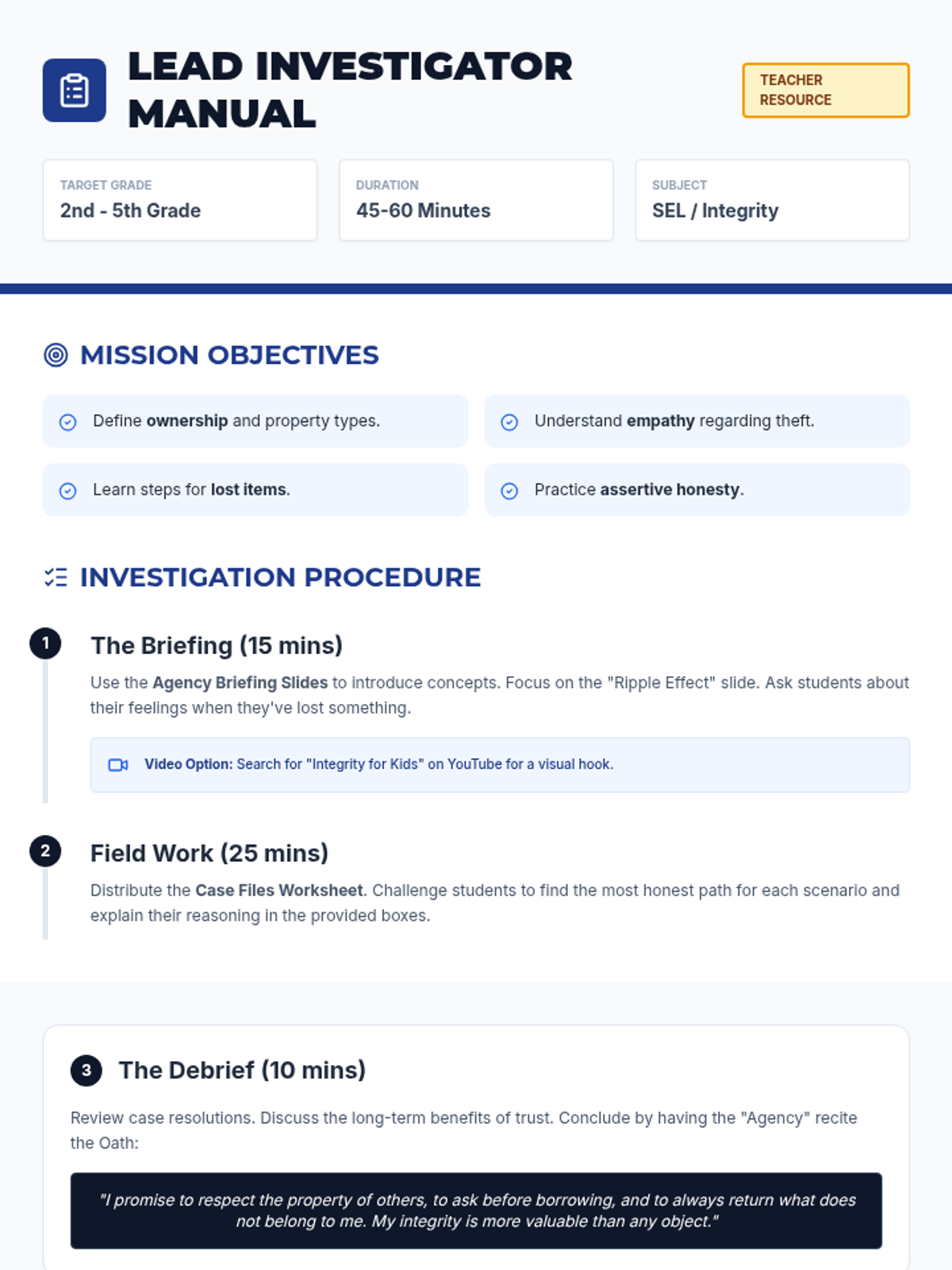
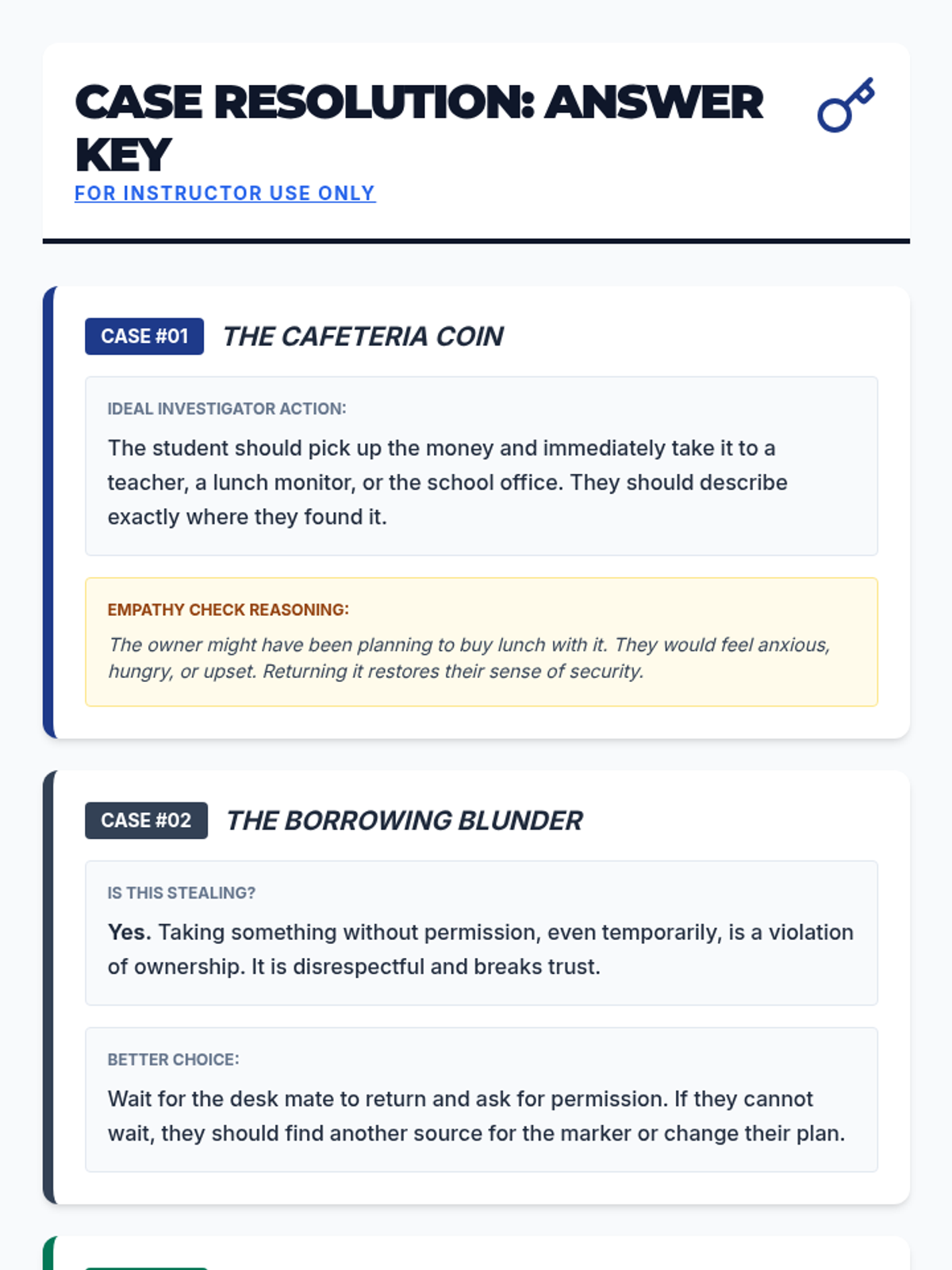
A social-emotional learning lesson that uses a detective theme to teach students about property ownership, empathy, and the importance of honesty.
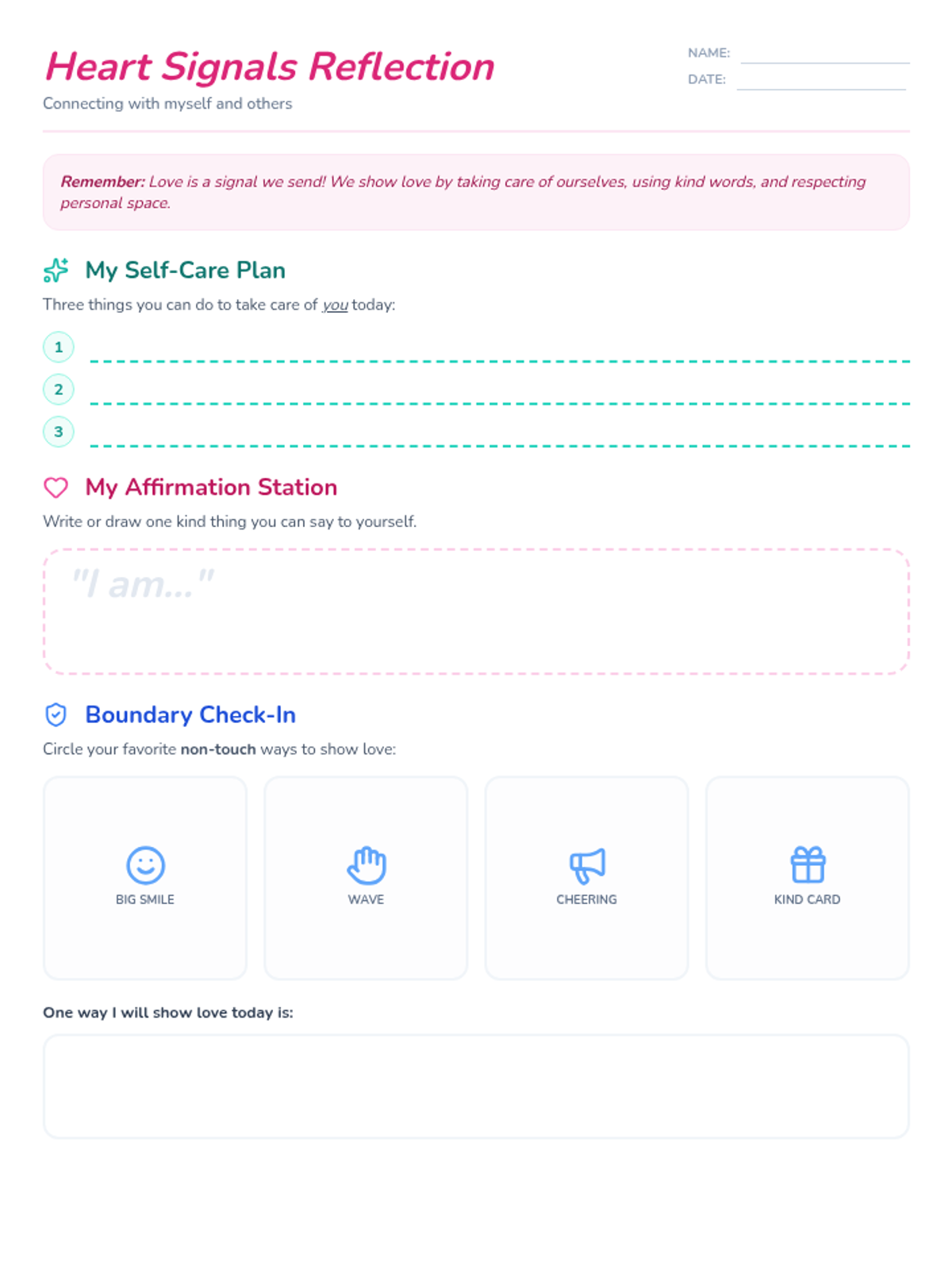
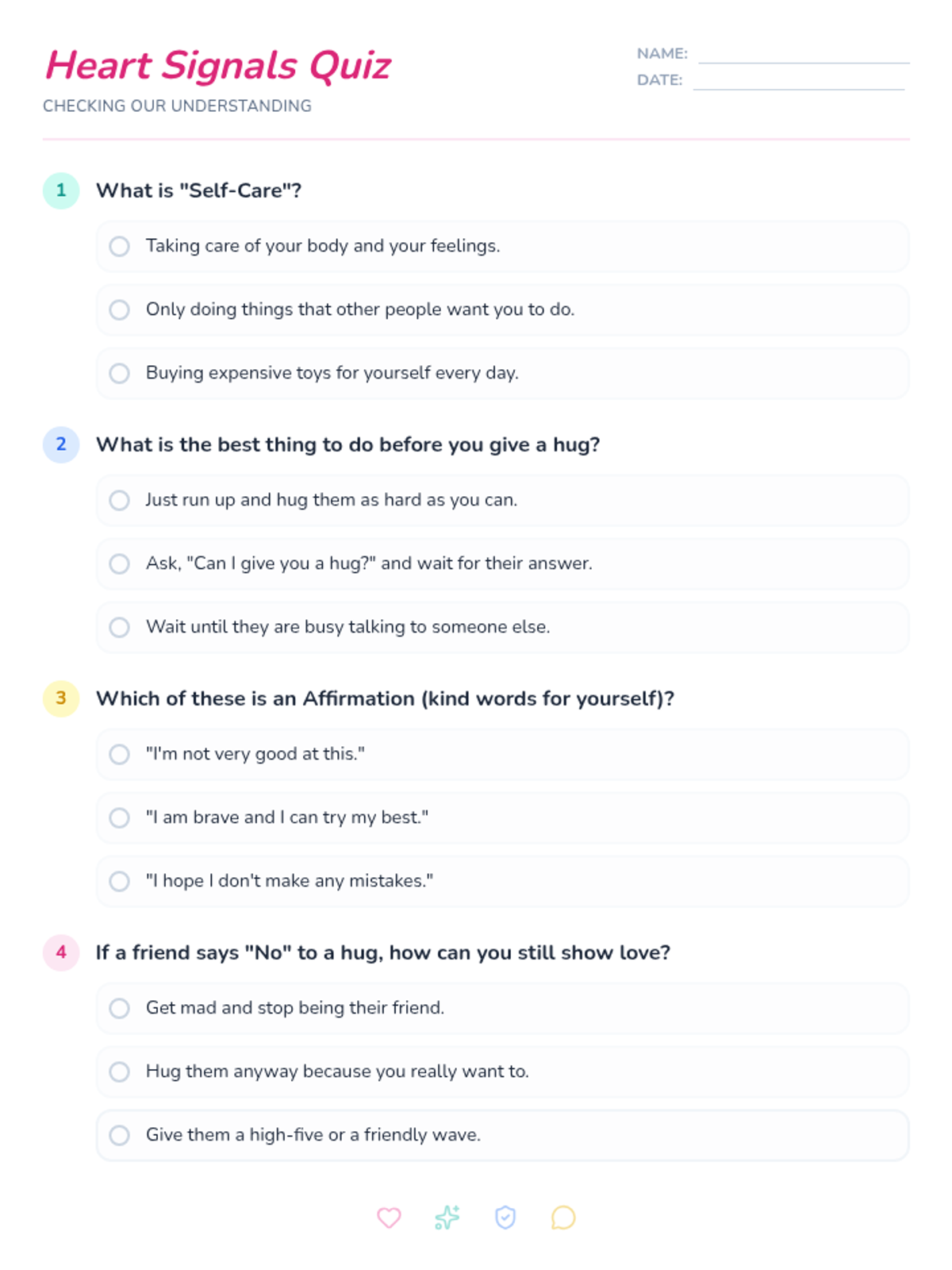
A foundational lesson on recognizing and practicing self-love and healthy expressions of love toward others through self-care, affirmations, and boundaries.
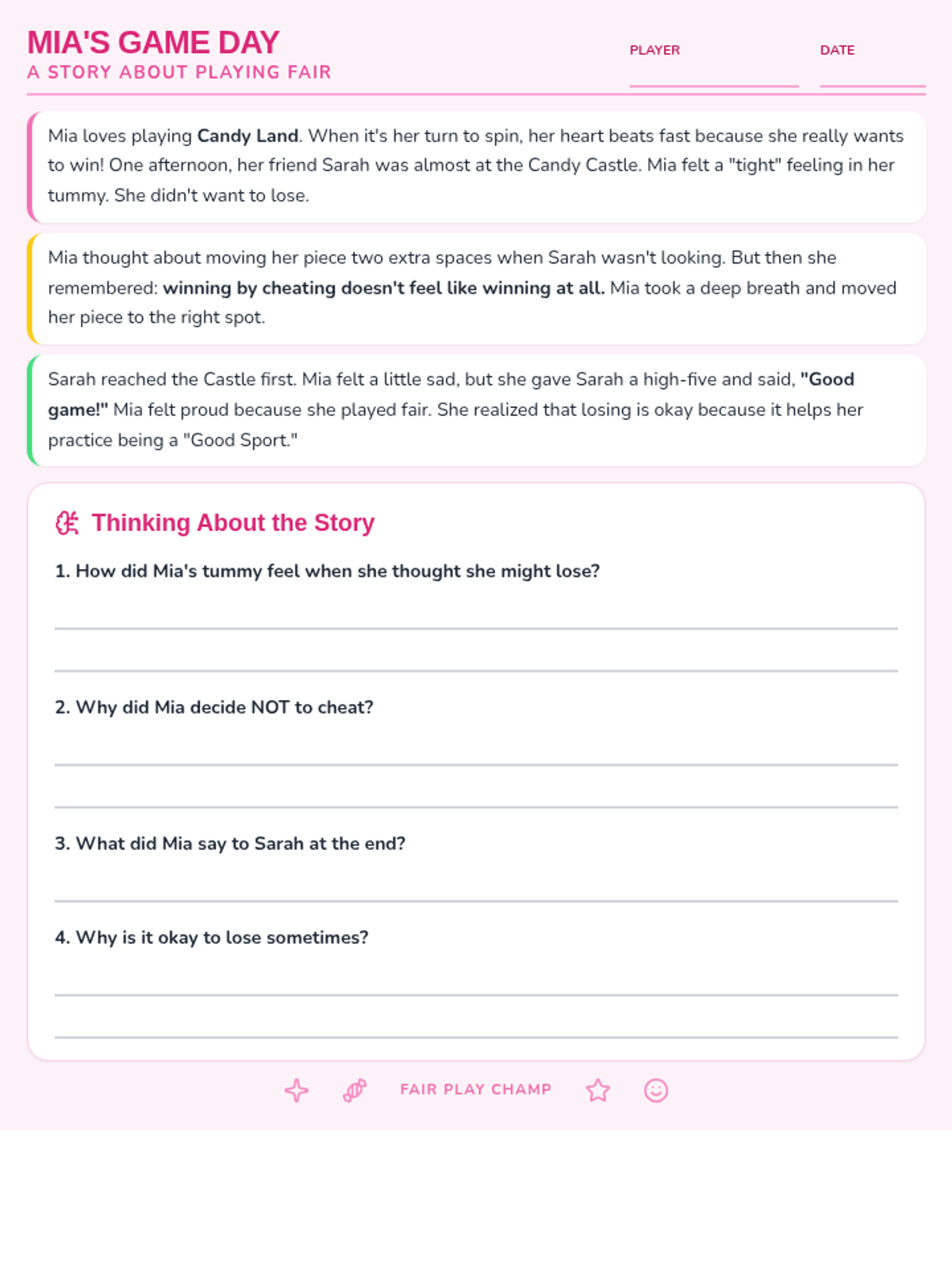
A lesson focused on social-emotional learning, specifically teaching students the importance of fair play, the consequences of cheating, and how to handle losing gracefully in board games.
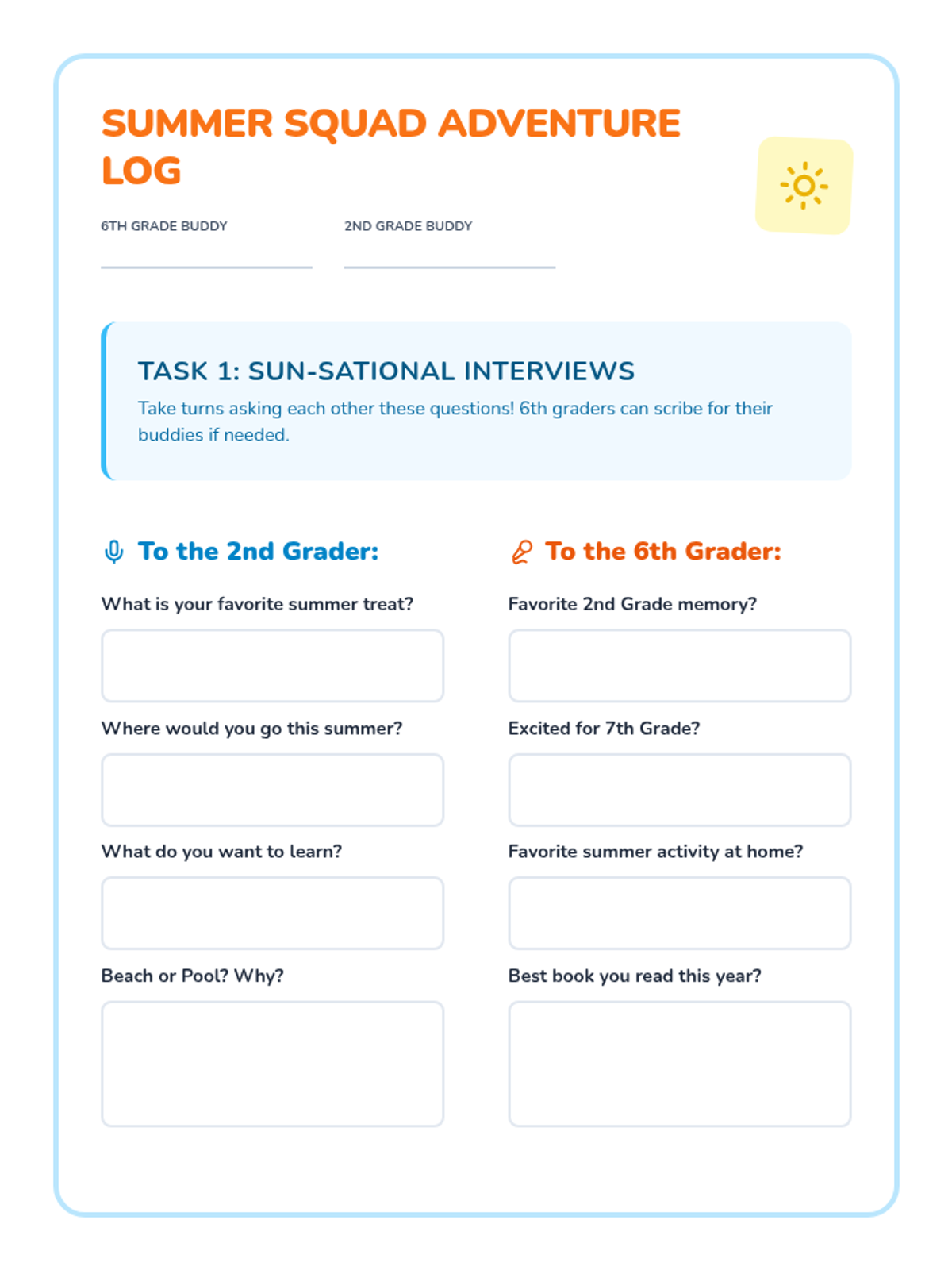
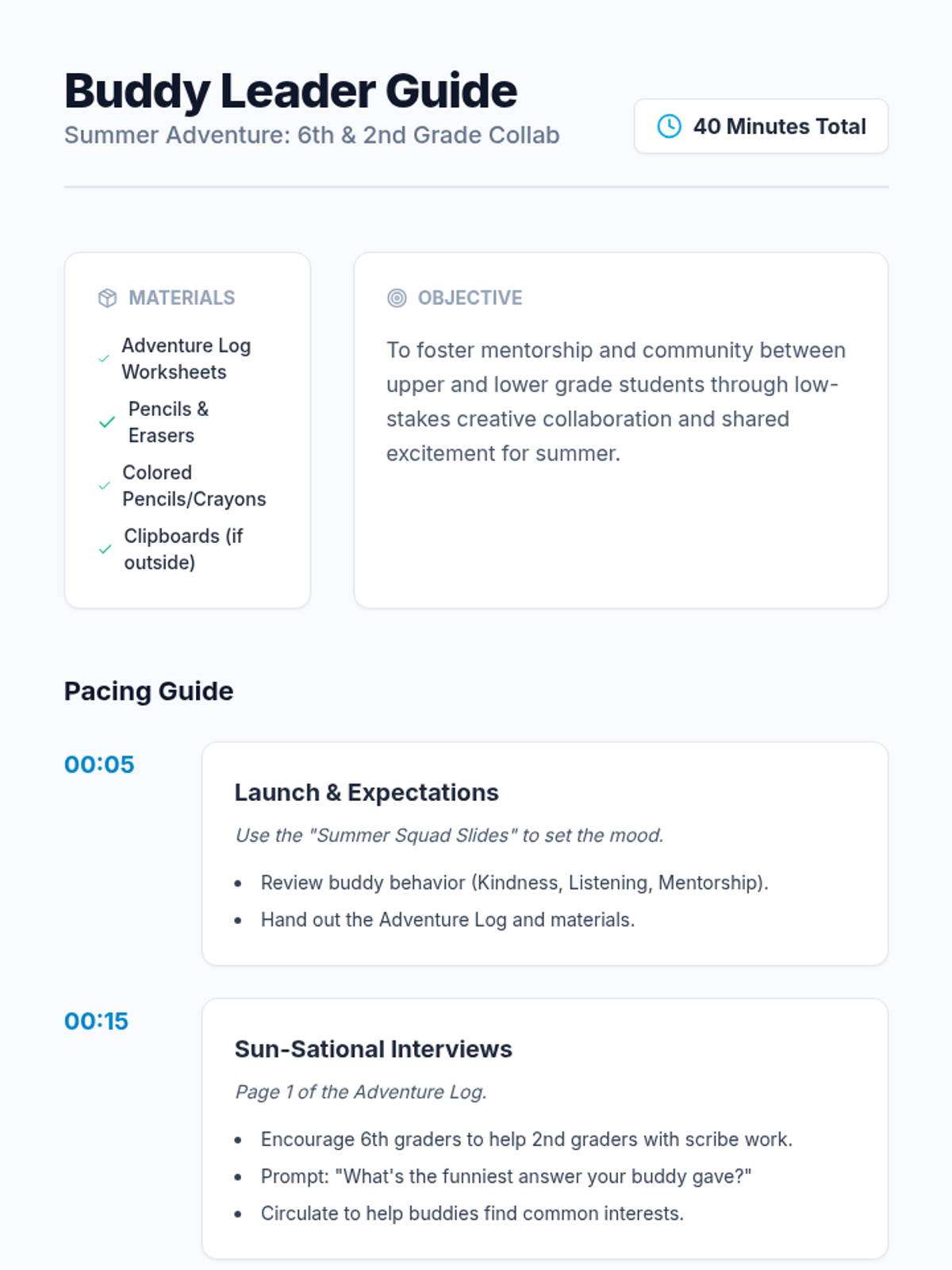
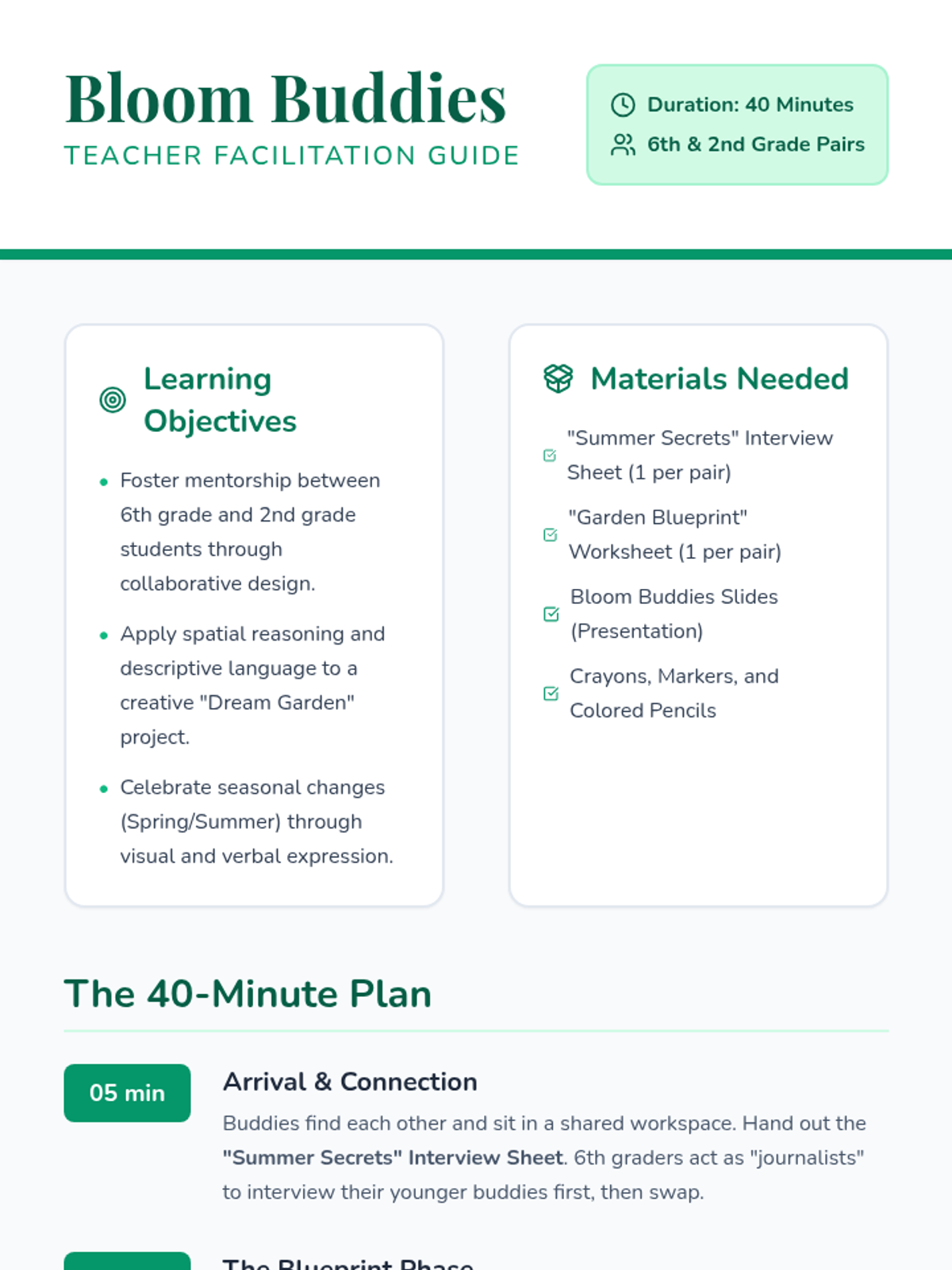
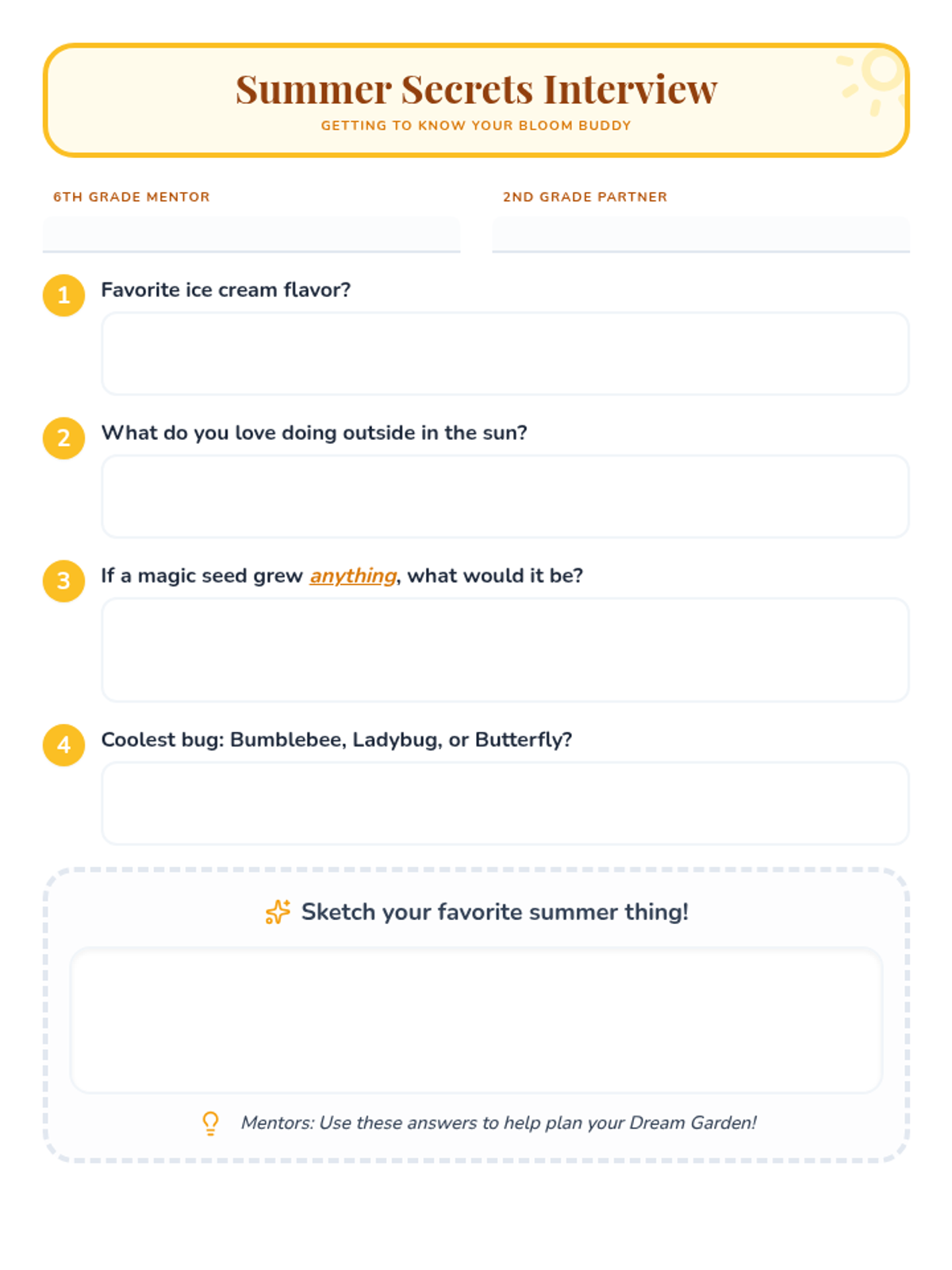
A high-energy, collaborative 40-minute activity for 6th and 2nd grade buddies to bond over summer plans and creative challenges.
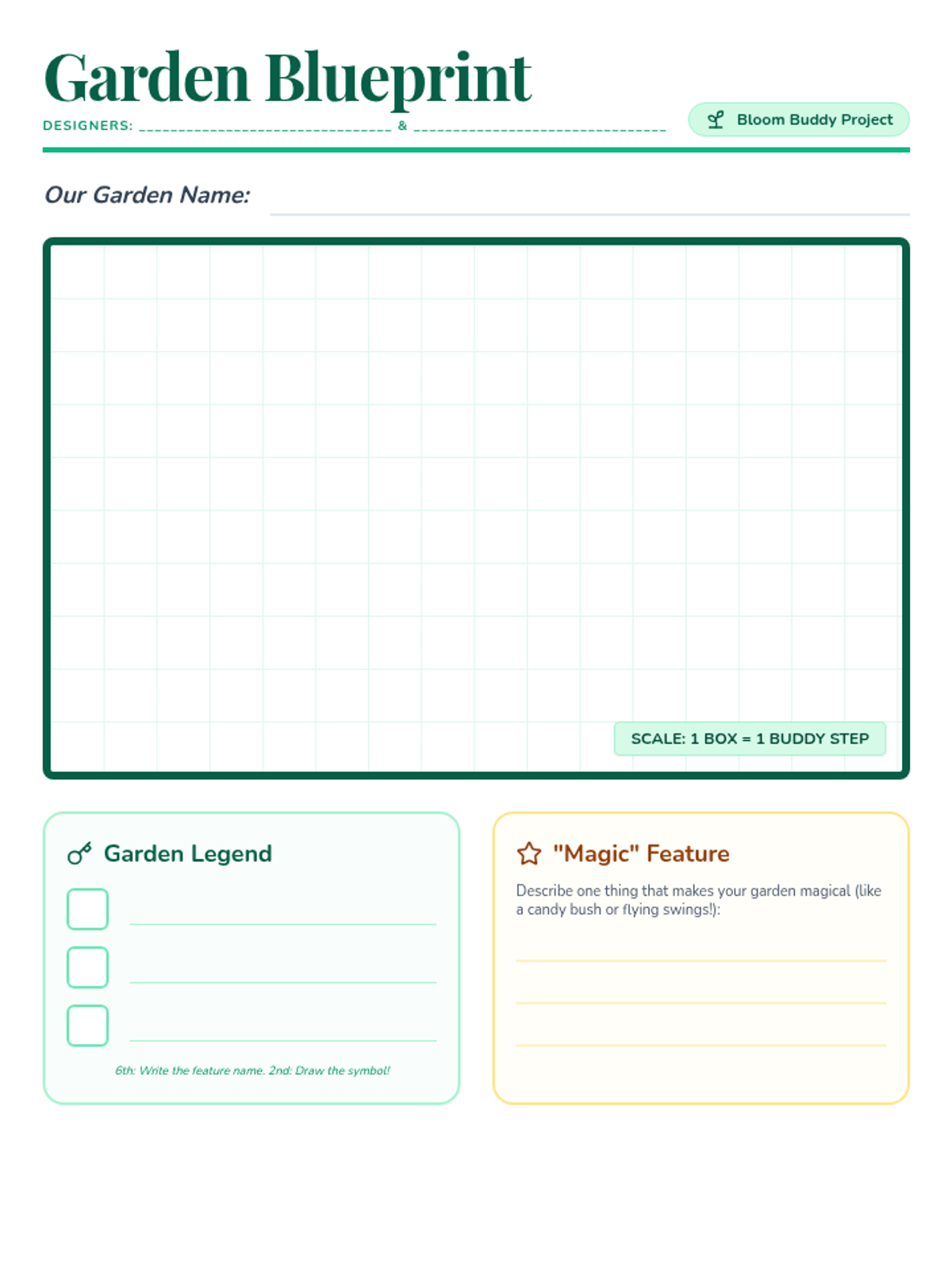
A collaborative buddy activity for 6th and 2nd graders to design a dream garden together while celebrating the themes of spring and summer.
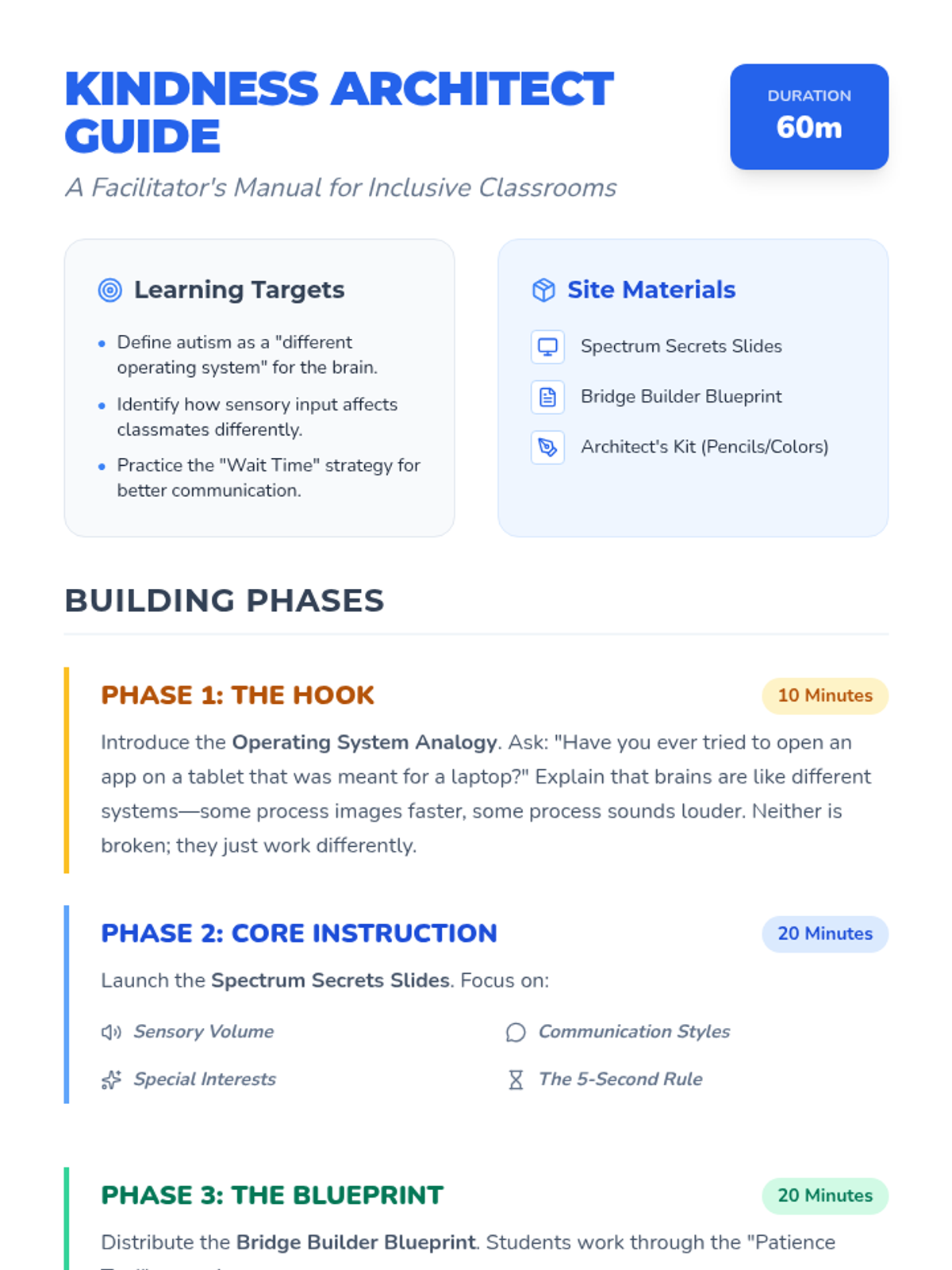
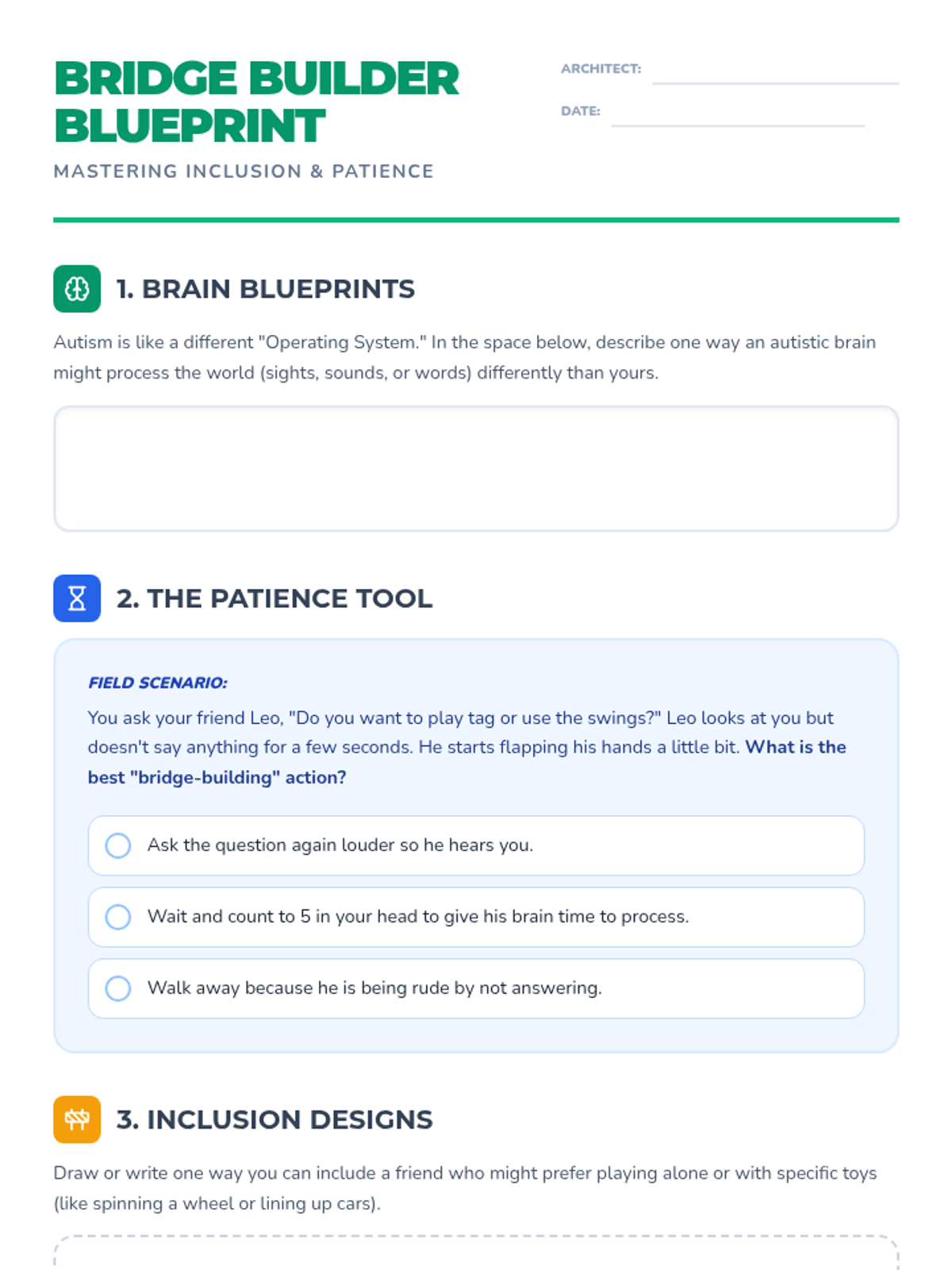
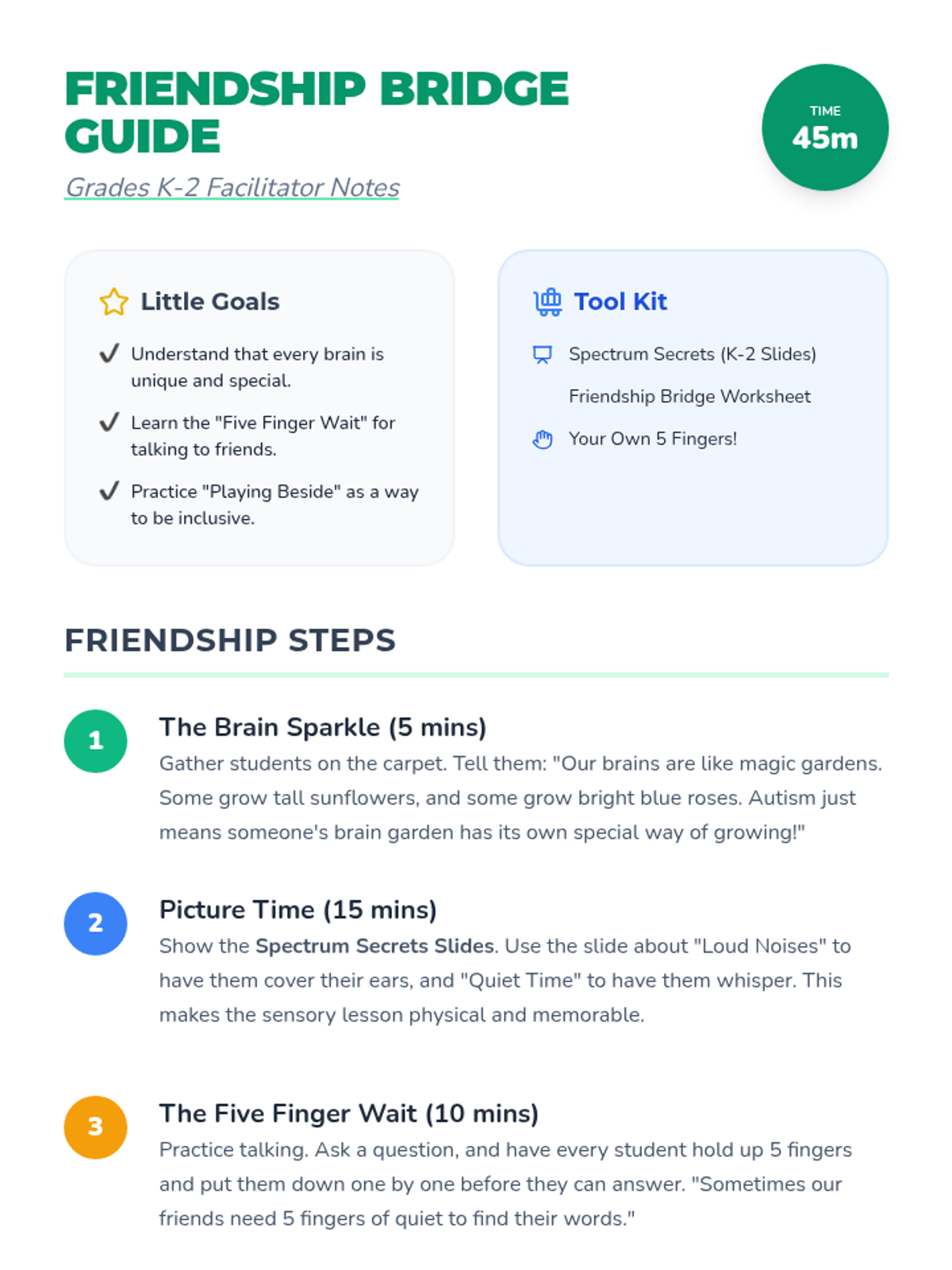
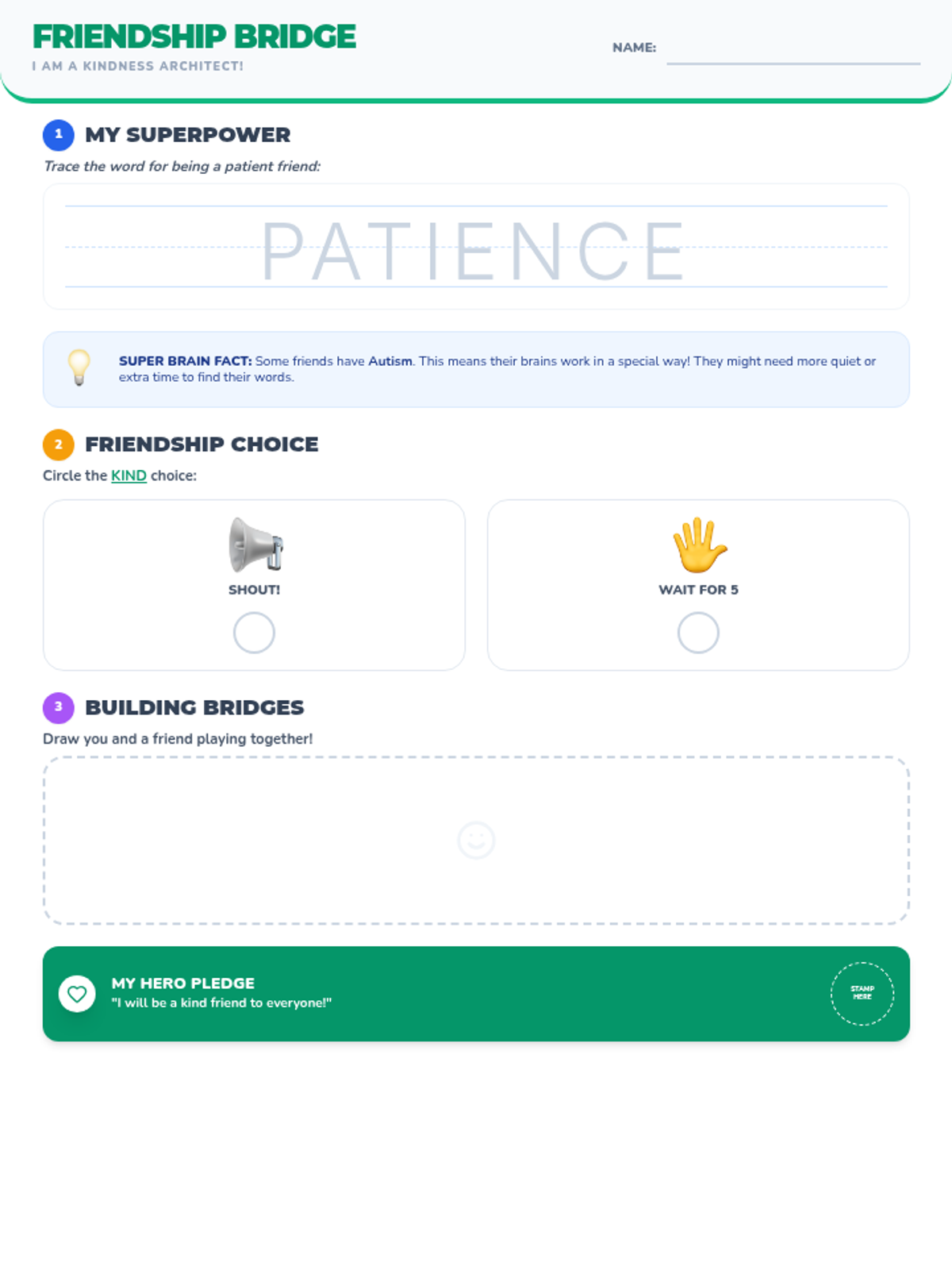
A comprehensive lesson designed to help students understand autism as a natural neurological difference while developing specific friendship skills like patience and inclusive play. Students will explore sensory experiences, communication styles, and practical ways to support peers on the spectrum.
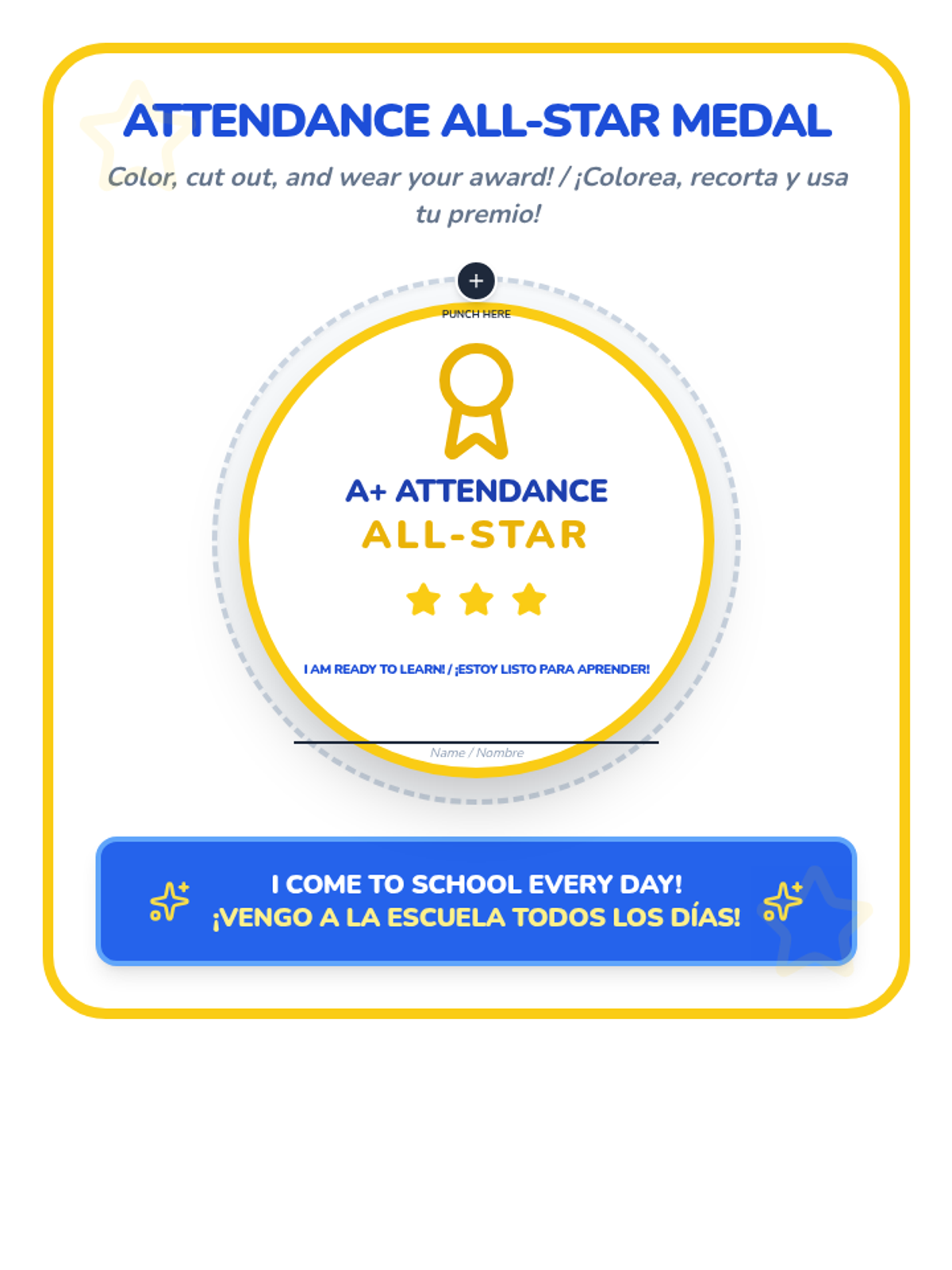
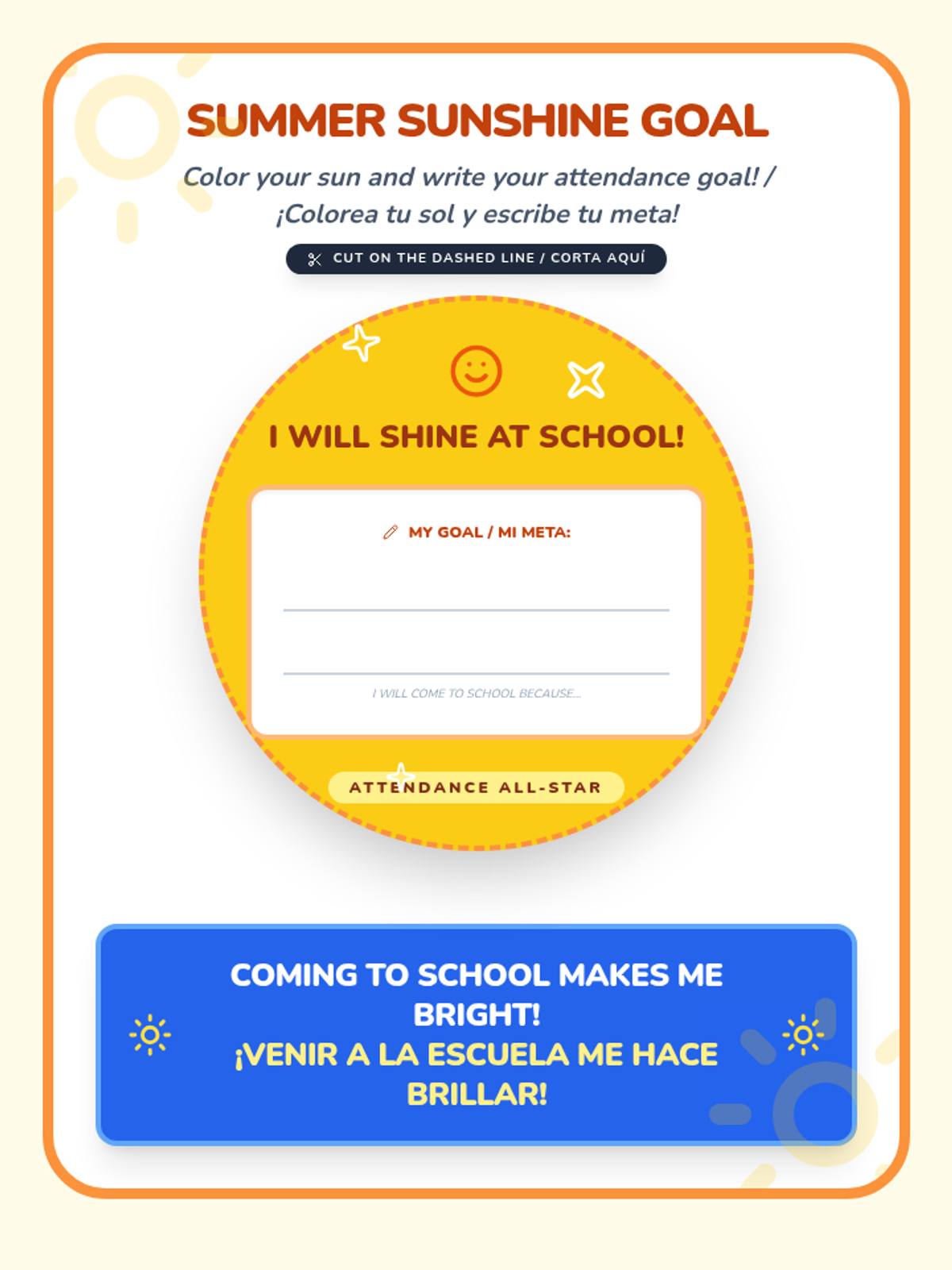
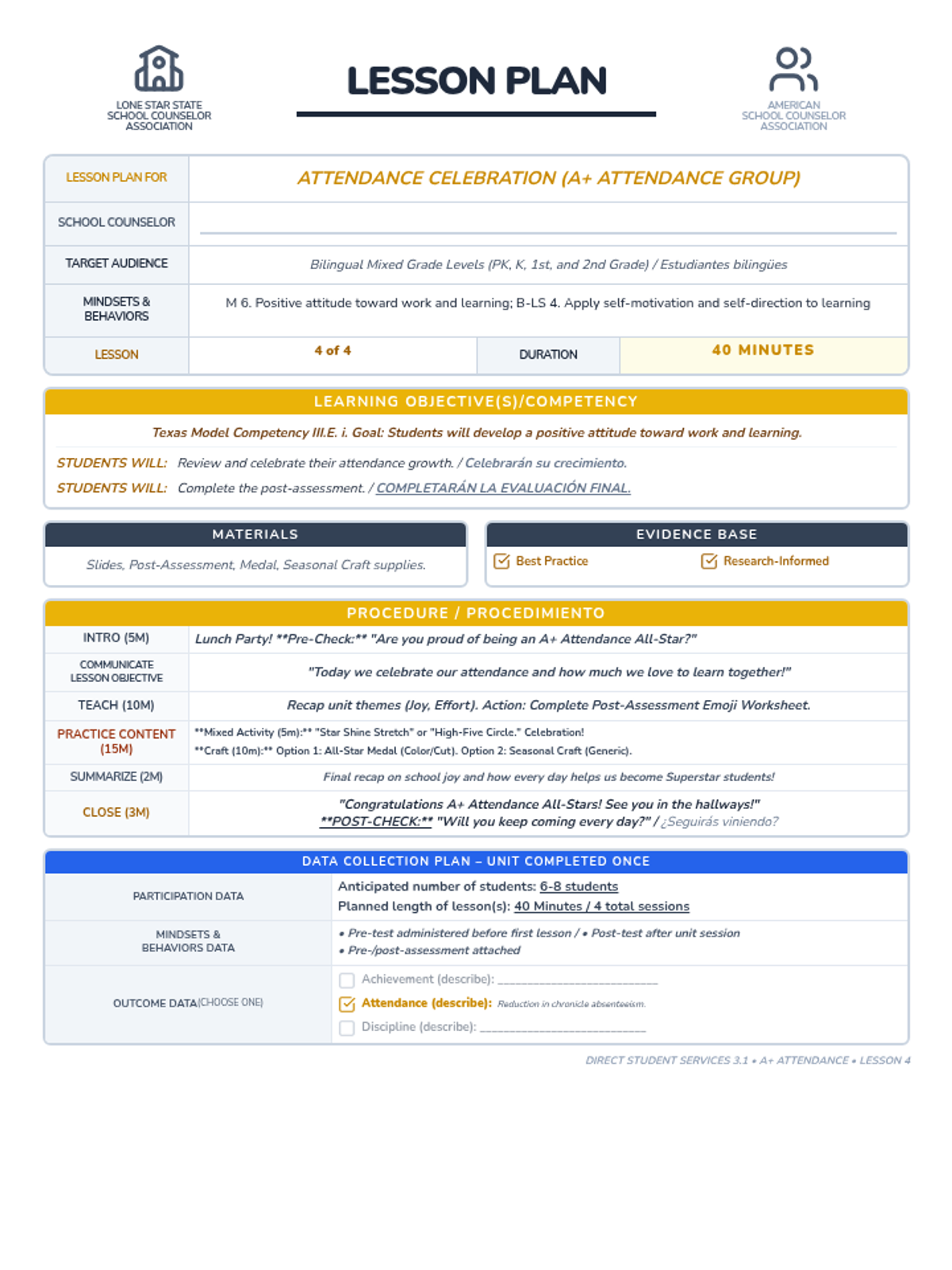
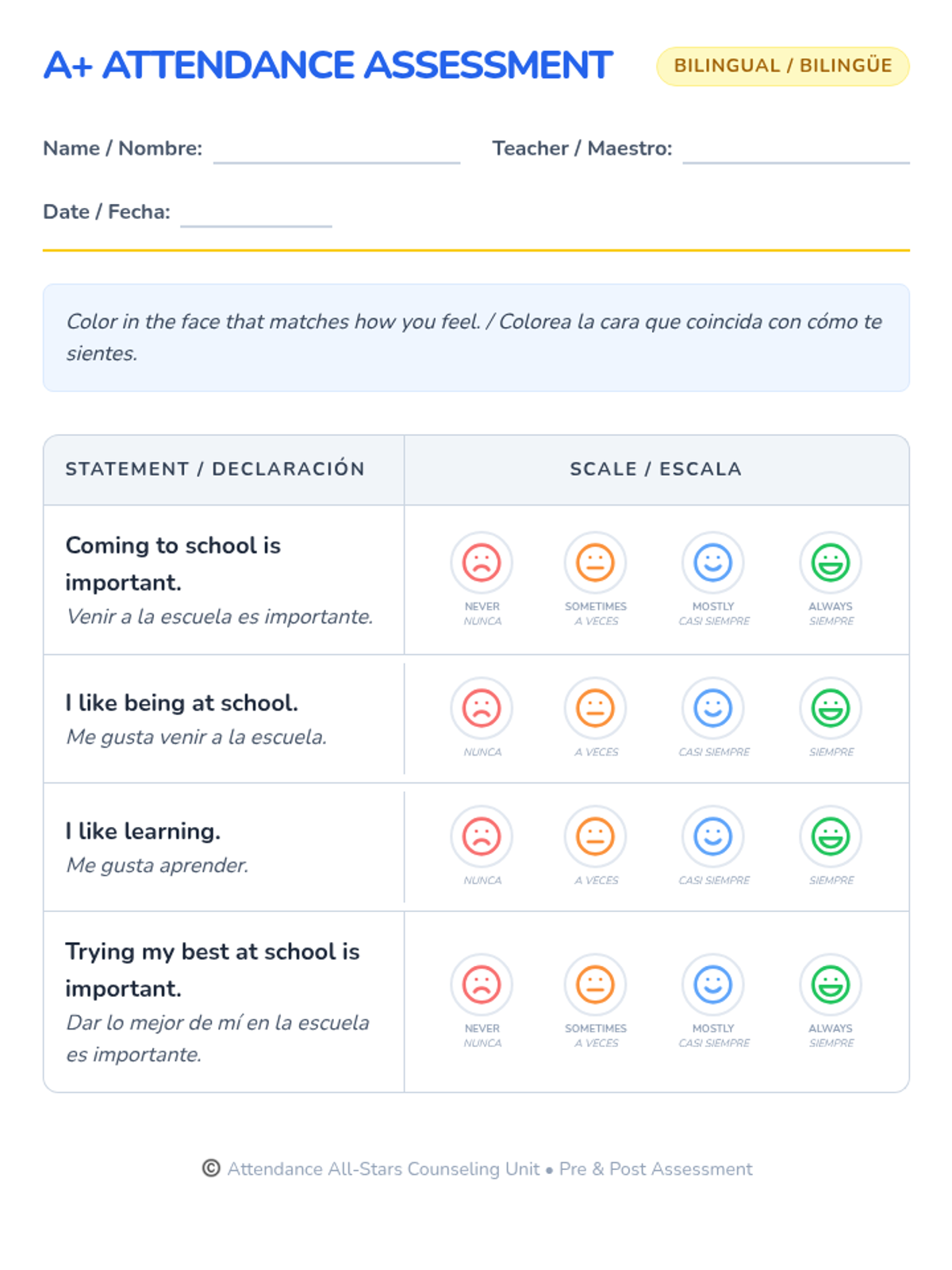
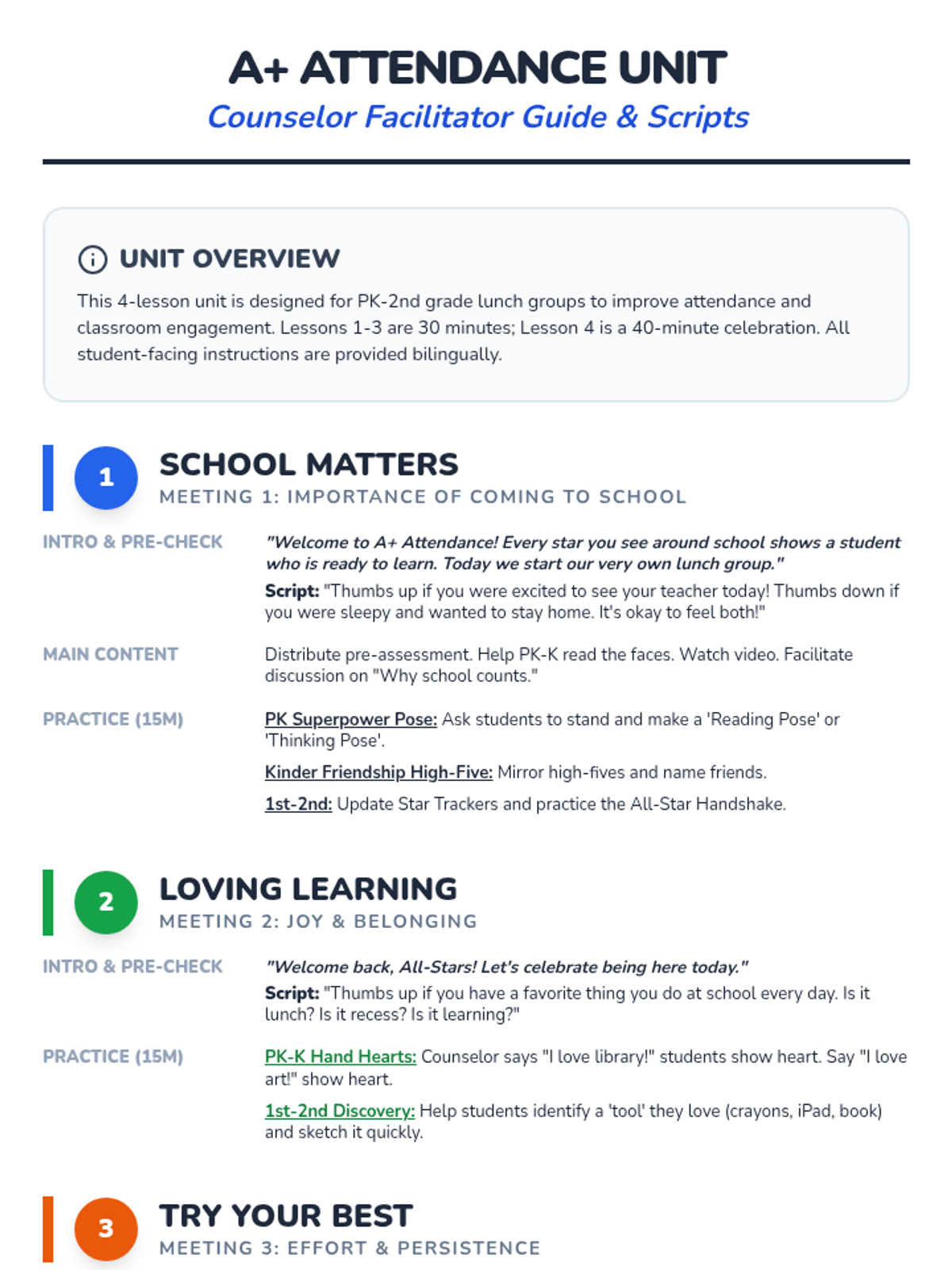
A final celebration of student growth and consistent attendance. Includes a review of core concepts, the post-assessment, and a creative attendance-themed craft.
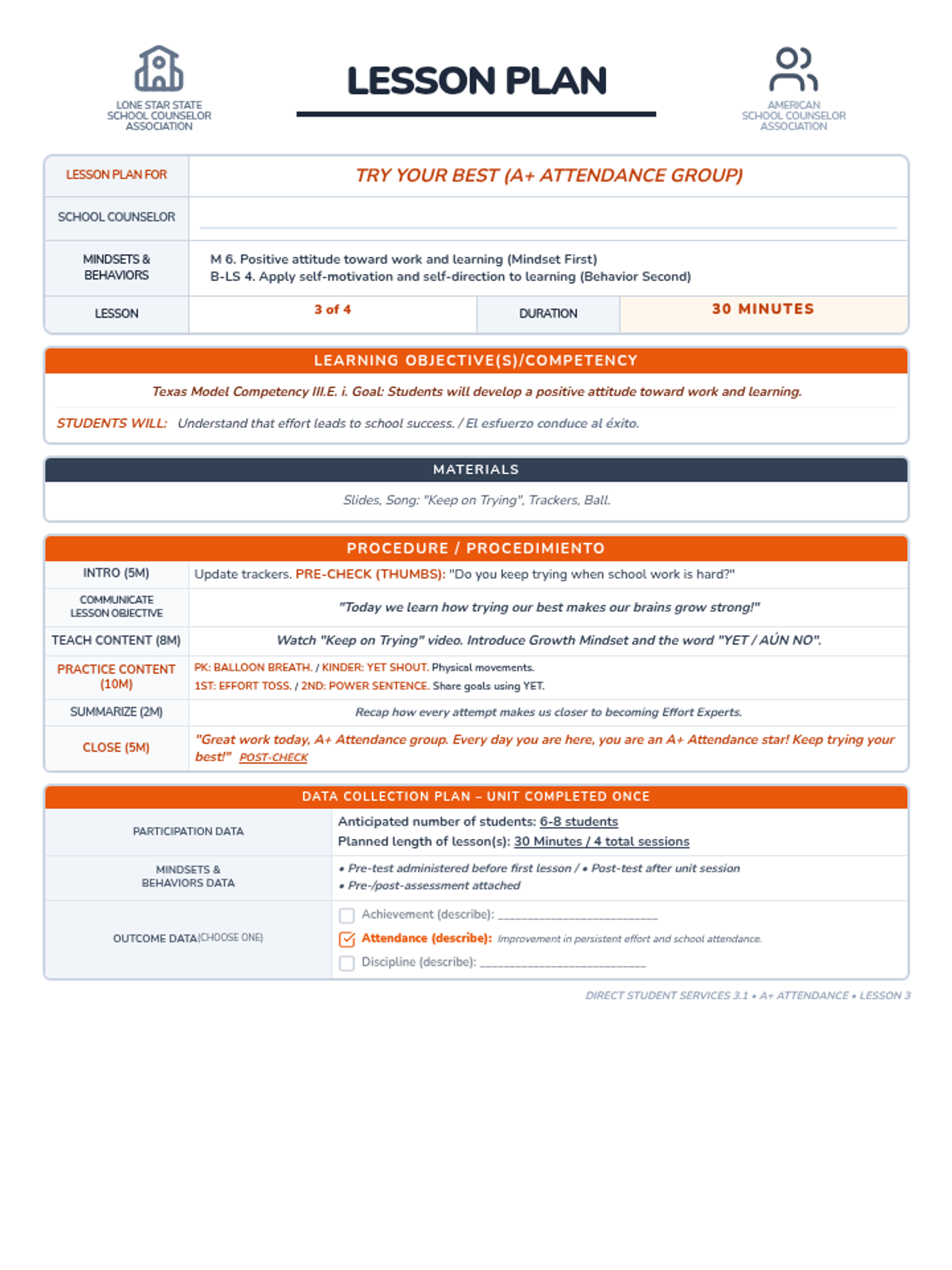
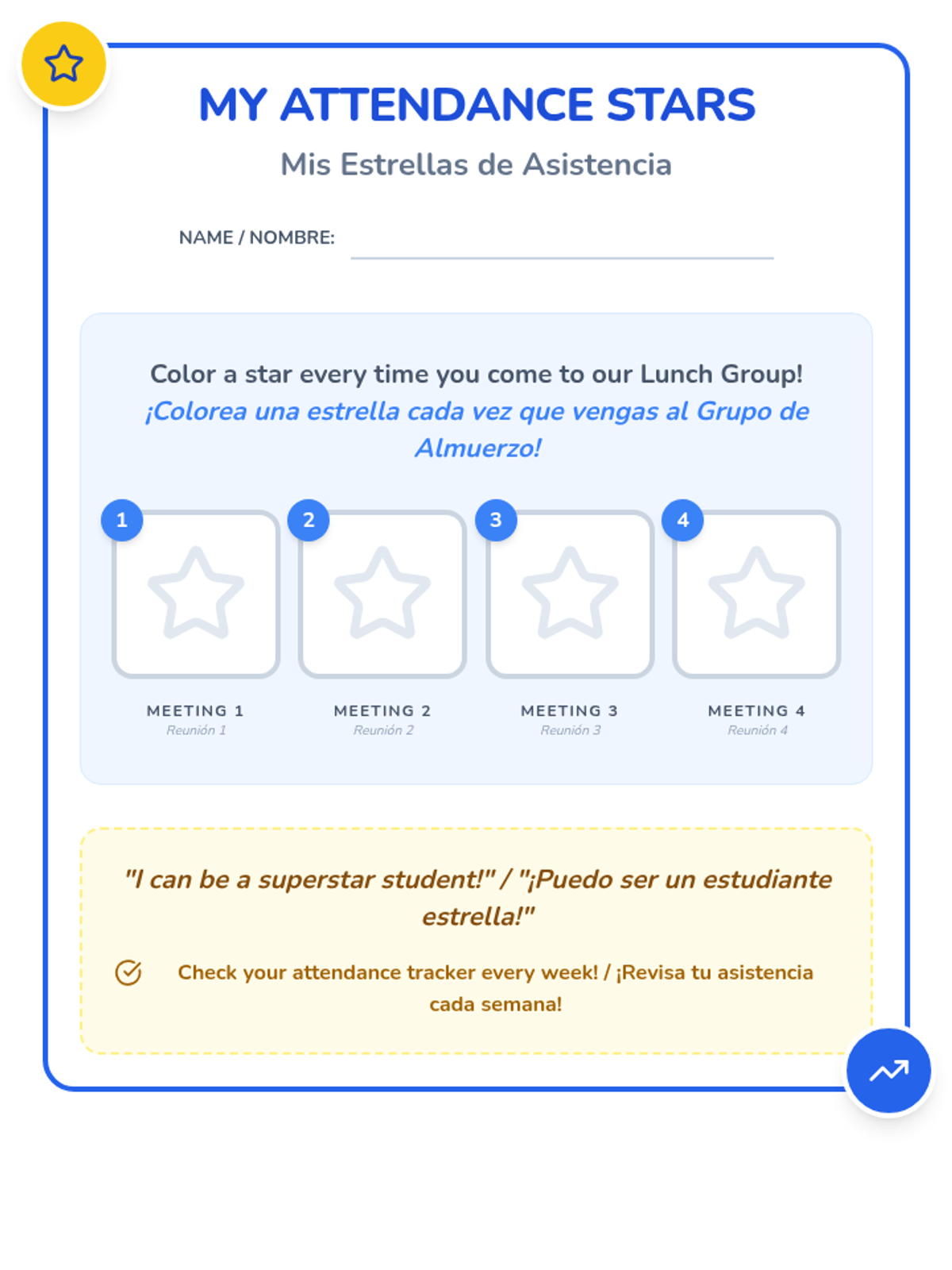
A focus on perseverance and trying one's best in class. Students discuss how hard work pays off and monitor their progress toward their attendance goals.
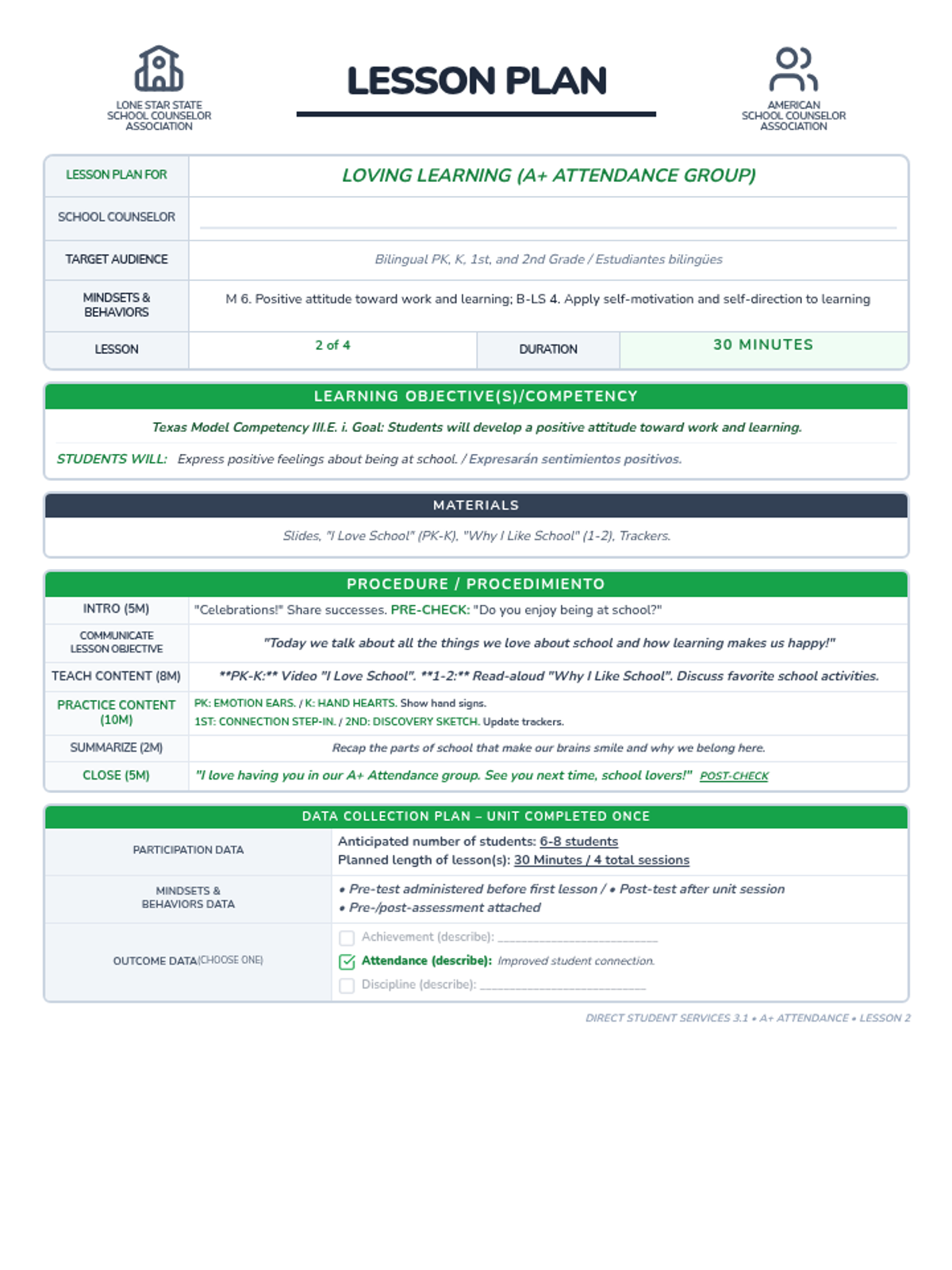
A session dedicated to finding joy in school and learning. Students explore things they like about their school environment through videos and a read-aloud.
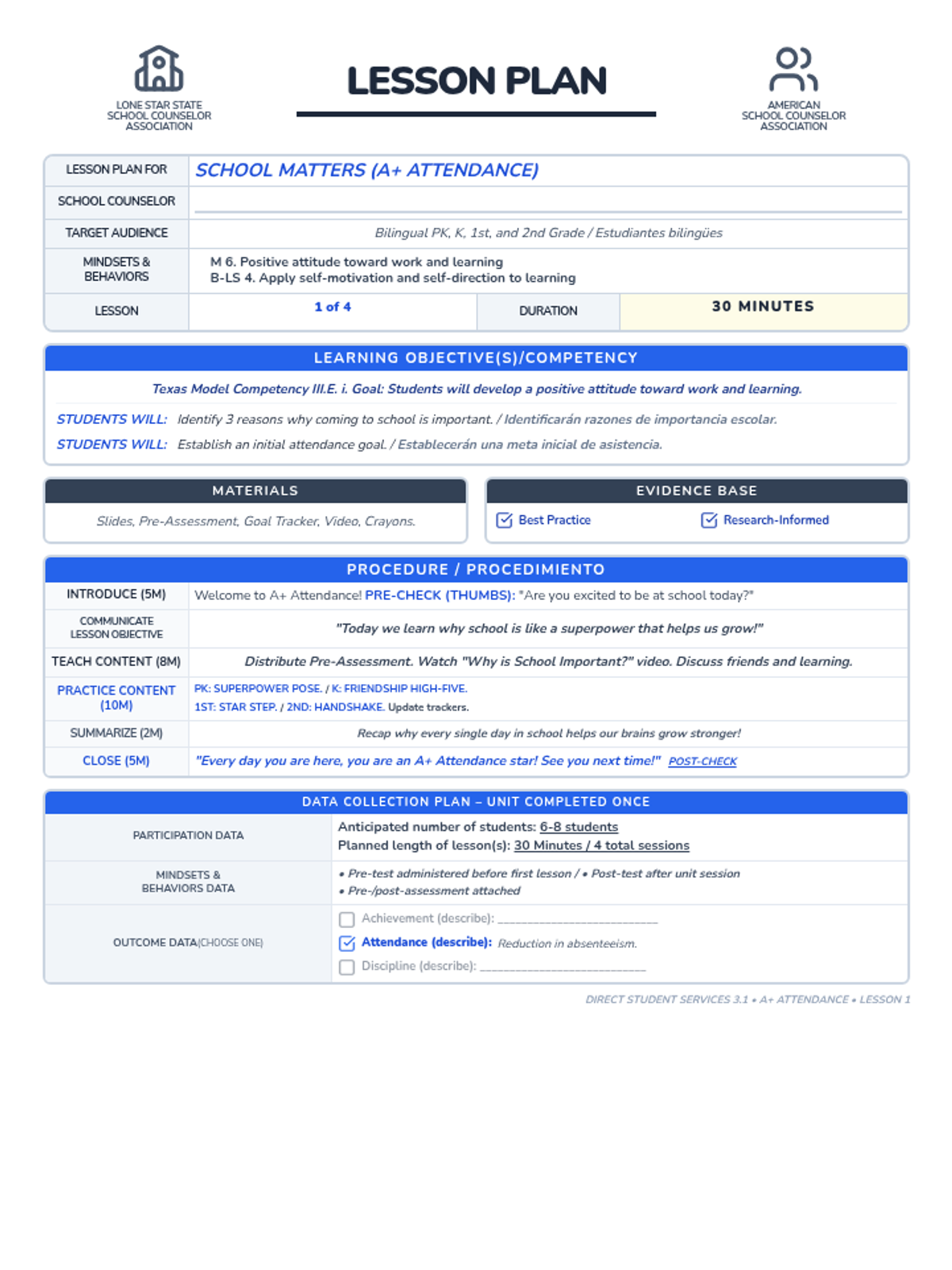
An introductory session focusing on the importance of coming to school and setting initial attendance goals. Students take the pre-assessment and watch an engaging video about why education matters.