Root cause analysis and brainstorming techniques for everyday problem-solving. Equips learners with ethical frameworks and risk-benefit evaluation skills to predict consequences and make informed choices.
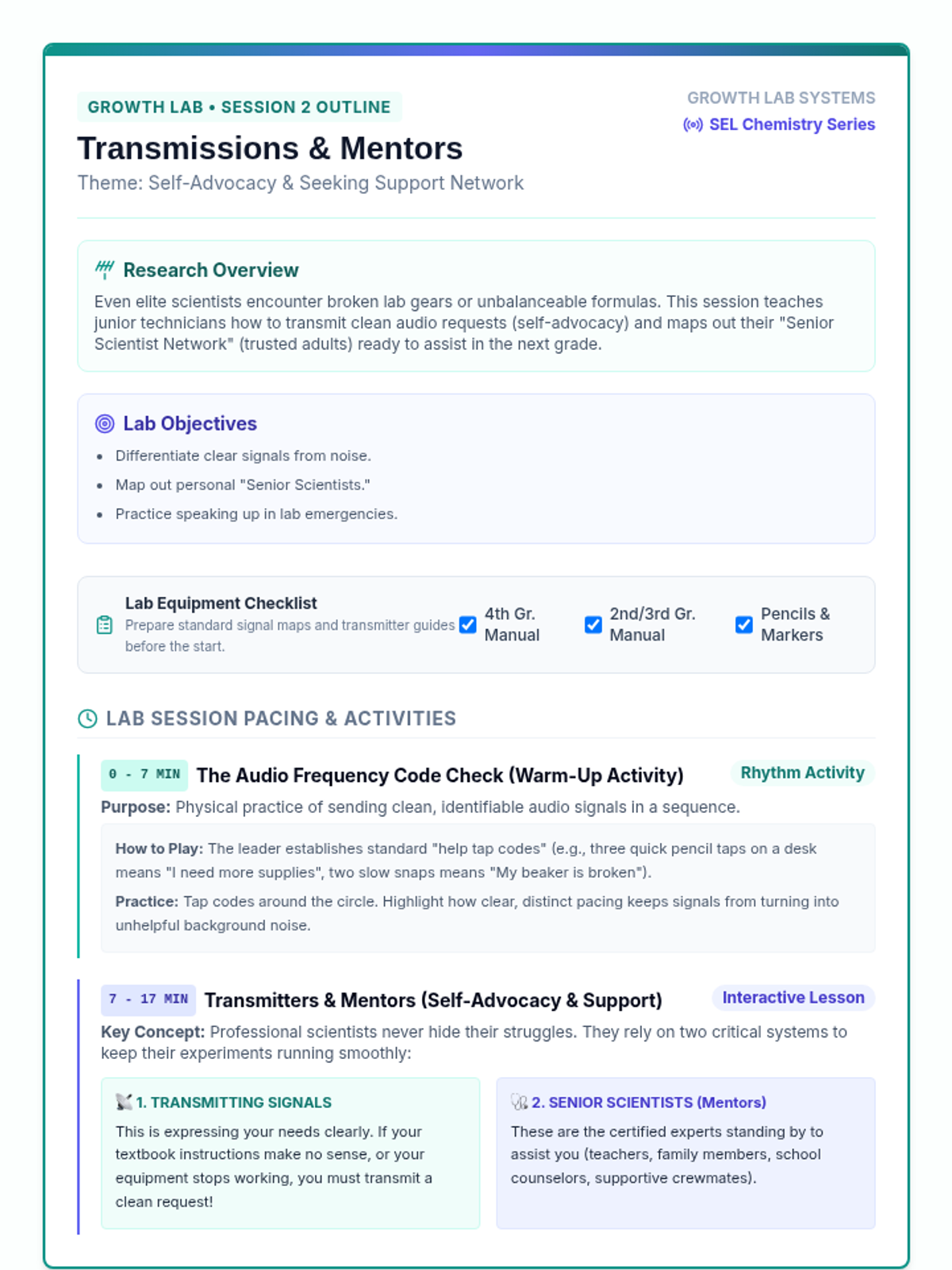
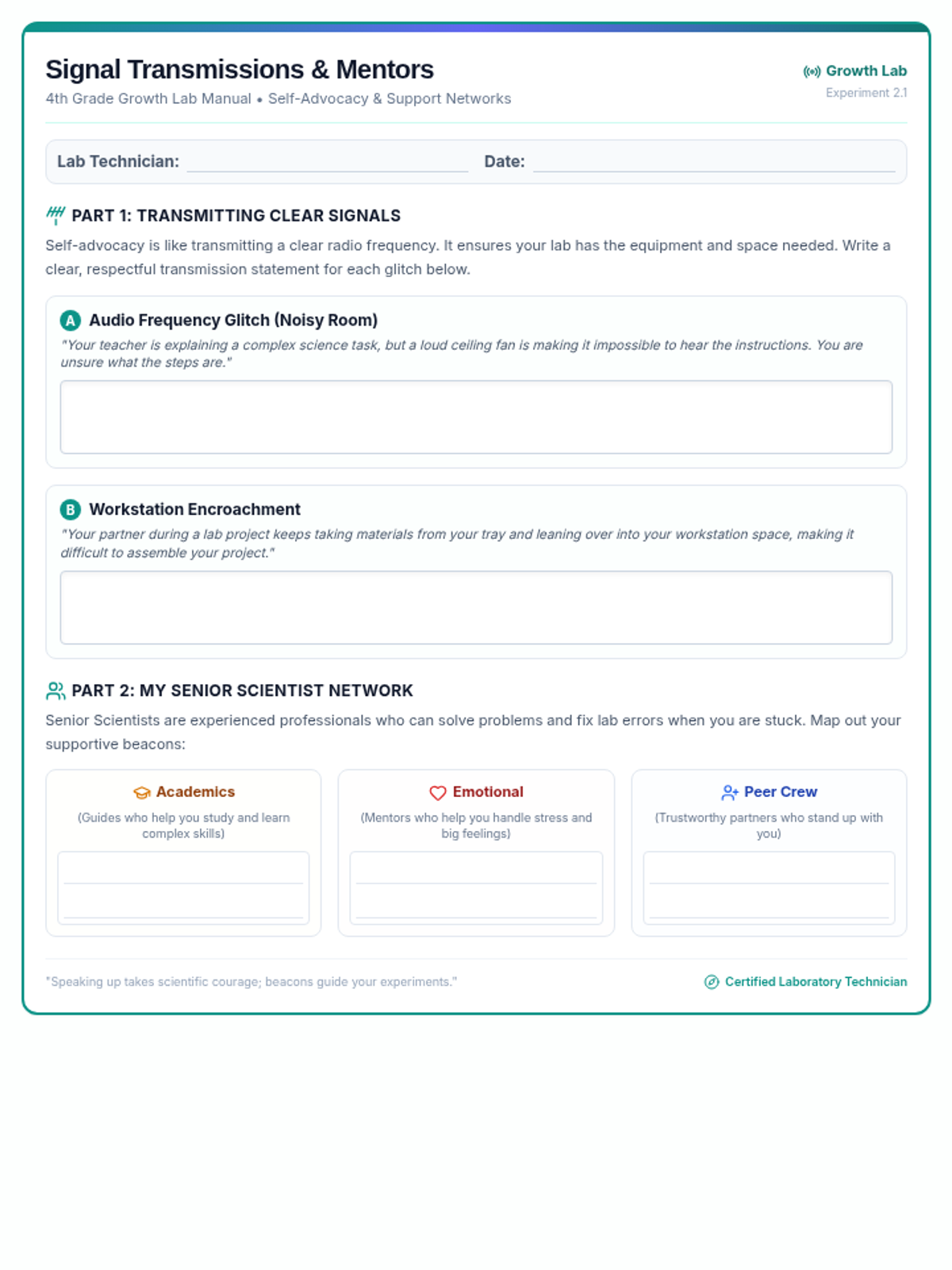
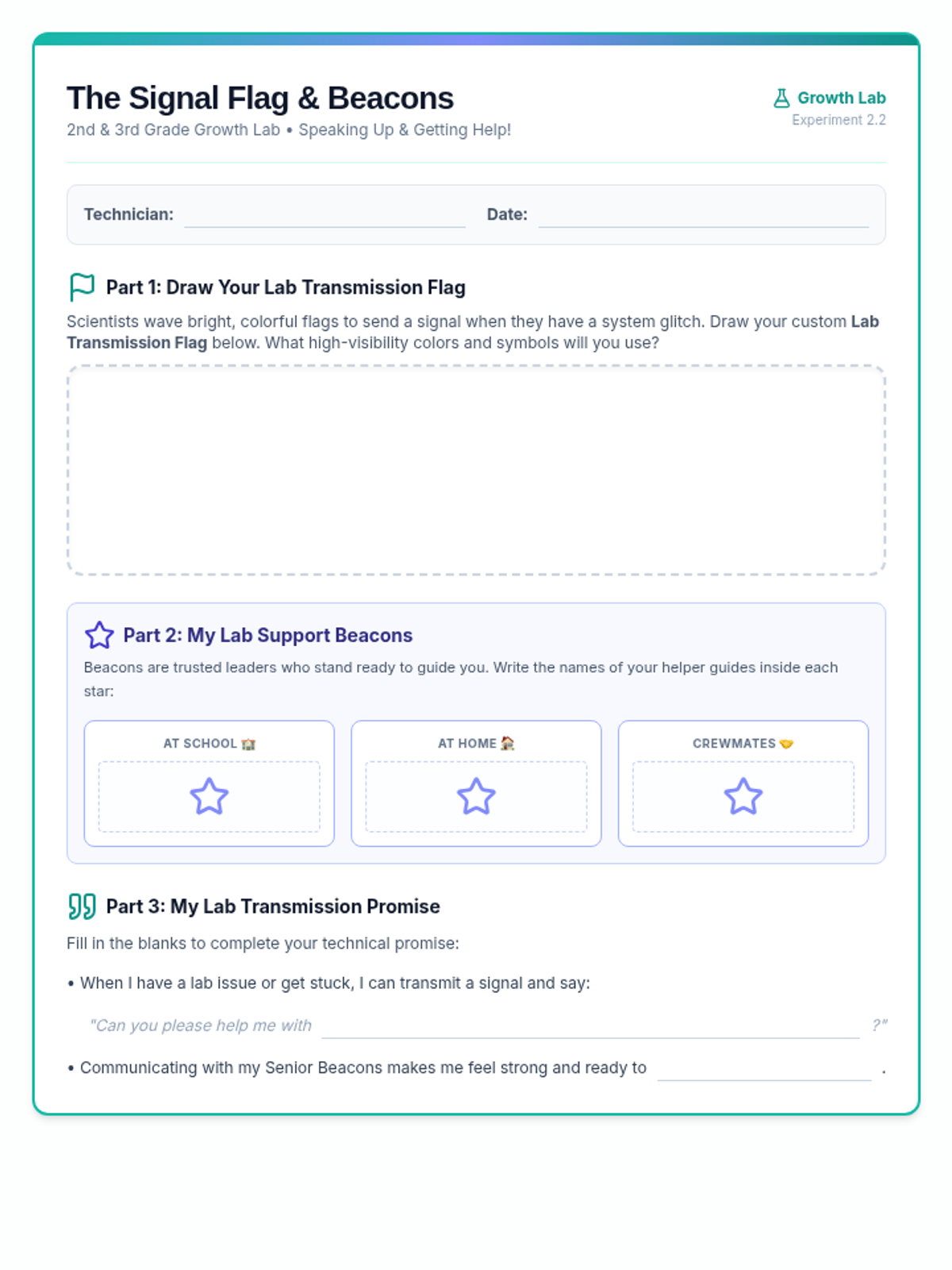
This session focuses on self-advocacy and seeking support. Students learn to recognize when to speak up for their physical and learning needs (trail signals) and identify trusted individuals who can help them navigate challenges (trail guides).
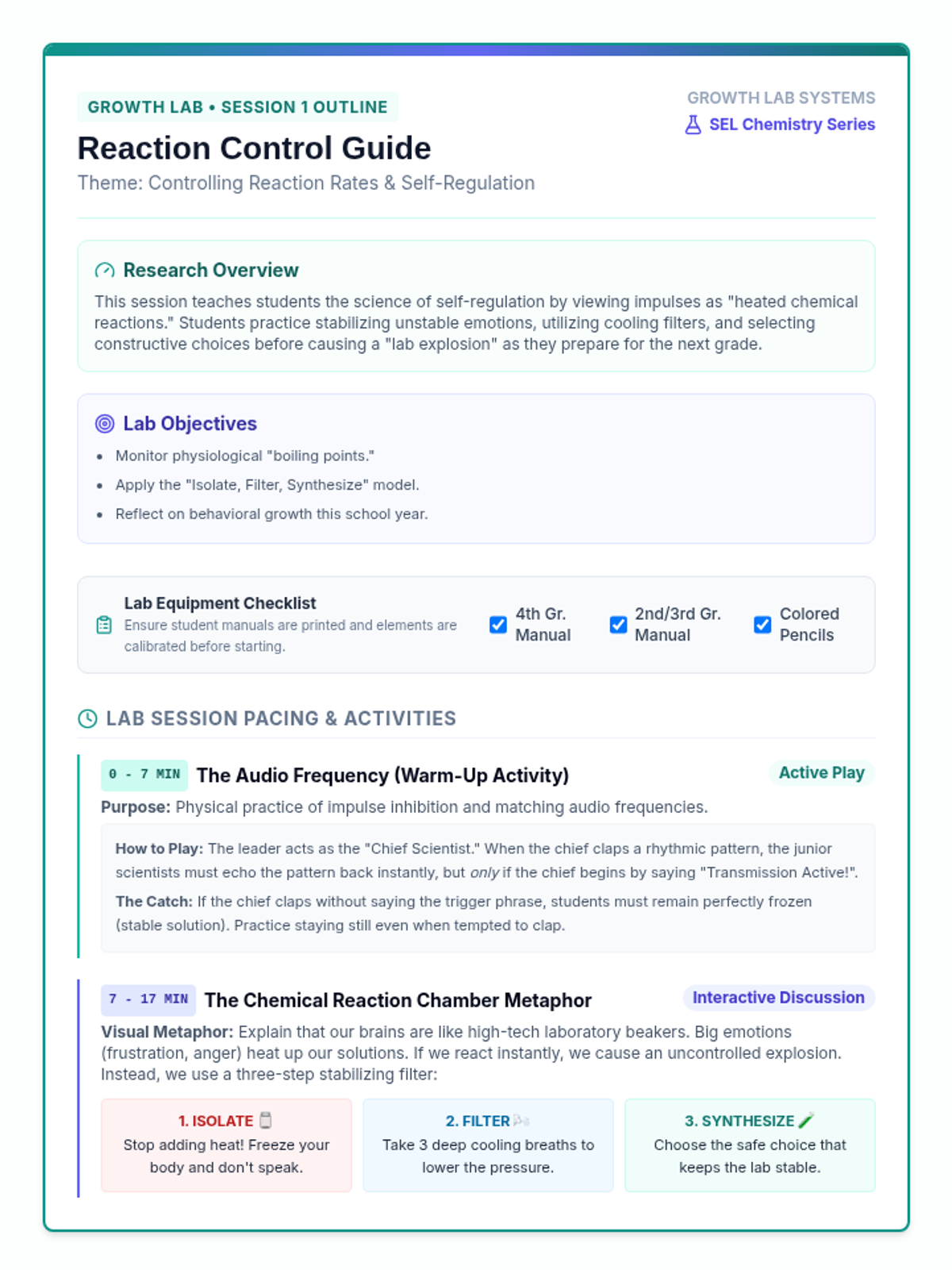
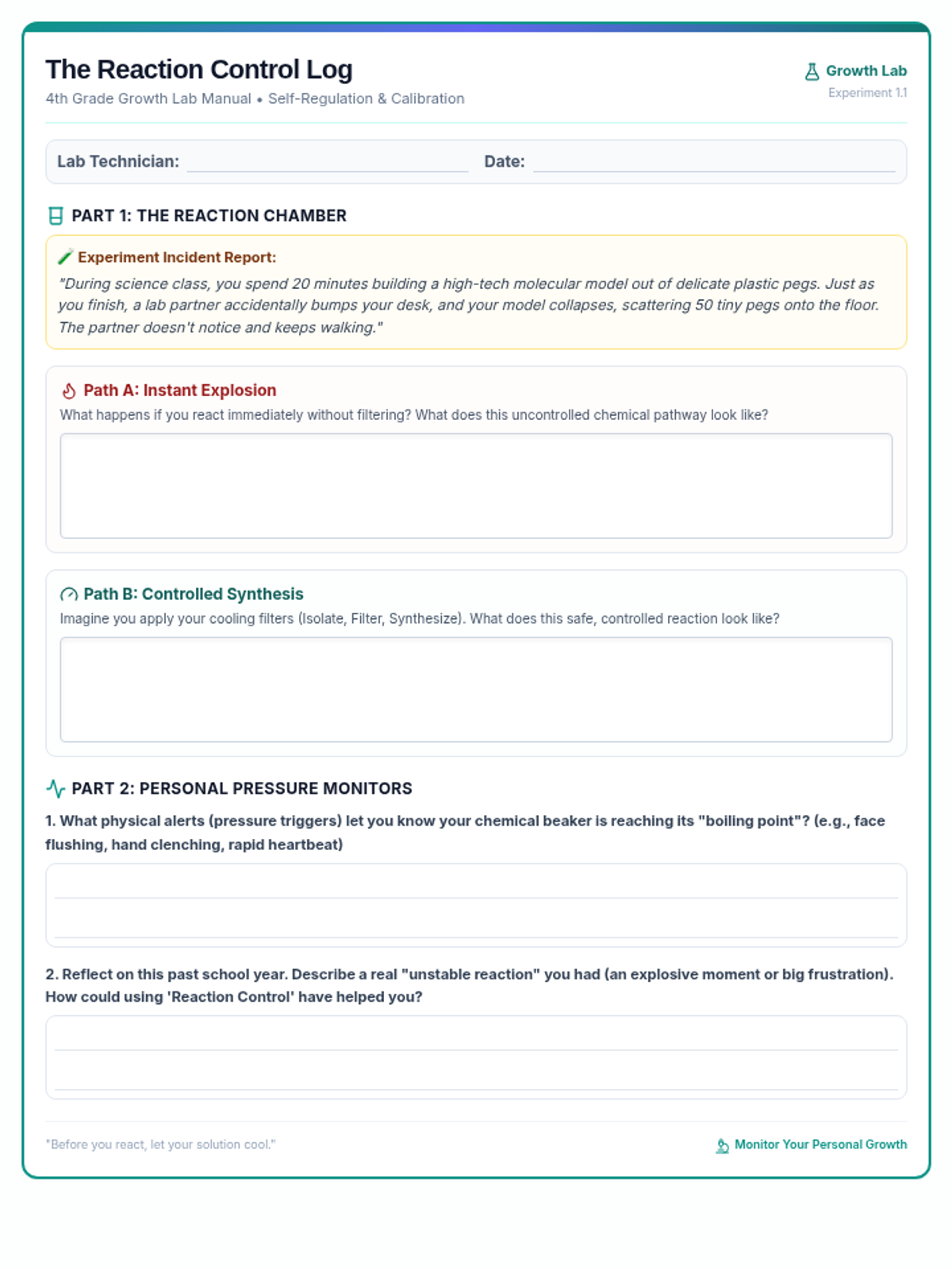
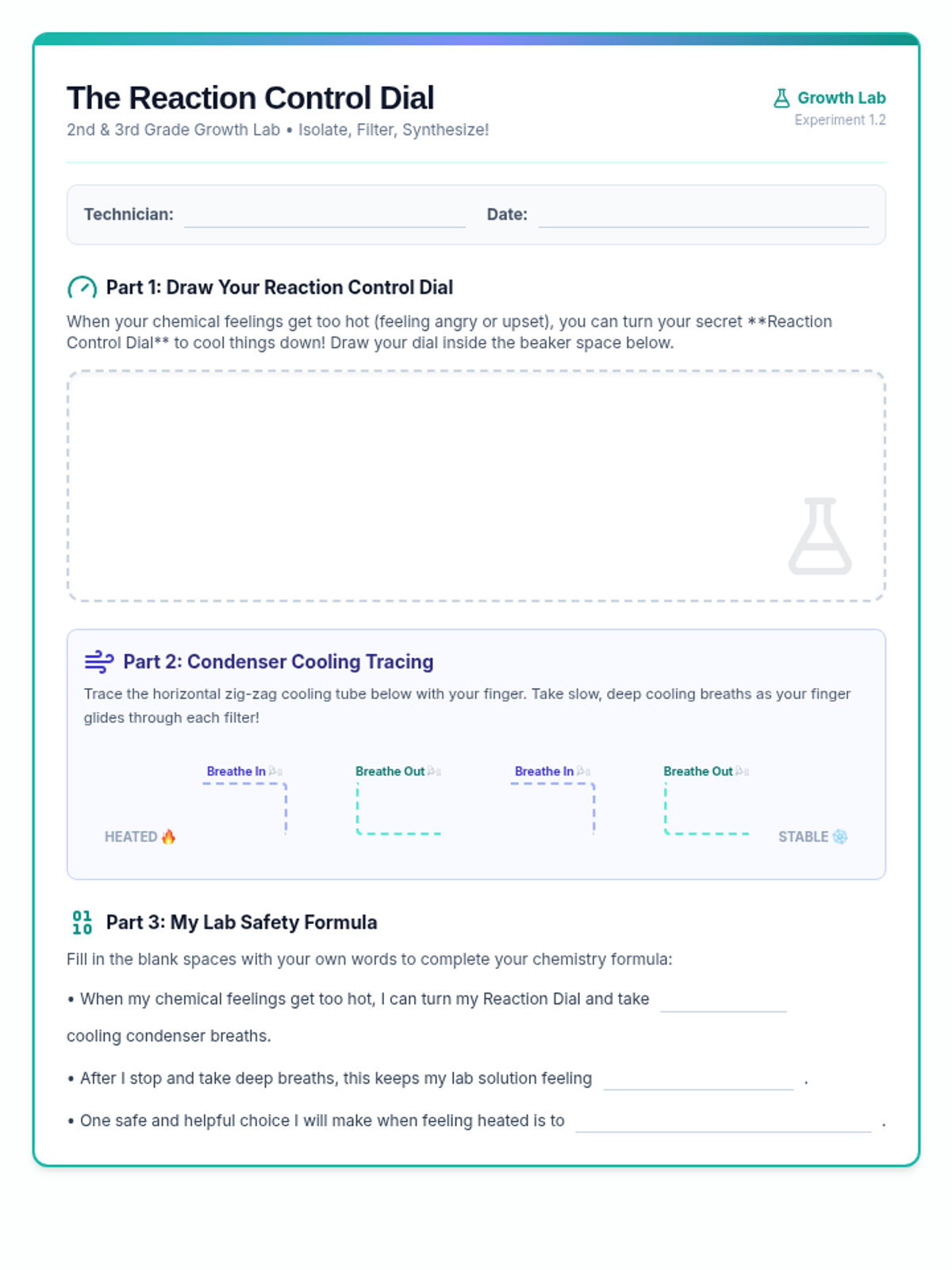
This session teaches students the science of self-regulation and reflection by studying 'reaction control' (thinking before acting). Students explore chemical-themed cooling strategies and reflect on their personal progress over the past school year.
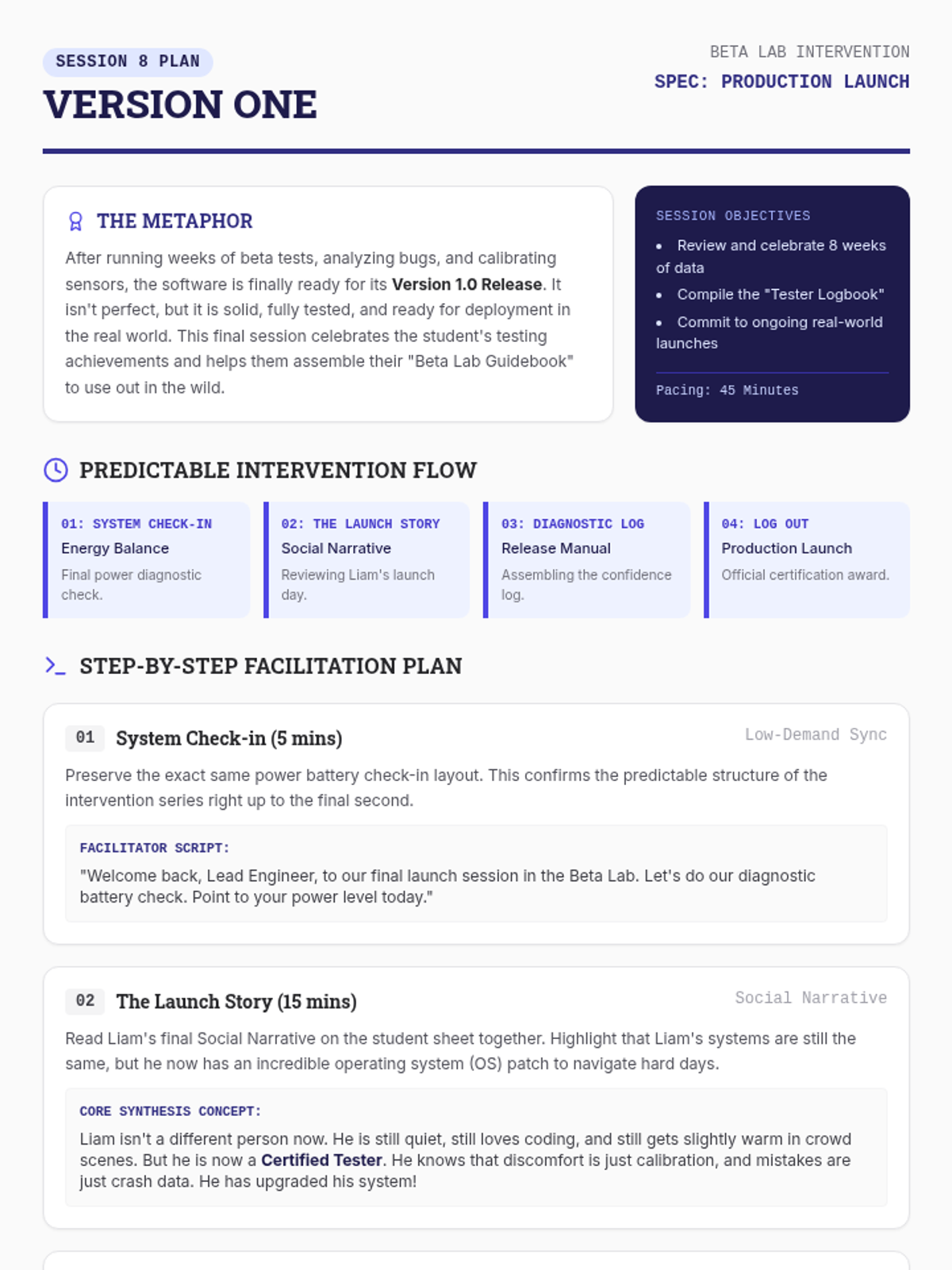
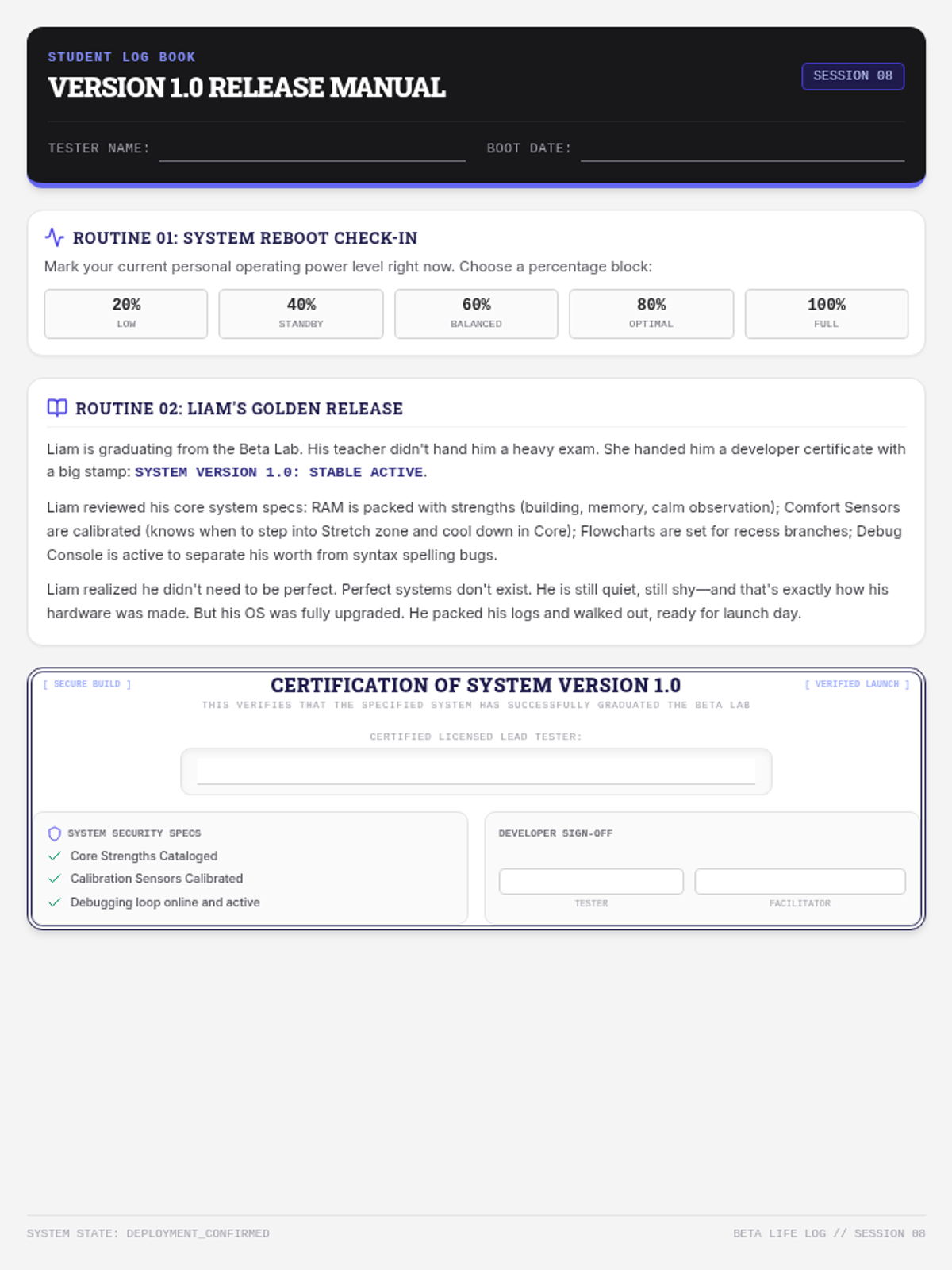
Session 8 synthesizes the 8-week journey. The student compiles their logs into a personalized confidence guide and celebrates their testing achievements.
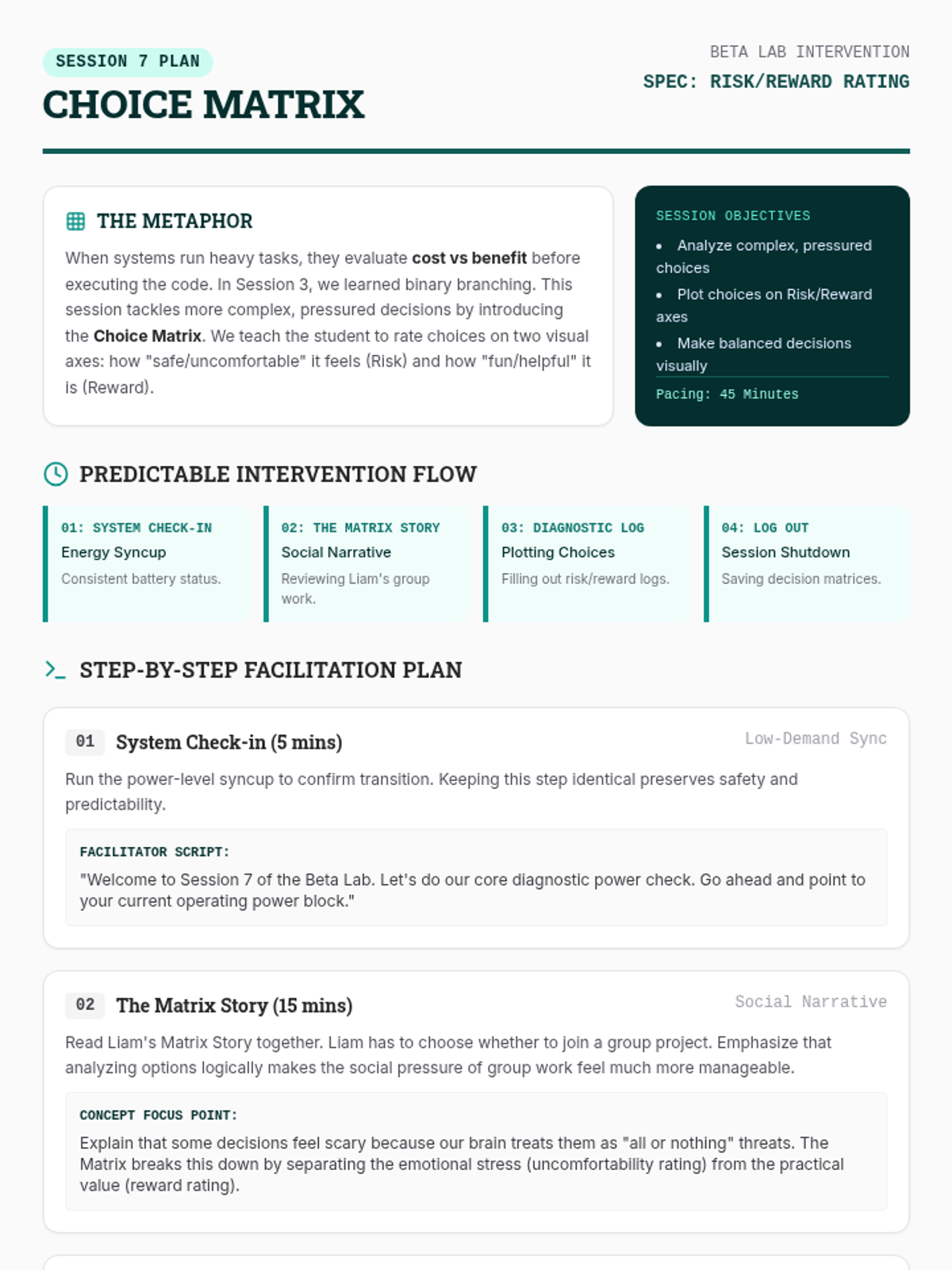
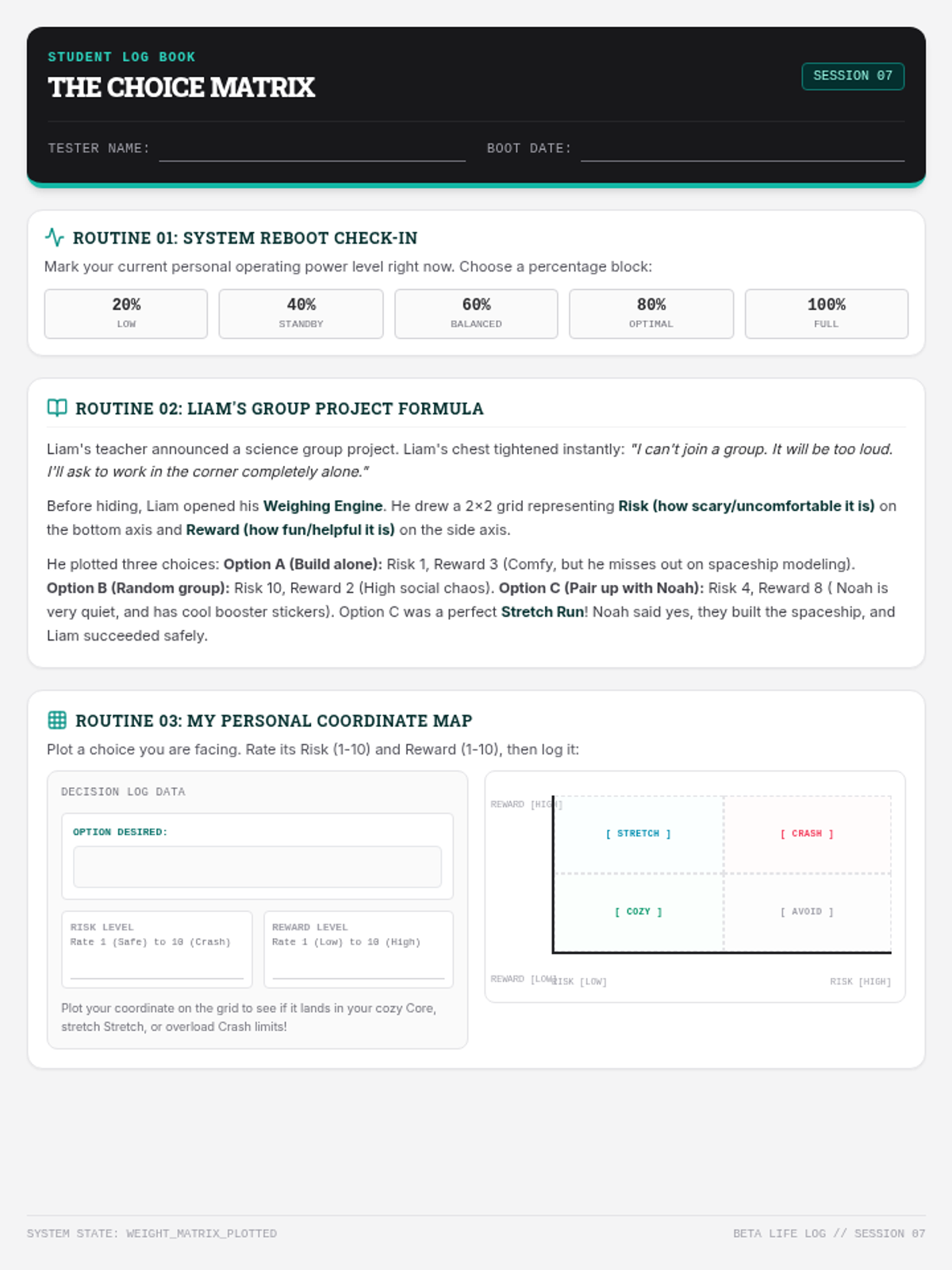
Session 7 explores more complex decisions under pressure, teaching the student how to weigh risks and rewards using a simple visual rating tool.
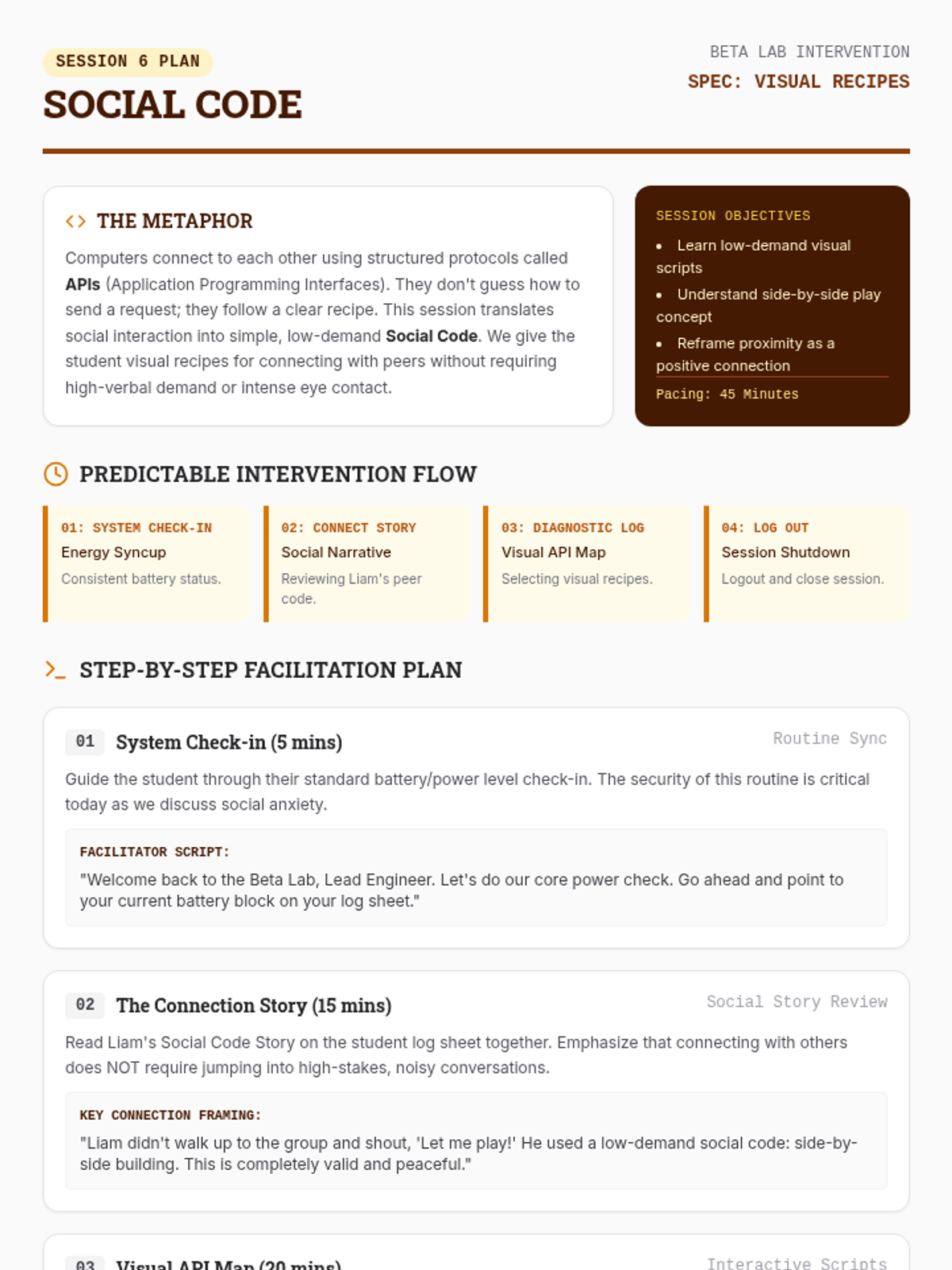
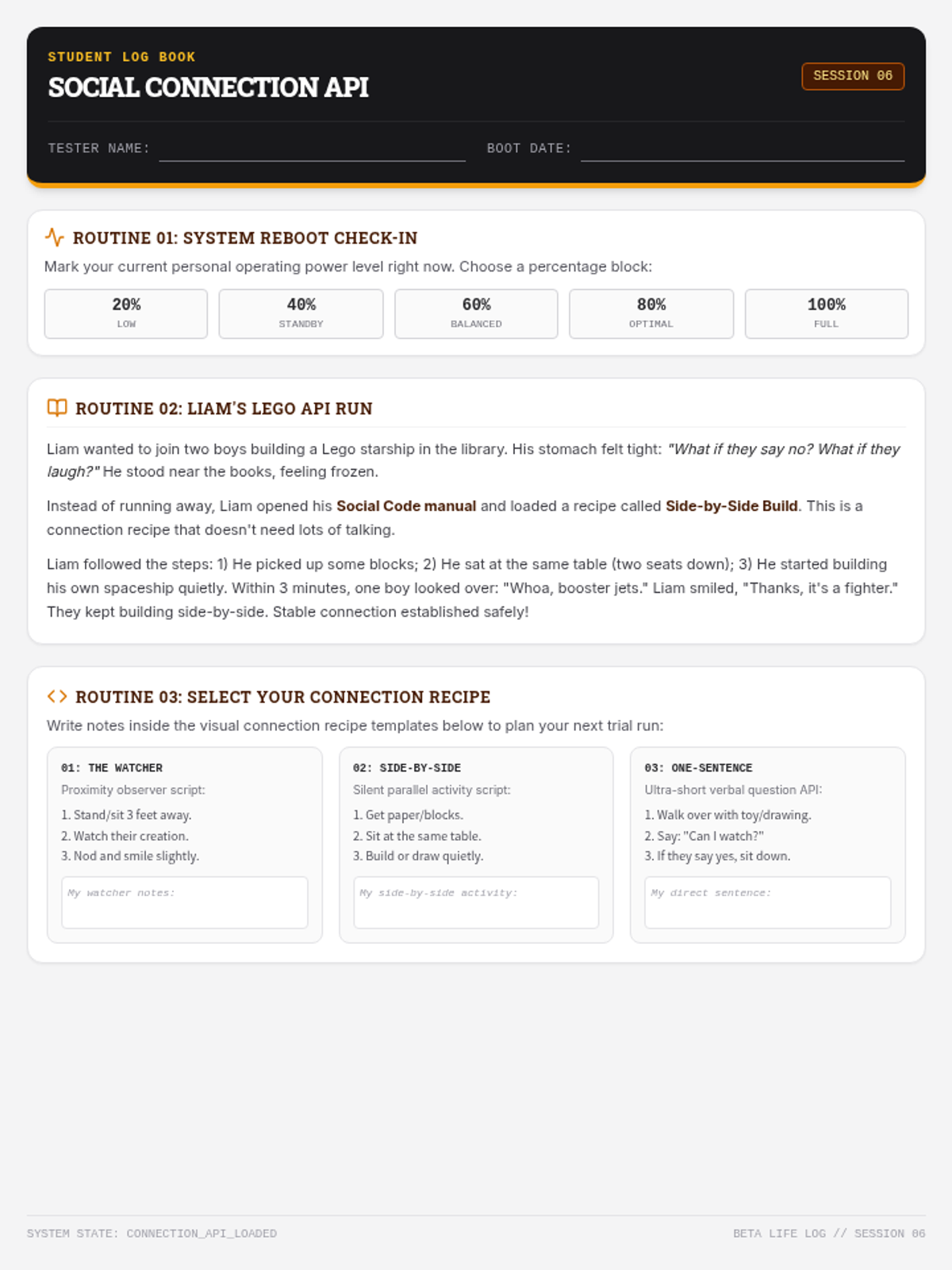
Session 6 addresses social interactions. The student learns low-demand social scripts and structured visual recipes for peer connection.
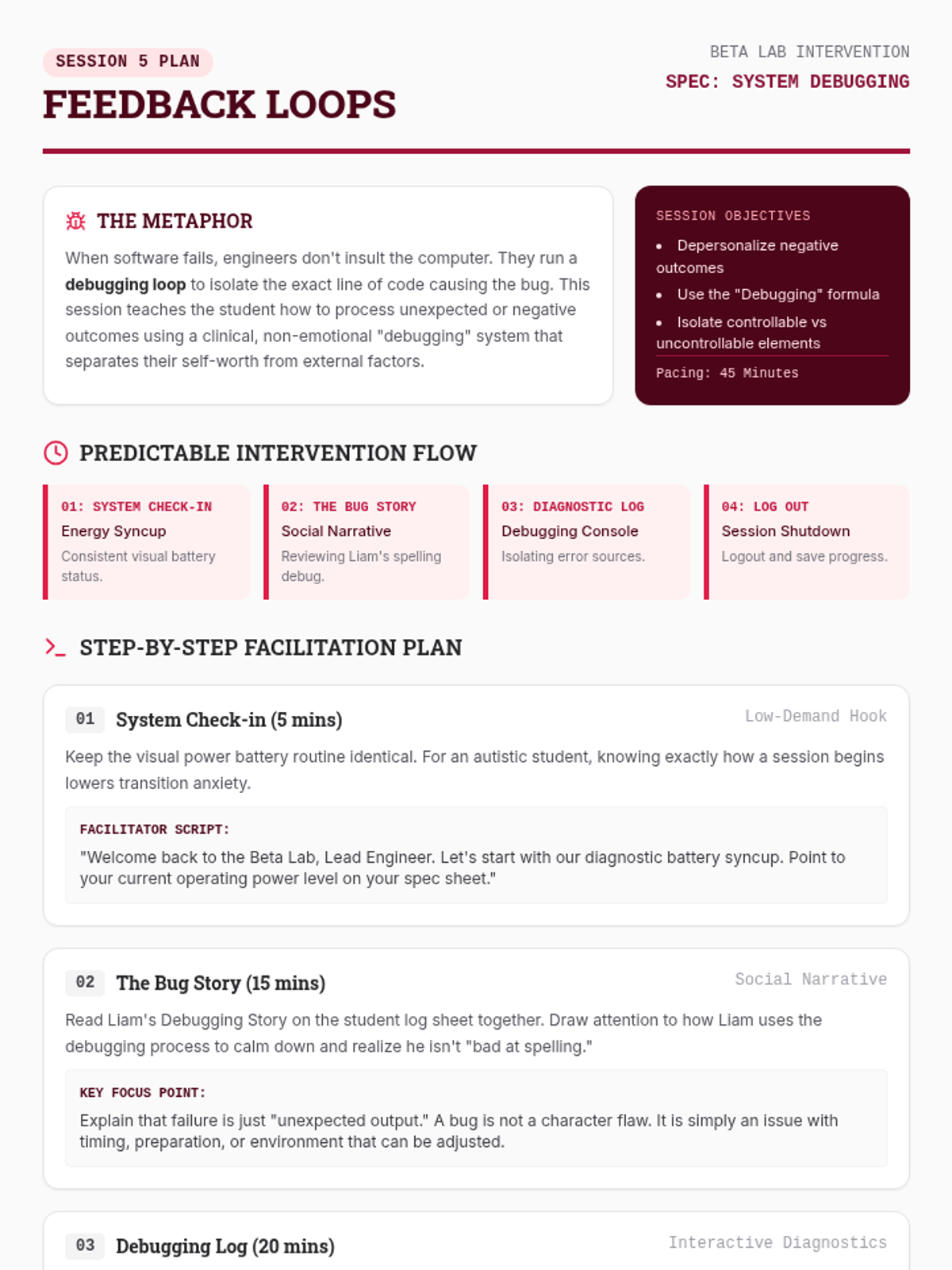
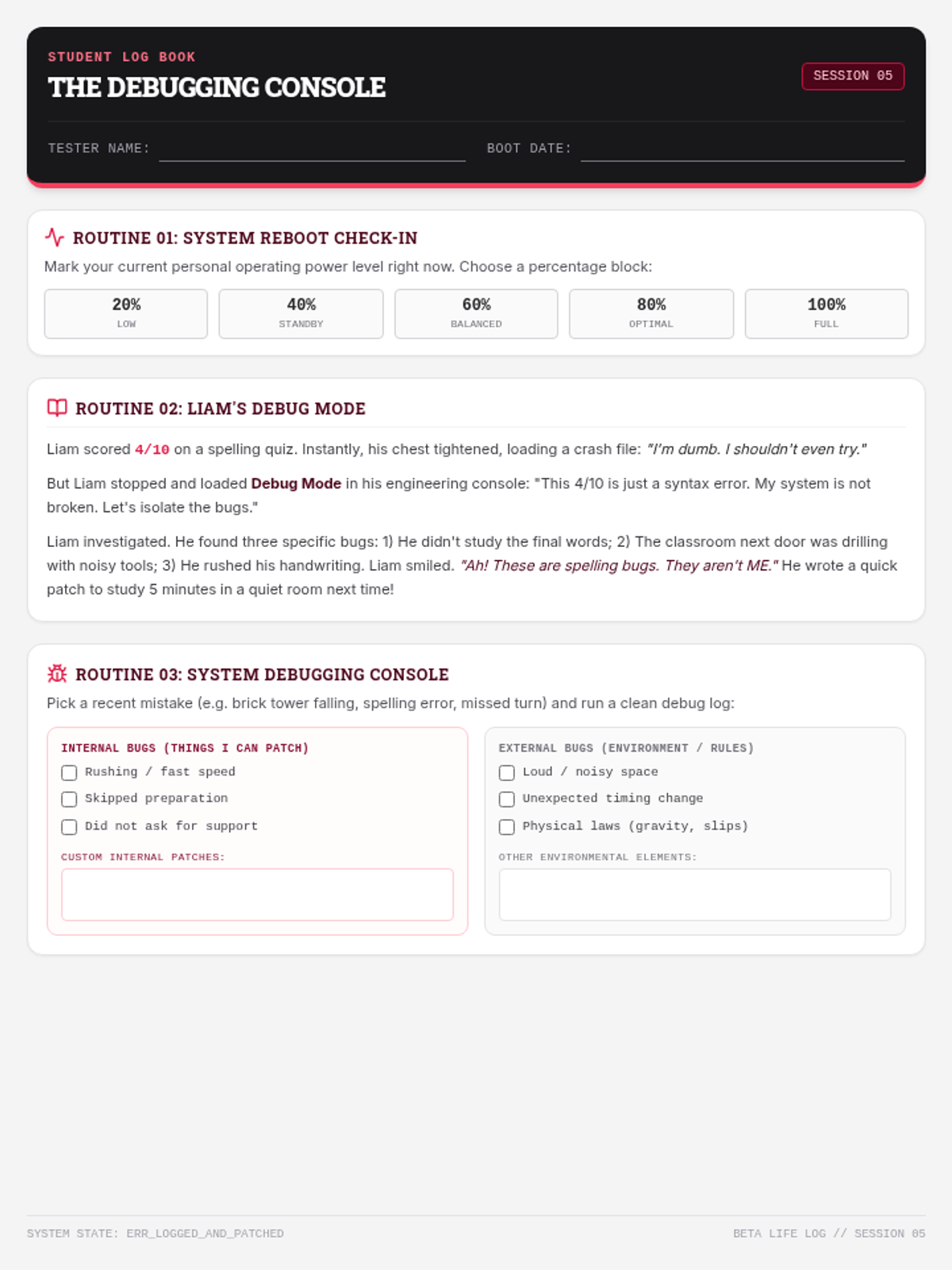
Session 5 covers processing unexpected outcomes. The student learns to analyze results without self-blame, using a structured "trail debugging" framework.
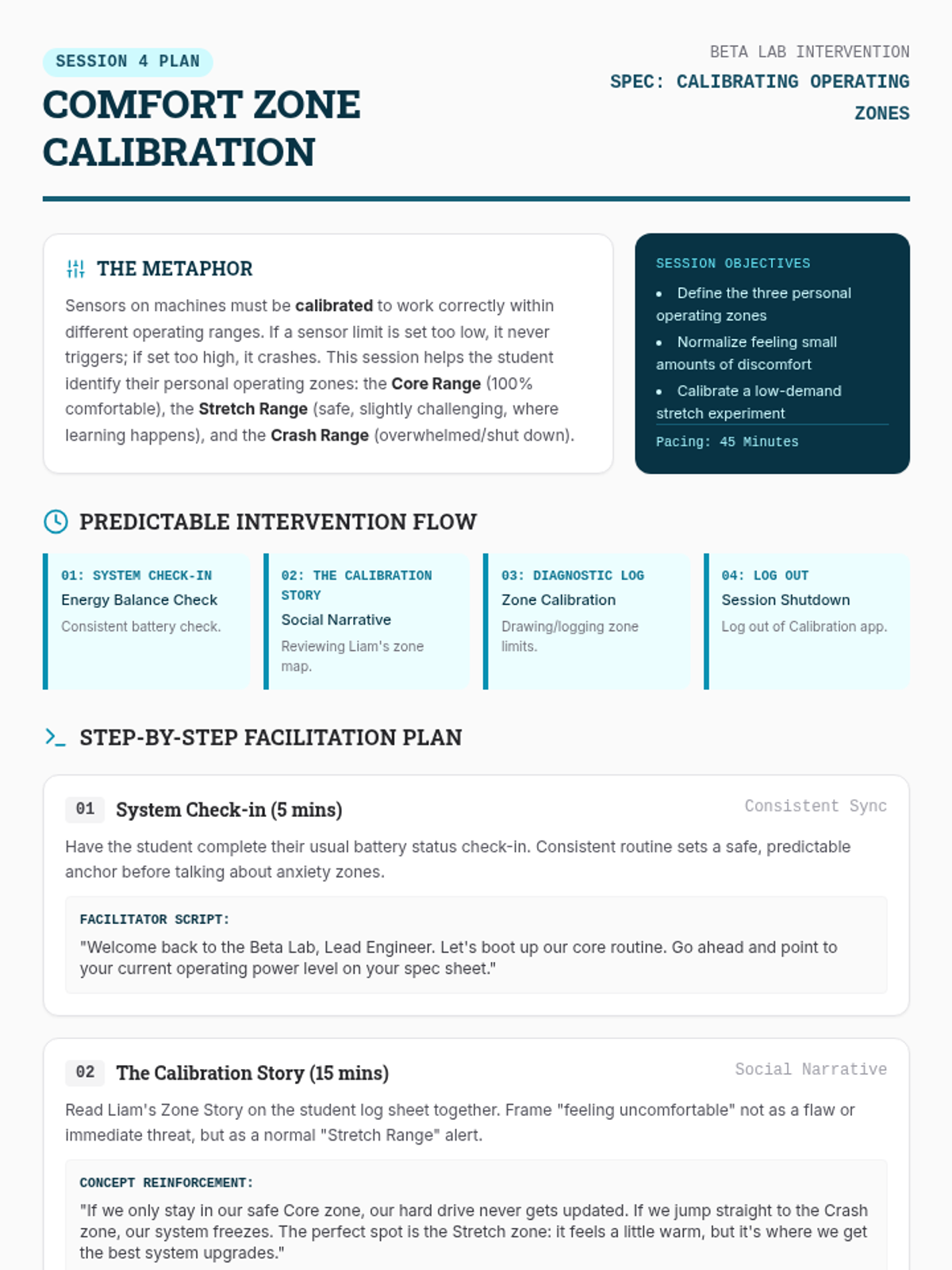
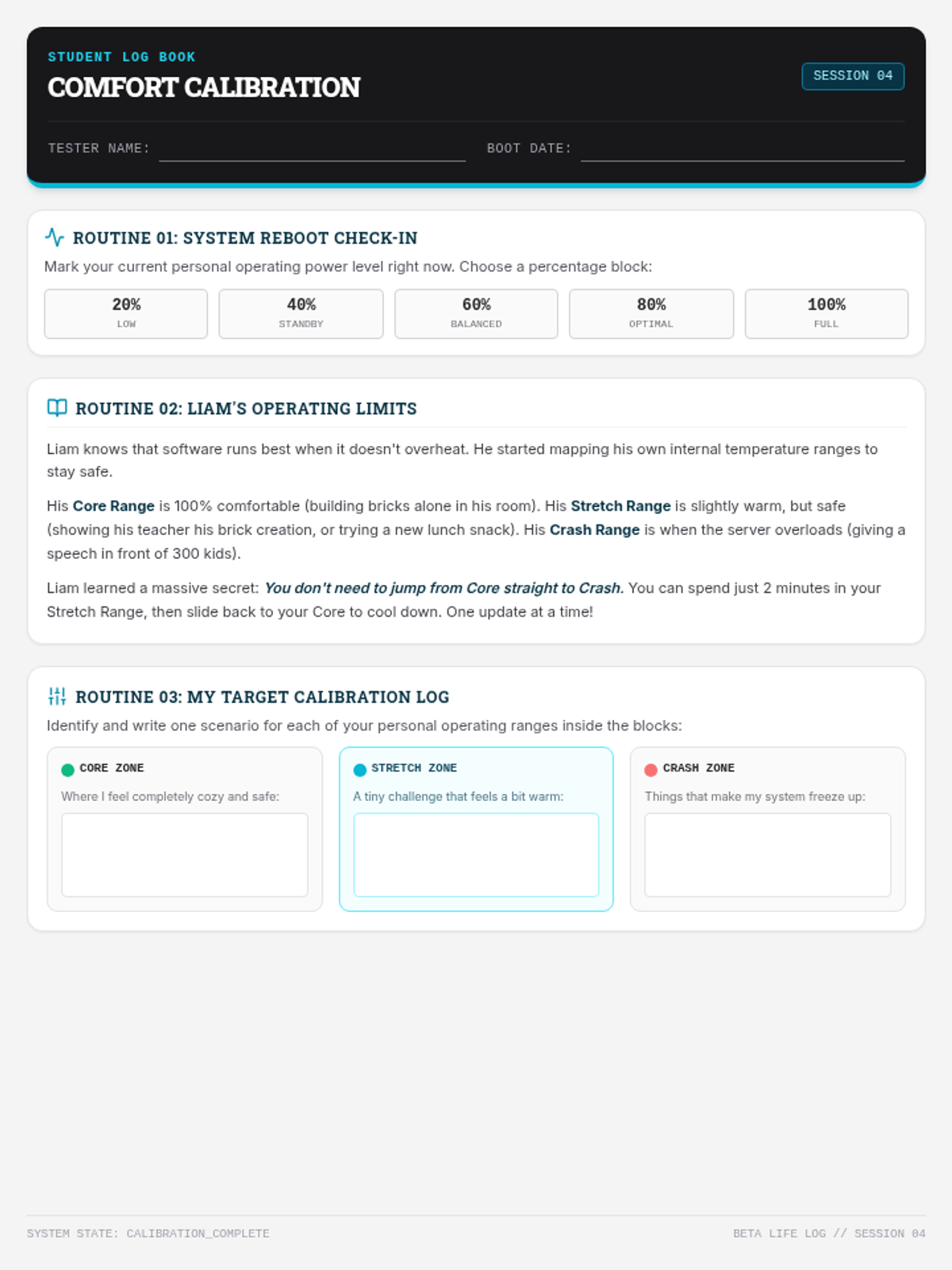
Session 4 focuses on gradually expanding the comfortable operating zone by setting up and running tiny, controlled trials in a safe environment, mapping Core, Stretch, and Storm zones.
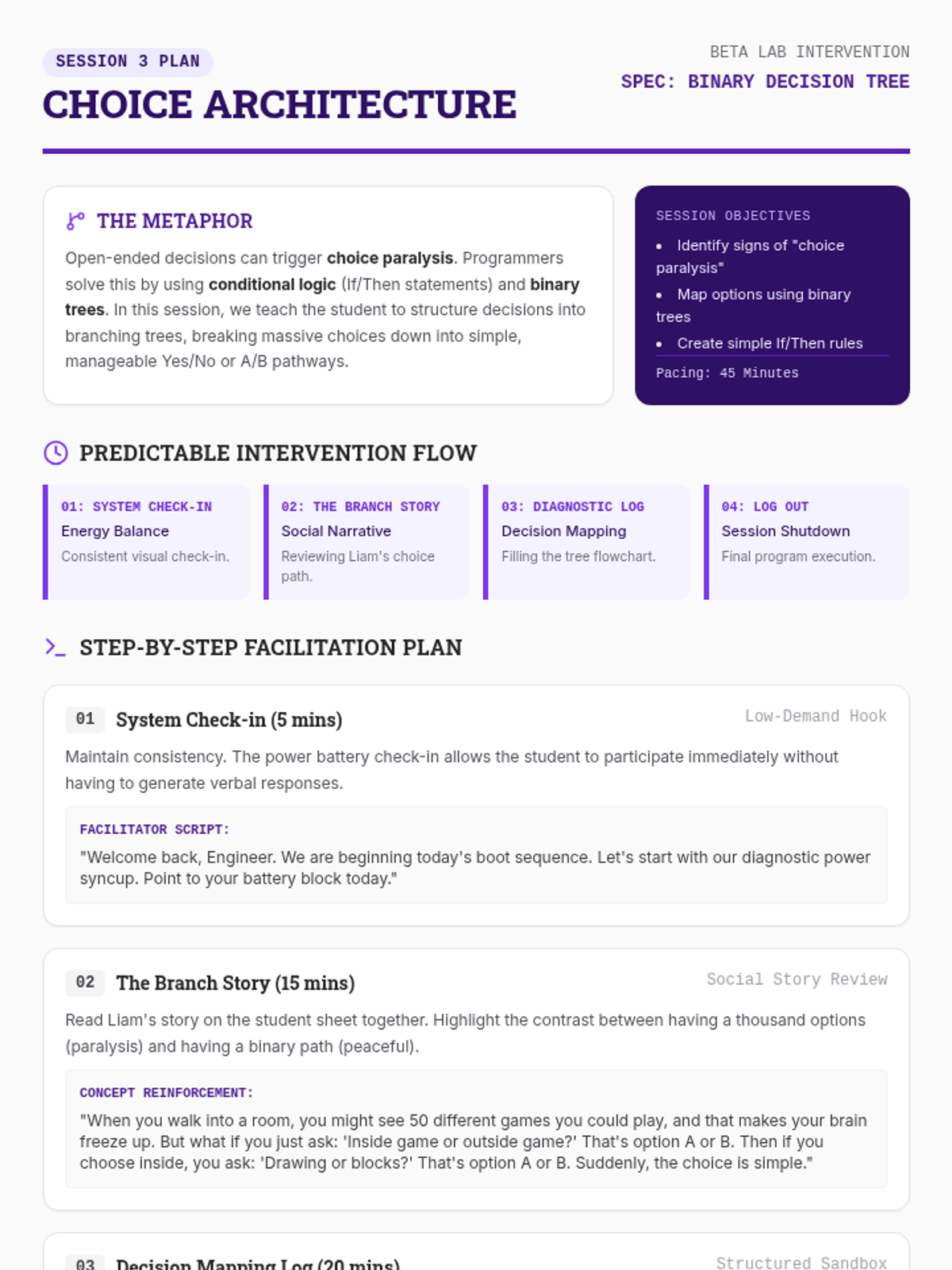
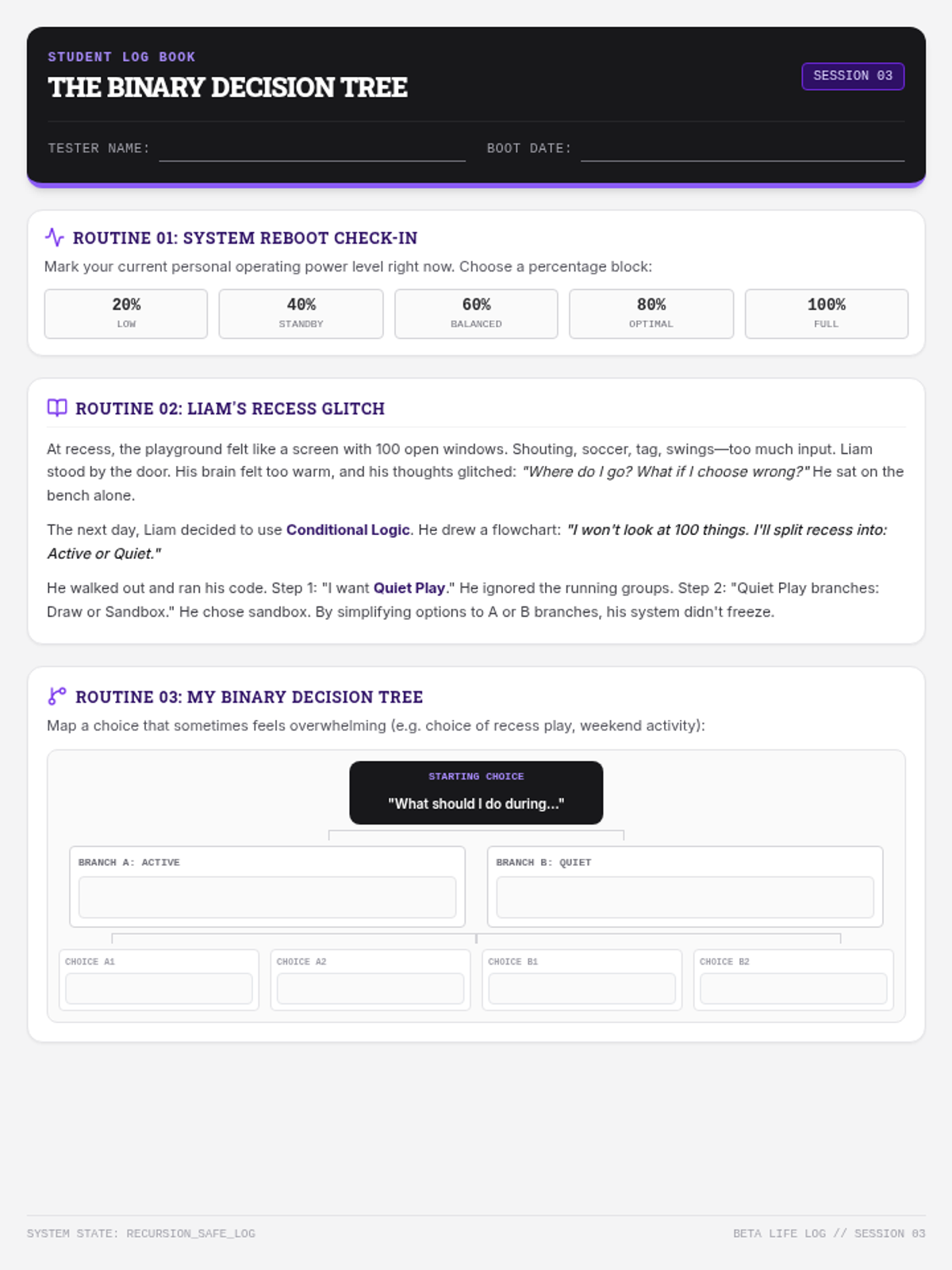
Session 3 introduces structured decision-making. The student learns to map decisions into binary "trail forks," reducing cognitive overload and paralysis.
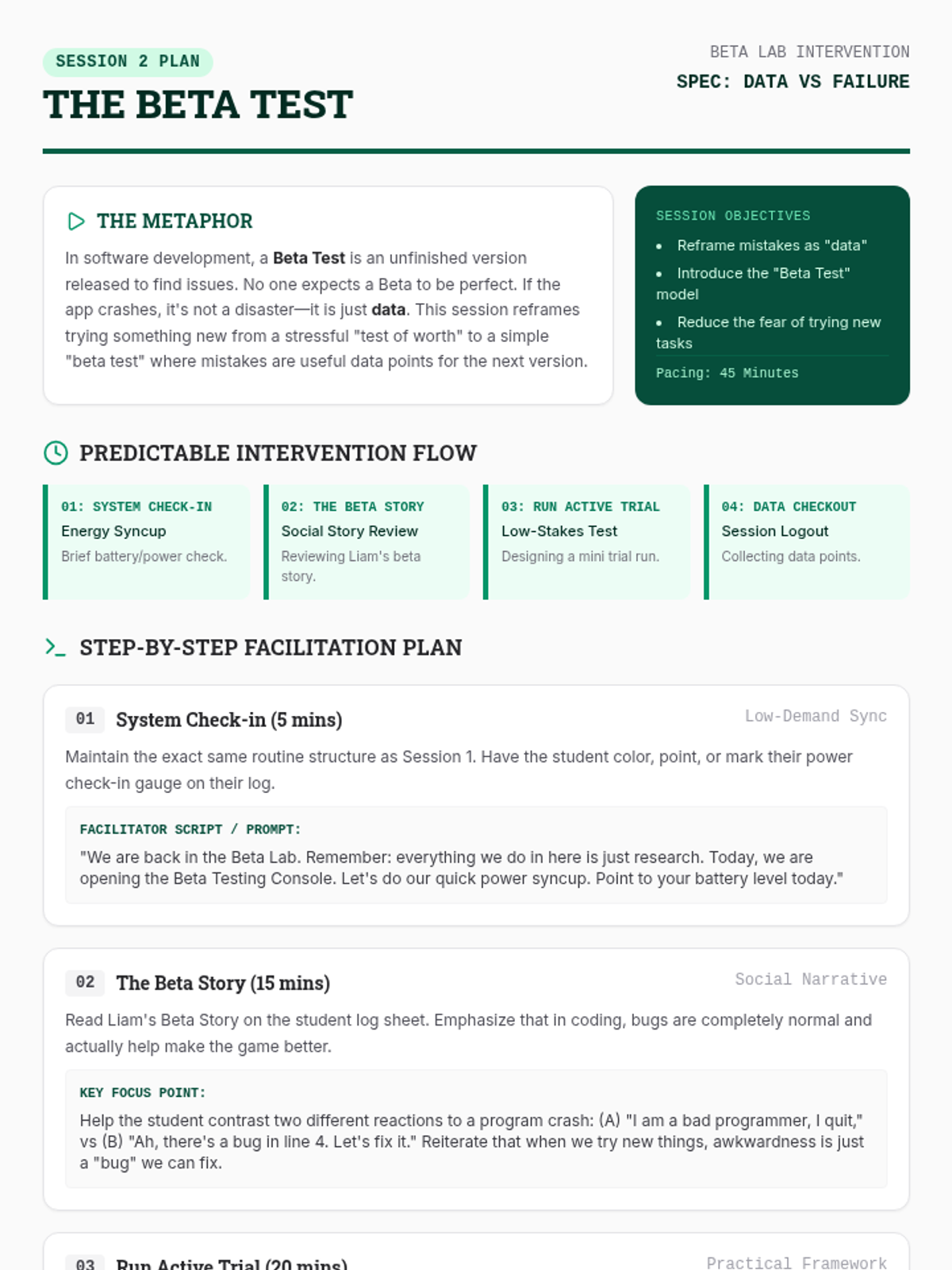
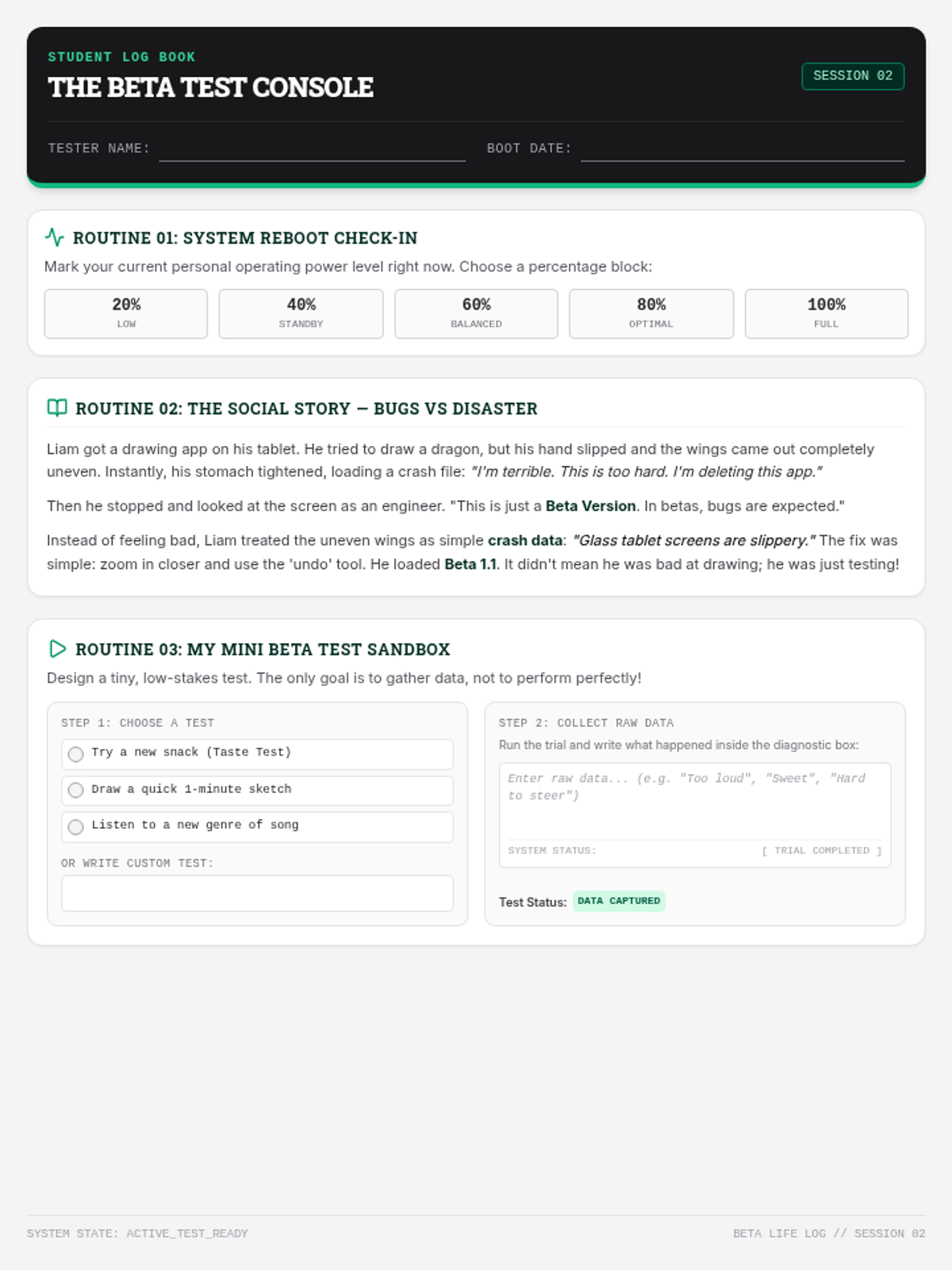
Session 2 re-frames the fear of trying new things. The student learns to treat new activities as low-stakes "scouting runs" where mistakes are just "terrain map data."
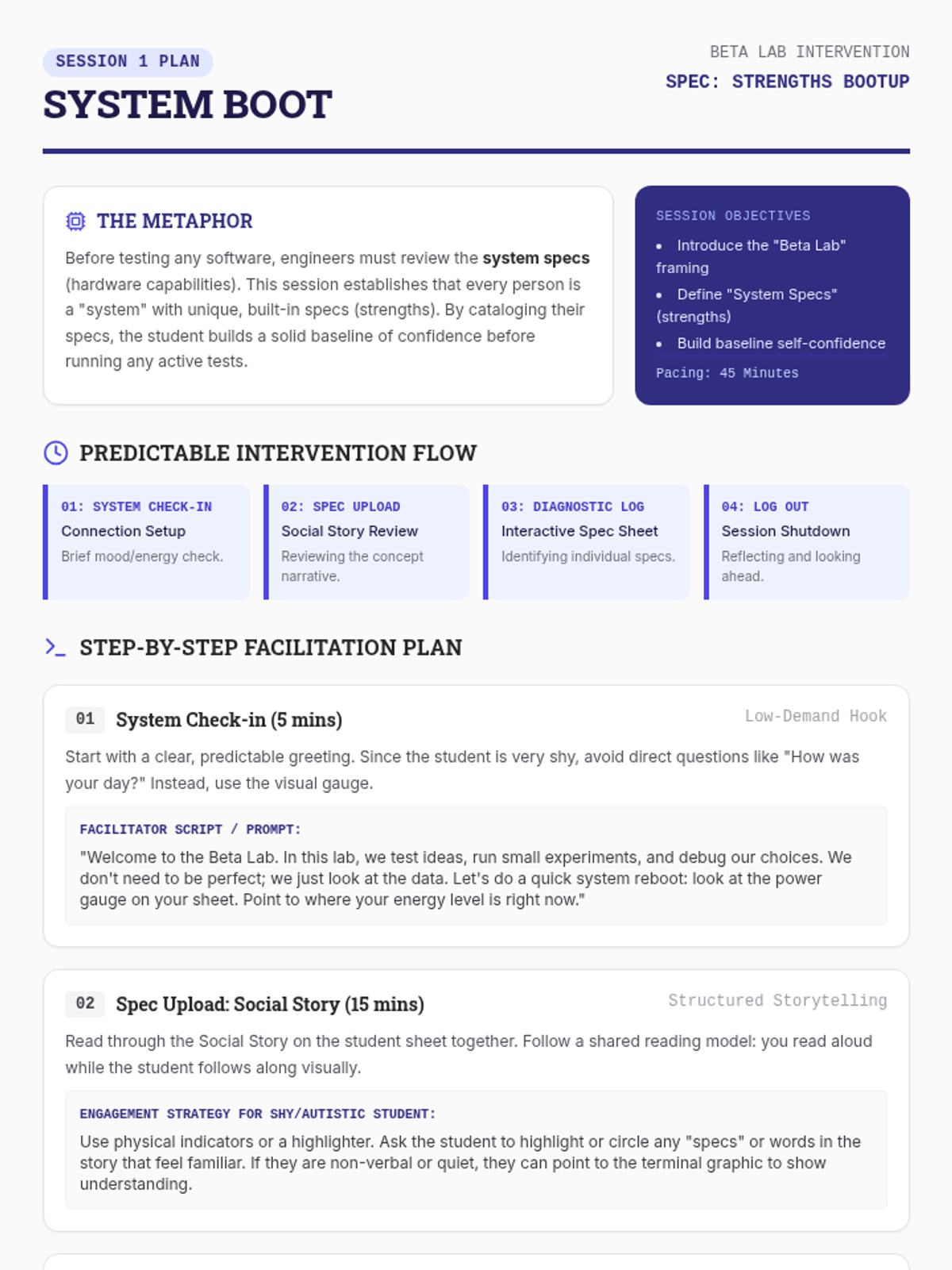
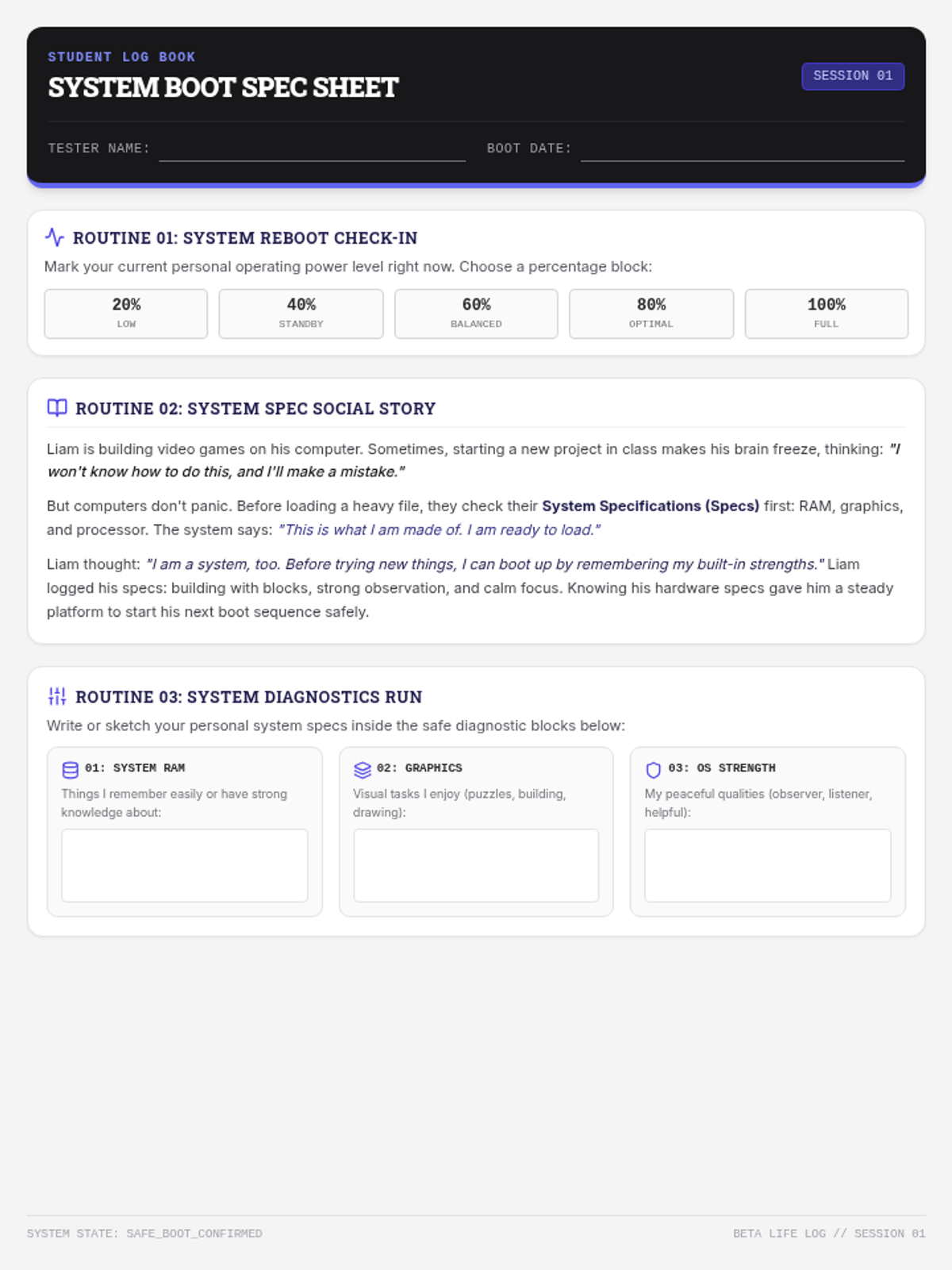
Session 1 establishes the "Field Guide" and "Wildwood Scouting" metaphor, helping the student identify their individual strengths as "field gear specs" to build baseline confidence.
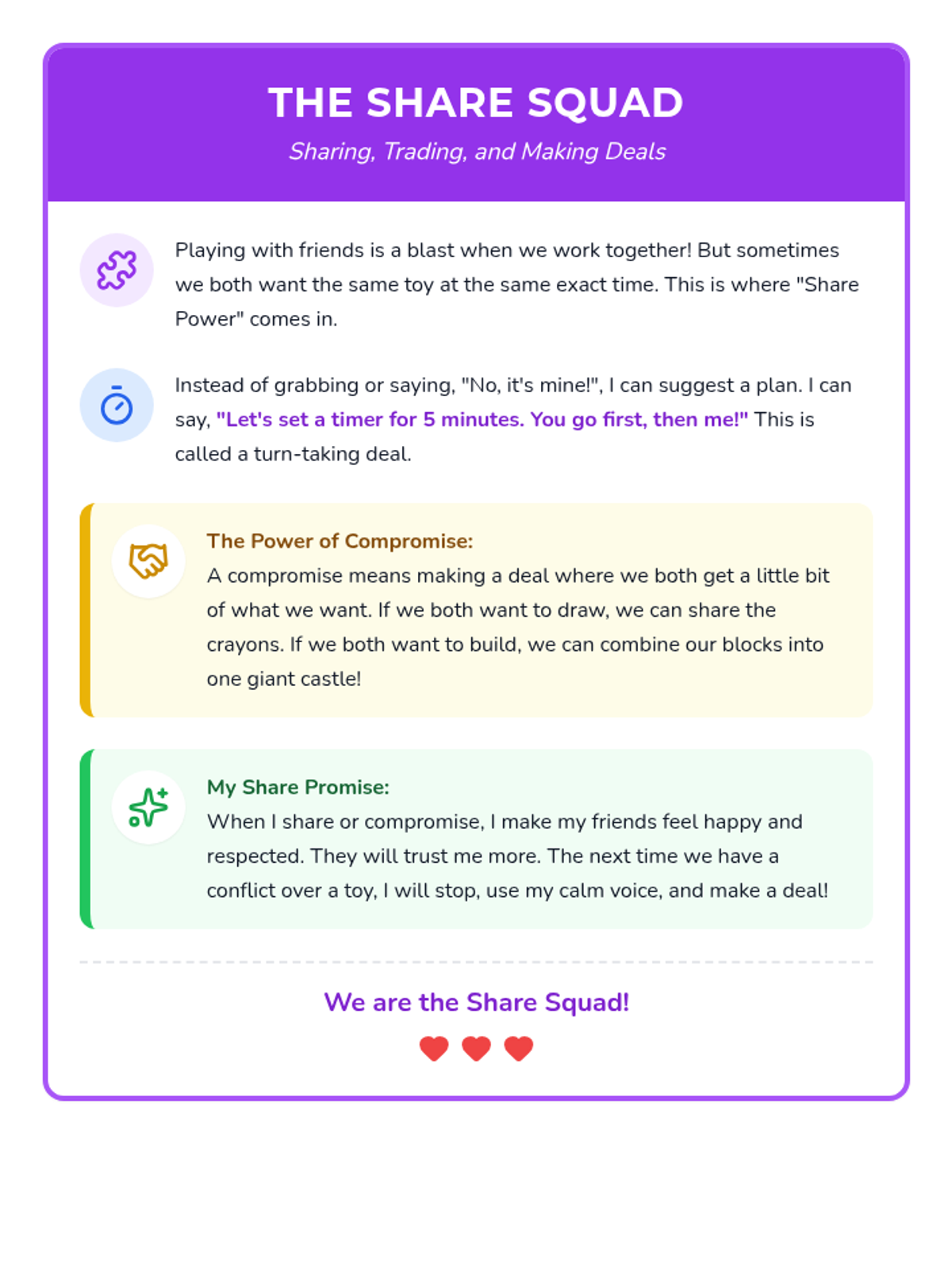
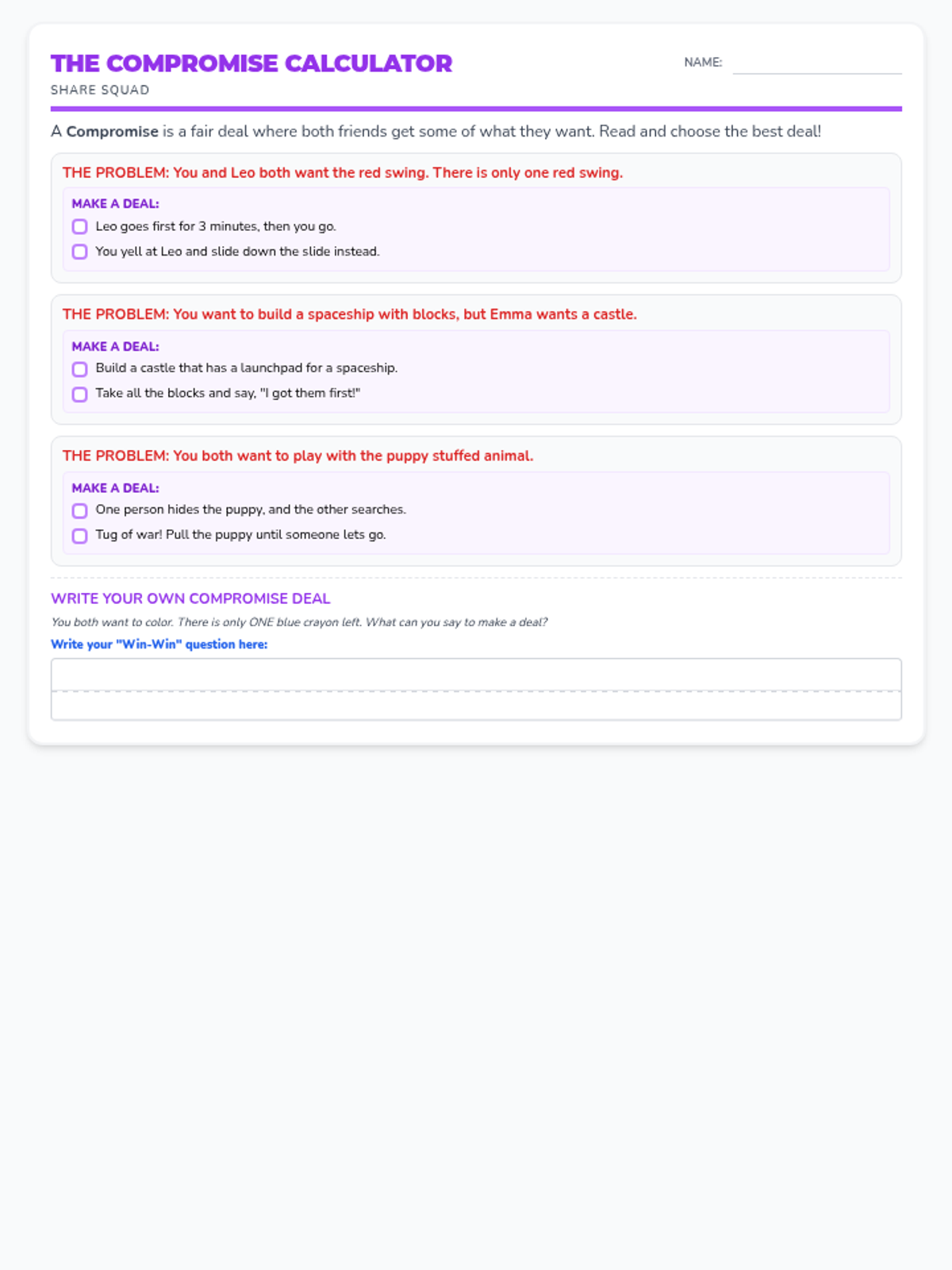
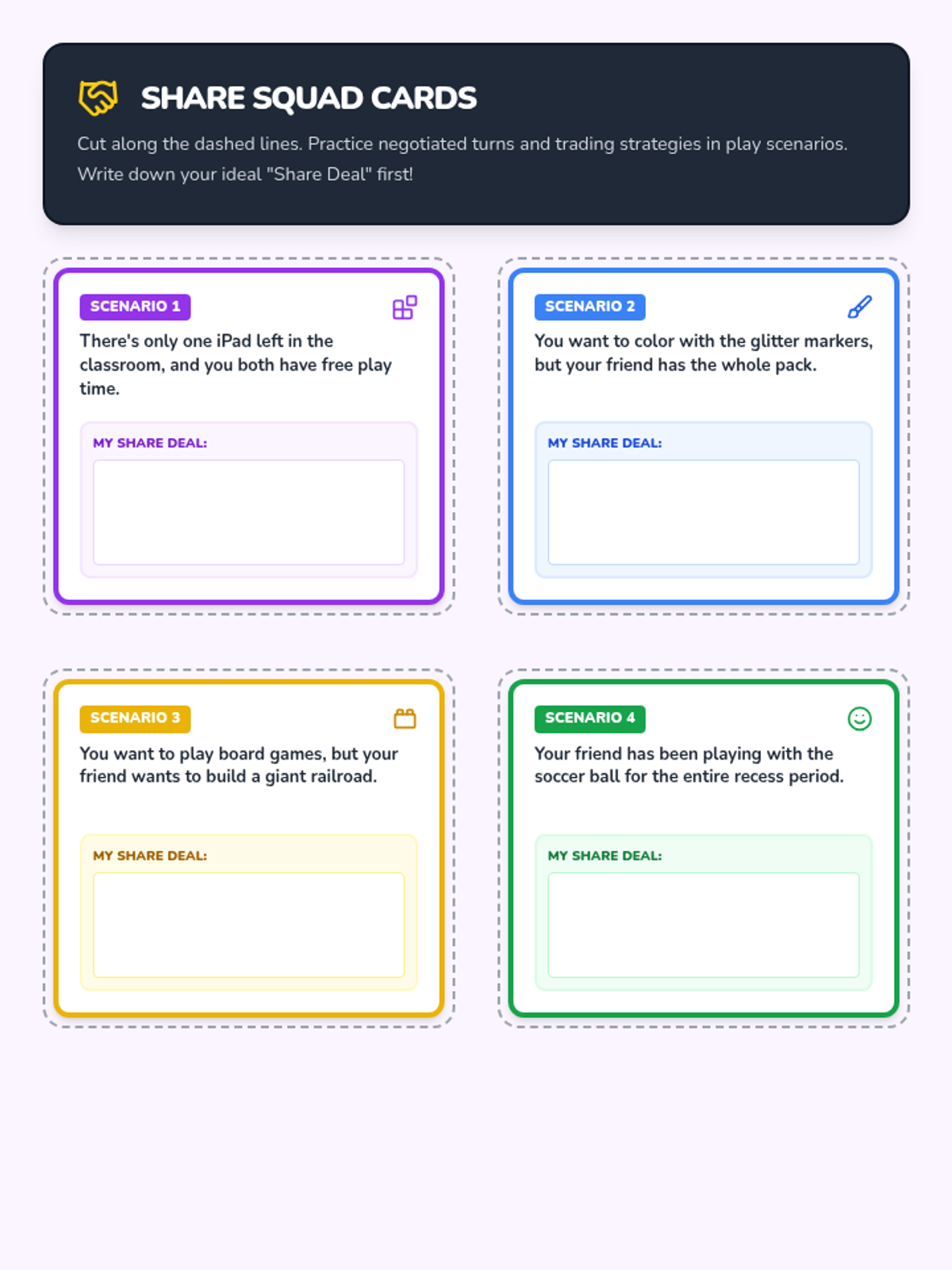
A lesson centered on cooperative sharing, negotiating rules, turn-taking, and making compromises during play with peers.
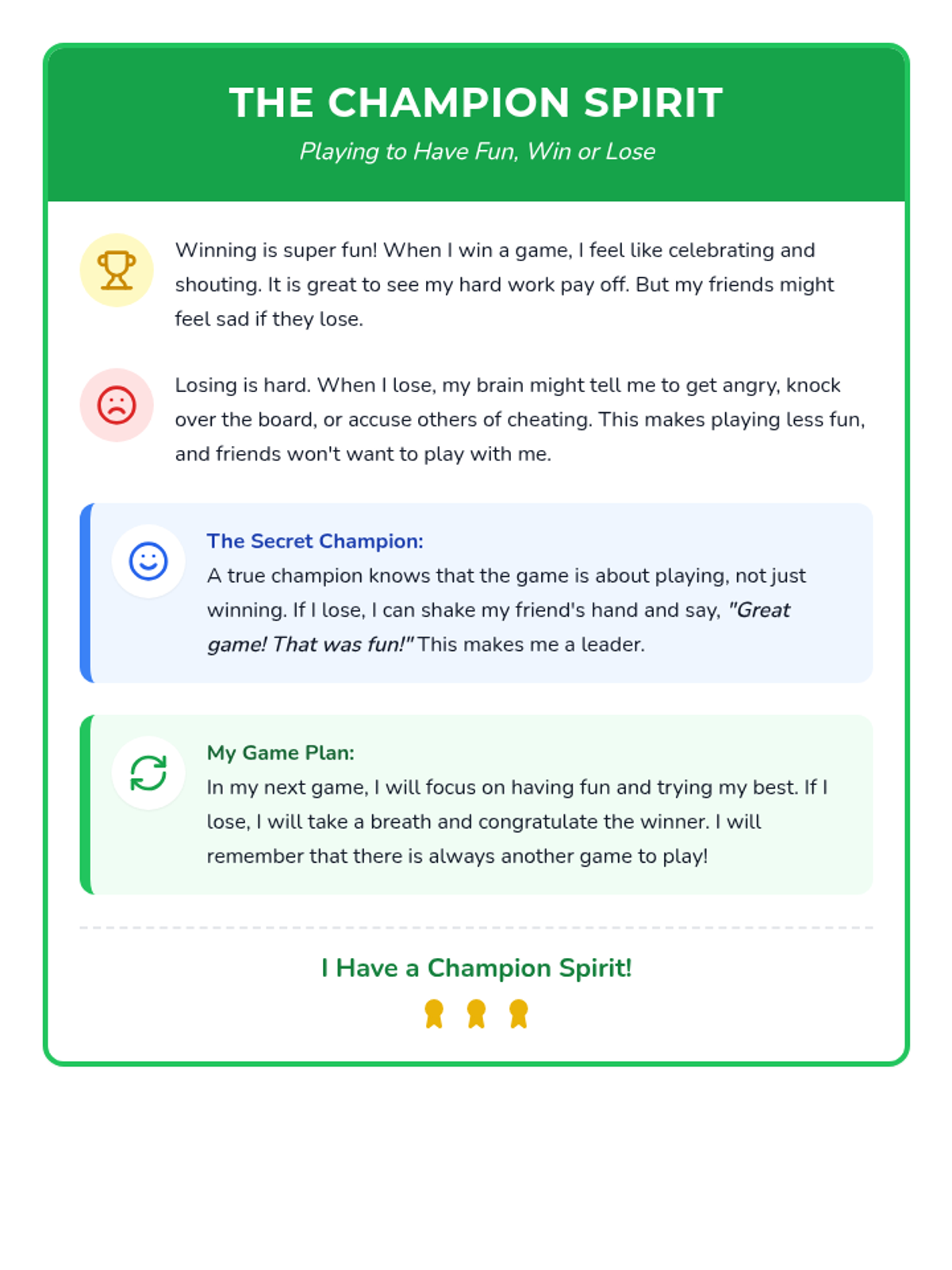
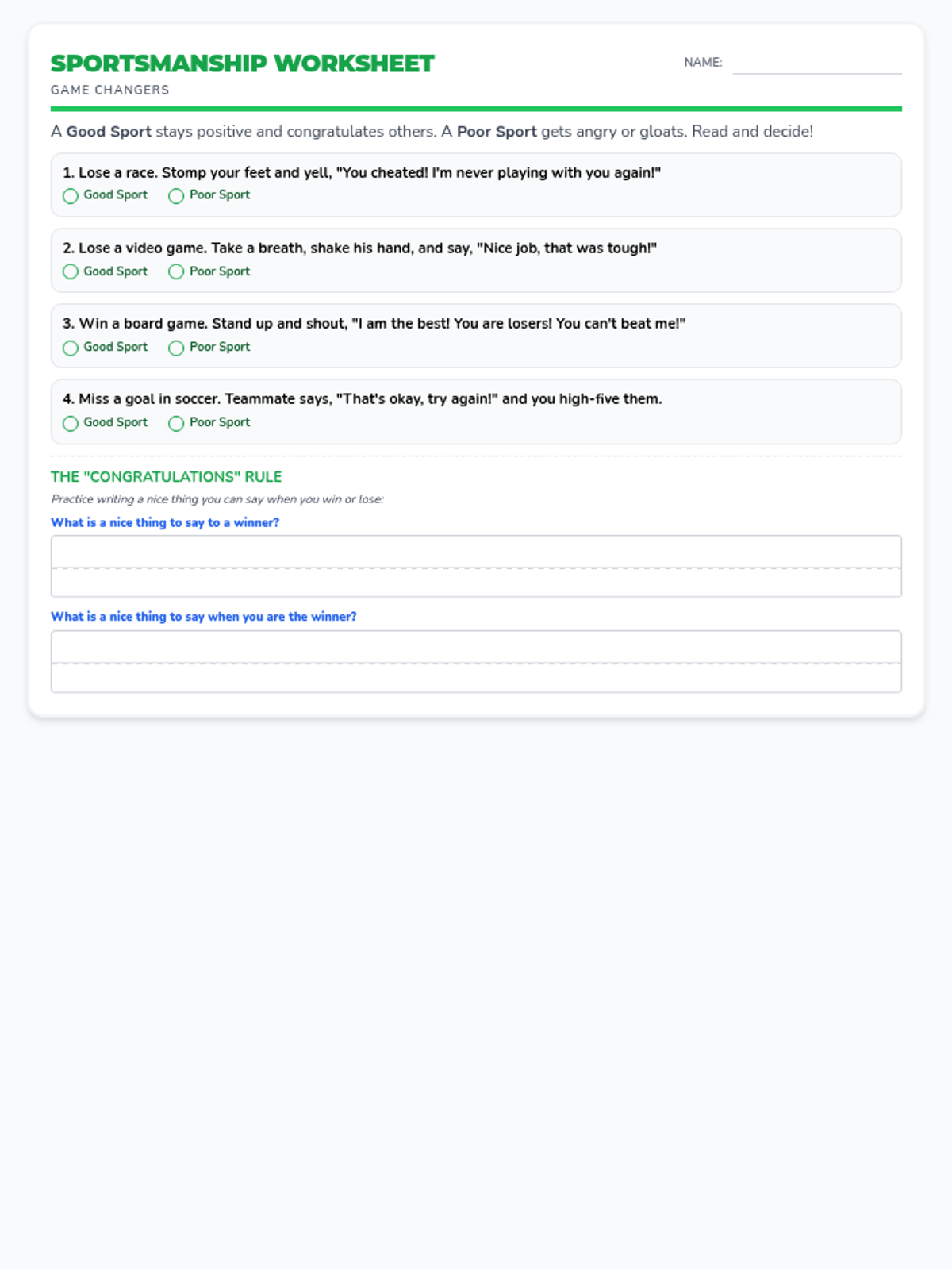
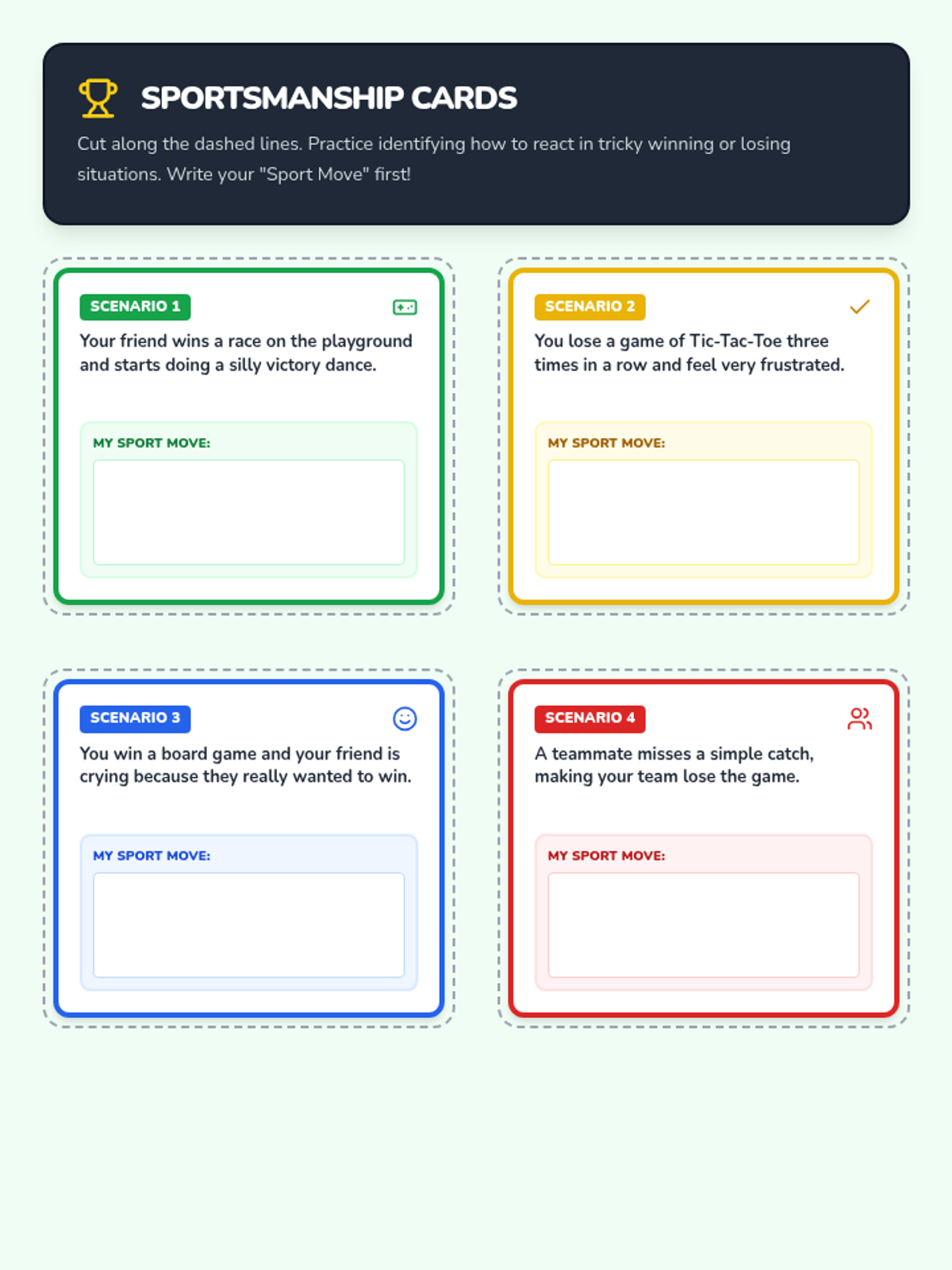
A lesson focused on sportsmanship, managing disappointment when losing a game, and maintaining positive peer relationships regardless of the game outcome.
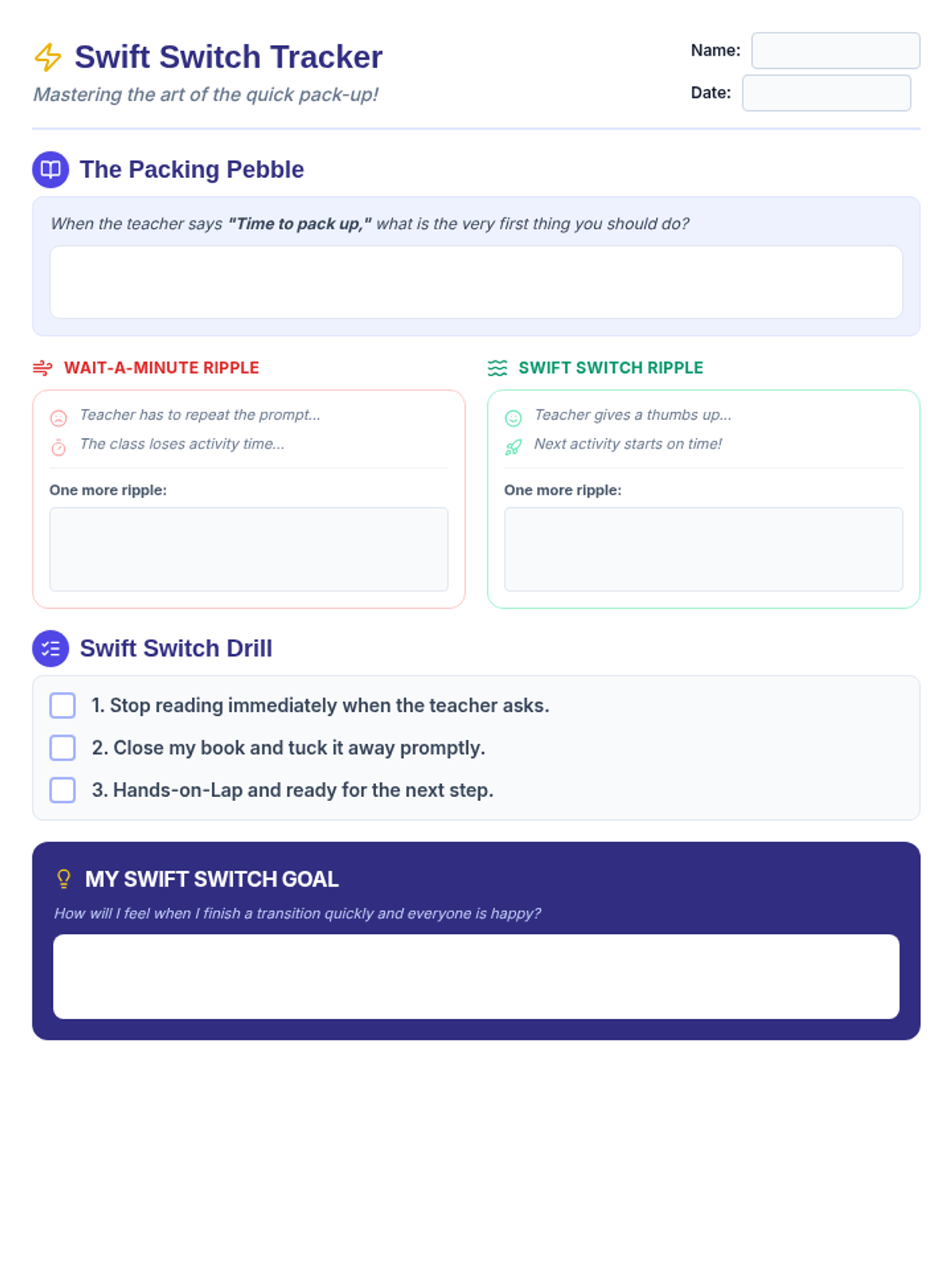
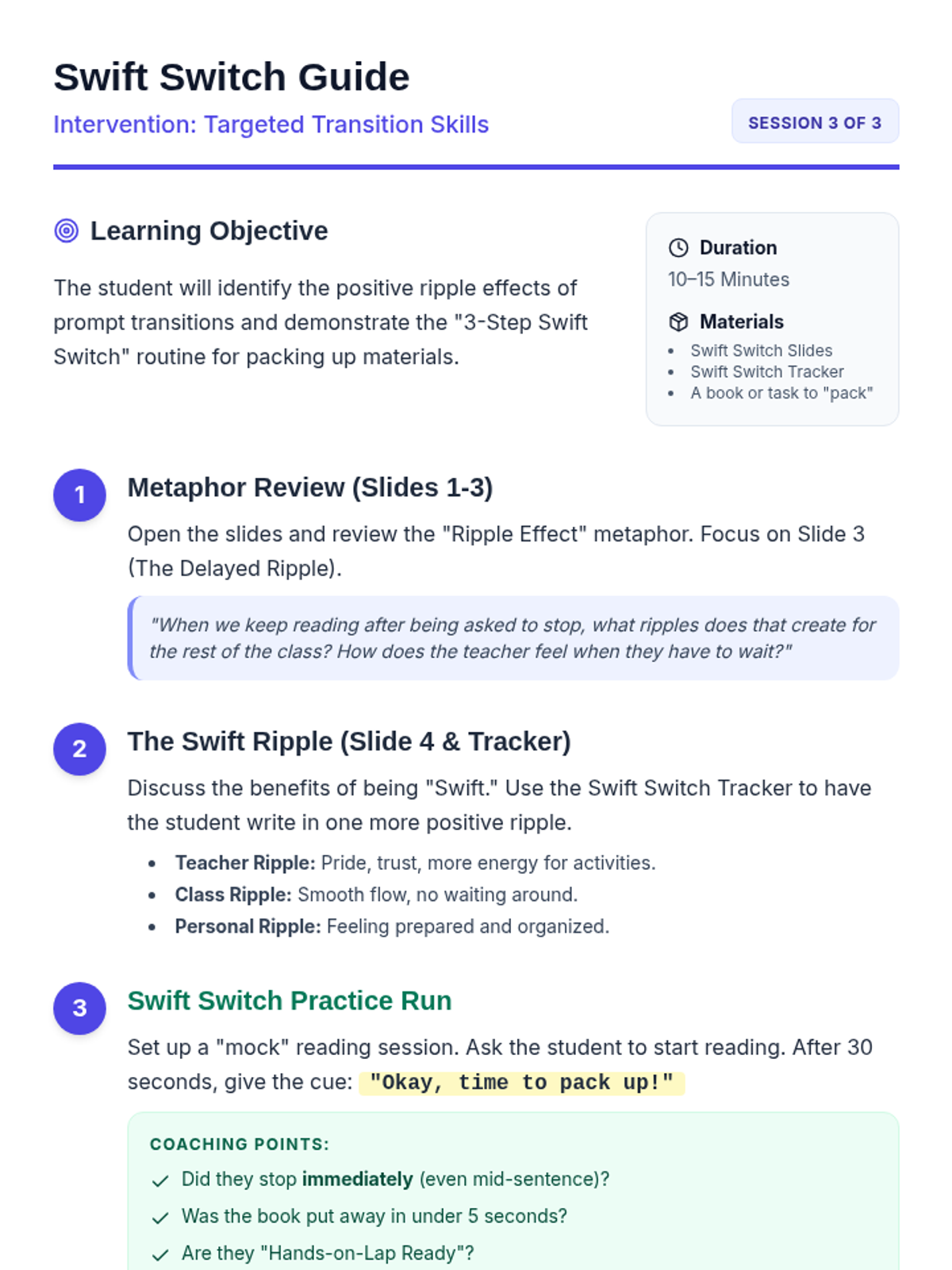
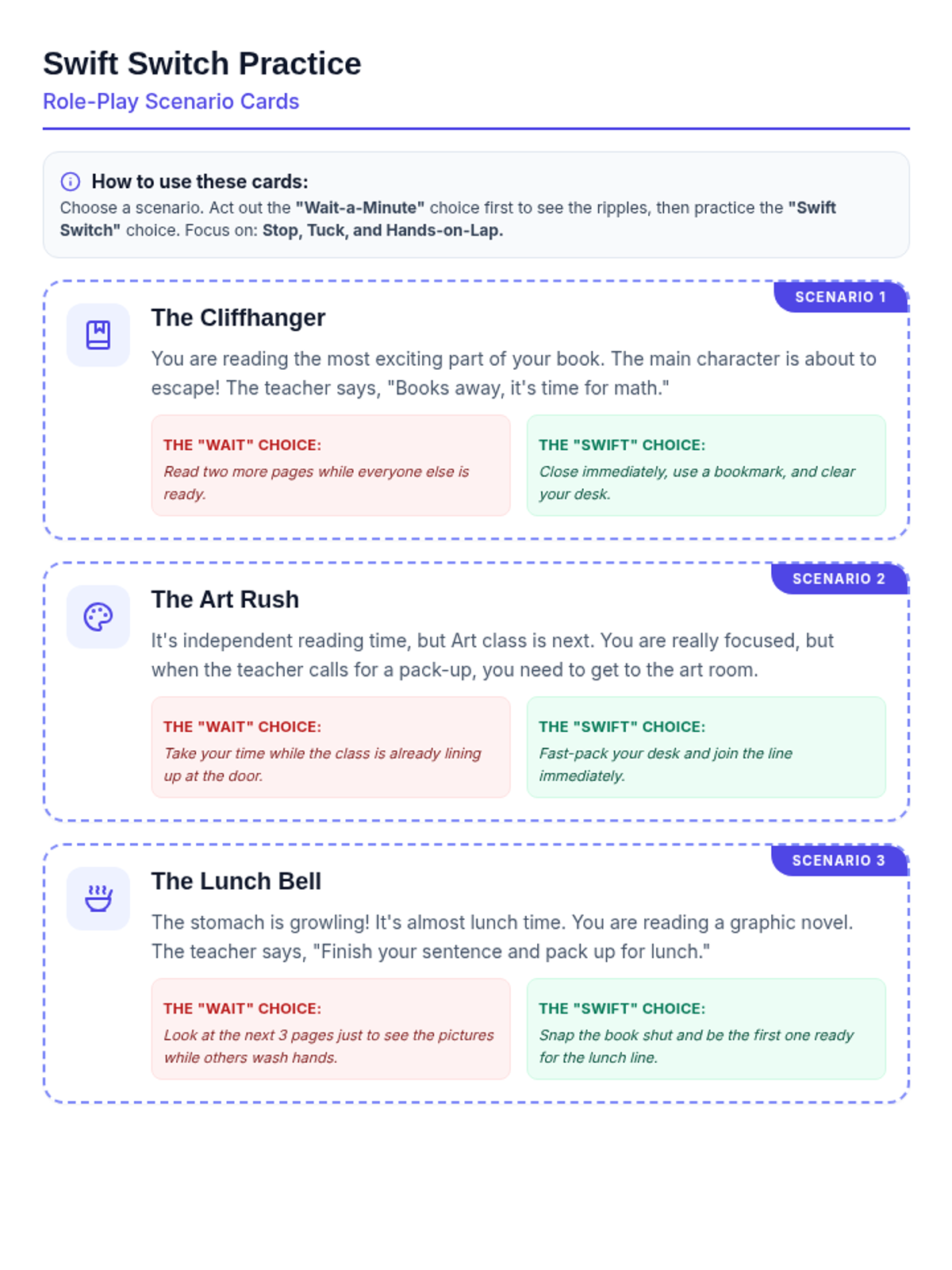
A targeted intervention focused on the transition skill of packing up materials promptly, highlighting the positive ripple effects of being ready for the next part of the day.
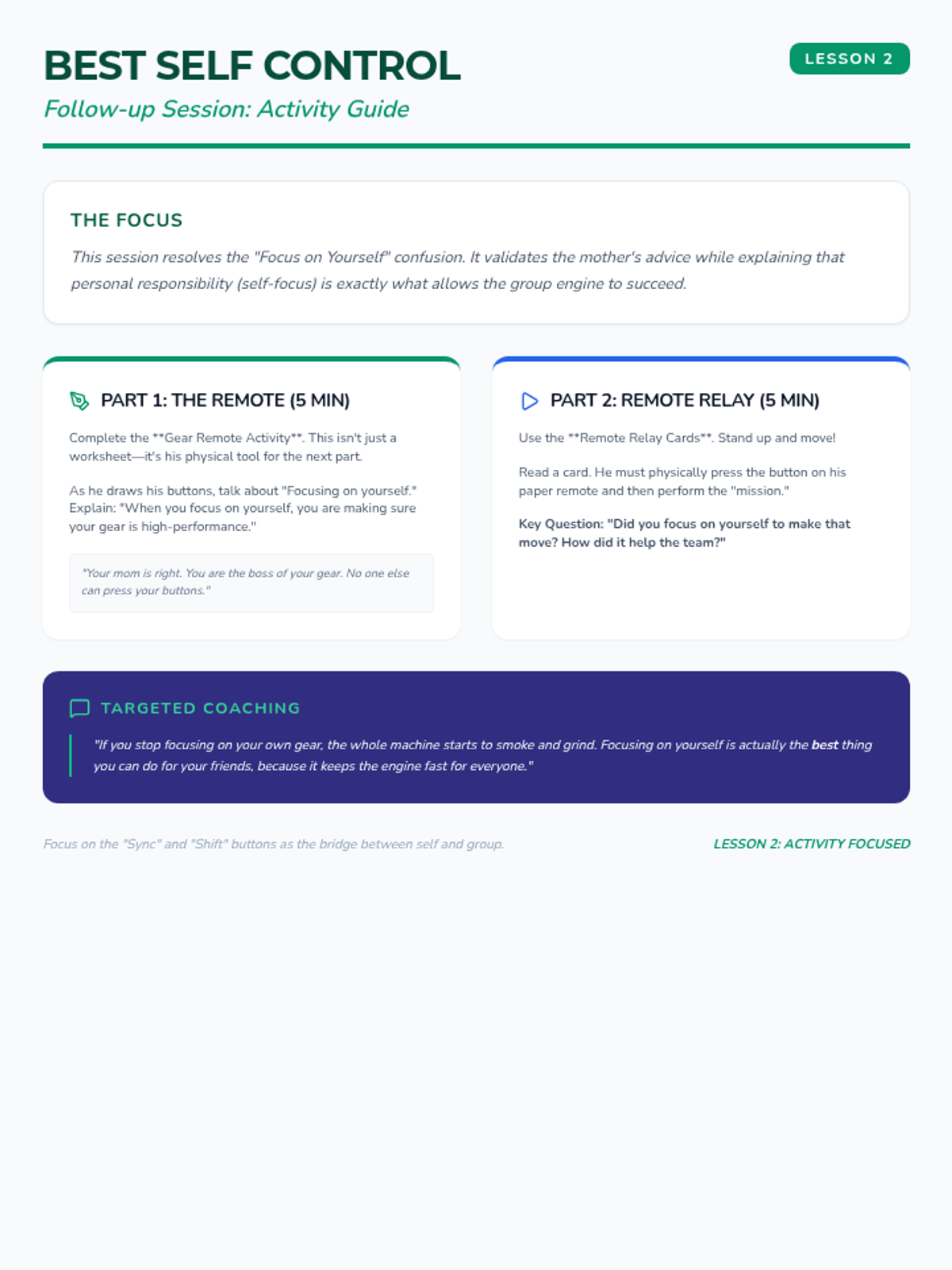
A follow-up session that clarifies the "Focus on Self" advice. It teaches that focusing on yourself means taking 100% responsibility for your own "Remote Control" to ensure your gear turns when the team needs it. Mostly activity-based.
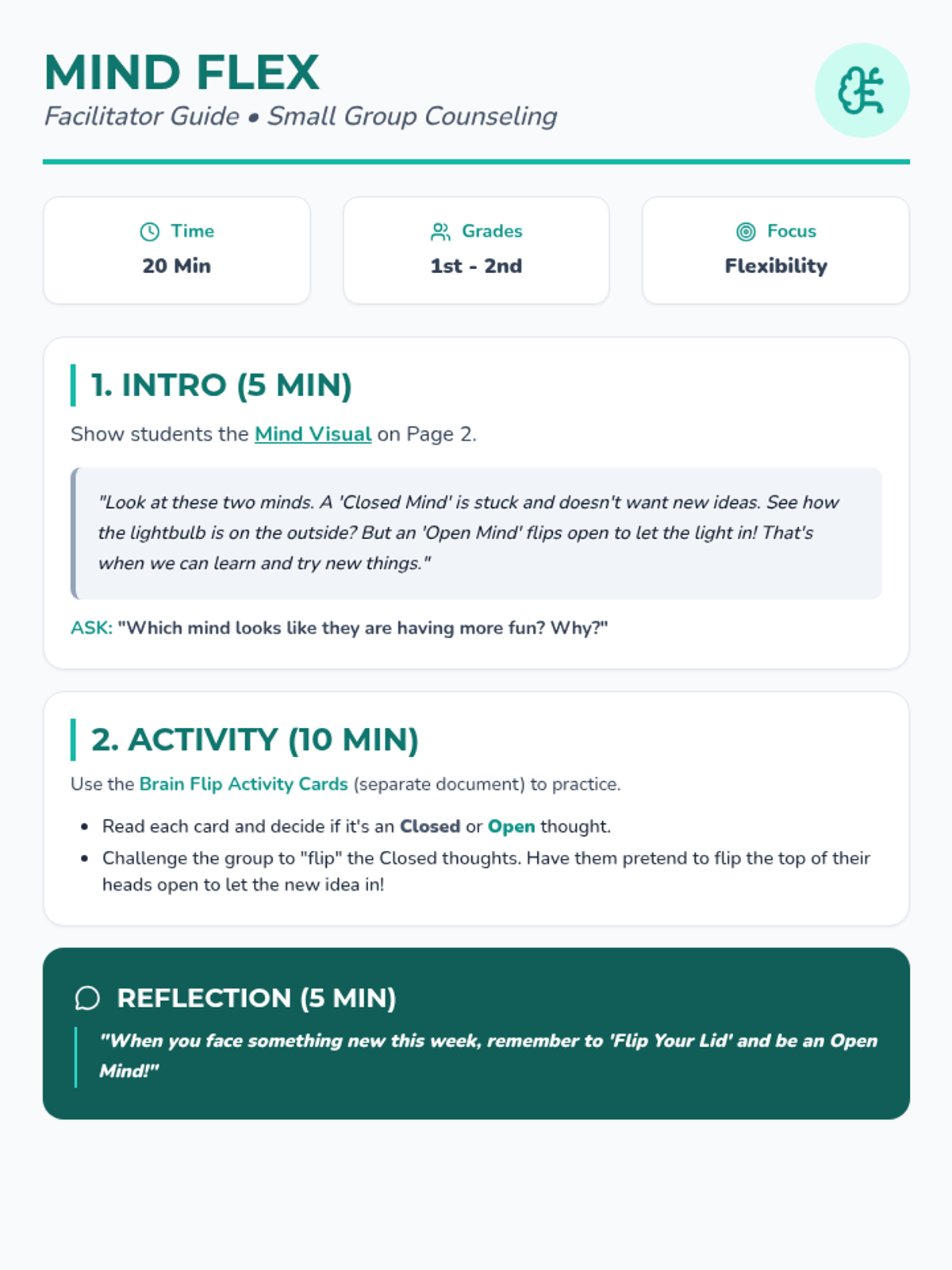
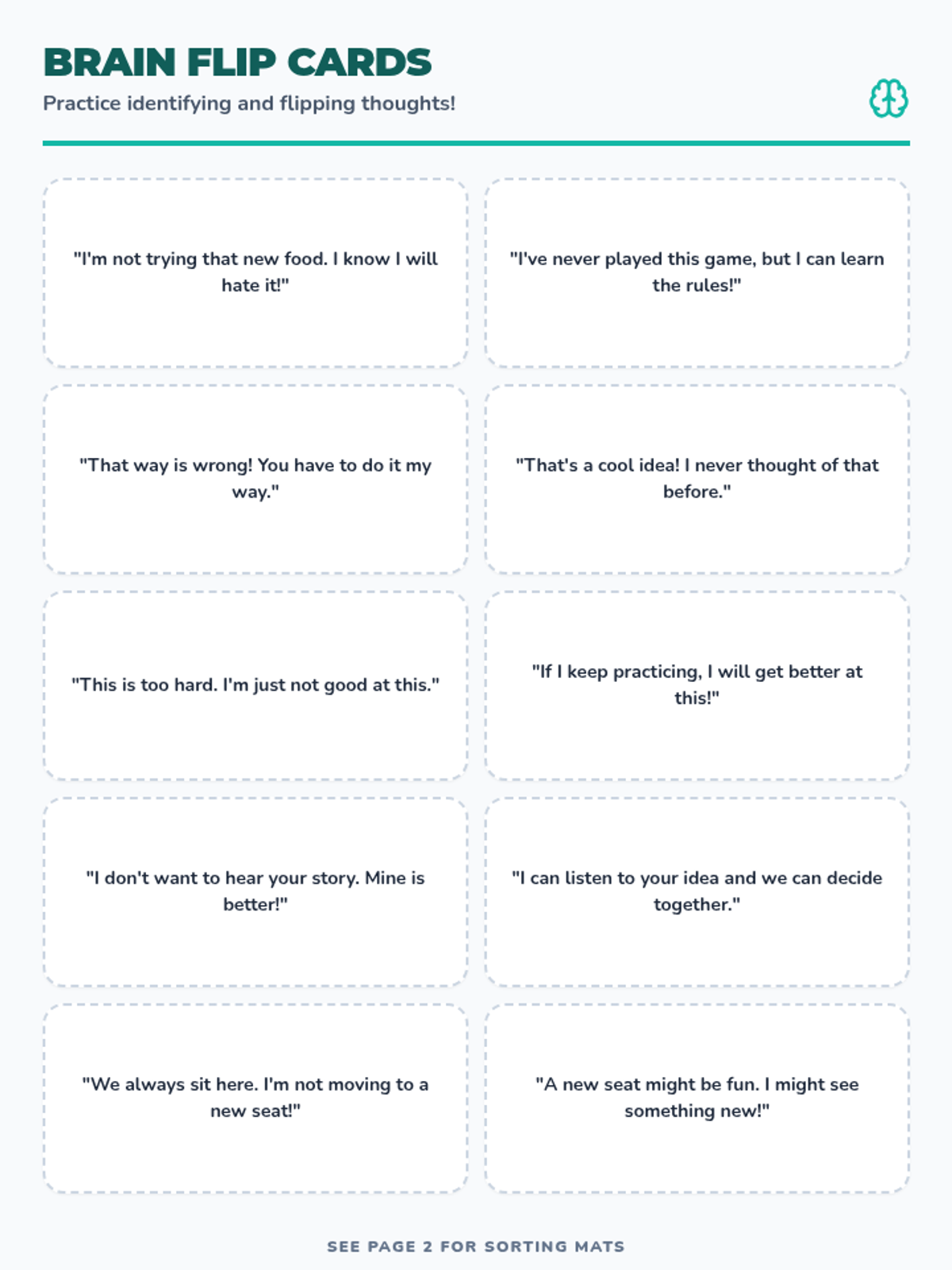
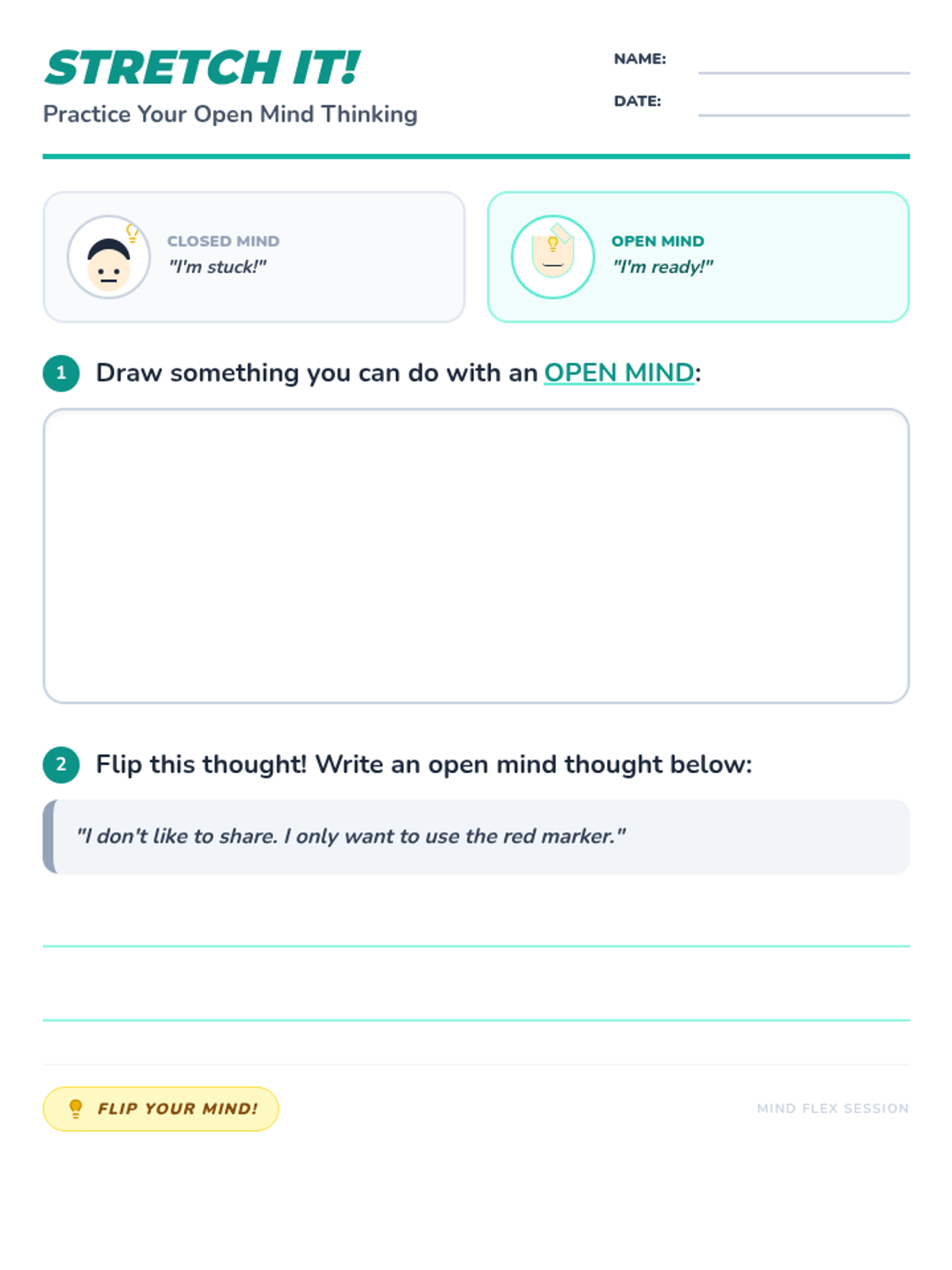
A 20-minute small-group counseling session designed to help early elementary students distinguish between closed-minded and open-minded thinking through hands-on practice.
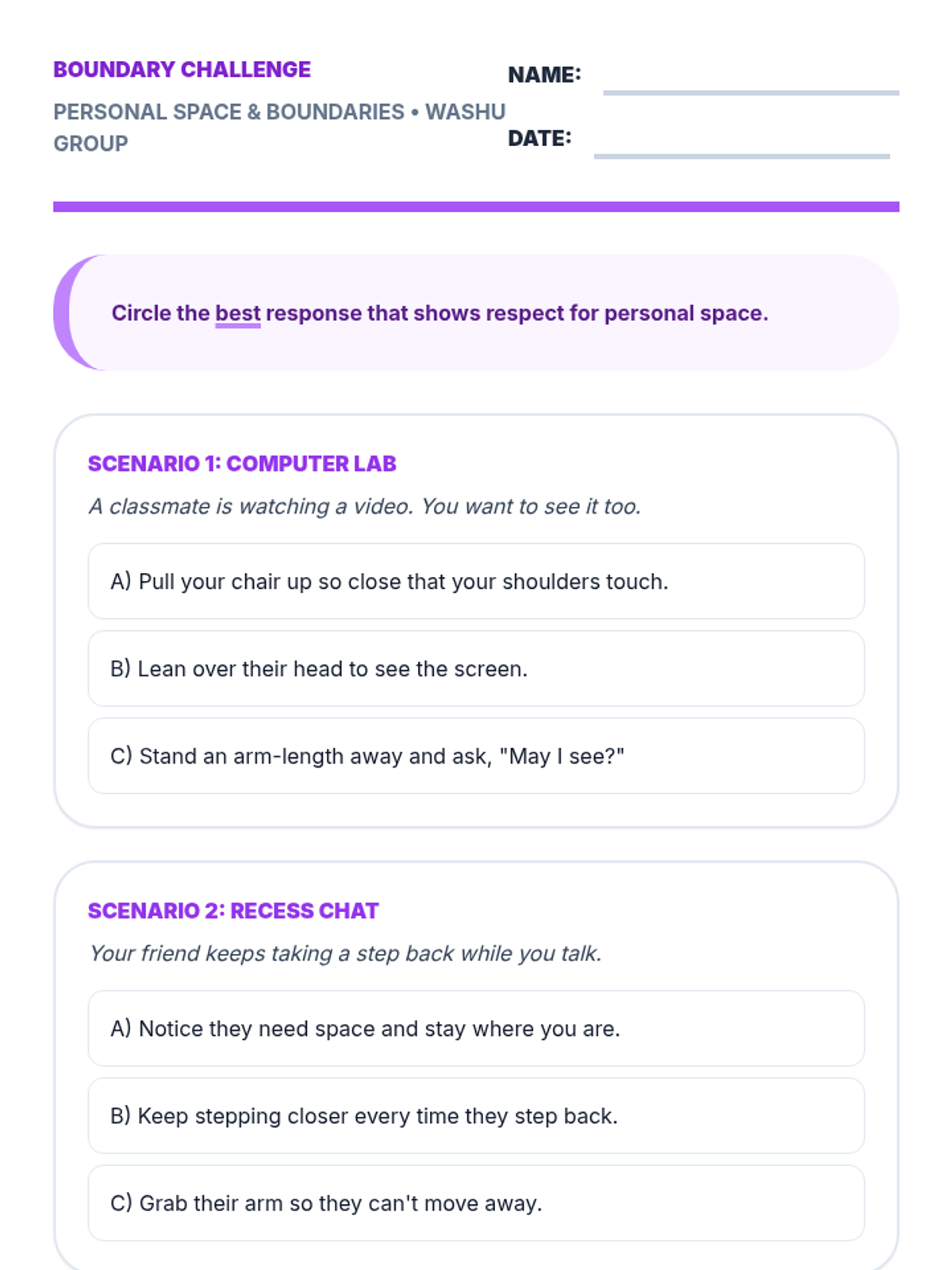
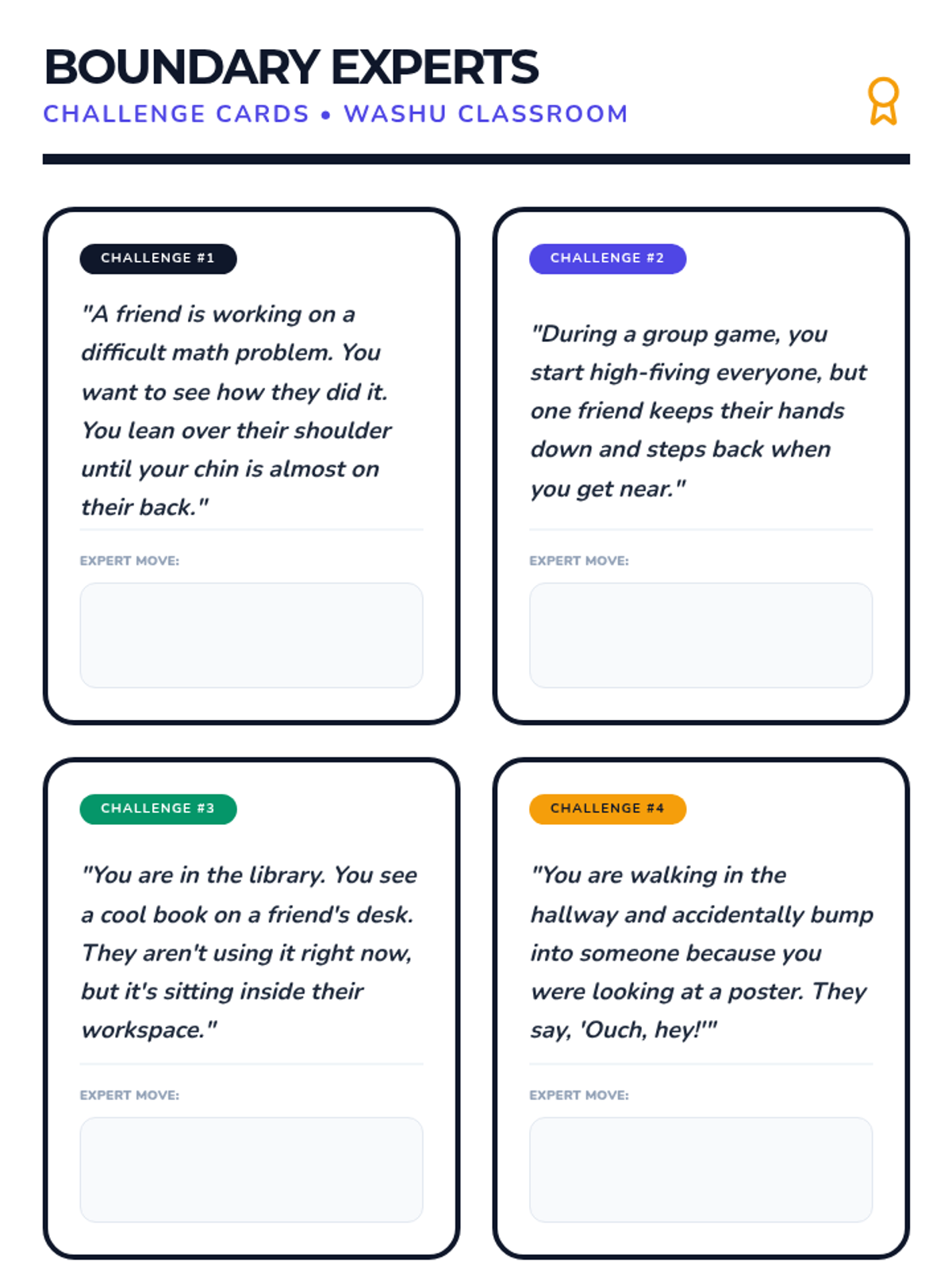
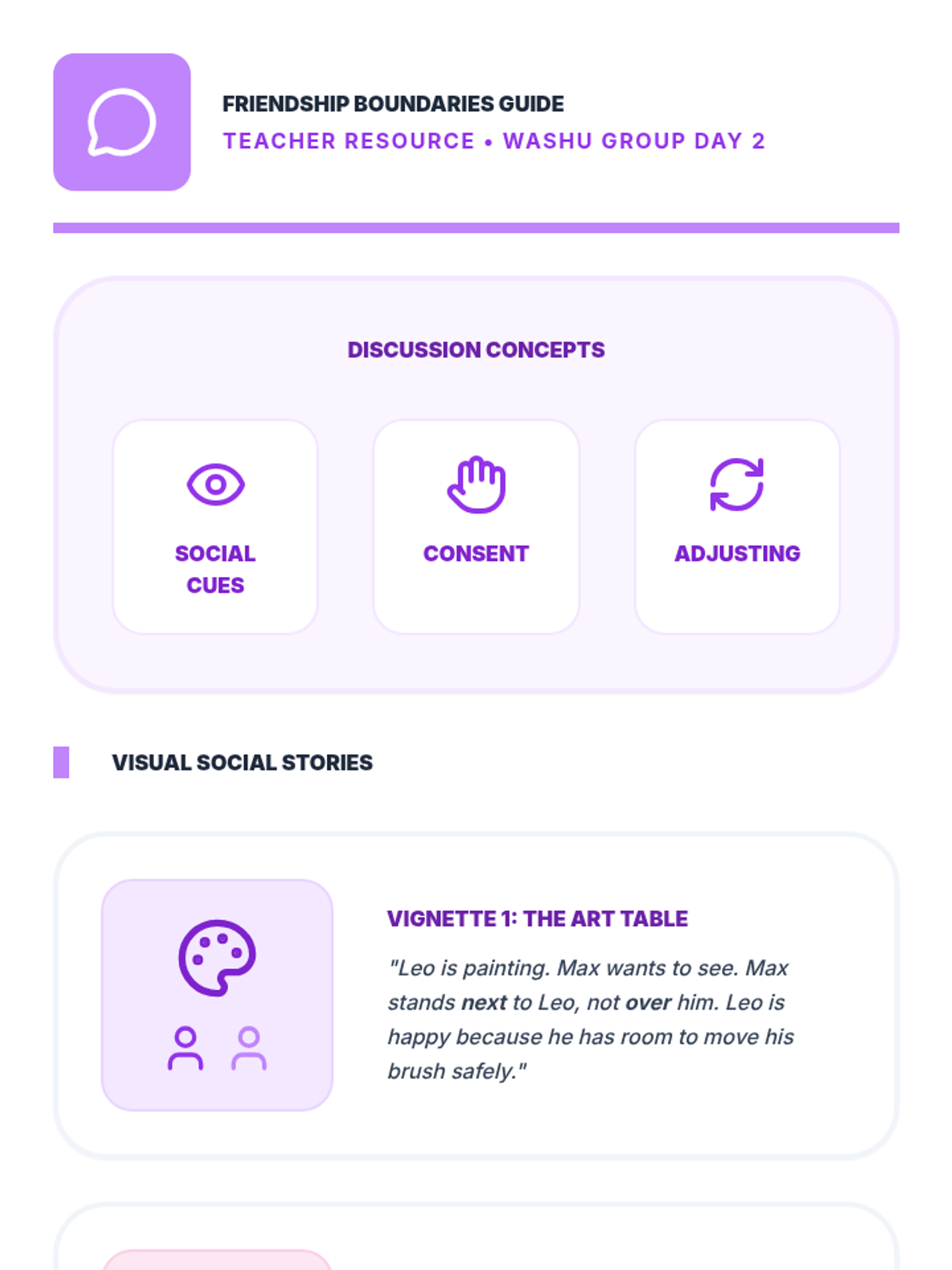
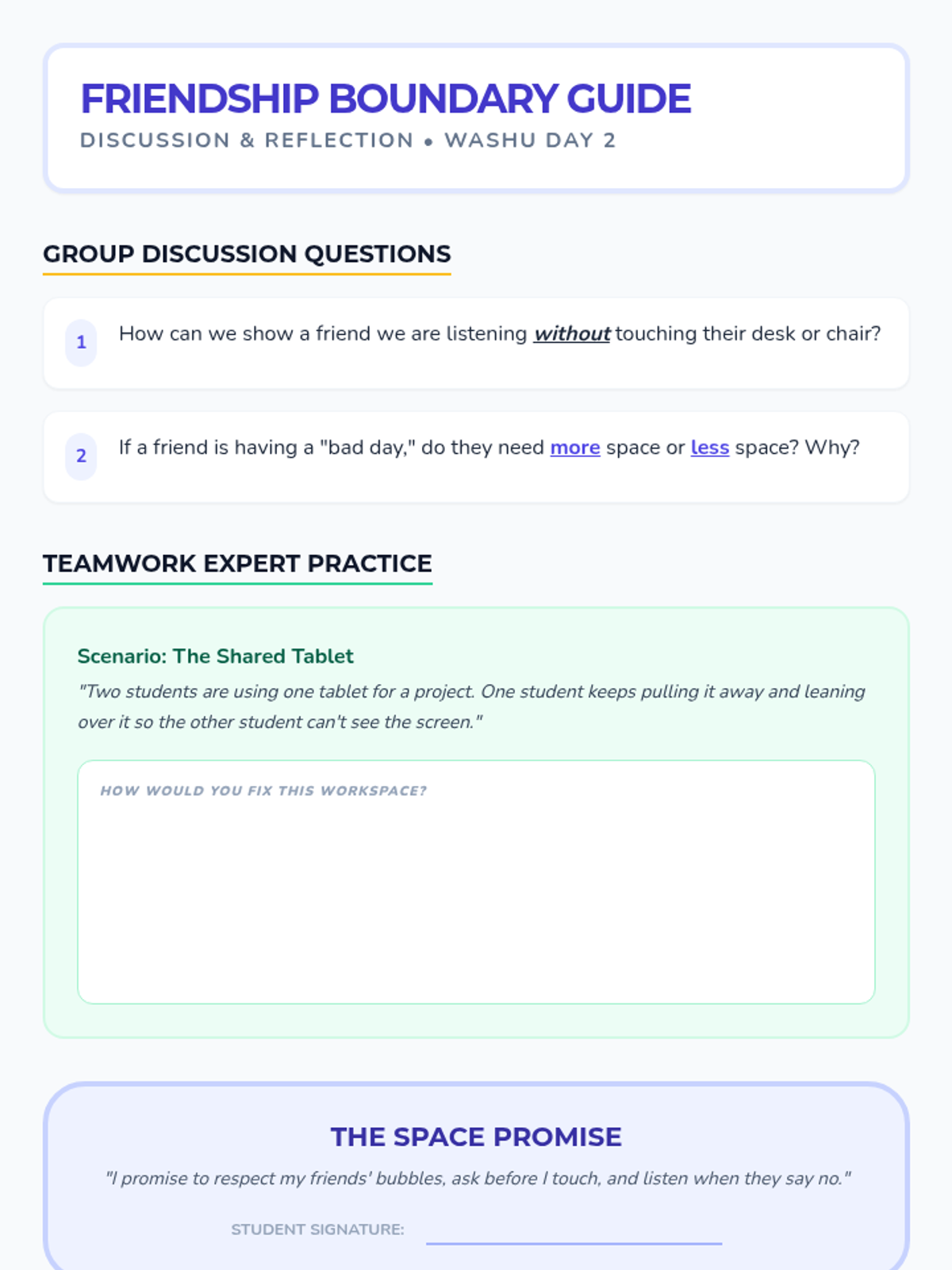
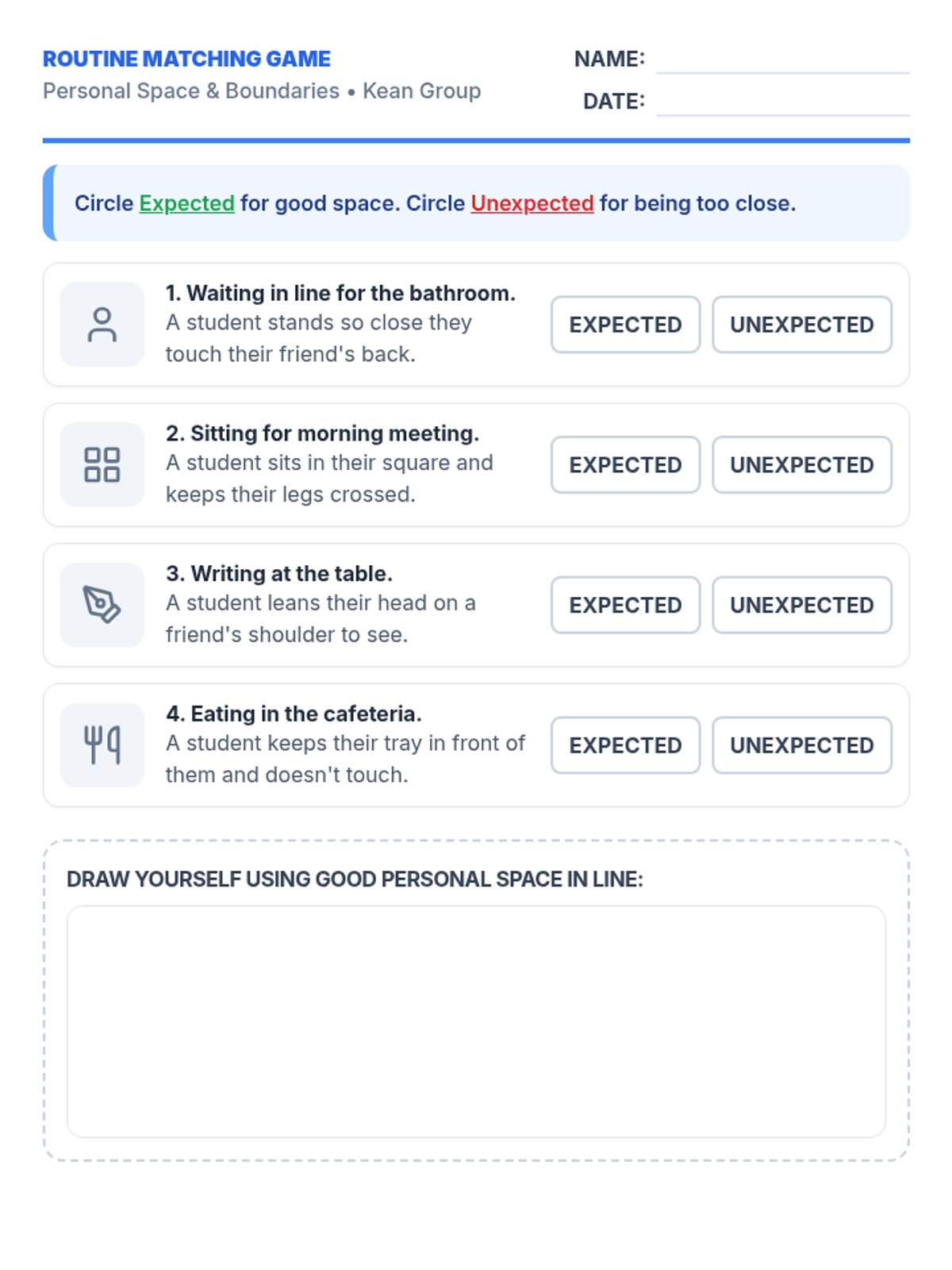
Advanced boundary application for WashU students, focusing on social challenges and respecting personal space within friendships and group work.
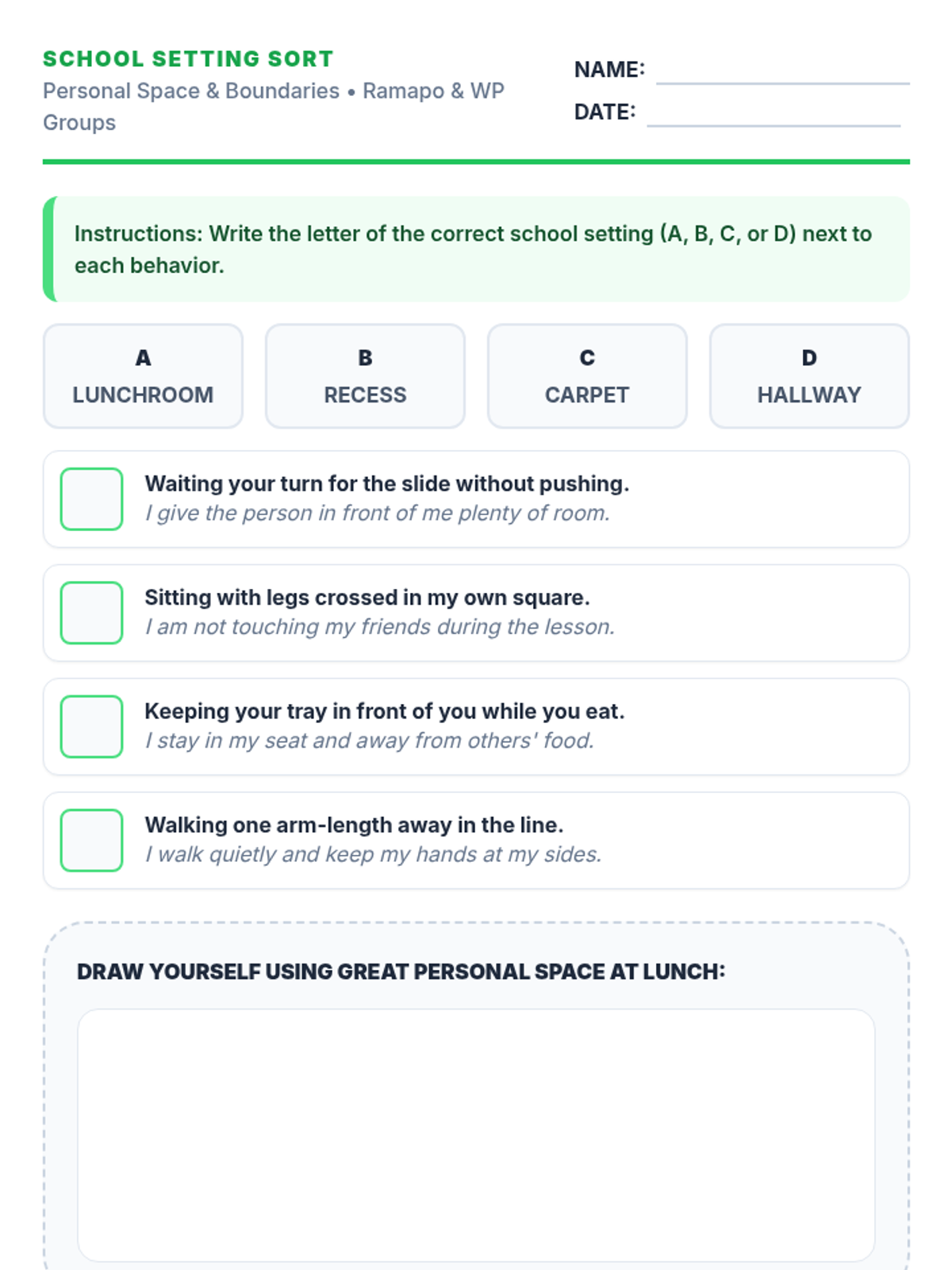
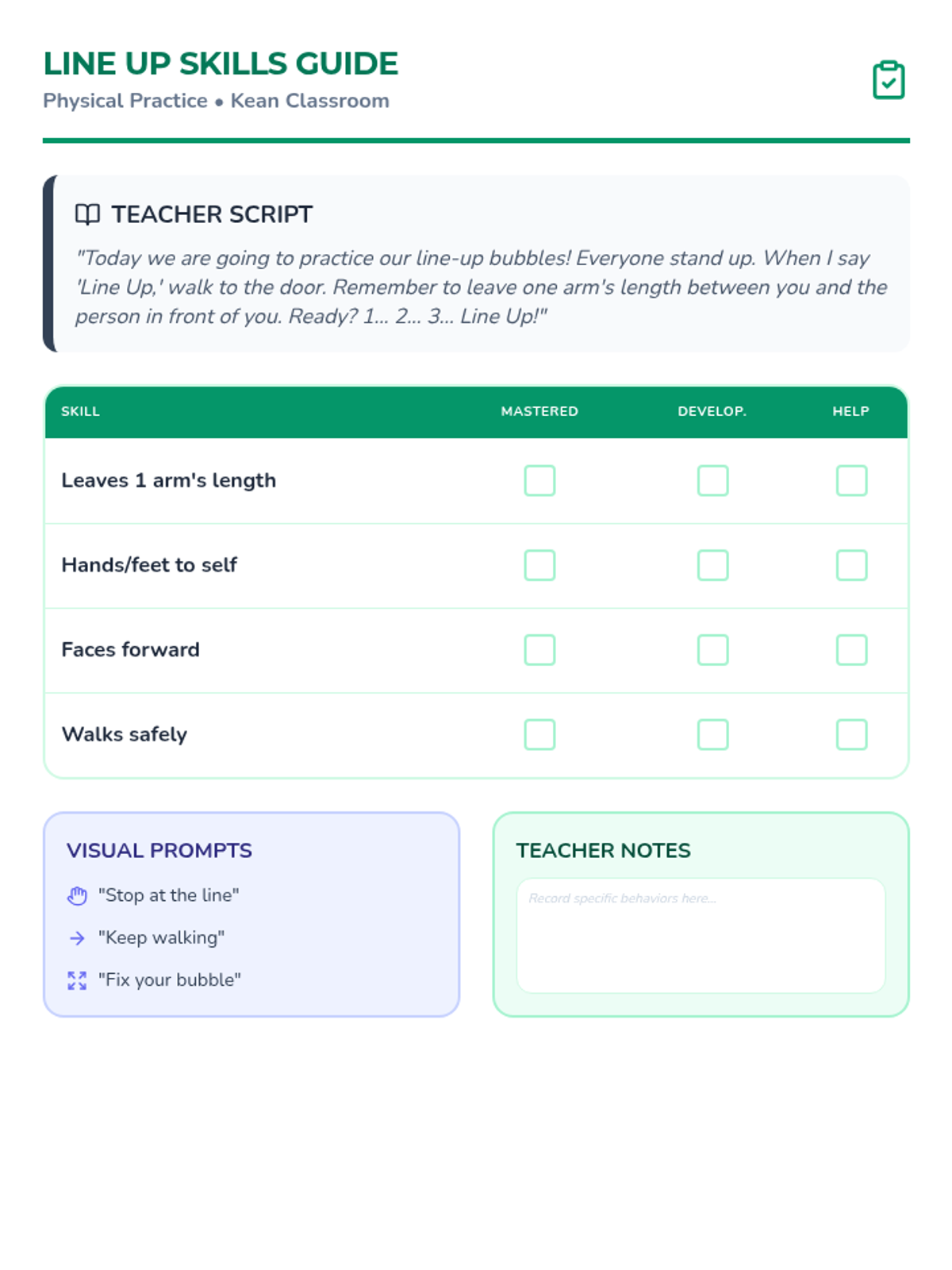
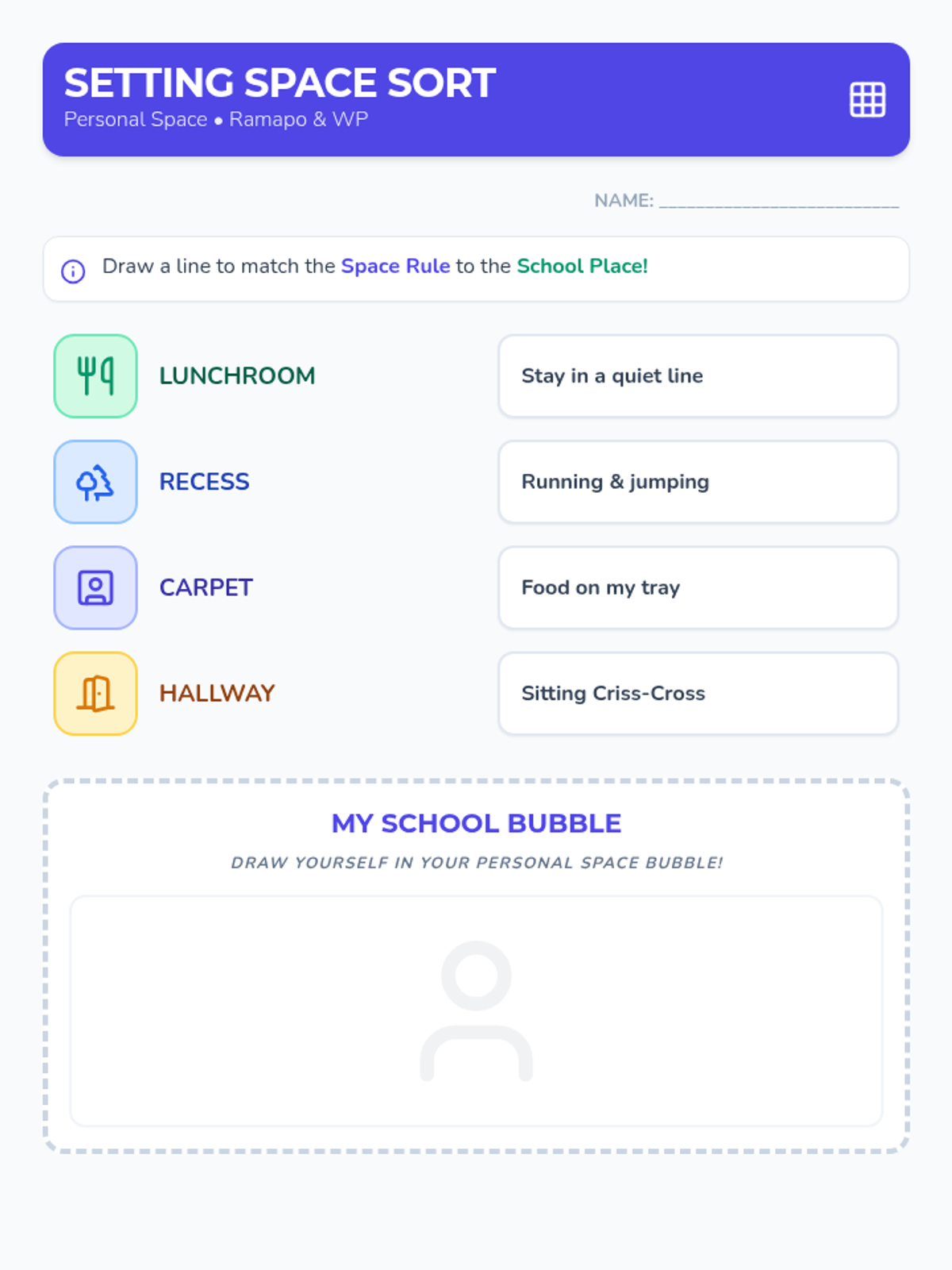
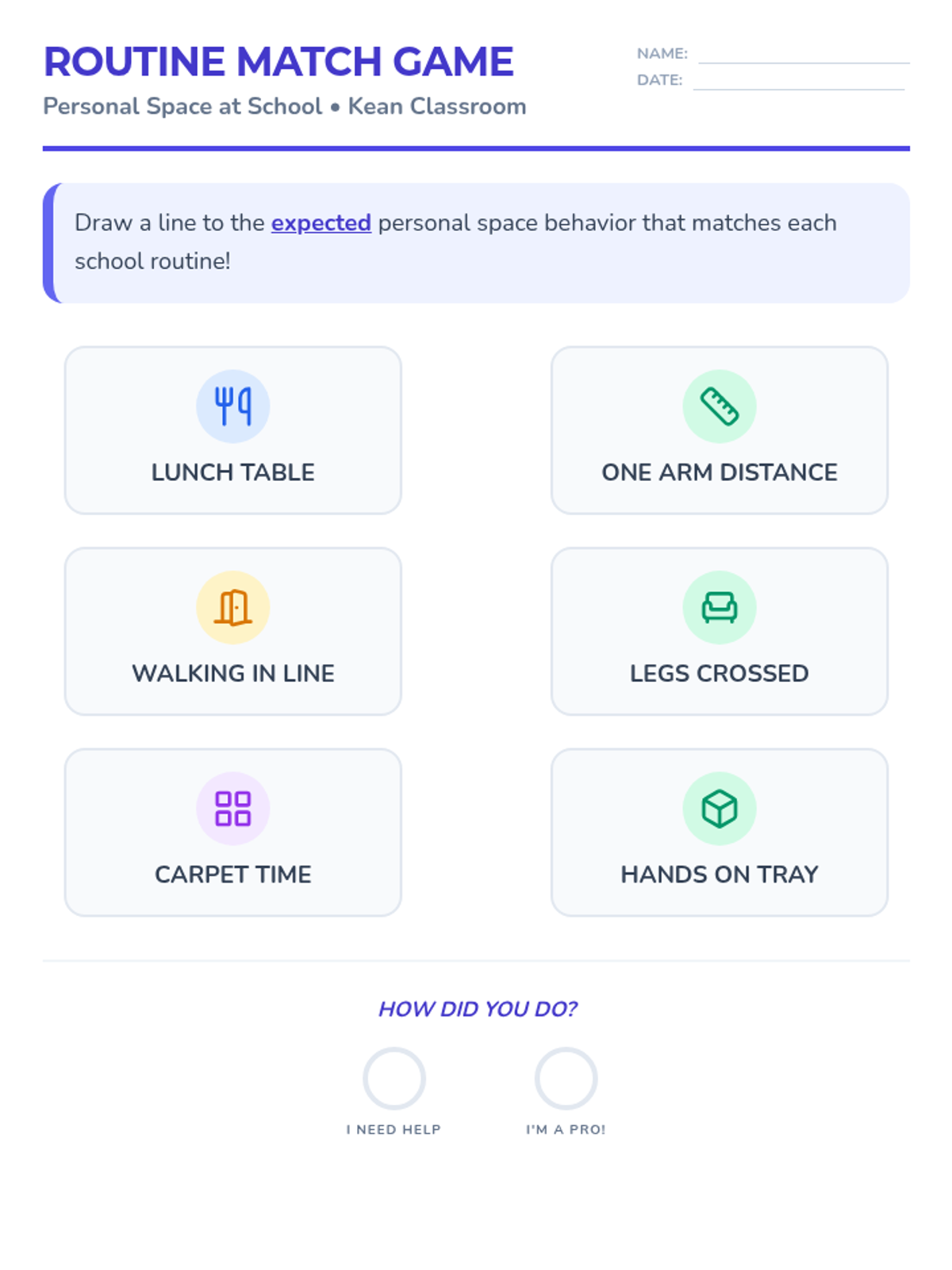
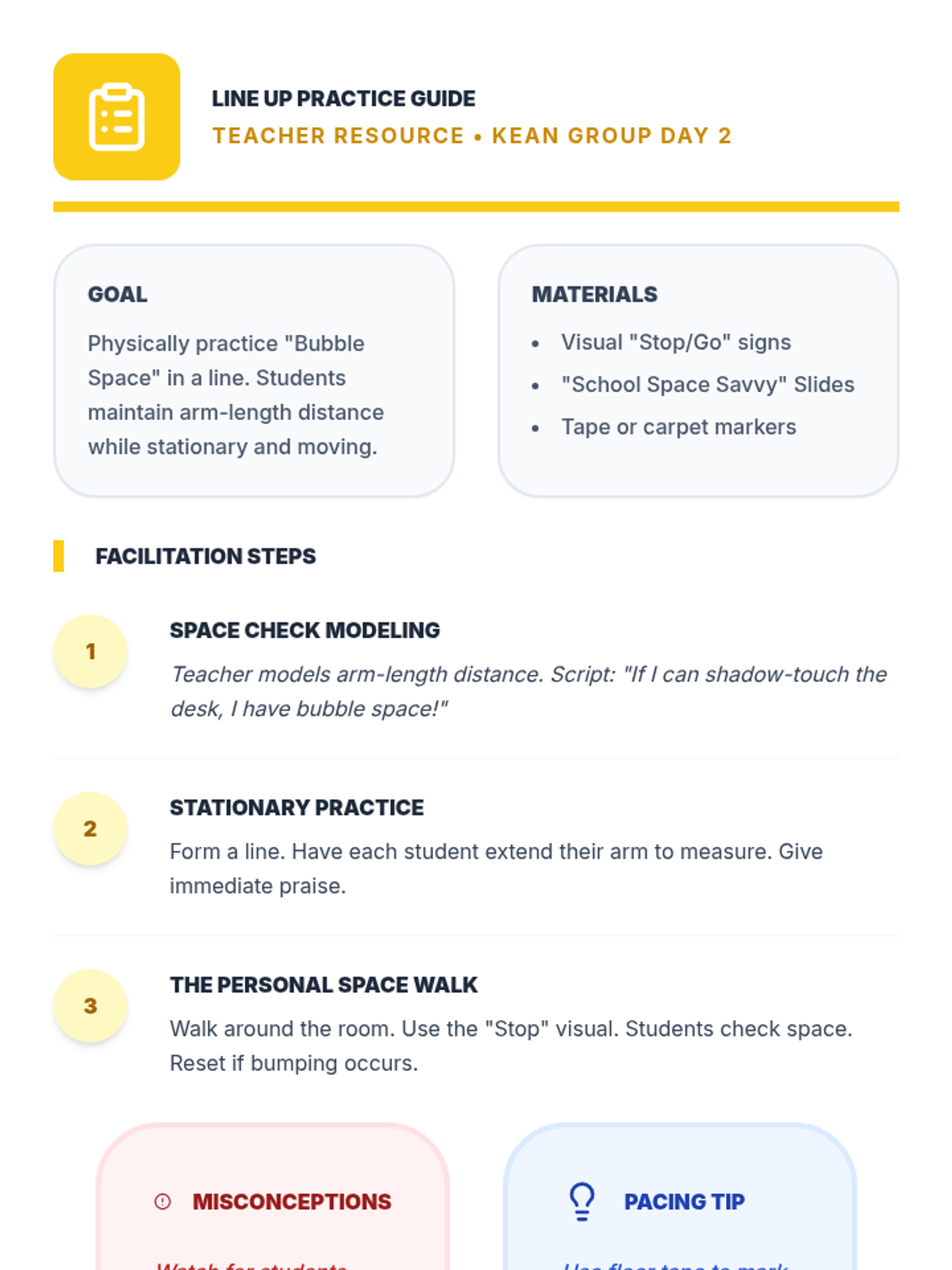
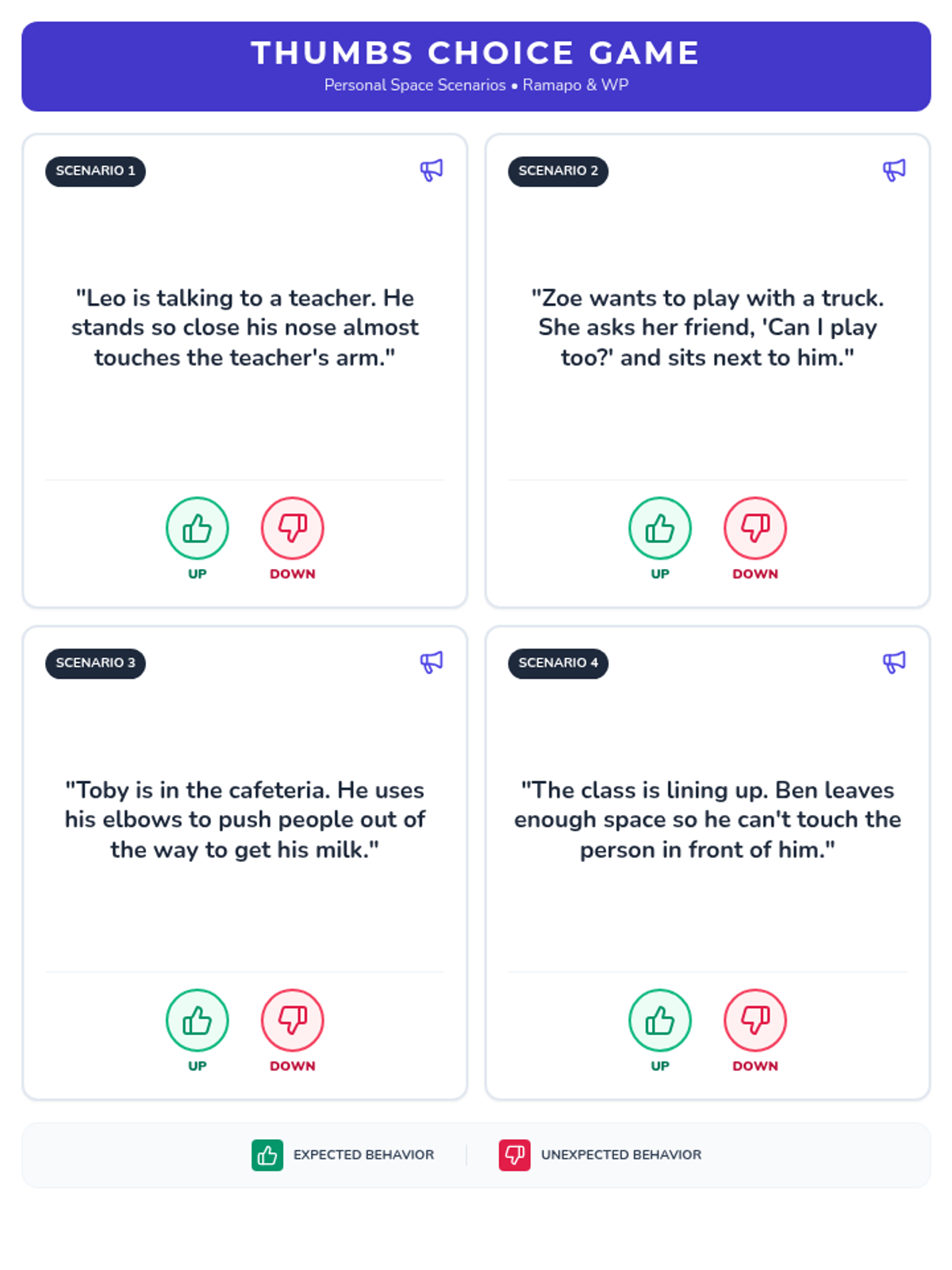
Involves hands-on practice for Kean (lining up) and sorting activities for Ramapo/WP to categorize expected vs. unexpected behaviors in specific school settings.
Focuses on identifying and practicing correct personal space behaviors during school routines such as lunch, recess, and transitions for Kean, Ramapo, and WP students.
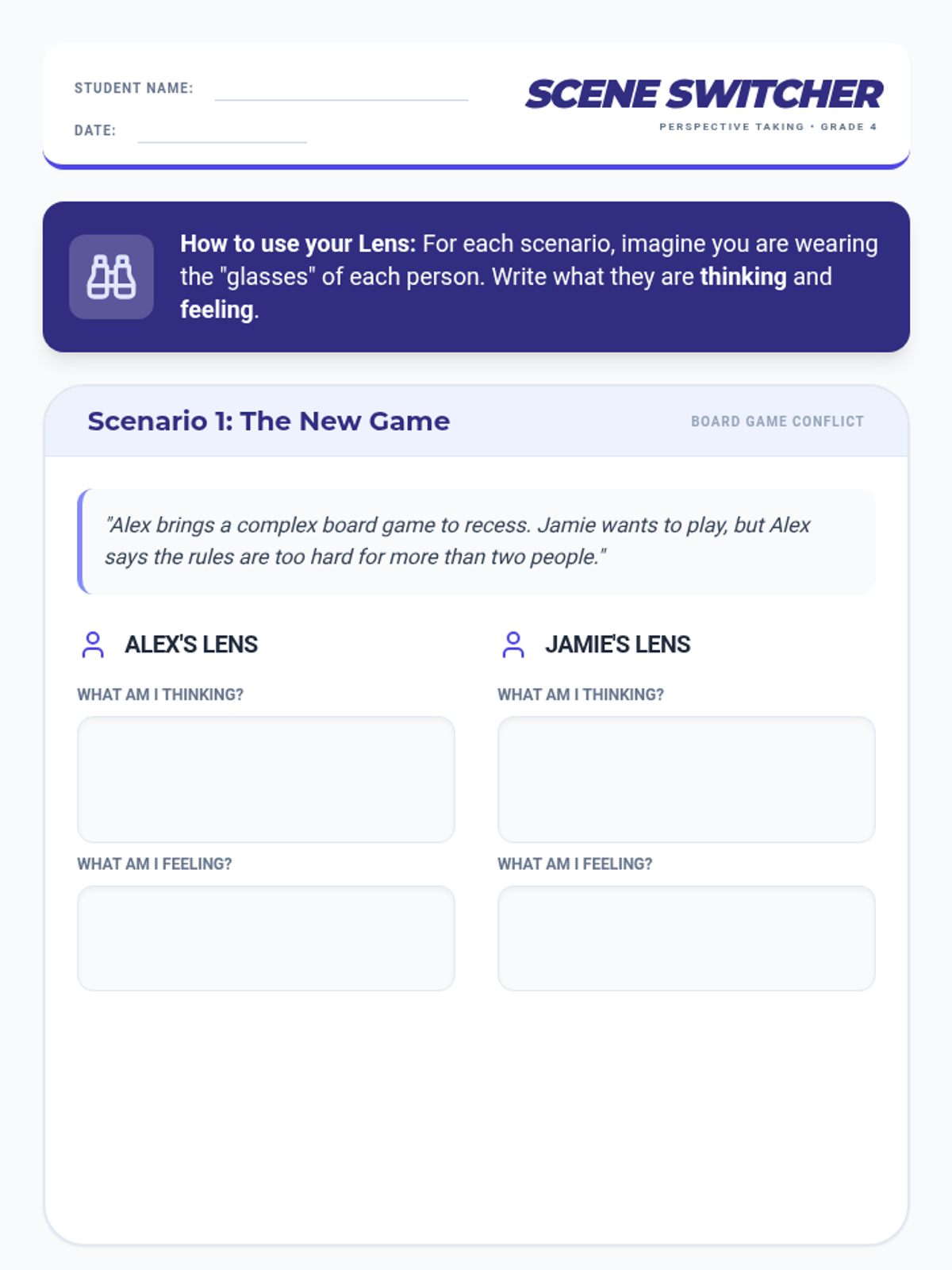
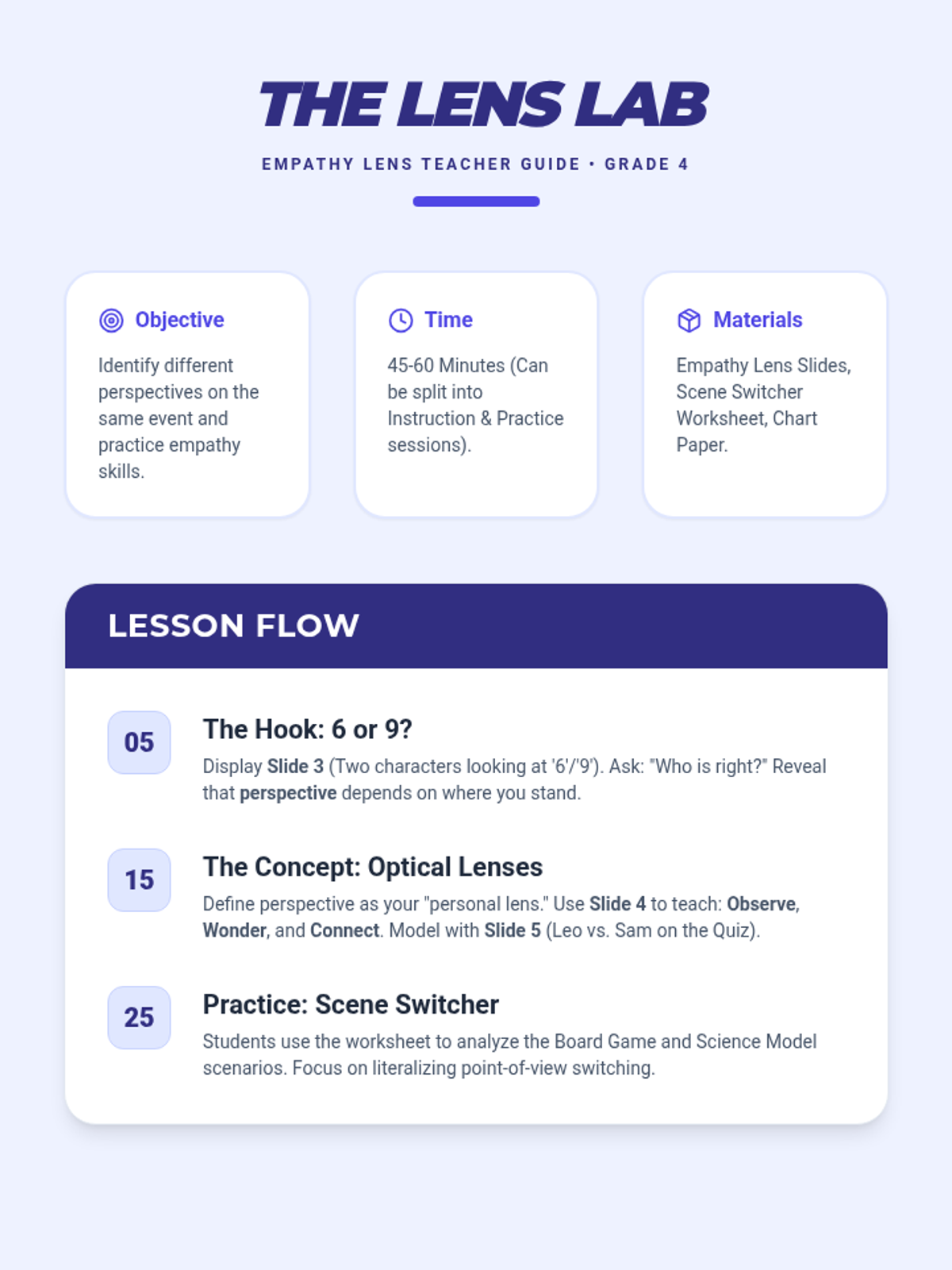
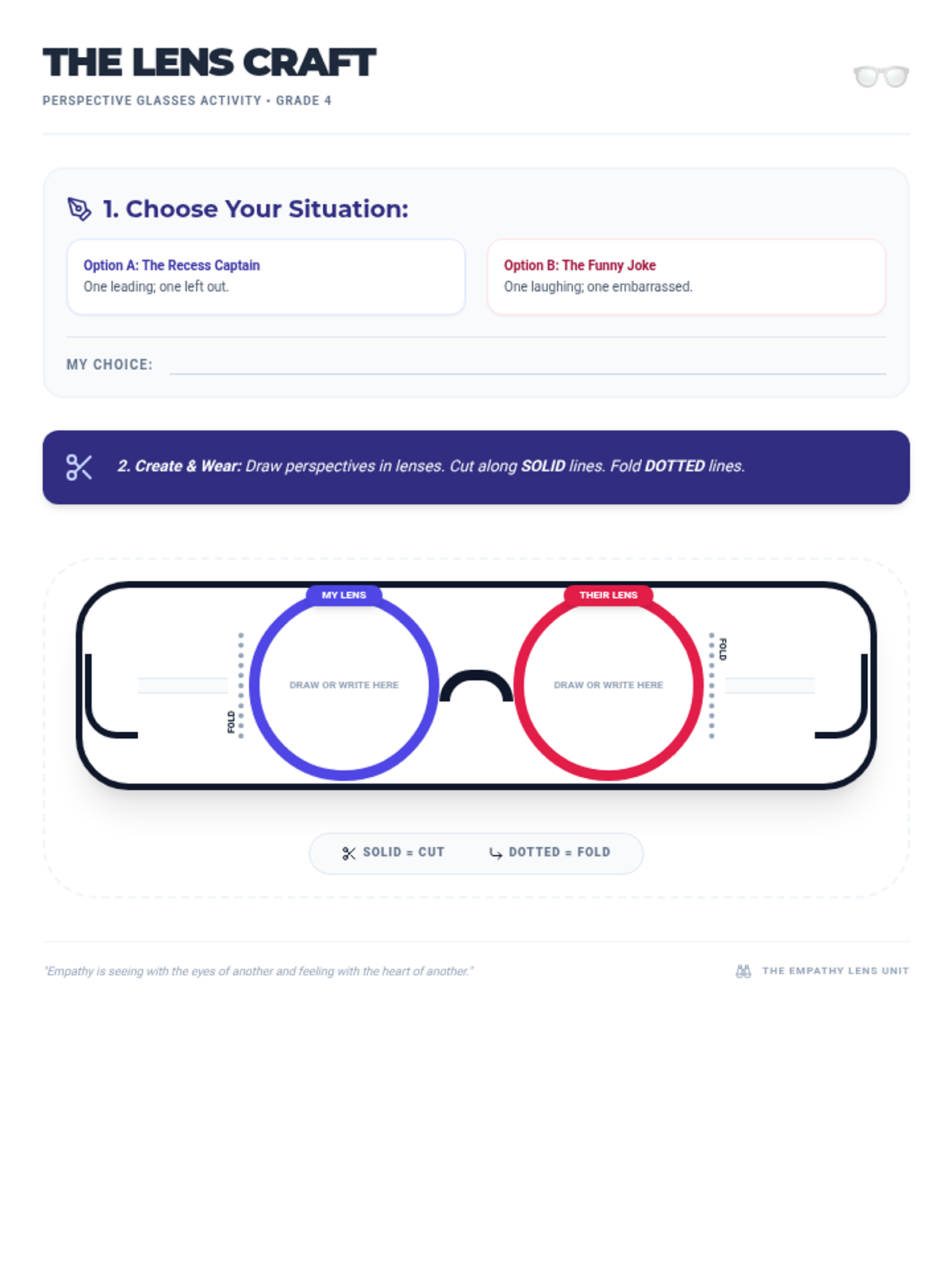
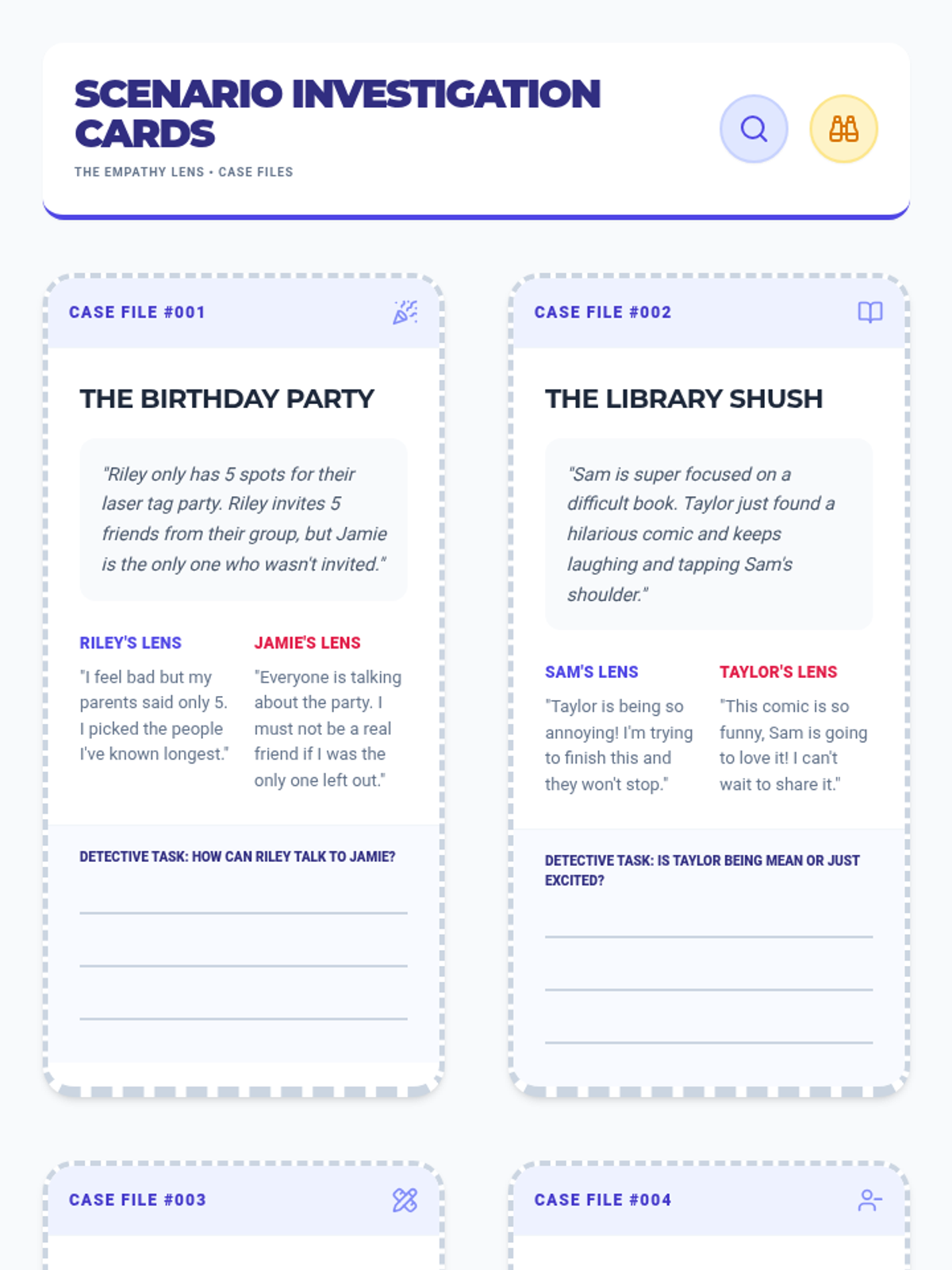
A perspective-taking lesson for fourth graders using the 'Optical Lens' metaphor. Students learn to recognize that two people can experience the same event differently and practice identifying others' feelings and thoughts.
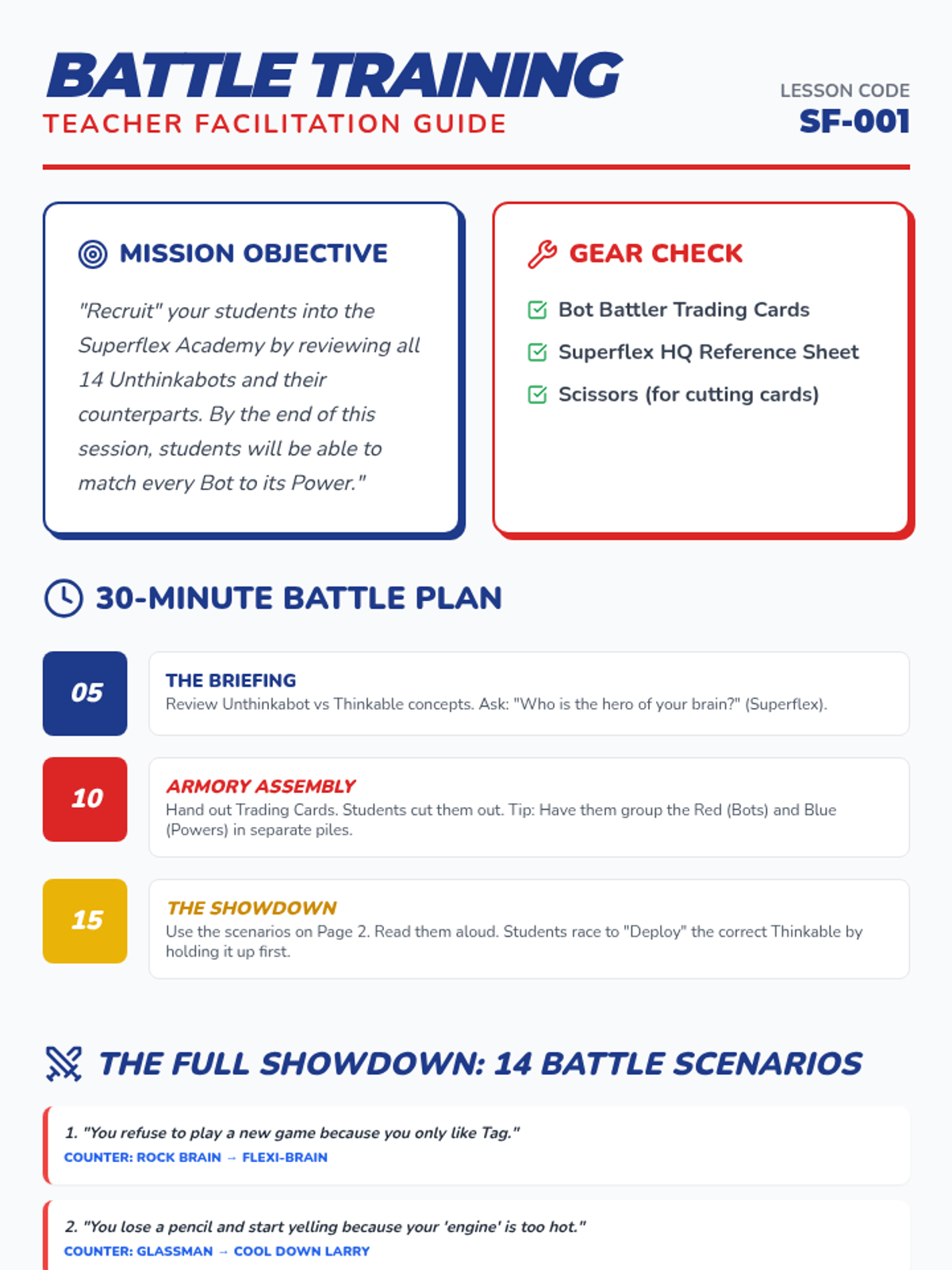
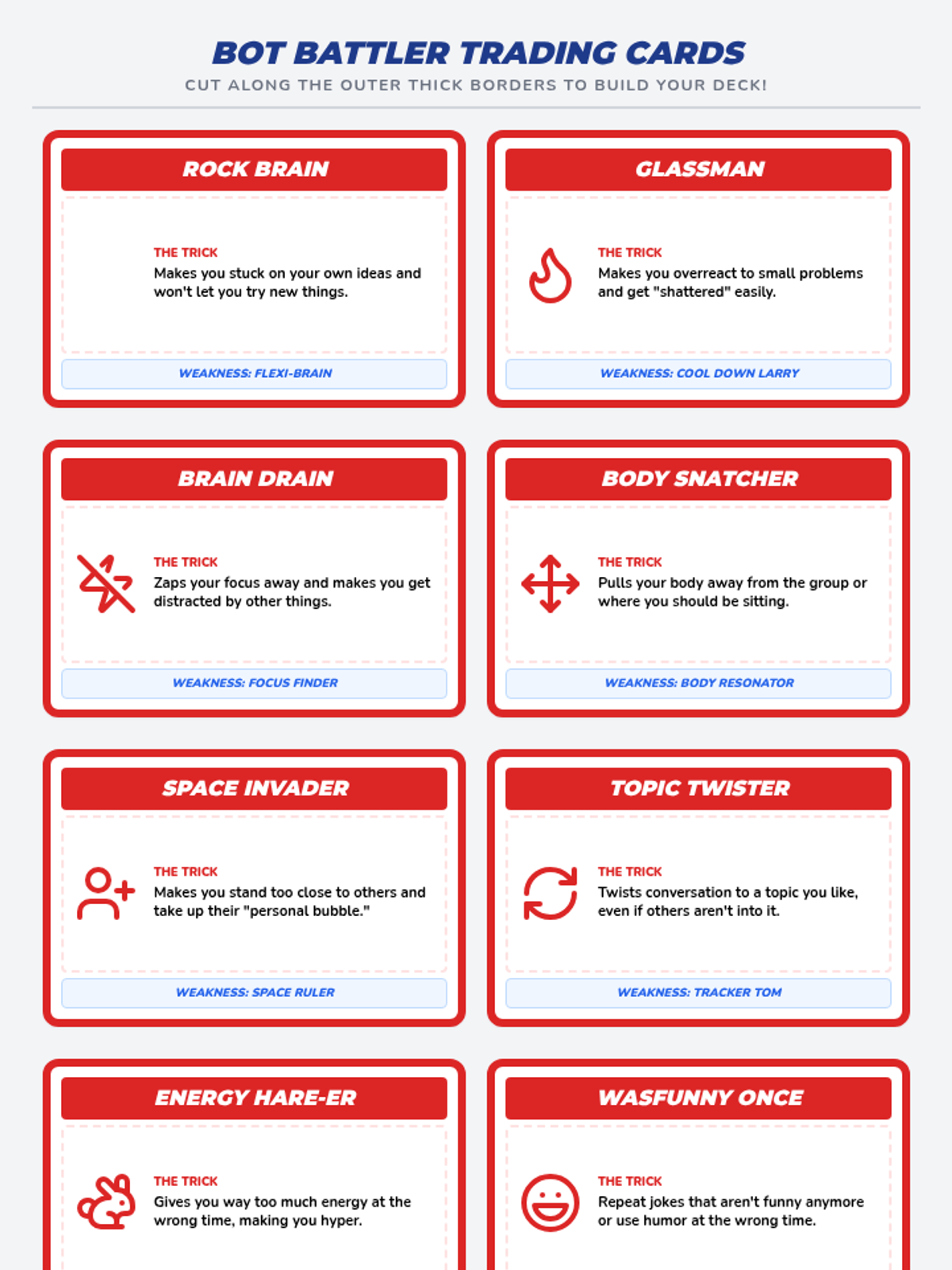
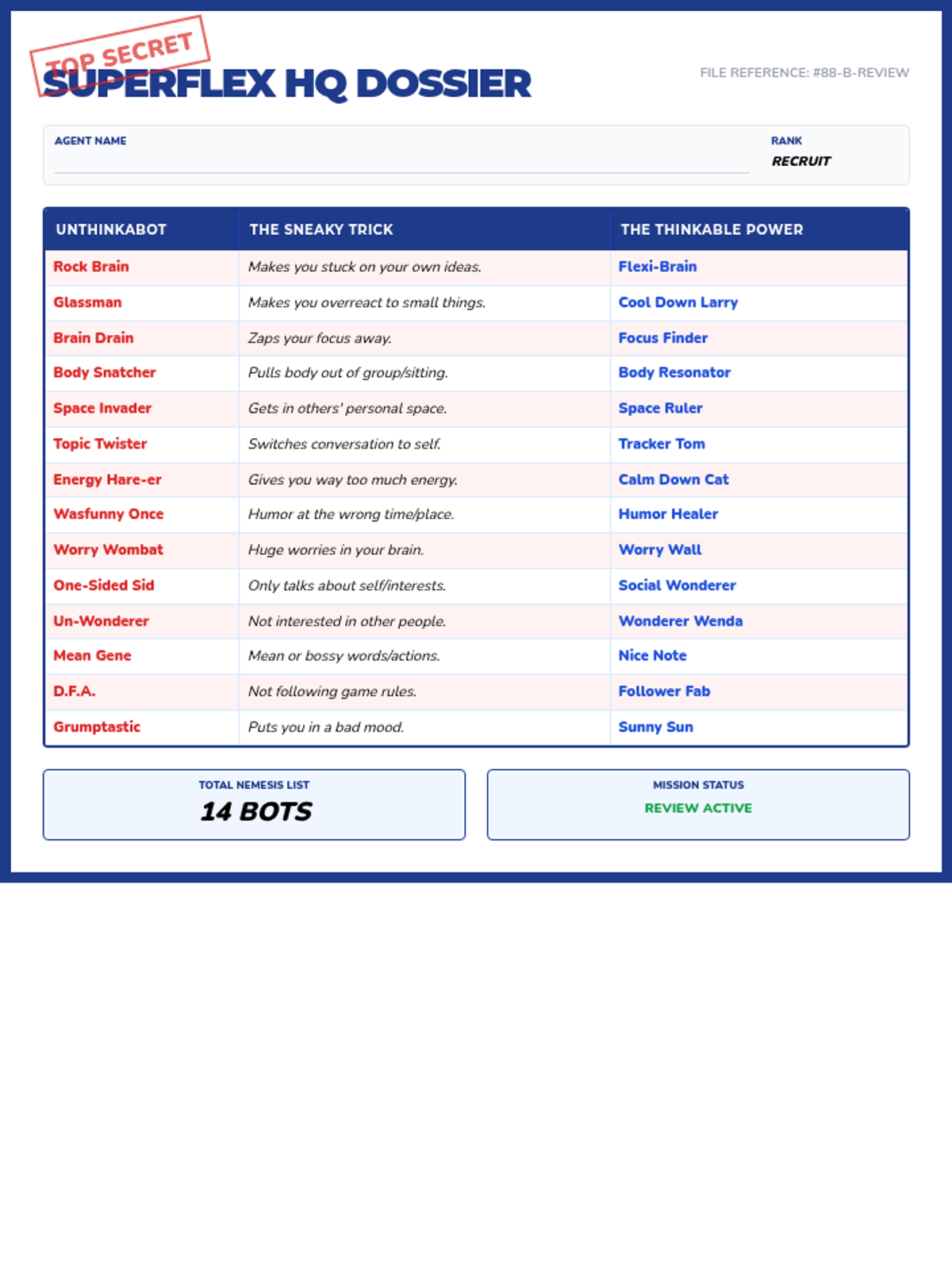
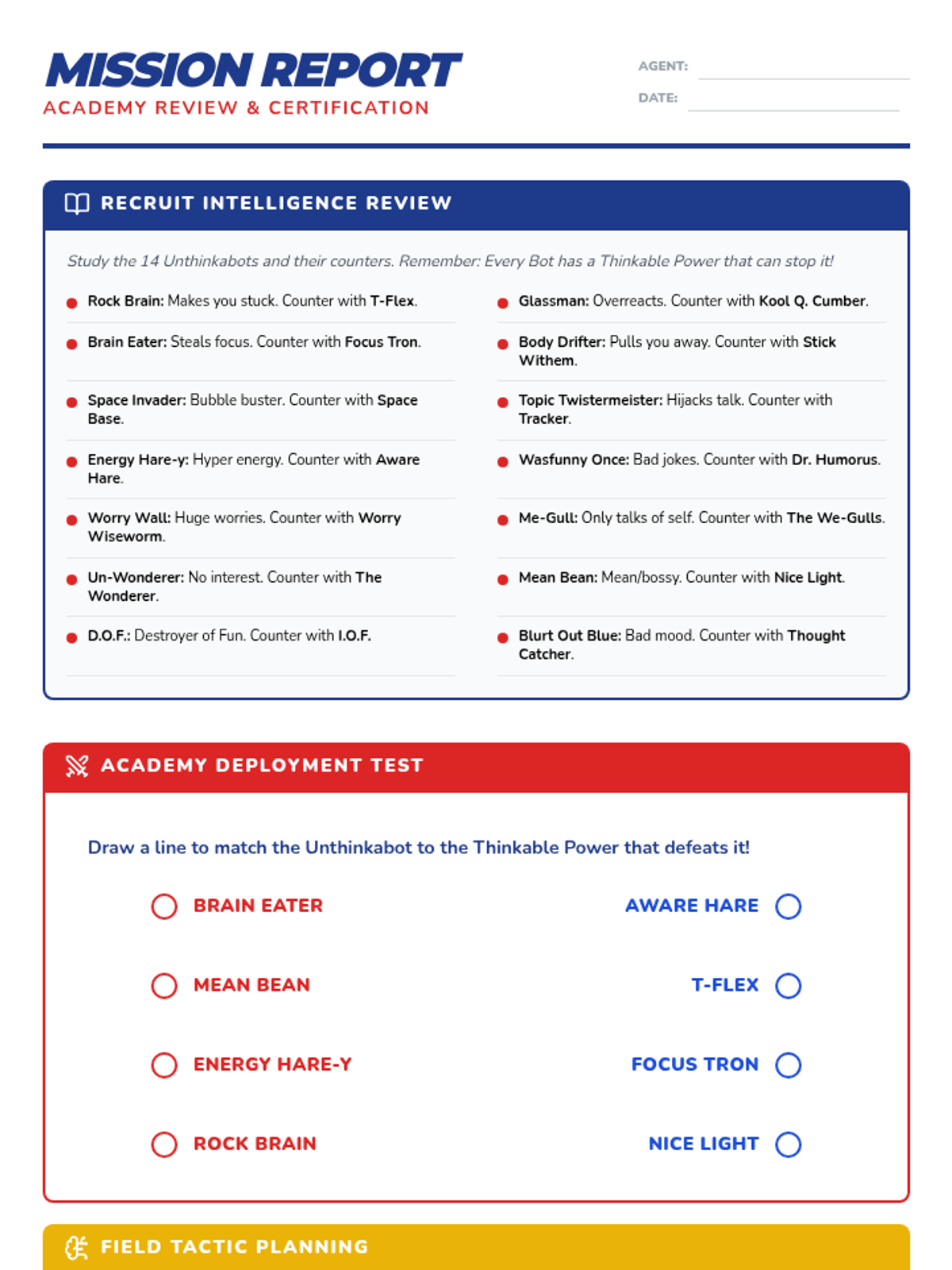
A fast-paced review session where students use character trading cards to identify Unthinkabot 'tricks' and deploy Thinkable 'powers' to defeat them. Includes a comprehensive reference guide and a teacher-led battle game.
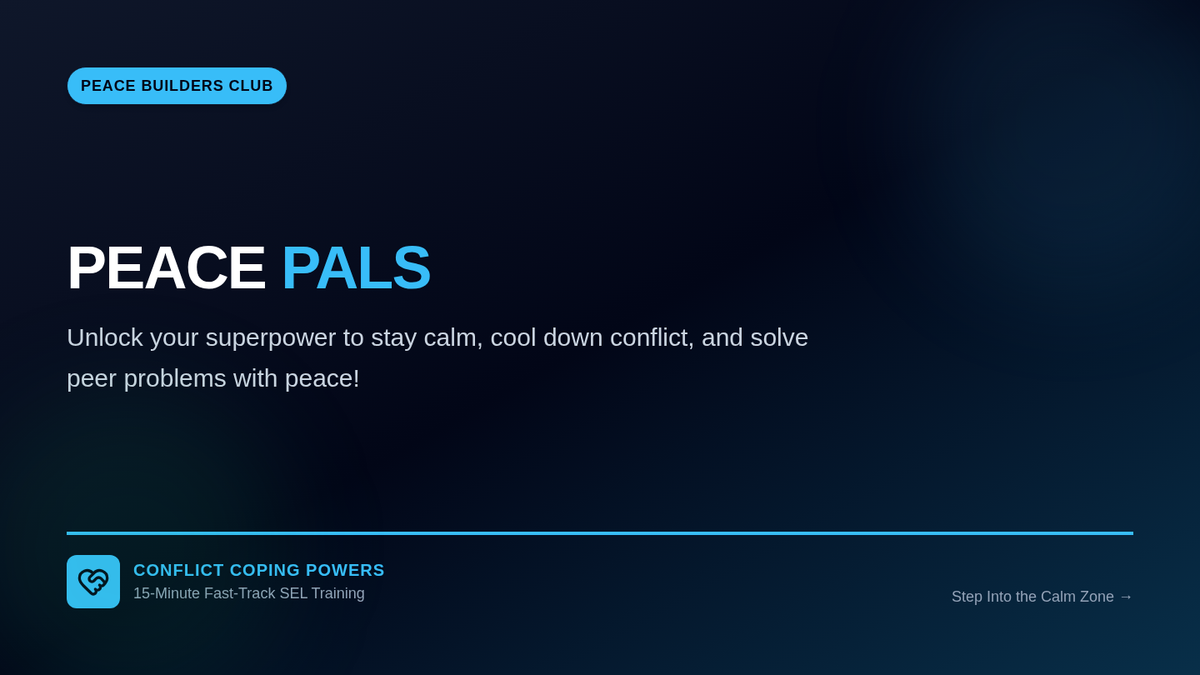
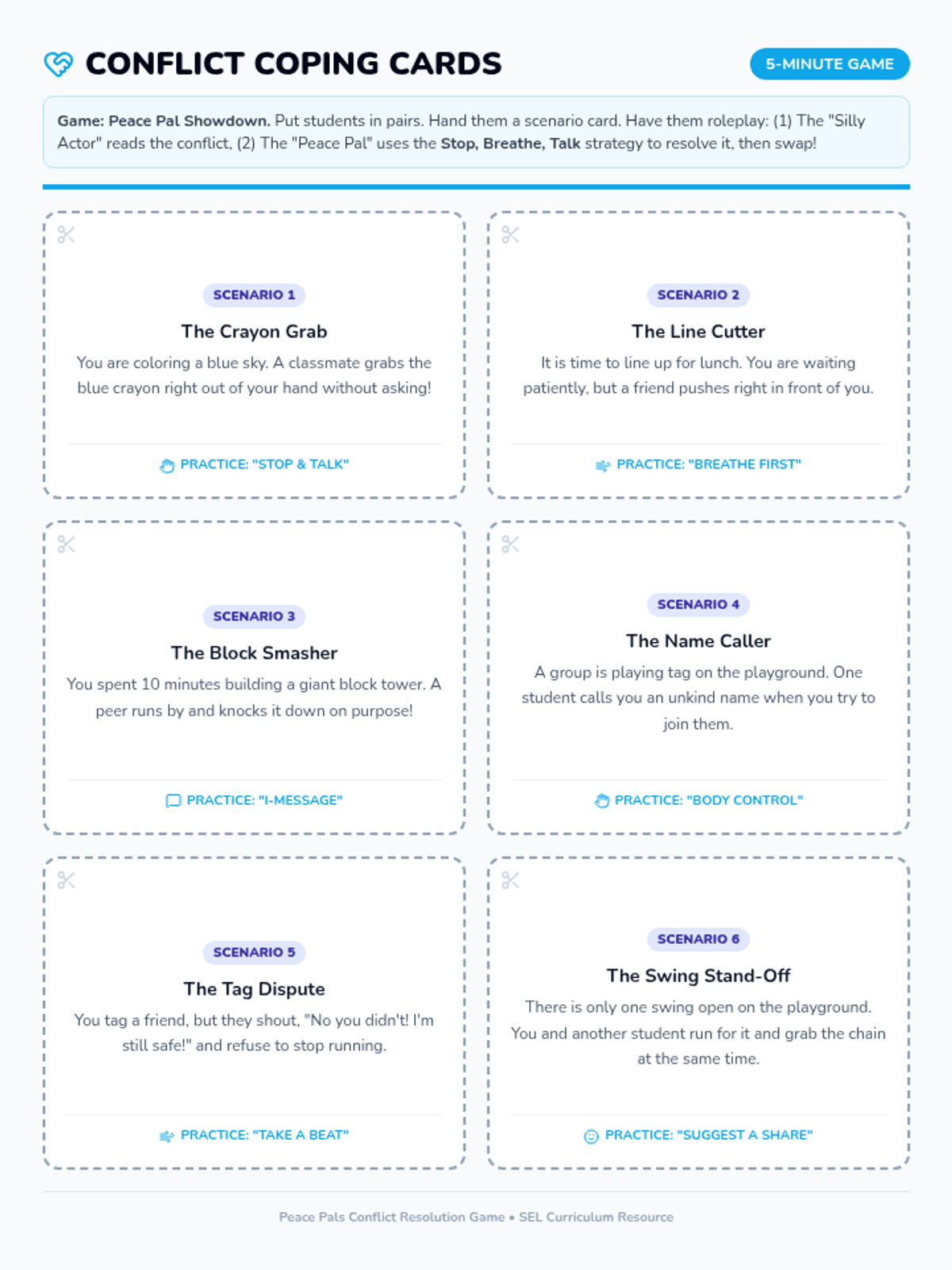
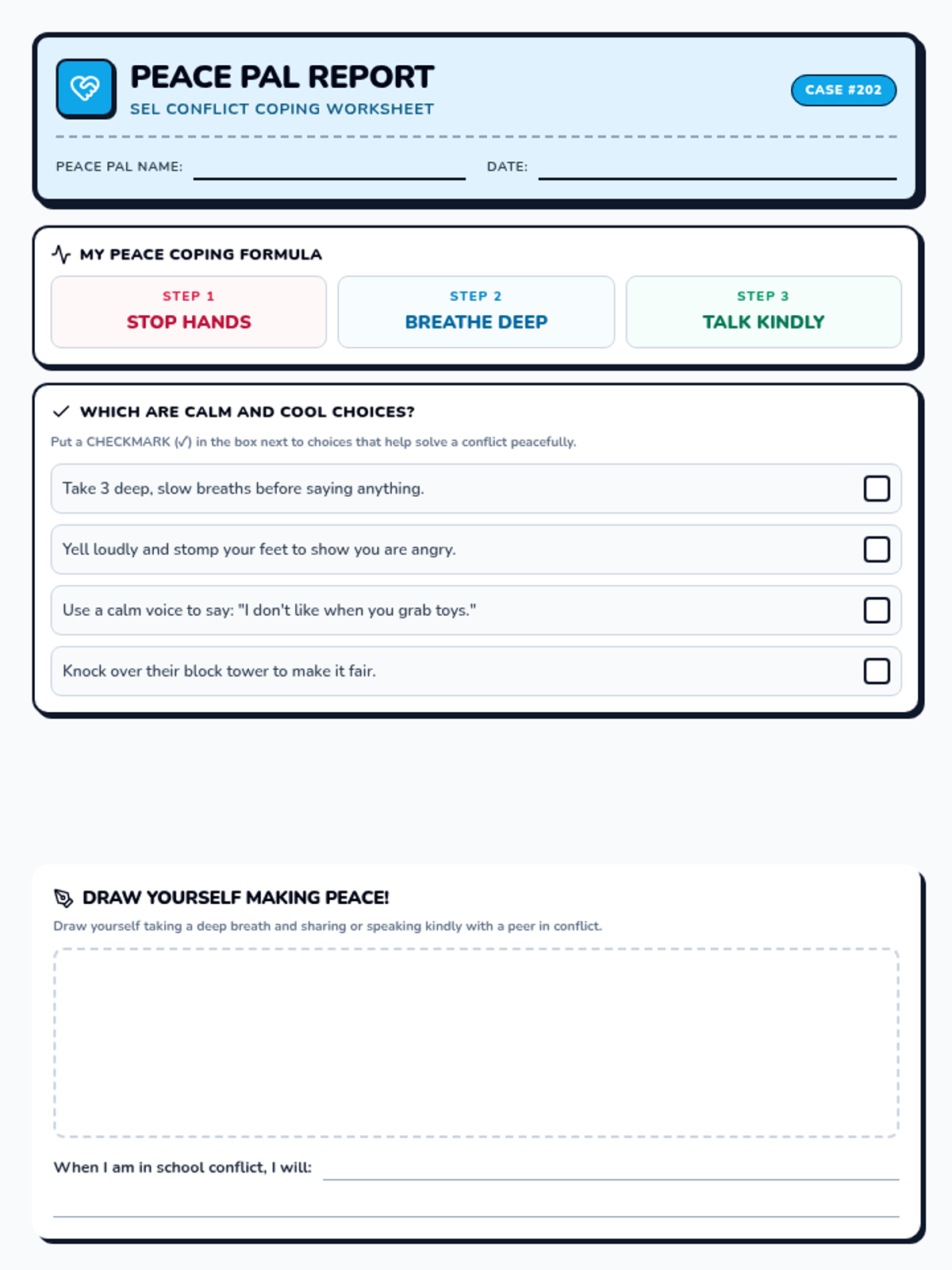
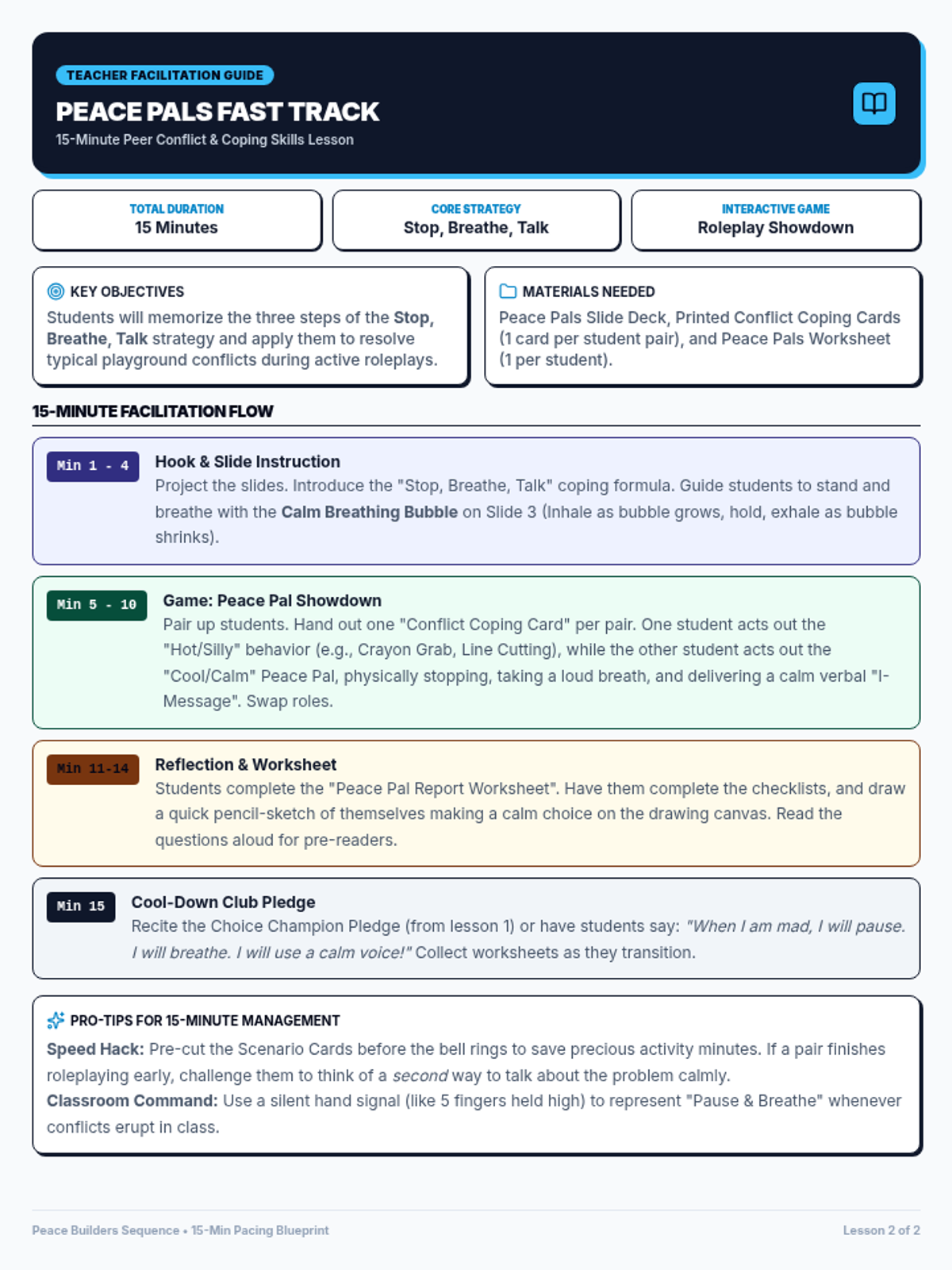
A fast-paced, 15-minute SEL lesson targeting early elementary students to resolve peer conflict and practice emotional regulation. It introduces the "Stop, Breathe, Talk" coping strategy with interactive slides, role-playing scenario cards, and a reflection worksheet.
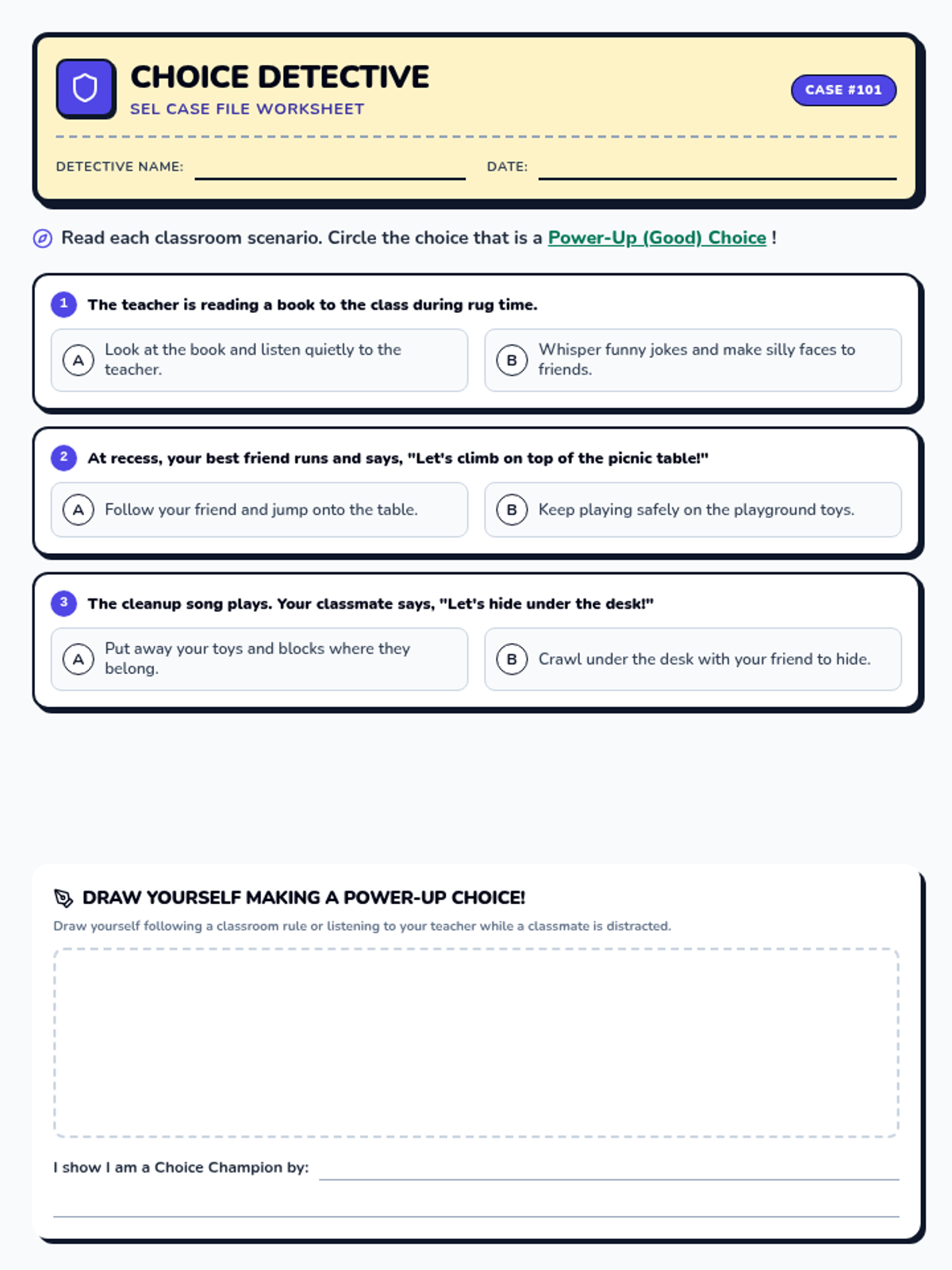
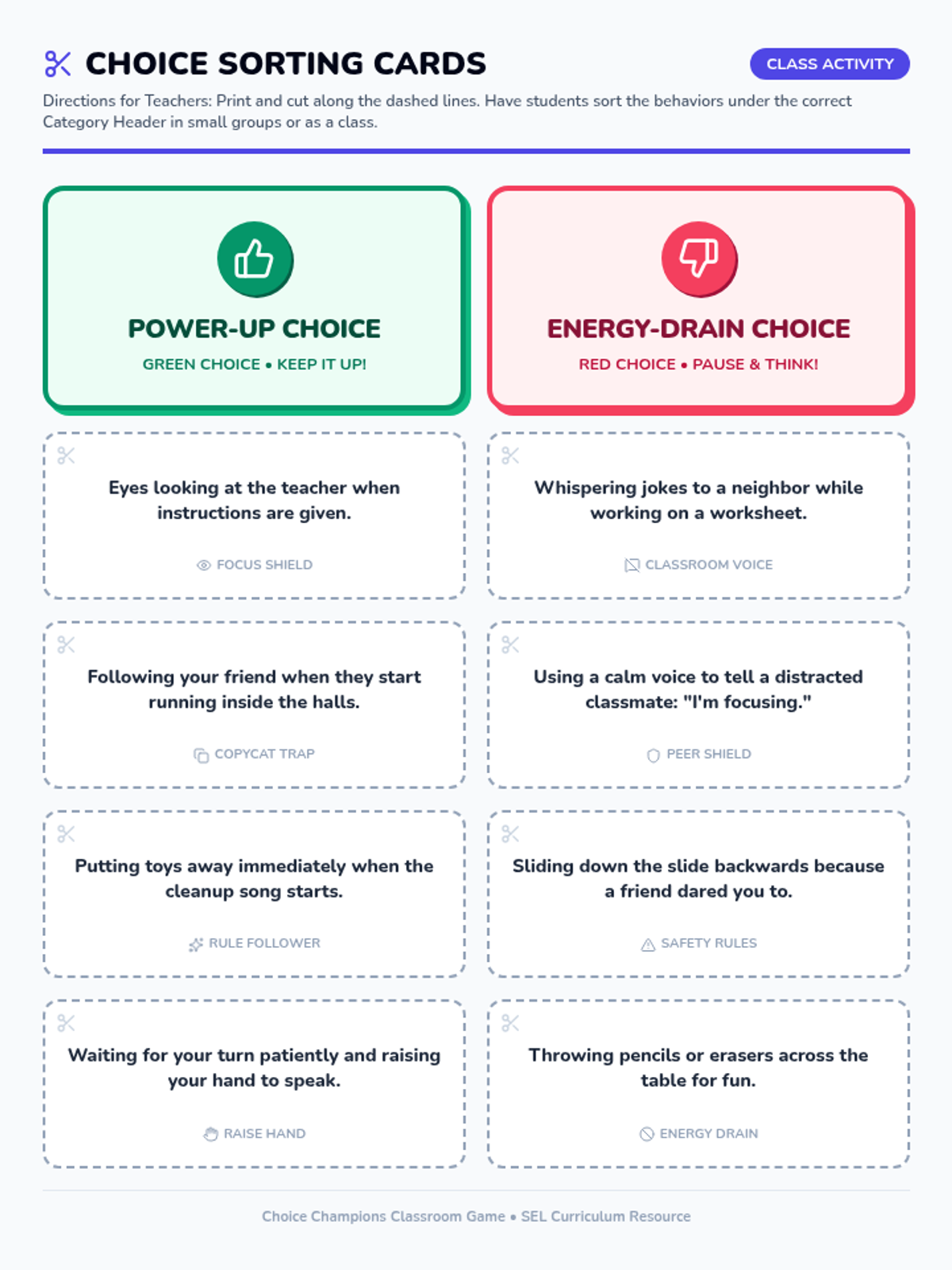
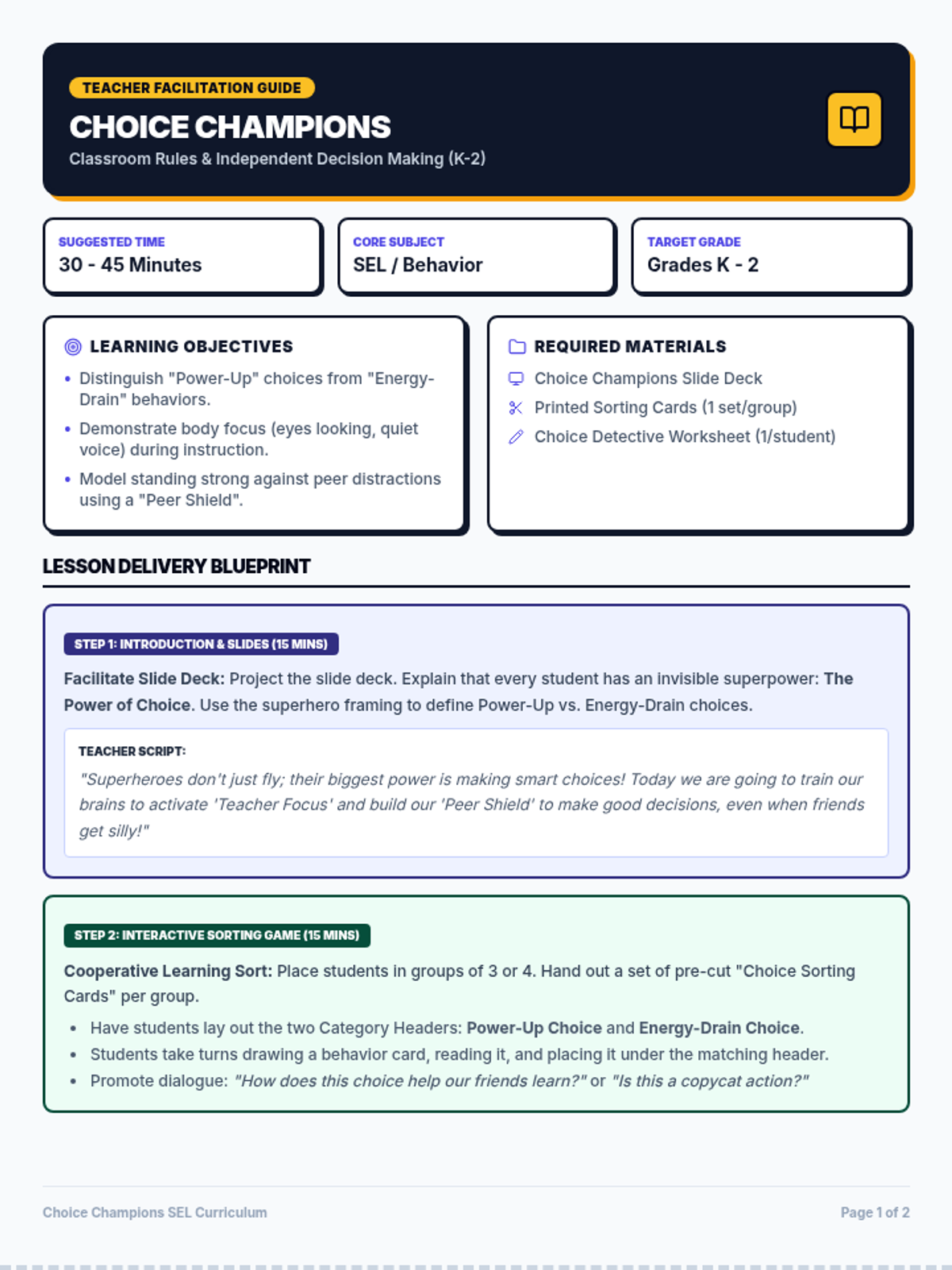
A social-emotional learning lesson designed for early elementary students (K-2) to teach the difference between good and bad classroom choices. It focuses on listening to the teacher, following rules, and maintaining independent positive behavior despite peer distractions.
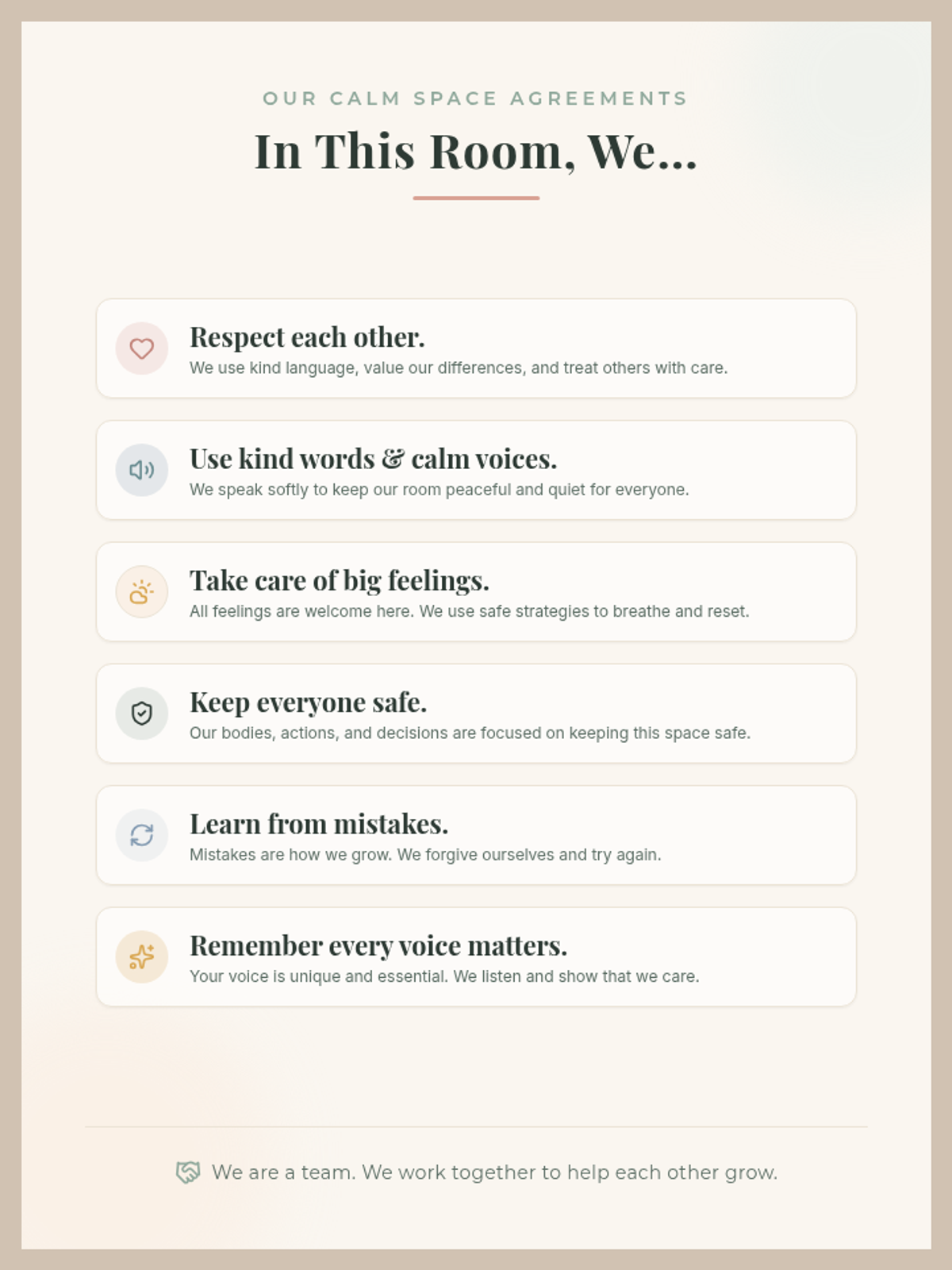
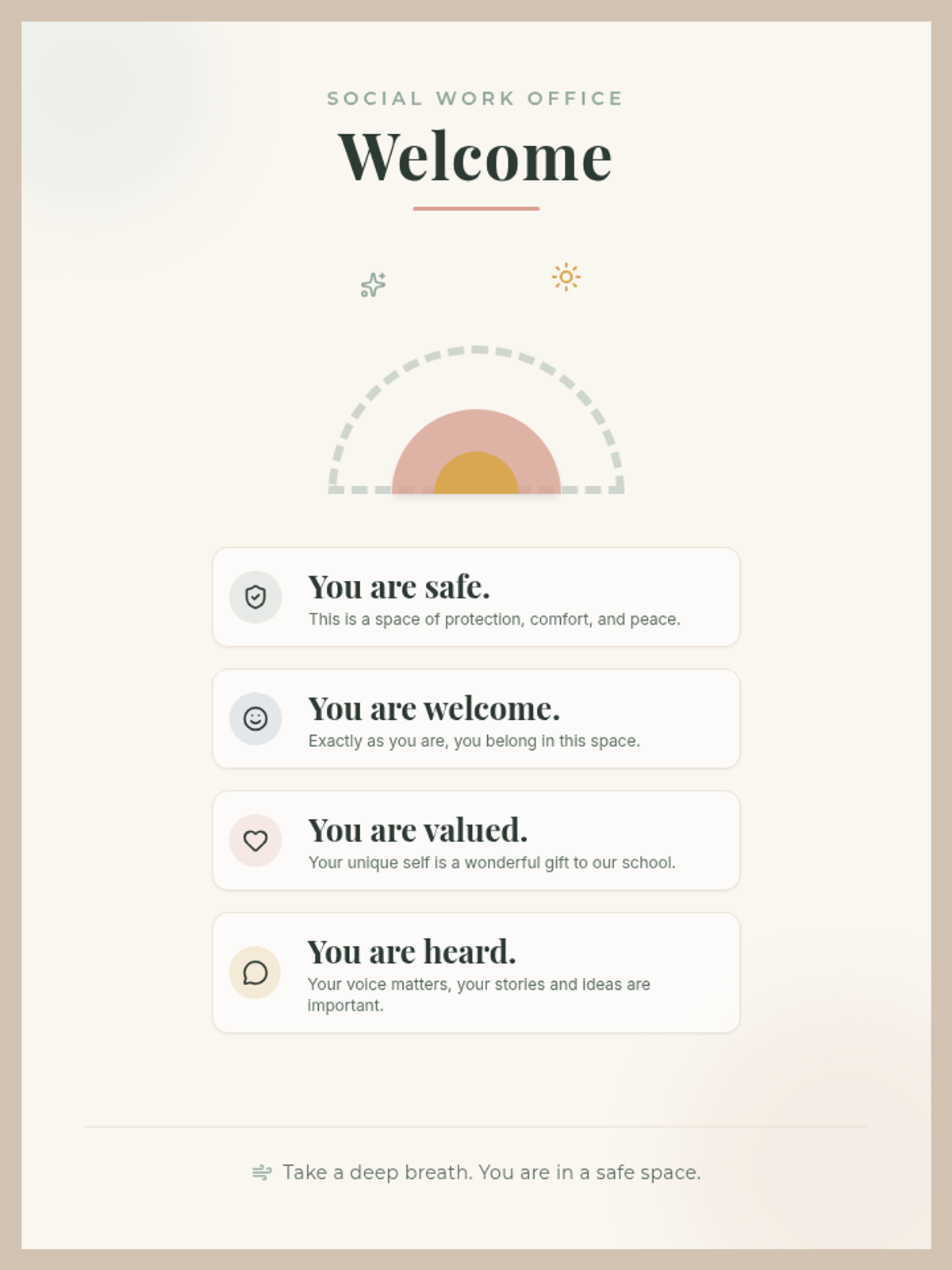
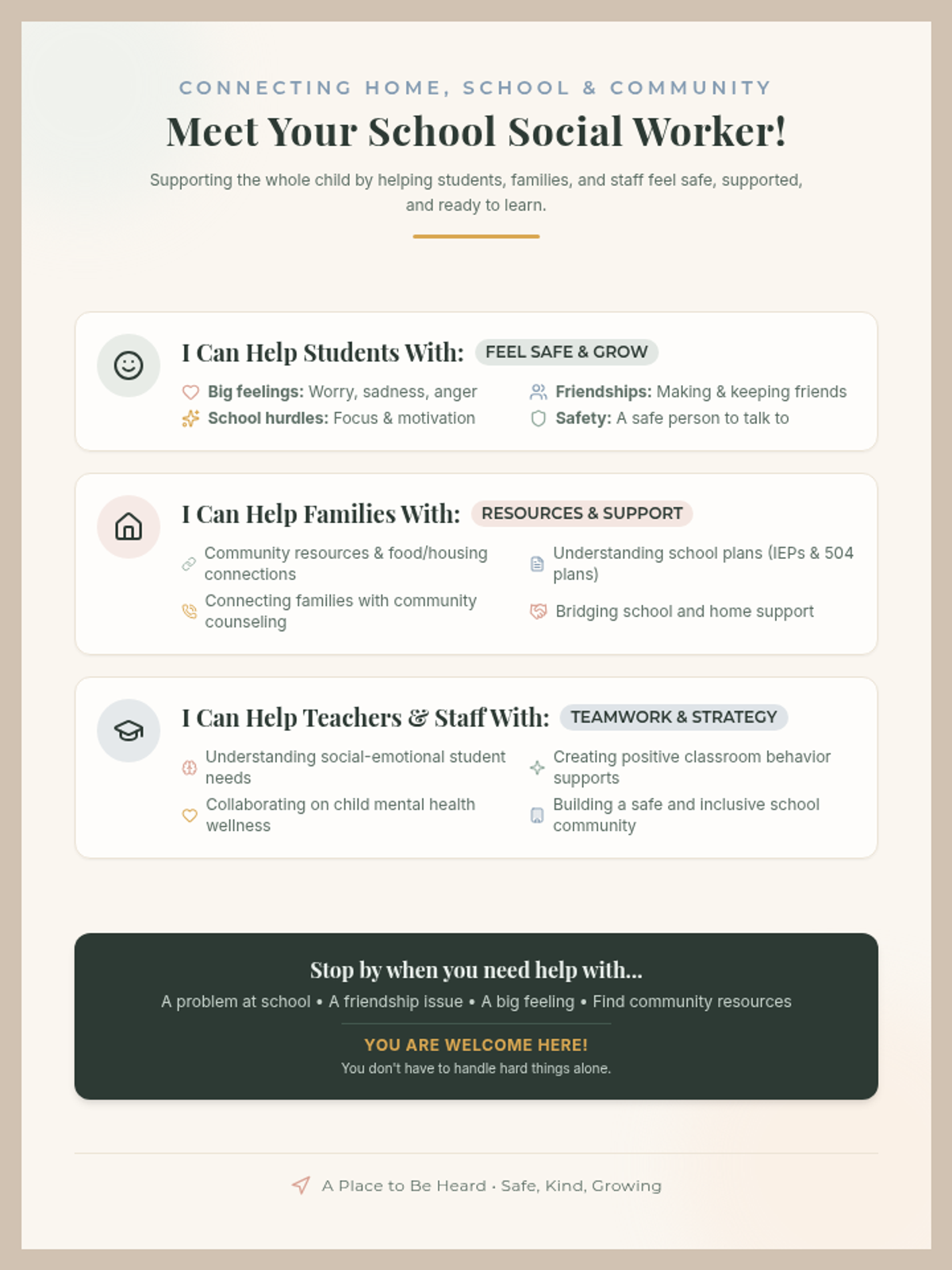
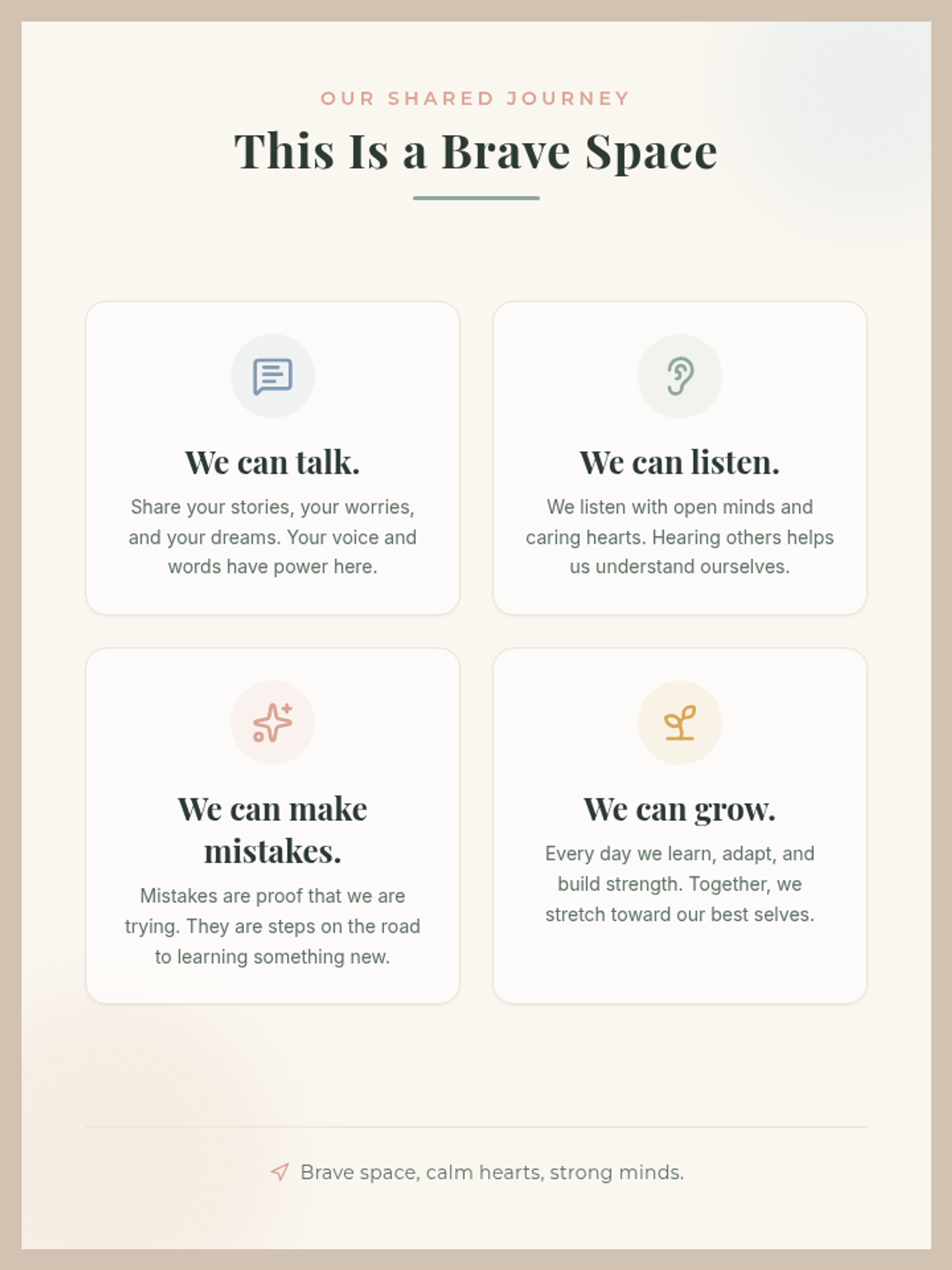
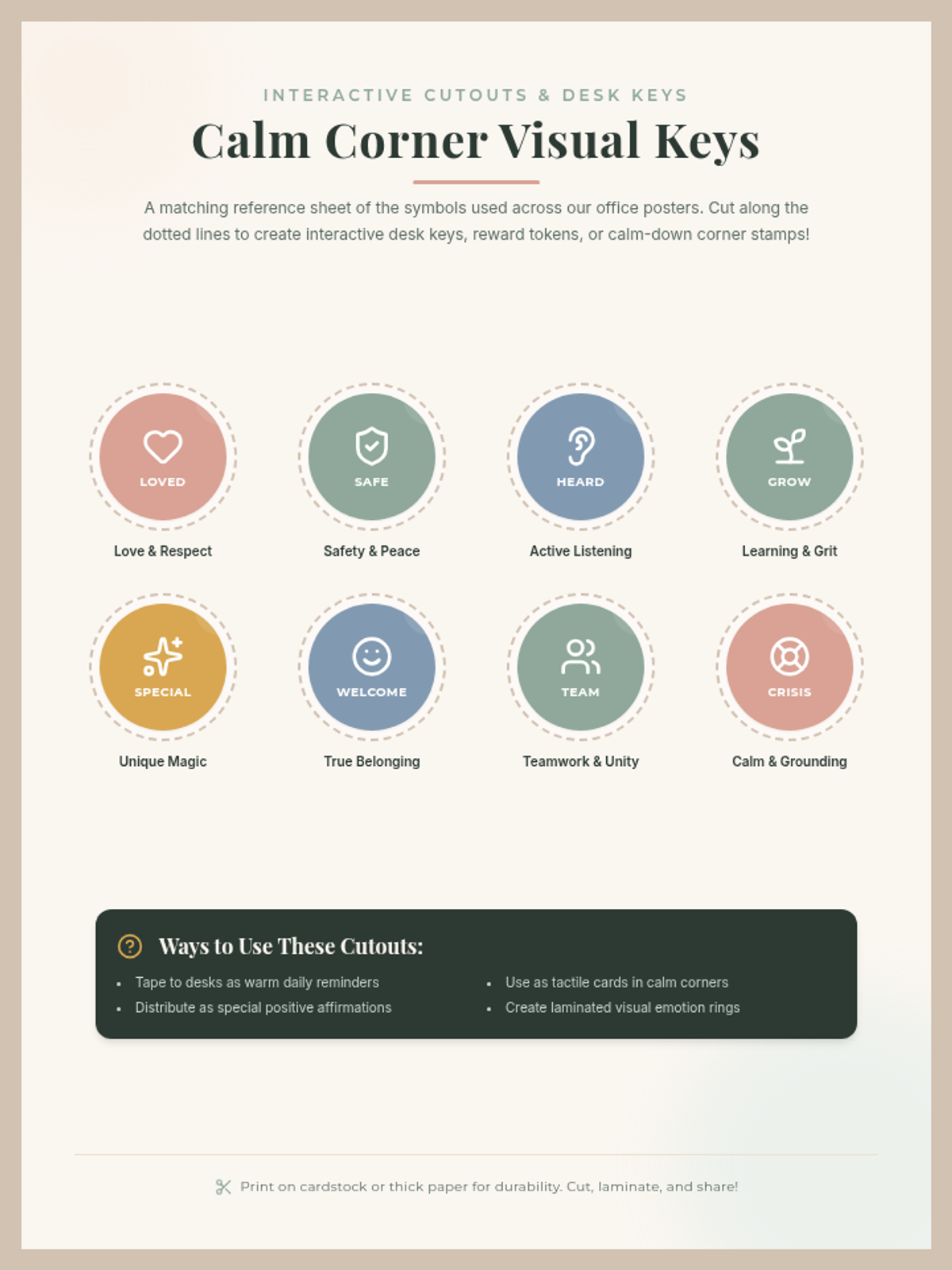
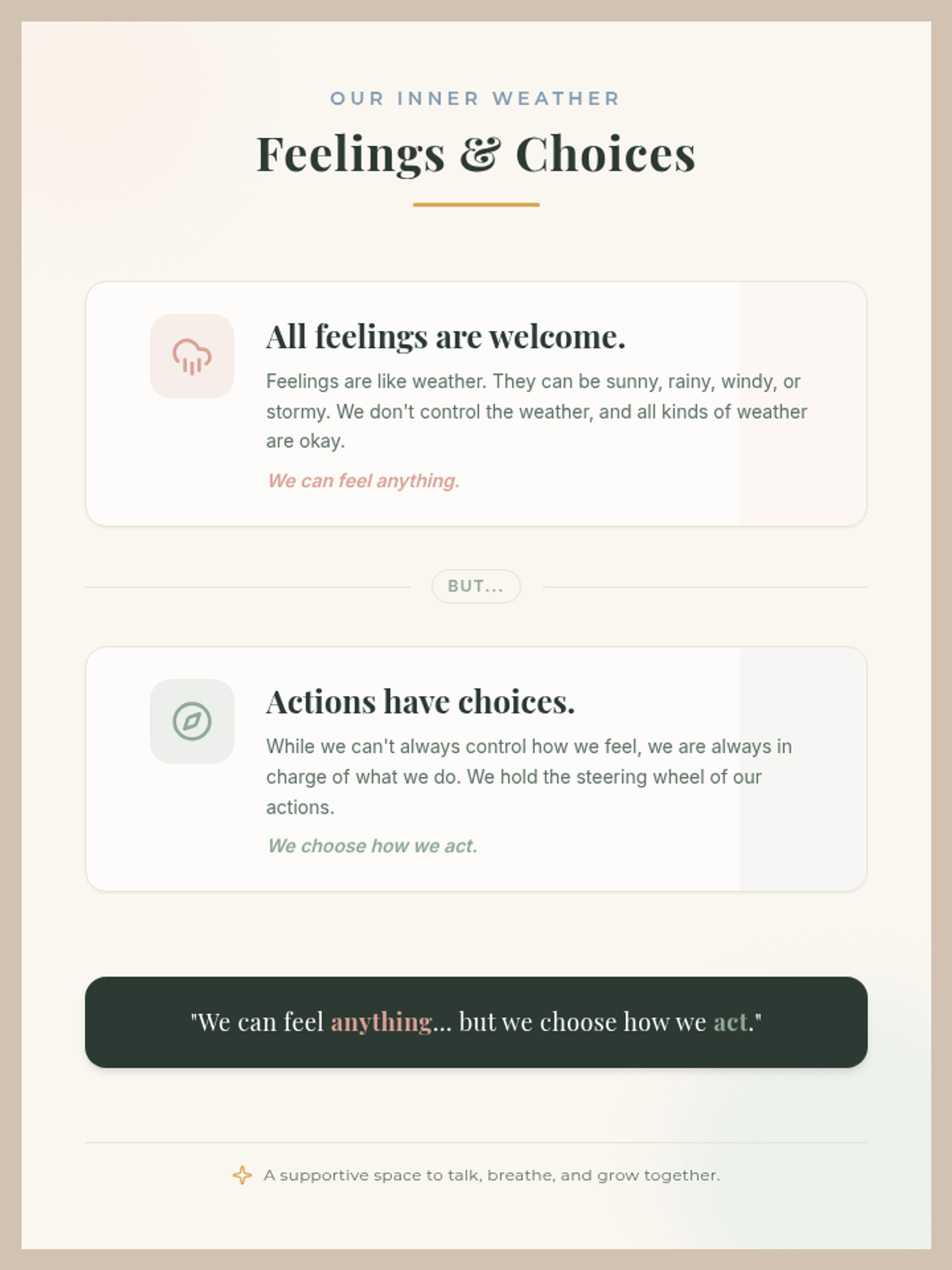
A cohesive suite of beautifully designed printable posters for an elementary school social work office or calm corner, utilizing soft earth tones, gentle affirmations, and clear supportive structures.
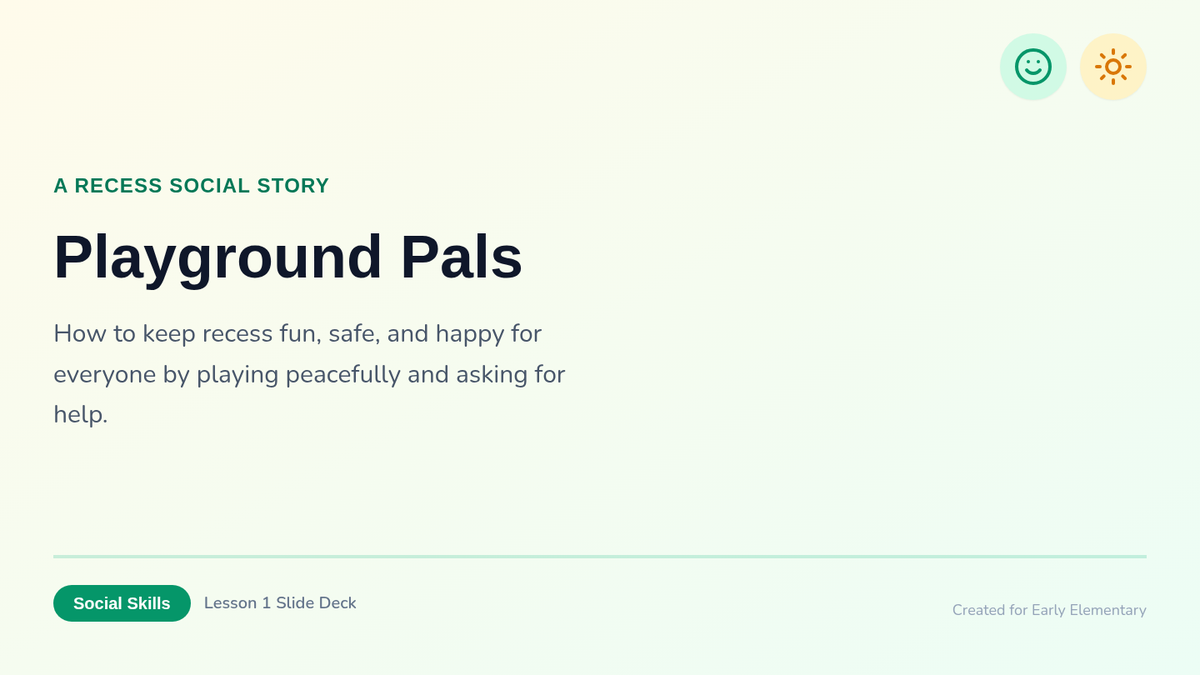
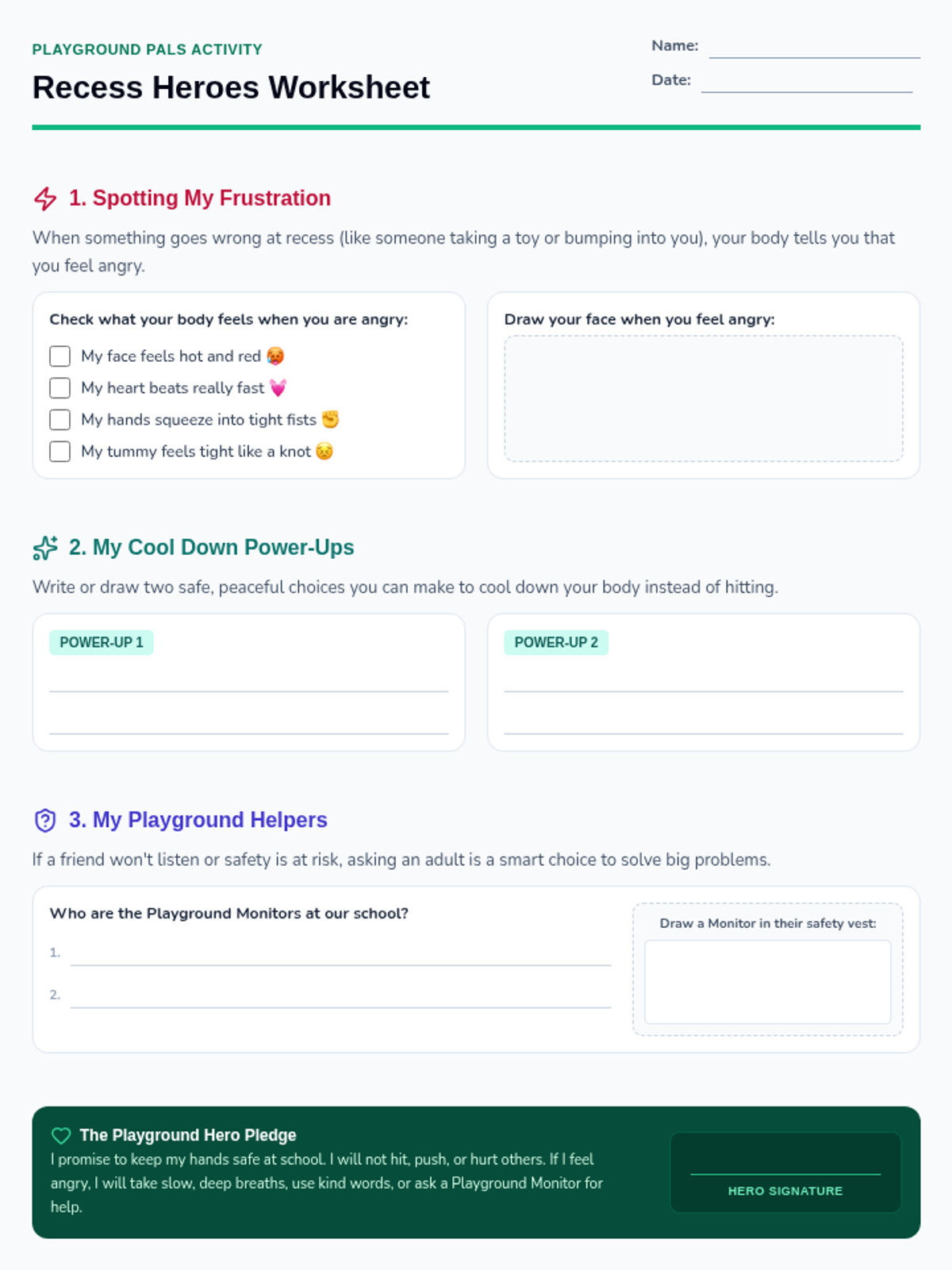
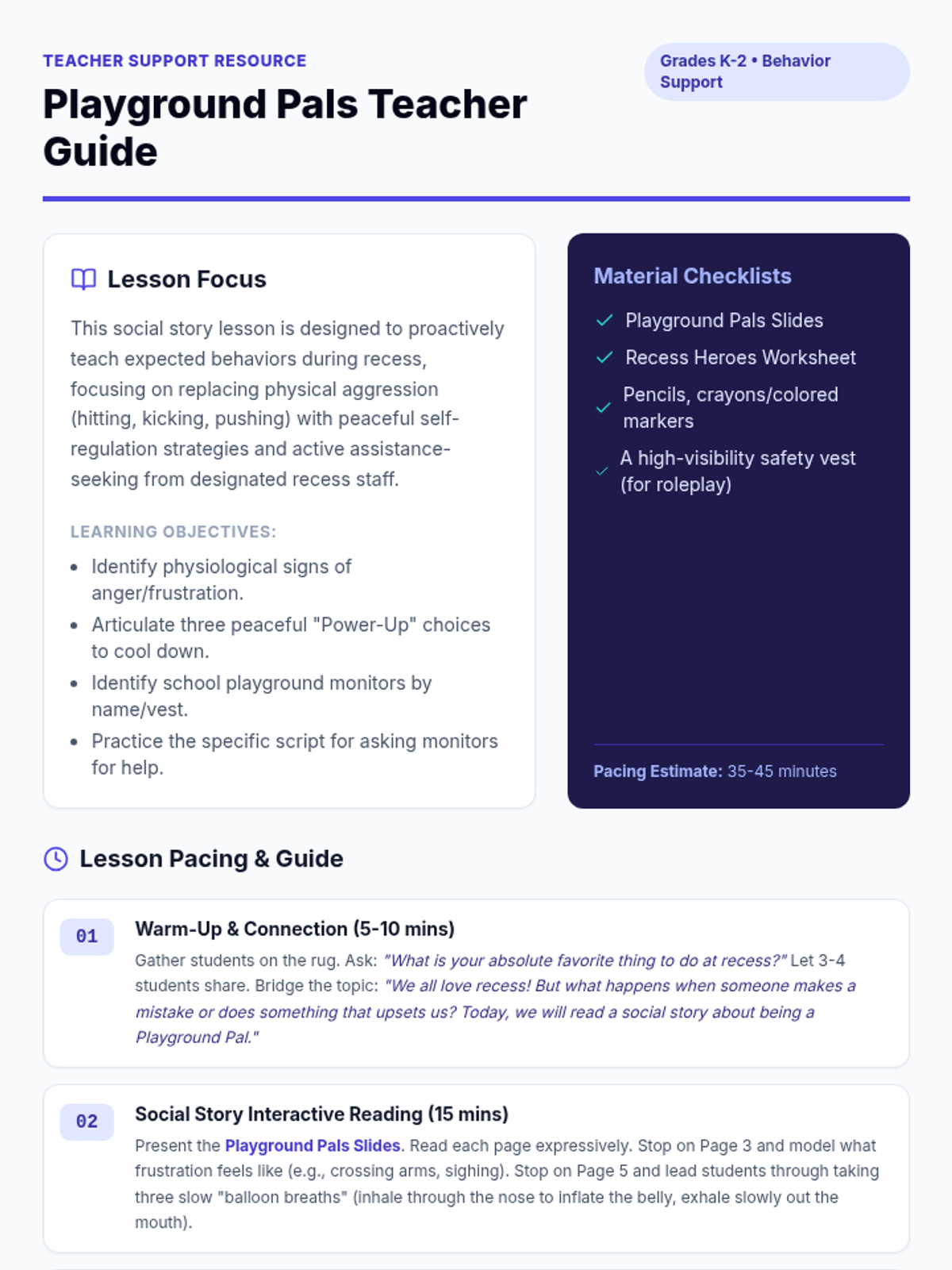
A social story lesson designed to teach students positive playground behaviors, focusing on replacing physical aggression with peaceful communication and seeking help from playground monitors.
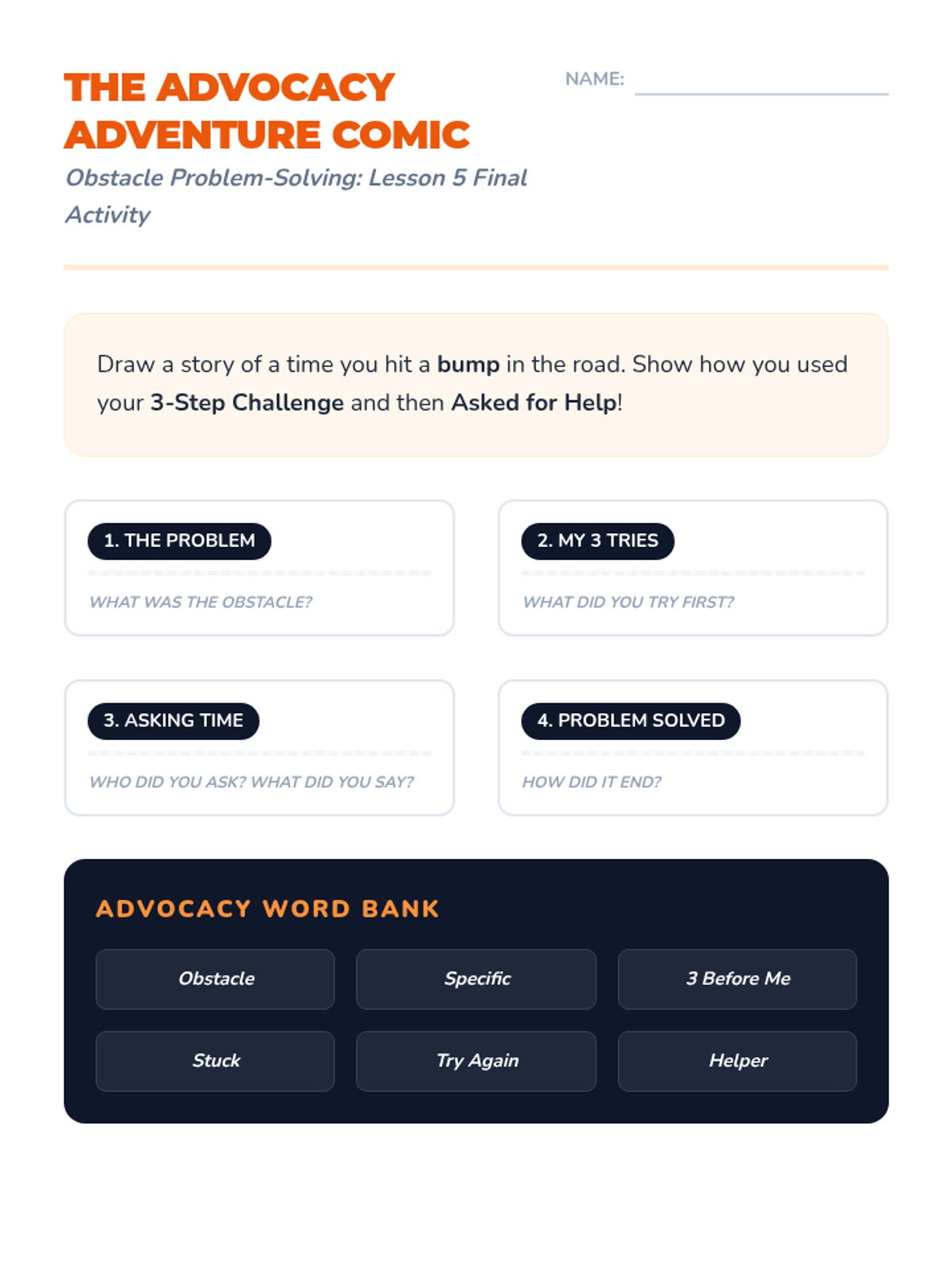
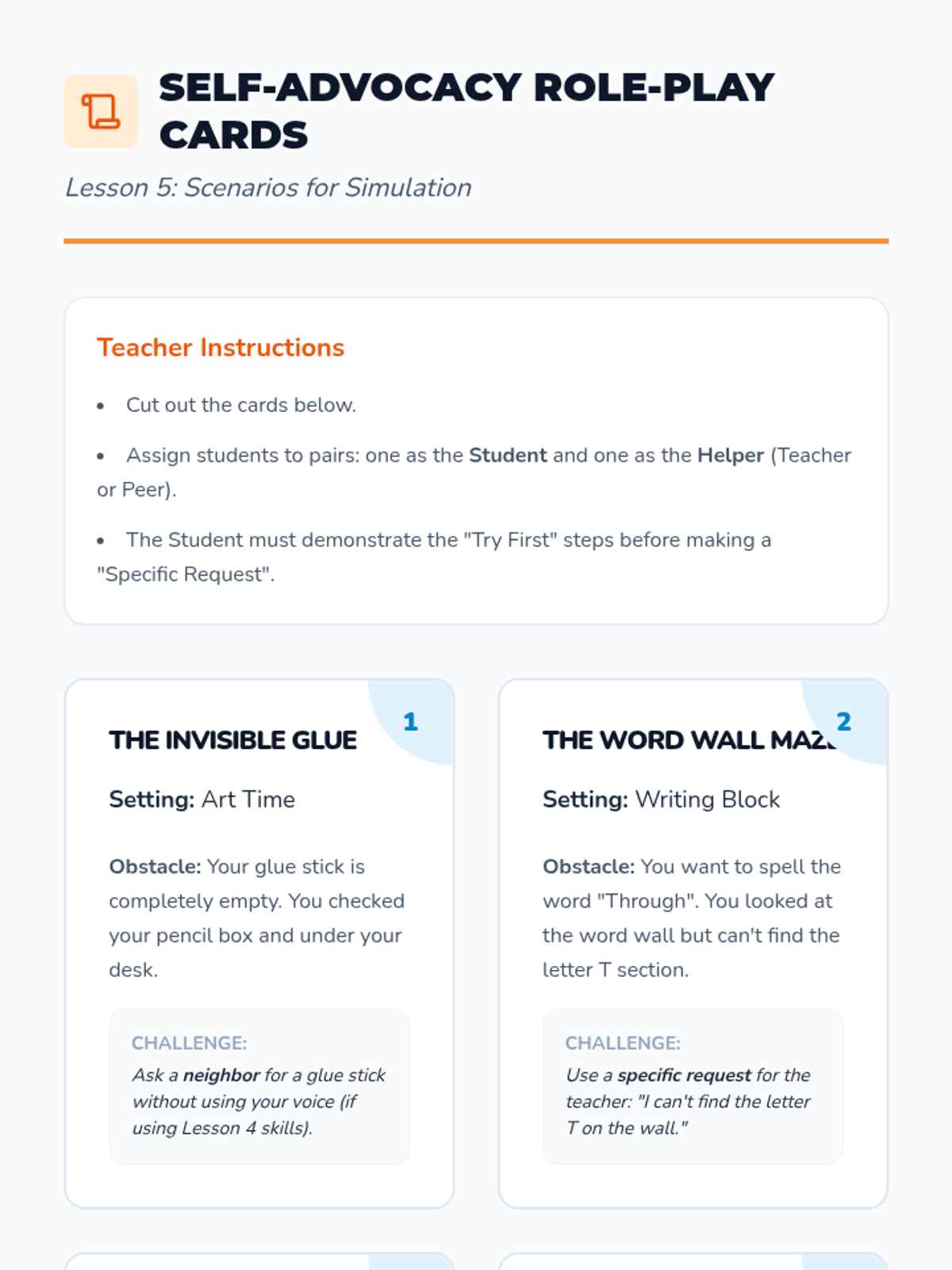
Students enact short skits facing obstacles and effectively asking for help, synthesizing the entire 'Try -> Assess -> Ask' sequence.
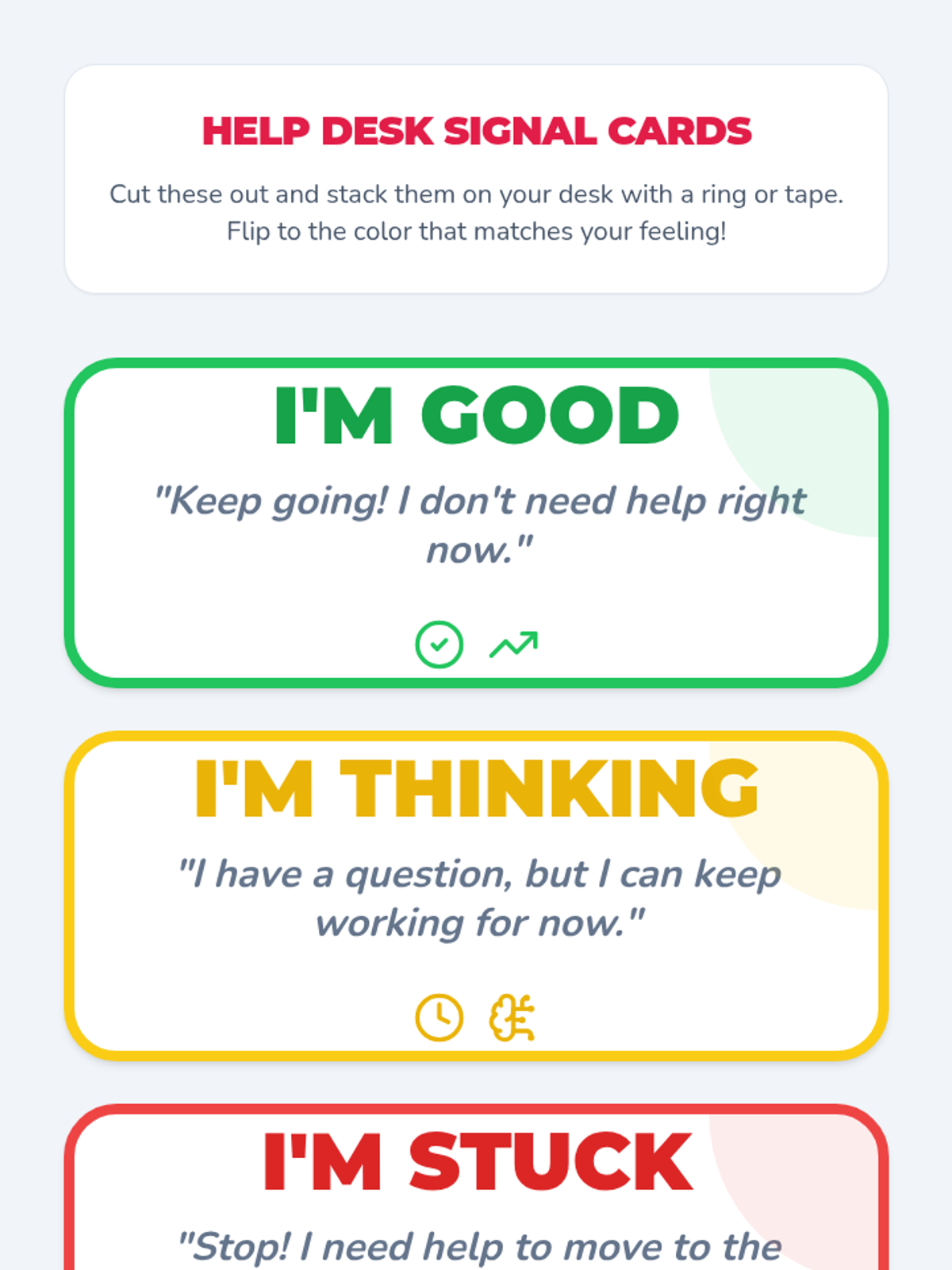
Introduces non-verbal advocacy tools like flip cards and hand signals for students who may be overwhelmed or need to signal for help without interrupting.
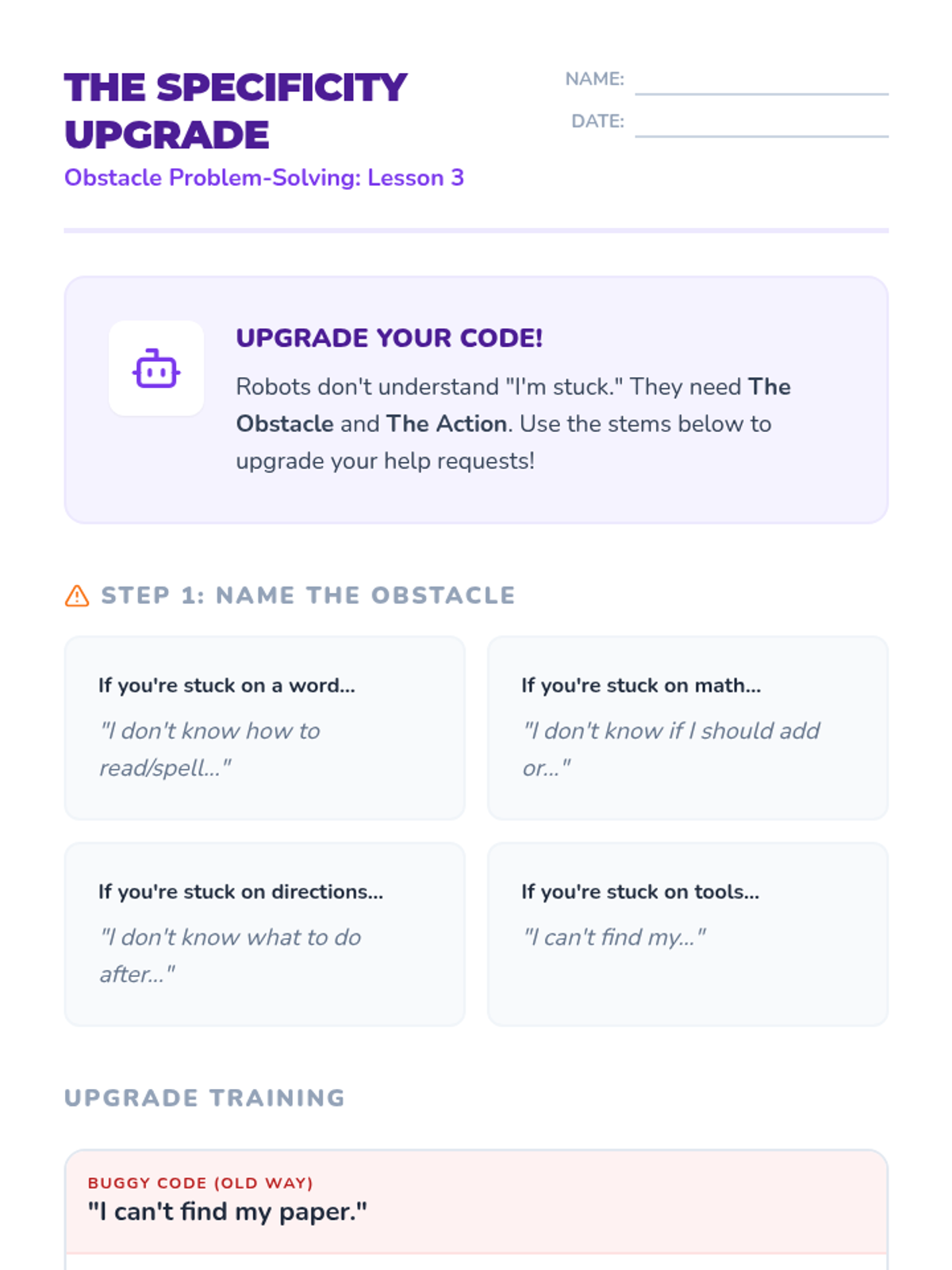
This lesson targets the language of self-advocacy. Students practice changing generic complaints into specific requests that identify the exact obstacle.
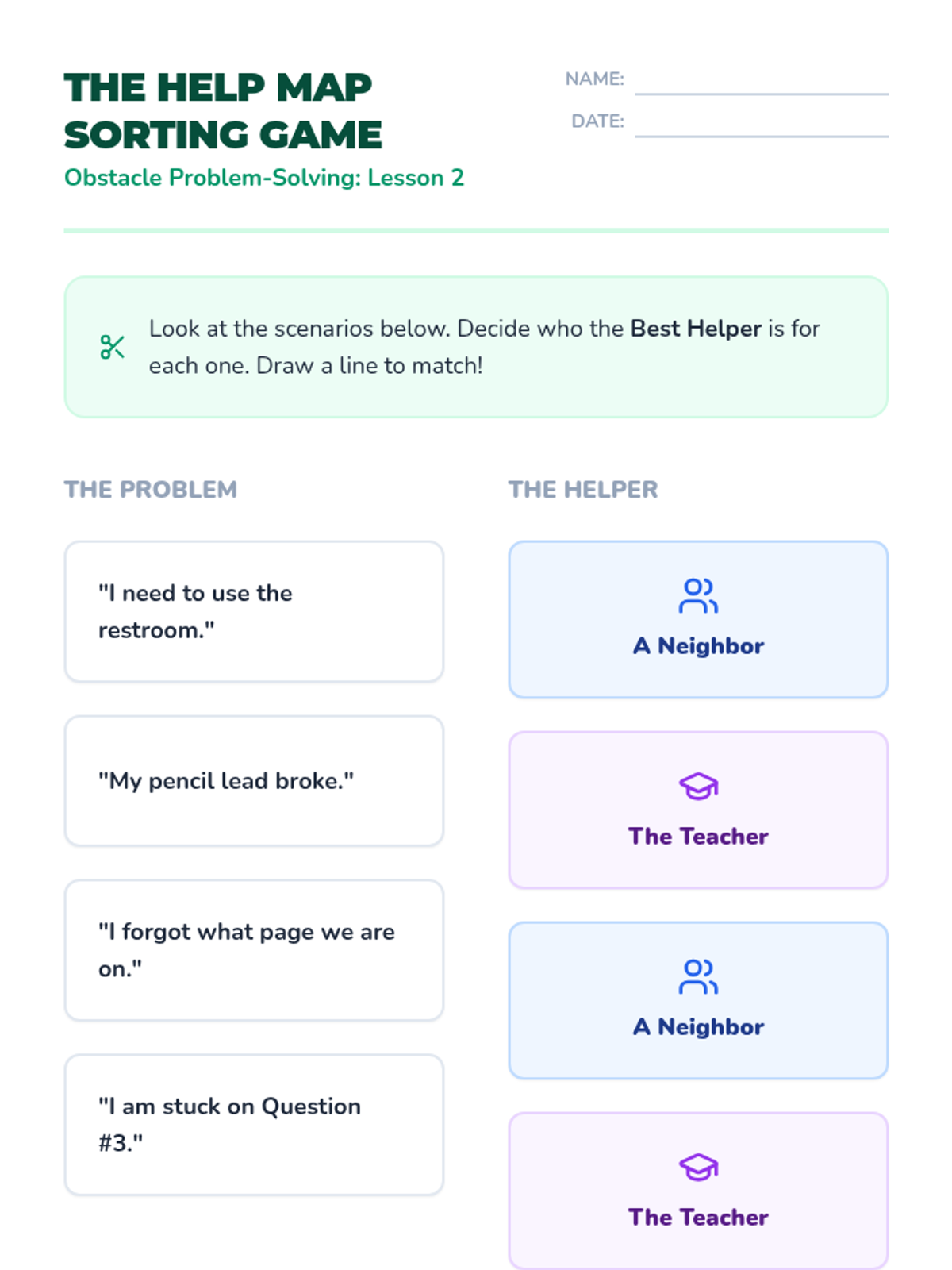
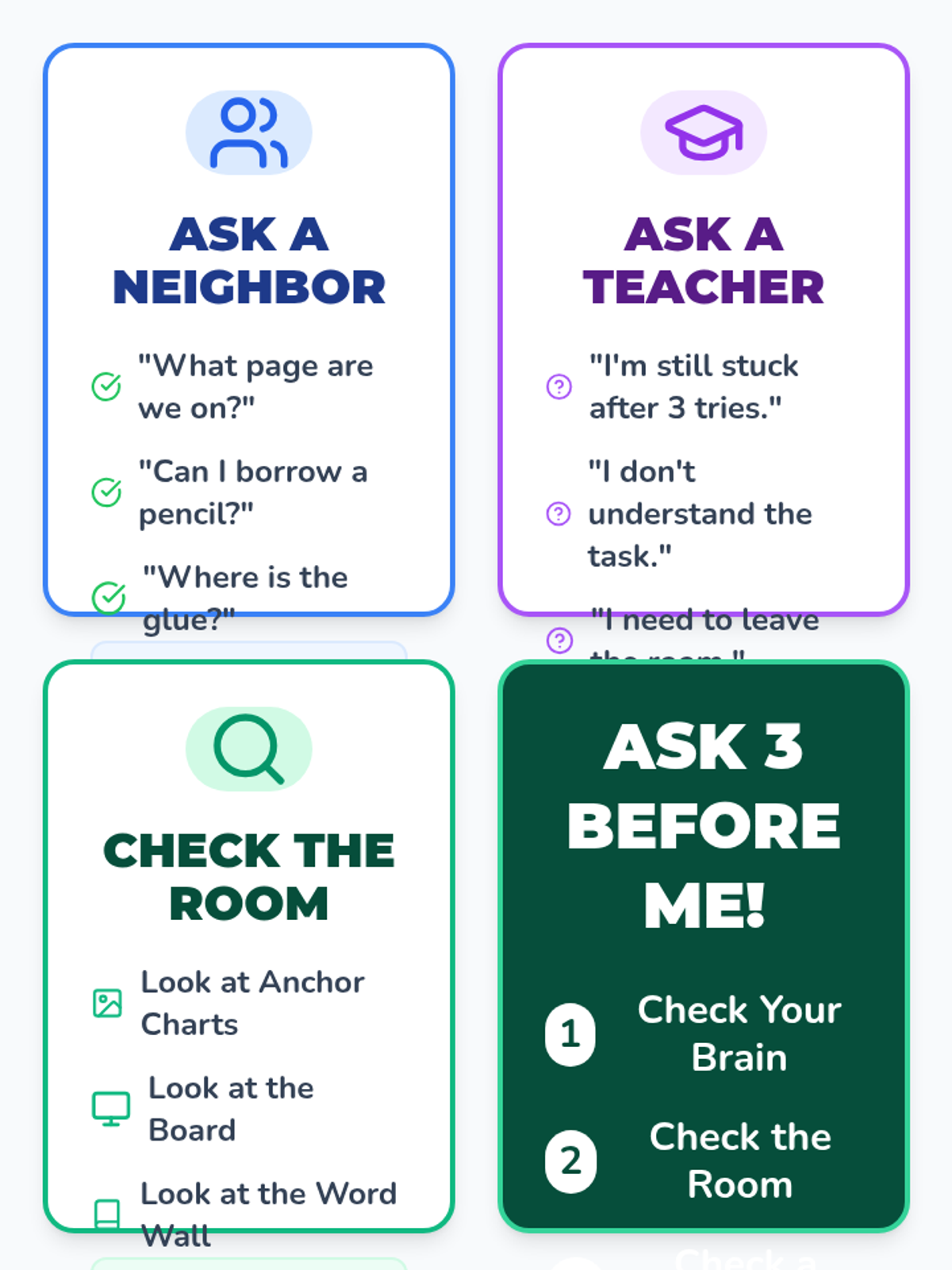
Students map out the classroom ecosystem to identify who can help with different problems. This fosters social awareness and reduces bottlenecks at the teacher's desk.
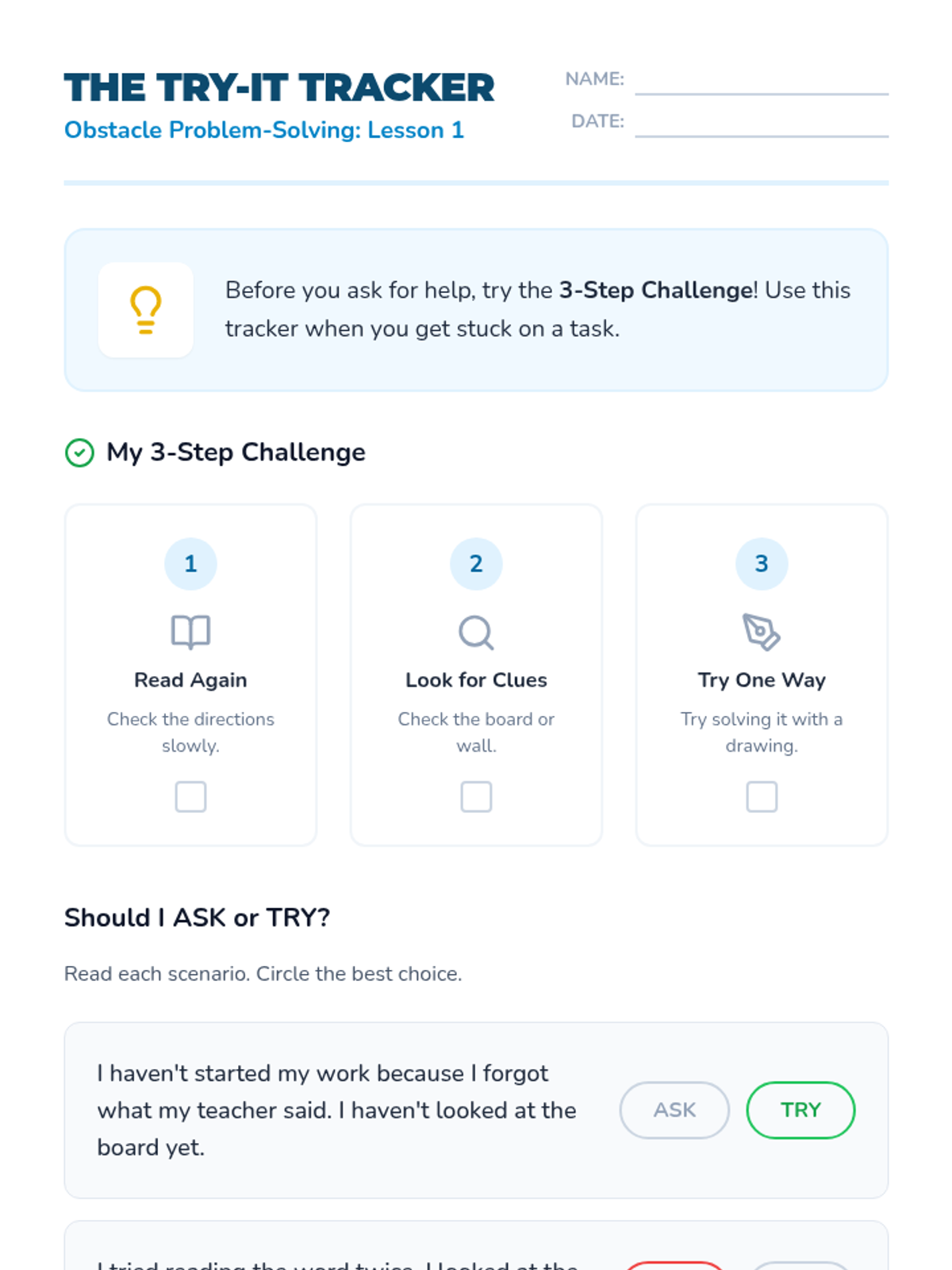
Students learn to identify the 'tipping point'—the moment after they have tried independent strategies but remain stuck. They categorize scenarios into 'Try more' vs. 'Ask now' to prevent immediate dependence on adults.
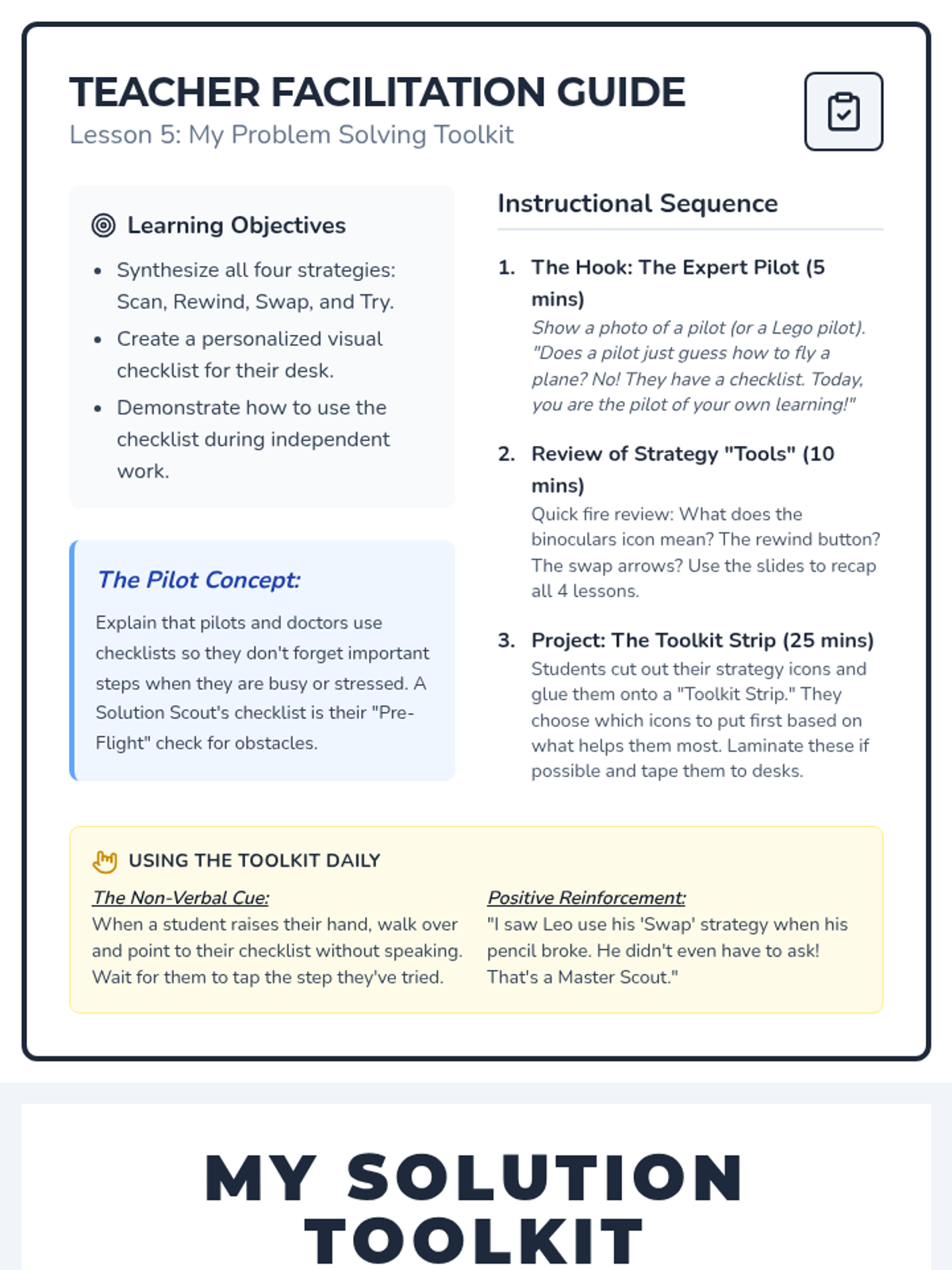
Students synthesize their learning by creating a personalized visual troubleshooting guide to keep at their desks.
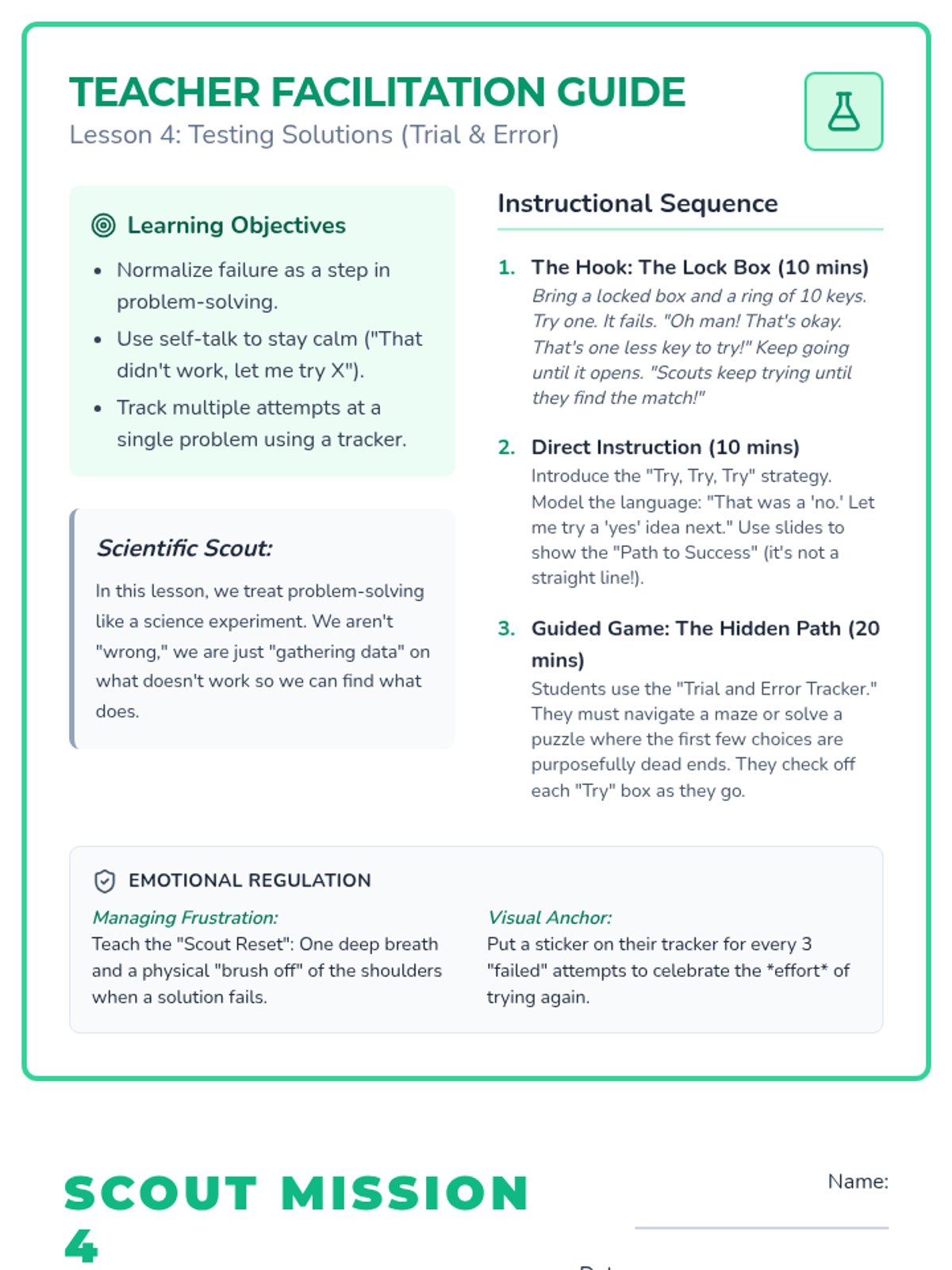
Normalizes the trial-and-error process, helping students build resilience when their first solution doesn't work.
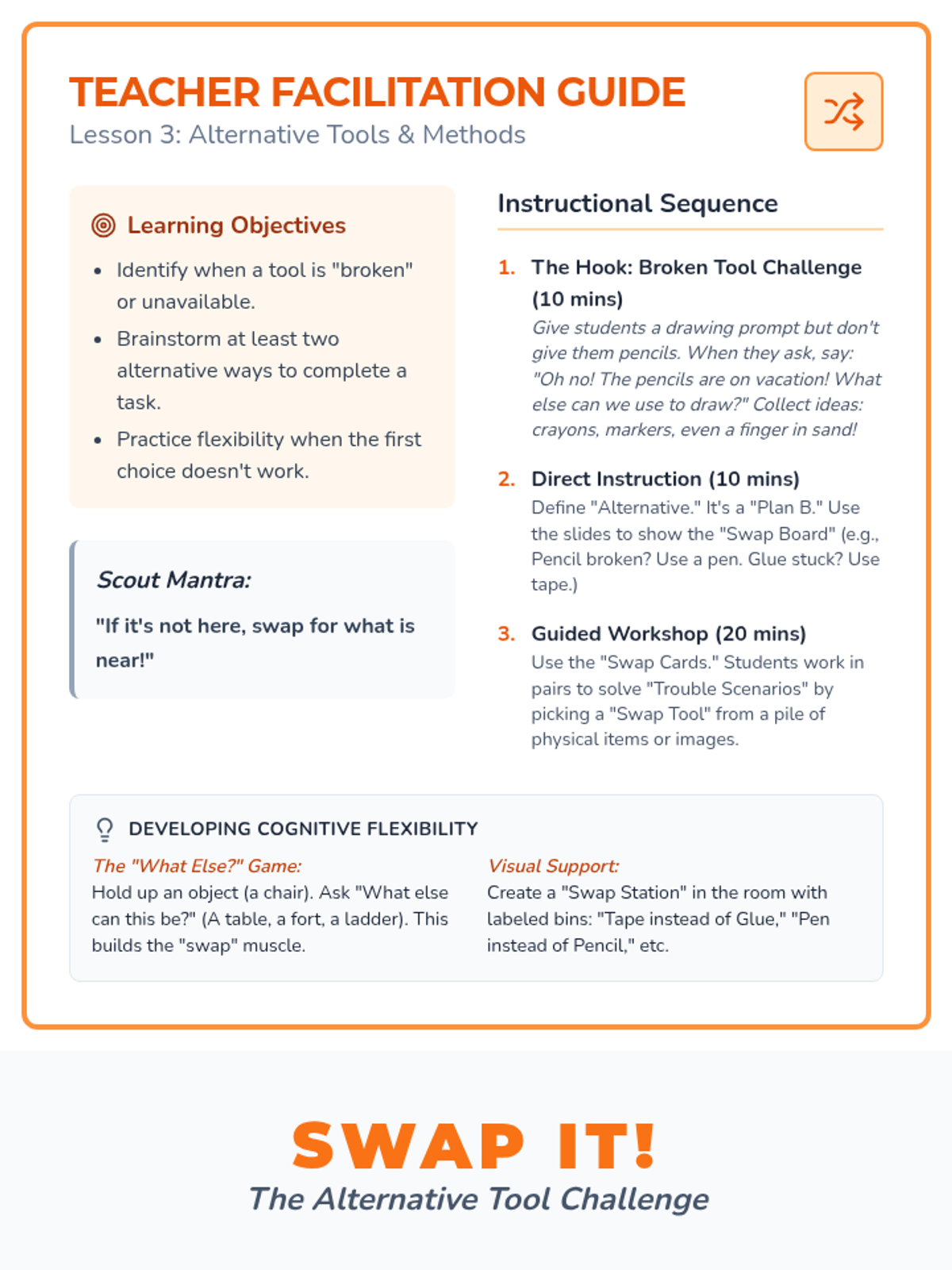
Encourages flexibility by challenging students to find alternative tools or methods when their first choice isn't available.
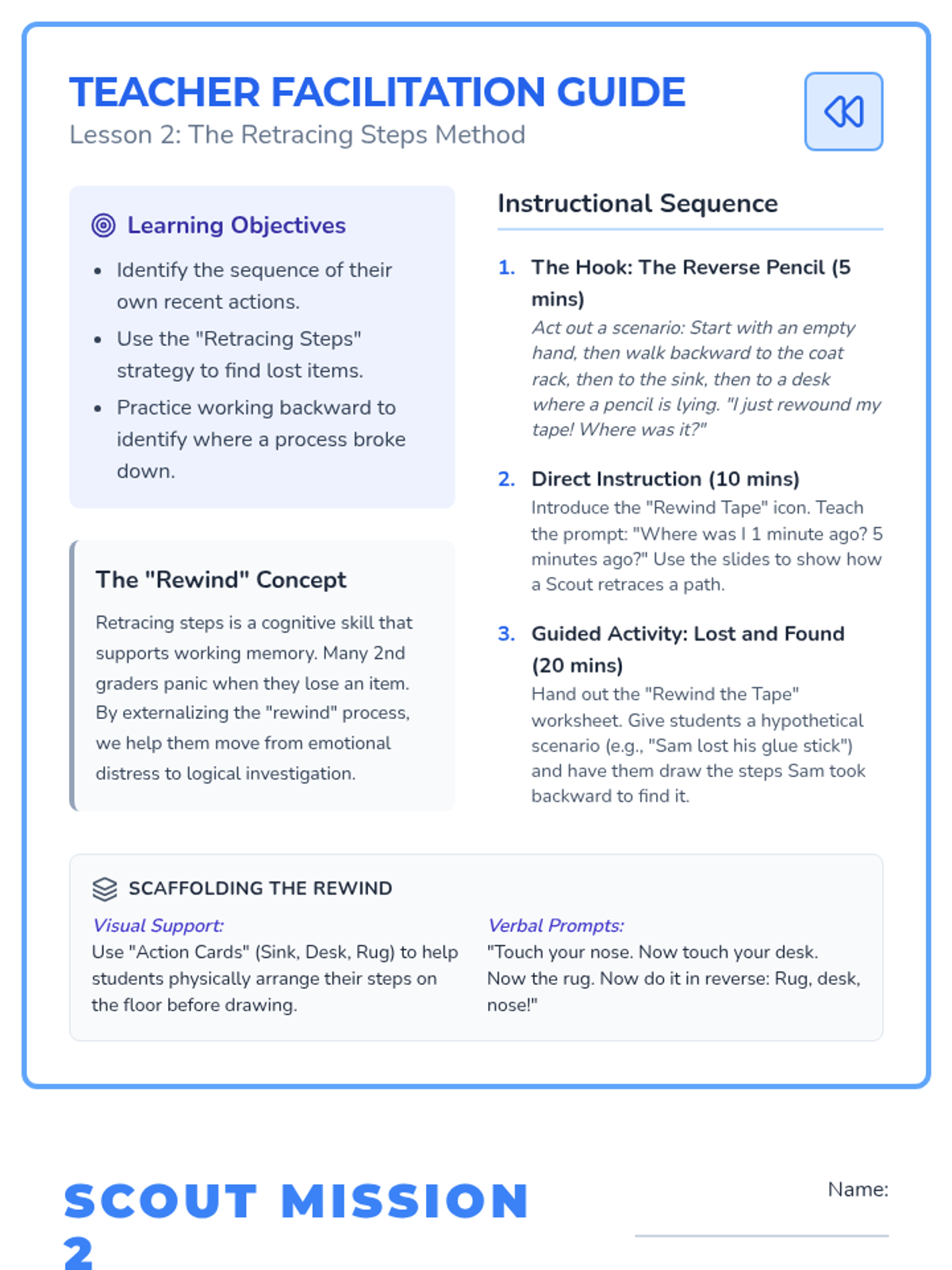
Focuses on material management and memory by teaching students how to 'rewind' their actions to solve problems.
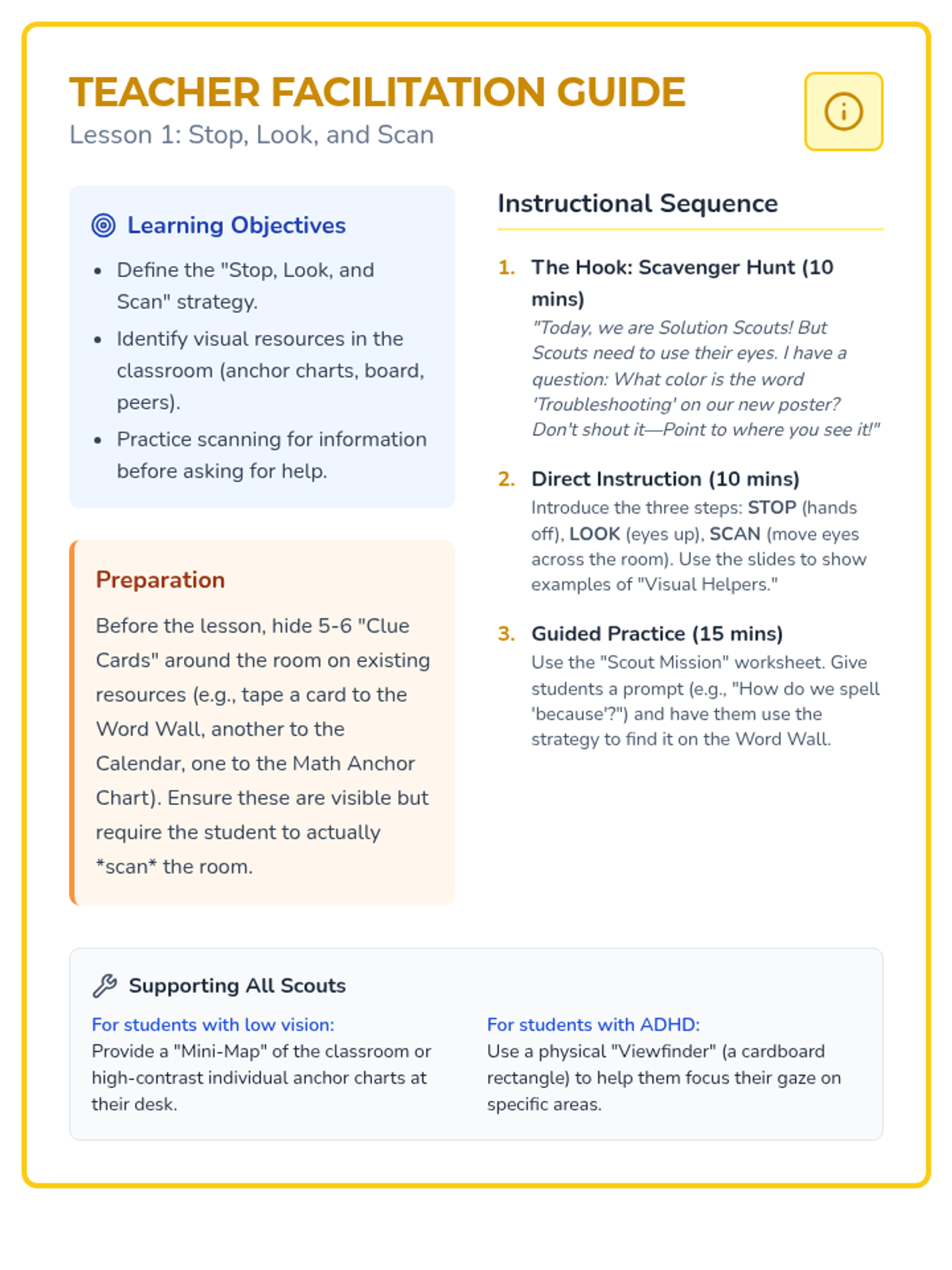
Students learn the 'Stop, Look, and Scan' strategy to find answers in their environment before asking for help.
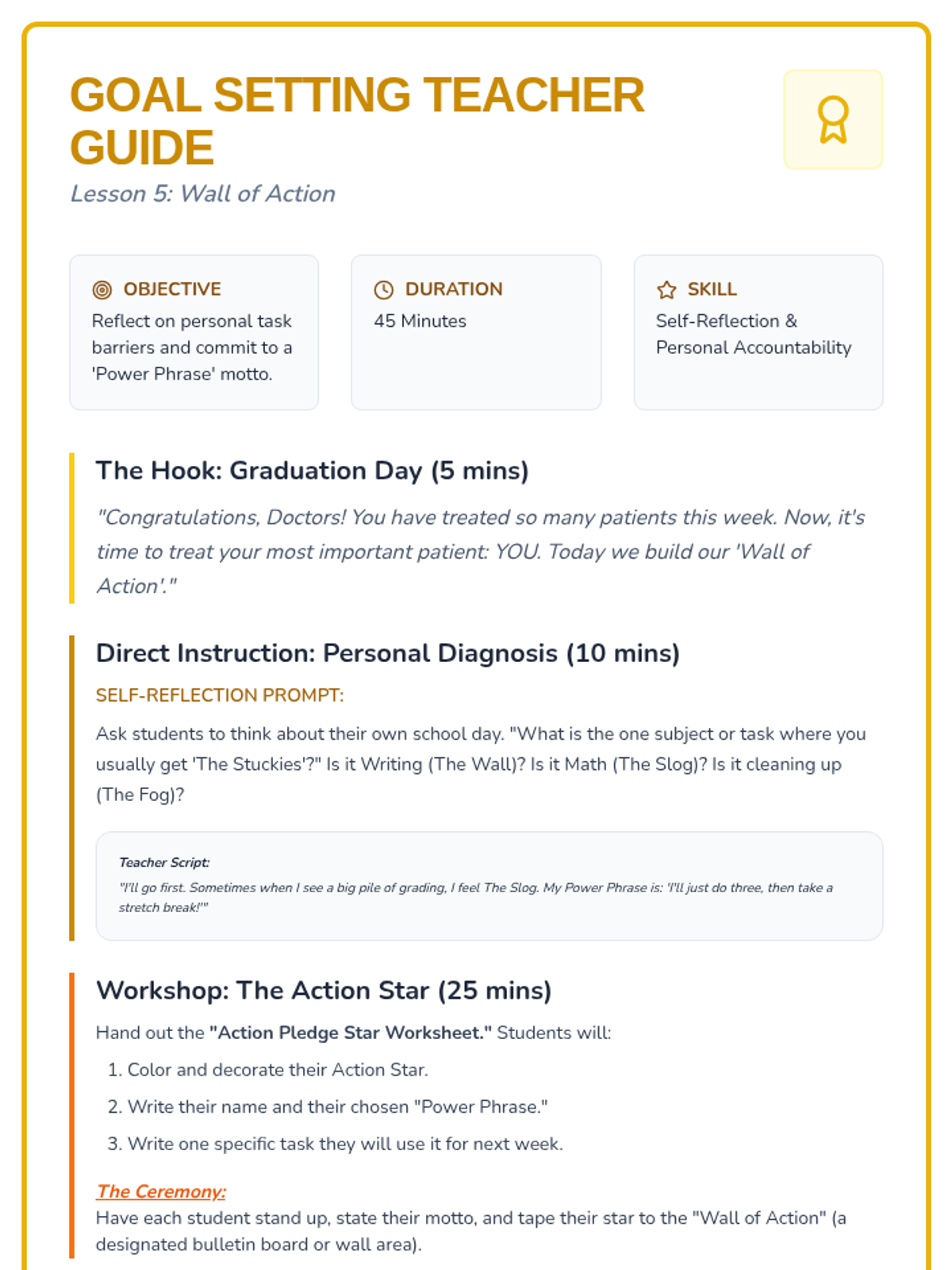
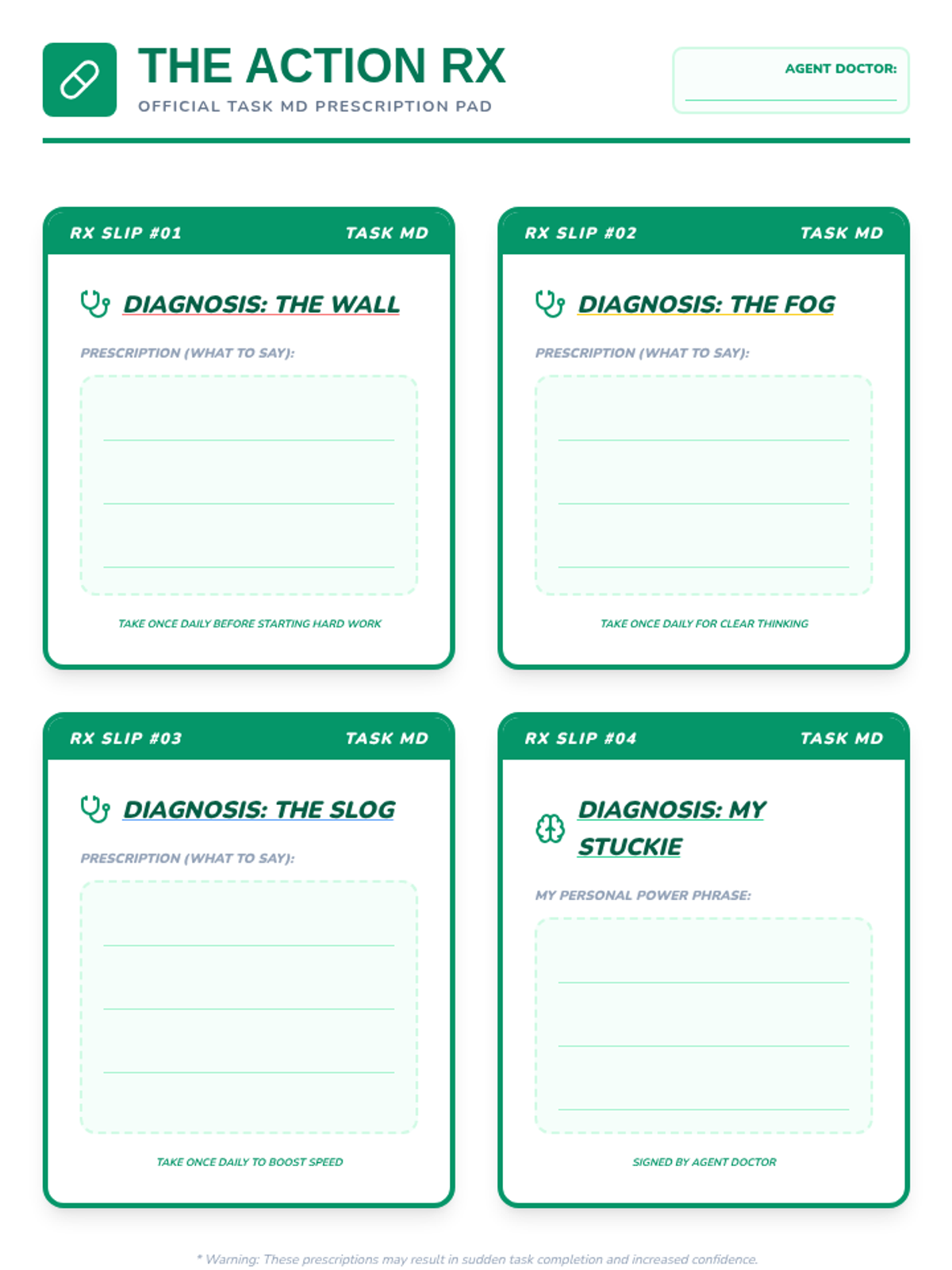
Students identify their own barriers to starting work and select a personal 'Power Phrase' motto for future tasks.
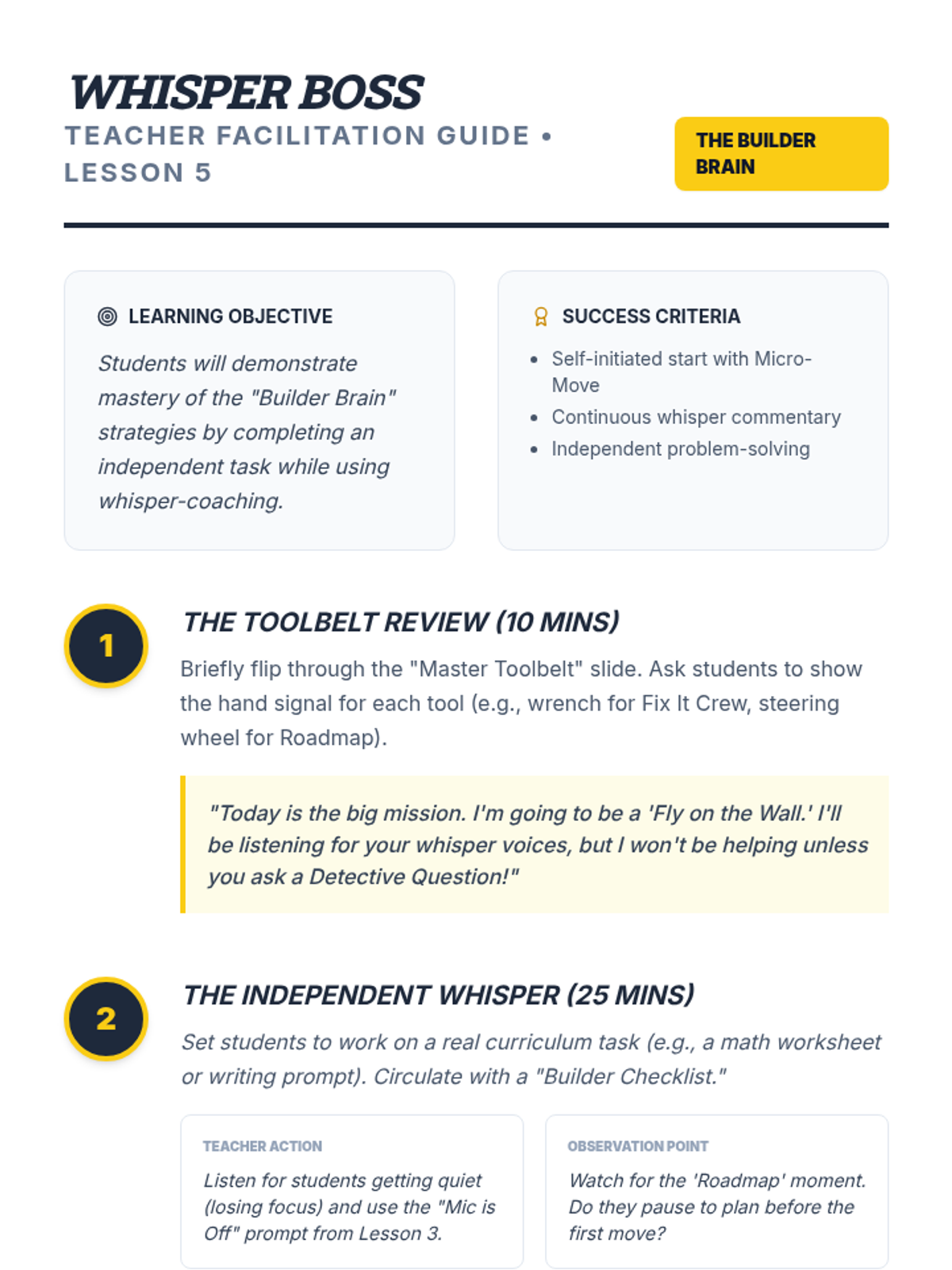
Students apply the breakdown and narration techniques to a real independent work session. The teacher circulates to listen for 'whisper coaching' as students initiate and sustain their work.
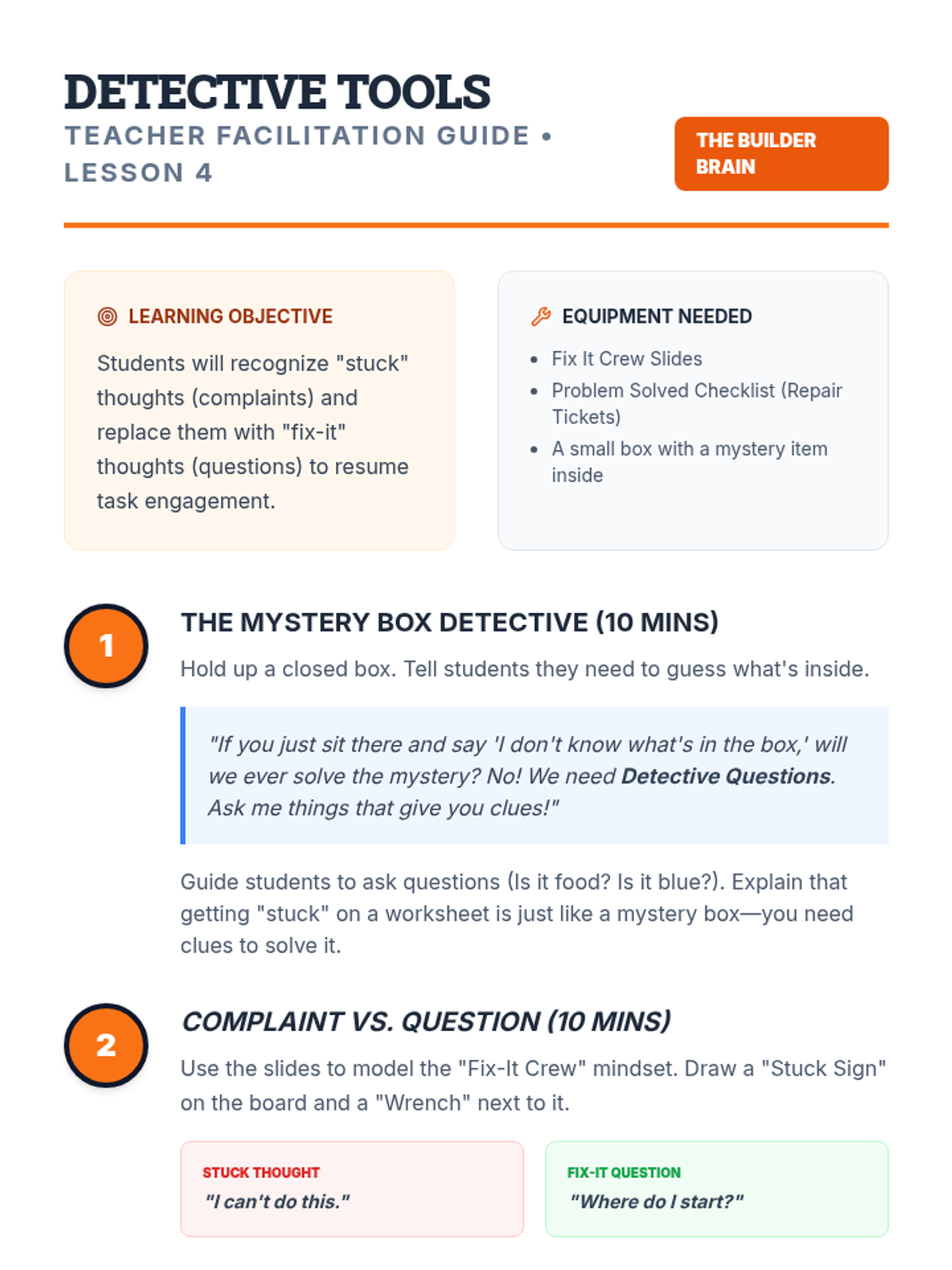
Students learn to ask themselves specific questions when they get stuck. This shifts the internal monologue from complaint to inquiry and problem-solving.
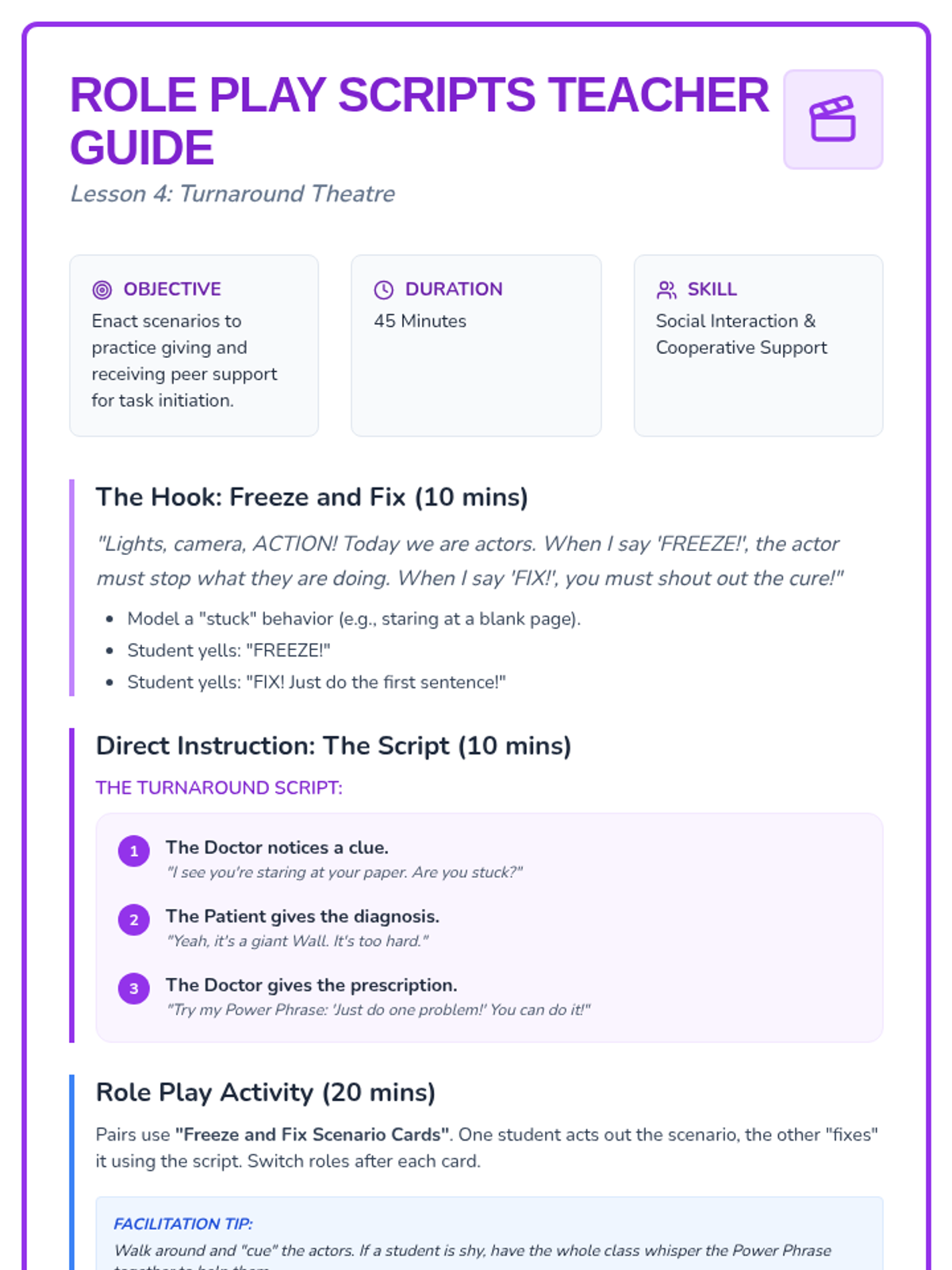
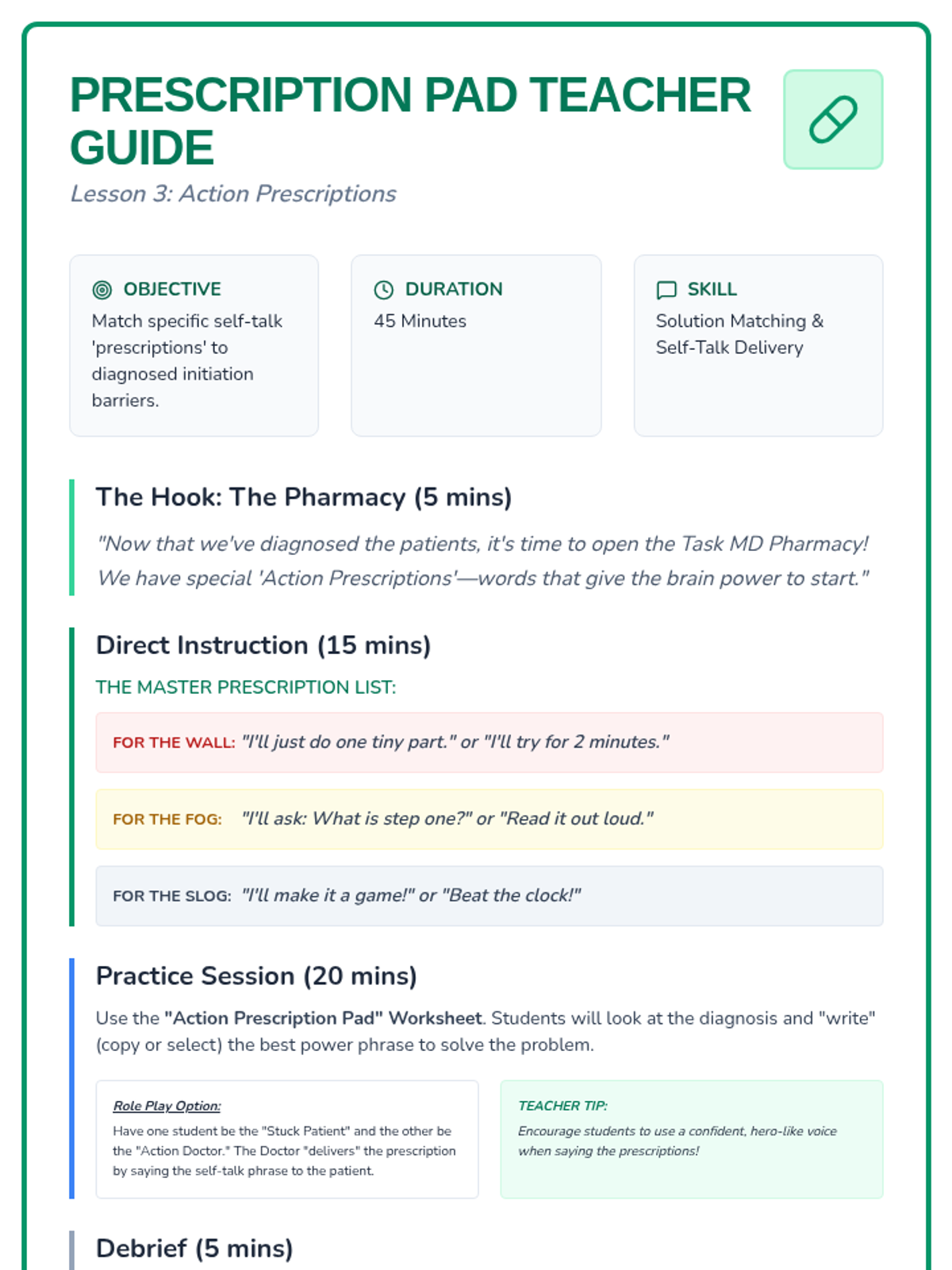
Students role-play scenarios where they help a peer get 'unstuck' using their self-talk prescriptions.
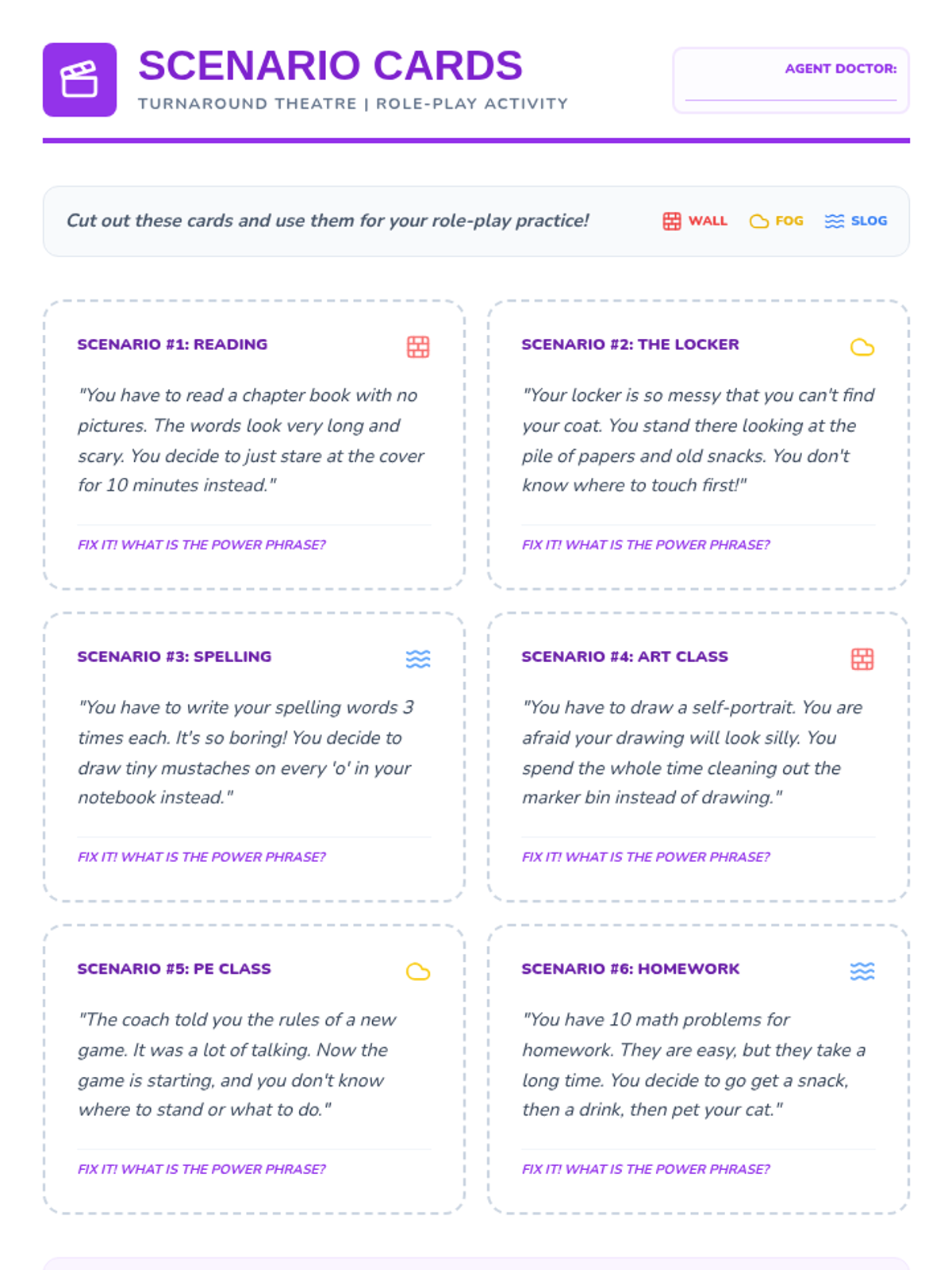
Students match specific self-talk 'prescriptions' to diagnosed problems and practice delivering these lines to characters.
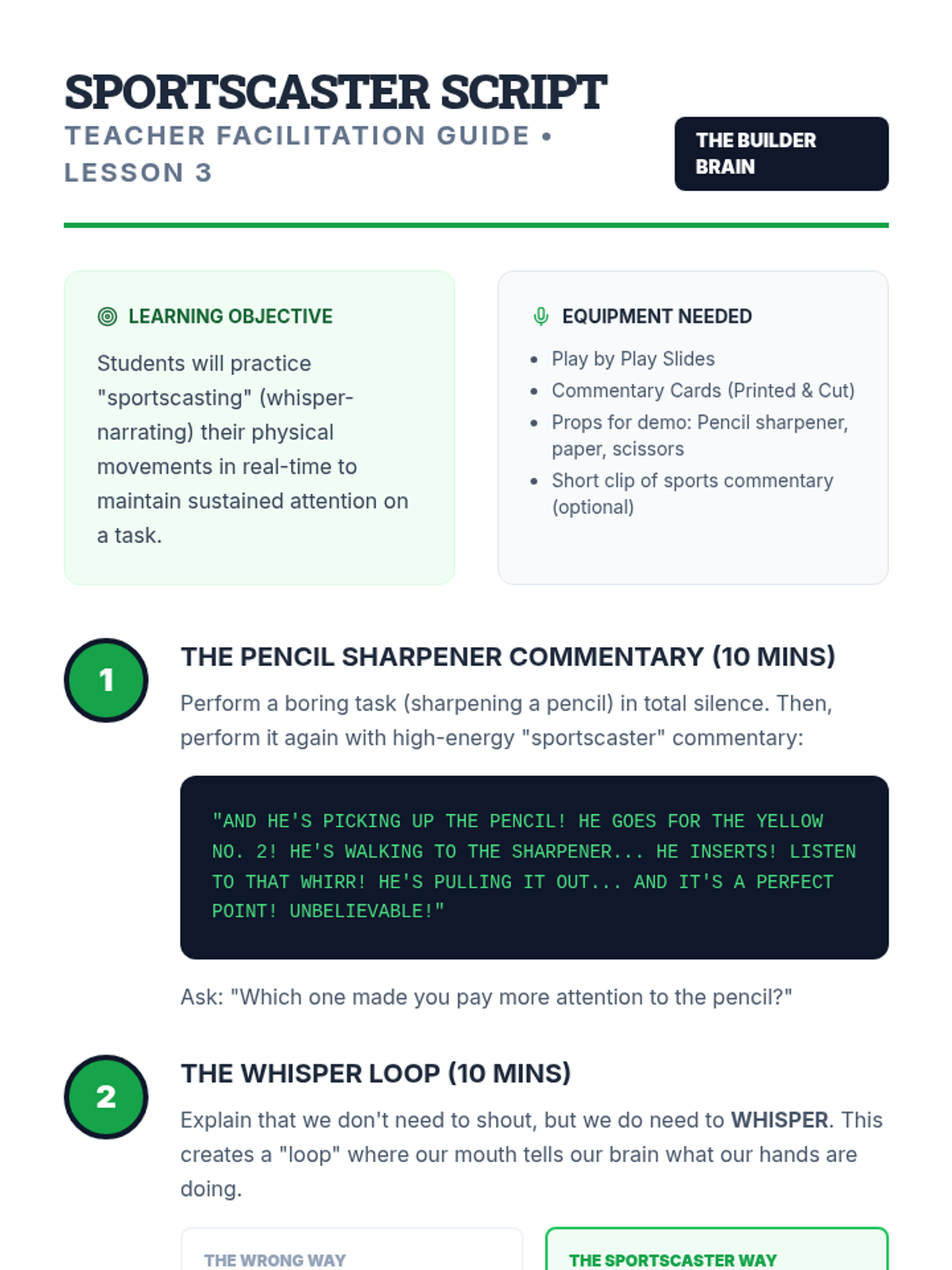
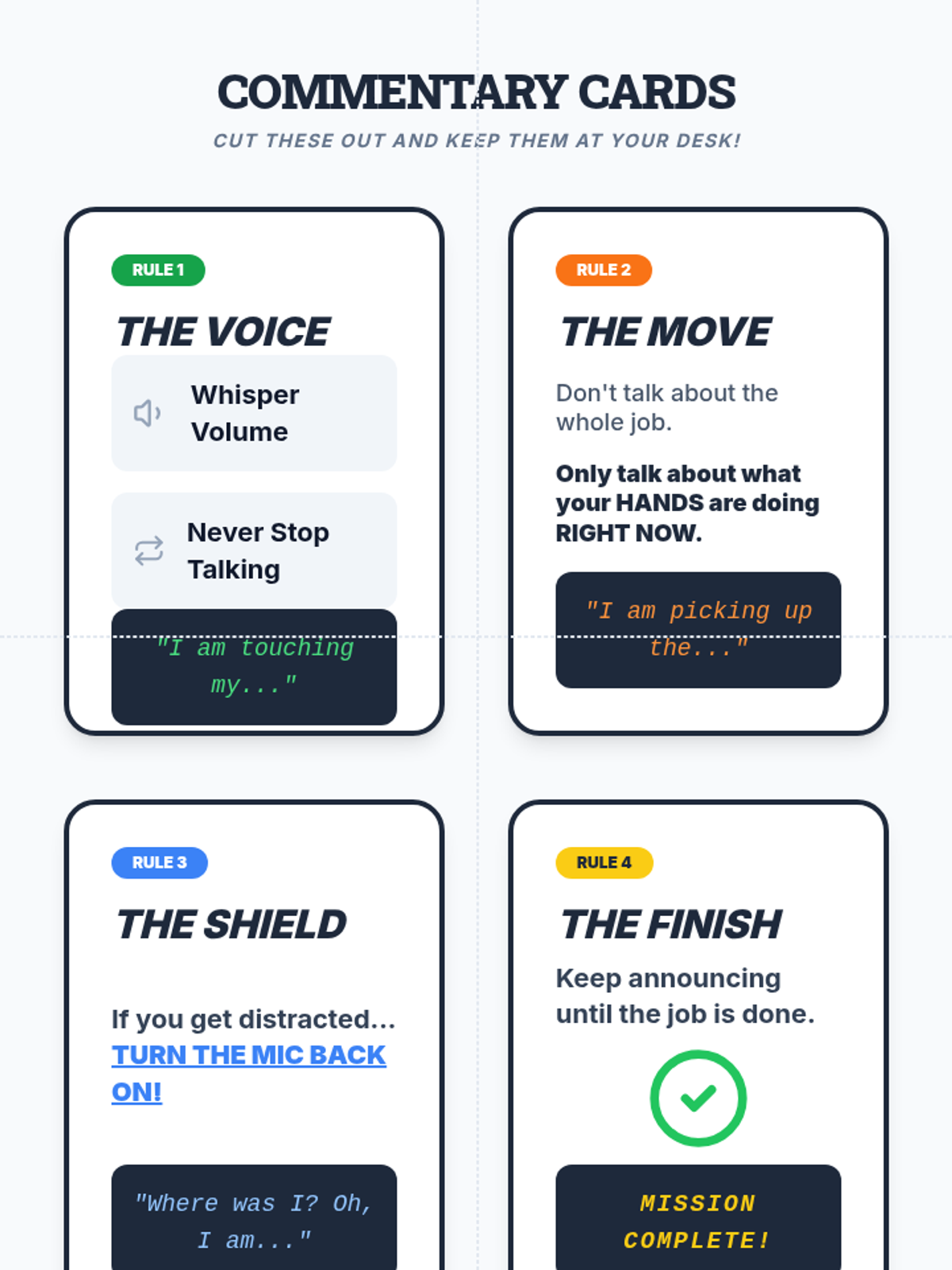
Students practice whispering their actions as they do them, similar to a sportscaster announcing a game. This continuous verbal loop helps prevent distraction and keeps the student engaged.
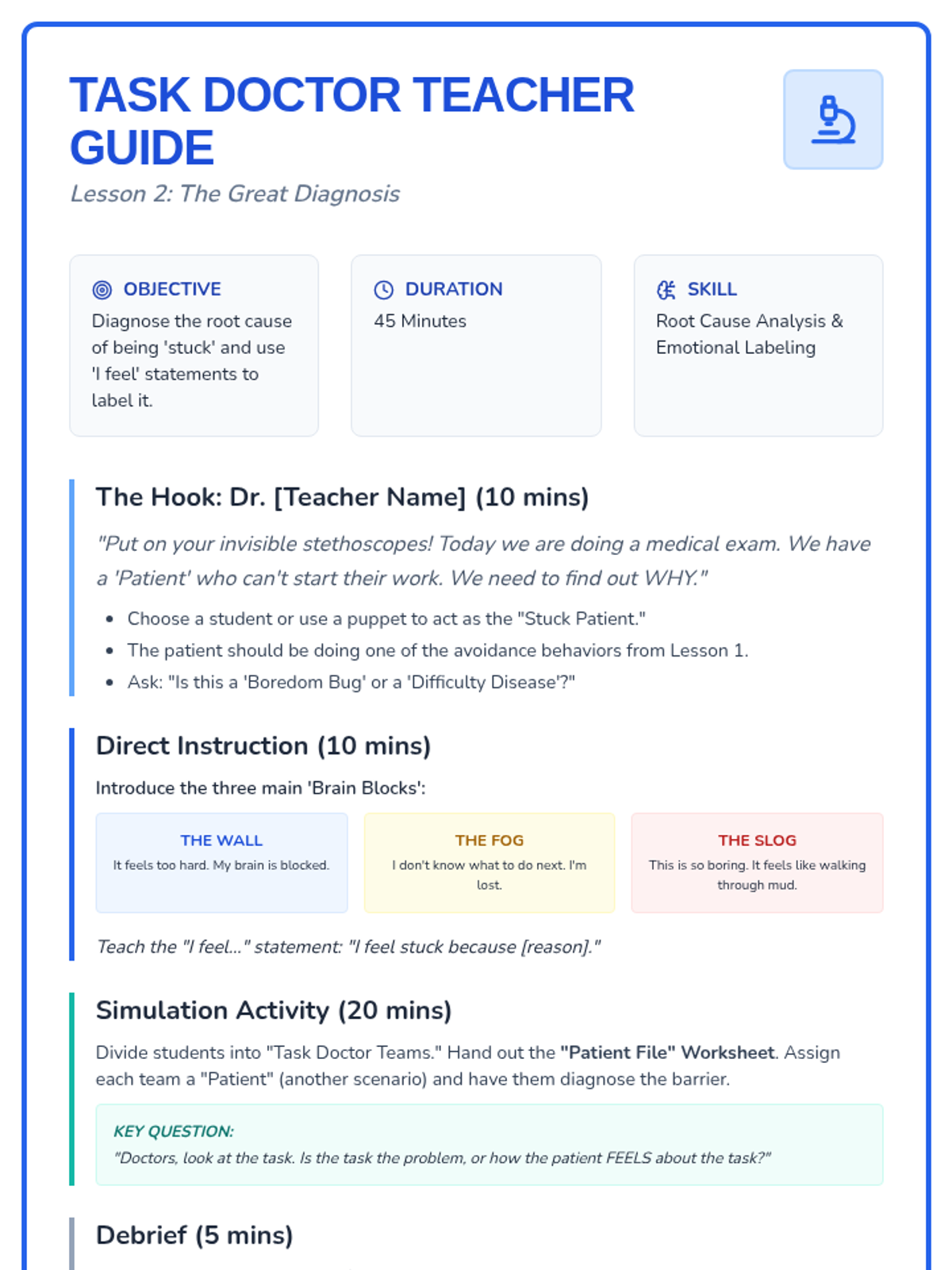
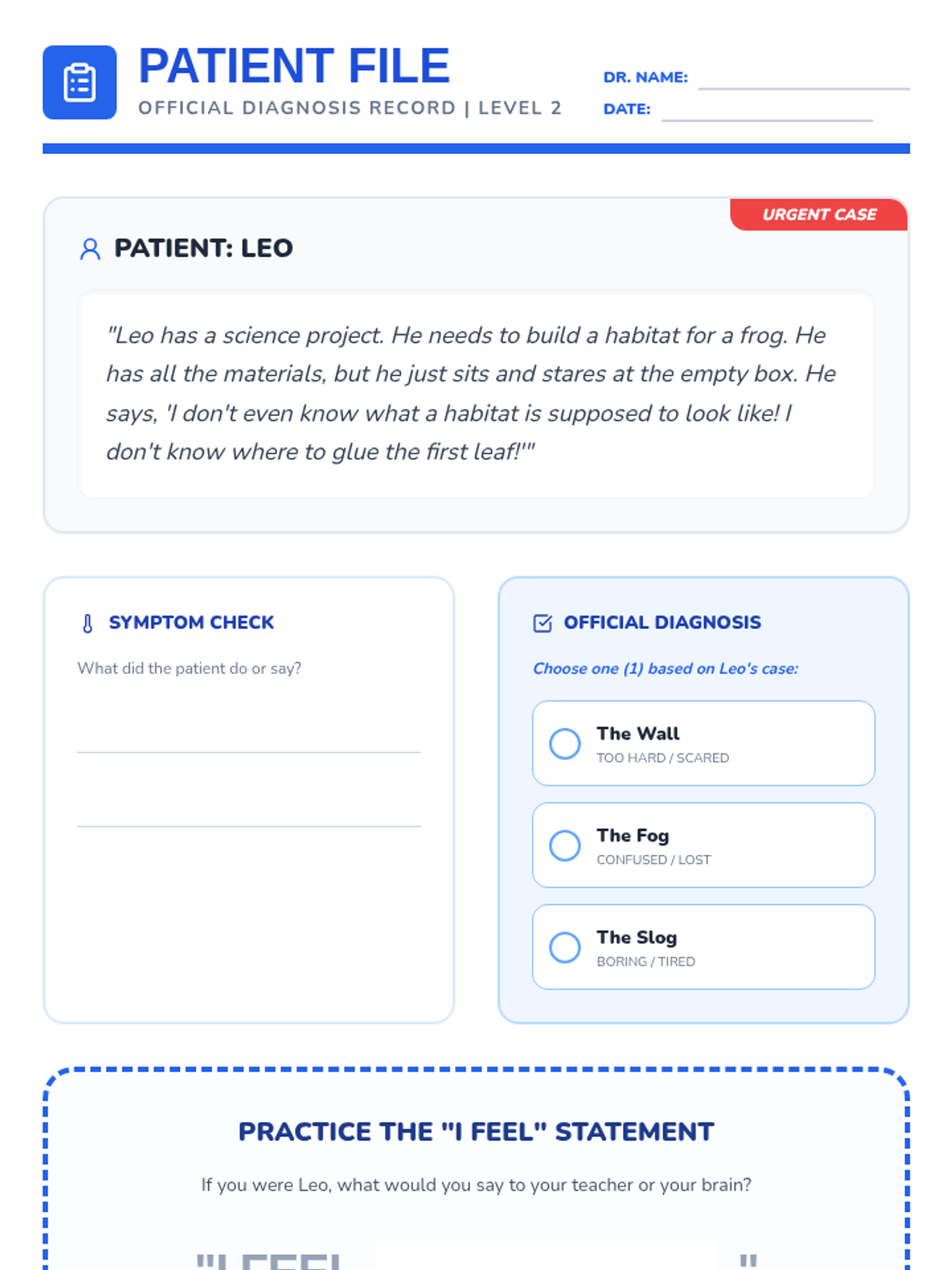
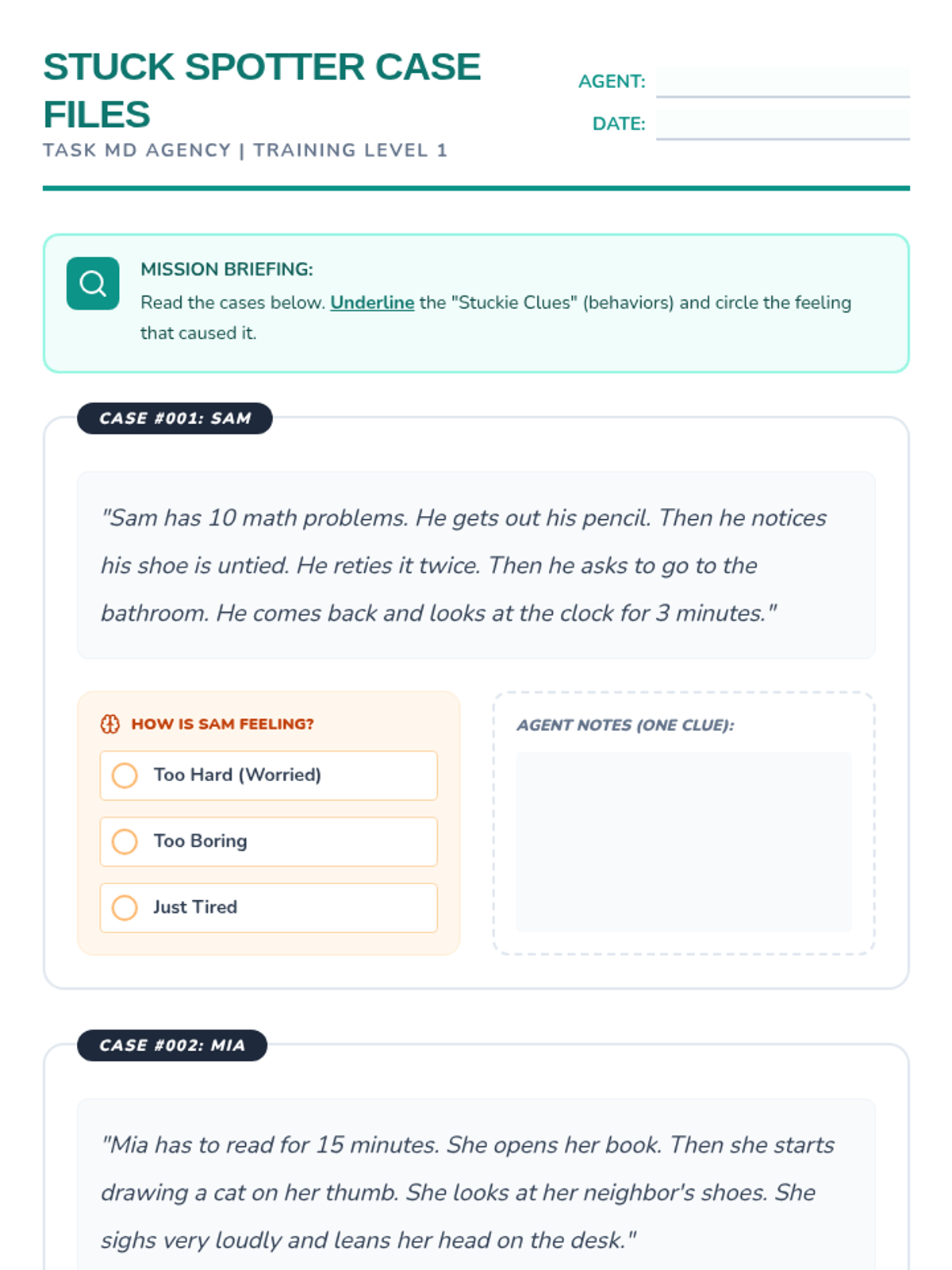
Students act as 'Task Doctors' to determine why a character is stuck (boredom, difficulty, fatigue) and practice labeling these emotions.
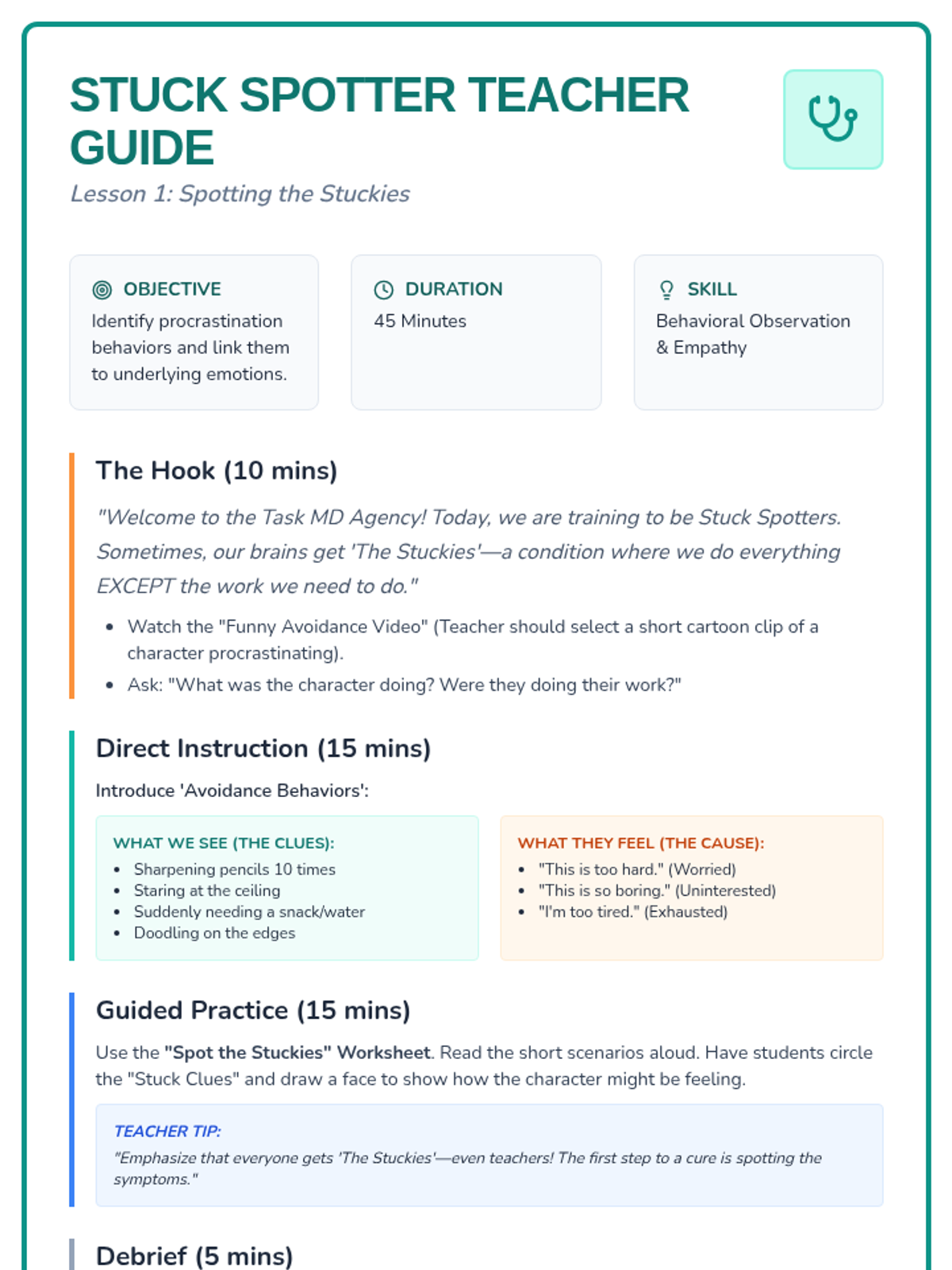
Students identify behaviors that show someone is avoiding work and brainstorm what emotions might be driving those behaviors through case studies.
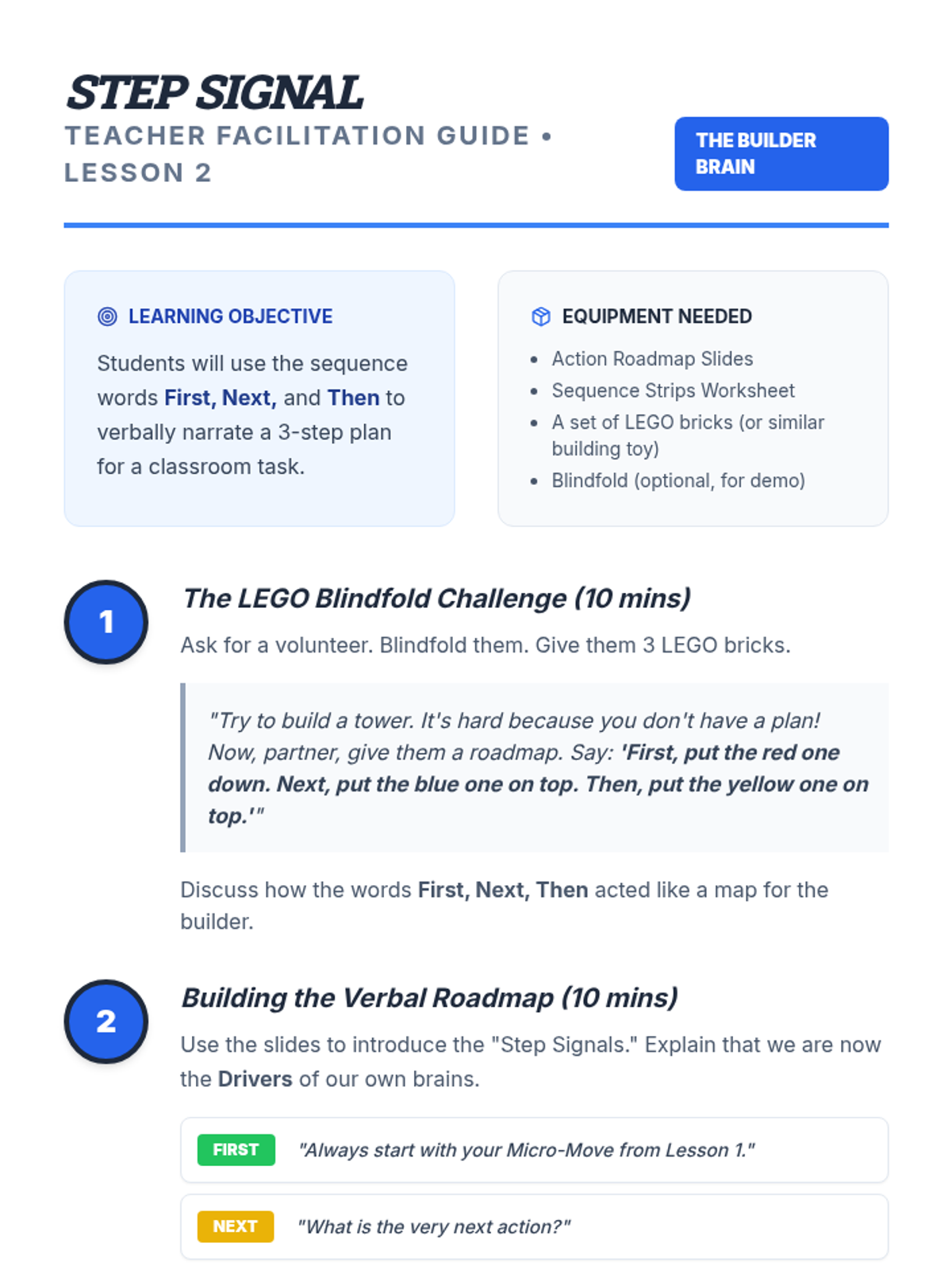
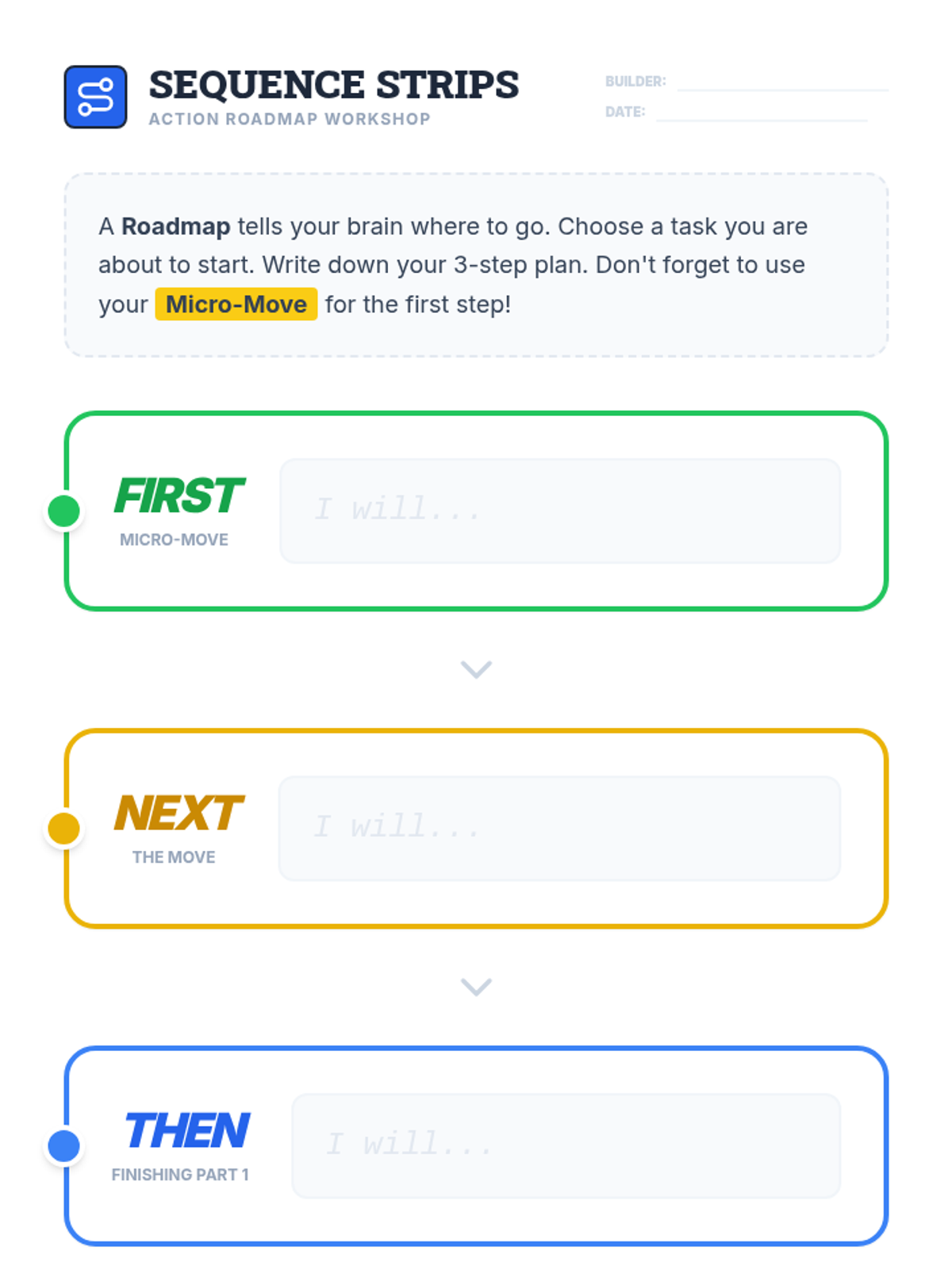
Students practice using the words 'First,' 'Next,' and 'Then' to create a verbal roadmap. They verbally plan a simple classroom routine, ensuring they can narrate the order of operations before beginning.
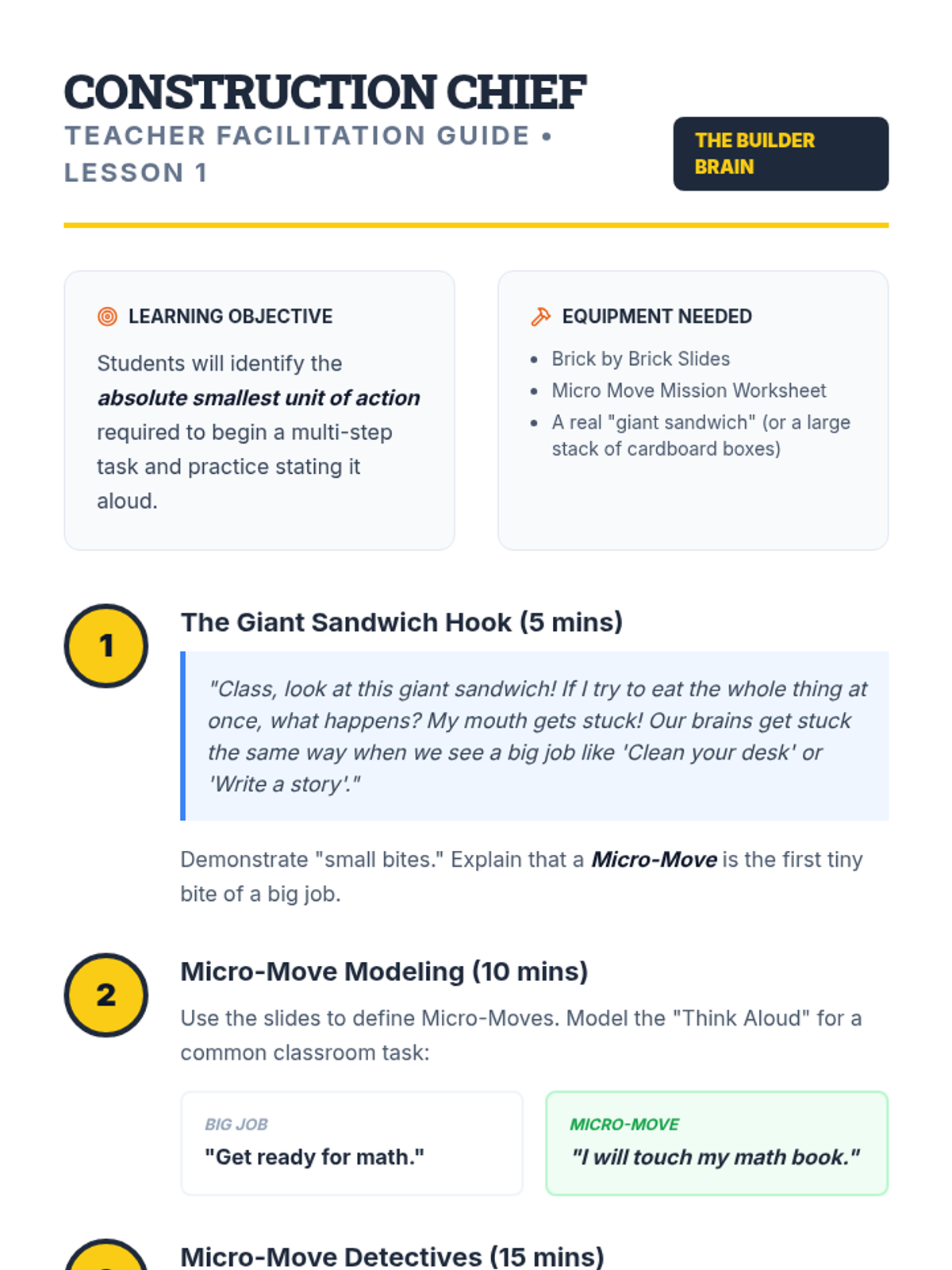
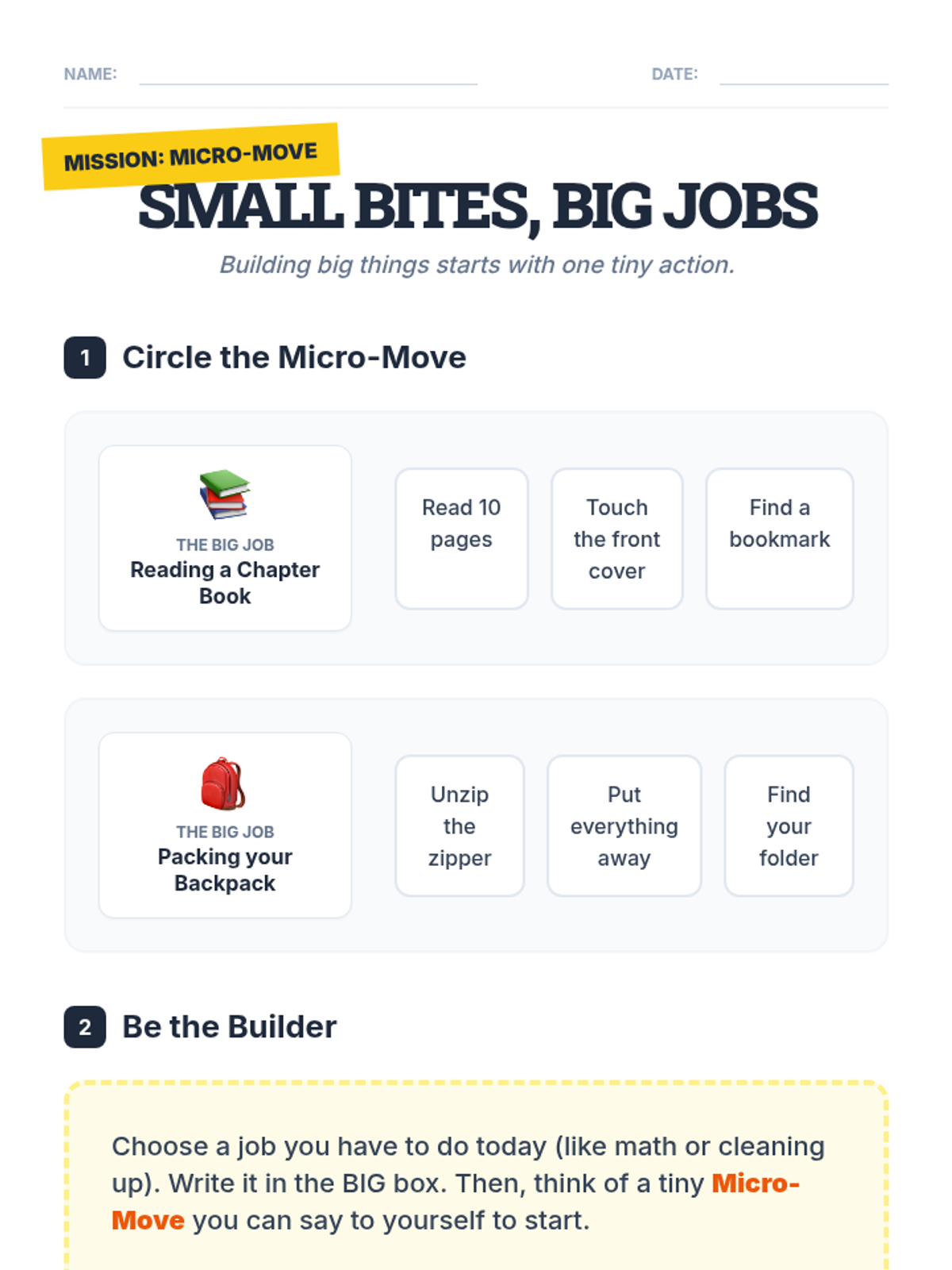
Students learn to identify the absolute smallest unit of action required to begin a task. They practice ignoring the whole assignment to focus solely on the physical action needed to start.
Students present their final structures and reflect on which memory tool helped them the most (the checklist, the quiet time, or the planning). They discuss how to use that same tool in Math or Reading class.
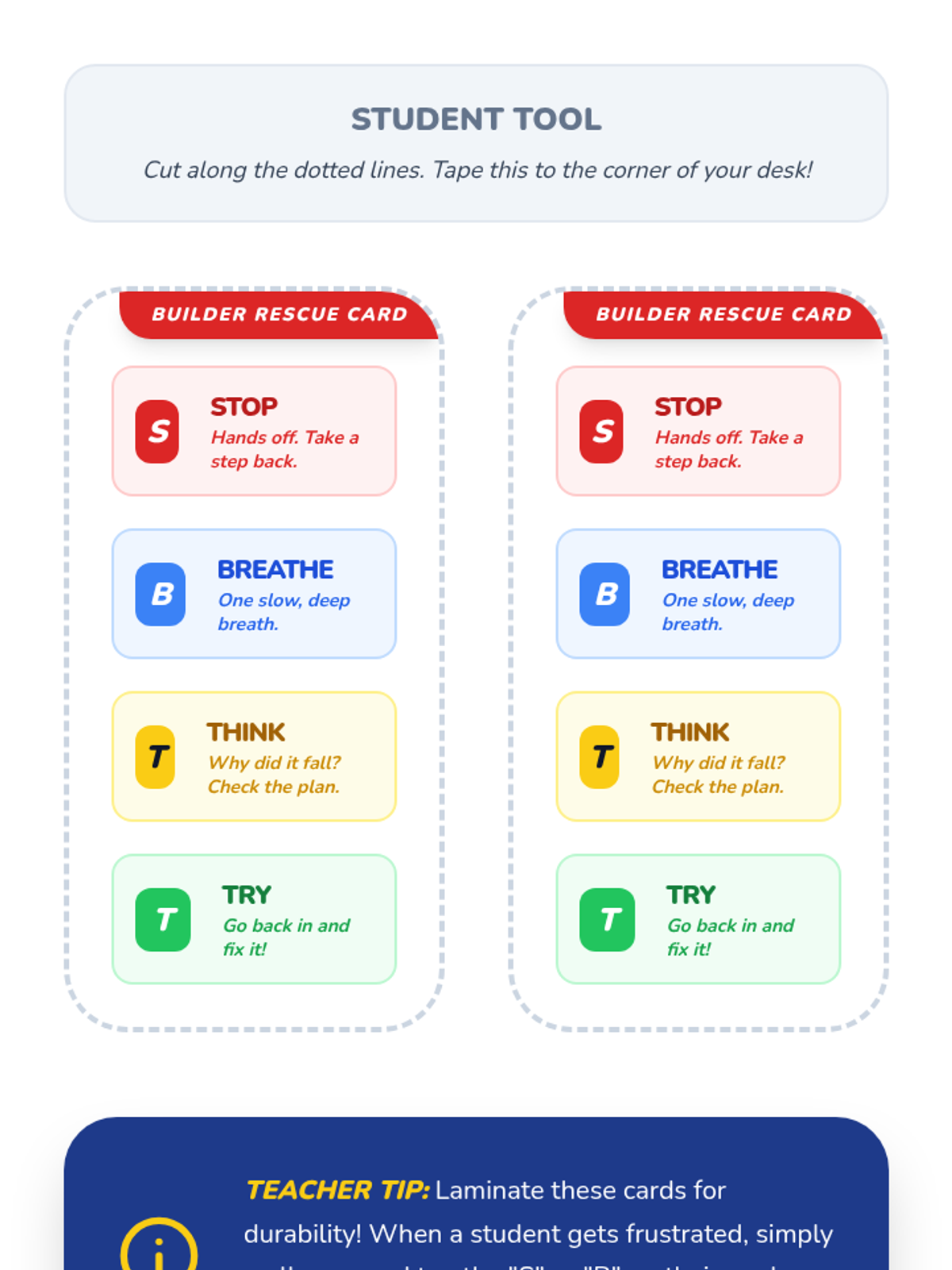
When students encounter a structural failure or mistake, they use a 'Problem Solving Protocol' (Stop, Breathe, Think, Try) rather than getting frustrated. This explicitly teaches emotional regulation during cognitive stress.
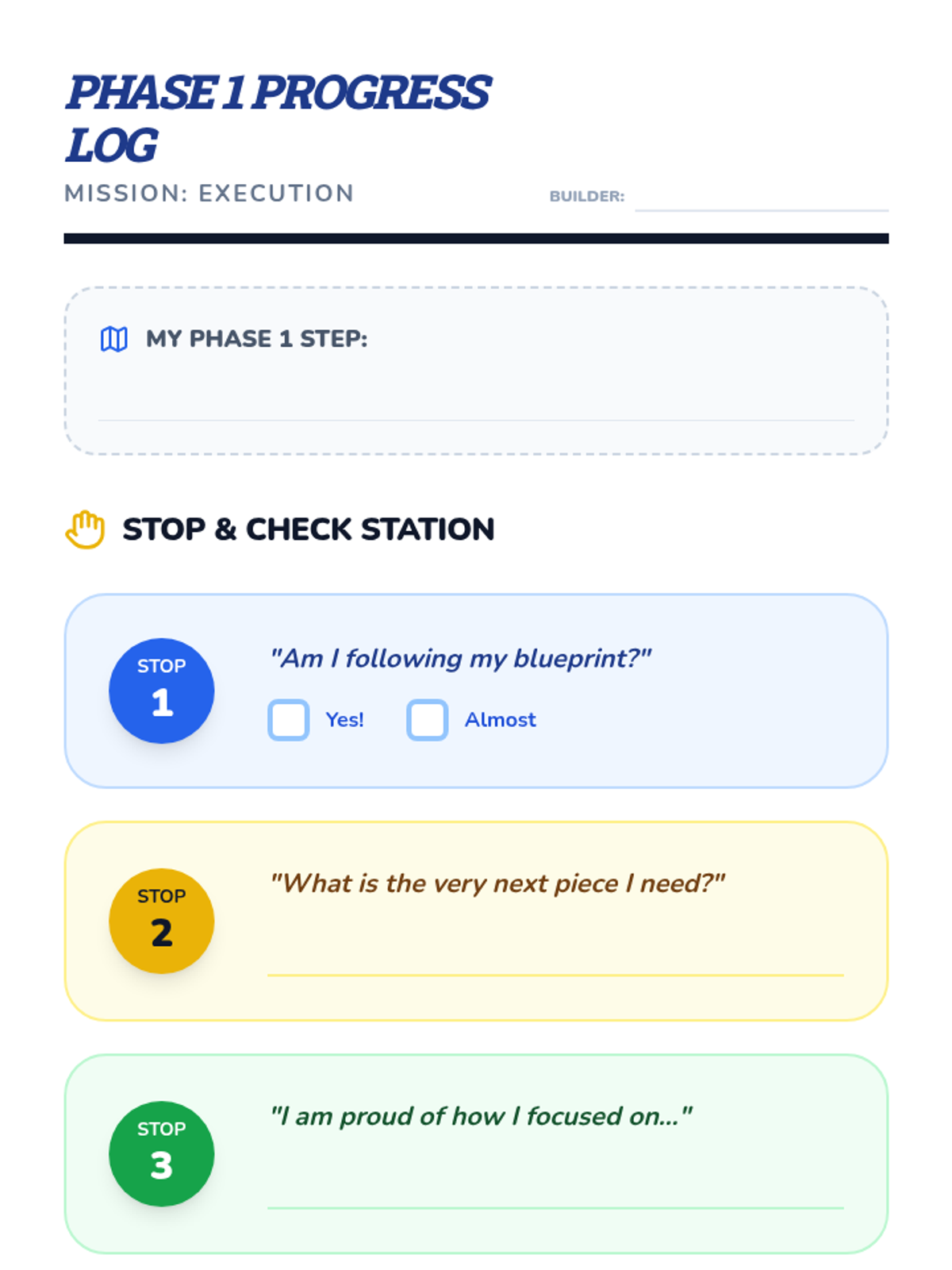
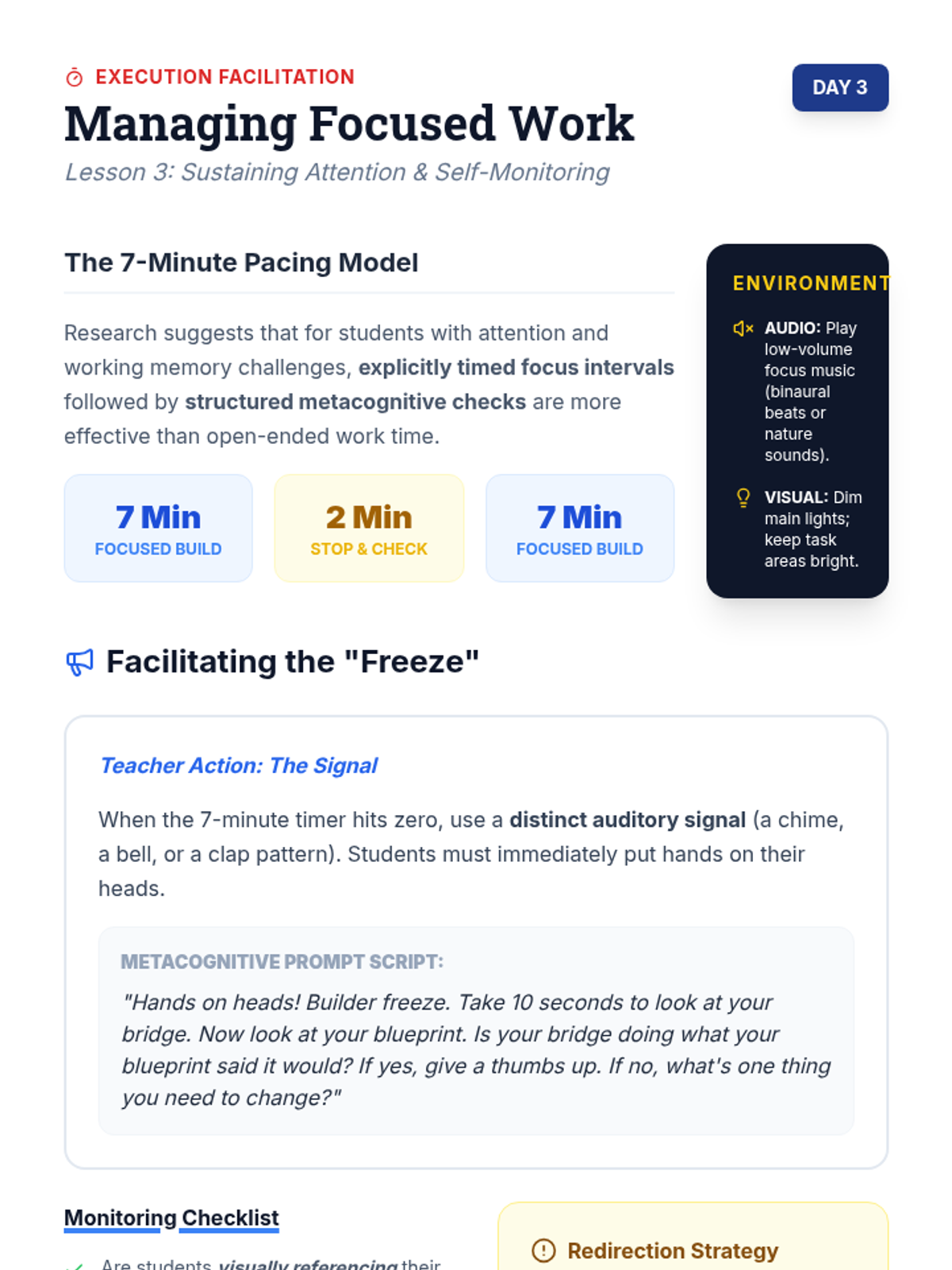
Students begin the construction phase, using their visual checklists created in Lesson 1. The teacher introduces 'Stop and Check' intervals where the class pauses to verify they are following their plan.
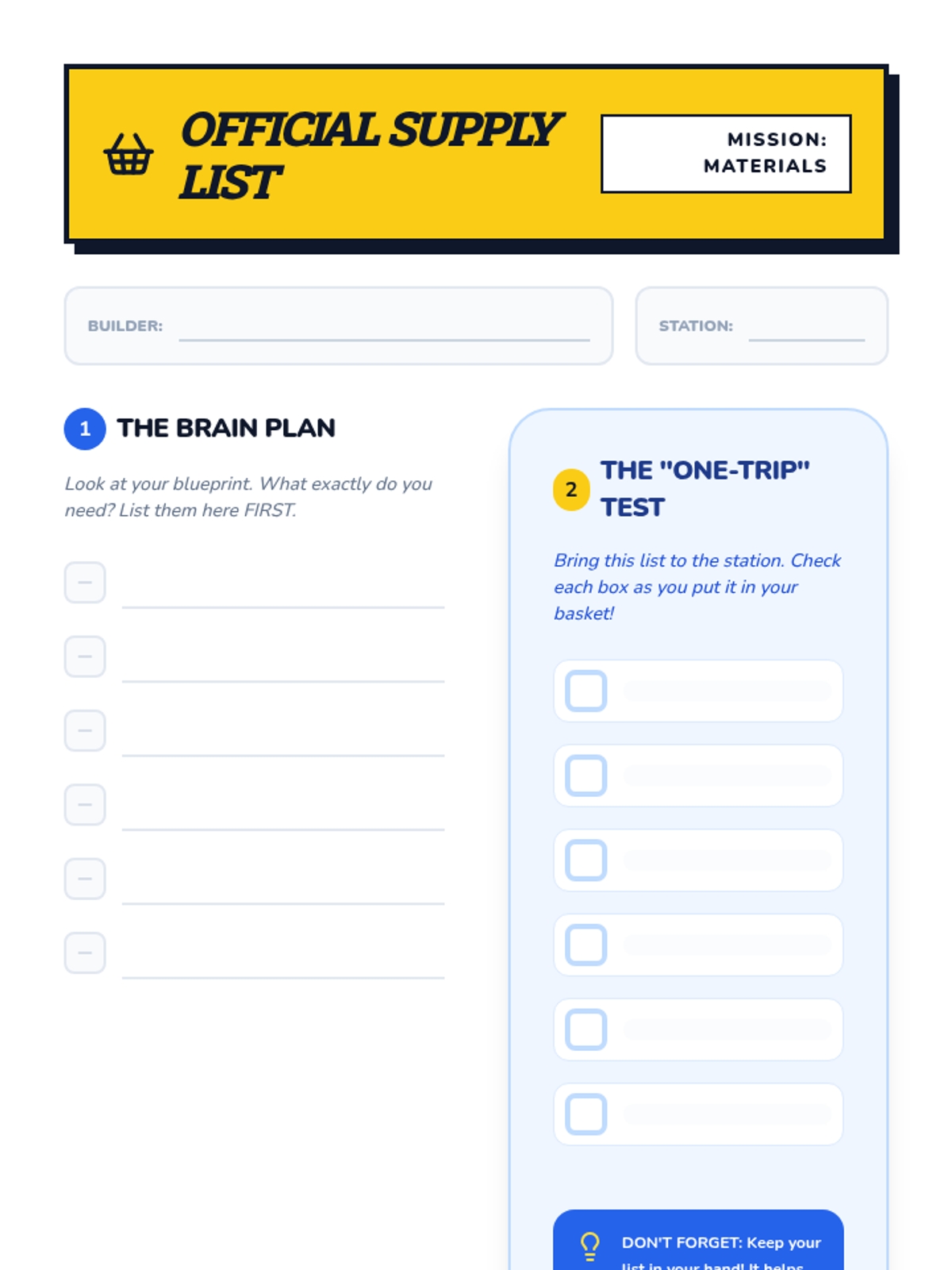
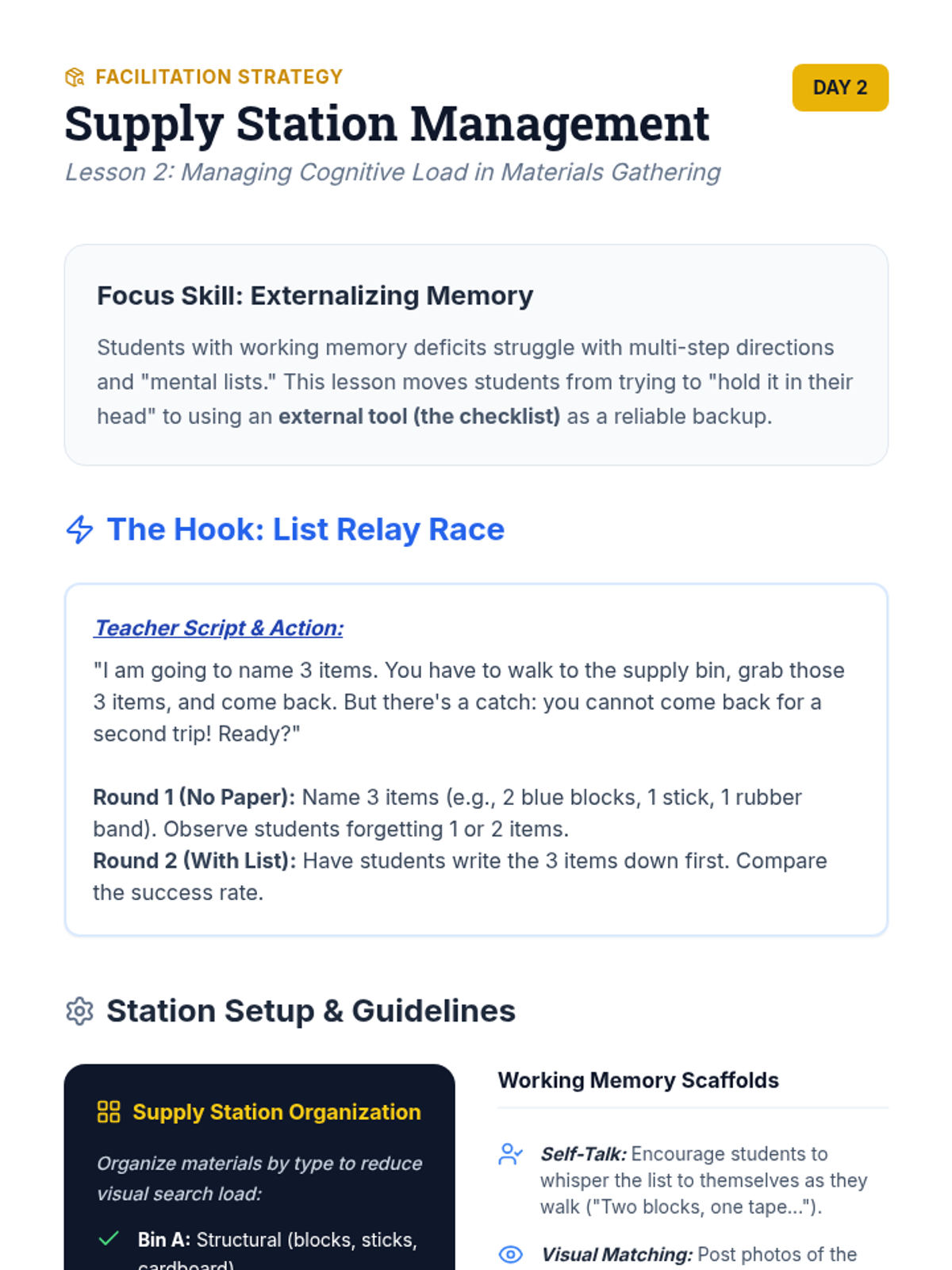
Students must identify the specific materials needed for their design. They practice using a checklist to gather items from a supply station in one trip, challenging their working memory capacity.
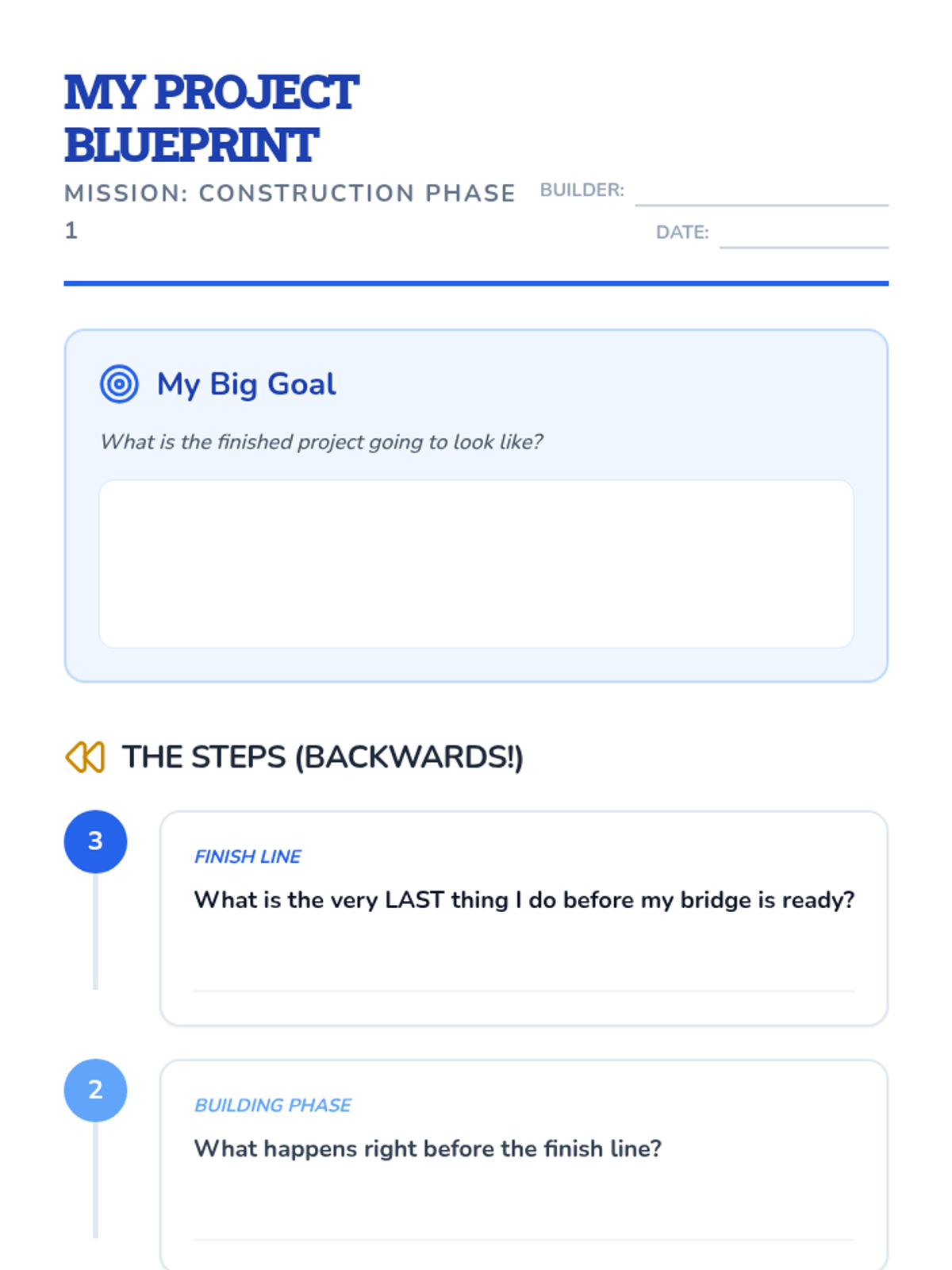
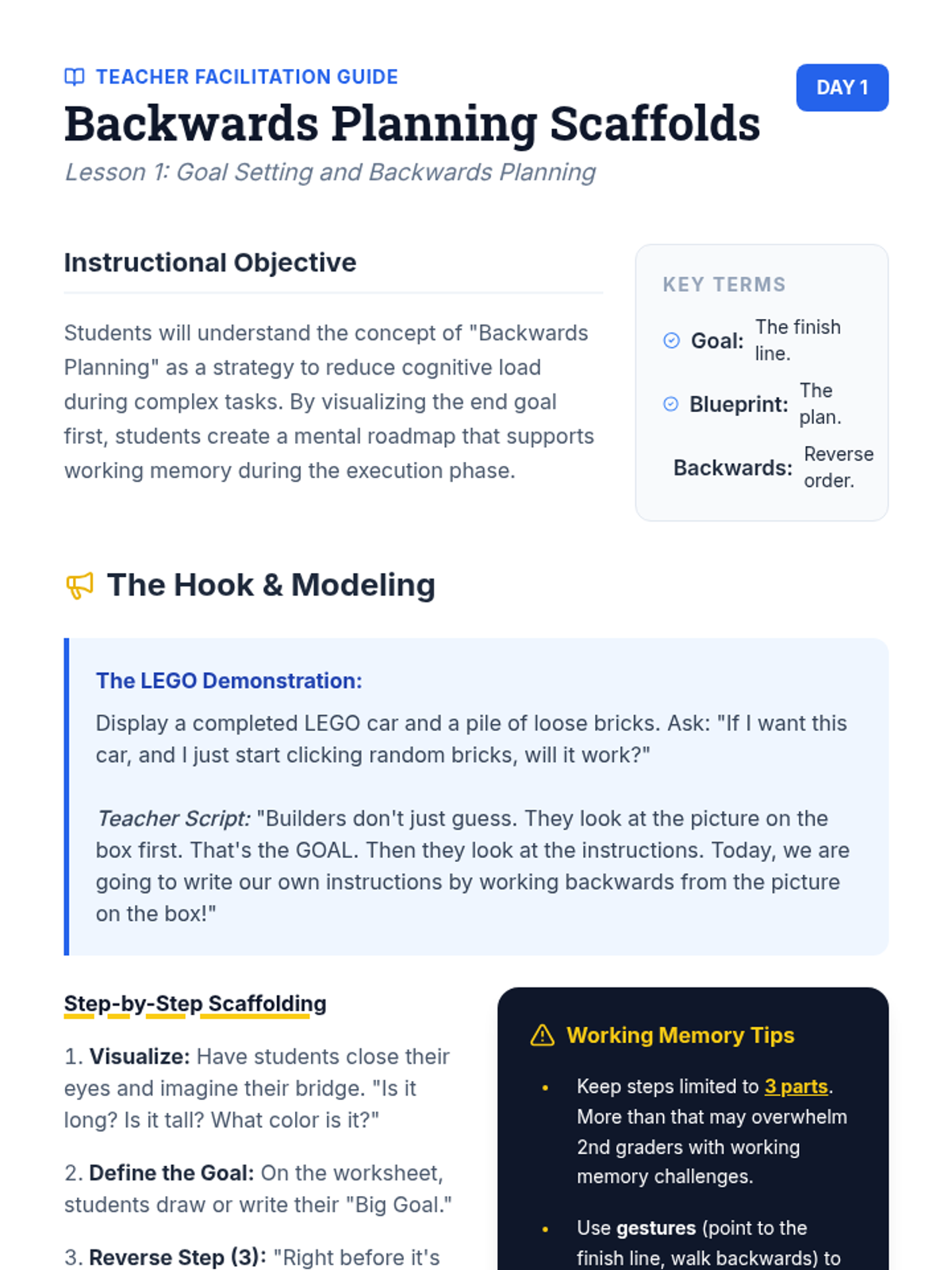
Students are introduced to a construction project. They look at the finished example and work backward to determine the steps needed to get there.
Students practice adapting their behavior and expectations when a new adult (substitute) takes charge of the classroom.
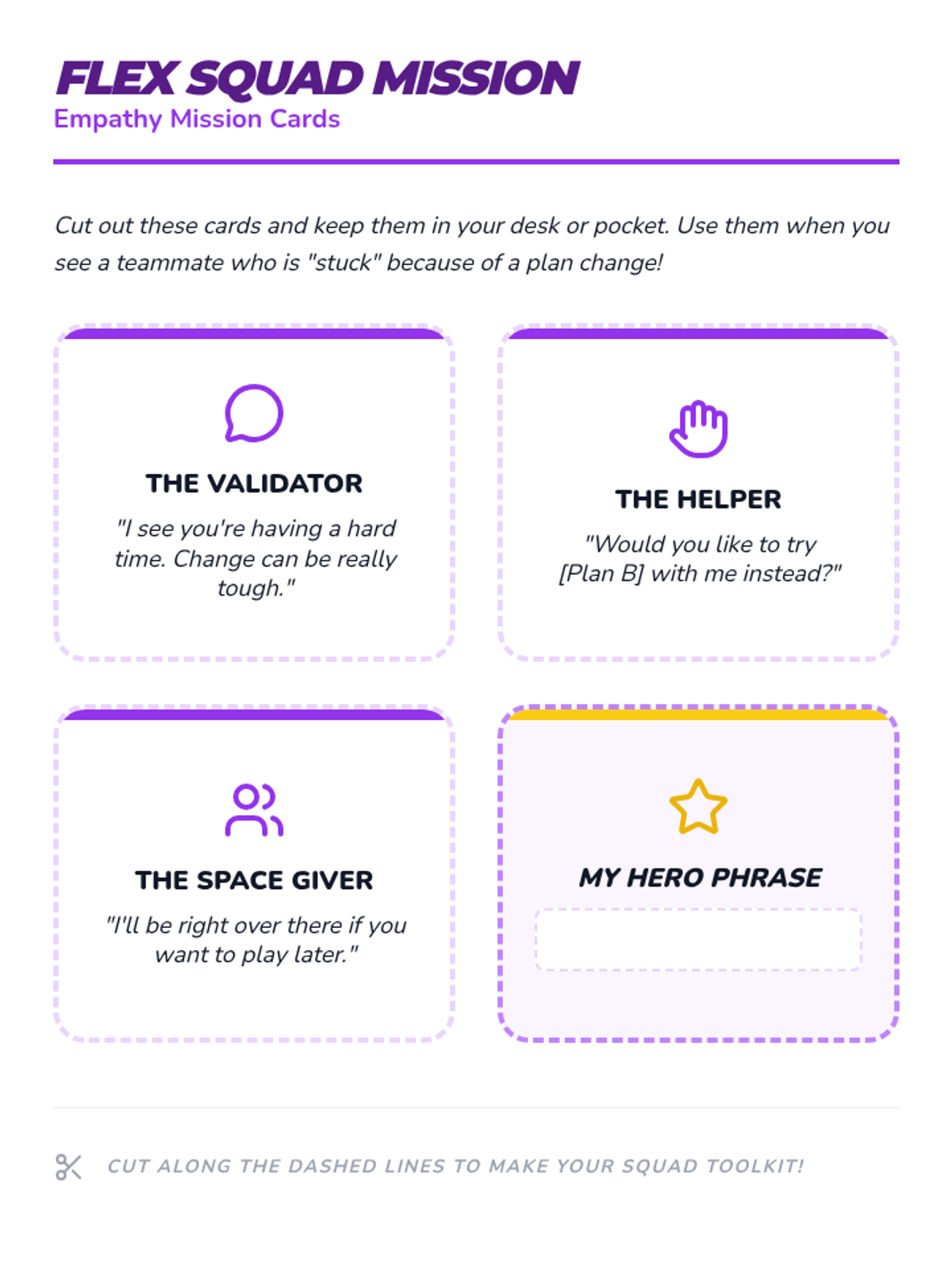
Students learn to identify when a peer is struggling with change and practice offering empathy and support.
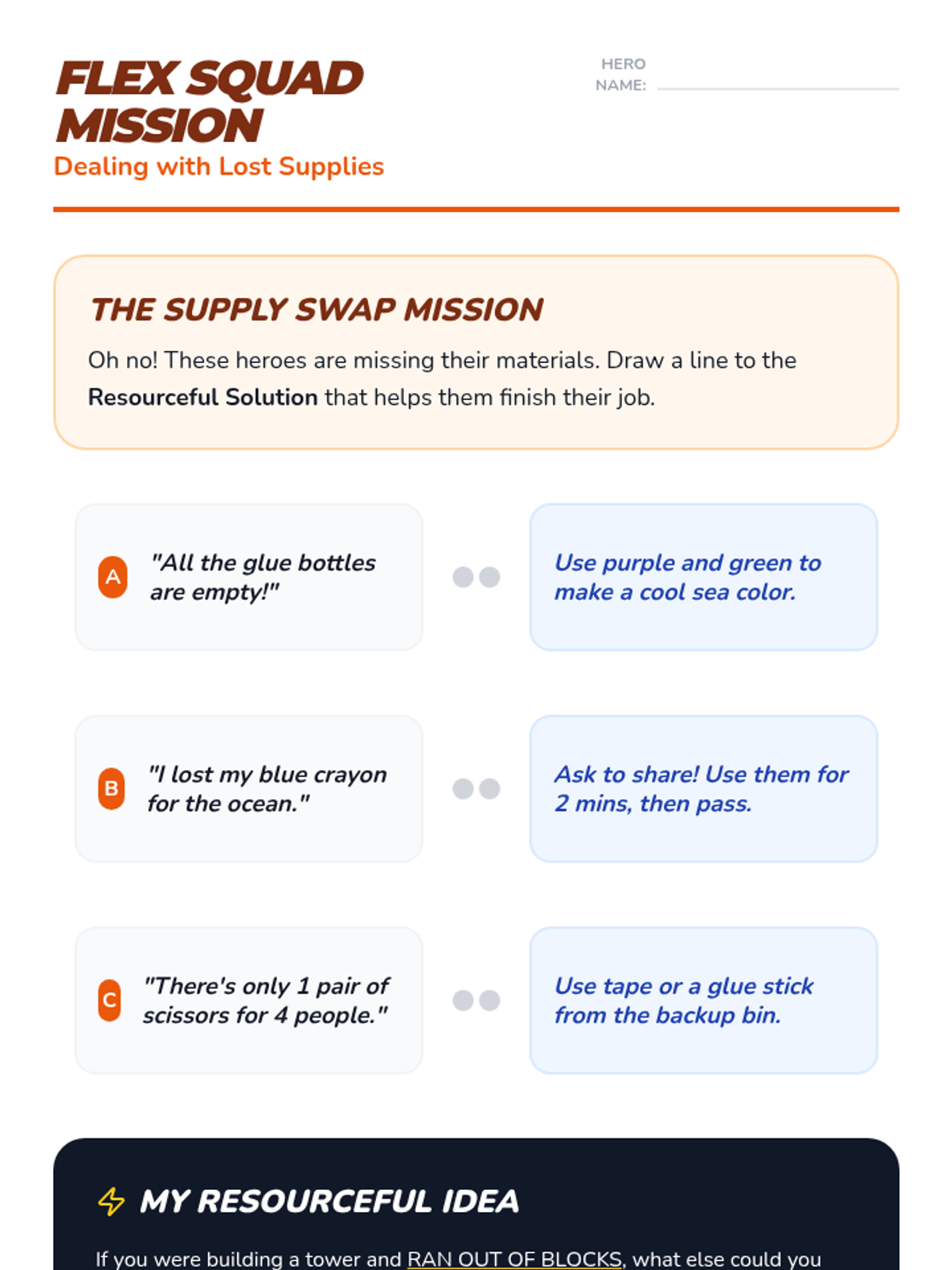
Students develop resourcefulness and help-seeking skills when materials for a task are missing or depleted.
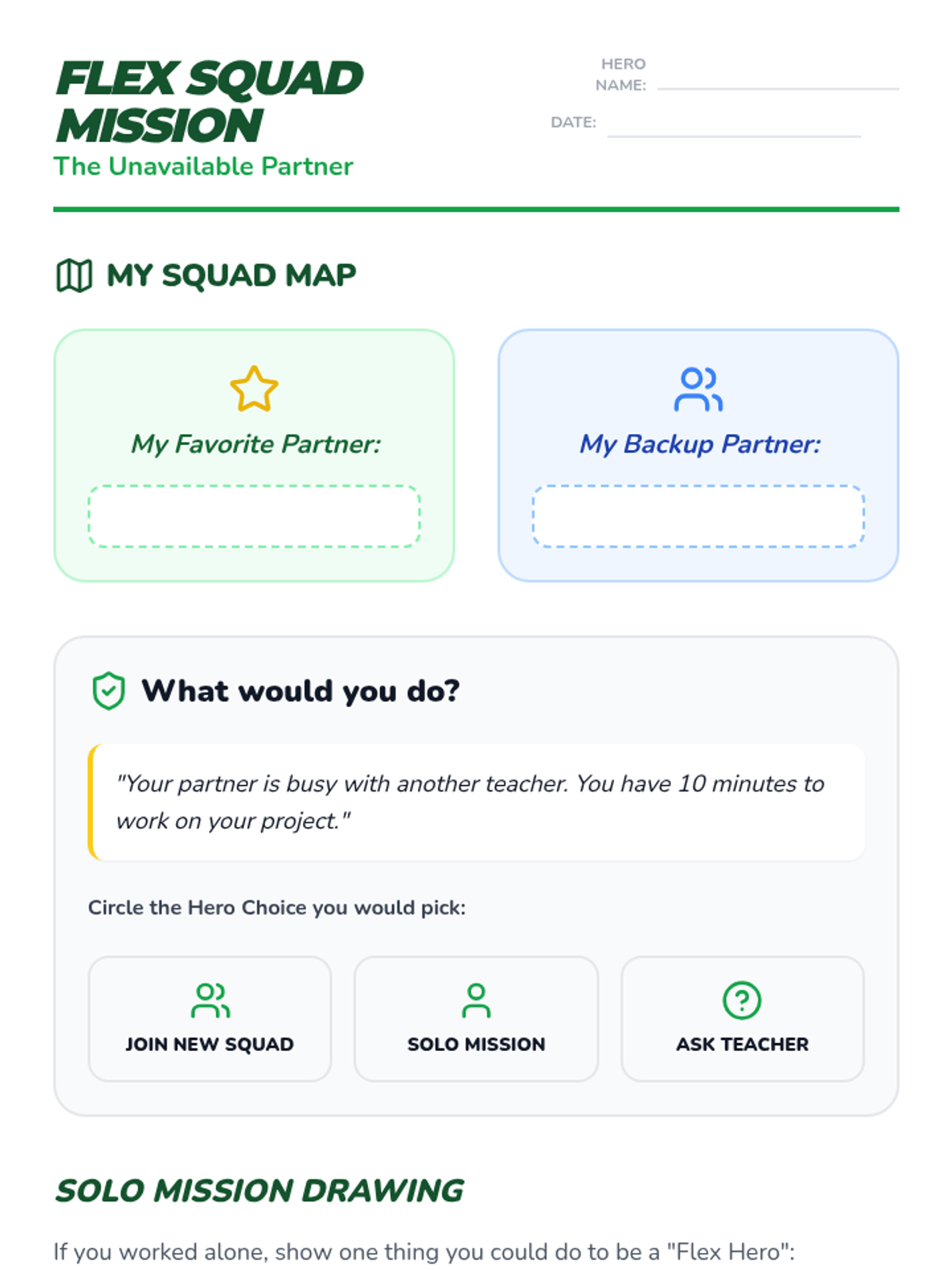
Students practice social initiation and independent work strategies for when an expected partner is unavailable.
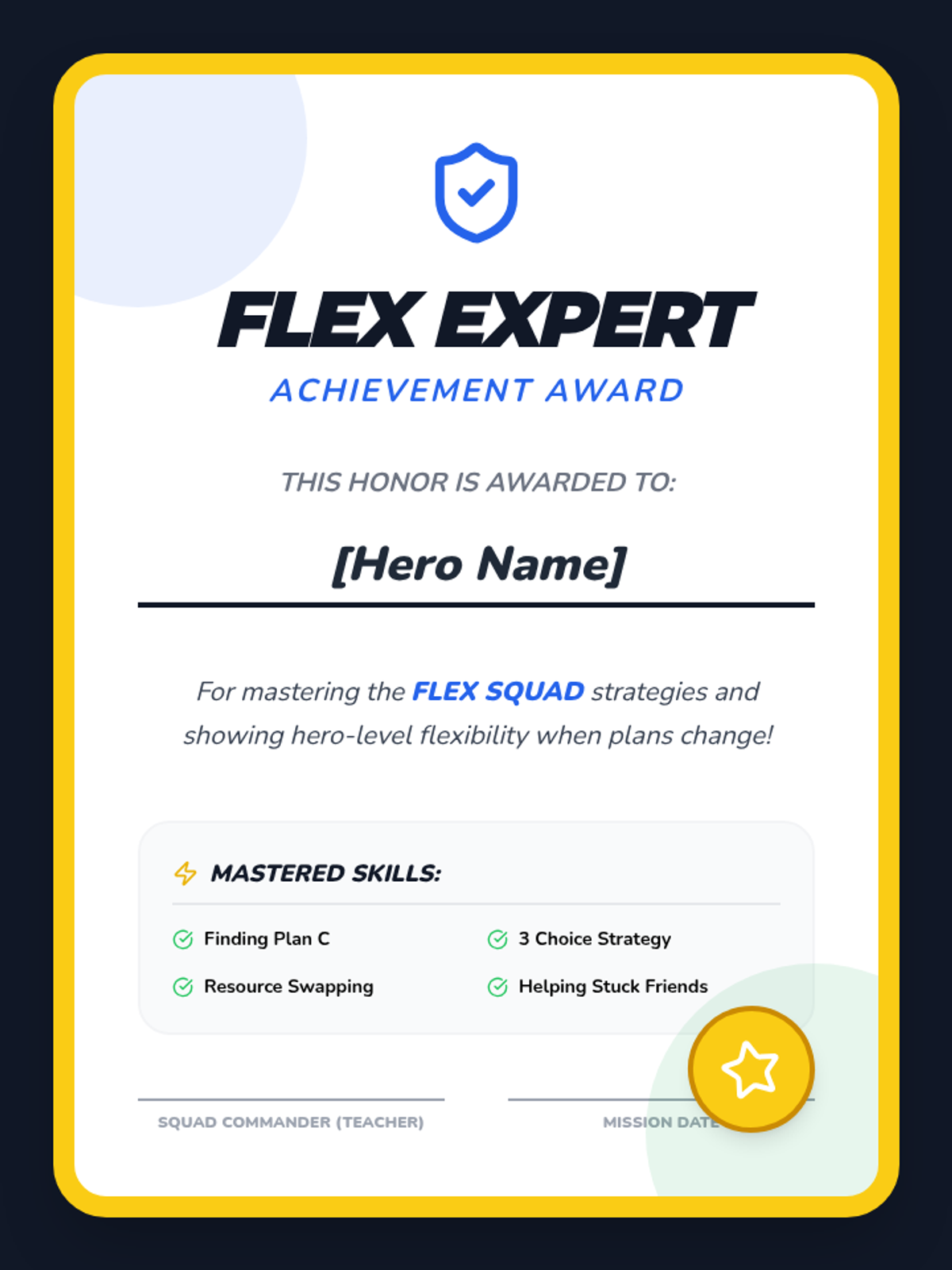
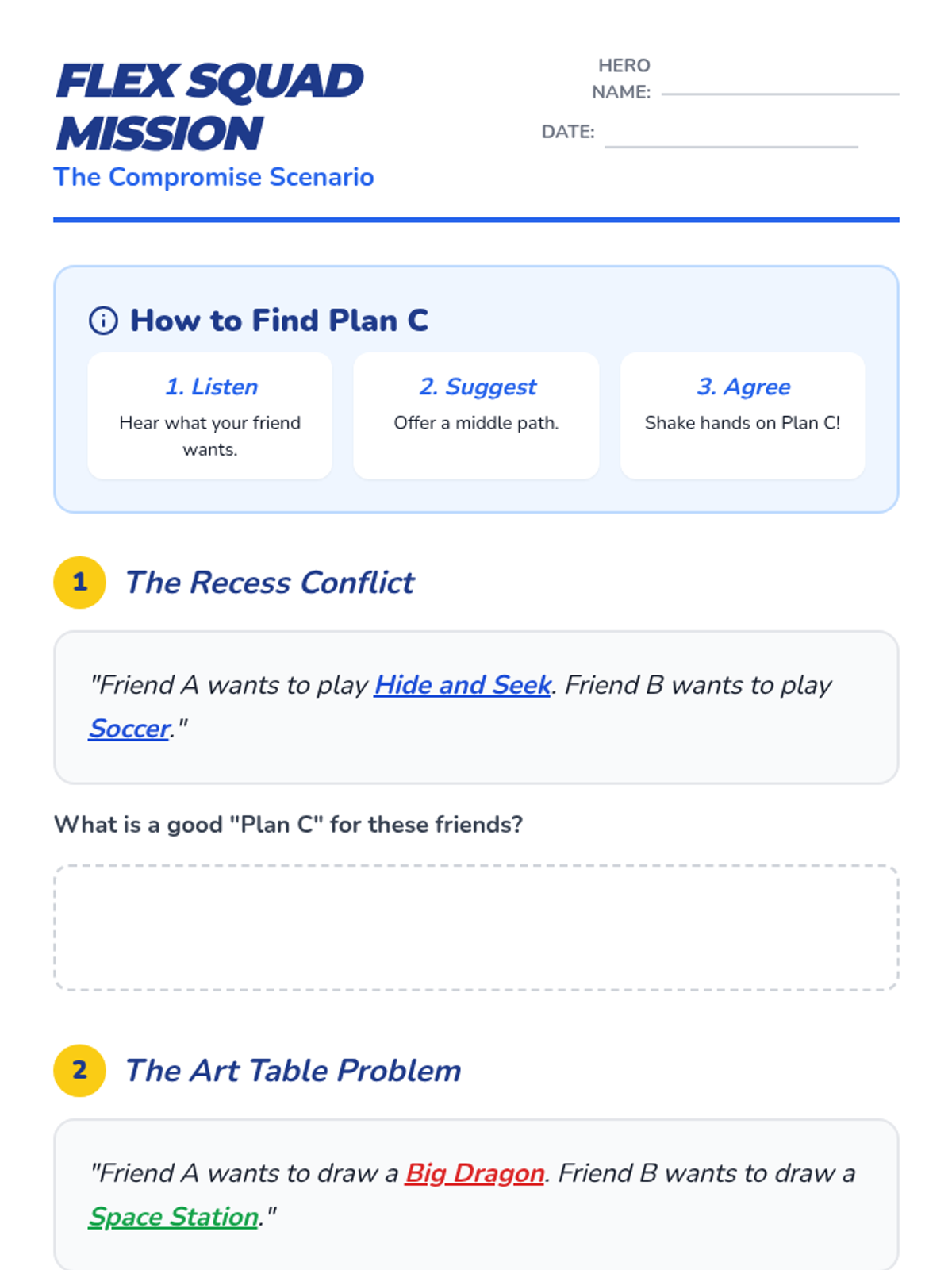
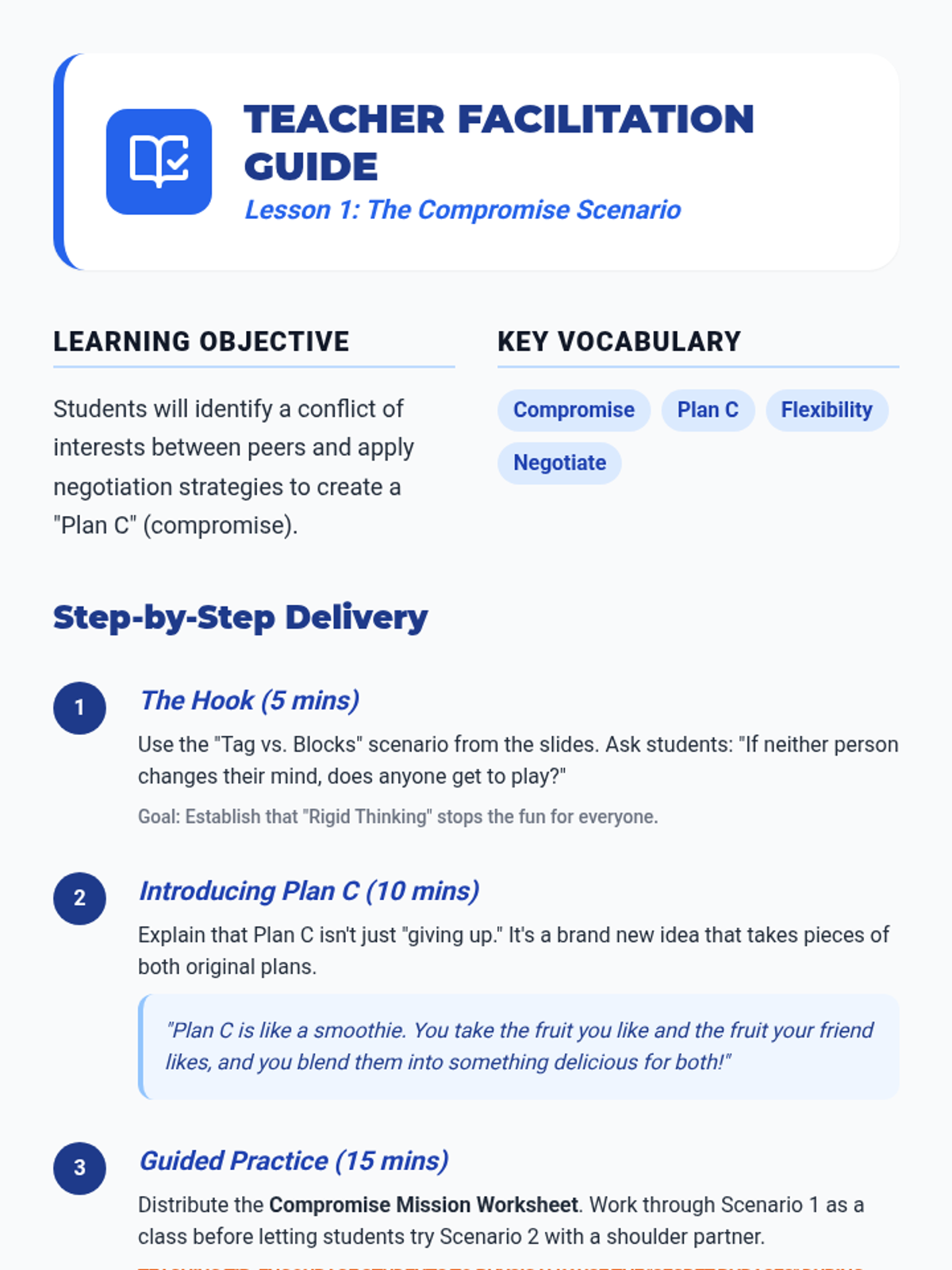
Students practice the language of negotiation and finding 'Plan C' when friends want to do different things.
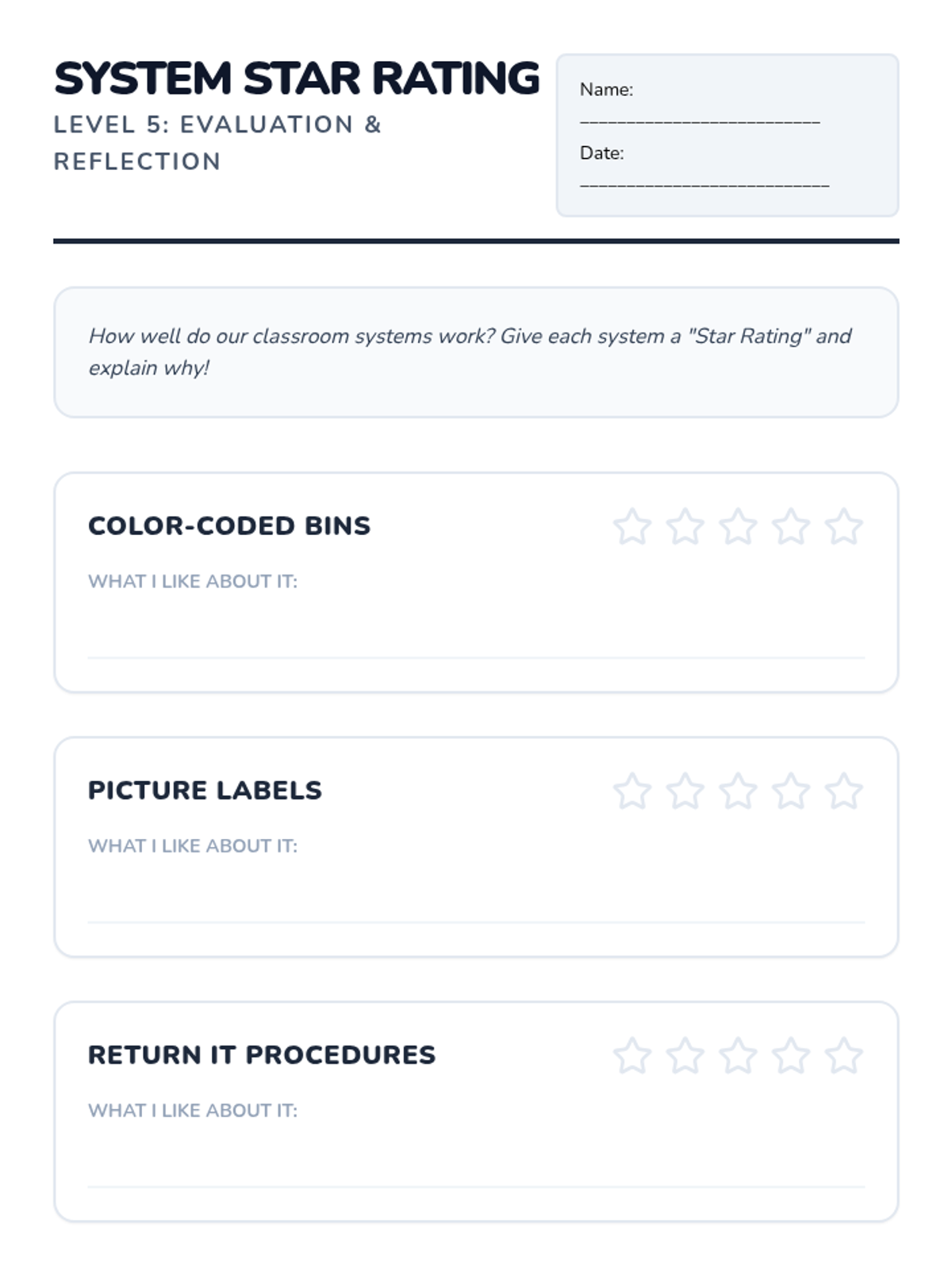
The class reviews the organizational systems they have learned, conducting time trials to see how organization aids efficiency.
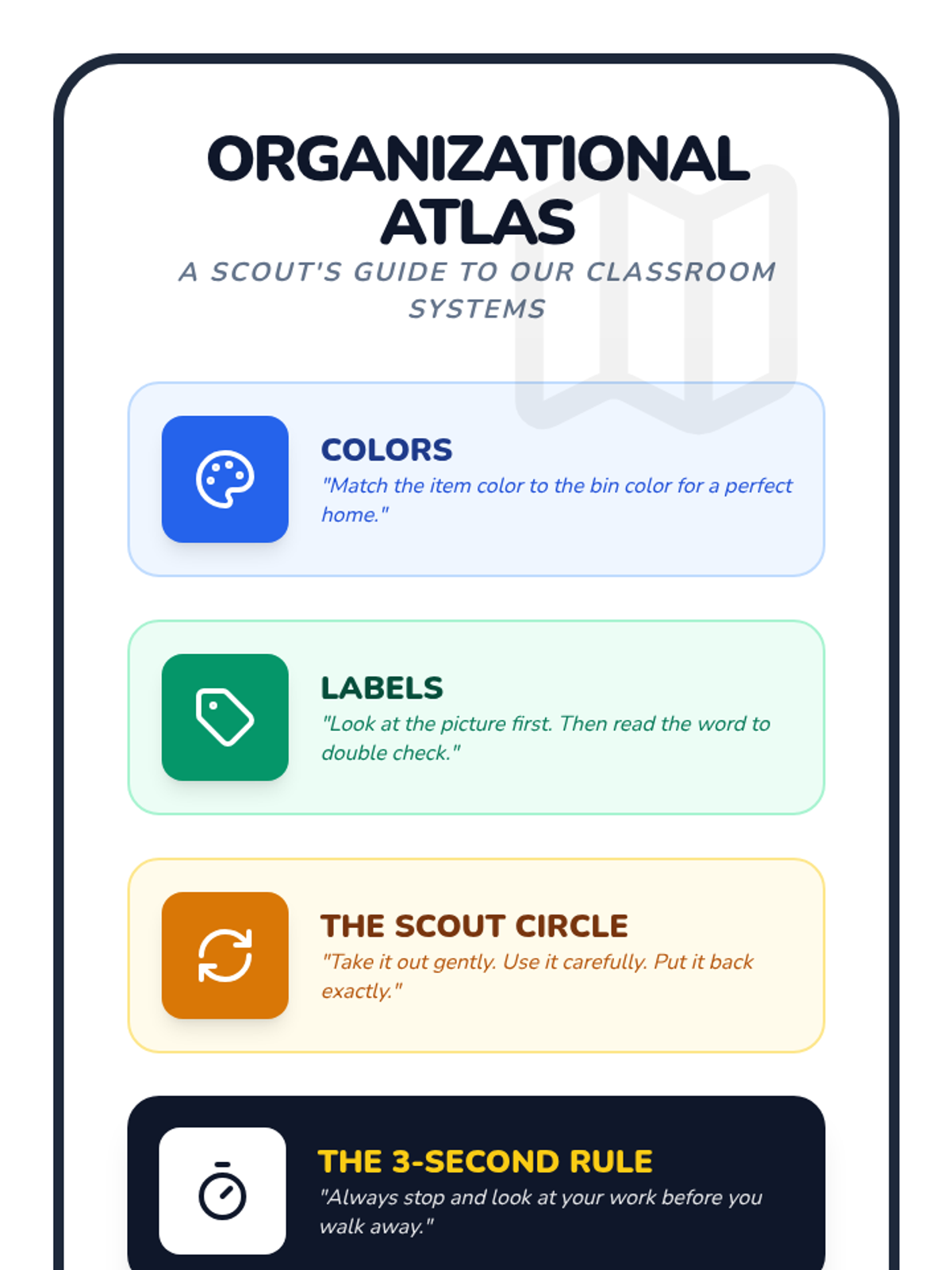
Students role-play the correct process for taking an item from a shared visual system and returning it exactly to the matching label.
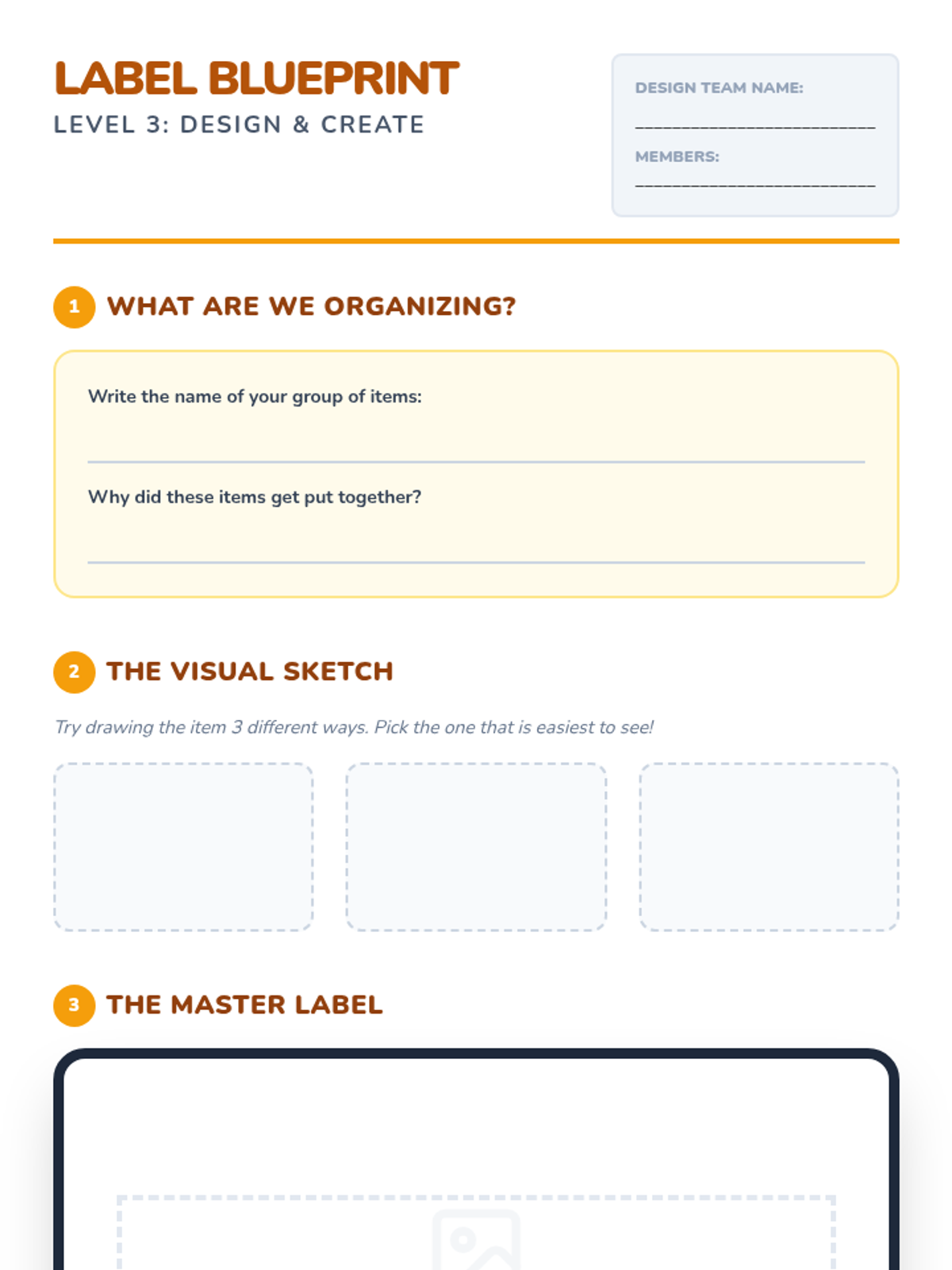
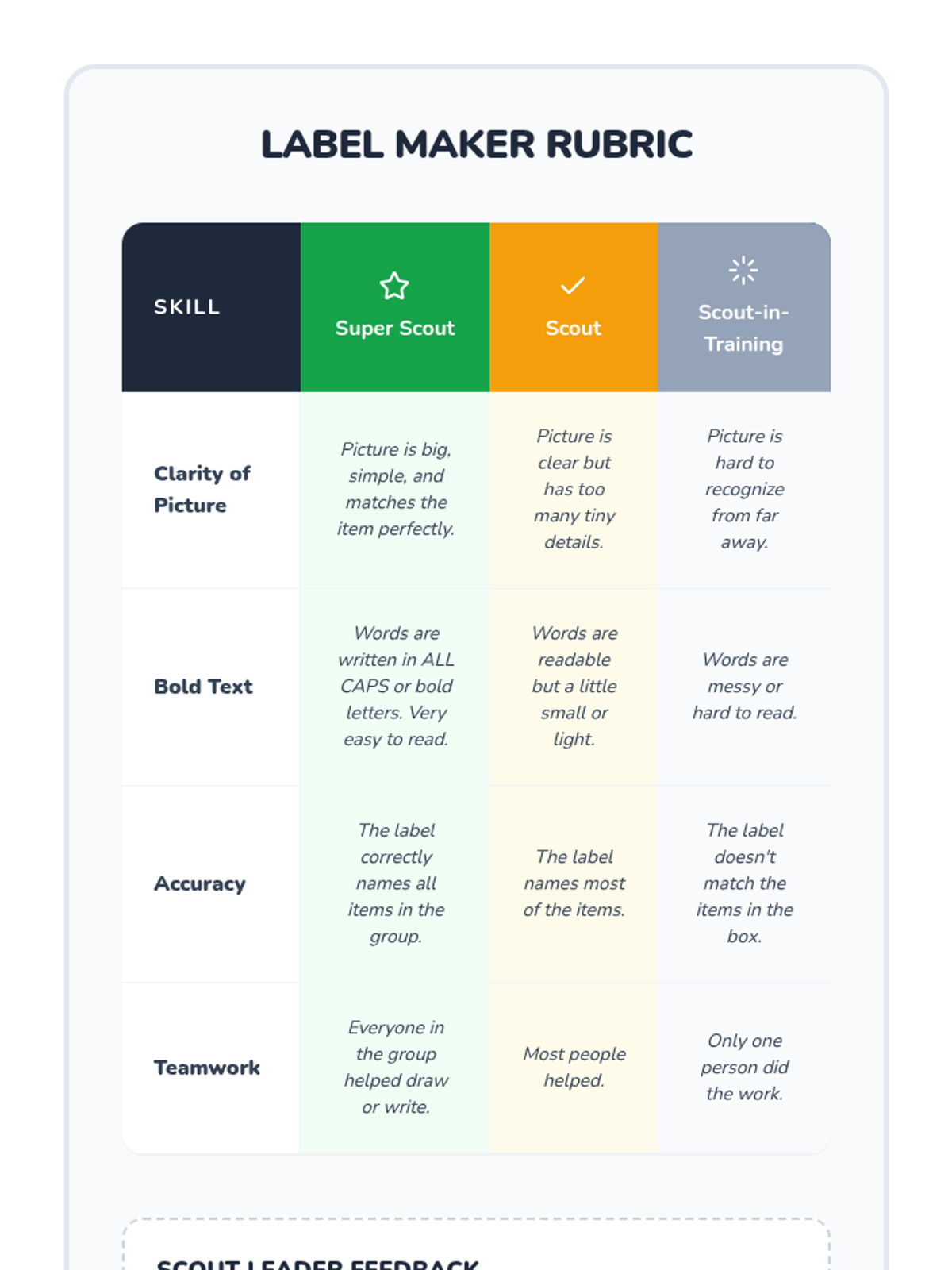
Students work in small groups to design clear, helpful labels for a disorganized section of the classroom, focusing on clarity and visual-word association.
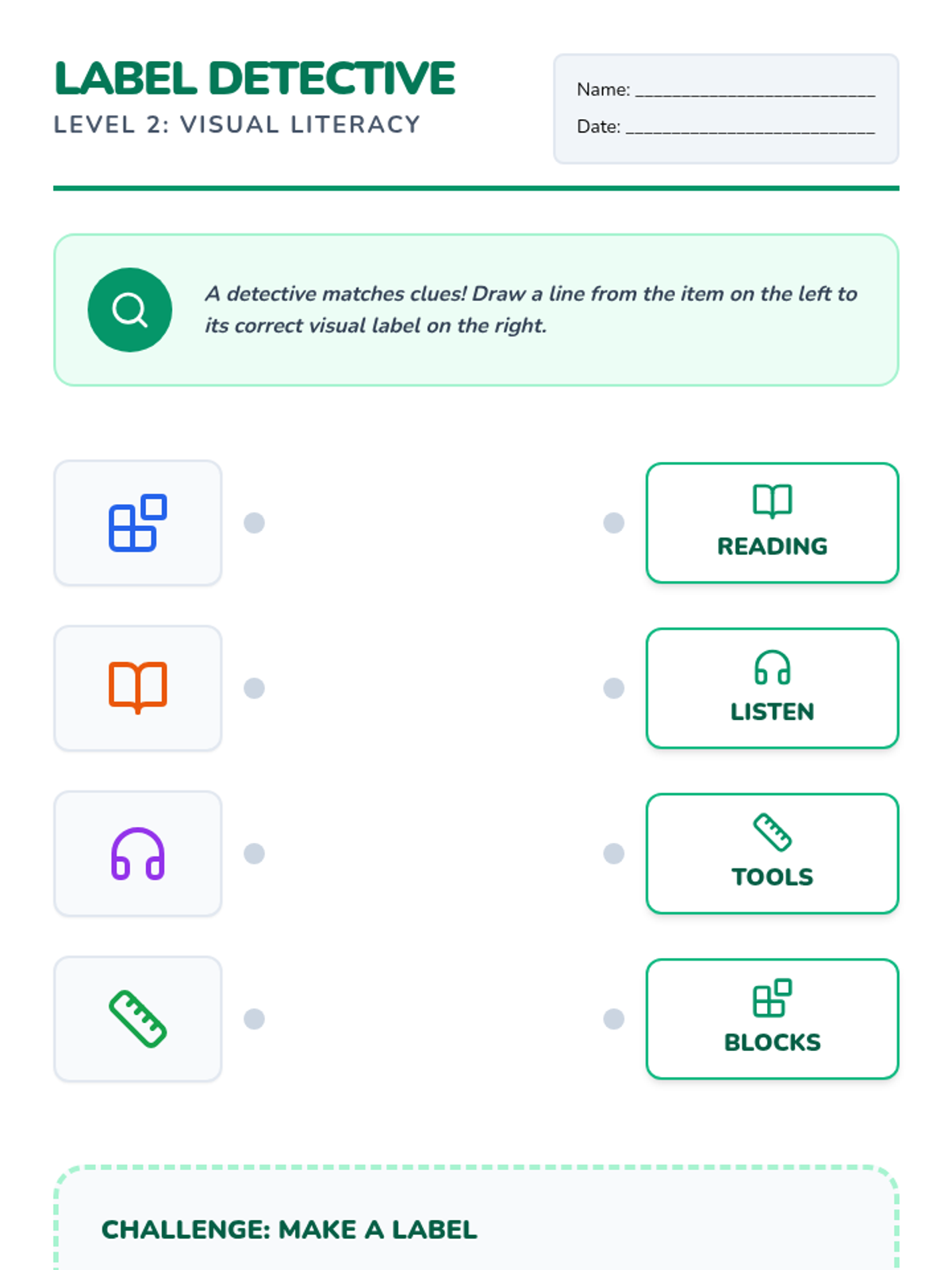
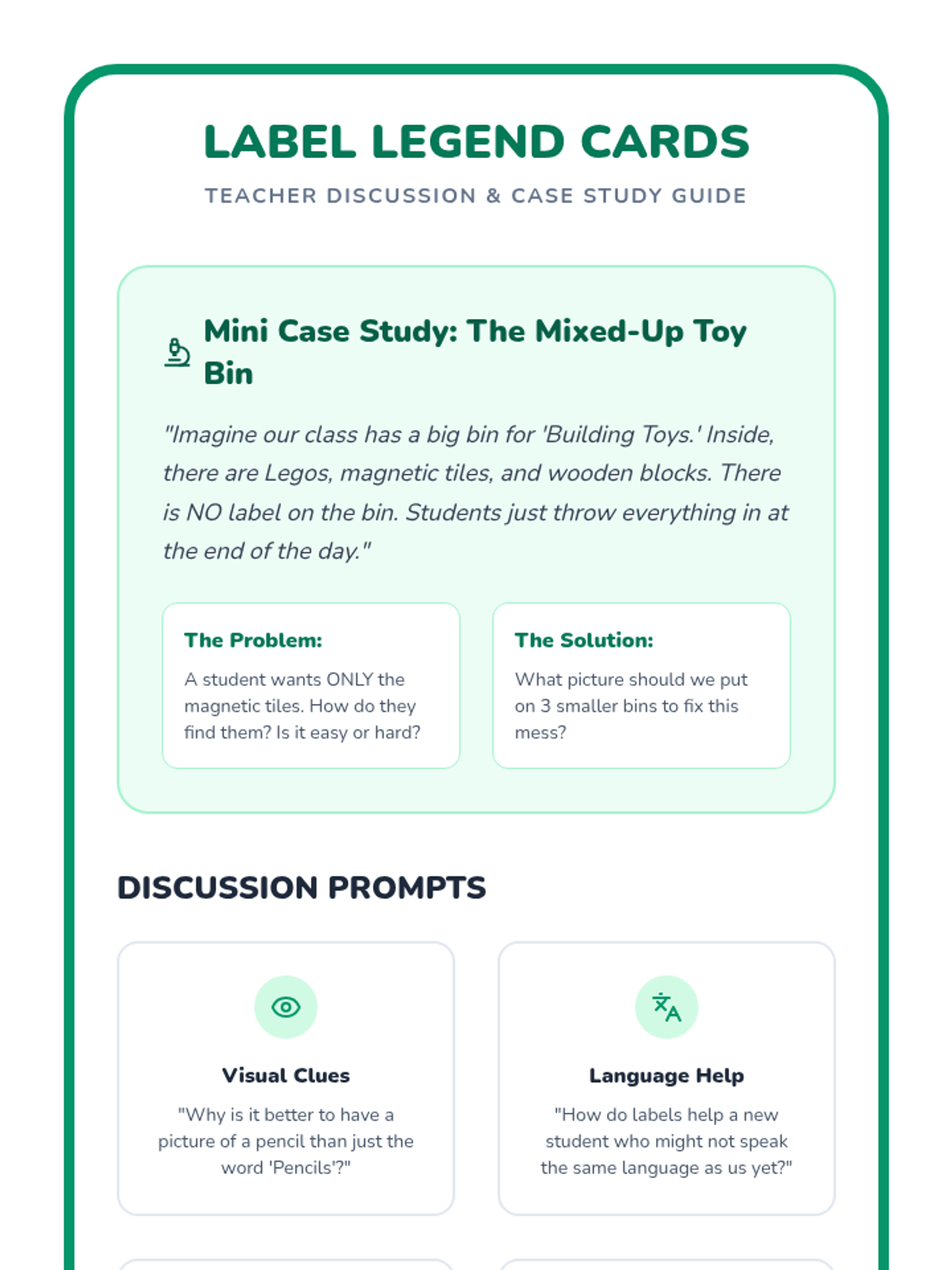
Students examine various picture labels used on bins and shelves to understand how images assist navigation and item placement.
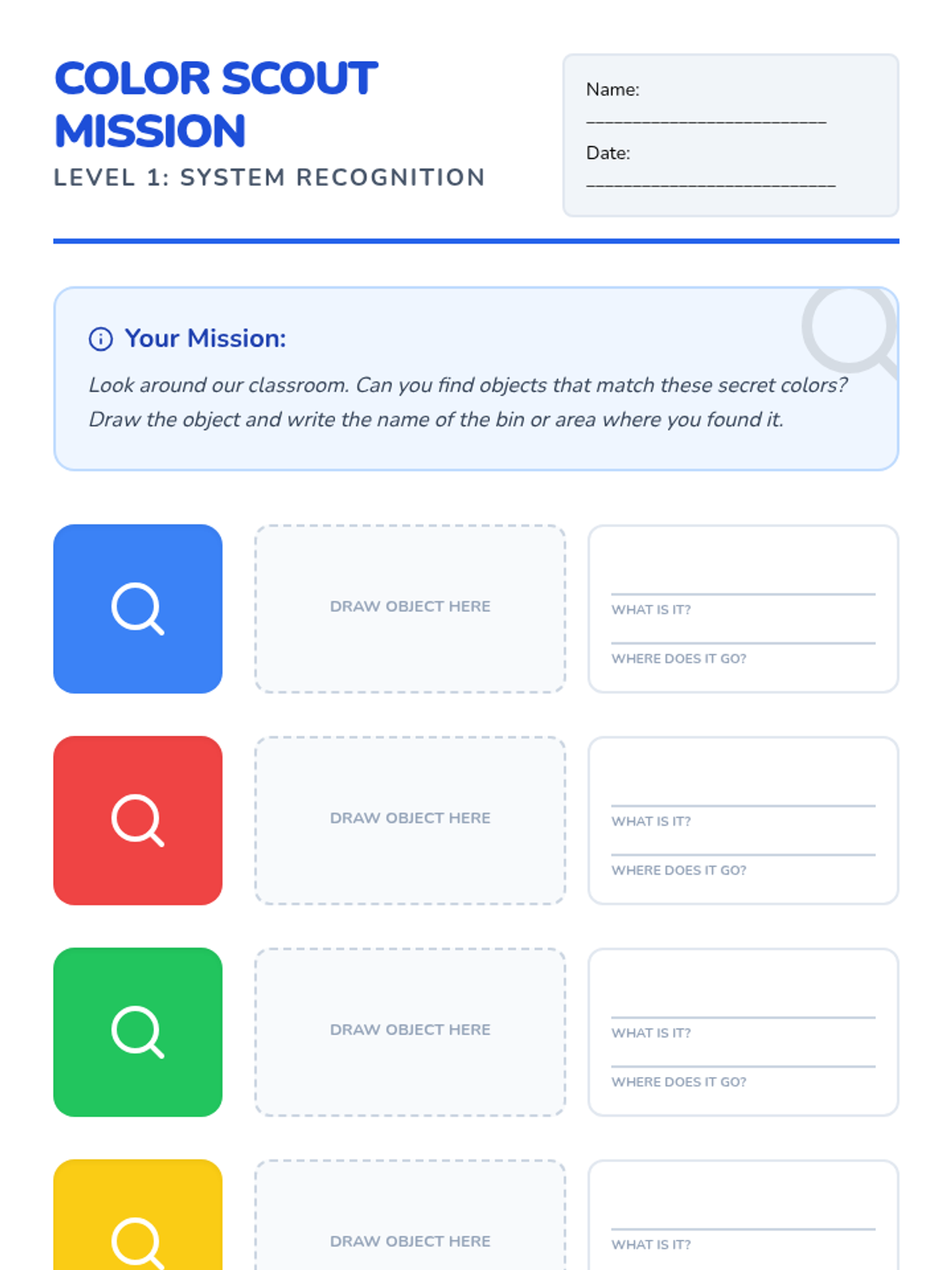
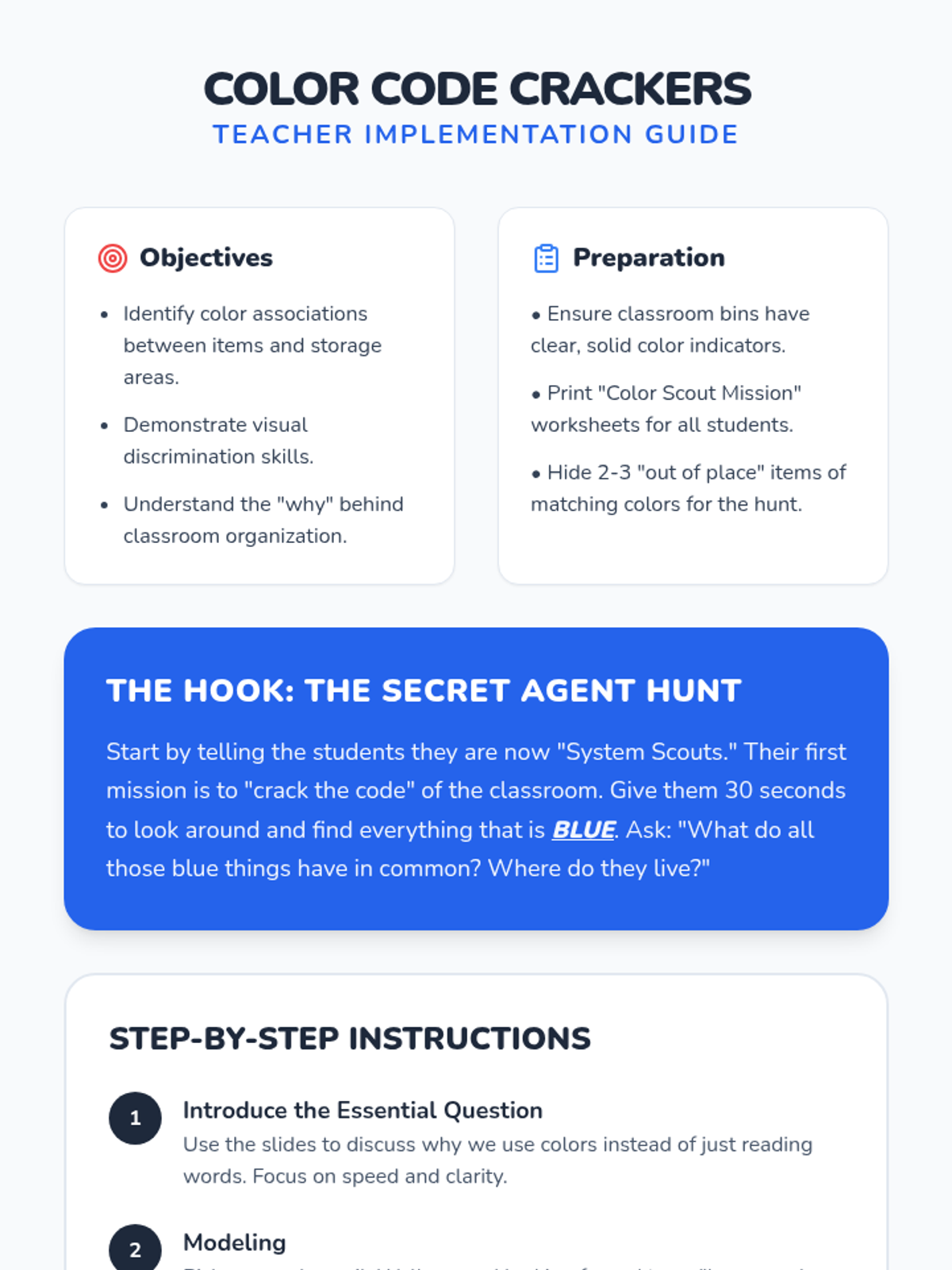
Students explore the classroom to identify color-coded connections (e.g., blue folder matches the blue math bin) and participate in a scavenger hunt to reinforce these associations.