Stop-and-think strategies, impulse management, and SMART goal setting for personal growth. Develops internal motivation, stress reduction techniques, and resilience through proactive planning and monitoring.
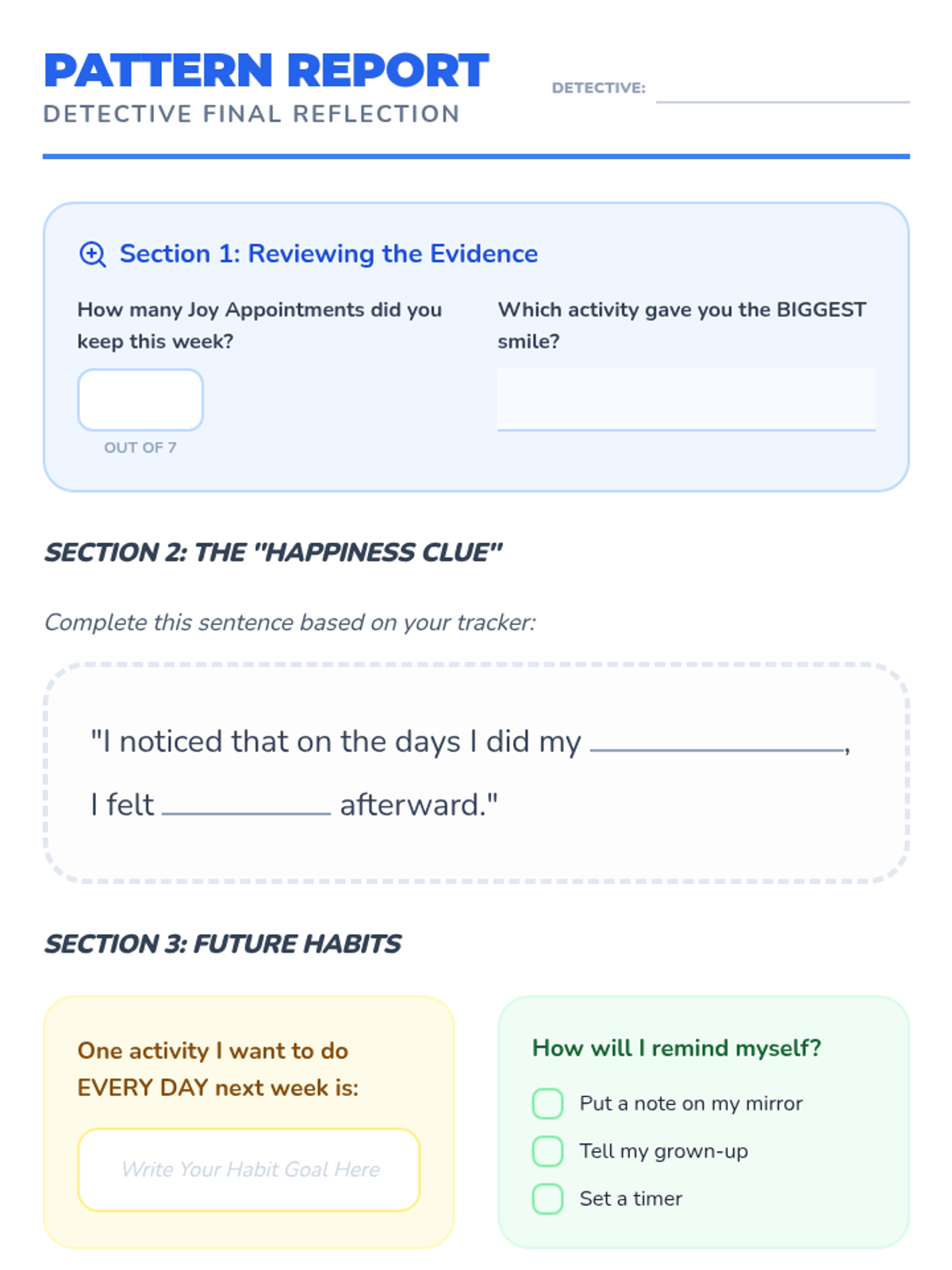
Students reflect on their habits and mood patterns to set personal goals for maintaining a positive daily routine.
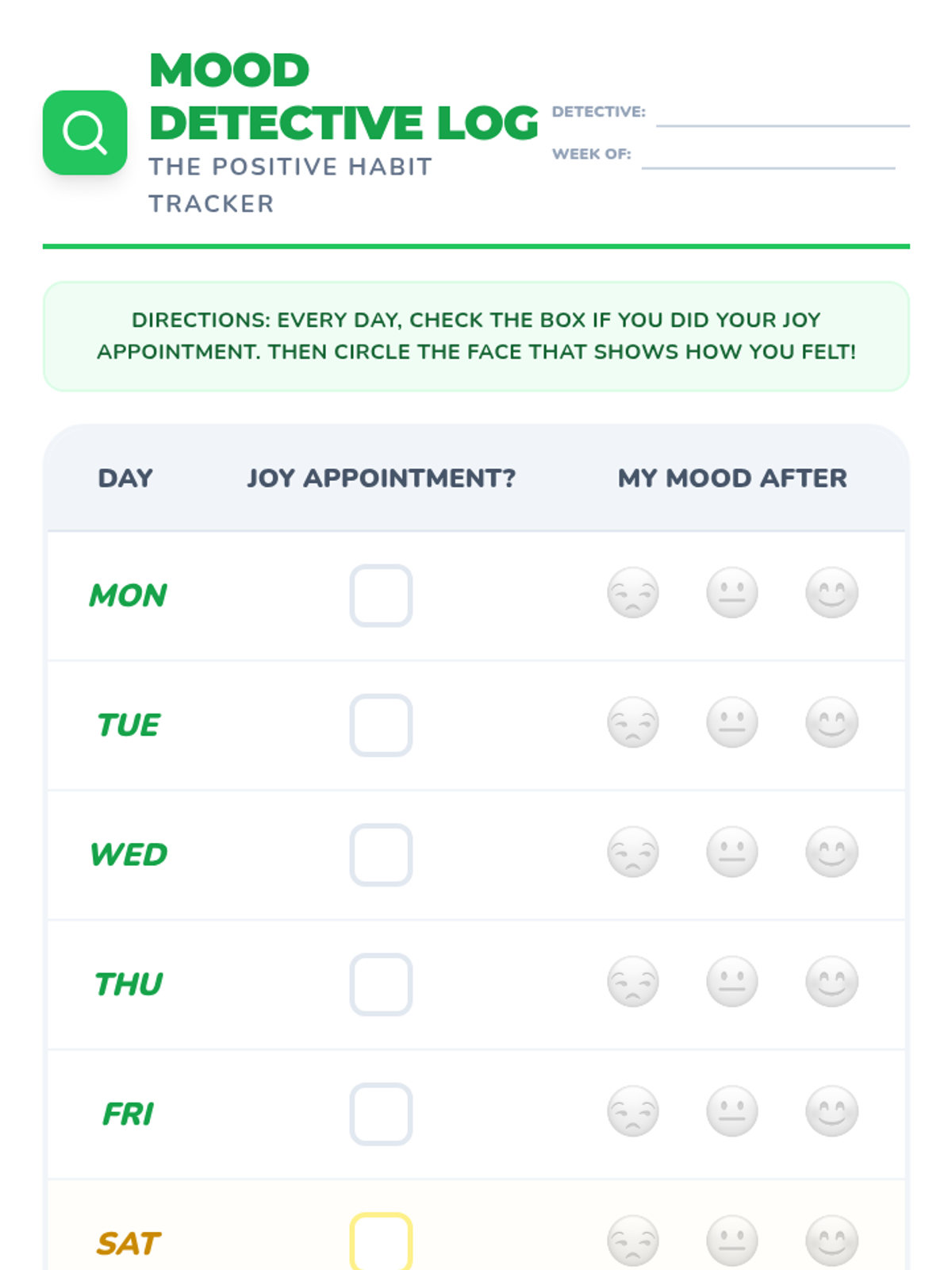
Students use a tracker to monitor positive activities and their subsequent mood, reinforcing the link between action and emotion.
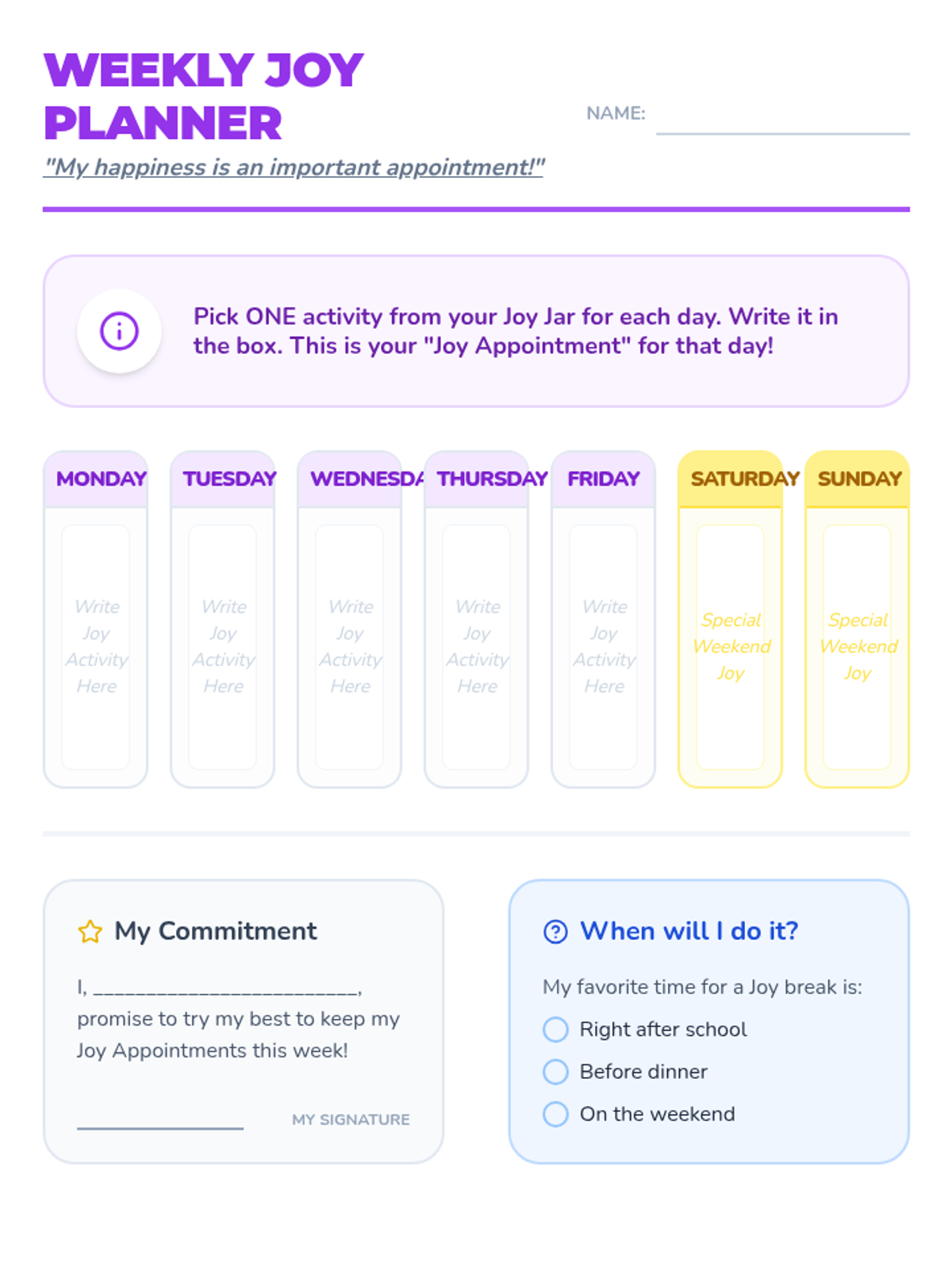
Students learn to schedule intentional 'joy breaks' into their weekly calendar, treating self-care as an important commitment.
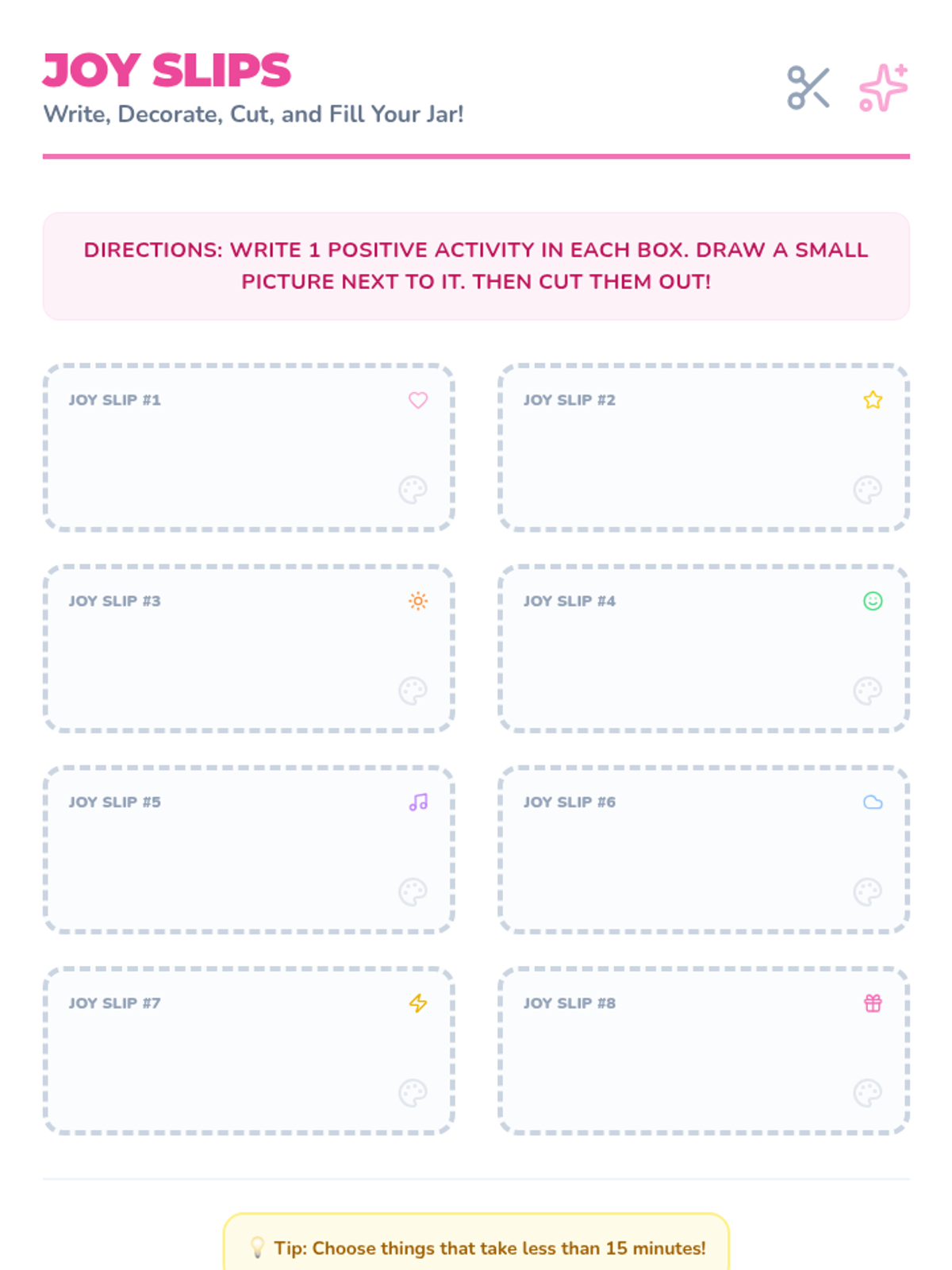
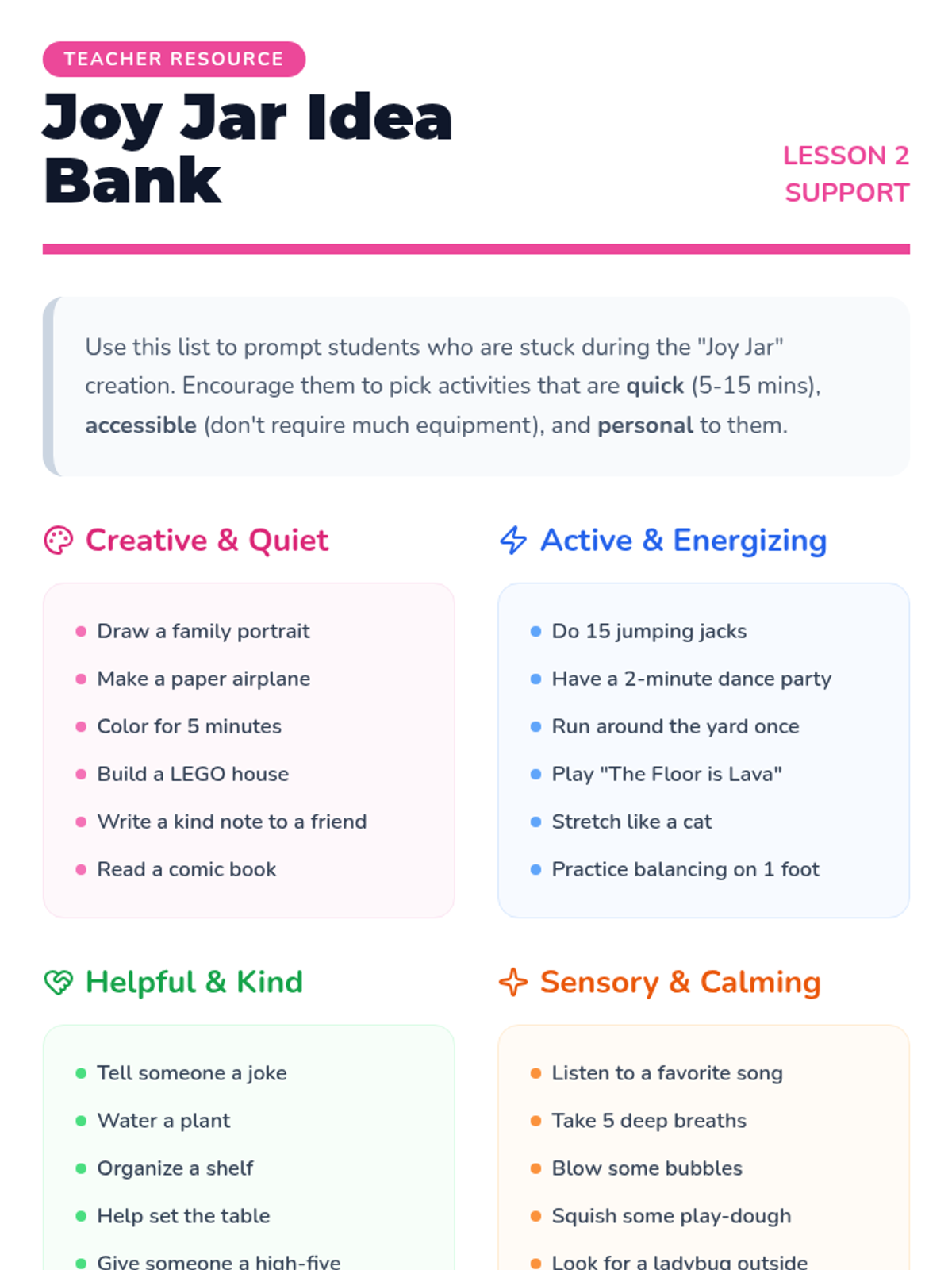
Students create a 'Happiness Jar' filled with positive activity ideas to combat decision fatigue and provide quick mood boosts.
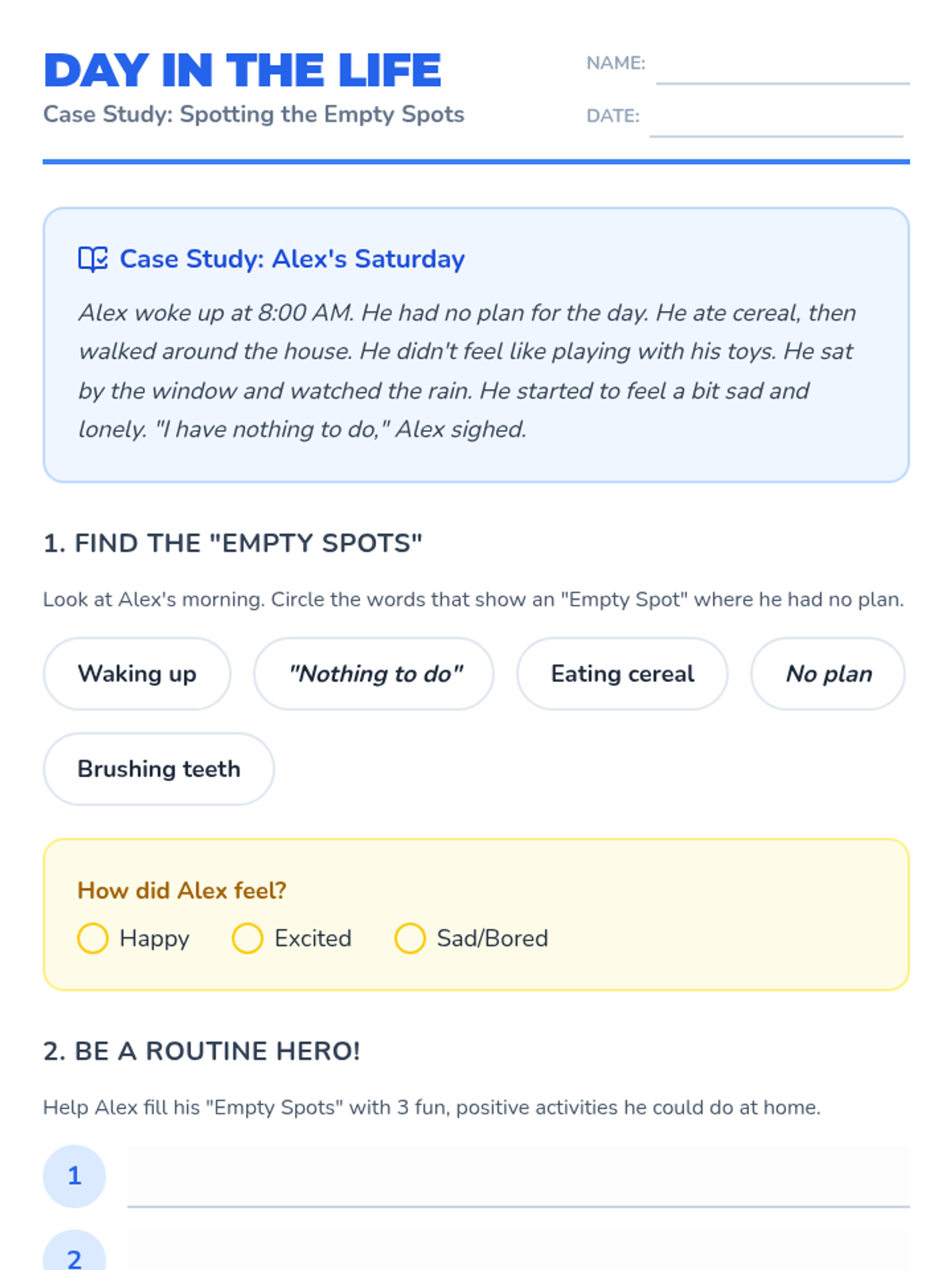
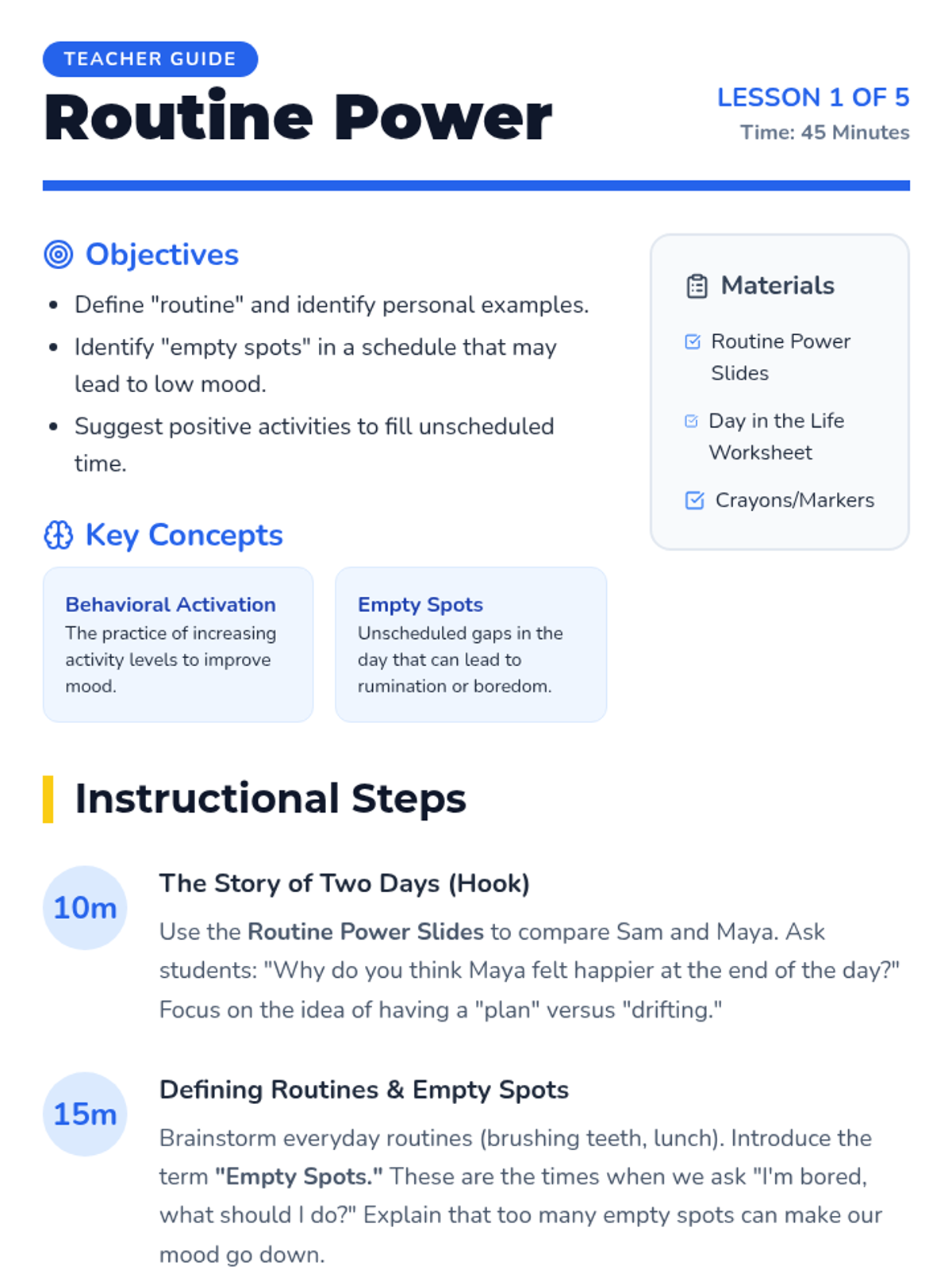
Students analyze daily routines to understand how 'empty spots' affect mood and learn how purposeful routines can boost happiness.
Students present their final structures and reflect on which memory tool helped them the most (the checklist, the quiet time, or the planning). They discuss how to use that same tool in Math or Reading class.
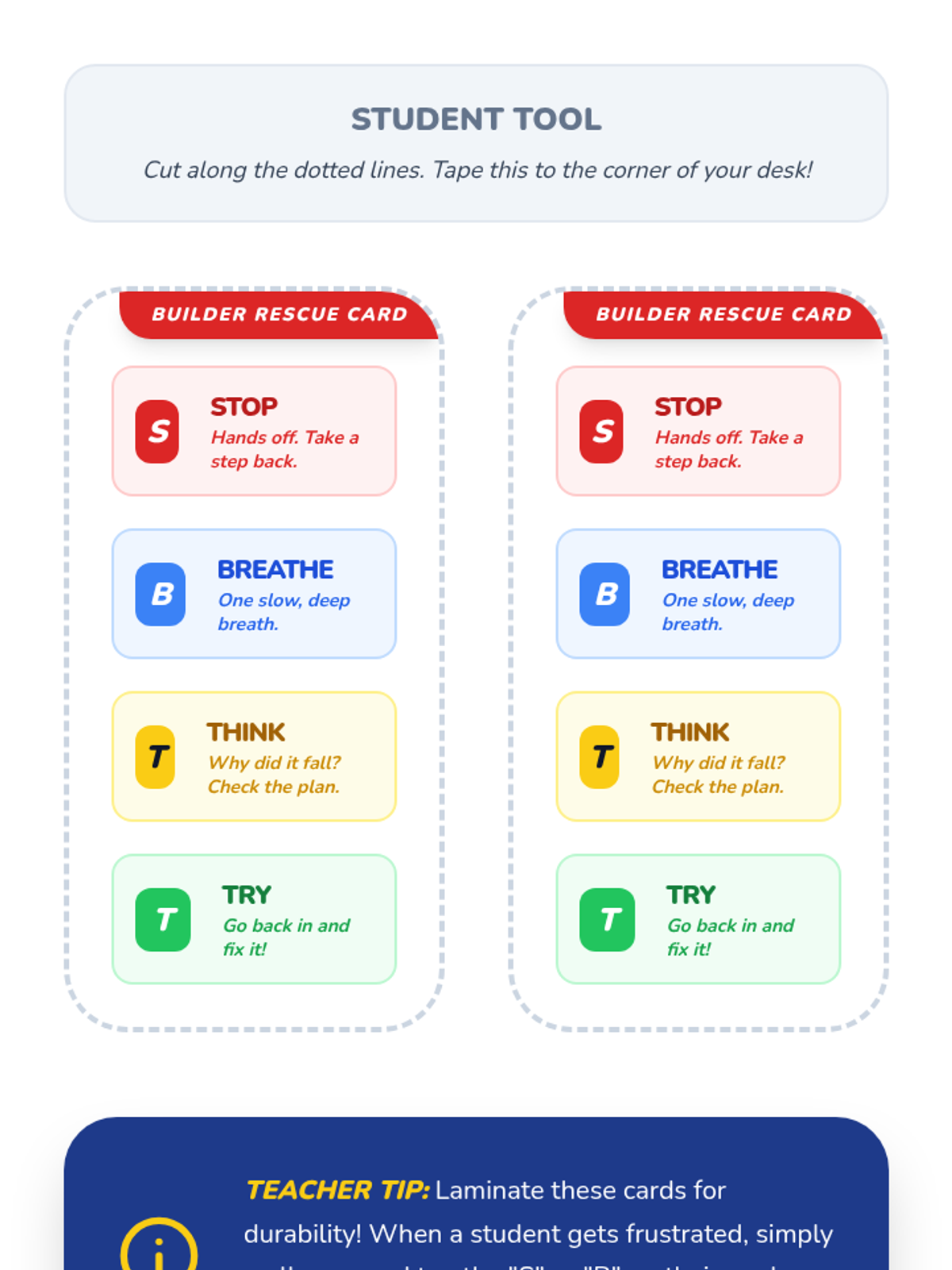
When students encounter a structural failure or mistake, they use a 'Problem Solving Protocol' (Stop, Breathe, Think, Try) rather than getting frustrated. This explicitly teaches emotional regulation during cognitive stress.
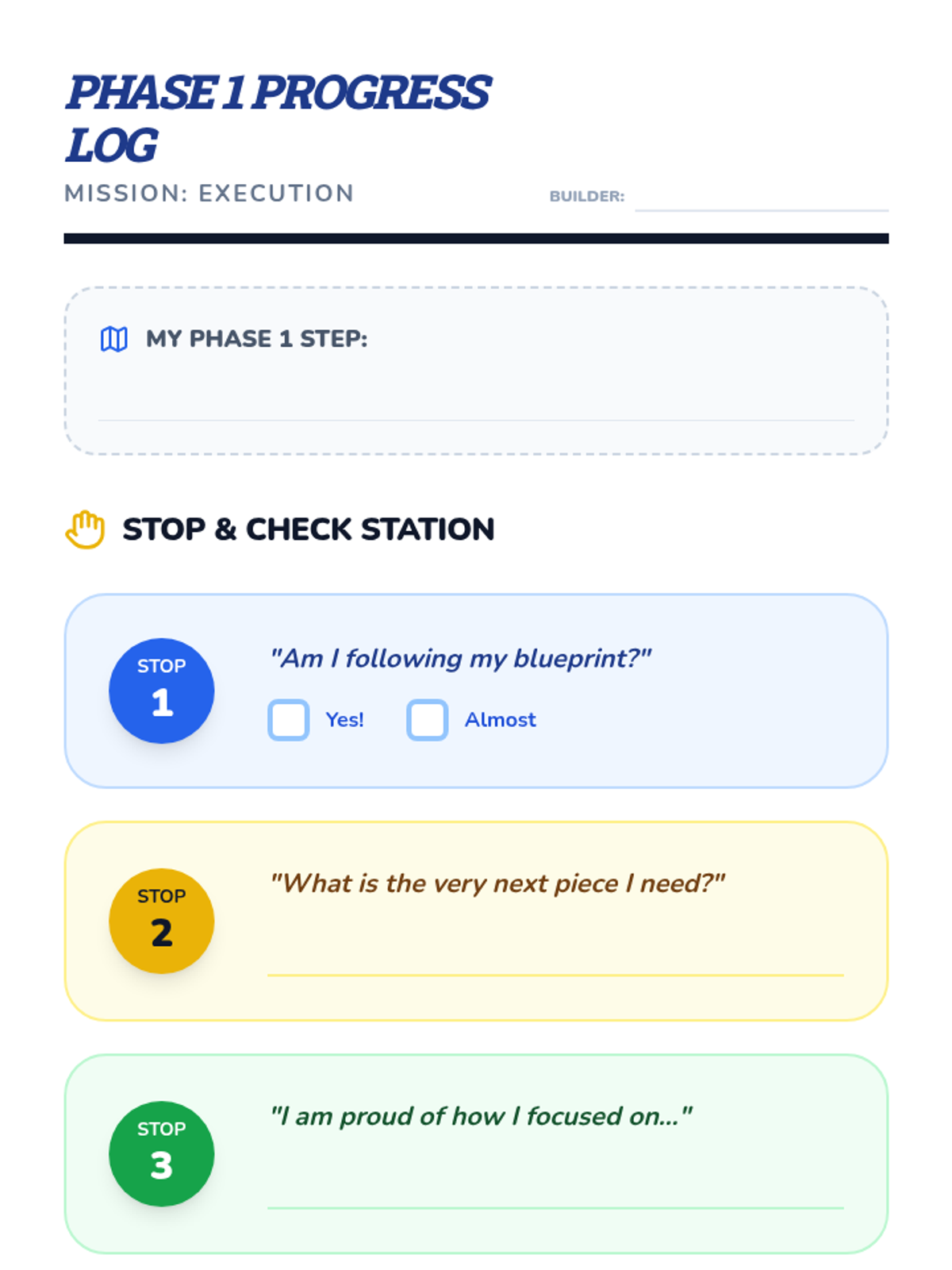
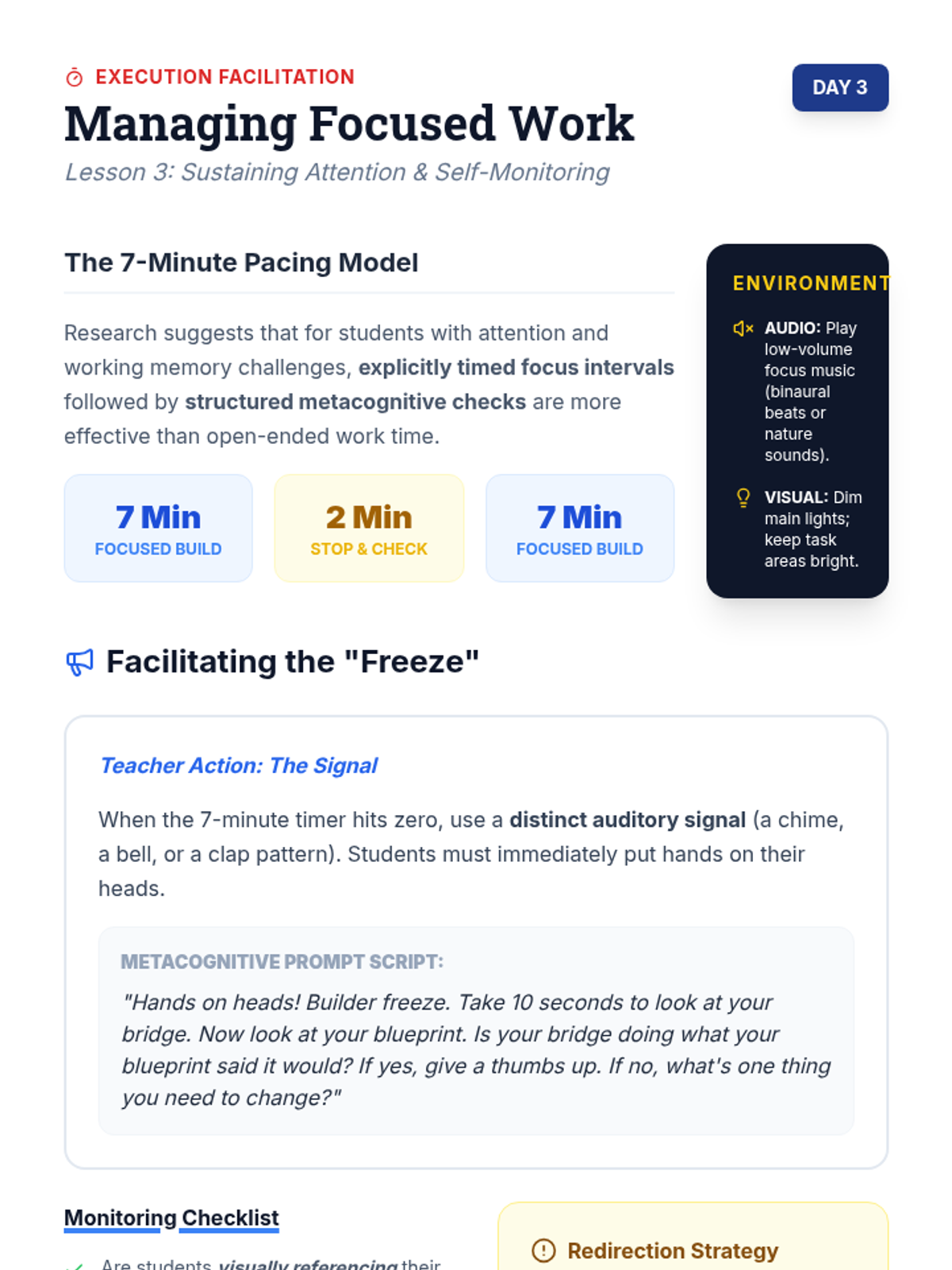
Students begin the construction phase, using their visual checklists created in Lesson 1. The teacher introduces 'Stop and Check' intervals where the class pauses to verify they are following their plan.
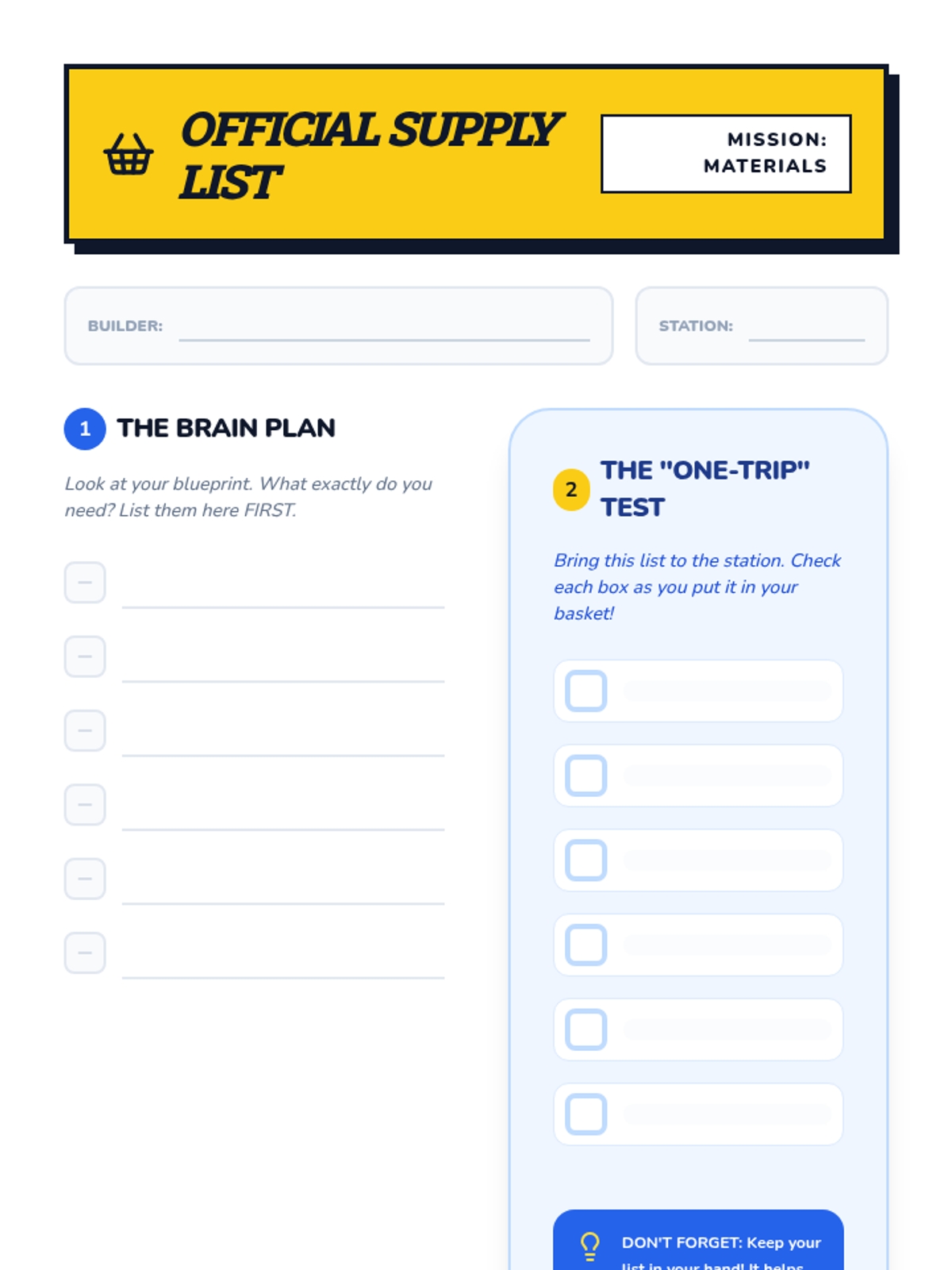
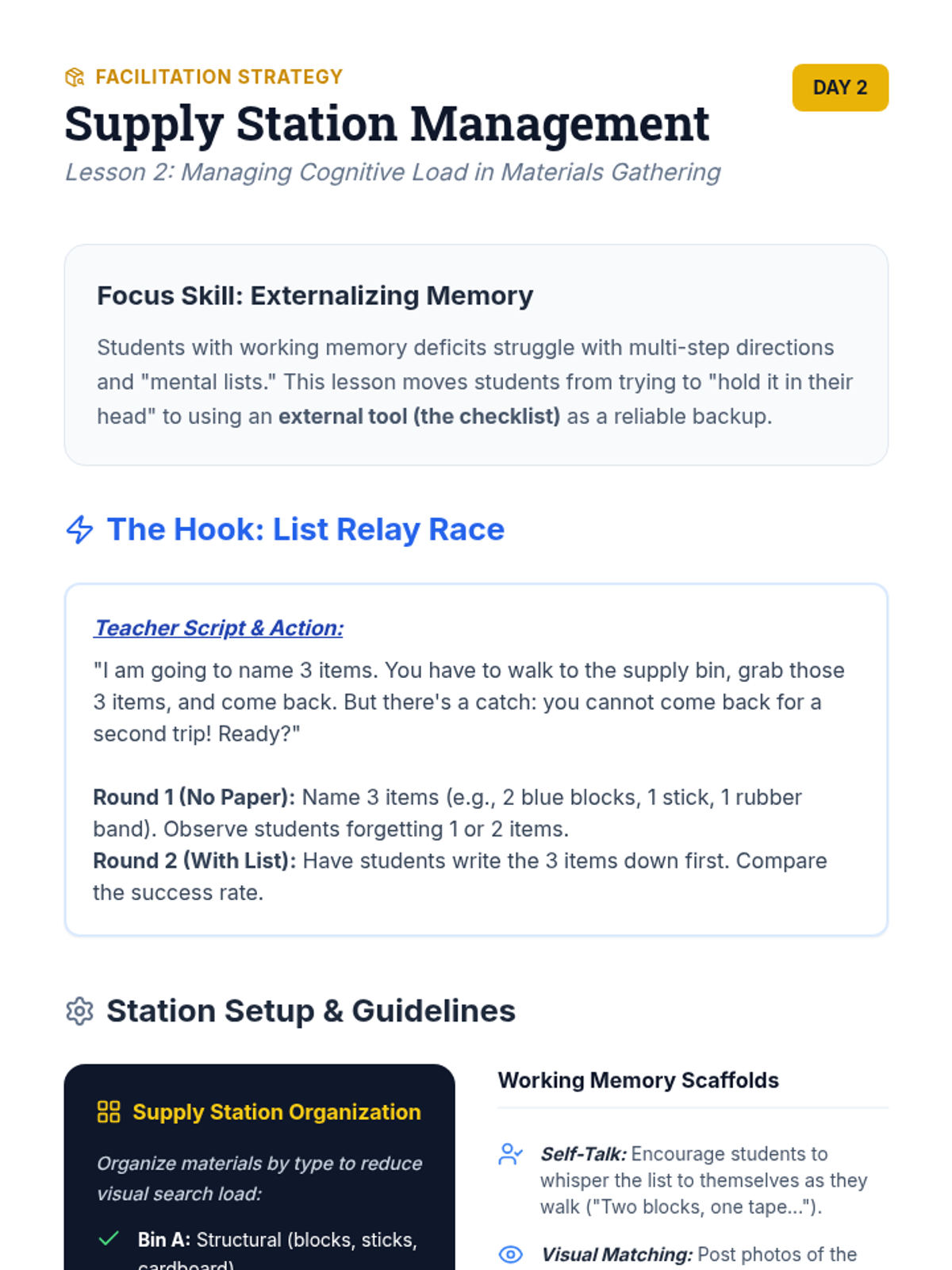
Students must identify the specific materials needed for their design. They practice using a checklist to gather items from a supply station in one trip, challenging their working memory capacity.
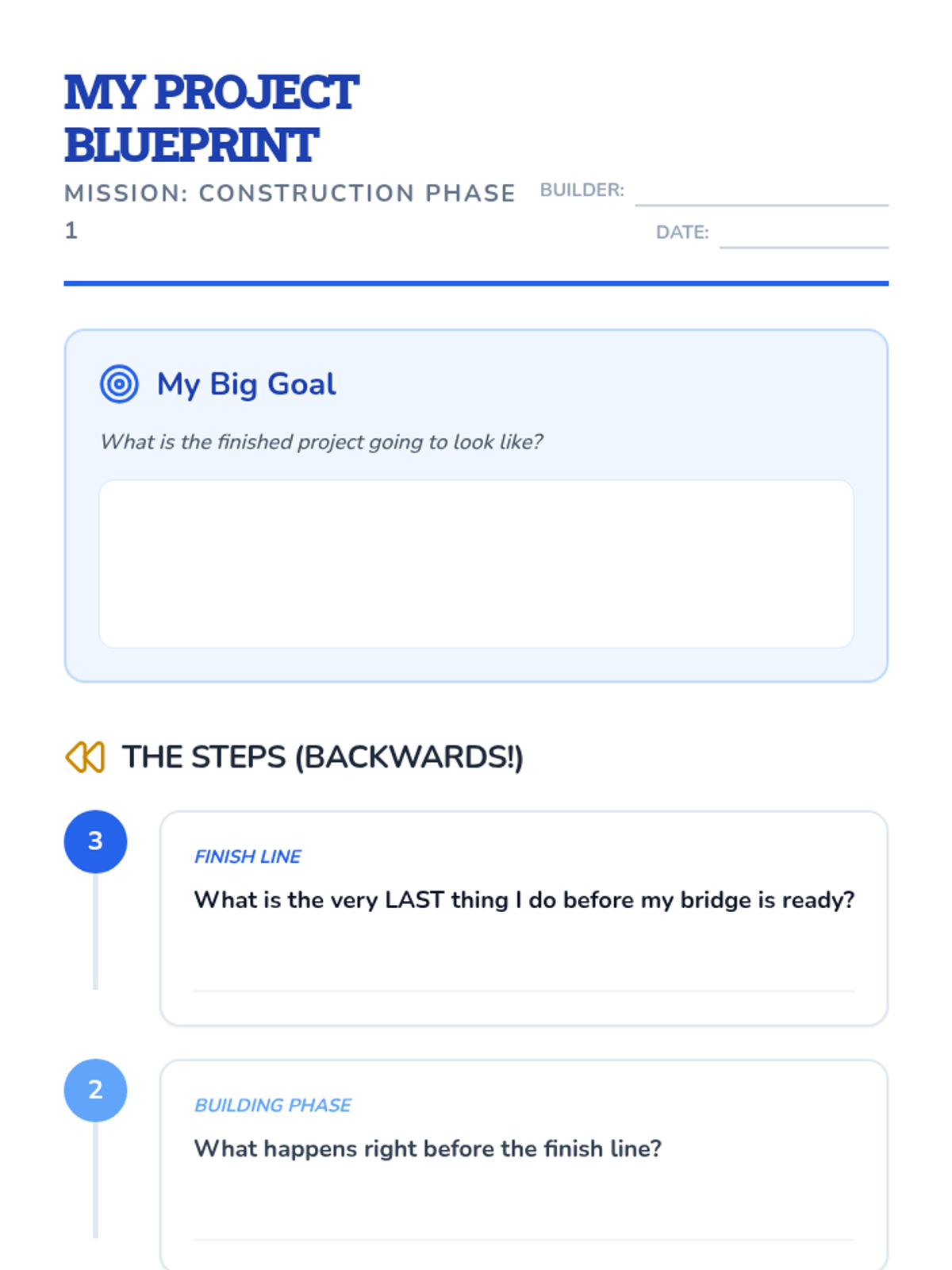
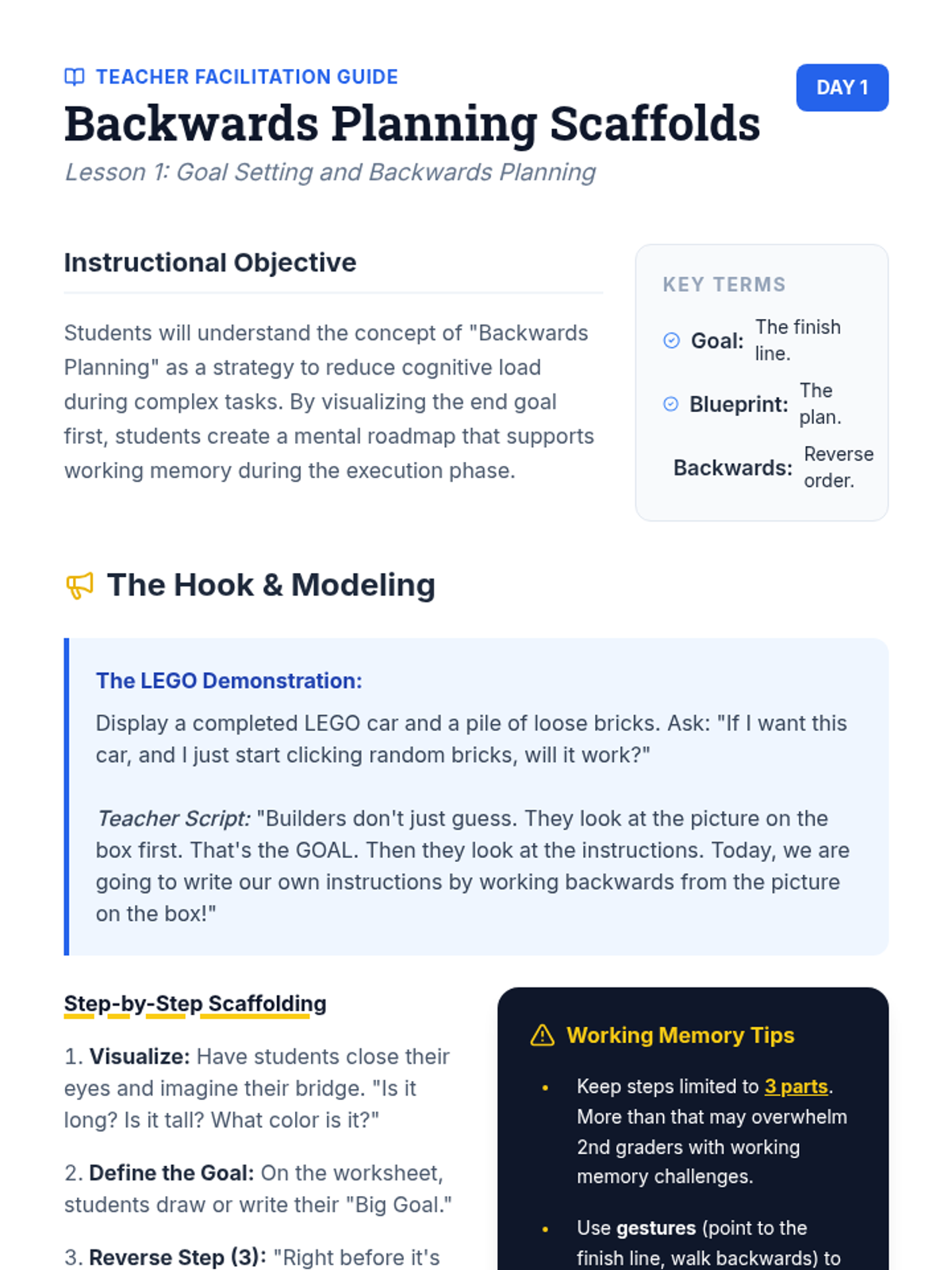
Students are introduced to a construction project. They look at the finished example and work backward to determine the steps needed to get there.
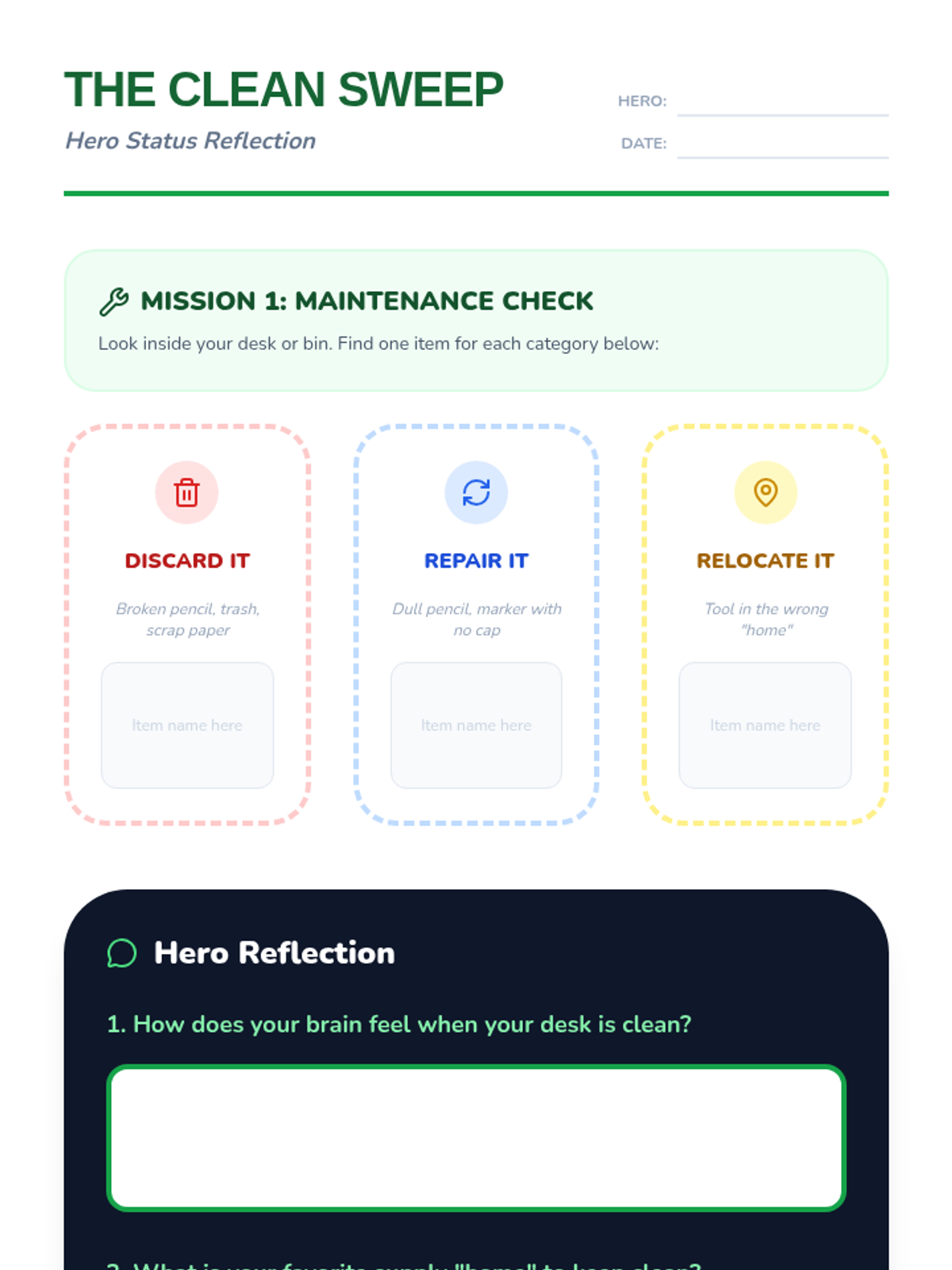
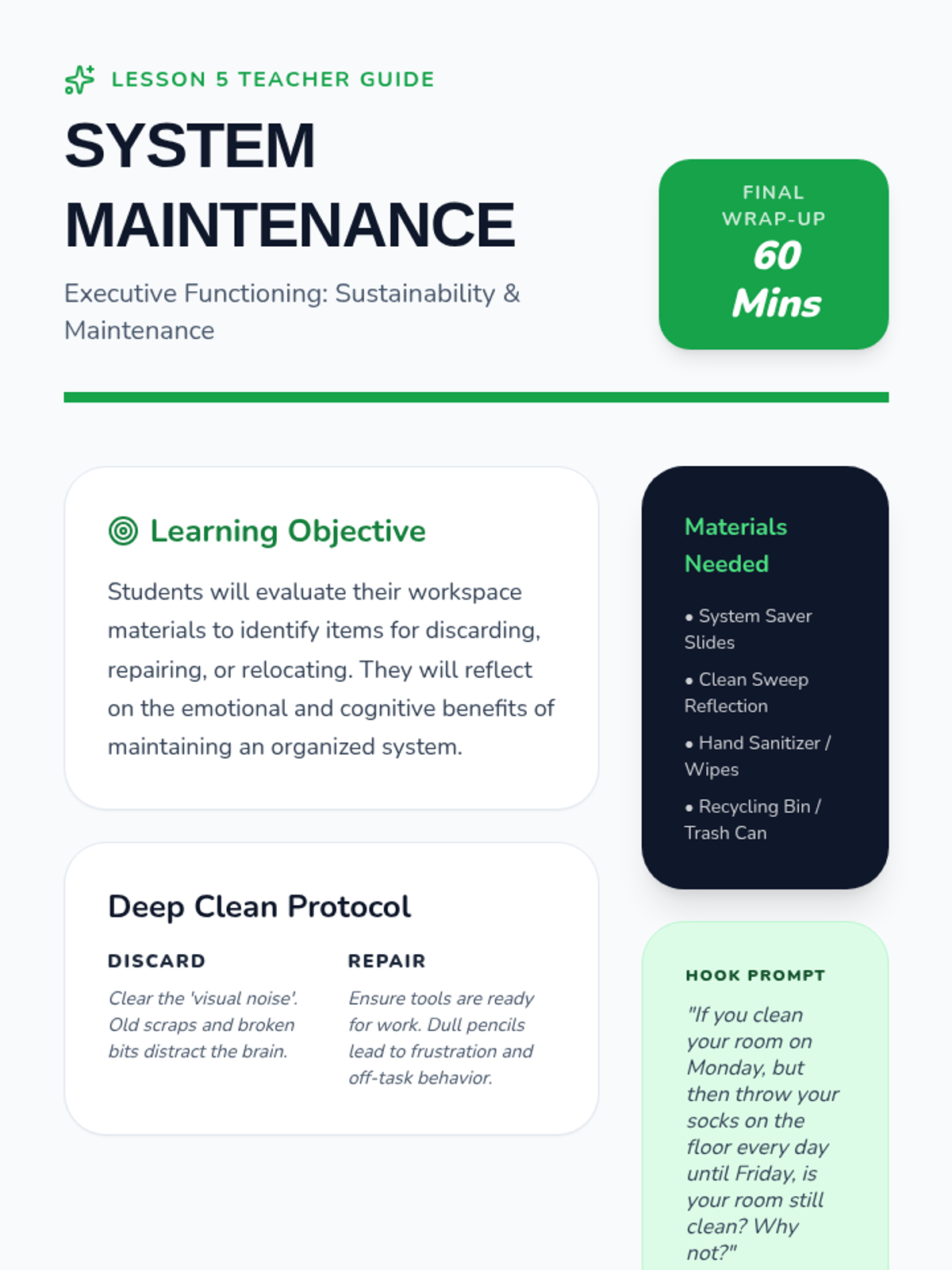
Students perform a 'deep clean' and reflect on the maintenance of their systems over time, identifying items that need repair or relocation.
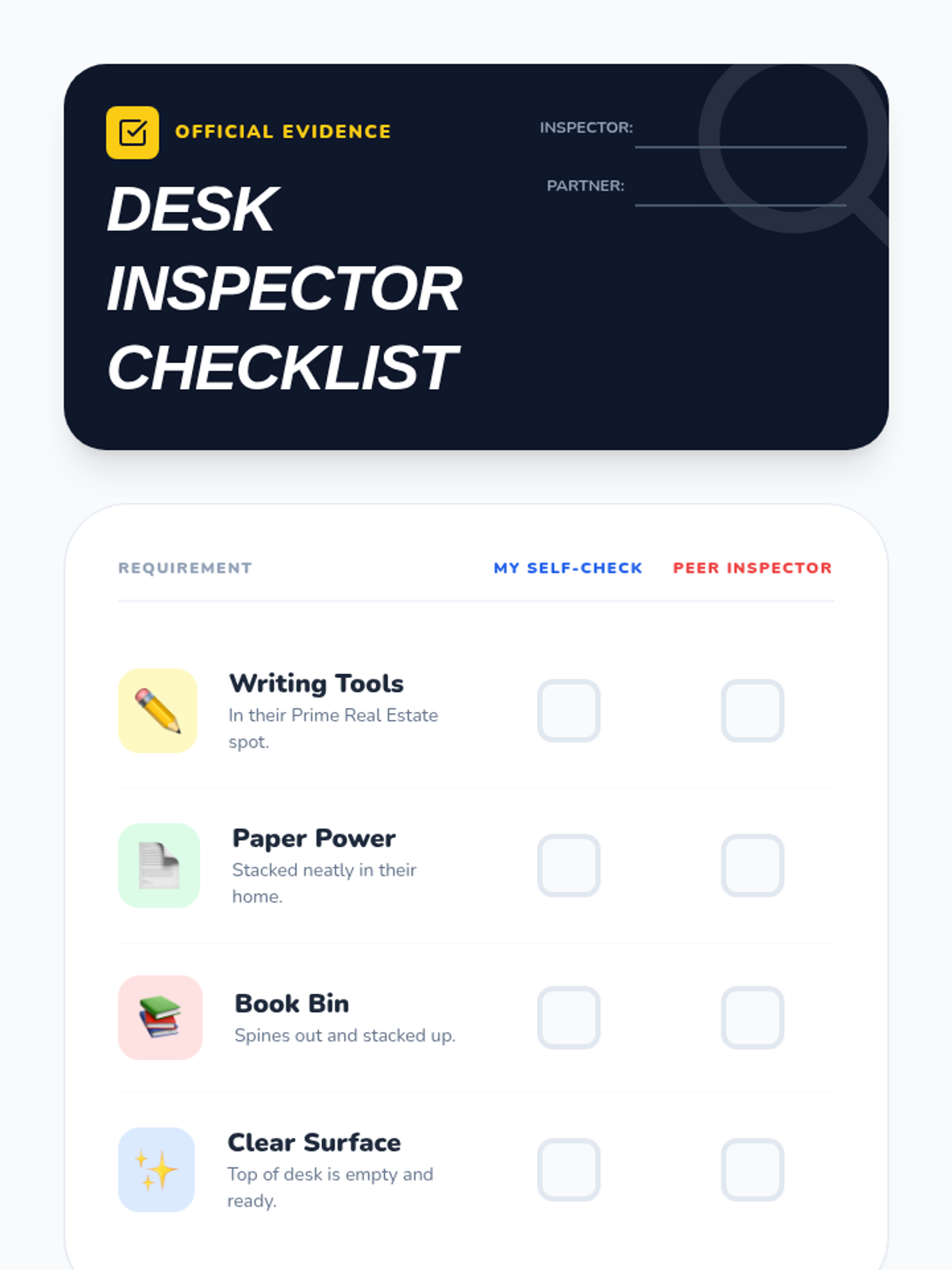
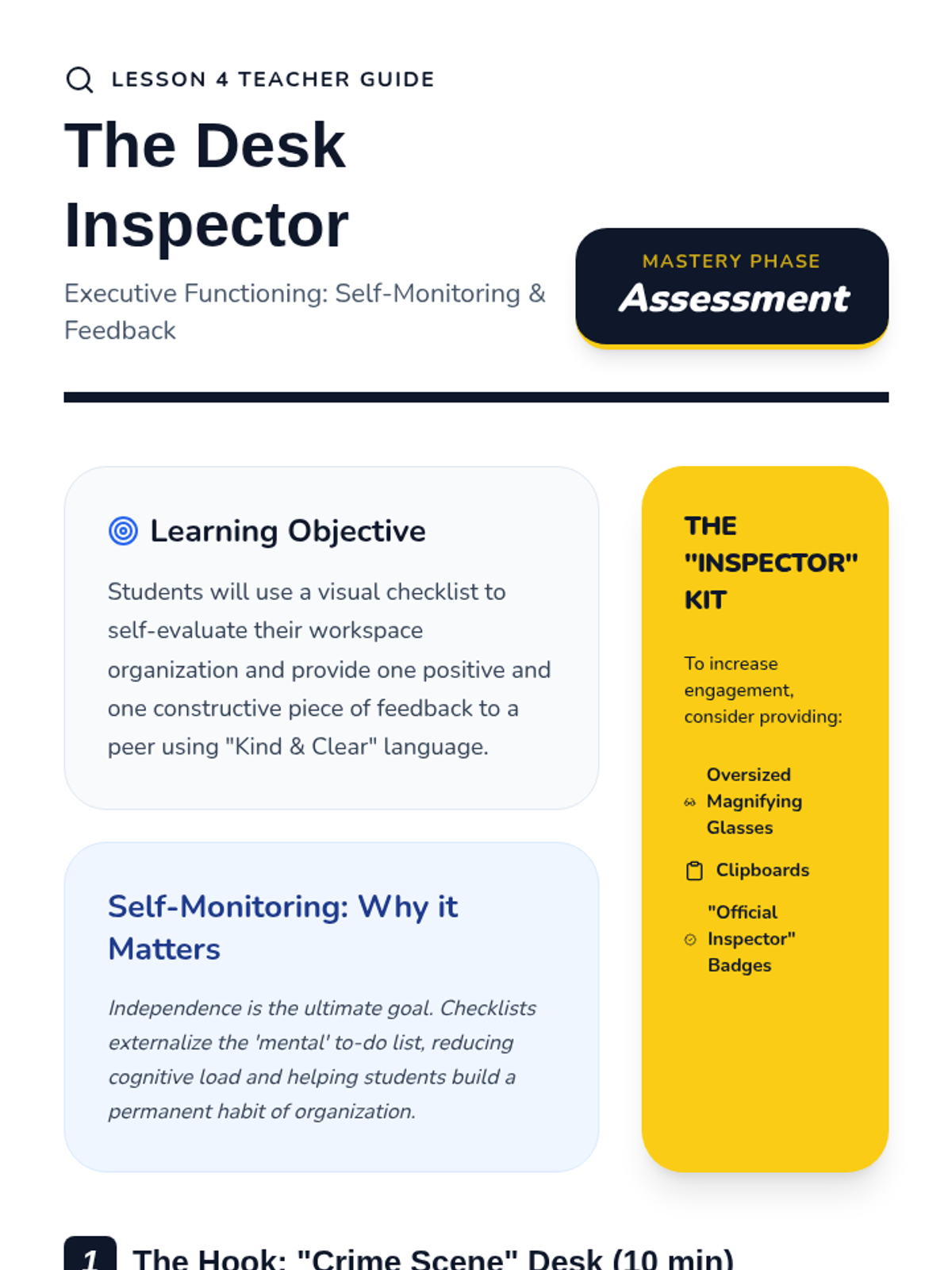
Students use a visual checklist to self-assess their own desks and provide feedback to peers, taking on the role of 'Desk Inspectors'.
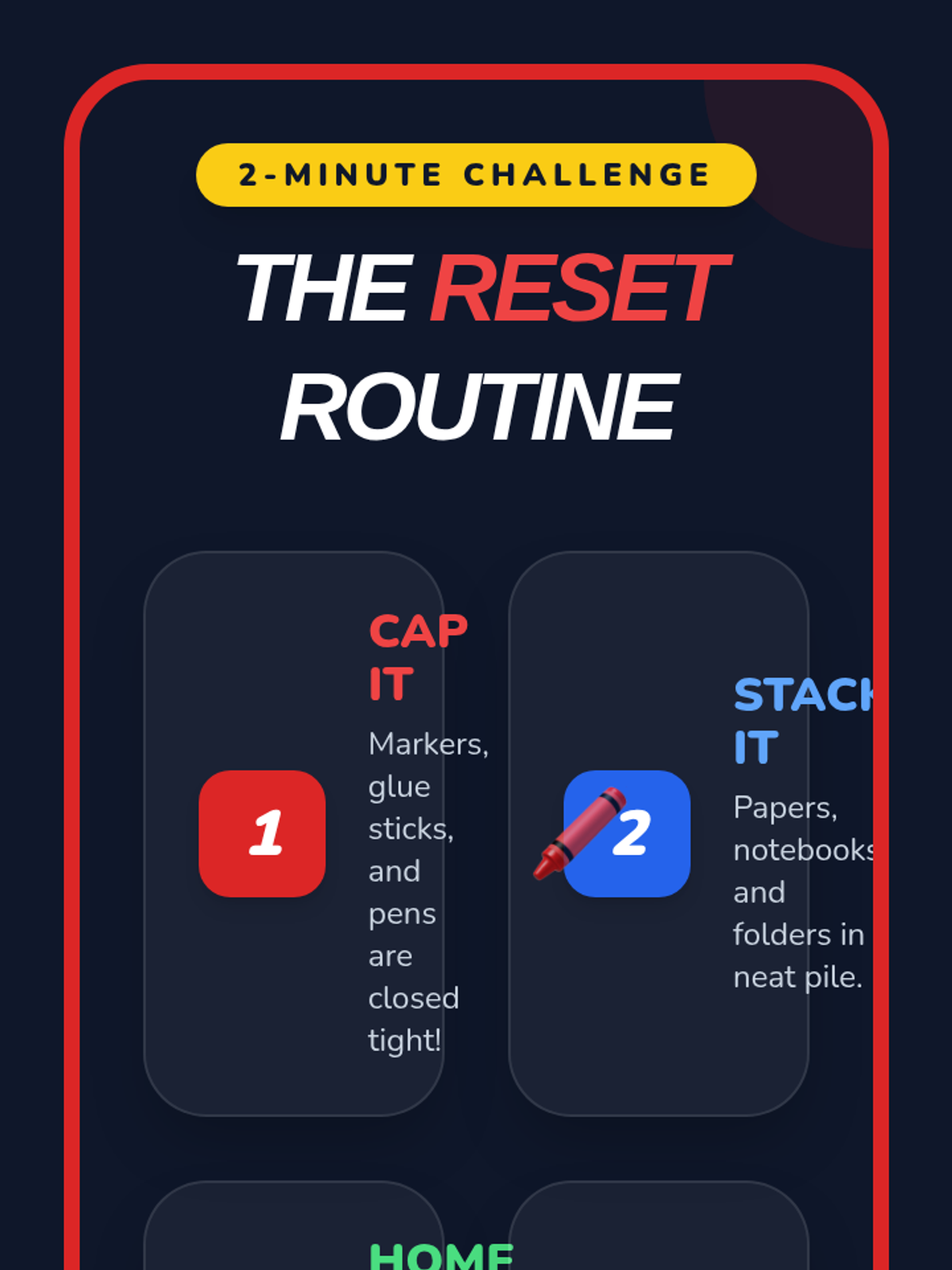
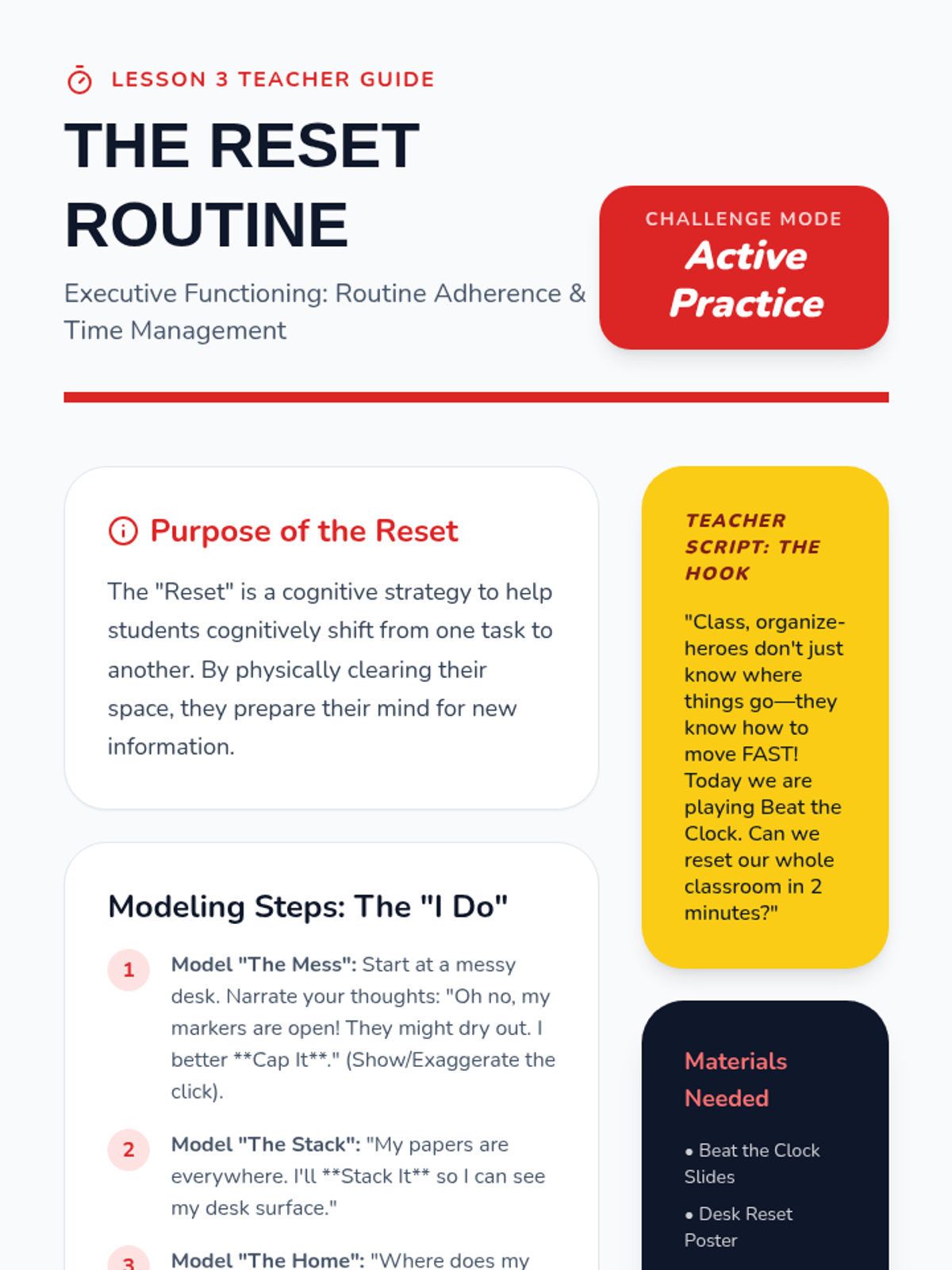
Students learn and practice a 2-minute 'Reset Routine' to transition from a messy workspace to a clear one using modeled steps.
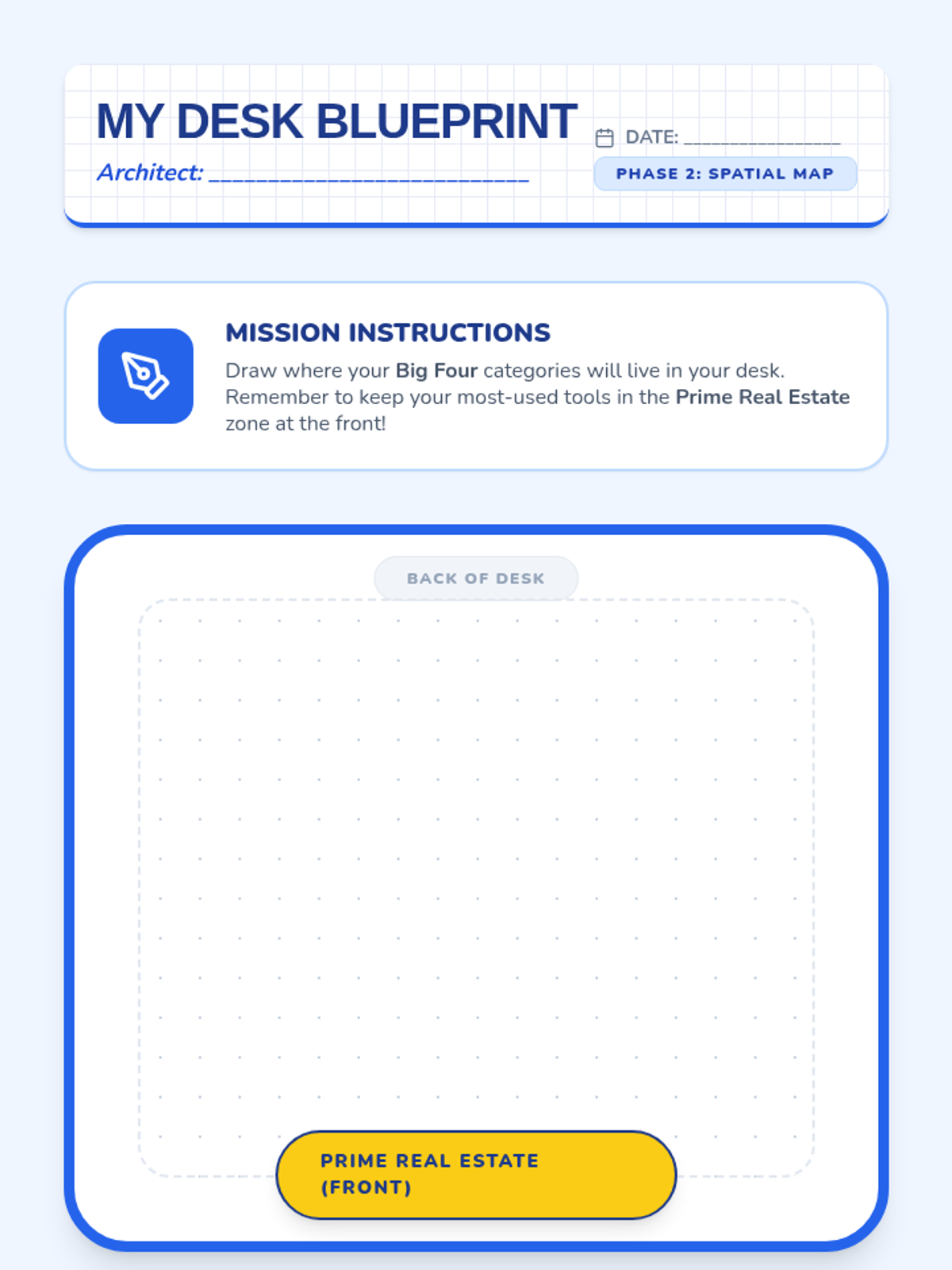
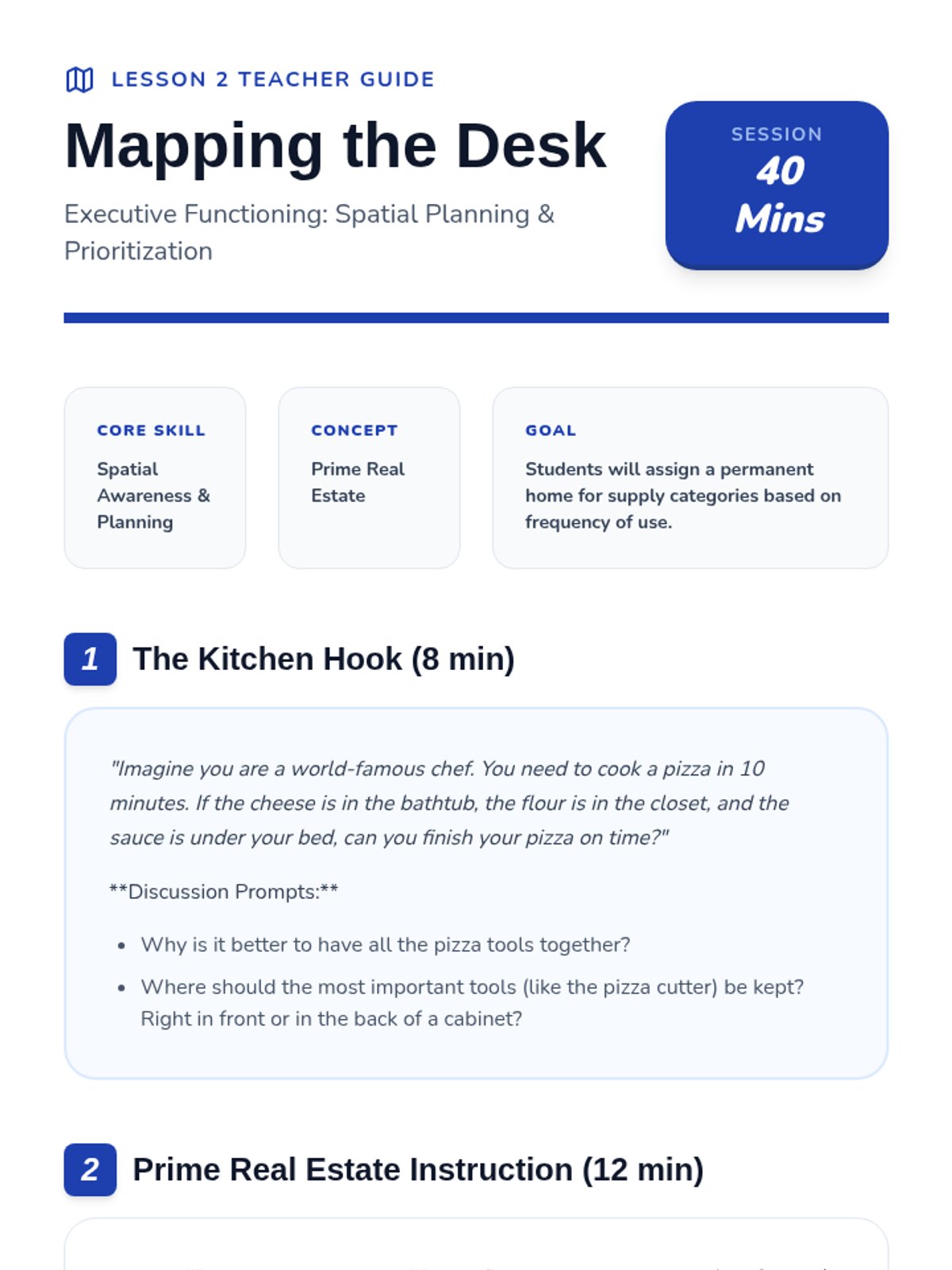
Students create a visual map of where specific items belong in their desk or bin, learning the concept of 'prime real estate' for frequently used tools.
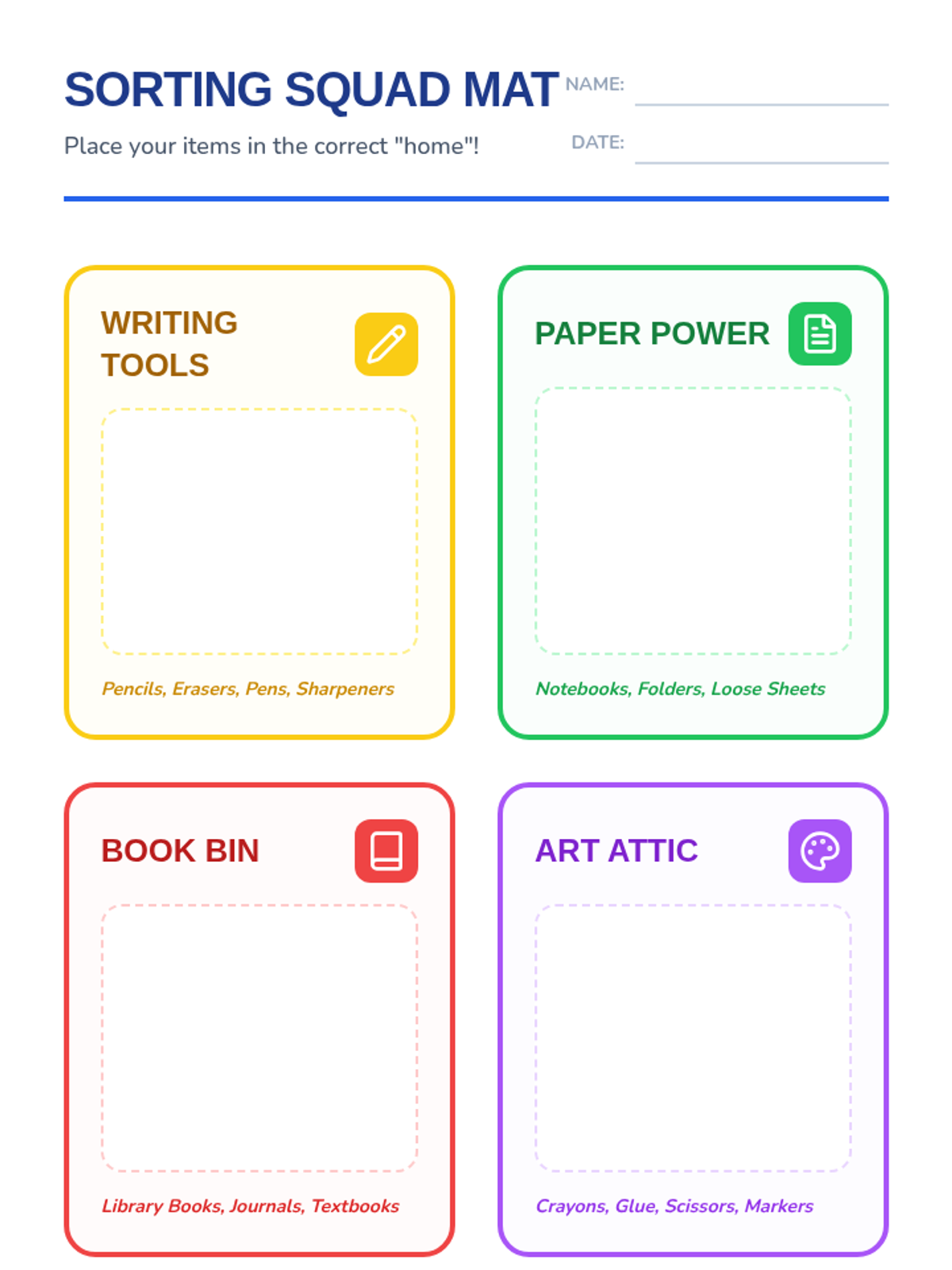
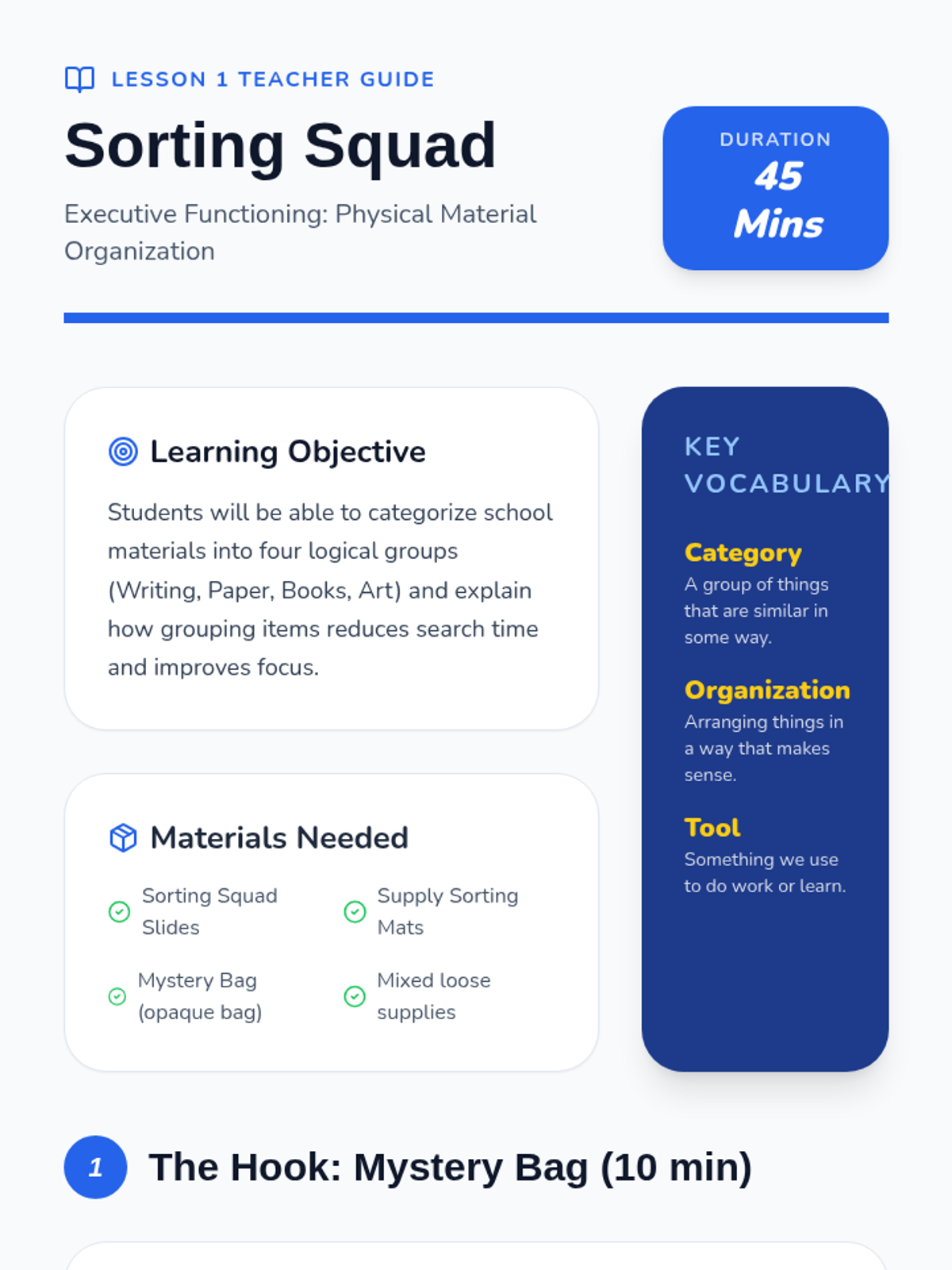
Students practice sorting school materials into categories (writing tools, paper, books, art supplies) to understand how grouping similar items makes them easier to find.
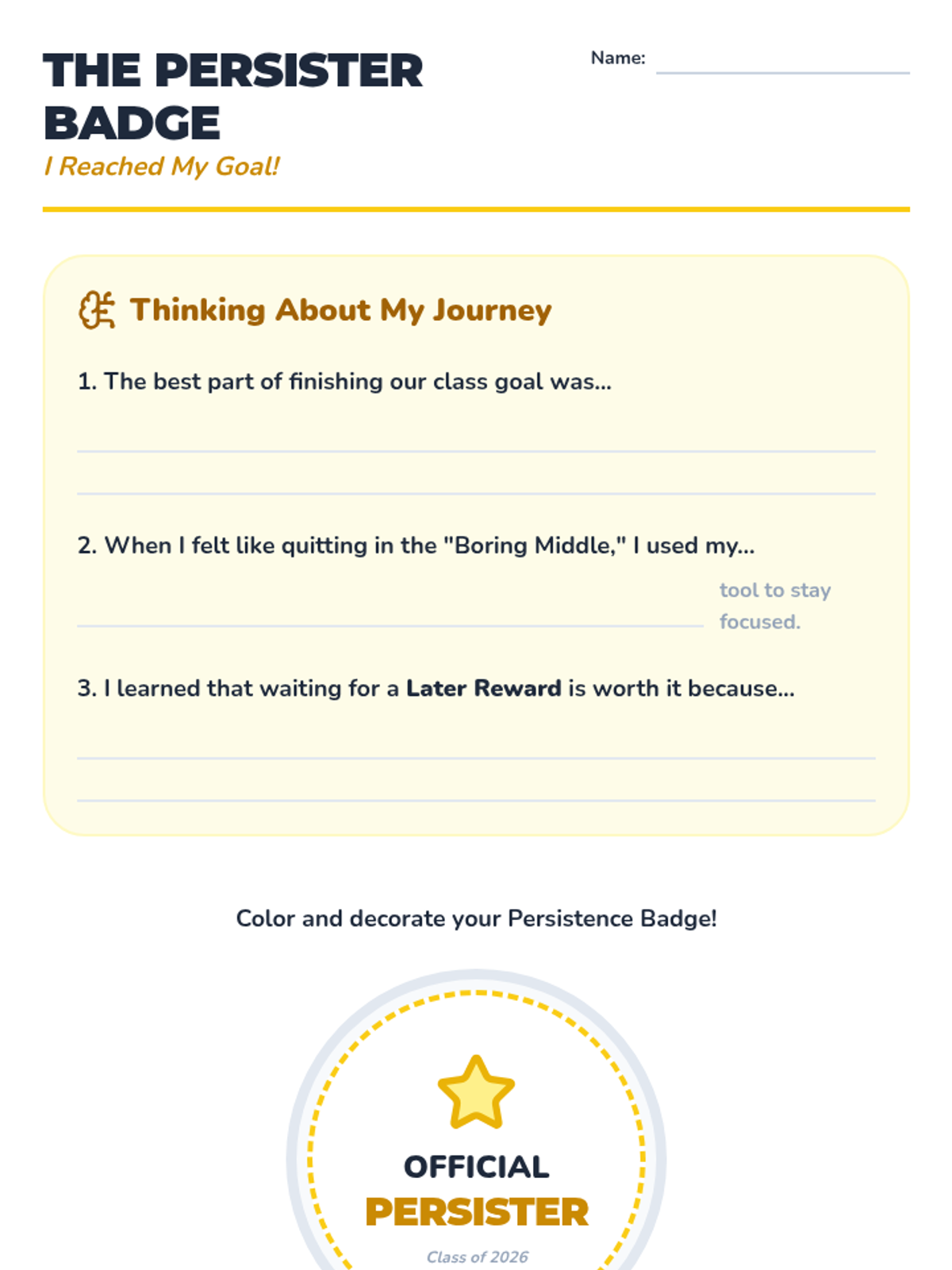
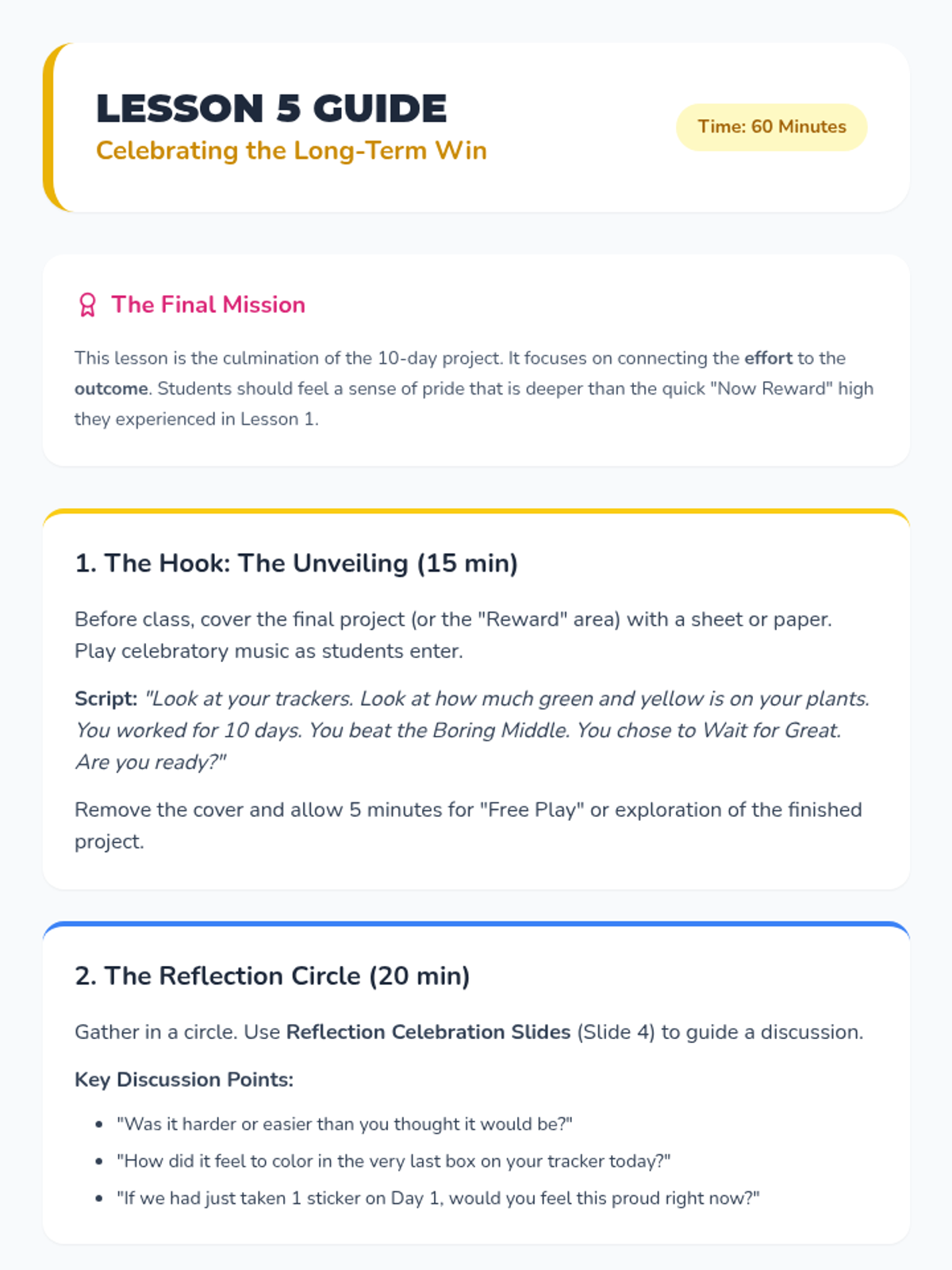
Students complete their project, reflect on their effort, and celebrate the value of delayed gratification.
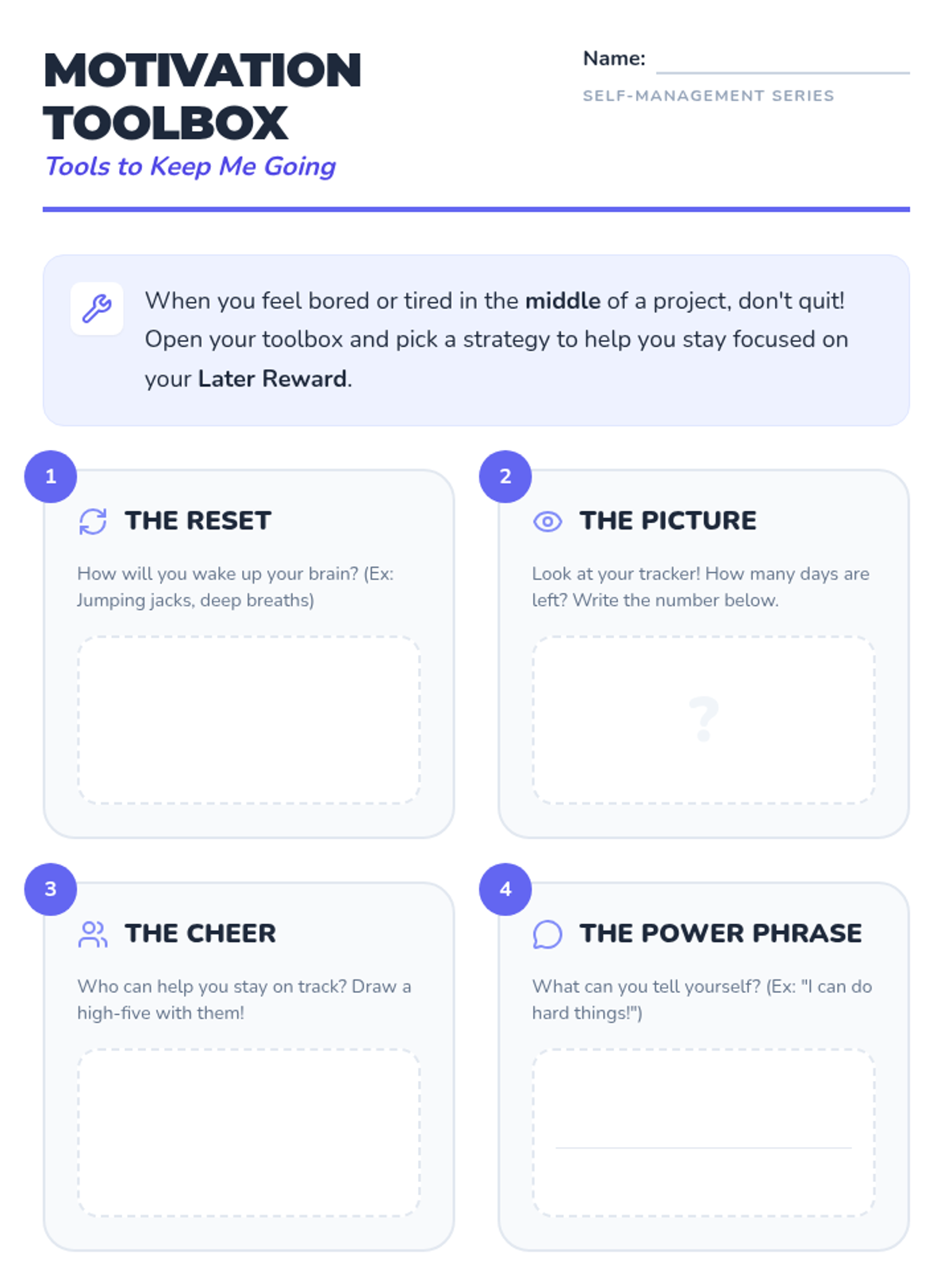
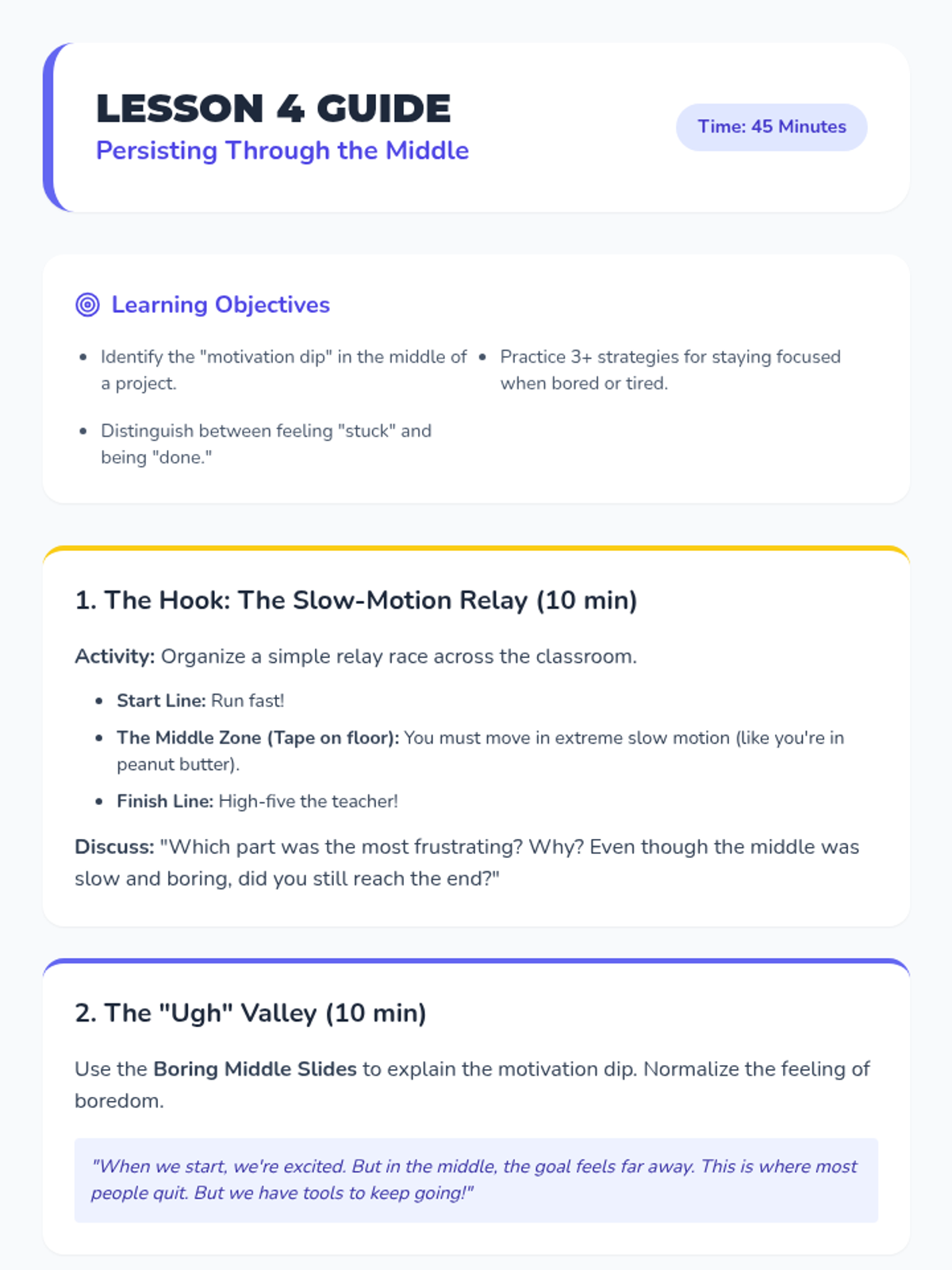
Focuses on strategies to stay motivated during the difficult or 'boring' middle phase of a long-term project.
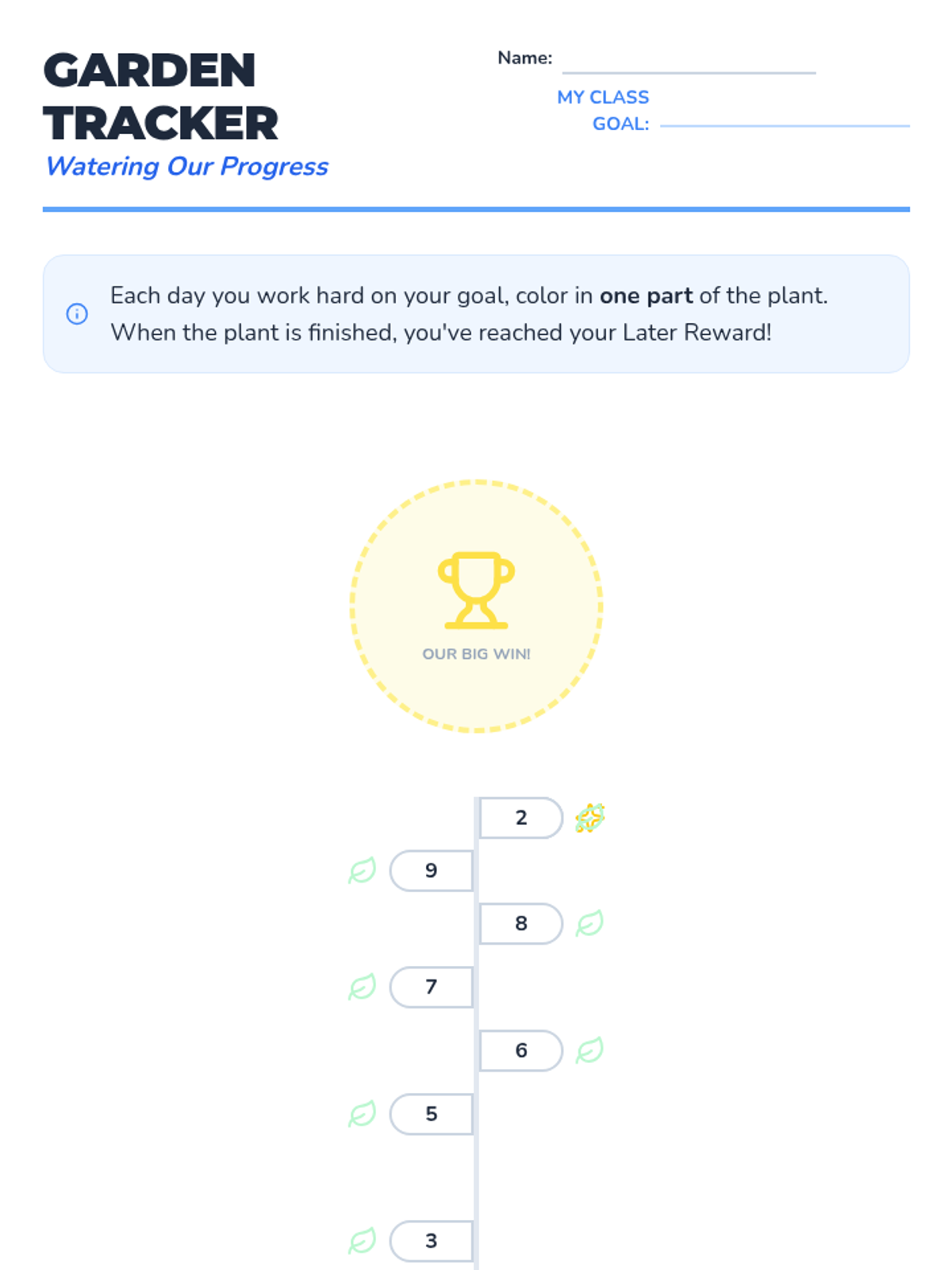
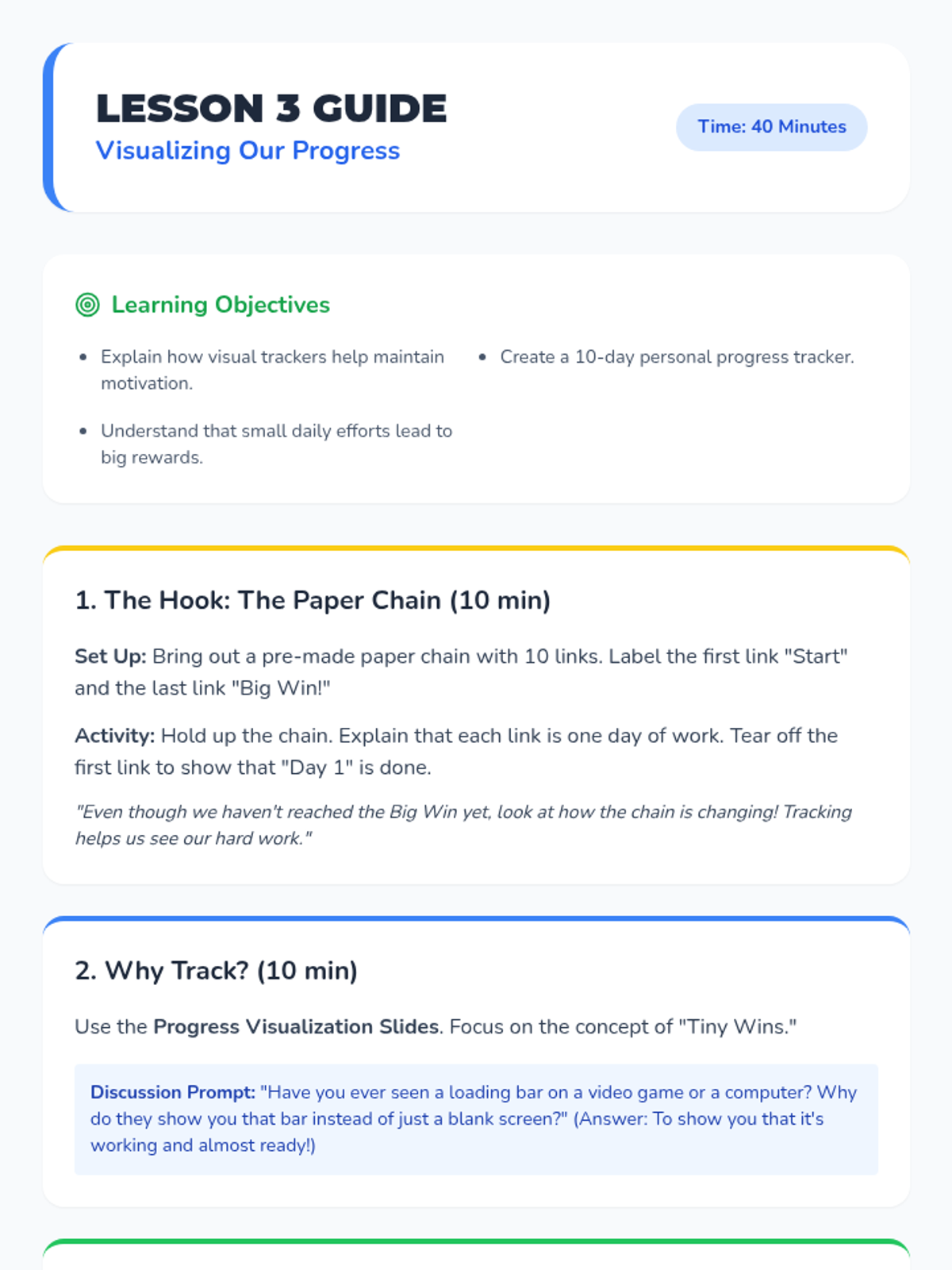
Students create individual progress trackers to learn how marking off small steps helps sustain motivation.
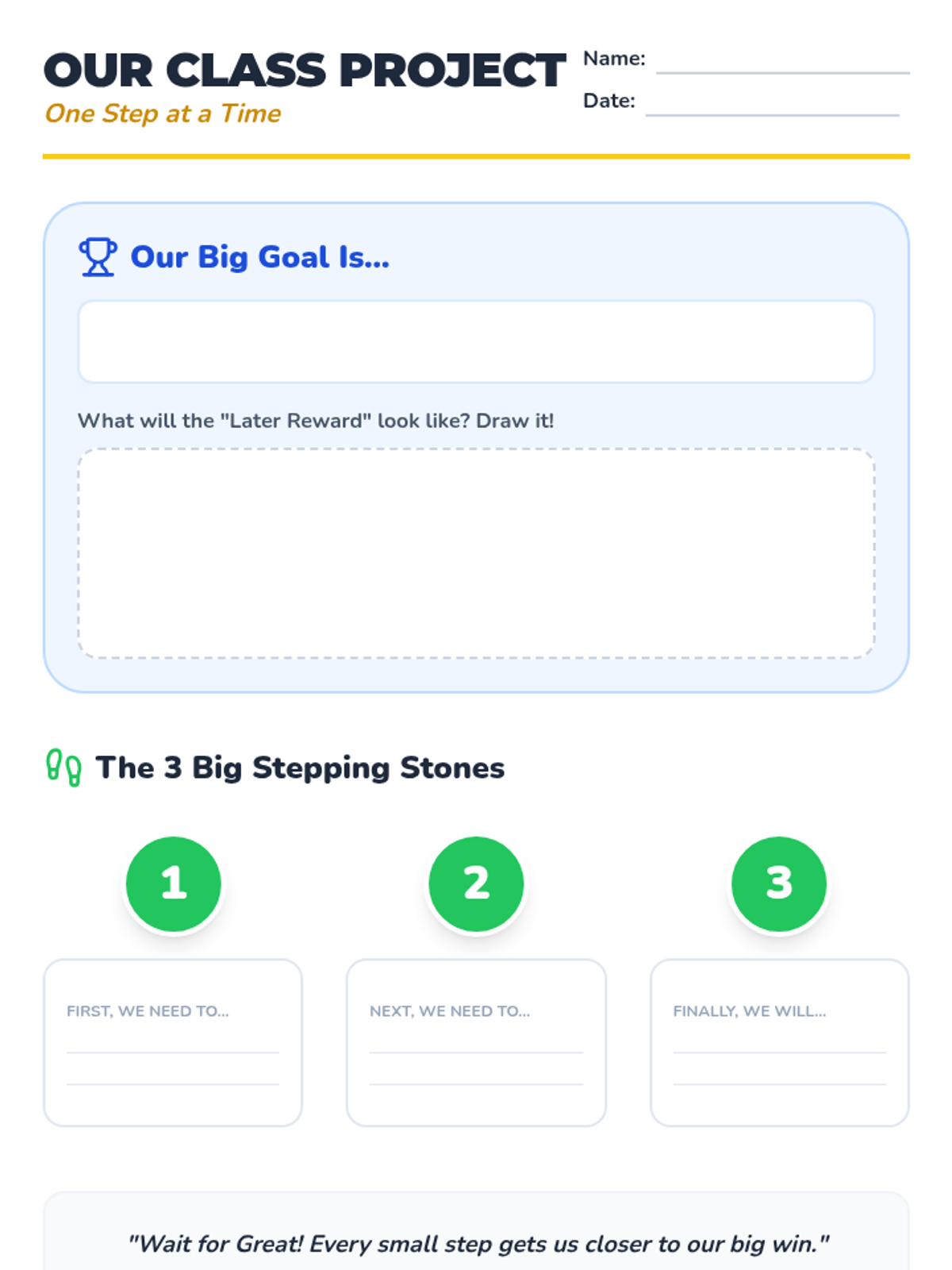
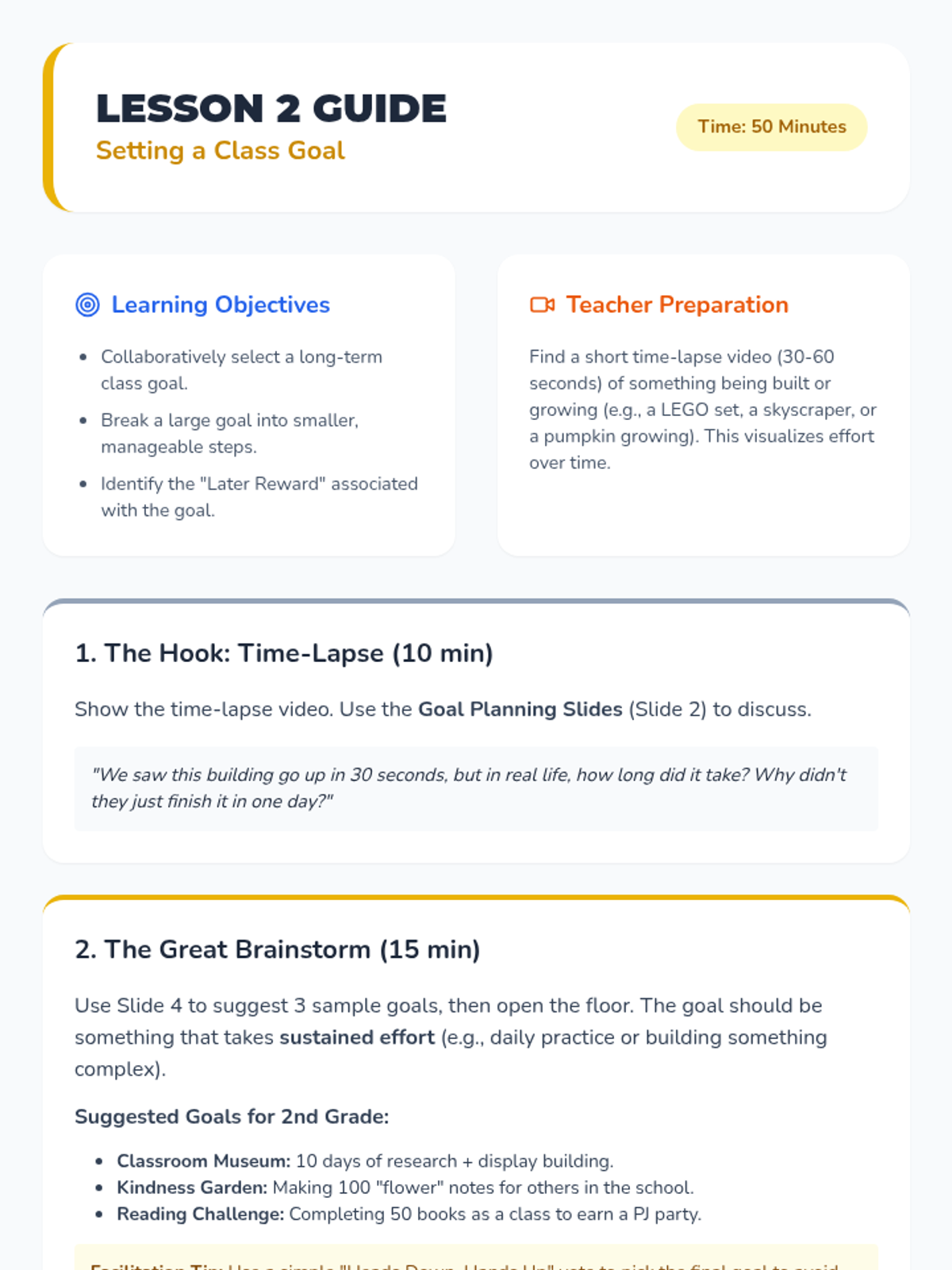
The class collaboratively decides on a significant goal and breaks it down into manageable steps with a visual timeline.
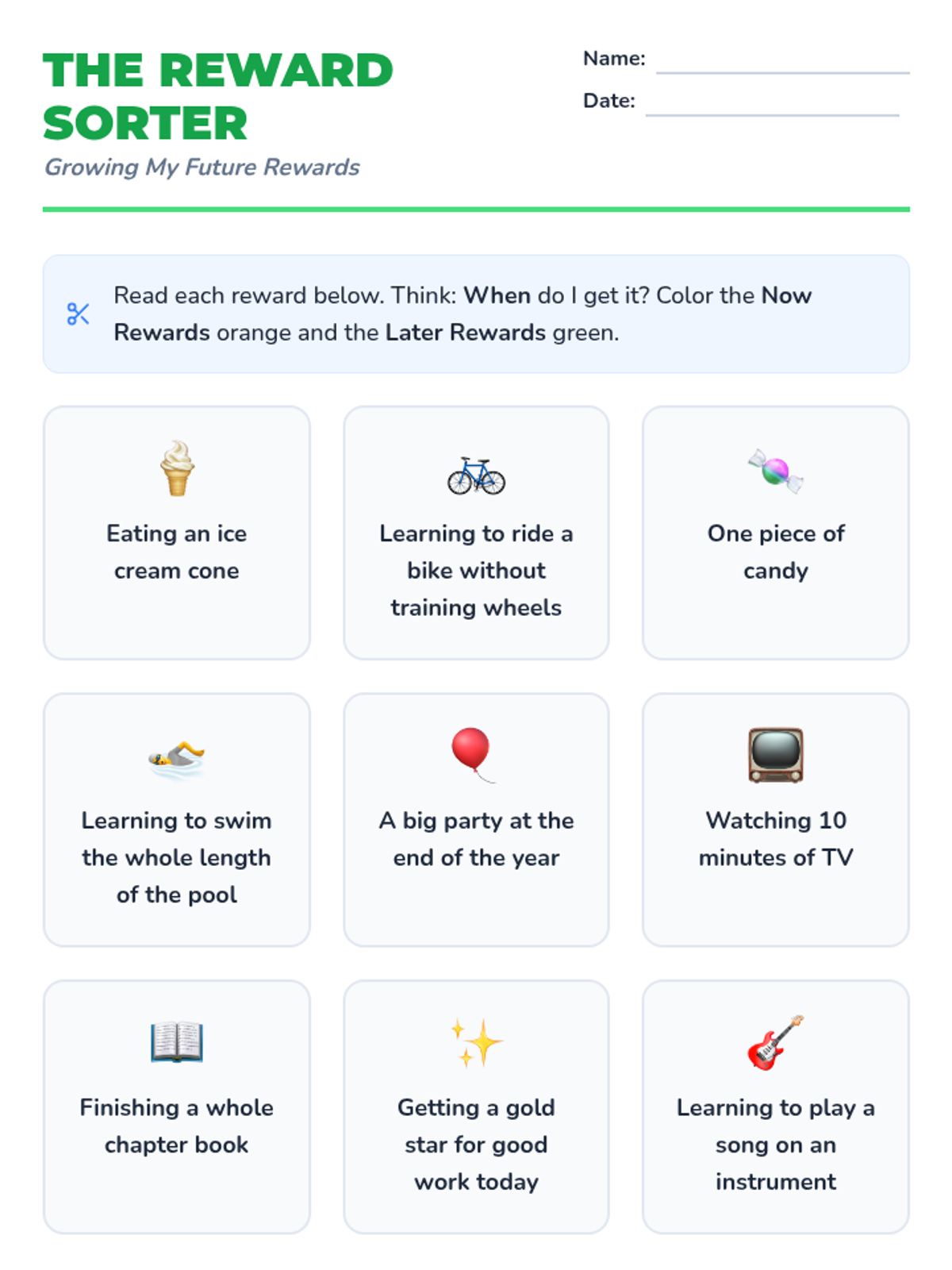
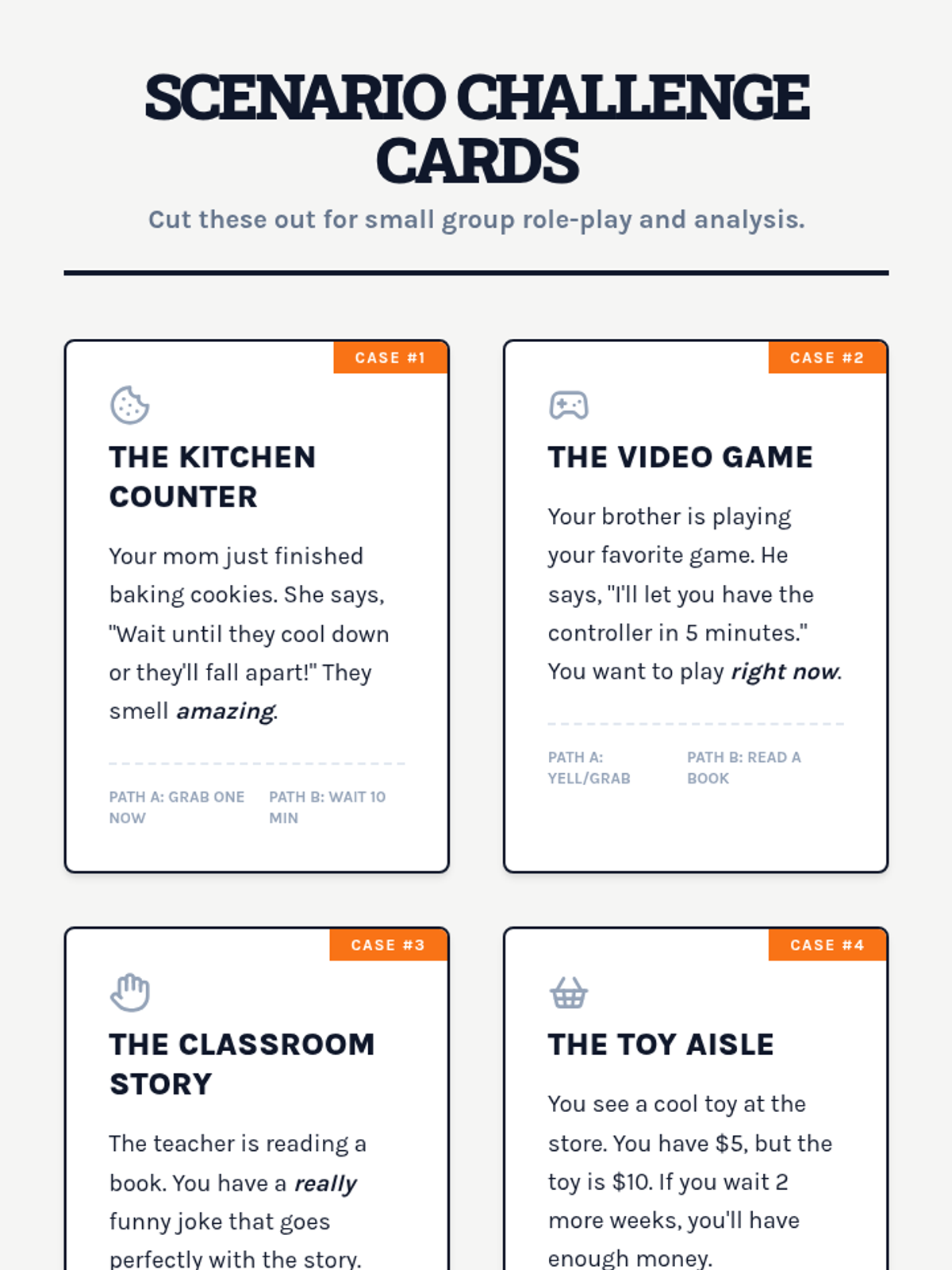
Students categorize various scenarios into 'Now Rewards' and 'Later Rewards', establishing the vocabulary needed to discuss long-term goals.
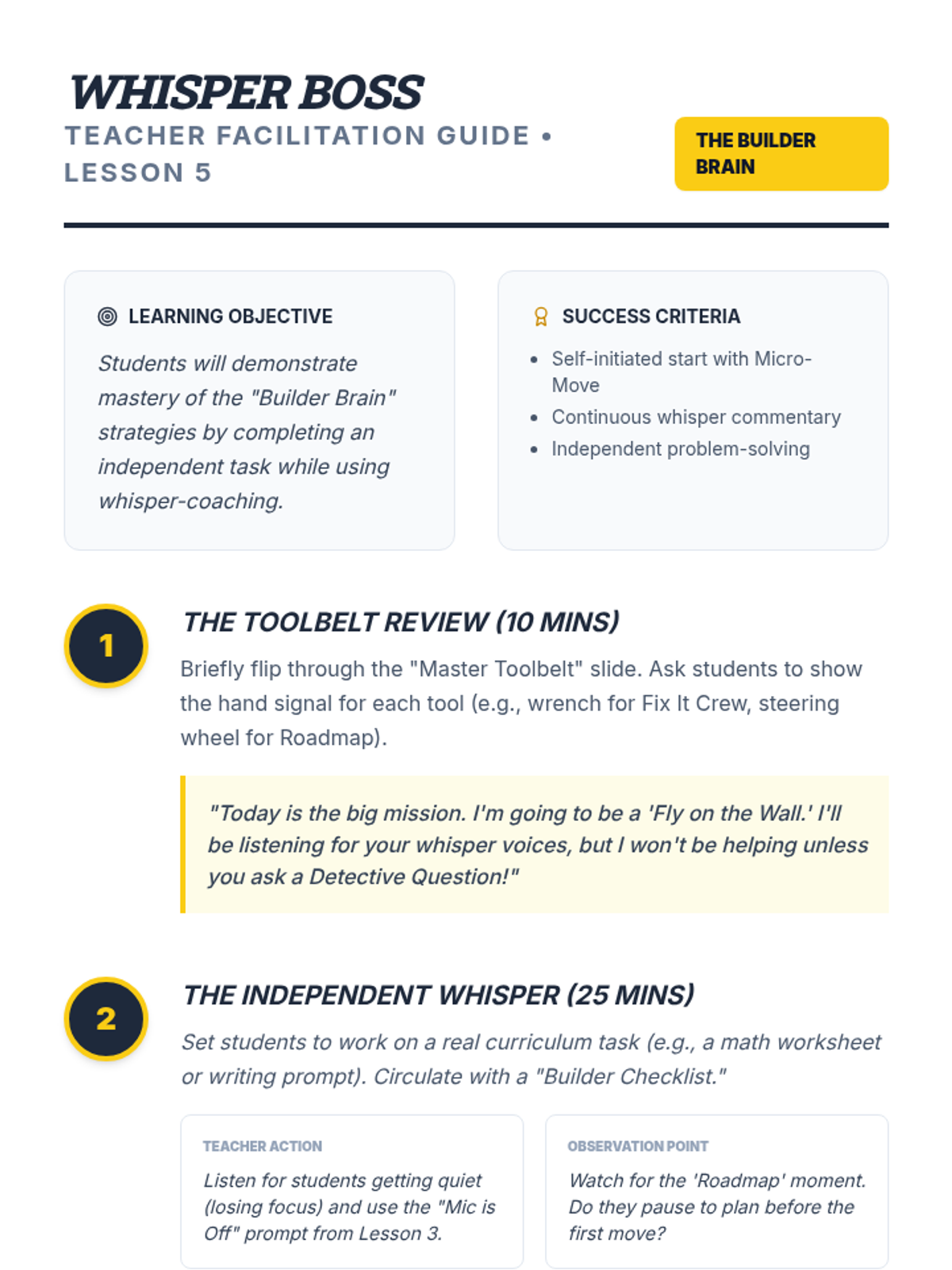
Students apply the breakdown and narration techniques to a real independent work session. The teacher circulates to listen for 'whisper coaching' as students initiate and sustain their work.
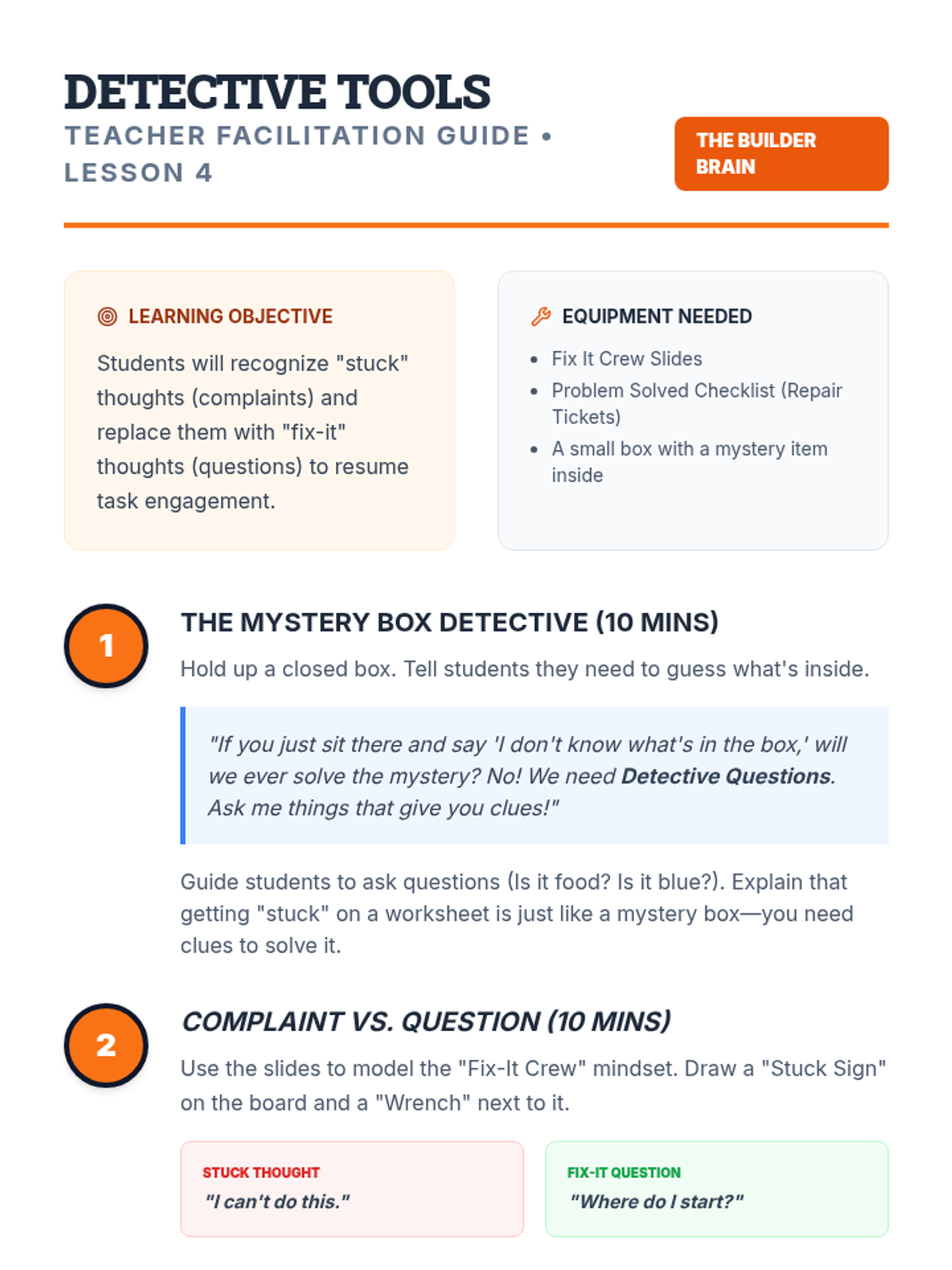
Students learn to ask themselves specific questions when they get stuck. This shifts the internal monologue from complaint to inquiry and problem-solving.
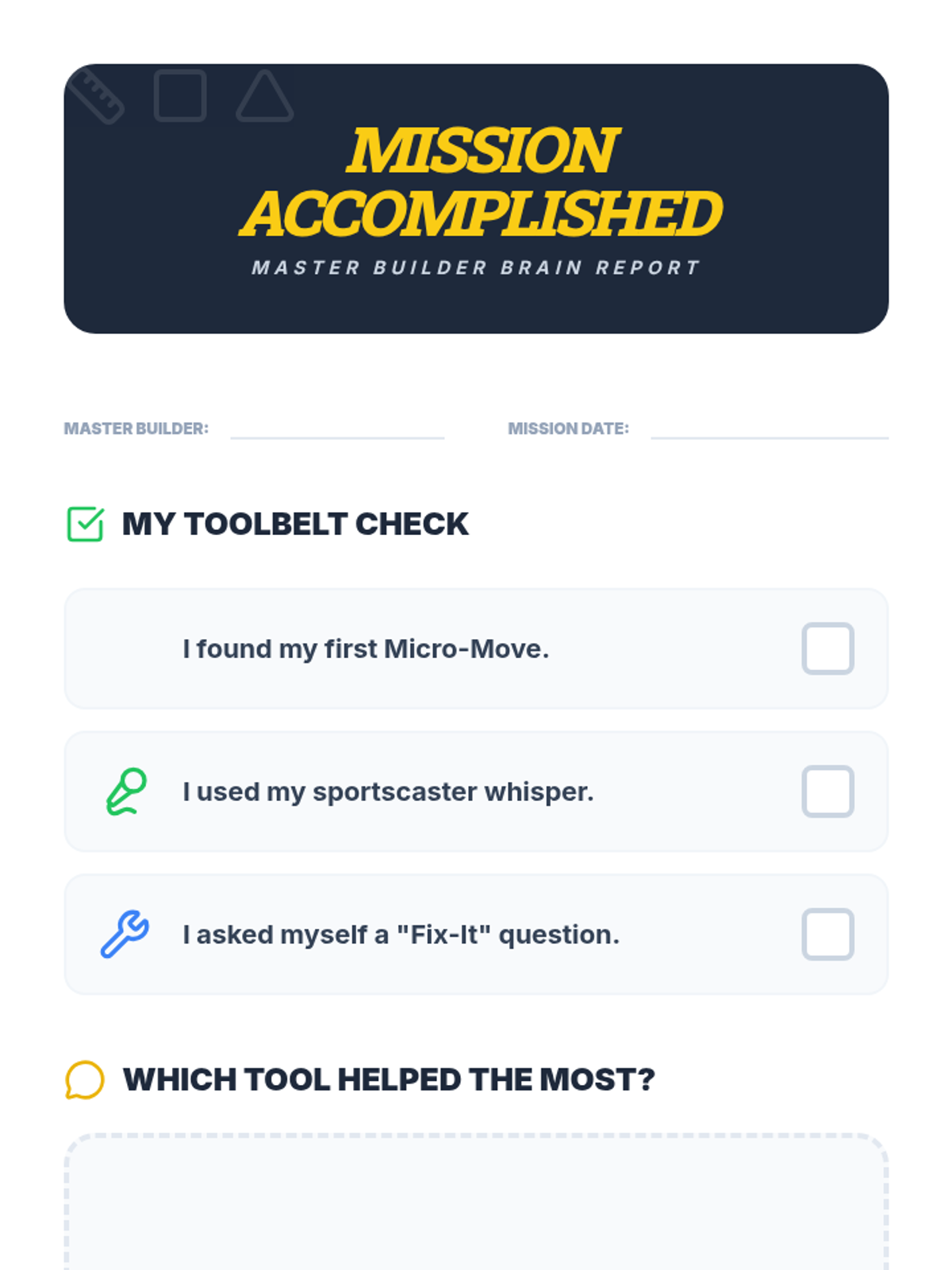
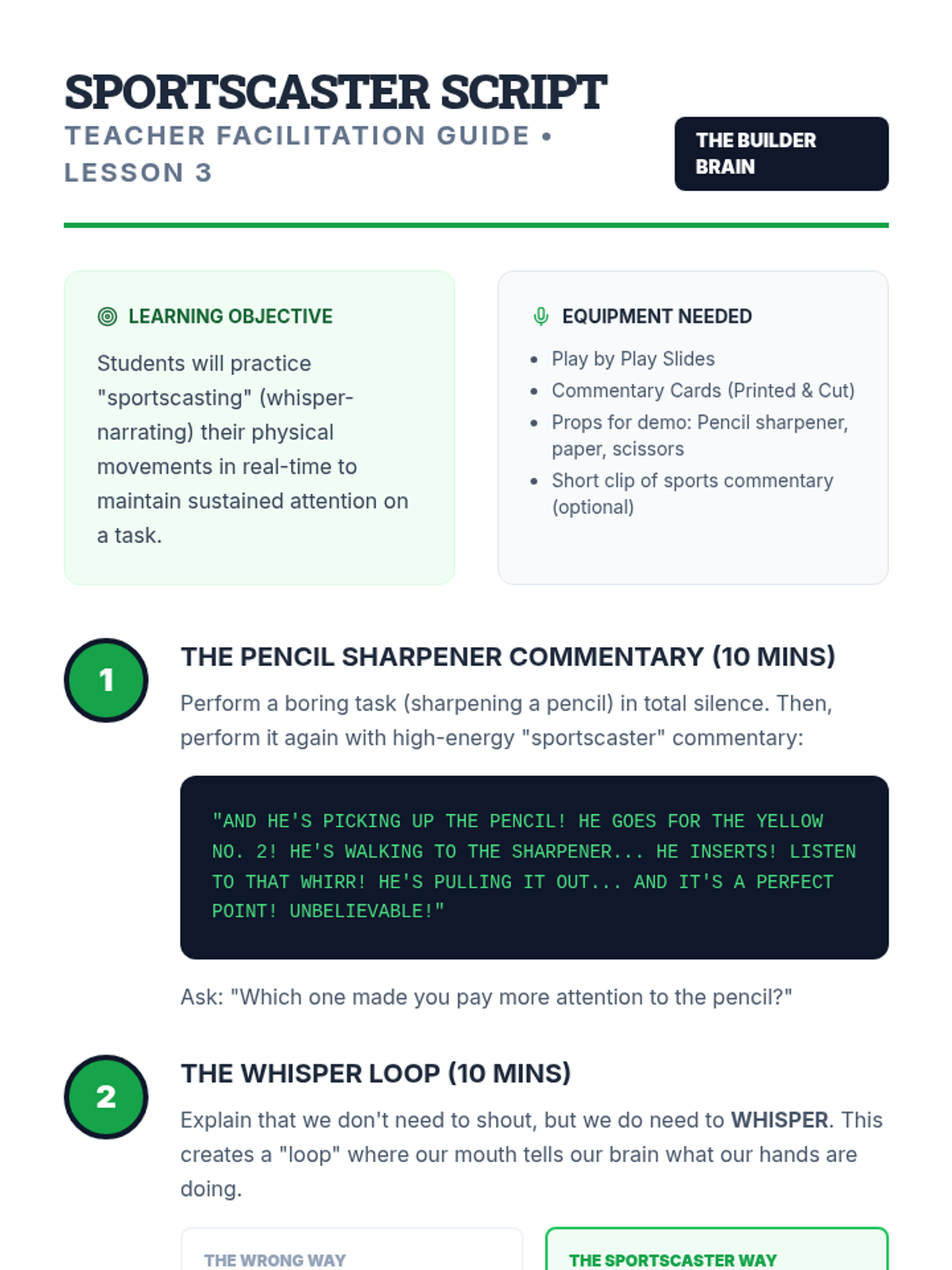
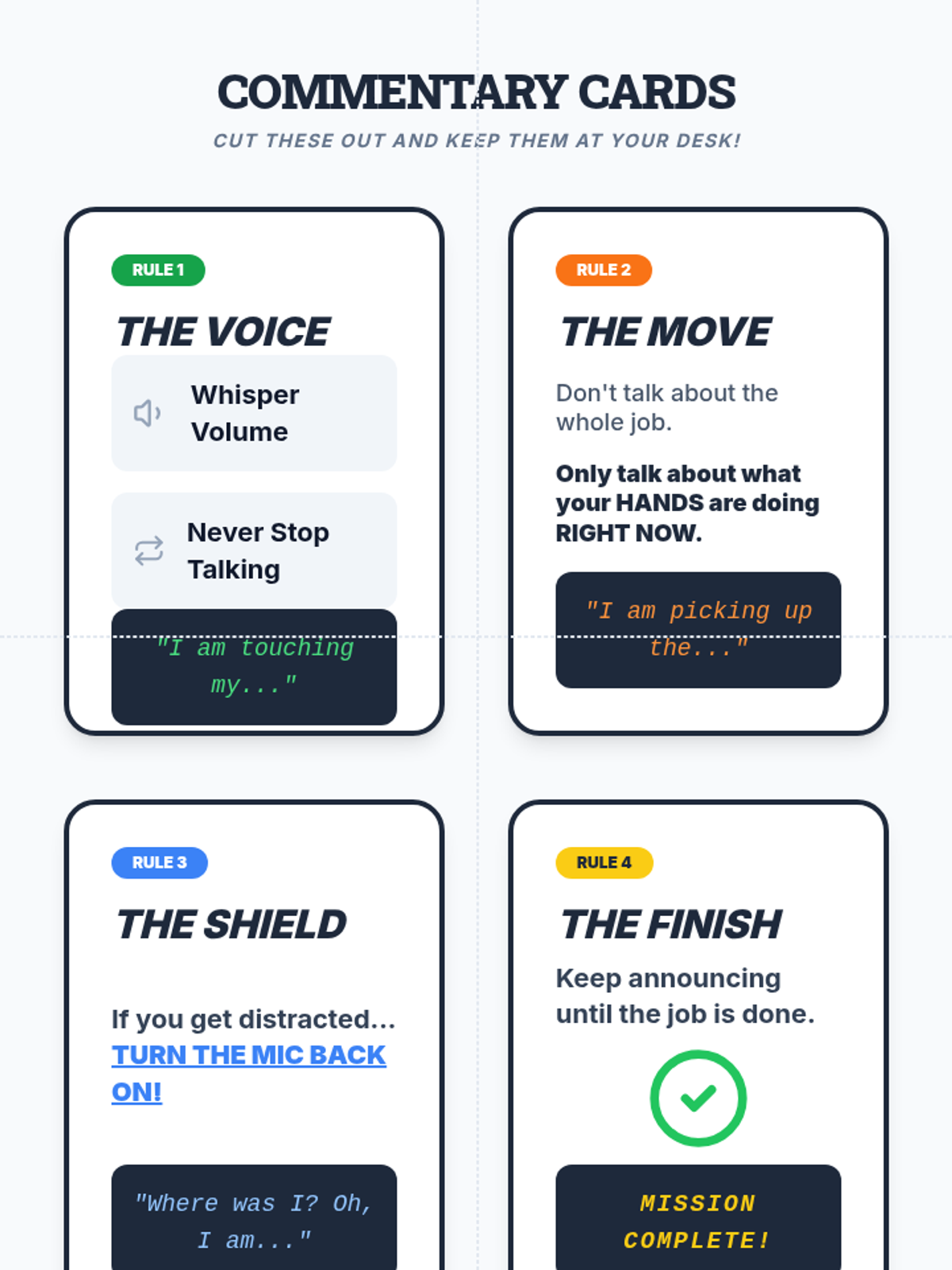
Students practice whispering their actions as they do them, similar to a sportscaster announcing a game. This continuous verbal loop helps prevent distraction and keeps the student engaged.
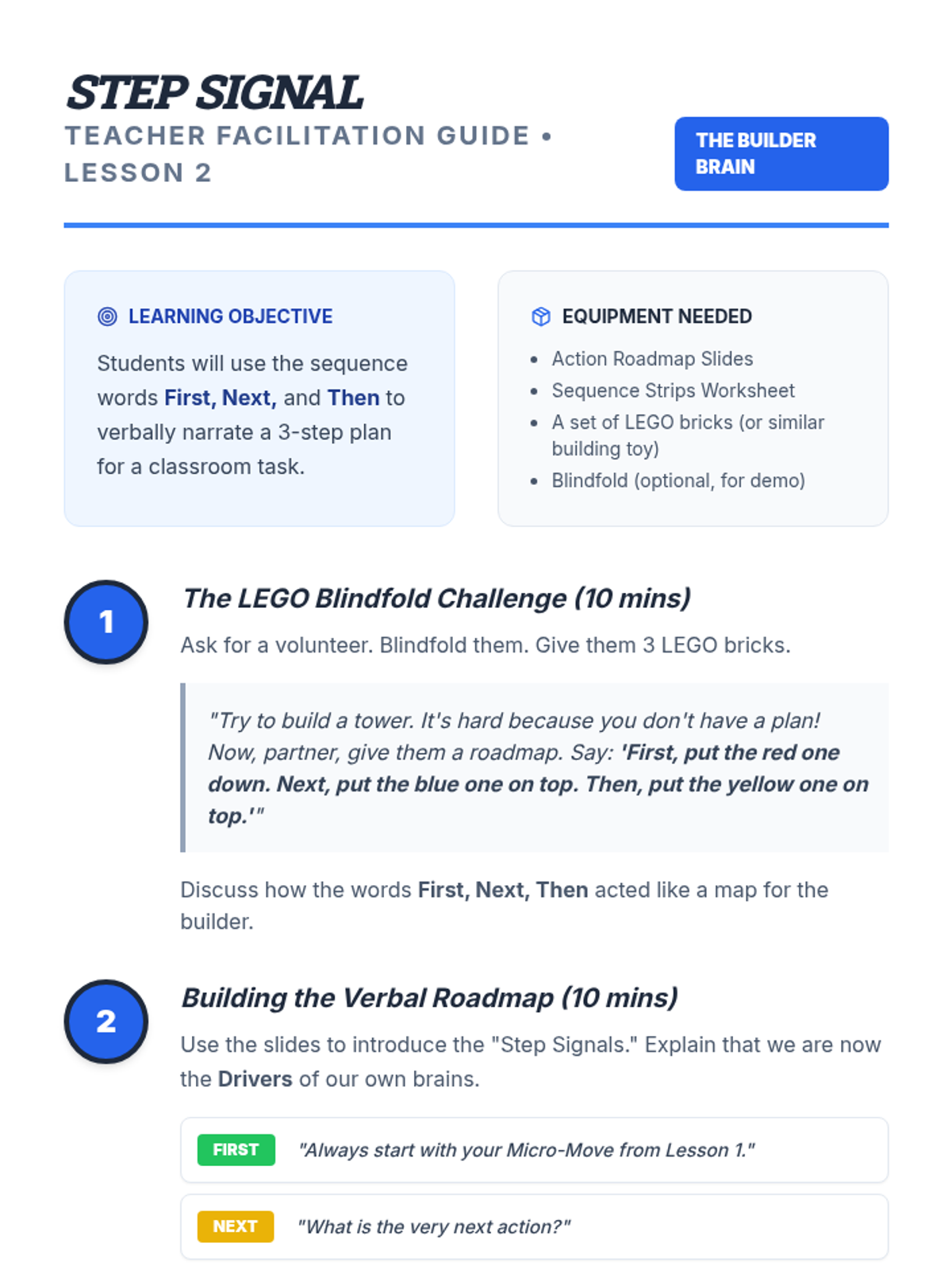
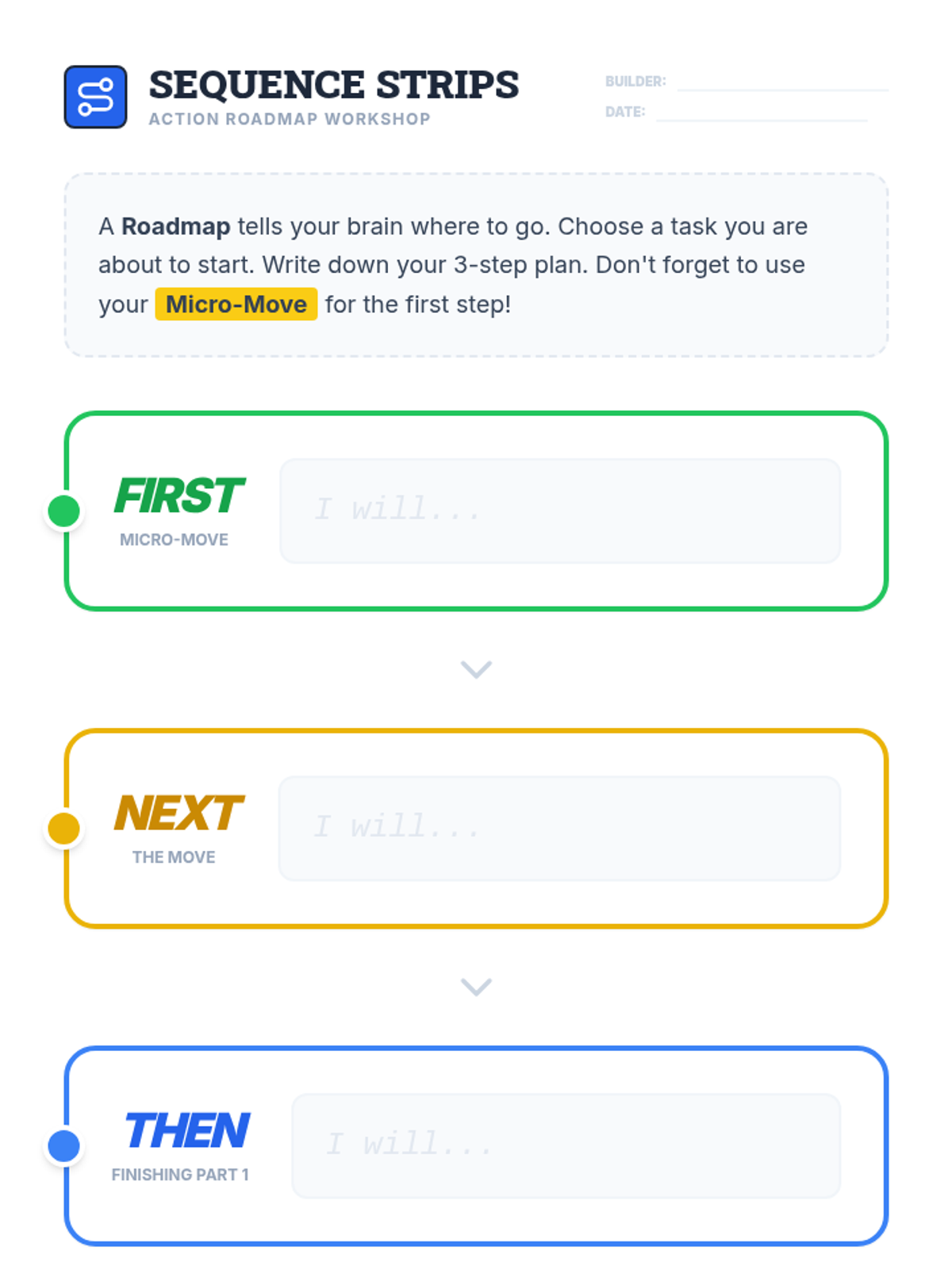
Students practice using the words 'First,' 'Next,' and 'Then' to create a verbal roadmap. They verbally plan a simple classroom routine, ensuring they can narrate the order of operations before beginning.
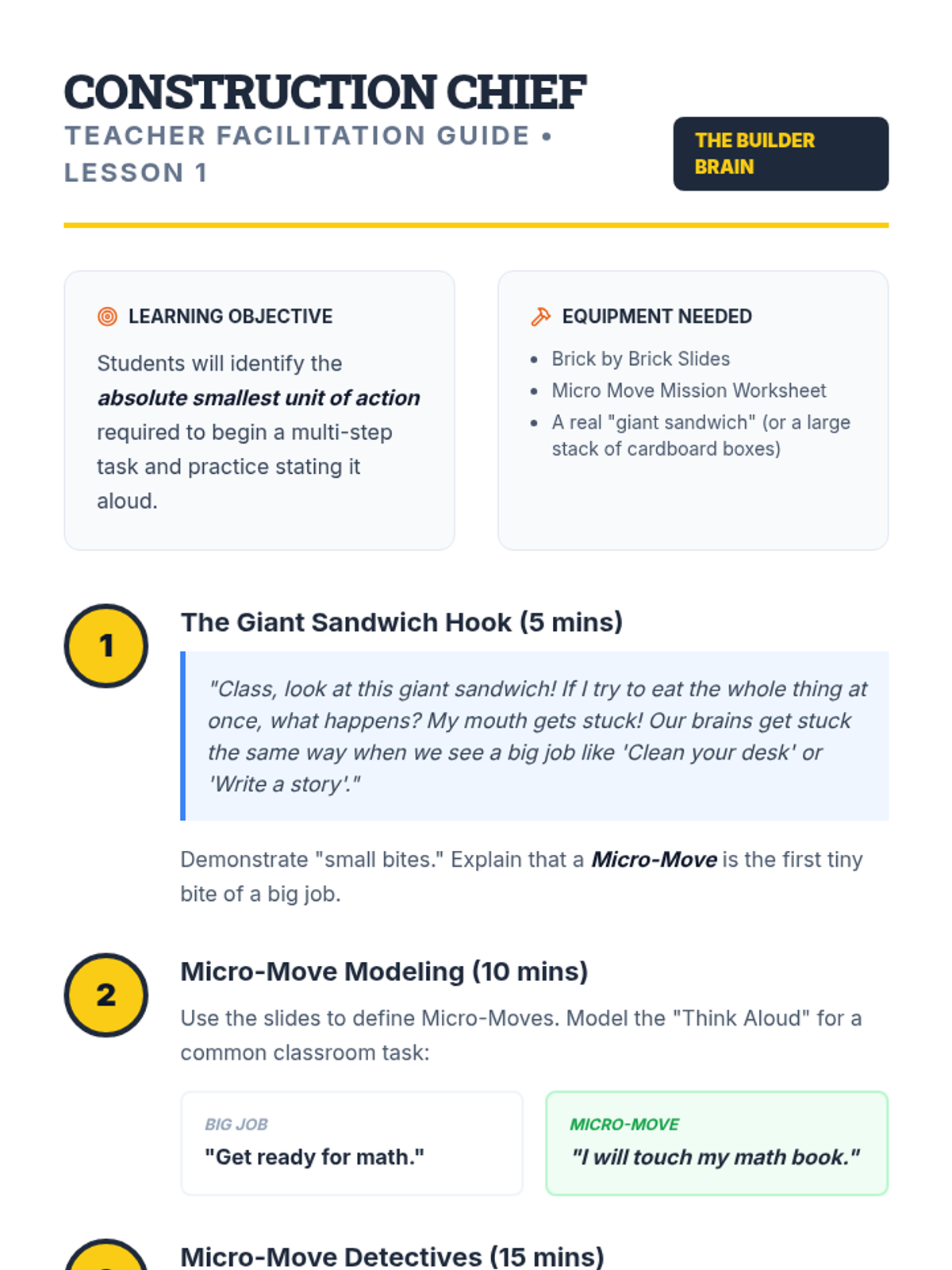
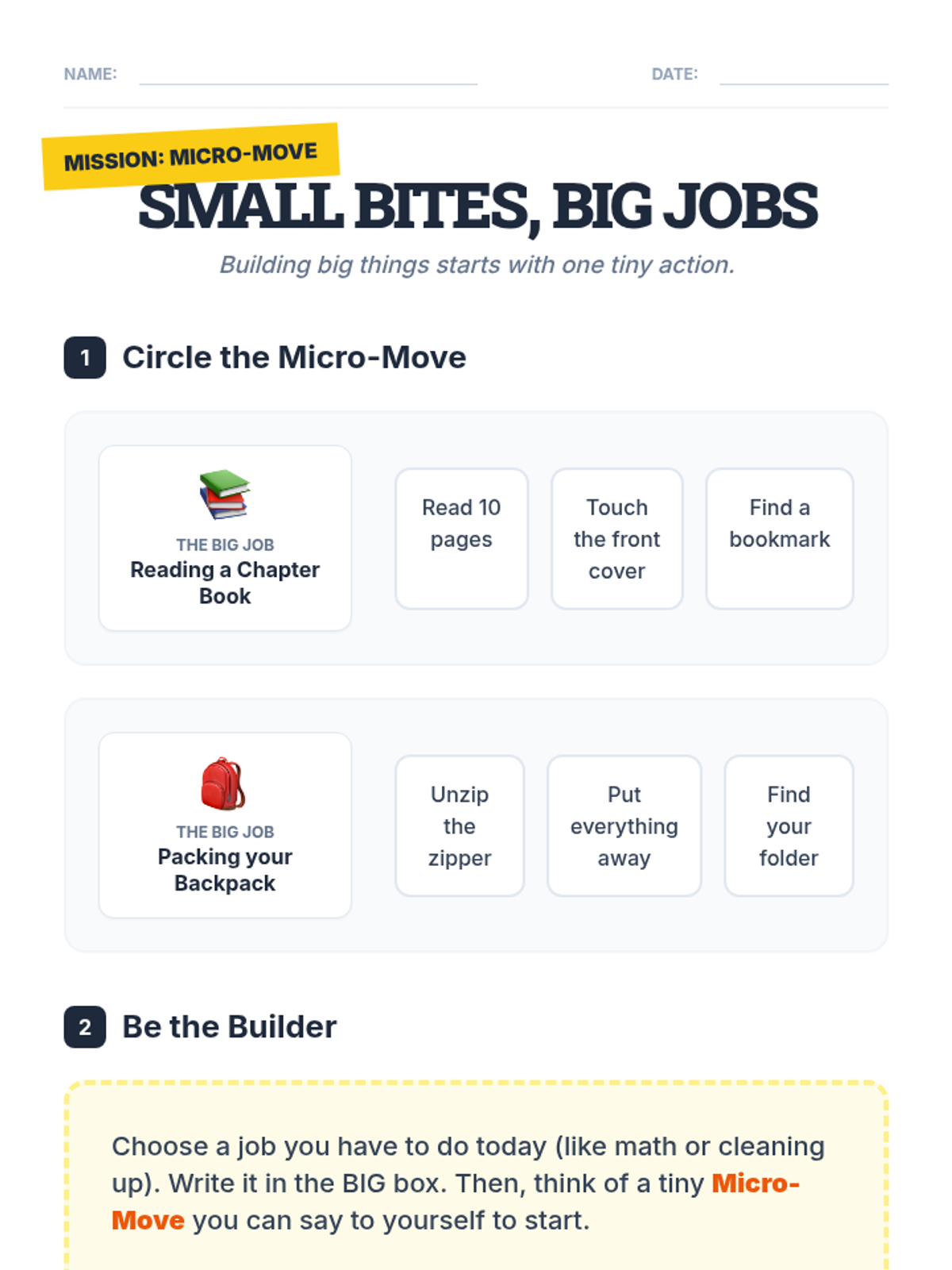
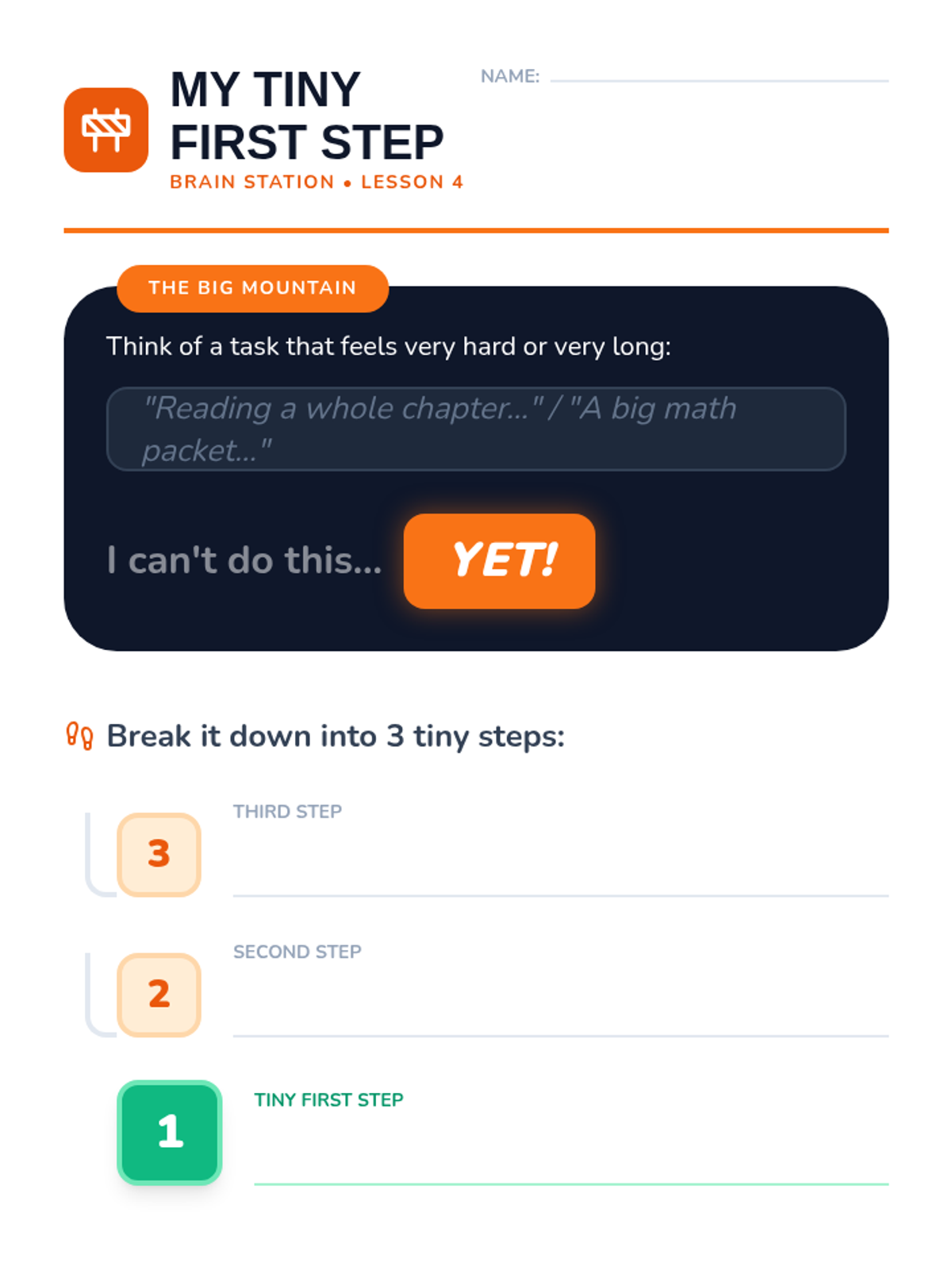
Students learn to identify the absolute smallest unit of action required to begin a task. They practice ignoring the whole assignment to focus solely on the physical action needed to start.
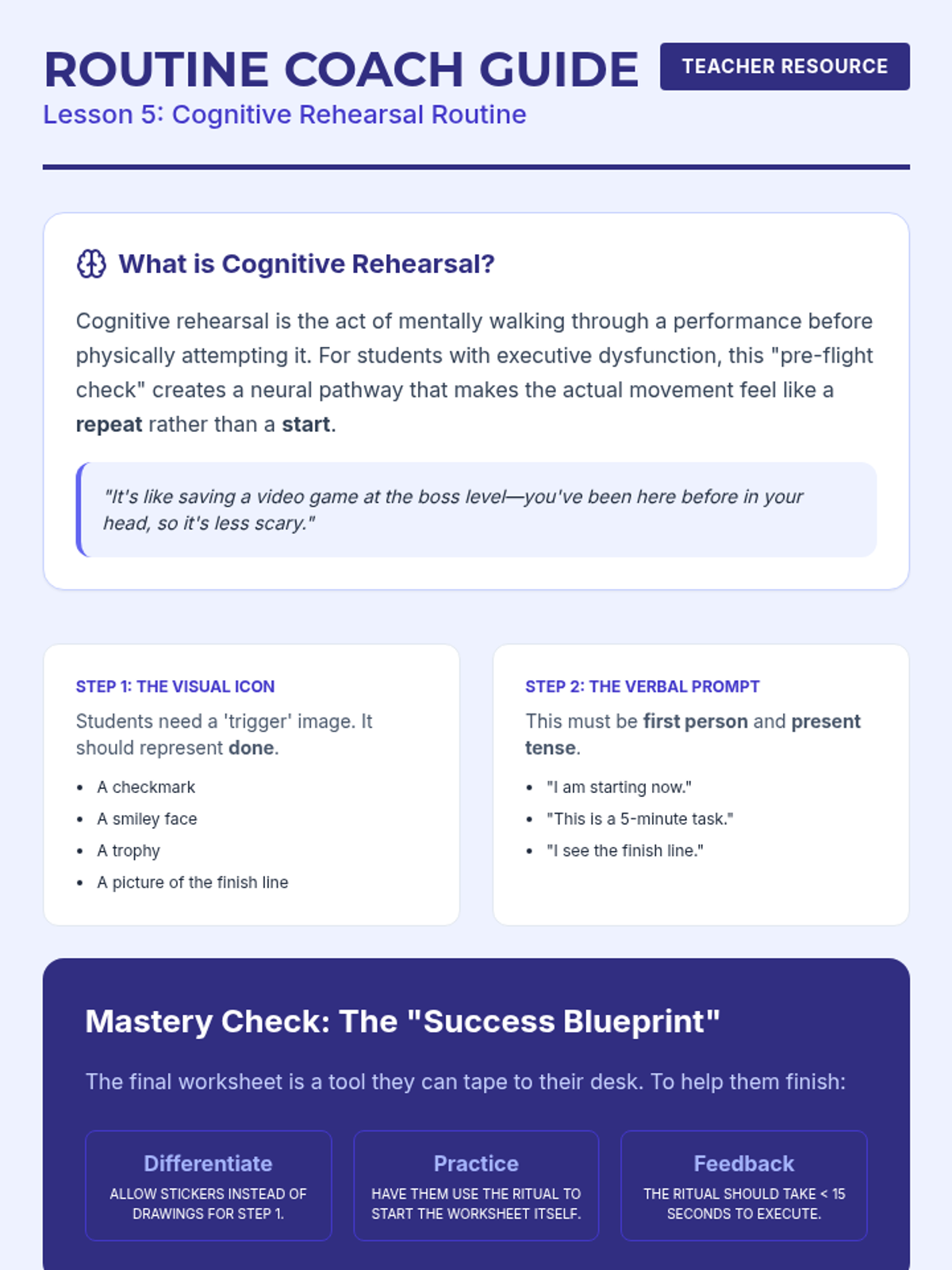
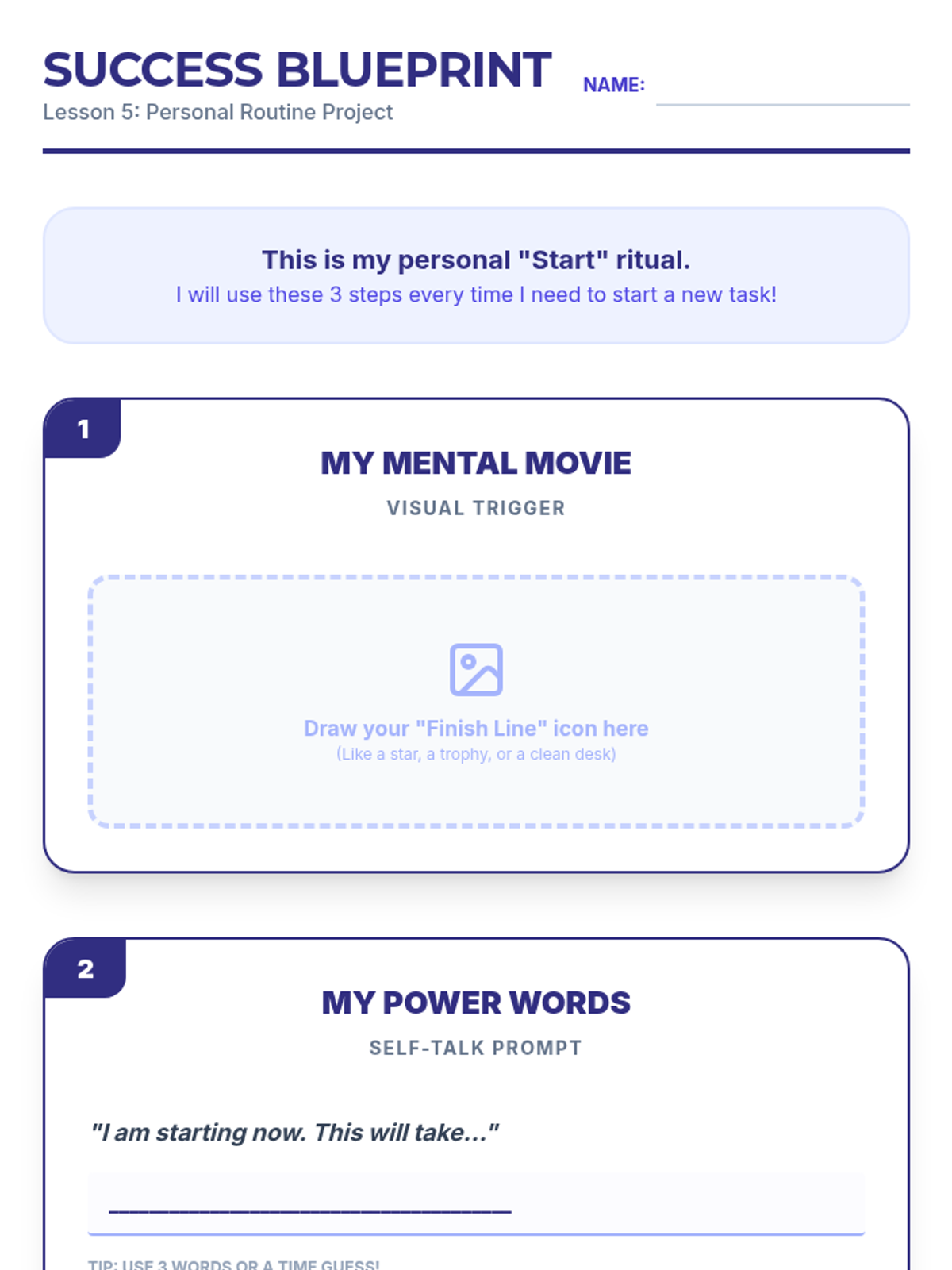
Students create a personal storyboard or checklist that combines a visual icon with a verbal prompt for task initiation.
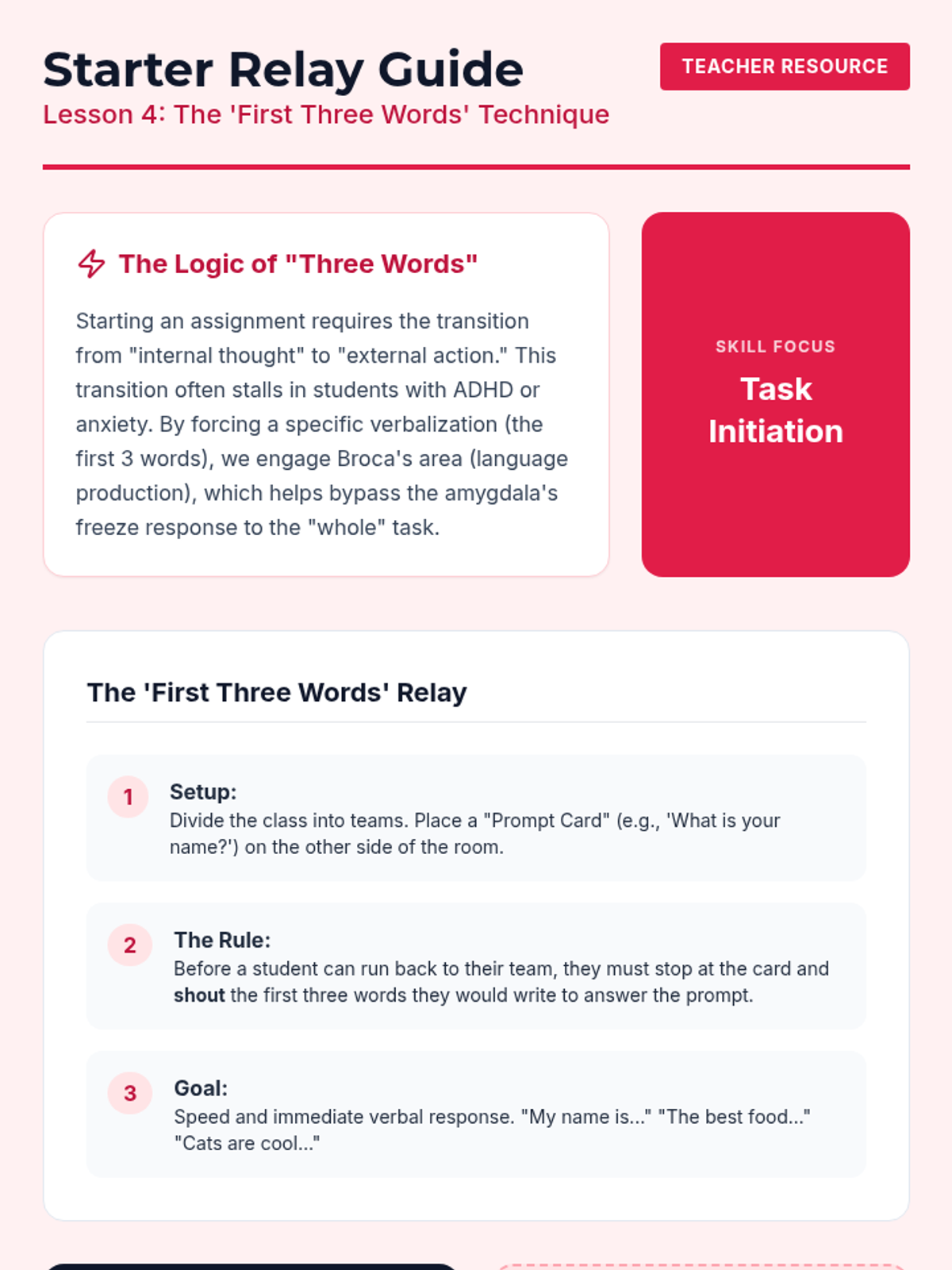
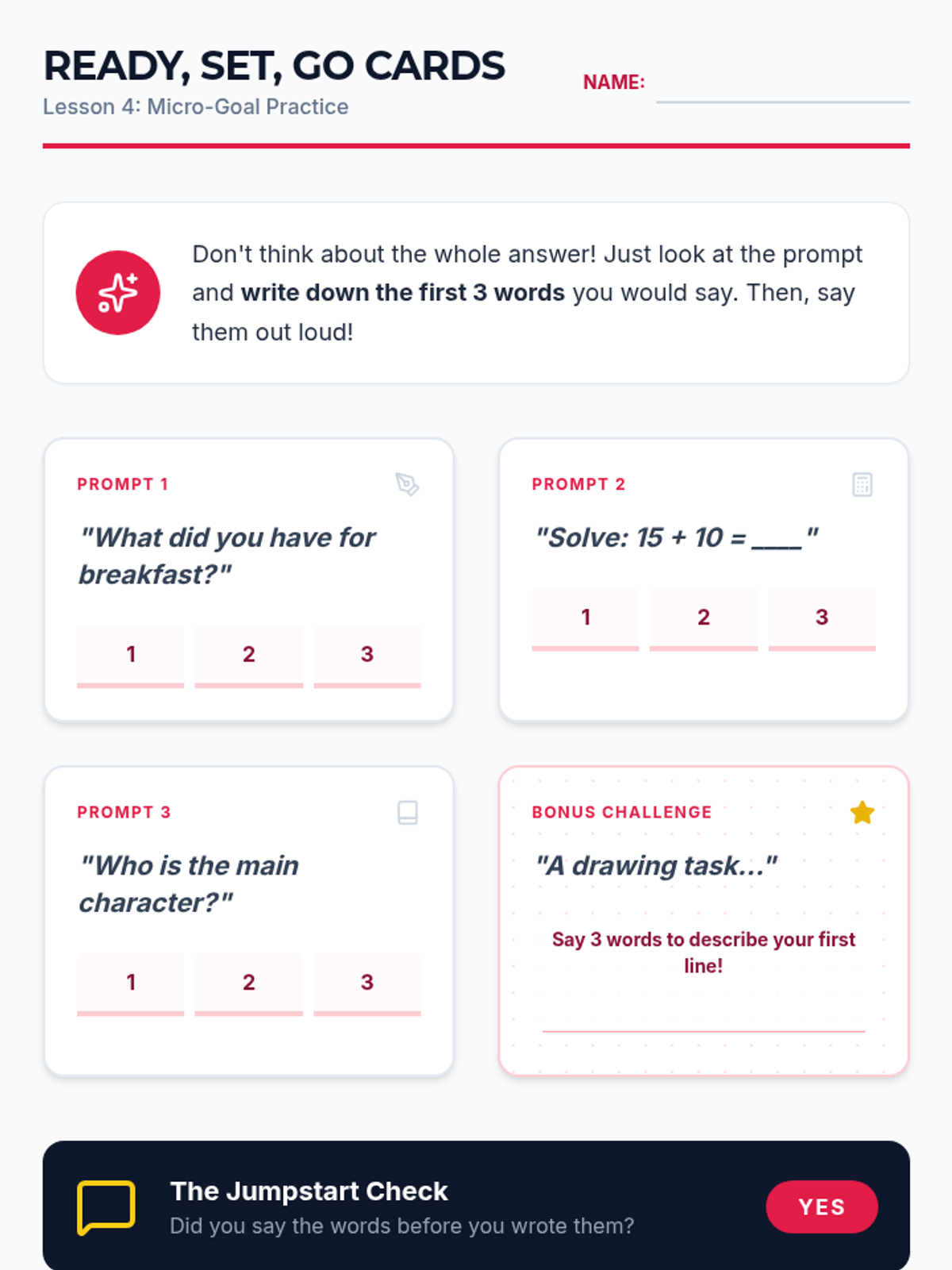
Students learn to identify the first three words of a task to lower the barrier to entry and engage the brain's language center.
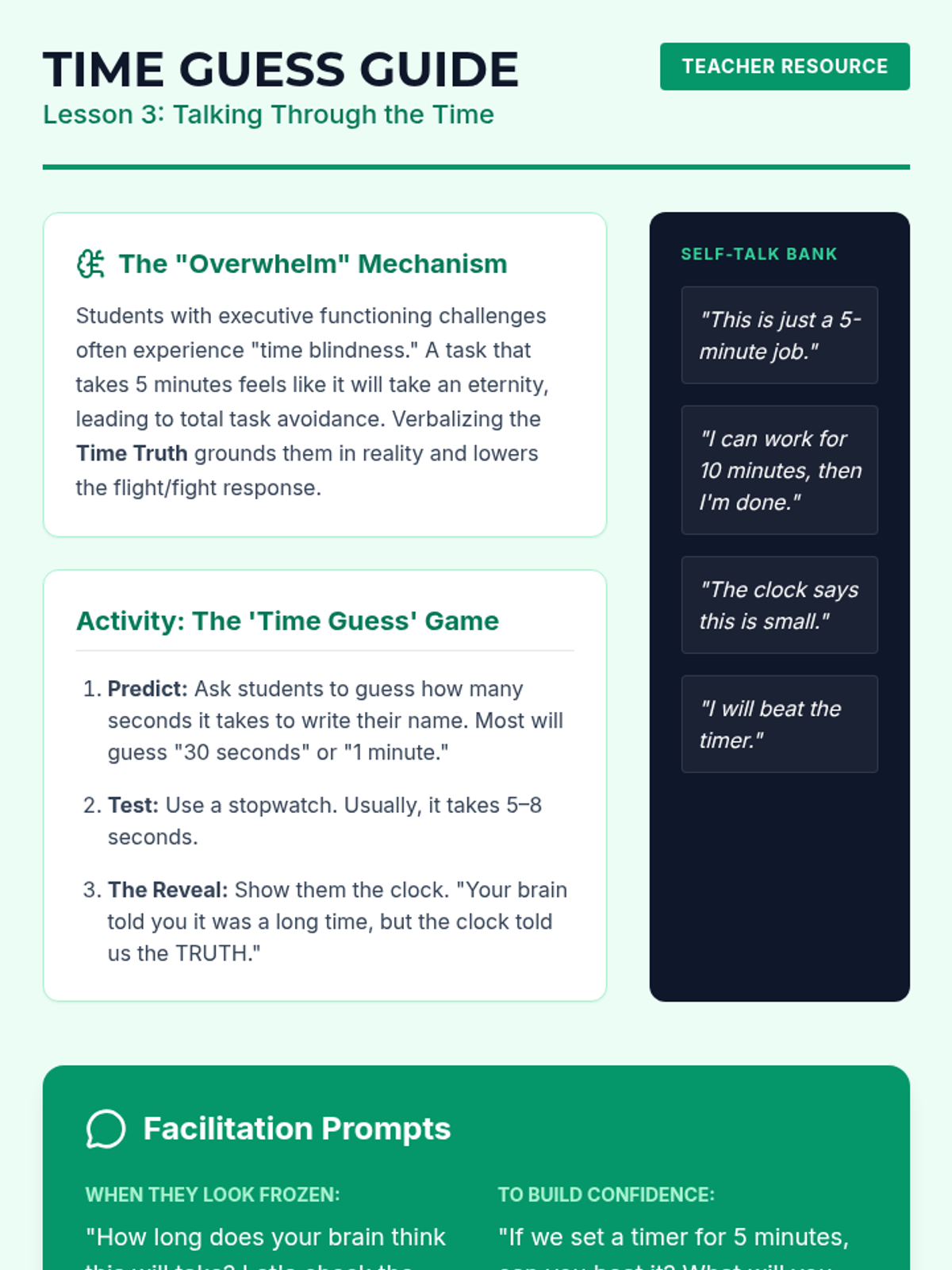
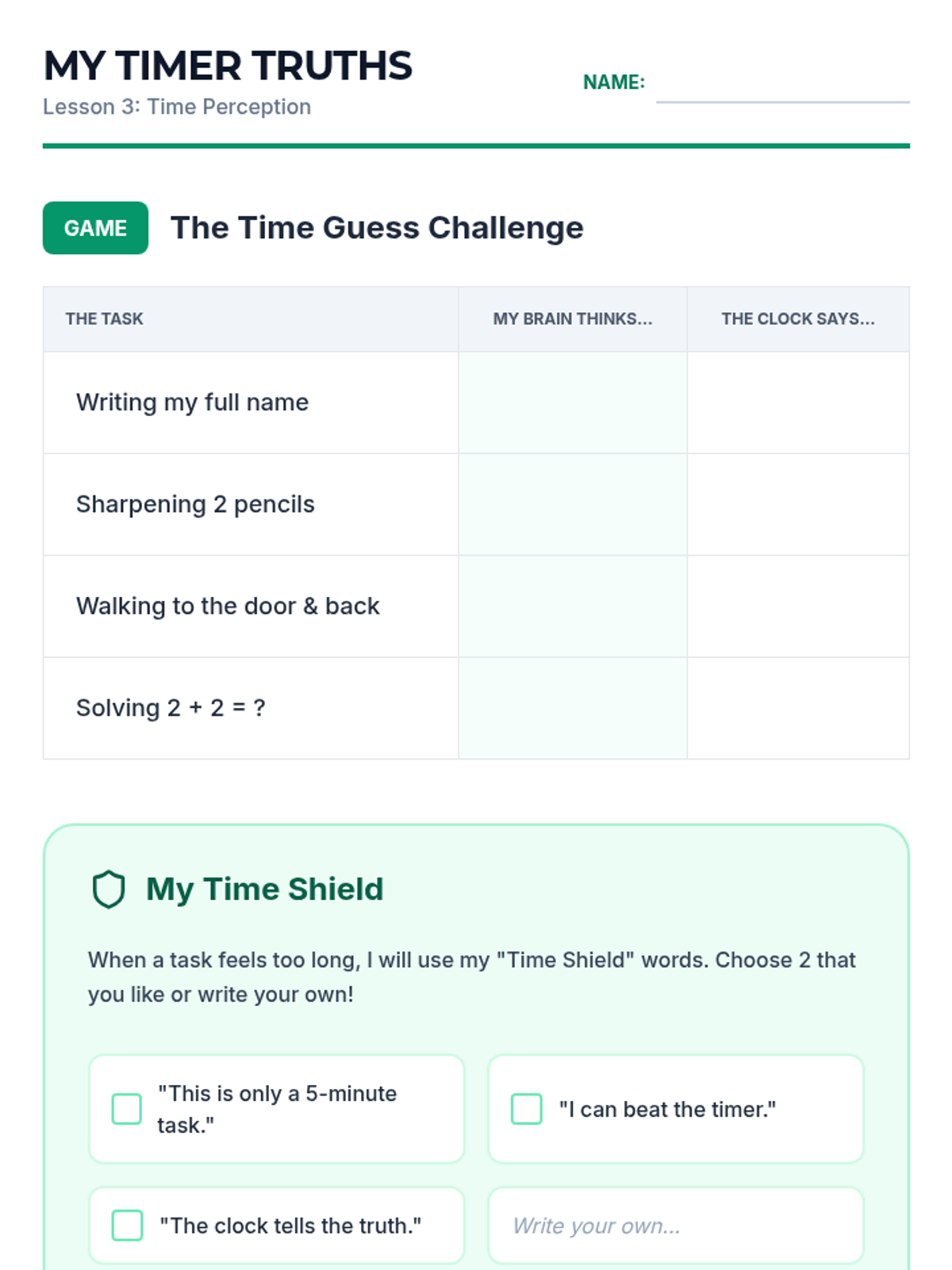
Students learn to estimate time and use verbal reassurance to reduce overwhelm.
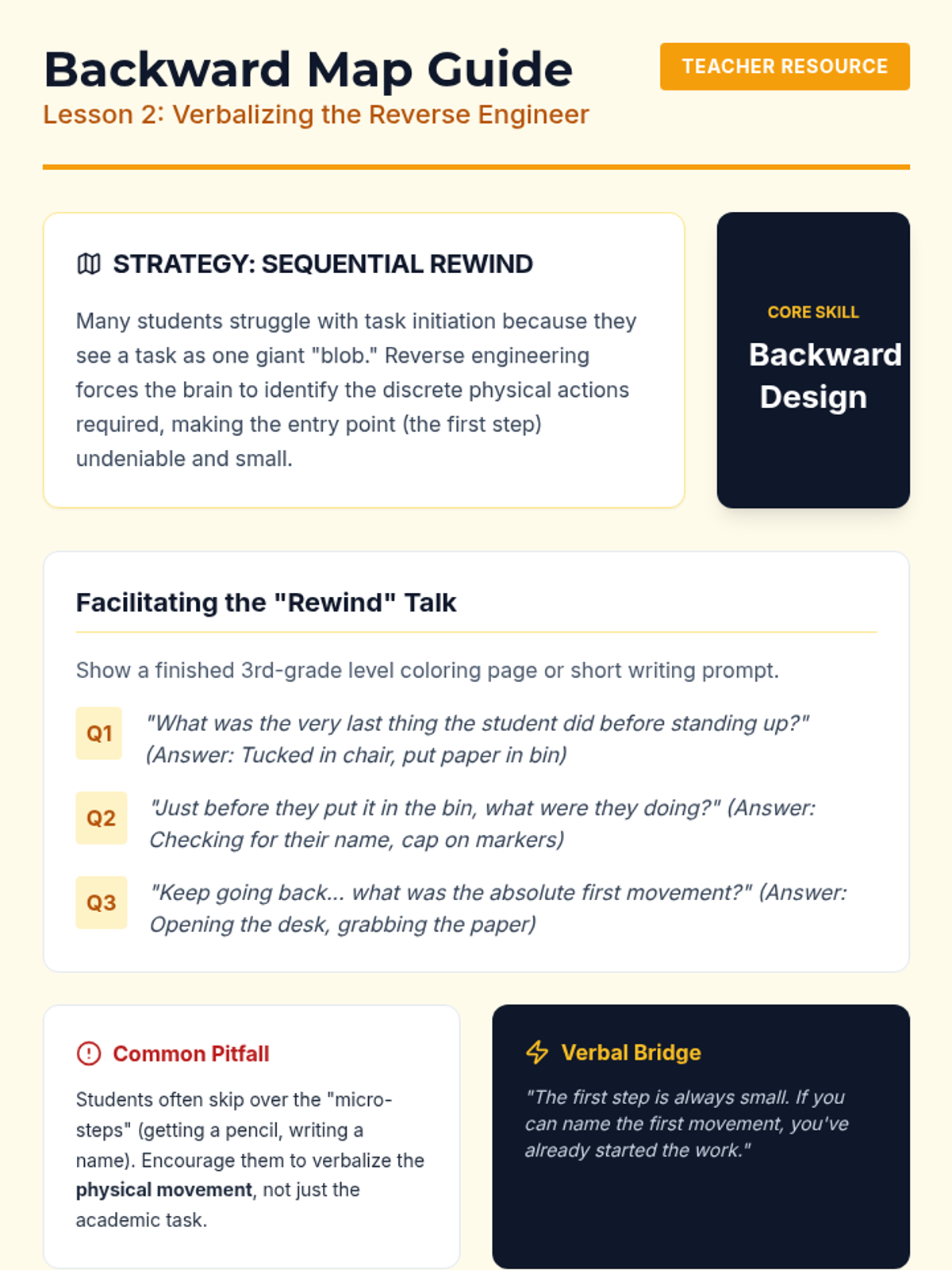
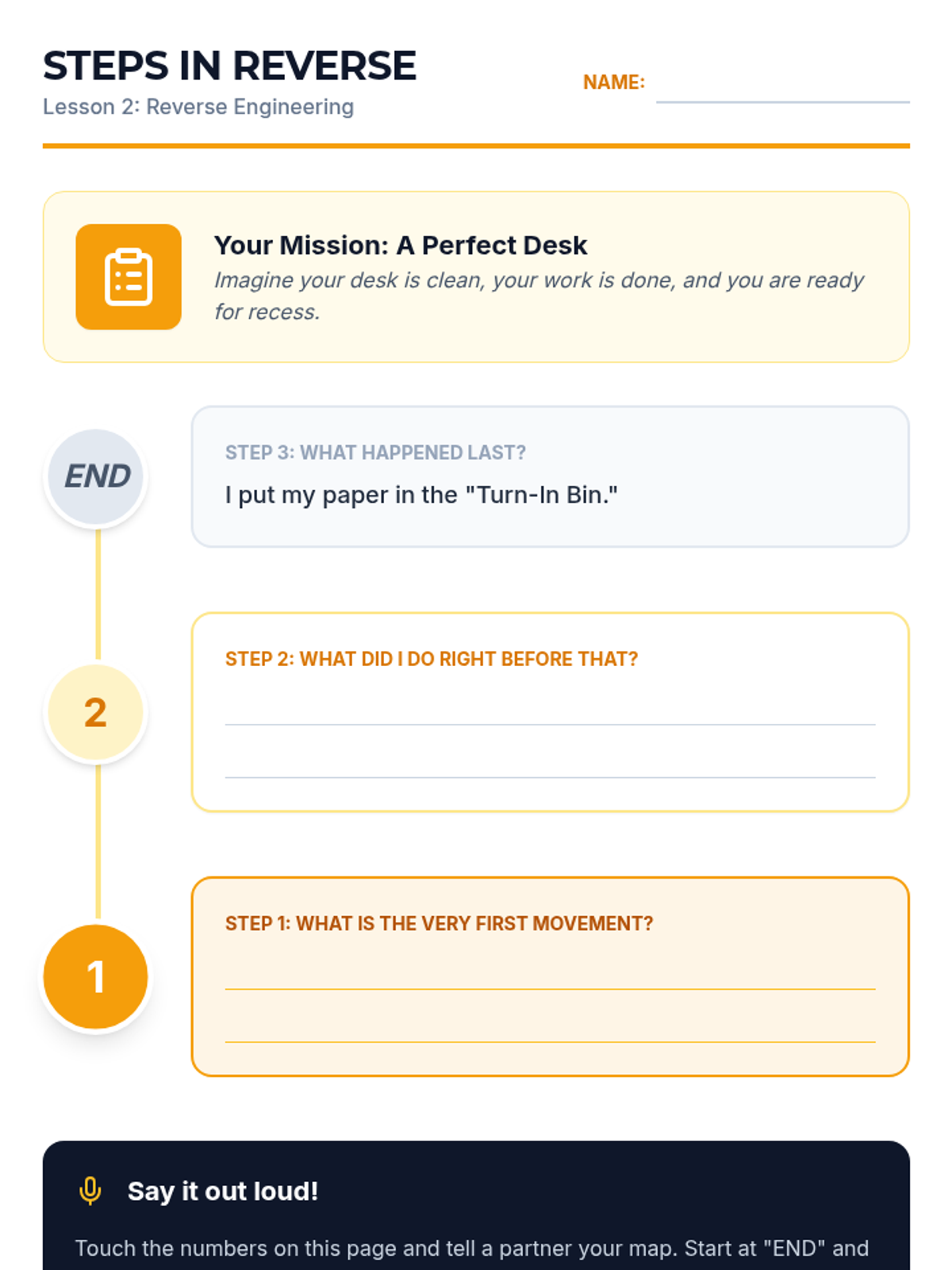
Students talk backward through the steps of a completed sample to make the first step obvious and approachable.
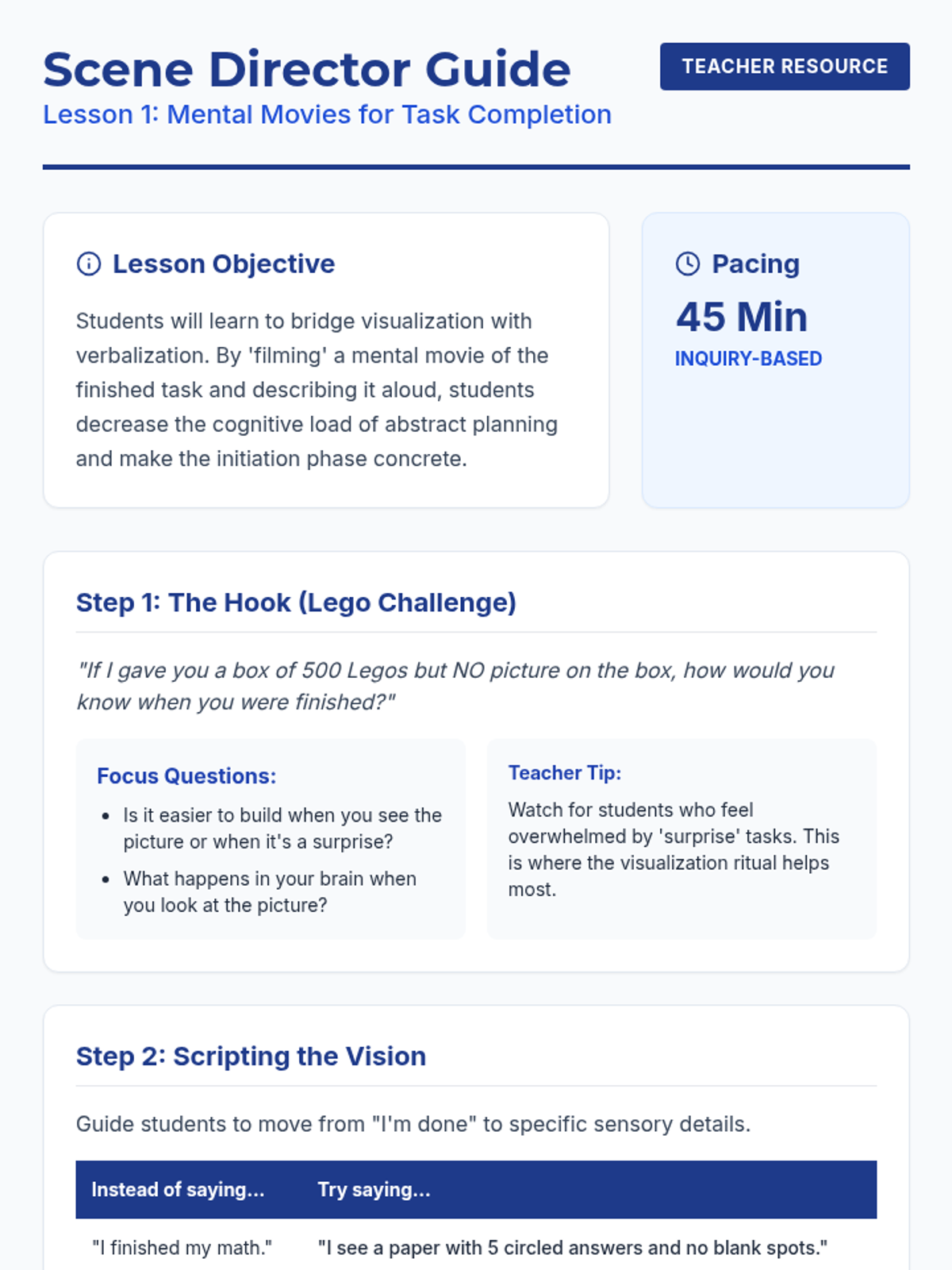
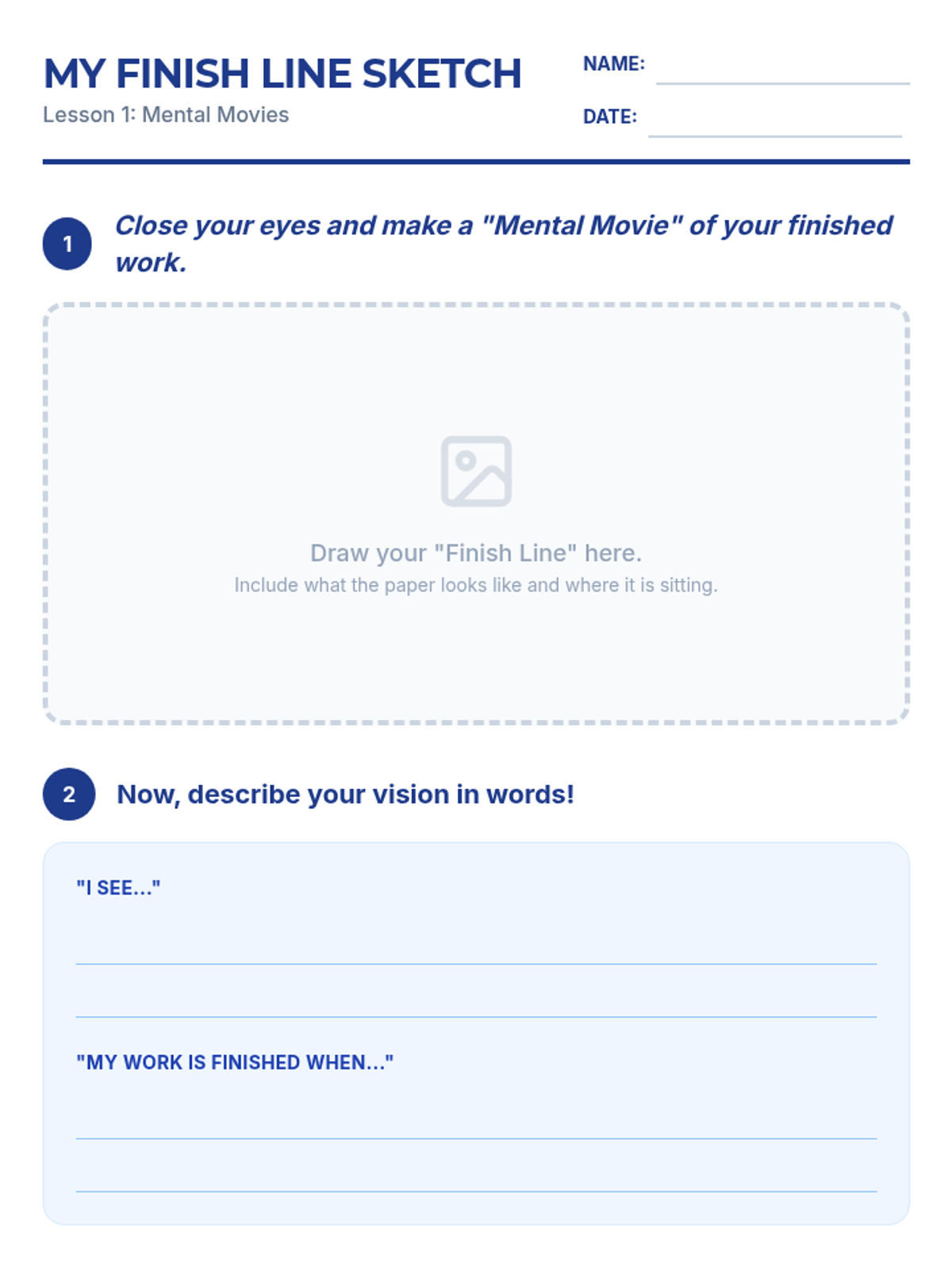
Students practice closing their eyes and creating a detailed mental image of what 'finished' looks like before describing it aloud.
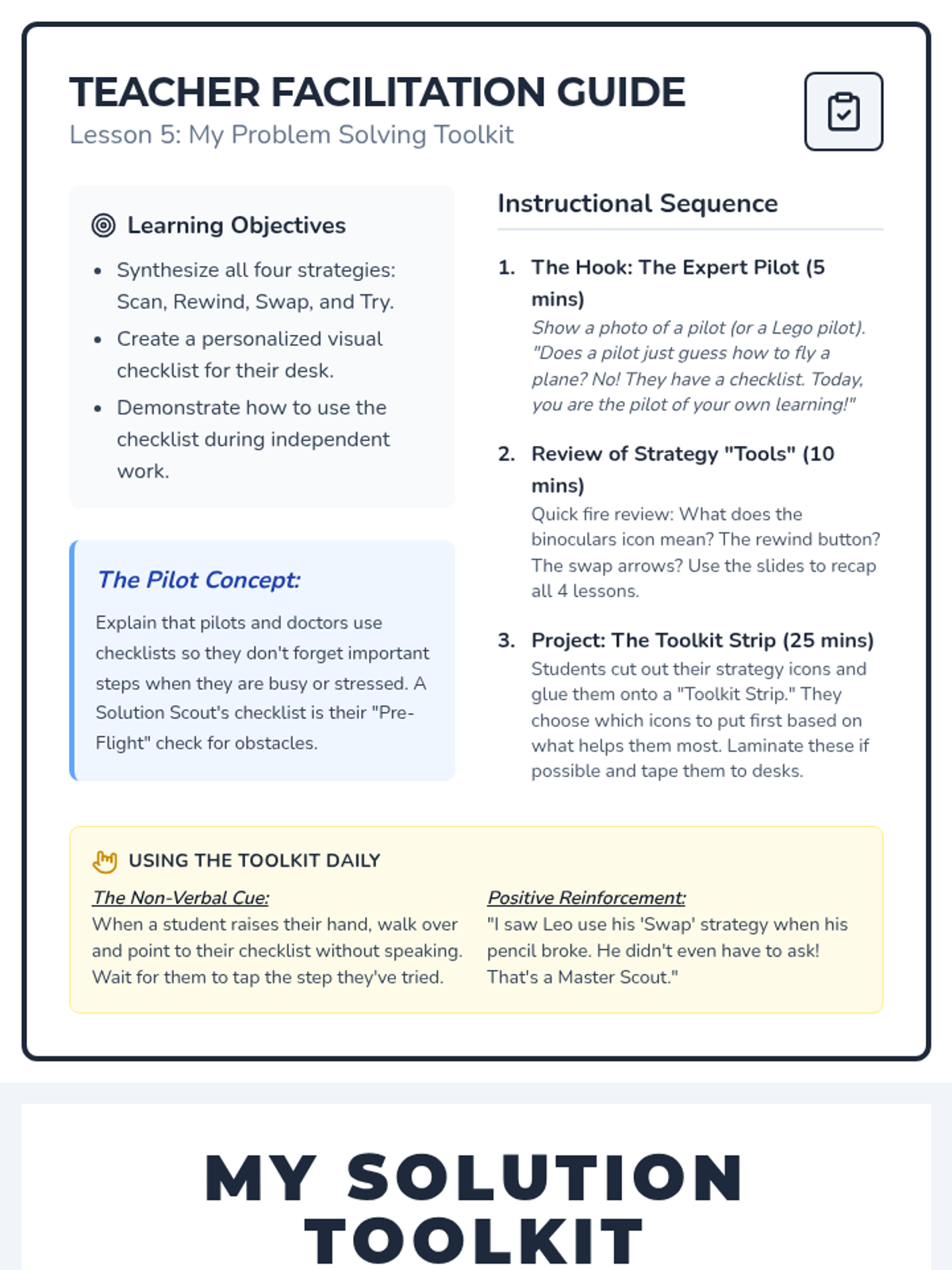
Students synthesize their learning by creating a personalized visual troubleshooting guide to keep at their desks.
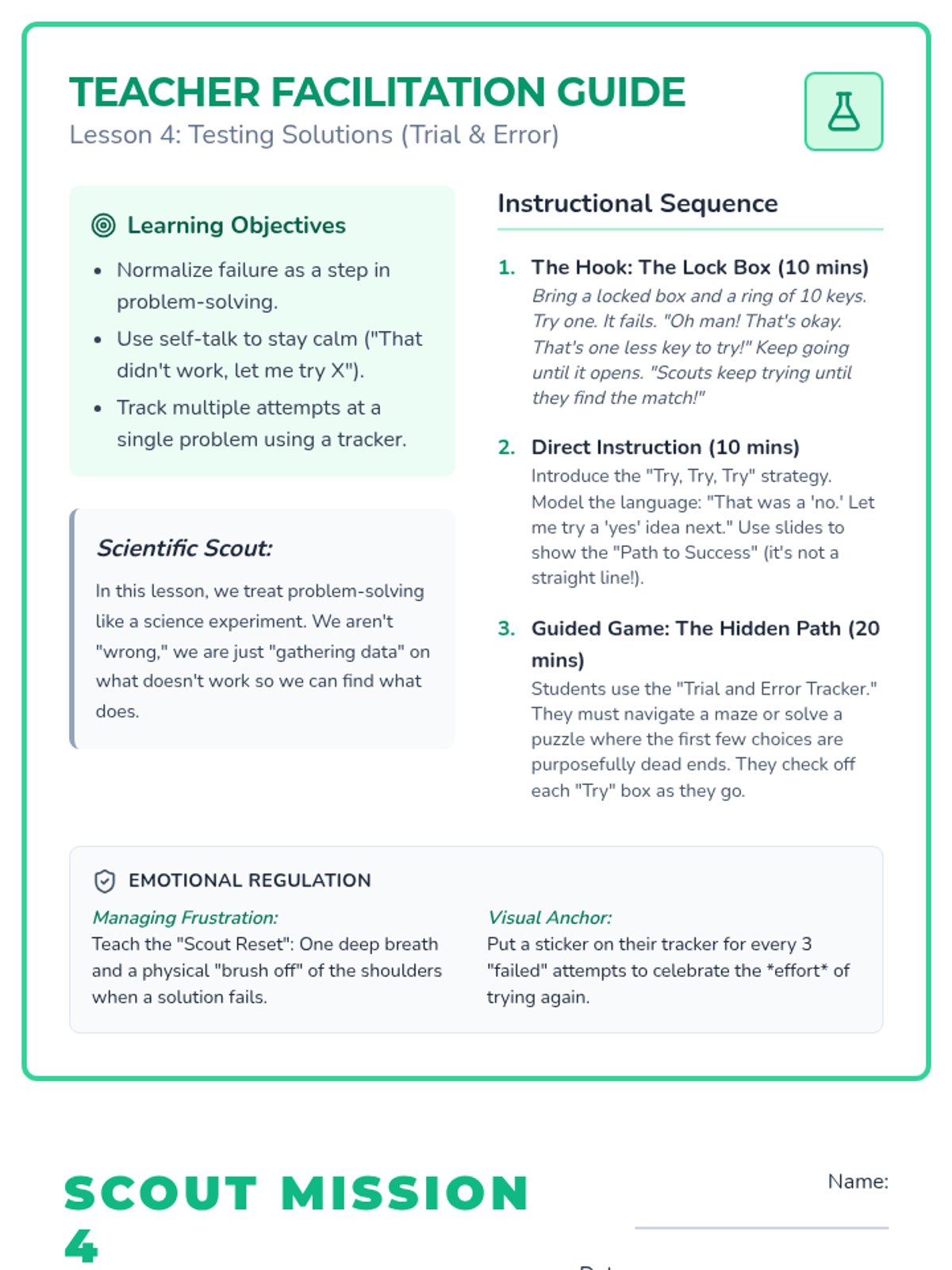
Normalizes the trial-and-error process, helping students build resilience when their first solution doesn't work.
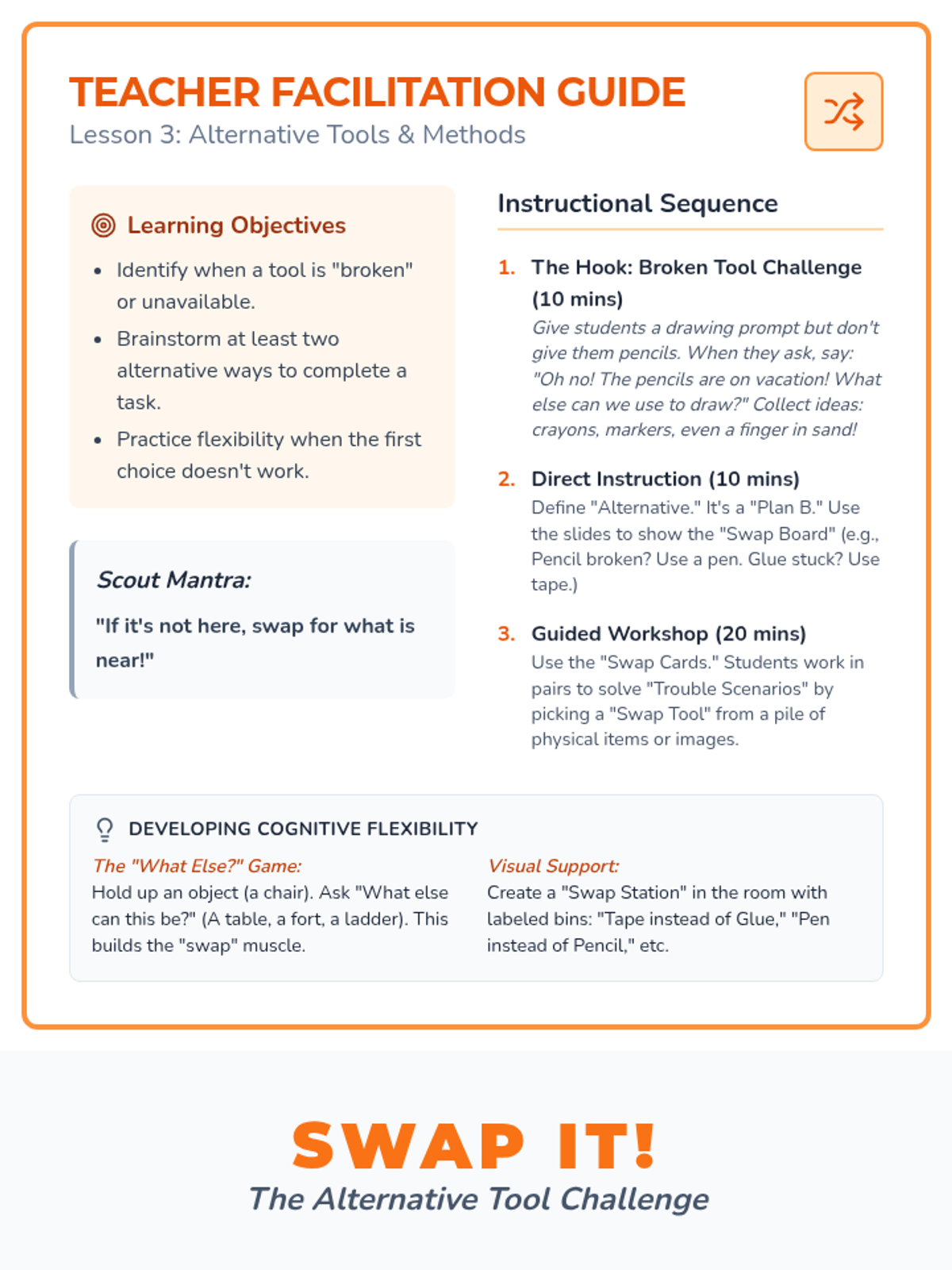
Encourages flexibility by challenging students to find alternative tools or methods when their first choice isn't available.
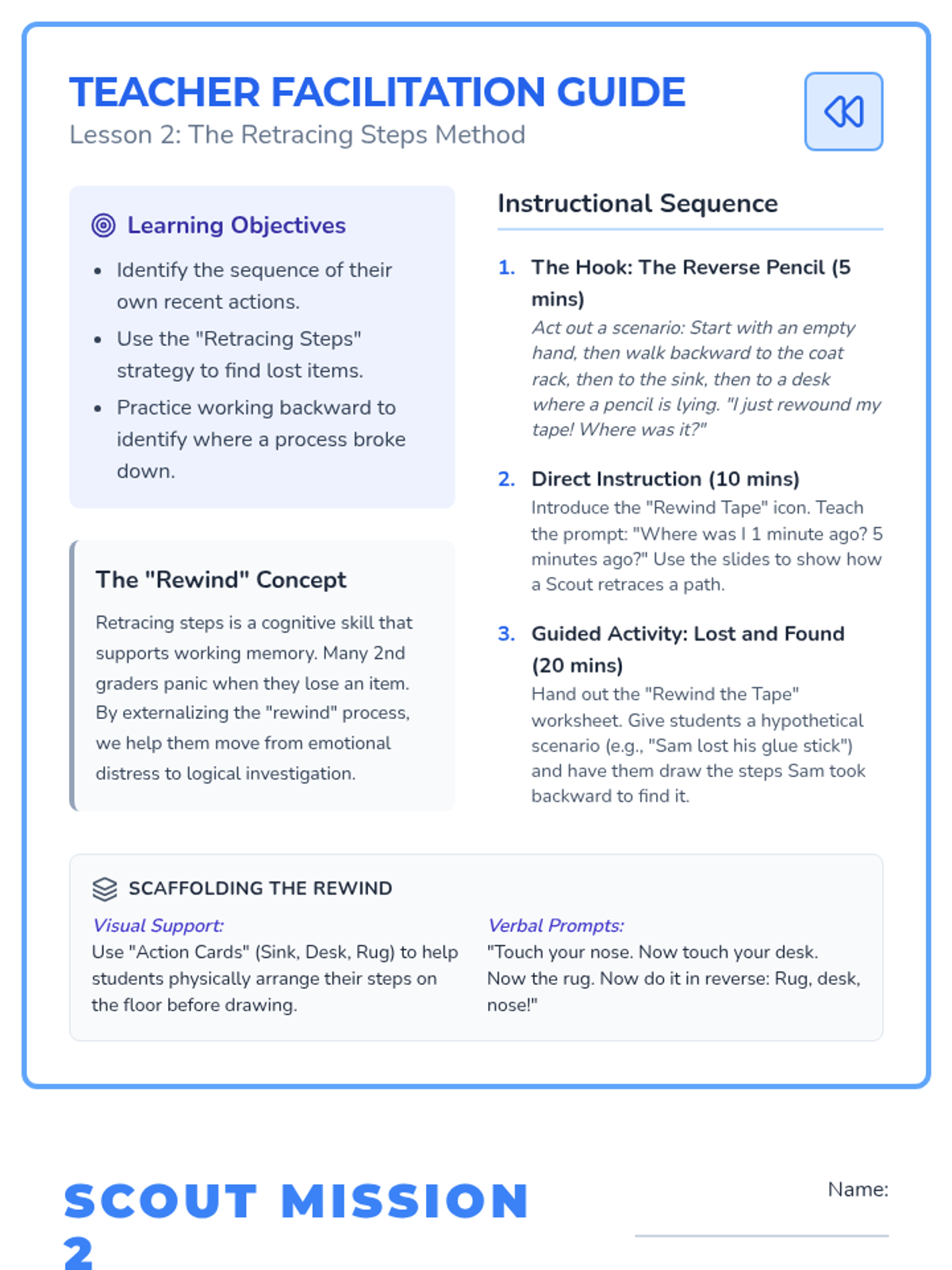
Focuses on material management and memory by teaching students how to 'rewind' their actions to solve problems.
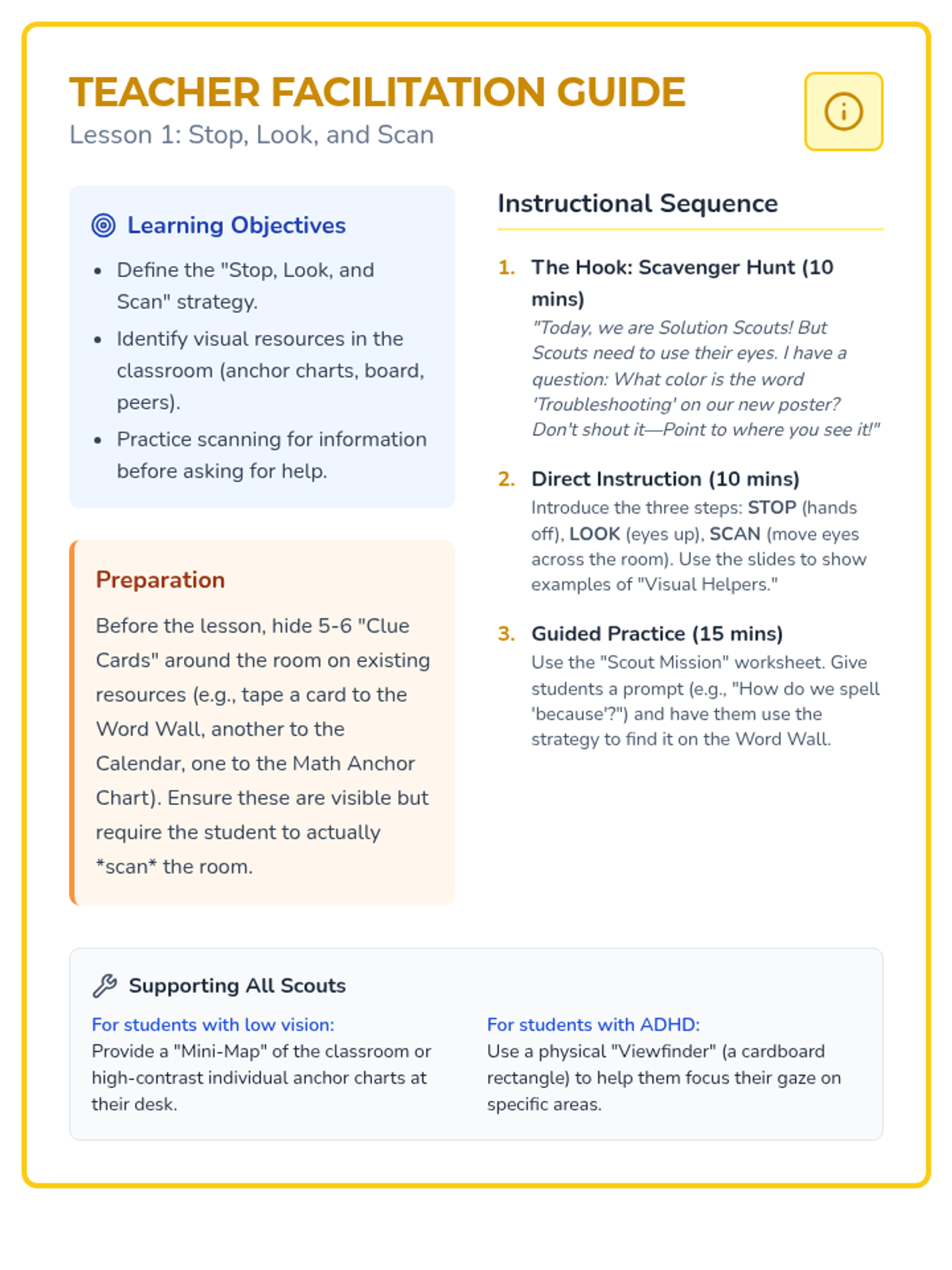
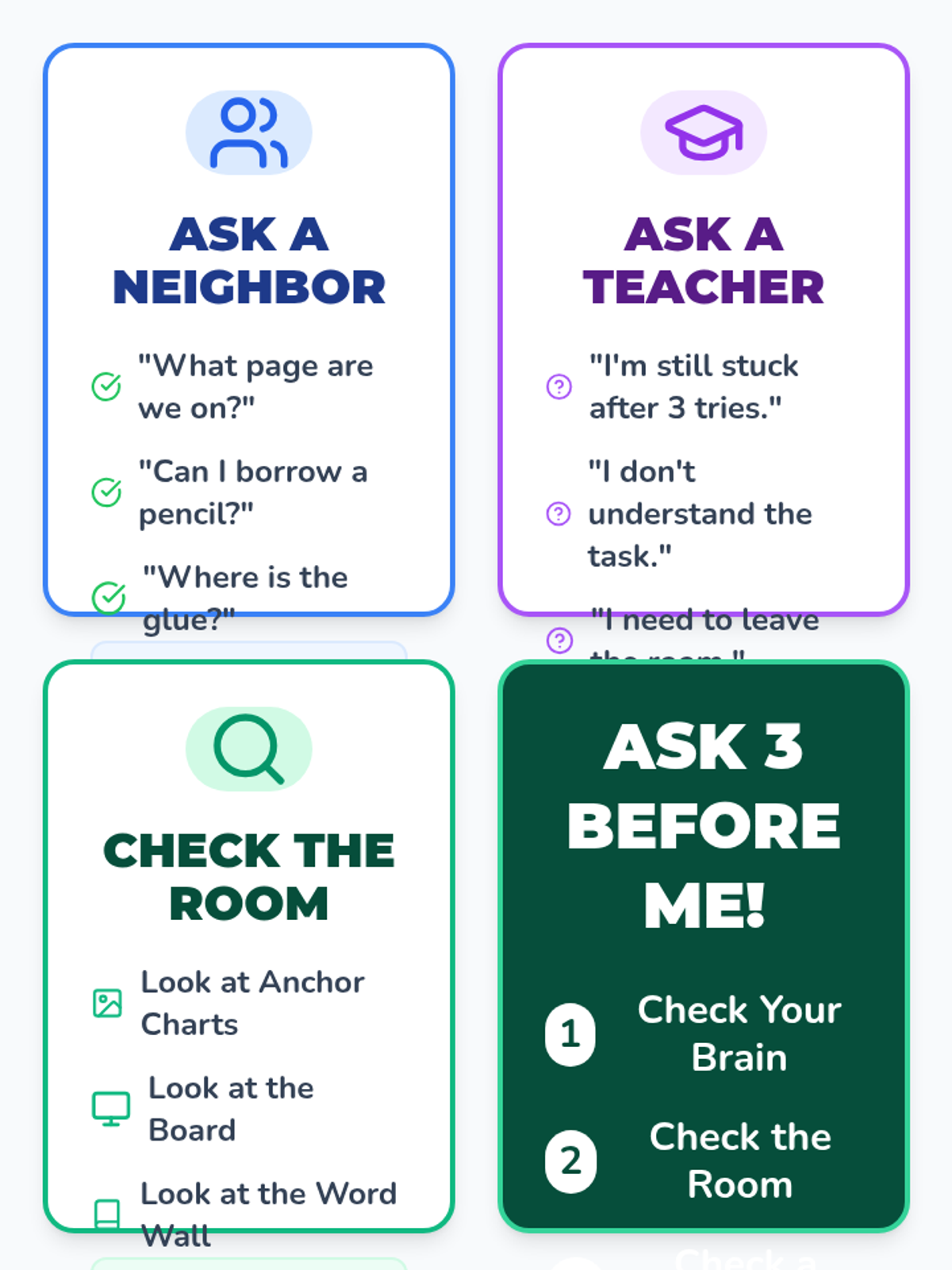
Students learn the 'Stop, Look, and Scan' strategy to find answers in their environment before asking for help.
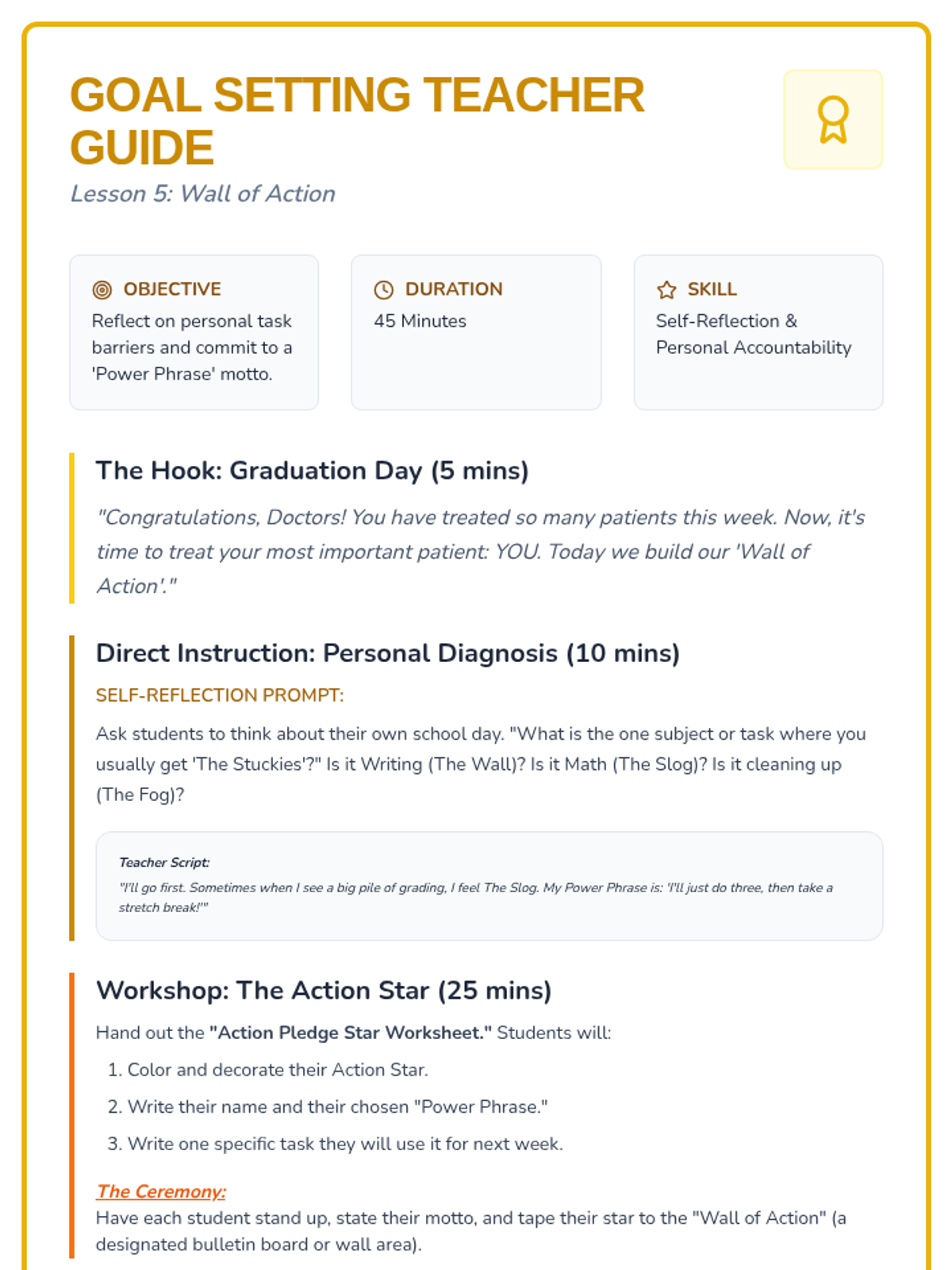
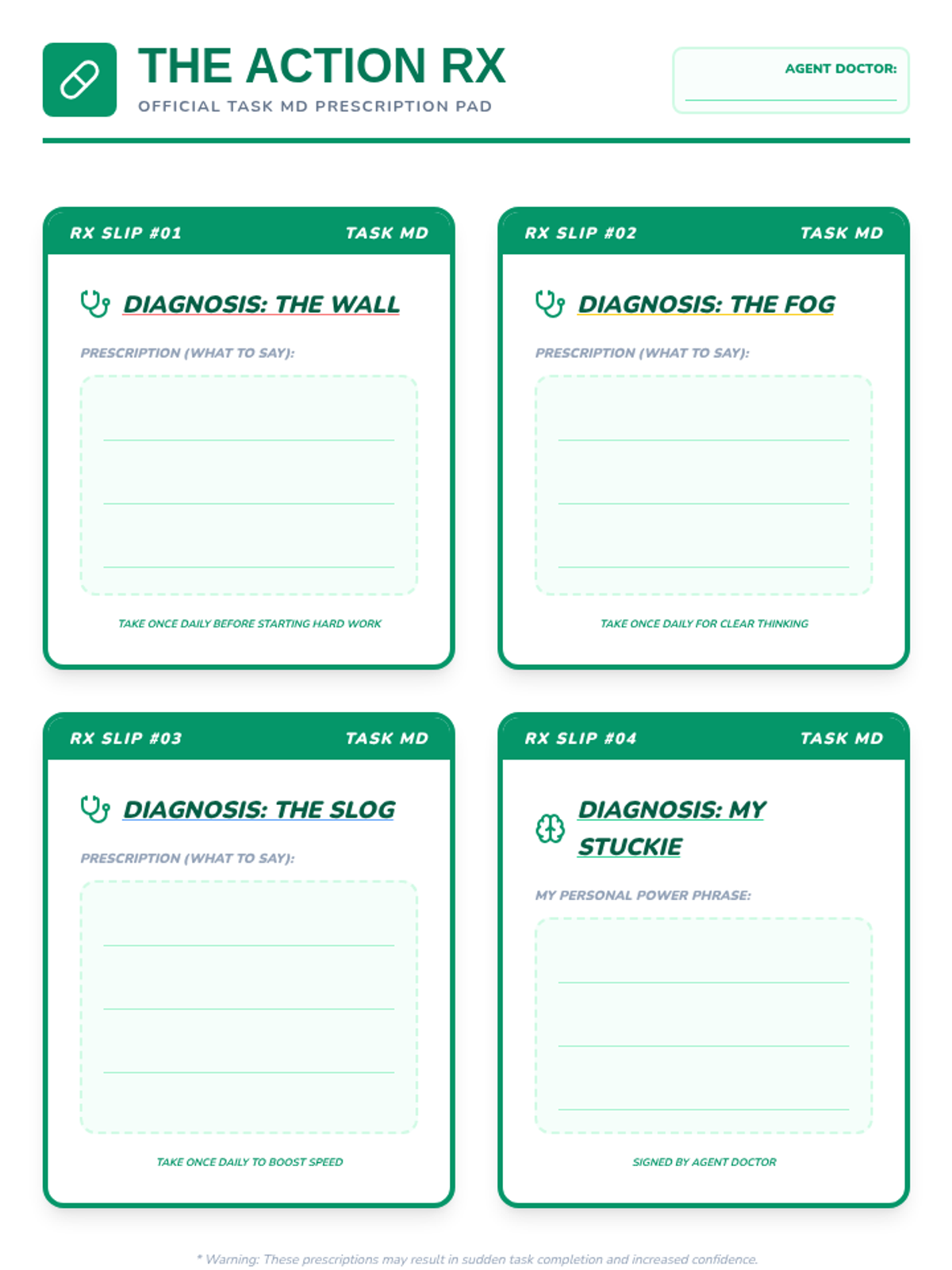
Students identify their own barriers to starting work and select a personal 'Power Phrase' motto for future tasks.
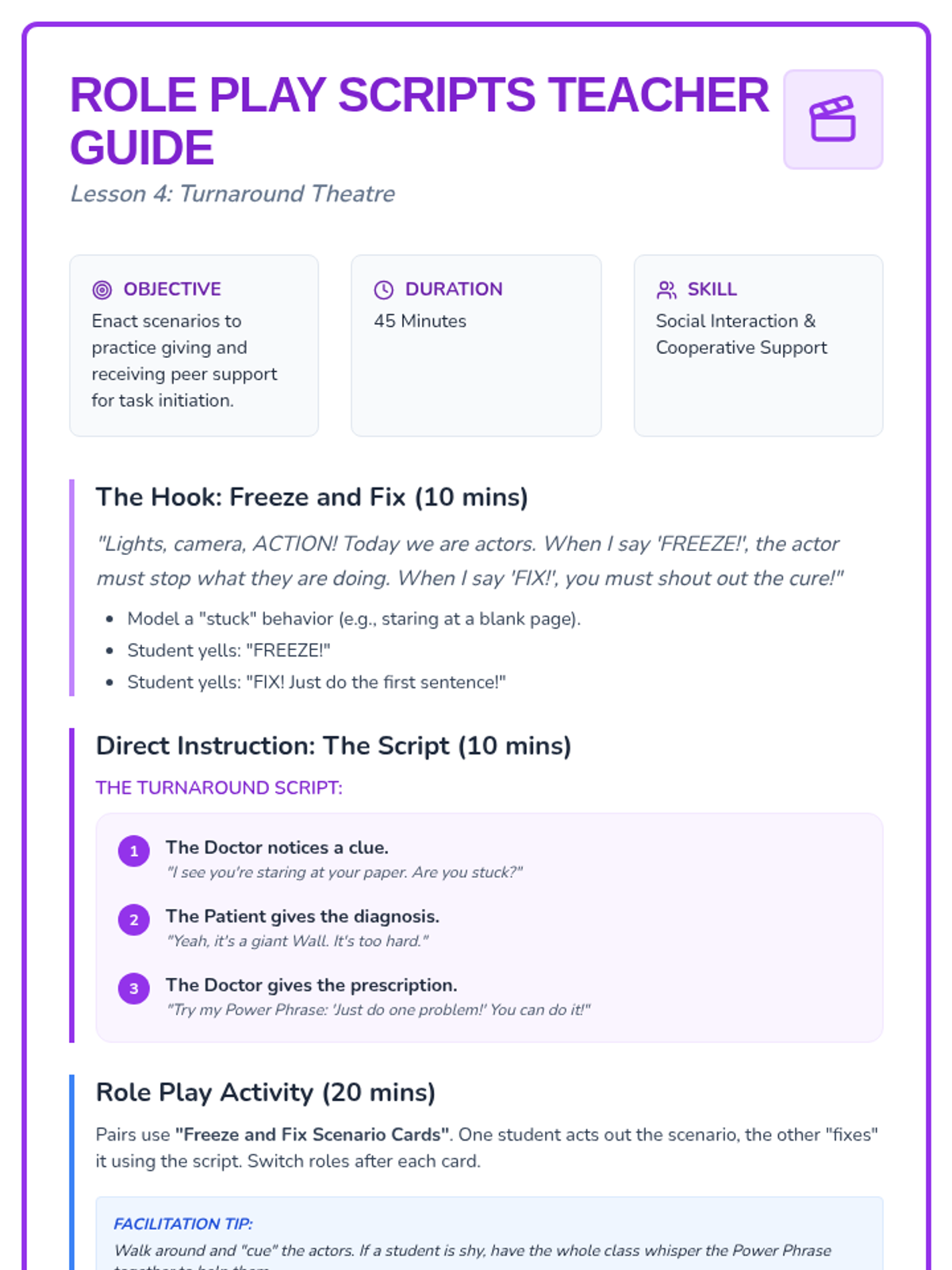
Students role-play scenarios where they help a peer get 'unstuck' using their self-talk prescriptions.
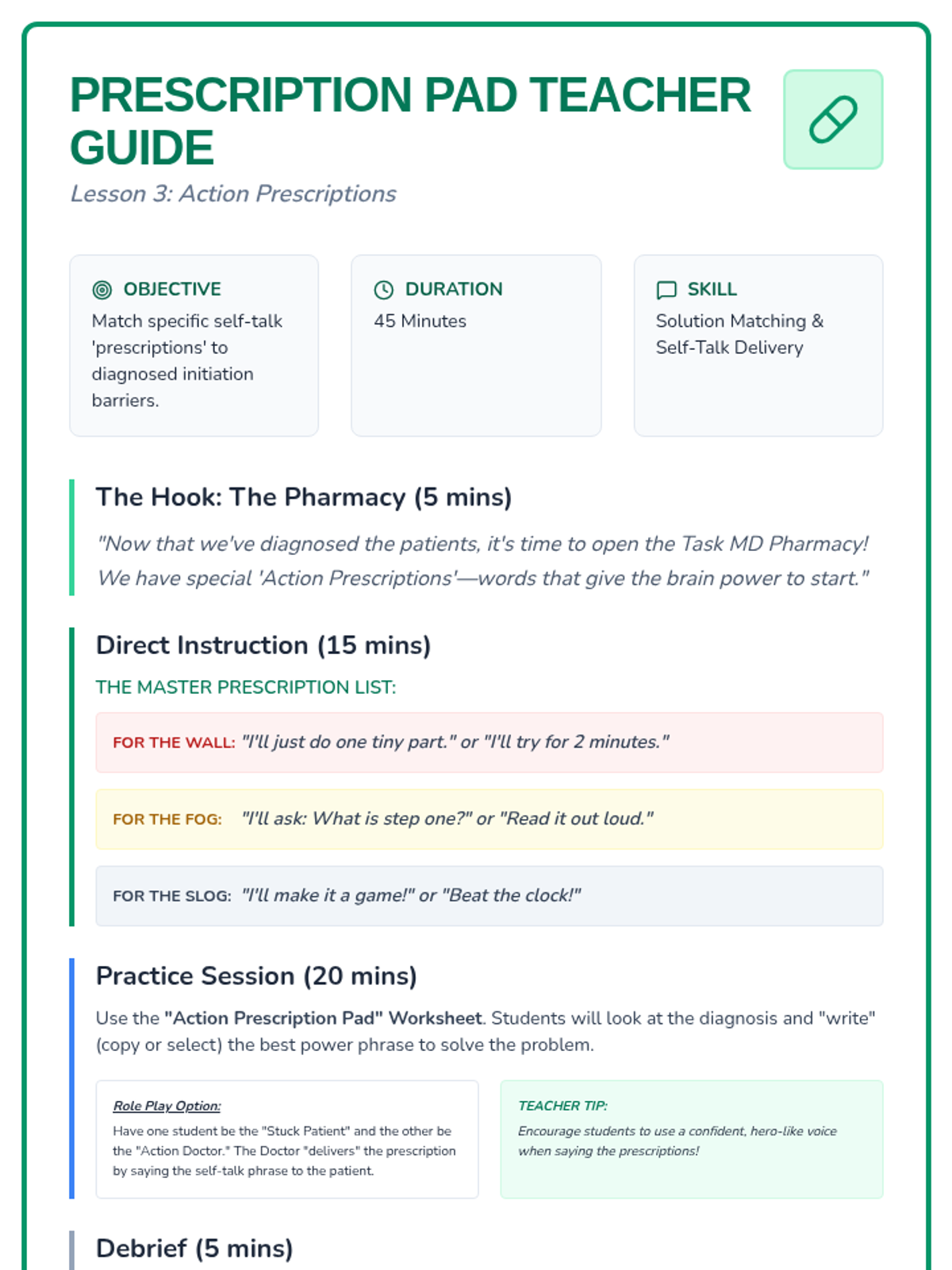
Students match specific self-talk 'prescriptions' to diagnosed problems and practice delivering these lines to characters.
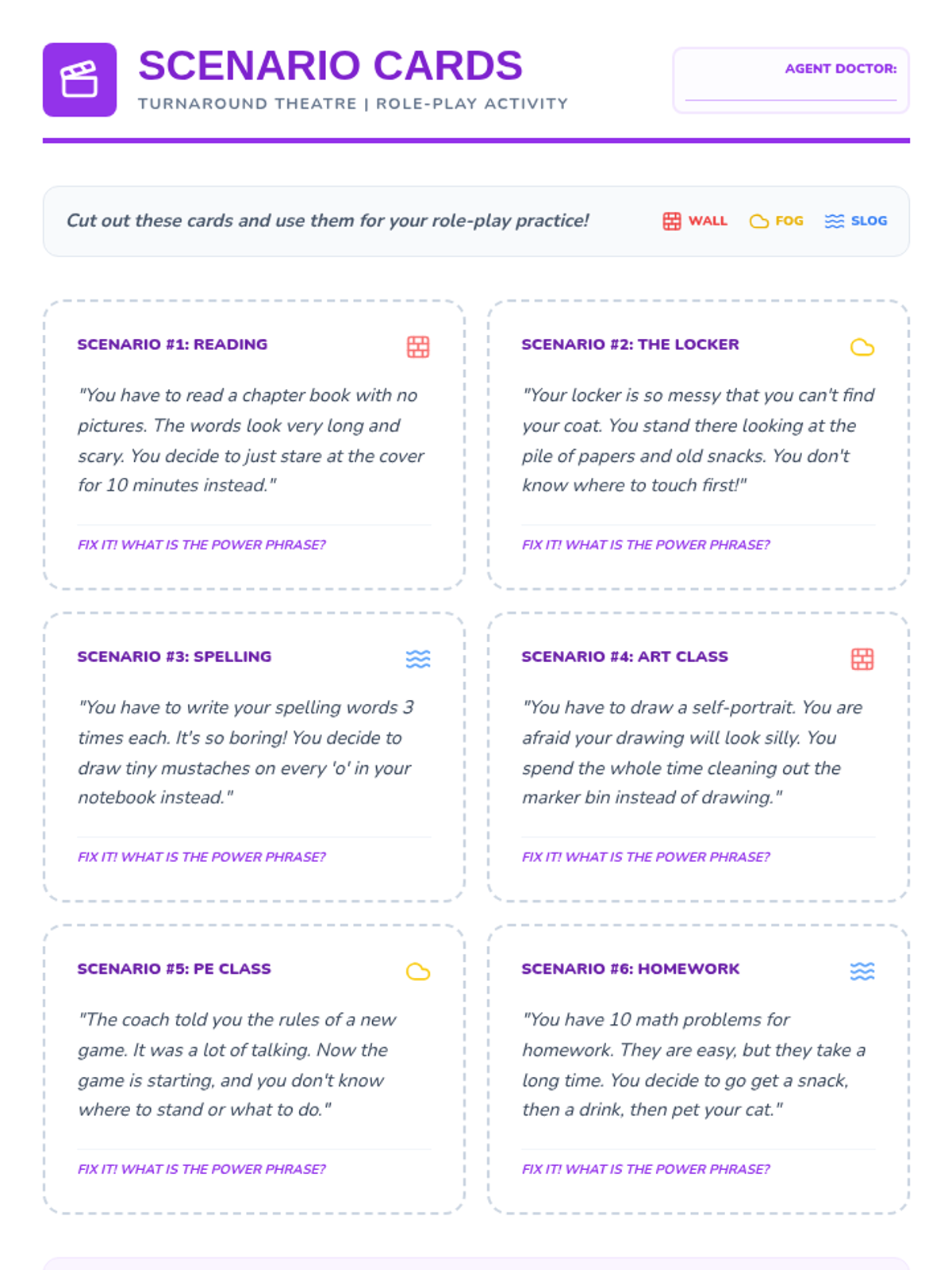
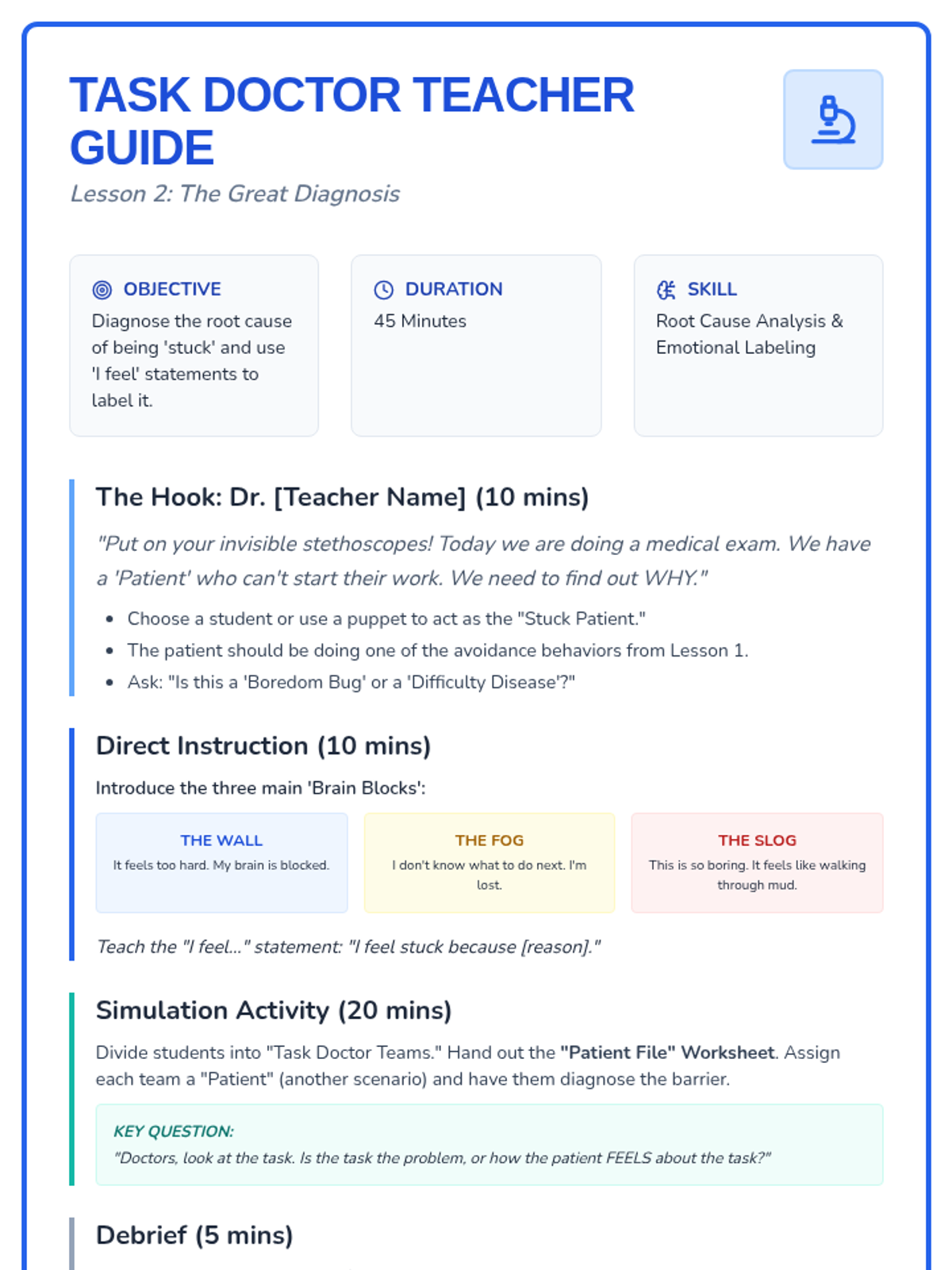
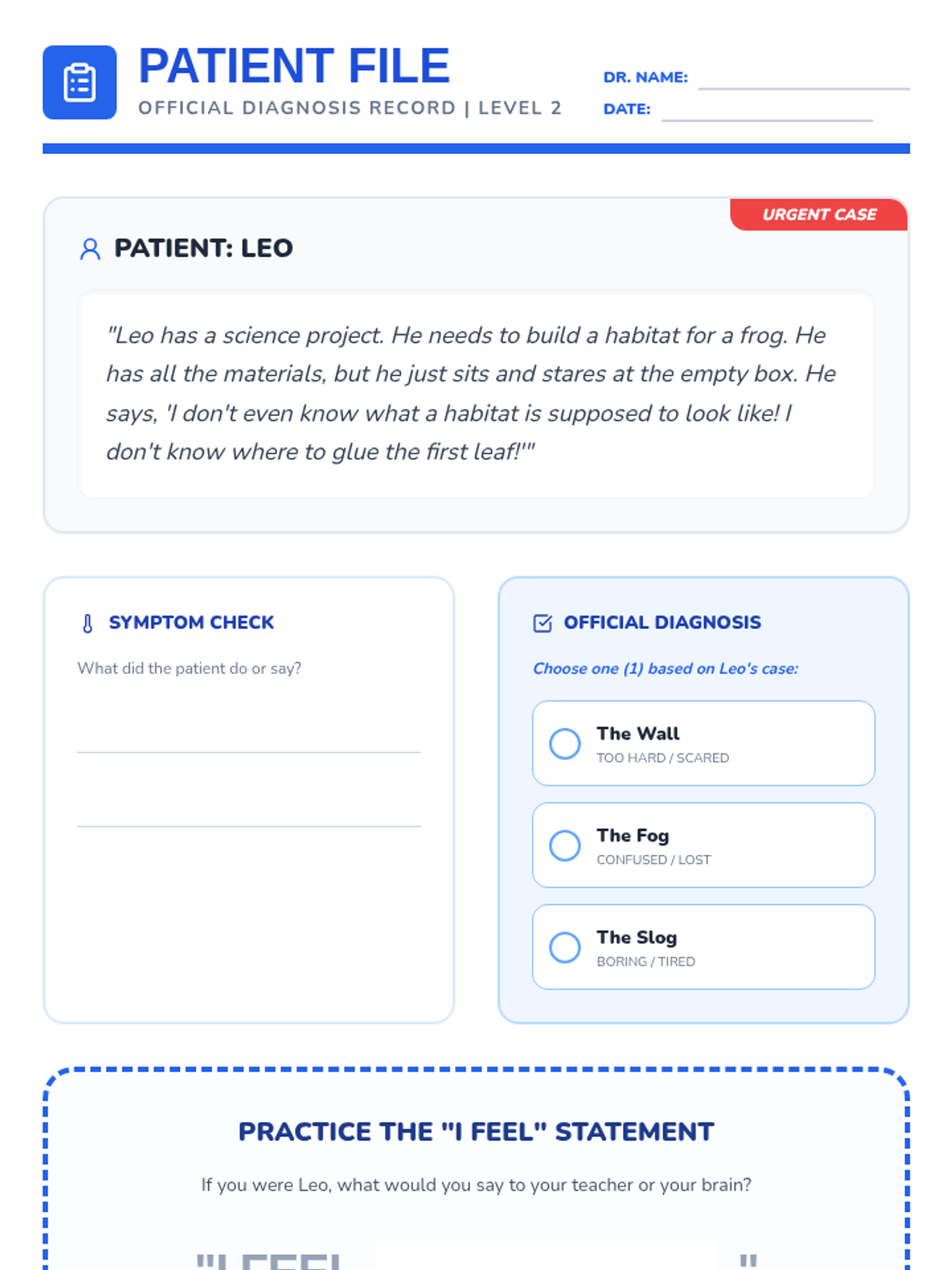
Students act as 'Task Doctors' to determine why a character is stuck (boredom, difficulty, fatigue) and practice labeling these emotions.
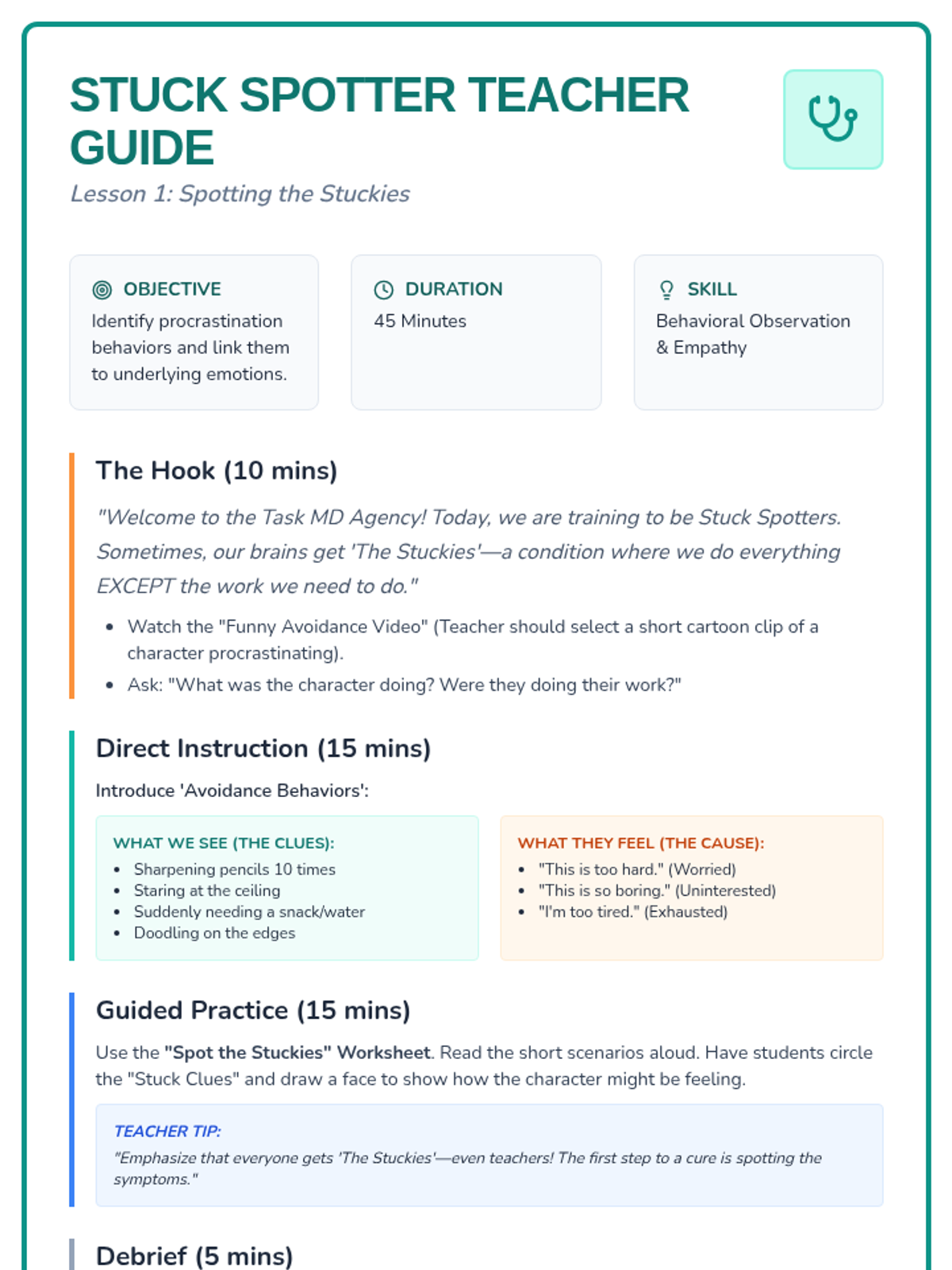
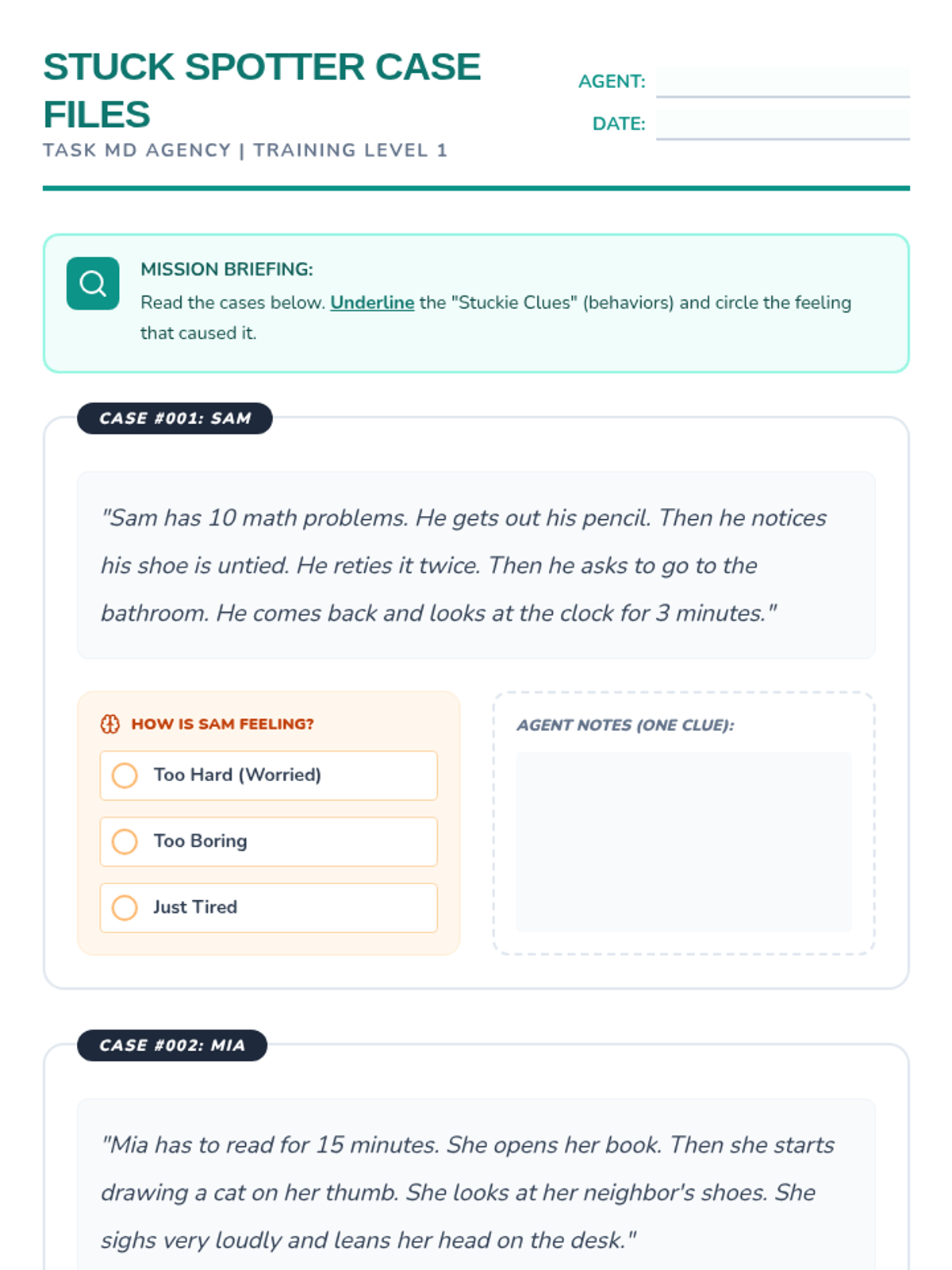
Students identify behaviors that show someone is avoiding work and brainstorm what emotions might be driving those behaviors through case studies.
Students practice adapting their behavior and expectations when a new adult (substitute) takes charge of the classroom.
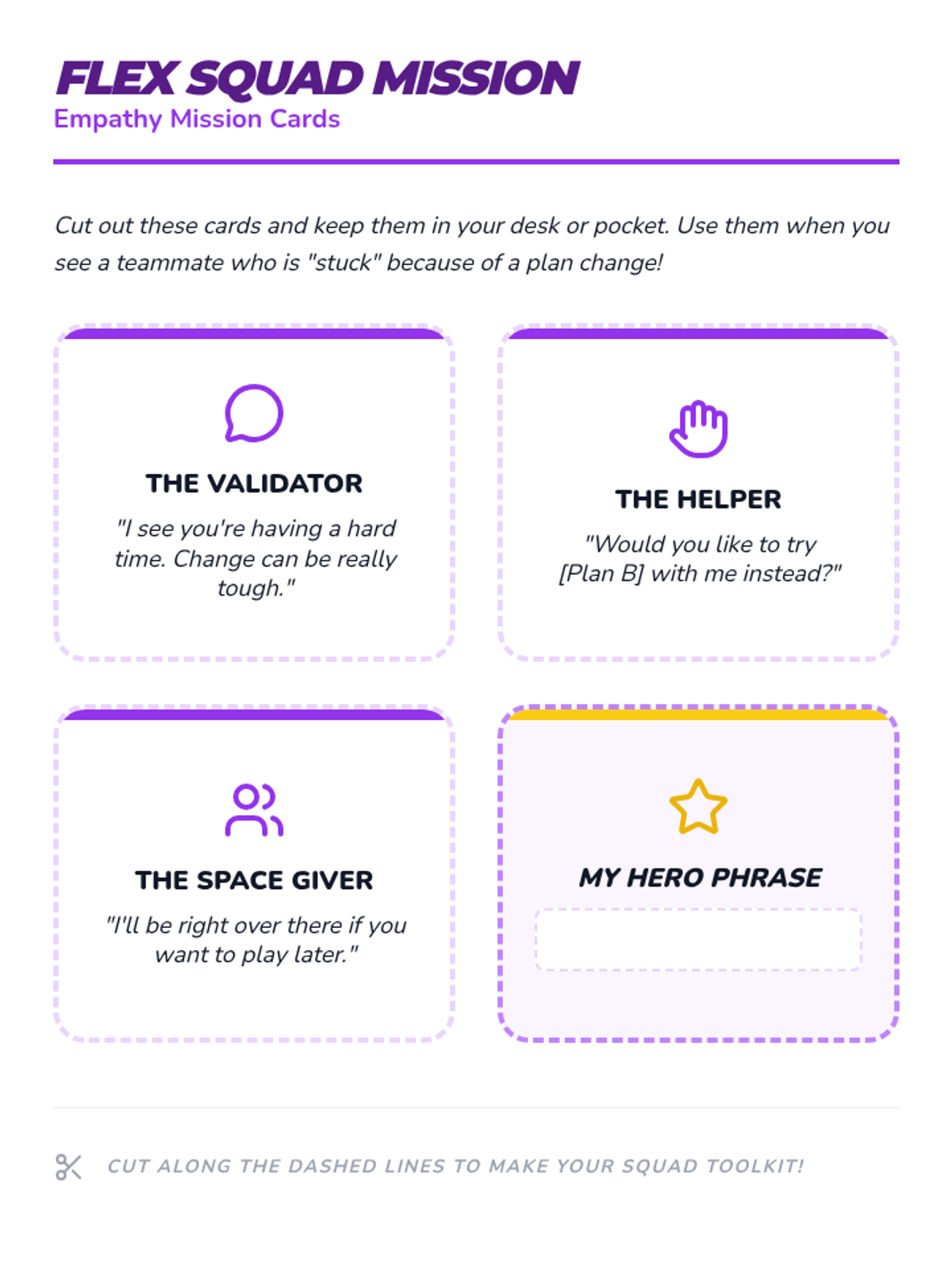
Students learn to identify when a peer is struggling with change and practice offering empathy and support.
A culminating tournament where students rotate through stations with 'mixed-up' rules of classic games, earning points for adaptability and composure.
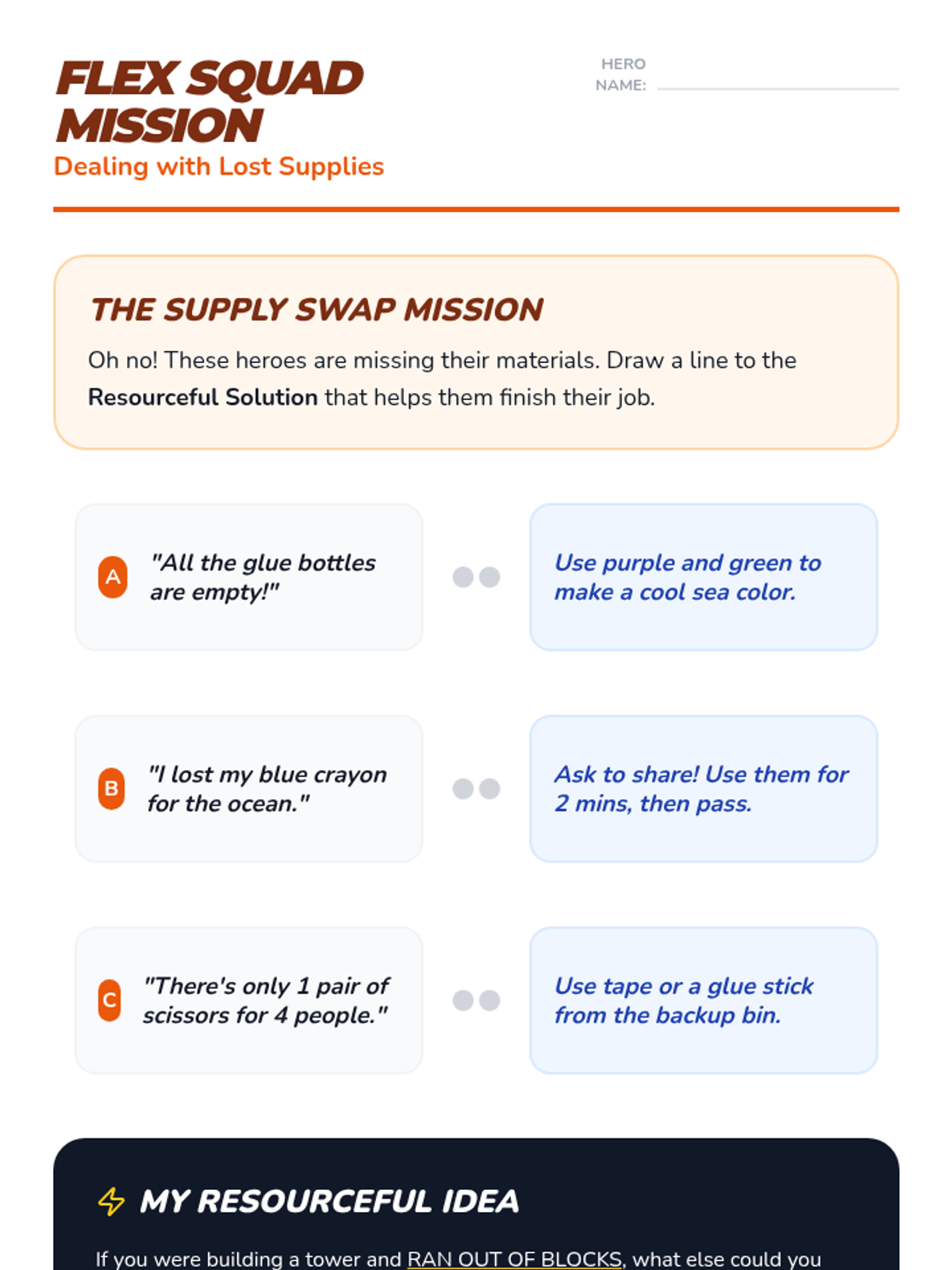
Students develop resourcefulness and help-seeking skills when materials for a task are missing or depleted.
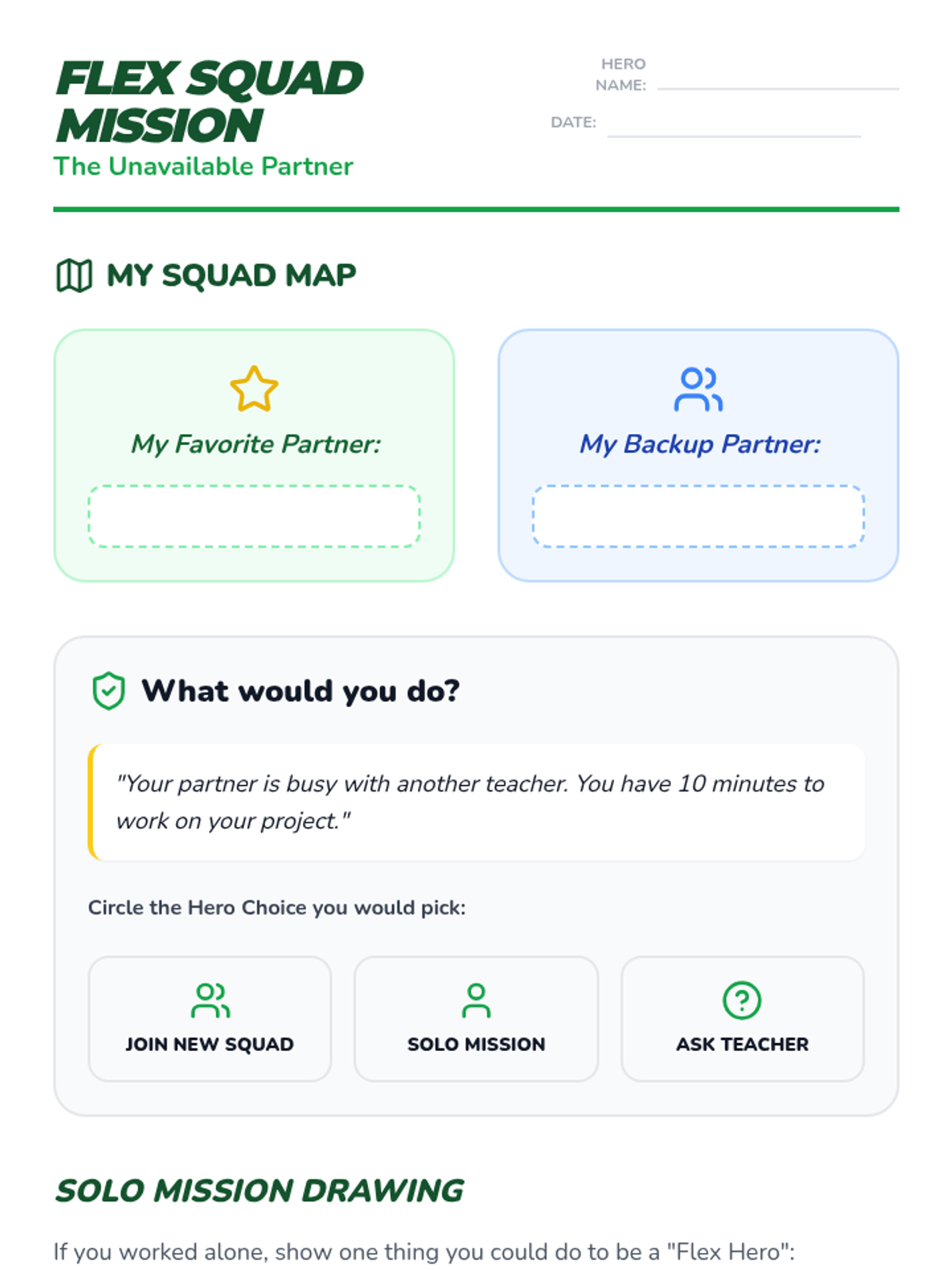
Students practice social initiation and independent work strategies for when an expected partner is unavailable.
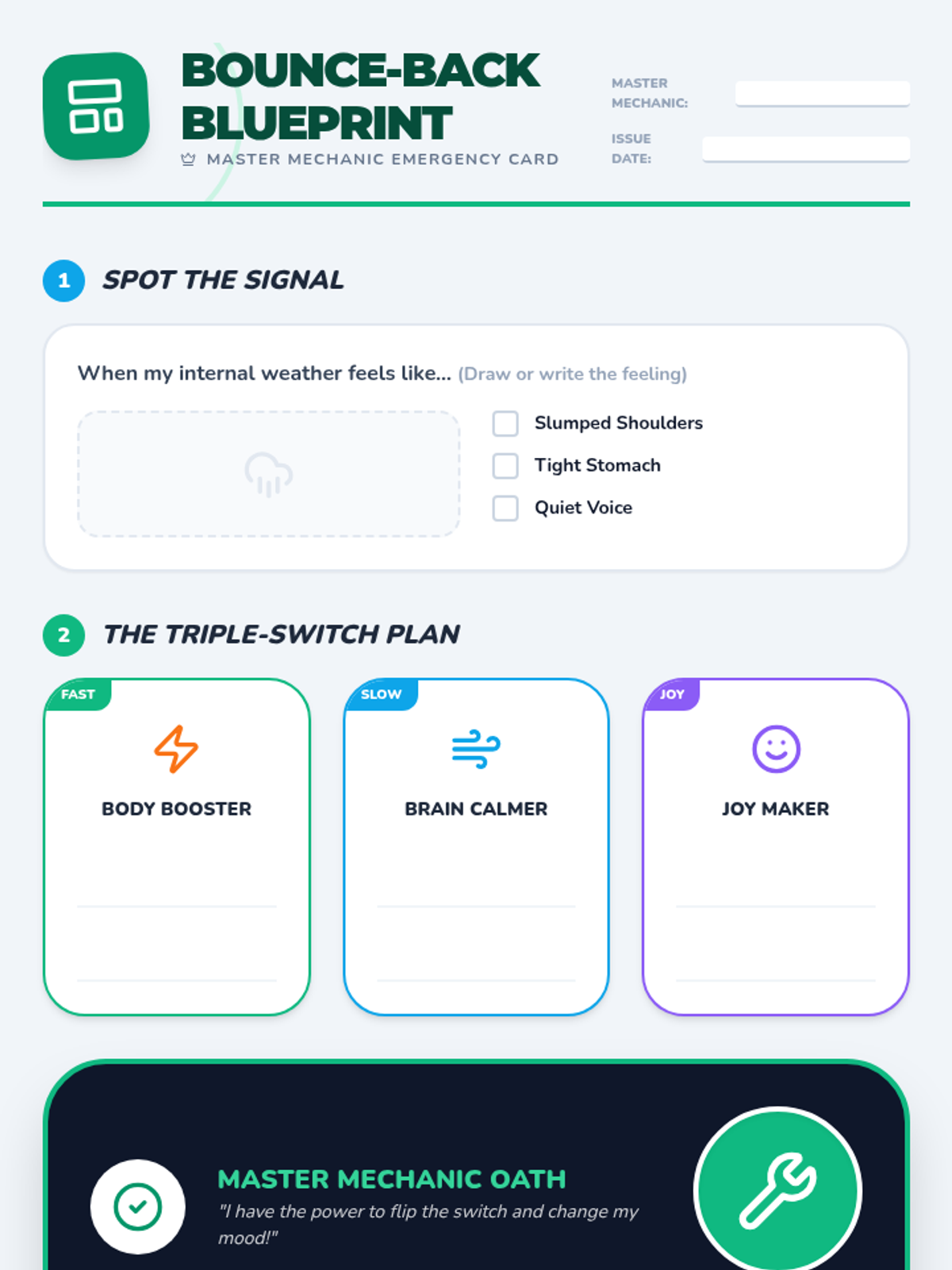
In this culminating lesson, students create a personal 'Bounce-Back Plan' emergency card. They identify three specific actions they can take when feeling low to build resilience and autonomy.
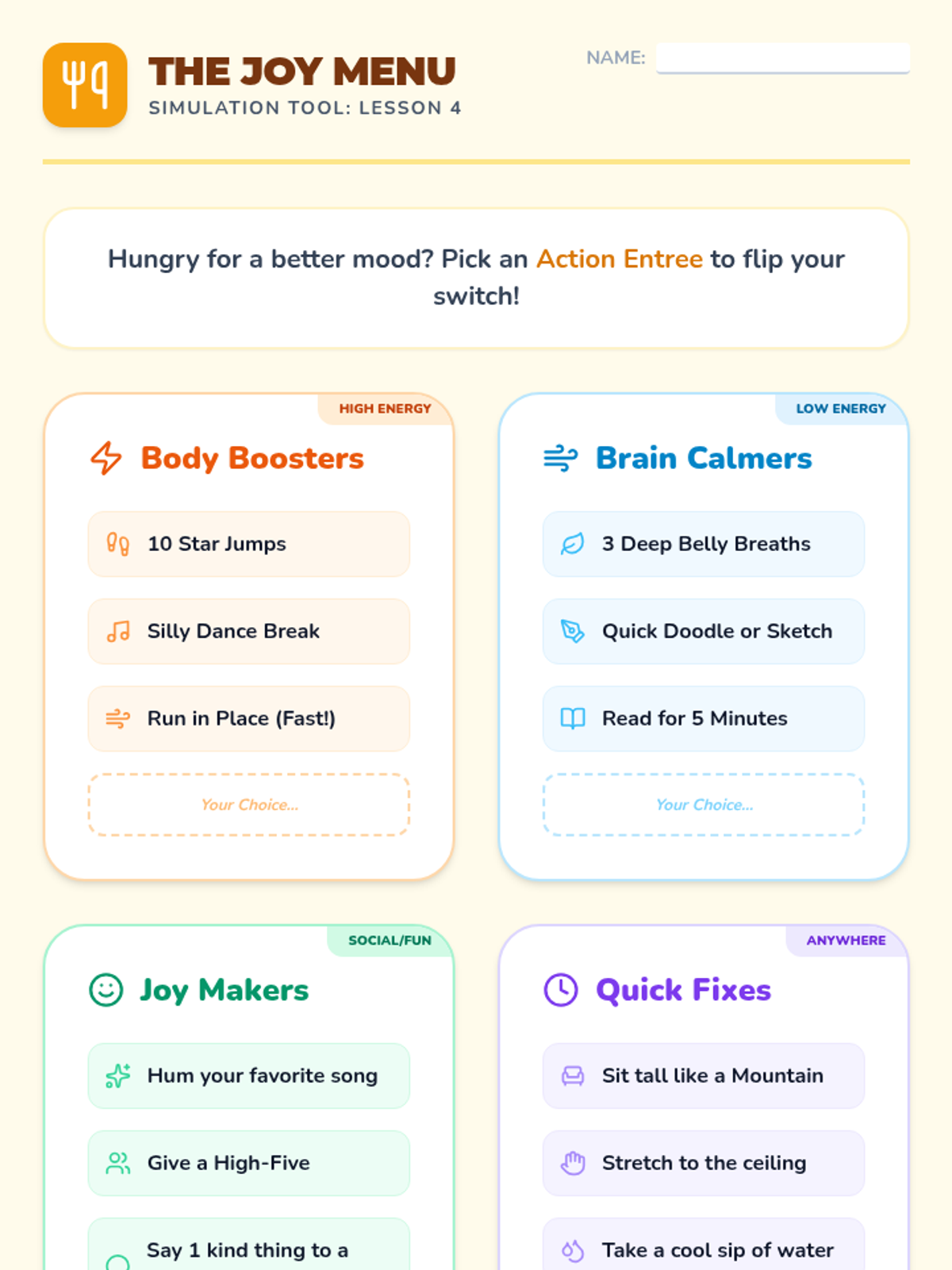
Students practice role-playing the transition from recognizing a negative feeling to choosing a positive action. They use 'Joy Menus' to simulate real-world application of emotional regulation strategies.
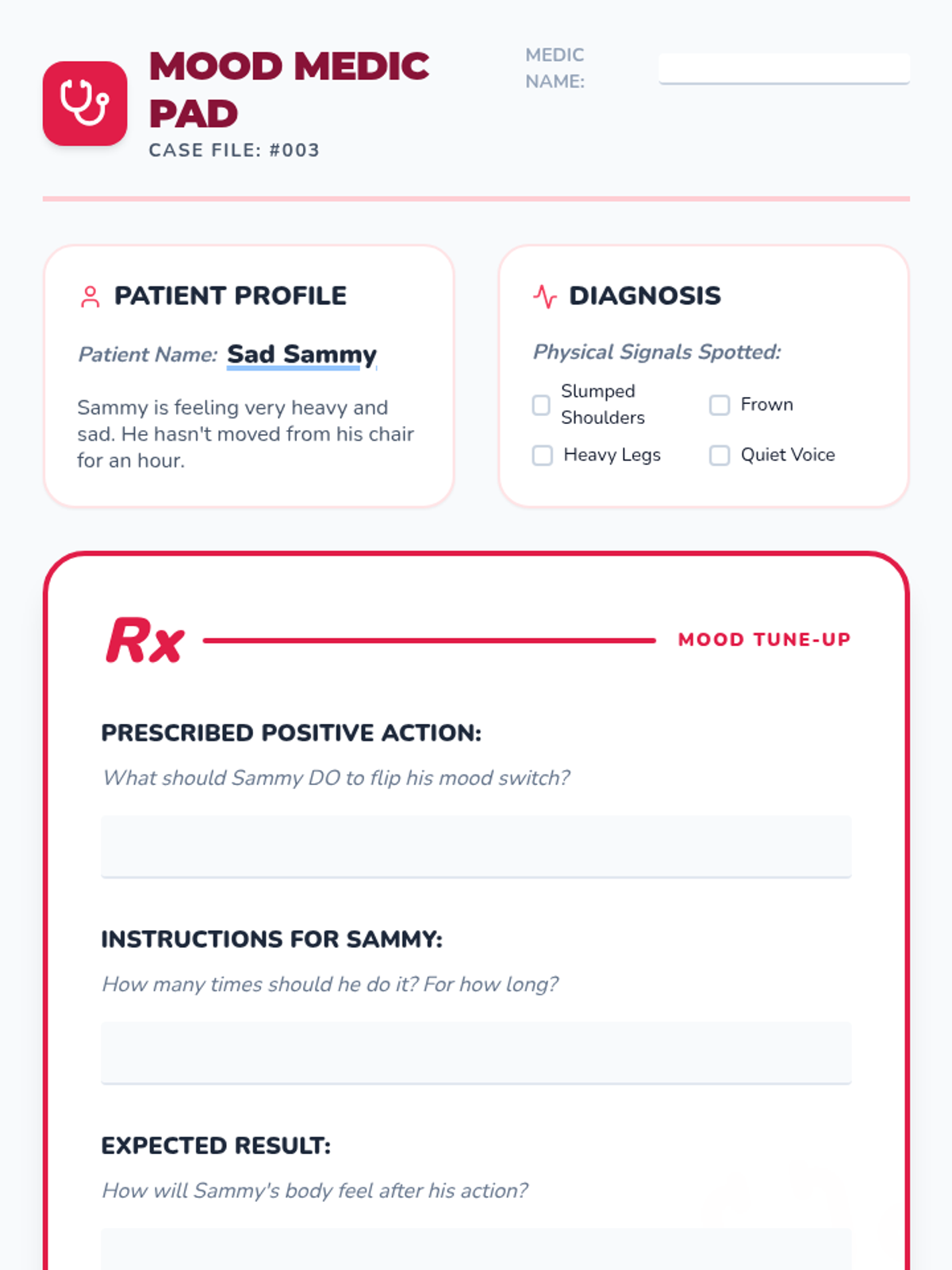
Using character scenarios, students apply their knowledge to help others. They analyze social stories and prescribe positive activities to help characters 'flip the switch' on their feelings.
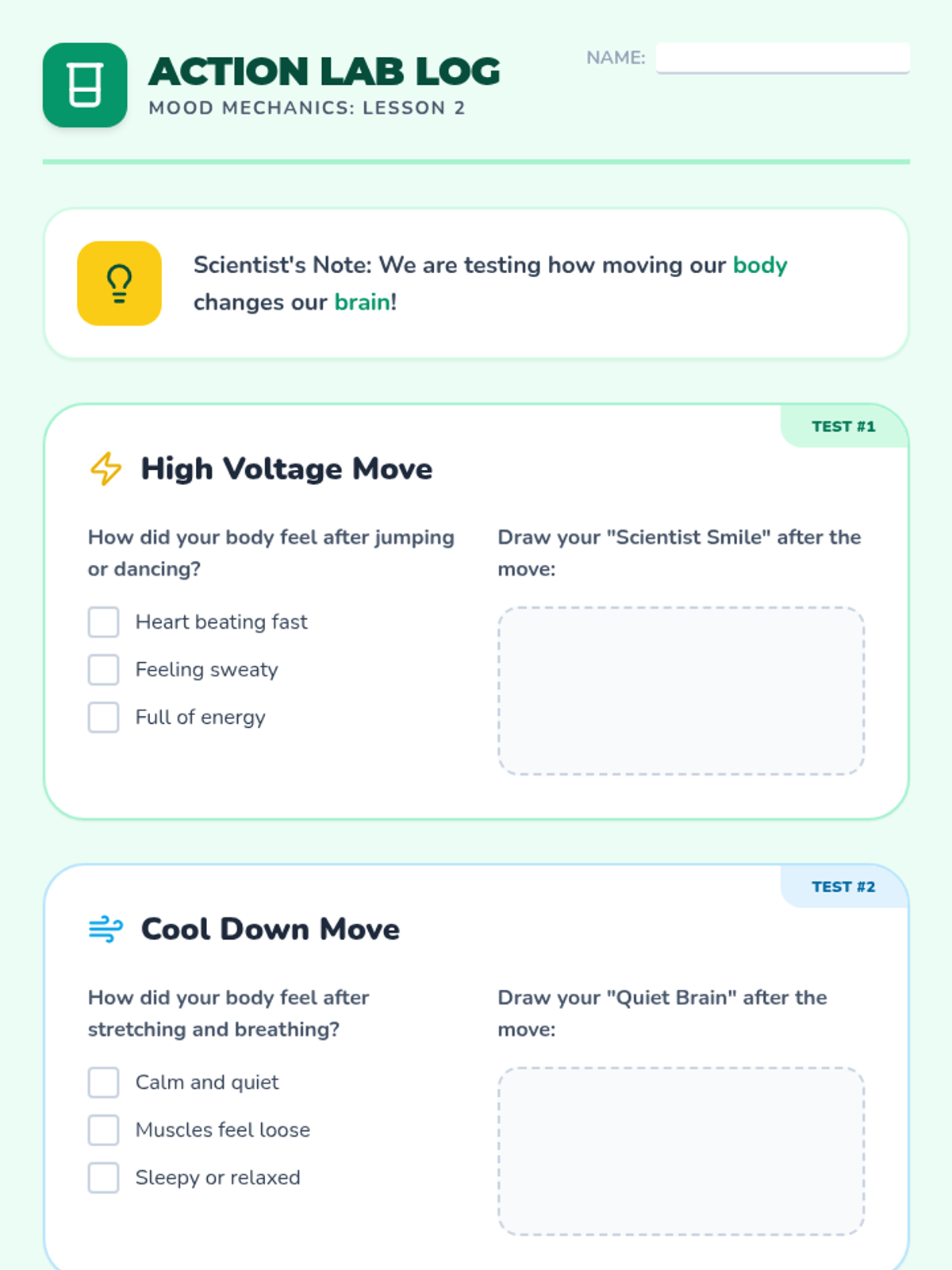
Students conduct movement experiments to see how physical activity impacts their mindset. They observe the difficulty of maintaining a low mood while engaging in high-energy positive actions.
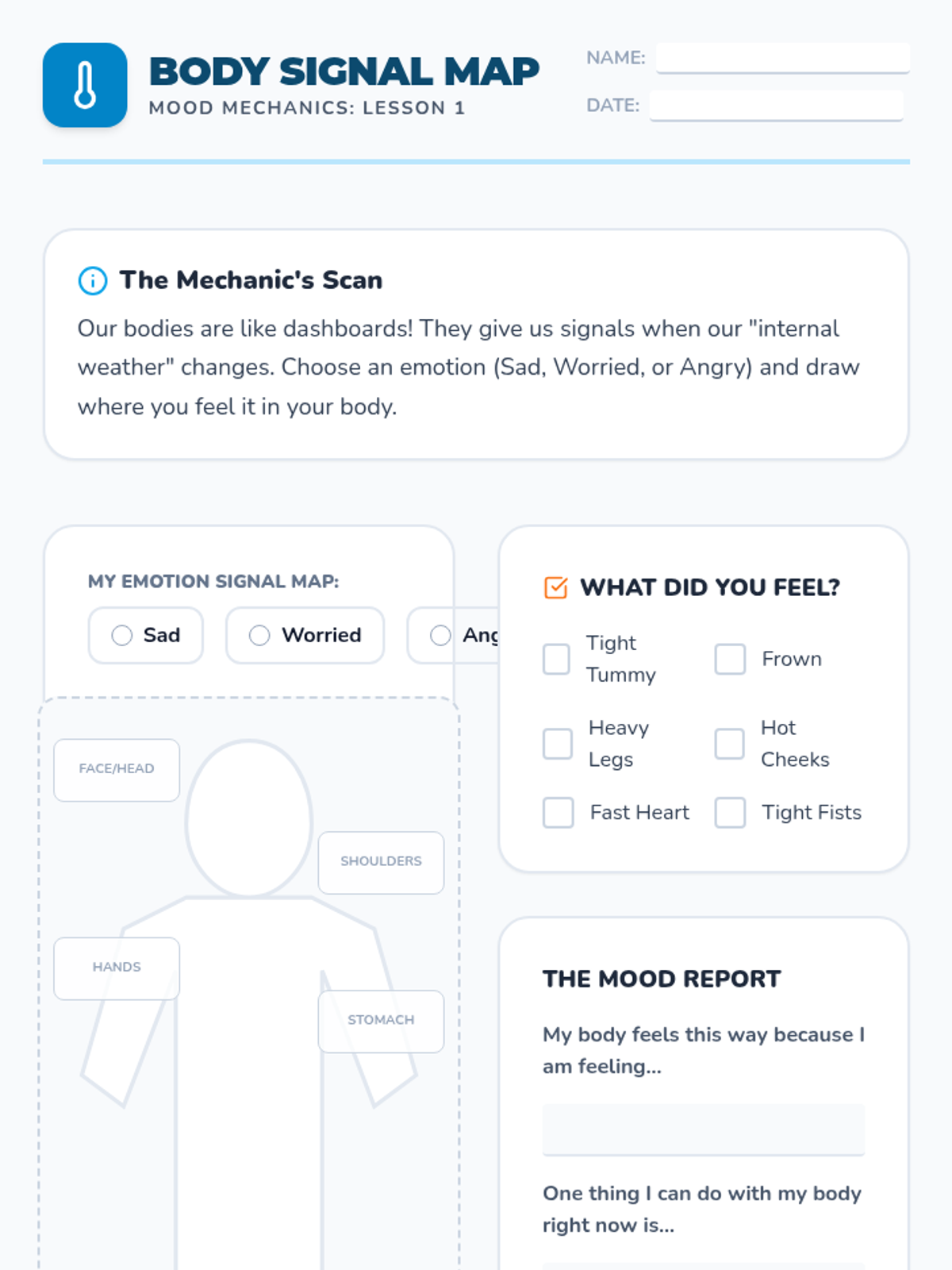
Students learn to identify the physical signals of sadness, boredom, and anxiety through body scanning and a game of 'Statues'. This foundational lesson focuses on recognizing when an emotional shift is needed.
Students navigate a simple classroom obstacle course. At each station, they must say their action aloud before performing it to proceed.
Students work in pairs to act out the morning arrival routine. One student plays the 'stuck' student, and the other plays the 'brain' that gives the verbal prompt.
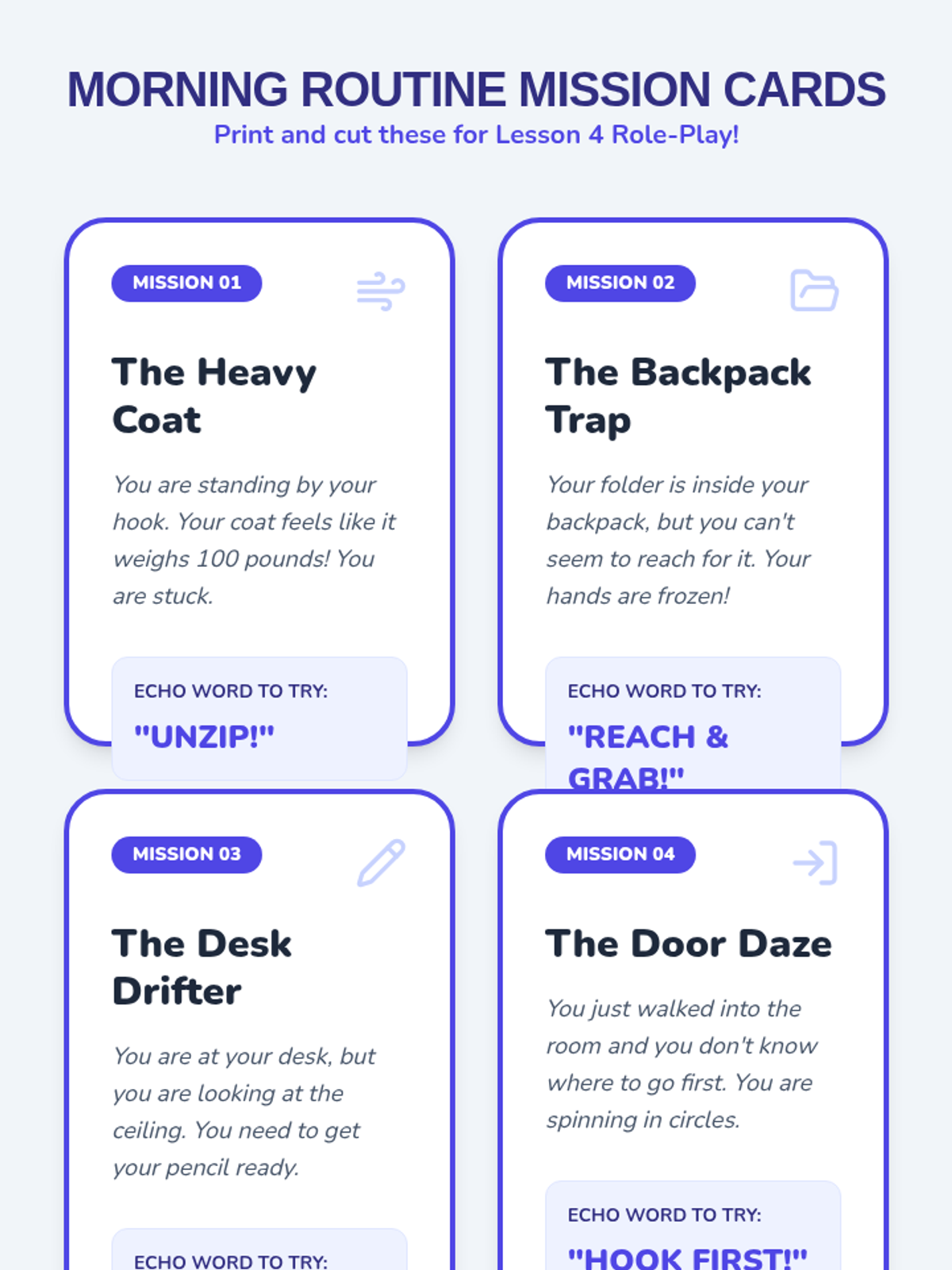
A 'Simon Says' style game where students practice listening for and repeating the starting command before doing it. Focuses on the pause-plan-act cycle.
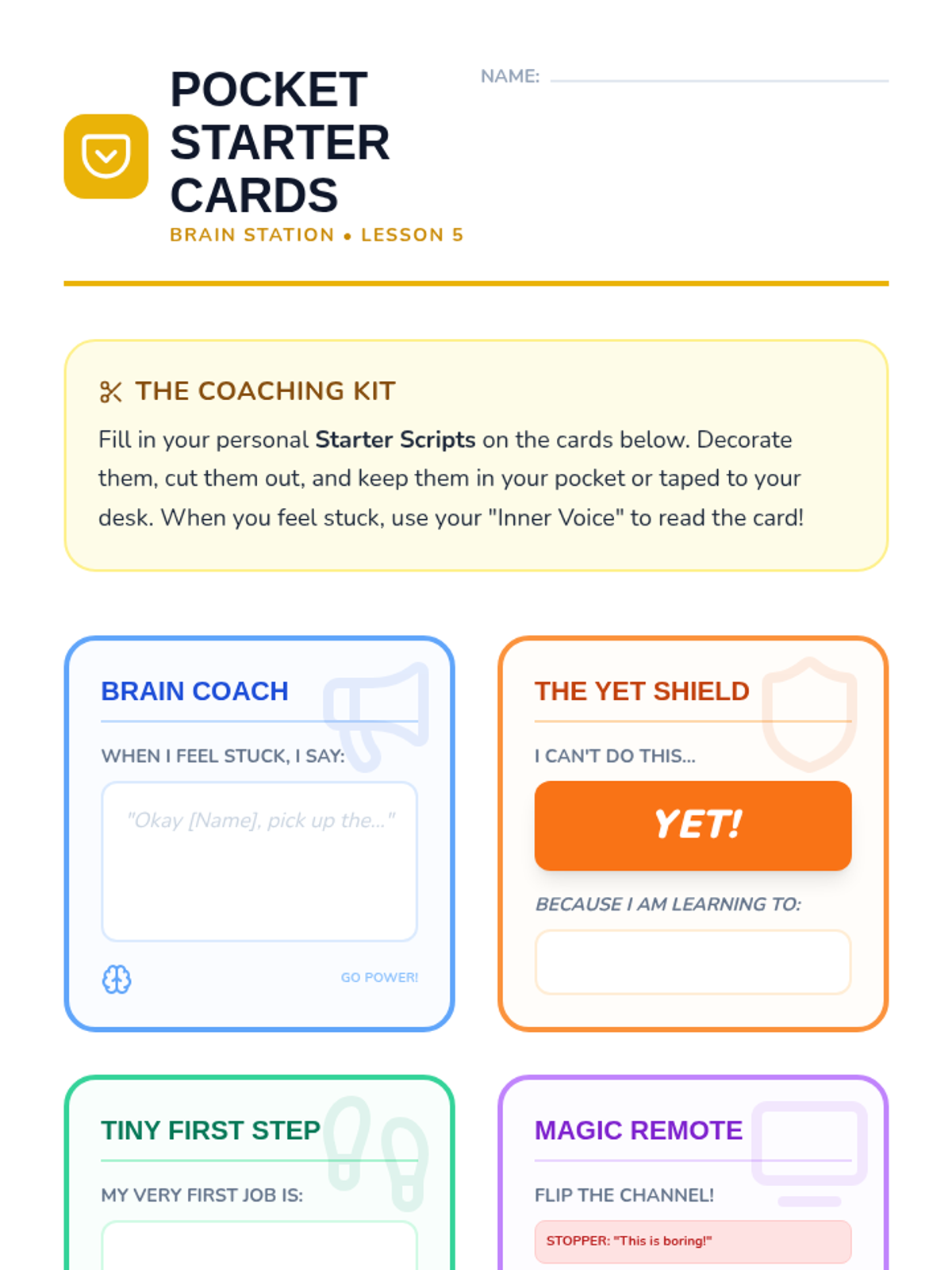
Students create a personal 'Starter Script' for a subject they find difficult. They rehearse whispering this script to themselves immediately after a direction is given, bridging the gap between instruction and action.
This lesson combines growth mindset language with task initiation. Students learn to couple the word 'yet' with a specific instruction for the very first step of a task, reducing the feeling of being overwhelmed.
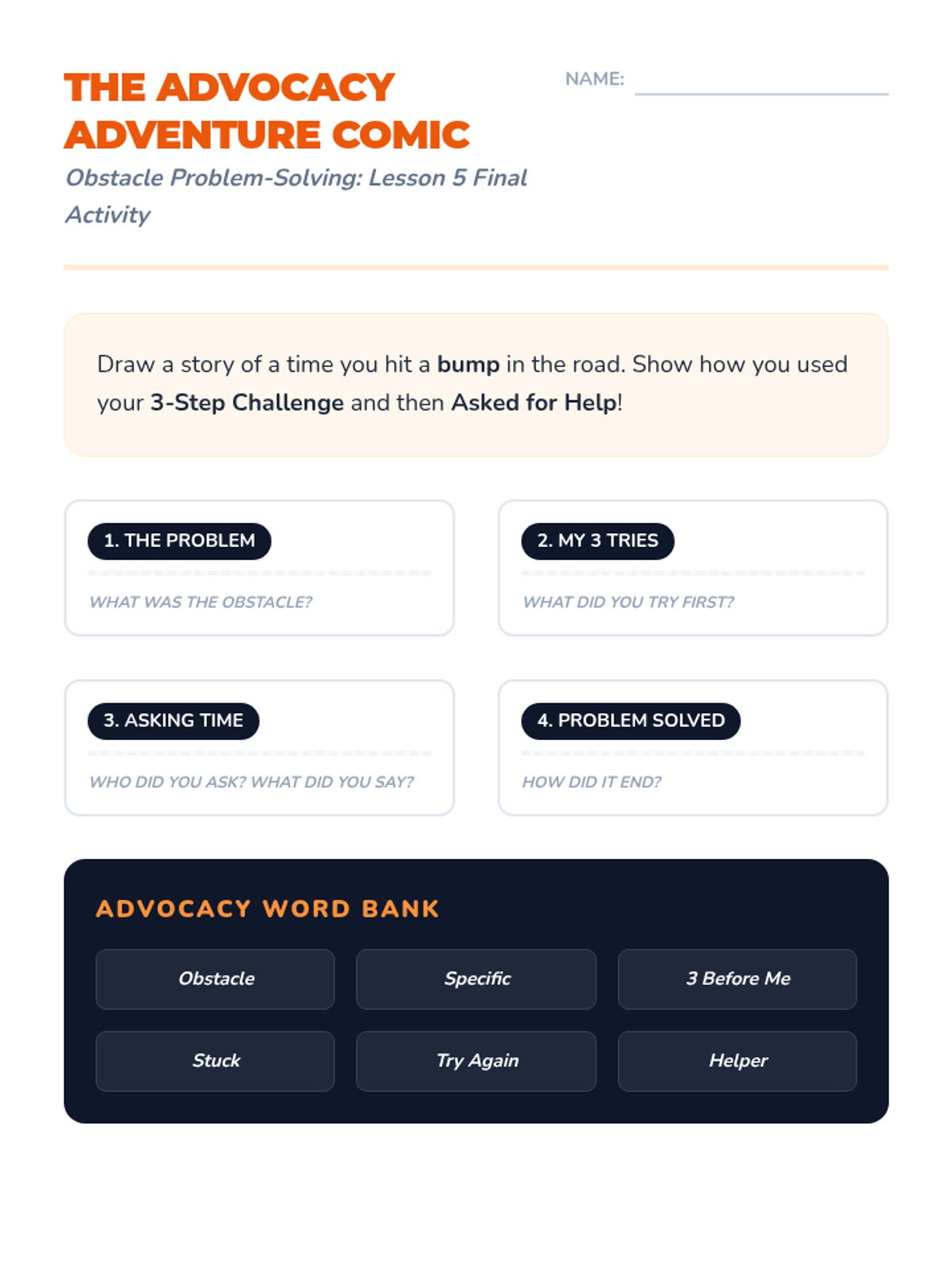
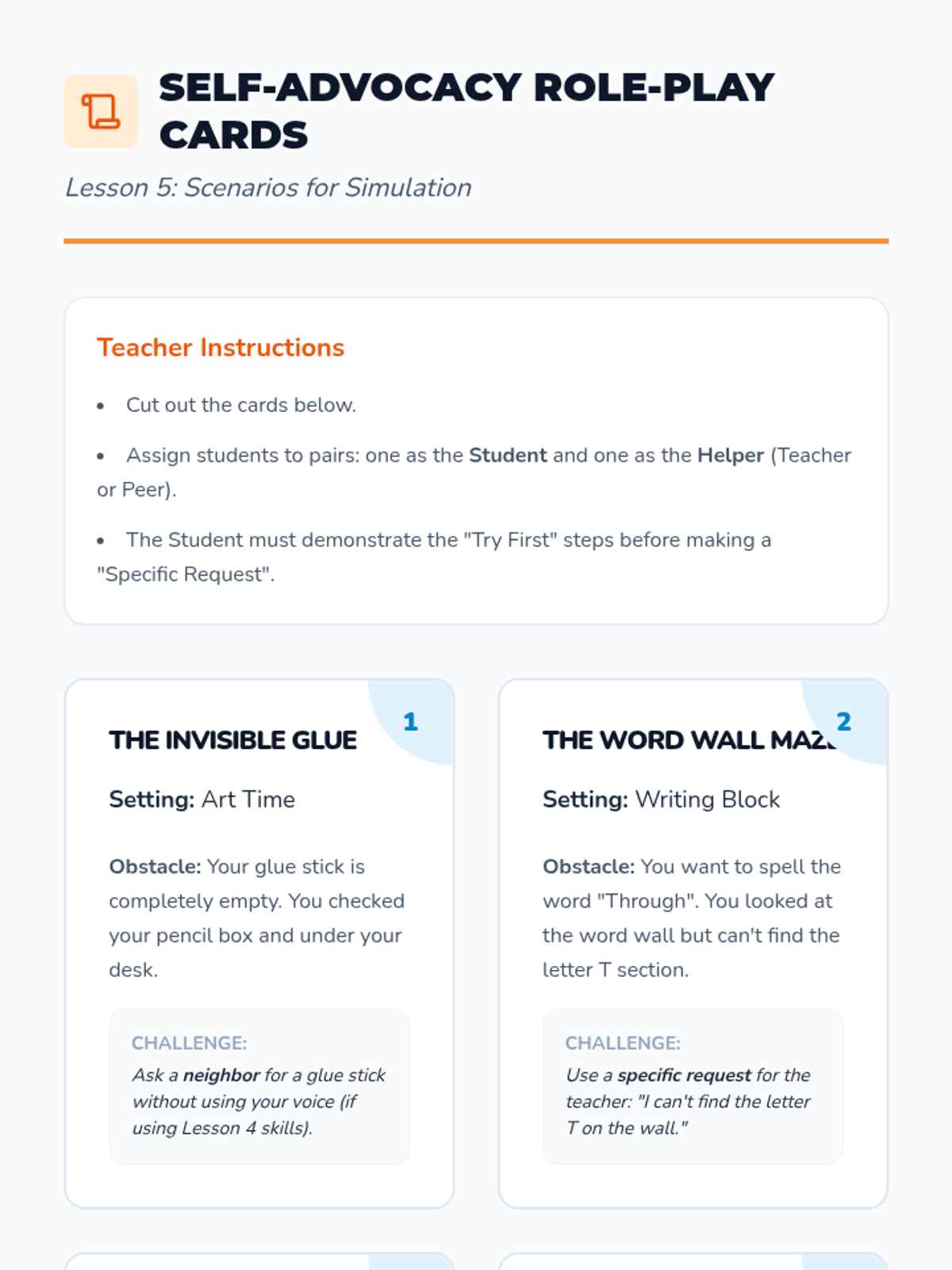
Students enact short skits facing obstacles and effectively asking for help, synthesizing the entire 'Try -> Assess -> Ask' sequence.
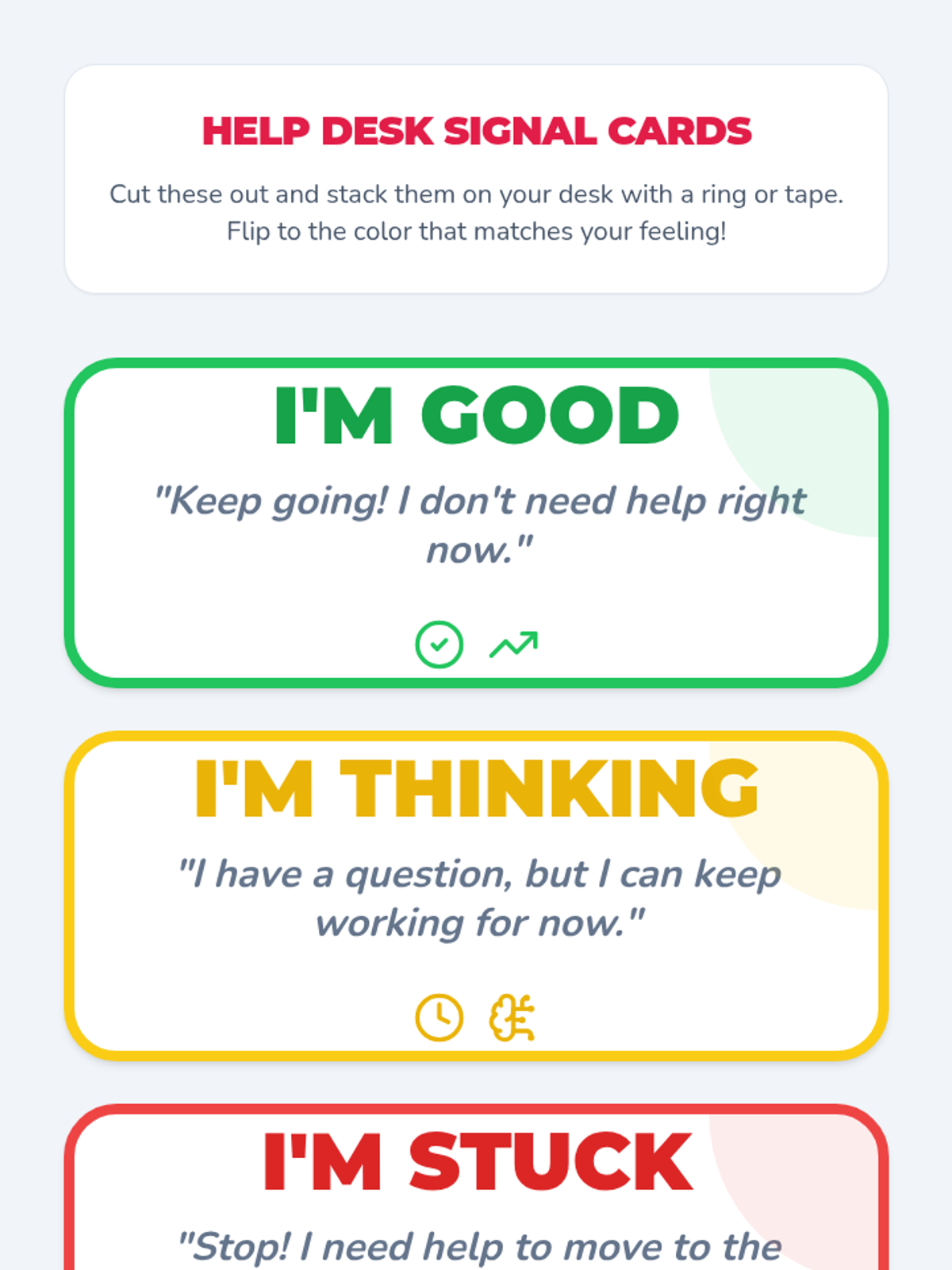
Introduces non-verbal advocacy tools like flip cards and hand signals for students who may be overwhelmed or need to signal for help without interrupting.
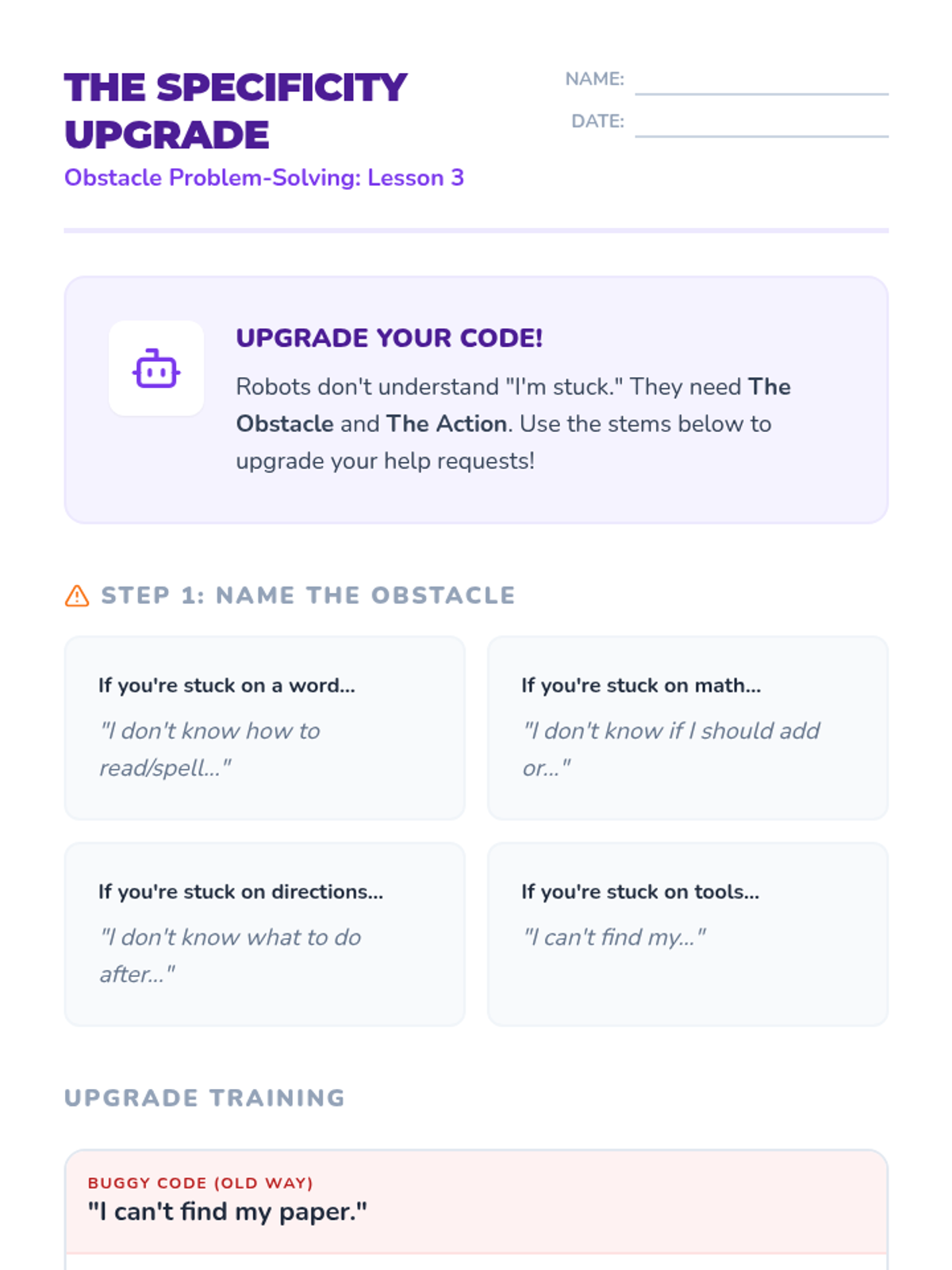
This lesson targets the language of self-advocacy. Students practice changing generic complaints into specific requests that identify the exact obstacle.
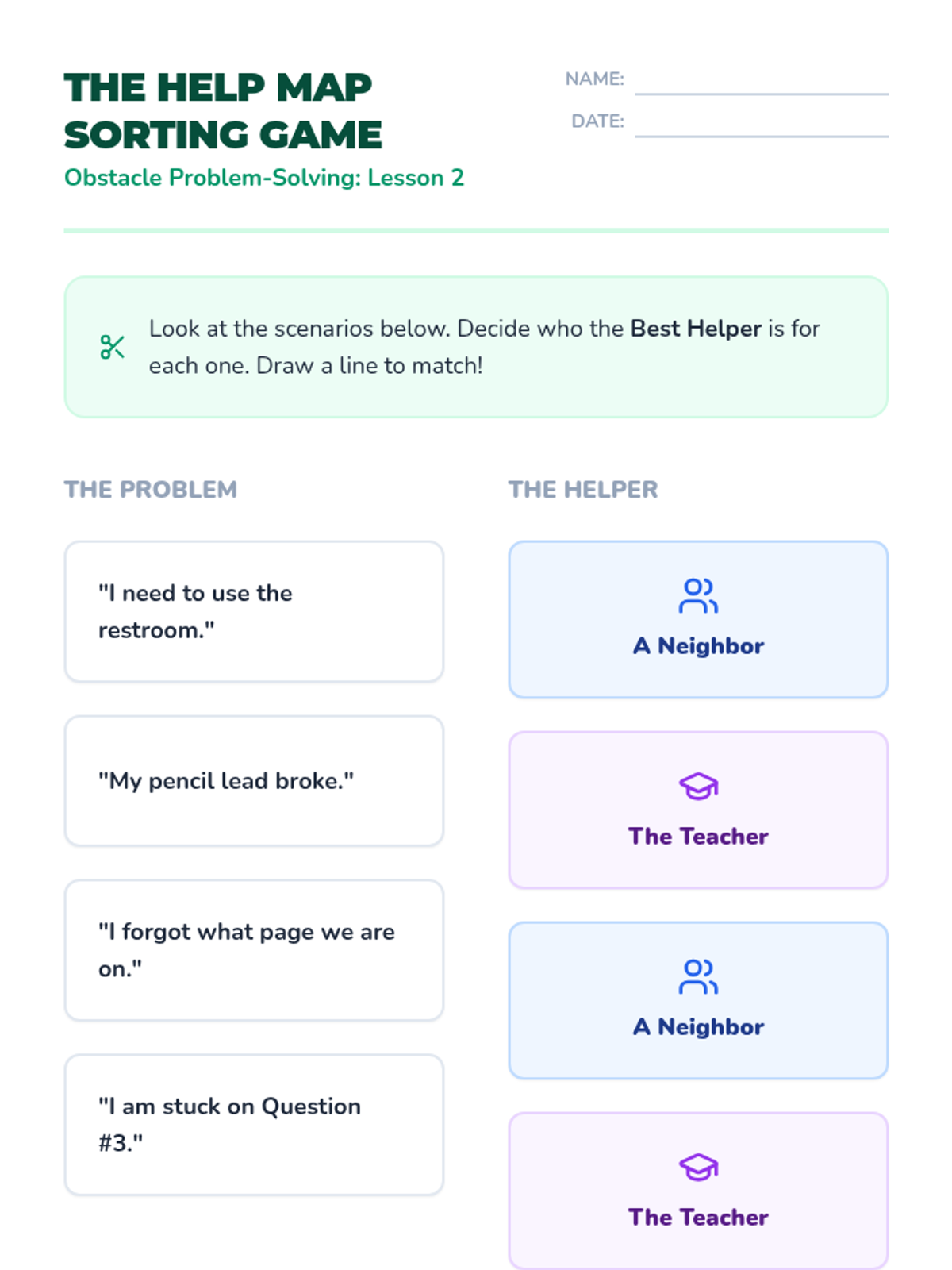
Students map out the classroom ecosystem to identify who can help with different problems. This fosters social awareness and reduces bottlenecks at the teacher's desk.
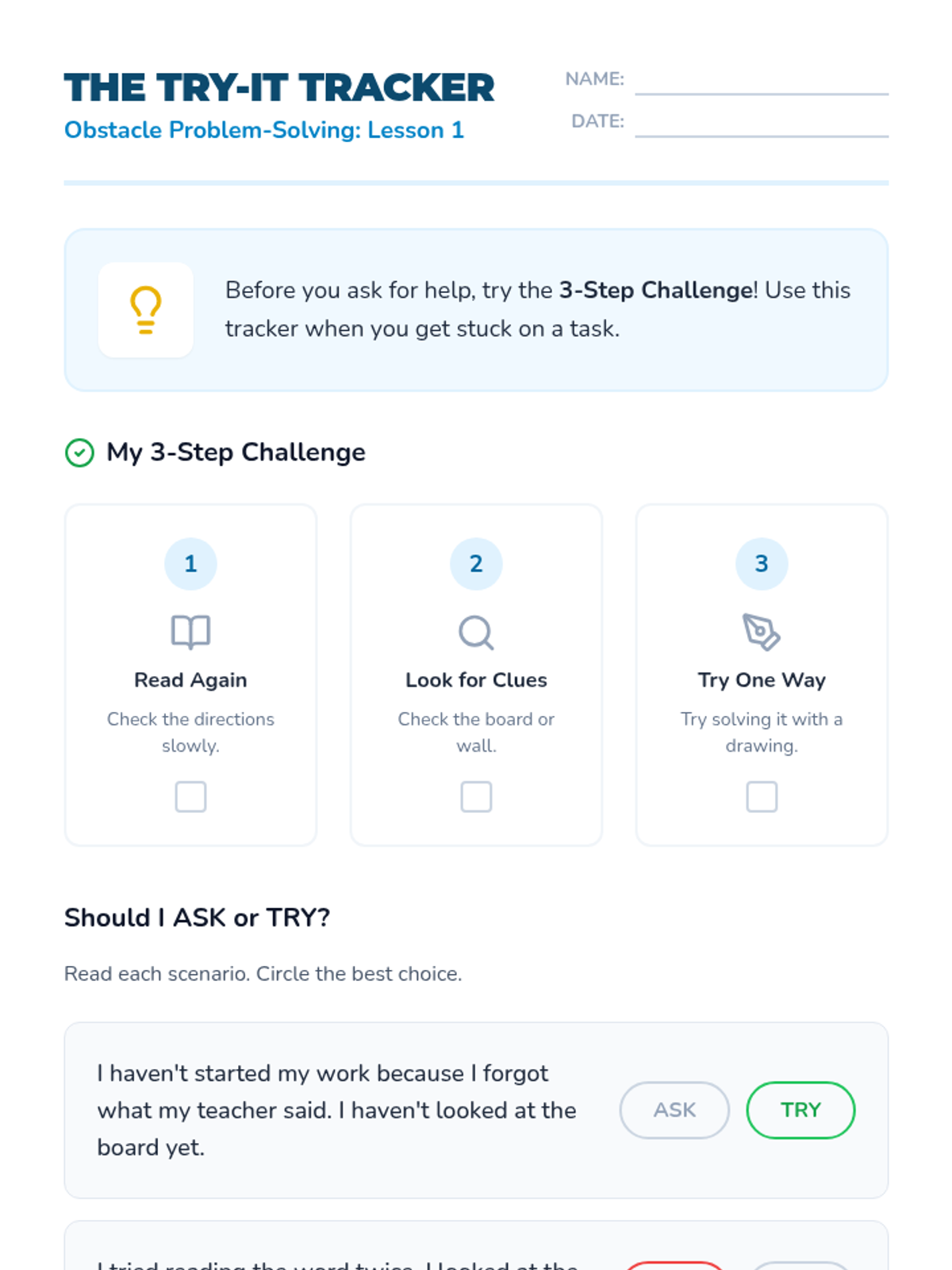
Students learn to identify the 'tipping point'—the moment after they have tried independent strategies but remain stuck. They categorize scenarios into 'Try more' vs. 'Ask now' to prevent immediate dependence on adults.
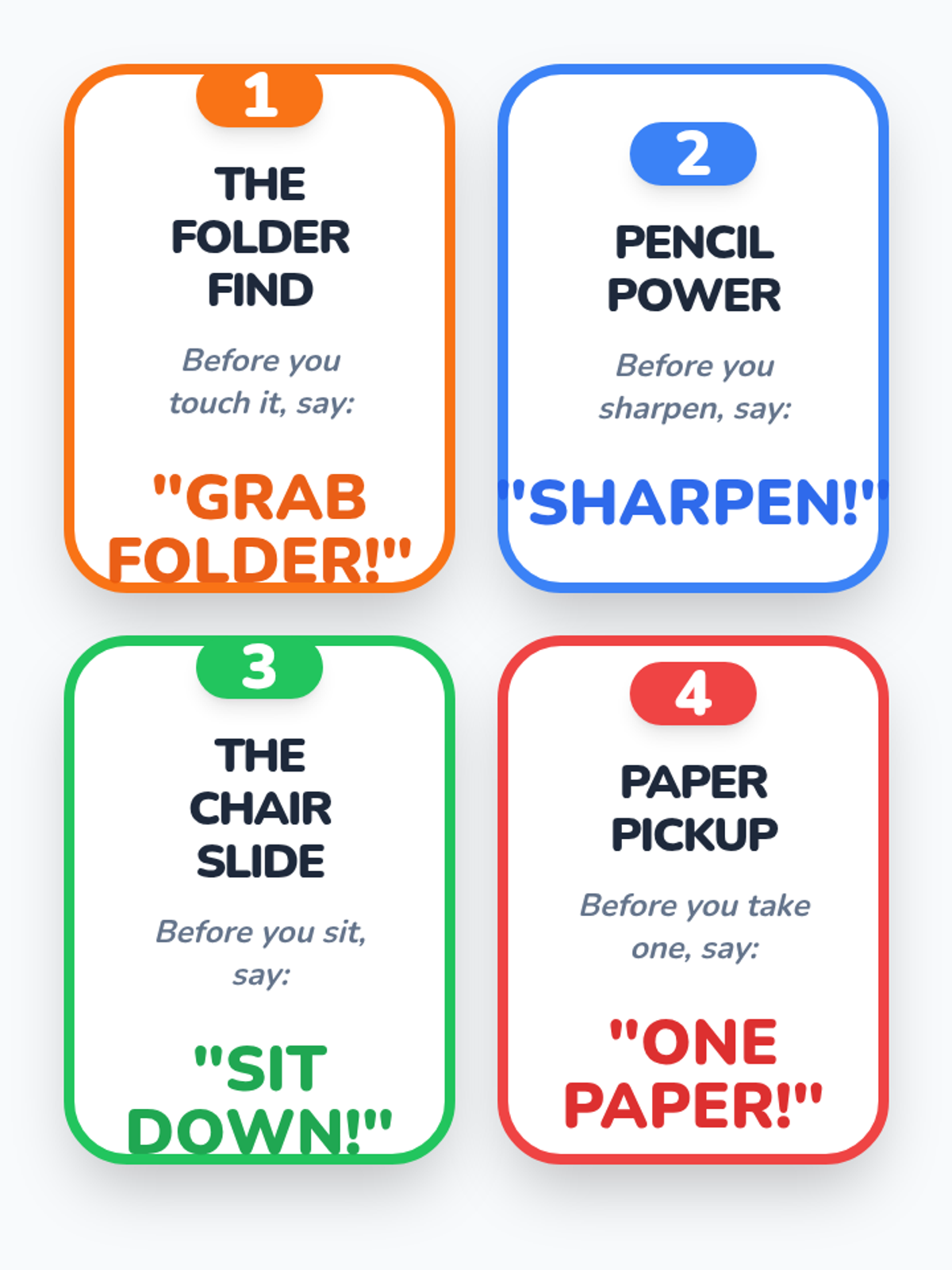
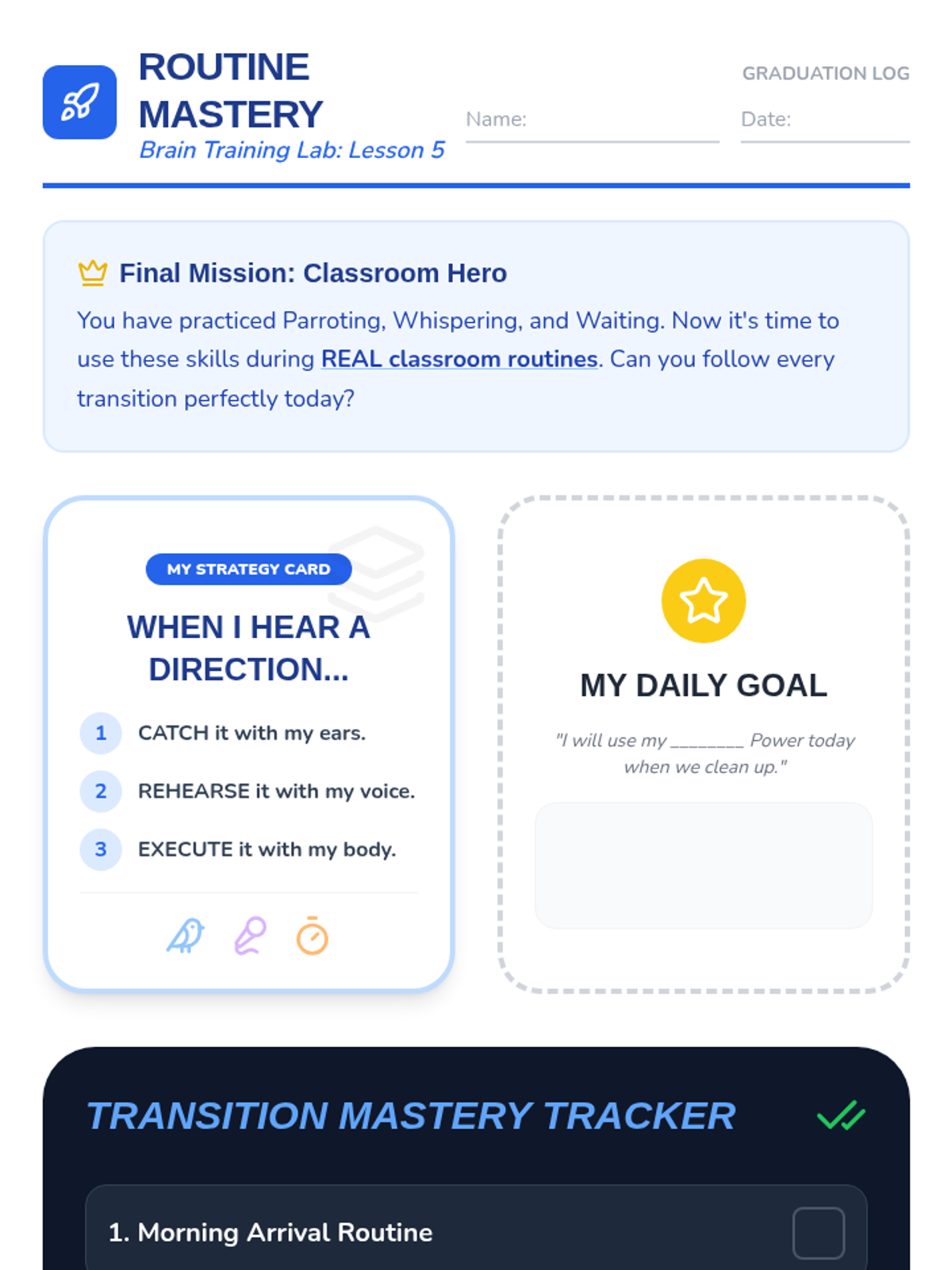
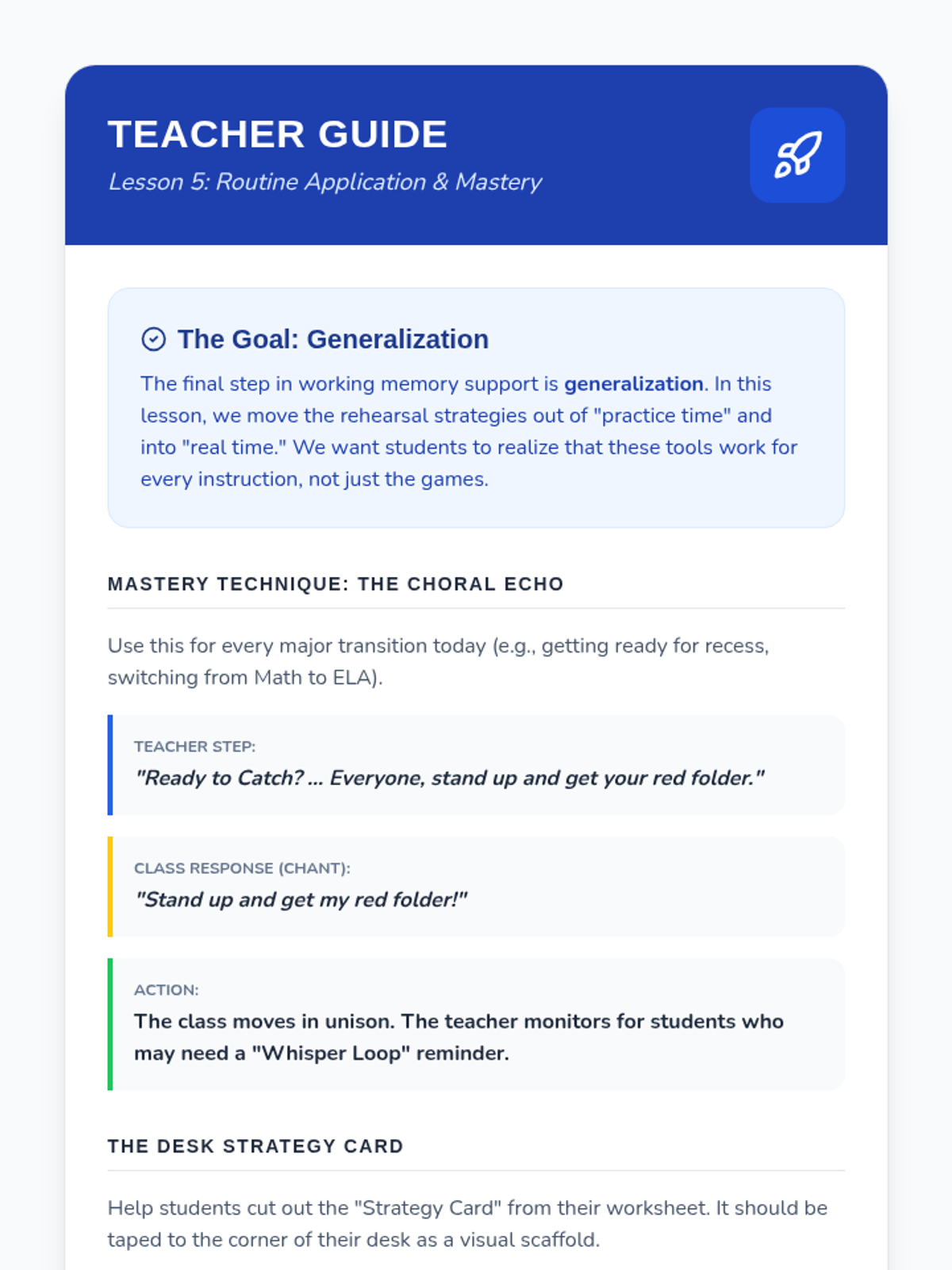
Students apply verbal strategies to actual classroom transition requests using choral responses to confirm steps.
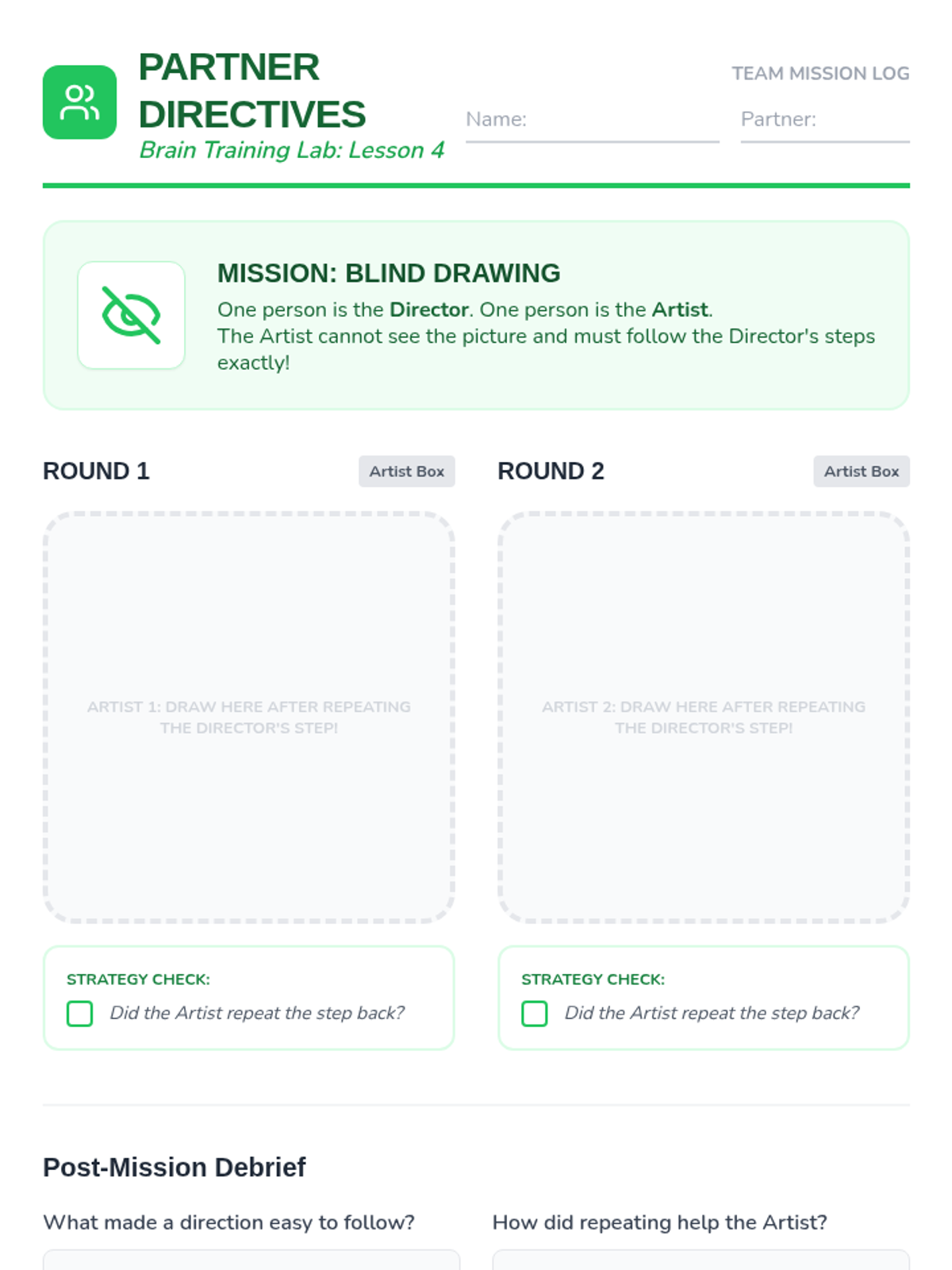
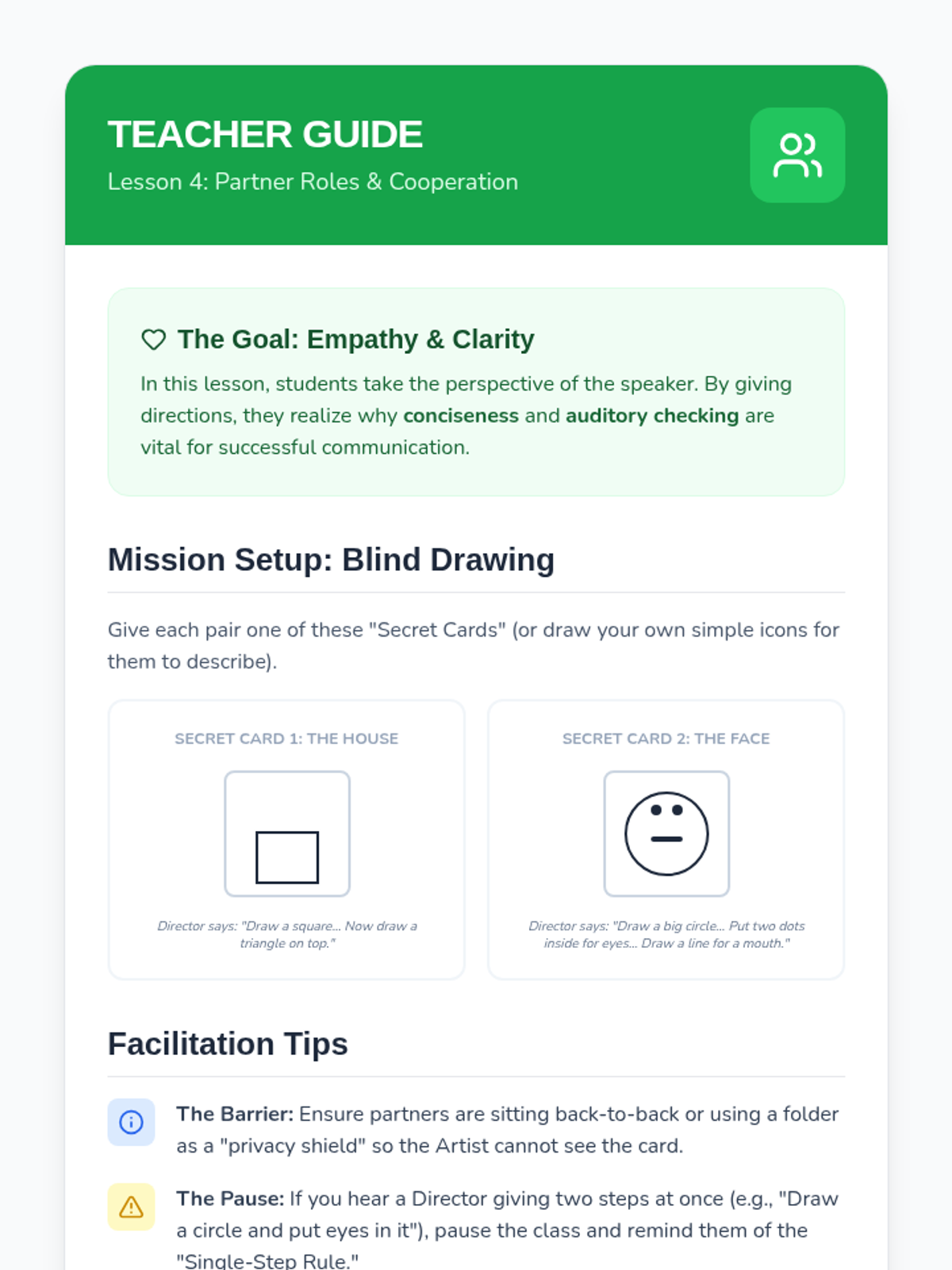
In pairs, students take turns being the 'Teacher' and the 'Student' to practice giving and repeating explicit steps.
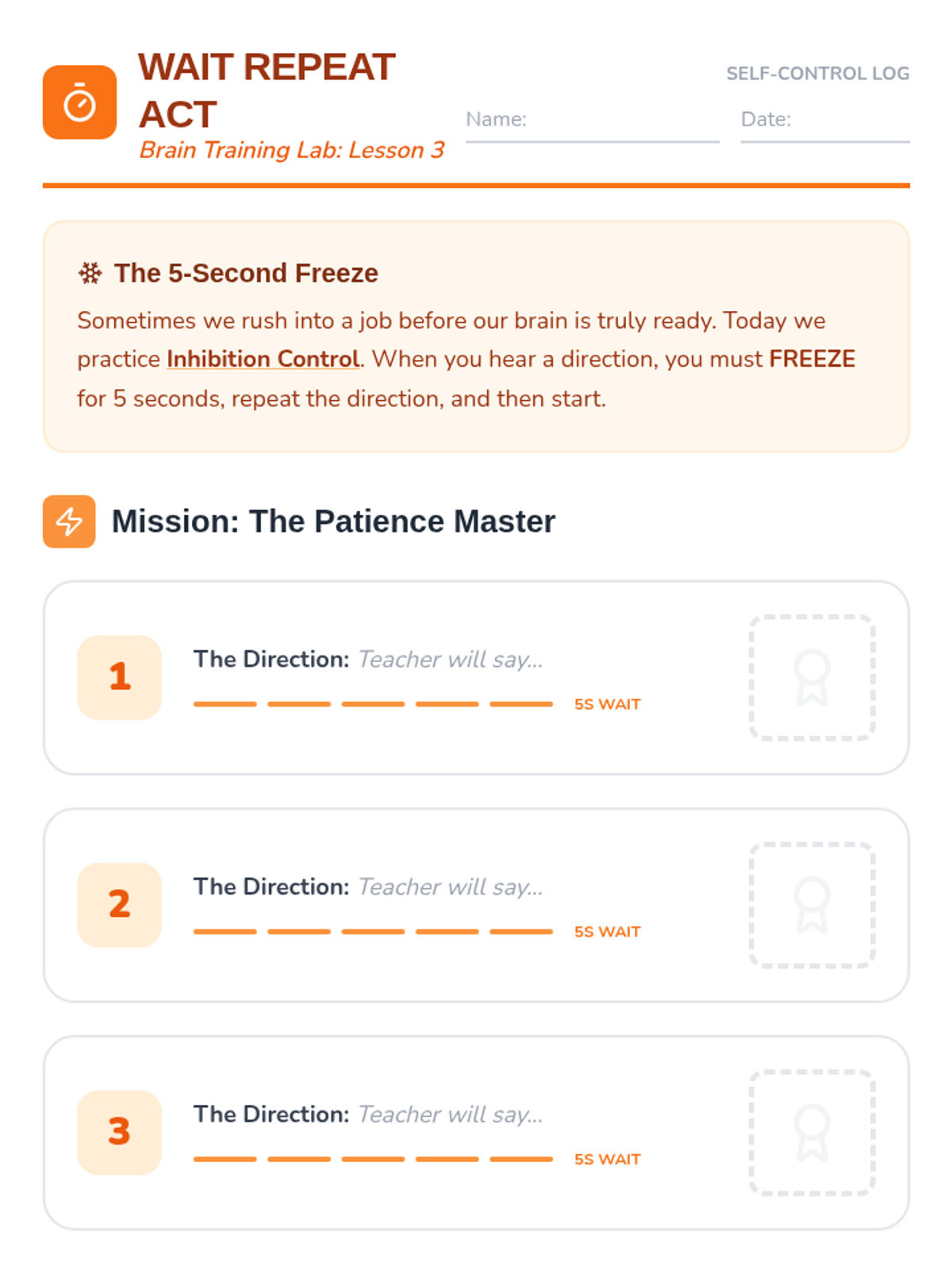
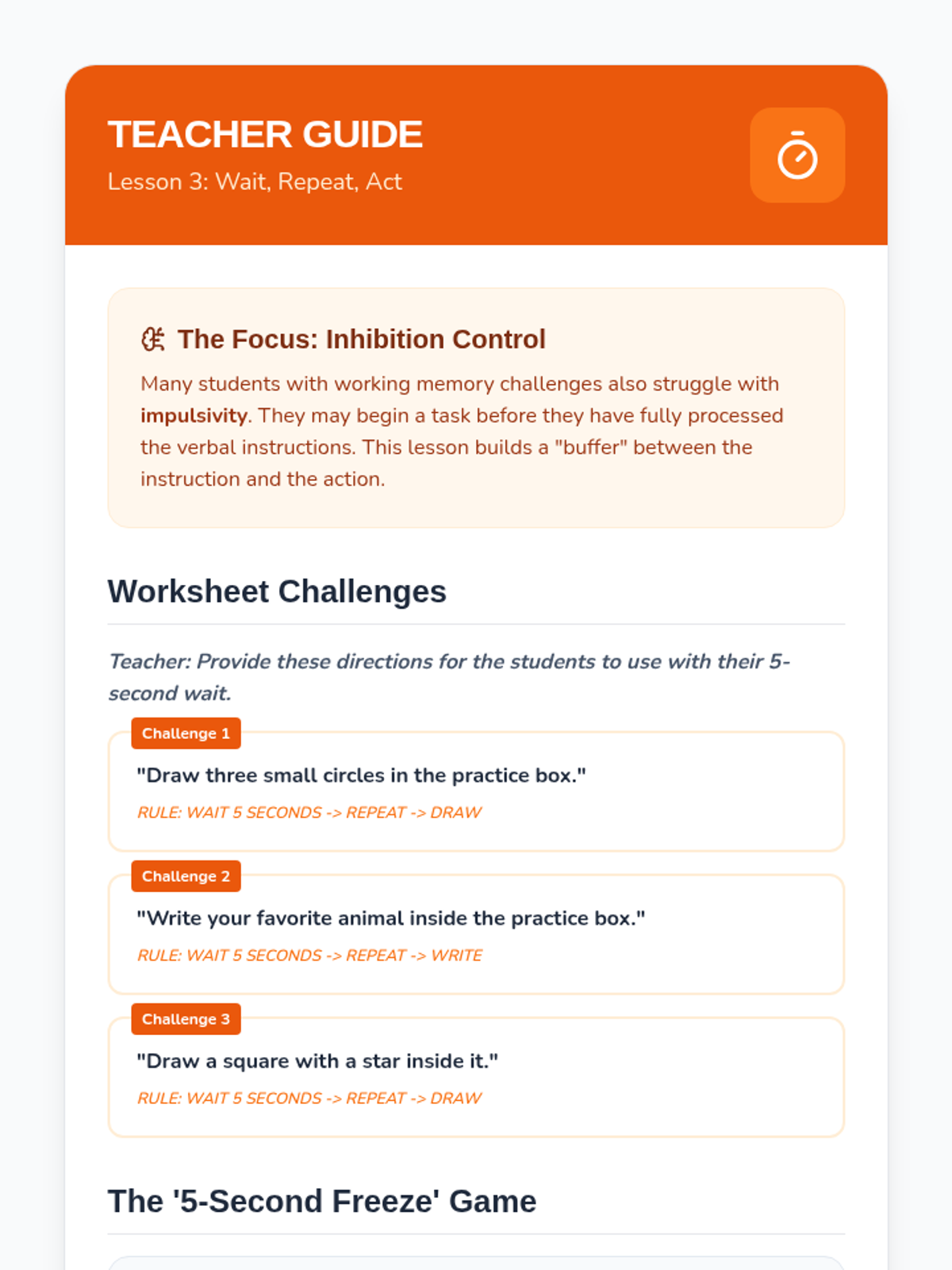
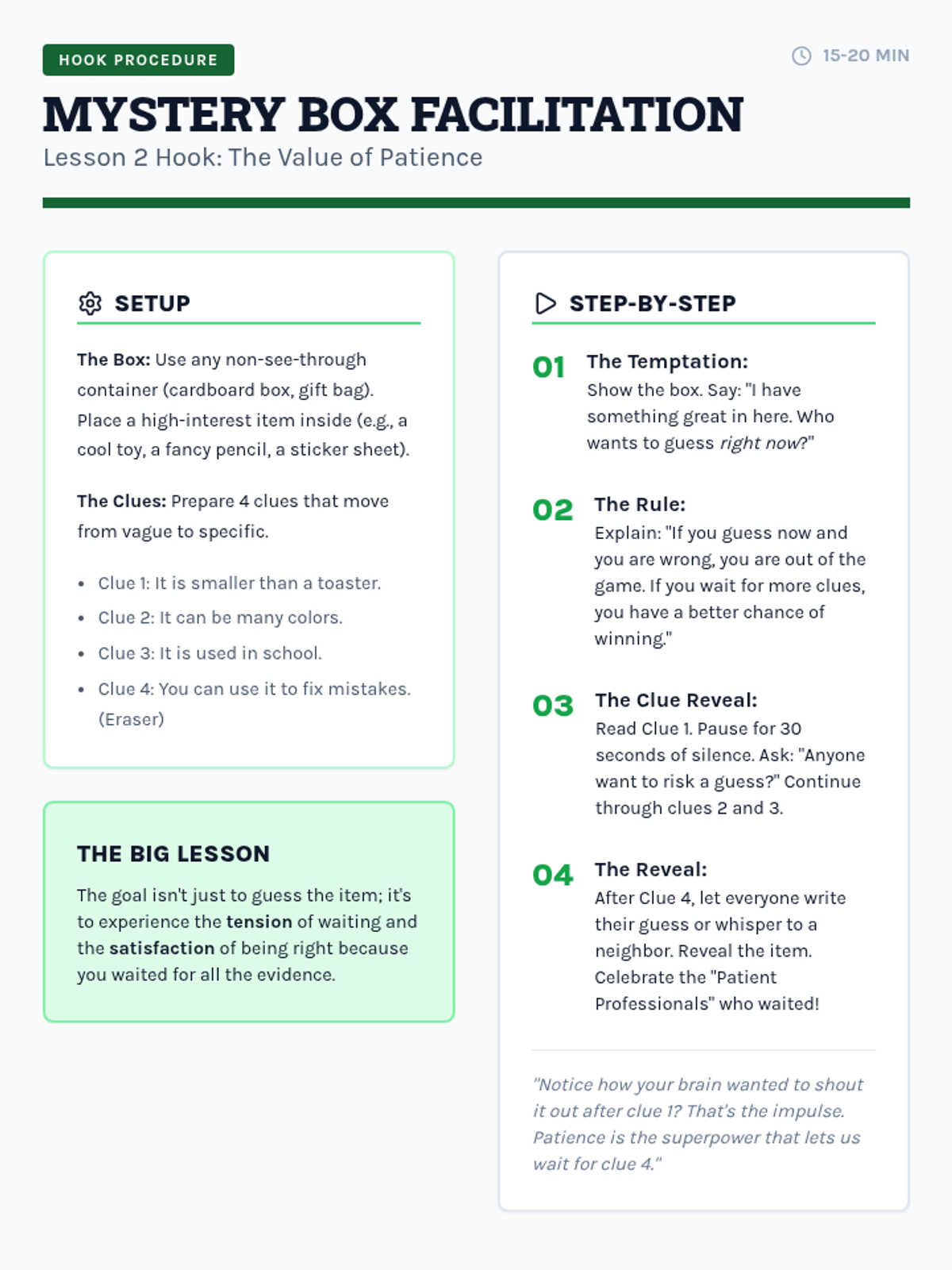
Students engage in inhibition control activities where they must wait 5 seconds after hearing a command, repeat it, and only then act.
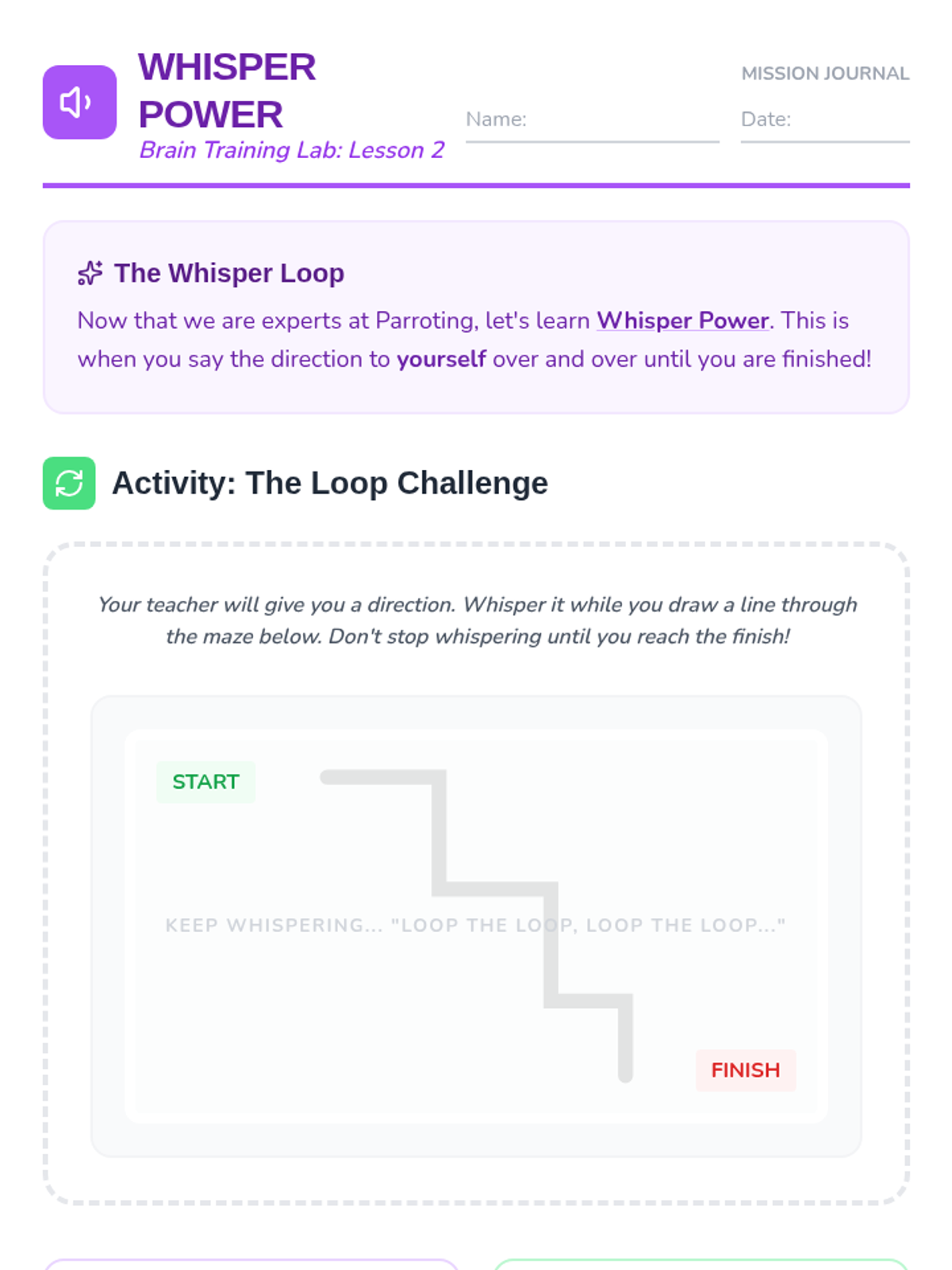
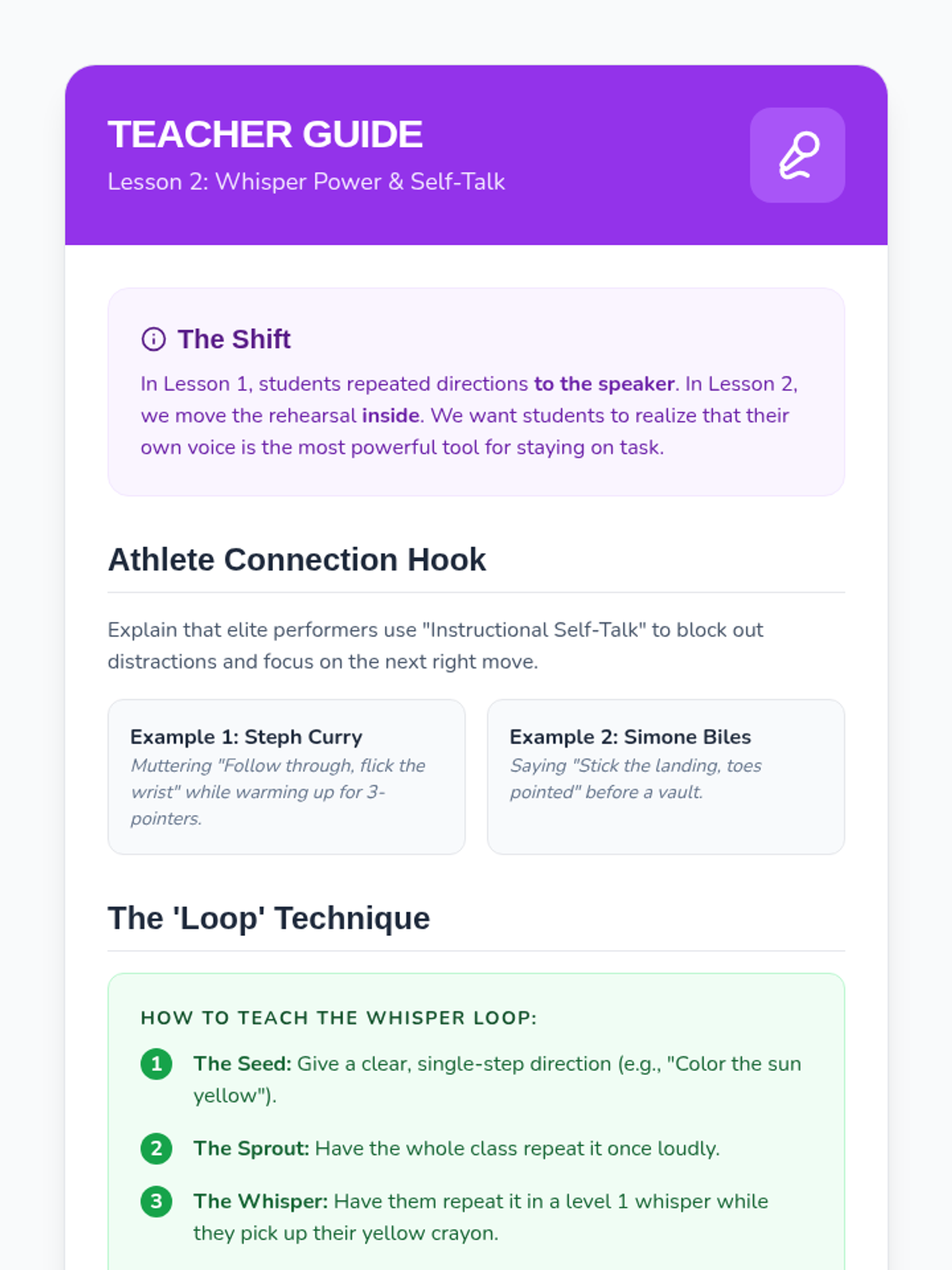
Moving from loud repetition to whispering, students practice 'self-talk.' They are given a single direction and must whisper it on a loop while performing the action.
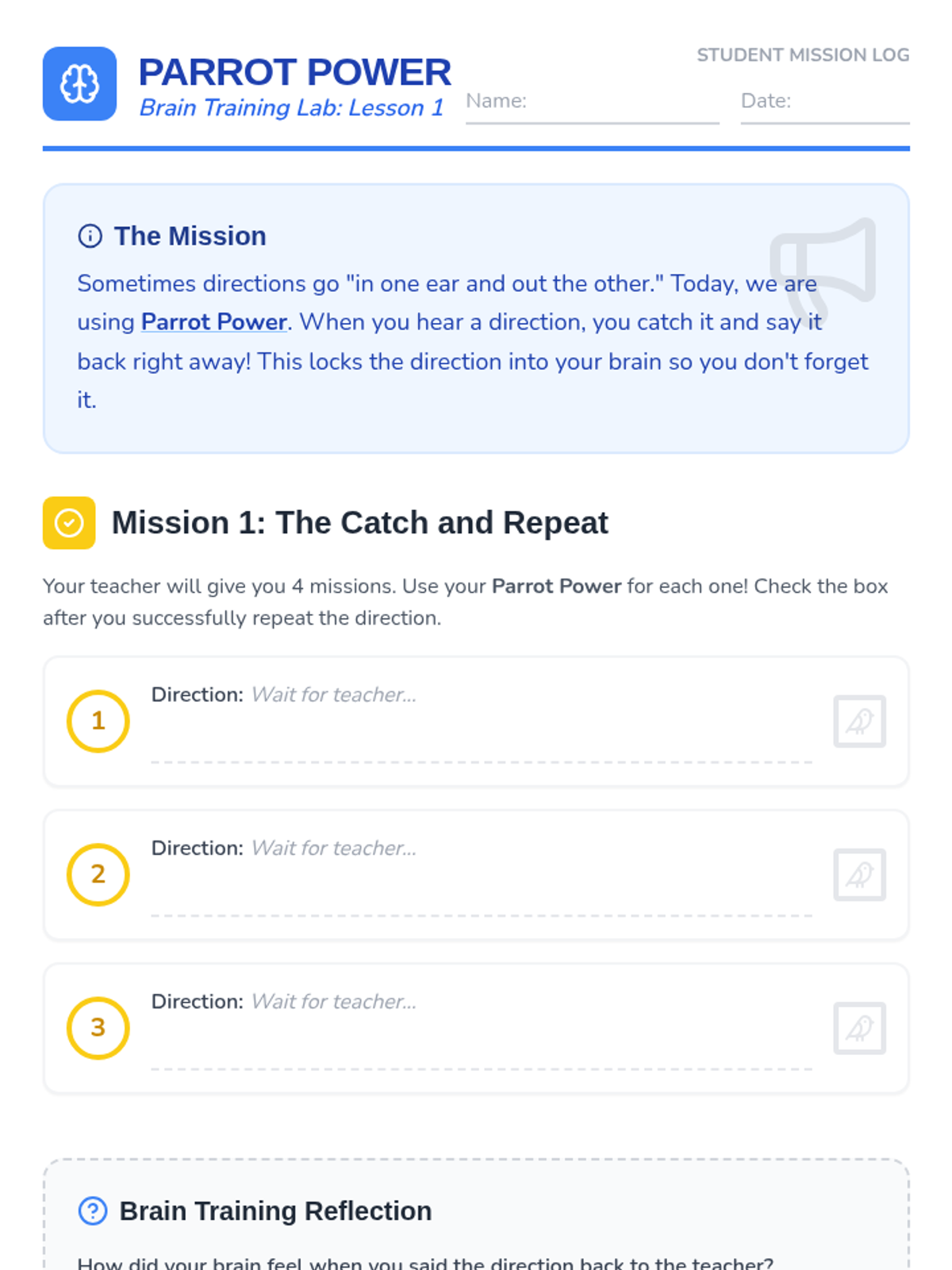
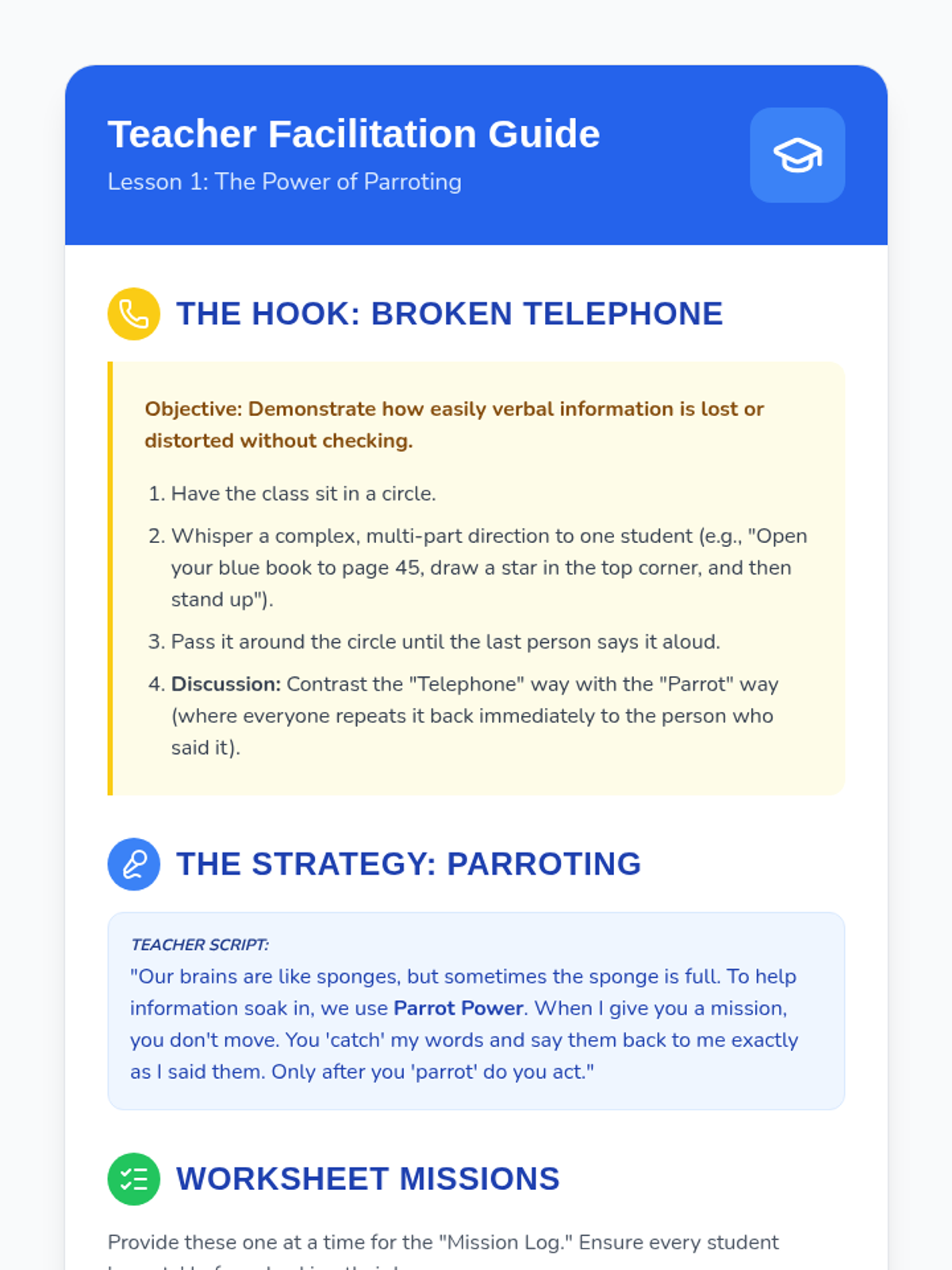
Students practice the 'parrot' technique, where they must immediately repeat a single-step direction back to the speaker before moving. The lesson emphasizes that saying it locks it into the brain.
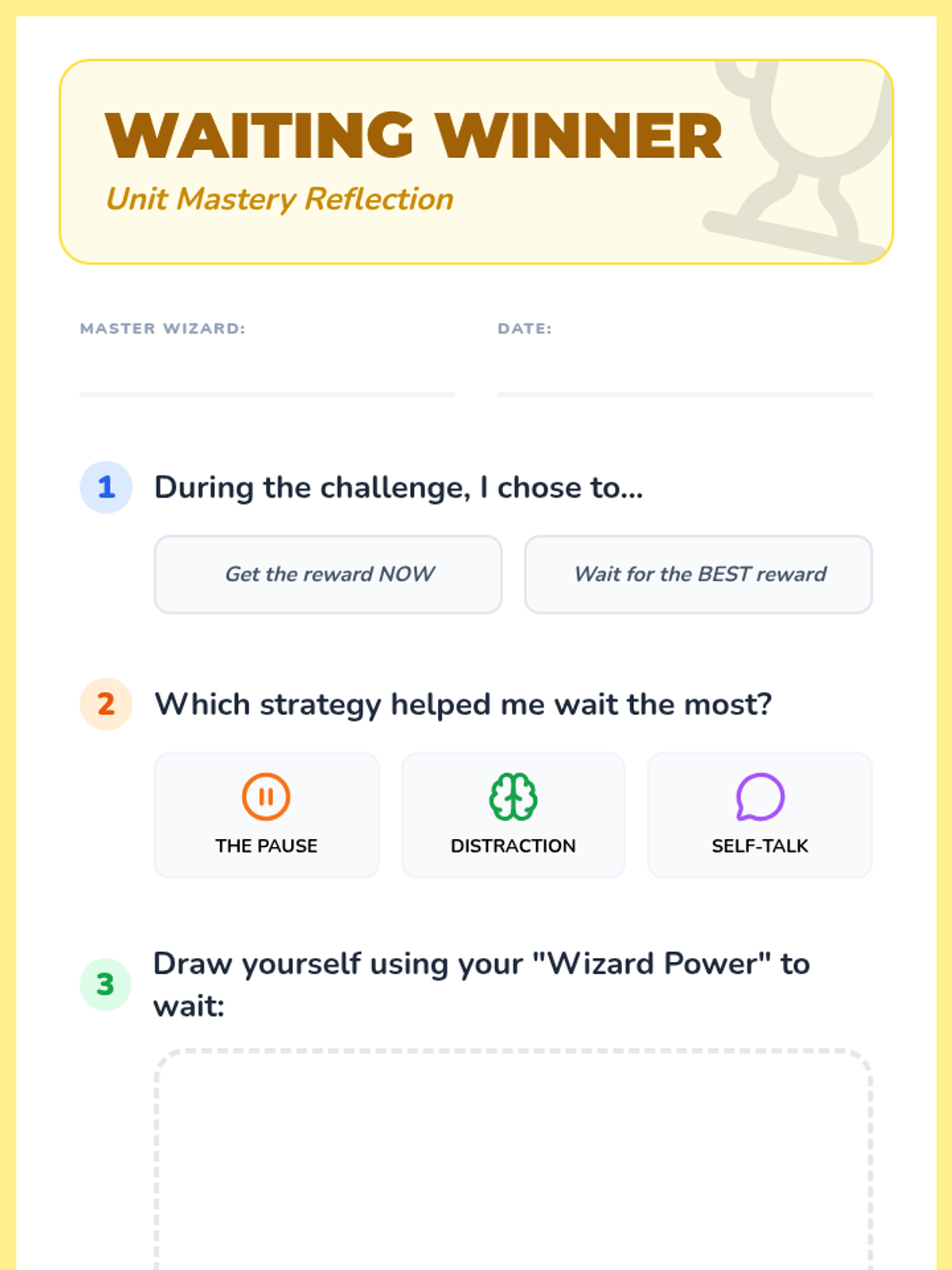
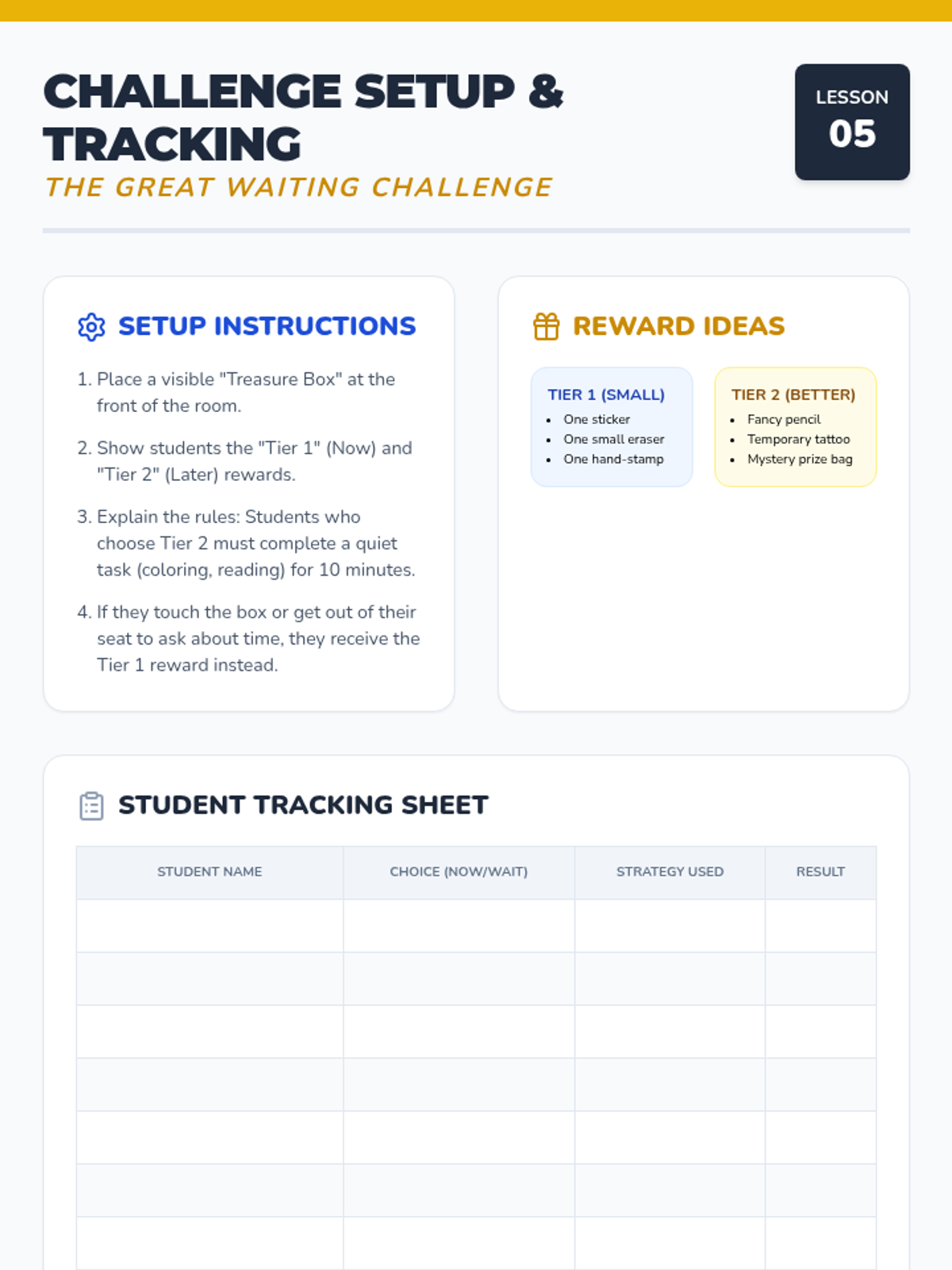
As a culminating activity, students engage in a stepped-reward simulation where they can choose a small reward now or a better reward after completing a duration of quiet activity. They apply the distraction and self-talk strategies learned in previous lessons to succeed.
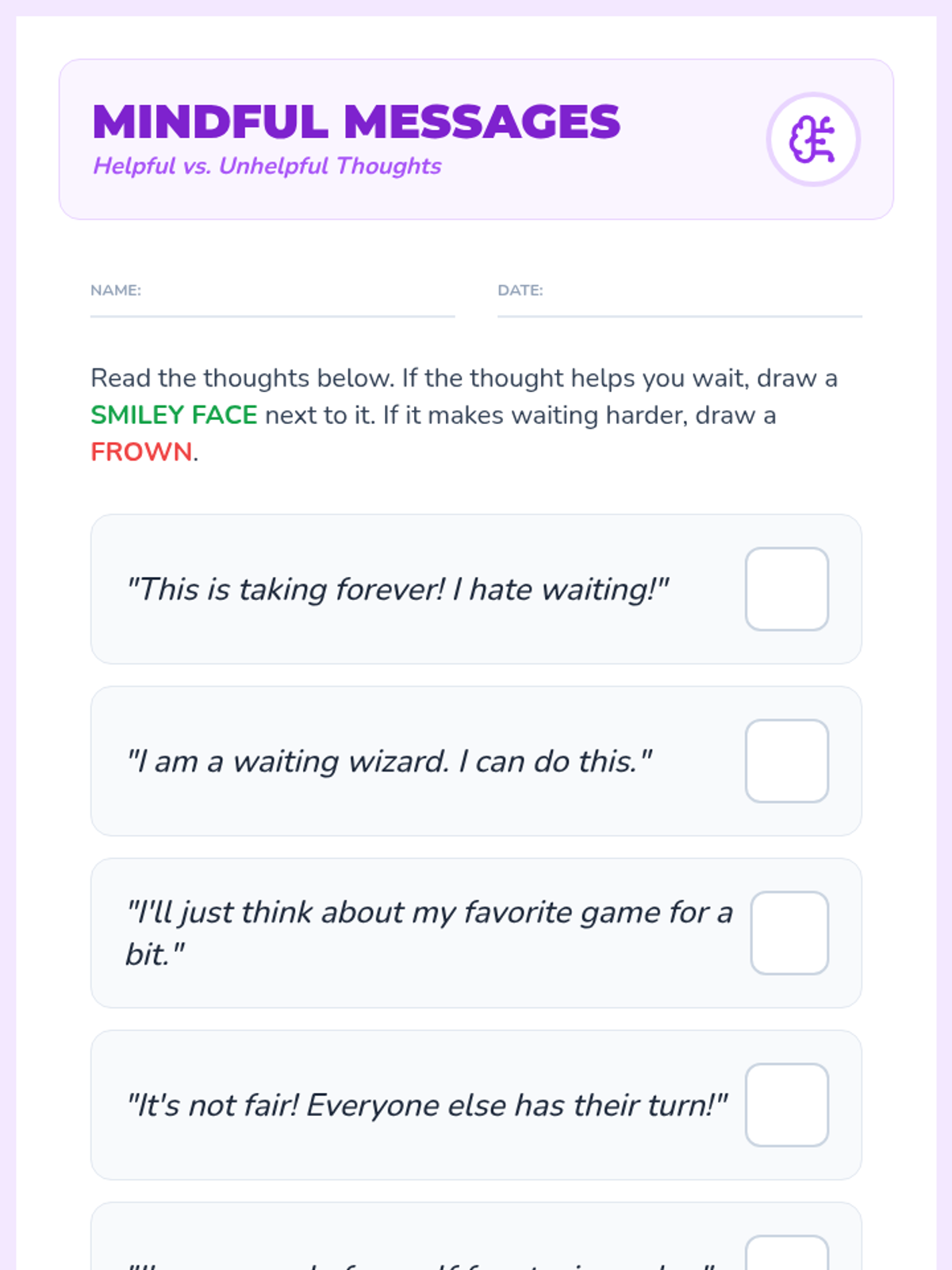
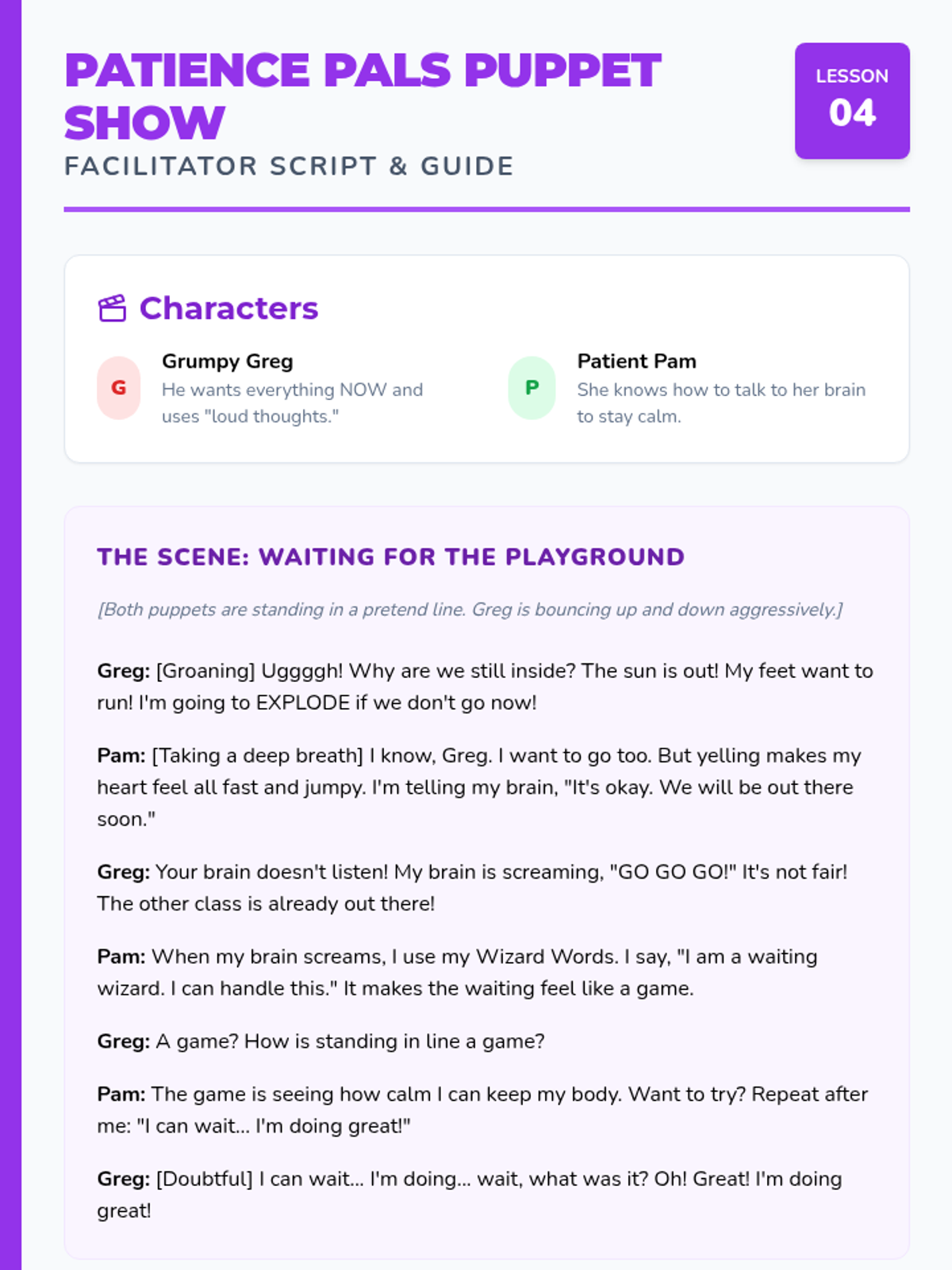
Students learn how language influences behavior by differentiating between helpful and unhelpful thoughts during waiting periods. They practice generating encouraging phrases ('I can wait,' 'I am patient') and use them during a collaborative building task.
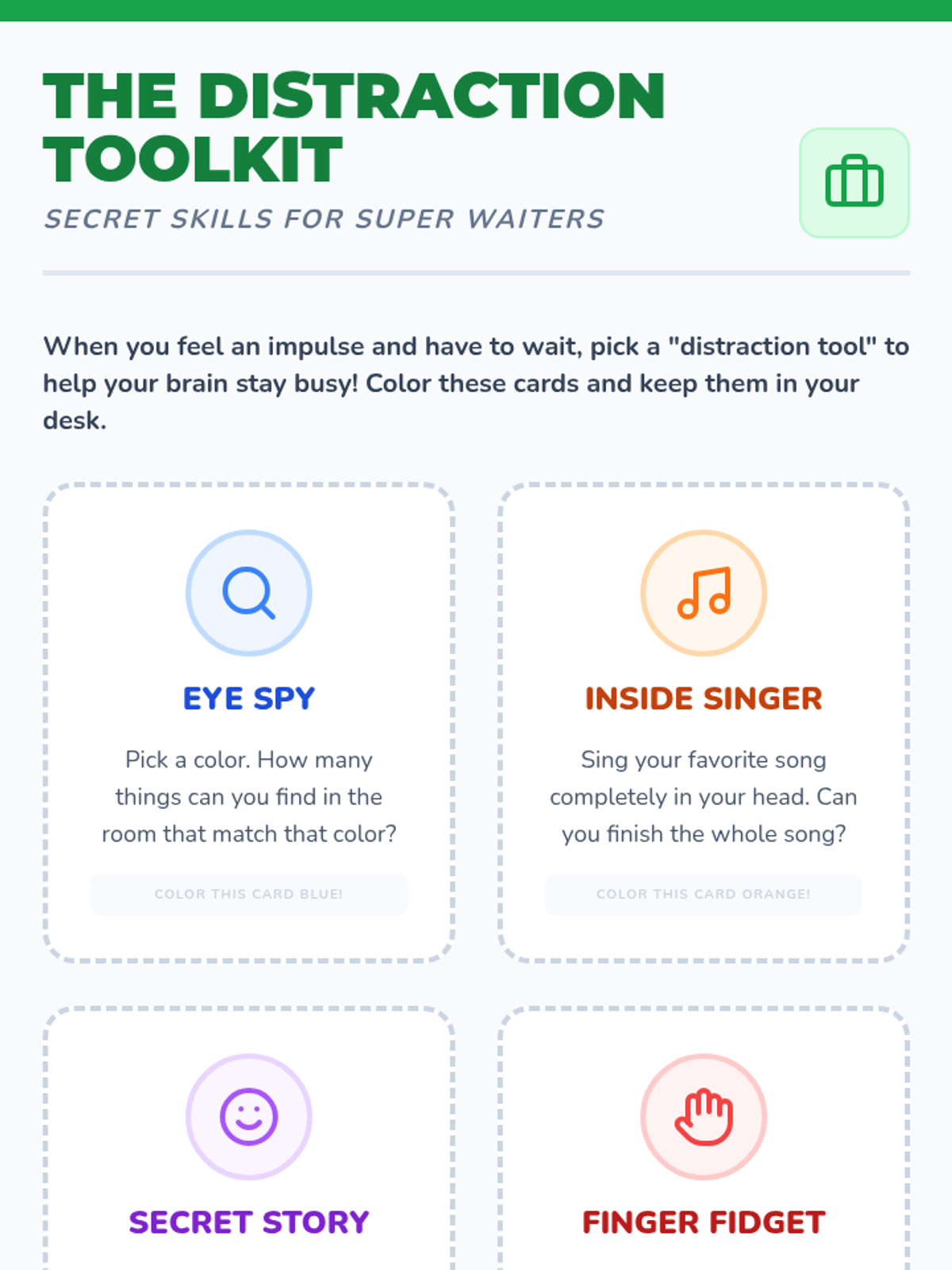
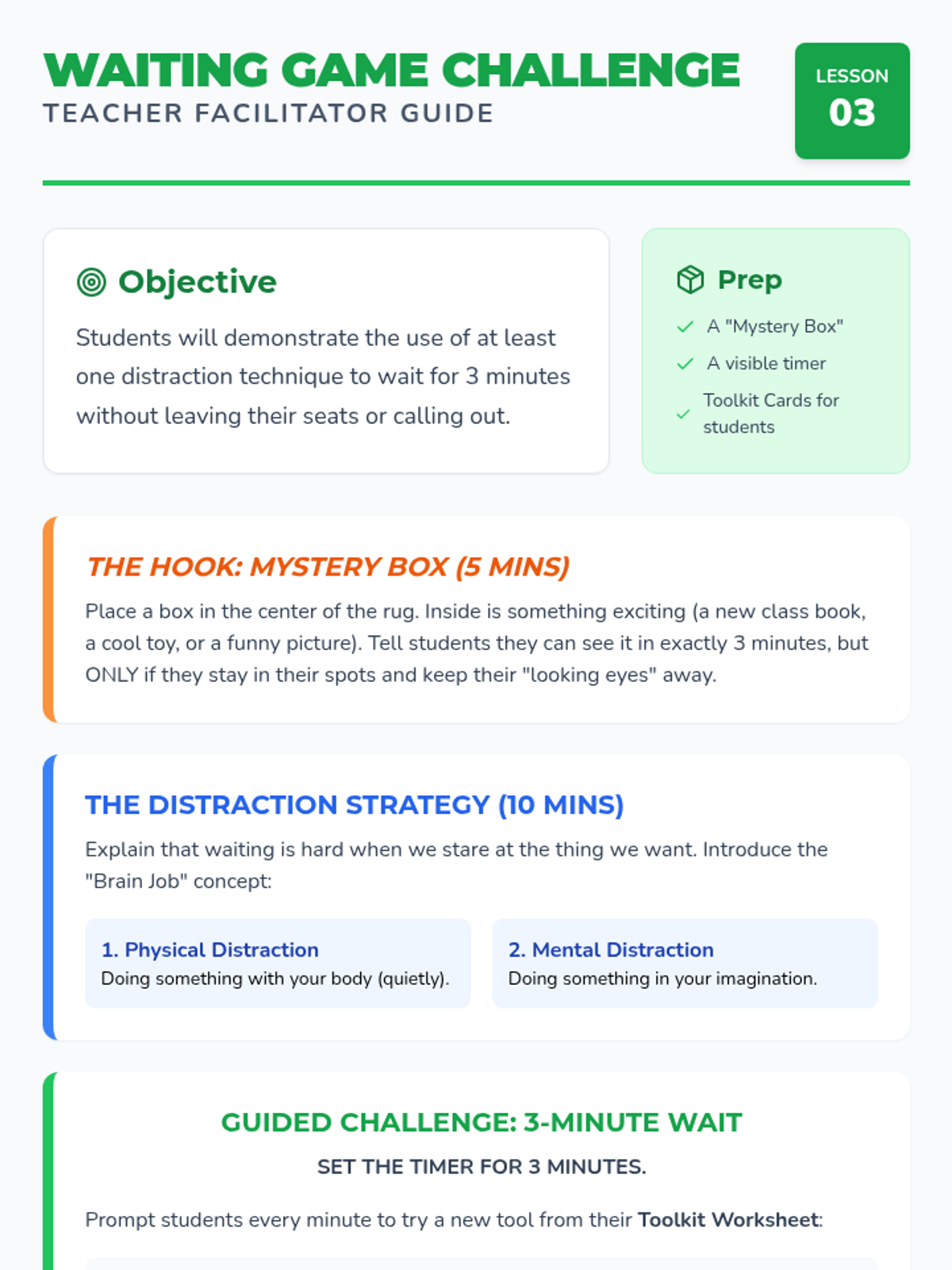
This lesson introduces 'distraction' as a positive tool for delaying gratification. Students experiment with different mental and physical distraction techniques, such as singing a song internally, counting, or looking for colors, to see which helps them wait longest during a challenge.
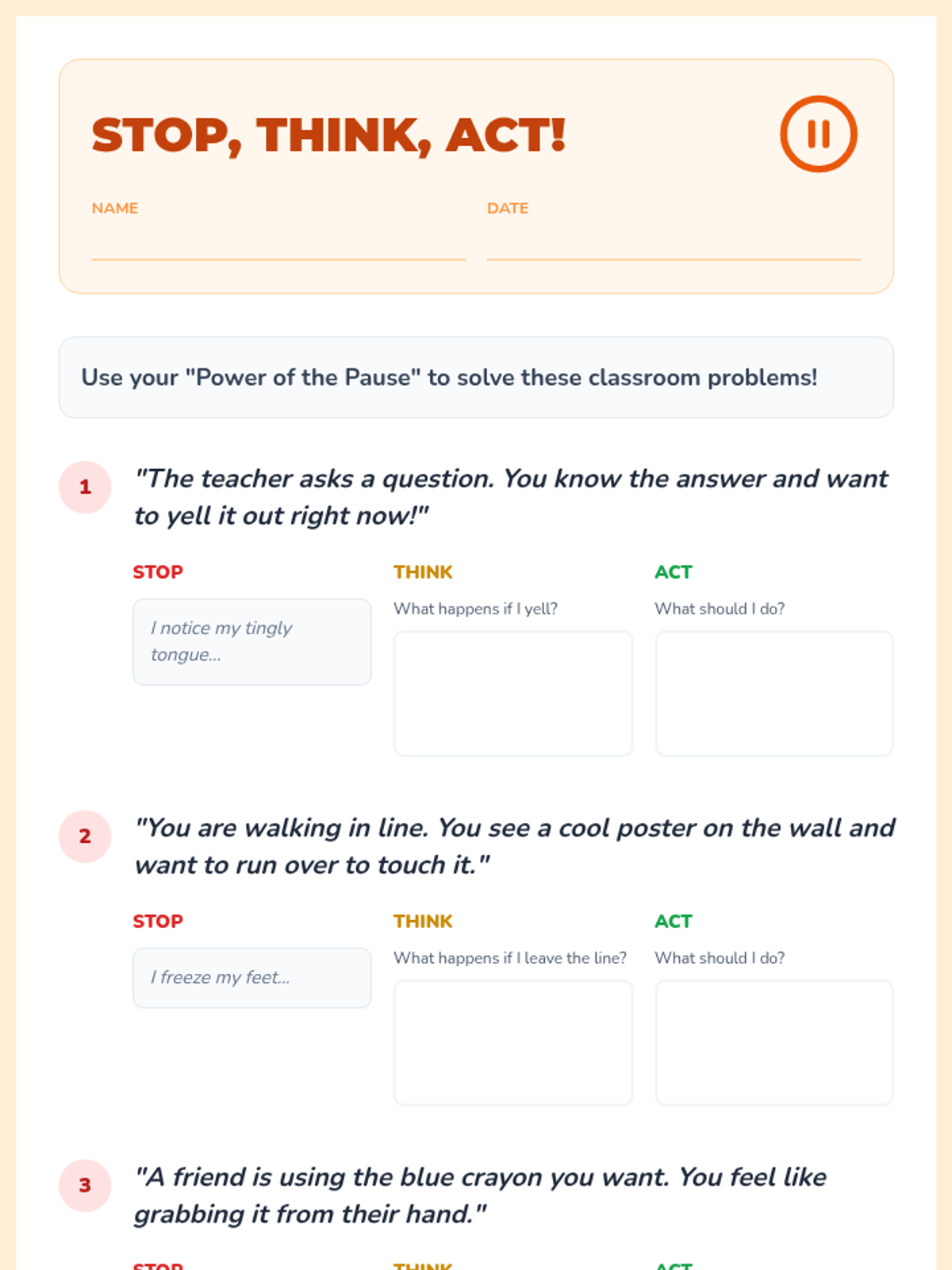
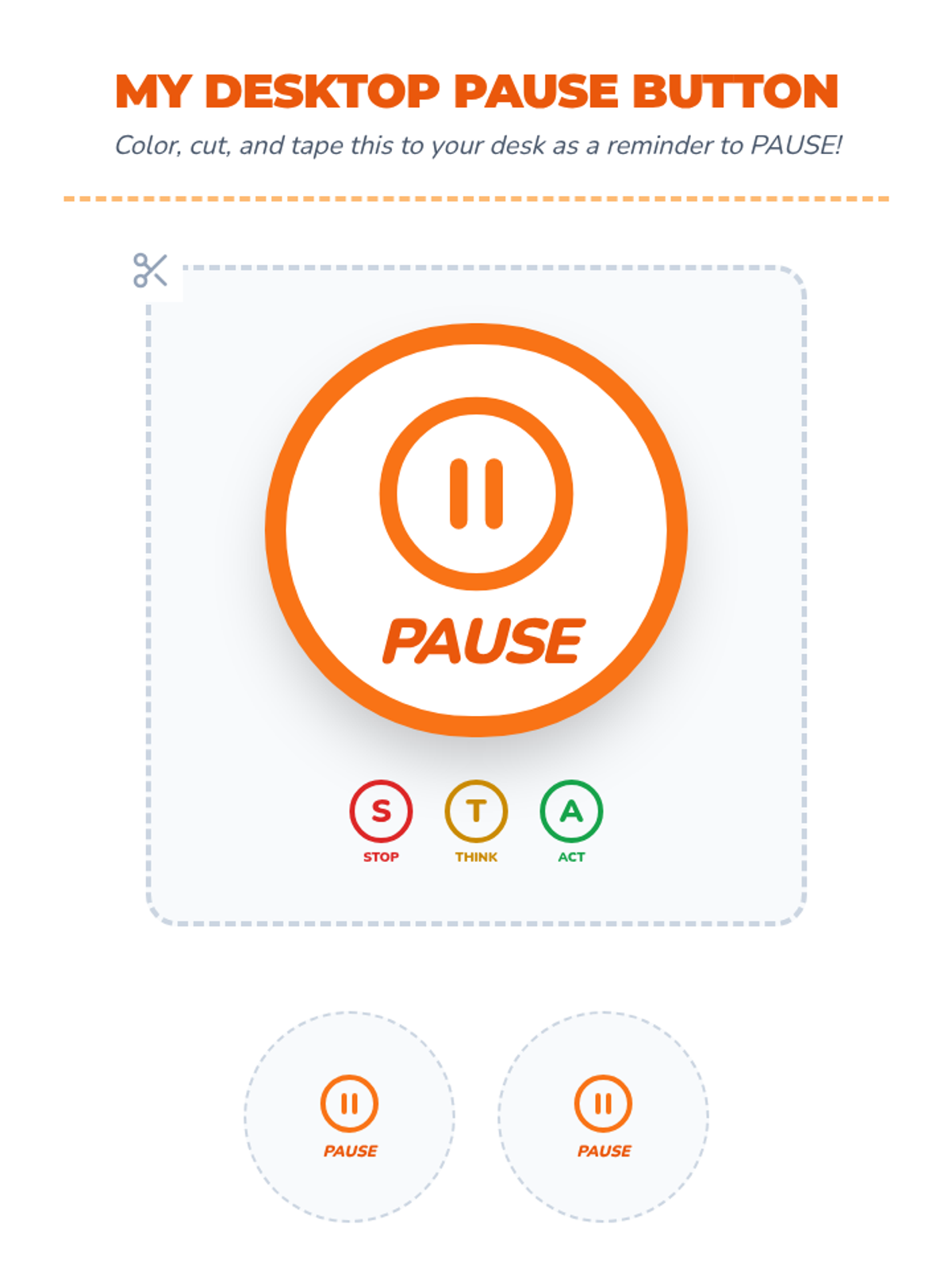
Students practice the 'Stop, Think, Act' method through role-playing scenarios involving common classroom interruptions. They create visual 'Pause Buttons' for their desks to serve as concrete reminders to slow down their reactions.
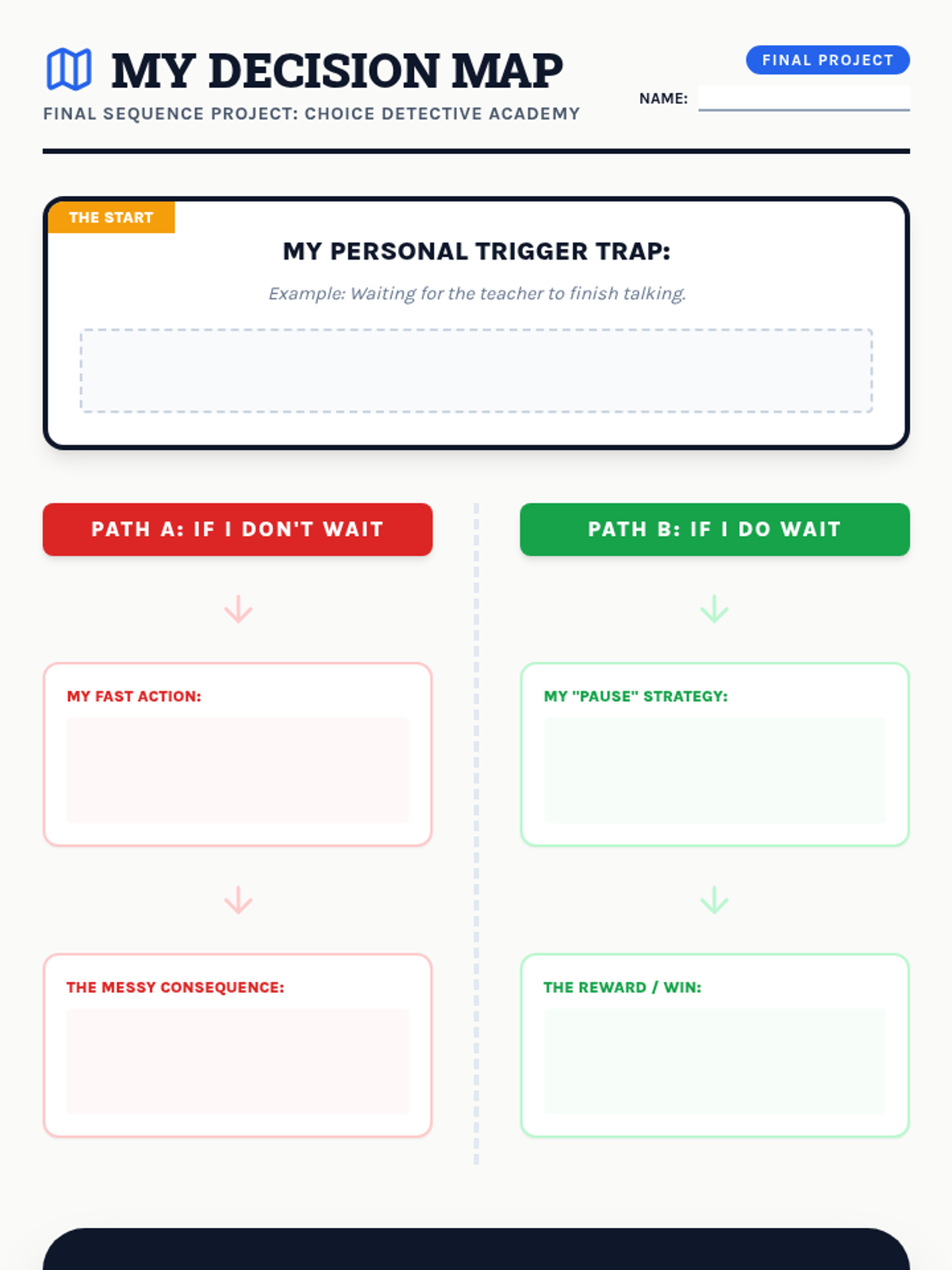
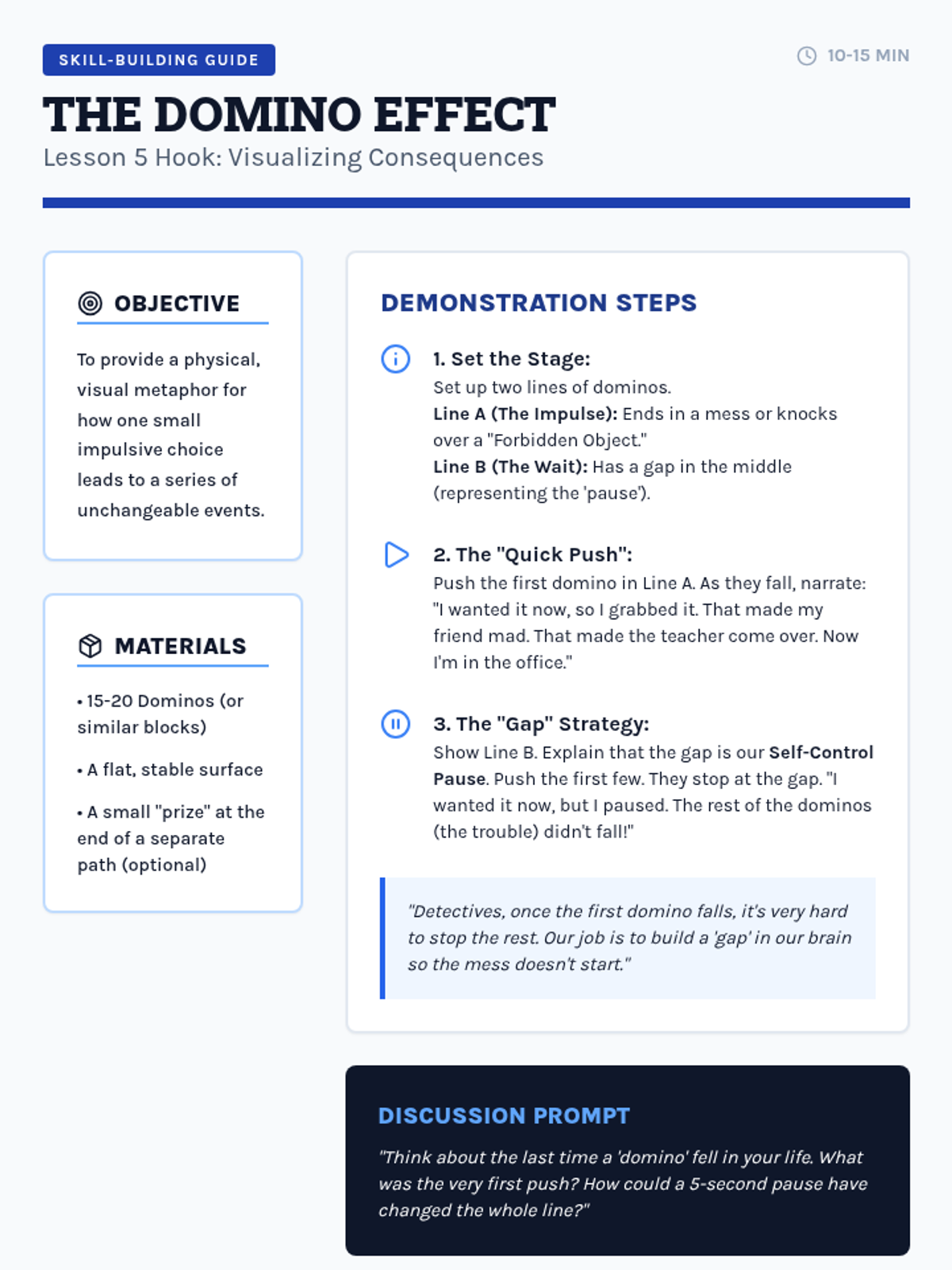
Students synthesize their learning by creating a personal 'Decision Map' flowchart to navigate a specific trigger, visualizing the domino effect of their choices.
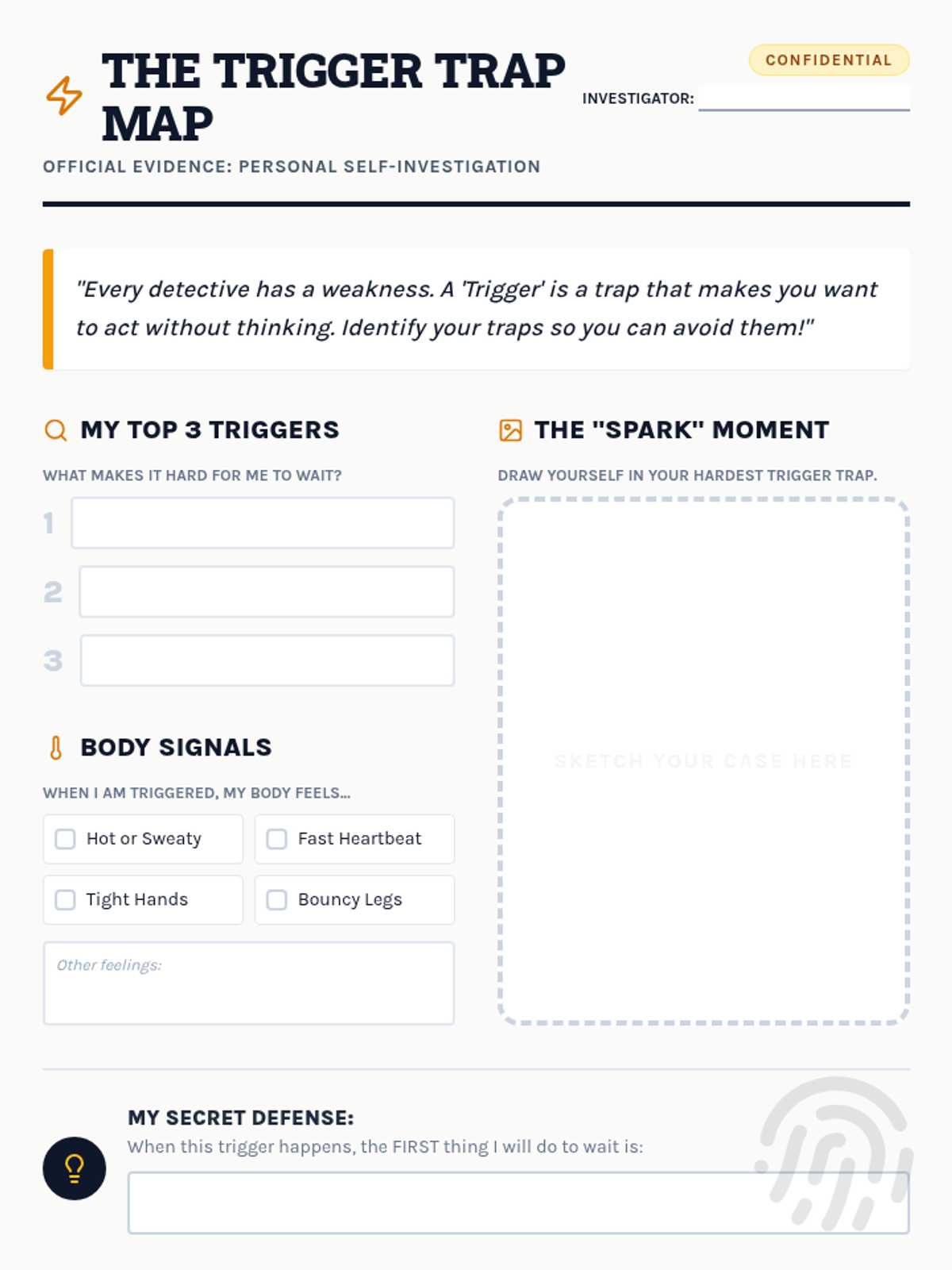
Students identify and categorize their personal 'Trigger Traps'—the specific situations or items that make it most difficult for them to practice self-control.
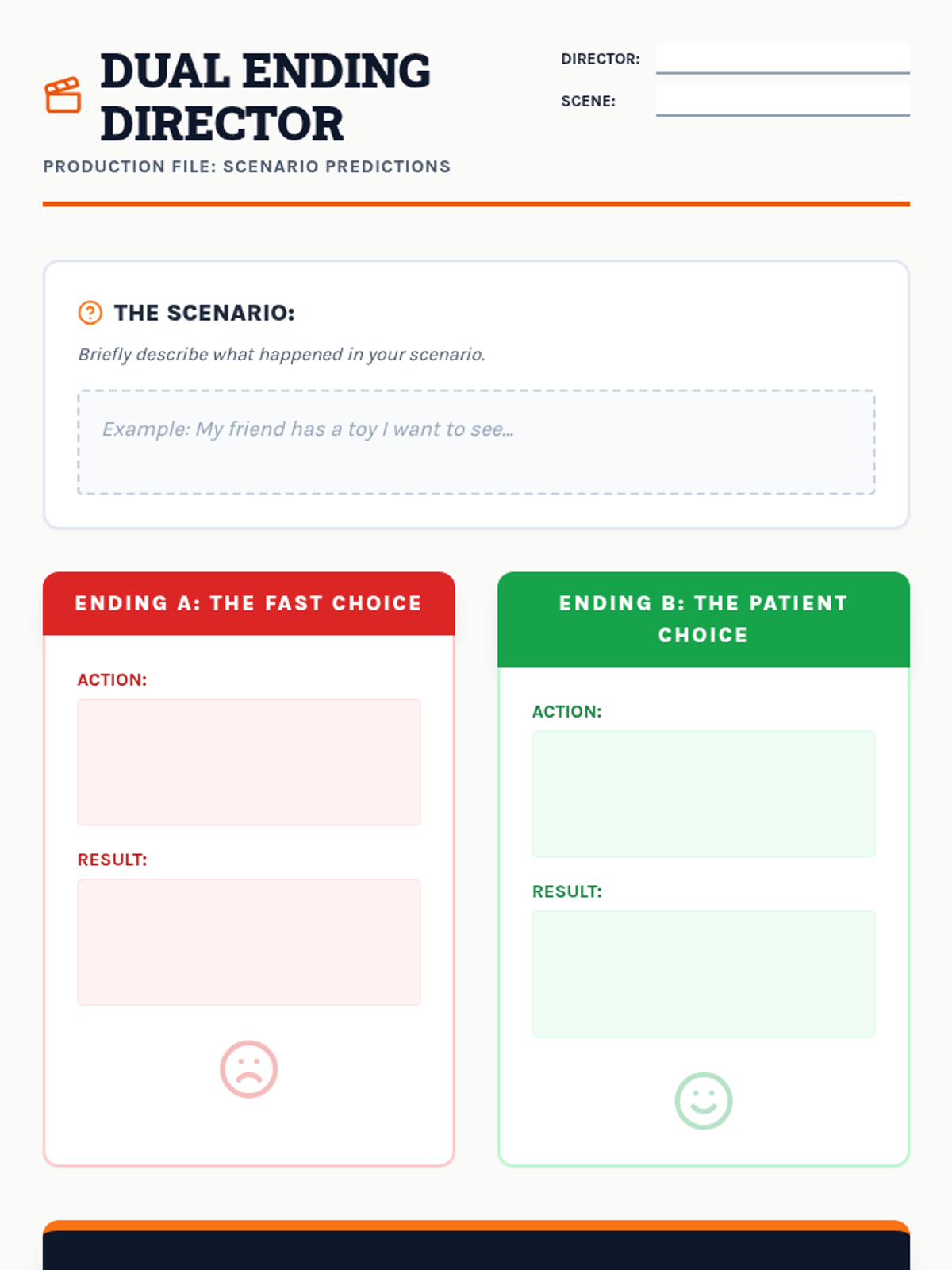
Using 'Choose Your Own Adventure' style scenarios, students predict and simulate the different outcomes of impulsive versus patient choices in social situations.
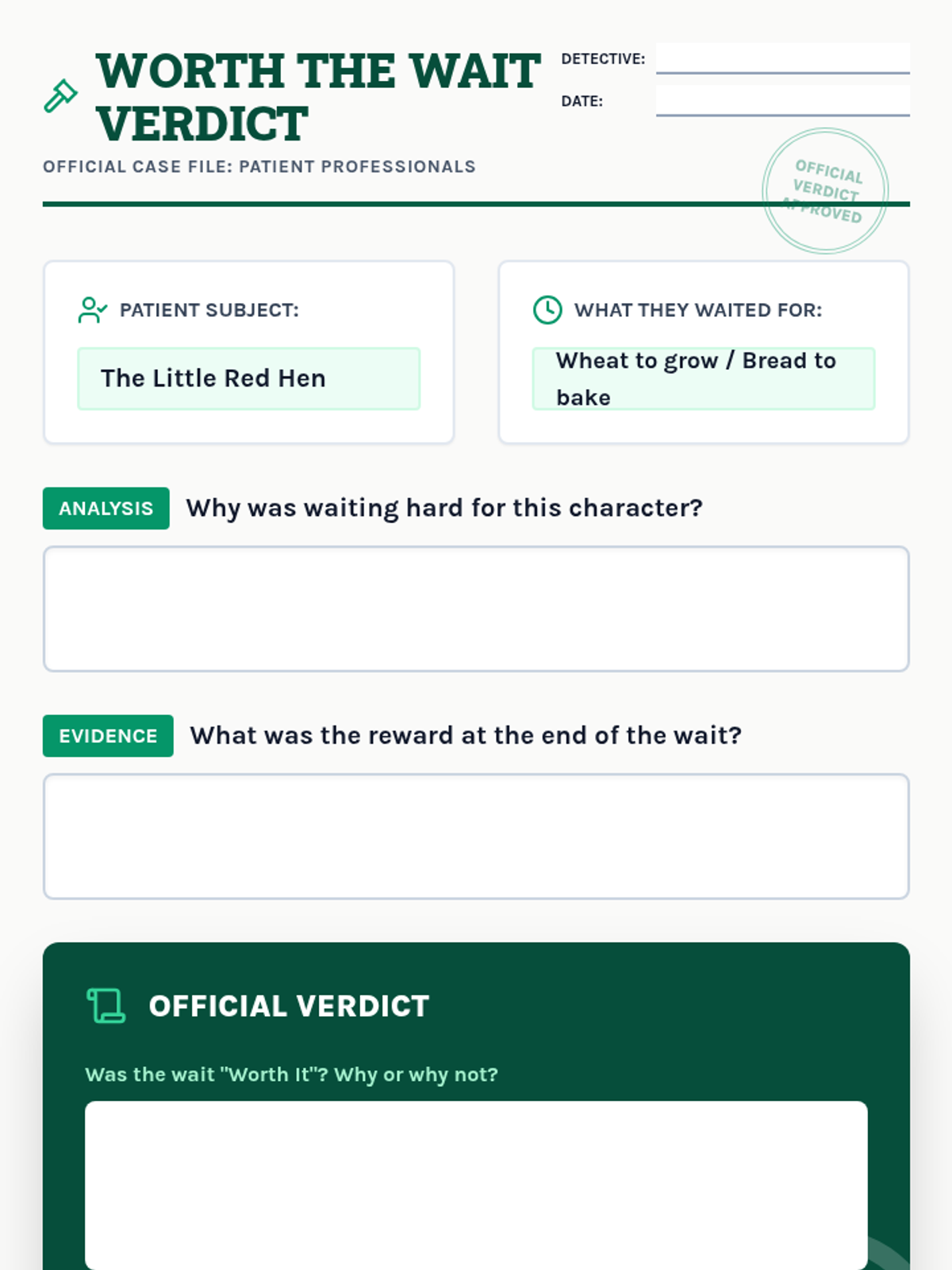
Students analyze characters who demonstrate patience and delayed gratification, debating the long-term rewards of waiting and identifying the traits of a 'Patient Professional'.
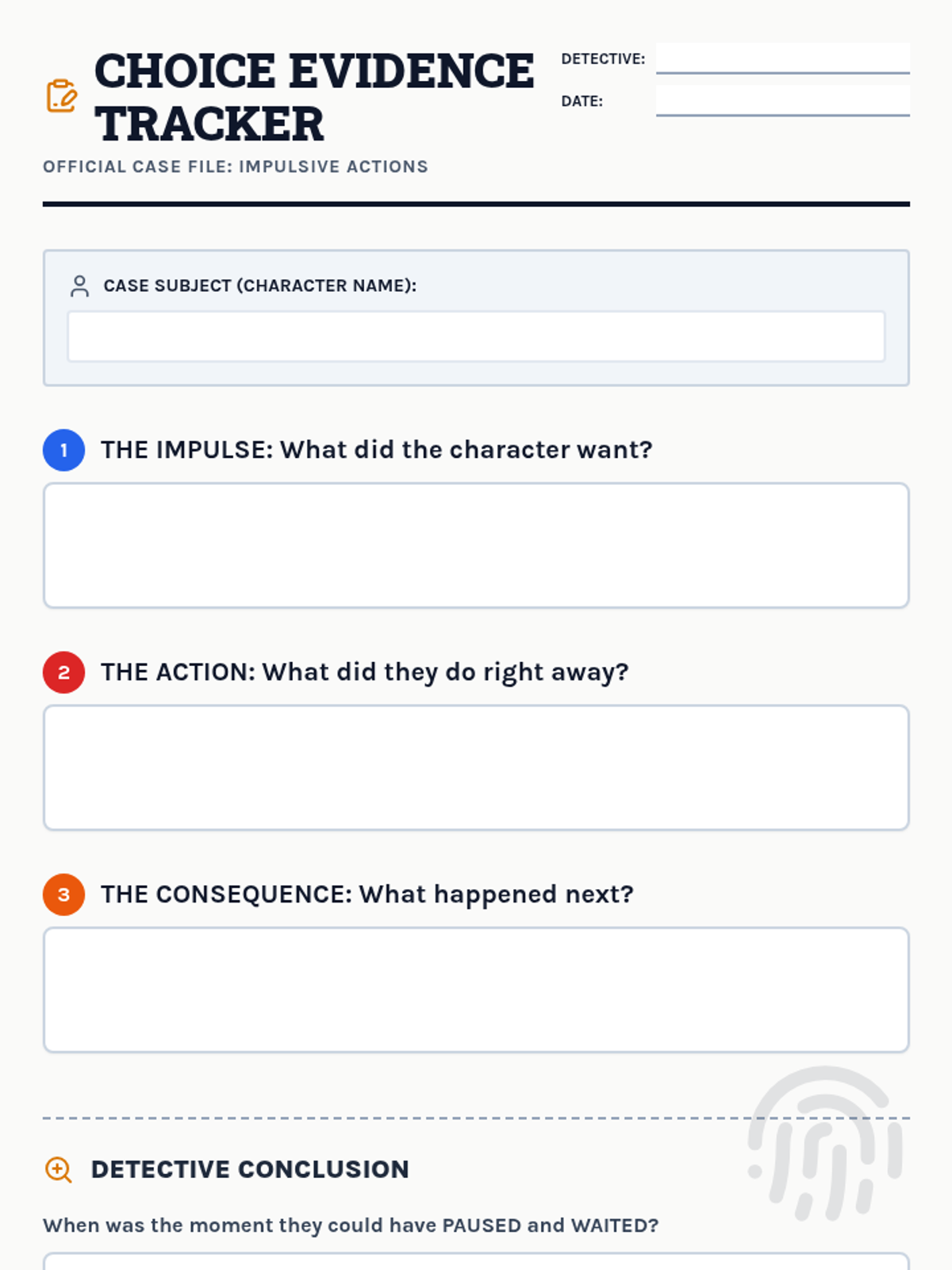
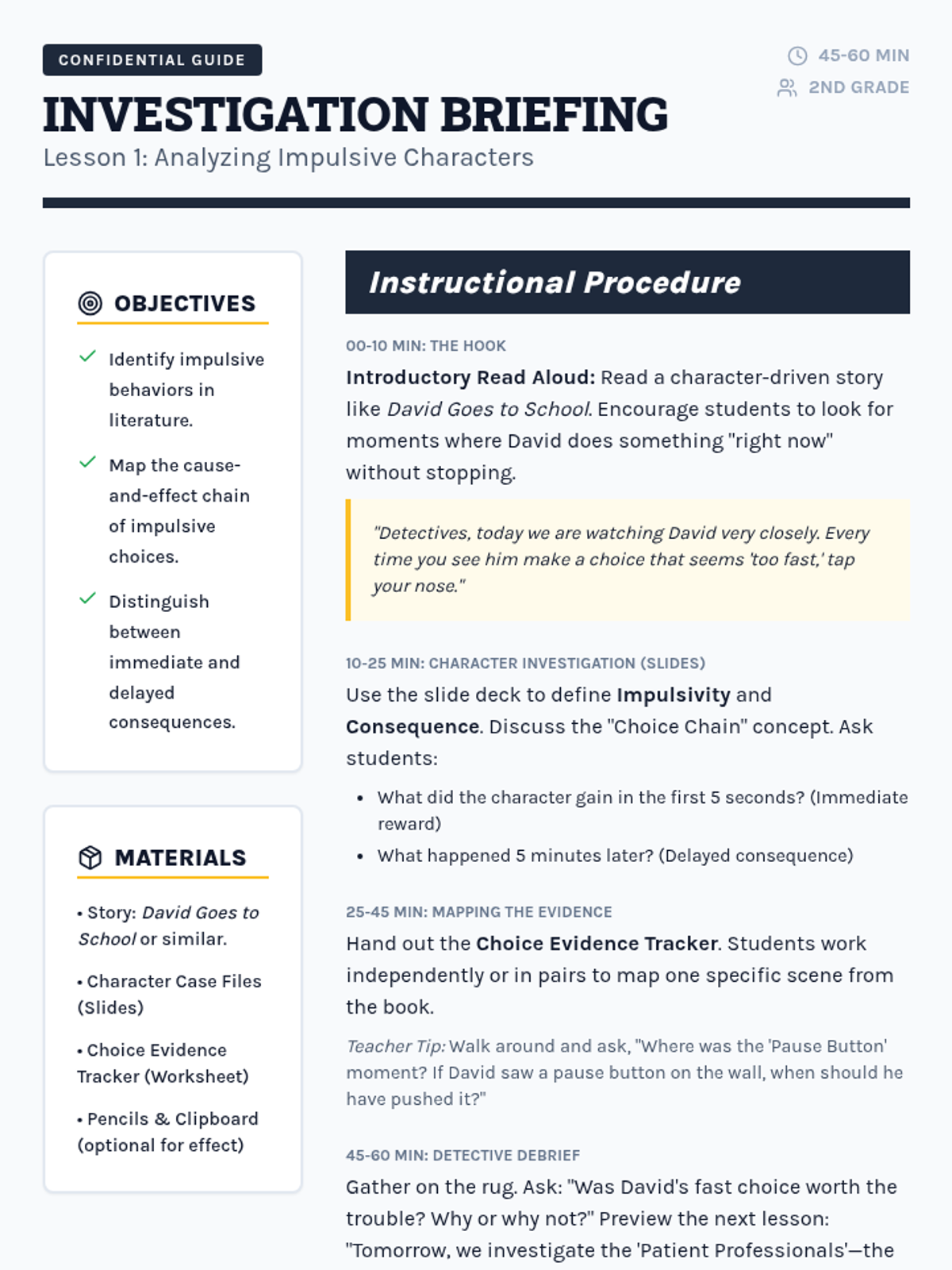
Students act as detectives to investigate the 'messy' consequences of impulsive actions by analyzing characters in literature, specifically focusing on the immediate vs. delayed effects of choices.
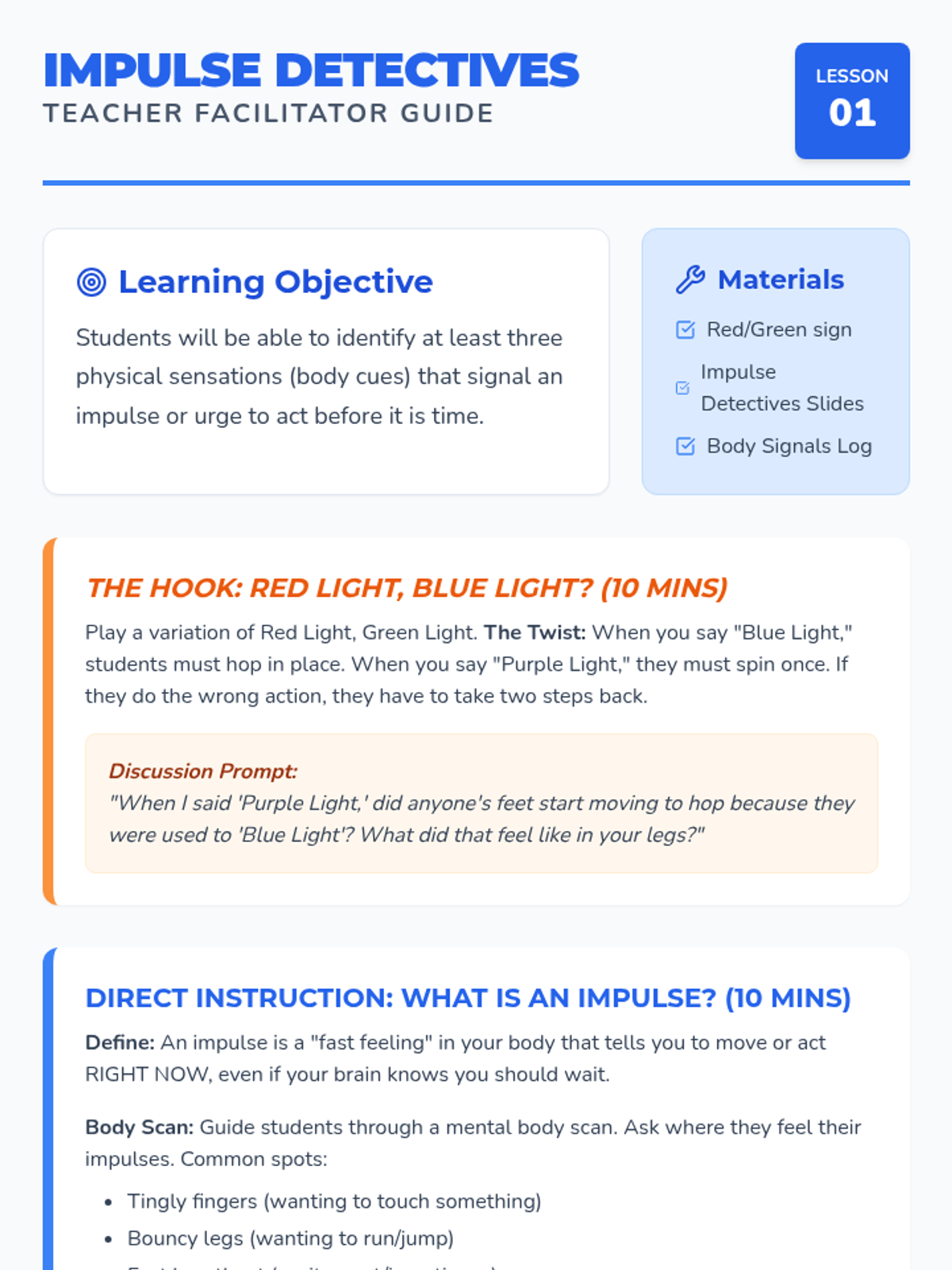
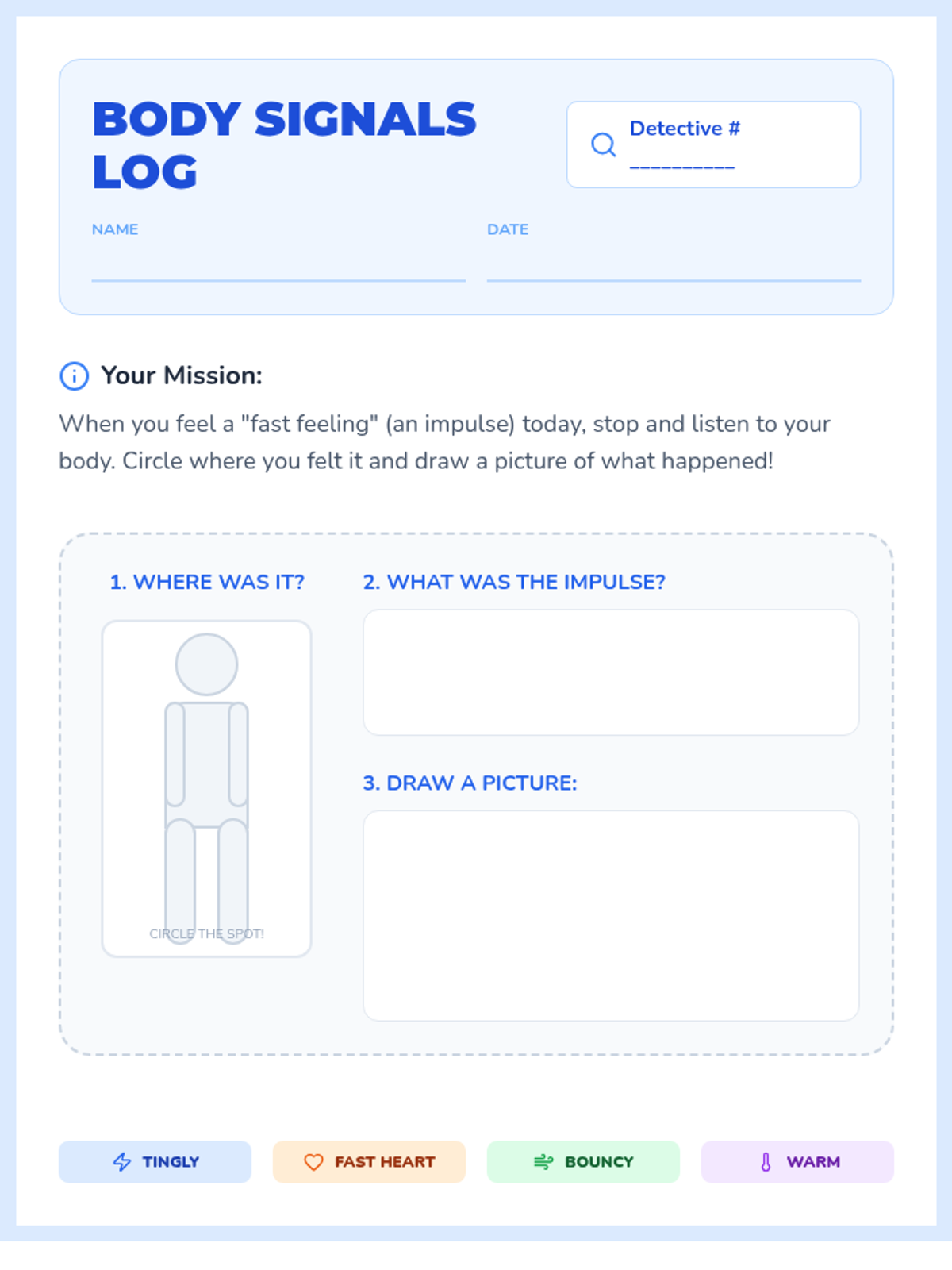
Students participate in games to identify the physical sensations of impulses and learn to recognize body cues that signal a need for self-control.
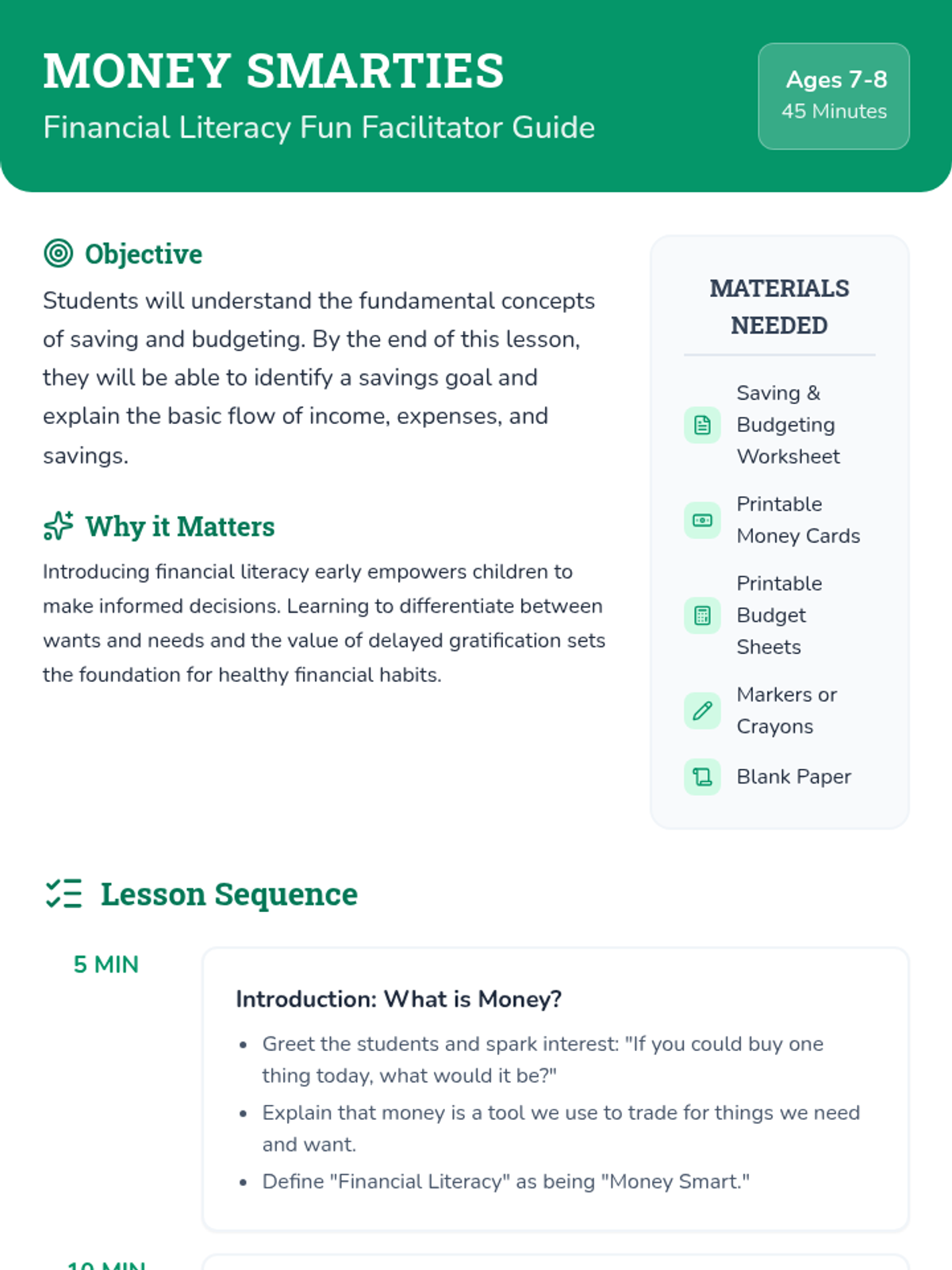
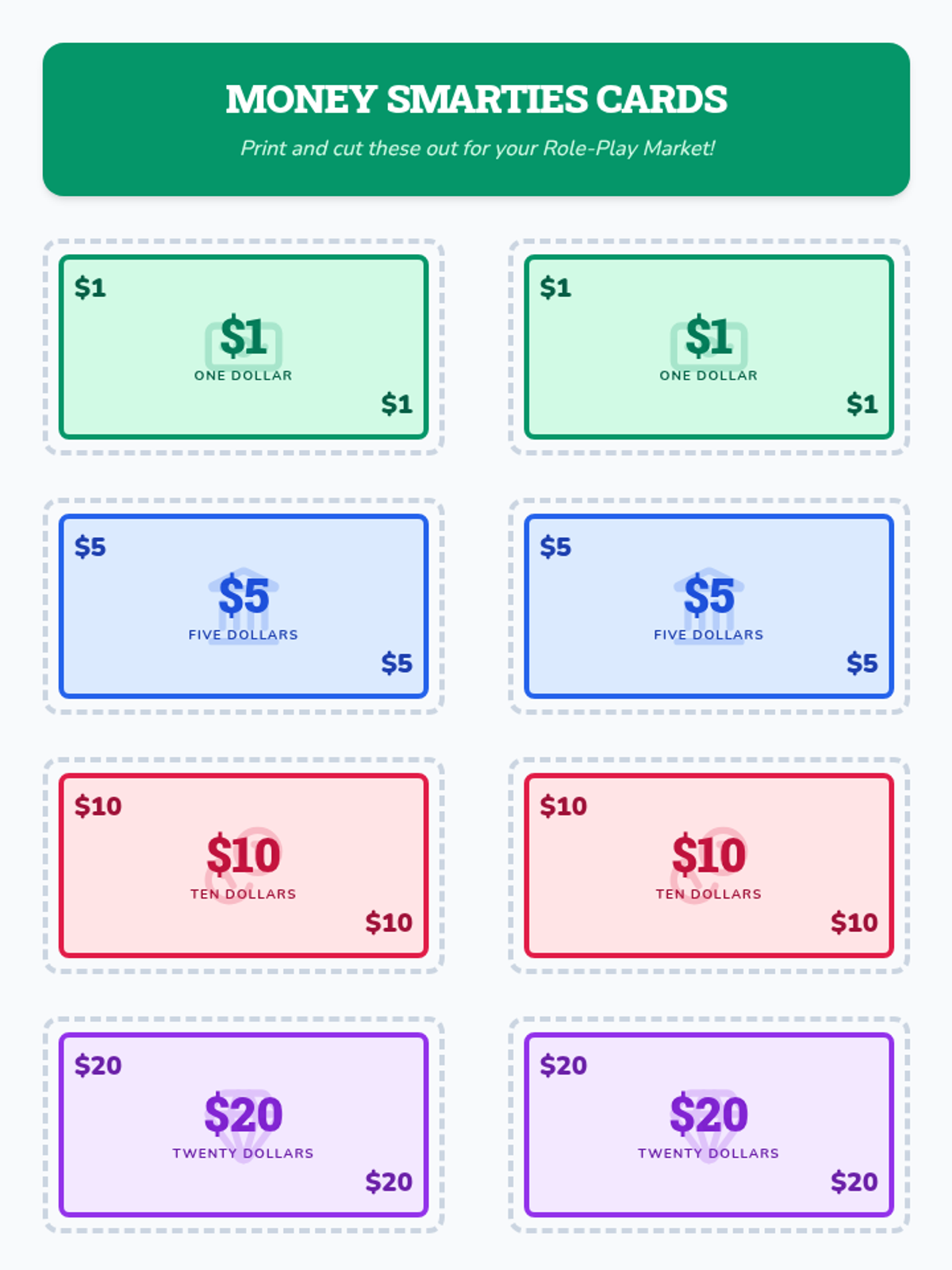
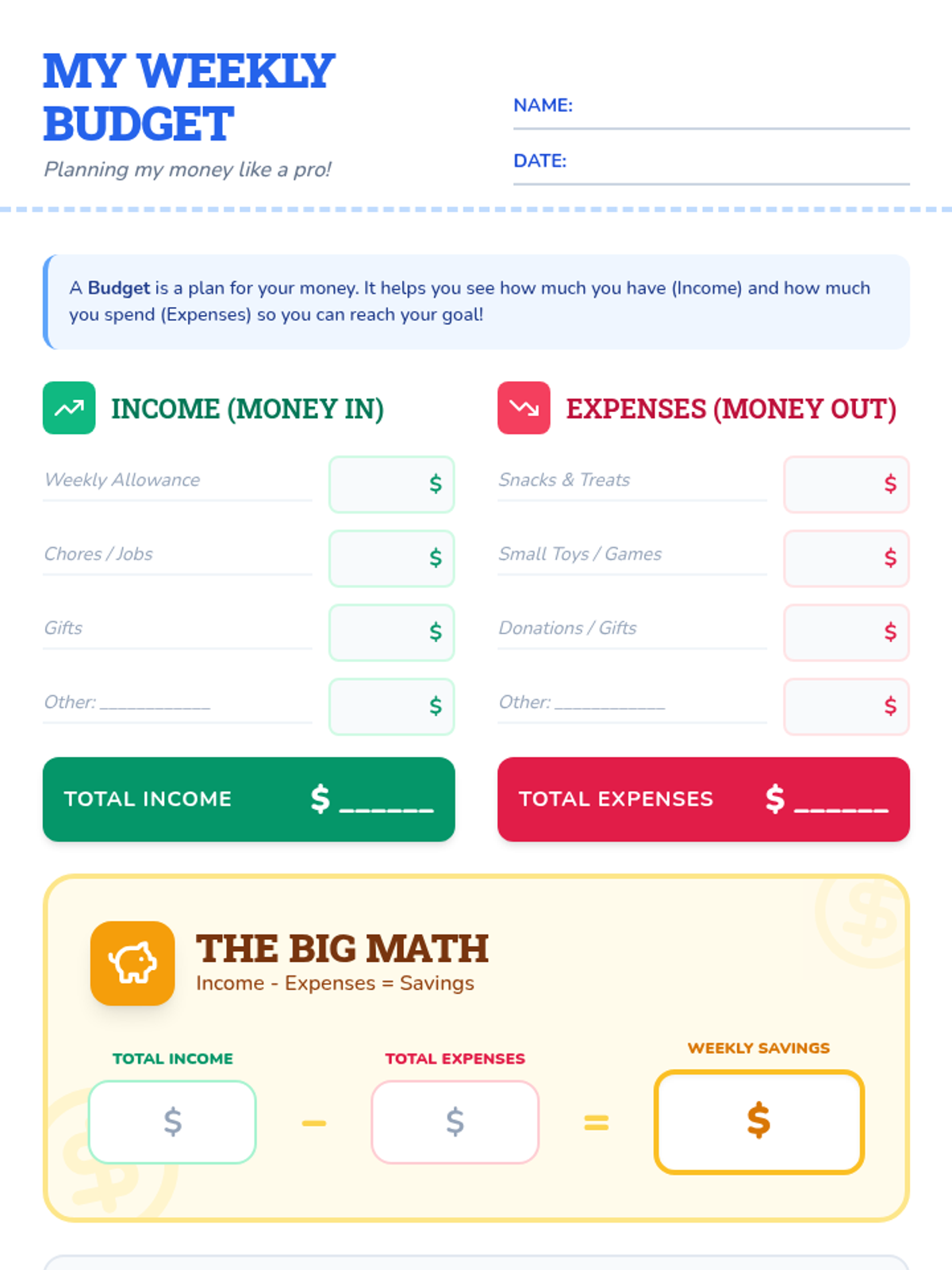
This lesson introduces young students to the basics of financial literacy, focusing on saving, budgeting, and the value of money through interactive activities.
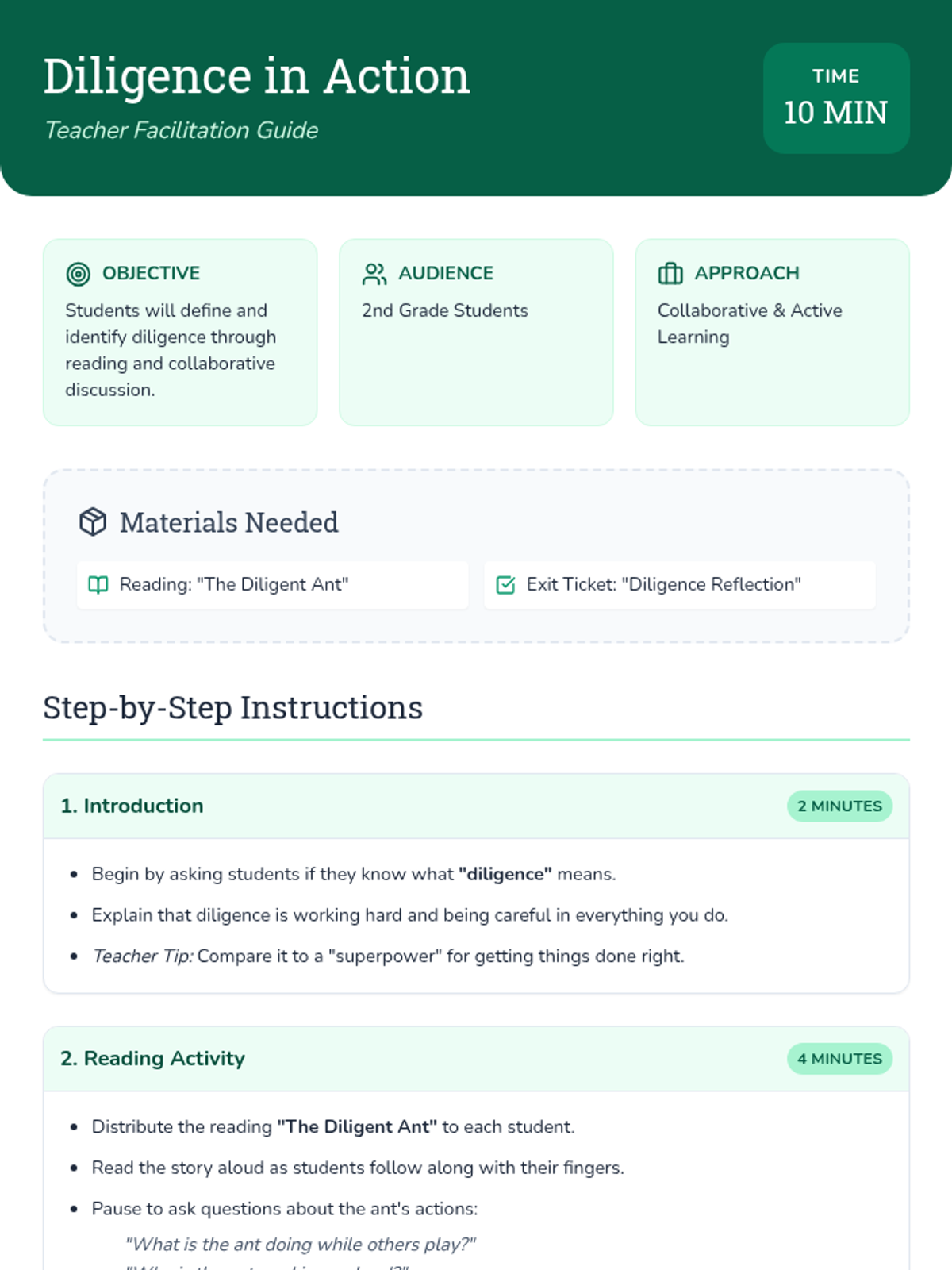
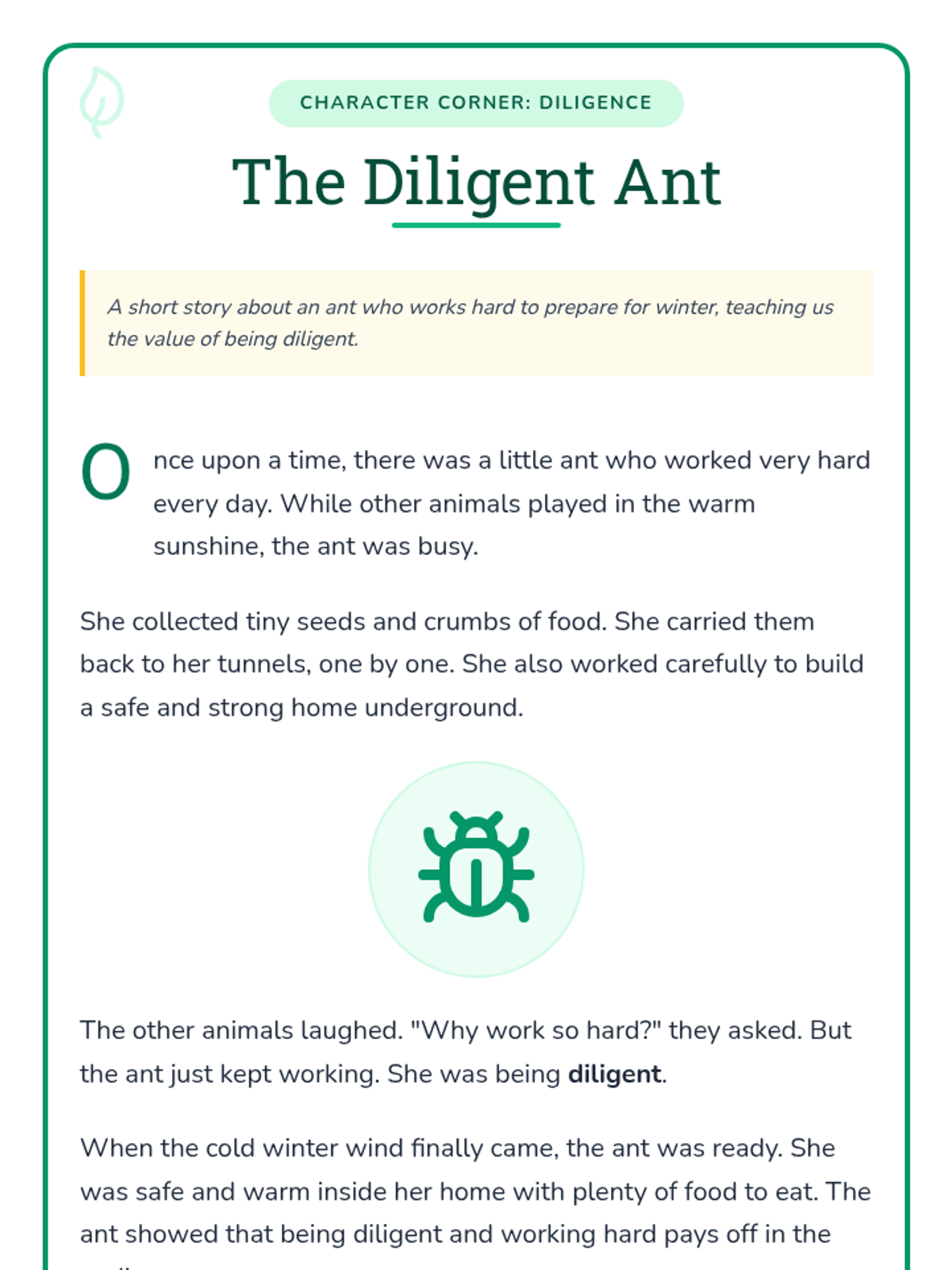
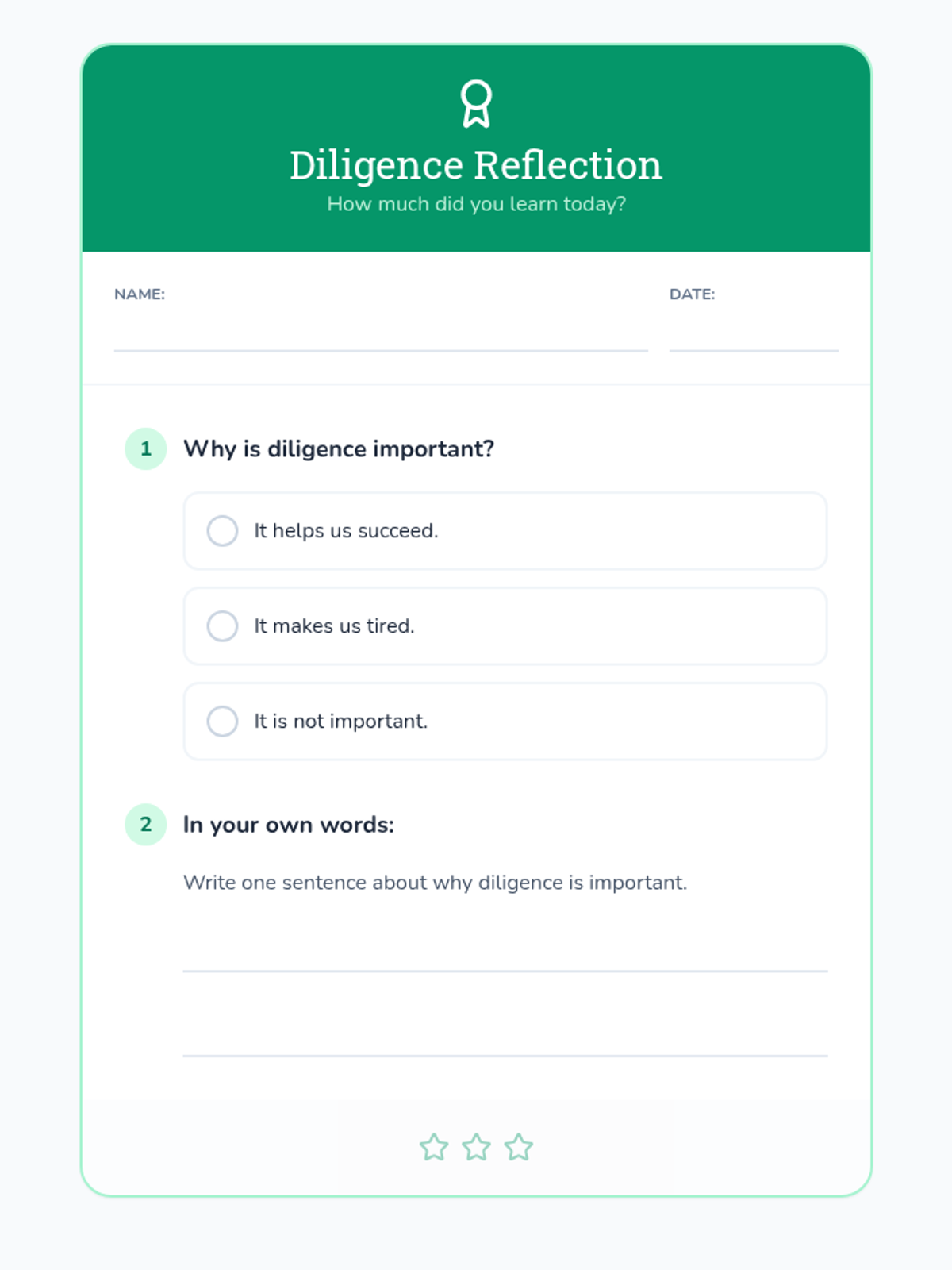
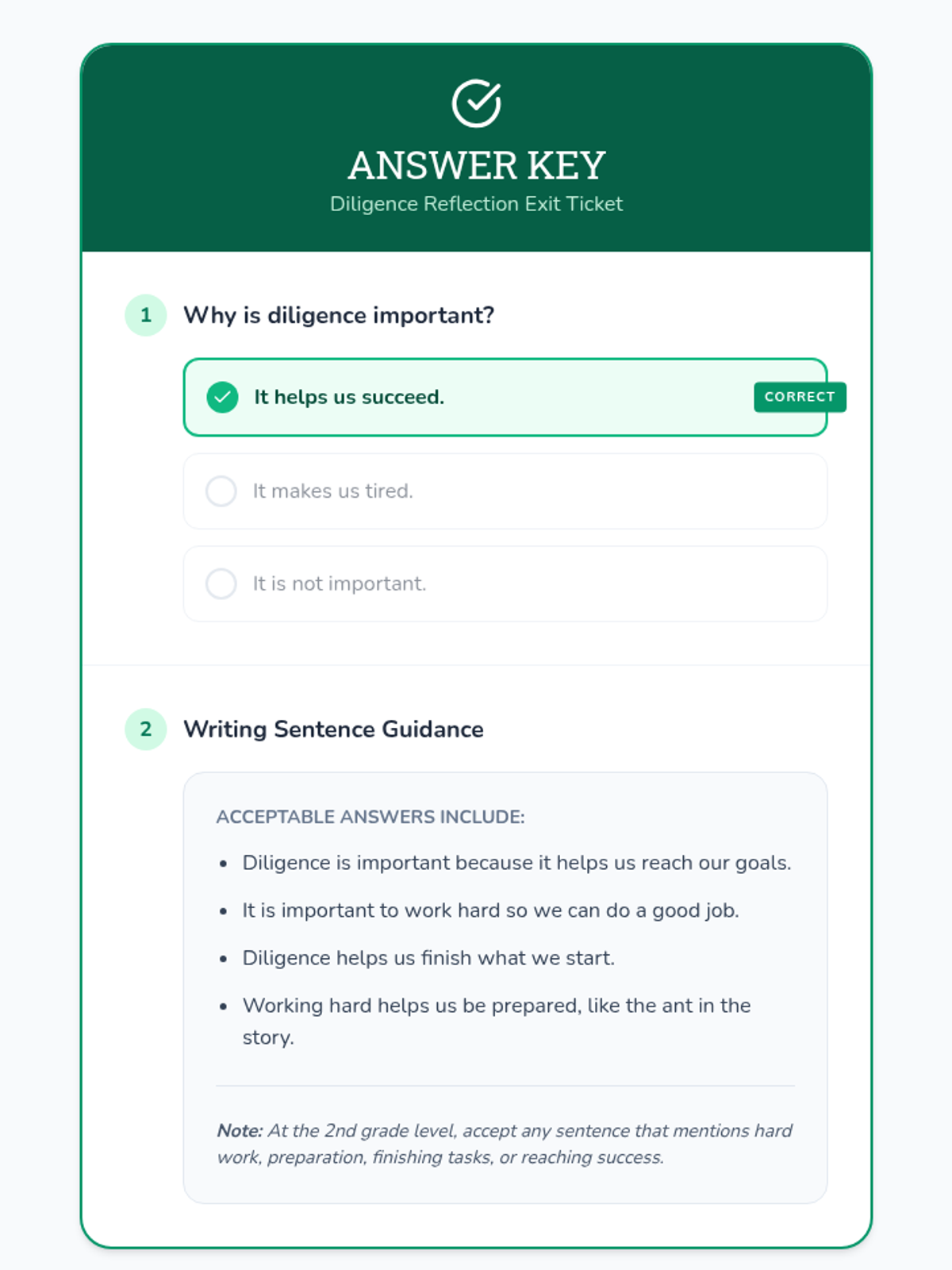
This lesson introduces 2nd-grade students to the concept of diligence through a short reading and collaborative discussion. Students will learn the importance of being diligent in their tasks and how it can lead to success.
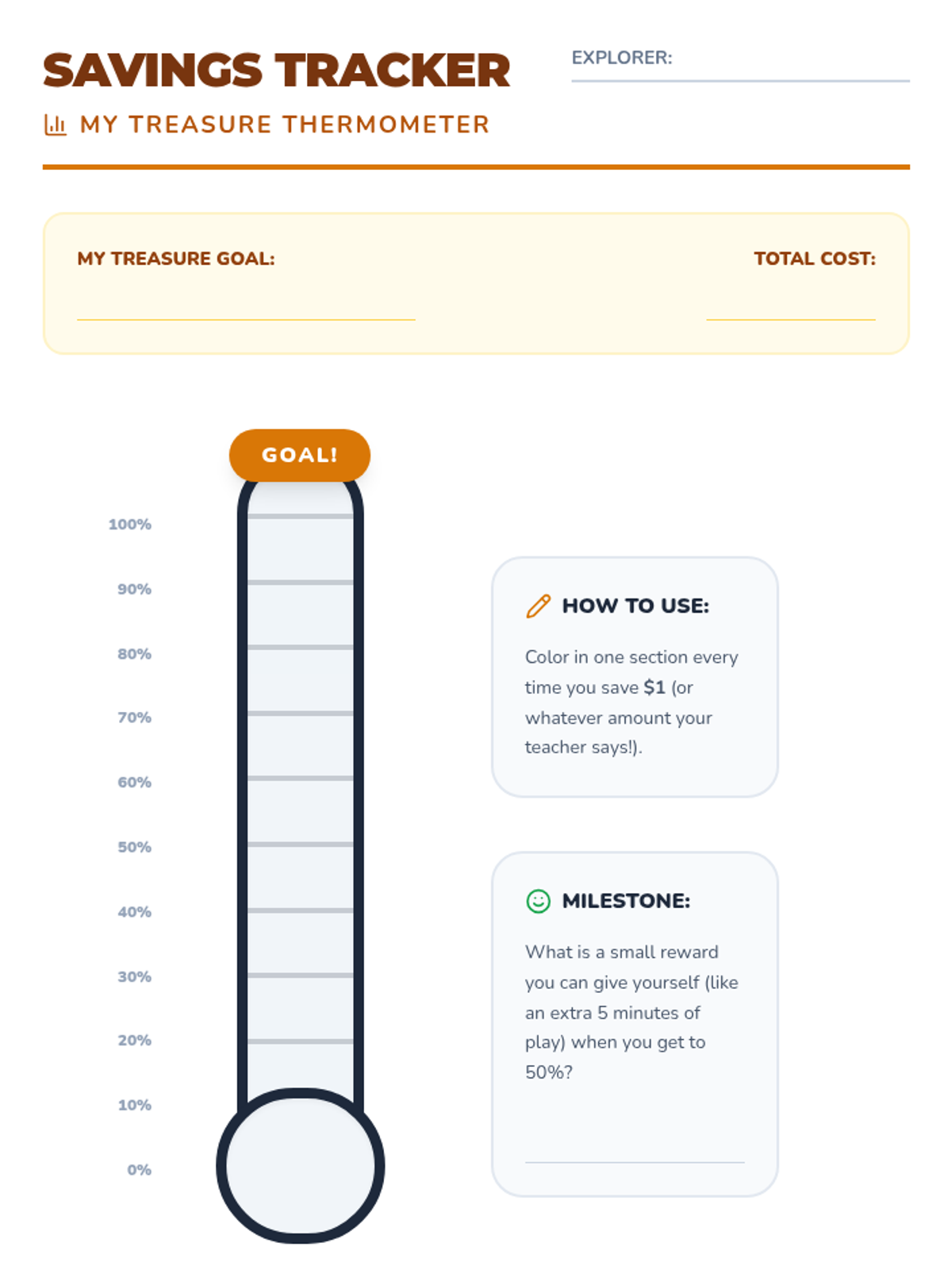
Students create and practice using visual progress trackers, like thermometers, to represent their journey toward their financial goals.
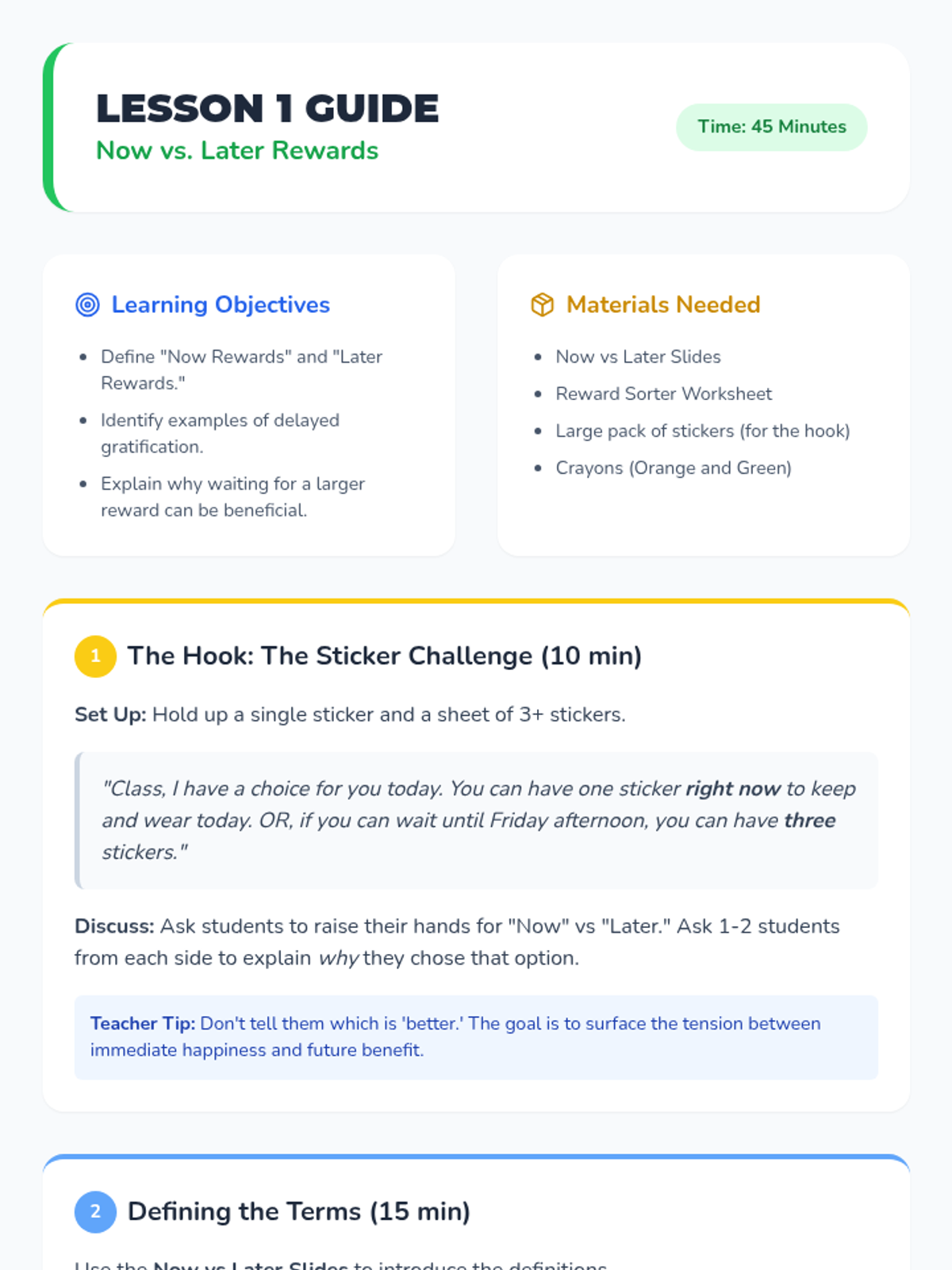
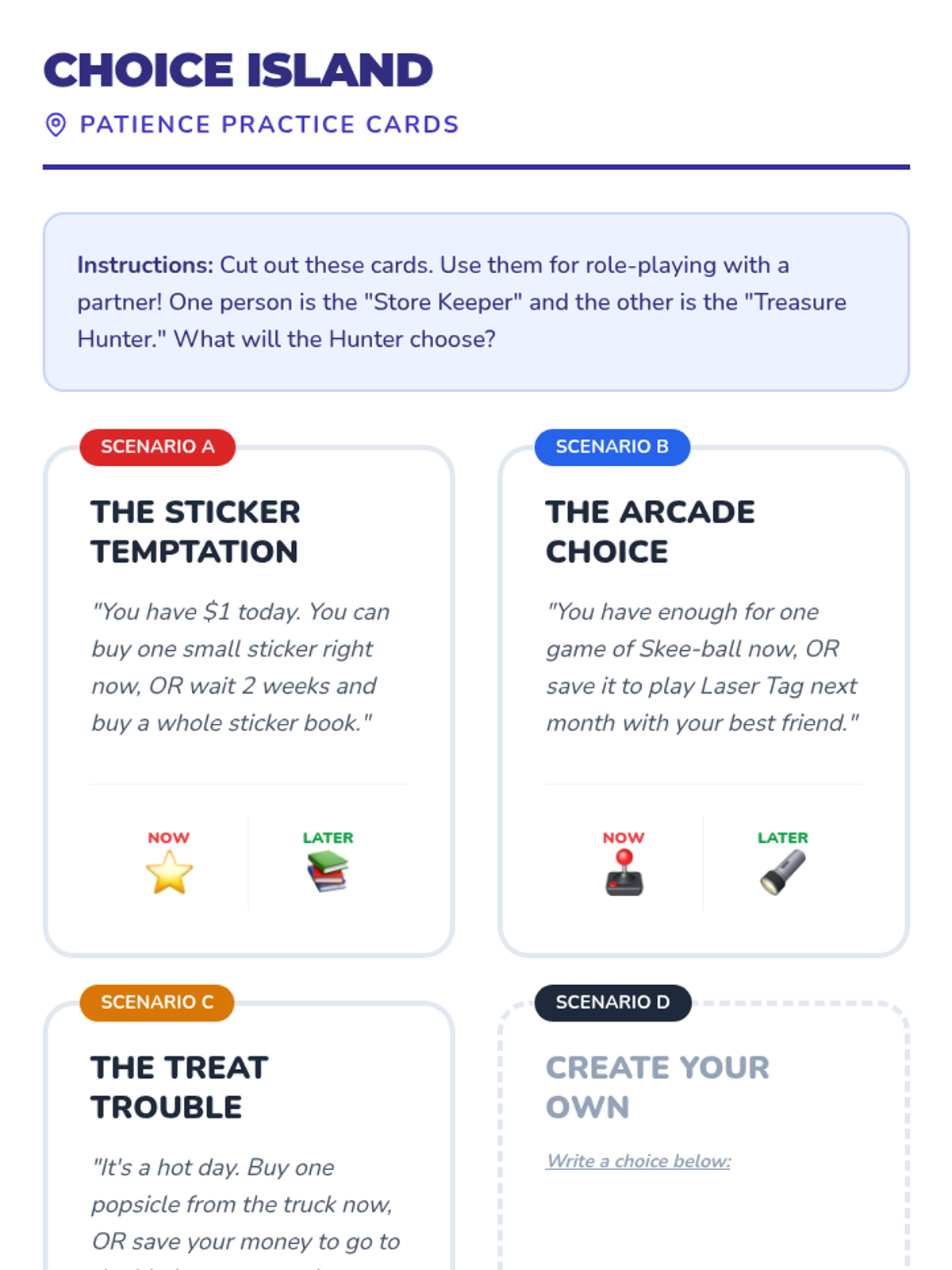
Through a role-playing activity and the 'Marshmallow Test' adaptation, students learn the benefits of waiting for a larger reward later.
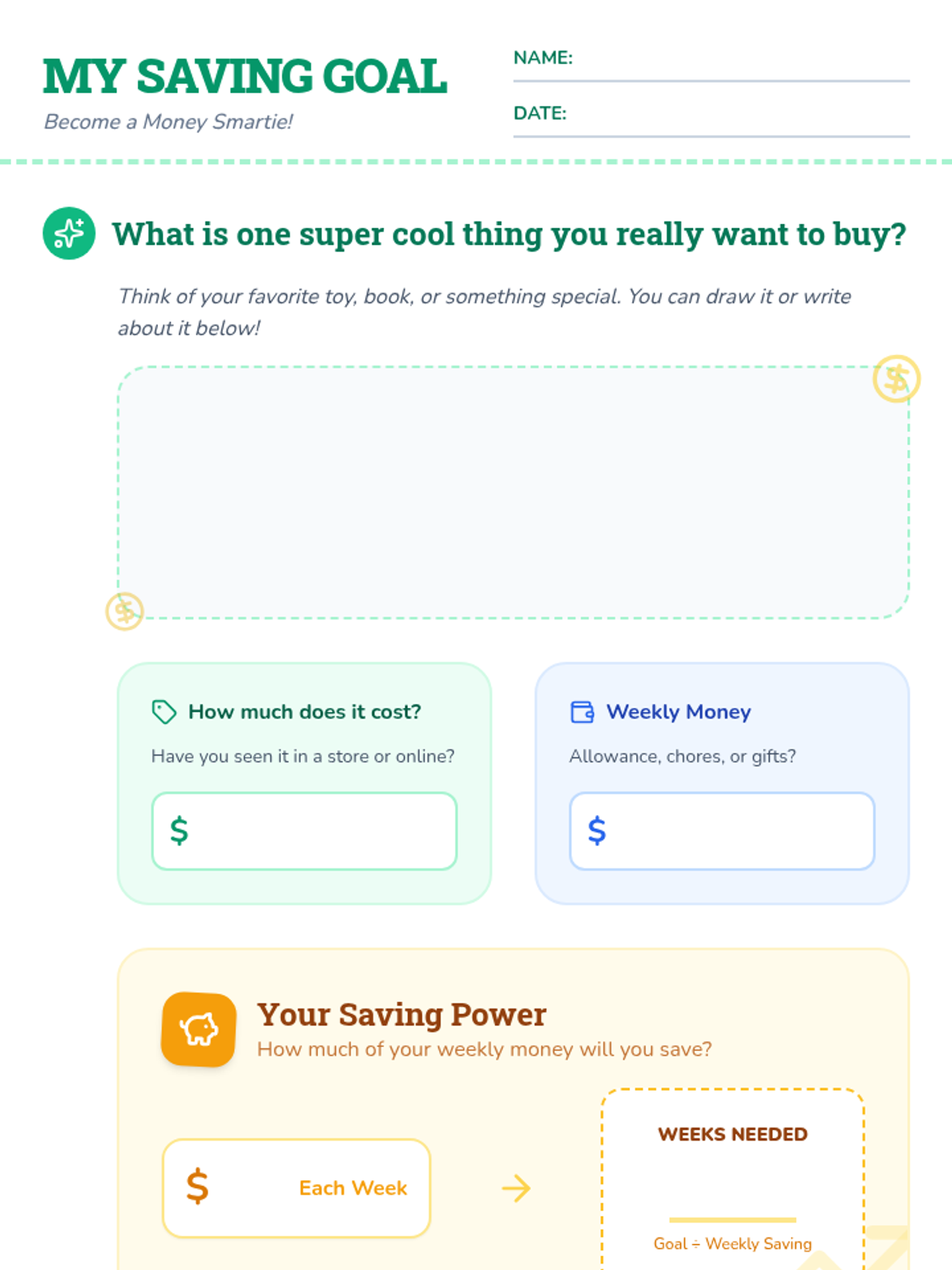
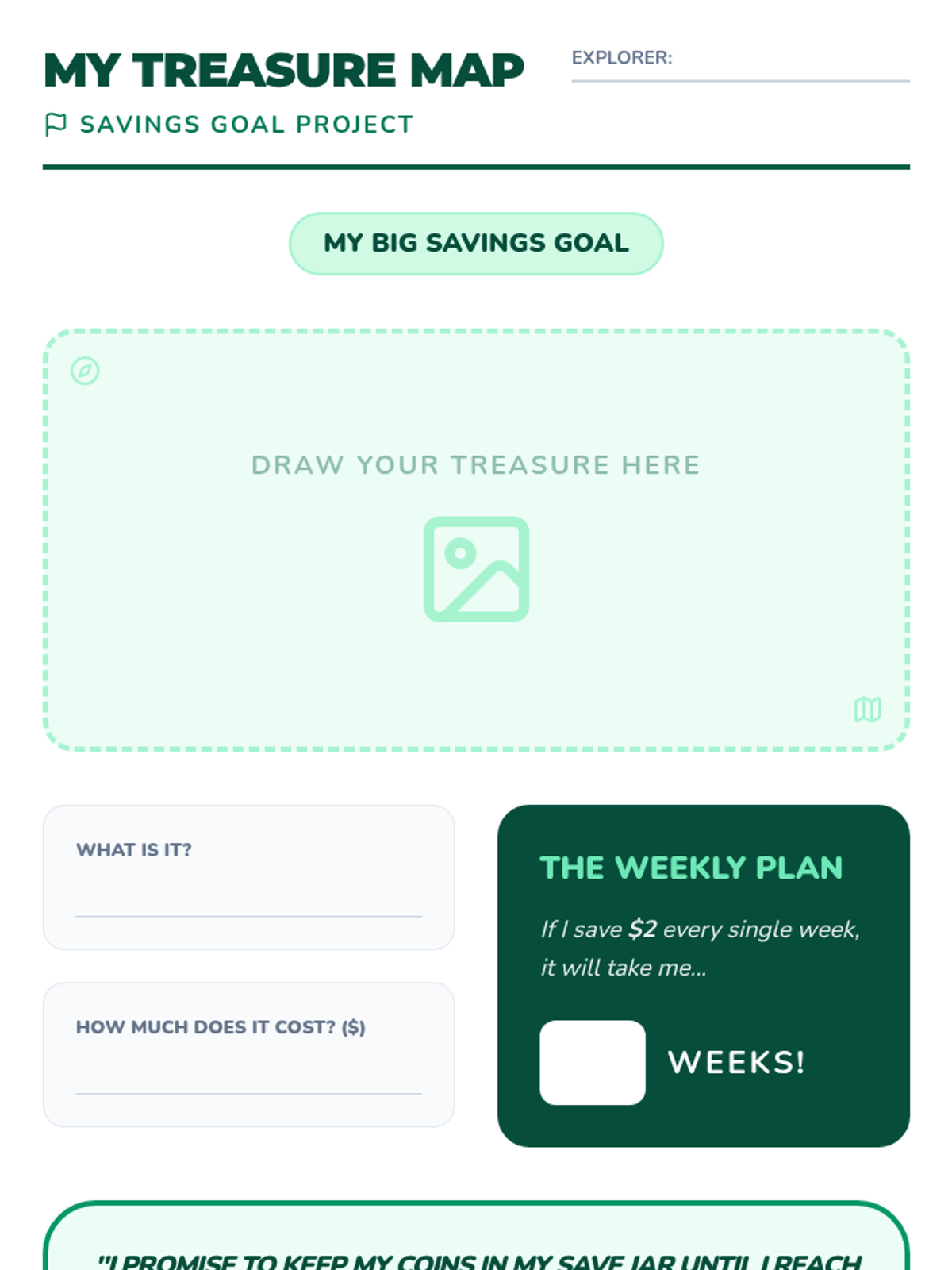
Students select a specific item or experience they want to save for, draw it, and estimate the time needed to reach their goal.