Emotion recognition ranging from basic feelings to complex nuances and mixed states. Strengthens accurate self-assessment through identity exploration, strength identification, and values-based decision making.
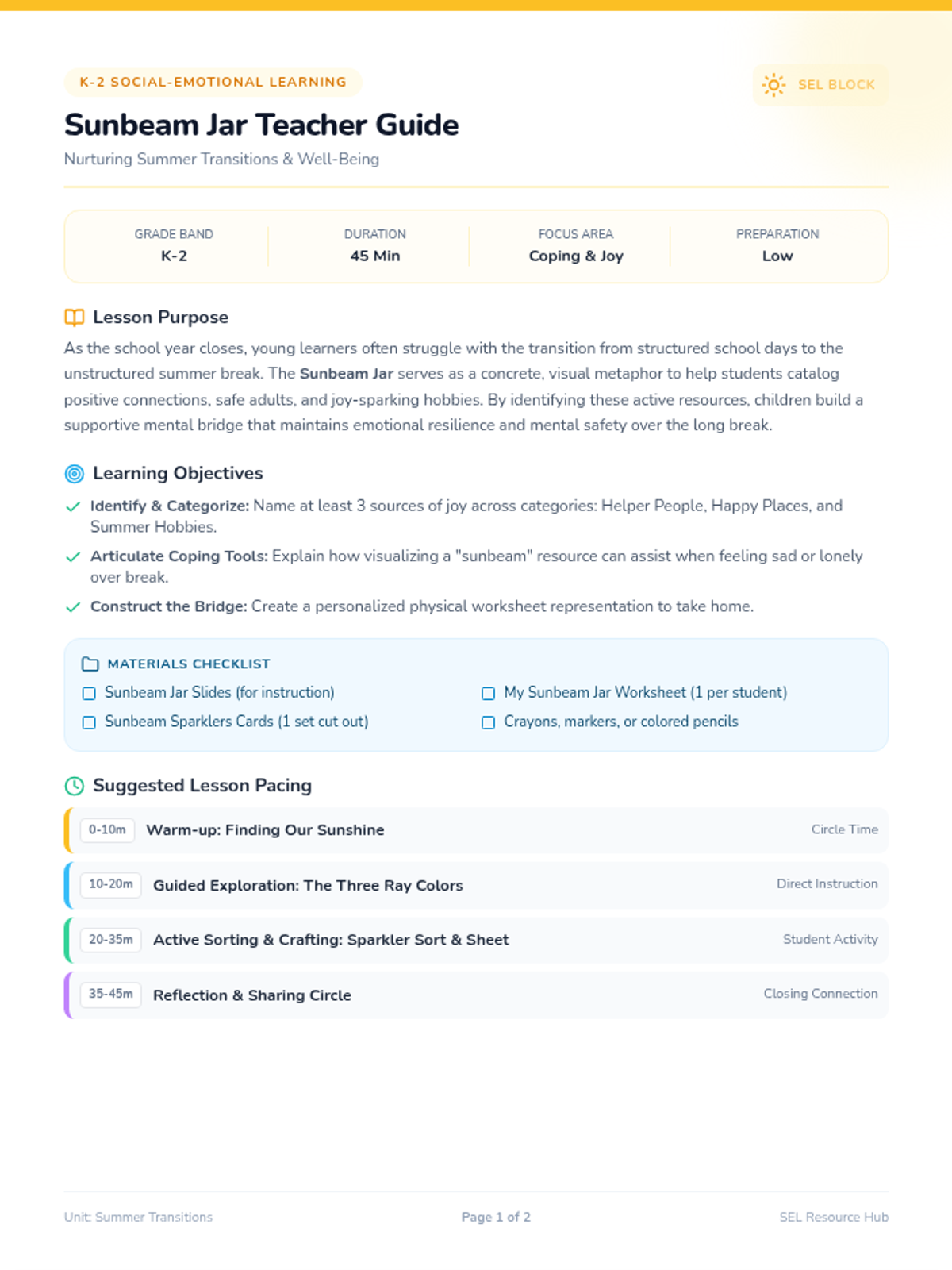
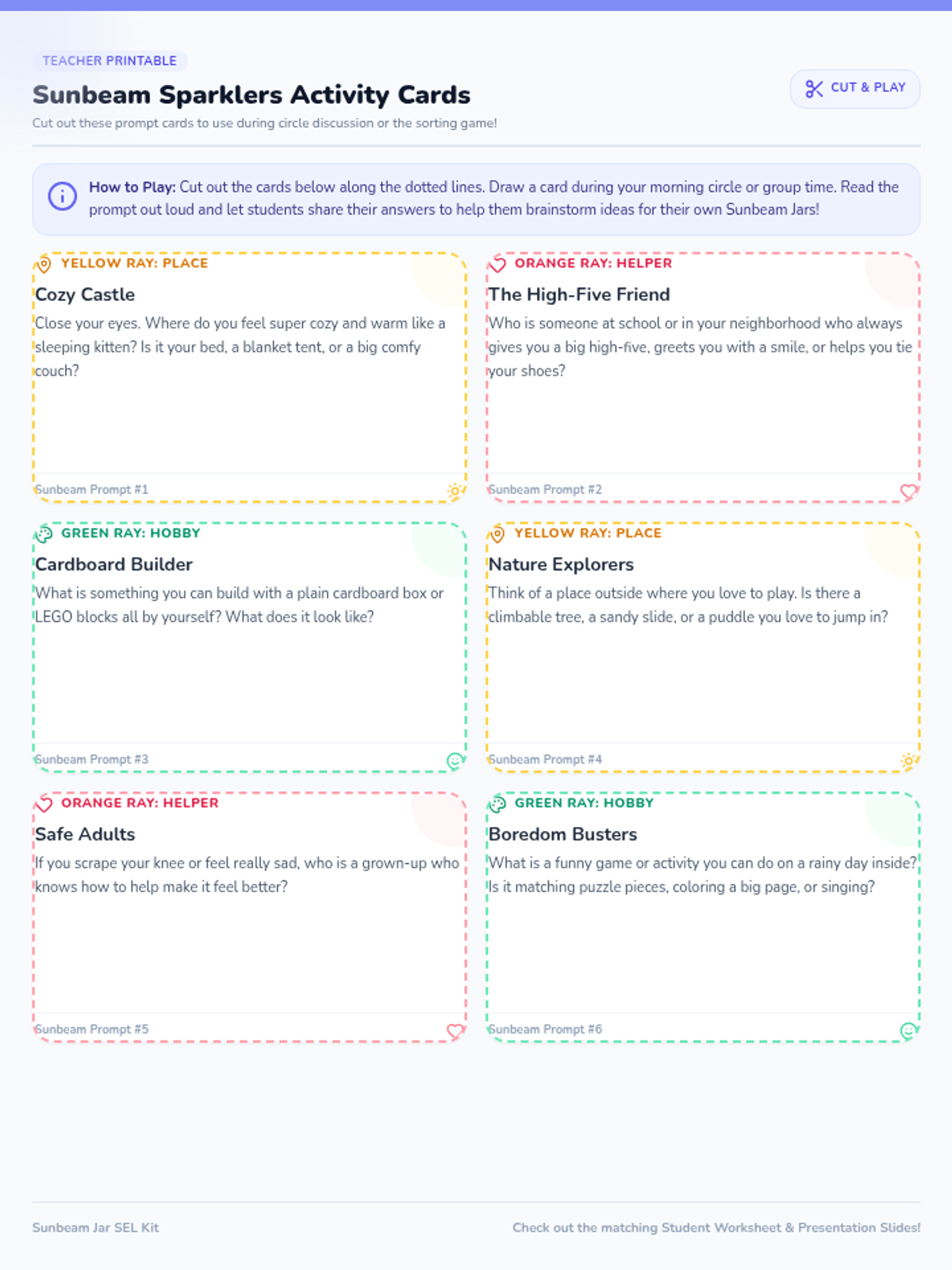
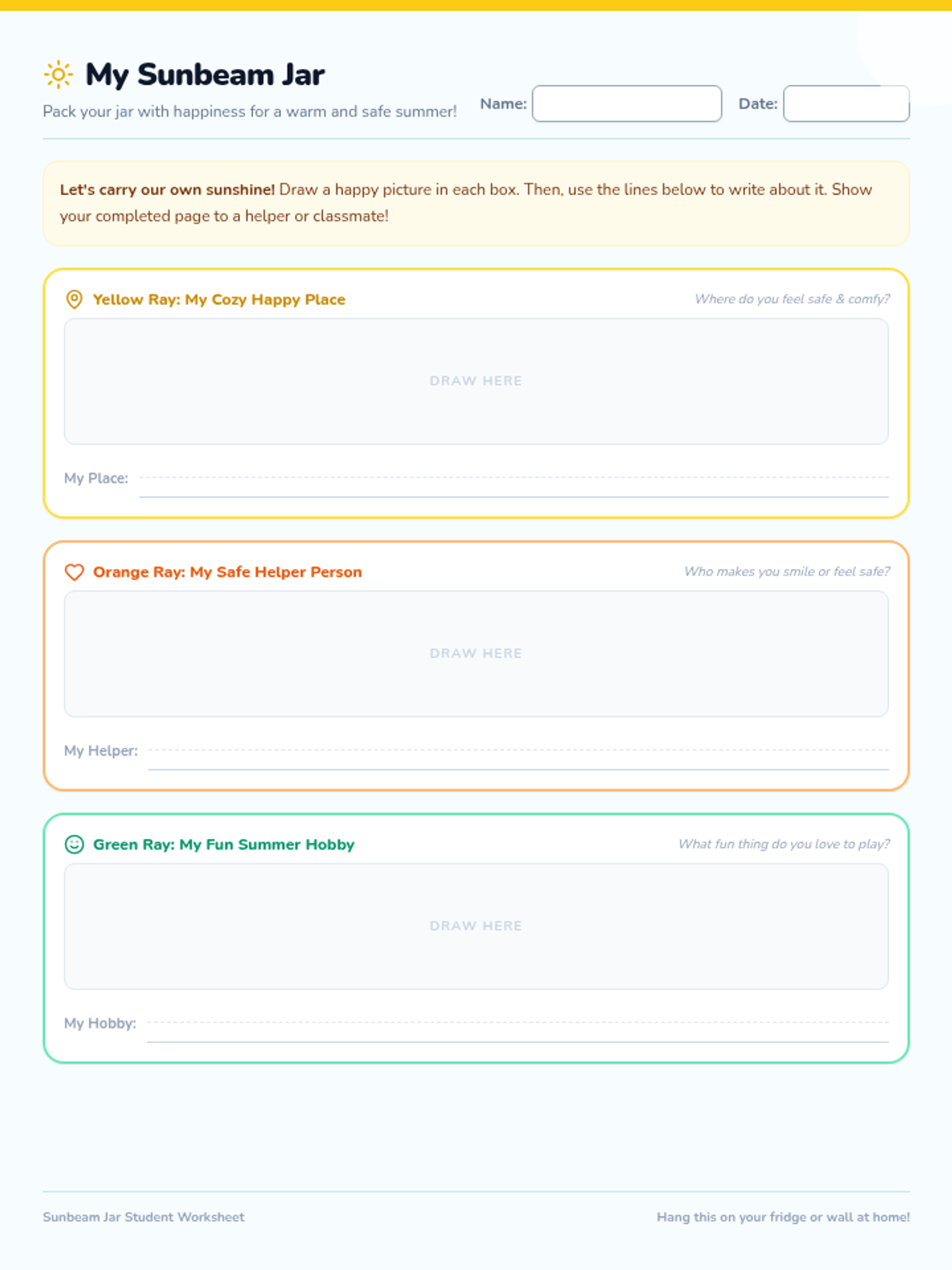
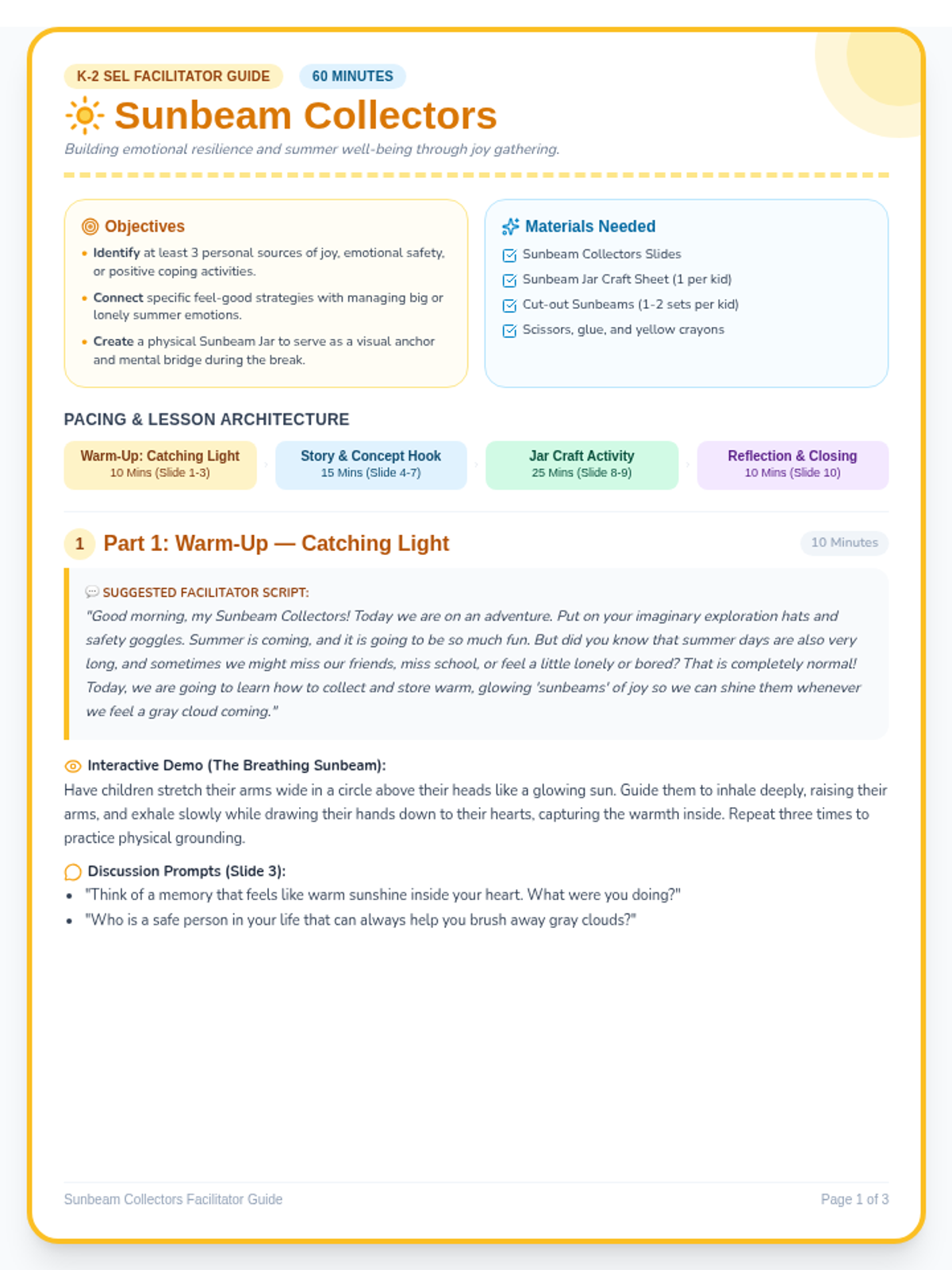
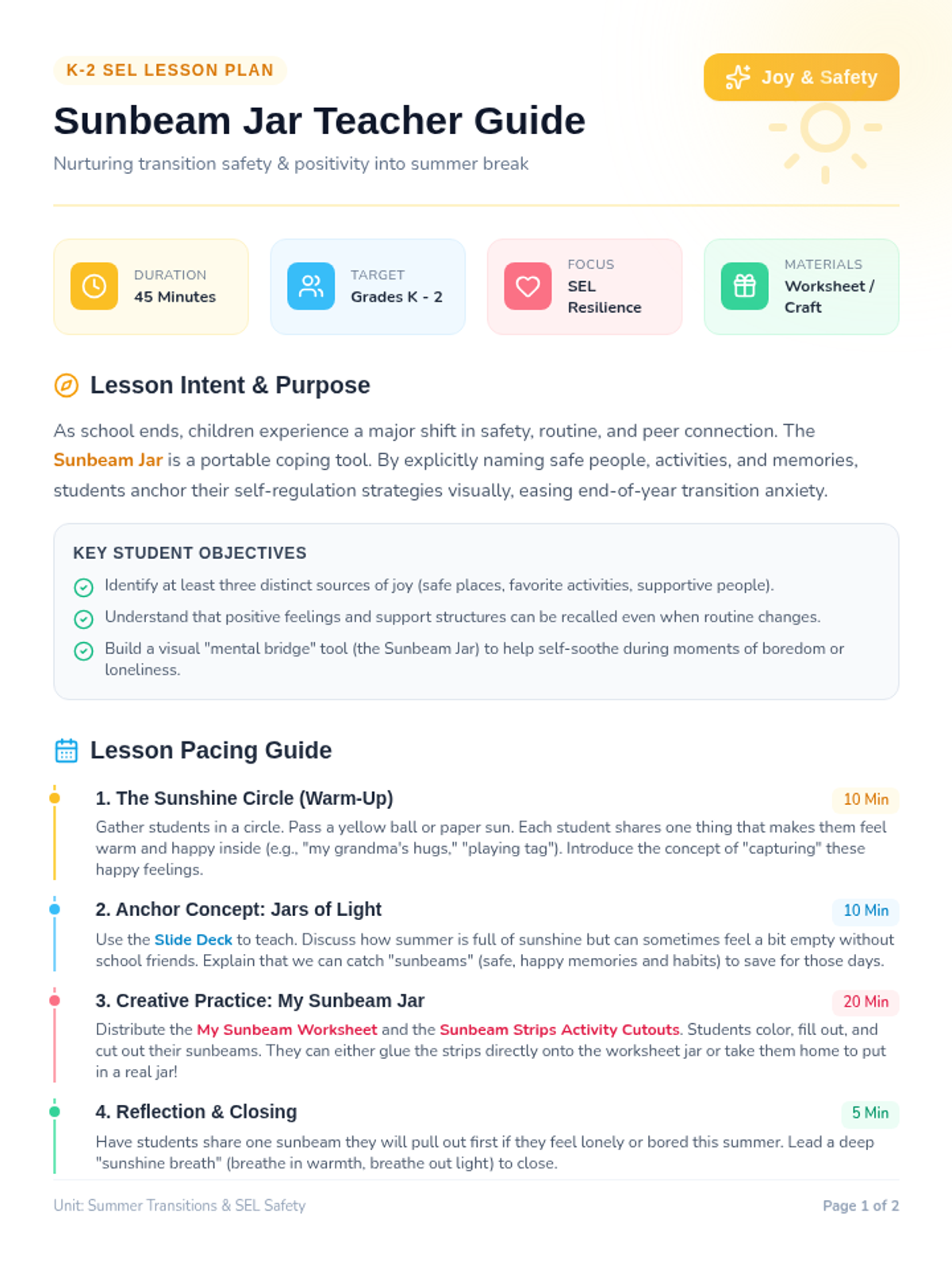
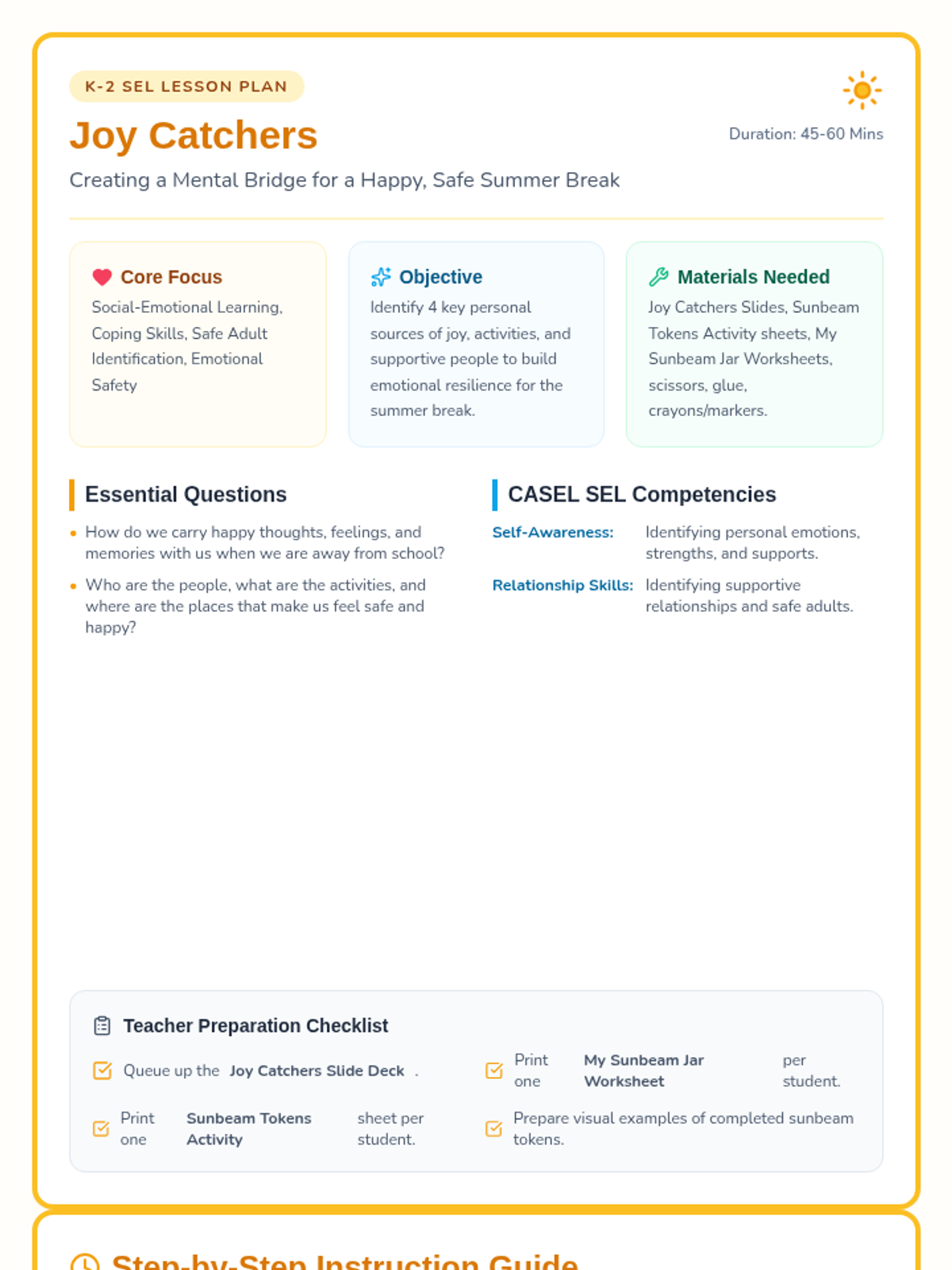
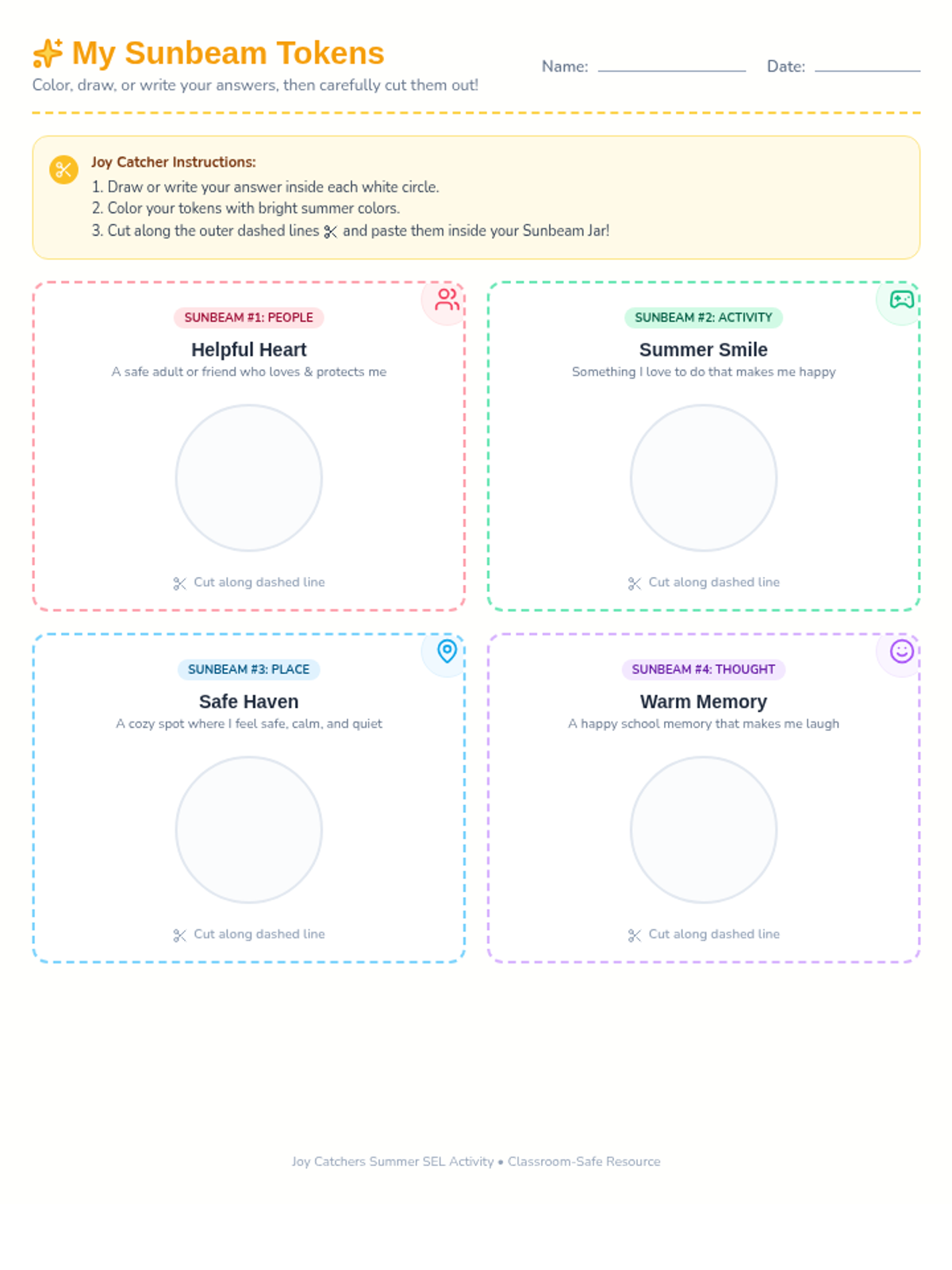
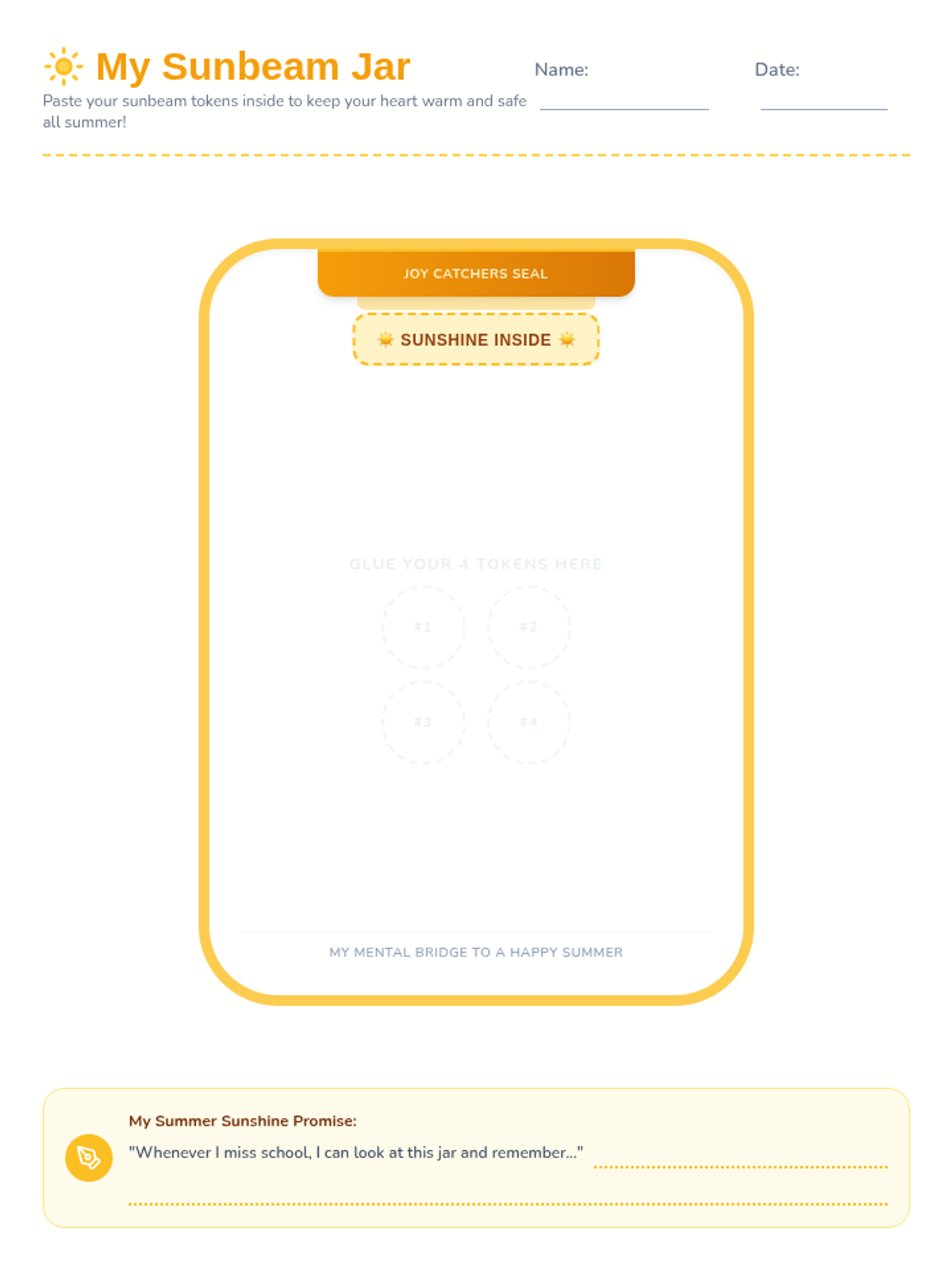
A supportive social-emotional learning lesson for K-2 students to identify sources of joy, emotional safety, and positive connections to carry into the summer break. Students create a visual 'Sunbeam Jar' to serve as a mental bridge for their well-being.
A heartwarming social-emotional learning lesson for K-2 students to identify sources of joy, emotional safety, and positive coping strategies to carry into the summer. Students explore and build a mental "sunbeam jar" filled with favorite memories, safe spaces, supportive connections, and uplifting hobbies to maintain well-being during the long break.
A nurturing Social-Emotional Learning lesson designed for K-2 students to identify personal sources of joy, support, and emotional safety. By creating a physical or visual 'Sunbeam Jar', children build a portable mental bridge to carry their well-being and positive connections confidently into the summer break.
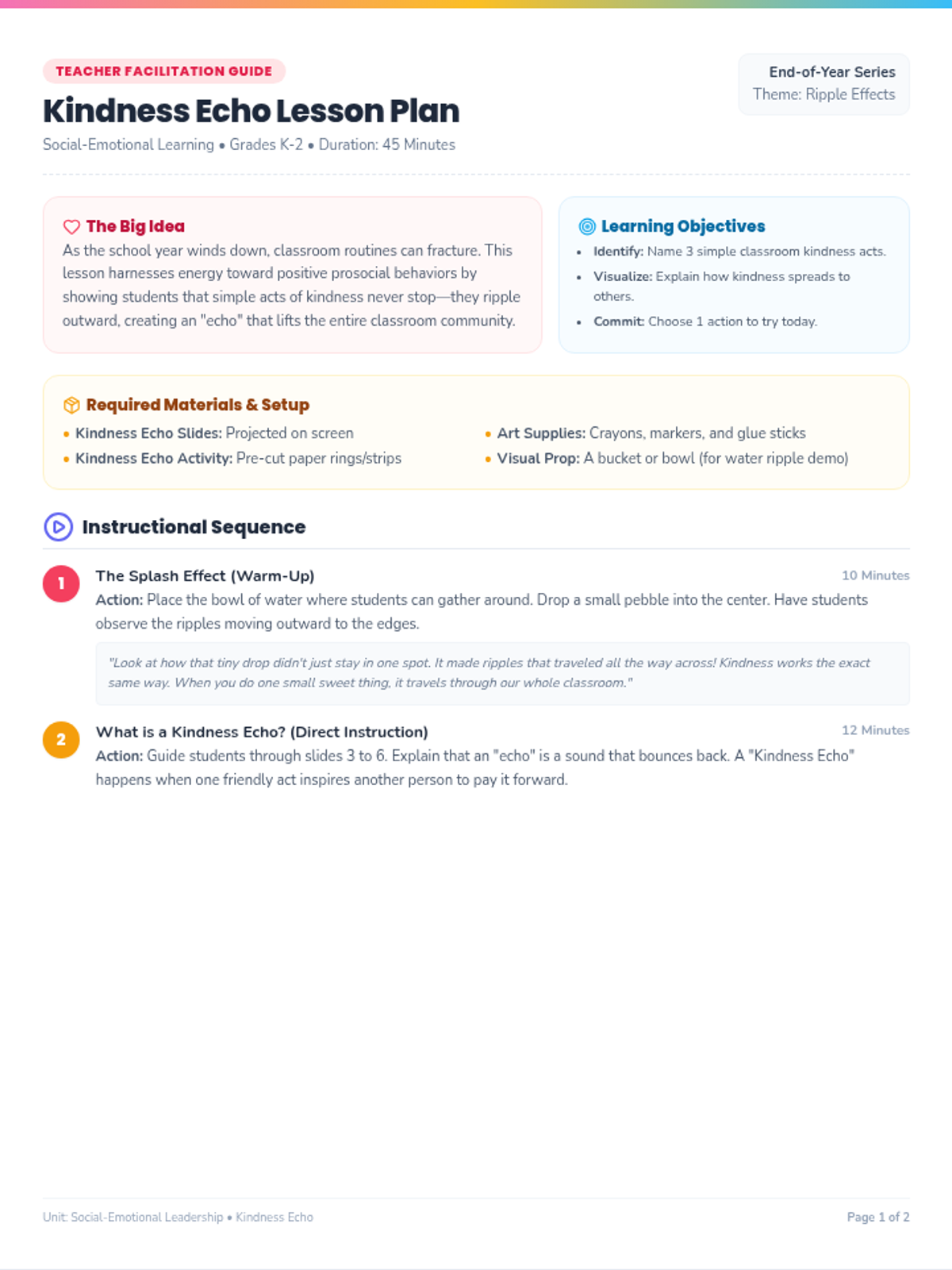
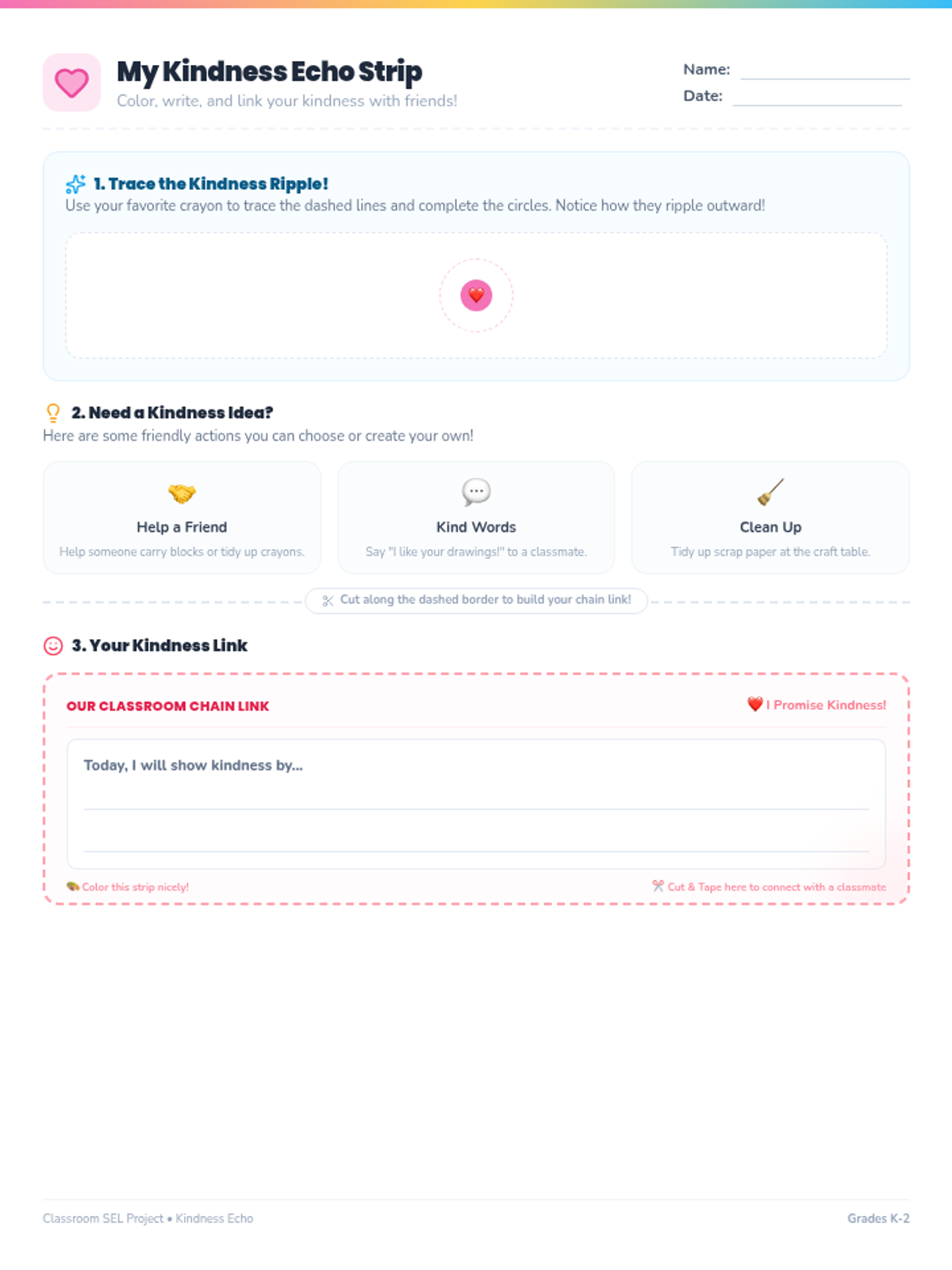
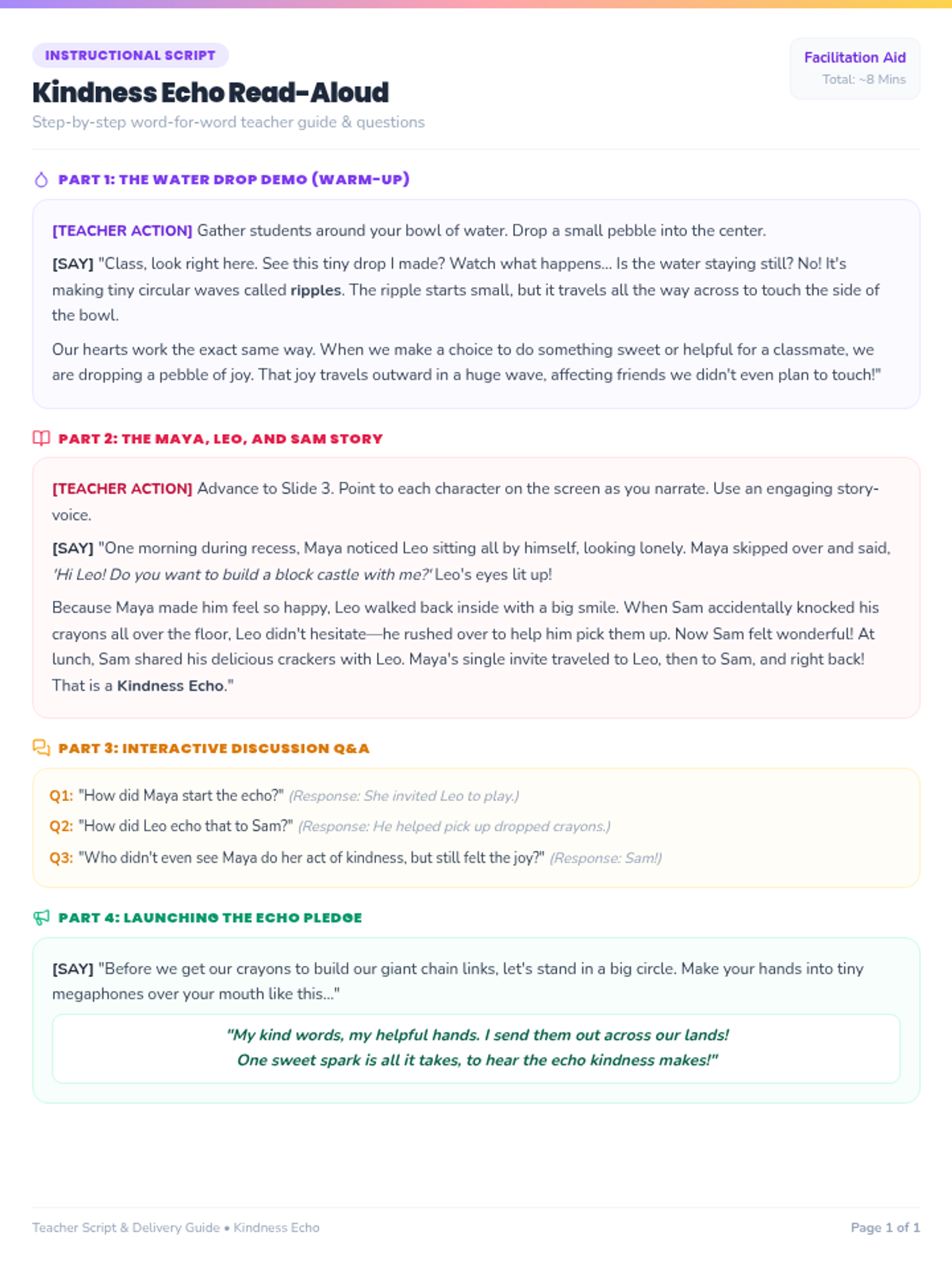
A heartwarming social-emotional learning lesson for grades K-2, exploring how simple acts of kindness ripple outward to create a positive school community during the final weeks of the school year.
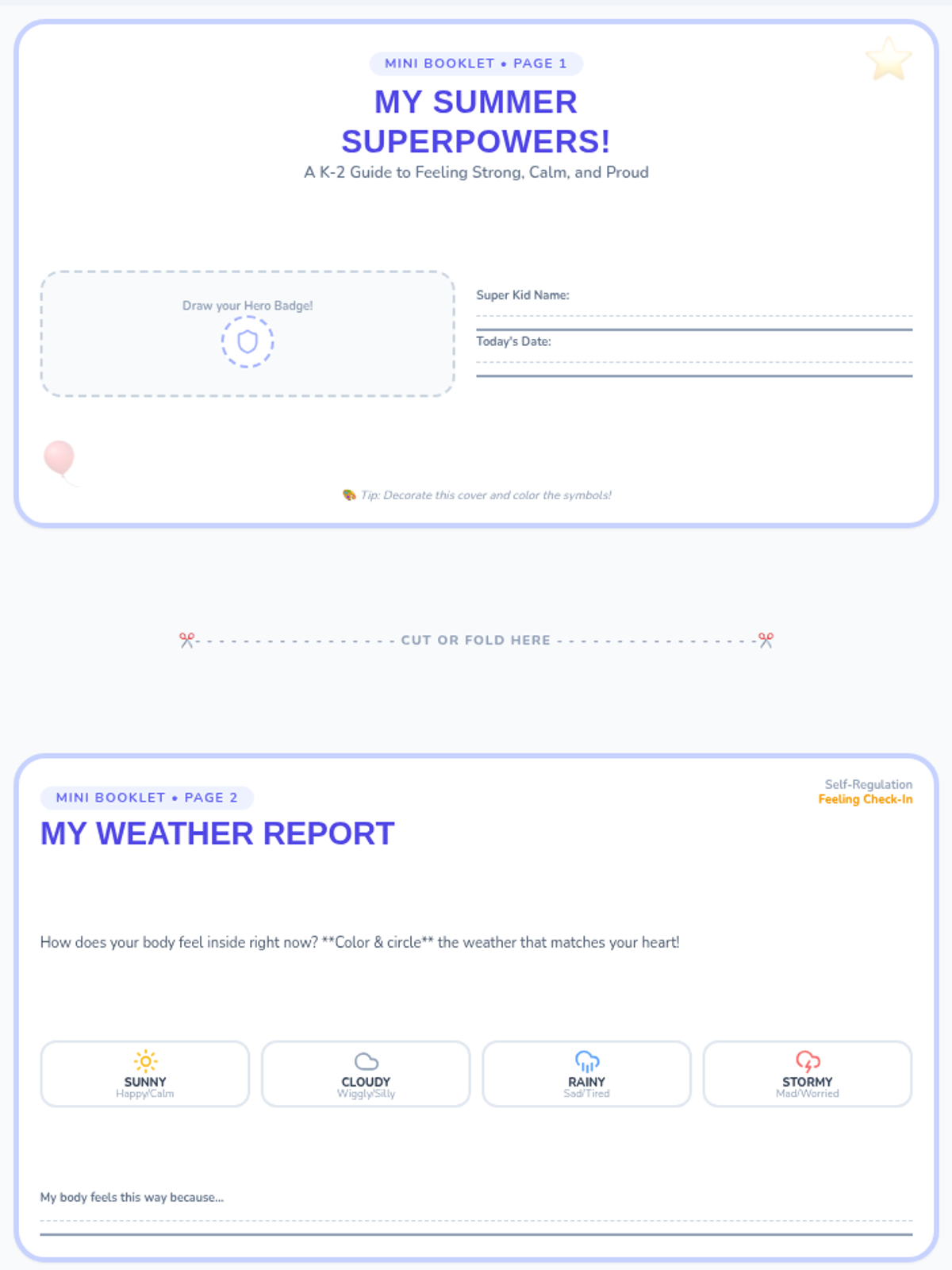
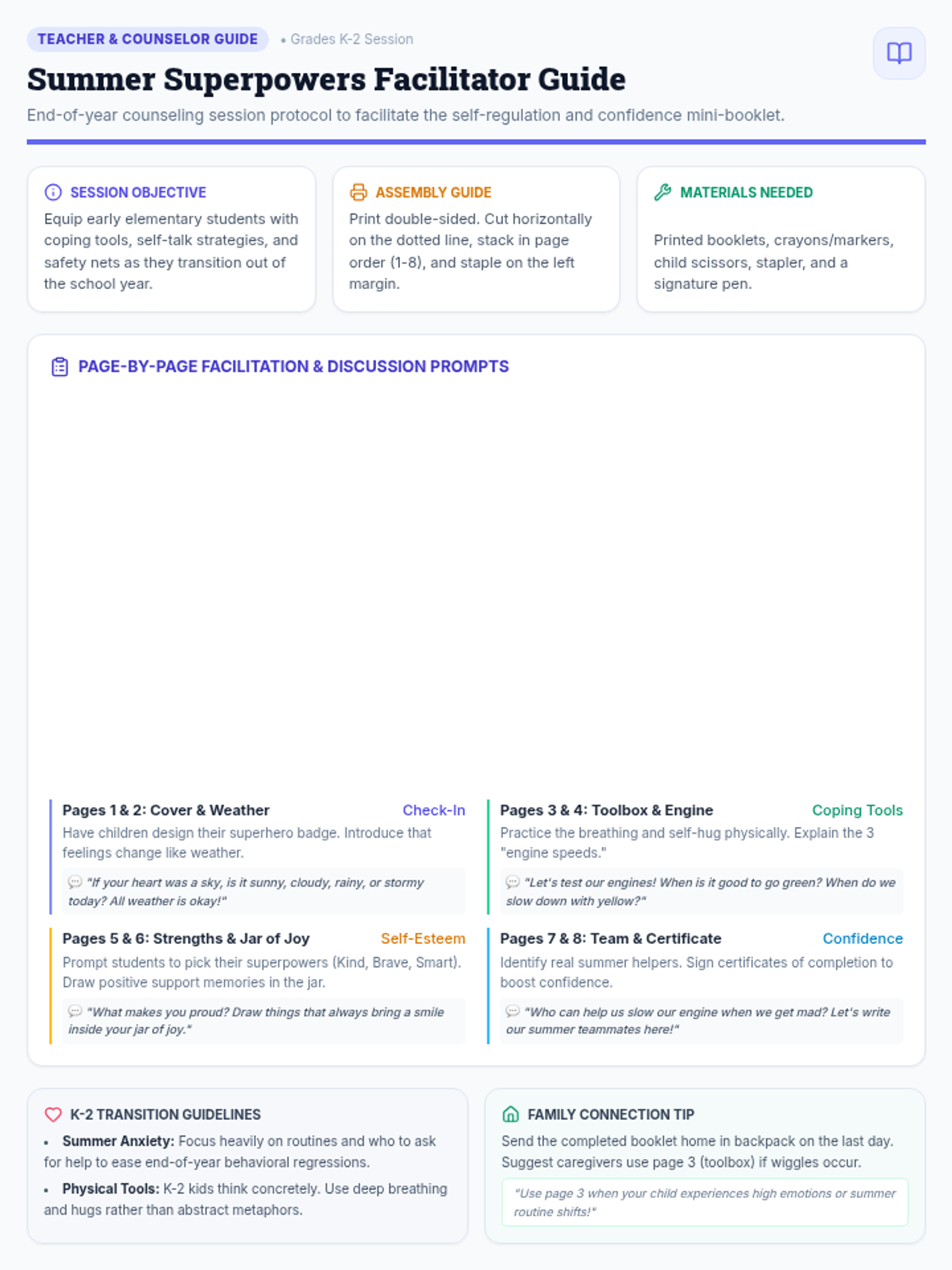
An engaging, end-of-year counseling session for K-2 students. Focuses on equipping young learners with self-regulation tools and self-esteem boosters as they transition to the summer break.
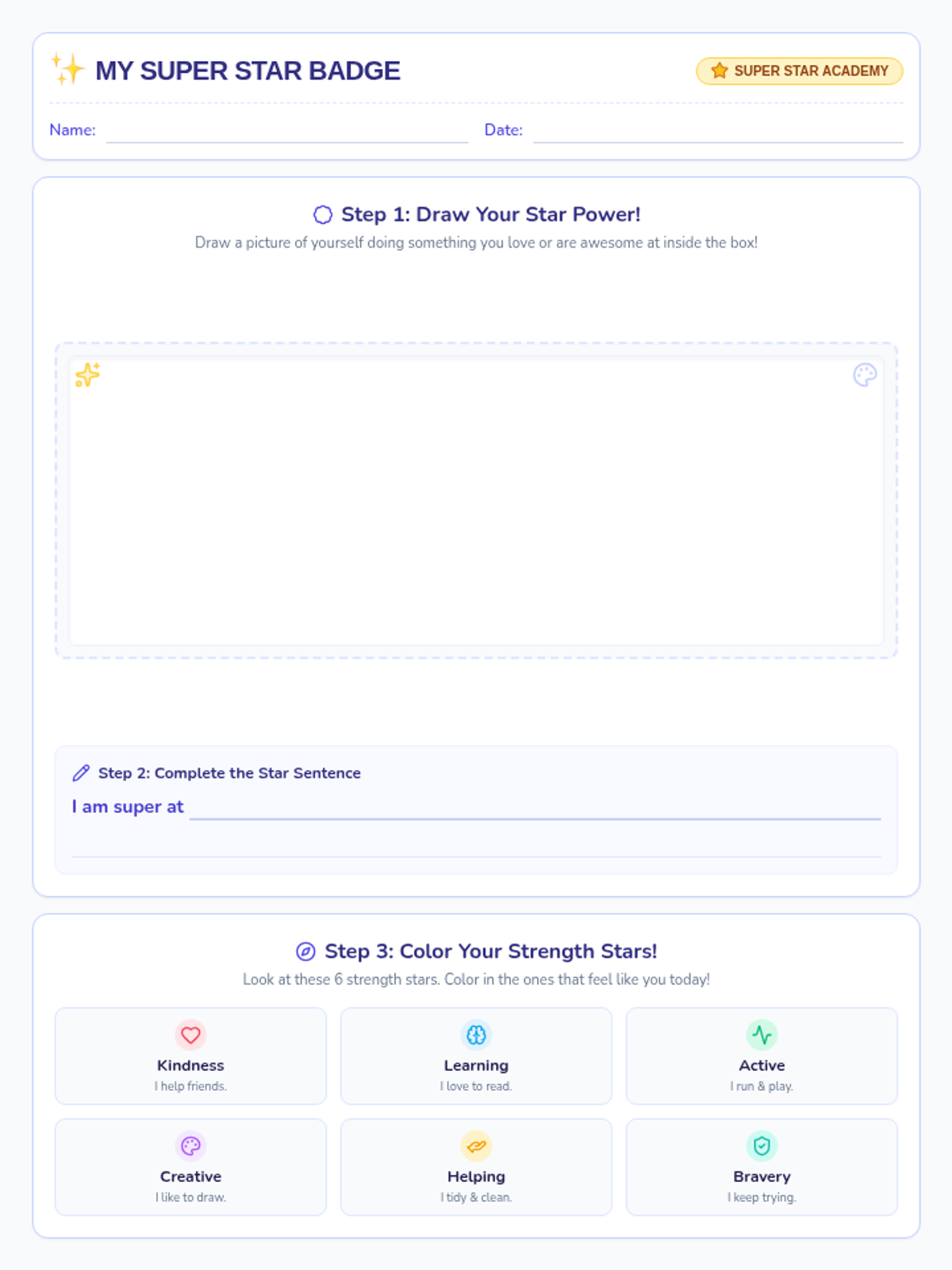
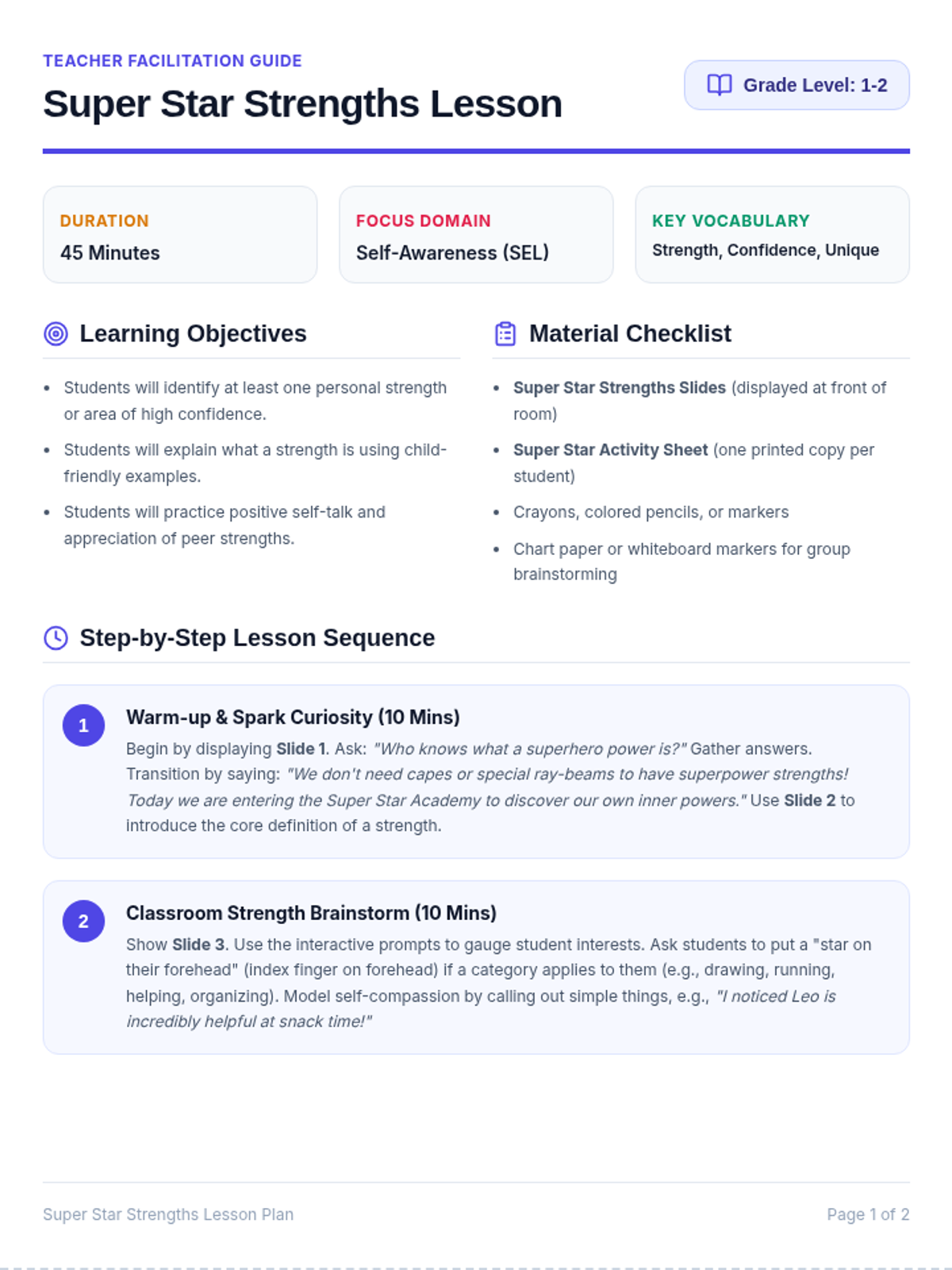
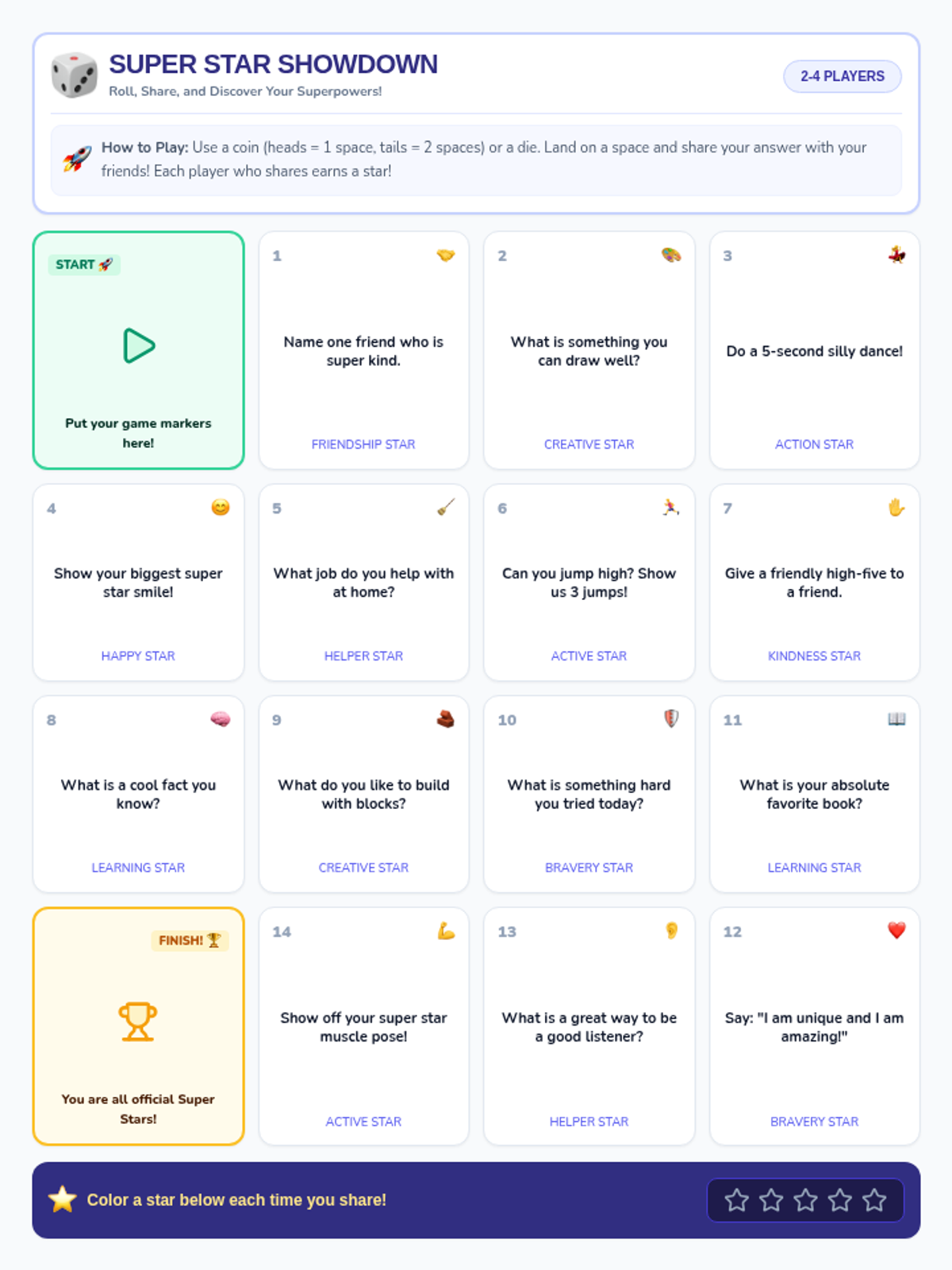
A dynamic Social-Emotional Learning lesson designed for 1st and 2nd graders to help them identify, celebrate, and share their personal strengths and areas of confidence through an interactive classroom game and creative expression.
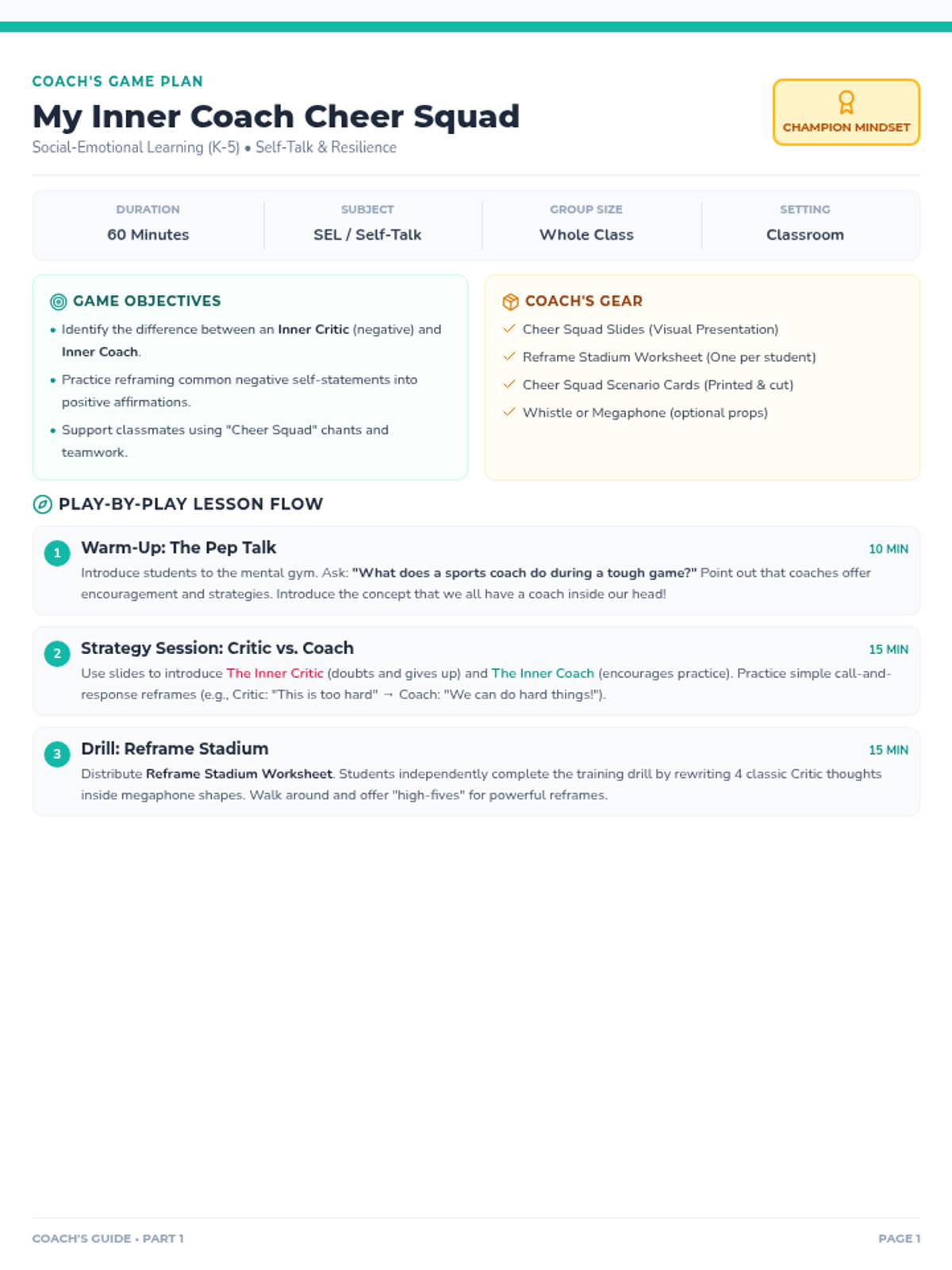
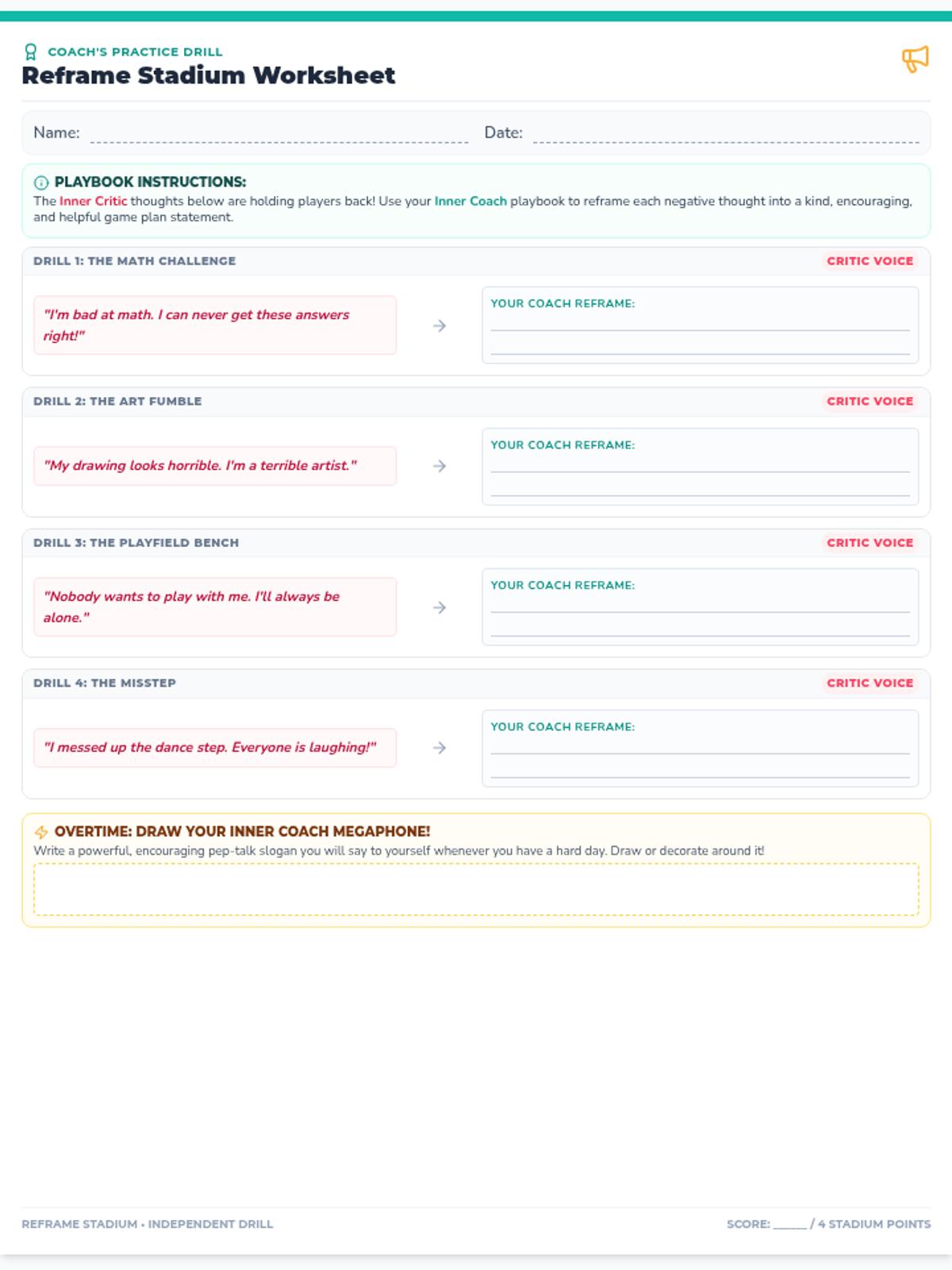
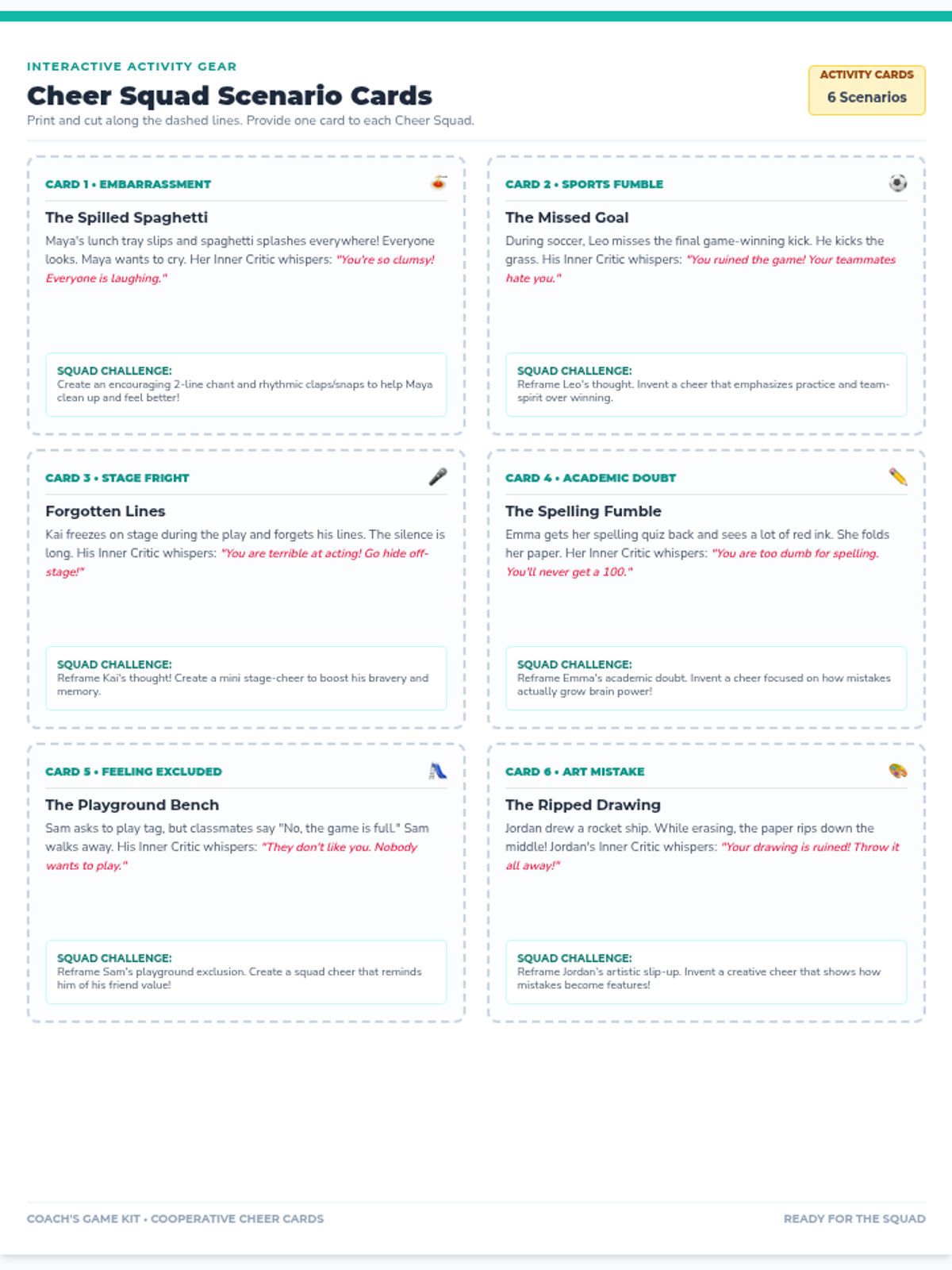
A complete social-emotional learning lesson for K-5 students to develop positive self-talk and resilience. Students learn to reframe negative self-talk into empowering inner-coach coaching statements through a sports-playbook theme, complete with interactive scenario cards, a playbook worksheet, and a visual slide deck.
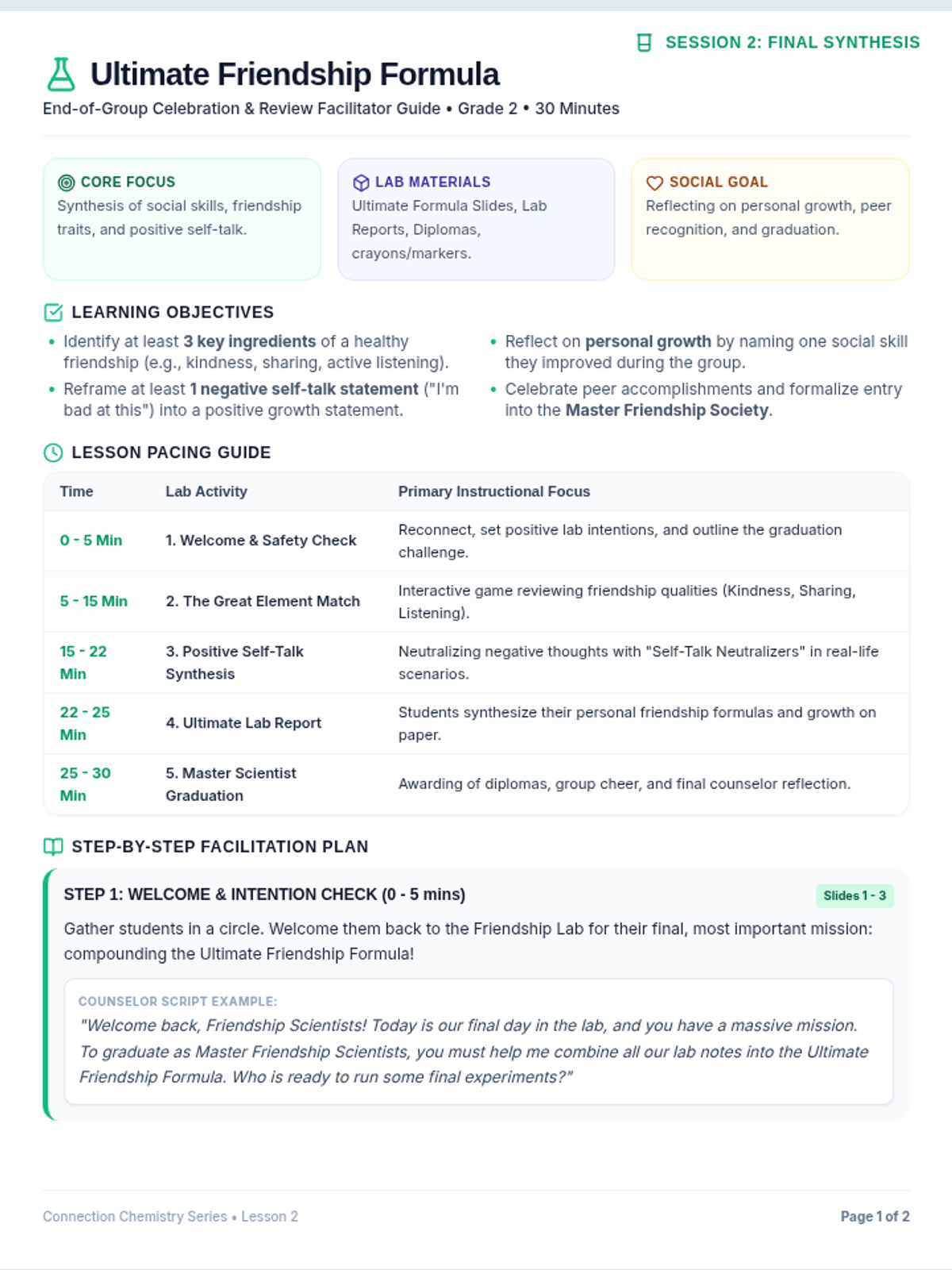
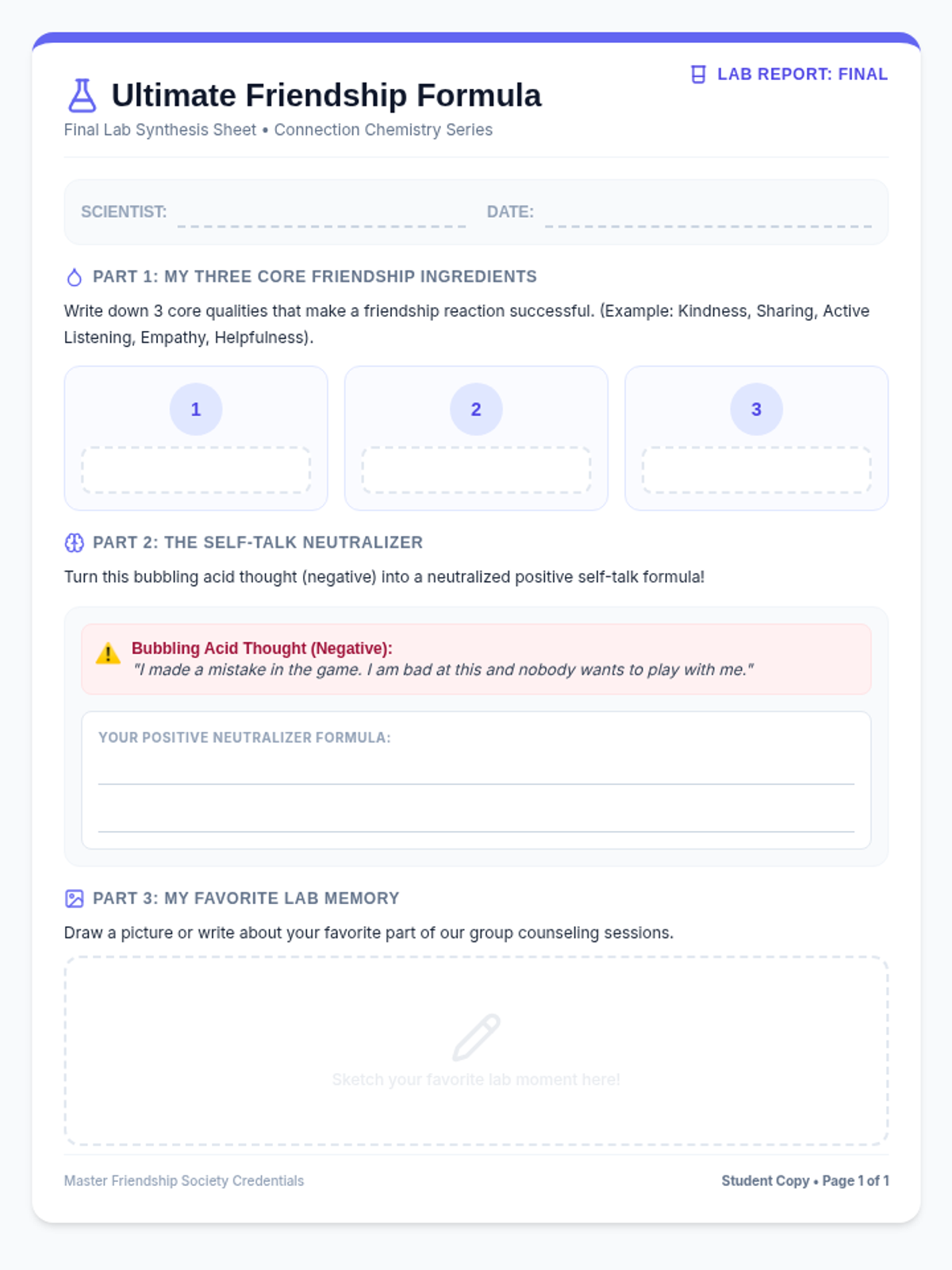
A celebratory 30-minute end-of-group session where 'Friendship Scientists' synthesize their learnings on social skills, friendship qualities, and positive self-talk into a master formula for lasting connections, concluding with a graduation ceremony.
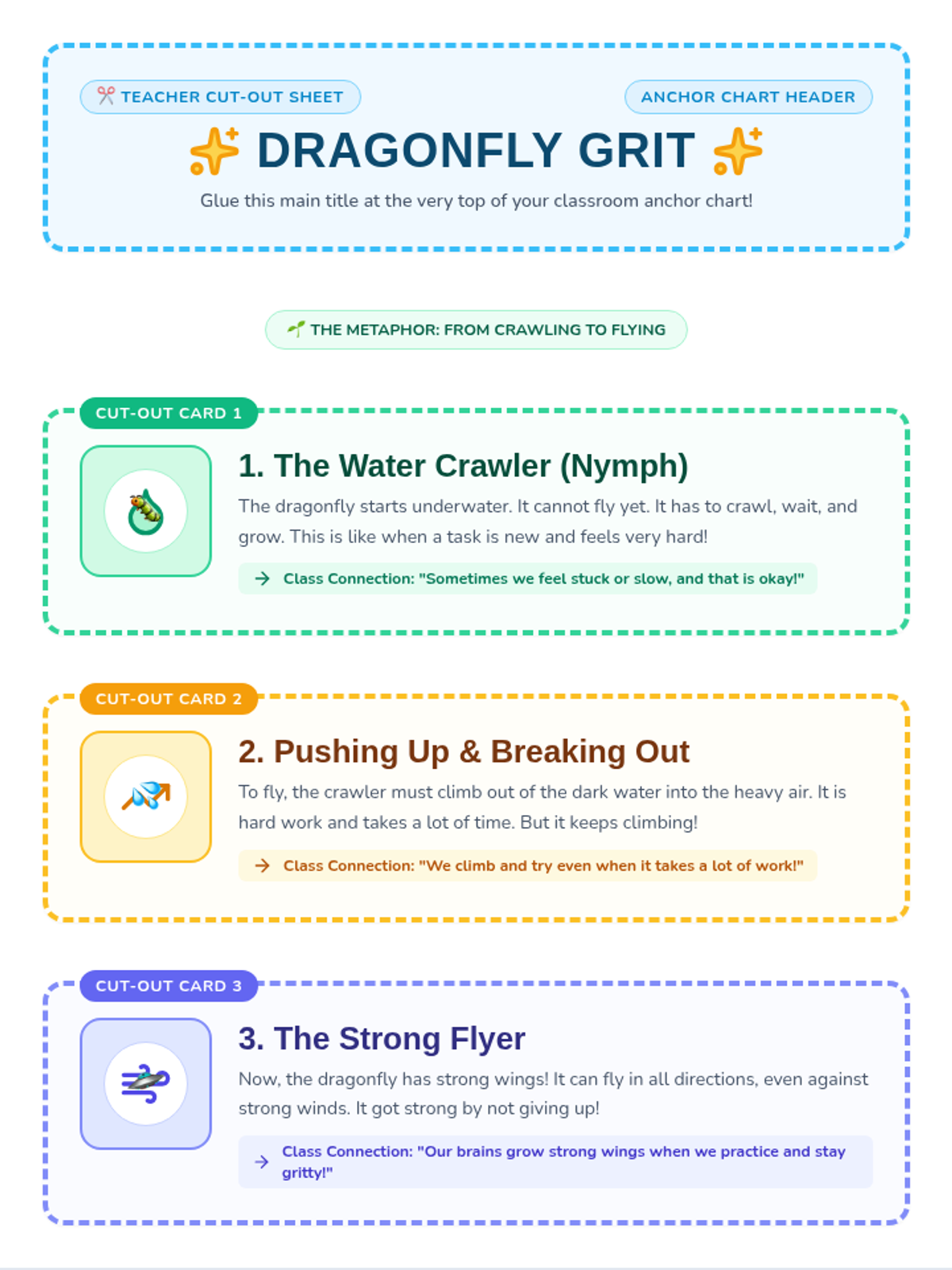
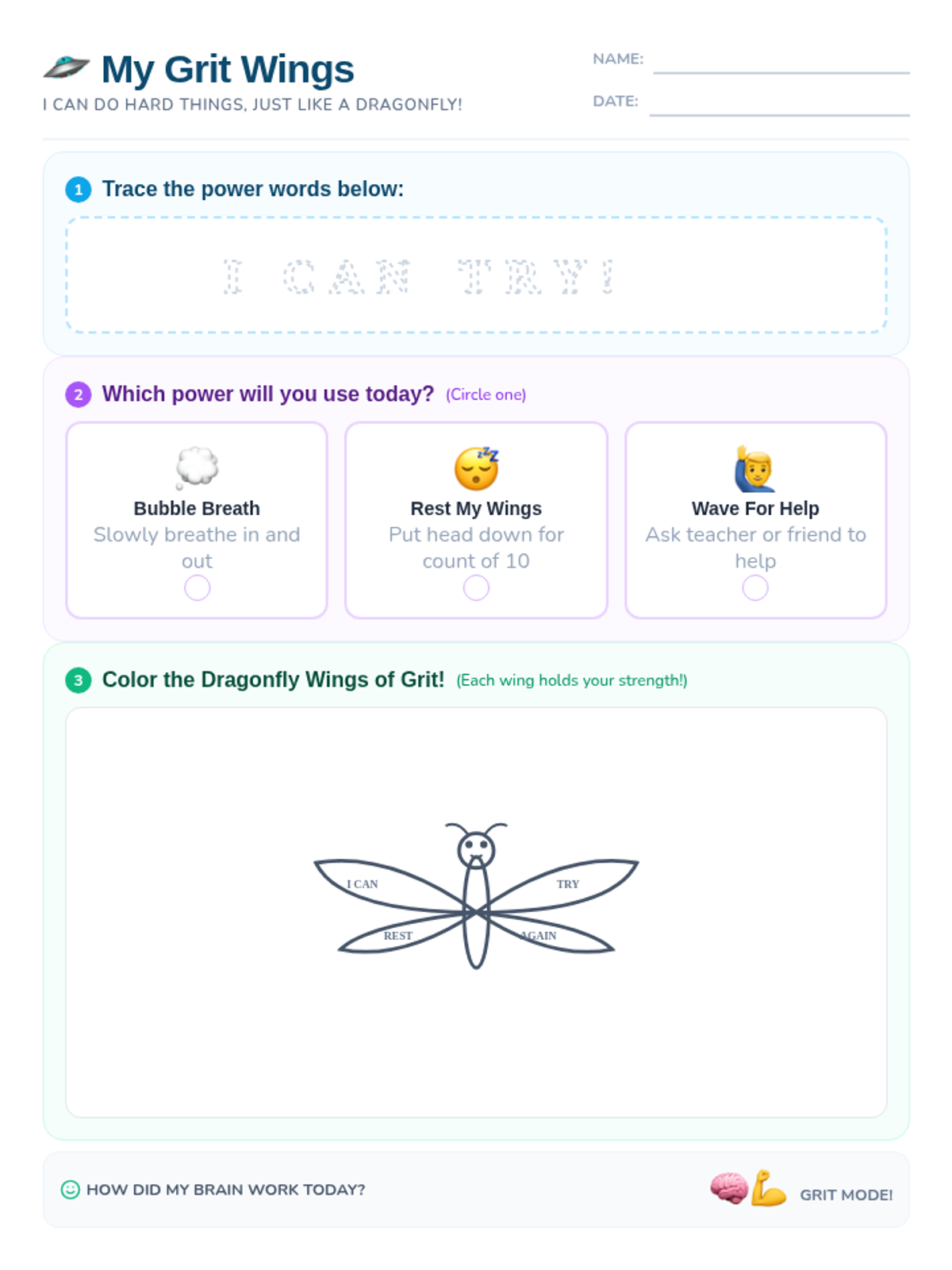
A 30-minute social-emotional learning lesson designed for Grade 1-2 students with low cognitive needs. It uses the dragonfly's transition from a water crawler (nymph) to a strong flier as a simple, concrete metaphor for perseverance and pushing through difficult situations.
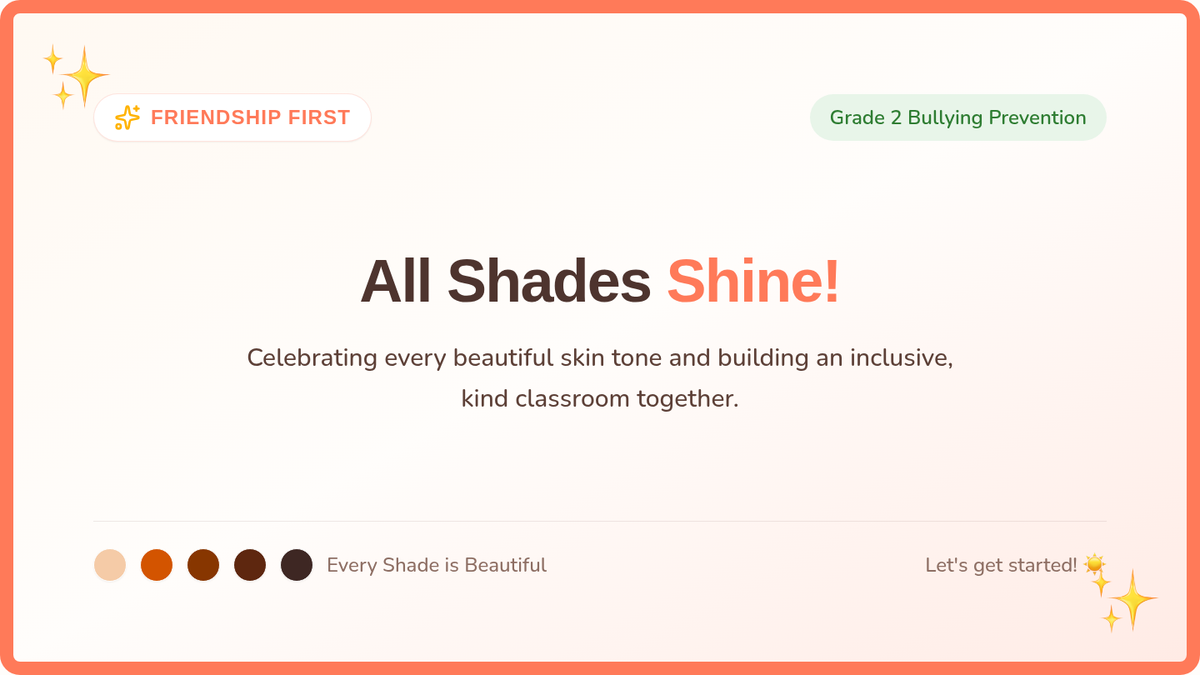
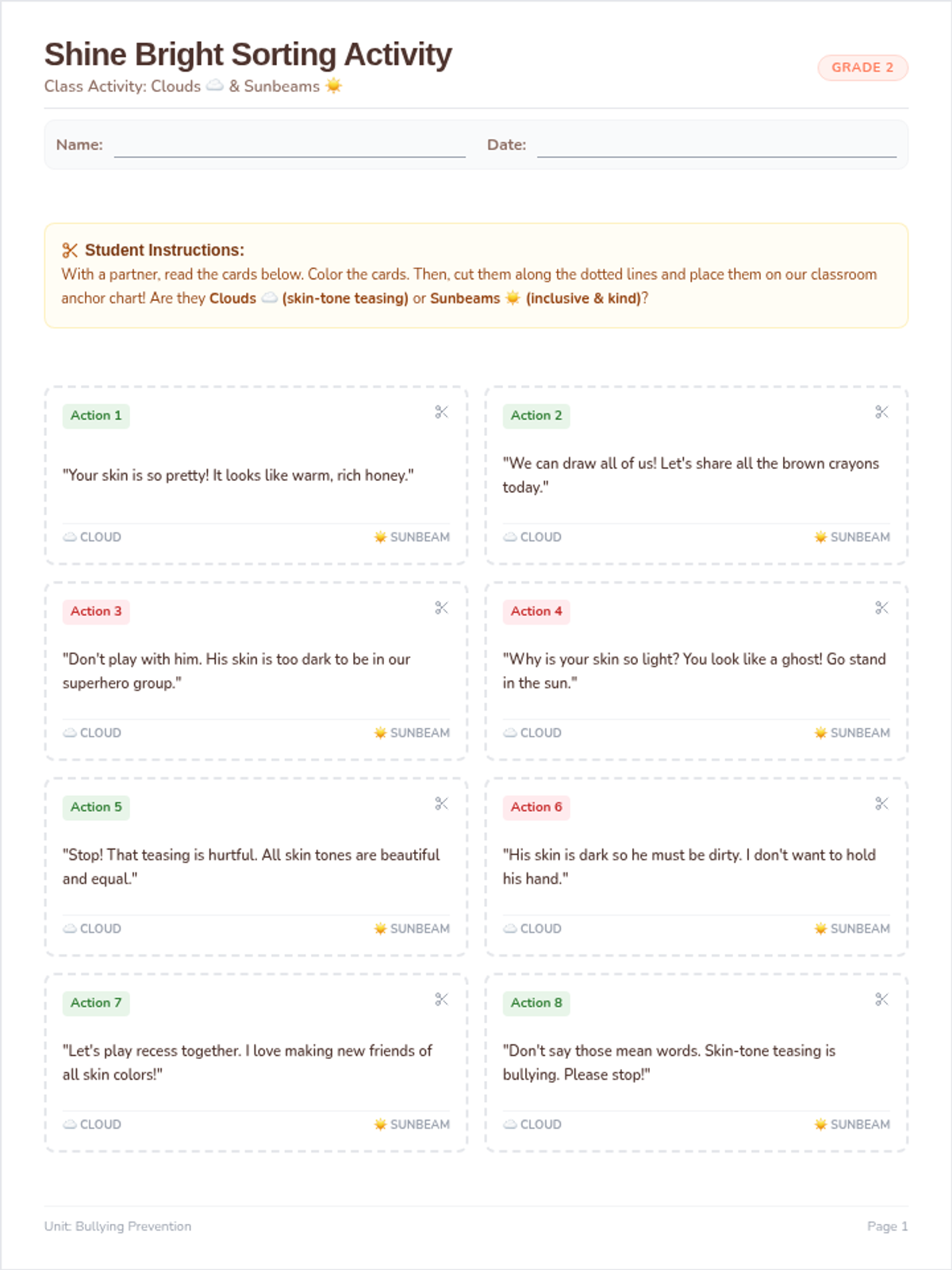
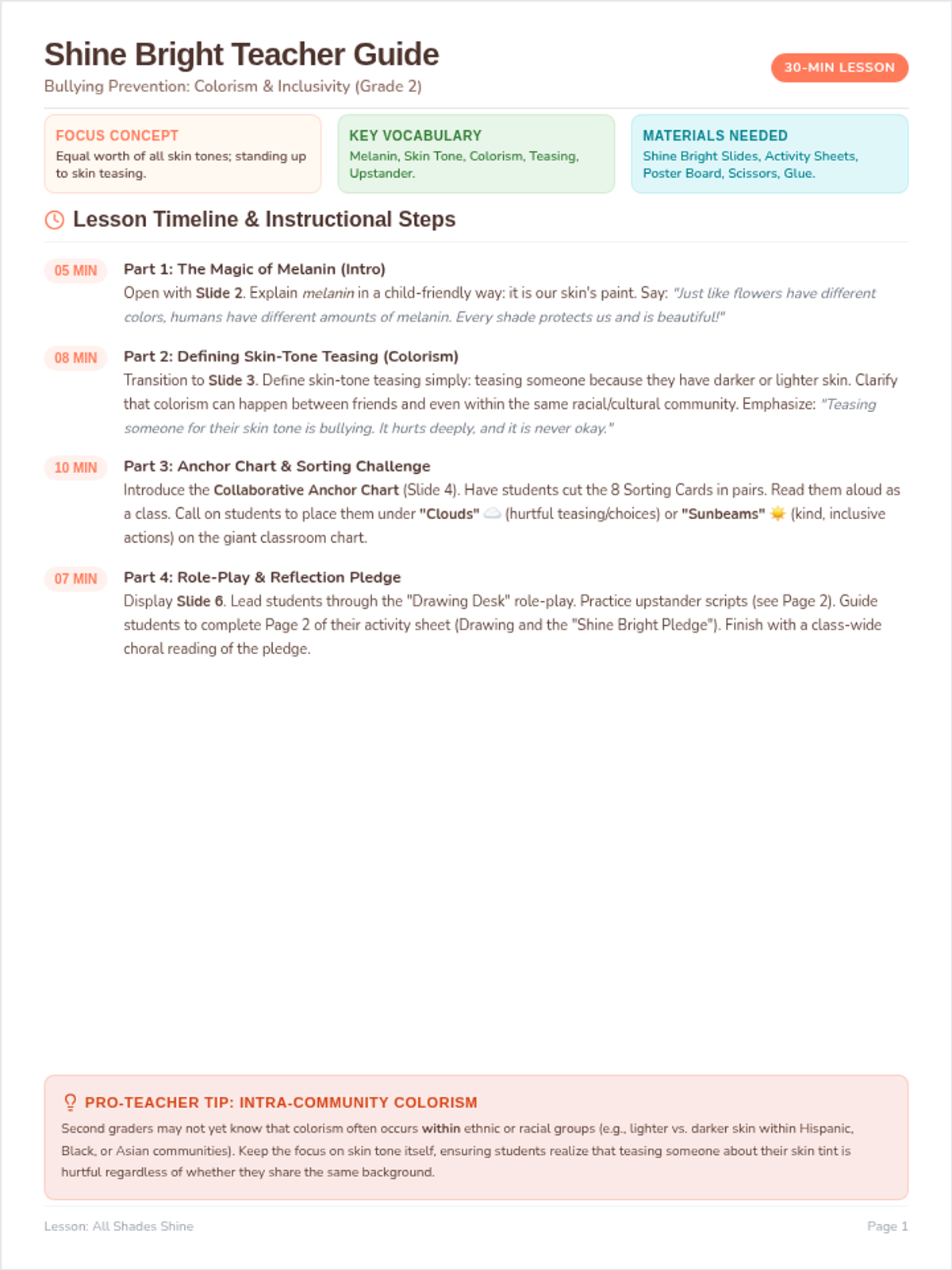
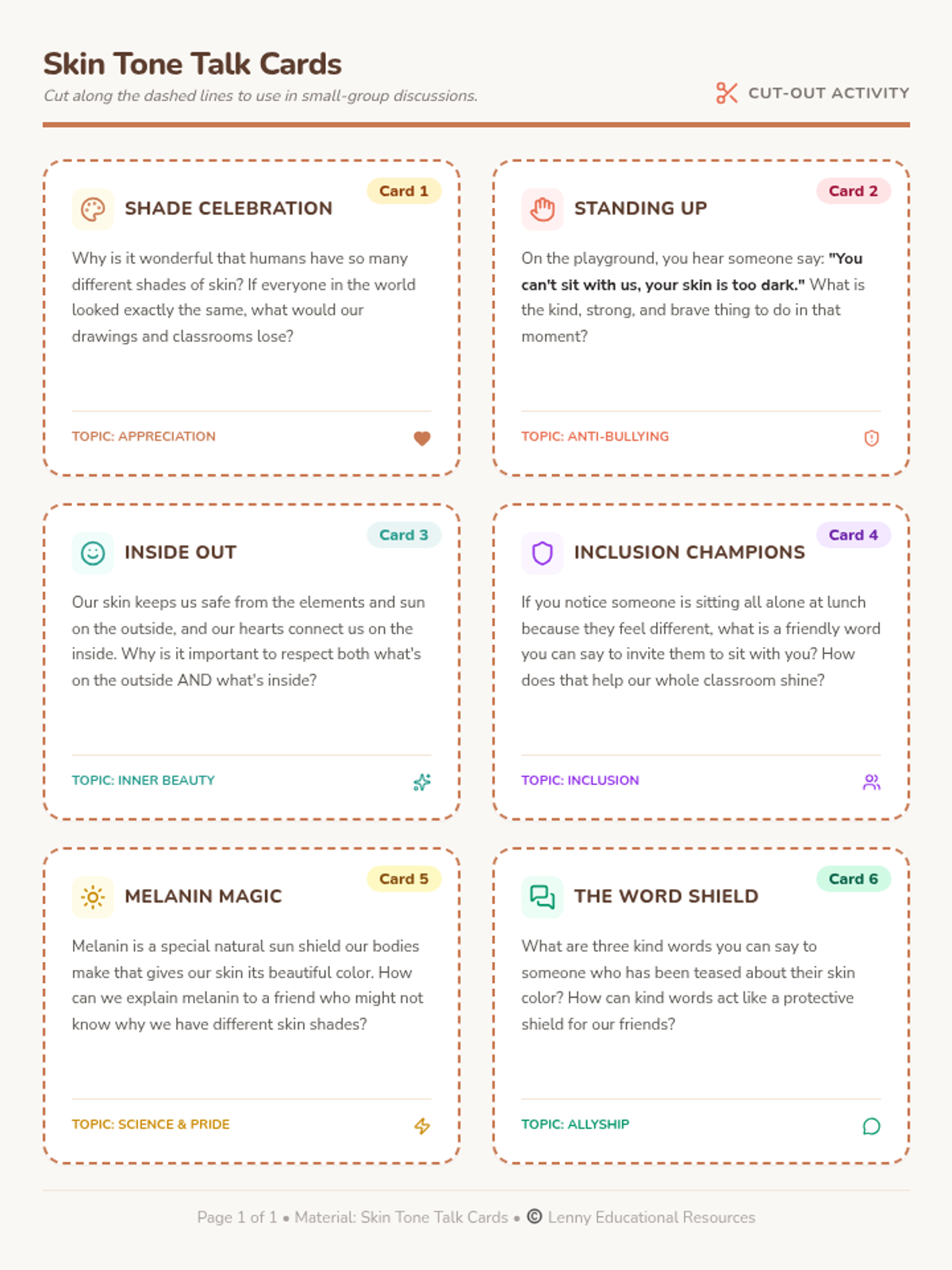
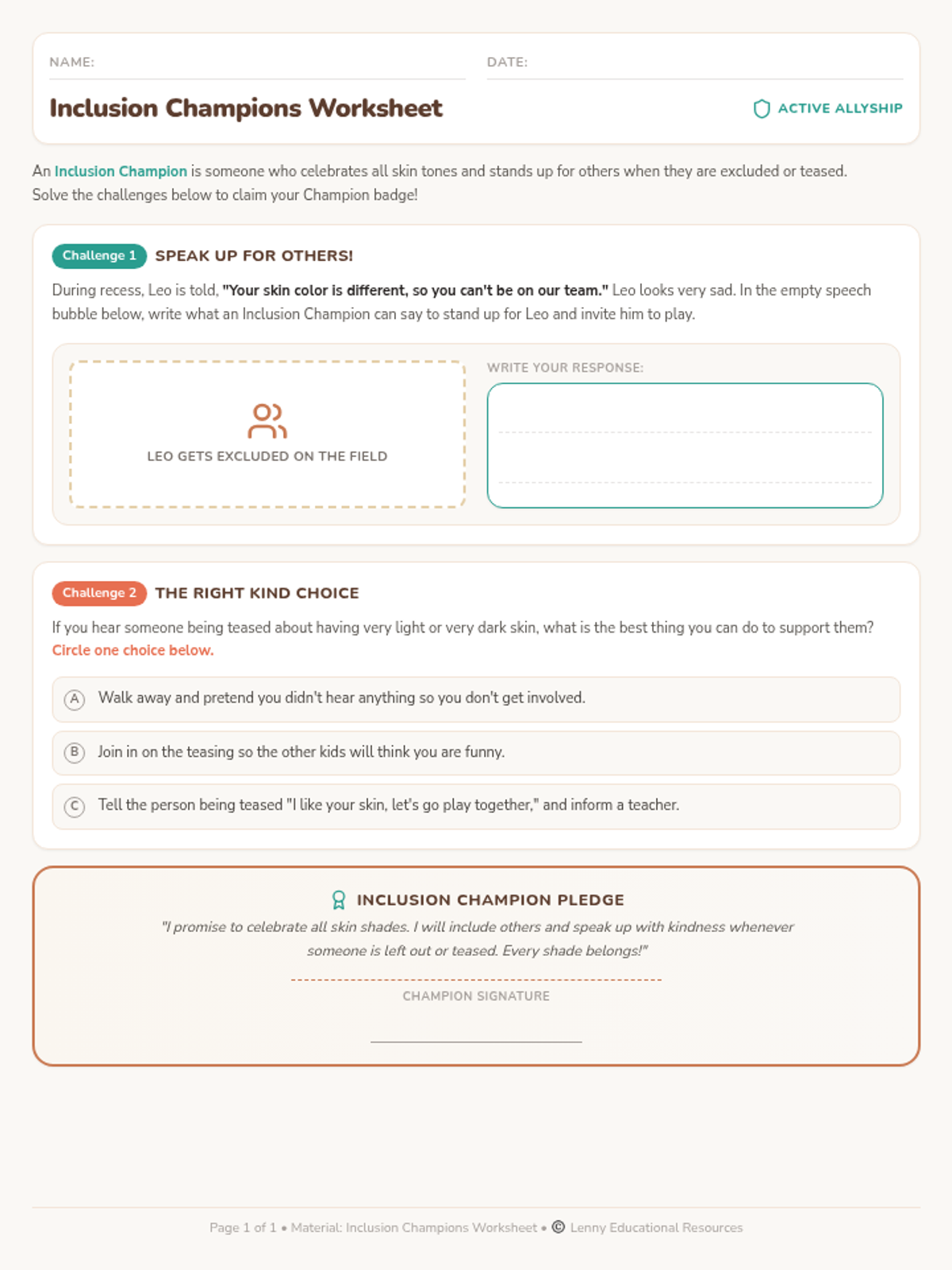
A 30-minute bullying prevention lesson for 2nd graders focusing on colorism. Students learn to value all skin tones equally, stand up to skin-tone teasing, and practice inclusivity through an anchor chart, sorting game, and role-play.
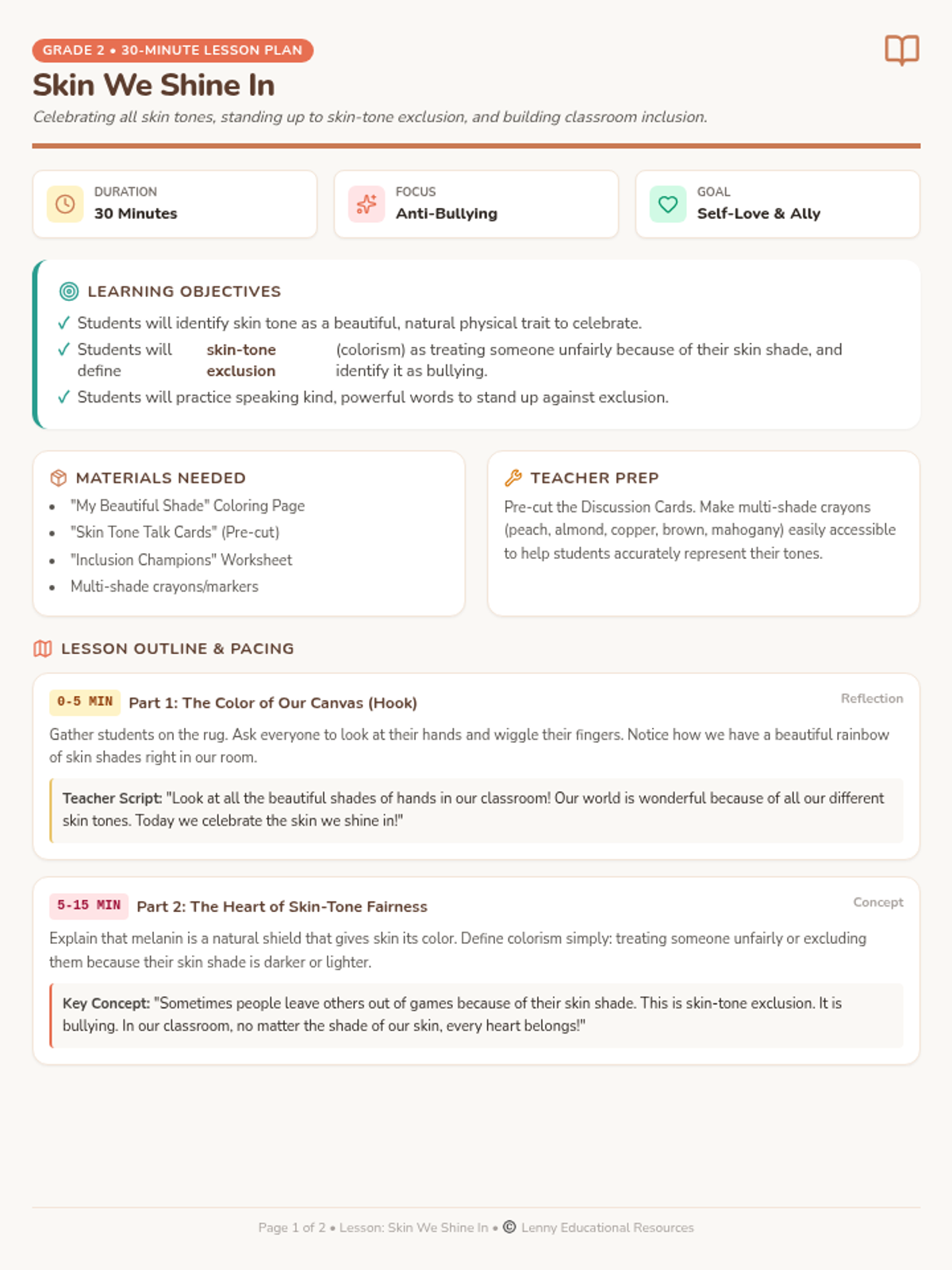
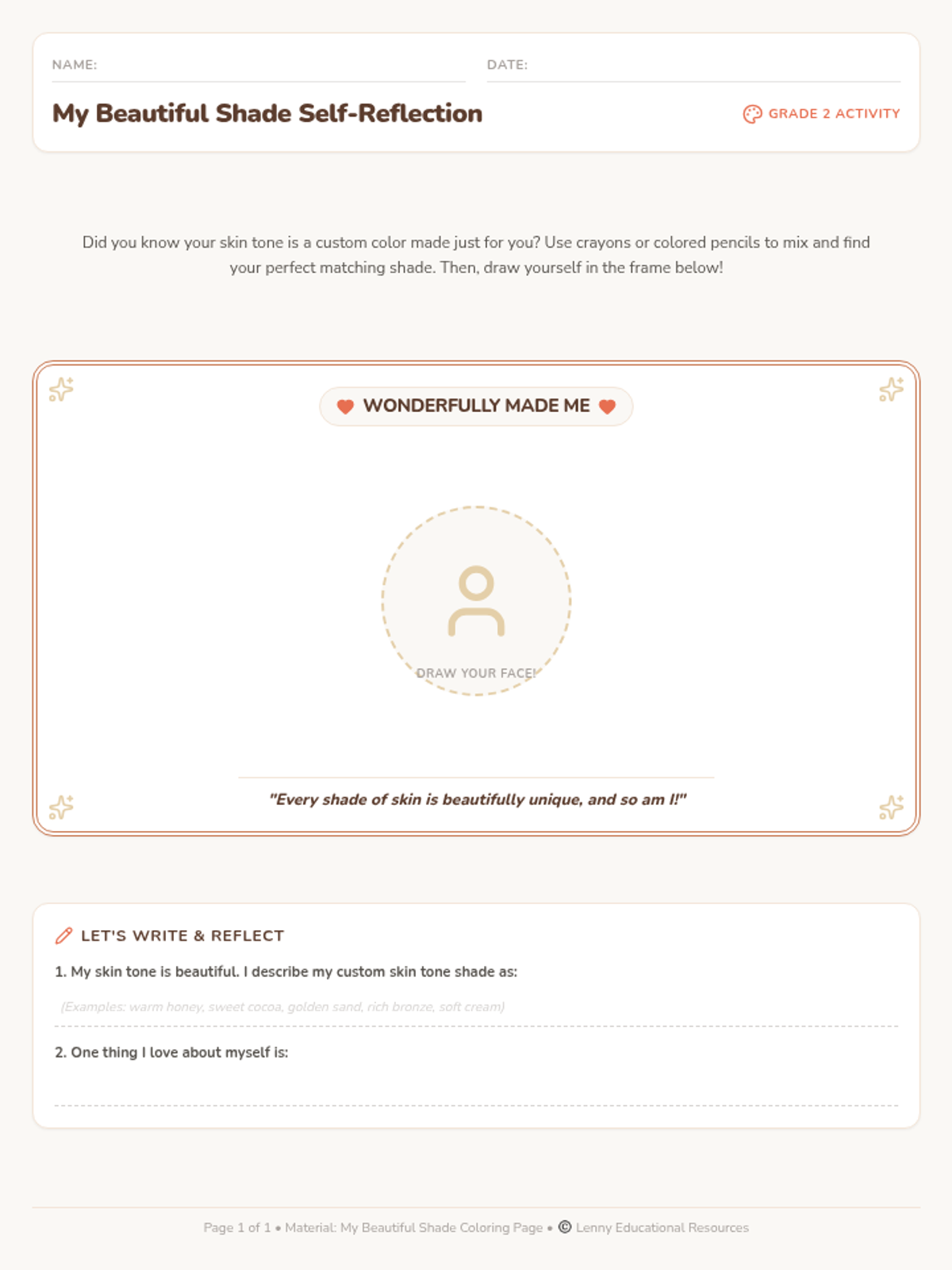
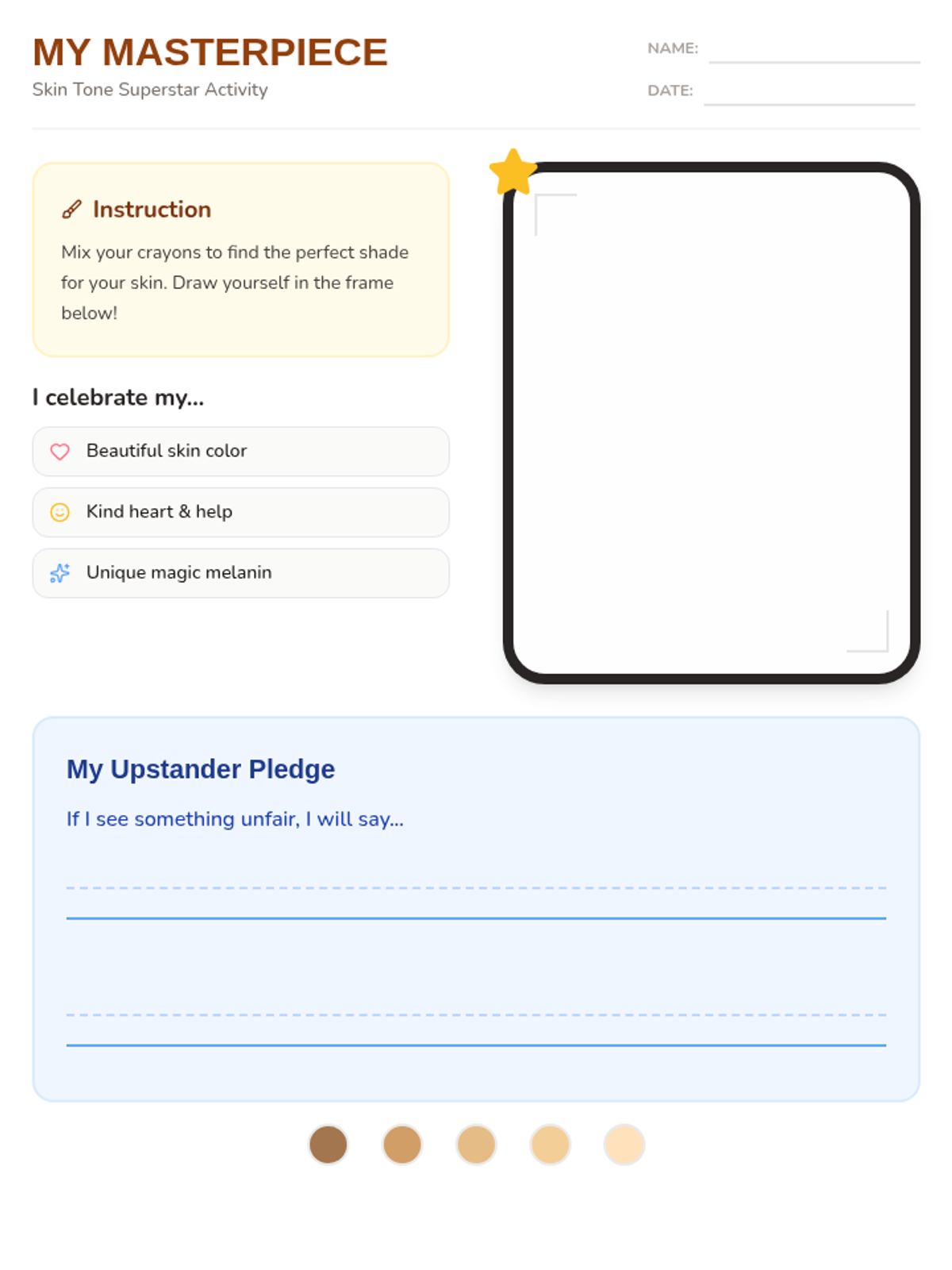
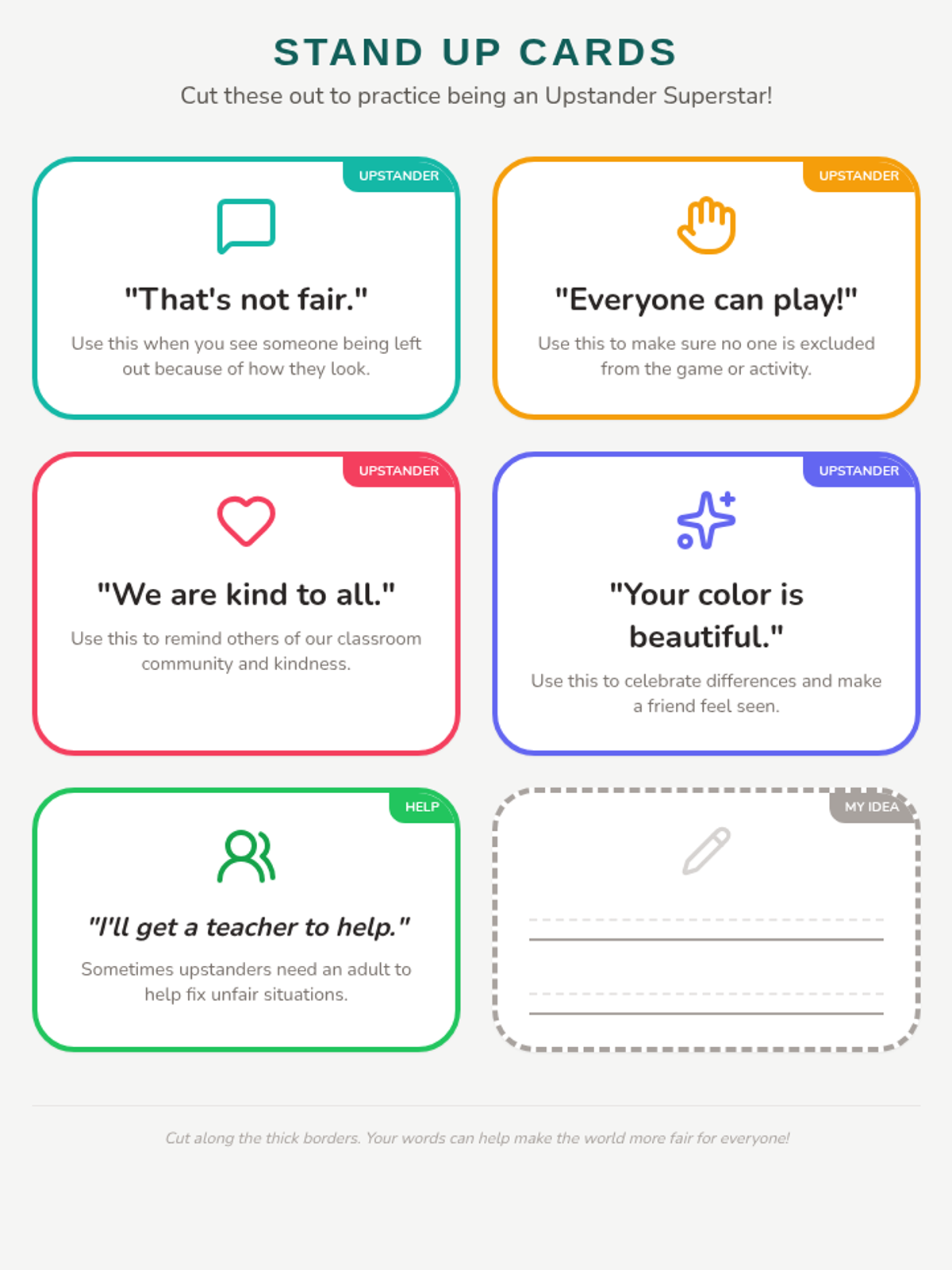
A warm, 30-minute interactive lesson for 2nd graders that celebrates all skin tones, addresses skin-tone exclusion (colorism) with compassion, and empowers students to stand up to bullying. Includes a comprehensive teacher's guide, a self-reflection coloring page, small-group discussion cards, and an interactive scenarios worksheet.
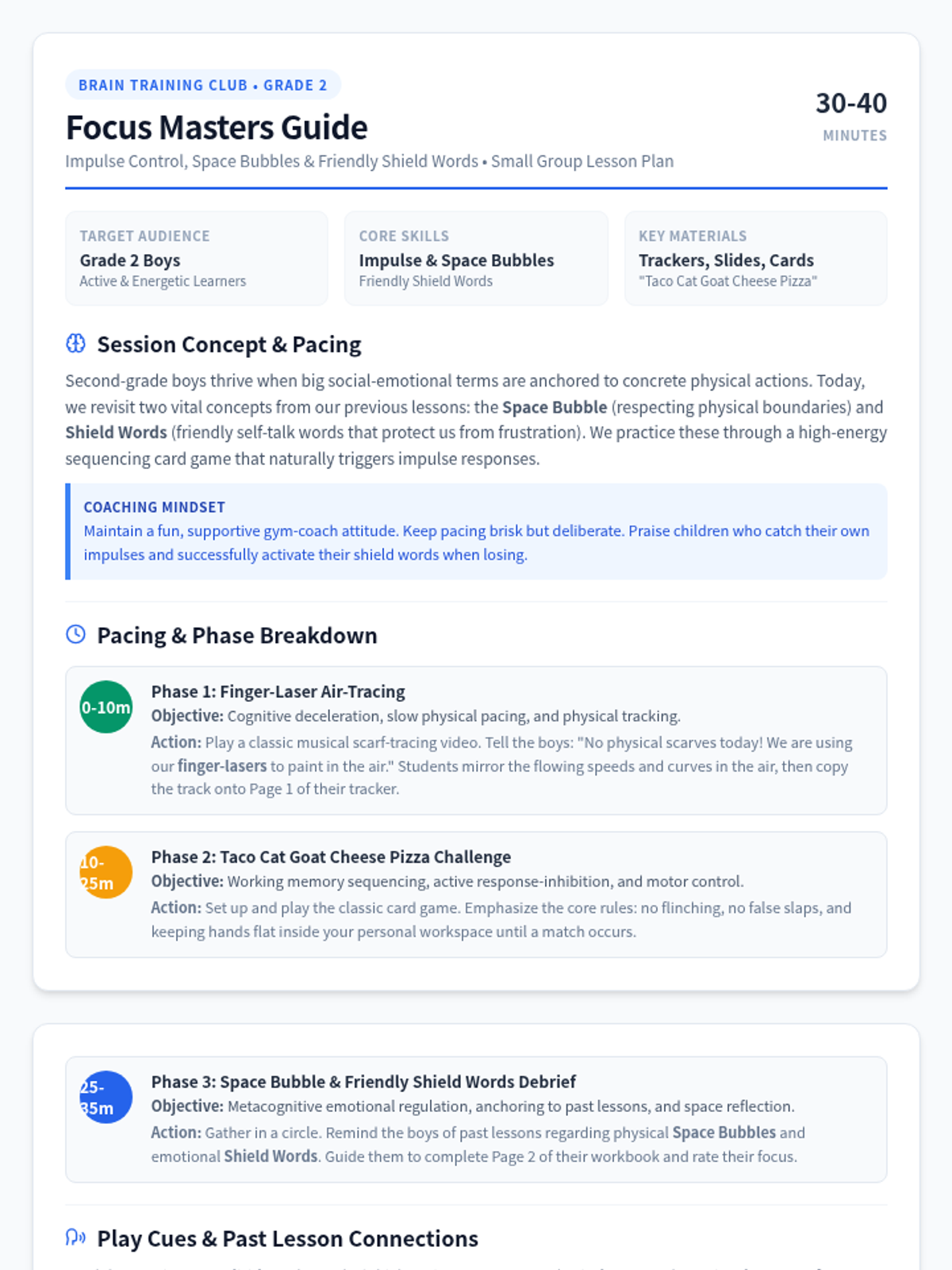
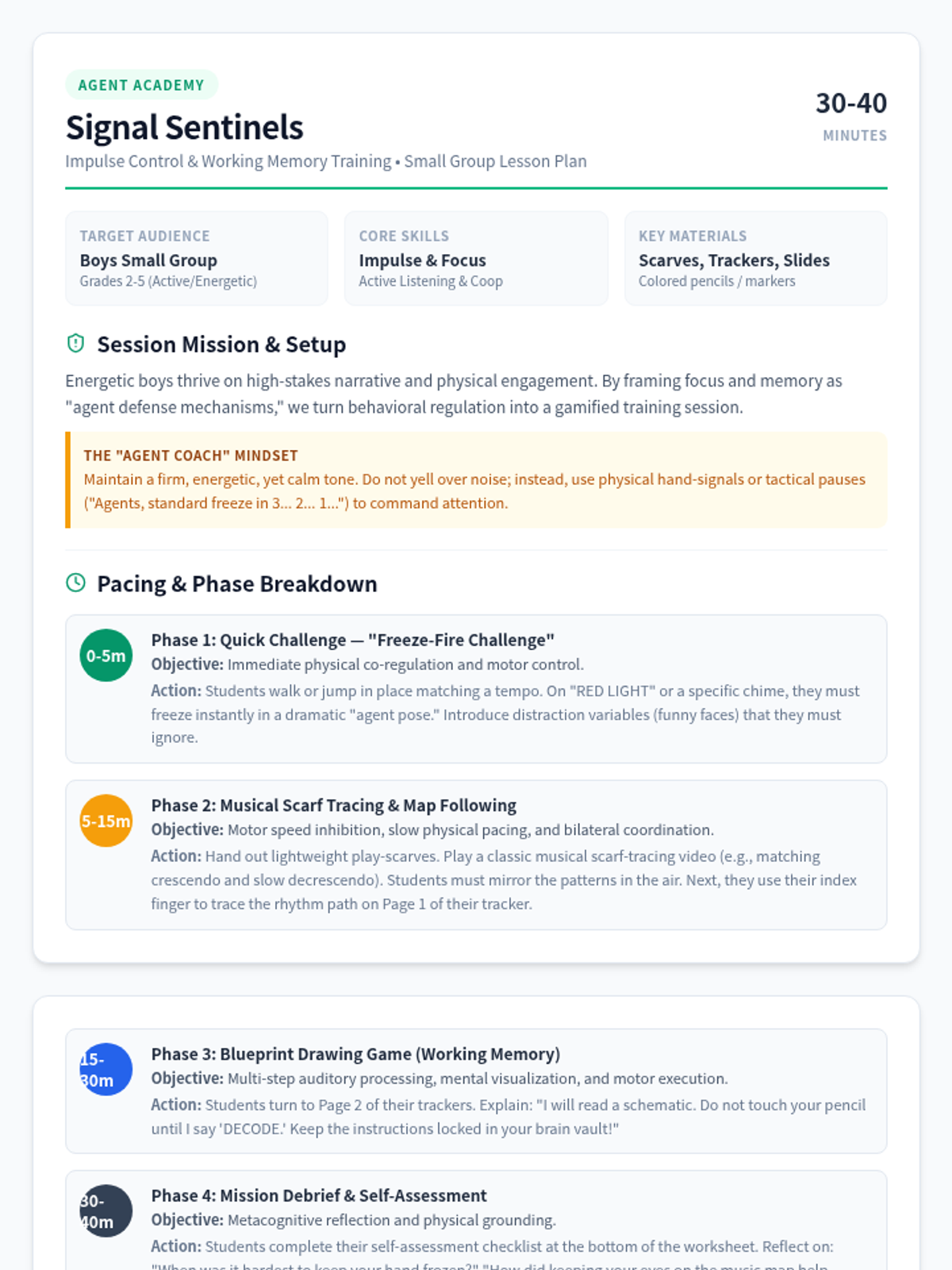
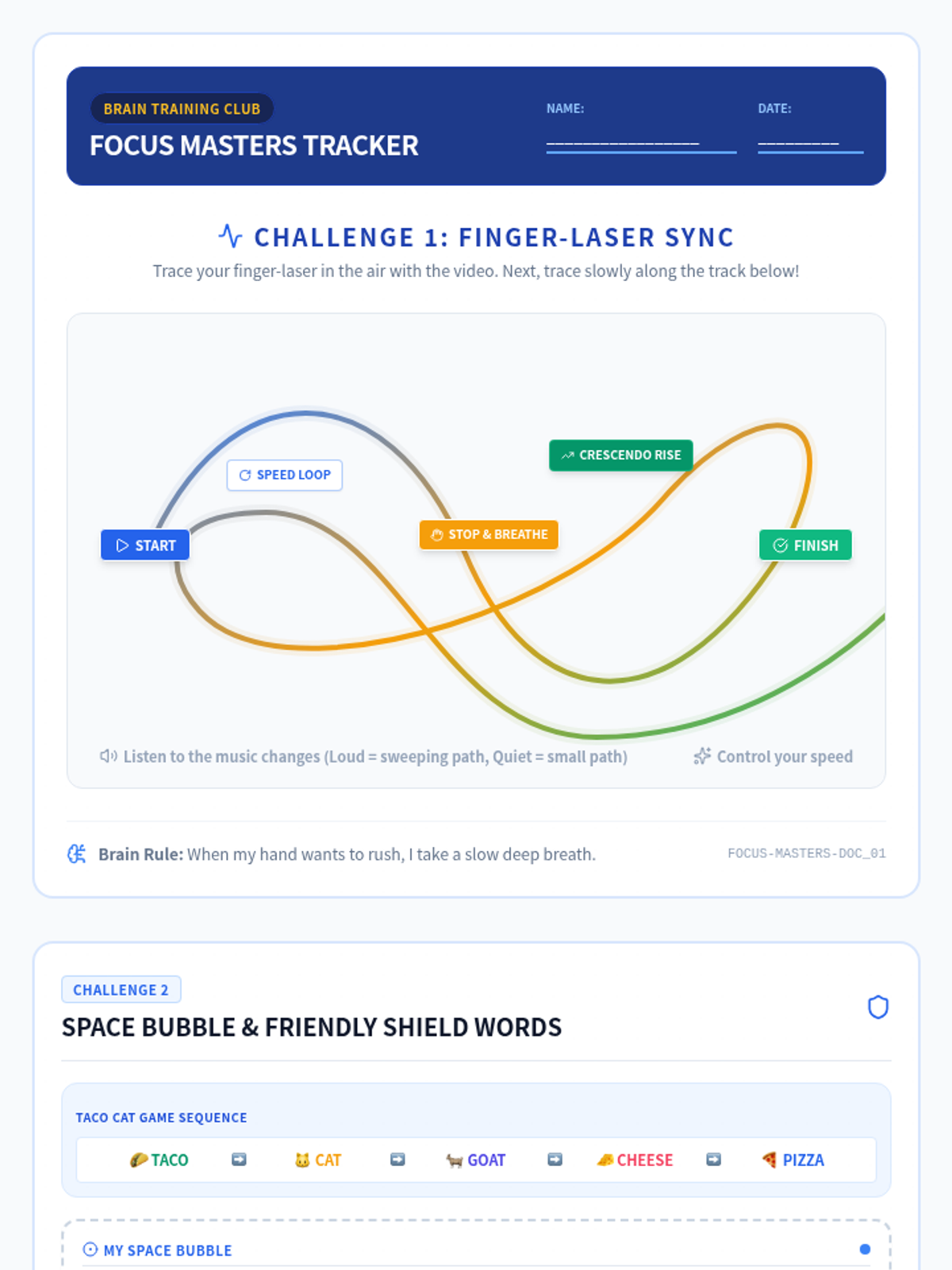
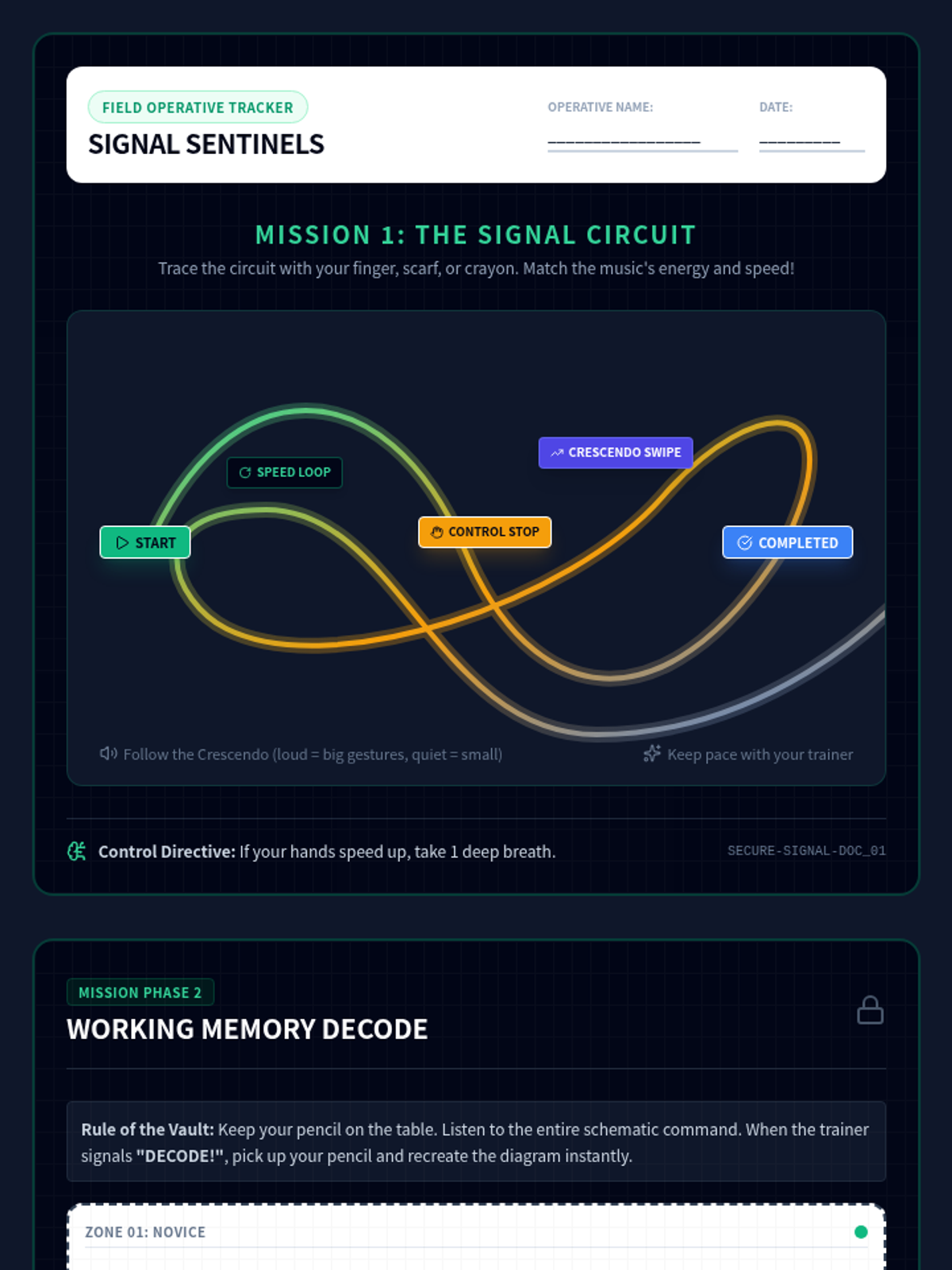
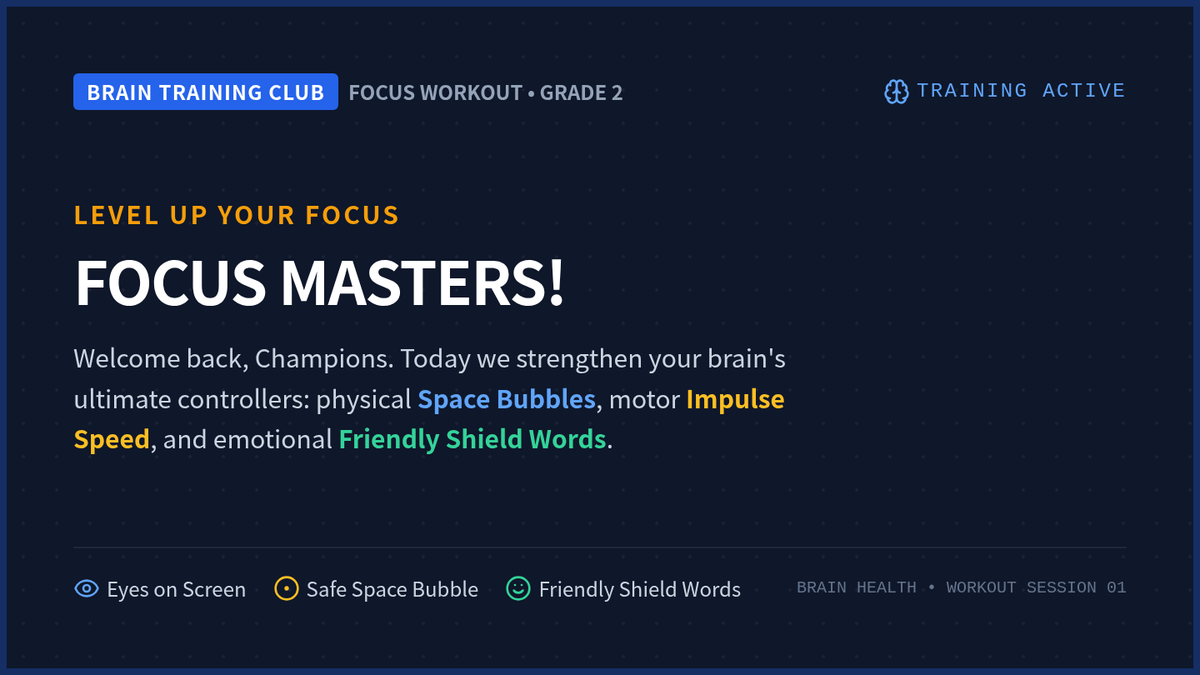
An active, high-engagement brain training session designed for small groups of Grade 2 boys to strengthen focus, active listening, and impulse control through physical finger-tracing exercises, cooperative sequencing games, and reflections on space bubbles and friendly shield words.
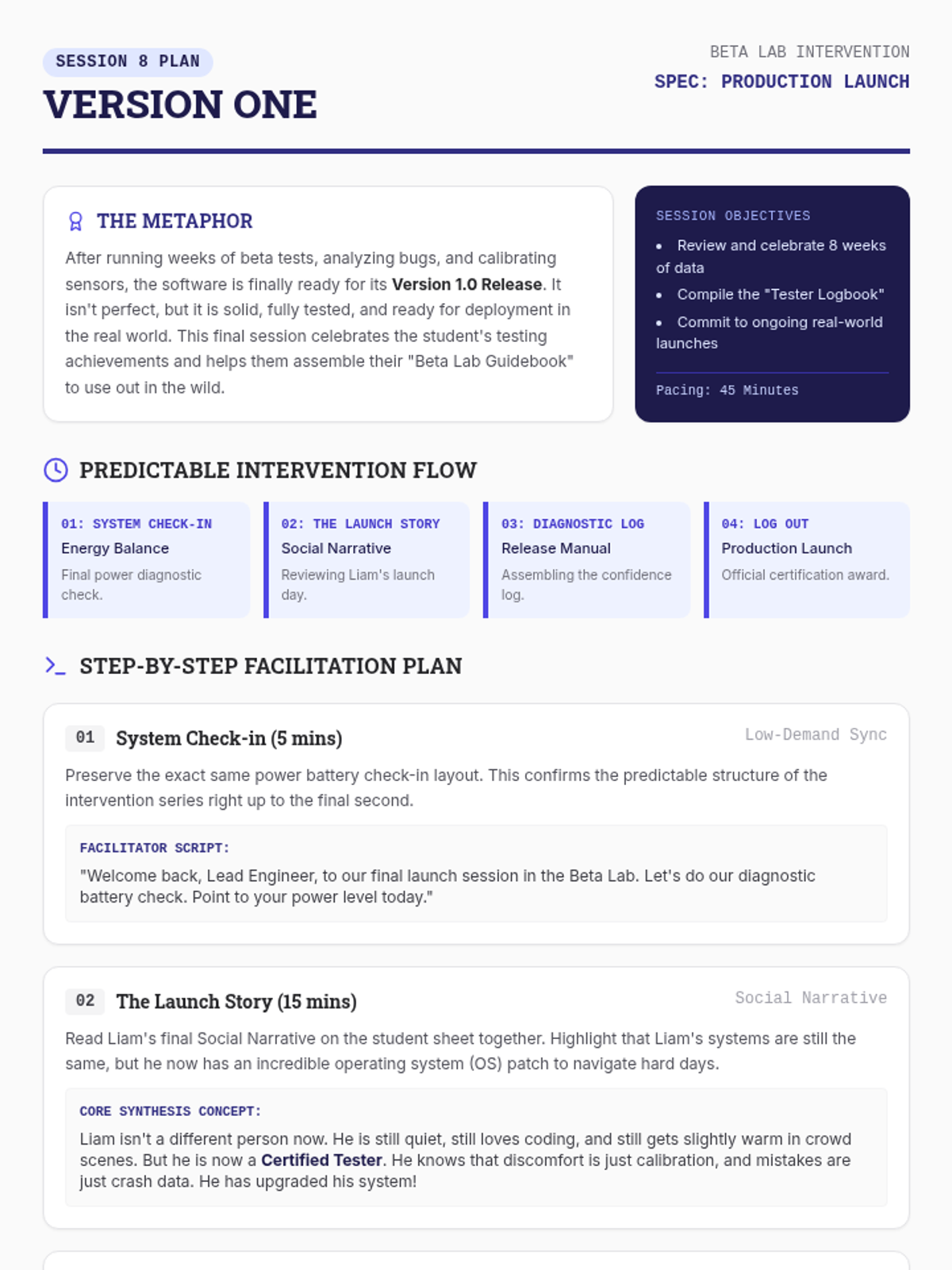
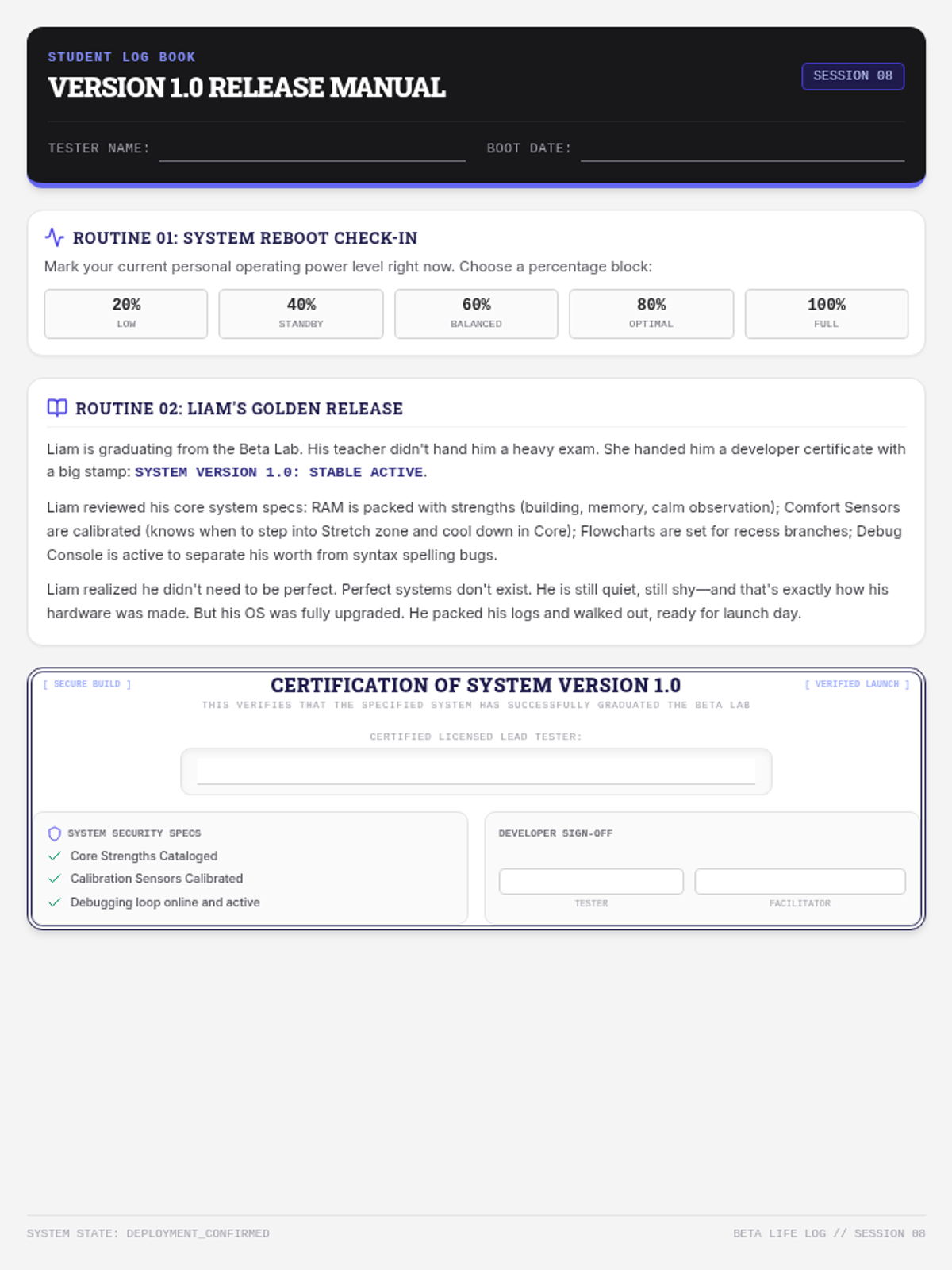
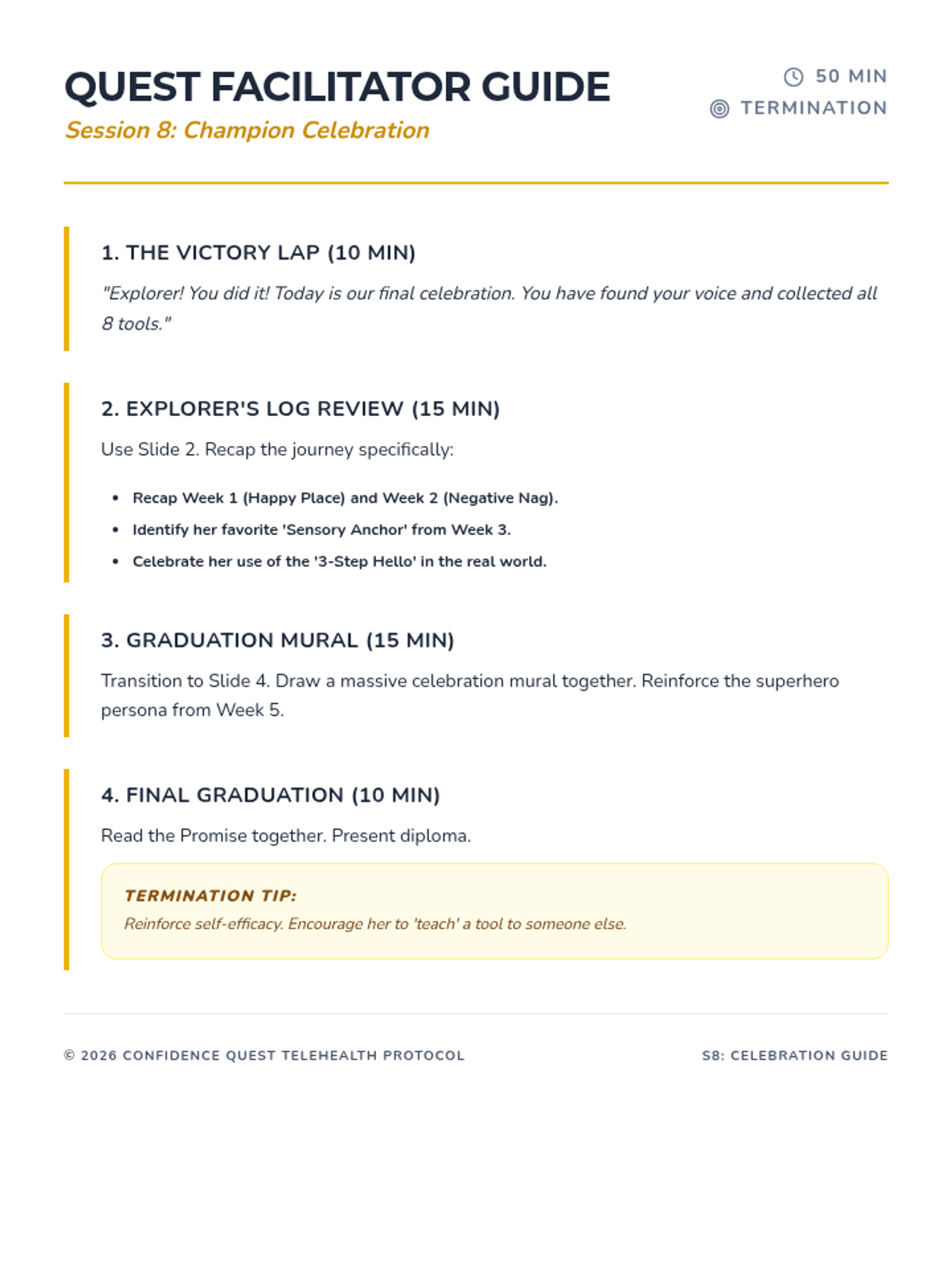
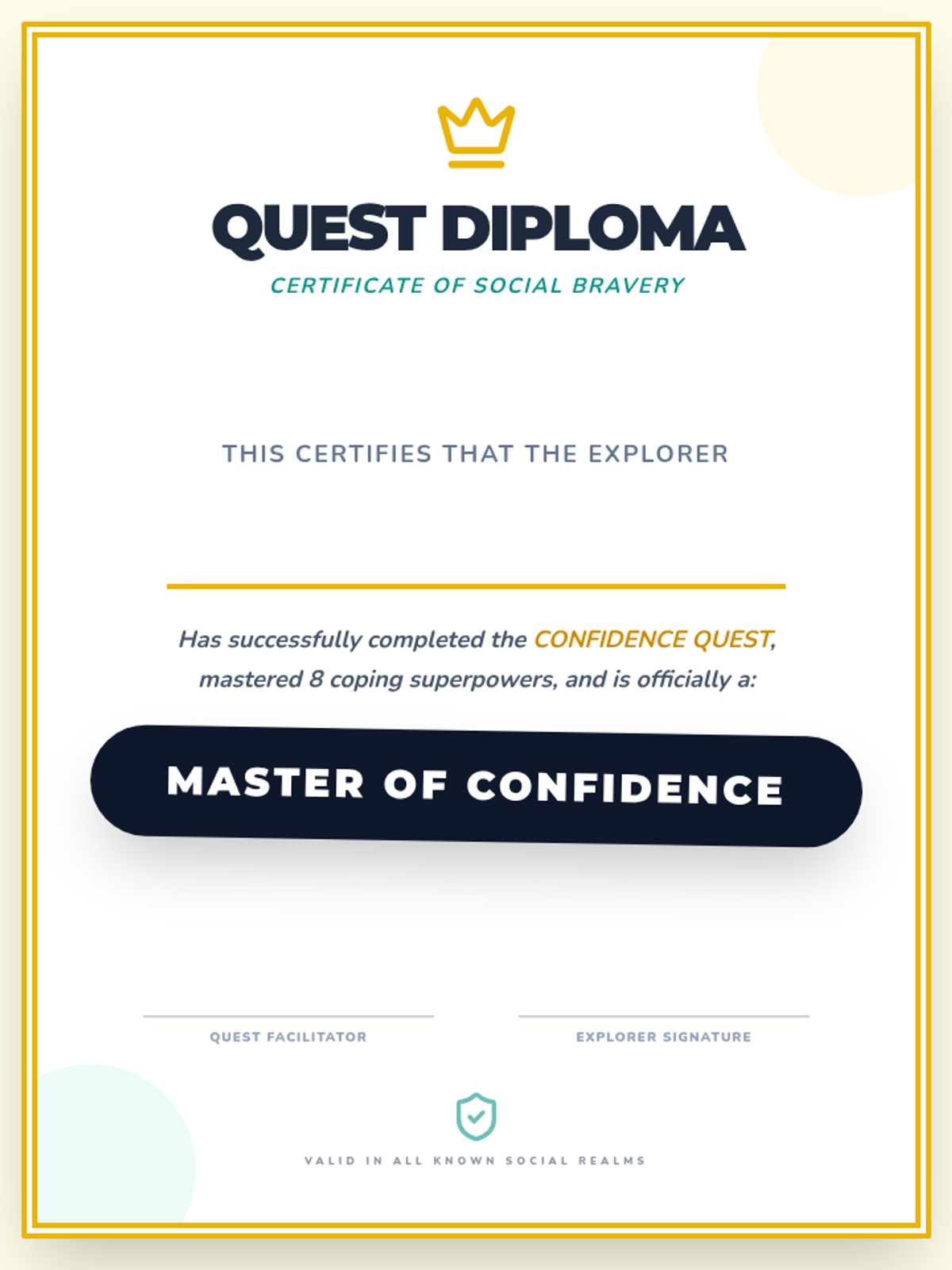
Session 8 synthesizes the 8-week journey. The student compiles their logs into a personalized confidence guide and celebrates their testing achievements.
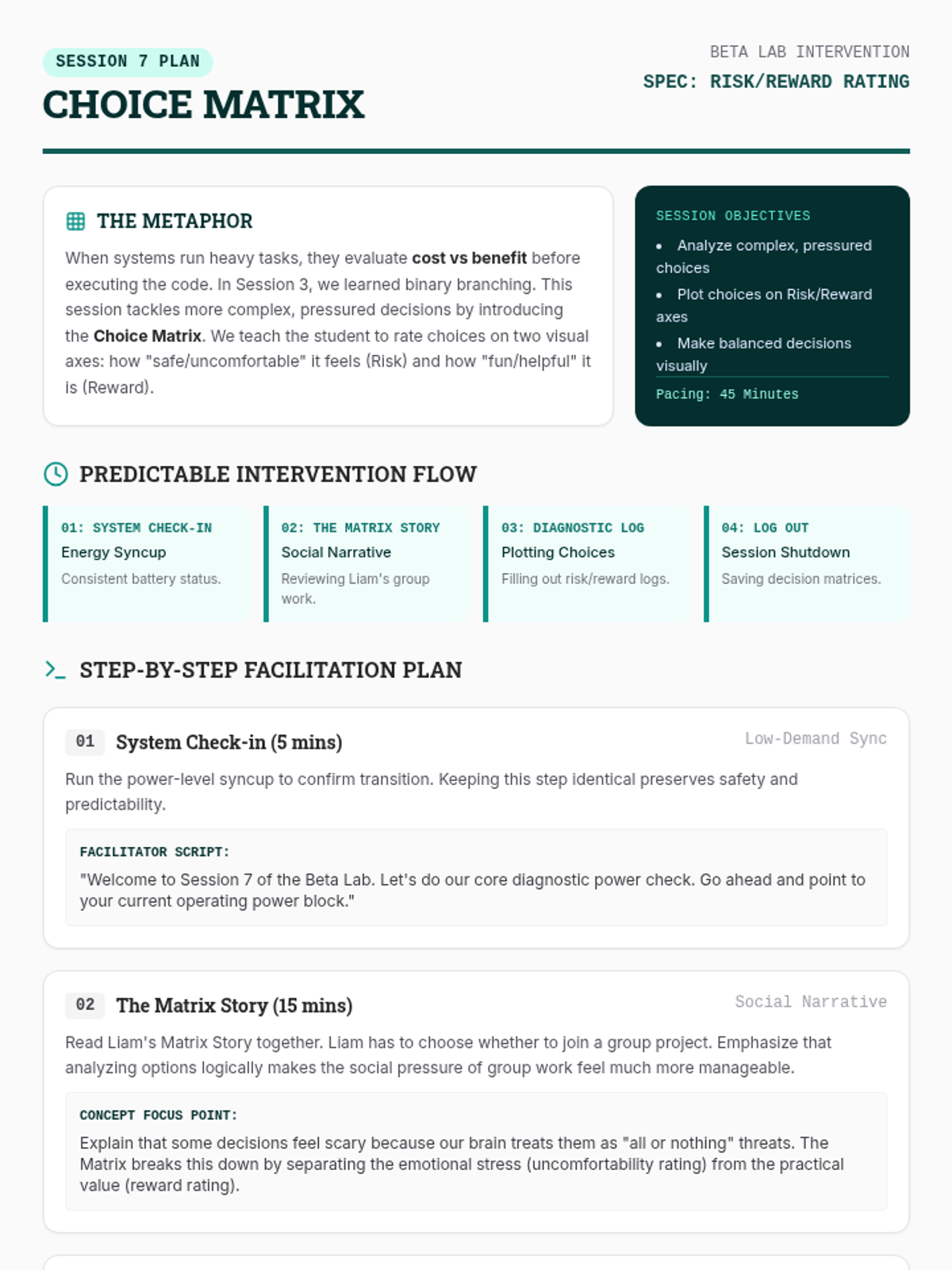
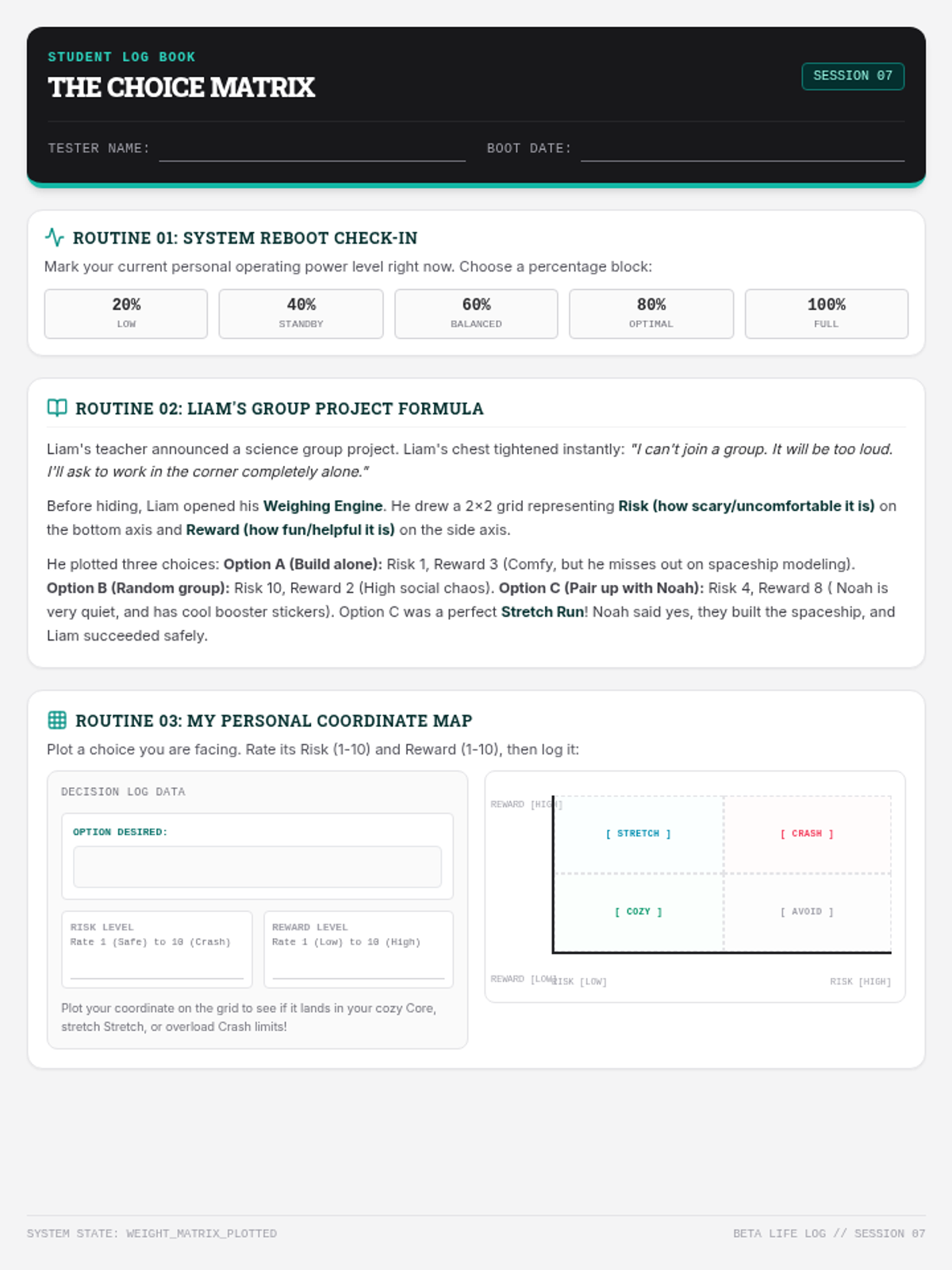
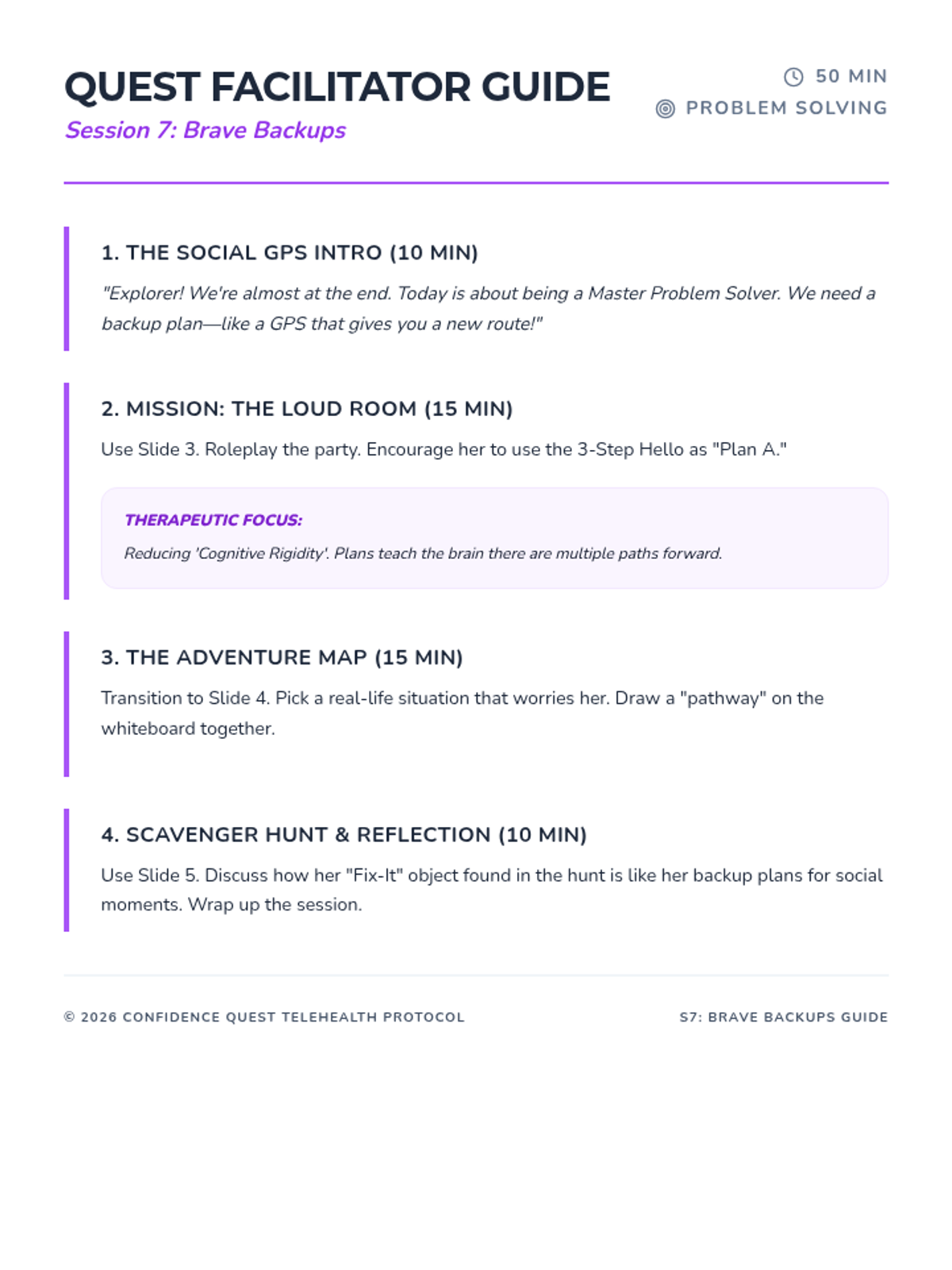
Session 7 explores more complex decisions under pressure, teaching the student how to weigh risks and rewards using a simple visual rating tool.
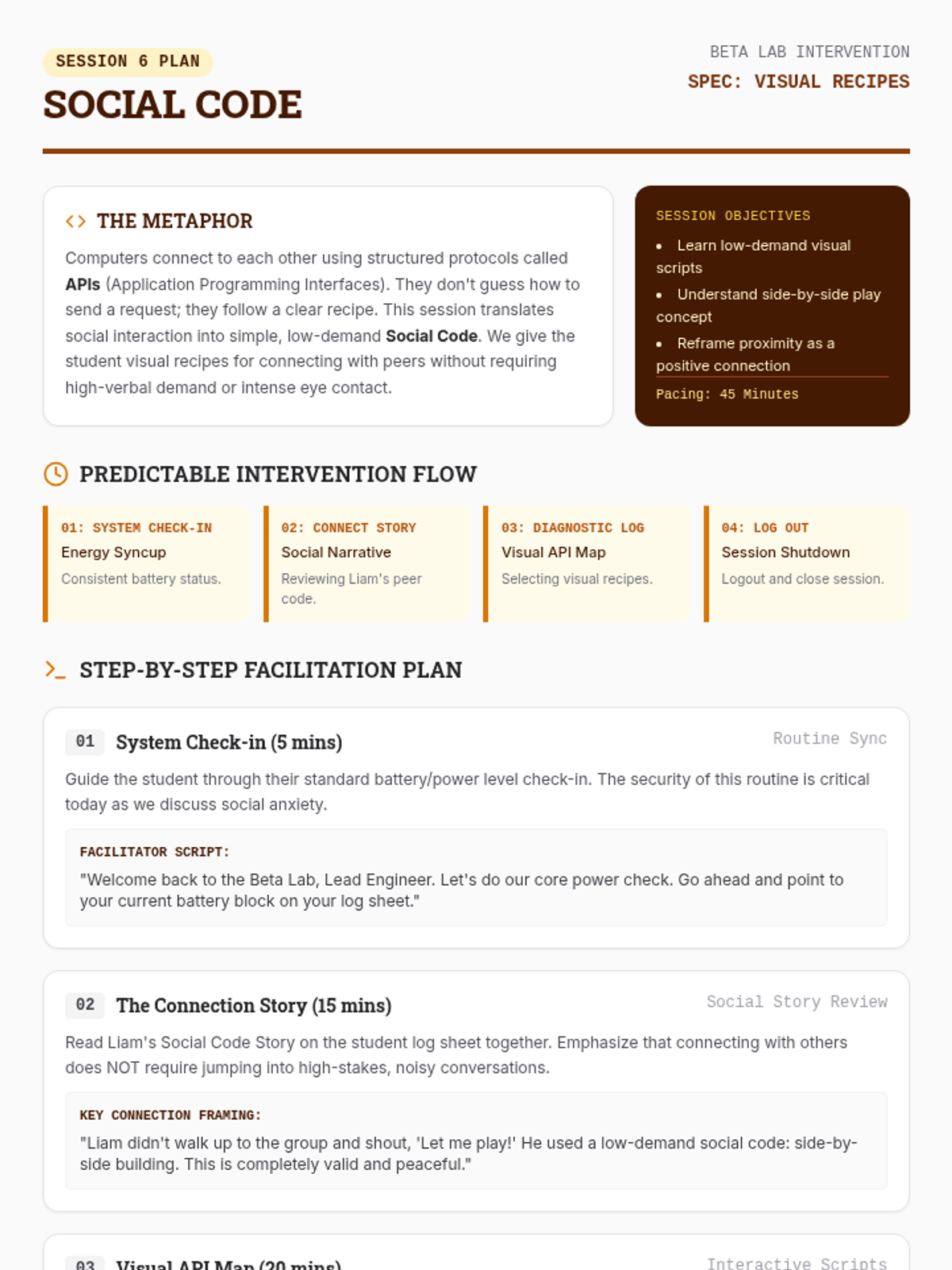
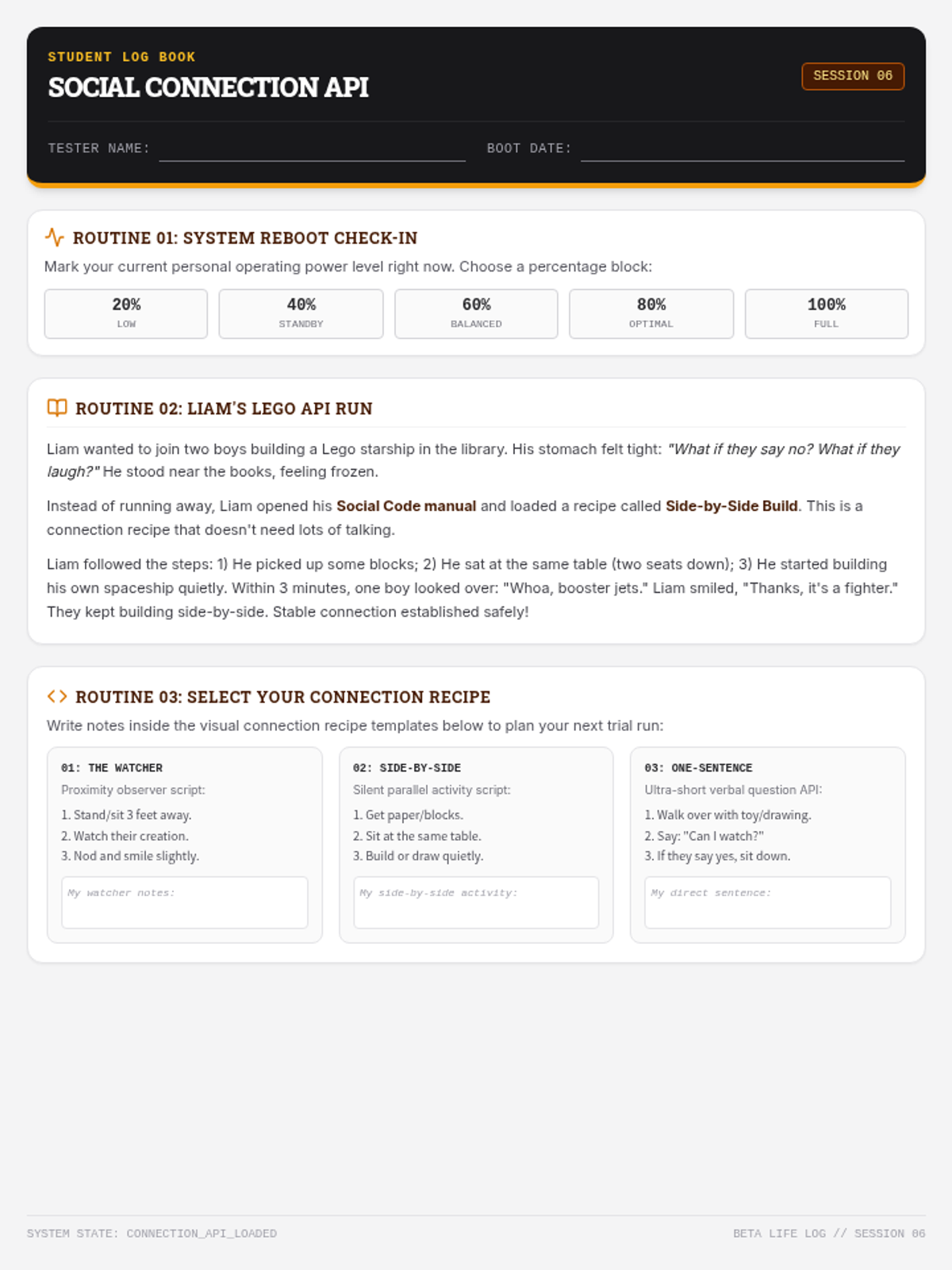
Session 6 addresses social interactions. The student learns low-demand social scripts and structured visual recipes for peer connection.
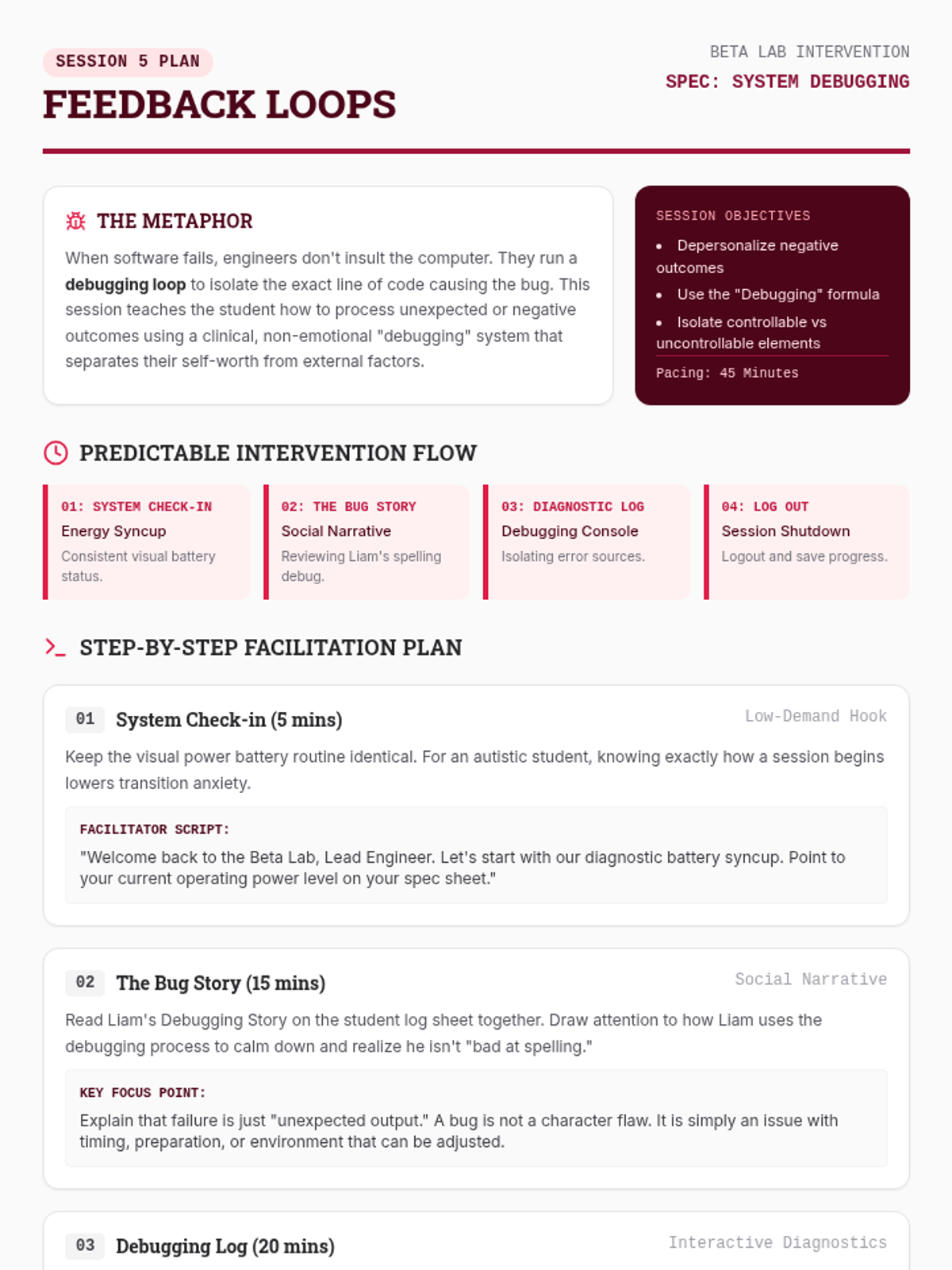
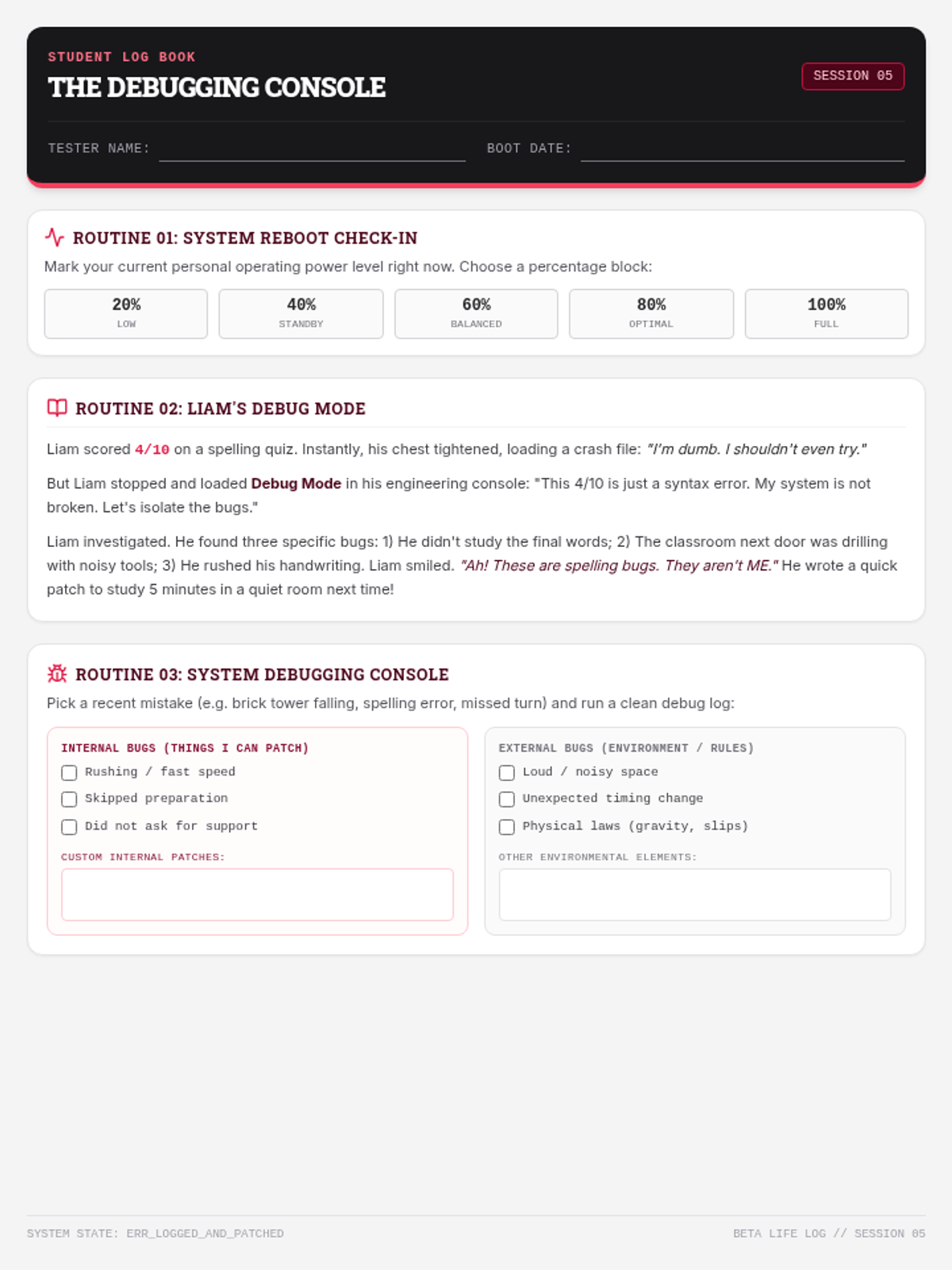
Session 5 covers processing unexpected outcomes. The student learns to analyze results without self-blame, using a structured "trail debugging" framework.
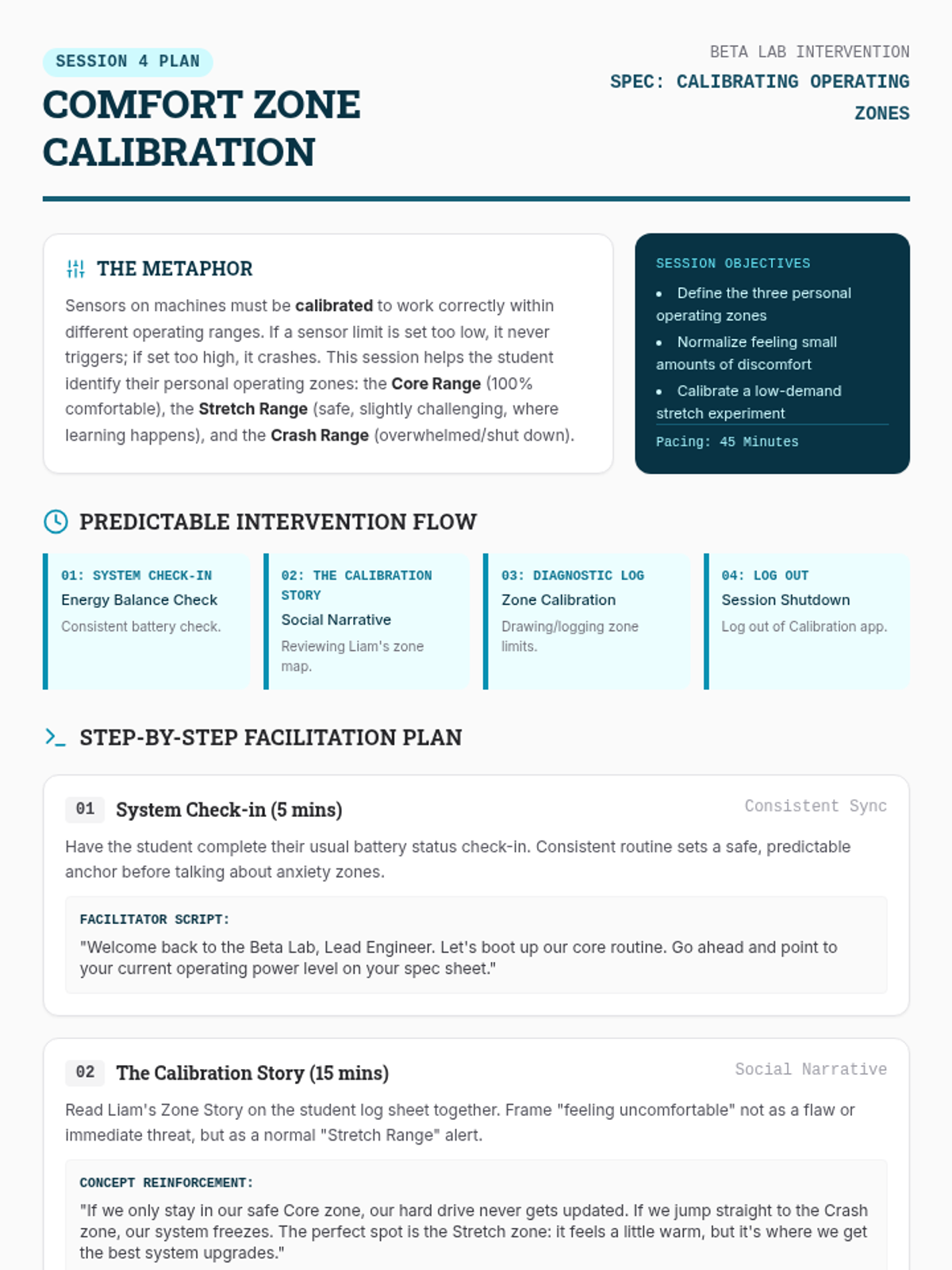
Session 4 focuses on gradually expanding the comfortable operating zone by setting up and running tiny, controlled trials in a safe environment, mapping Core, Stretch, and Storm zones.
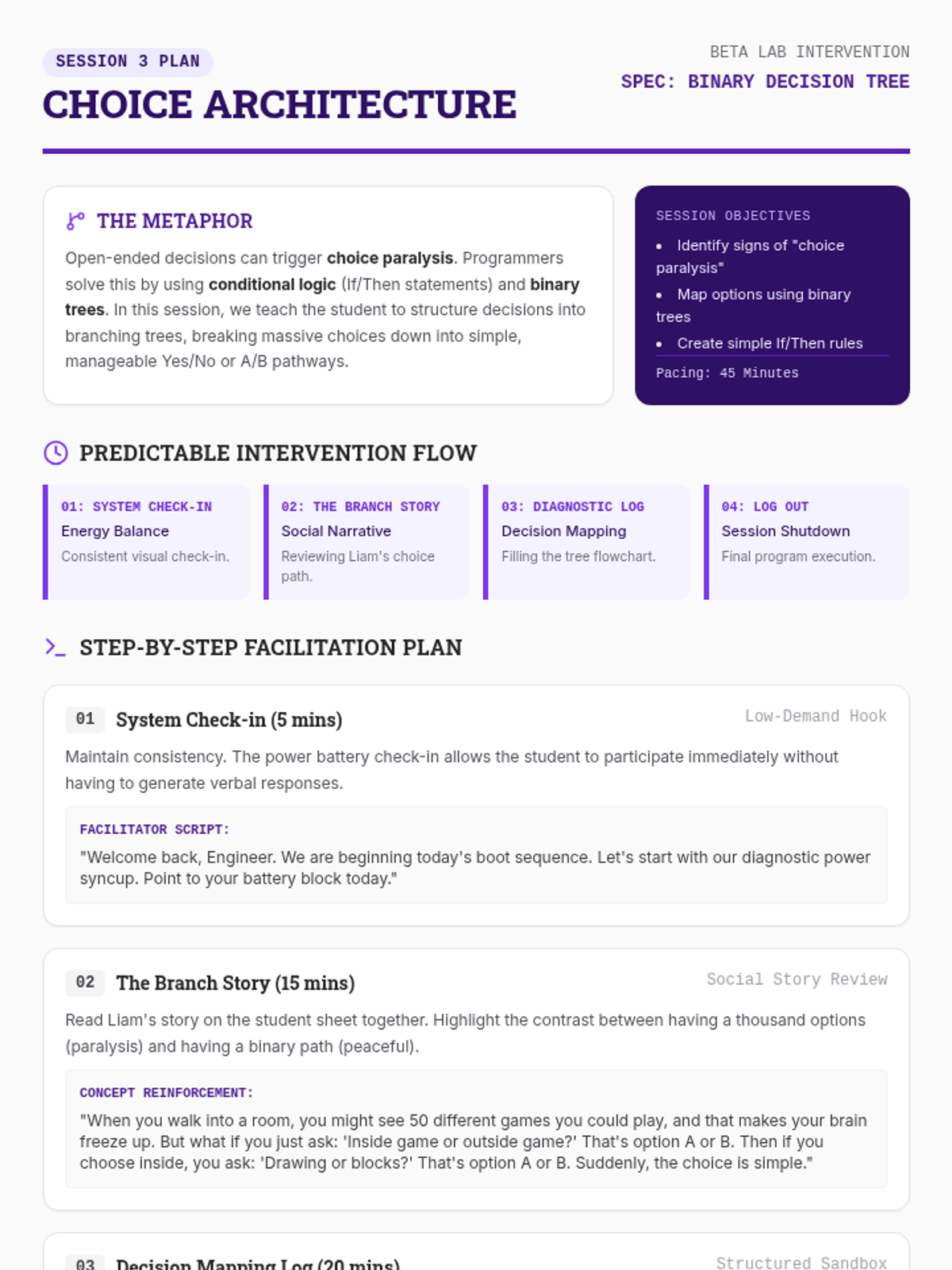
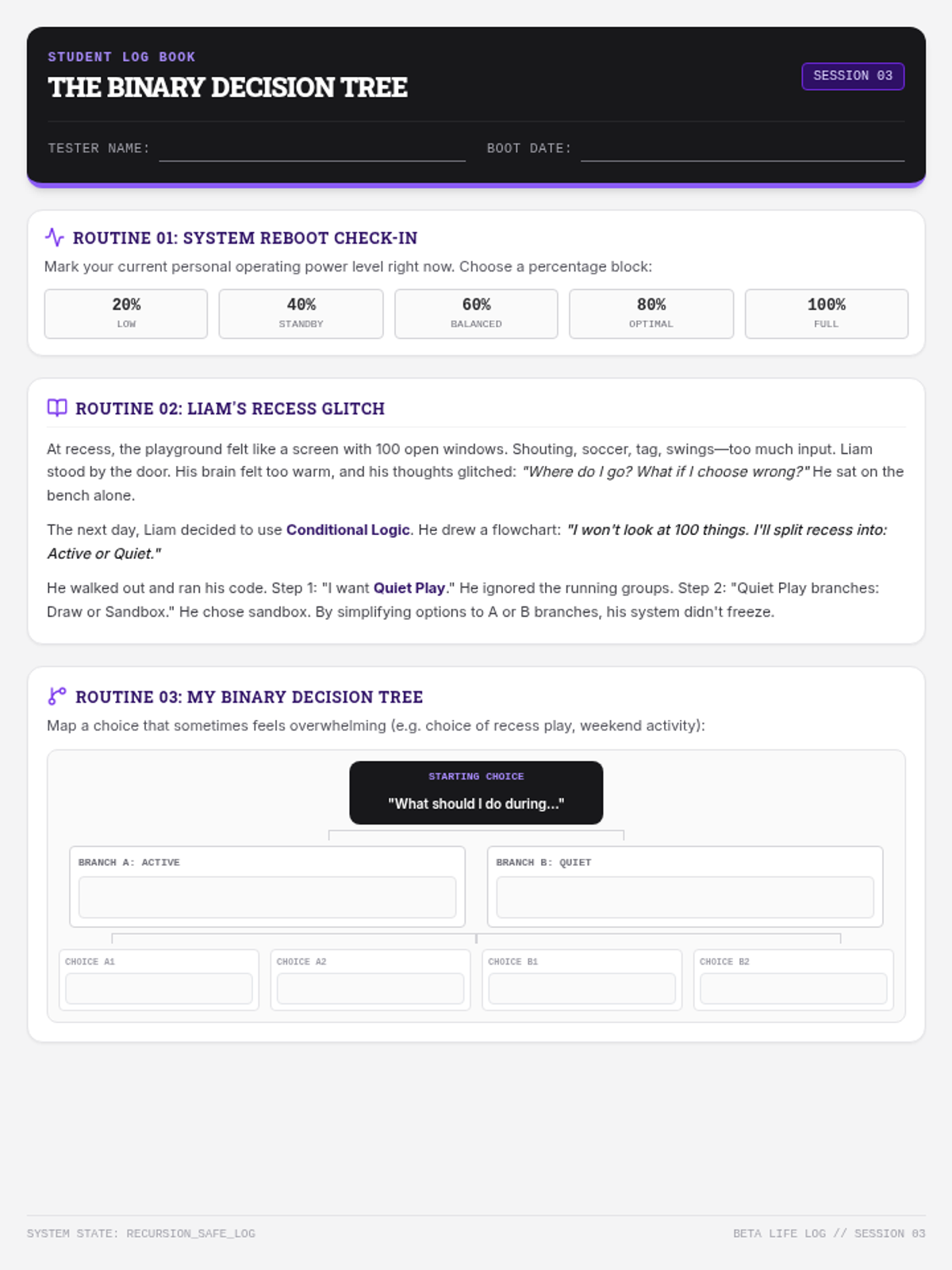
Session 3 introduces structured decision-making. The student learns to map decisions into binary "trail forks," reducing cognitive overload and paralysis.
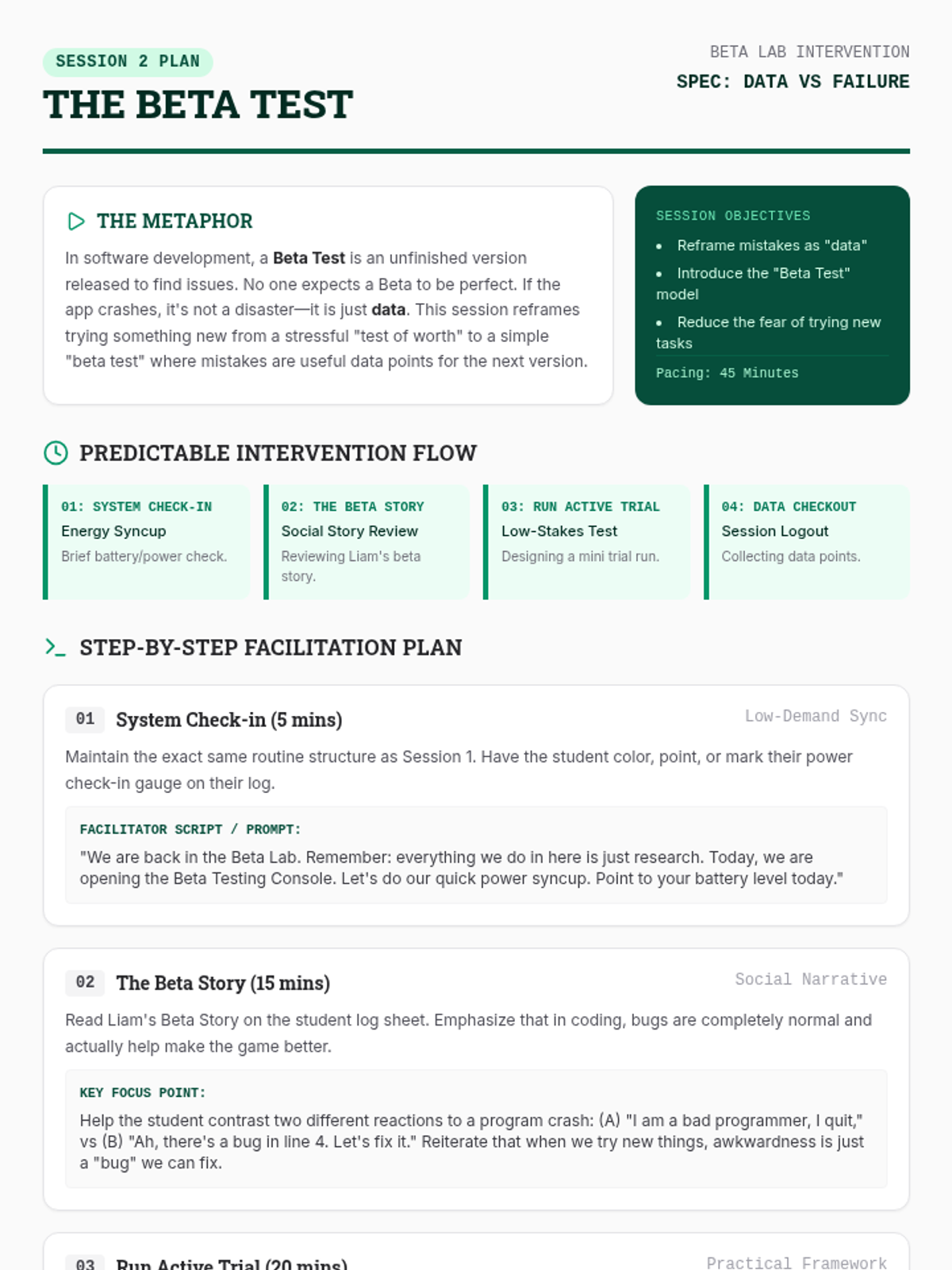
Session 2 re-frames the fear of trying new things. The student learns to treat new activities as low-stakes "scouting runs" where mistakes are just "terrain map data."
Session 1 establishes the "Field Guide" and "Wildwood Scouting" metaphor, helping the student identify their individual strengths as "field gear specs" to build baseline confidence.
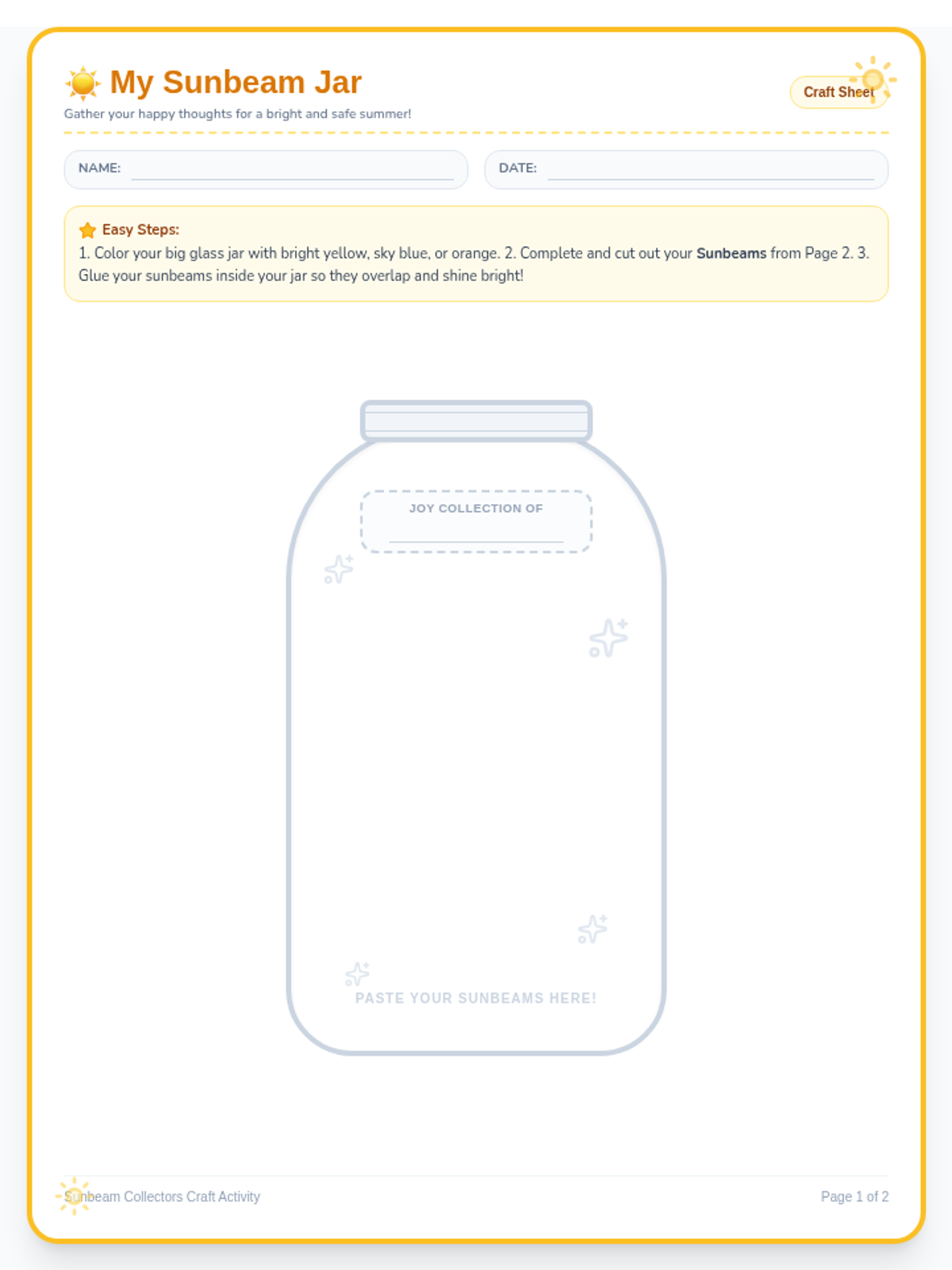
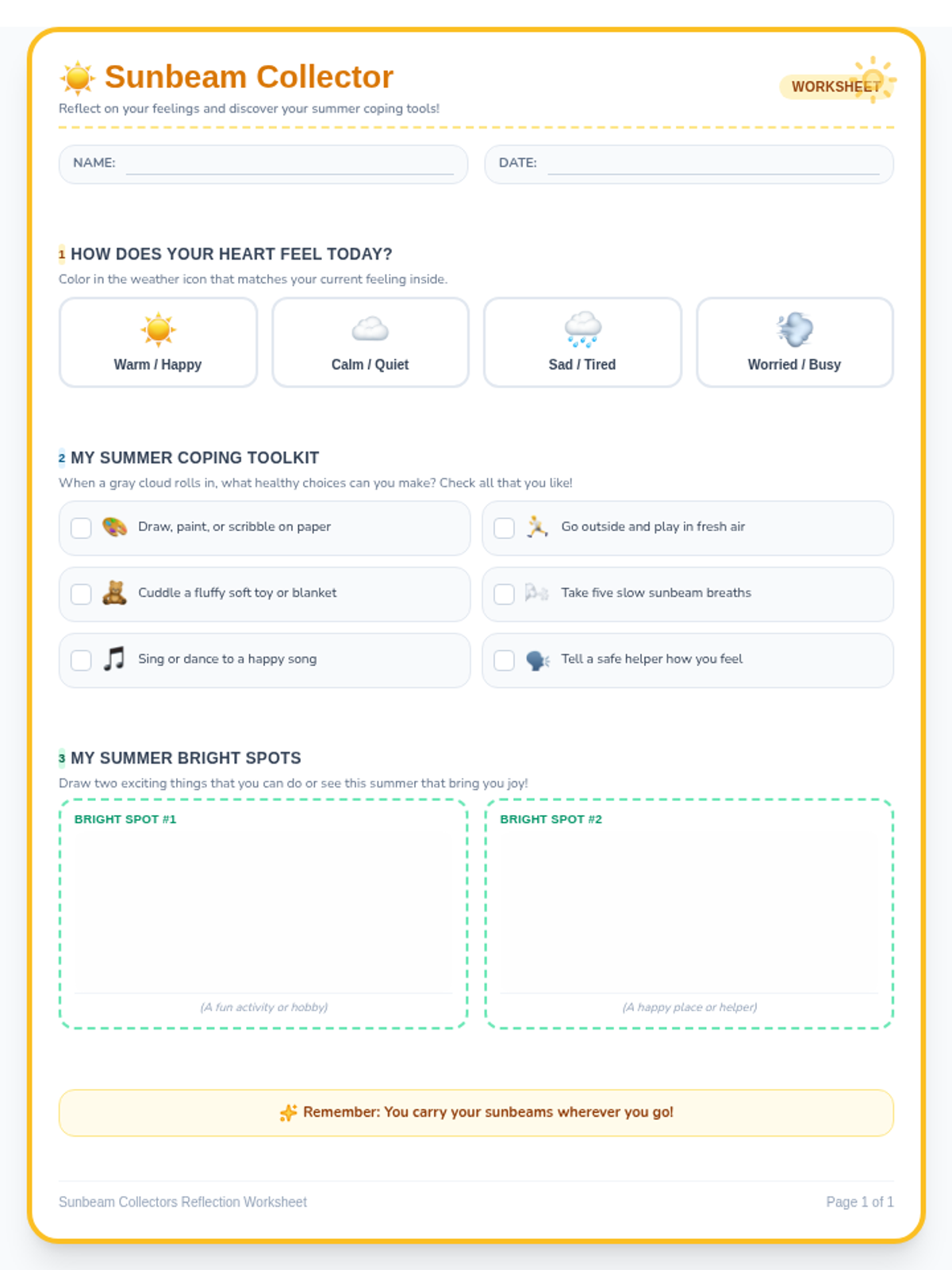
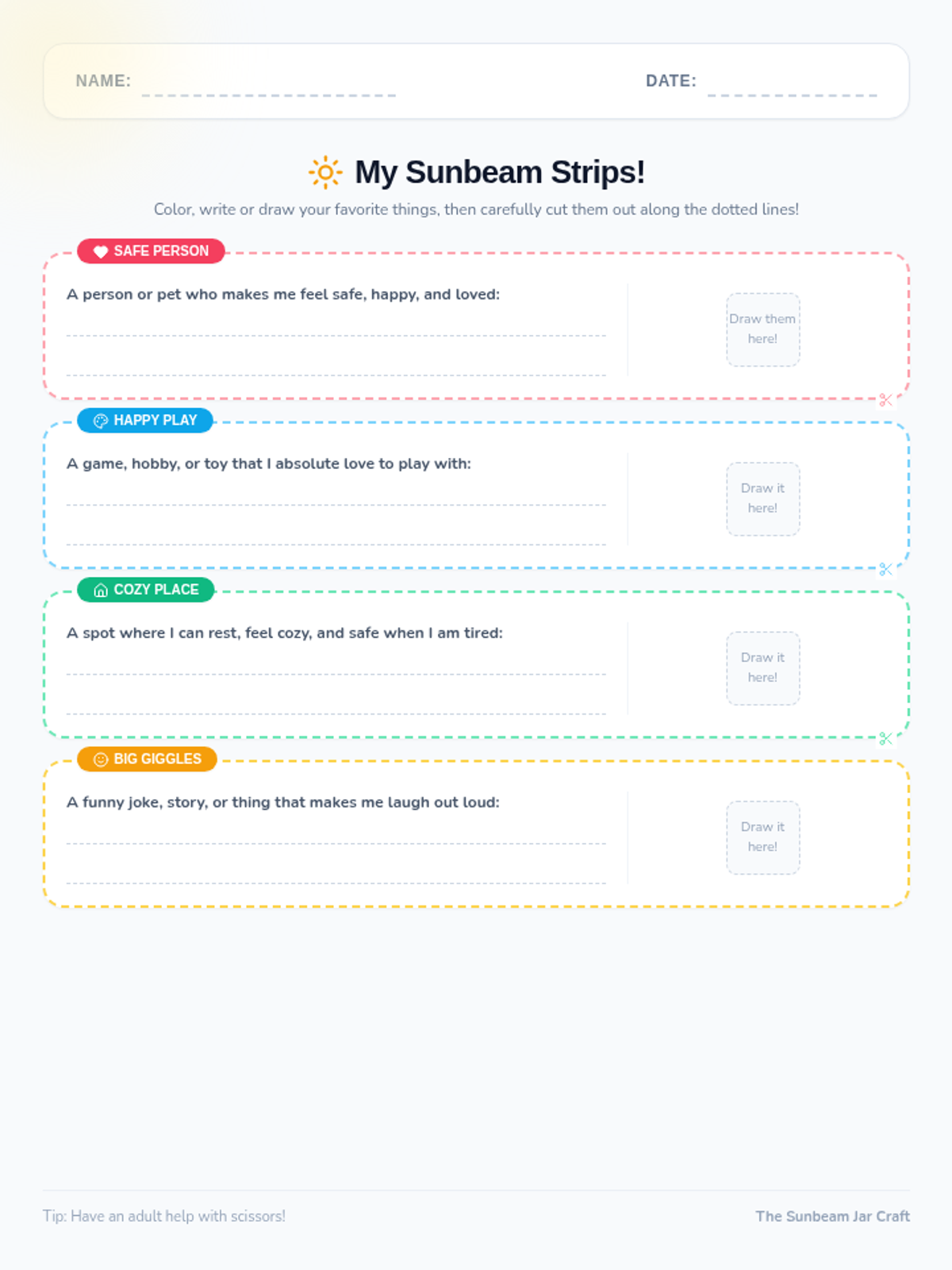
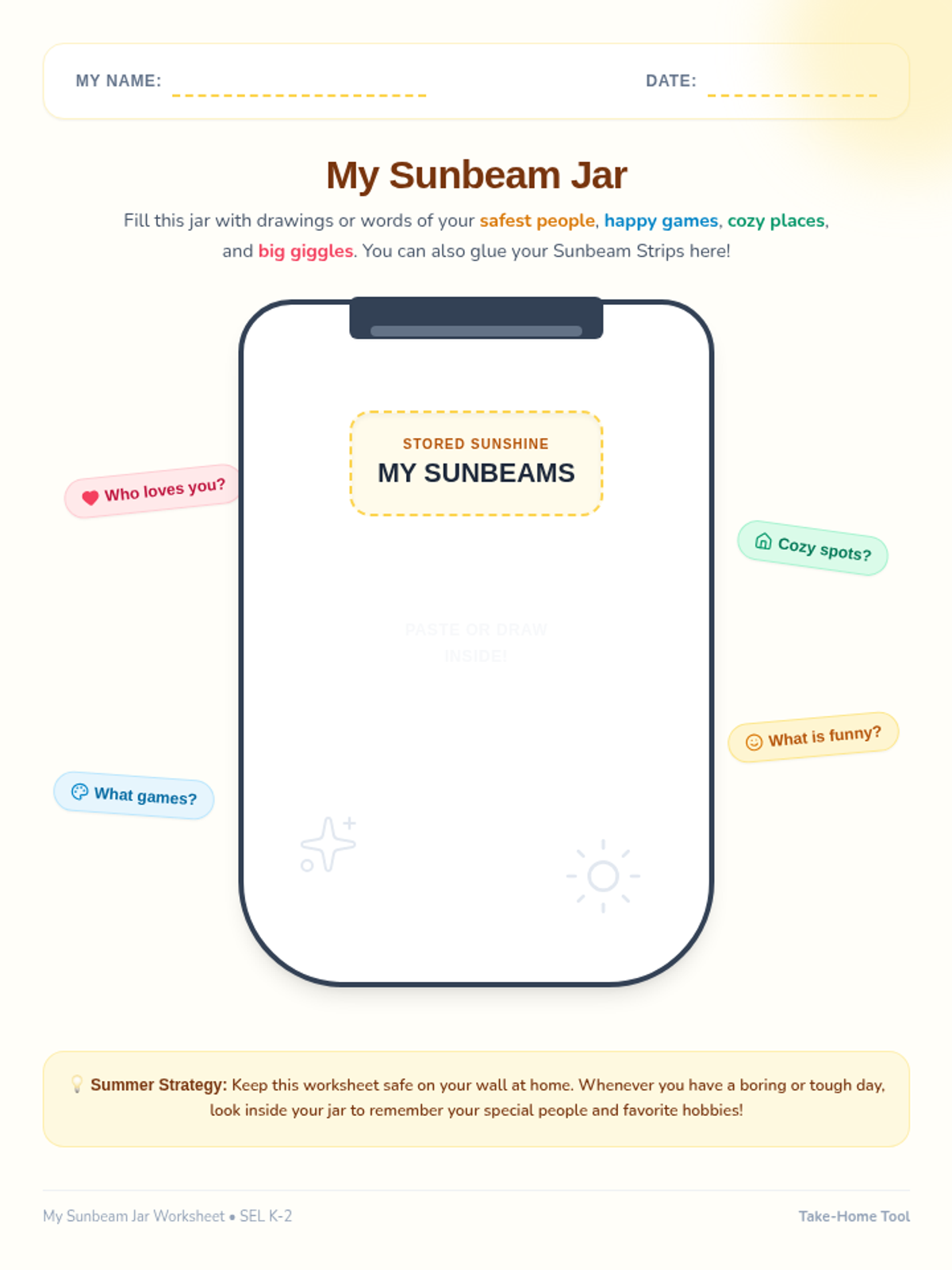
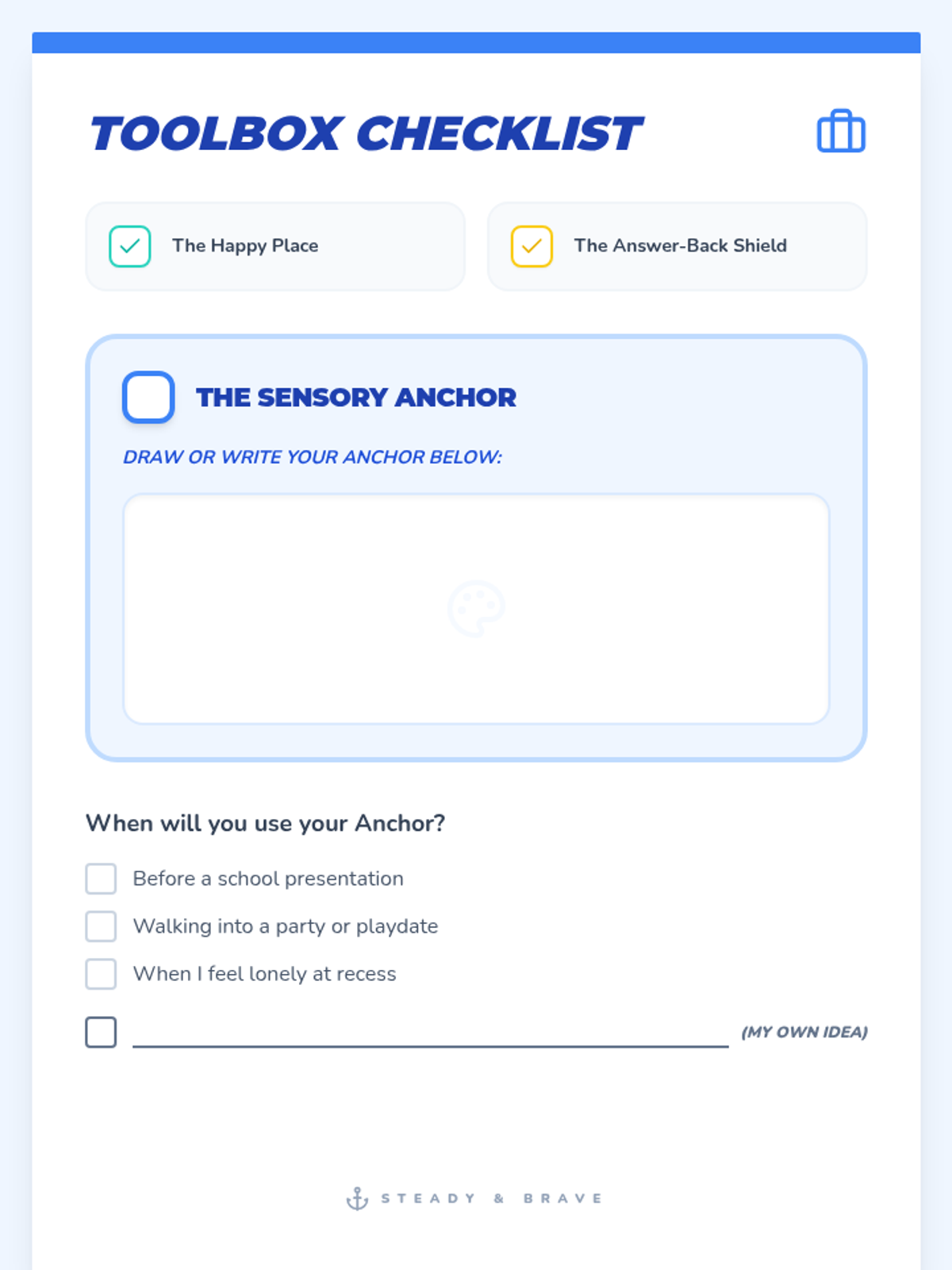
A heartwarming social-emotional learning lesson for K-2 students to identify sources of joy, support, and emotional safety. Students create a visual "Sunbeam Jar" filled with positive memories, hobbies, and supportive people to carry into the summer break.
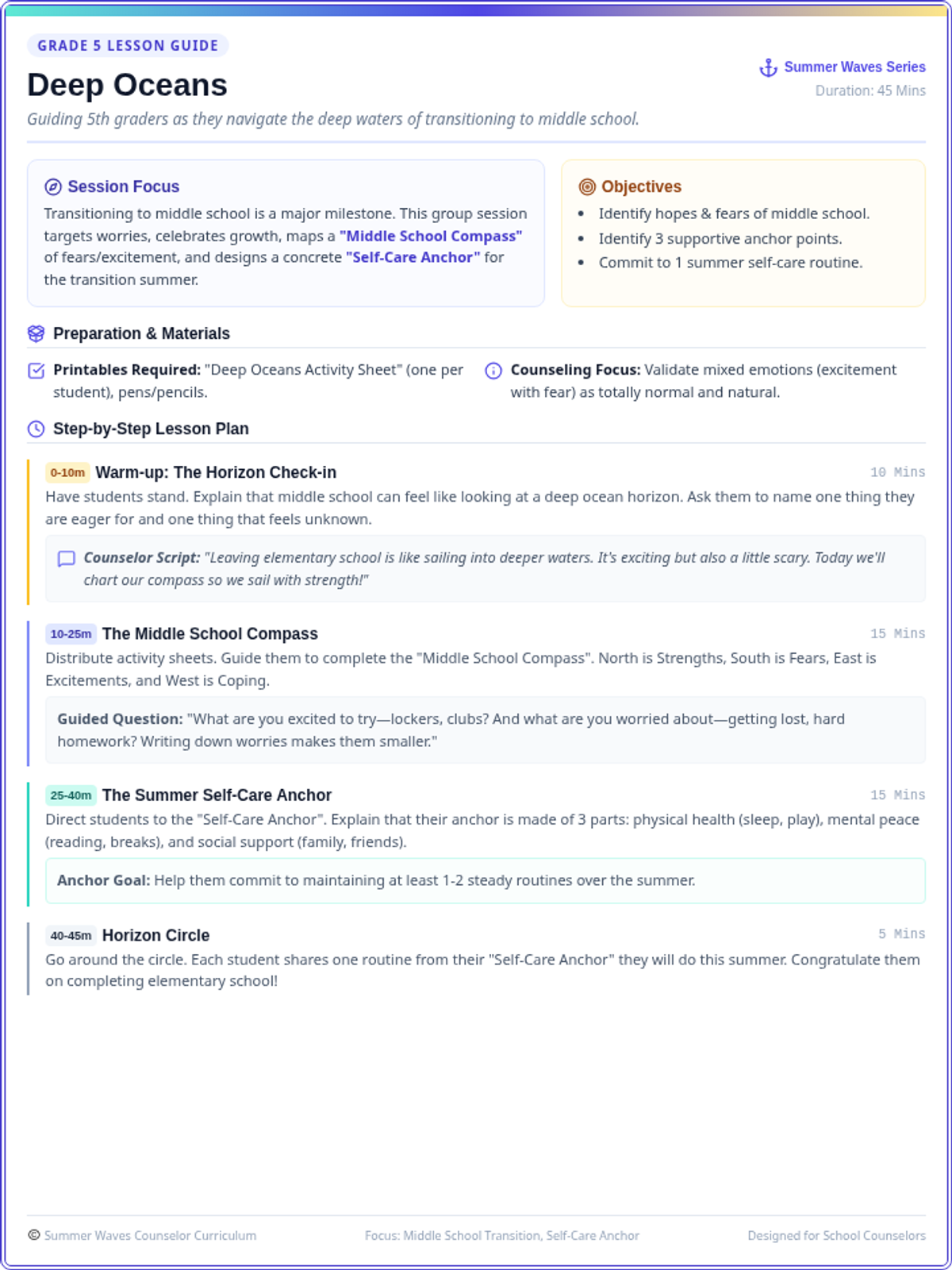
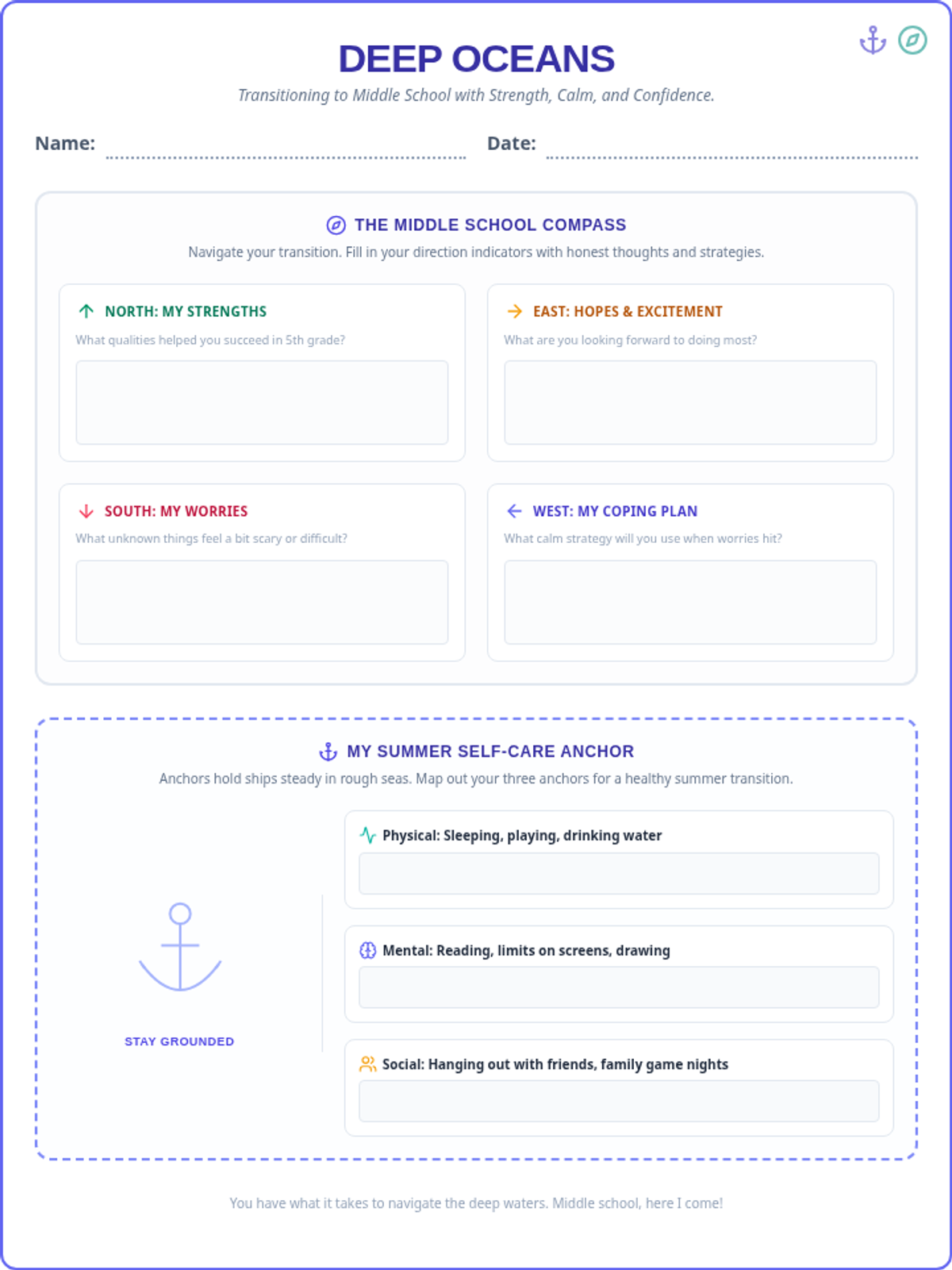
A transition-focused counseling lesson for 5th-grade students preparing for the major shift to middle school, centering on identifying core supportive networks, framing complex feelings about change, and building a self-care anchor.
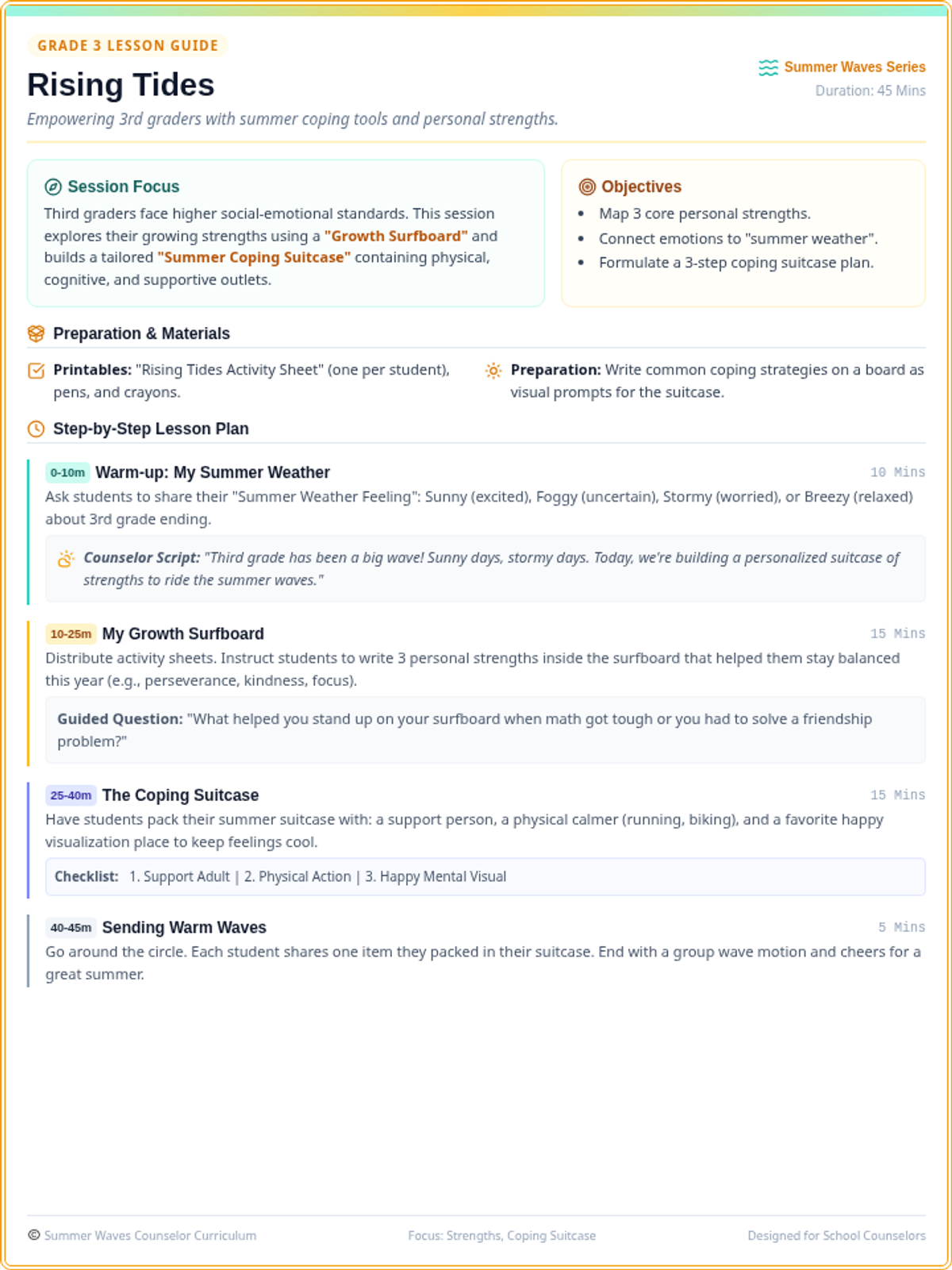
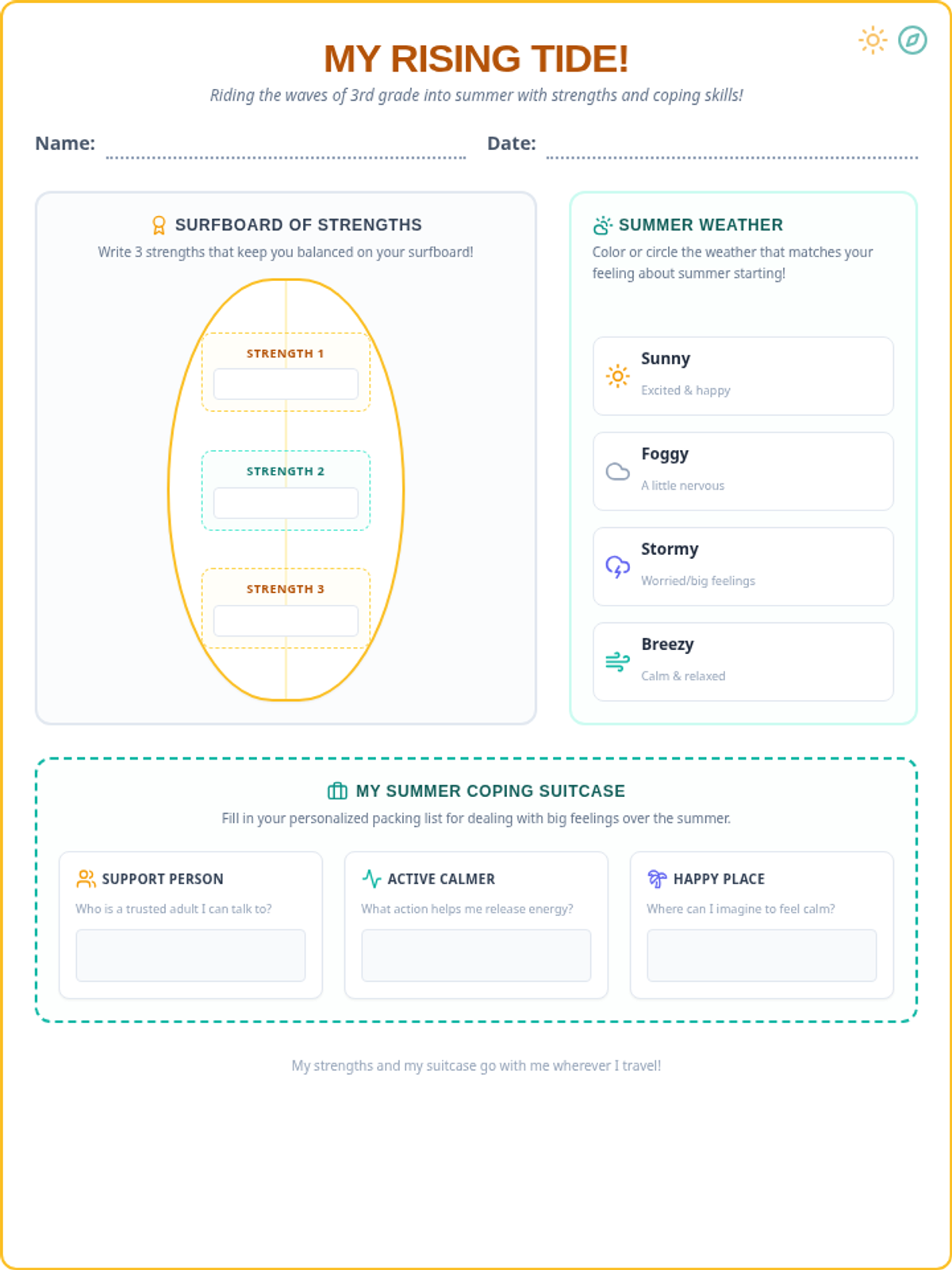
A developmental counseling lesson for 3rd-grade students focused on identifying personal strengths, tracking school year progress, and building a customizable summer coping suitcase to manage big feelings.
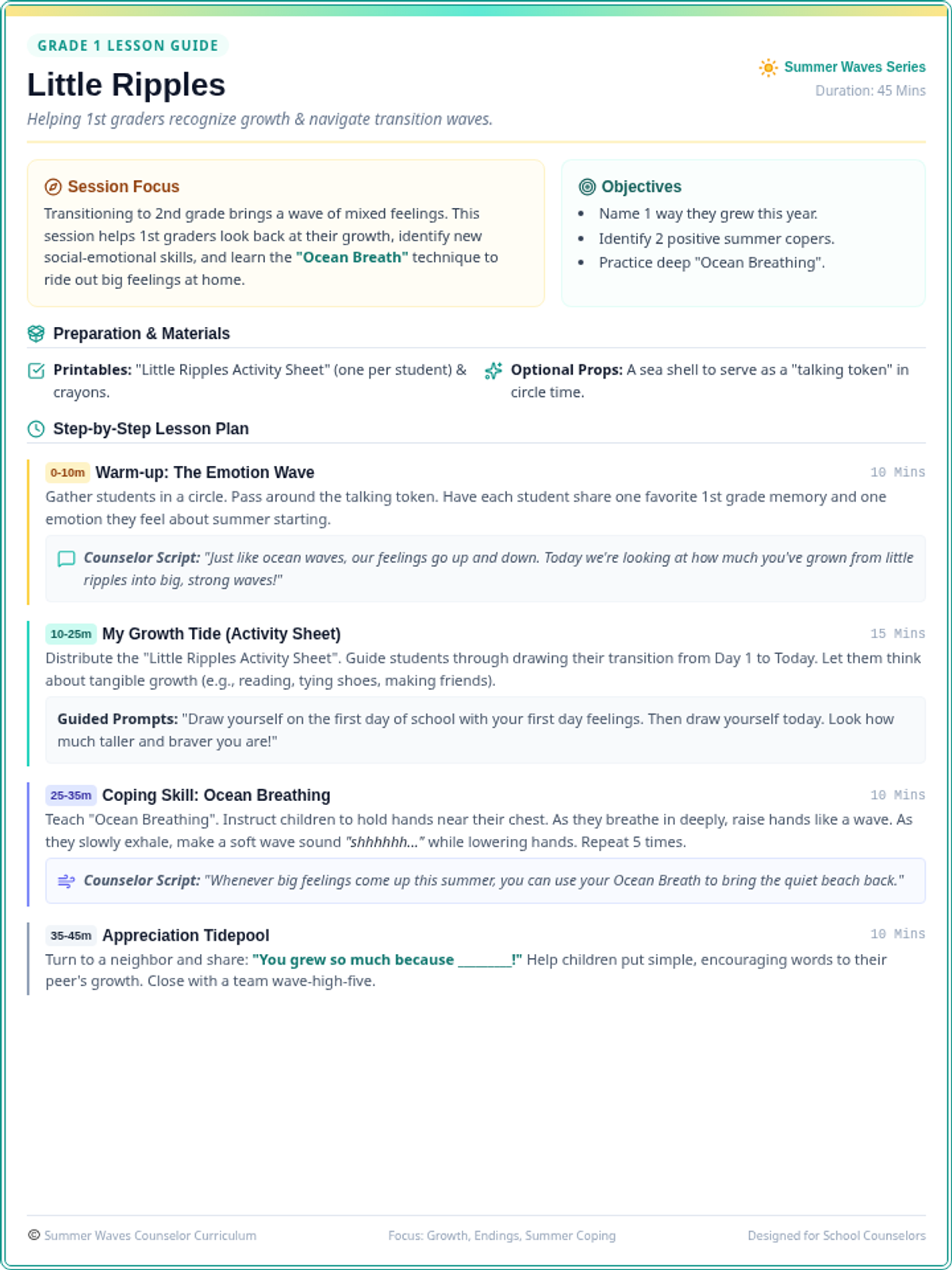
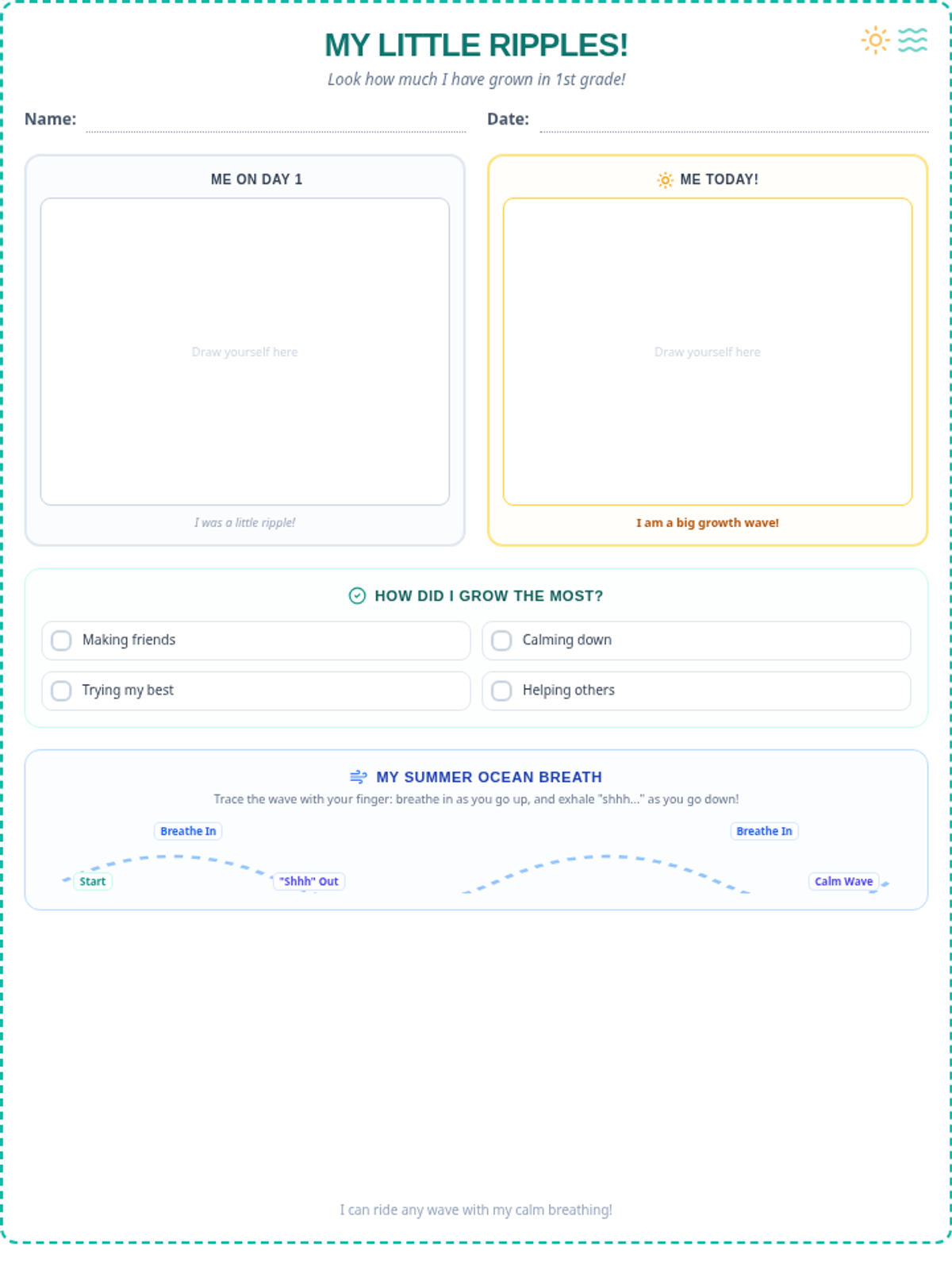
A supportive counseling session tailored for 1st-grade students to celebrate their visible emotional and social growth this year, introduce interactive 'Ocean Breathing' coping techniques, and capture their accomplishments in a highly visual, low-color printable keepsake.
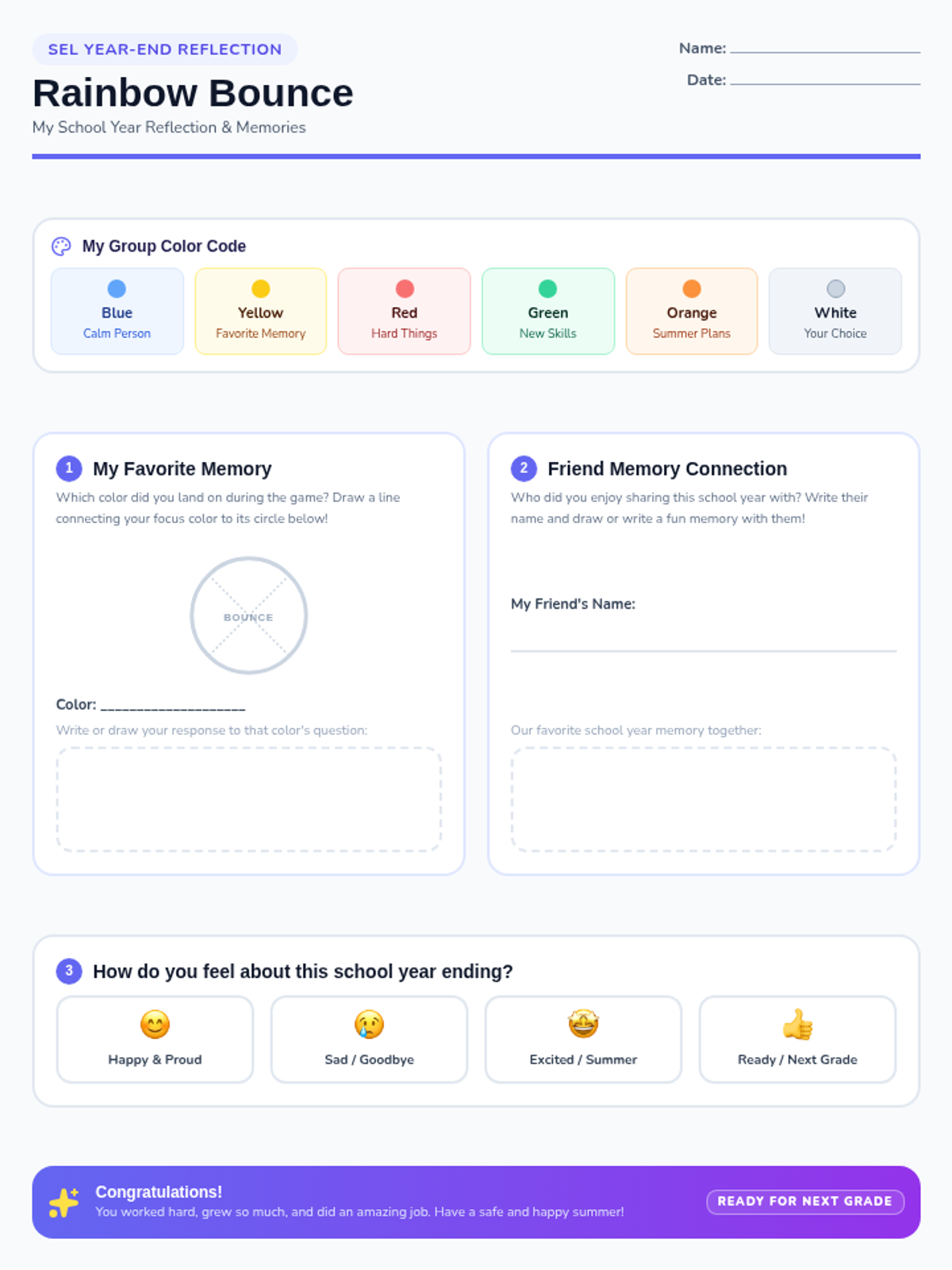
An active and engaging end-of-school-year reflection lesson using a multi-colored ball. Students toss the ball and answer simple, colorful prompts to share memories, achievements, challenges, and summer plans.
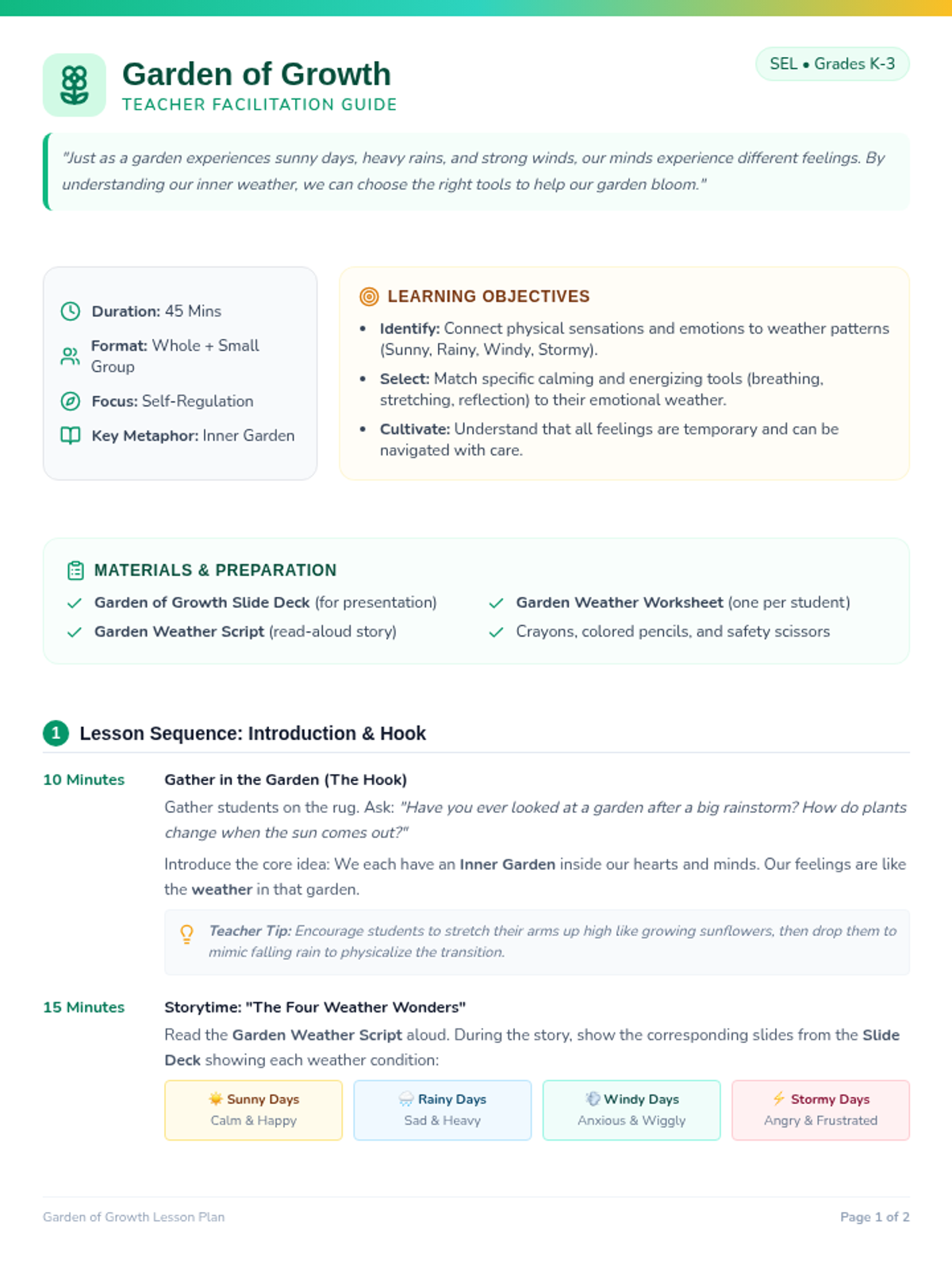
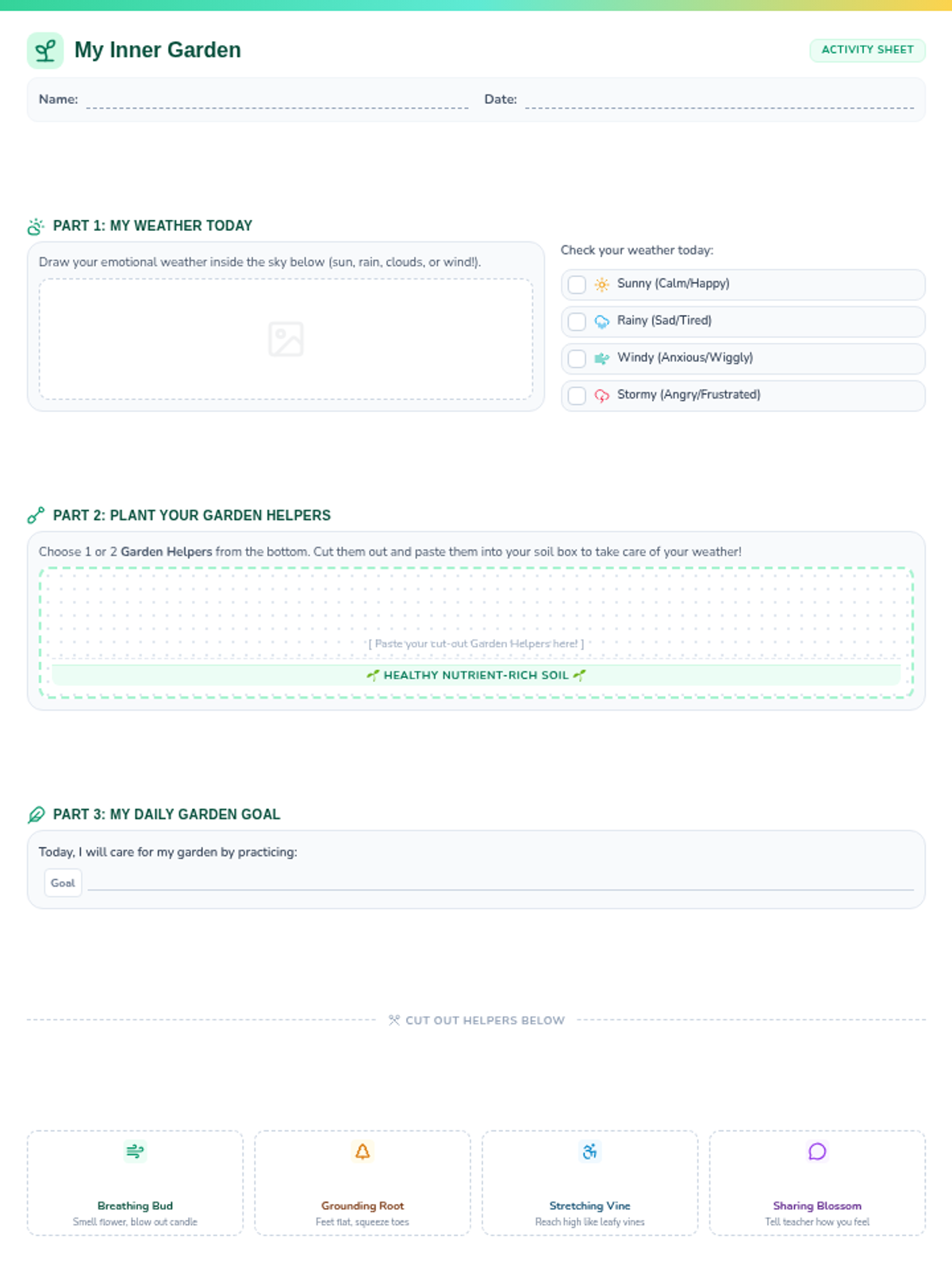
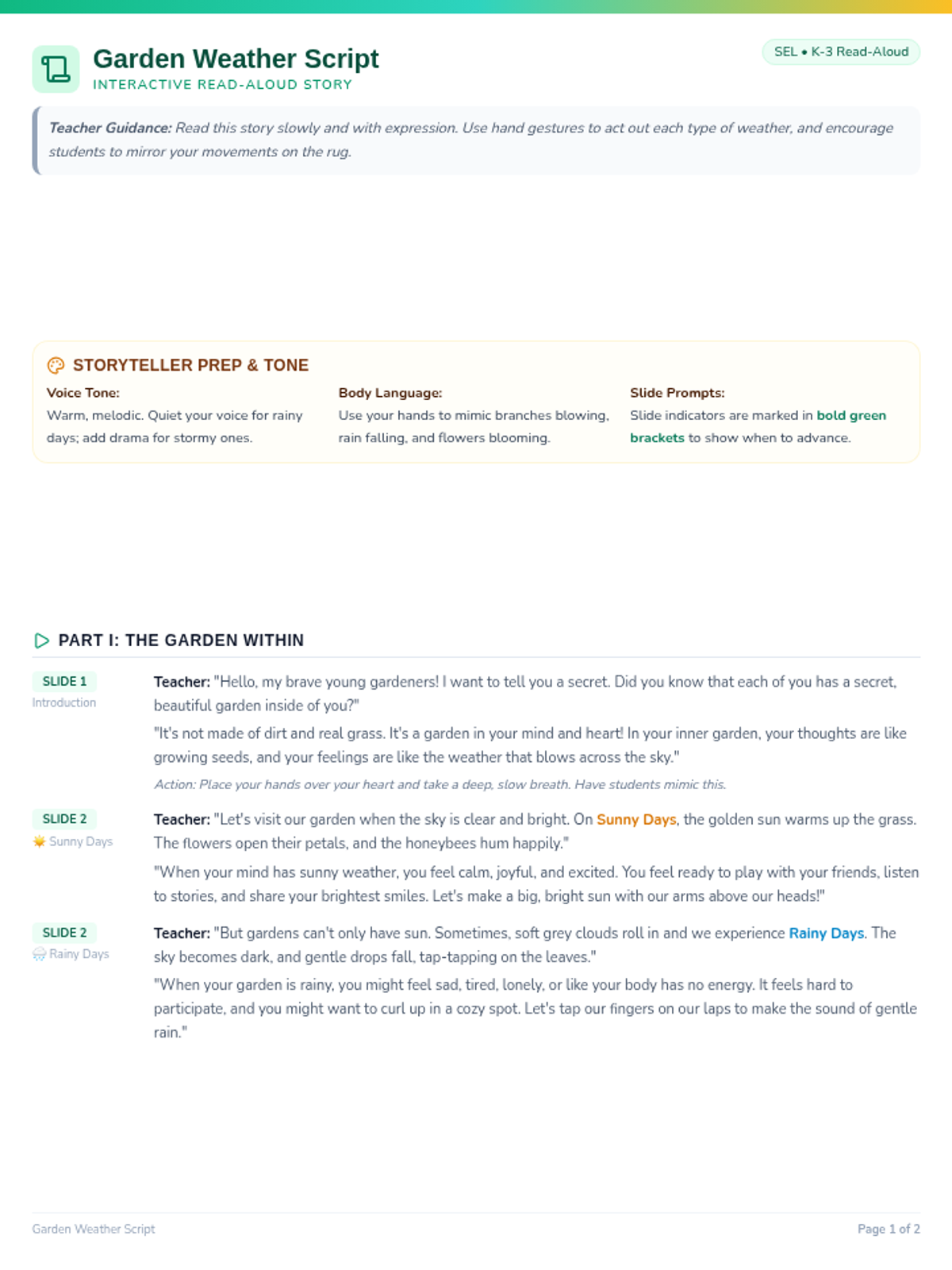
A nature-themed lesson for K-3 students using a garden metaphor to understand self-regulation, identify emotional 'weather', and cultivate healthy coping strategies.
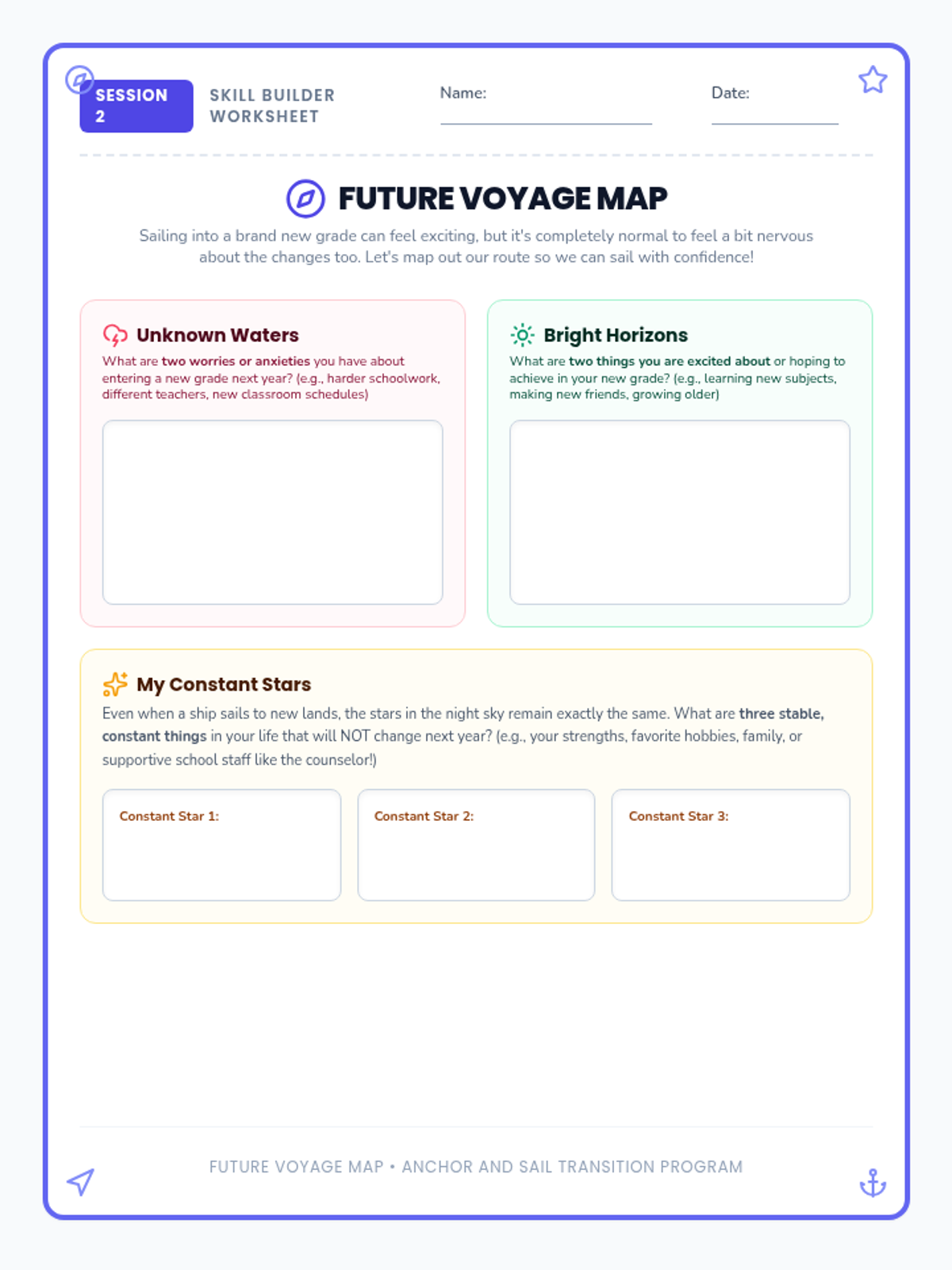
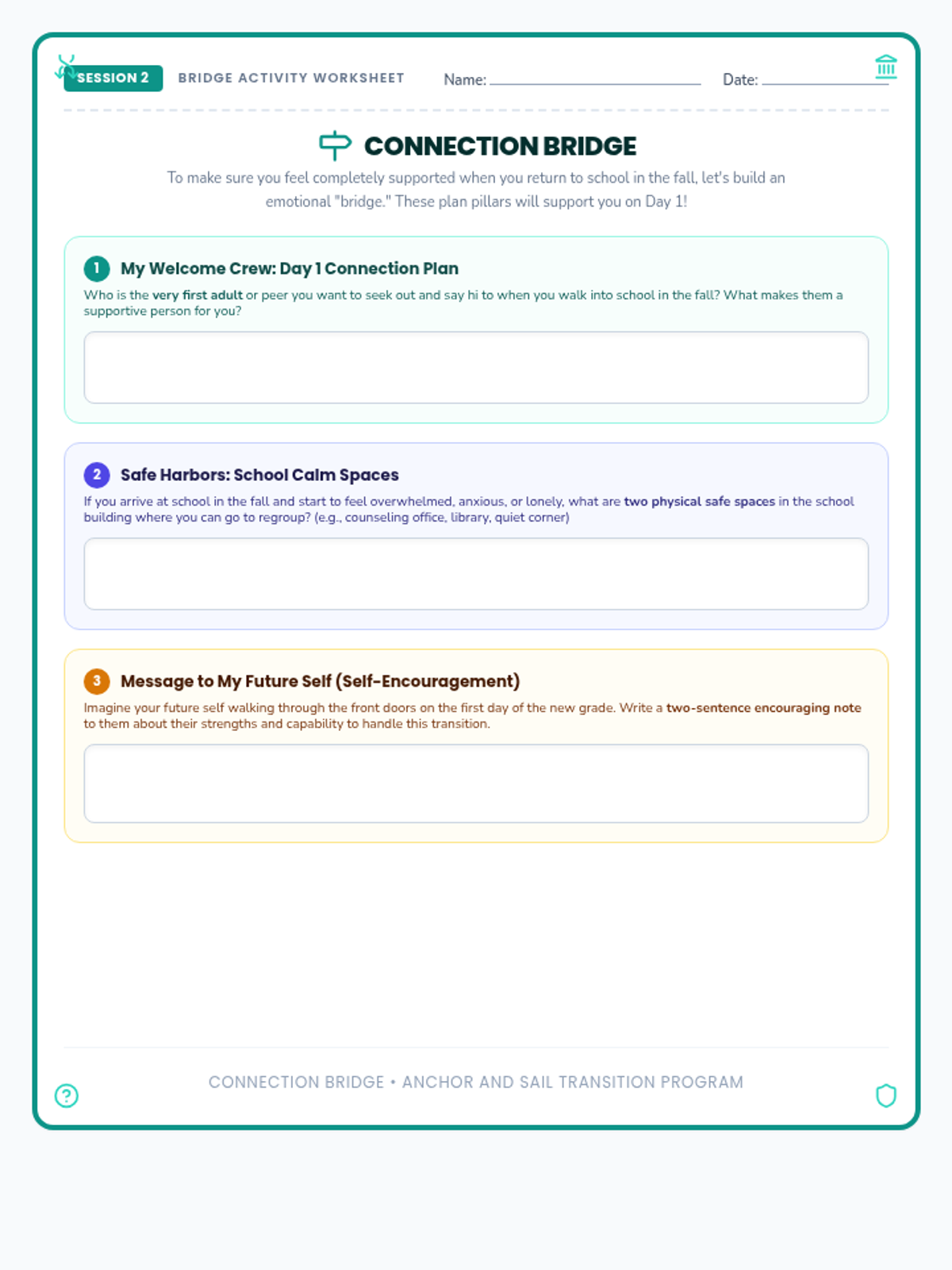
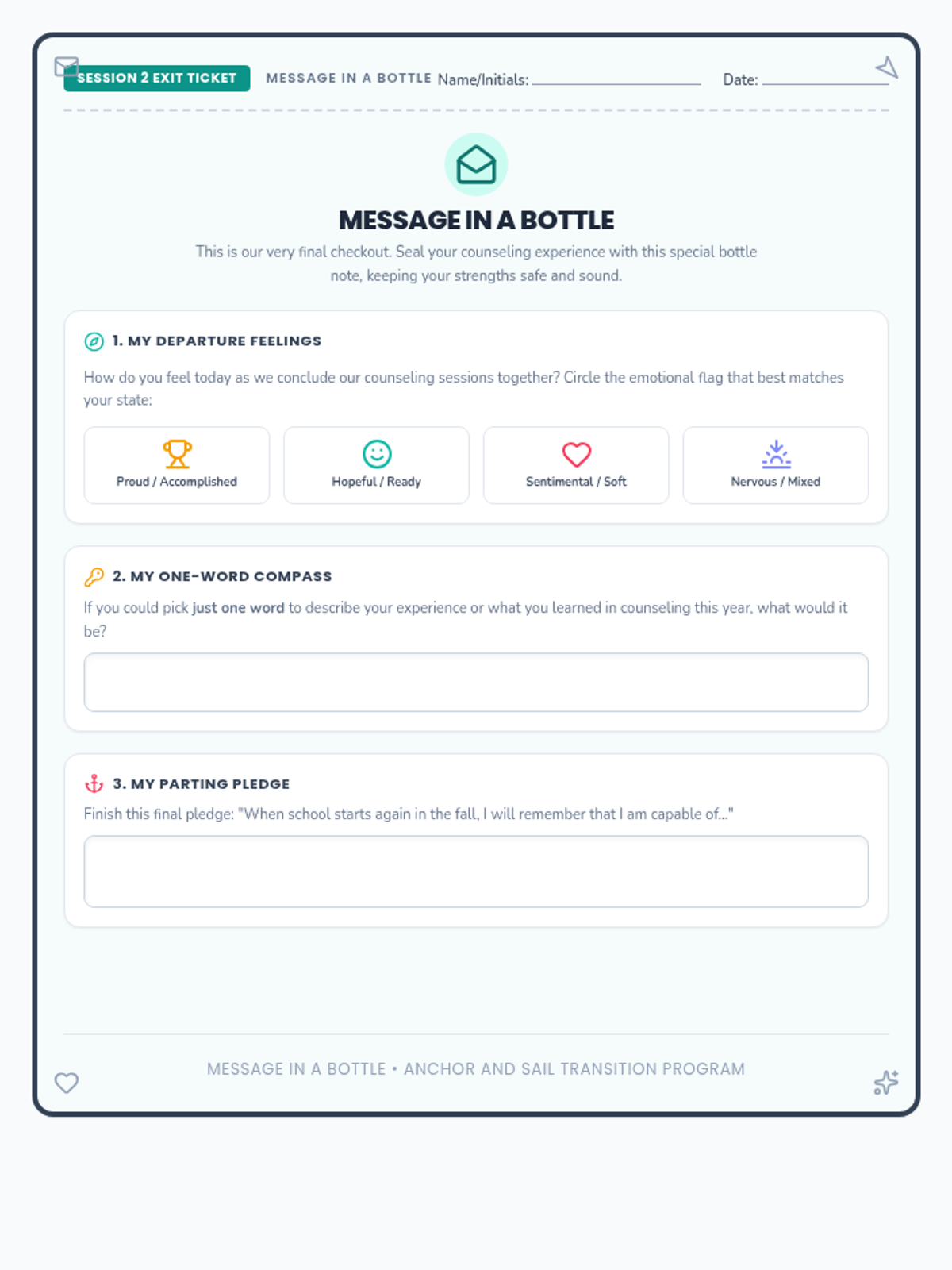
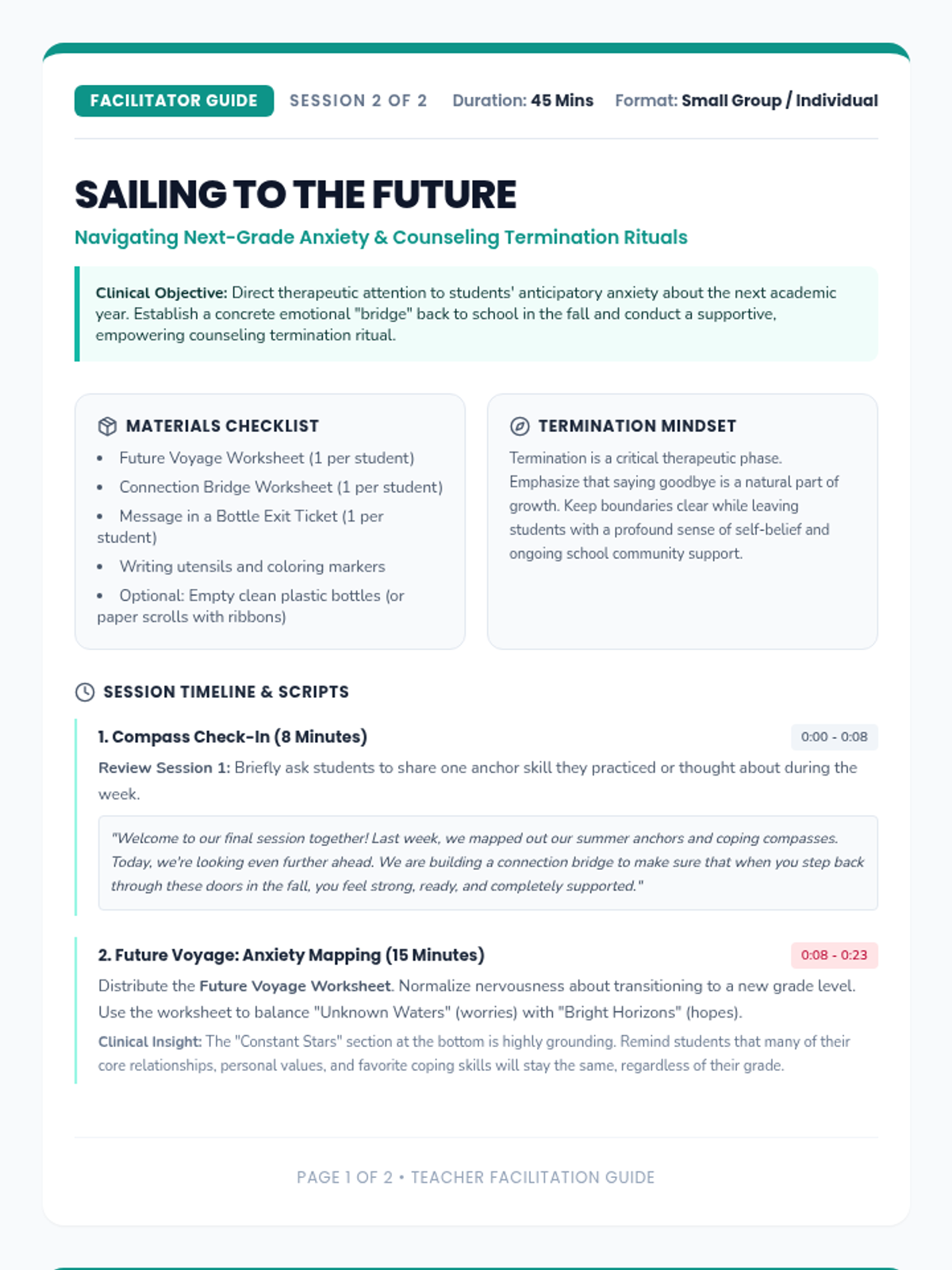
Session 2 focuses on addressing anxiety about entering a new grade, identifying what remains stable, building a concrete emotional "bridge" back to school in the fall, and conducting a meaningful counseling termination ritual.
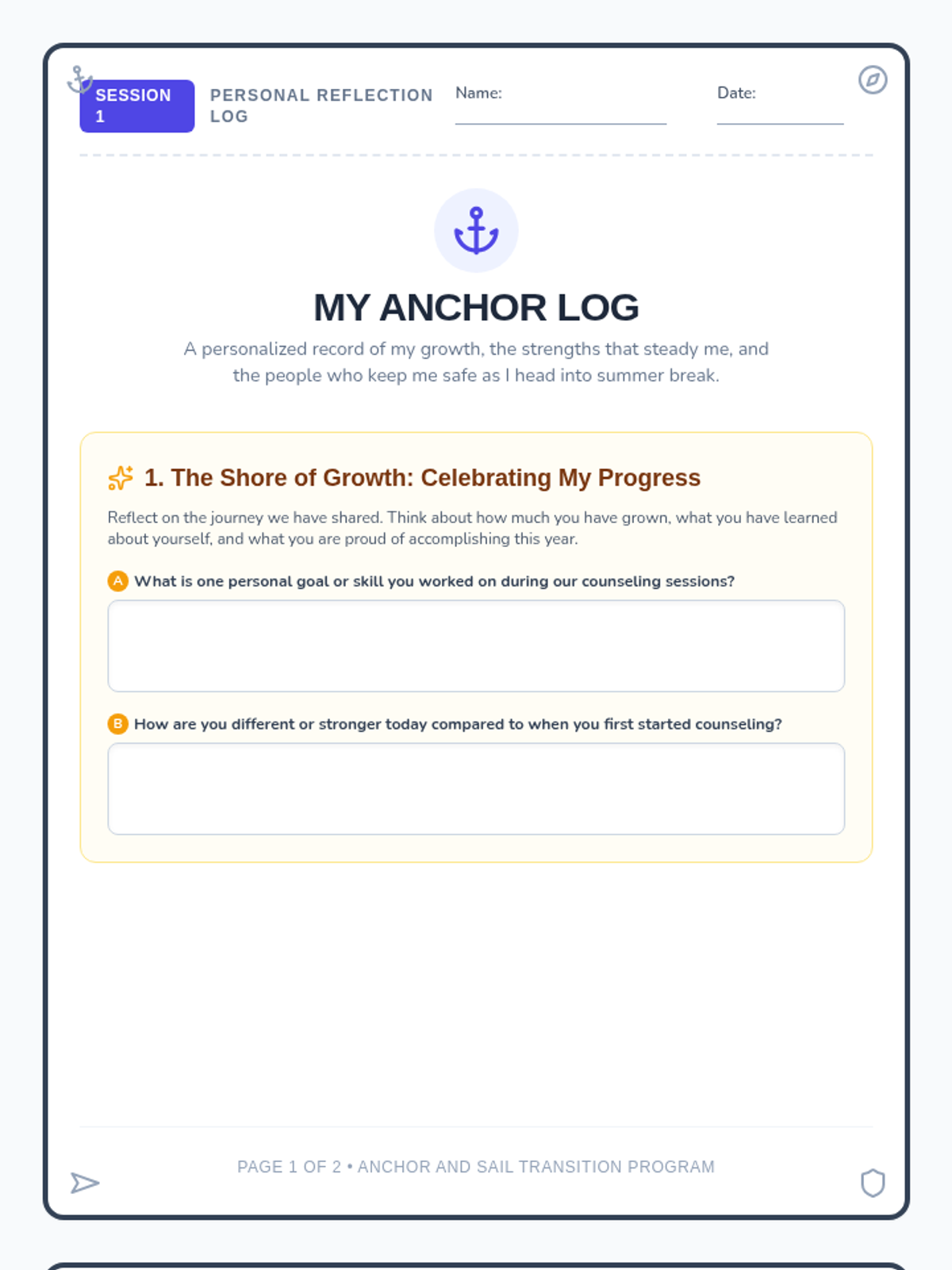
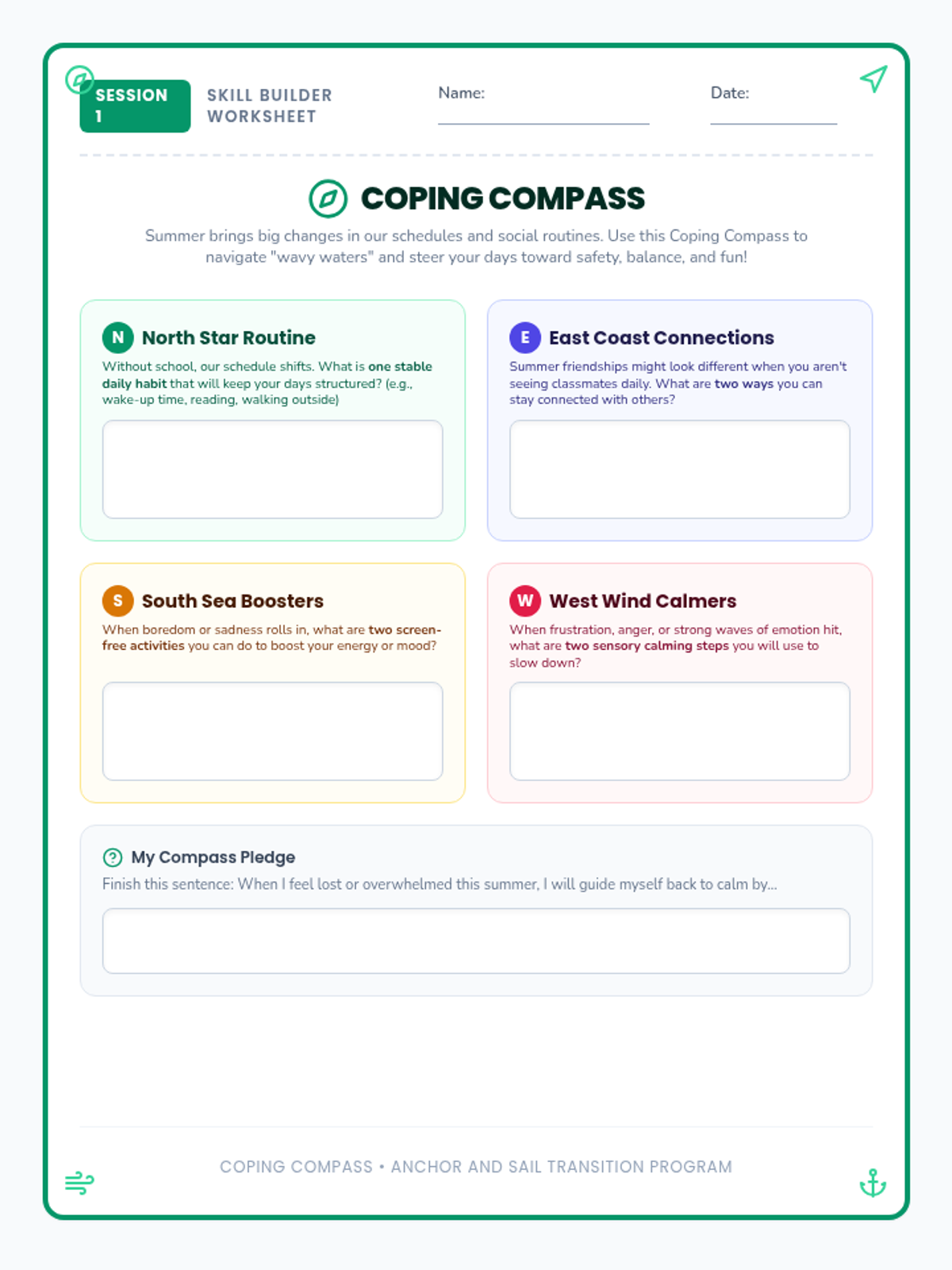
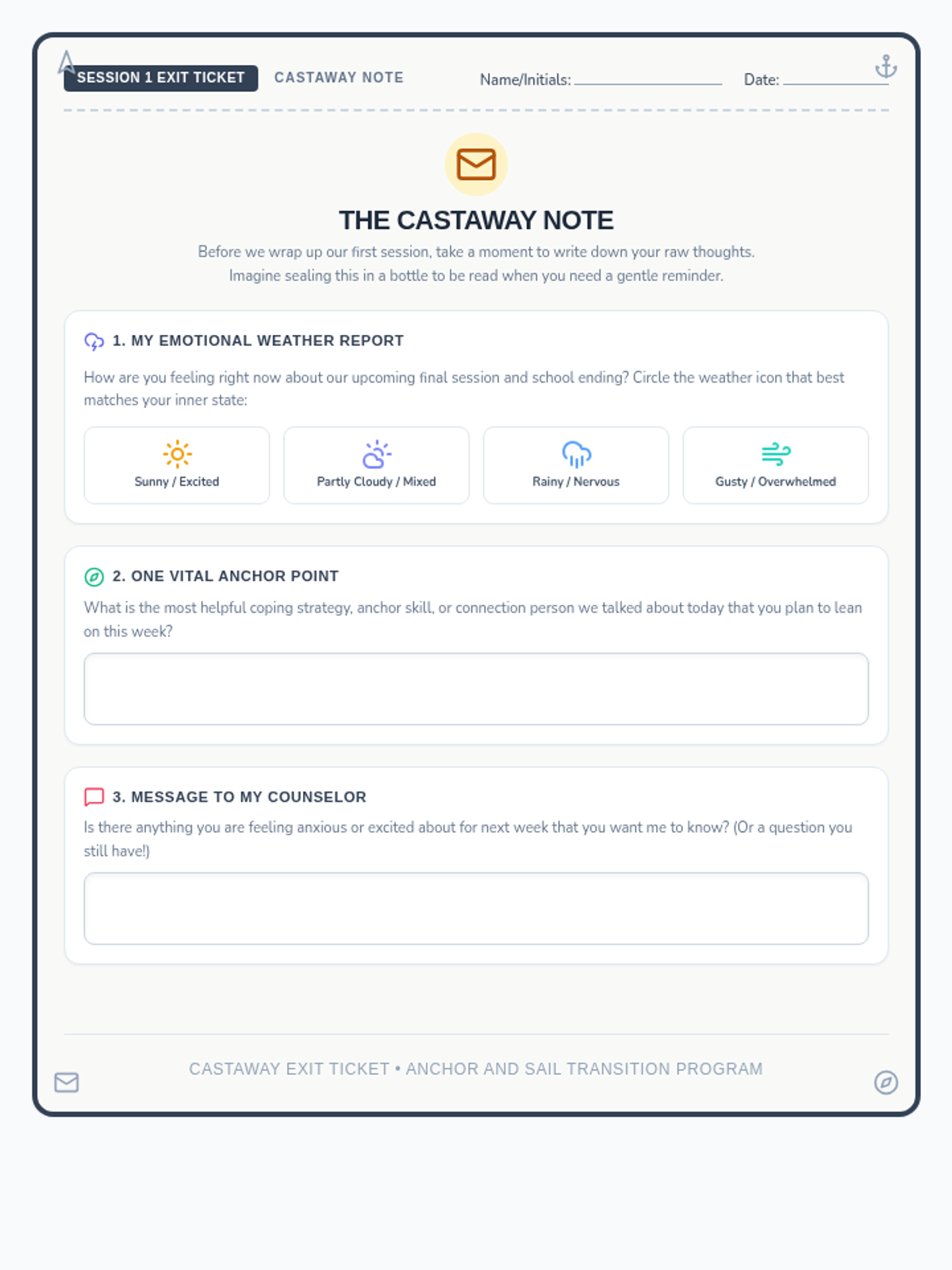
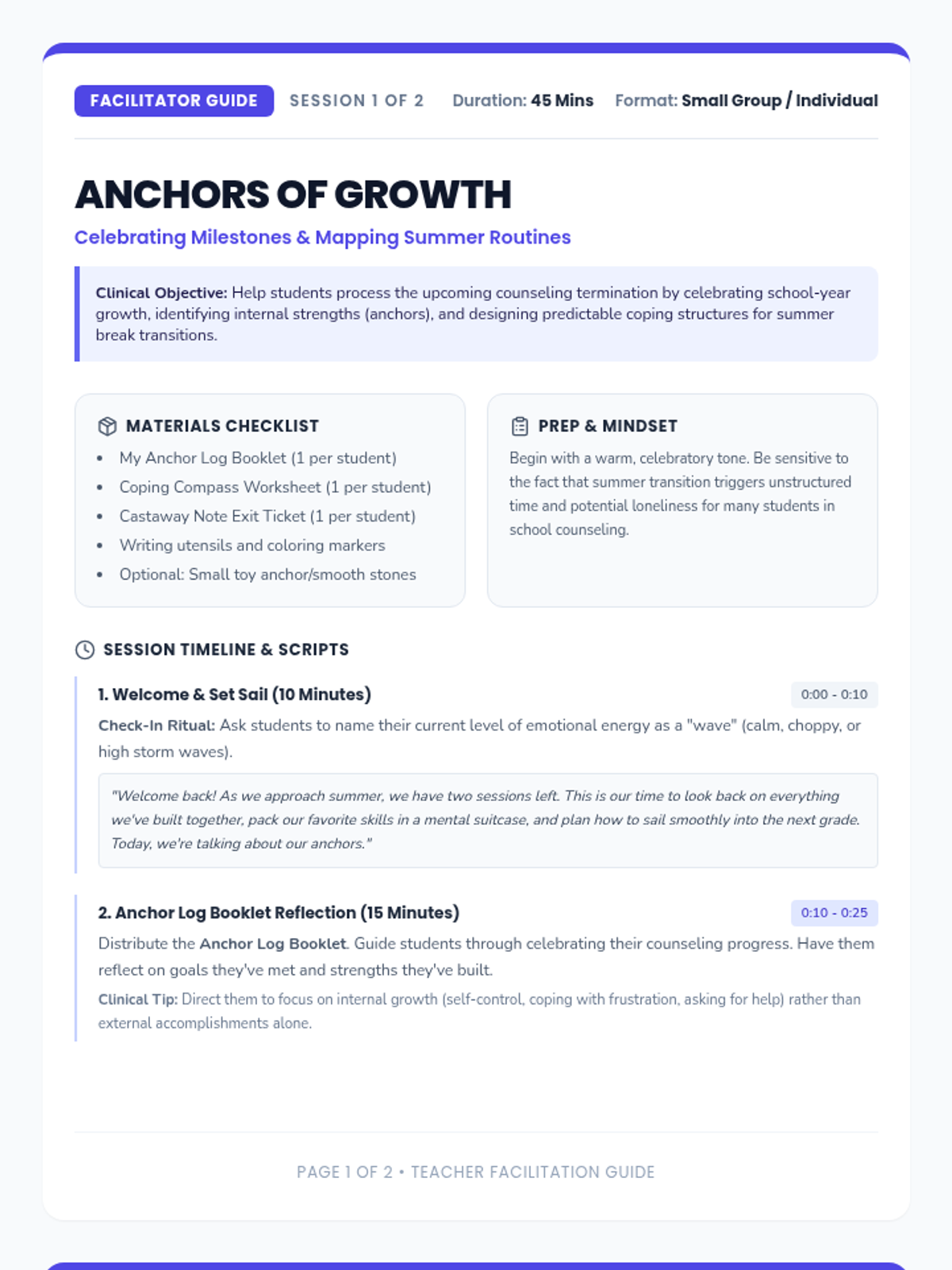
Session 1 focuses on reflecting on counseling progress, celebrating personal growth over the past year, identifying personal "anchors" (coping skills, support systems), and preparing for the changes in daily routines during summer break.
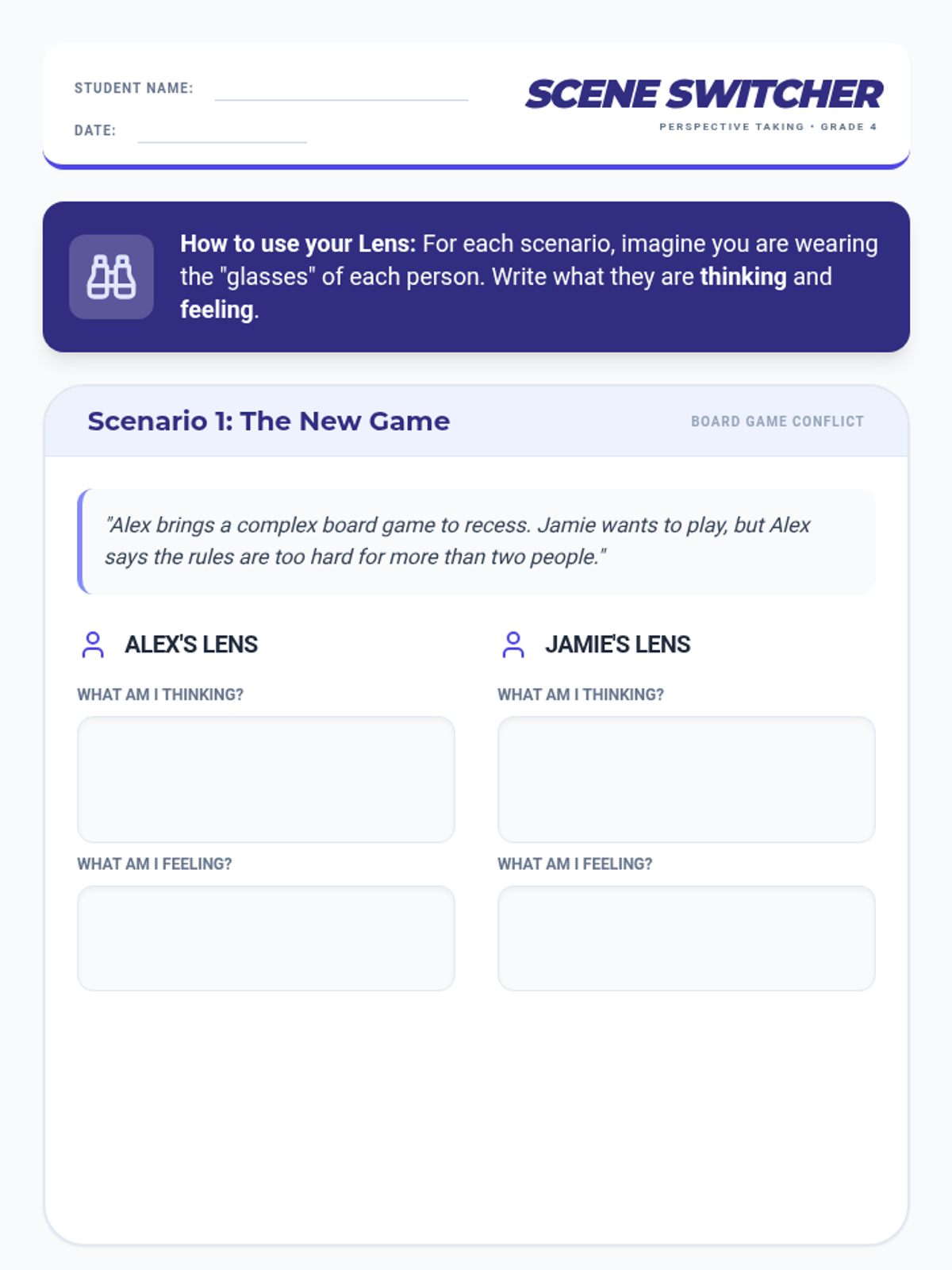
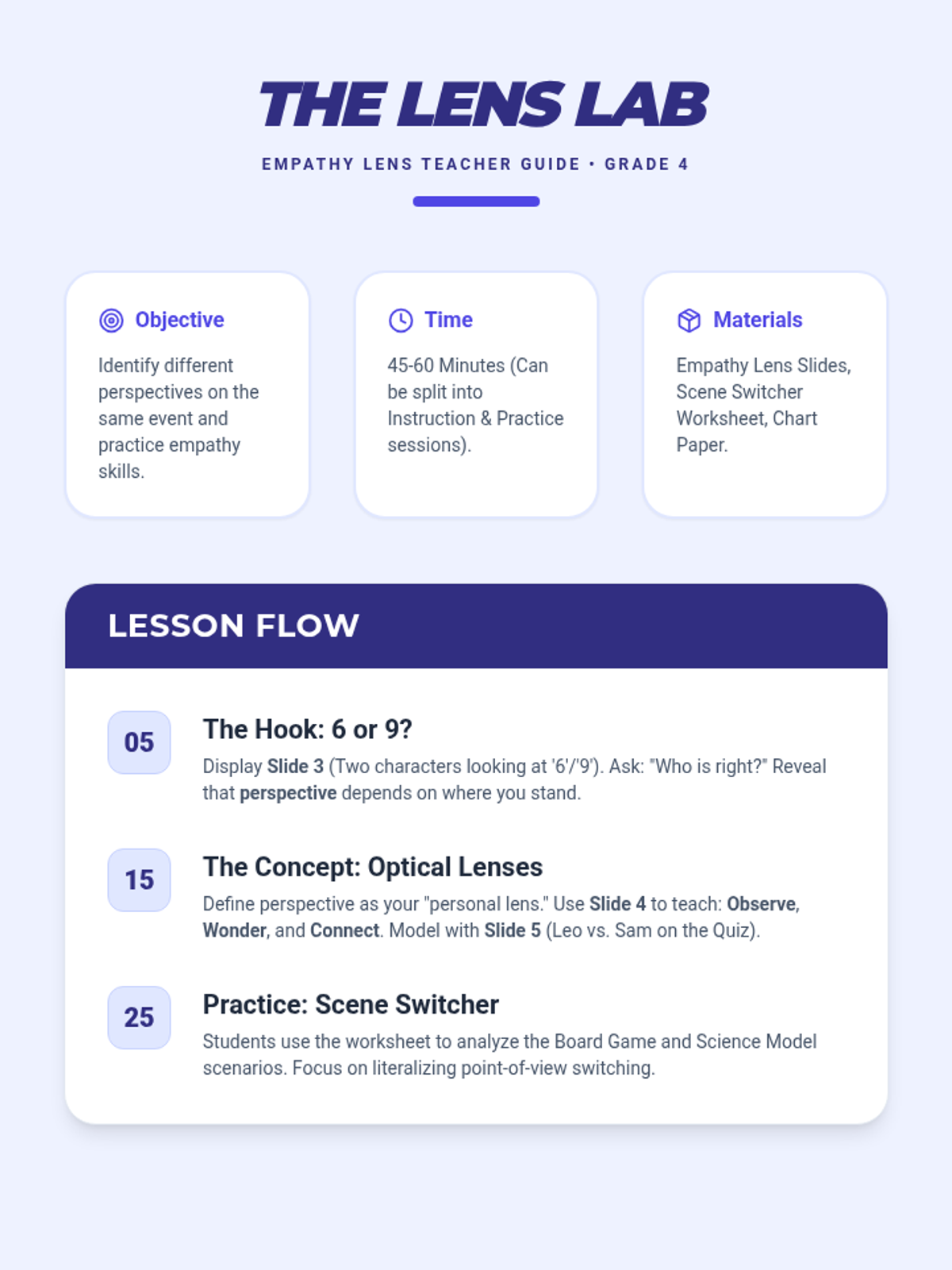
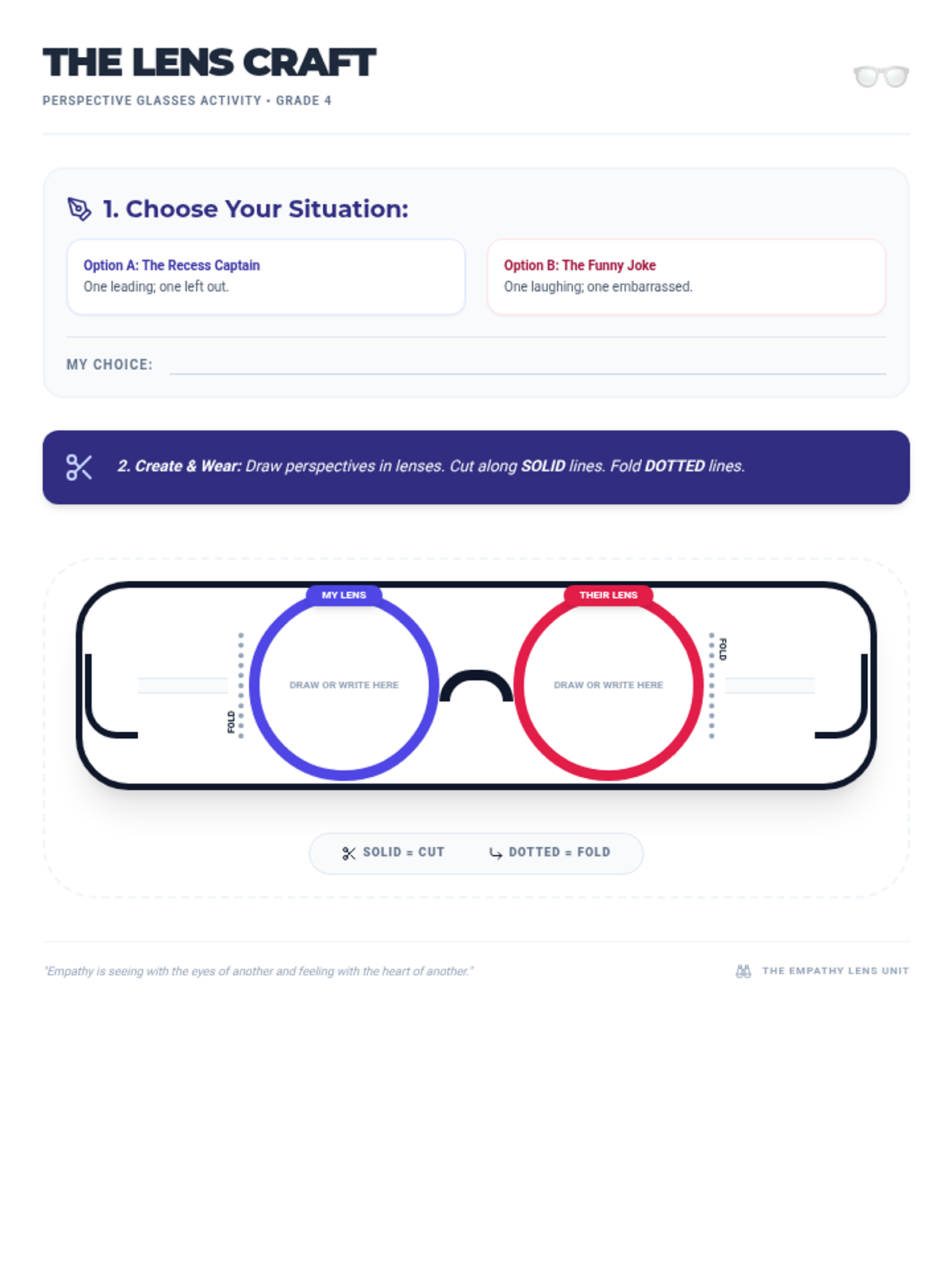
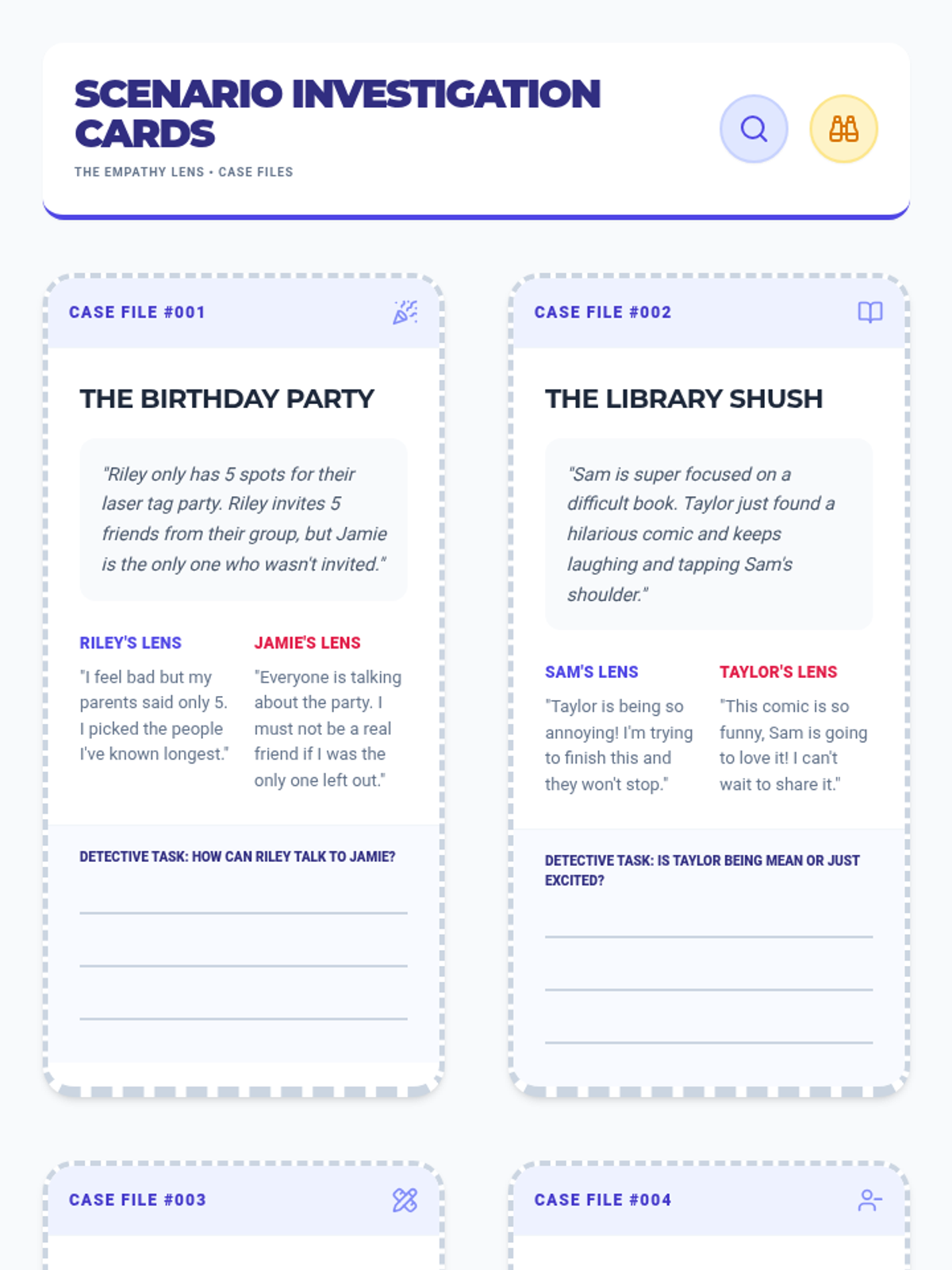
A perspective-taking lesson for fourth graders using the 'Optical Lens' metaphor. Students learn to recognize that two people can experience the same event differently and practice identifying others' feelings and thoughts.
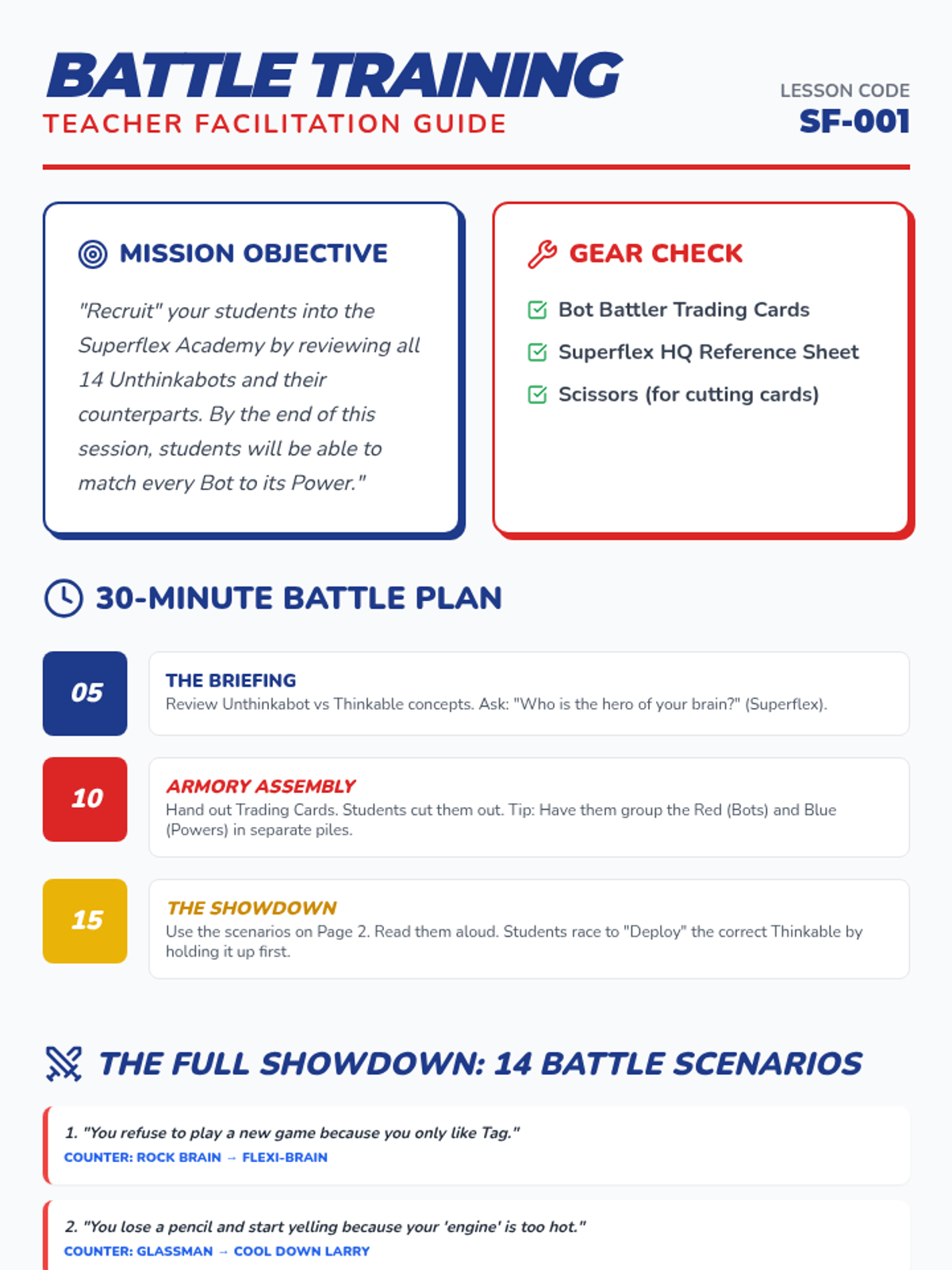
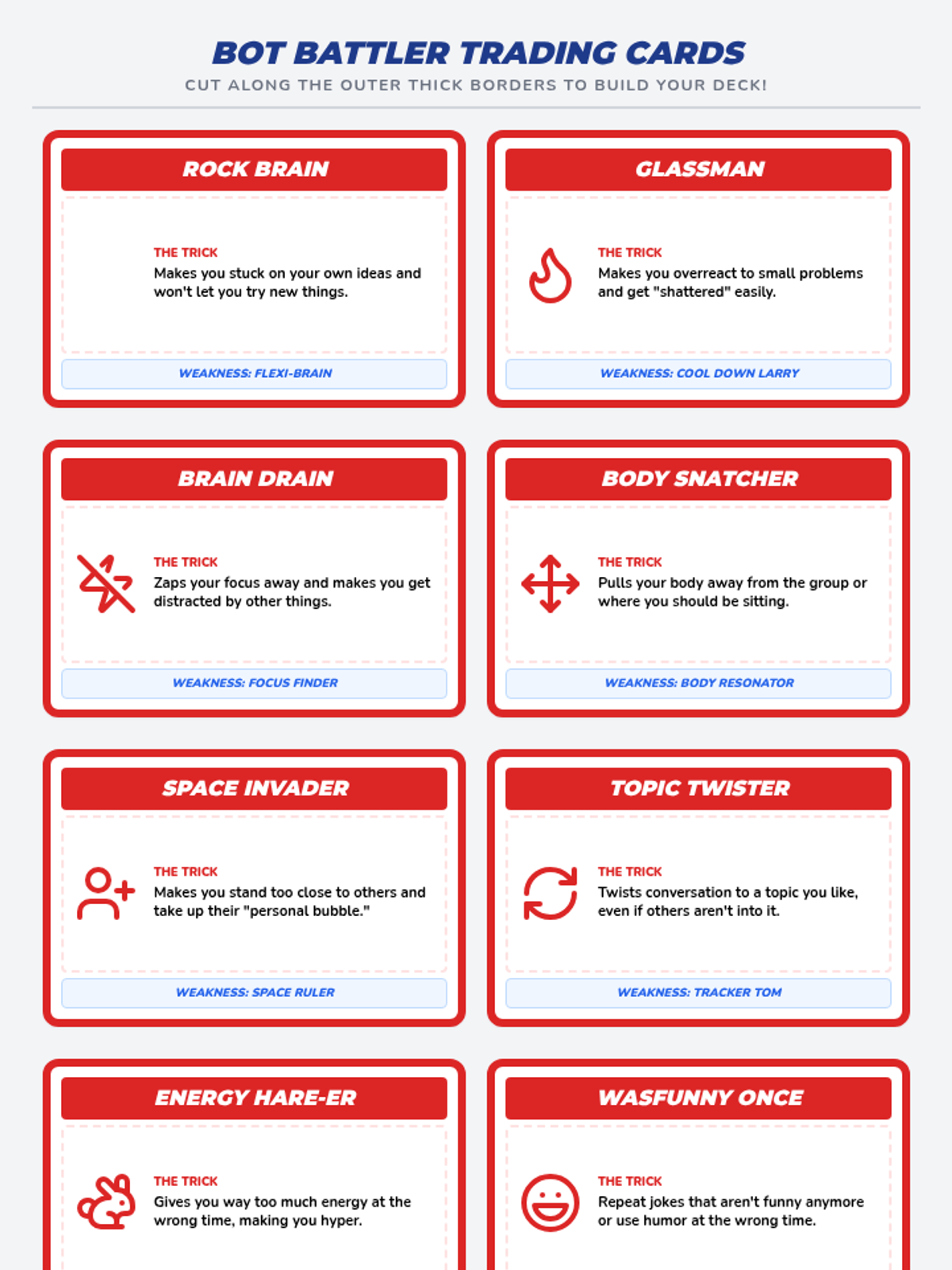
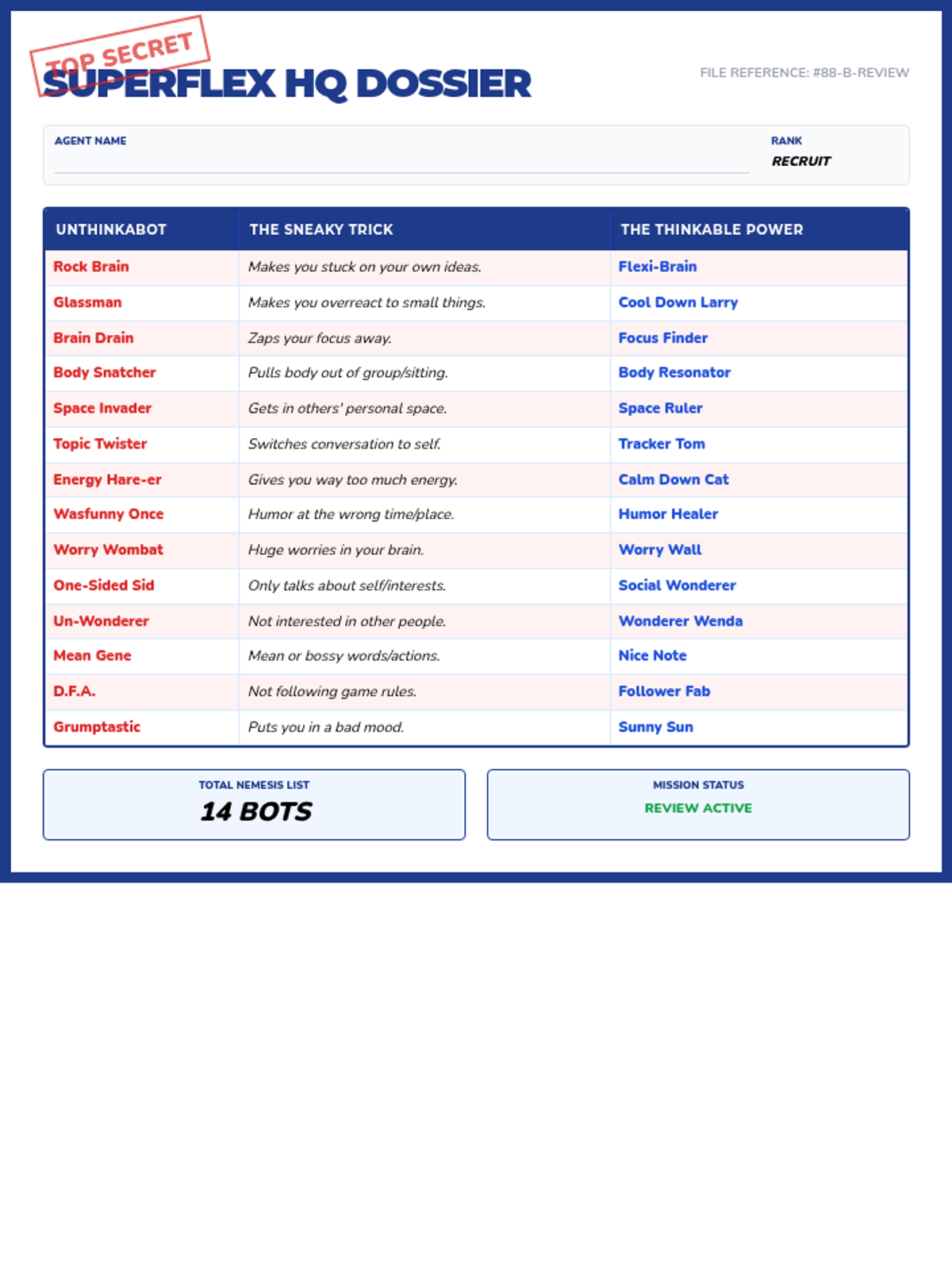
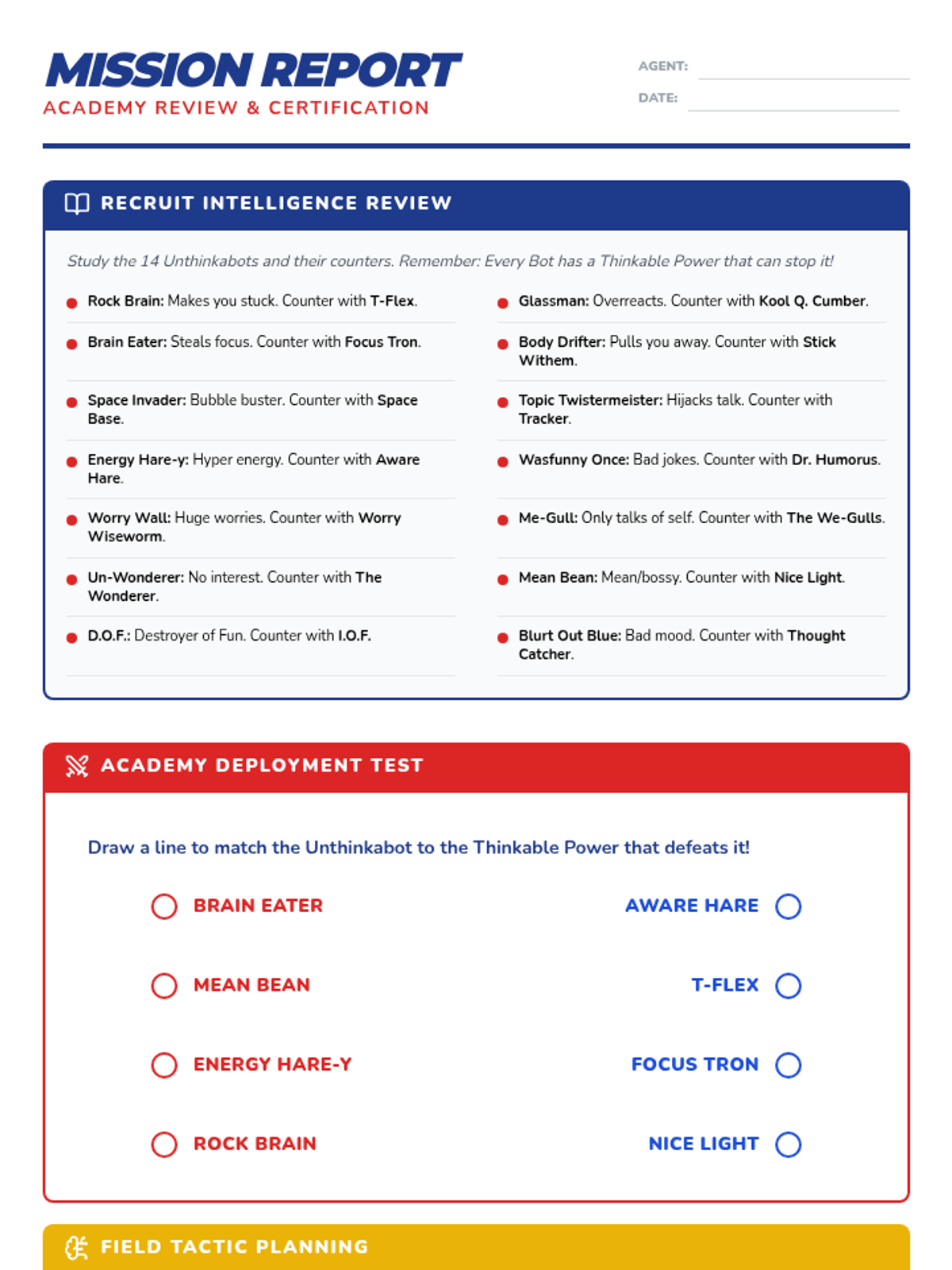
A fast-paced review session where students use character trading cards to identify Unthinkabot 'tricks' and deploy Thinkable 'powers' to defeat them. Includes a comprehensive reference guide and a teacher-led battle game.
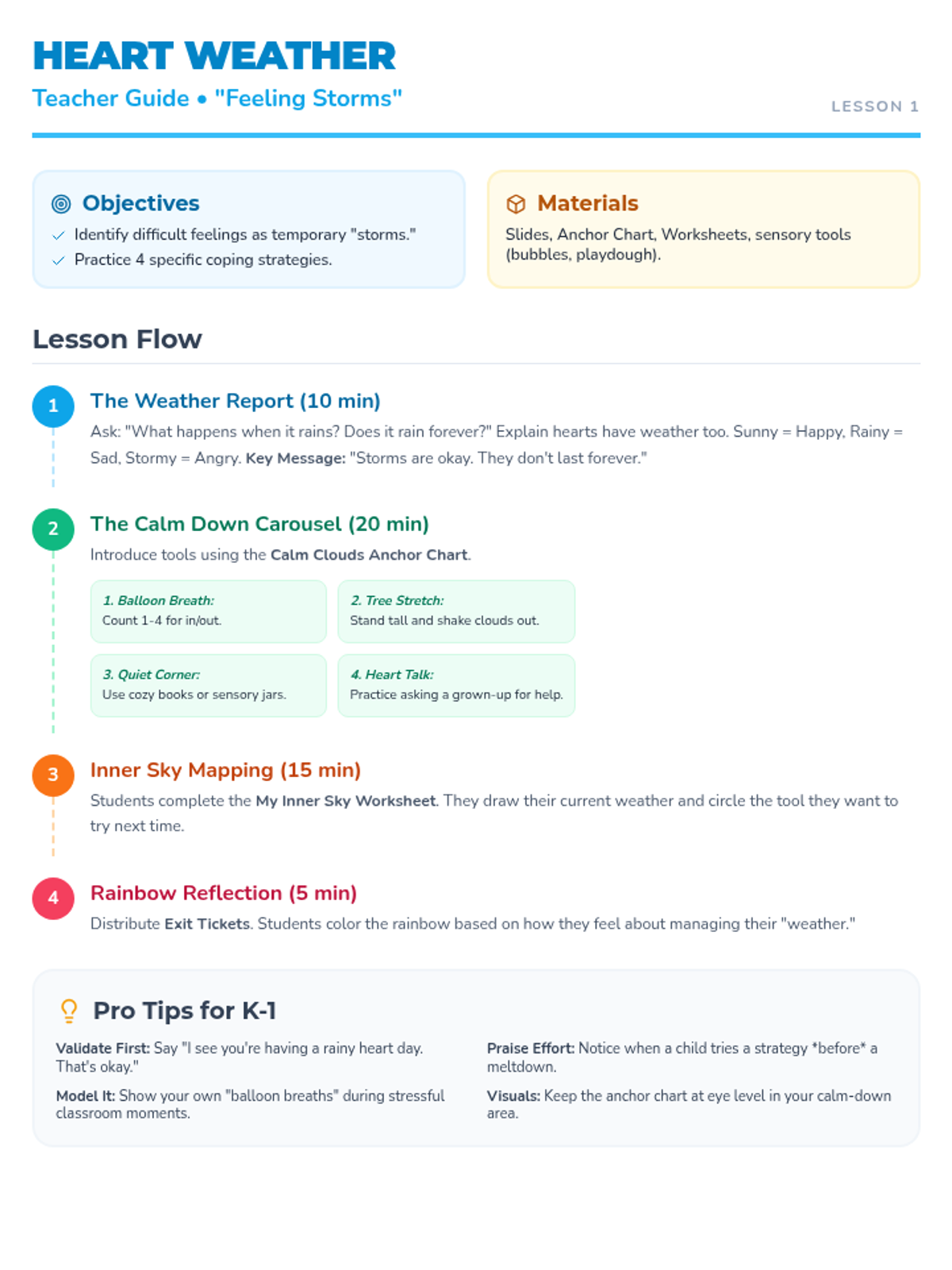
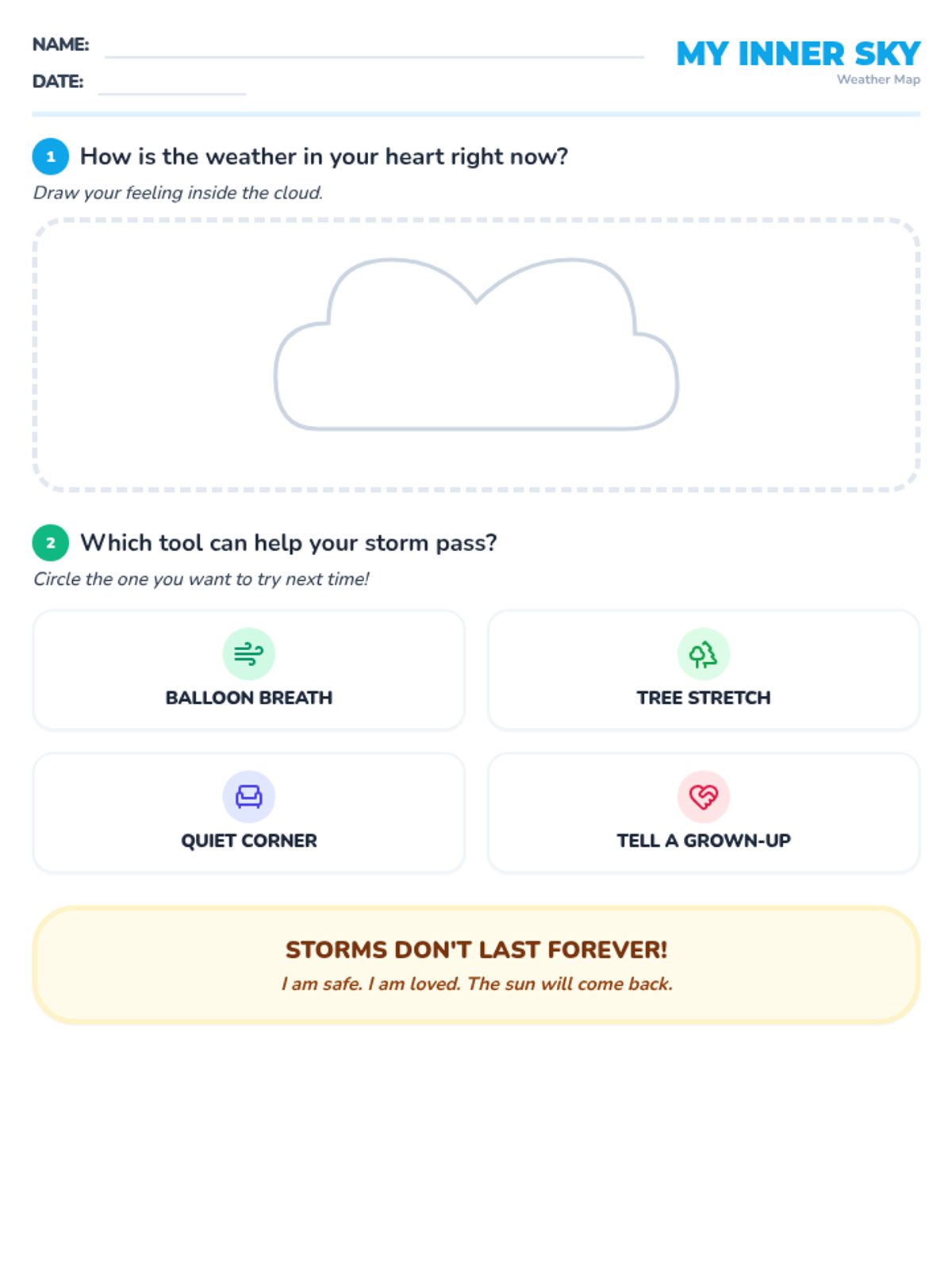
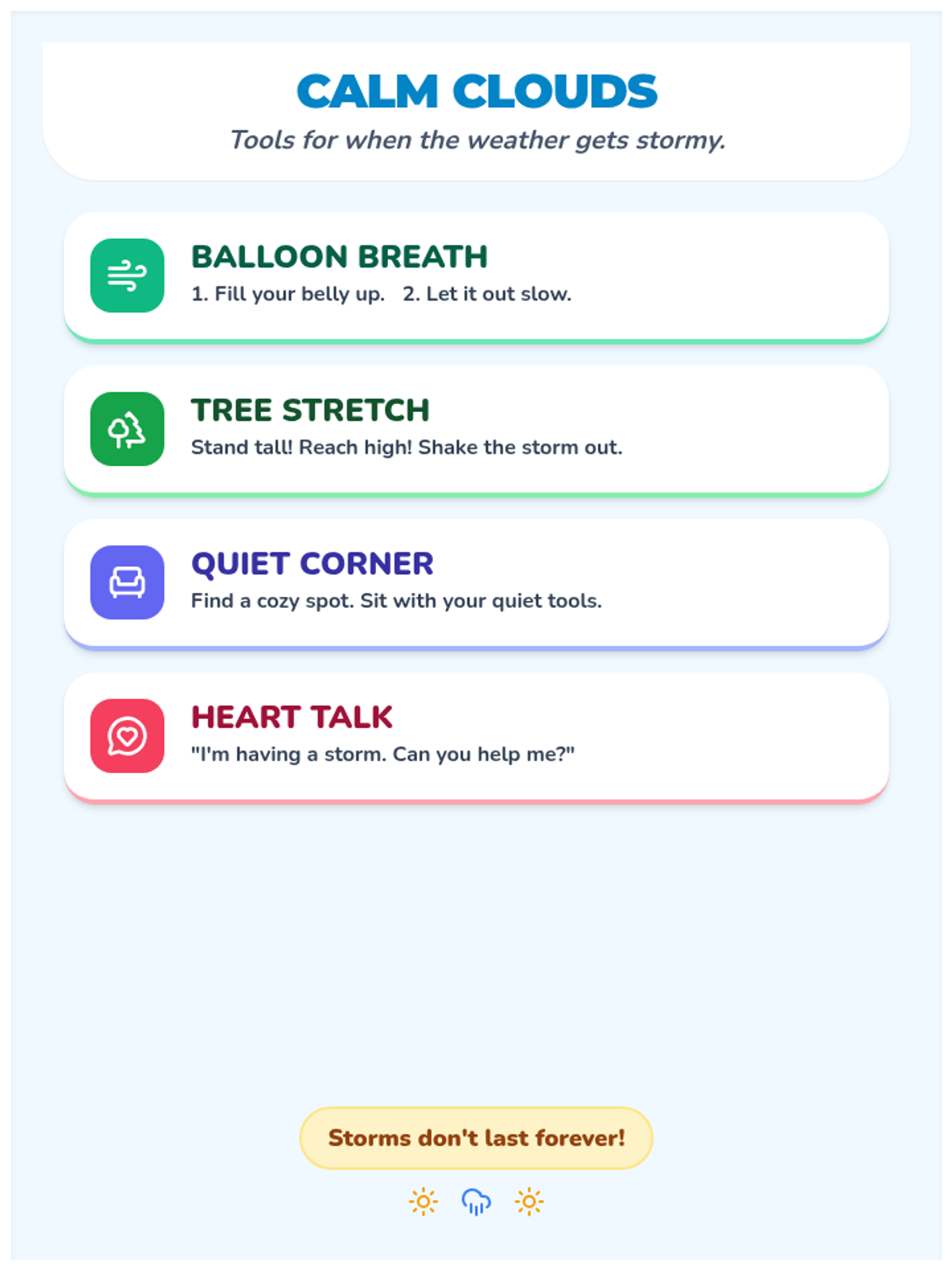
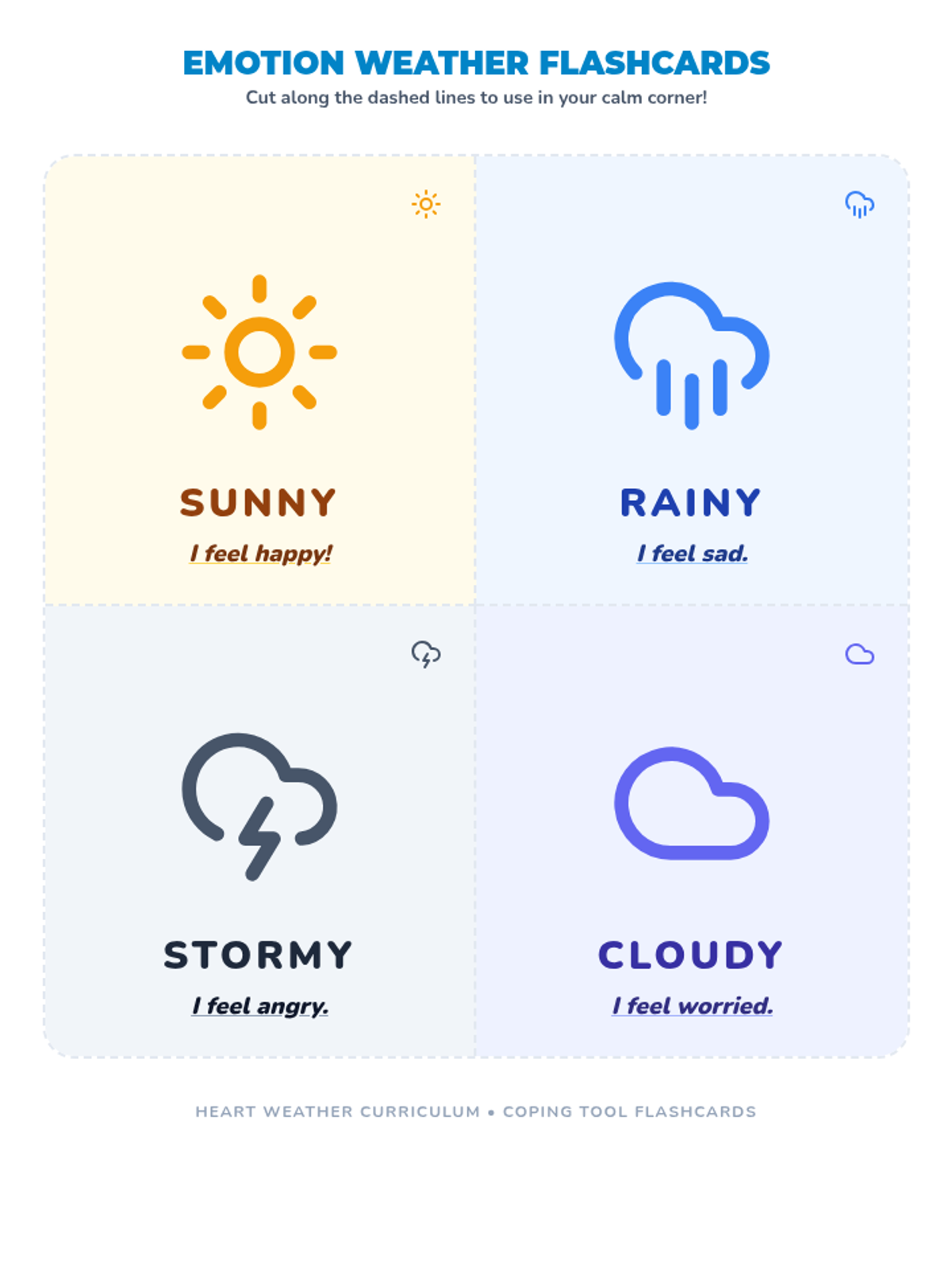
Students in grades 2-3 will use the "Heart Weather" metaphor to analyze emotional triggers, understand the science of self-regulation (the brain's weather station), and develop personalized resilience plans.
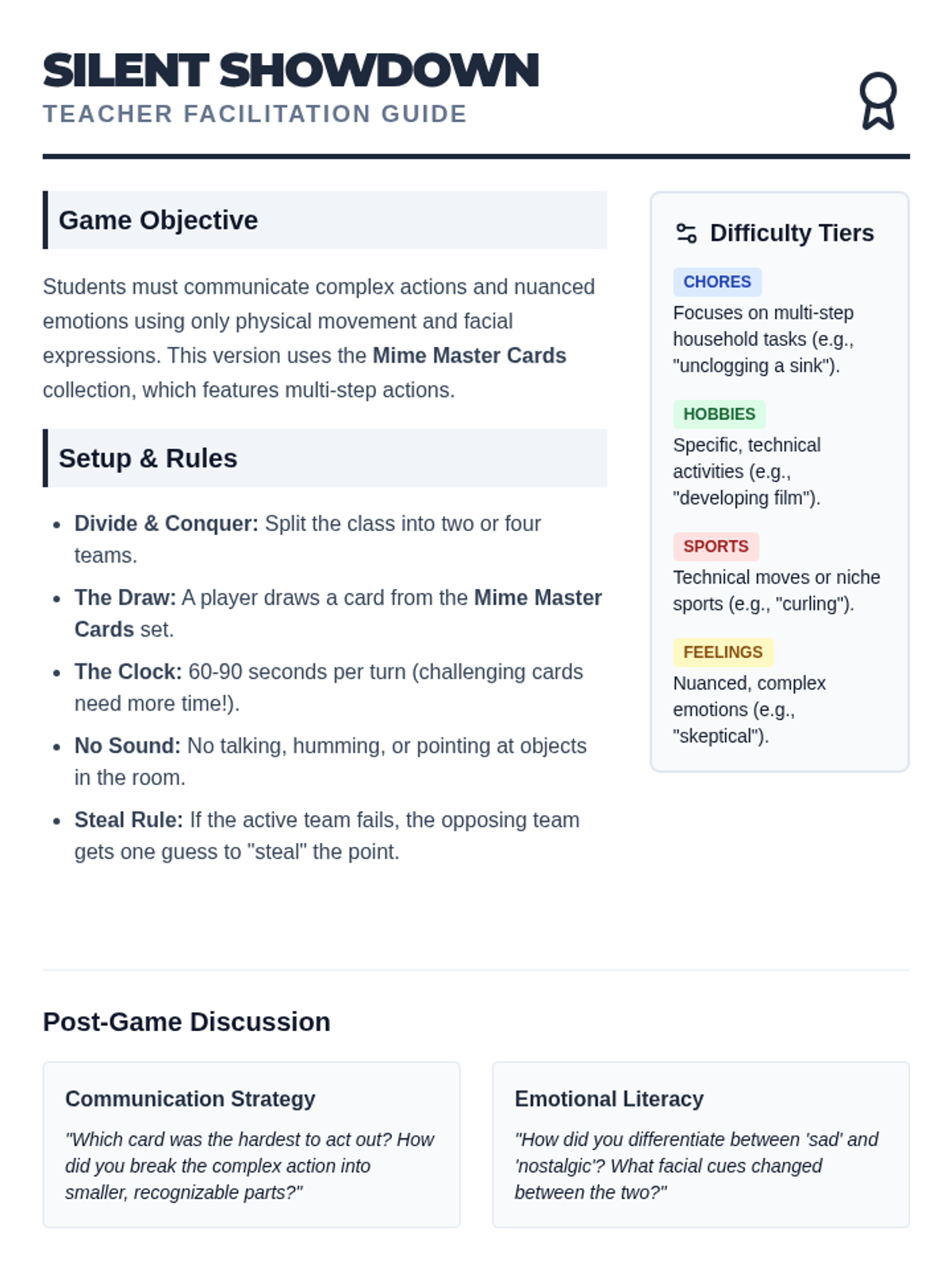
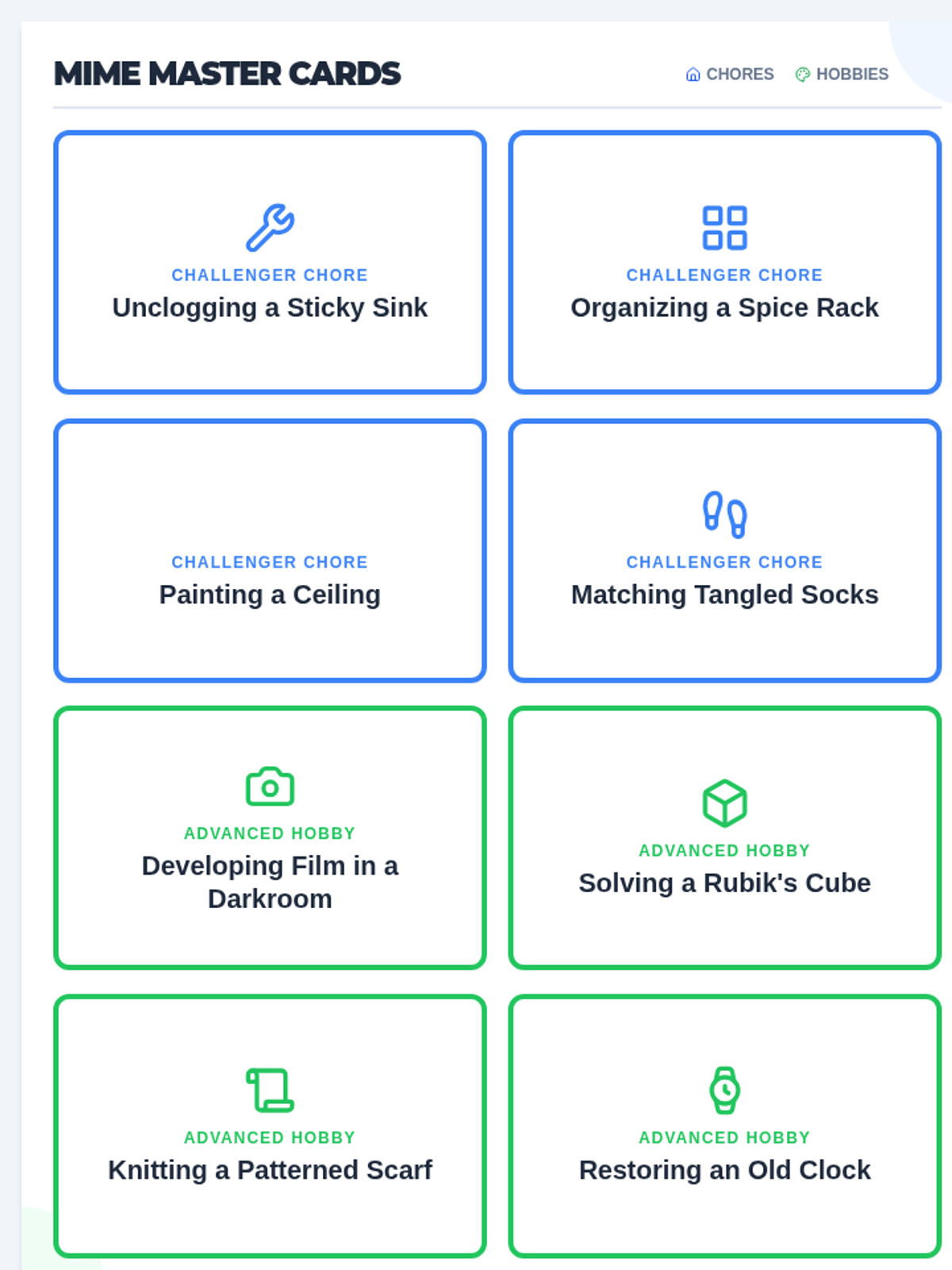
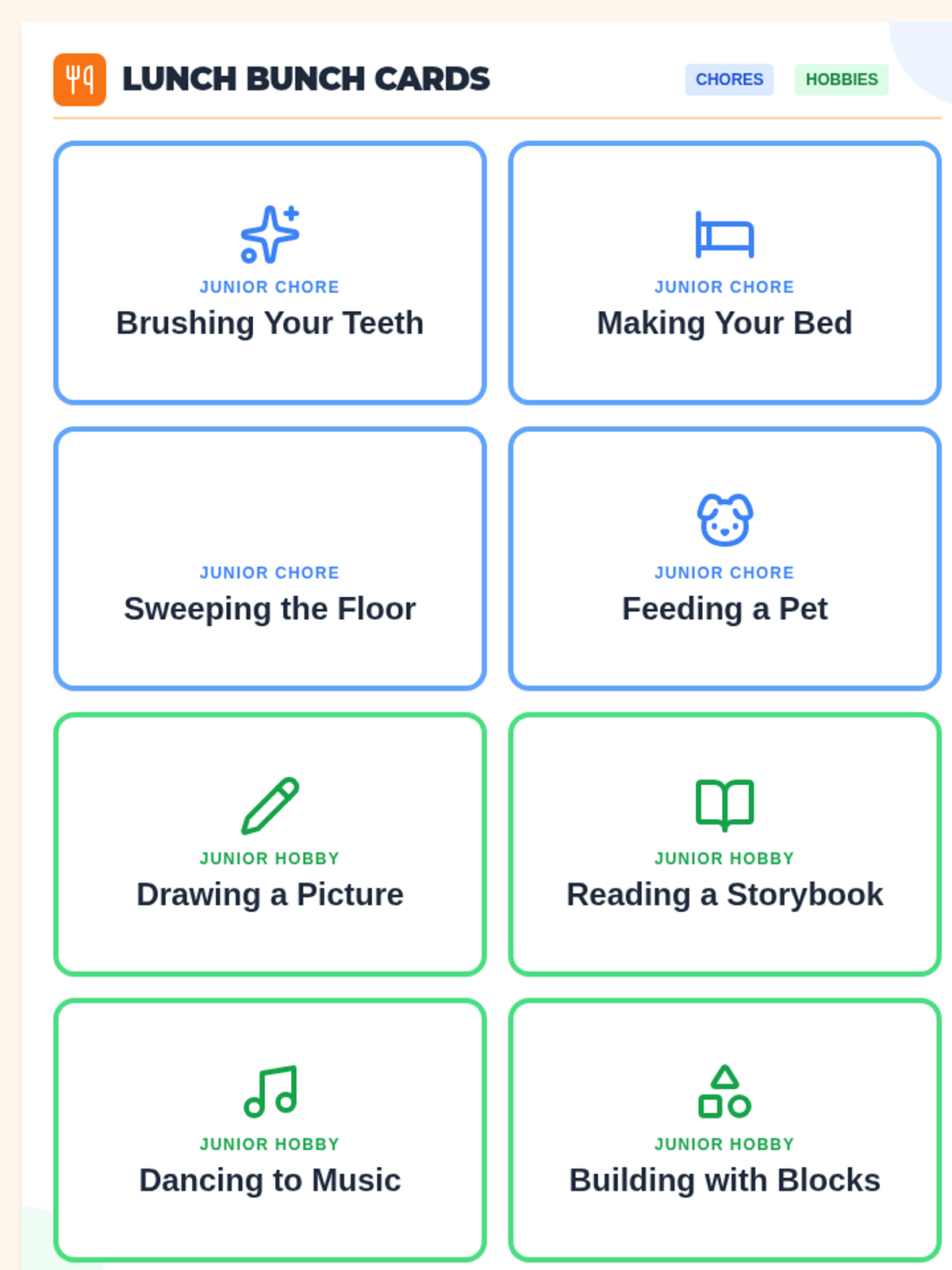
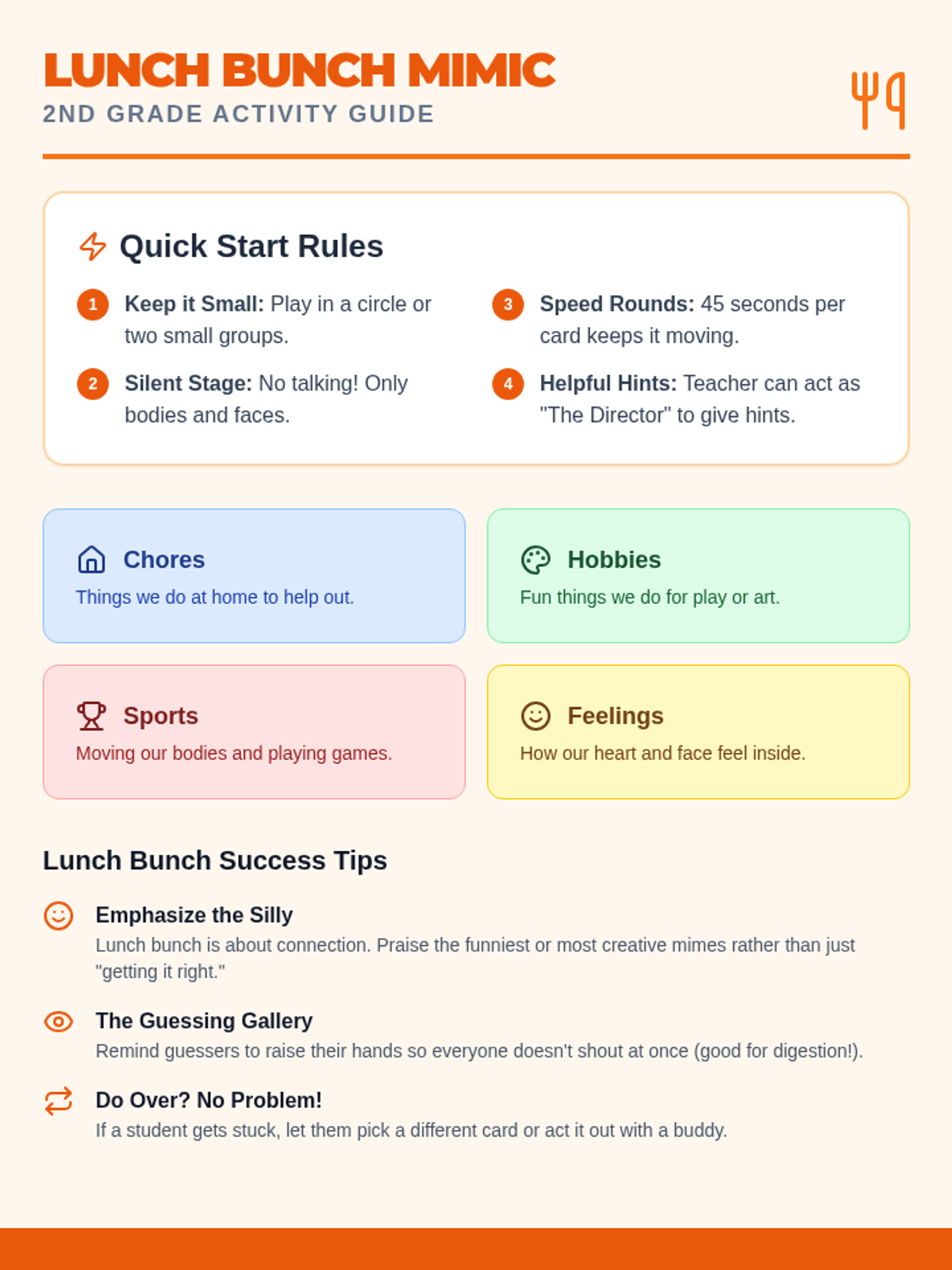
A dynamic lesson on non-verbal communication with two paths: a challenging 'Mime Master' level for older students and a simplified 'Lunch Bunch' version designed for 2nd grade social-emotional learning and casual play.
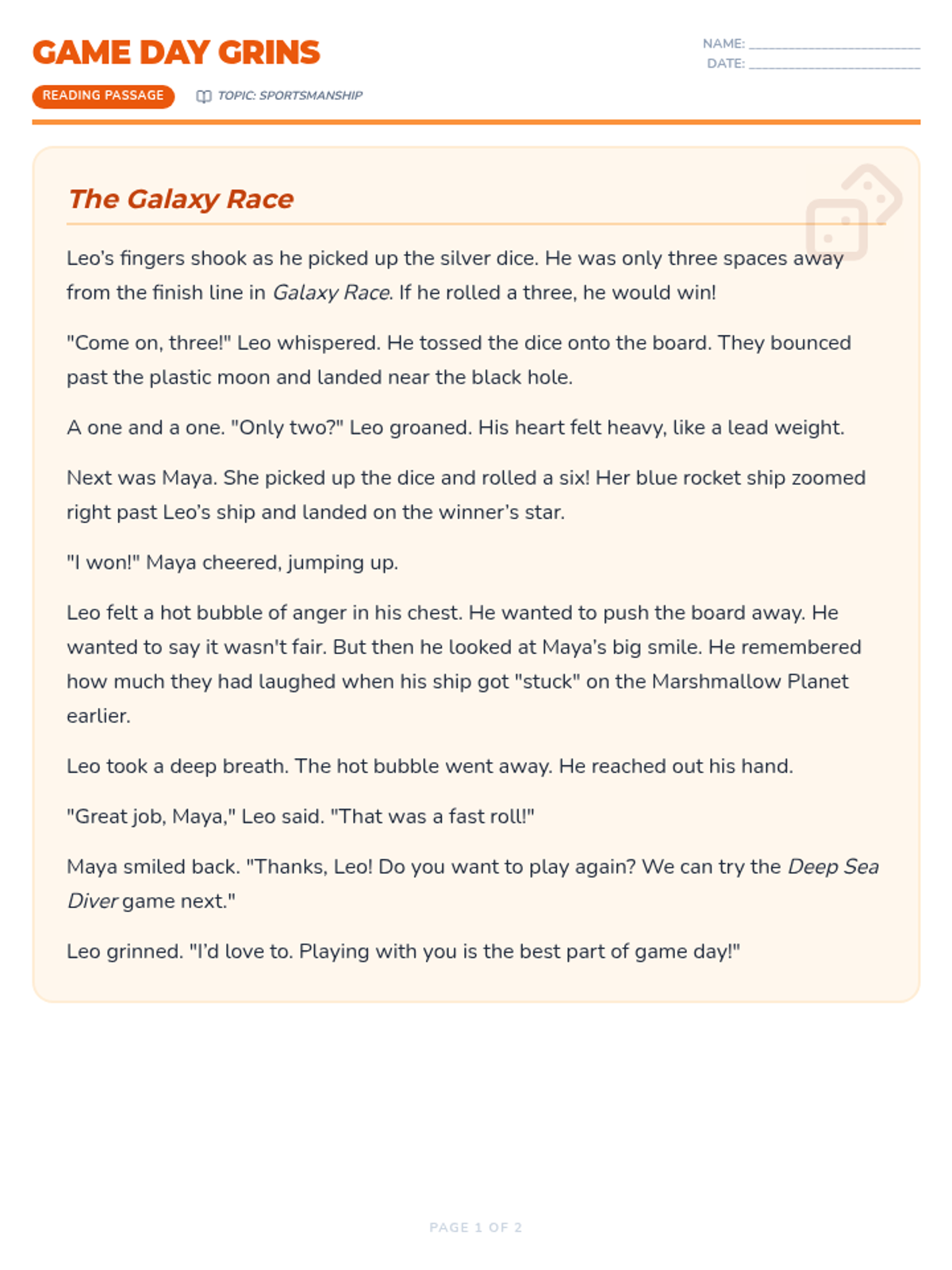
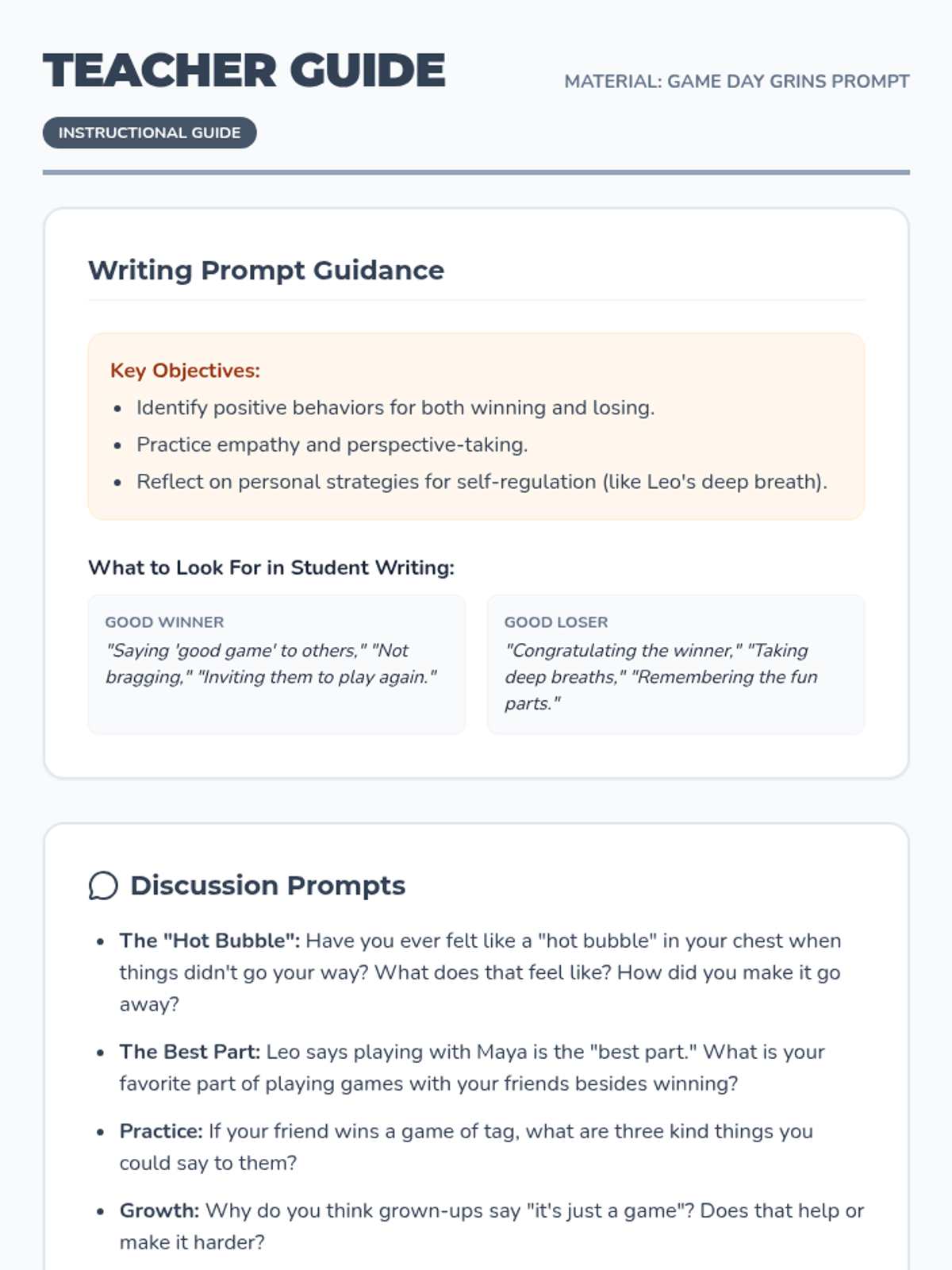
A reading comprehension lesson for second graders focused on sportsmanship, handling losing, and finding joy in shared play.
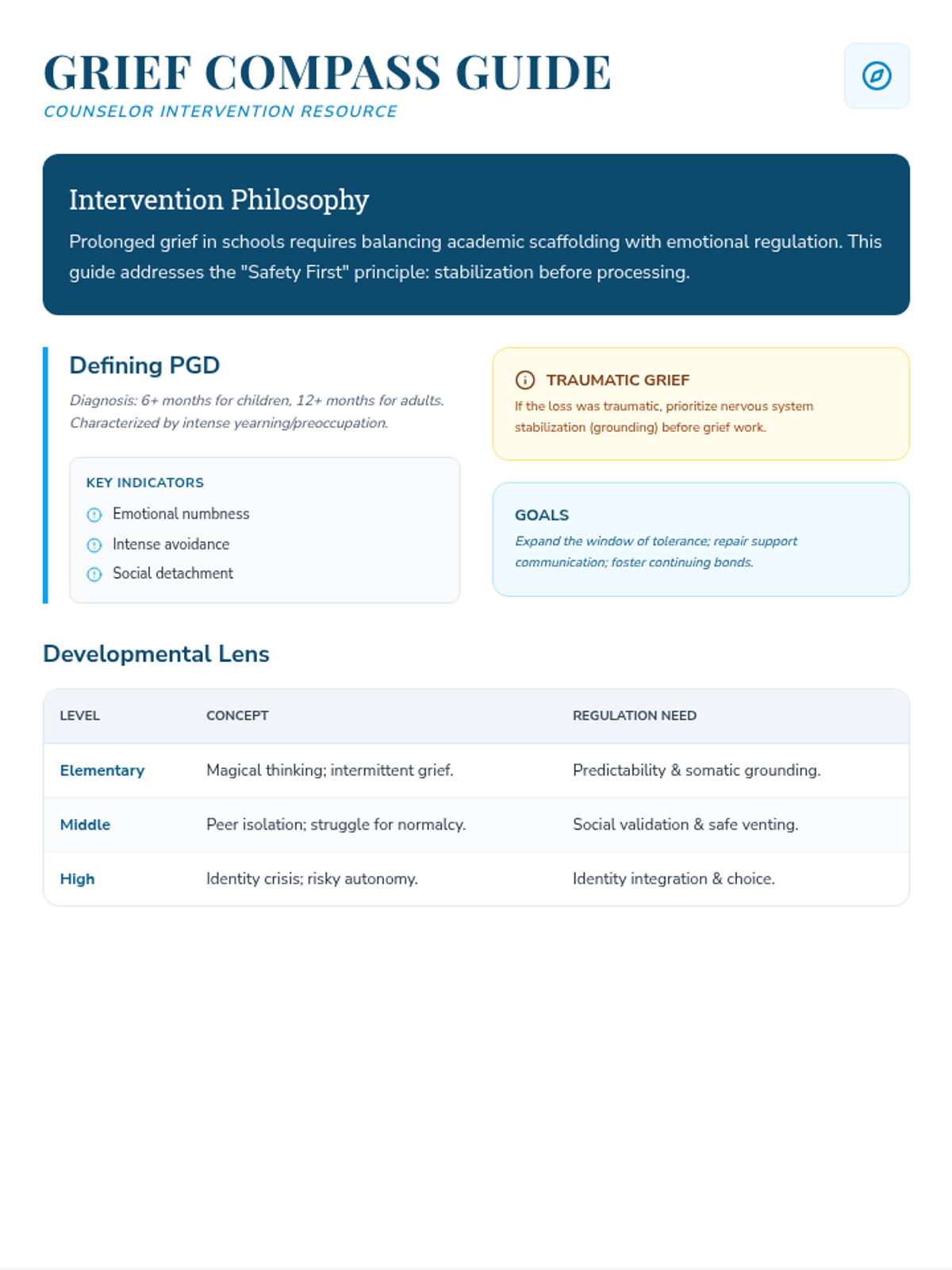
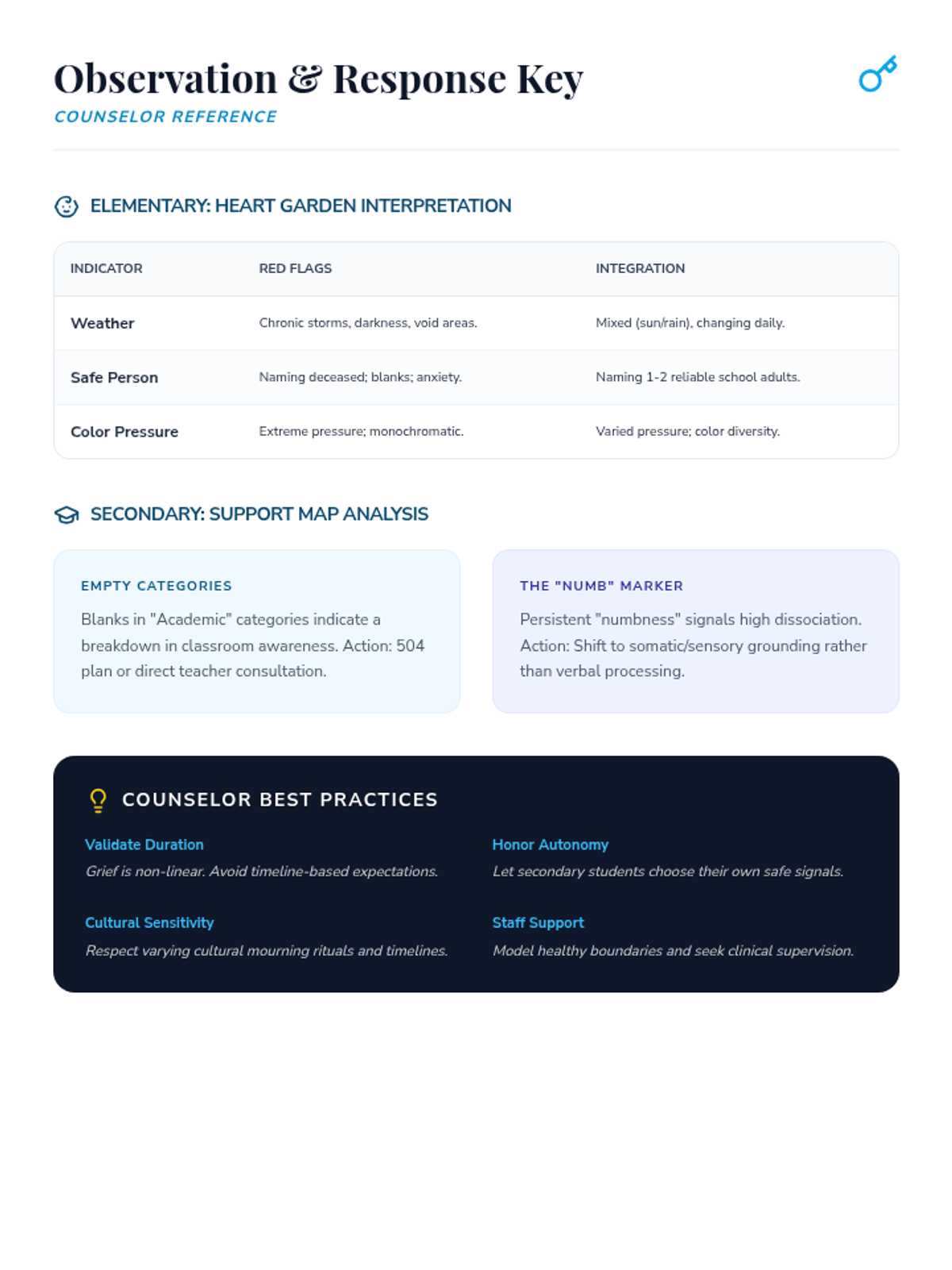
Professional development for school staff to identify signs of prolonged grief disorder and implement supportive classroom strategies.
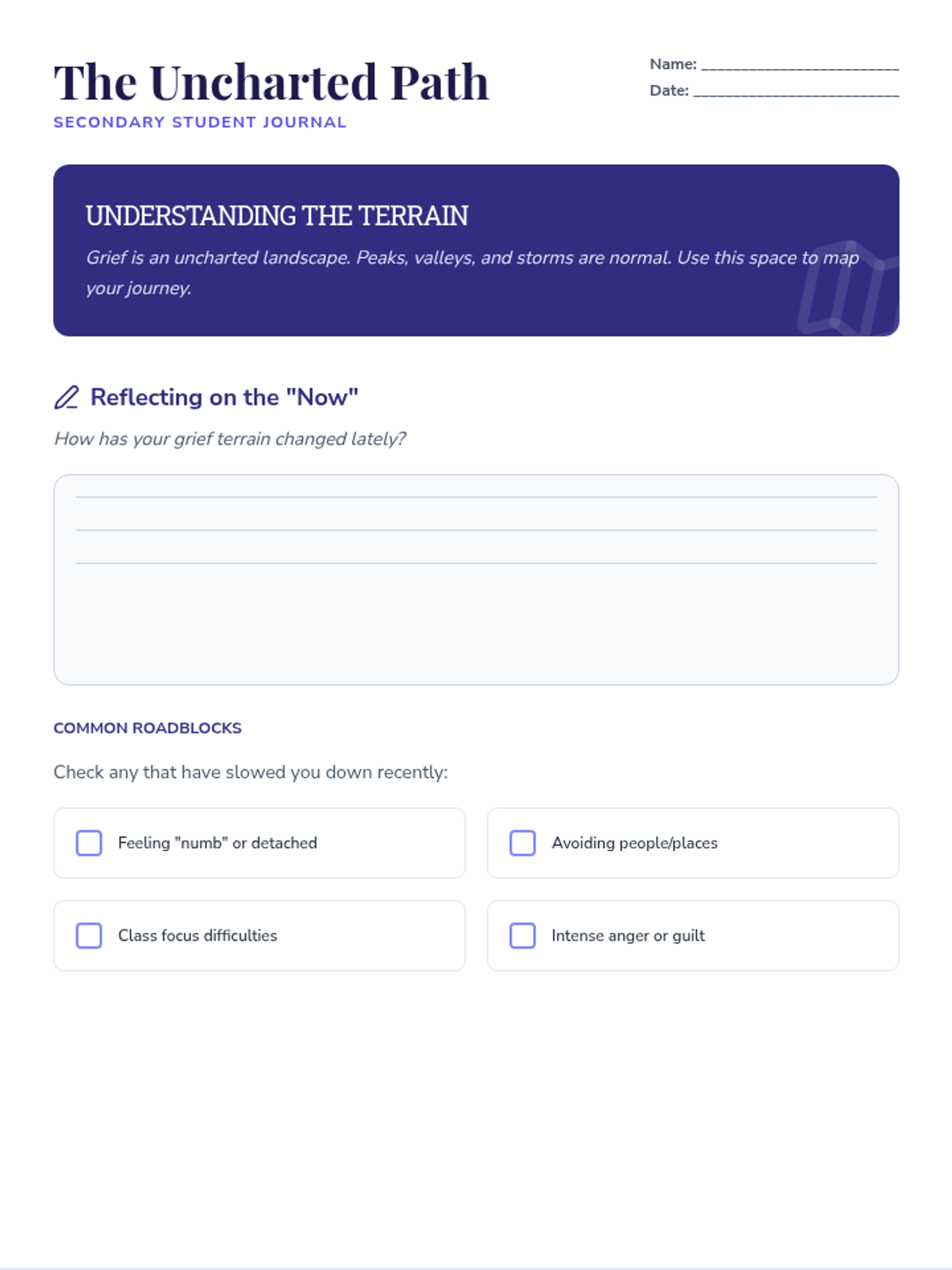
Advanced coping strategies and communication tools for middle and high school students to navigate the complexities of prolonged grief and build sustainable support systems.
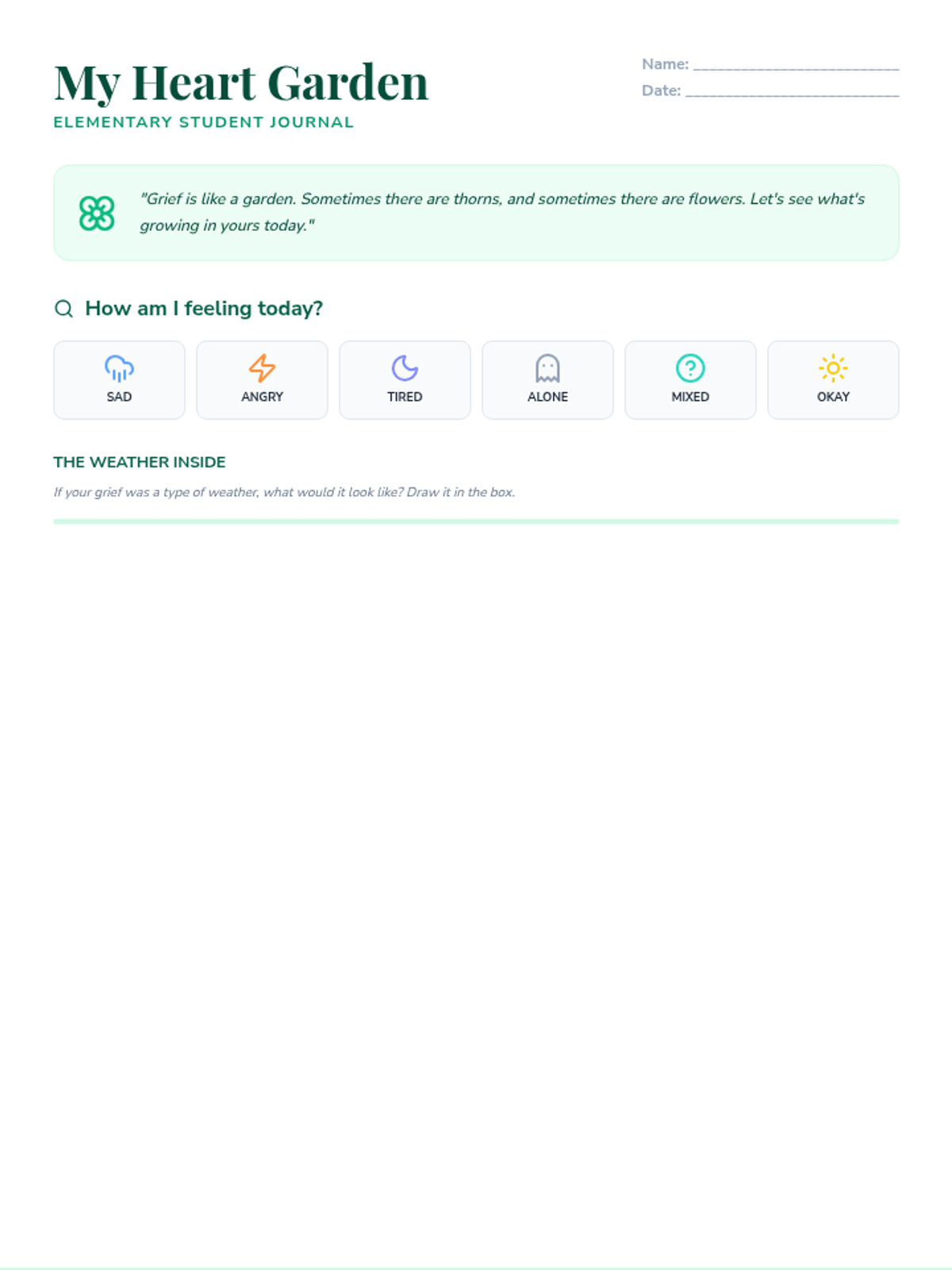
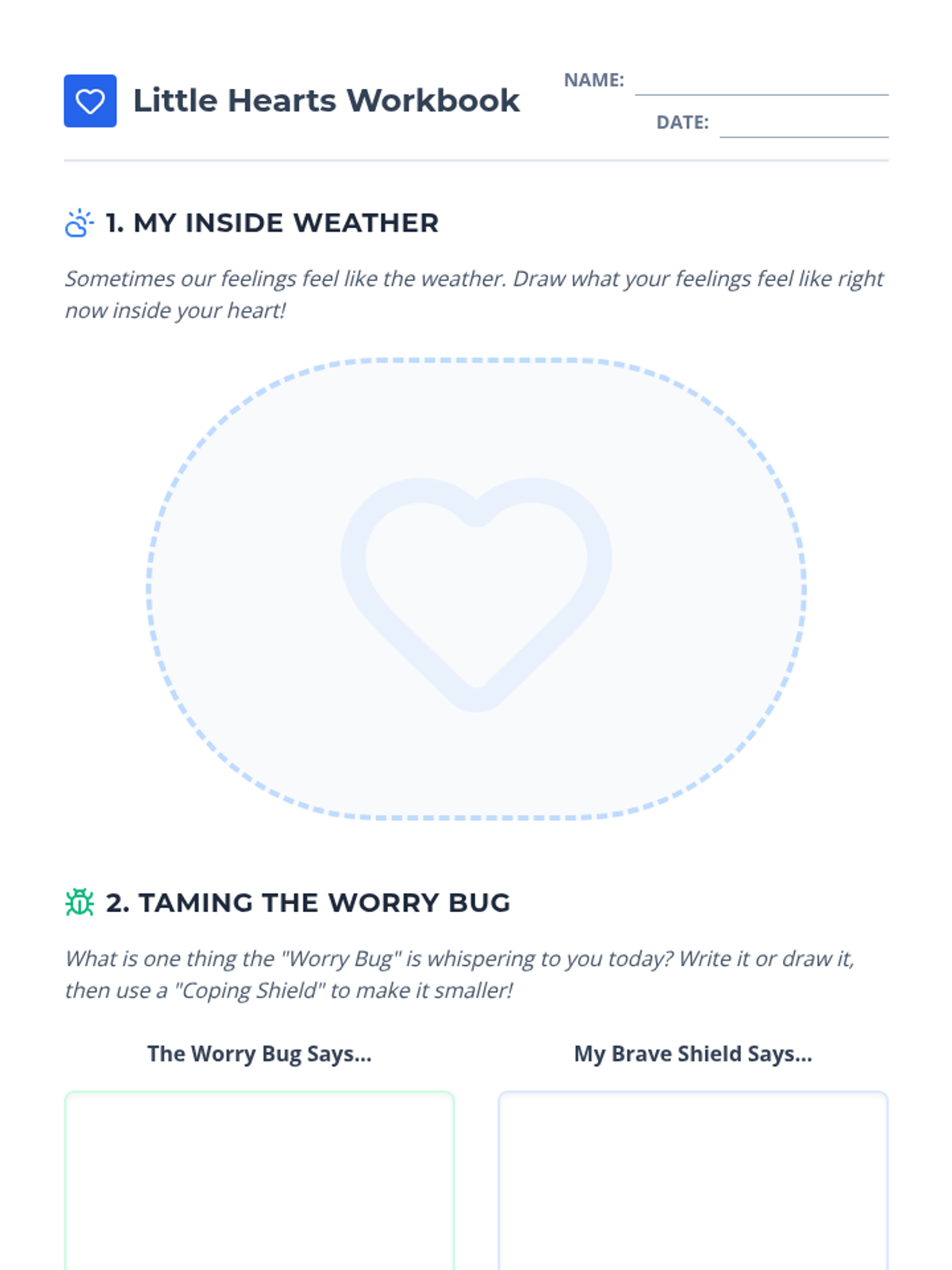
Foundational resources for elementary students focusing on emotional identification, regulation through play and art, and simple coping strategies within a 'Heart Garden' theme.
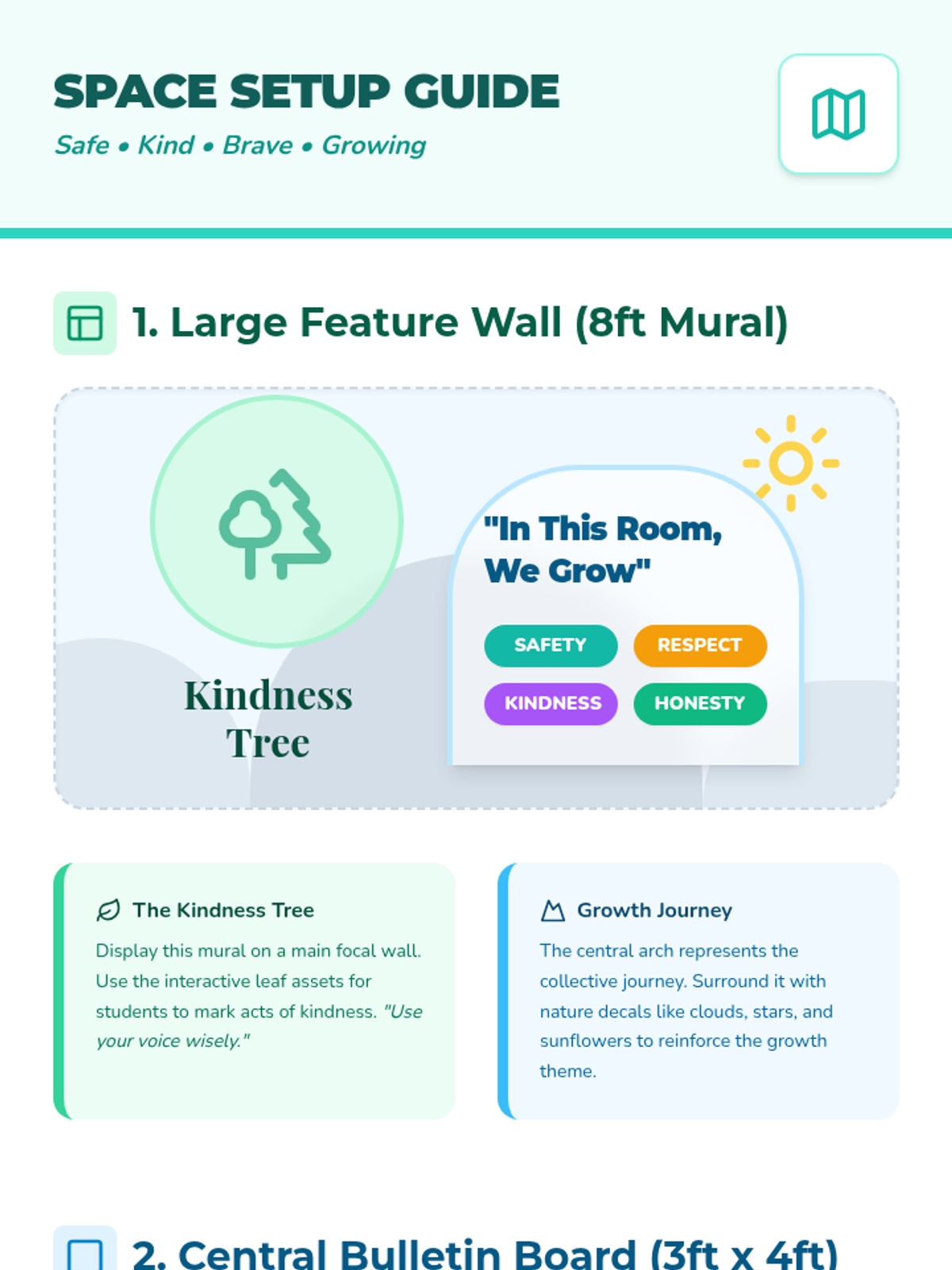
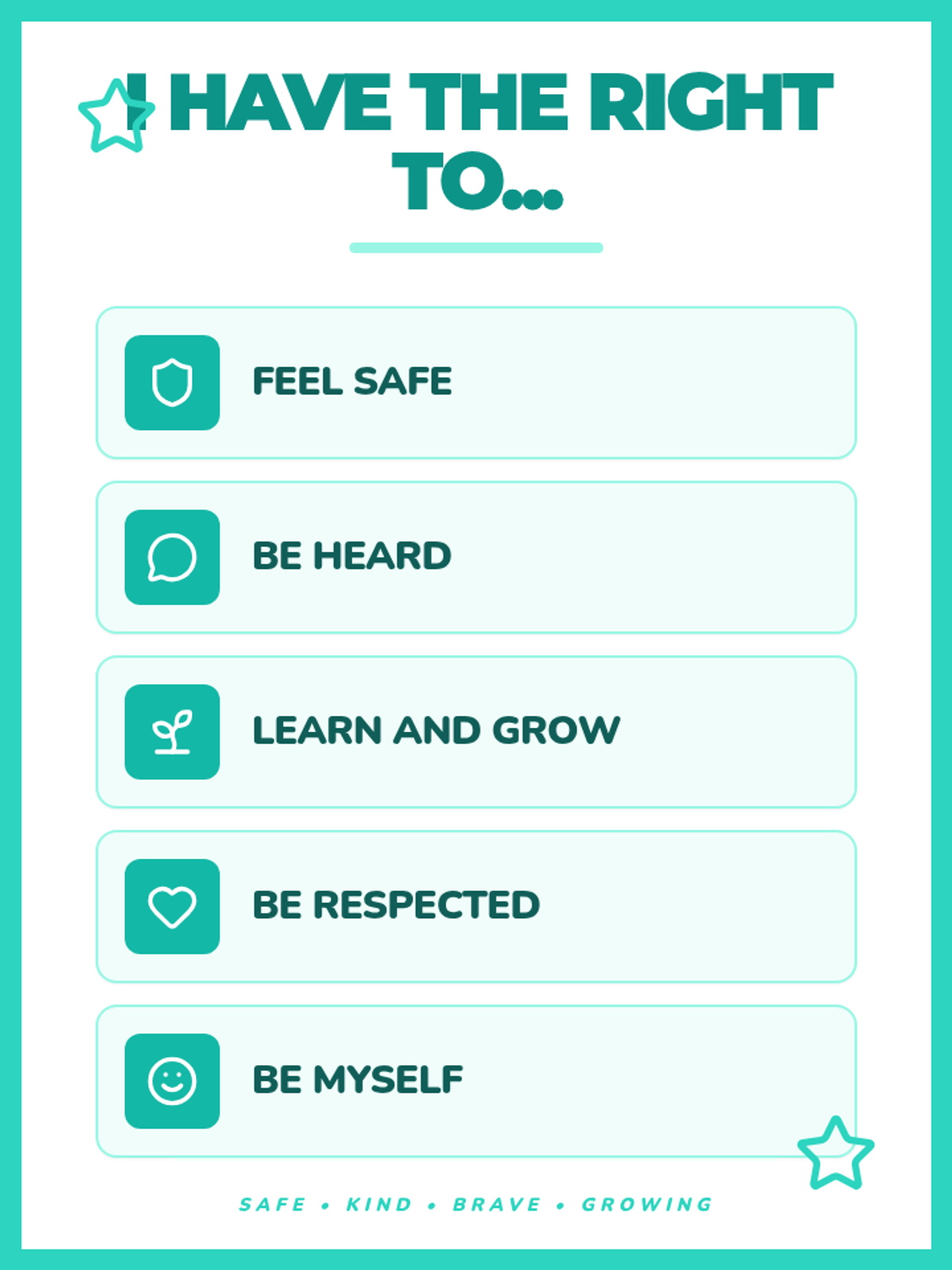
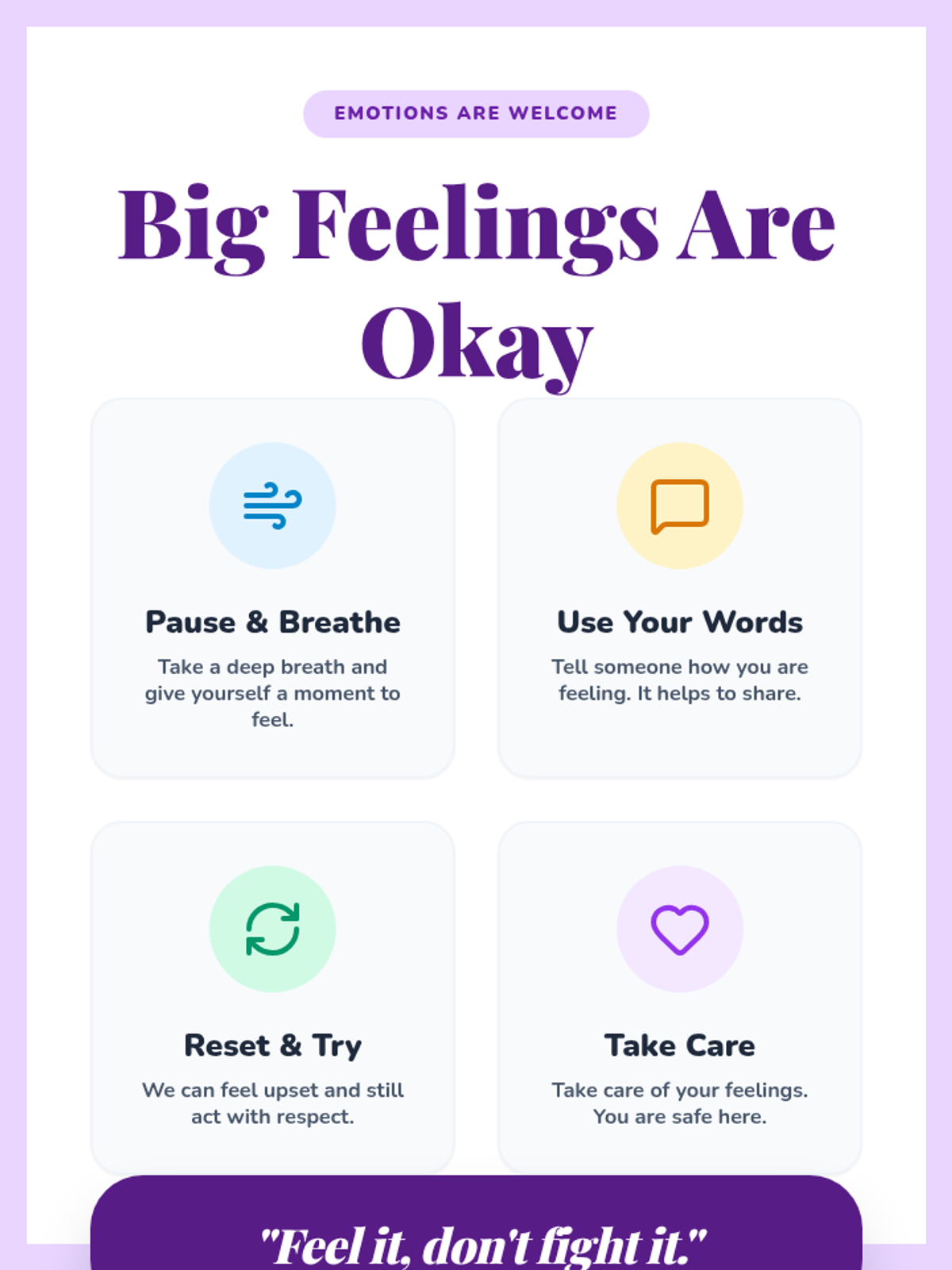
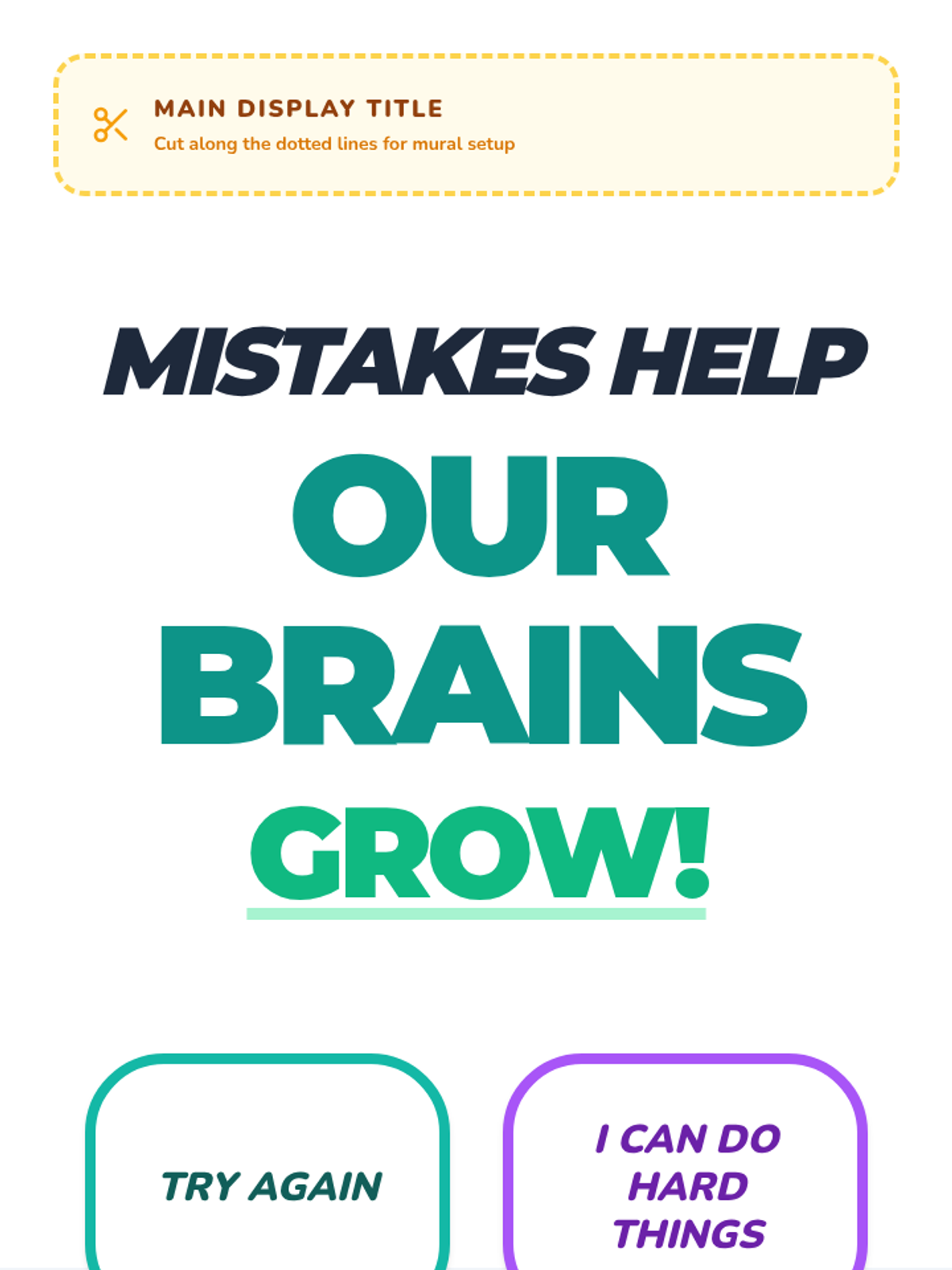
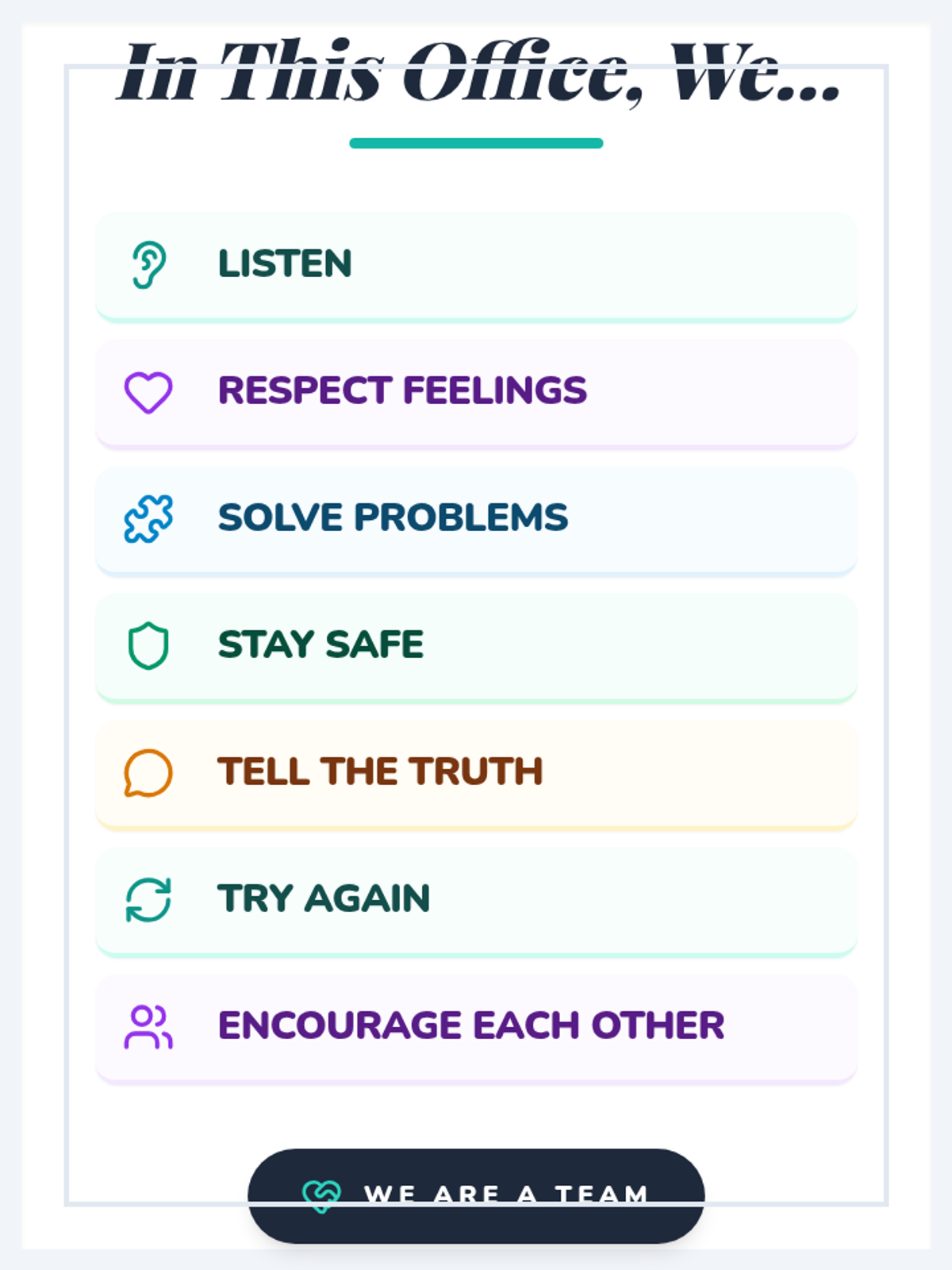
A comprehensive collection of environmental resources for a school office or classroom, featuring a growth-themed mural, a 3x4 bulletin board layout, and sensory corner posters designed with a calming, nature-inspired aesthetic.
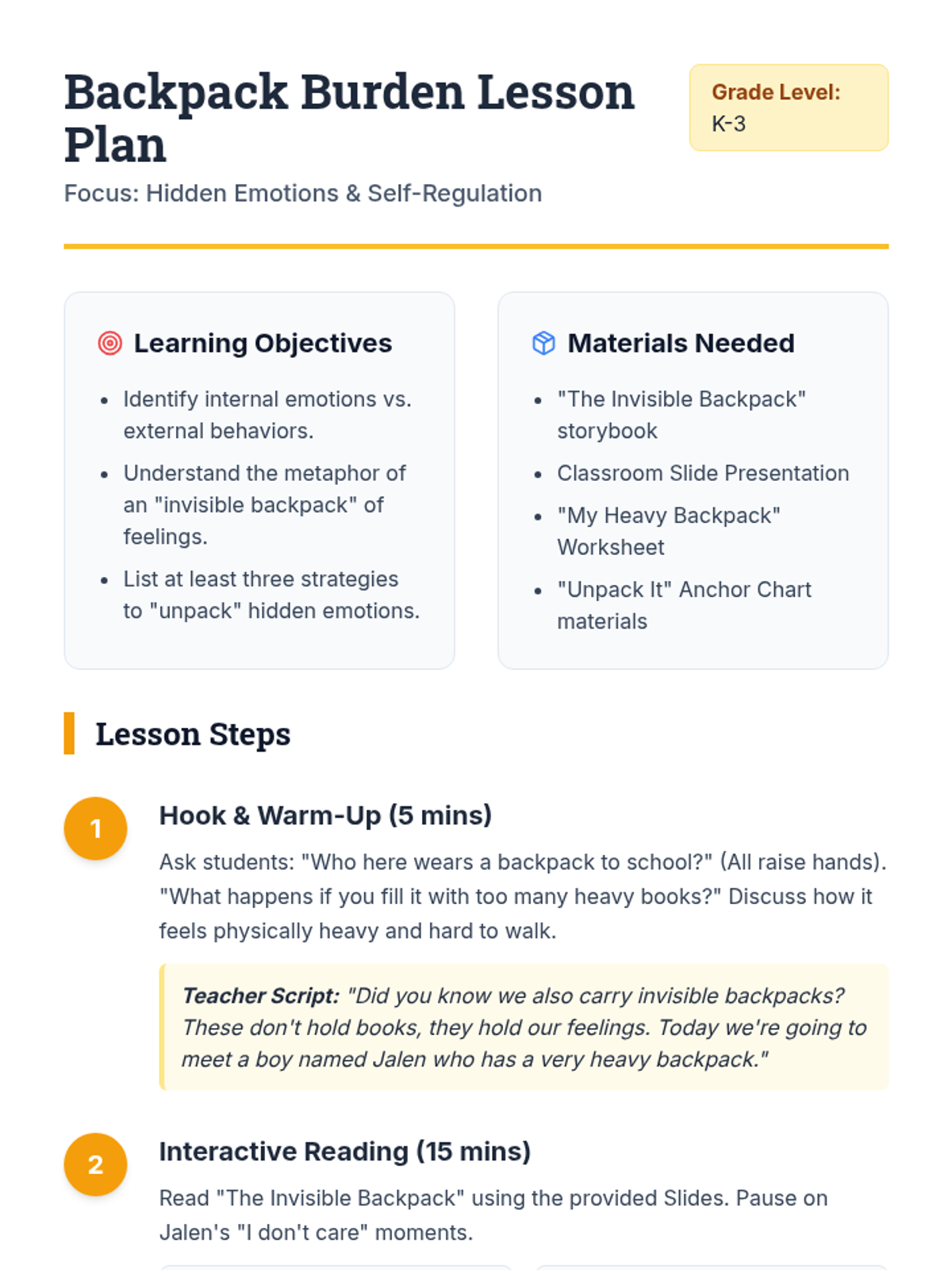
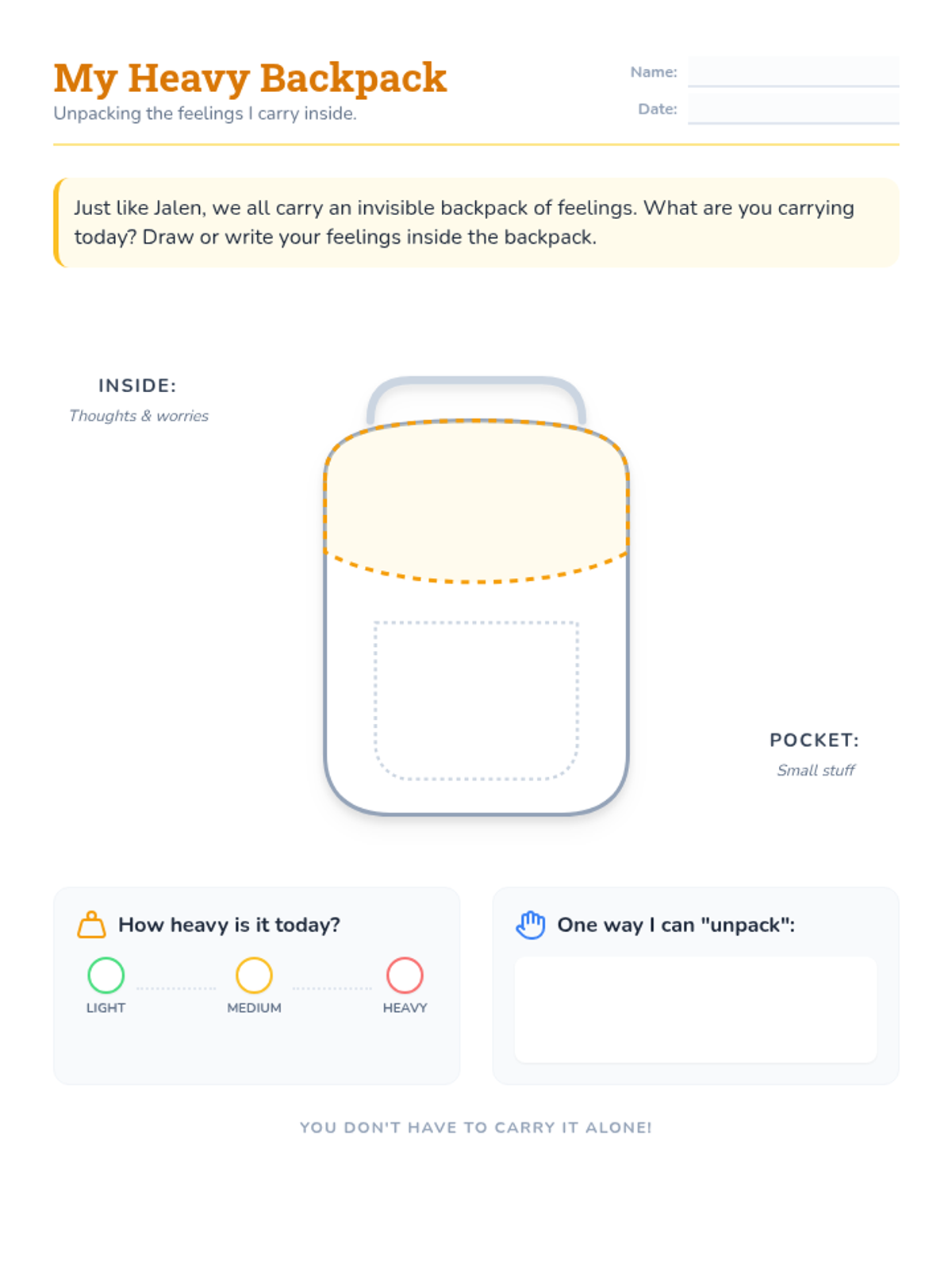
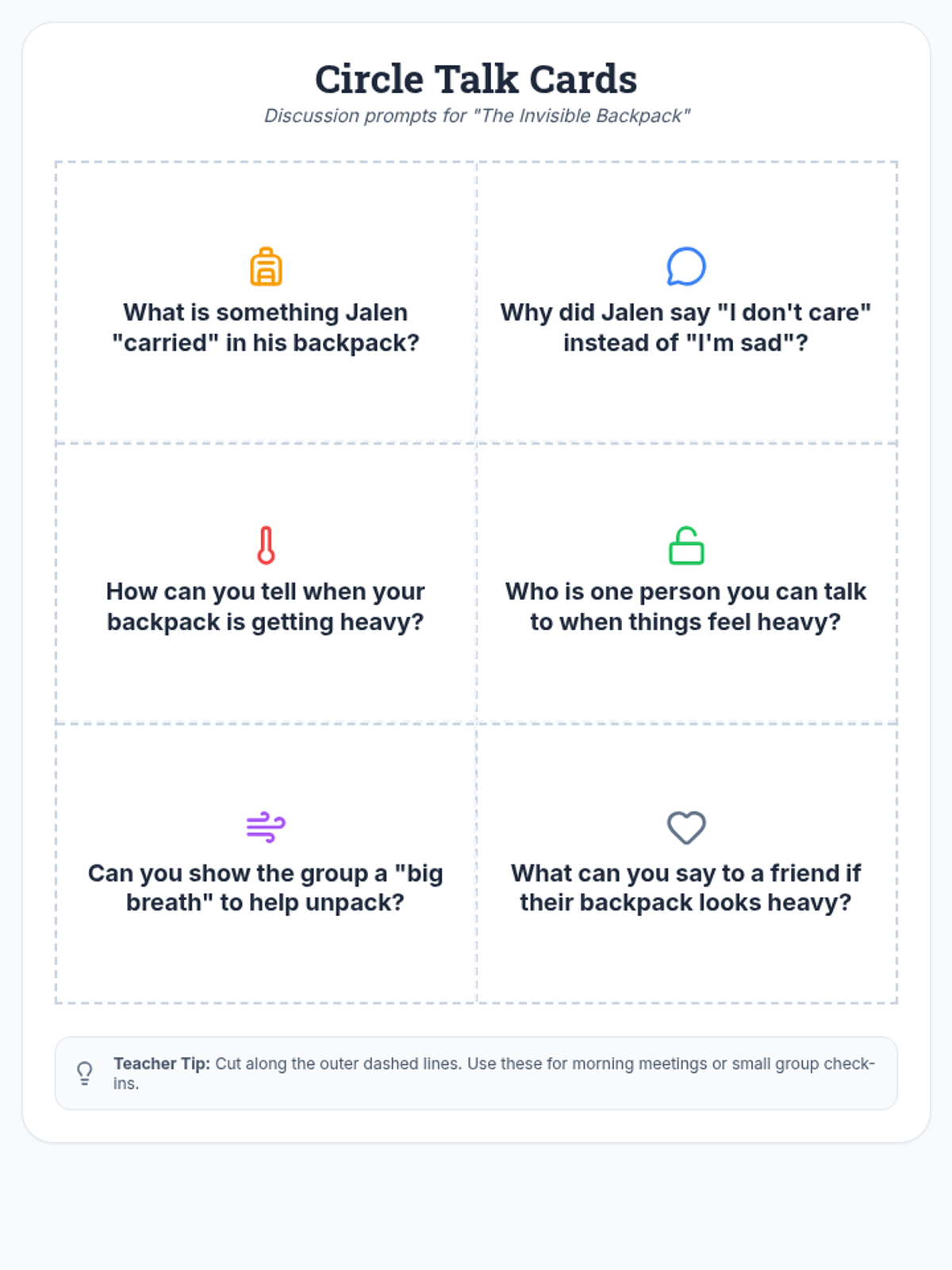
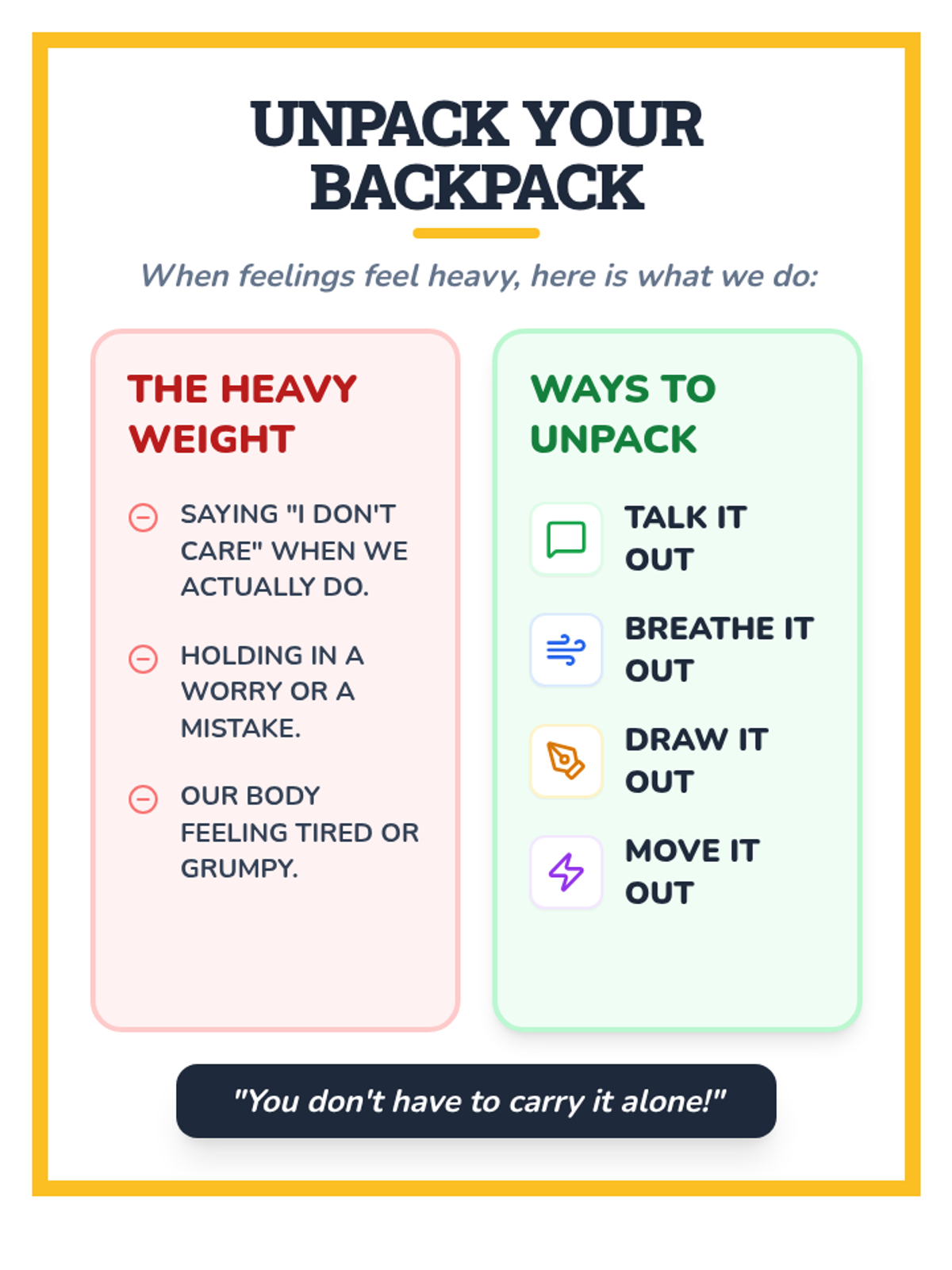
A lesson focused on identifying internal emotions that we might hide from others and learning strategies to "unpack" those feelings through self-regulation and communication.
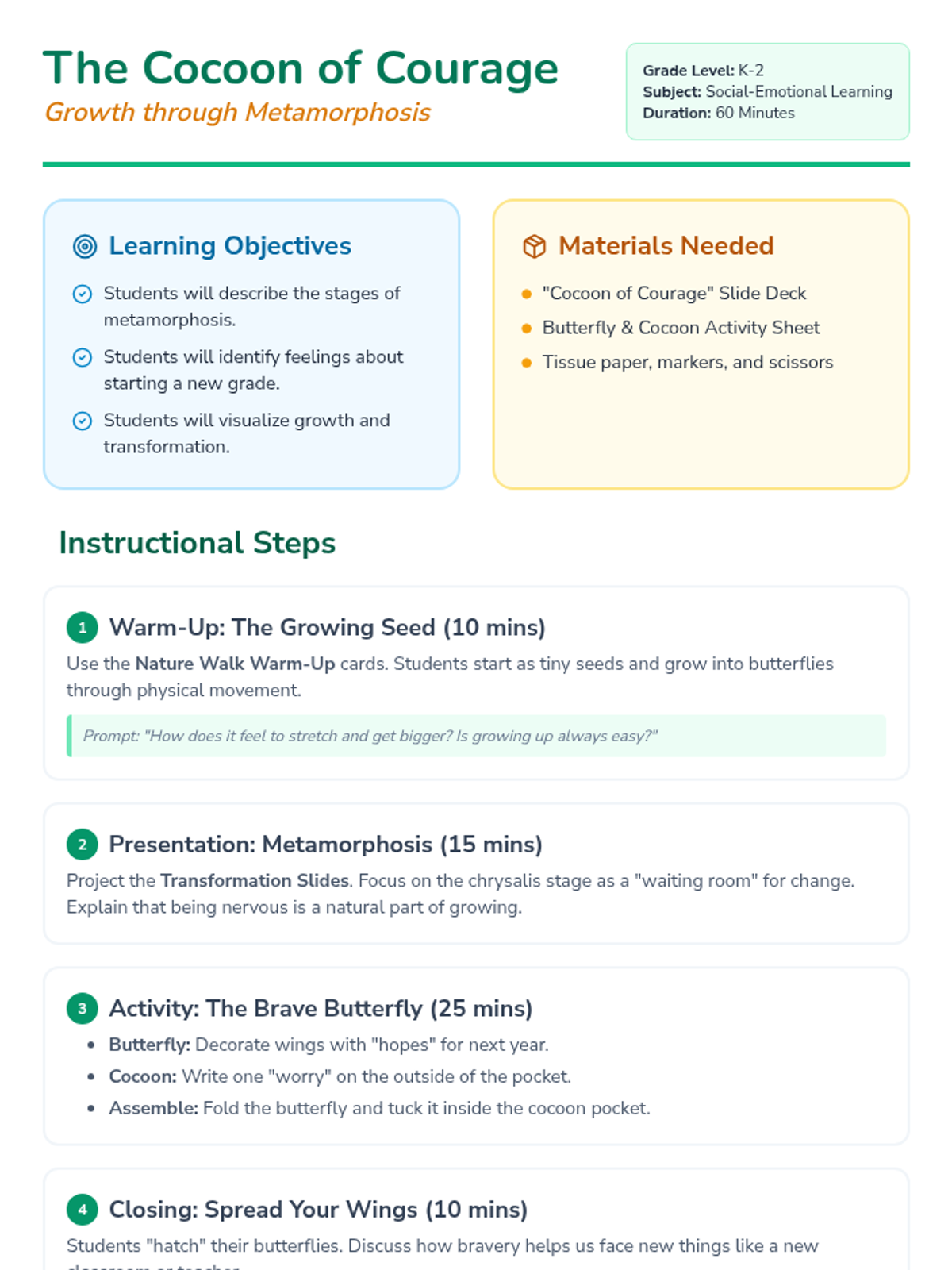
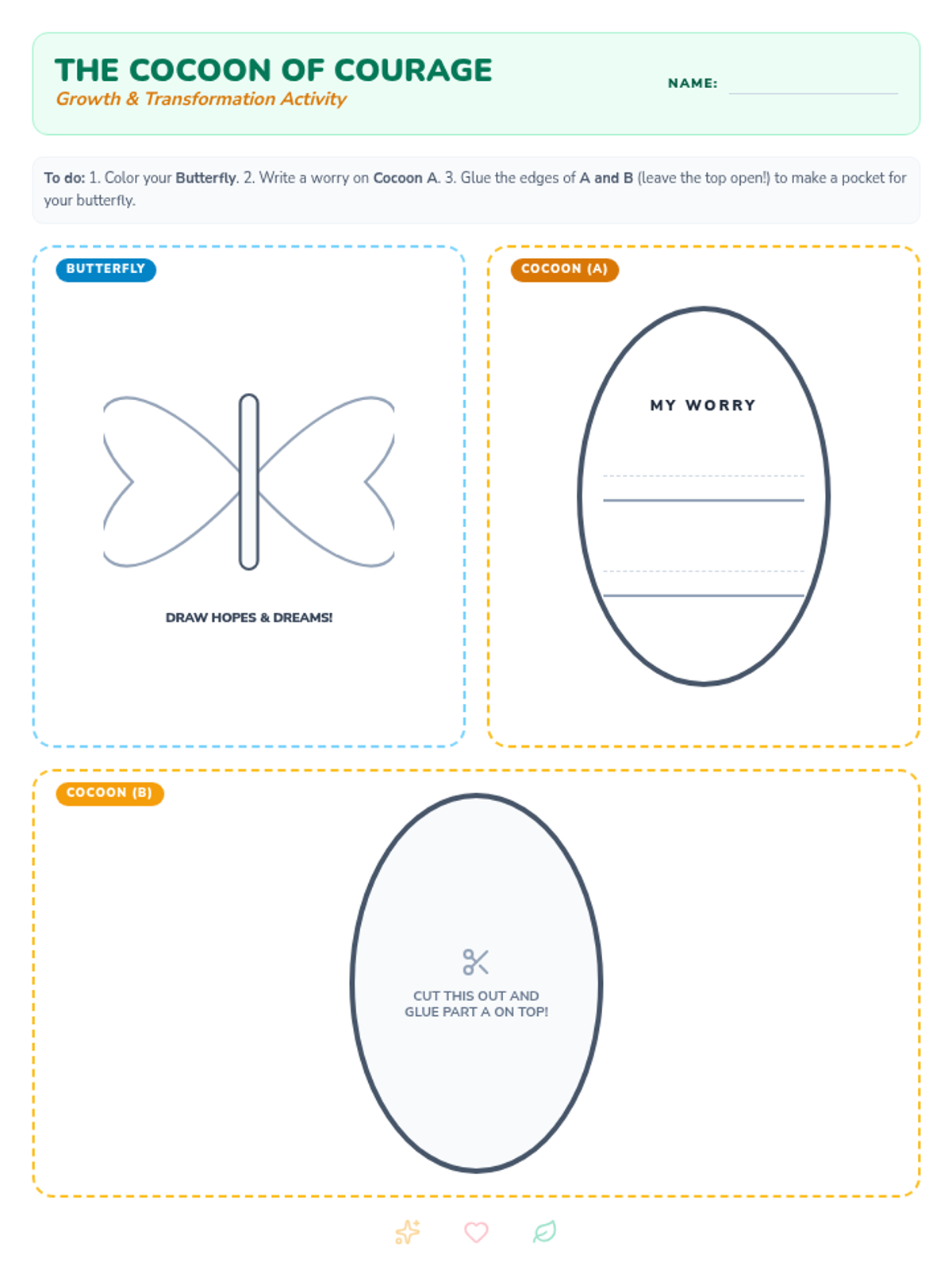
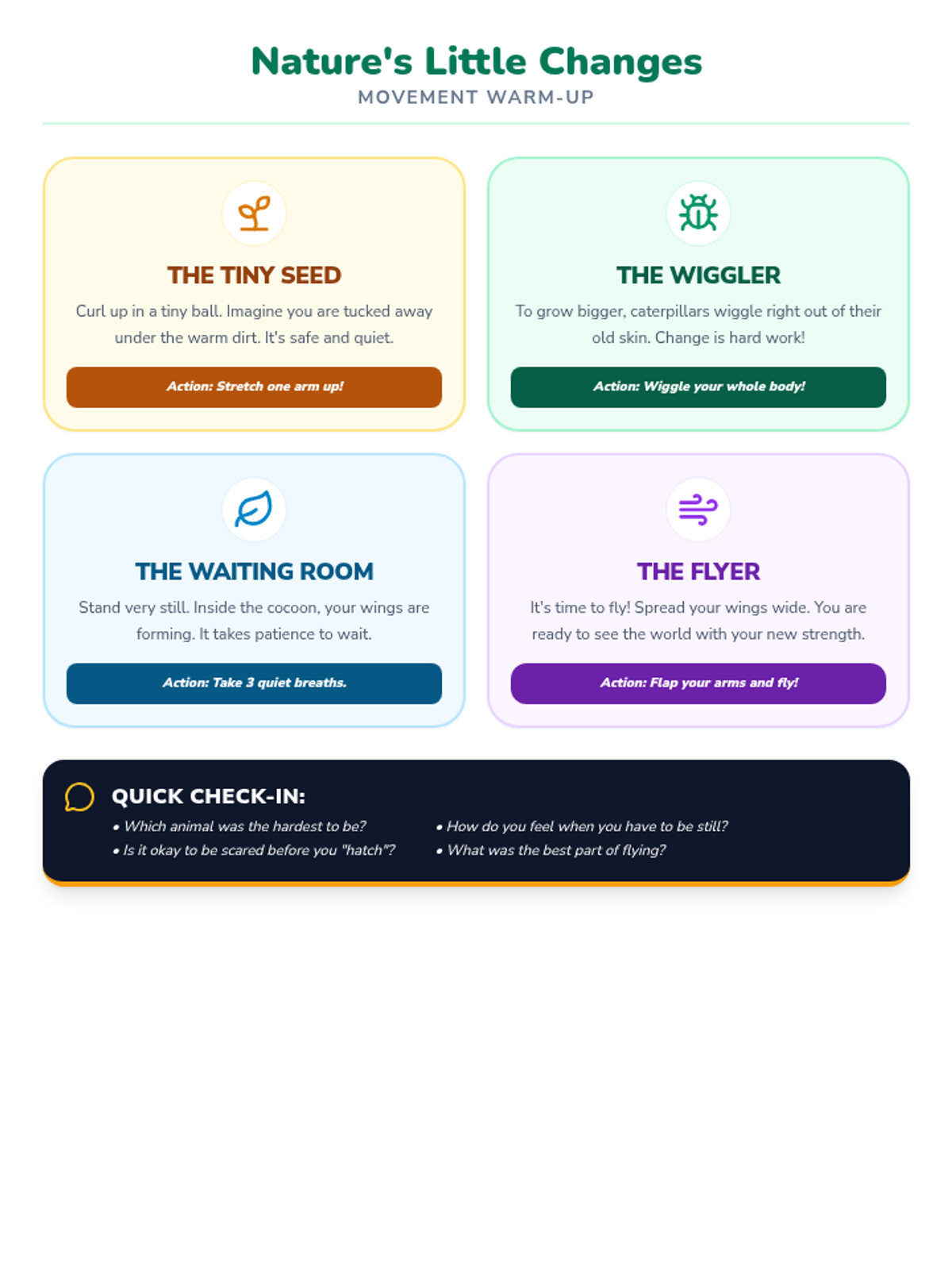
A social-emotional learning lesson for K-2 students using the metaphor of metamorphosis to explore the transition to a new grade. Students identify their fears and hopes through a mixed-media art project.
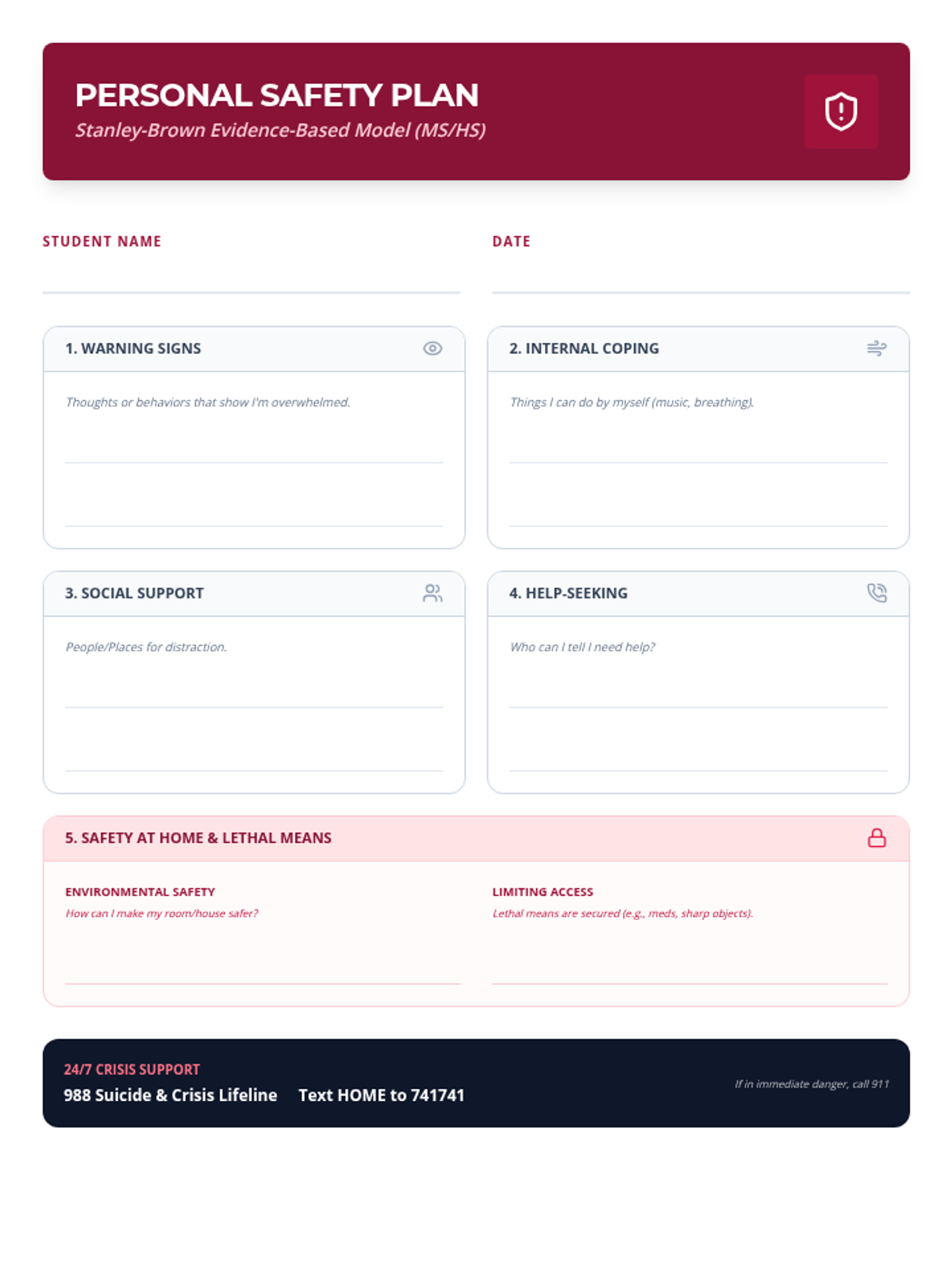
This lesson provides school social workers with a clinical and practical framework for identifying and supporting students struggling with anxiety, depression, and self-harm. It includes evidence-based interventions and safety planning tools specifically for the school environment.
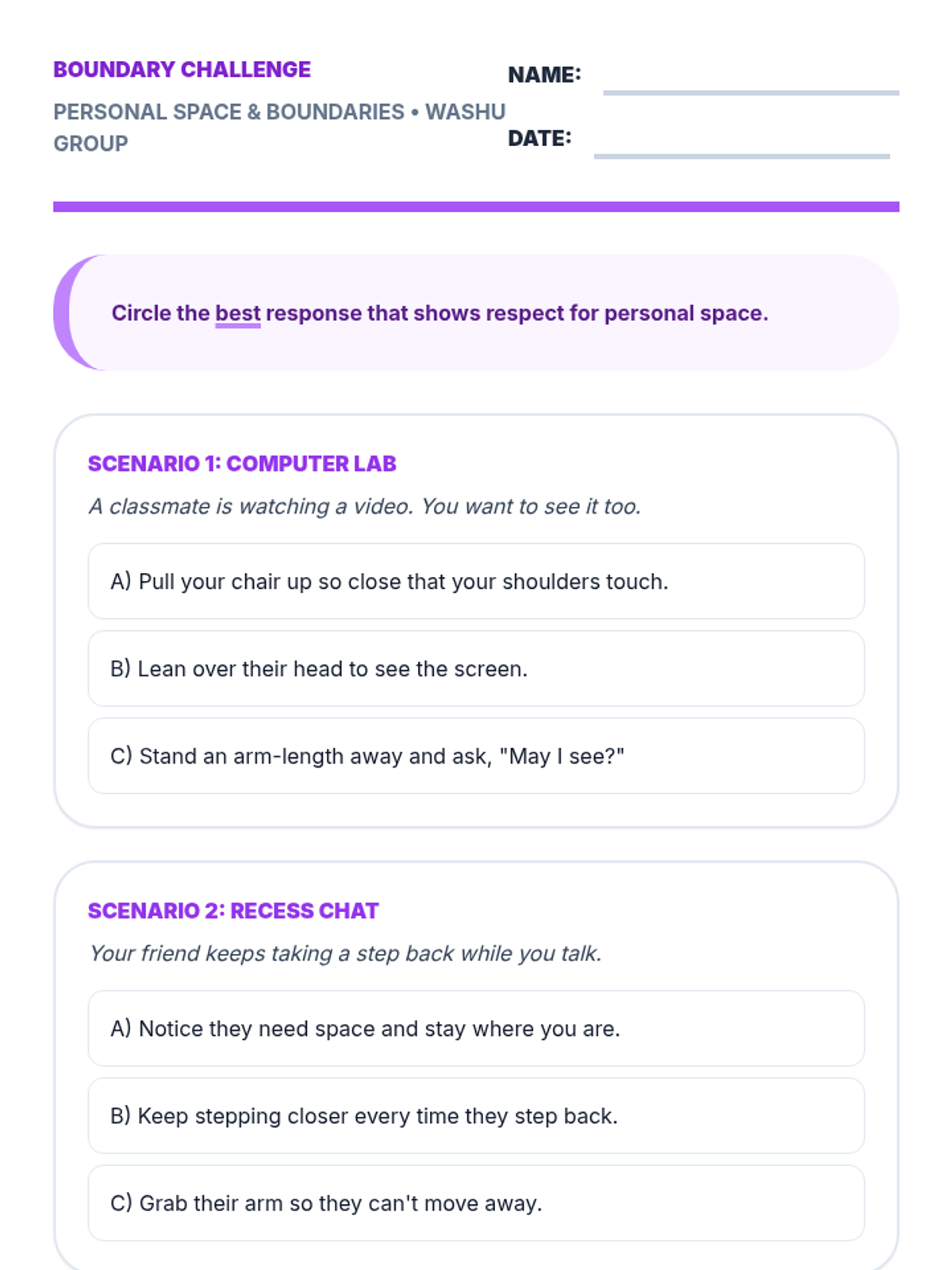
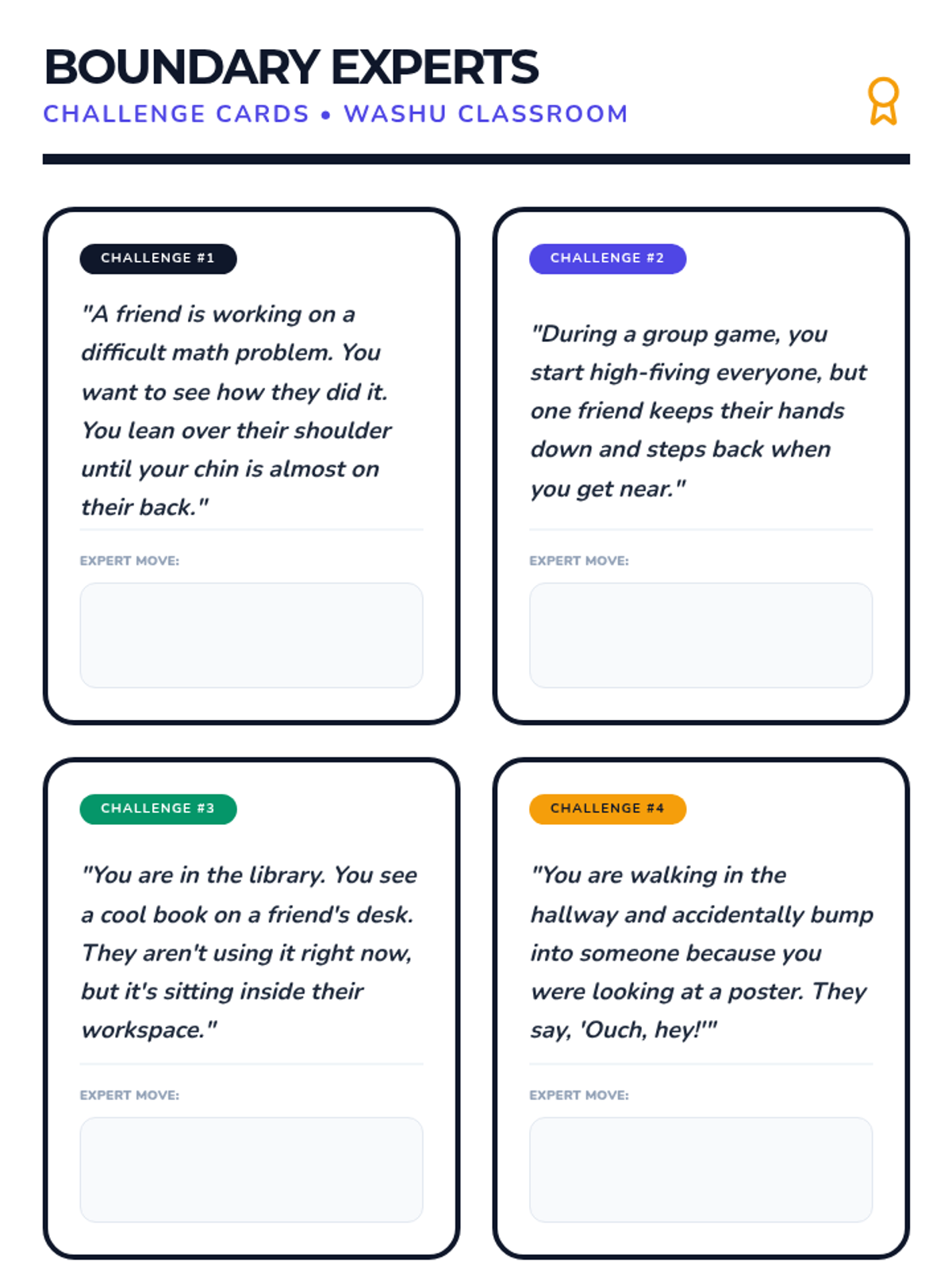
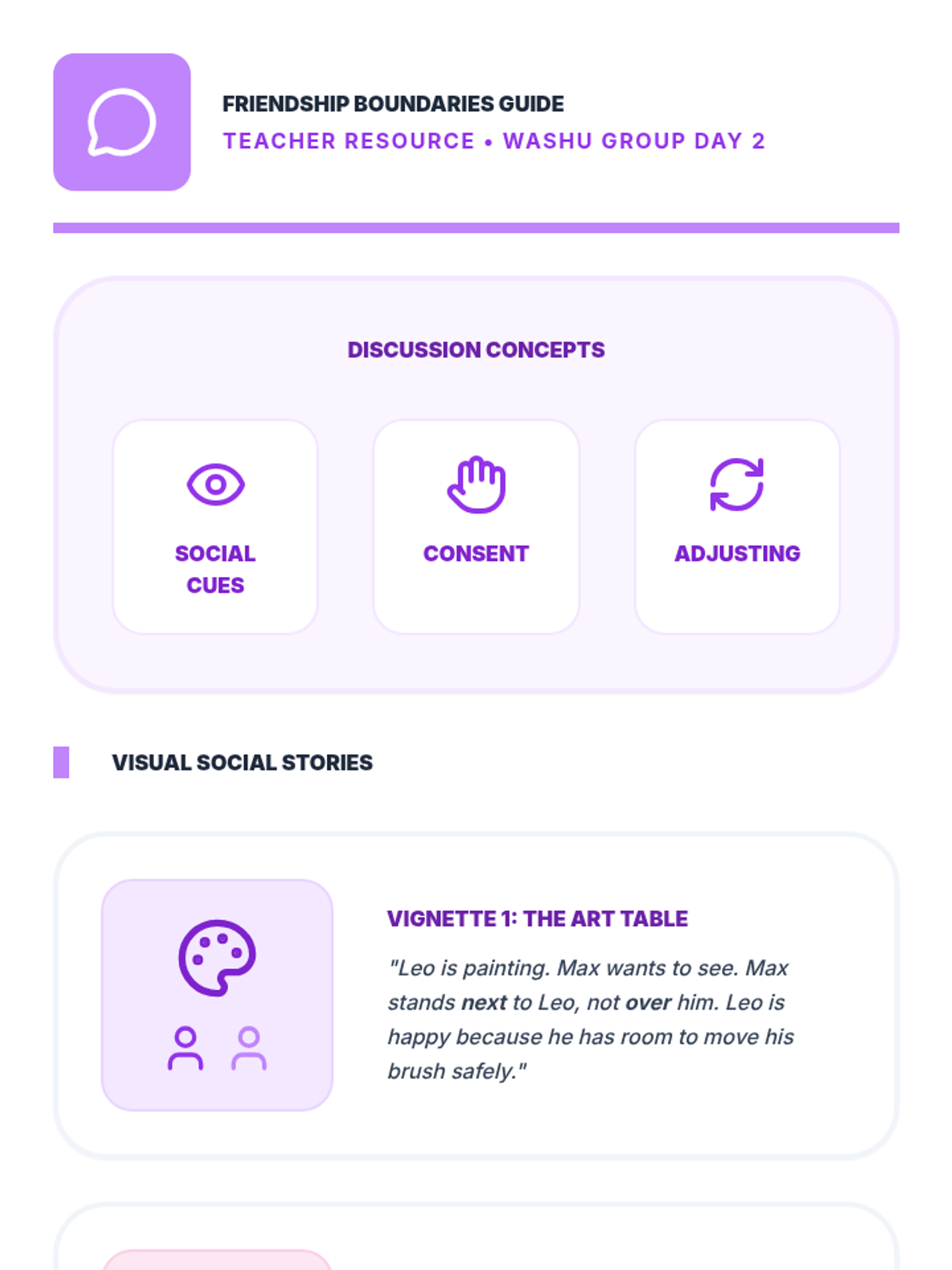
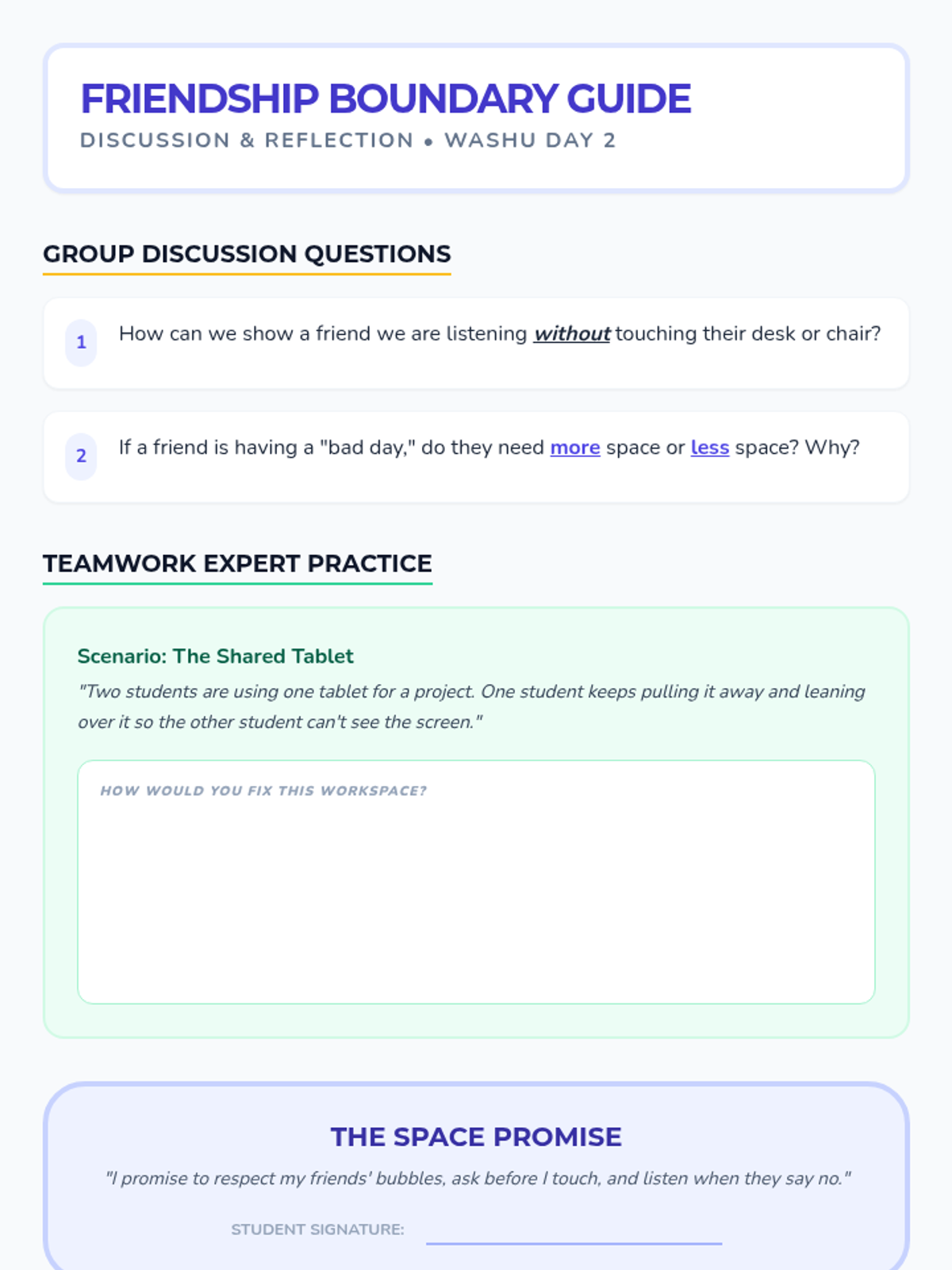
Advanced boundary application for WashU students, focusing on social challenges and respecting personal space within friendships and group work.
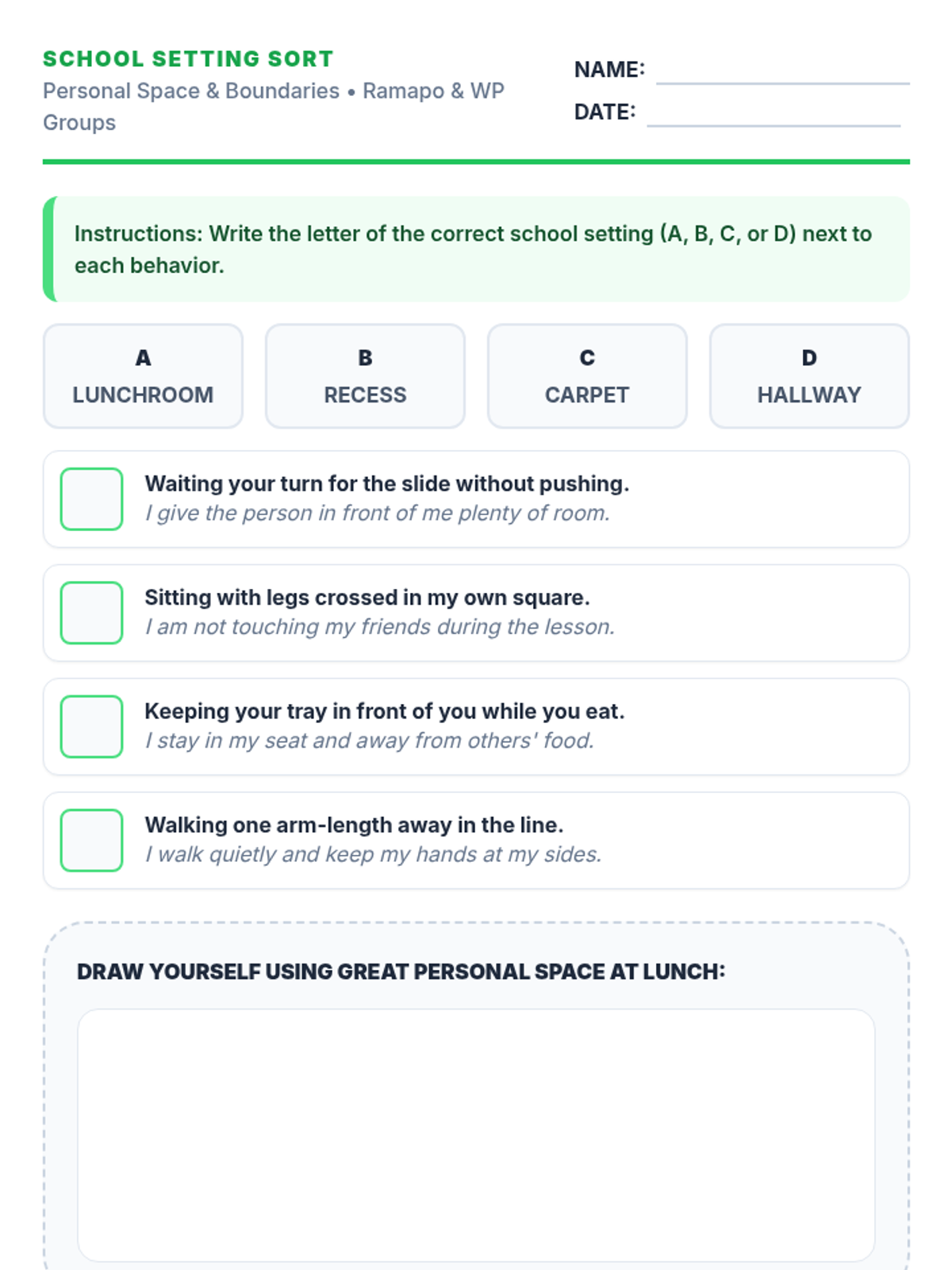
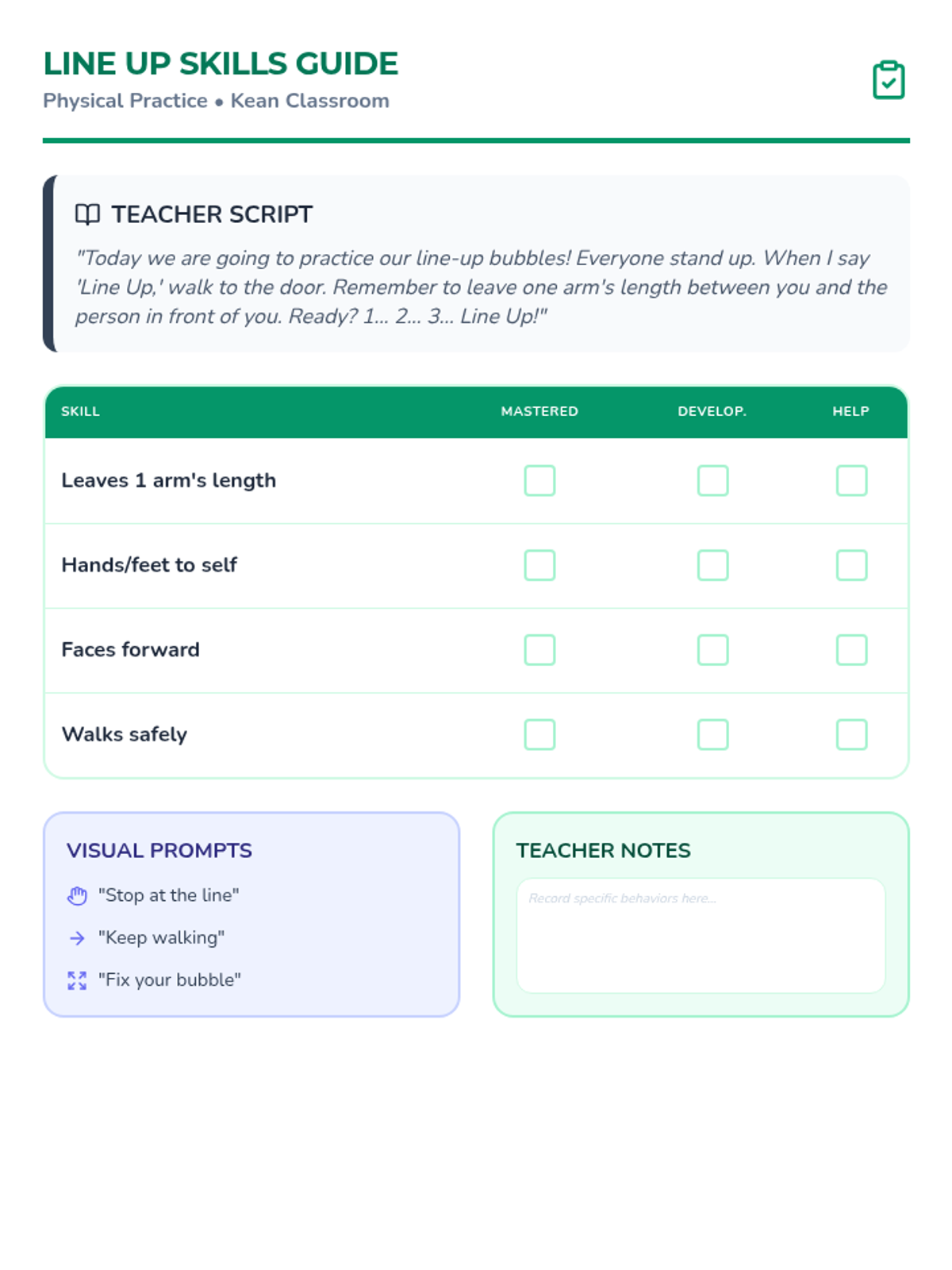
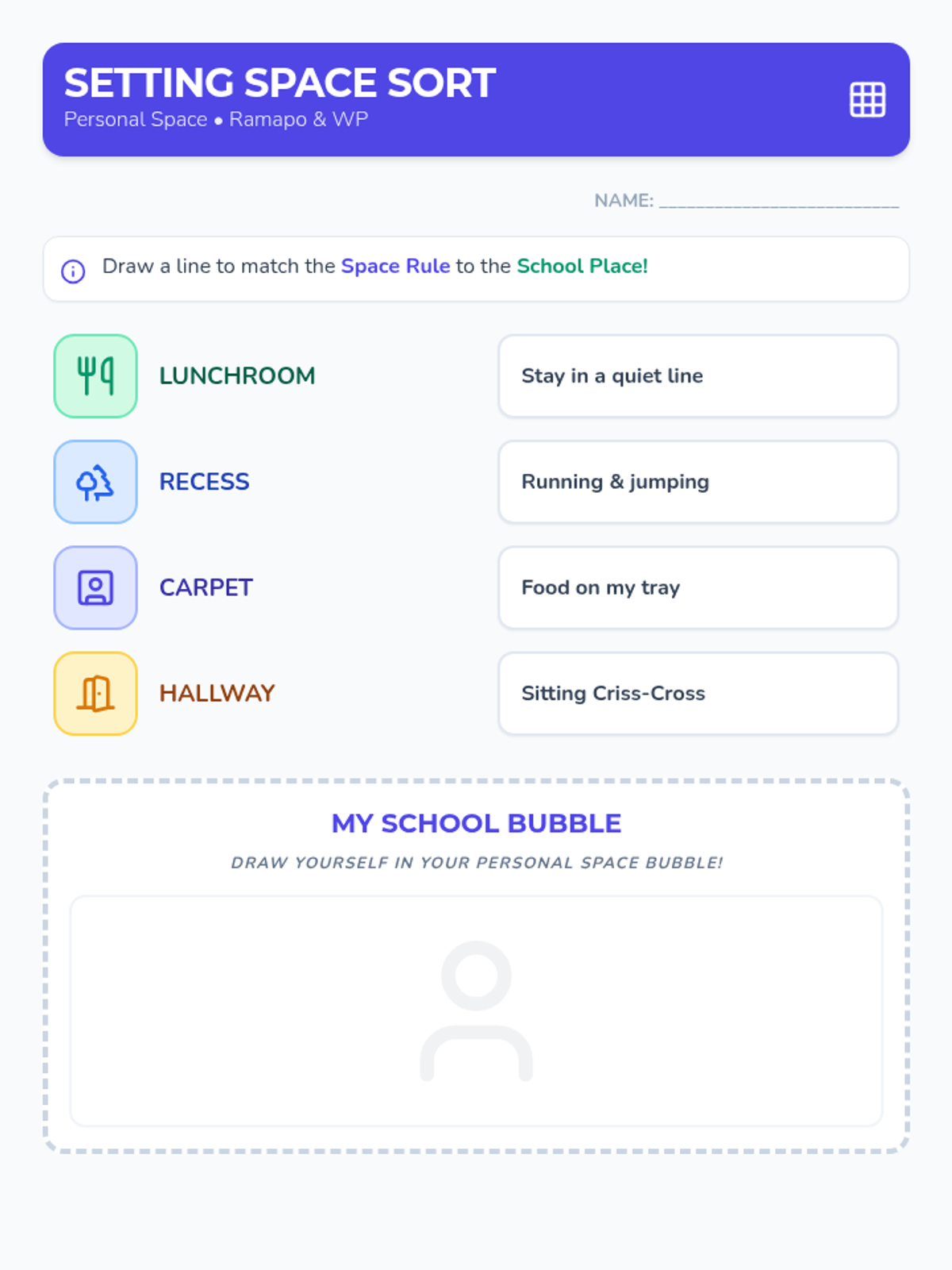
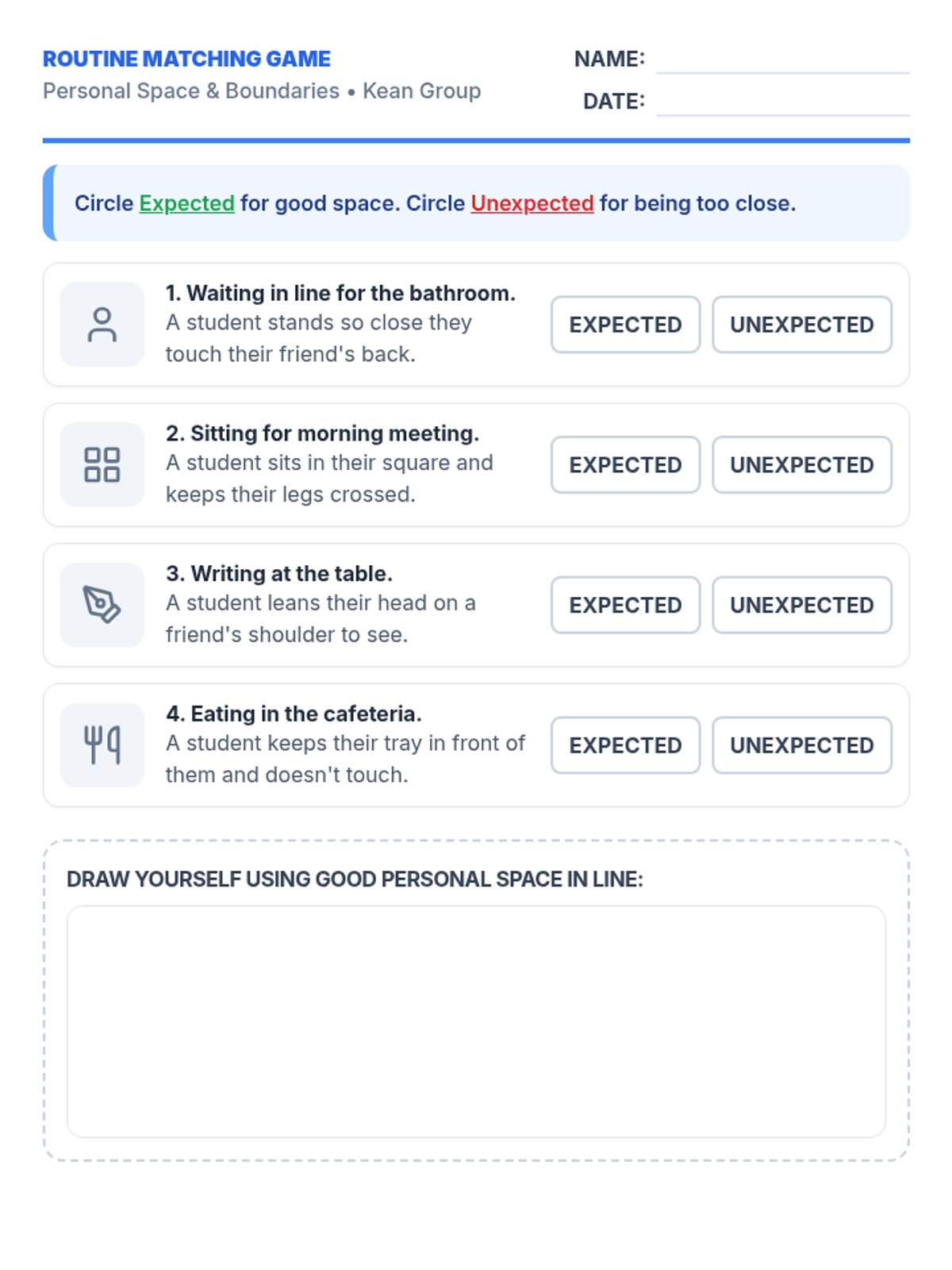
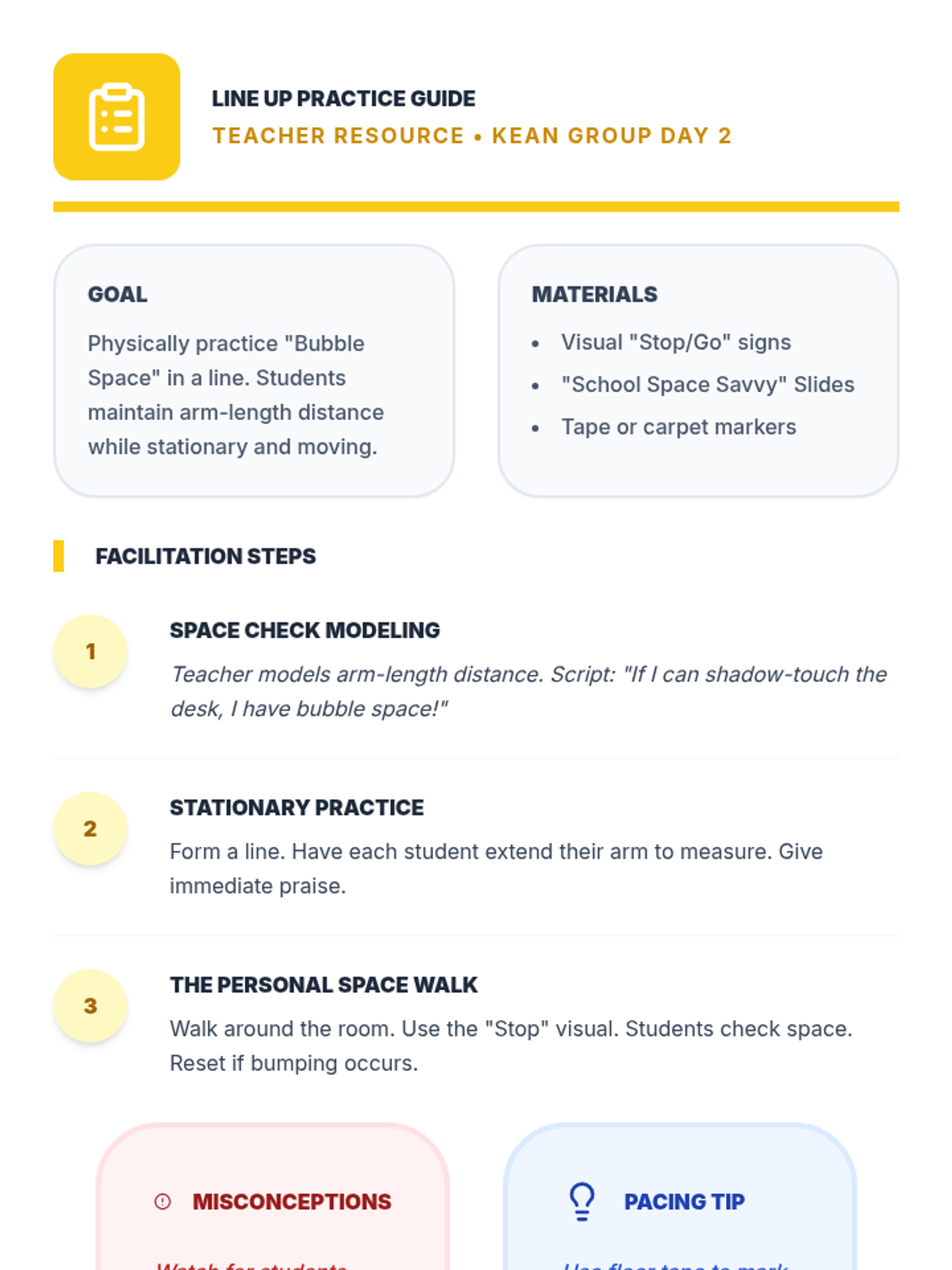
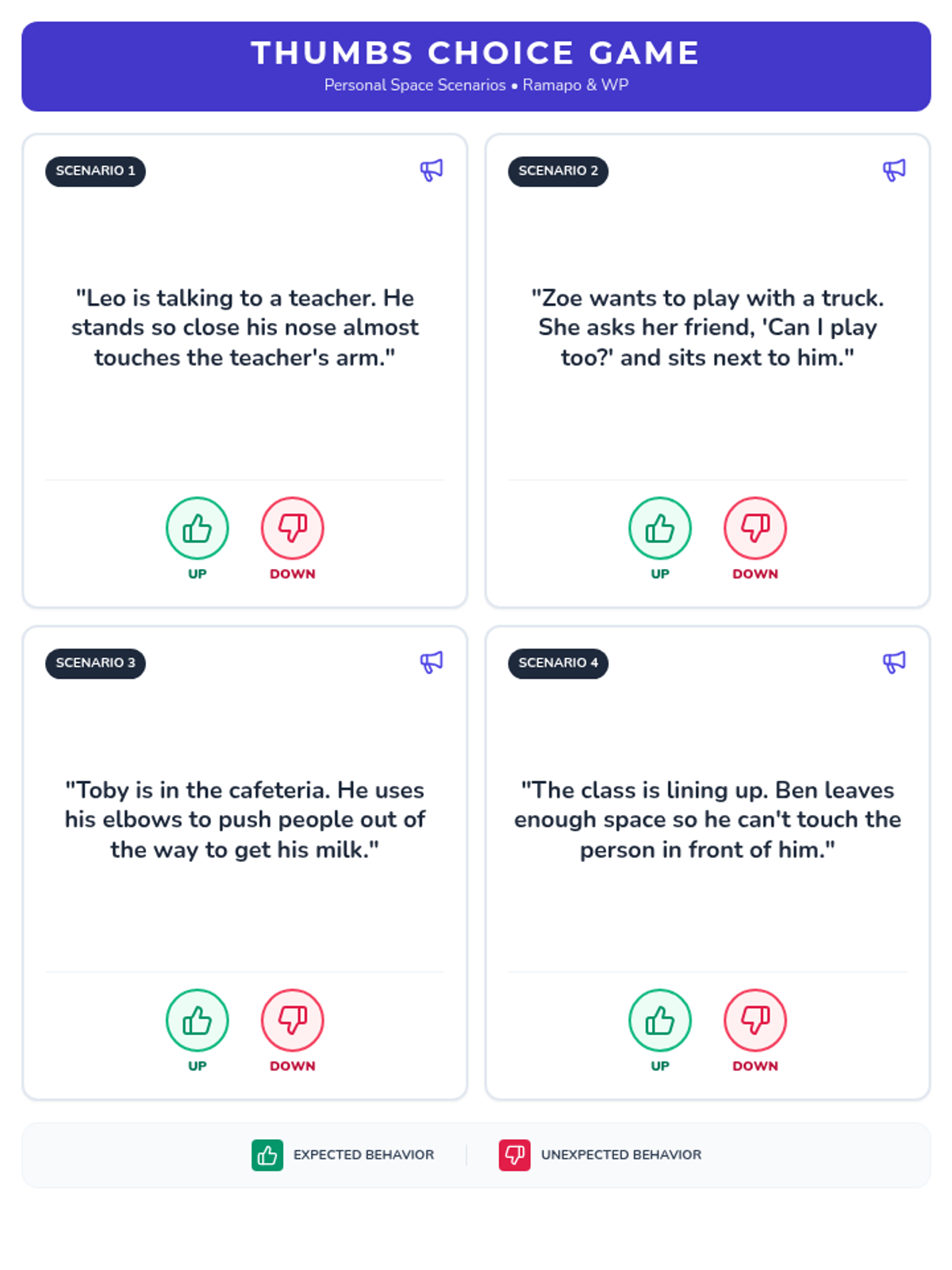
Involves hands-on practice for Kean (lining up) and sorting activities for Ramapo/WP to categorize expected vs. unexpected behaviors in specific school settings.
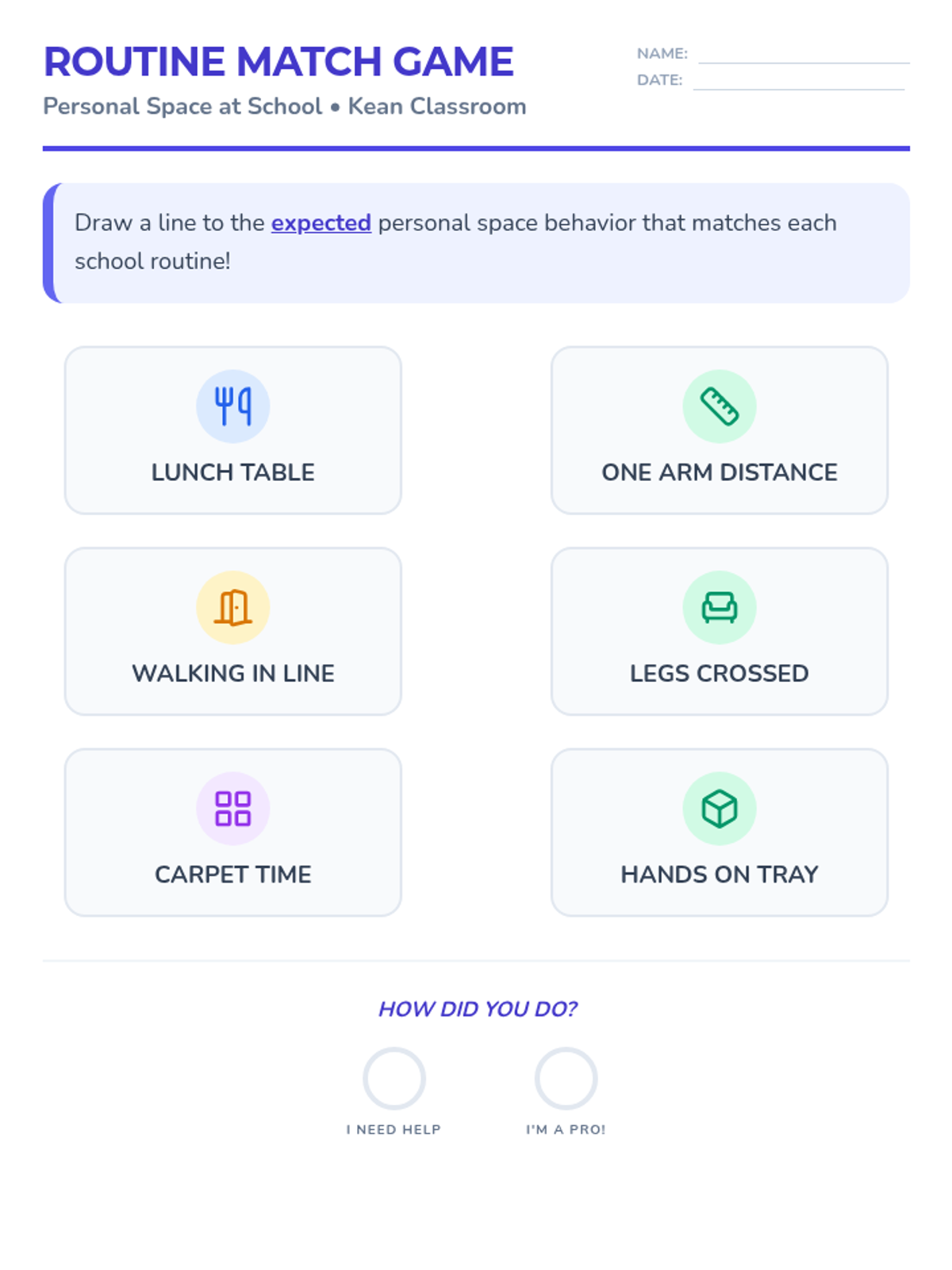
Focuses on identifying and practicing correct personal space behaviors during school routines such as lunch, recess, and transitions for Kean, Ramapo, and WP students.
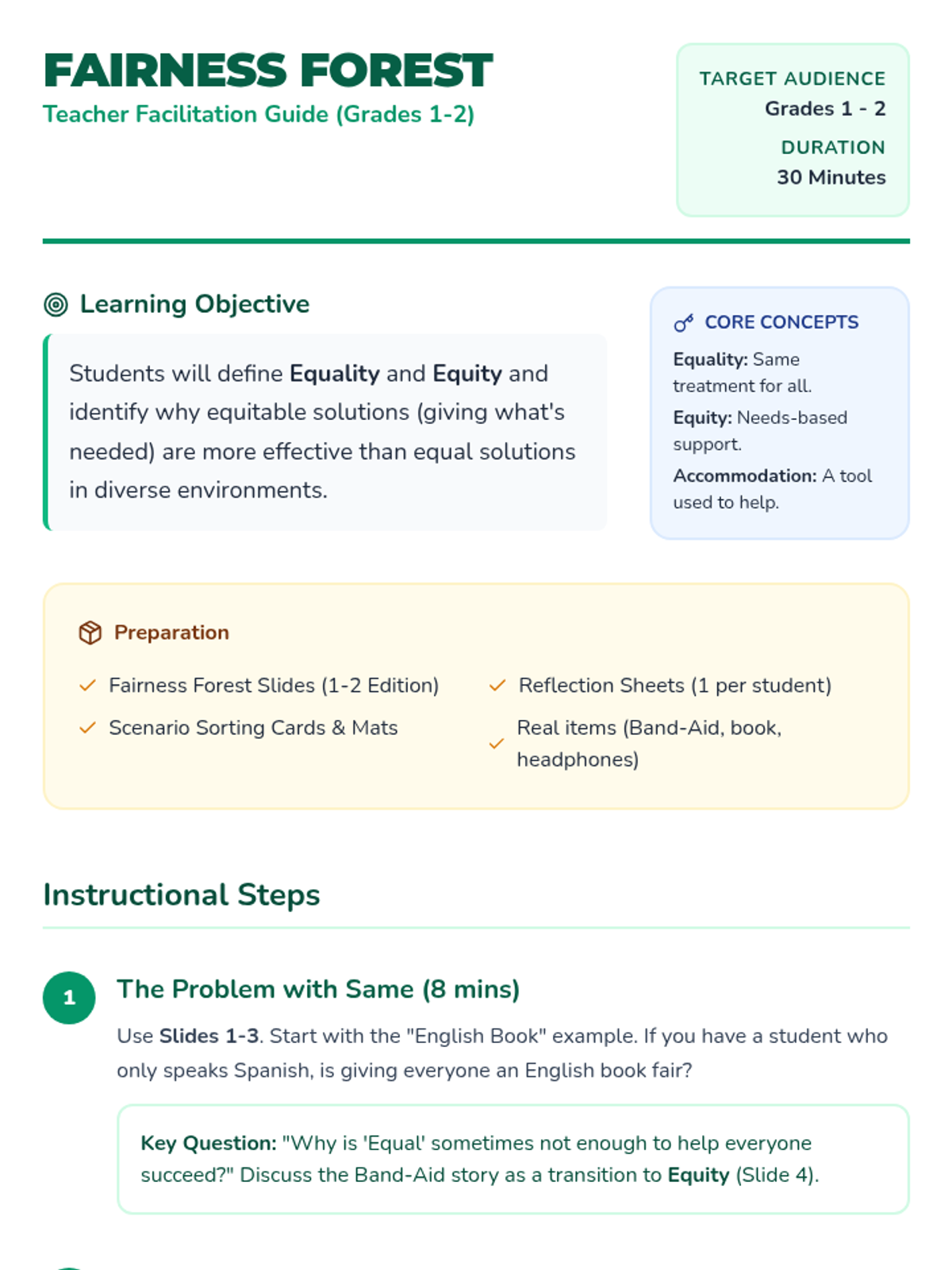
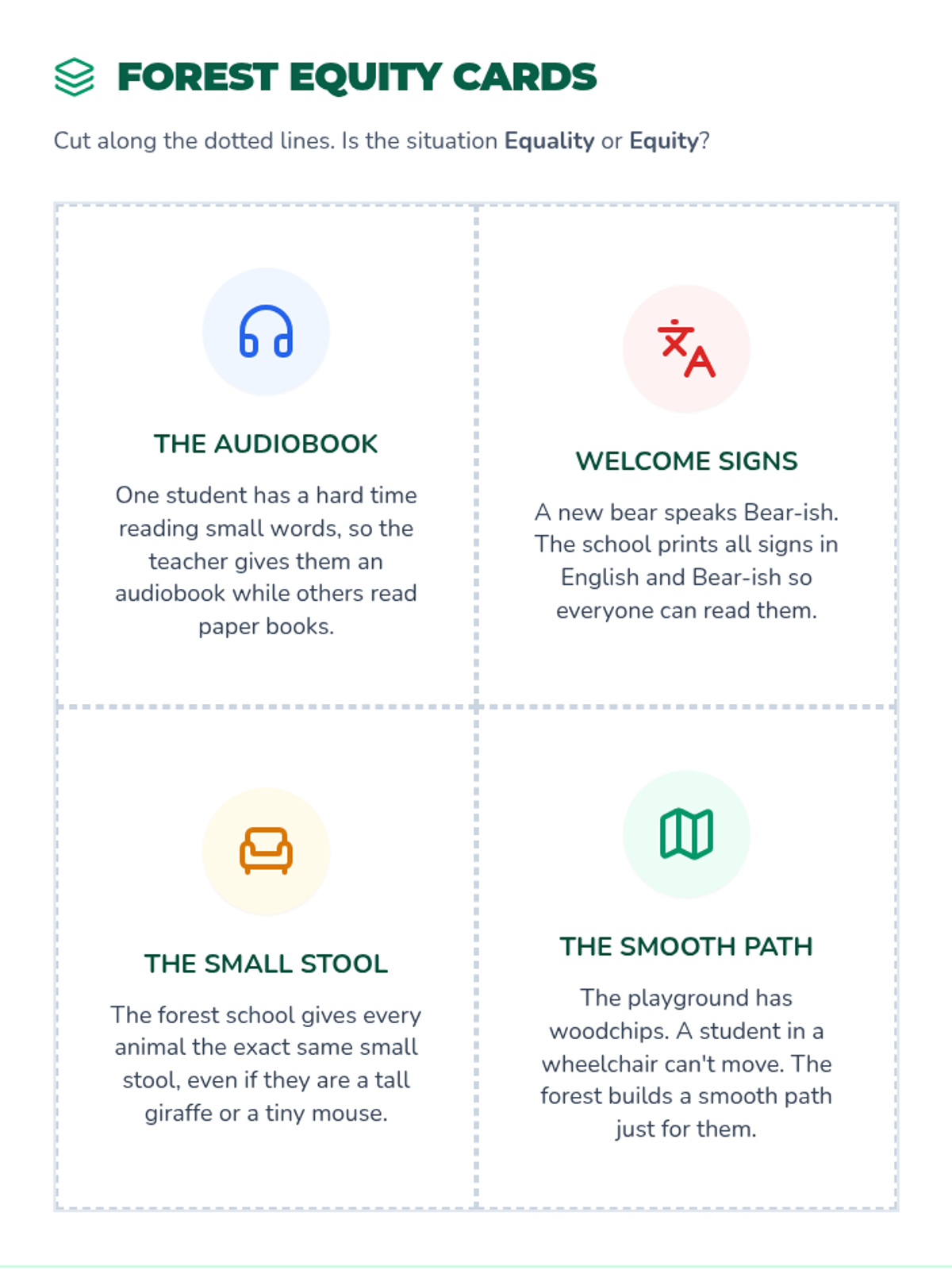
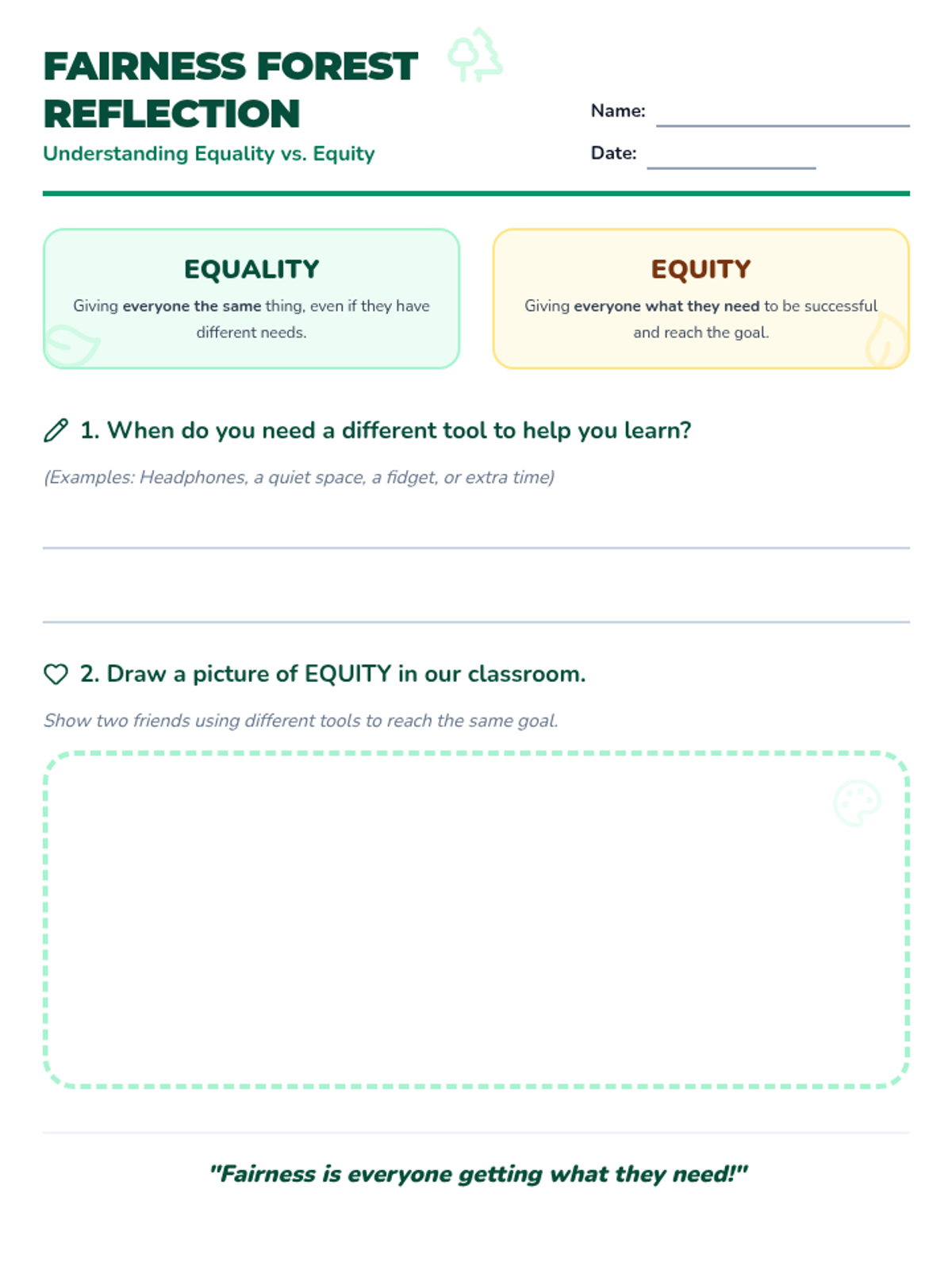
A 30-minute lesson for Grades 1-2 exploring 'Equality' (everyone getting the same) vs. 'Equity' (everyone getting what they need to succeed). Features the 'Fairness Forest' theme with expanded scenarios including learning accommodations.
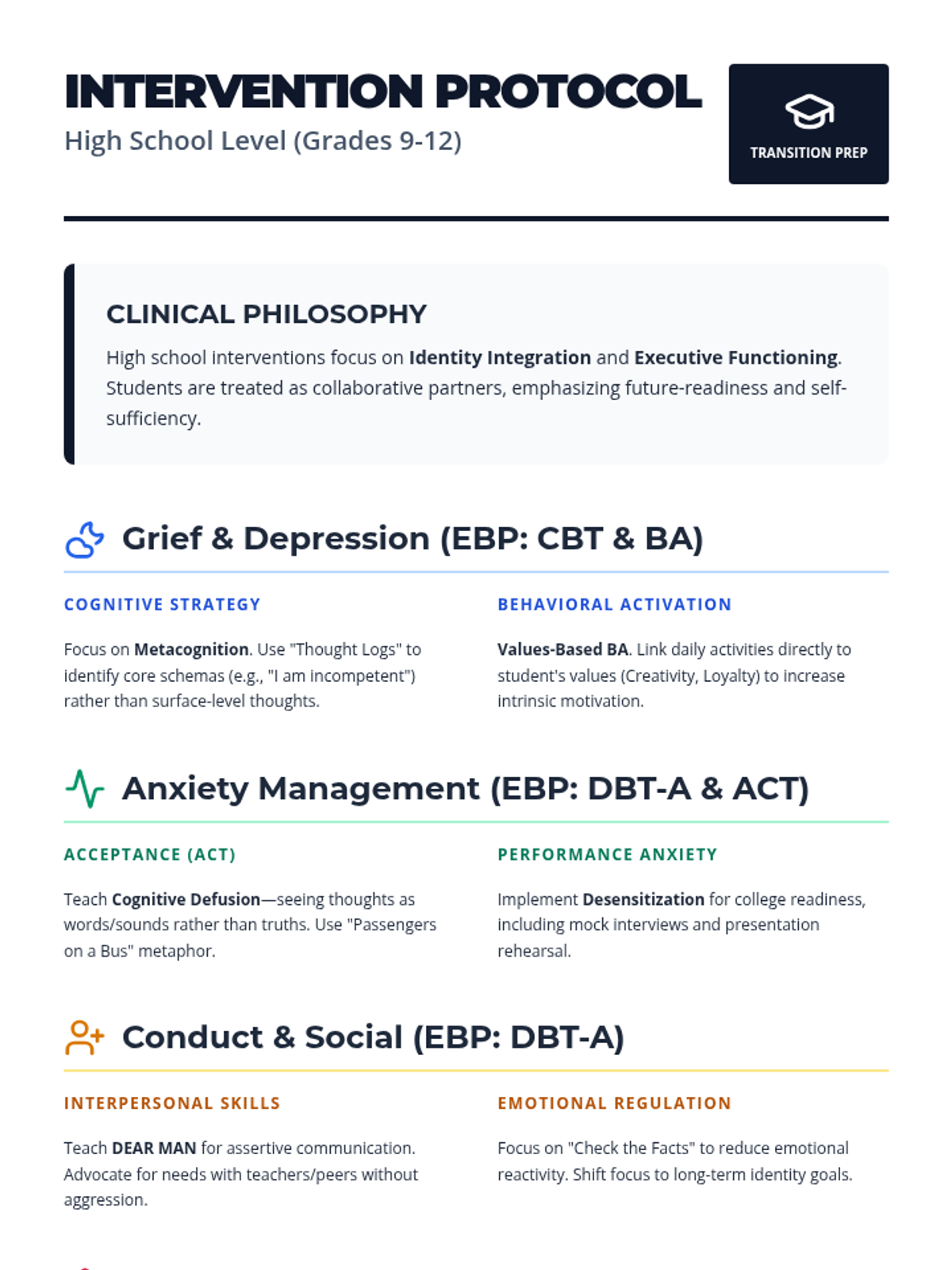
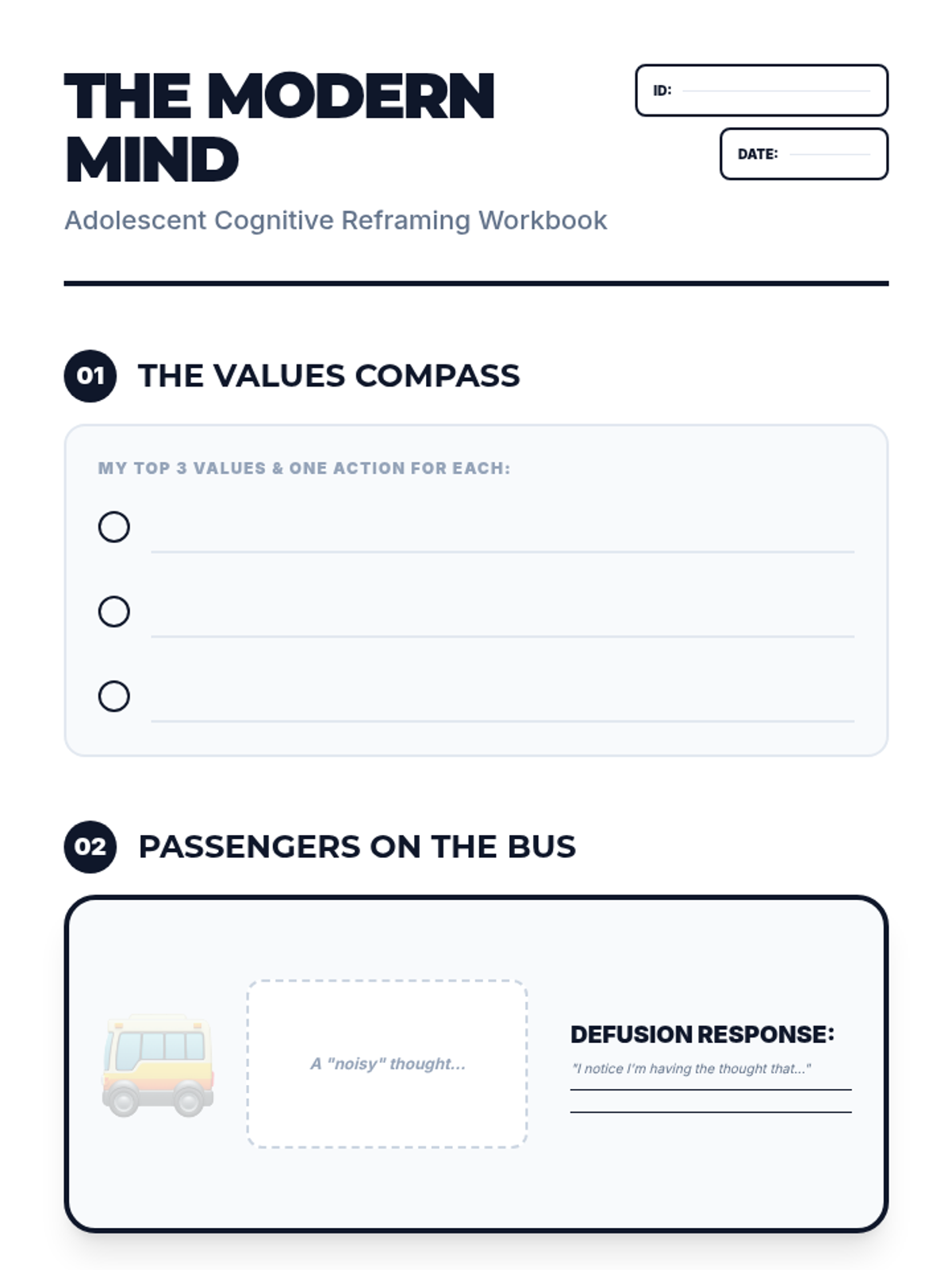
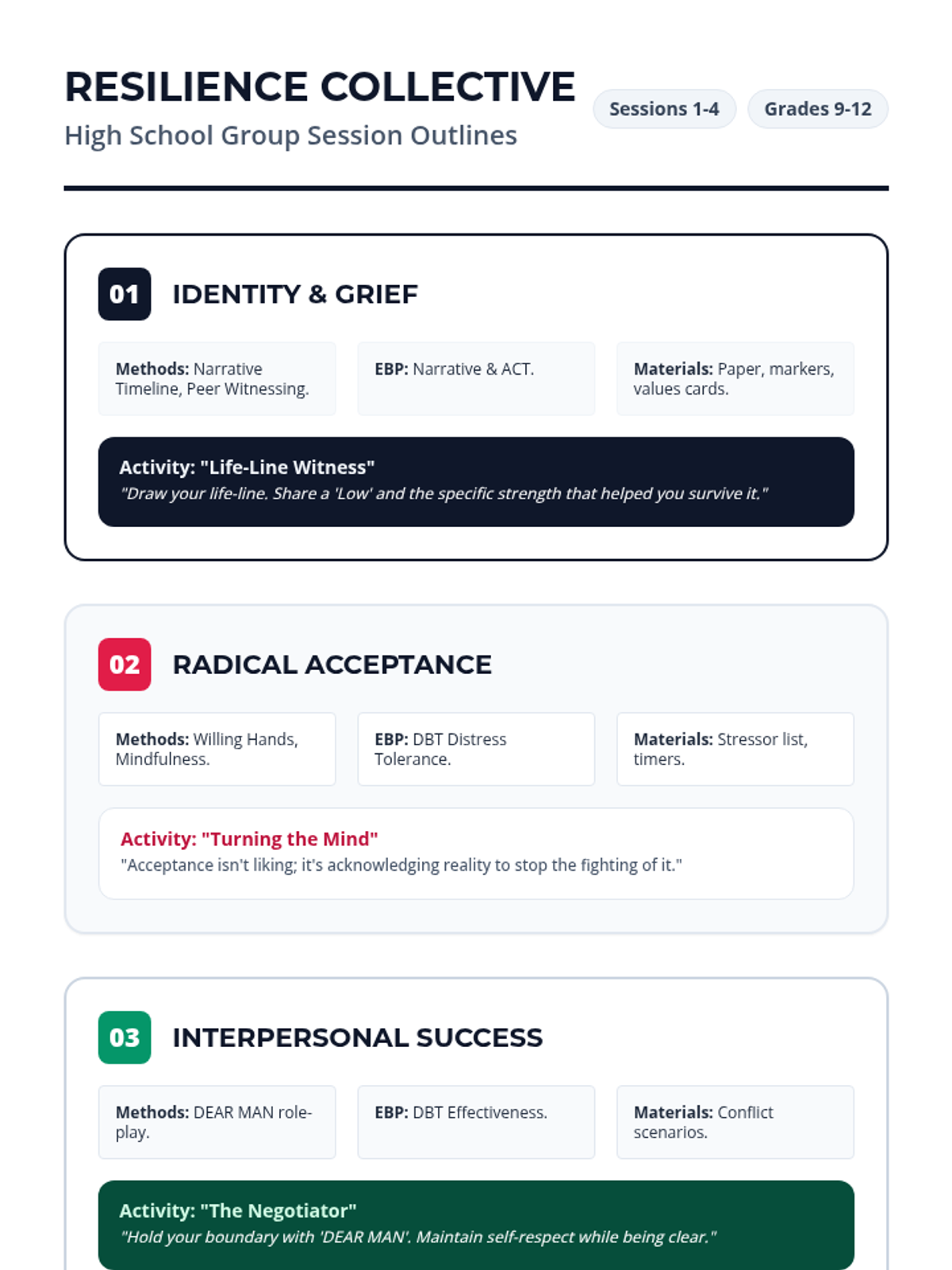
Advanced therapeutic interventions for high schoolers, emphasizing autonomy, complex cognitive reframing, interpersonal effectiveness, and comprehensive crisis protocols.
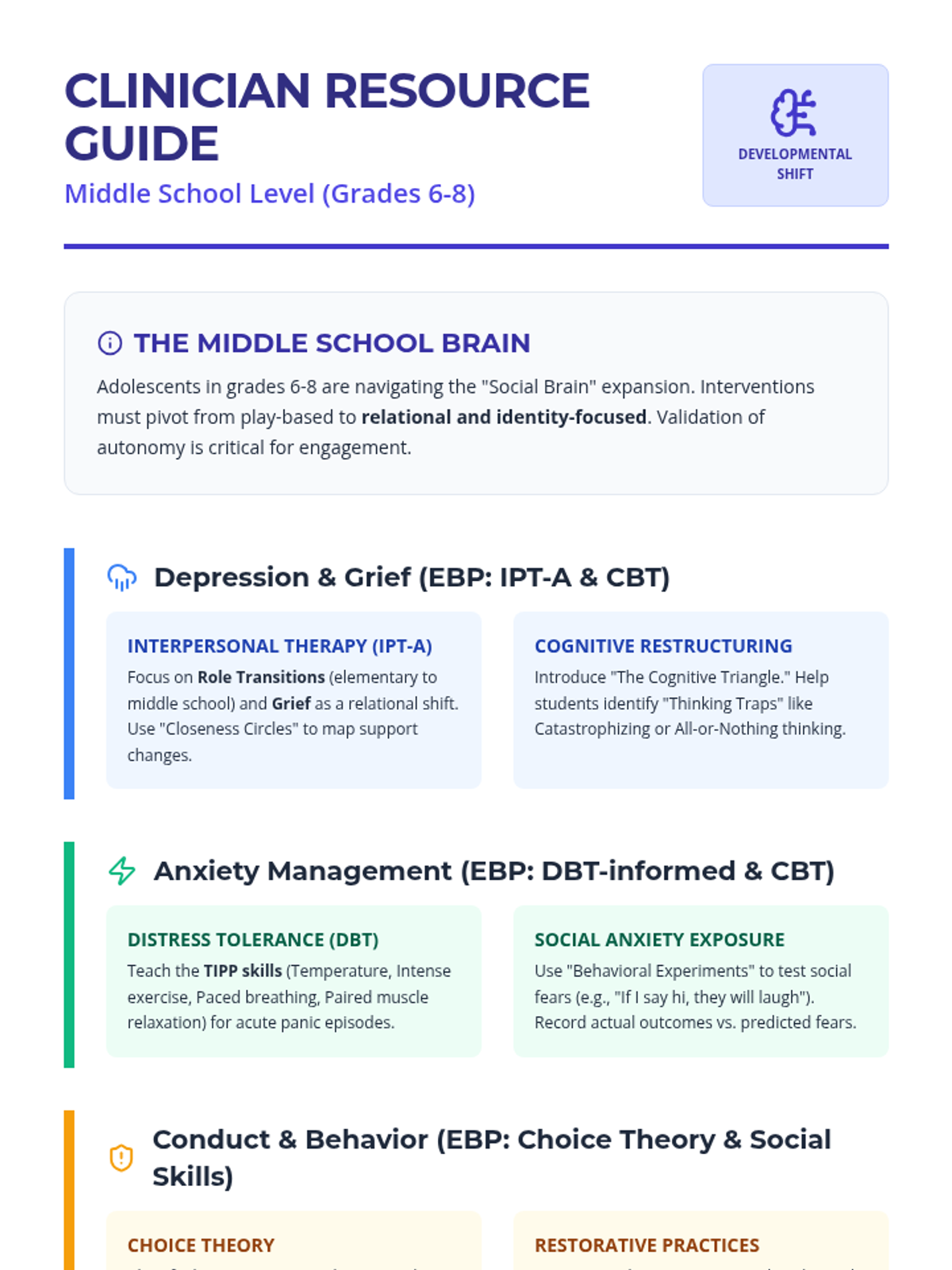
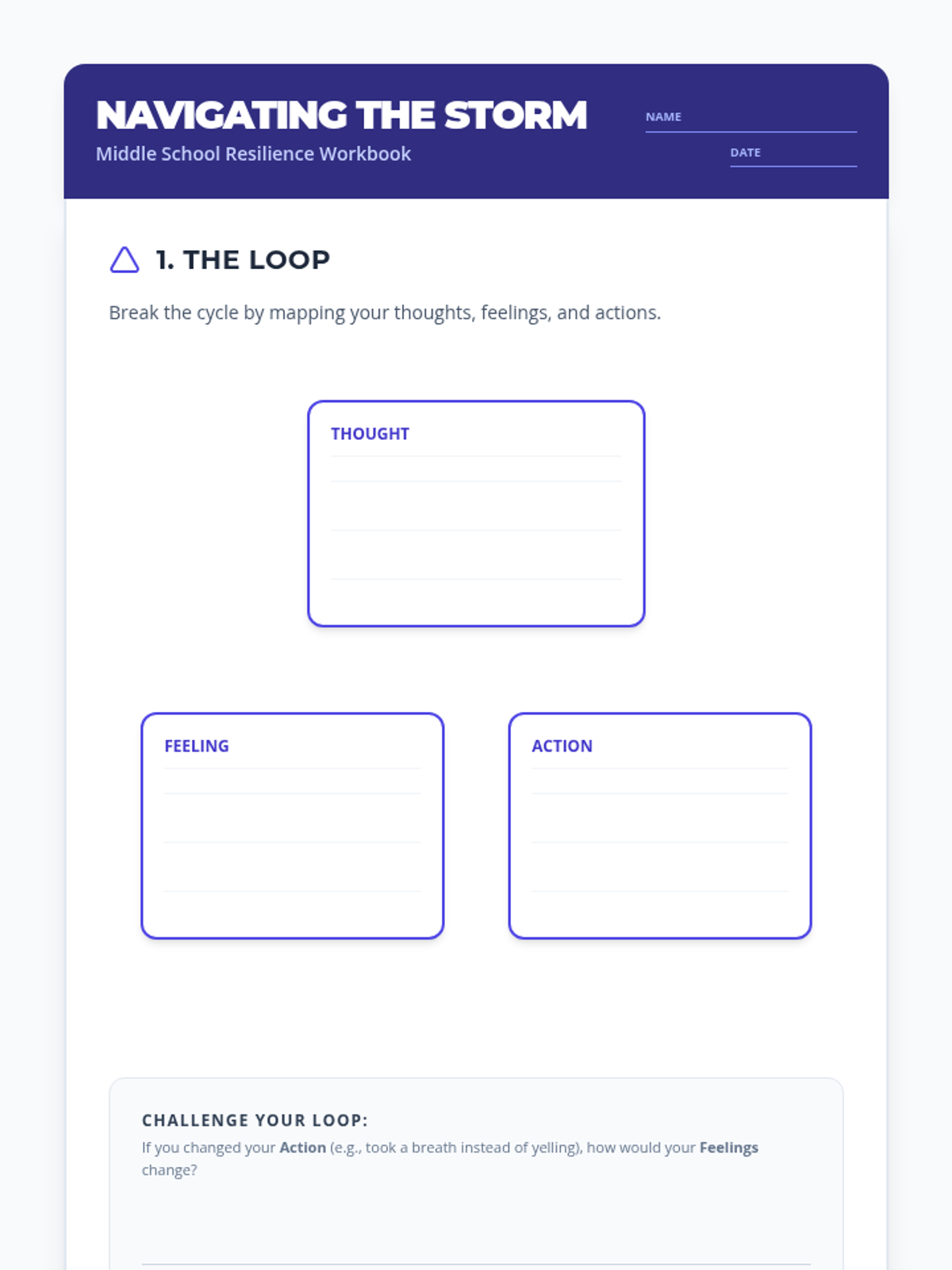
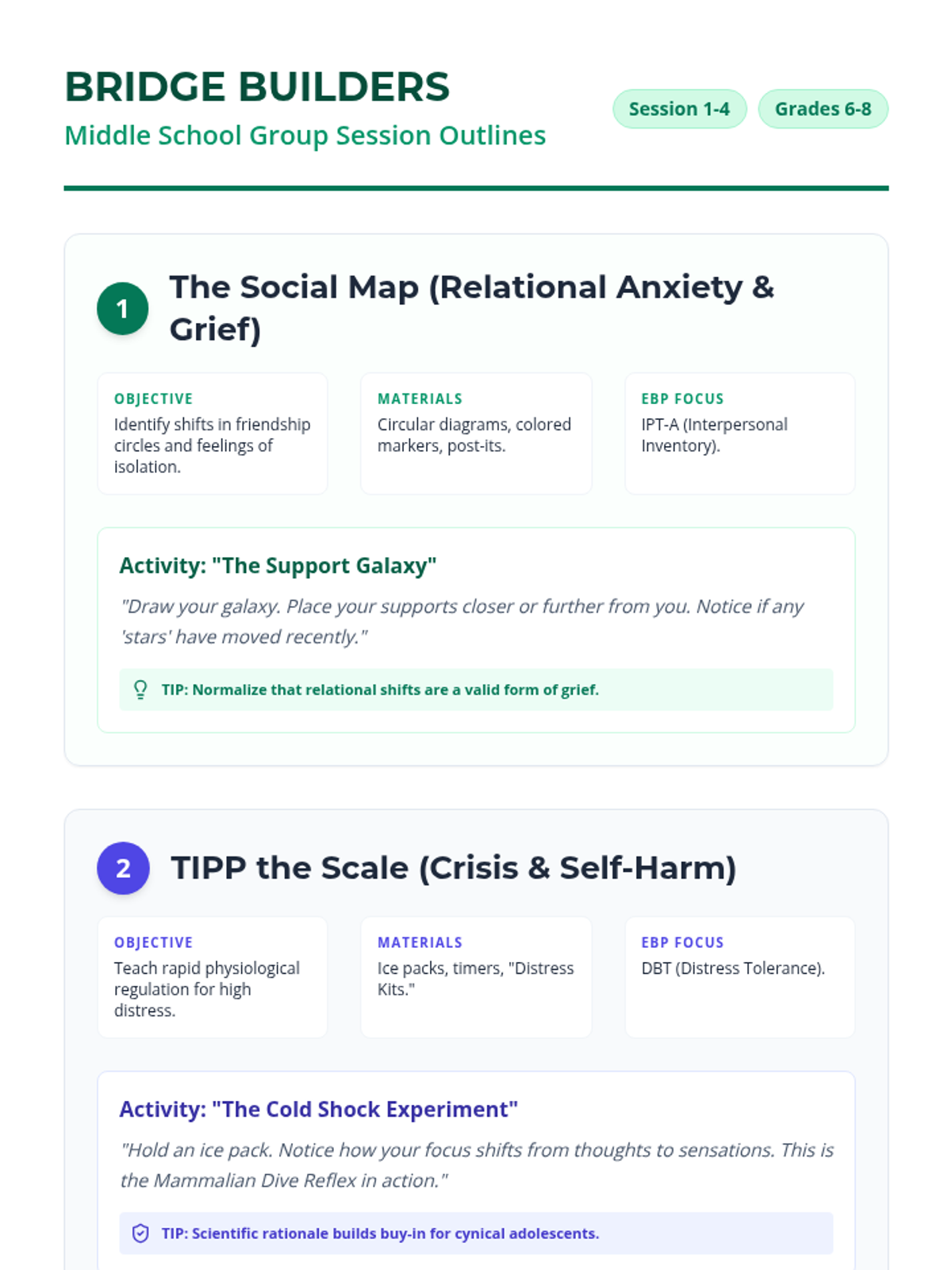
CBT and DBT-informed strategies tailored for the middle school transition, focusing on peer relationships, emotional regulation, and structured safety plans.
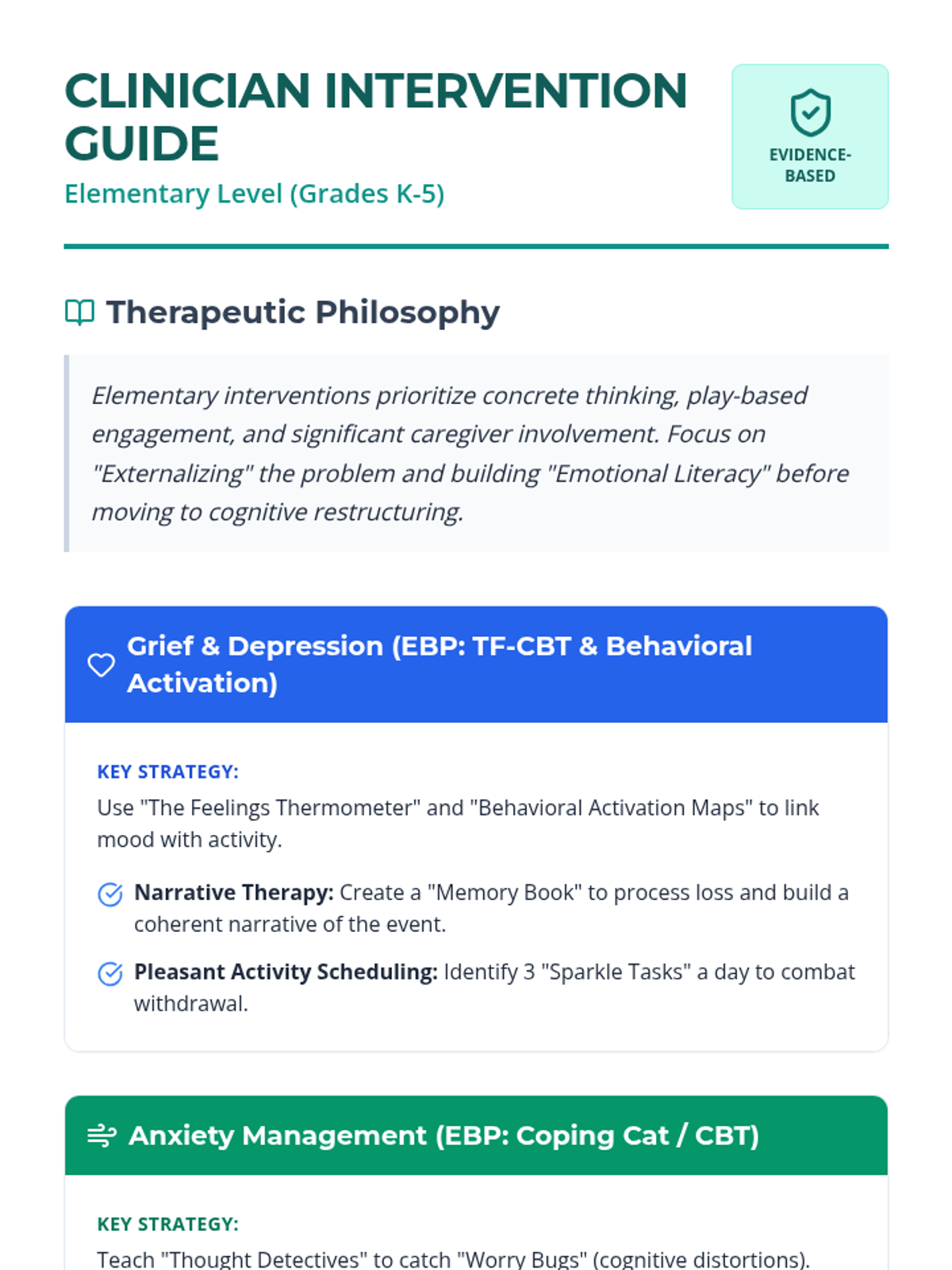
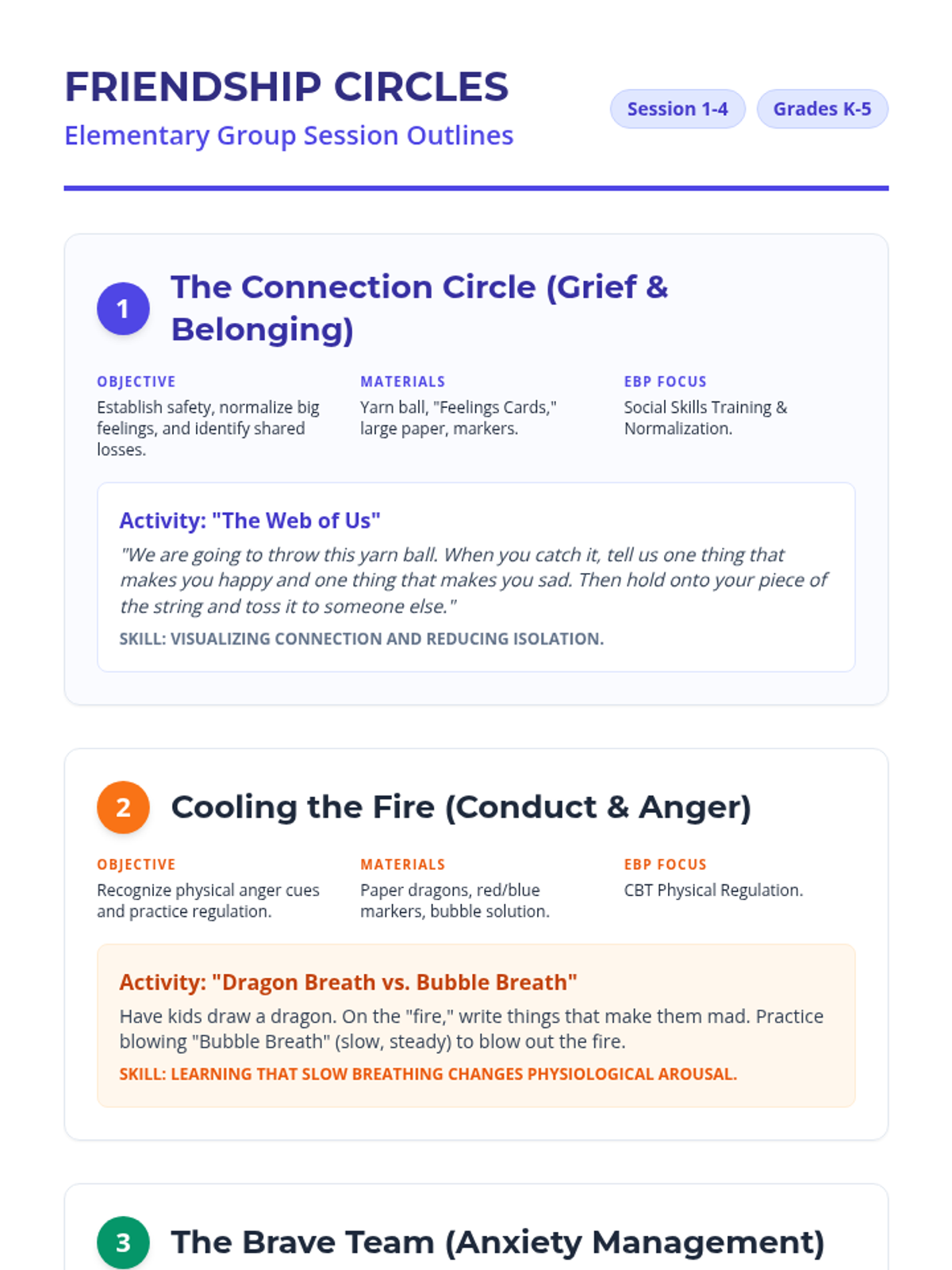
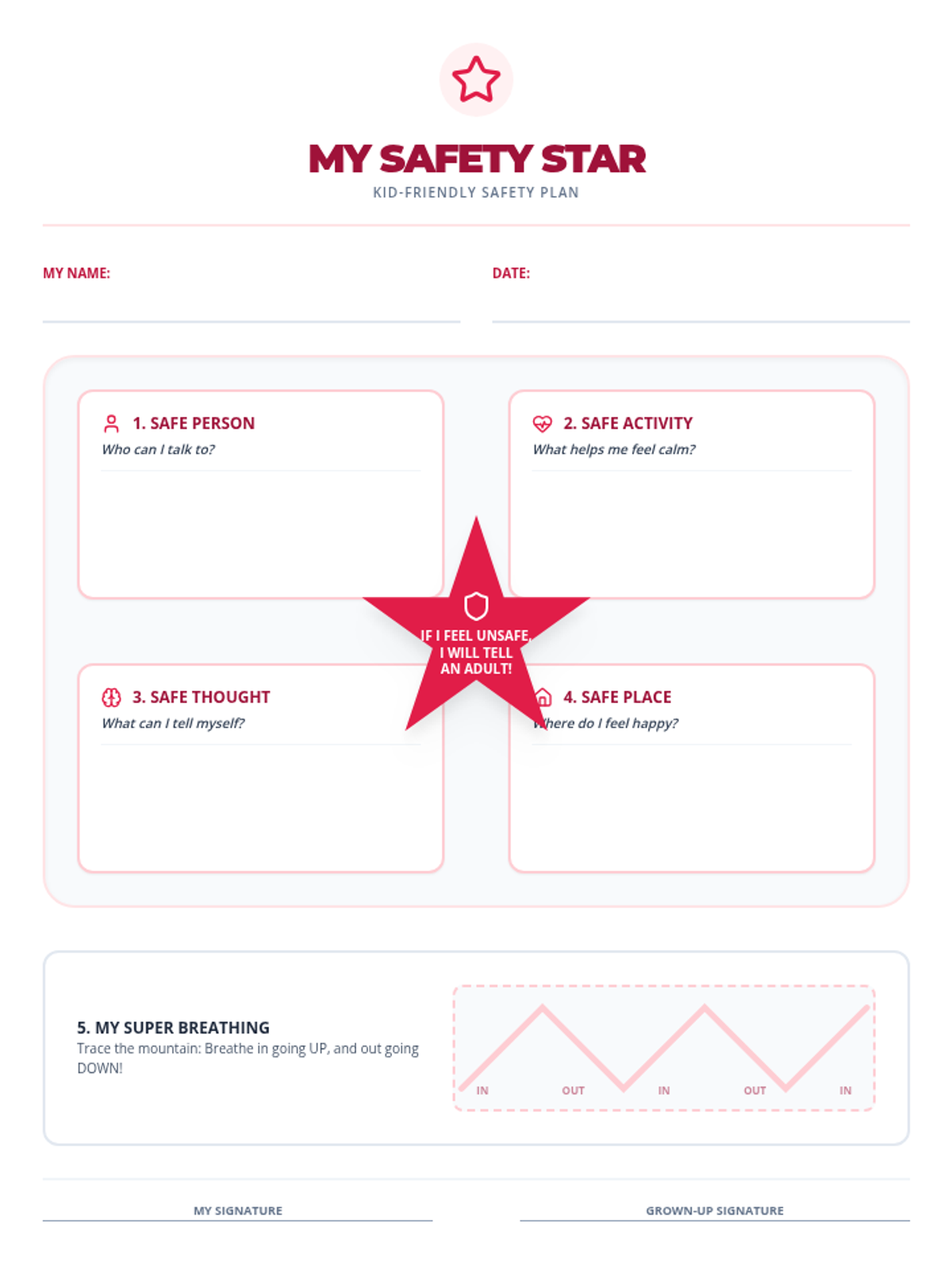
Developmentally appropriate interventions for elementary students focusing on play-based CBT, social-emotional learning, and kid-friendly safety planning.
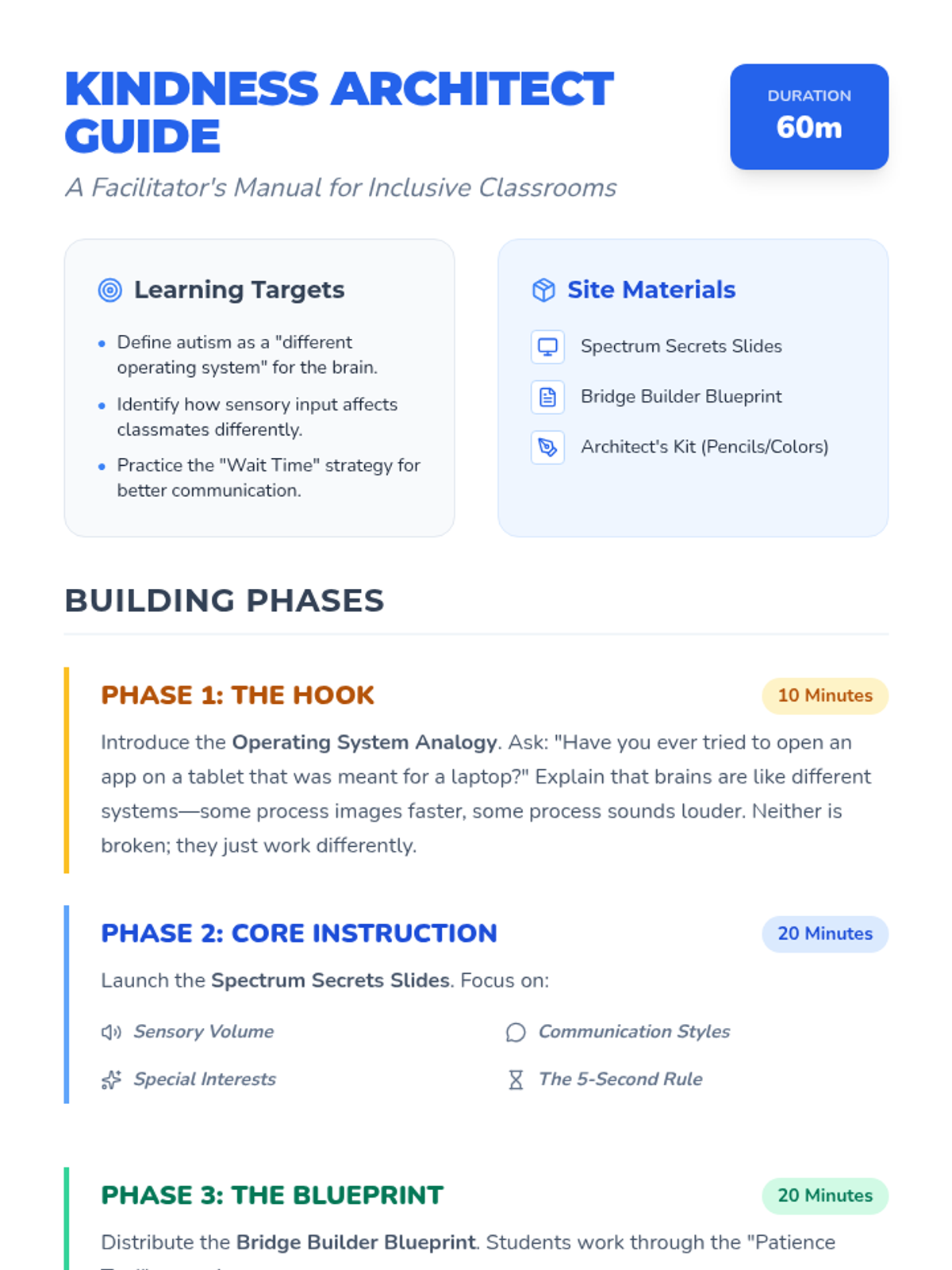
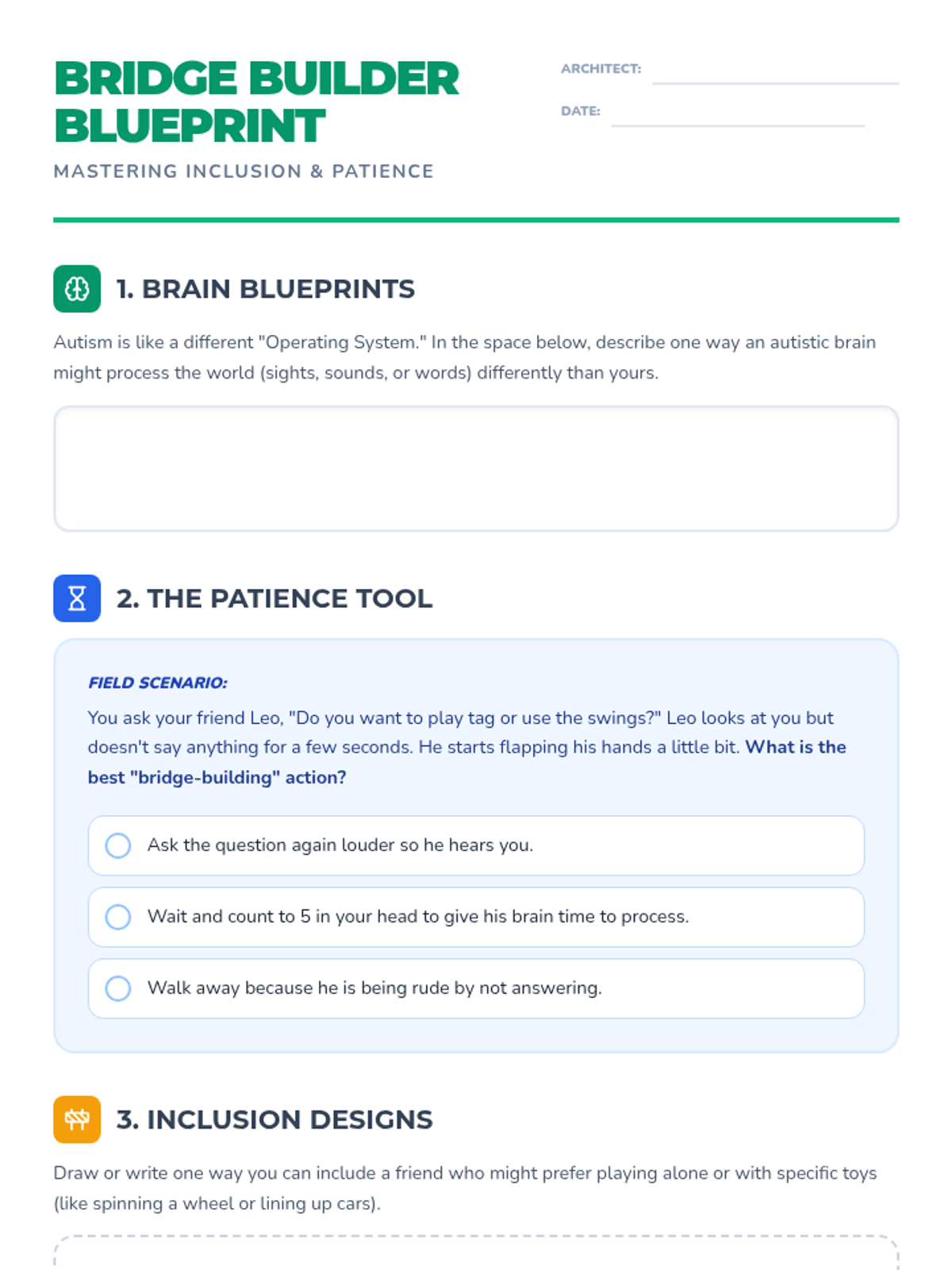
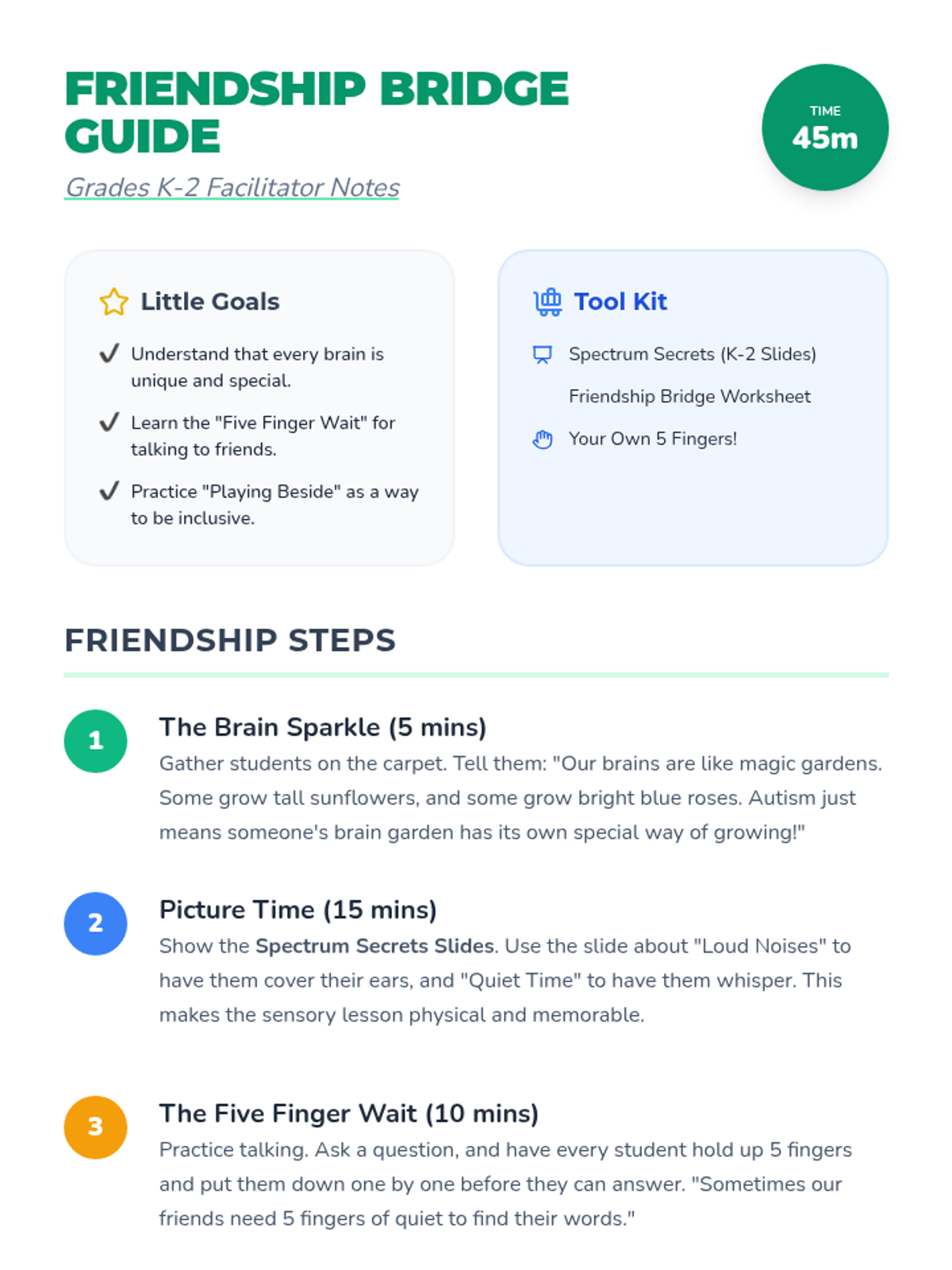
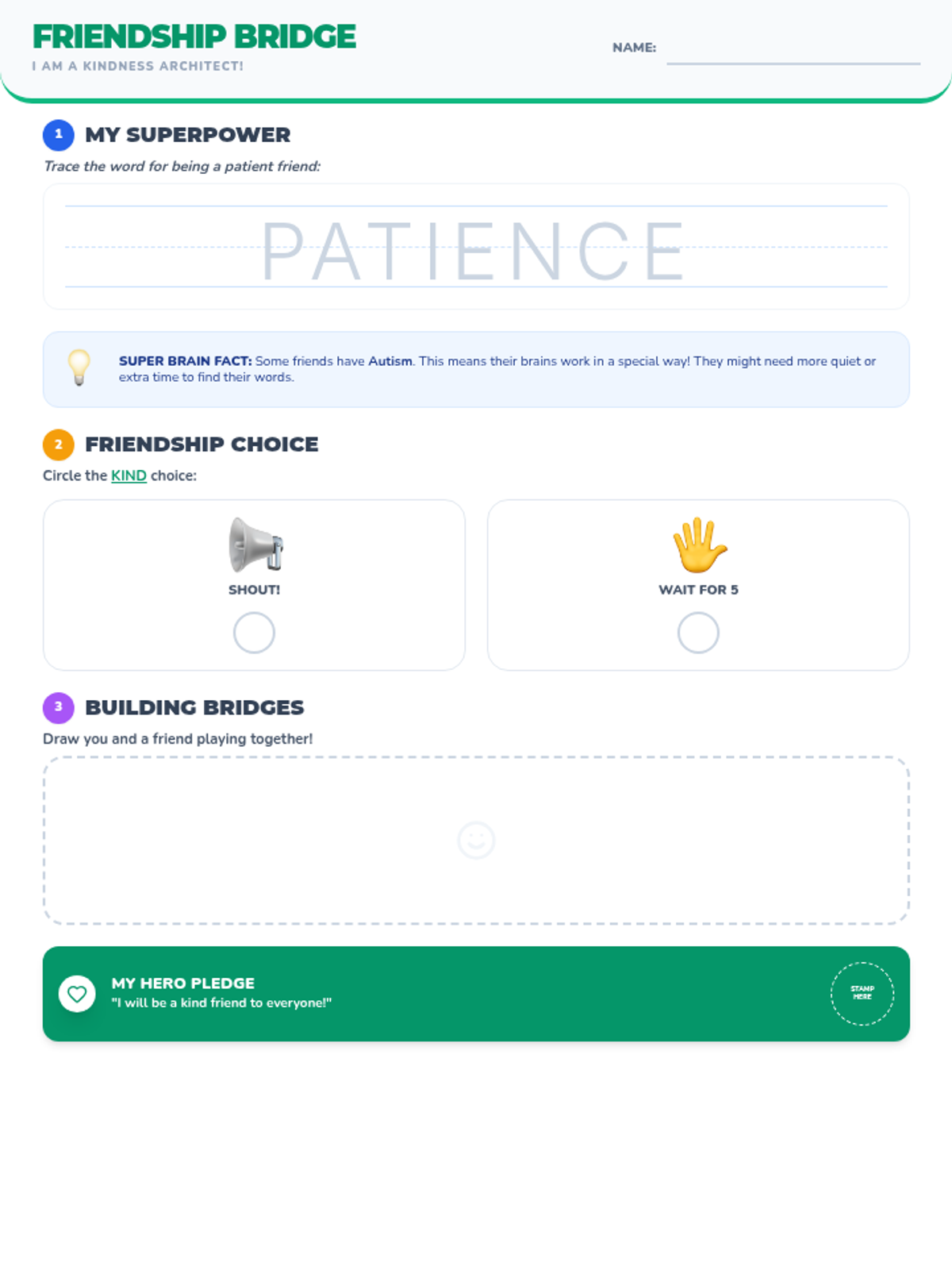
A comprehensive lesson designed to help students understand autism as a natural neurological difference while developing specific friendship skills like patience and inclusive play. Students will explore sensory experiences, communication styles, and practical ways to support peers on the spectrum.
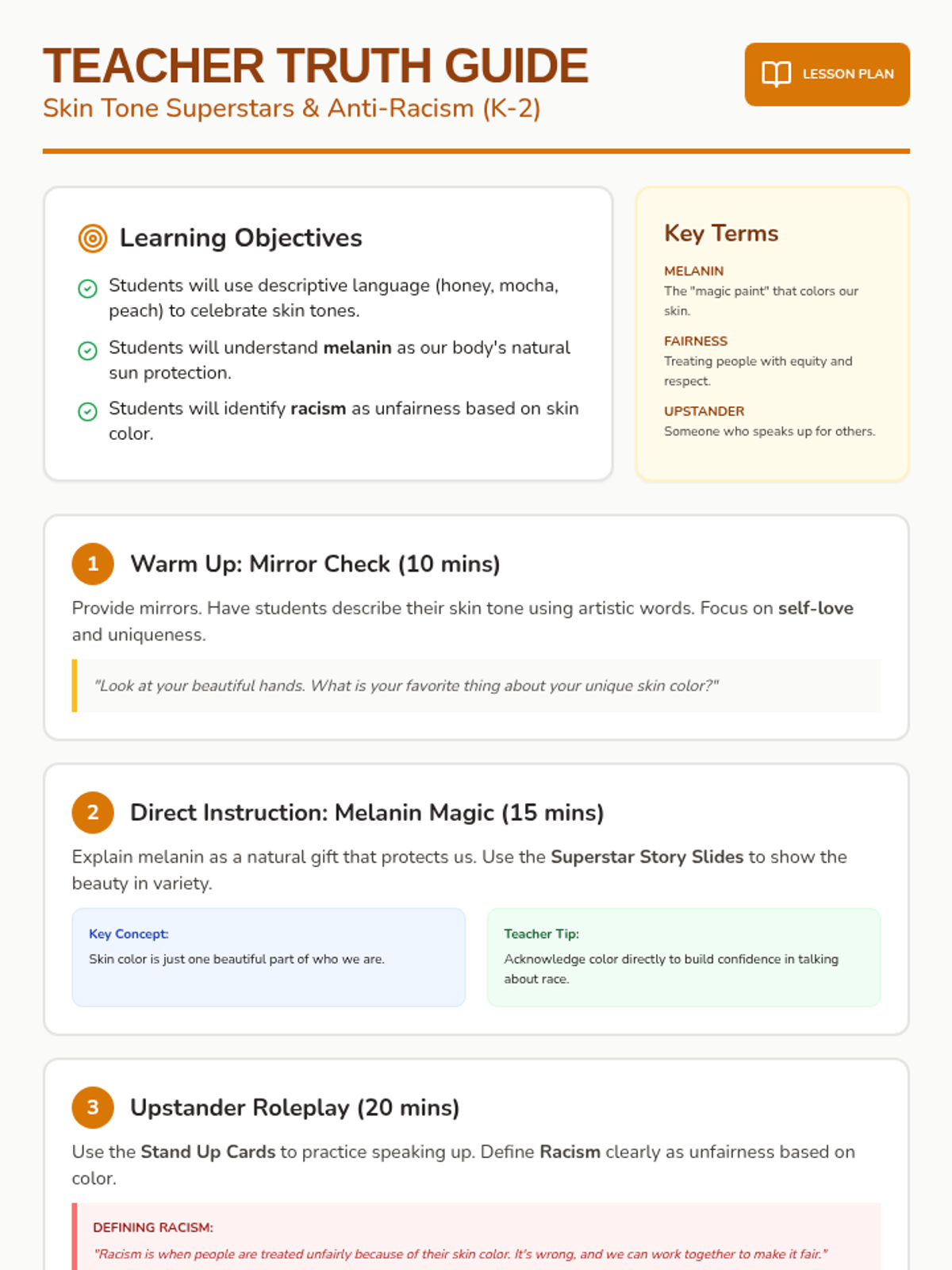
A foundational K-2 lesson designed to celebrate the diversity of skin tones through the concept of melanin and empower young students with "upstander" skills to promote fairness and anti-racism.
Reviewing the complete coping toolbox, celebrating progress, and preparing for the end of the therapeutic journey.
Advanced social role-play and problem-solving for specific anxiety-inducing scenarios like school or playdates.
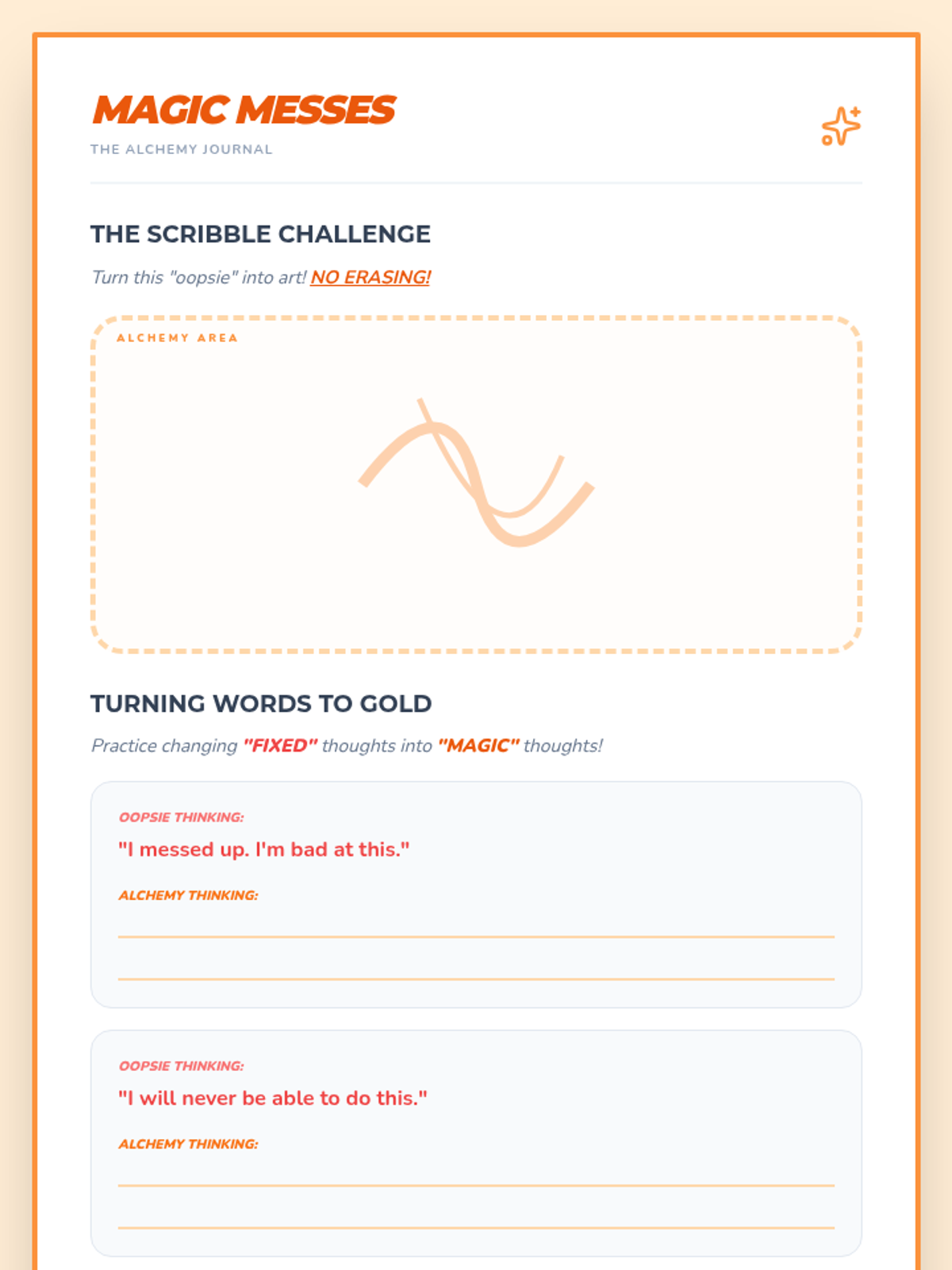
Developing a growth mindset by reframing mistakes as 'Magic Messes' and exploring resilience through play.
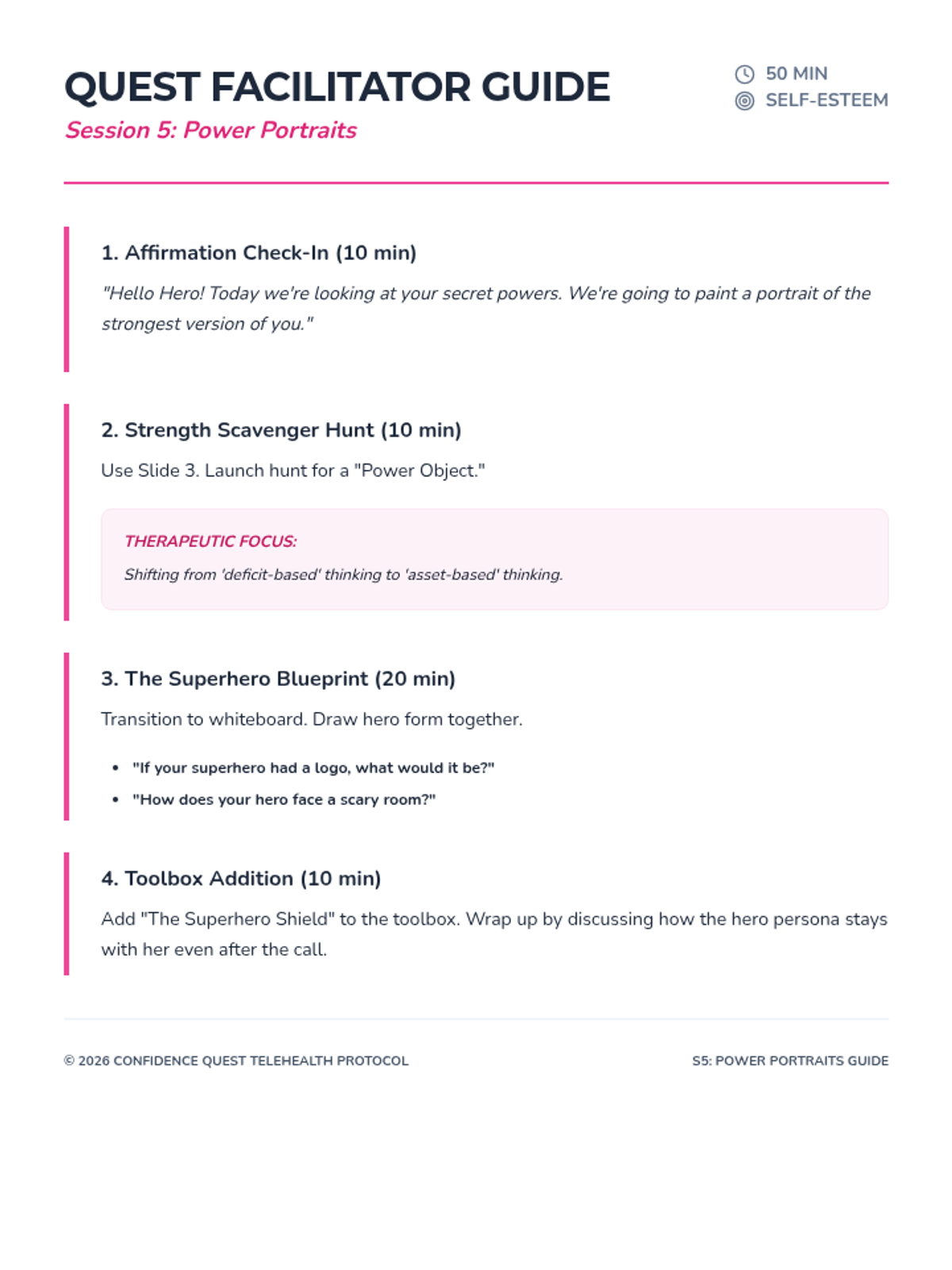
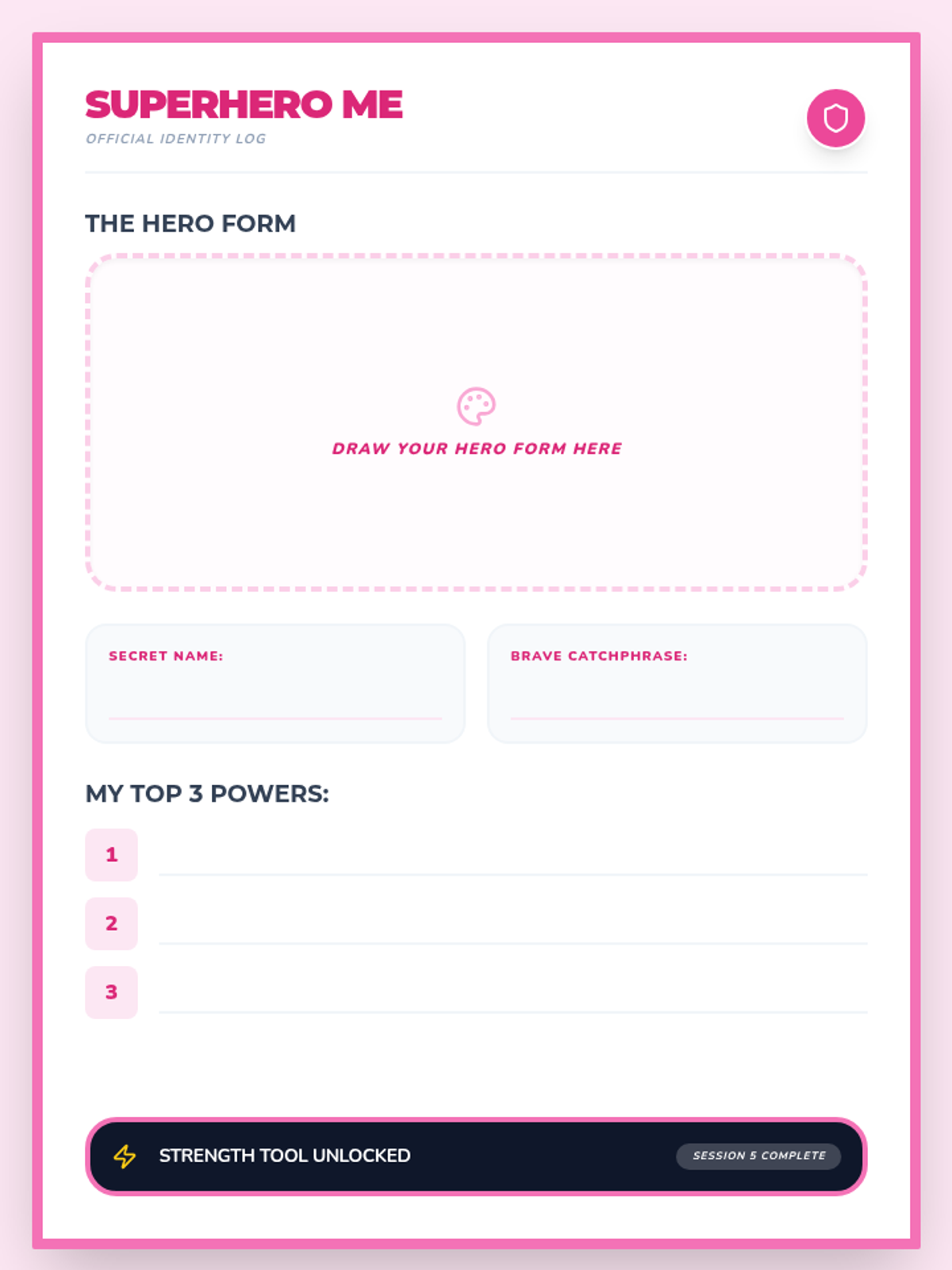
Focusing on internal strengths and self-confidence through the creation of a 'Superhero Me' persona and affirmative drawing.
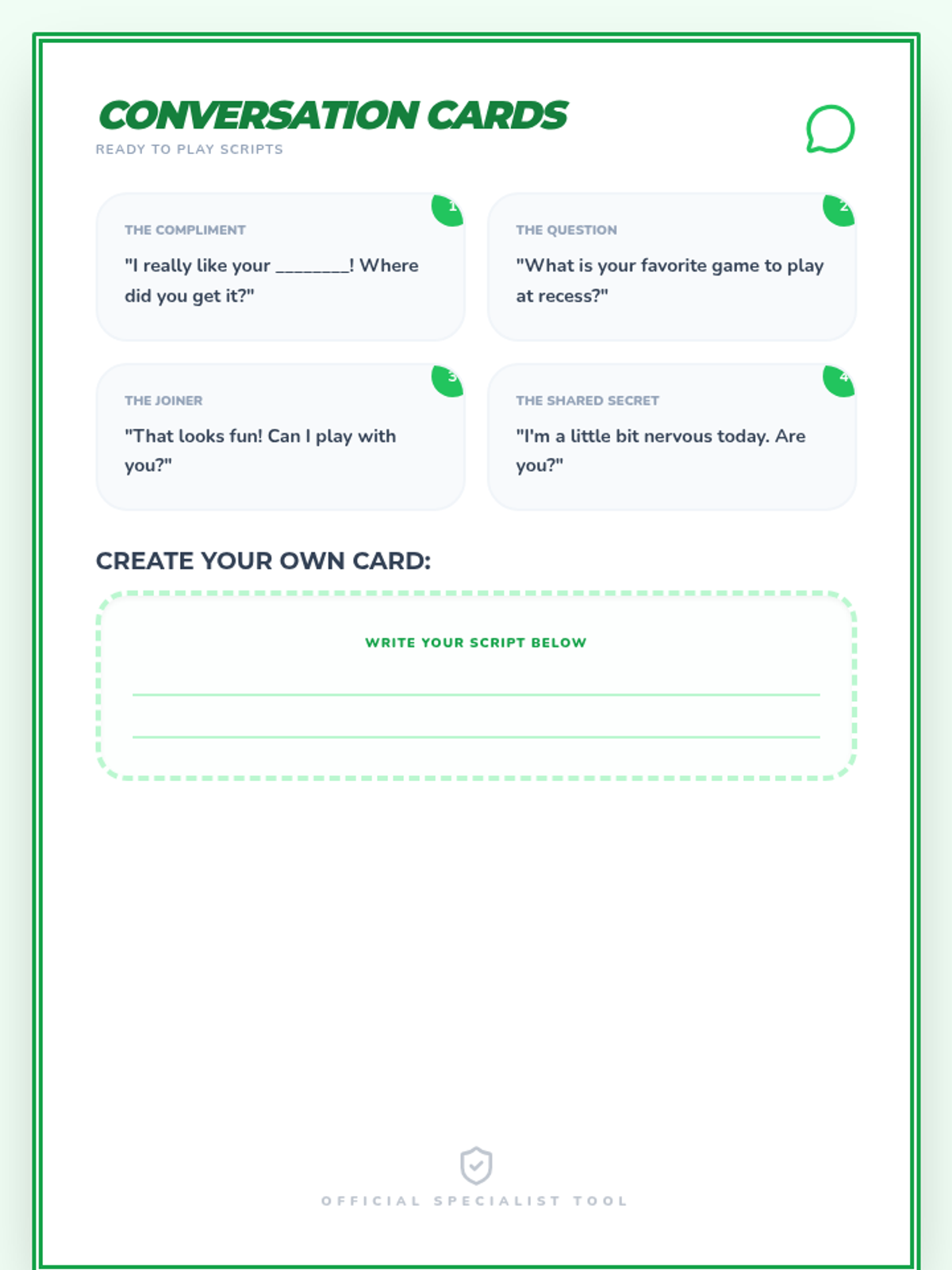
Using storytelling to navigate social anxiety and role-playing new introductions with digital whiteboard 'puppets'.
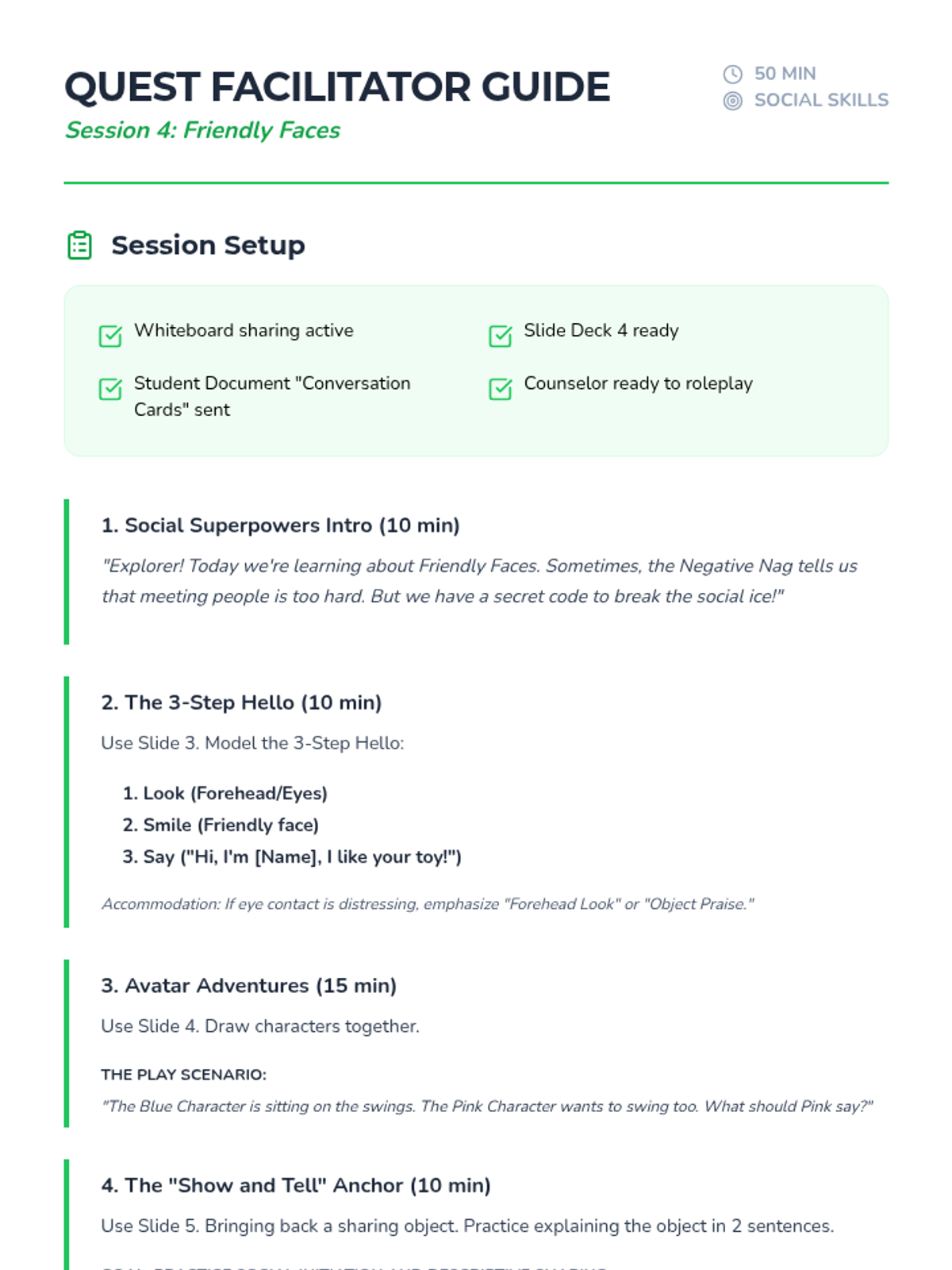
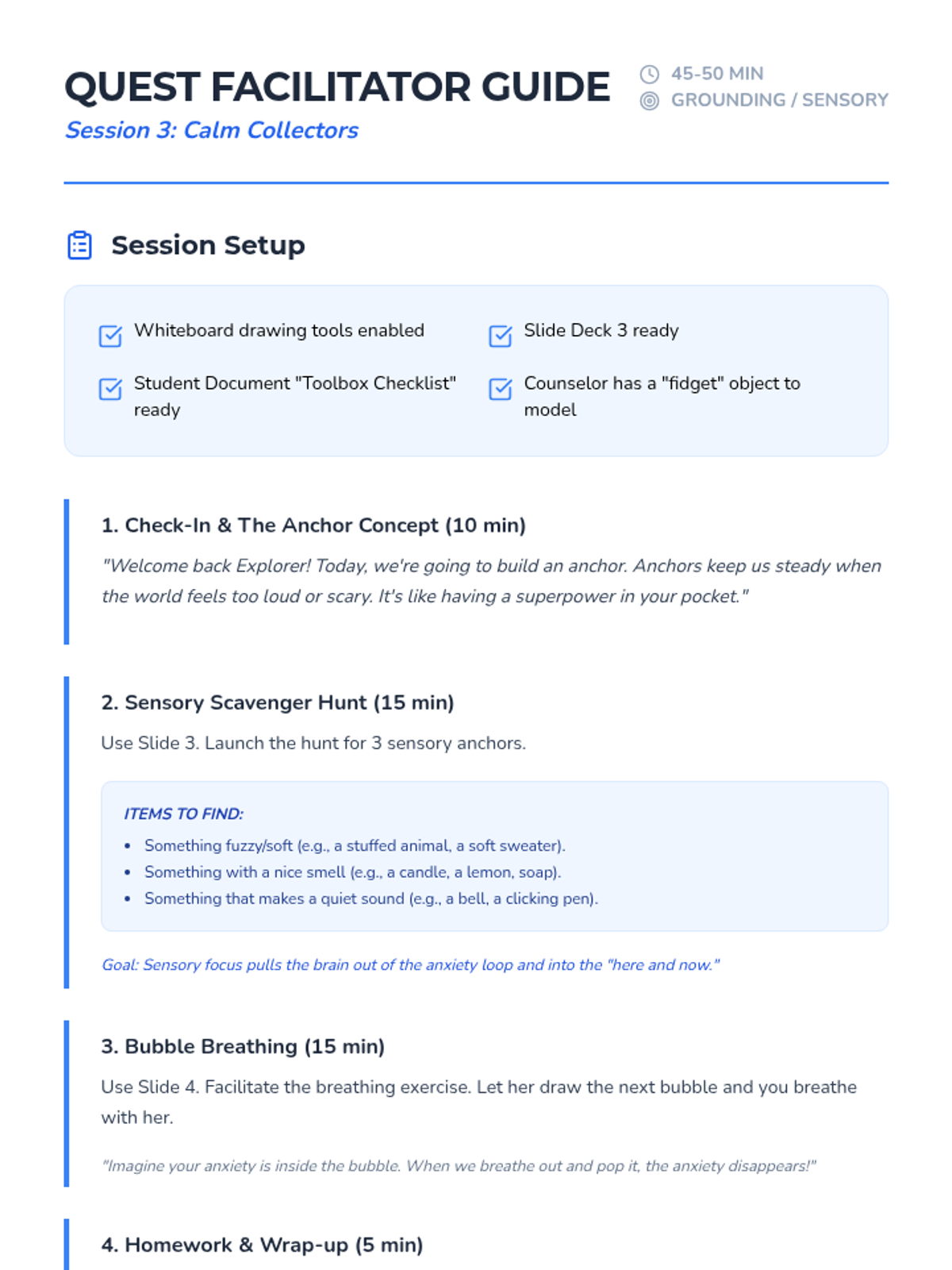
Building the first layer of the coping toolbox with sensory grounding objects found through a household scavenger hunt.
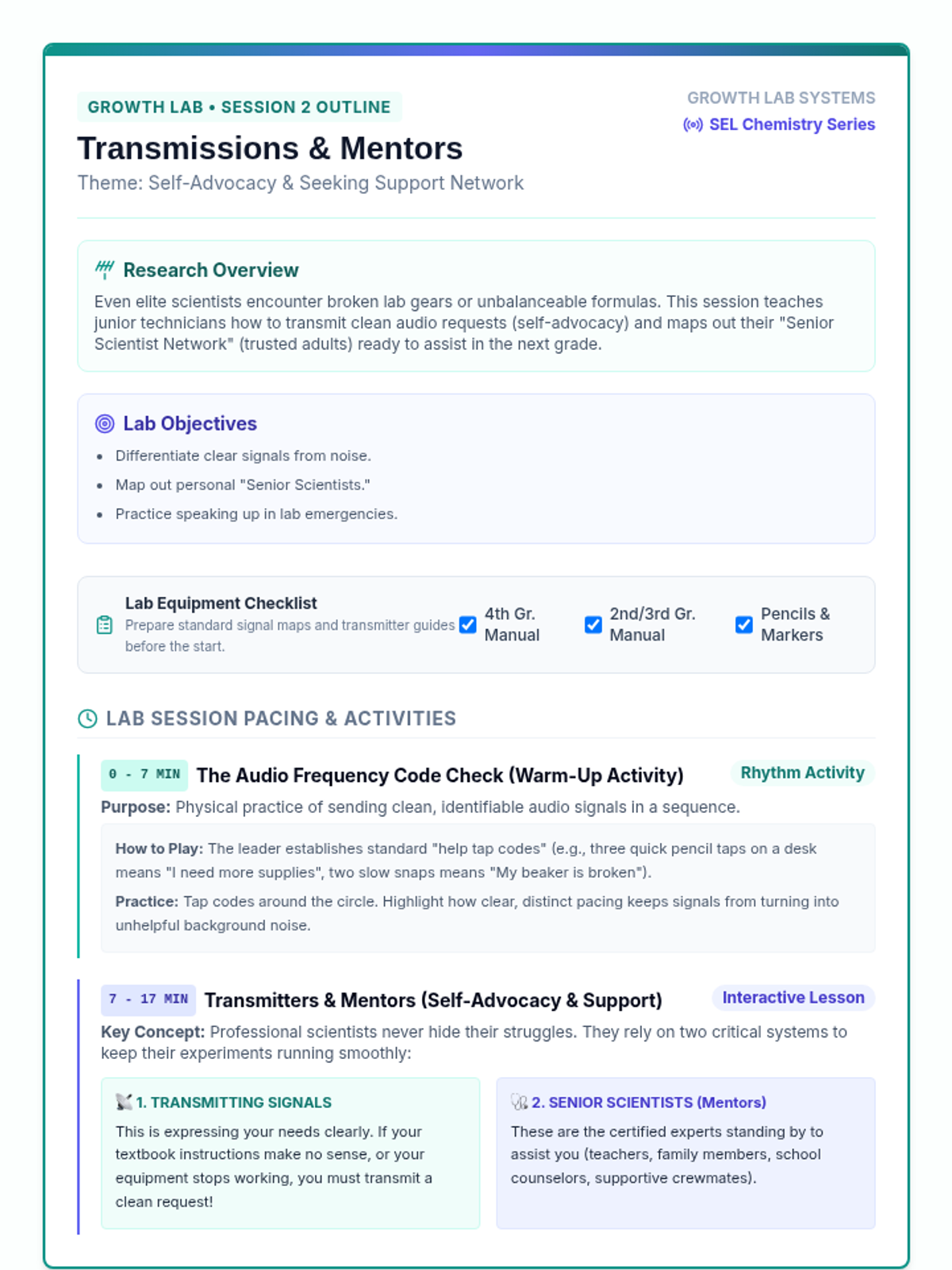
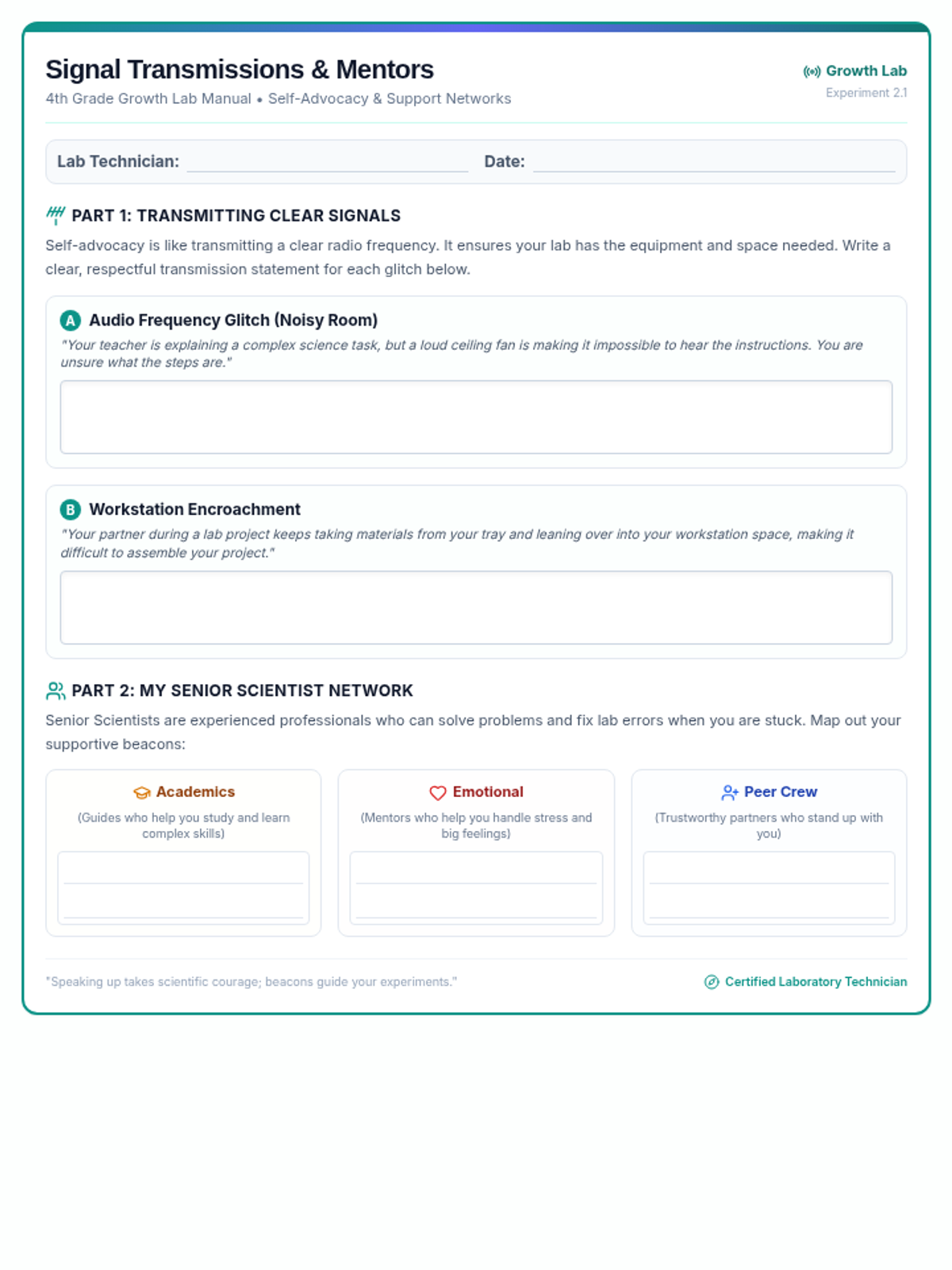
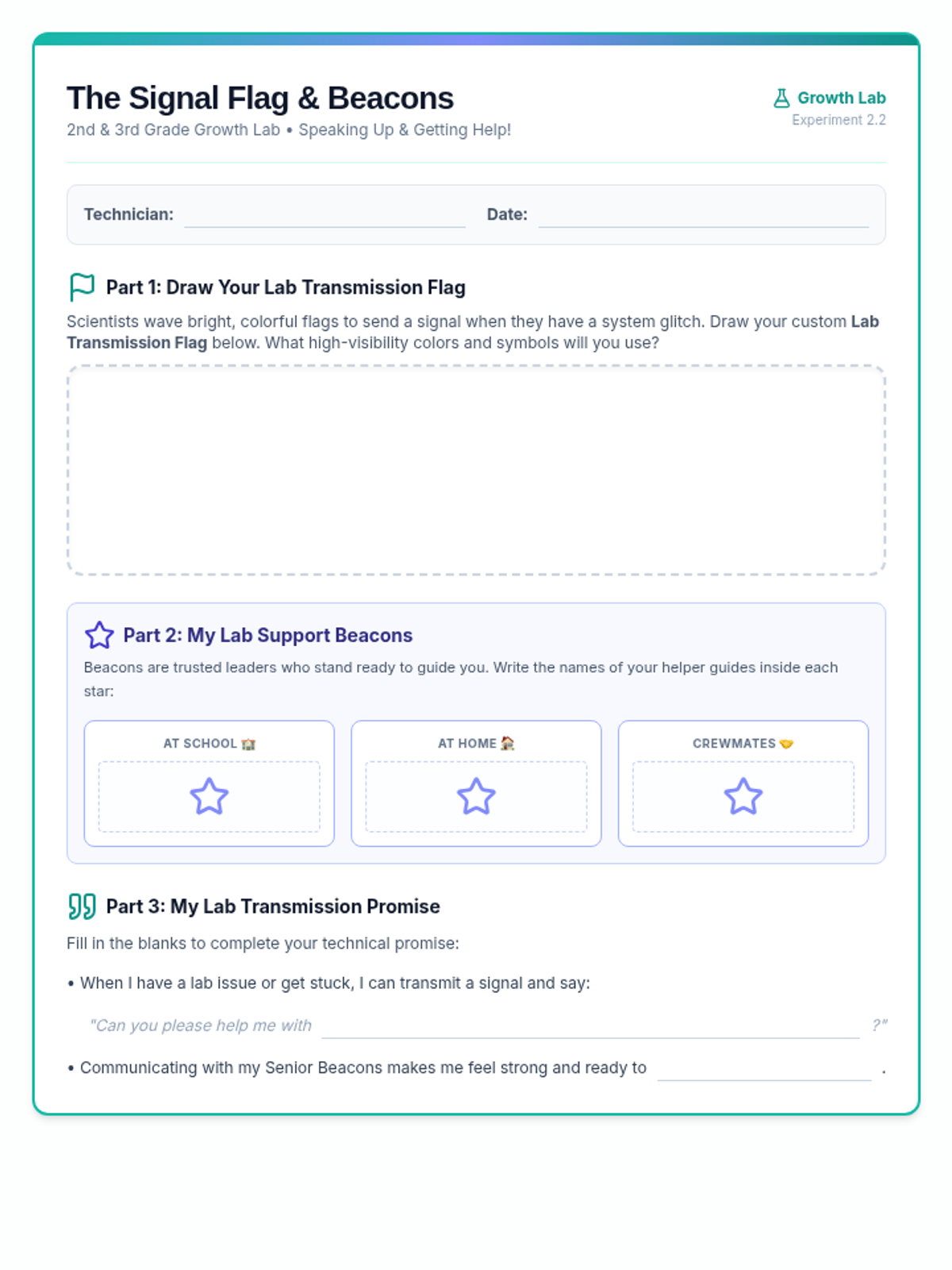
This session focuses on self-advocacy and seeking support. Students learn to recognize when to speak up for their physical and learning needs (trail signals) and identify trusted individuals who can help them navigate challenges (trail guides).
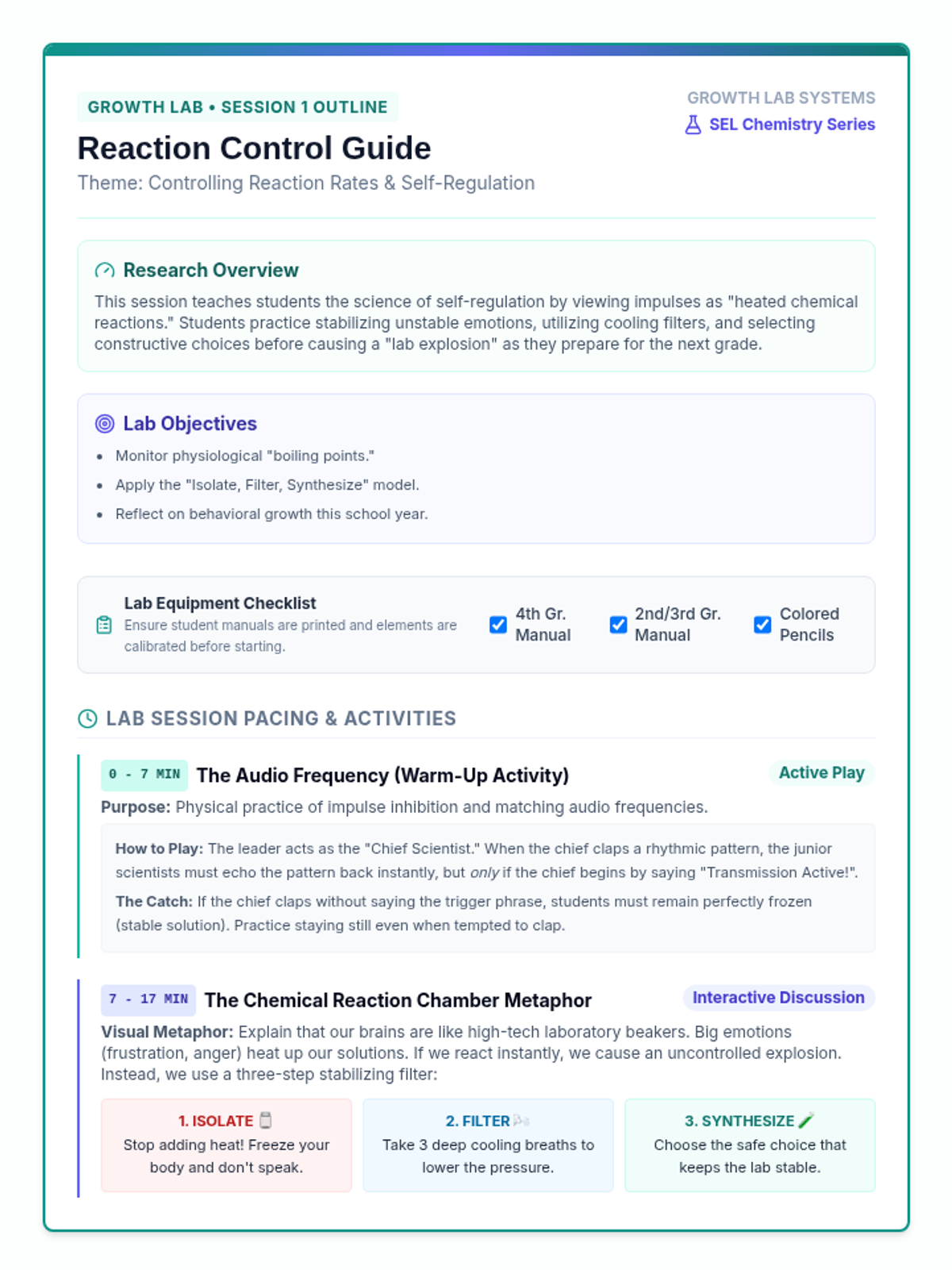
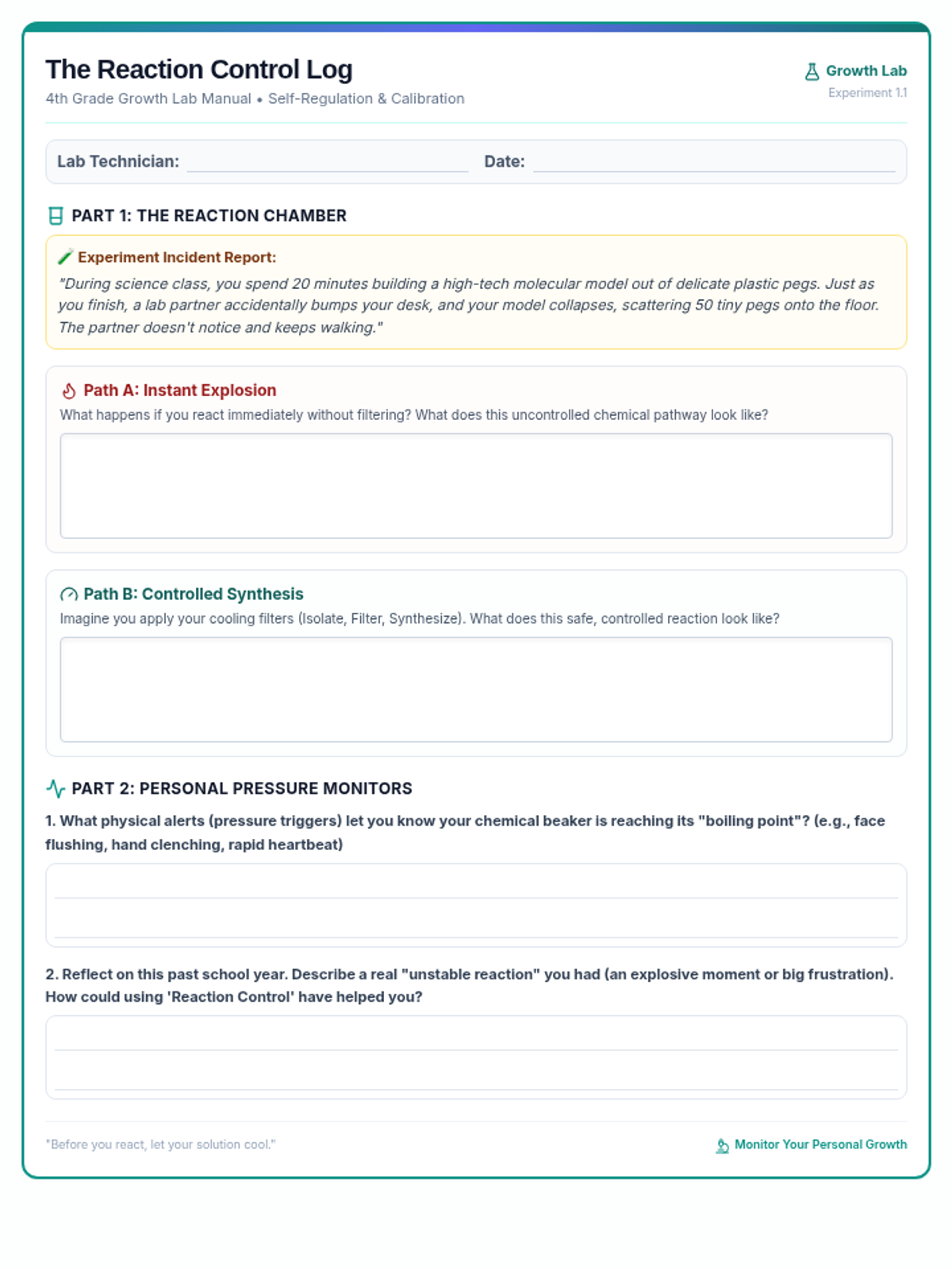
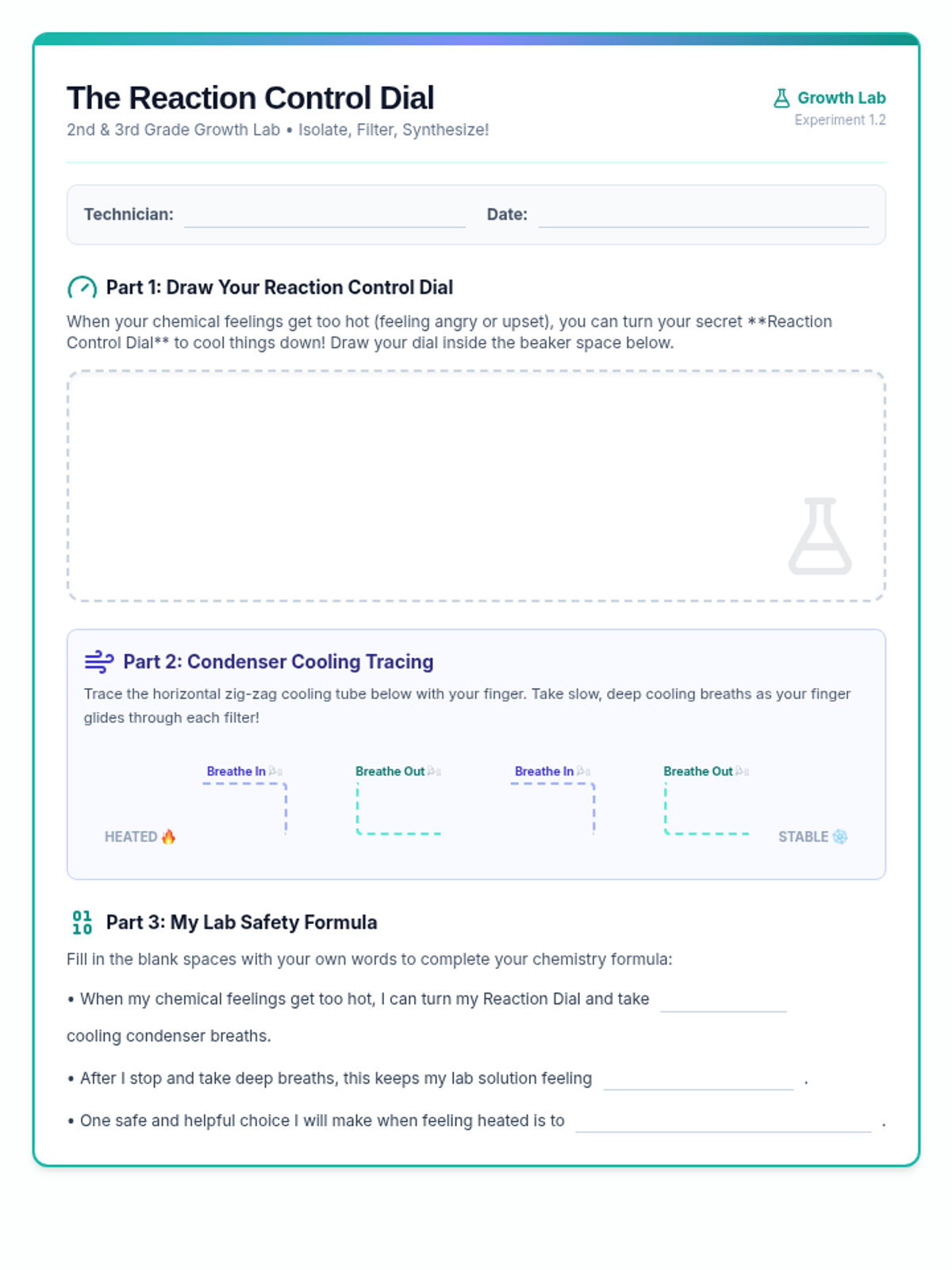
This session teaches students the science of self-regulation and reflection by studying 'reaction control' (thinking before acting). Students explore chemical-themed cooling strategies and reflect on their personal progress over the past school year.
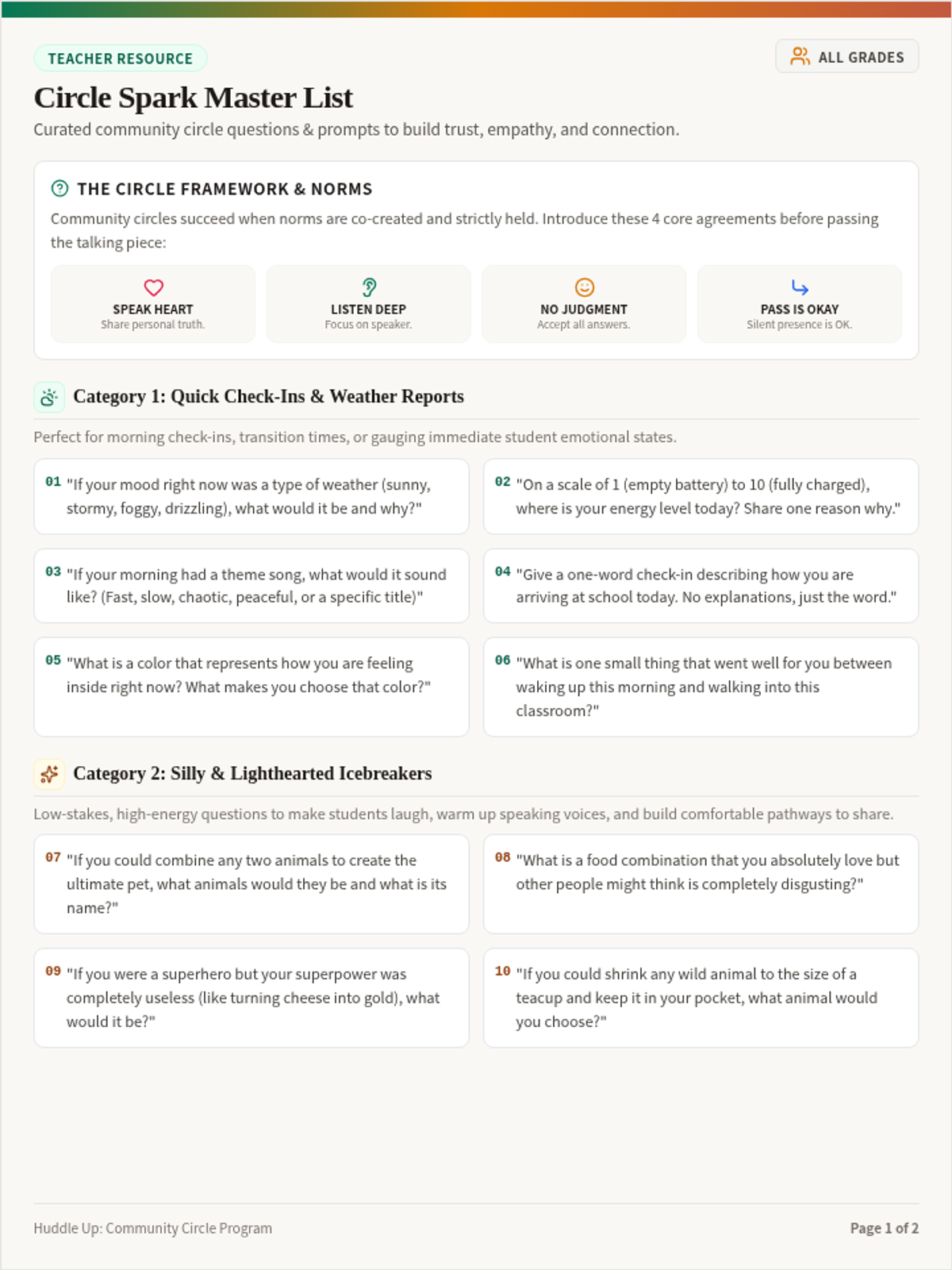
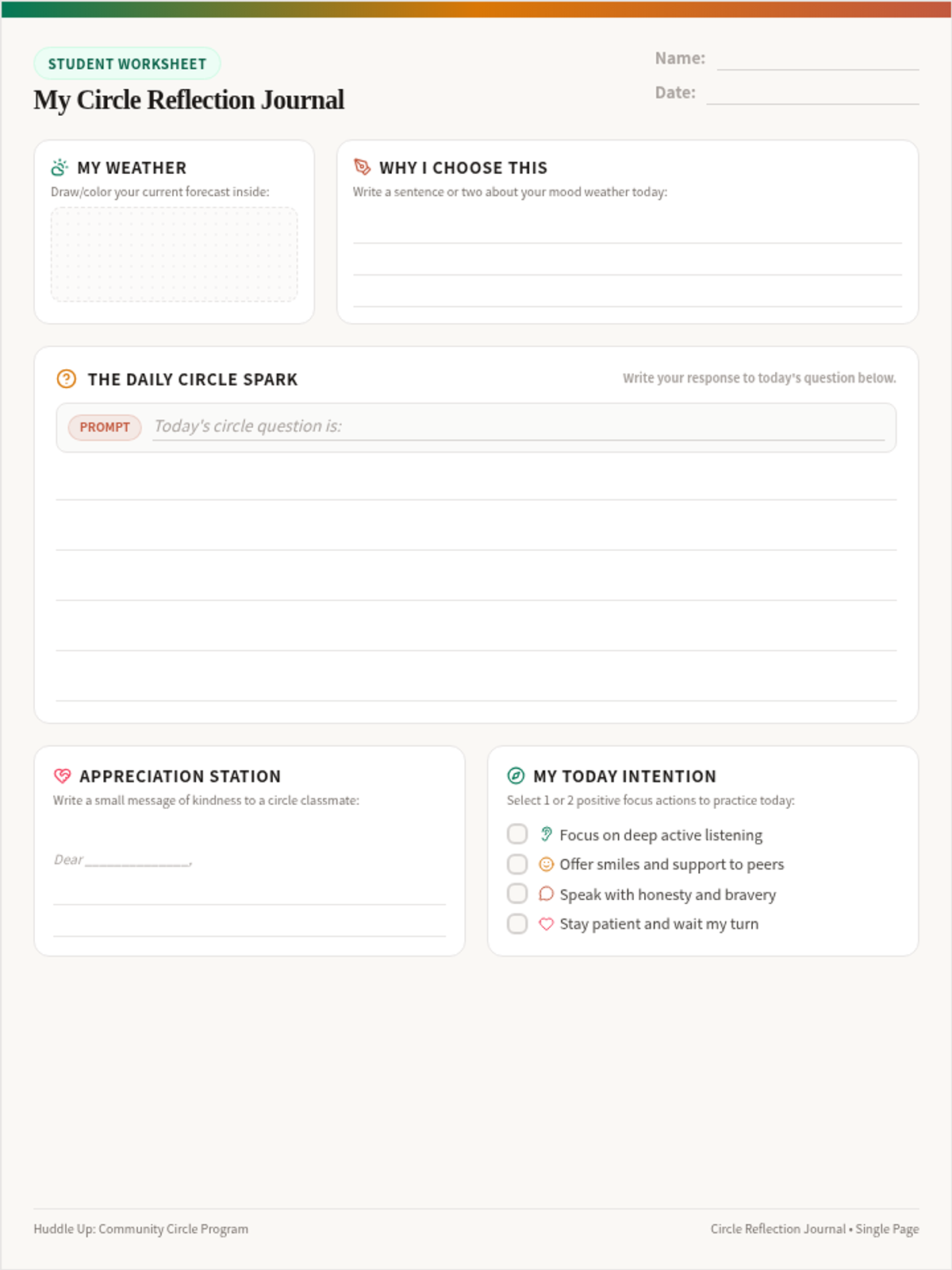
A complete toolkit to establish, run, and maintain engaging daily or weekly community circles that foster empathy, build classroom relationships, and check in on students' social-emotional well-being.
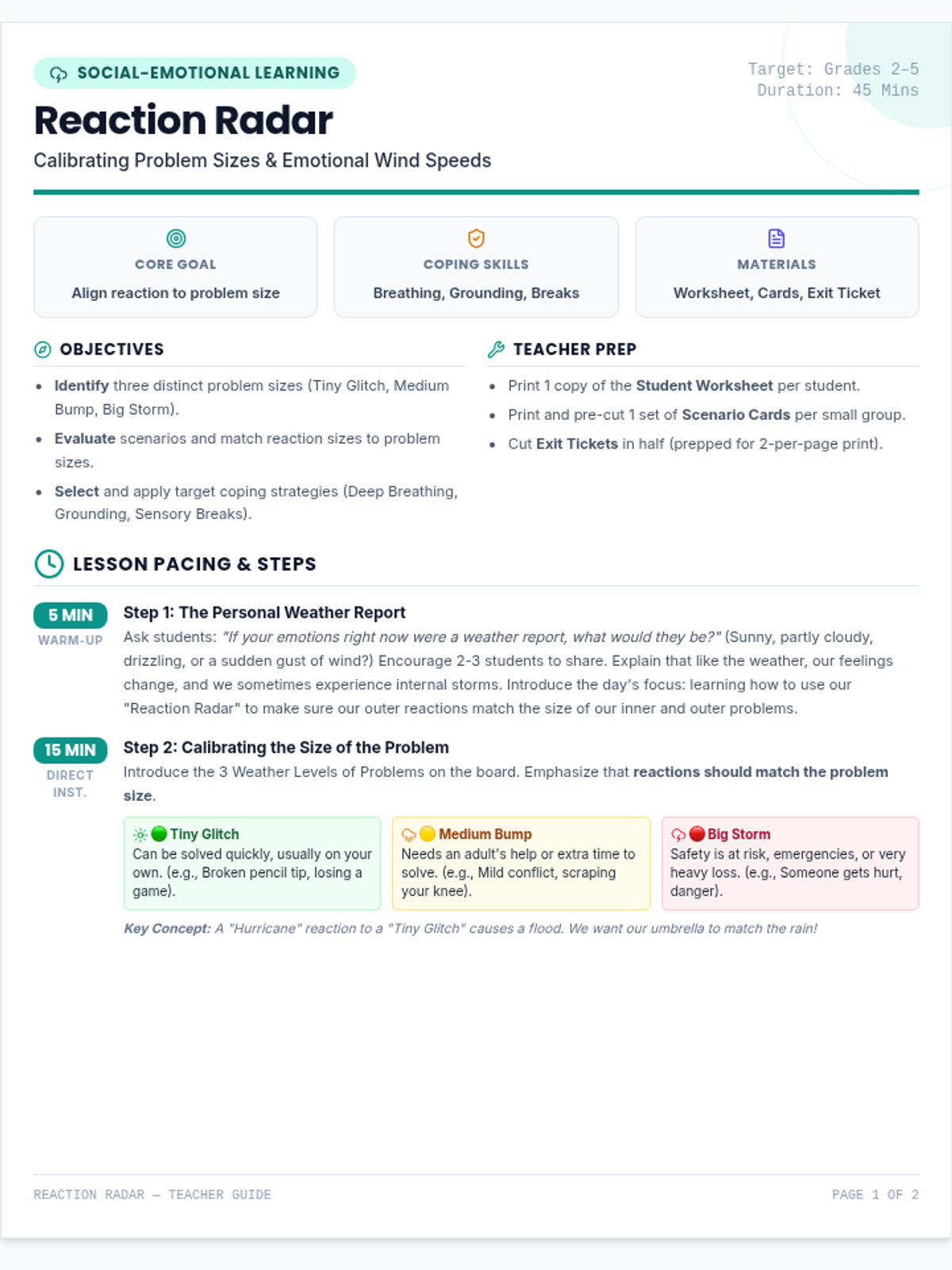
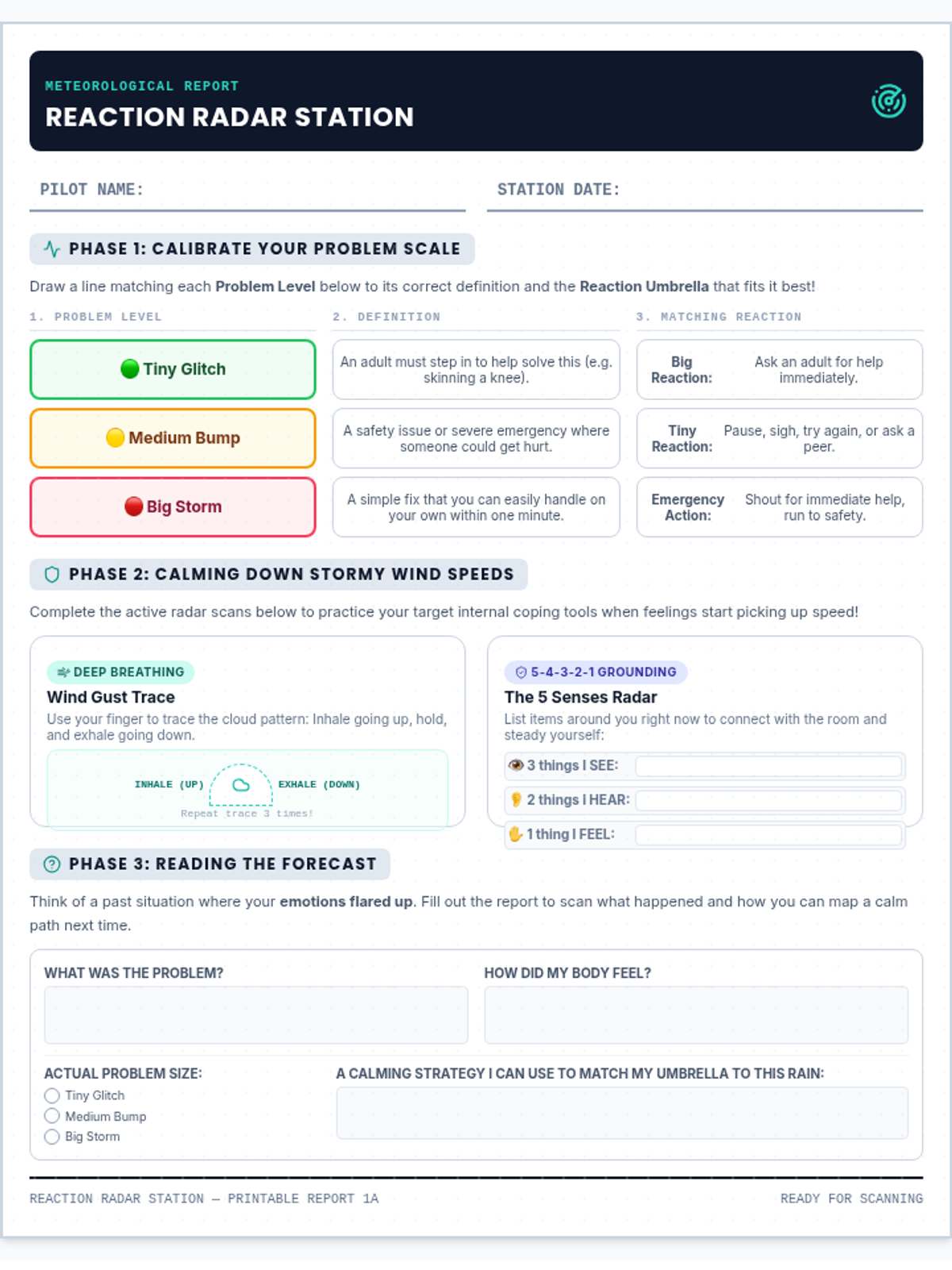
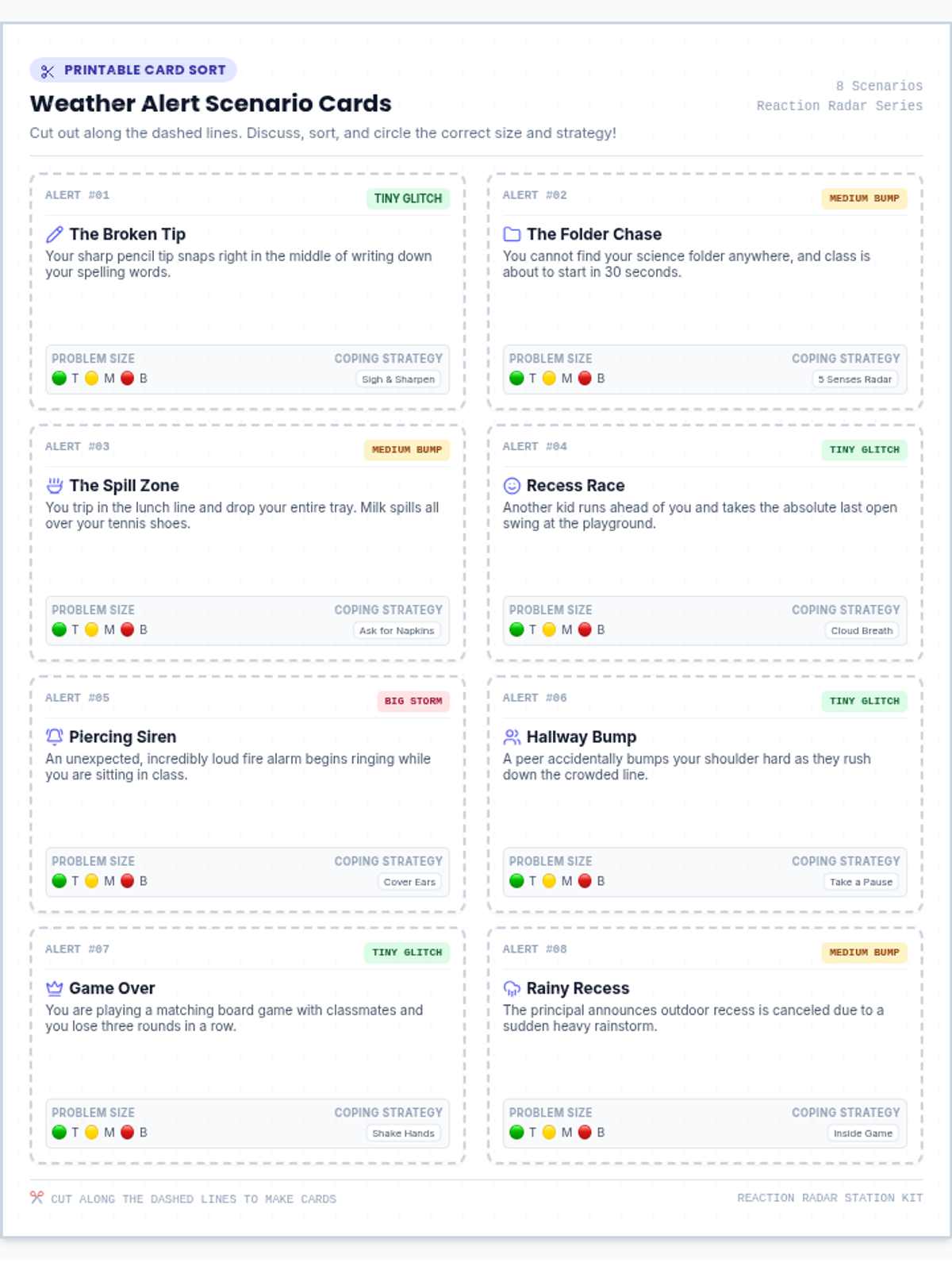
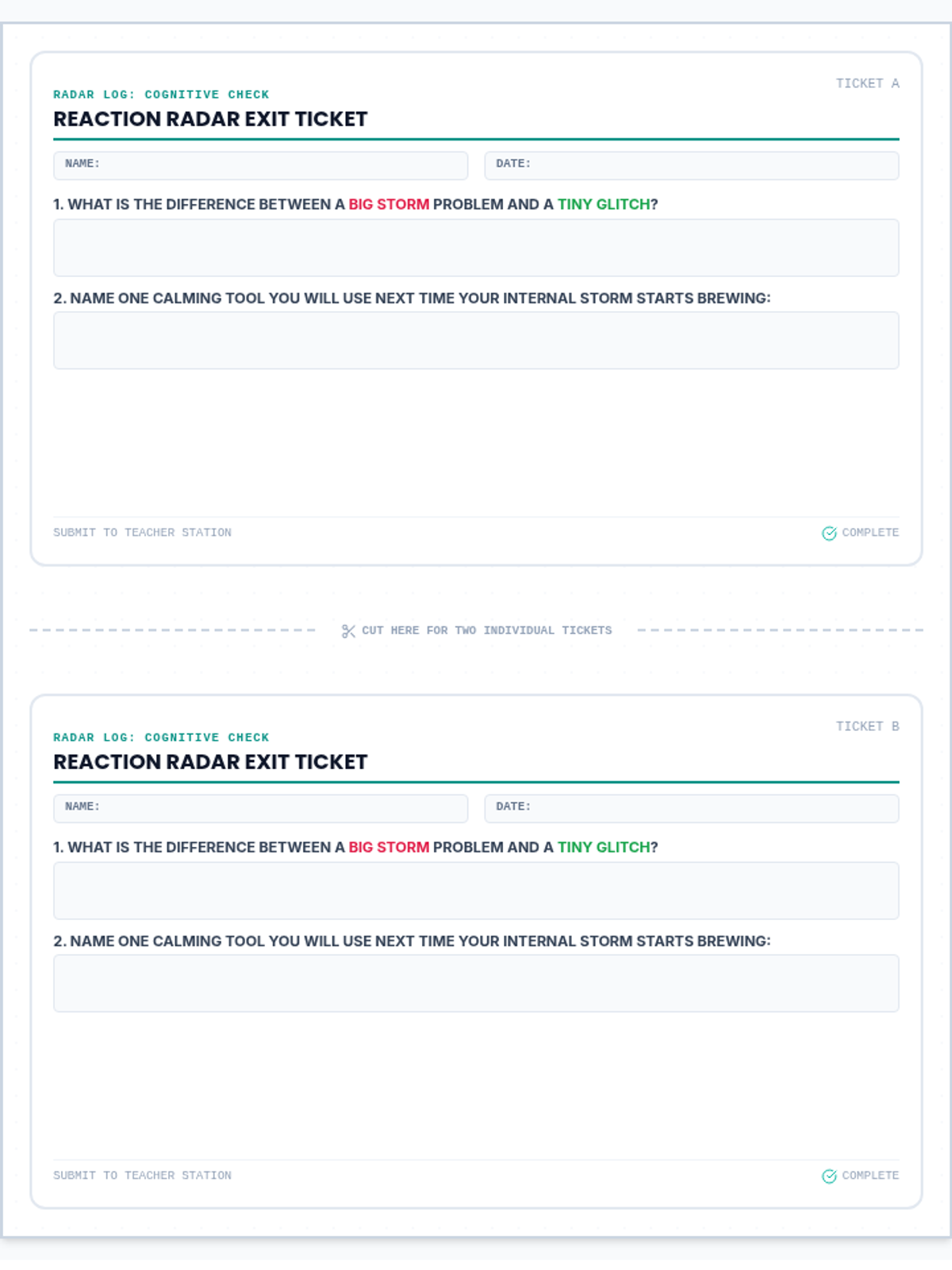
An emotional regulation and social-emotional learning lesson focused on helping students identify, measure, and match the size of their reactions to the size of their problems. Students will learn critical coping skills like deep breathing, grounding, taking a break, and sensory tools using a fun meteorological 'Weather Radar' theme.
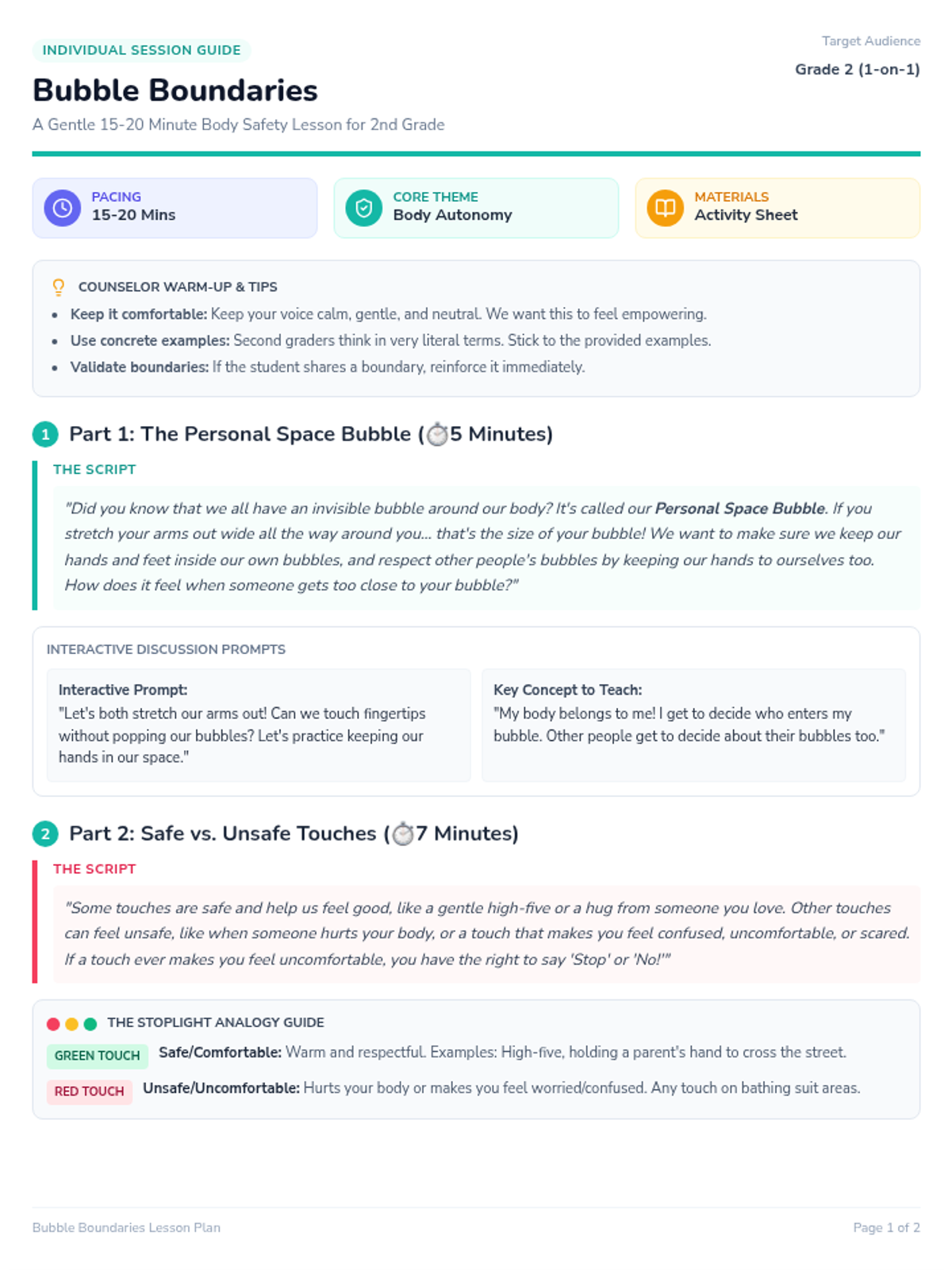
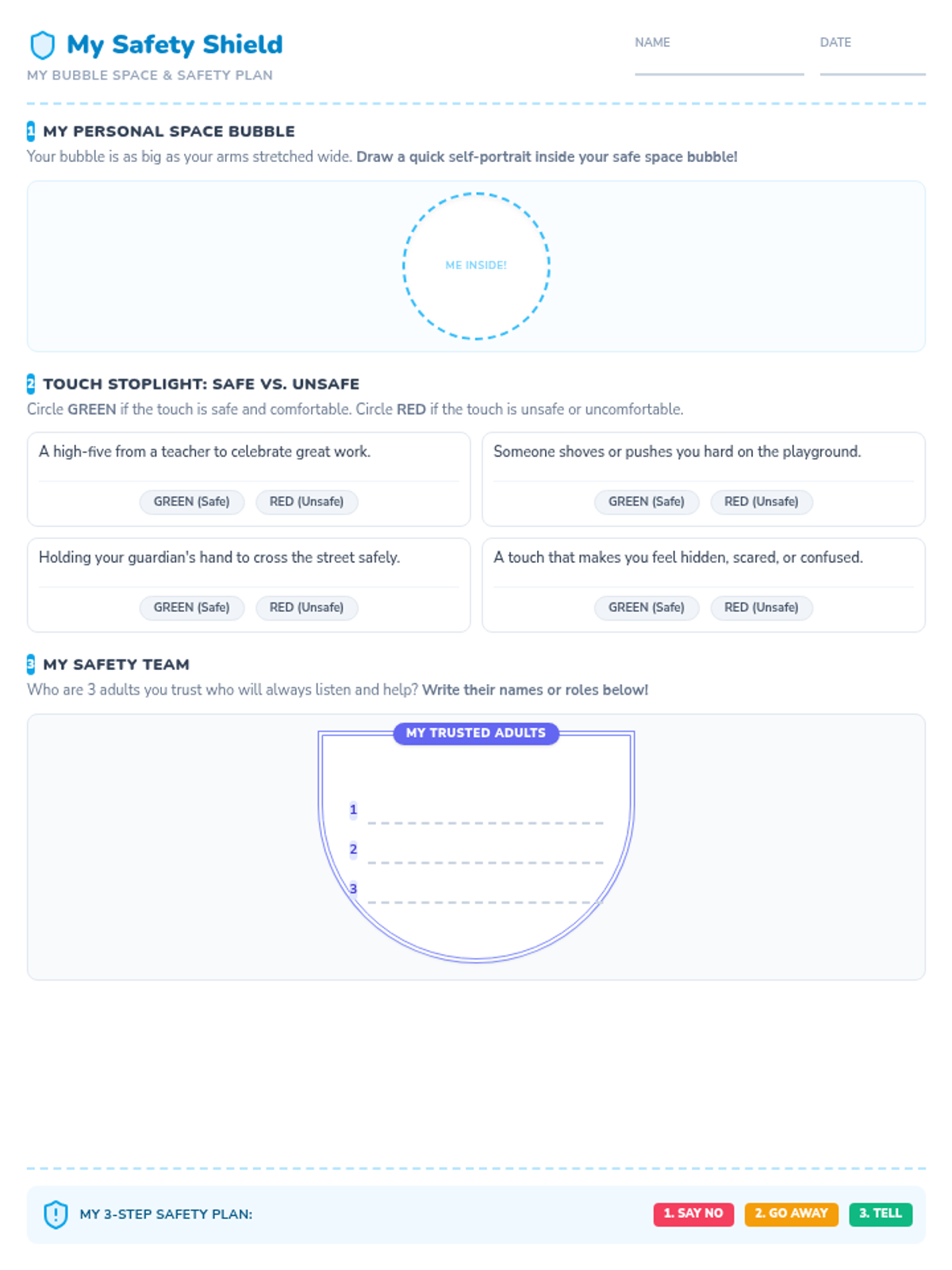
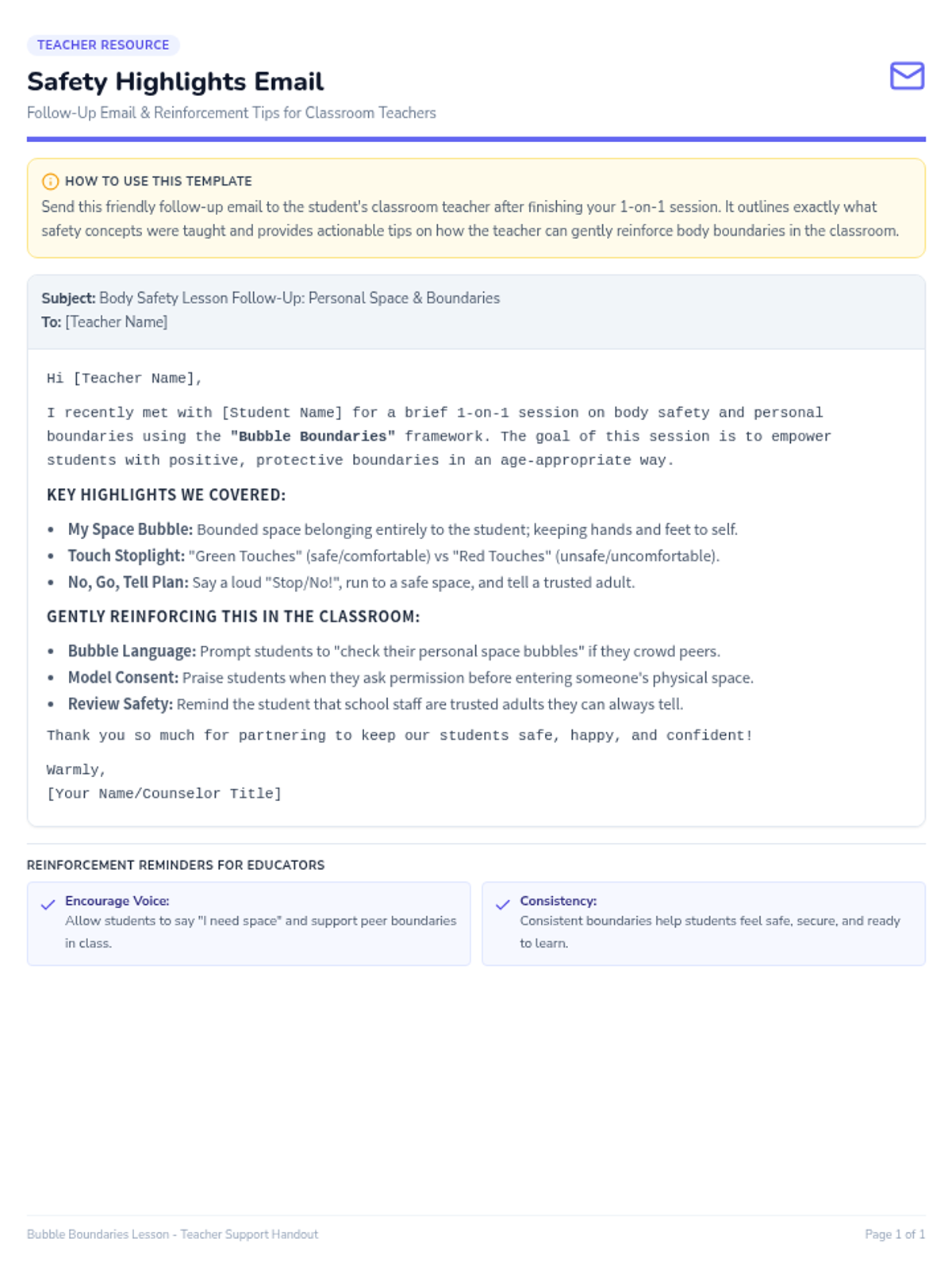
A gentle, empowering 15-20 minute lesson on personal space, body safety, and identifying safe versus unsafe touches. Designed specifically for individual counseling or one-on-one educator-student sessions with 2nd graders.
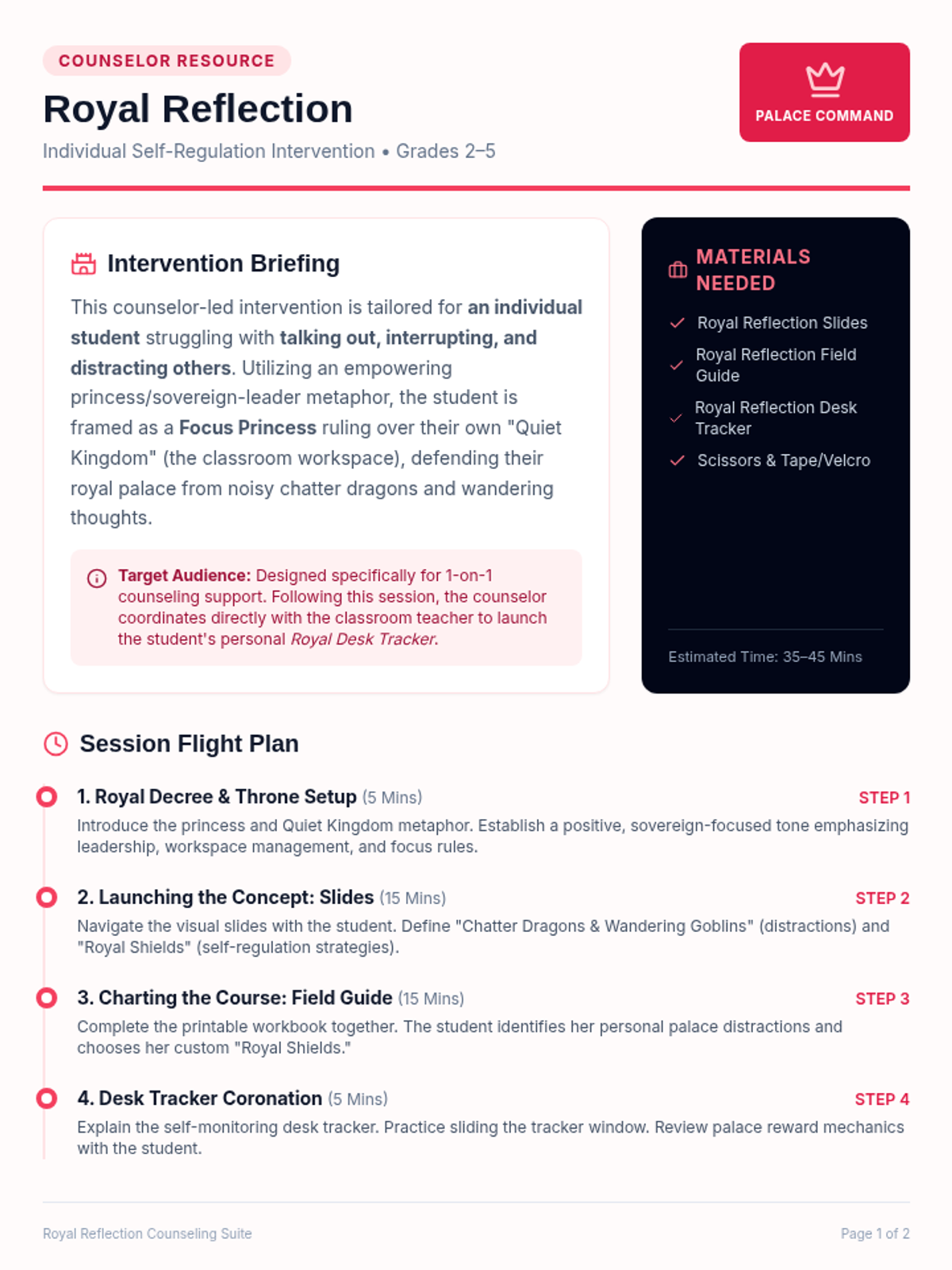
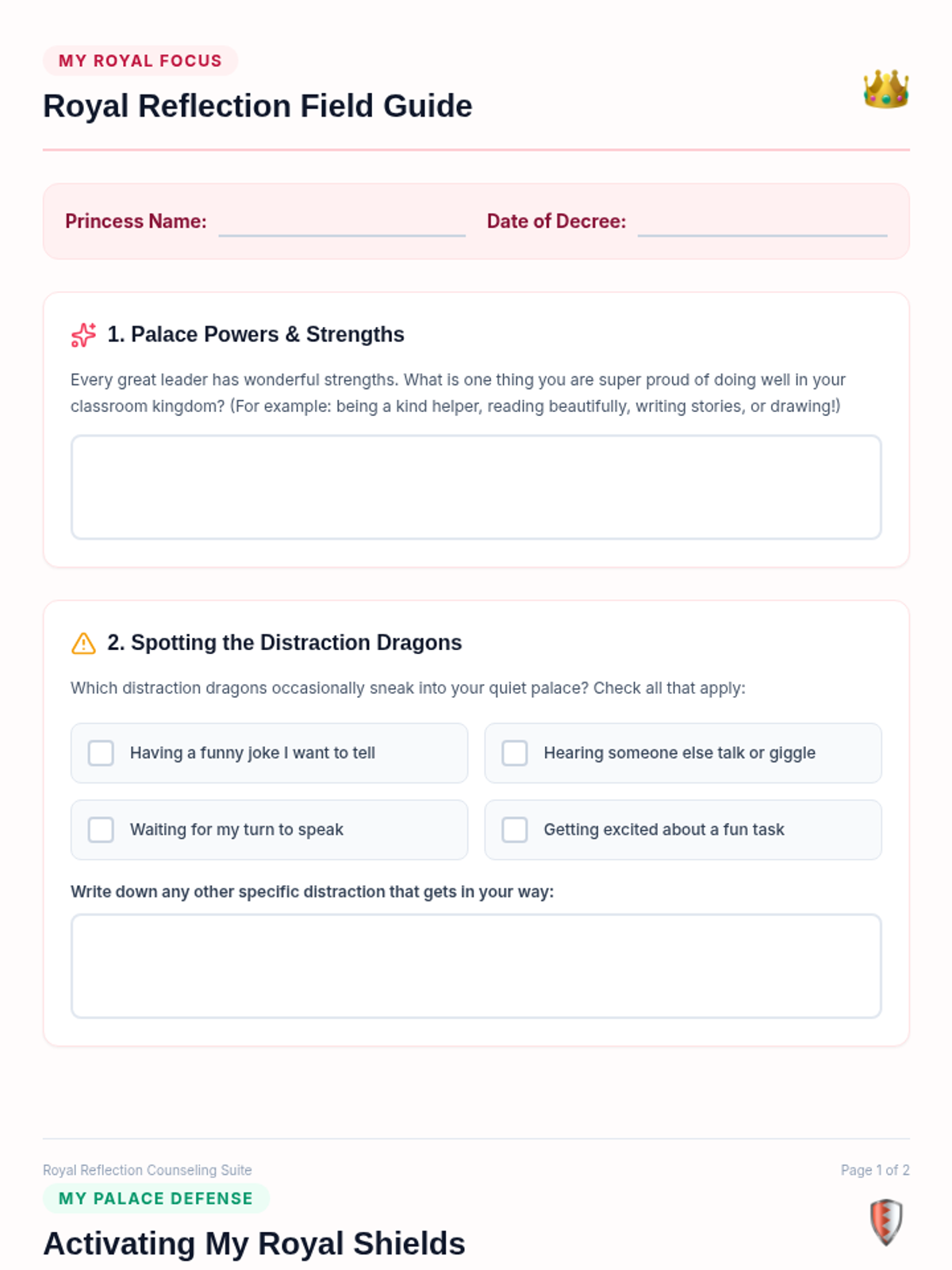
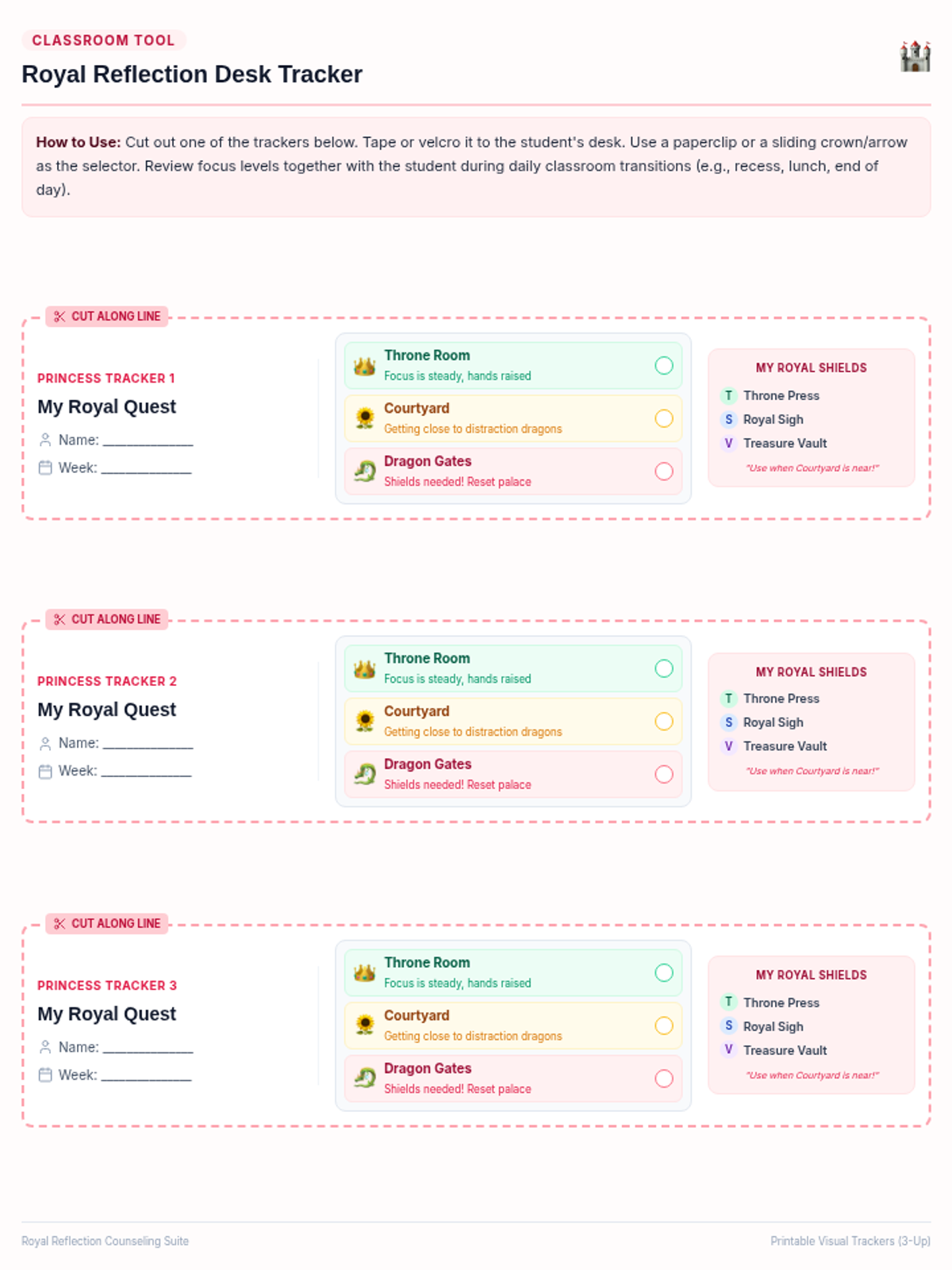
An active individual counseling intervention designed for Grades 2-5 to address talking out and distracting others. Through a princess/quiet-kingdom theme, the student learns to use 'Royal Shields' and track their own classroom focus.
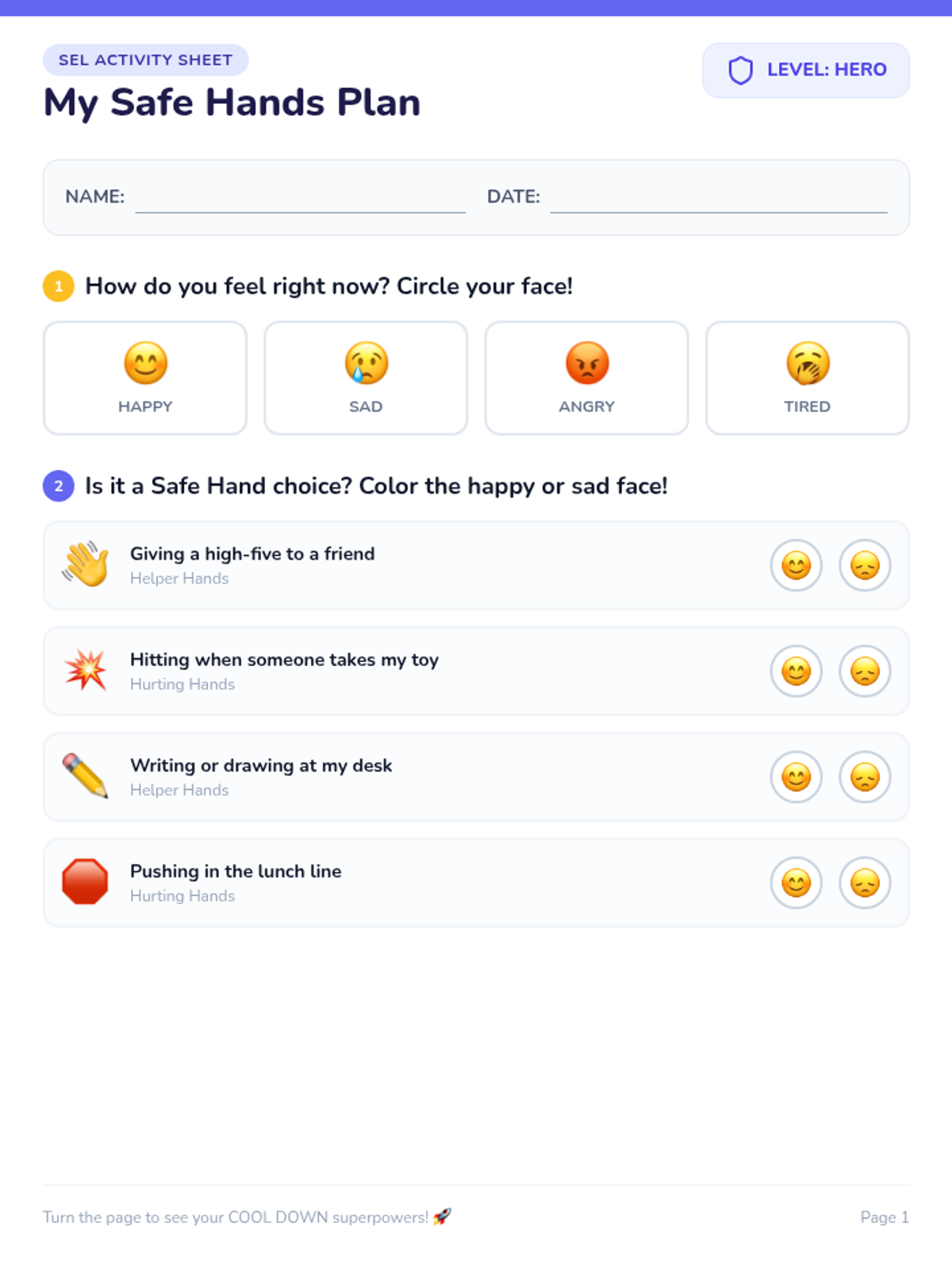
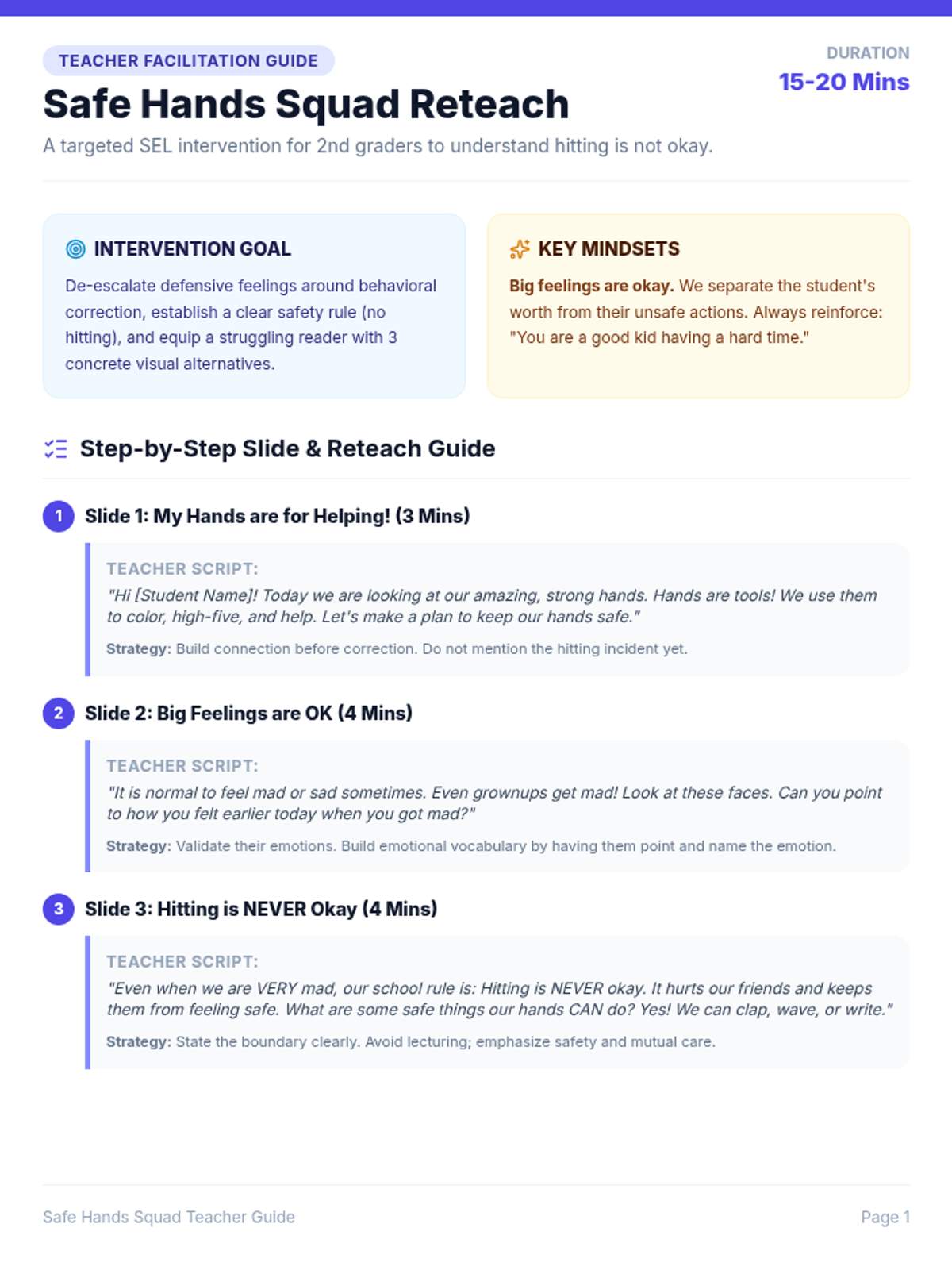
A targeted social-emotional learning reteach lesson for 2nd graders to understand that hitting is not okay. It teaches positive self-regulation and safe body choices using visual supports, simple language, and actionable calm-down strategies.
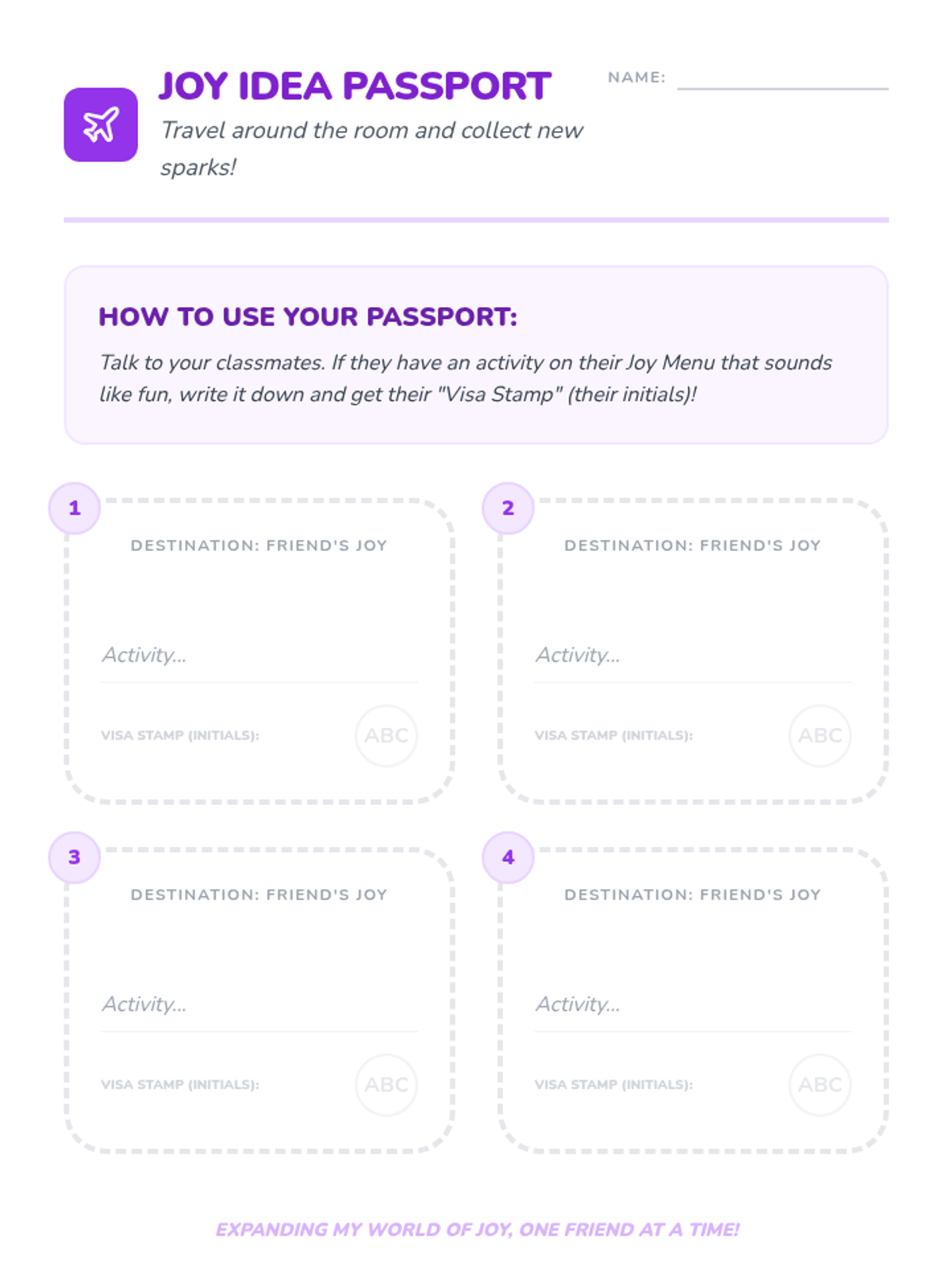
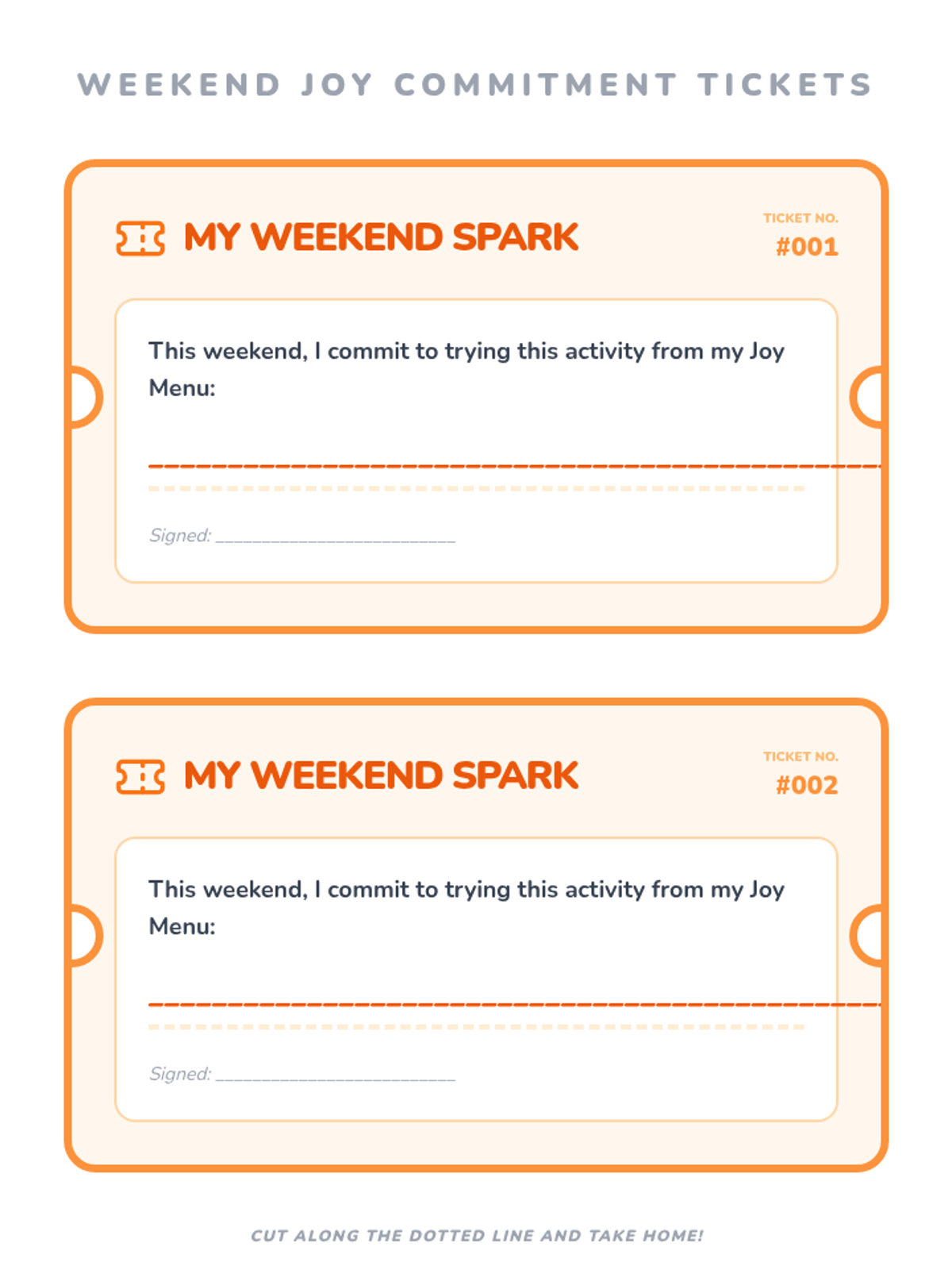
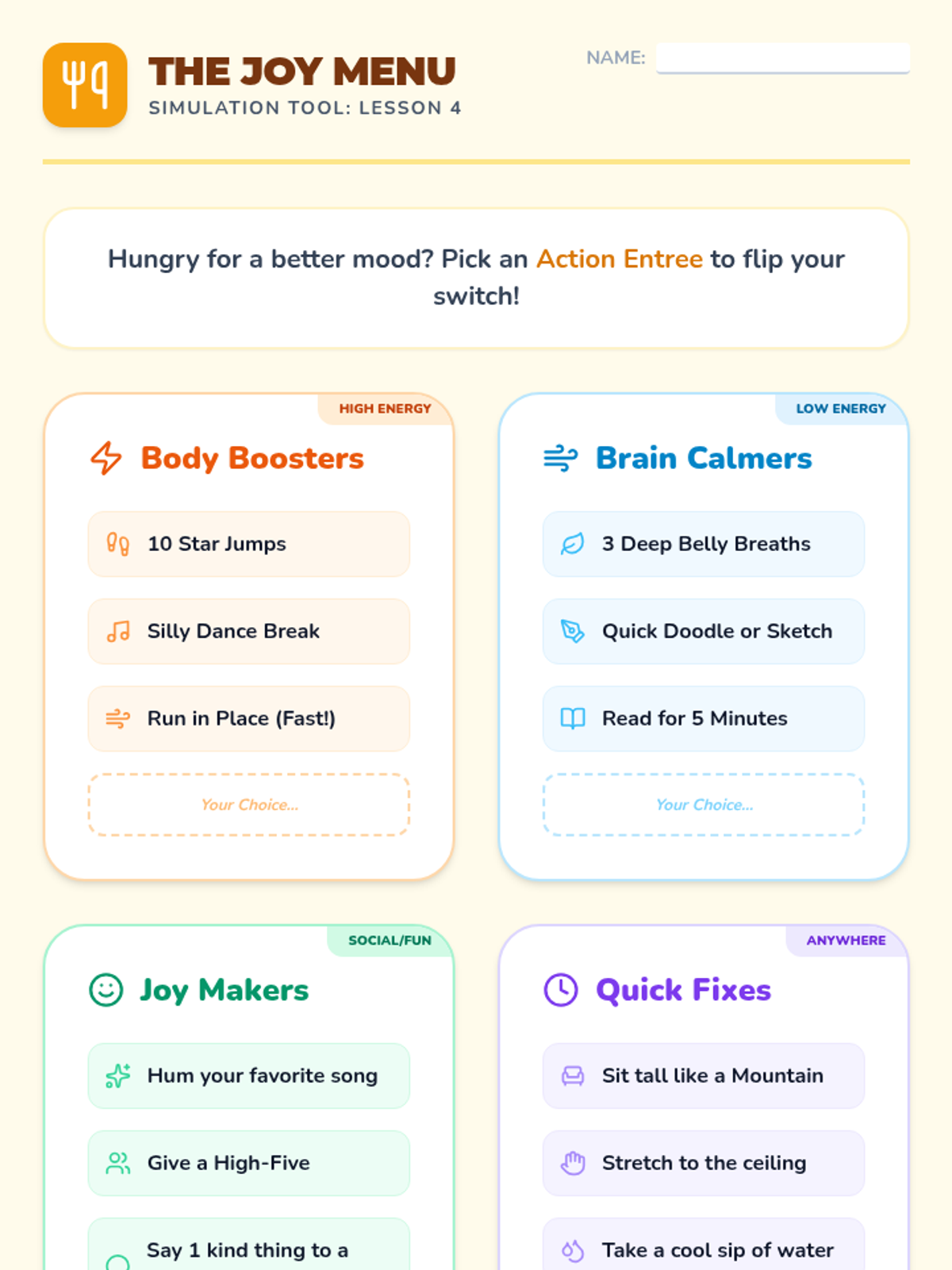
Students present their Joy Menus to small groups, allowing peers to borrow ideas to add to their own lists. The lesson concludes with a commitment to try one menu item over the weekend.
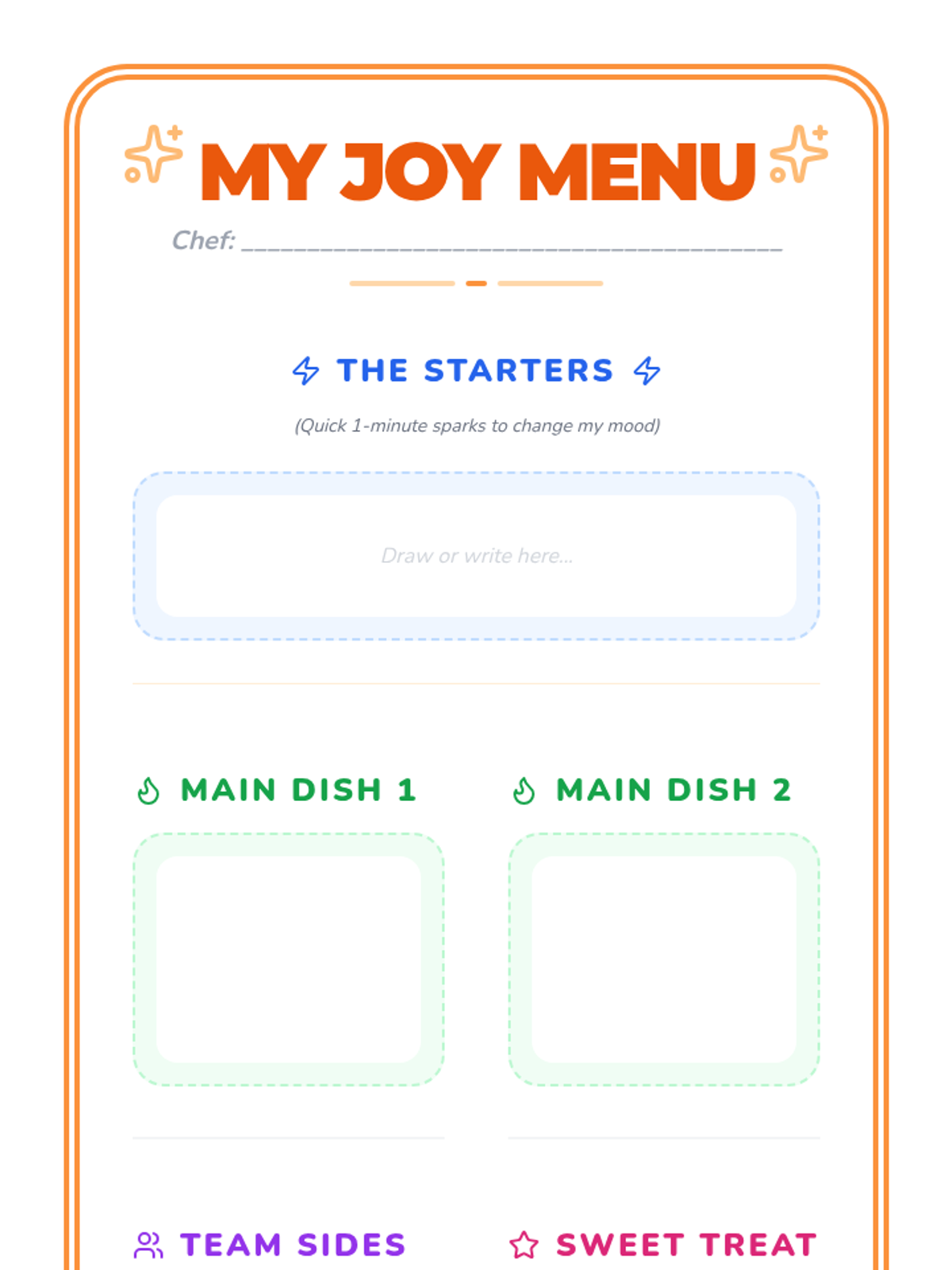
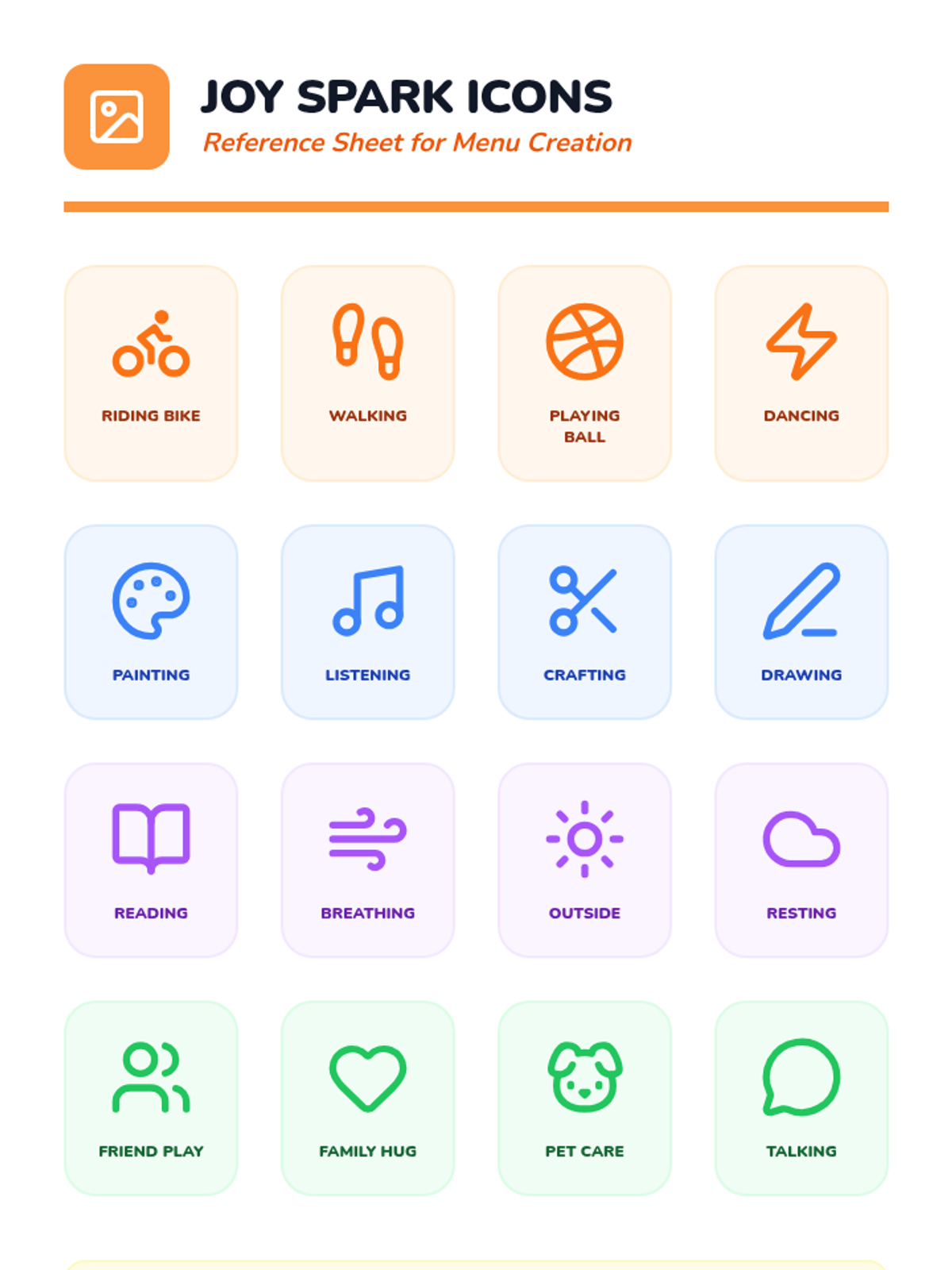
Using their investigations, students create a visual 'menu' or choice board of their top 5 reliable mood-boosting activities. They illustrate these options to serve as a reference tool.
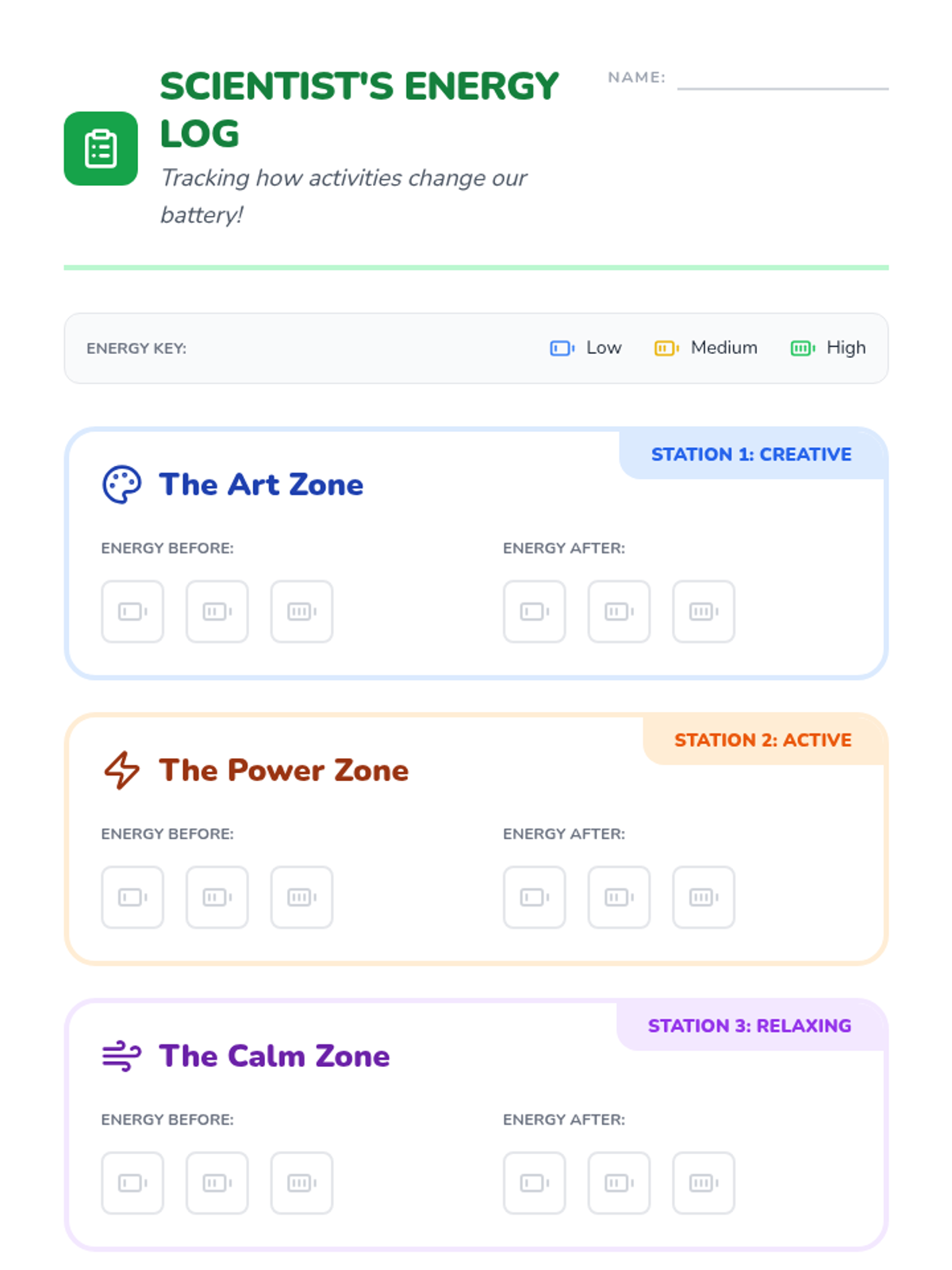
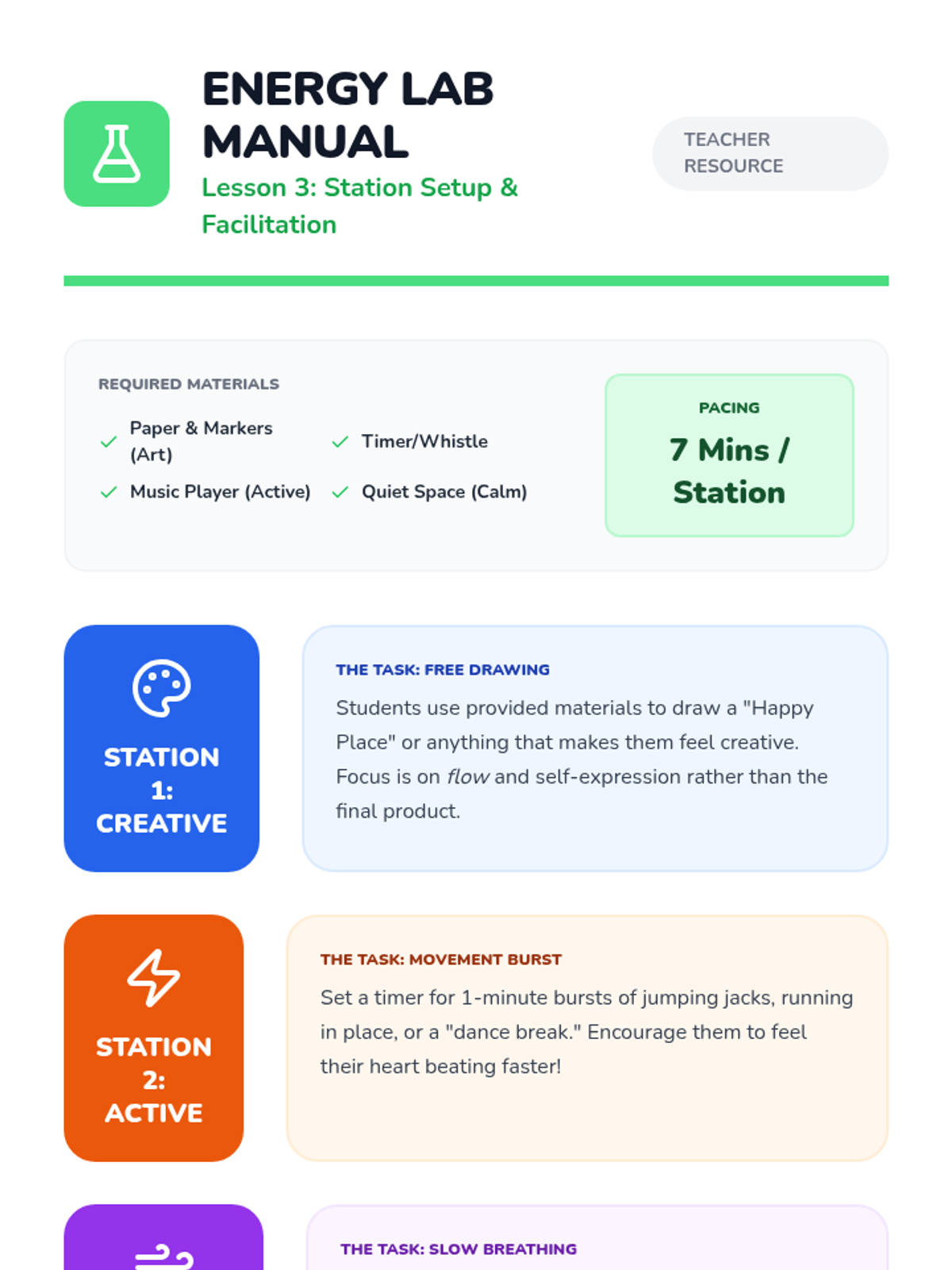
Students rotate through stations testing different types of positive engagement: creative (drawing), active (jumping jacks), and relaxing (deep breathing). They record how each station changes their energy level.
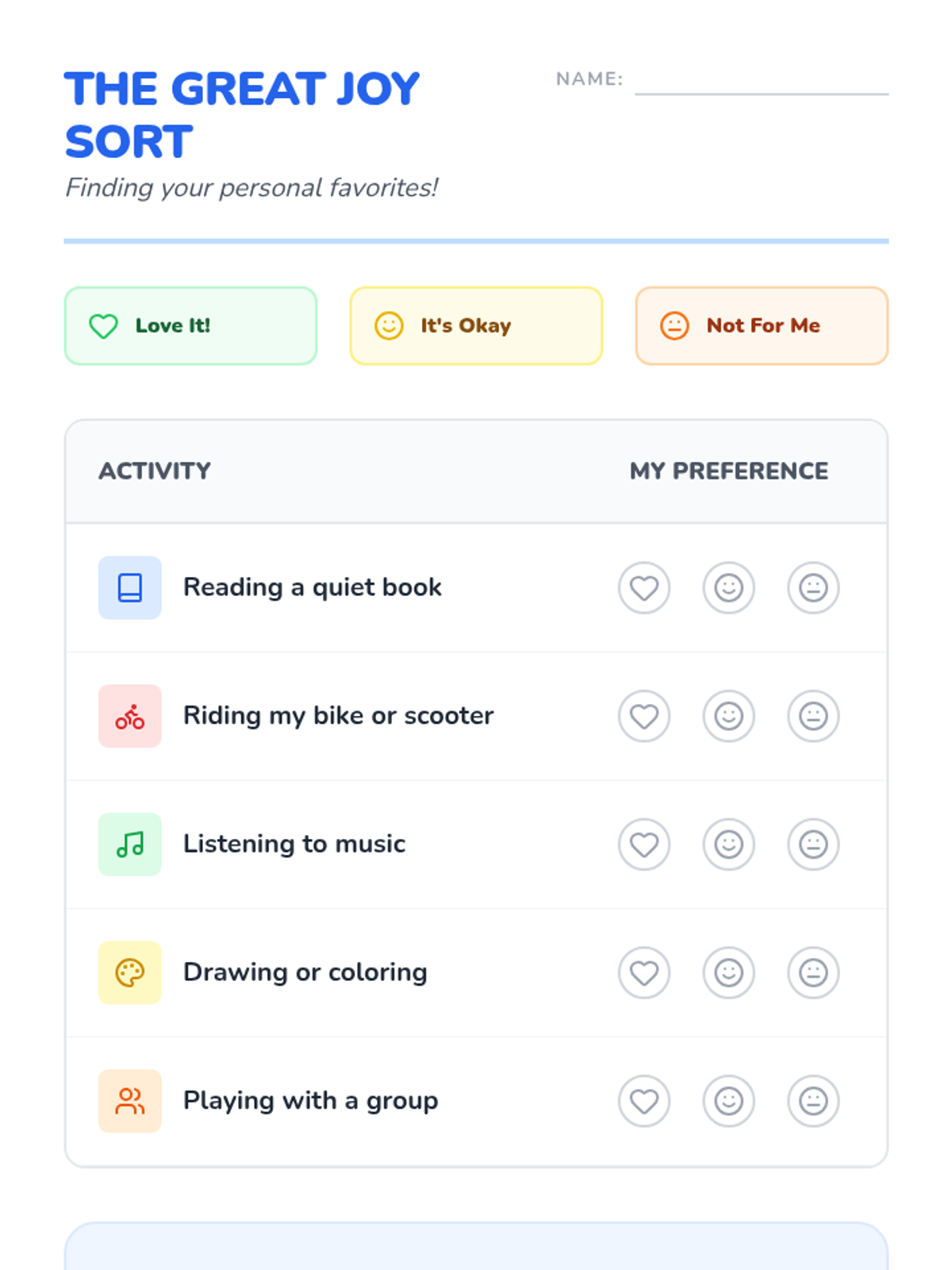
Students engage in an activity sorting game where they categorize various pastimes into 'Love it,' 'It's okay,' and 'Not for me.' This helps them realize that positive experiences are unique to each individual.
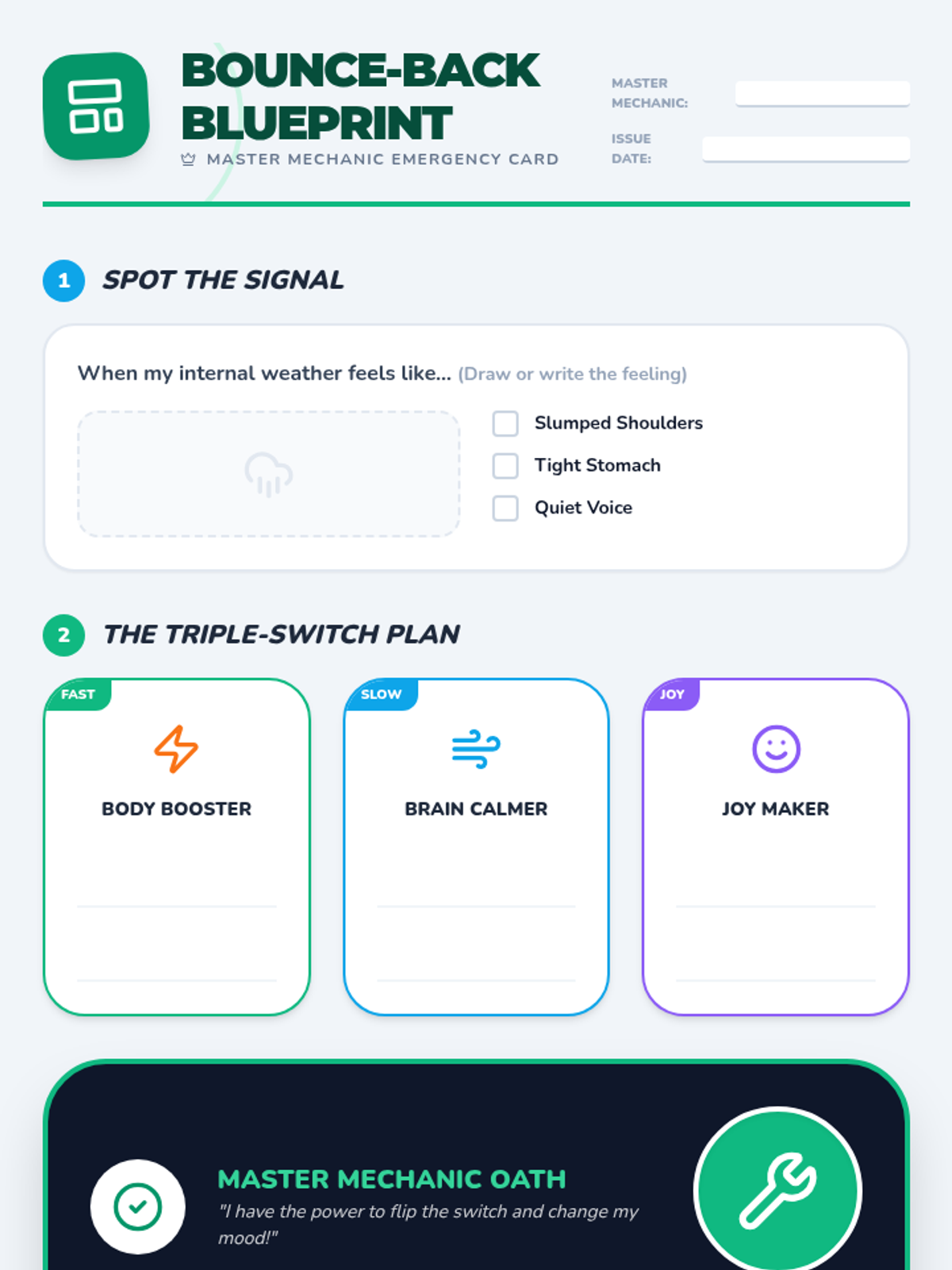
In this culminating lesson, students create a personal 'Bounce-Back Plan' emergency card. They identify three specific actions they can take when feeling low to build resilience and autonomy.
Students practice role-playing the transition from recognizing a negative feeling to choosing a positive action. They use 'Joy Menus' to simulate real-world application of emotional regulation strategies.
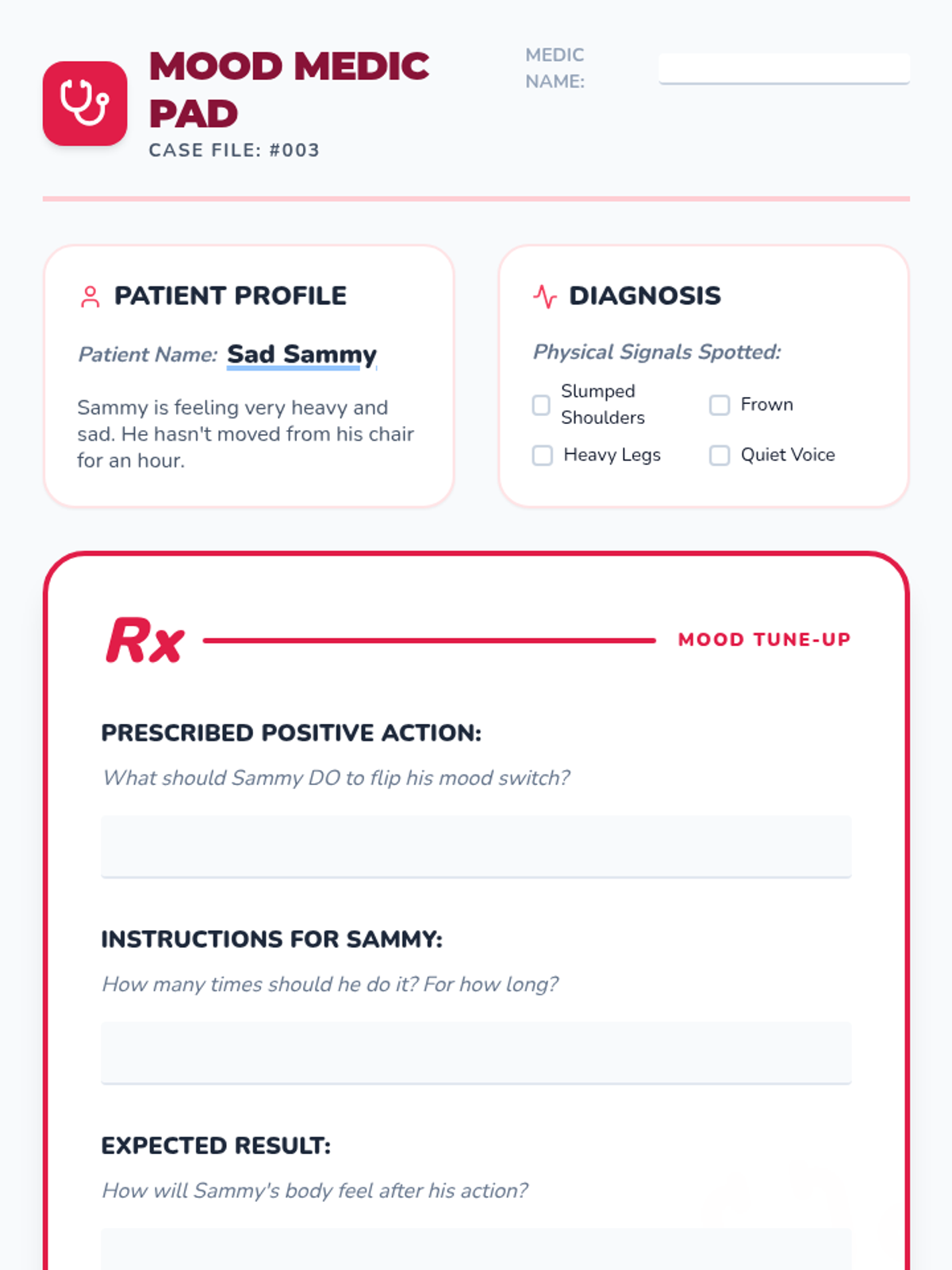
Using character scenarios, students apply their knowledge to help others. They analyze social stories and prescribe positive activities to help characters 'flip the switch' on their feelings.
Students conduct movement experiments to see how physical activity impacts their mindset. They observe the difficulty of maintaining a low mood while engaging in high-energy positive actions.
Students learn to identify the physical signals of sadness, boredom, and anxiety through body scanning and a game of 'Statues'. This foundational lesson focuses on recognizing when an emotional shift is needed.
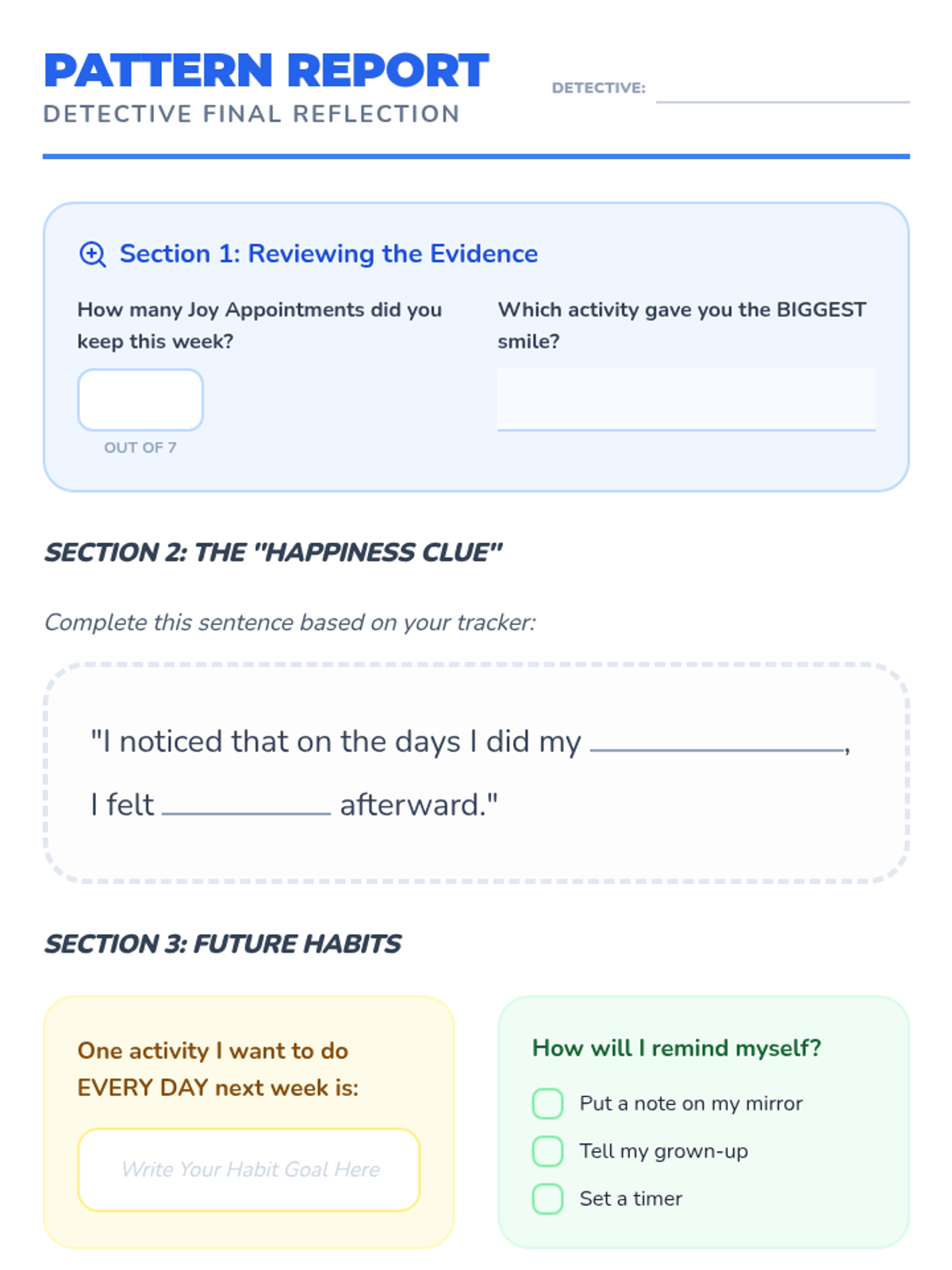
Students reflect on their habits and mood patterns to set personal goals for maintaining a positive daily routine.
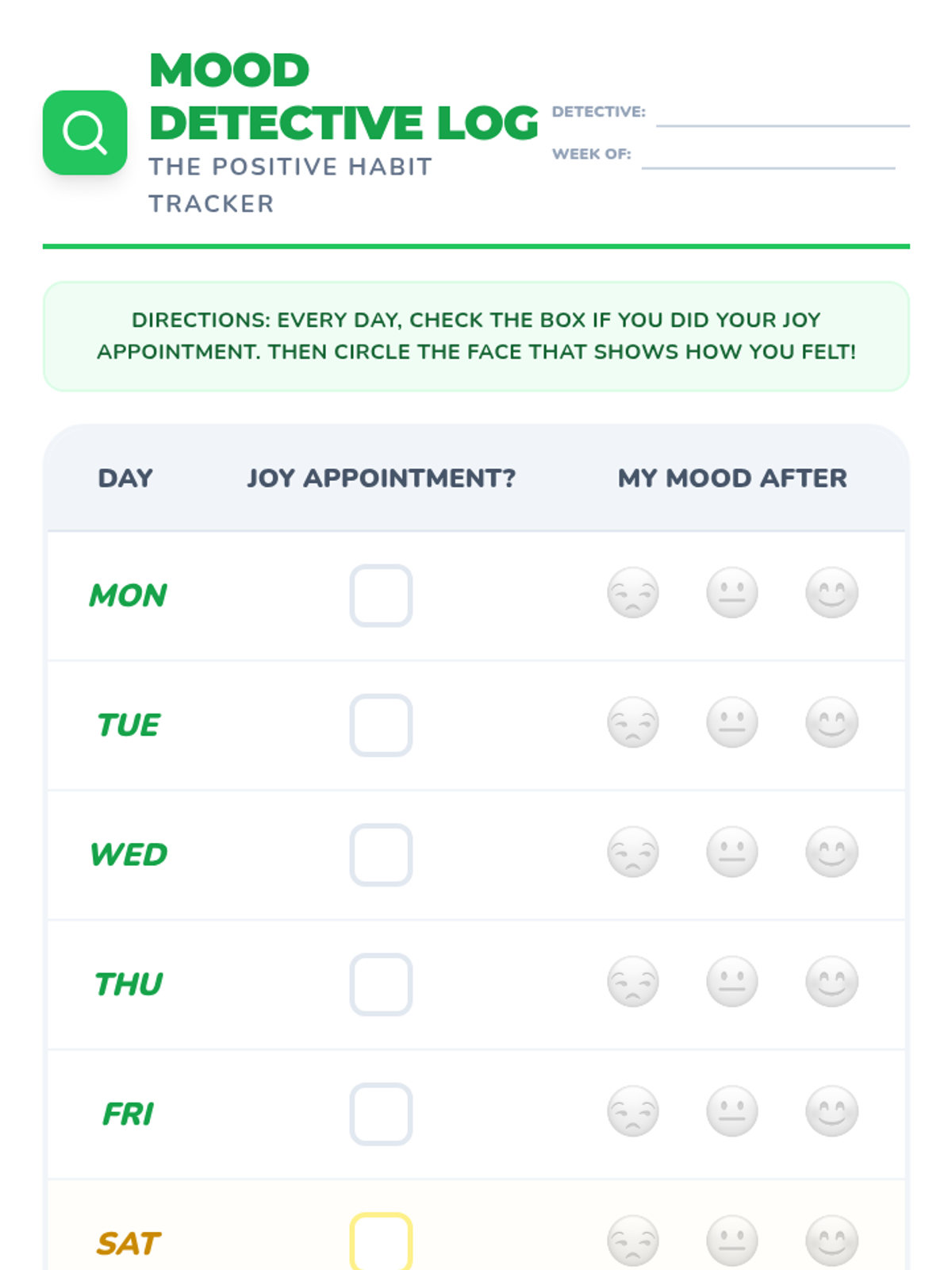
Students use a tracker to monitor positive activities and their subsequent mood, reinforcing the link between action and emotion.
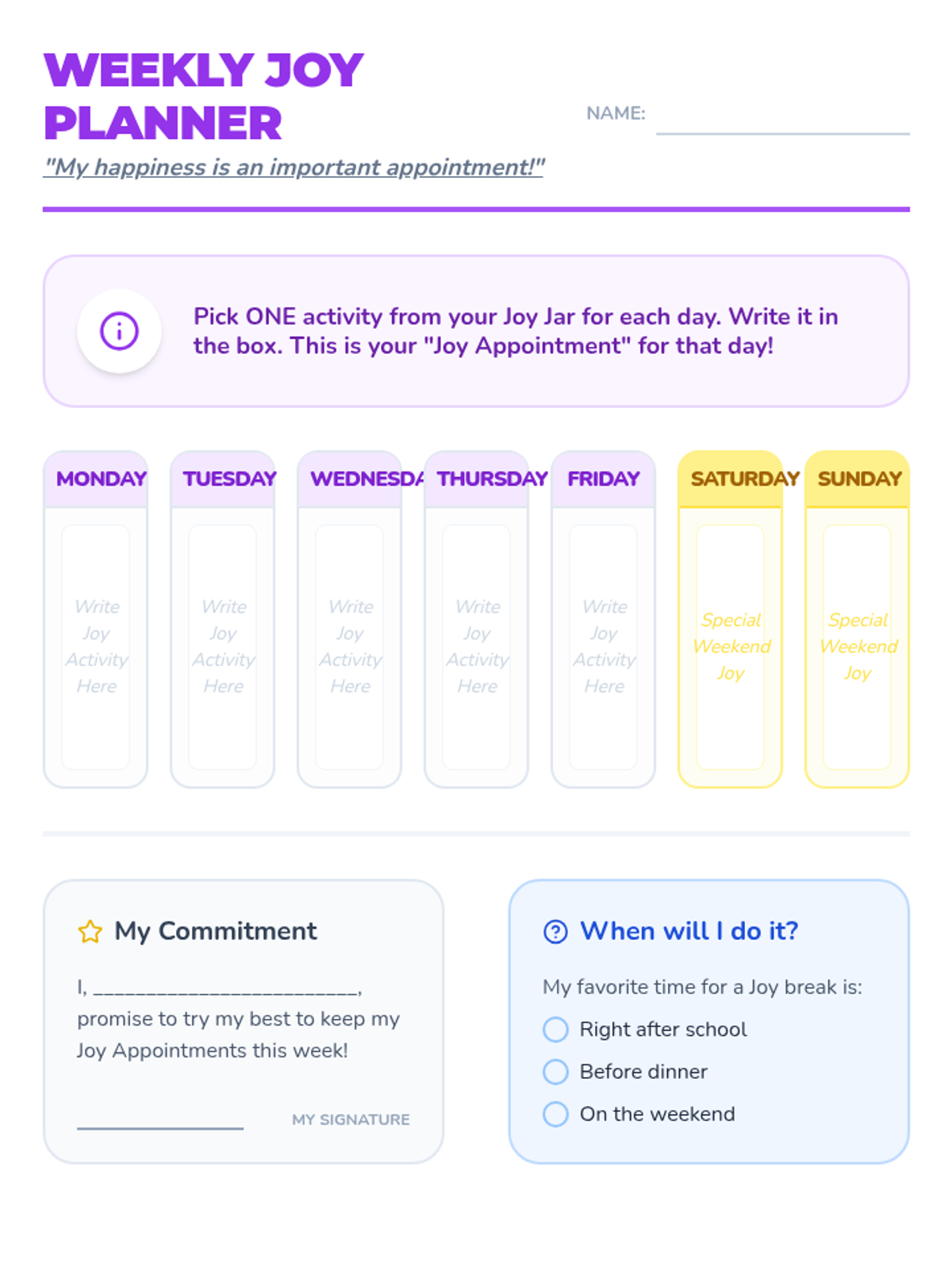
Students learn to schedule intentional 'joy breaks' into their weekly calendar, treating self-care as an important commitment.
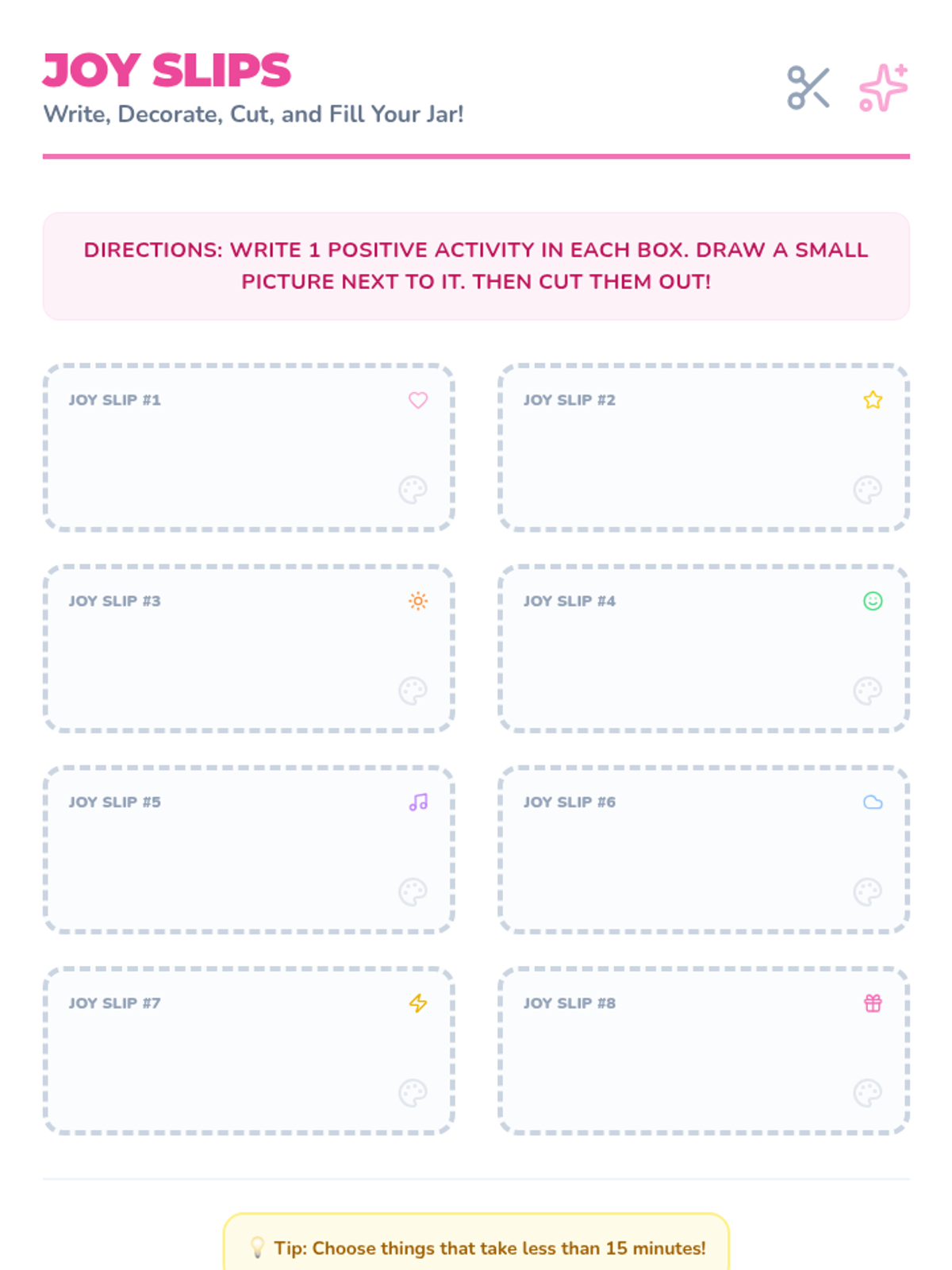
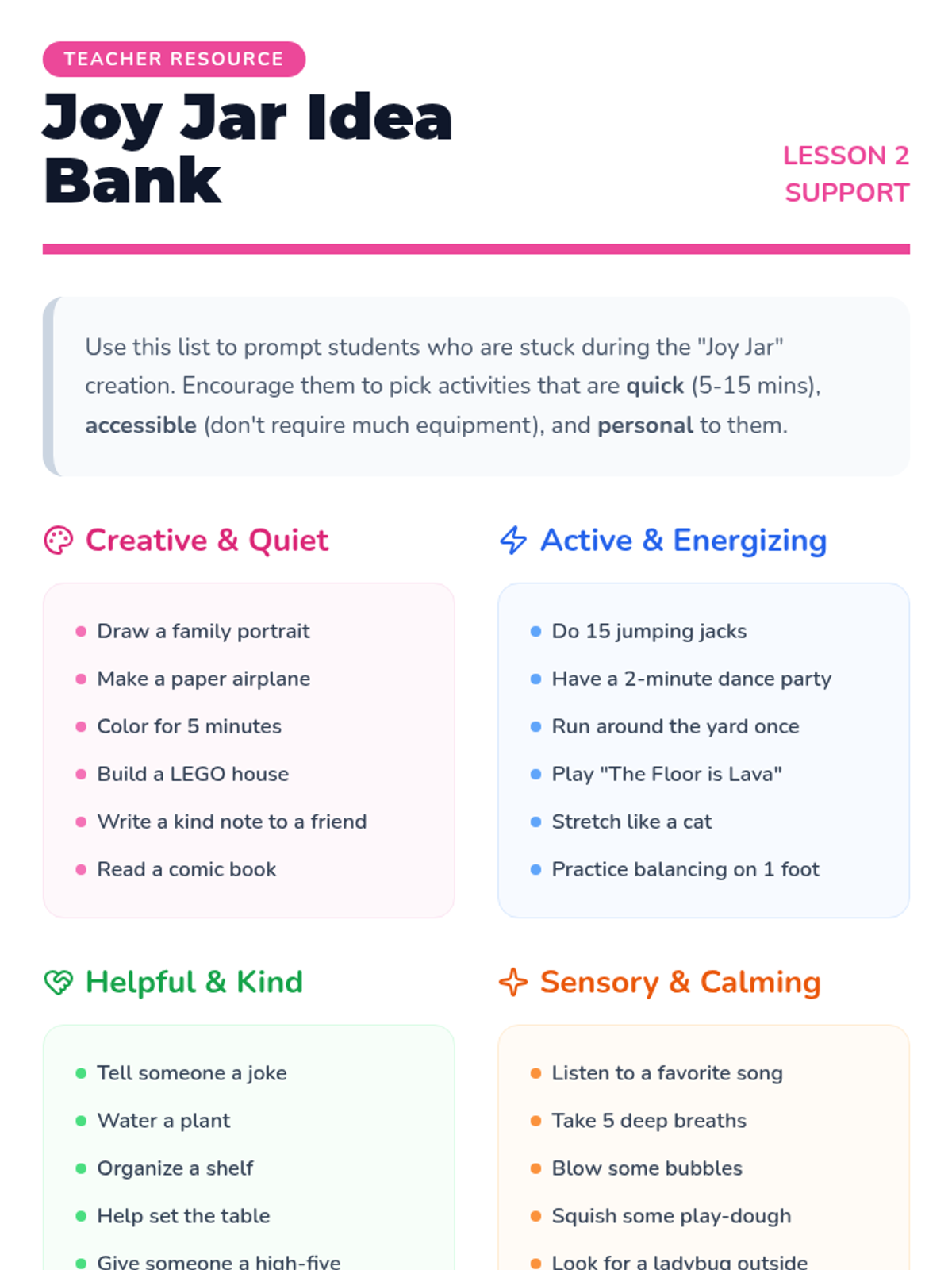
Students create a 'Happiness Jar' filled with positive activity ideas to combat decision fatigue and provide quick mood boosts.
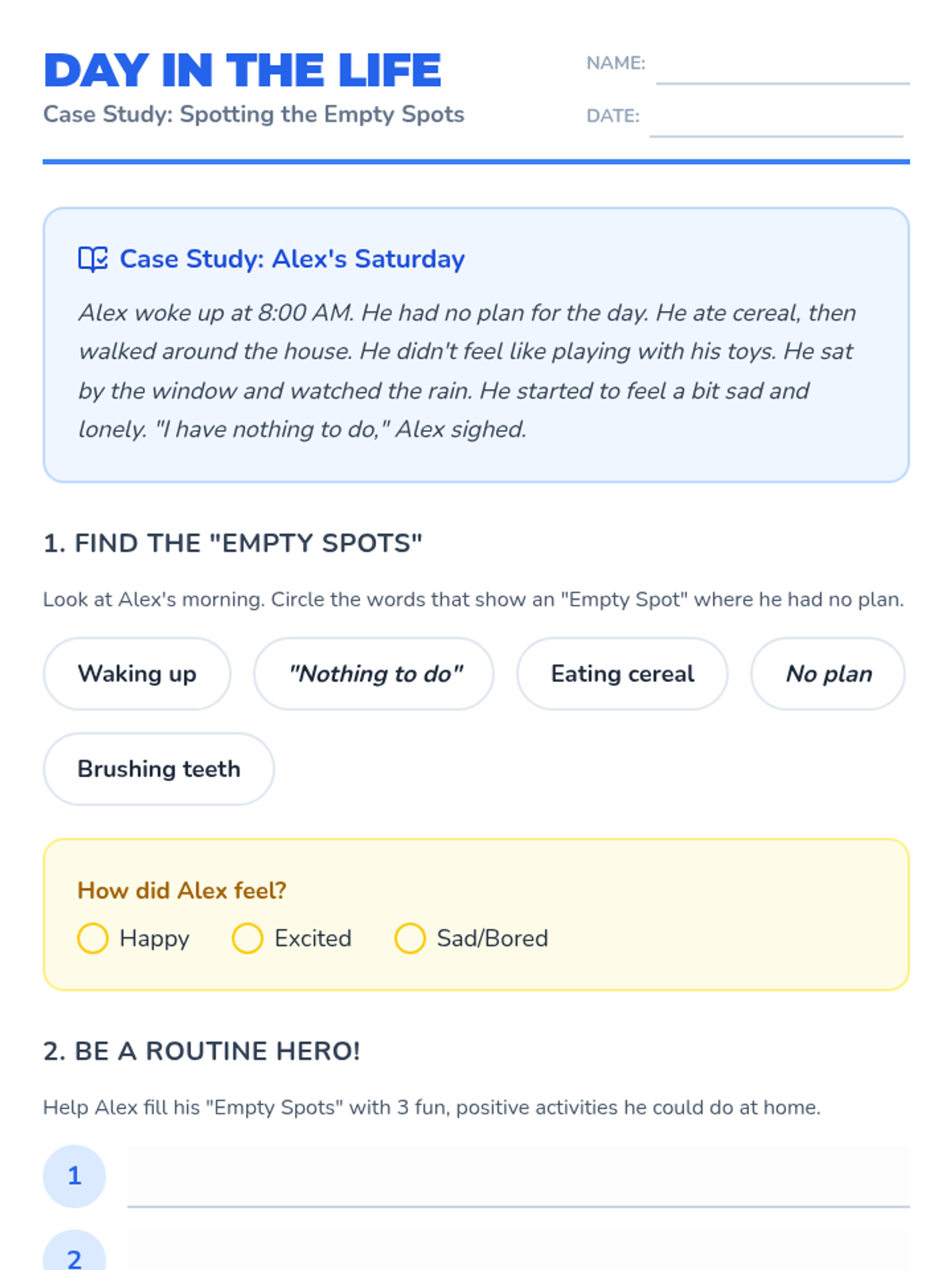
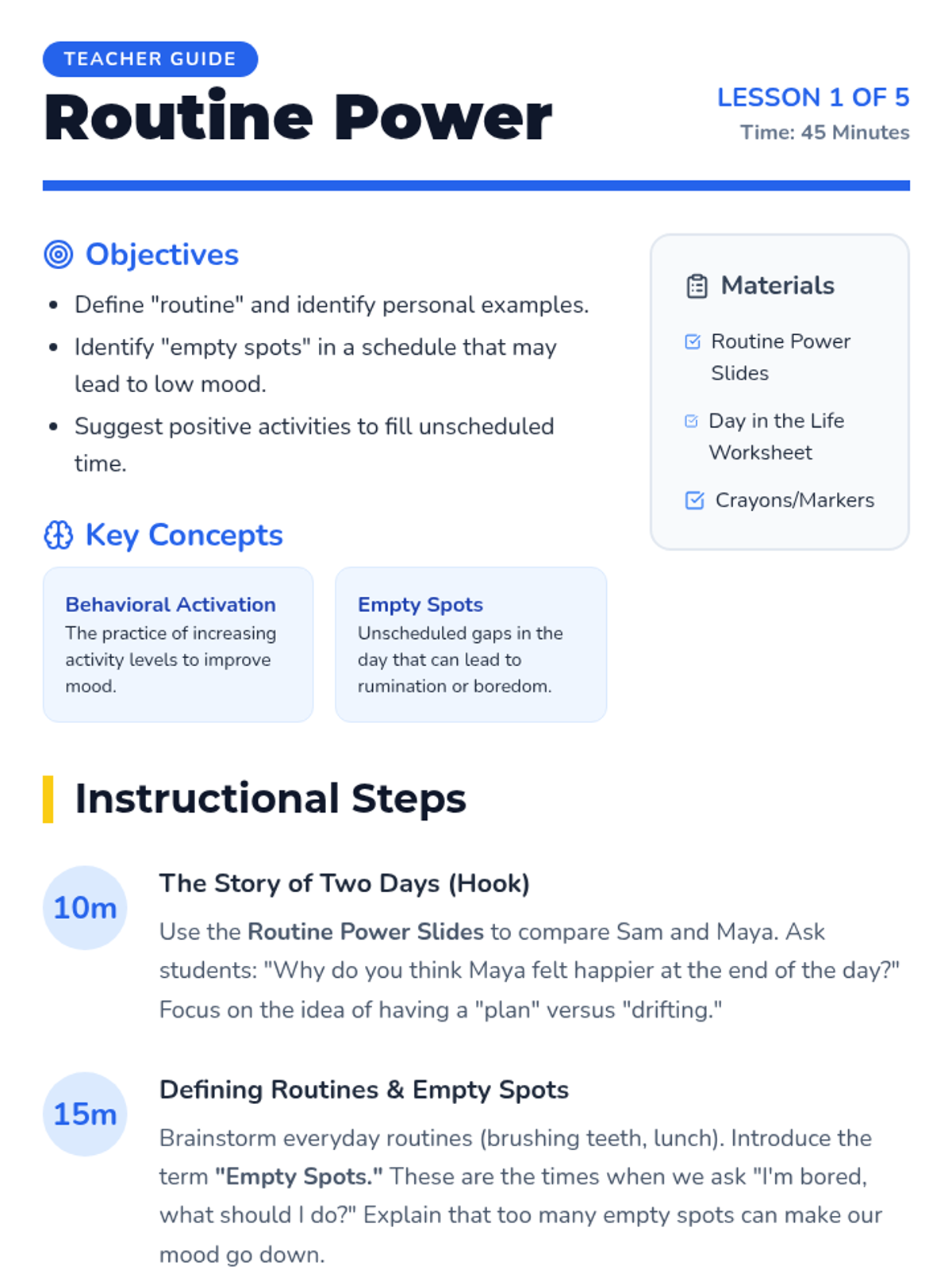
Students analyze daily routines to understand how 'empty spots' affect mood and learn how purposeful routines can boost happiness.
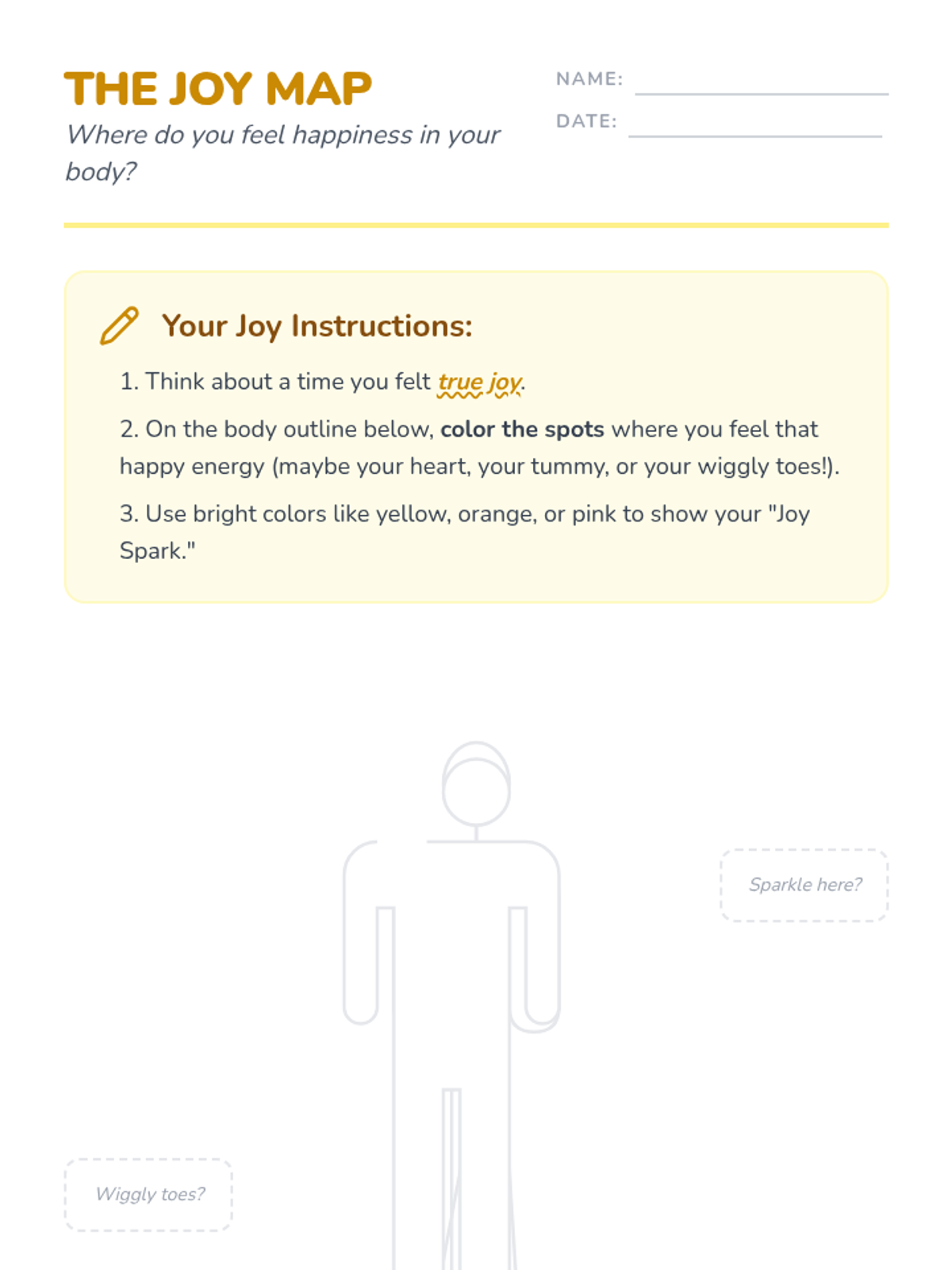
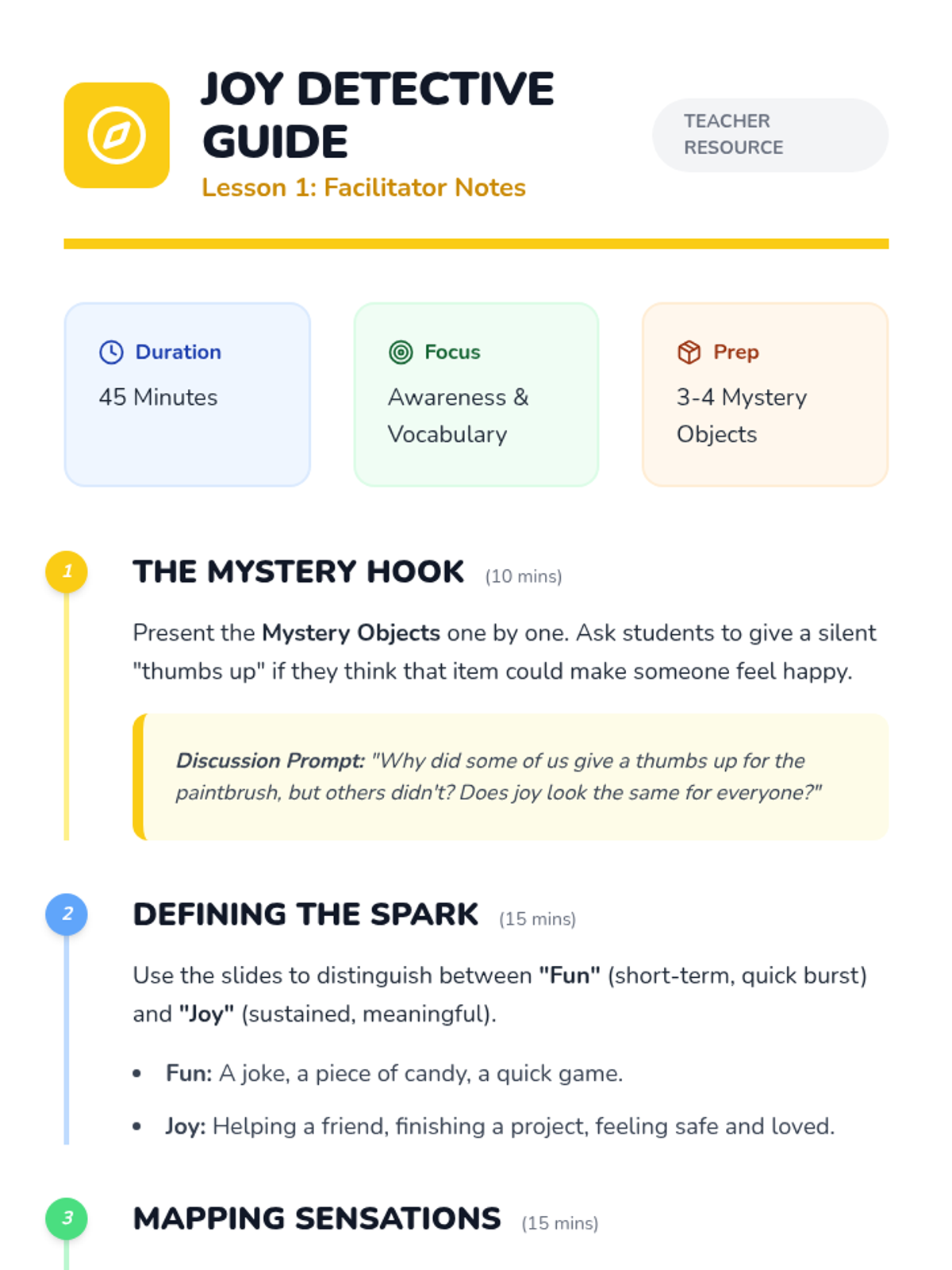
Students define joy and identify what happiness feels like in their bodies. They brainstorm activities that elicit positive emotions and distinguish between short-term fun and long-term happiness.
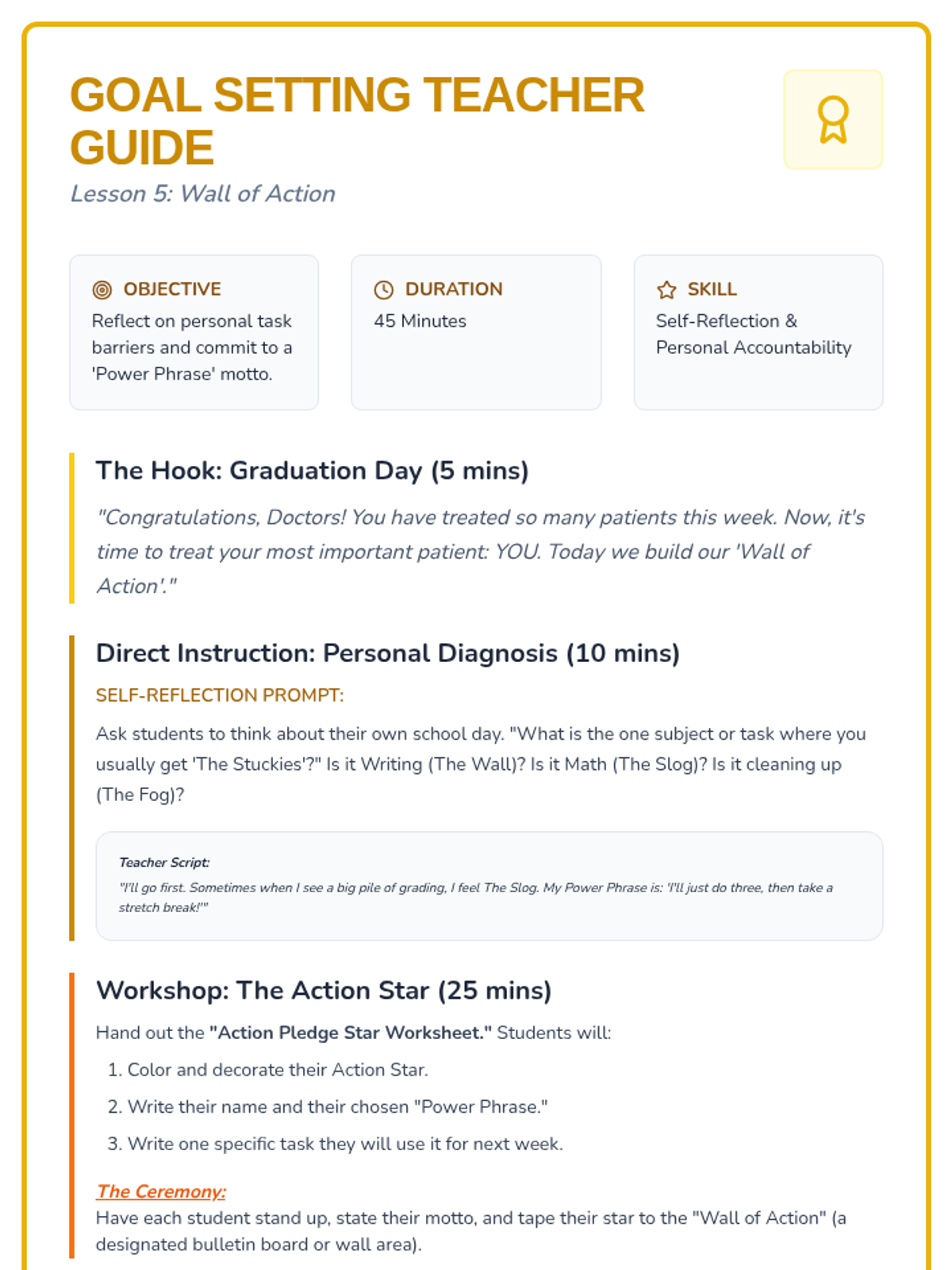
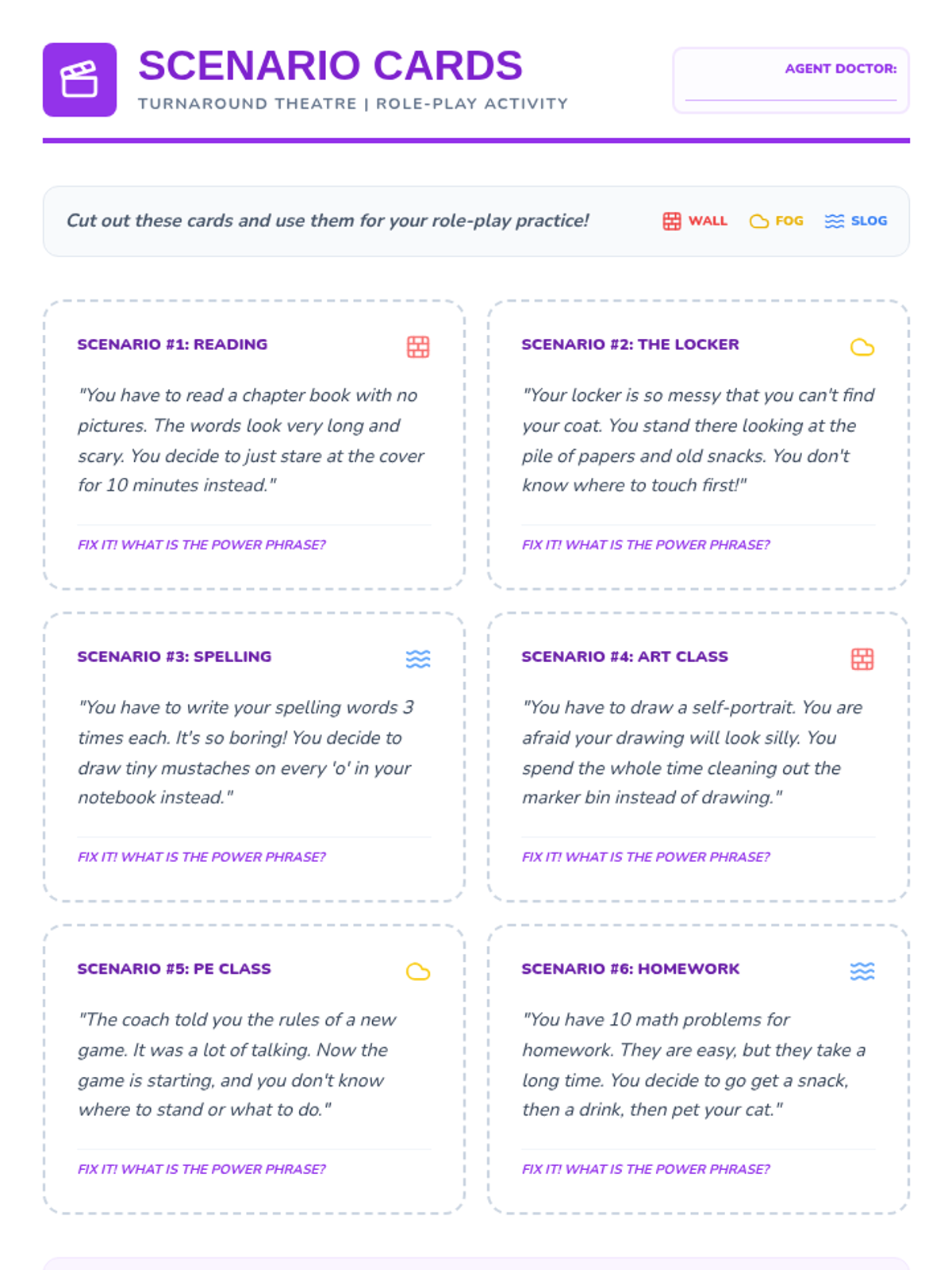
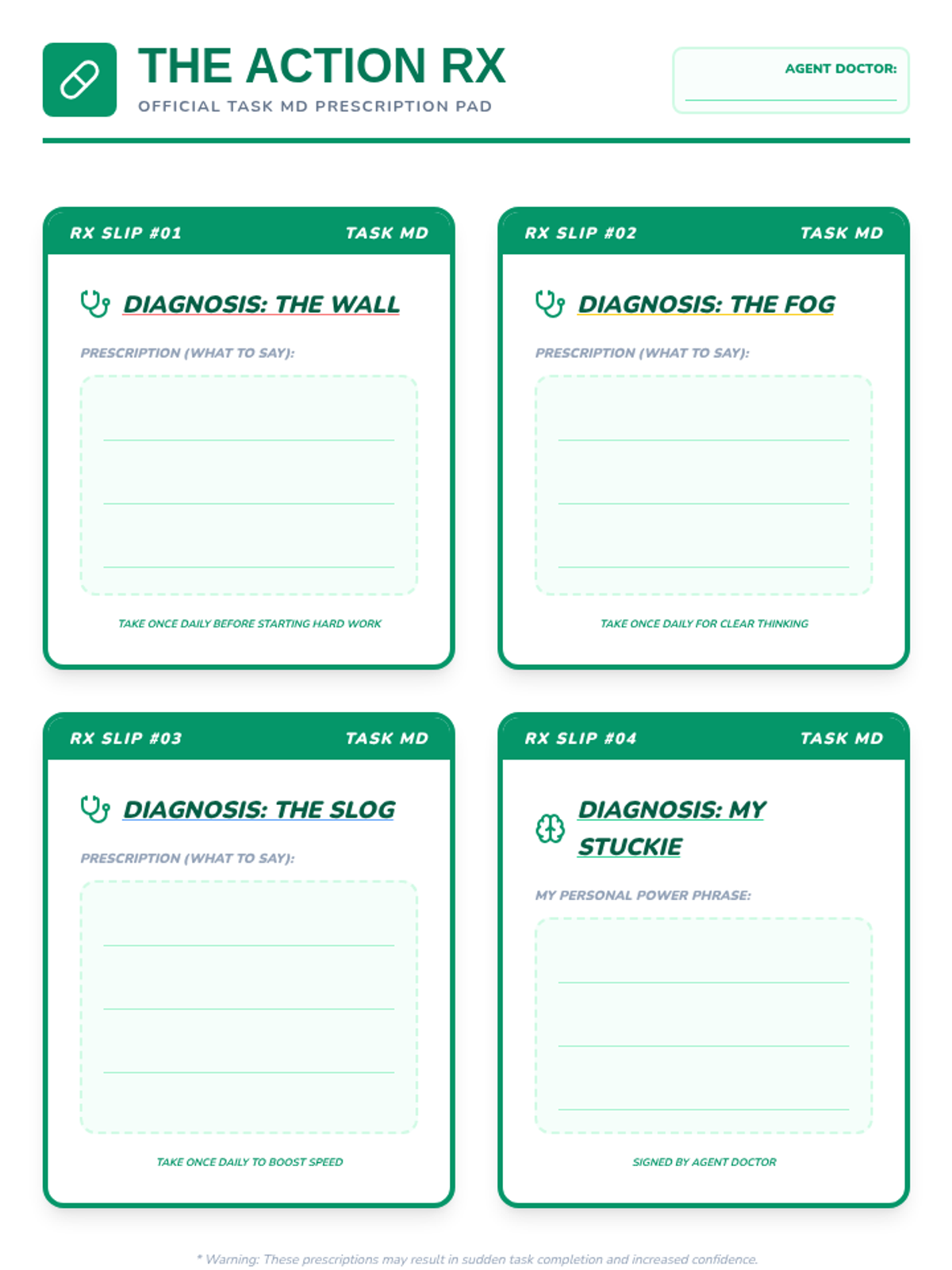
Students identify their own barriers to starting work and select a personal 'Power Phrase' motto for future tasks.
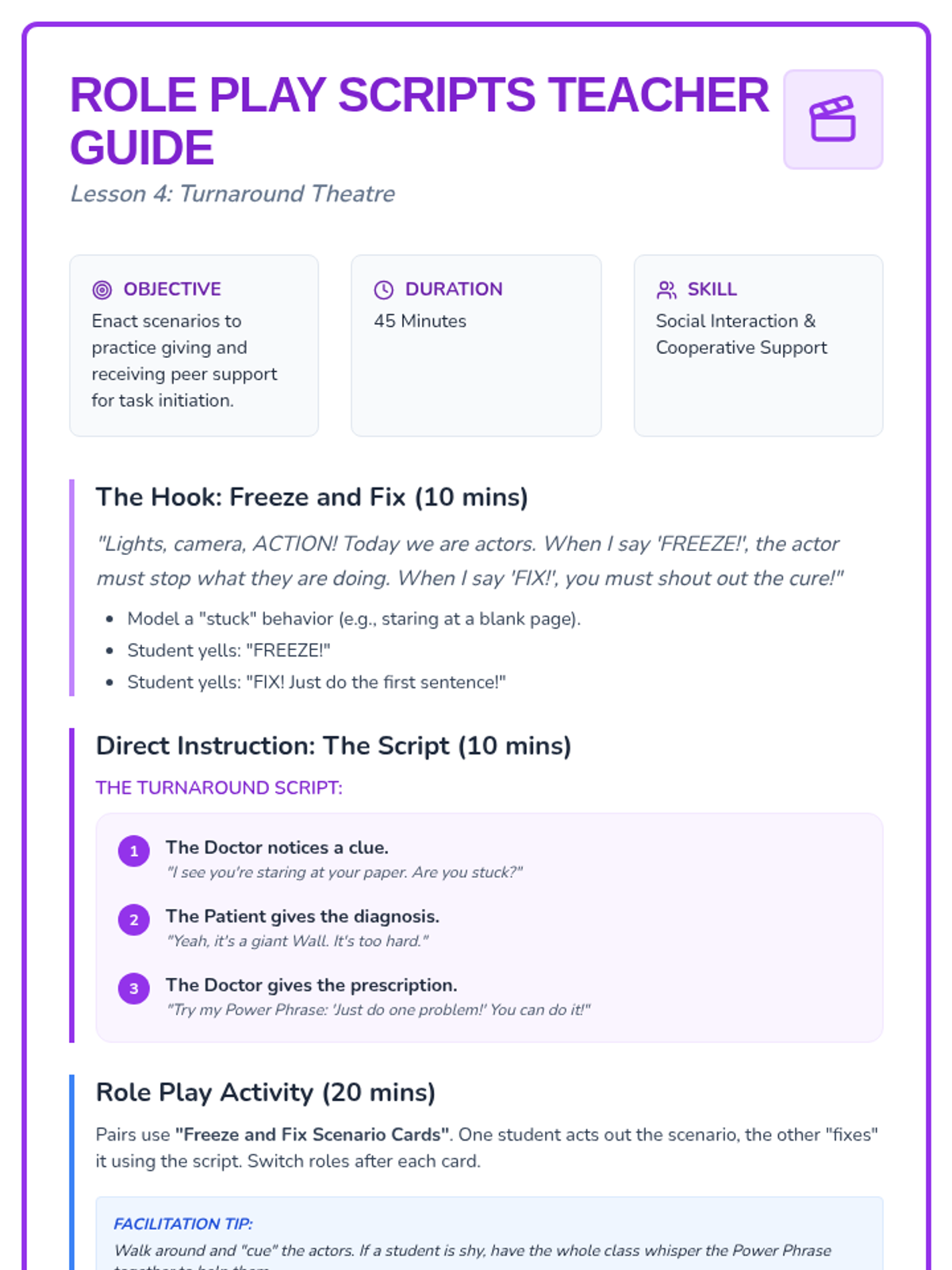
Students role-play scenarios where they help a peer get 'unstuck' using their self-talk prescriptions.
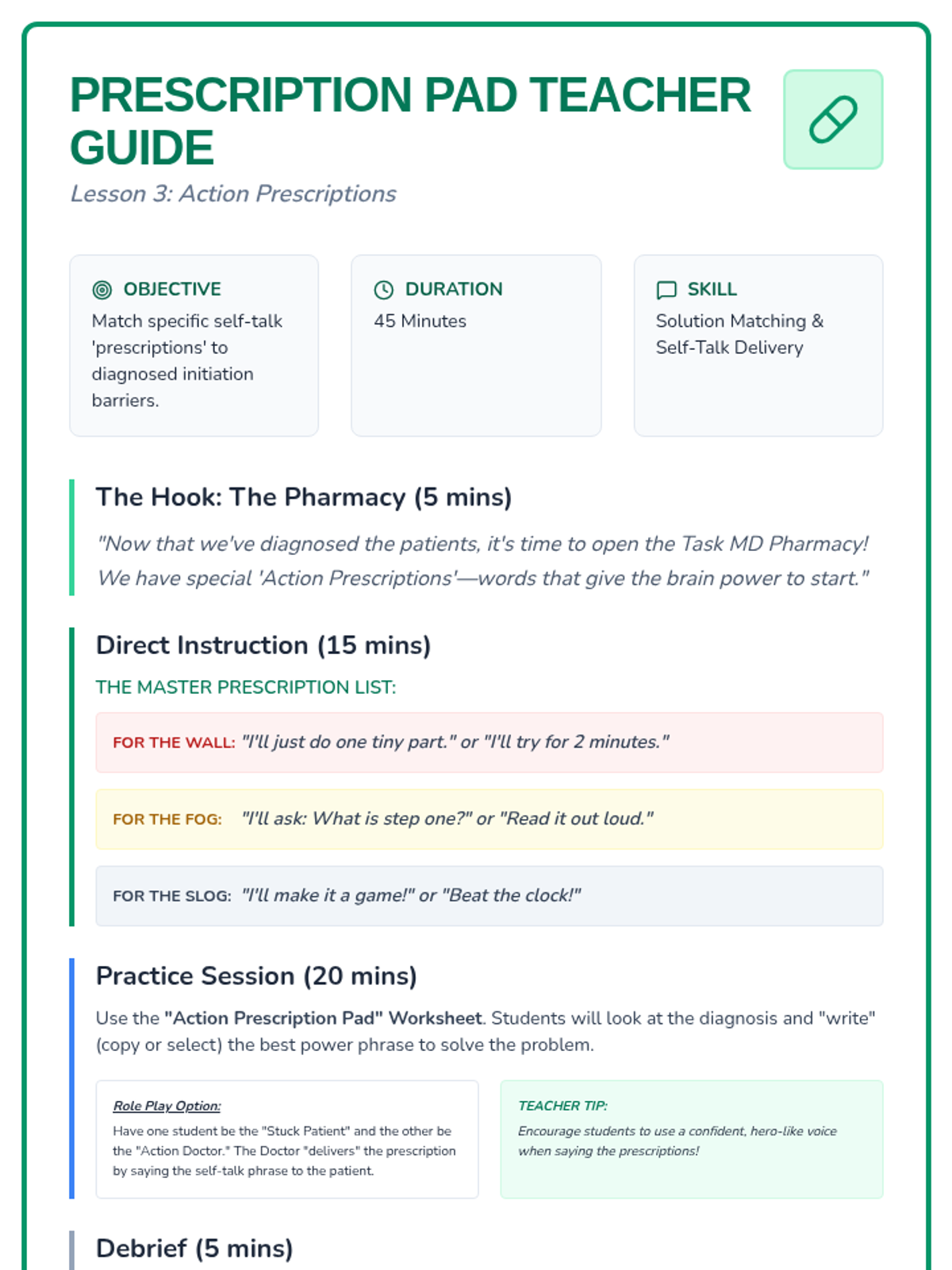
Students match specific self-talk 'prescriptions' to diagnosed problems and practice delivering these lines to characters.
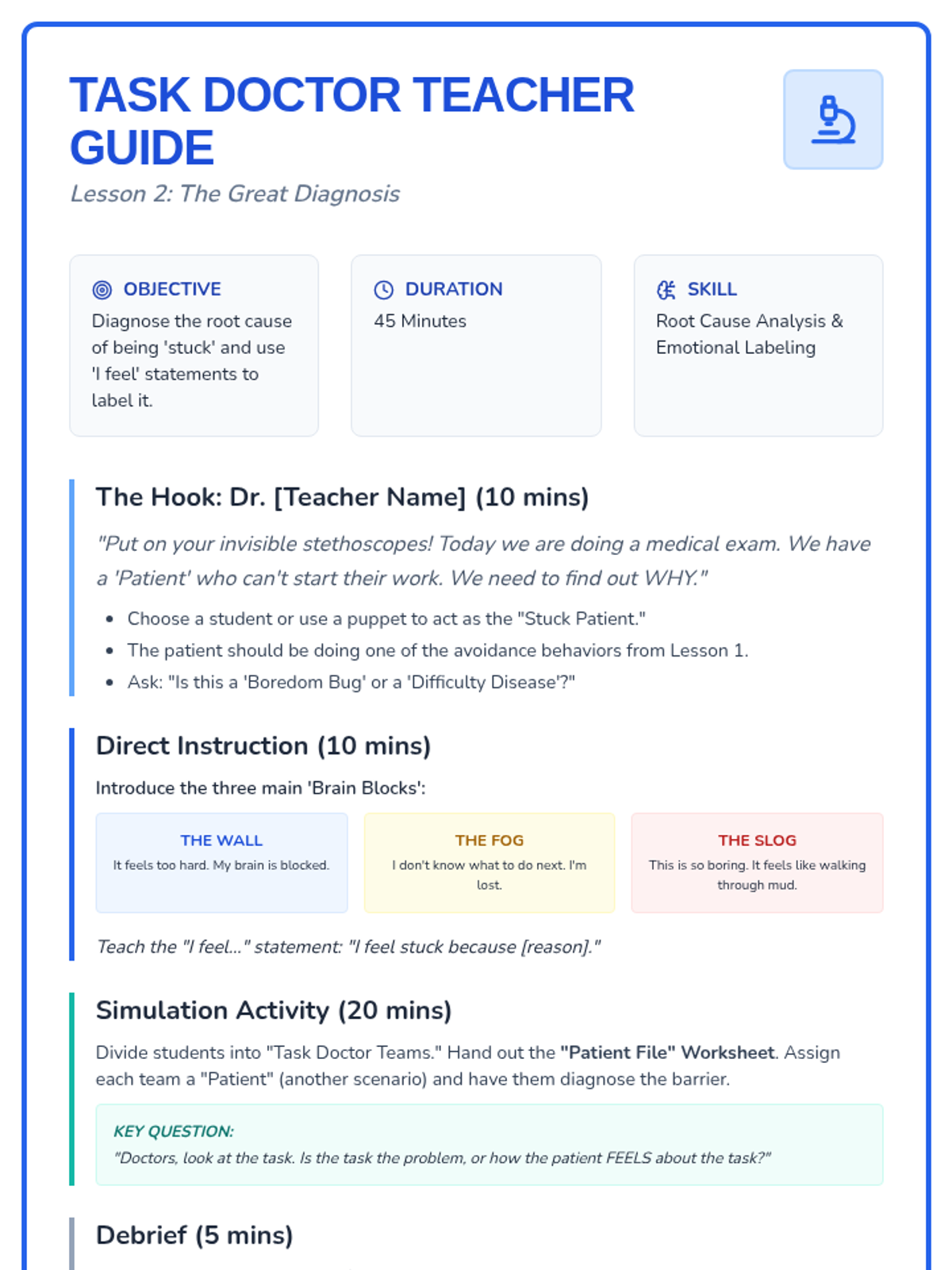
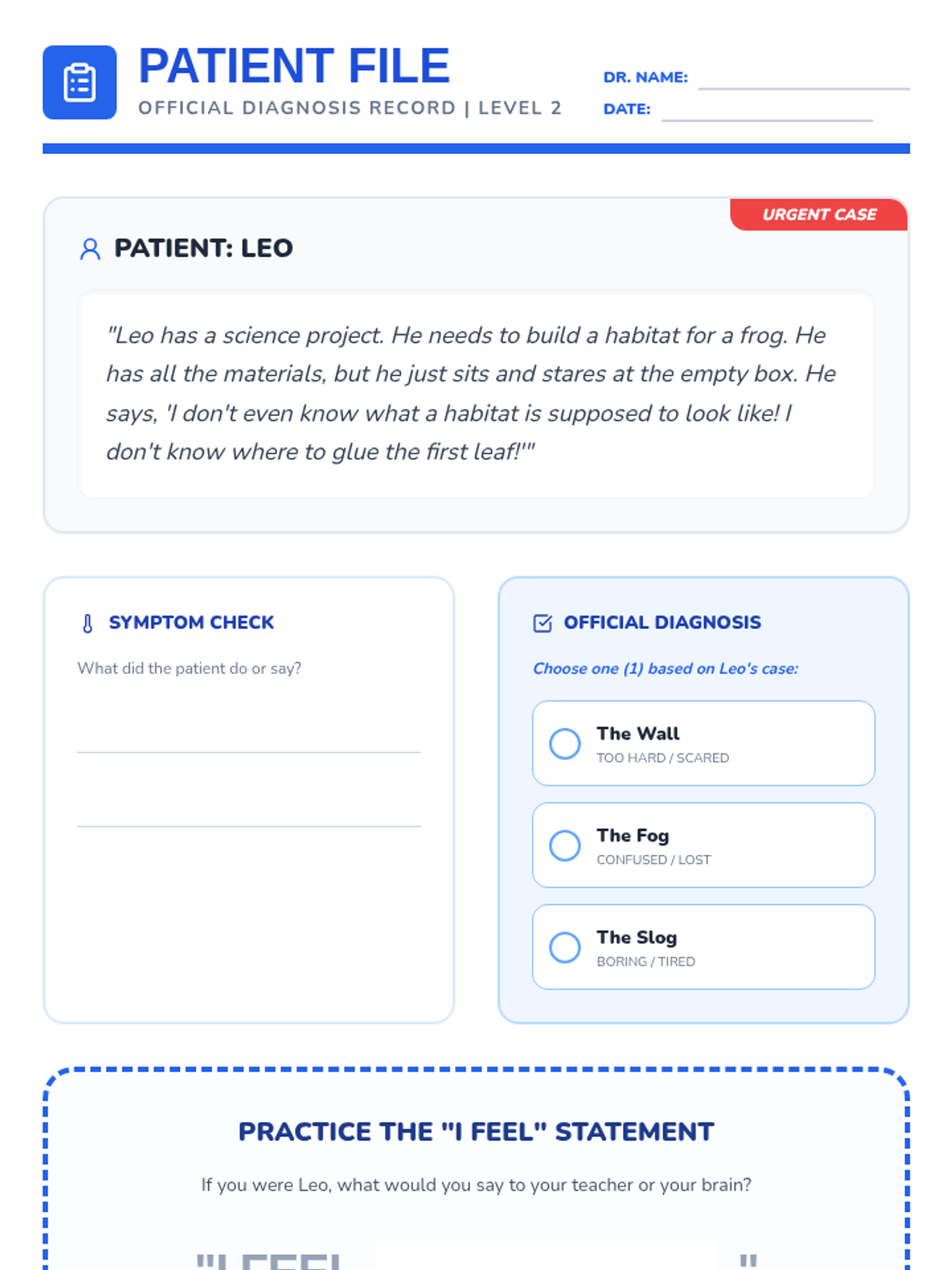
Students act as 'Task Doctors' to determine why a character is stuck (boredom, difficulty, fatigue) and practice labeling these emotions.
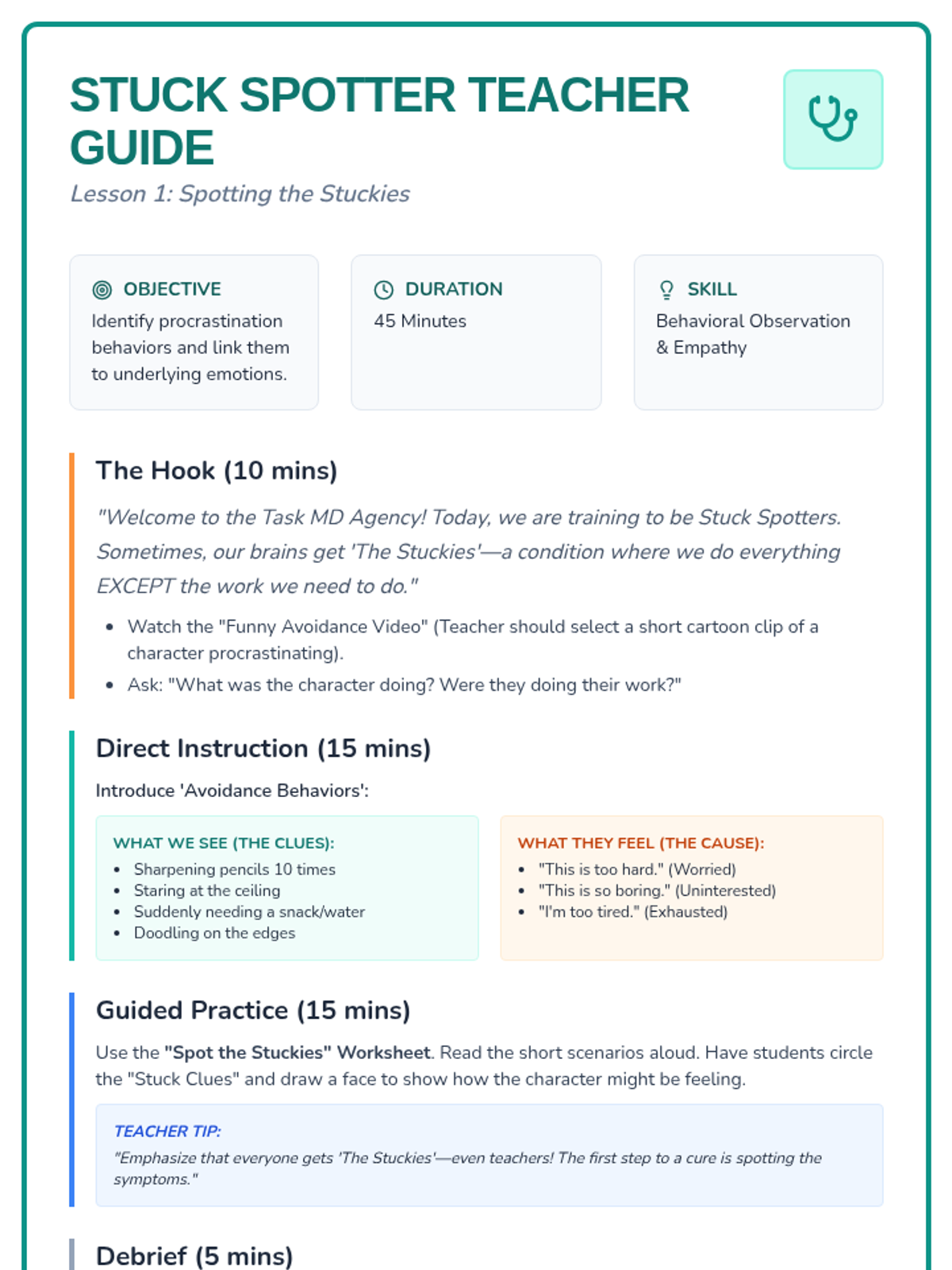
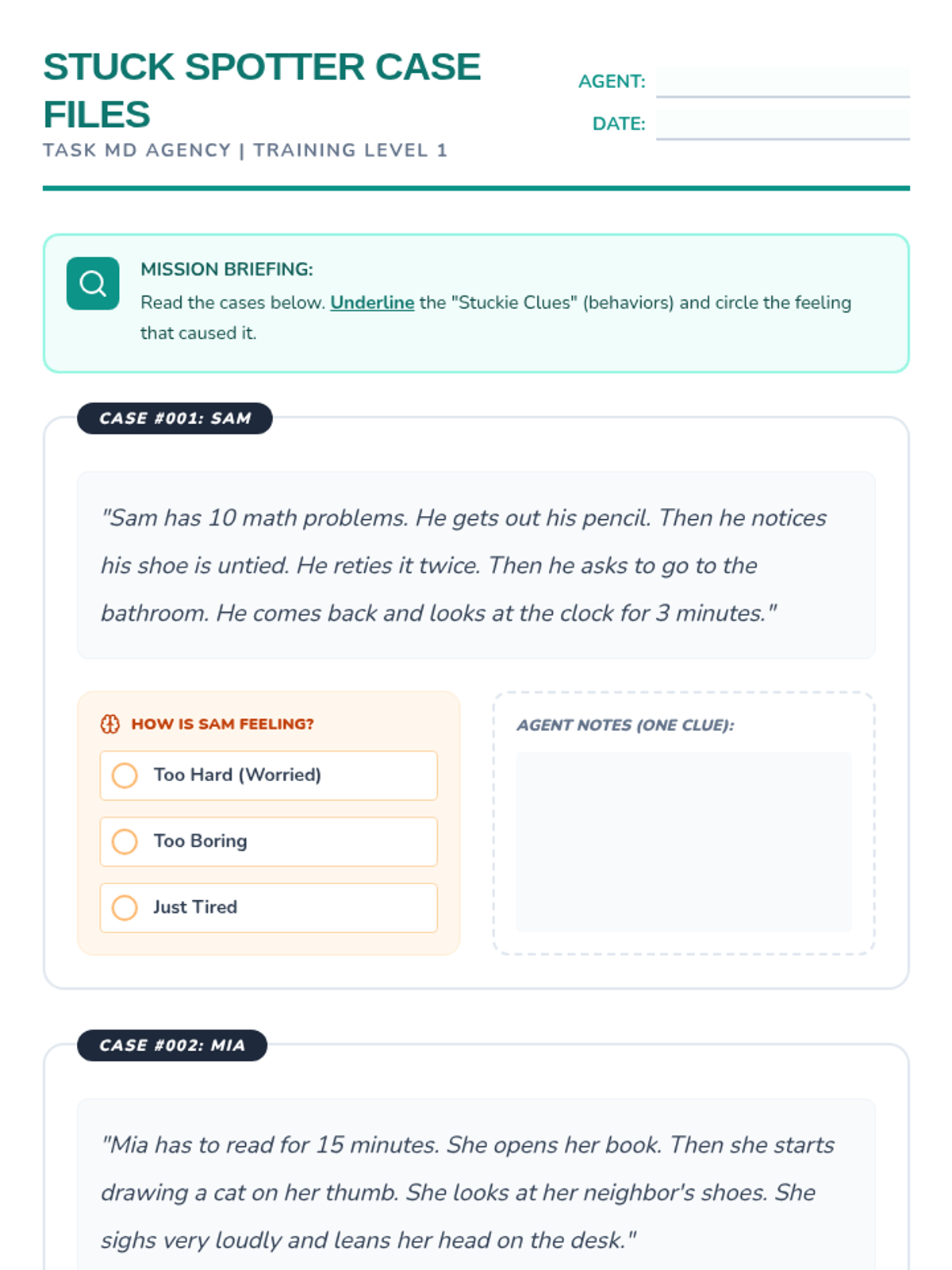
Students identify behaviors that show someone is avoiding work and brainstorm what emotions might be driving those behaviors through case studies.
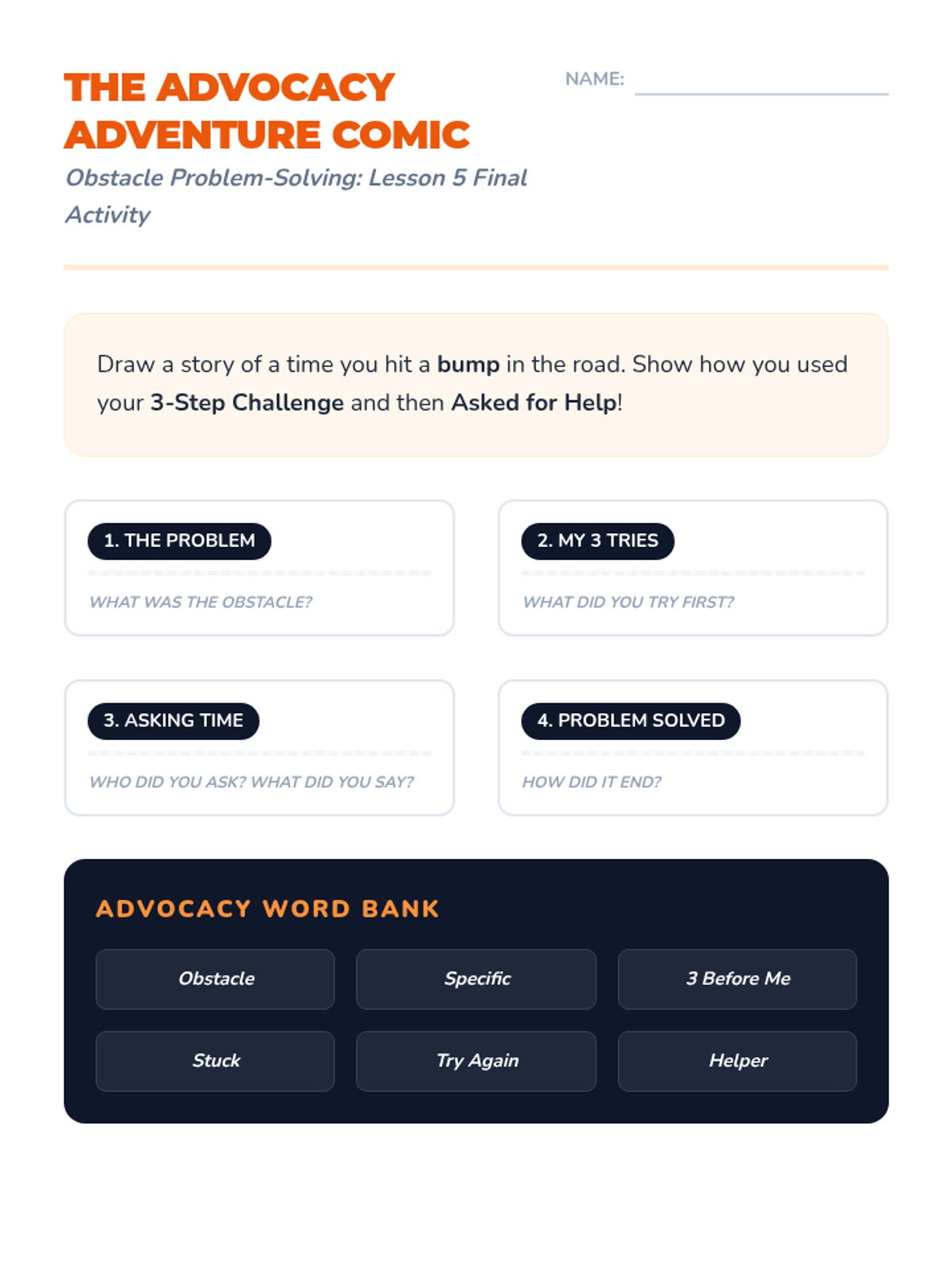
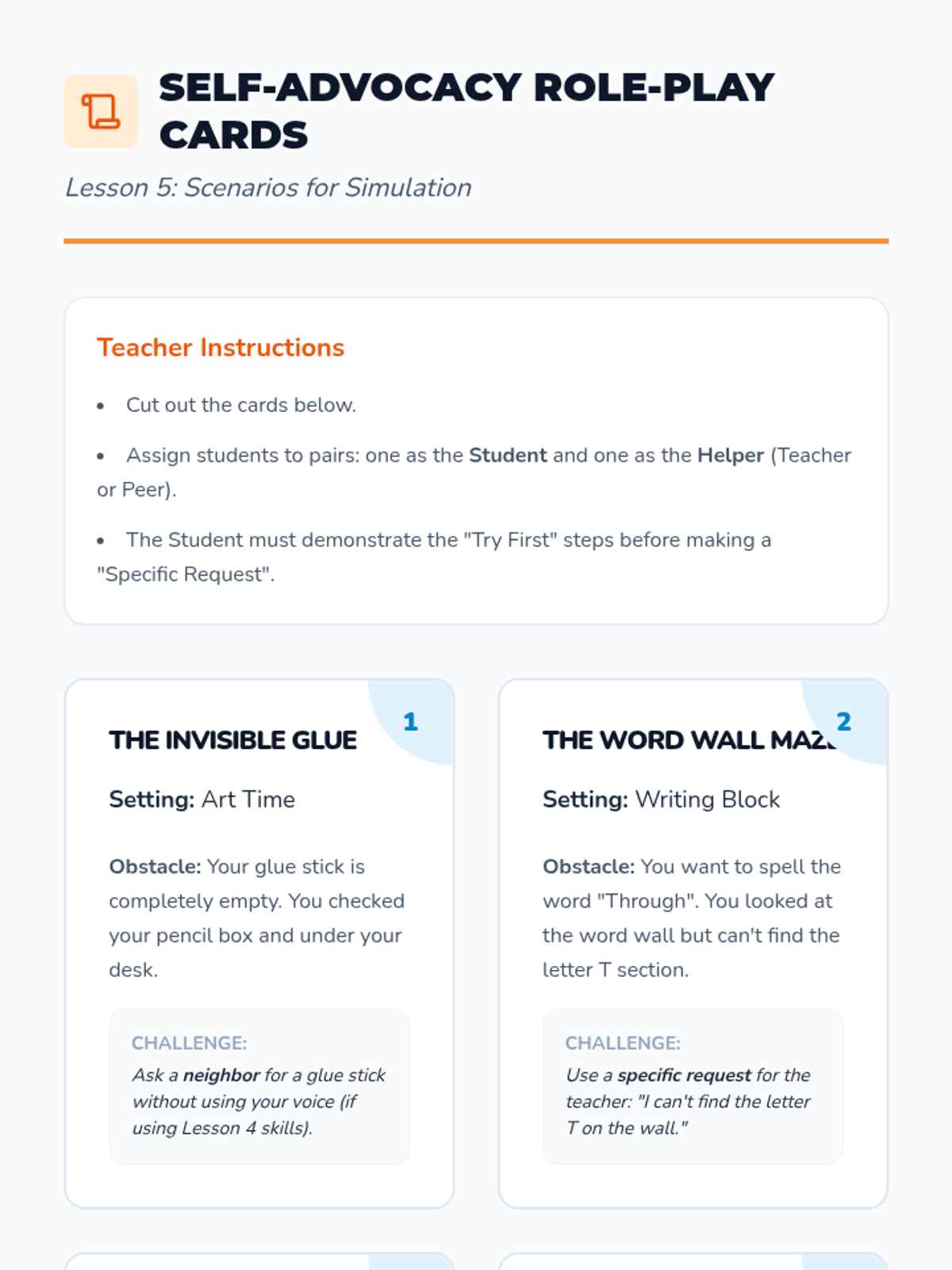
Students enact short skits facing obstacles and effectively asking for help, synthesizing the entire 'Try -> Assess -> Ask' sequence.
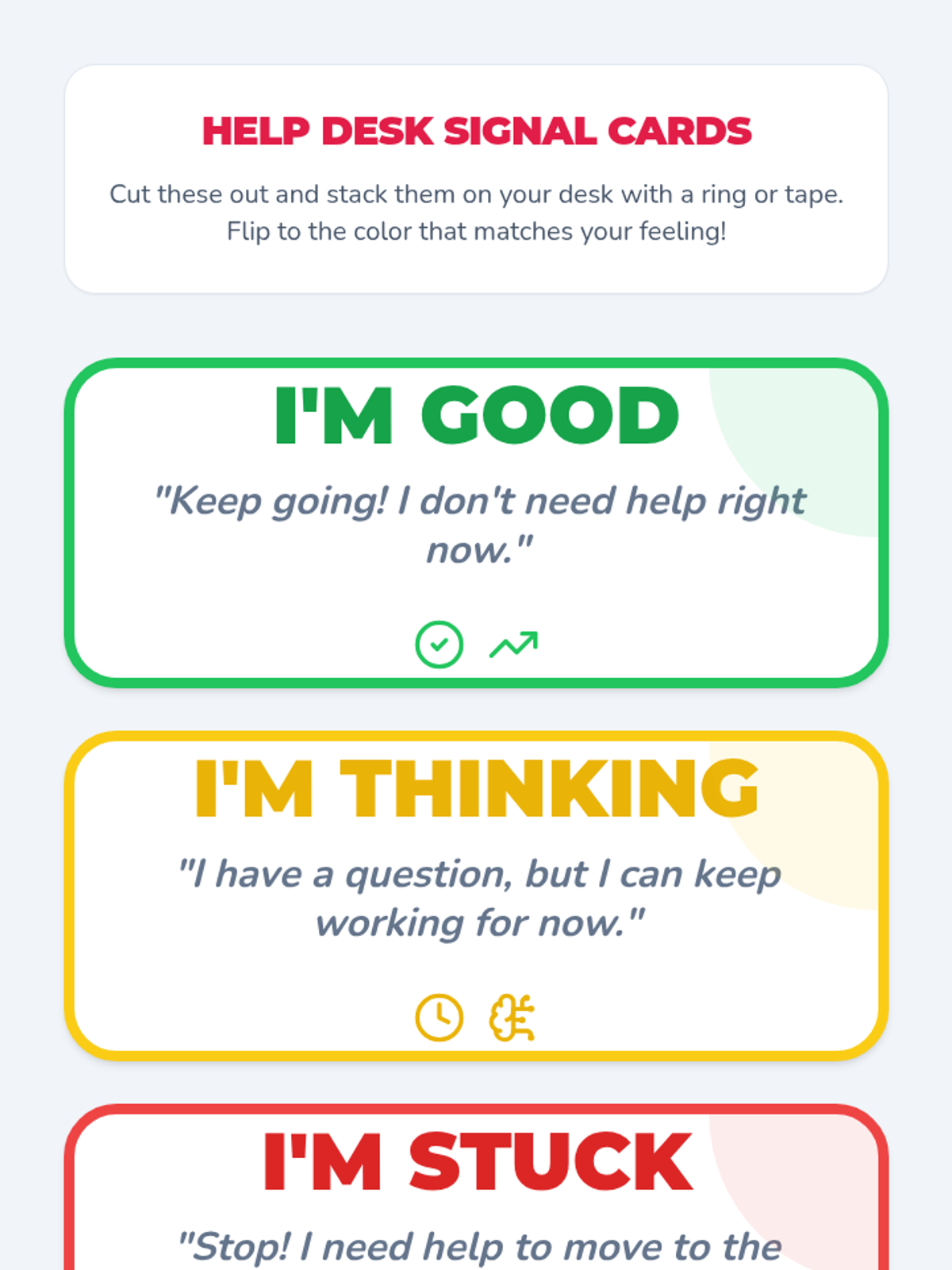
Introduces non-verbal advocacy tools like flip cards and hand signals for students who may be overwhelmed or need to signal for help without interrupting.
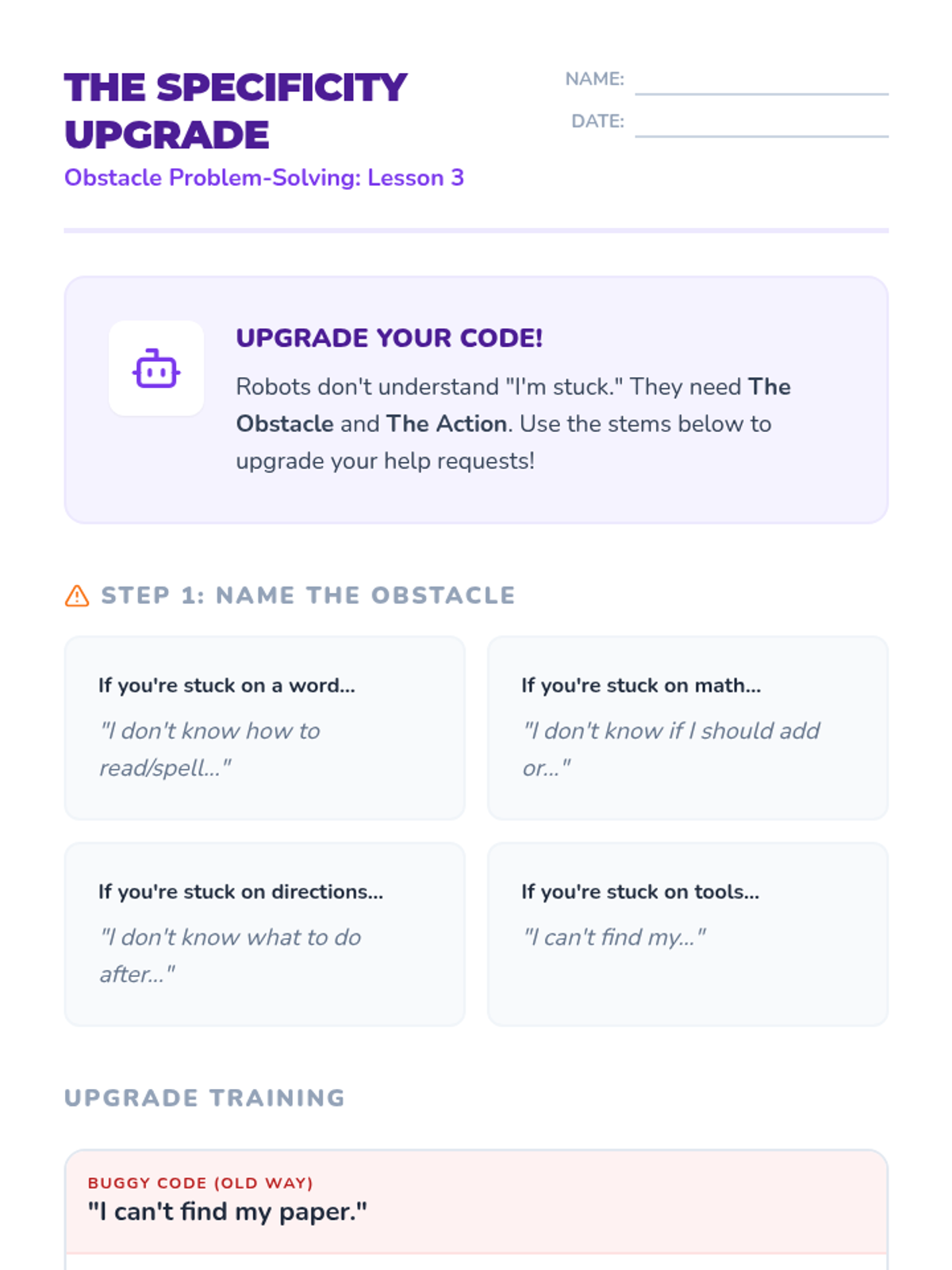
This lesson targets the language of self-advocacy. Students practice changing generic complaints into specific requests that identify the exact obstacle.
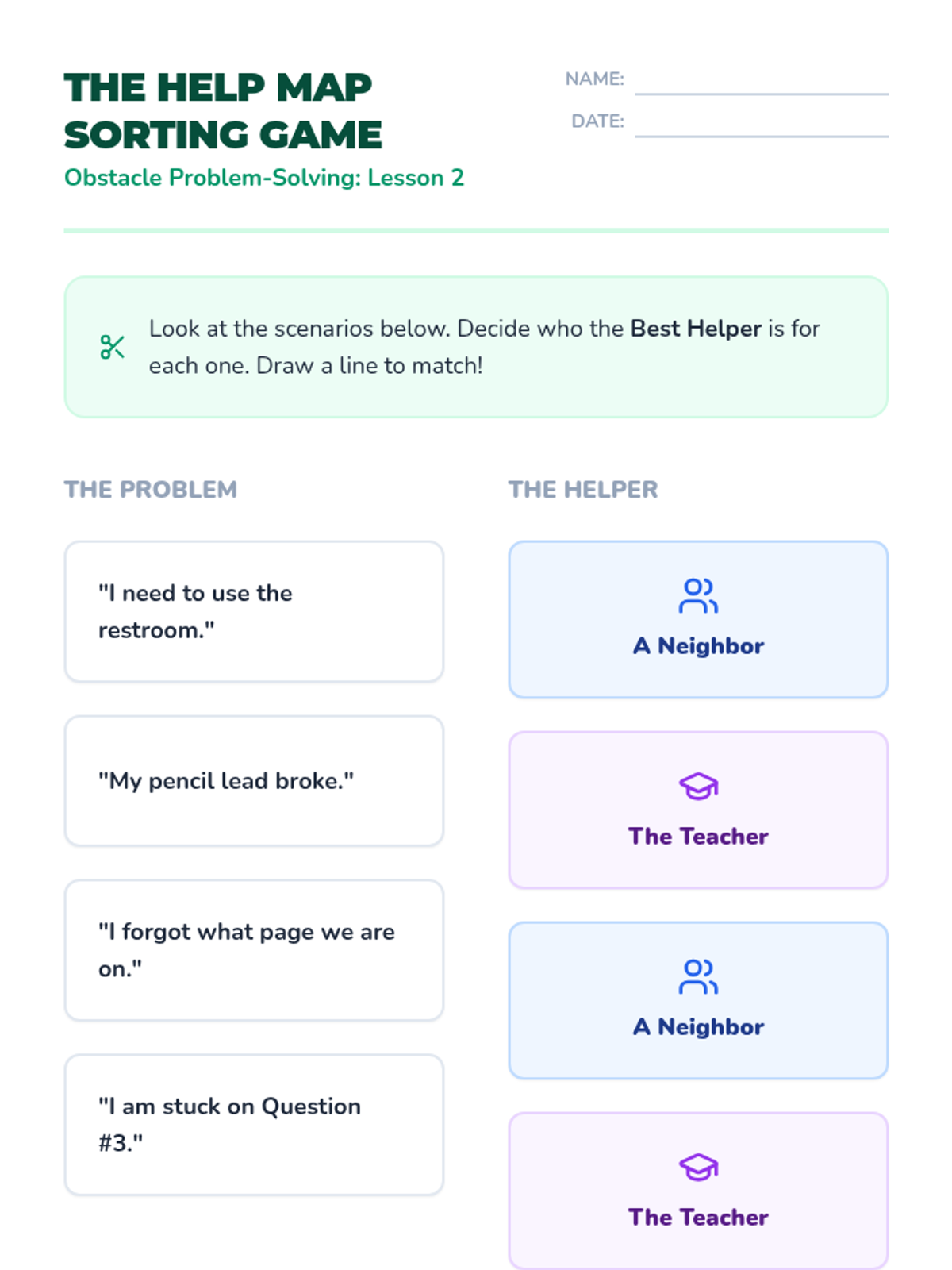
Students map out the classroom ecosystem to identify who can help with different problems. This fosters social awareness and reduces bottlenecks at the teacher's desk.
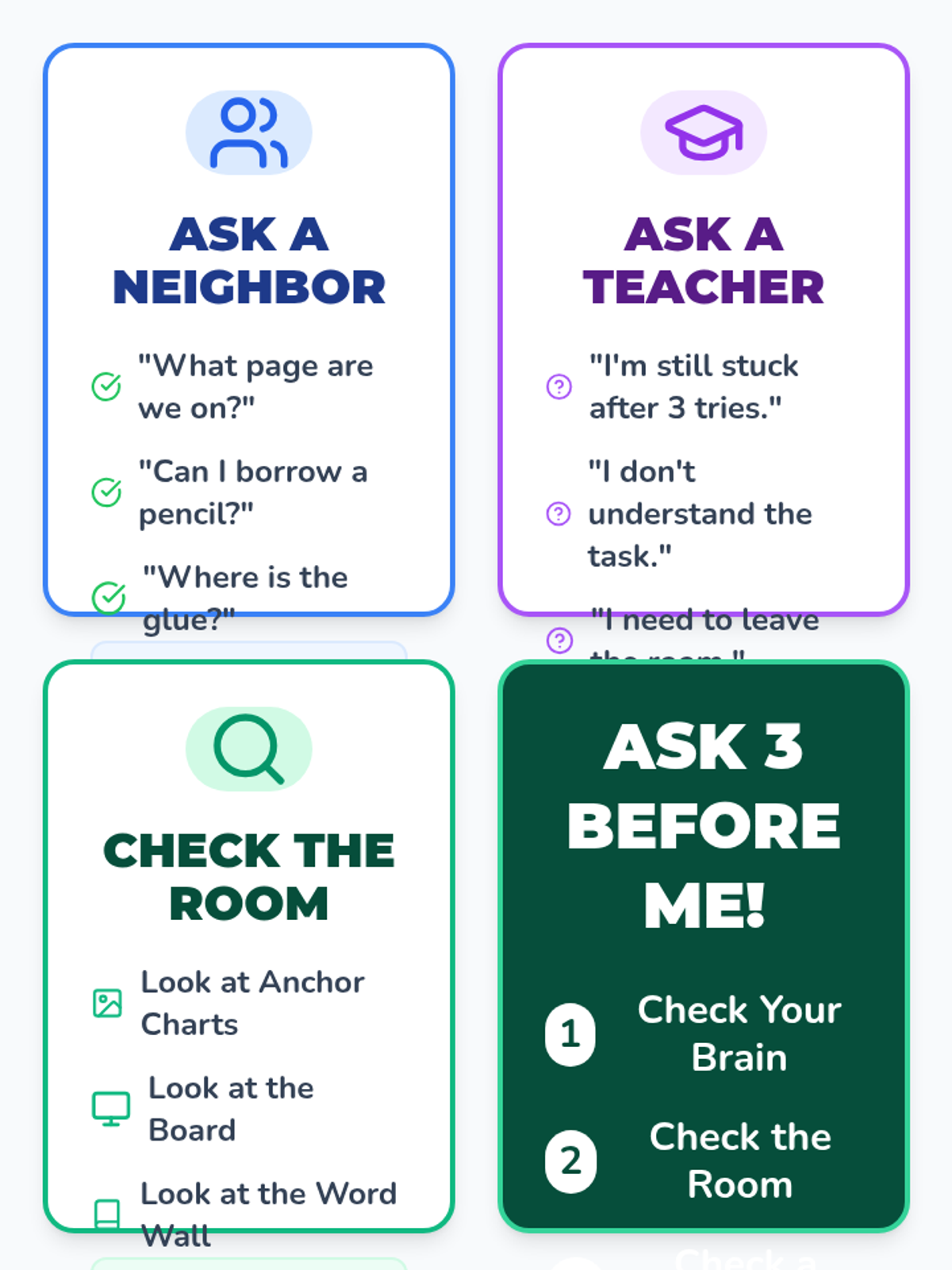
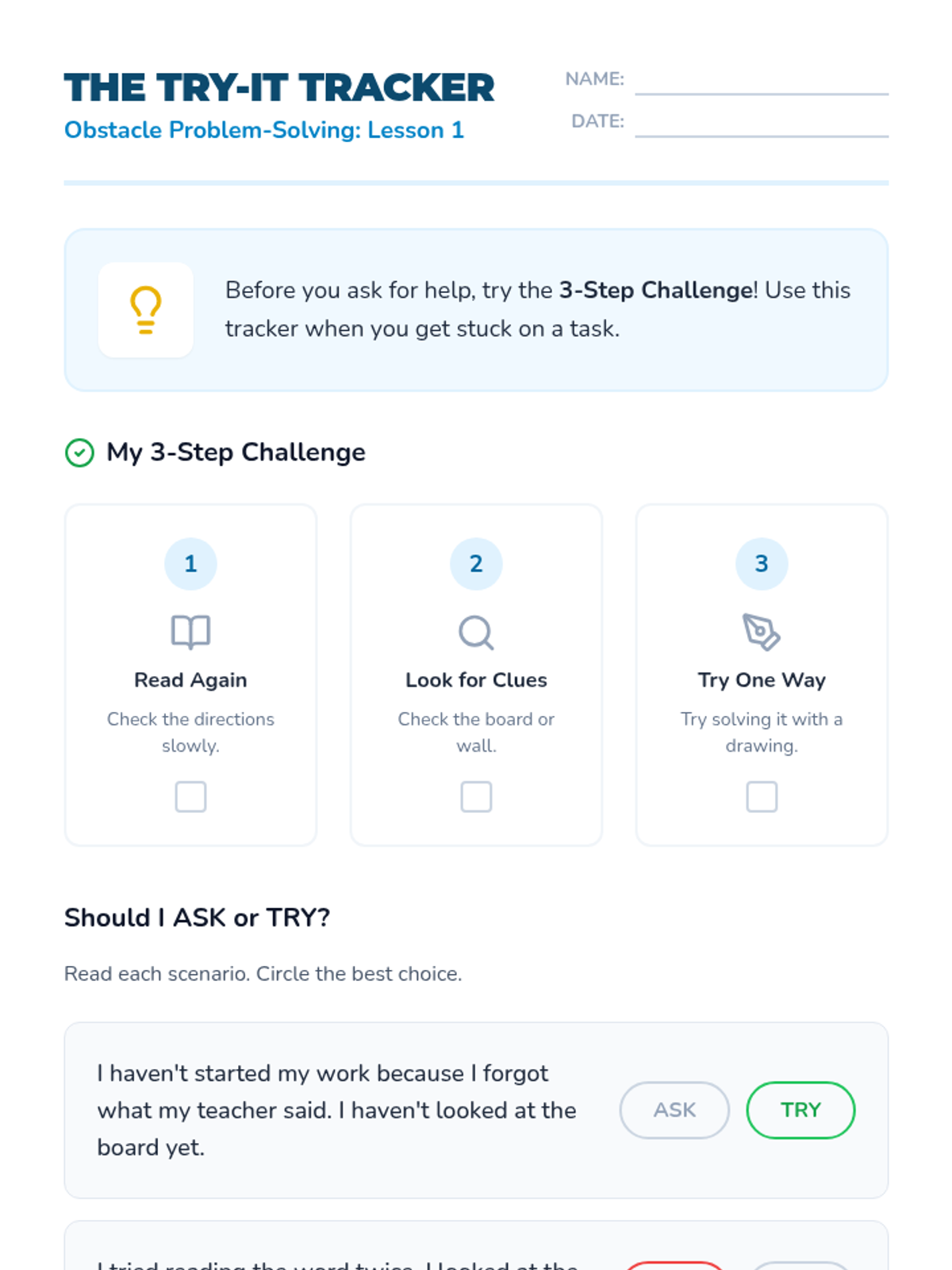
Students learn to identify the 'tipping point'—the moment after they have tried independent strategies but remain stuck. They categorize scenarios into 'Try more' vs. 'Ask now' to prevent immediate dependence on adults.
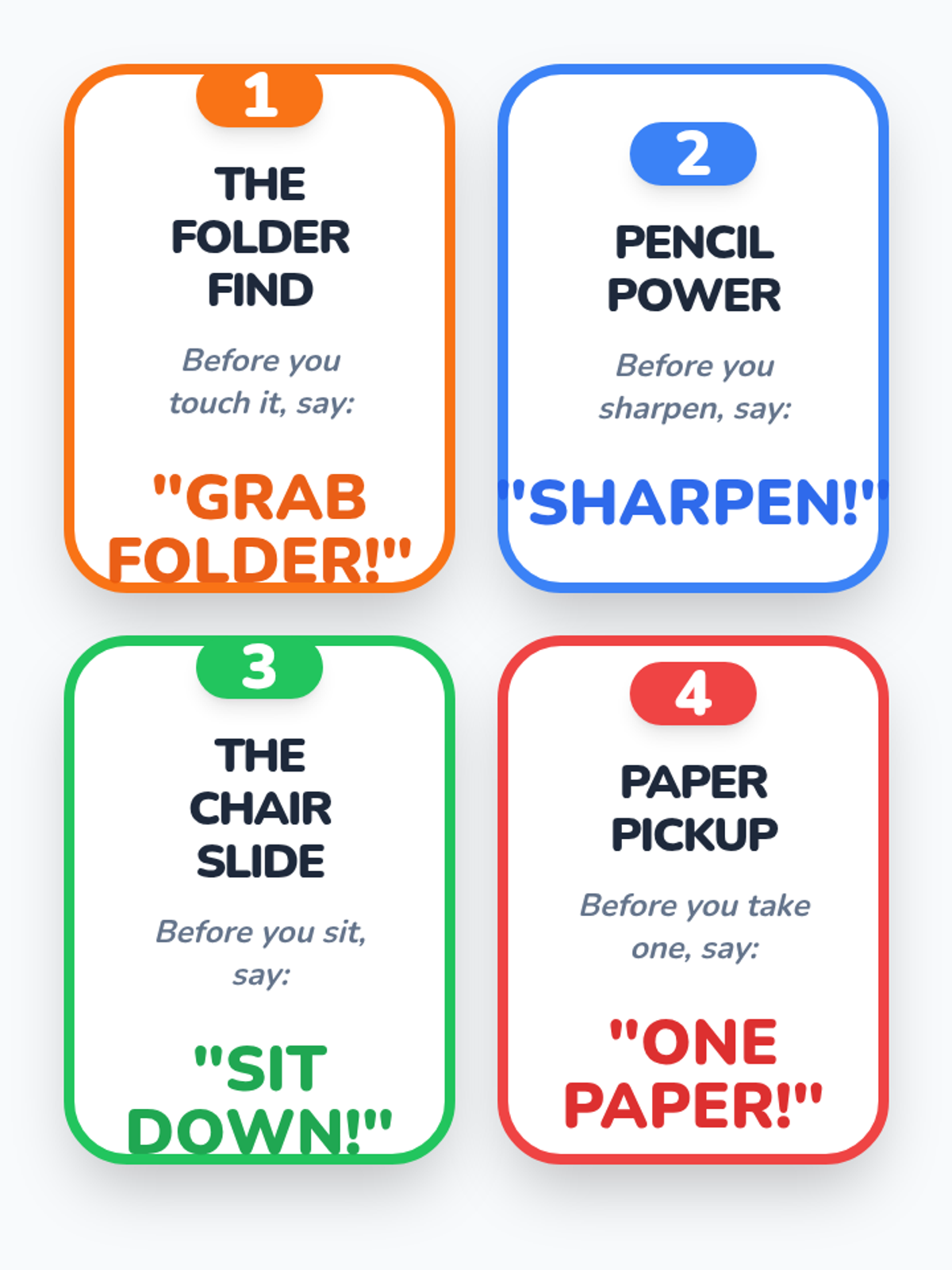
Students navigate a simple classroom obstacle course. At each station, they must say their action aloud before performing it to proceed.
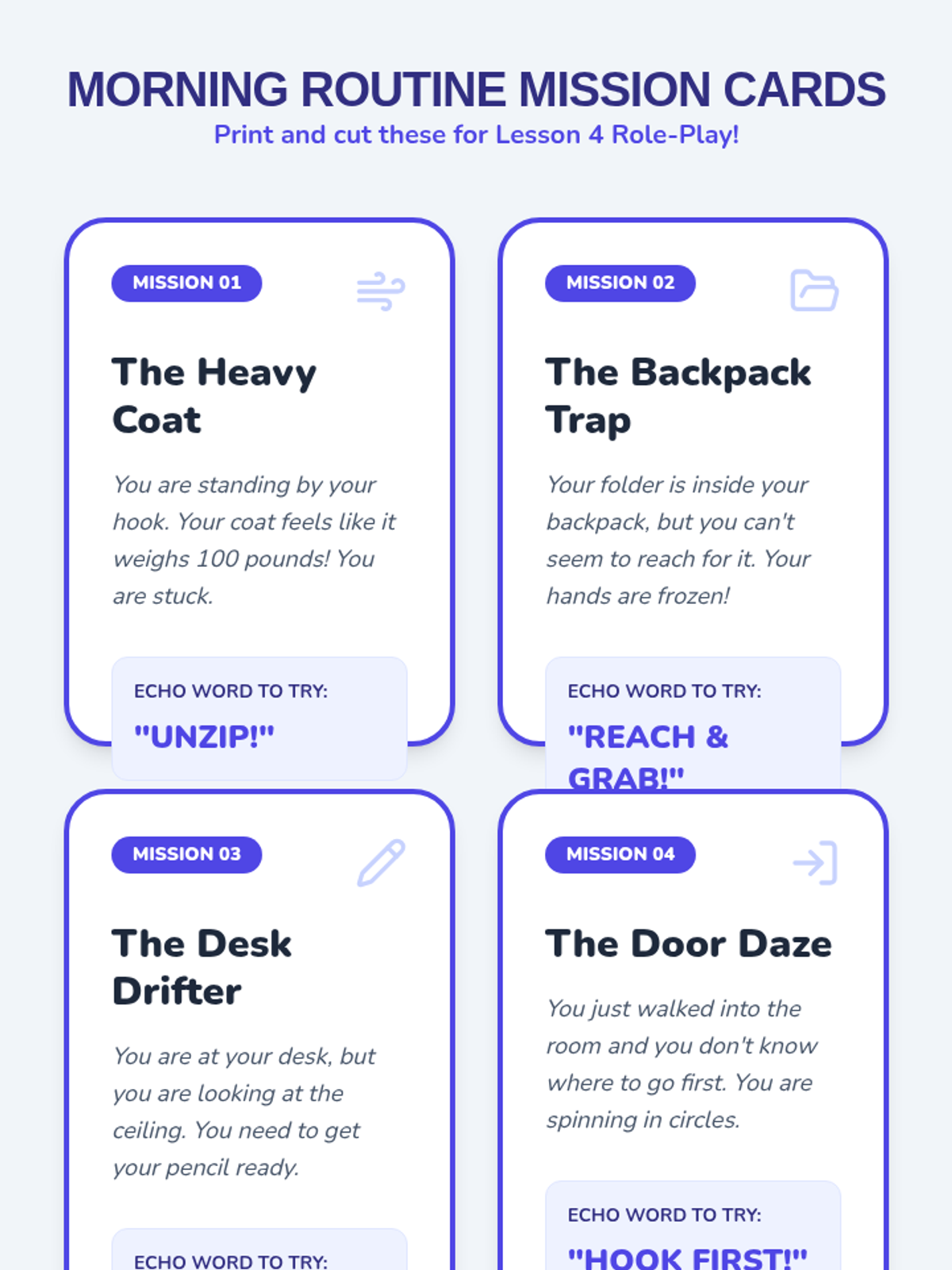
Students work in pairs to act out the morning arrival routine. One student plays the 'stuck' student, and the other plays the 'brain' that gives the verbal prompt.
A 'Simon Says' style game where students practice listening for and repeating the starting command before doing it. Focuses on the pause-plan-act cycle.