Empathetic skill development through emotion recognition, cultural diversity appreciation, and bias confrontation. Targets multi-perspective analysis to support respectful interactions and complex social responses.
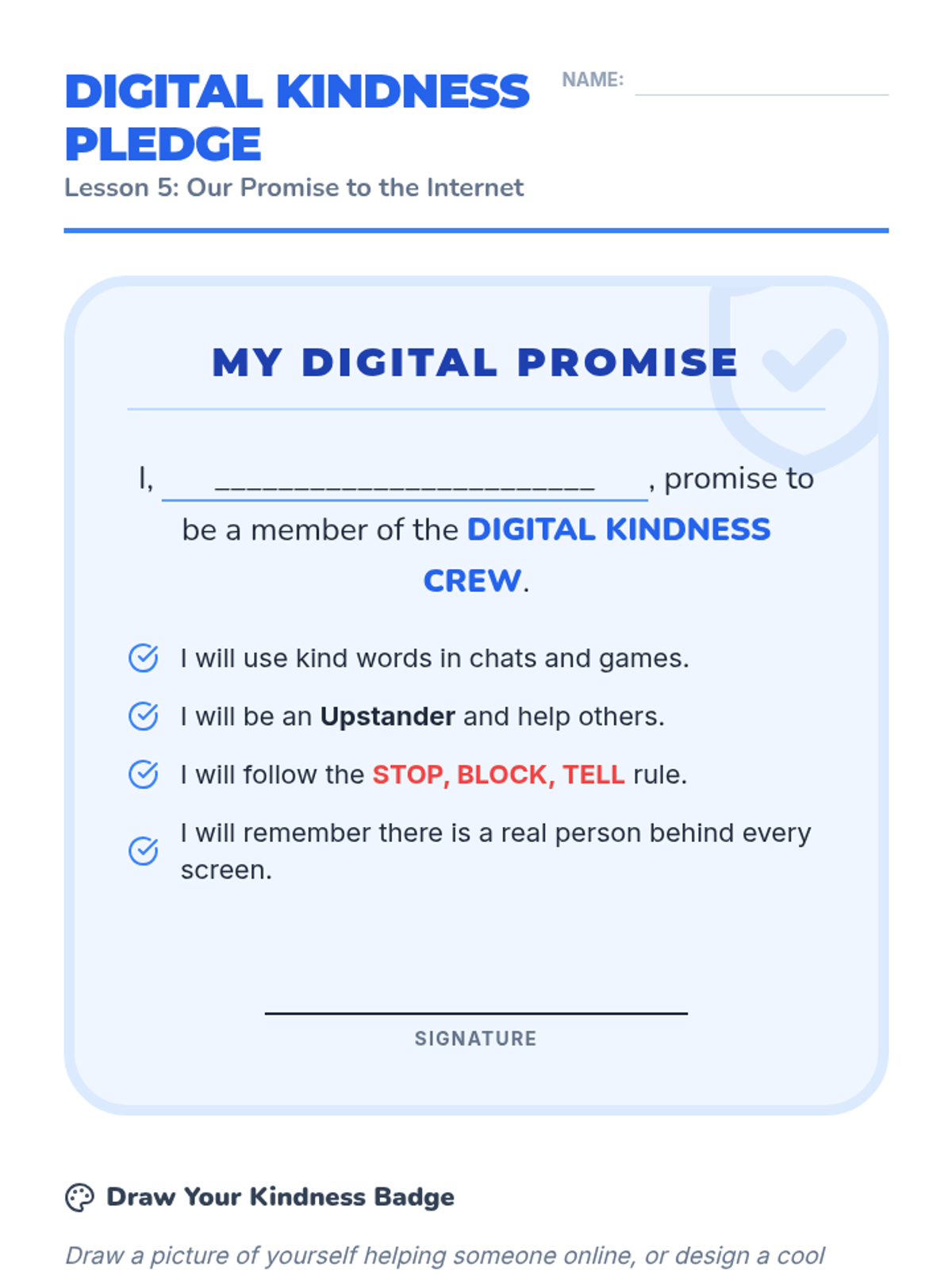
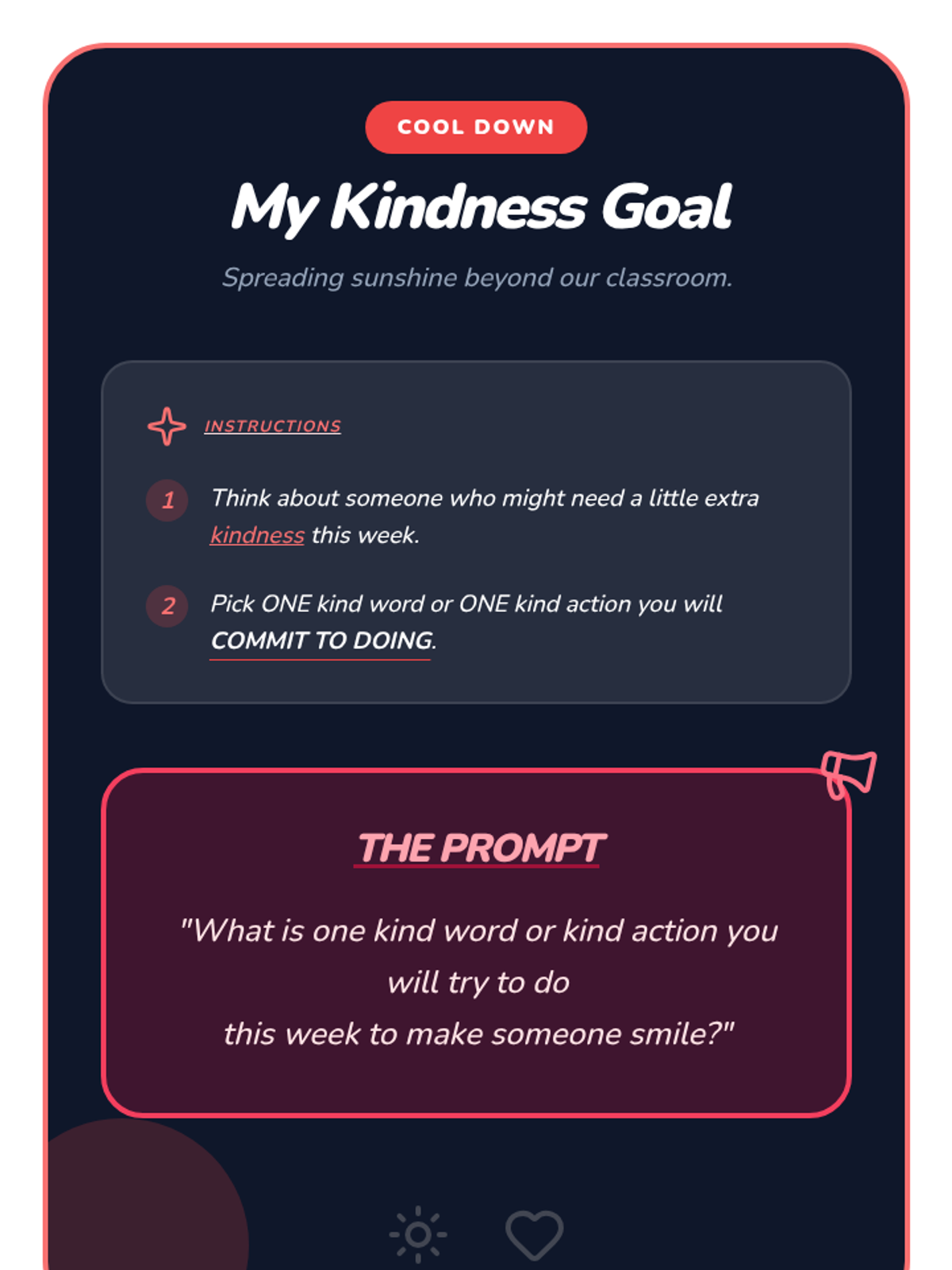
The culminating lesson where students collaborate to create a class pledge and individual artwork committed to online kindness.
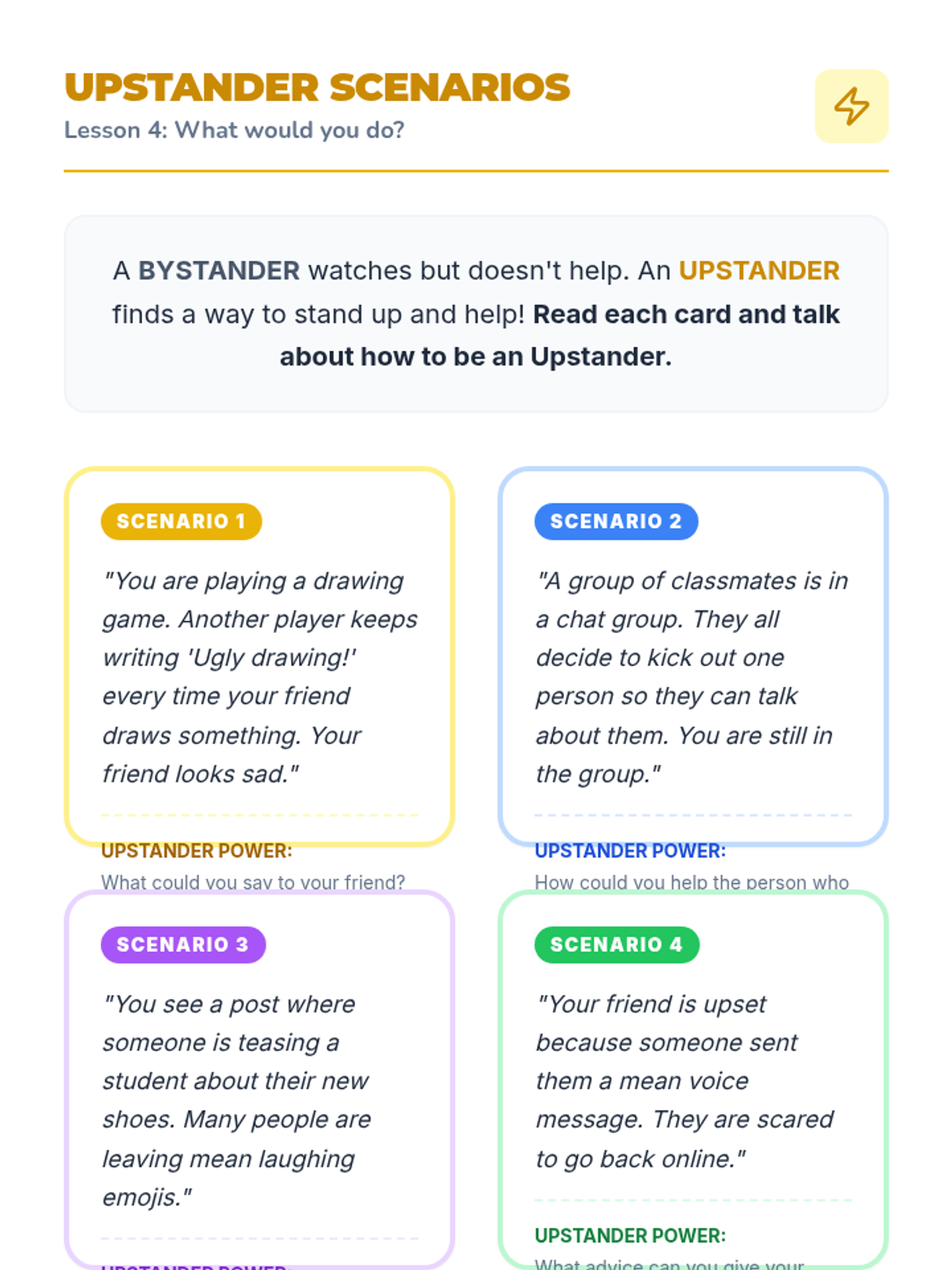
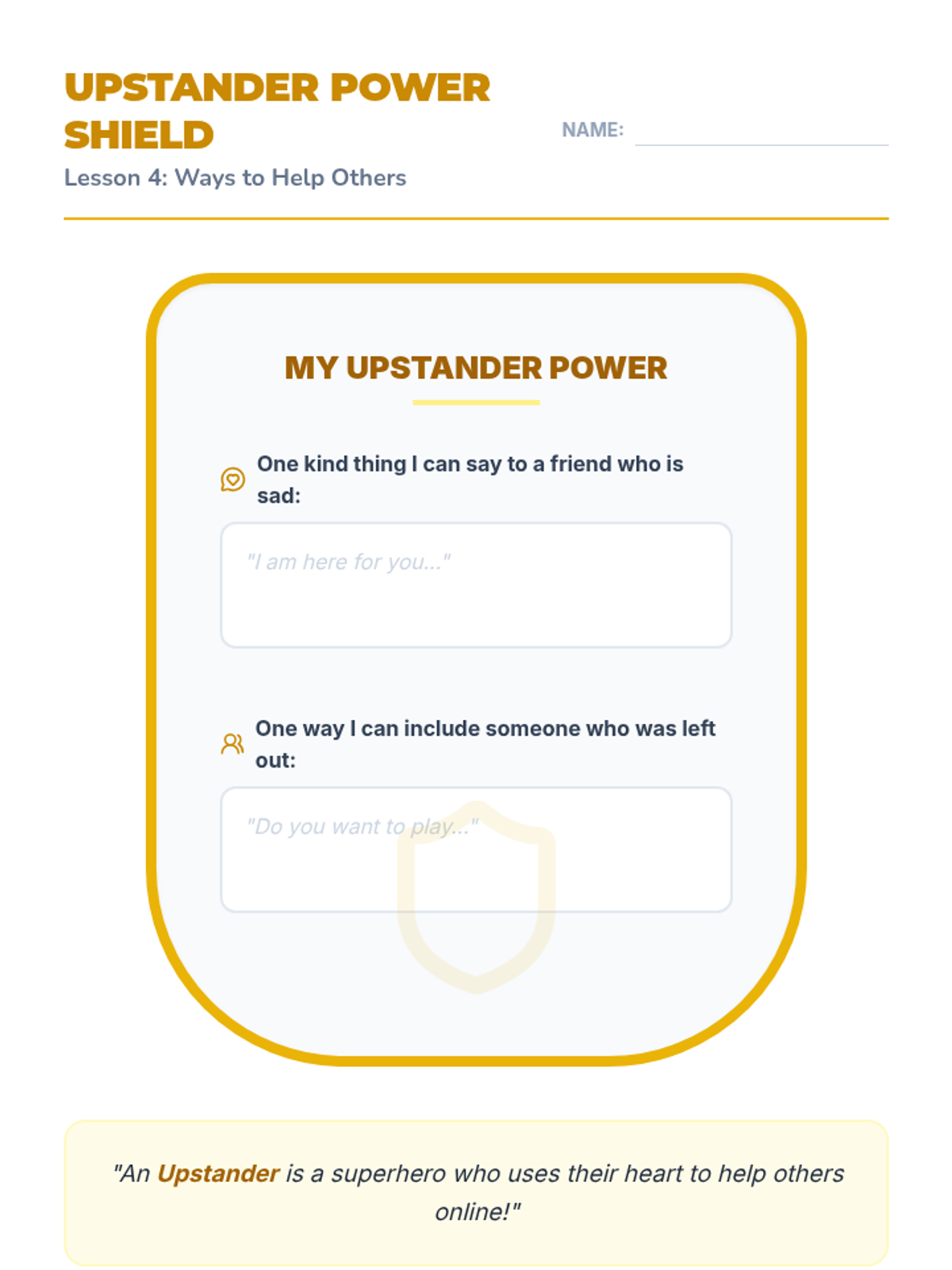
Differentiates between bystanders and upstanders, teaching students how to safely support peers who are being treated unkindly online.
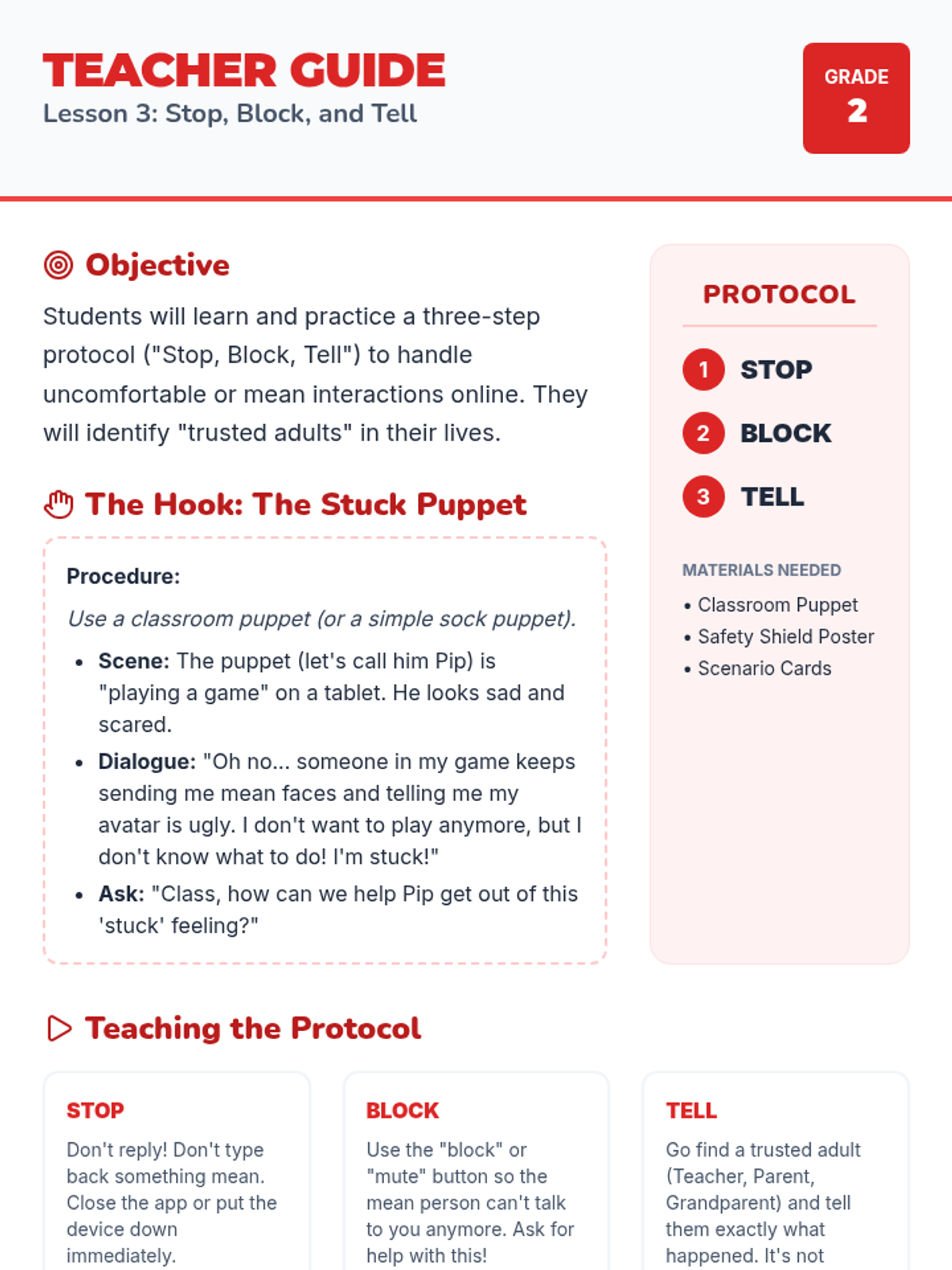
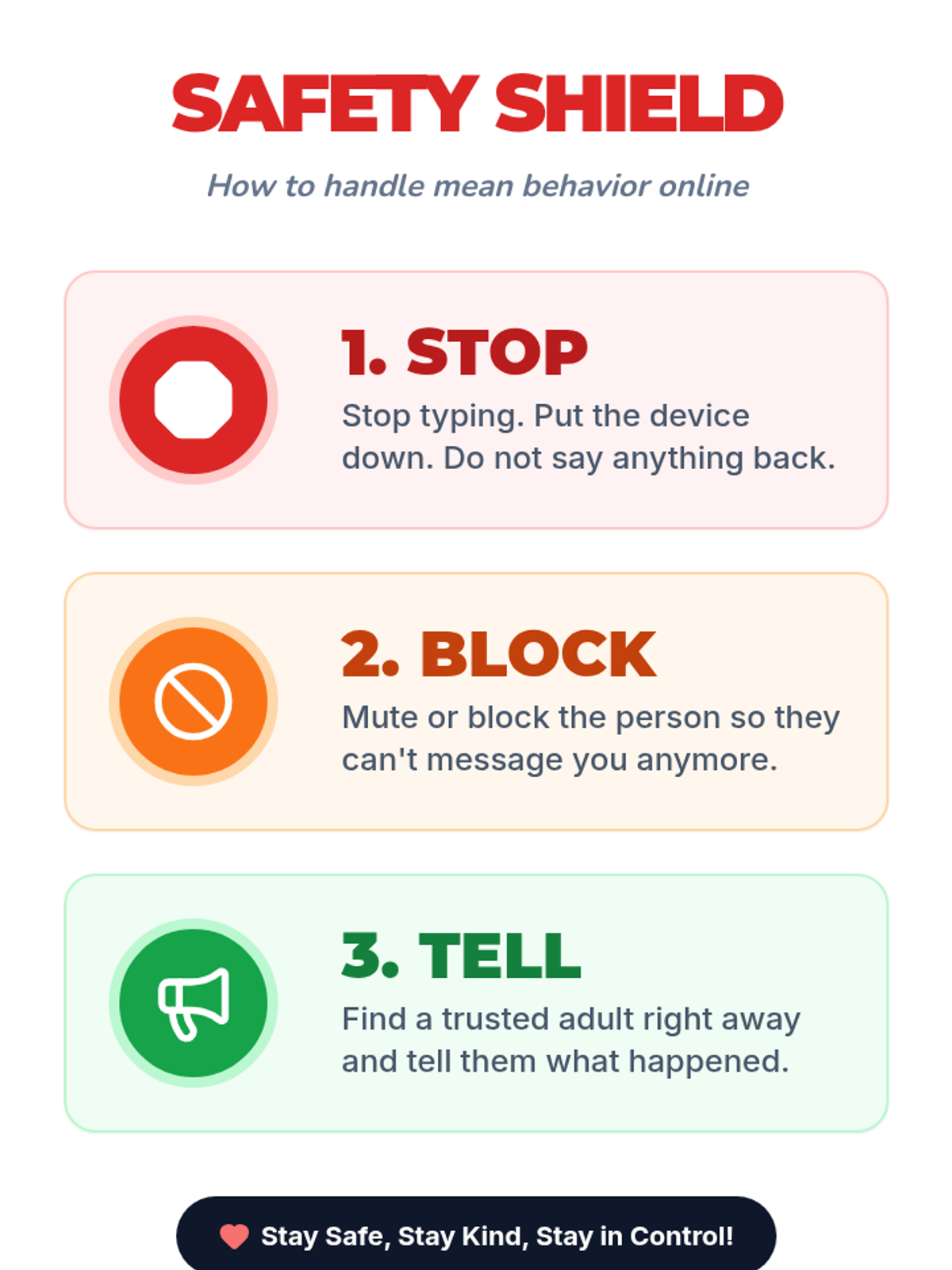
Teaches the 'Stop, Block, and Tell' safety protocol for handling uncomfortable or mean interactions online through role-play and visual reminders.
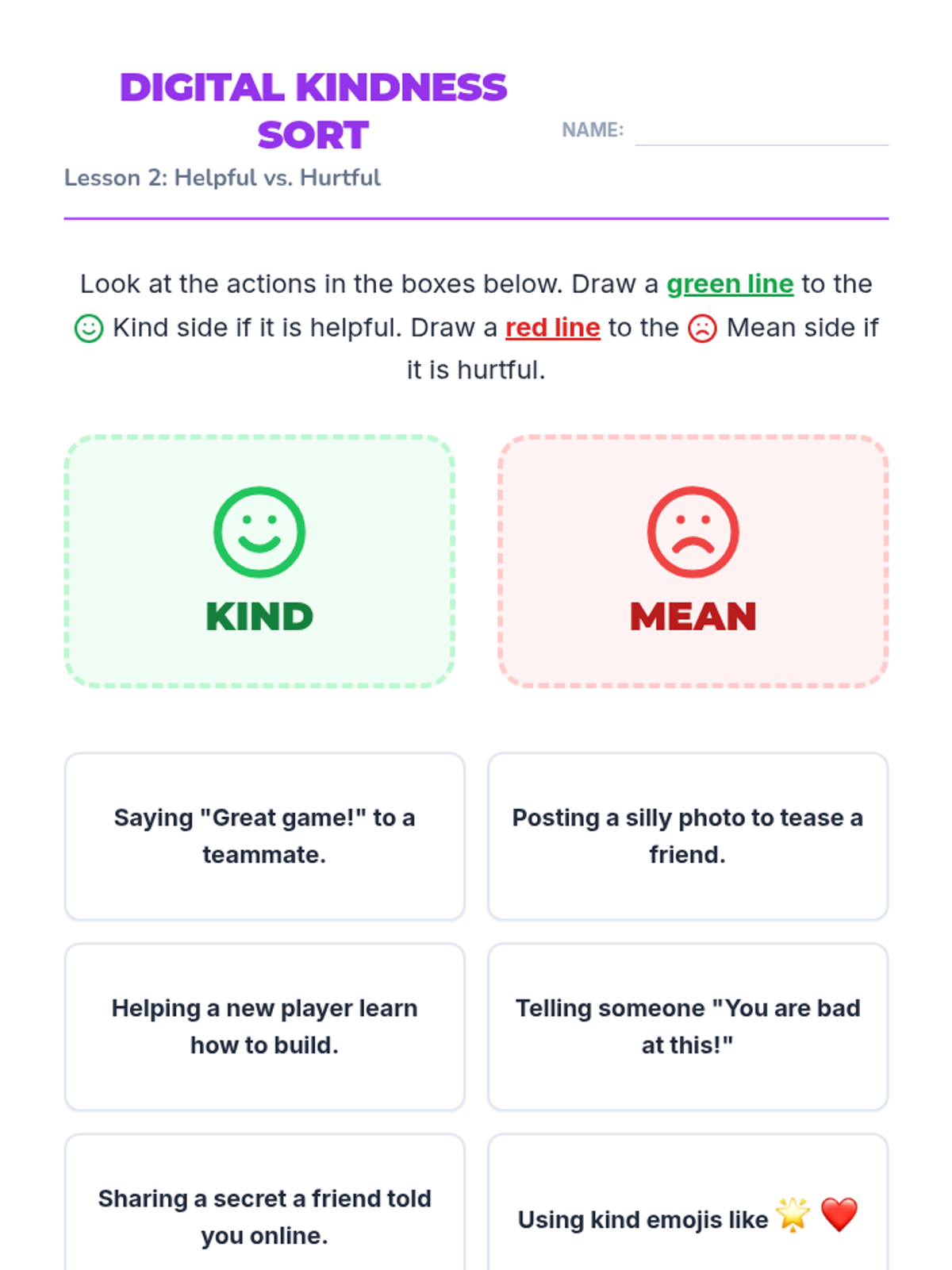
Focuses on identifying hurtful online behaviors and understanding the concept of cyberbullying through relatable stories and sorting activities.
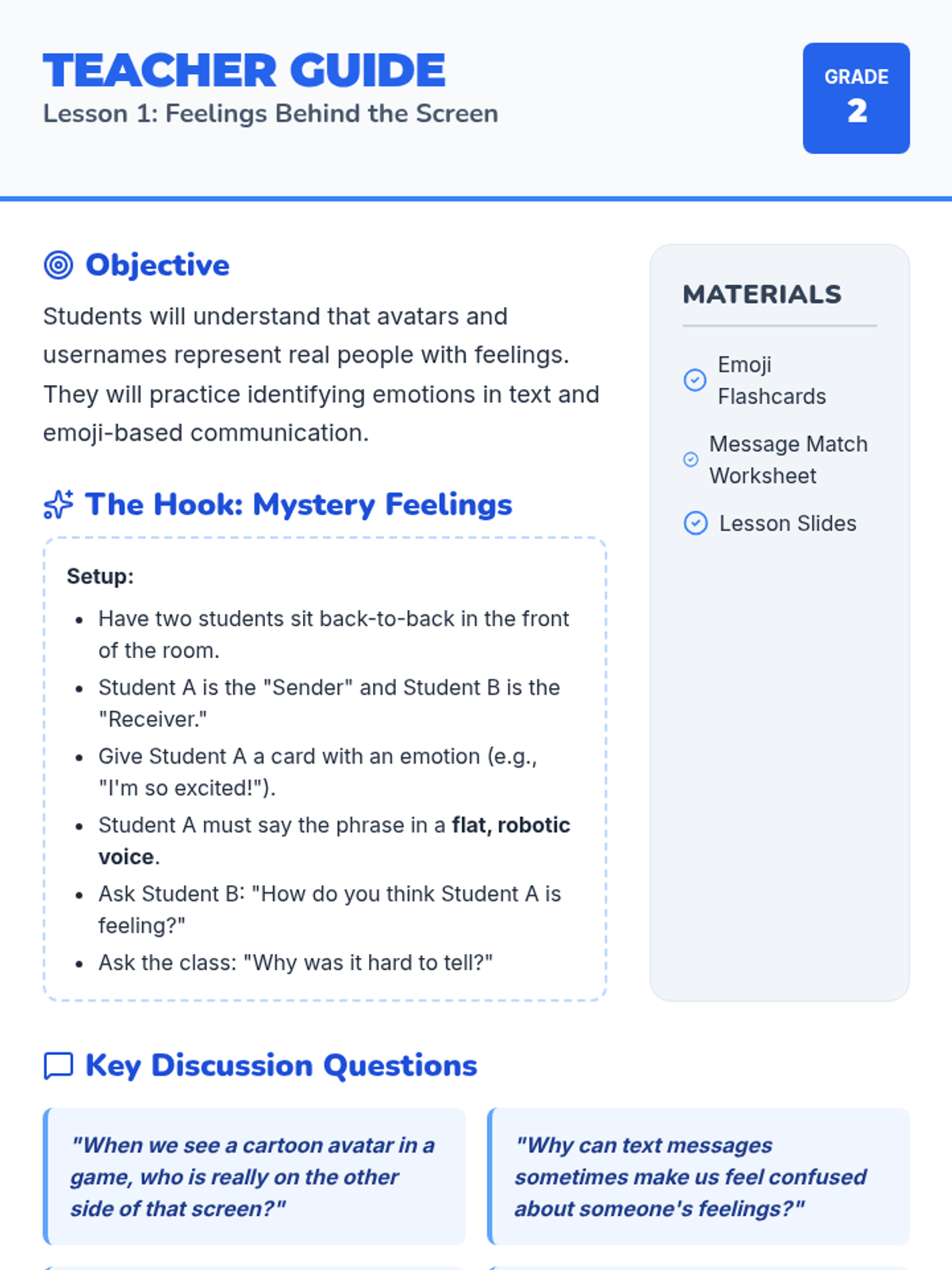
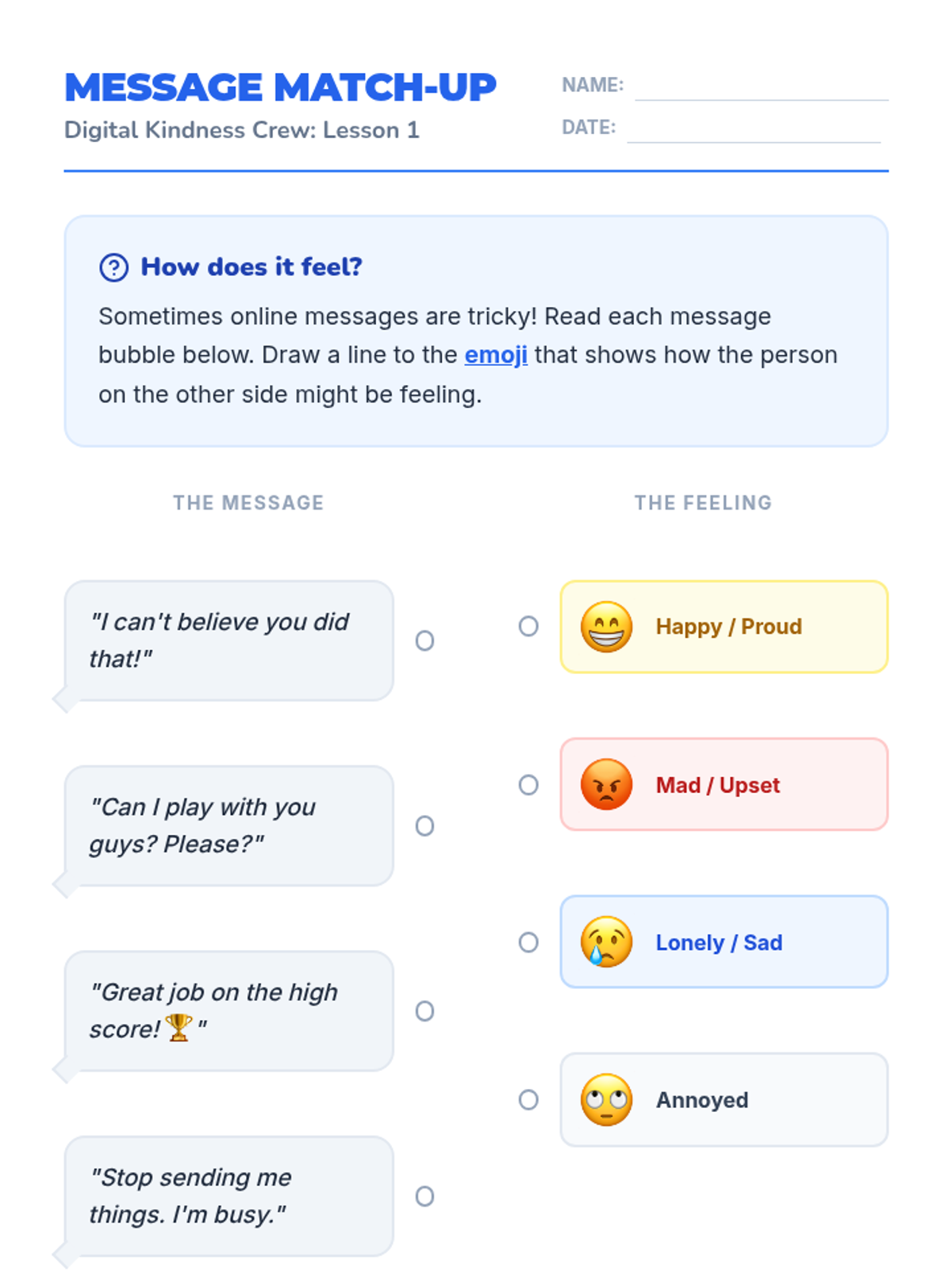
Students explore how communication changes online and learn that real people with real feelings are behind every screen. They practice interpreting text-based emotions and emojis.
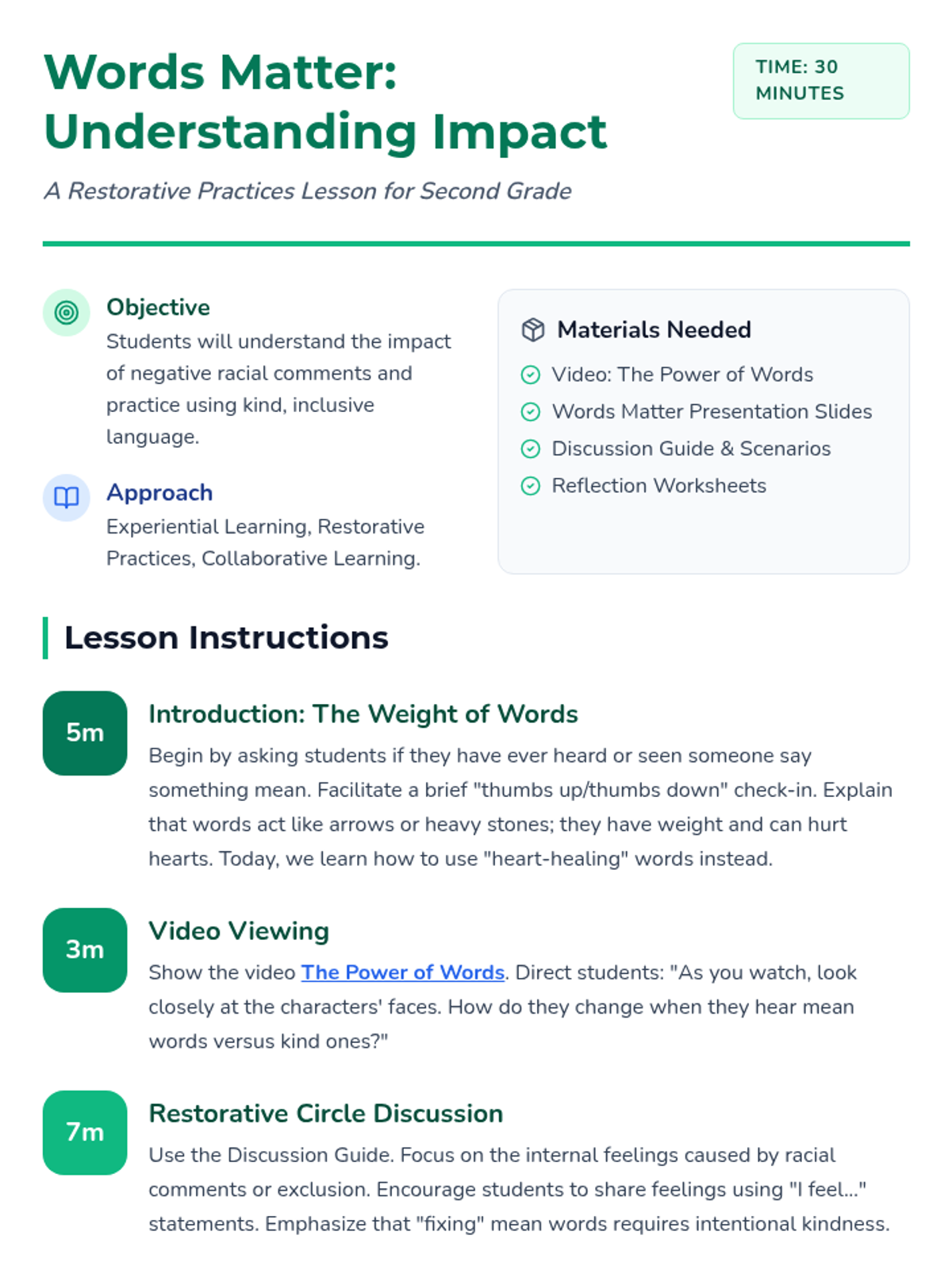
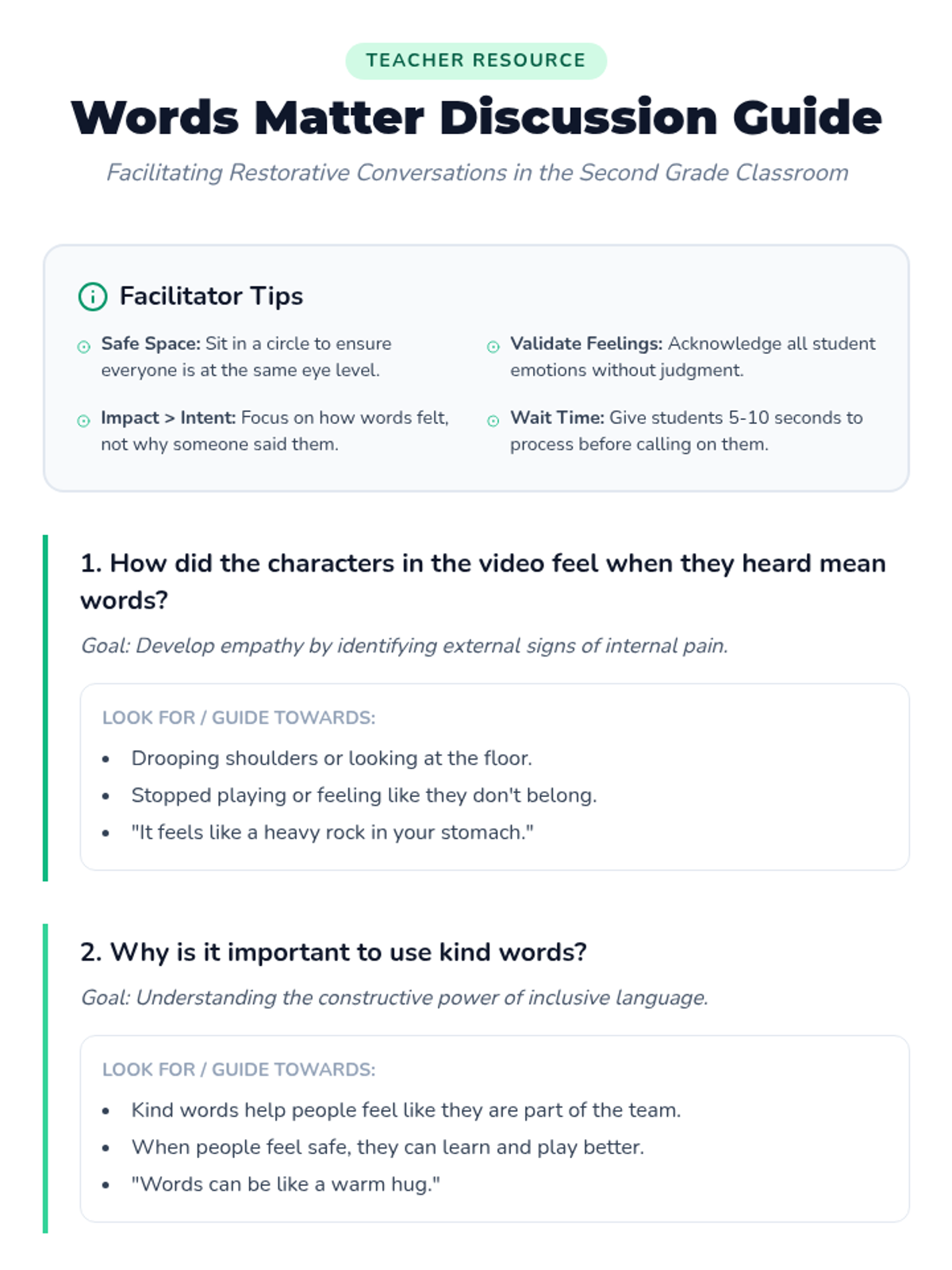
This lesson helps second graders understand the impact of negative racial comments through experiential learning and restorative practices. Students will explore empathy, practice positive communication, and learn how to foster a respectful classroom community.
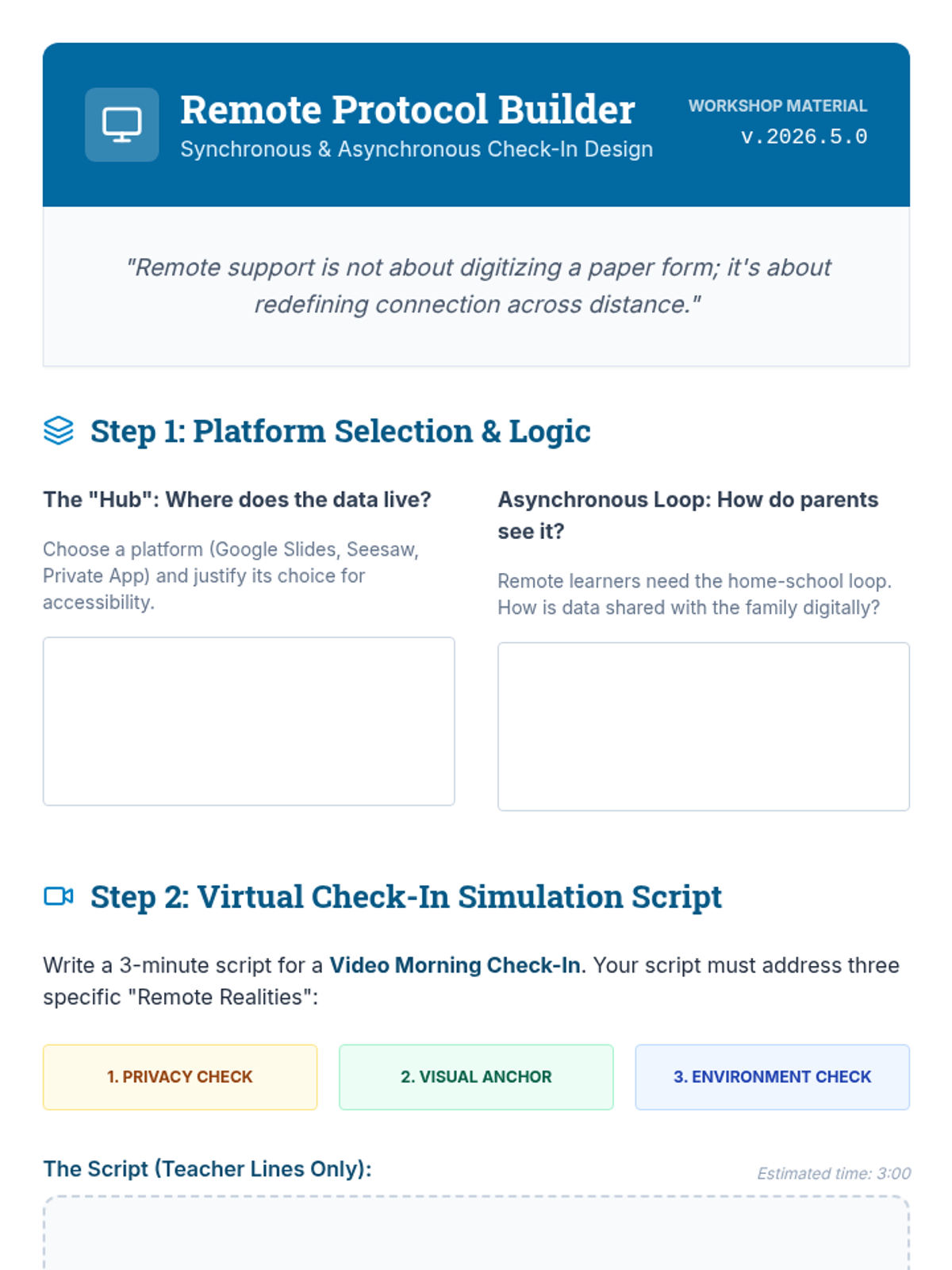
Preparing for remote and hybrid environments, students learn to maintain connection and consistency through digital check-in platforms and video protocols.
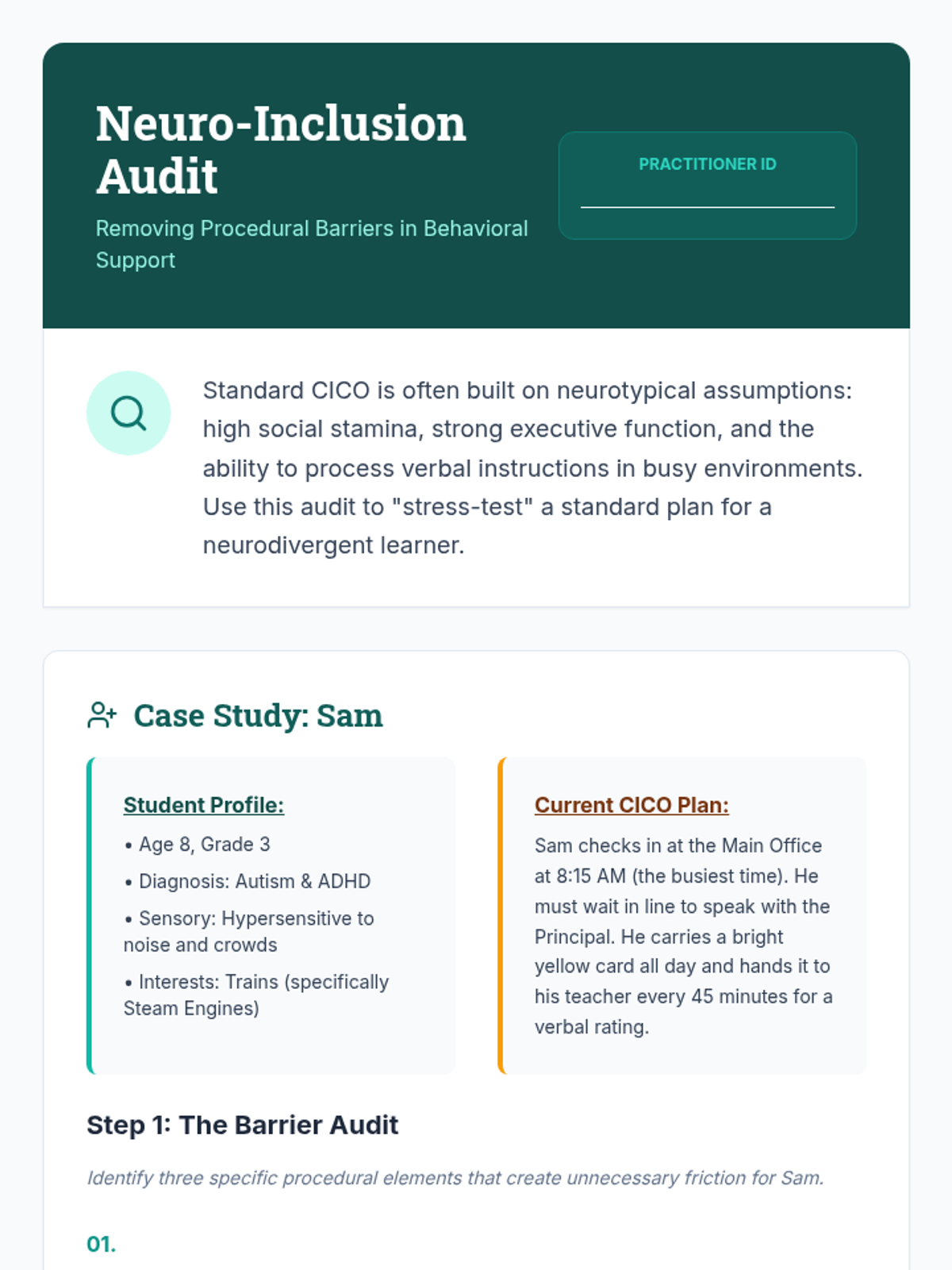
Students explore strategies for adapting behavioral supports for neurodivergent learners, including sensory adjustments and the use of special interests as reinforcers.
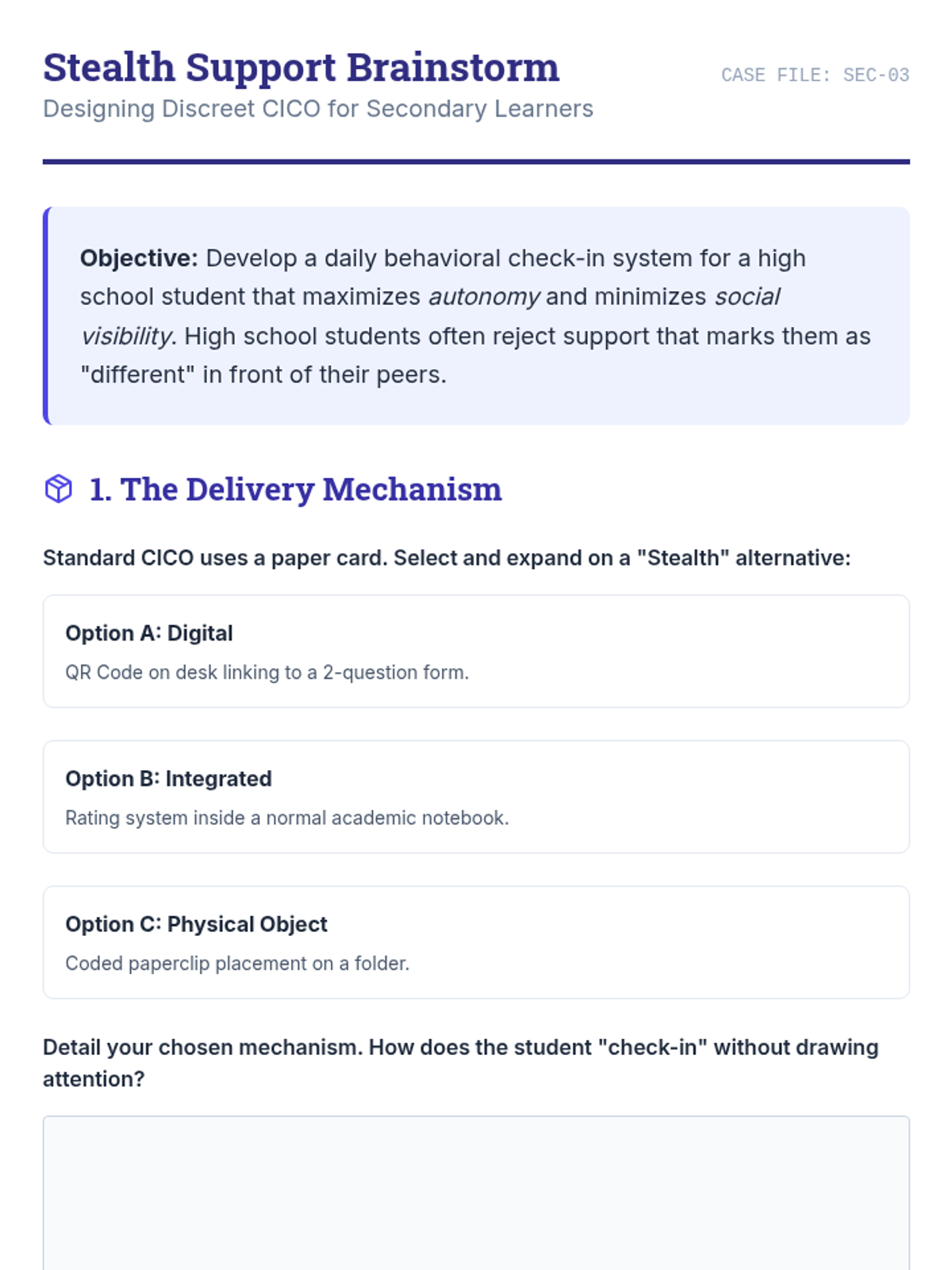
This lesson addresses the autonomy needs and social sensitivities of adolescents by focusing on self-monitoring, discreet feedback, and student-led goal setting.
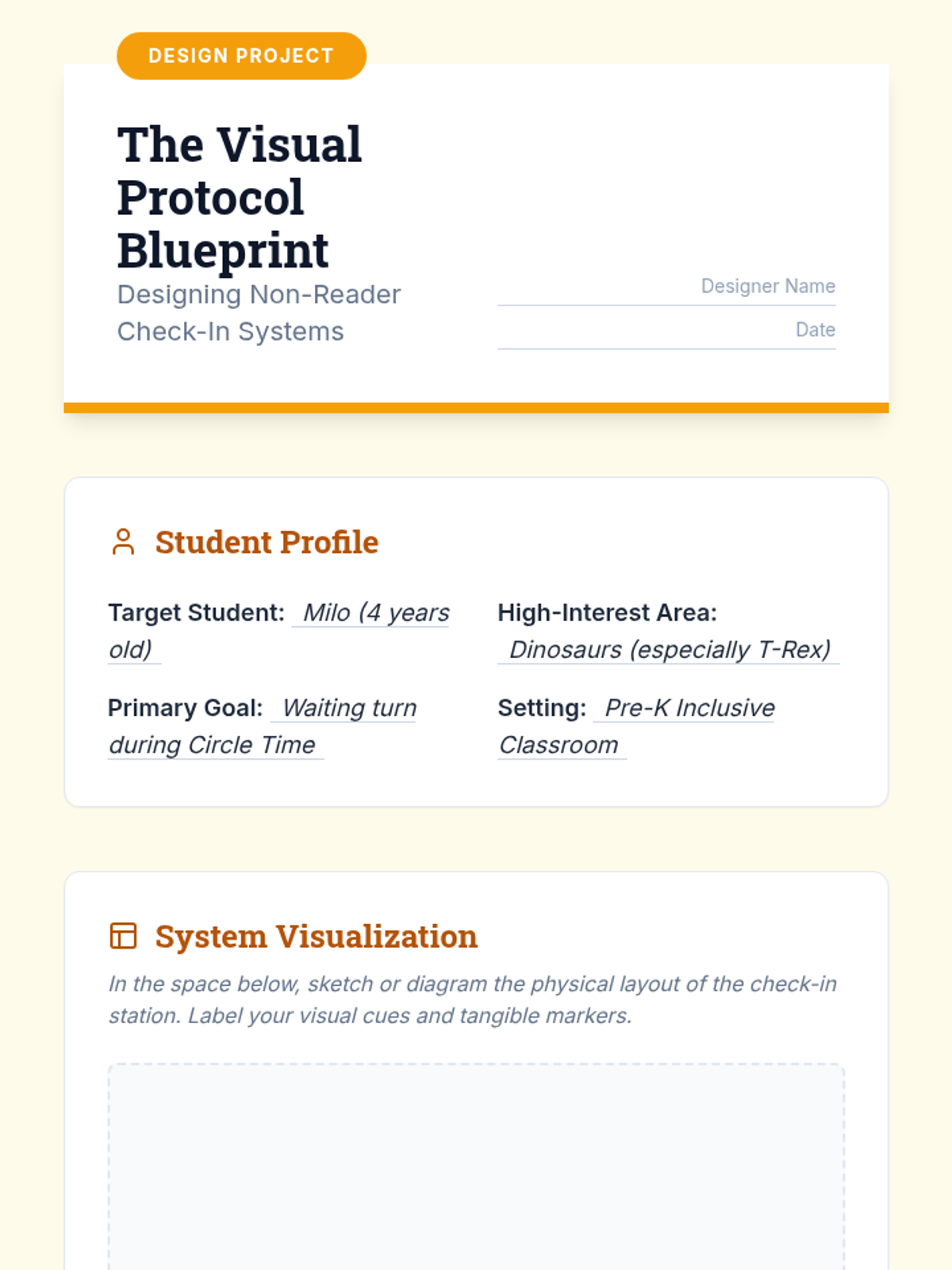
Focusing on Pre-K through 2nd grade, this lesson adapts check-in procedures to be more visual and tangible for learners who are still developing literacy and abstract reasoning skills.
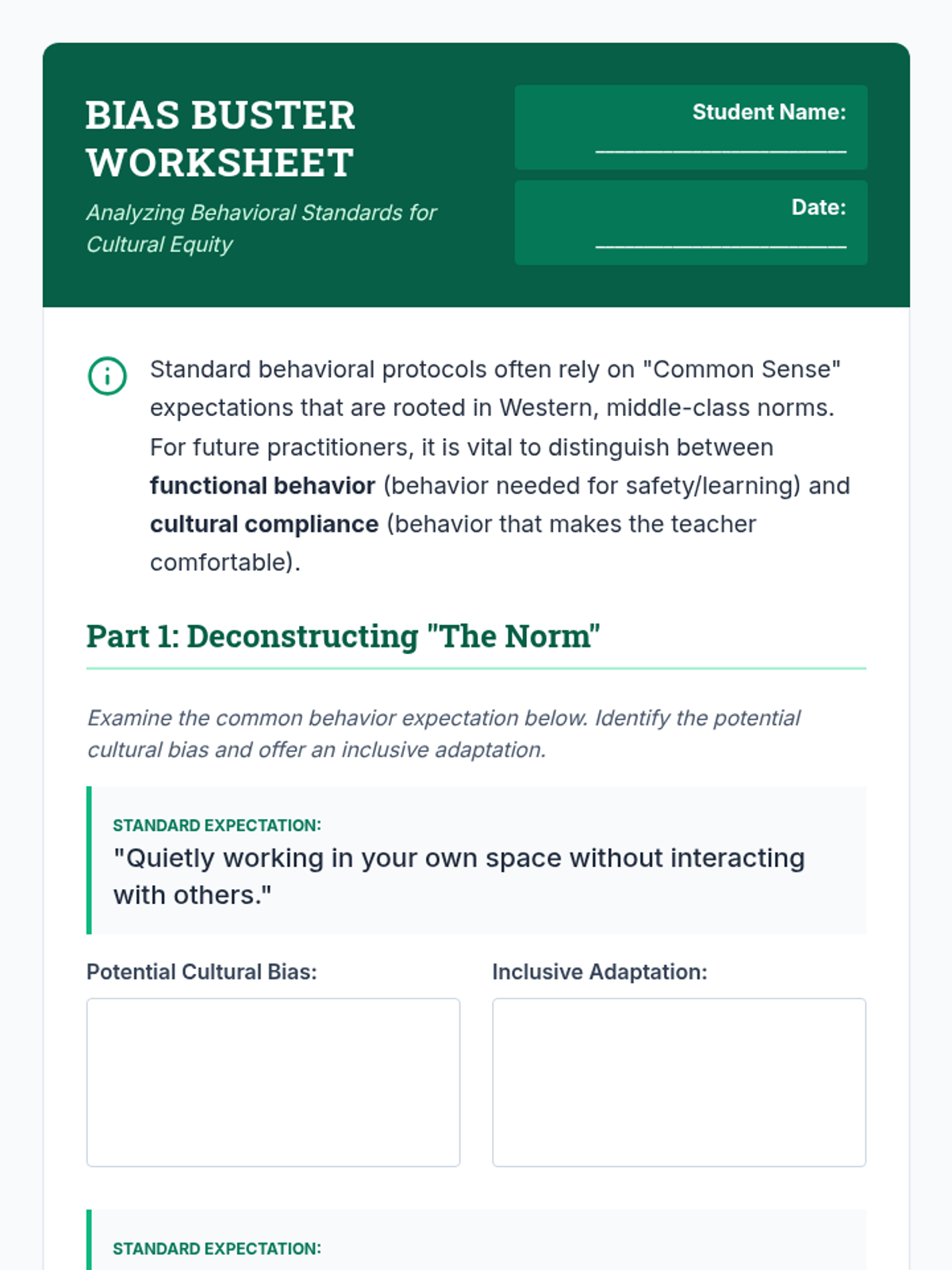
Students critique standard behavioral expectations for cultural bias and learn to adapt check-in conversations to honor diverse cultural backgrounds and communication styles.
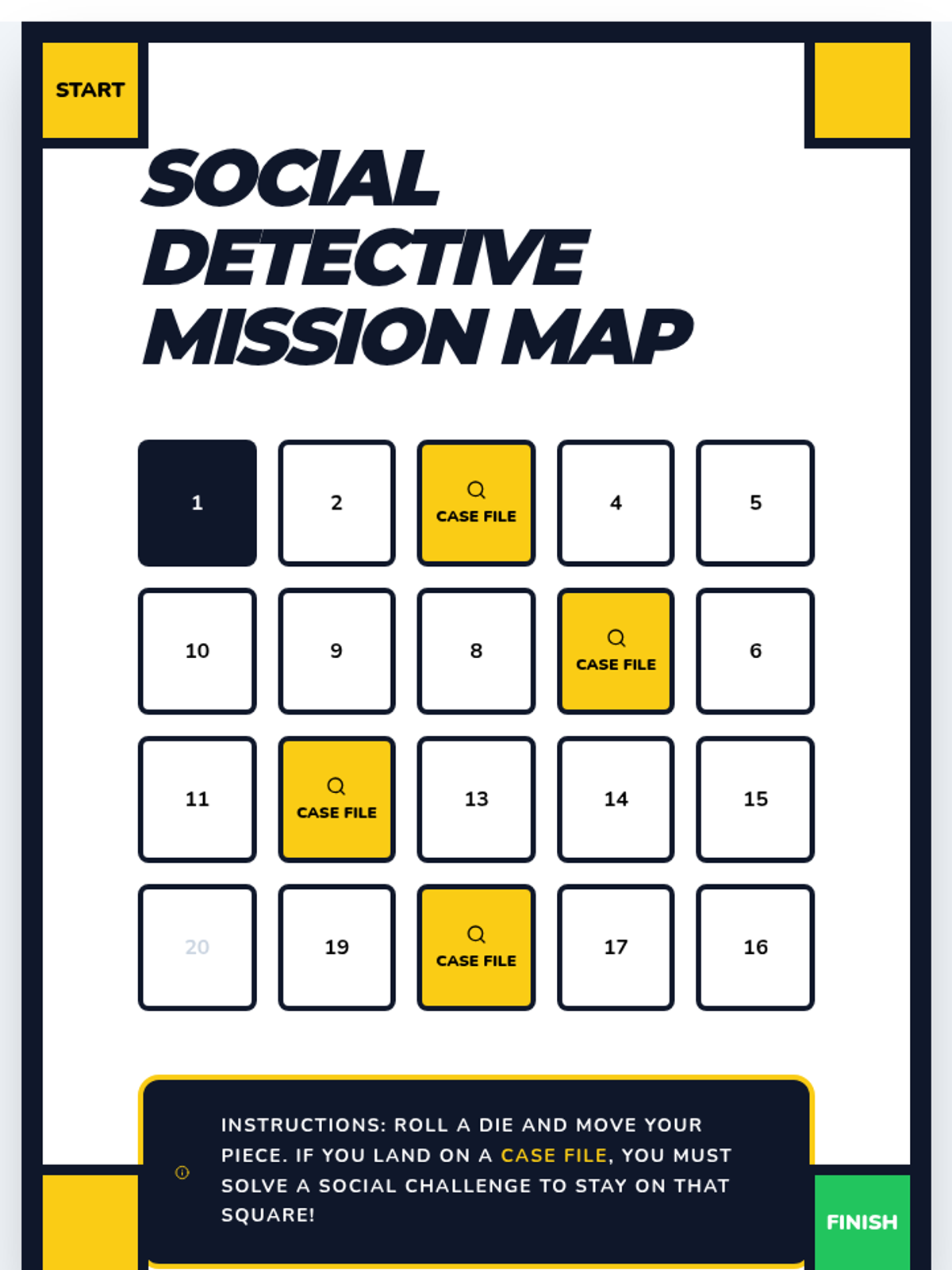
A cumulative mastery lesson where students navigate a social detective game, applying all previous skills to real-world scenarios.
Introduces the concept of 'flexible thinking' (rubber vs. rock brain) to help students adapt to changes in routine or expectations.
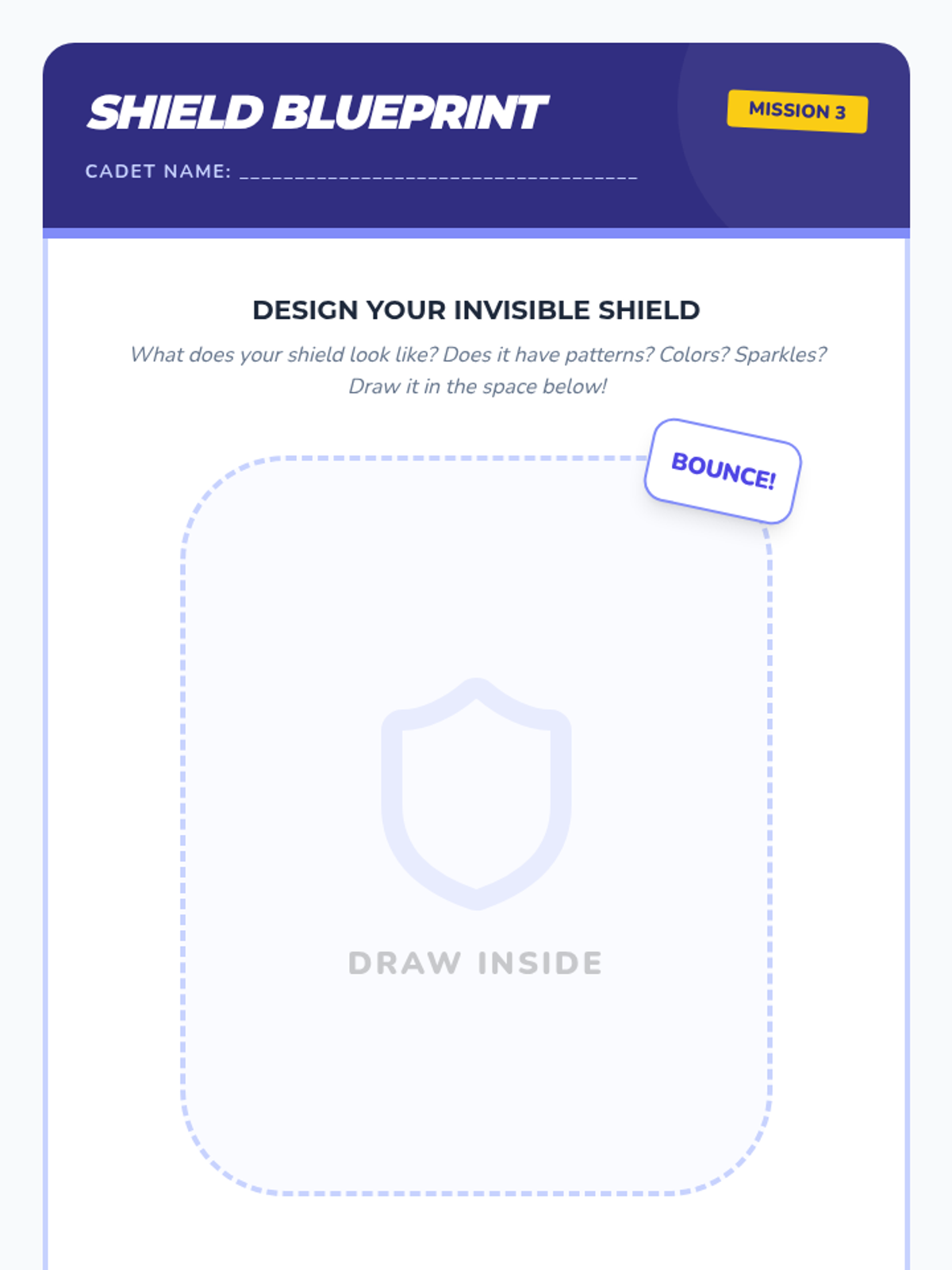
Teaches the 'ignoring shield' and strategies for handling unkind words, helping students distinguish between friendly teasing and bullying.
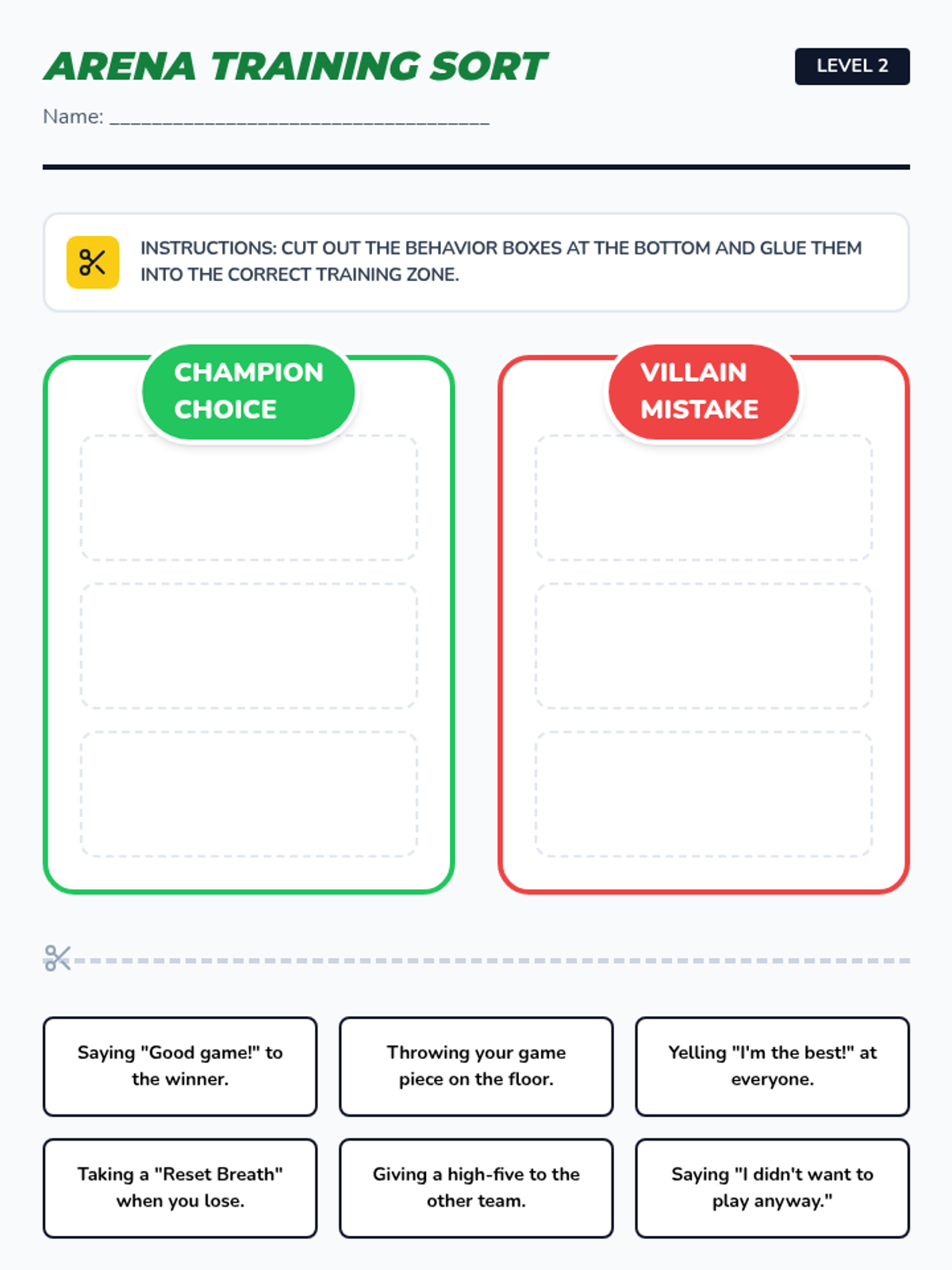
Focuses on winning and losing gracefully by teaching specific phrases and social etiquette to replace tantrums or negative reactions.
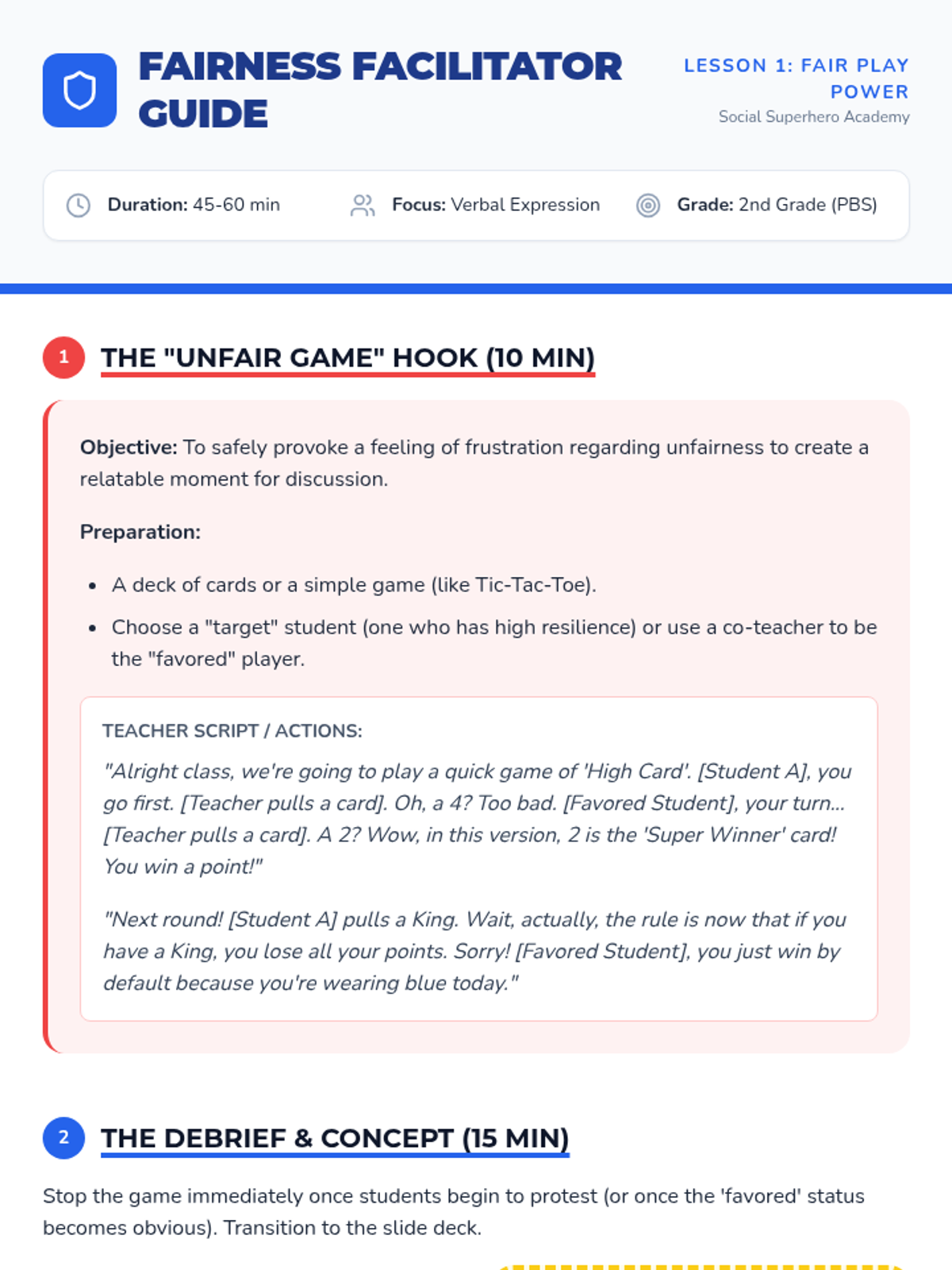
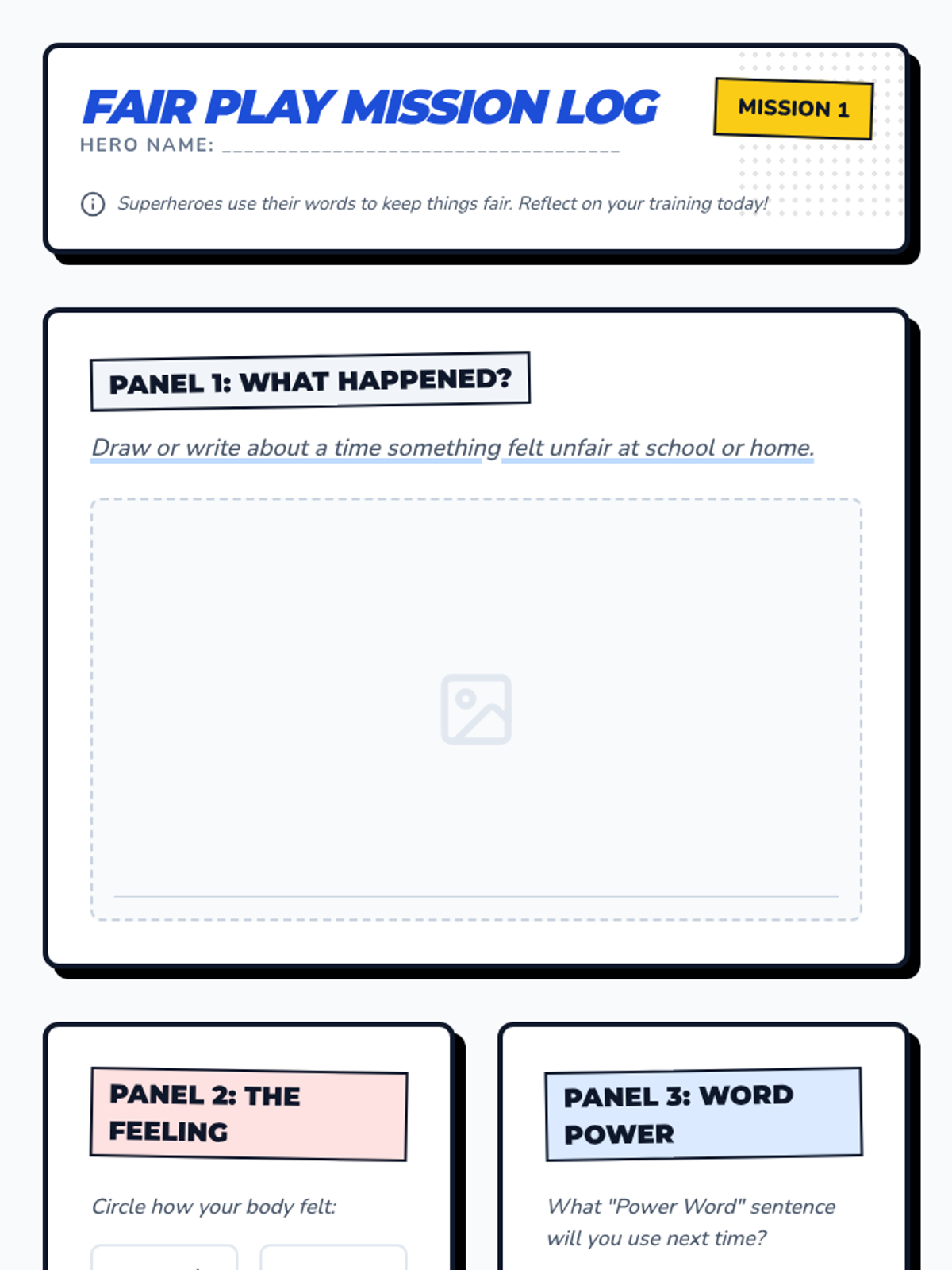
Students role-play situations involving unfairness and practice using verbal expression instead of aggression to address rules and justice.
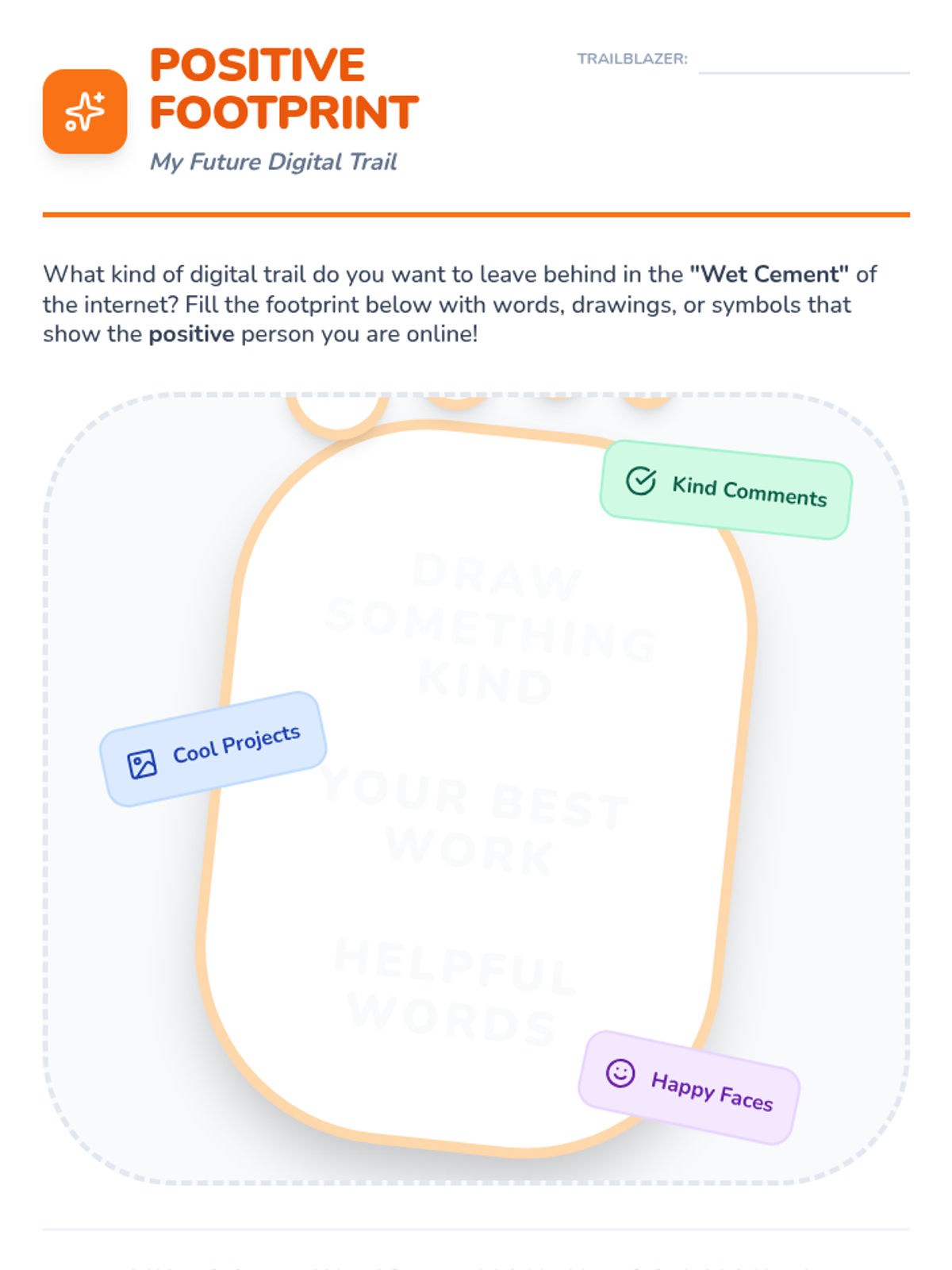
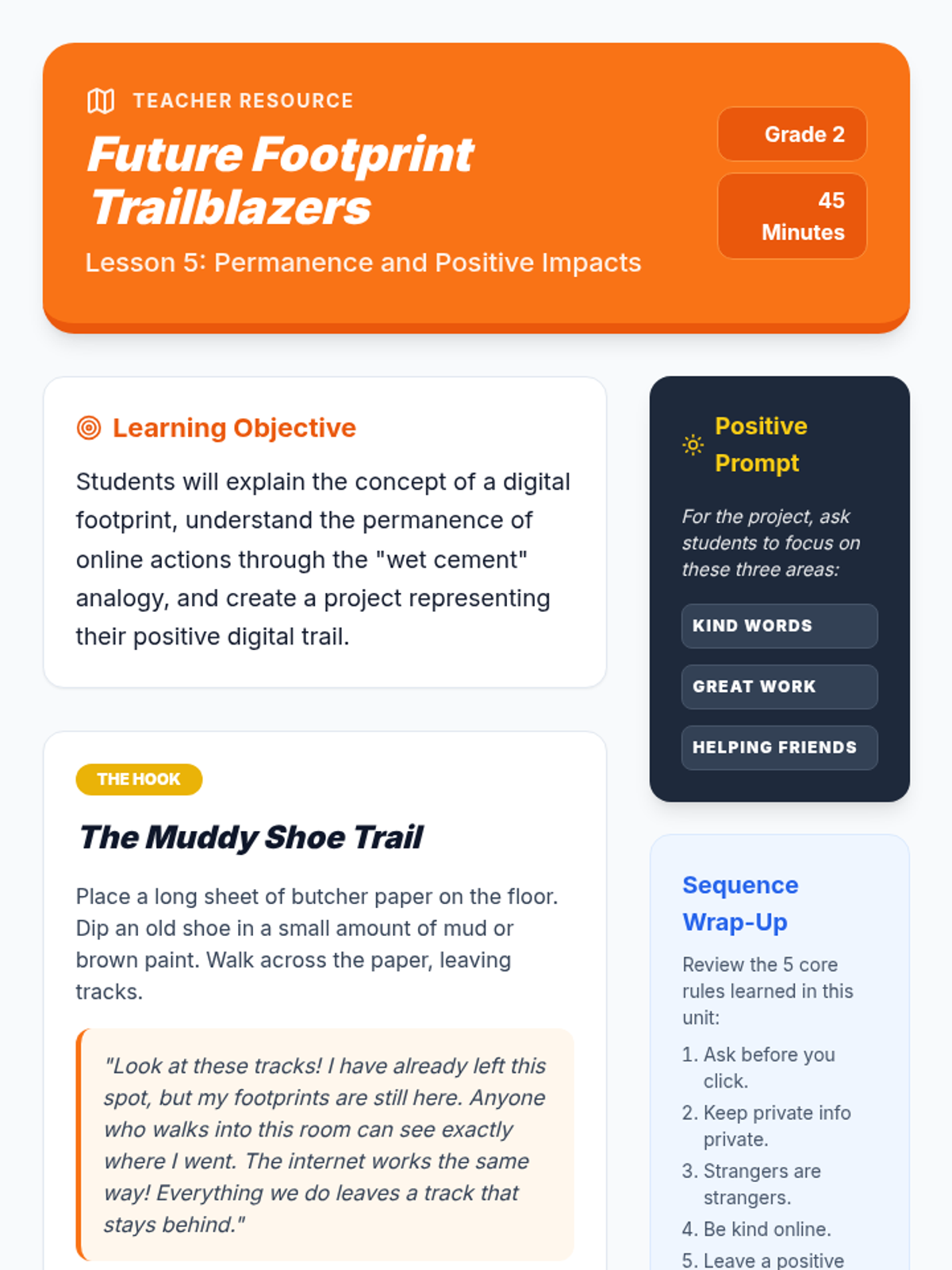
Students learn about the permanence of online actions through the 'wet cement' analogy and create a positive digital footprint project.
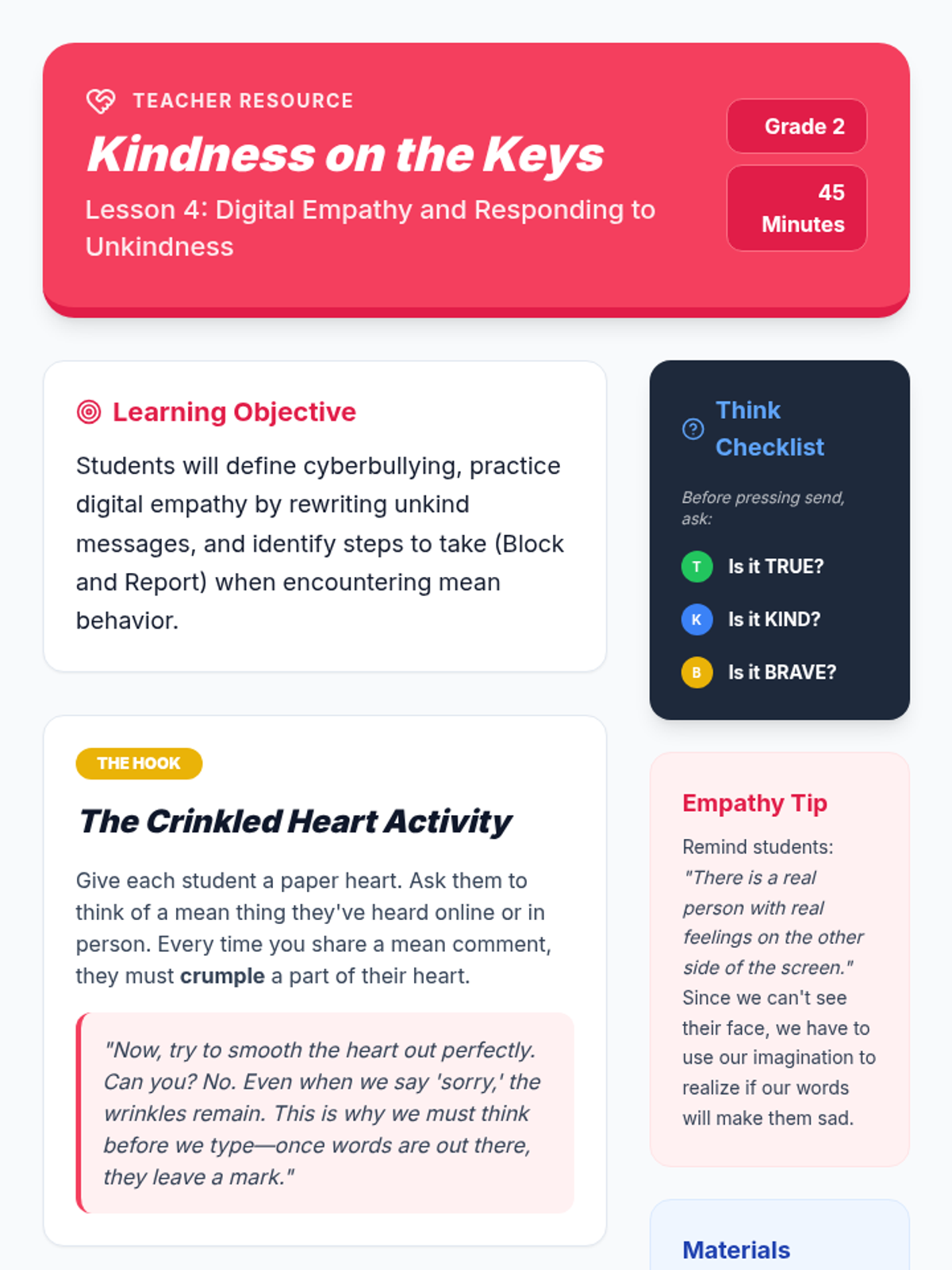
Students focus on digital empathy, conflict resolution, and the technical skills to block or report unkind behavior.
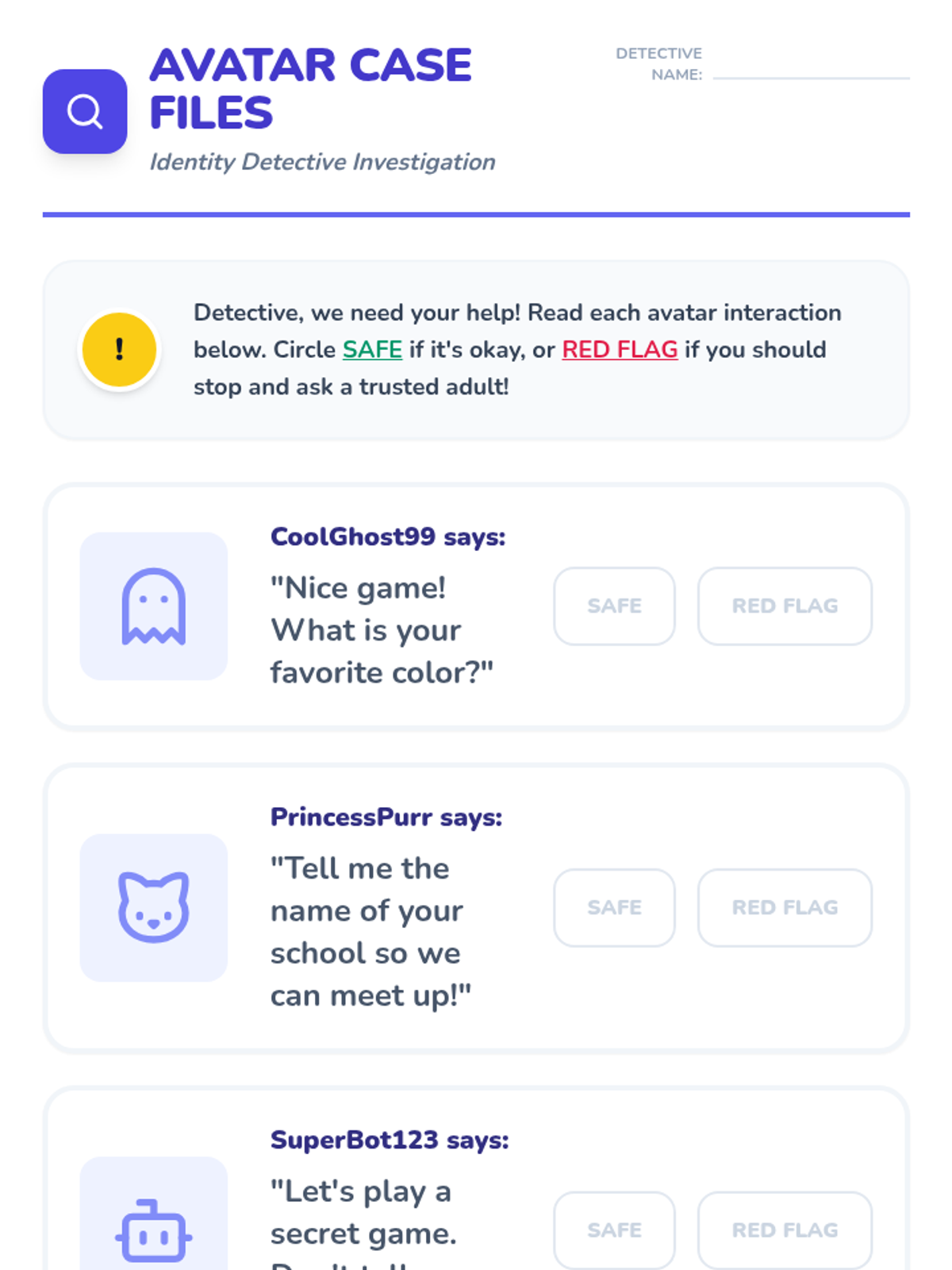
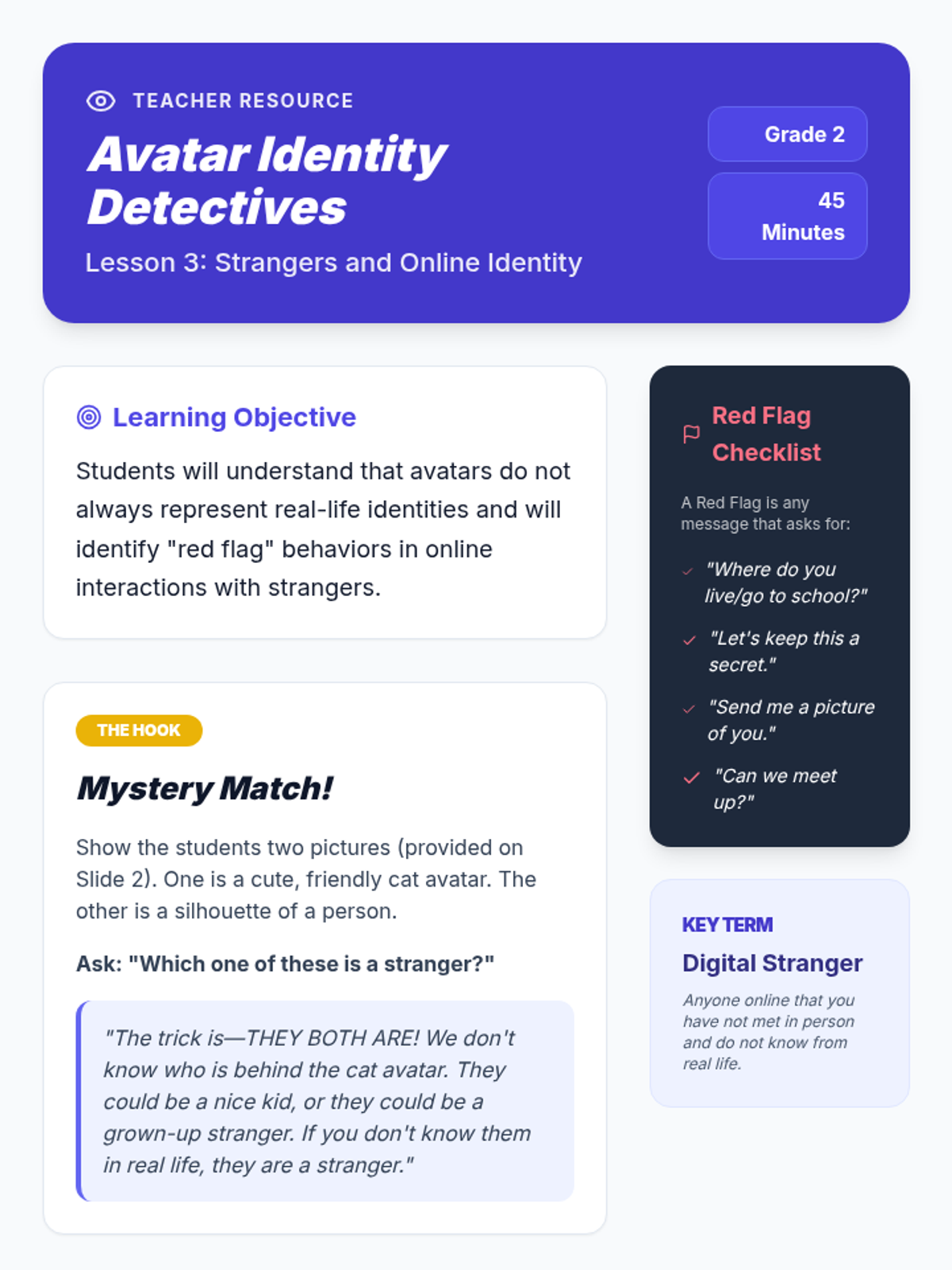
Students explore the concept of avatars and online identities, learning that we don't always know who is behind a screen.
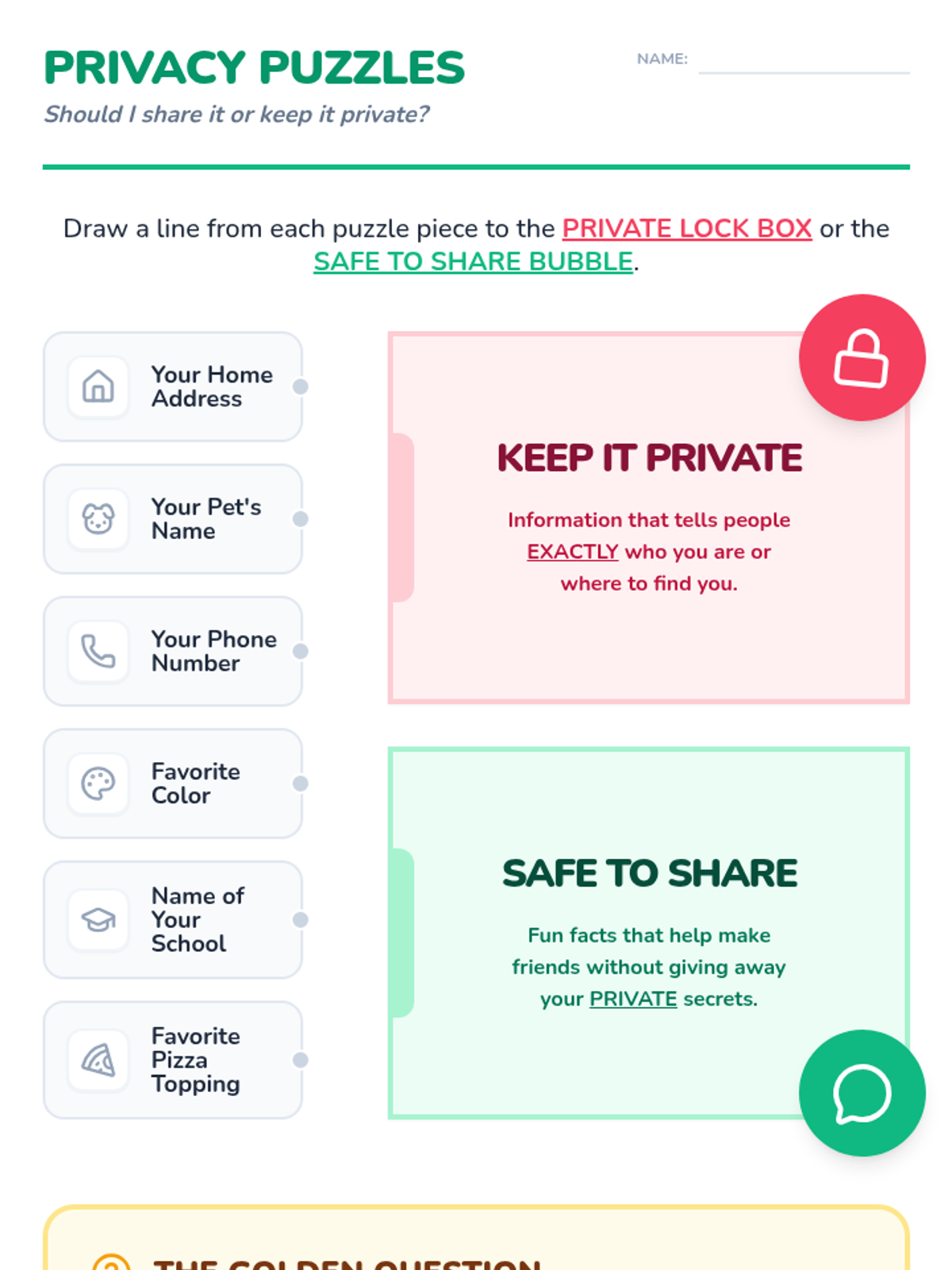
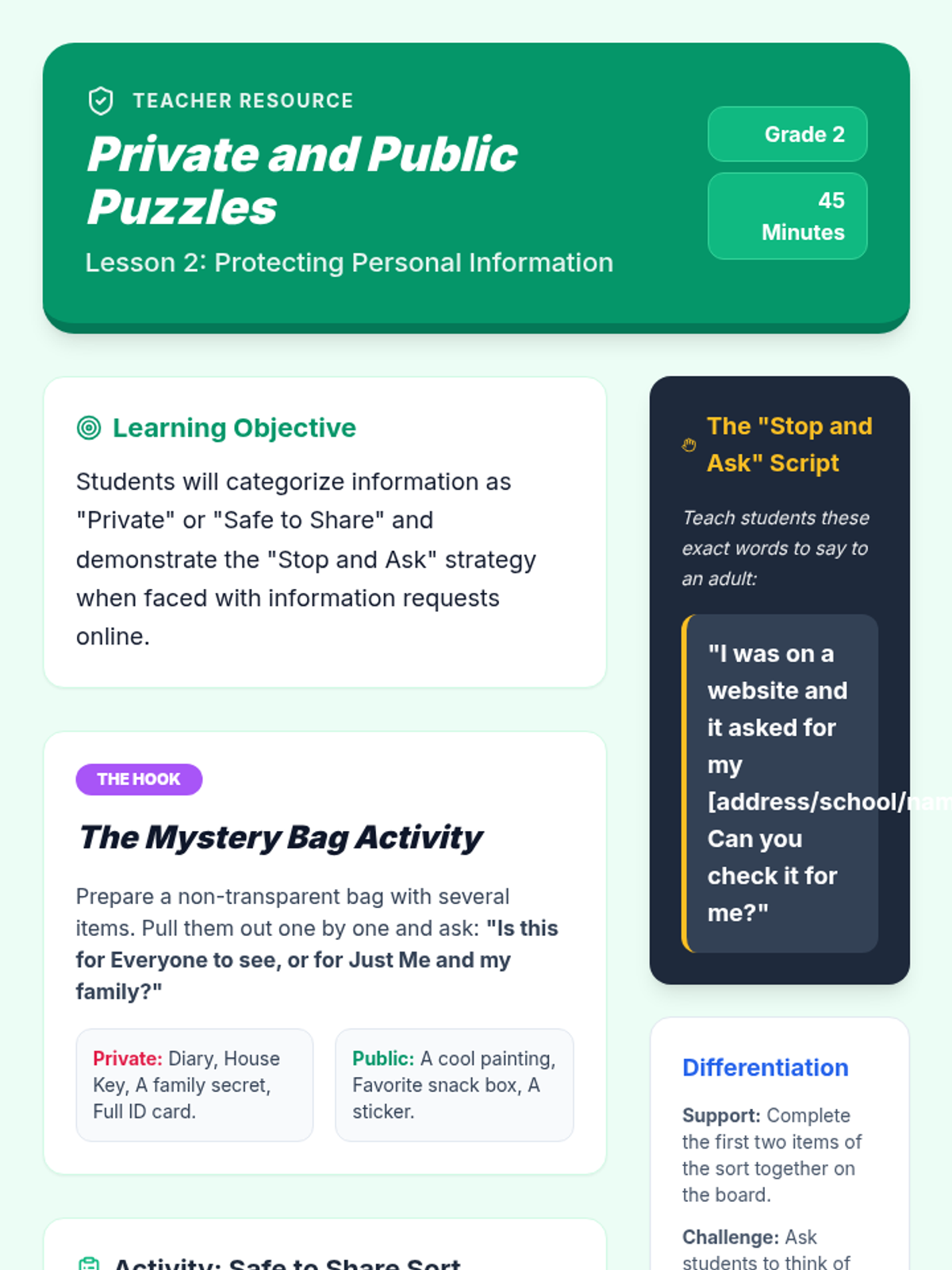
Students learn to categorize personal data into 'Safe to Share' and 'Keep Private' while practicing the 'Stop and Ask' strategy.
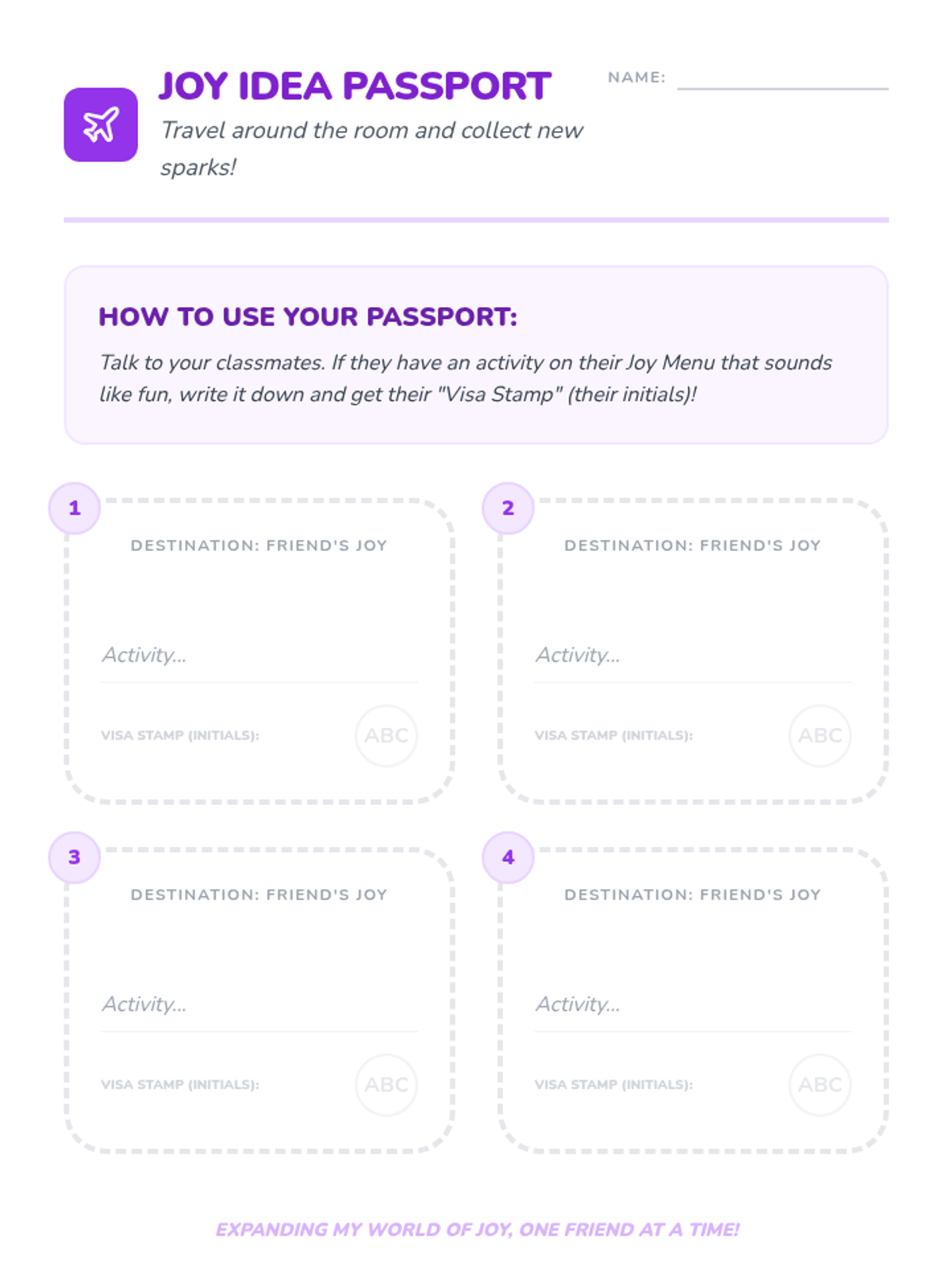
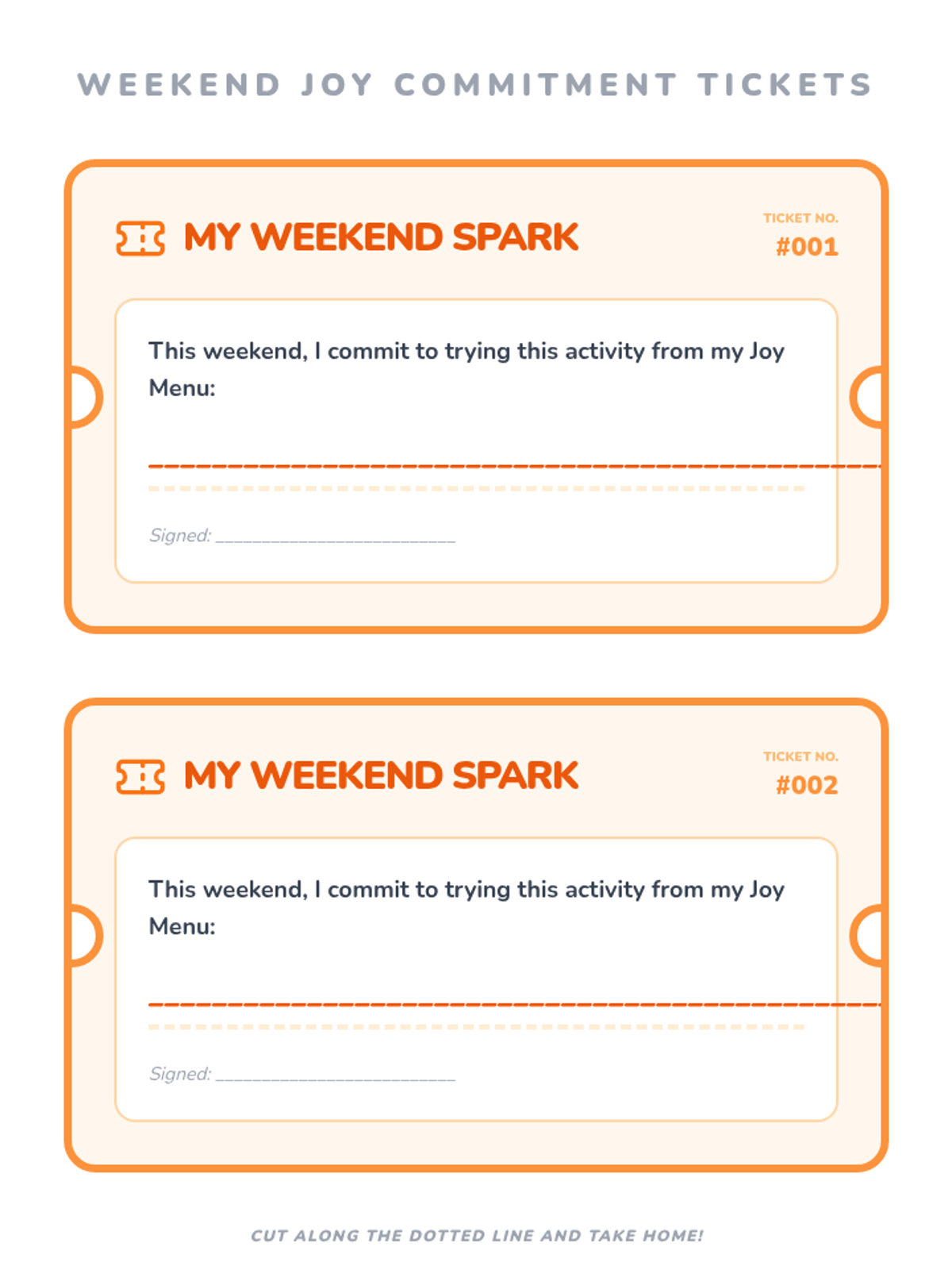
Students present their Joy Menus to small groups, allowing peers to borrow ideas to add to their own lists. The lesson concludes with a commitment to try one menu item over the weekend.
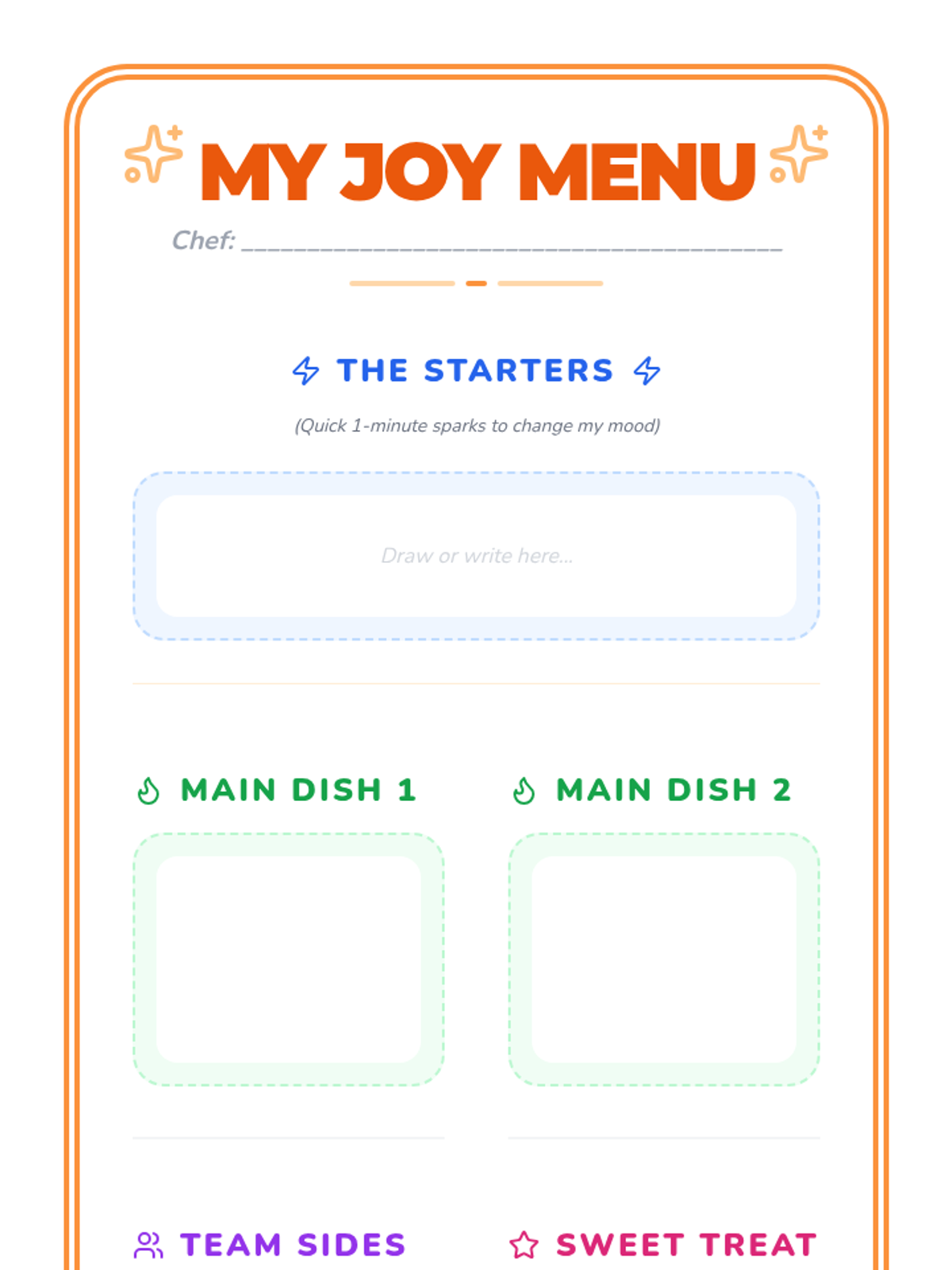
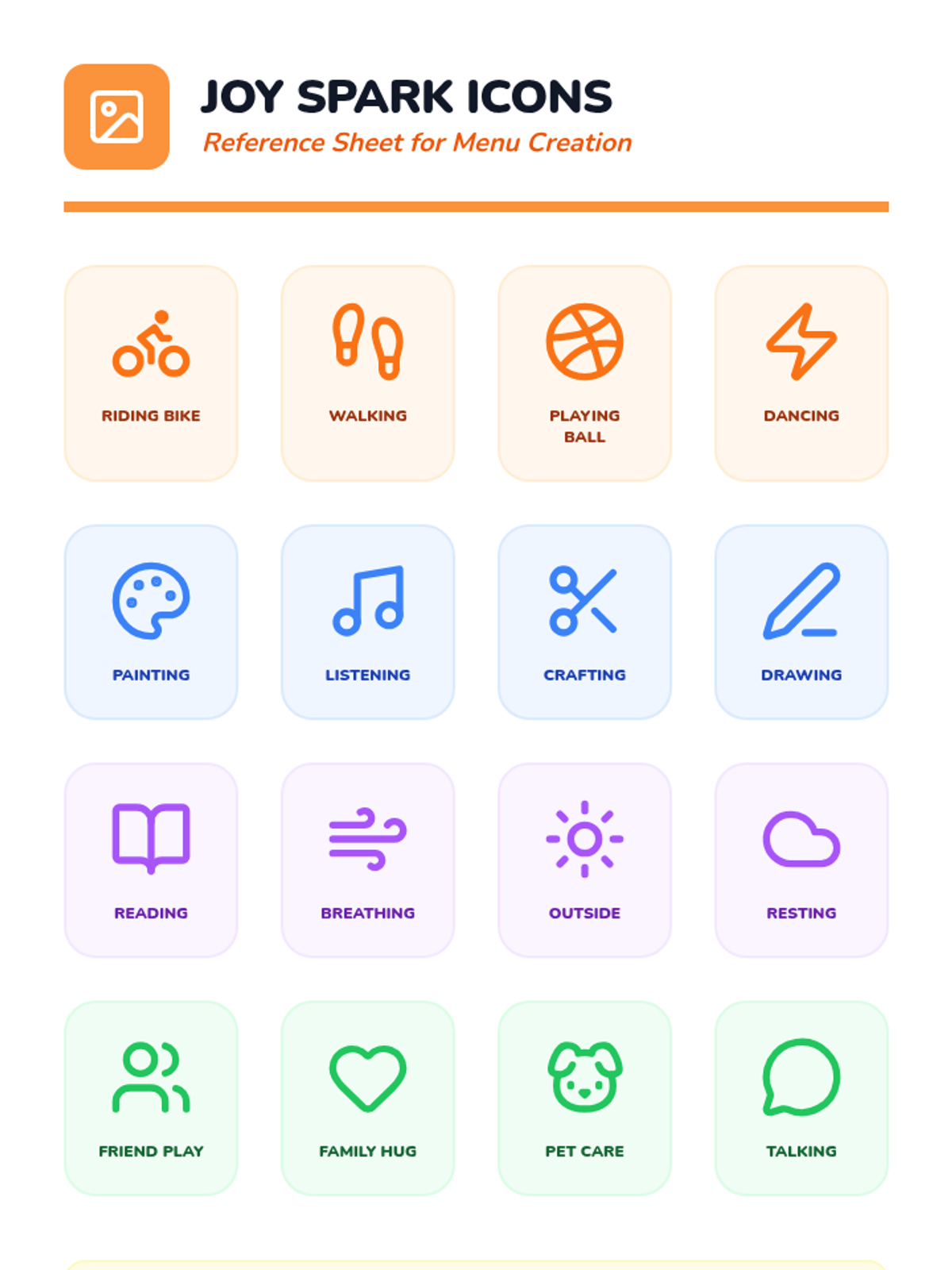
Using their investigations, students create a visual 'menu' or choice board of their top 5 reliable mood-boosting activities. They illustrate these options to serve as a reference tool.
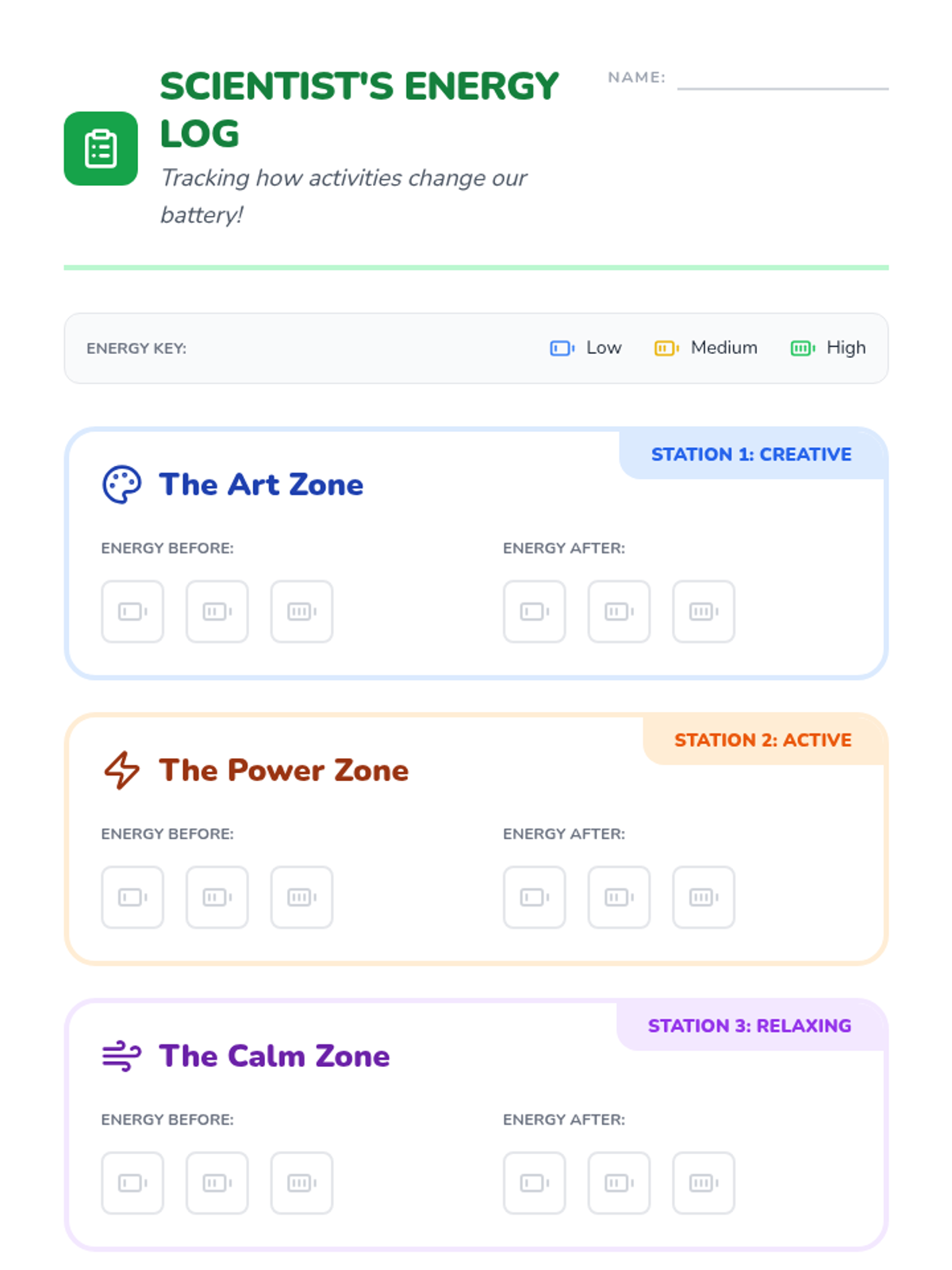
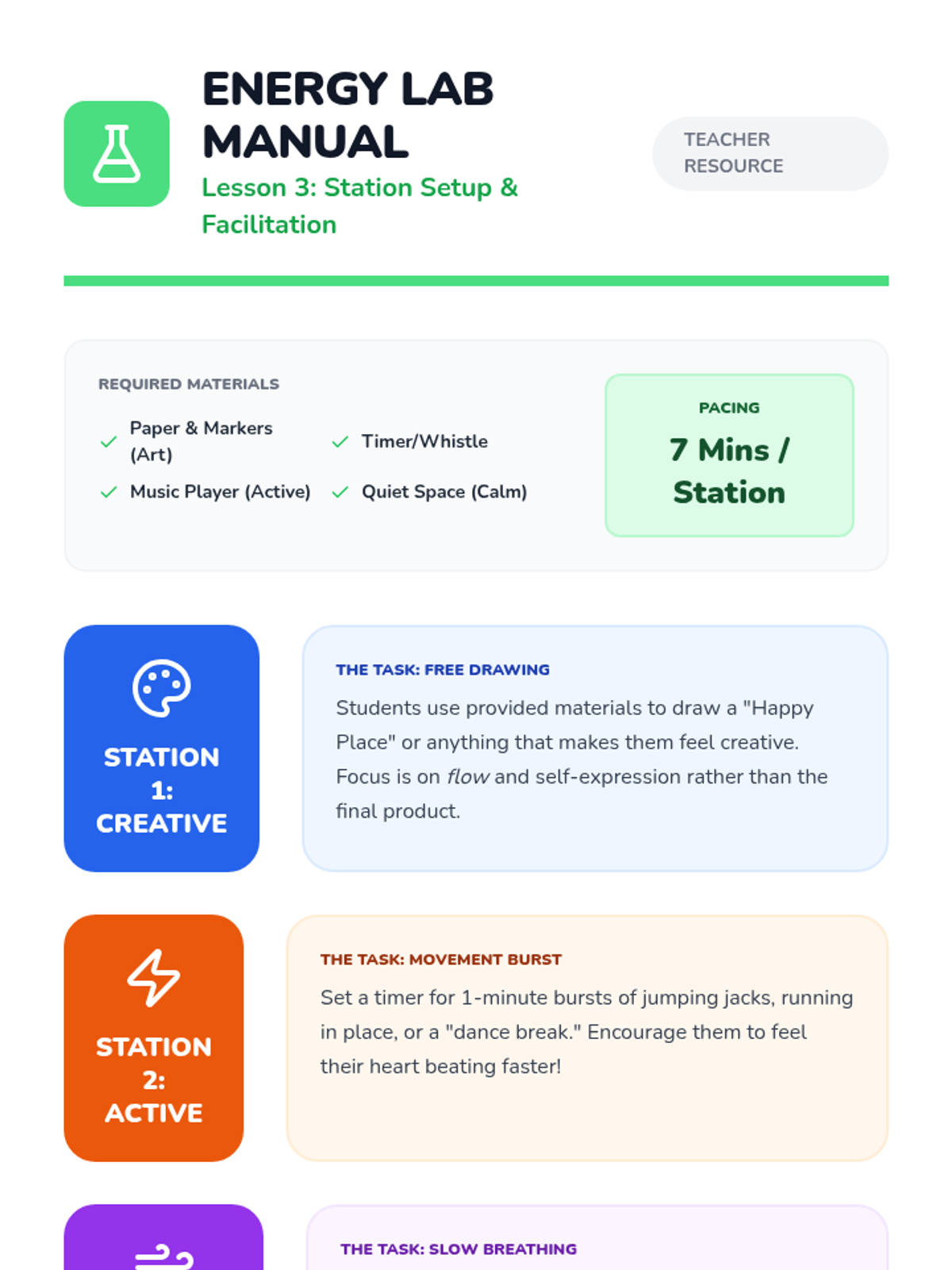
Students rotate through stations testing different types of positive engagement: creative (drawing), active (jumping jacks), and relaxing (deep breathing). They record how each station changes their energy level.
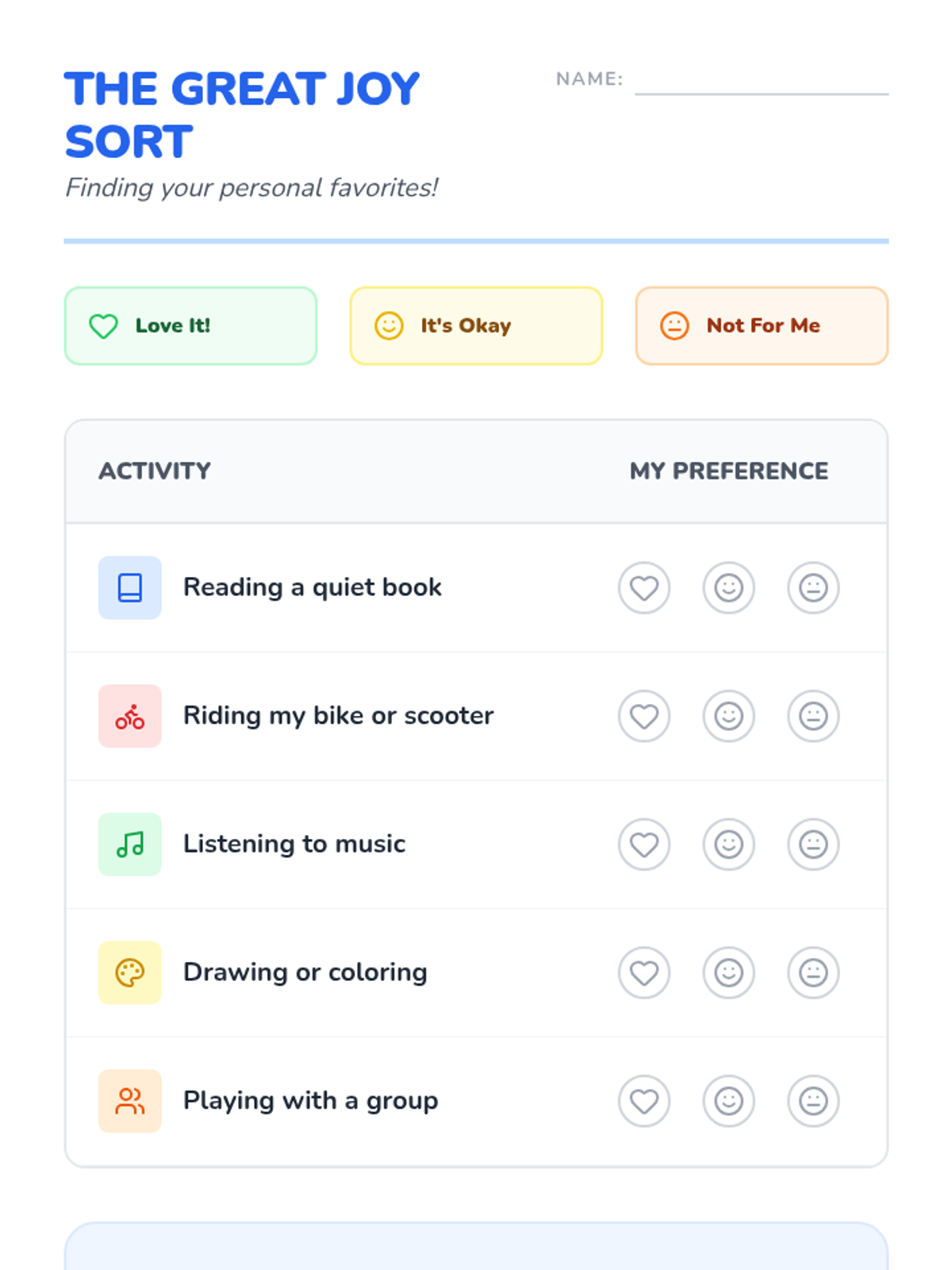
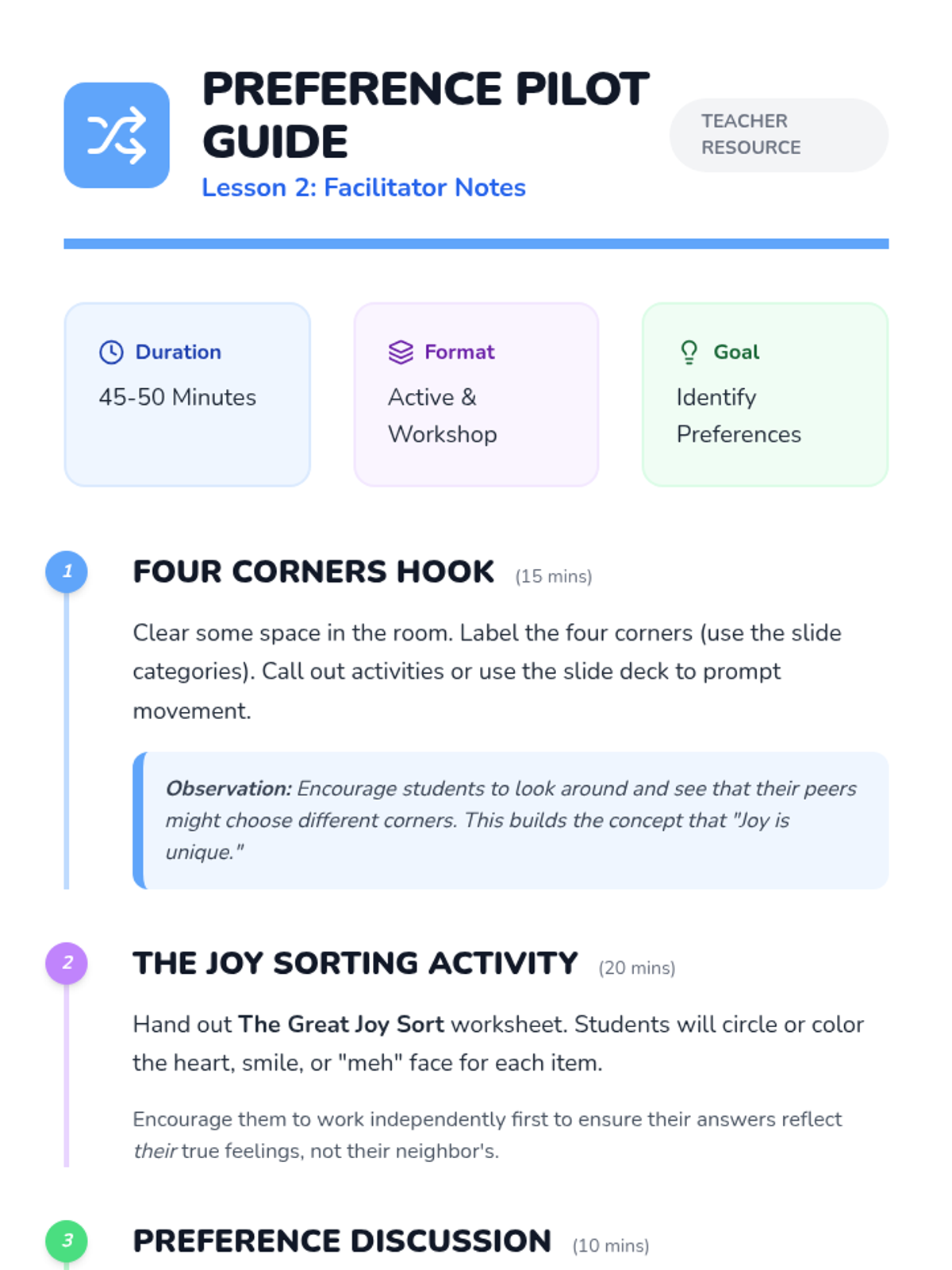
Students engage in an activity sorting game where they categorize various pastimes into 'Love it,' 'It's okay,' and 'Not for me.' This helps them realize that positive experiences are unique to each individual.
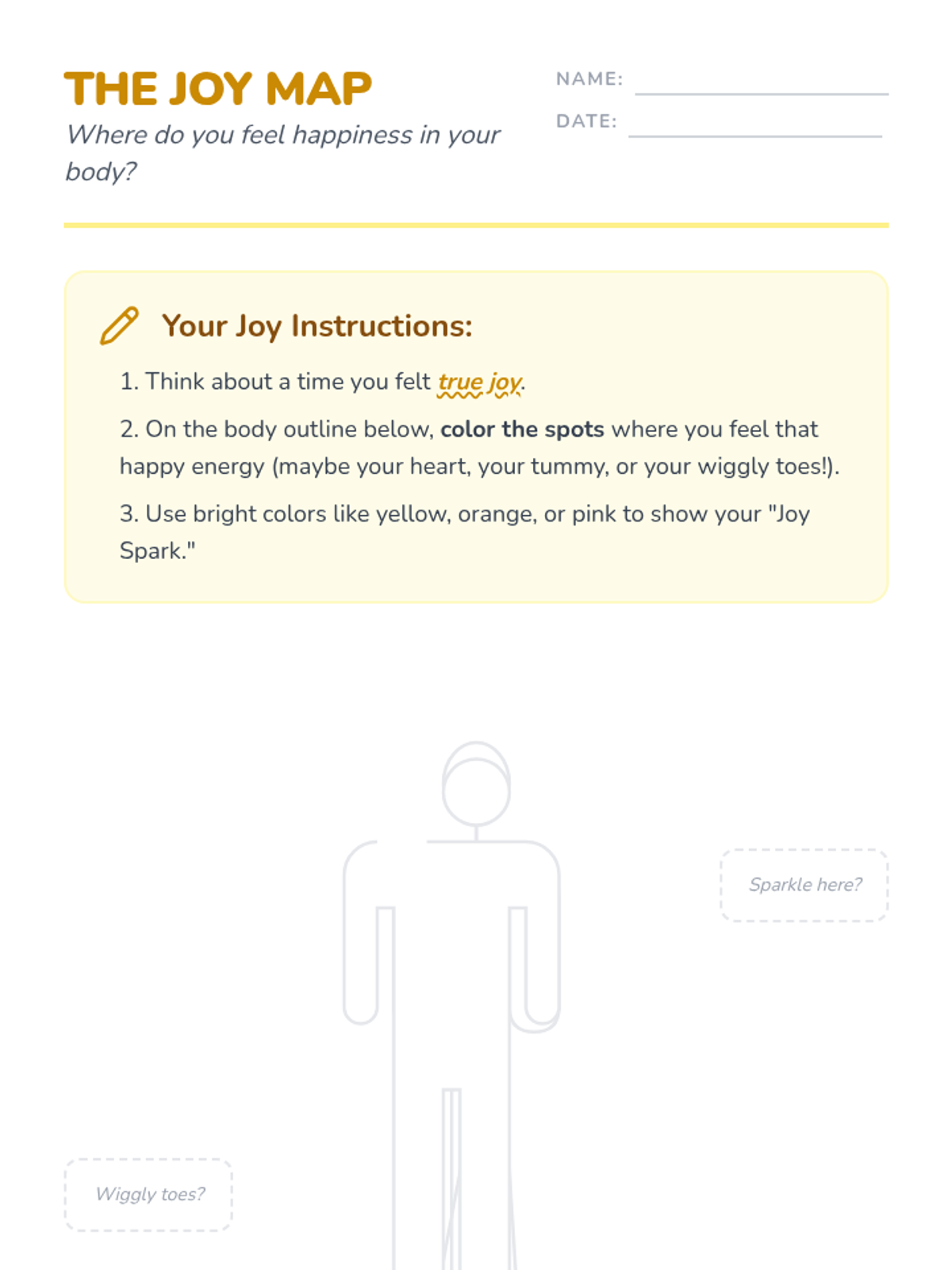
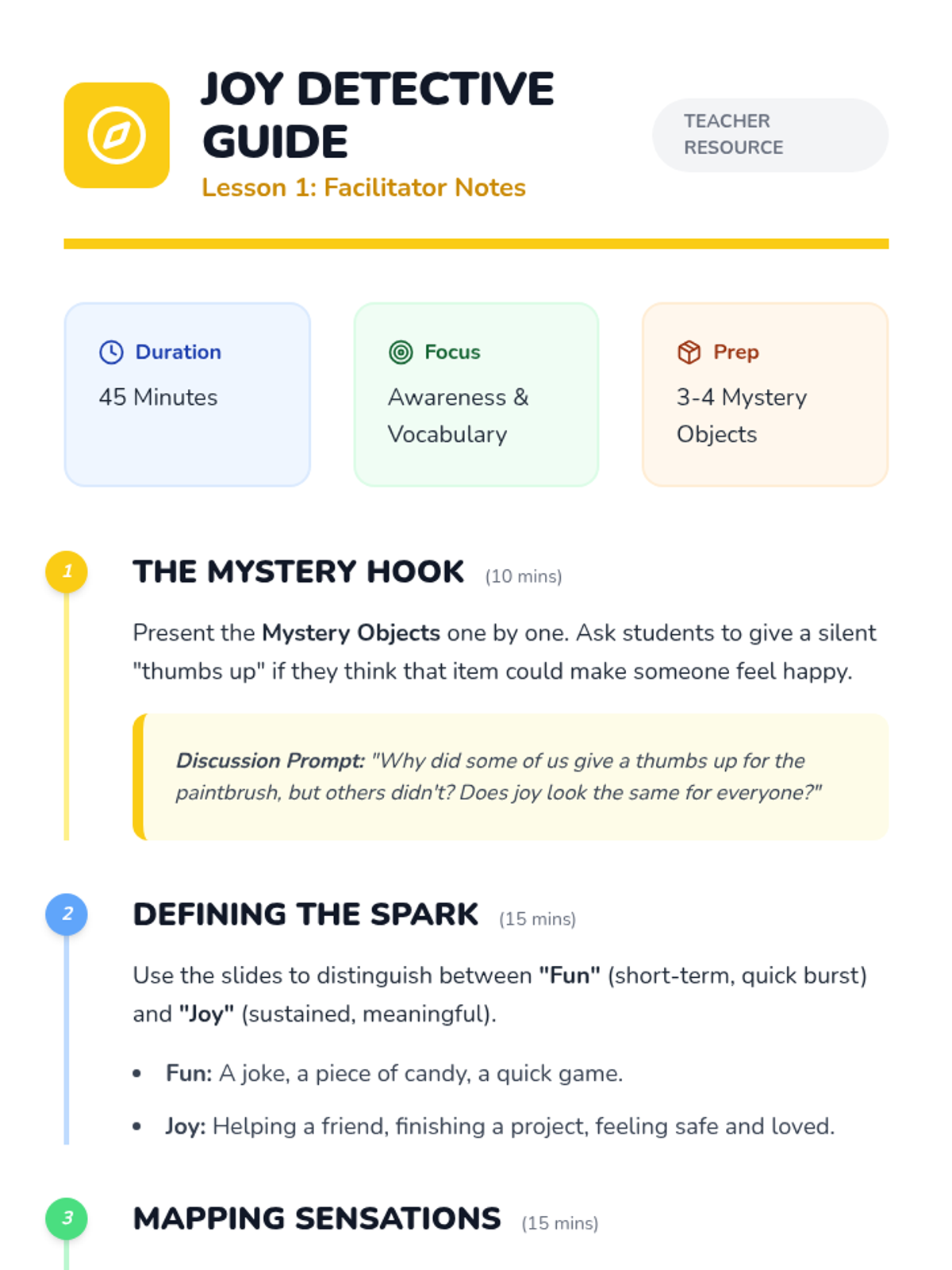
Students define joy and identify what happiness feels like in their bodies. They brainstorm activities that elicit positive emotions and distinguish between short-term fun and long-term happiness.
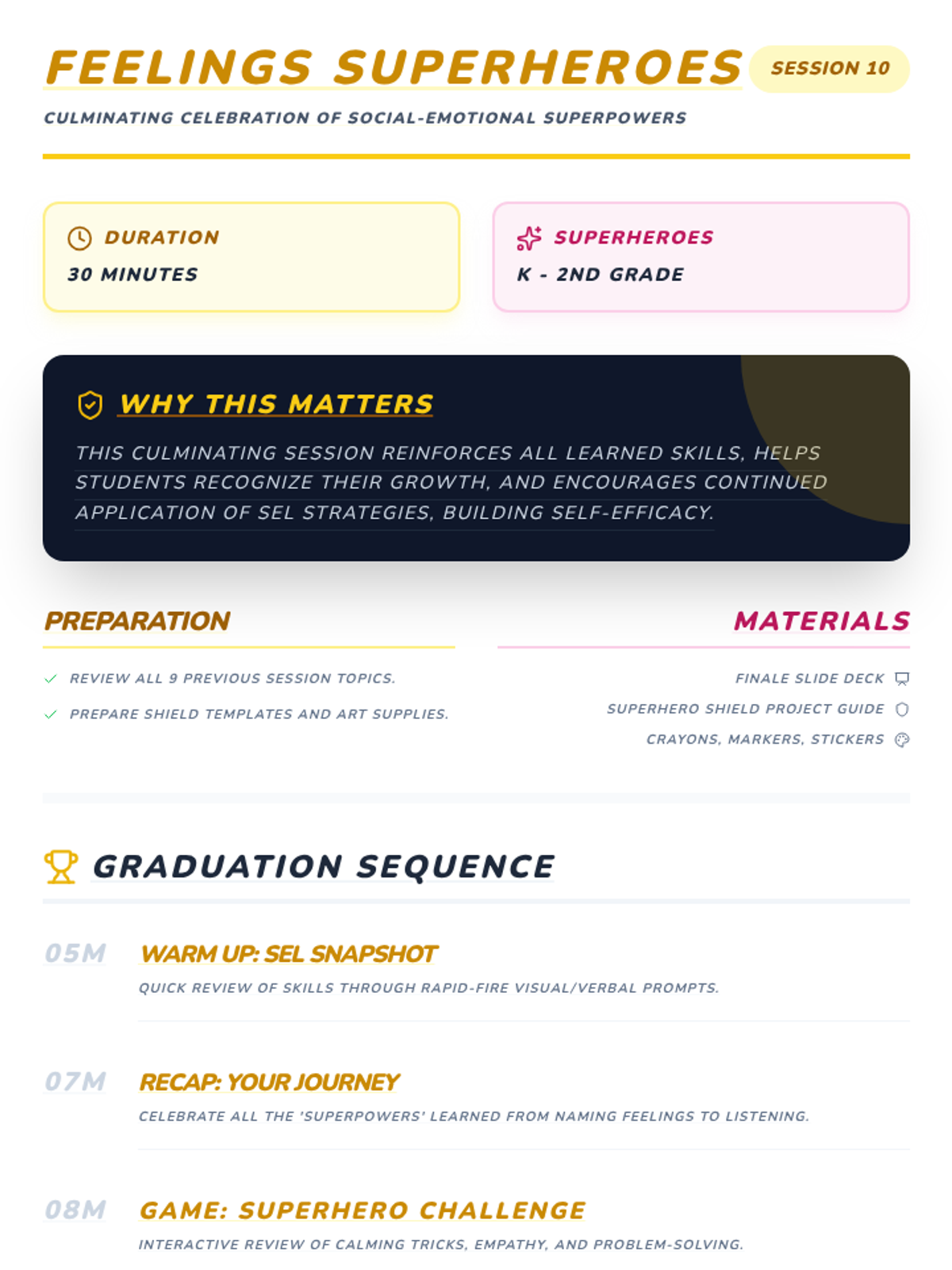
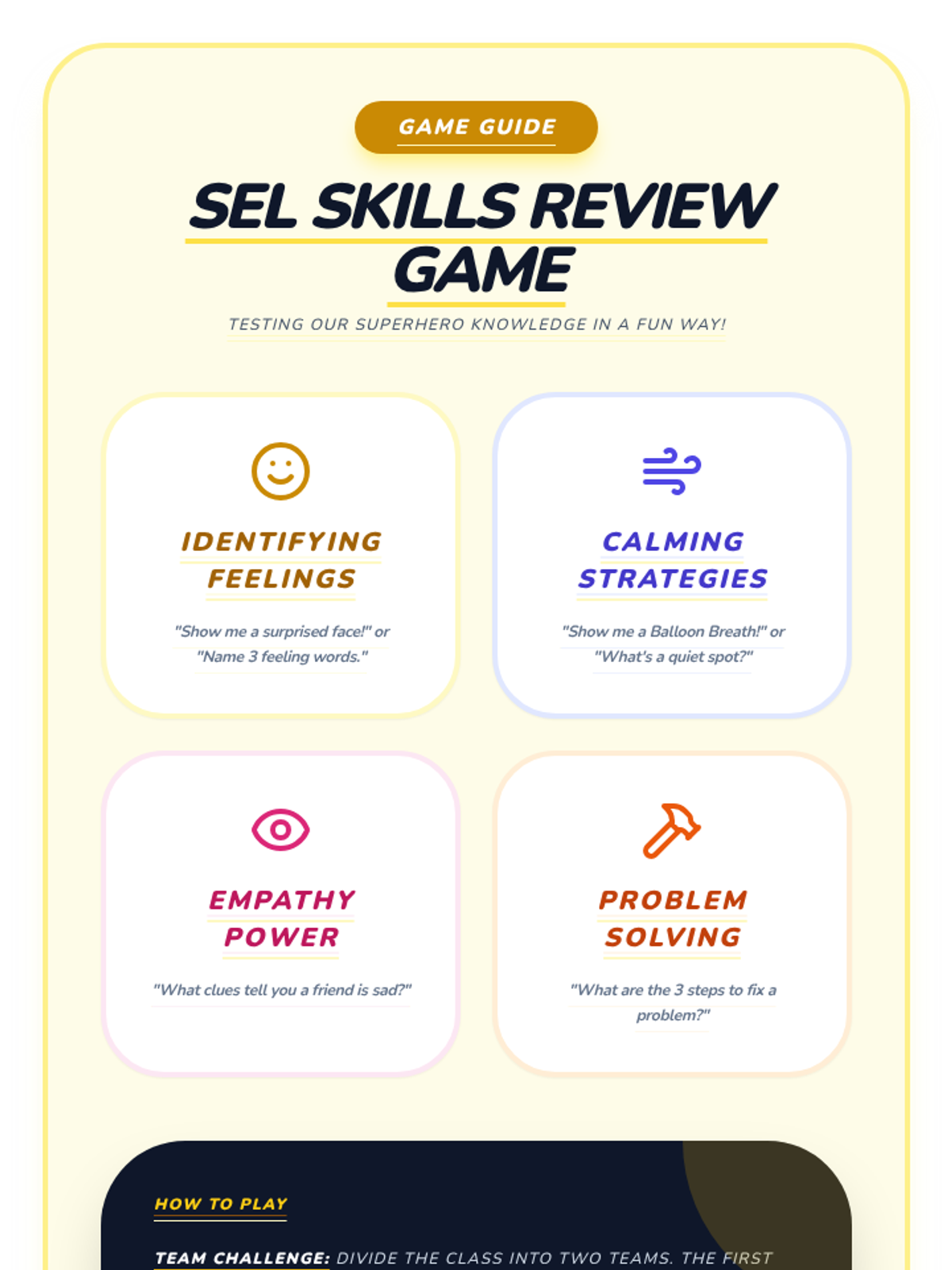
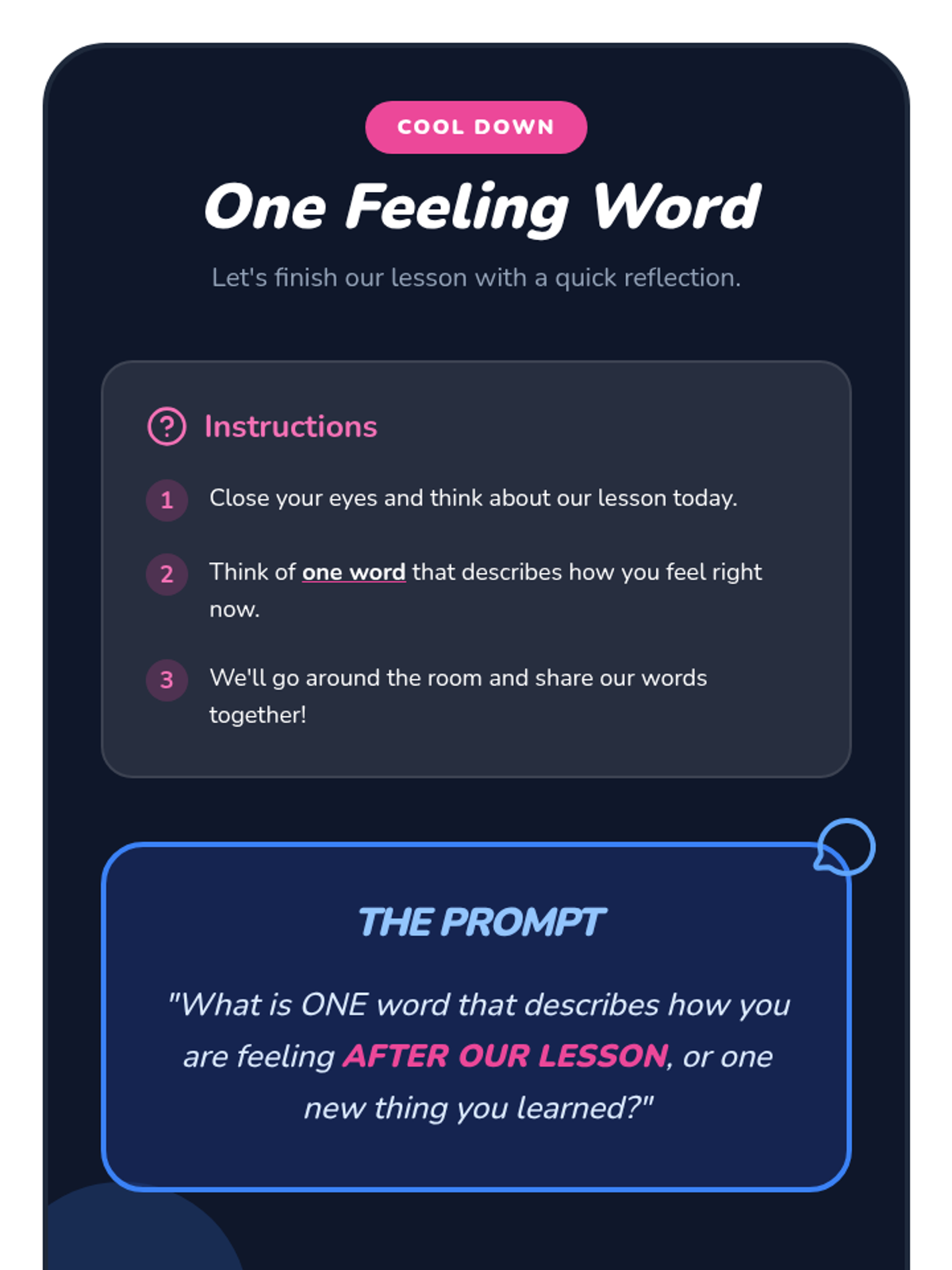
A culminating session that reviews all SEL skills and celebrates students' emotional growth.
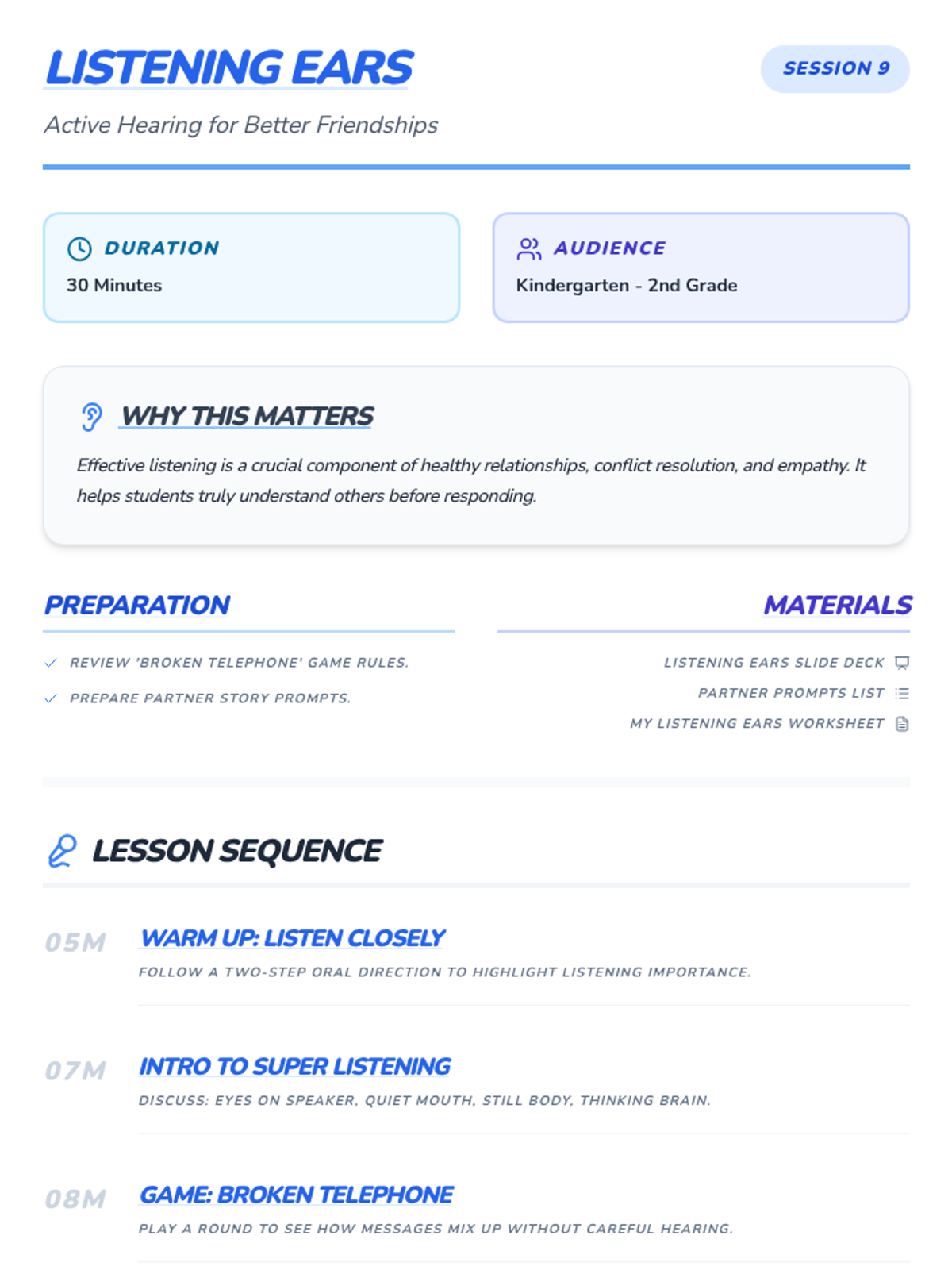
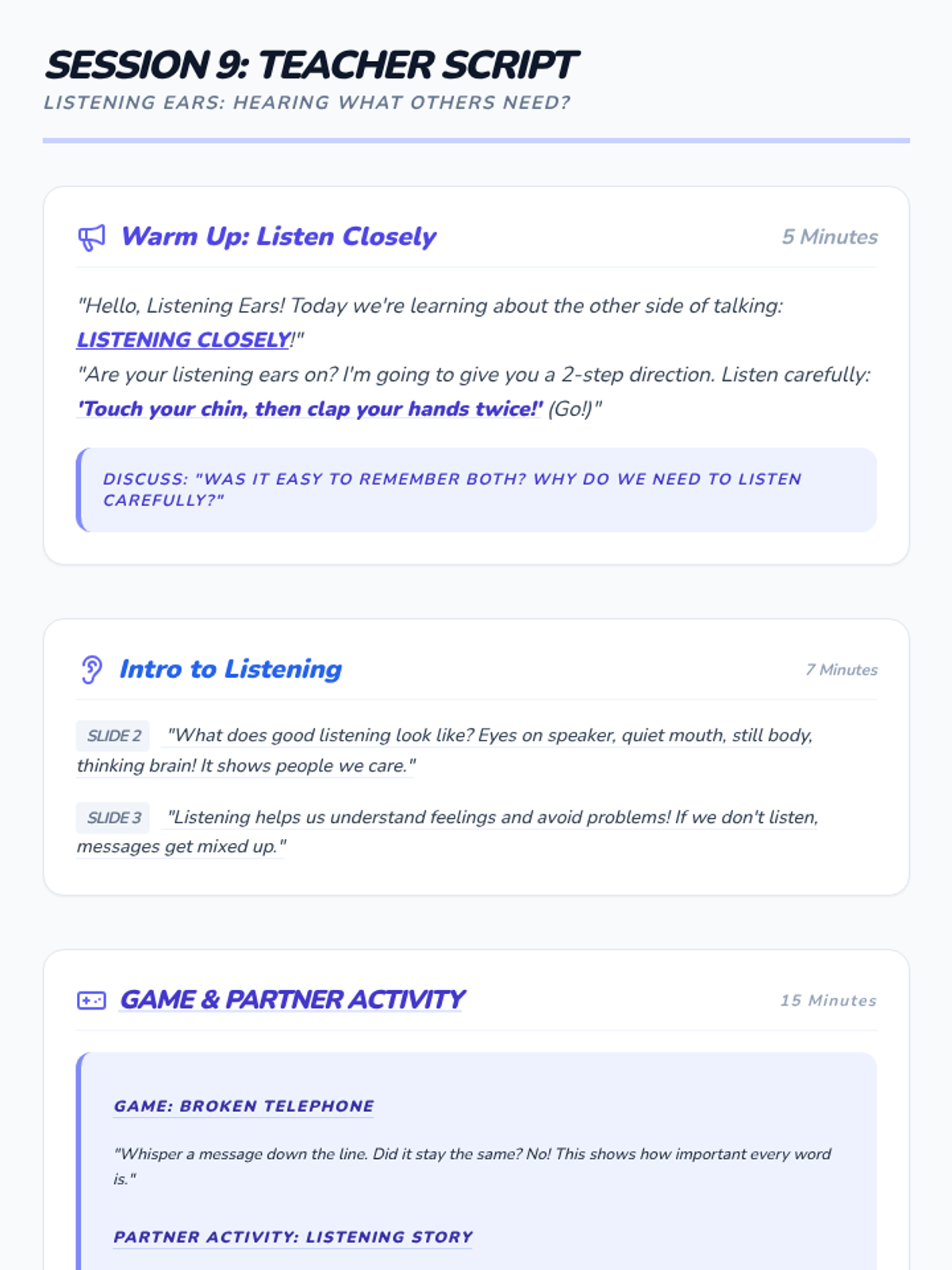
Practices active listening skills to better understand friends and resolve misunderstandings.
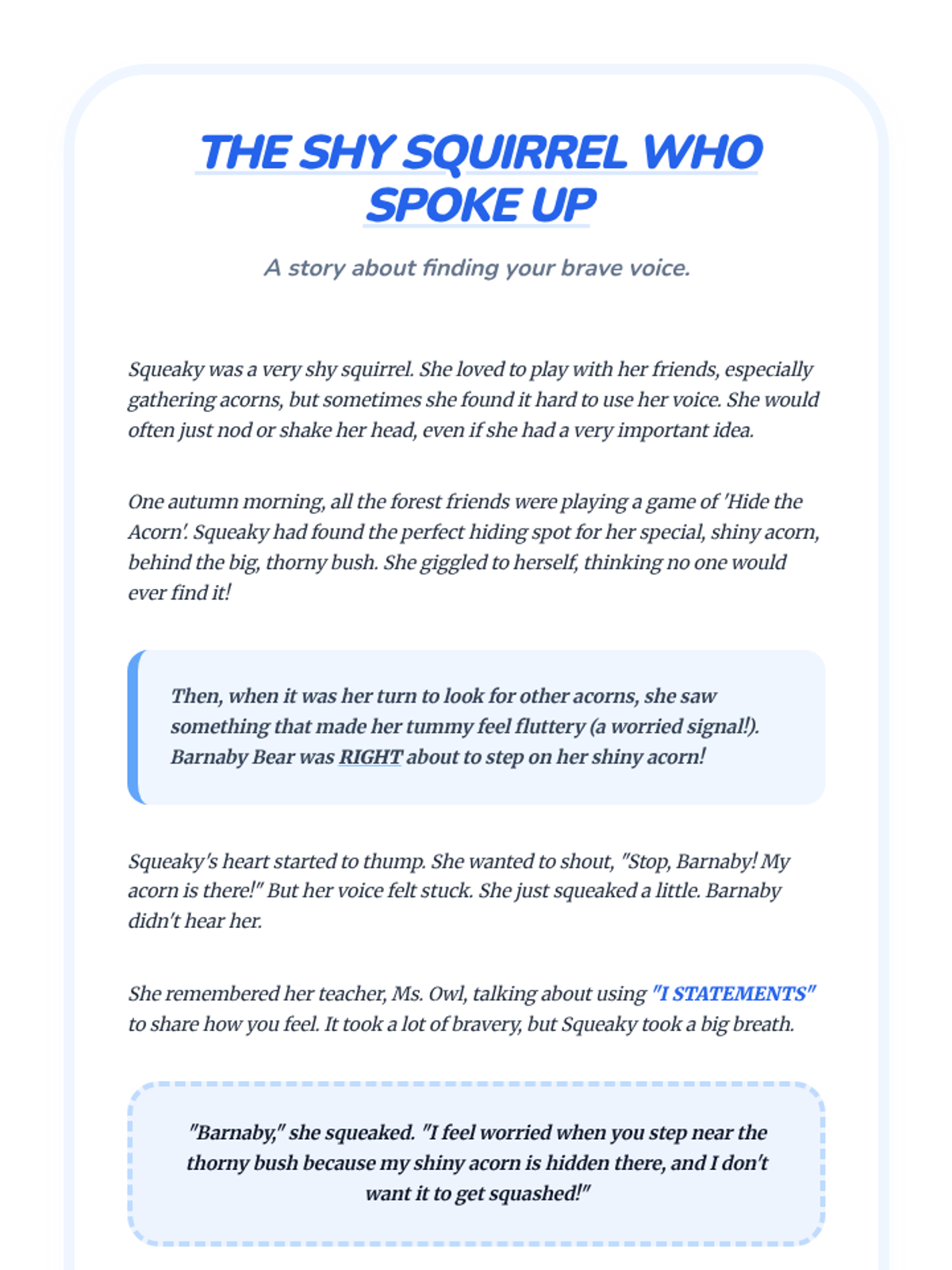
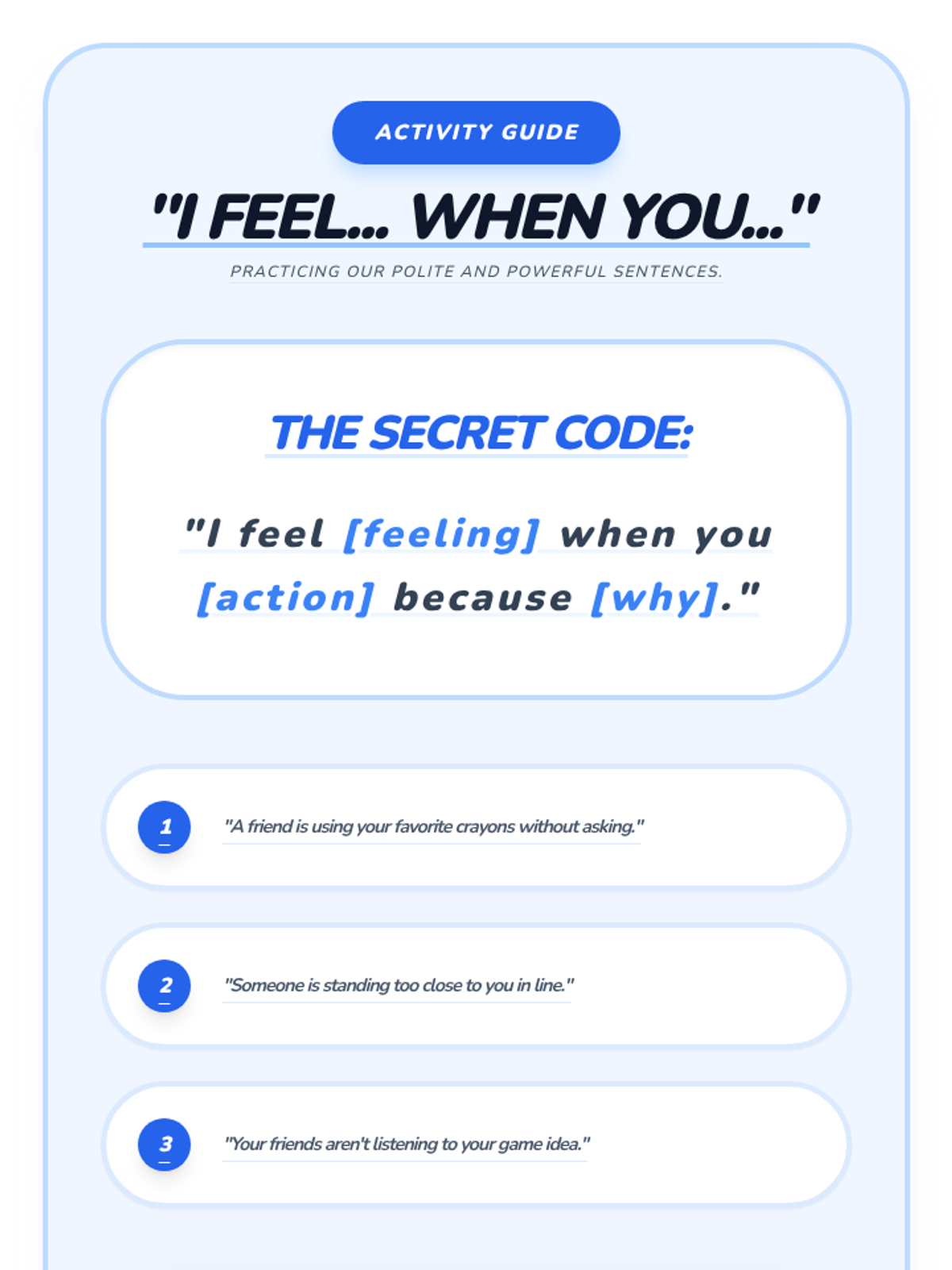
Teaches assertive communication using 'I statements' to advocate for personal needs respectfully.
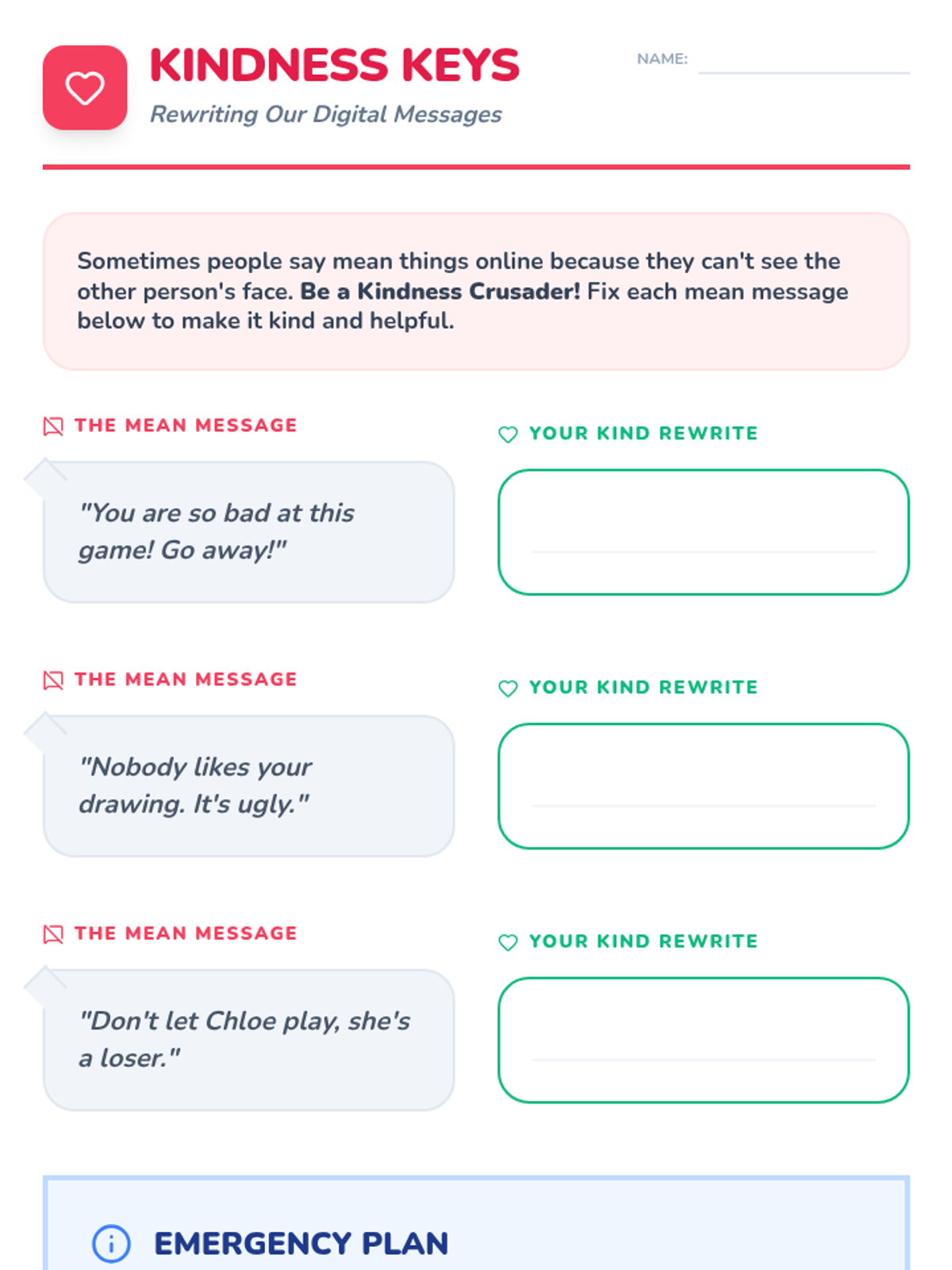
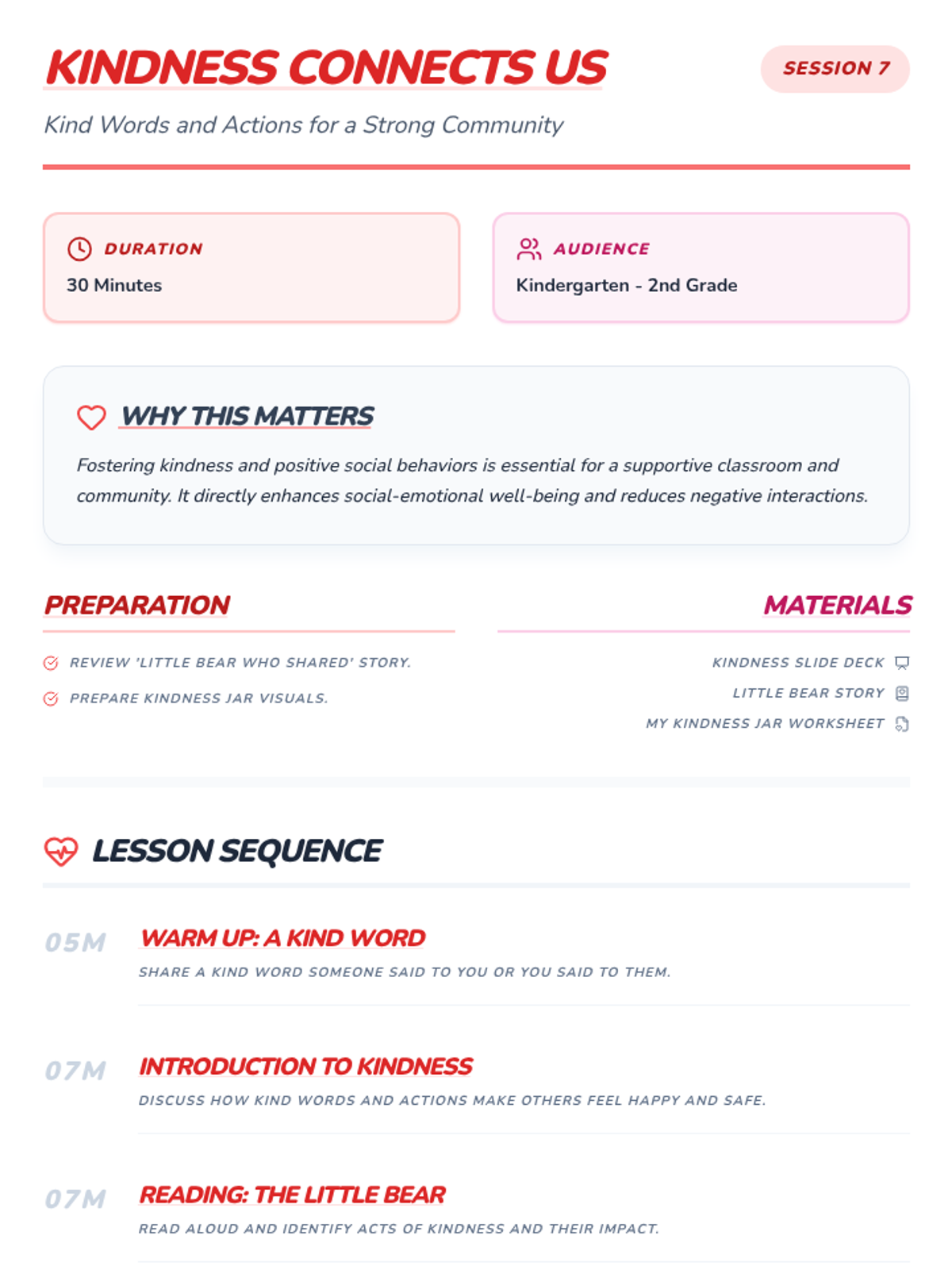
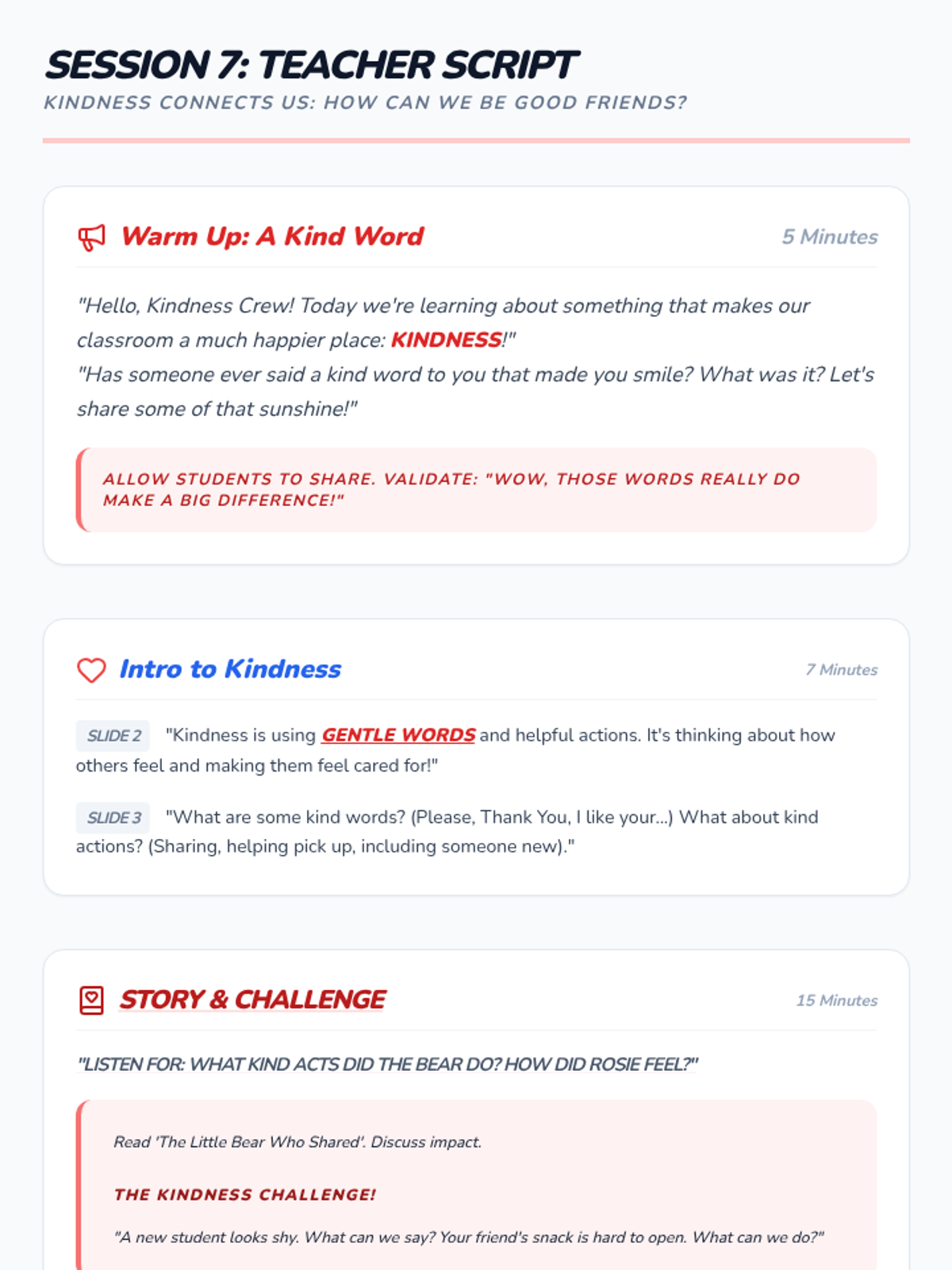
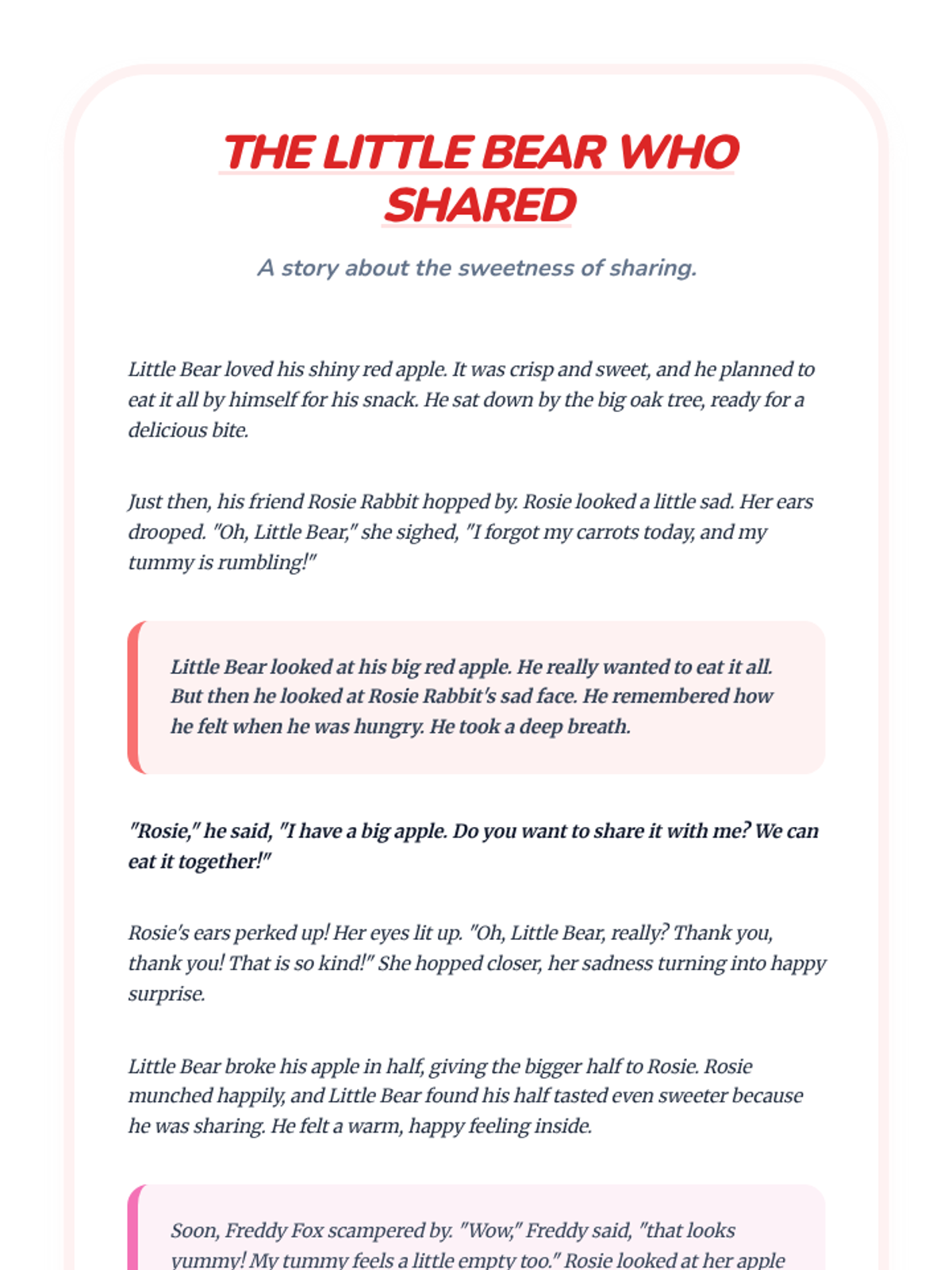
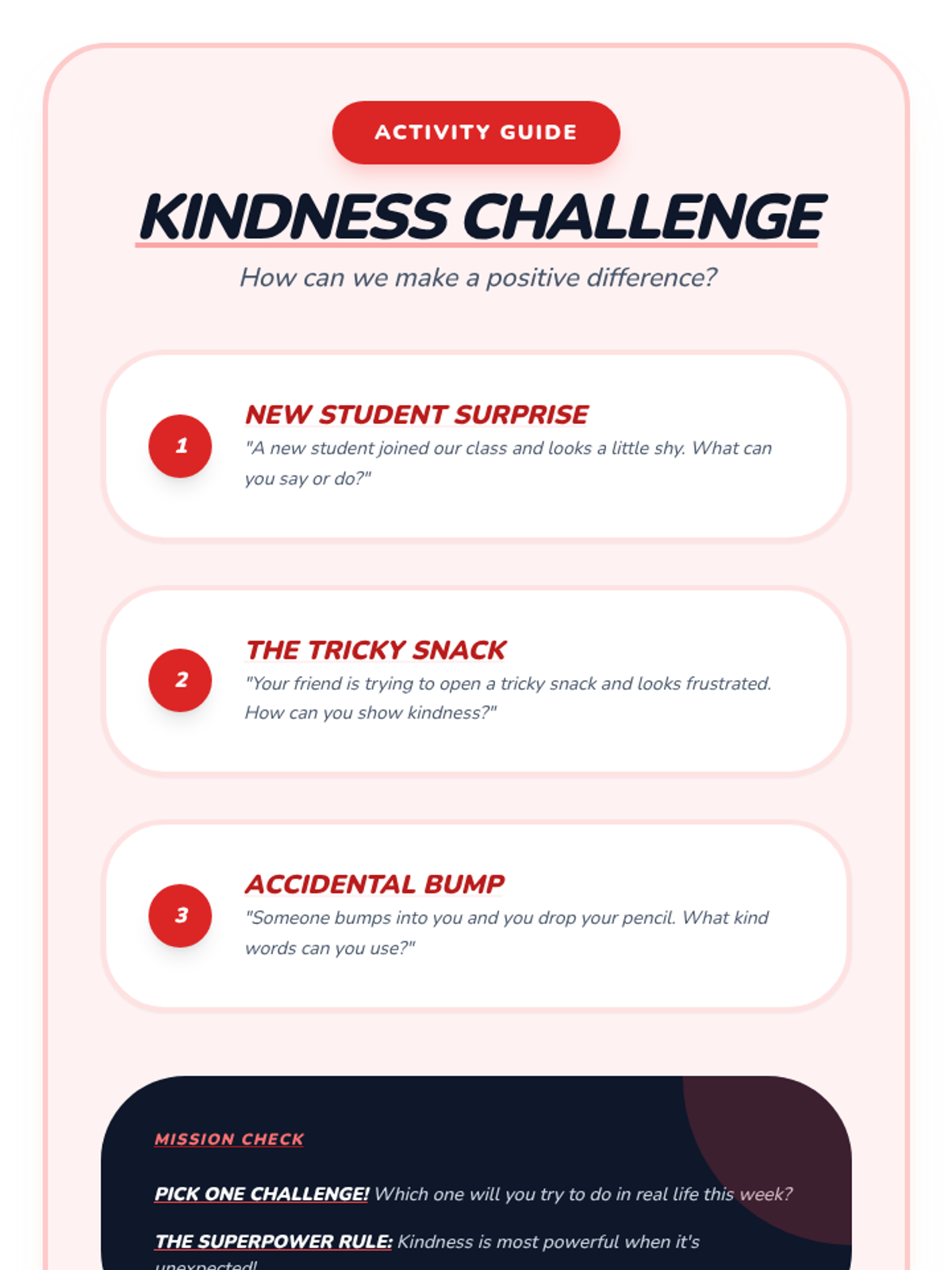
Focuses on the importance of kind words and actions in building a supportive community.
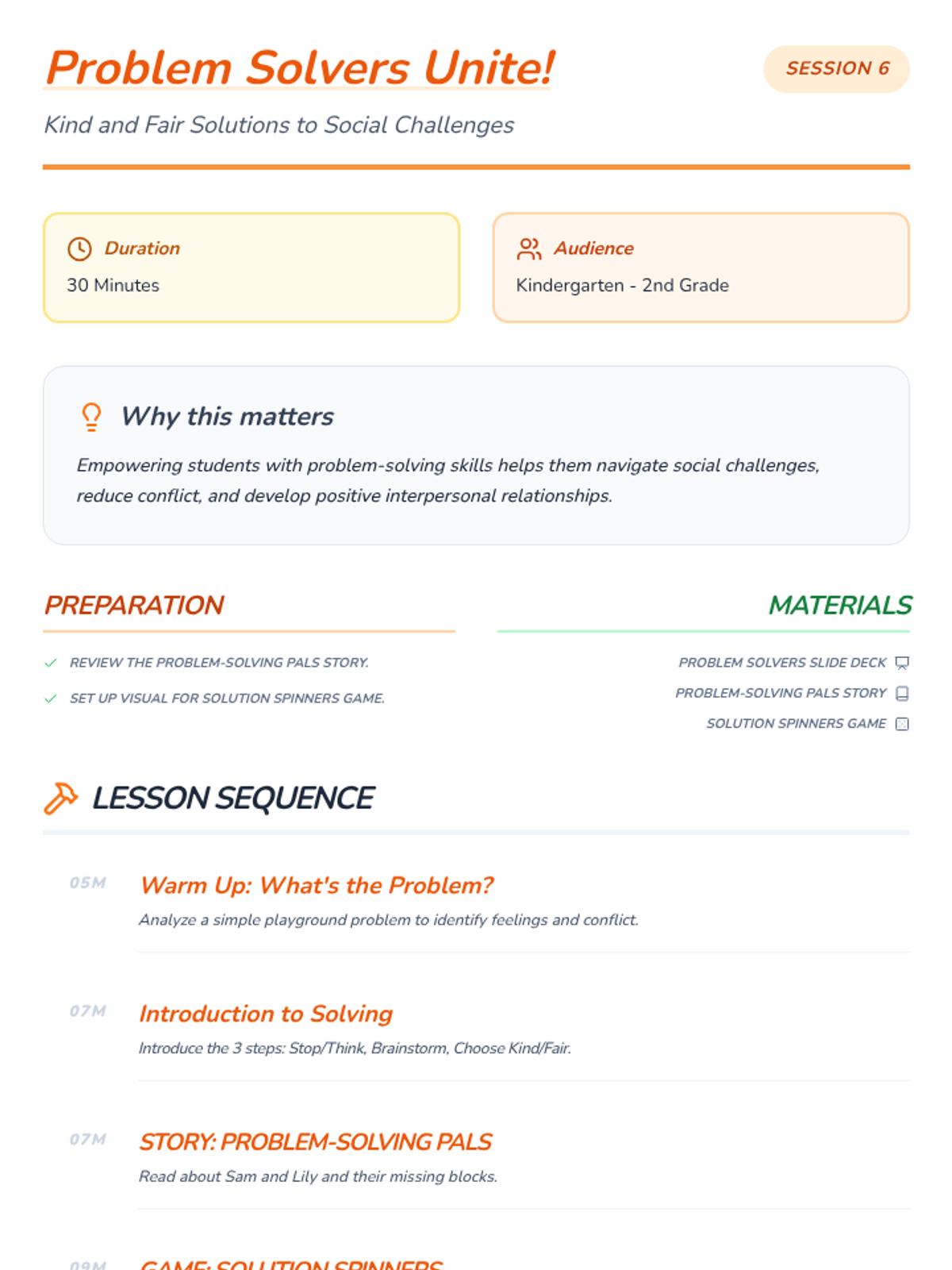
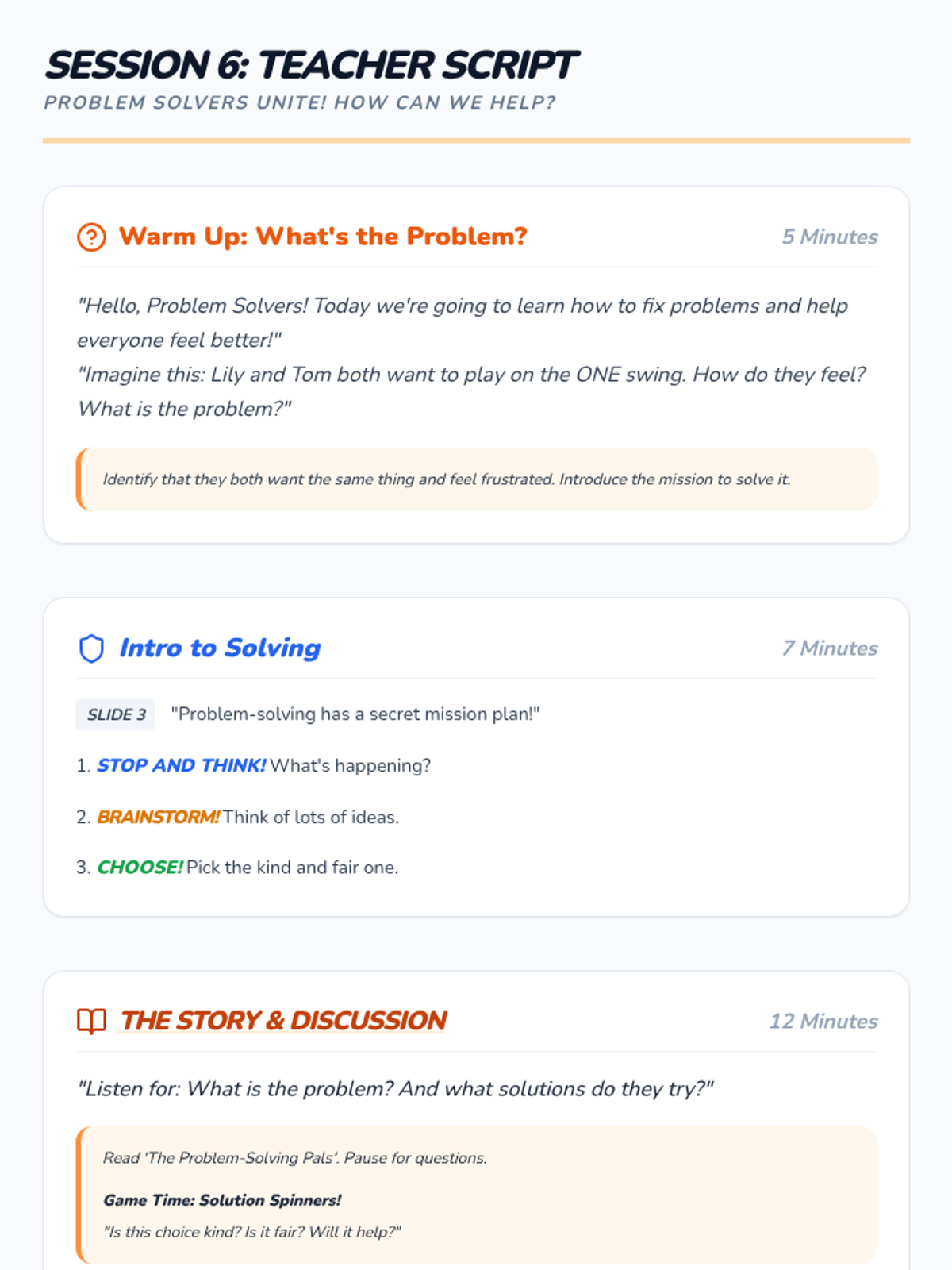
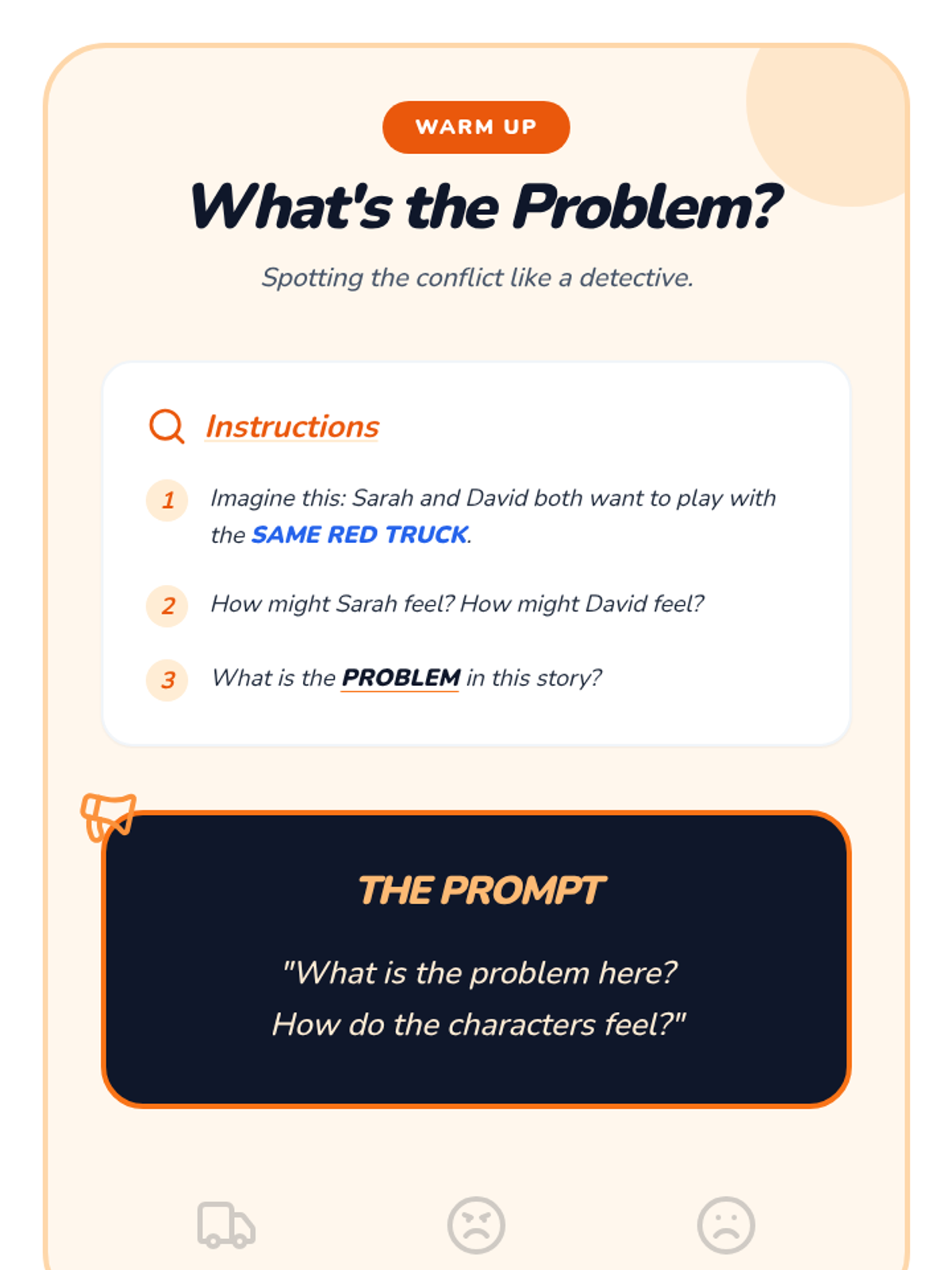
Introduces a step-by-step approach to solving social conflicts with kindness and fairness.
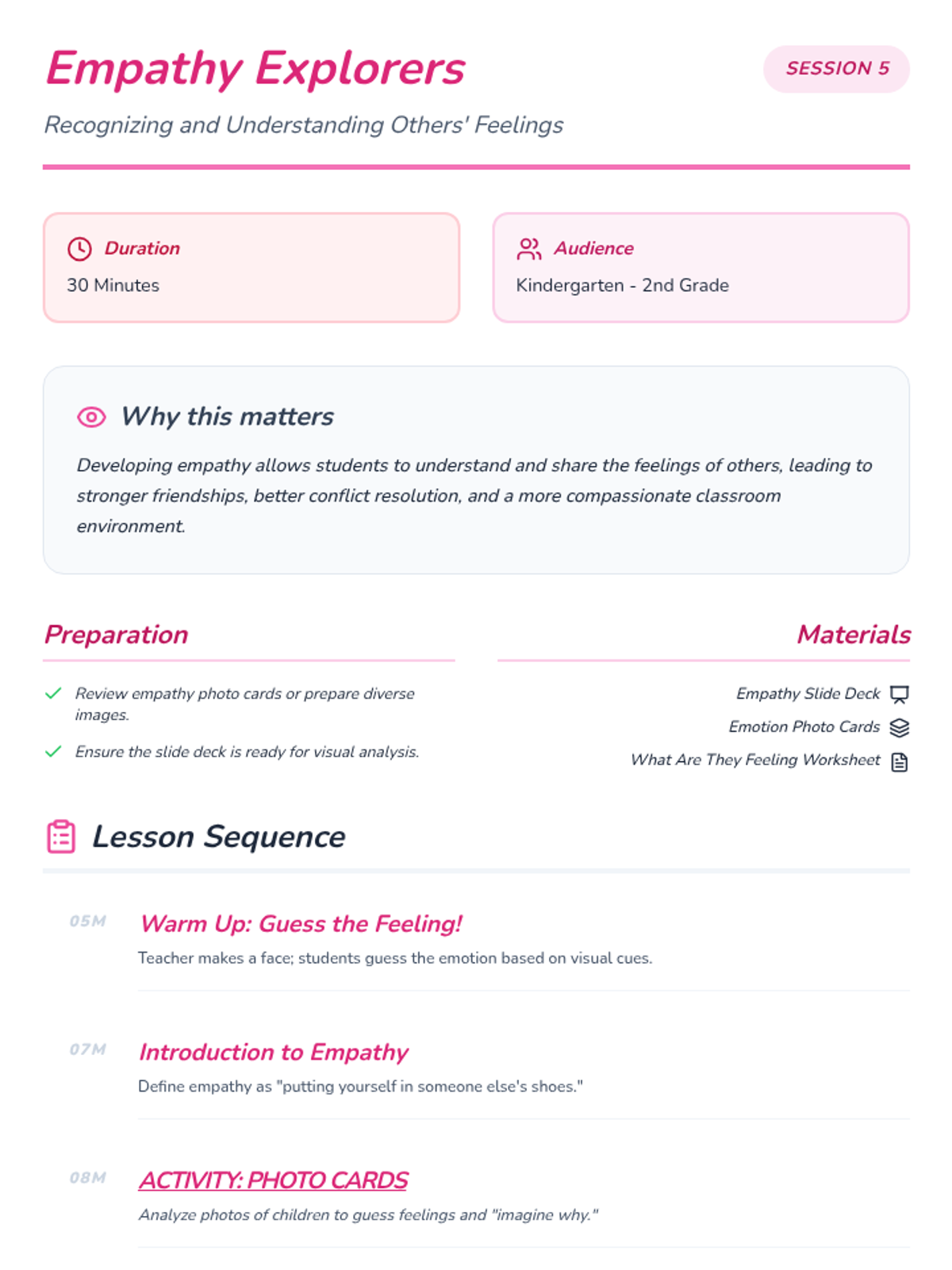
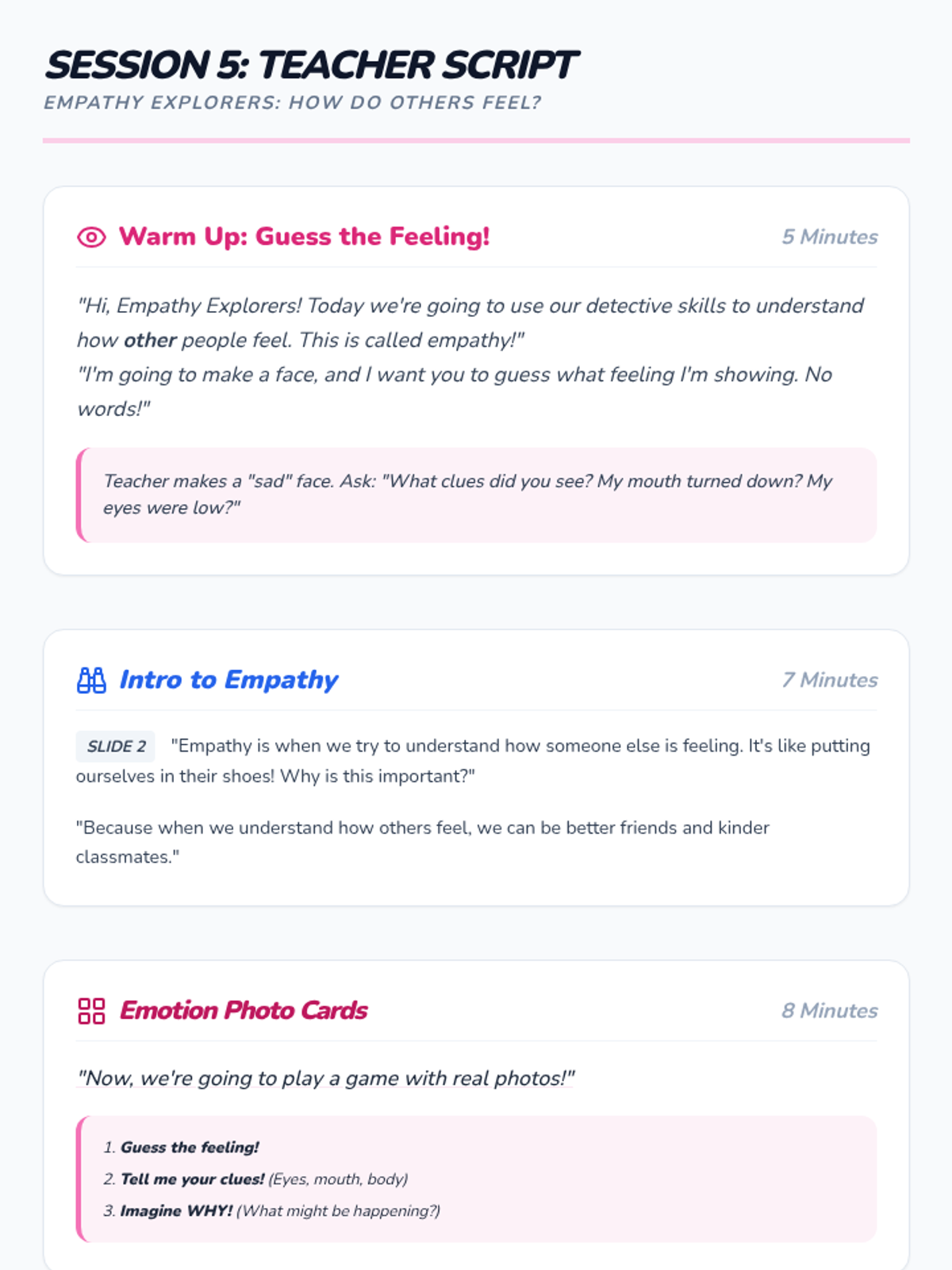
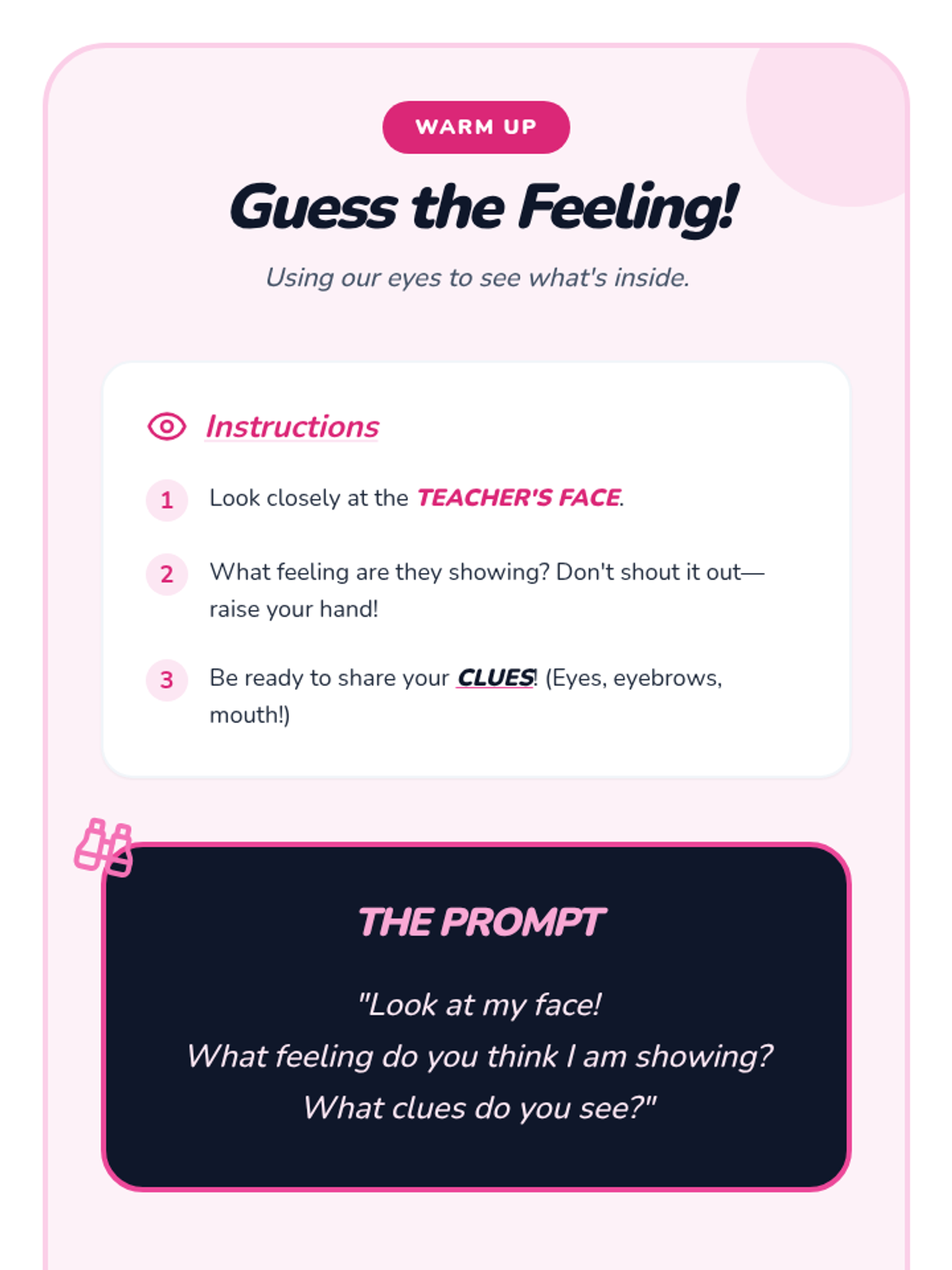
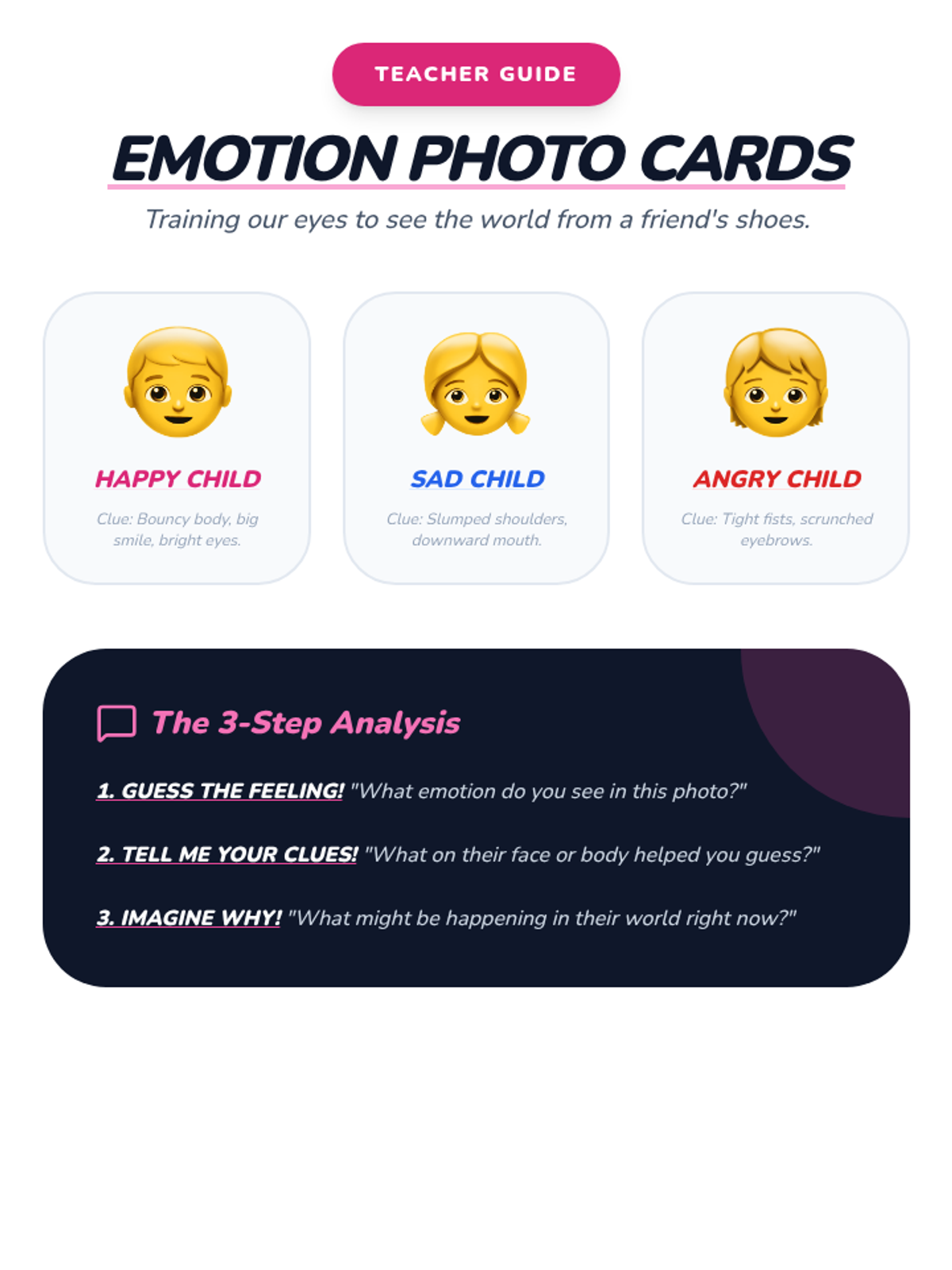
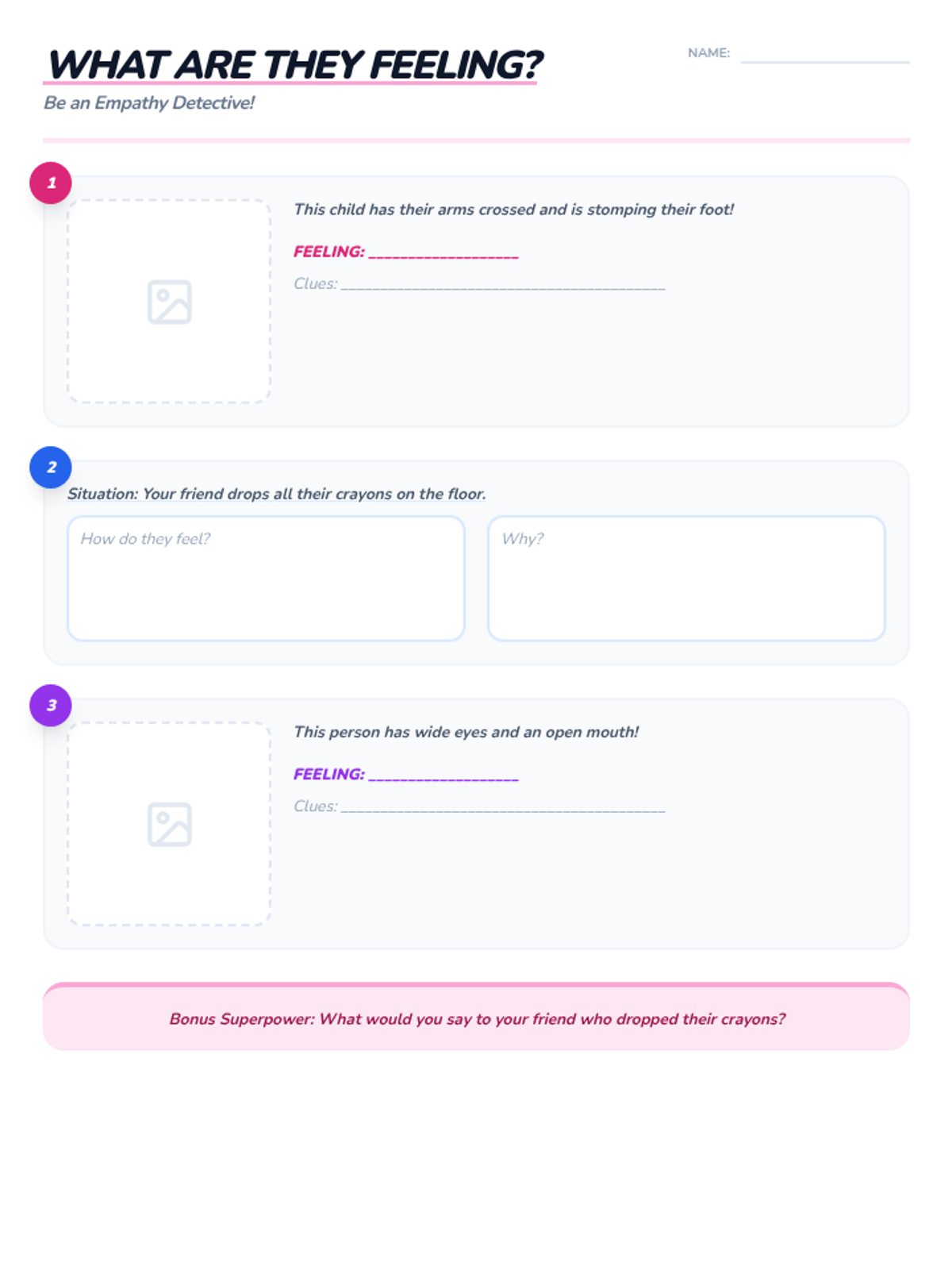
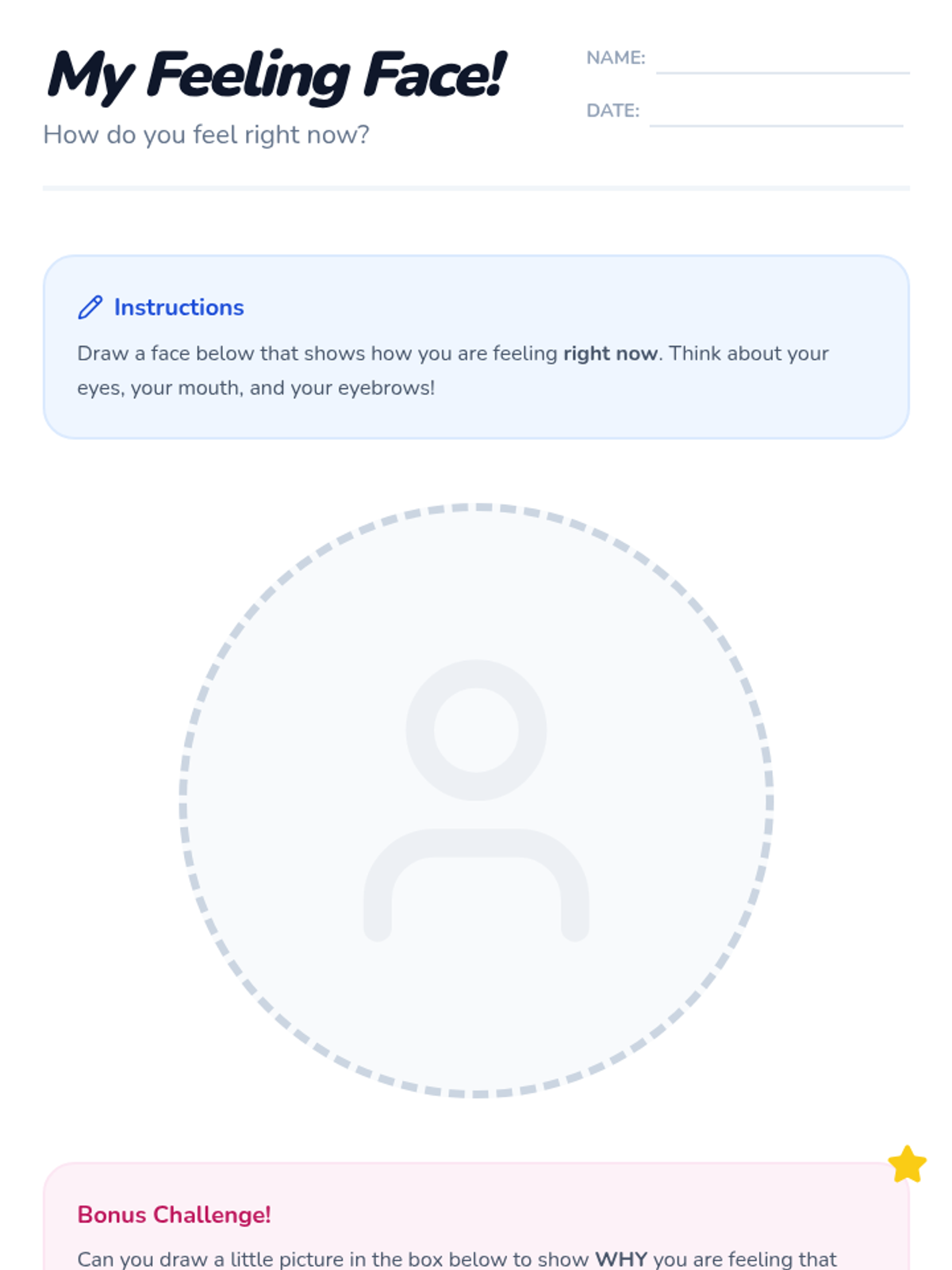
Develops empathy by practicing how to recognize and understand emotions in others.
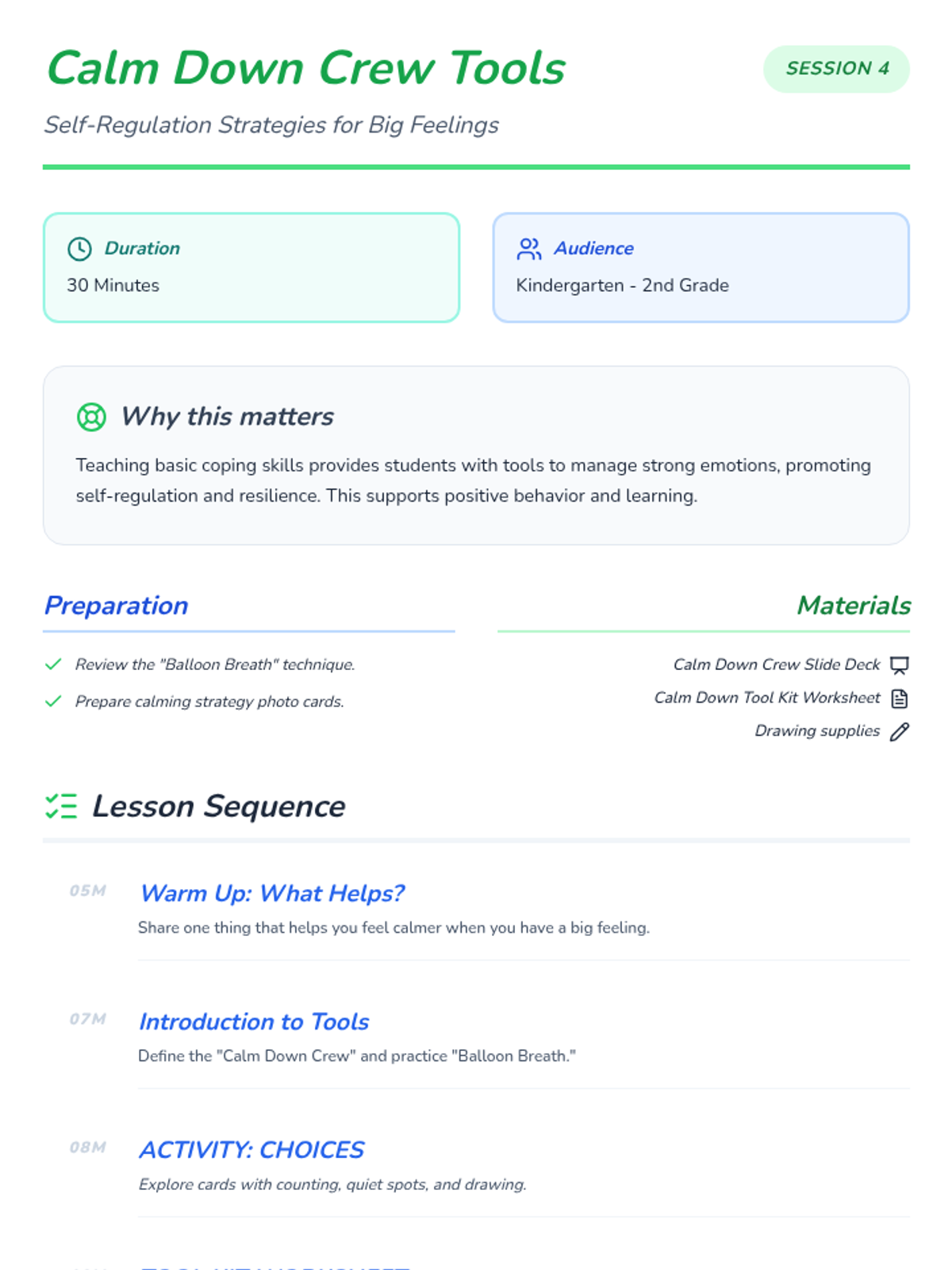
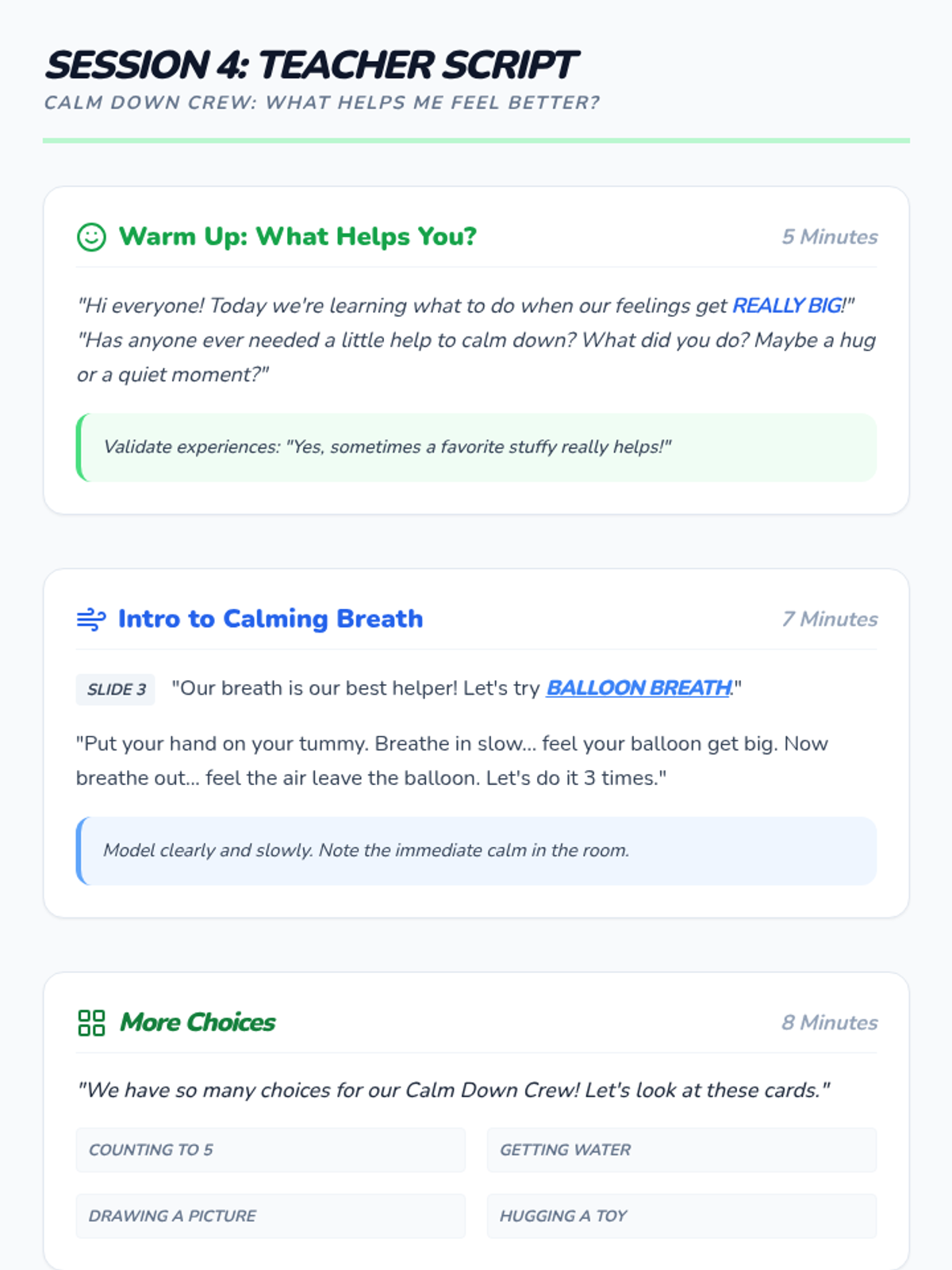
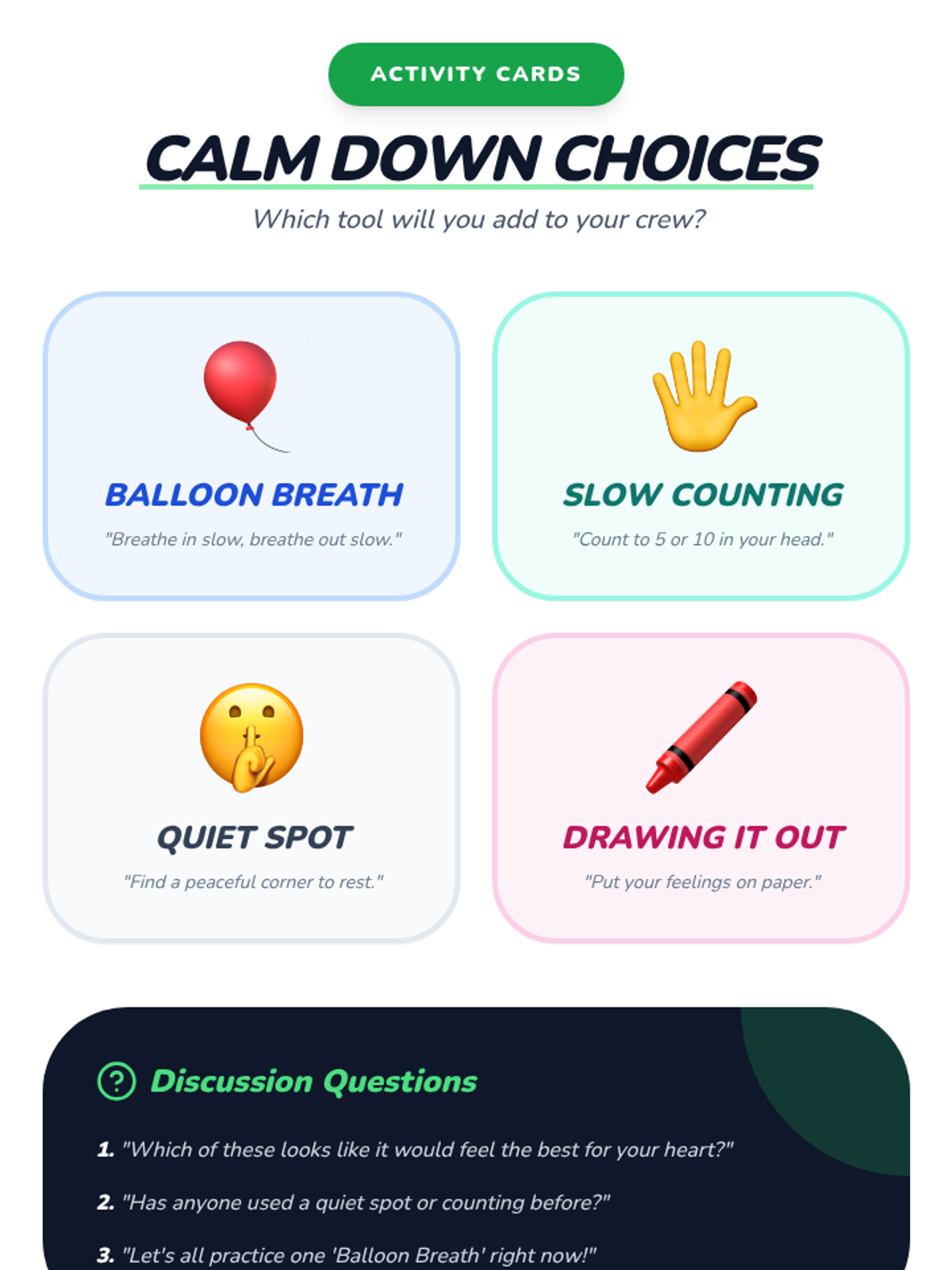
Teaches practical self-regulation strategies like deep breathing and counting to manage intense emotions.
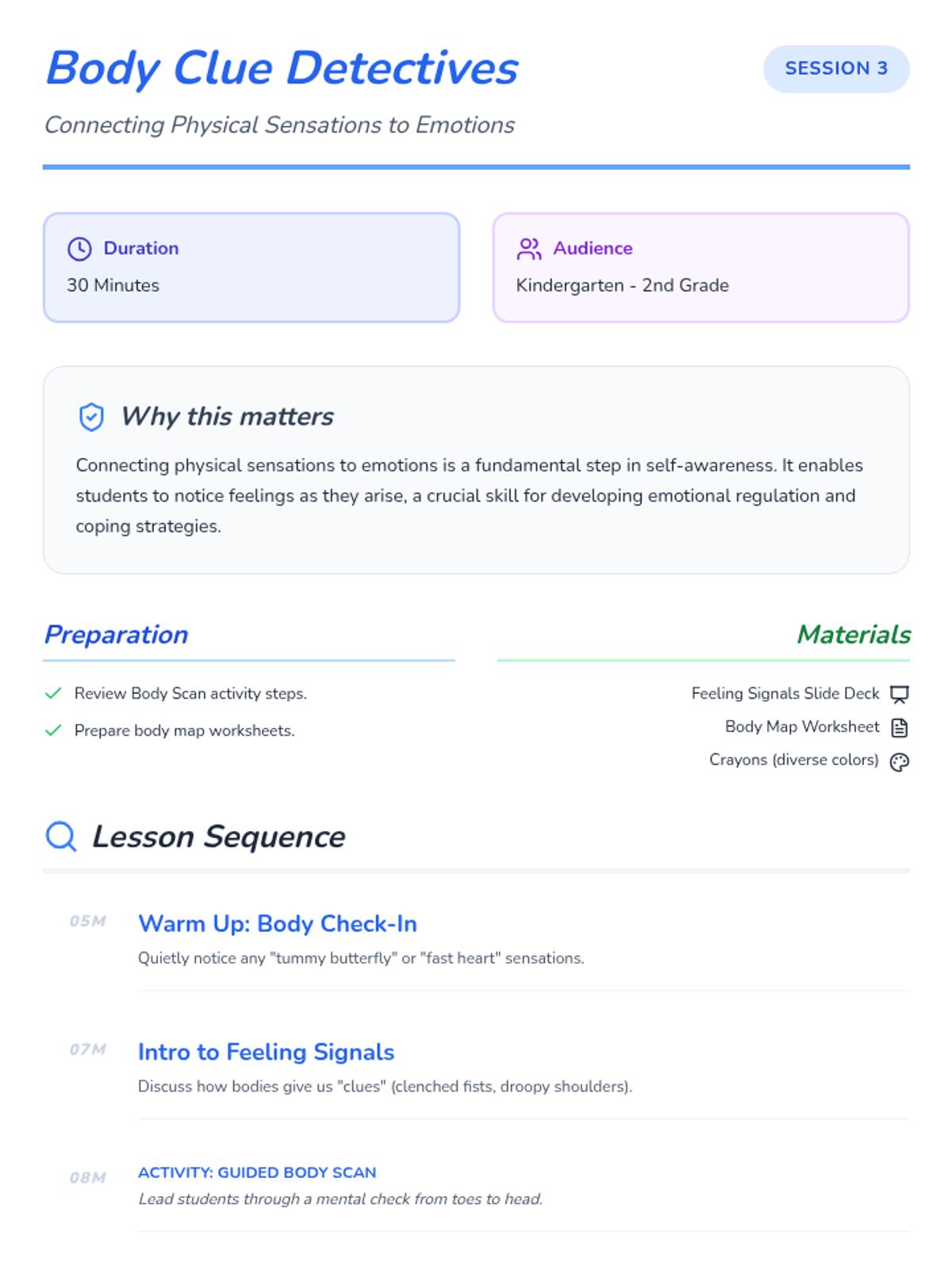
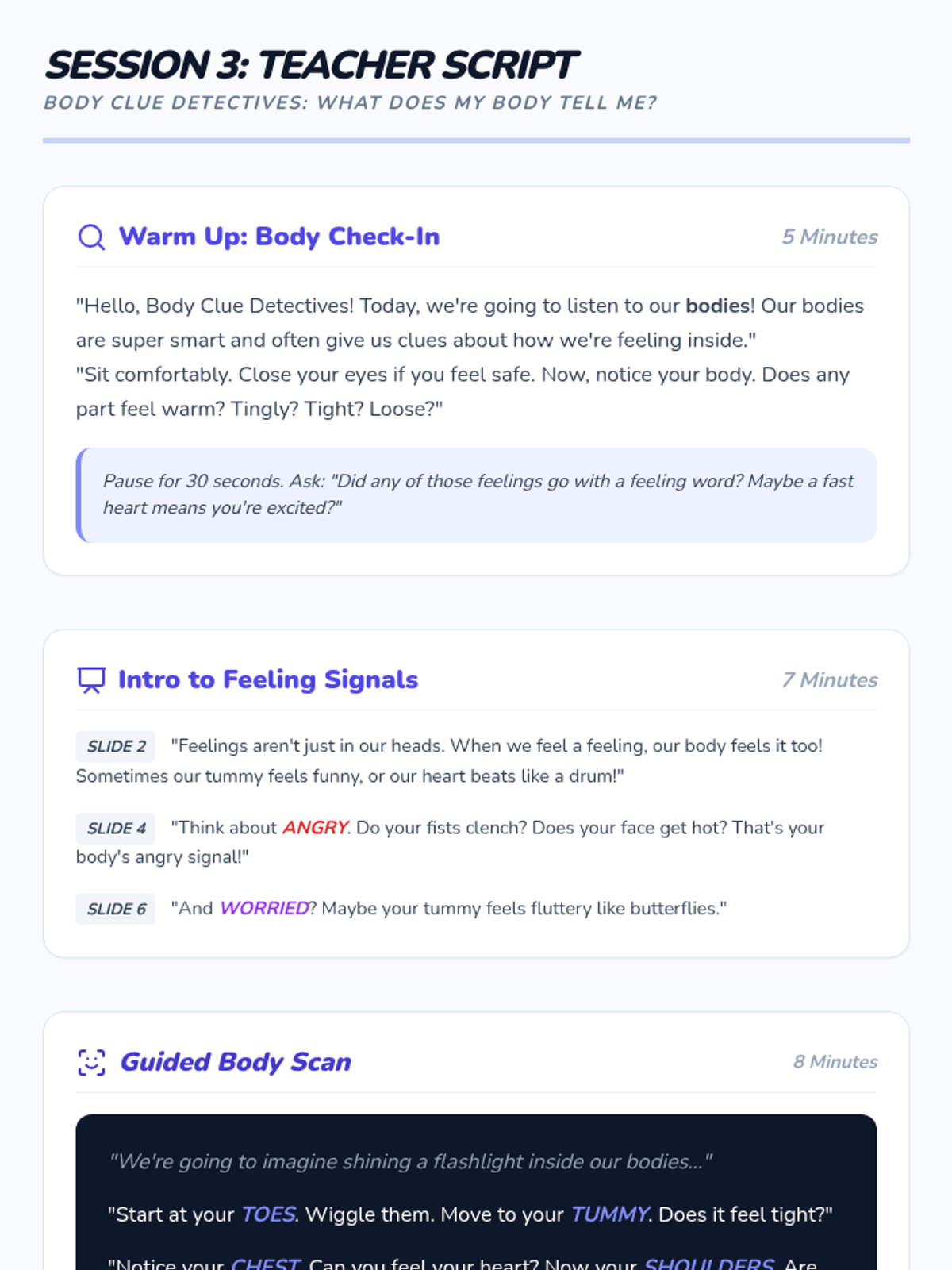
Connects physical sensations to emotions, helping students identify feelings through body signals.
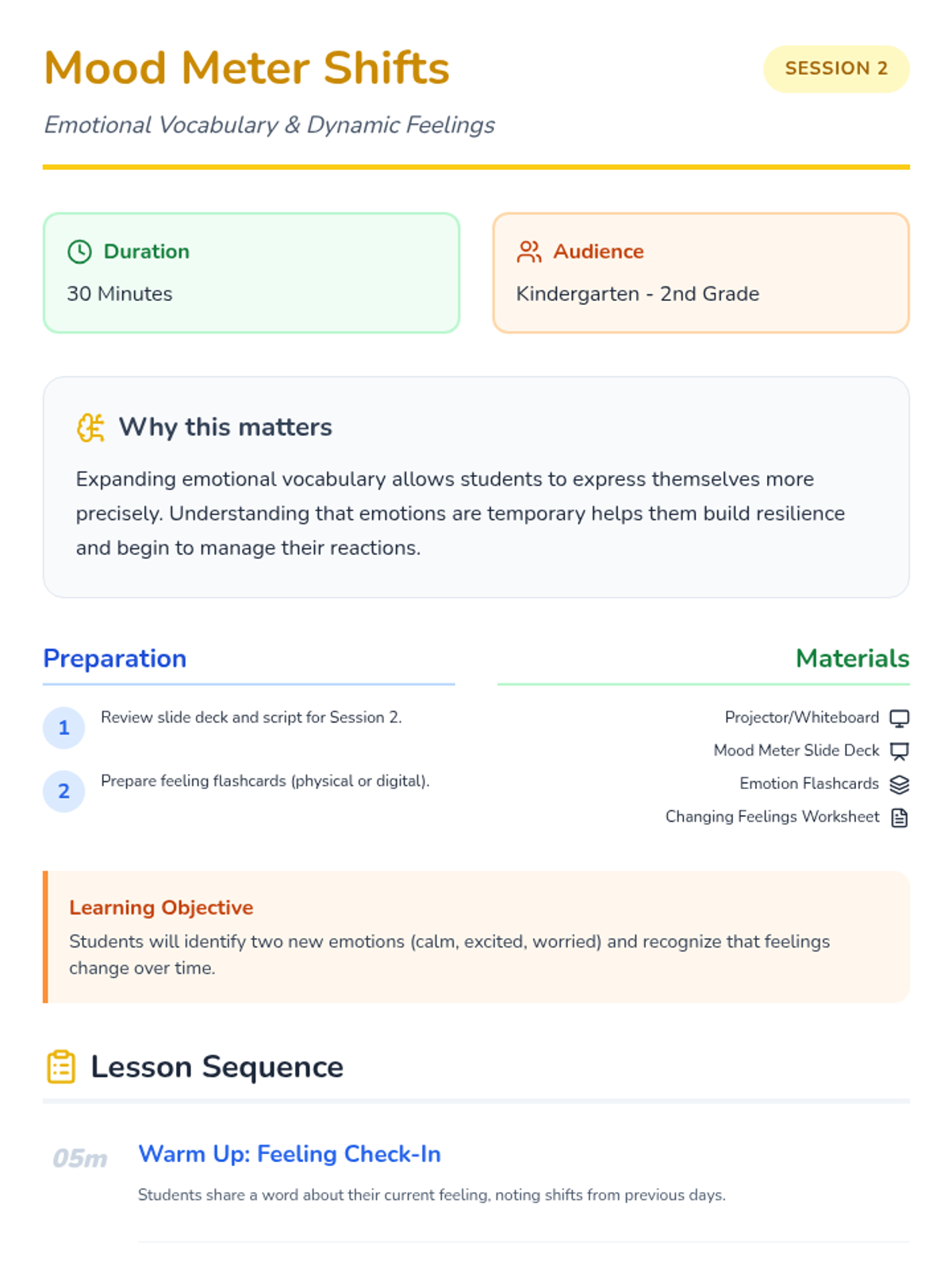
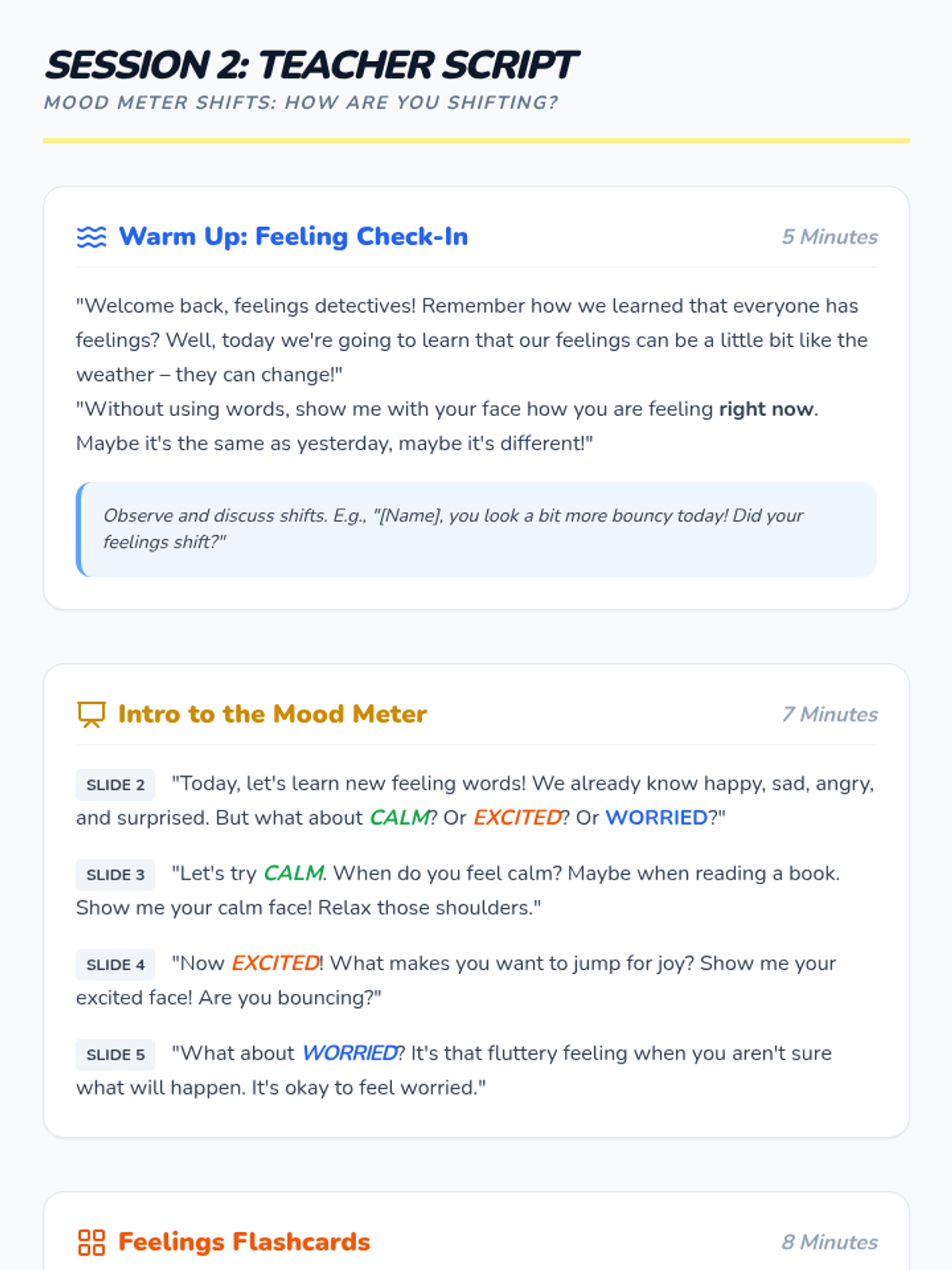
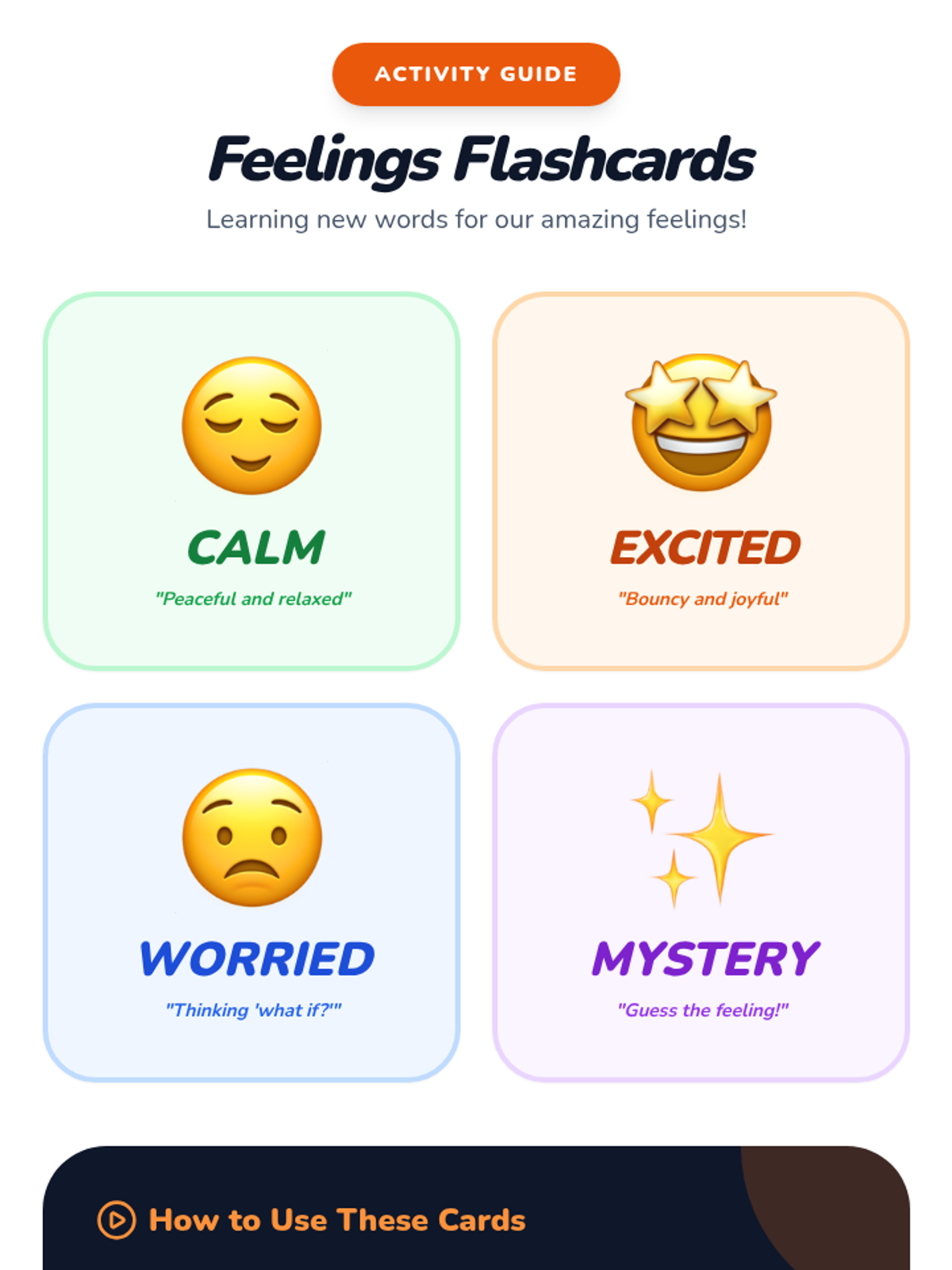
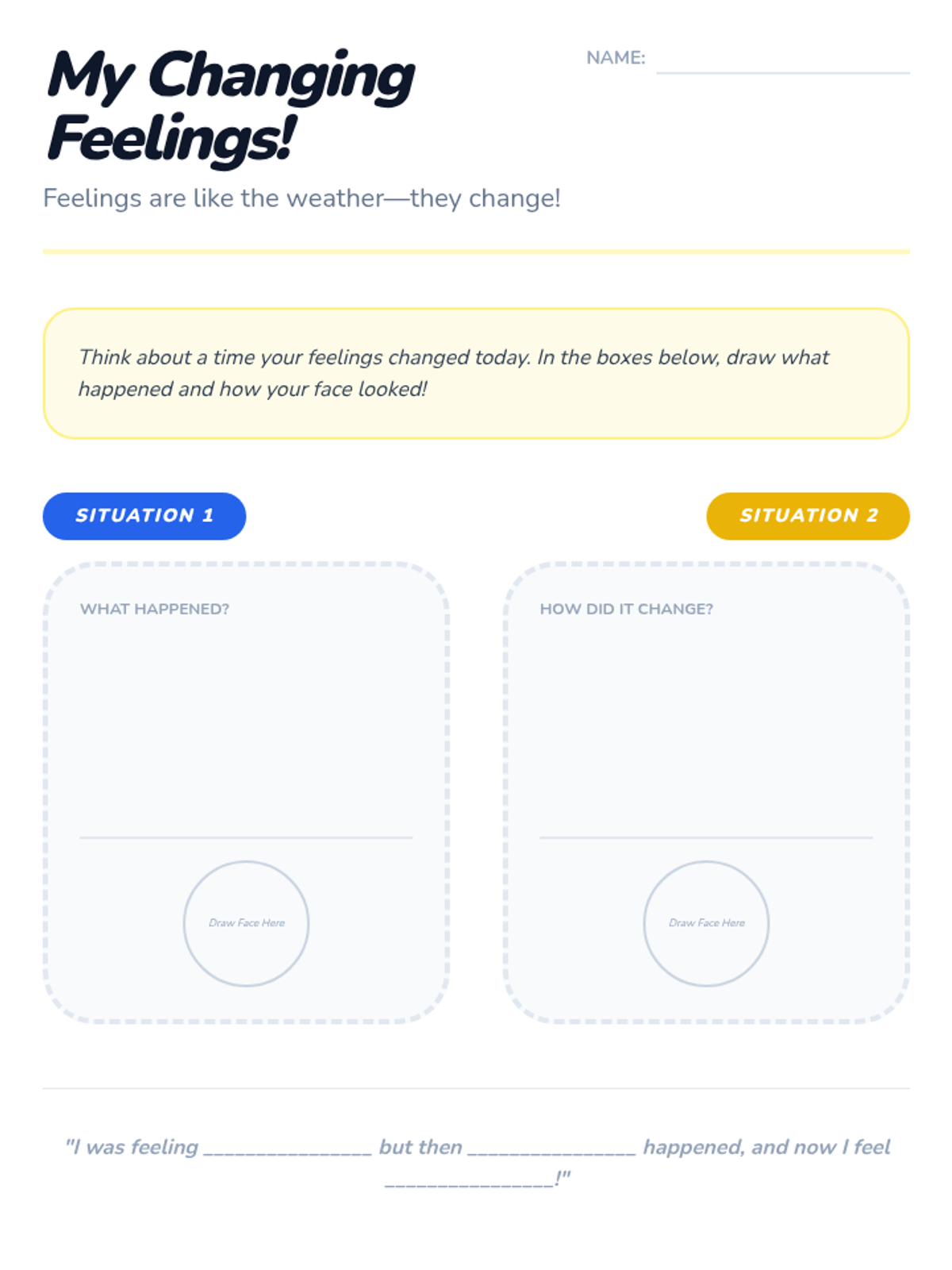
Explores a wider range of emotions and the concept that feelings change over time.
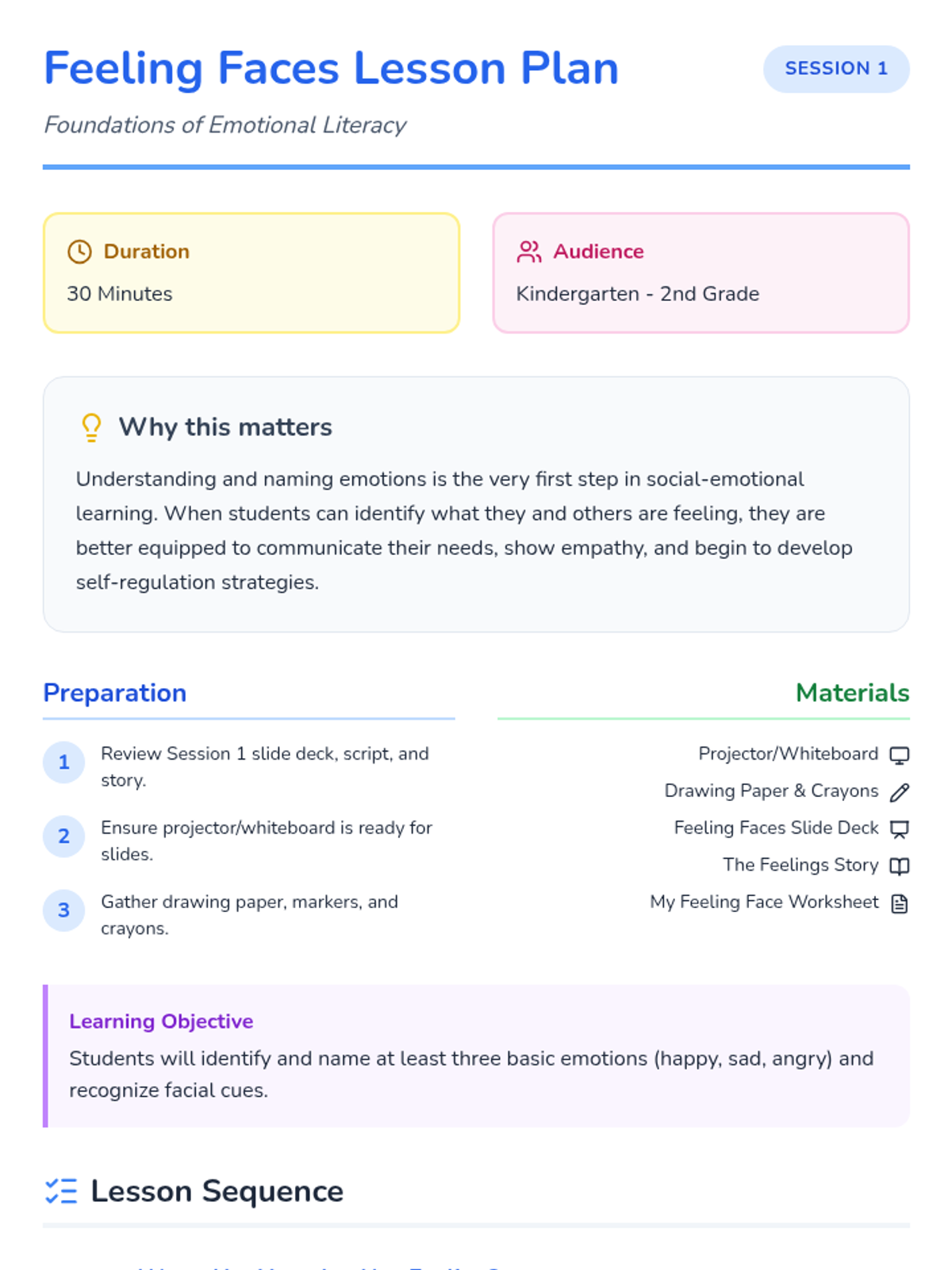
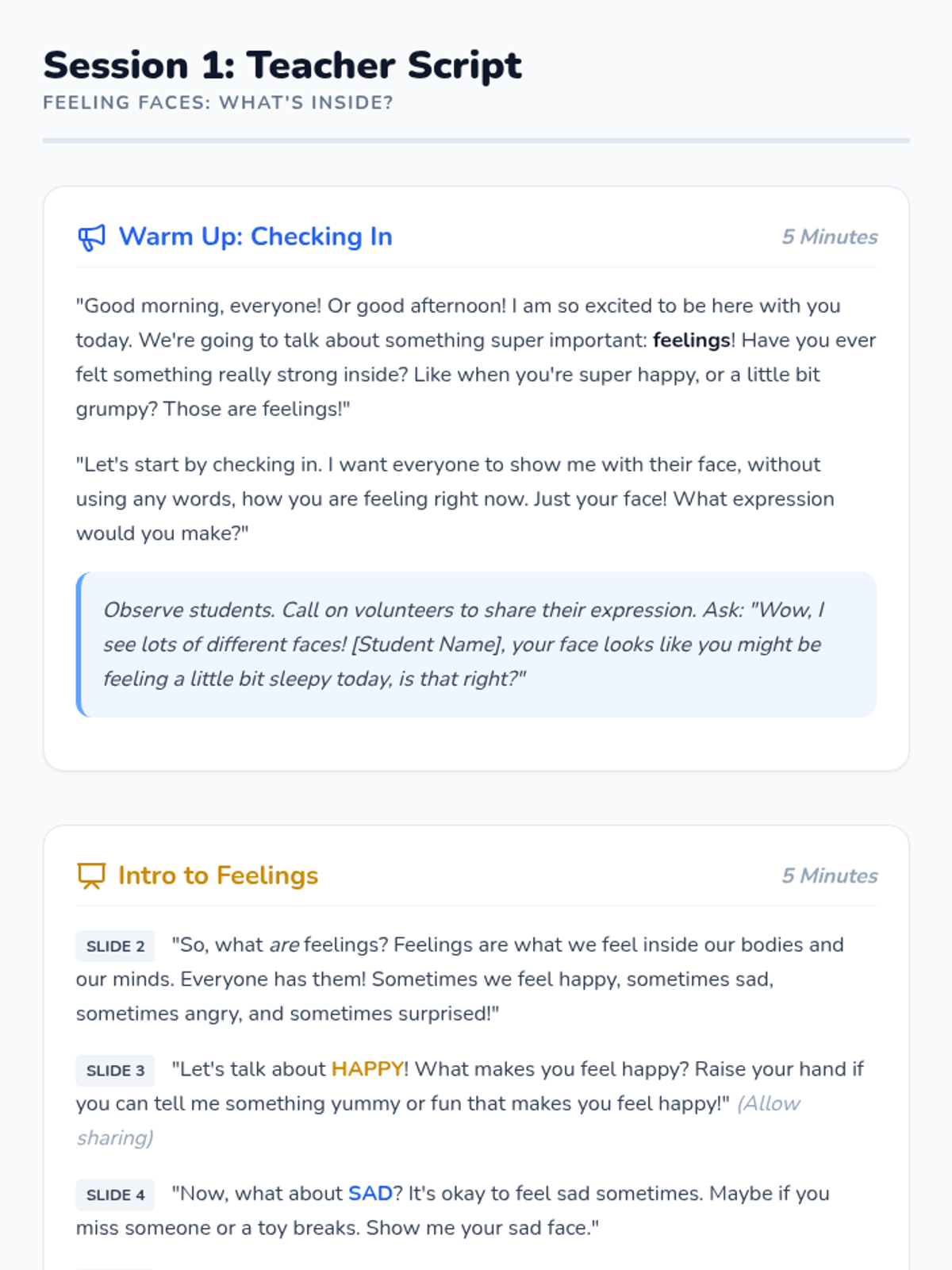
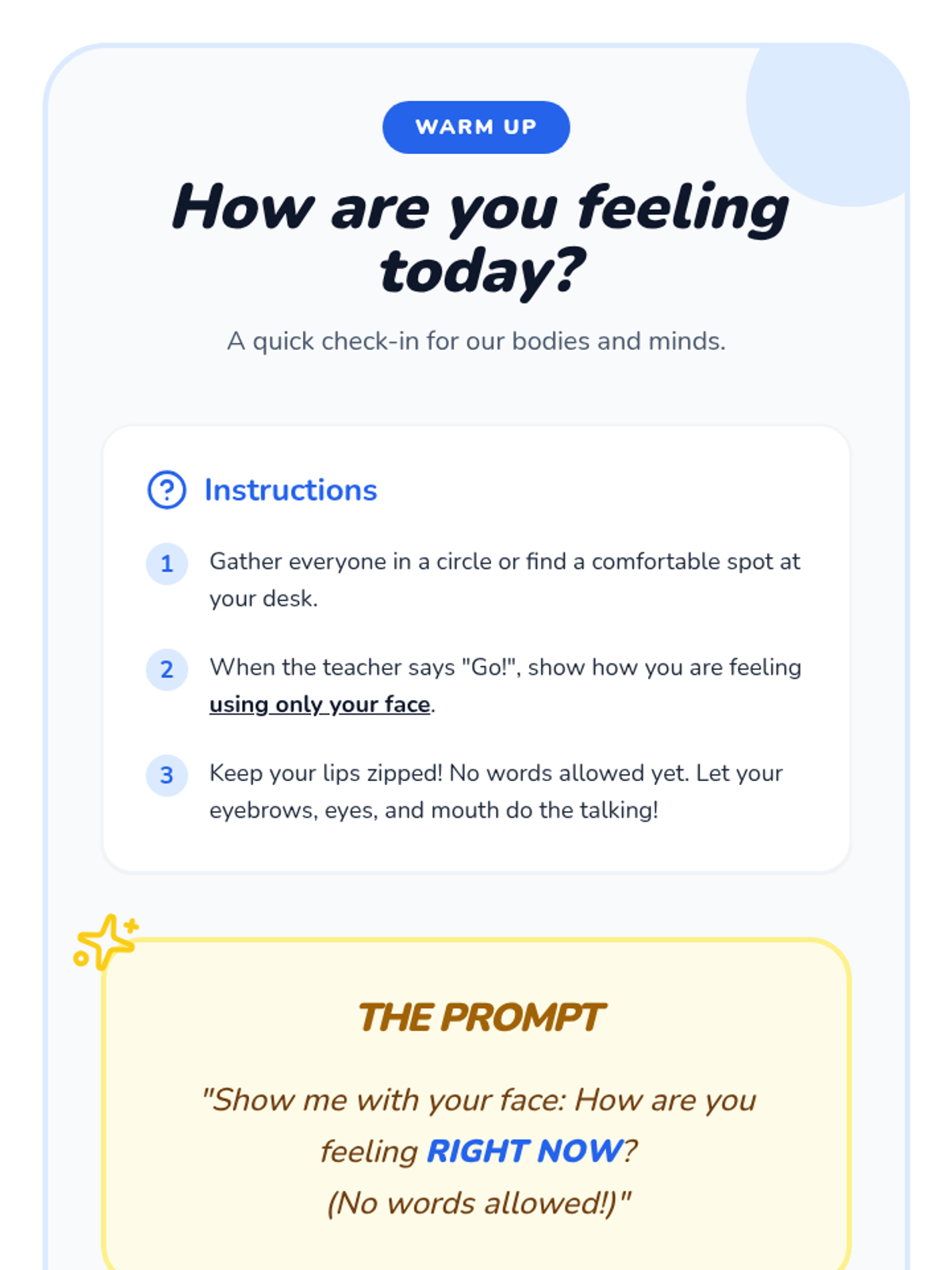
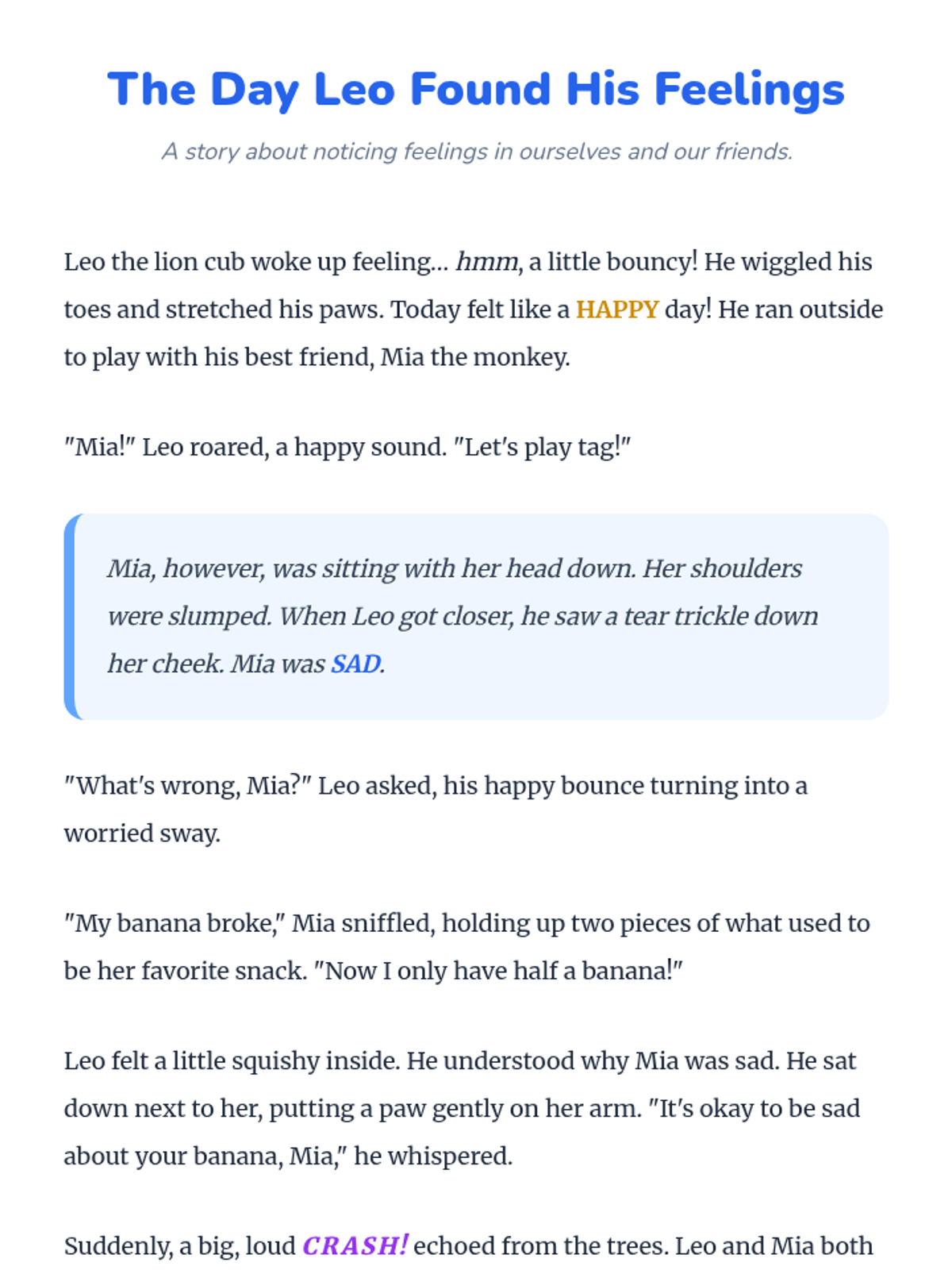
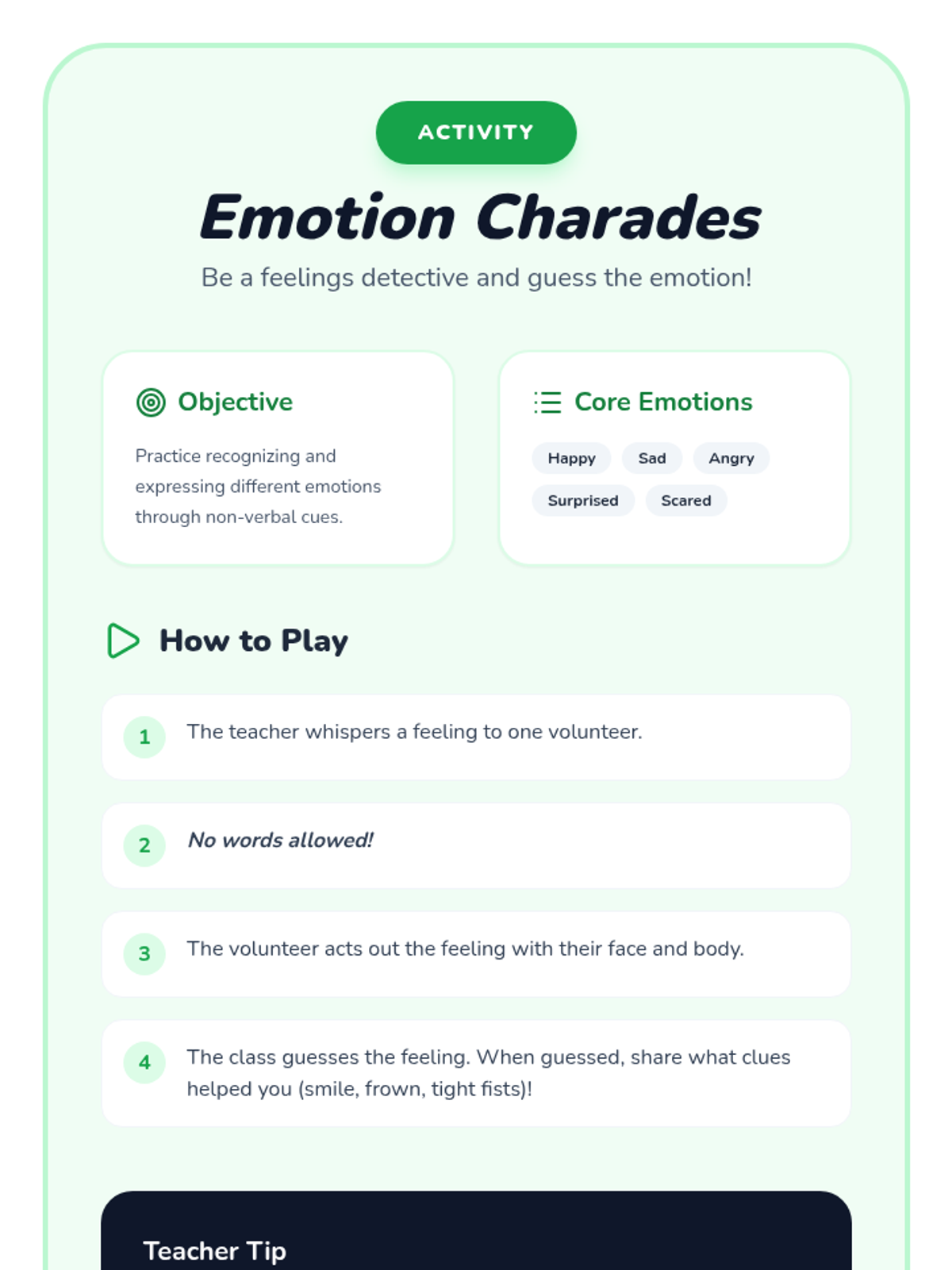
Introduces the concept of emotions and naming basic feelings through a story and interactive games.
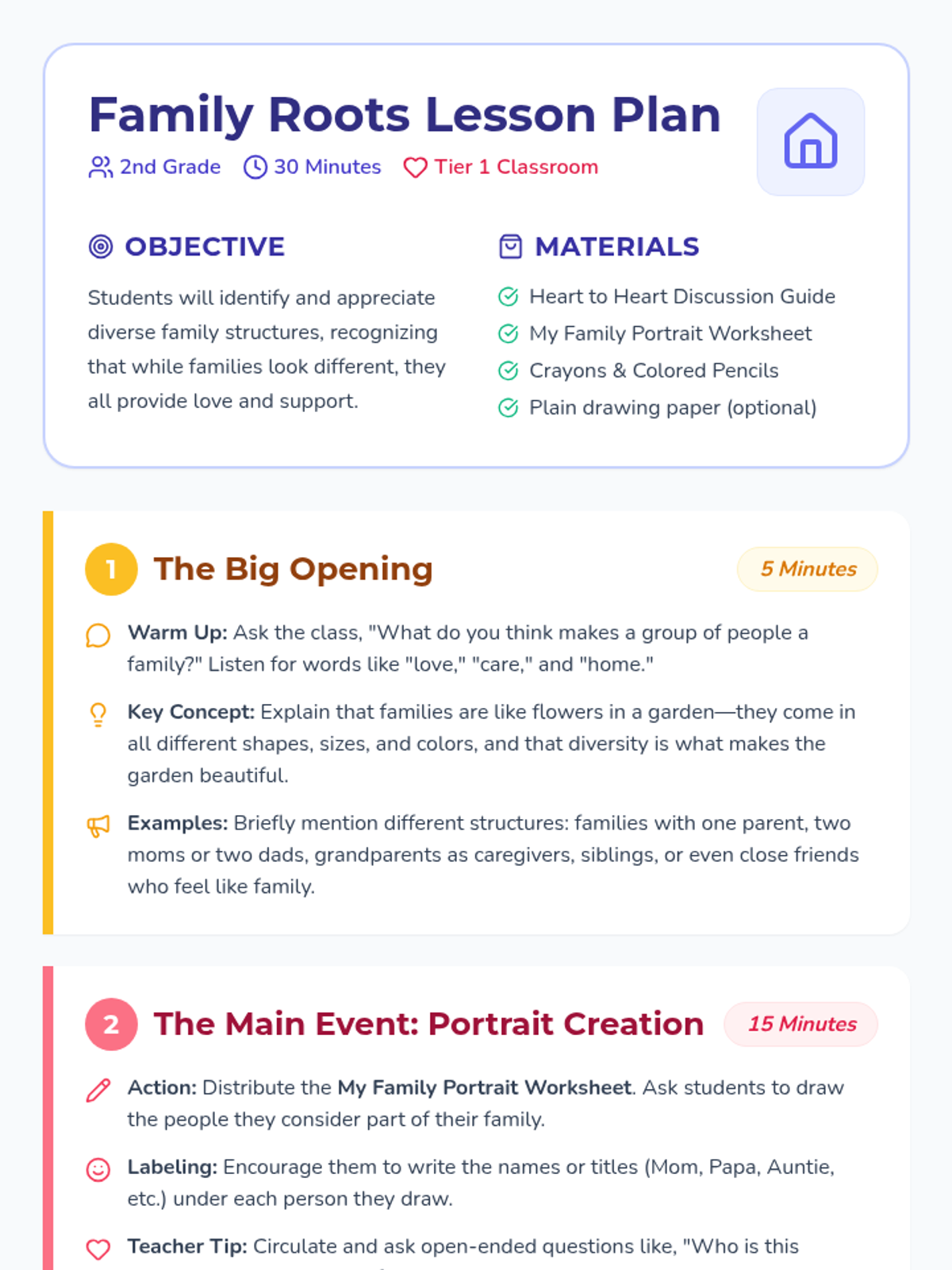
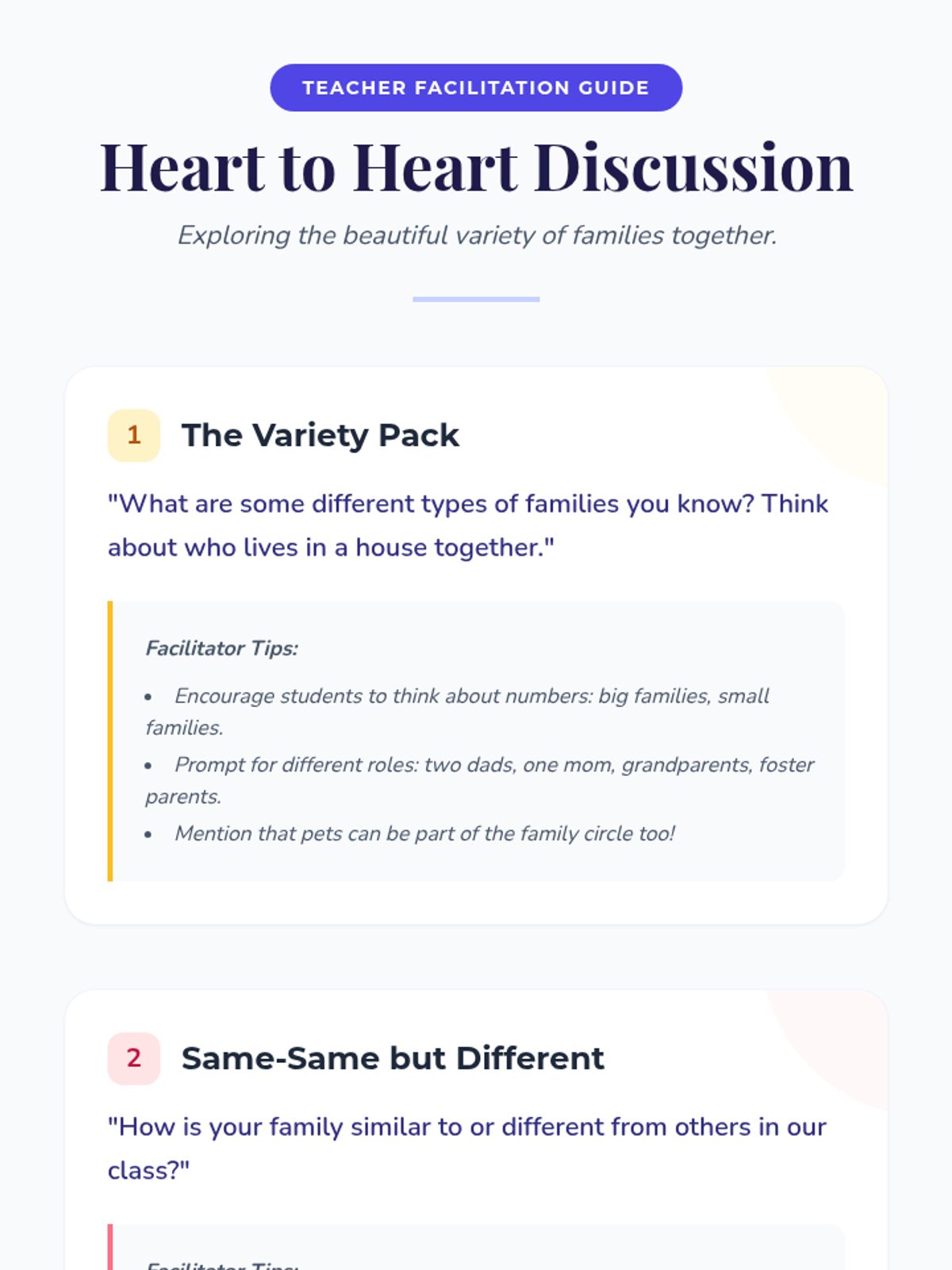
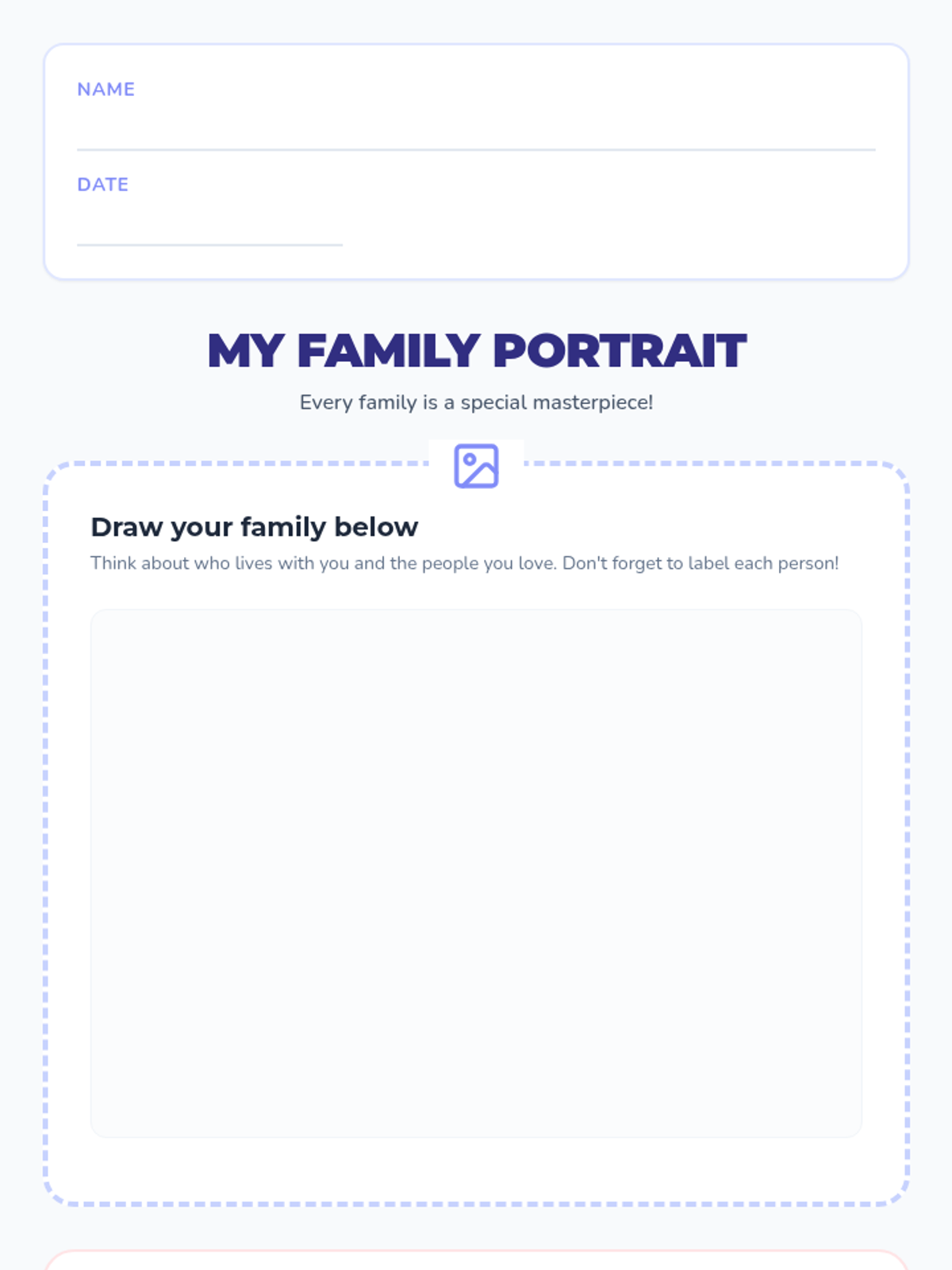
A 2nd-grade lesson exploring the beautiful diversity of family structures through drawing, labeling, and guided discussion to foster empathy and inclusion.
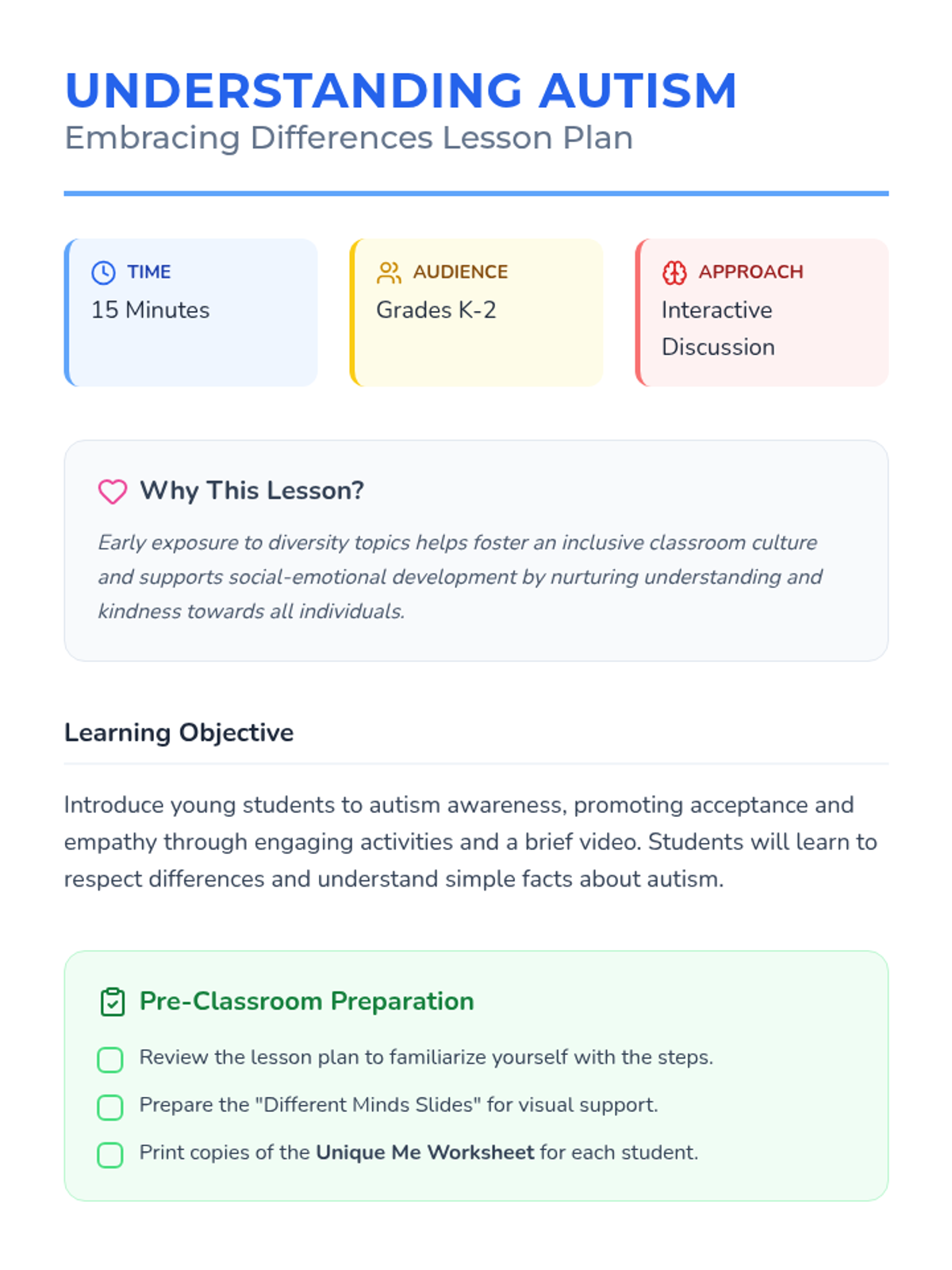
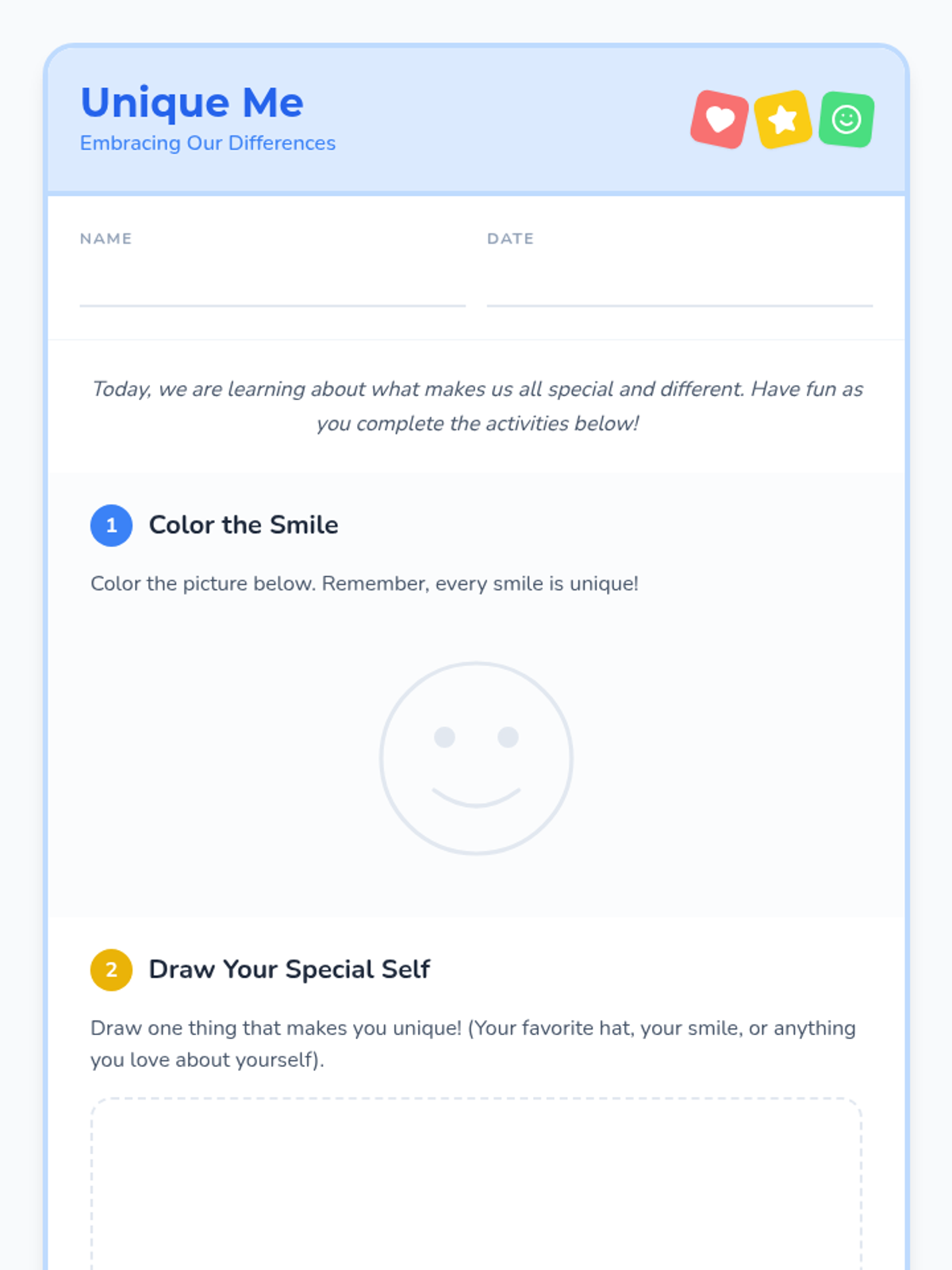
A gentle introduction for K-2 students to understand autism and celebrate neurodiversity through storytelling and creative activities.
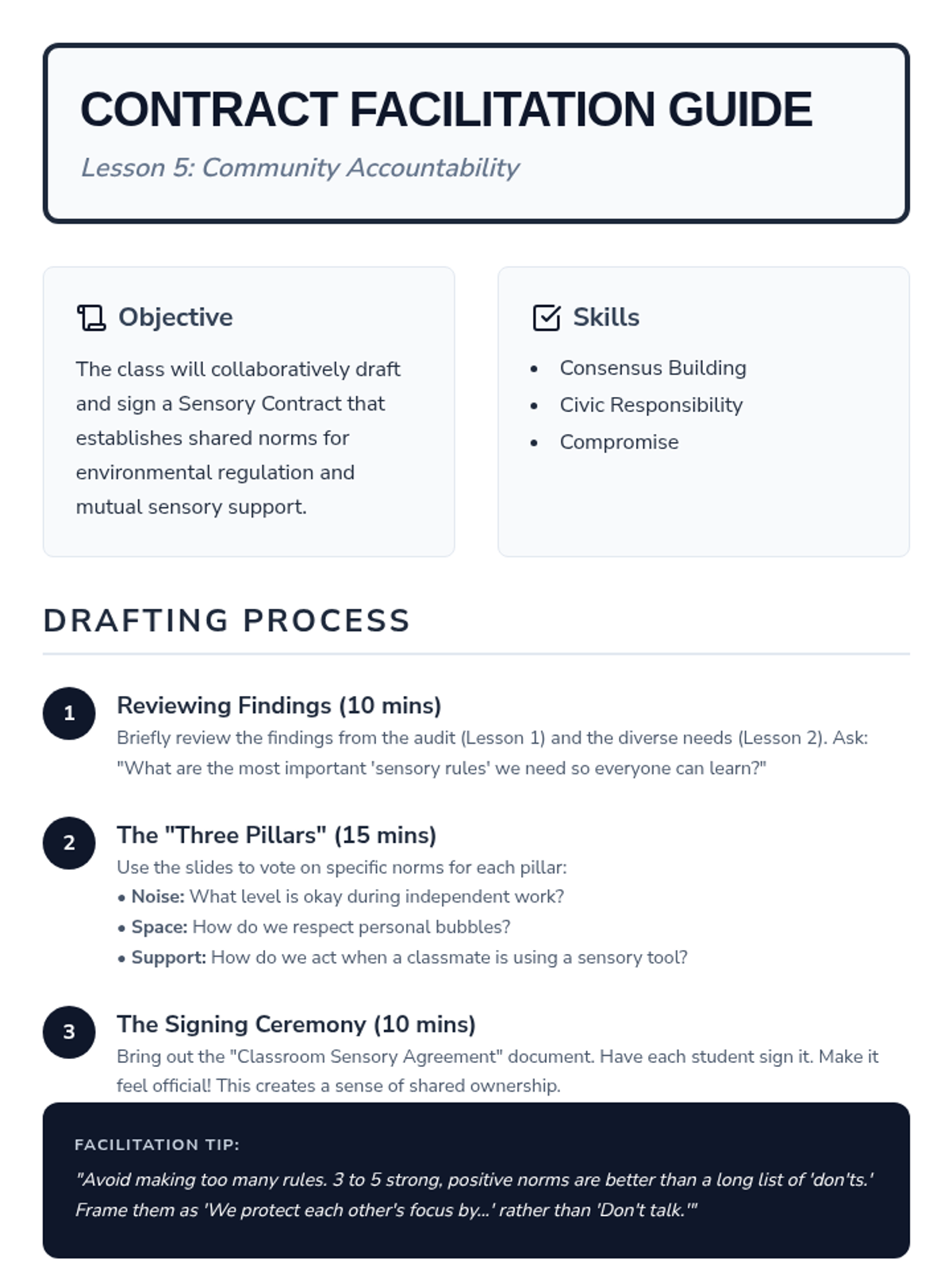
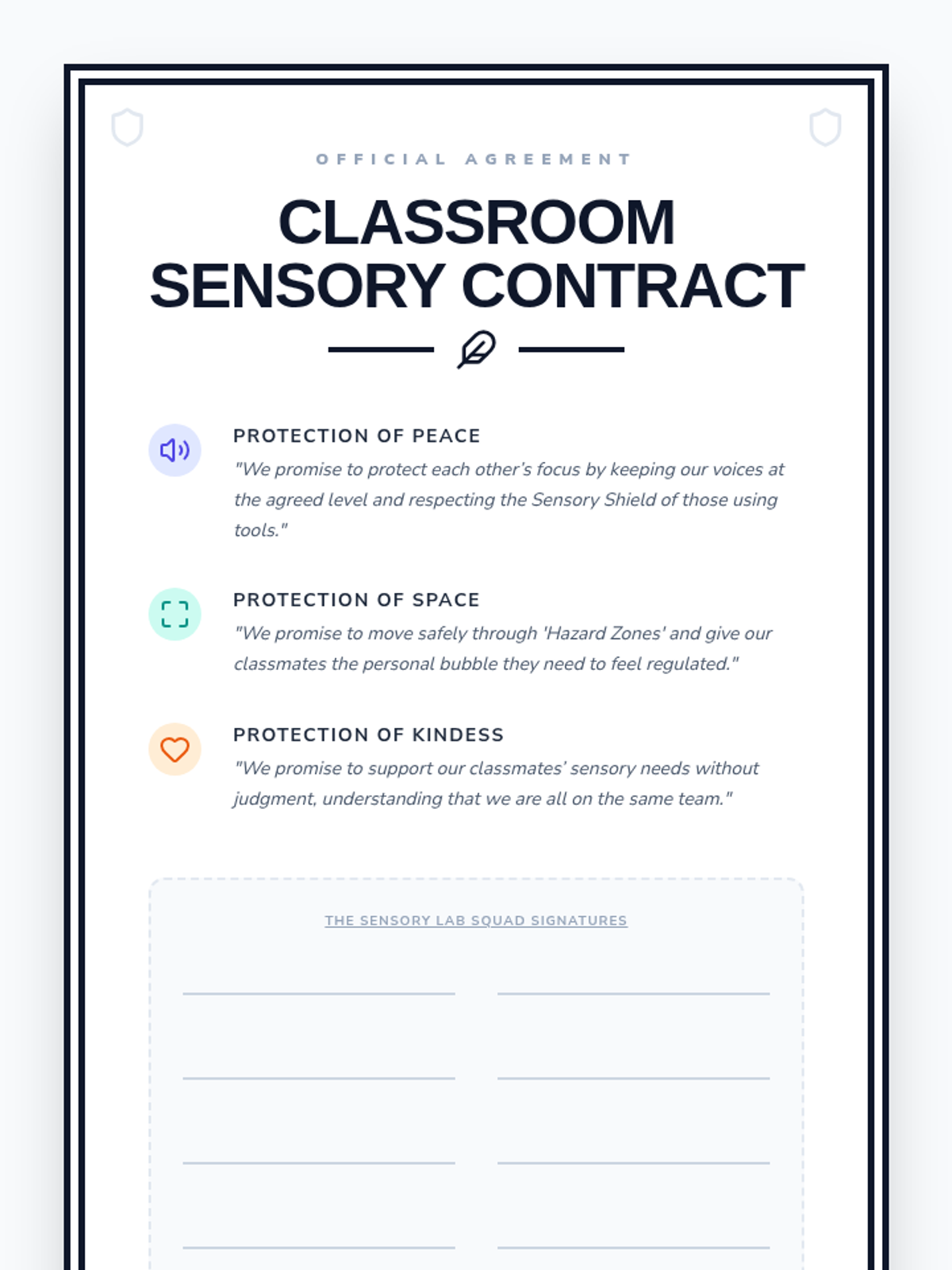
The sequence culminates in the creation of a shared classroom agreement that establishes norms for noise, space, and sensory support.
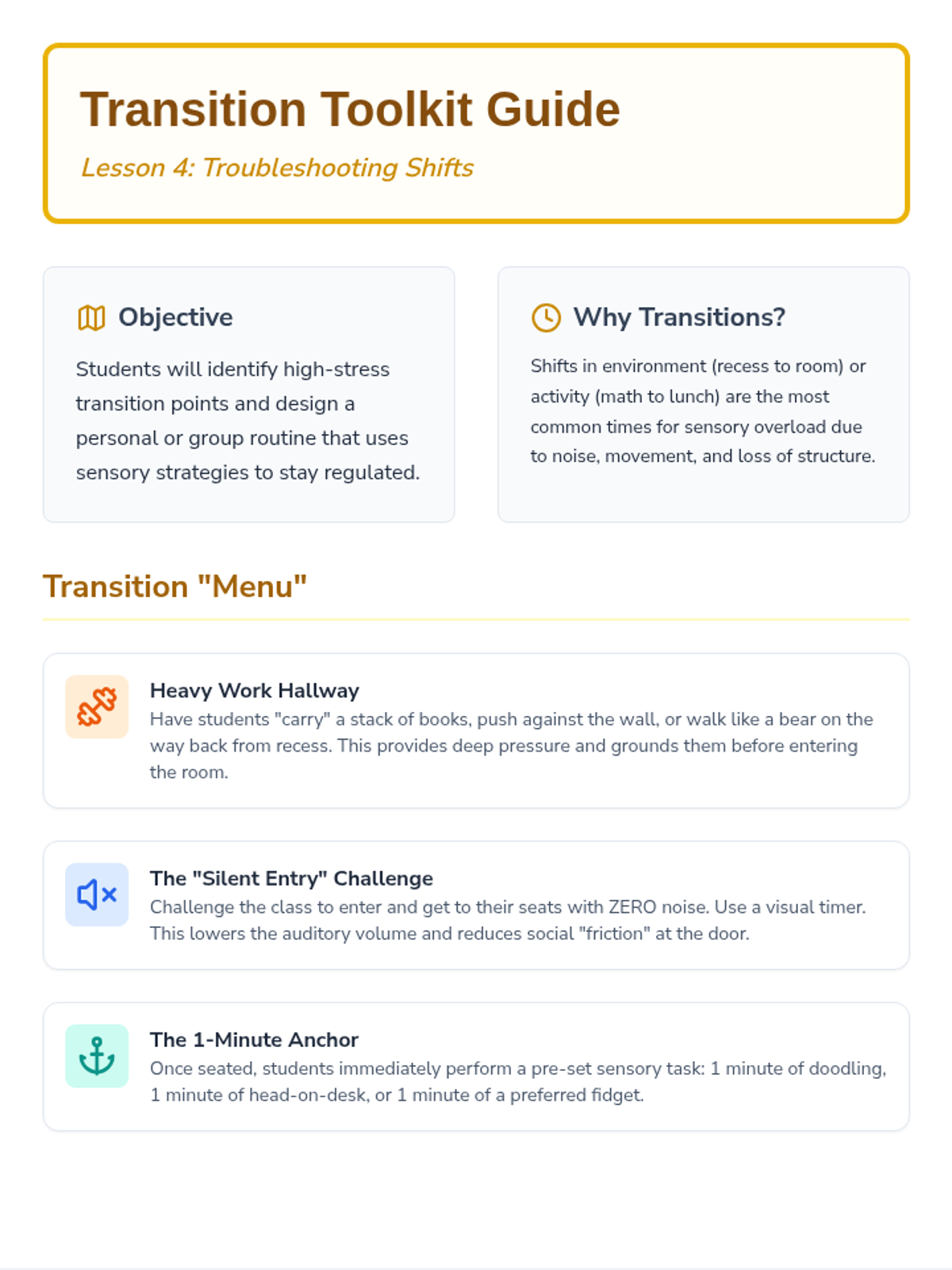
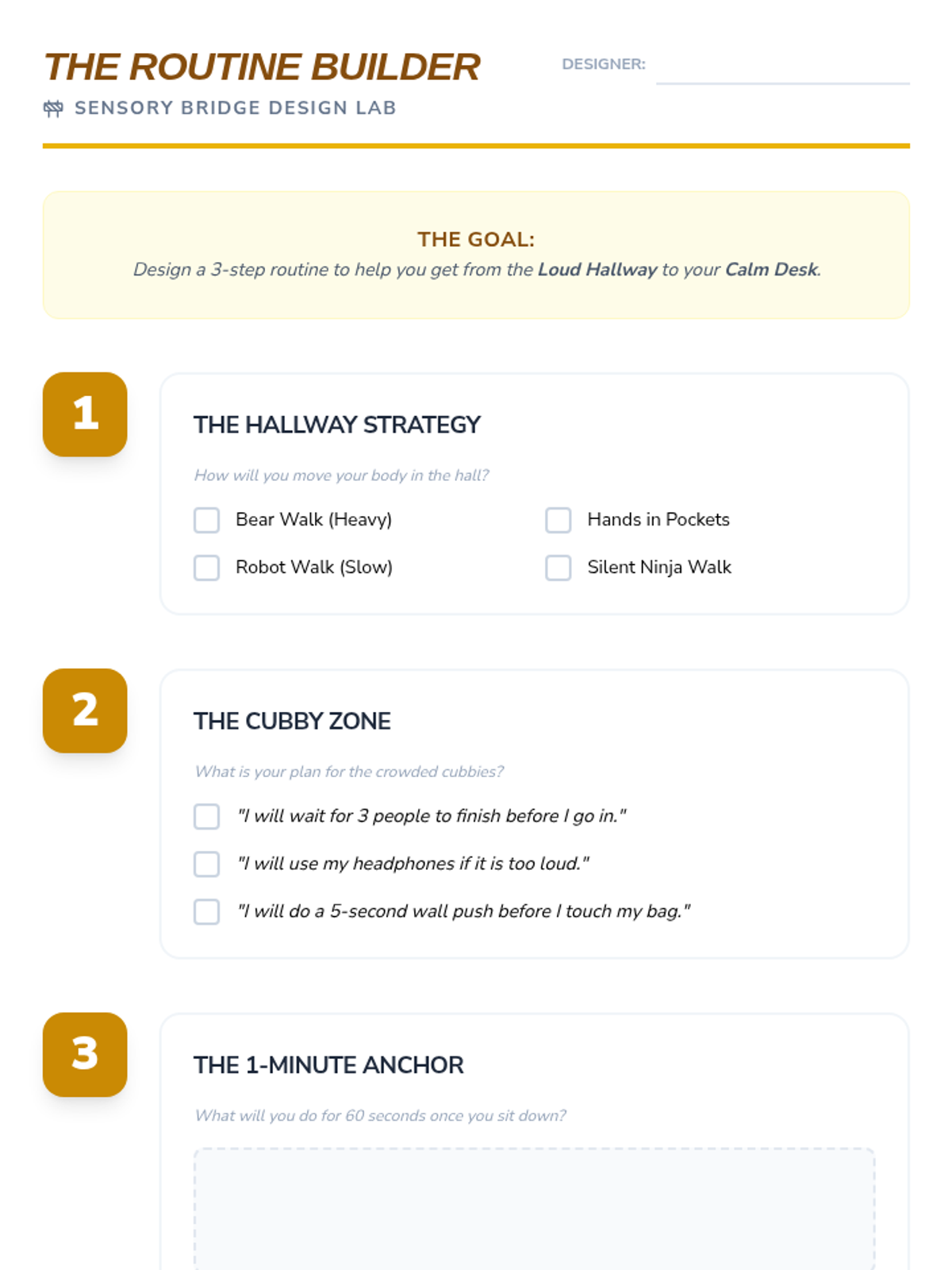
Students identify high-stress transition times and brainstorm proactive routines to maintain sensory regulation when moving between activities.
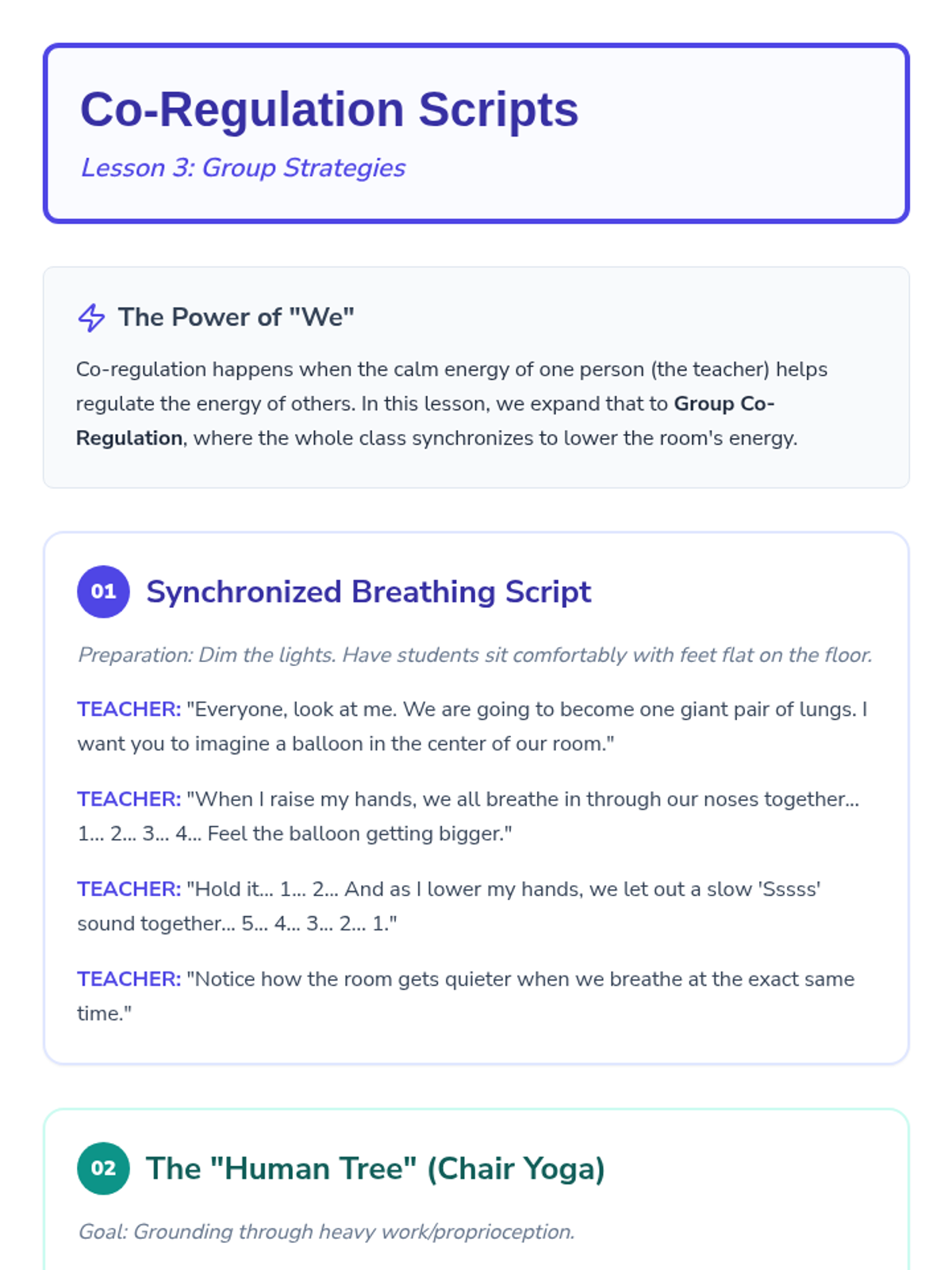
The class practices whole-group regulation techniques like synchronized breathing and chair yoga to understand how collective action affects the energy of the room.
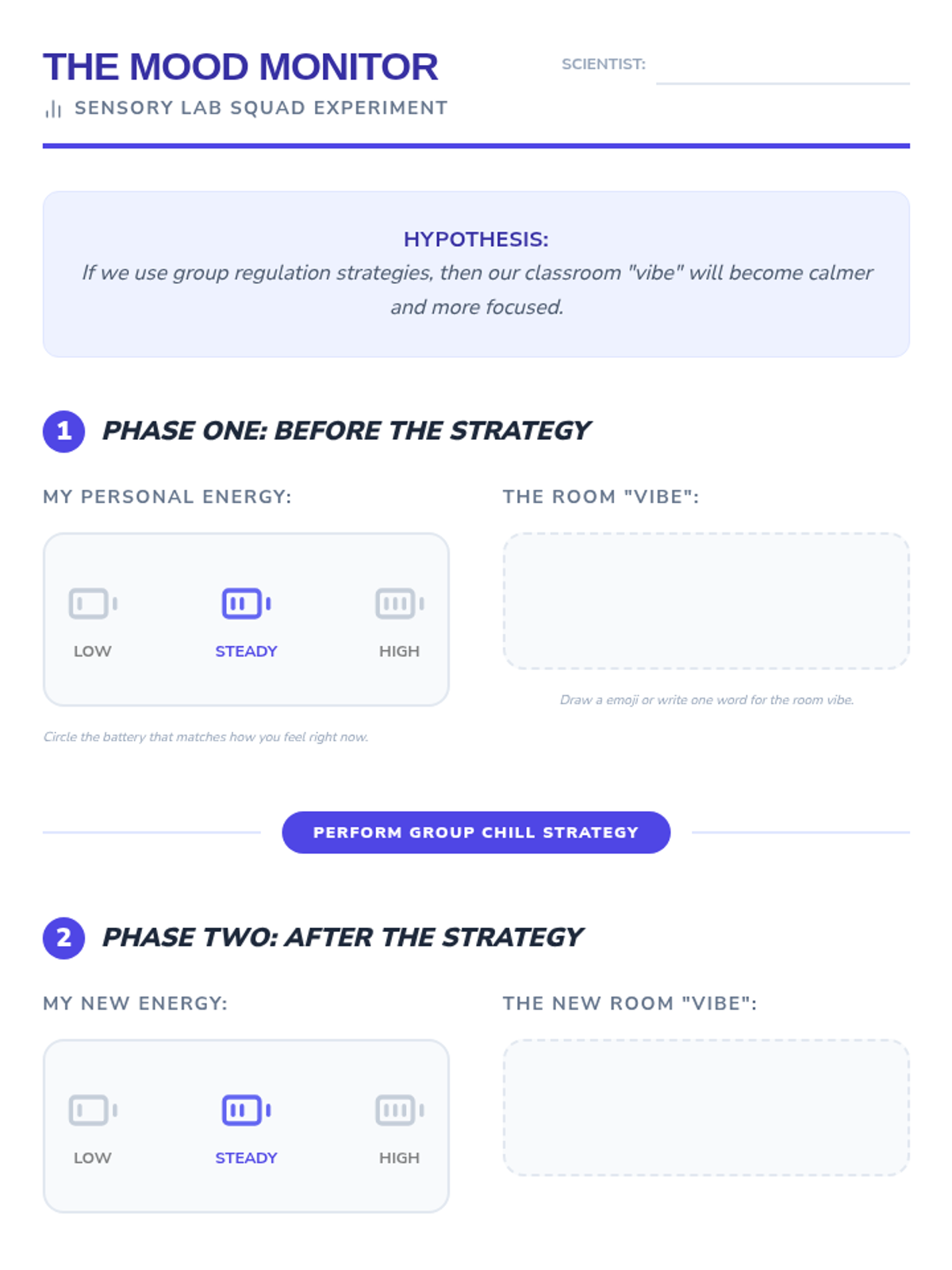
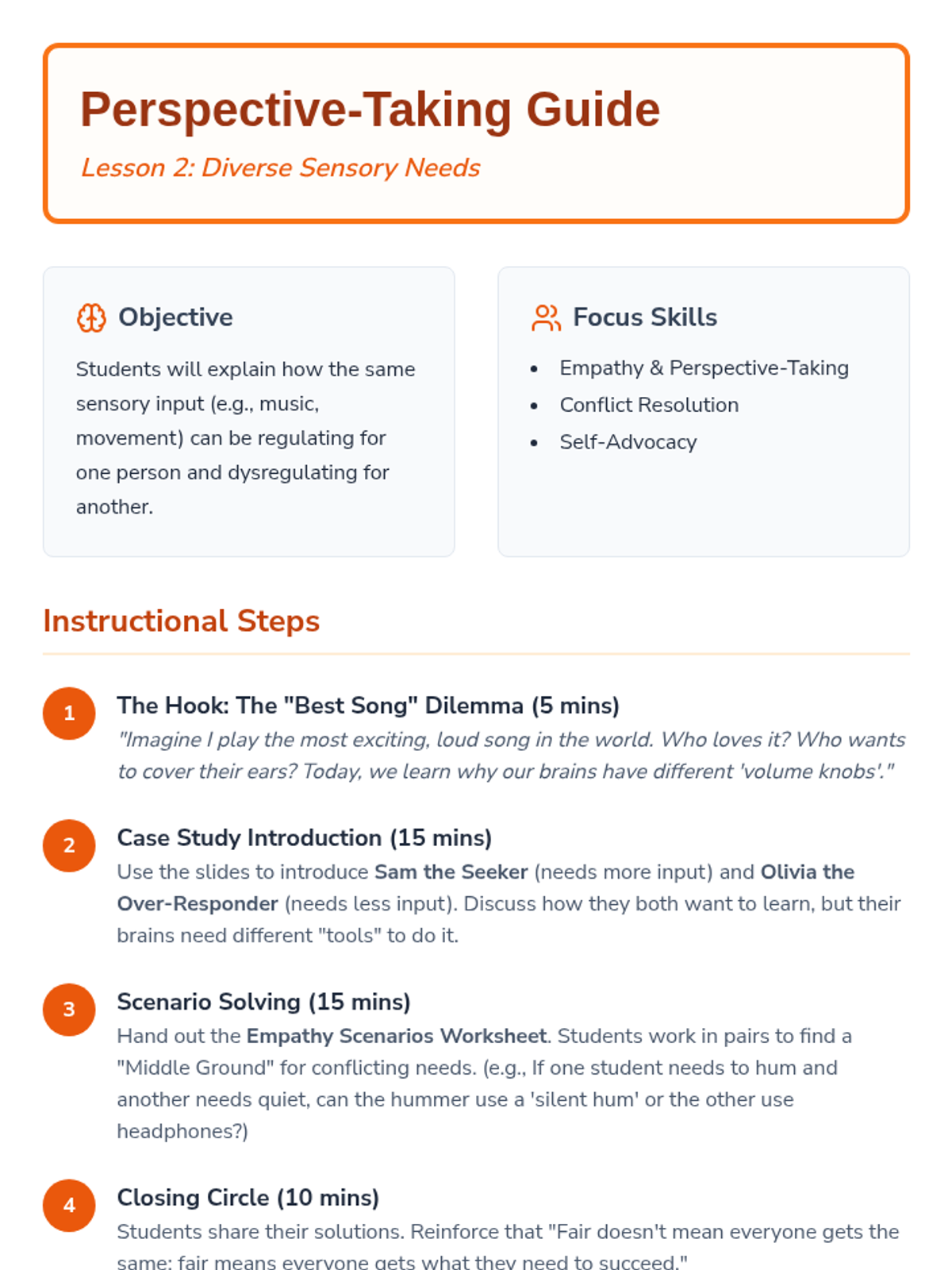
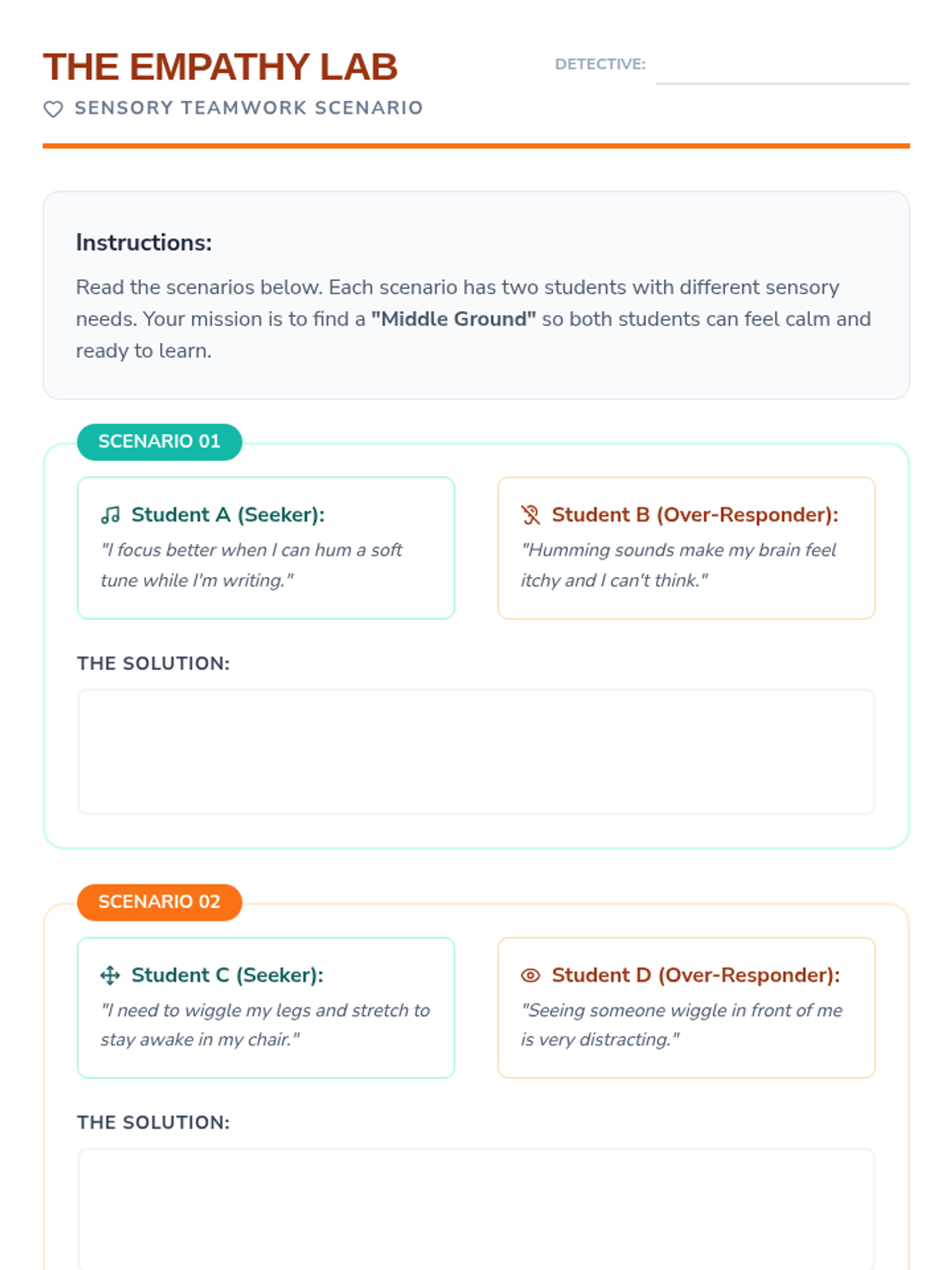
Students explore how sensory preferences vary between individuals and practice perspective-taking to understand and respect classmates' different needs.
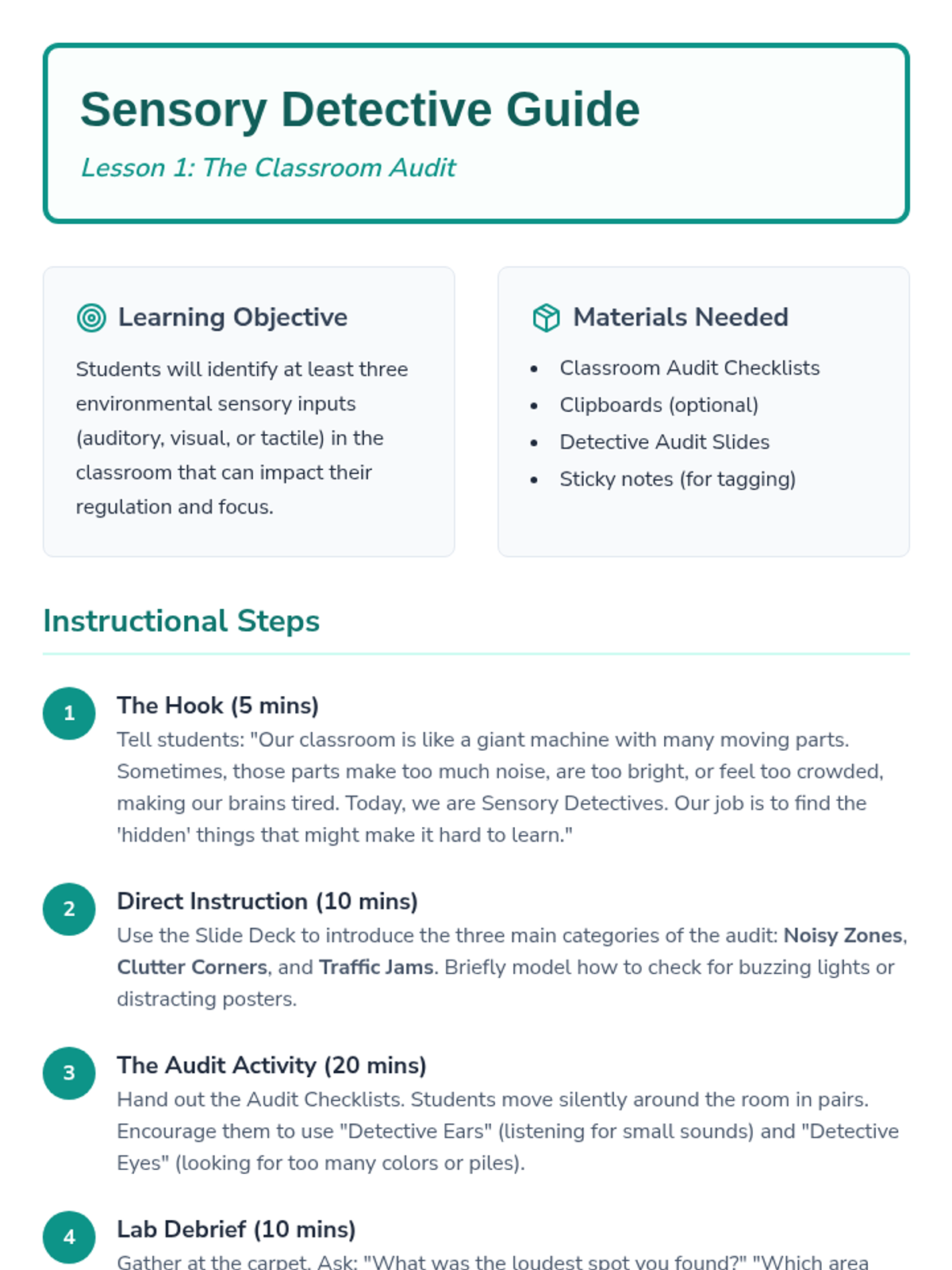
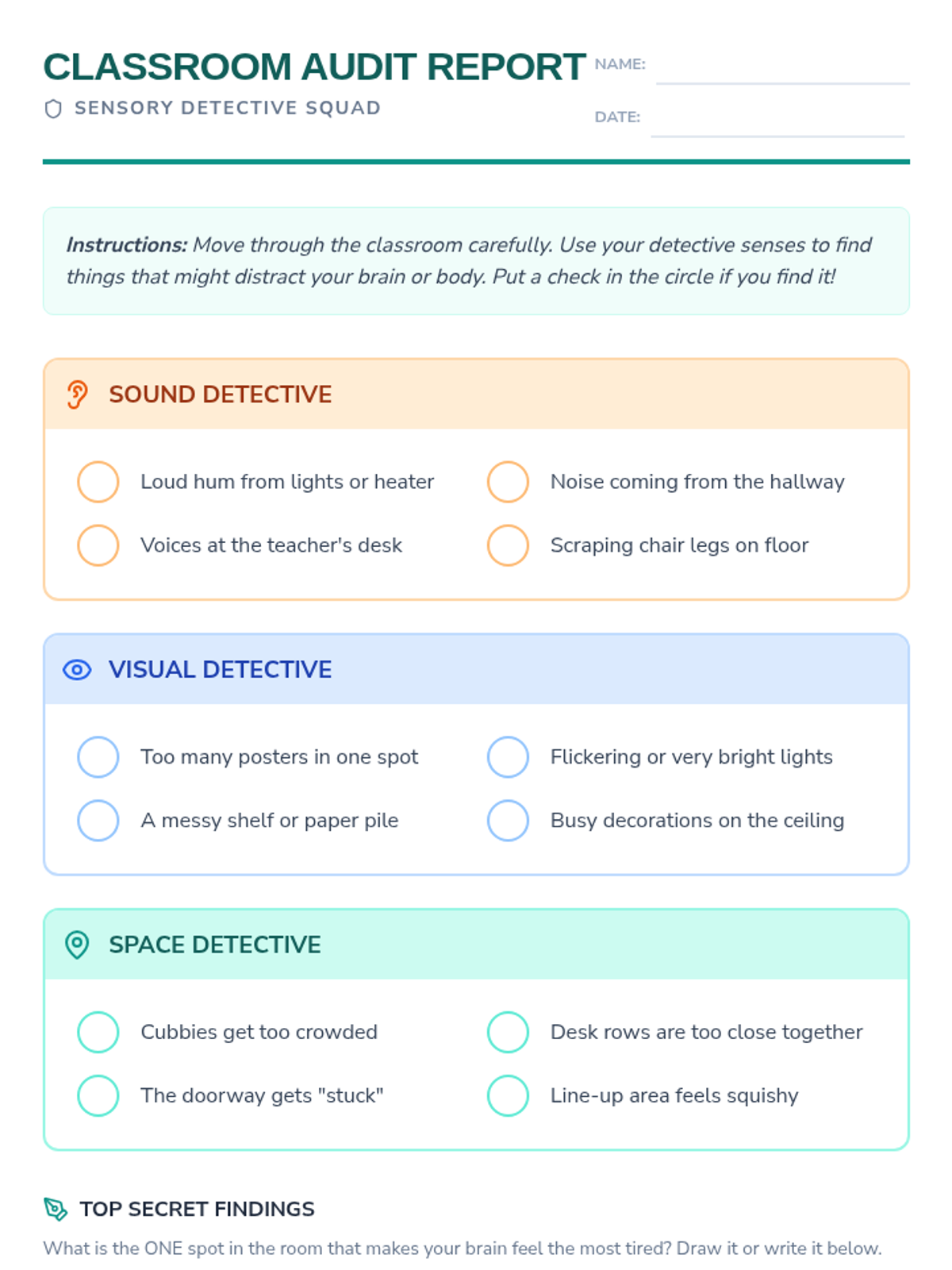
Students conduct a hands-on audit of their classroom to identify environmental sensory triggers and discuss how these factors impact their ability to focus and stay calm.
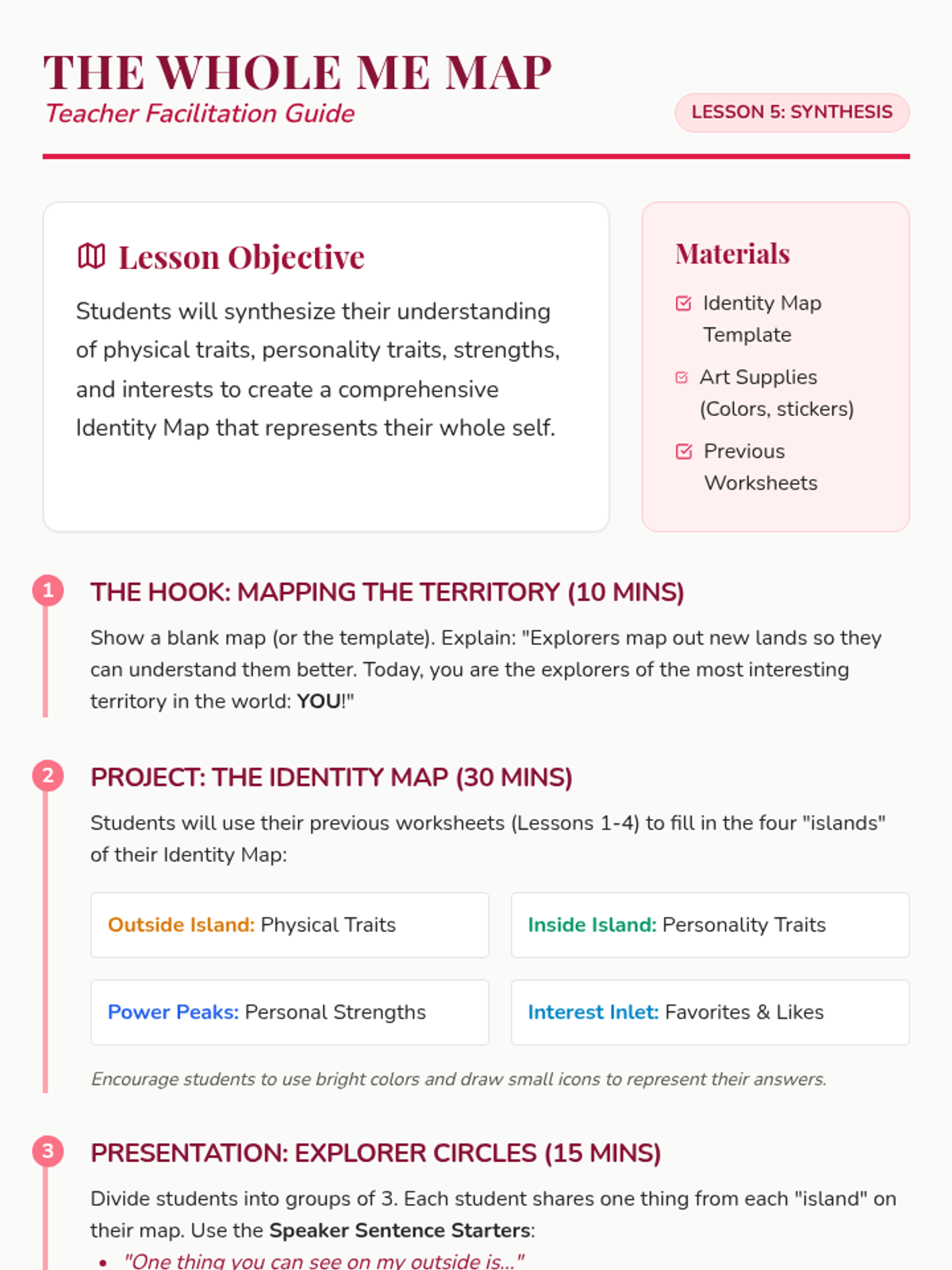
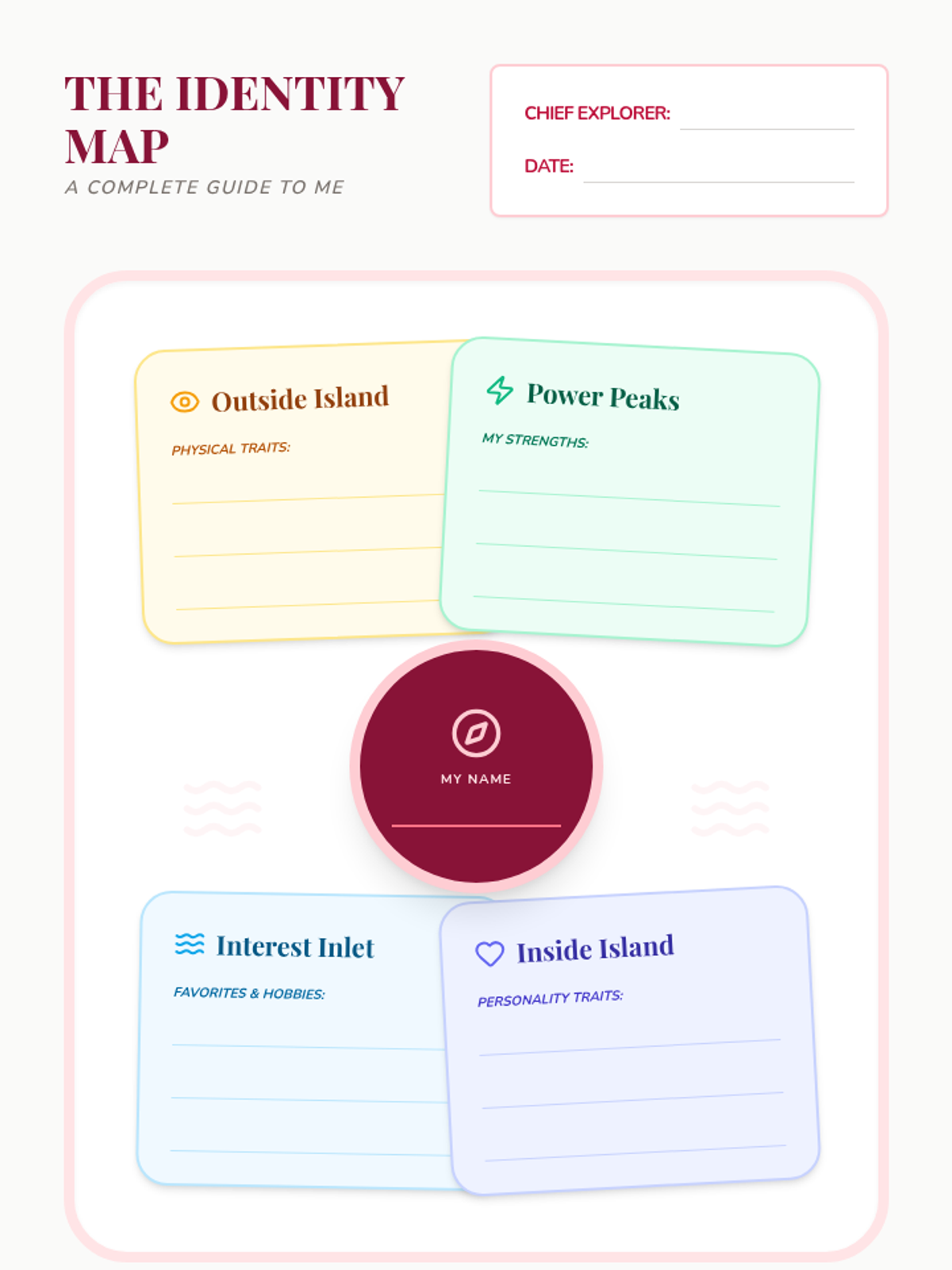
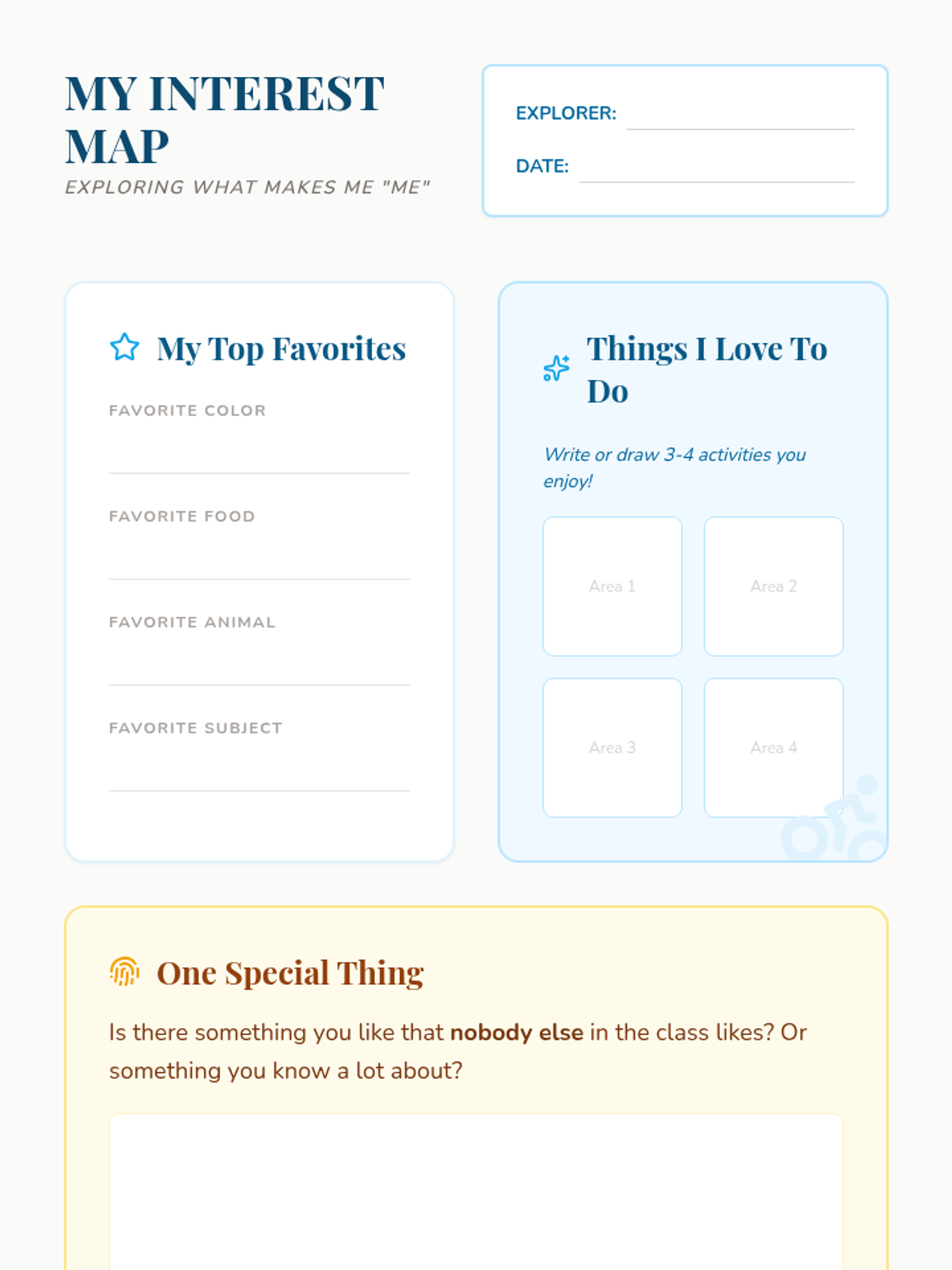
In this culminating lesson, students combine their physical traits, personality descriptors, strengths, and interests into a single 'Identity Map' art project.
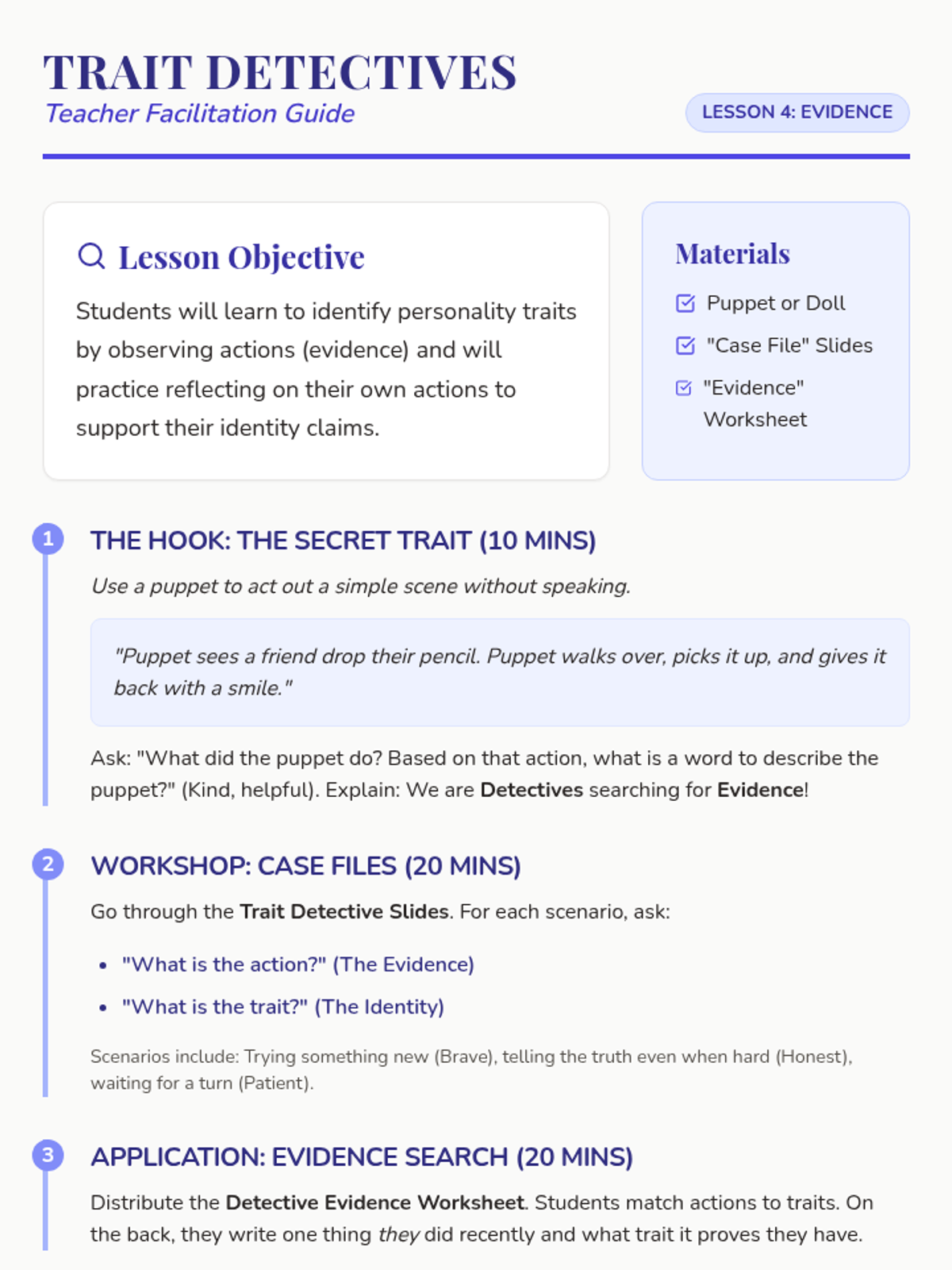
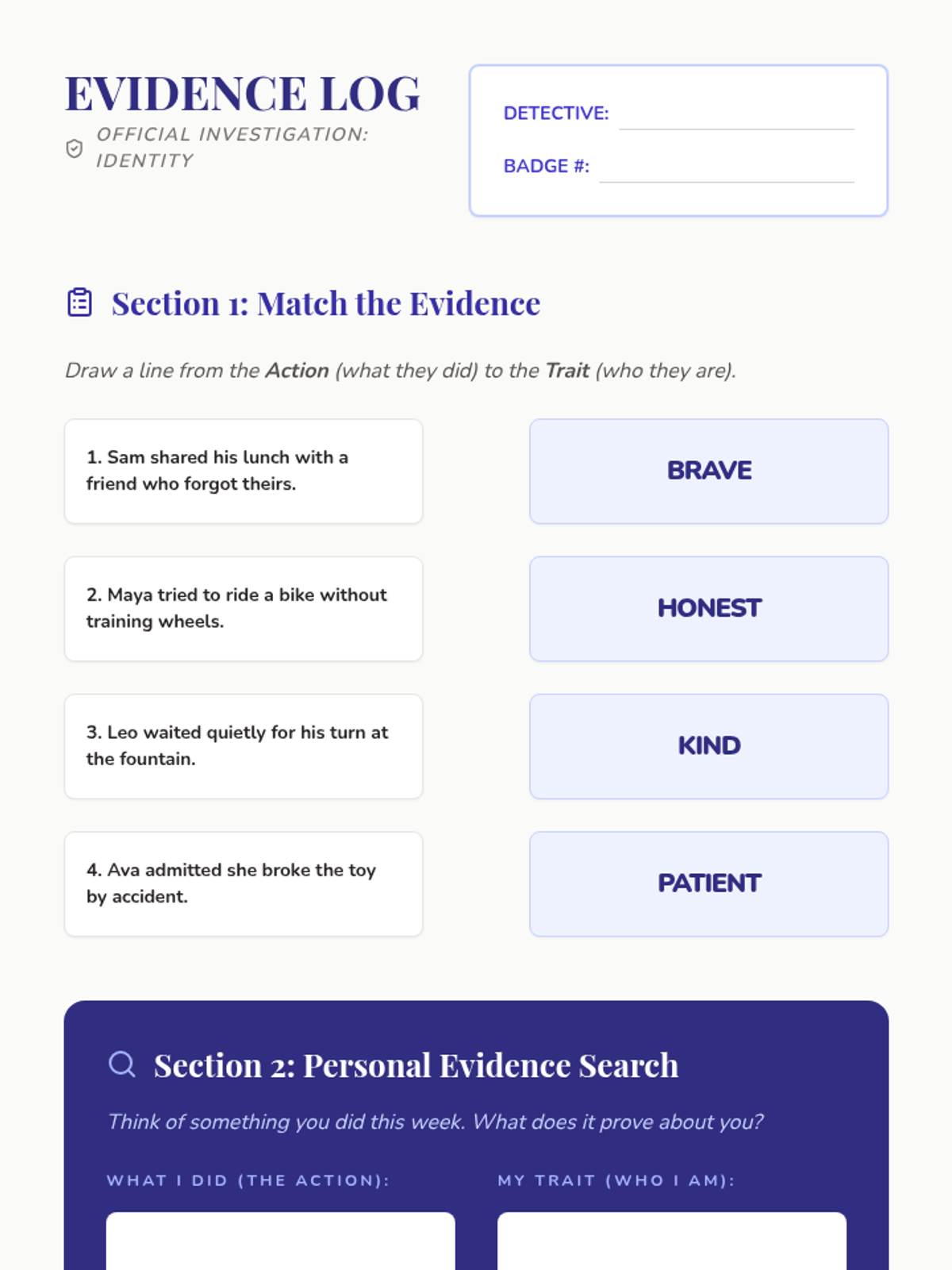
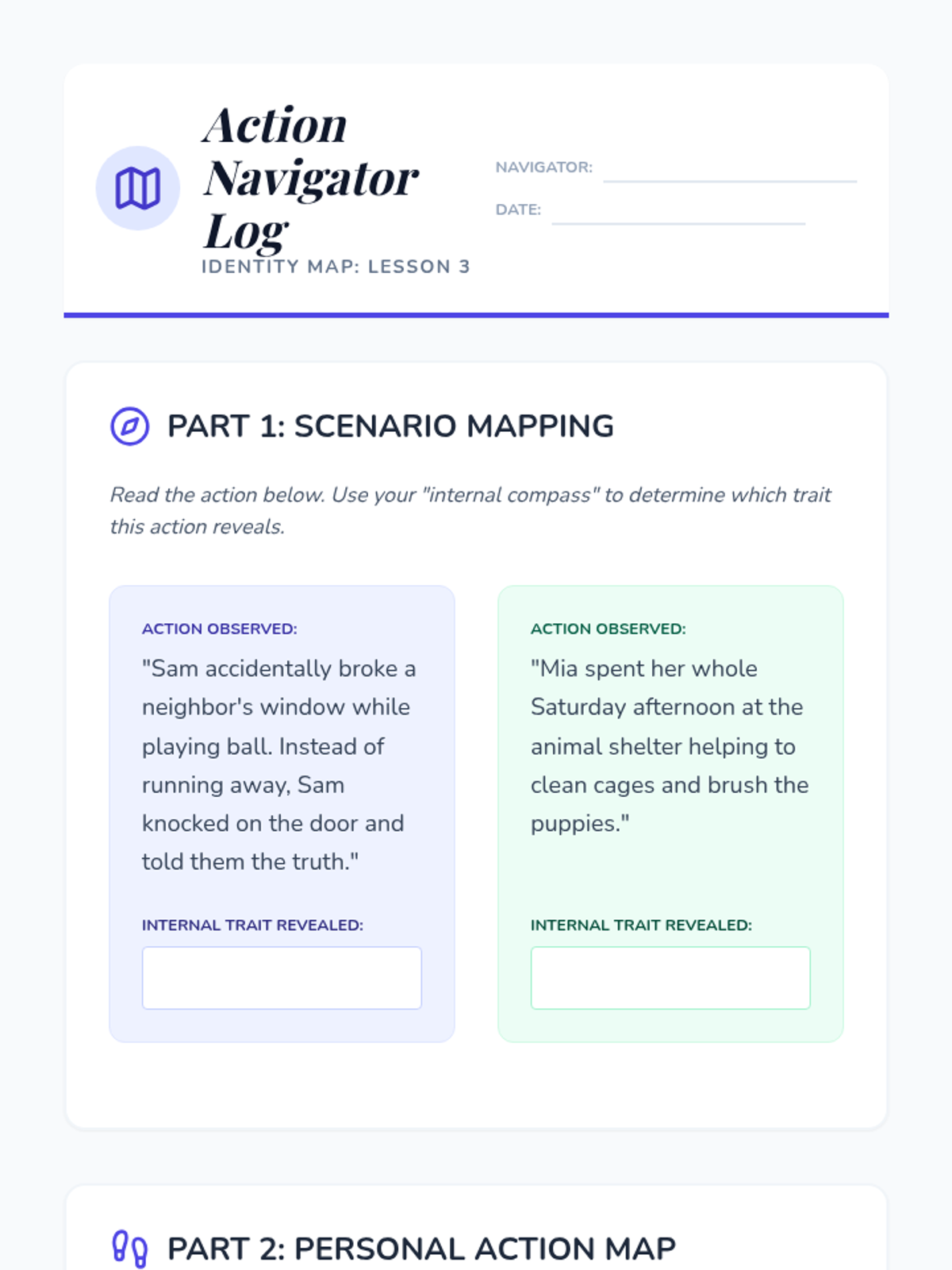
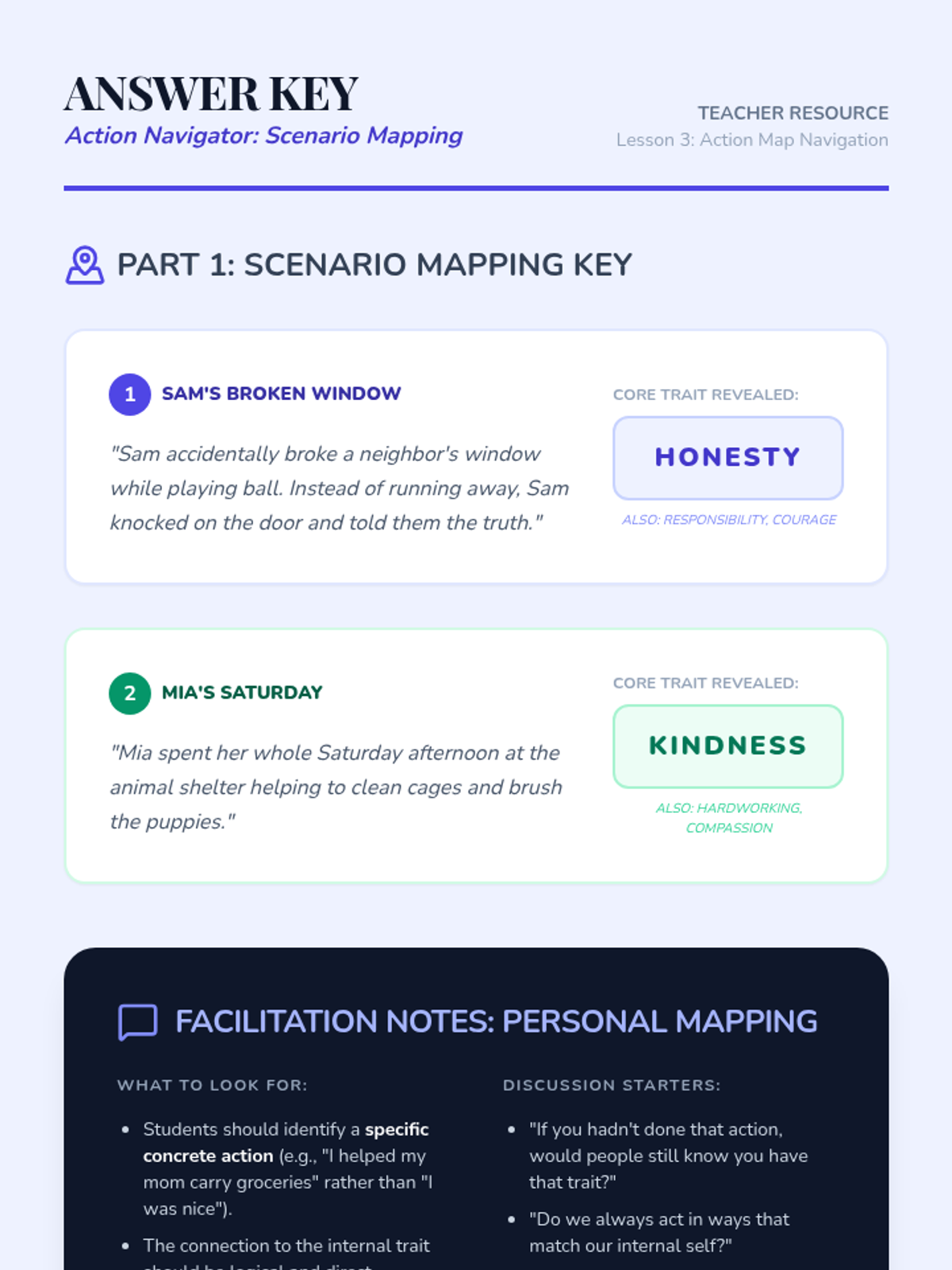
Students analyze short scenarios to determine what character trait a person is demonstrating. They then reflect on their own recent actions to label their own personality traits with evidence.
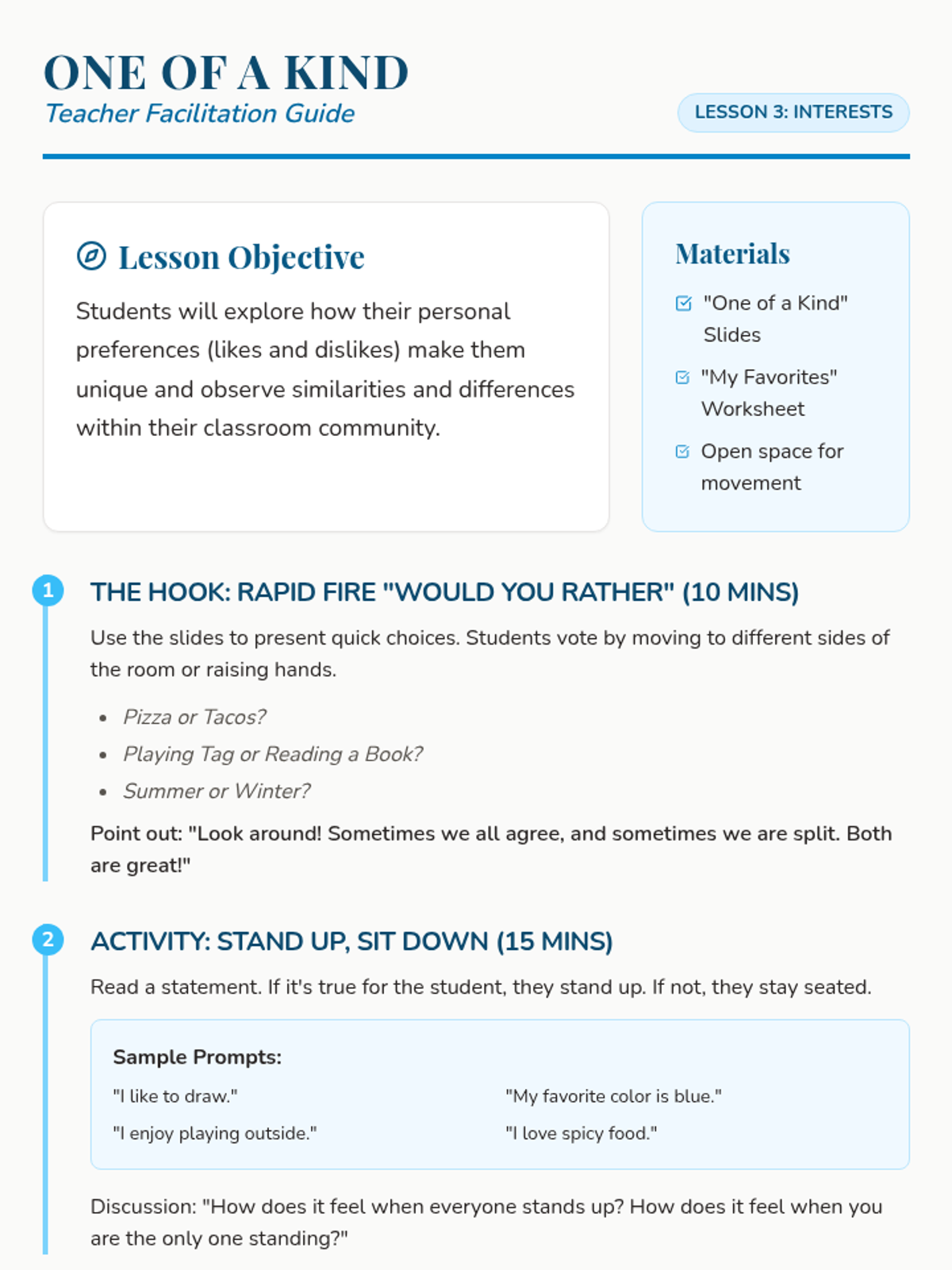
Students explore how likes and dislikes contribute to individuality. Through a 'Stand Up, Sit Down' activity, they visually see how their preferences align or differ from peers.
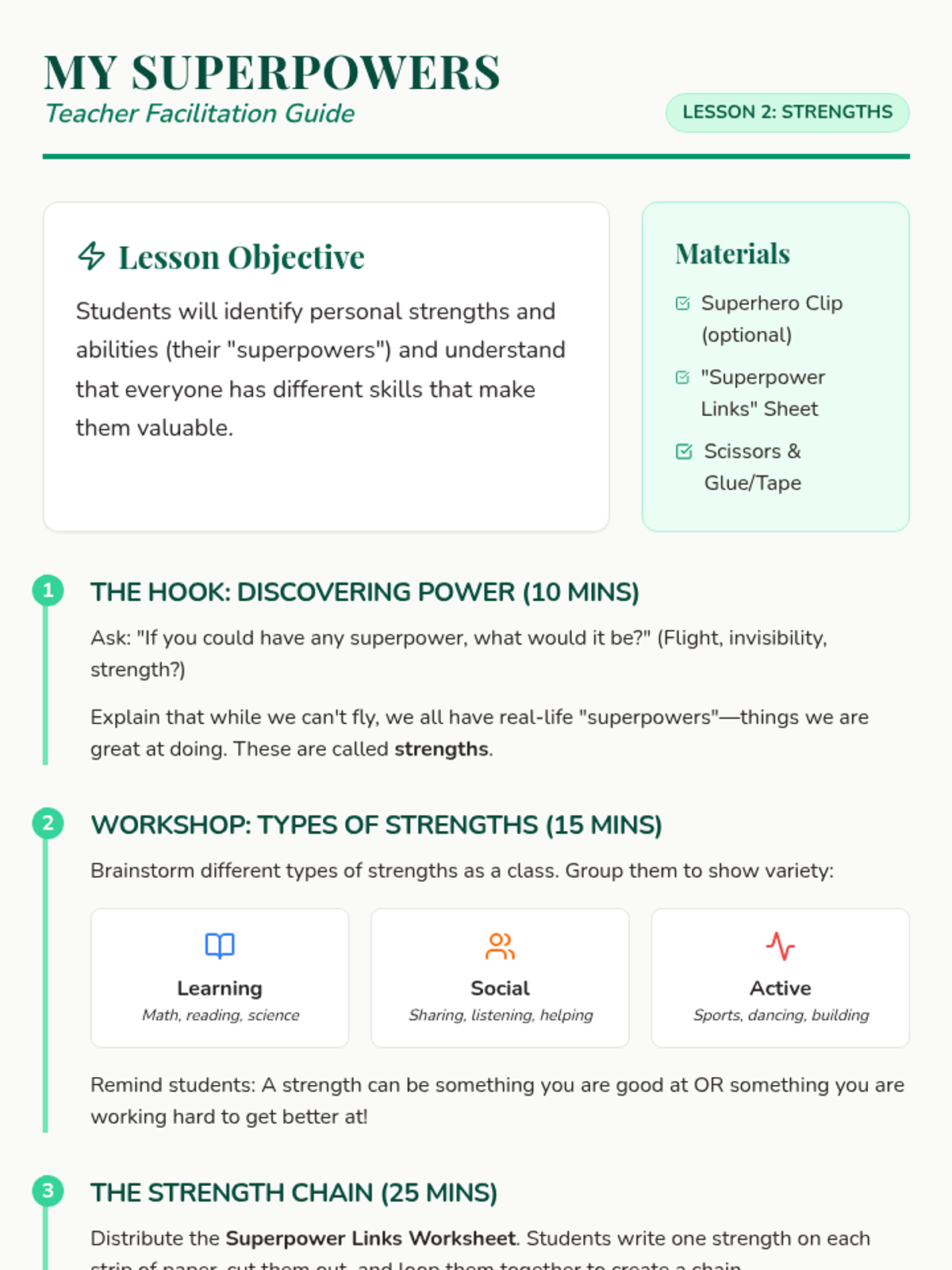
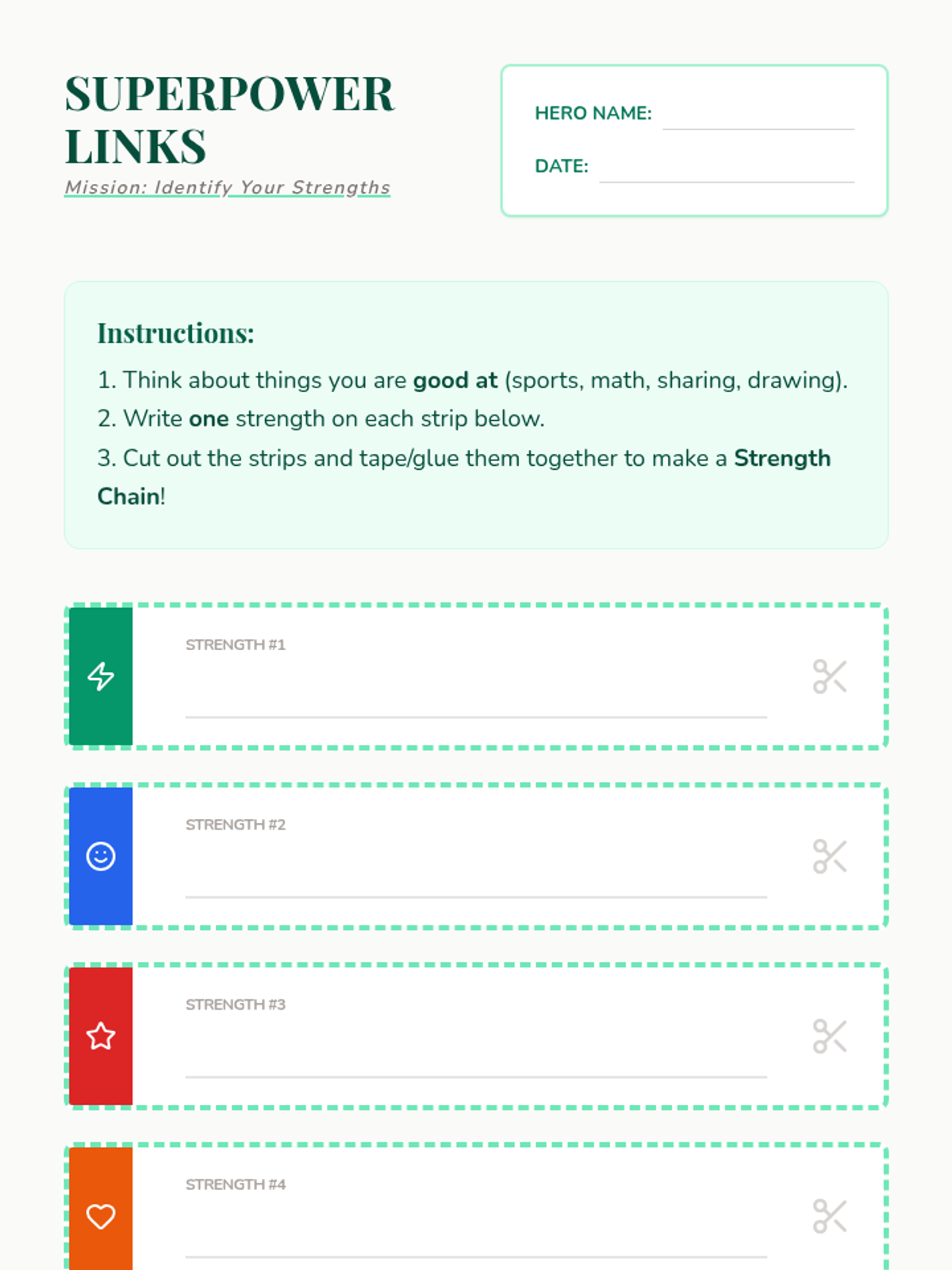
Focusing on competence, students identify specific things they are good at, ranging from academic skills to social skills like sharing. They create a 'Strength Chain' paper craft where each link represents a personal ability.
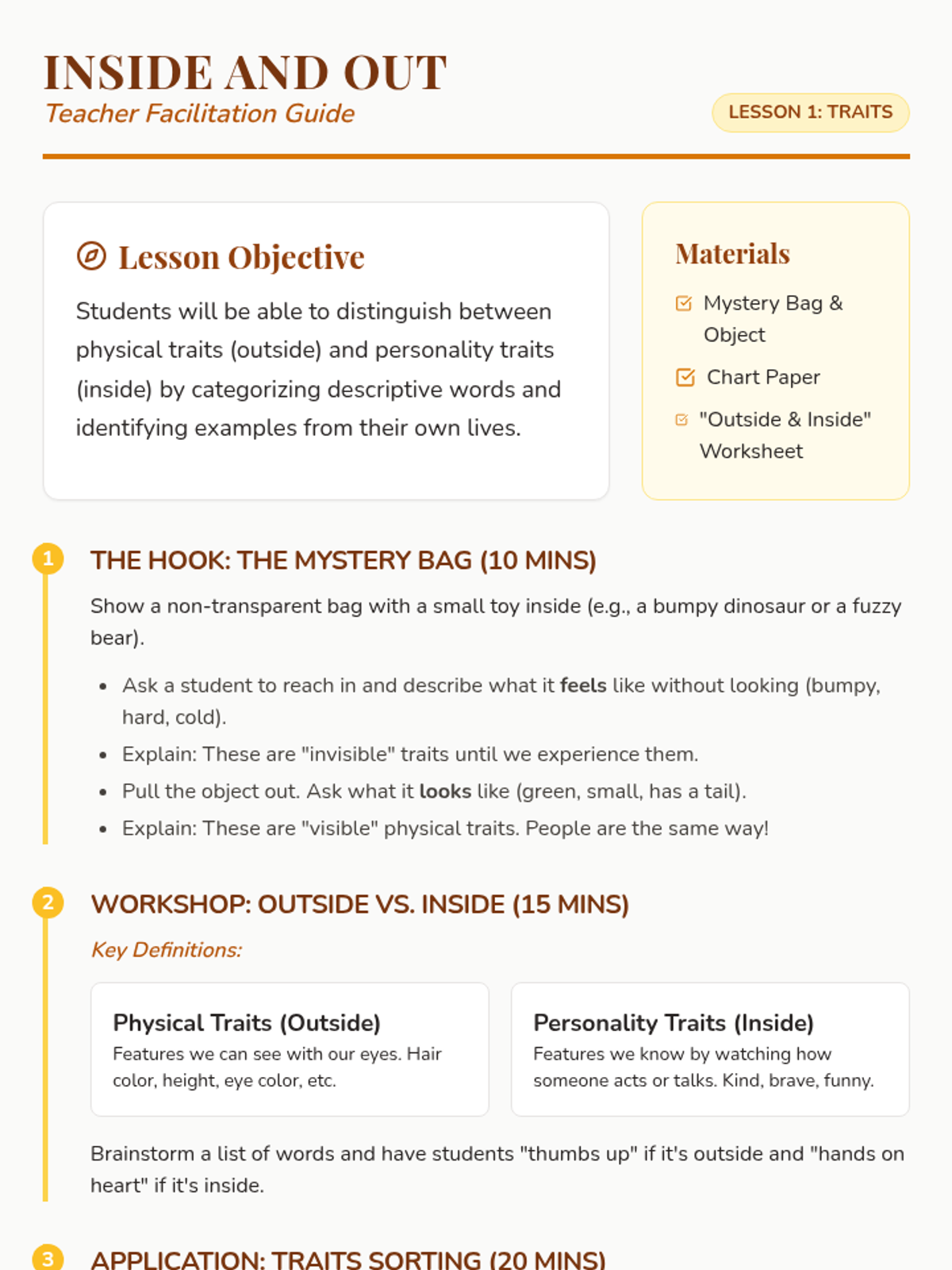
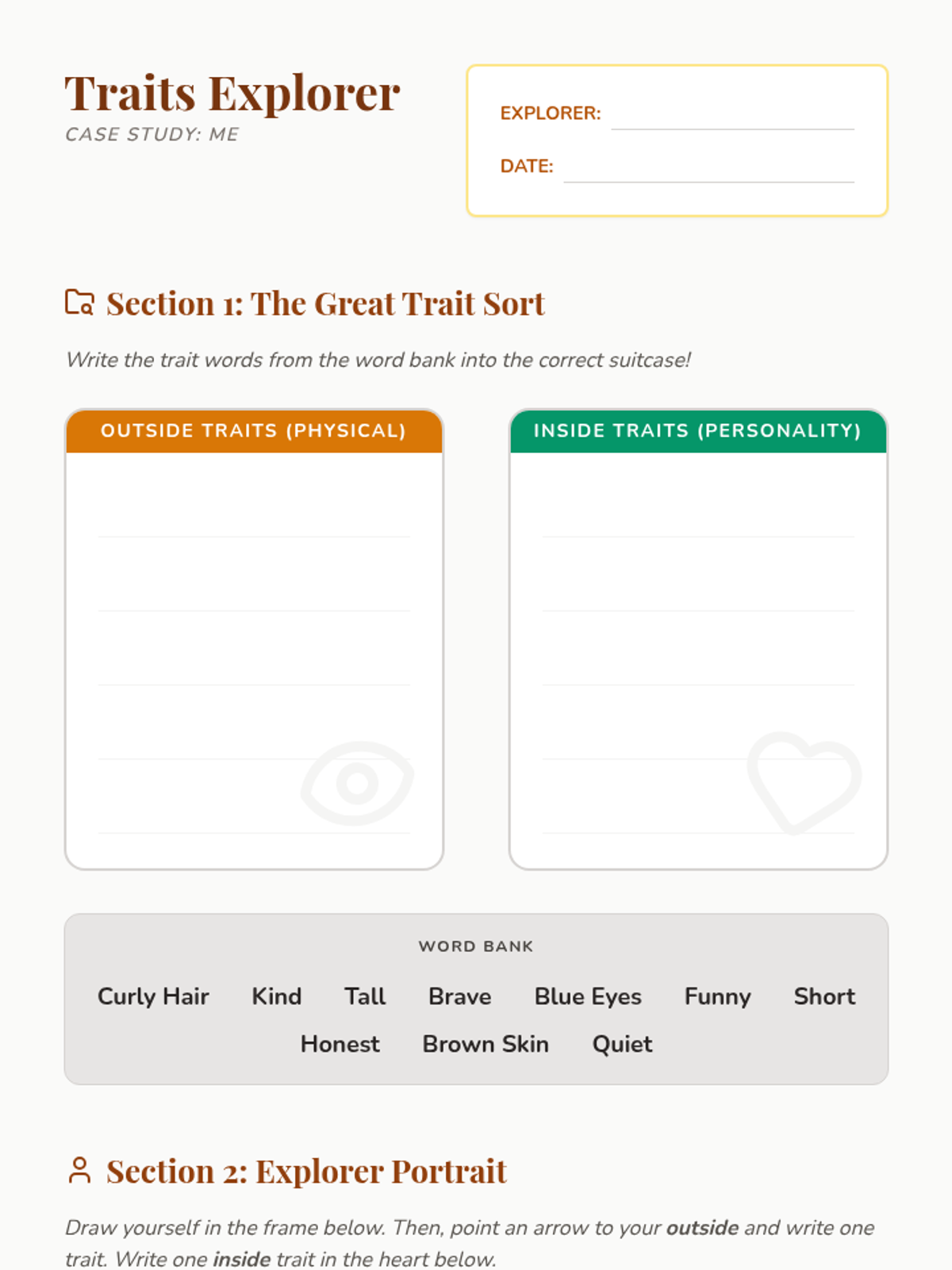
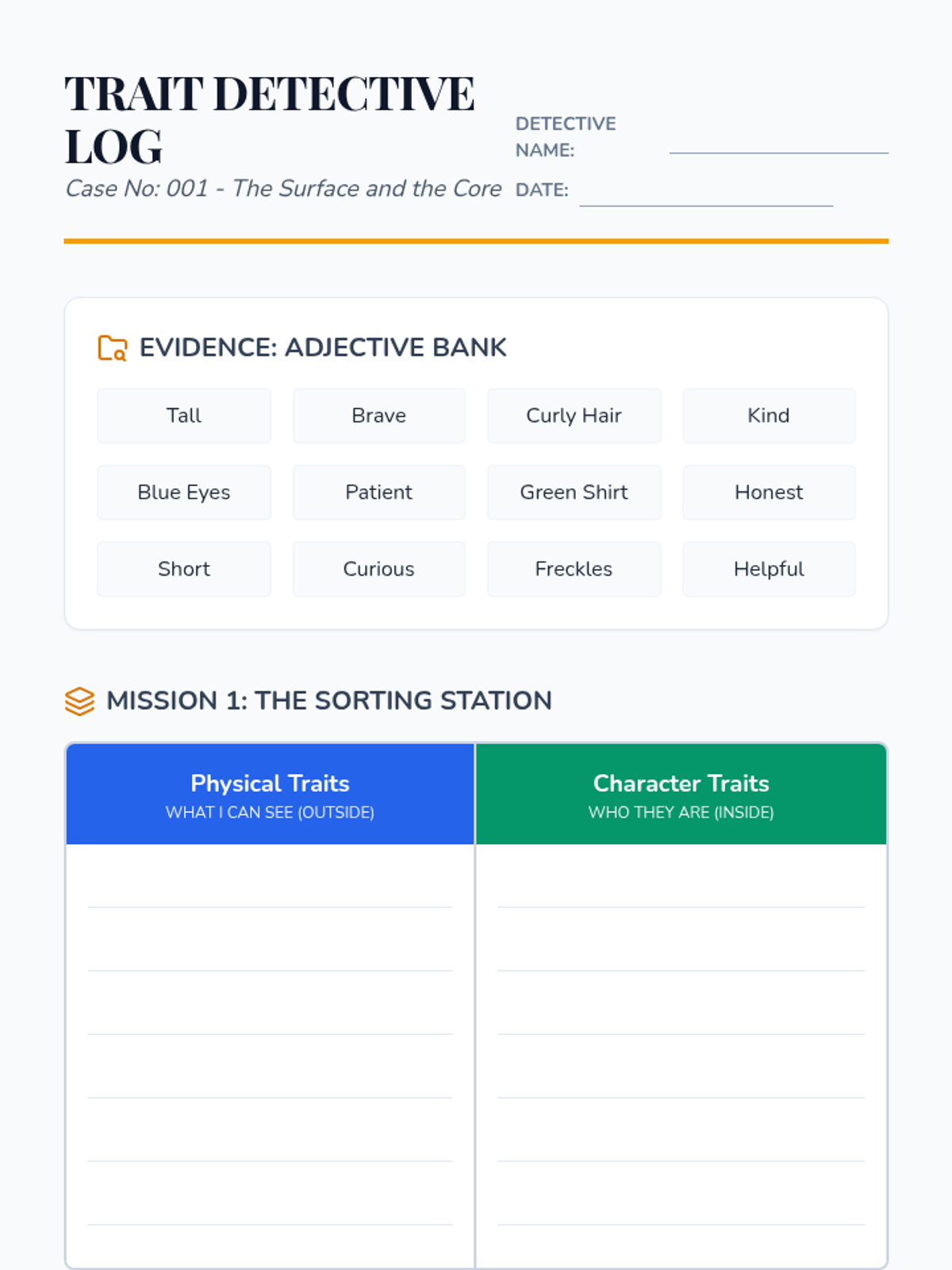
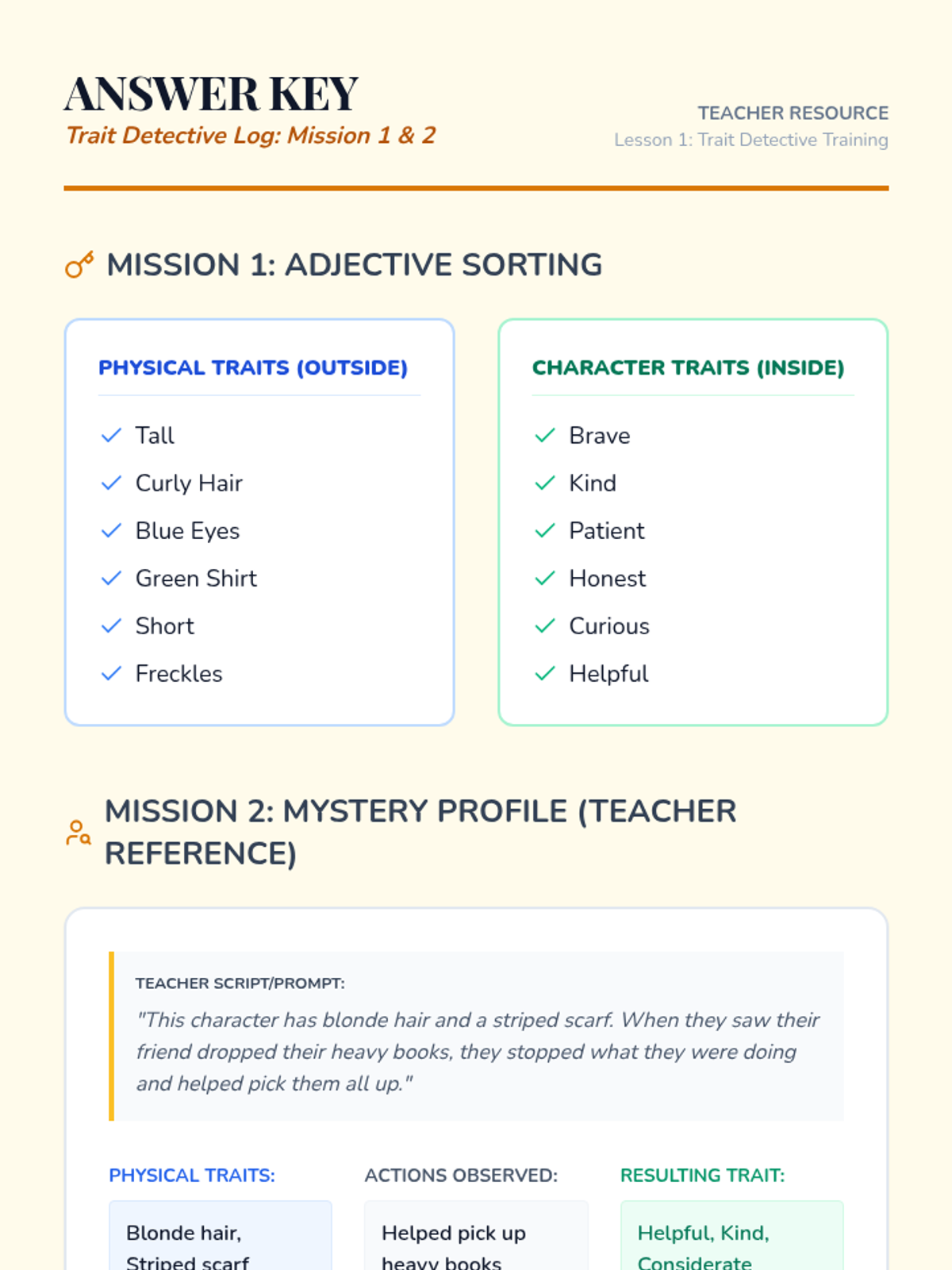
Students participate in a sorting activity where they categorize descriptive words into 'Outside' (physical) and 'Inside' (personality) groups. They learn that while physical traits are visible, personality traits are shown through actions and feelings.
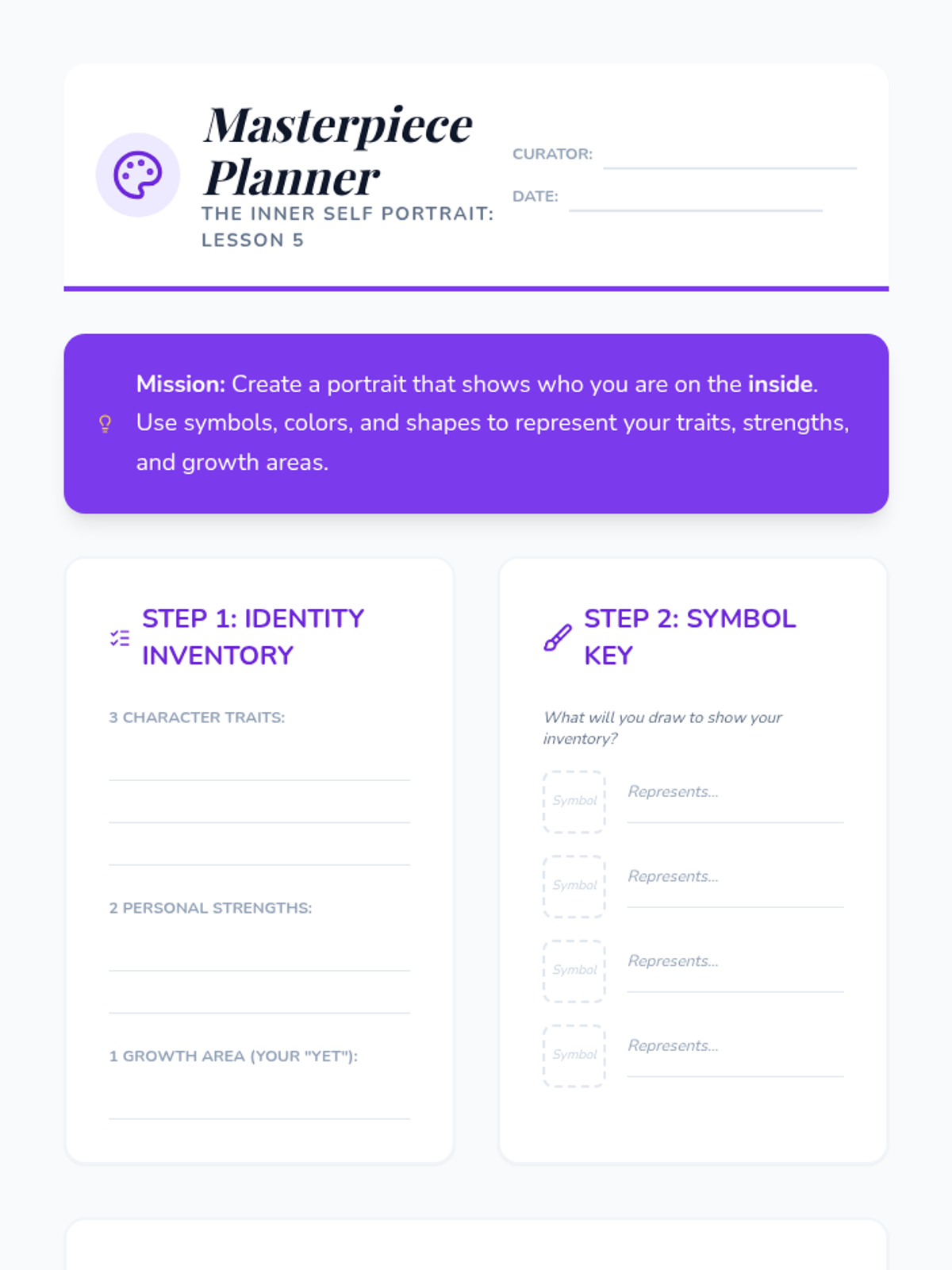
Students synthesize their learning by creating a symbolic self-portrait that represents their internal identity.
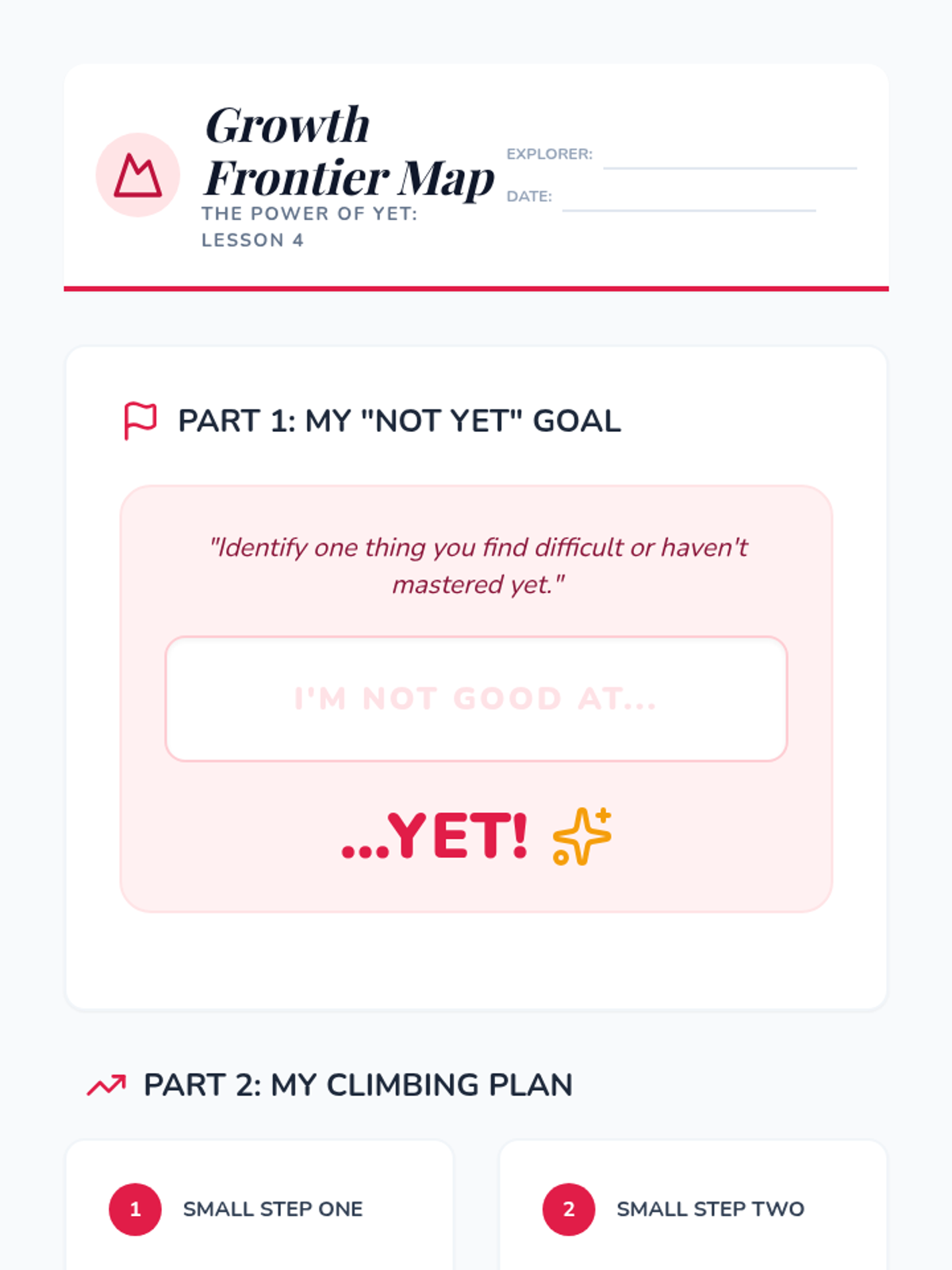
Students learn about the 'Power of Yet' and identify areas for growth, framing challenges as part of their developing identity.
Students explore how behaviors reveal personality traits through role-playing and scenario analysis.
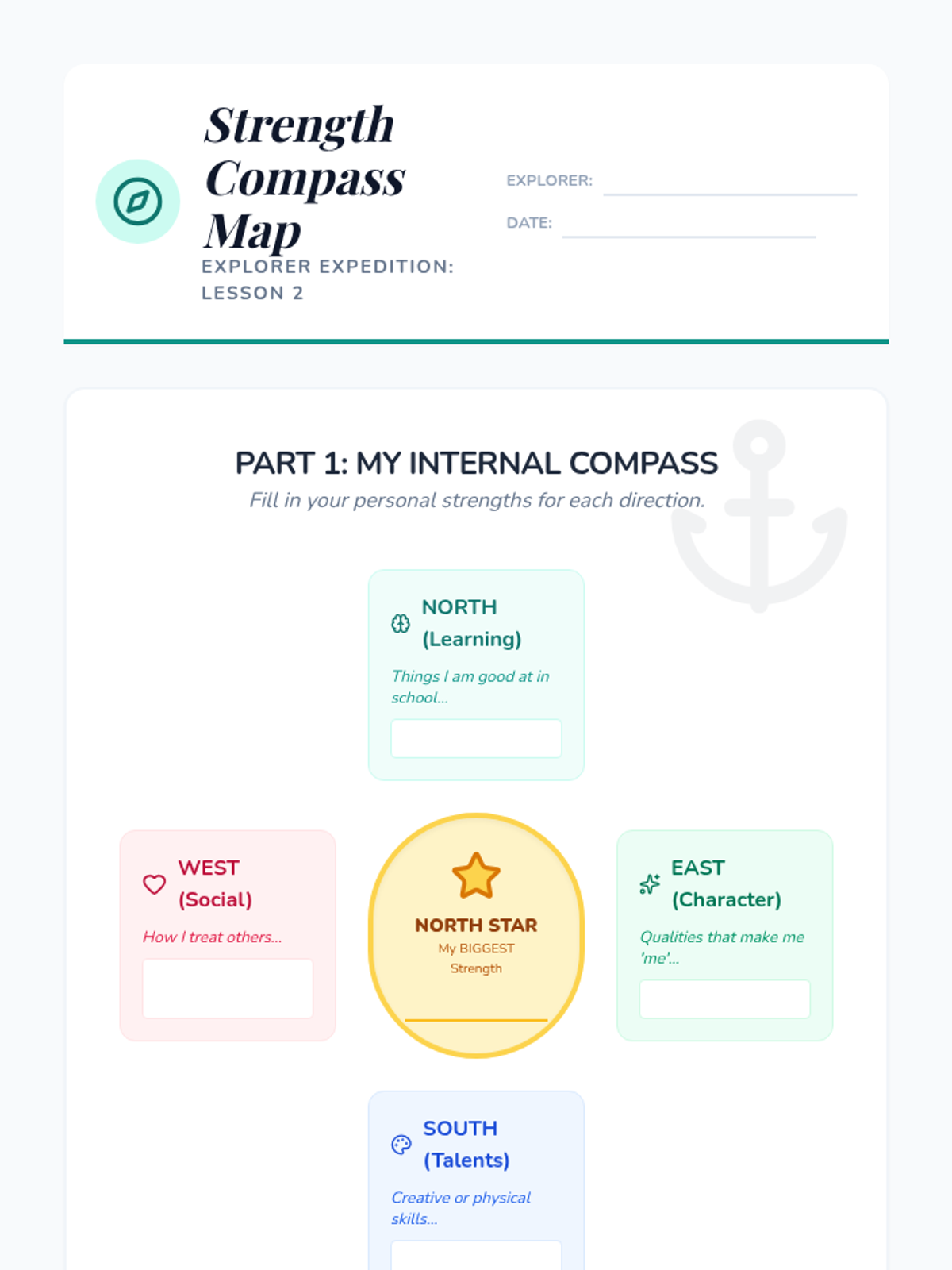
Students identify their personal strengths and talents while practicing 'strength spotting' in their peers.
Students analyze fictional characters to differentiate between physical traits (what we see) and character traits (what we infer from actions).
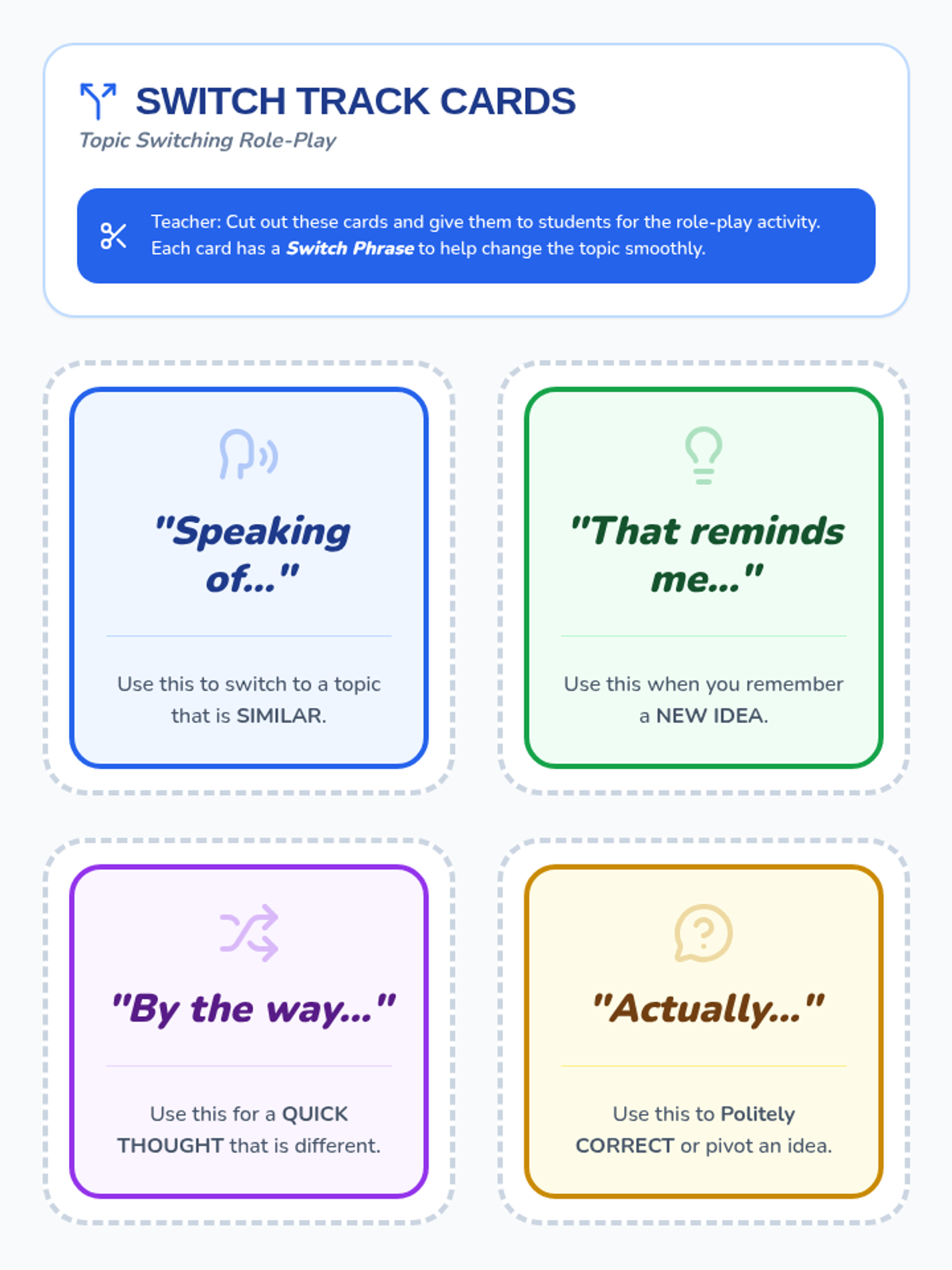
The final lesson introduces the concept of changing the topic politely using specific transition phrases like 'Speaking of...' or 'That reminds me of...'. Students role-play short scenarios where they must wait for a pause and use a 'switch track' phrase to introduce a new topic.
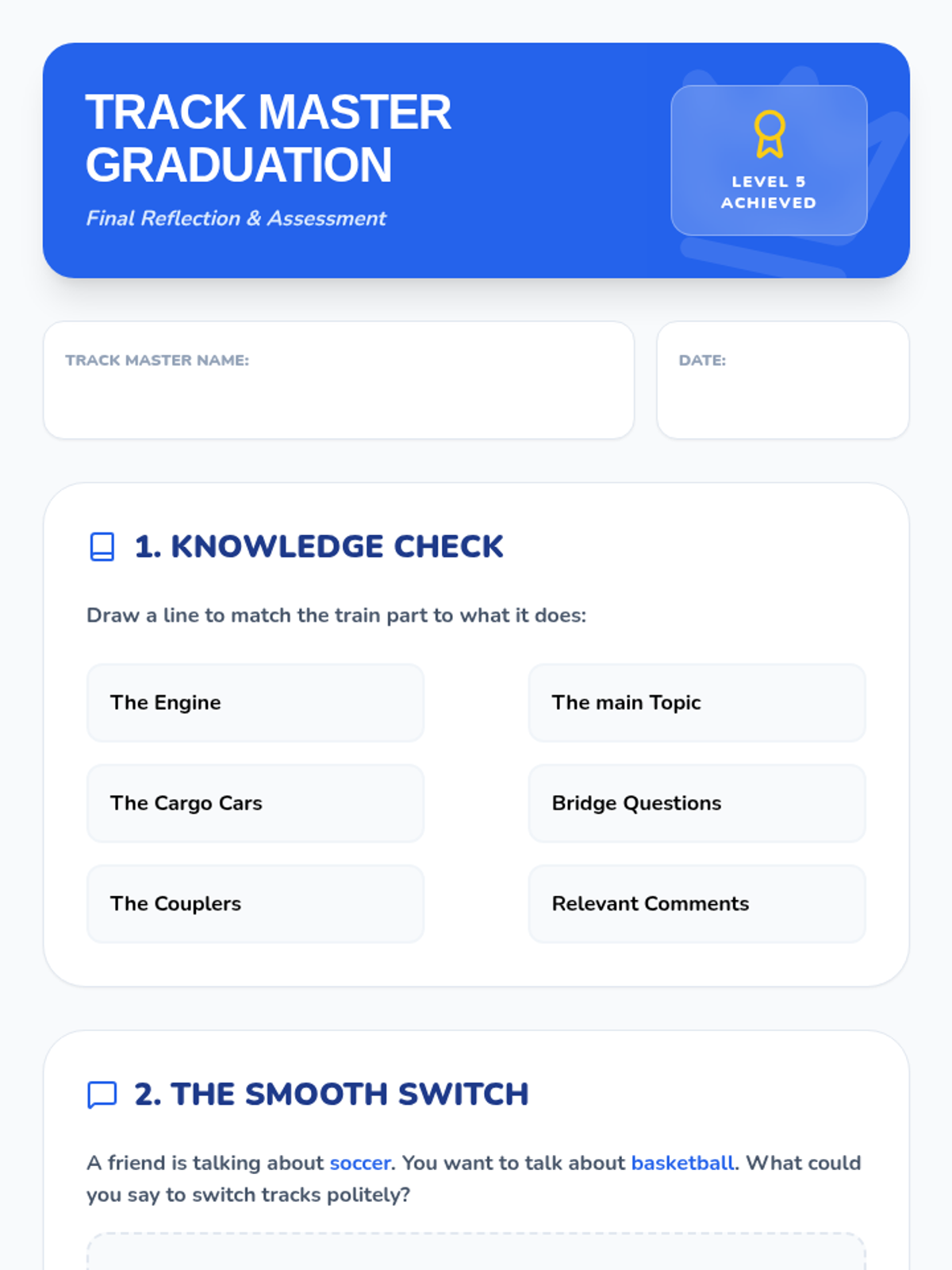
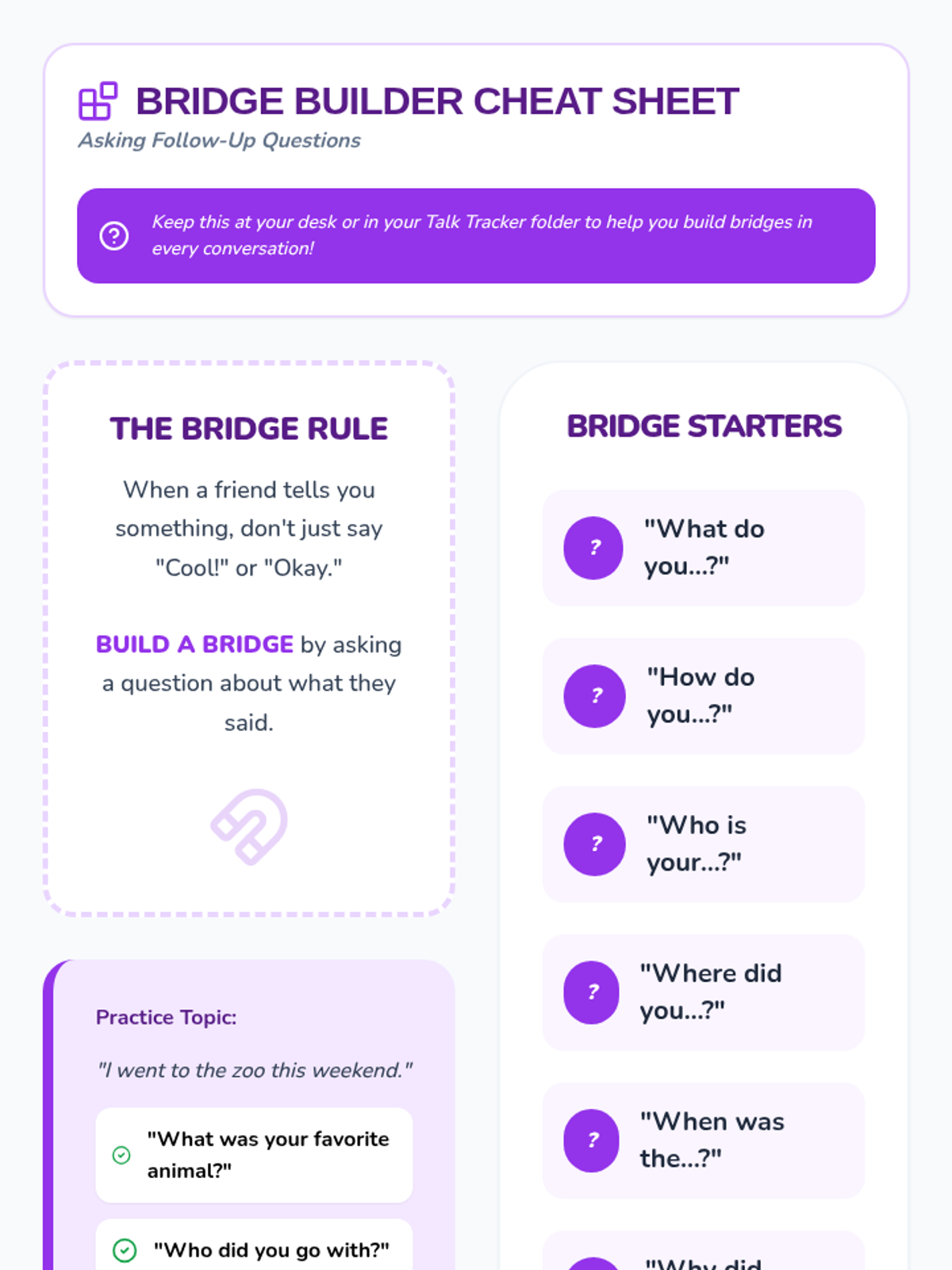
Students learn how to use follow-up questions to keep the conversation moving forward, acting as 'couplers' between train cars. Working in pairs, they practice the 'Question Ball' activity.
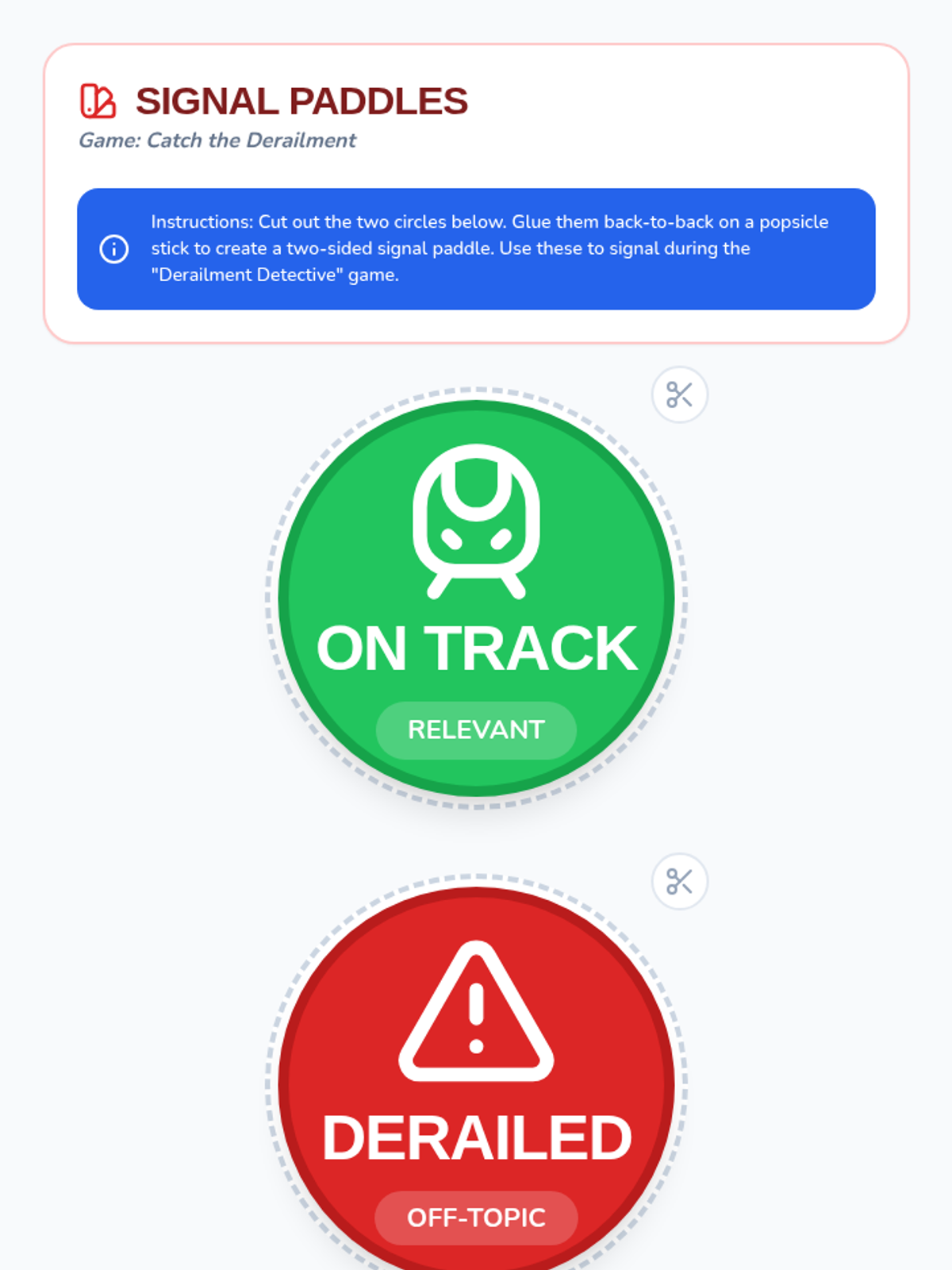
Students engage in active listening exercises to spot when a statement does not belong on the current 'track.' Using red and green paddles, they signal whether a teacher's statement is on-topic (green) or off-topic (red).
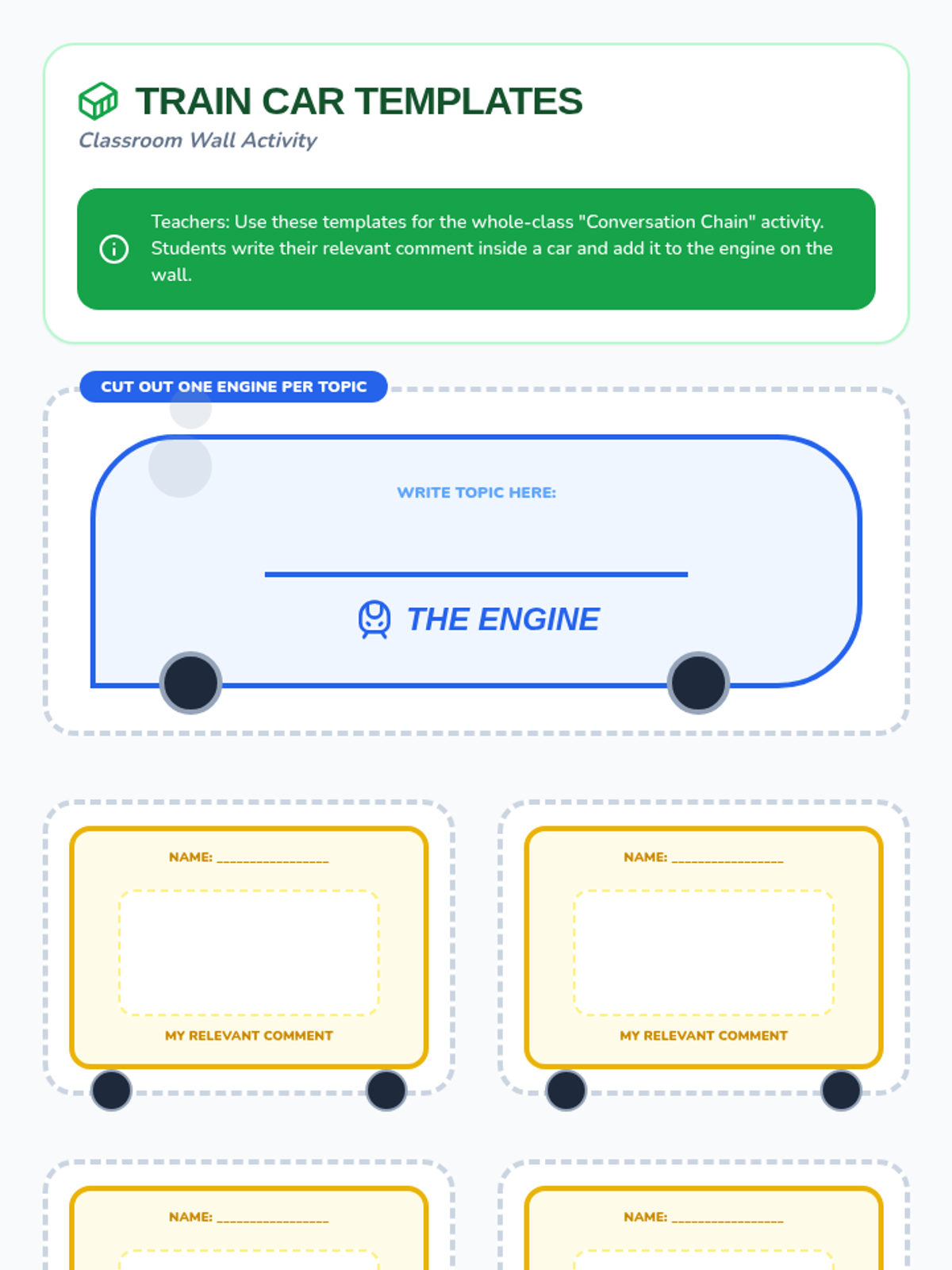
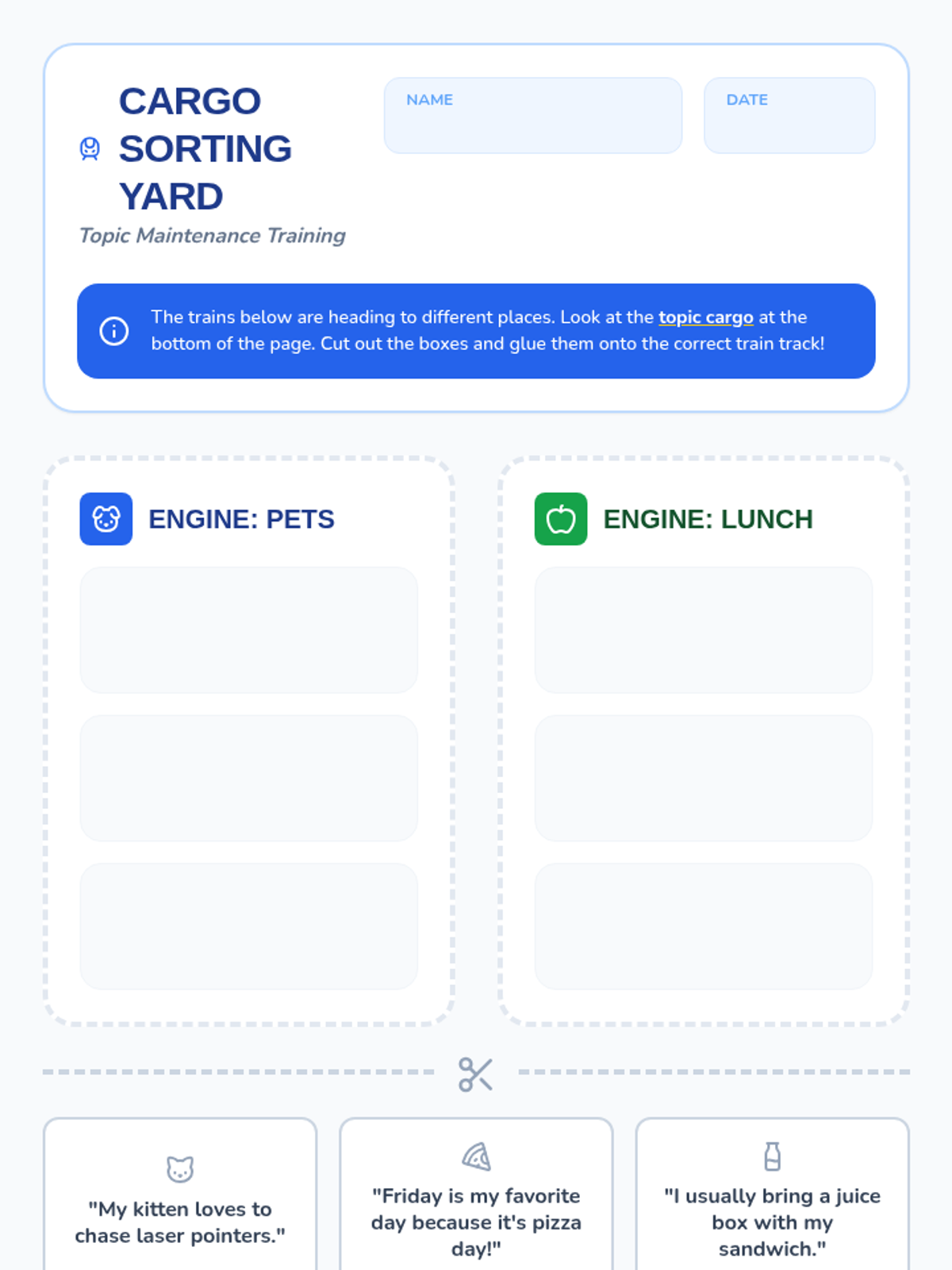
Building on the train metaphor, students practice adding 'cargo cars' to the train by making statements that directly relate to a given topic through a whole-class interactive activity.
Students learn to identify the main topic of a conversation by comparing it to the engine of a train that leads the way, establishing the vocabulary of 'topic' and 'relevant'.
Students practice adapting their behavior and expectations when a new adult (substitute) takes charge of the classroom.
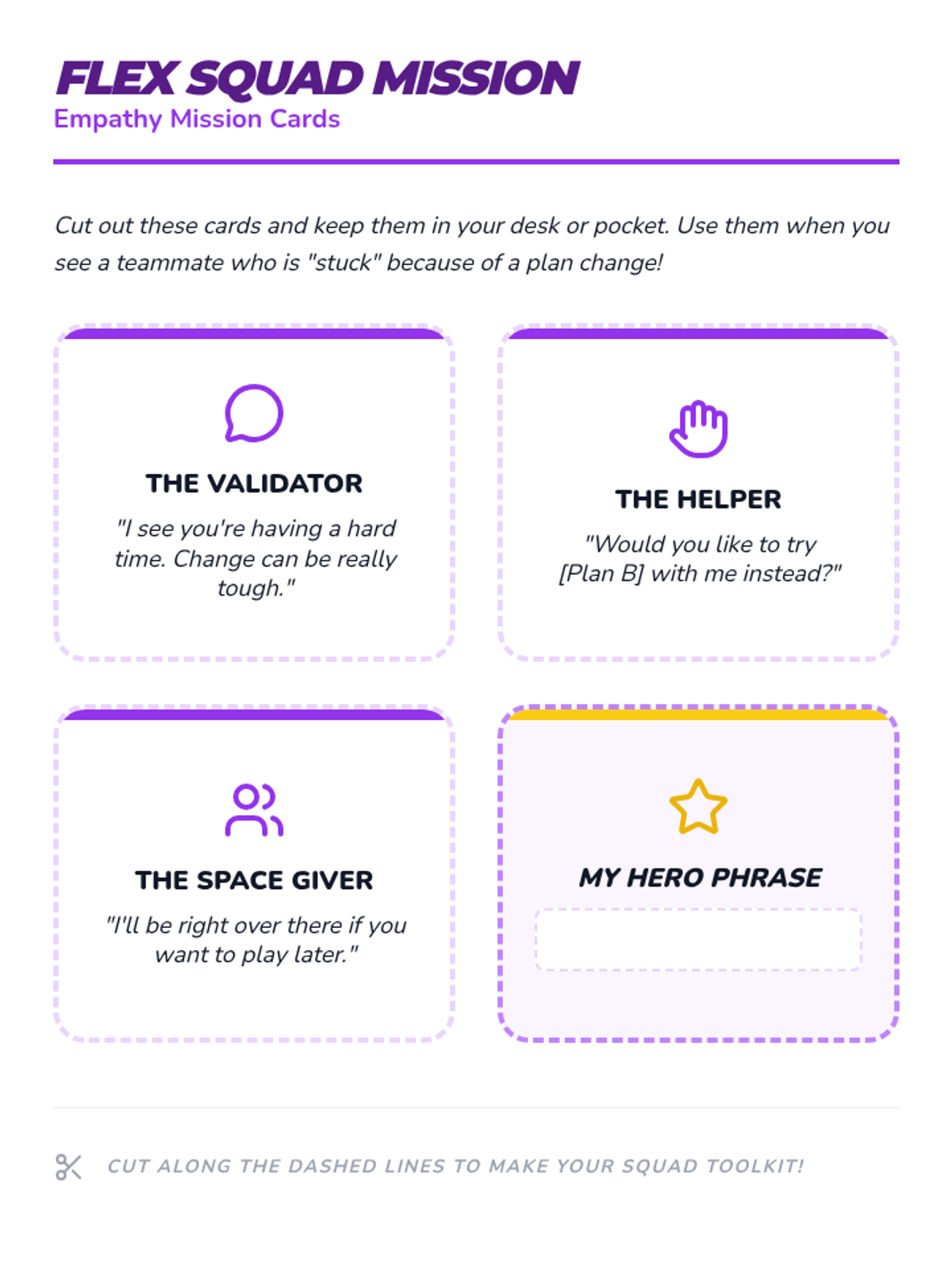
Students learn to identify when a peer is struggling with change and practice offering empathy and support.
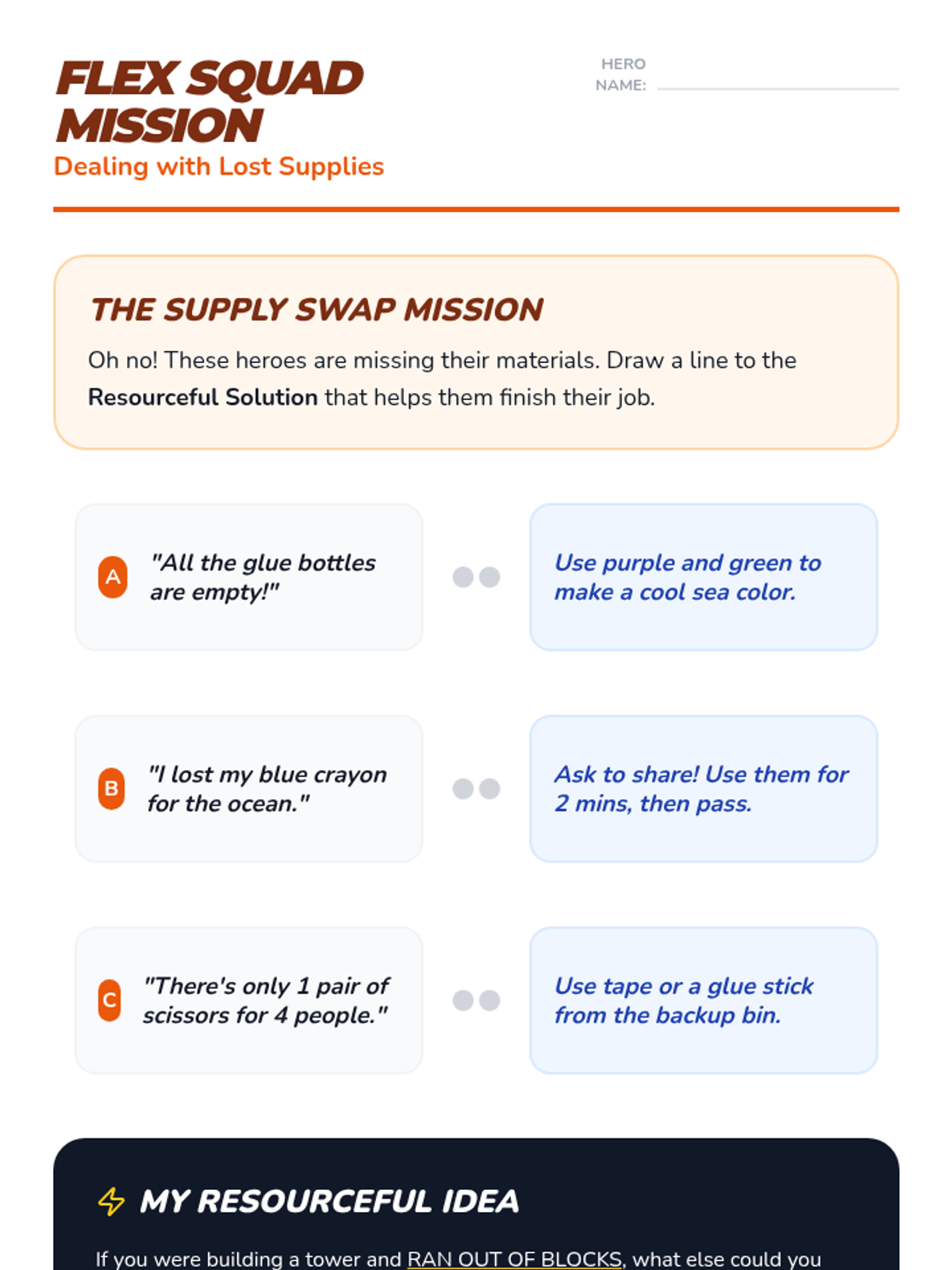
Students develop resourcefulness and help-seeking skills when materials for a task are missing or depleted.
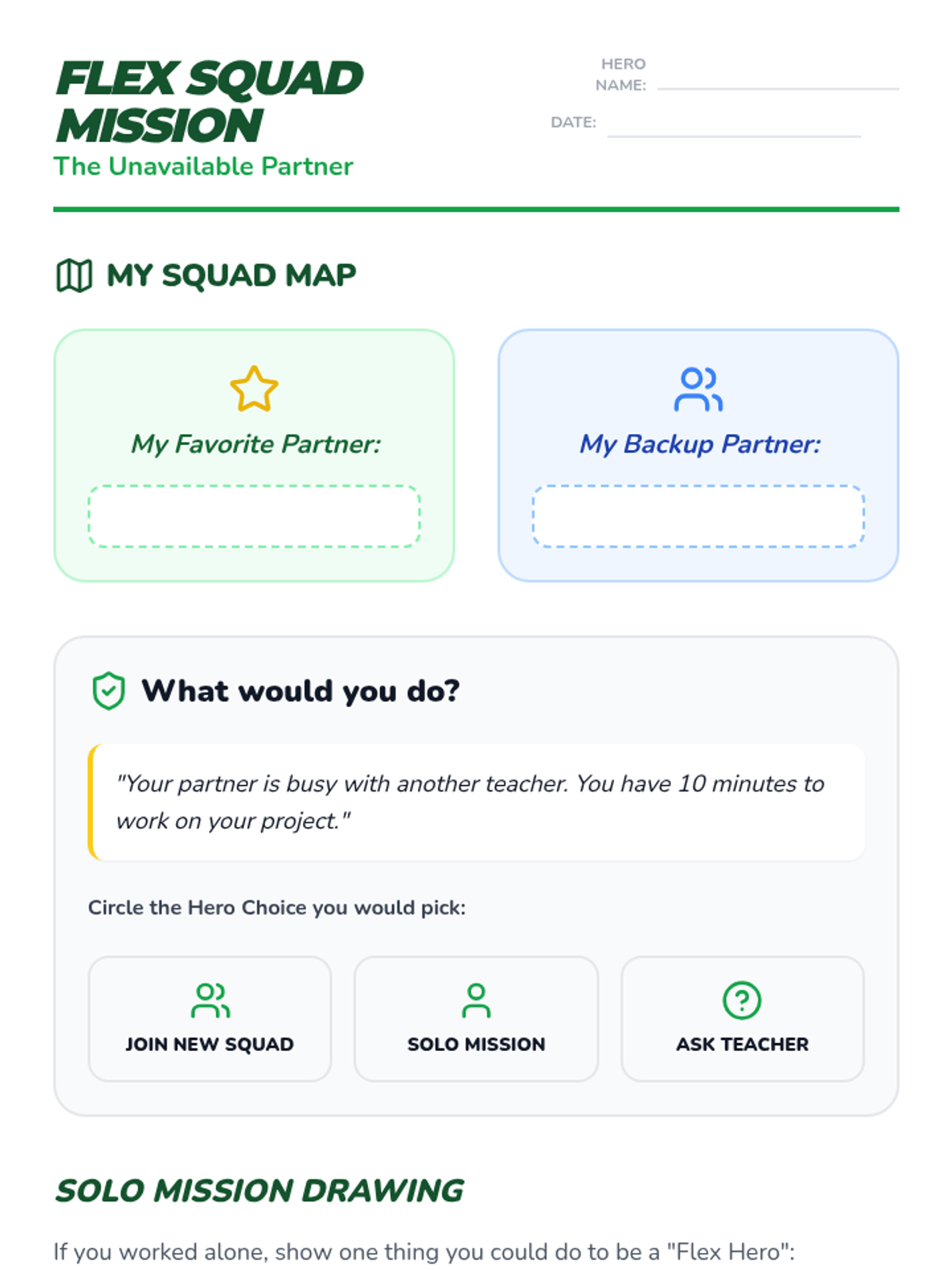
Students practice social initiation and independent work strategies for when an expected partner is unavailable.
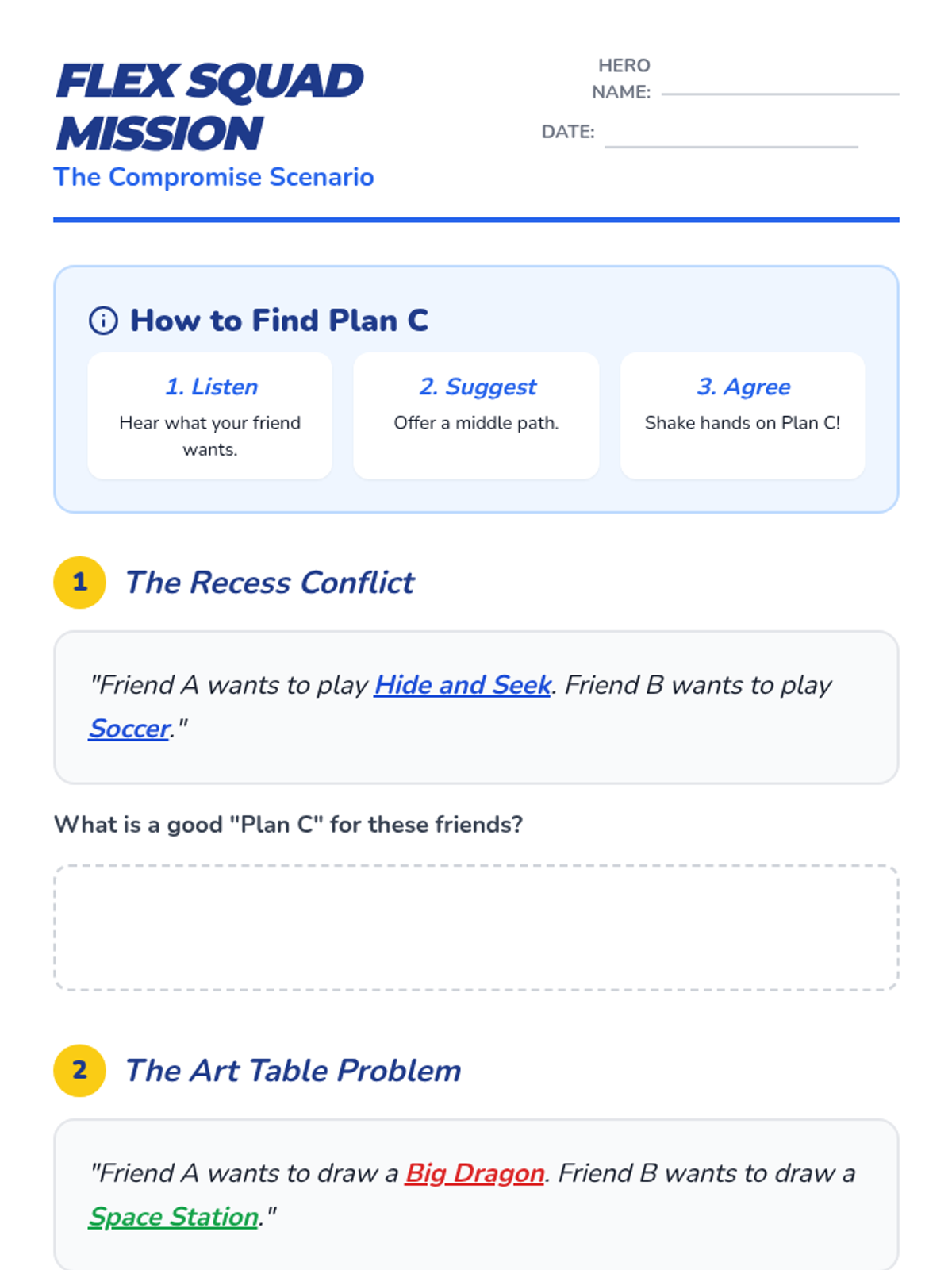
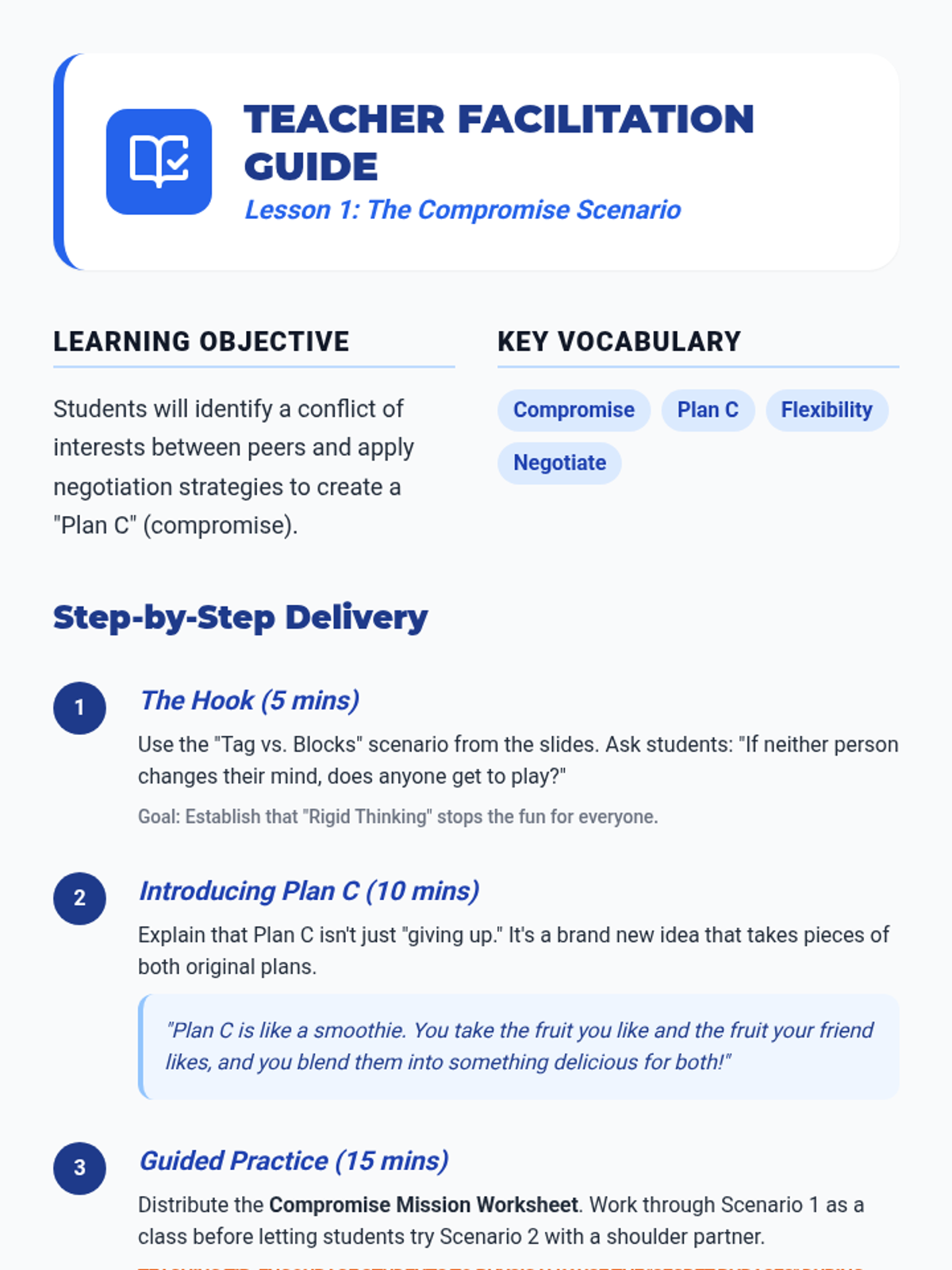
Students practice the language of negotiation and finding 'Plan C' when friends want to do different things.
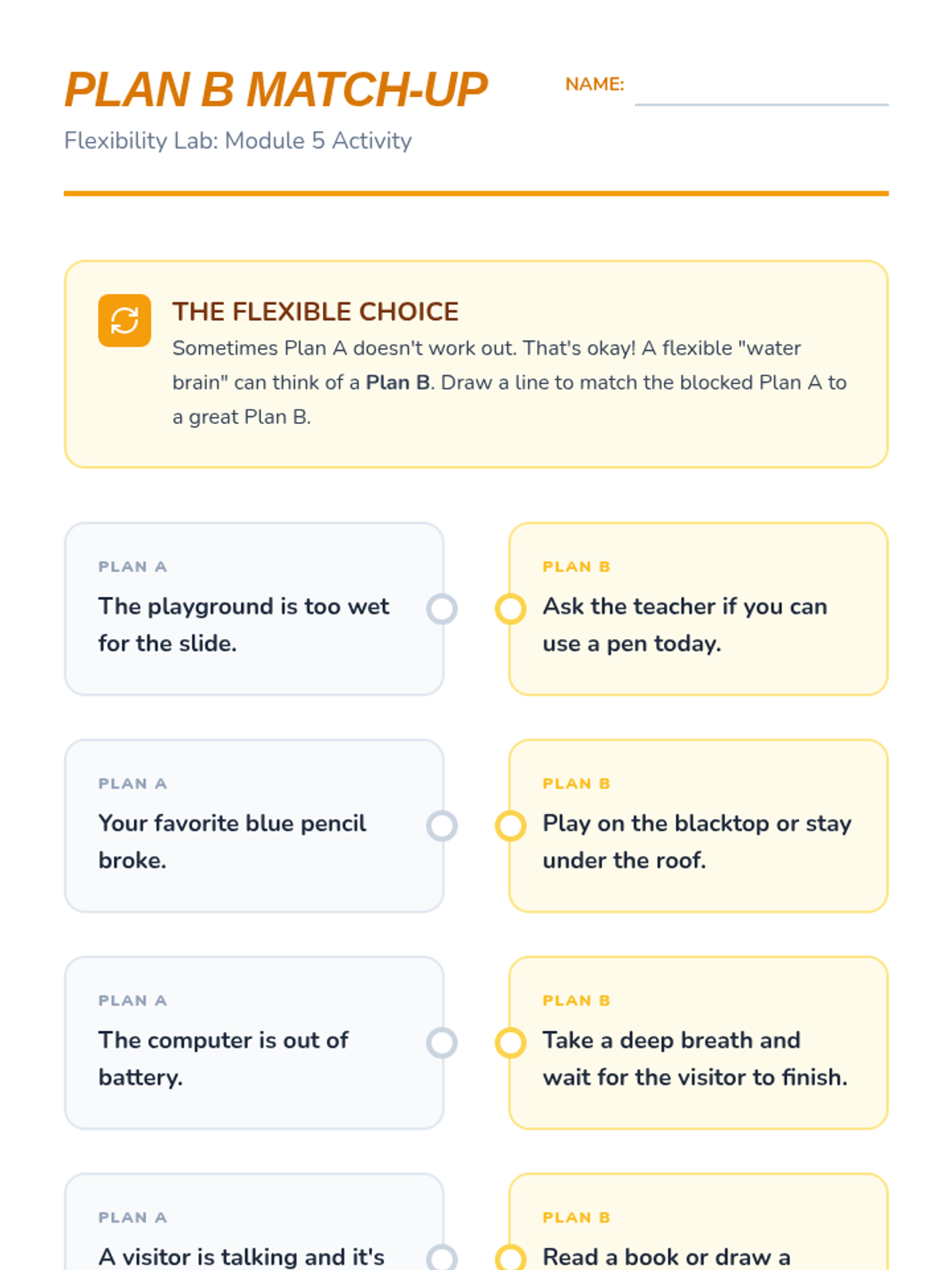
Students practice brainstorming alternatives when a preferred activity is unavailable, completing a 'Plan A / Plan B' matching activity.
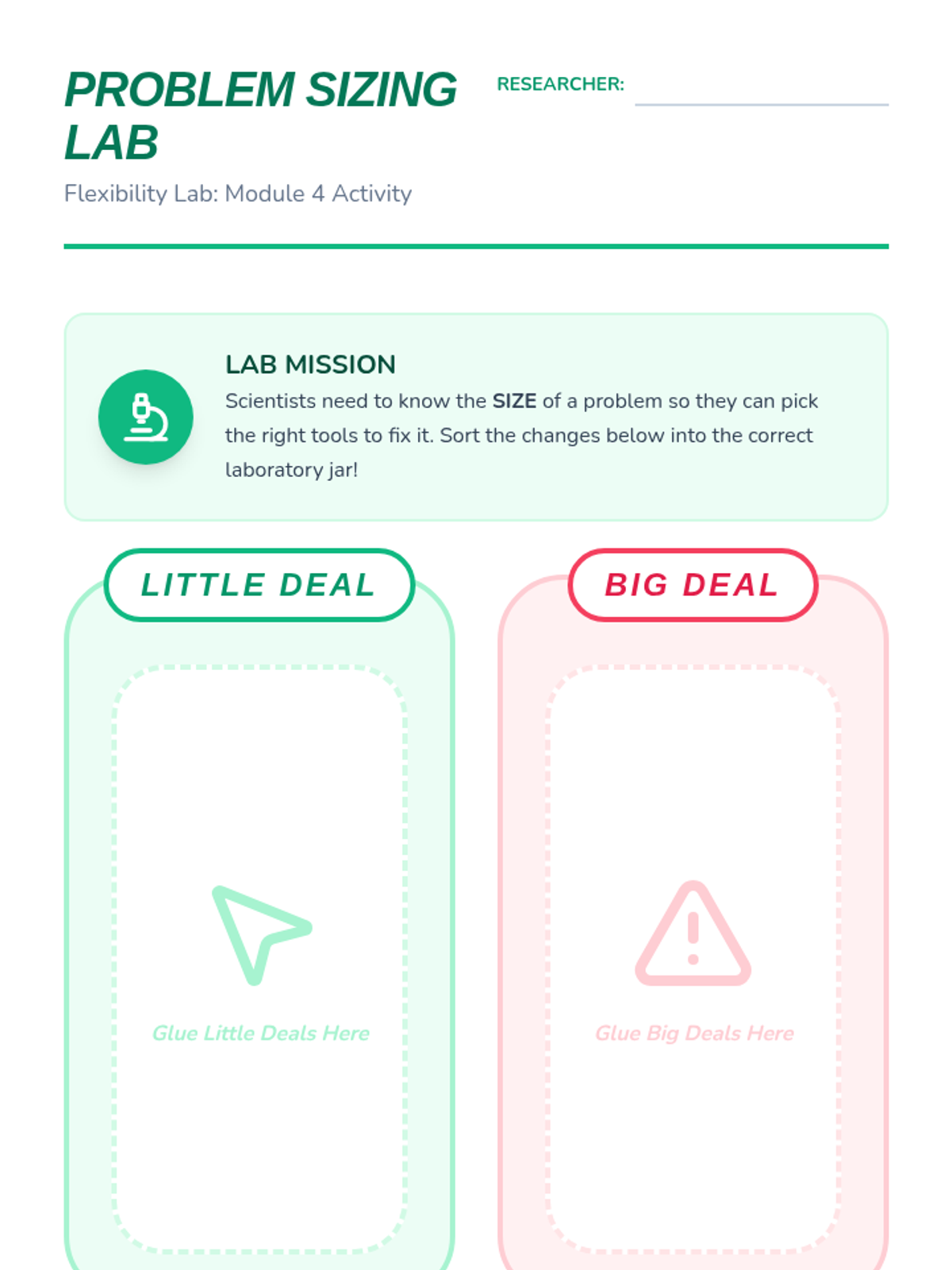
Students categorize various plan changes to determine the size of the problem, helping them match their reaction size to the problem size.
Students read a story about a character whose day goes wrong and map out feelings, connecting them to their own experiences with unexpected changes.
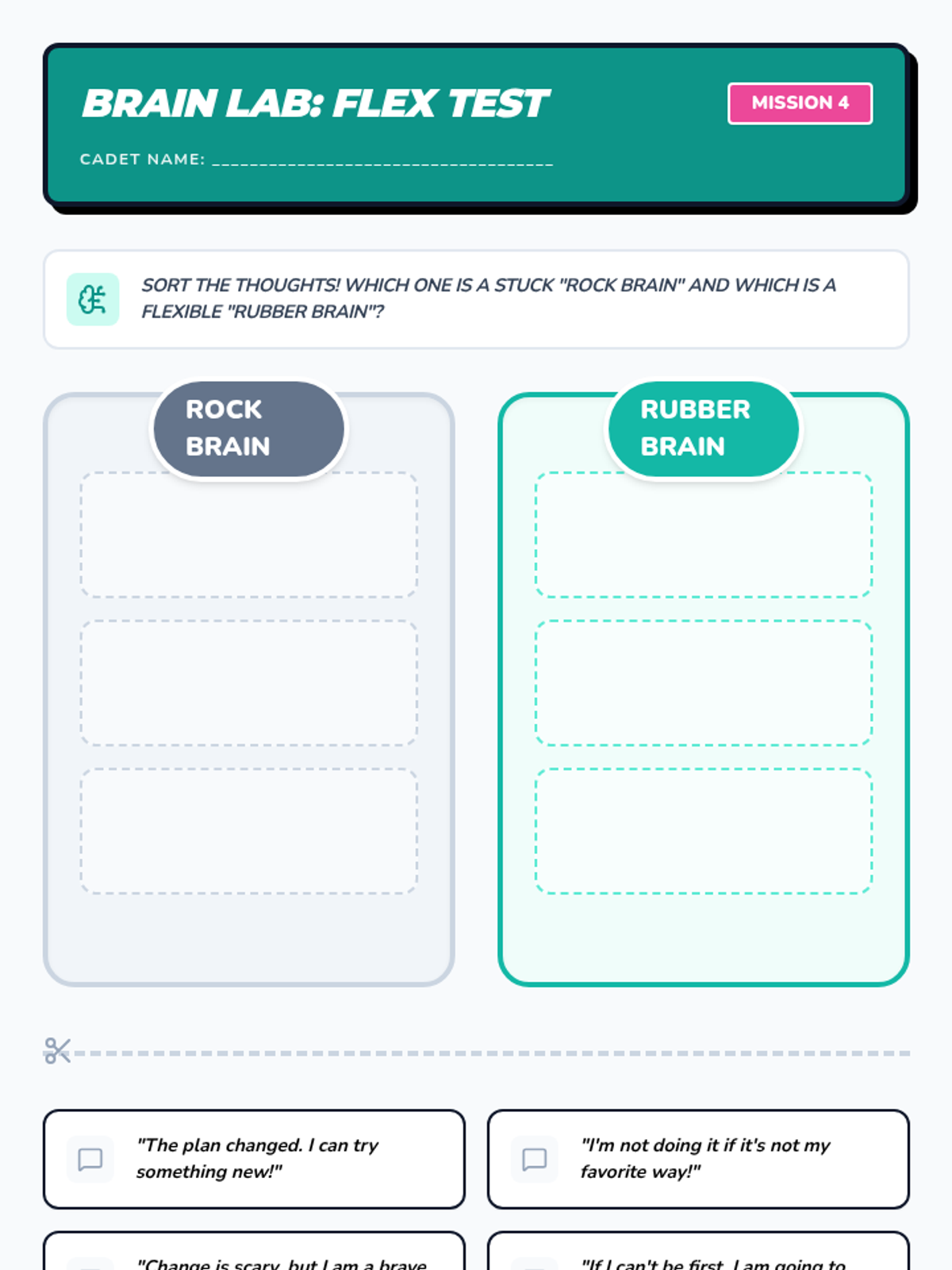
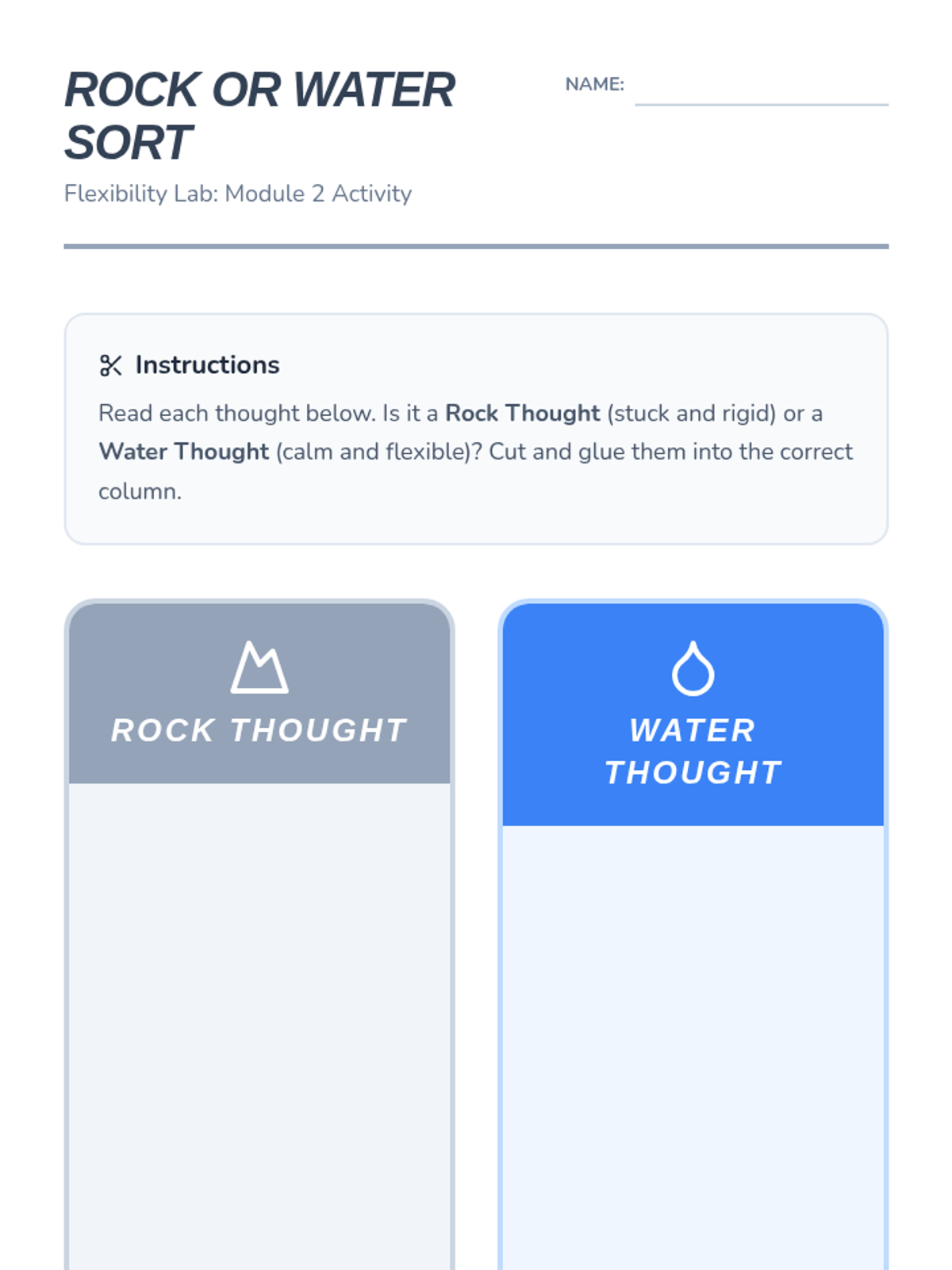
Using the metaphor of a rock (rigid) and water (flexible), students sort behaviors and reactions to understand how flexible thinking helps navigate obstacles.
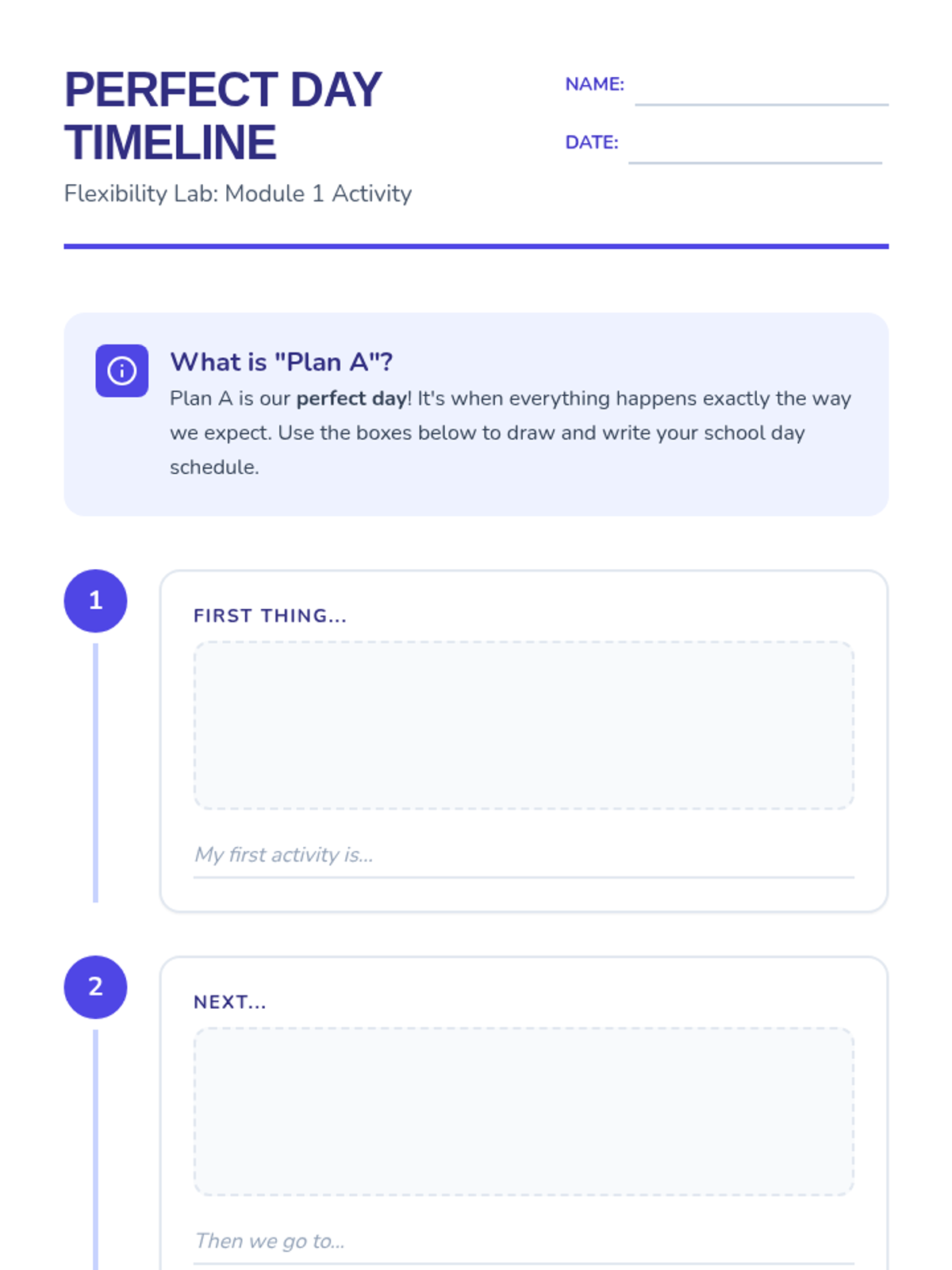
Students explore the concept of a daily schedule and why we have plans, creating a visual timeline of a perfect school day to establish a baseline for 'Plan A.'
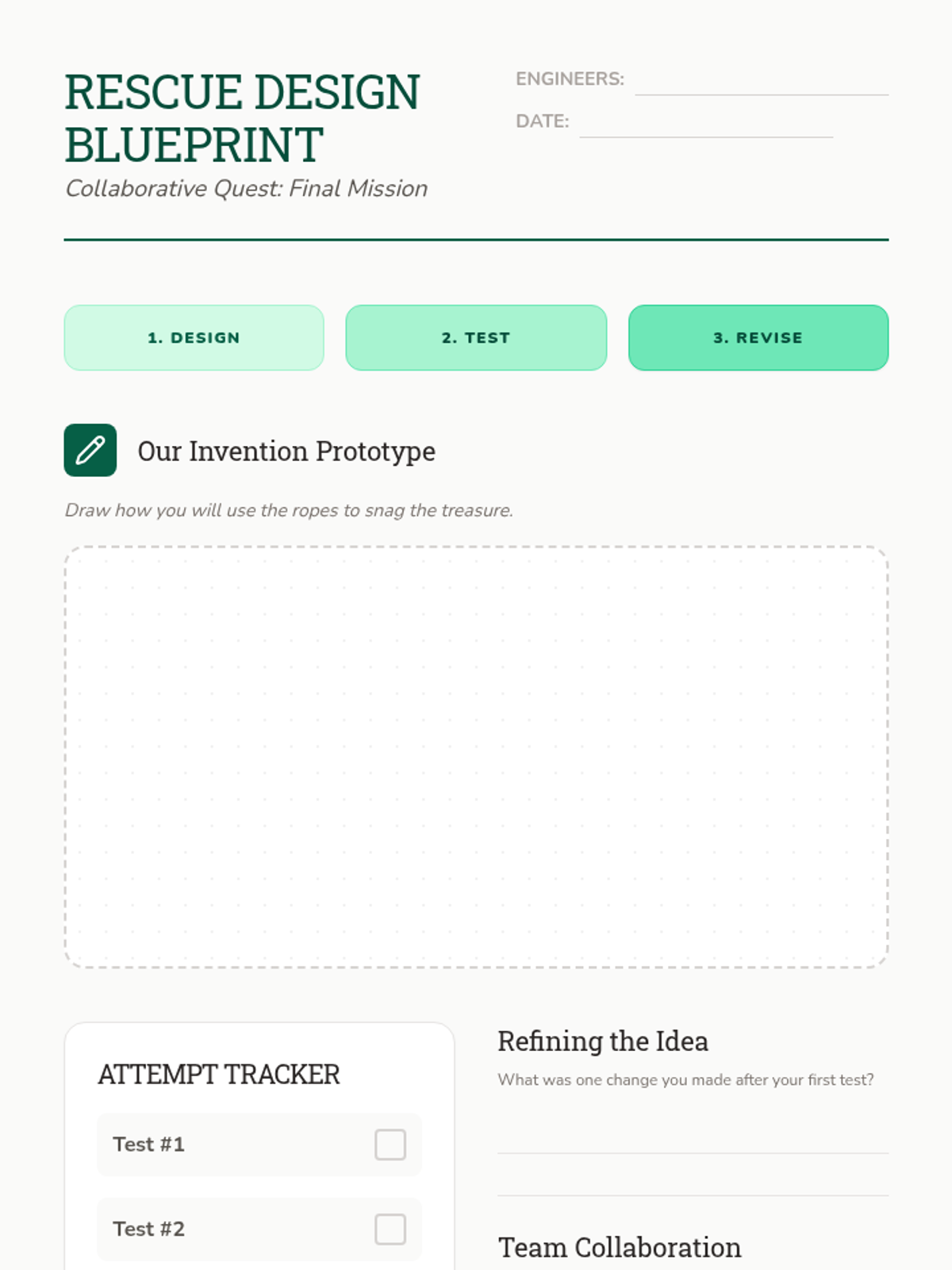
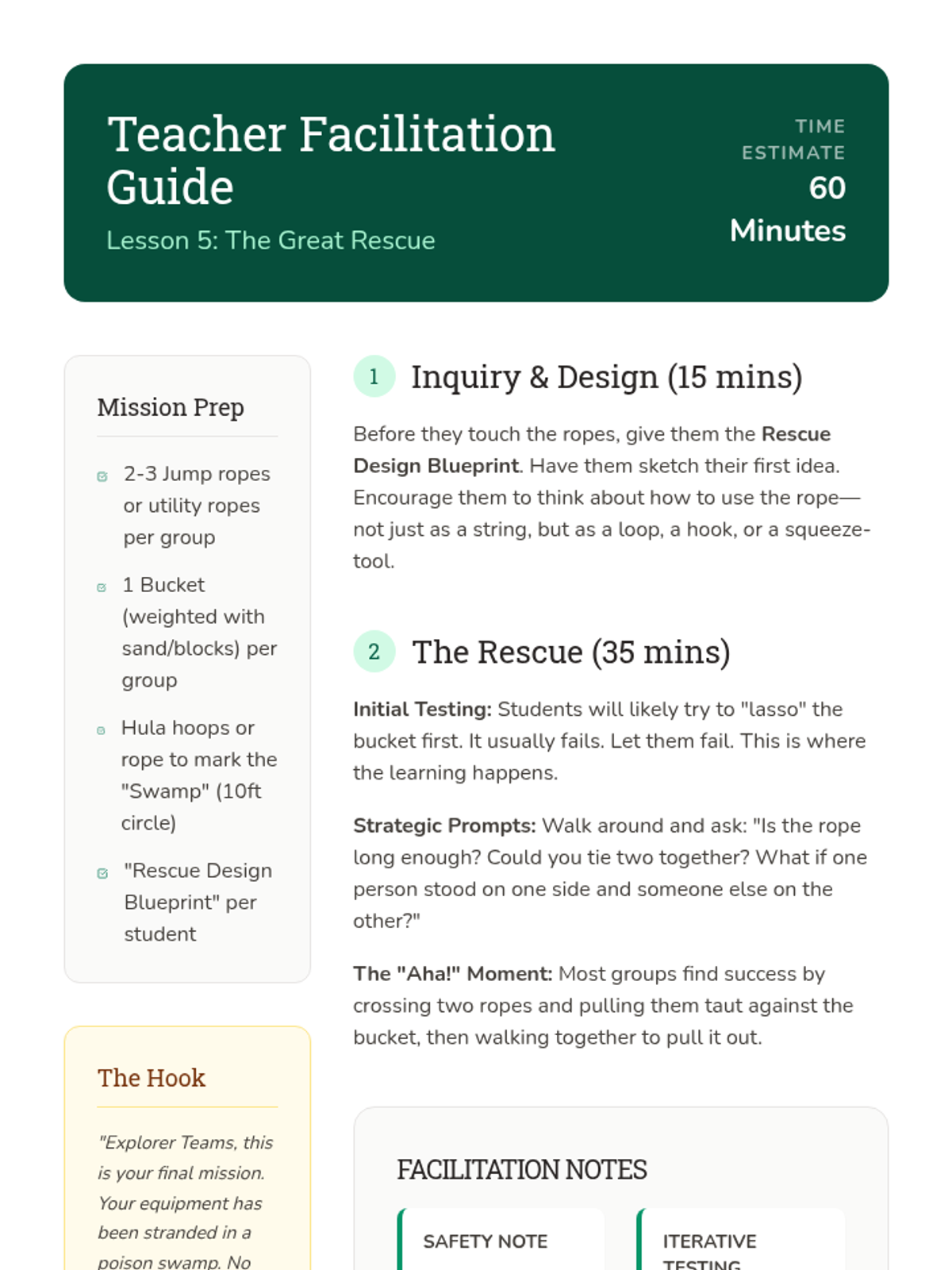
Students use ropes to retrieve an object from a 'poison swamp'. Focuses on engineering thinking and trial-and-error.
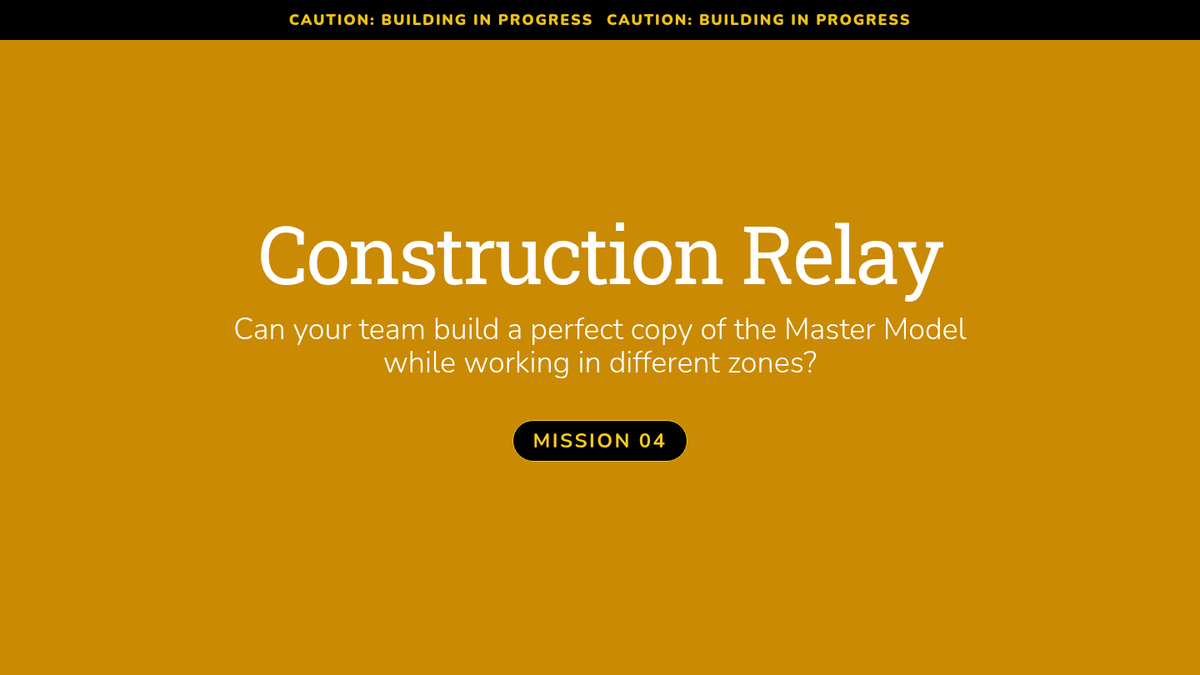
Teams replicate a structure by dividing roles and communicating visual information accurately. Focuses on role assignment and memory.
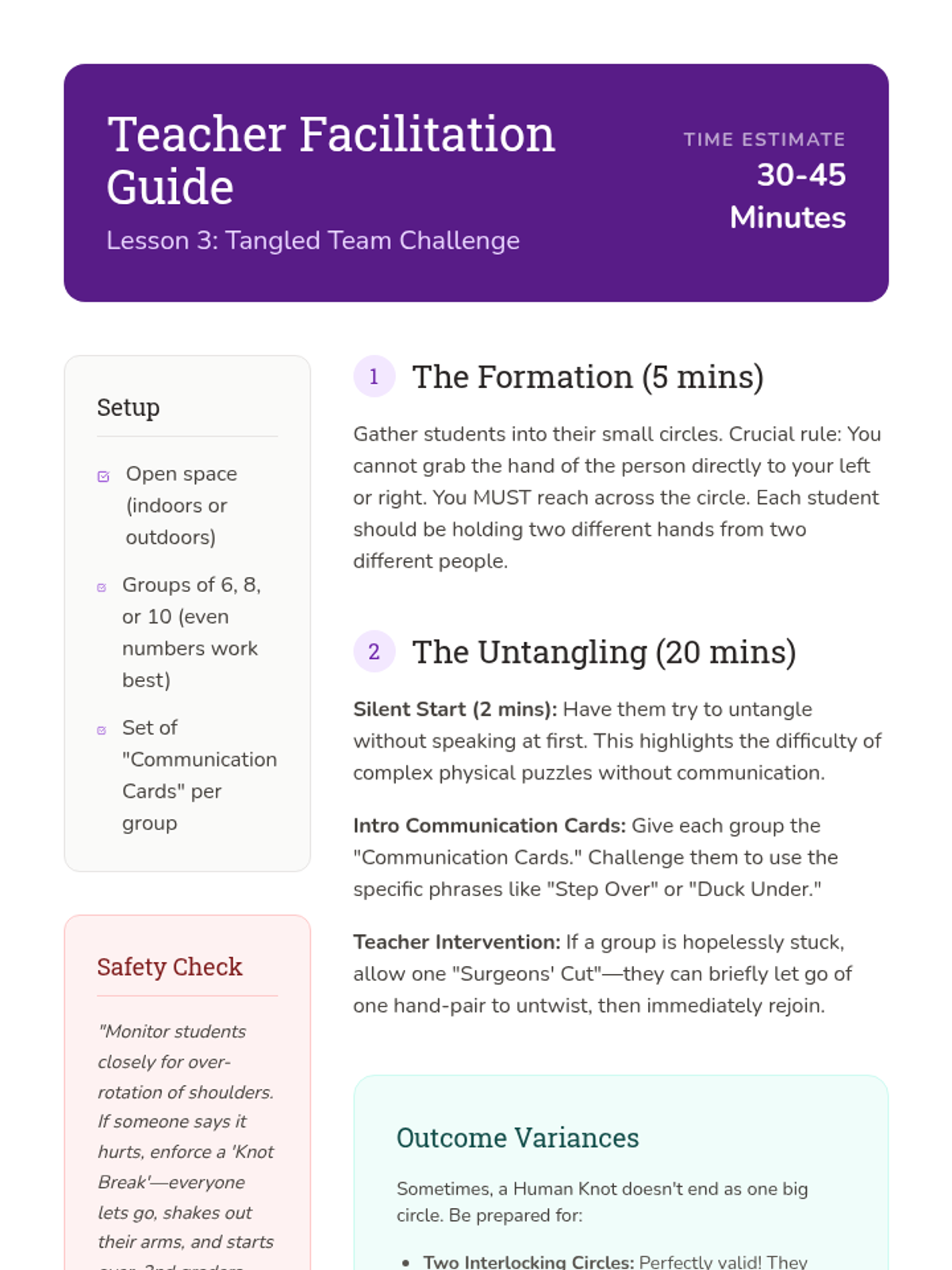
Students untangle themselves from a human knot without letting go. Focuses on clear communication and spatial reasoning.
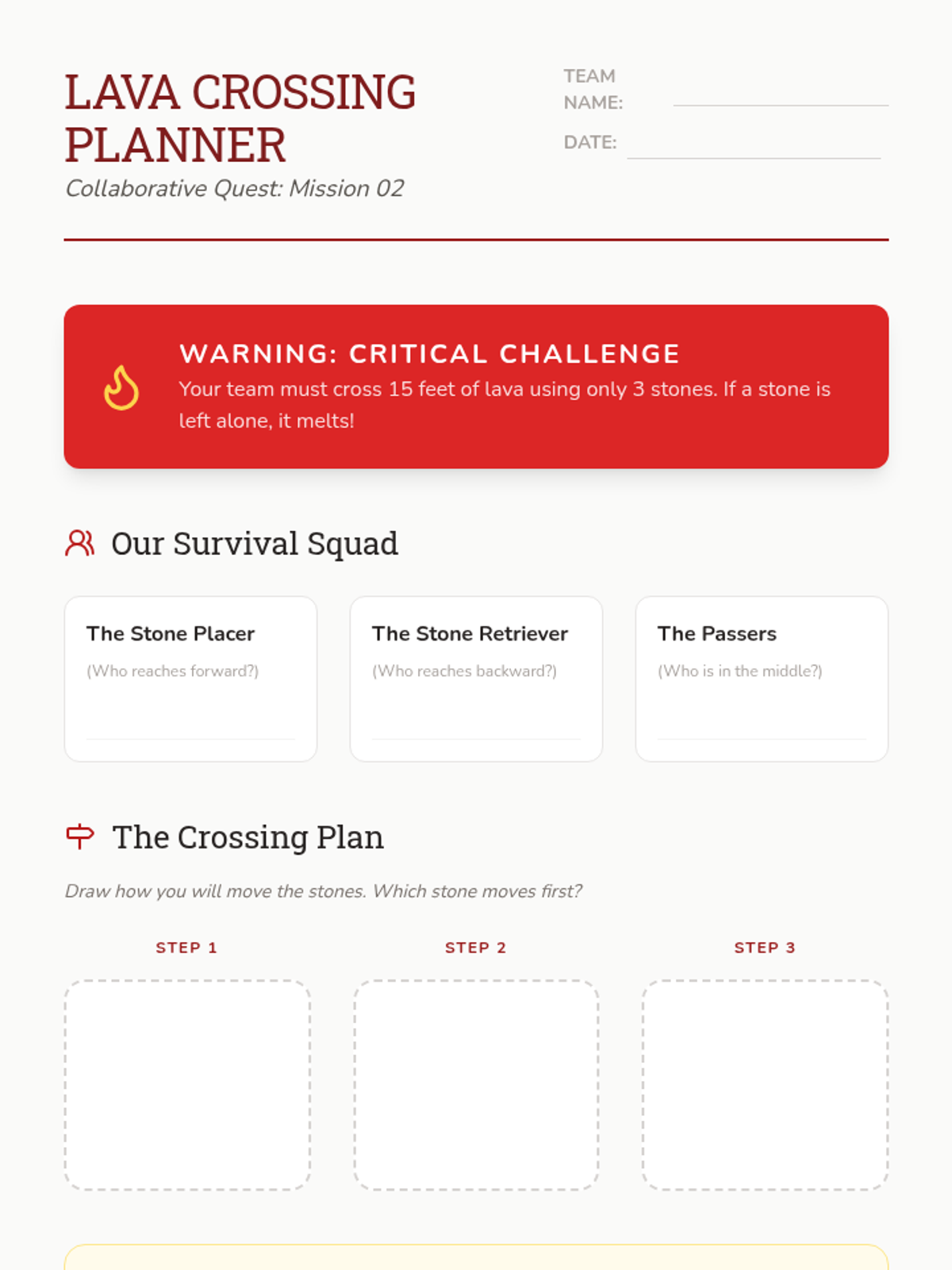
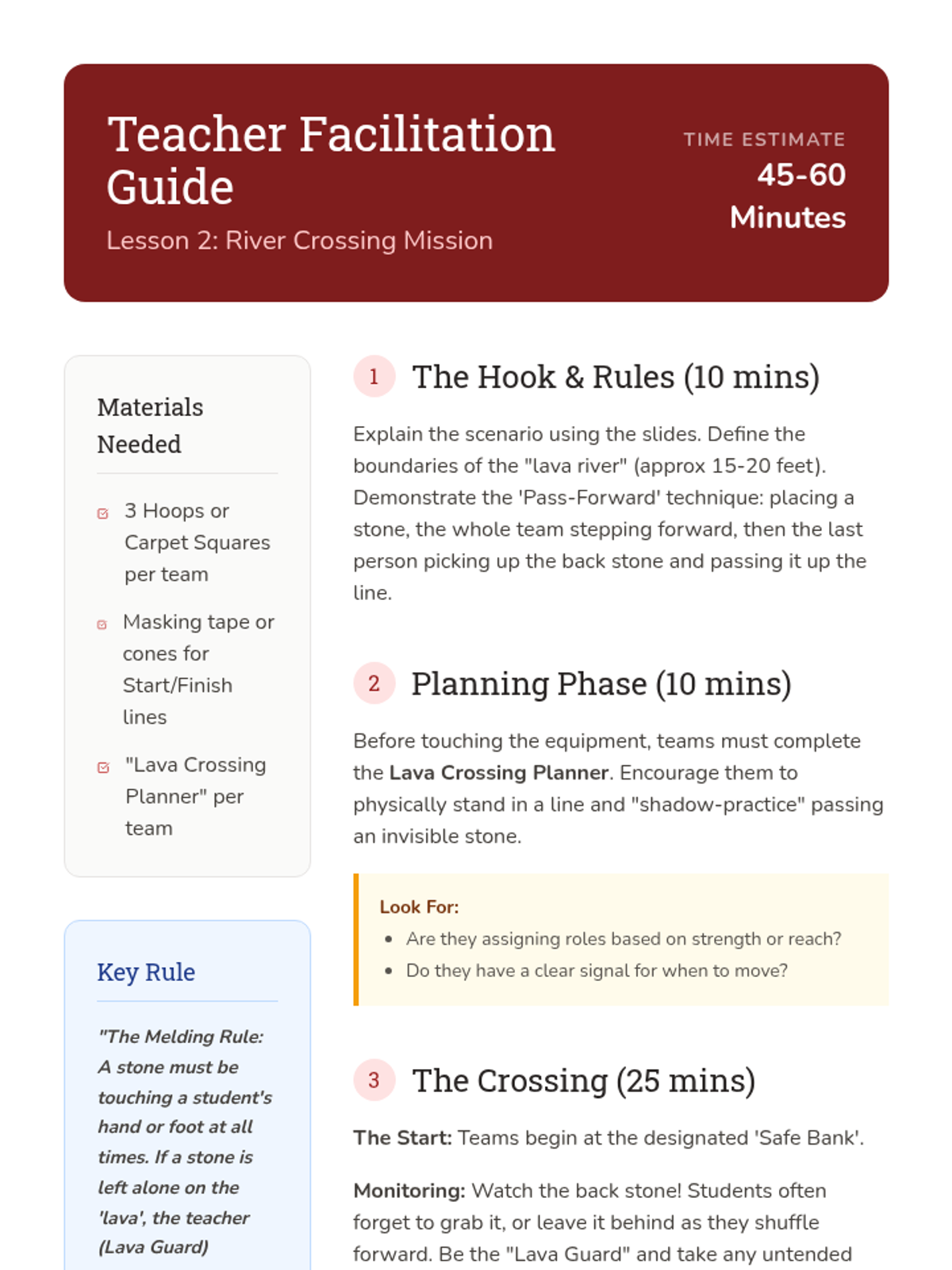
Teams cross a 'lava' river using limited stepping stones. Focuses on resource management and sequencing.
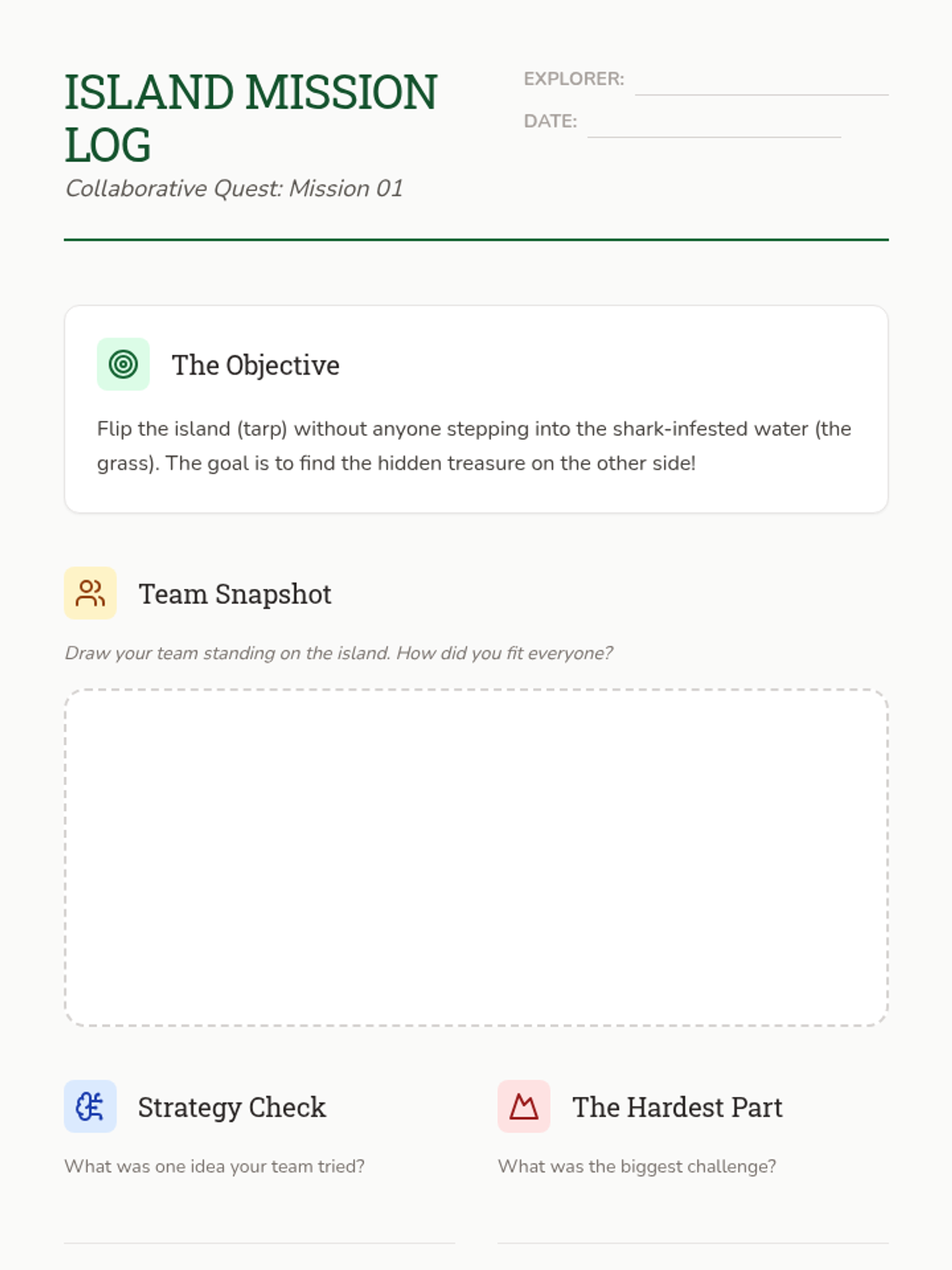
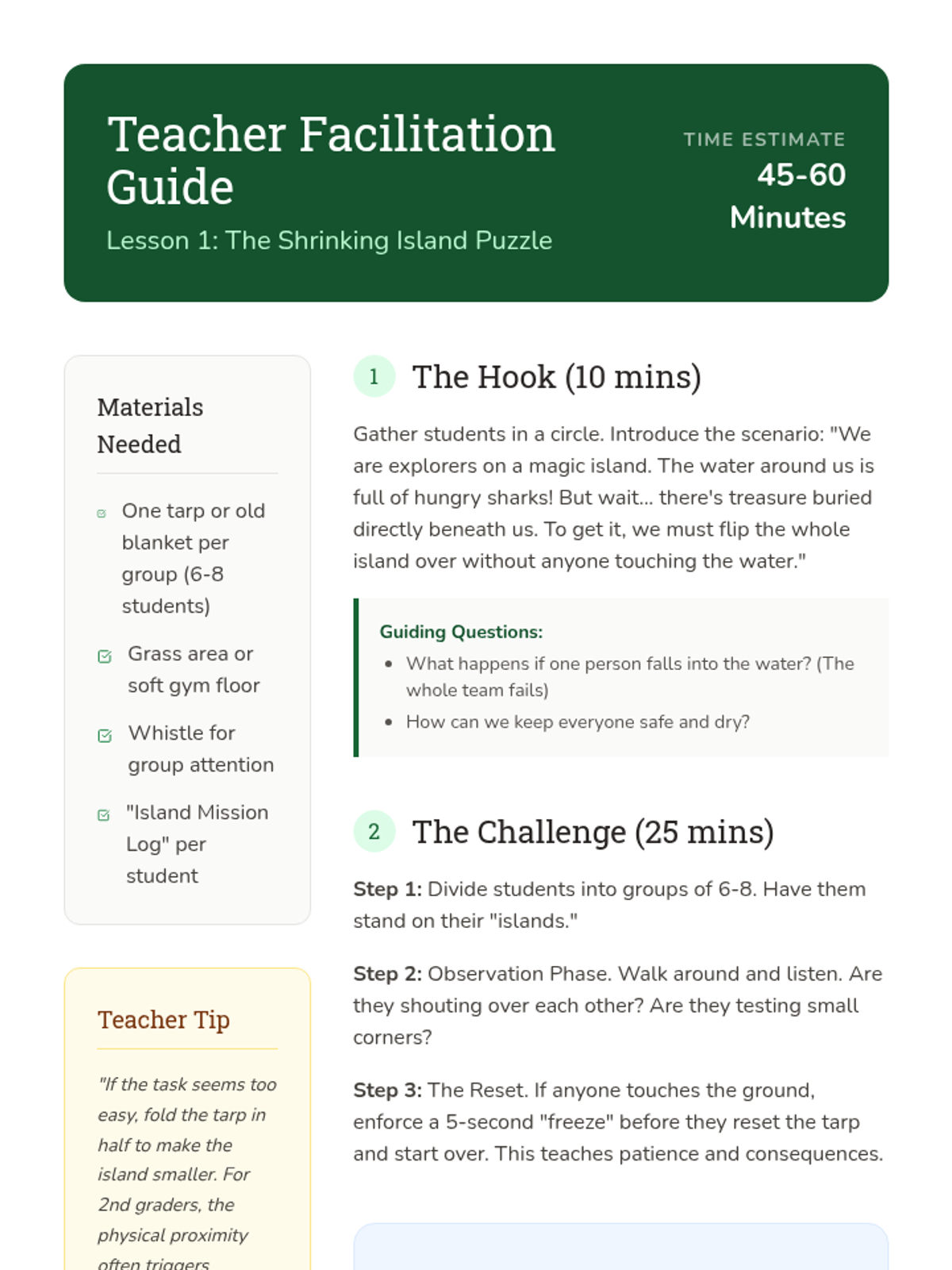
Groups must flip a tarp without anyone stepping off into the 'shark-infested water'. Focuses on group consensus and physical support.
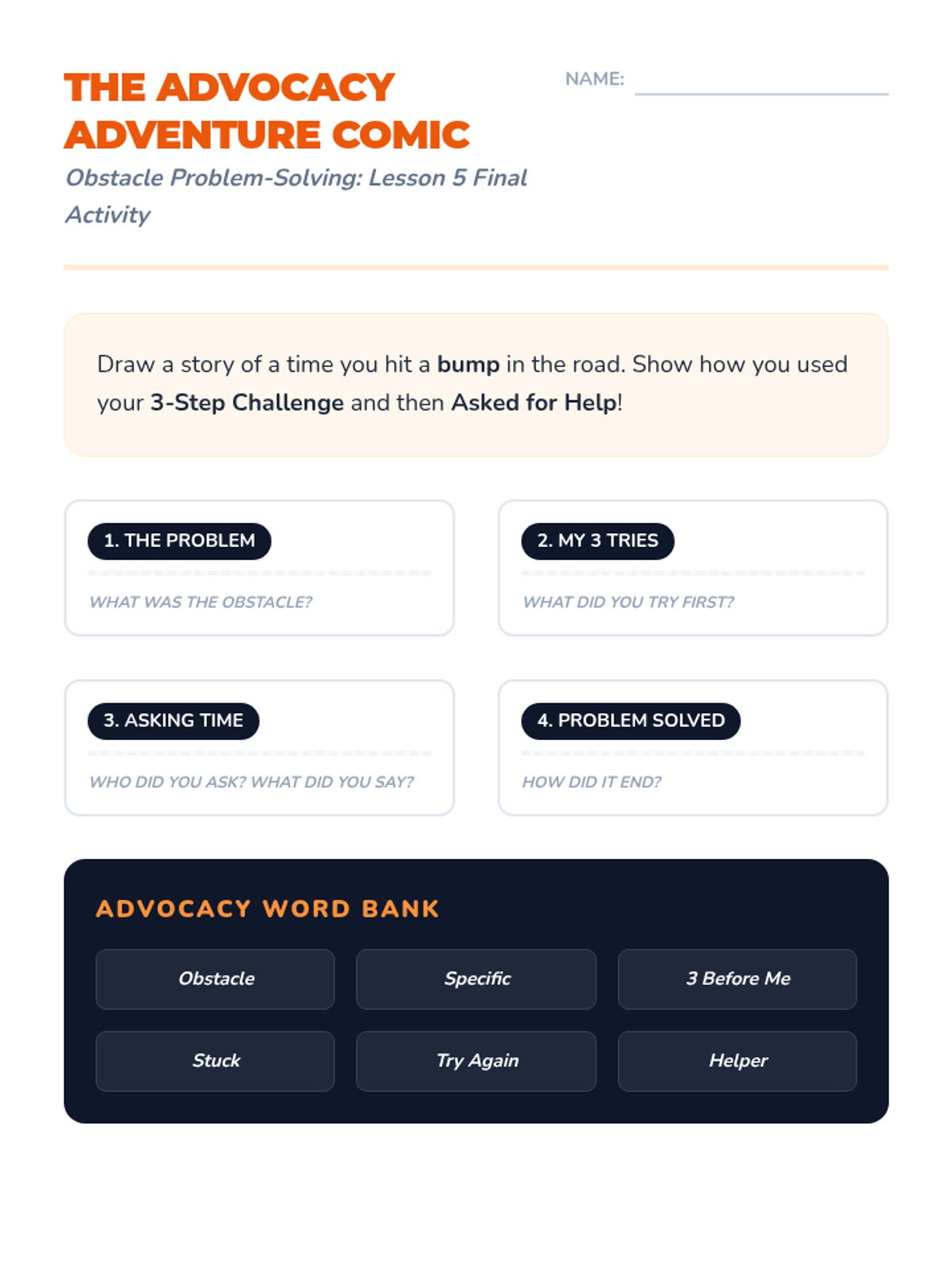
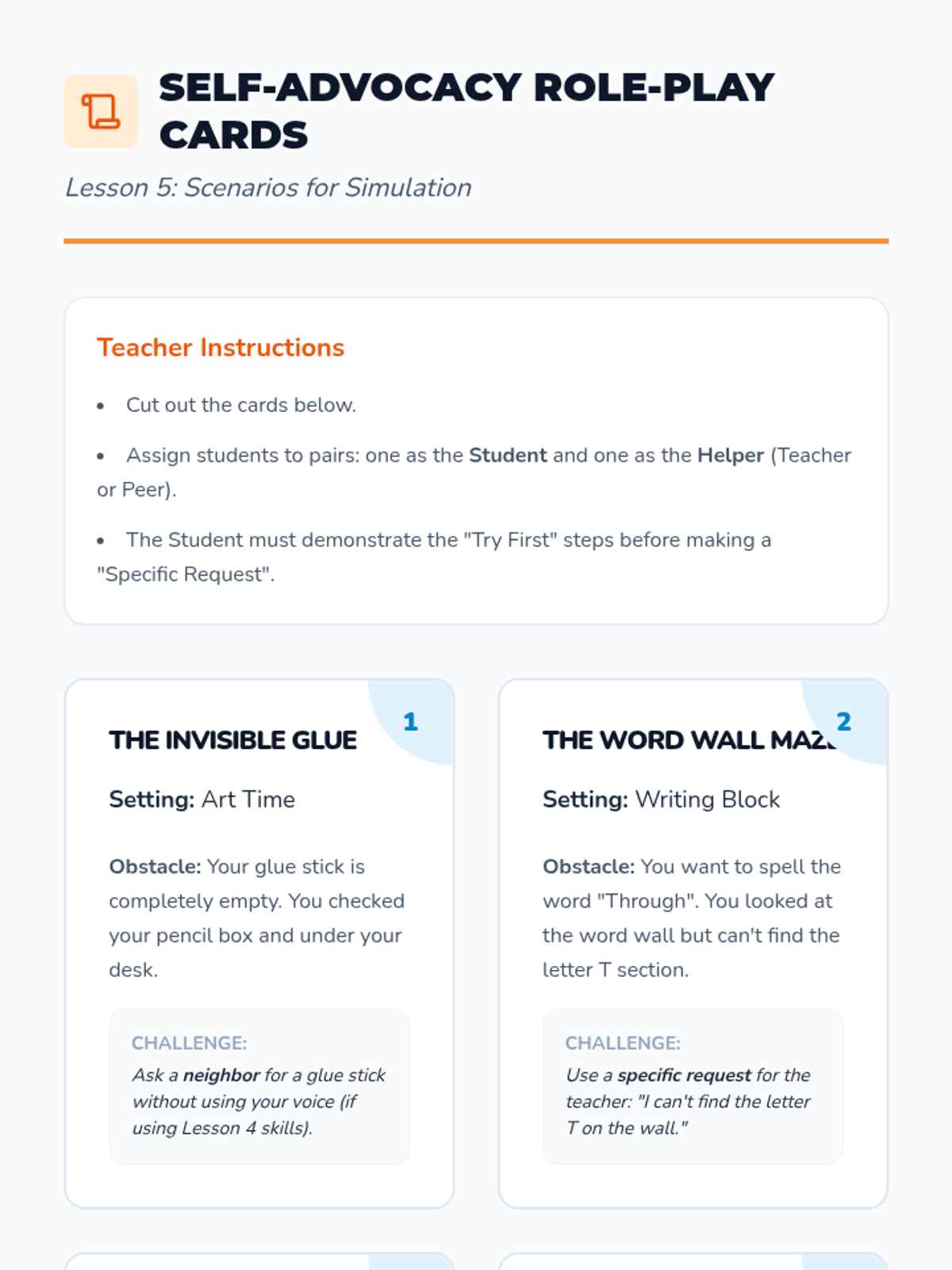
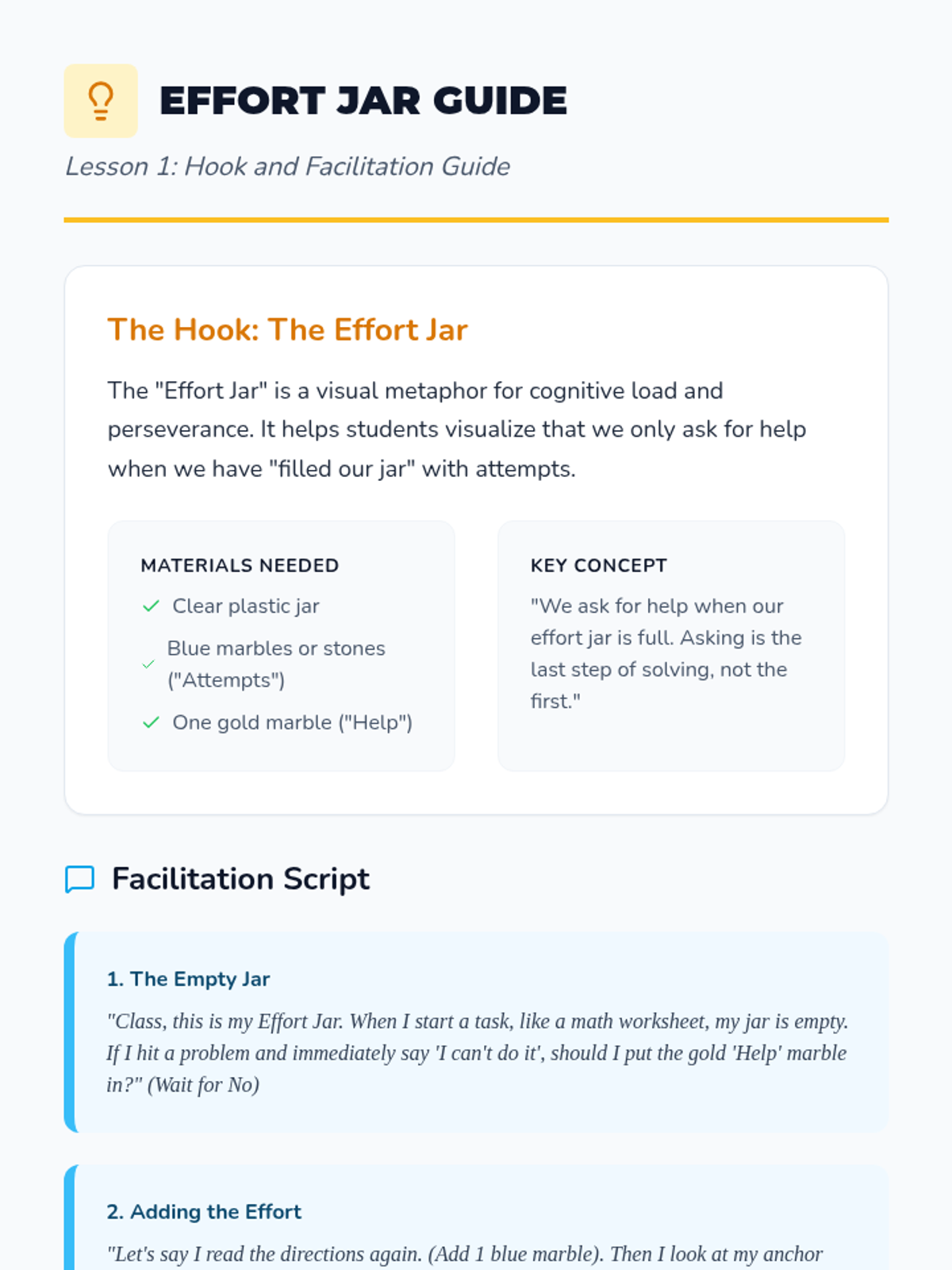
Students enact short skits facing obstacles and effectively asking for help, synthesizing the entire 'Try -> Assess -> Ask' sequence.
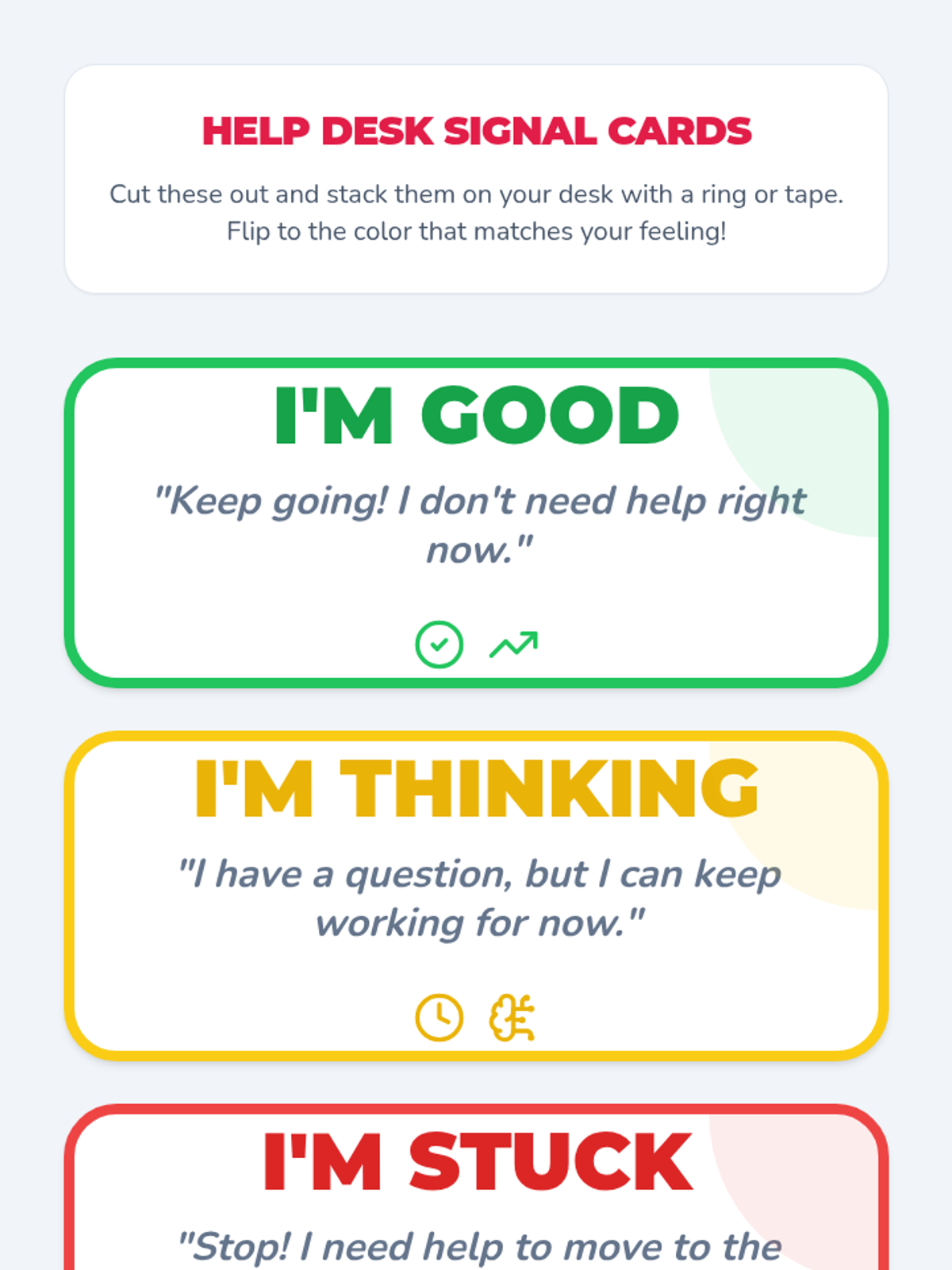
Introduces non-verbal advocacy tools like flip cards and hand signals for students who may be overwhelmed or need to signal for help without interrupting.
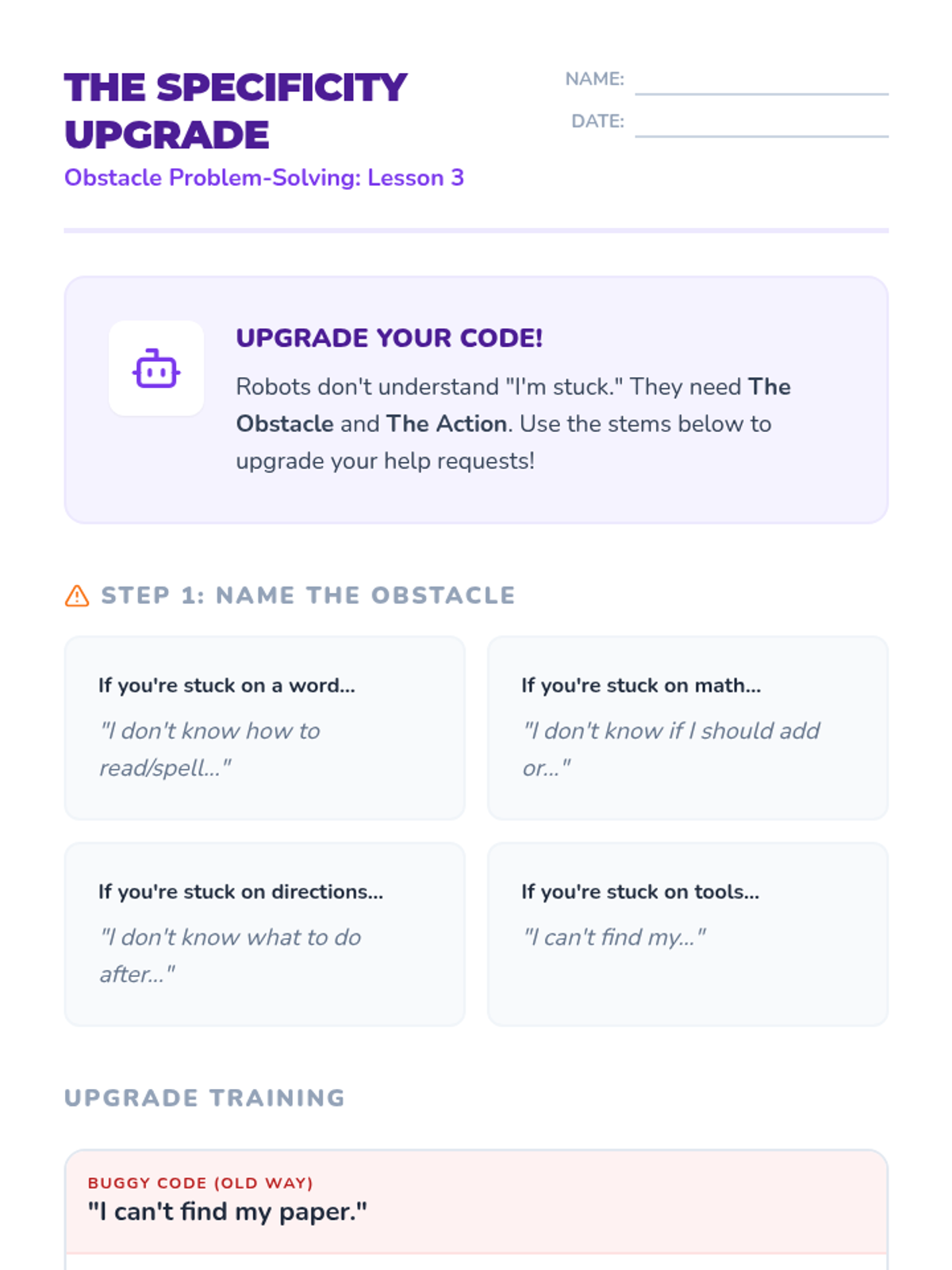
This lesson targets the language of self-advocacy. Students practice changing generic complaints into specific requests that identify the exact obstacle.
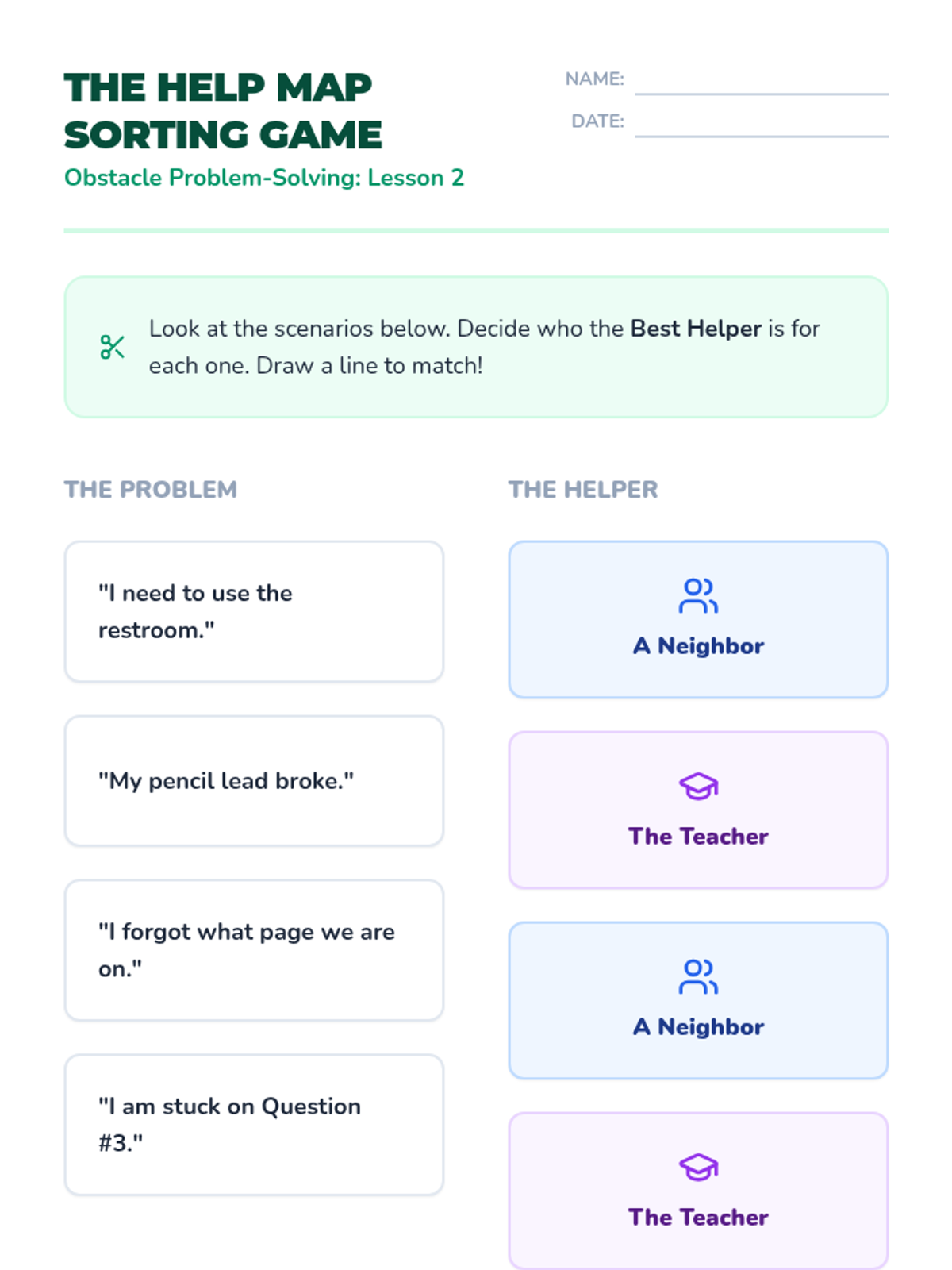
Students map out the classroom ecosystem to identify who can help with different problems. This fosters social awareness and reduces bottlenecks at the teacher's desk.
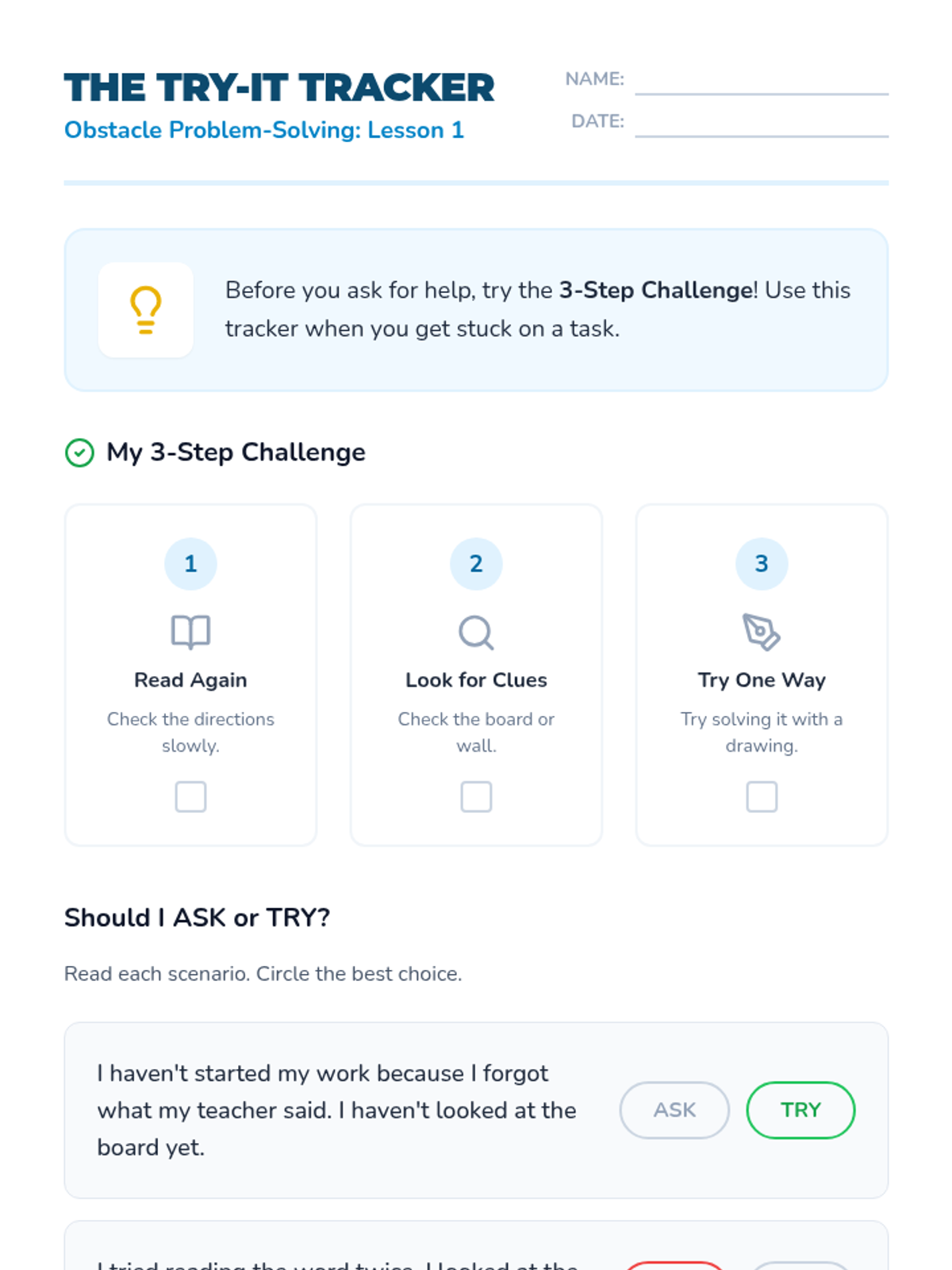
Students learn to identify the 'tipping point'—the moment after they have tried independent strategies but remain stuck. They categorize scenarios into 'Try more' vs. 'Ask now' to prevent immediate dependence on adults.
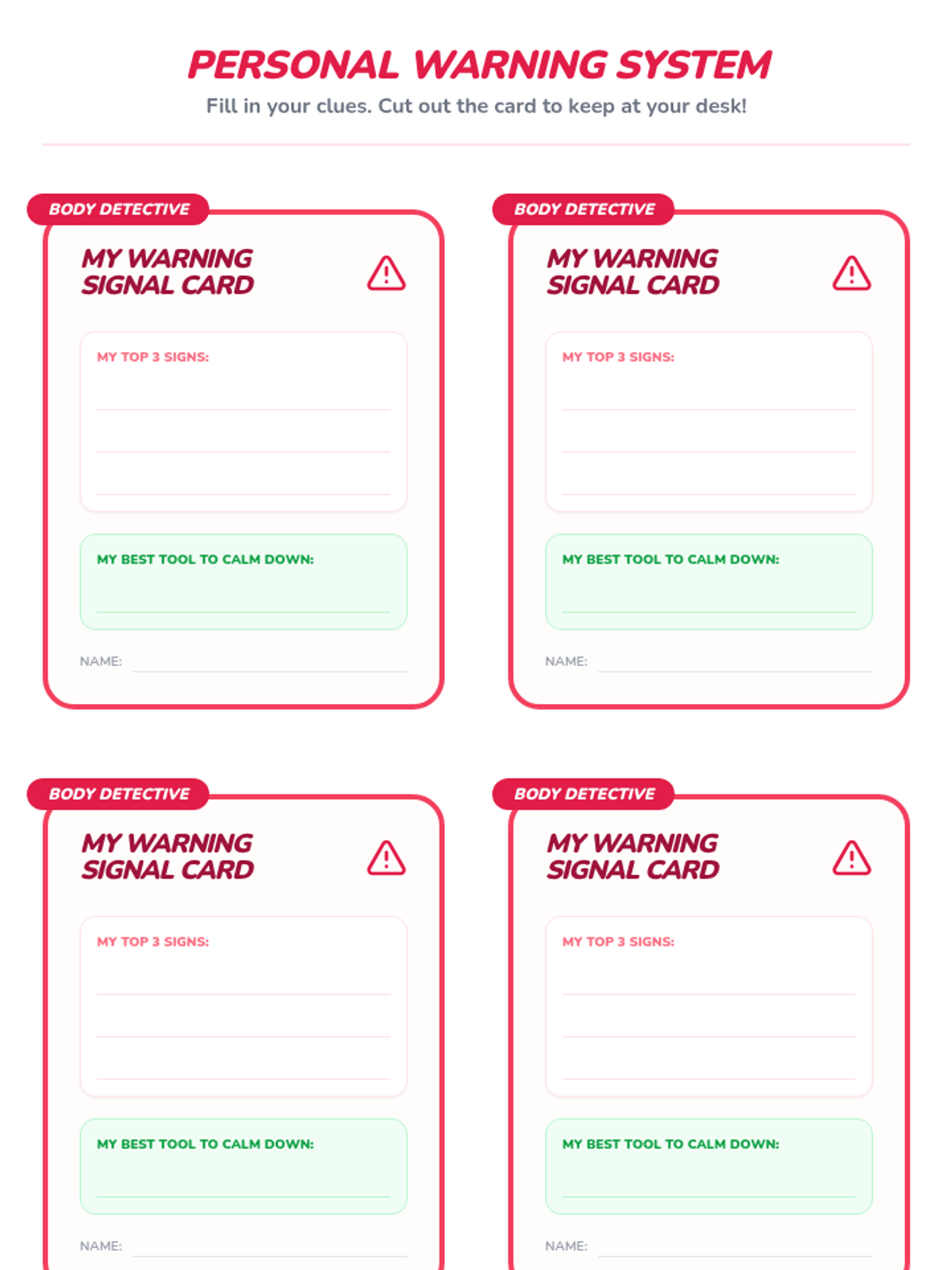
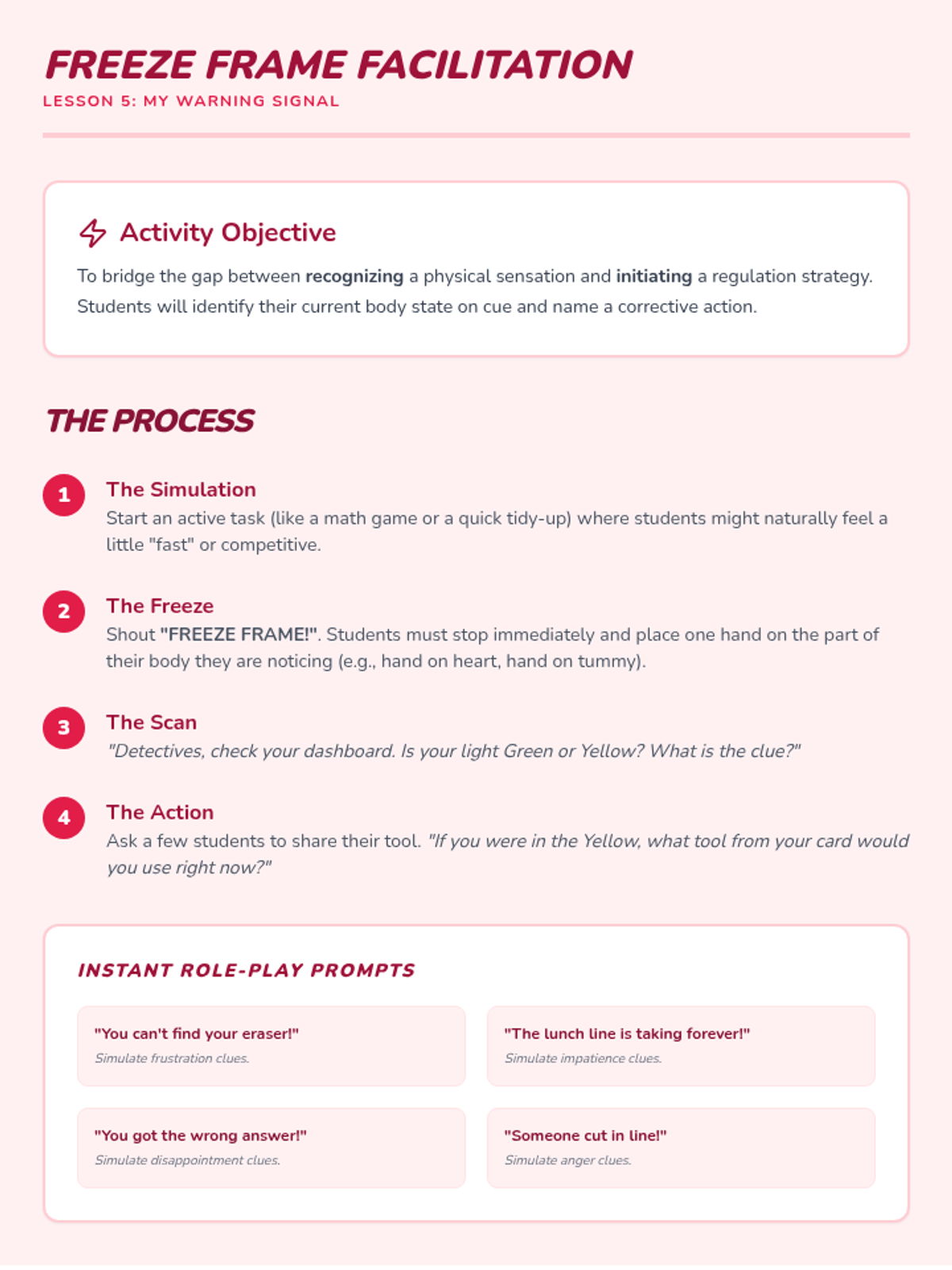
Students create personal warning signal cards and practice identifying signs in real-time to bridge the gap between recognition and regulation.
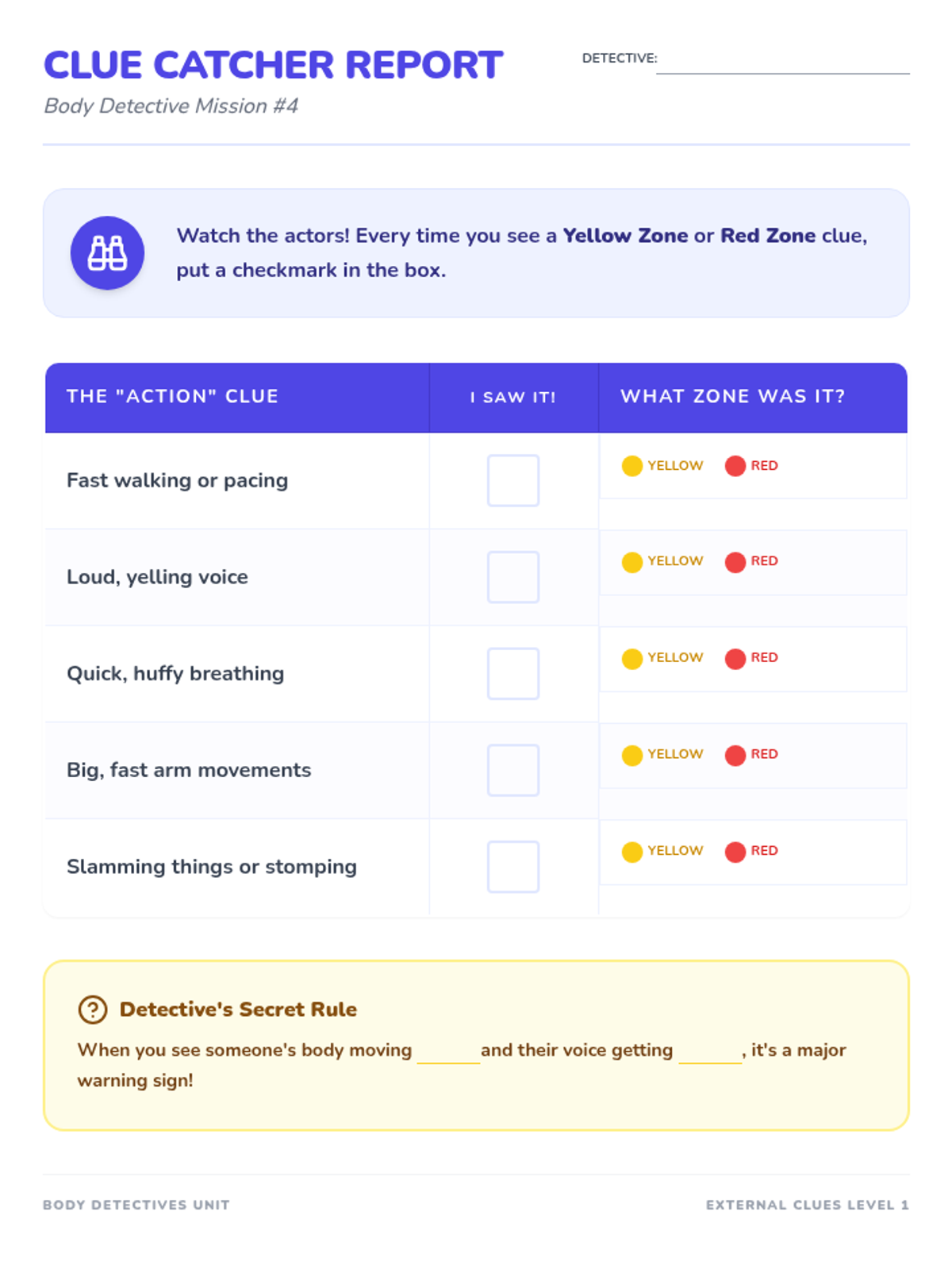
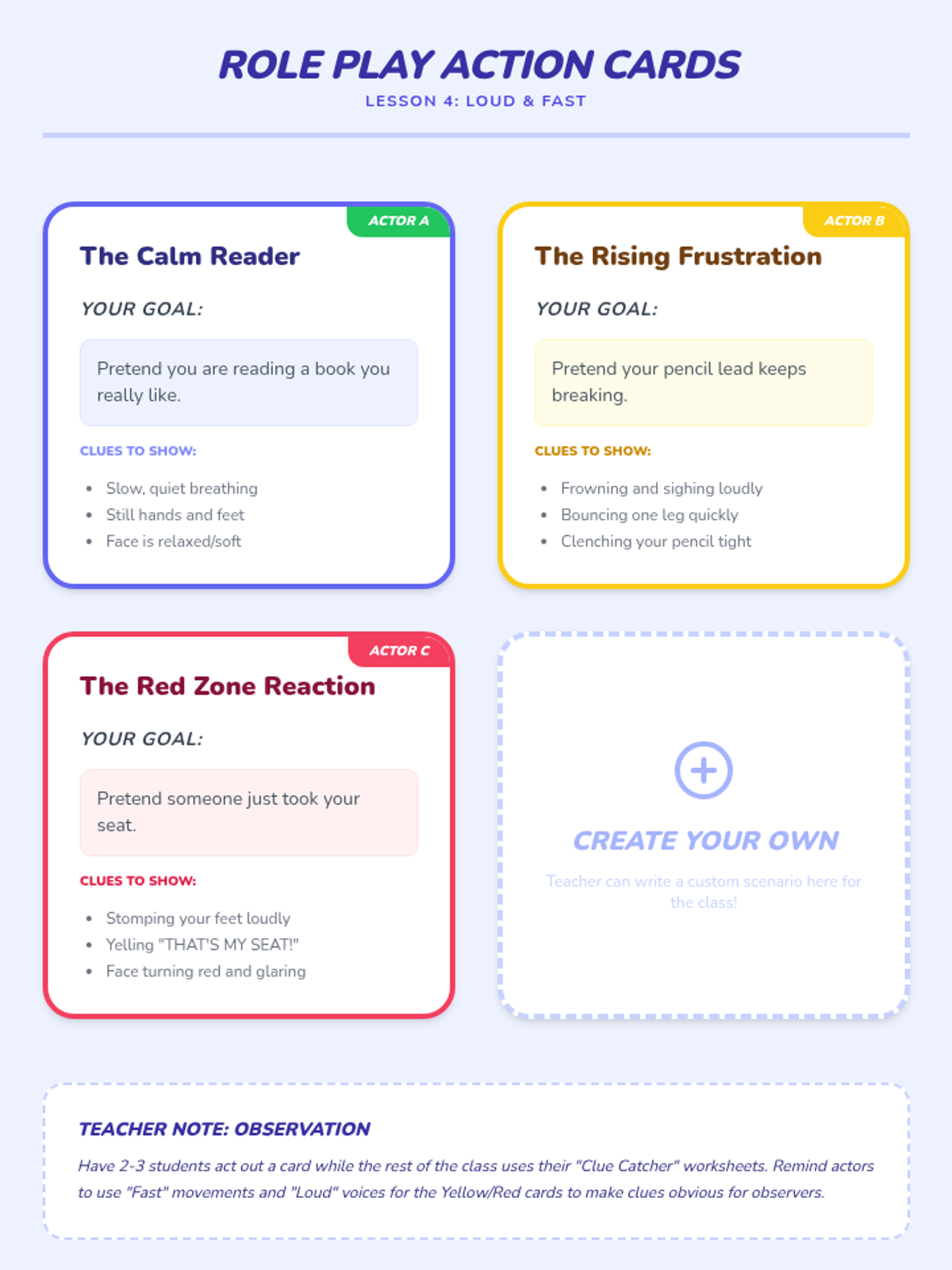
Focusing on external cues, students observe how vocal volume and movement speed change during escalation through role-play and observation.
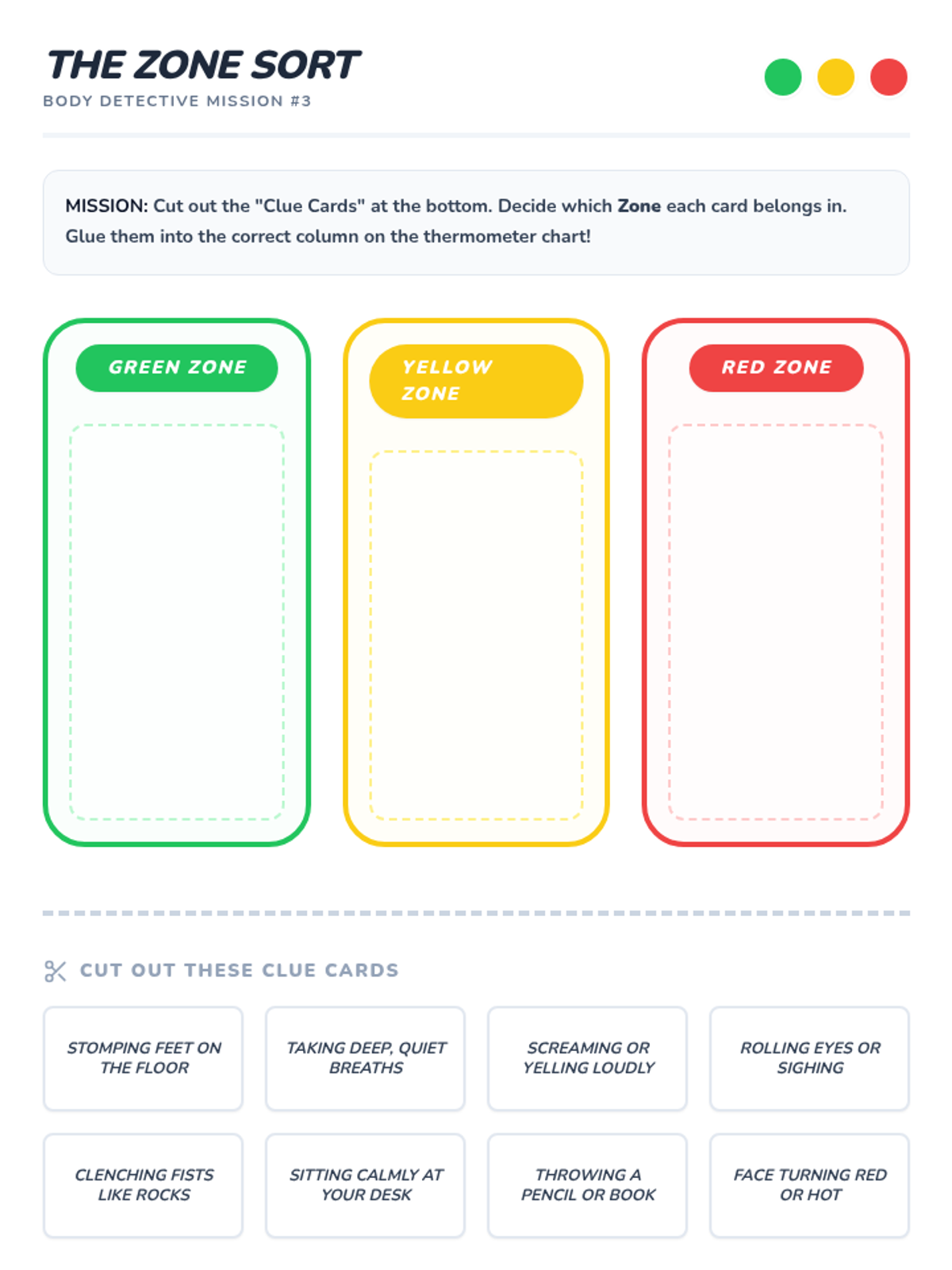
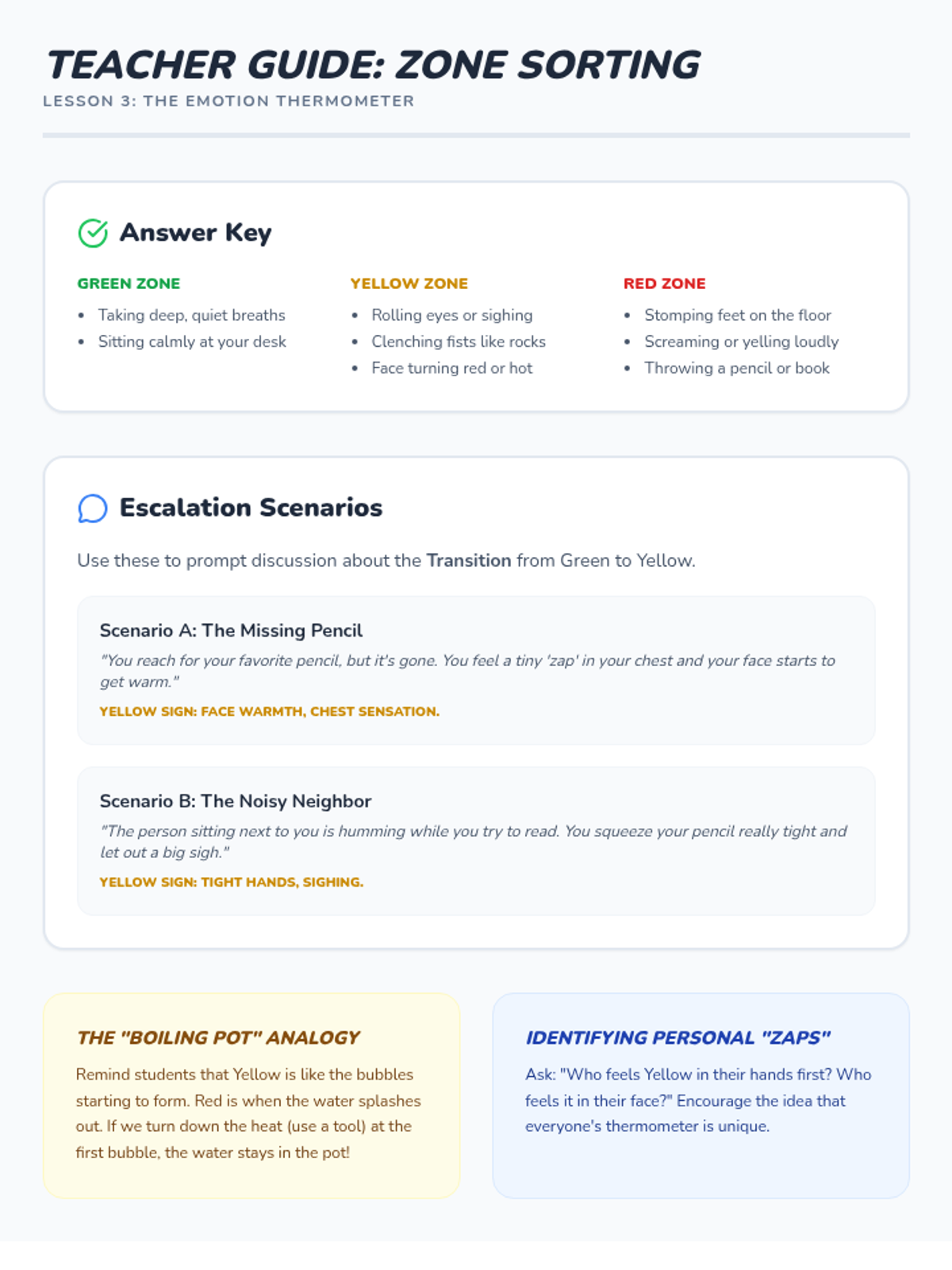
Students use an 'Emotional Thermometer' to categorize physical signs and behaviors into zones, practicing the distinction between baseline and early escalation.
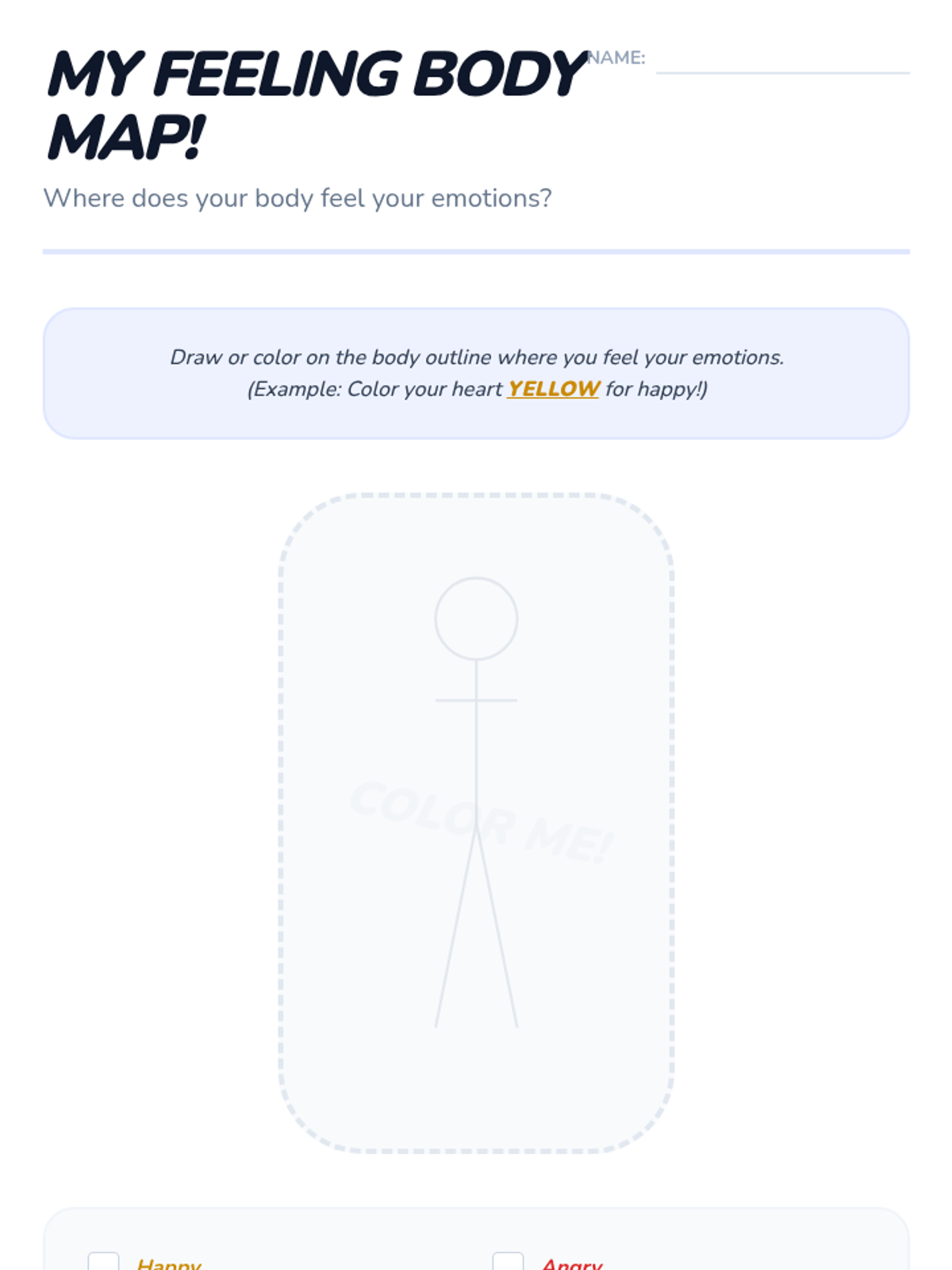
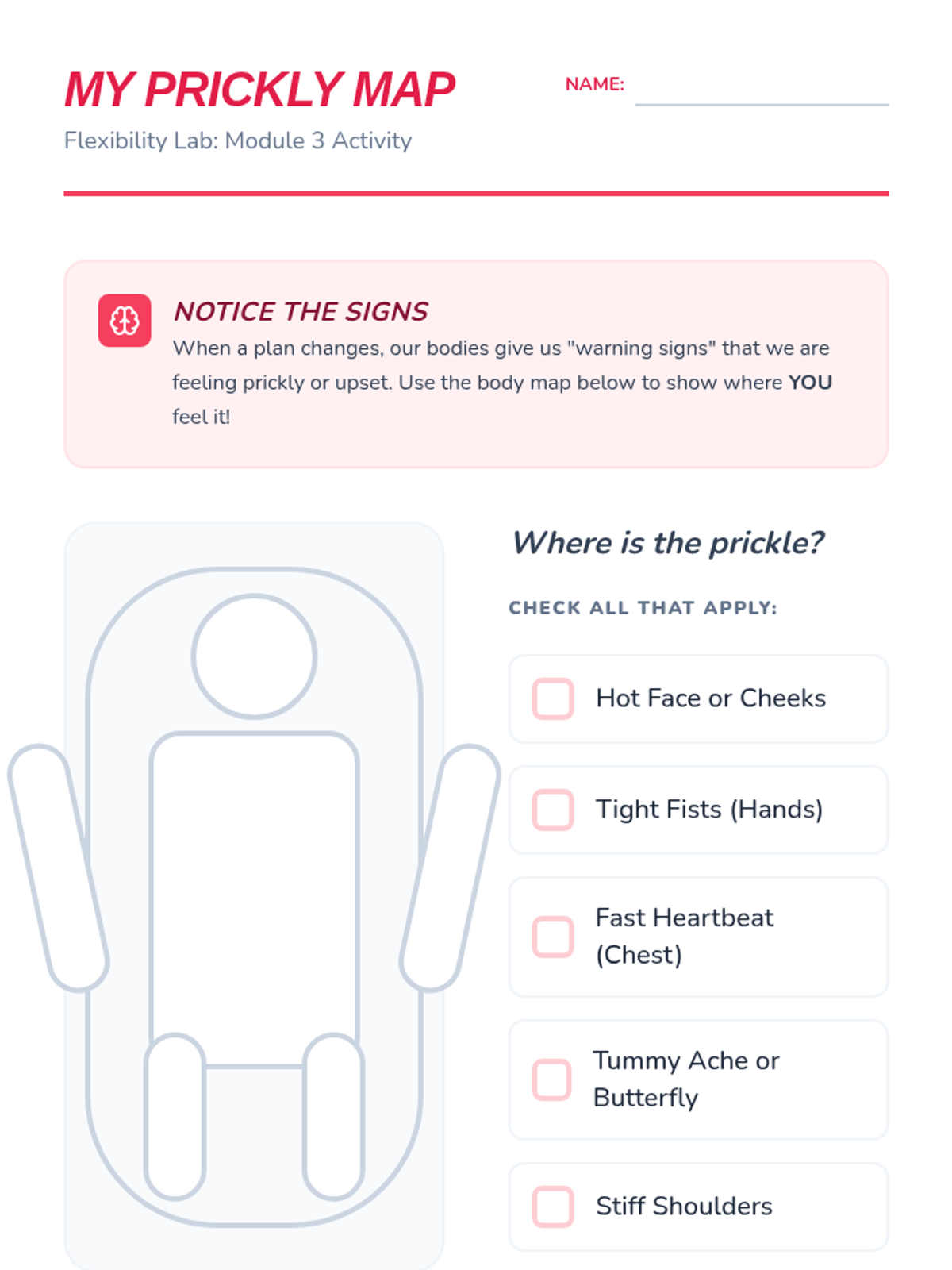
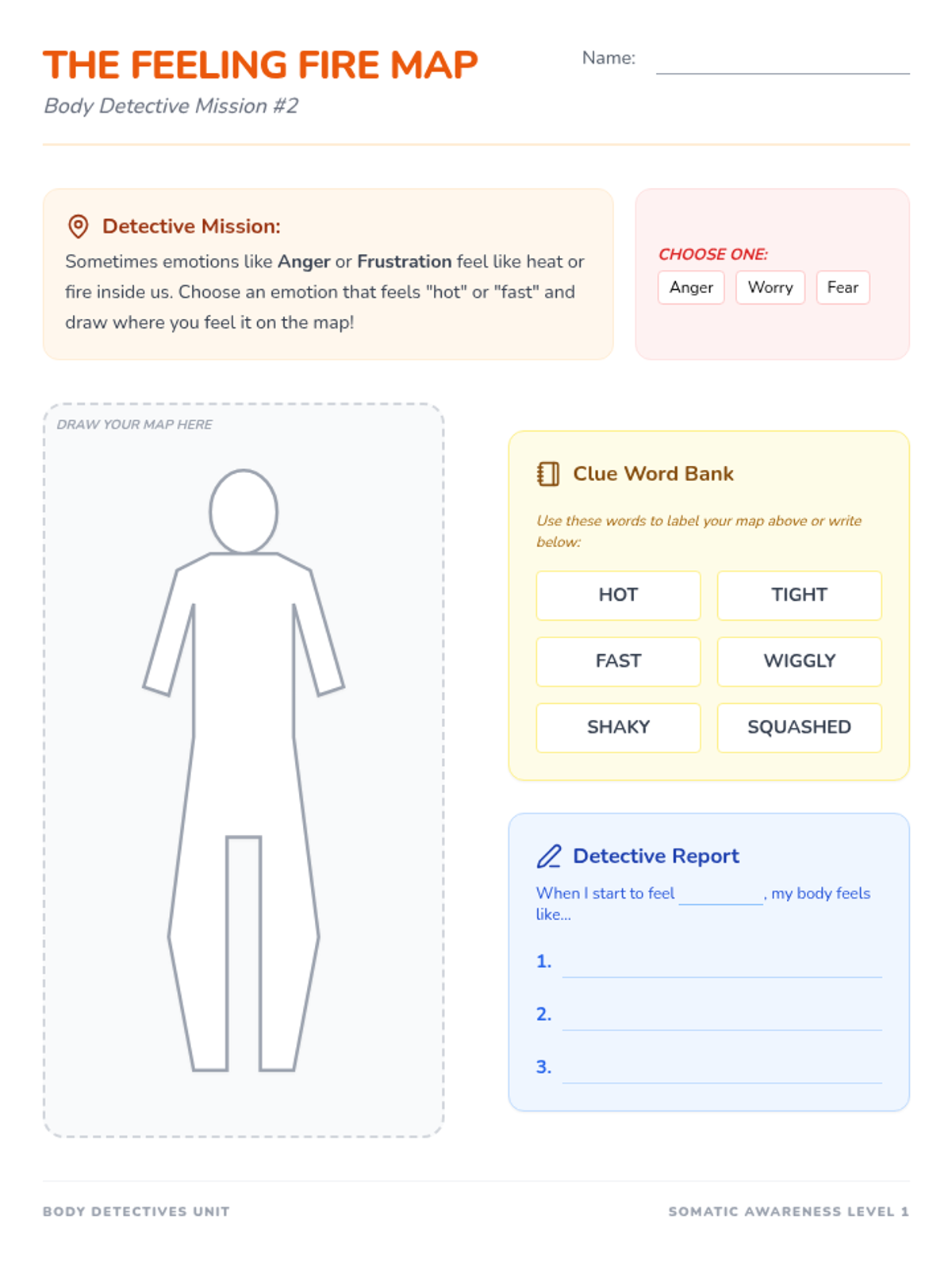
Students use body outlines to visualize and label where they feel intense emotions like anger or worry, making abstract internal sensations concrete.
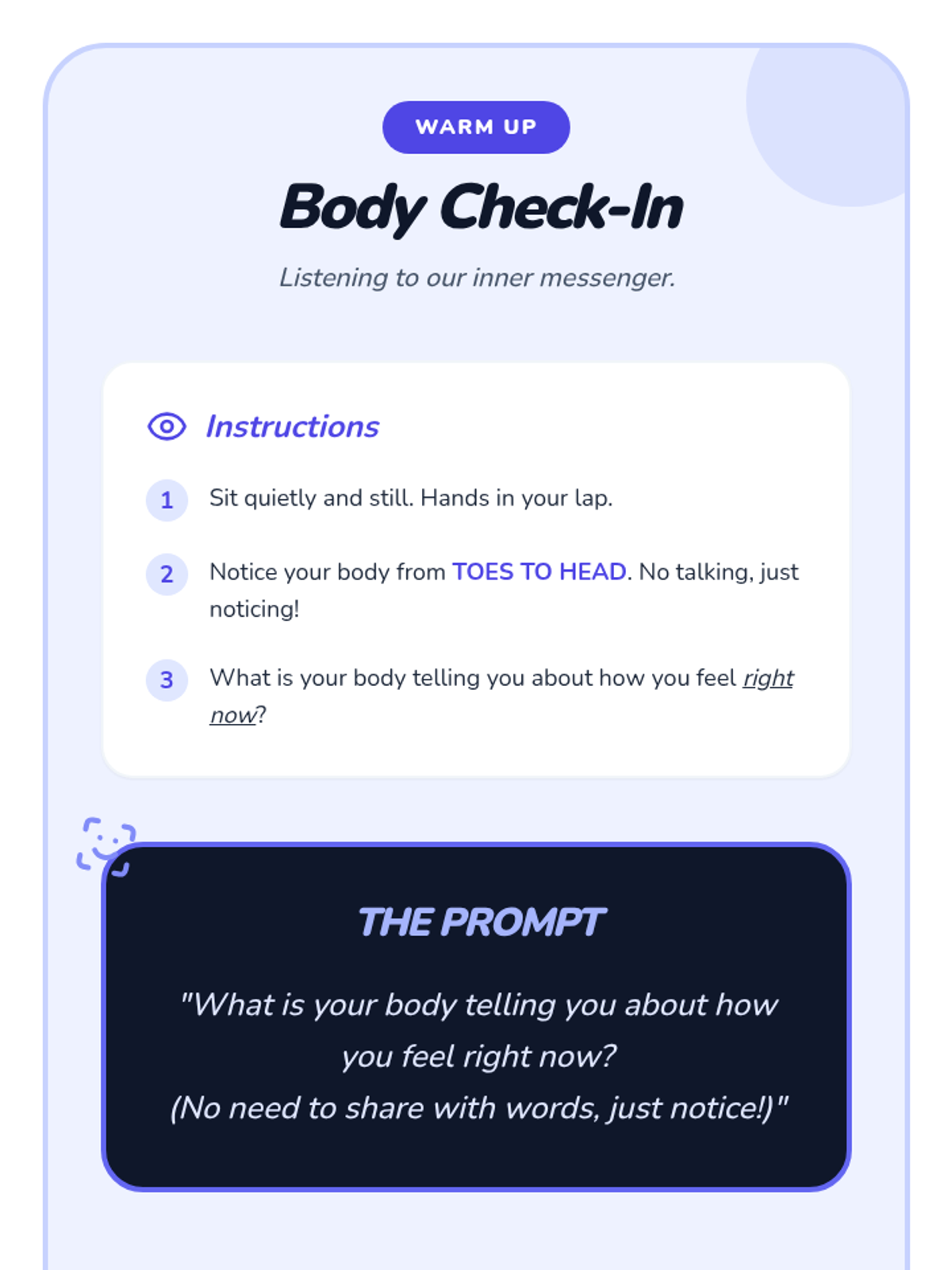
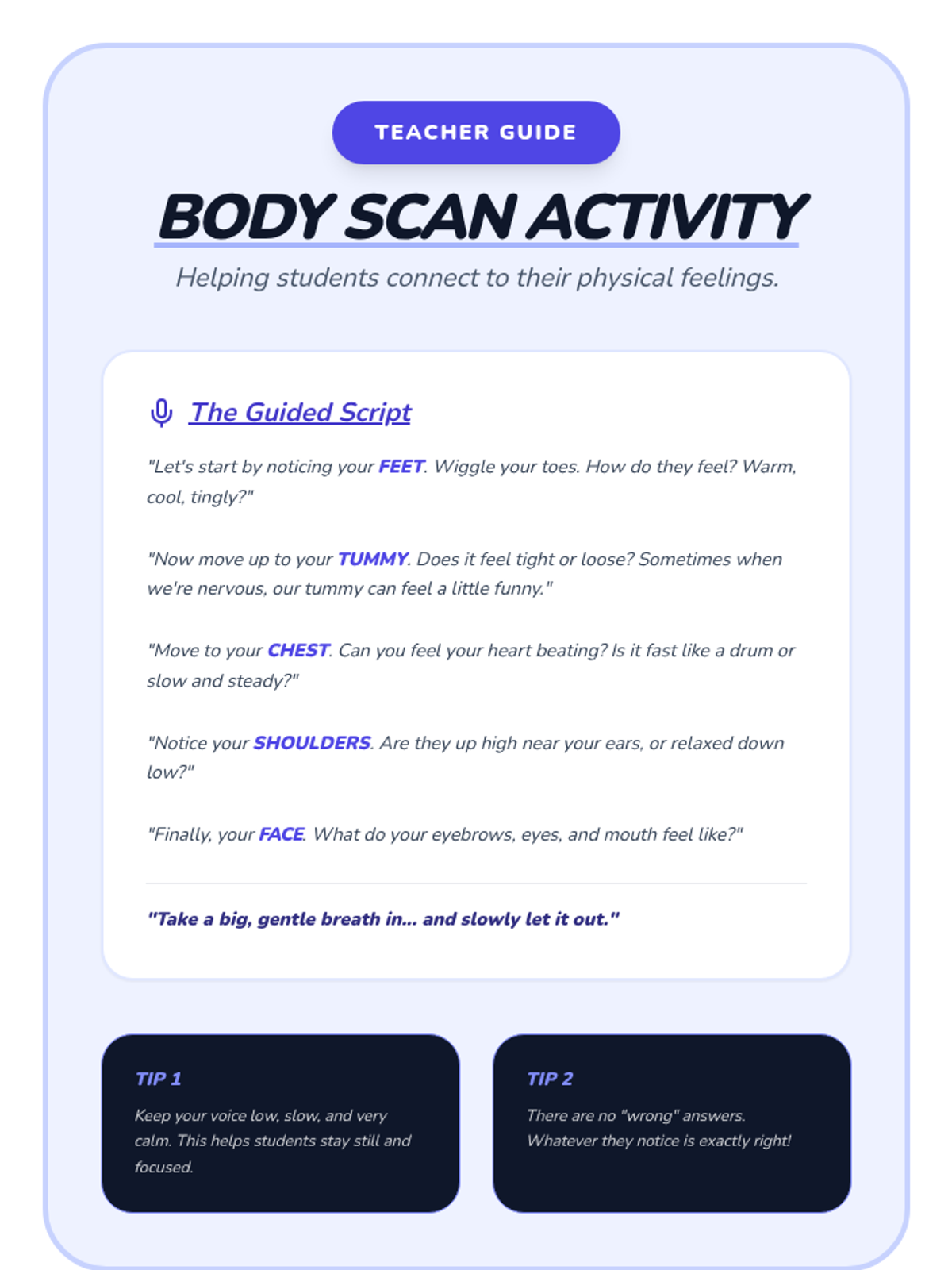
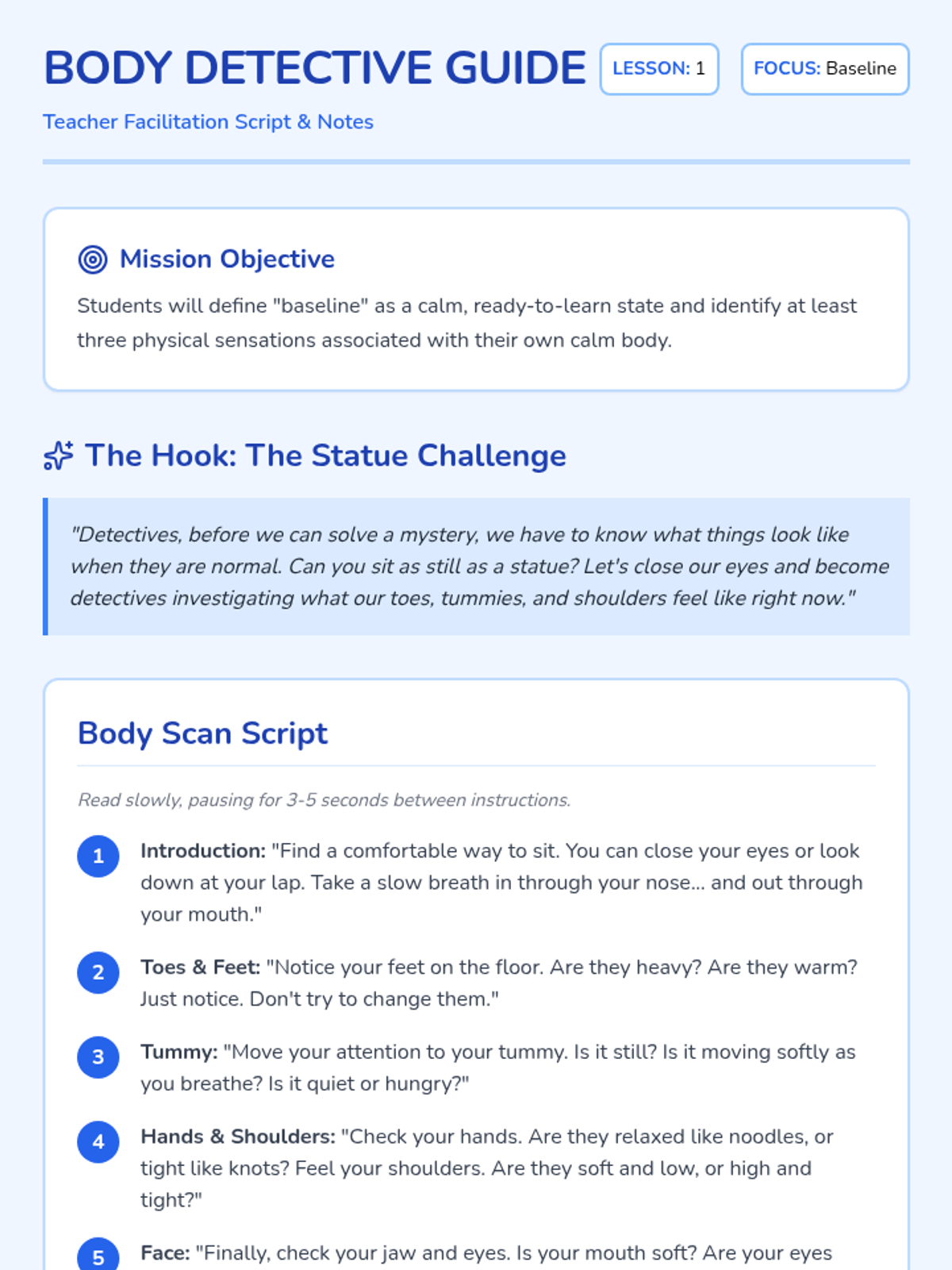
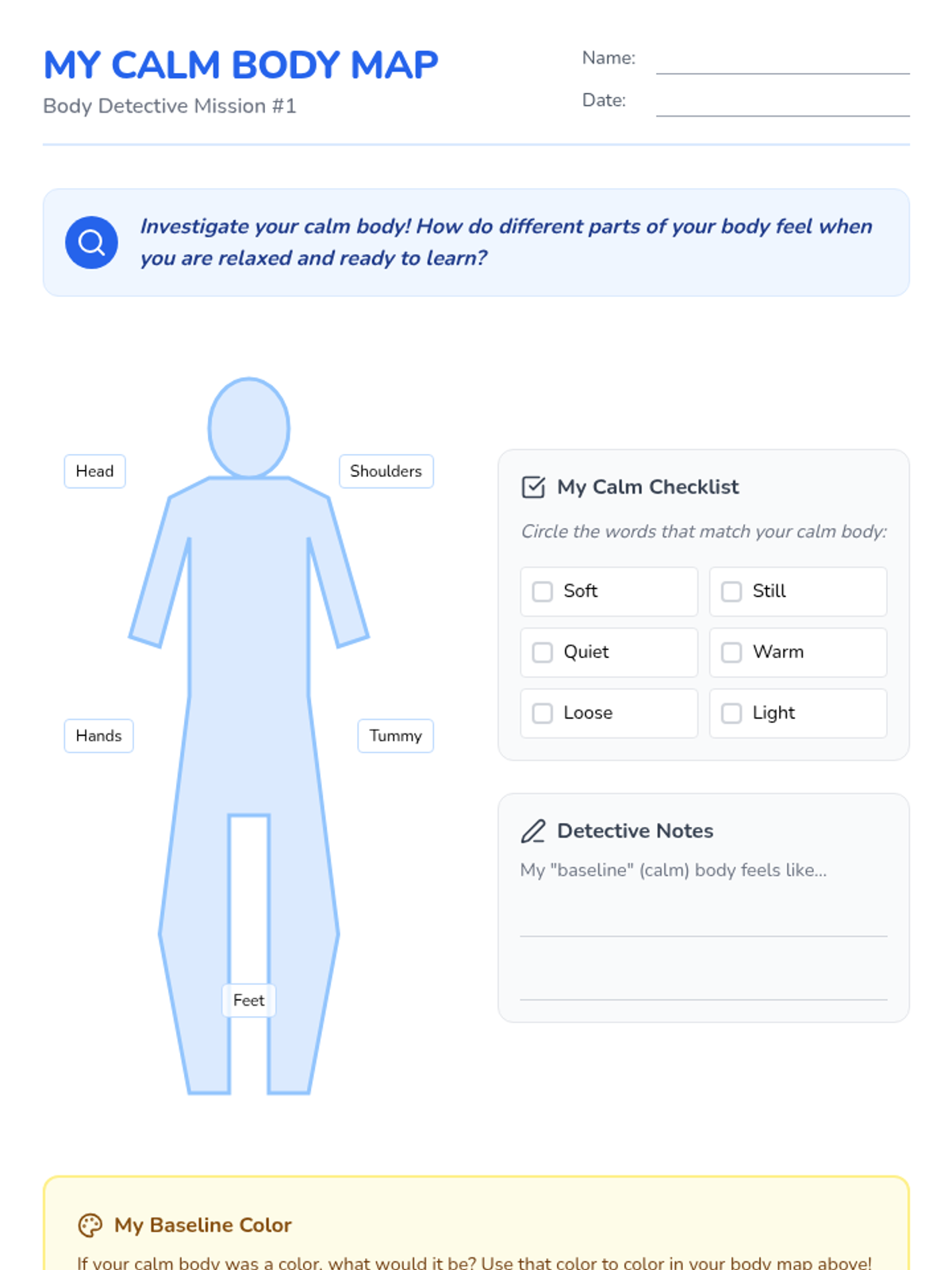
Students participate in a guided body scan to identify what their bodies feel like when they are calm, focused, and ready to learn, creating a reference point for recognizing emotional changes.
The sequence concludes with a high-energy activity where students form a tunnel with their arms. Peers take turns running through while the group cheers for them. This solidifies the concept of celebrating everyone's participation.
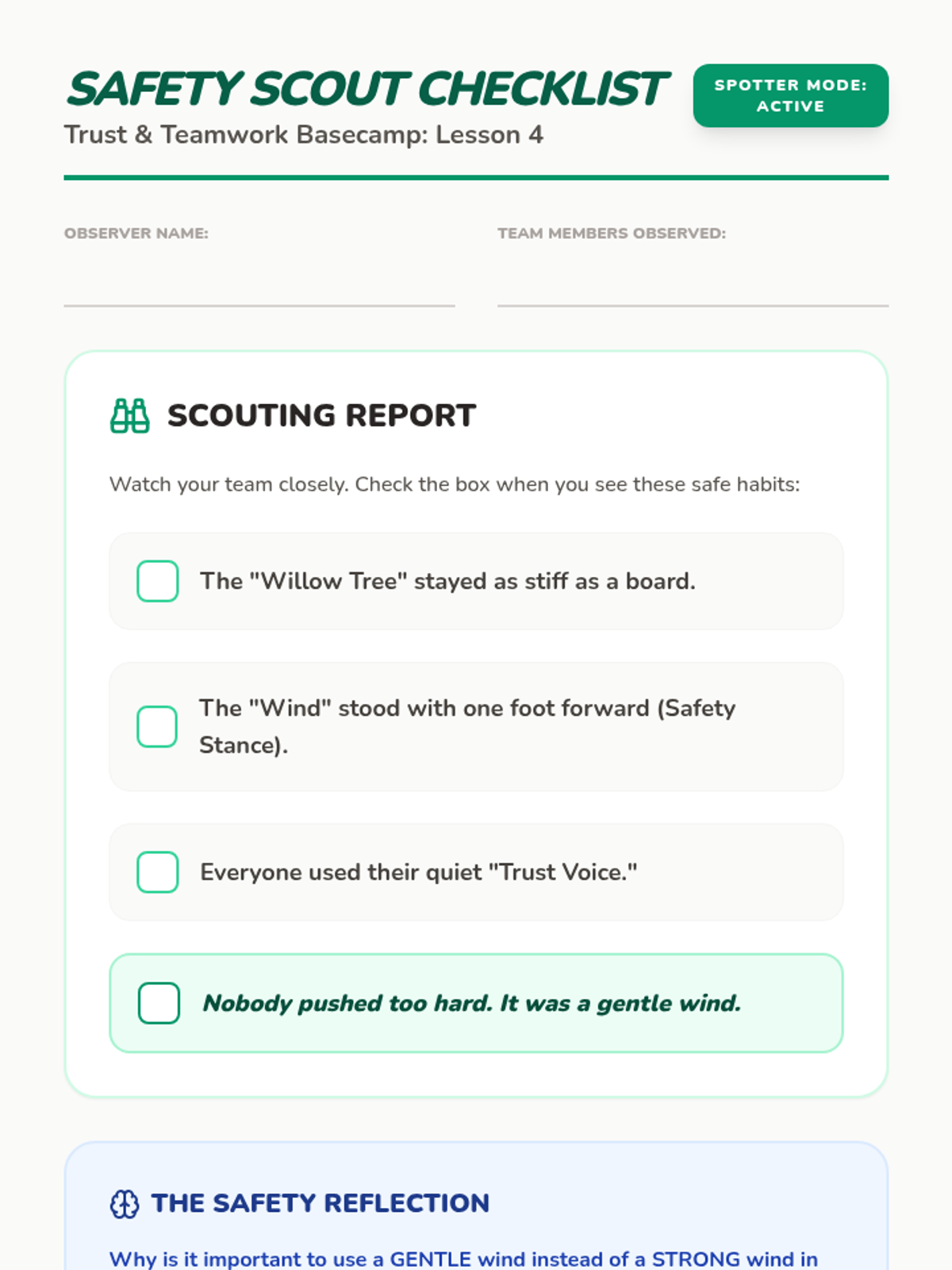
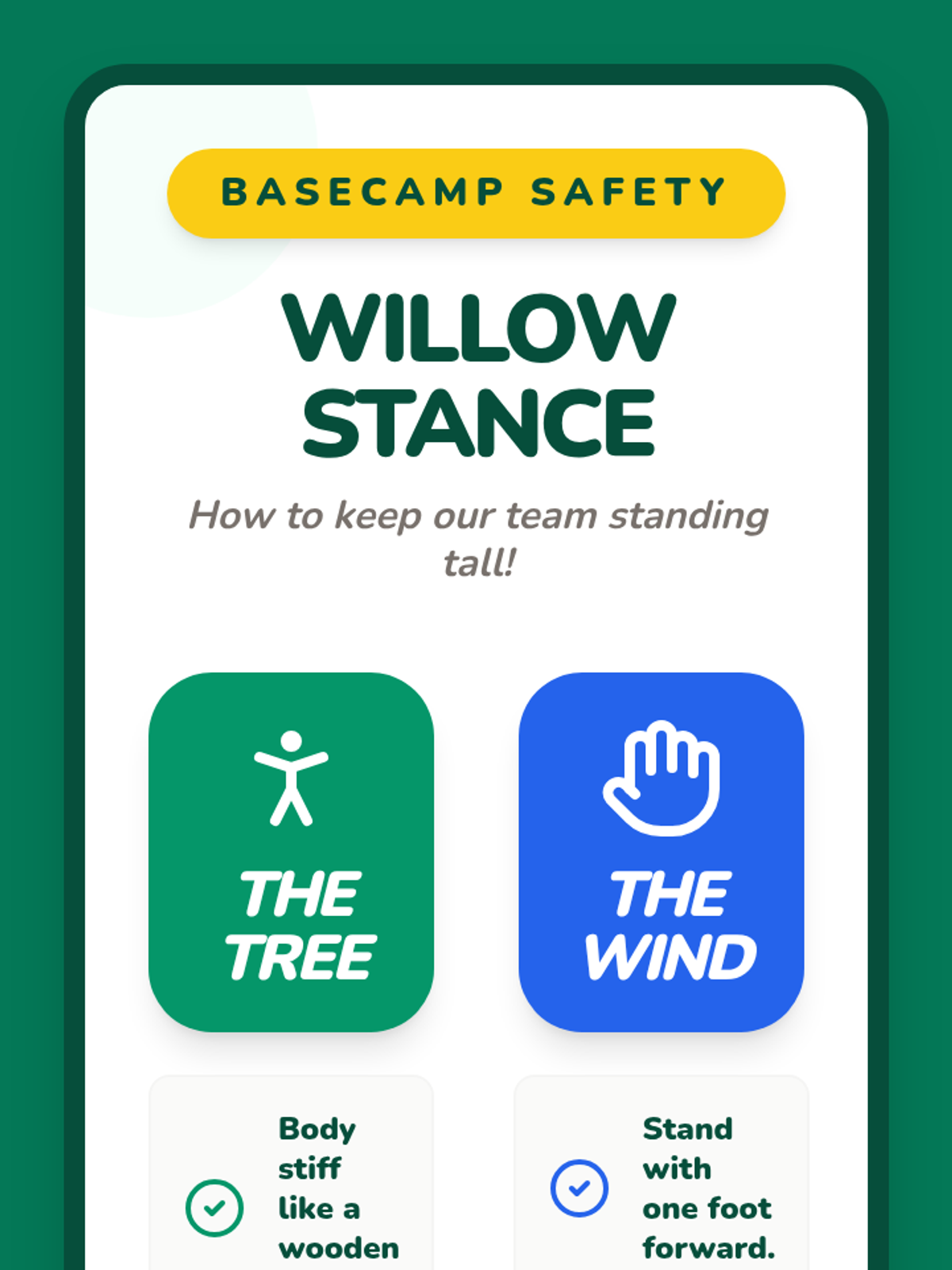
In small, tight circles of varying heights, one student stands stiff as a board in the center while the outer circle gently passes them around. Students learn the importance of 'spotting' posture and keeping their teammates safe.
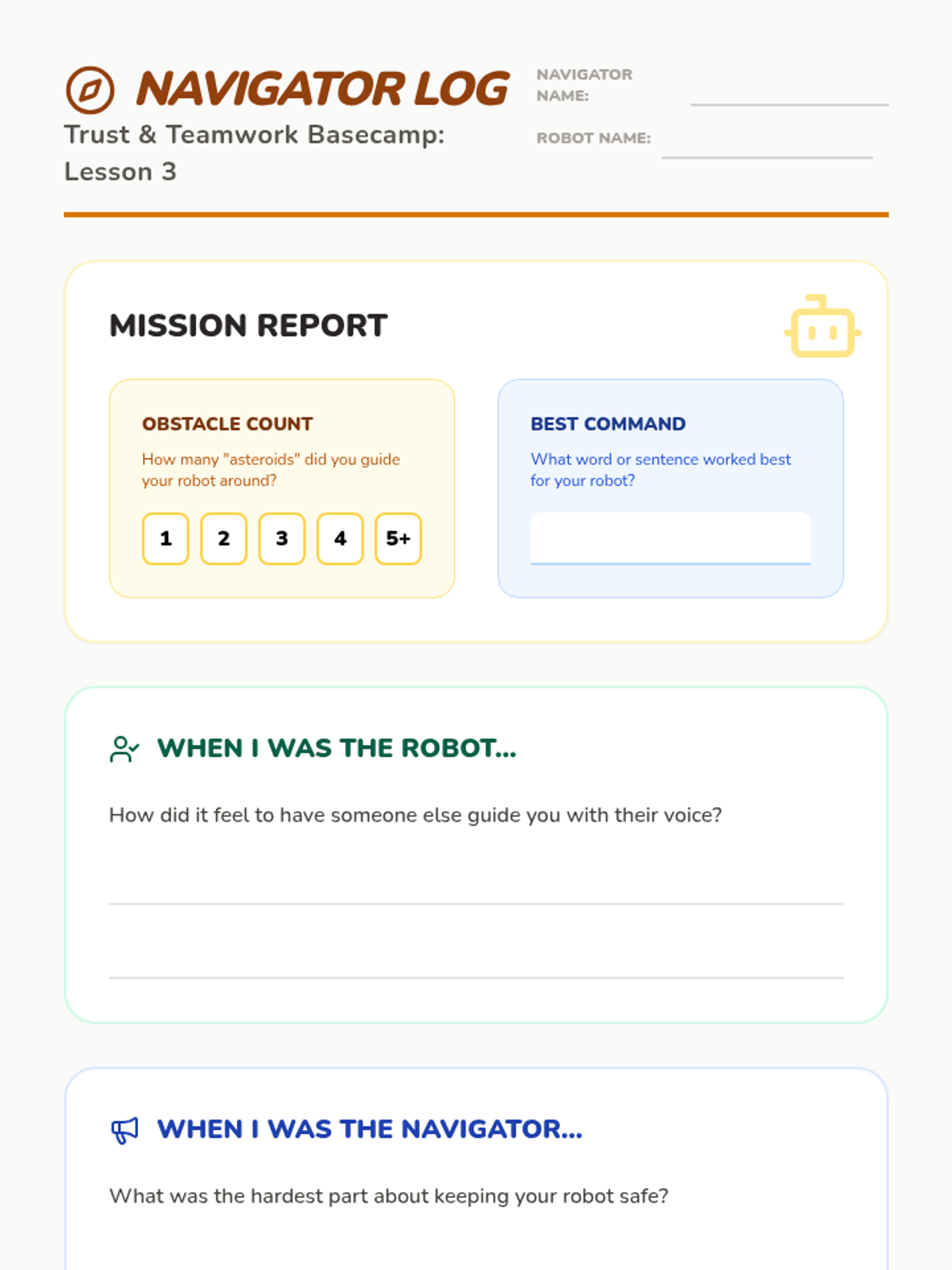
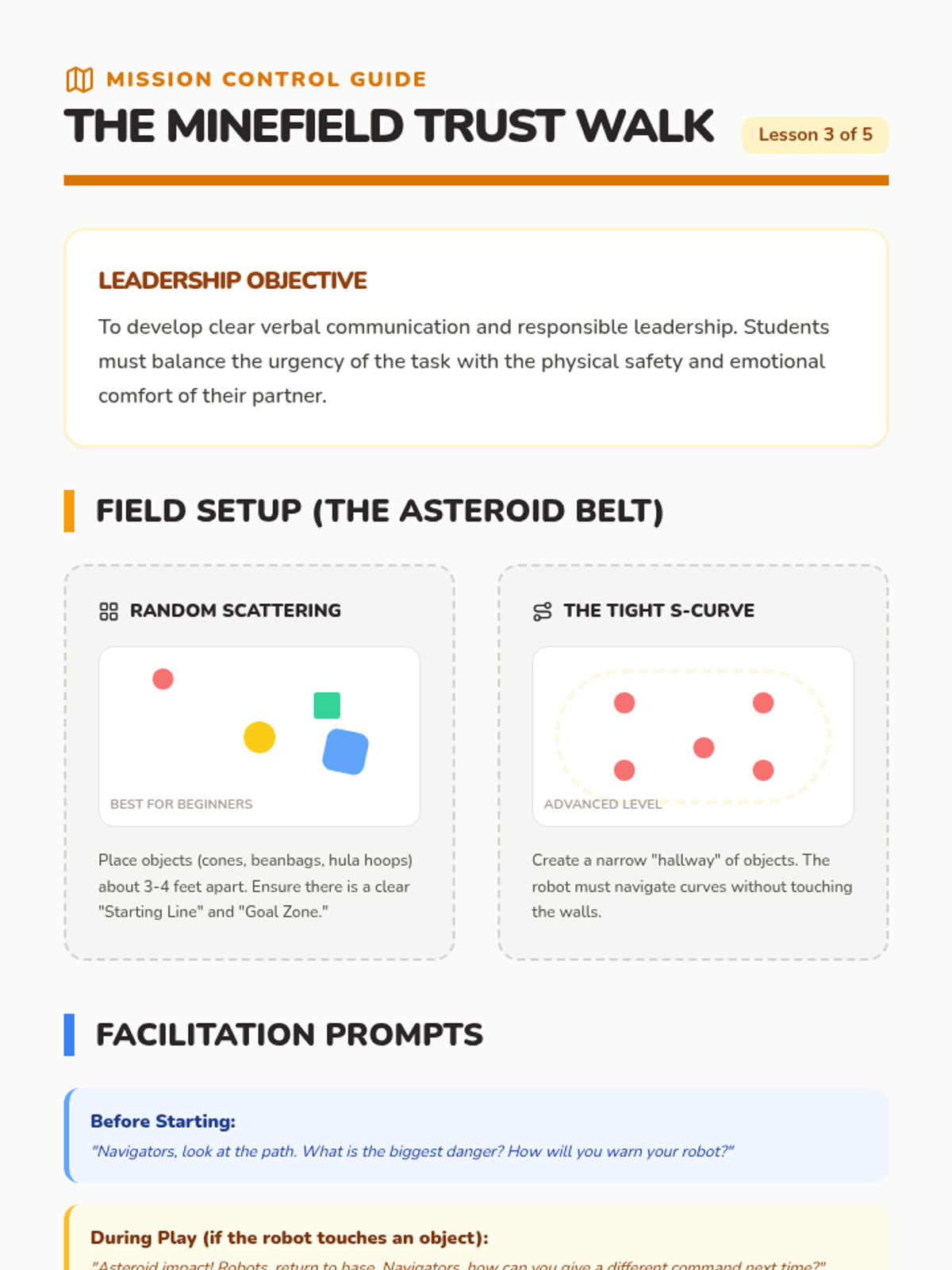
Objects are scattered in a designated area. Partners must guide a 'robot' (a student with eyes closed) through the field using only verbal commands, emphasizing safety and the responsibility of the leader.
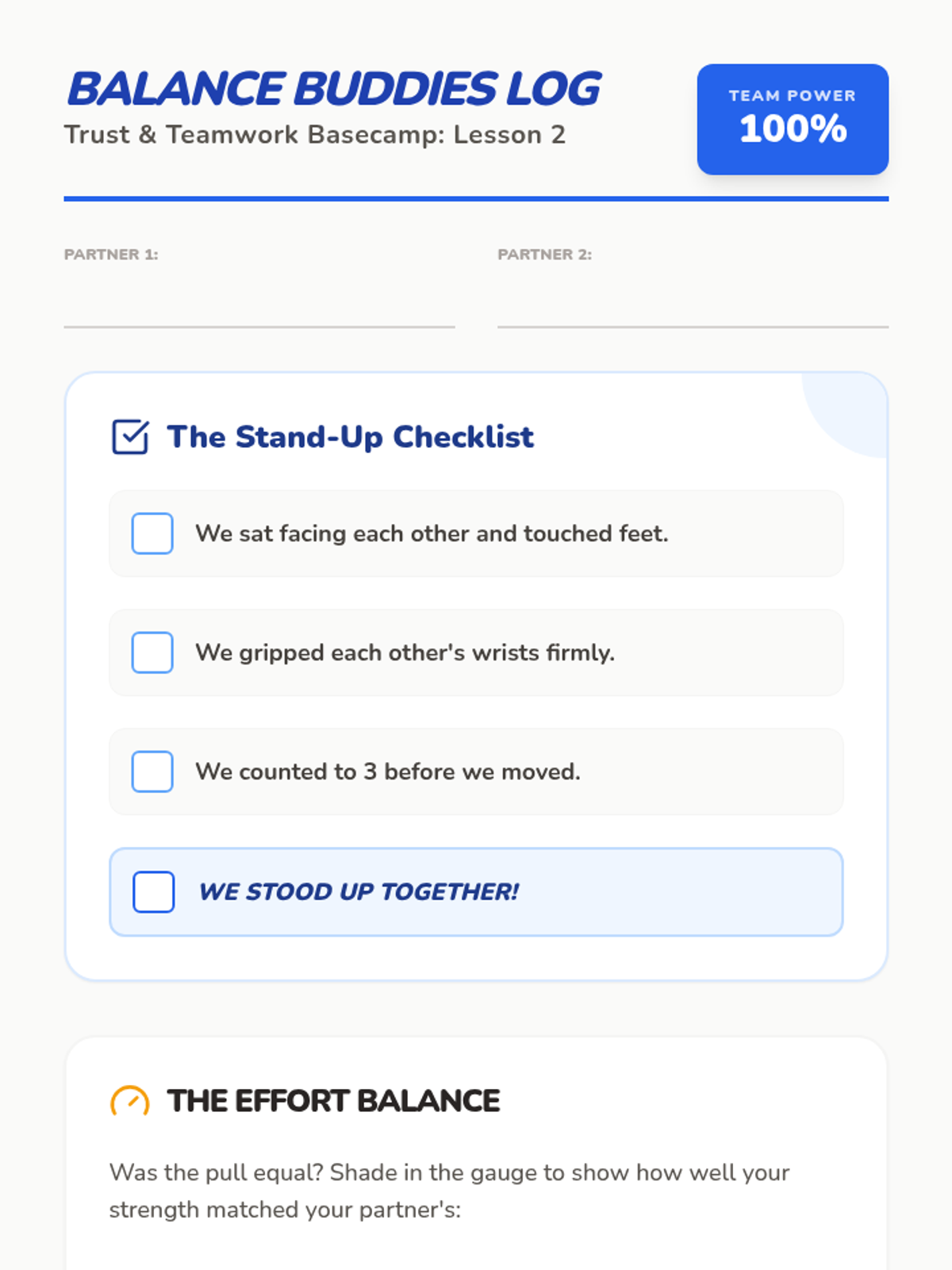
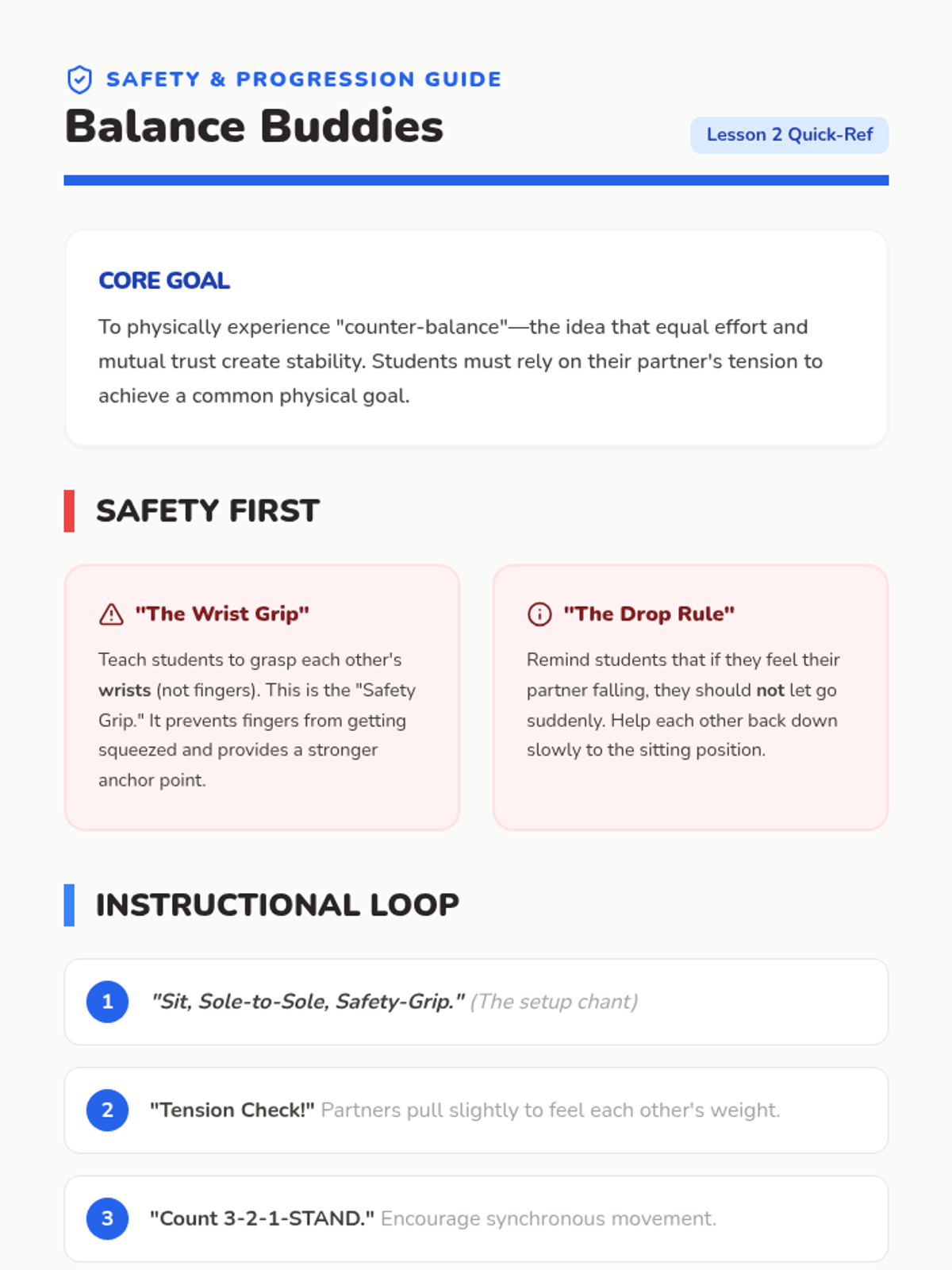
Pairs sit on the ground, place their feet together, and hold hands to pull each other up to a standing position. This requires physical reliance on a partner and equalizing effort so both succeed.
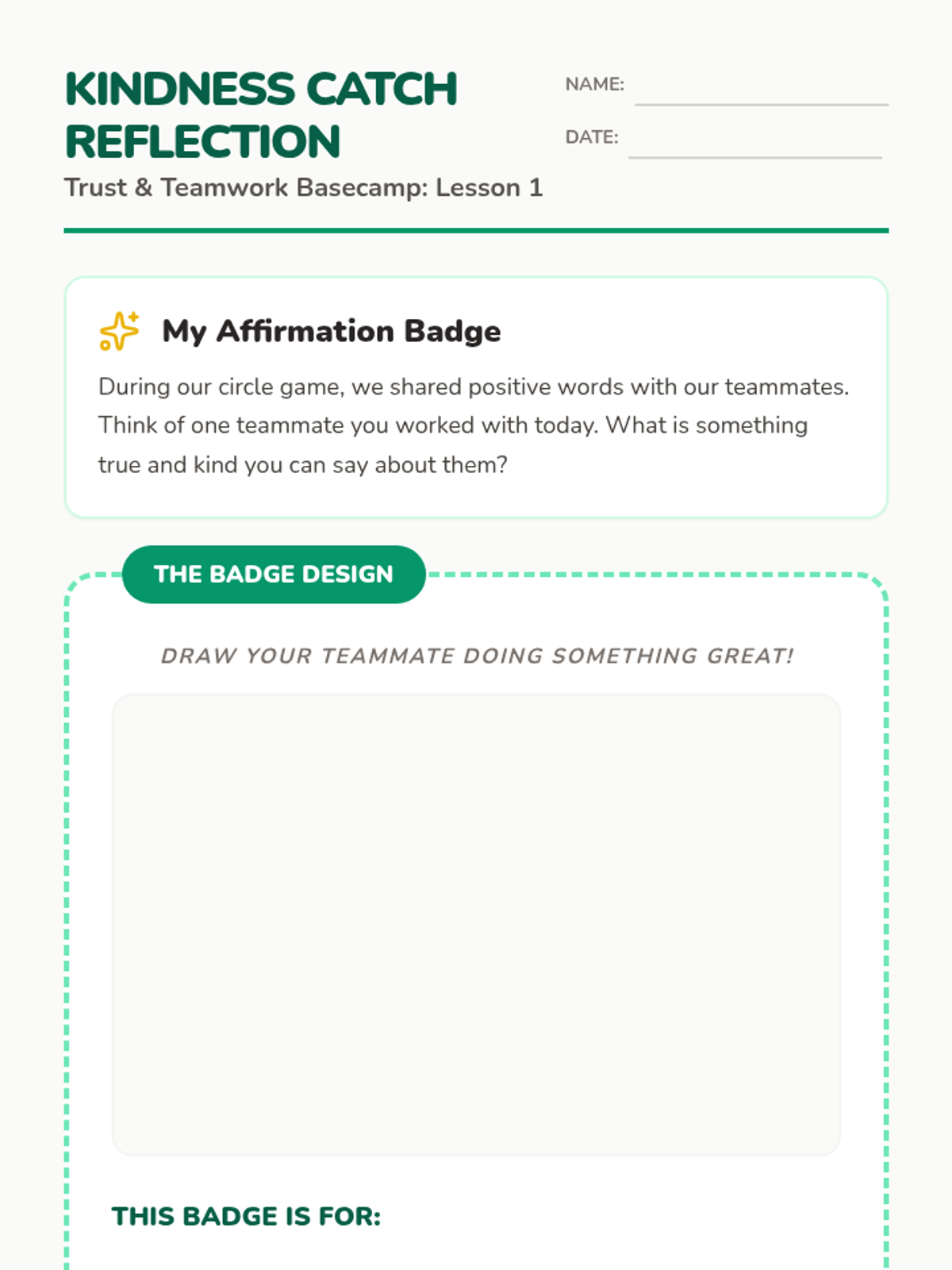
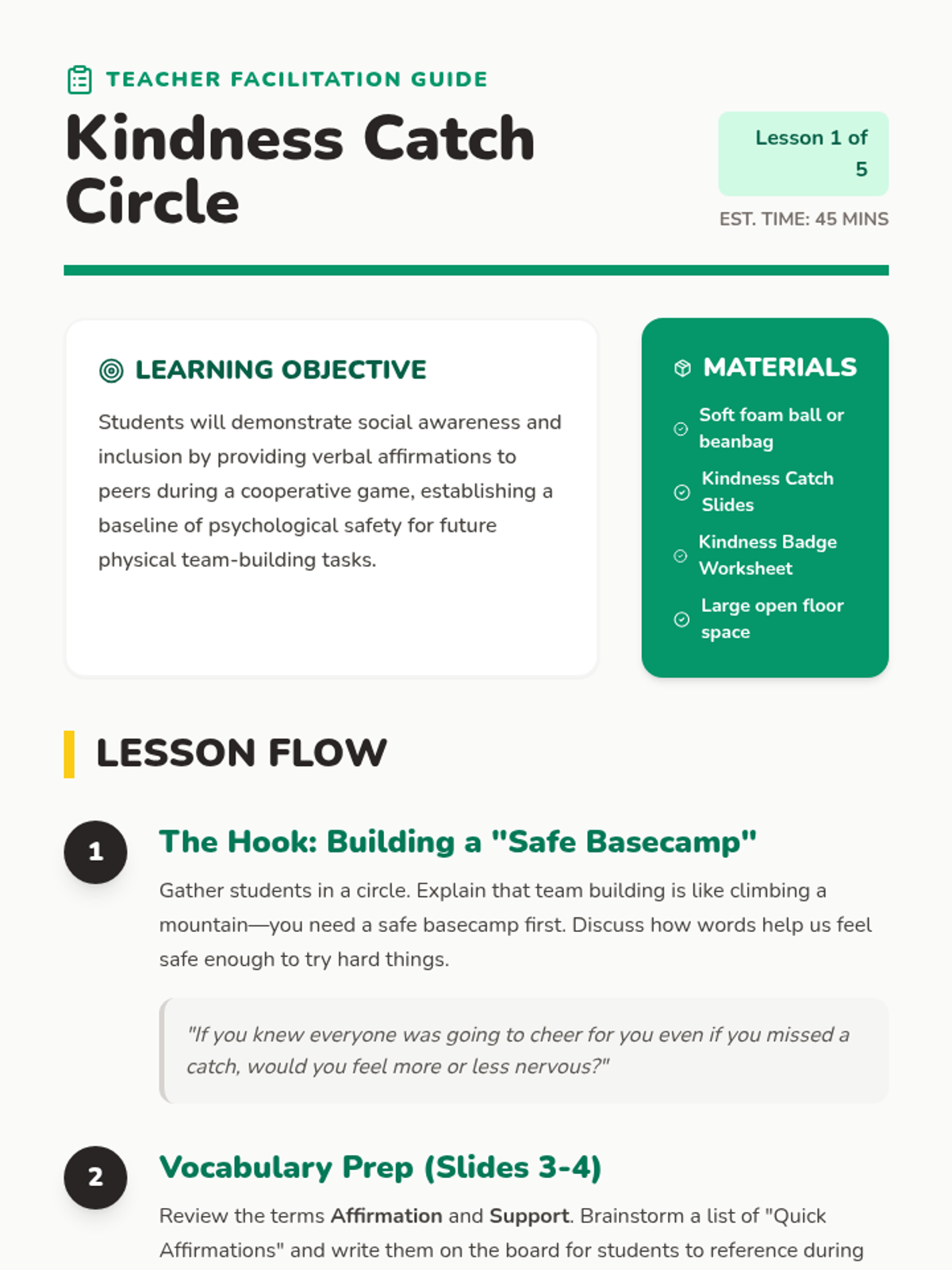
Students participate in a ball-toss game where they practice giving and receiving verbal encouragement to build a supportive team environment.
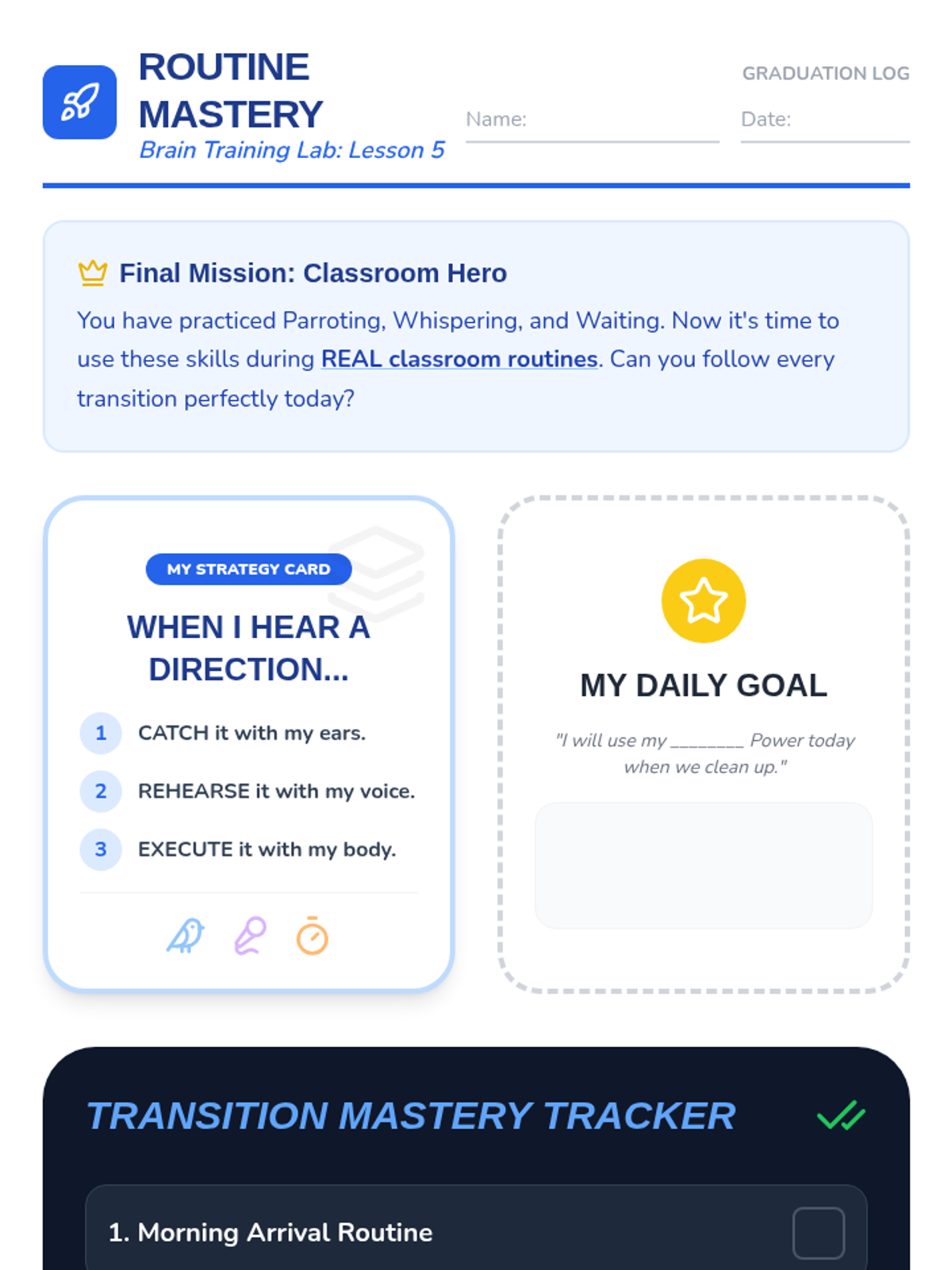
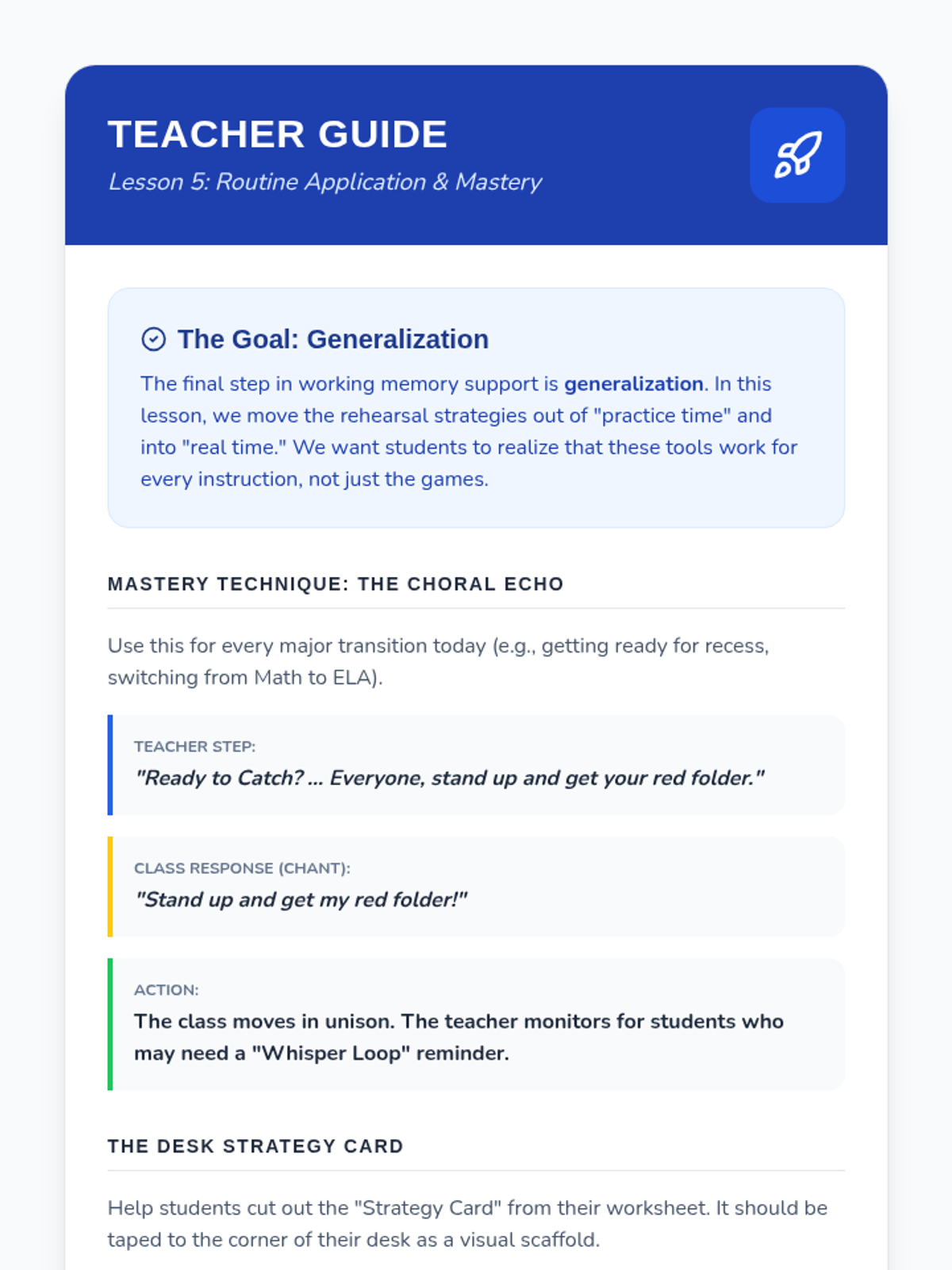
Students apply verbal strategies to actual classroom transition requests using choral responses to confirm steps.
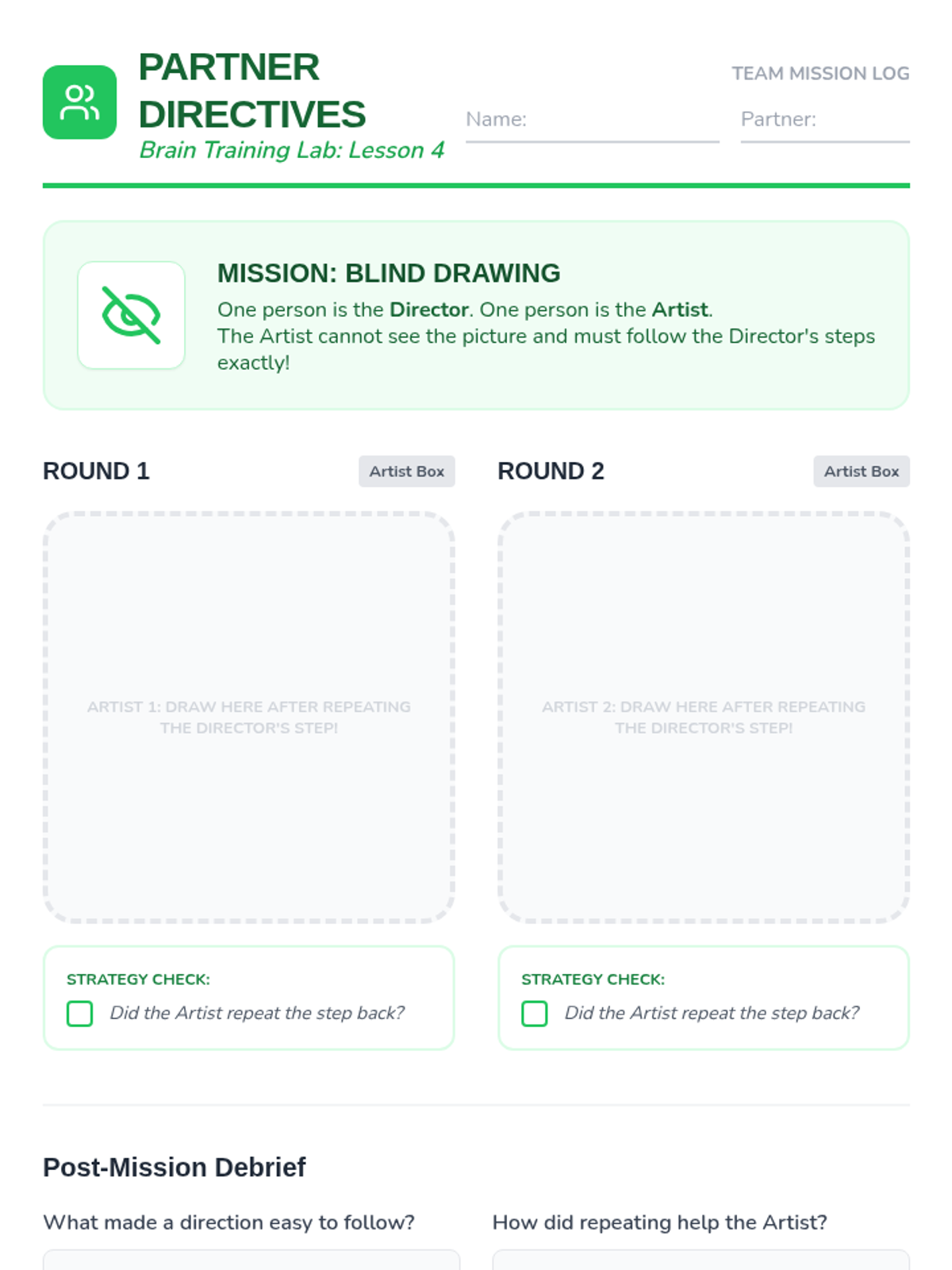
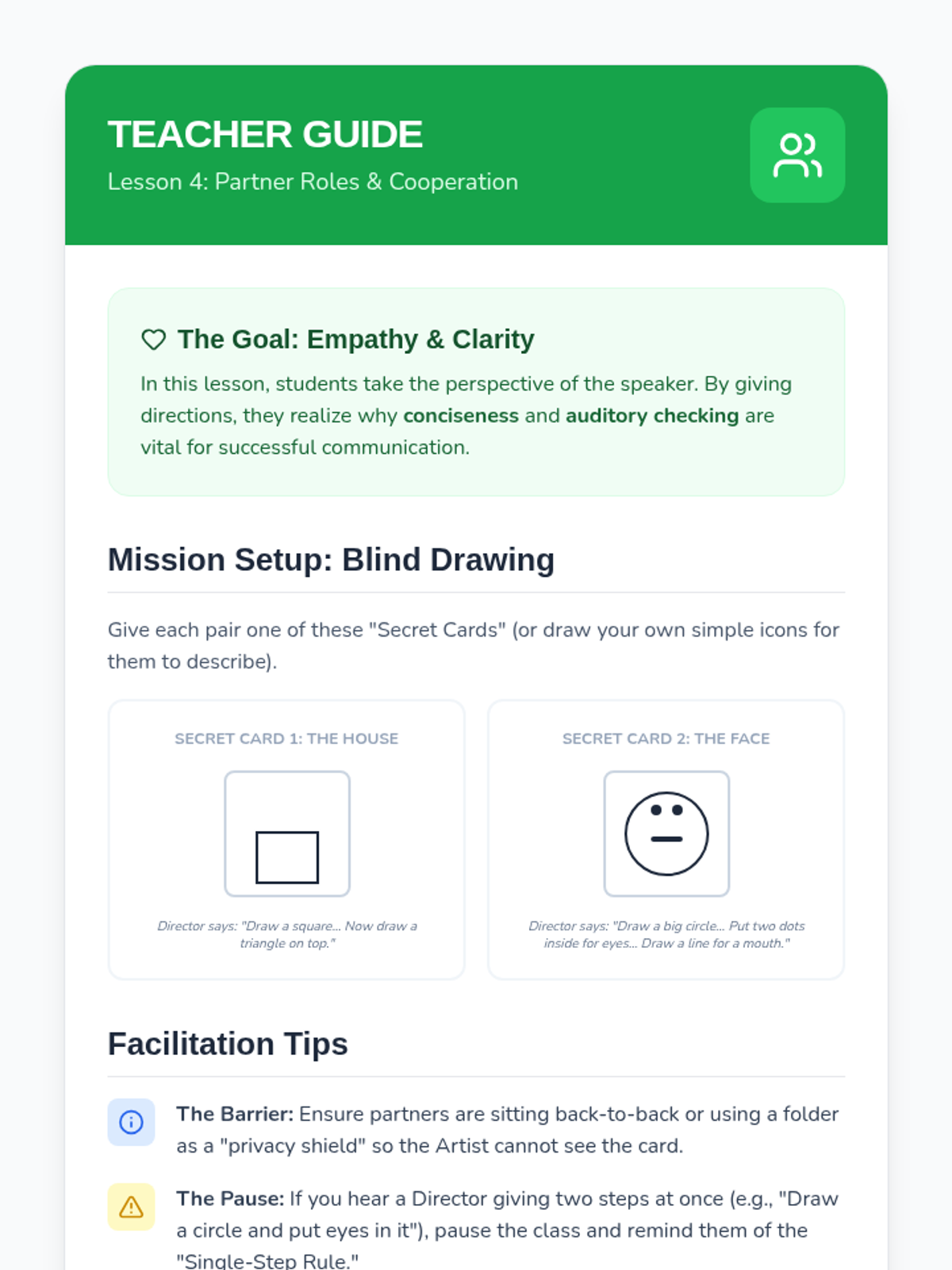
In pairs, students take turns being the 'Teacher' and the 'Student' to practice giving and repeating explicit steps.
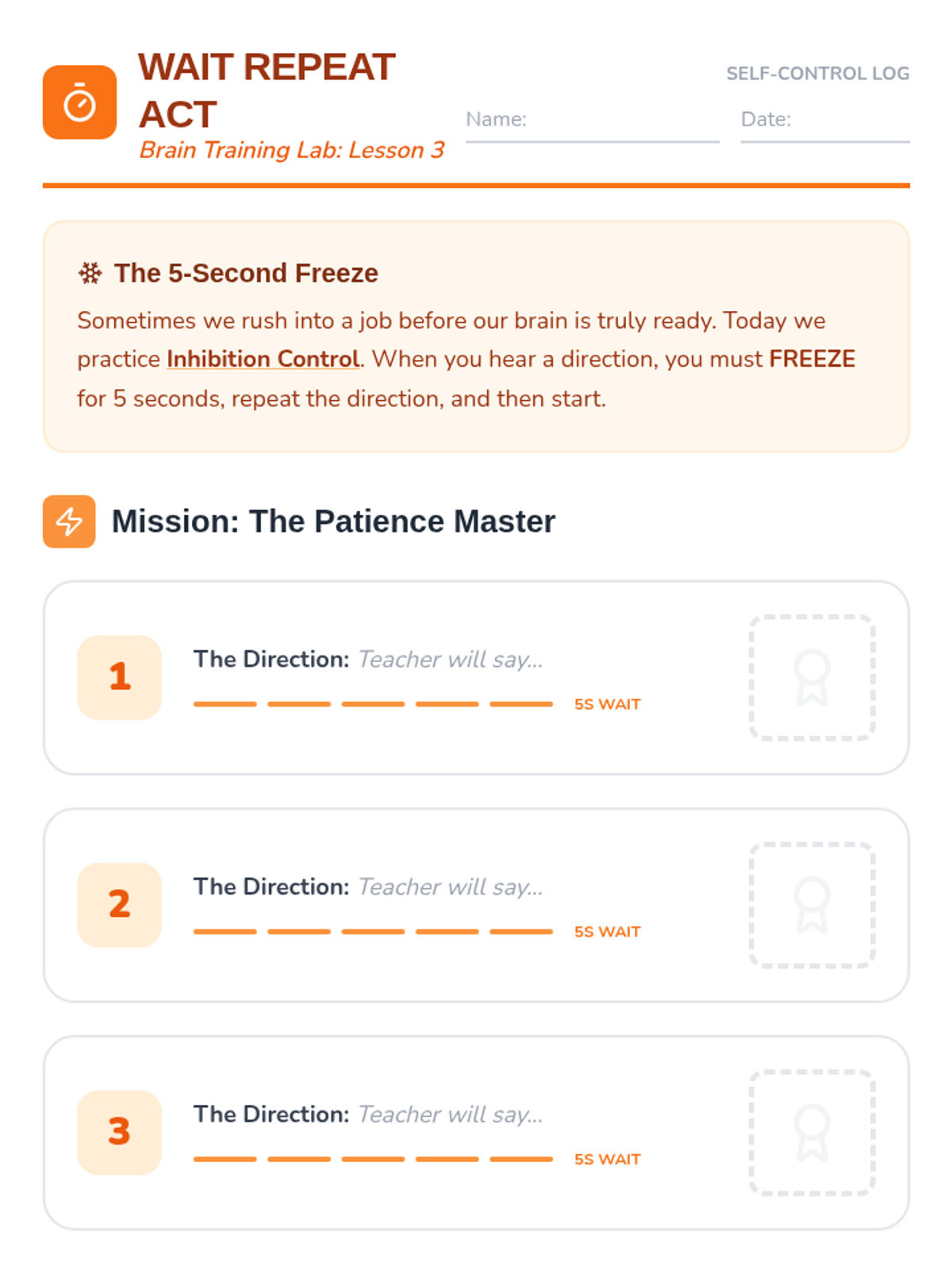
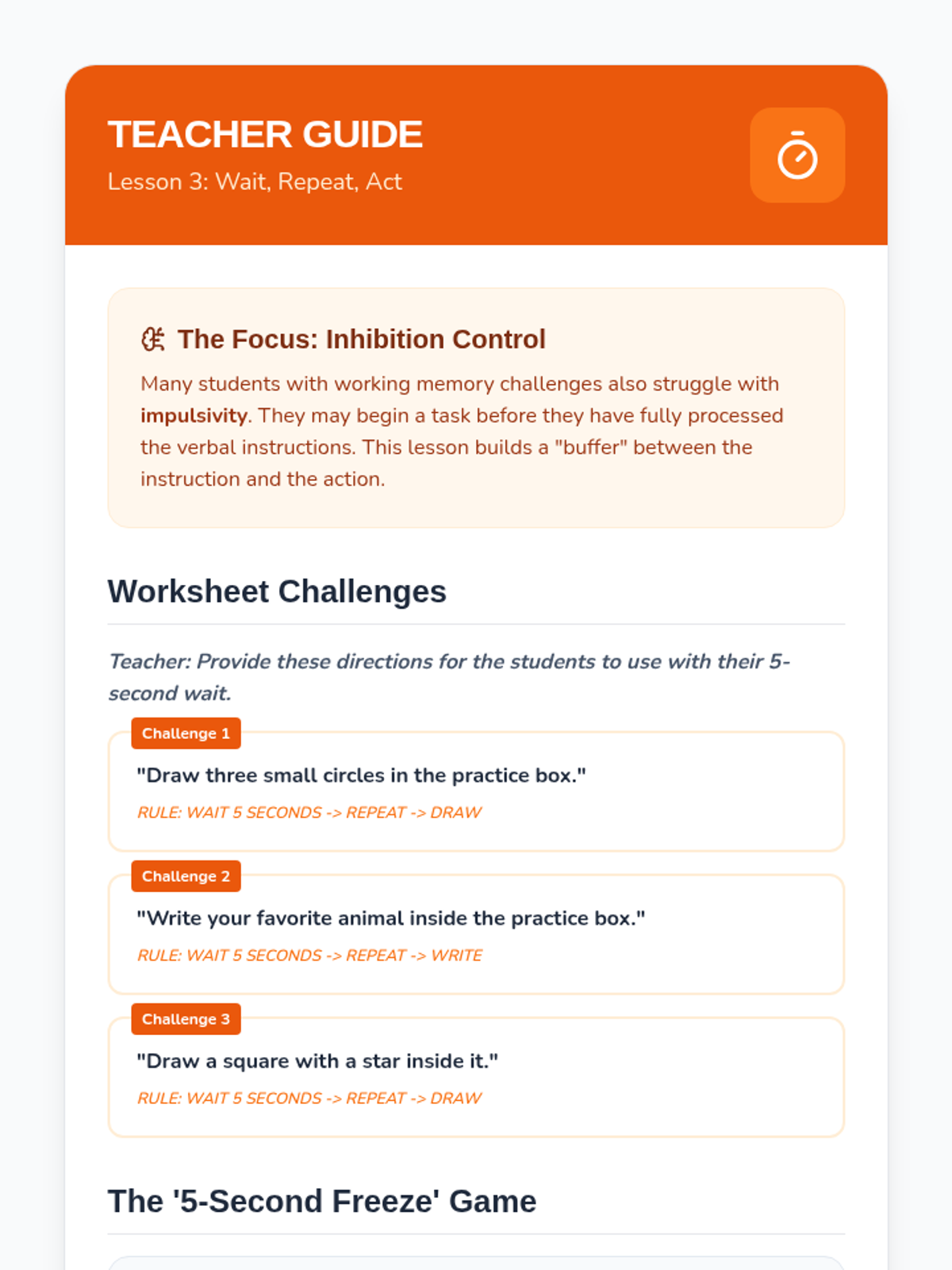
Students engage in inhibition control activities where they must wait 5 seconds after hearing a command, repeat it, and only then act.
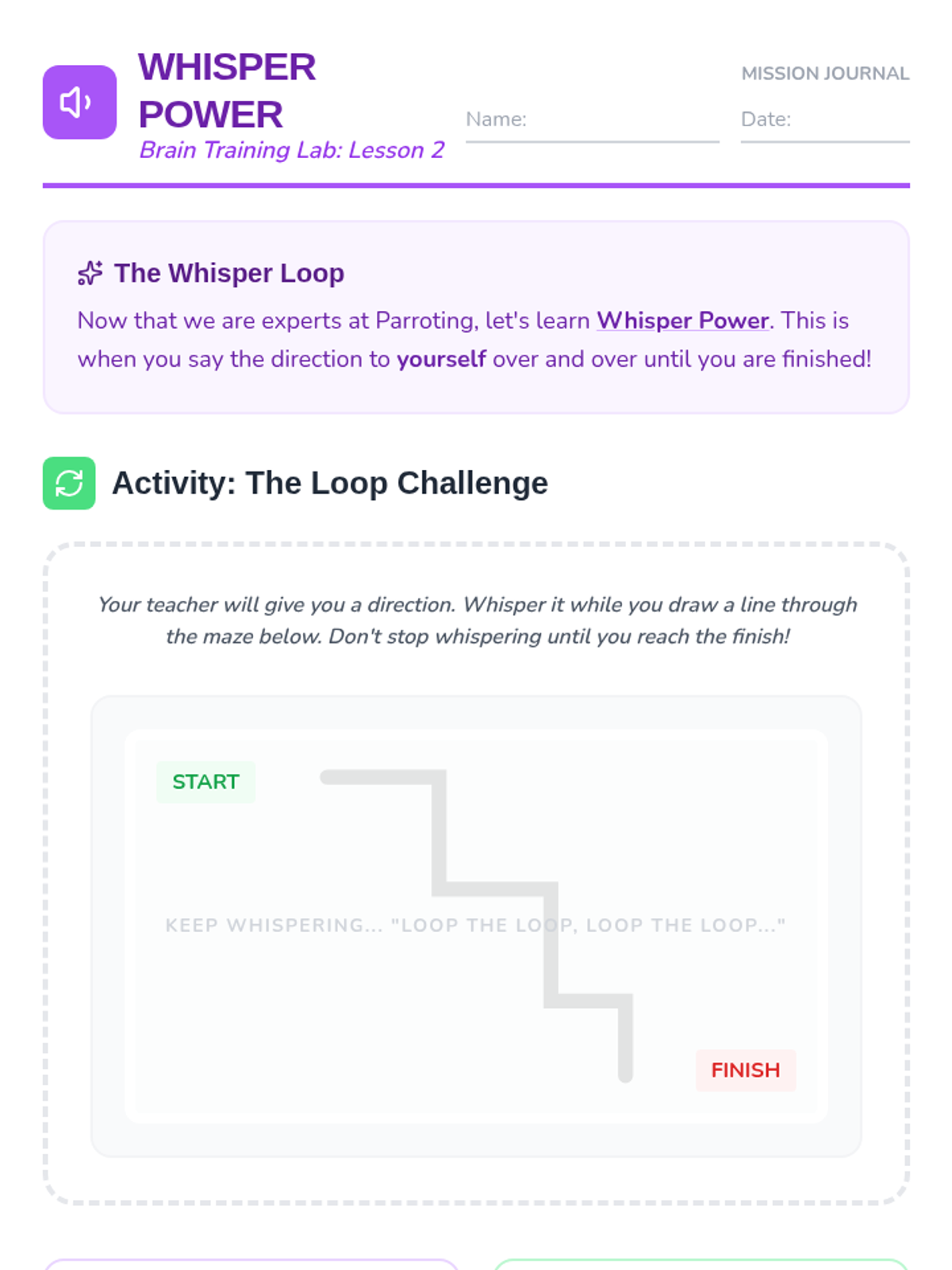
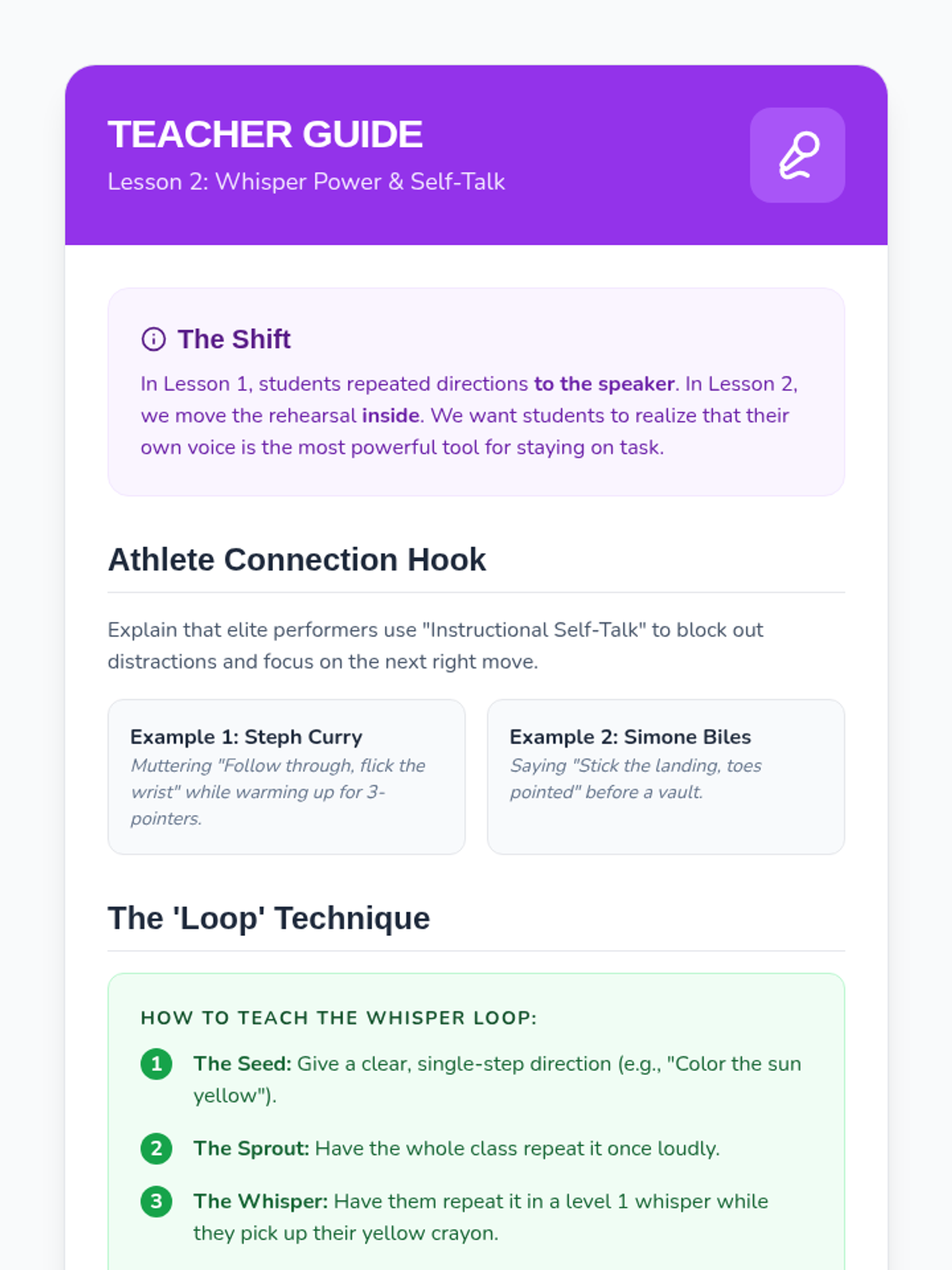
Moving from loud repetition to whispering, students practice 'self-talk.' They are given a single direction and must whisper it on a loop while performing the action.
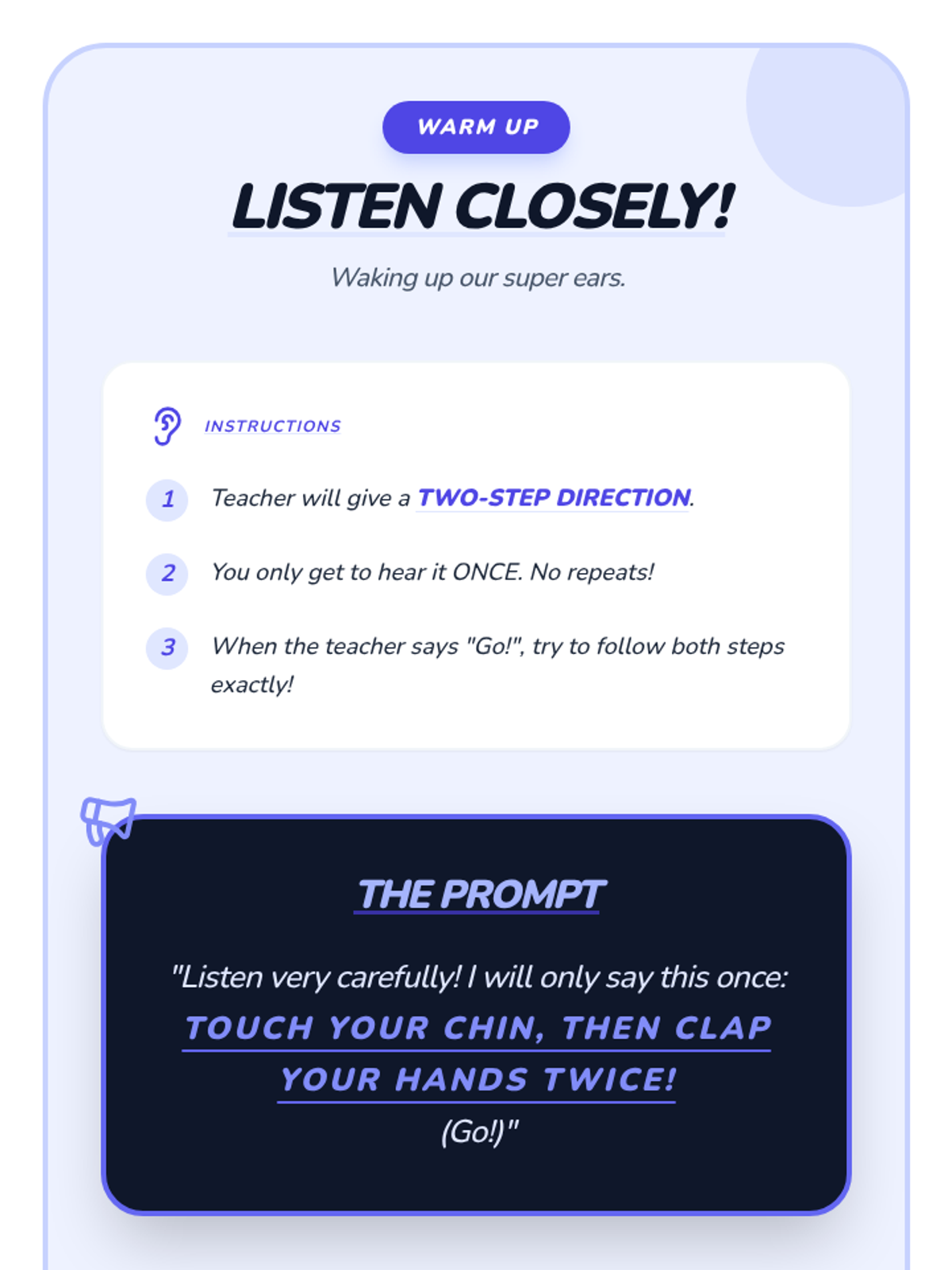
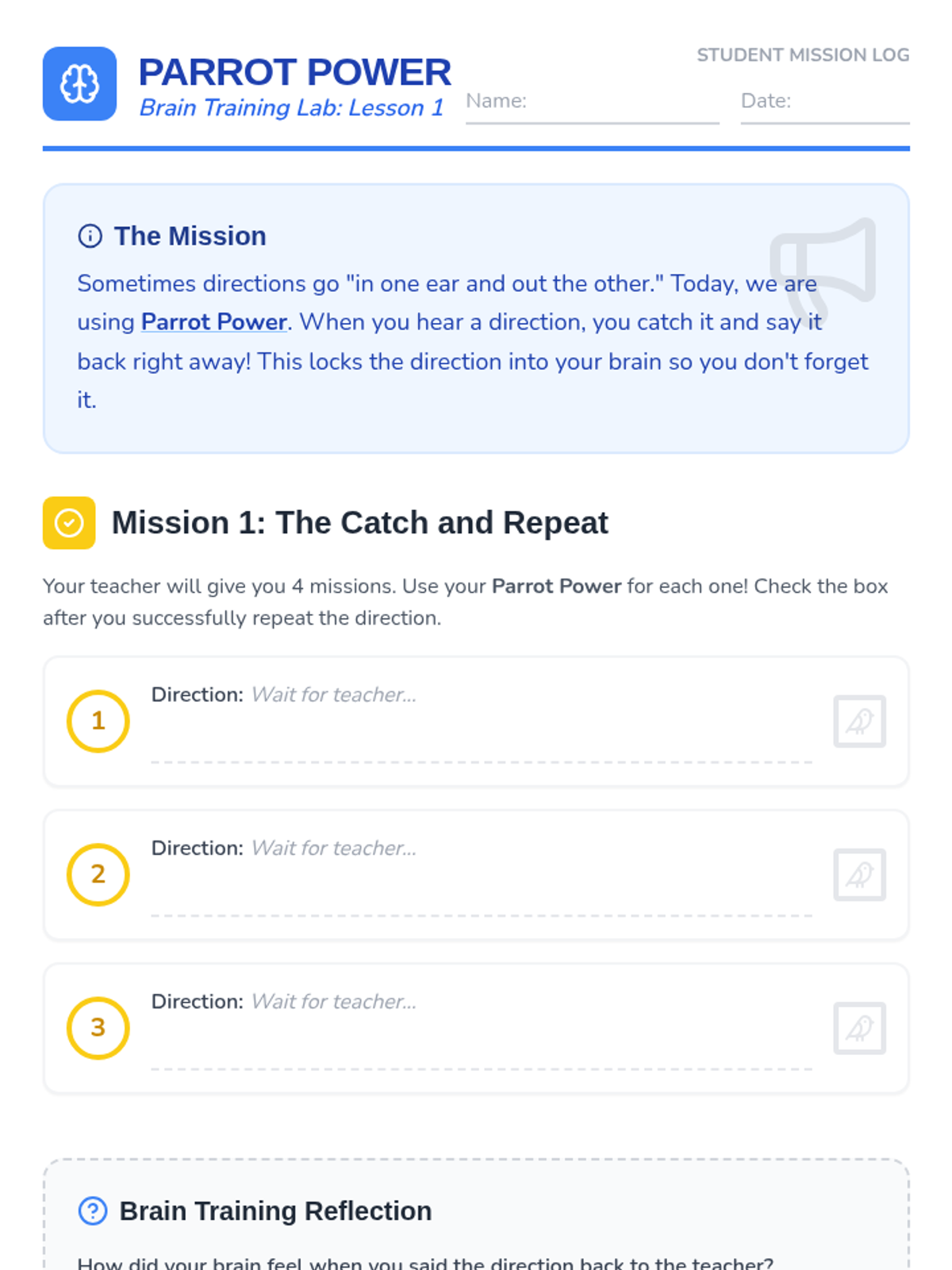
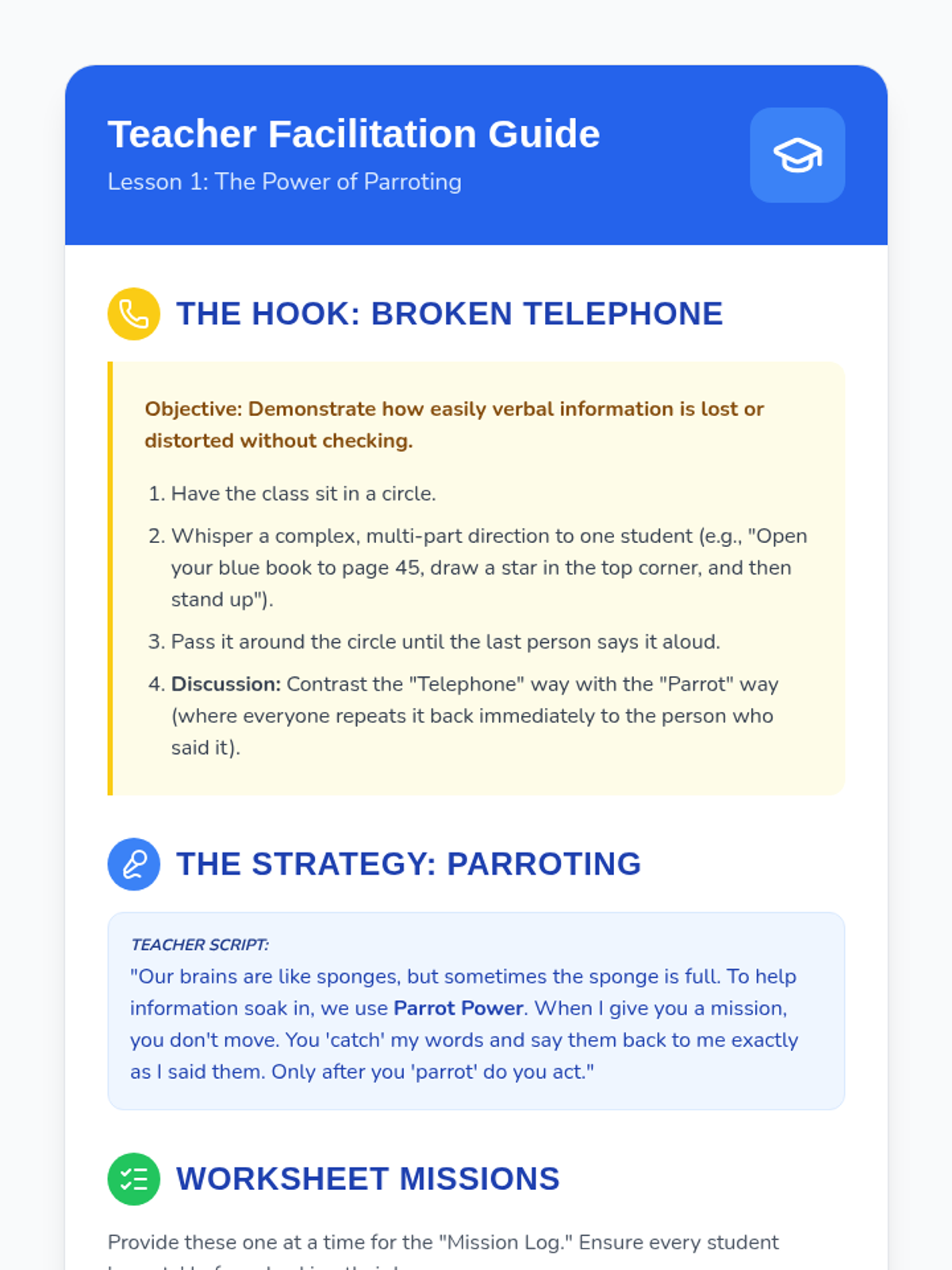
Students practice the 'parrot' technique, where they must immediately repeat a single-step direction back to the speaker before moving. The lesson emphasizes that saying it locks it into the brain.