Emotion recognition ranging from basic feelings to complex nuances and mixed states. Strengthens accurate self-assessment through identity exploration, strength identification, and values-based decision making.
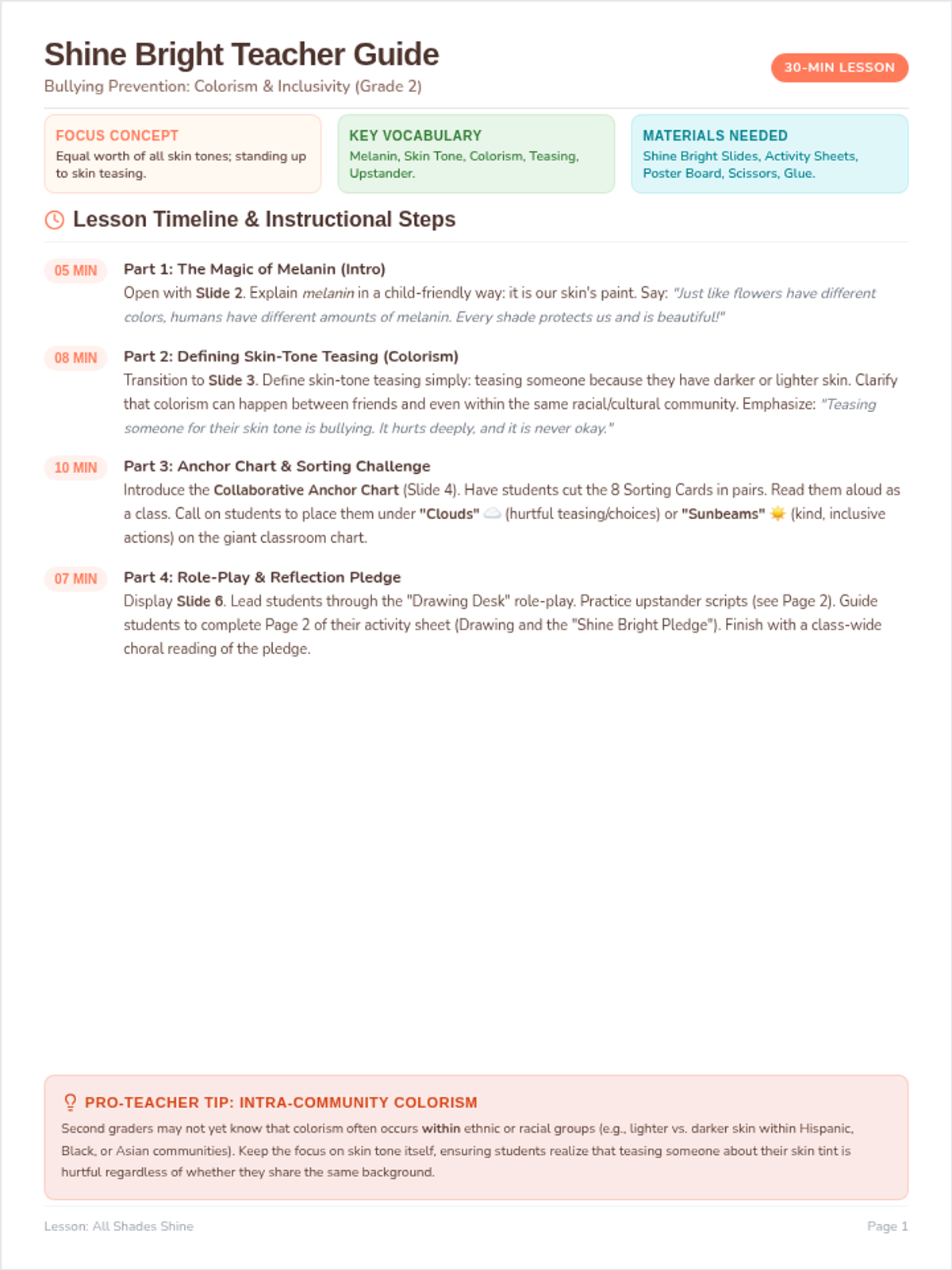
A comprehensive facilitation guide for teachers with simple scripting prompts, pacing timeline (30 mins), discussion guide for the collaborative anchor chart, role-play scenario instructions, and a common misconceptions guide.
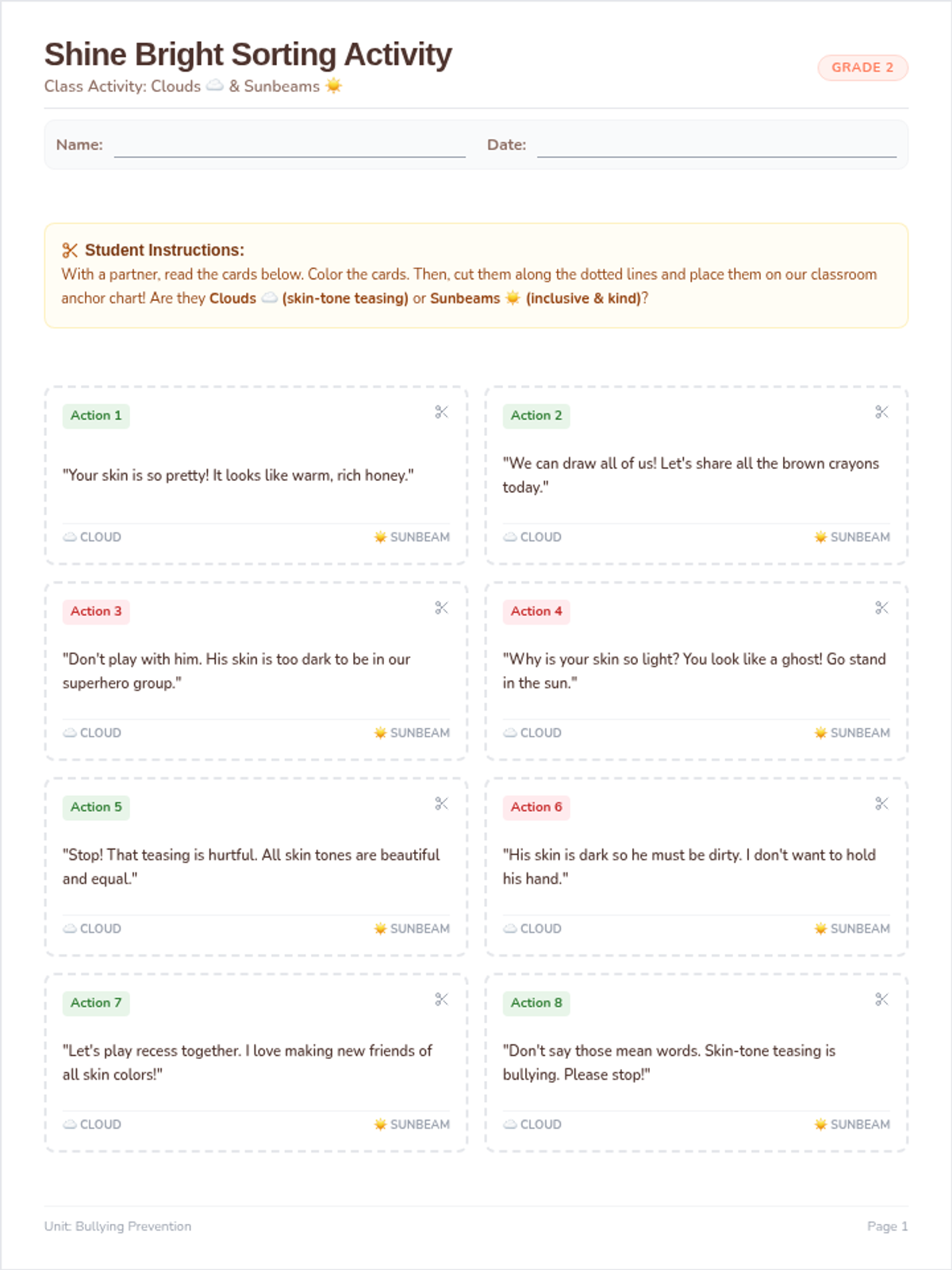
A dual-page student activity sheet for 2nd graders containing 8 cut-and-sort cards (Clouds for skin-tone teasing and Sunbeams for inclusive actions) and a reflective drawing and writing pledge with generous handwriting lines.
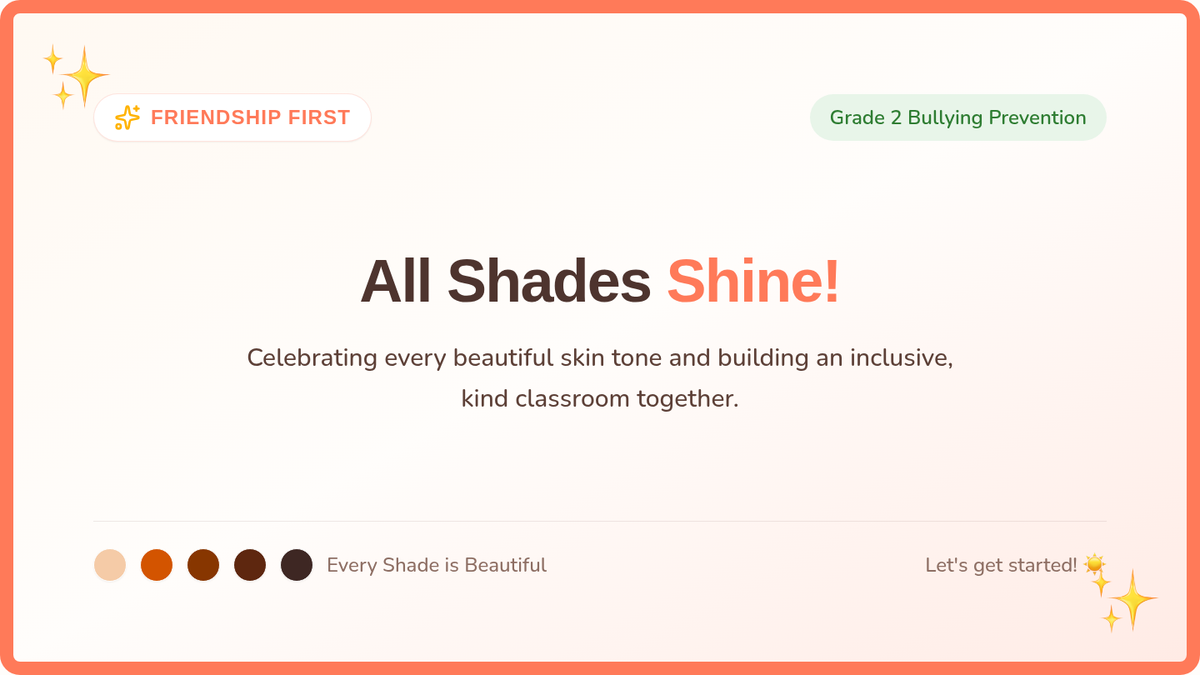
A highly visual slide presentation for 2nd graders addressing colorism. It introduces melanin in a child-friendly way, clarifies skin-tone teasing, and guides the teacher and students through interactive collaborative anchor chart creation, sorting, and role-play scenario practice.
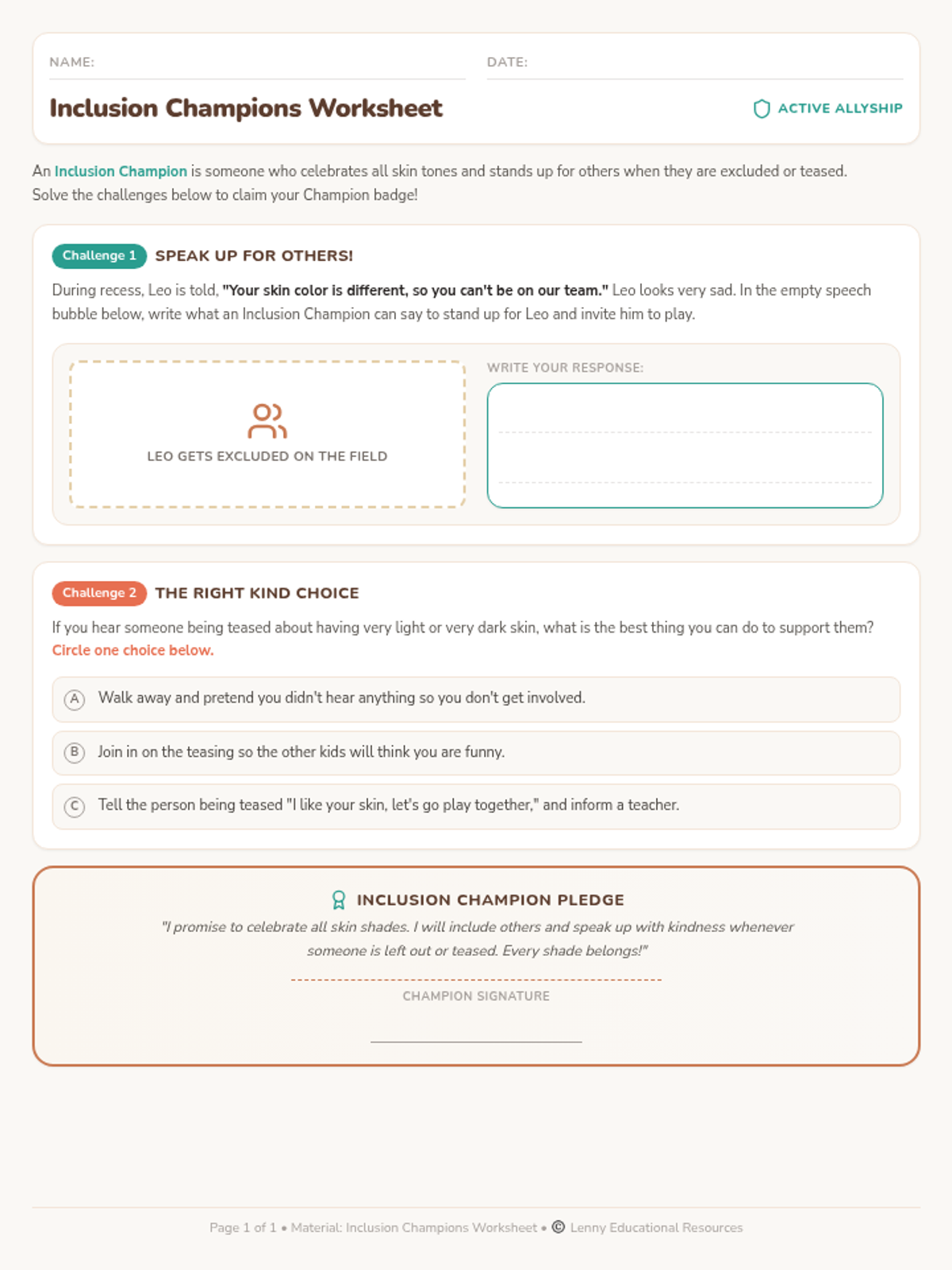
An interactive, student-facing scenarios worksheet designed for 2nd graders to apply bully prevention concepts, practice speaking up against skin-tone exclusion, and sign an active inclusion champion pledge. Includes uniform multiple-choice layout and responsive speech bubble writing areas.
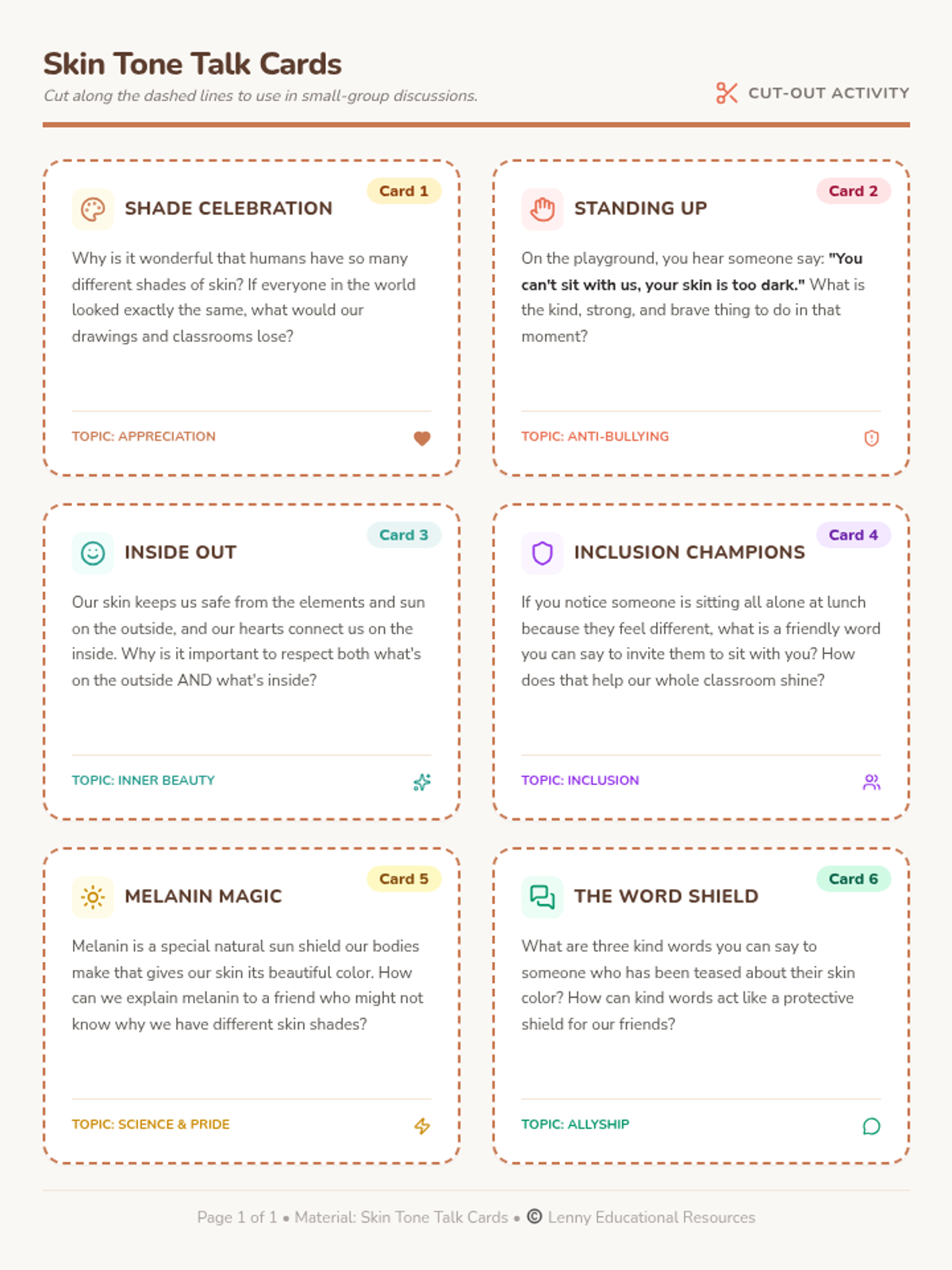
A set of 6 printable discussion cards featuring kid-friendly scenarios and reflection prompts focused on celebrating diversity, understanding colorism, standing up to bullying, and practicing active inclusion in 2nd-grade classrooms.
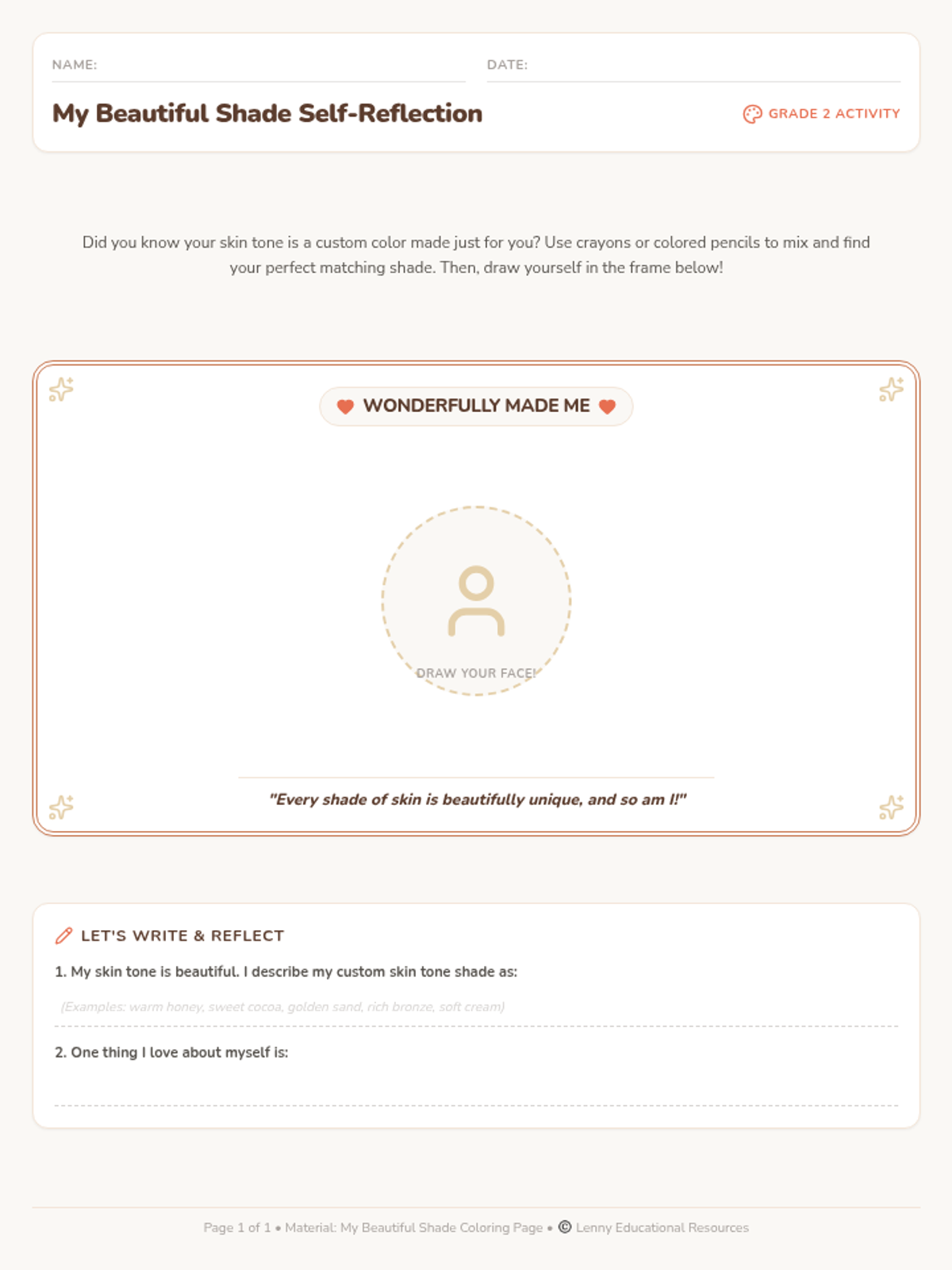
A creative, student-facing coloring and self-reflection page designed for 2nd graders. Features a clean hand-drawn style frame for student portraits, multi-shade mixing activities, positive self-affirmations, and writing prompts to celebrate personal physical differences and build self-love.
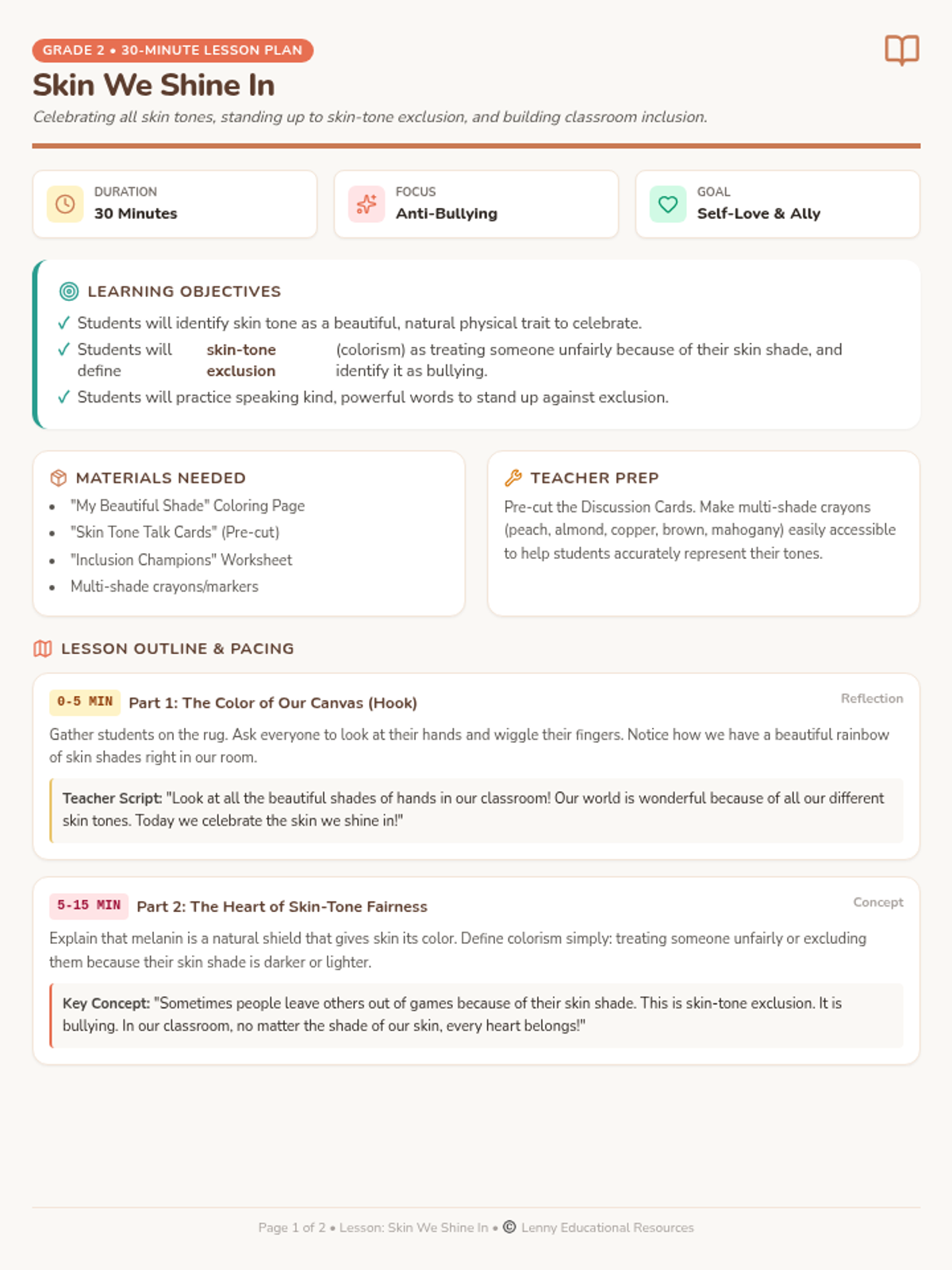
A 30-minute teacher's facilitation guide and lesson plan structured for 2nd-grade educators. Includes pacing, teacher scripts, materials checklist, explicit teaching strategies, classroom management tips, differentiation options, and a formative assessment guide to easily deliver a powerful colorism and anti-bullying lesson.
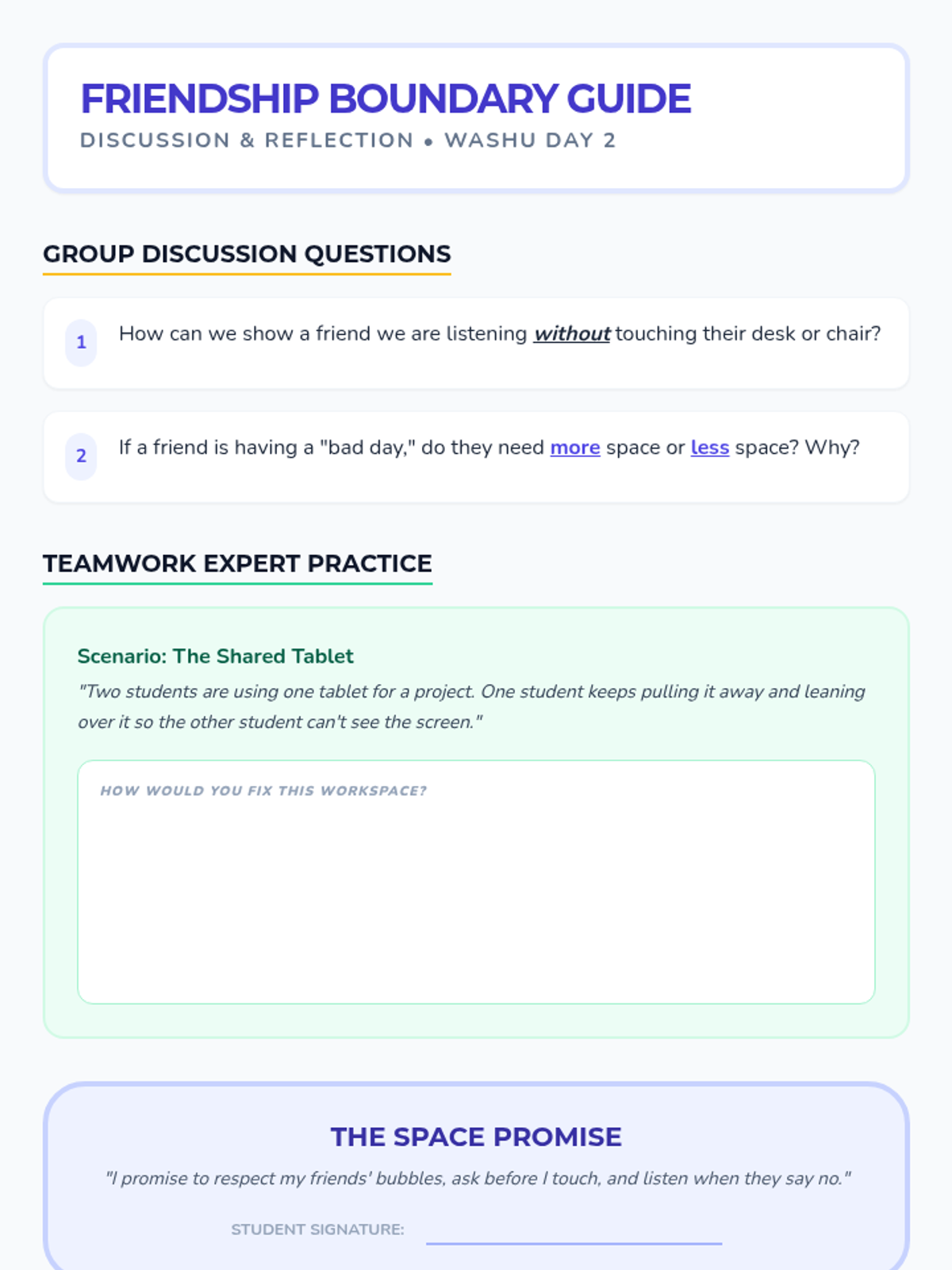
Revised Friendship Boundary Guide for WashU. Converted background to white, condensed layout to ensure the signature section stays on the same page, and expanded the brainstorming area.
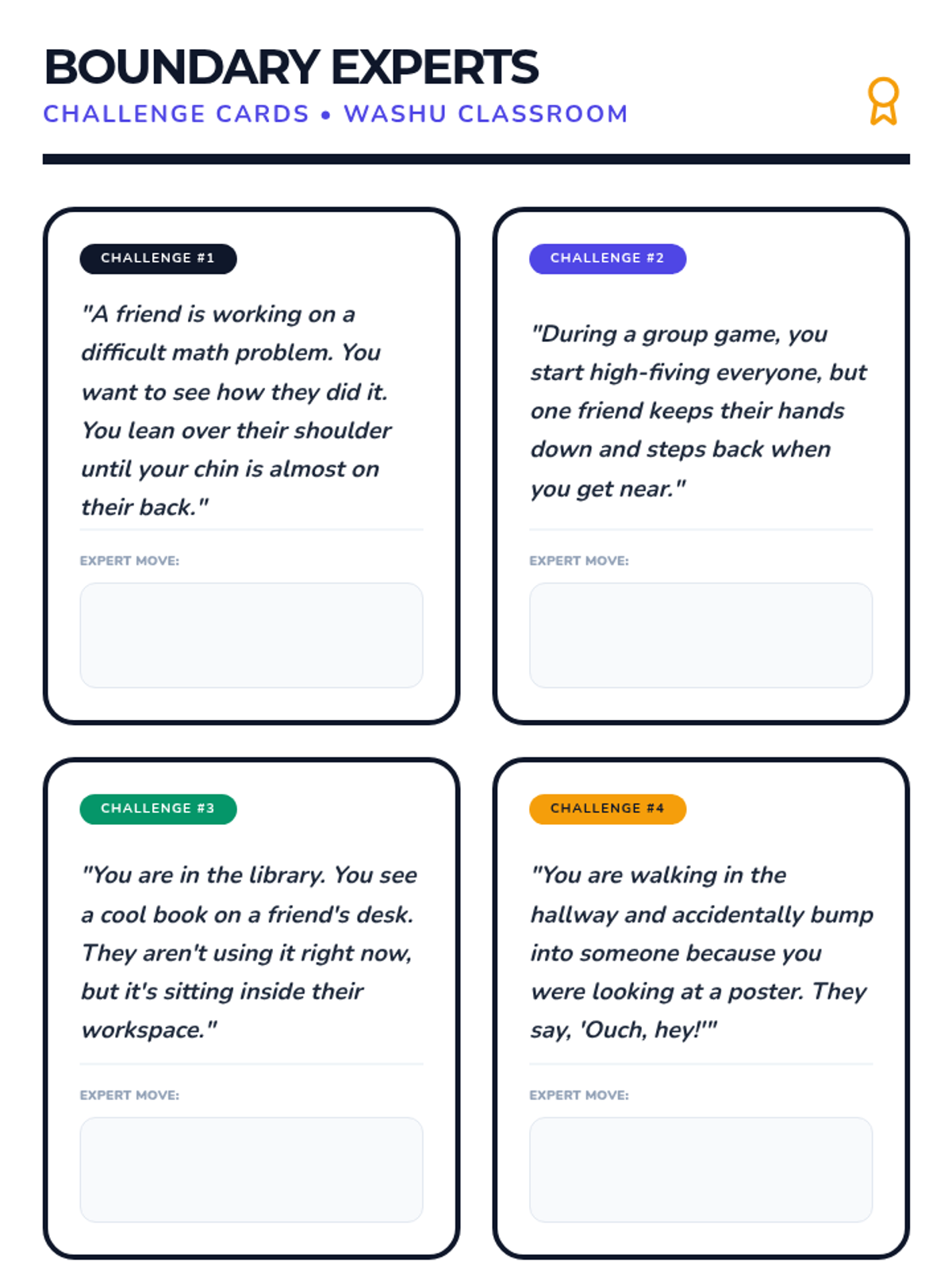
Revised challenge cards for WashU. Increased icon visibility, optimized response box backgrounds to white for better handwriting legibility, and improved footer readability.
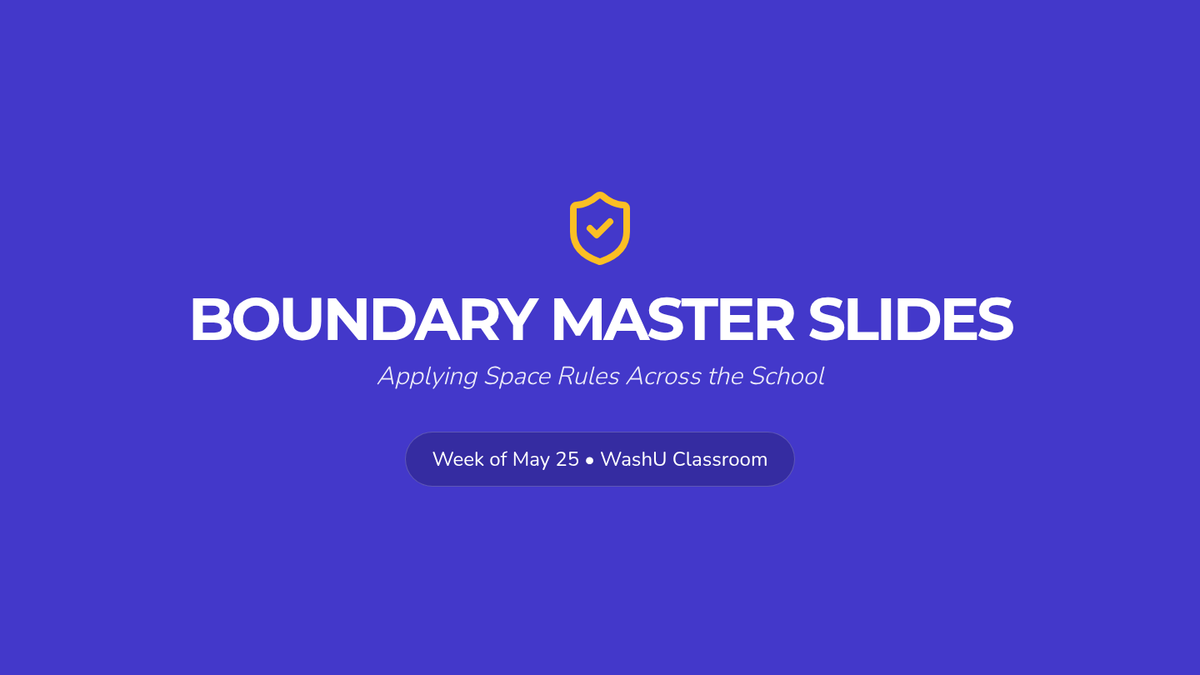
Advanced slide deck for WashU students focusing on nuanced social boundaries. Covers teamwork, friendship etiquette, respecting the word "No," and complex school scenarios like group projects.
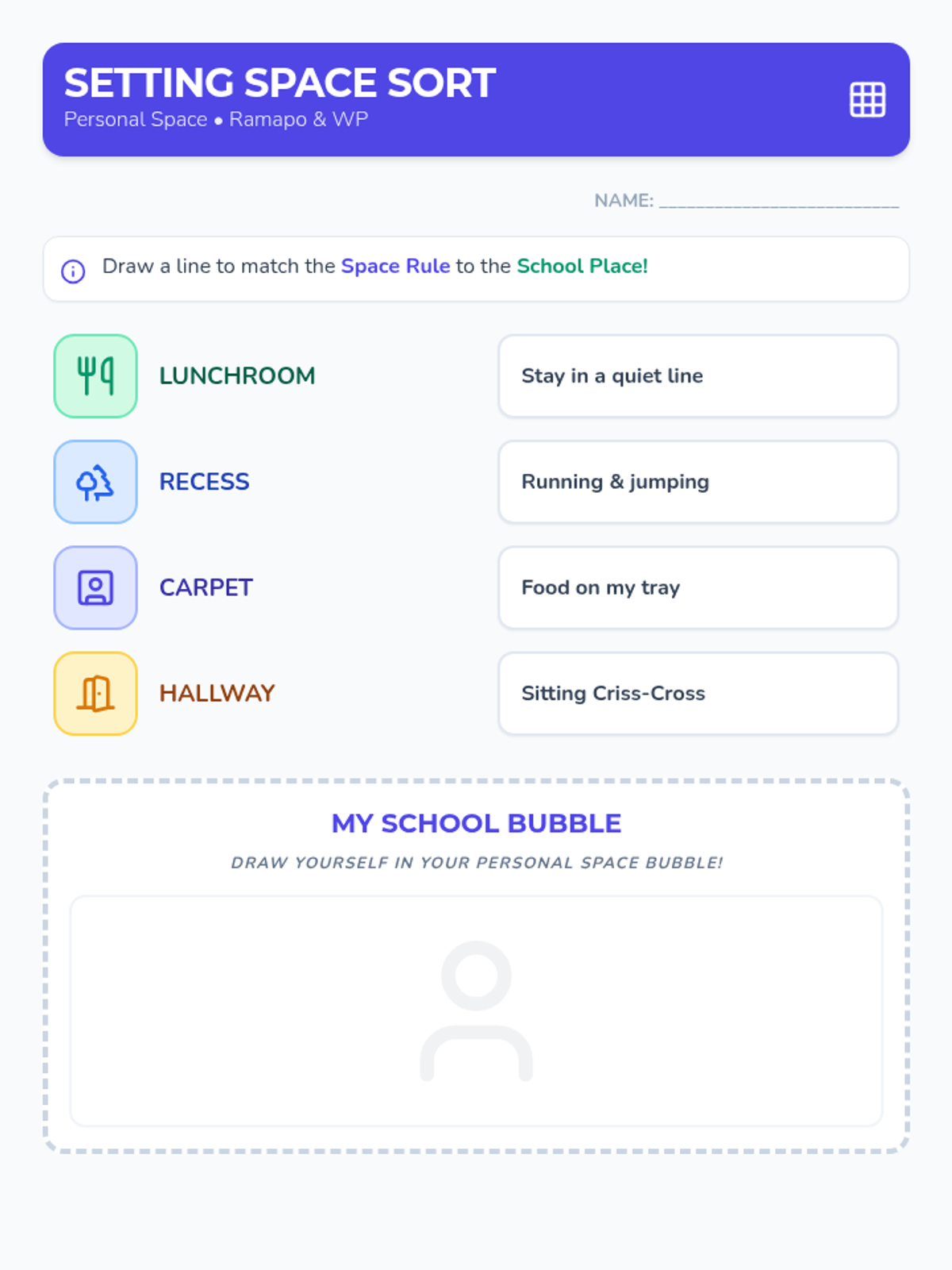
Revised Setting Space Sort worksheet for Ramapo and WP. Randomized the matching items, aligned the name field with the page margins, and removed the background icon from the drawing area for better legibility.
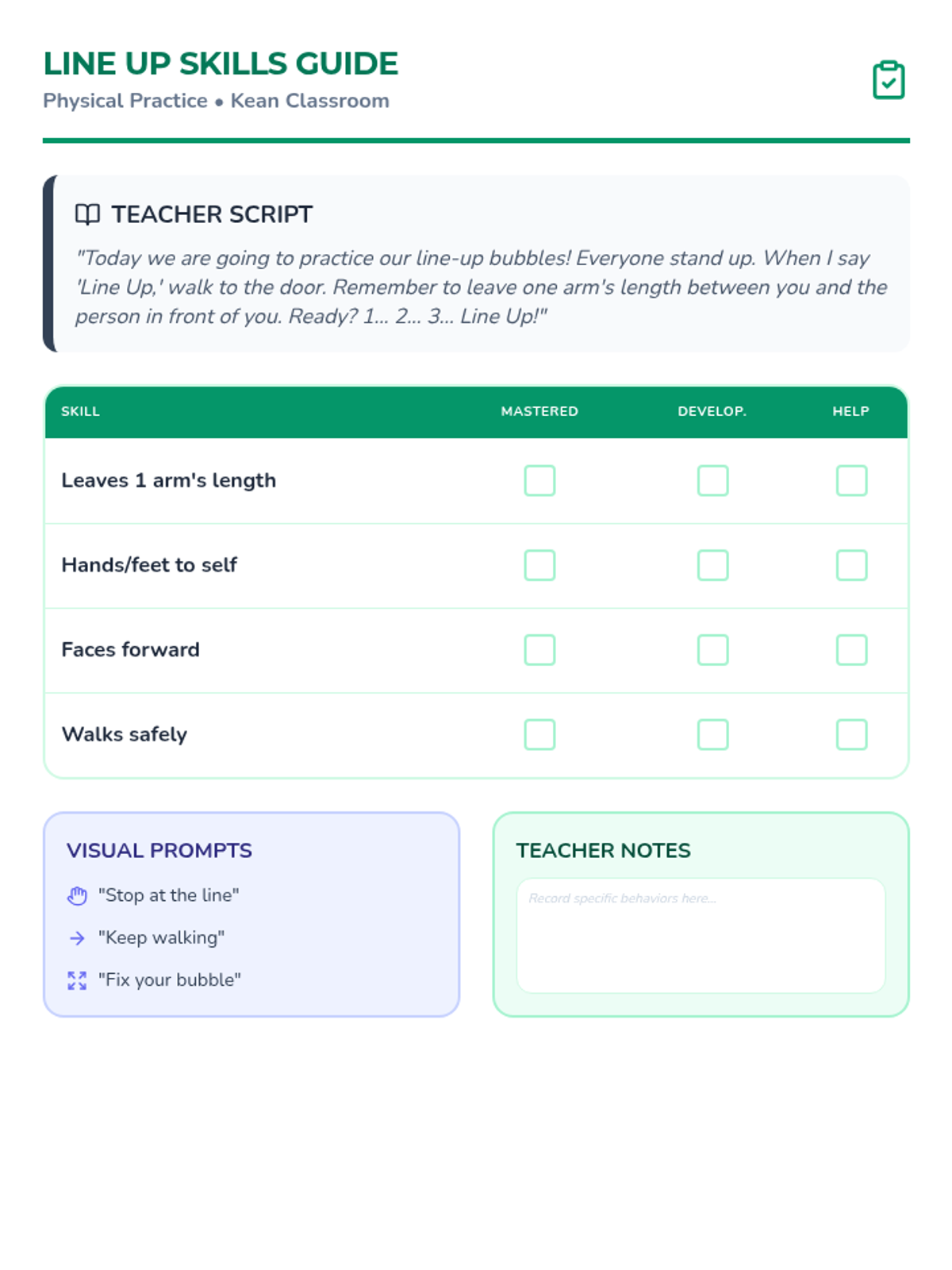
Revised teacher-facing resource for line-up practice, condensed to a single page with optimized table and larger notes area for classroom use.
Visual presentation for Day 2 focusing on specific school settings (Lunchroom, Recess, Hallway). Includes specific instructions for Kean (lining up) and sorting logic for Ramapo/WP.
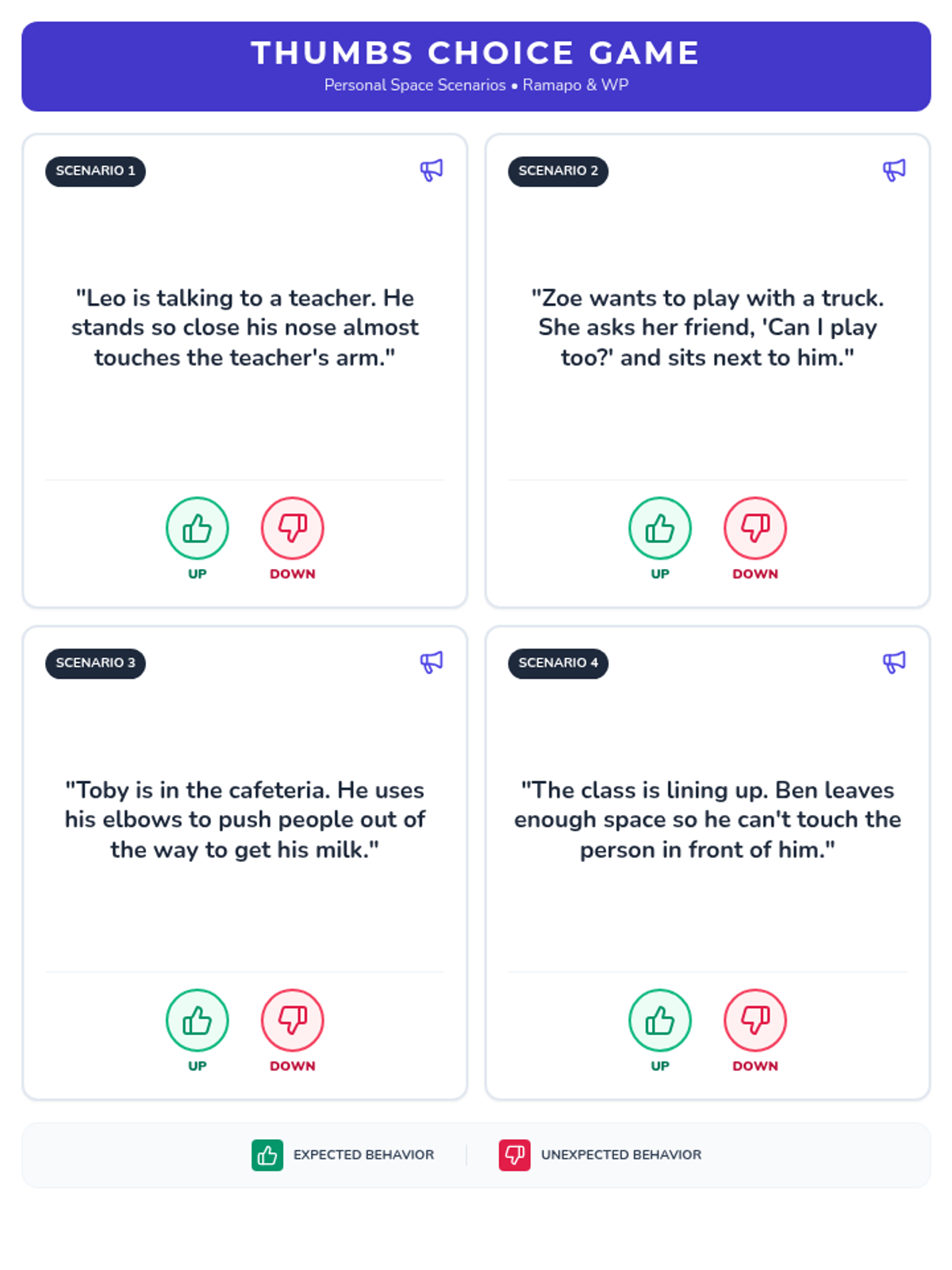
Revised Thumbs Choice Cards for Ramapo/WP. Added consistent labels to all cards, increased contrast on icons, and adjusted height to ensure the footer fits on a single page.
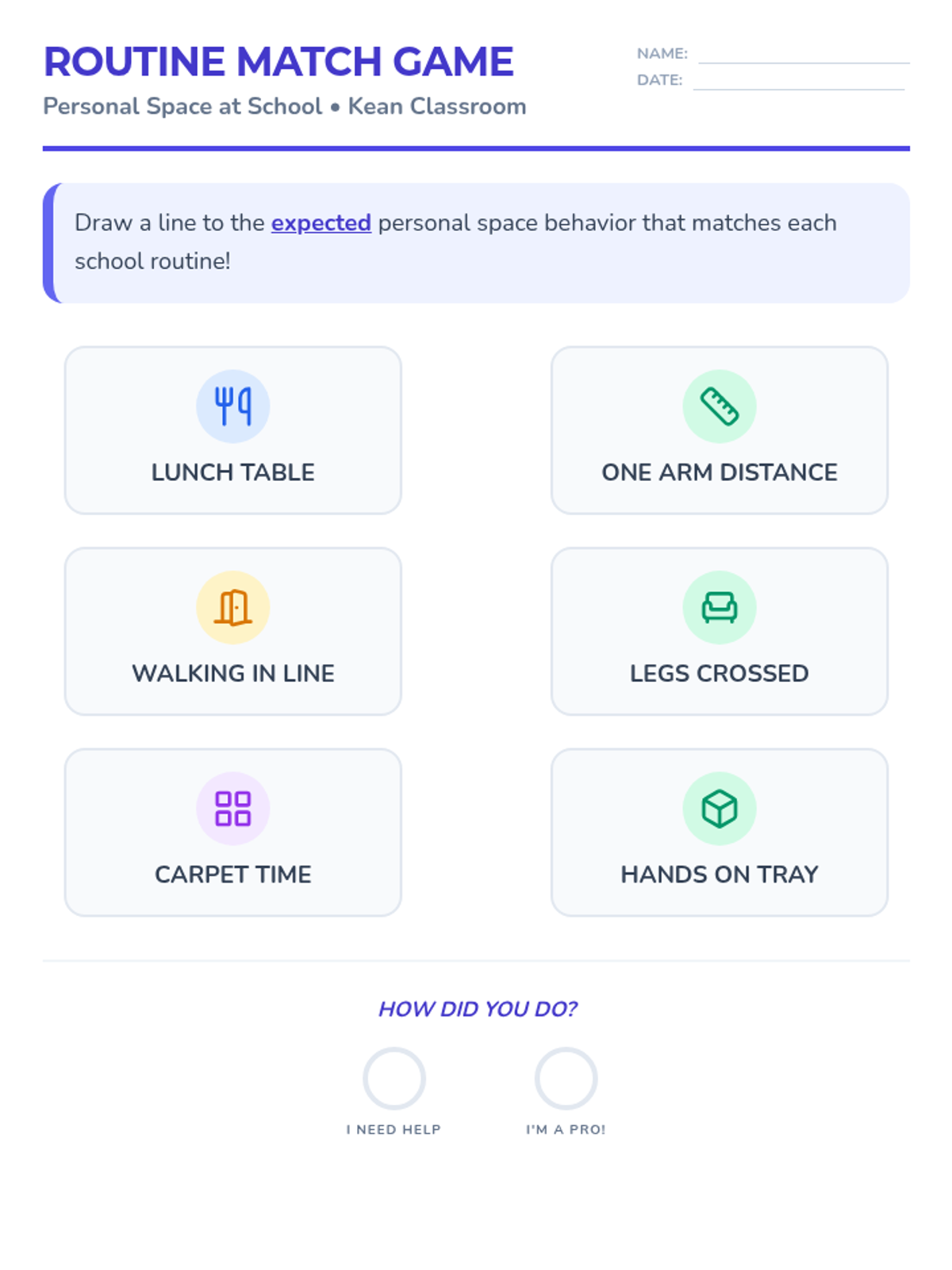
Revised matching worksheet for Kean students with shuffled answers and improved layout to fit on a single page. Connects school routines with expected personal space behaviors.
Interactive slides for Kean, Ramapo, and WP students focusing on personal space basics with social stories and a Thumbs Up/Down game. Includes scenarios for hallways, lunchrooms, and carpet time.
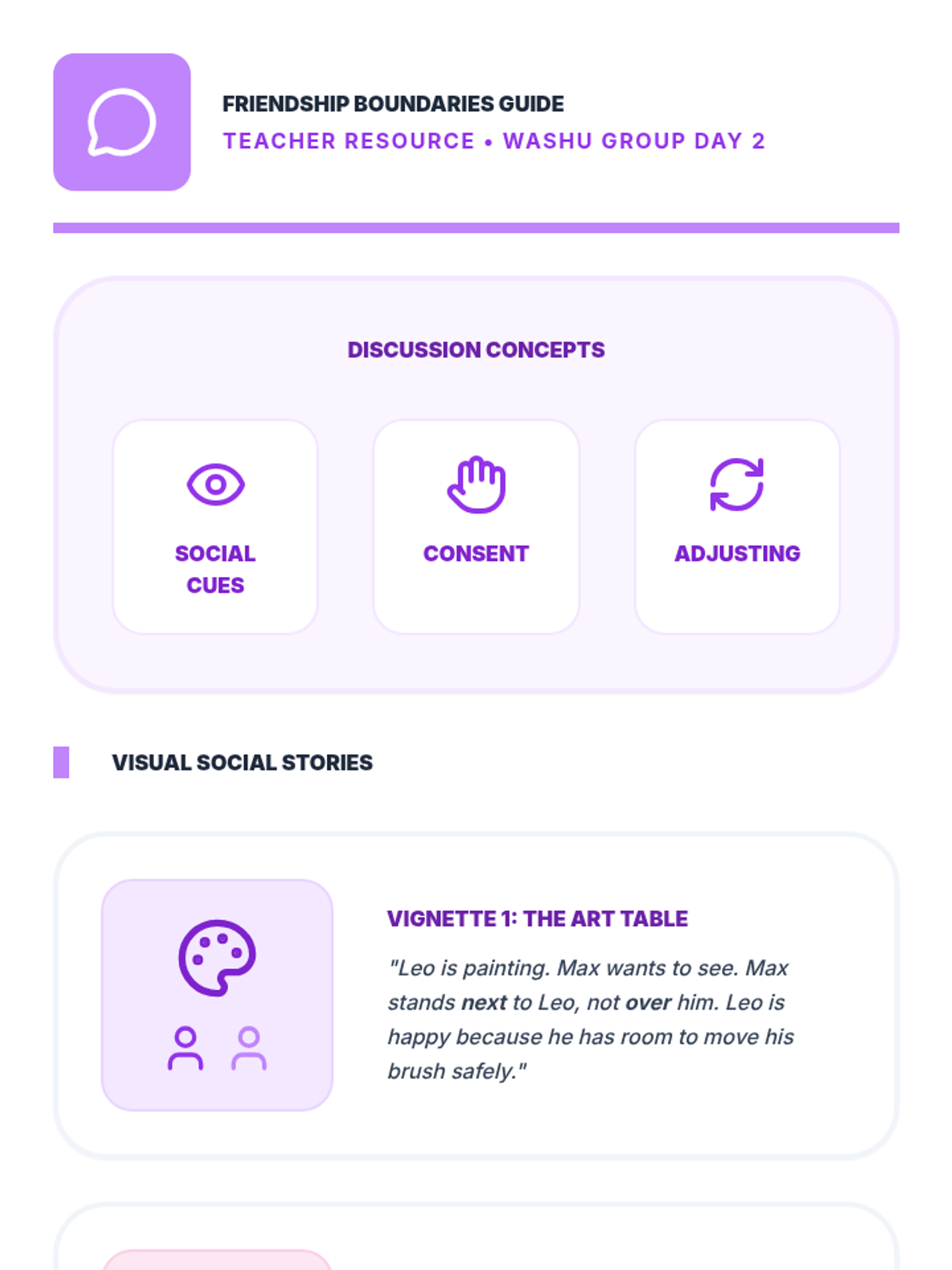
A facilitation guide for the WashU group's Day 2 discussion on friendship boundaries. It provides discussion prompts about teamwork, reading social cues, and the emotional impact of respecting personal space, along with 'Space Scripts' for students to practice.
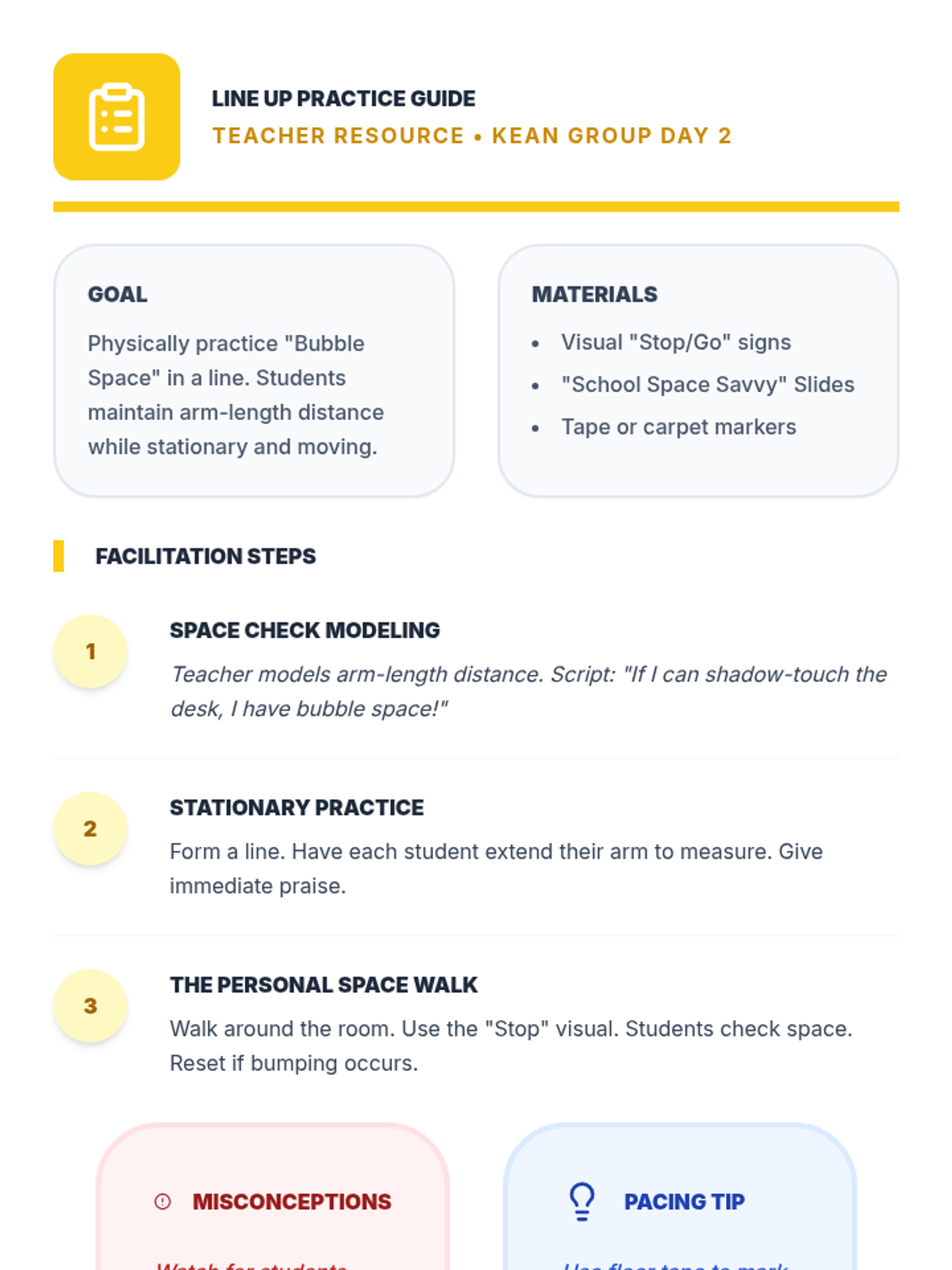
A teacher-facing instructional guide for facilitating the Day 2 'Line Up Practice' for the Kean group. Includes modeling scripts, step-by-step practice instructions, and strategies for addressing common student misconceptions about personal space.
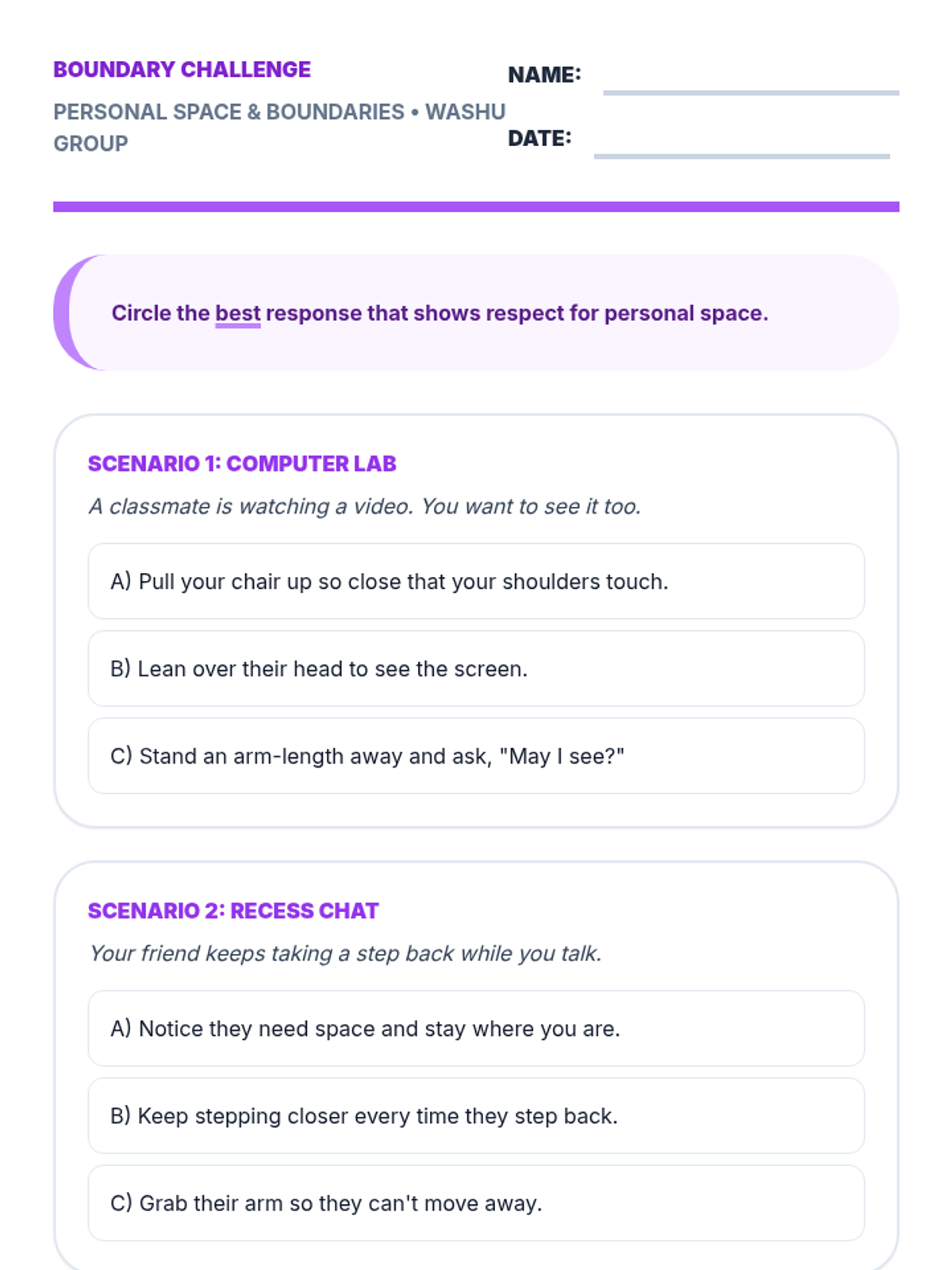
A social skills challenge worksheet for the WashU group focused on resolving boundary-related school situations in the computer lab, during recess conversations, and while sharing art supplies. Features multiple-choice scenarios and a critical thinking reflection section.
Advanced social skill slides for the WashU group, focusing on navigating boundaries in teamwork and friendships. Includes a 'Boundary Boss' social skills challenge game with scenarios and multiple-choice responses to build social problem-solving skills.
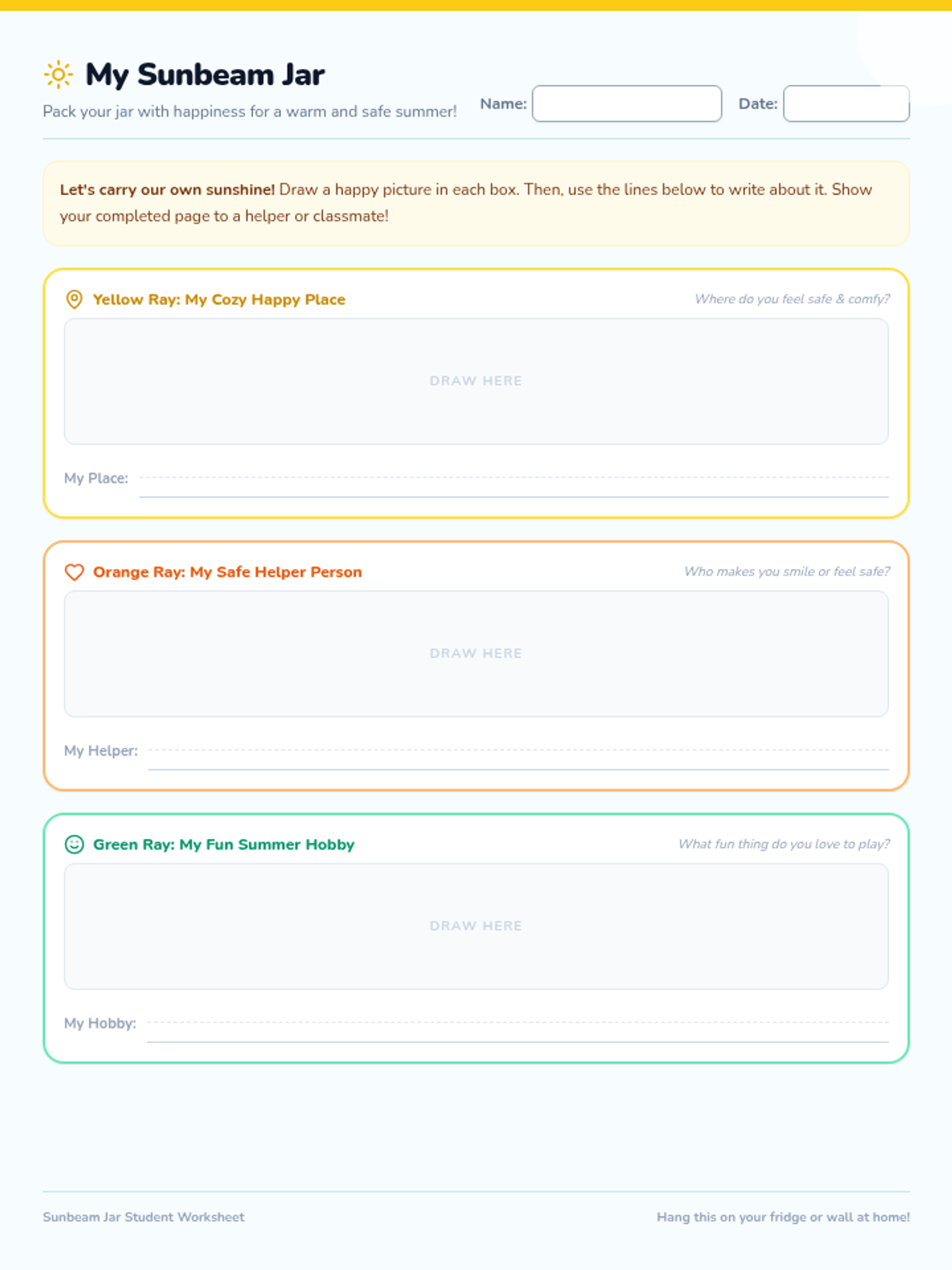
A 1-page printable student worksheet featuring primary writing lines and drawing boxes for each of the three Sunbeam Rays: Cozy Places, Helper People, and Happy Summer Hobbies. Perfectly structured for K-2 physical motor skills.
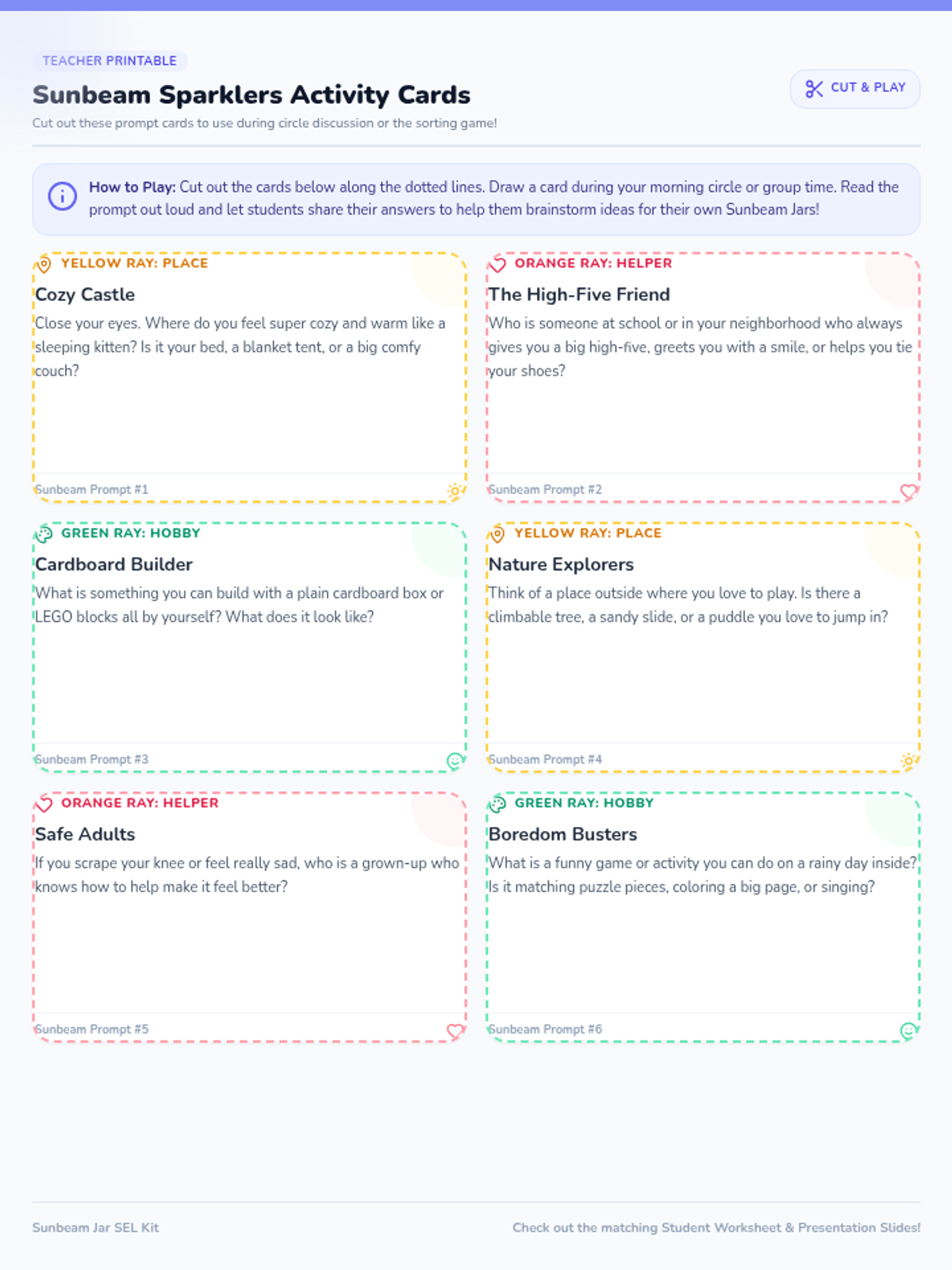
A printable activity card sheet featuring 6 cut-out prompt cards. These cards are color-coded and themed around places, helpers, and hobbies to spark circle-time dialogue and brainstorm ideas for K-2 children before they complete their worksheets.
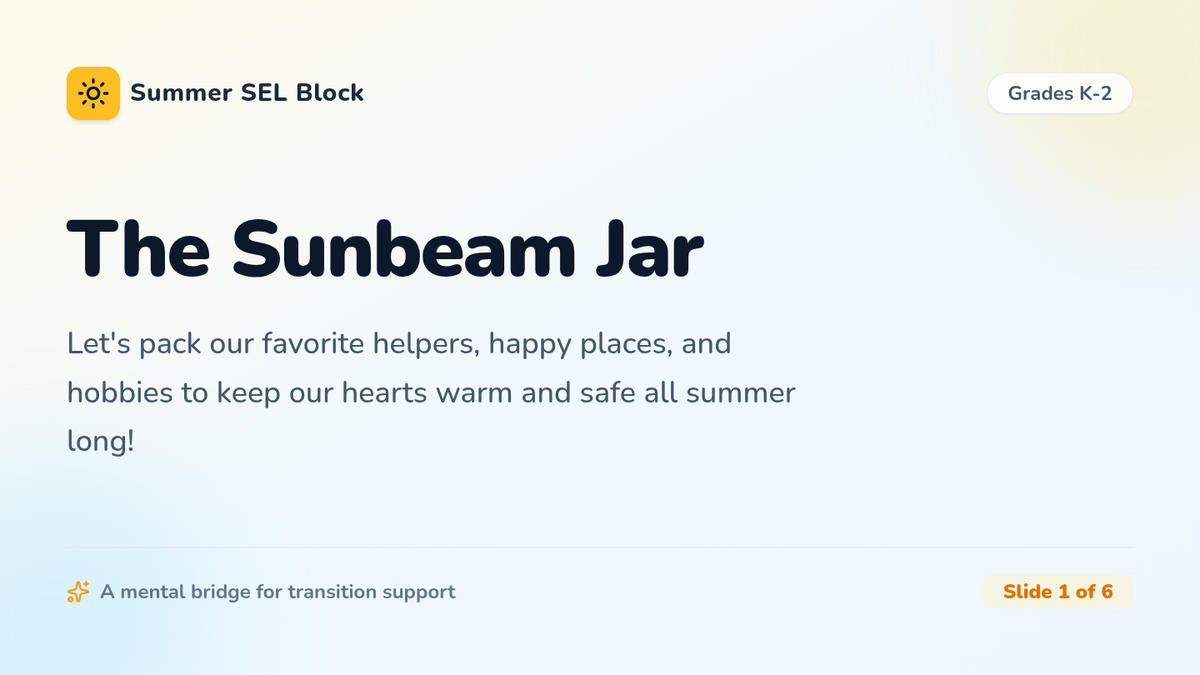
A beautiful 6-slide presentations tailored for primary grades (K-2) explaining 'The Sunbeam Jar' and the three types of rays: Places, Helpers, and Hobbies. Designed with massive fonts (minimum 24px, typical 28-36px body text) and lively visual metaphors.
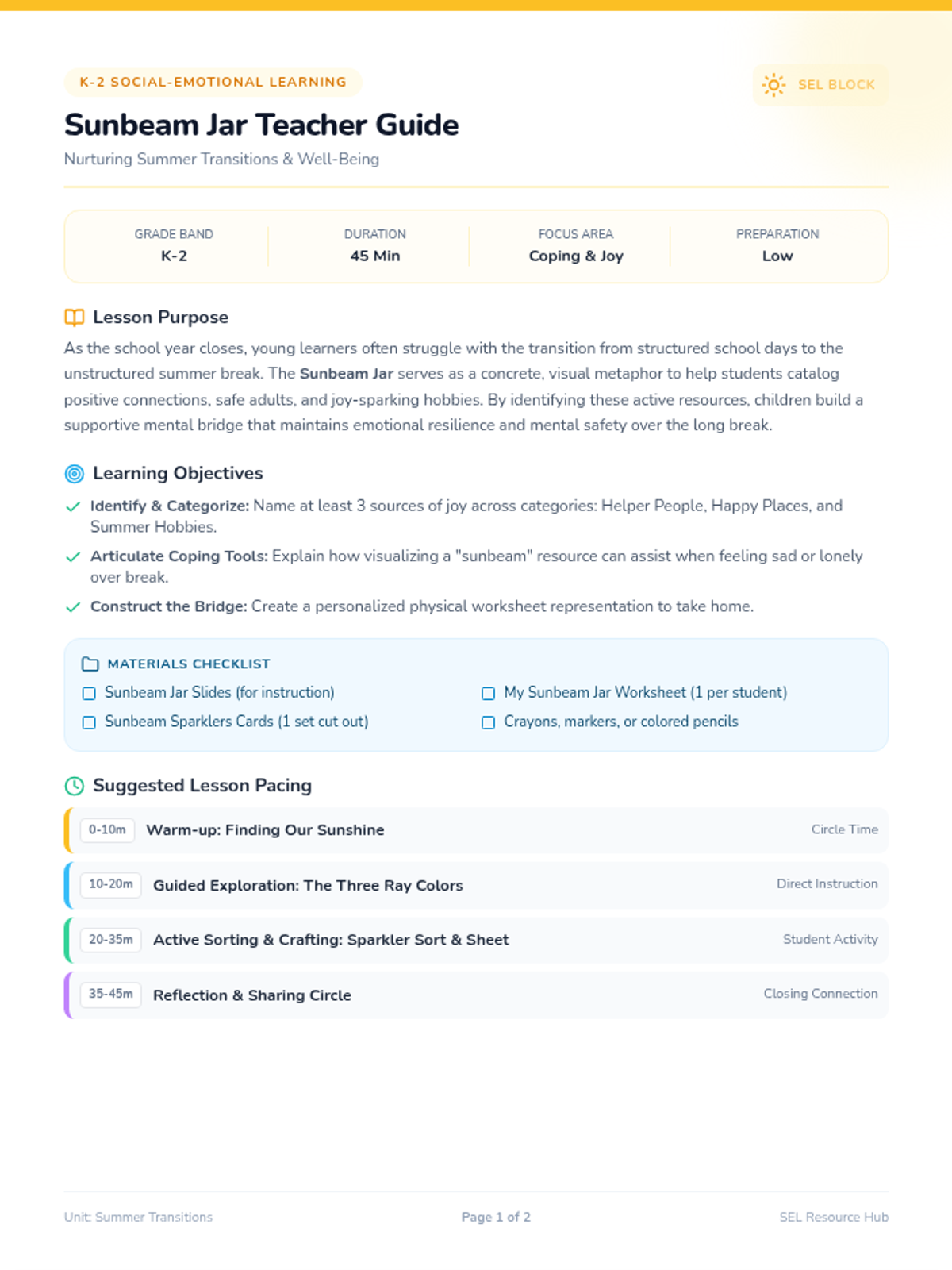
A 2-page printable Teacher Guide for facilitating 'The Sunbeam Jar' lesson. It features full lesson pacing, trauma-informed guidelines, conversational scripts for direct instruction, and concrete primary grade-level scaffolds.
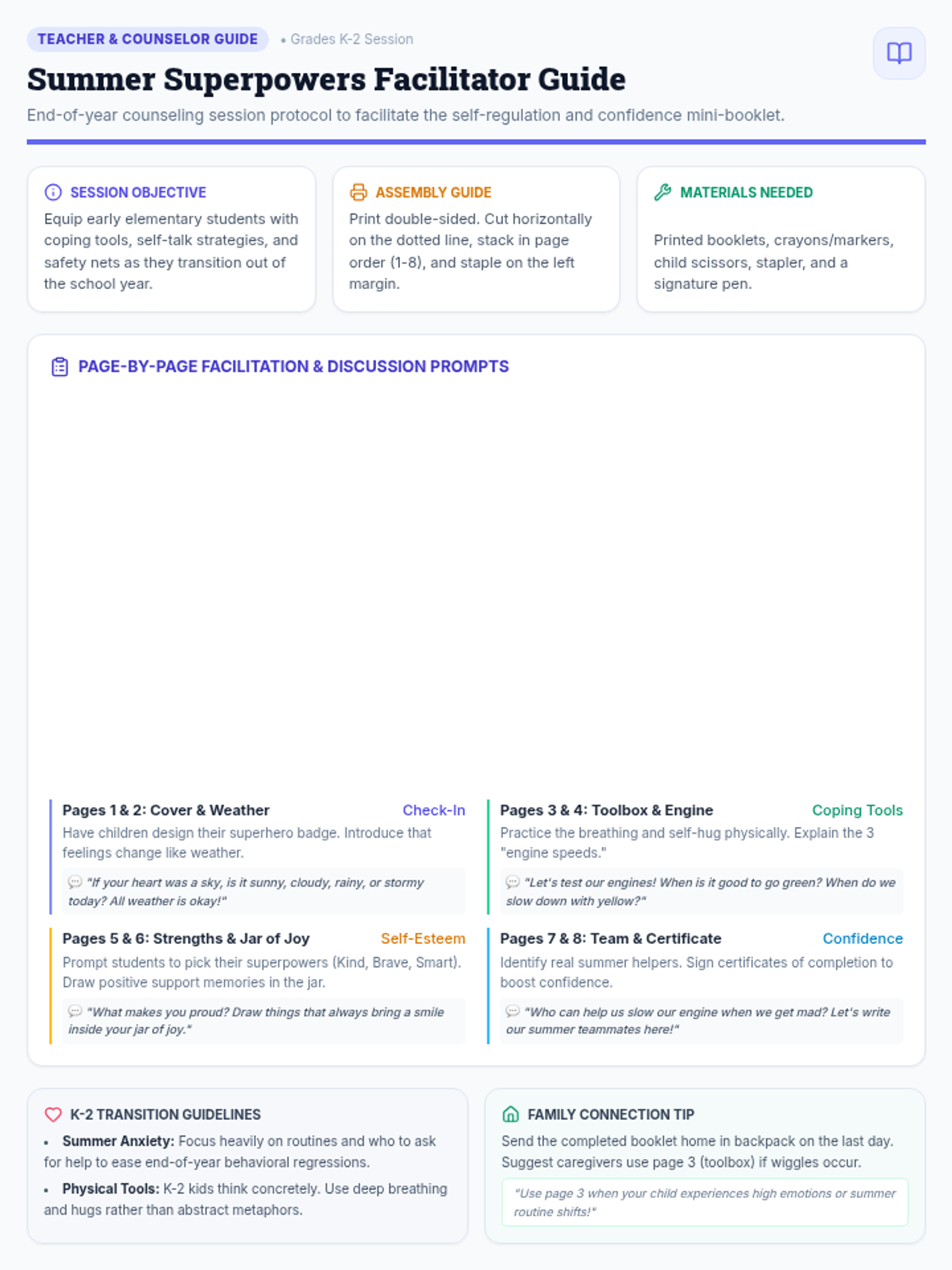
A counselor's facilitation guide for the 'Summer Superpowers' K-2 booklet, including session objectives, printing setup instructions, step-by-step scripts, discussion prompts, and cognitive transition strategies for young children.
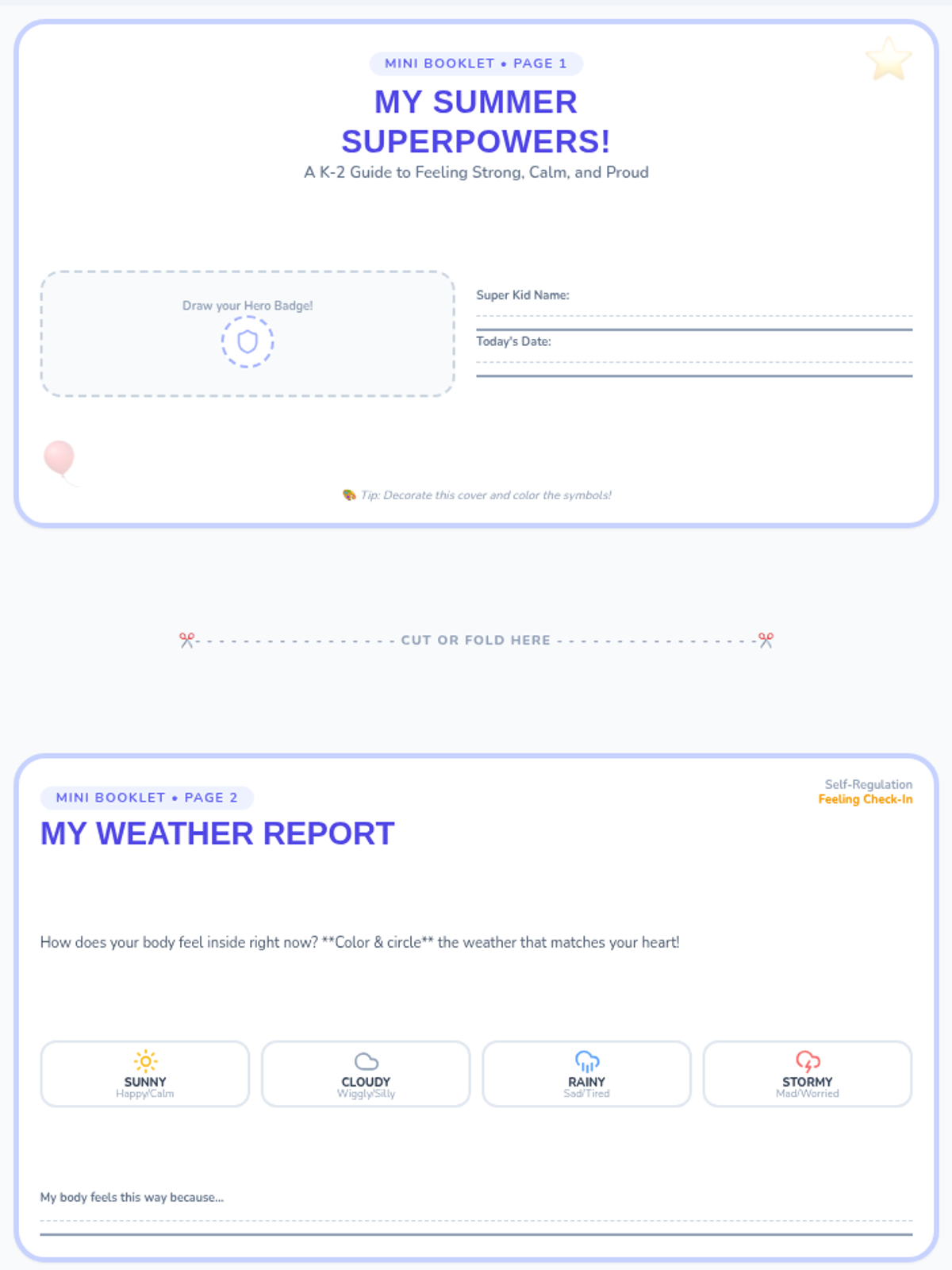
An interactive mini-booklet for K-2 students focused on self-regulation check-ins, coping skills toolbox, zones of regulation speeds, self-esteem strengths, and a coloring transition certificate. Formatted as horizontal cut/fold halves on 4 printable landscape sheets.
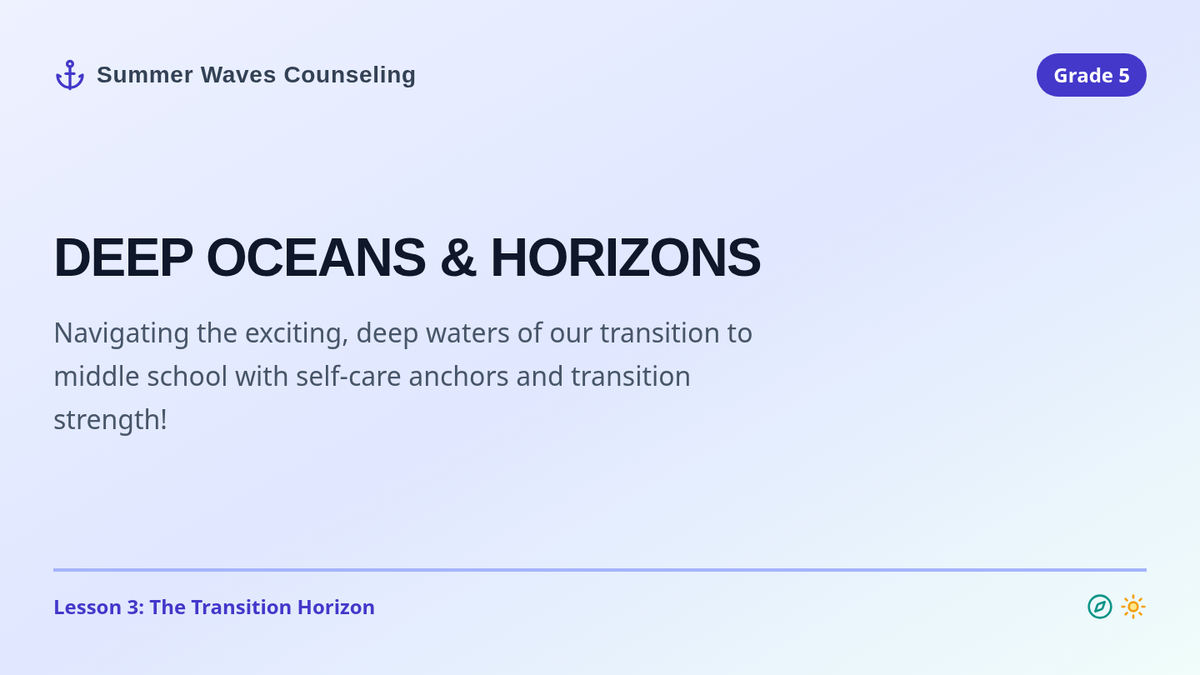
An encouraging transition presentation for 5th-grade groups preparing for middle school. Explores worries, hopes, and independent skills while introducing the 'Self-Care Anchor' framework.
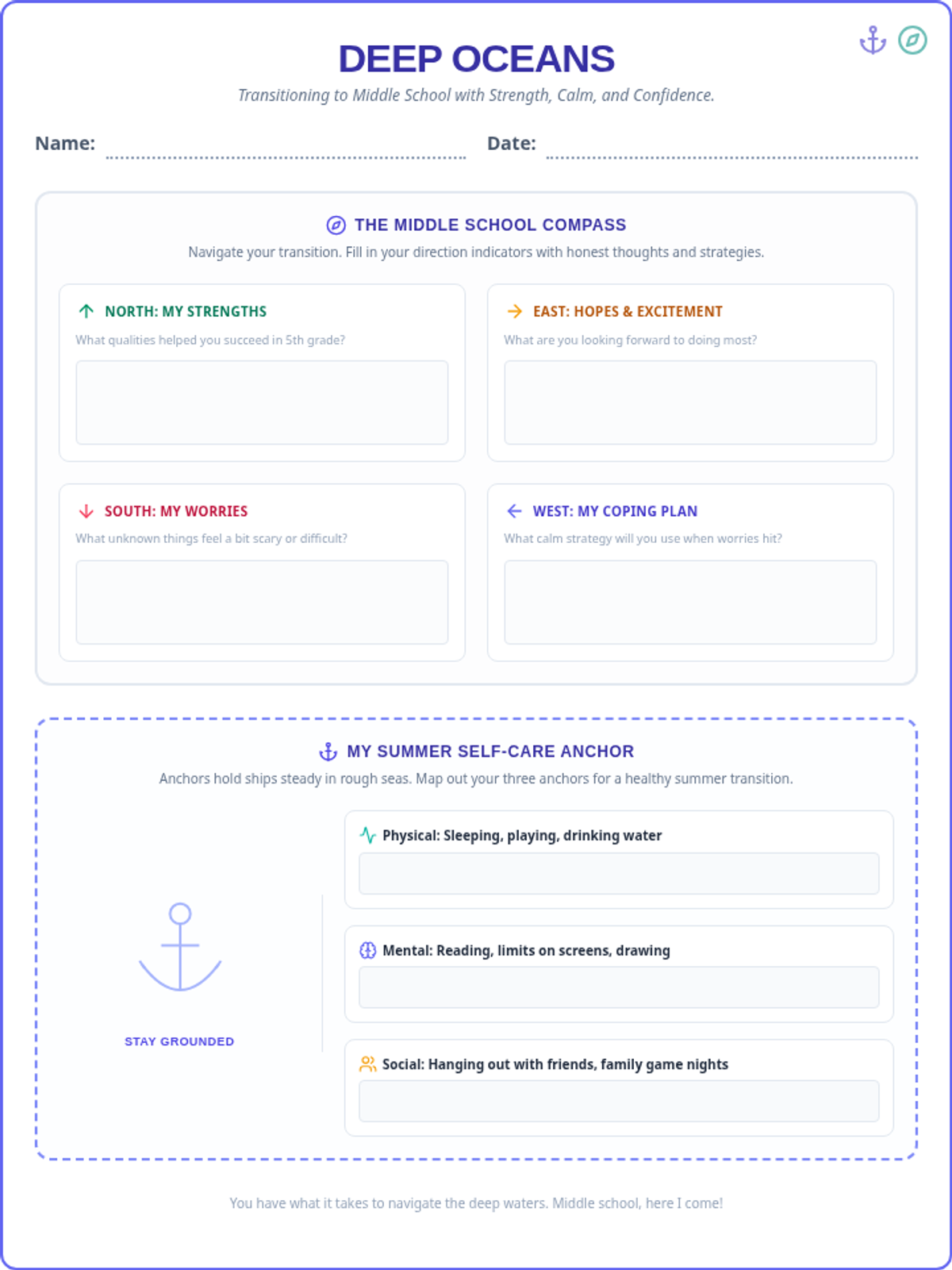
A developmental transition printable for 5th-grade students preparing for middle school. Features a 'Middle School Compass' transition mapping activity and a 'Summer Self-Care Anchor' planning section.
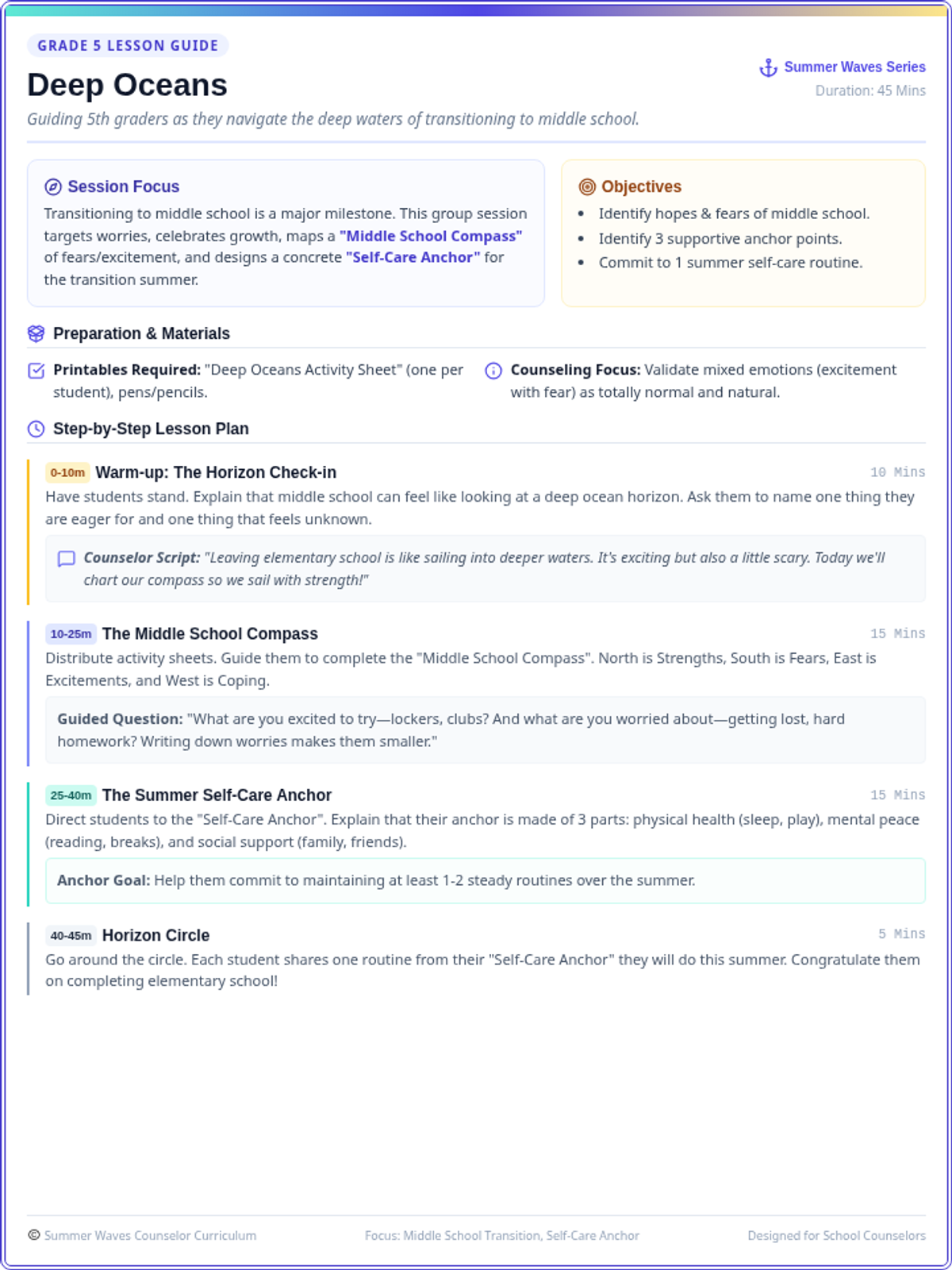
A structured 5th-grade transition lesson plan focusing on Middle School Compass transition goals and constructing a personal Summer Self-Care Anchor.
An interactive presentation for 3rd-grade groups. Covers the 'Summer Weather Feelings' check-in, explains internal strengths as a growth surfboard, and guides students to select items to pack in their summer coping suitcase.
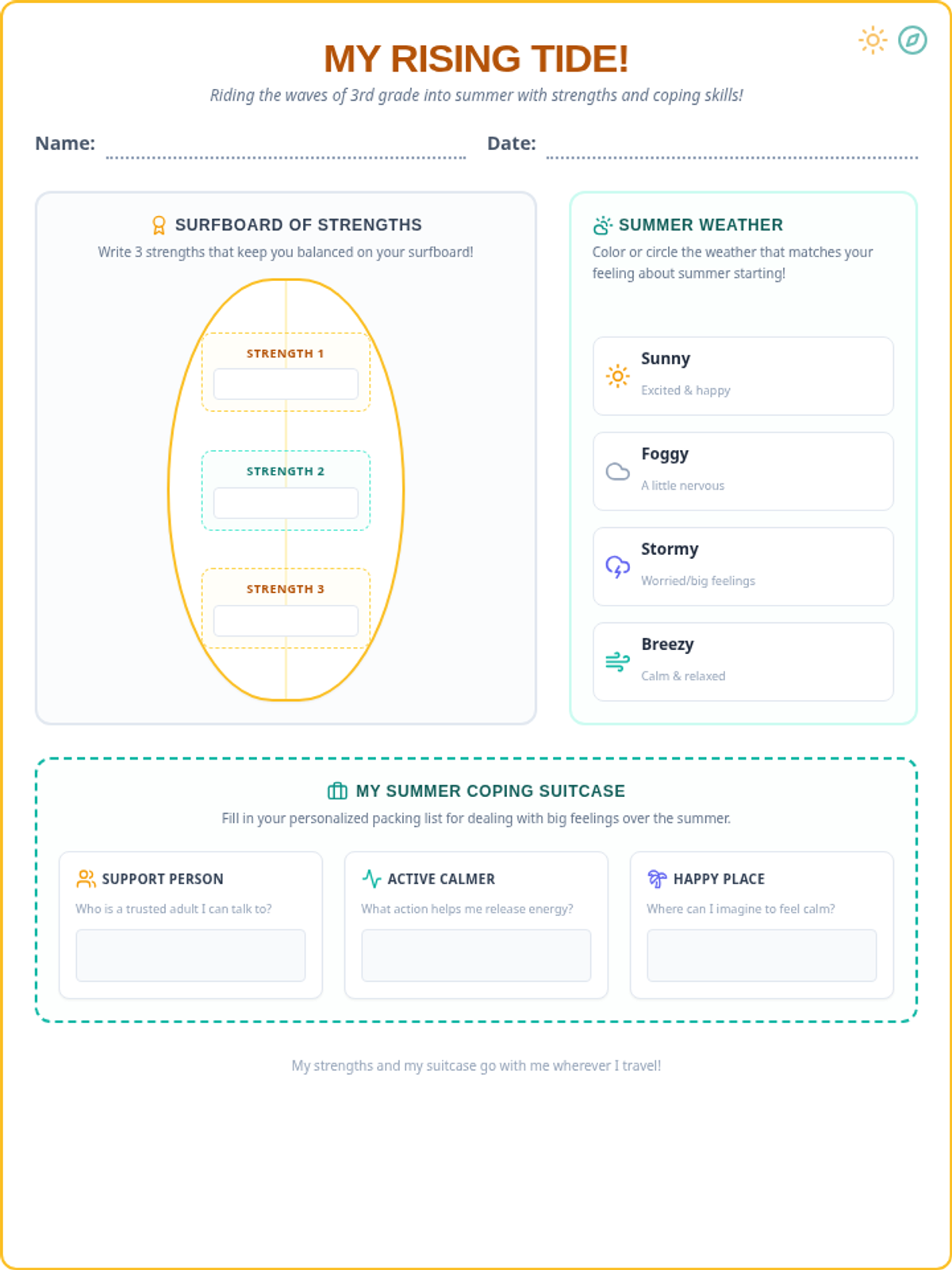
A developmental self-reflection printable for 3rd-grade students. Outlines a 'Surfboard of Strengths' for personal traits and a 'Summer Coping Suitcase' for documenting action steps to regulate big feelings.
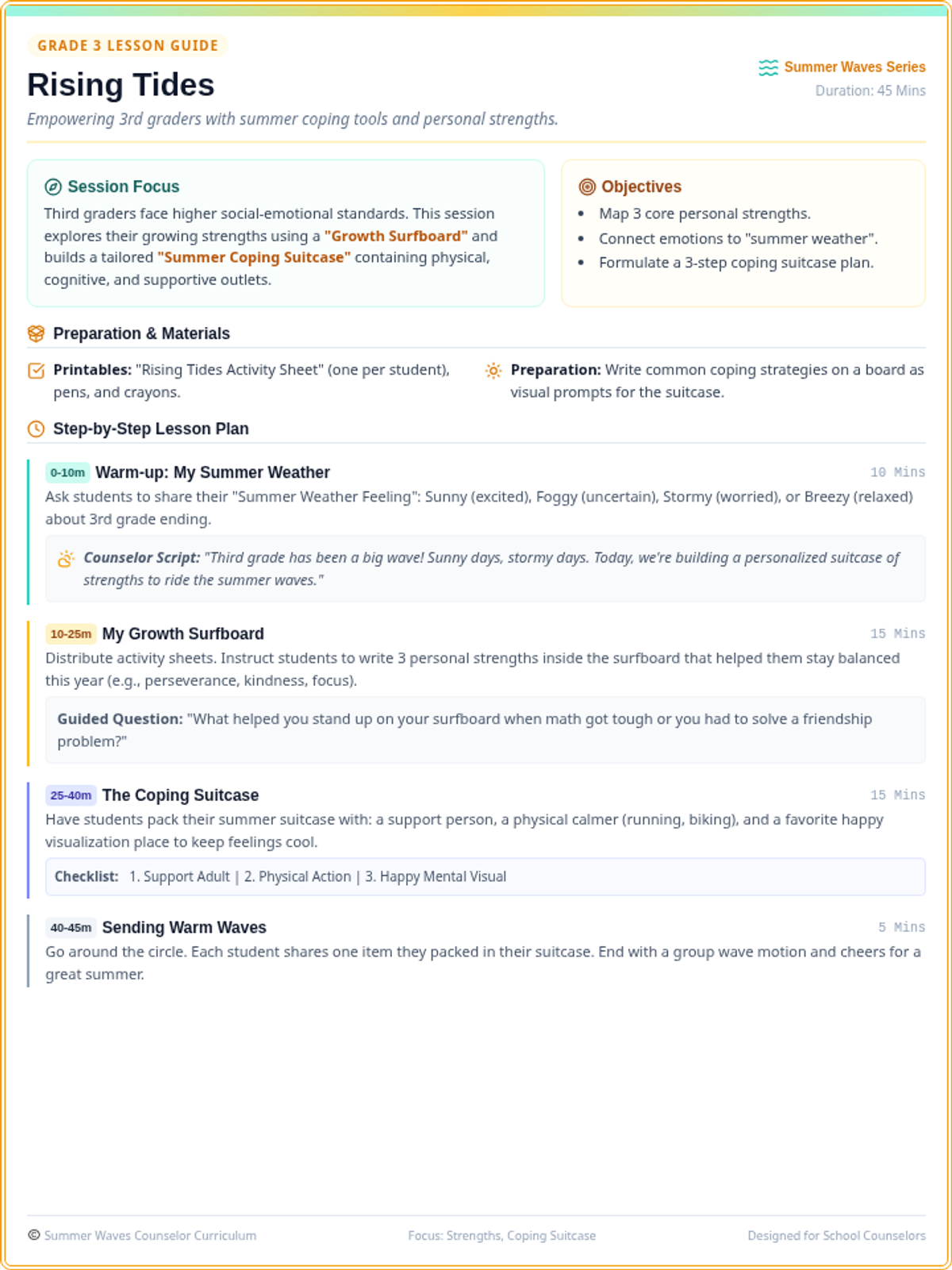
A structured school counselor guide tailored for 3rd grade, outlining procedures to map strengths using a 'Growth Surfboard' and create a comprehensive summer coping strategy suitcase.
An interactive and friendly presentation for 1st-grade counseling groups. High-contrast, easy-to-read layout using larger font elements (minimum 24px) to practice identifying emotional growth and learning 'Ocean Breathing'.
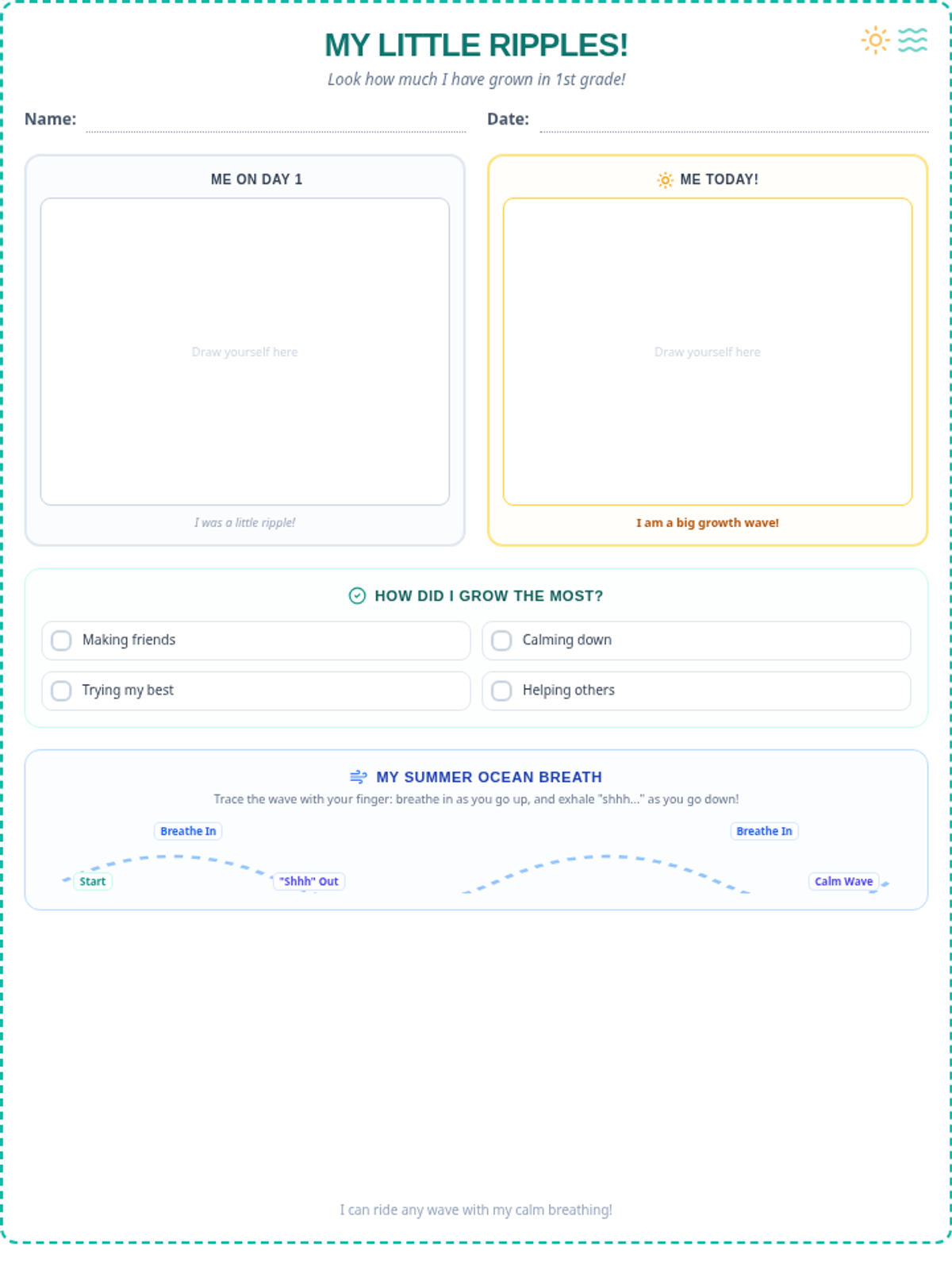
A highly visual, low-color 1st-grade school counseling printable. Features me-then vs me-now drawing panels, simple checkboxes for social-emotional accomplishments, and an interactive 'Ocean Breath' trace-and-breathe wave graphic.
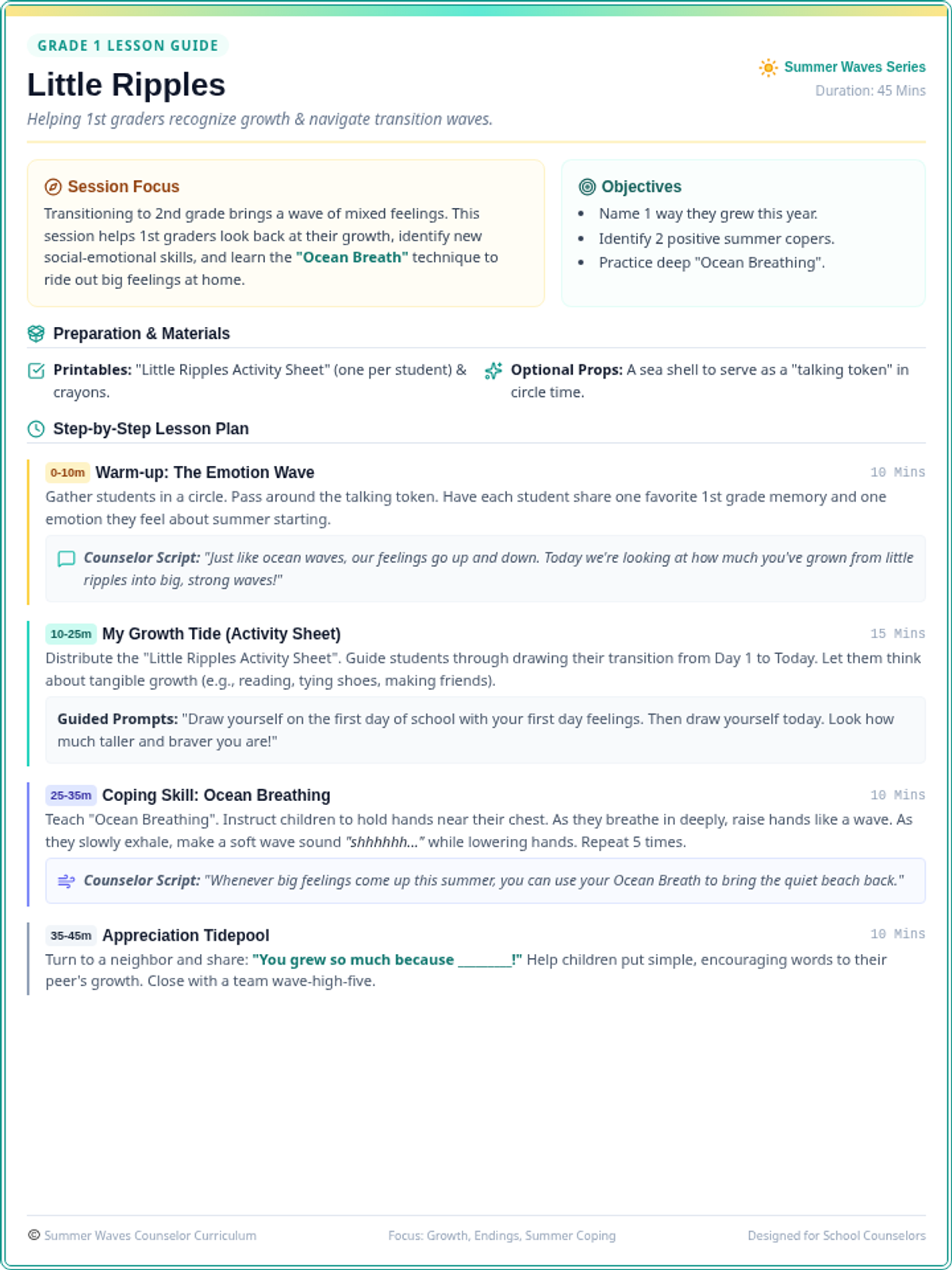
A professional, highly-structured school counselor lesson guide for 1st grade students, focusing on emotional reflection, growth tracing, and 'Ocean Breathing' coping mechanics. Designed to be highly print-friendly and easy to read.
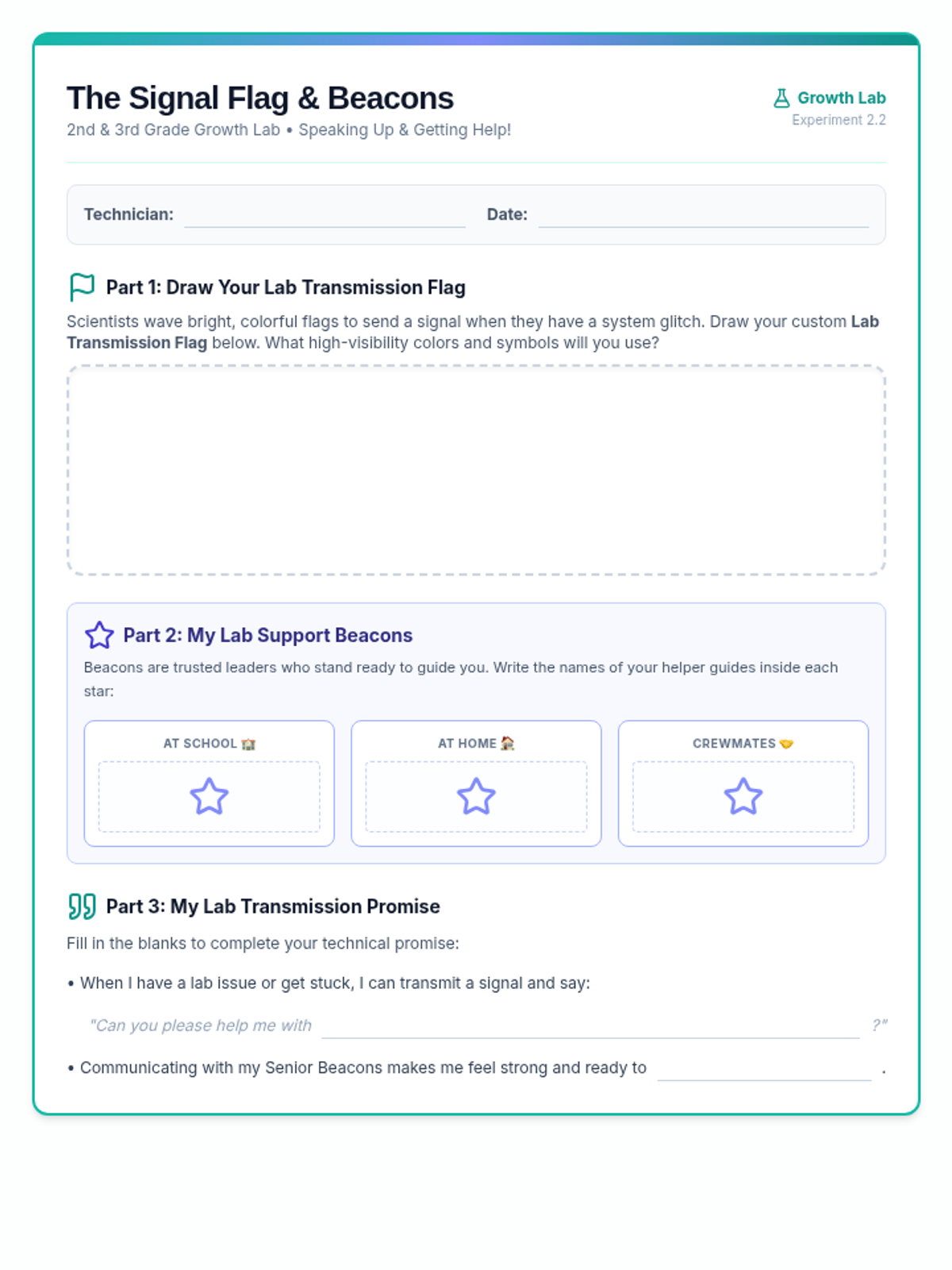
An interactive self-advocacy and support mapping worksheet designed for 2nd and 3rd-grade students. Features a 'Help Signal Flag' design space, a 'Guide Stars' helper mapping exercise, and simple fill-in-the-blank safety prompts.
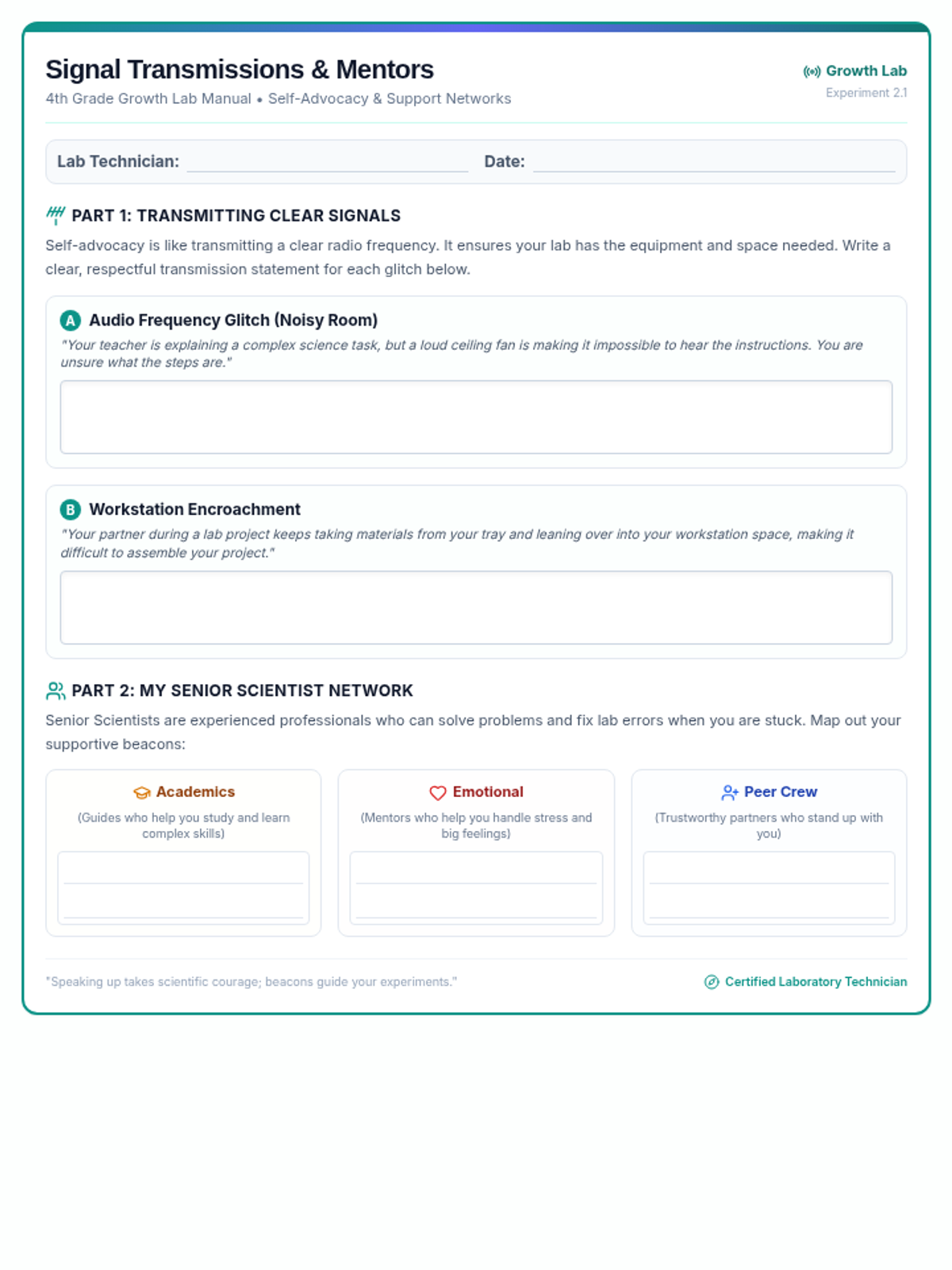
An independent self-advocacy and support mapping worksheet for 4th-grade students. Prompts students to draft self-advocacy responses to common school scenarios and map their personal support systems across academic, emotional, and social dimensions.
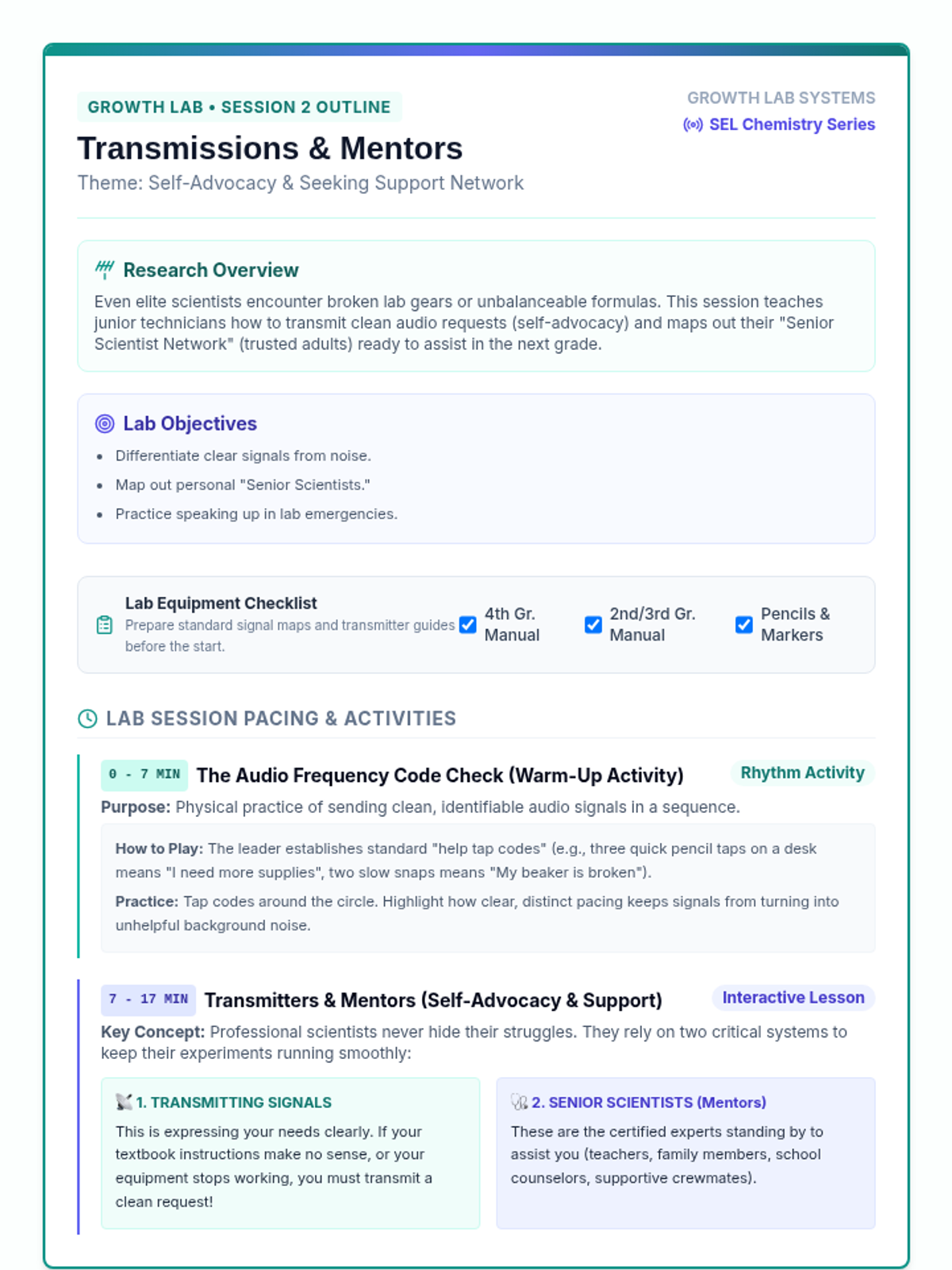
A premium facilitation guide for the second session of the end-of-year reflection series, focusing on self-advocacy and seeking support. Includes pacing, SOS Morse Code warm-ups, 'Trail Signals & Guides' role-play scenarios, grade-differentiated instructions, and collaborative group discussion prompts.
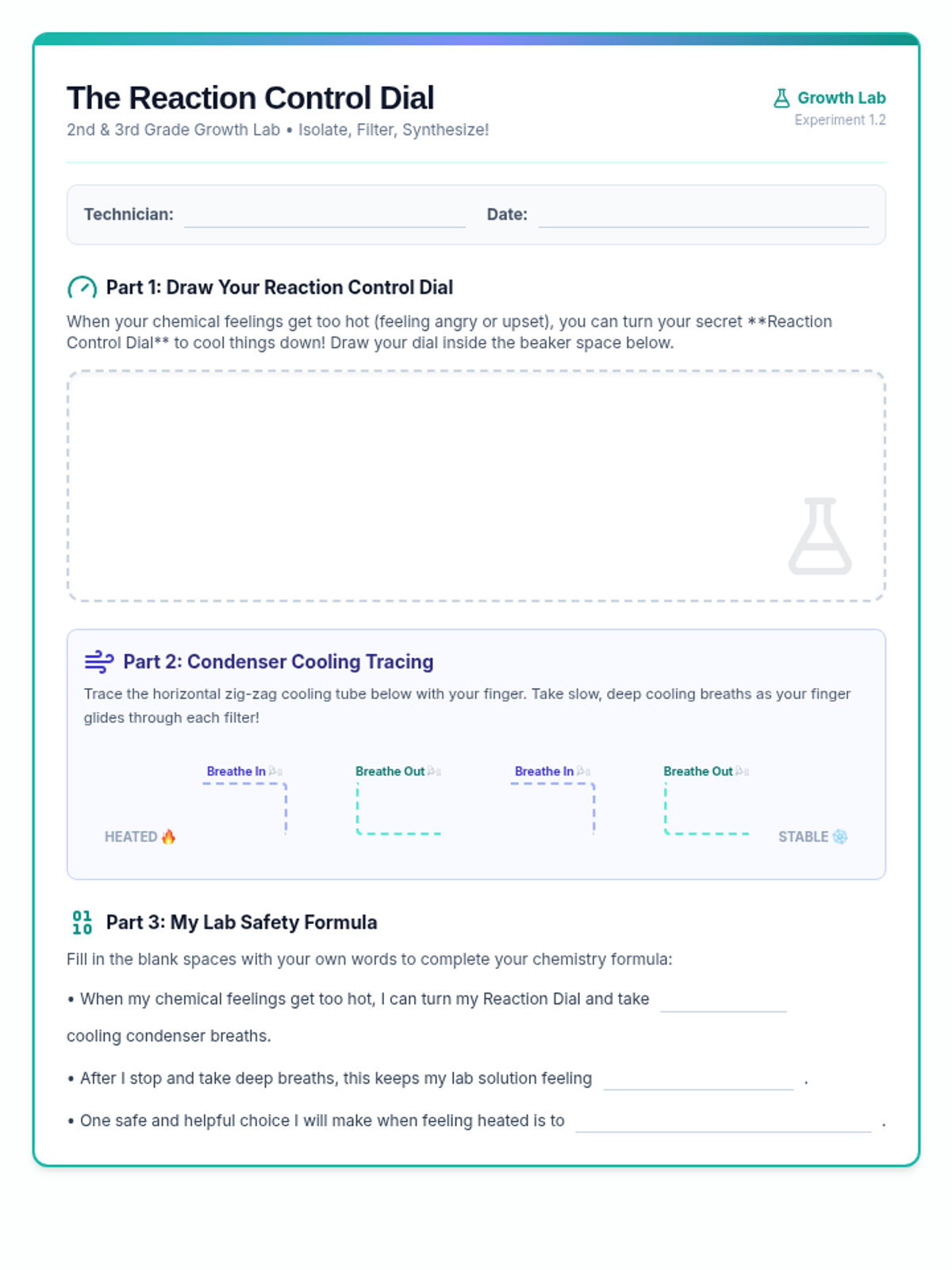
An interactive reflection and drawing activity designed for 2nd and 3rd-grade students to practice self-regulation. Features a design-your-own 'Pause Button' space, a tactile mountain-breathing tracing graphic, and guided fill-in-the-blank sentences to solidify personal self-soothing goals.
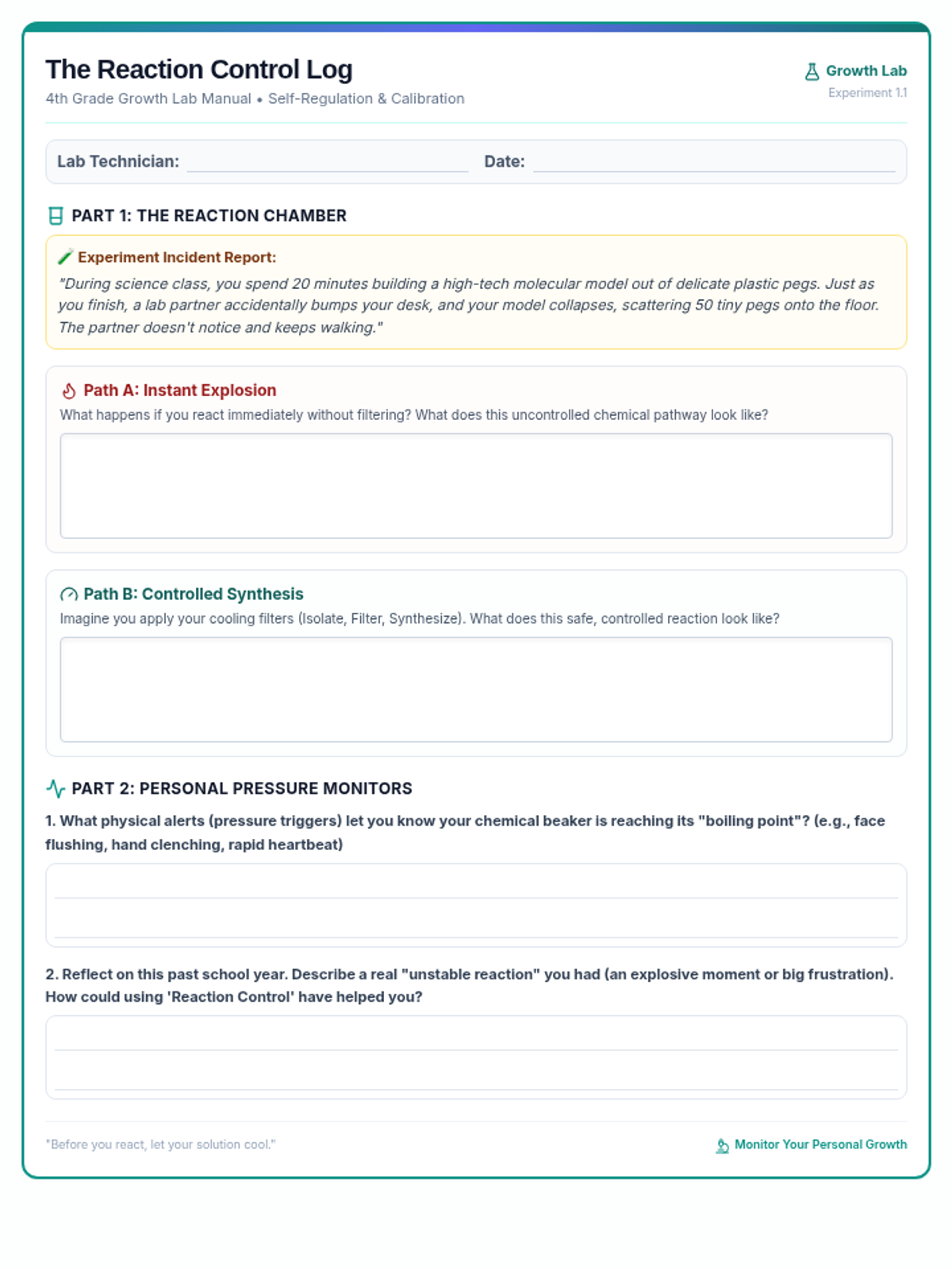
An independent reflection worksheet designed for 4th-grade students. Features a real-world scenario where students analyze and contrast impulsive immediate reactions with deliberate, 'paused' decision-making, followed by guided prompts to identify physiological body signals and reflect on personal growth over the past school year.
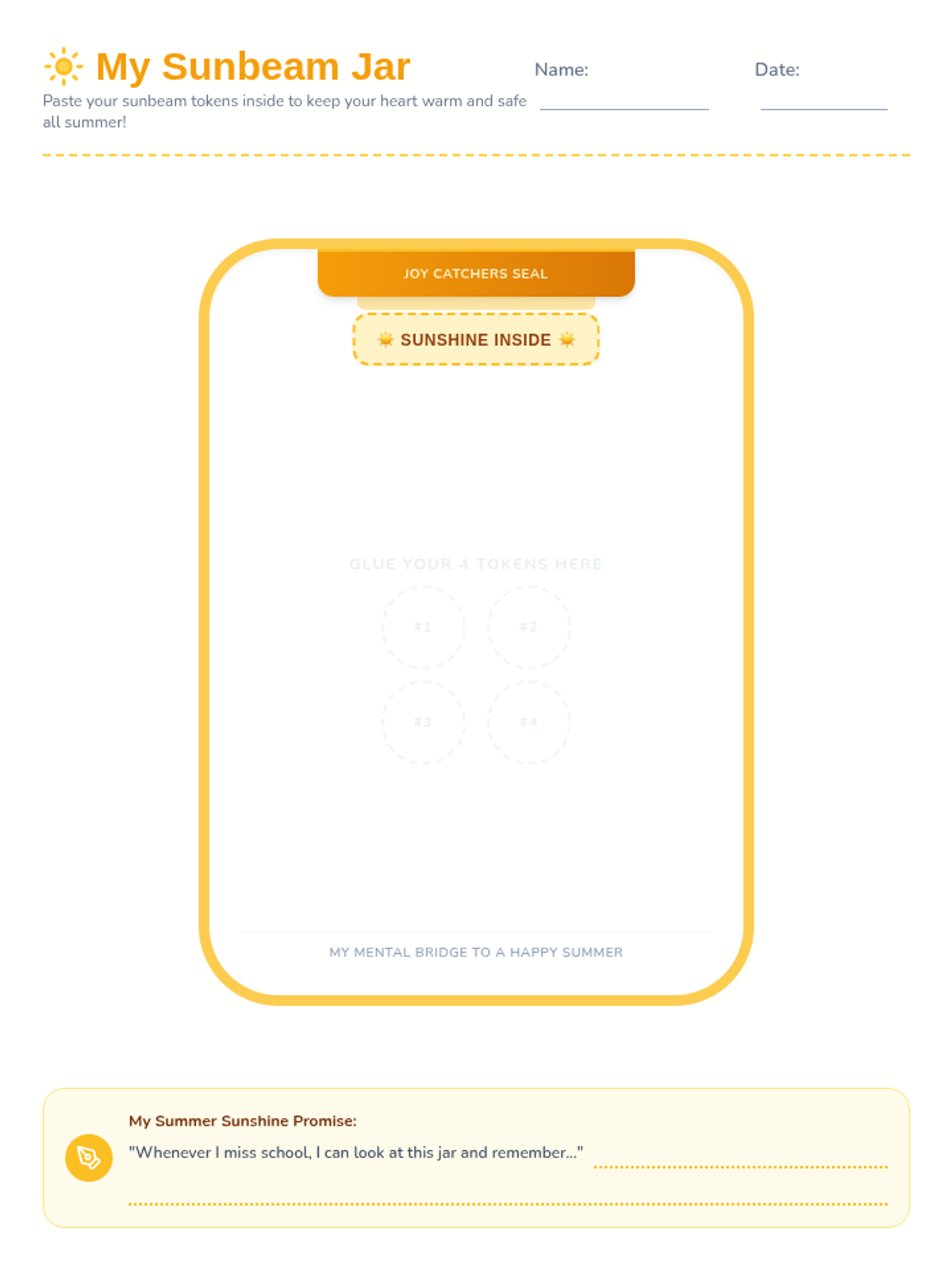
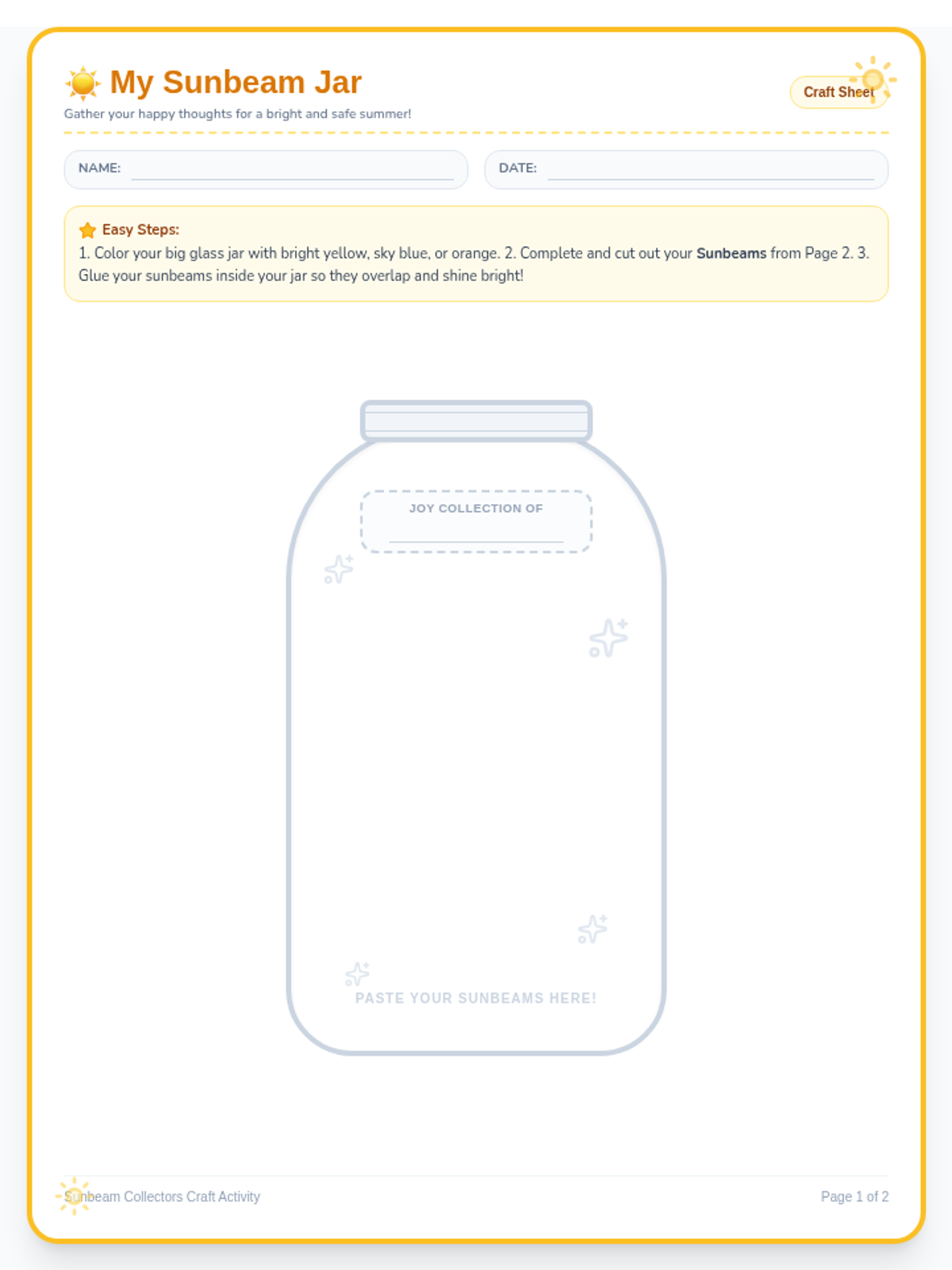
A beautifully designed printable worksheet where K-2 students paste their colored sunbeam tokens inside a giant mason jar graphic, completing their personal "Sunbeam Jar".
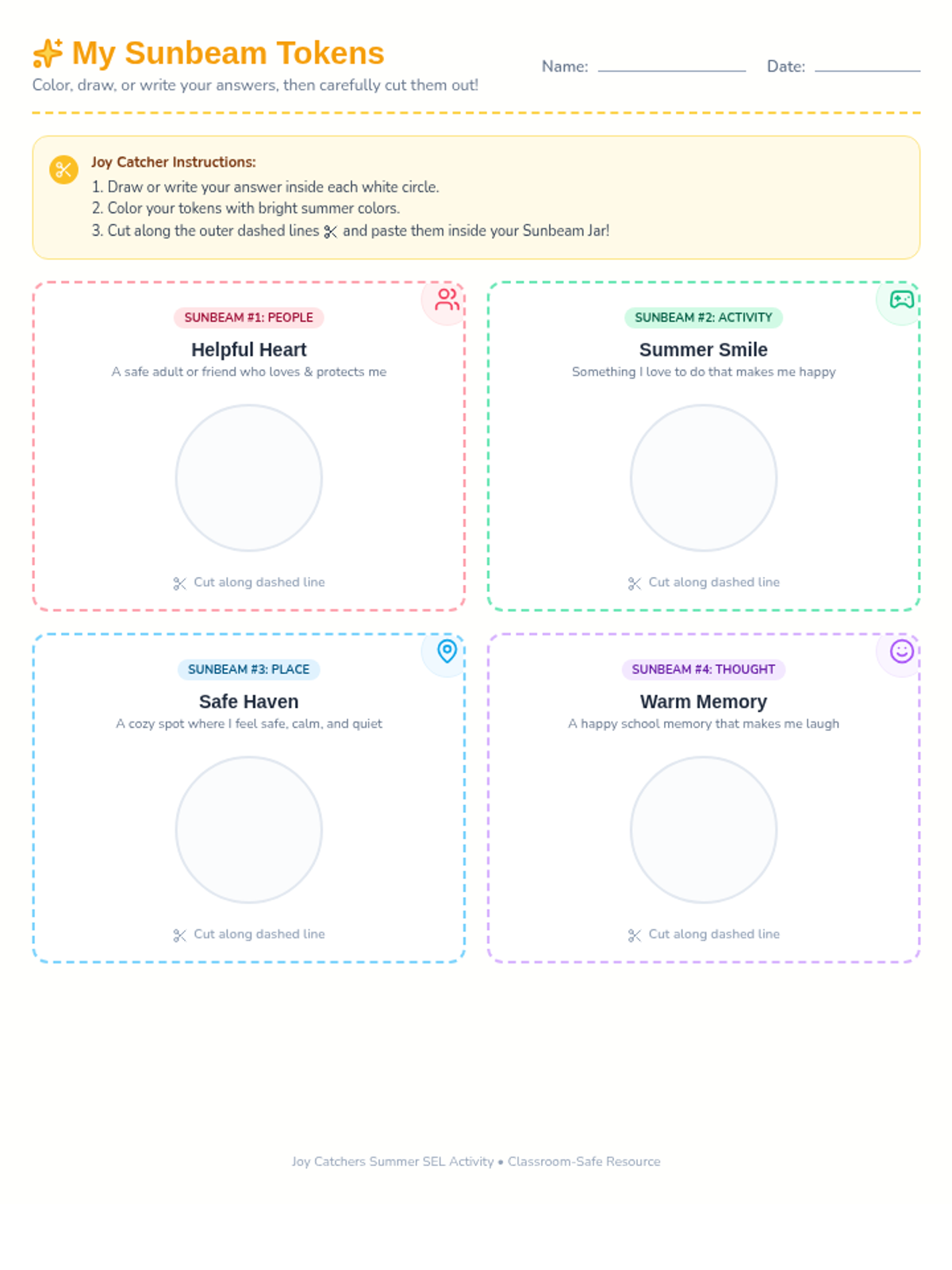
A printable cutout sheet with 4 themed circular sunbeam tokens (Helpful Heart, Summer Smile, Safe Haven, and Warm Memory) for K-2 students to draw, write, and paste into their jar.
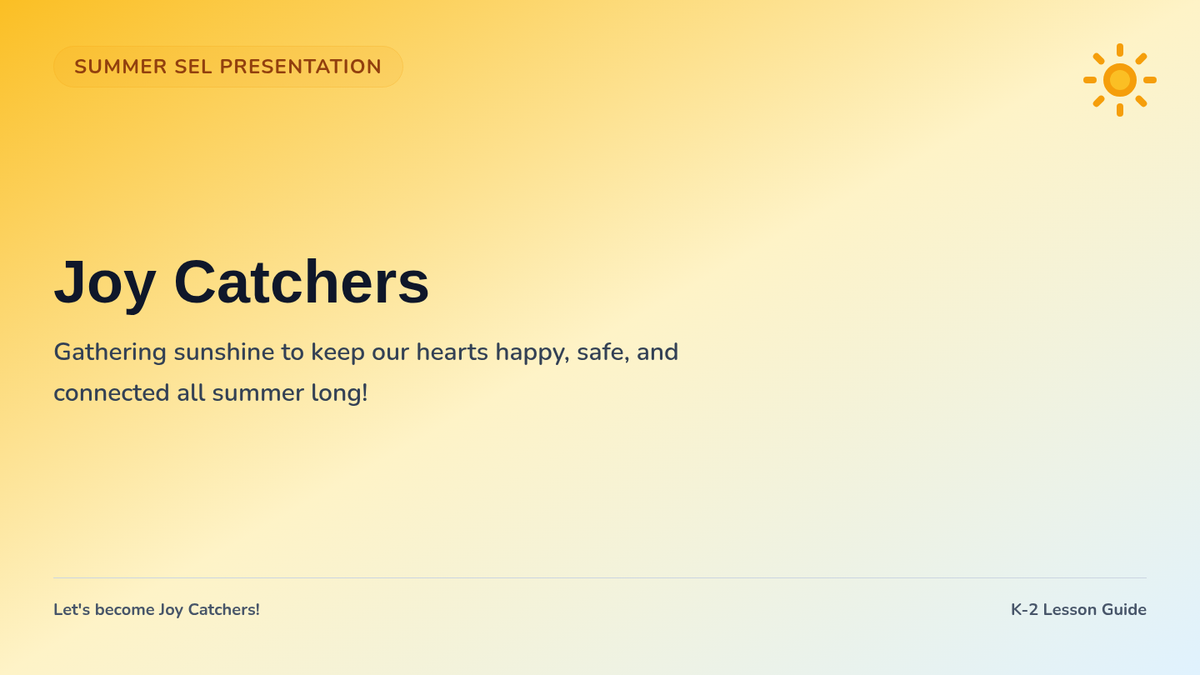
An instructional slide deck for teachers to guide K-2 students through defining emotional "sunbeams," doing check-ins, identifying social supports, and creating their jar.
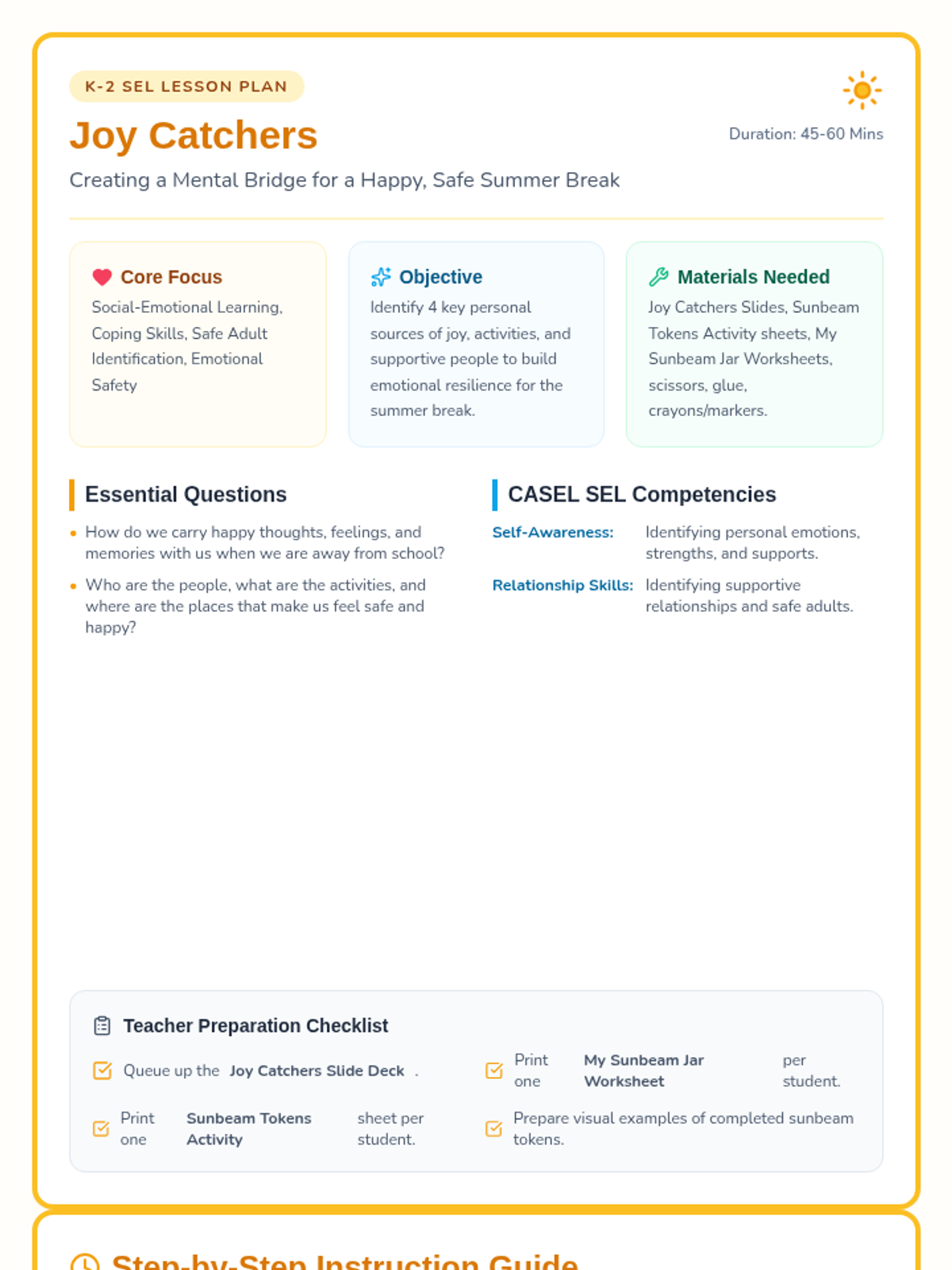
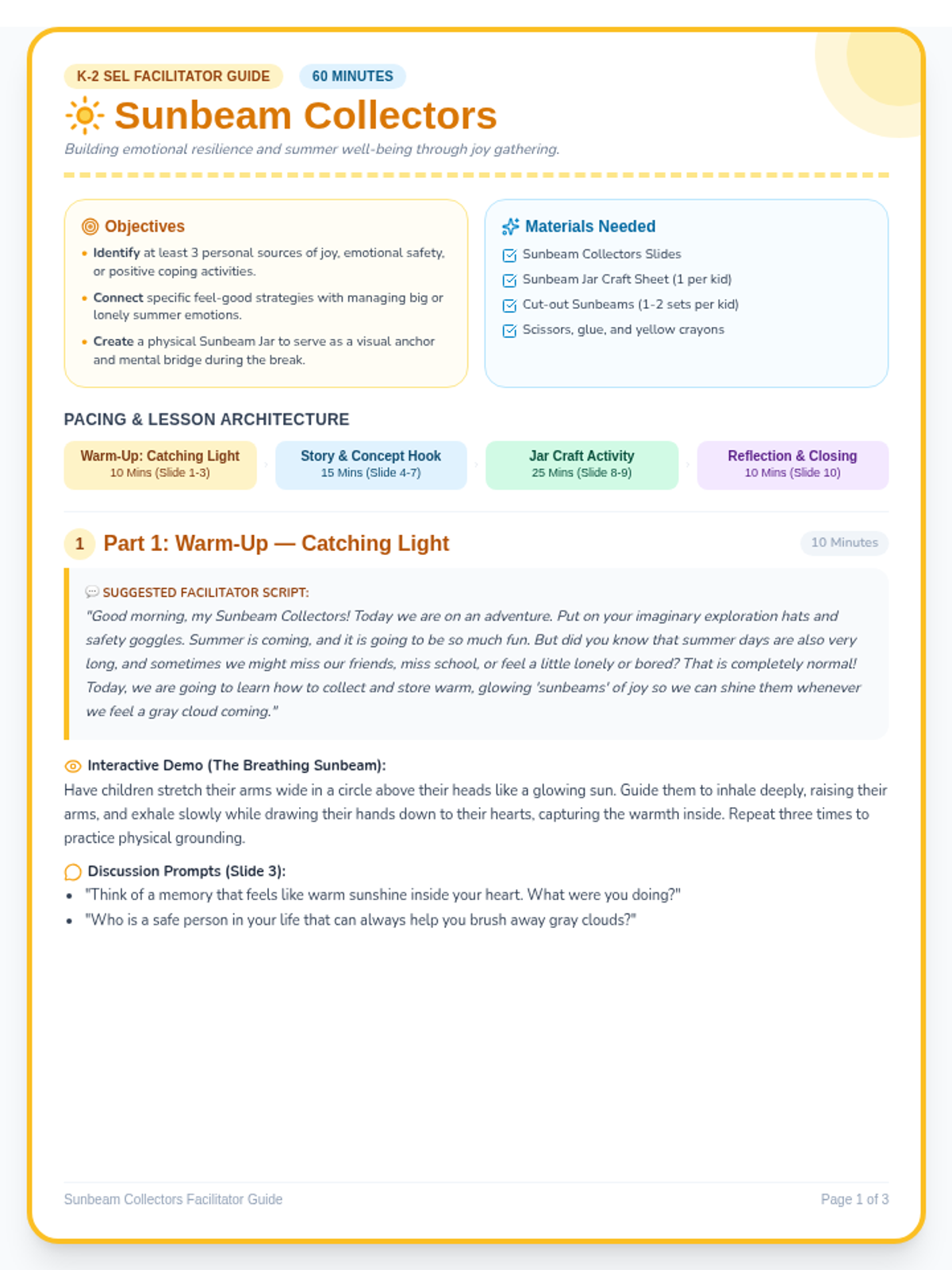
A detailed teacher lesson plan for the 'Joy Catchers' lesson, guiding K-2 teachers through social-emotional exploration, classroom activities, and grade-level differentiation.
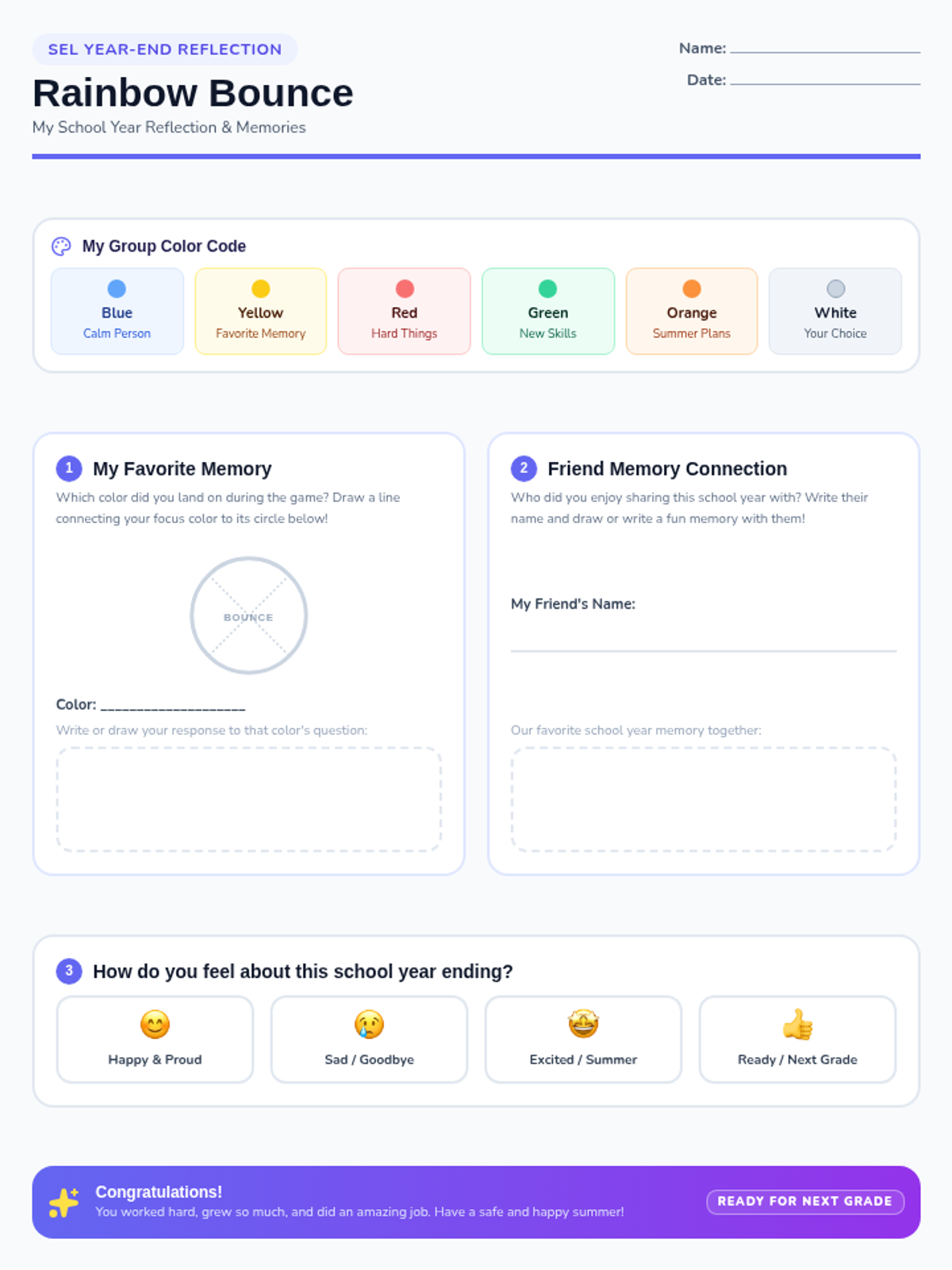
A beautifully structured student reflection worksheet for the Rainbow Bounce SEL check-in activity. Provides clean fields for names, spacious handwriting boxes, a coloring ball graphic, a friend connection section, and a simple feeling self-assessment grid to foster critical social-emotional skills.
A vibrant, multi-colored presentation with structured, engaging check-in prompts tailored to Blue, Yellow, Red, Green, Orange, and White colors. Designed specifically for young life skills groups with clear headings, minimal clutter, large legible fonts, and zero non-functional interactive elements to prevent student confusion.
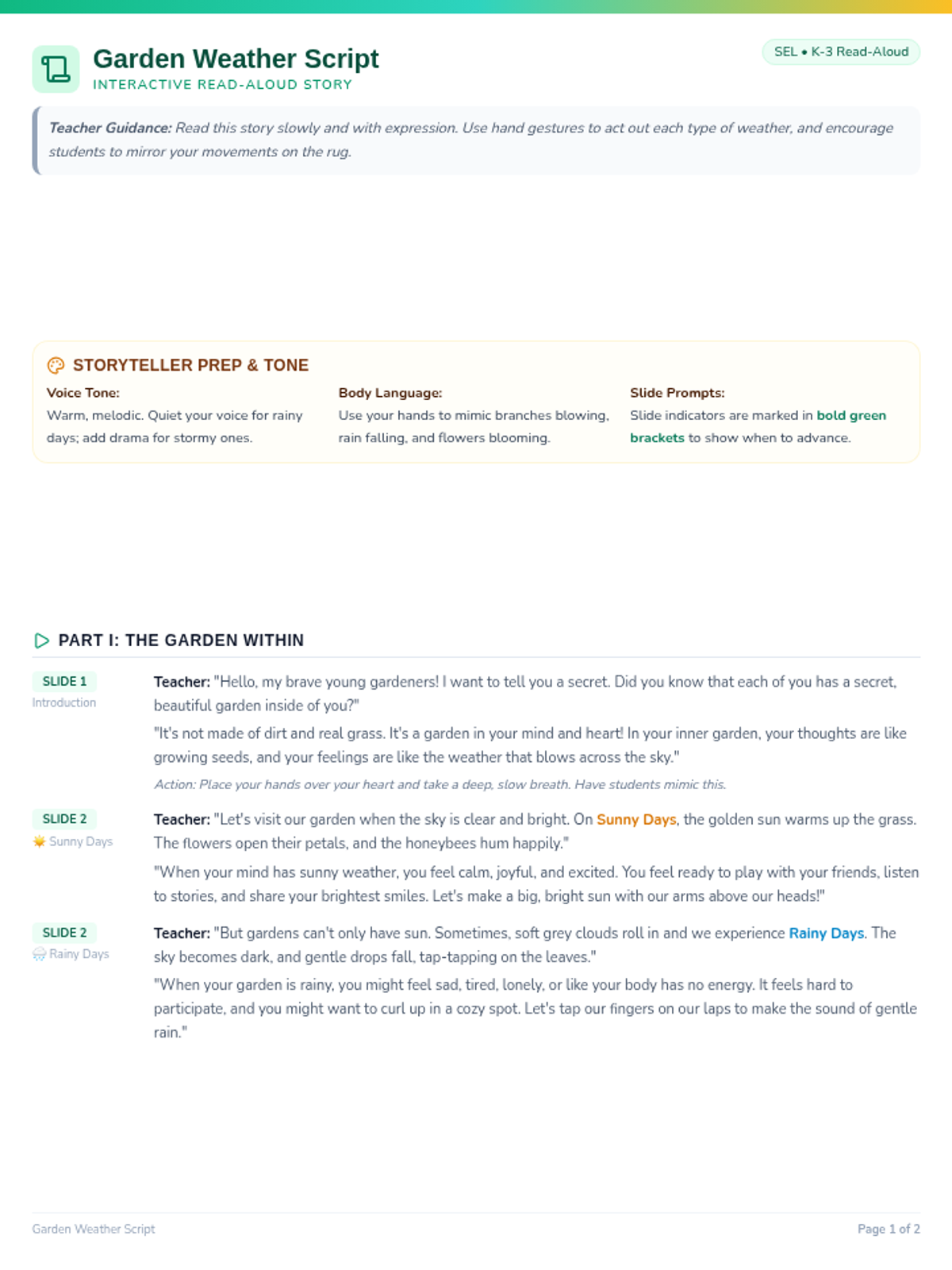
A beautiful, highly structured read-aloud script for teachers to tell the story of the Four Weather Wonders. Includes physical actions, discussion prompts, and clear alignment with the slide deck.
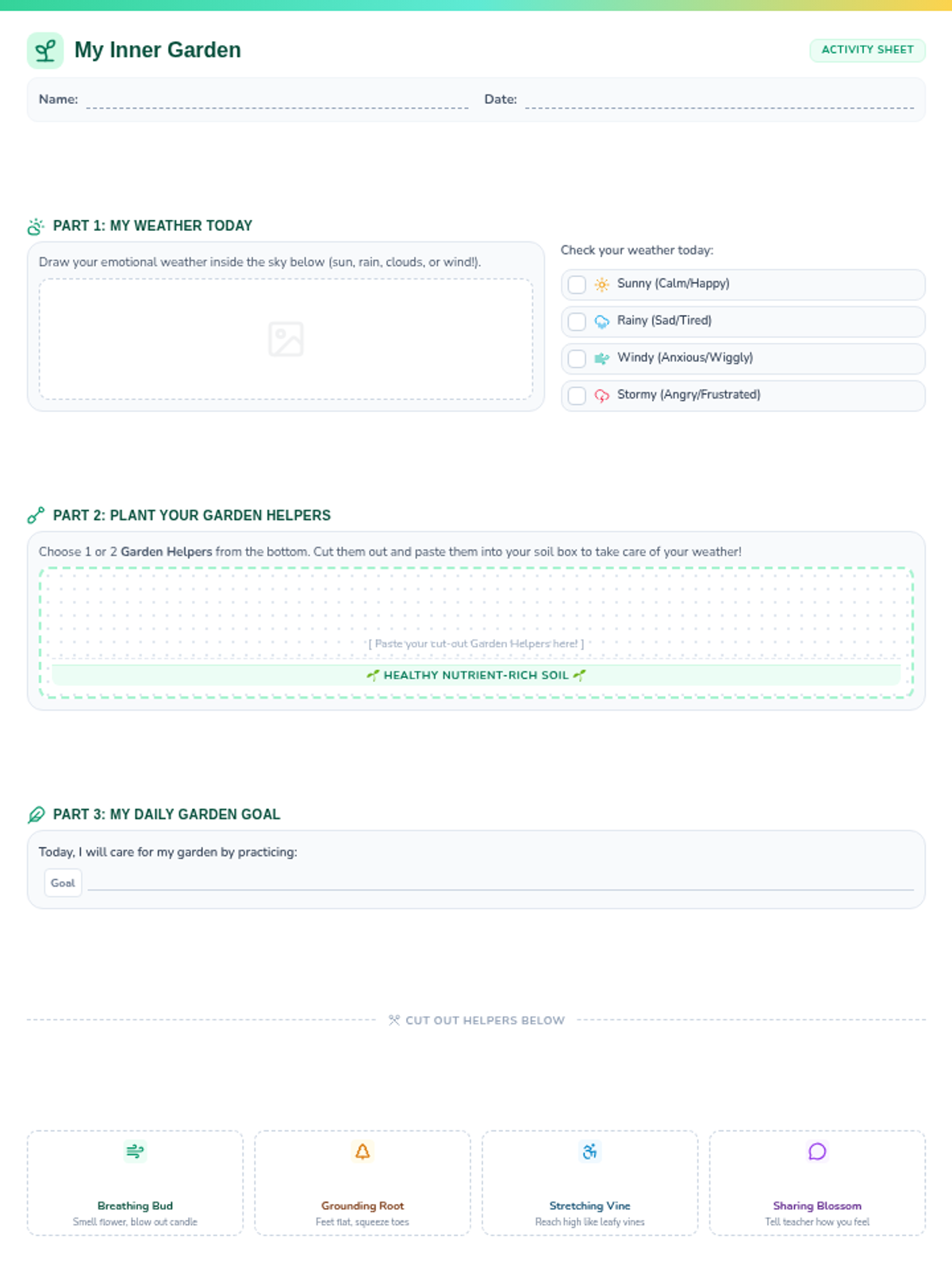
An interactive, print-ready student worksheet featuring an emotional weather check-in, a large garden paste-up canvas, and four cut-and-paste regulation tools. Designed for K-3 students.
A beautifully designed slide deck introducing students to emotional weather and self-regulation tools (the Garden Helpers). Features big fonts (minimum 24px) and highly engaging illustrations/icons.
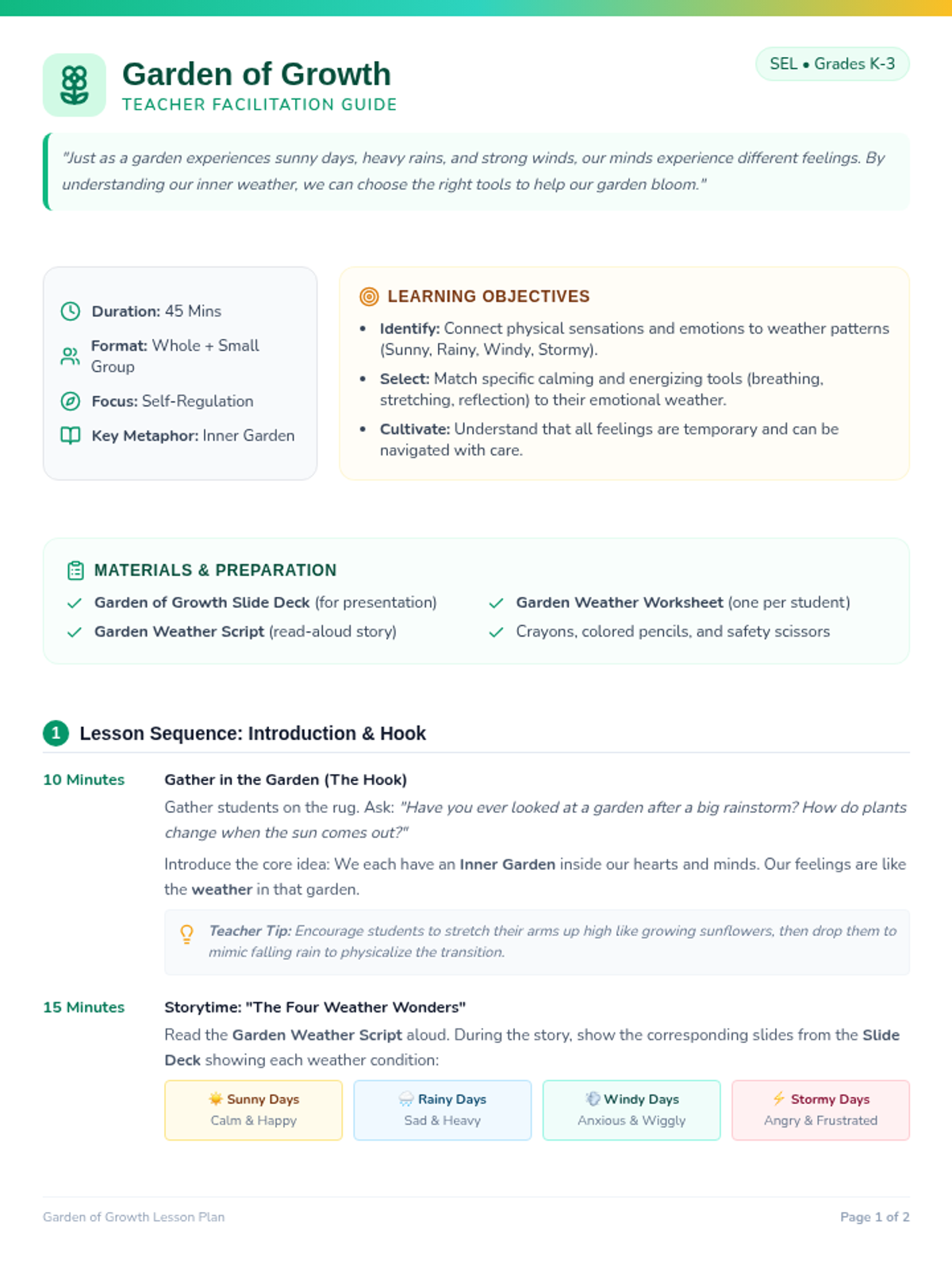
A highly structured, visually beautiful lesson plan for teaching self-regulation to K-3 students using the garden and weather metaphor. Includes preparation check-lists, structured pacing, teacher tips, and differentiation.
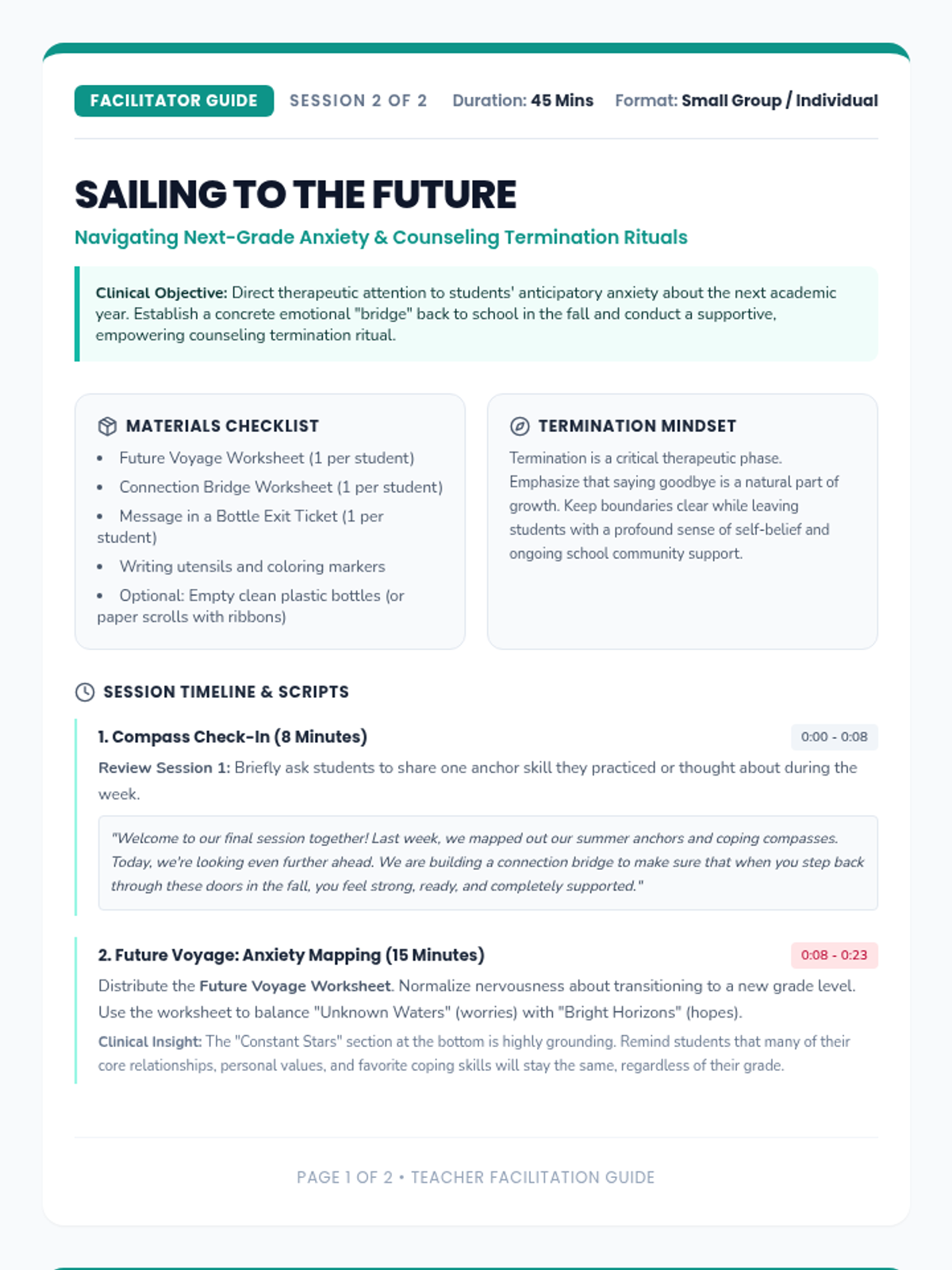
A 2-page teacher-facing facilitation guide called "Sails Facilitation Guide" for Session 2. It outlines lesson objectives, preparation, a timeline, clinical scripts, and guidance on navigating student reactions.
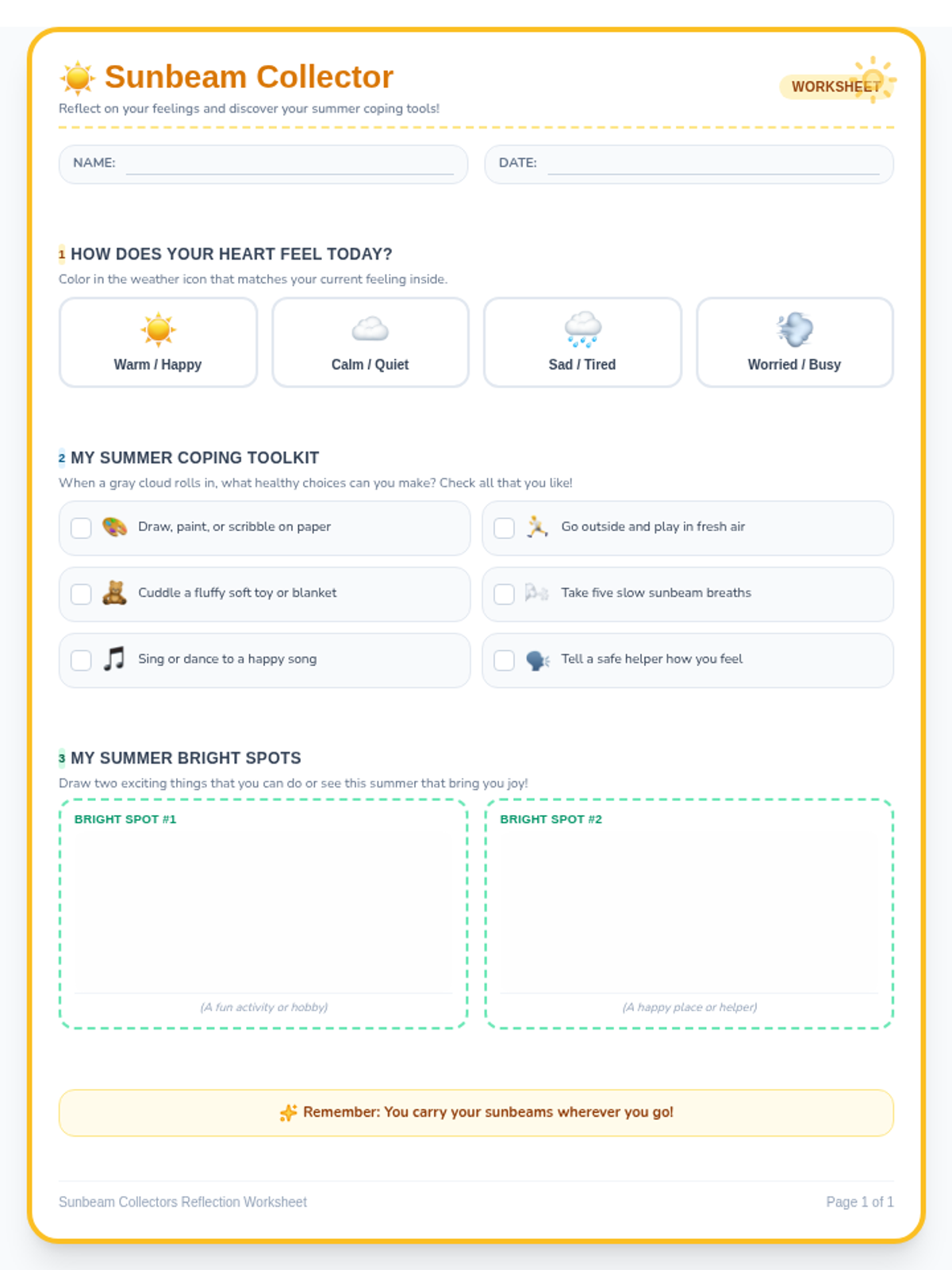
A simple, beautiful, 1-page K-2 worksheet with drawing boxes and structured visual prompts. Helps children identify their "emotional weather" and checklist-driven coping toolkit for the summer.
An engaging, beautiful, printable 2-page activity. Page 1 features a large glass jar container template to color and fill, while Page 2 contains five cut-out "sunbeam strips" with targeted K-2 prompts for writing and drawing.
An engaging, high-contrast, visually stunning slide deck with large text and warm summer-themed styling. Perfect for facilitating interactive discussions and step-by-step craft instructions in K-2 classrooms.
A complete, beautifully styled 3-page K-2 teacher guide and lesson plan. It outlines the instructional pacing, suggested scripts, hands-on instructions for the jar craft, common troubleshooting tips, and family communication templates.
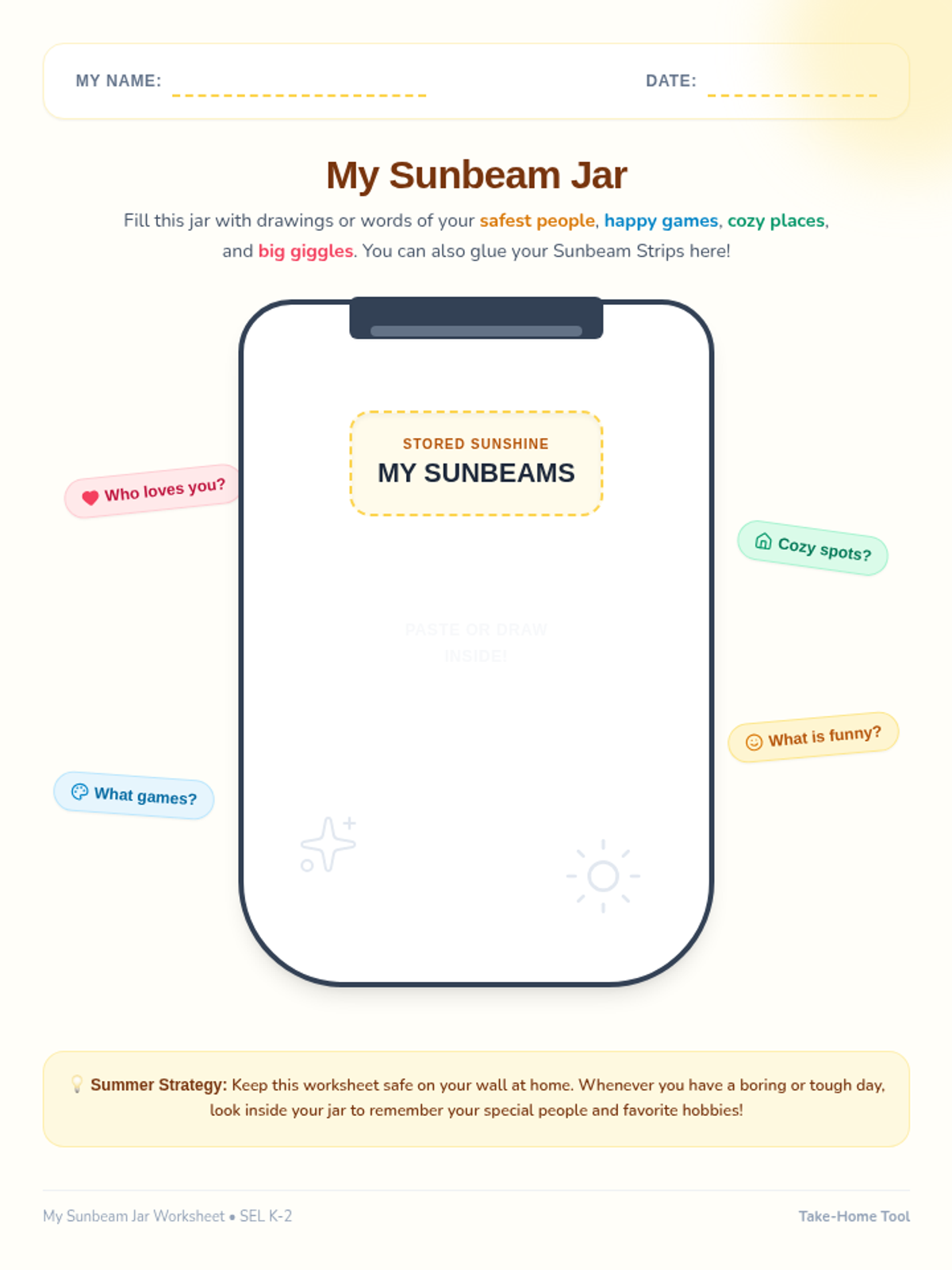
A beautifully designed printable worksheet featuring a large, empty 'Sunbeam Jar' illustration in the center. Students can draw or write their positive coping mechanisms, people, and places directly in the jar, or paste their completed cutout strips from the activity sheet.
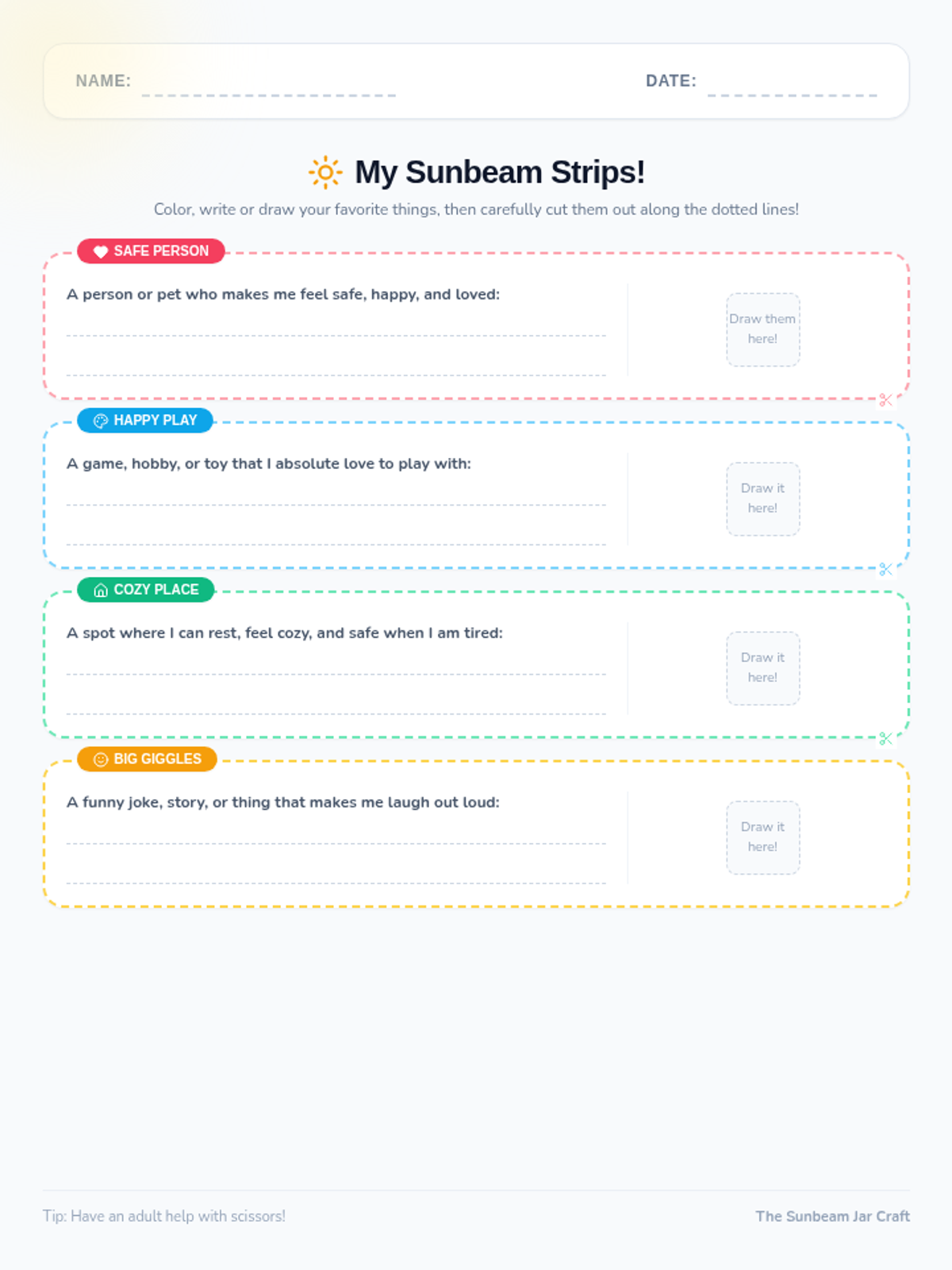
A printable student activity sheet with 4 themed, dashed-border "sunbeam strips" representing Safe People, Happy Play, Cozy Places, and Big Giggles. Designed with guidelines and blank spaces for kindergarteners and 1st/2nd graders to write and draw before cutting.
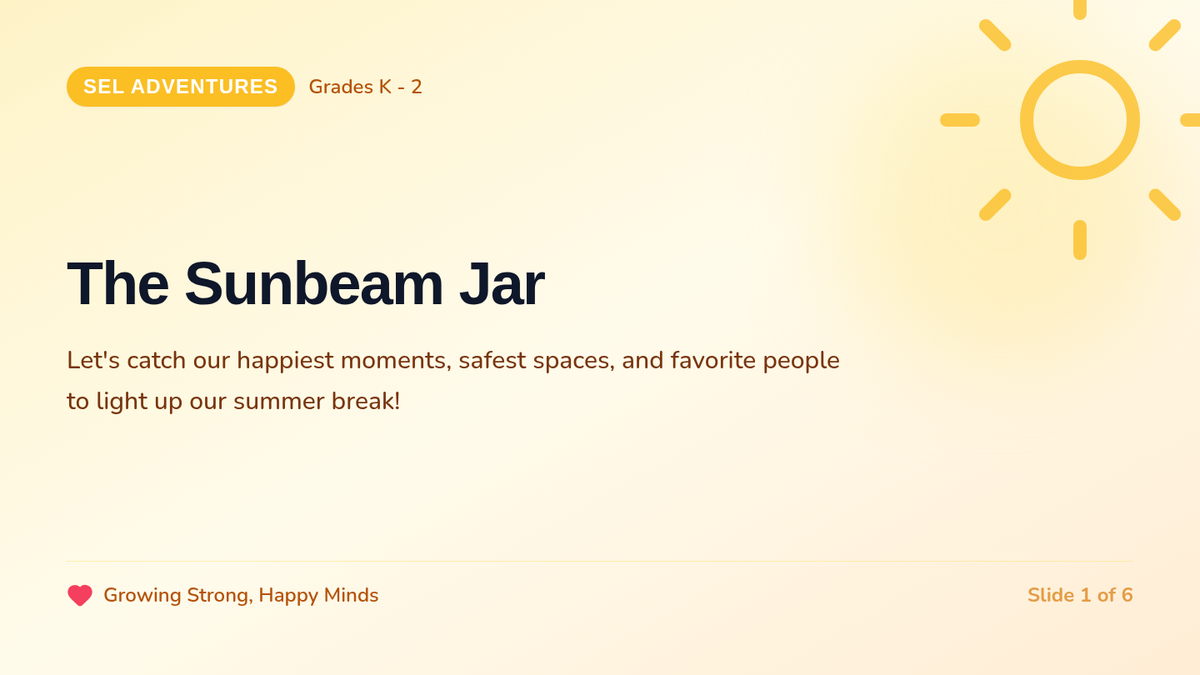
Bright, highly visual, K-2-friendly slides containing discussion prompts, definitions of joy and transition, and instructions on creating the Sunbeam Jar. Minimal text sizing is strictly kept above 24px for classroom screen presentation.
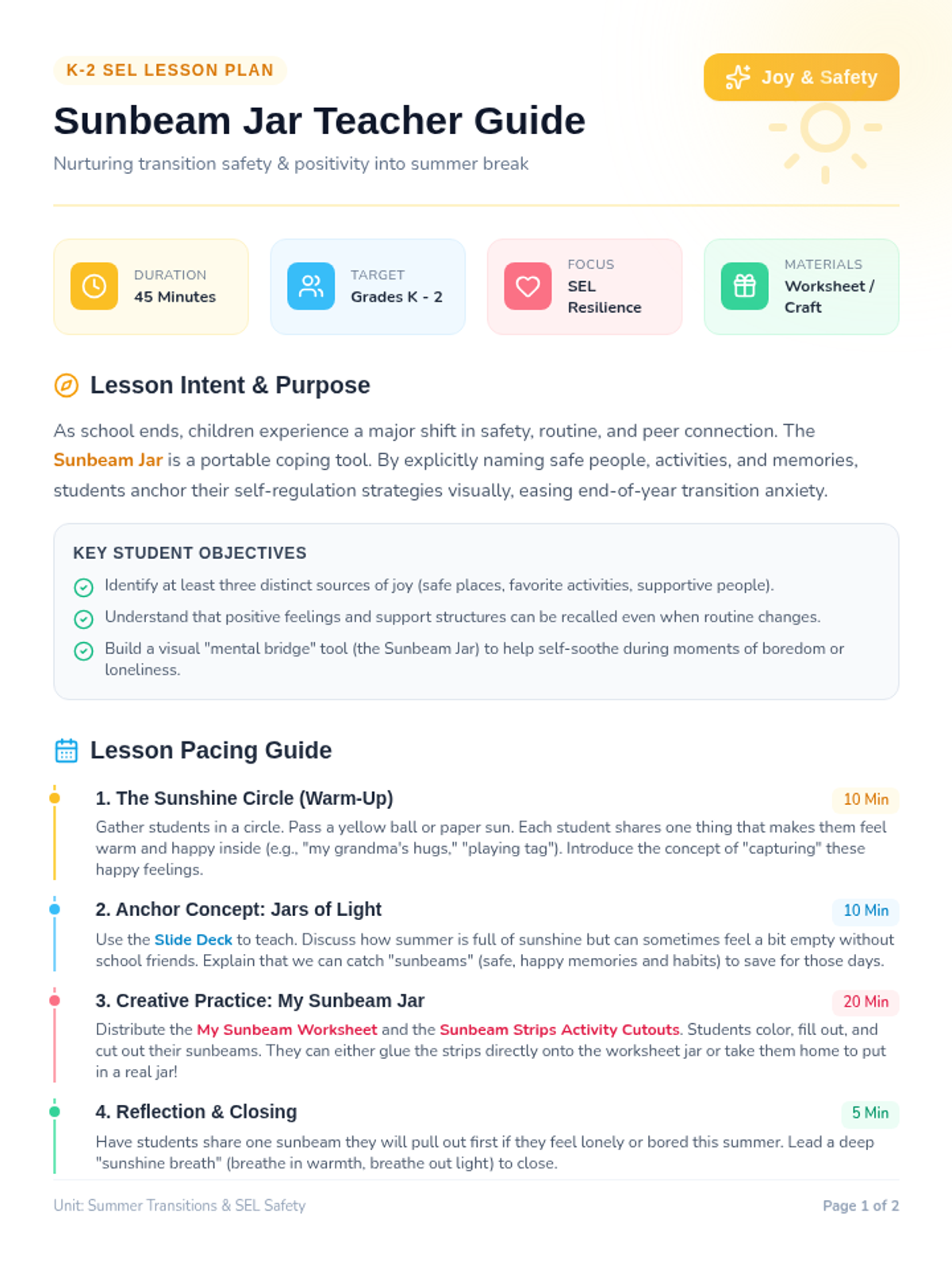
A comprehensive 2-page teacher-facing lesson plan outlining the purpose, pacing guide, developmental scaffolding, and classroom discussion scripts for the Sunbeam Jar lesson. This guide helps teachers safely navigate summer transition anxiety for K-2 students.
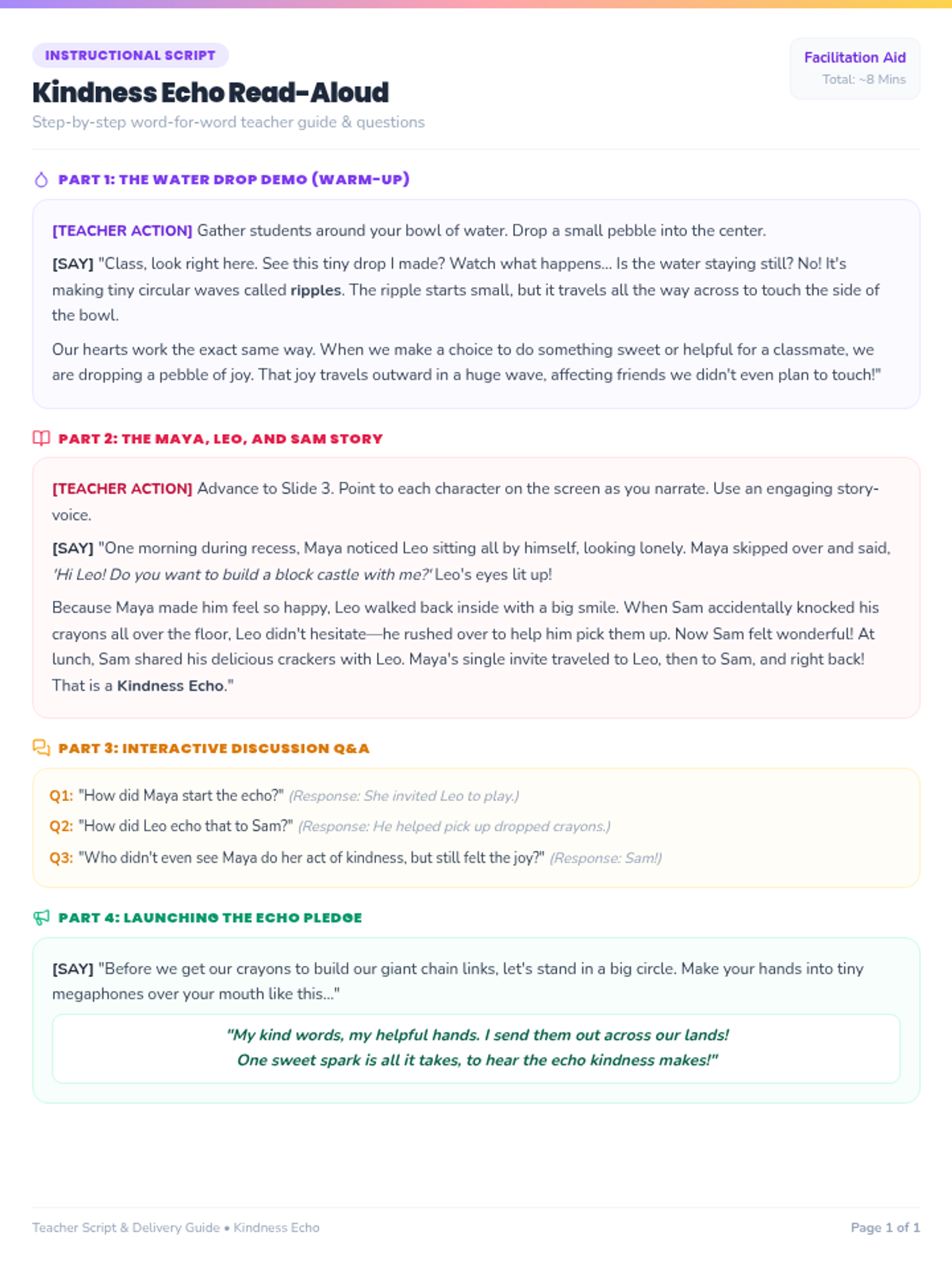
A detailed classroom facilitation and read-aloud script for teachers, offering word-for-word lines, movement prompts, and student interactive Q&A guides for teaching the ripple effects of kindness.
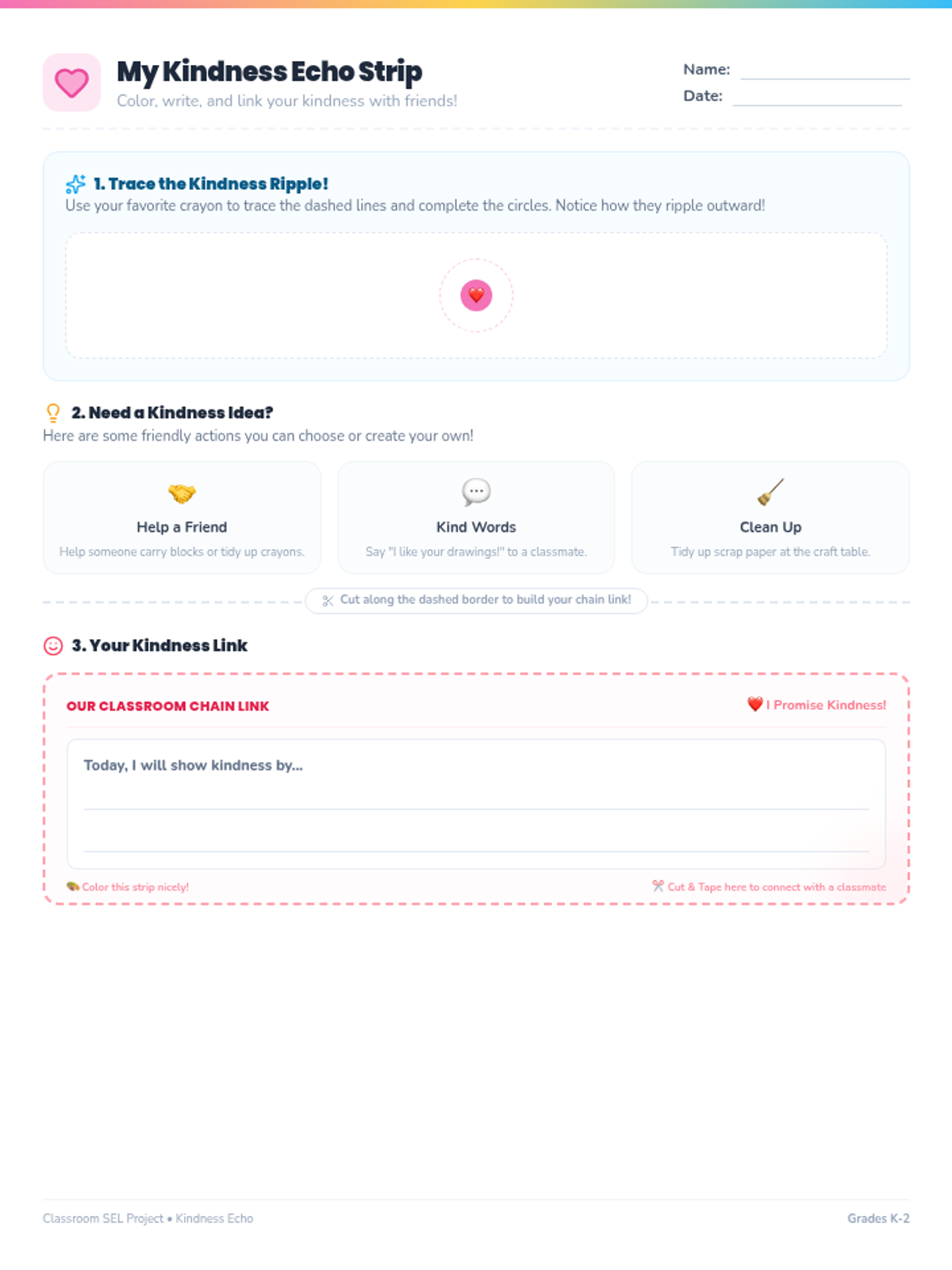
A single-page printable student activity sheet with clear instructions, a ripple tracing visual warm-up, consistent brainstorm ideas, and a large cut-out Kindness Chain Strip optimized for drawing and early writing.
An engaging, high-contrast, visually rich 6-slide presentation for K-2 students, complete with CSS animated waves, classroom story characters, real-world brainstorming cards, and active assembly instructions for building the Echo Chain.
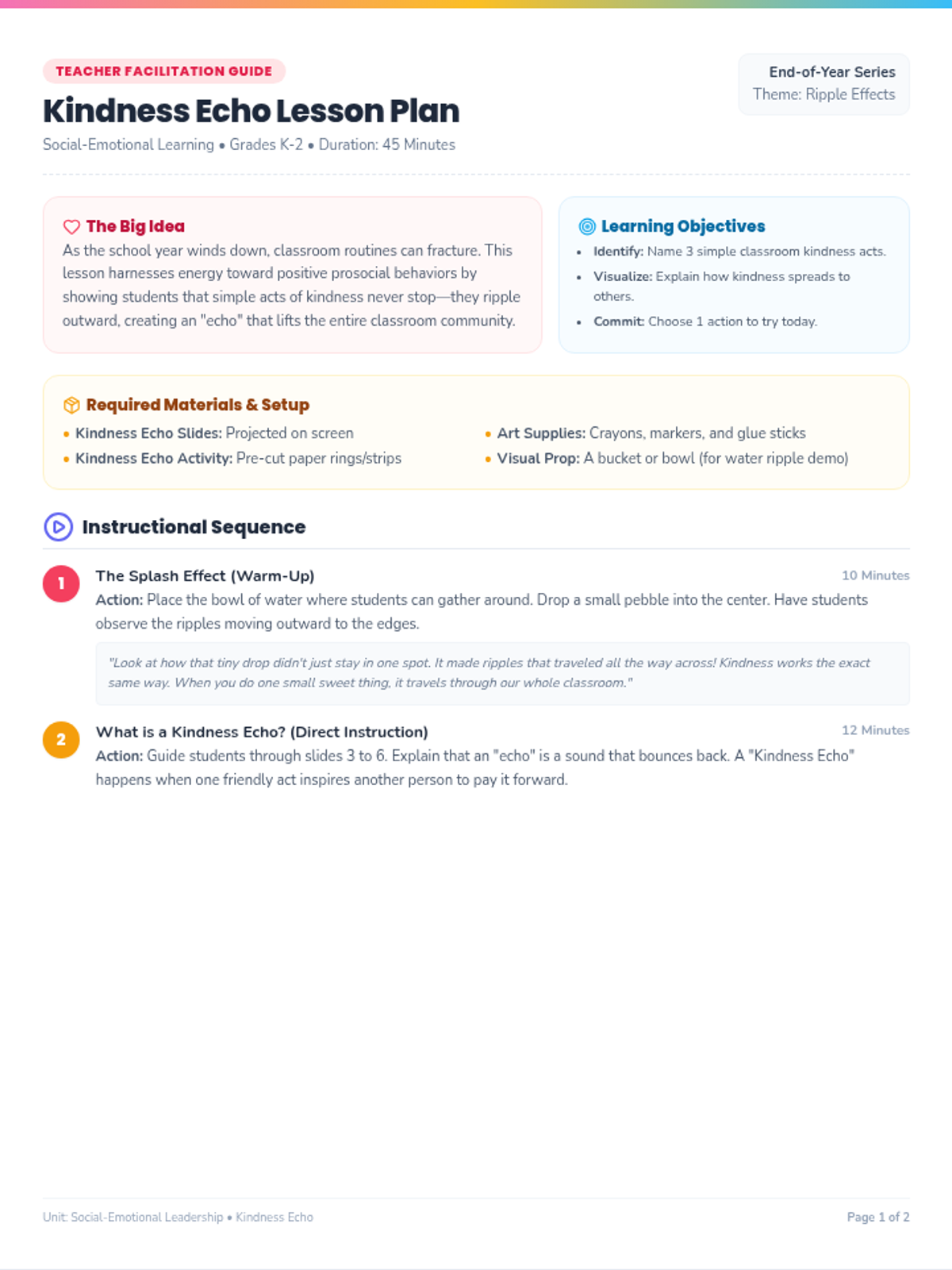
A highly structured, 2-page print-ready lesson plan for teachers, detailing objectives, materials, an interactive 'splash effect' water demo, step-by-step facilitation, guided roleplay instructions, and differentiation options for grades K-2.
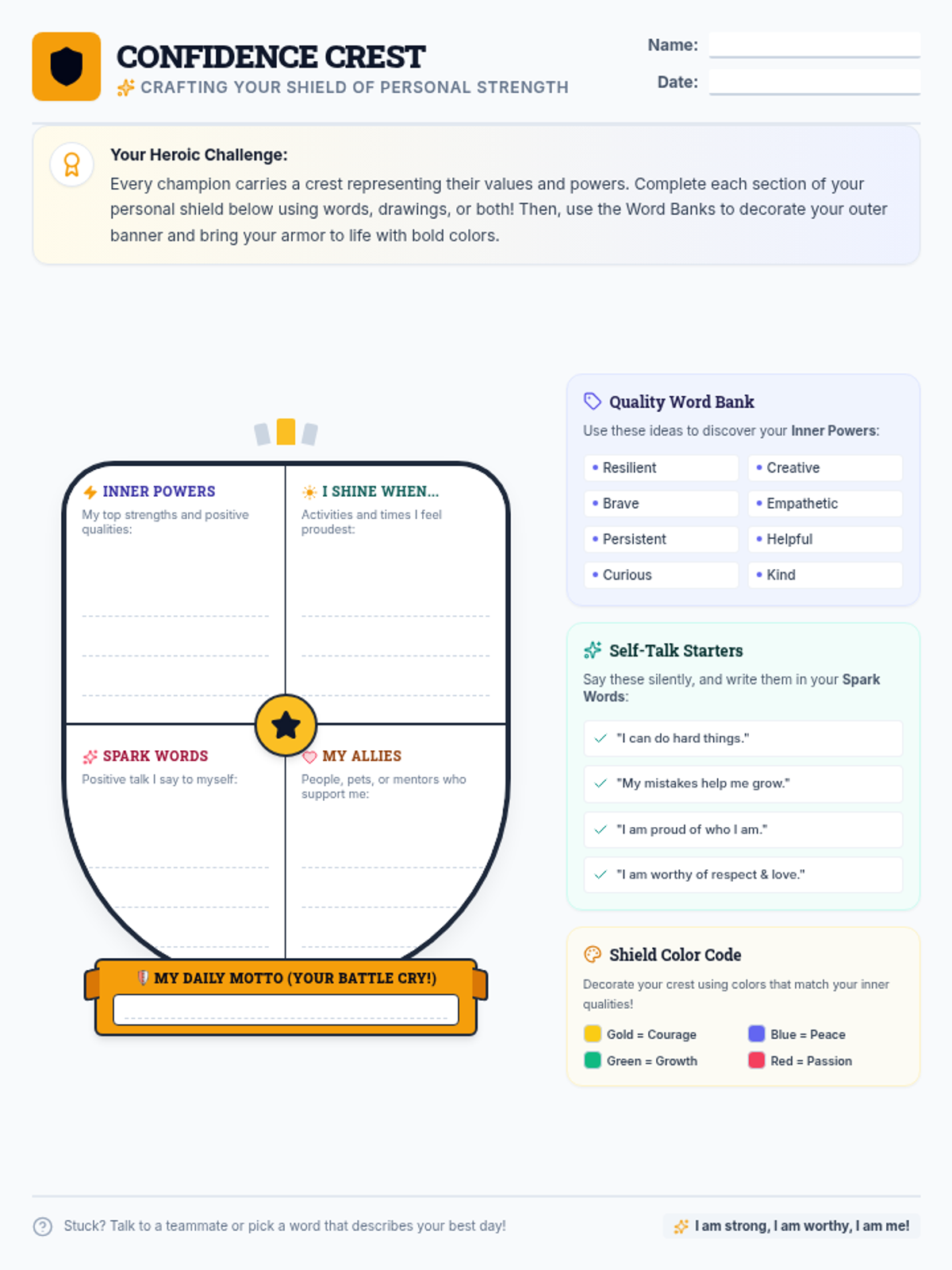
A highly interactive, 2-page self-esteem 'Confidence Crest' craft activity. Page 1 acts as the main shield assembly canvas, and Page 2 features beautifully designed cut-out quadrants (Inner Powers, Allies, Shine, and Spark Words), a battle motto banner, and bonus color-and-paste power badges.
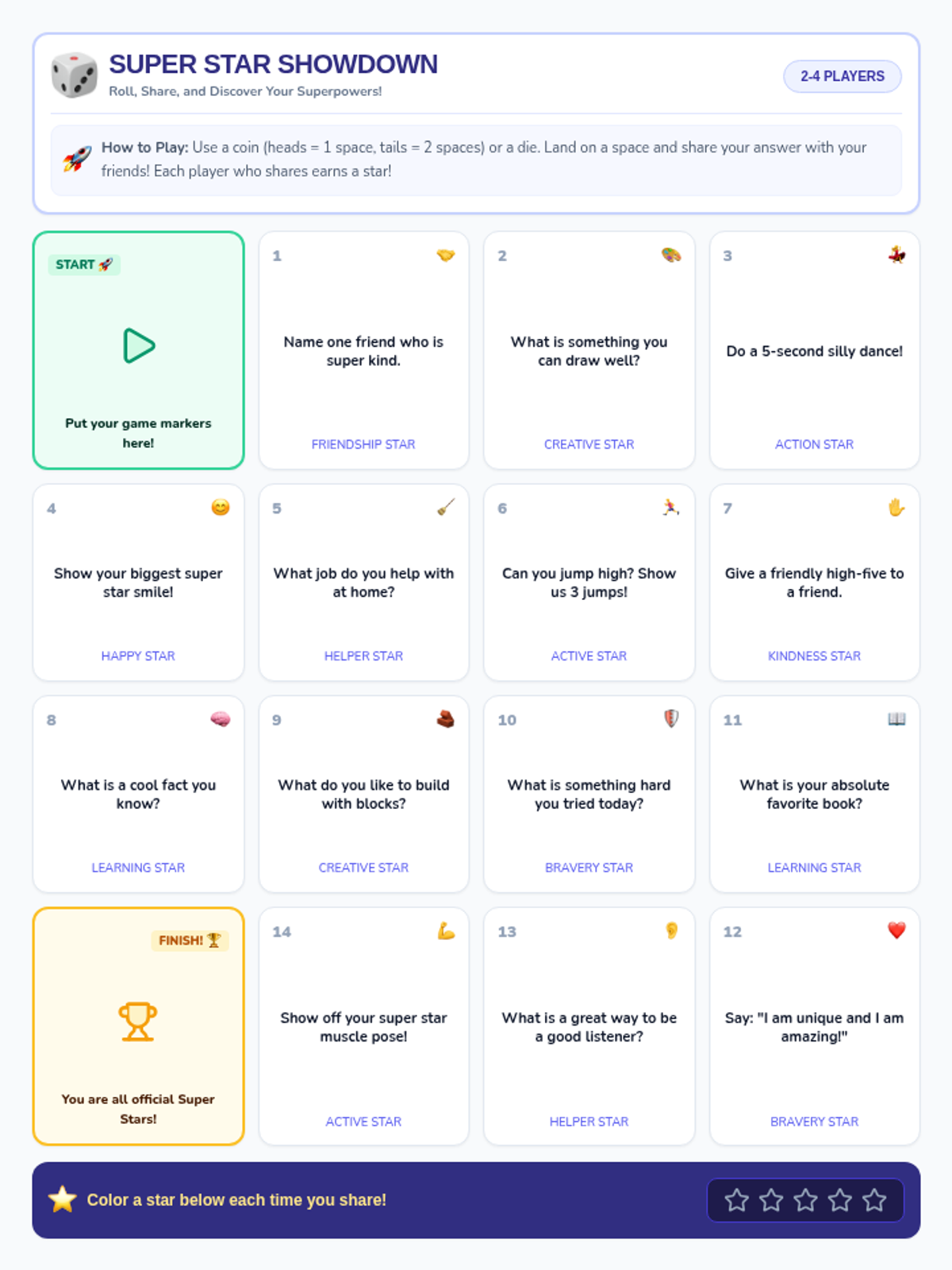
An interactive and engaging, printable board game for first and second graders styled like a galactic pathway where players complete child-friendly confidence challenges and share their personal strengths with classmates.
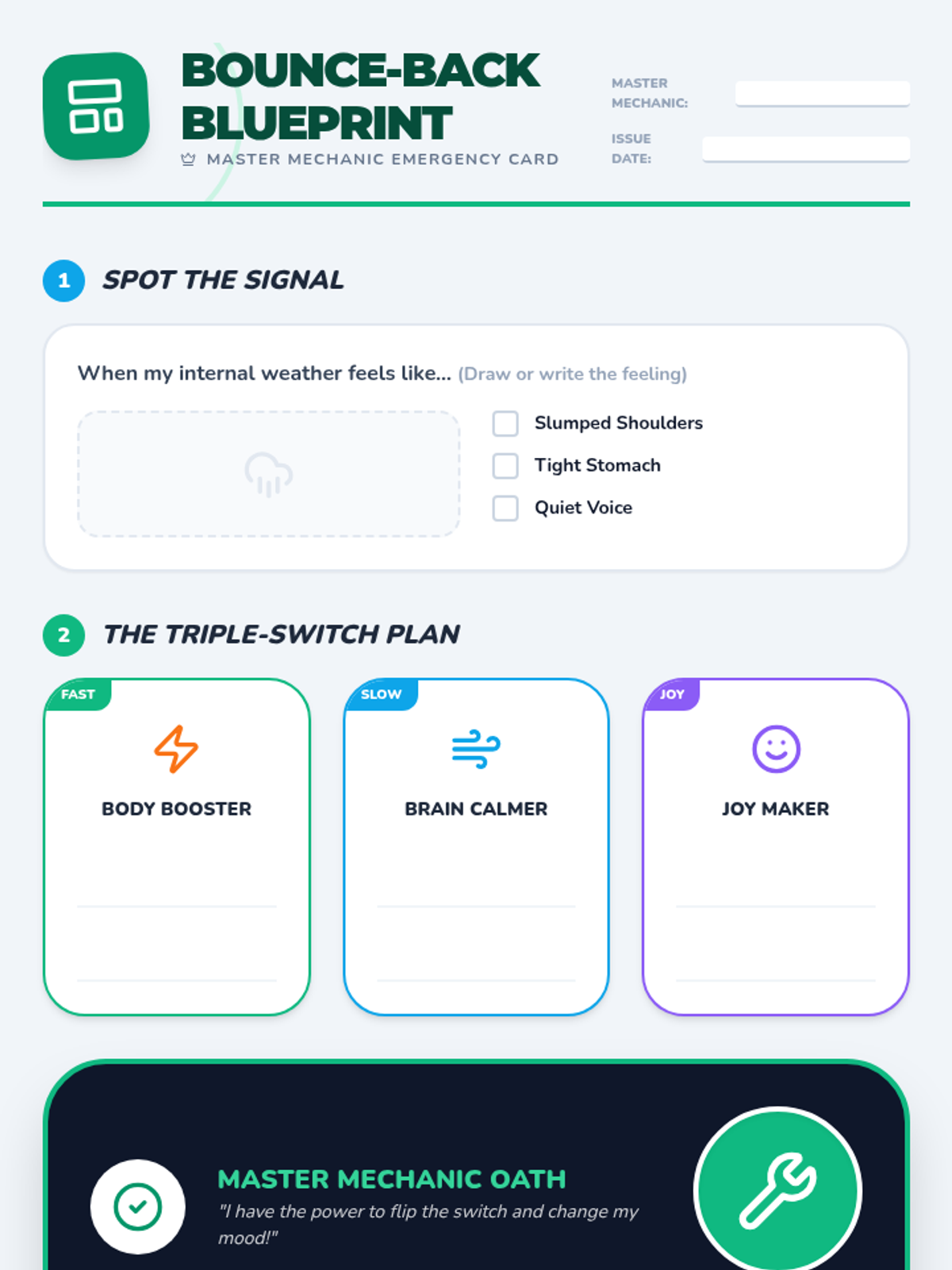
A culminating activity sheet for Lesson 5 where students create their own personal 'Bounce-Back Plan' emergency card, selecting body boosters, brain calmers, and joy makers.
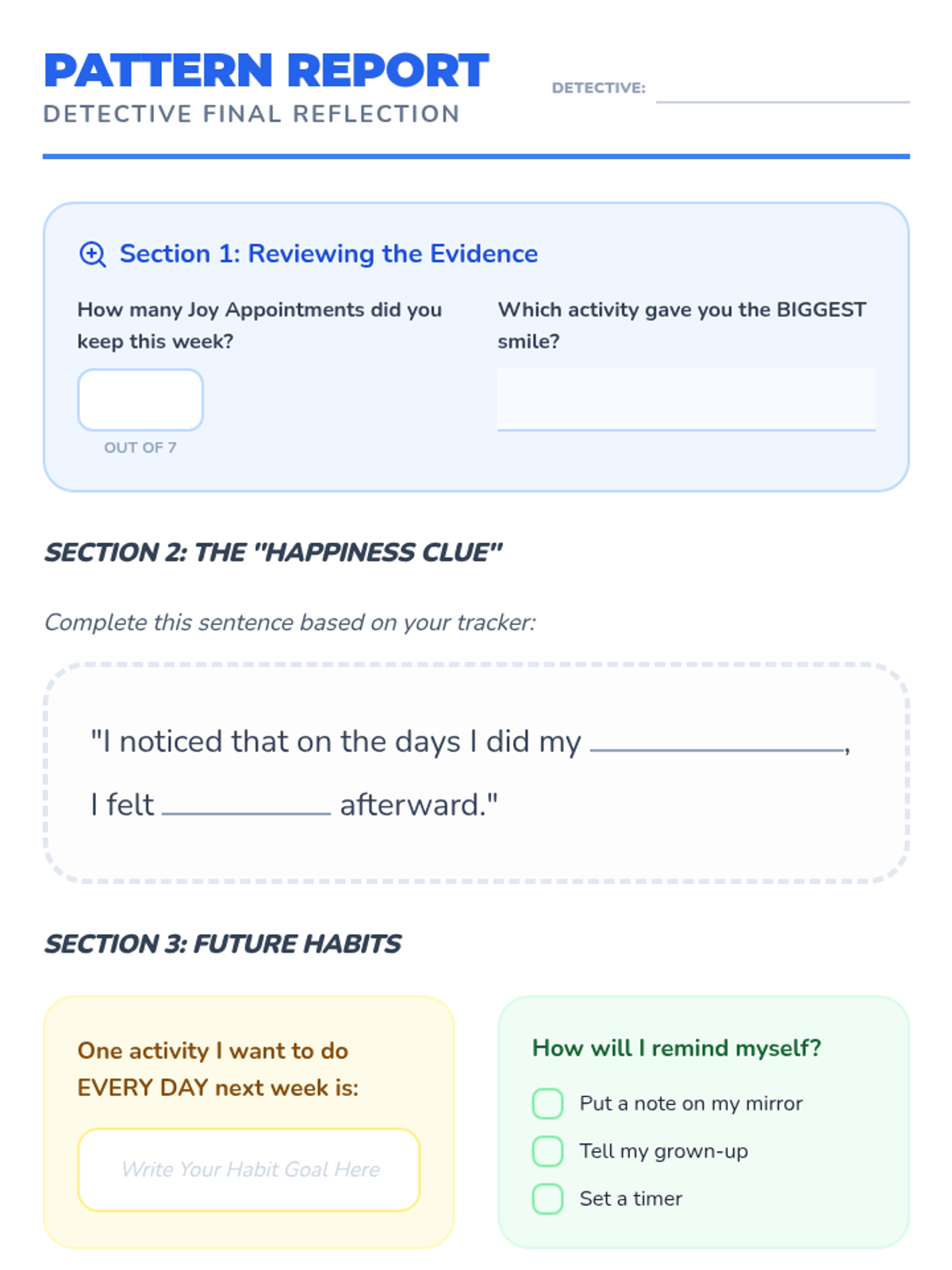
Student reflection activity for Lesson 5, where they analyze their completed habit tracker and set personal goals for future positive routines.
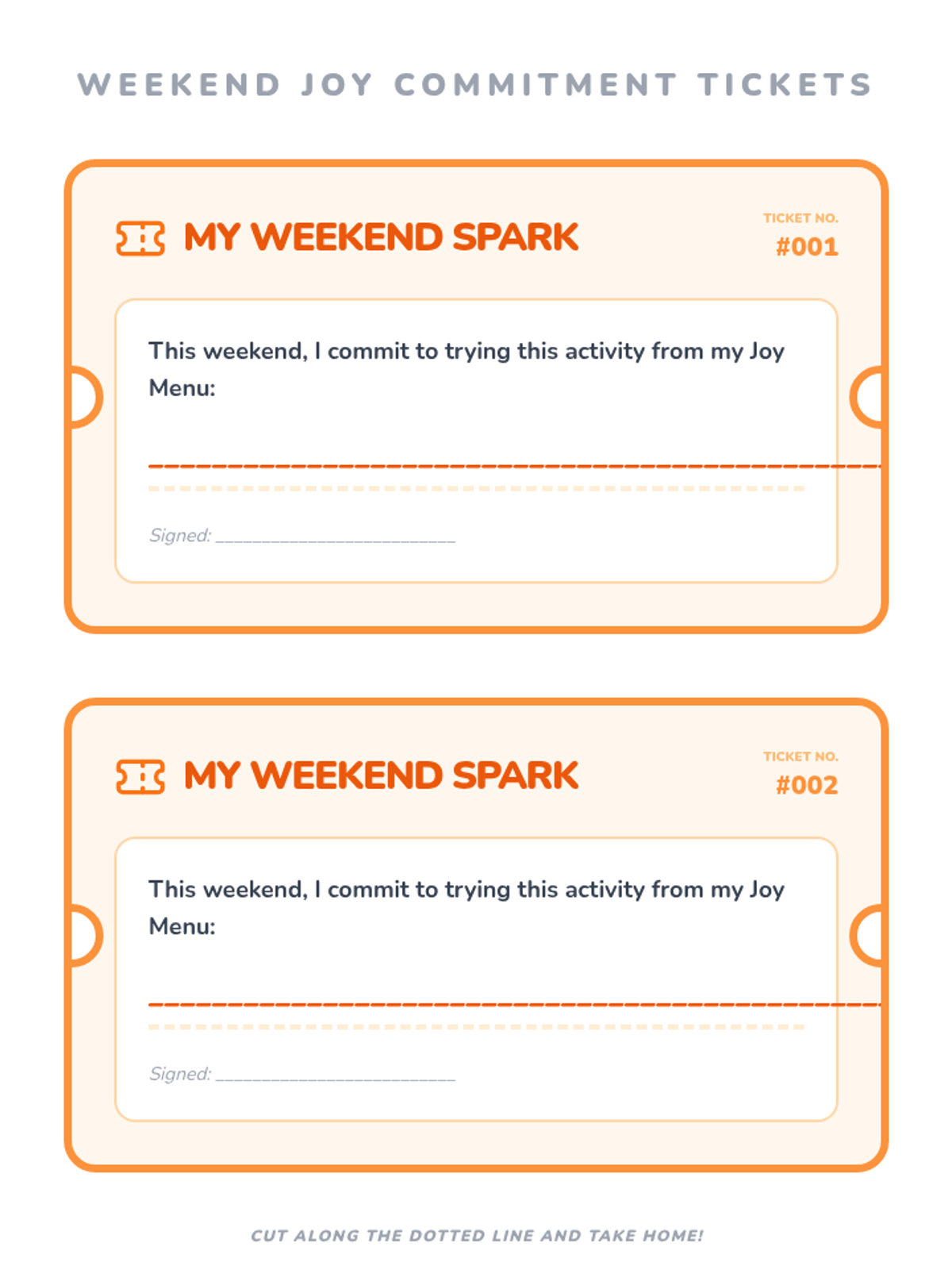
Weekend commitment exit tickets for Lesson 5, where students pledge to try one activity from their Joy Menu.
Visual presentation for the final lesson in the Mood Mechanics sequence, guiding students through creating their personal 'Bounce-Back Plan' for emotional regulation.
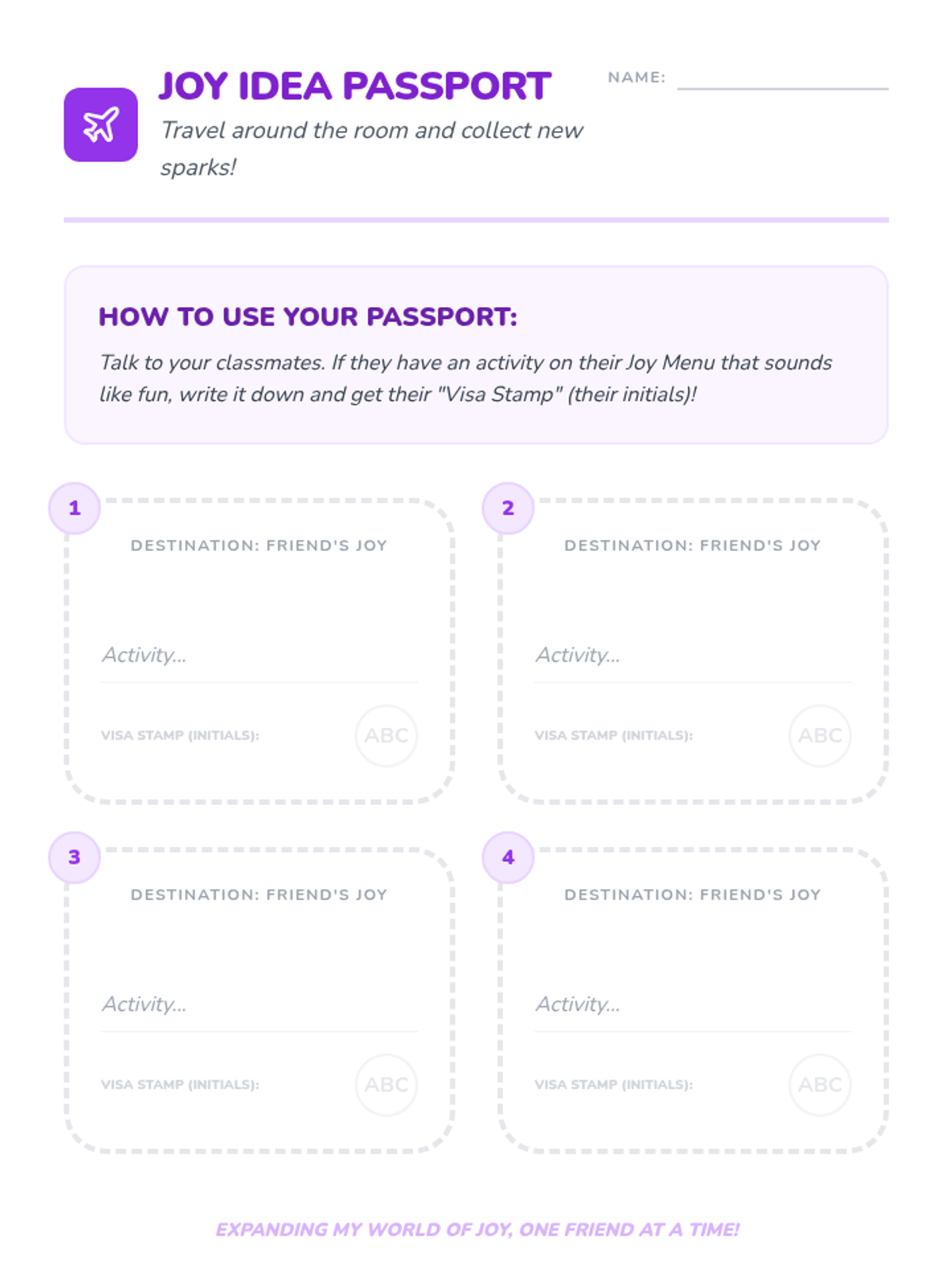
Student worksheet for Lesson 5, used during the Joy Exchange to collect activity ideas from classmates.
Instructional slides for Lesson 5, guiding students through reflecting on their activity and mood patterns to set personal goals.
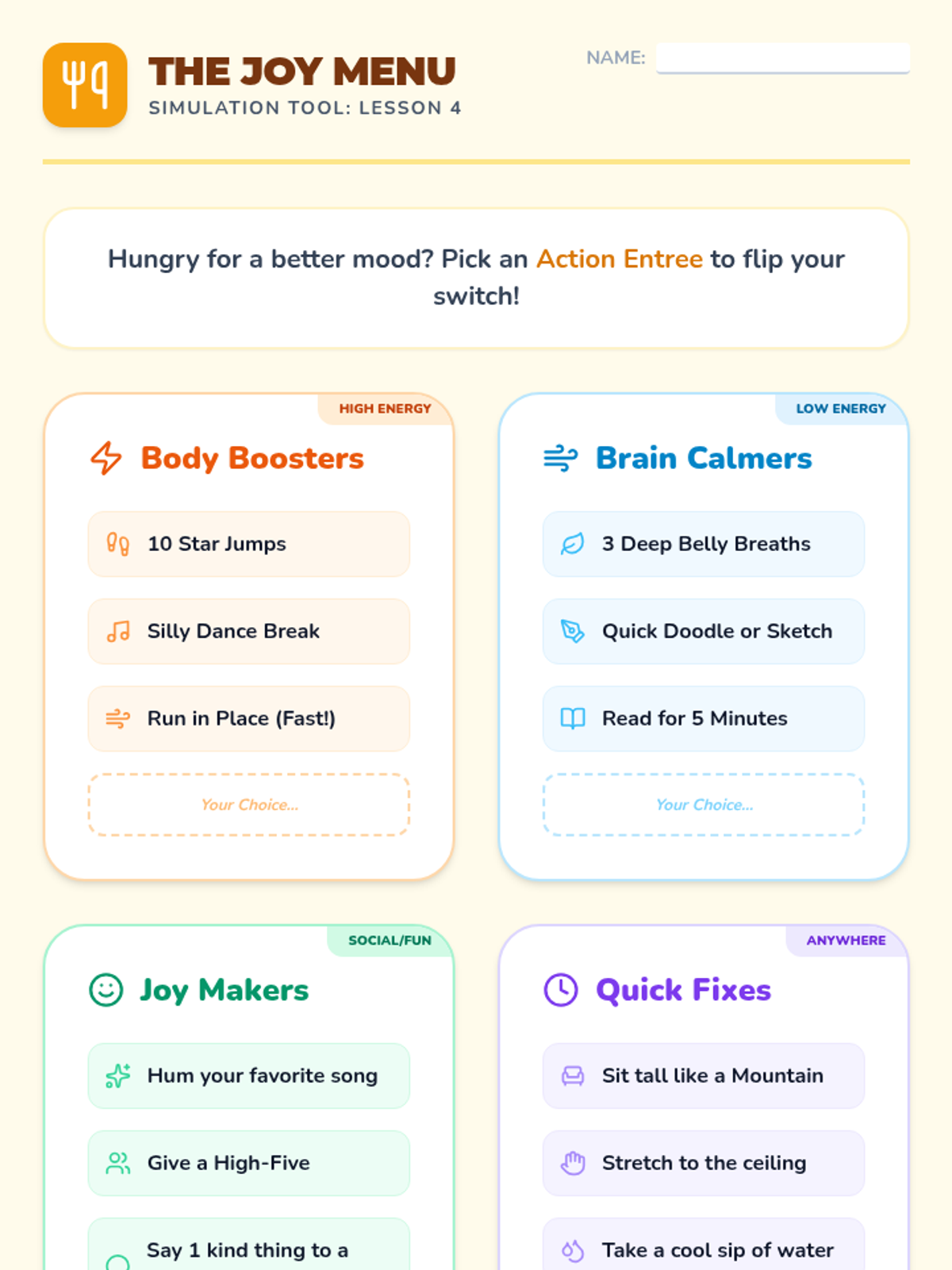
A visual reference sheet and interactive tool for Lesson 4 where students choose positive actions from categorized lists to practice emotional regulation during simulations.
Visual presentation for Lesson 5, guiding the 'Joy Scavenger Hunt' and the sharing of personalized menus.
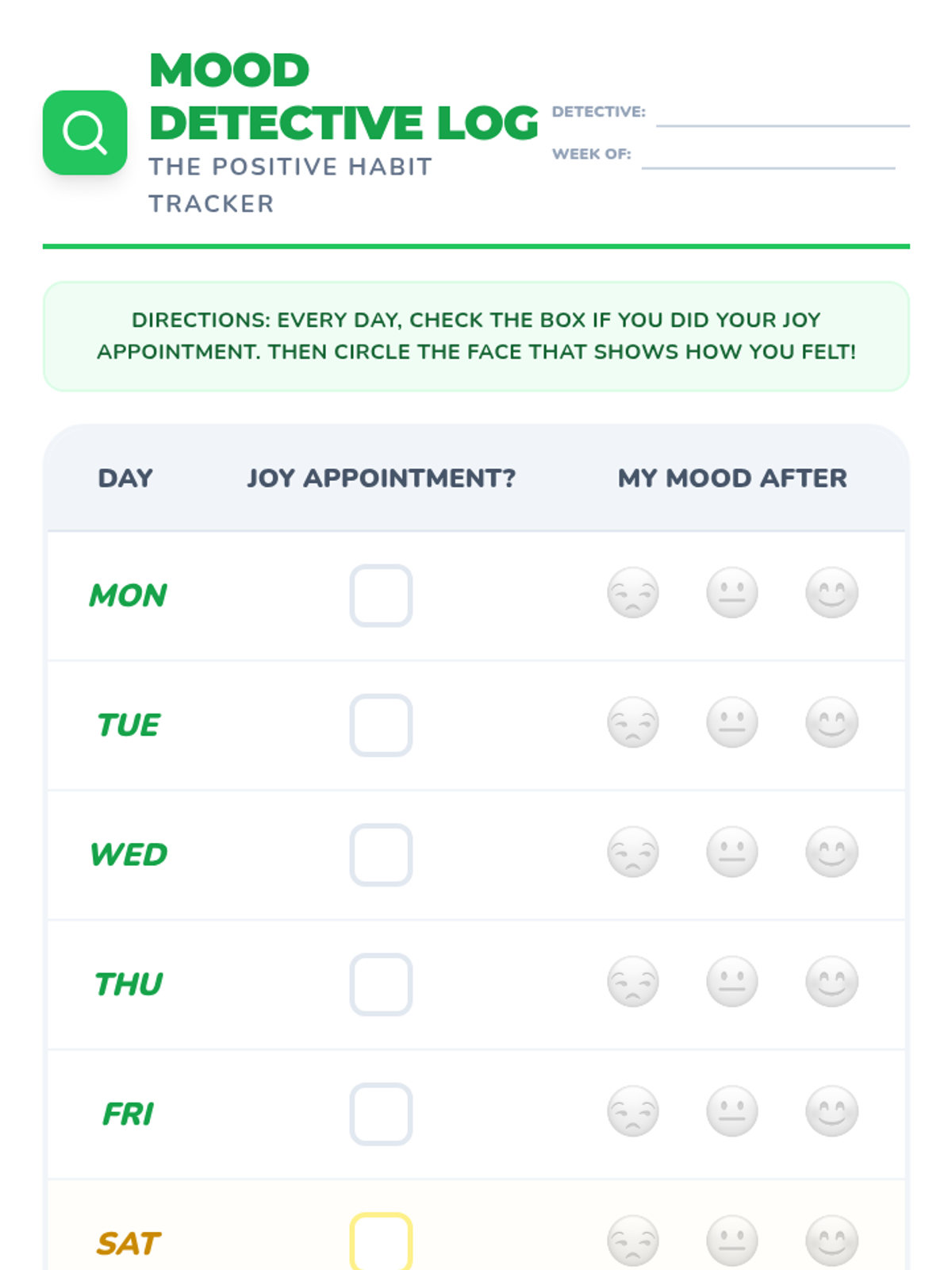
Student weekly habit tracker for Lesson 4, designed for monitoring engagement in positive activities and recording mood ratings.
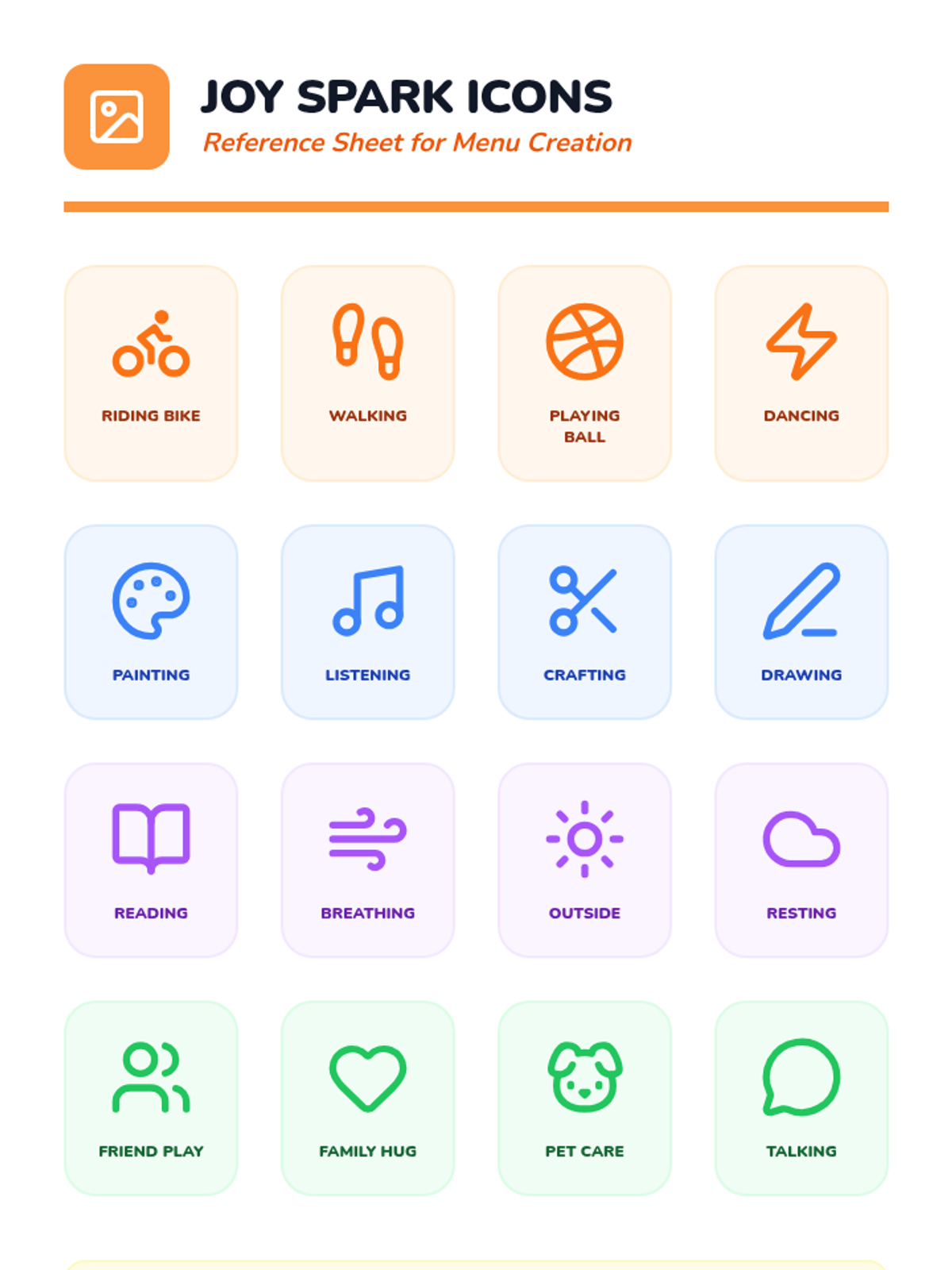
Reference sheet for students to use when illustrating their Joy Menus, providing simple icons and labels for various activities.
Instructional slides for Lesson 4, guiding students through the concept of tracking activities and their mood to see the link between action and emotion.
Visual presentation for Lesson 4 that introduces the 'Mood Switch' concept and guides students through role-playing simulations using 'Joy Menus'.
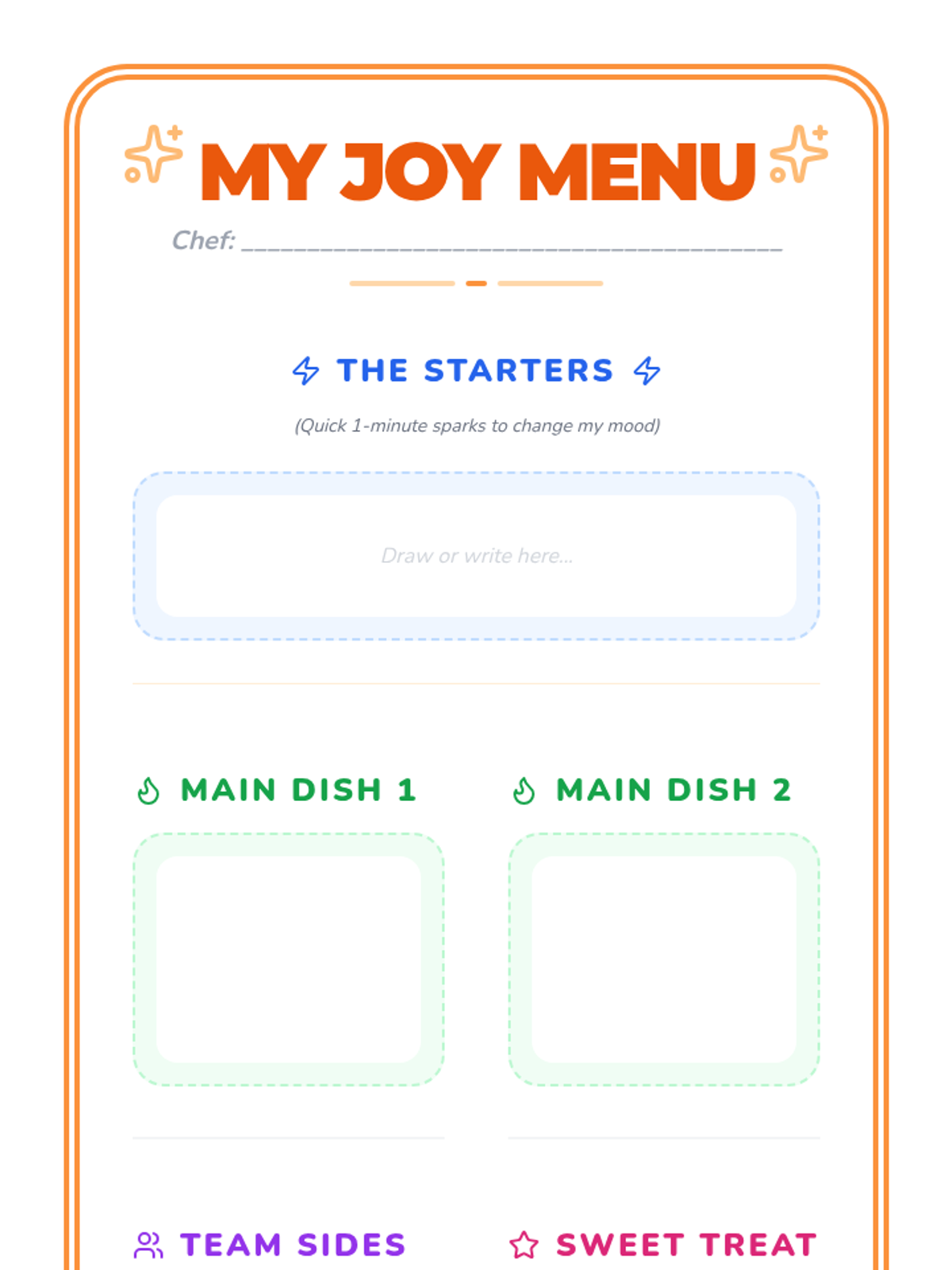
Personalized Joy Menu template for Lesson 4, designed like a restaurant menu for students to fill with their favorite activities.
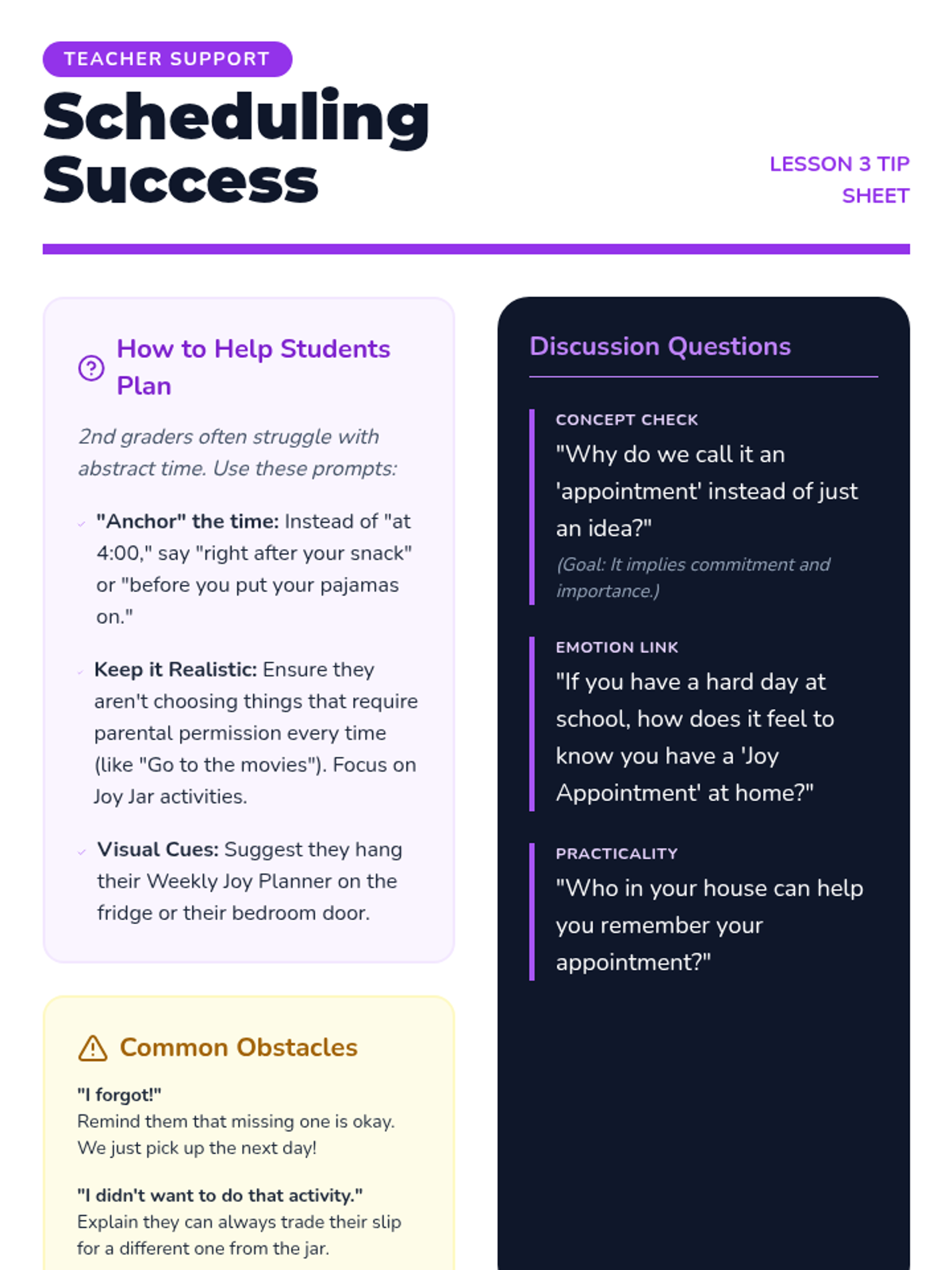
Facilitation guide for teachers for Lesson 3, providing practical strategies for helping students schedule realistic joy breaks and manage obstacles.
Visual presentation for Lesson 4, introducing the concept of a 'Joy Menu' with categories for different types of activities.
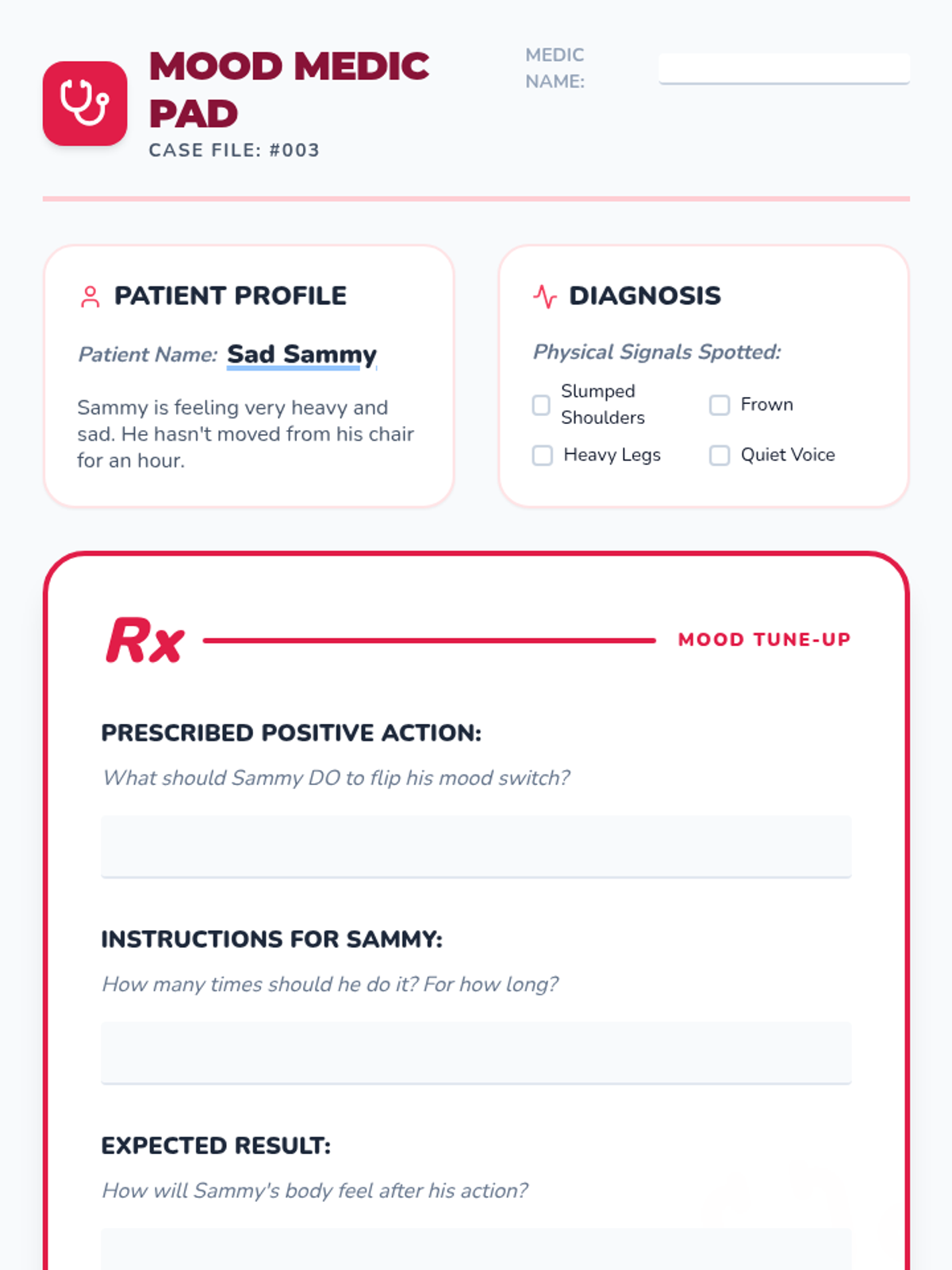
A character-focused worksheet for Lesson 3 where students play the role of a 'Mood Medic' and prescribe positive actions for characters in emotional distress.
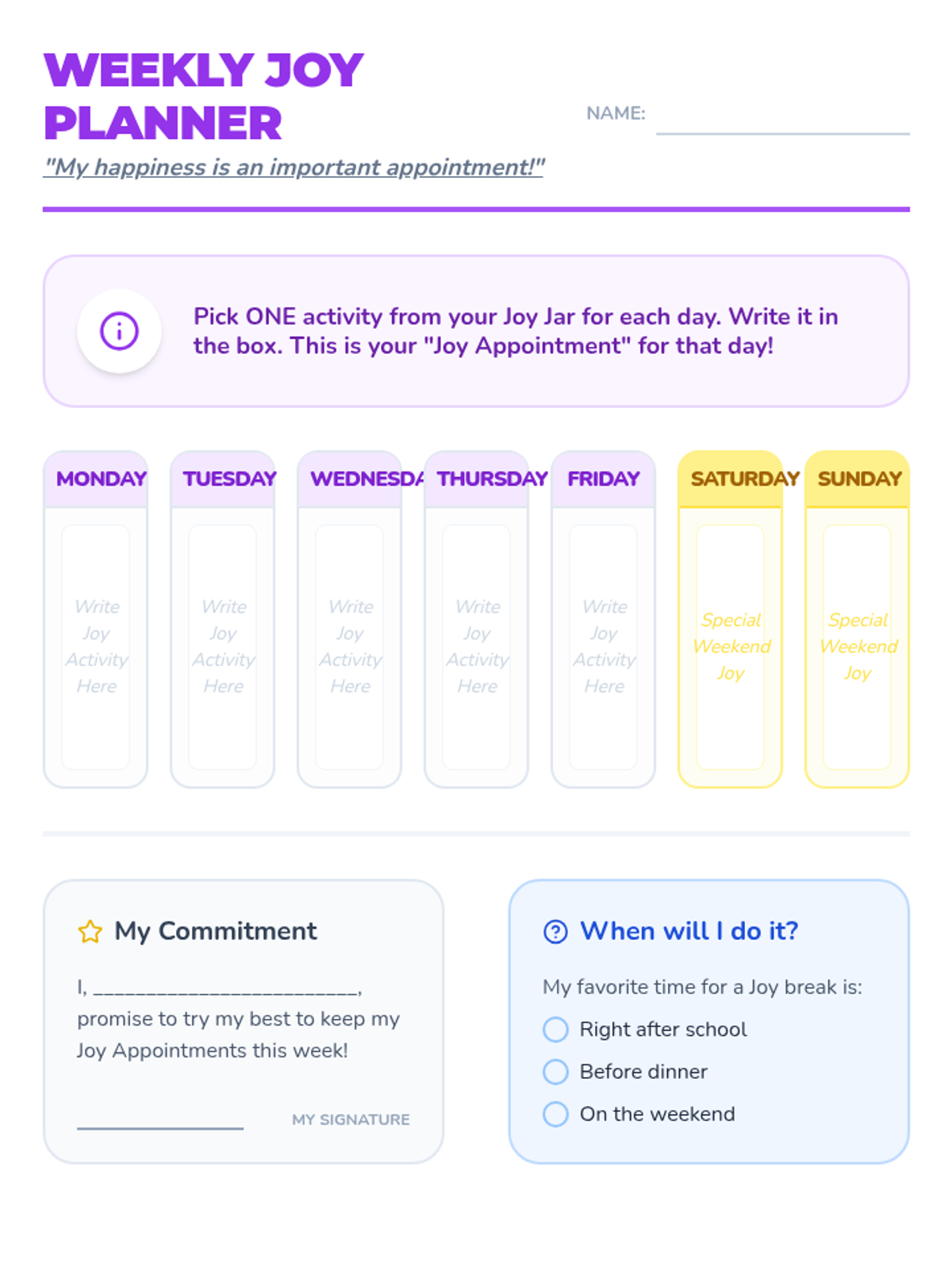
Student weekly planning document for Lesson 3, where they schedule one intentional positive activity for each day of the upcoming week.
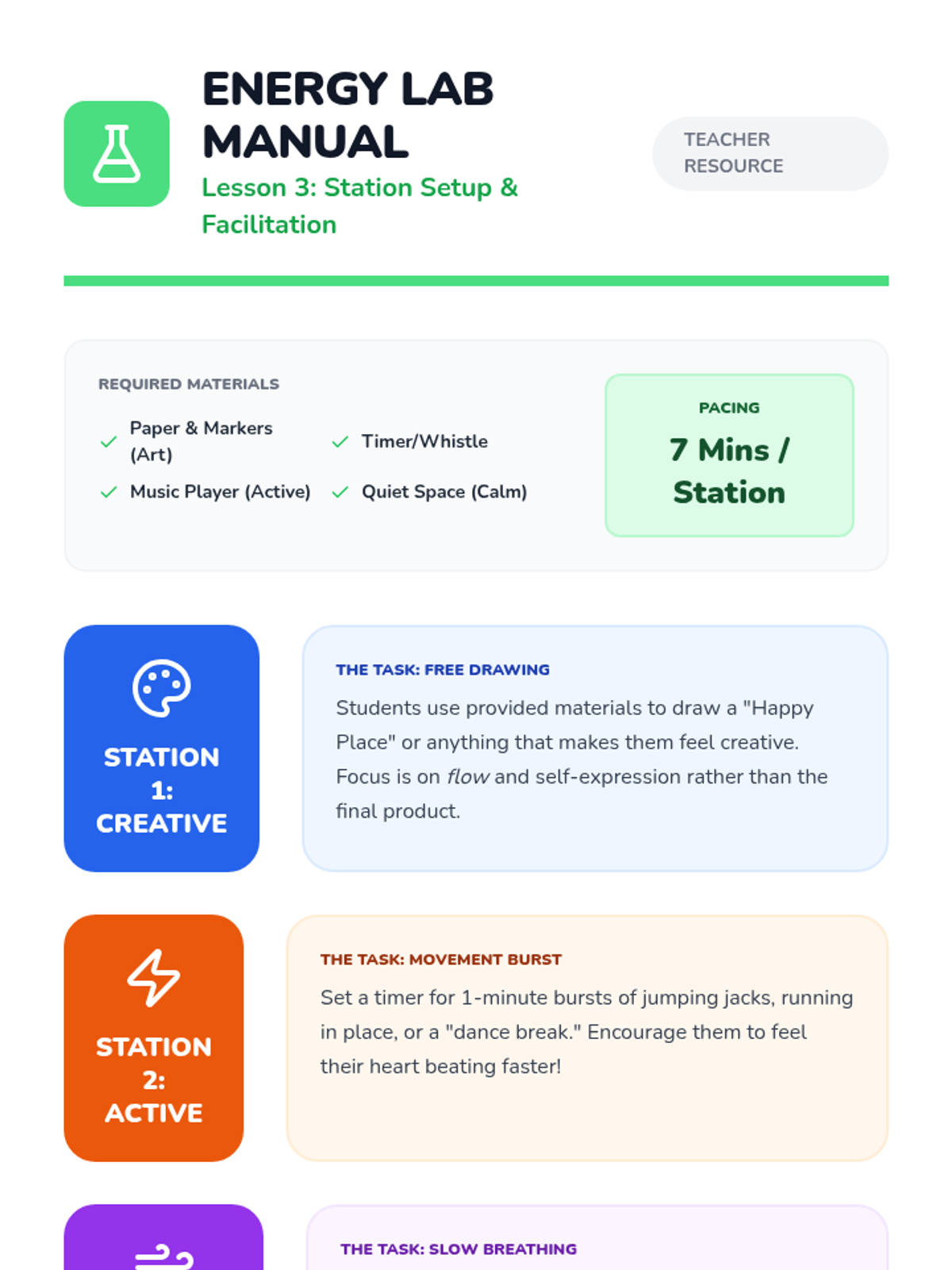
Facilitator guide for Lesson 3, including station setup instructions and debrief questions.
Visual presentation for Lesson 3 using character scenarios (Sad Sammy and Worried Wendy) to teach students how to prescribe positive actions to regulate emotions.
Instructional slides for Lesson 3, guiding students through the concept of scheduling intentional 'joy breaks' into their weekly calendar.
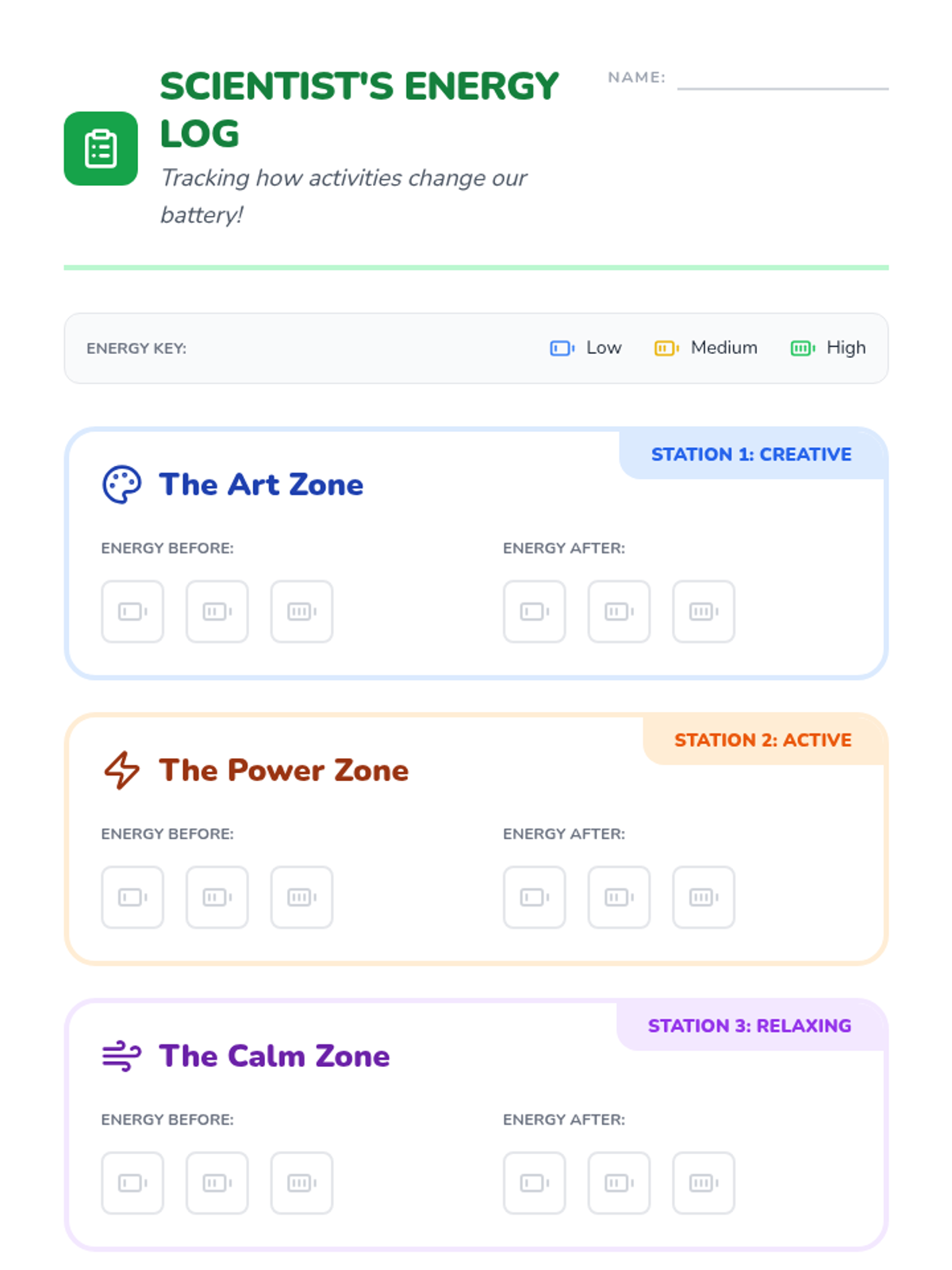
Energy Lab Log for Lesson 3, where students record their energy levels before and after different types of activities.
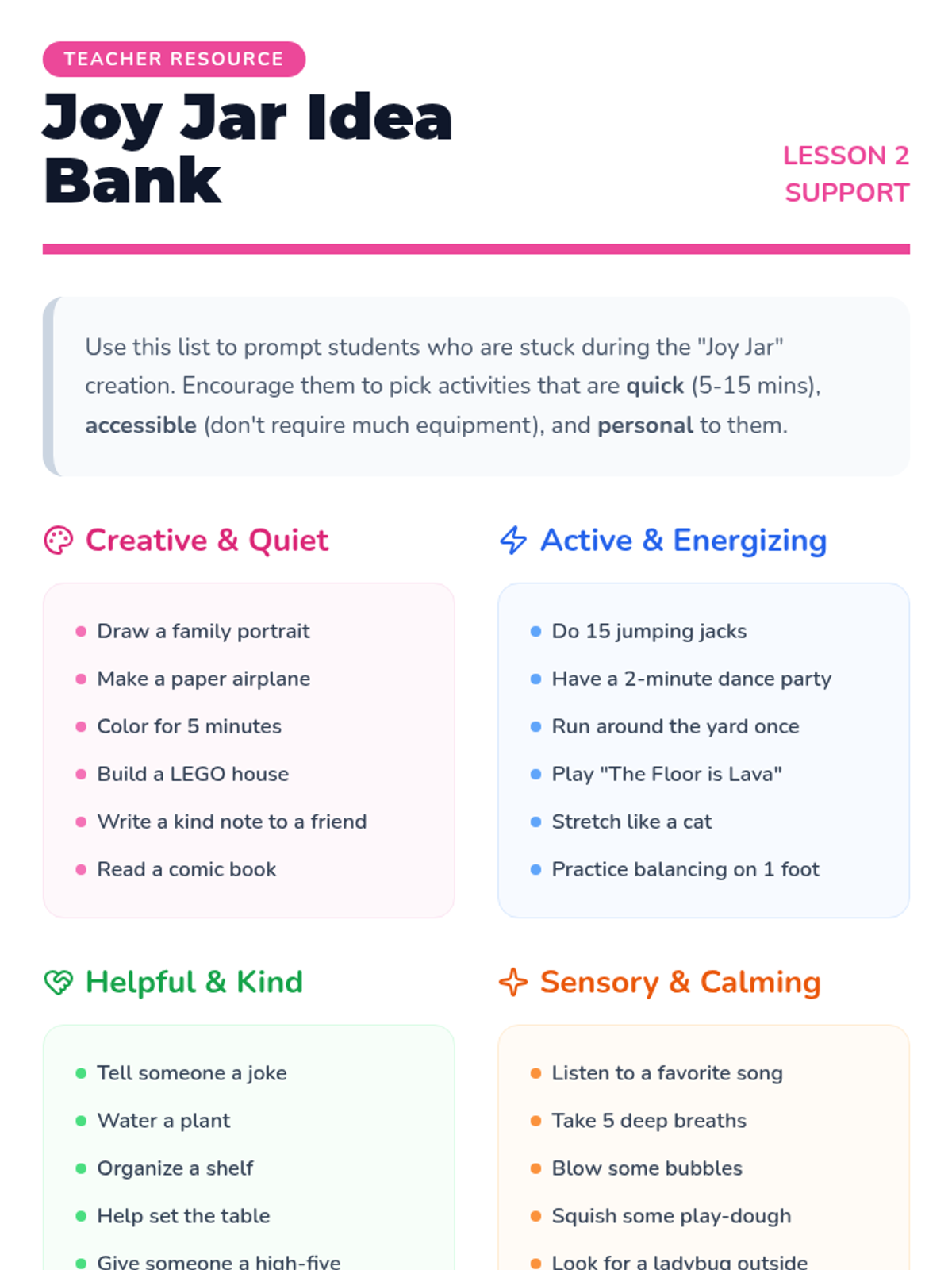
Teacher resource for Lesson 2, providing a categorized bank of quick and accessible positive activity ideas to prompt student creativity.
Visual presentation for Lesson 3, introducing the 'Energy Lab' stations and the human thermometer activity.
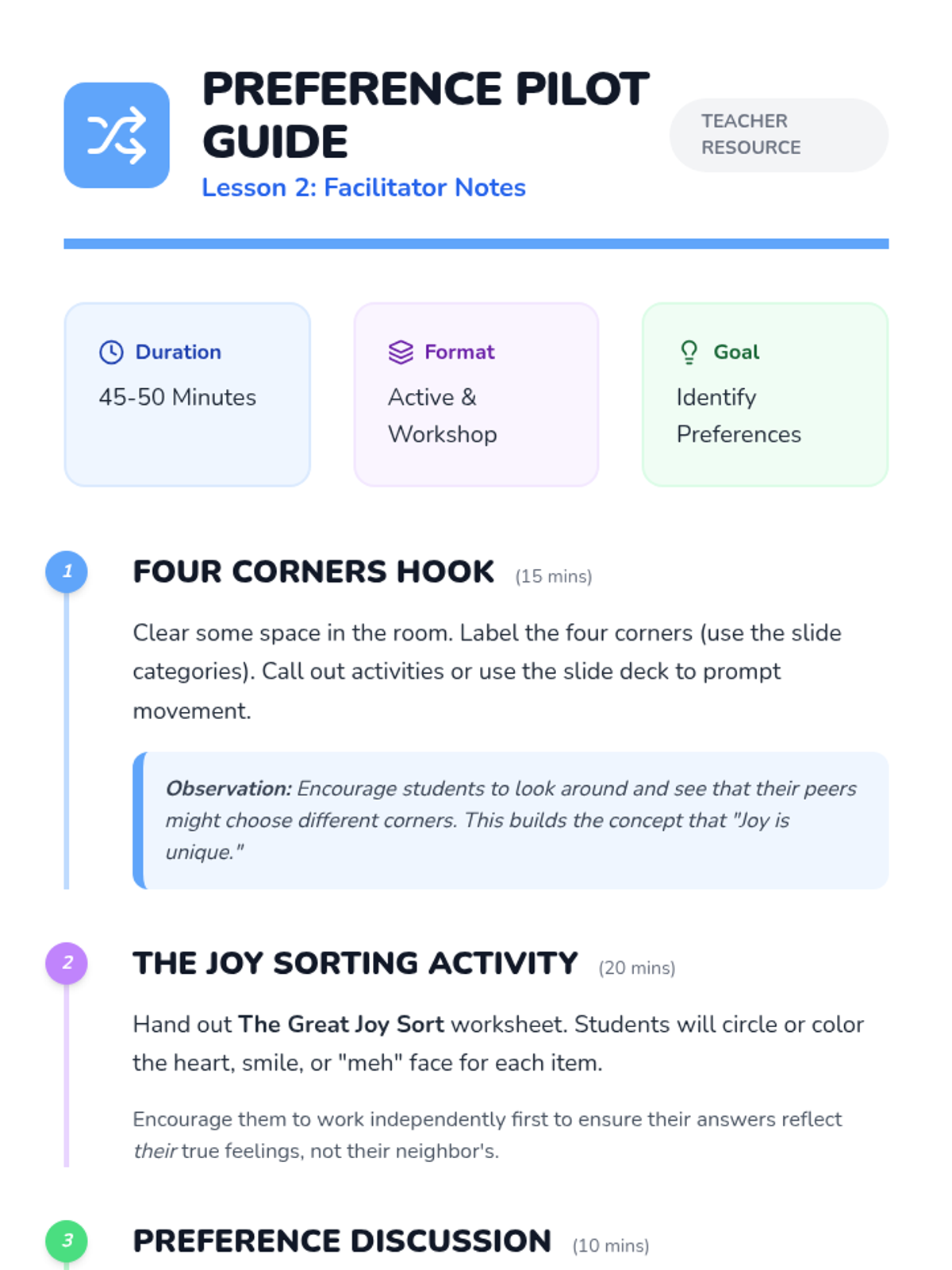
Facilitator guide for Lesson 2, including the Four Corners setup, activity management, and discussion prompts.
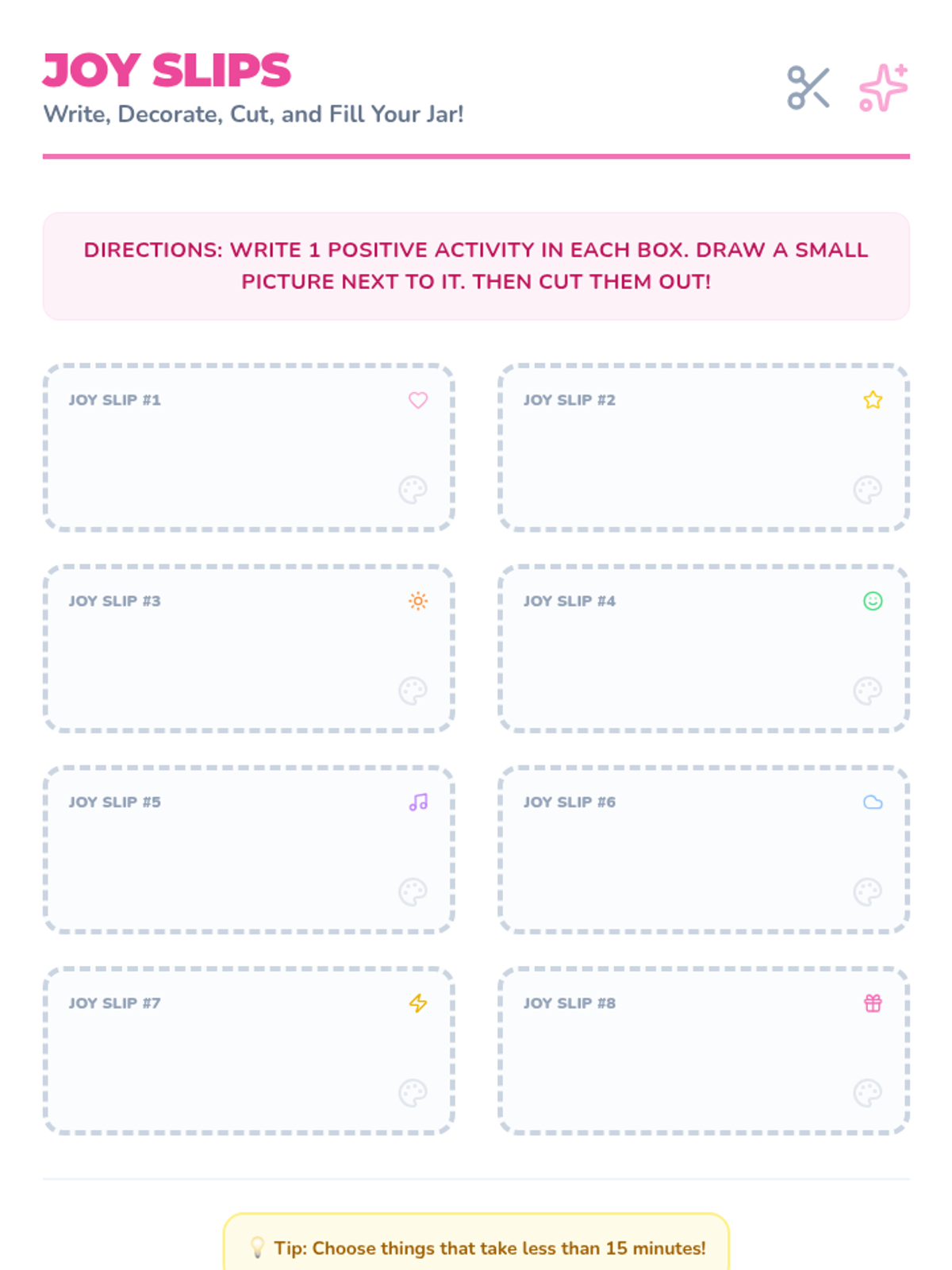
Student activity template for Lesson 2, providing patterned slips for students to write and illustrate positive activities for their Happiness Jar.
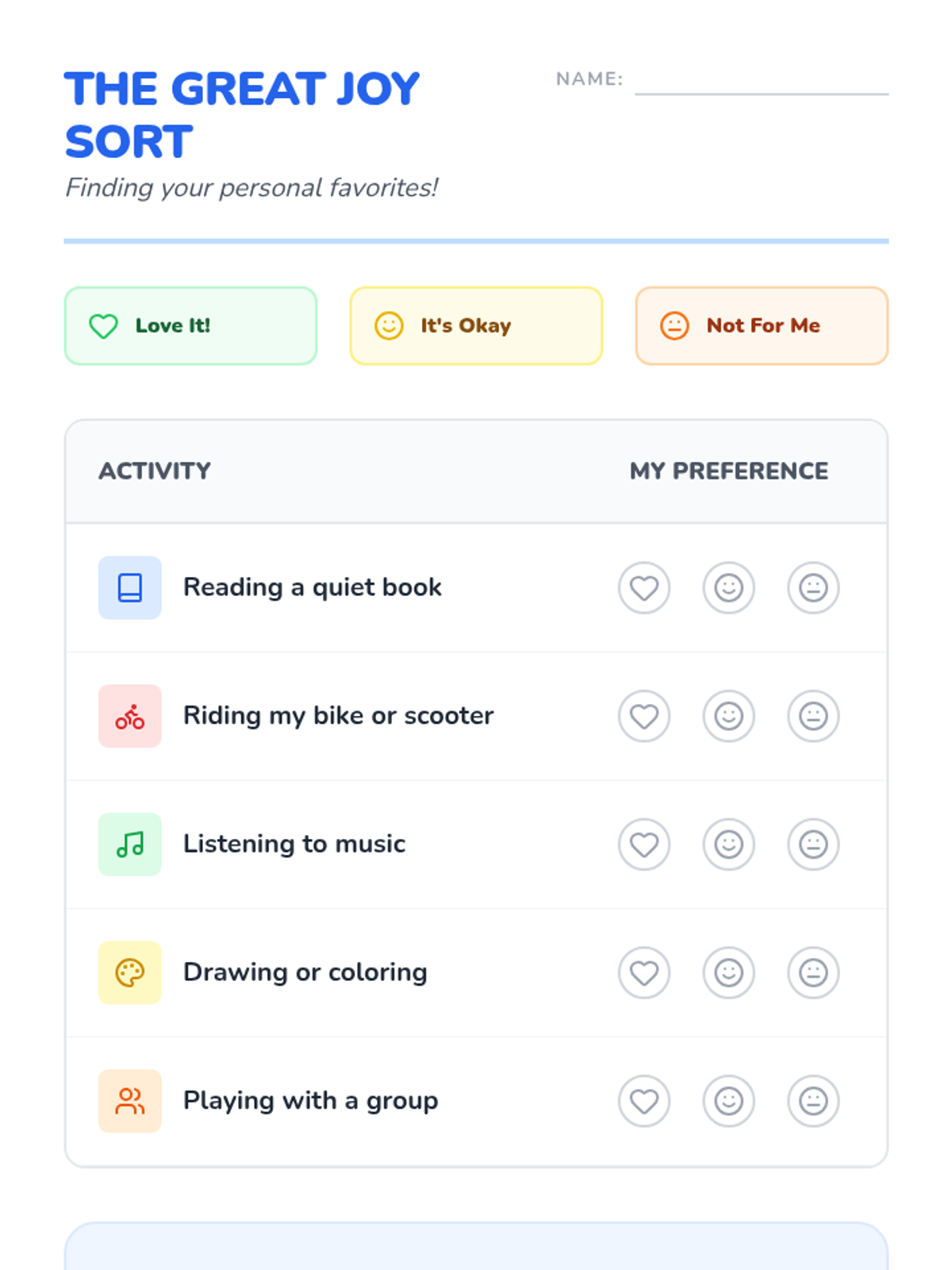
Activity worksheet for Lesson 2, where students categorize various pastimes into preference levels.