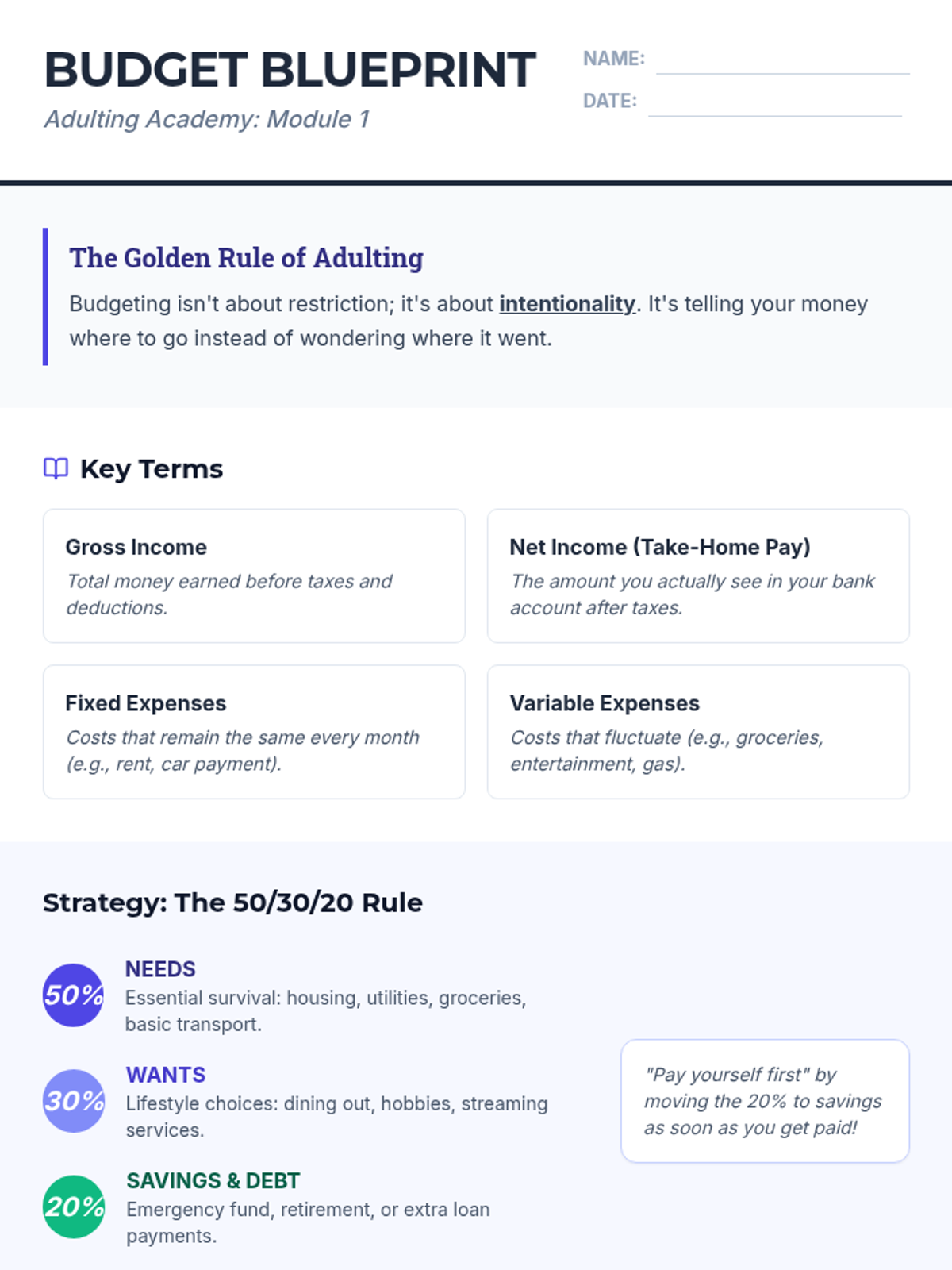
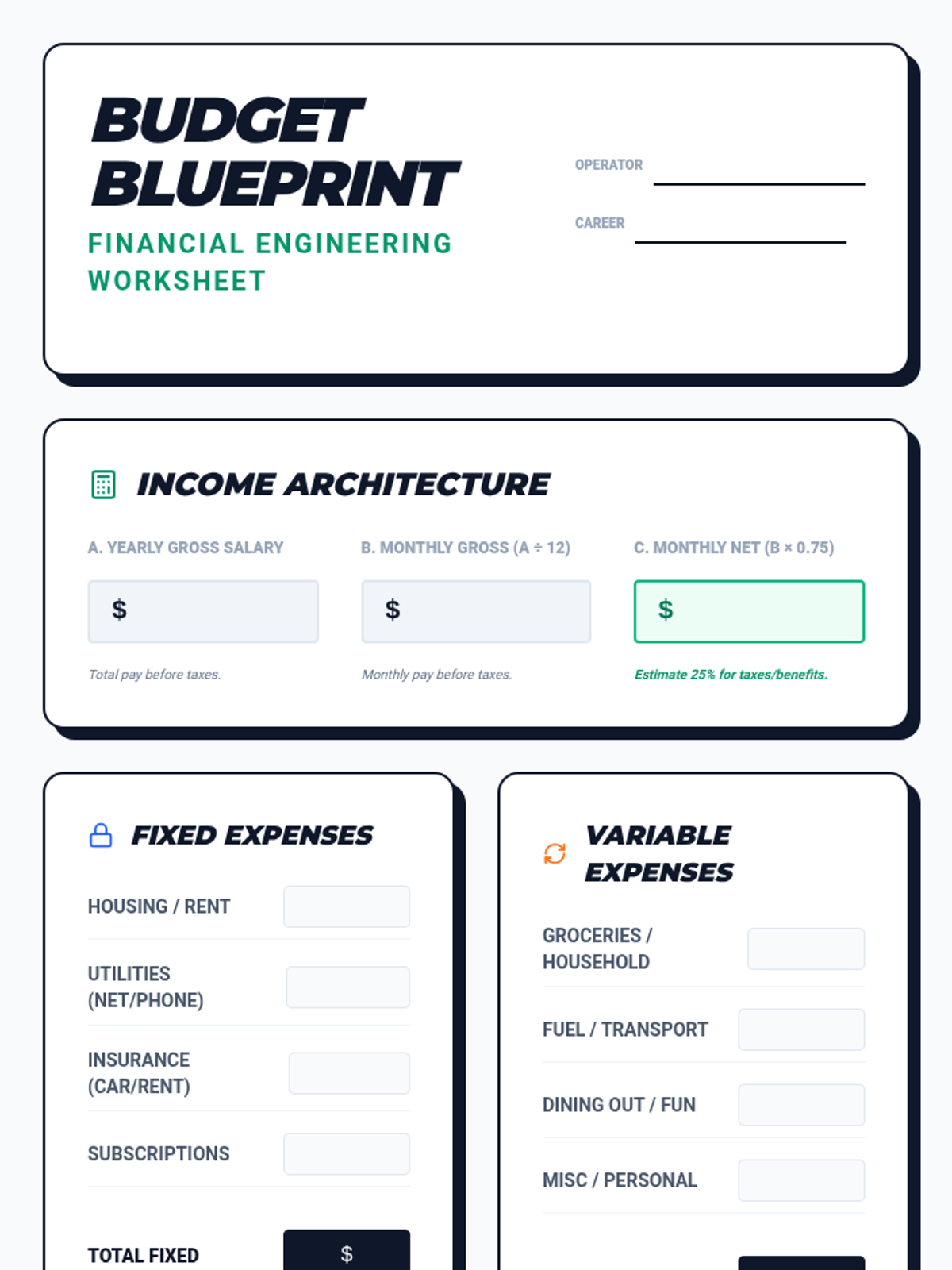
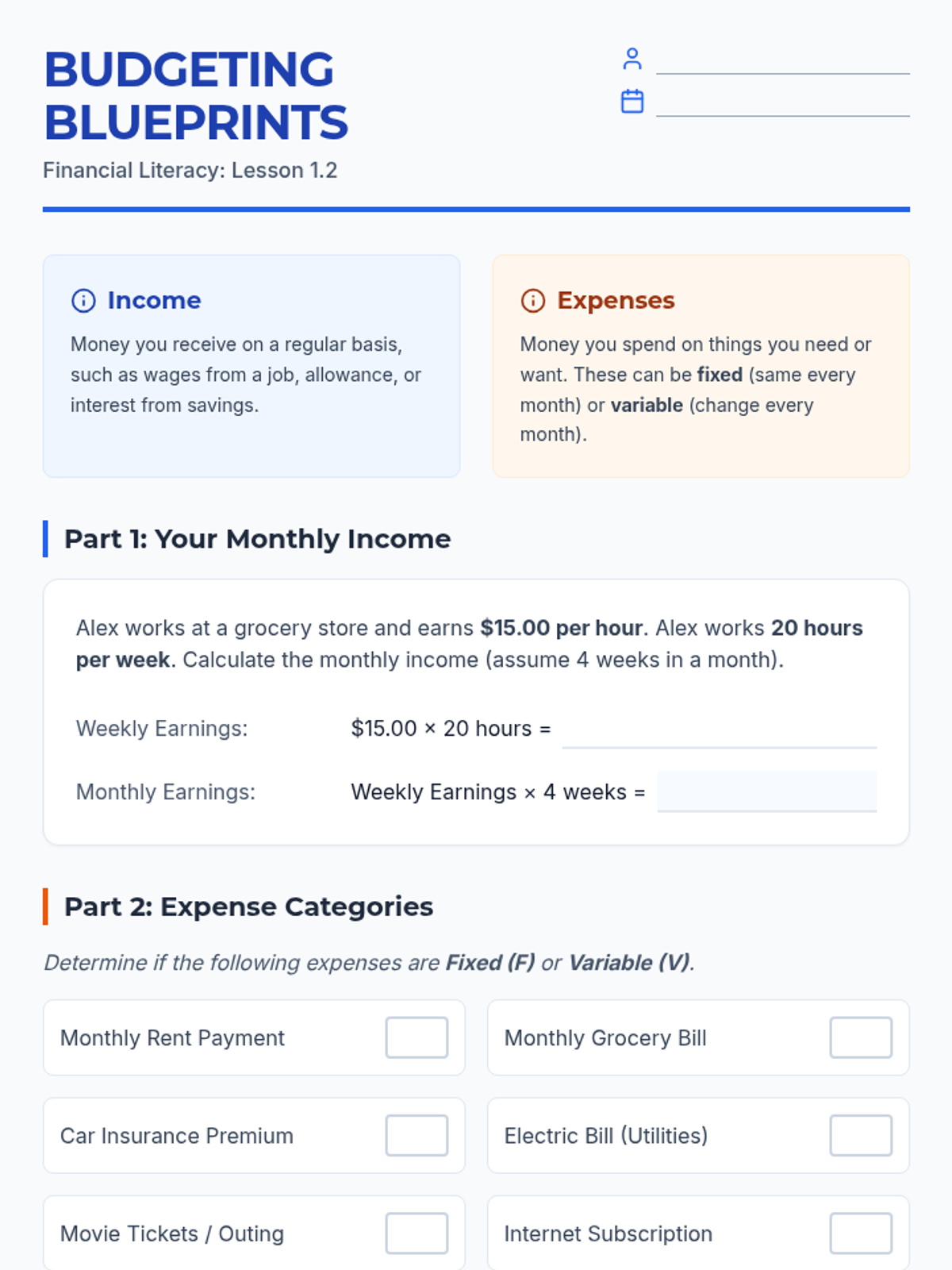
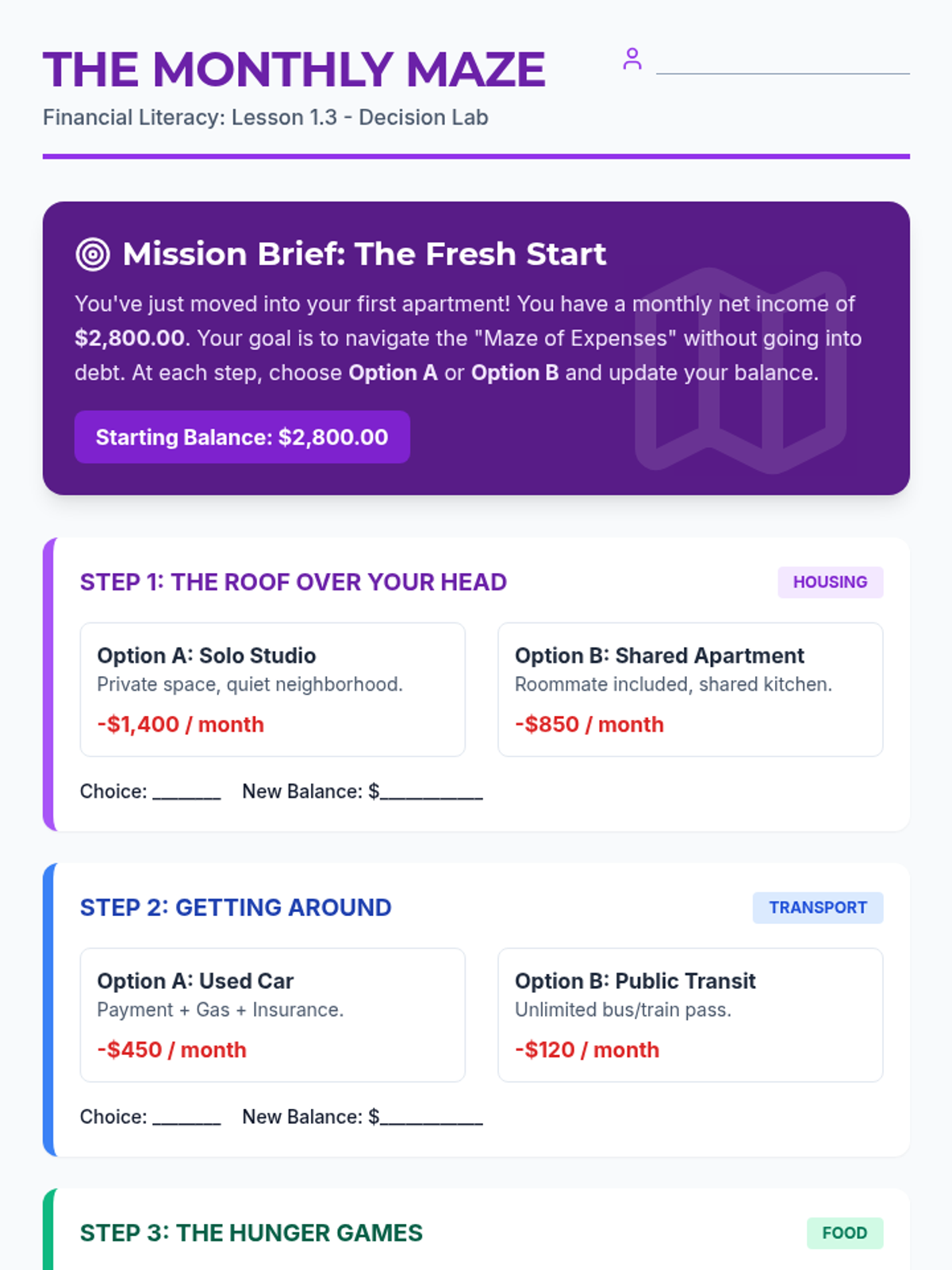
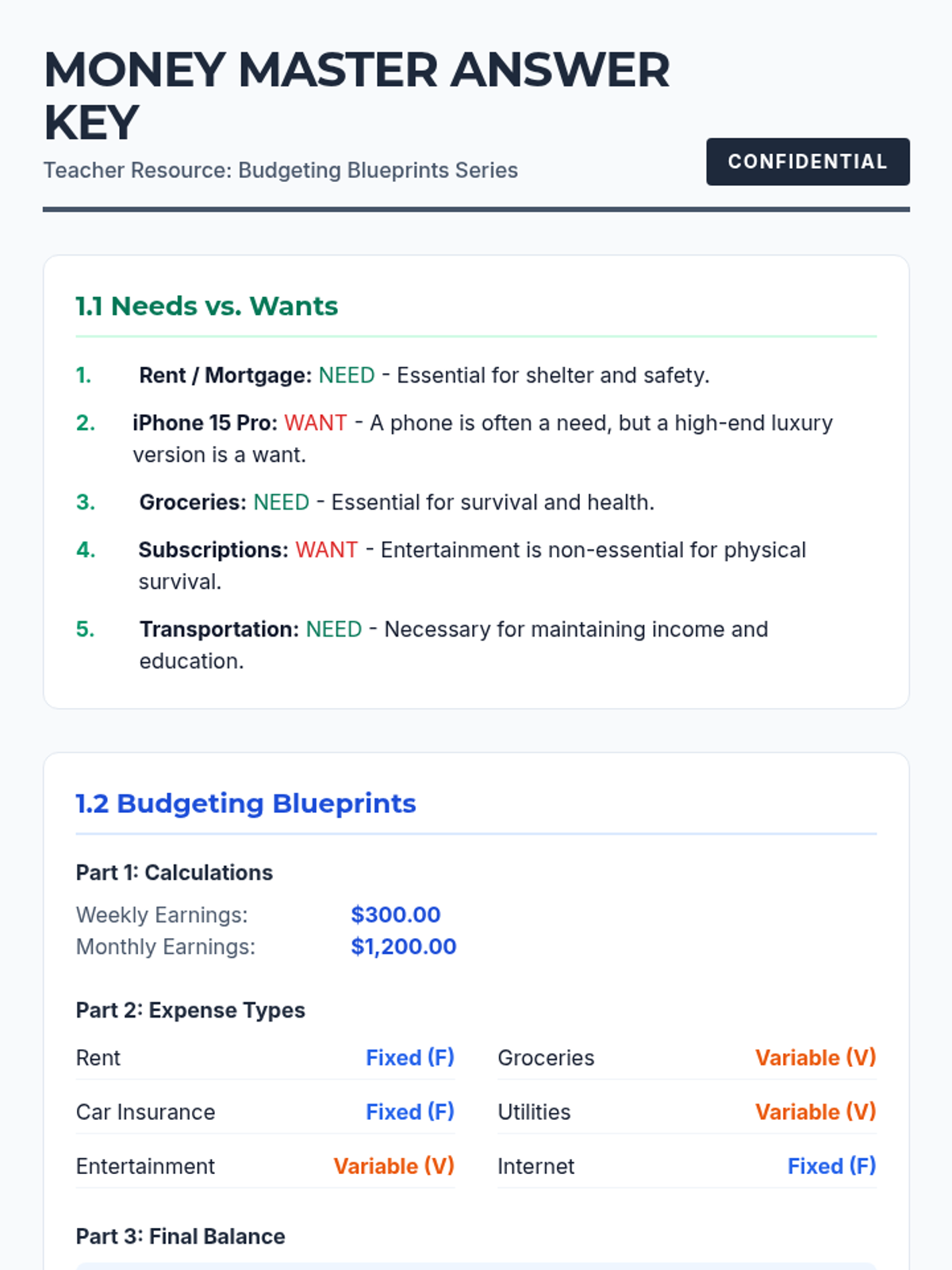
Budgeting, saving, and investment strategies alongside practical skills for managing credit, taxes, and banking. Addresses insurance needs, employment income, and major purchase decisions to support comprehensive long-term financial planning.
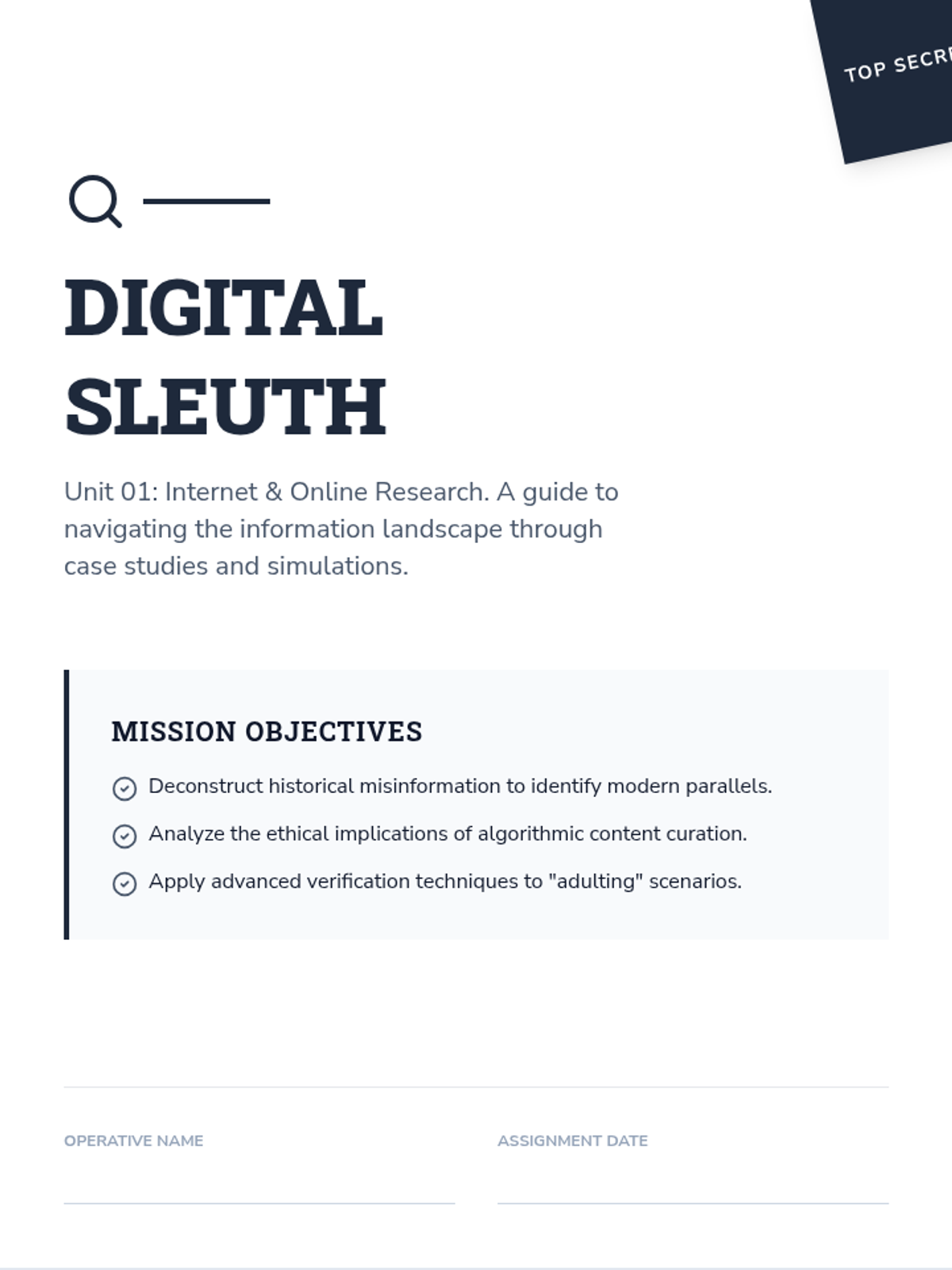
A comprehensive curriculum covering financial literacy, economic principles, and civic systems through historical case studies, ethical dilemmas, and real-world simulations.
A comprehensive week-long course designed to equip high school students with essential financial literacy and insurance knowledge for adult life.
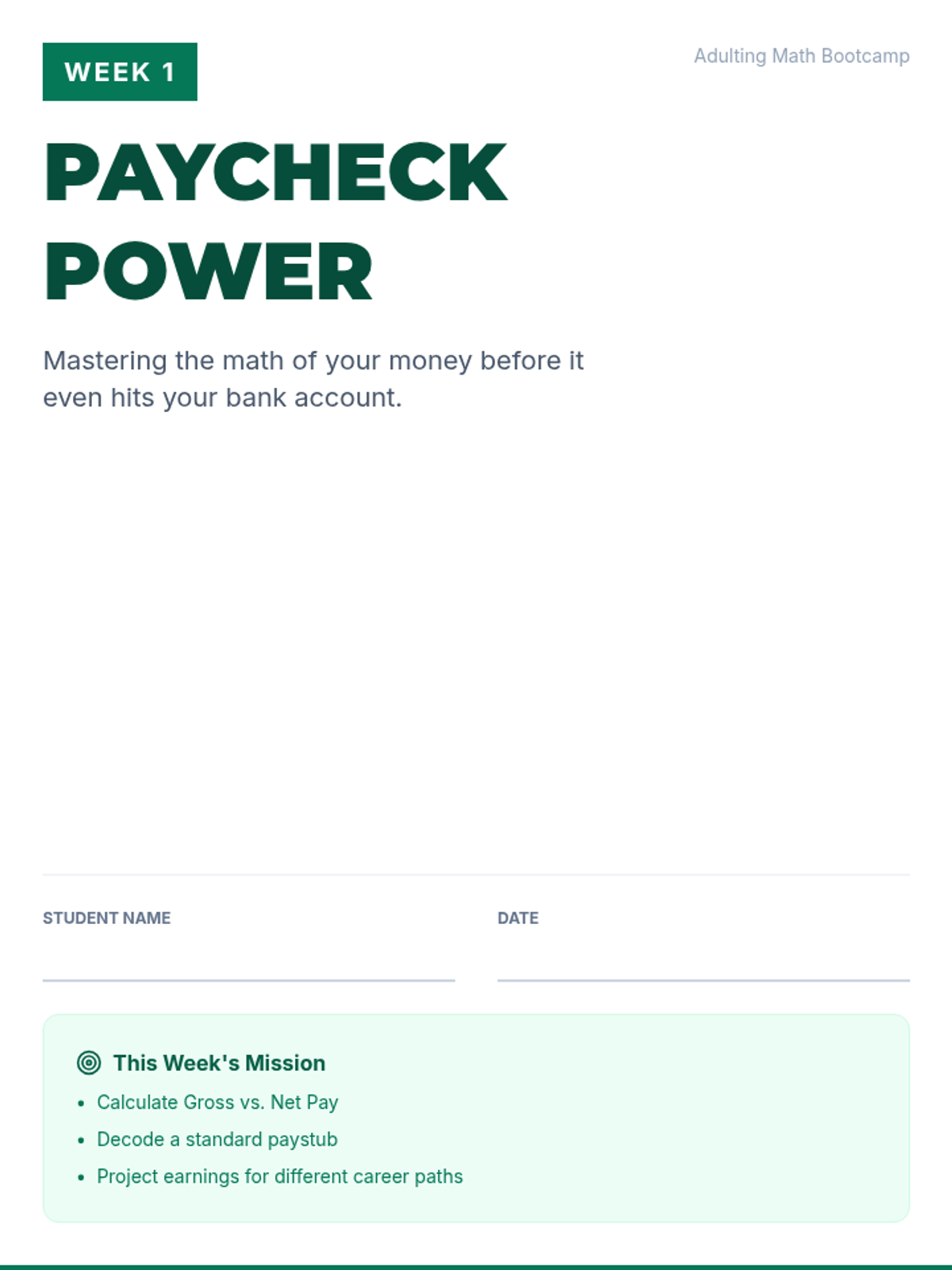
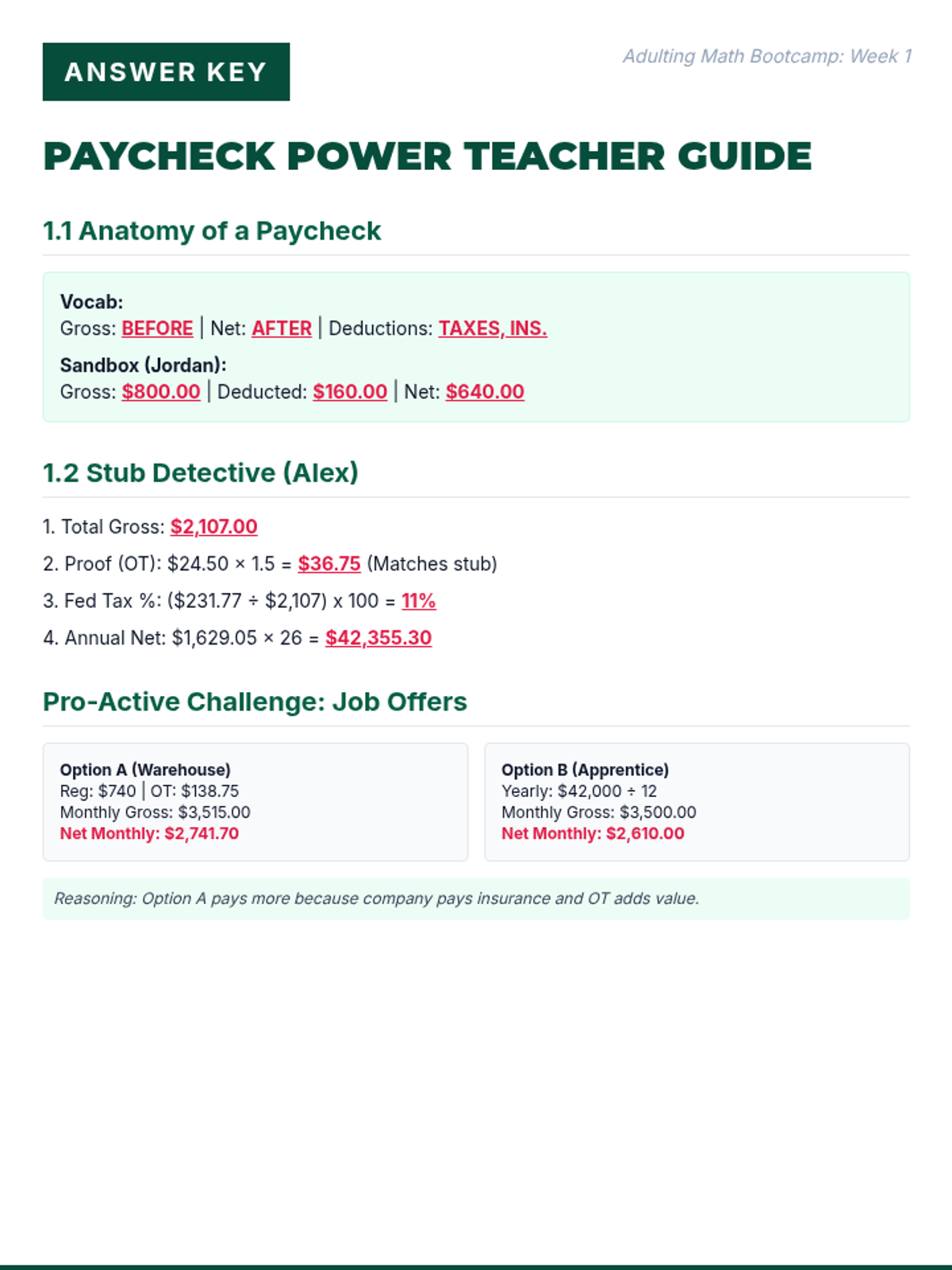
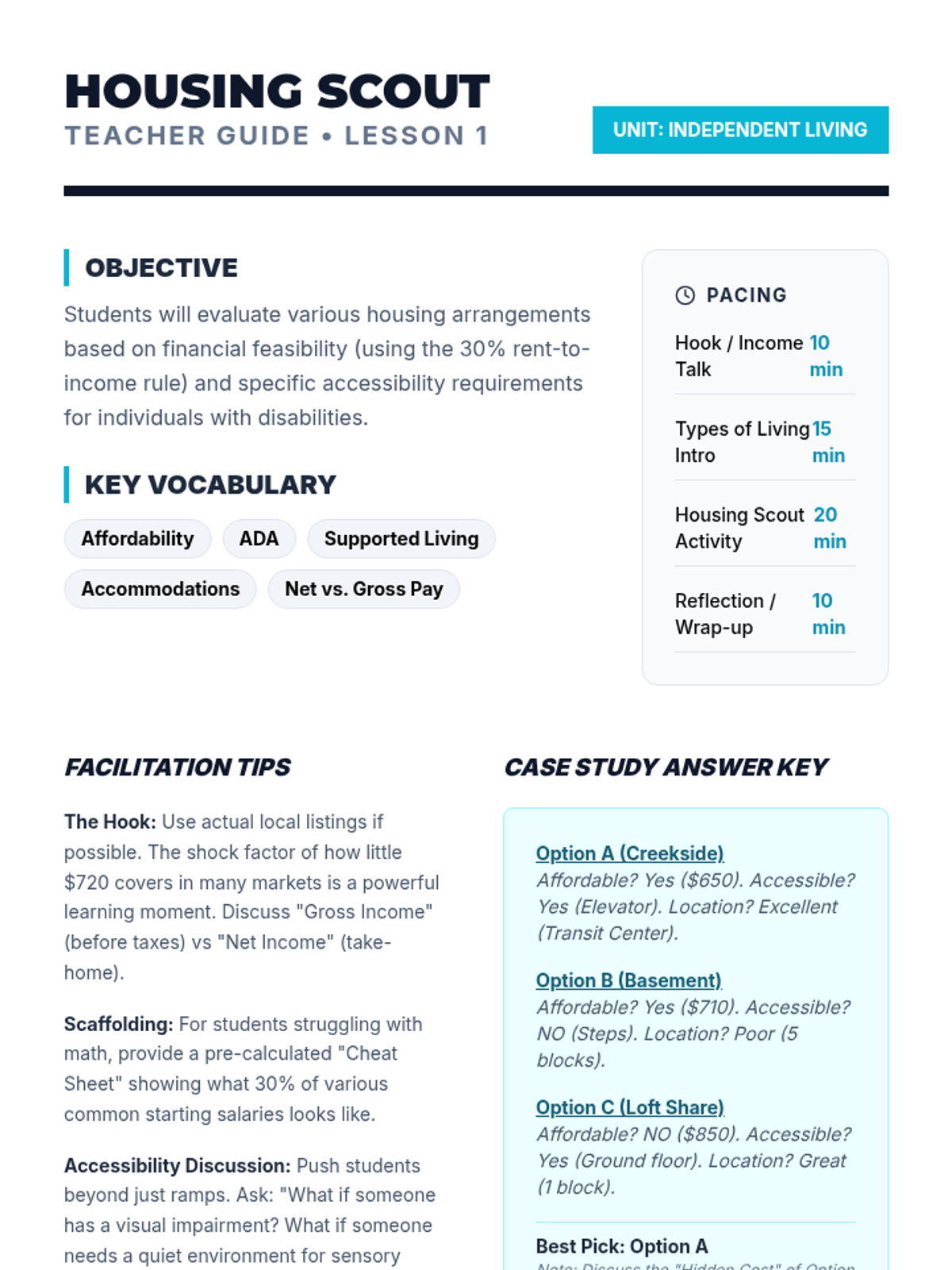
A 6-week curriculum designed to bridge the gap between high school math and real-world financial and practical independence, covering paychecks, budgeting, credit, shopping, housing, and measurement.
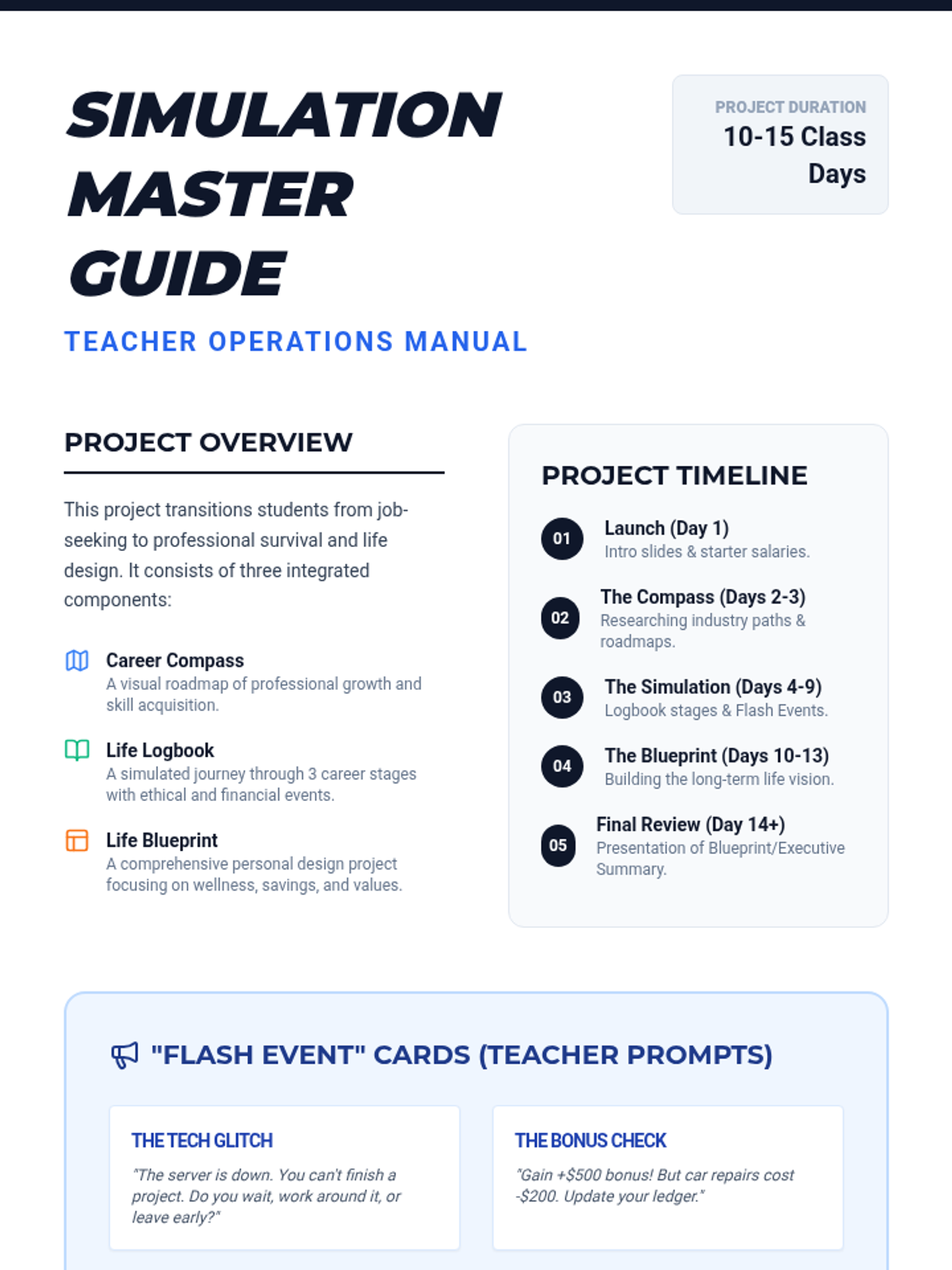
A series of lessons and projects designed to transition students from job-seeking skills to workplace success and independent living, focusing on professional ethics, communication, and long-term planning.
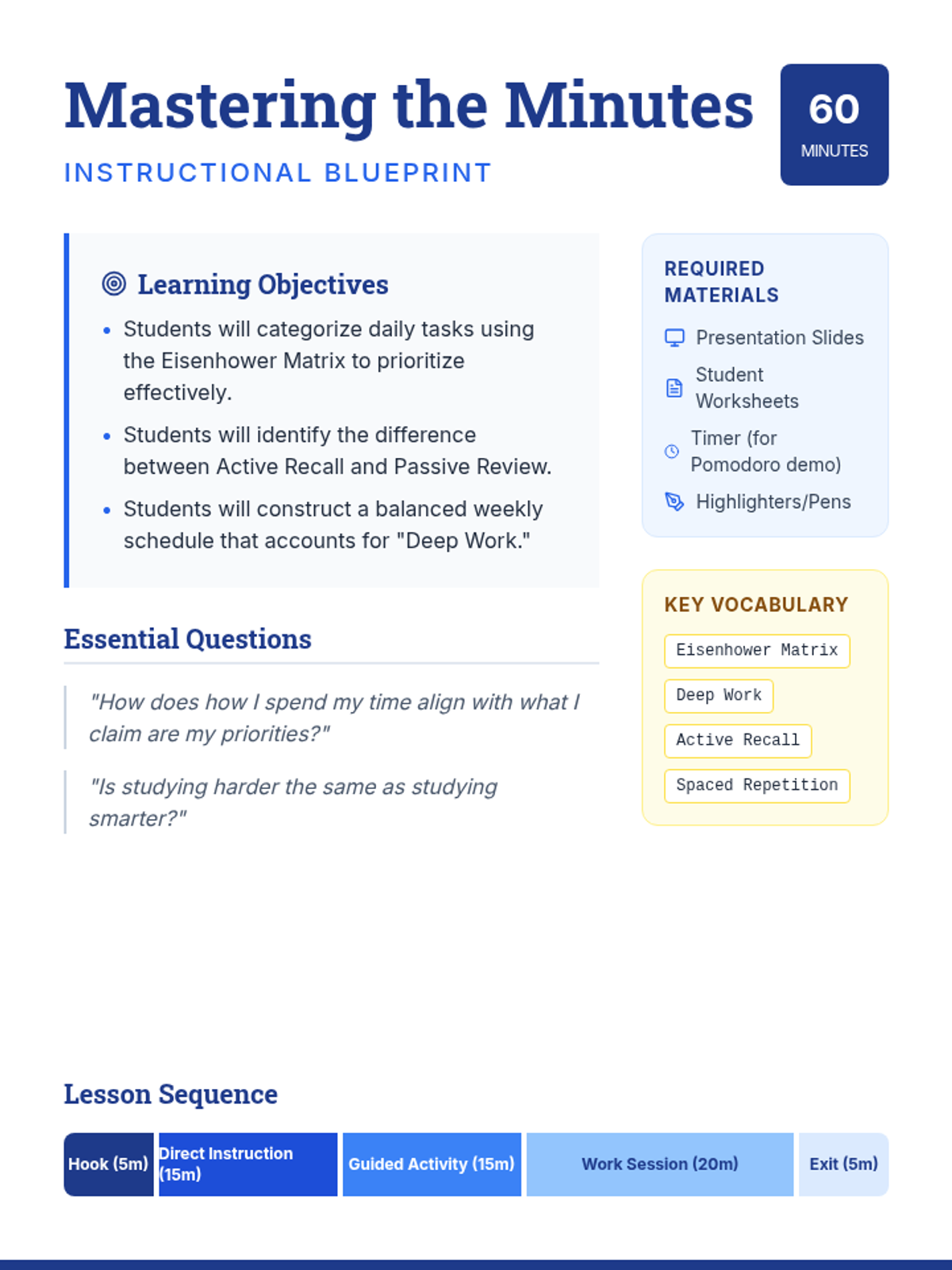
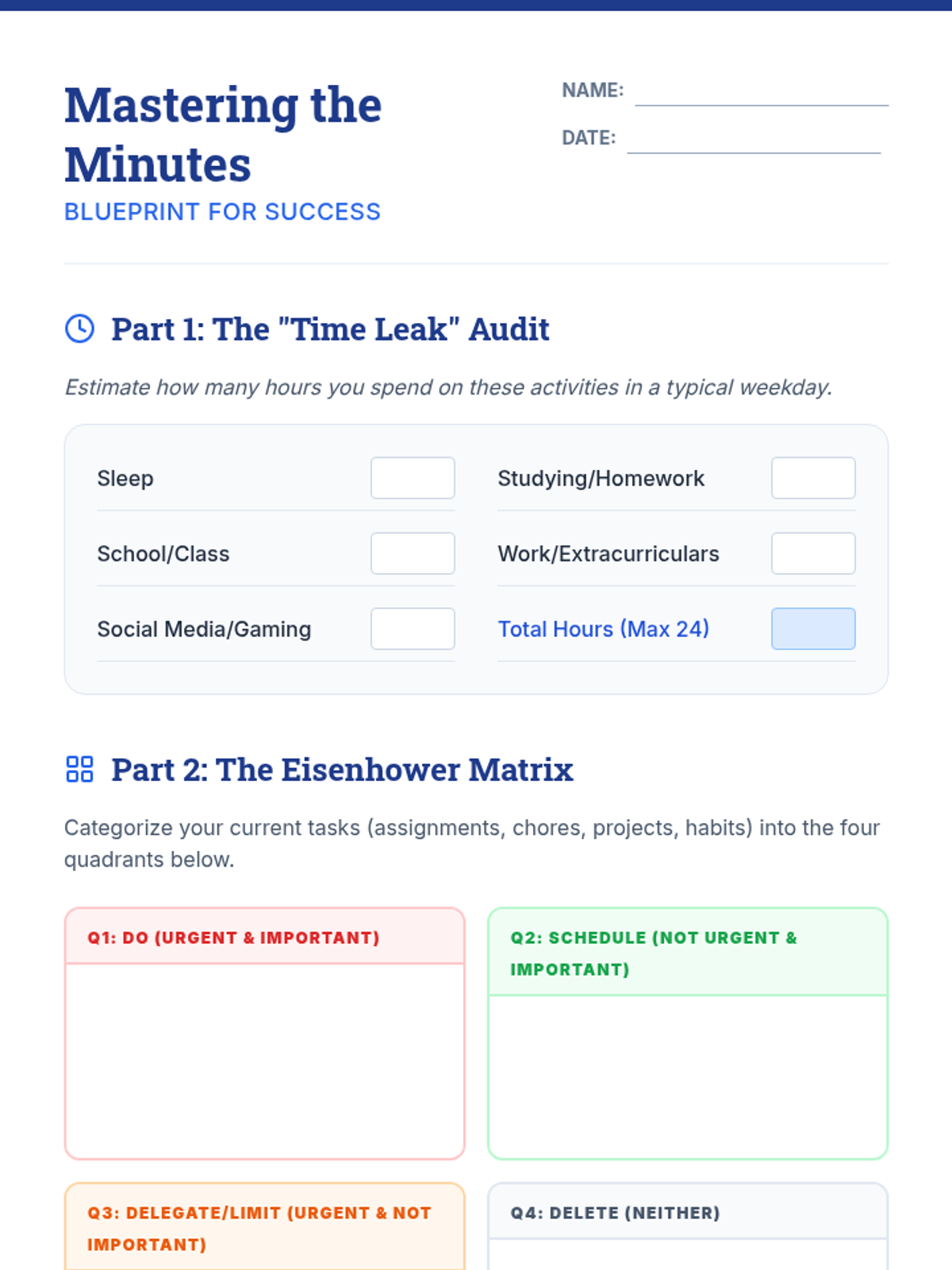
A comprehensive series designed to prepare students for post-secondary success through essential life skills, including time management, study habits, and digital literacy.
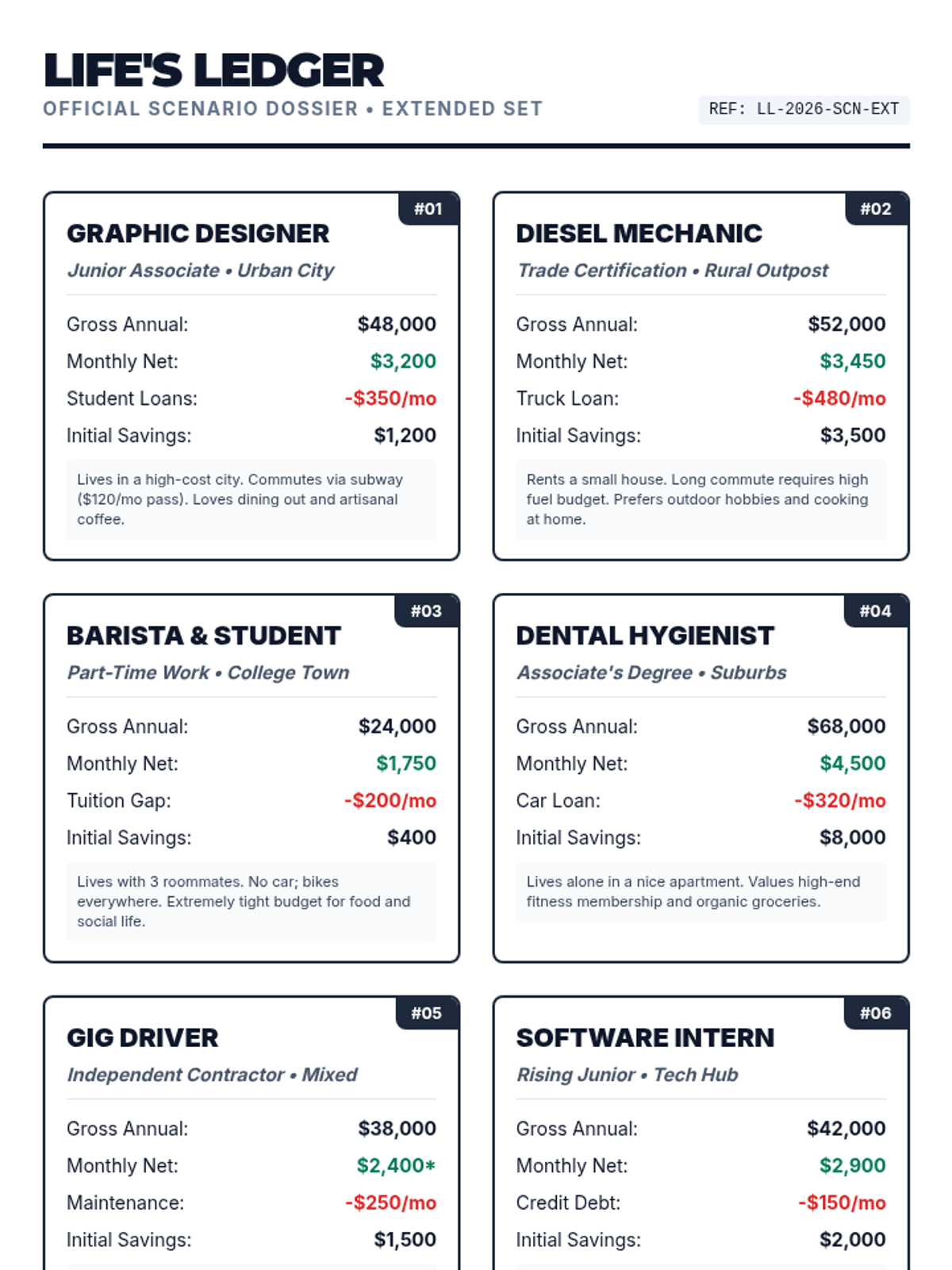
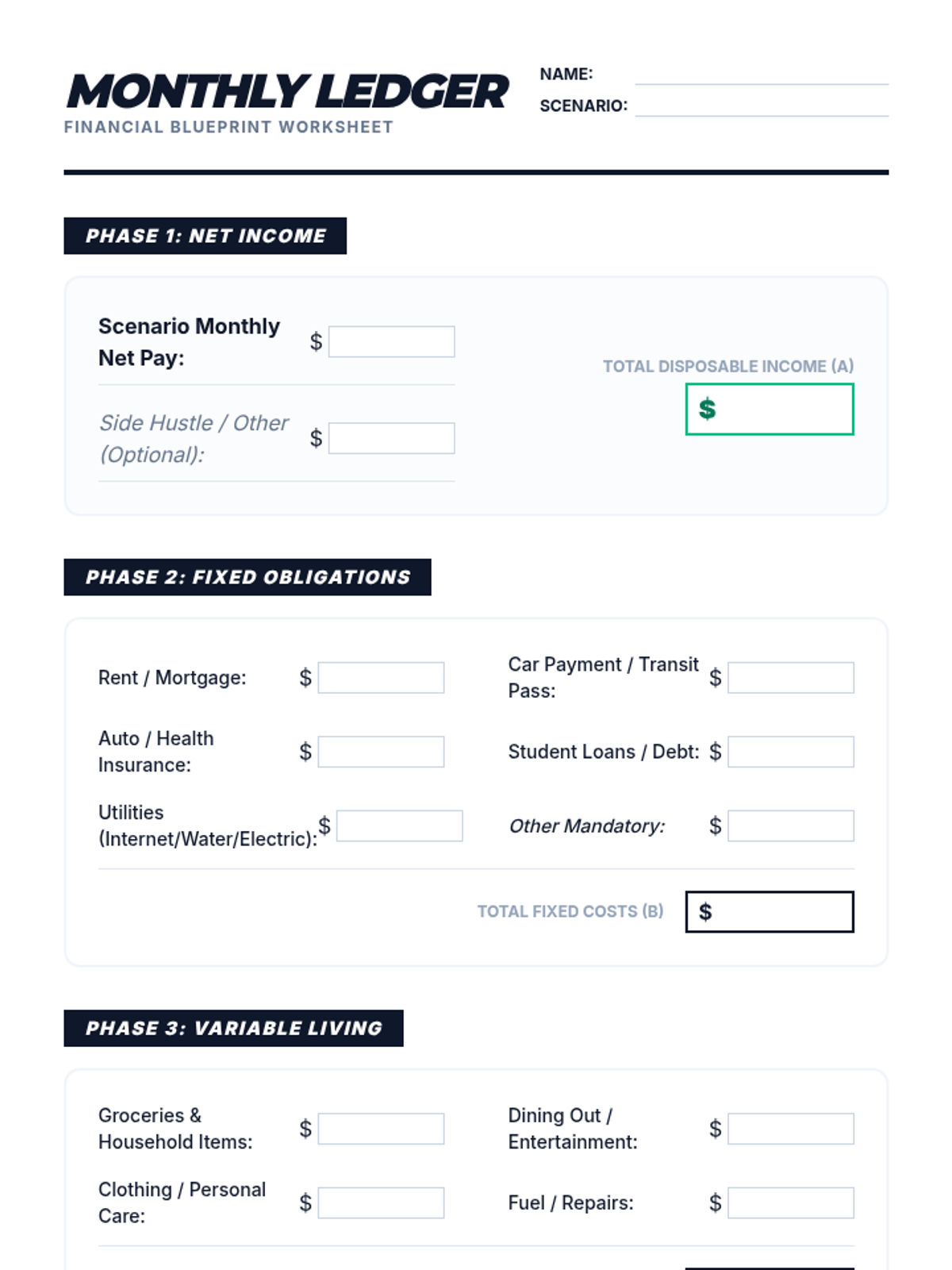
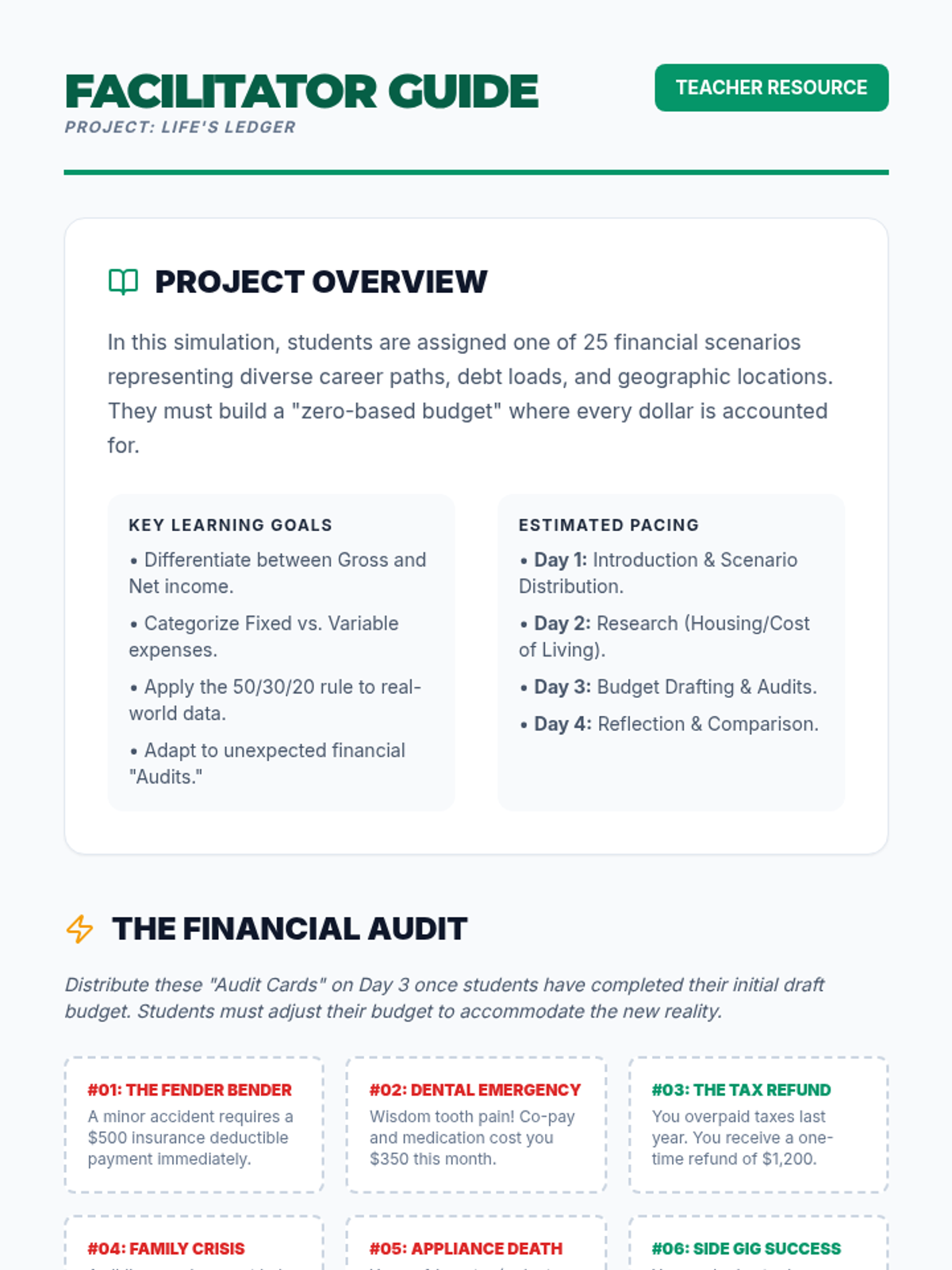
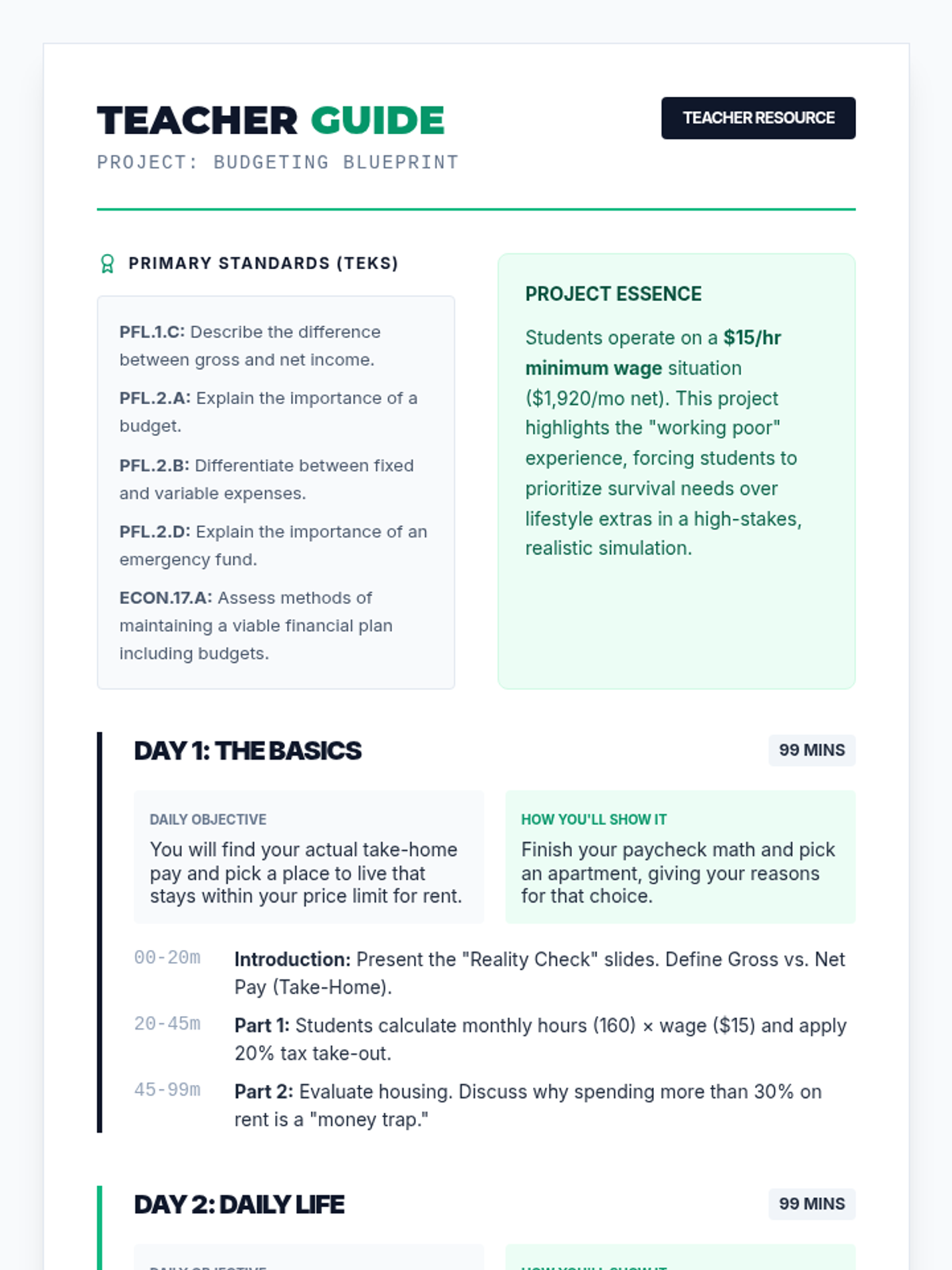
A comprehensive budgeting project where students navigate 25 unique financial scenarios, ranging from entry-level trades to professional careers, to learn the realities of financial planning and adulting.
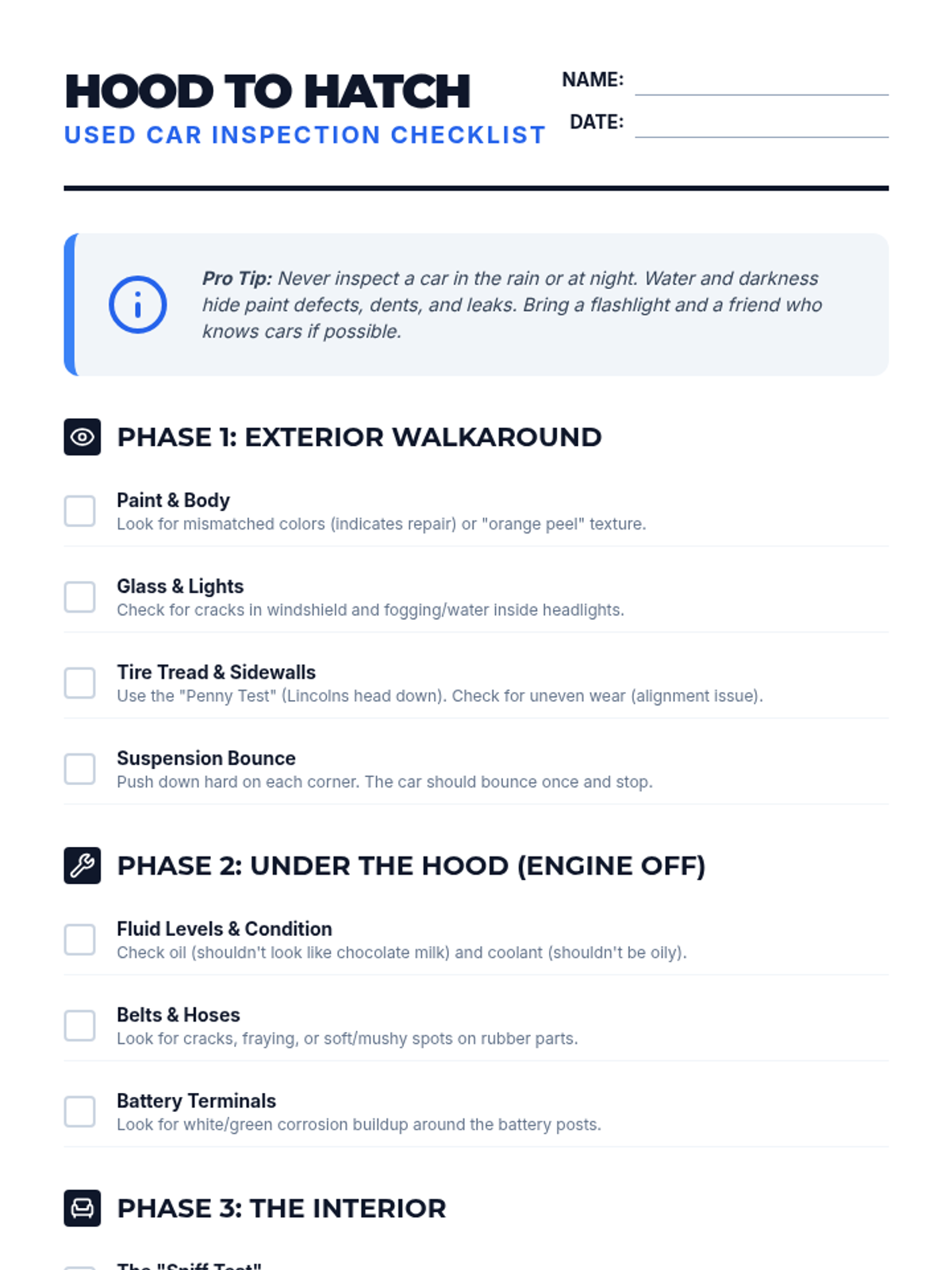
A comprehensive guide for first-time car buyers covering budgeting, inspection, financing, and insurance. Students will learn how to navigate the complex process of purchasing their first vehicle while avoiding common pitfalls.
A collection of real-world application projects and labs for high school students, focusing on financial literacy and child development stages.
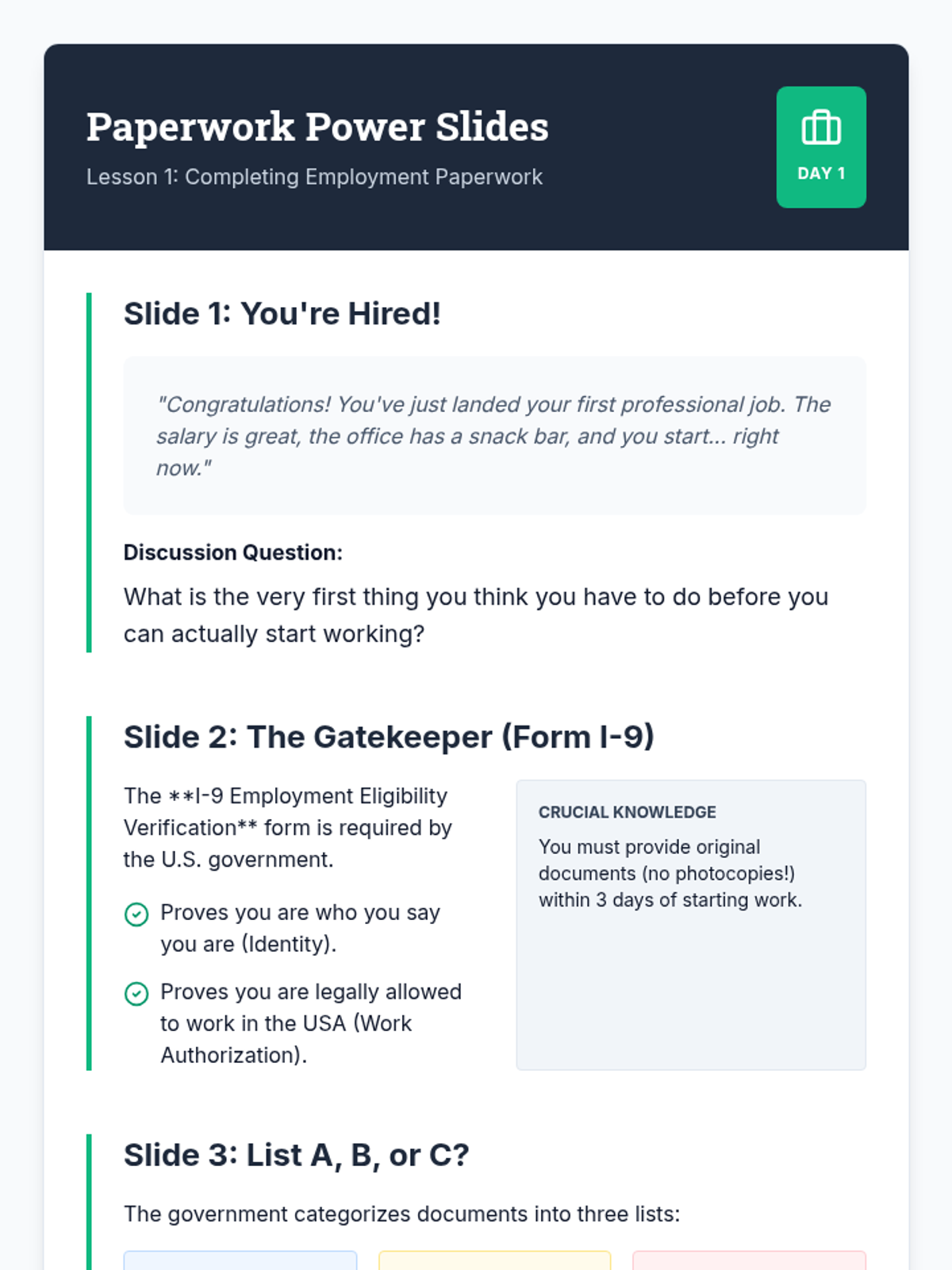
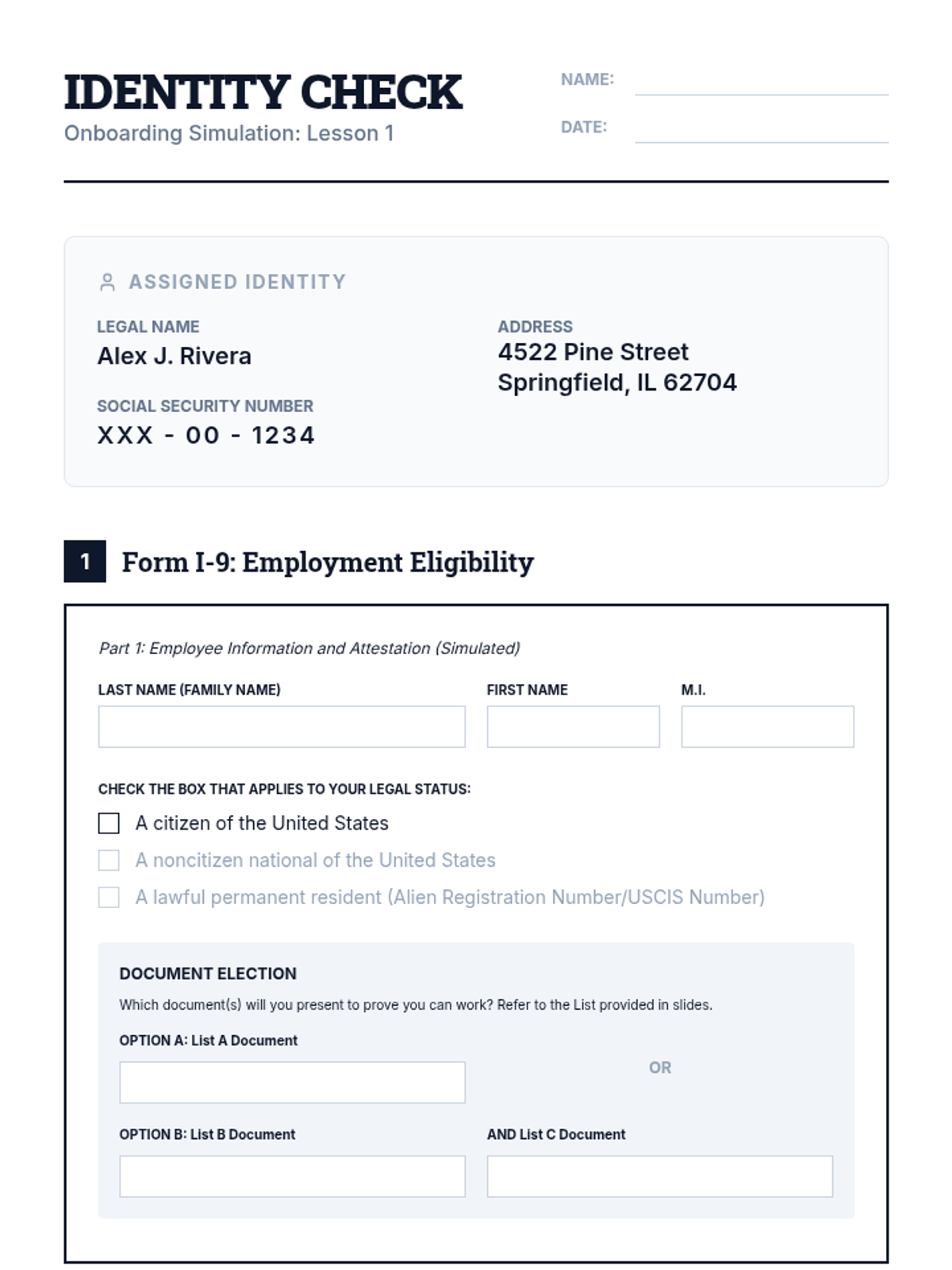
An immersive simulation where students navigate the onboarding process of a new job, making critical decisions about taxes, benefits, and workplace rights to understand their impact on a final paycheck.
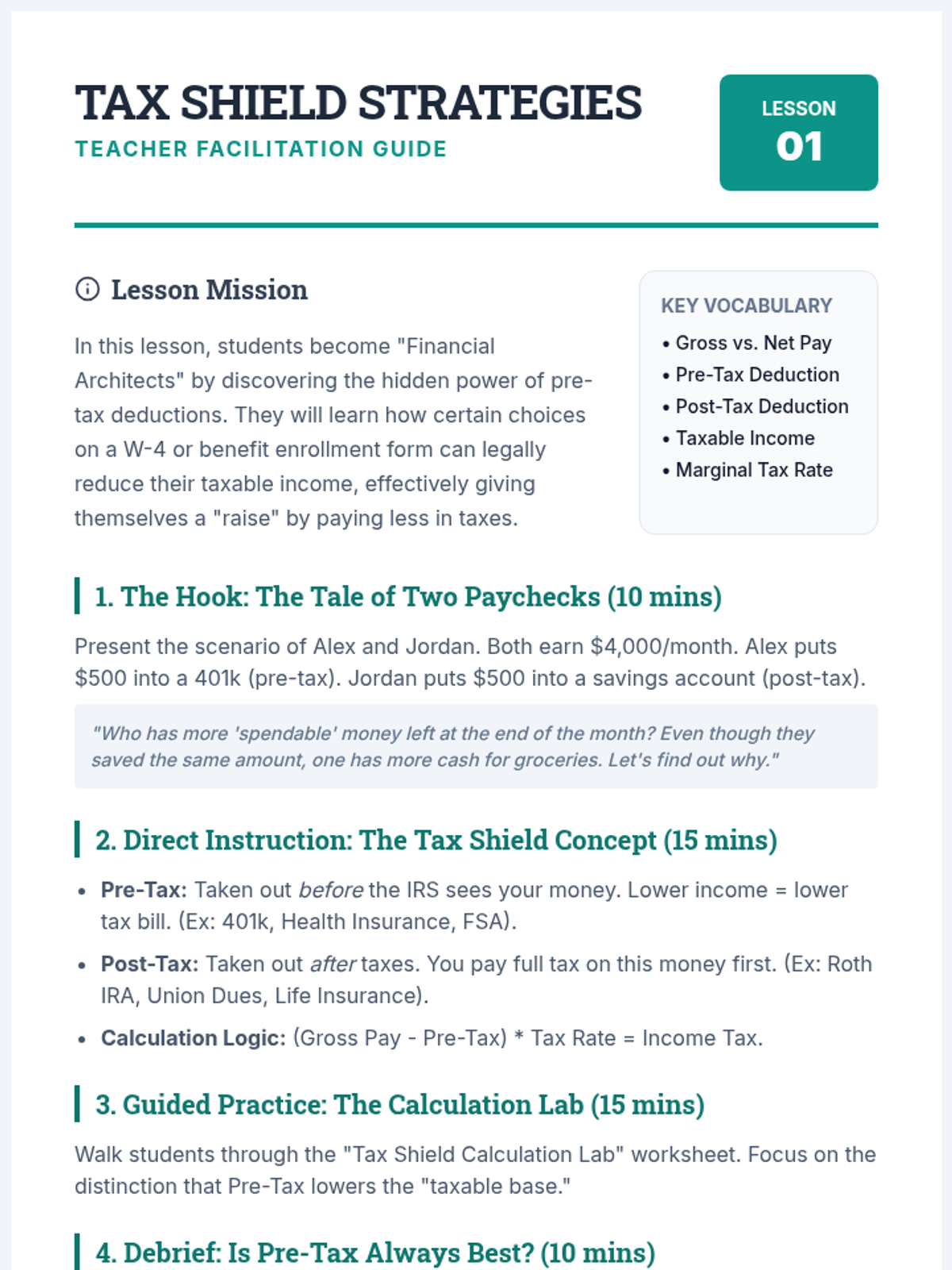
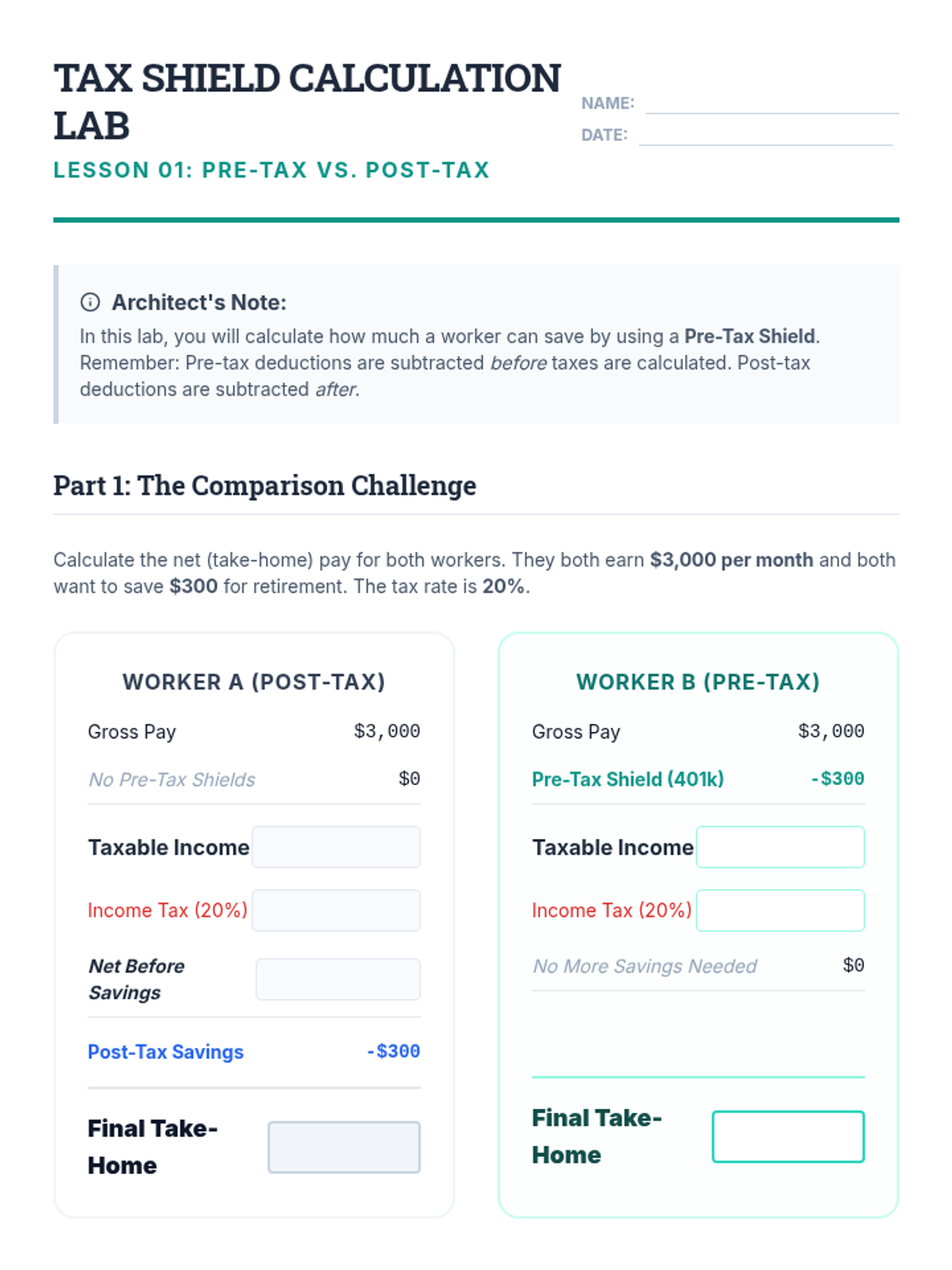
A comprehensive project-based unit exploring how strategic payroll deductions like FSAs, HSAs, and retirement contributions build long-term wealth and manage risk. Students move from basic tax calculations to designing a 'Payroll Strategy Guide' for a career-ready future.
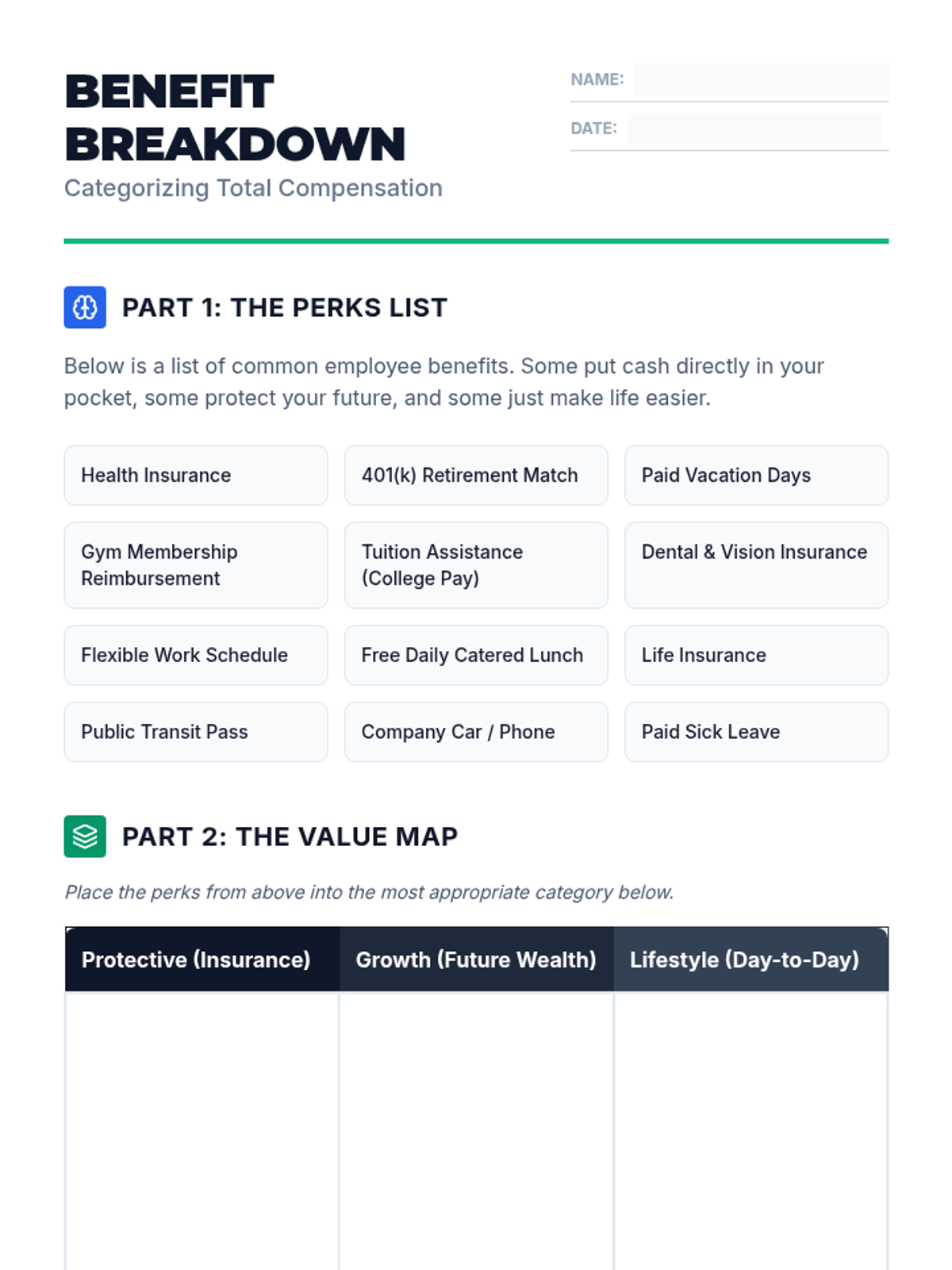
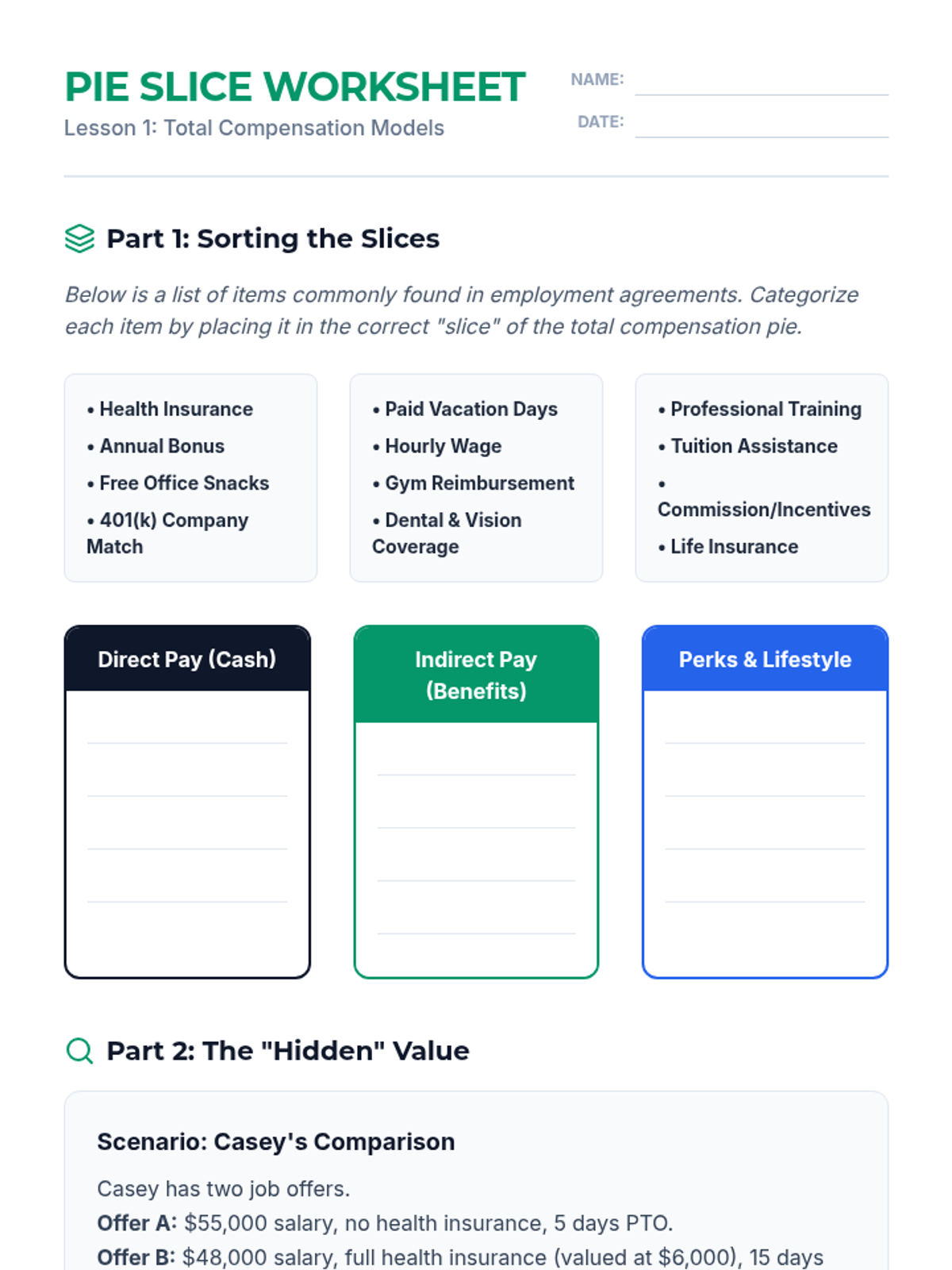
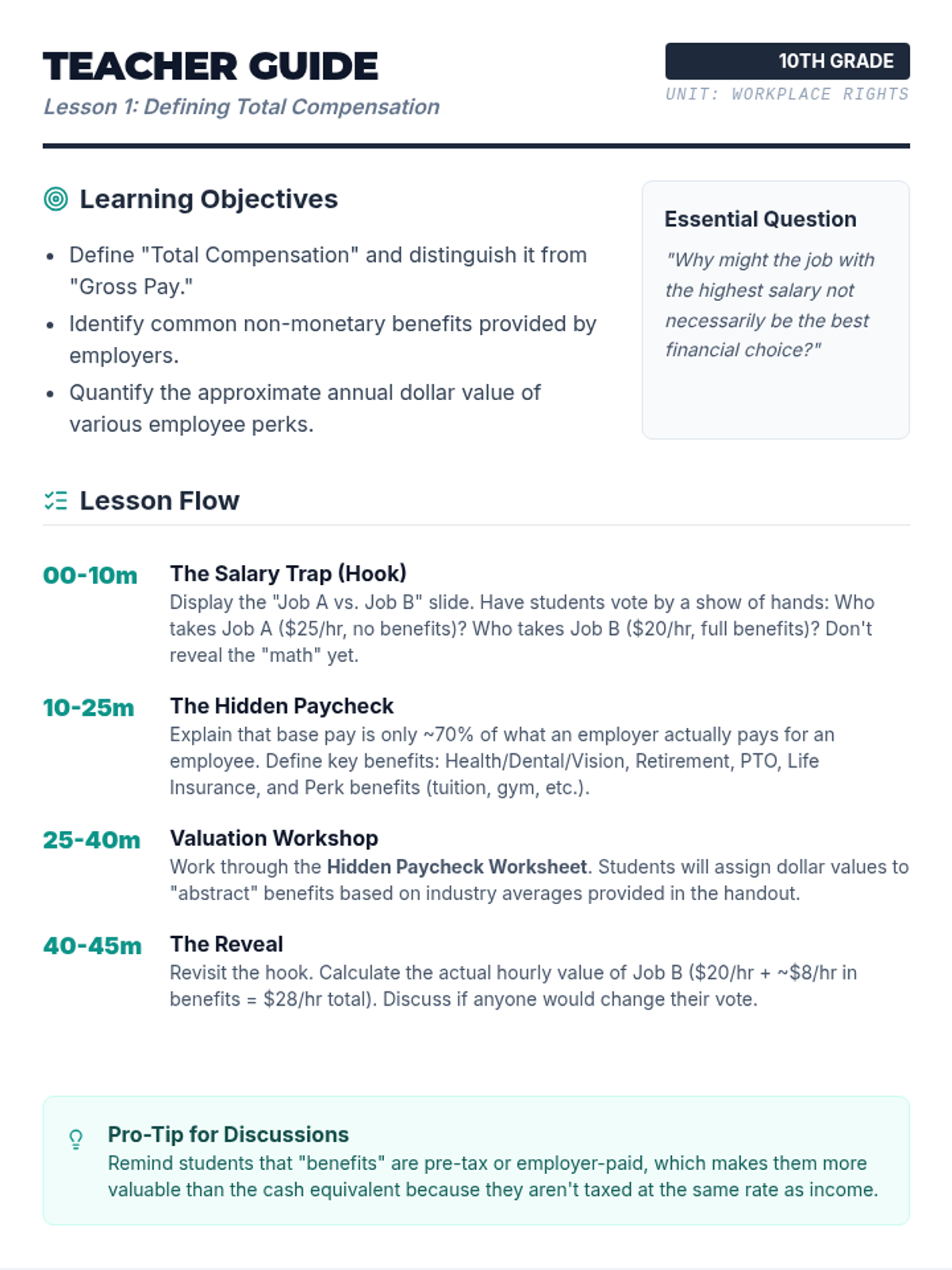
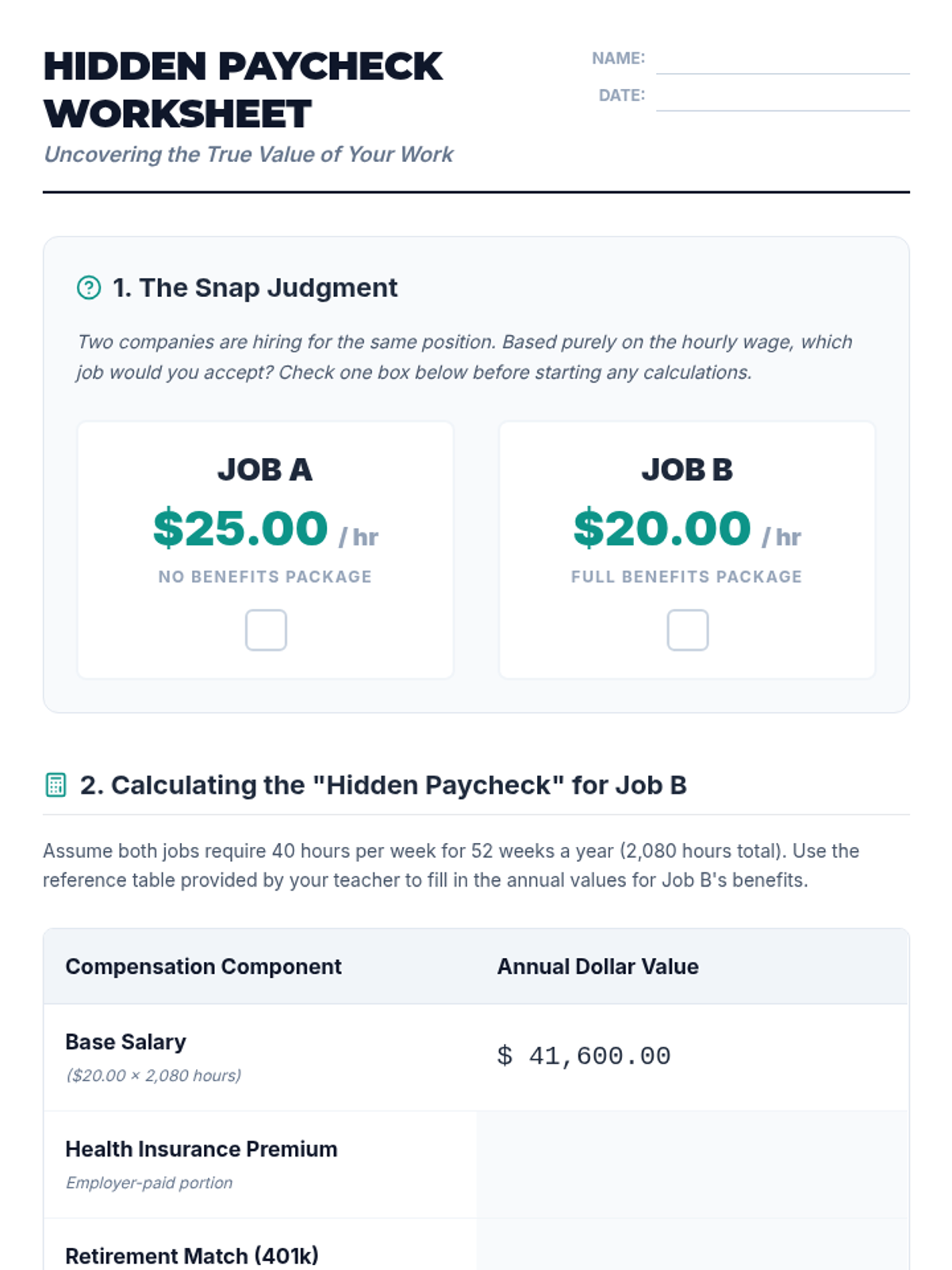
A 5-lesson unit for 9th graders exploring total compensation, including health insurance, paid time off, and retirement benefits, culminating in a comparative analysis of job offers.
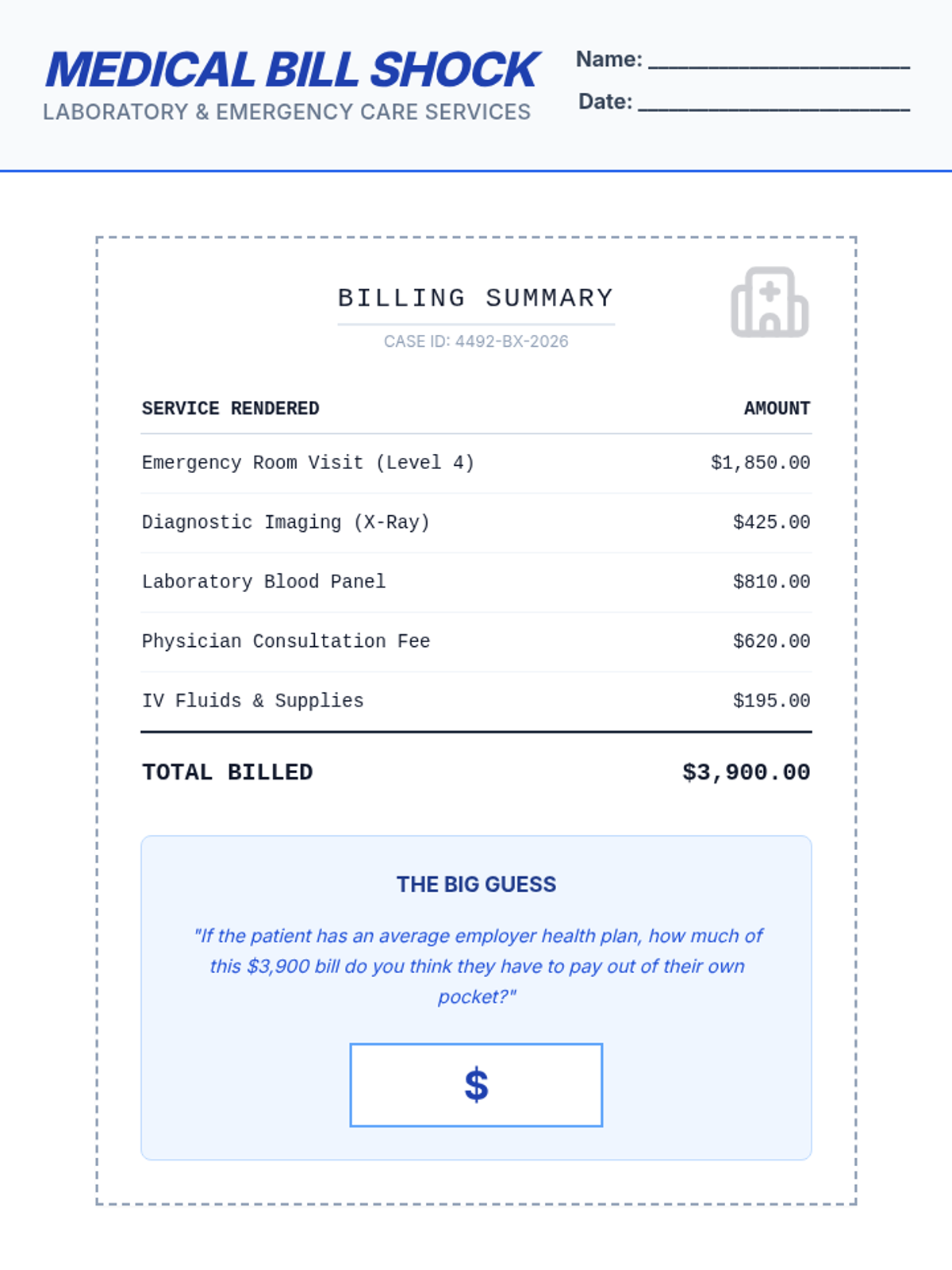
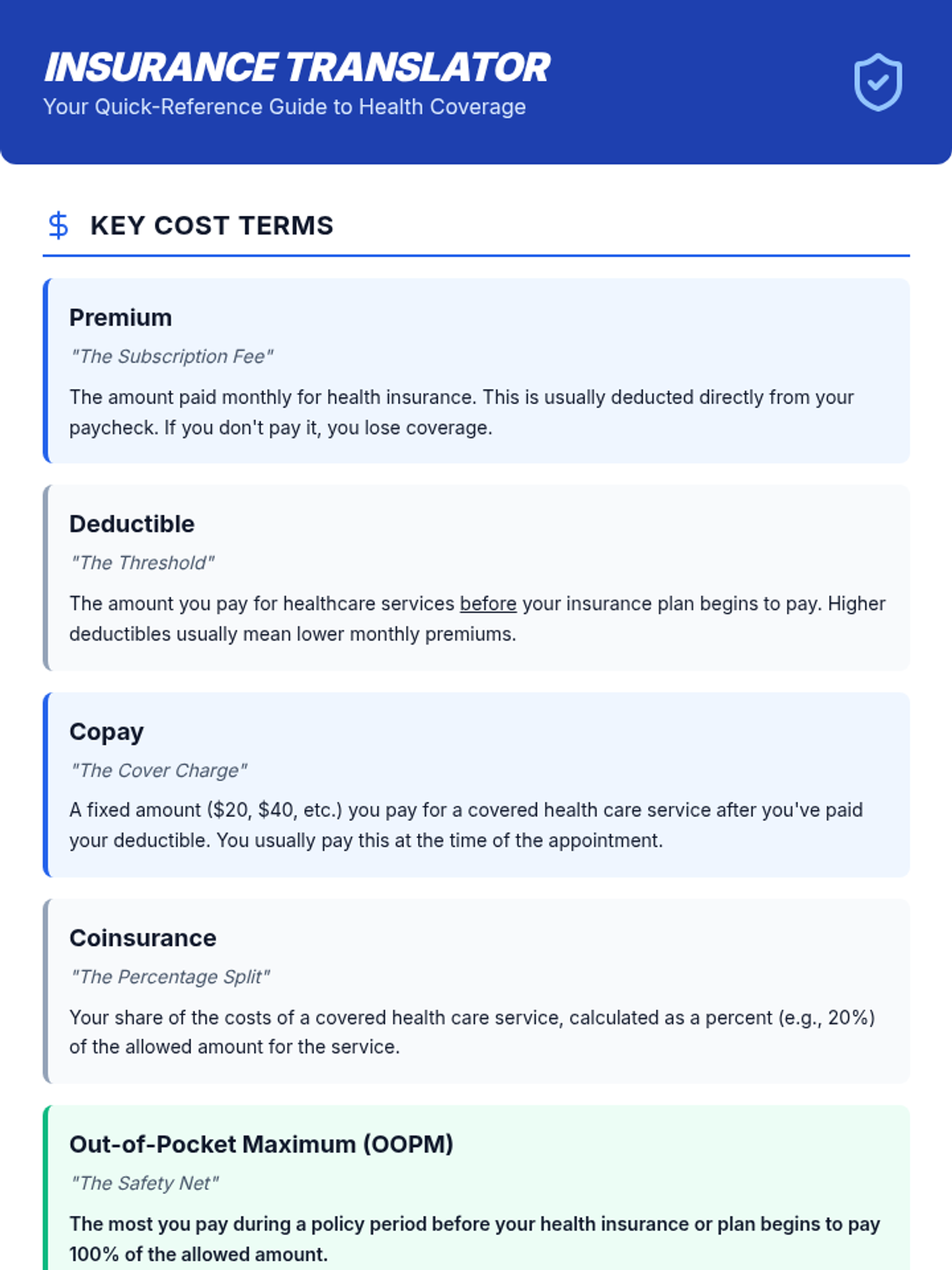
A comprehensive unit for seniors to navigate the complexities of employer-sponsored health and insurance benefits, moving from basic vocabulary to full-scale benefit selection simulations.
This sequence explores workplace benefits beyond salary, focusing on health insurance, retirement matching, and paid leave to help students calculate the true total compensation of a job offer.
This sequence guides 10th-grade students through the complex world of employee benefits, shifting focus from hourly wages to total compensation. Students learn to value health insurance, retirement matches, and paid leave to make informed career decisions.
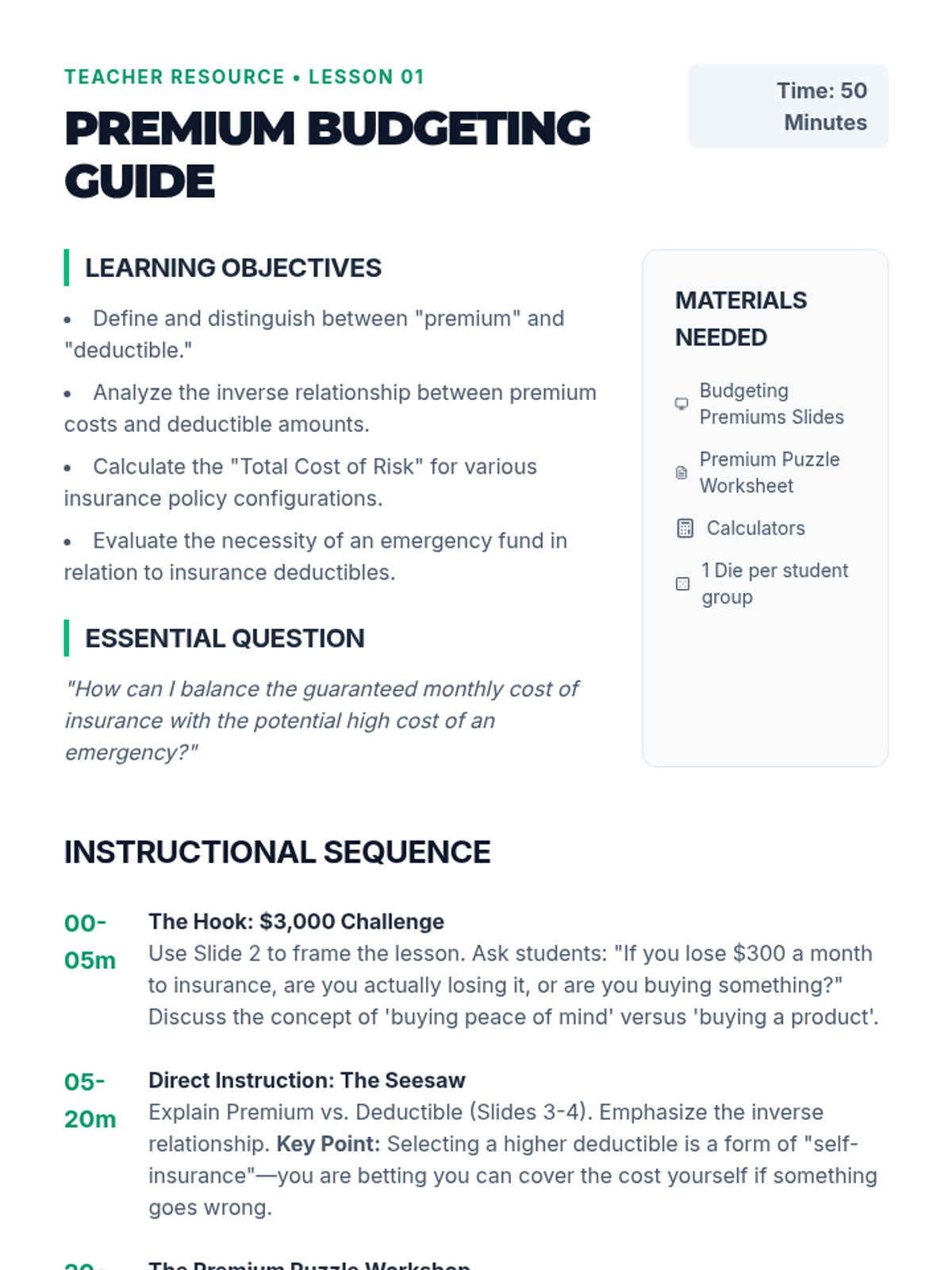
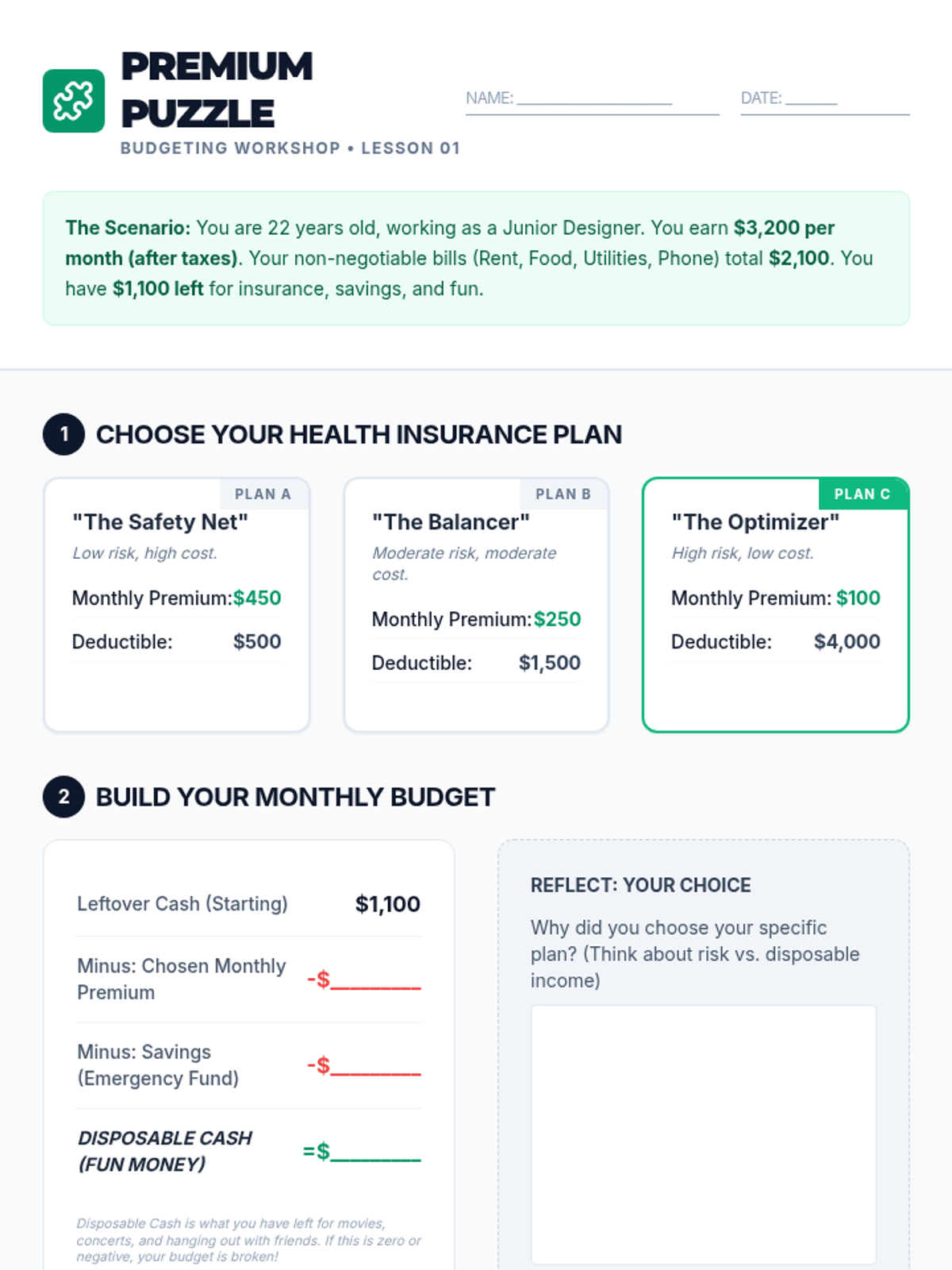
A comprehensive 9th-grade financial literacy unit focused on insurance as a strategic tool for financial stability. Students explore budgeting for premiums, income protection, life insurance types, the ethics of fraud, and participate in a life-stage simulation to manage evolving risks.
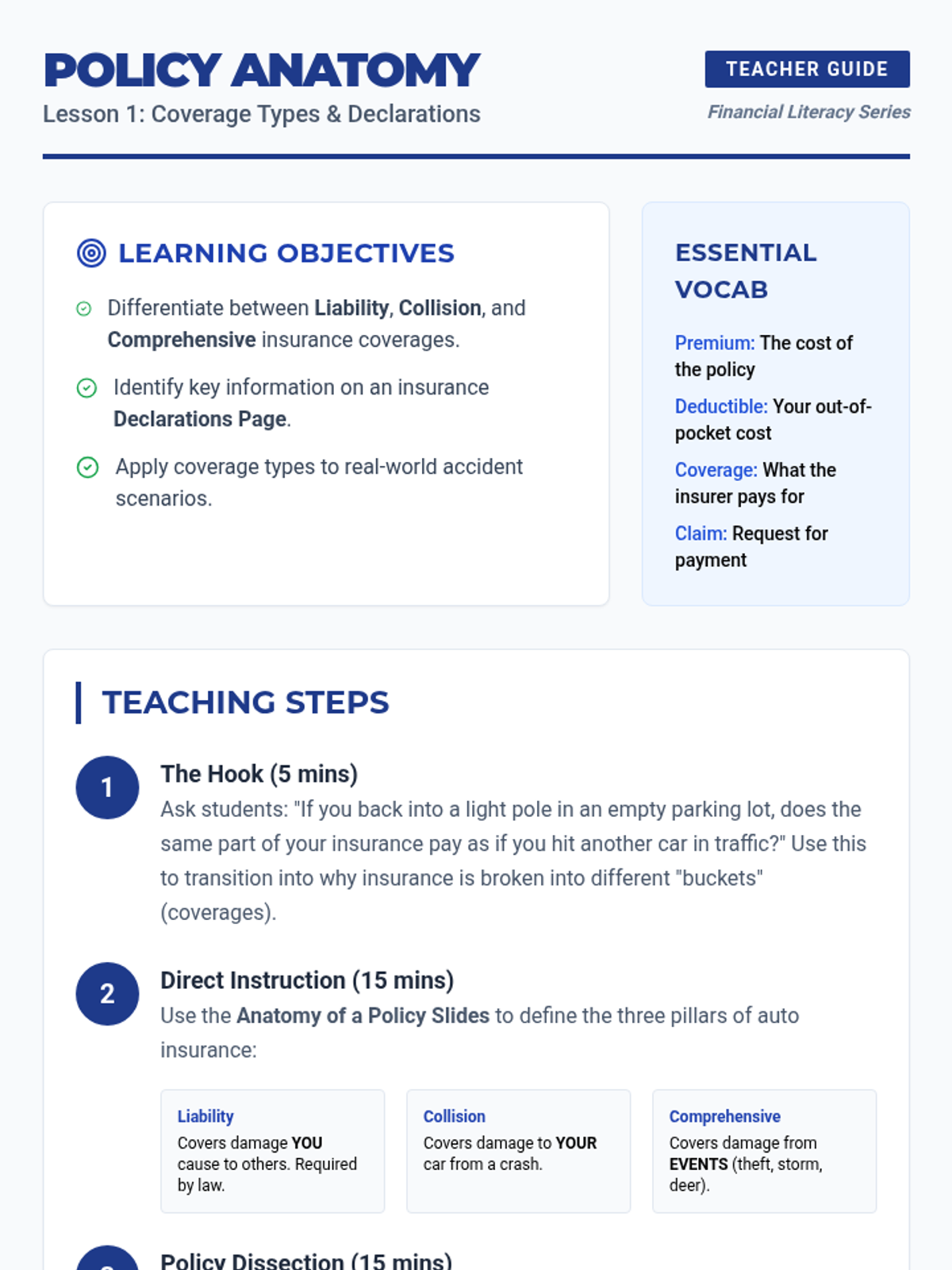
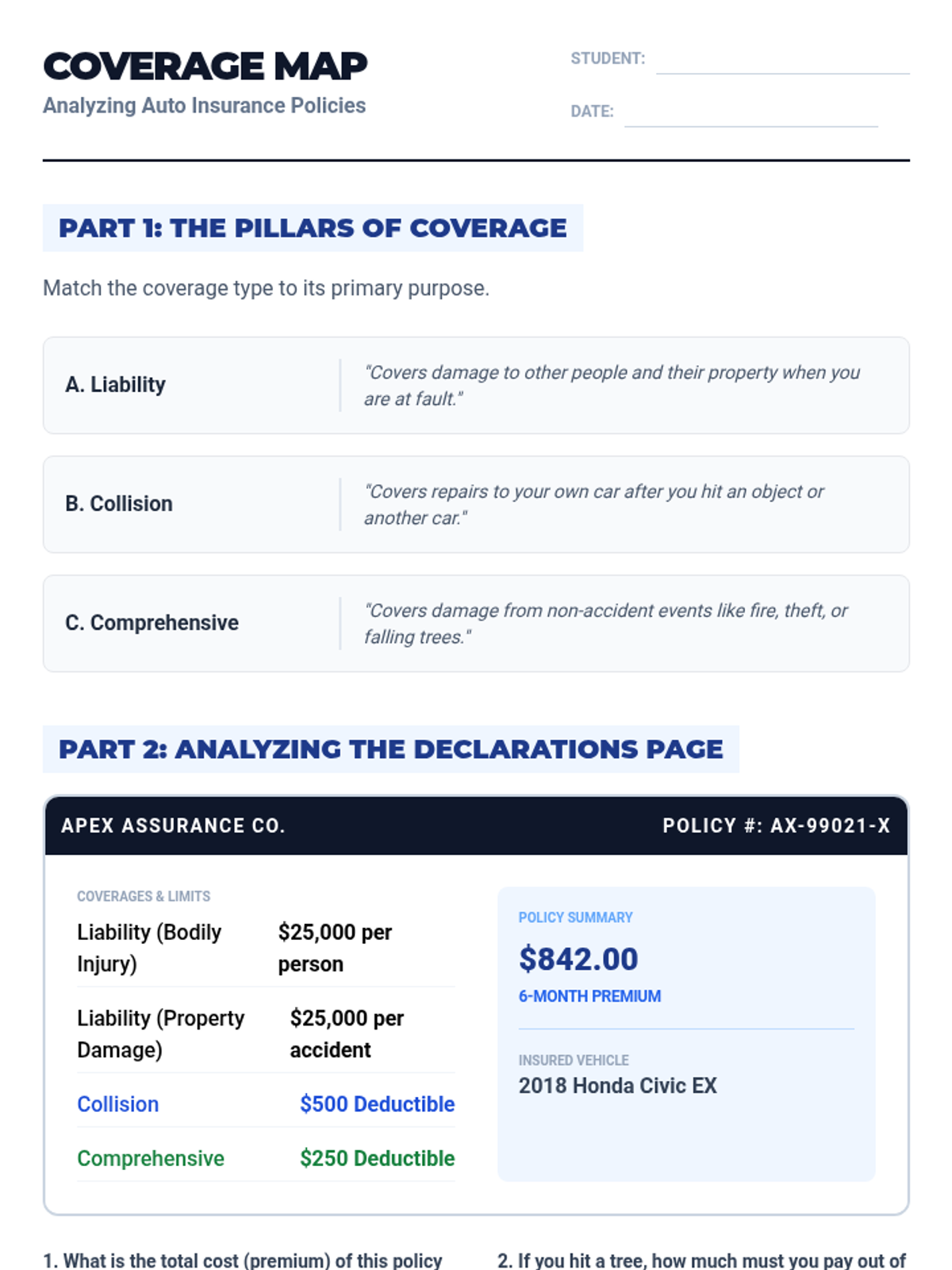
Students analyze the components of an auto policy, investigate factors influencing rates for teen drivers, and practice filing mock claims using real-world case studies. The sequence concludes with a comparative project to select optimal coverage for a first car.
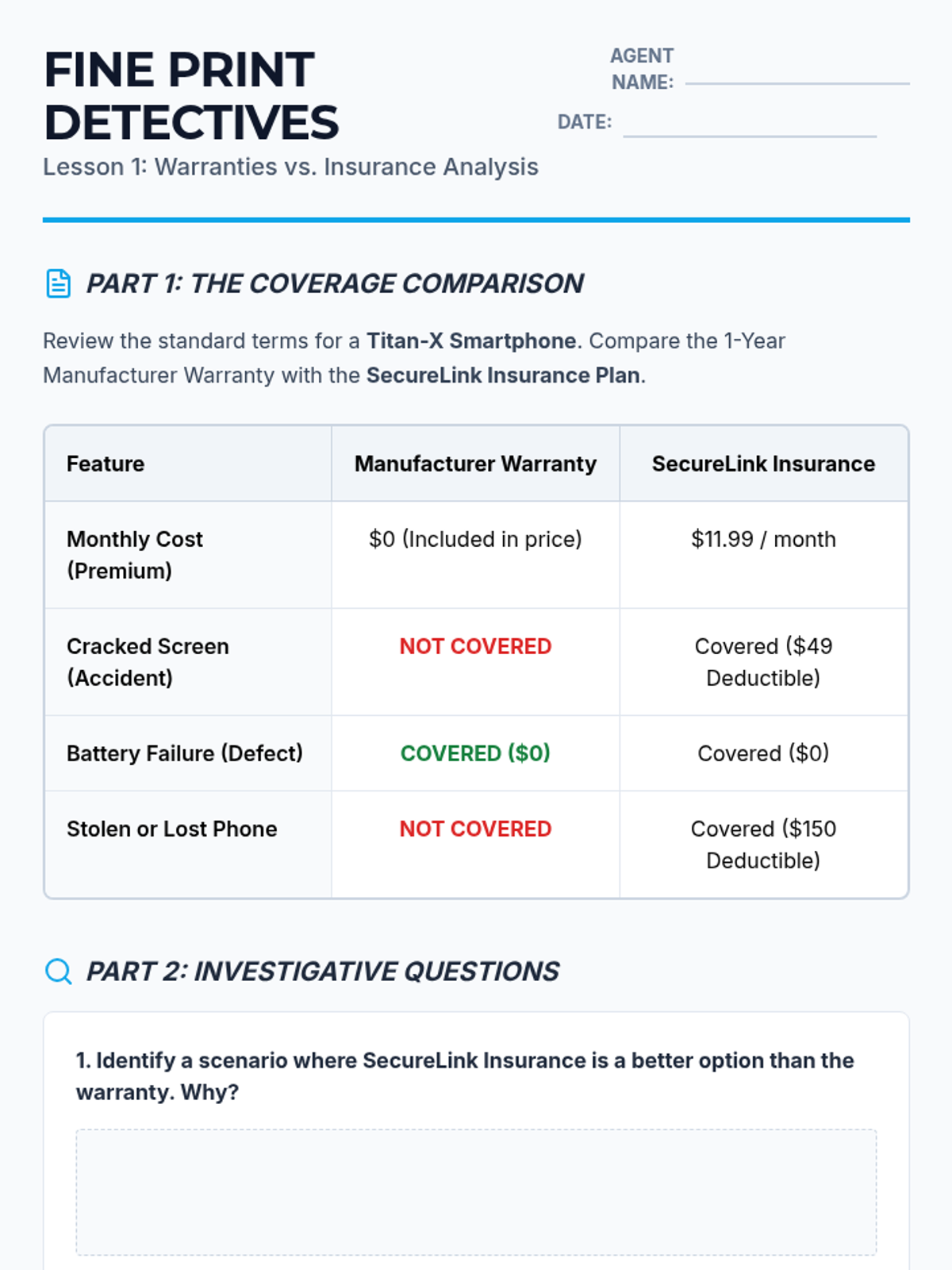
A comprehensive 5-lesson sequence on financial literacy focusing on insurance, warranties, and healthcare coverage, using relatable contexts like smartphones and personal belongings.
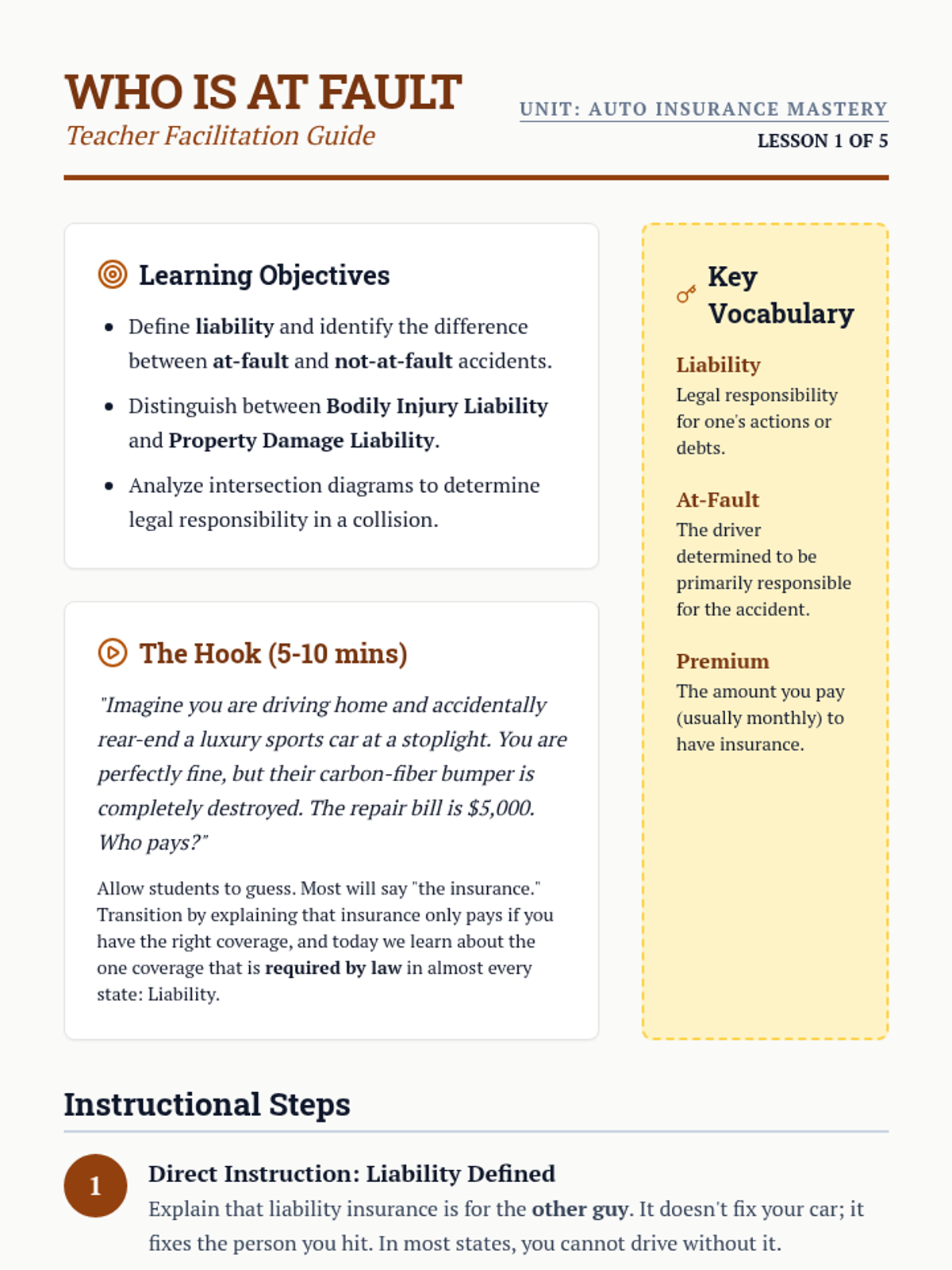
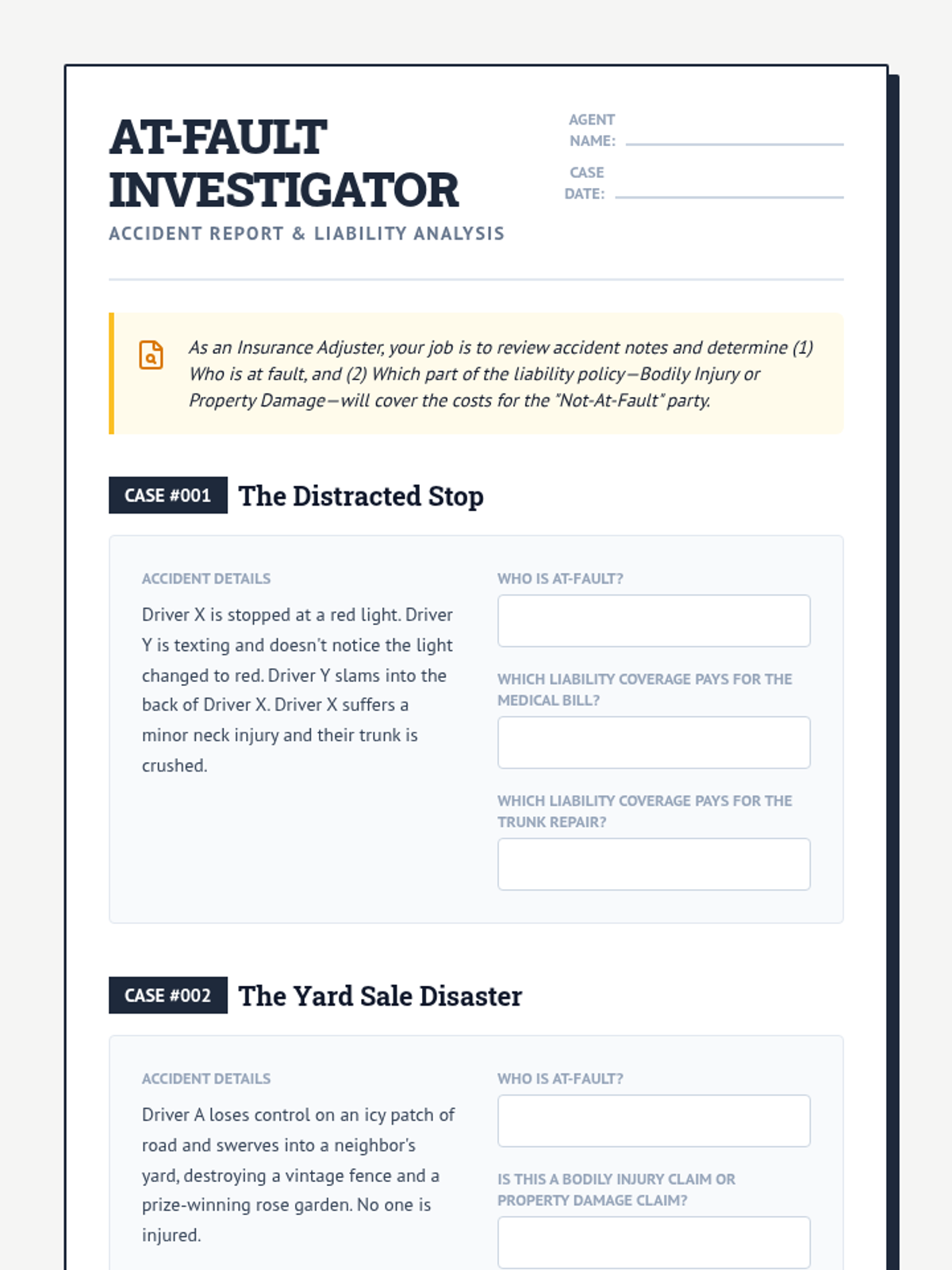
A comprehensive 7th-grade financial literacy sequence focused on auto insurance. Students learn about liability, collision, and comprehensive coverage through case studies and simulations, culminating in an investigation of how individual factors influence insurance rates.
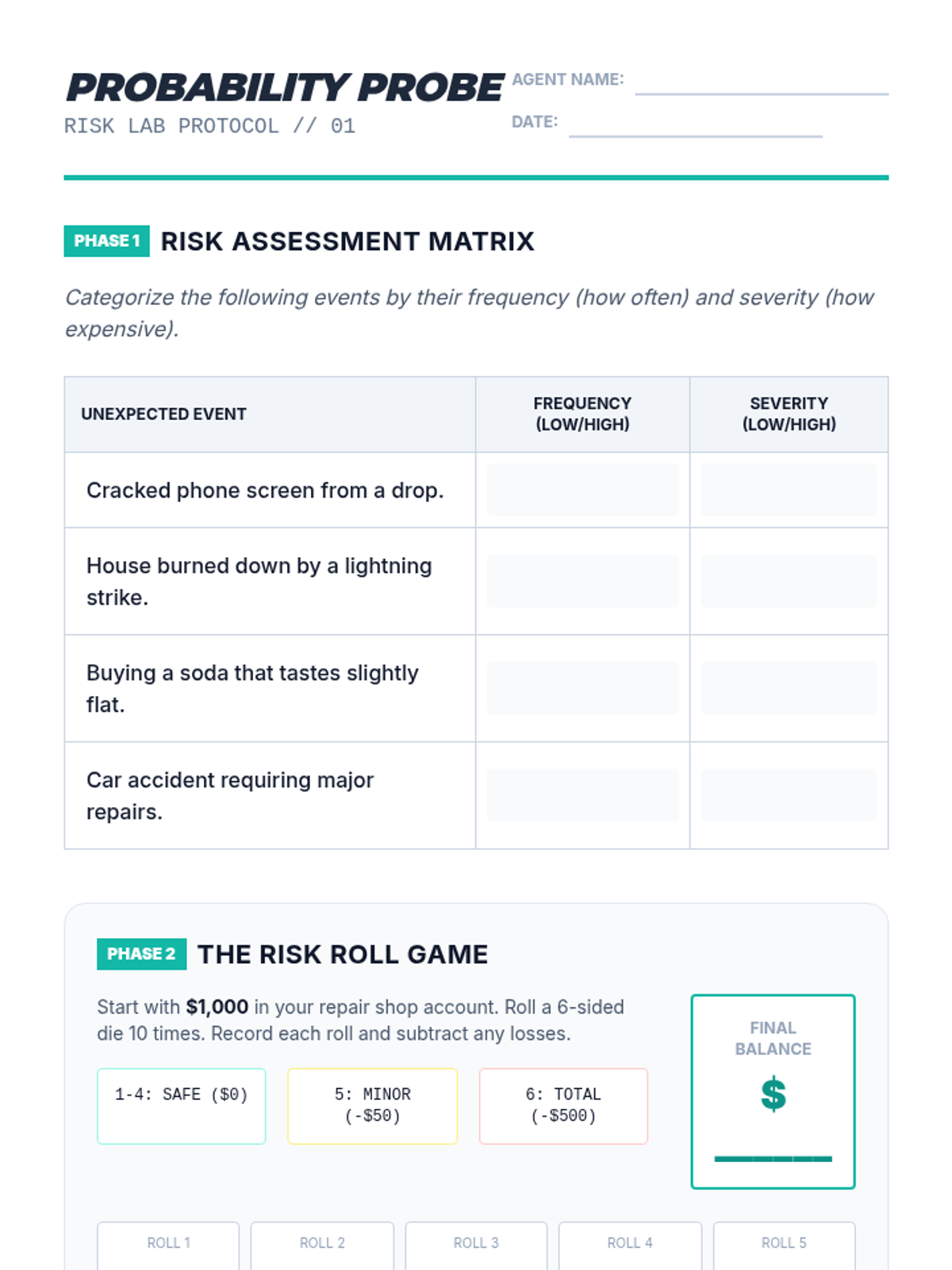
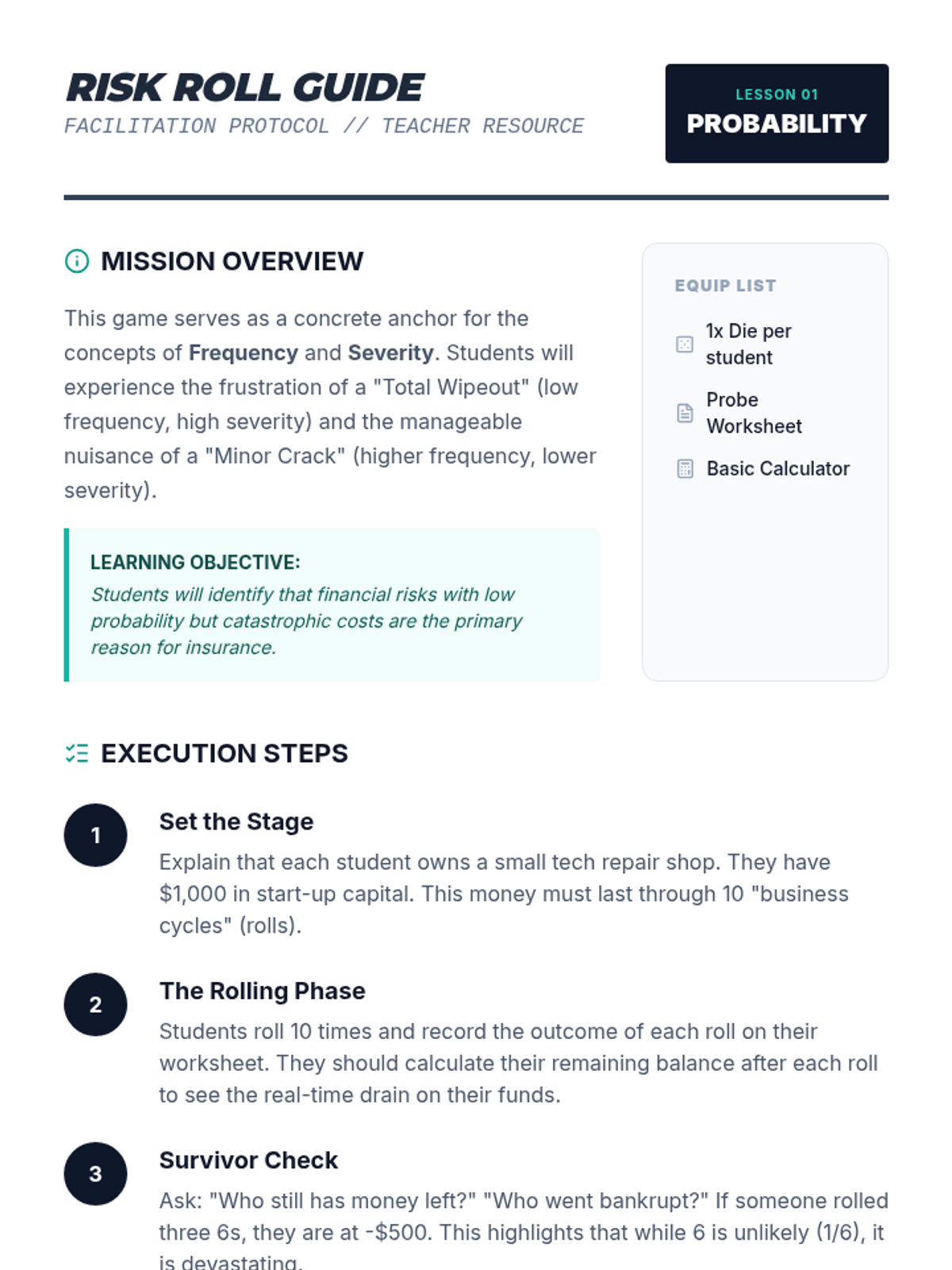
A gamified introduction to insurance, focusing on risk assessment, shared risk pools, and the trade-offs between premiums and deductibles. Students use simulations to understand how insurance provides a financial safety net.
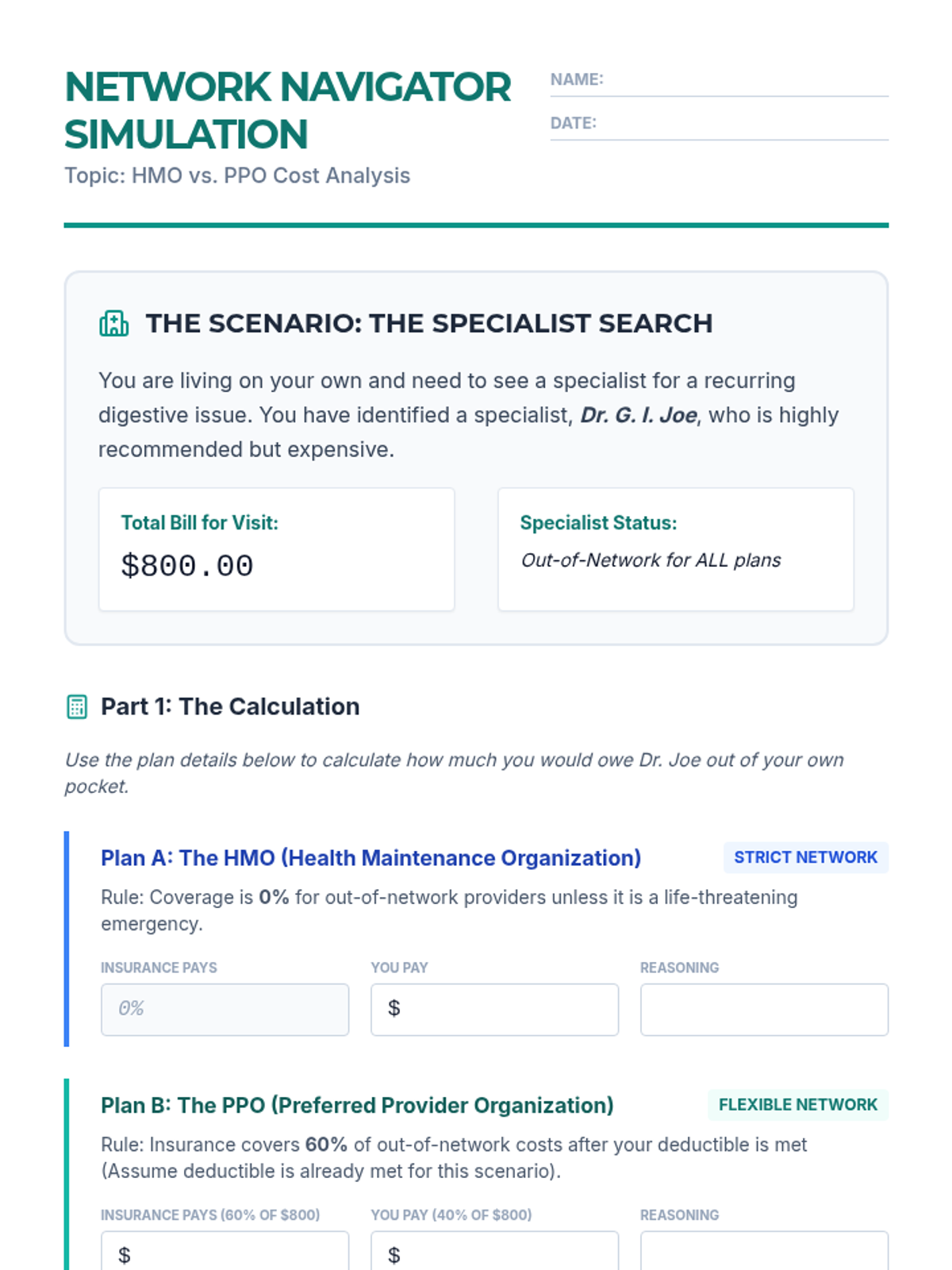
This project-based sequence simulates the process of selecting health and property insurance as a young adult living independently. Students explore HMO vs. PPO networks, medical math (deductibles, copays), and the necessity of renters insurance, culminating in a comprehensive 'safety net' portfolio for a fictional character.
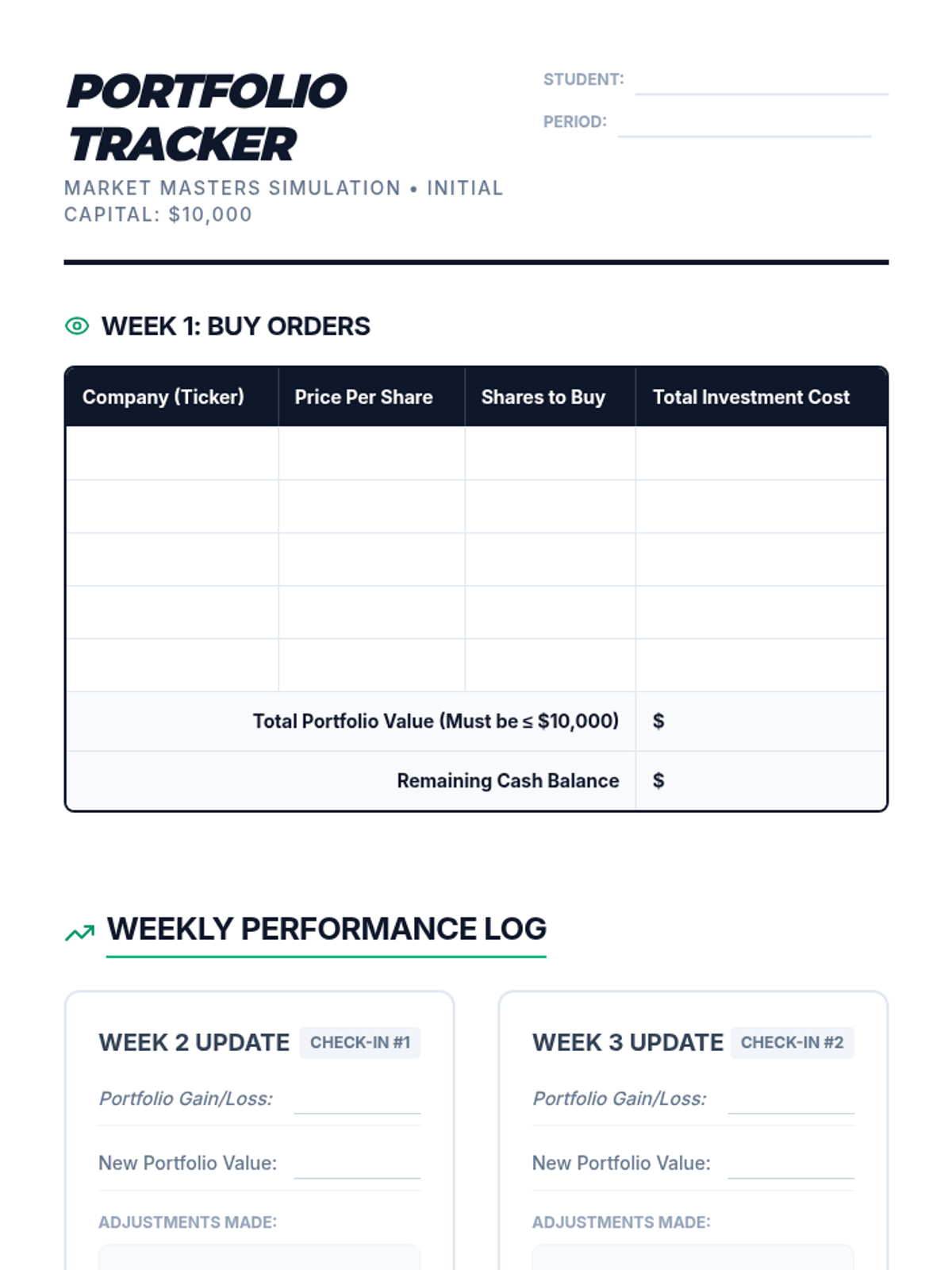
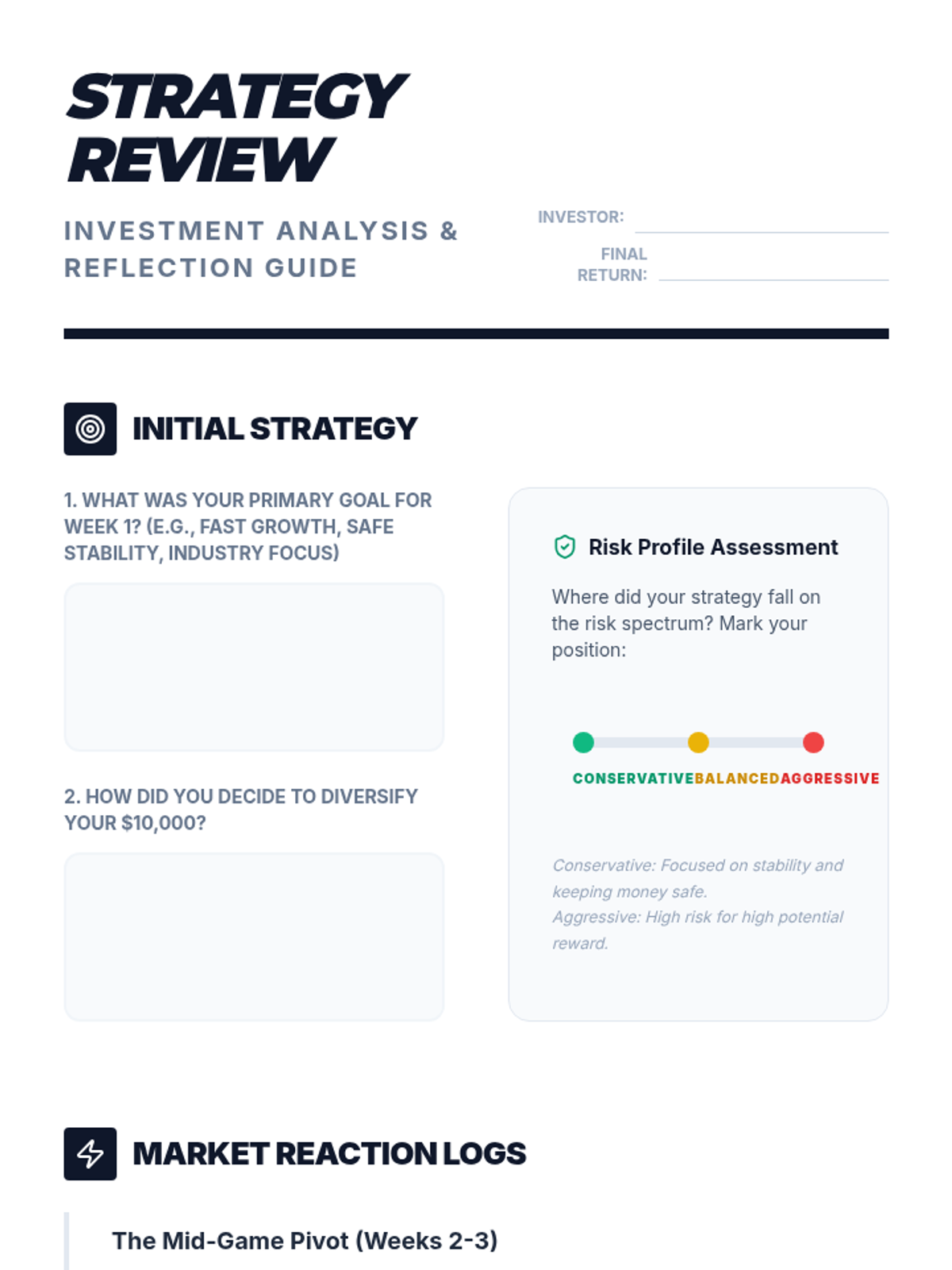
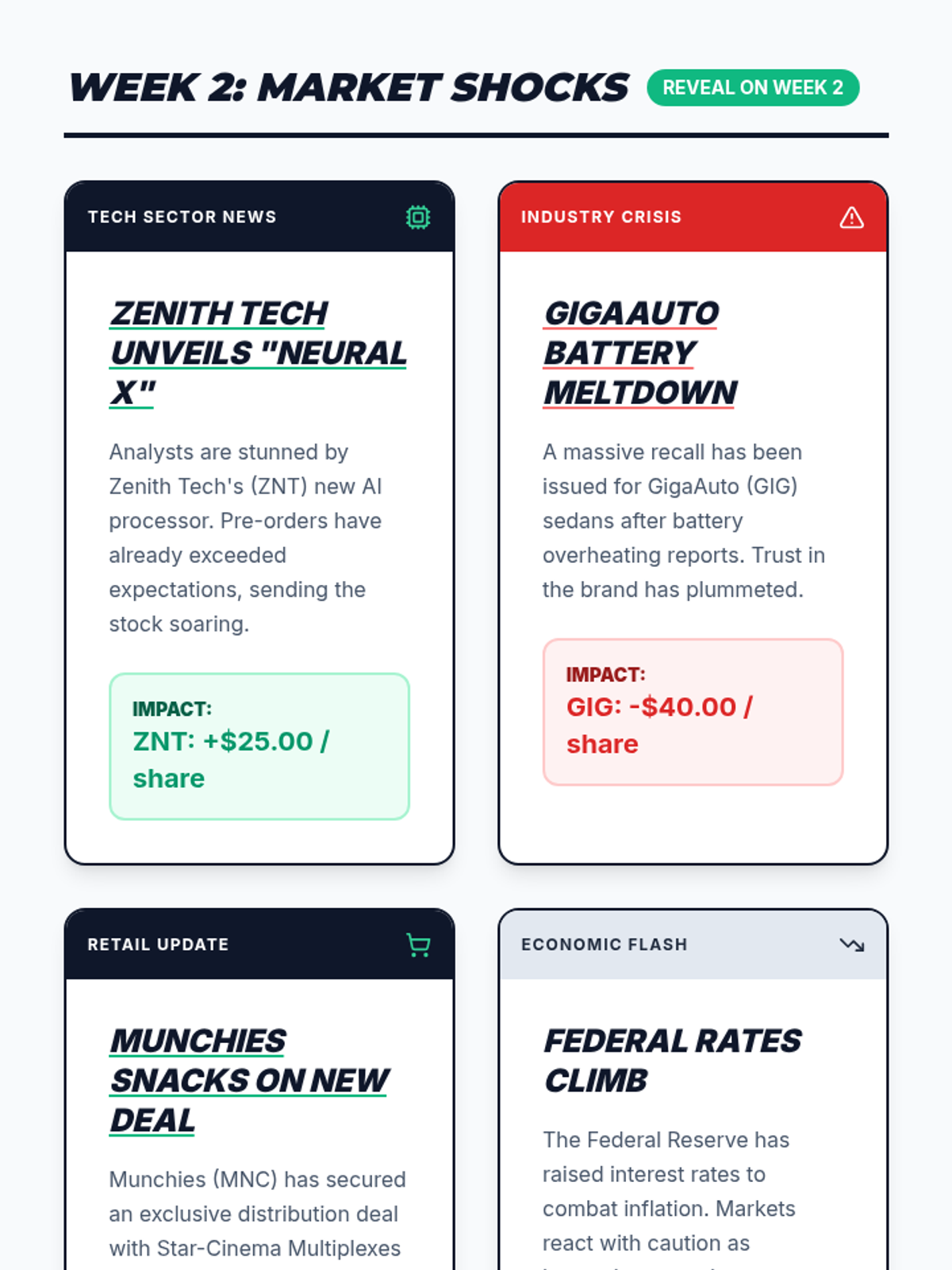
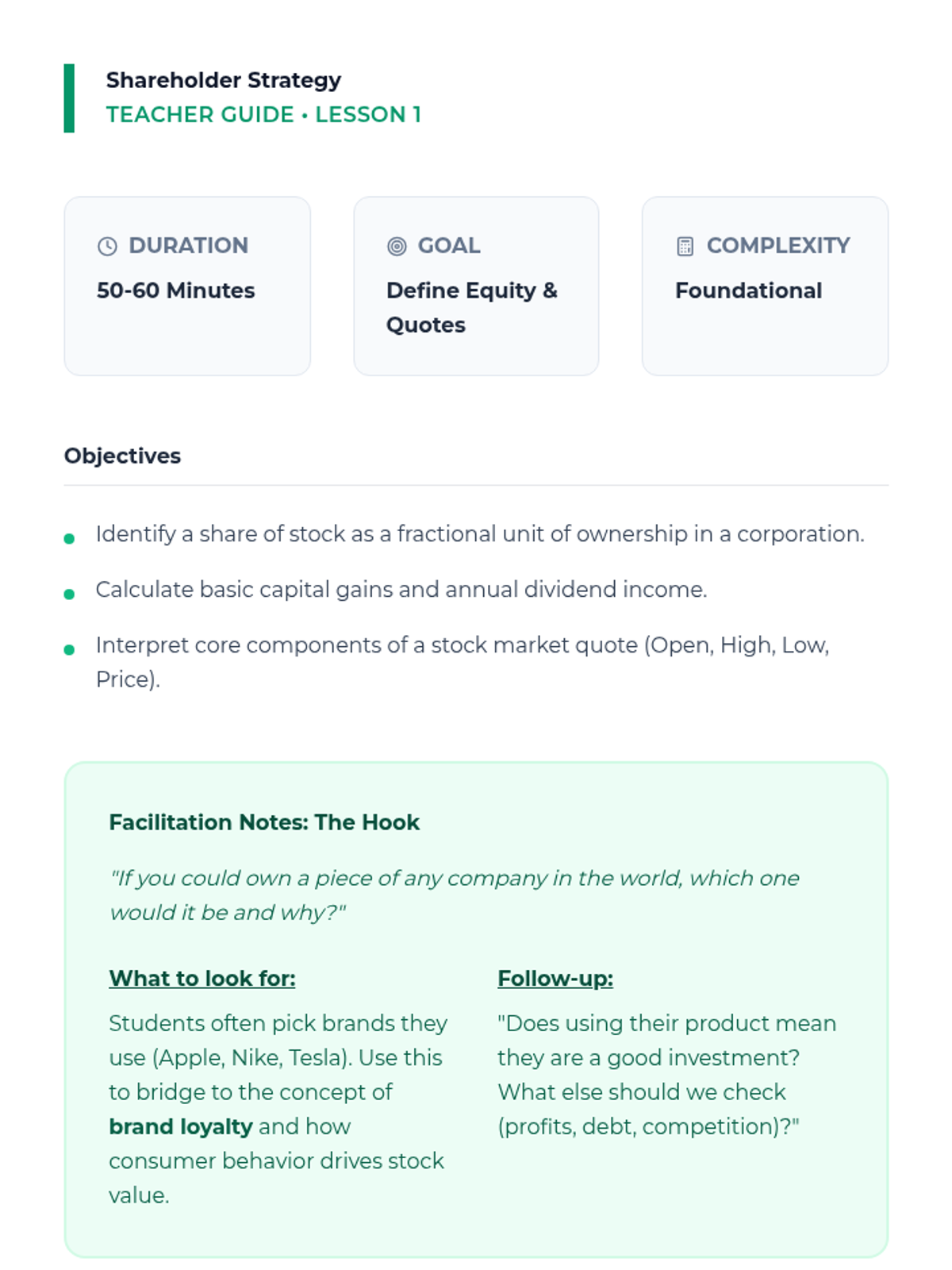
A hands-on introduction to financial markets and investment strategies through a four-week simulated portfolio management project.
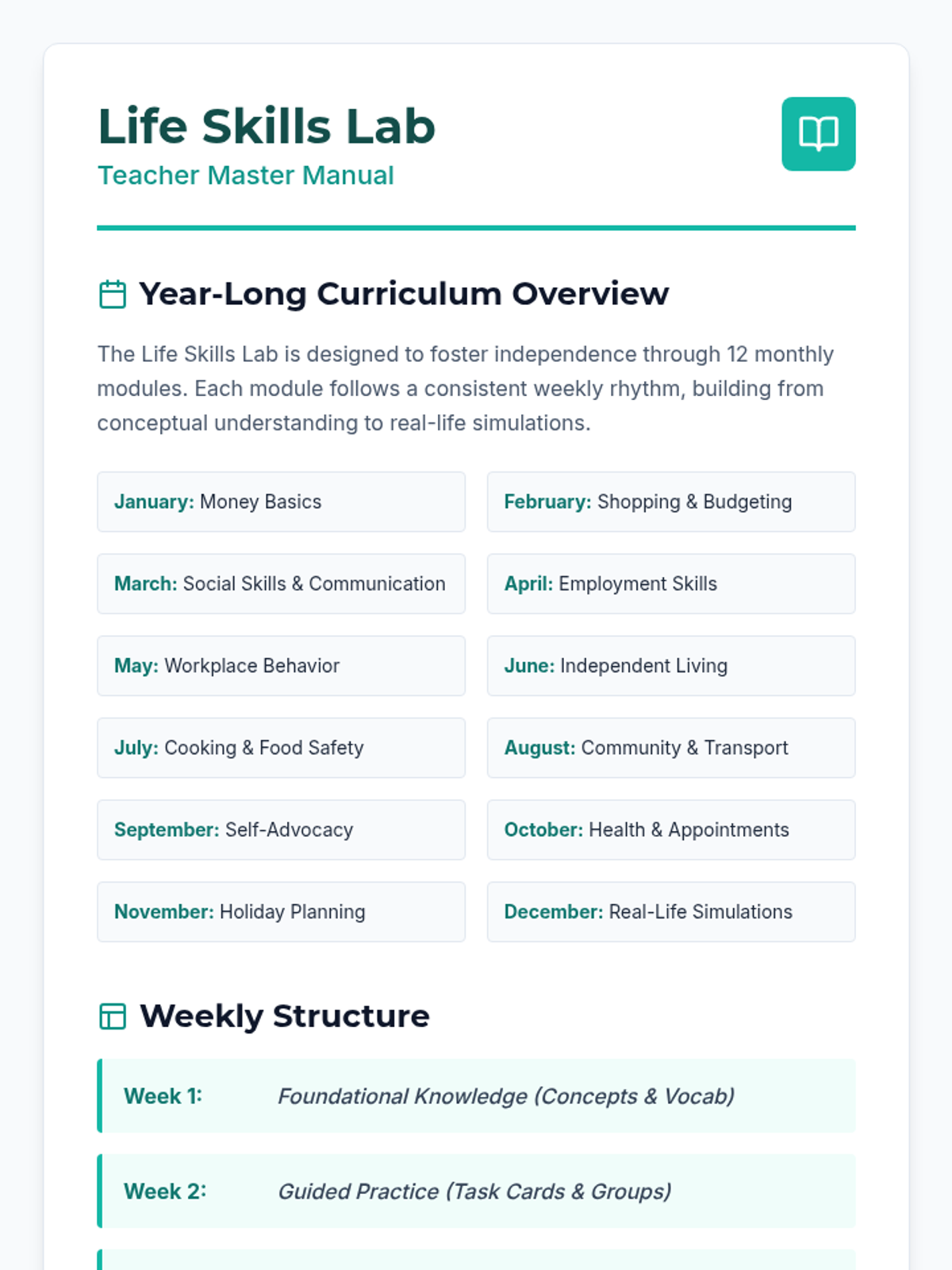
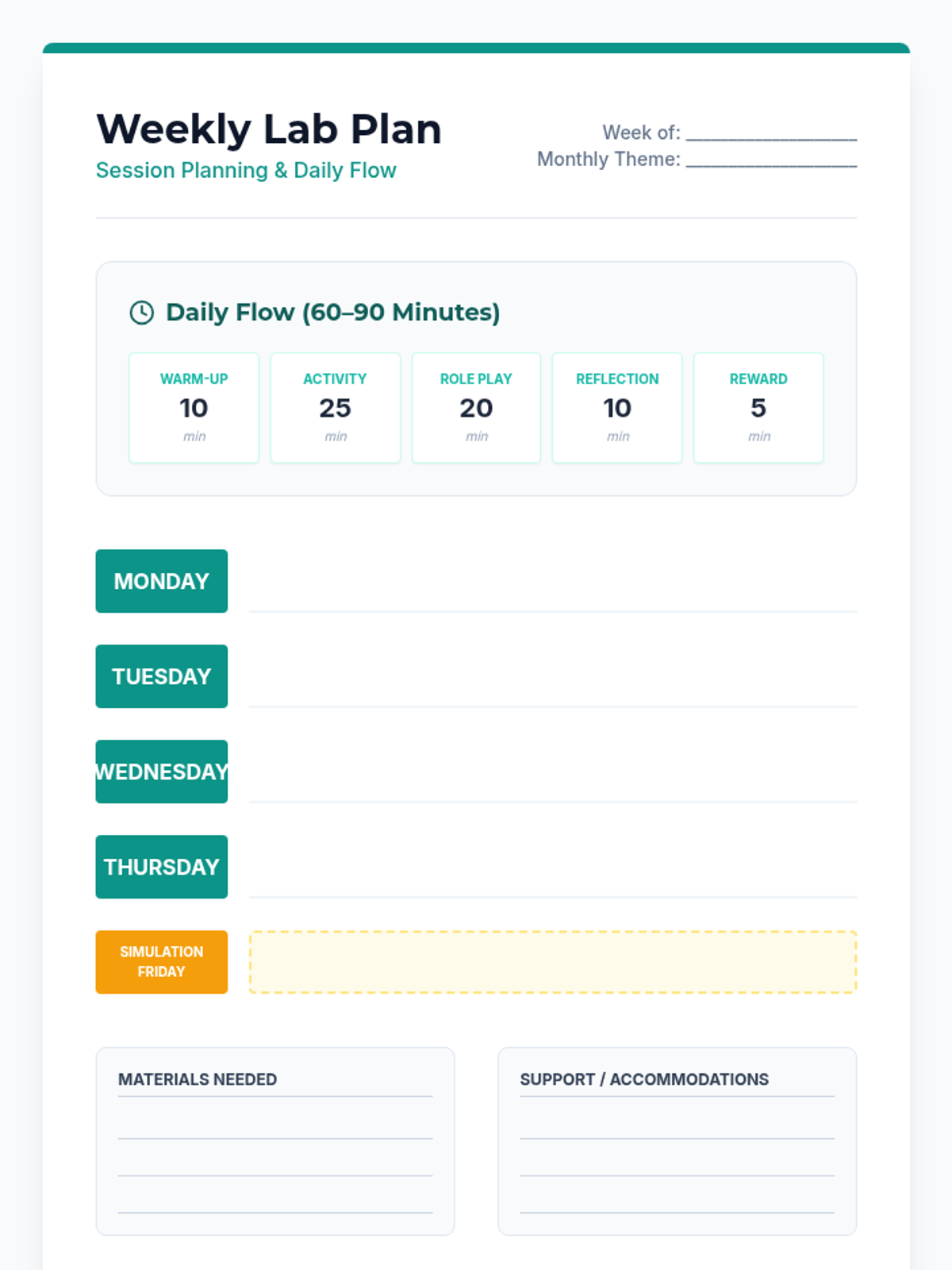
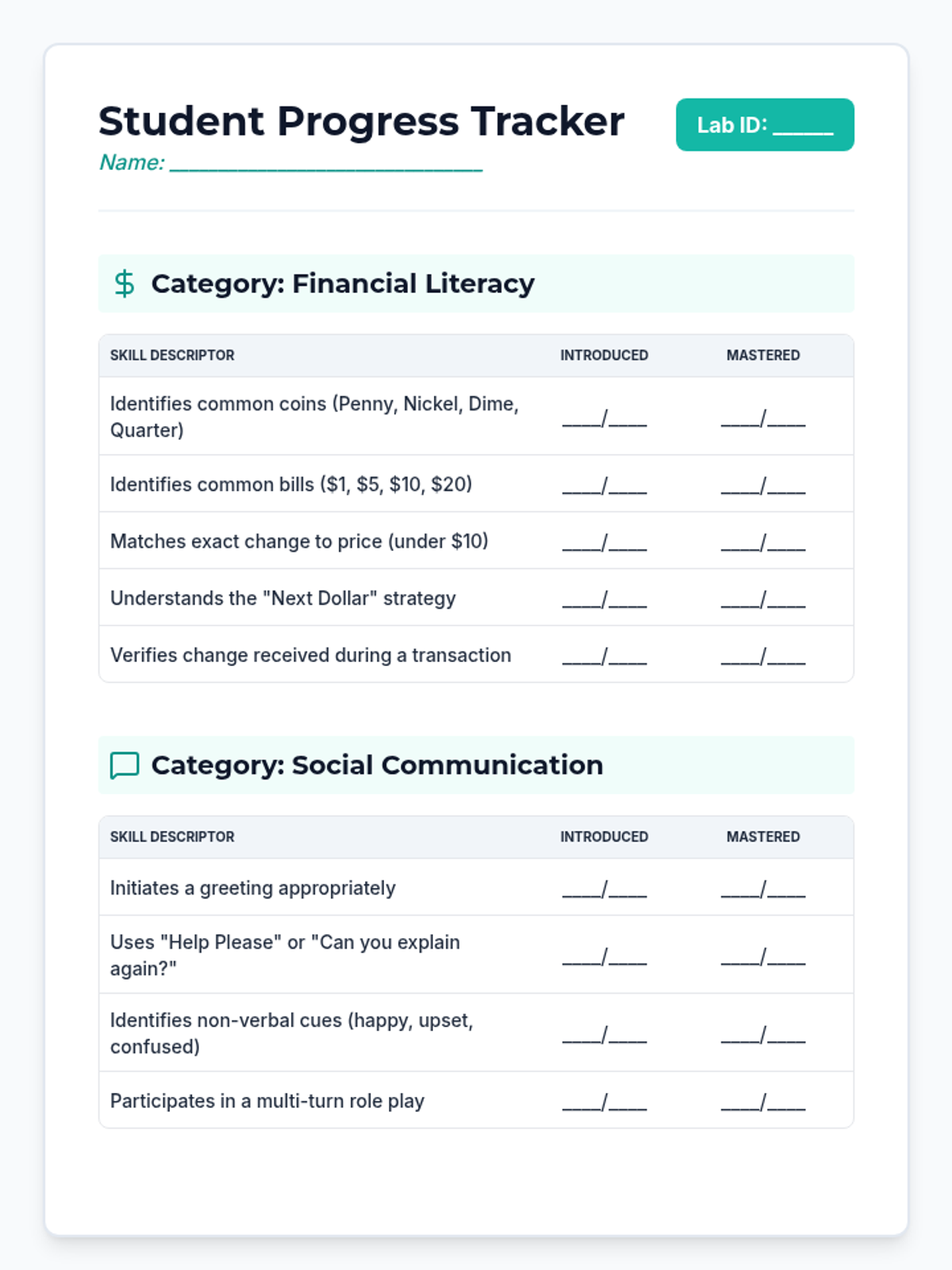
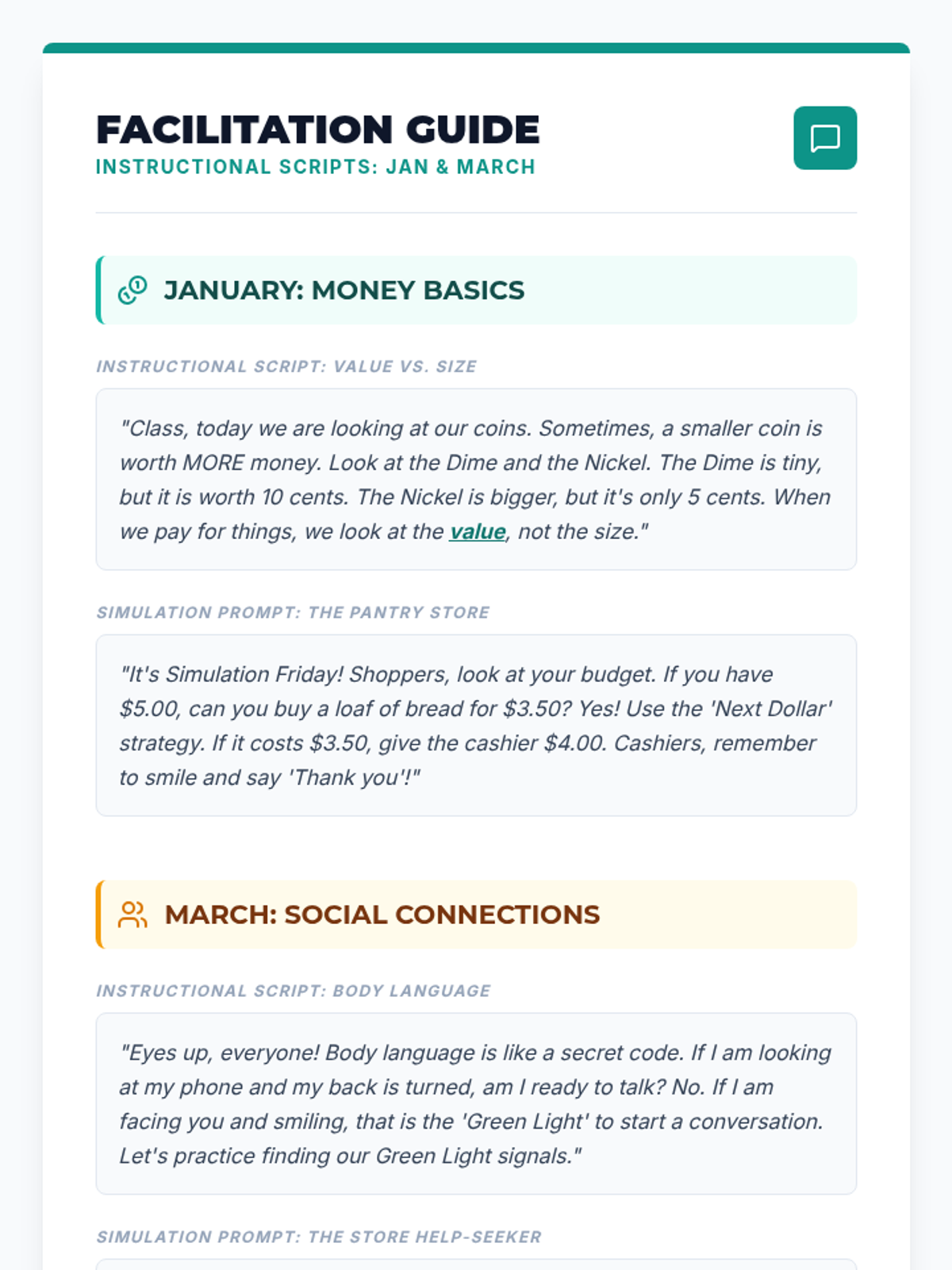
A comprehensive year-long curriculum designed to empower students with essential life skills for independence, focusing on financial literacy, social communication, and real-world simulations.
A full-month curriculum focused on developing independence through real-world simulations, role-playing, and practical application of functional life skills.
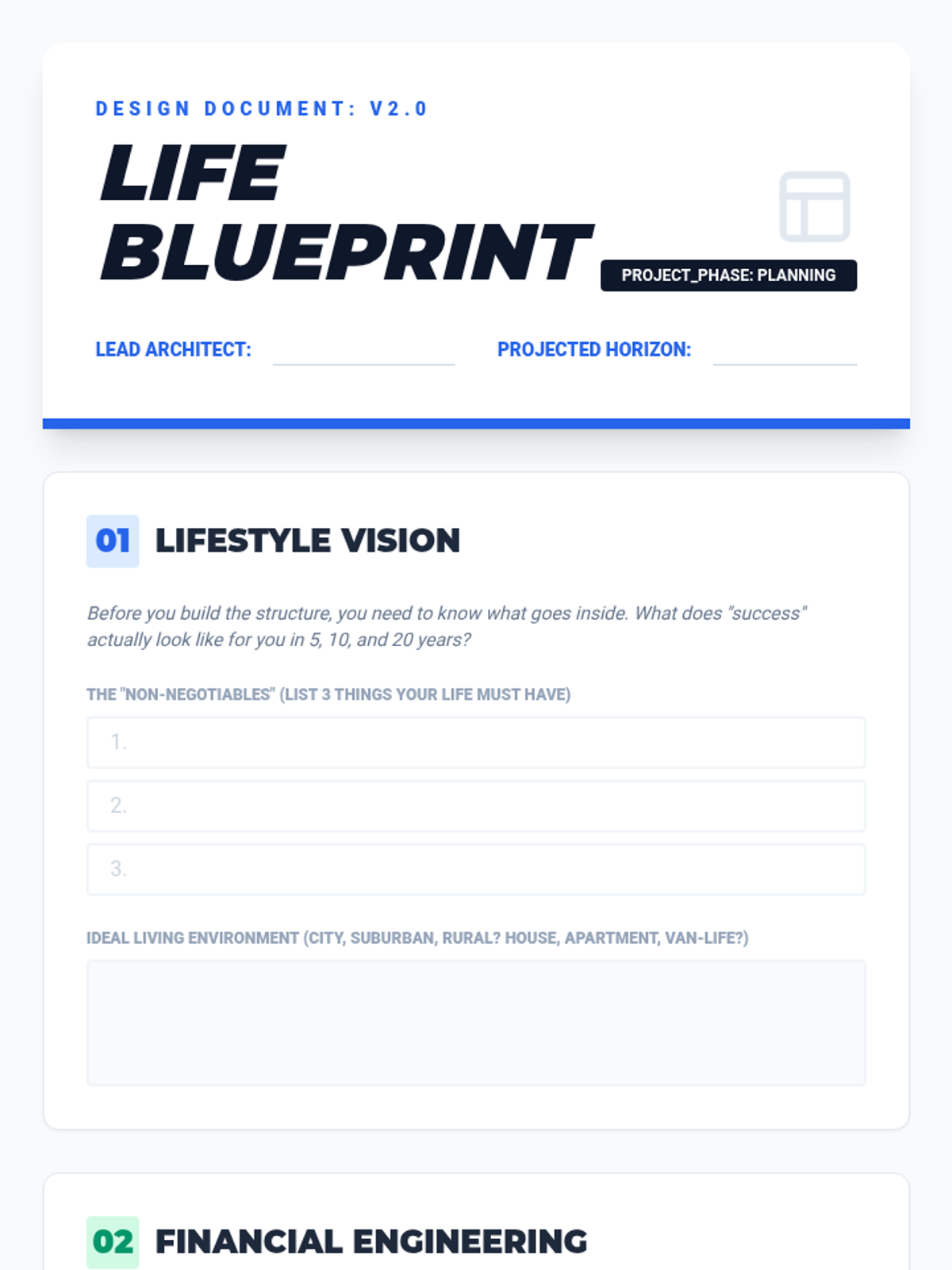
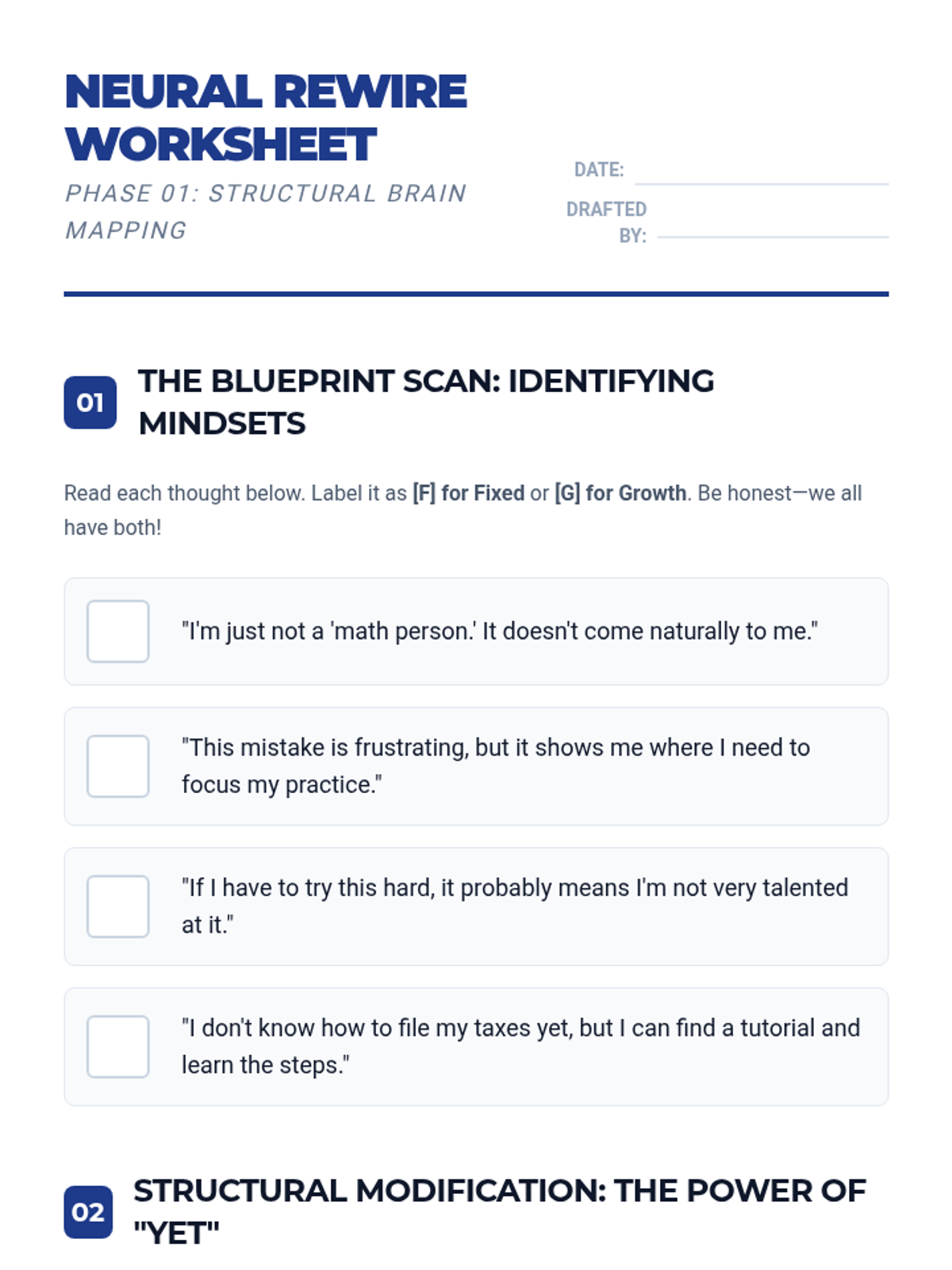
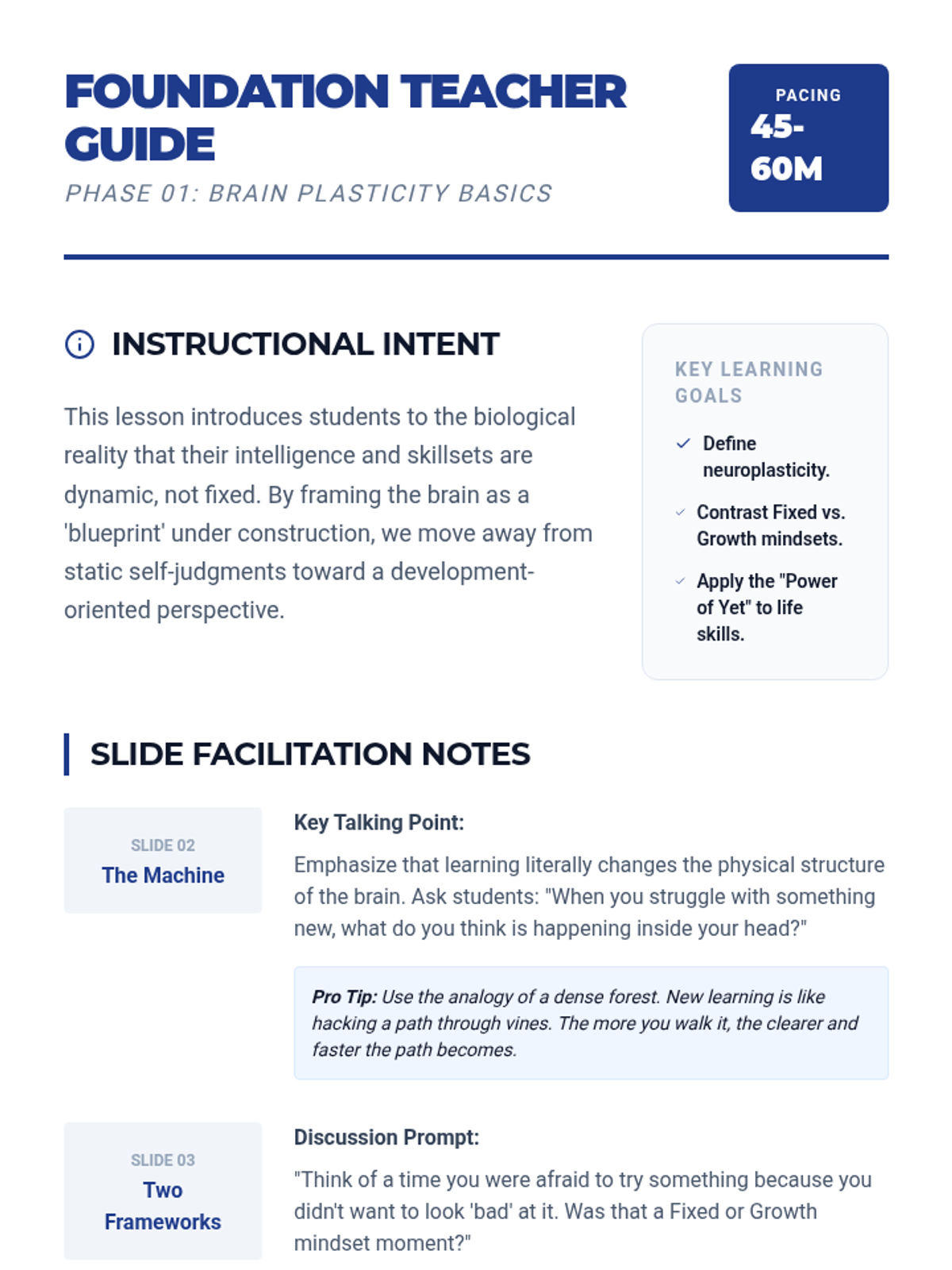
A comprehensive 4-part series for high school students designed to cultivate a growth mindset, master goal-setting, and build resilience for real-world life skills. Using an architectural 'blueprint' theme, students will learn to design their own mental frameworks for success.
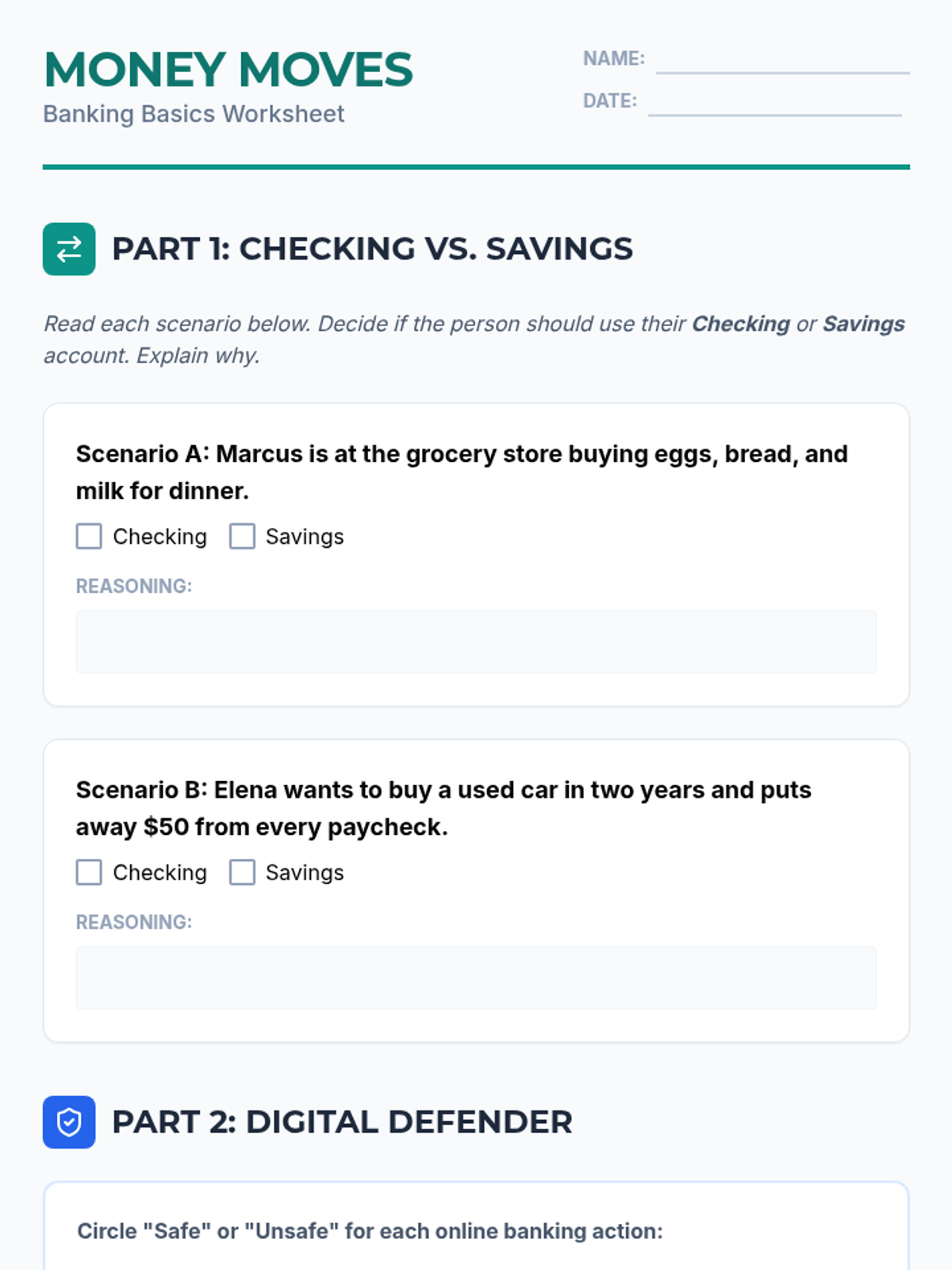
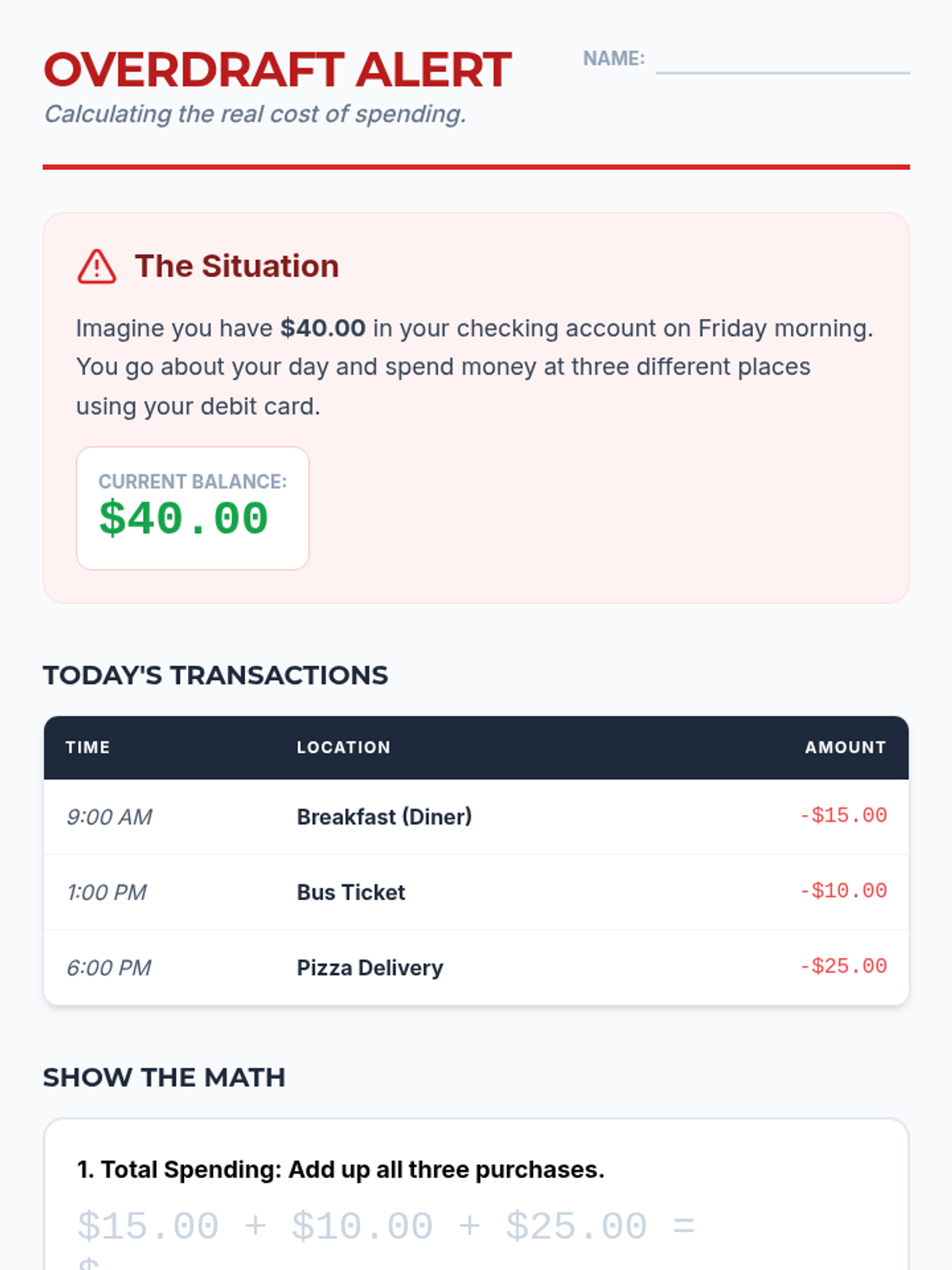
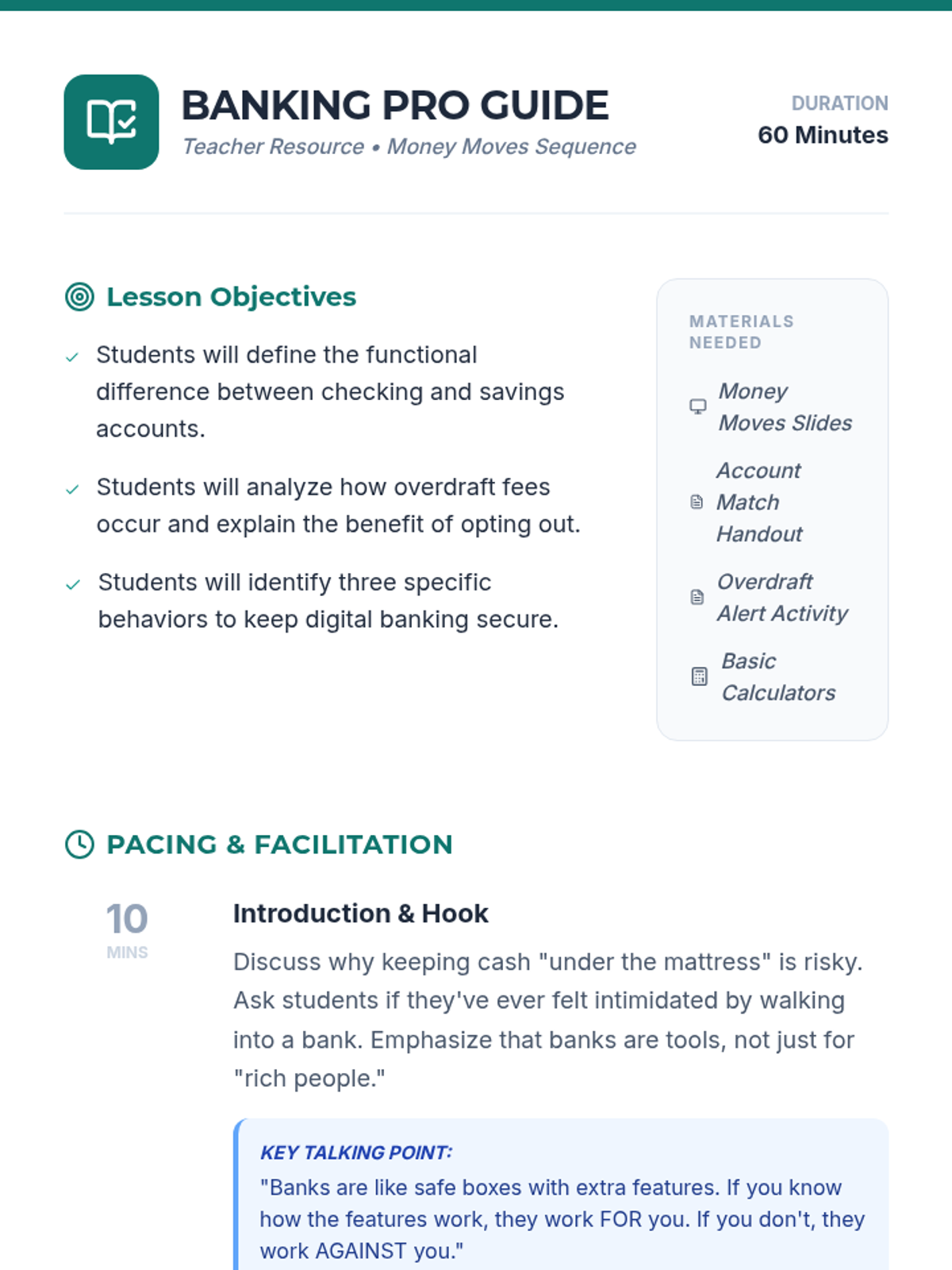
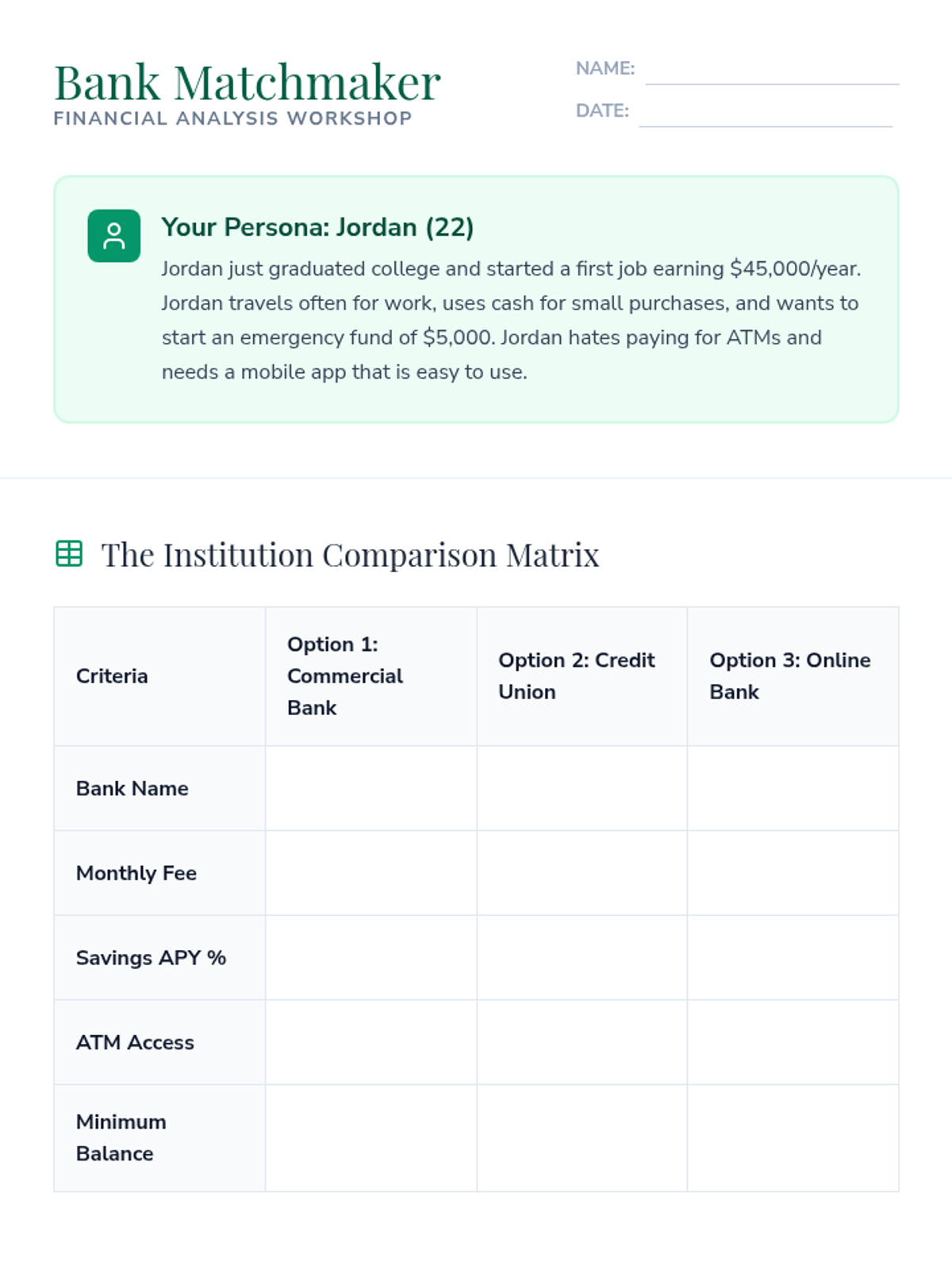
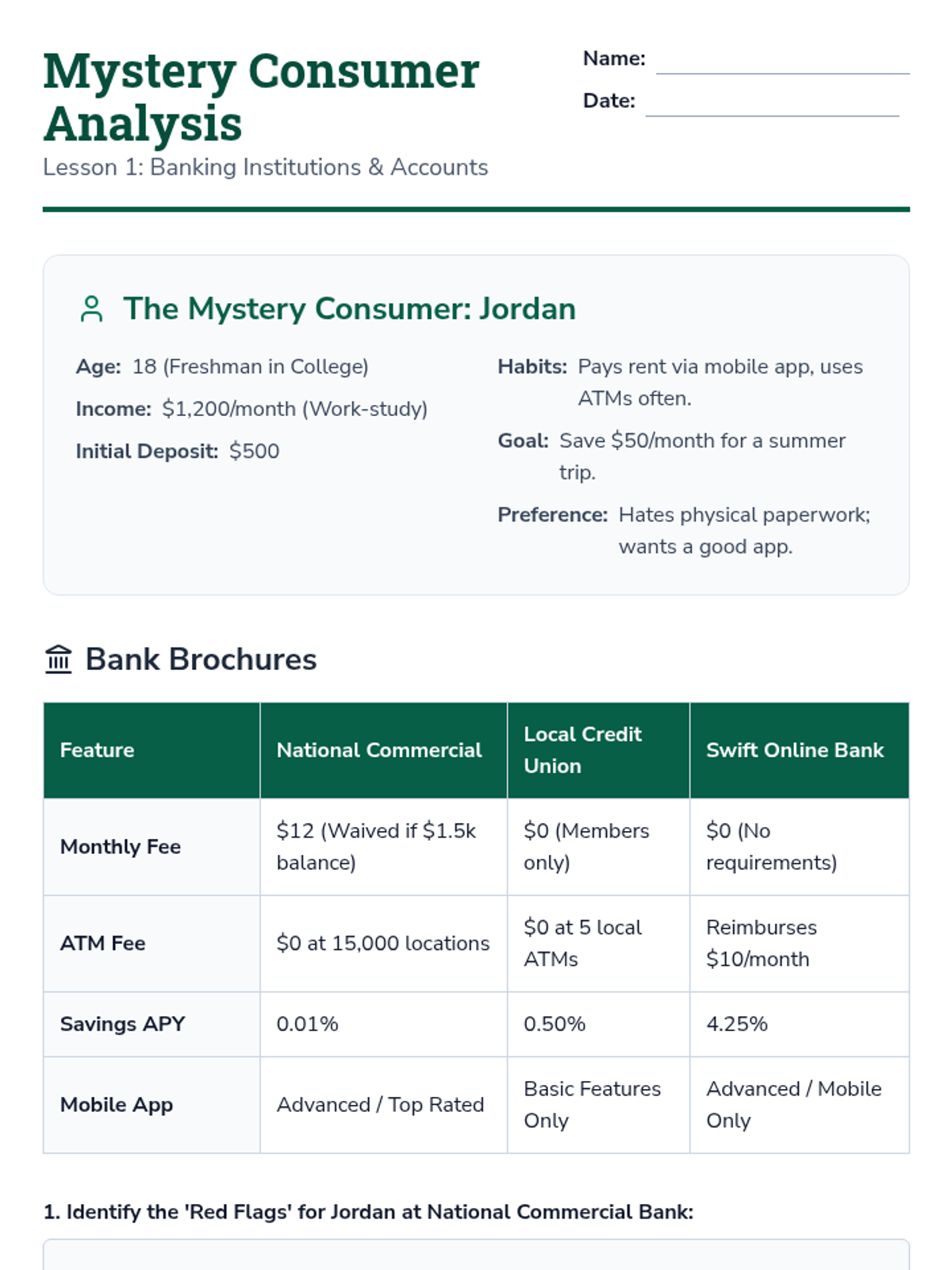
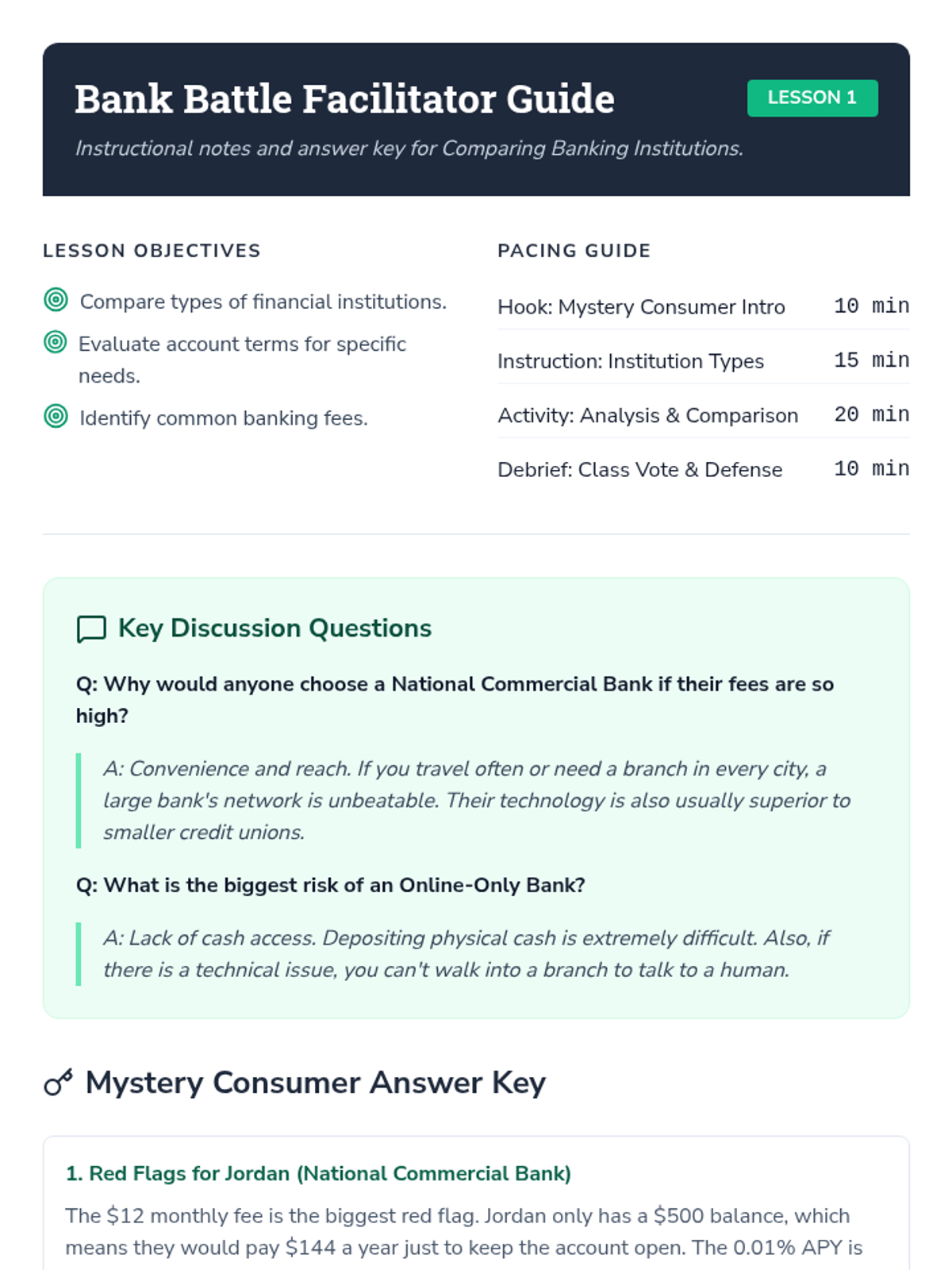
A financial literacy series focused on essential banking skills for low-income students, covering account types, avoiding fees, and digital security.
A comprehensive financial literacy series for secondary students covering the core pillars of personal finance: saving, budgeting, and investing. Students move from basic habits to long-term wealth building through practical simulations and real-world math.
A comprehensive series of lessons designed to equip students with essential life skills for independent living, focusing on financial literacy, personal organization, and daily responsibilities.
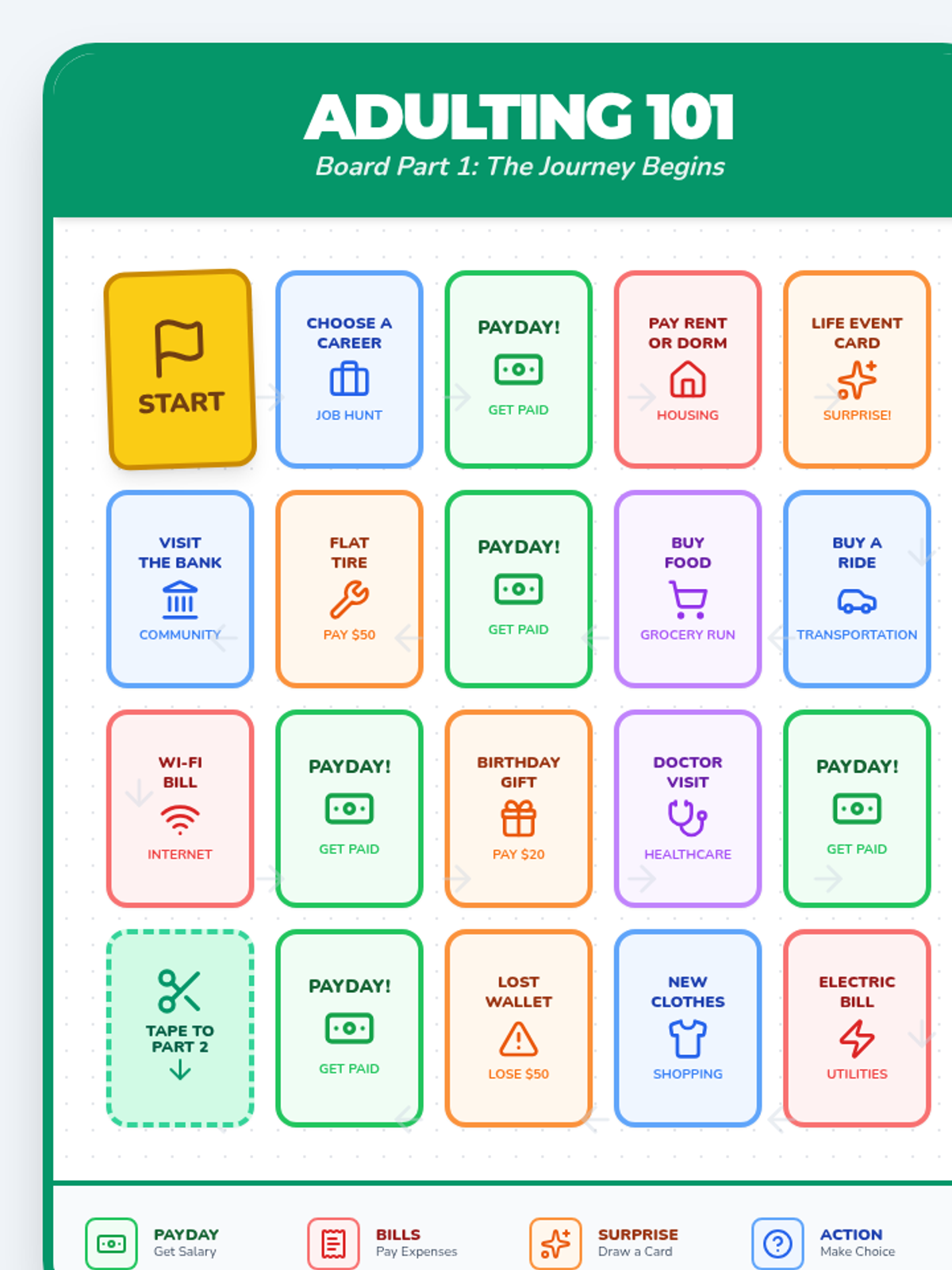
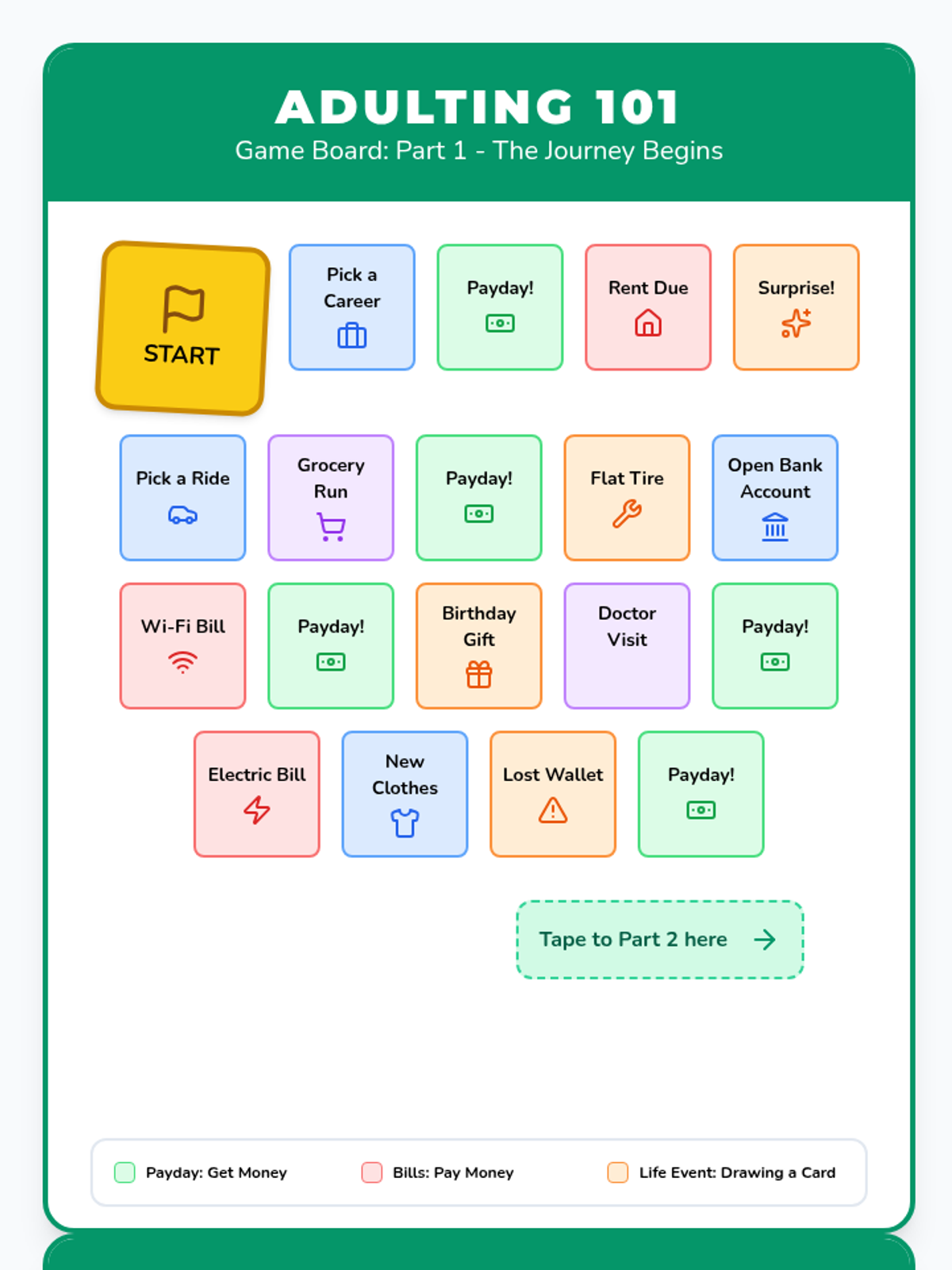
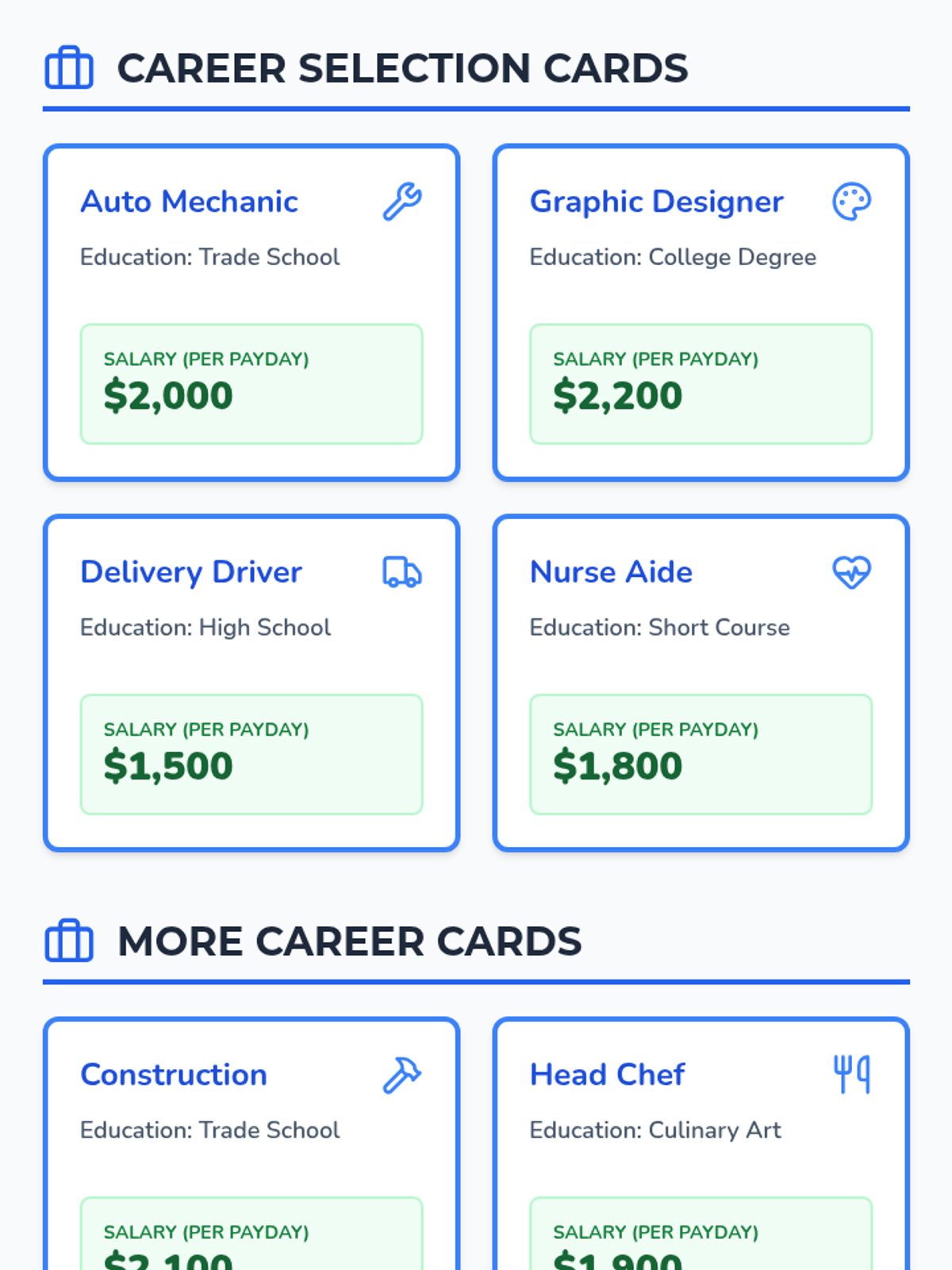
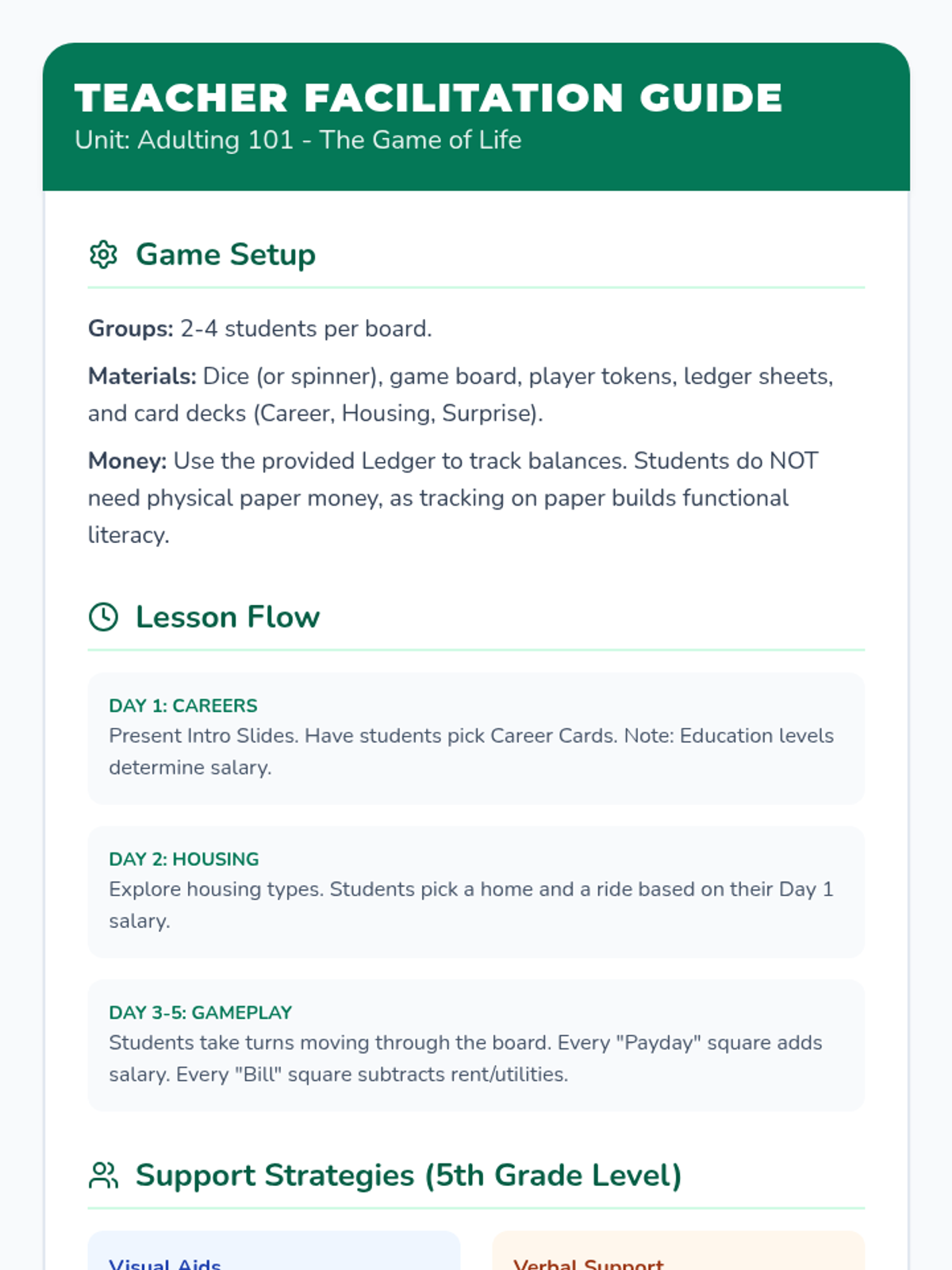
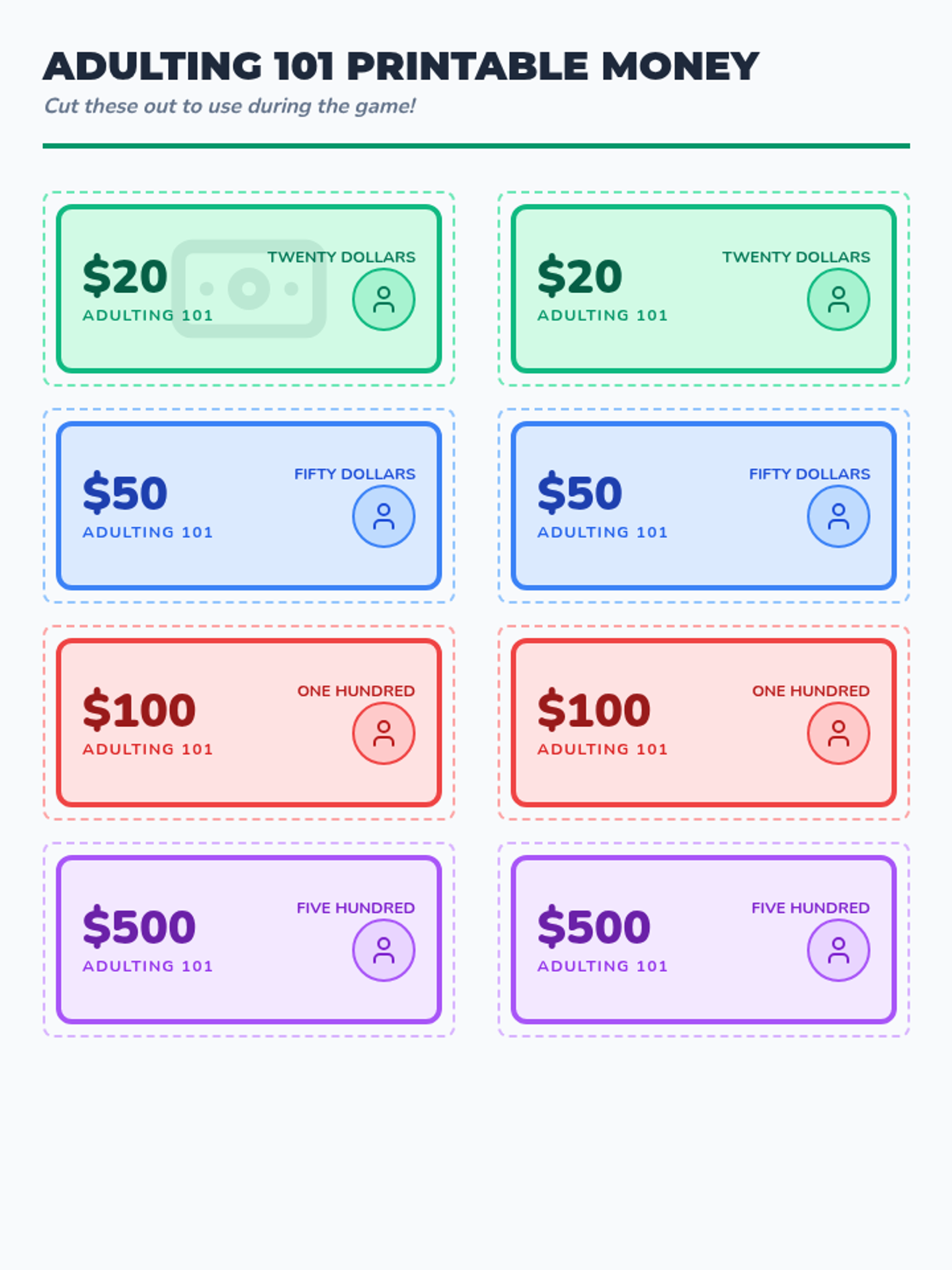
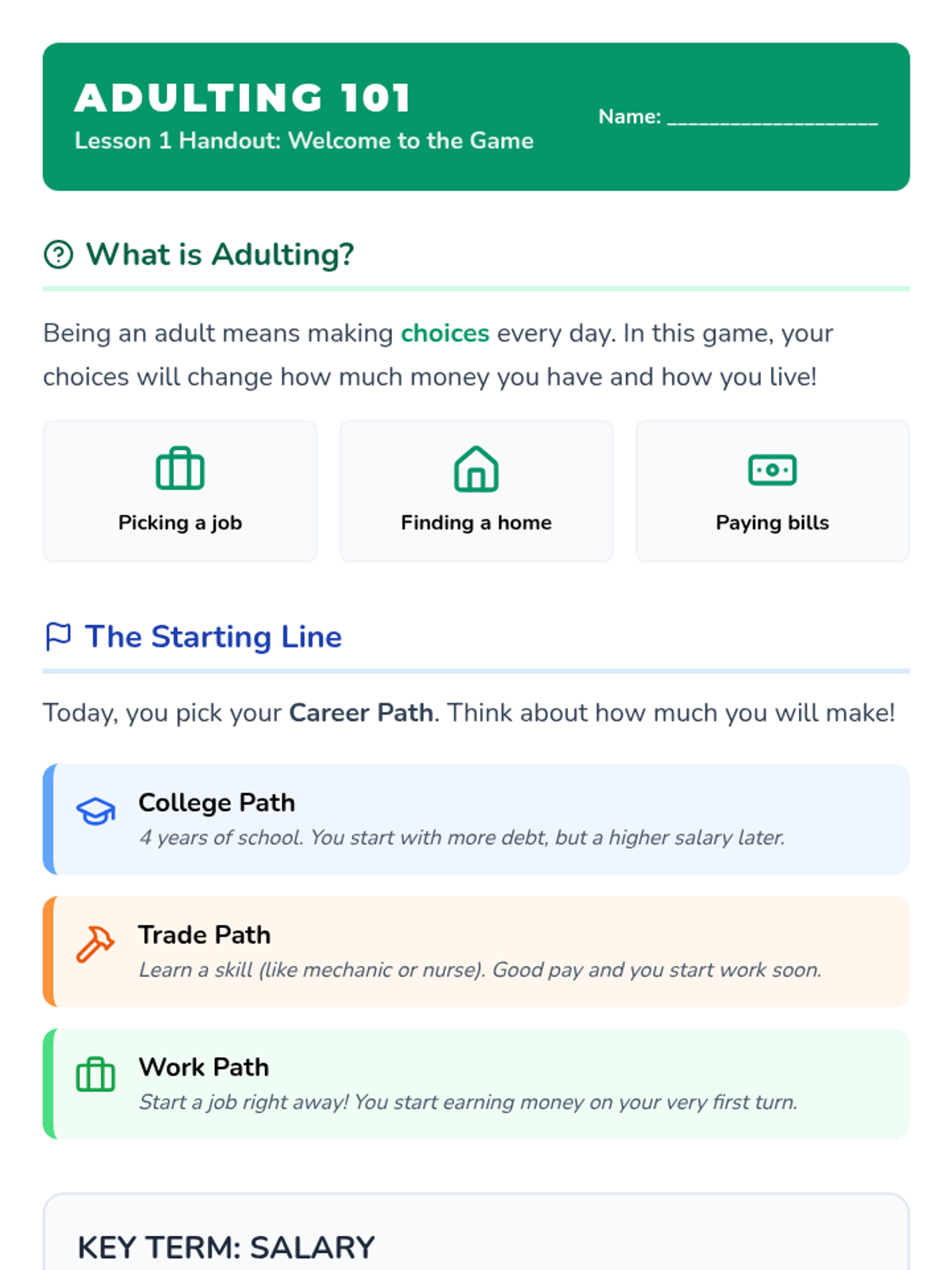
A comprehensive 'Game of Life' style curriculum designed for high school students with 5th-grade reading levels. It focuses on financial literacy, housing, transportation, and navigating daily life through an engaging board game format.
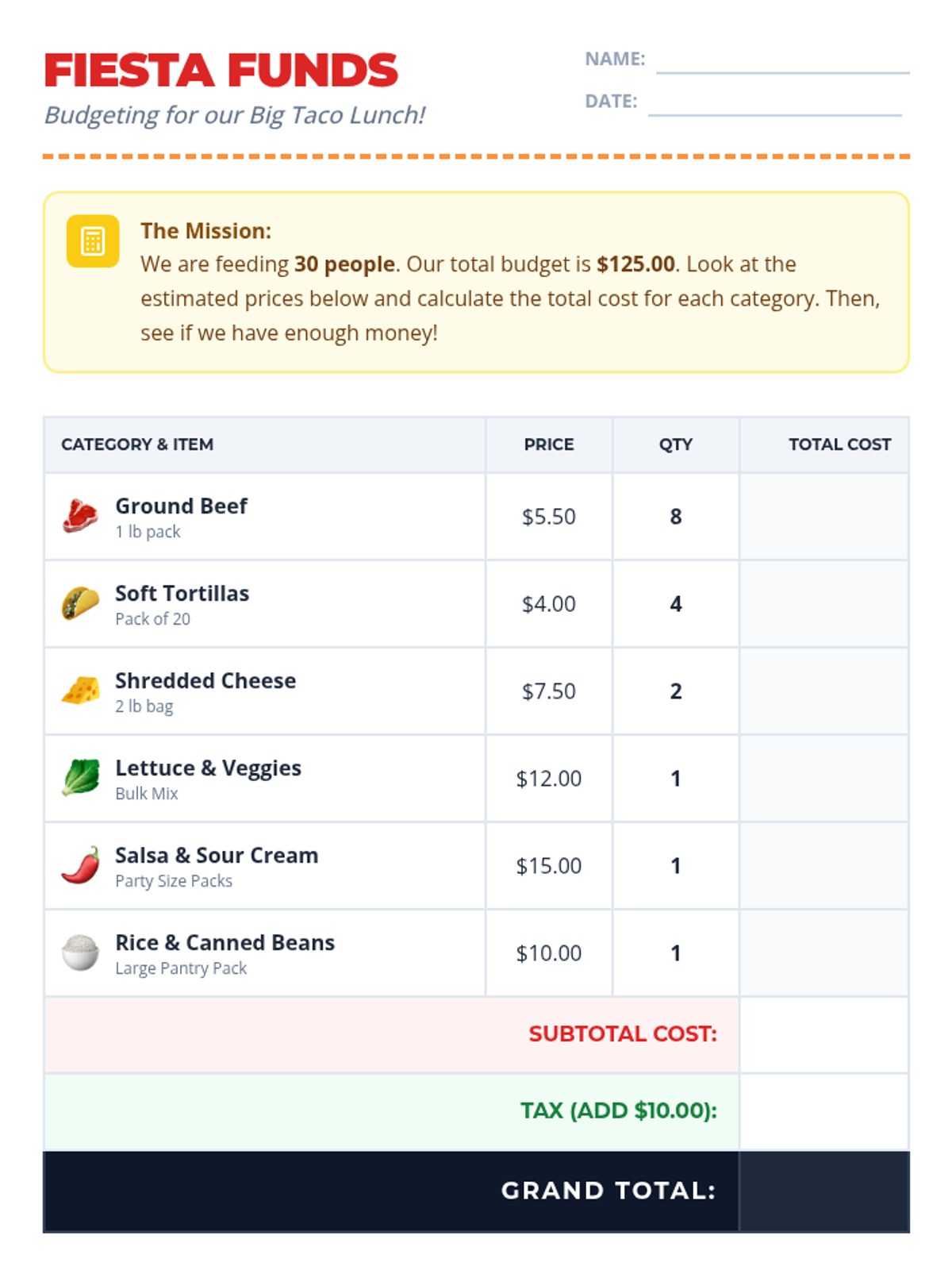
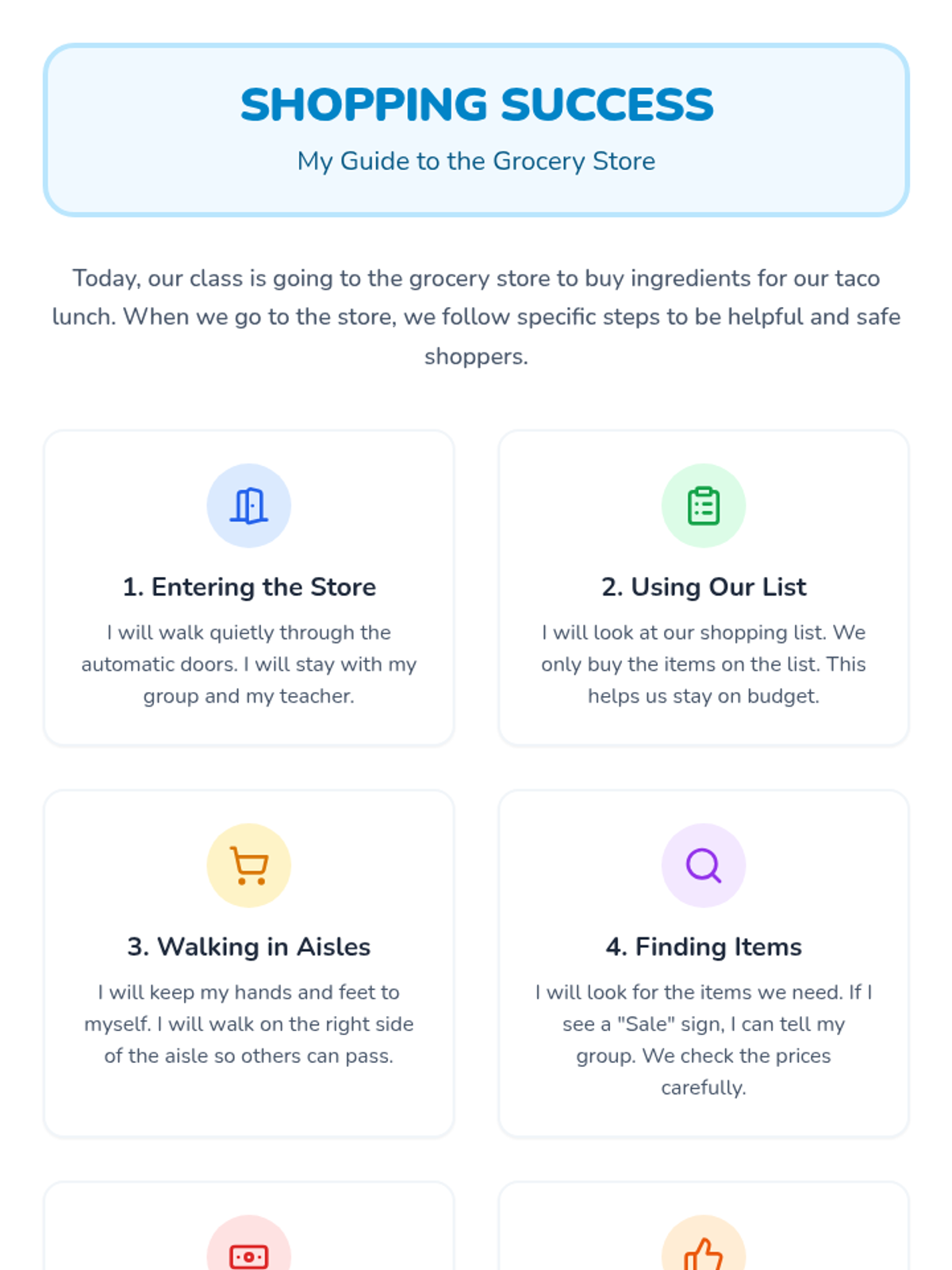
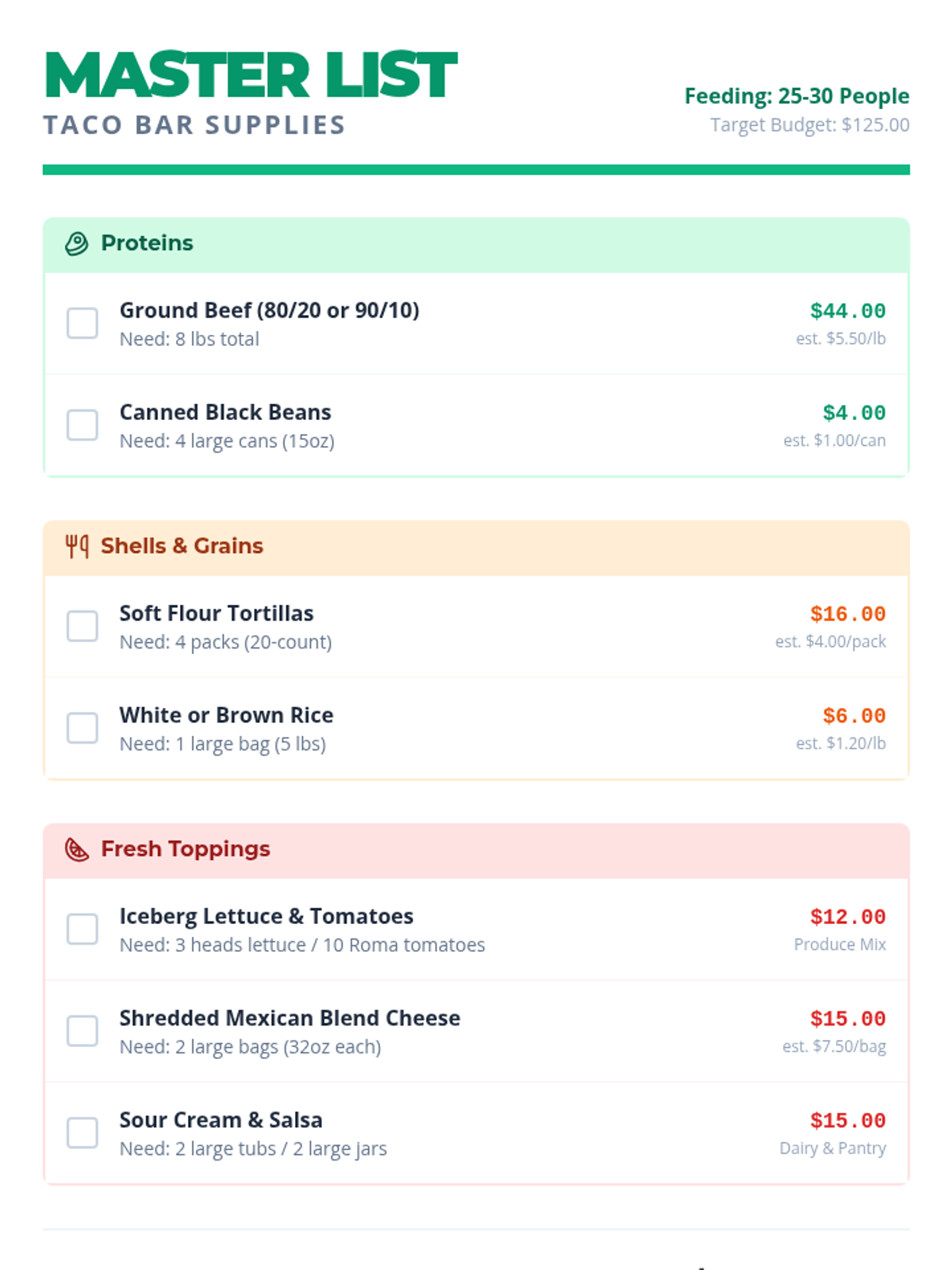
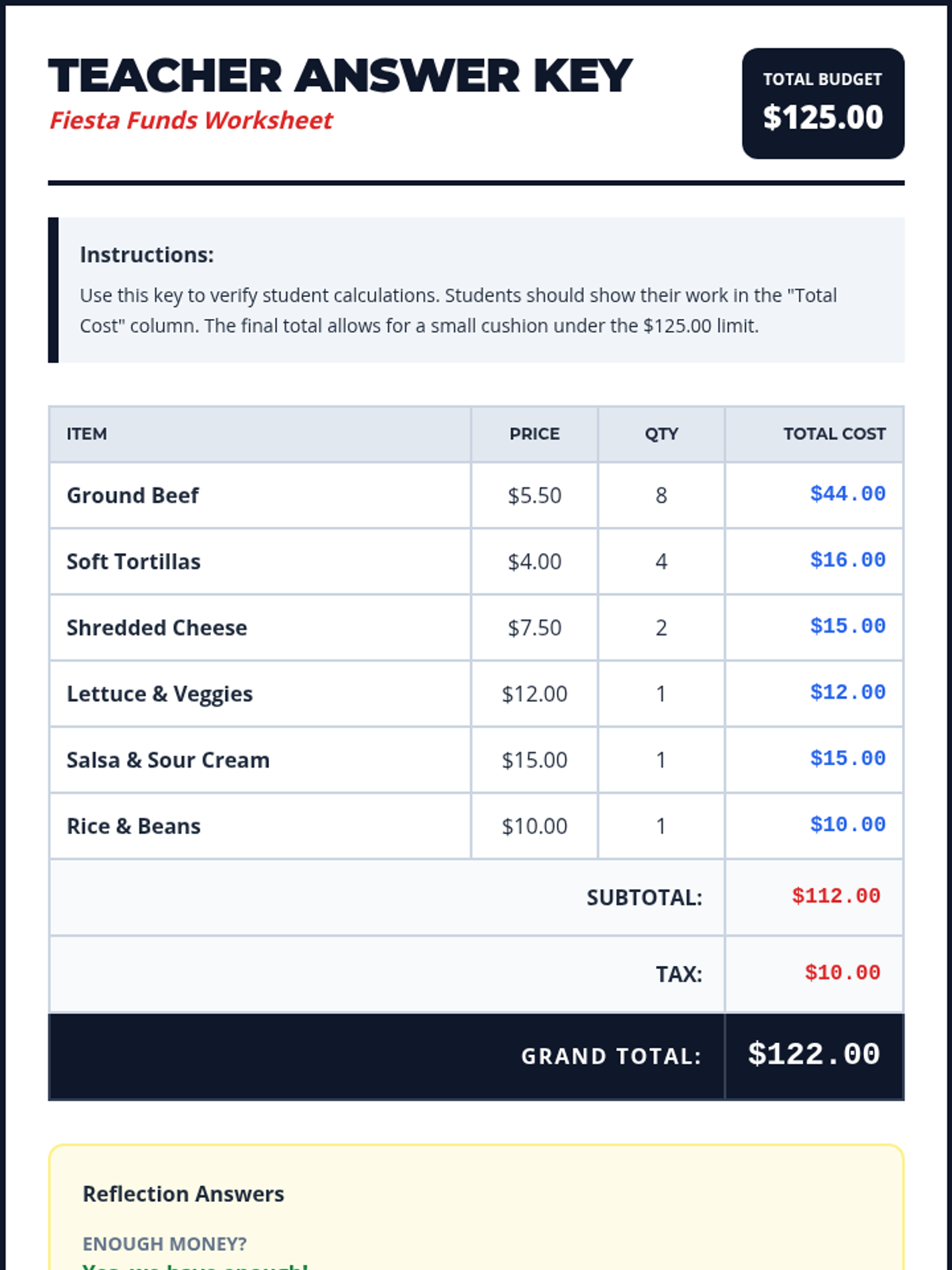
A comprehensive unit on planning, shopping for, and preparing a taco bar lunch for a large group. Students practice budgeting, community navigation, and culinary skills.
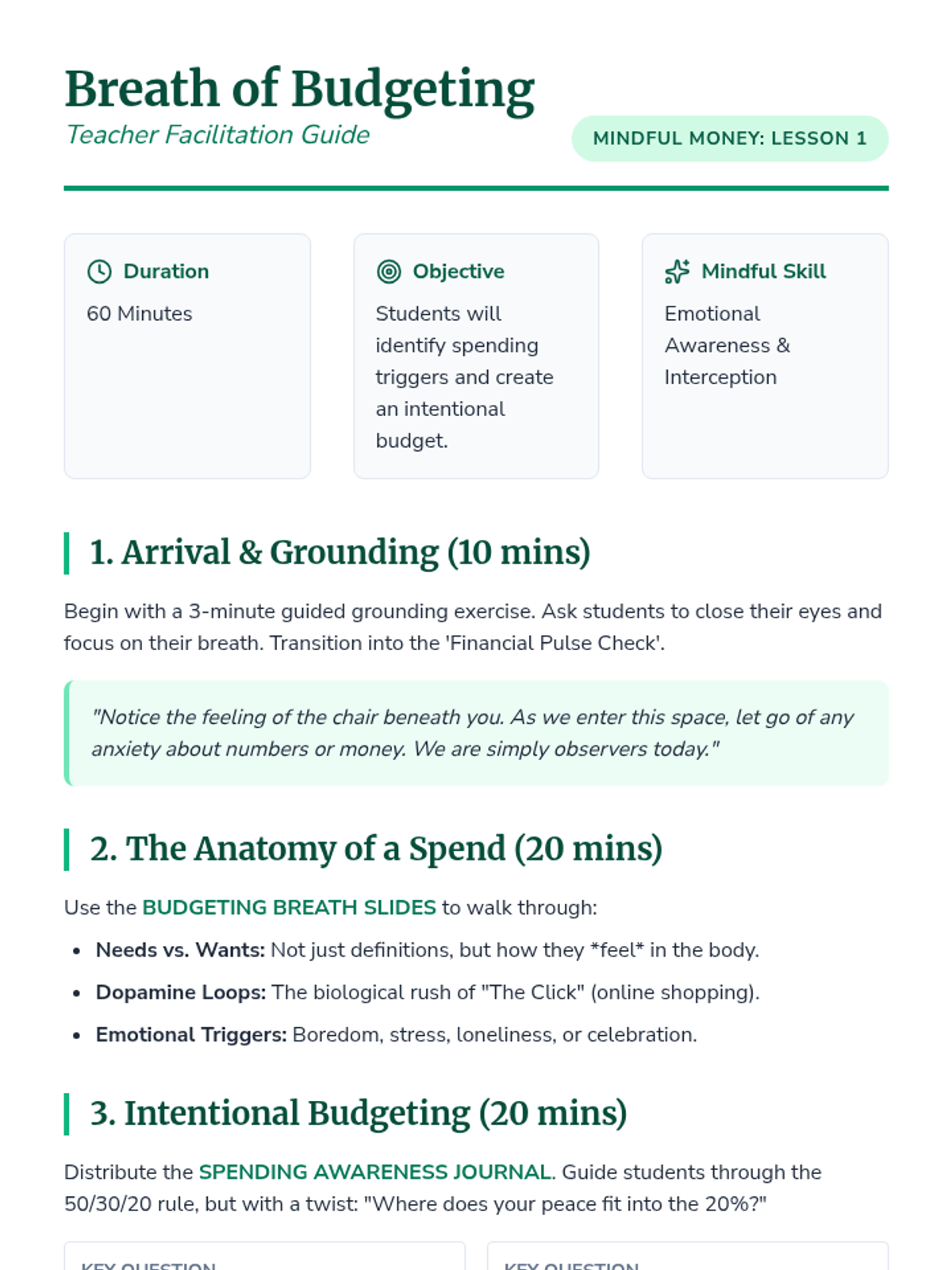
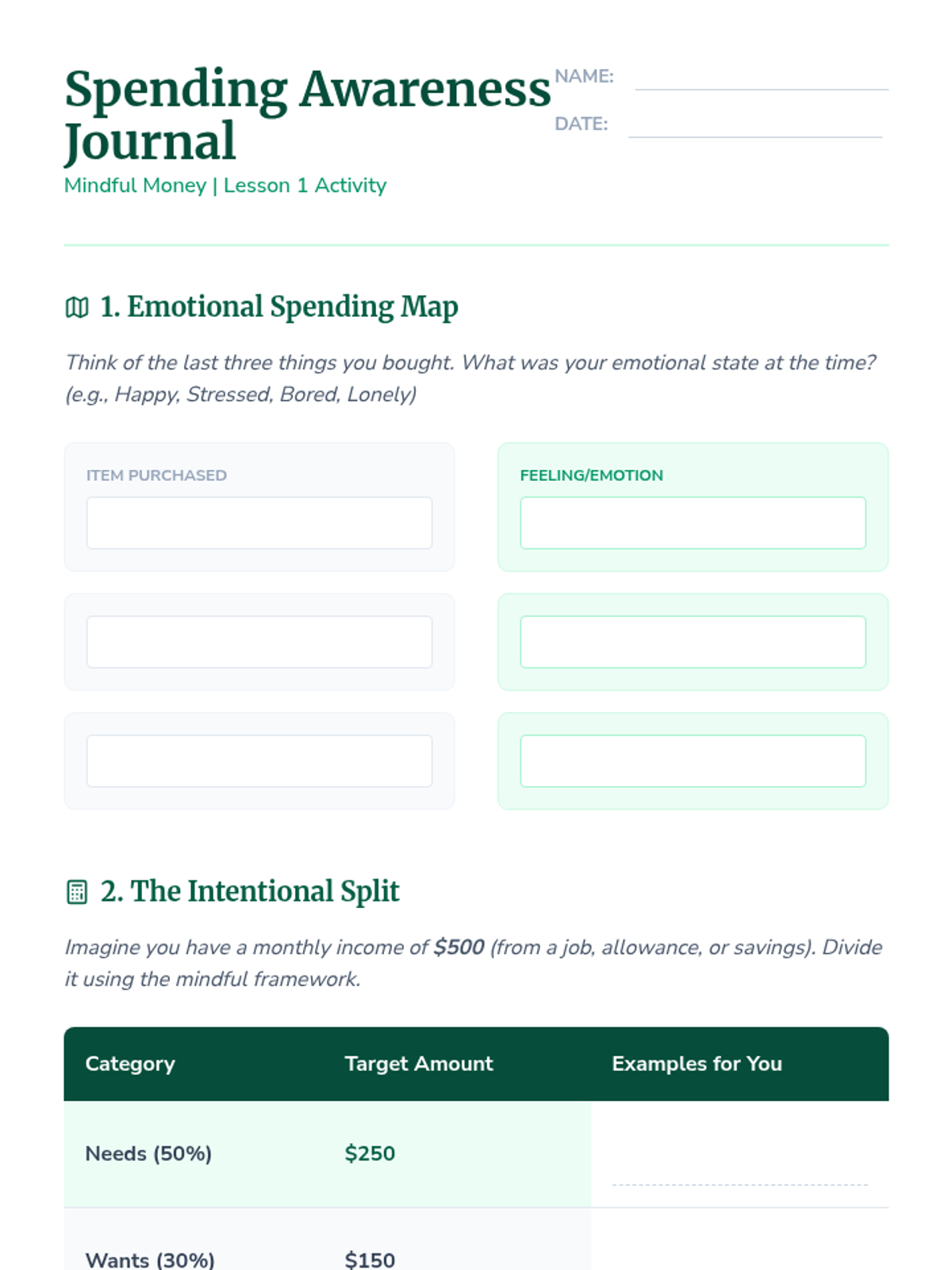
A comprehensive 3-lesson series for 10th graders that integrates financial literacy fundamentals with mindfulness practices, focusing on emotional awareness, delayed gratification, and intentional spending.
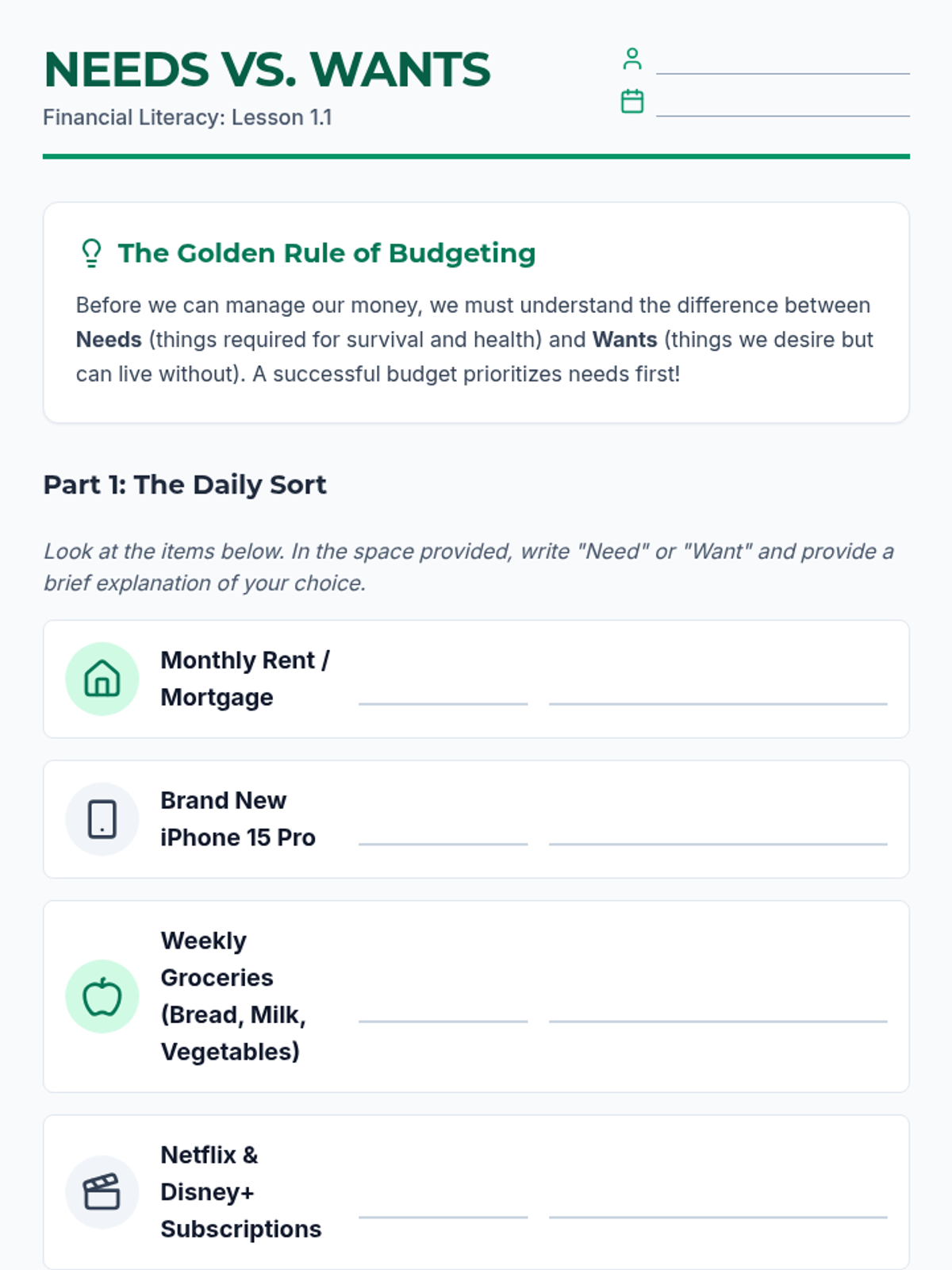
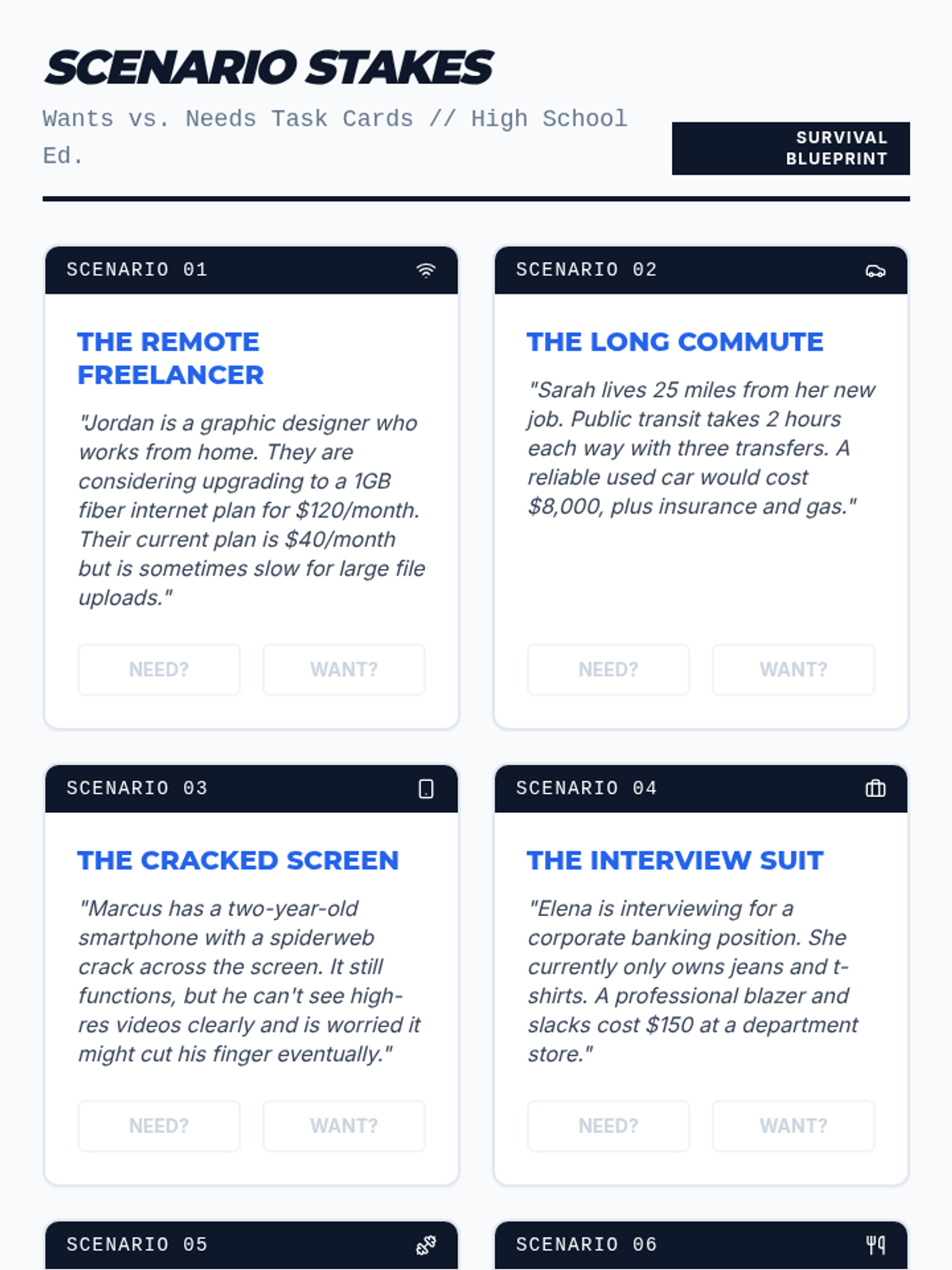
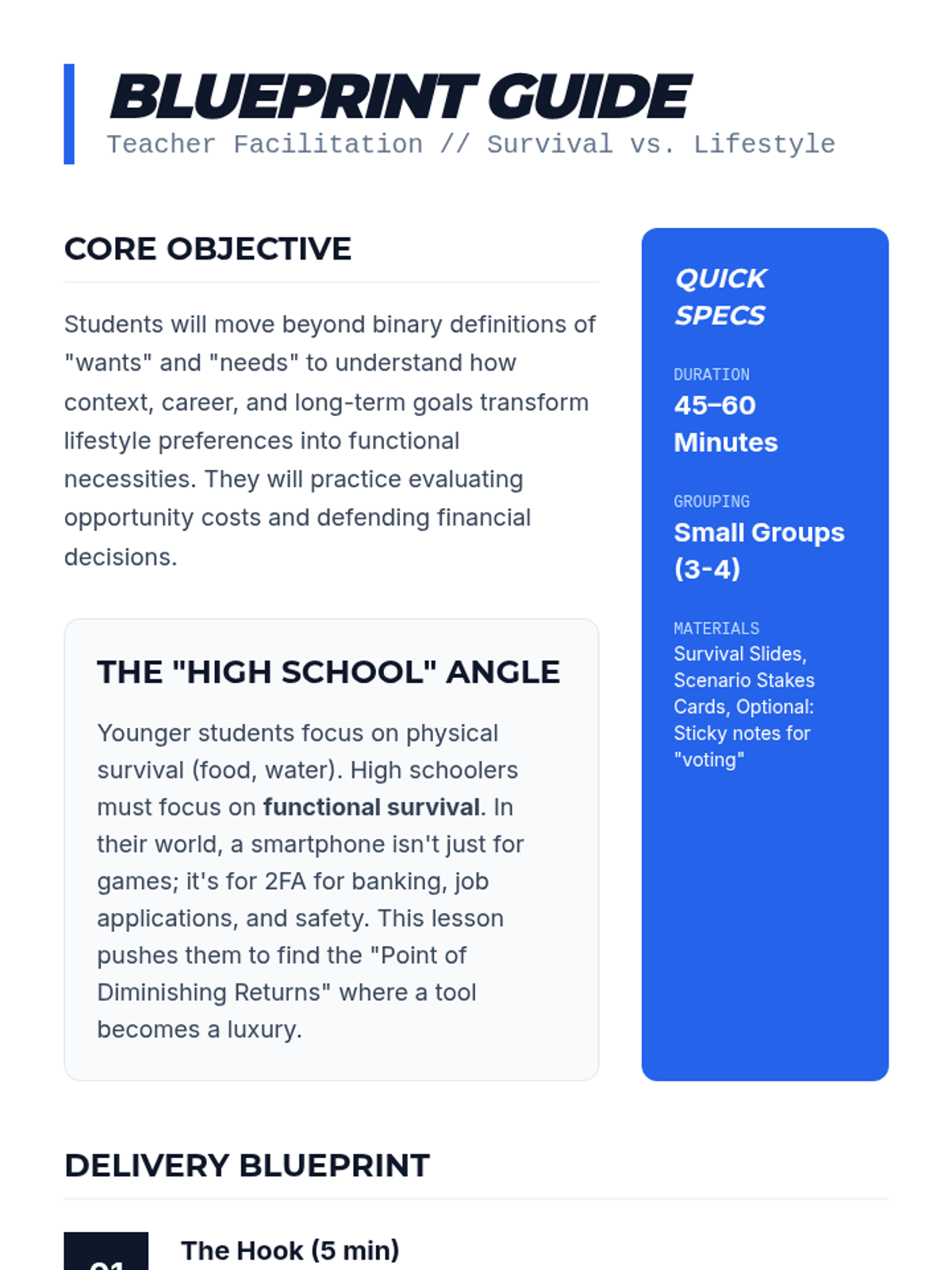
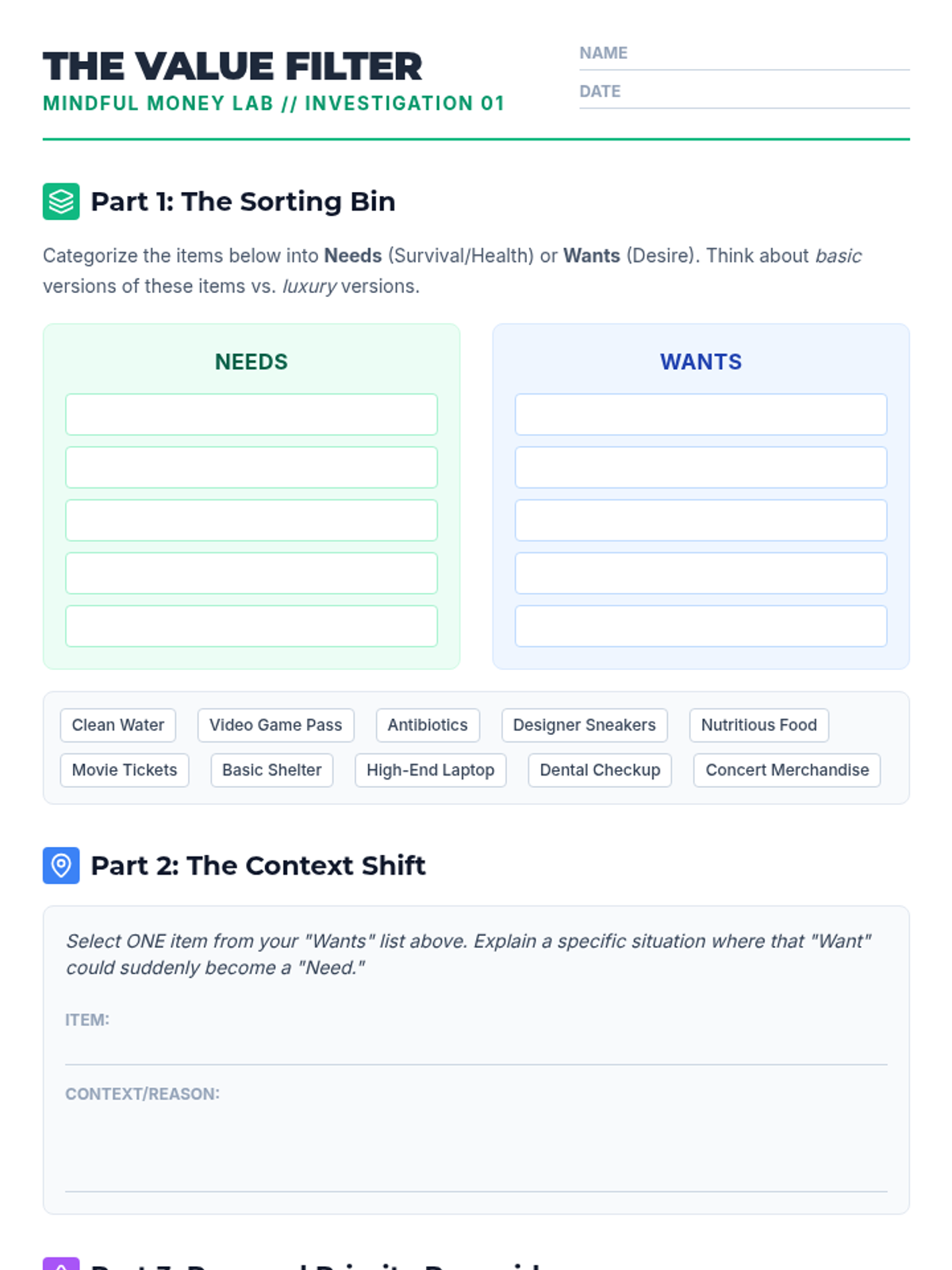
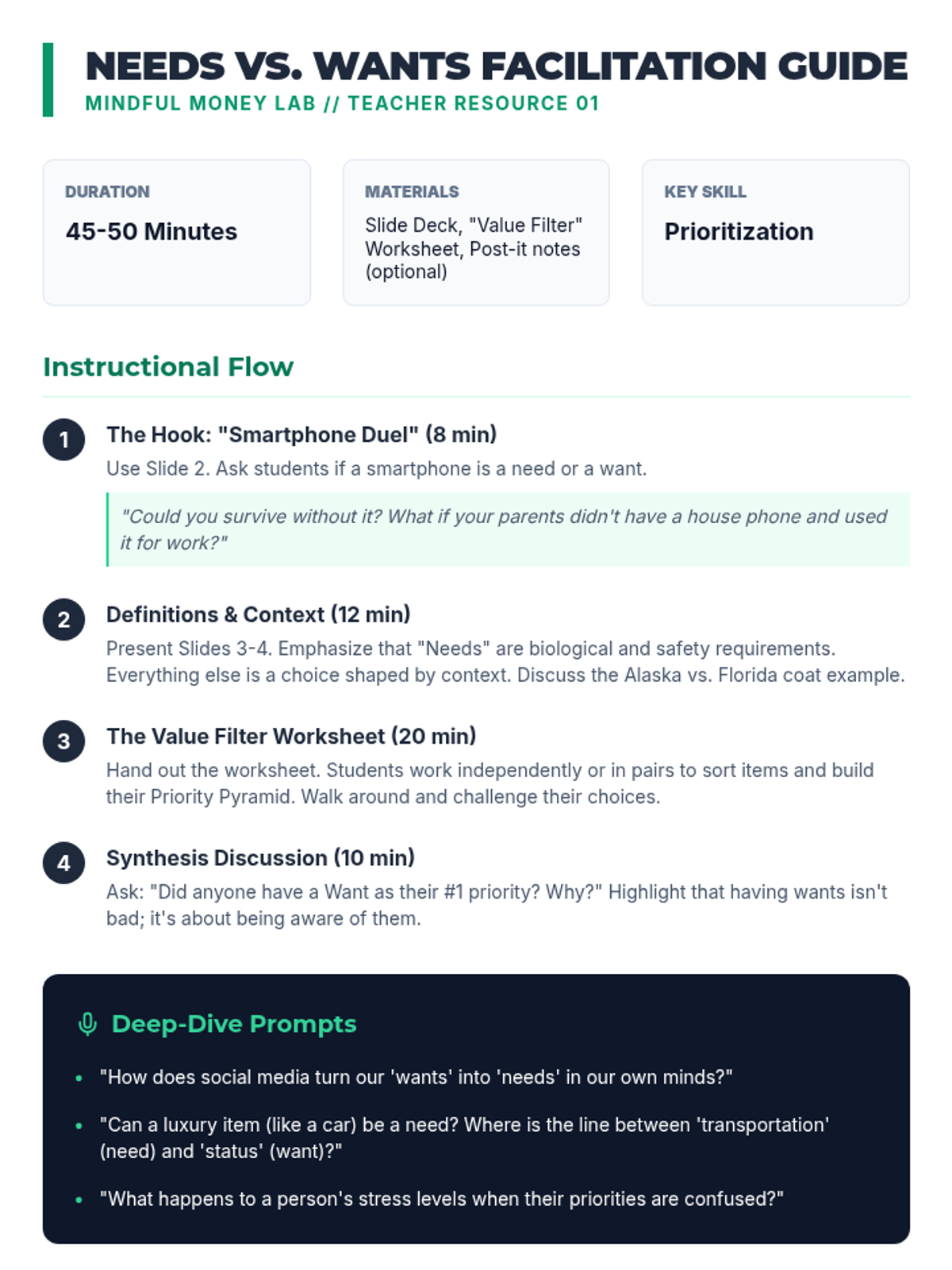
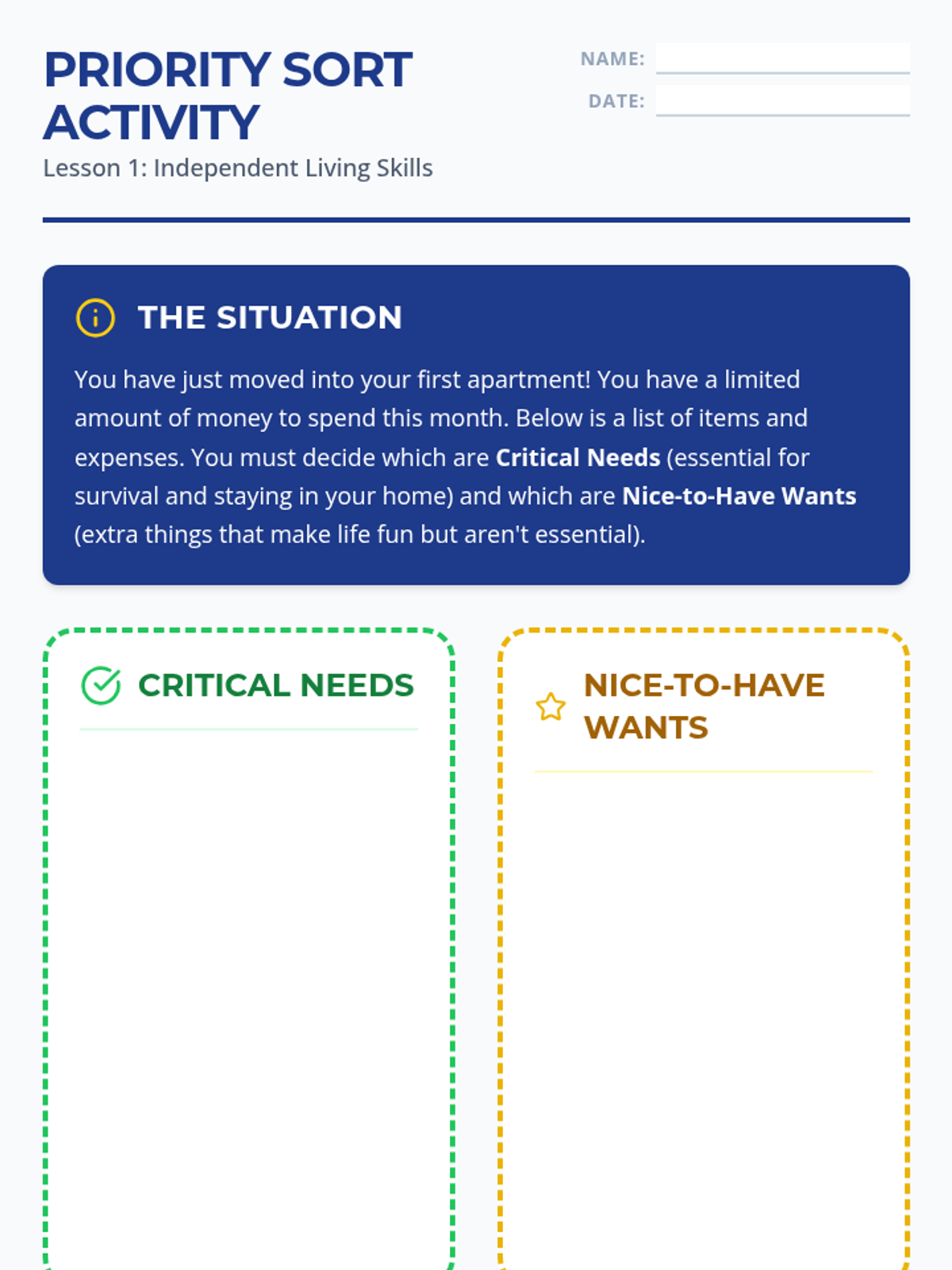
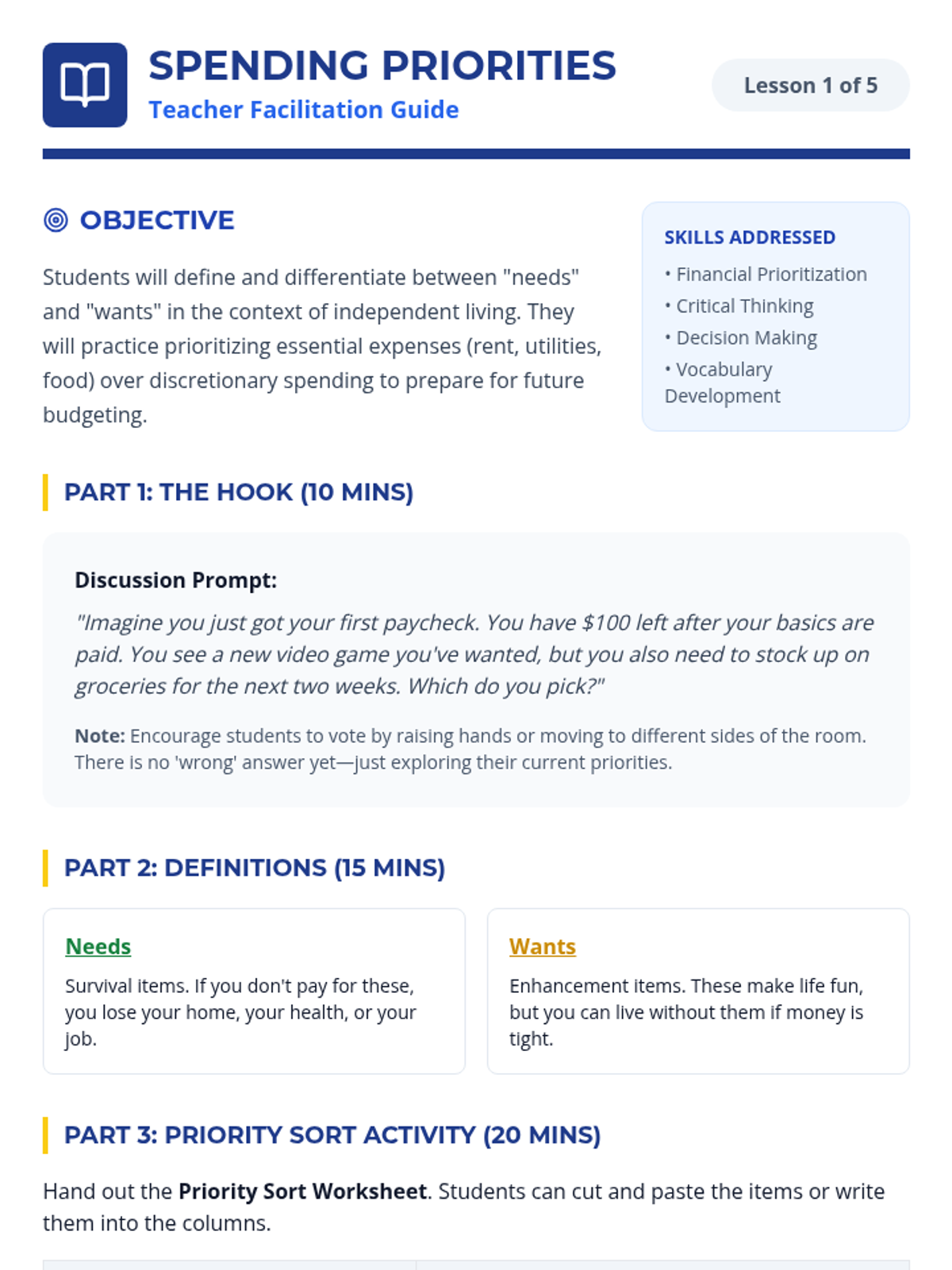
A comprehensive unit on financial literacy and personal economics for high school students, focusing on the distinction between survival essentials and lifestyle preferences.
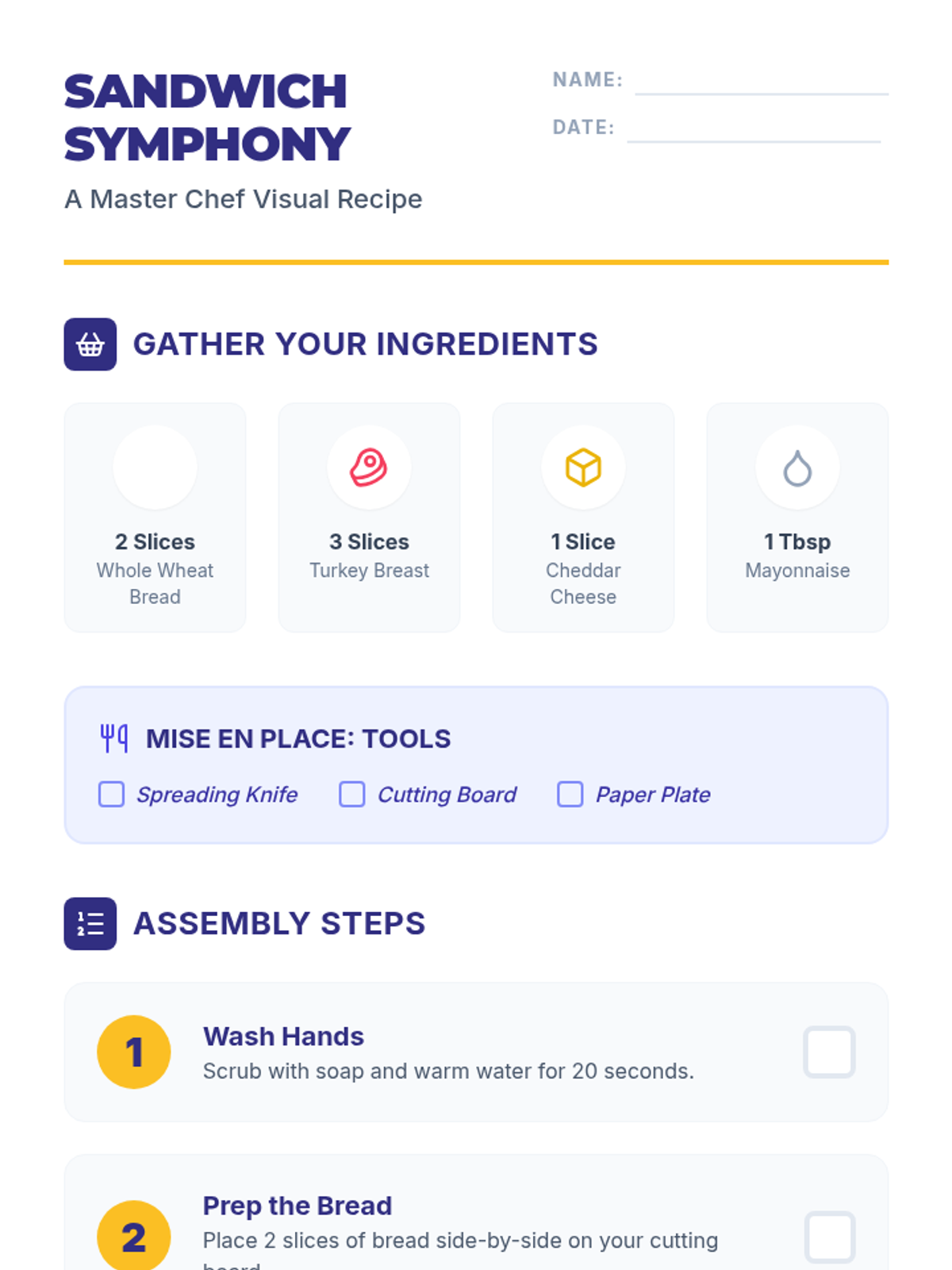
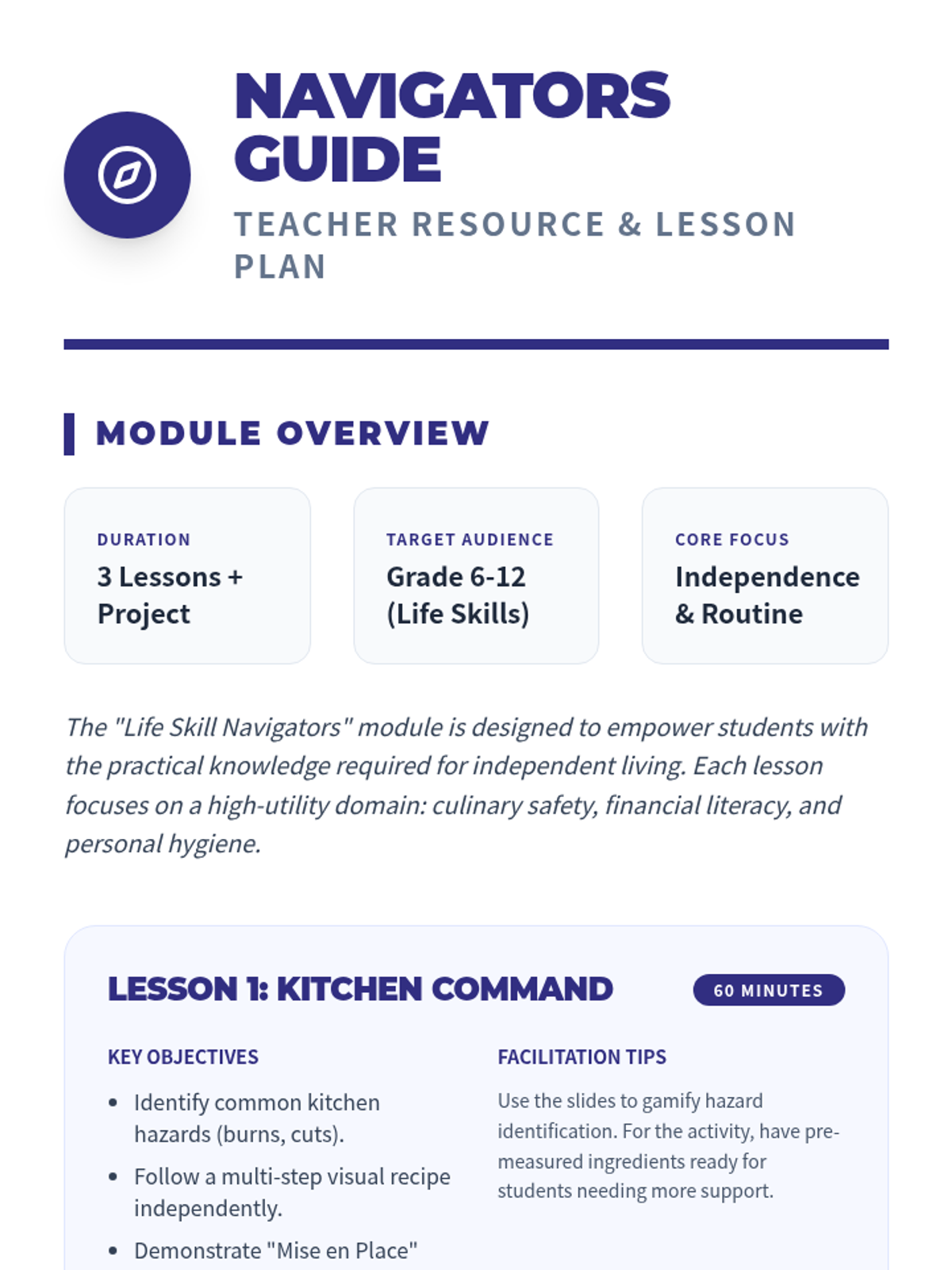
A comprehensive life skills module designed for middle and high school students to develop independence in meal preparation, budgeting, and personal hygiene. Through visual guides and hands-on practice, students build the confidence needed for daily living.
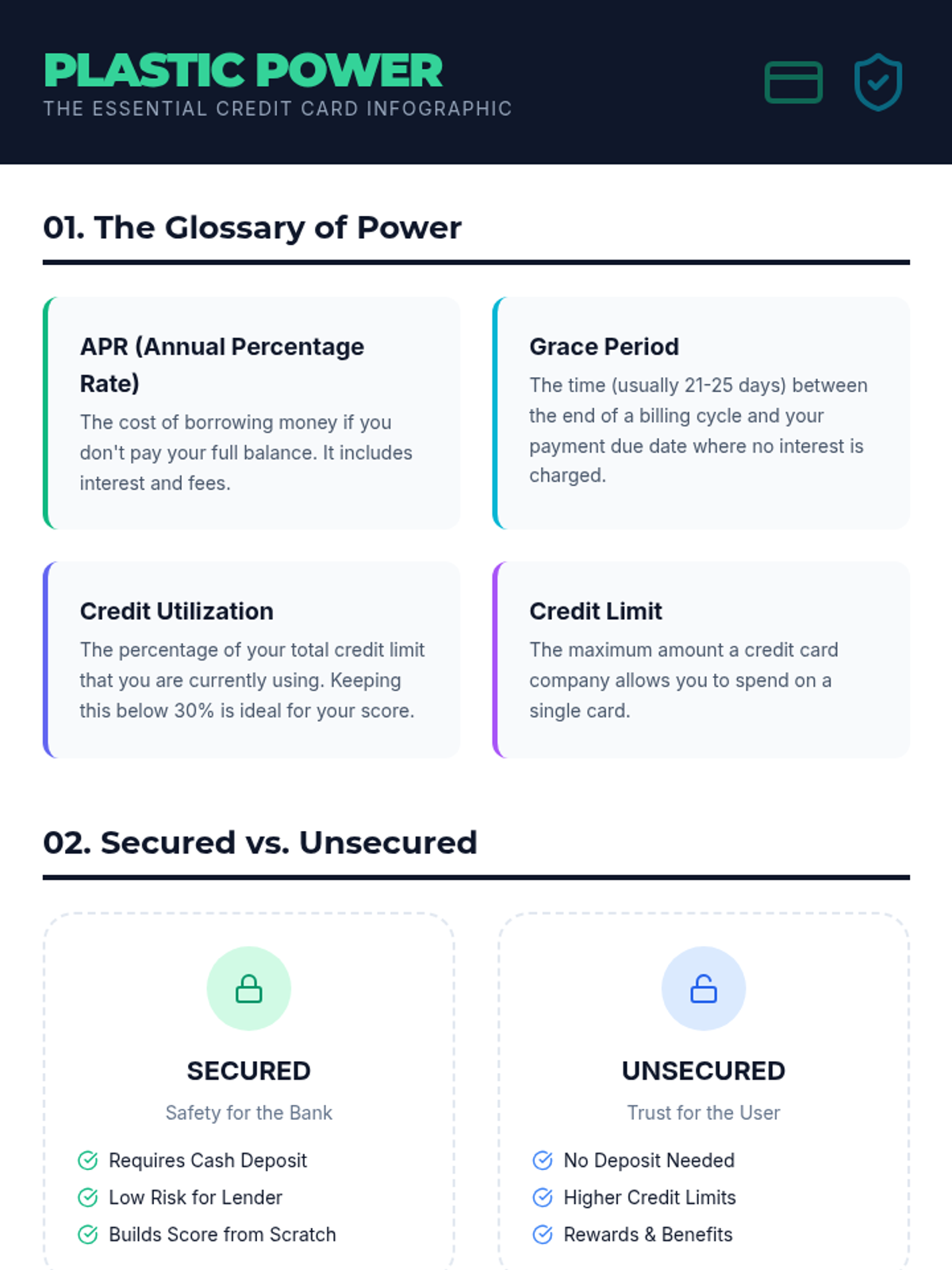
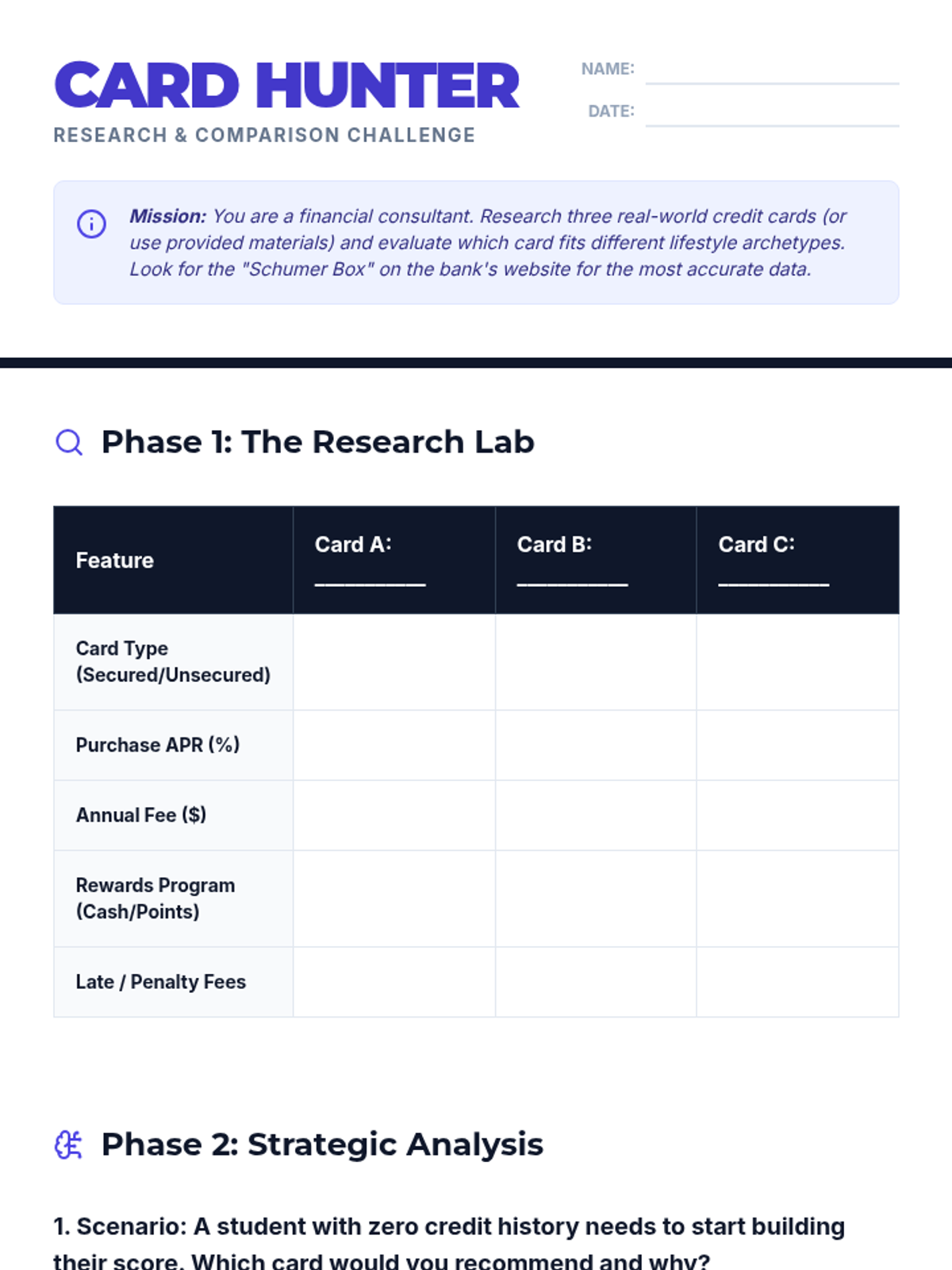
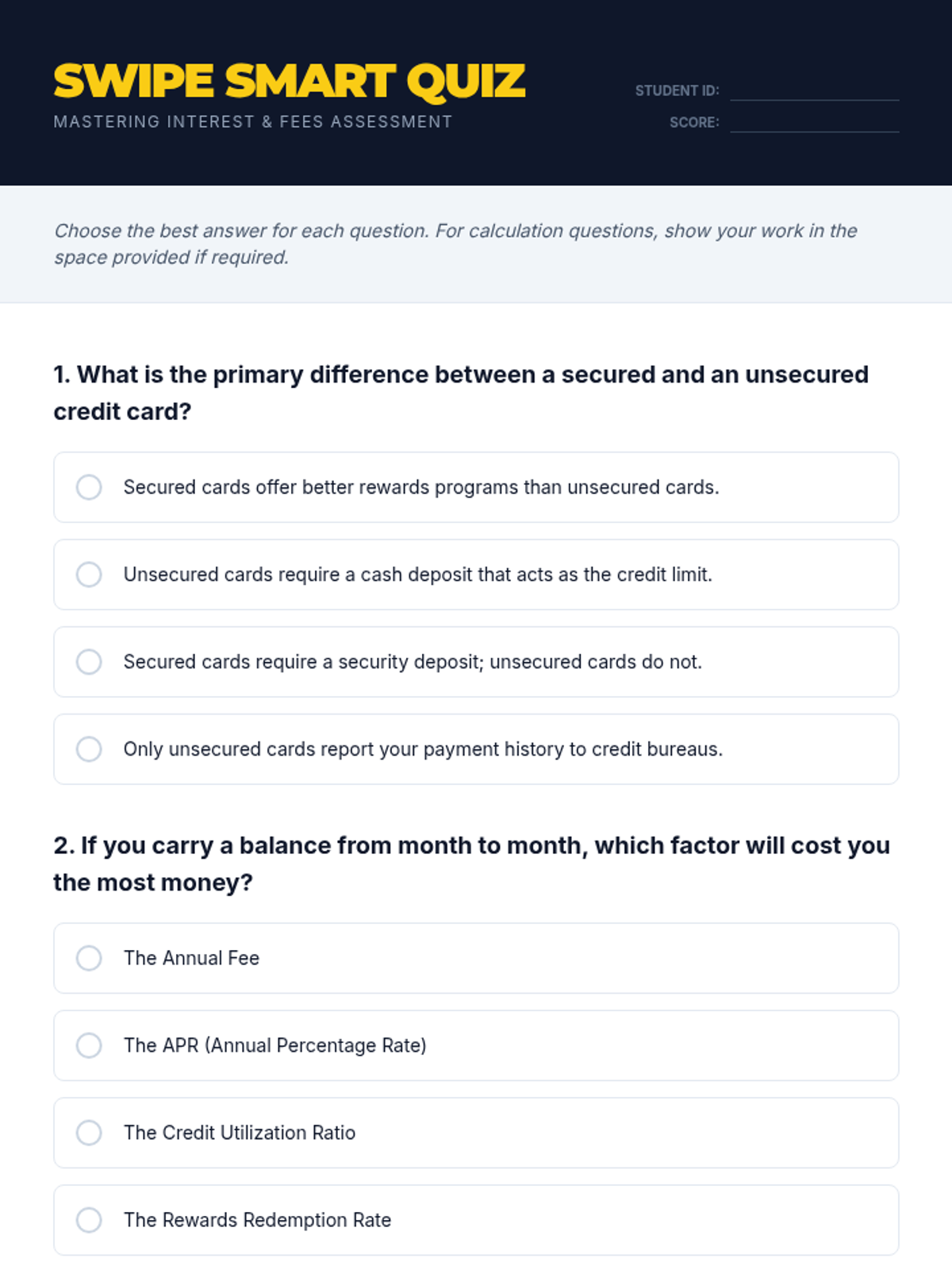
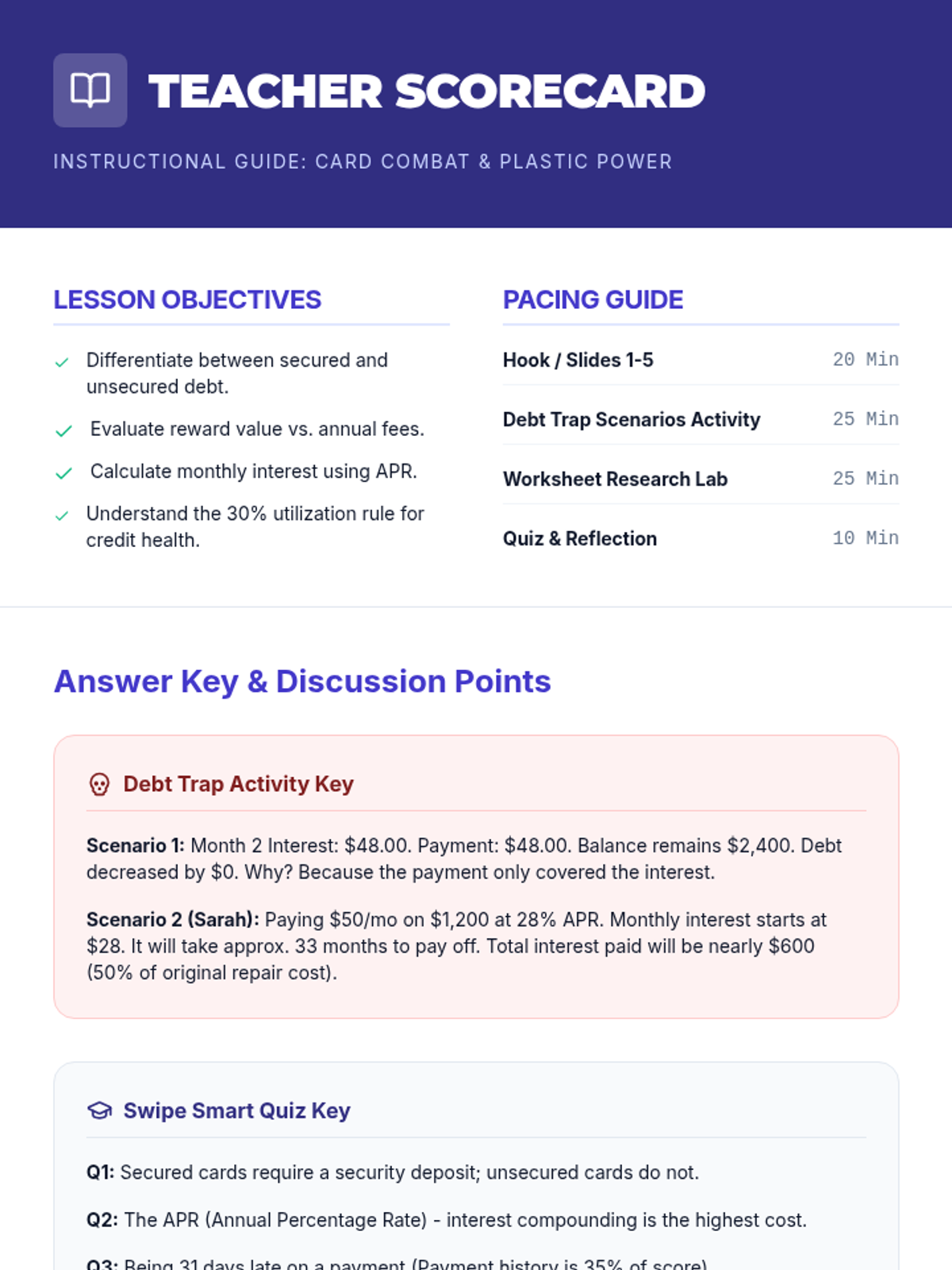
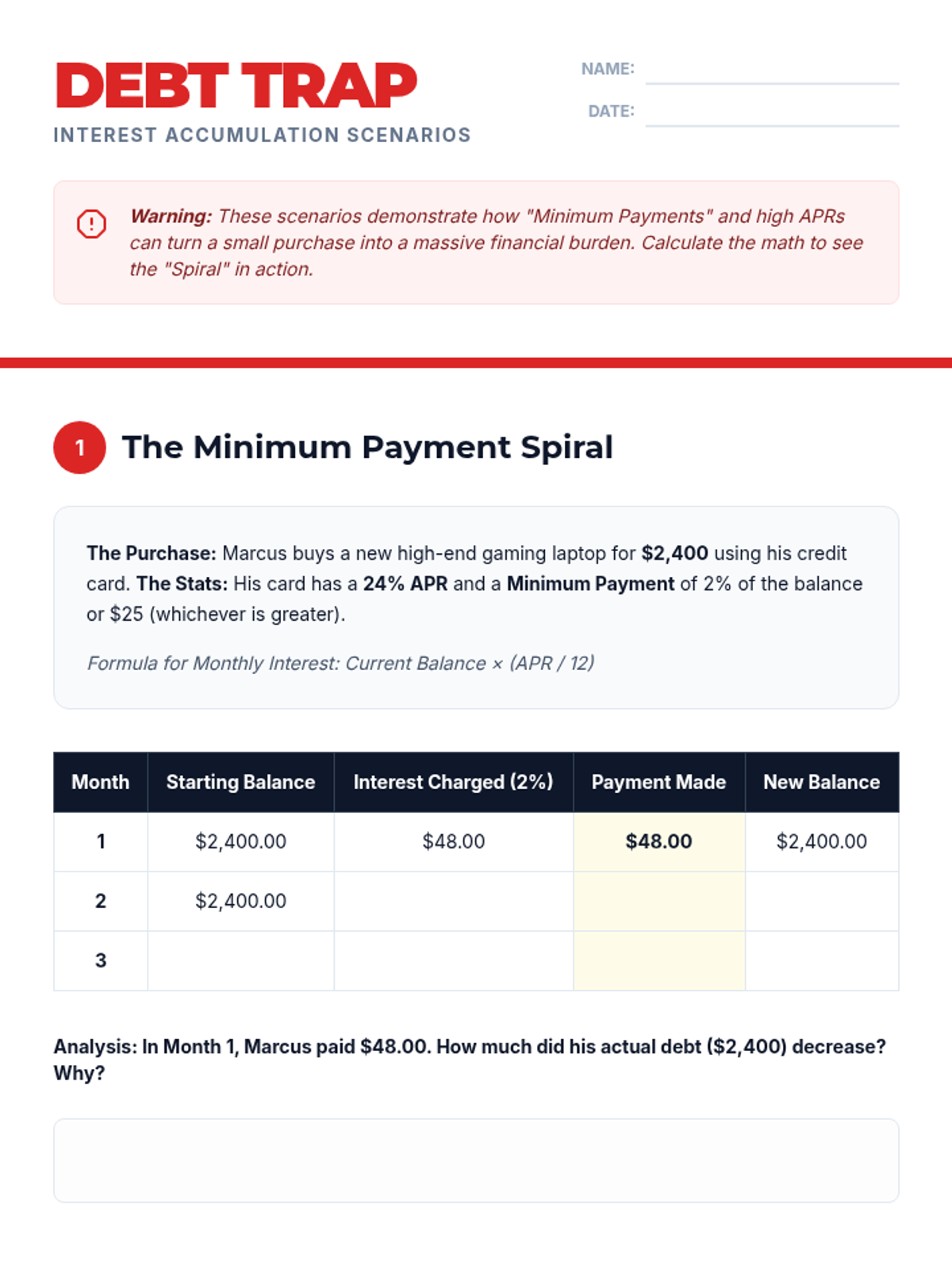
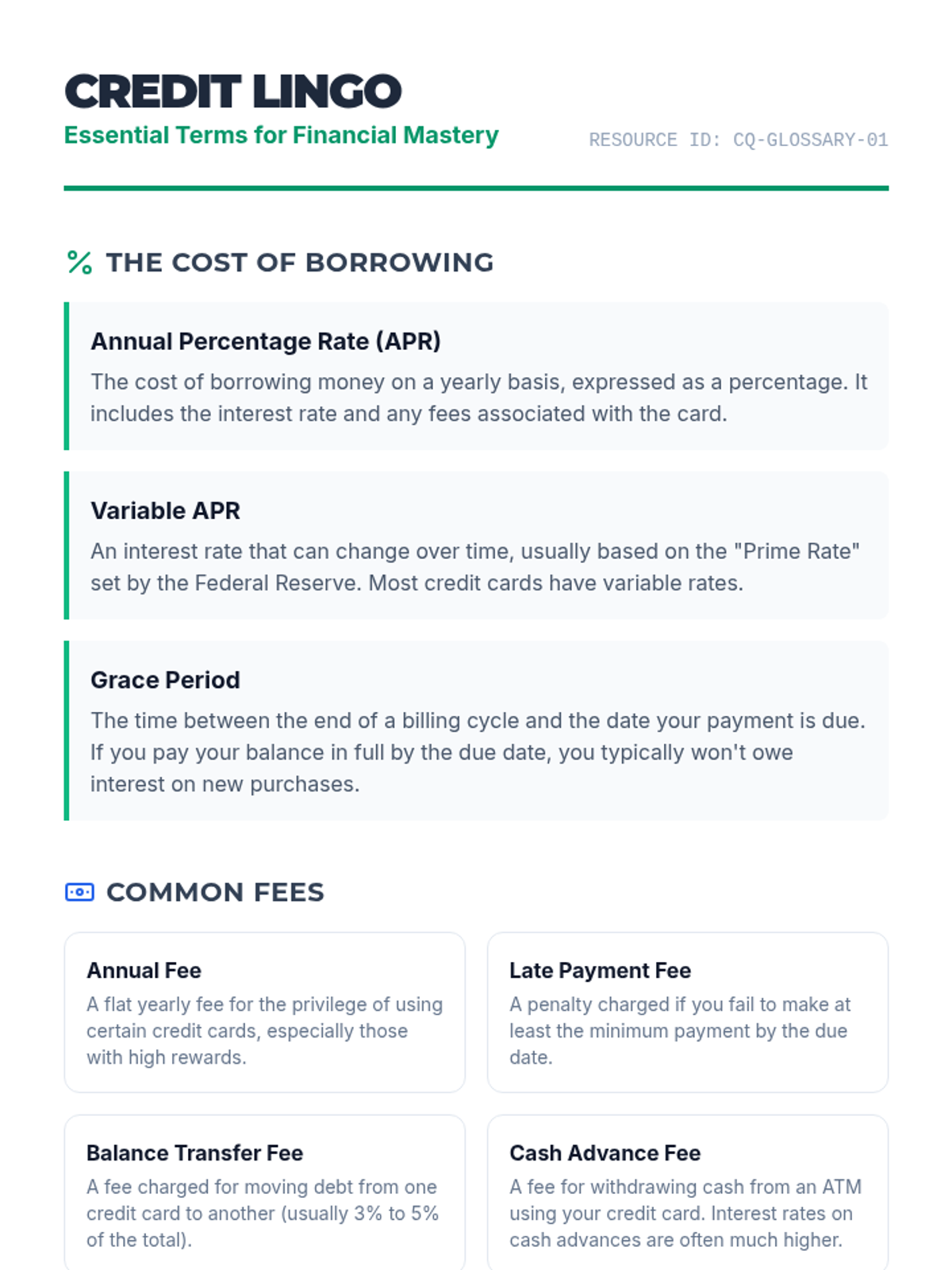
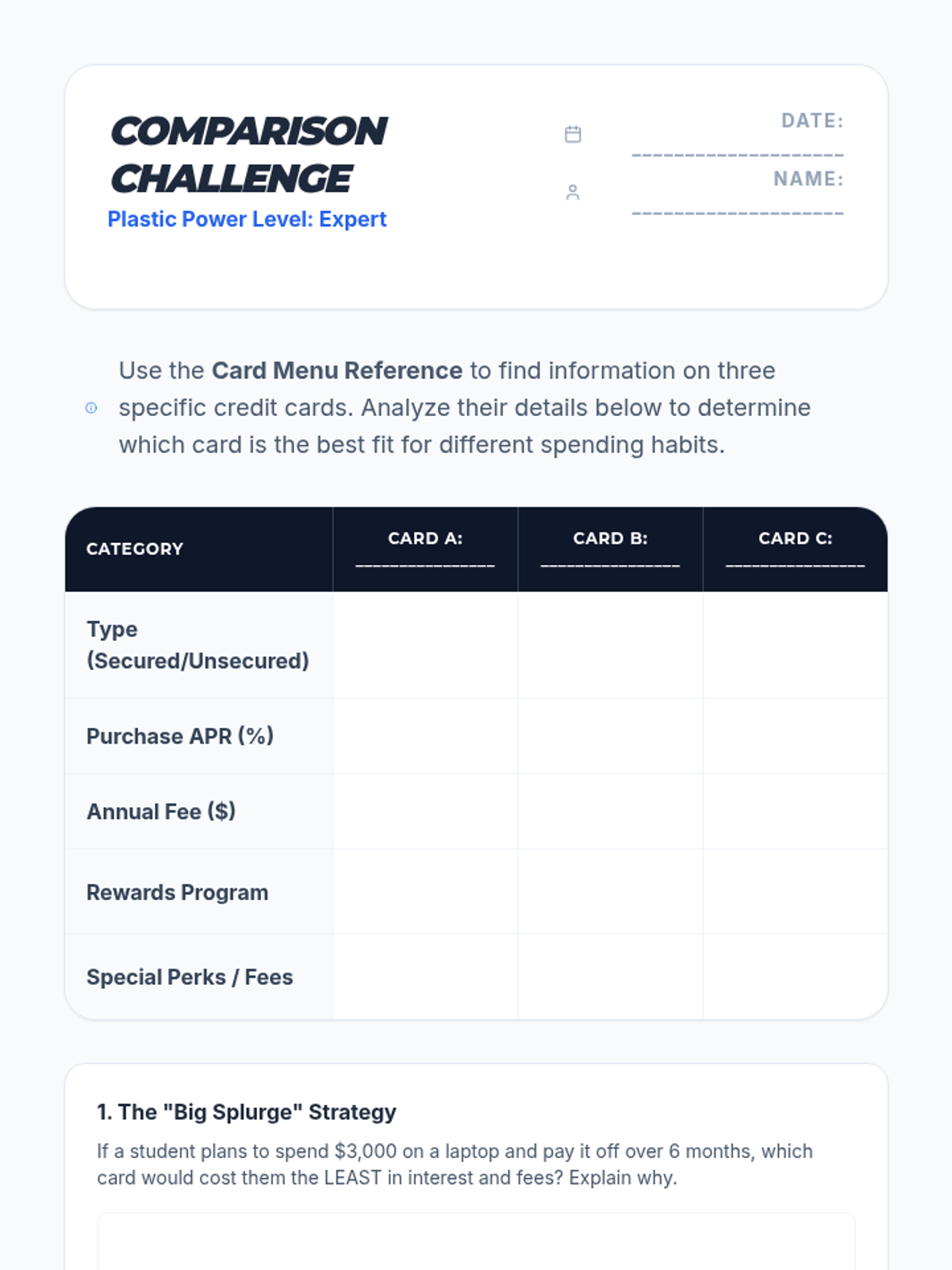
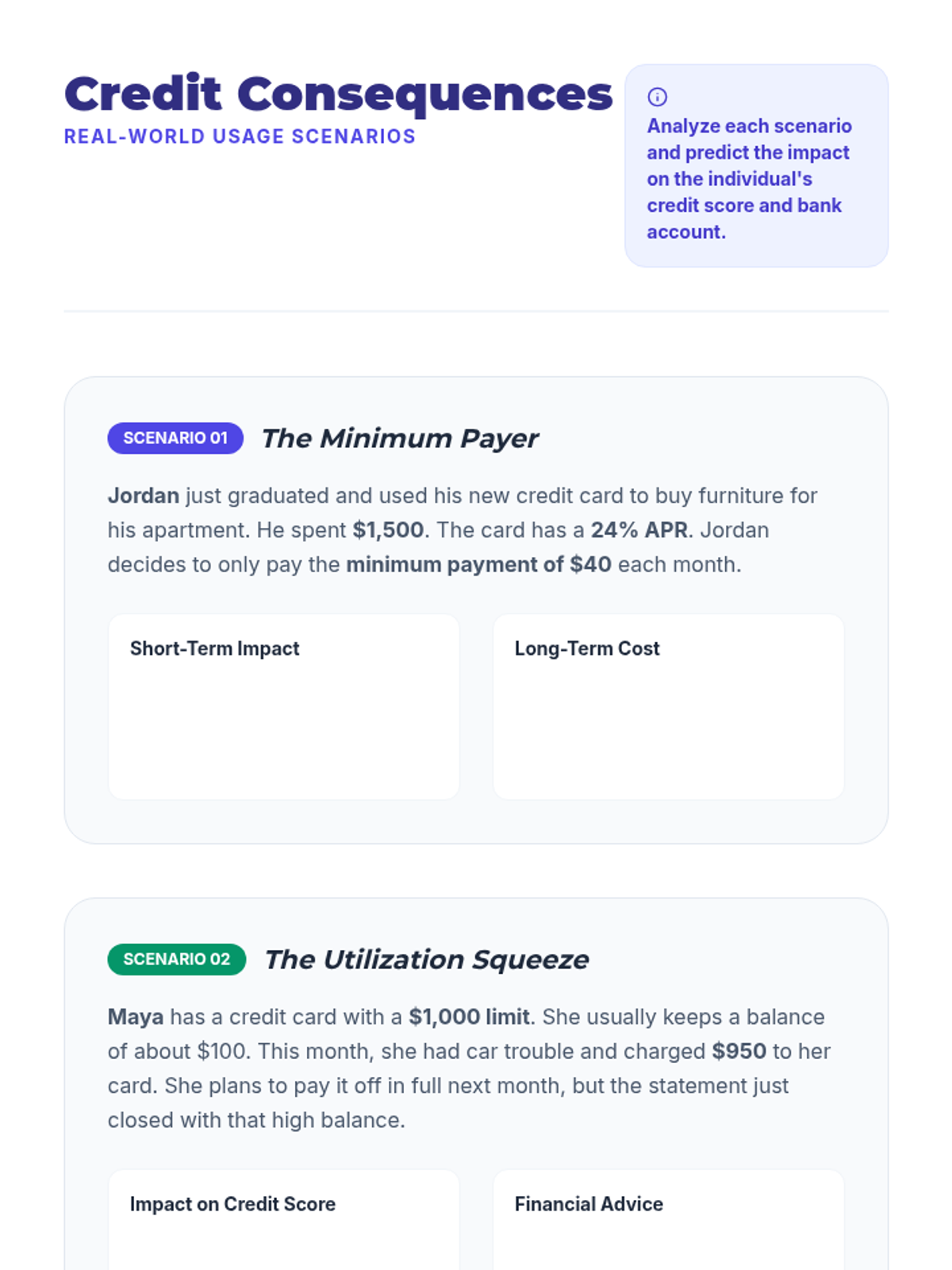
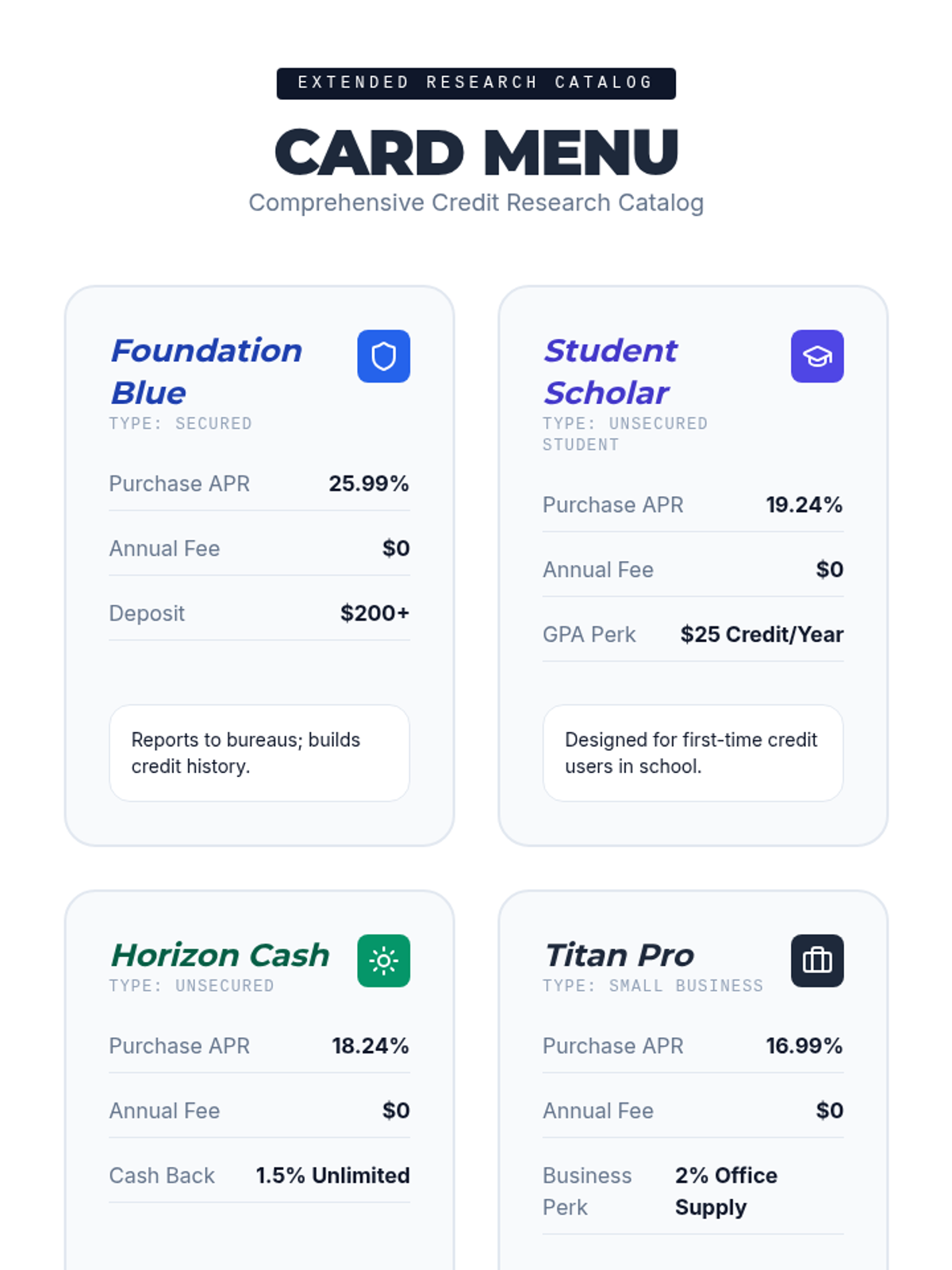
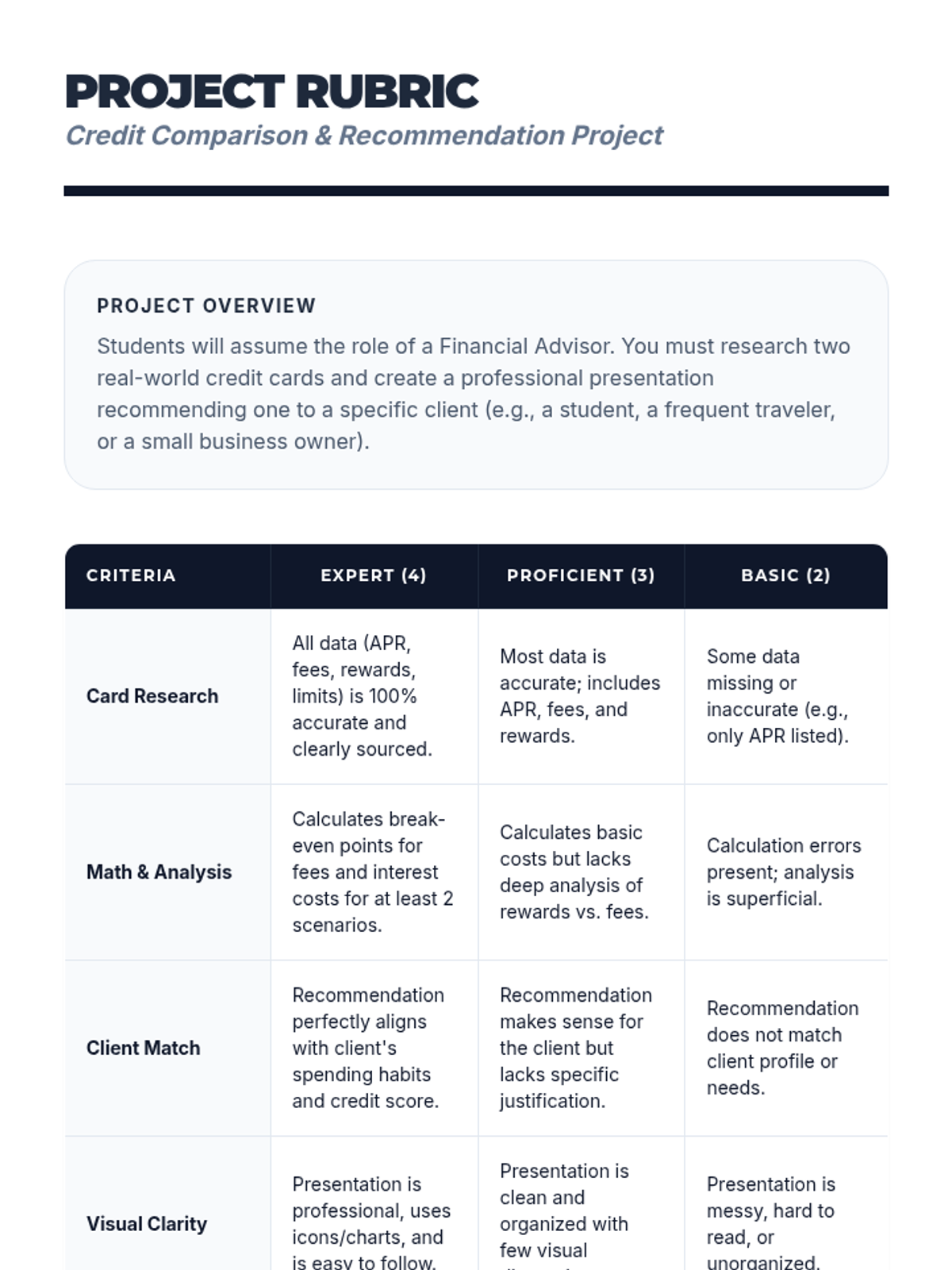
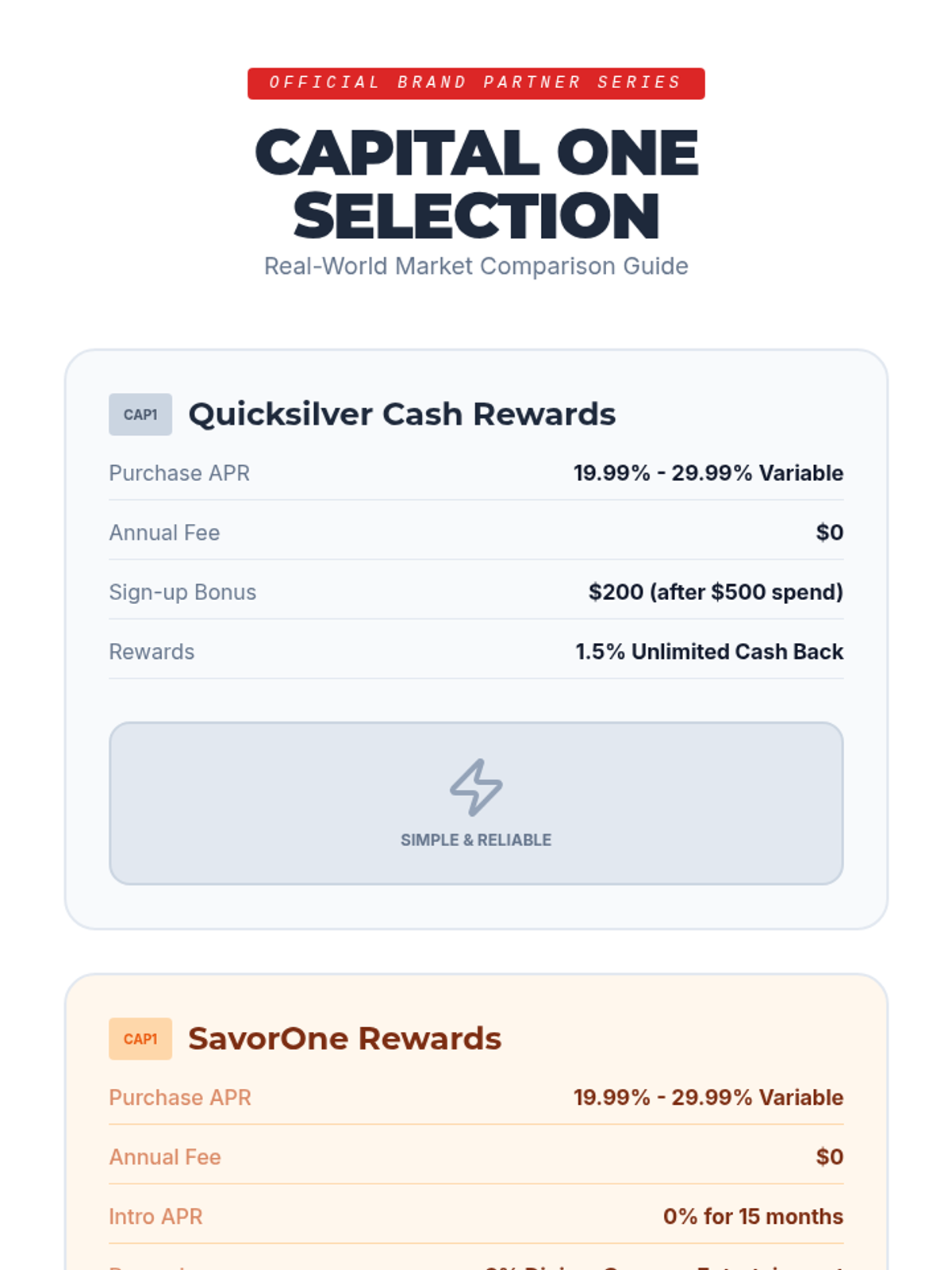
A comprehensive unit on credit cards, focusing on strategic selection, fee avoidance, and the long-term impact on credit health. Students learn to navigate the complex world of credit products through analysis and comparison.
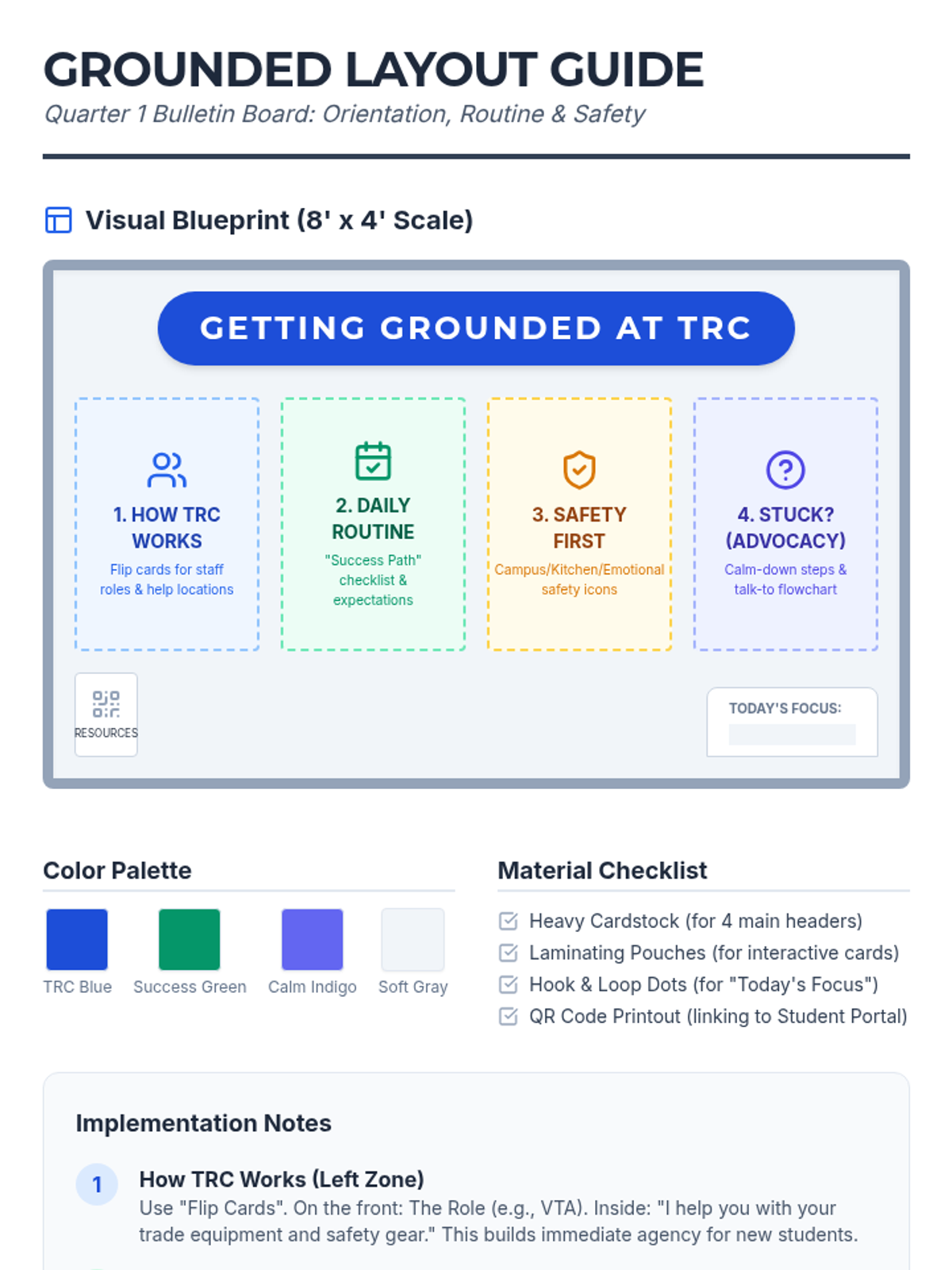
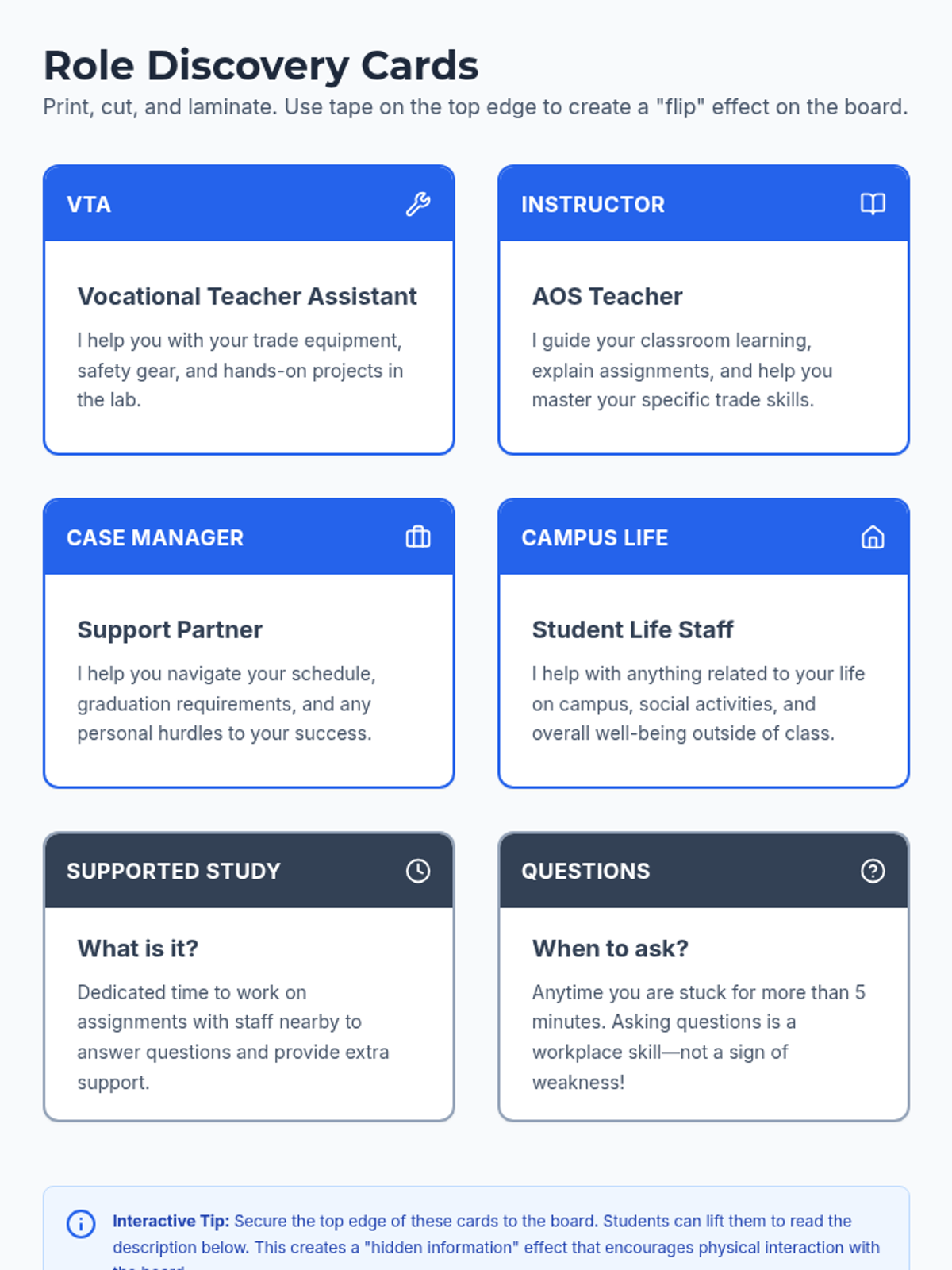
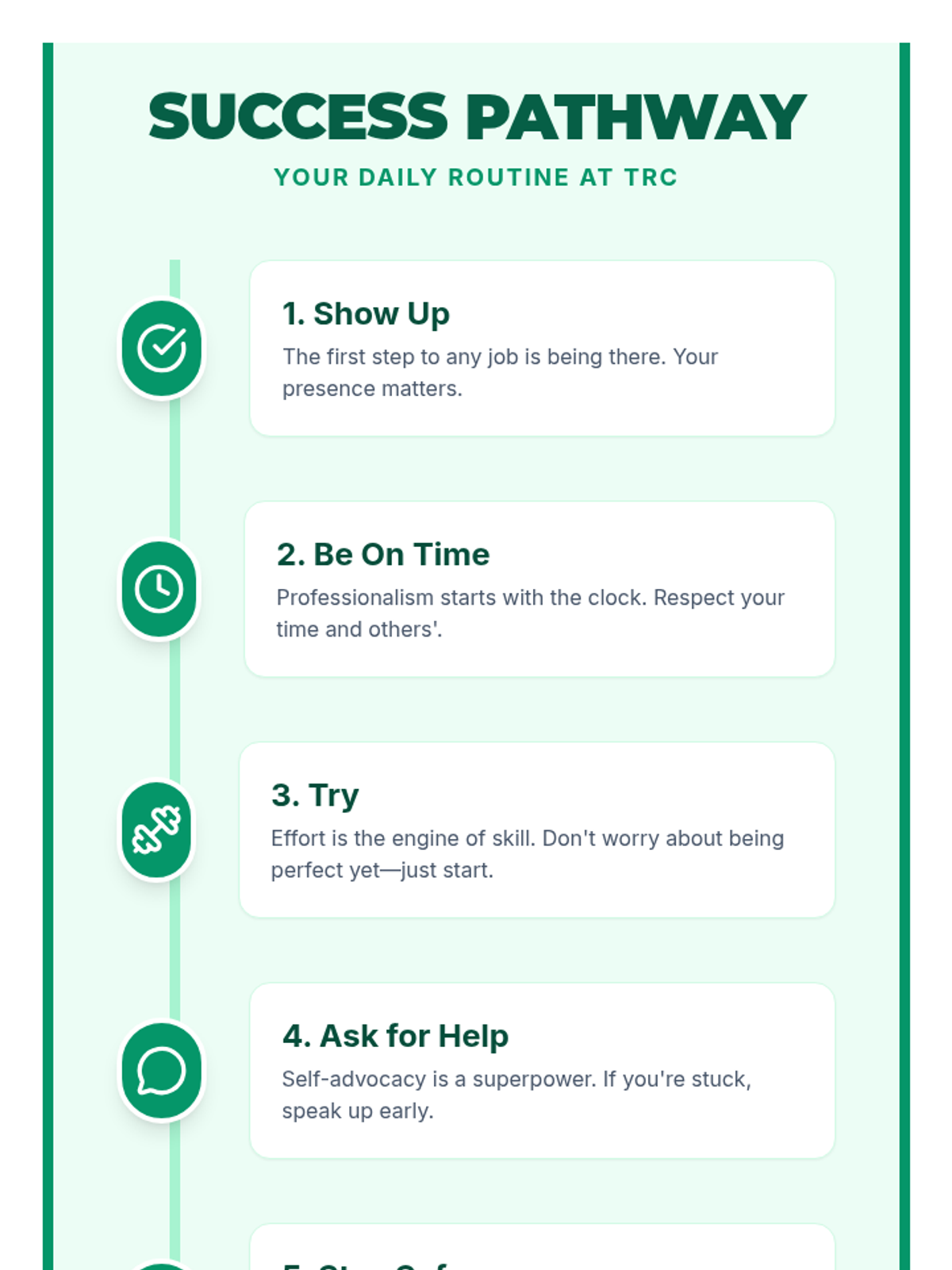
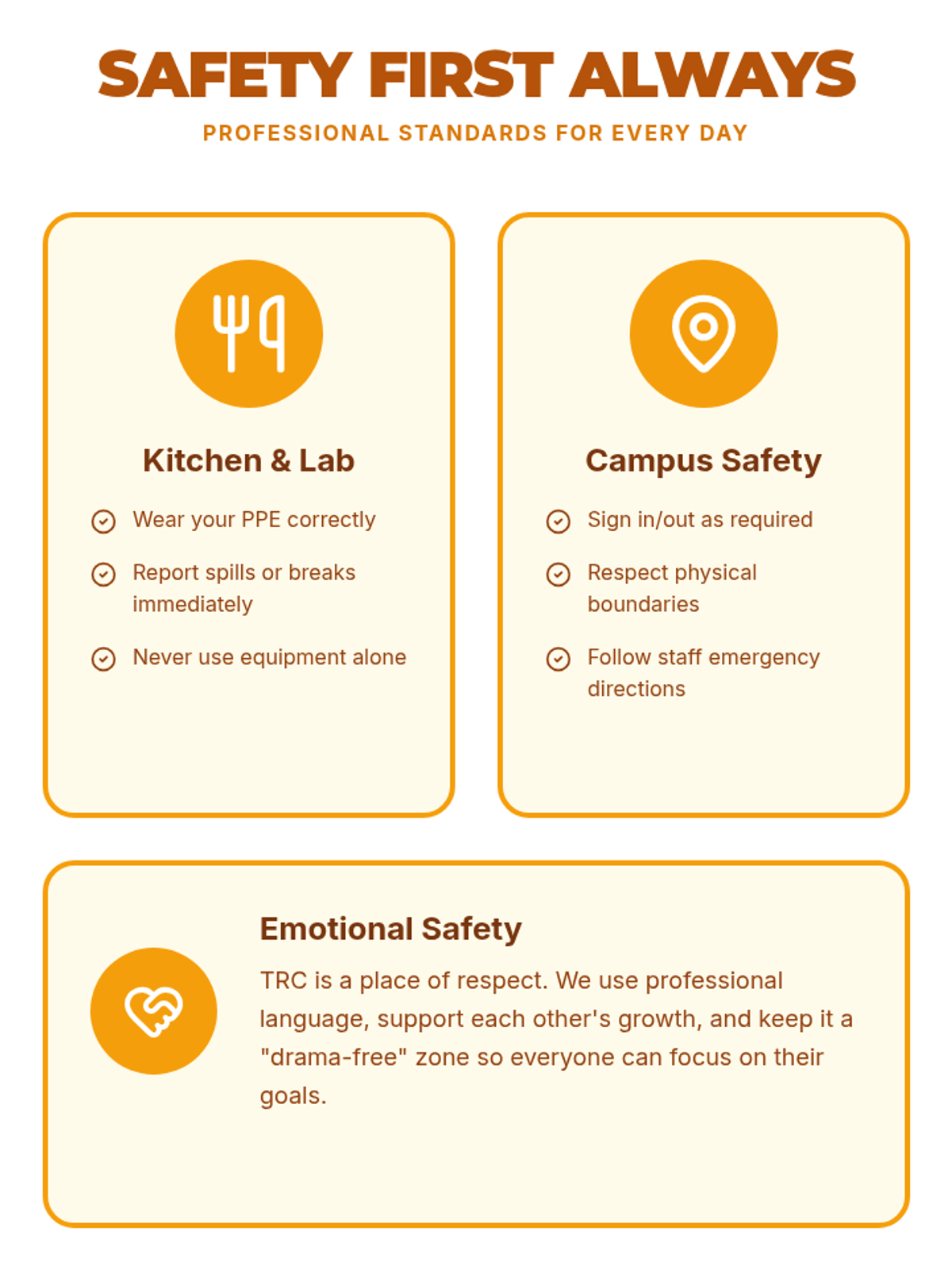
A collection of quarterly bulletin board designs for TRC, providing visual blueprints and printable components to help students navigate orientation, skill-building, and transition planning.
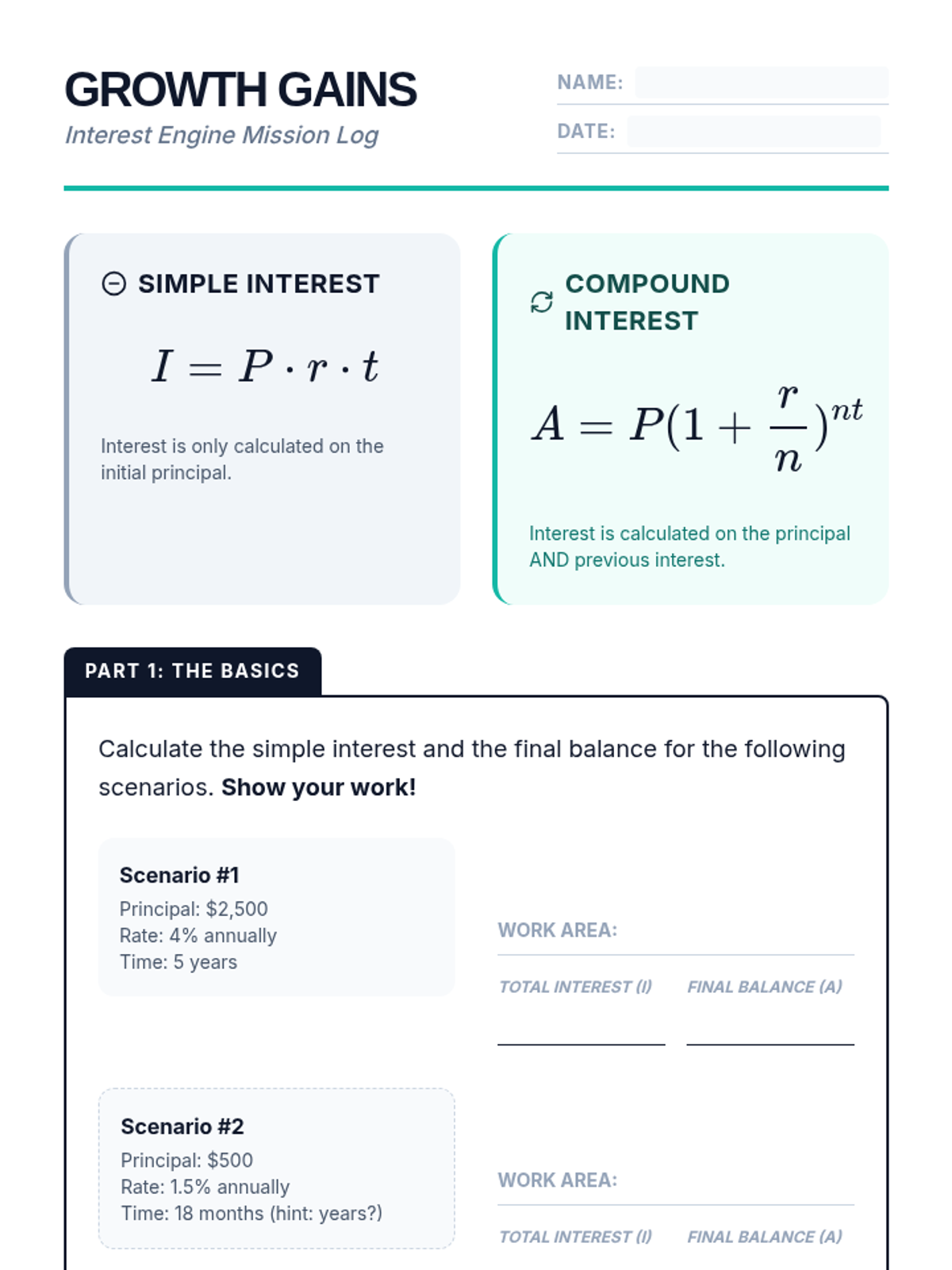
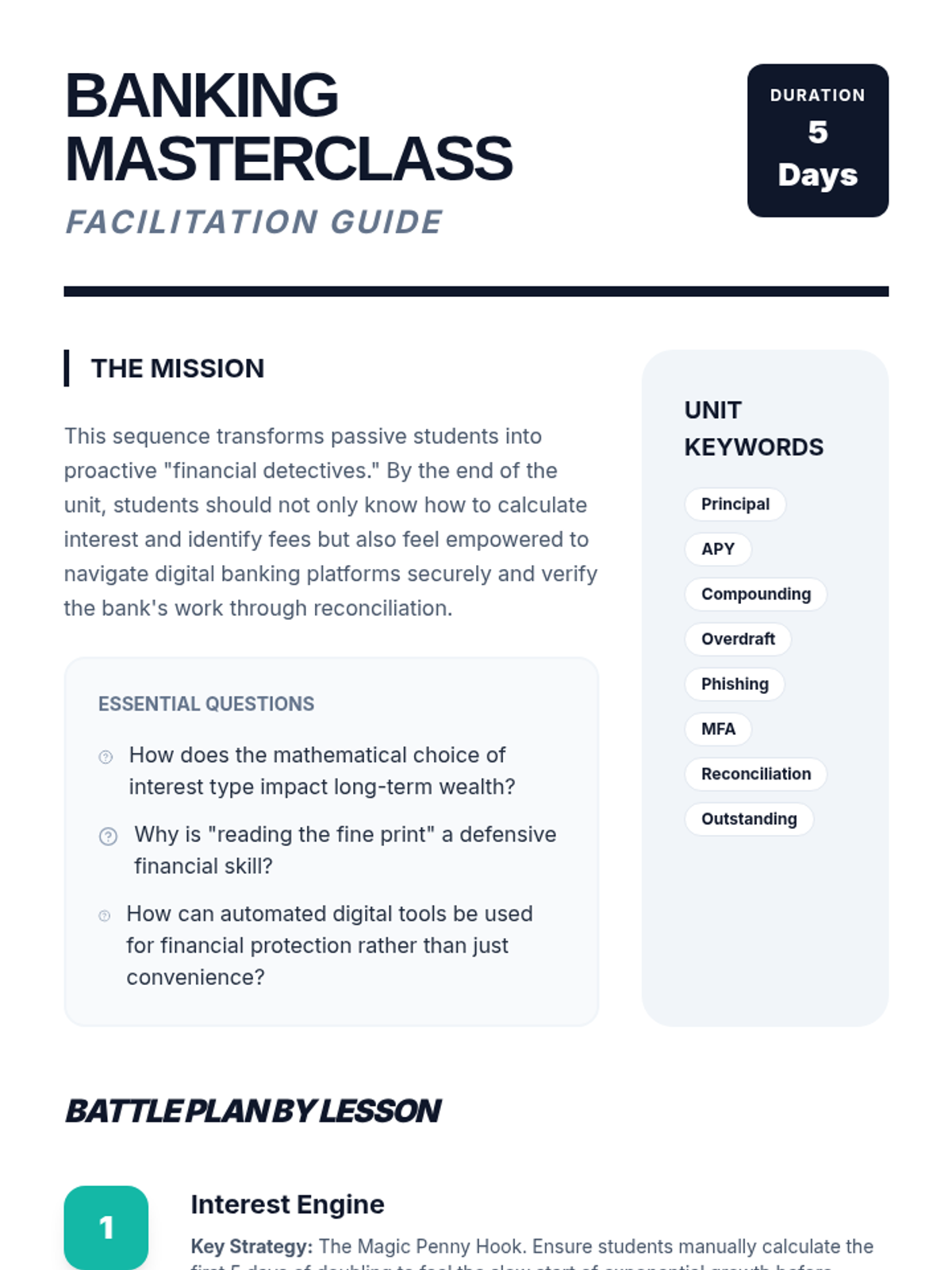
This sequence focuses on the financial implications of banking choices and the modern tools used to manage them. Students investigate the mathematics of interest, analyze fee structures, navigate digital banking platforms, and master the skill of account reconciliation.
A comprehensive 5-lesson unit designed for 10th-grade students in transition planning. This sequence covers the fundamentals of financial independence, including income analysis, budgeting, banking, and emergency planning through a simulated 'real world' month of living.
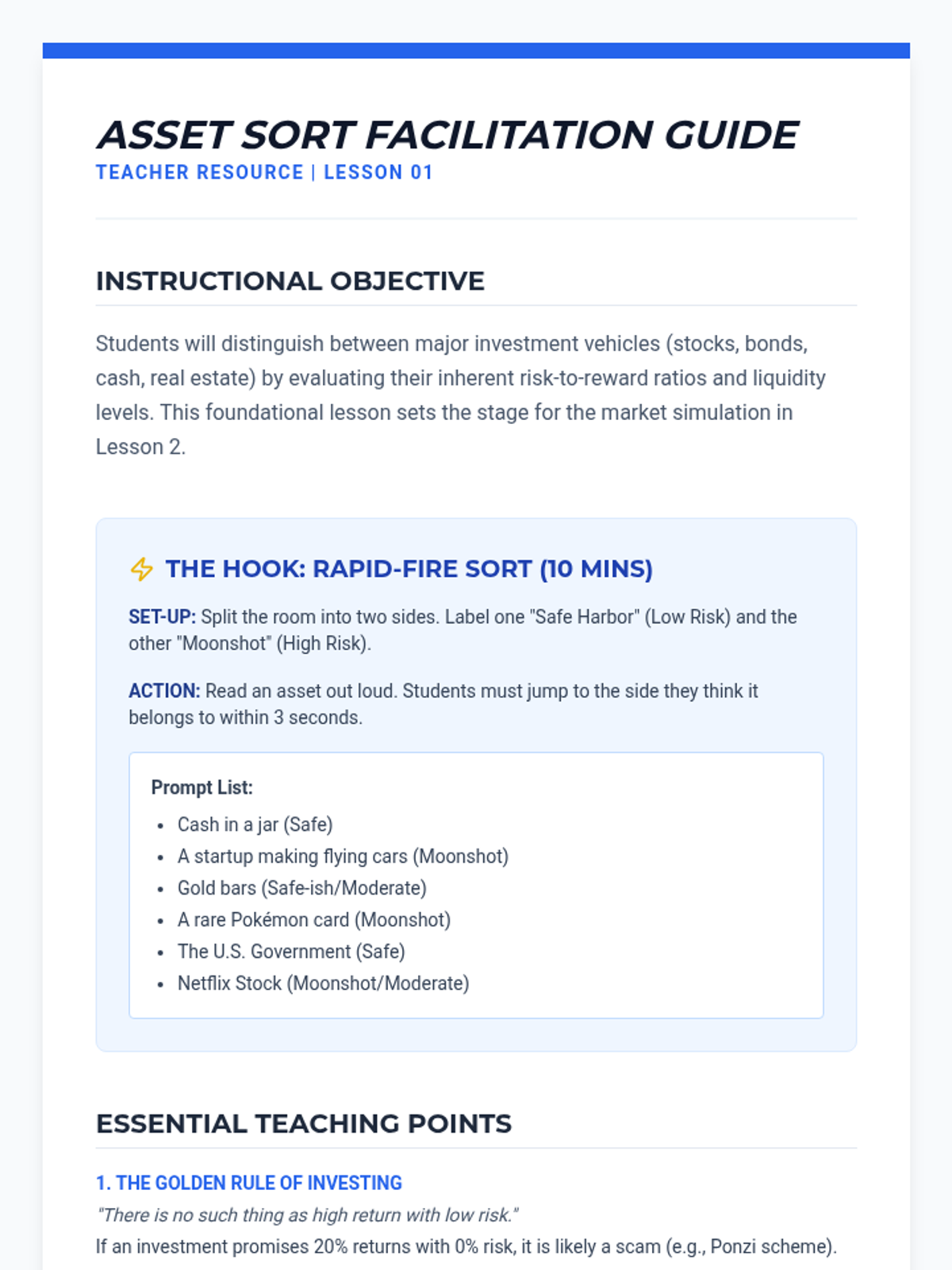
This sequence introduces 9th-grade students to the world of investing. It moves from individual ownership (stocks) to lending (bonds), then into diversification (mutual funds/ETFs), culminating in risk assessment and practical research skills for analyzing financial documents.
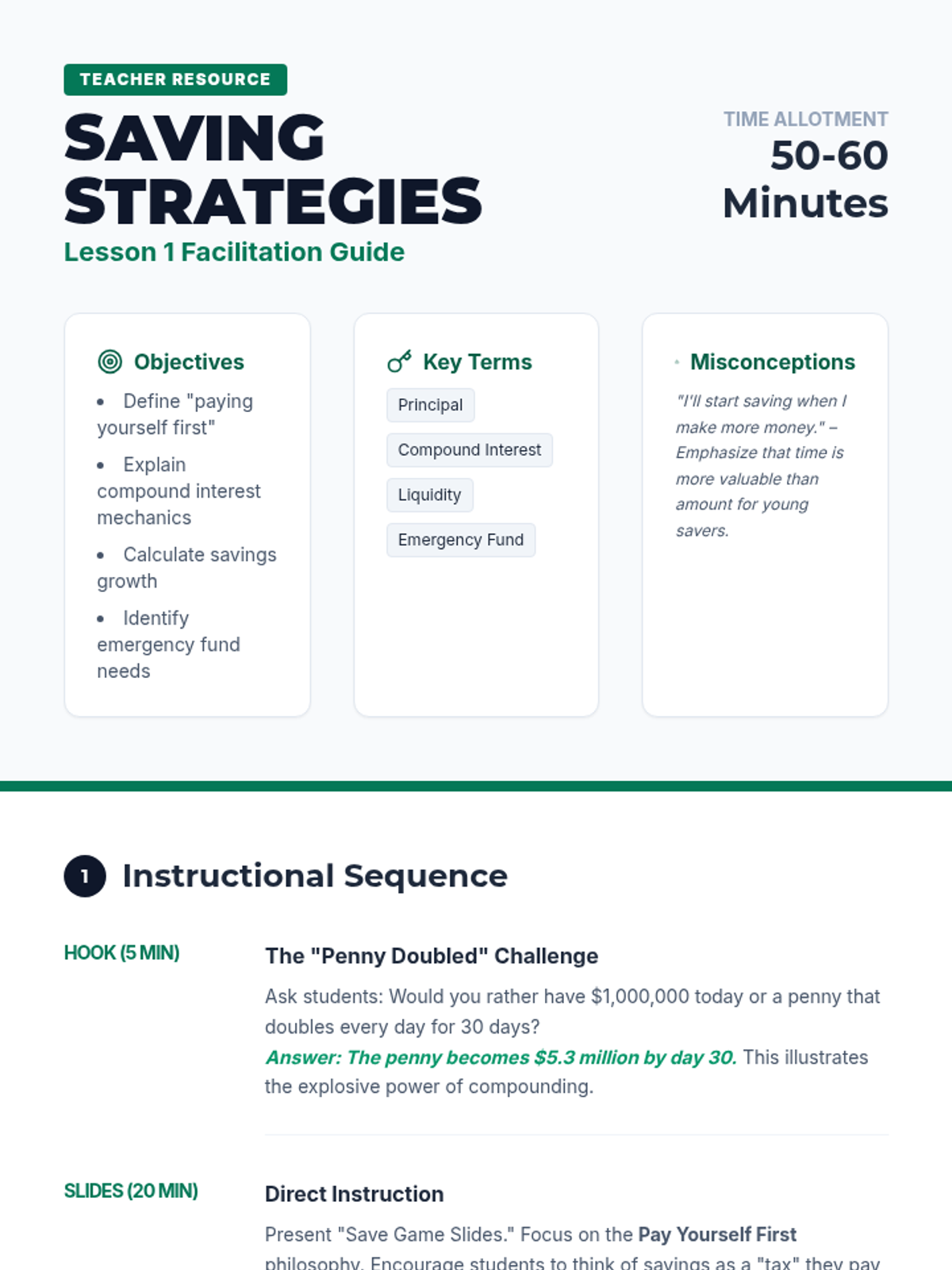
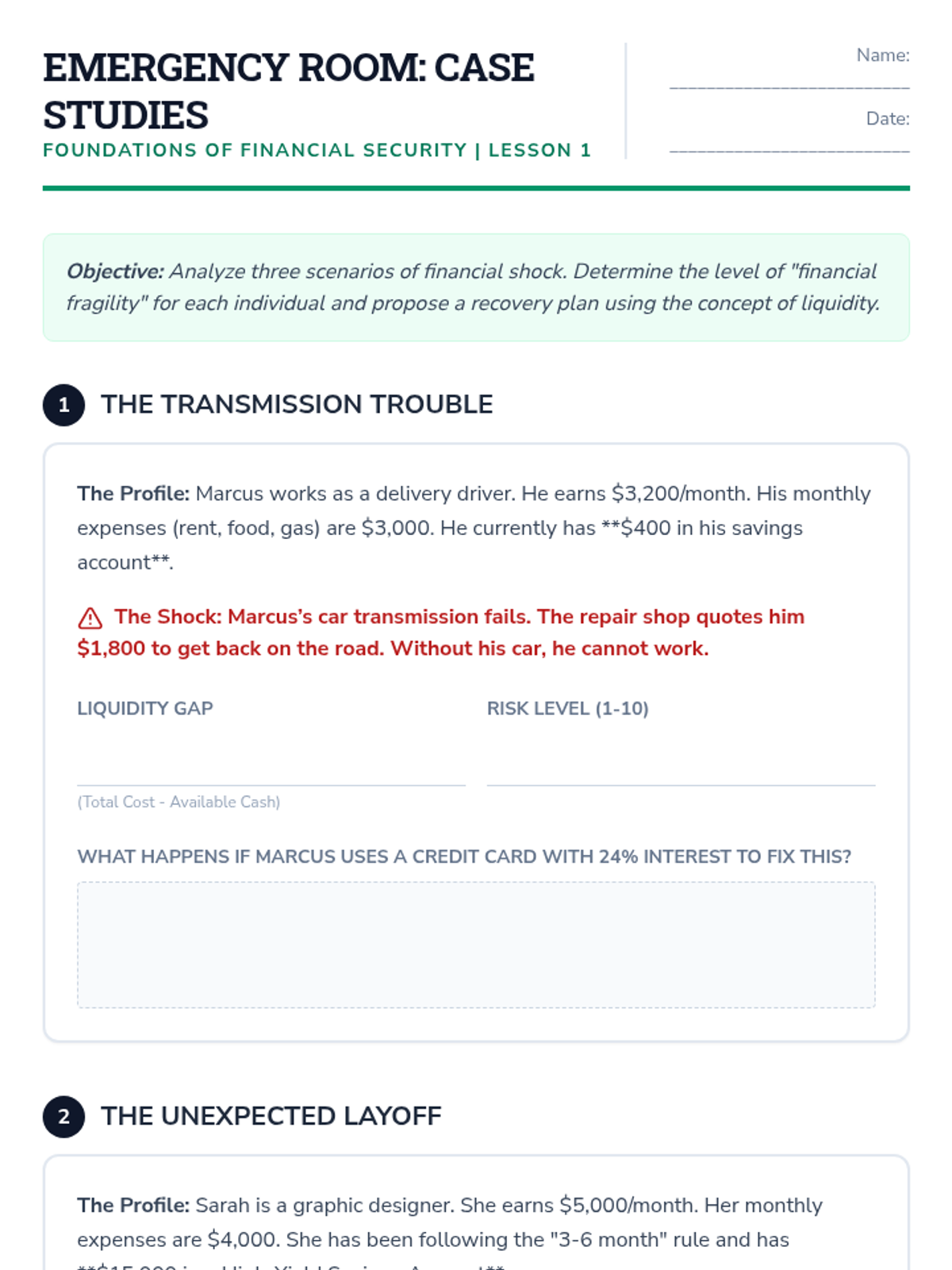
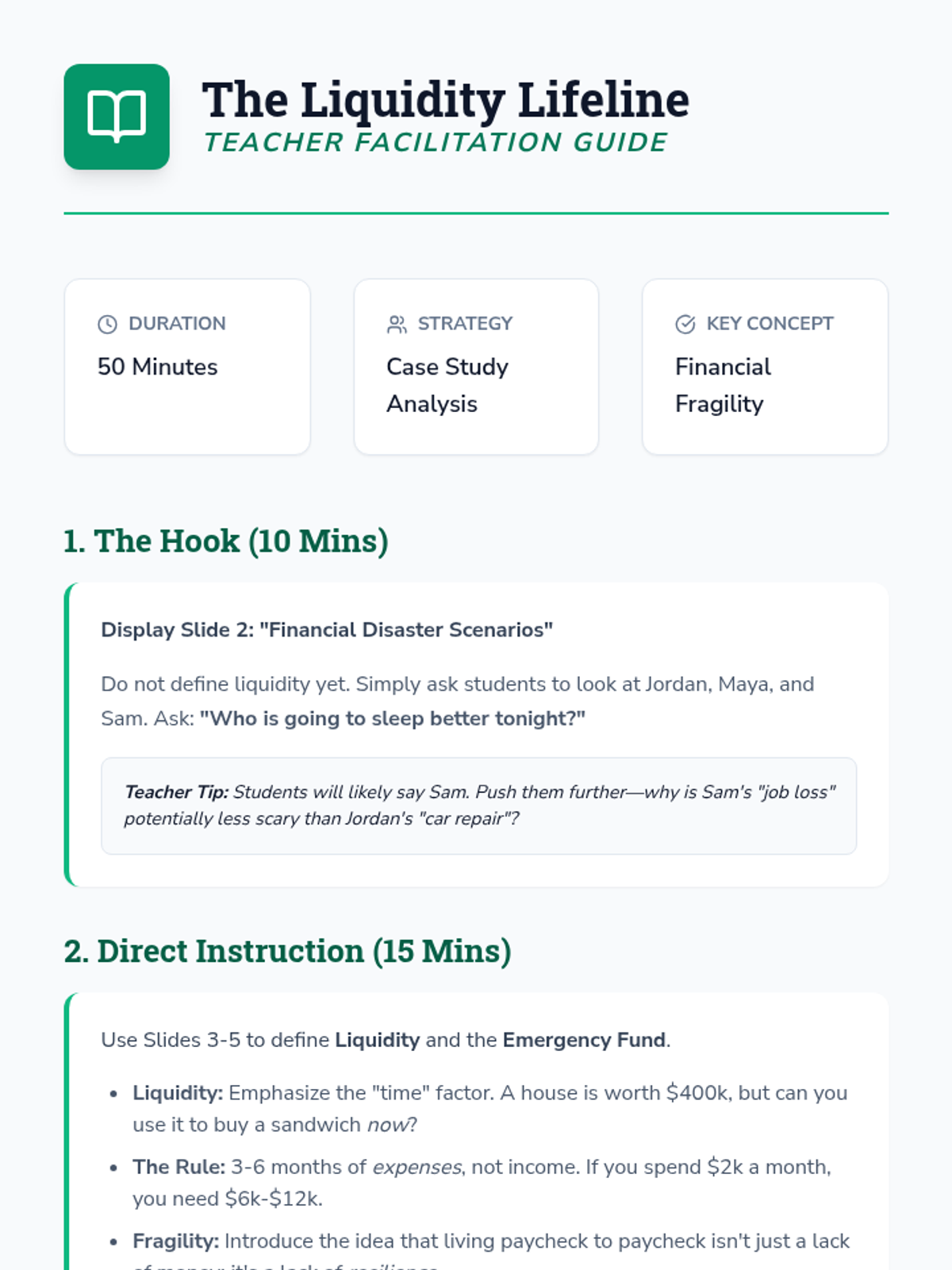
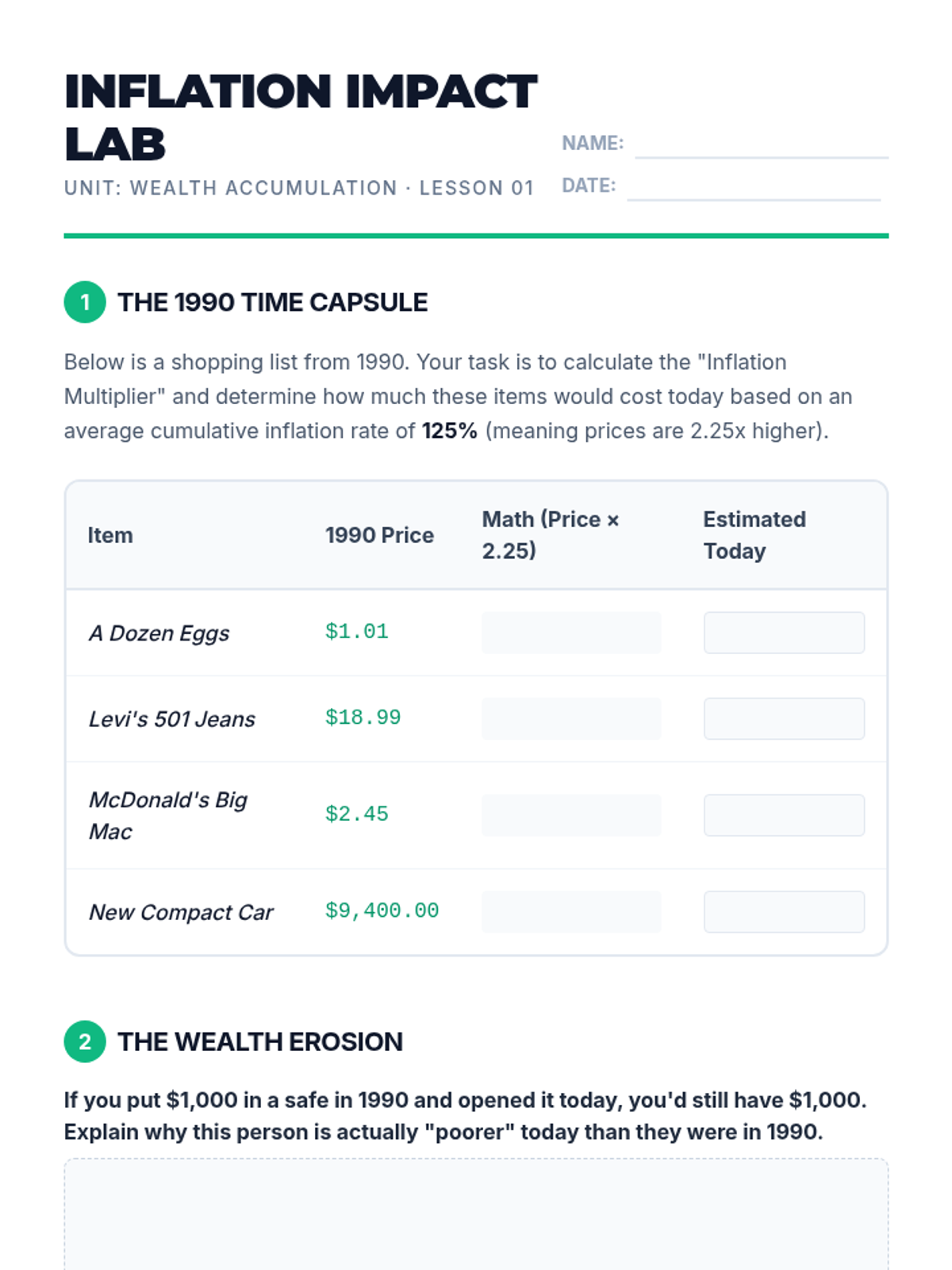
This sequence introduces 9th-grade students to the essentials of saving and liquidity. It covers emergency funds, banking products, the impact of inflation on purchasing power, SMART goal setting, and the behavioral strategy of 'paying yourself first' to build long-term financial security.
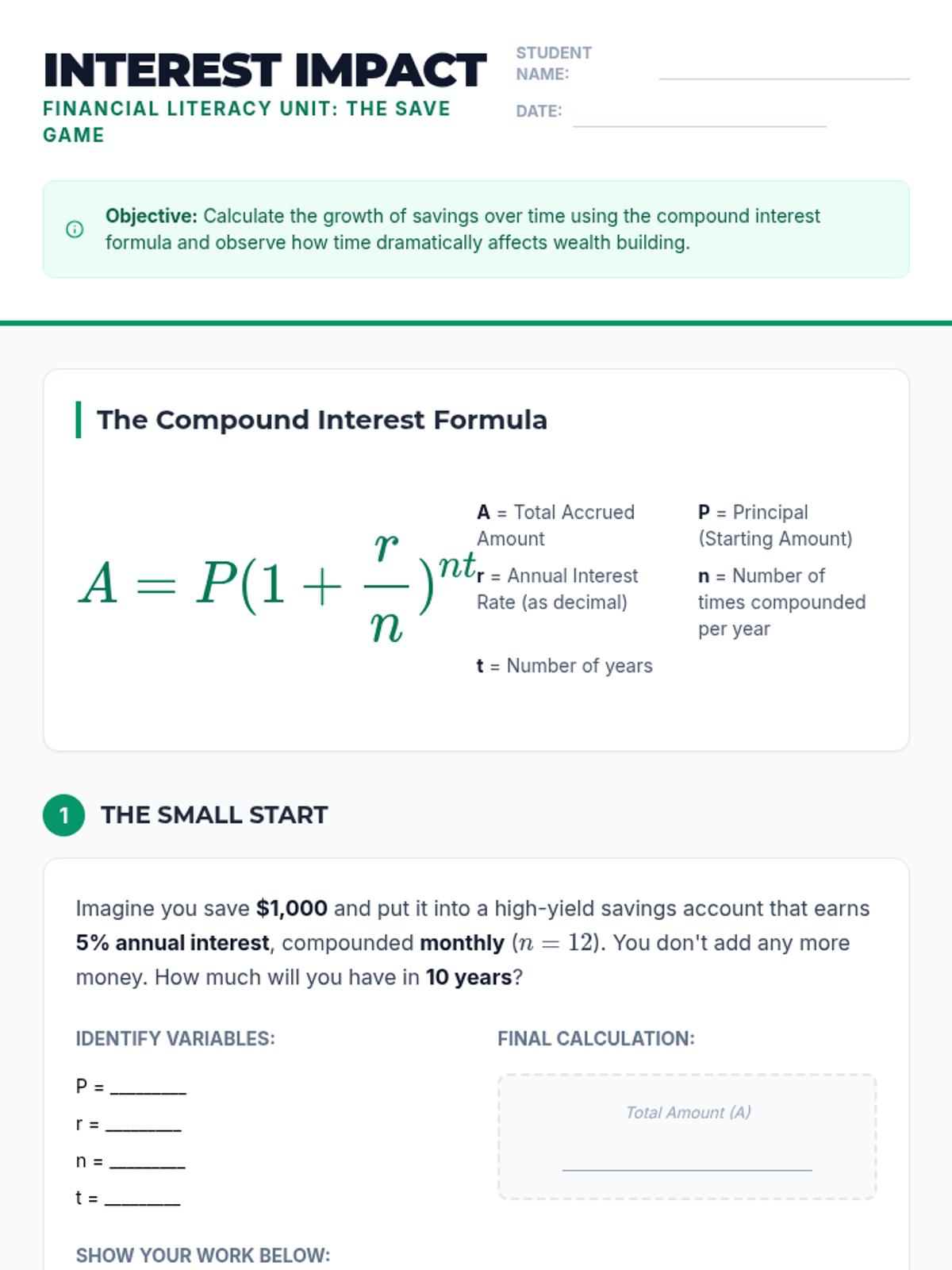
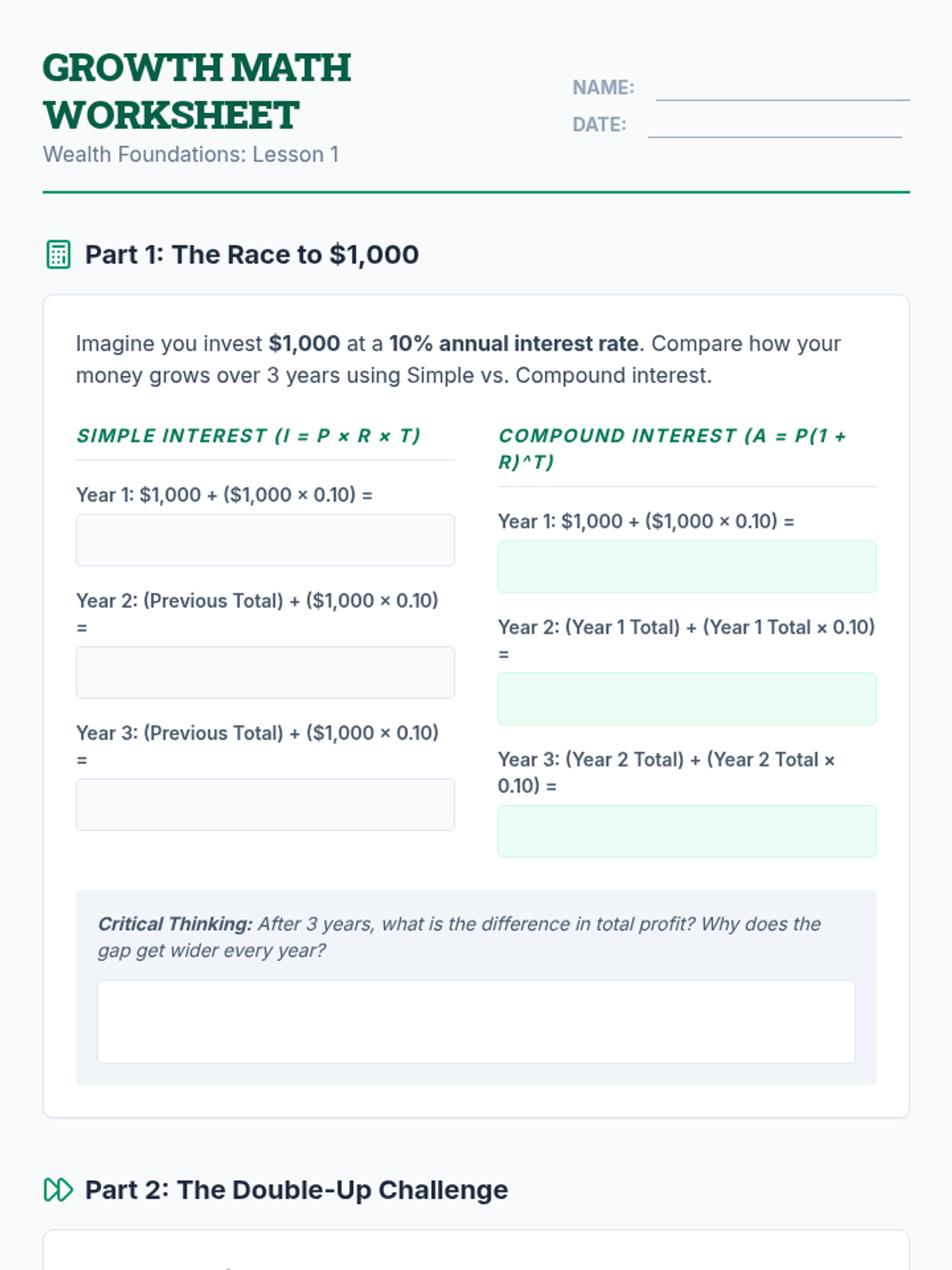
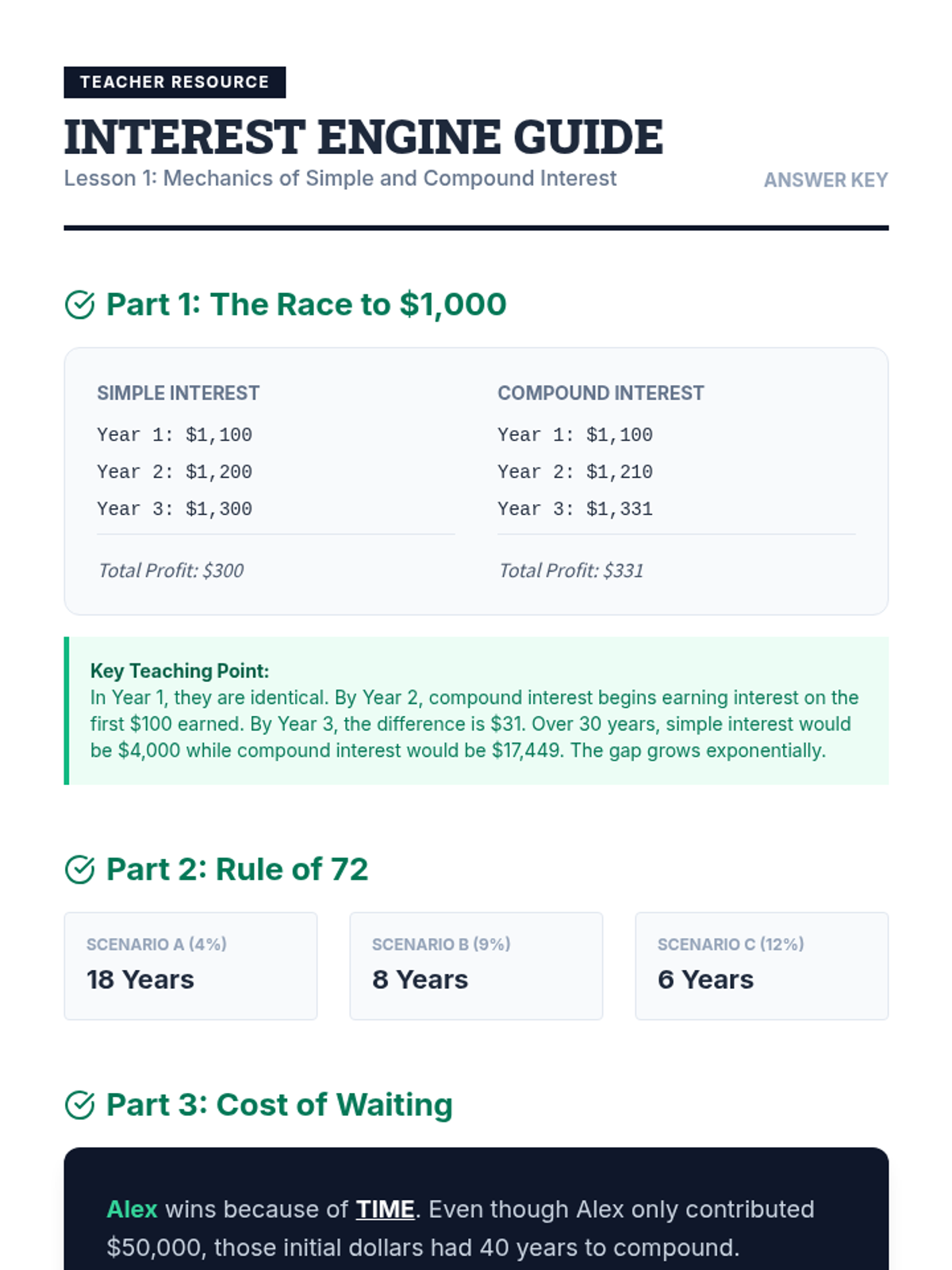
This sequence introduces students to the core concepts of wealth accumulation through compound interest and the protective role of liquidity. Students will progress from mathematical modeling of growth to practical strategies for maintaining financial resilience against inflation and life's unexpected expenses.
A comprehensive unit on banking, compound interest, credit scoring, and debt management, designed for 10th-grade economics students to build practical financial literacy.
This sequence introduces 9th-grade students to personal banking and credit management. It covers banking institutions, simple vs. compound interest, credit scores, credit card debt, and loan acquisition strategies through case studies and simulations.
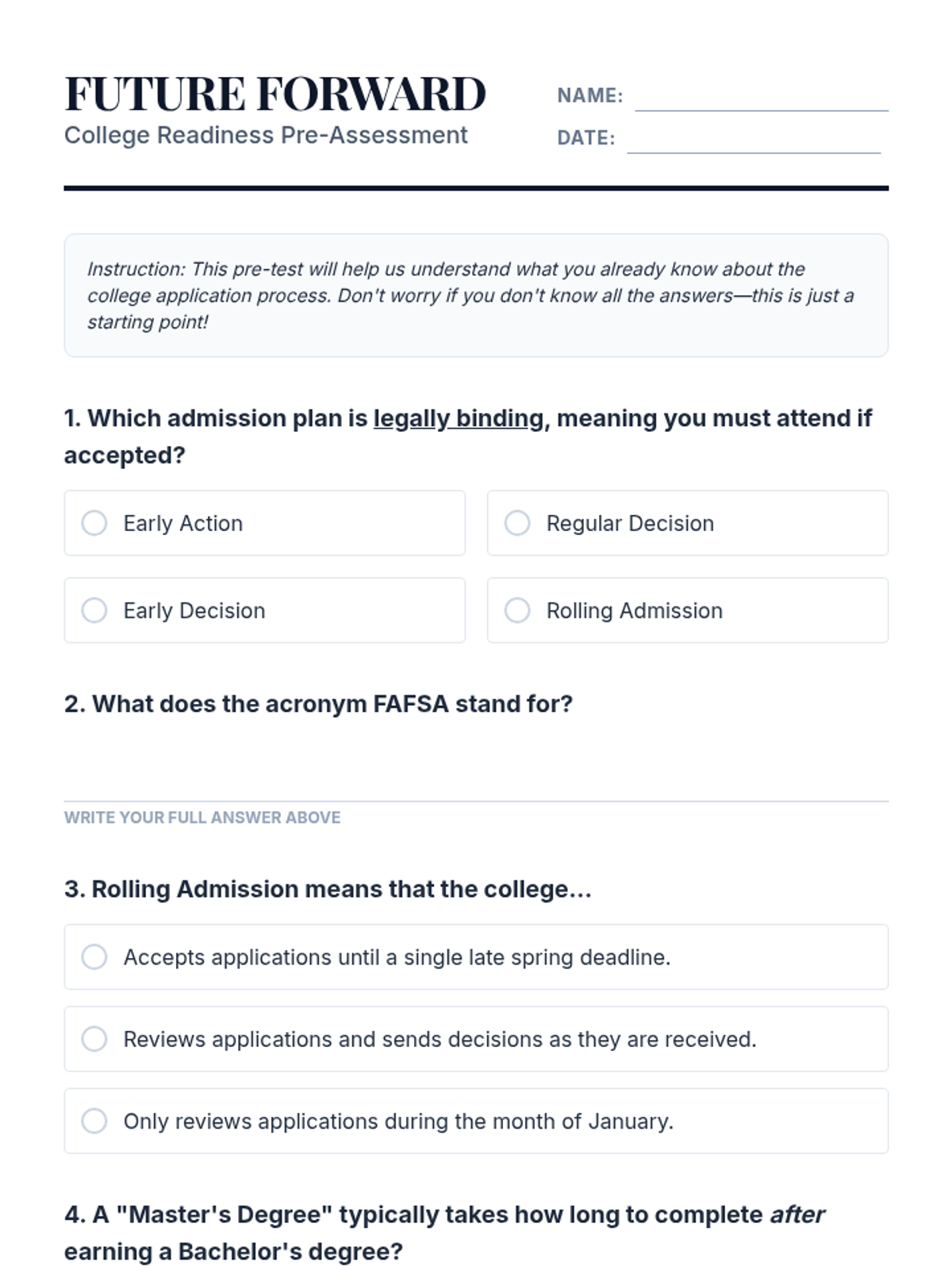
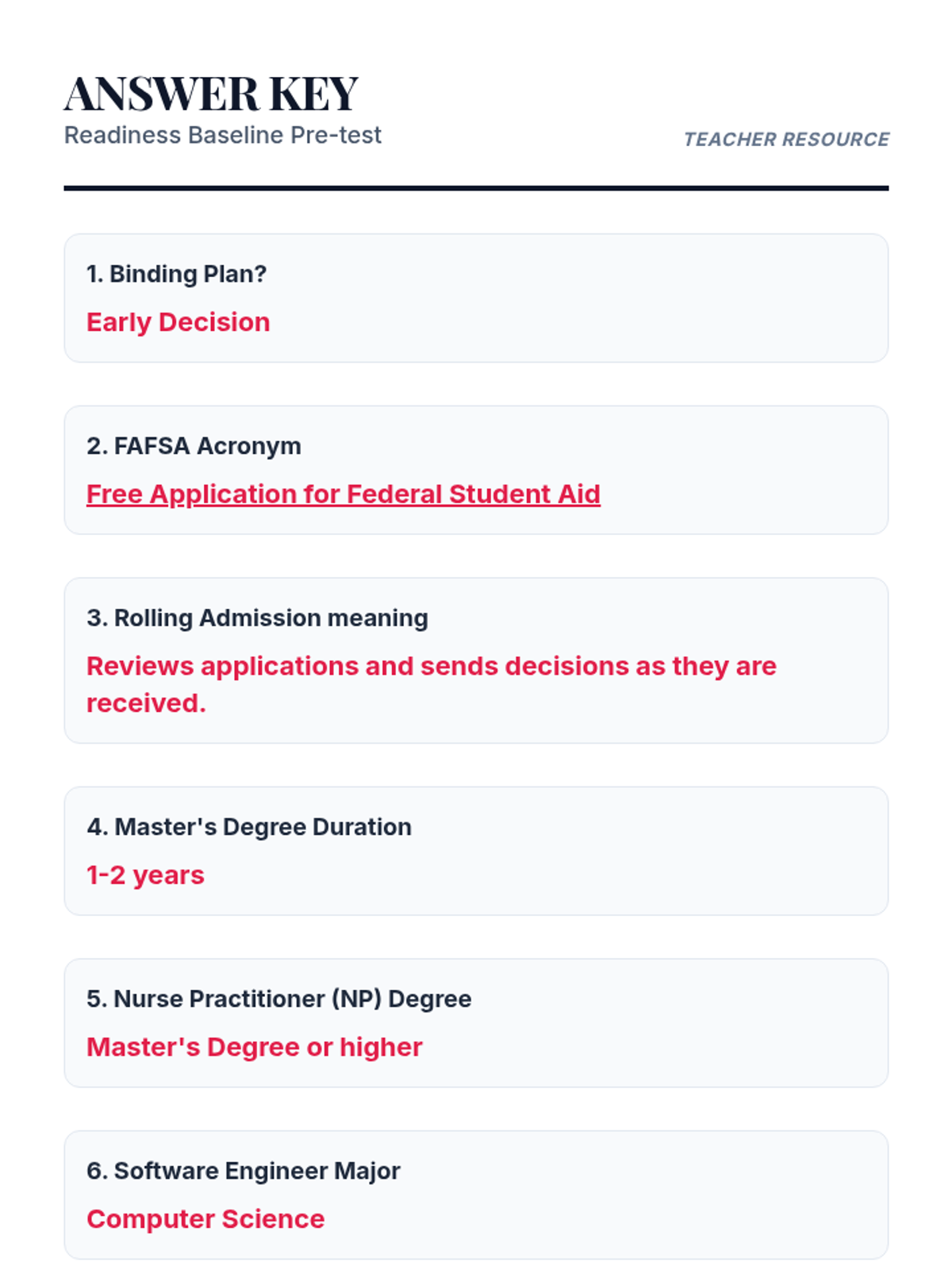
A comprehensive 7-week curriculum designed to prepare high school students for the college transition, covering admission strategies, financial aid, and major-to-career pathways.
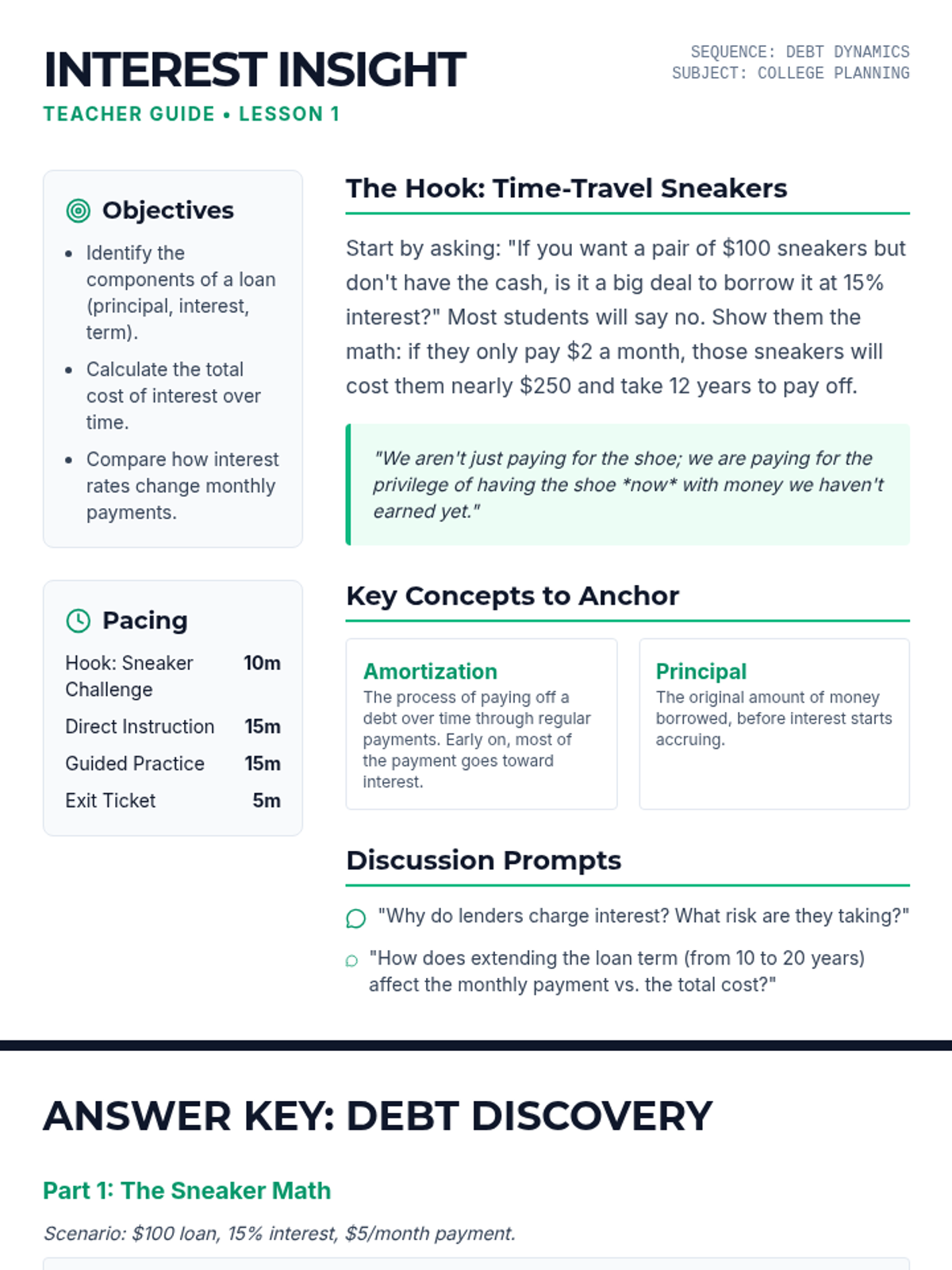
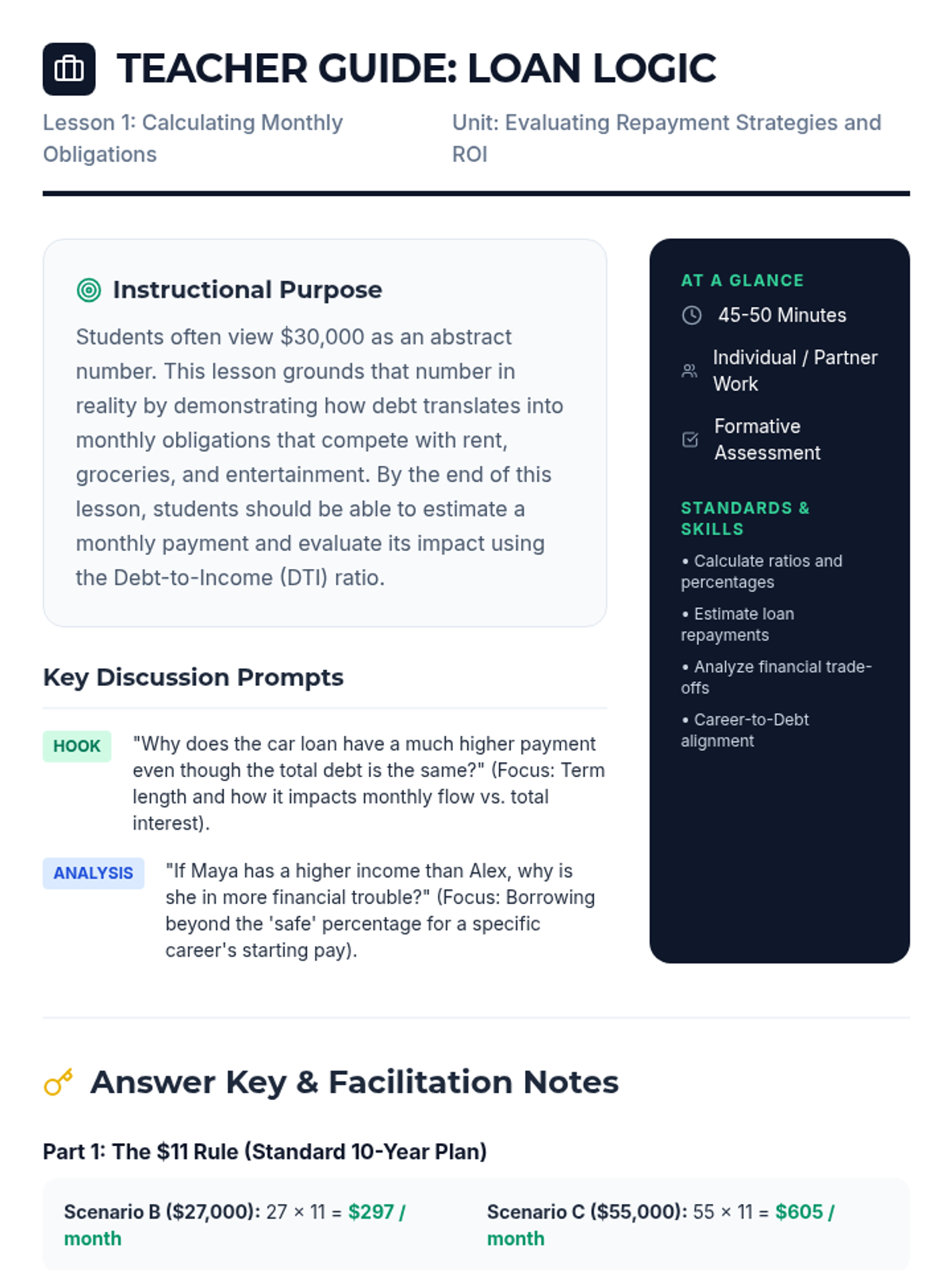
This sequence explores the long-term financial implications of student loans, focusing on repayment plans, budgeting, and return on investment (ROI). Students transition from understanding borrowing mechanics to simulating the real-world impact of debt on lifestyle and career choices.
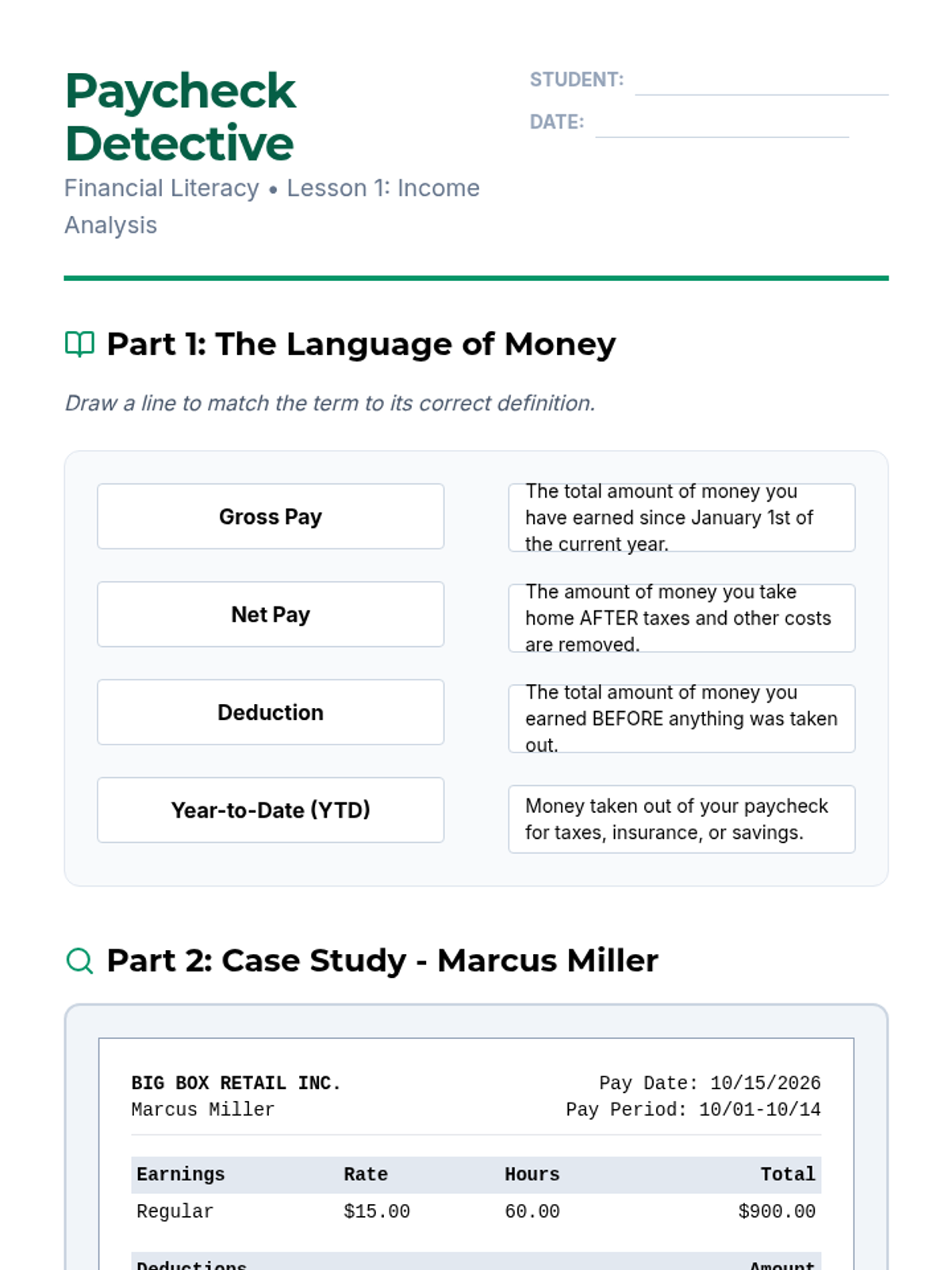
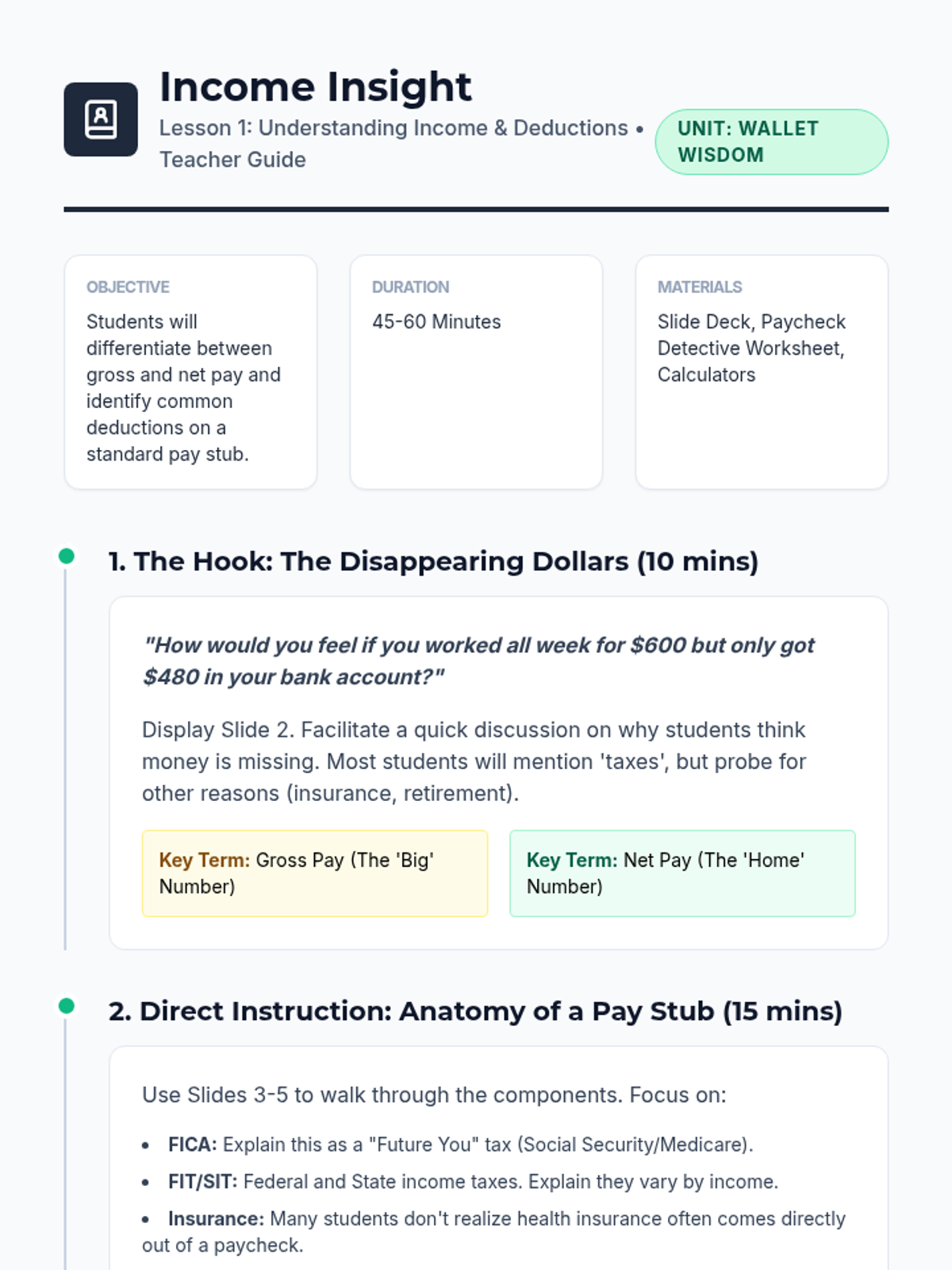
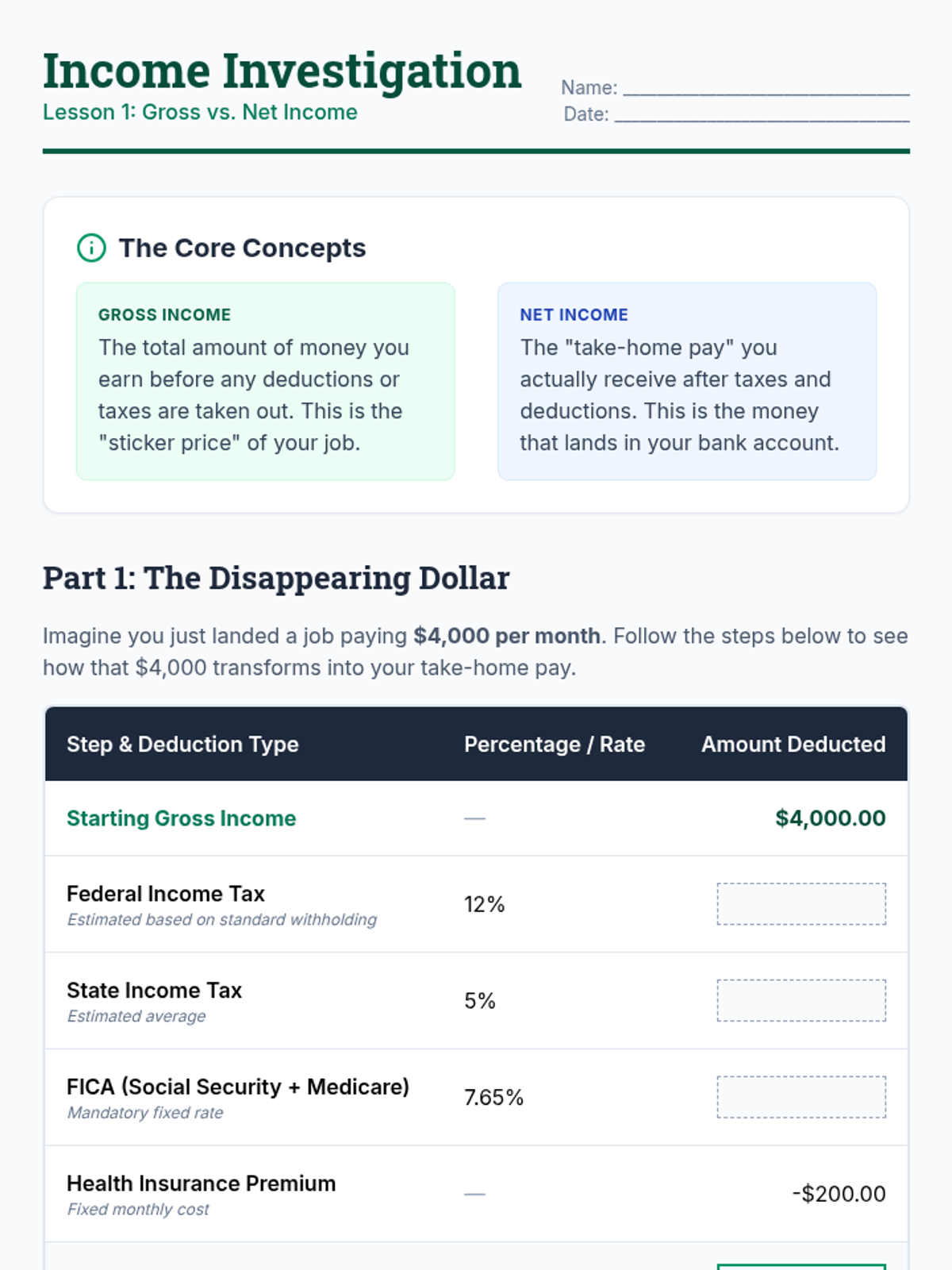
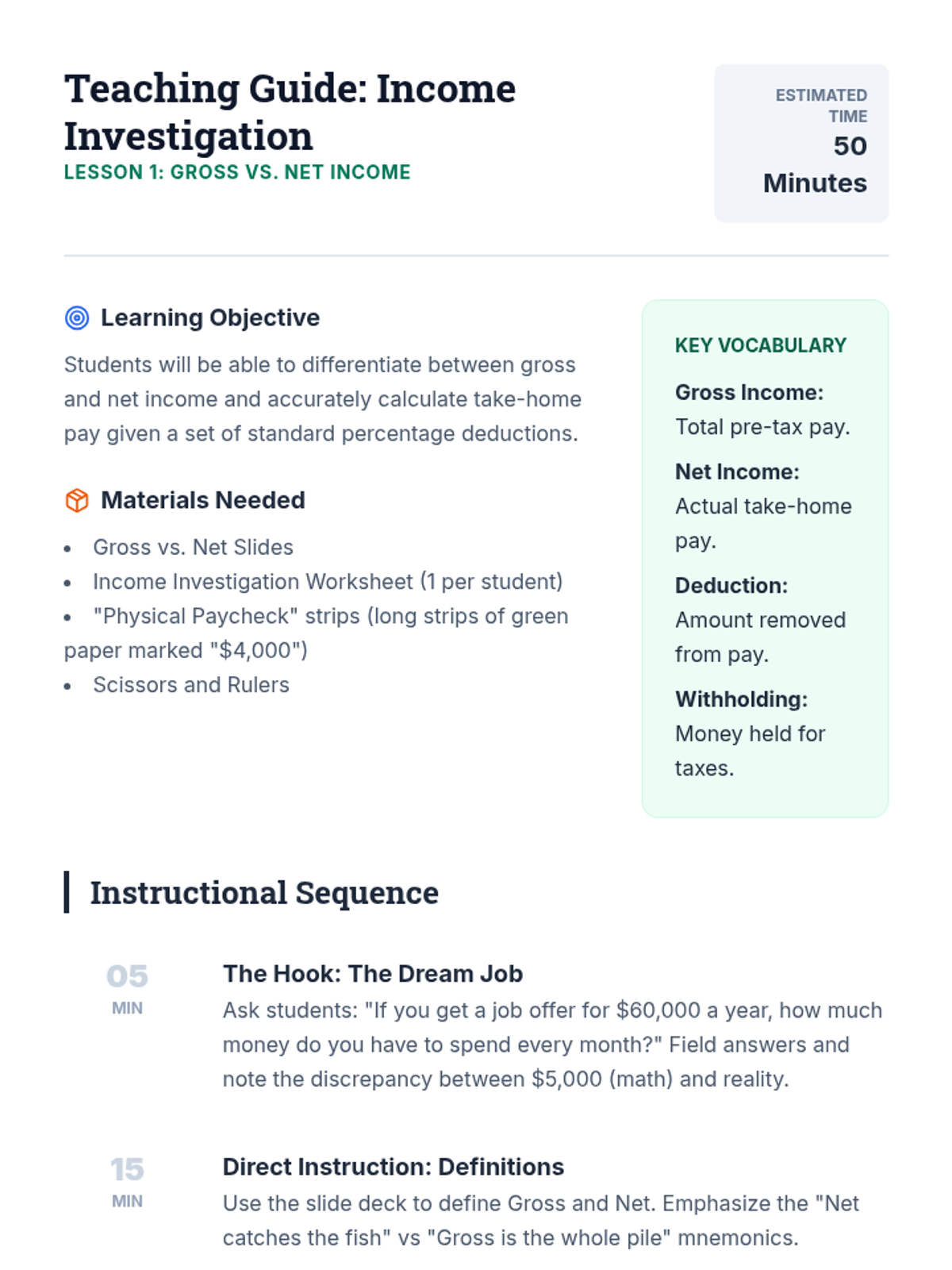
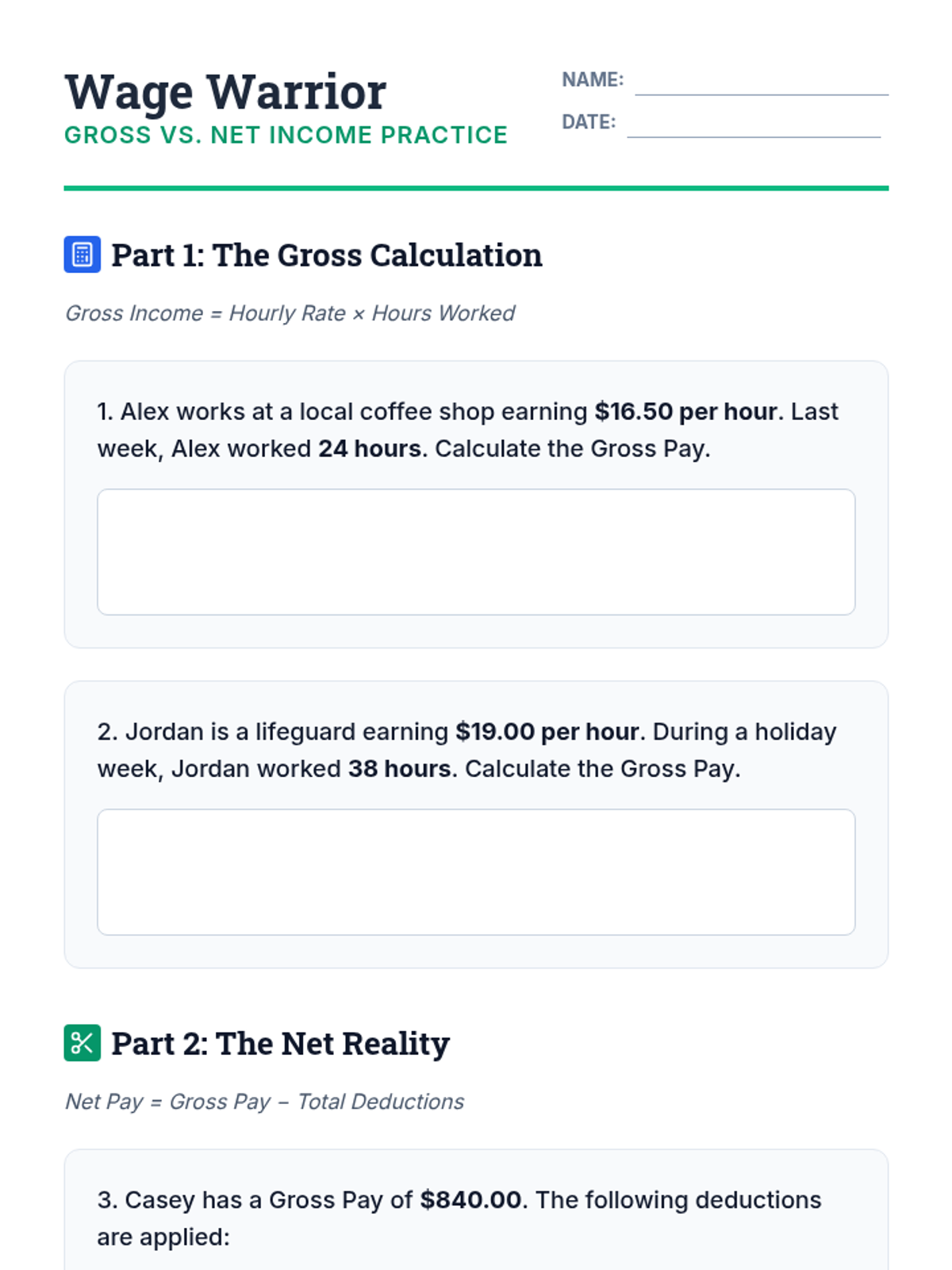
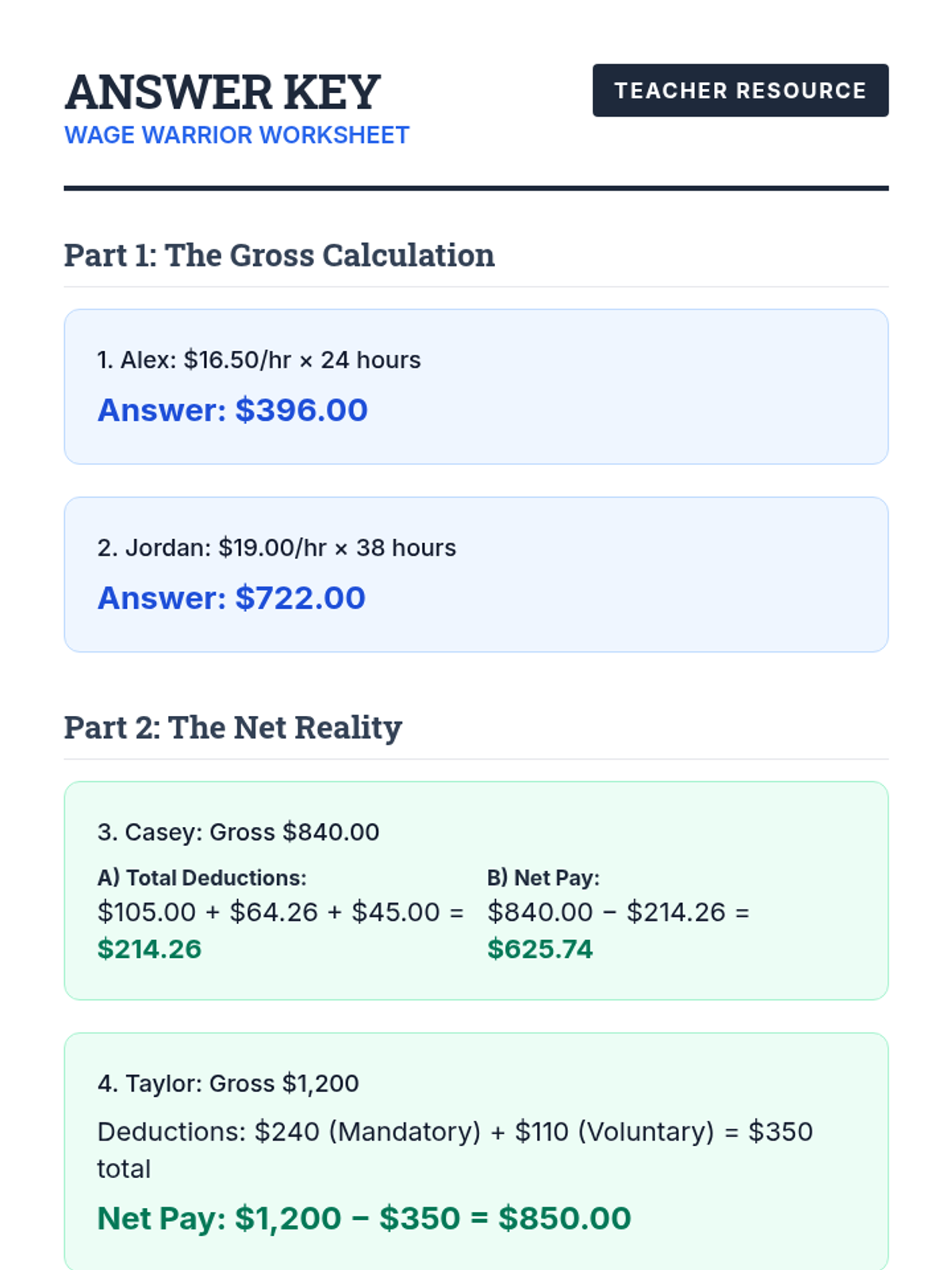
This unit demystifies the transition from gross salary to net take-home pay, helping students understand earnings, mandatory taxes, and deductions. Students will learn to calculate gross pay, interpret tax forms, and audit their own paystubs for accuracy.
This sequence immerses 10th-grade students in the mechanics of workplace compensation, tracking the journey from gross salary to take-home pay. Students master tax form completion, calculate mandatory and voluntary deductions, and learn to audit paystubs for accuracy, equipping them with essential technical financial literacy for their future careers.
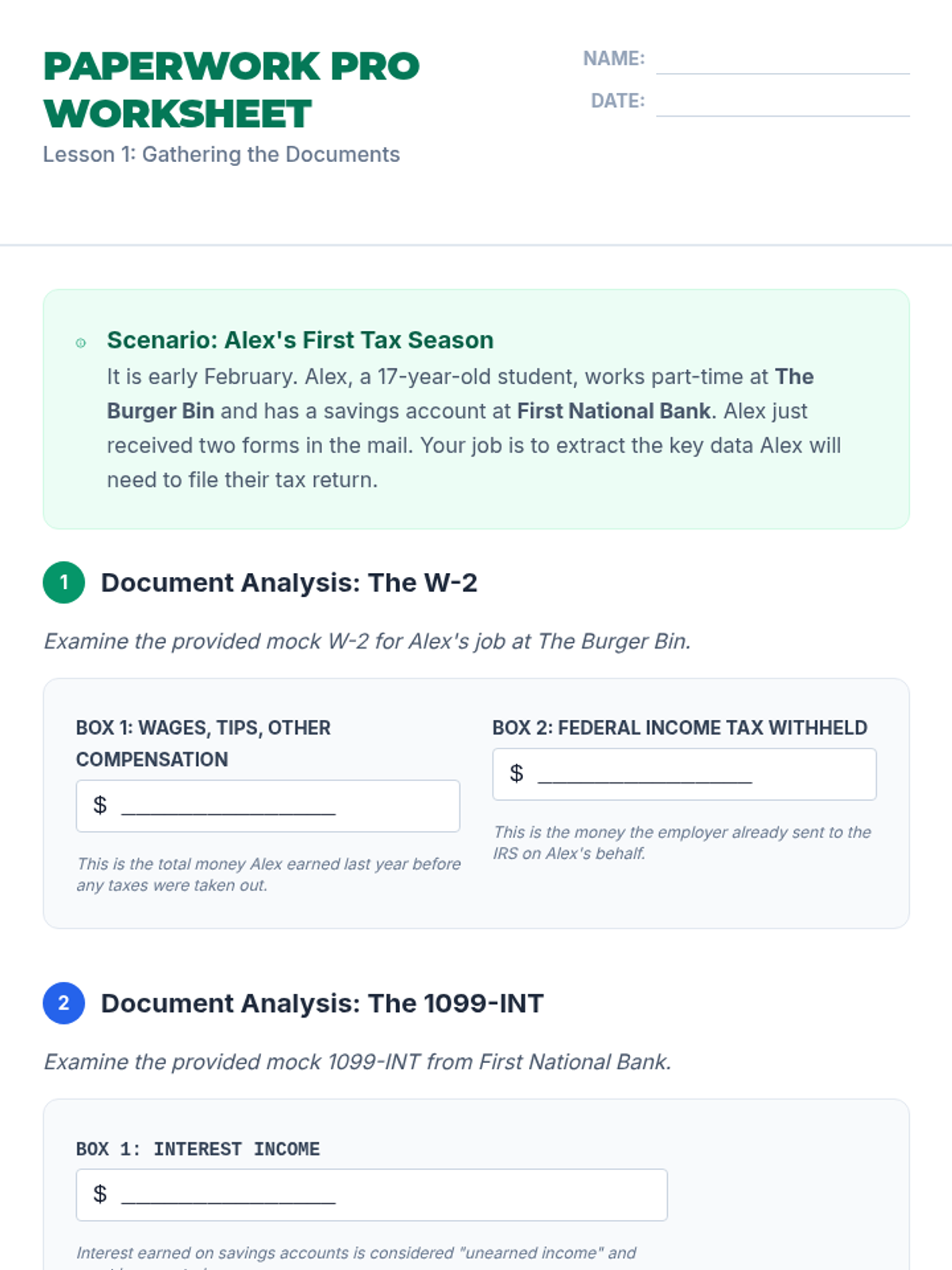
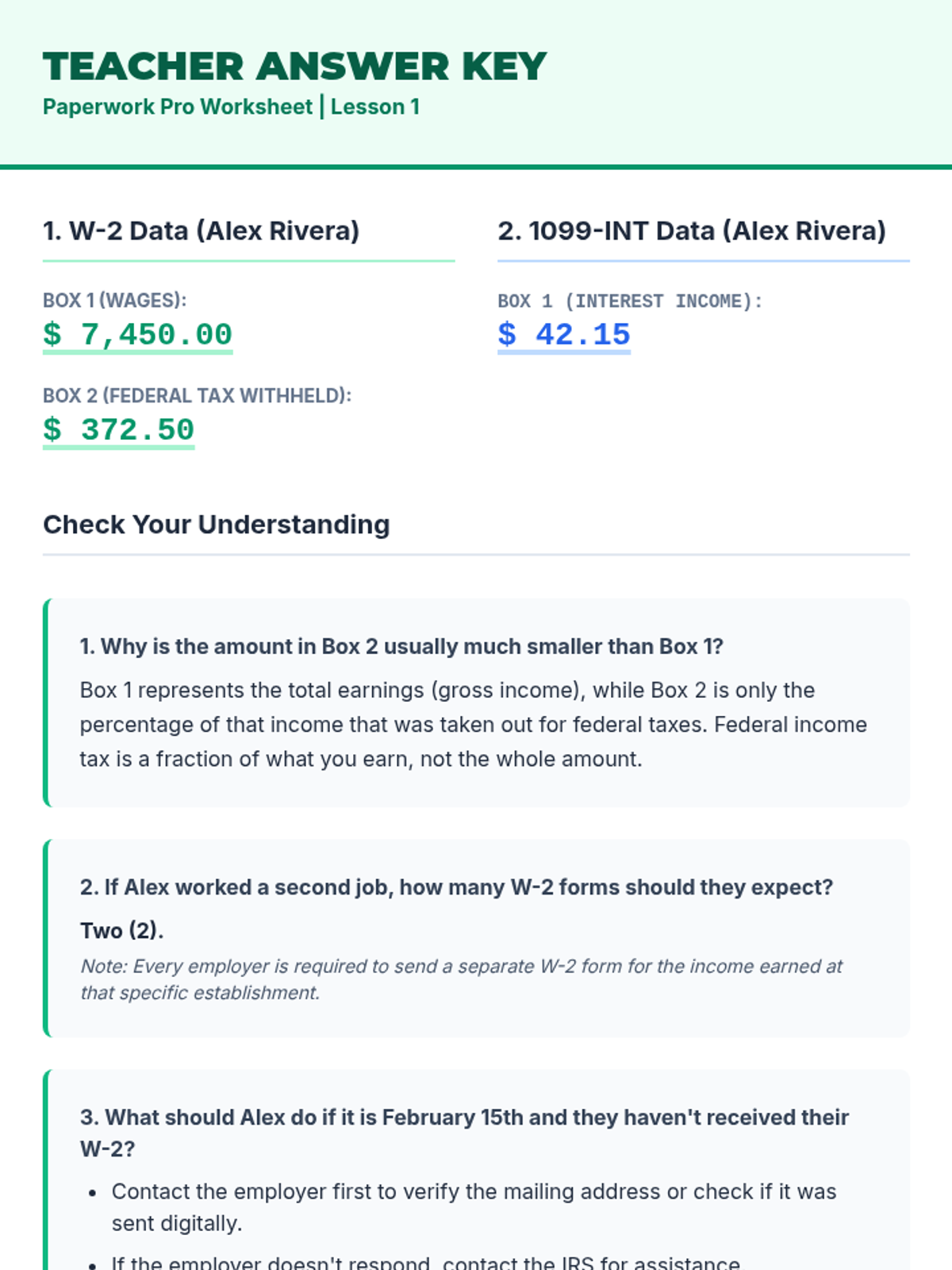
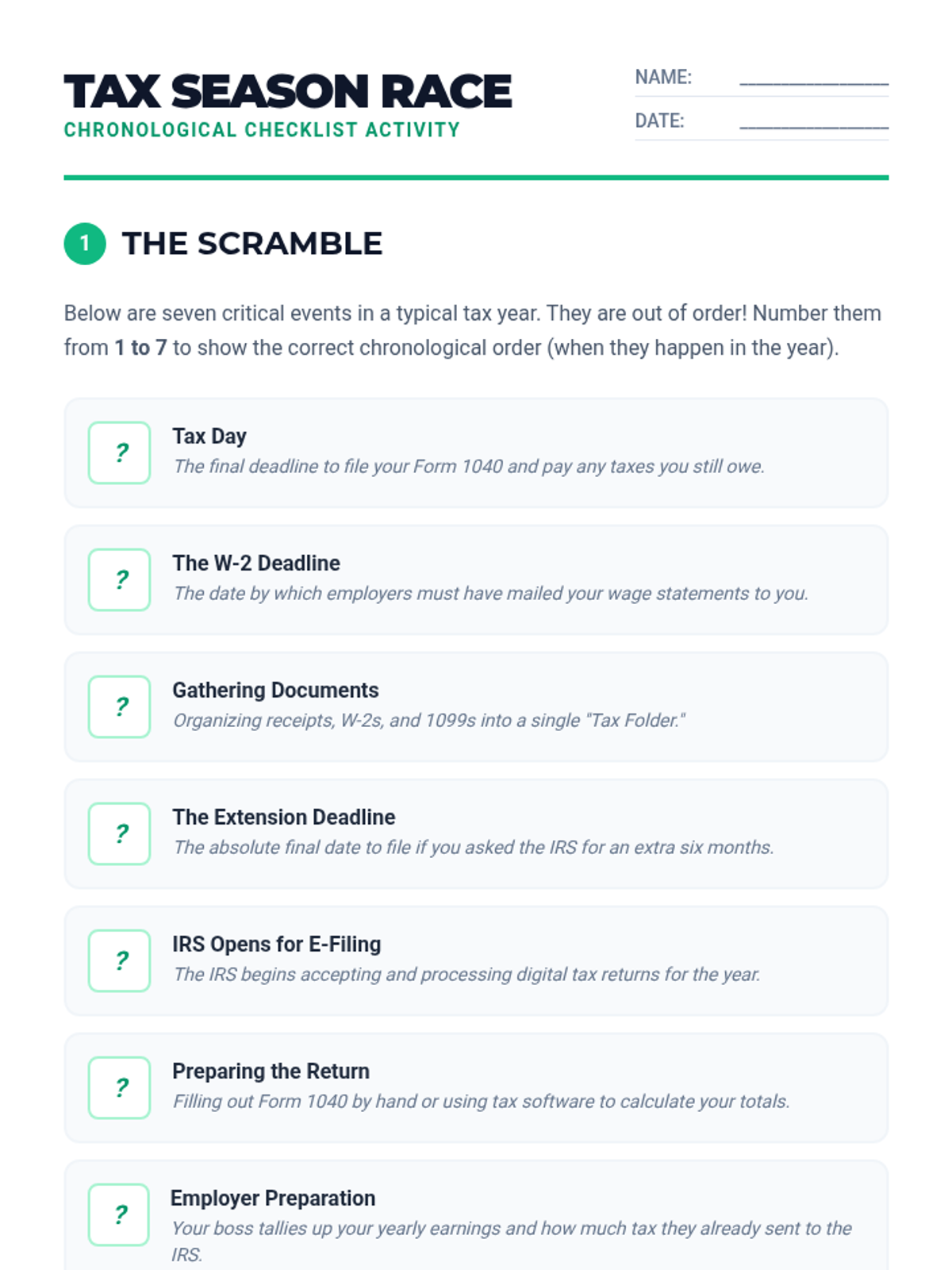
A comprehensive guide for 9th-grade students to master the basics of tax filing. Students progress from identifying key tax documents to completing a full 1040 simulation, understanding deductions, and learning filing logistics.
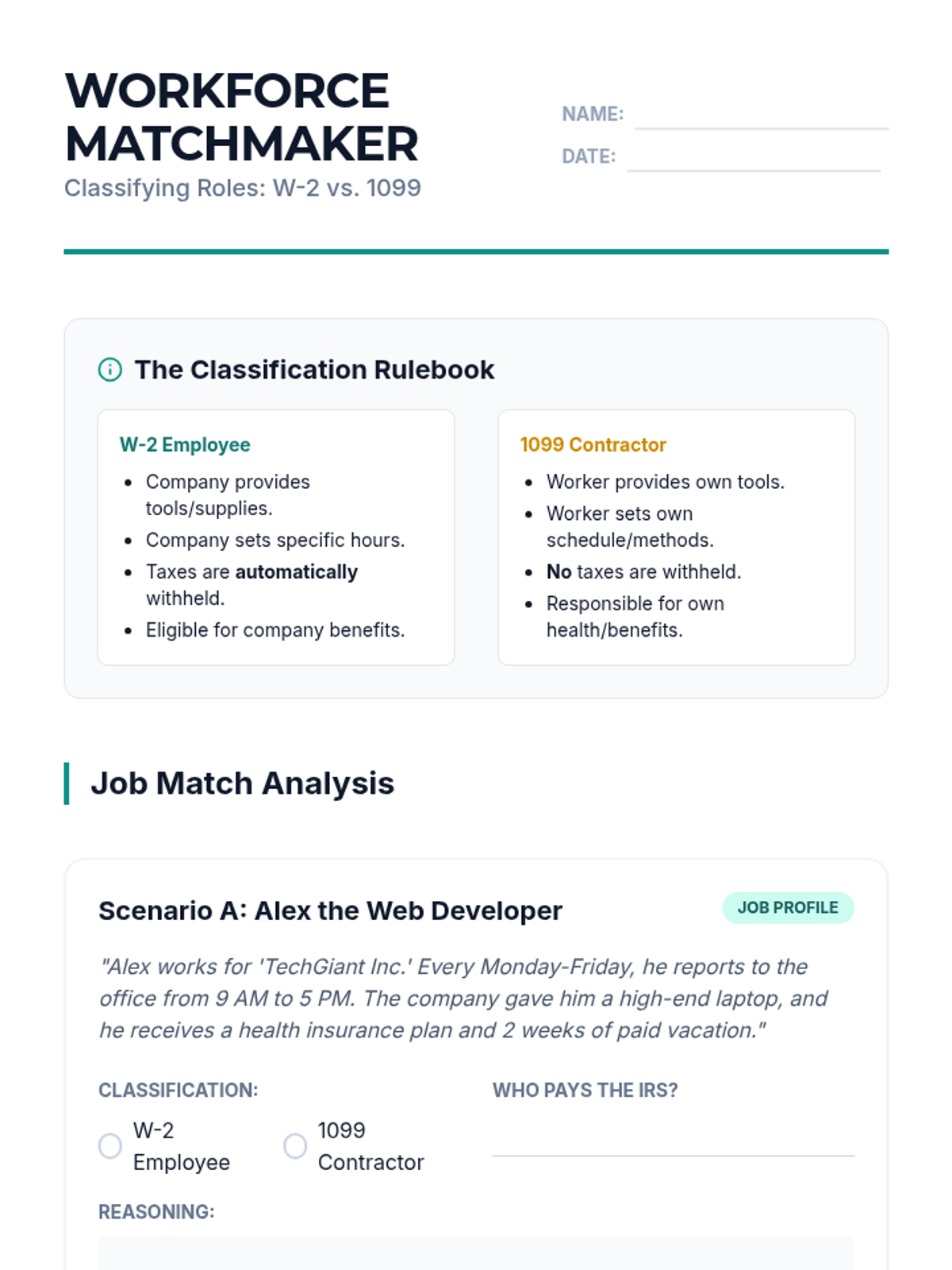
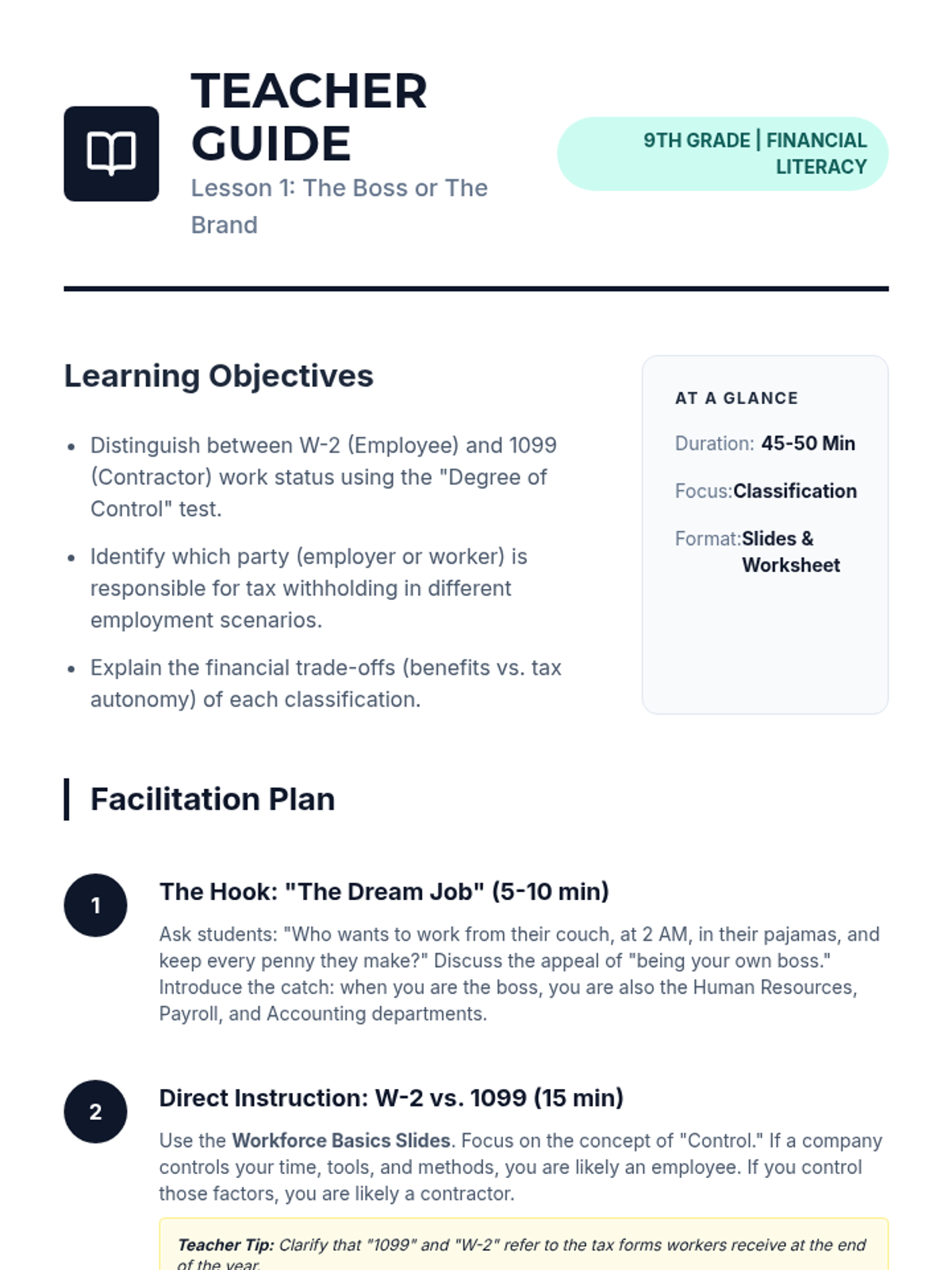
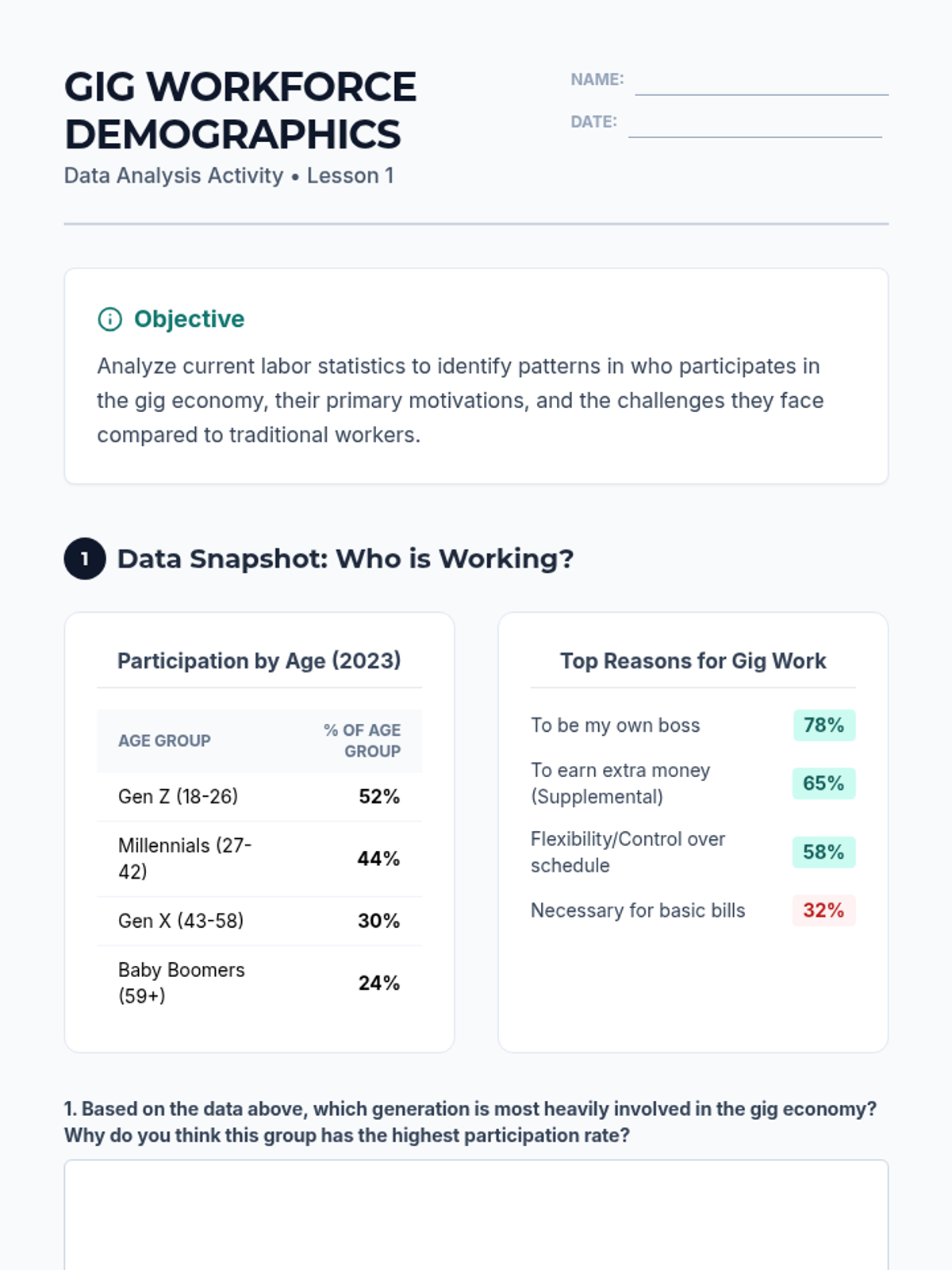
This sequence introduces 9th-grade students to the tax implications of the gig economy. It covers the differences between W-2 and 1099 work, the self-employment tax rate, expense tracking, and quarterly estimated payments, culminating in a tax strategy project.
This sequence introduces 9th-grade students to the mechanics of payroll taxes, the distinction between gross and net income, and the practical skills needed to navigate employment documentation like pay stubs and W-4 forms. Students will learn to calculate withholdings, decode tax acronyms, and audit paychecks for accuracy.
This sequence guides 7th-grade students through the practical aspects of tax filing, from understanding W-2s and timelines to completing a simplified mock tax return. Students will develop financial literacy skills by decoding IRS forms and understanding the mechanics of taxable income and deductions.
A comprehensive unit on credit card literacy, covering the types of cards, fees, rewards, and the impact of credit usage on financial health.
This 10th-grade sequence equips students with the skills to find and manage scholarships. Students learn to navigate databases, decode eligibility, avoid scams, and build a digital tracking system to prepare for post-secondary funding.
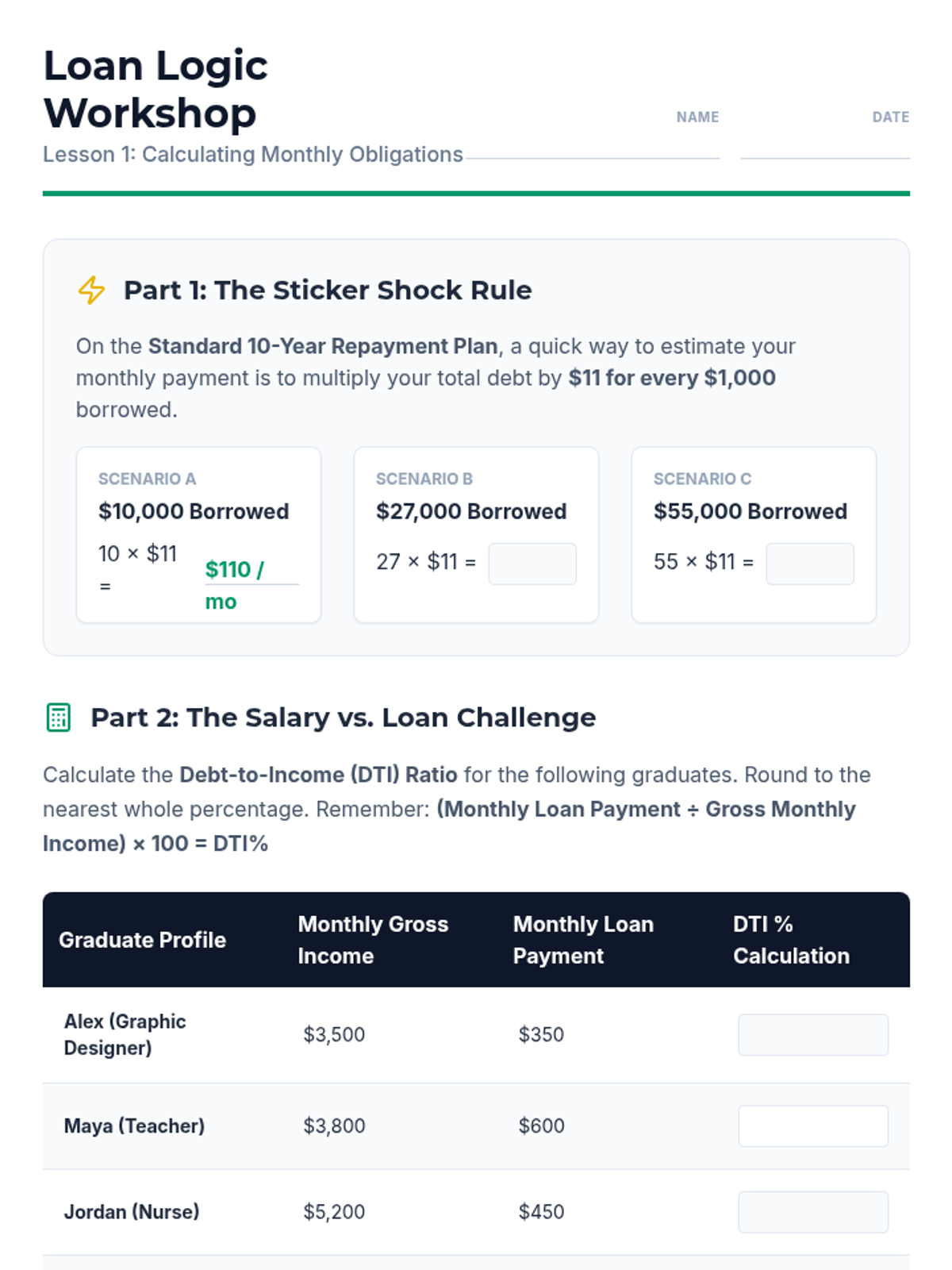
A comprehensive sequence for 10th-grade students focusing on the financial realities of student loan repayment, the impact of debt-to-income ratios, and evaluating the long-term ROI of post-secondary education choices. Students progress from basic math to strategic advisory, culminating in a complex case study analysis.
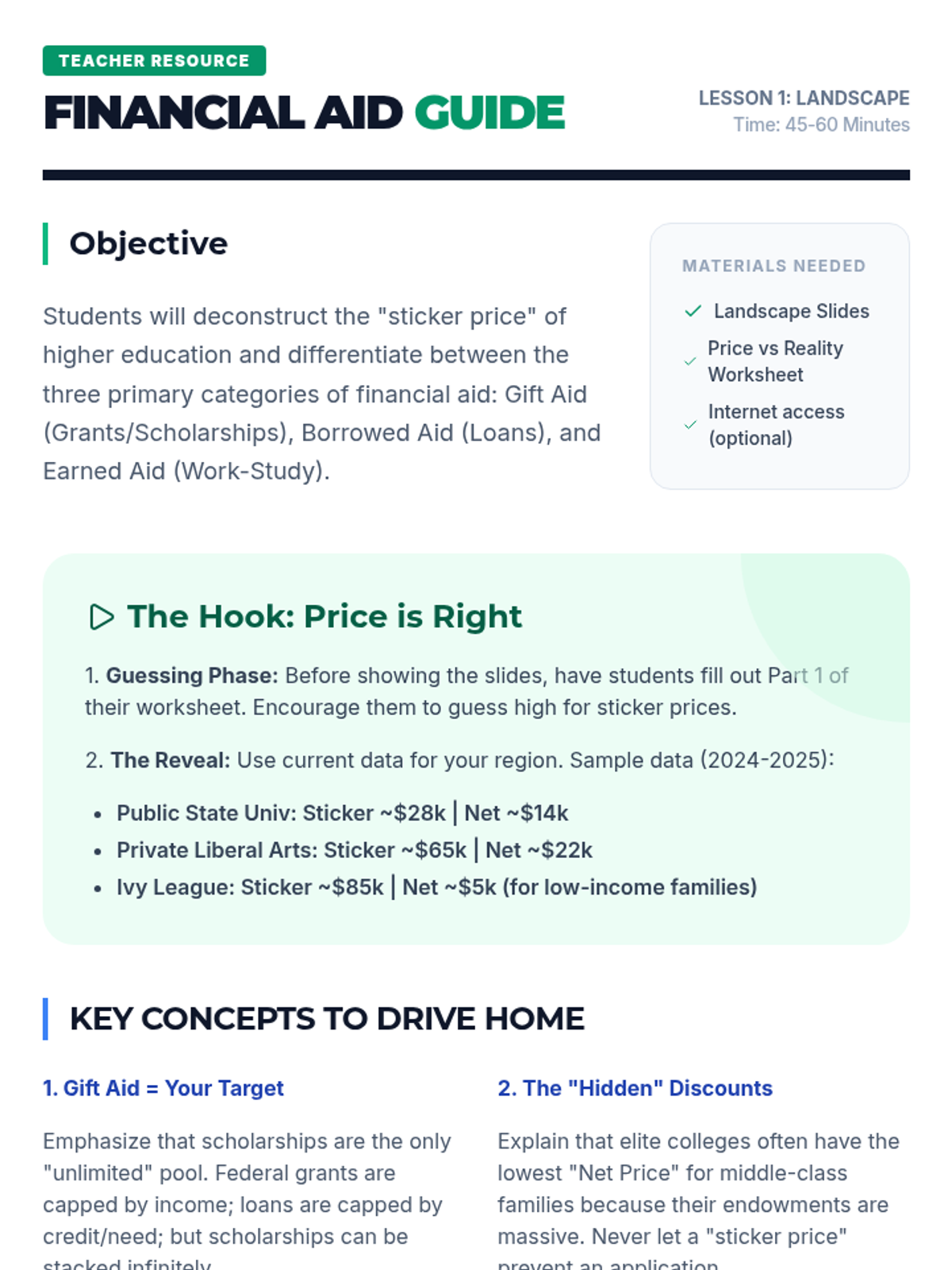
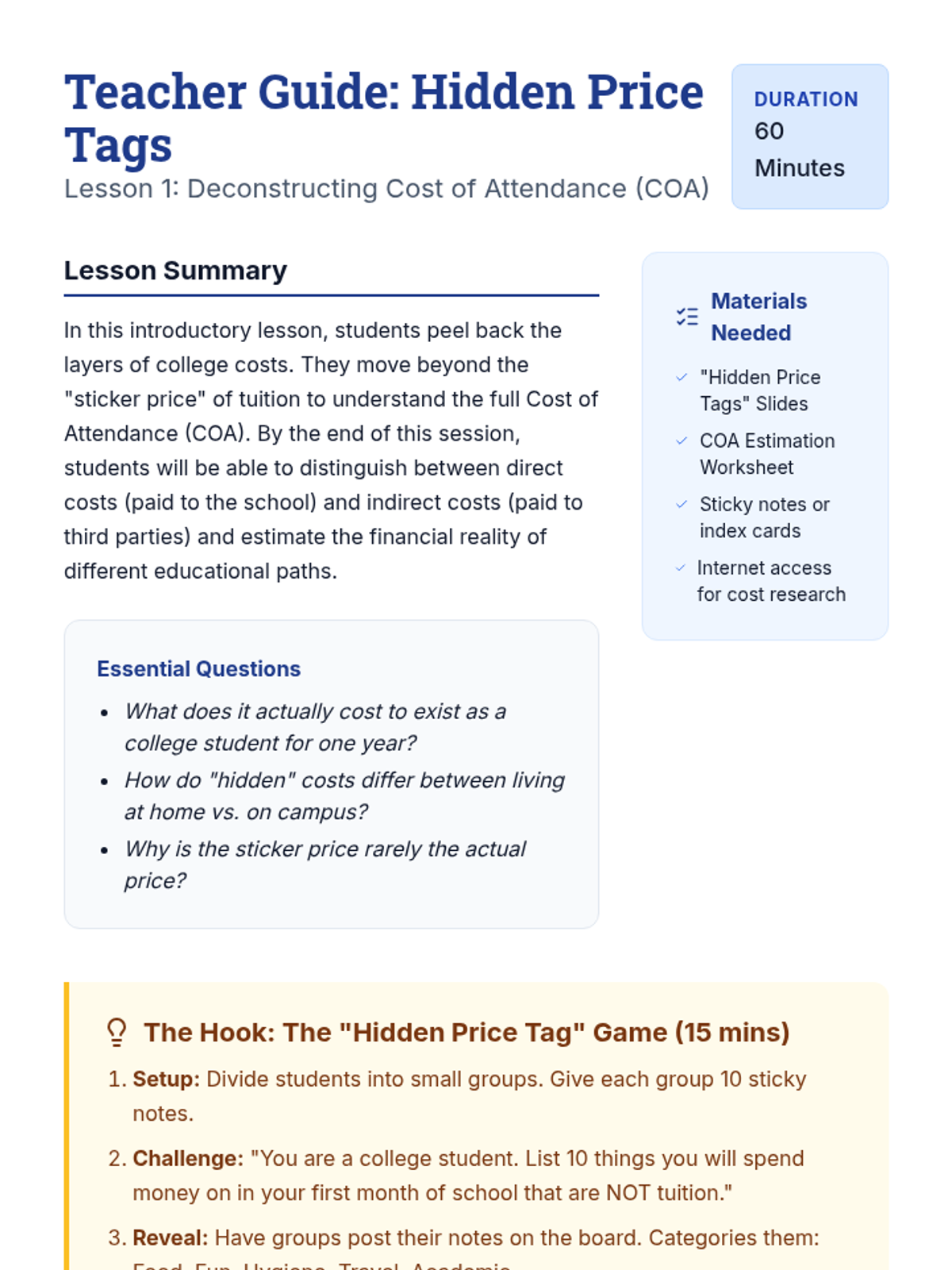
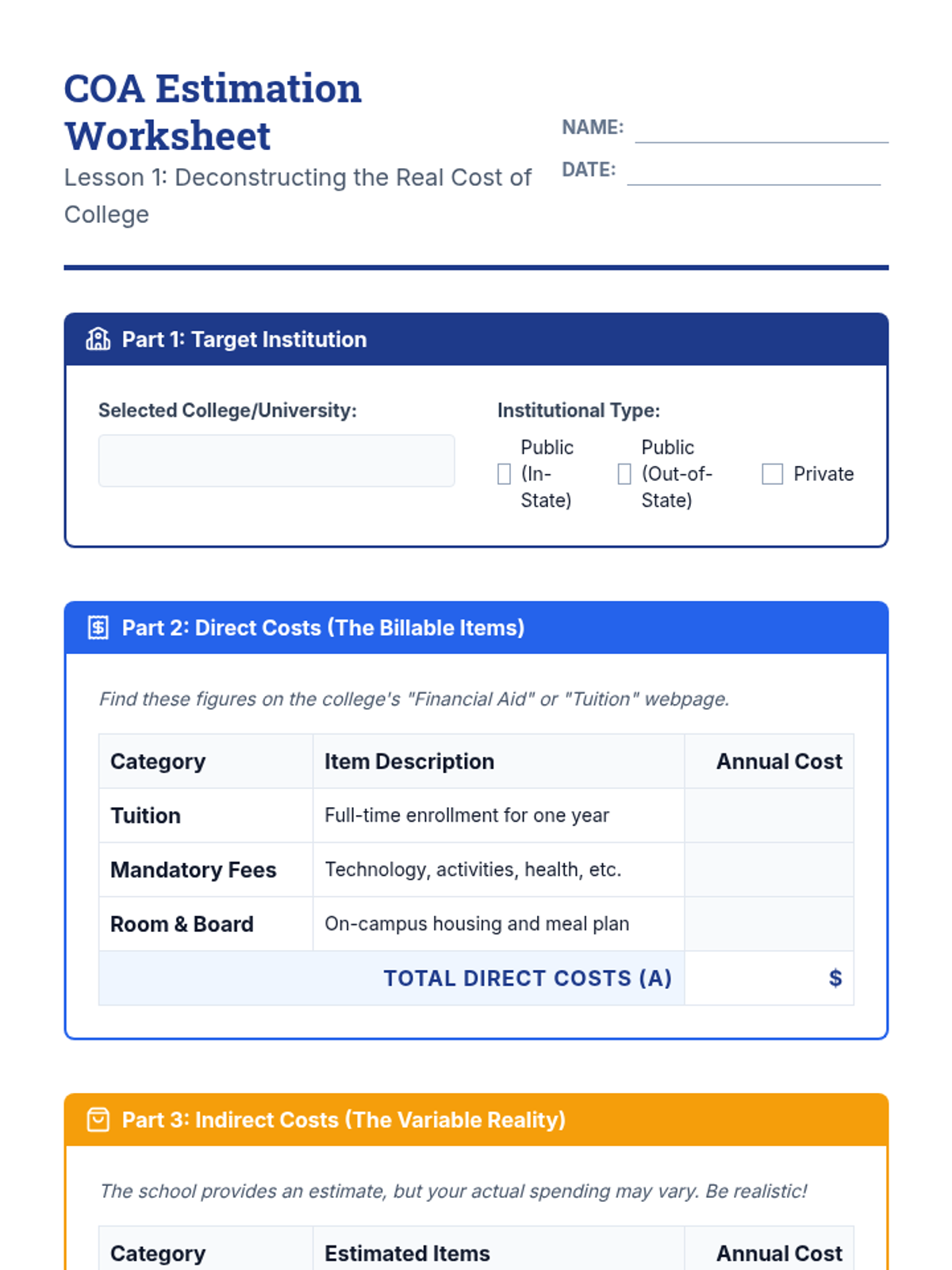
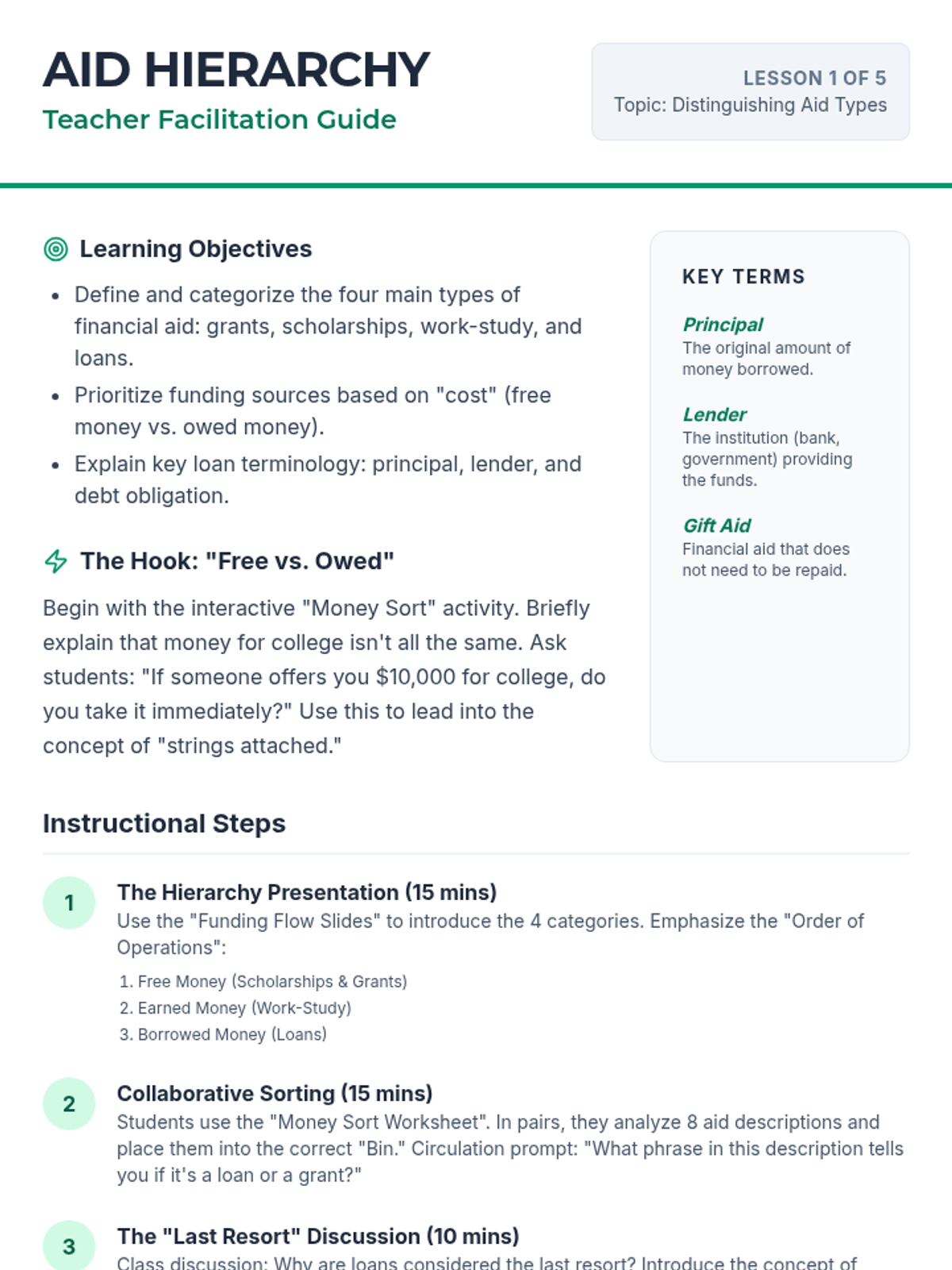
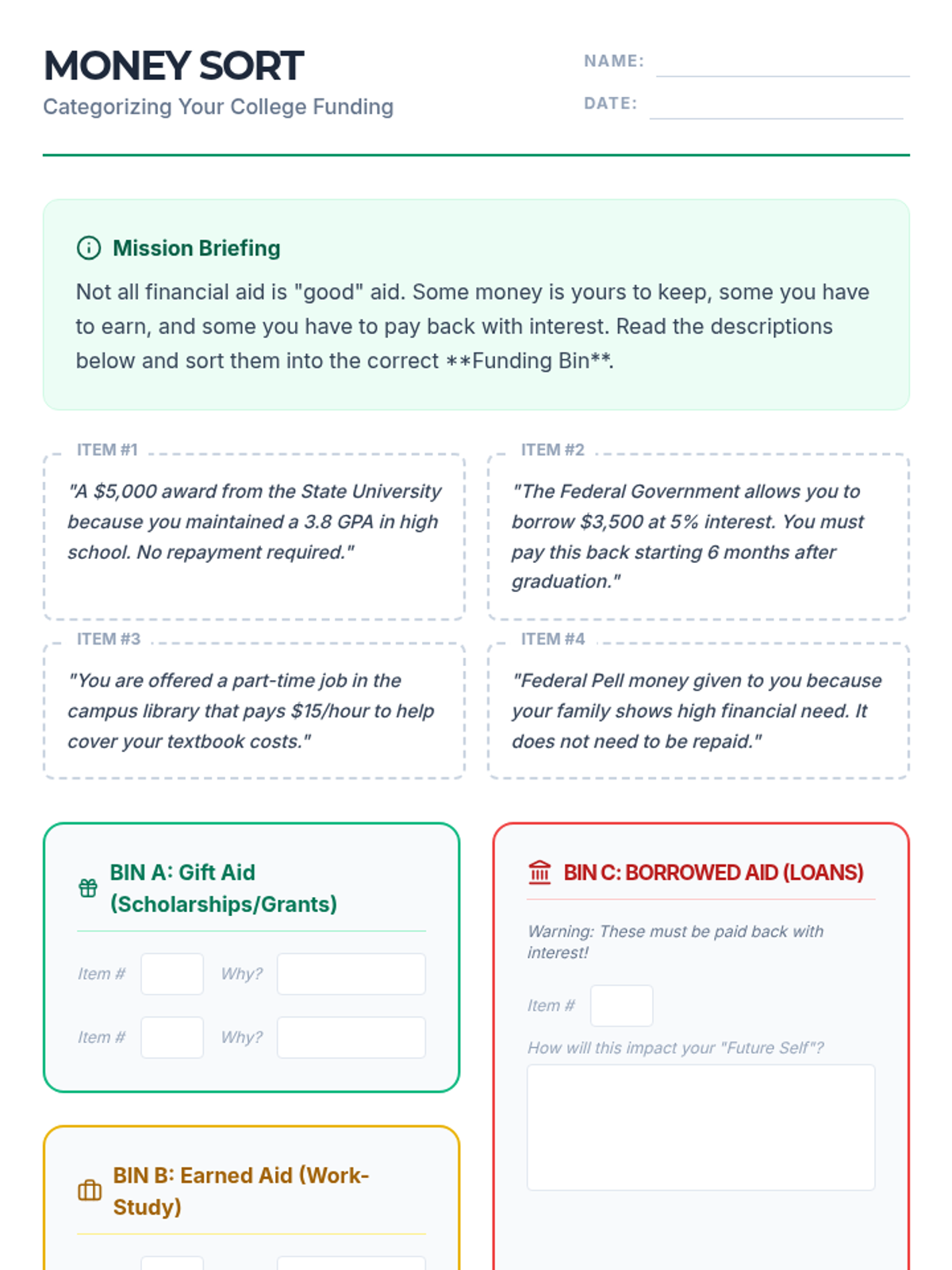
A project-based sequence for 10th-grade students to master the complexities of college funding. Students will learn to deconstruct costs, prioritize non-repayable aid, interpret confusing financial aid letters, and design a sustainable borrowing strategy to minimize long-term debt.
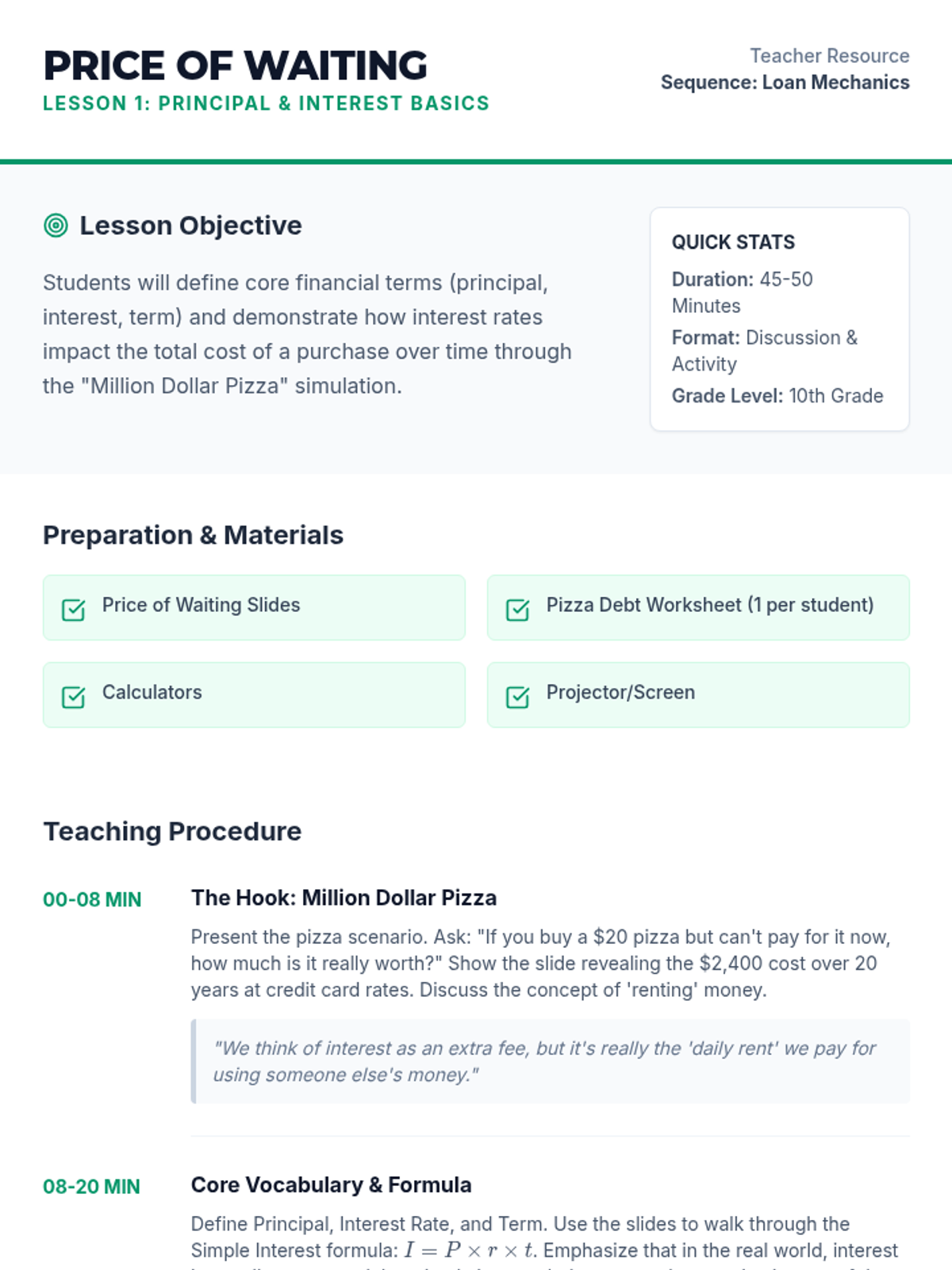
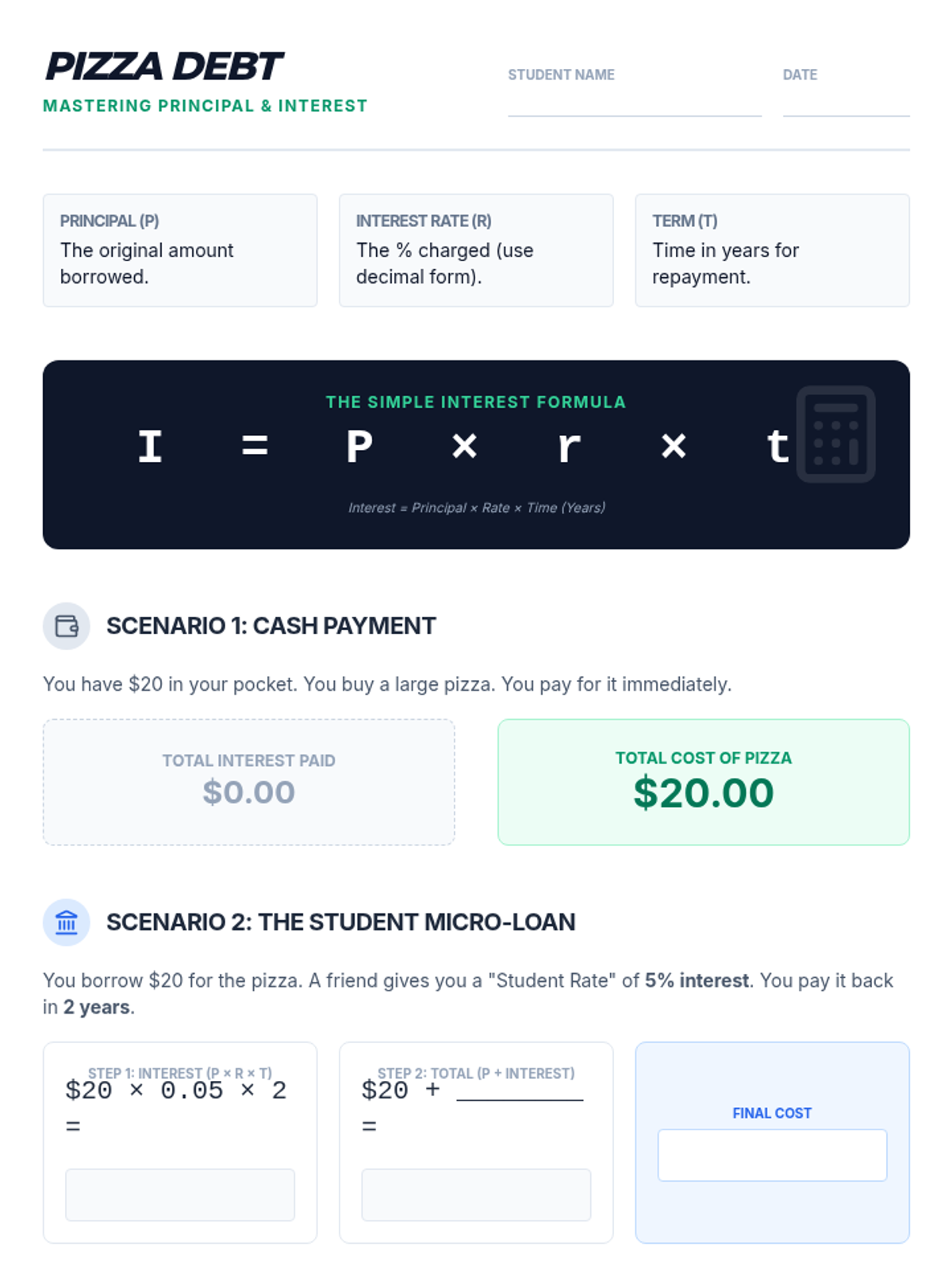
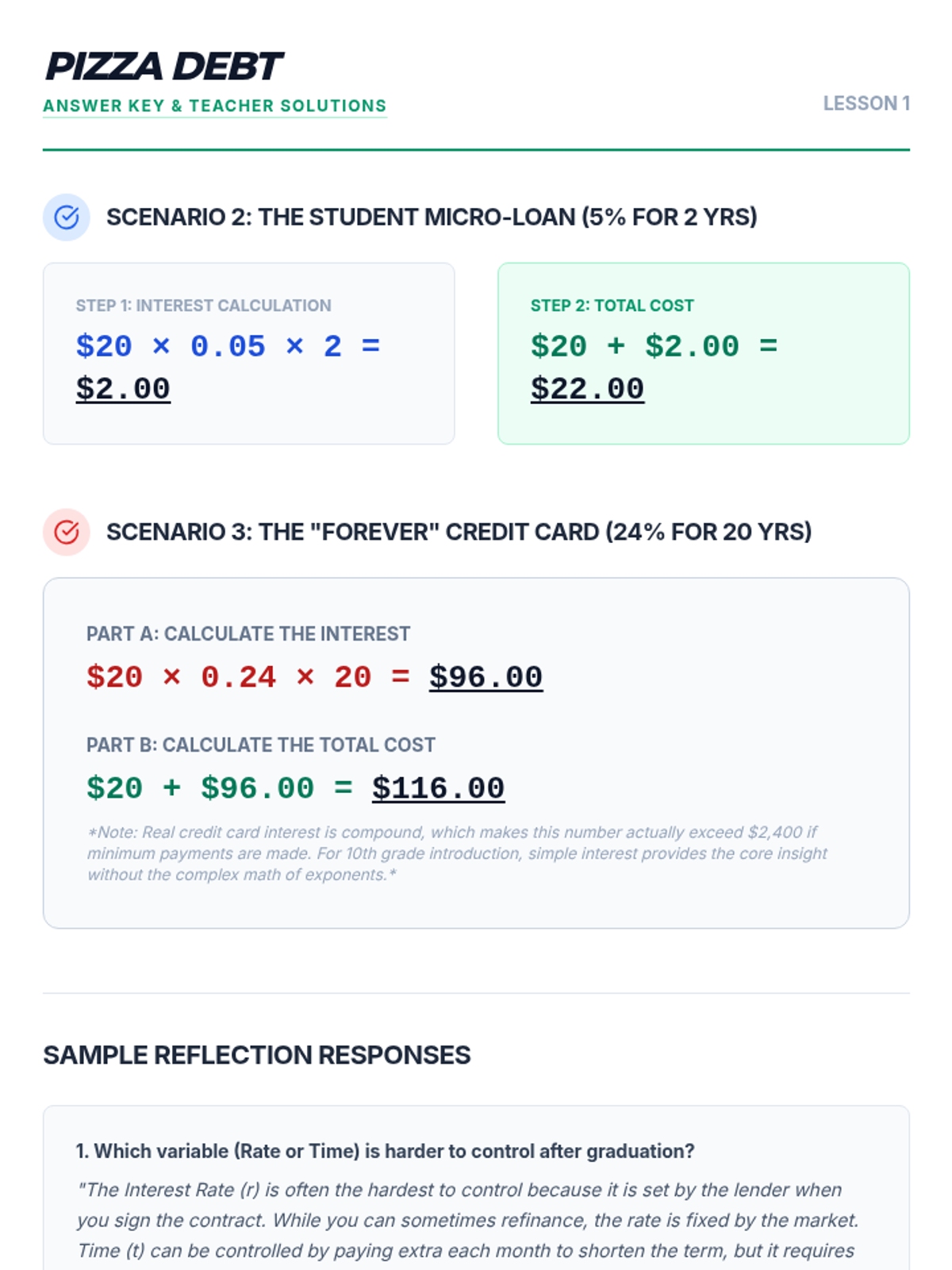
This sequence immerses students in the mechanics of borrowing money, focusing specifically on the distinctions between federal and private lending. Students begin by understanding the fundamental concepts of principal, interest, and capitalization before diving into the specific terms of Subsidized and Unsubsidized Direct Loans.
A comprehensive unit for 9th-grade students exploring the differences between federal and private student loans. Students learn to navigate financial aid terminology, calculate interest accrual, and evaluate the long-term impact of borrowing decisions.
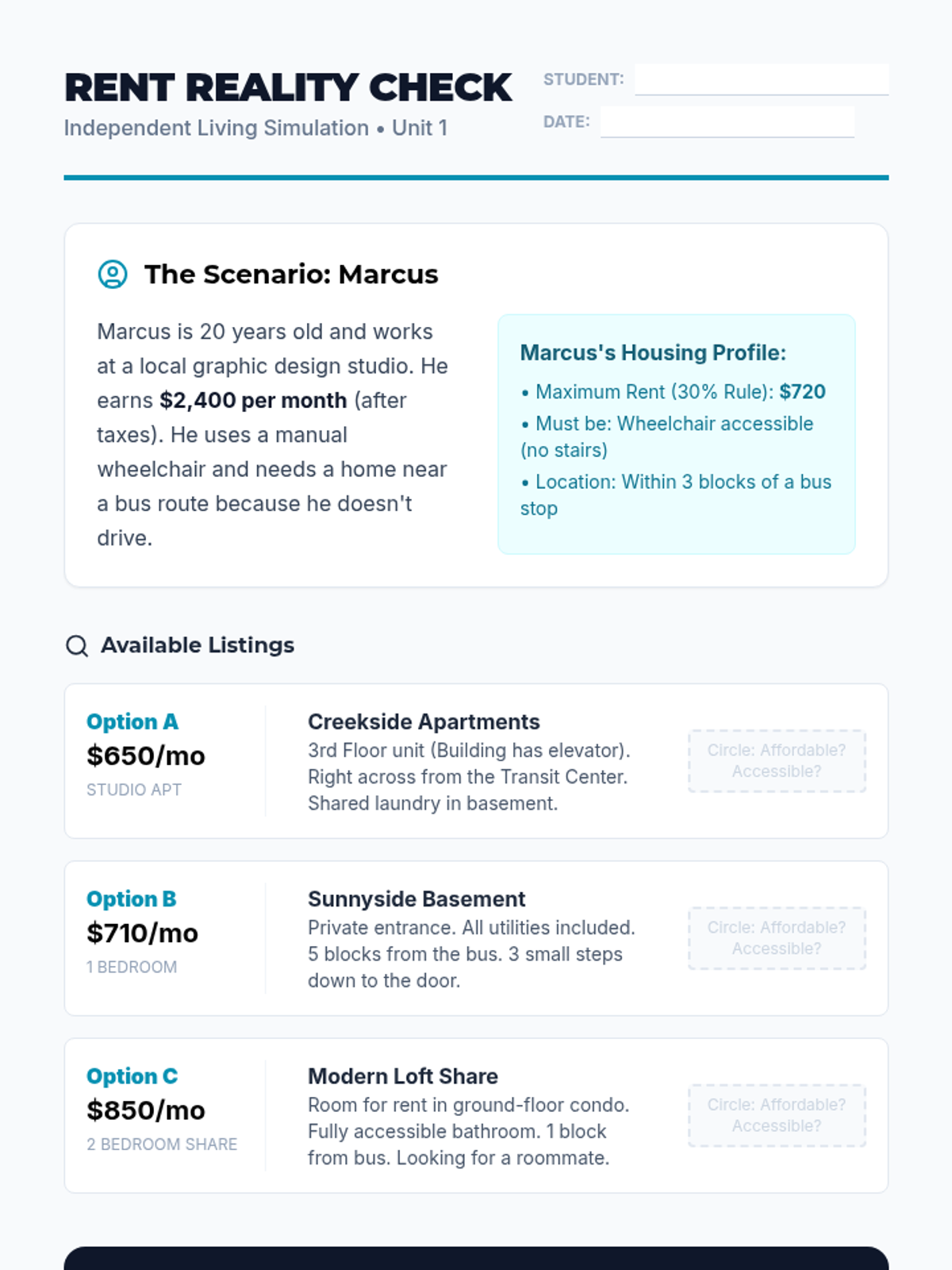
A comprehensive transition planning sequence for 10th-grade students focusing on independent living, housing, budgeting, transportation, and community participation through simulations and real-world scenarios.
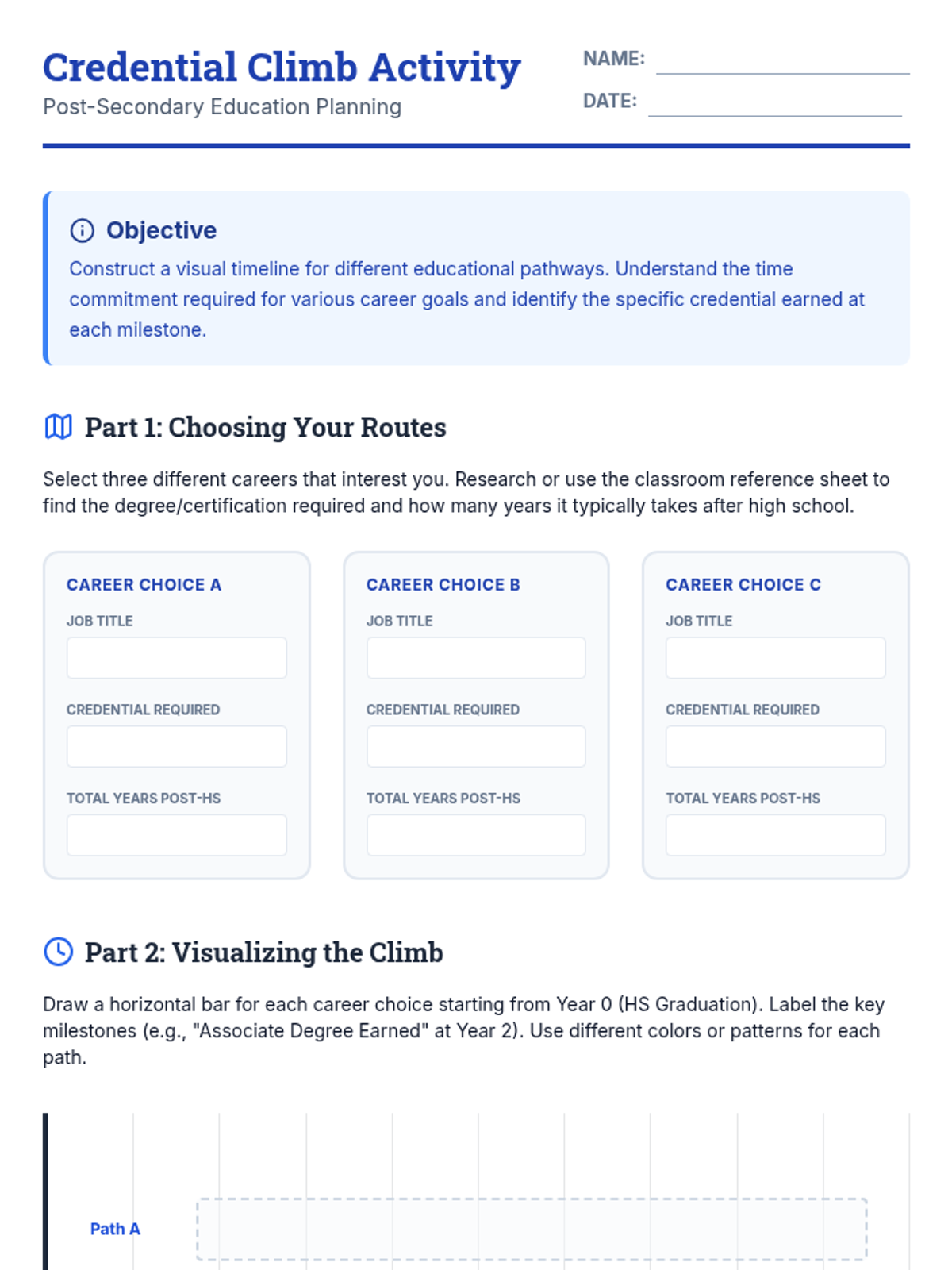
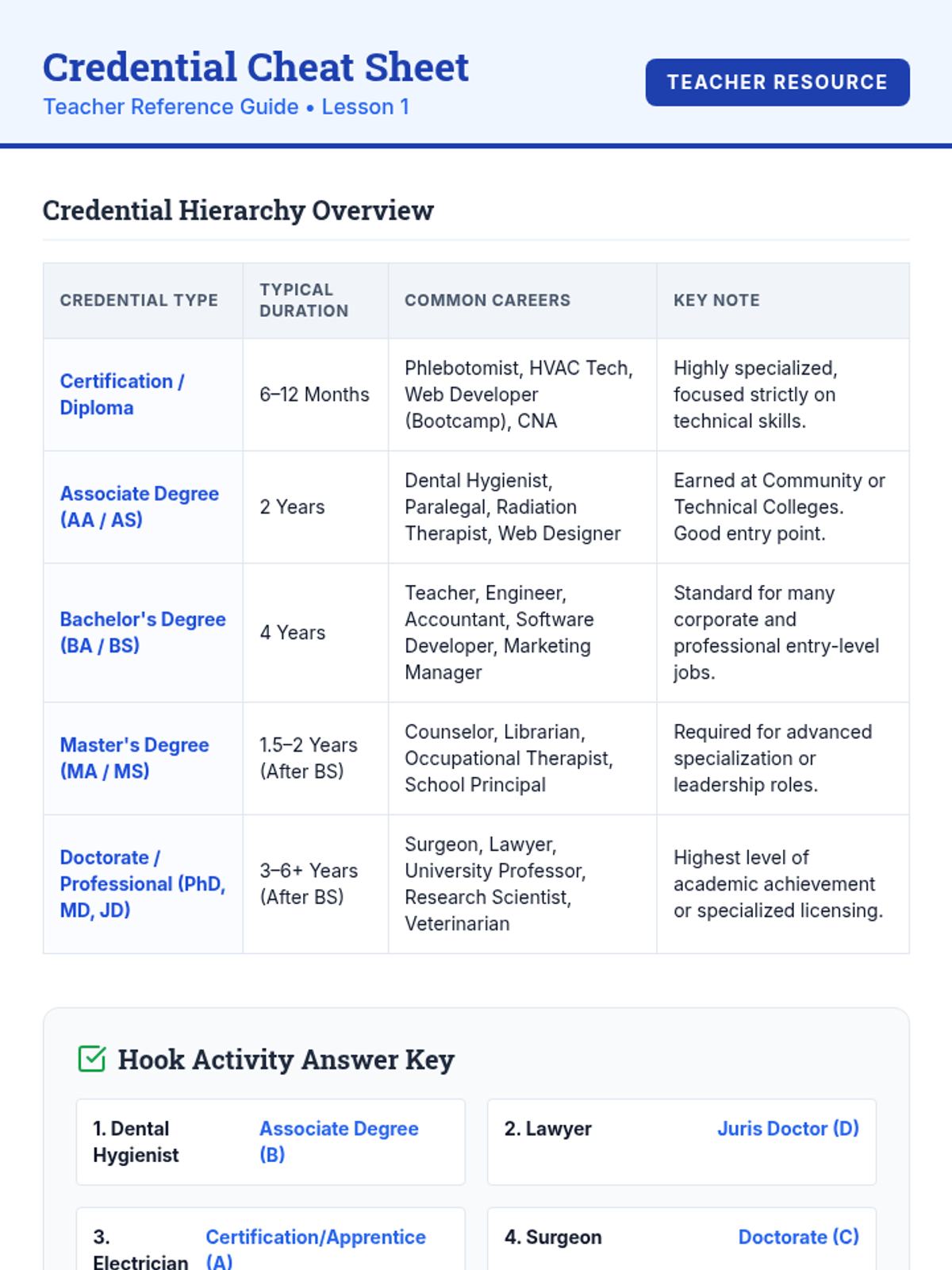
Students explore diverse post-secondary options, comparing vocational training, military service, apprenticeships, and college degrees through the lens of 'Return on Investment' (ROI). The sequence guides students from understanding basic credentials to mapping out a strategic backwards plan for their chosen career path.
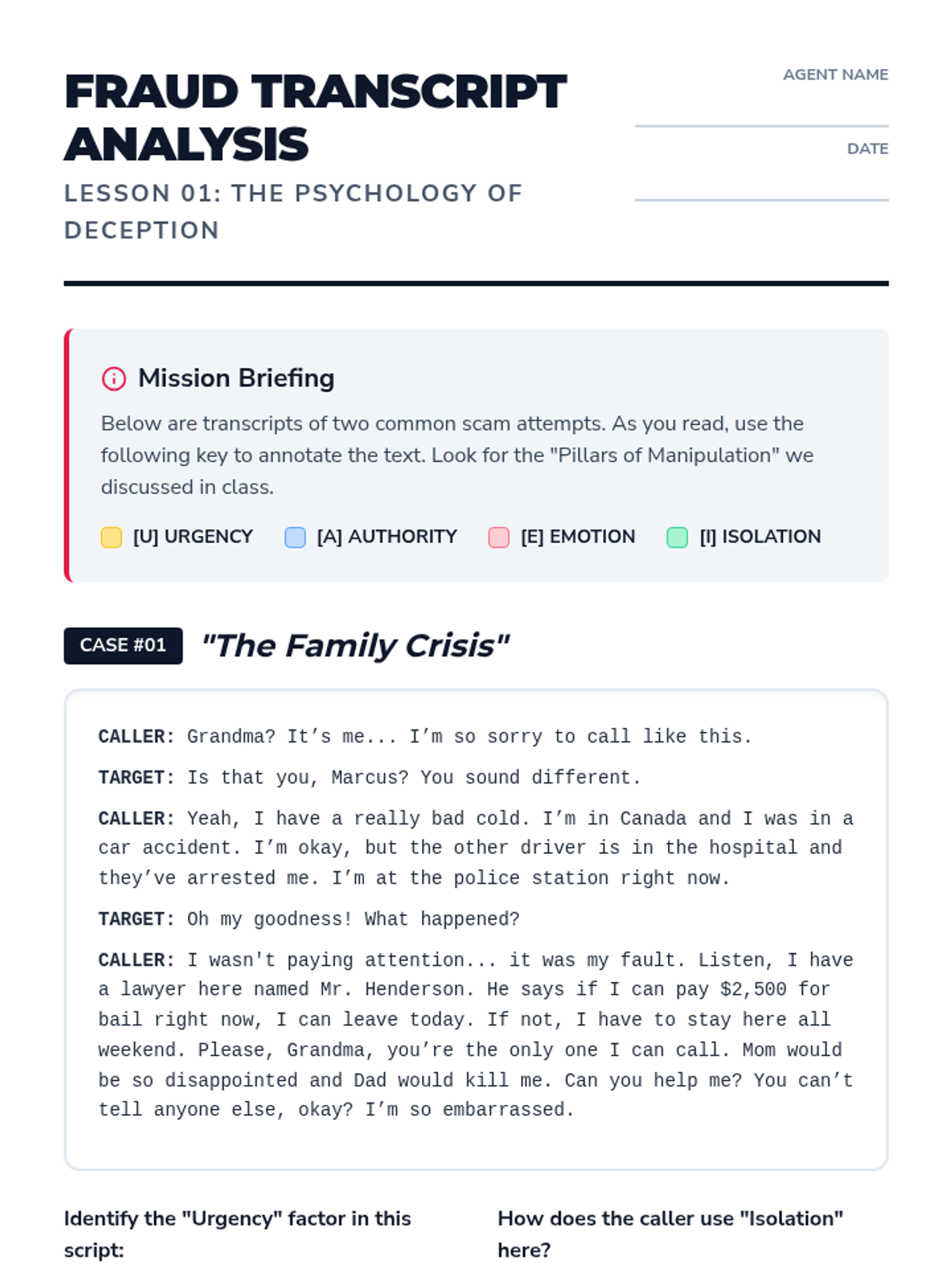
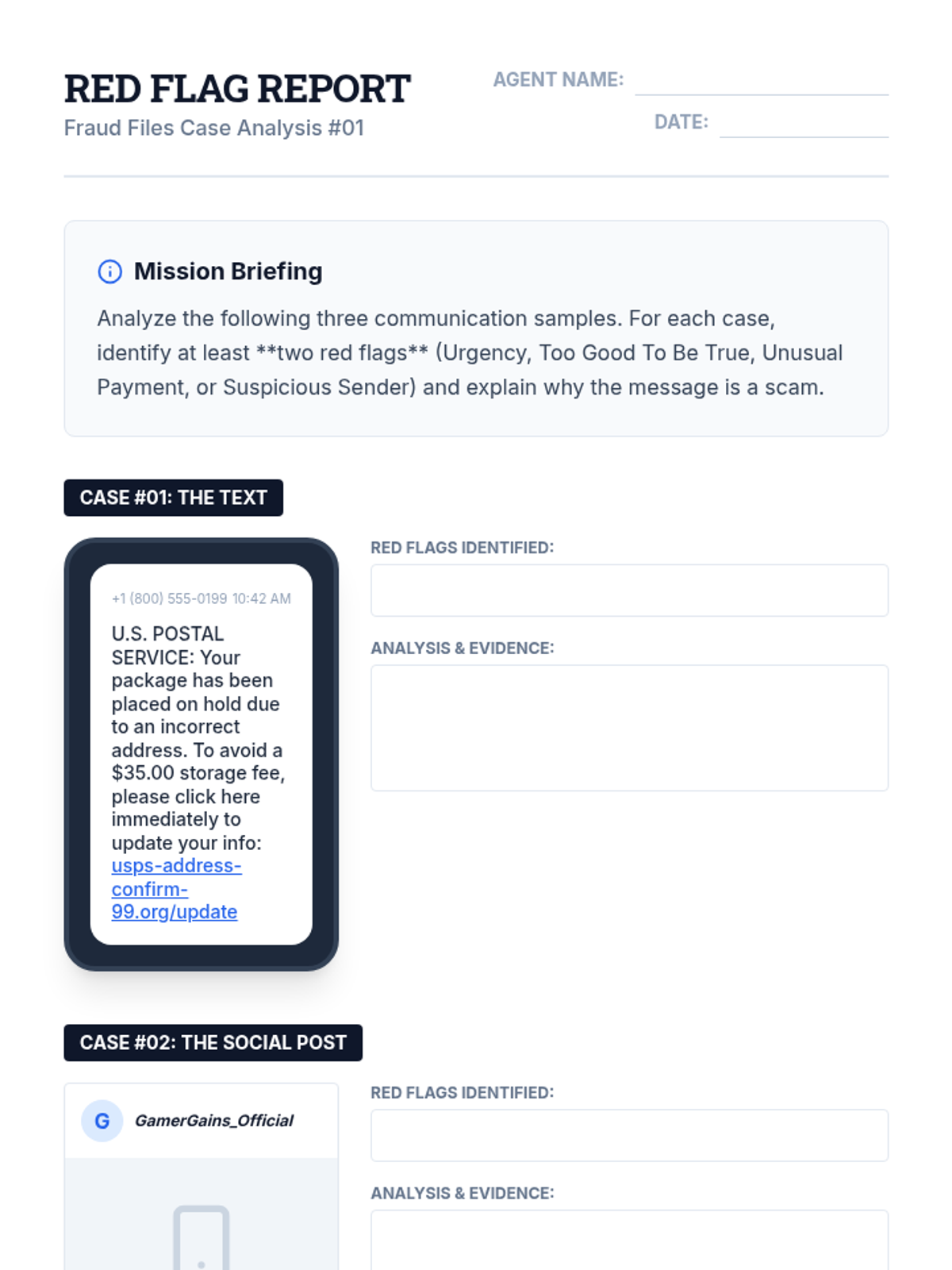
A comprehensive 10th-grade sequence on financial literacy and consumer skills, focusing on detecting fraud, preventing identity theft, and understanding the psychology of scams. Students develop defensive digital hygiene and learn recovery steps for financial security.
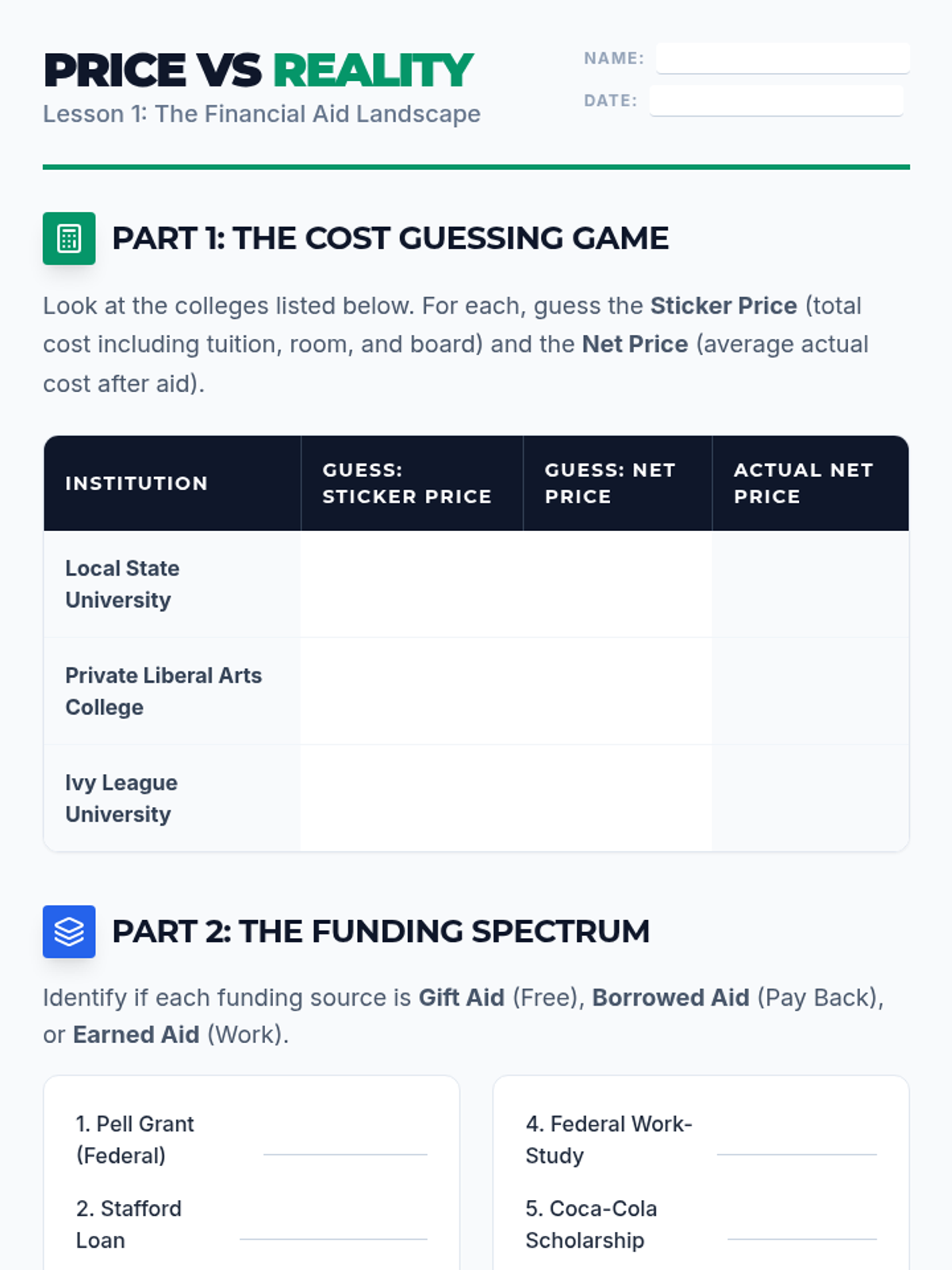
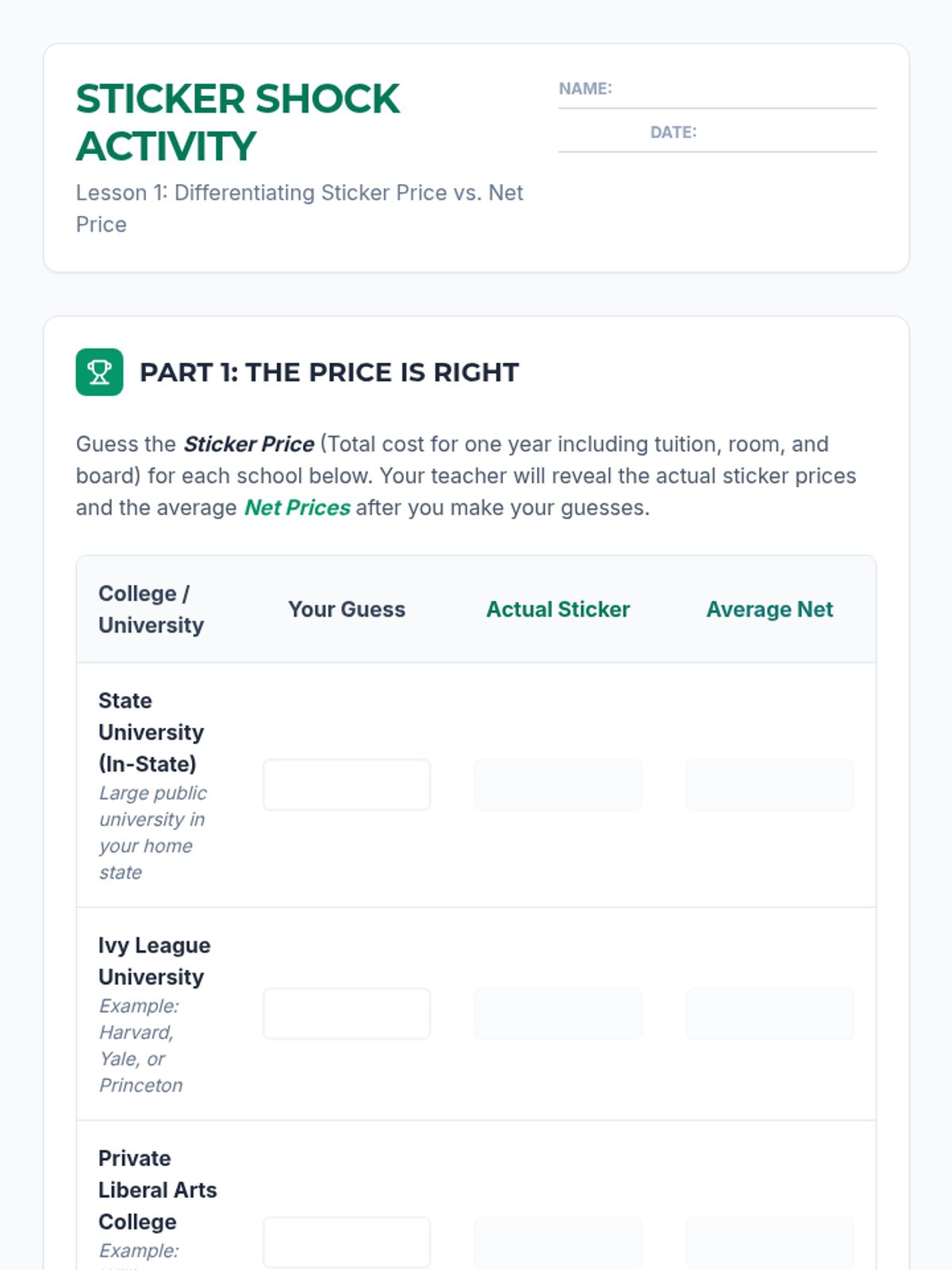
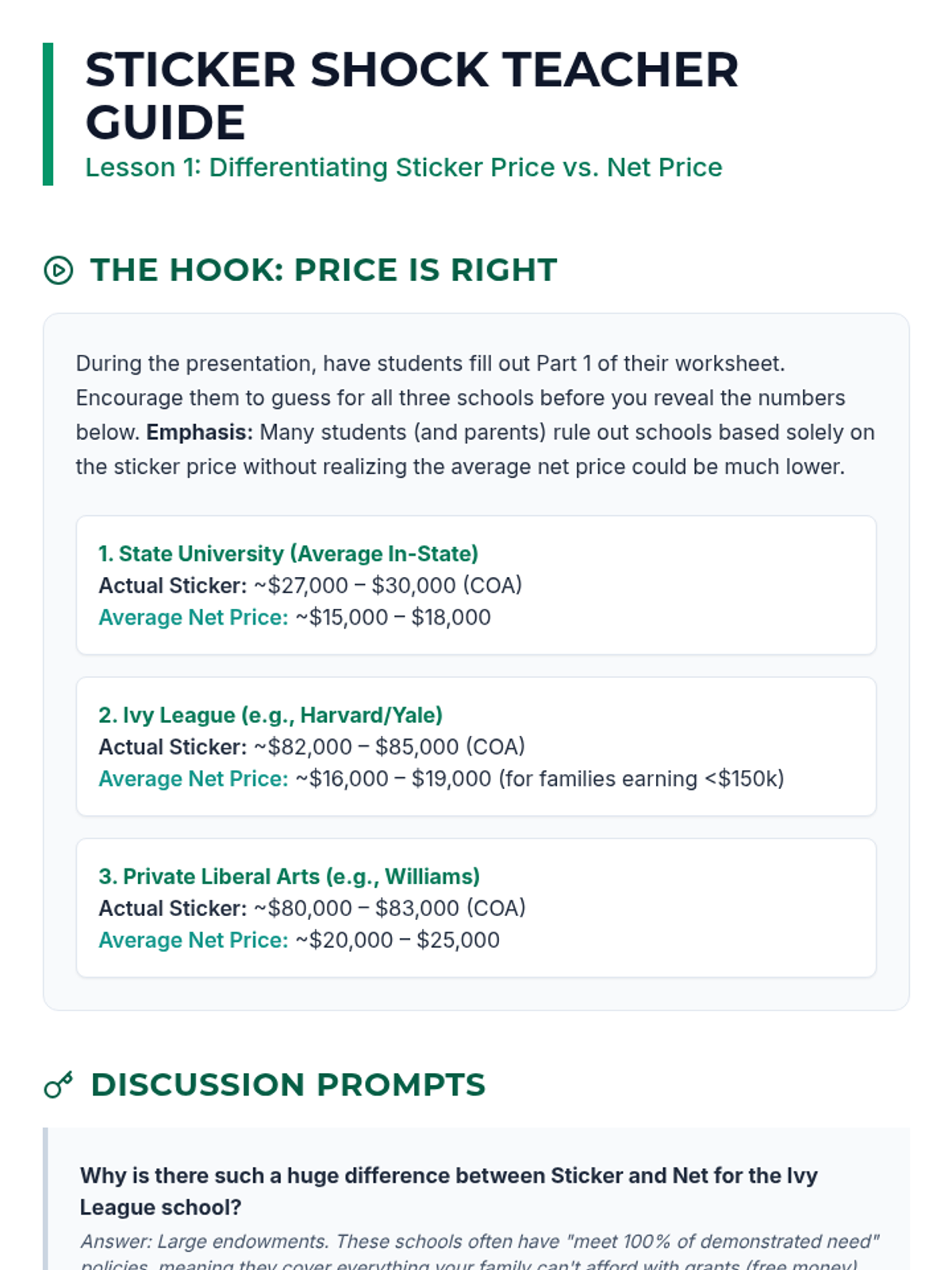
A comprehensive 10th-grade sequence focused on college affordability, teaching students to distinguish between sticker and net prices, use net price calculators, find scholarships, and calculate career ROI to build a financially sustainable college list.
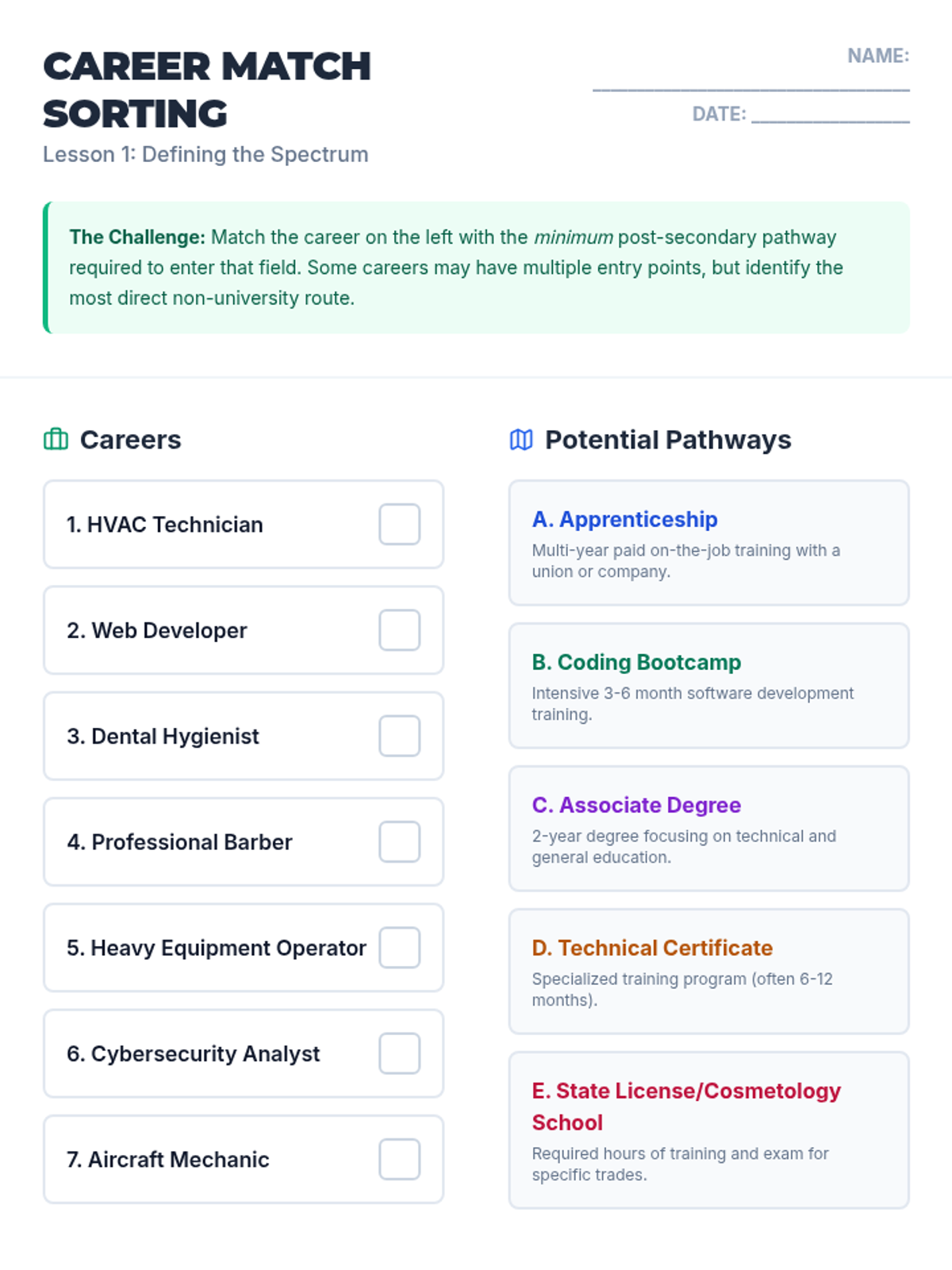
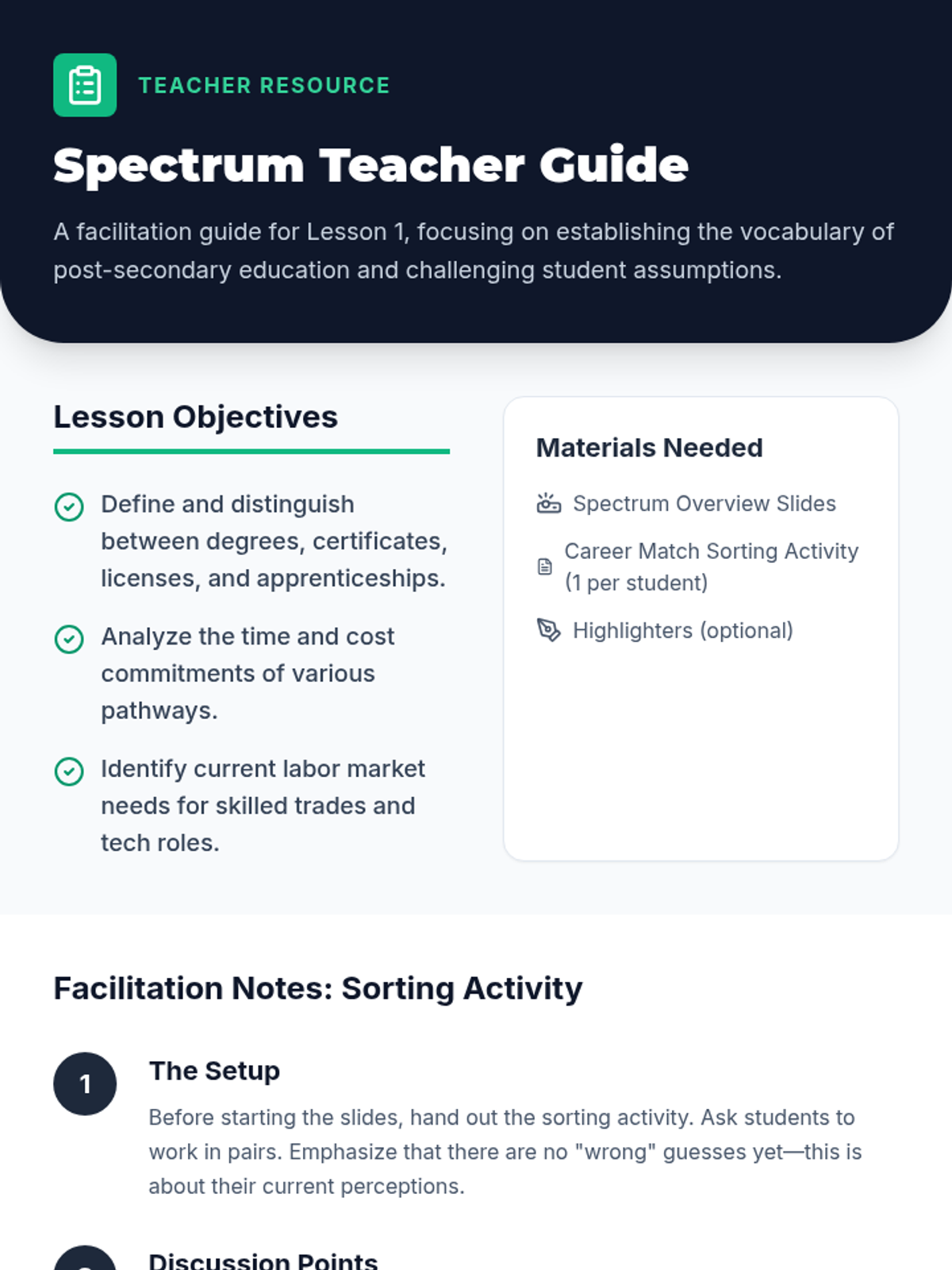
This sequence explores post-secondary education options beyond the traditional four-year degree, including trade schools, apprenticeships, coding bootcamps, and certificate programs. Students learn to evaluate the legitimacy of various programs and compare different career pathways based on cost, duration, and outcomes.
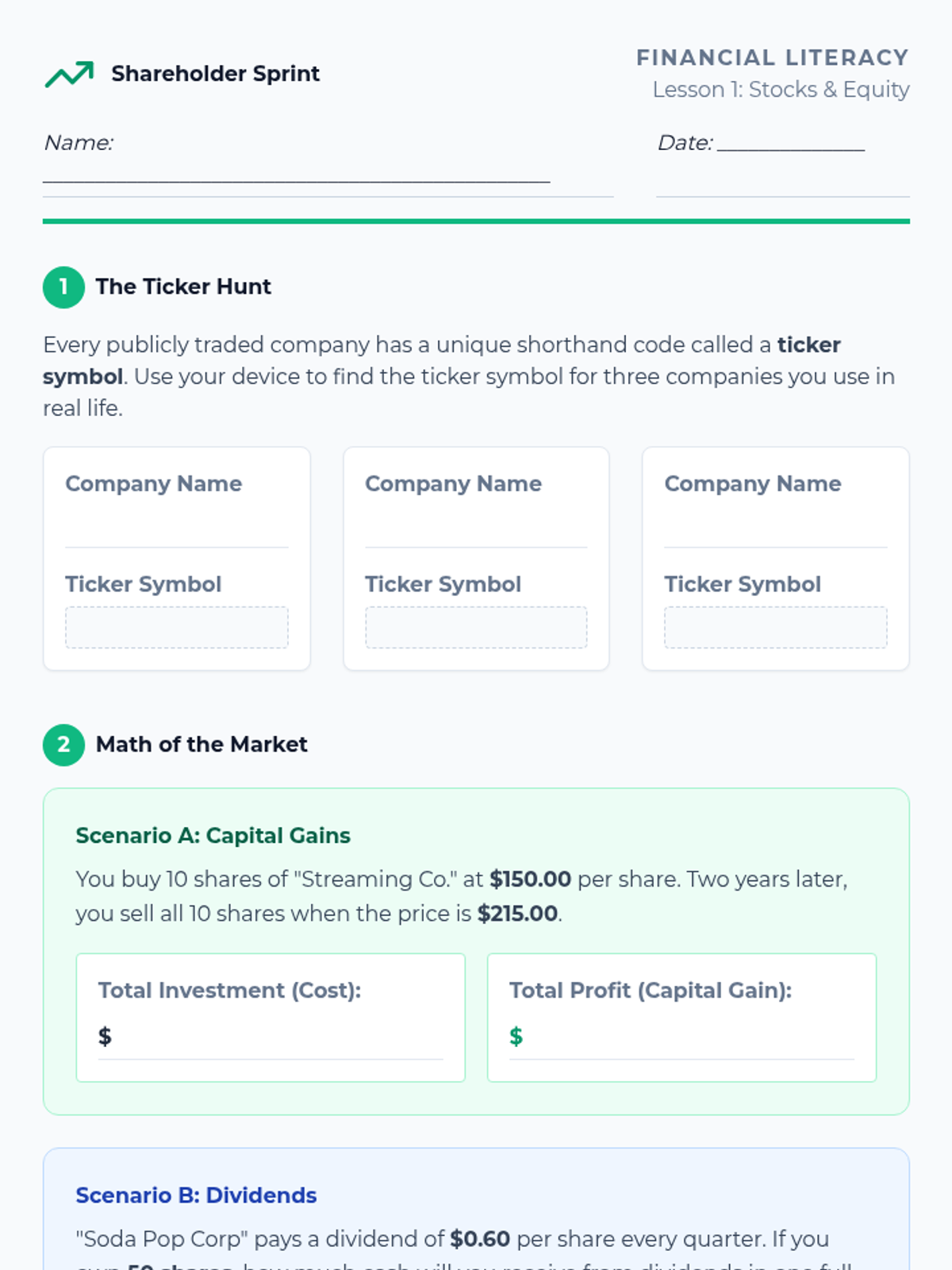
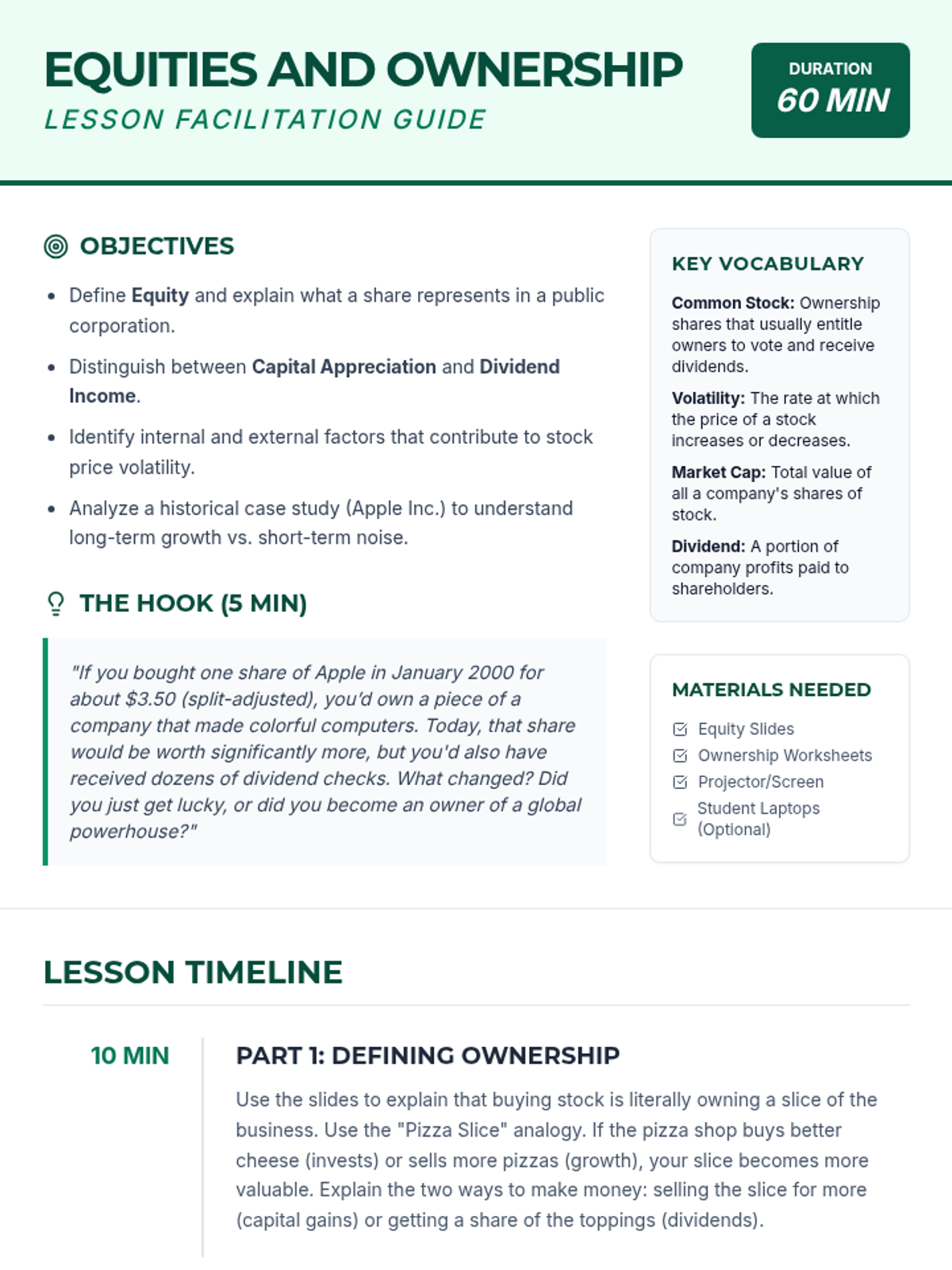
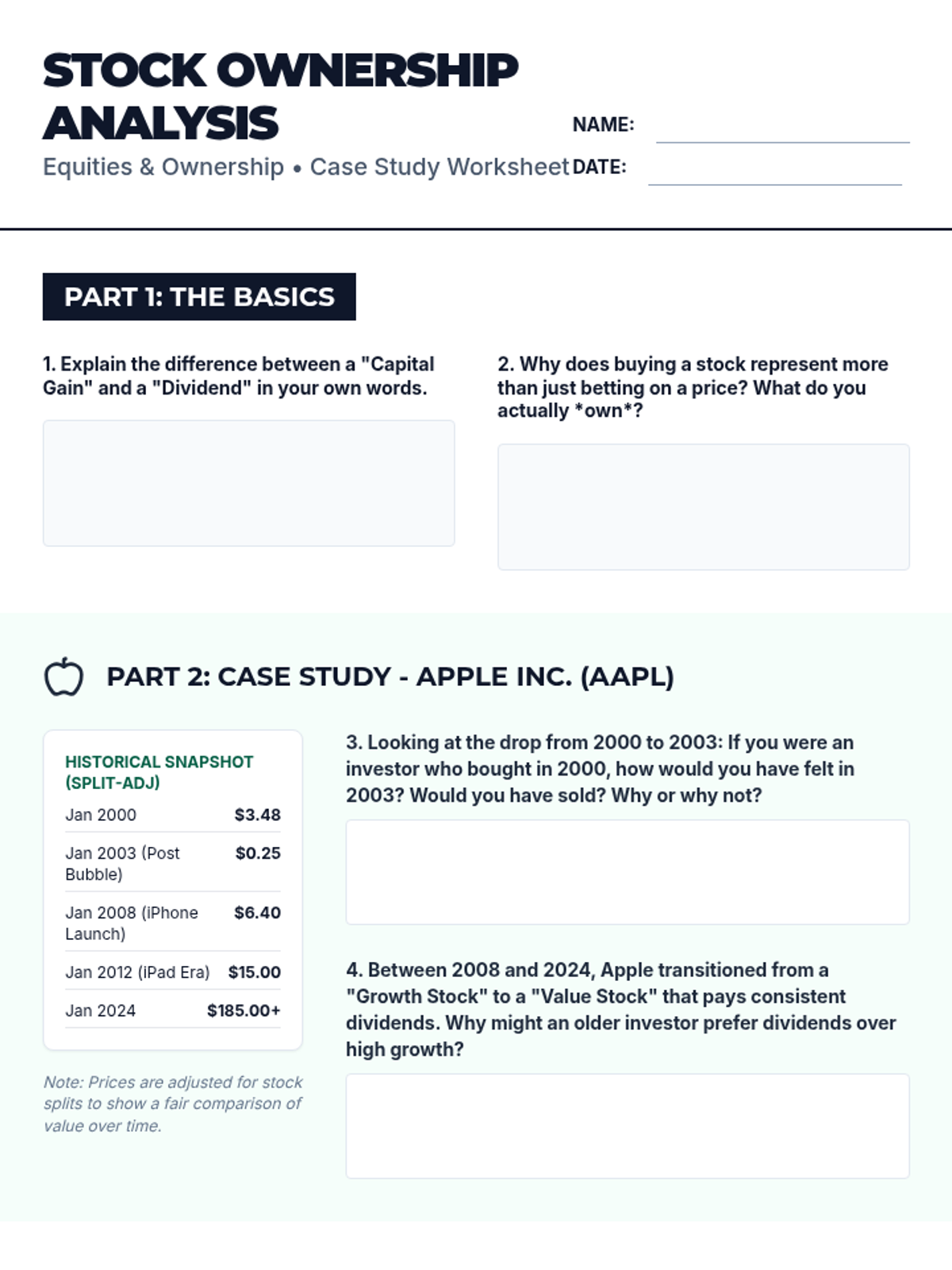
A comprehensive 10th-grade unit on the mechanics of investing, focusing on stocks, bonds, and mutual funds. Students move from basic ownership concepts to complex risk-return analysis through case studies and simulations.
This sequence explores the psychology behind spending, focusing on impulse control, emotional triggers, and the economic concept of opportunity cost. Students move from basic needs/wants categorization to developing a personalized mindful spending plan.
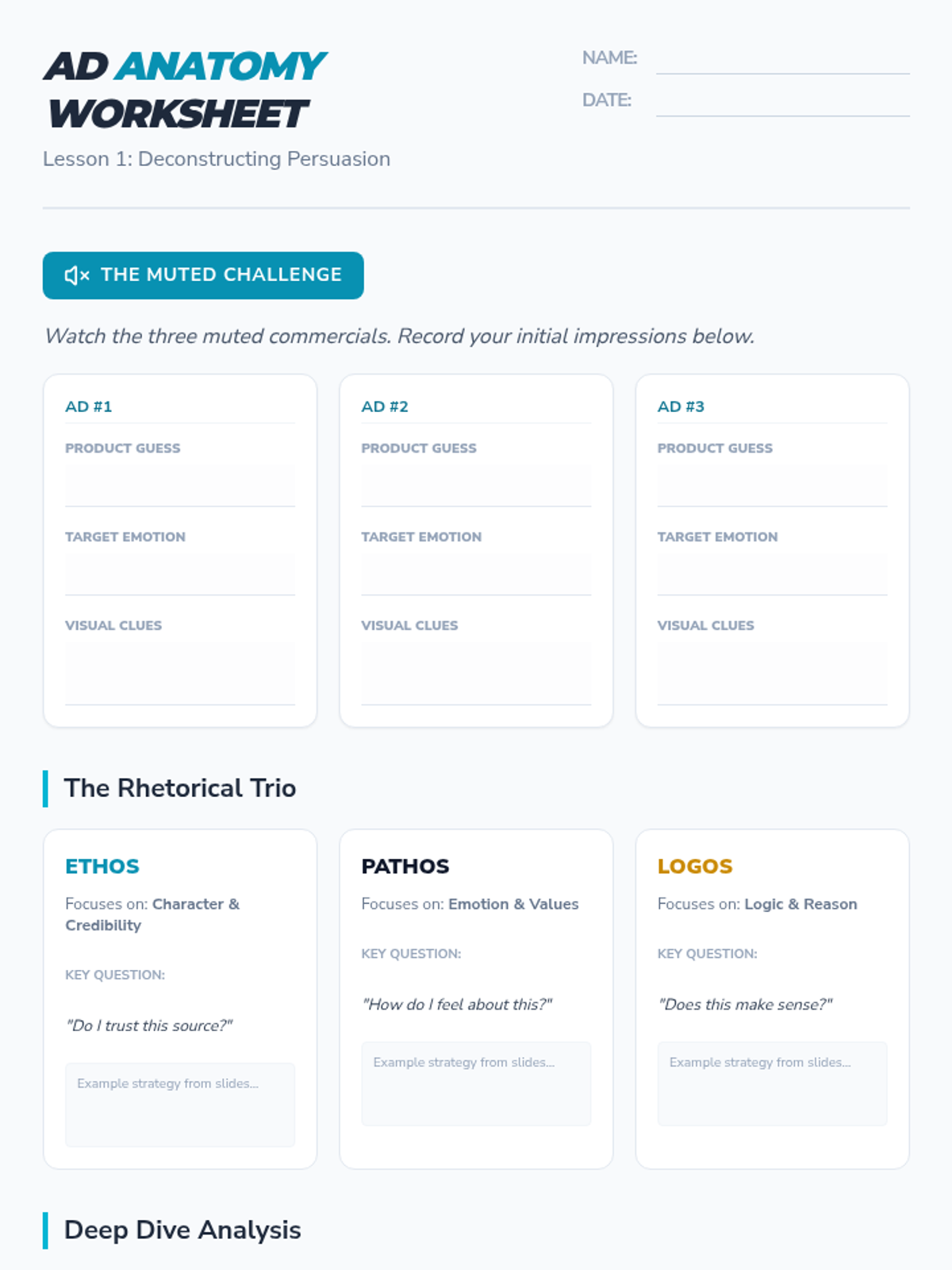
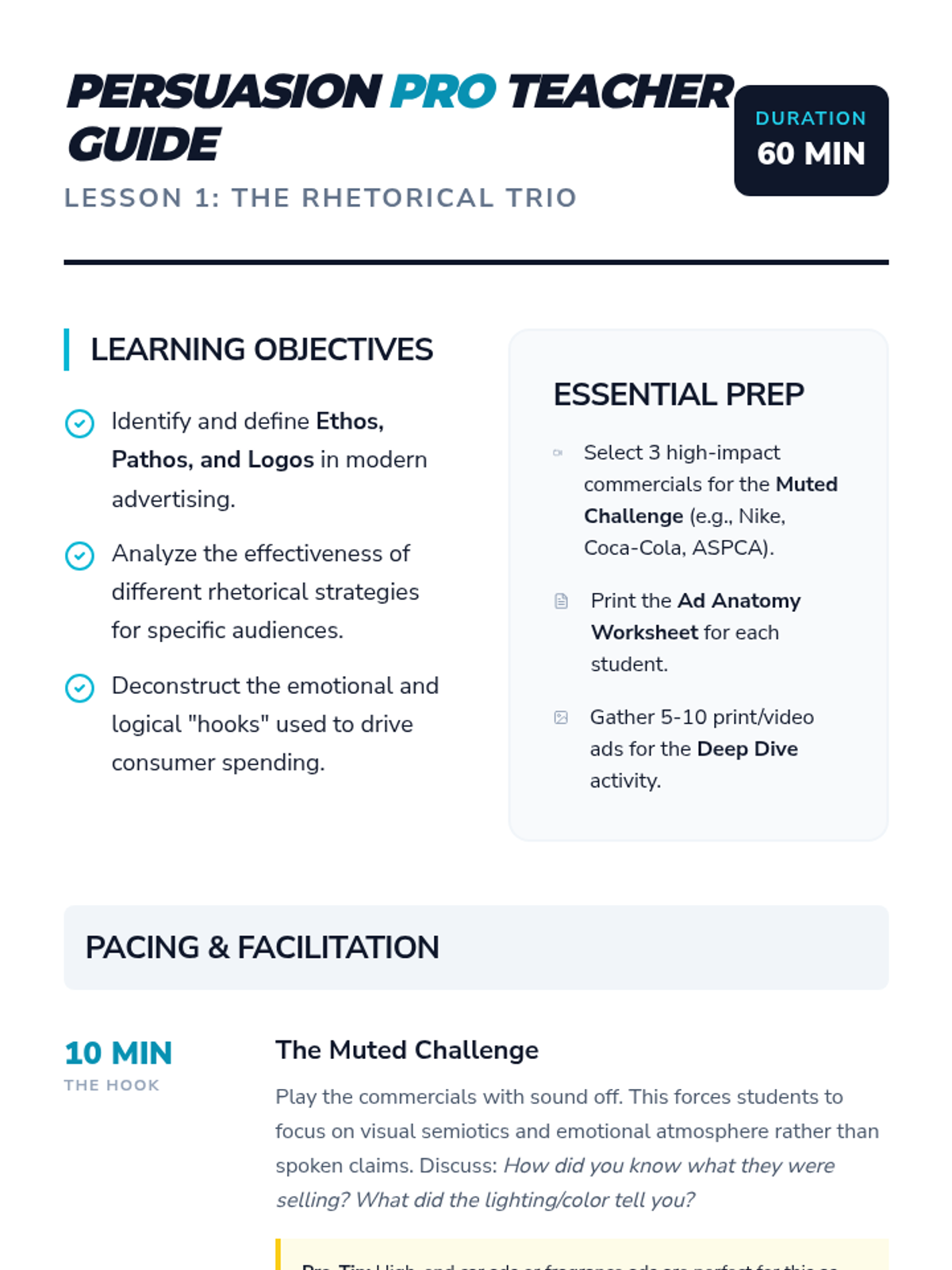
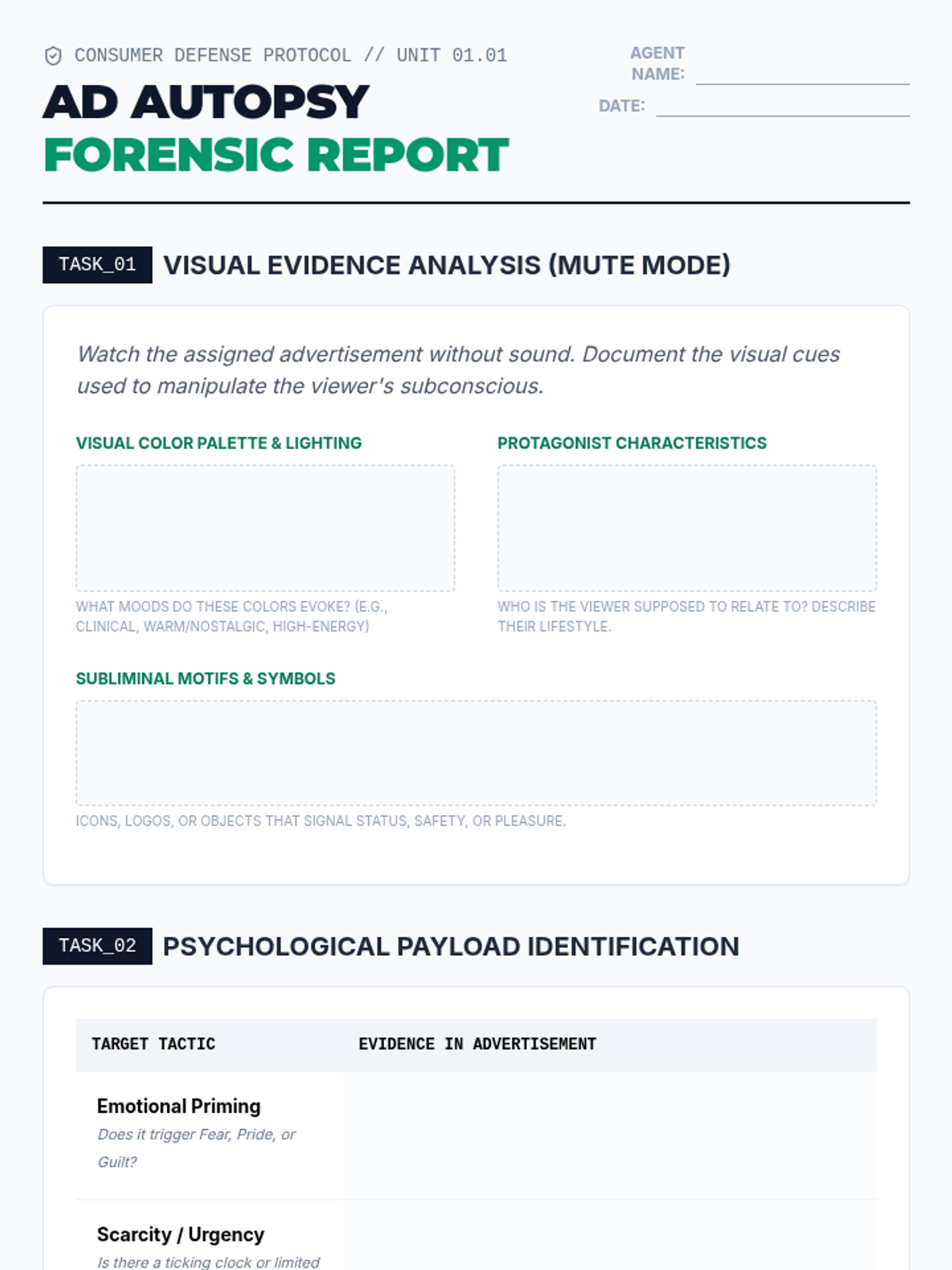
A comprehensive 10th-grade unit exploring media literacy, behavioral economics, and digital citizenship through the lens of advertising. Students move from identifying rhetorical appeals to deconstructing complex digital marketing ecosystems, culminating in a counter-advertising project.
A high-school level sequence exploring the psychological and digital mechanisms of modern advertising. Students learn to identify neuromarketing, algorithmic targeting, influencer tactics, and dark patterns to develop critical consumer autonomy.
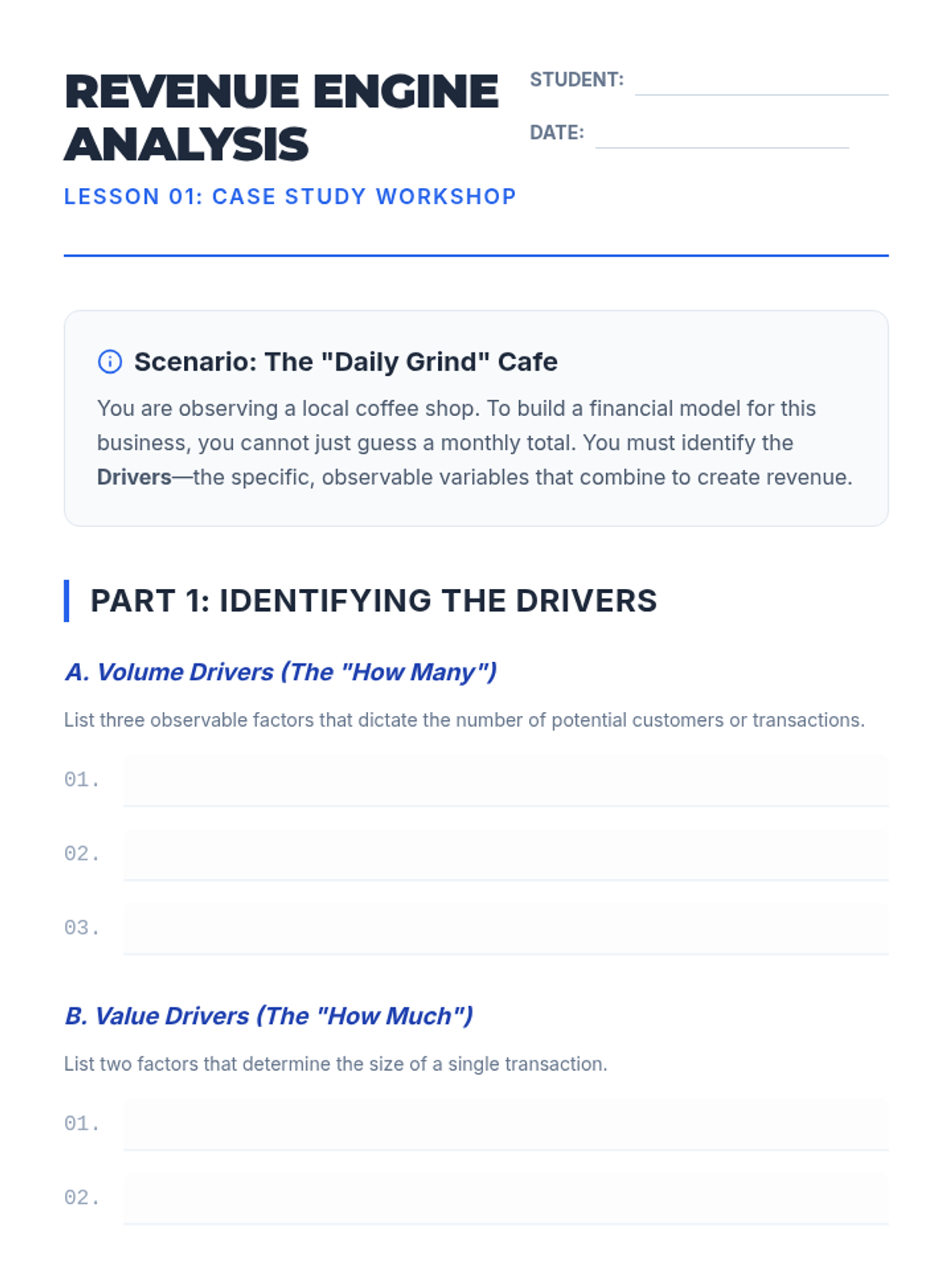
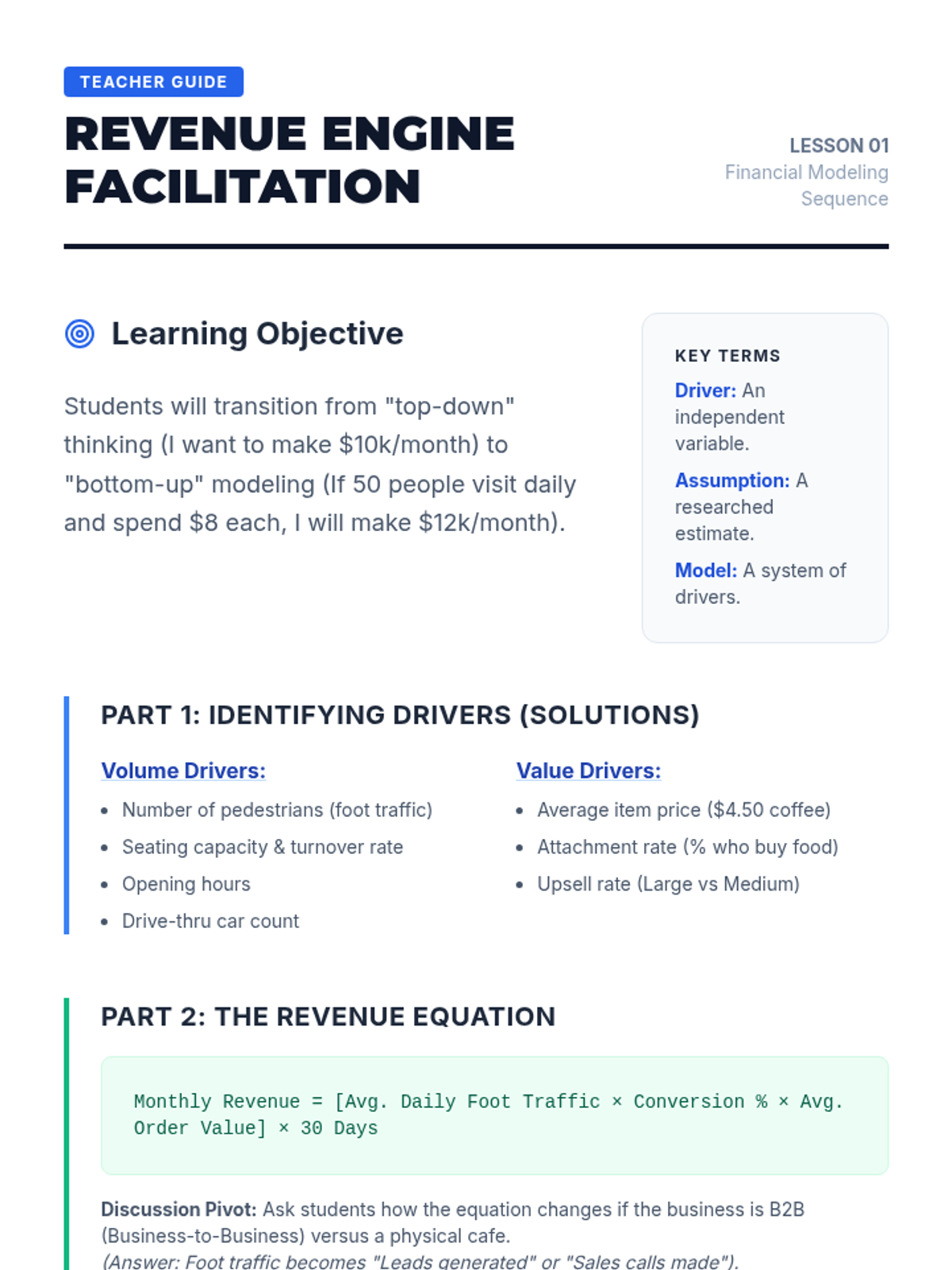
A comprehensive workshop-style sequence where students build dynamic financial models for startups. They progress from identifying core revenue drivers to building interconnected financial statements and conducting sensitivity analysis.
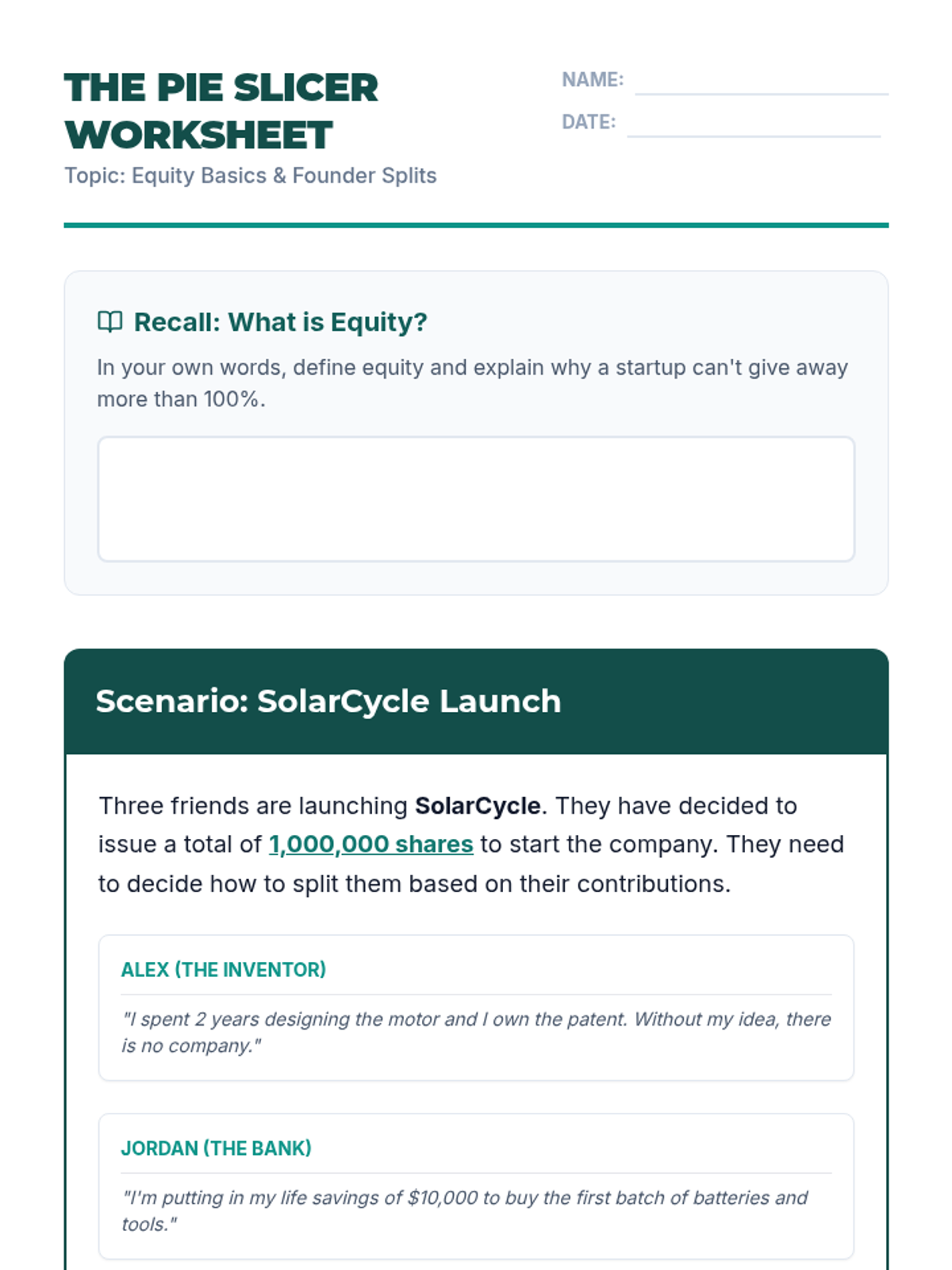
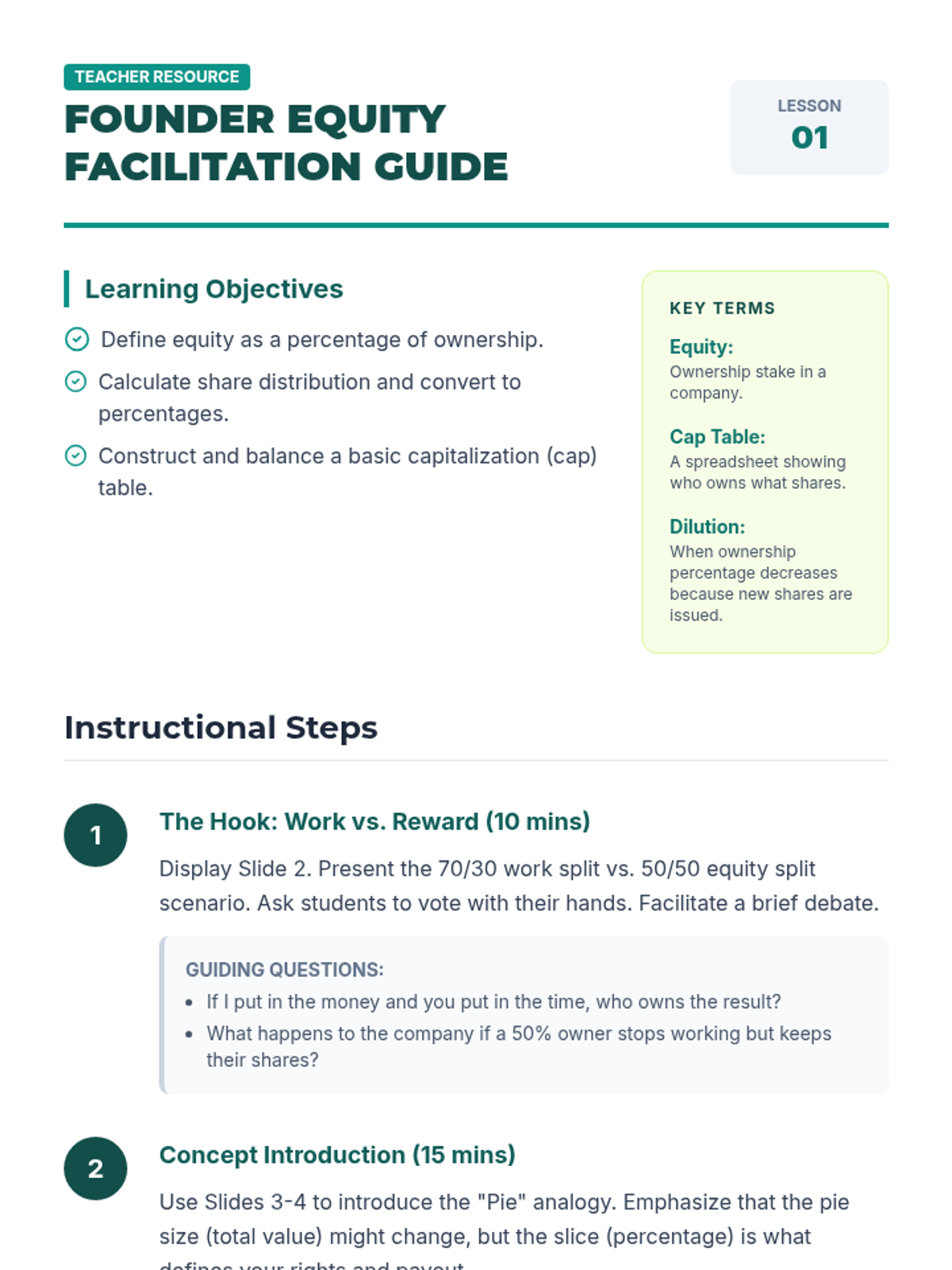
This sequence explores the relationship between company ownership (equity) and financing. Students learn the mechanics of cap tables, valuation math, and negotiation strategies, preparing them to navigate the trade-offs between control and growth in a startup environment.
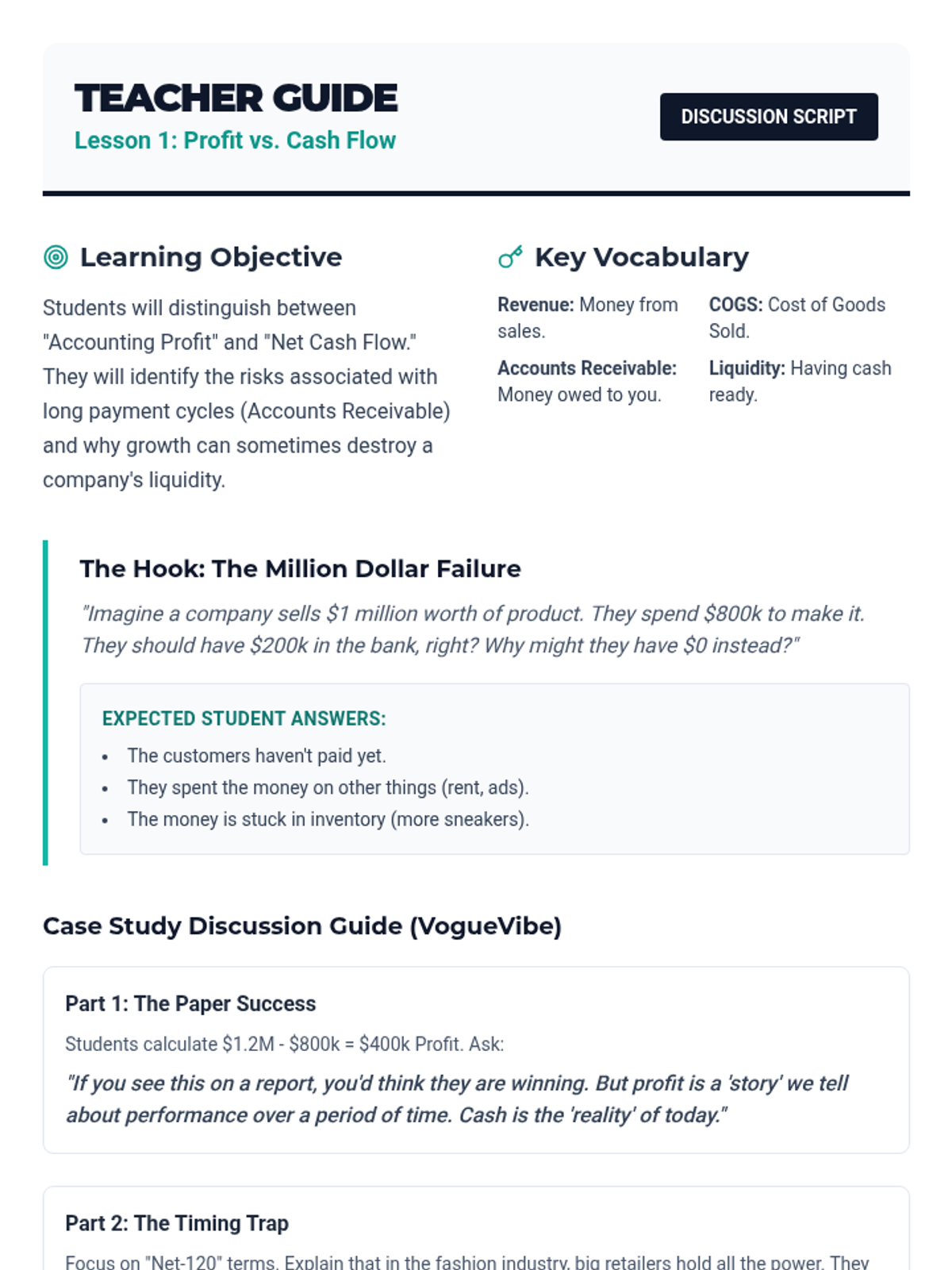
A comprehensive sequence for 10th-grade students on managing startup cash flow, burn rates, and financial survival strategies. Students will move from understanding basic financial concepts to managing a complex startup simulation.
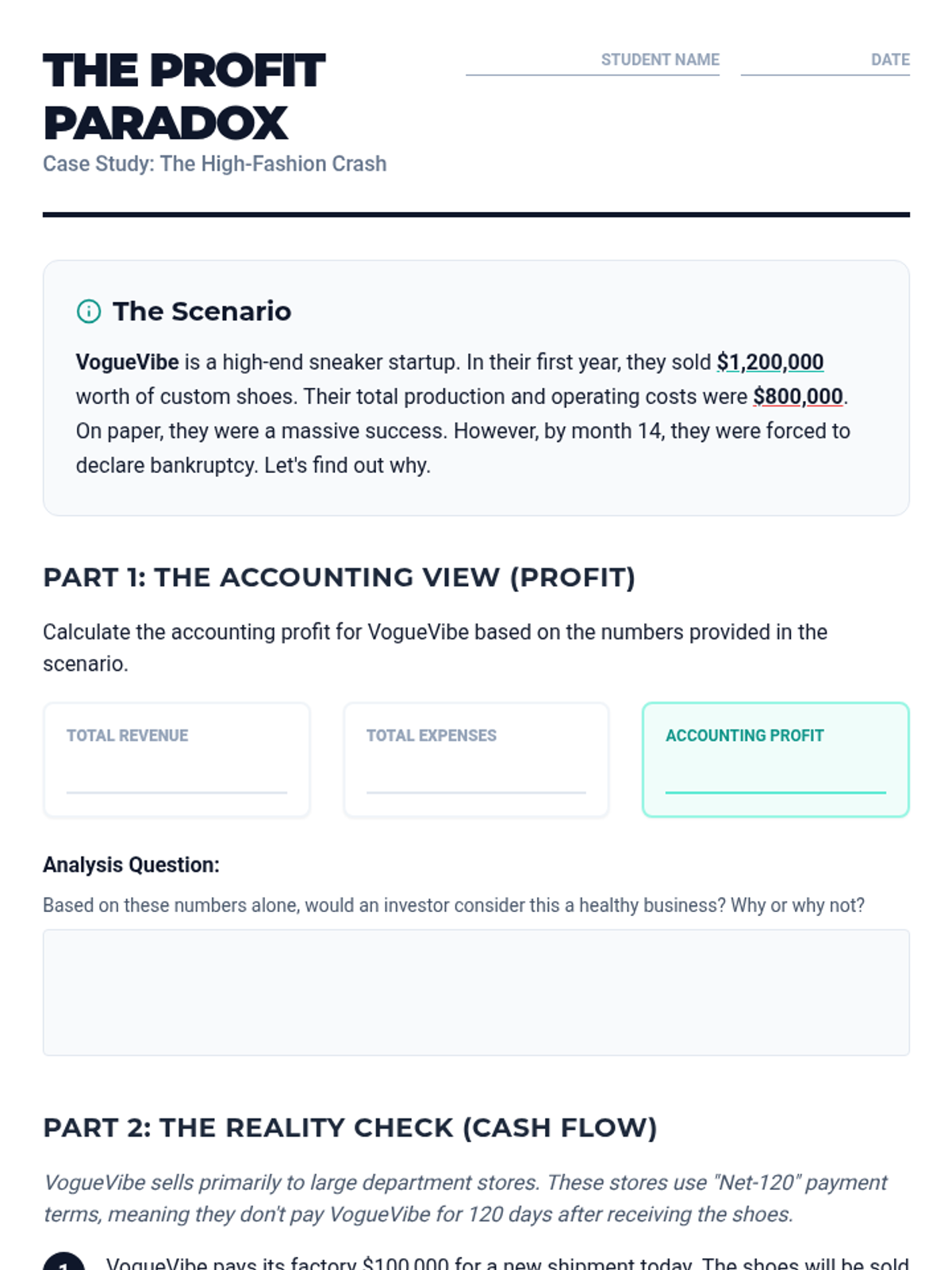
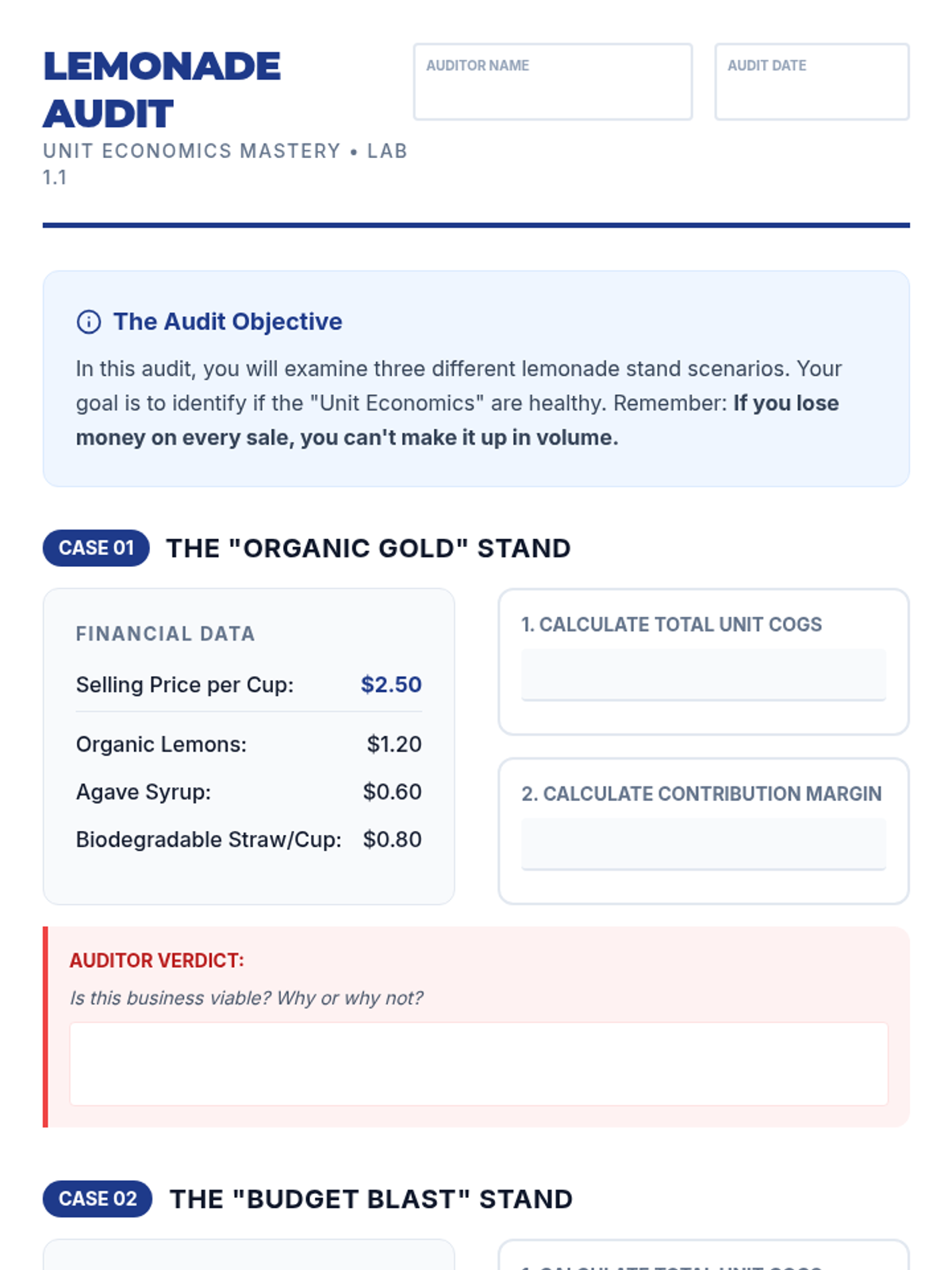
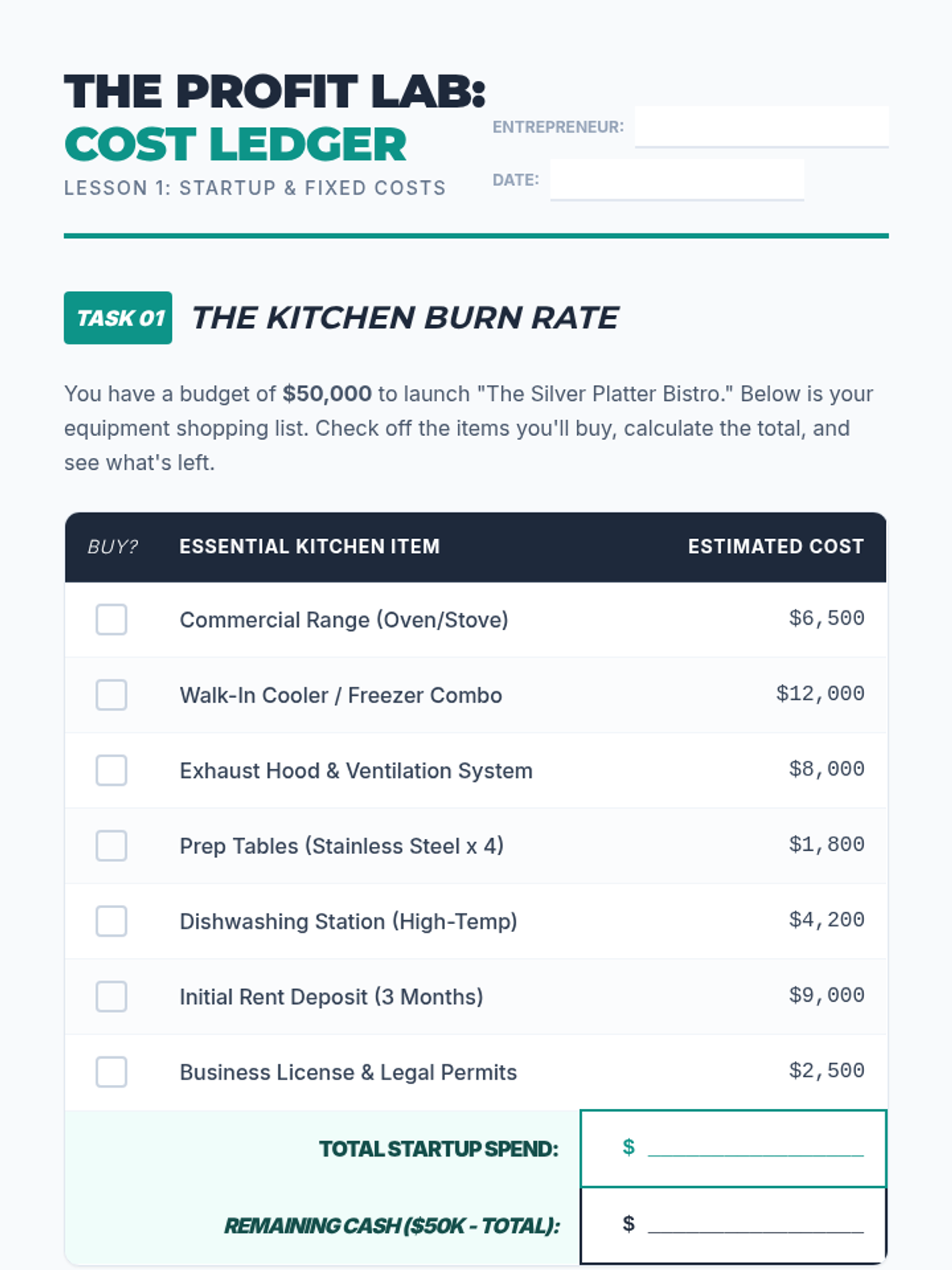
This high school entrepreneurship sequence focuses on the financial mechanics of a business plan. Students learn to calculate unit economics, estimate startup costs, determine break-even points, select revenue models, and build 12-month financial projections.
A comprehensive unit on financial literacy for young entrepreneurs, focusing on cost analysis, unit economics, revenue models, and break-even projections to determine business viability.
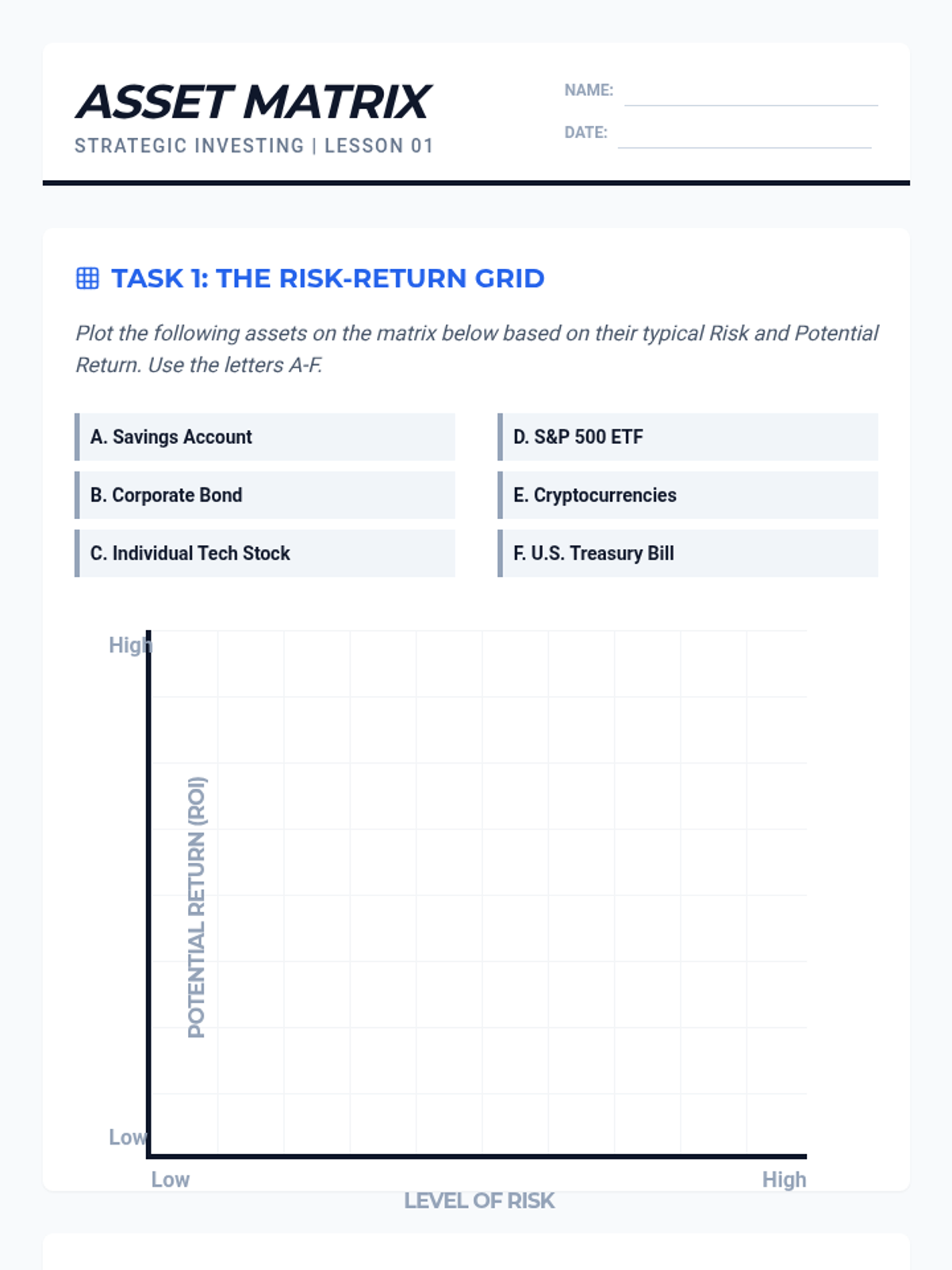
A comprehensive high school economics sequence that uses a gamified, simulation-based approach to teach the fundamentals of investing, market mechanics, and long-term wealth management. Students transition from understanding basic asset classes to building diversified portfolios and managing the psychological aspects of trading.
A comprehensive 9th-grade economics sequence focused on transitioning from basic savings to sophisticated investment strategies, asset allocation, and long-term wealth building. Students explore risk/reward, market volatility, and diversification through gamified activities and mathematical forecasting.
A comprehensive investigation into the gig economy, contrasting traditional employment with independent contracting. Students analyze the economic, legal, and ethical implications of algorithmic management and worker classification, culminating in a formal legislative debate.
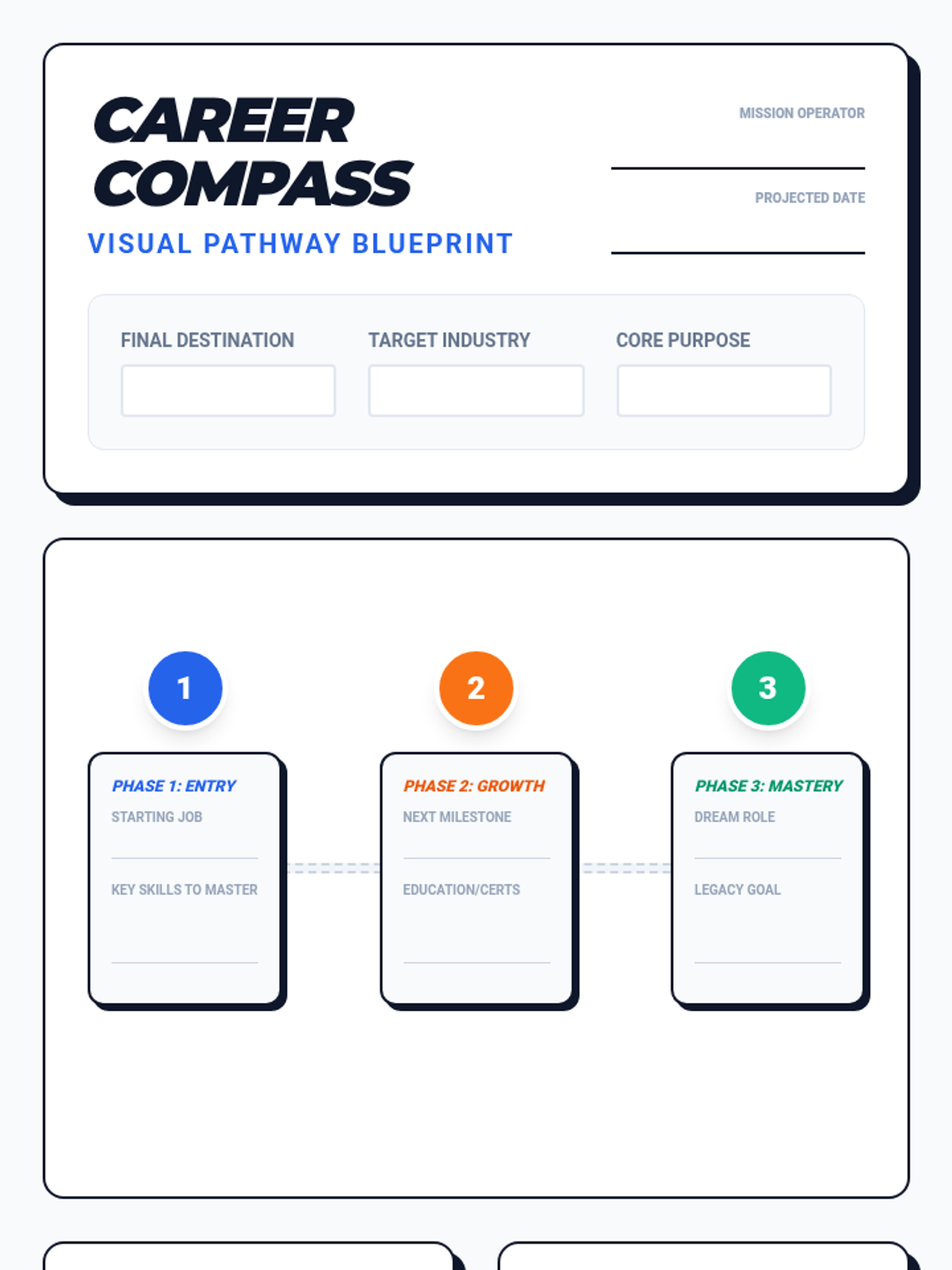
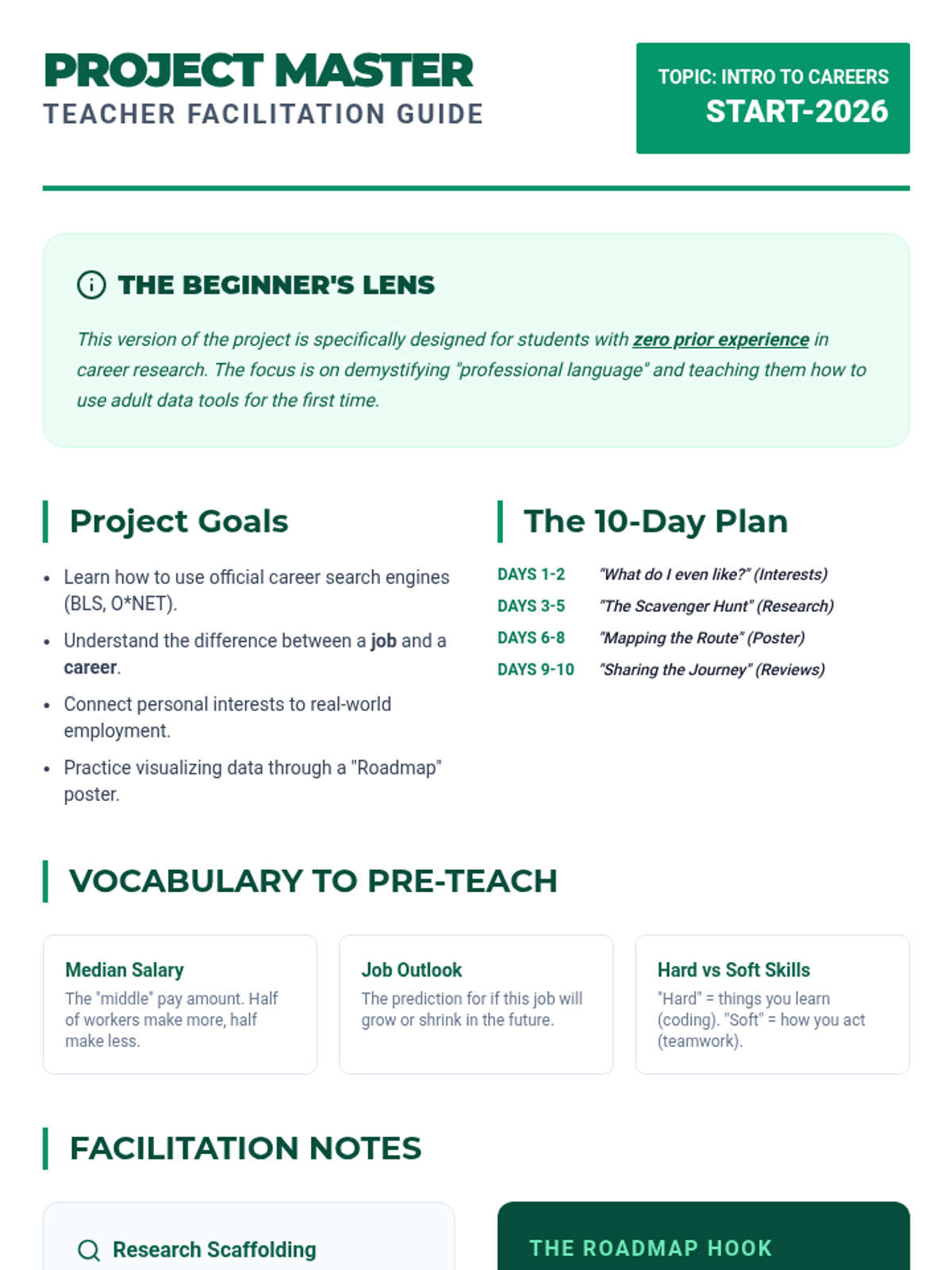
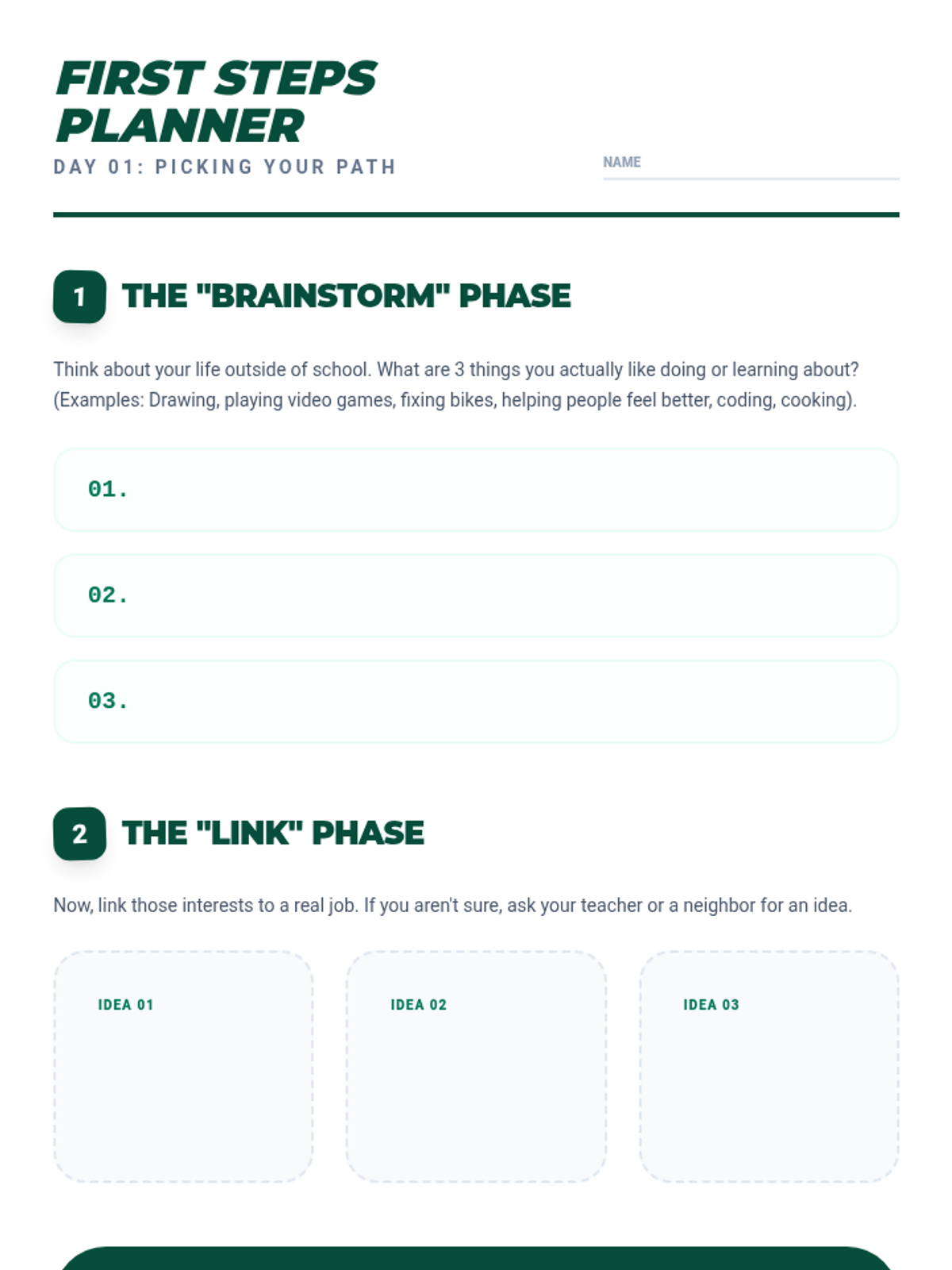
A comprehensive two-week career exploration project where 10th-grade students research a chosen profession and design a creative roadmap-themed poster. Students plot their career journey from education to retirement, identifying key milestones, challenges, and personal fit along the way.
A 4-week college readiness program designed specifically for first-generation students, covering college types, financial literacy, the application process, and post-acceptance steps.
A comprehensive high school sequence focused on essential independent living skills, covering financial literacy, household management, and basic culinary independence.
This simulation-based sequence helps students develop the financial and logistical skills necessary for independent living. Students move through a 'Real World' simulation where they must secure housing, manage a monthly budget, and plan for daily needs.
A comprehensive simulation-based unit where 10th-grade students navigate the post-incident insurance world. Students learn to file claims, assess damages as adjusters, weigh ethical dilemmas, and advocate for their rights as consumers.
This case-study driven sequence focuses on consumer protection, equipping 8th-grade students with the knowledge to recognize scams and assert their legal rights. Students examine real-world examples of fraud, learn the specific functions of agencies like the FTC and BBB, and practice the soft skills required to resolve consumer disputes.
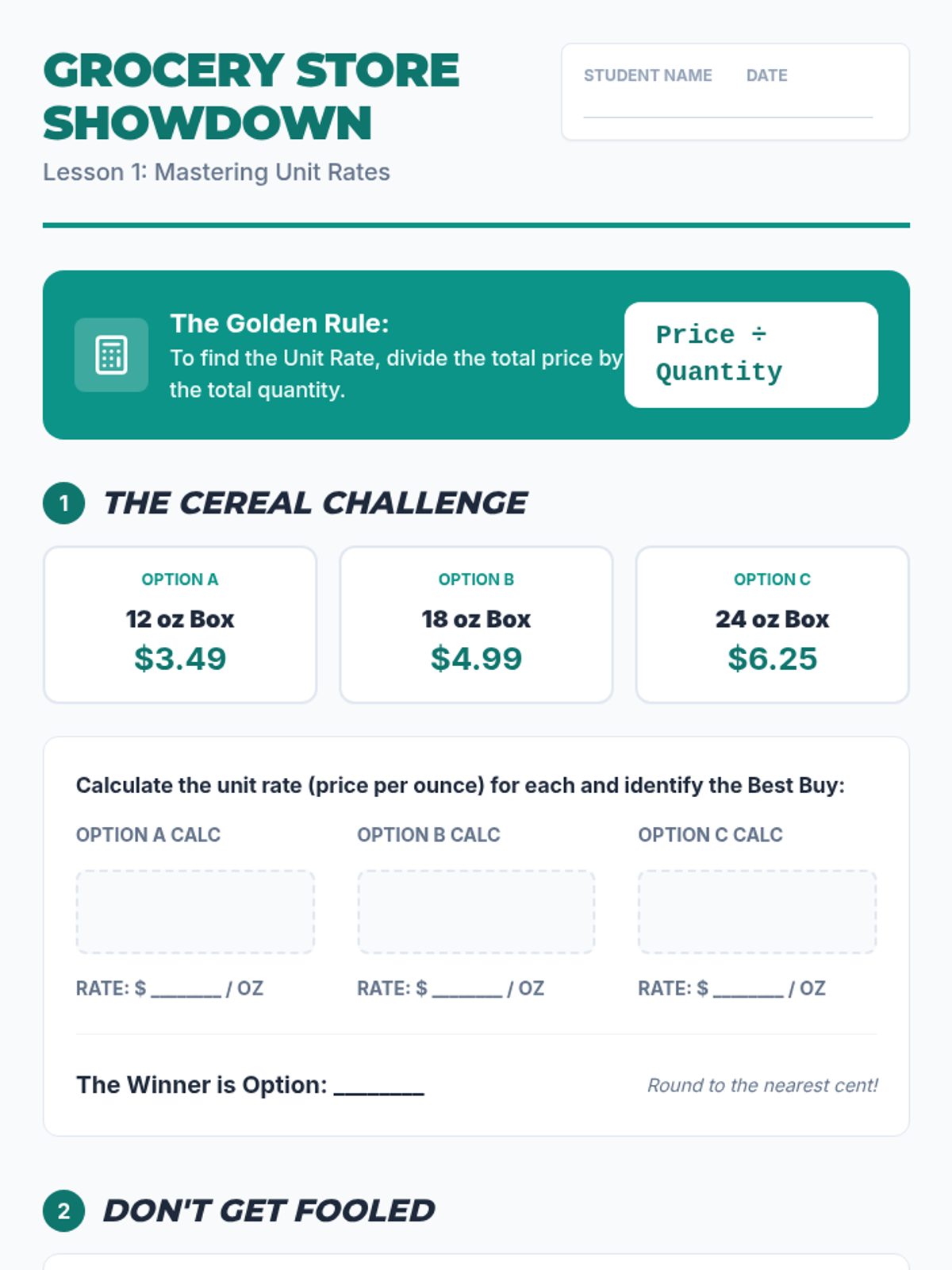
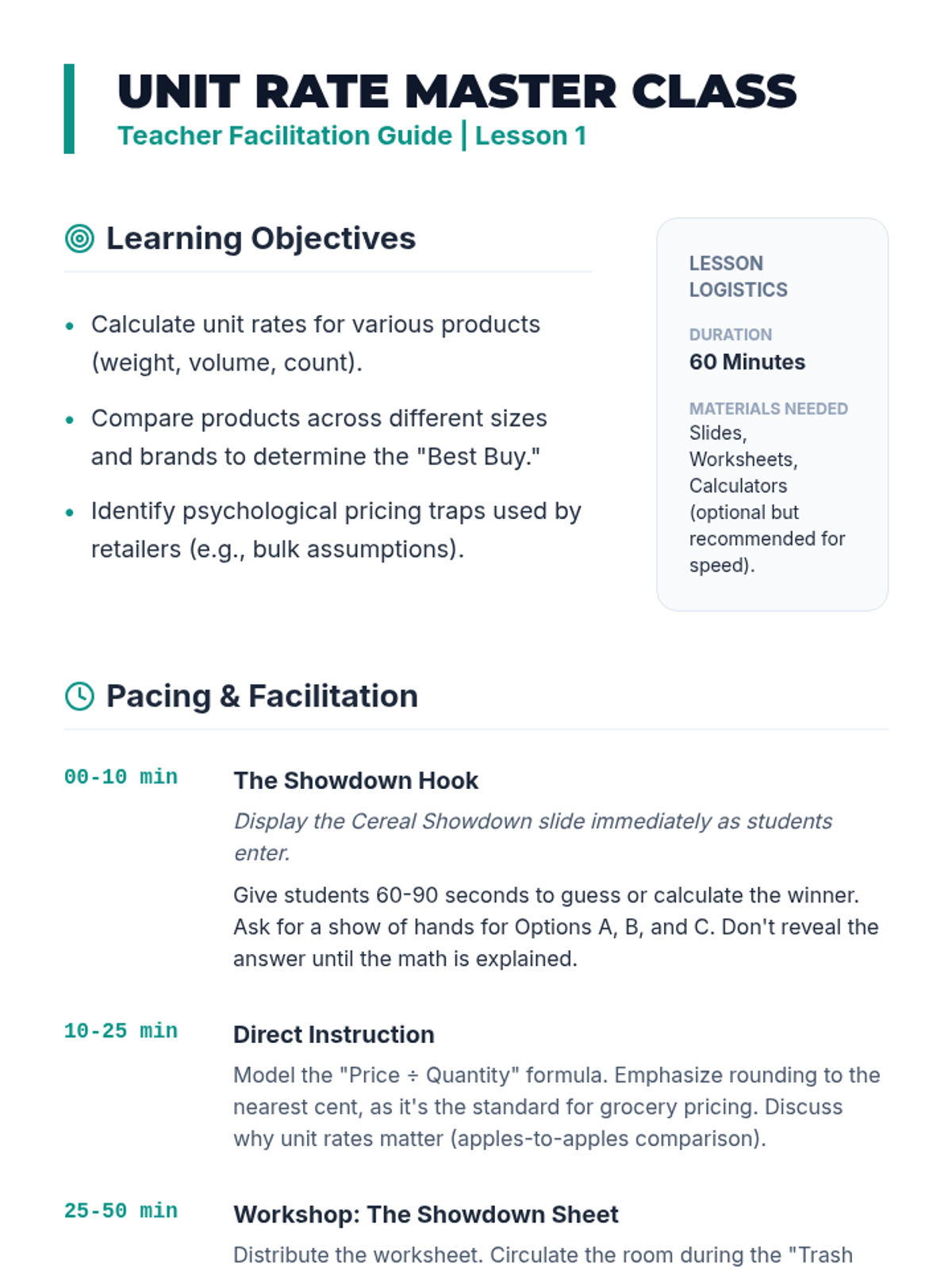
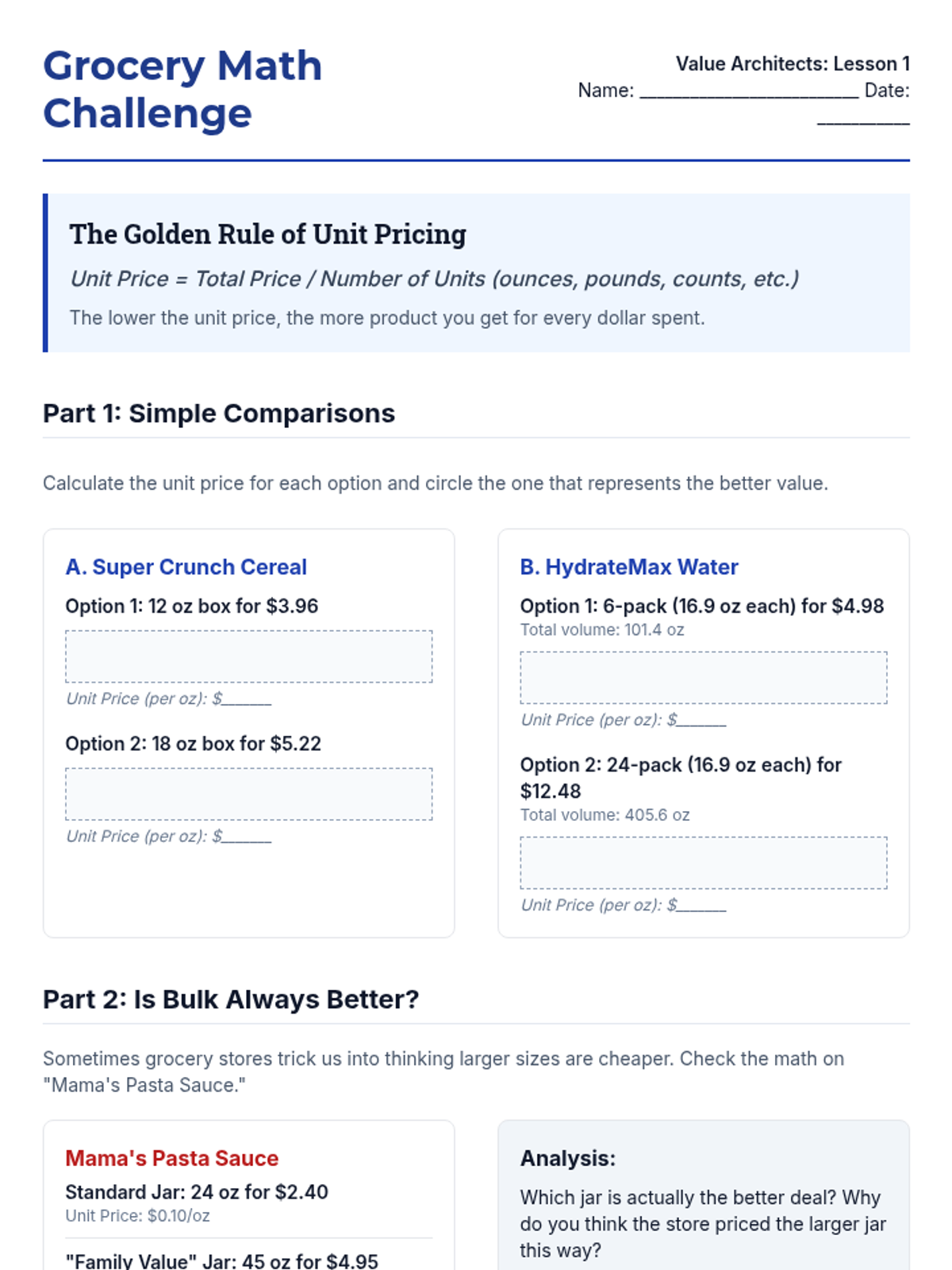
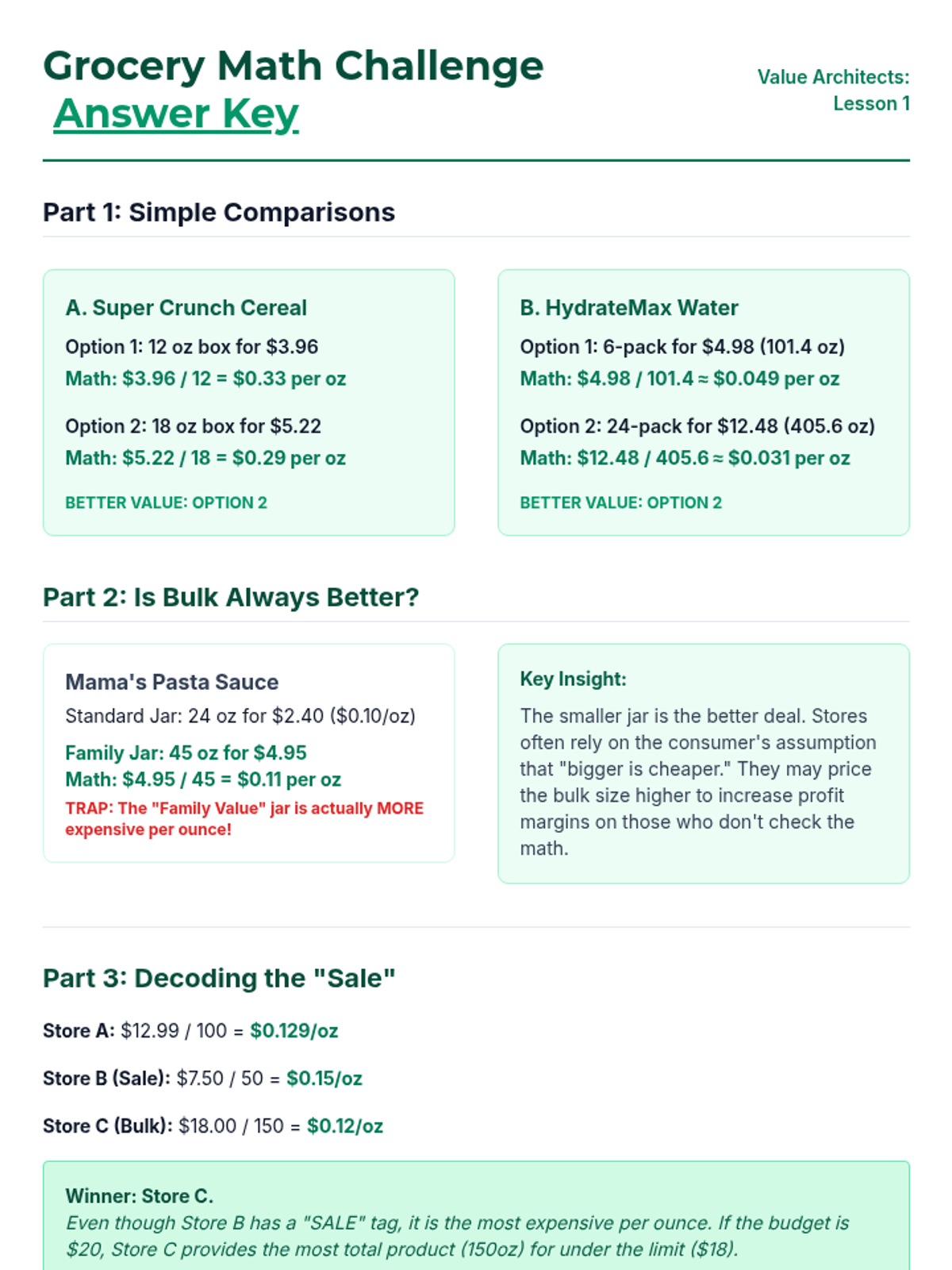
This project-based sequence simulates the independent living experience, requiring students to apply mathematical reasoning and research skills to maximize a hypothetical budget. Students move from calculating simple unit prices to evaluating total cost of ownership, including shipping, subscriptions, and maintenance. The sequence culminates in a comprehensive comparison shopping project where students must justify a major purchase choice using quantitative data and qualitative reviews.
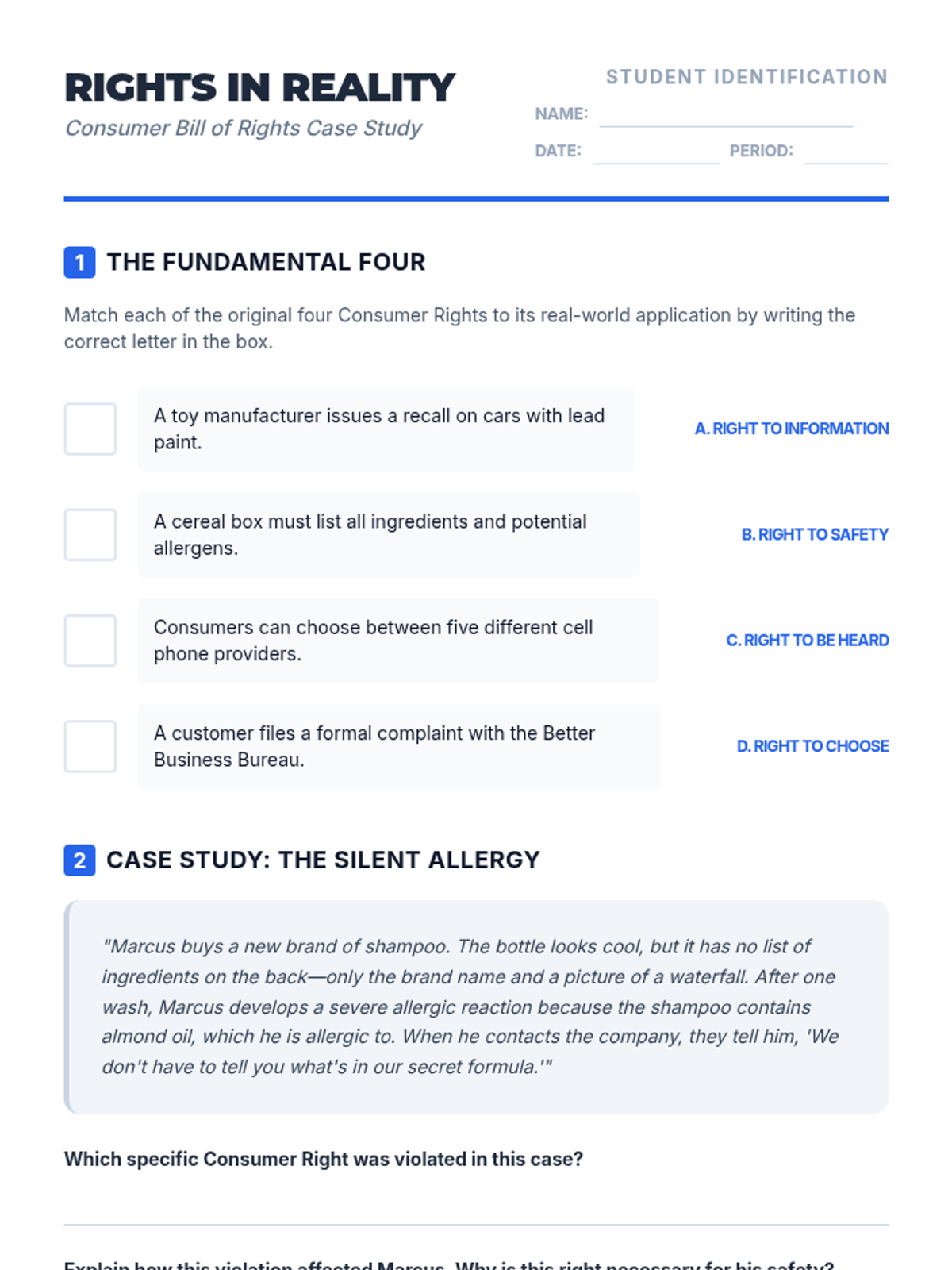
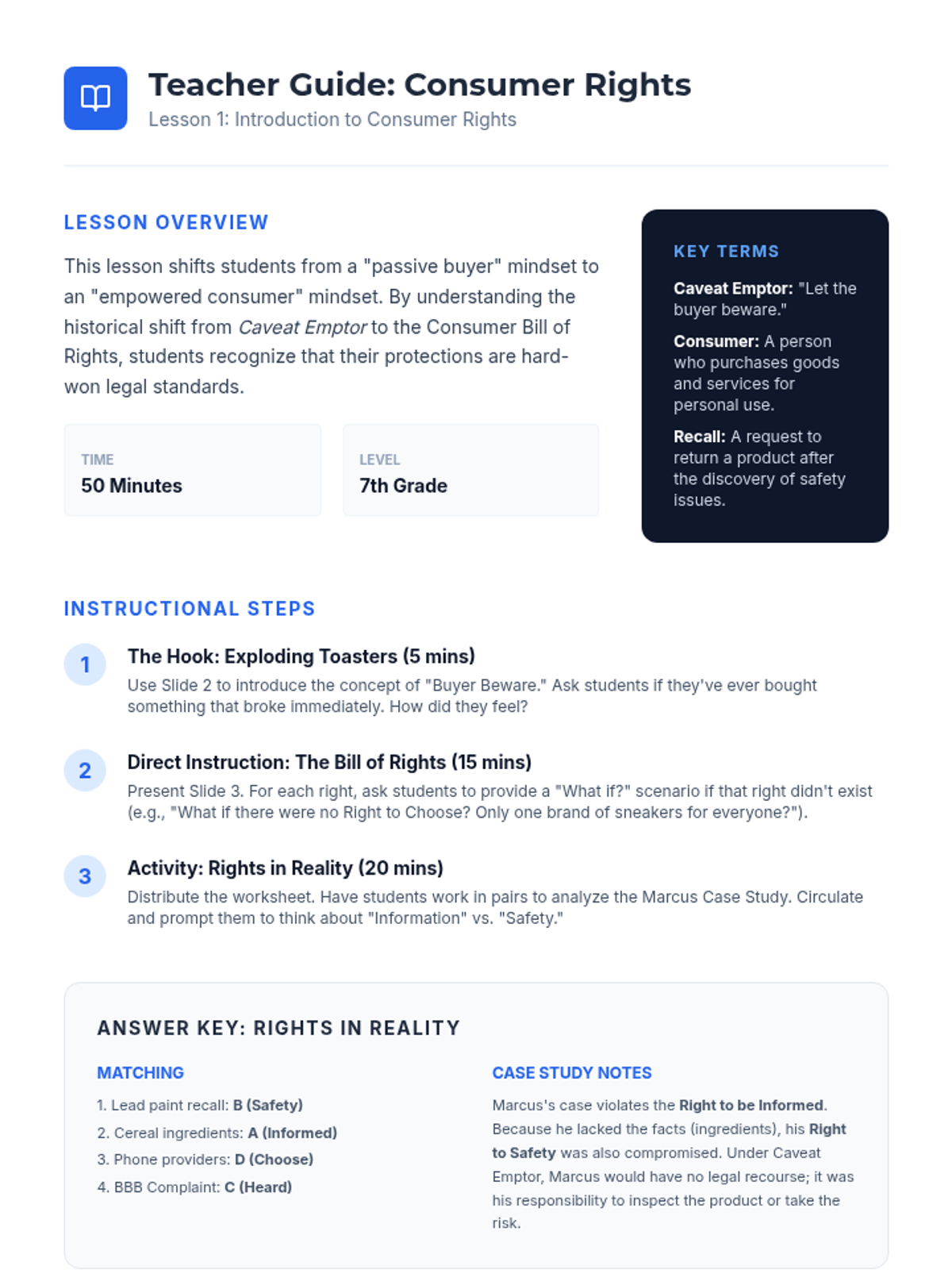
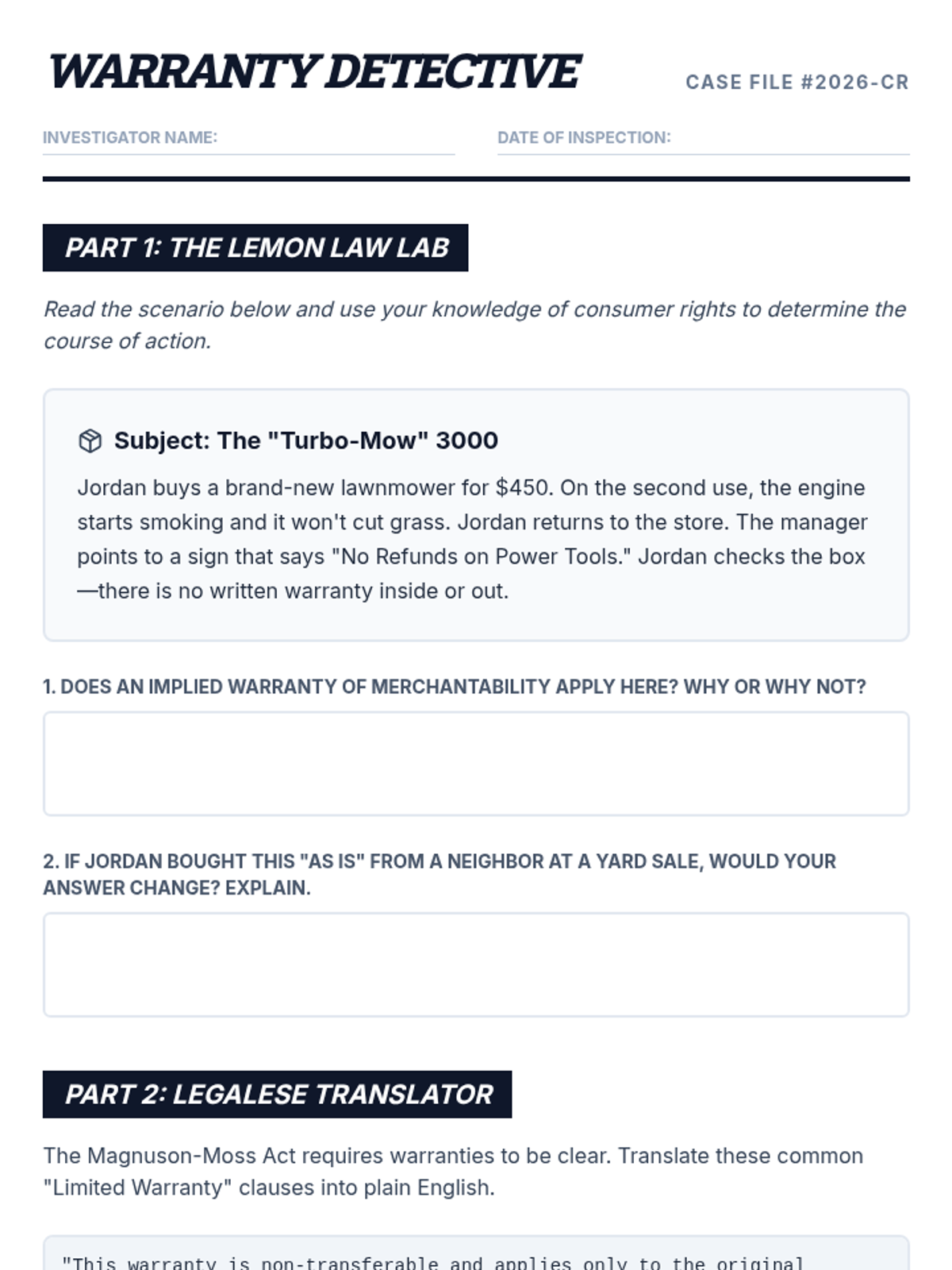
A comprehensive unit on consumer rights, warranties, and the art of professional dispute resolution. Students learn to navigate the legal and ethical framework of the marketplace through case studies, role-plays, and writing workshops.
This sequence empowers 10th-grade students with legal knowledge regarding their rights as consumers. It covers consumer legislation, contract analysis, professional dispute resolution, government protection agencies, and the impact of collective consumer action.
A comprehensive sequence for 8th-grade transition planning, focusing on the practical skills needed for independent living, including budgeting, housing, transportation, and nutrition.
A comprehensive unit on strategic purchasing, cost analysis, and consumer research for 10th-grade students. This sequence covers unit pricing, total cost of ownership, information literacy in reviews, major purchase simulations, and negotiation tactics.
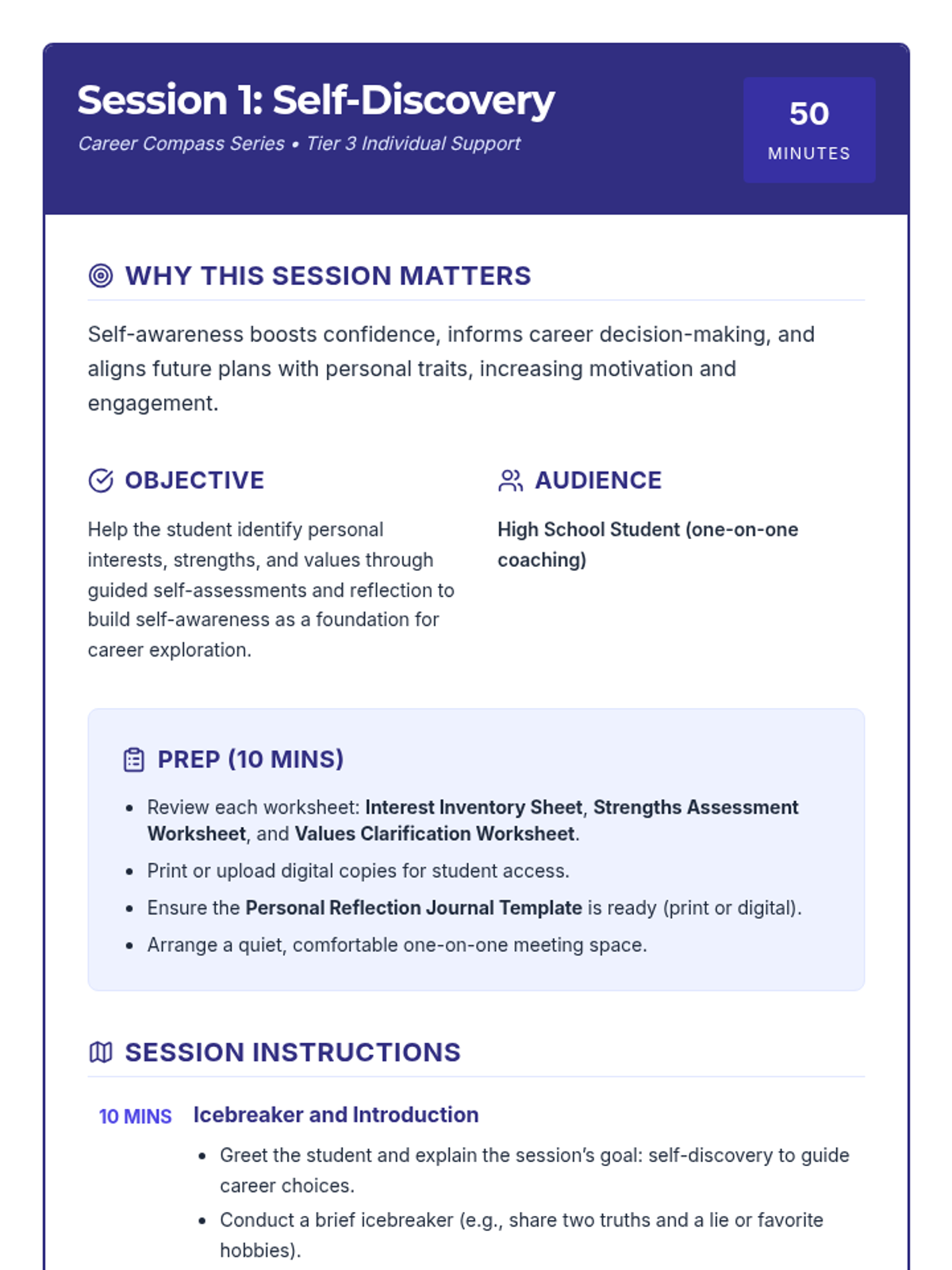
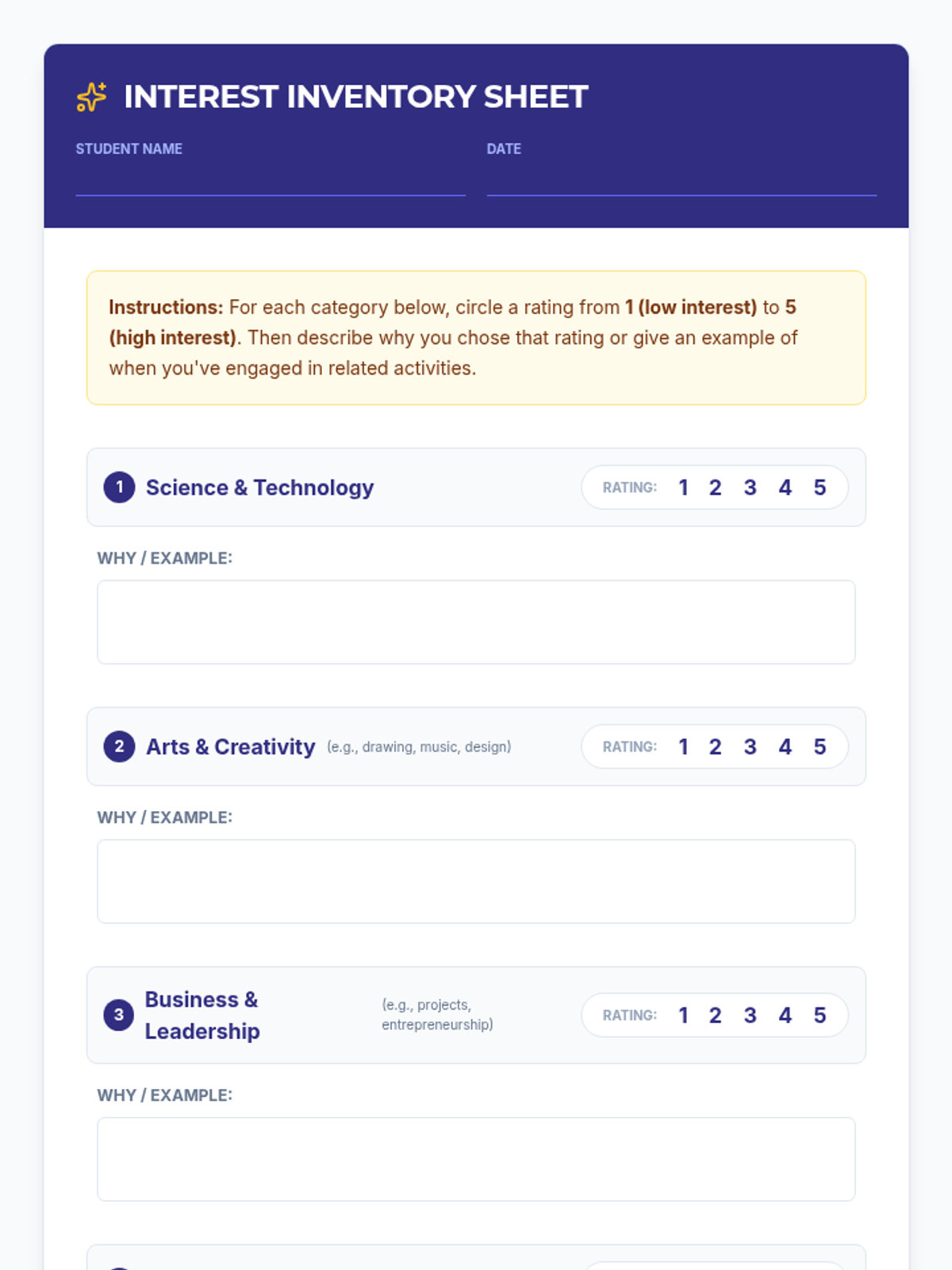
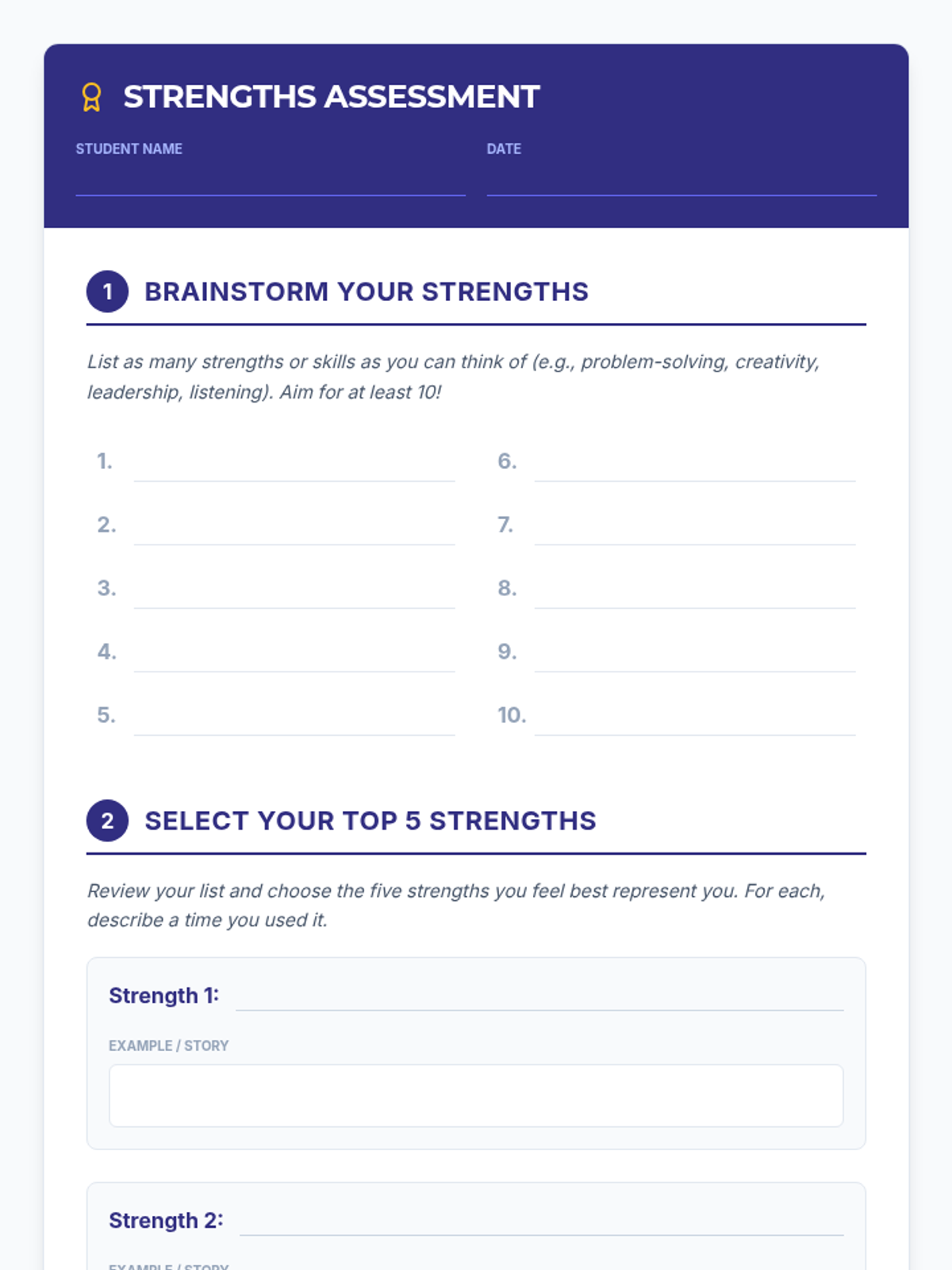
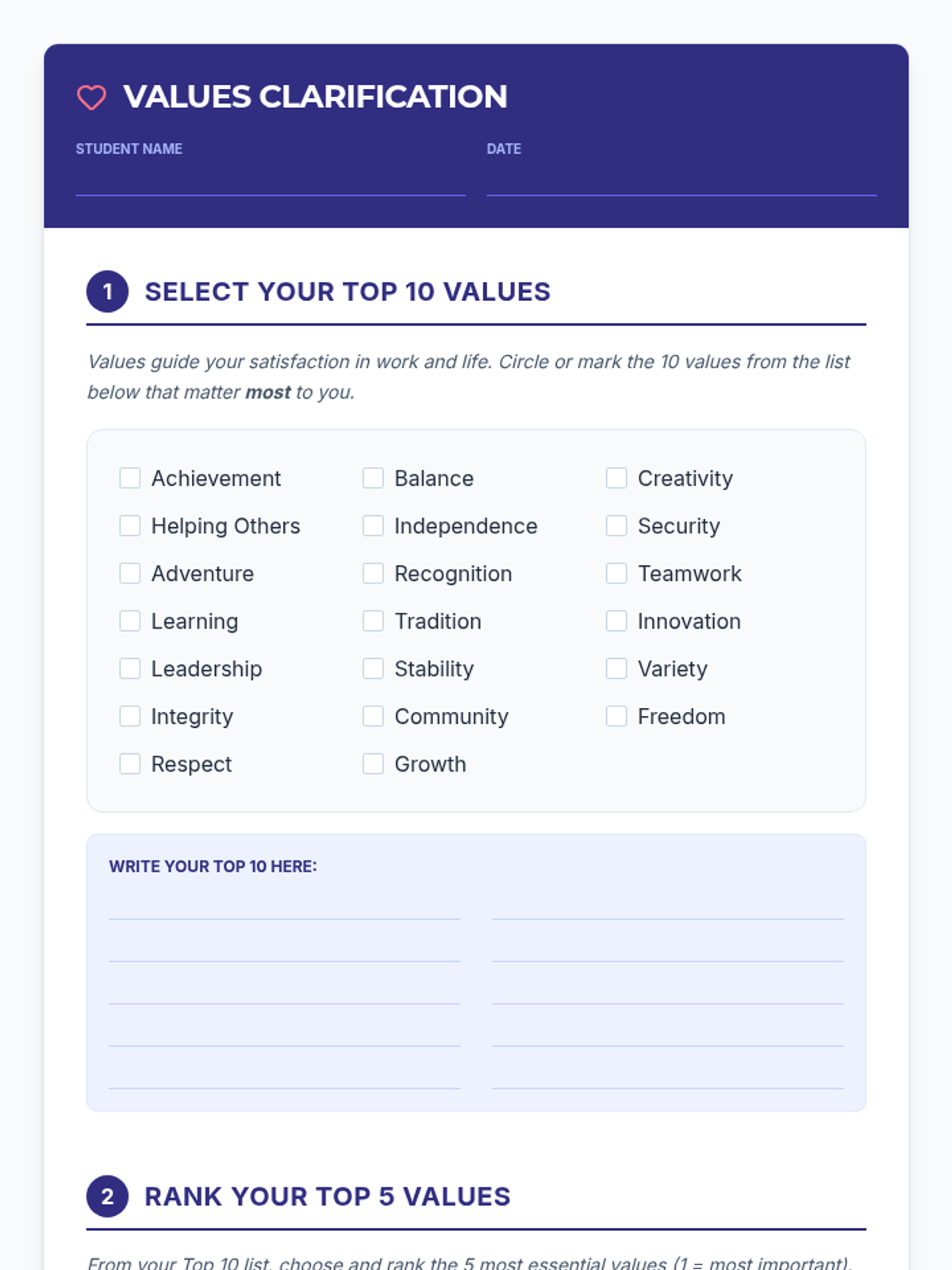
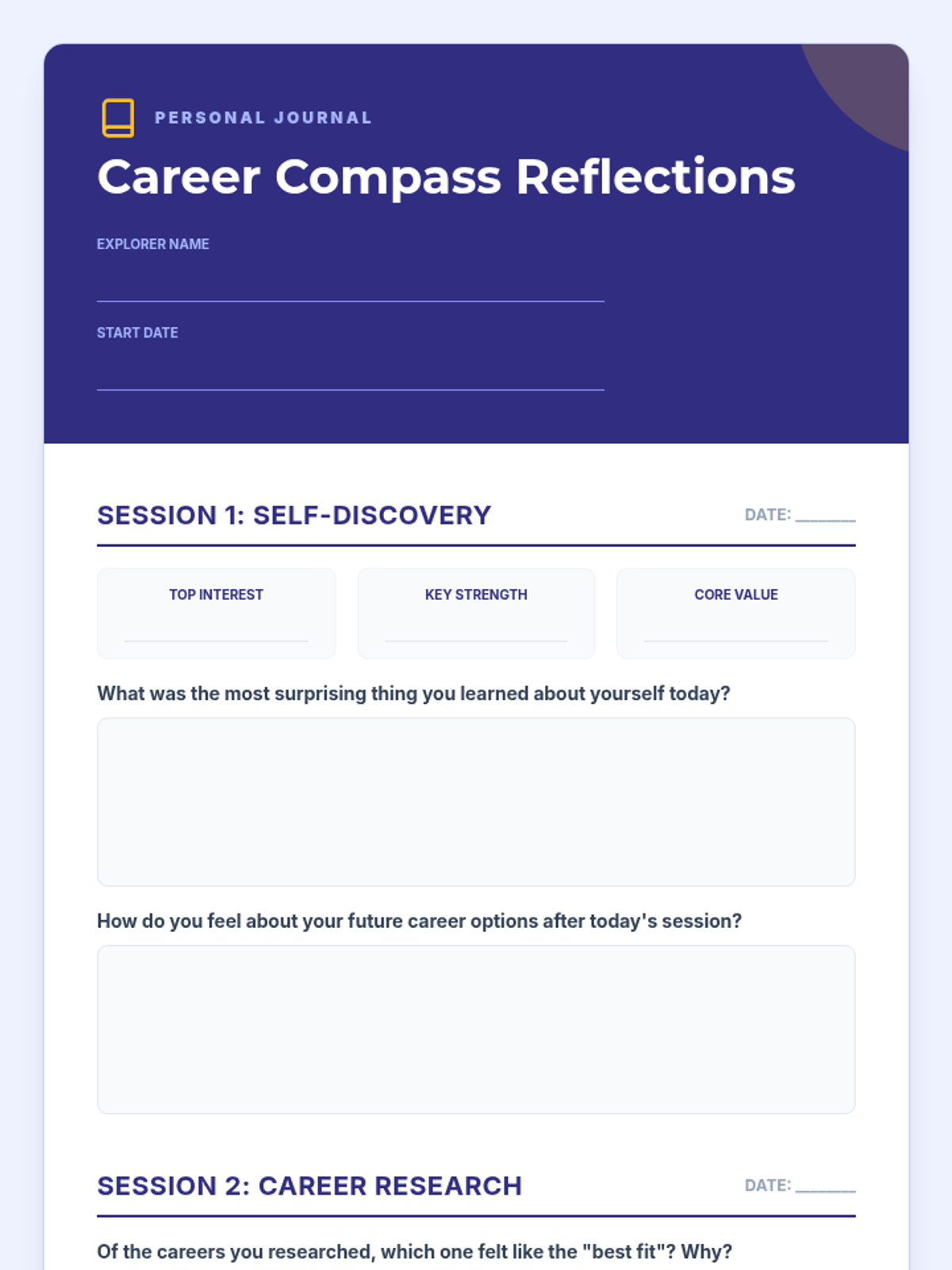
A four-session personalized coaching series designed to help students with low motivation and self-esteem explore career options and college types. Through guided activities, self-reflection, and research, students will build confidence in making informed decisions.
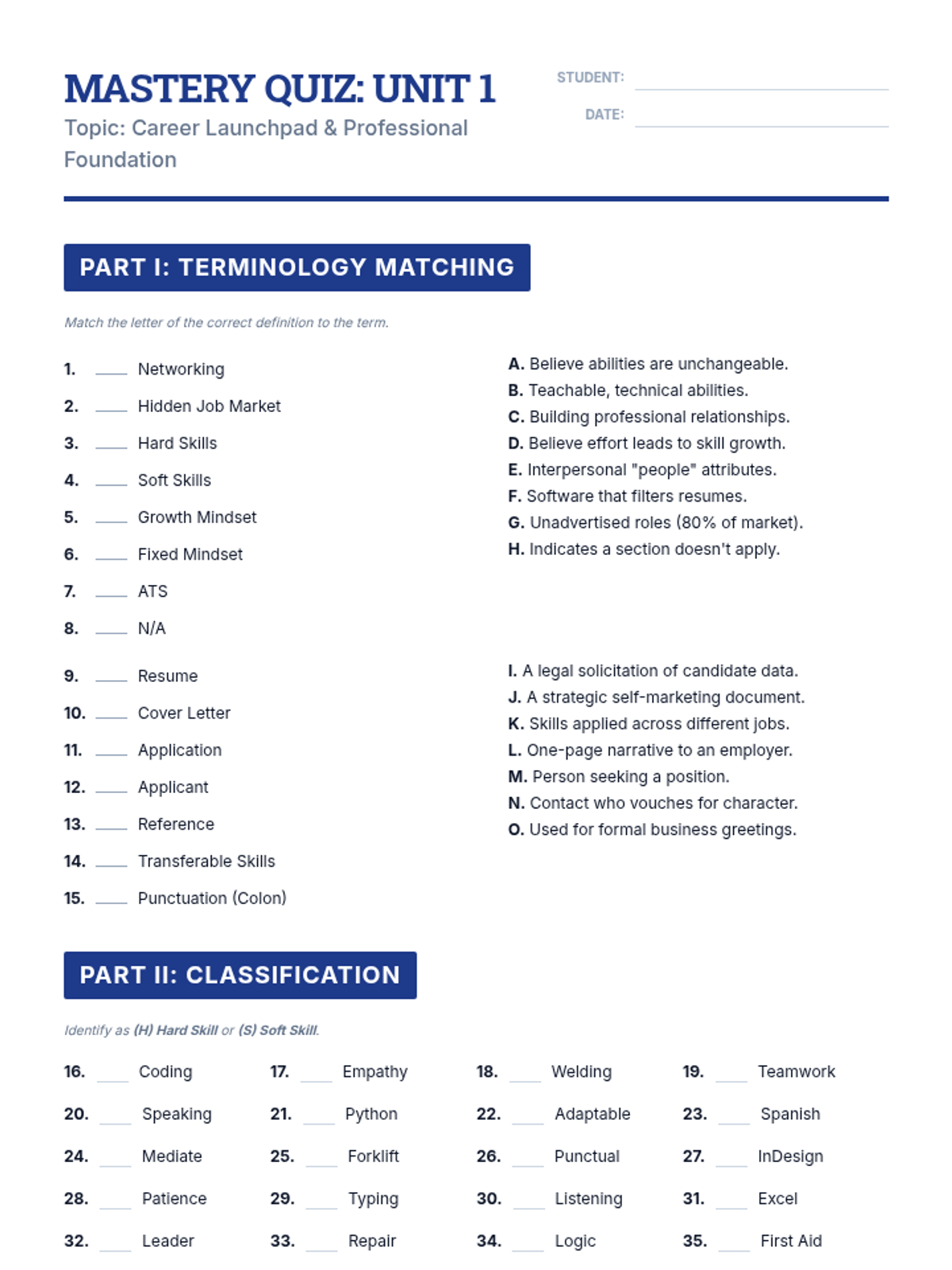
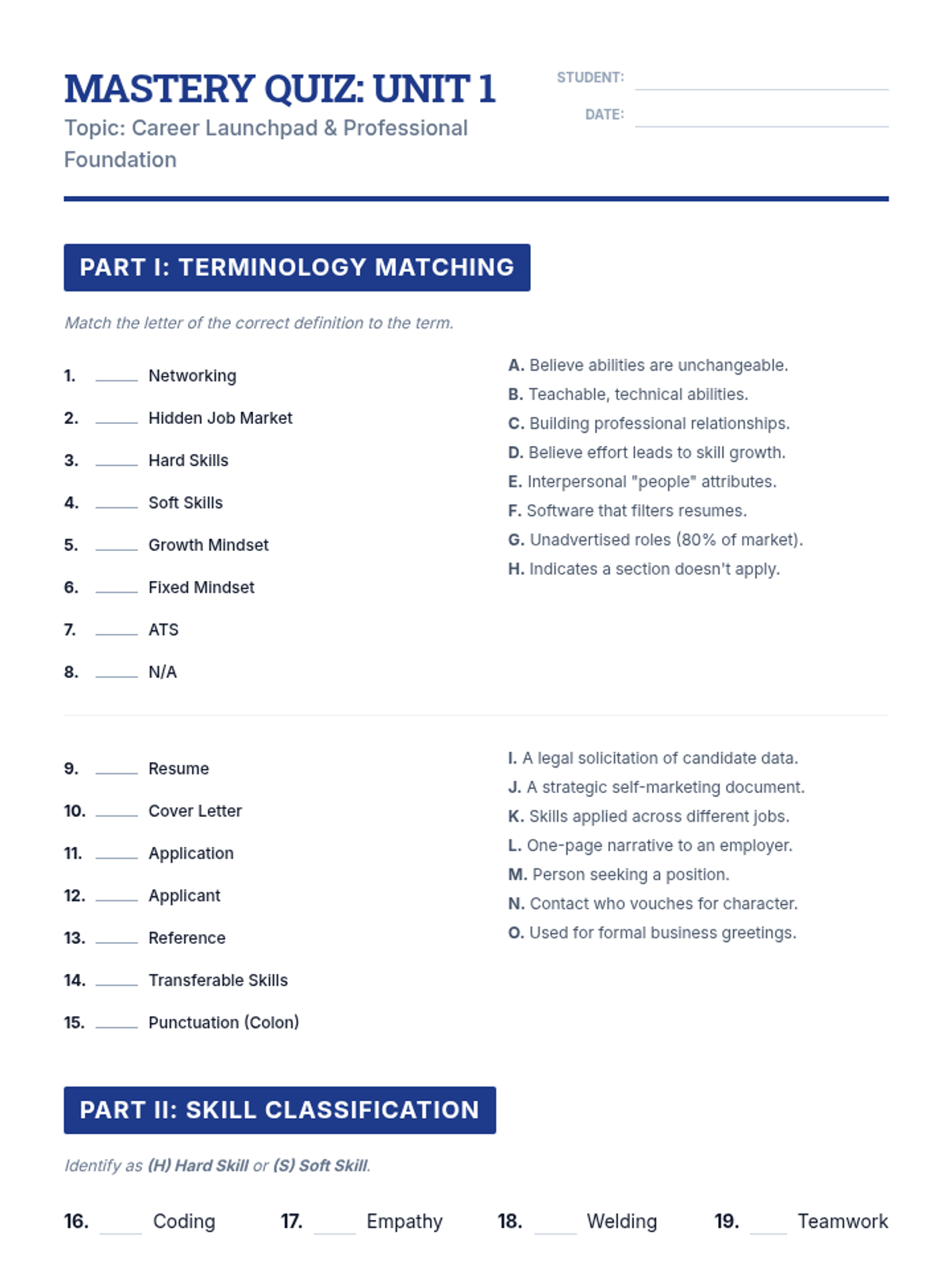
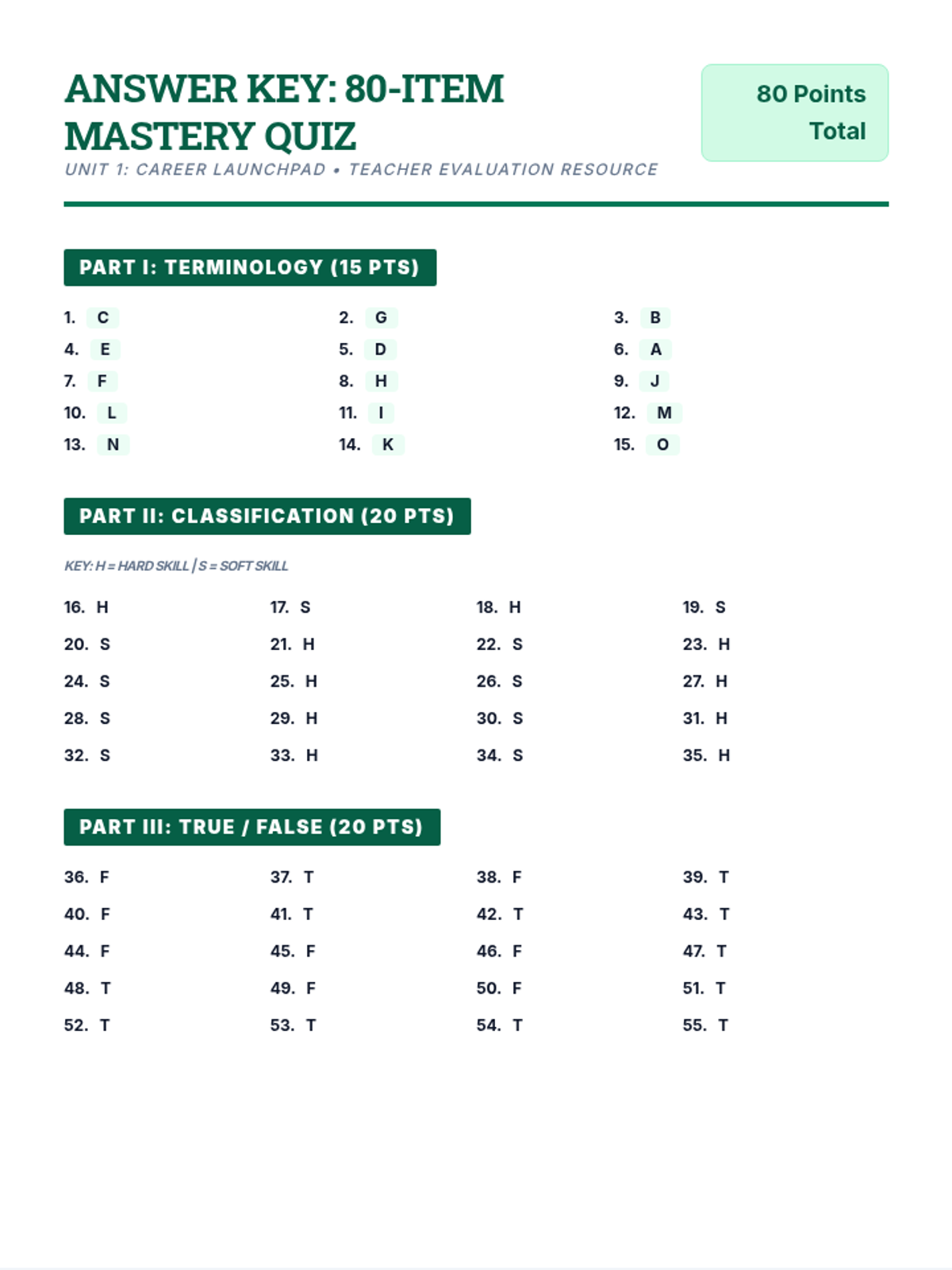
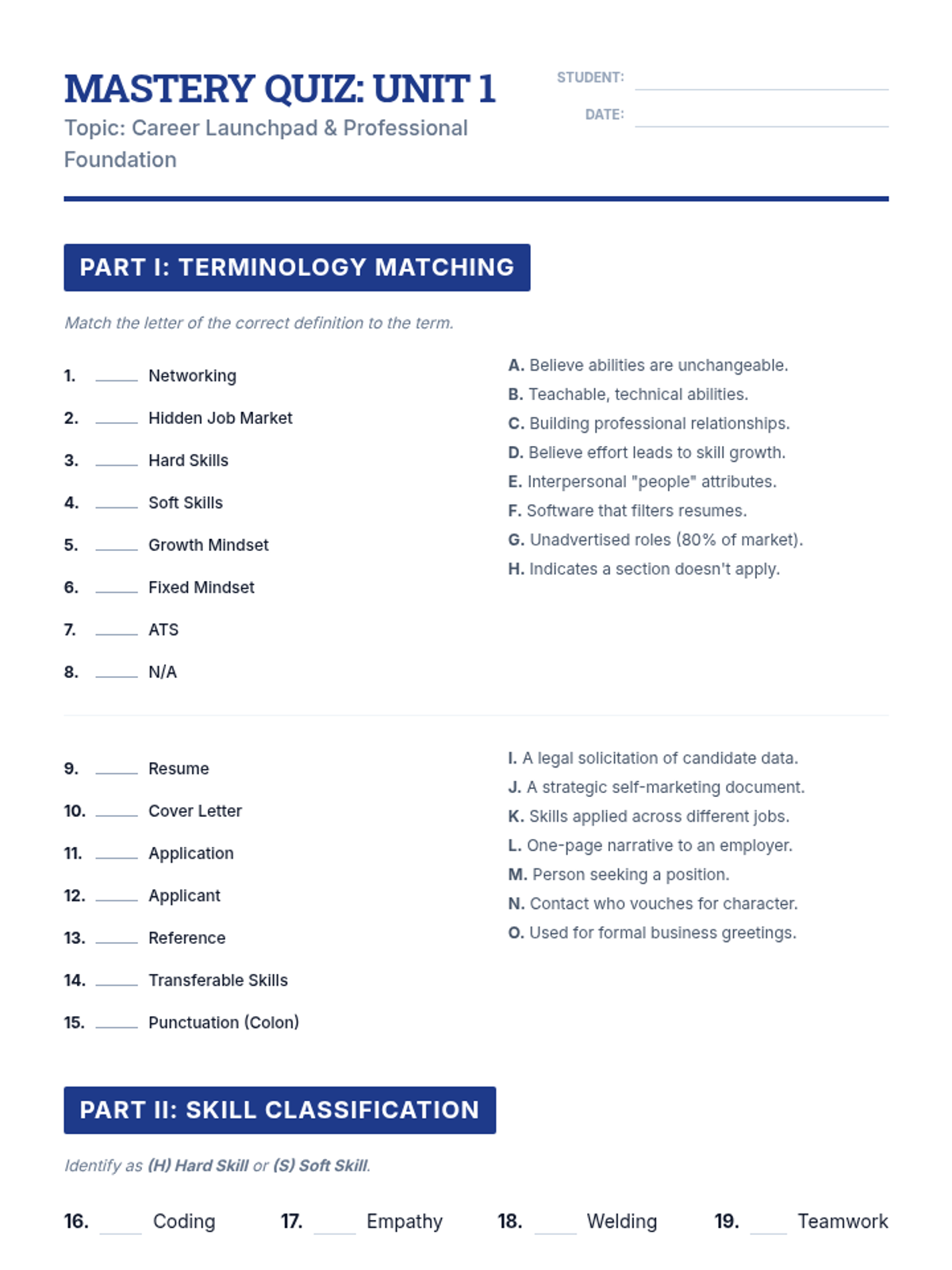
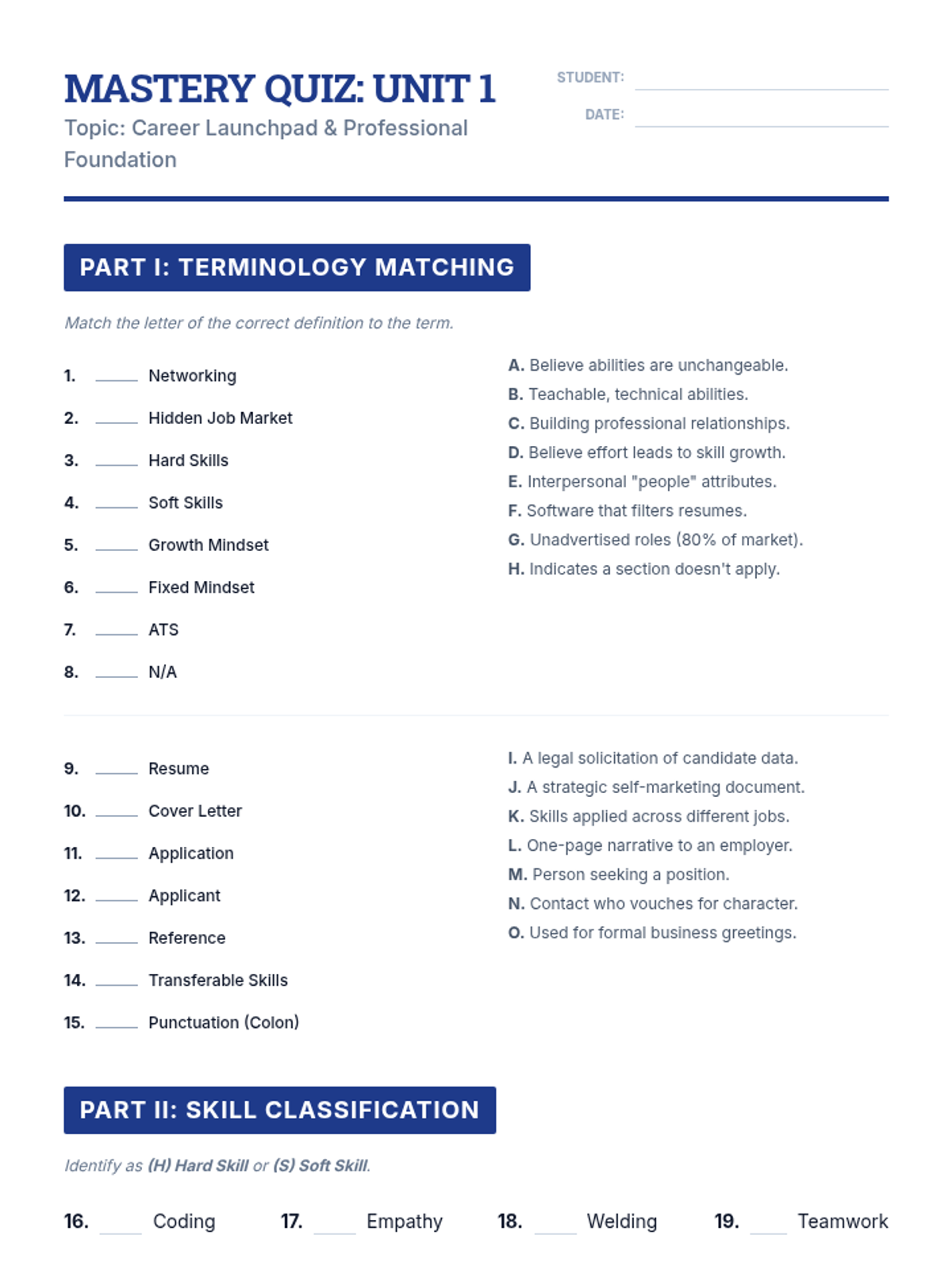
A comprehensive program designed to guide students through the essentials of career exploration, professional document preparation, and the job application process.
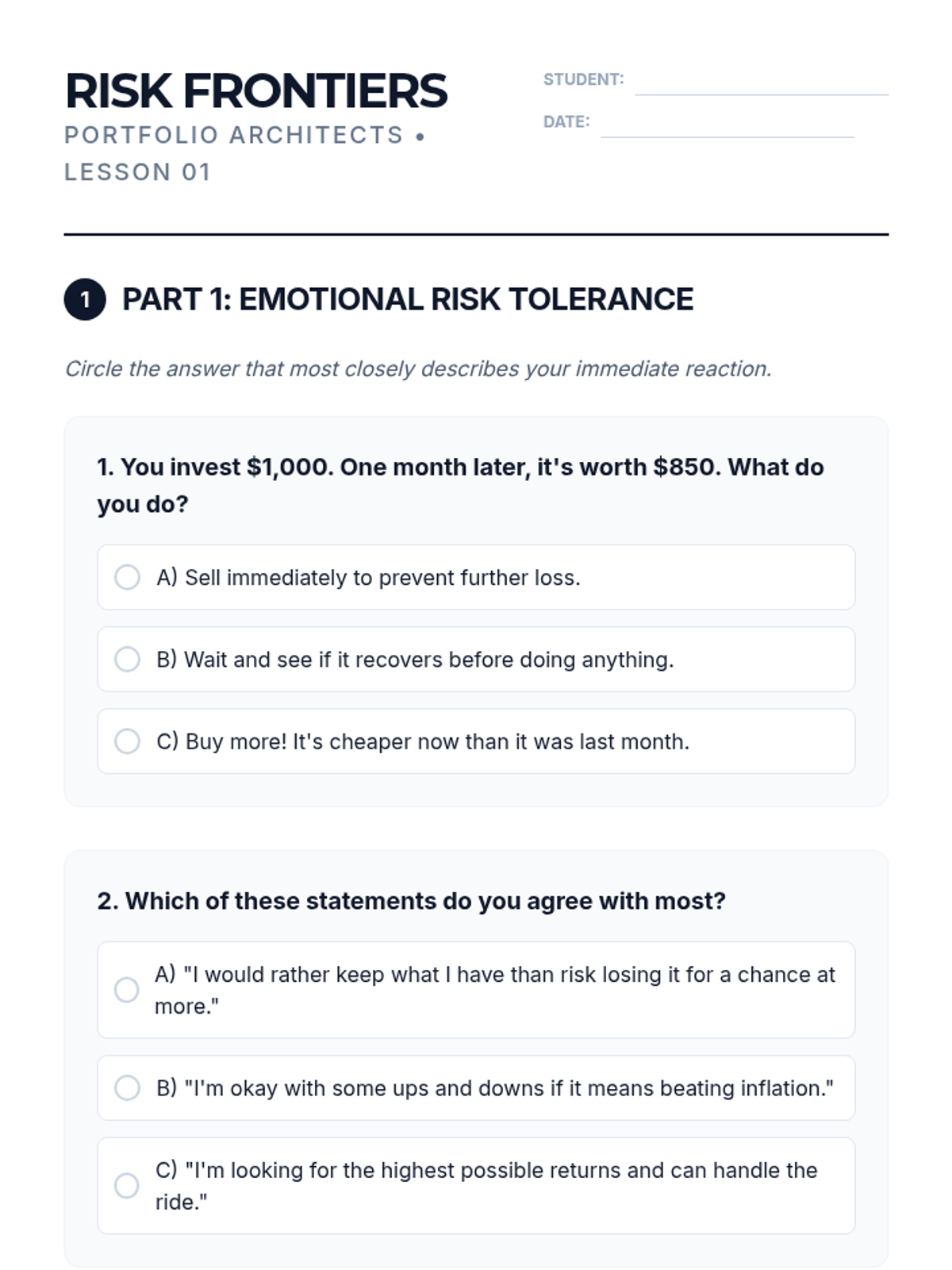
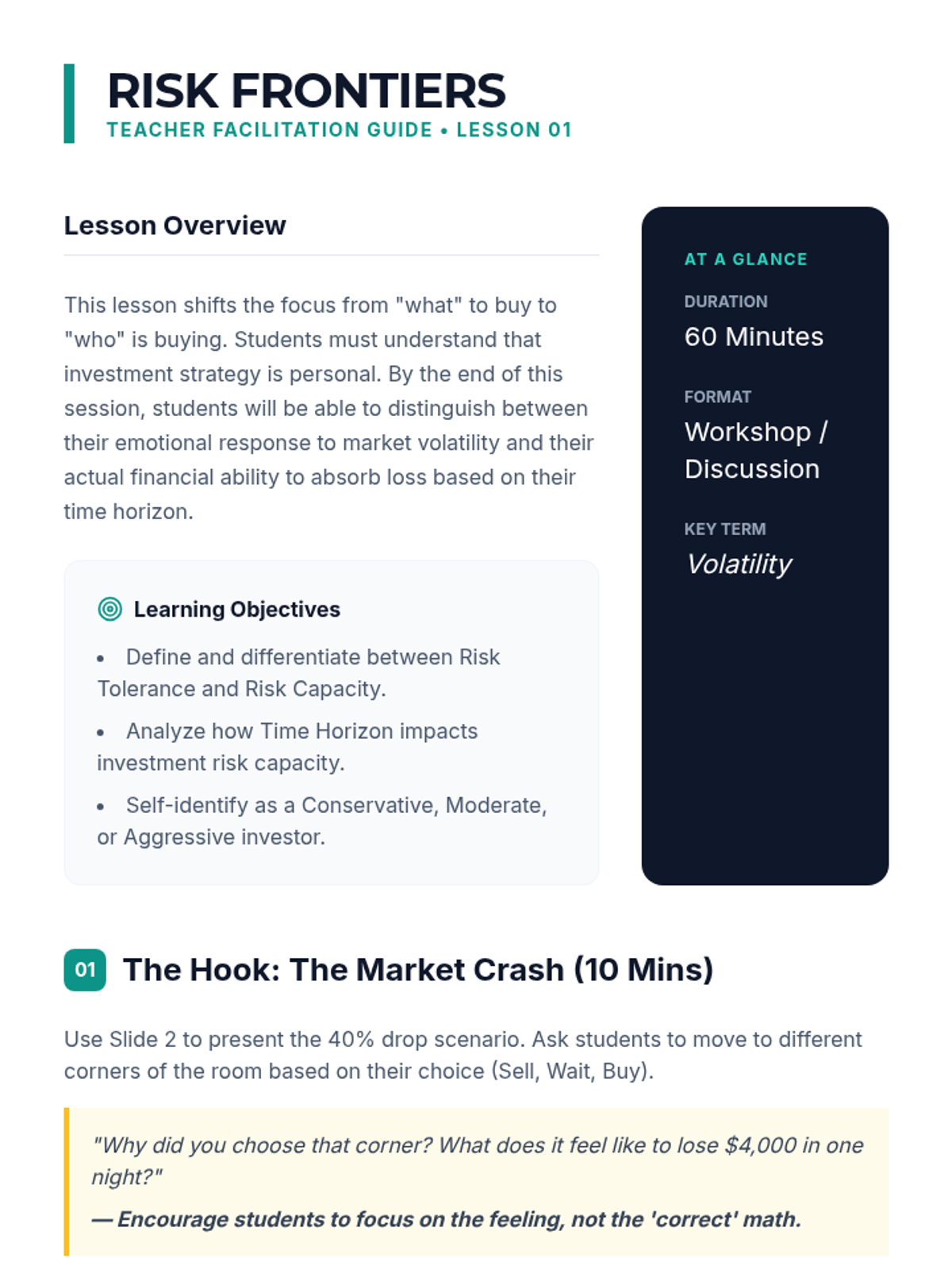
A comprehensive financial literacy sequence for 10th graders focused on asset allocation, risk management, and long-term investment planning. Students progress from understanding personal risk to designing complex portfolios and tax-advantaged strategies.