Budgeting, saving, and investment strategies alongside practical skills for managing credit, taxes, and banking. Addresses insurance needs, employment income, and major purchase decisions to support comprehensive long-term financial planning.
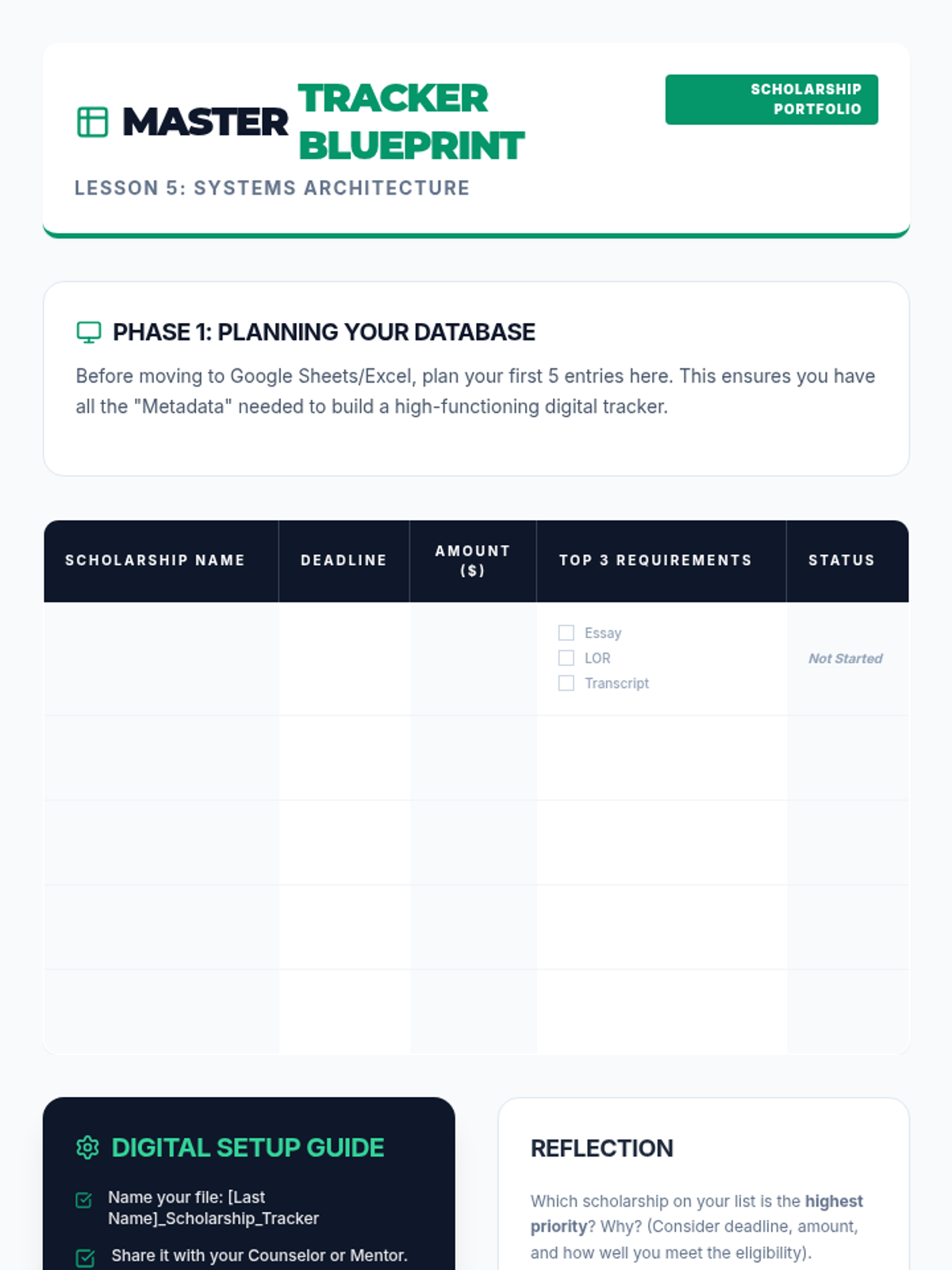
A physical planning sheet that mimics a digital spreadsheet, helping students organize their first 5 scholarship opportunities before building a digital tracker.
An introductory slide deck for the 'Building an Application Tracker' lesson, covering the importance of organization and the structure of an effective scholarship spreadsheet.
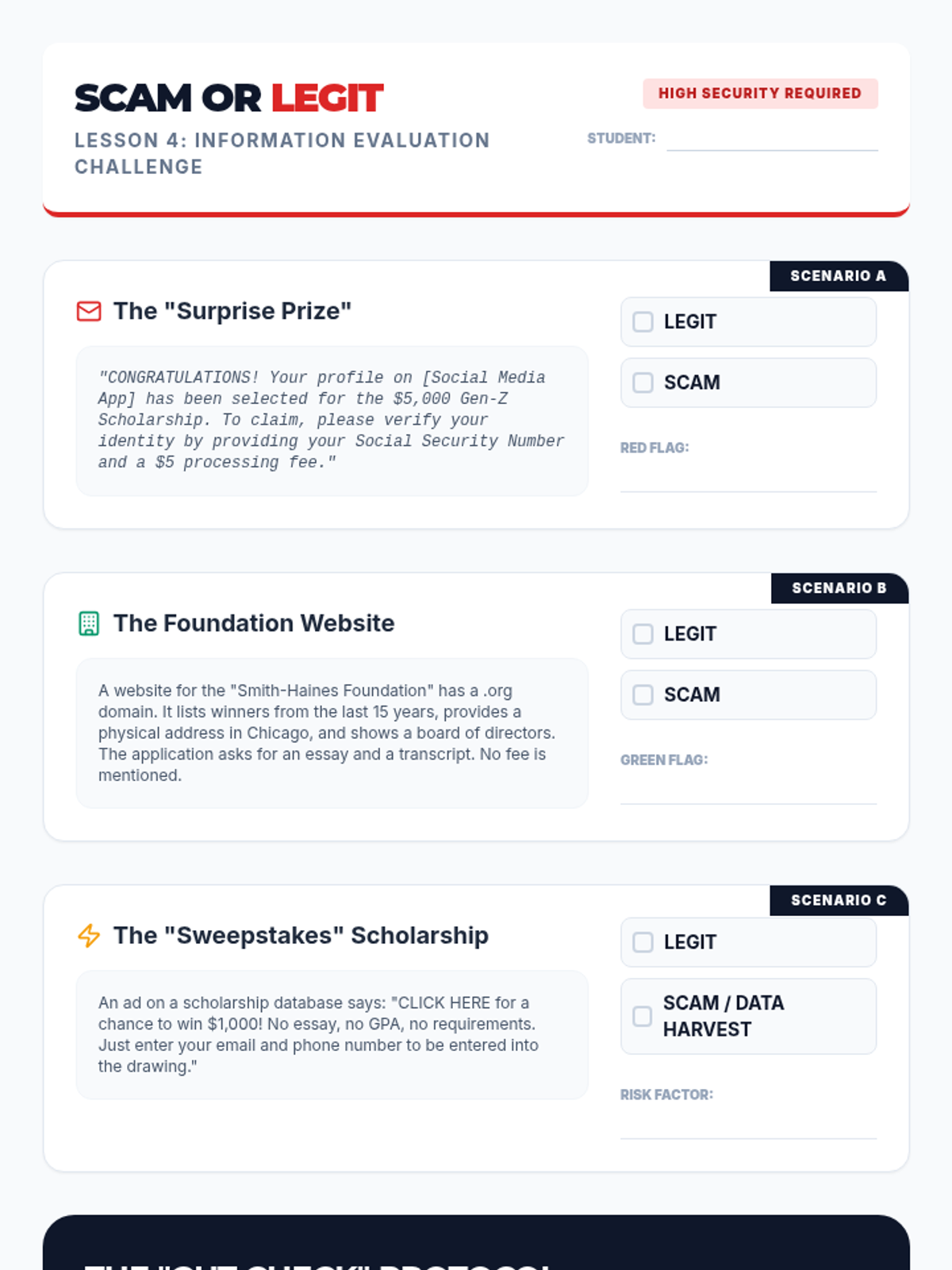
A student worksheet with evaluation scenarios to practice identifying scholarship scams and legitimate opportunities.
An introductory slide deck for the 'Spotting Scams and Red Flags' lesson, covering common red flags like application fees and guaranteed wins.
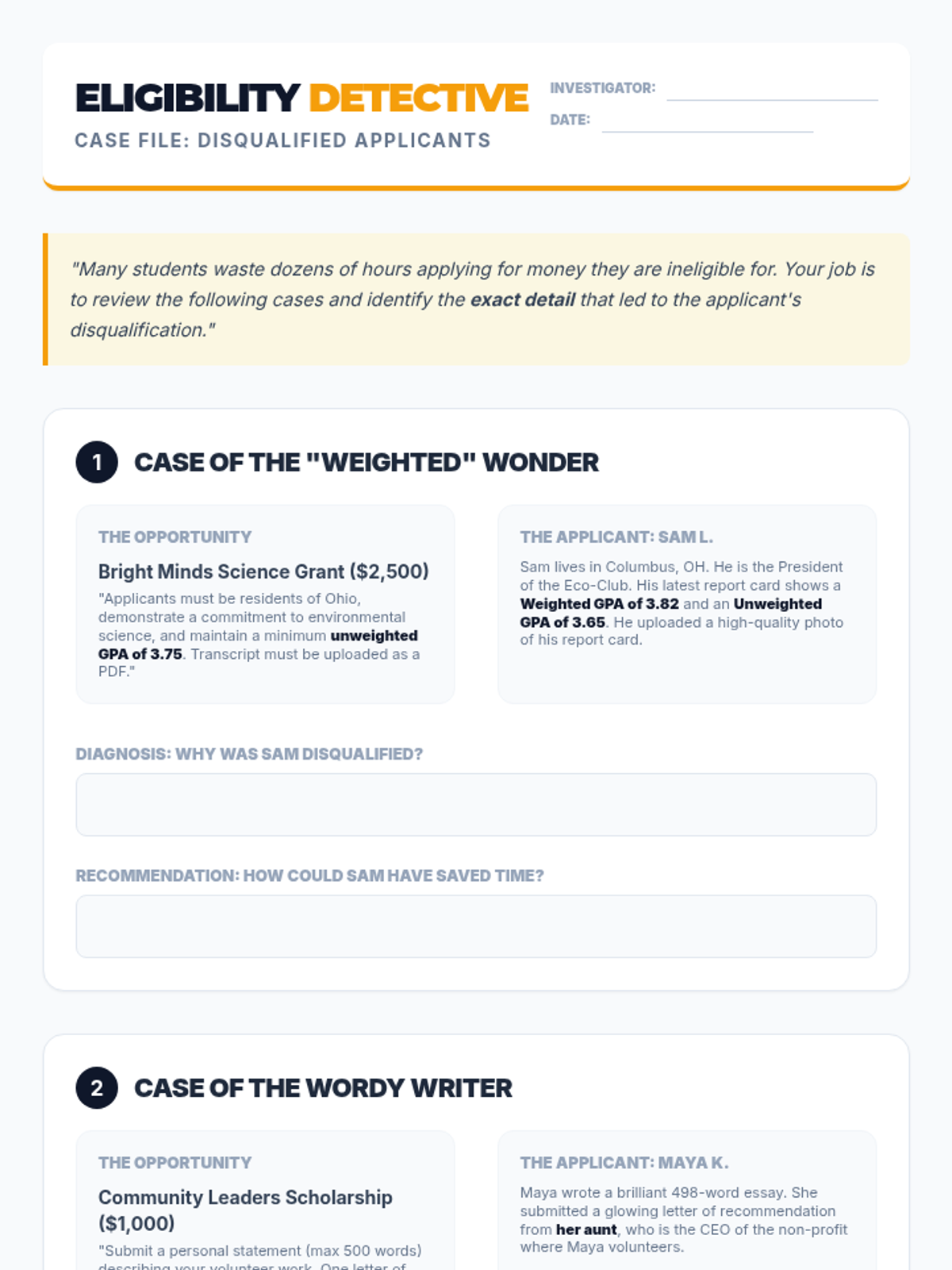
A case study worksheet where students act as detectives to identify why specific scholarship applicants were disqualified based on eligibility fine print.
An introductory slide deck for the 'Decoding Eligibility and Requirements' lesson, covering common eligibility traps and deliverable types.
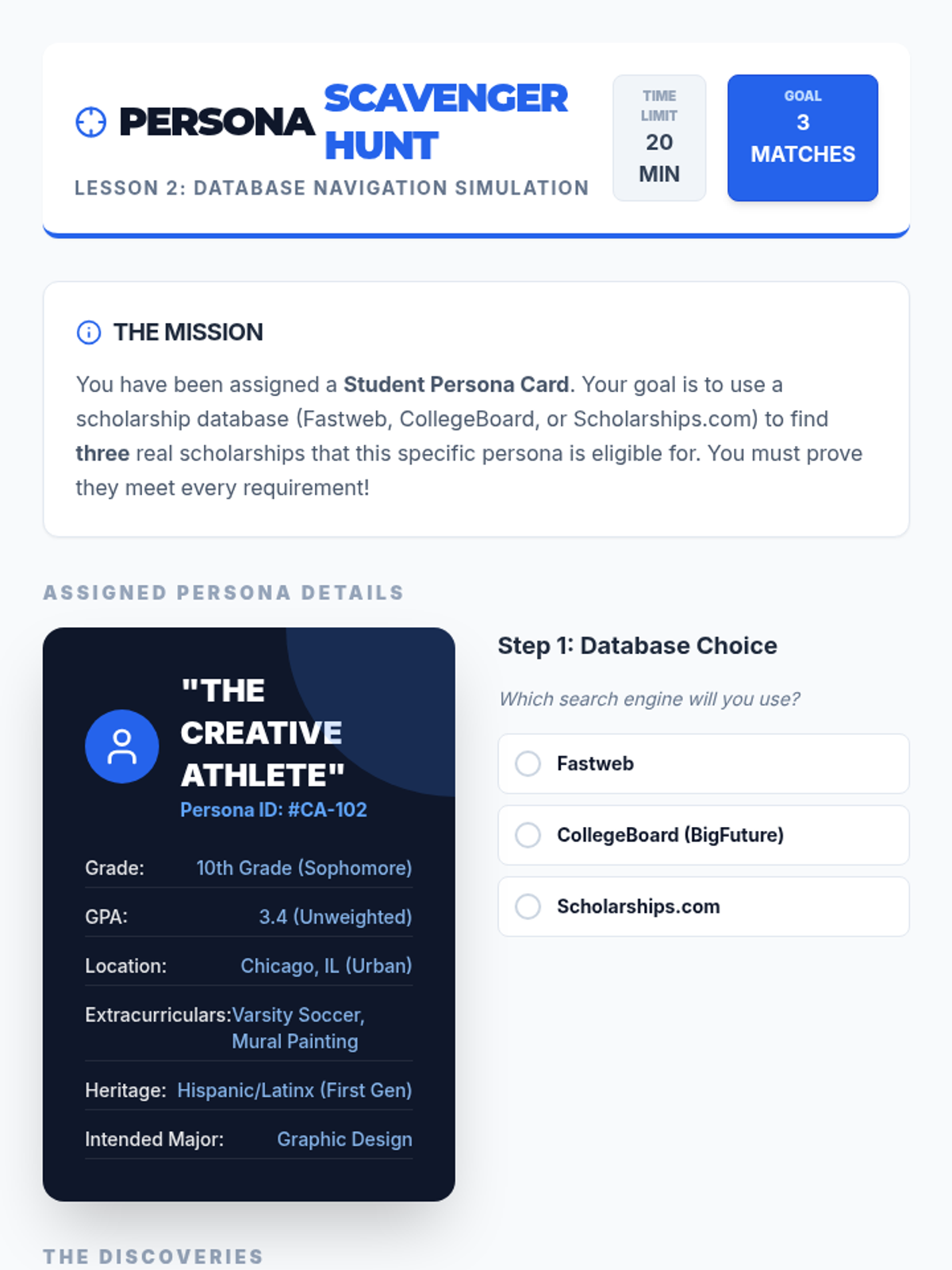
A simulation worksheet where students find scholarships for a specific student persona to practice database navigation and filtering.
An introductory slide deck for the 'Navigating Scholarship Databases' lesson, covering profile setup, filtering strategies, and the top three search engines.
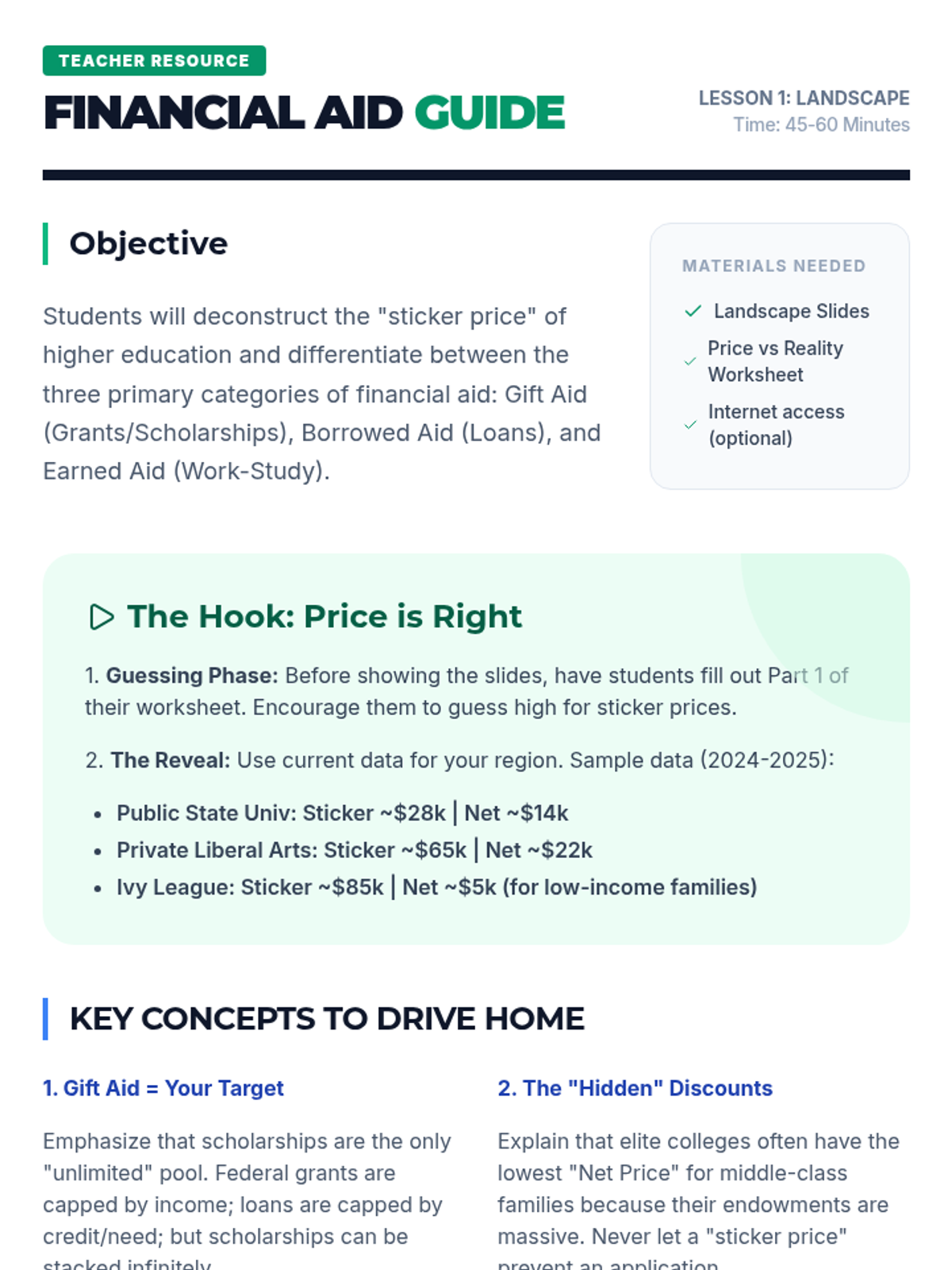
A teacher guide for the 'Financial Aid Landscape' lesson, including a walkthrough of the guessing activity, key concepts, and an answer key for the student worksheet.
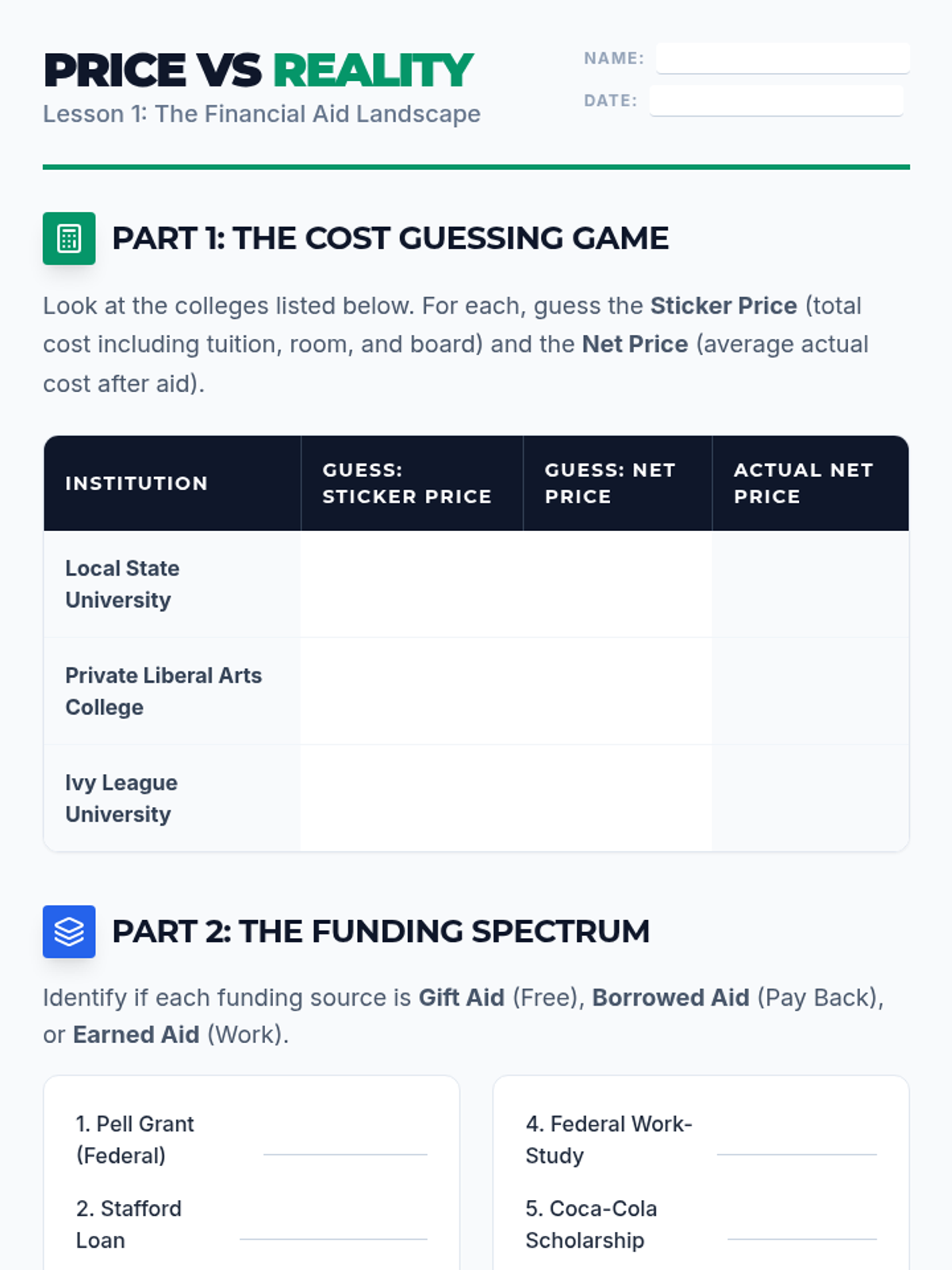
A student worksheet for the 'Financial Aid Landscape' lesson, including a guessing activity for college costs, aid categorization, and reflection questions.
An introductory slide deck for the 'Financial Aid Landscape' lesson, covering the types of financial aid (gift, borrowed, earned) and the importance of external scholarships.
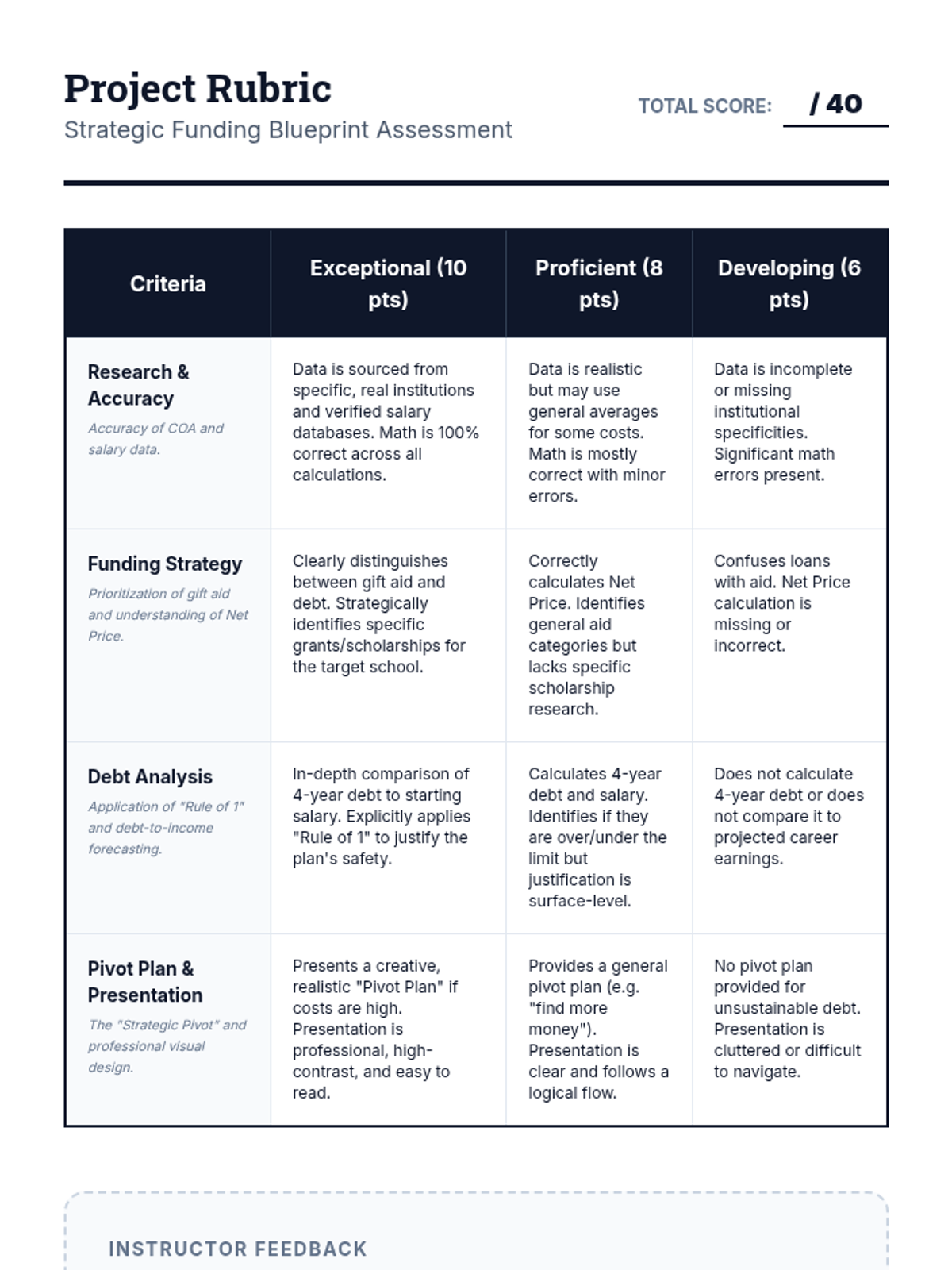
Assessment rubric for the Strategic Funding Blueprint project, focusing on data accuracy, funding strategy logic, and debt sustainability.
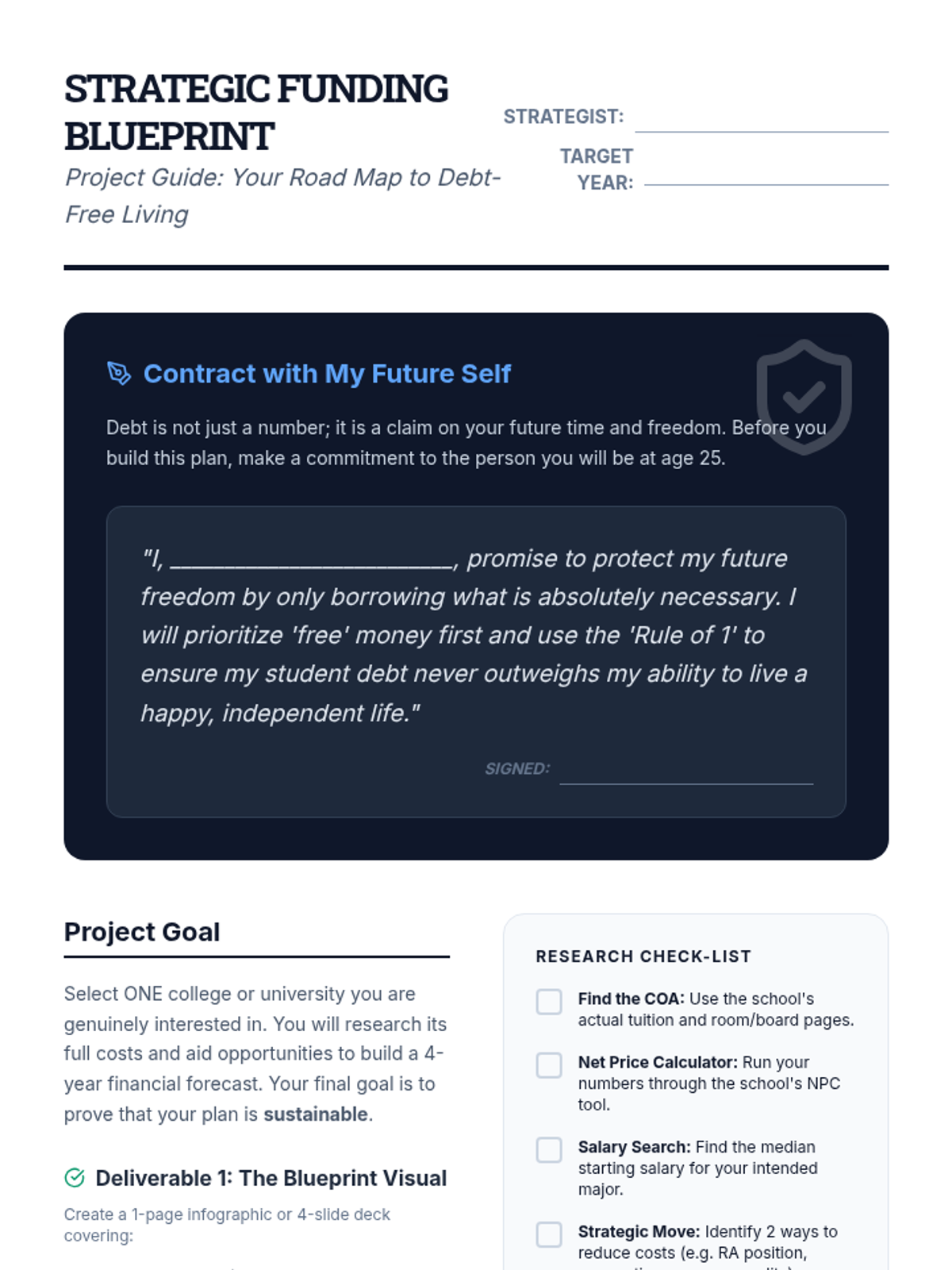
Student project guide for the final "Strategic Funding Blueprint" assessment, including the future-self contract and a data organizer for college research.
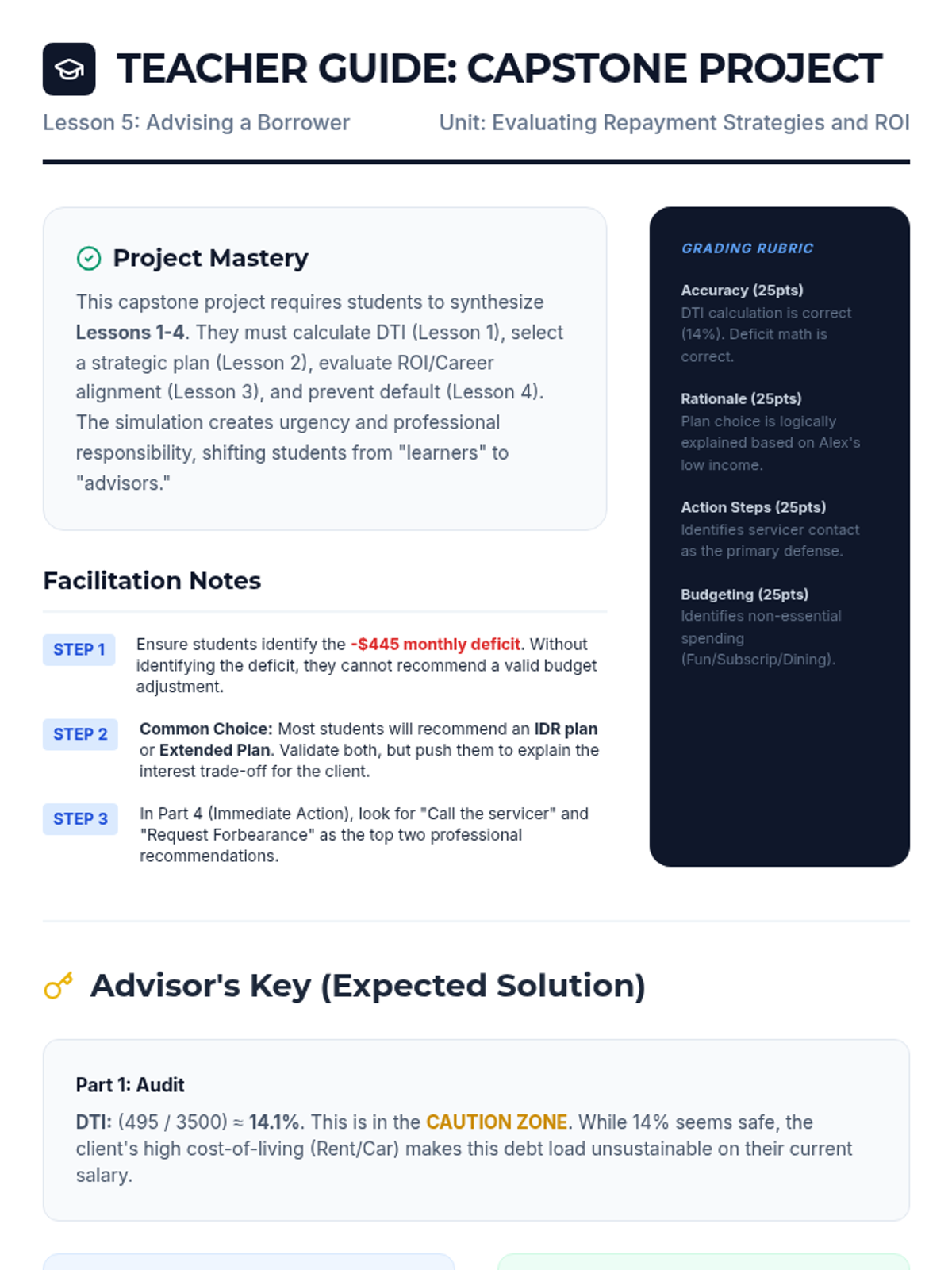
A teacher guide for the final capstone project. Includes the project rubric, solution key for Alex Rivera's DTI and budget audit, and strategic advisory notes.
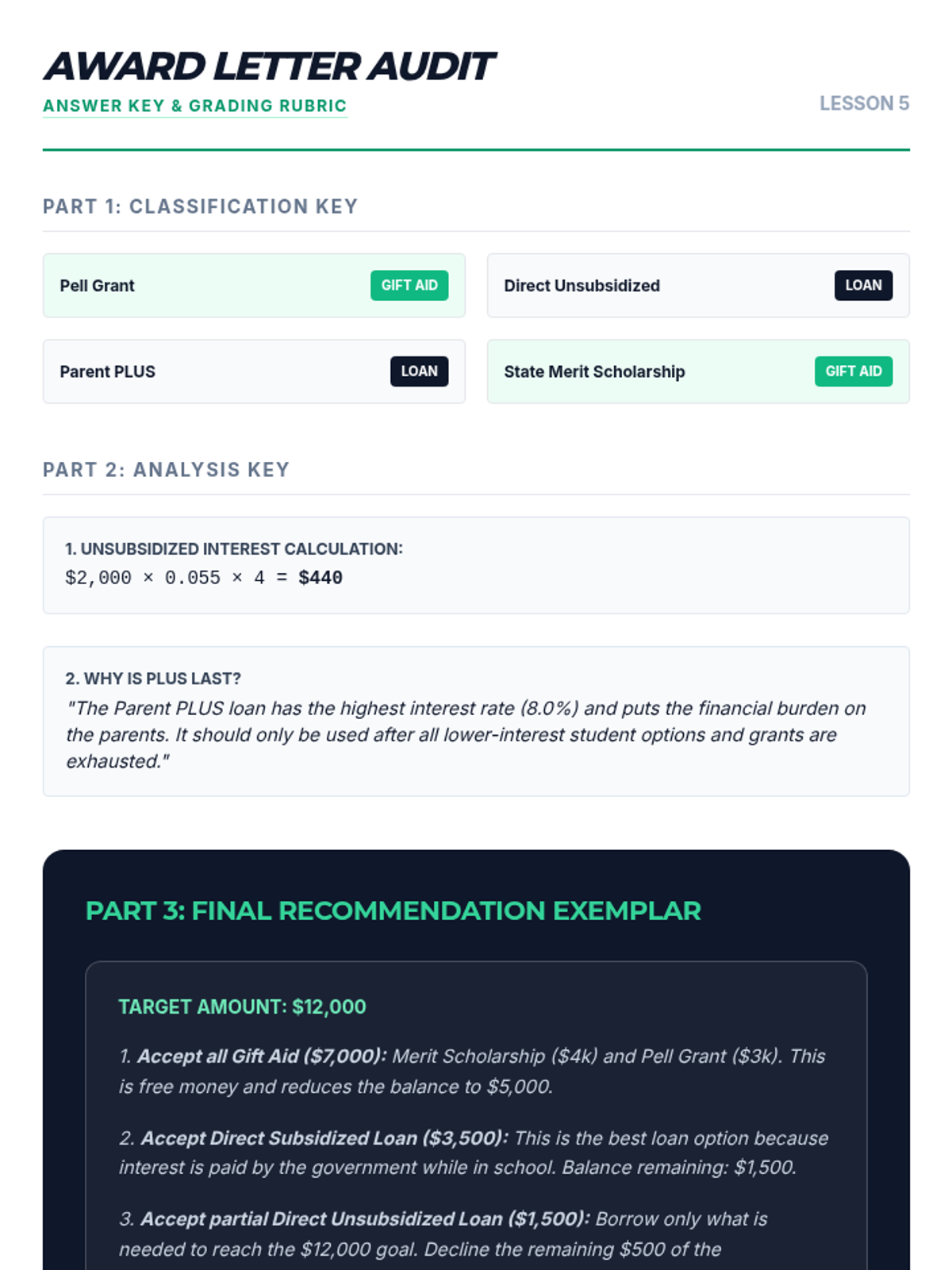
Answer key and scoring guide for the Award Letter Audit Assessment, providing a sample high-scoring student response.
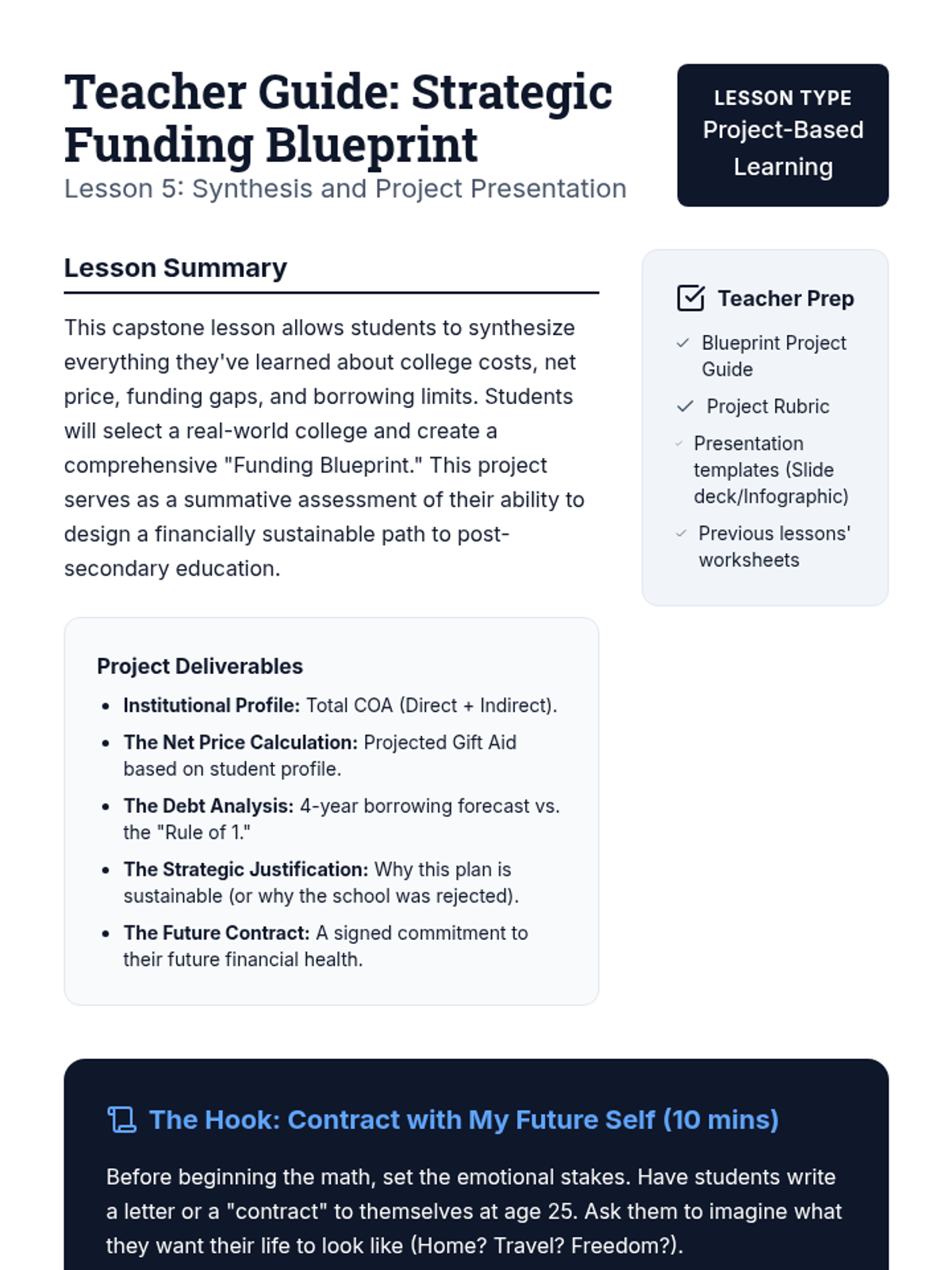
Teacher guide for the final project in Lesson 5, outlining the synthesis project requirements, the "Future Self" hook, and key assessment criteria for student funding plans.
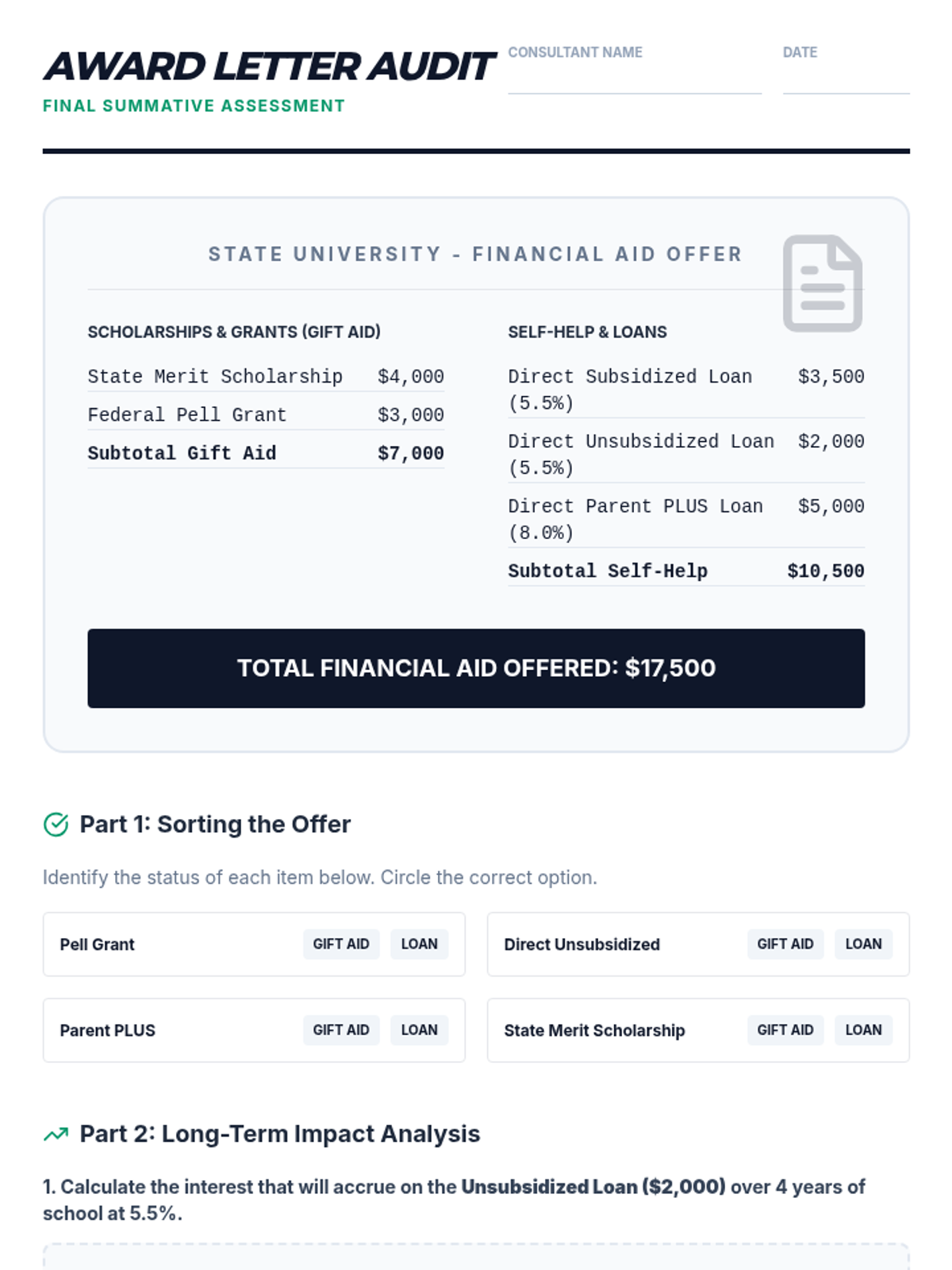
Summative assessment where students audit a sample financial aid offer, classify aid types, and calculate interest impacts.
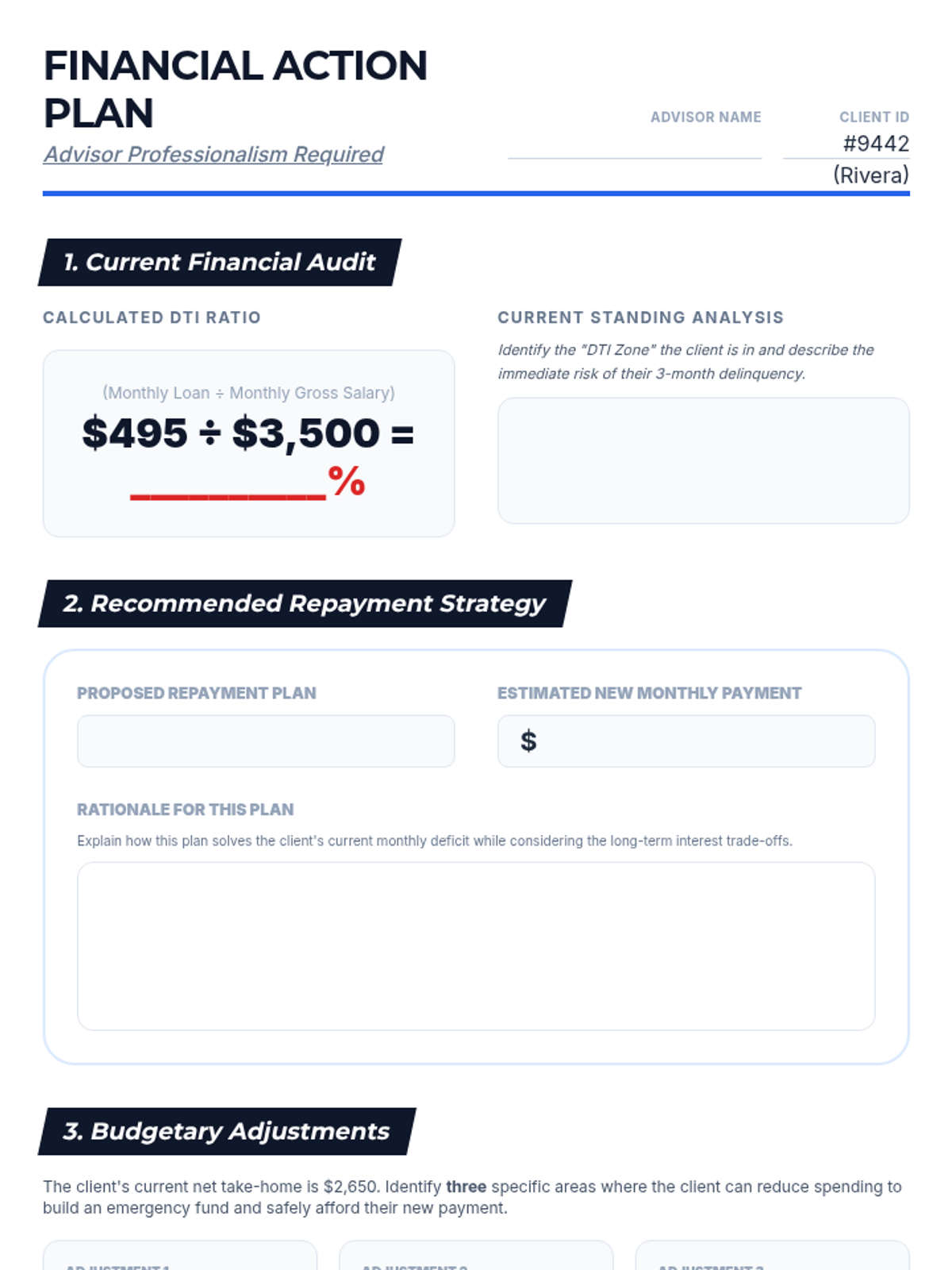
A student template for the final capstone project. Students act as financial advisors for Alex Rivera, performing a DTI analysis, recommending a repayment plan, and suggesting budget adjustments.
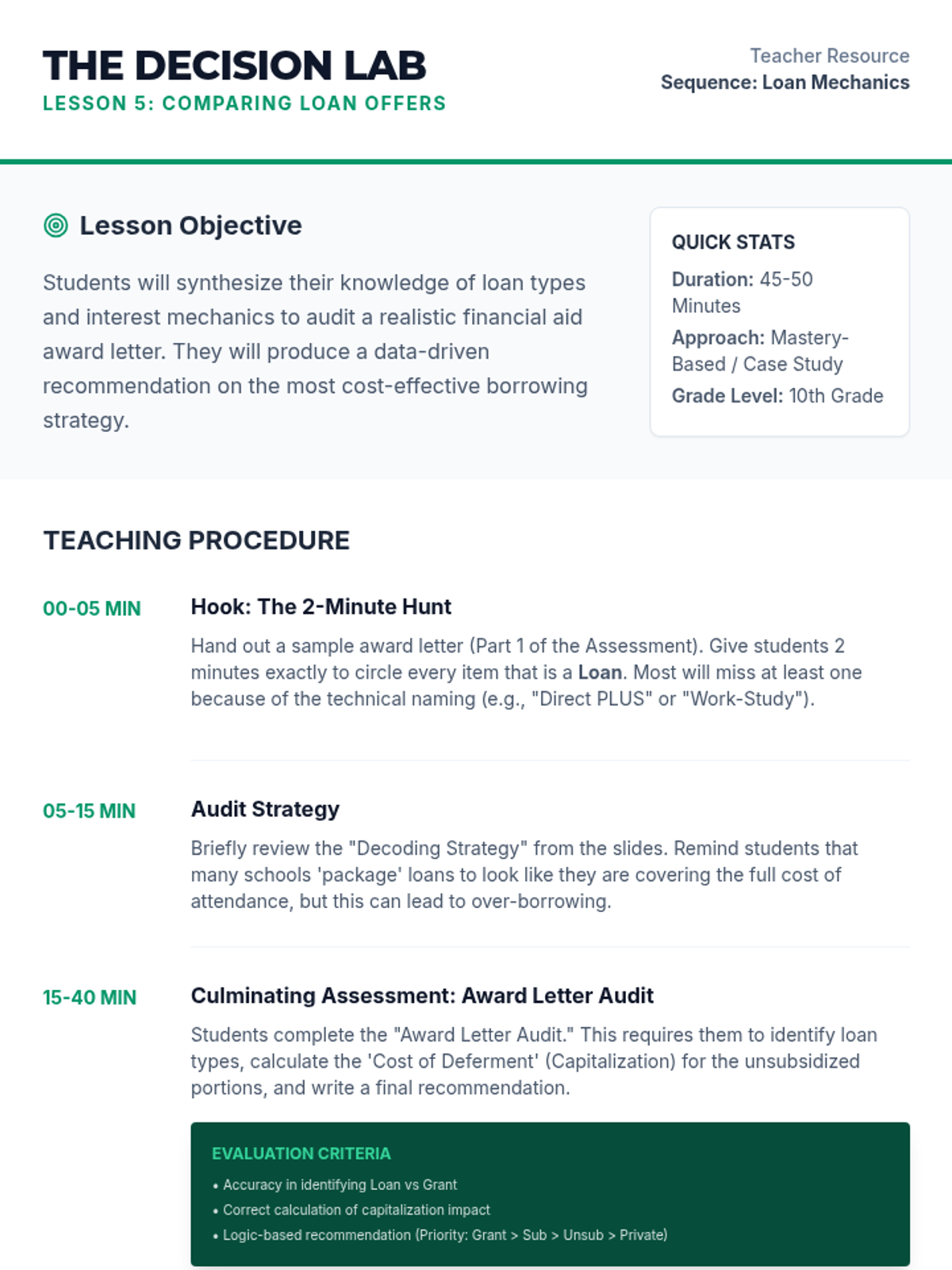
Teacher guide for Lesson 5, focusing on the culminating assessment where students audit a realistic financial aid award letter.
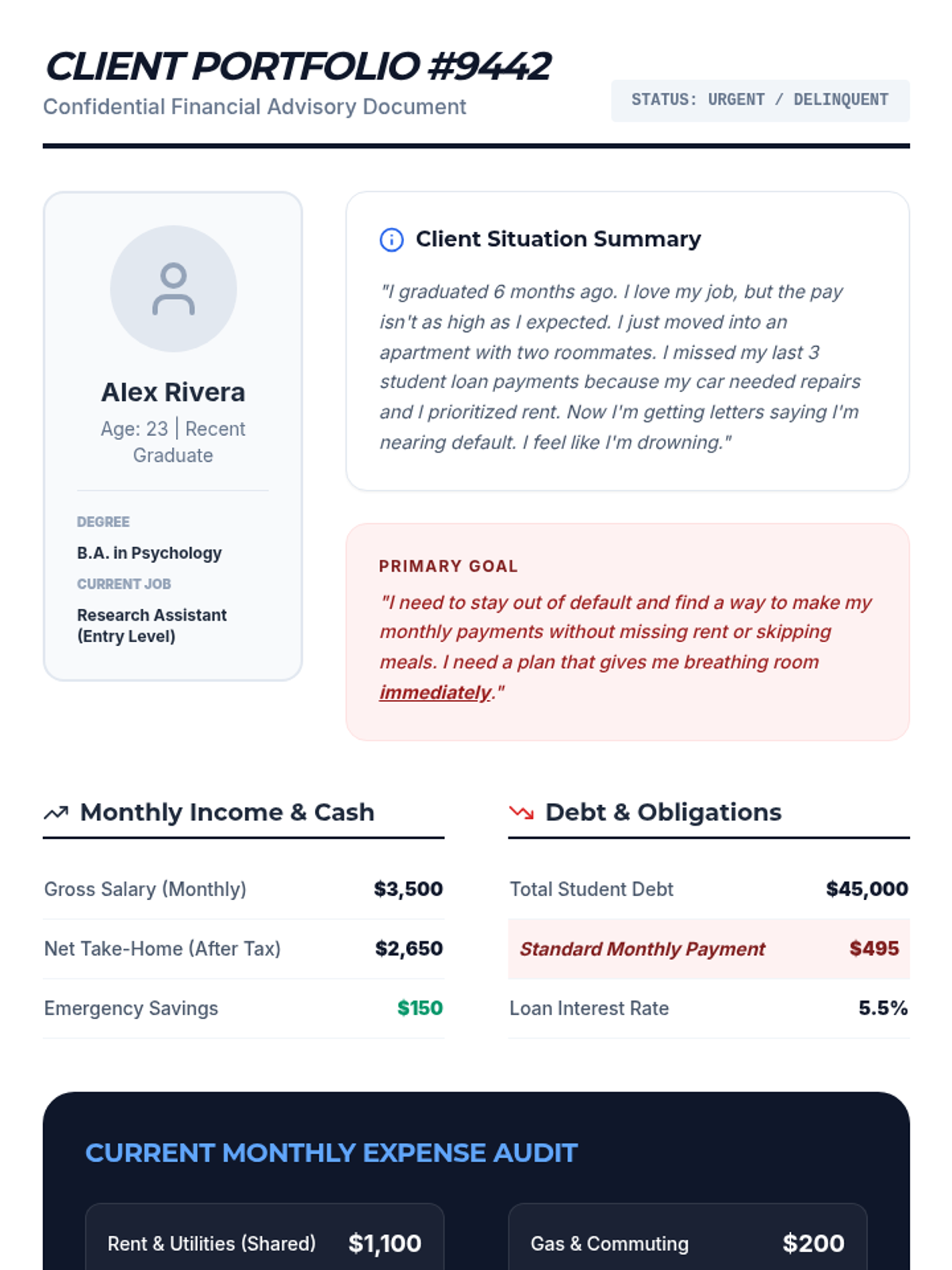
A detailed case study profile for Lesson 5 featuring Alex Rivera, a recent graduate in financial distress. Includes salary, debt amount, monthly expenses, and current repayment status.
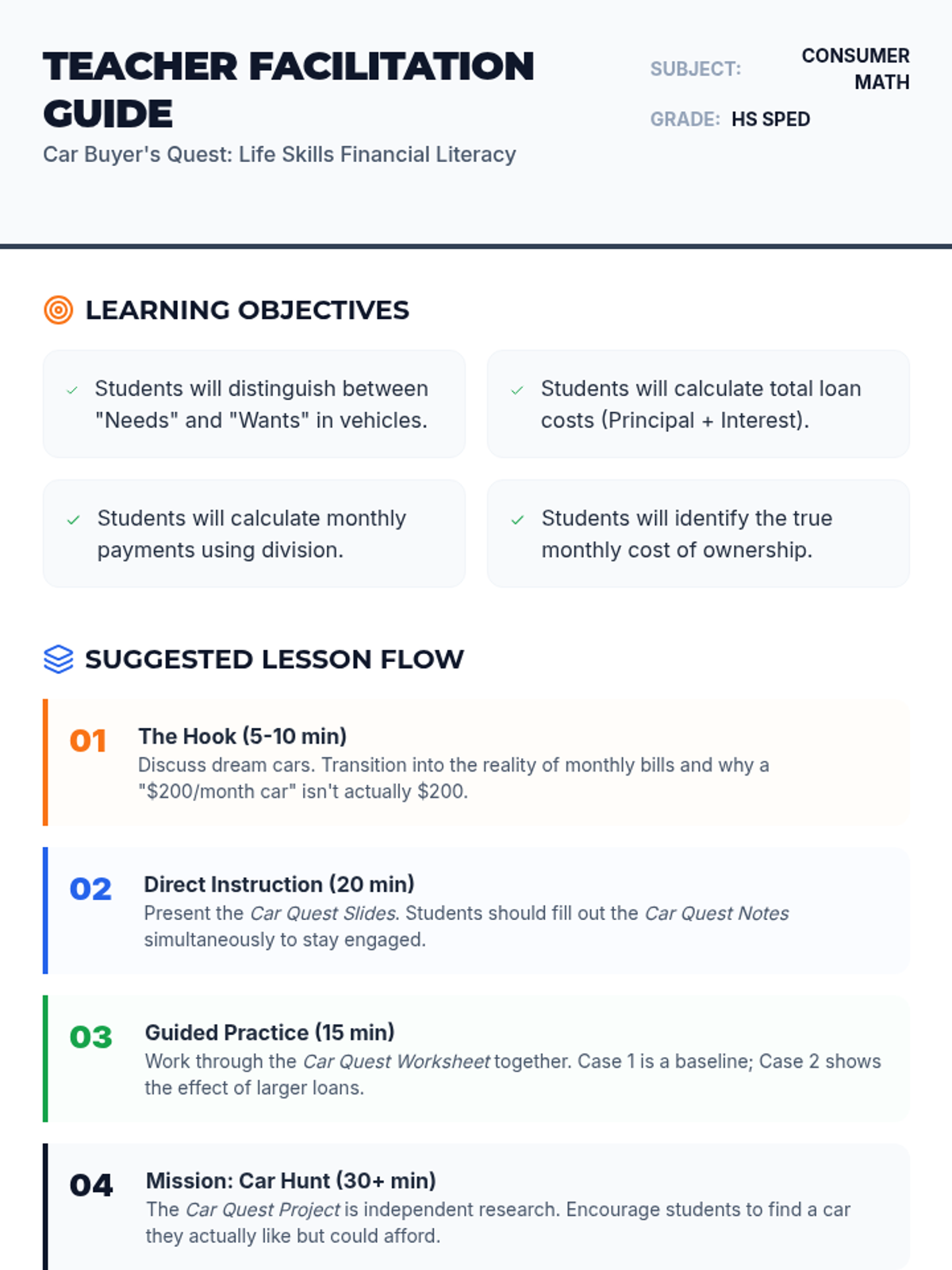
A comprehensive instructional guide for teachers, including lesson objectives, facilitation tips, and the answer key for student materials.
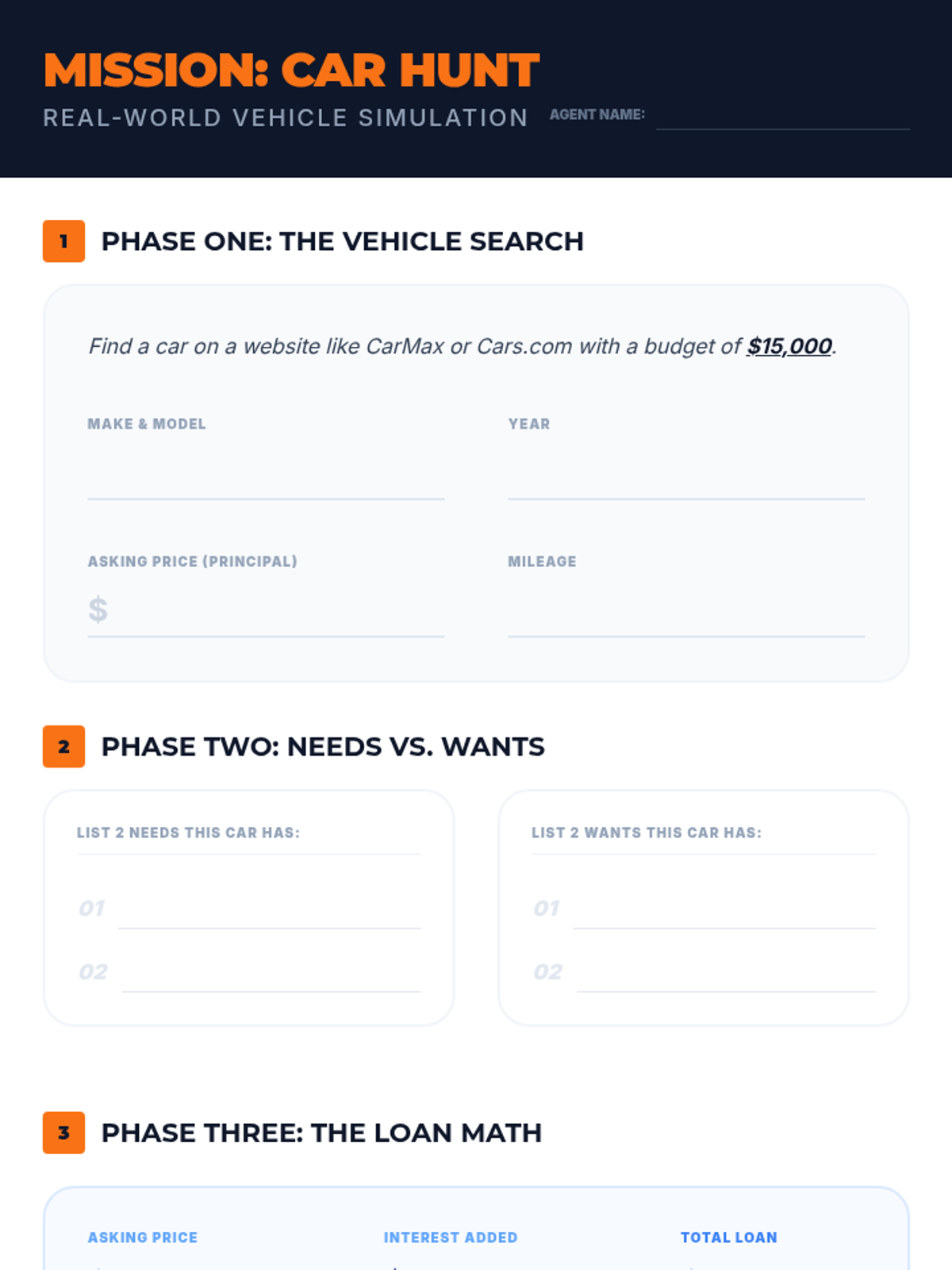
A life skills project guide where students research a real vehicle for sale, analyze their needs vs. wants, and calculate the total cost of ownership.
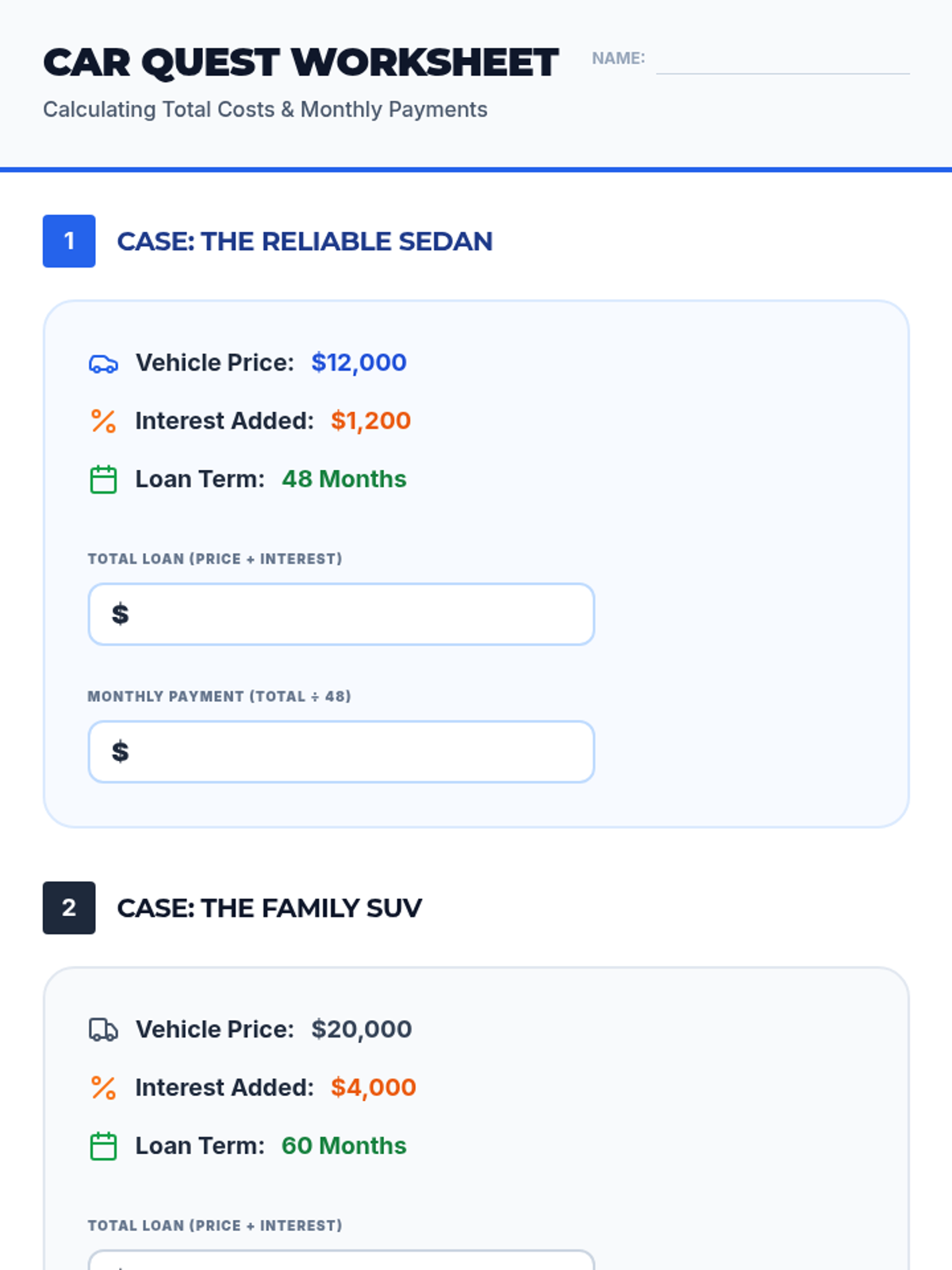
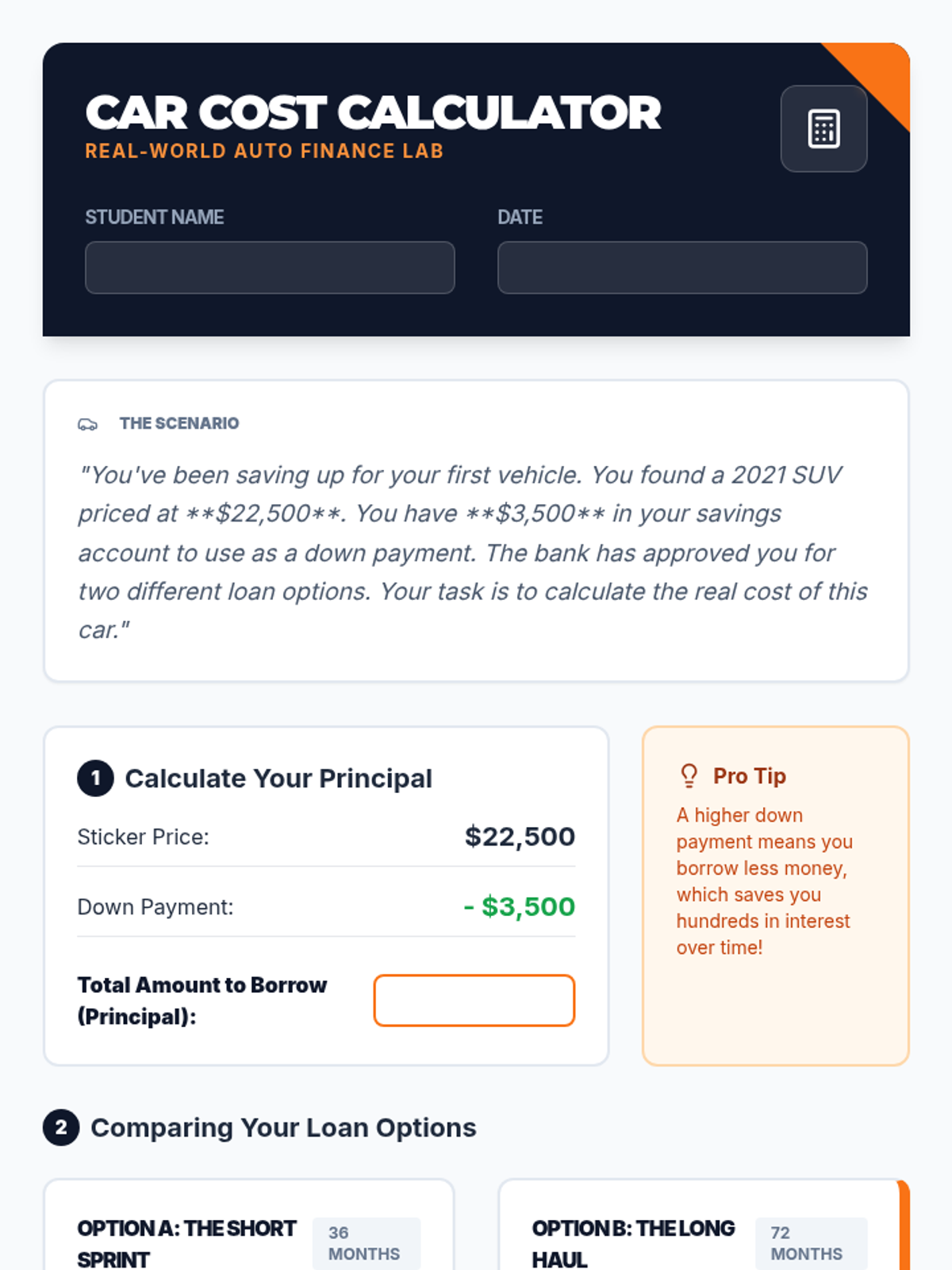
A practice worksheet where students calculate total vehicle costs and monthly loan payments using provided financial scenarios.
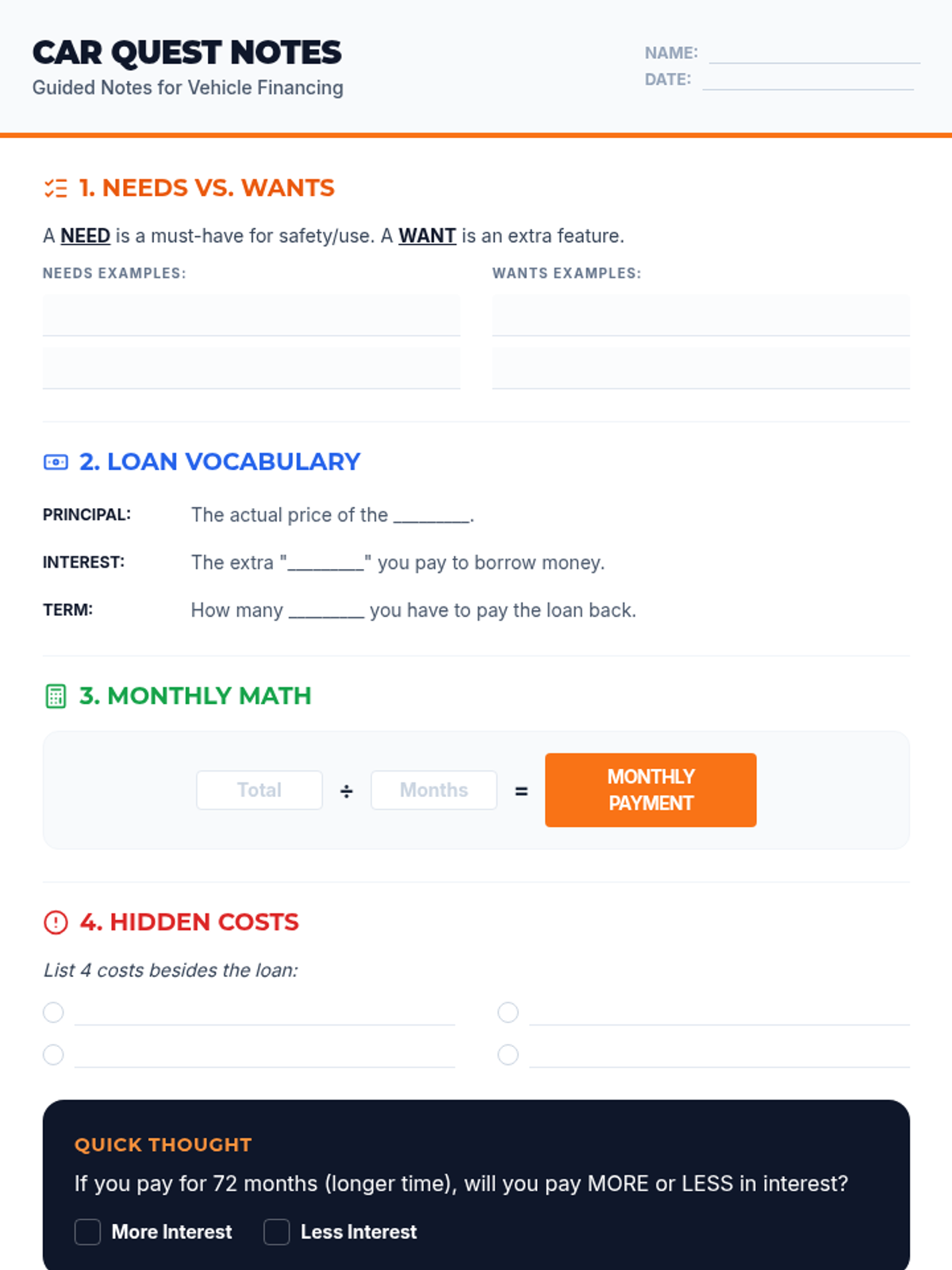
Guided notes designed to accompany the Car Quest Slides, providing structured support for SPED students to record key concepts about vehicle purchasing and financing.
A visual presentation designed for high school SPED students covering the fundamentals of car buying, including needs vs. wants, loan terminology, monthly math, and hidden costs.
A simplified version of the car cost worksheet for struggling readers, featuring bulleted scenarios, visual calculation prompts, and simplified language.
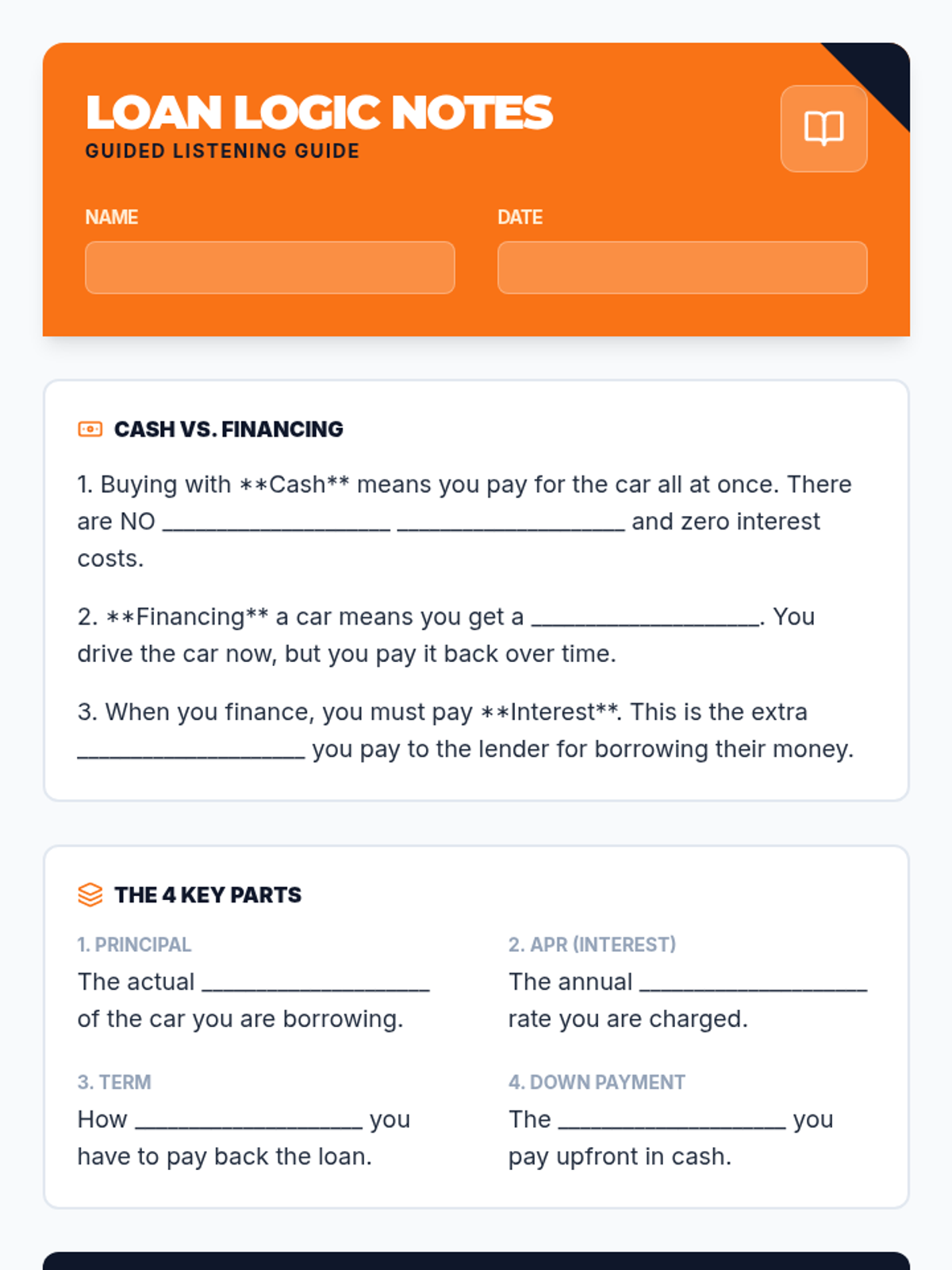
A guided notes document for struggling readers to use while following the Loan Logic slides, featuring fill-in-the-blank sections to reduce writing load.
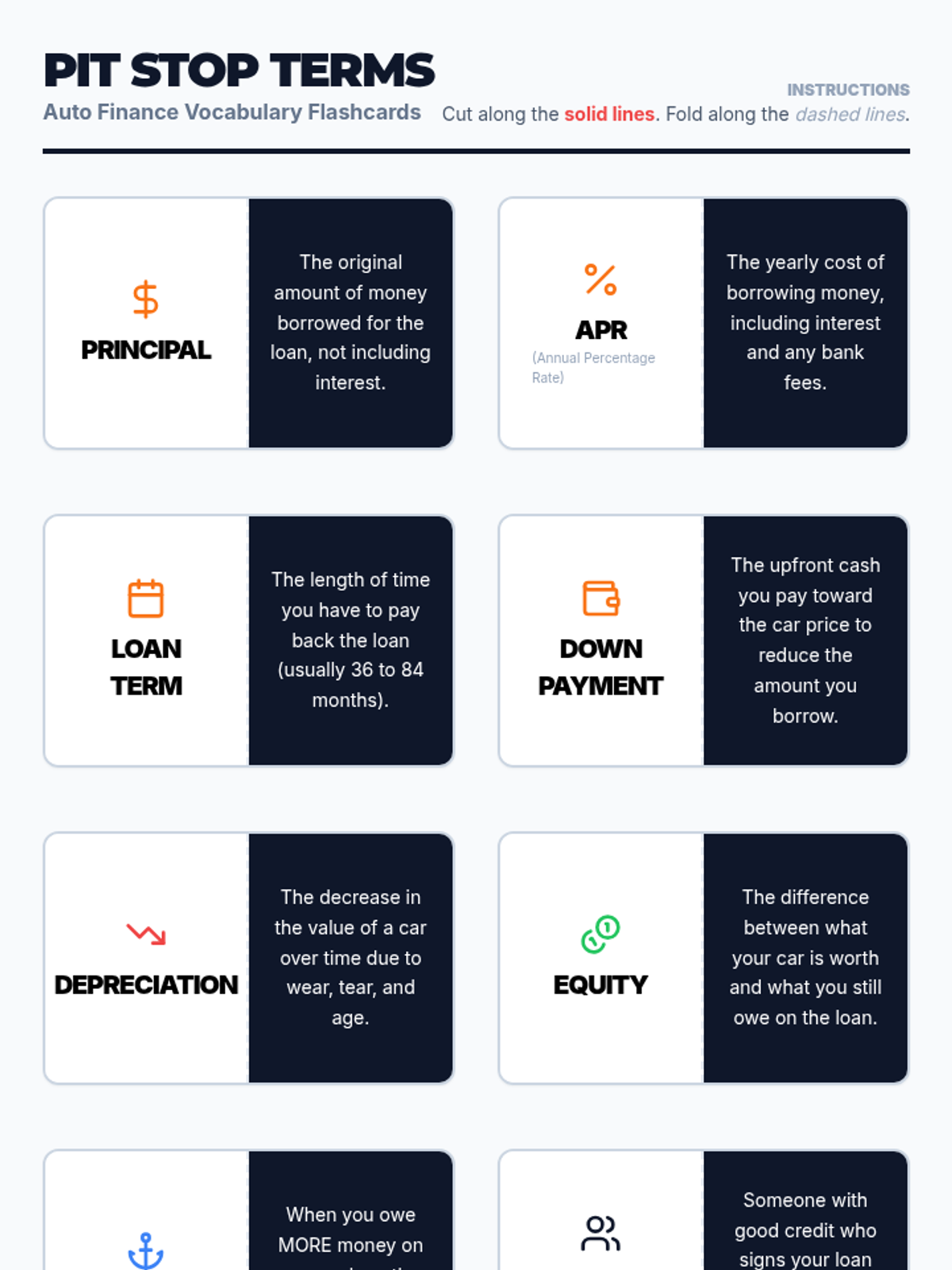
A set of printable vocabulary flashcards covering essential car financing terms, designed for easy cutting and folding.
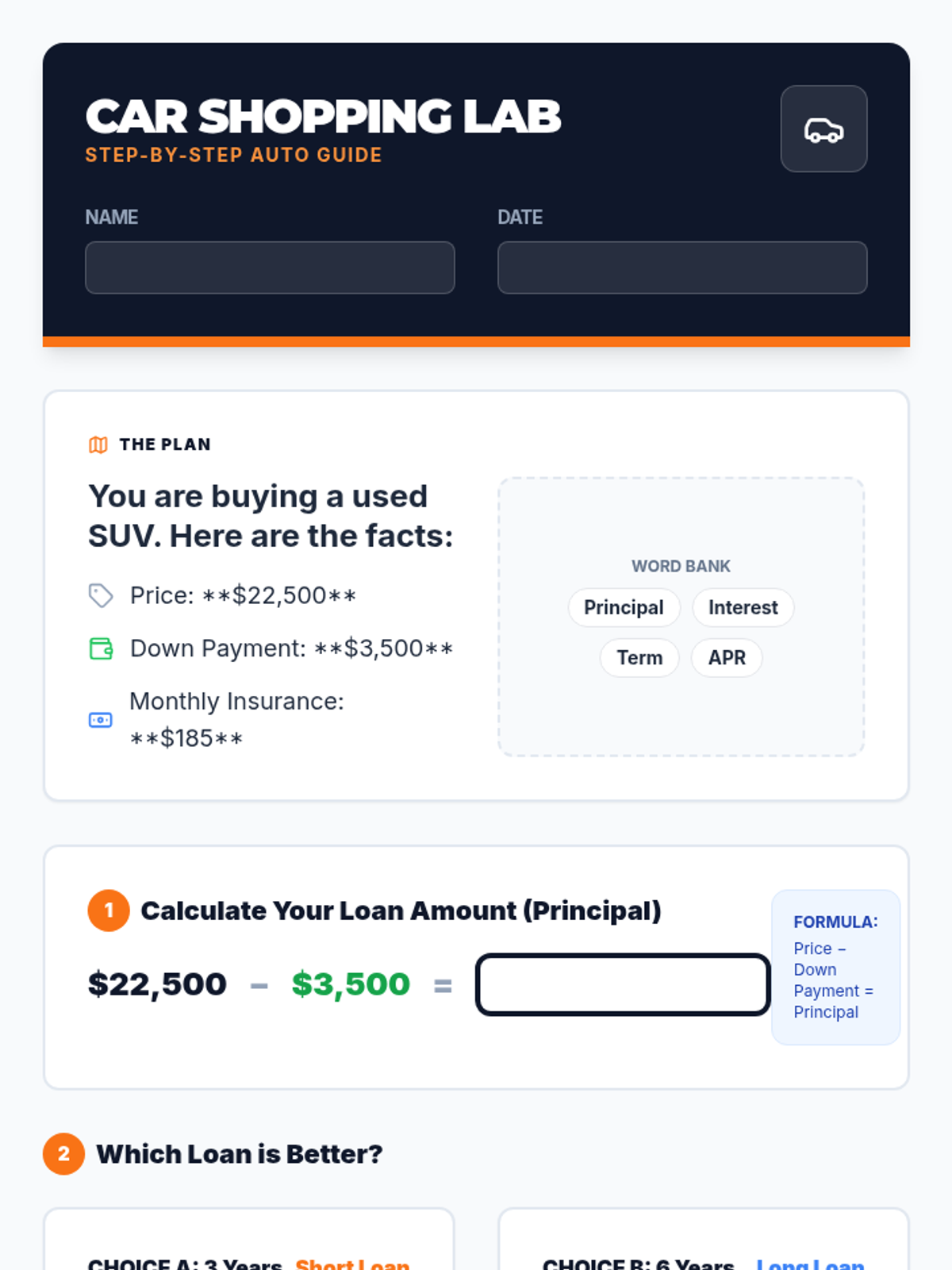
A comprehensive student worksheet for calculating the true cost of financing a vehicle, comparing short-term and long-term loans, and factoring in insurance, fuel, and maintenance.
A visually engaging slide deck for teaching the fundamentals of car financing, including loan components, interest rates, credit score impact, and the total cost of ownership.
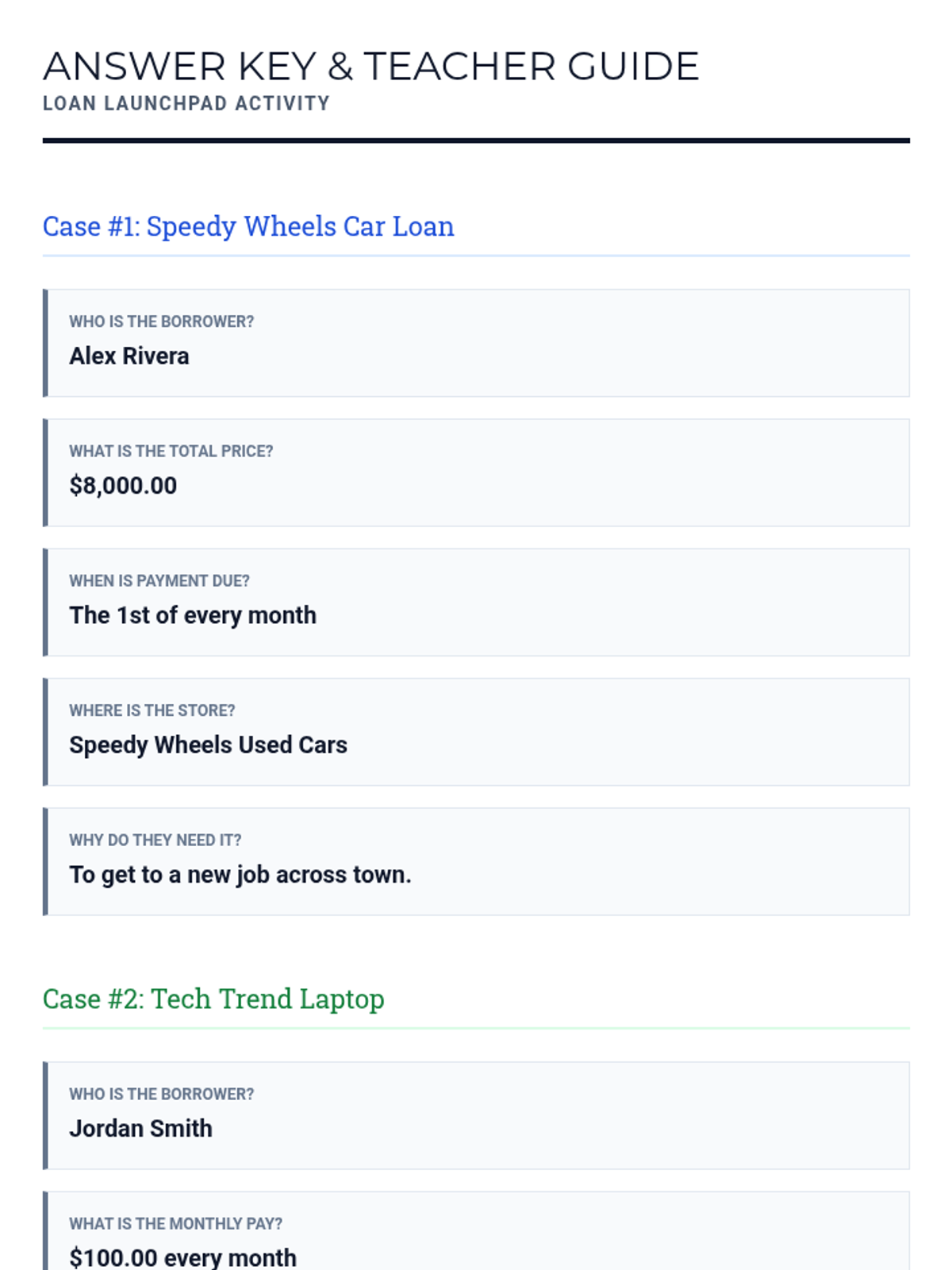
A teacher-facing answer key and facilitation guide for the Loan Launchpad activities. Includes all correct answers for the car and laptop case studies and a clear explanation for the critical thinking scenario.
A 6-slide presentation for group instruction. It defines loans, introduces the 5W framework (Who, What, When, Where, Why), and uses high-contrast visuals to walk students through the car and laptop case studies. Includes discussion prompts on late fees and loan justification.
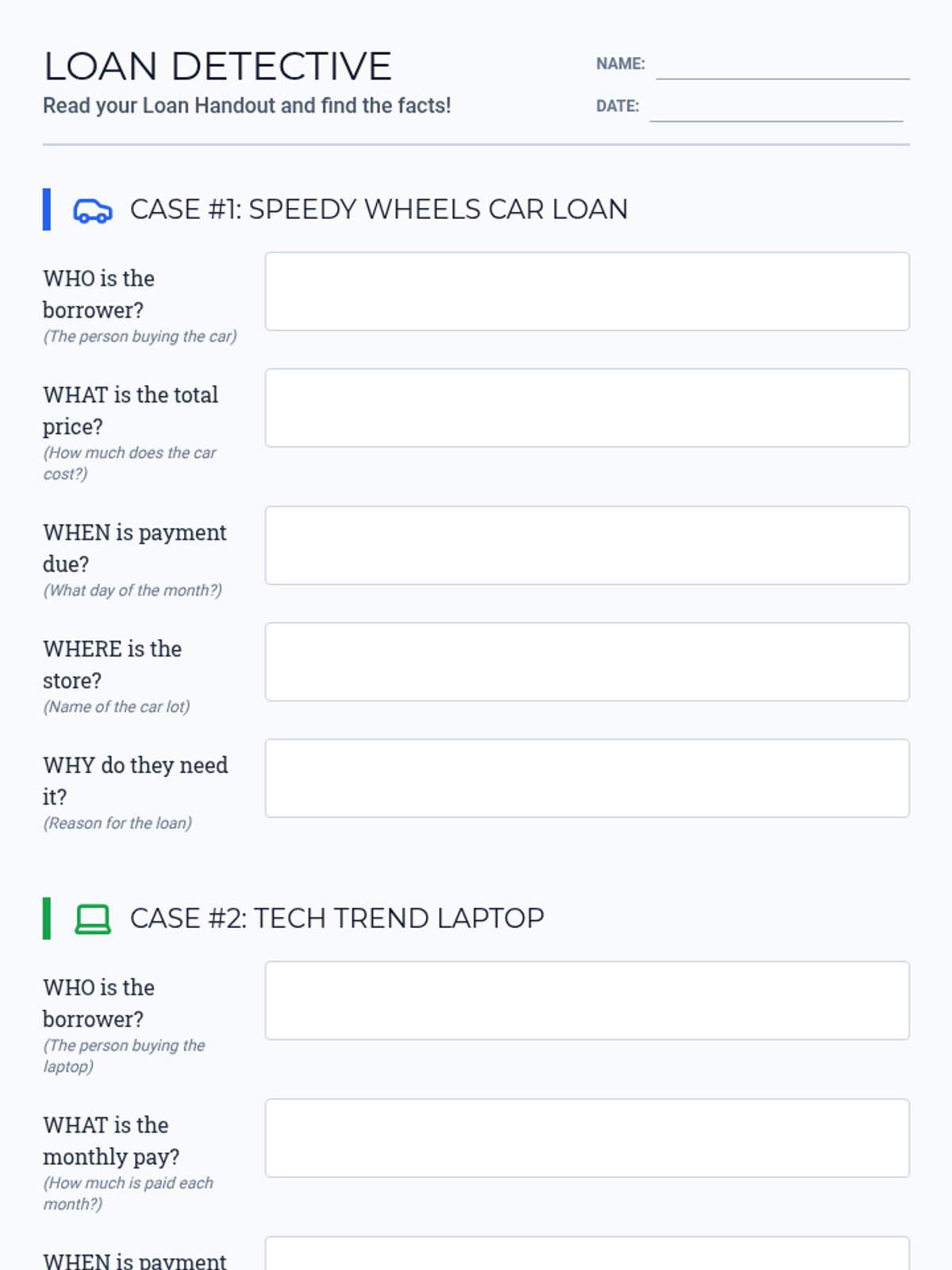
A two-page reading comprehension worksheet using the 5W framework (Who, What, When, Where, Why) to help students analyze the car and laptop loan agreements. Features large handwriting areas and clear prompts tailored for special needs students.
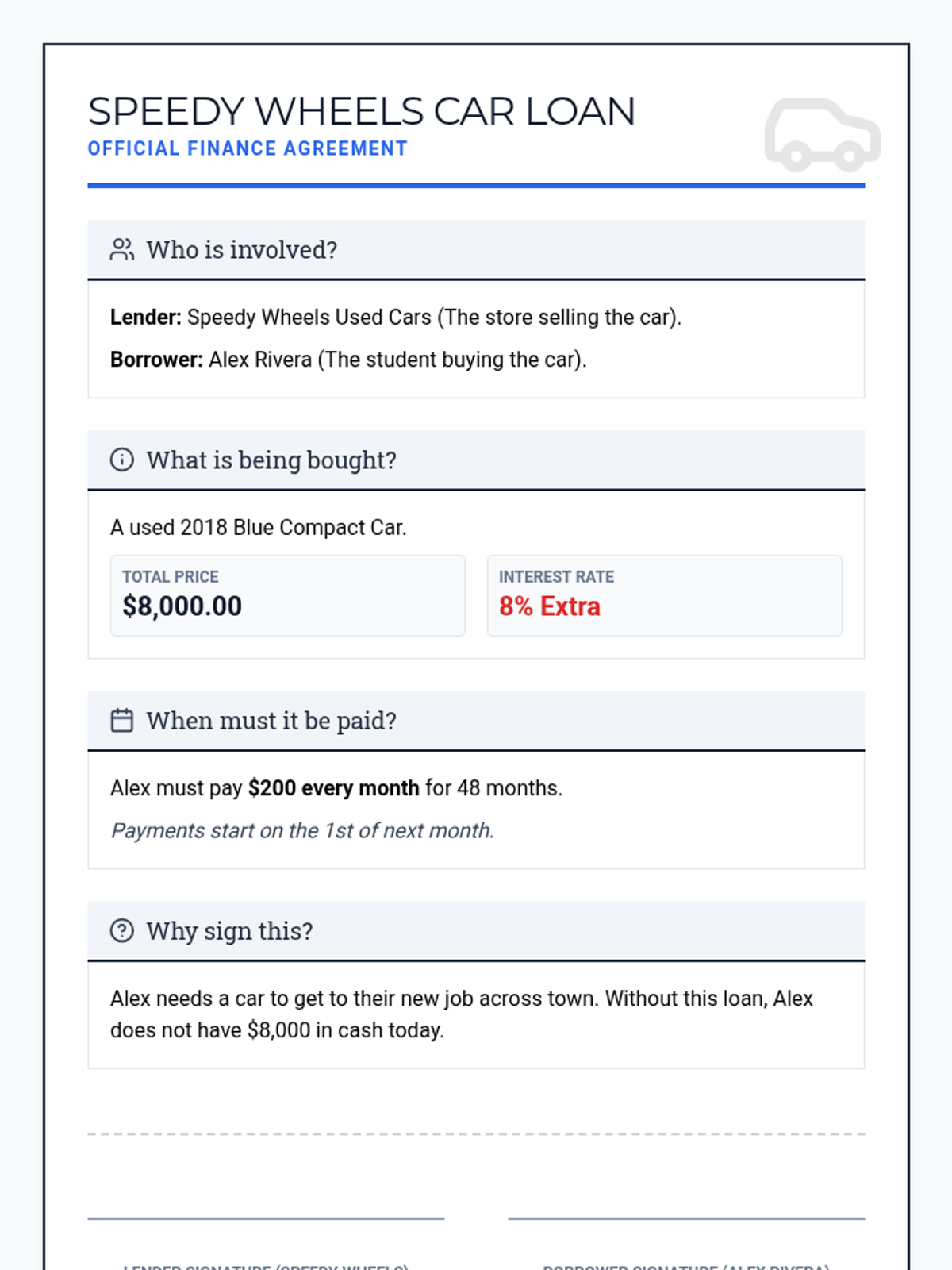
A two-page handout featuring simplified car and laptop loan agreements designed for high school students with special needs. Each document uses clear headings and consistent icons to help students identify key loan details.
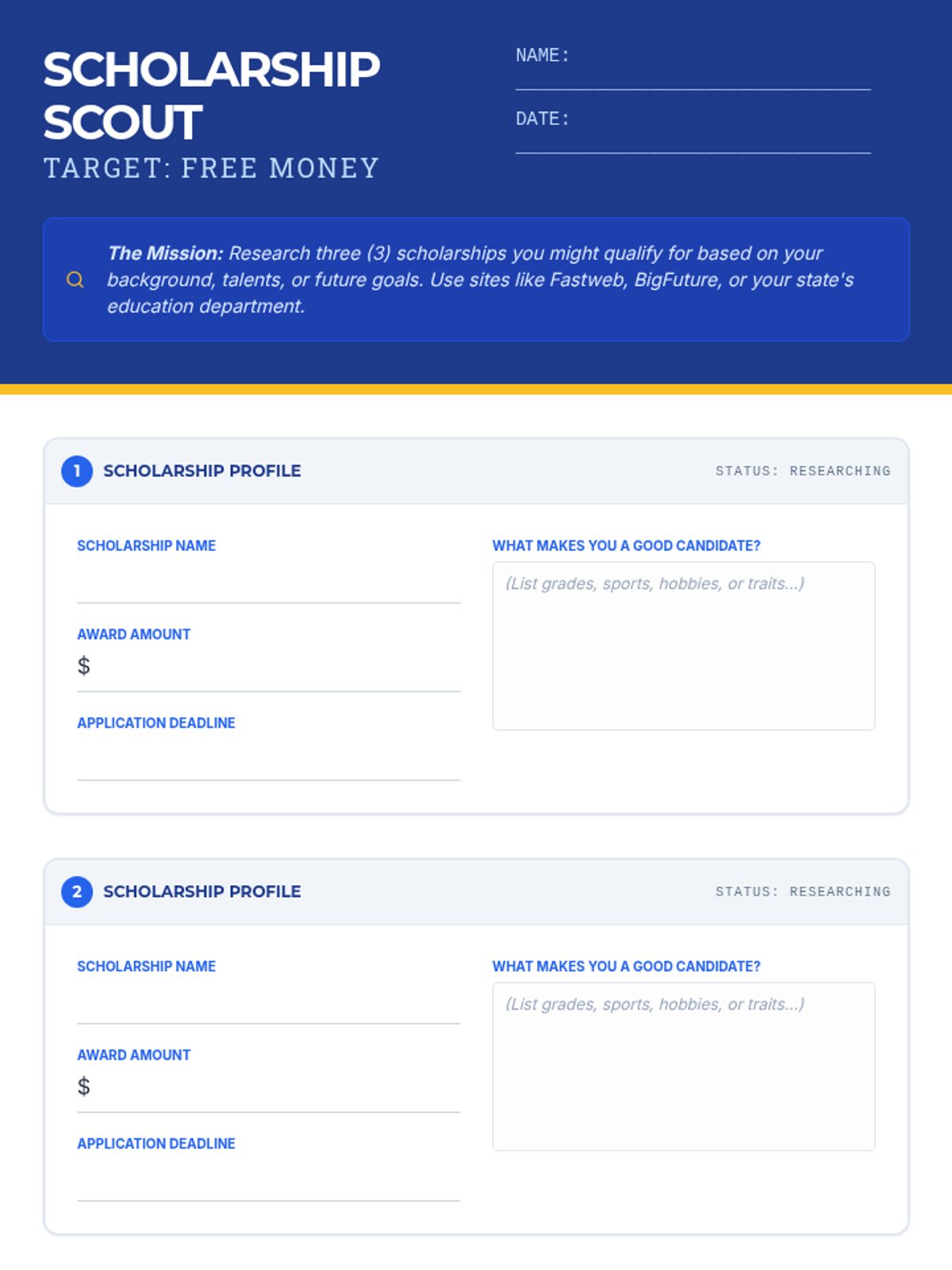
A research template for students to identify and analyze three specific college scholarships based on their background and interests.
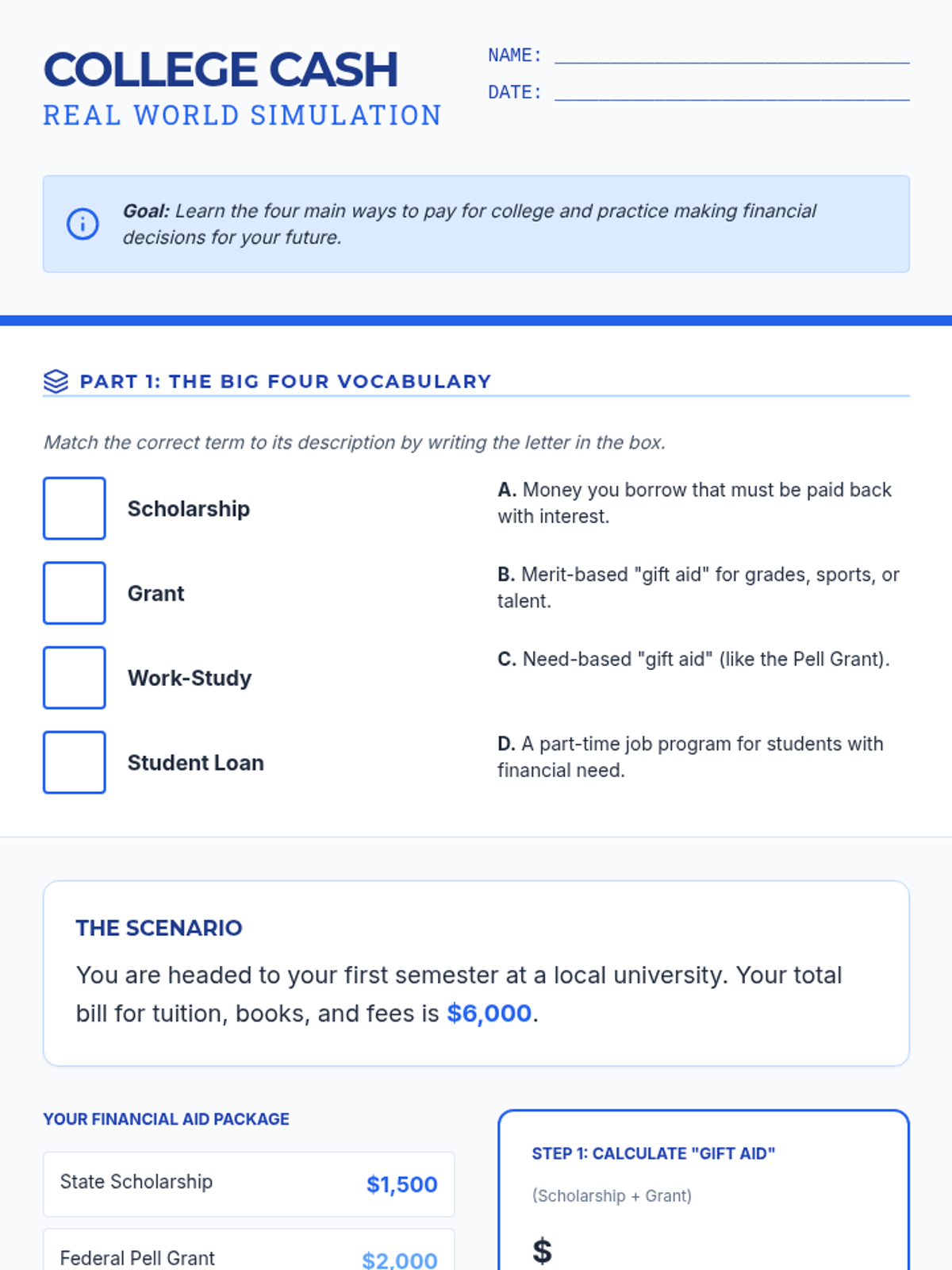
A student worksheet for calculating a college financial aid package and making budget-based decisions.
A visually engaging slide deck covering the four main types of college funding and the "Real World Budget" simulation scenario.
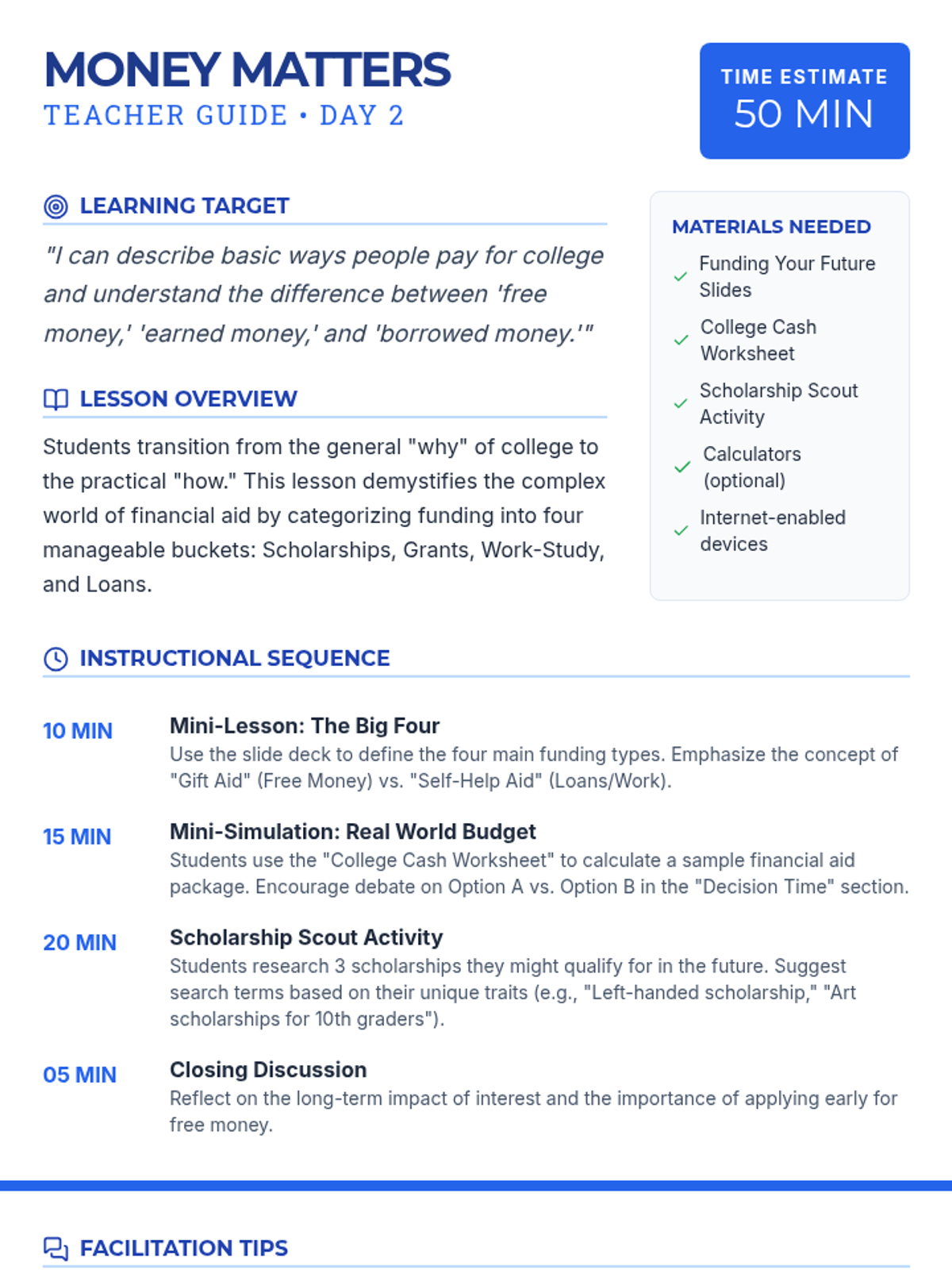
A comprehensive teacher's guide for the "Paying for College Basics" lesson, featuring a pacing guide, facilitation tips, common misconceptions, and an answer key for the student activities.
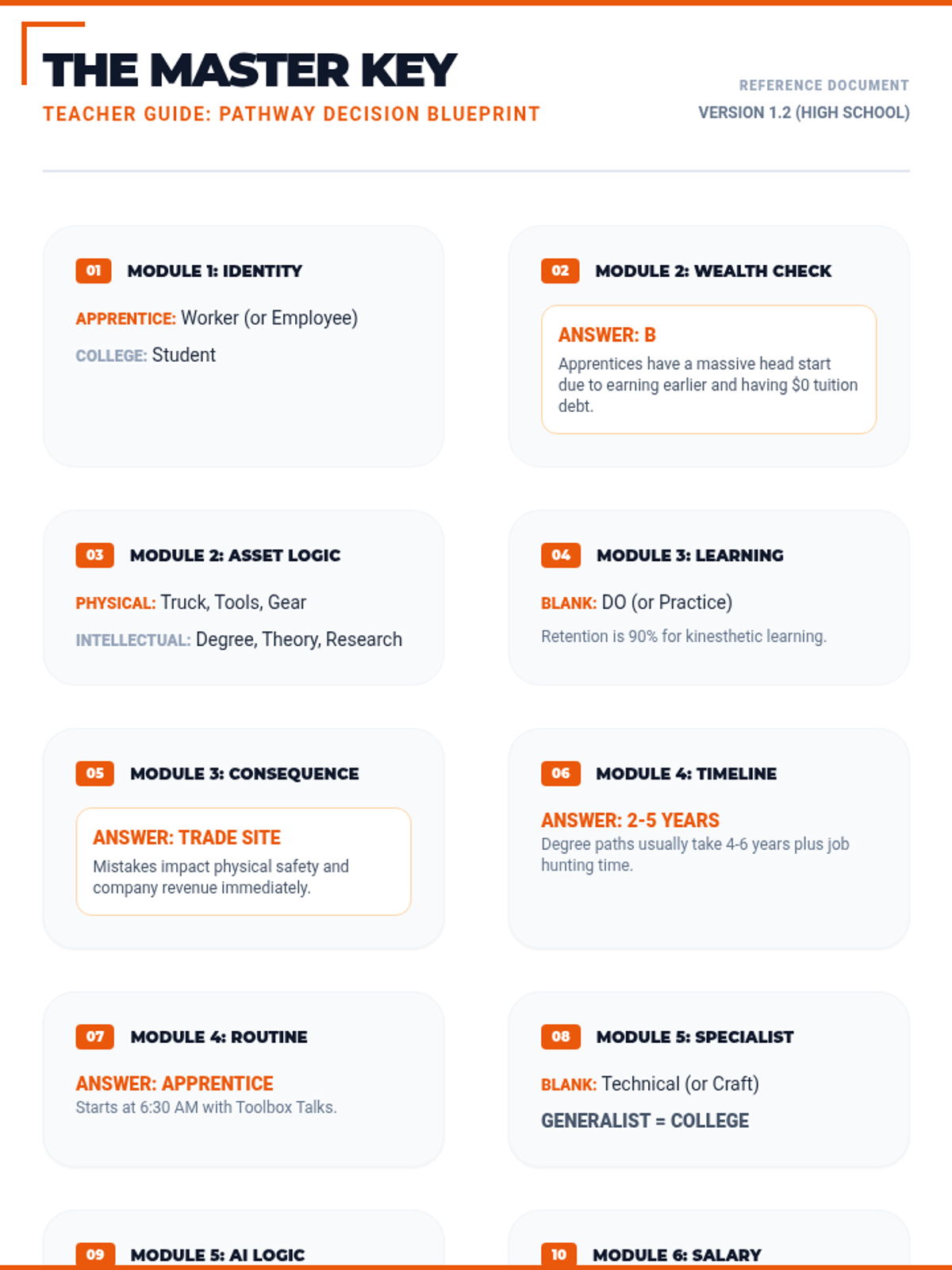
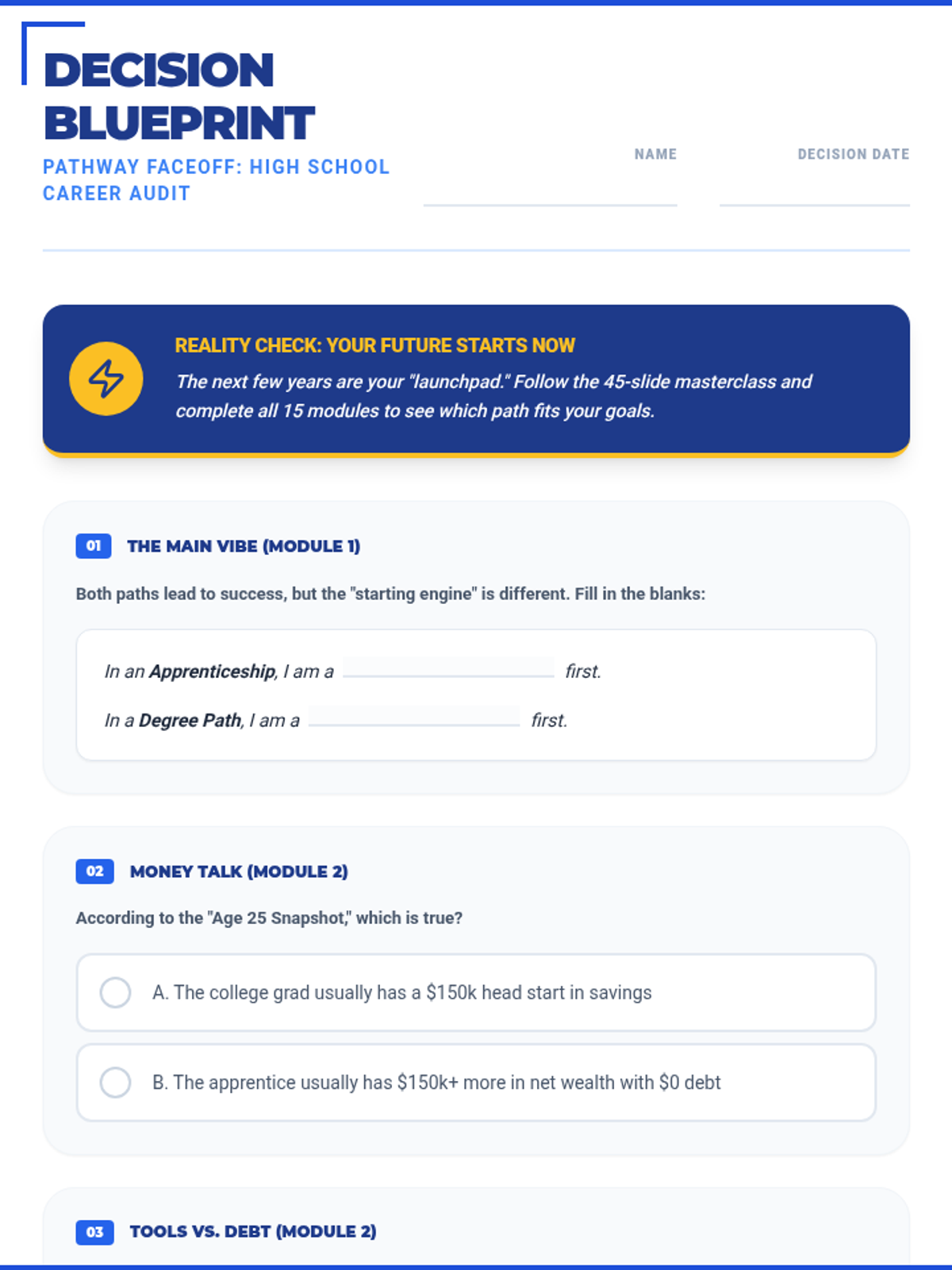
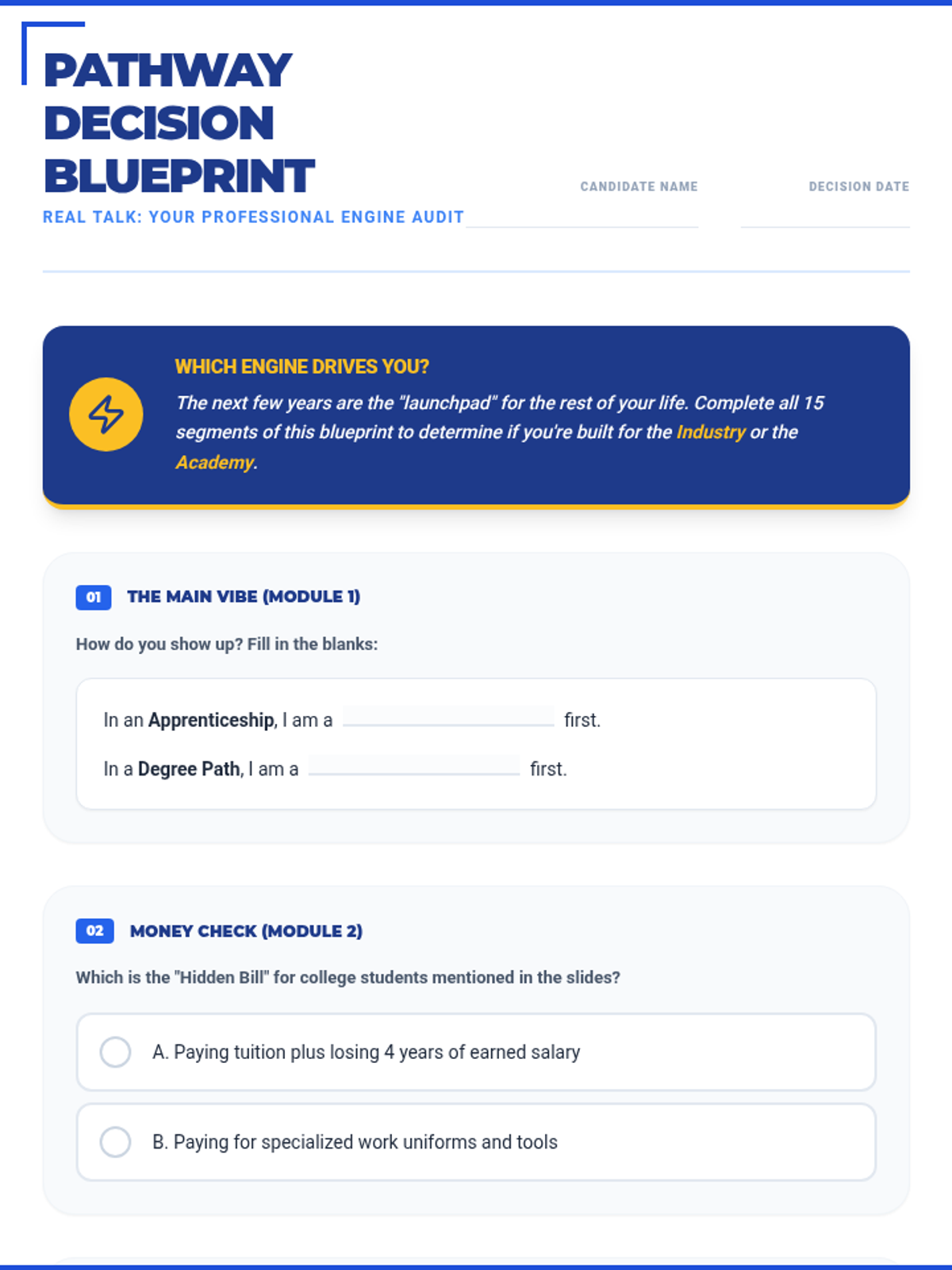
A teacher's master answer key for the Pathway Decision Blueprint Worksheet (15-section version), provided in a clean print layout with a Safety Orange and Slate theme.
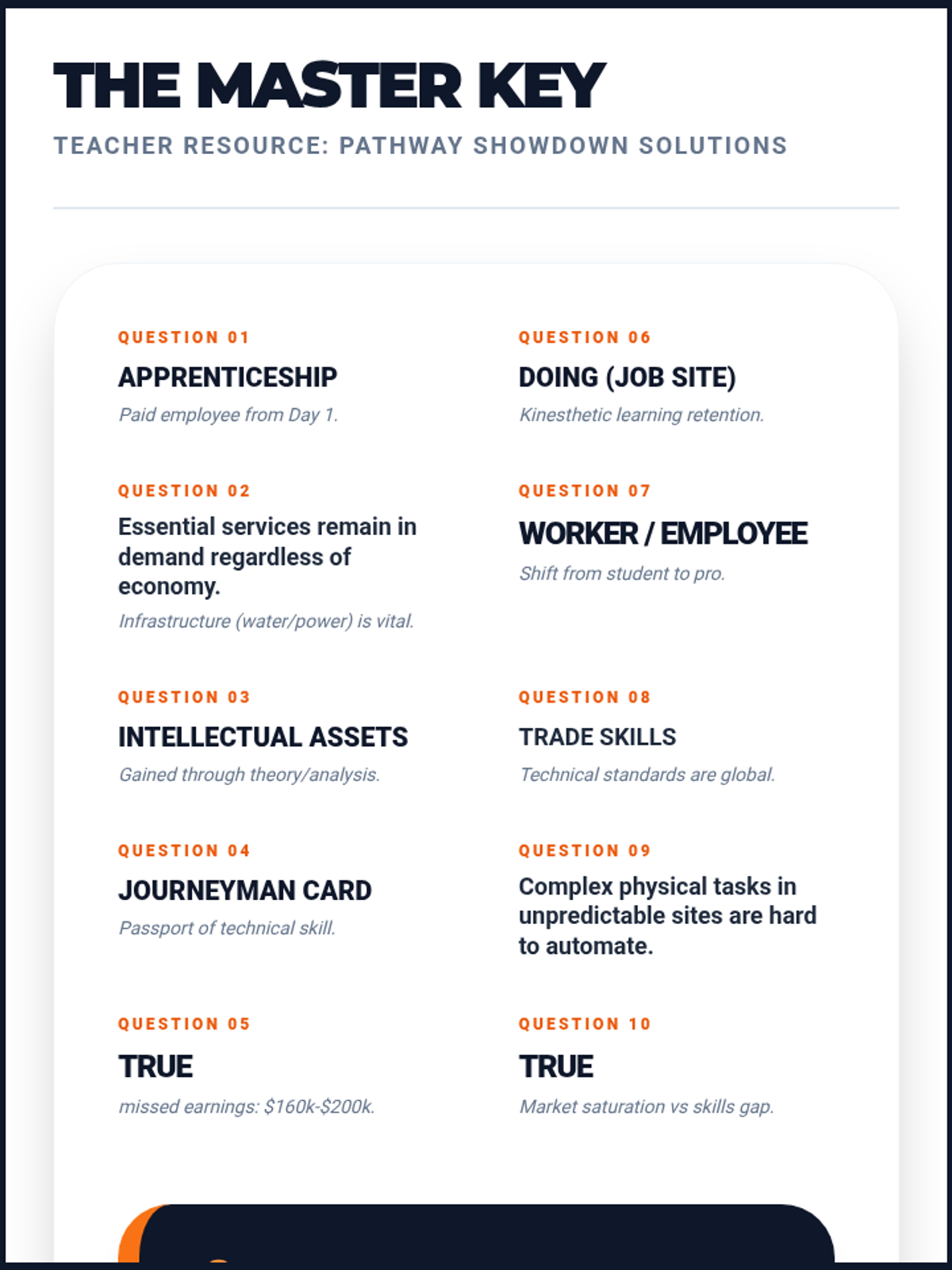
A standalone print-ready teacher answer key for the Pathway Showdown Info Sheet, featuring solutions for all 10 knowledge-check questions with detailed explanations.
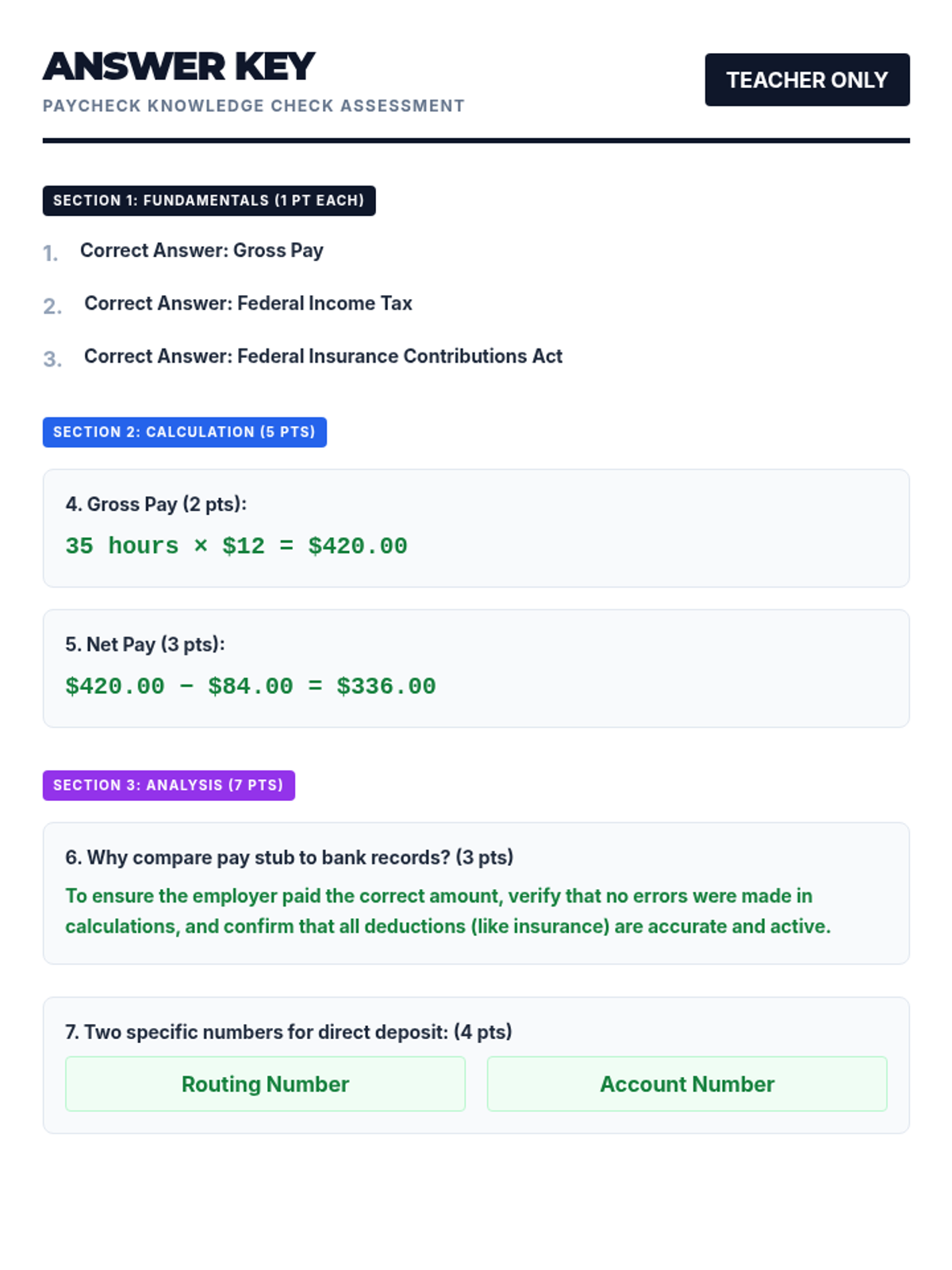
An answer key for the Paycheck Knowledge Check assessment, providing correct answers for multiple-choice, math, and analysis questions.
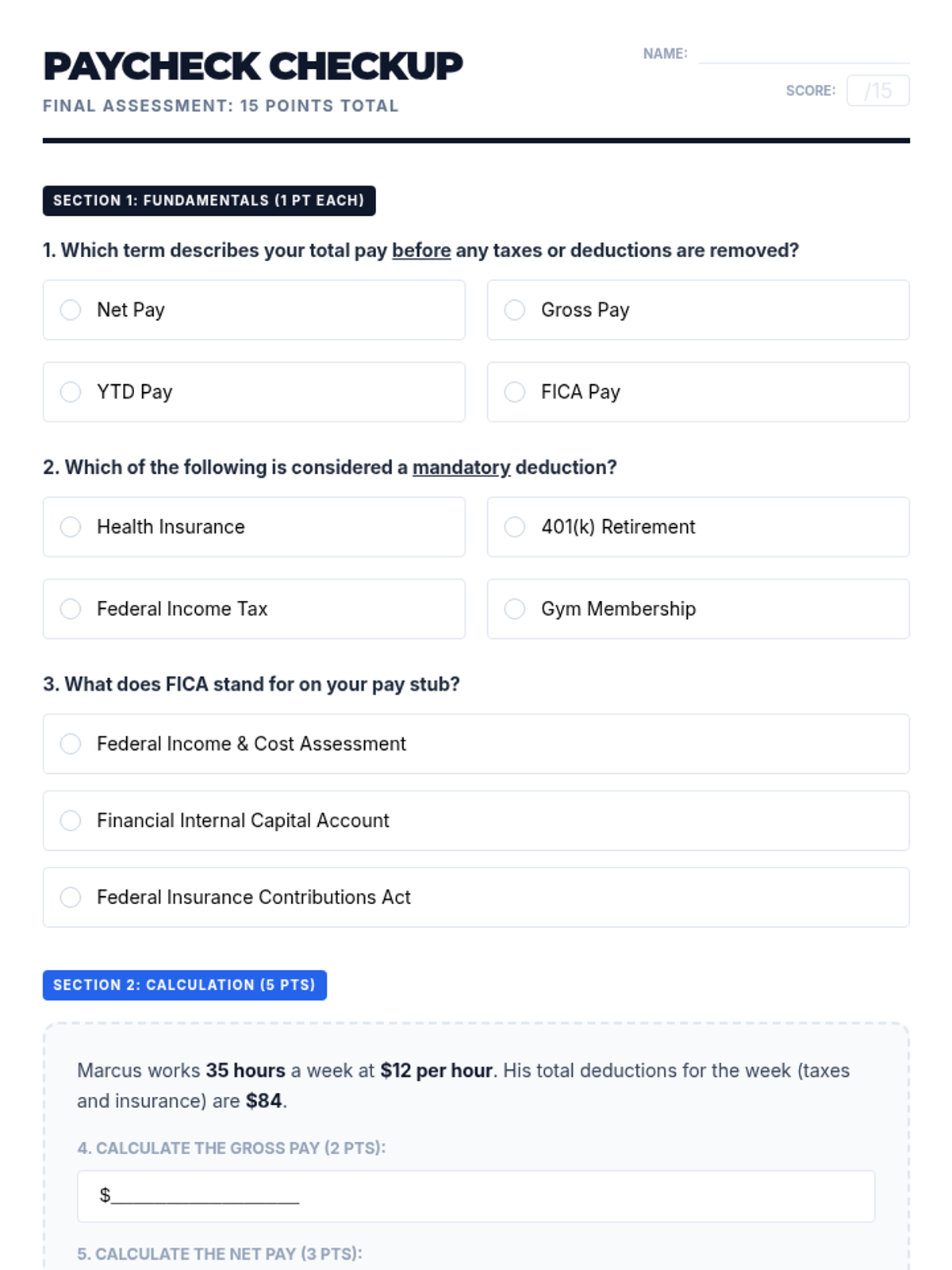
A formal assessment to measure student understanding of paycheck components, calculations, and financial security practices.
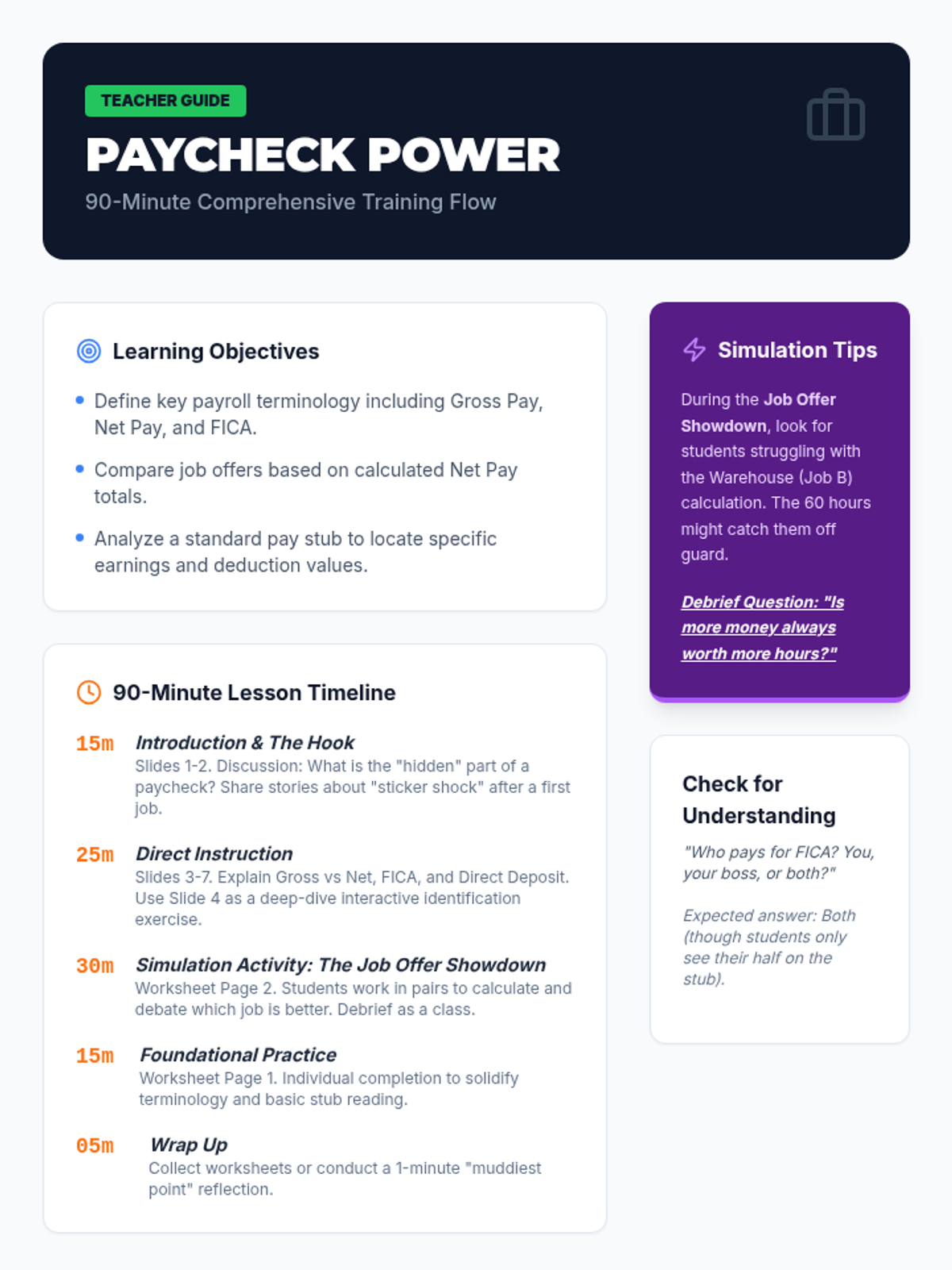
A teacher facilitation guide for the Paycheck Power lesson, including learning objectives, a suggested lesson flow, discussion prompts, and differentiation strategies.
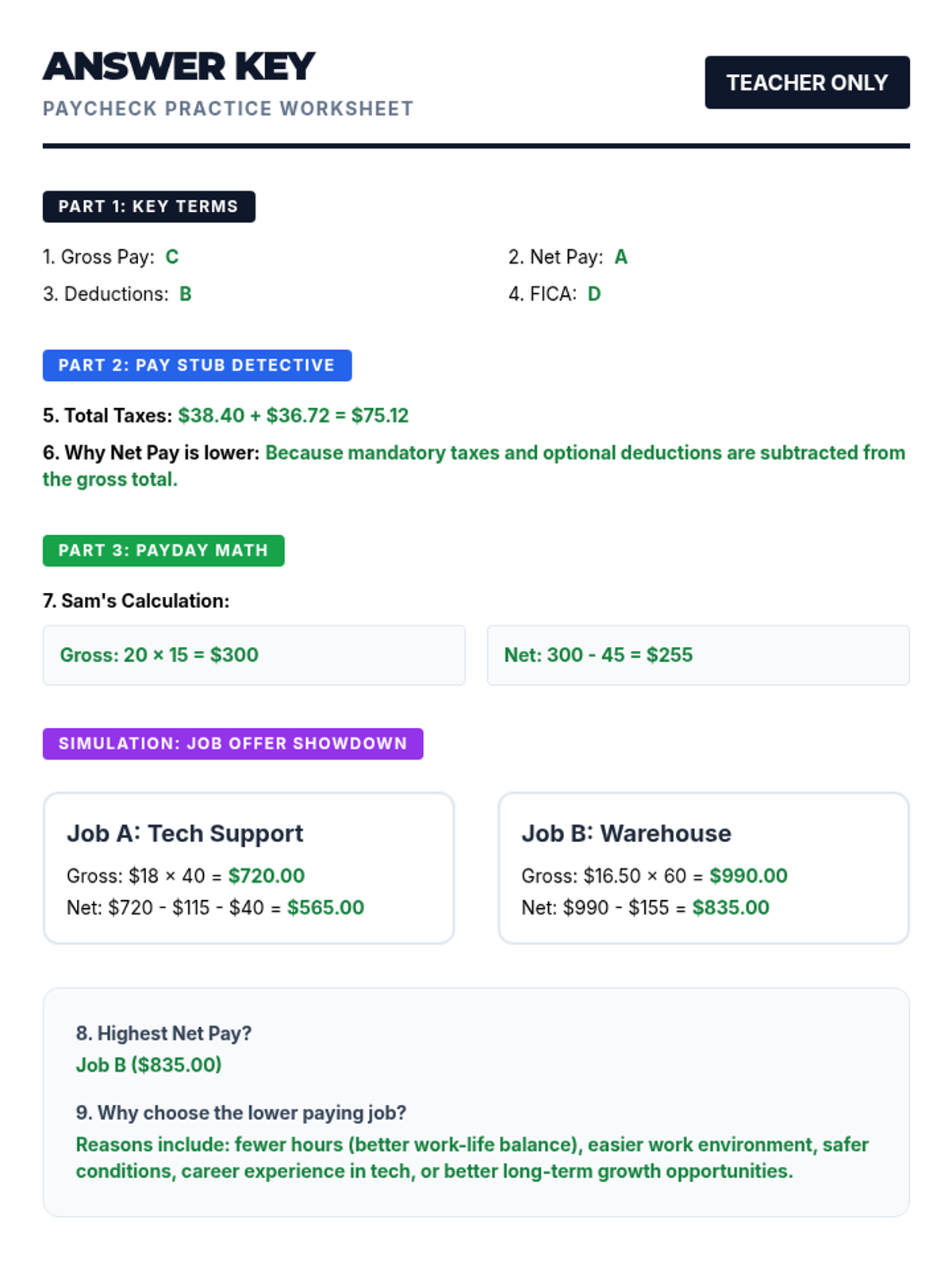
An updated answer key reflecting the expanded practice worksheet and simulation activity.
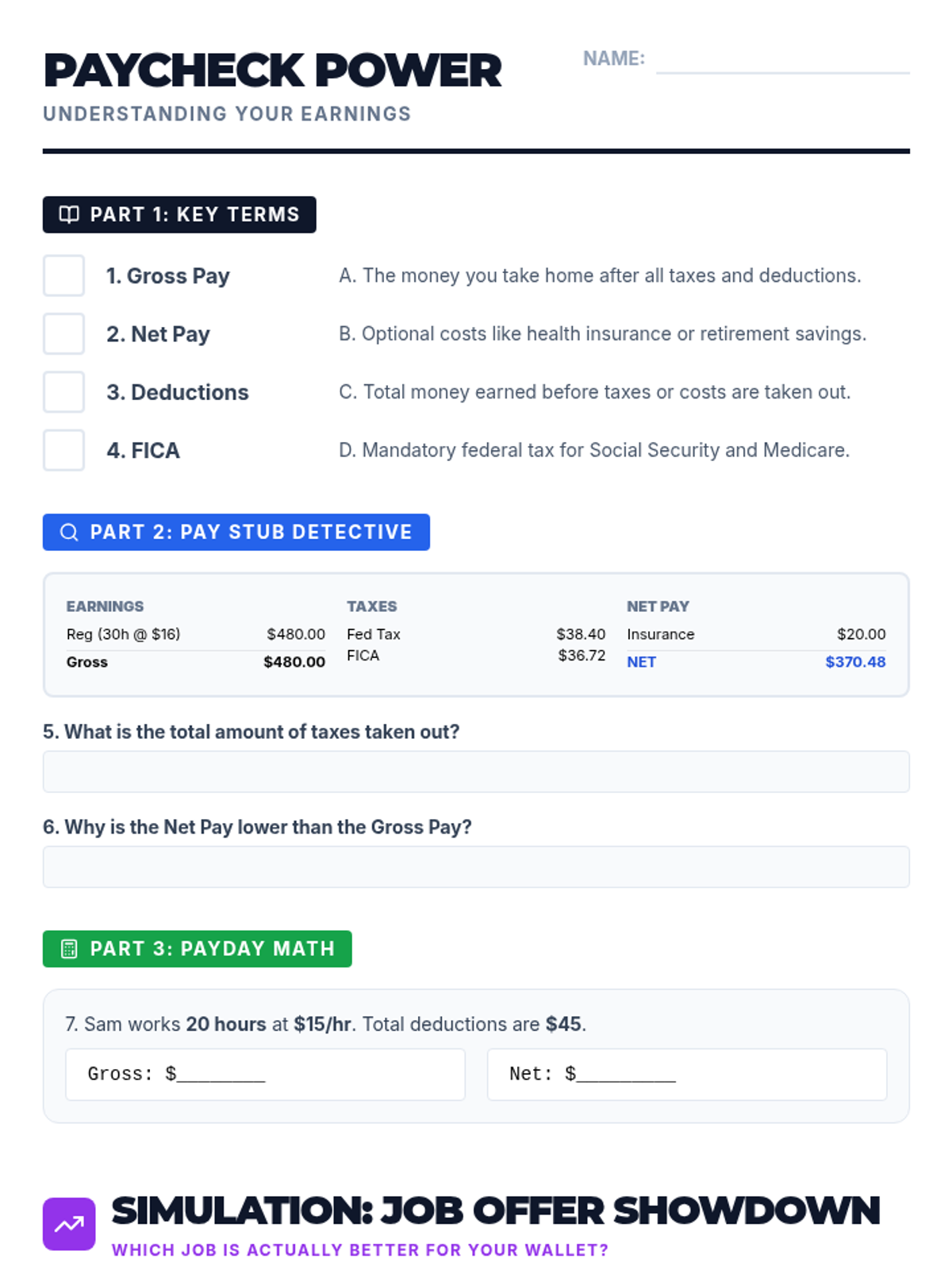
An expanded practice worksheet featuring a multi-page layout with foundational terminology, pay stub analysis, and a new "Job Offer Showdown" simulation activity to fill a 90-minute session.
A vibrant slide deck covering the fundamentals of paychecks, including key vocabulary, tax breakdowns, the difference between gross and net pay, and direct deposit basics.
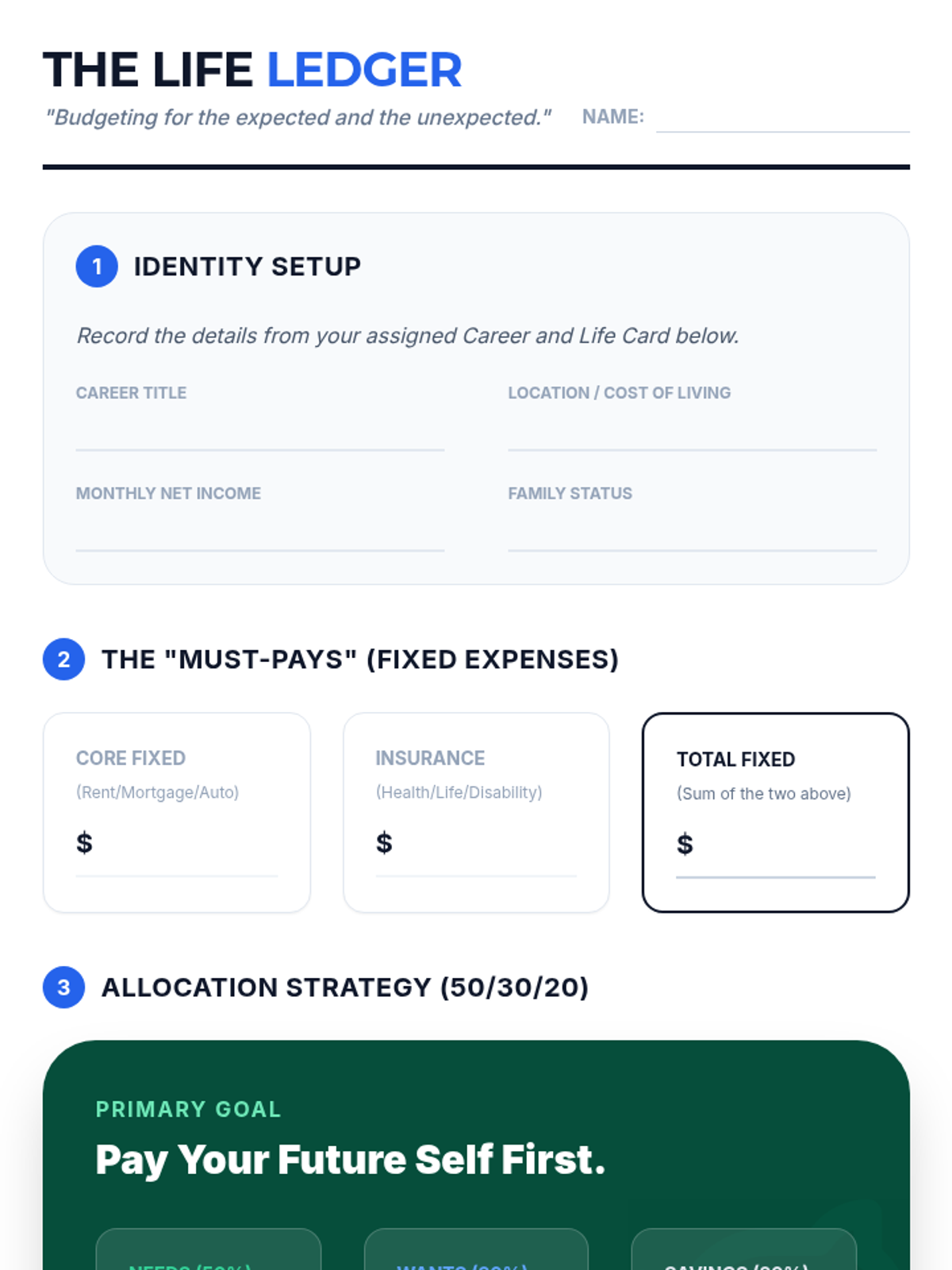
A student-facing budget tracker for the "Wealth Builders" simulation game, featuring profile setup, budget allocation areas, and a multi-day event log.
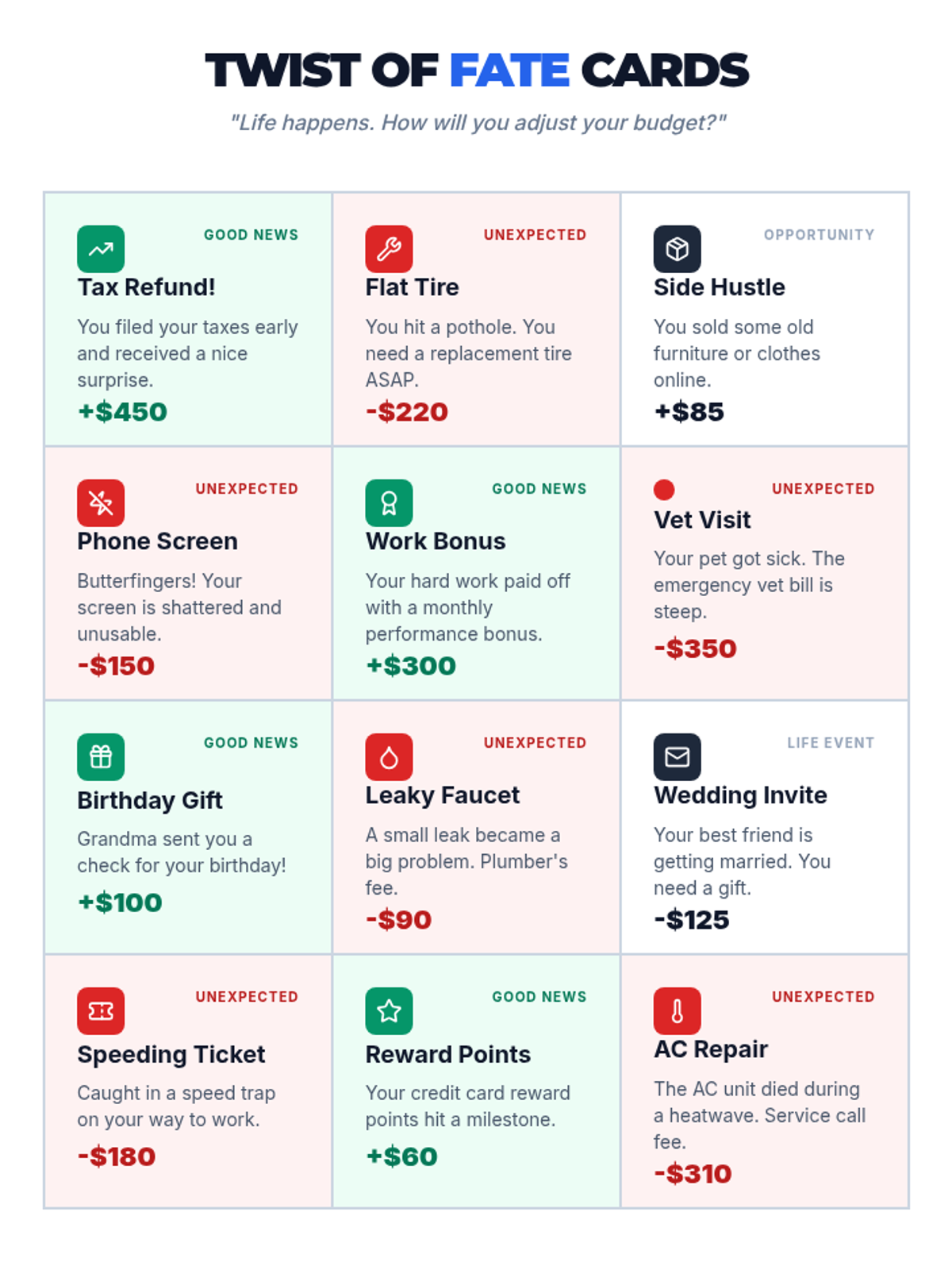
A set of 12 "Twist of Fate" cards containing positive and negative financial surprises to be used in the budget simulation game.
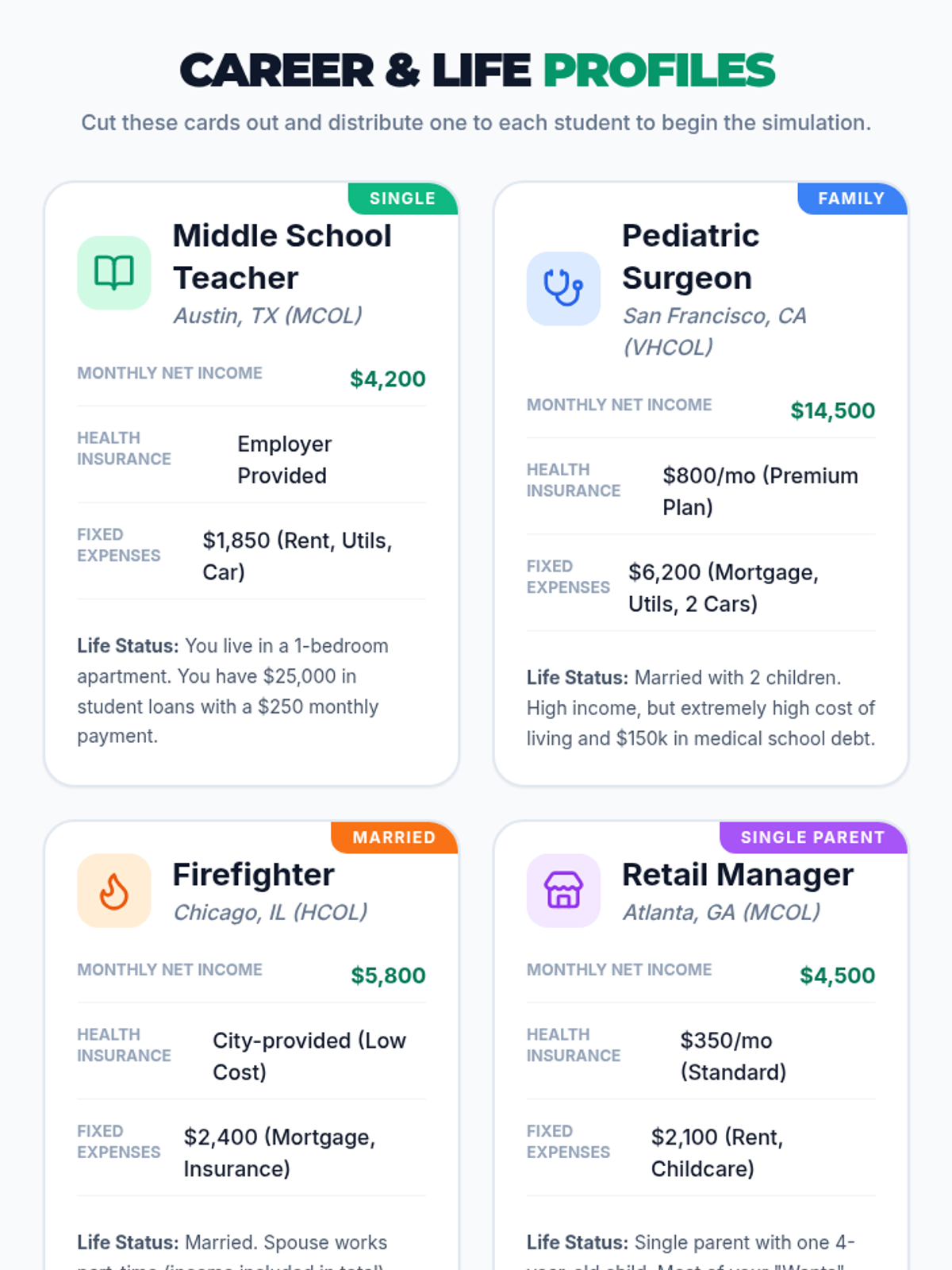
A set of 6 diverse career and life scenario cards for a classroom budget simulation, detailing income, location, family status, and fixed expenses.
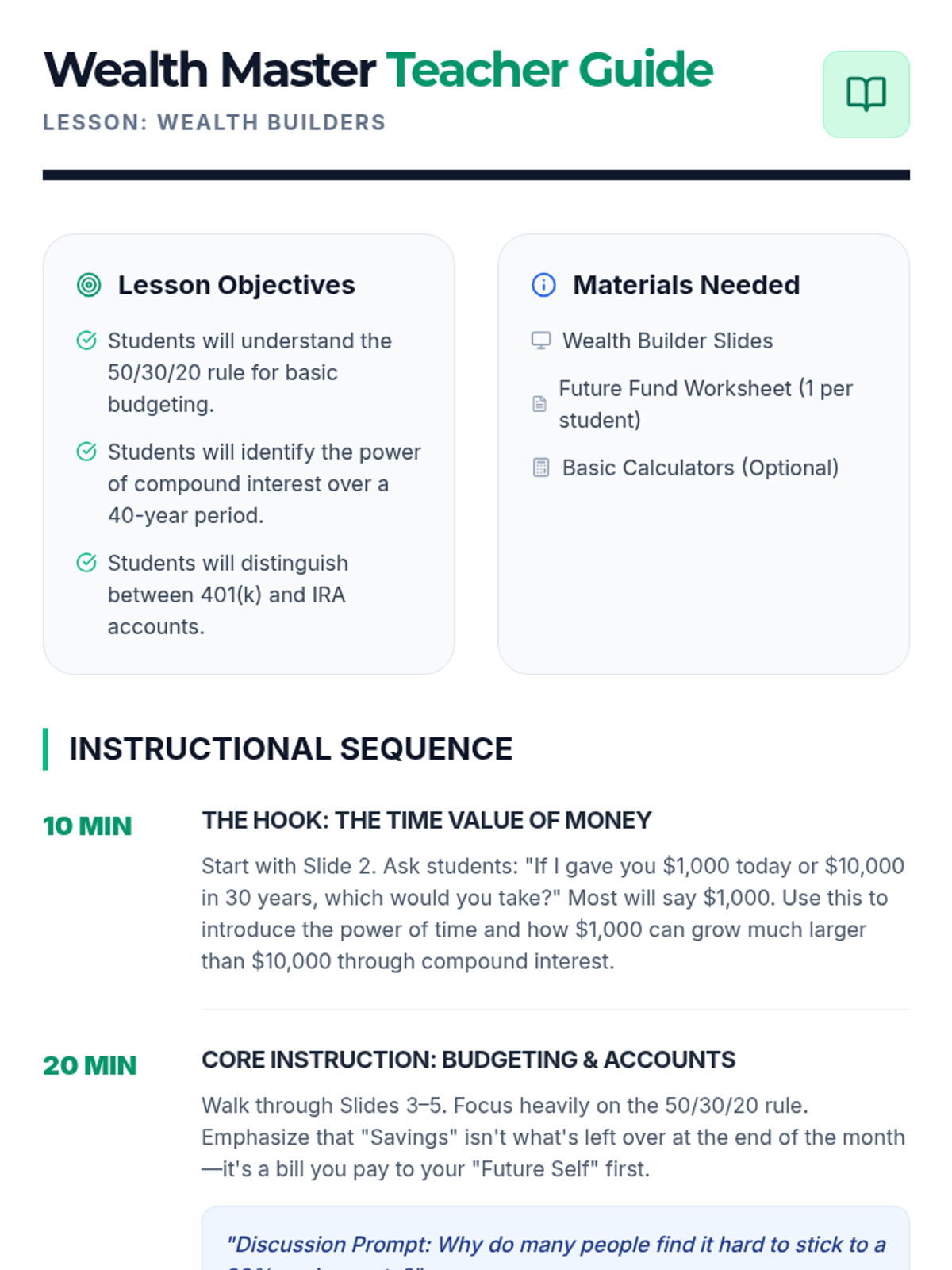
A 2-page teacher's guide including lesson objectives, a detailed instructional sequence, answer keys for the worksheet, and common student misconceptions about retirement and saving.
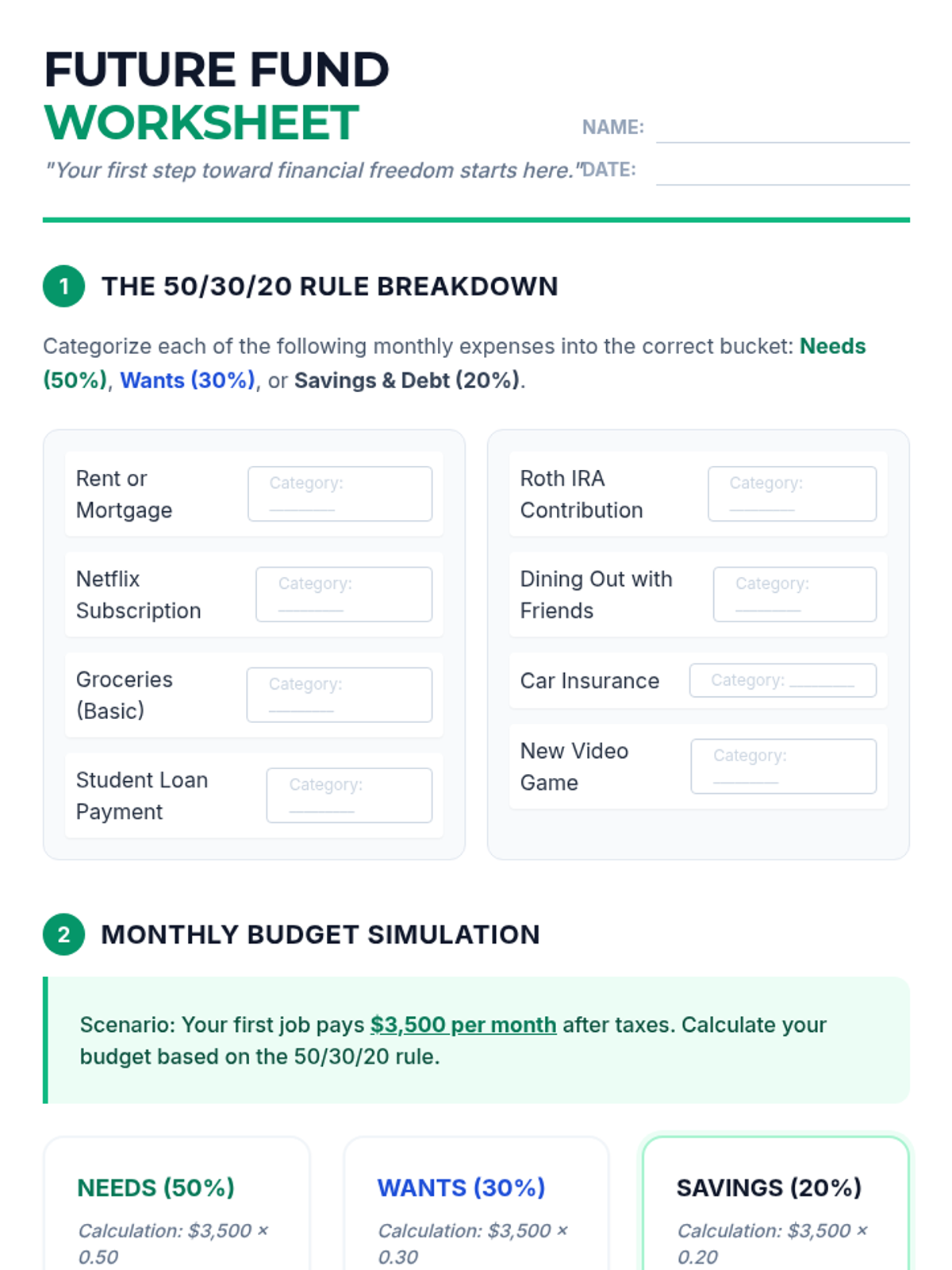
A 3-page budgeting and retirement planning worksheet that guides students through the 50/30/20 rule, a monthly budget simulation, and reflection on long-term compound interest.
A 6-slide presentation introducing students to retirement planning, the power of compound interest, the 50/30/20 budgeting rule, and common retirement accounts like 401(k)s and IRAs.
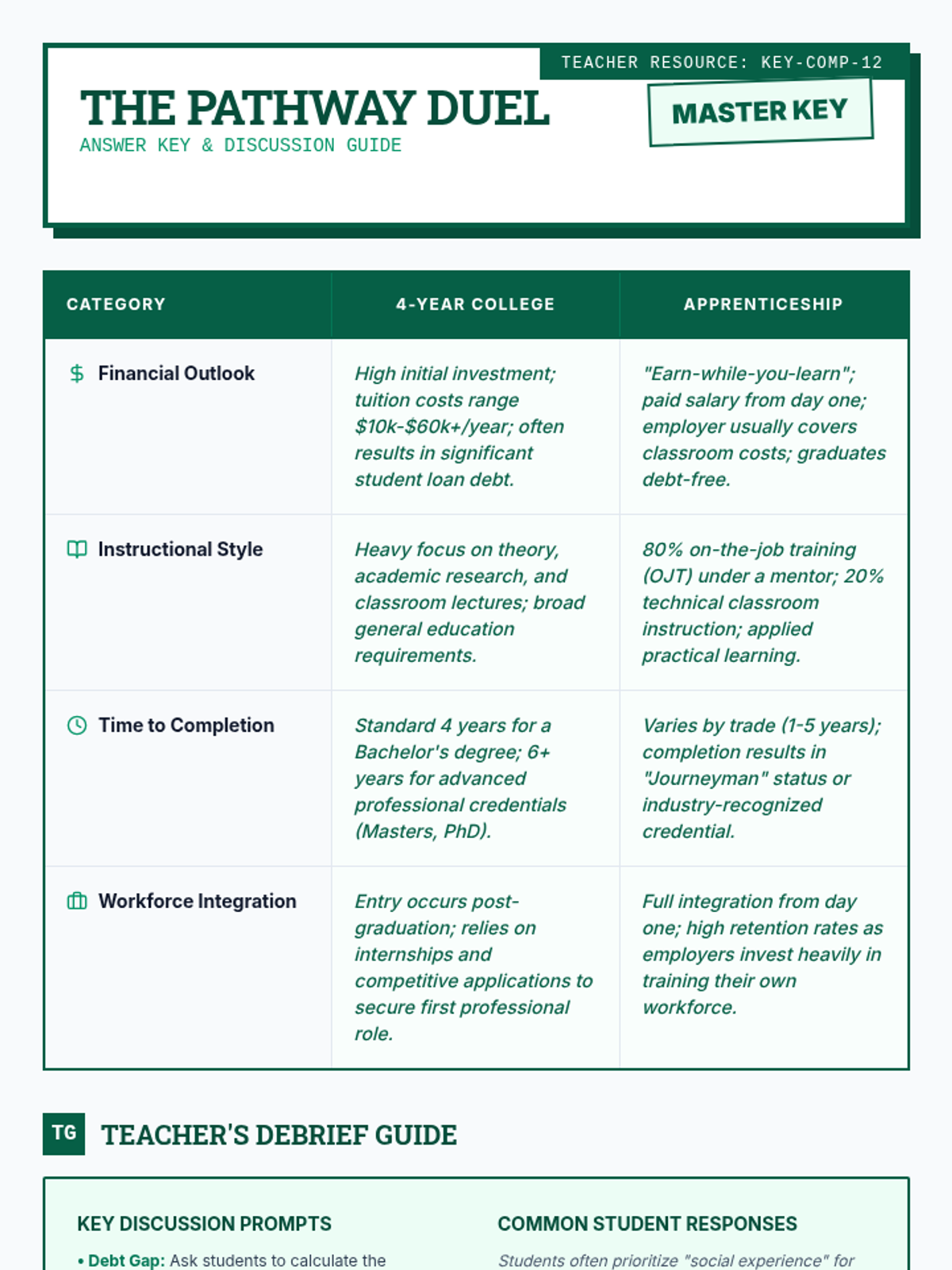
An answer key and discussion guide for the Pathway Comparison Chart, providing specific comparison points between college and apprenticeships along with teacher prompts.
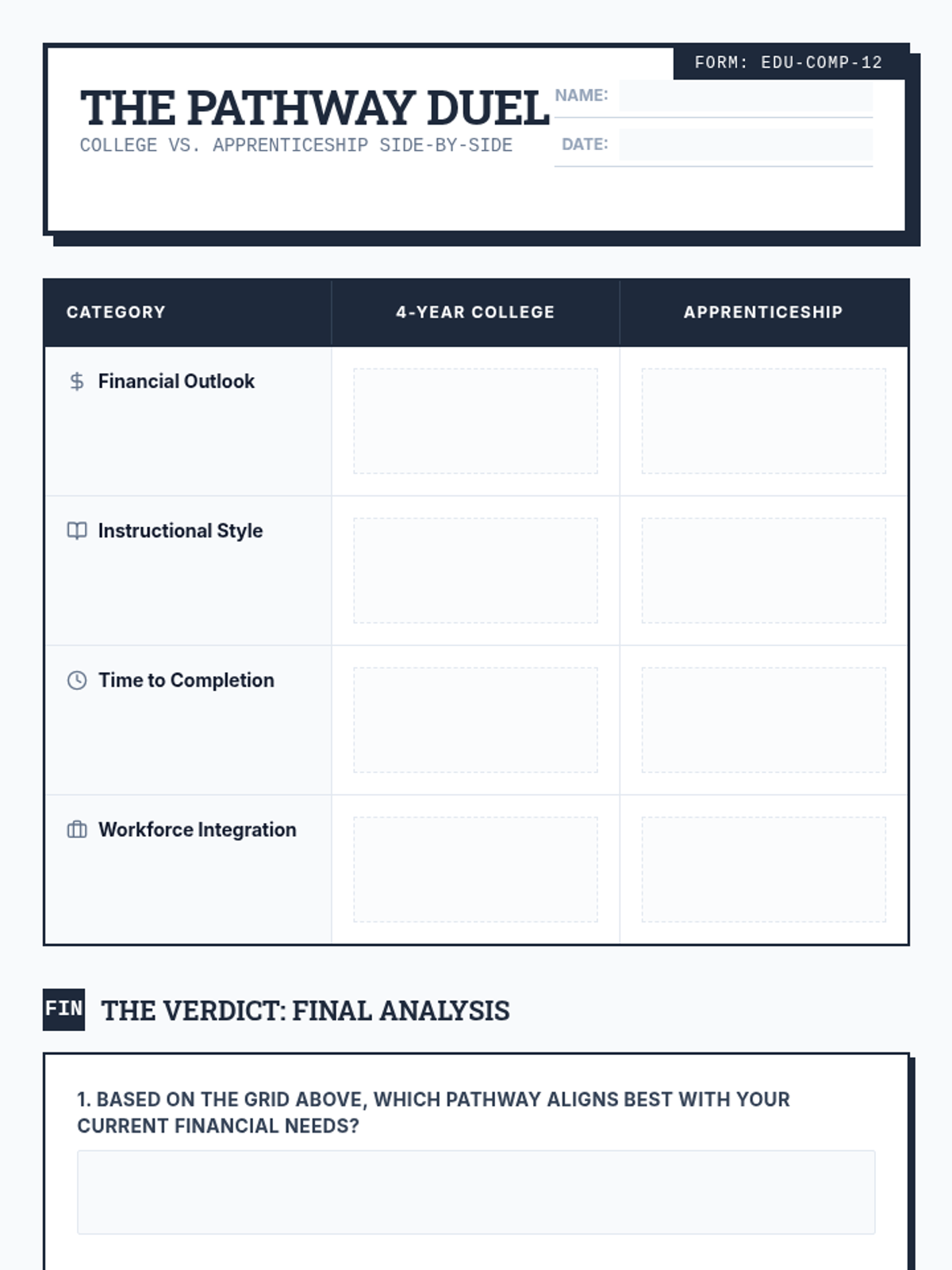
A side-by-side comparison chart for students to analyze the differences between traditional 4-year college and apprenticeship pathways across various categories.
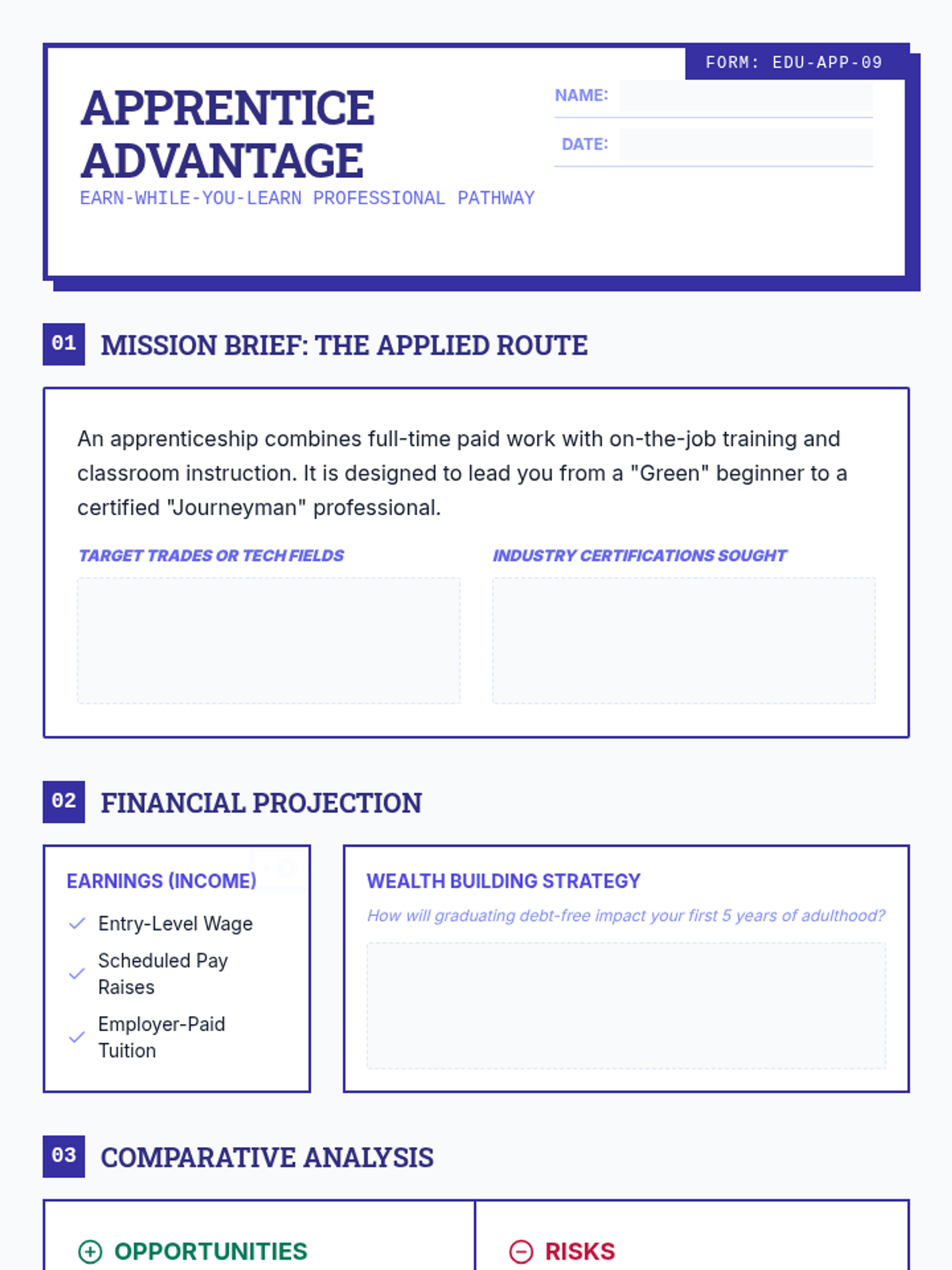
A structured worksheet for students to analyze the apprenticeship pathway, highlighting the earn-while-you-learn model, career specific pros/cons, and financial benefits.
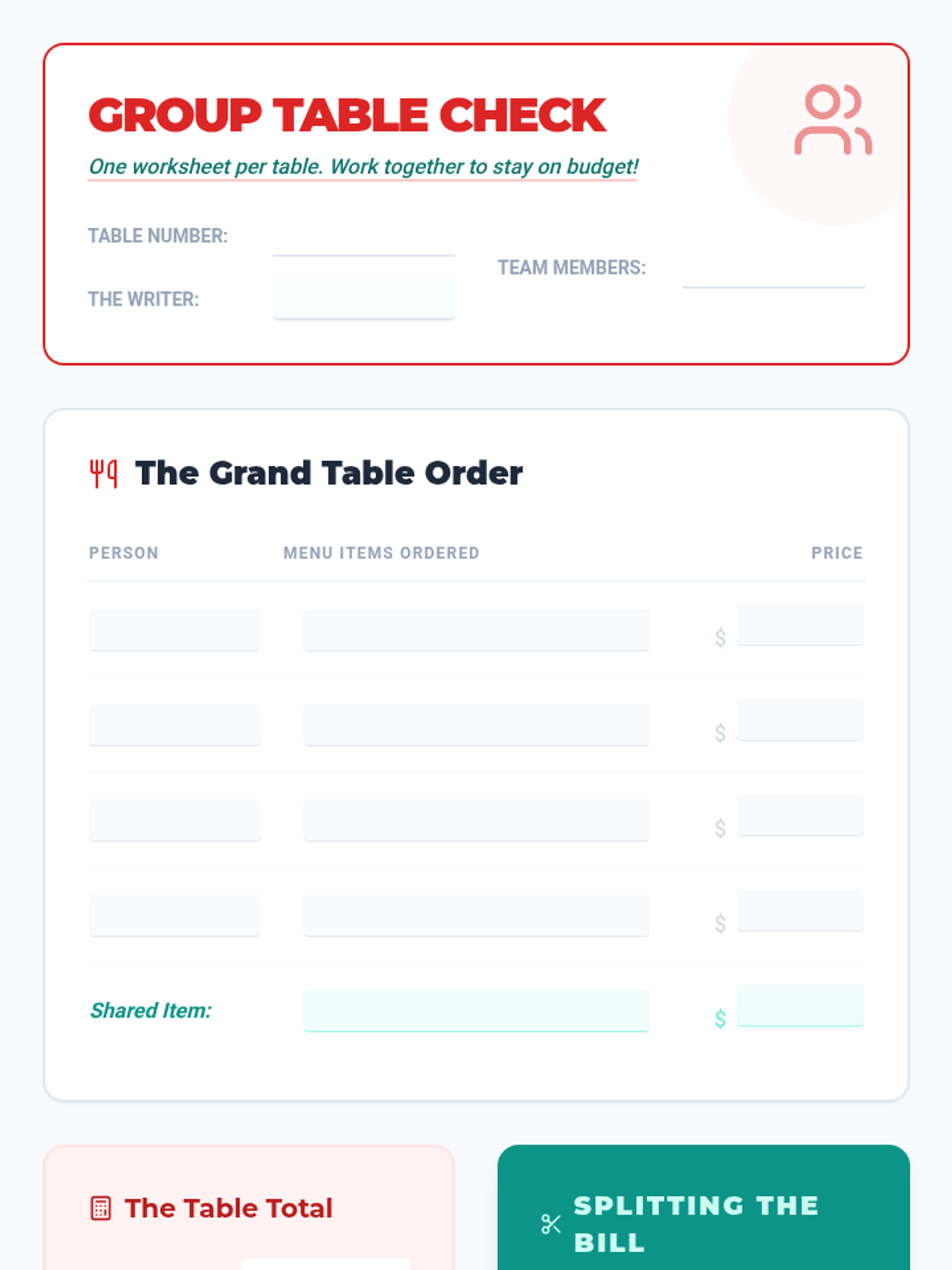
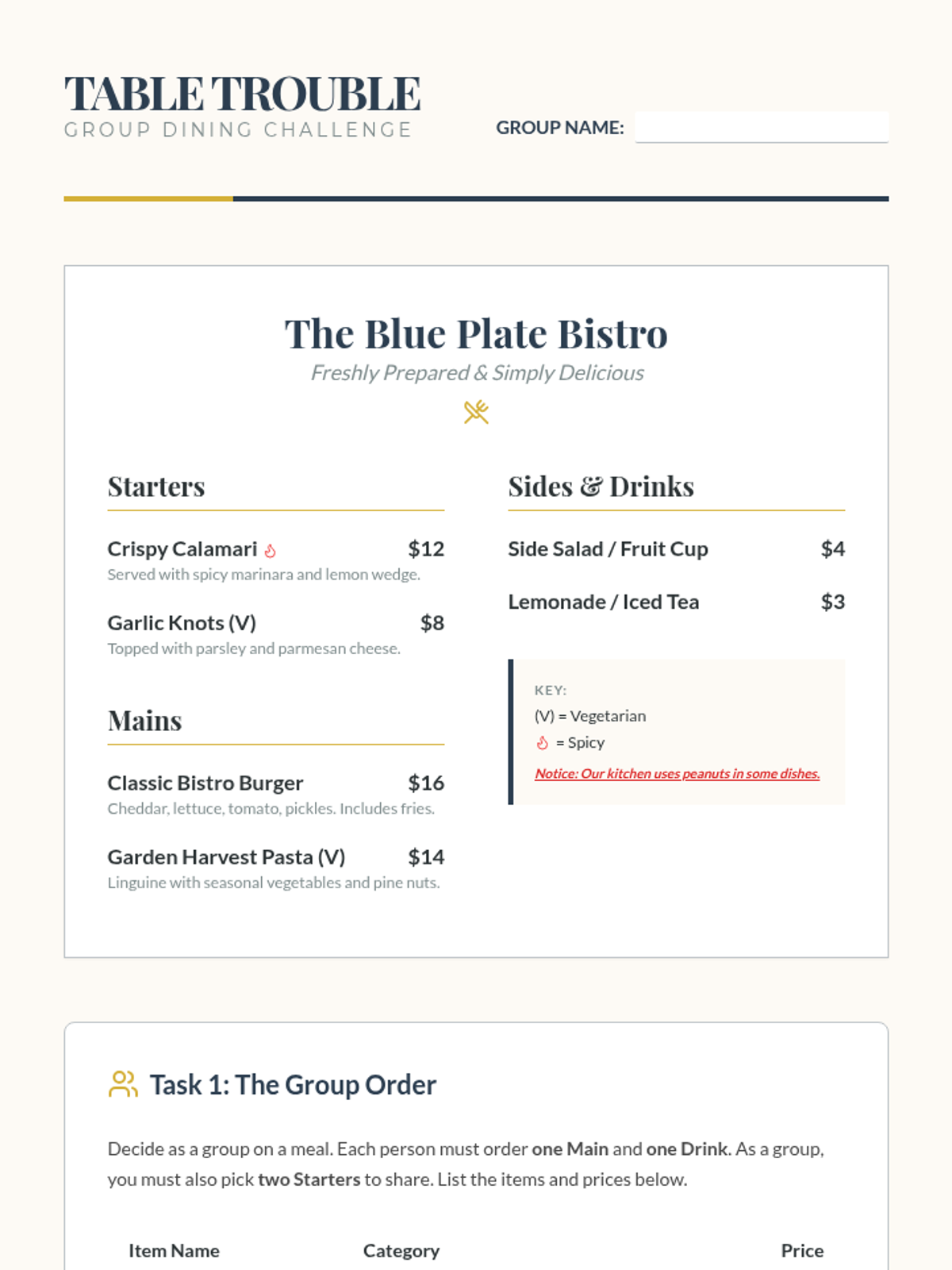
A comprehensive group worksheet that combines combined food order tracking, table total calculations (including tax and tip), group math challenges, and social etiquette reflections into a single multi-page document.
Instructional slide deck for the Budget Bites lesson, covering the 90-minute agenda, hidden costs (tax and tip), and restaurant social etiquette.
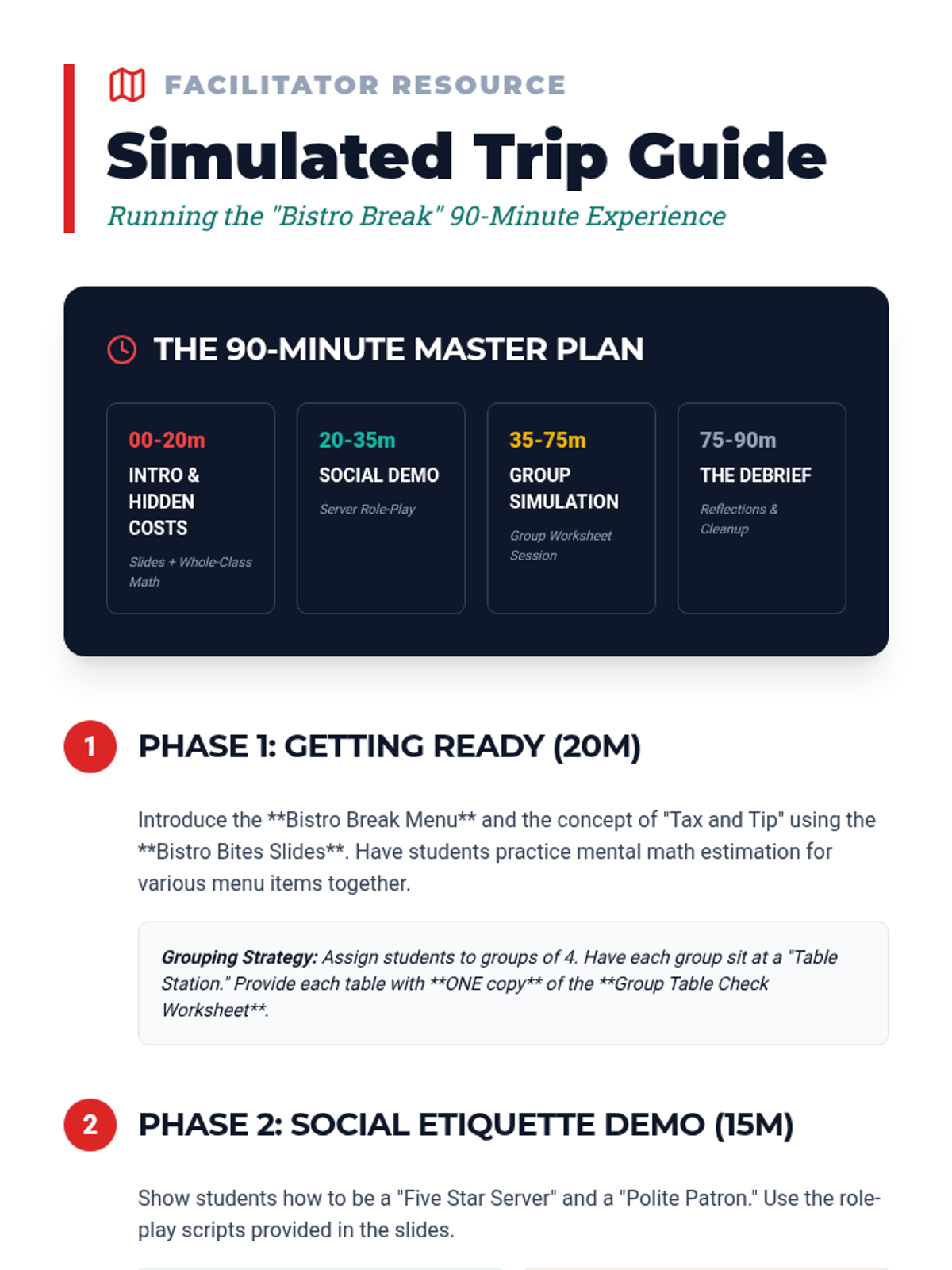
A facilitator's guide for conducting a simulated restaurant field trip in the classroom, including role-play scripts and setup instructions.
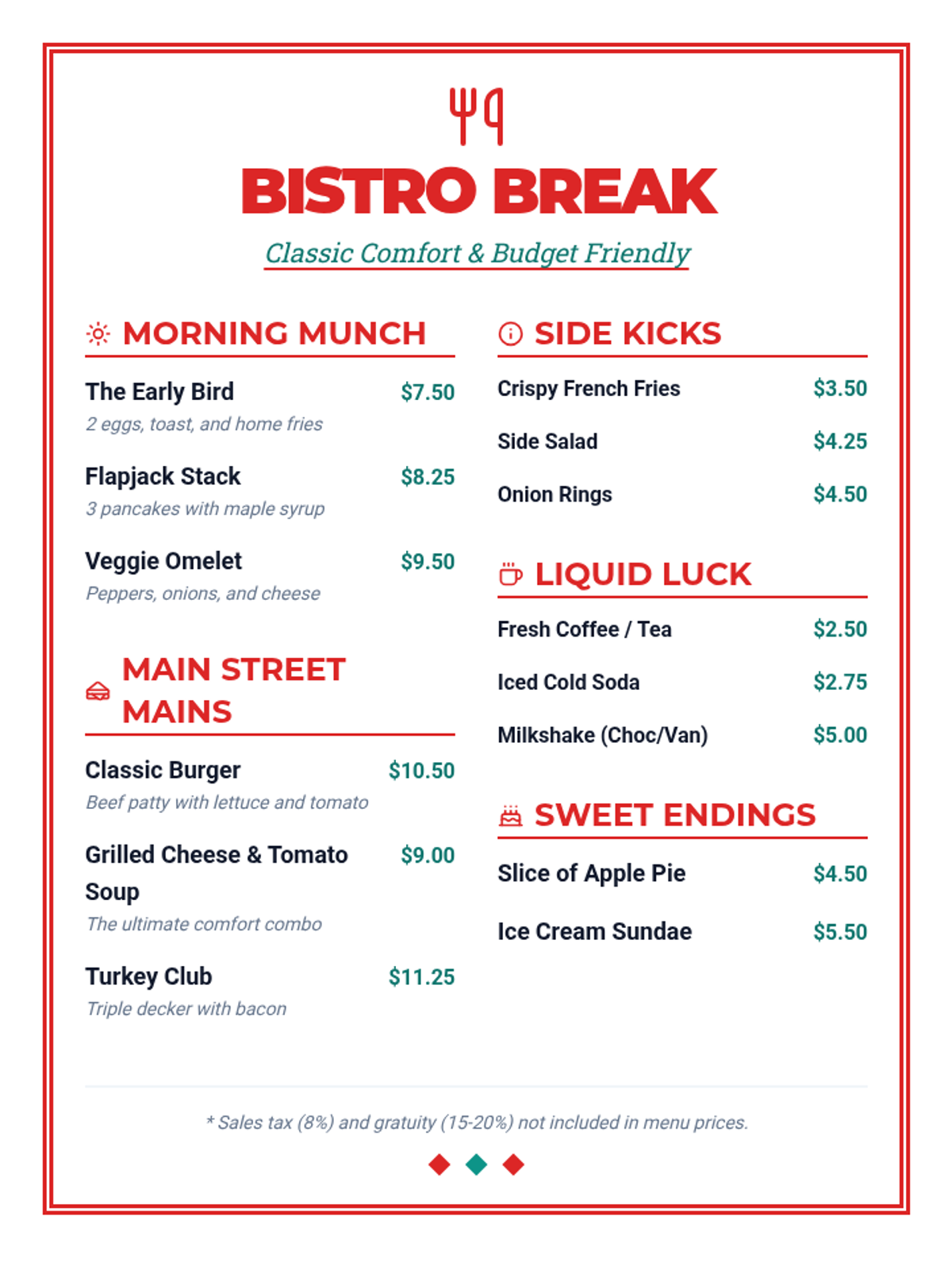
A retro-style bistro menu featuring breakfast, main courses, sides, drinks, and desserts with clear pricing for use in budget and math exercises.
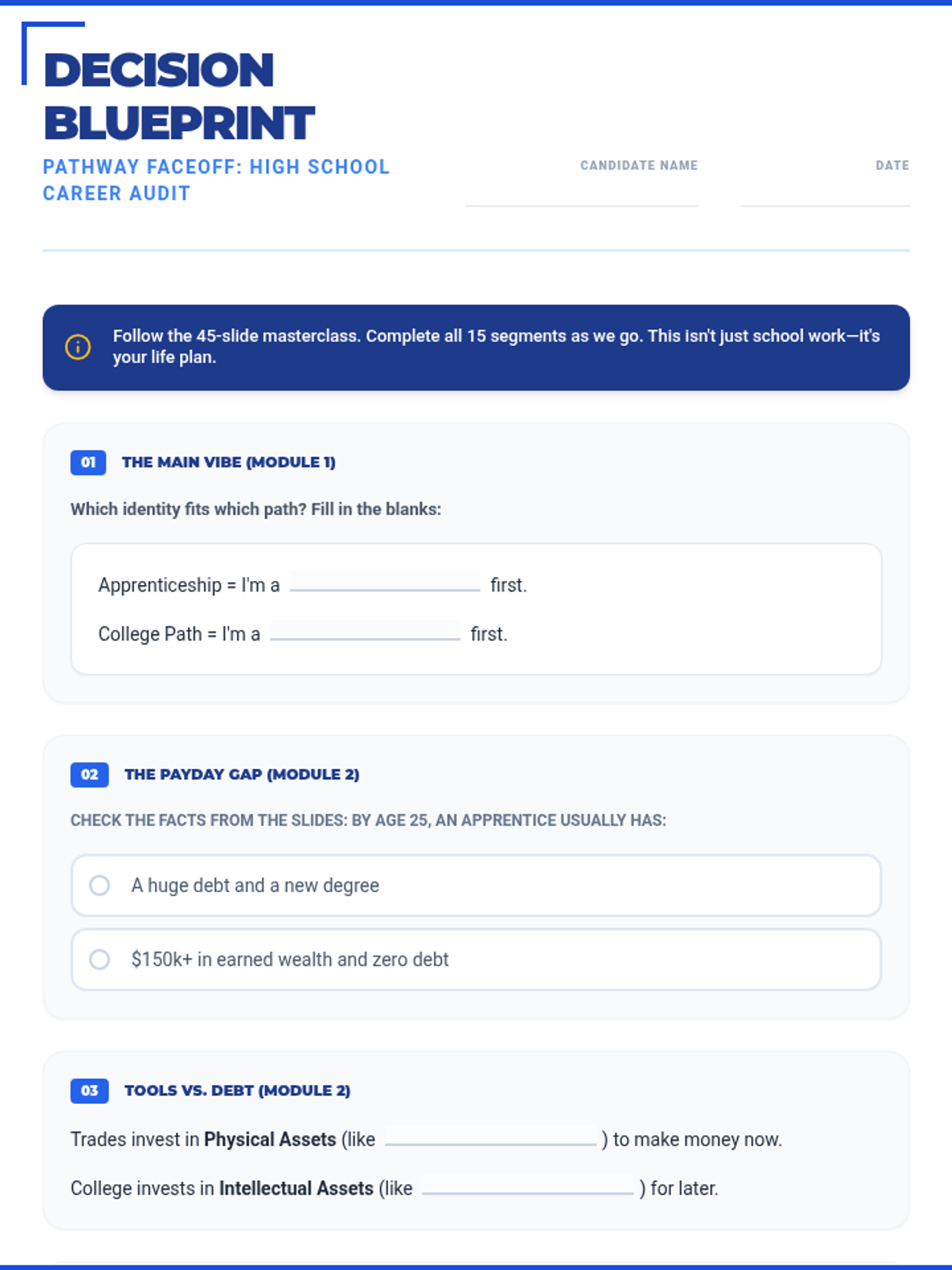
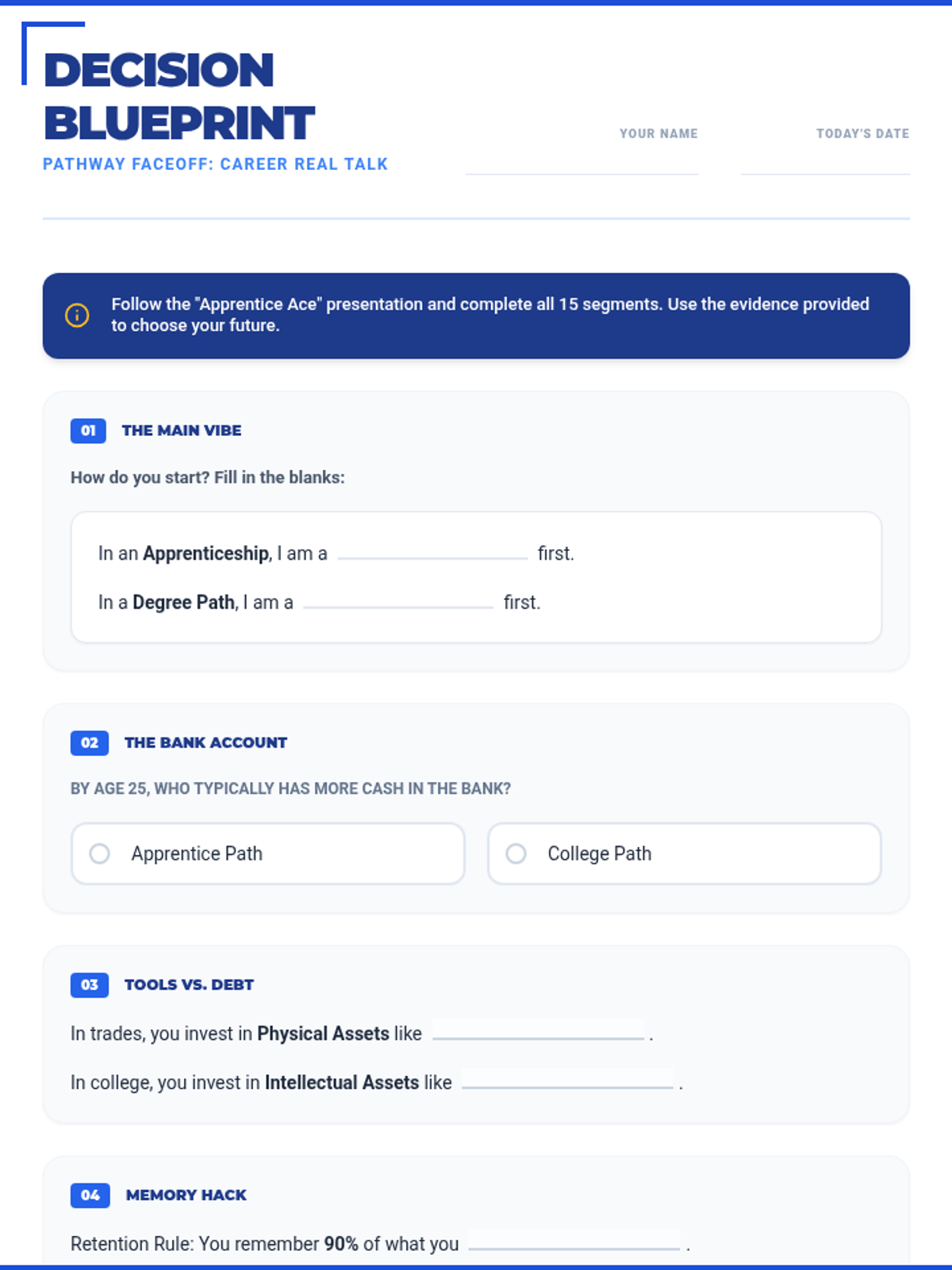
A simplified 15-section career exploration worksheet designed for 16-year-old high school students, featuring punchy, relatable titles and a "Safety Orange & Slate" theme. Meticulously aligned with the 45-slide masterclass. All correct answer highlights have been removed for student use.
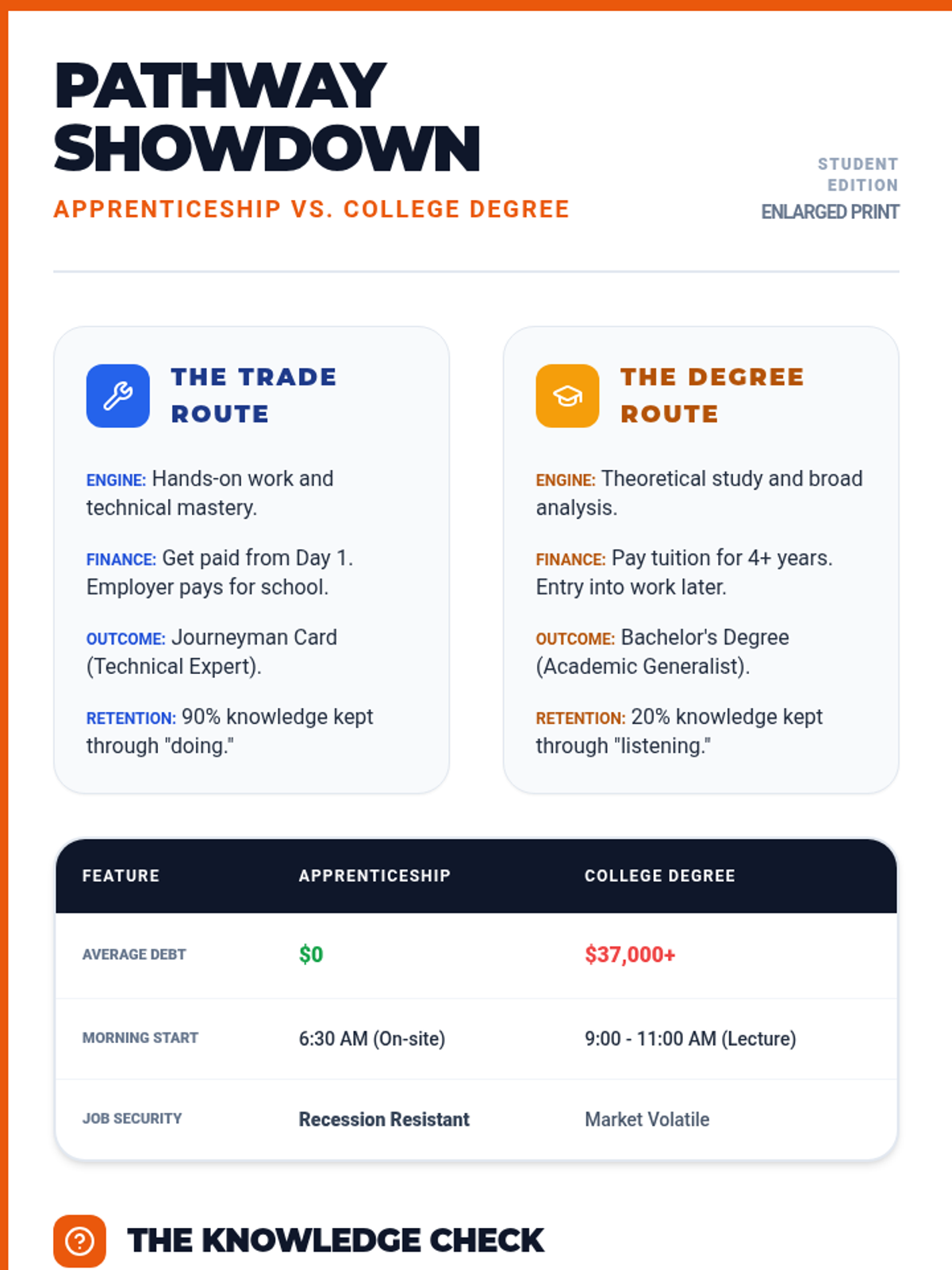
A 1-page enlarged informational summary comparing Apprenticeships and College Degrees, designed for maximum readability. Includes a facts breakdown, comparison table, and 6 key knowledge-check questions.
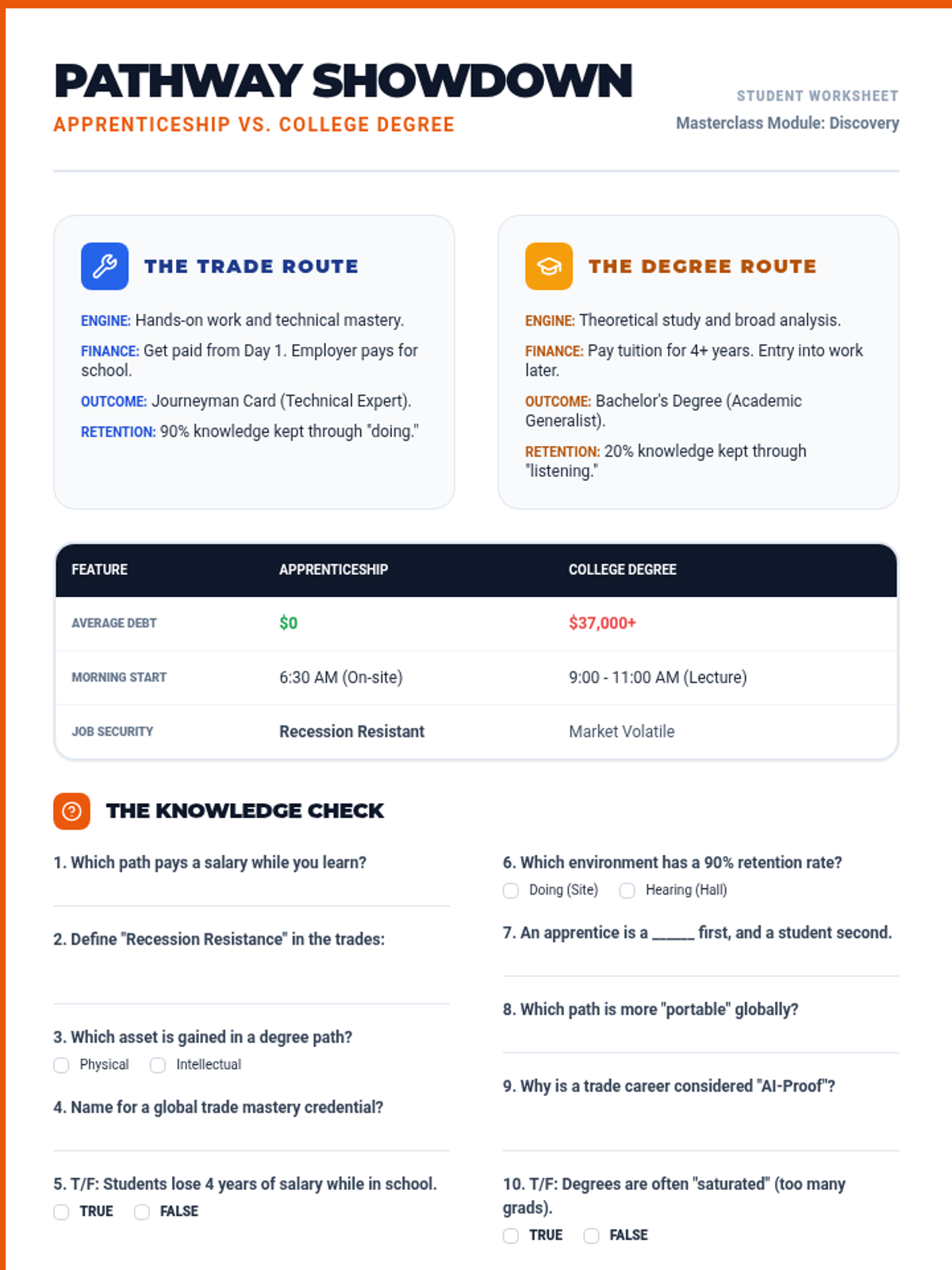
A 1-page informational summary comparing Apprenticeships and College Degrees, featuring a facts breakdown, comparison table, and 10 knowledge-check questions.
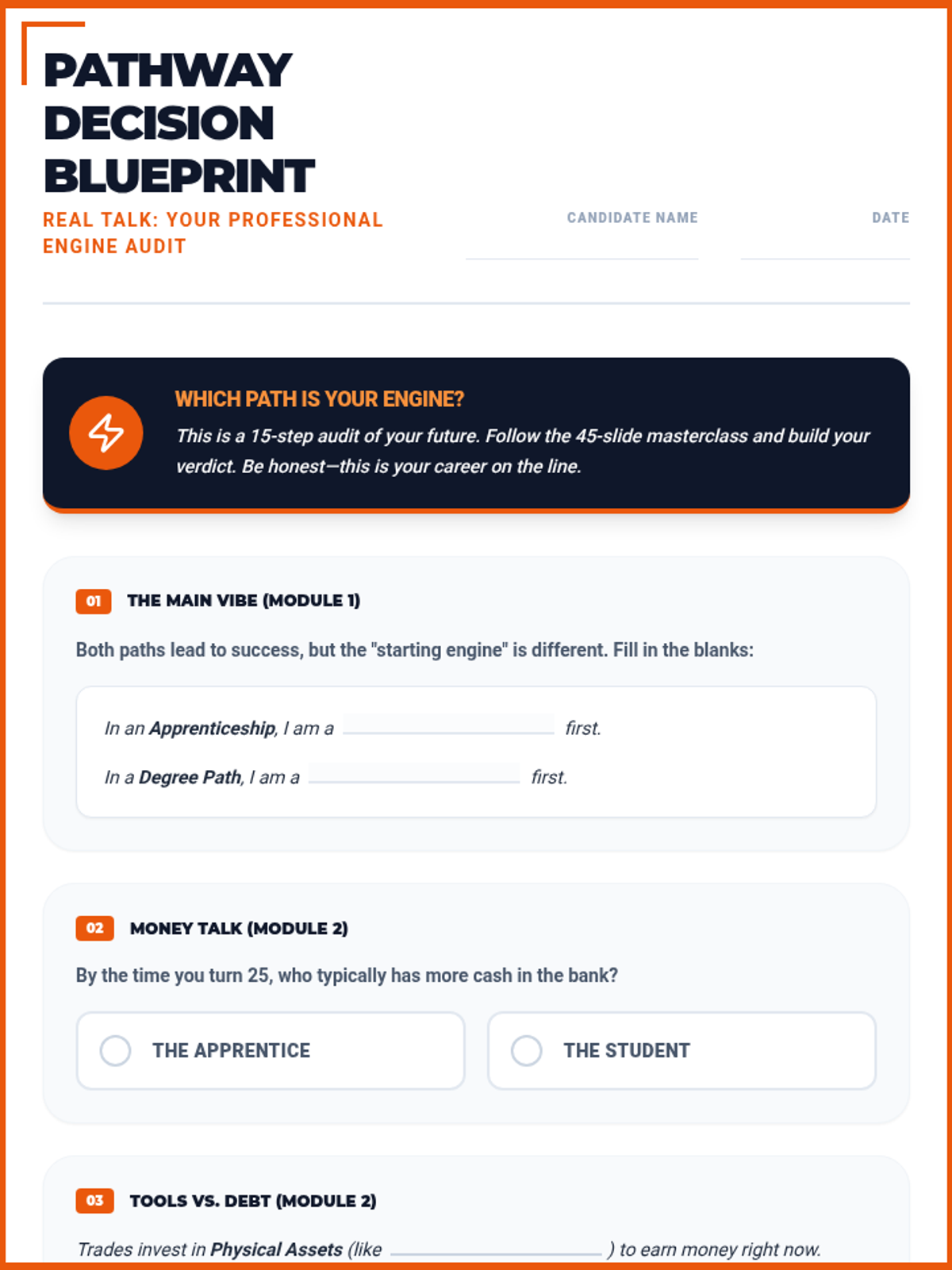
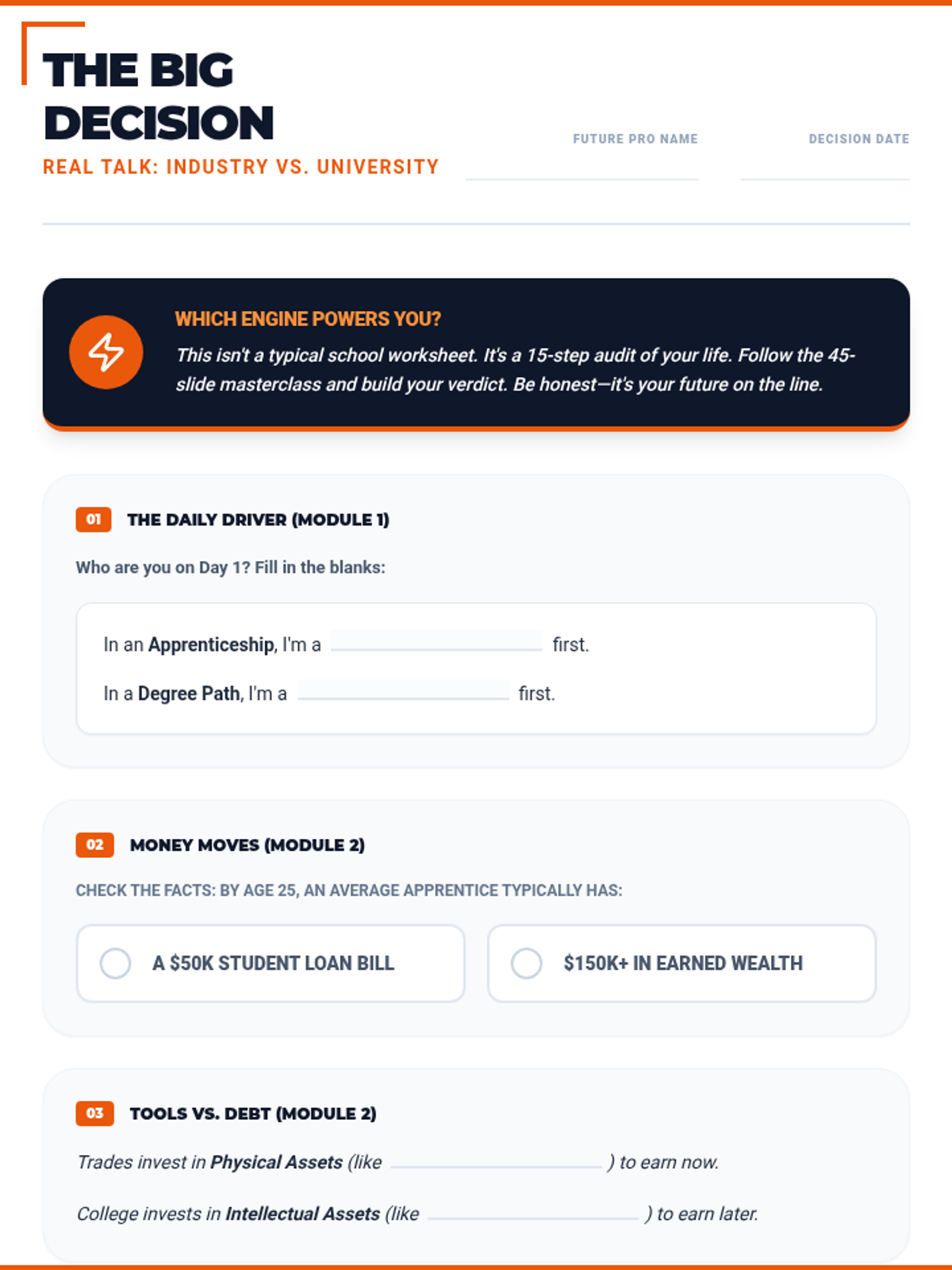
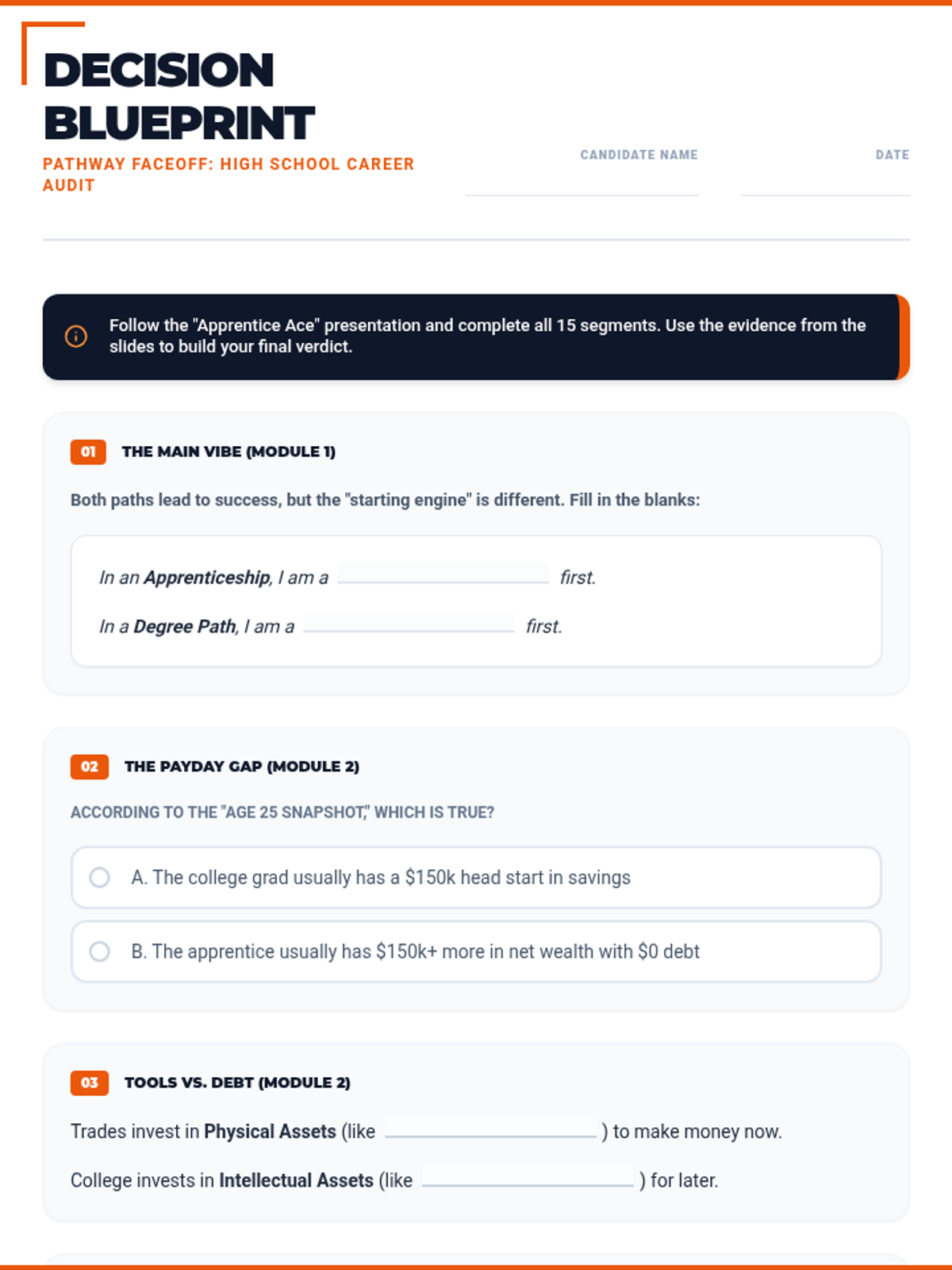
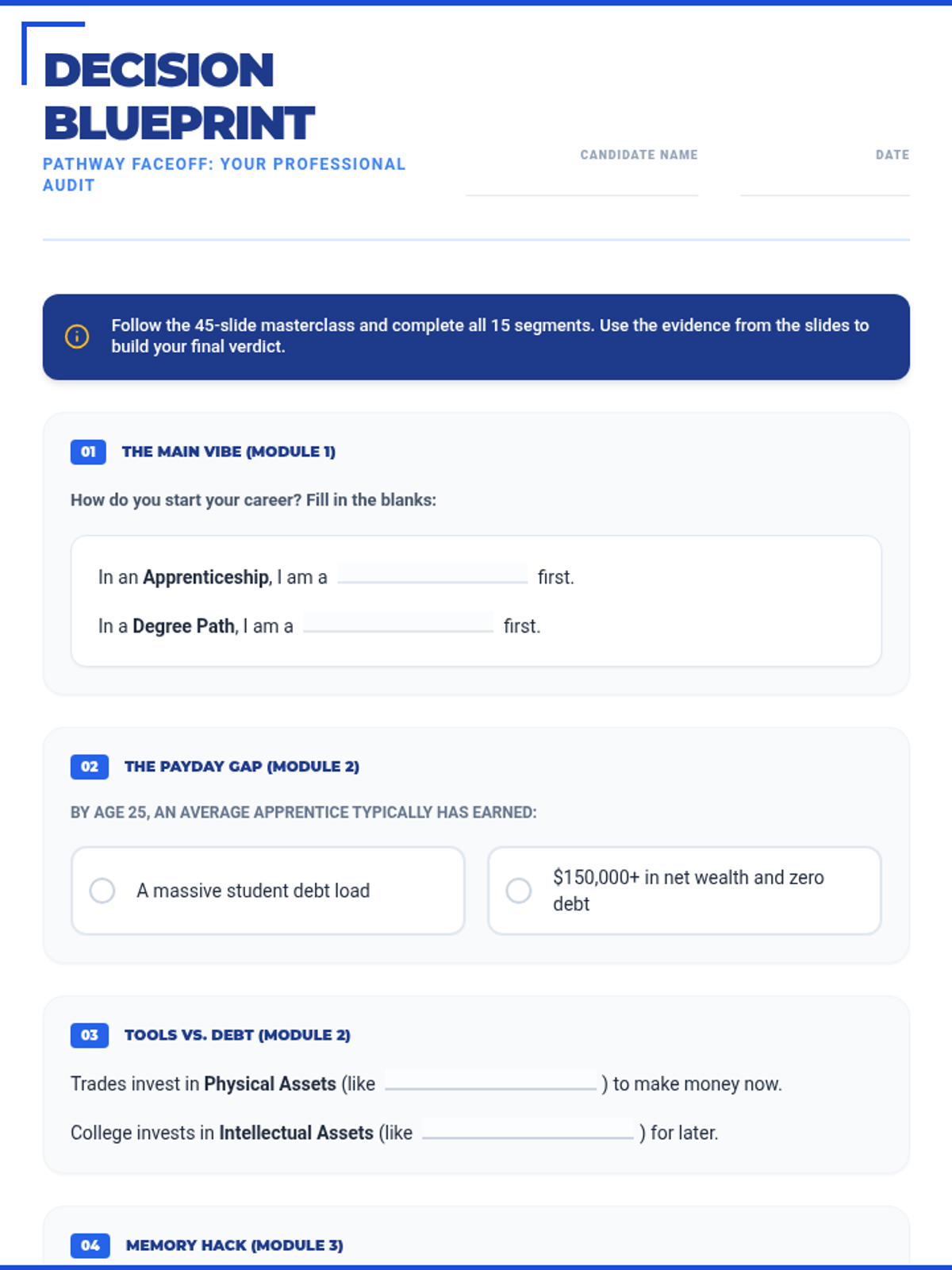
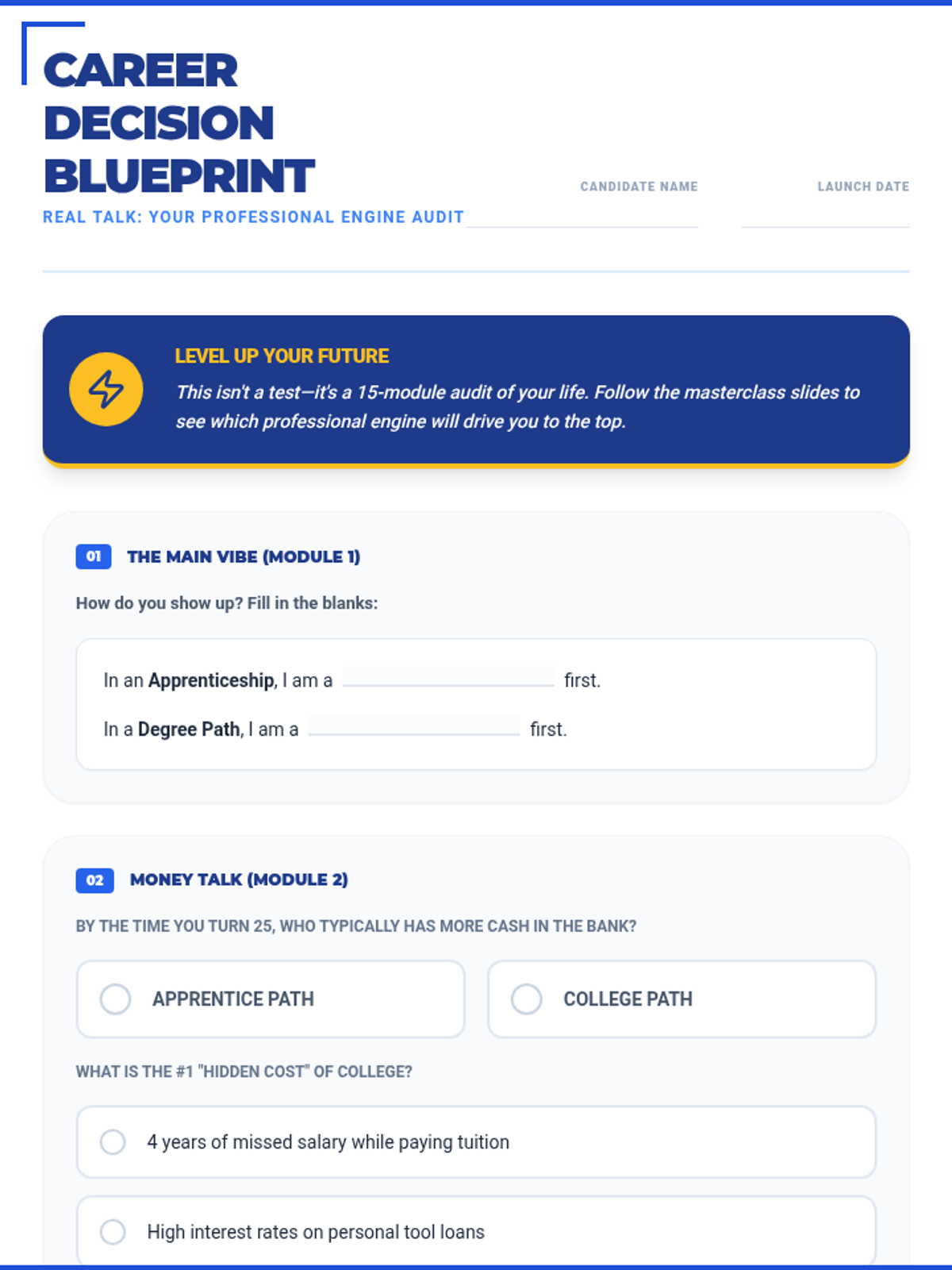
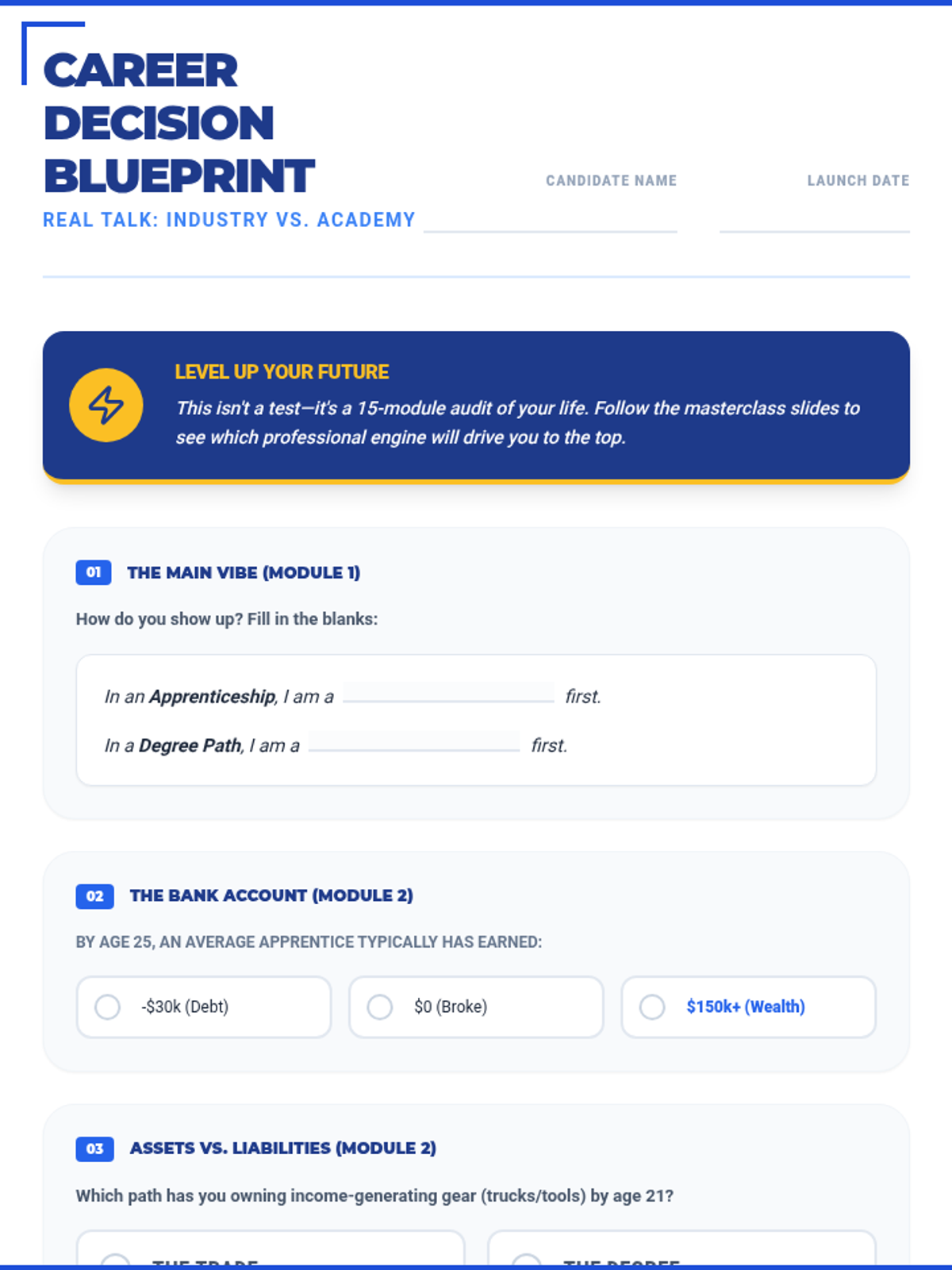
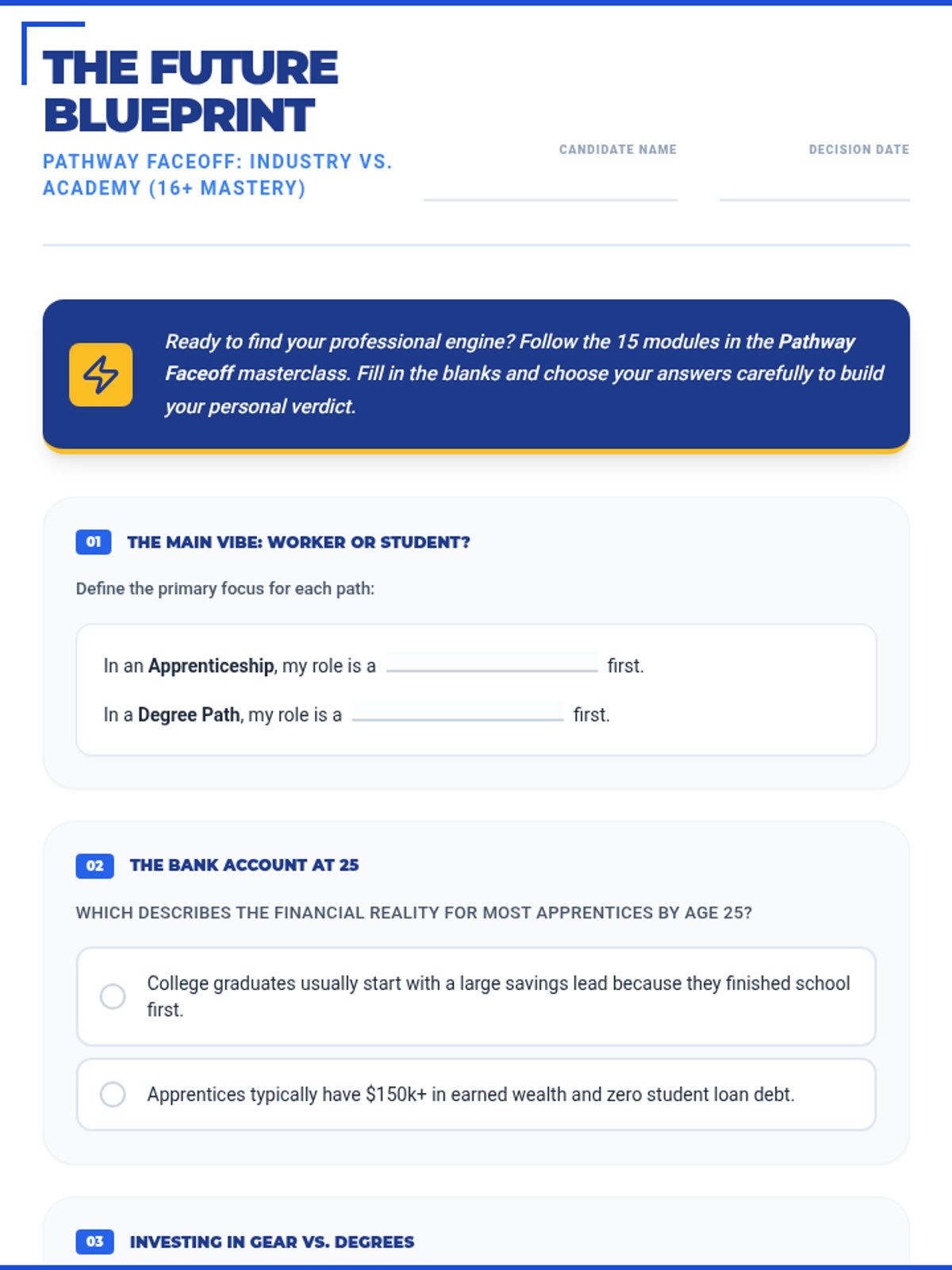
A 15-section career exploration worksheet designed for 16-year-old high school students, featuring punchy, relatable titles and refined "Real Talk" language like "The Main Vibe" and "Why I'll crush it." Meticulously aligned with the 45-slide masterclass. All correct answer highlights have been removed for student use.
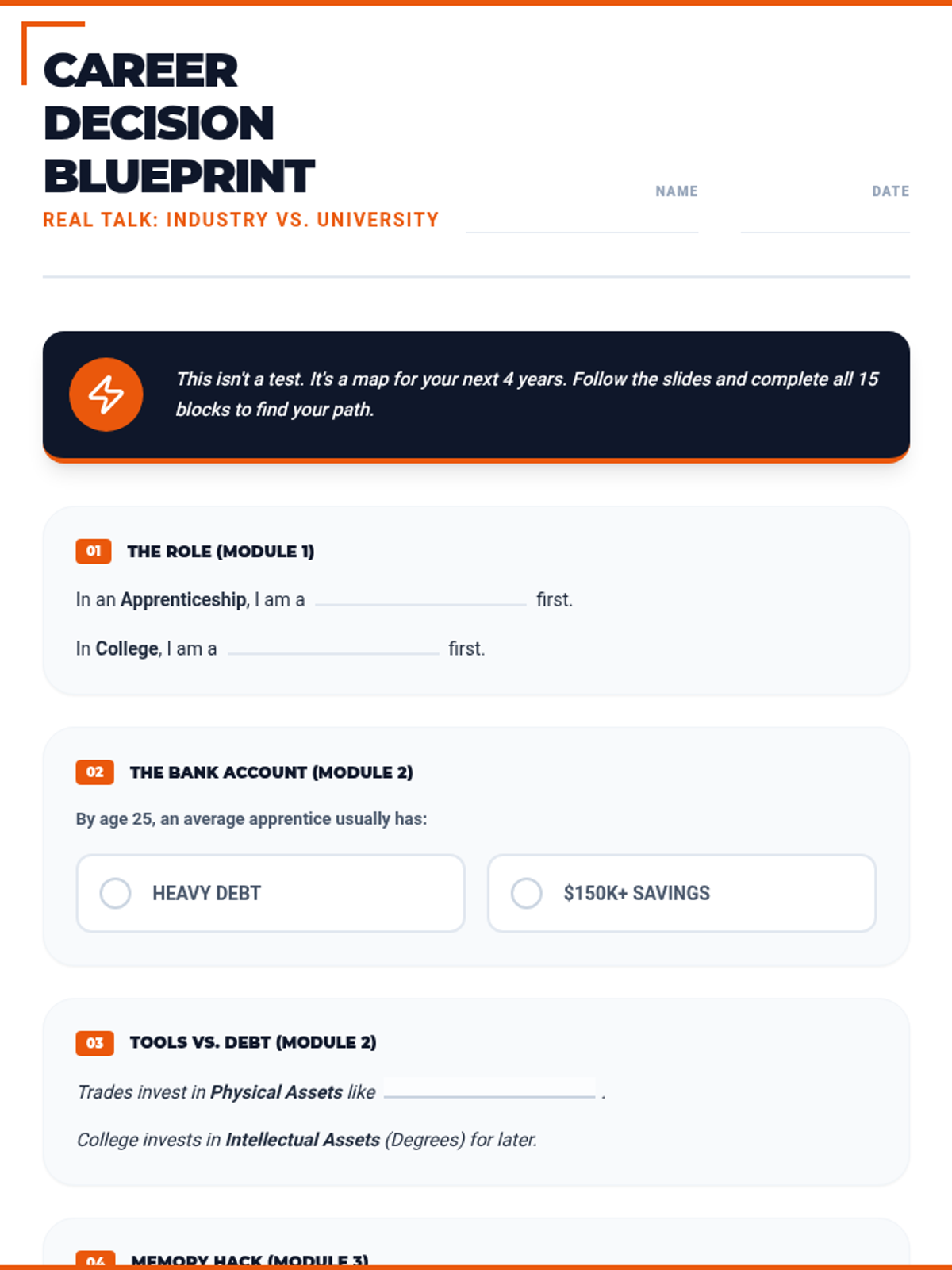
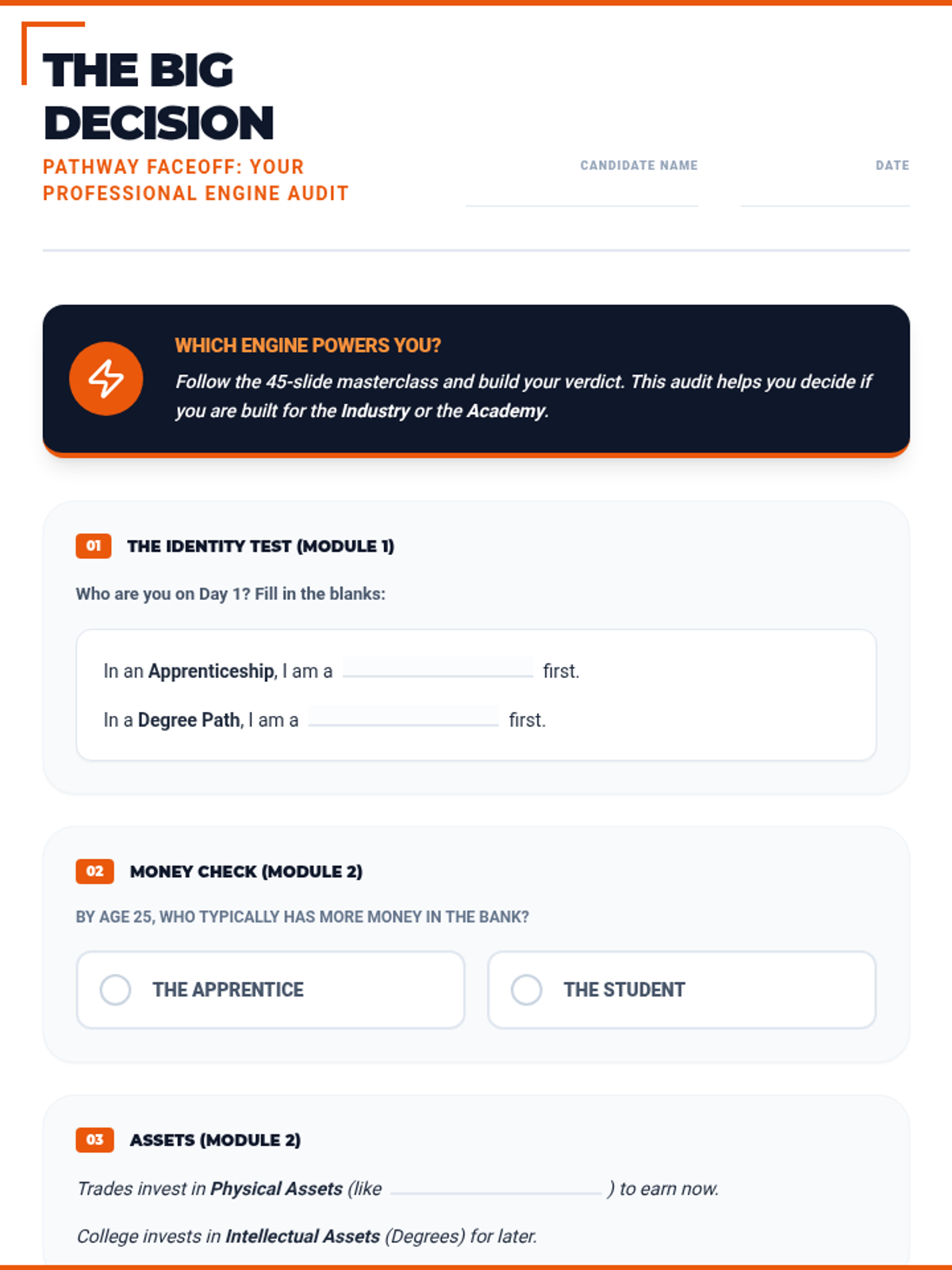
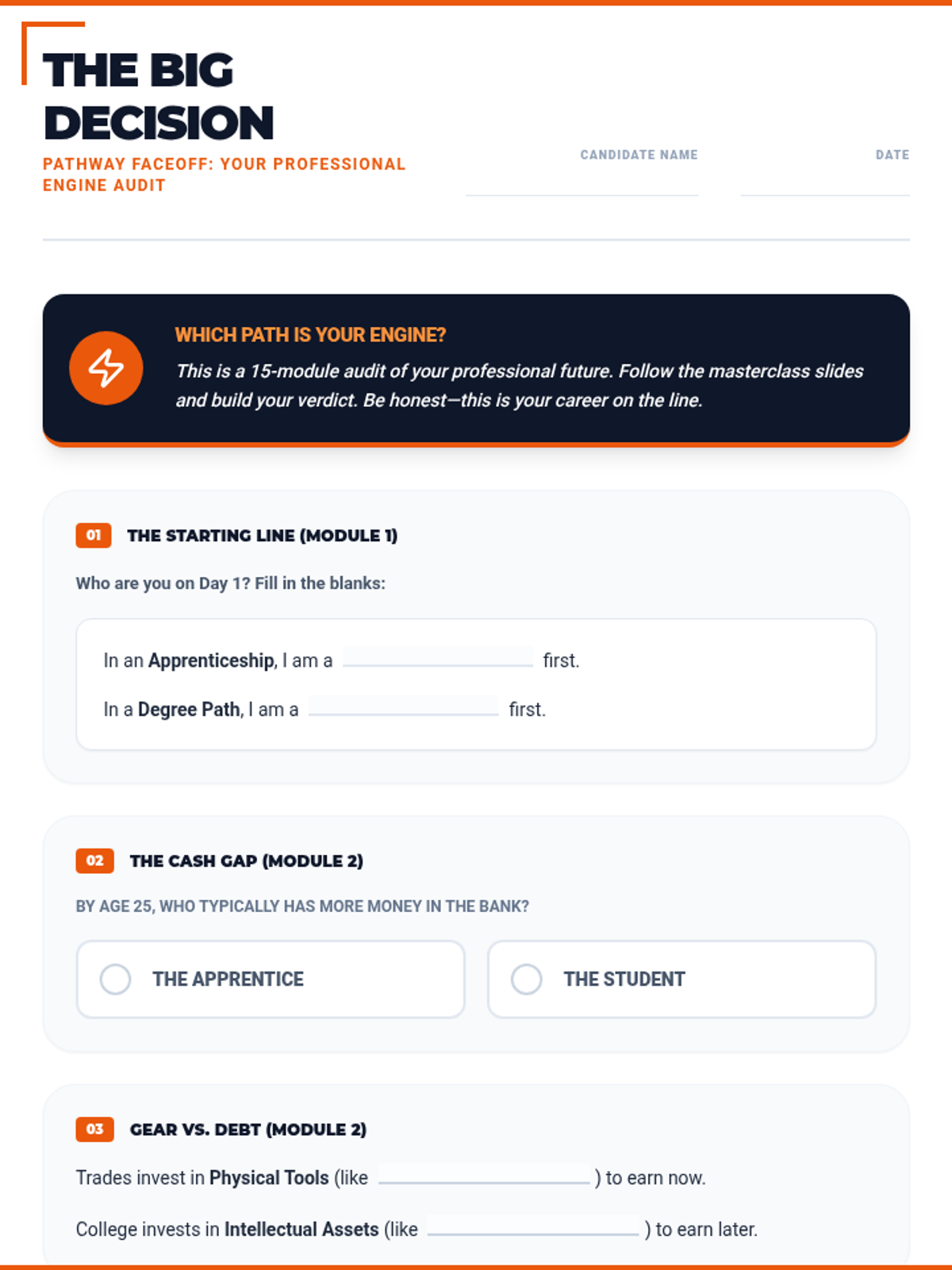
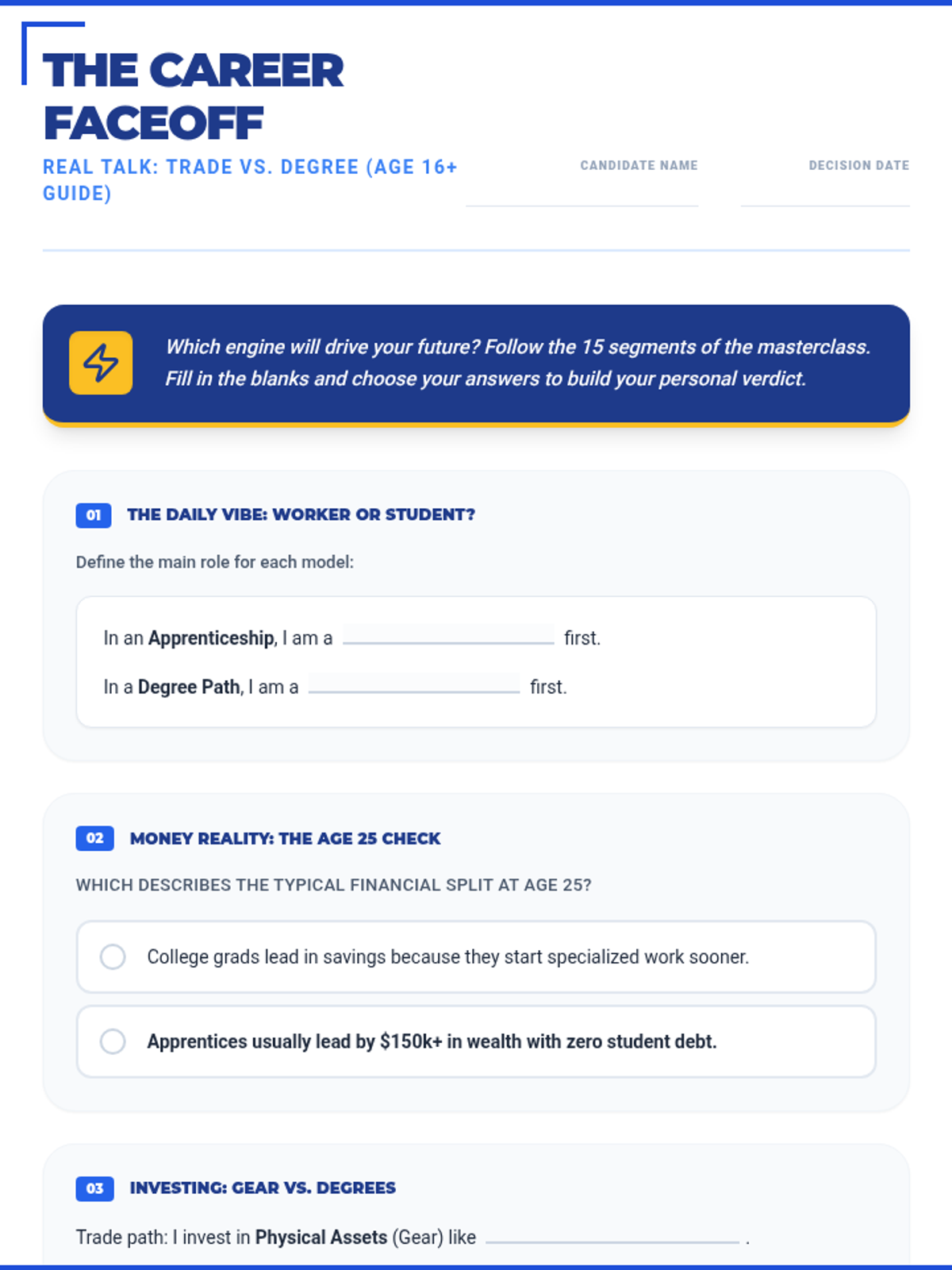
A 15-section career exploration worksheet designed for 16-year-old high school students, featuring punchy, relatable titles and a "Safety Orange & Slate" theme. Meticulously aligned with the 45-slide masterclass. All correct answer highlights have been removed for student use.
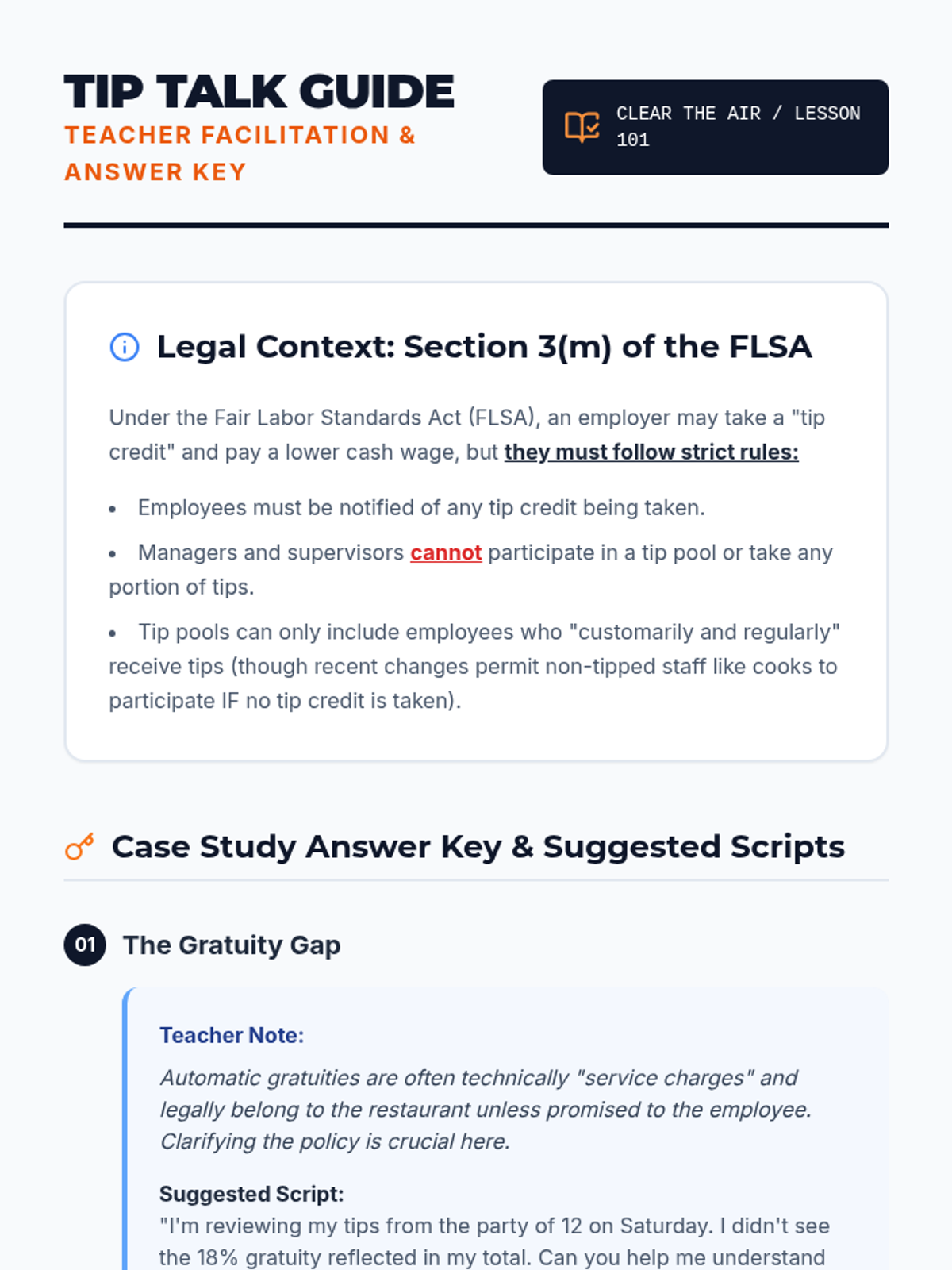
A facilitation guide for instructors, featuring key legal concepts regarding the Fair Labor Standards Act, suggested scripts for case studies, and discussion prompts to encourage self-advocacy in the service industry.
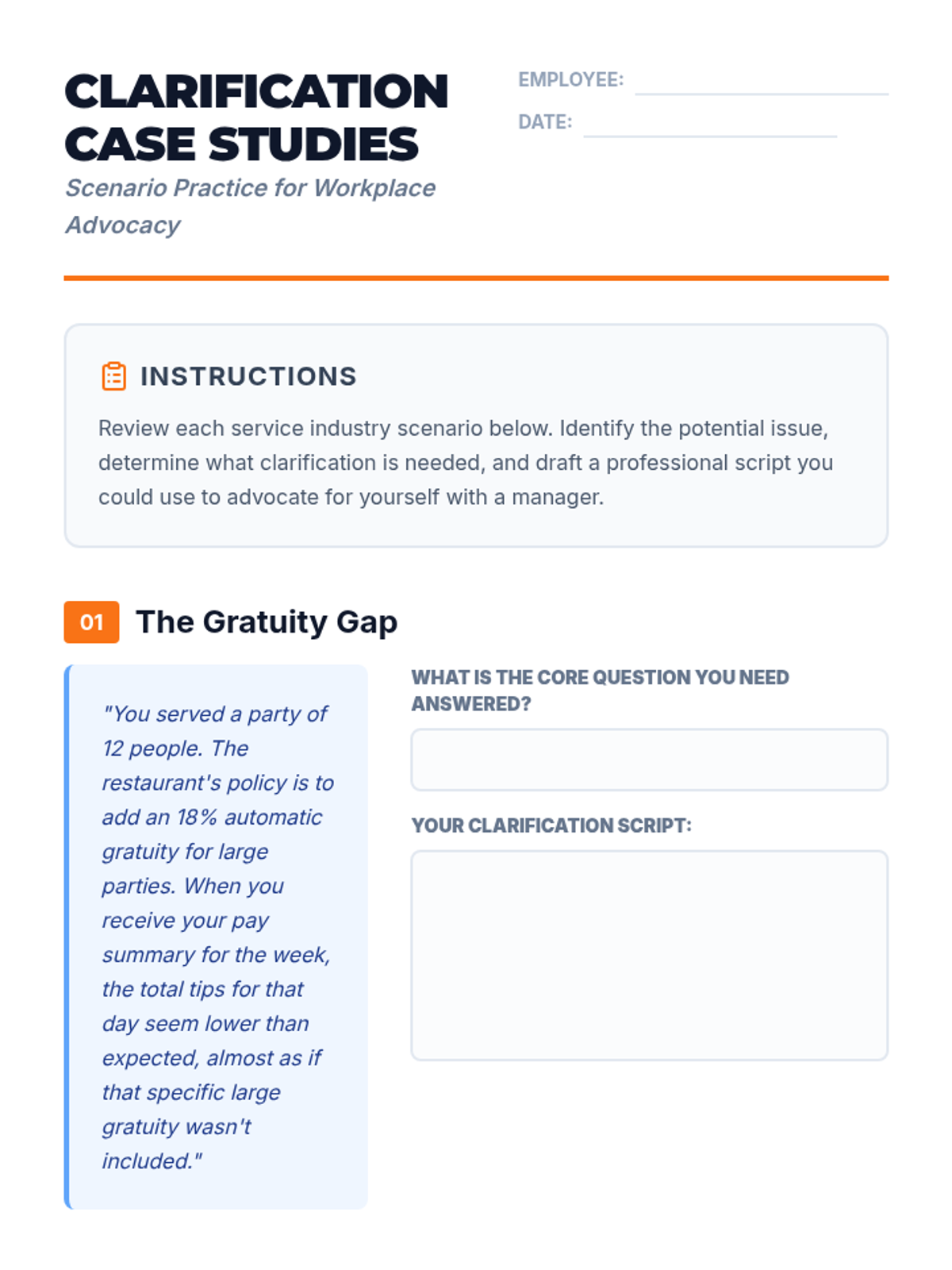
A worksheet featuring three real-world service industry scenarios involving tipping confusion. Students practice identifying core issues and drafting professional scripts to ask for clarification from management.
A visual presentation designed to teach service industry employees about different tipping systems, their legal rights regarding tips, and professional strategies for asking for clarification on pay. It includes specific scripts and identification of red flags in the workplace.
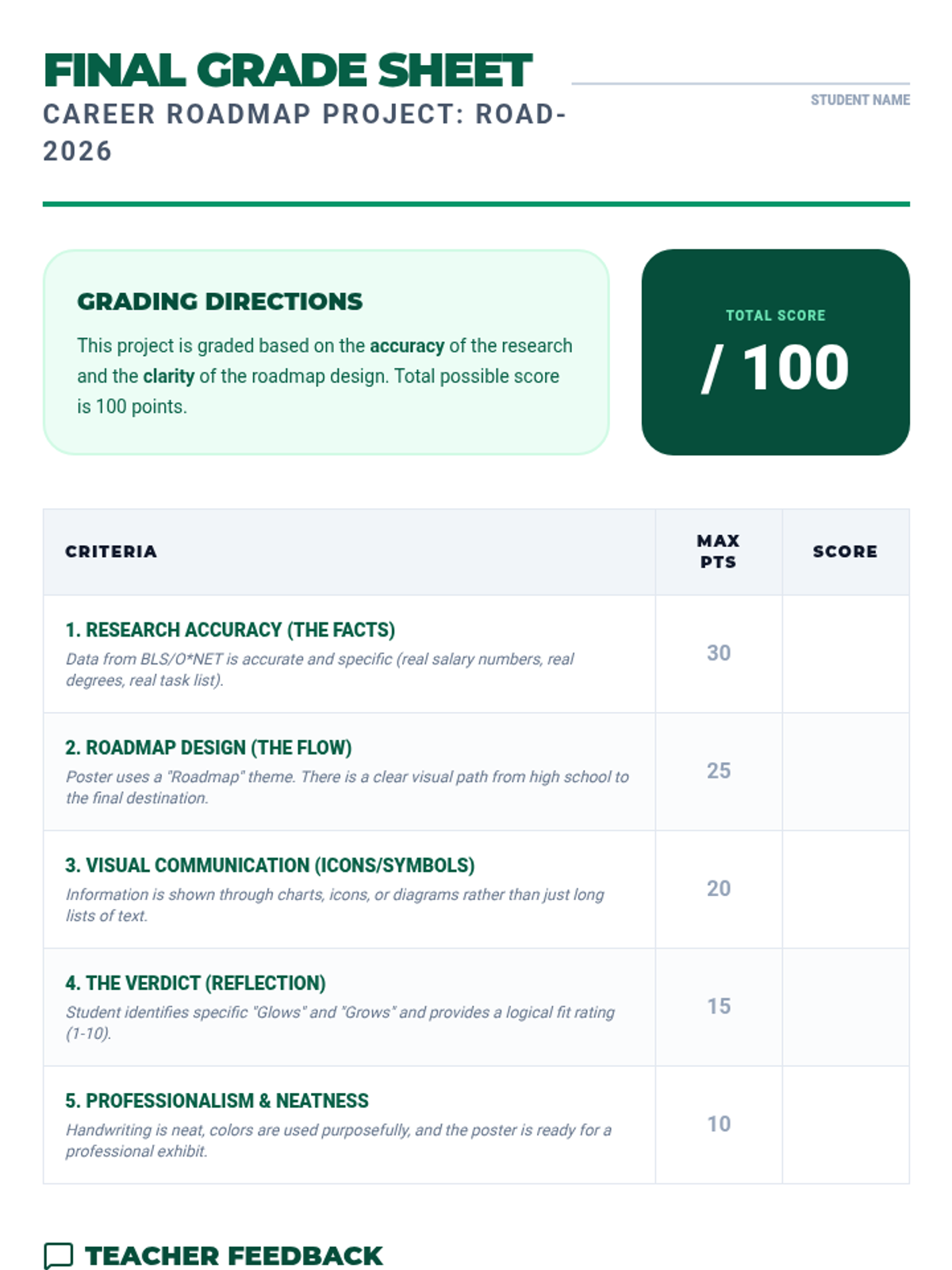
A formal project grading sheet for the Career Roadmap Project, featuring a detailed 100-point rubric with criteria for research accuracy, roadmap design, visual communication, and personal reflection.
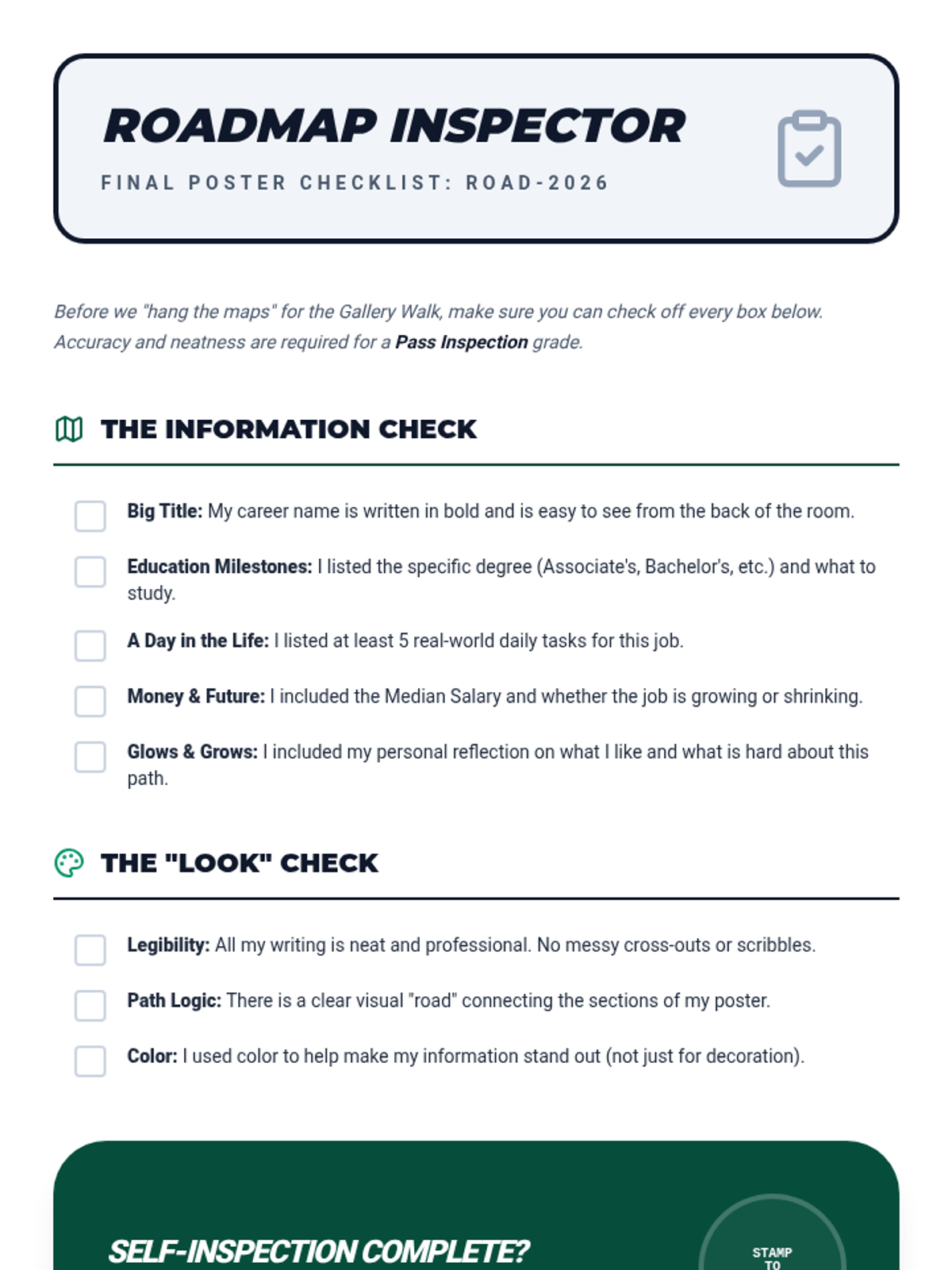
A student-facing design checklist for the final career roadmap poster, ensuring all required technical research and visual elements are included for assessment. This version is simplified for first-time researchers.
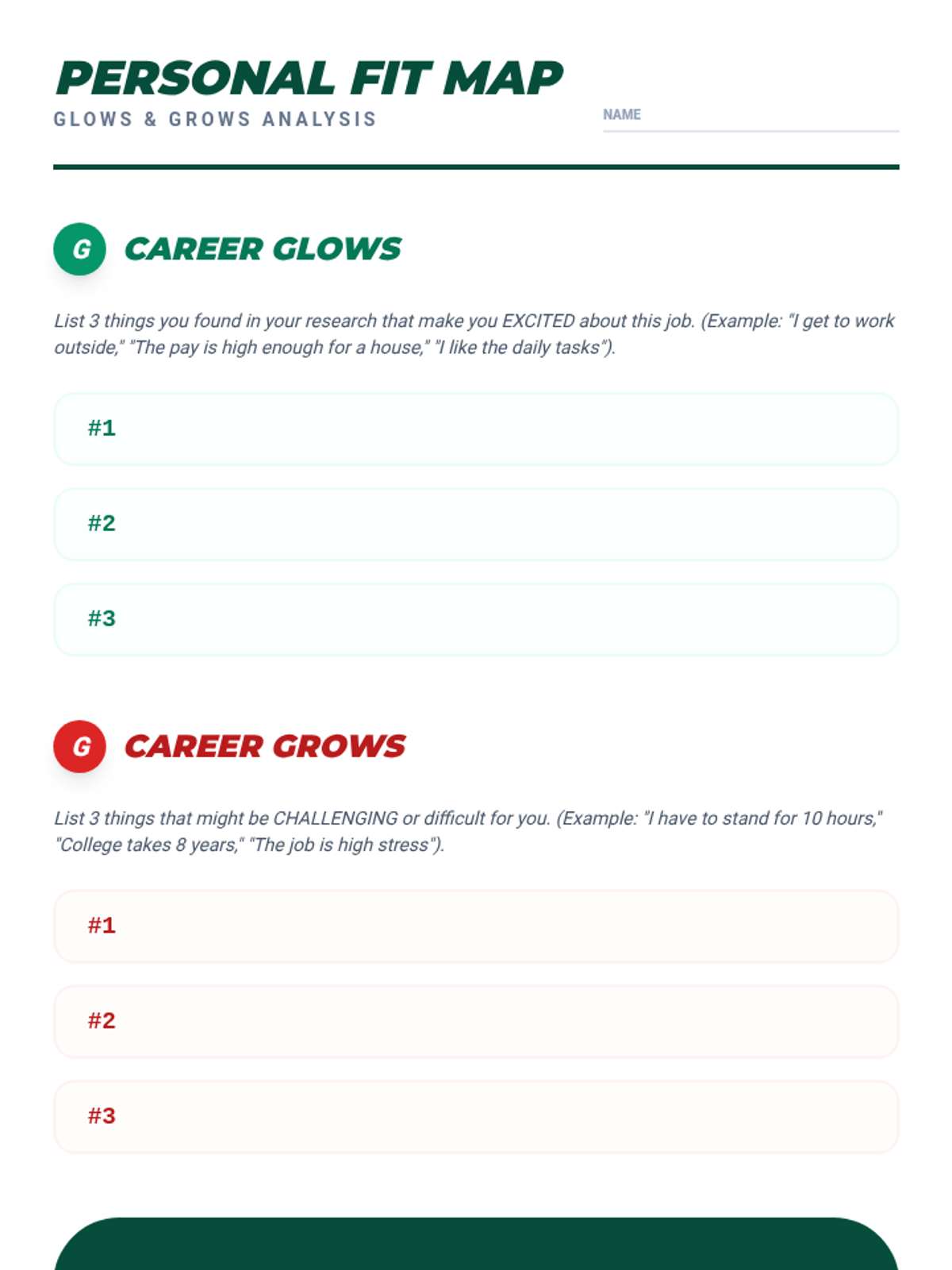
A personal reflection and analysis worksheet for the Career Roadmap Project, guiding students to weigh the pros and cons of their chosen career path and evaluate their personal fit before designing their poster. This version uses 'Glows & Grows' for simpler understanding.
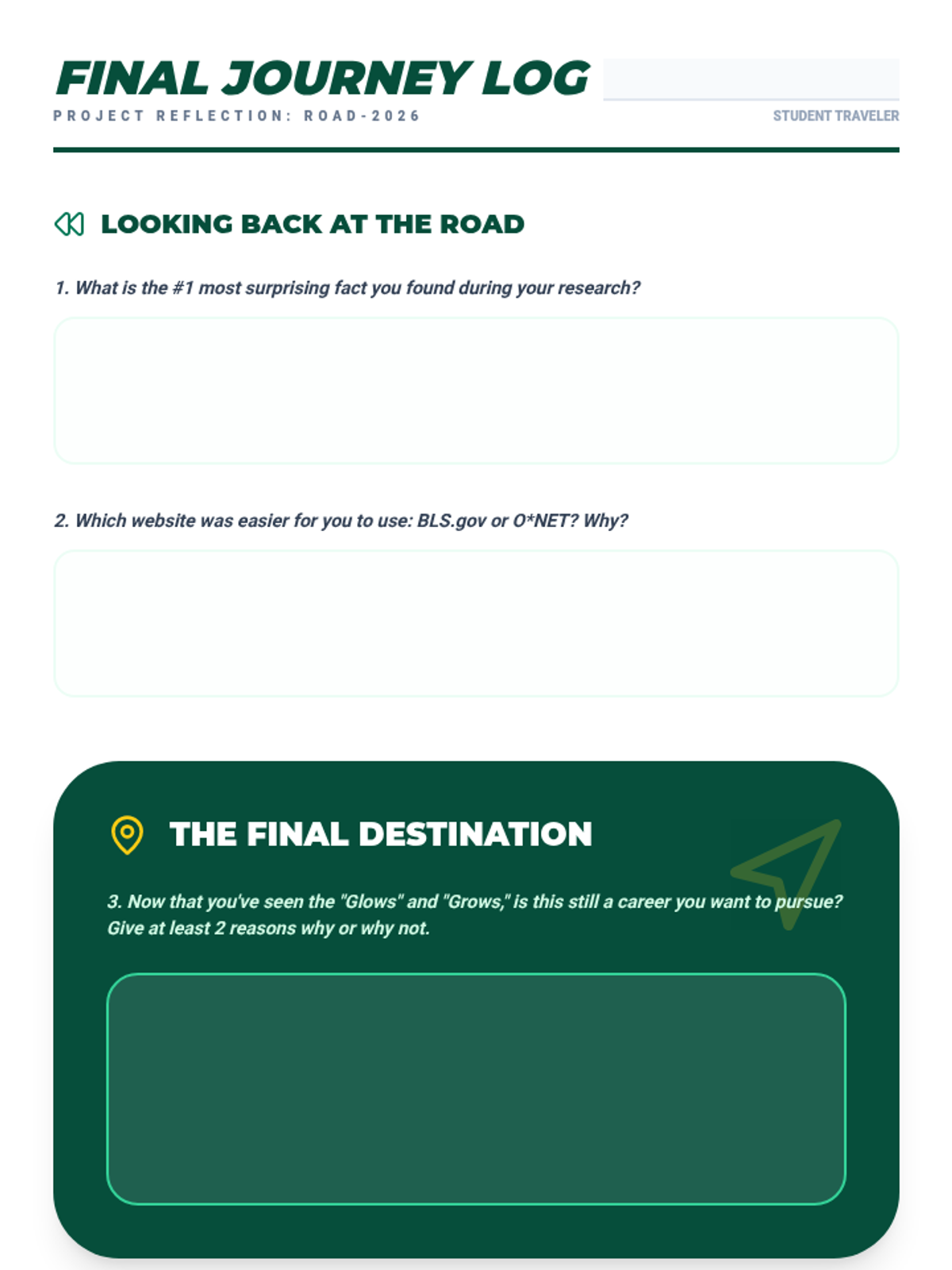
A comprehensive final reflection document for the Career Roadmap Project, guiding students through a structured analysis of their research findings, personal fit, and future action steps. This version is simplified for students new to career research.
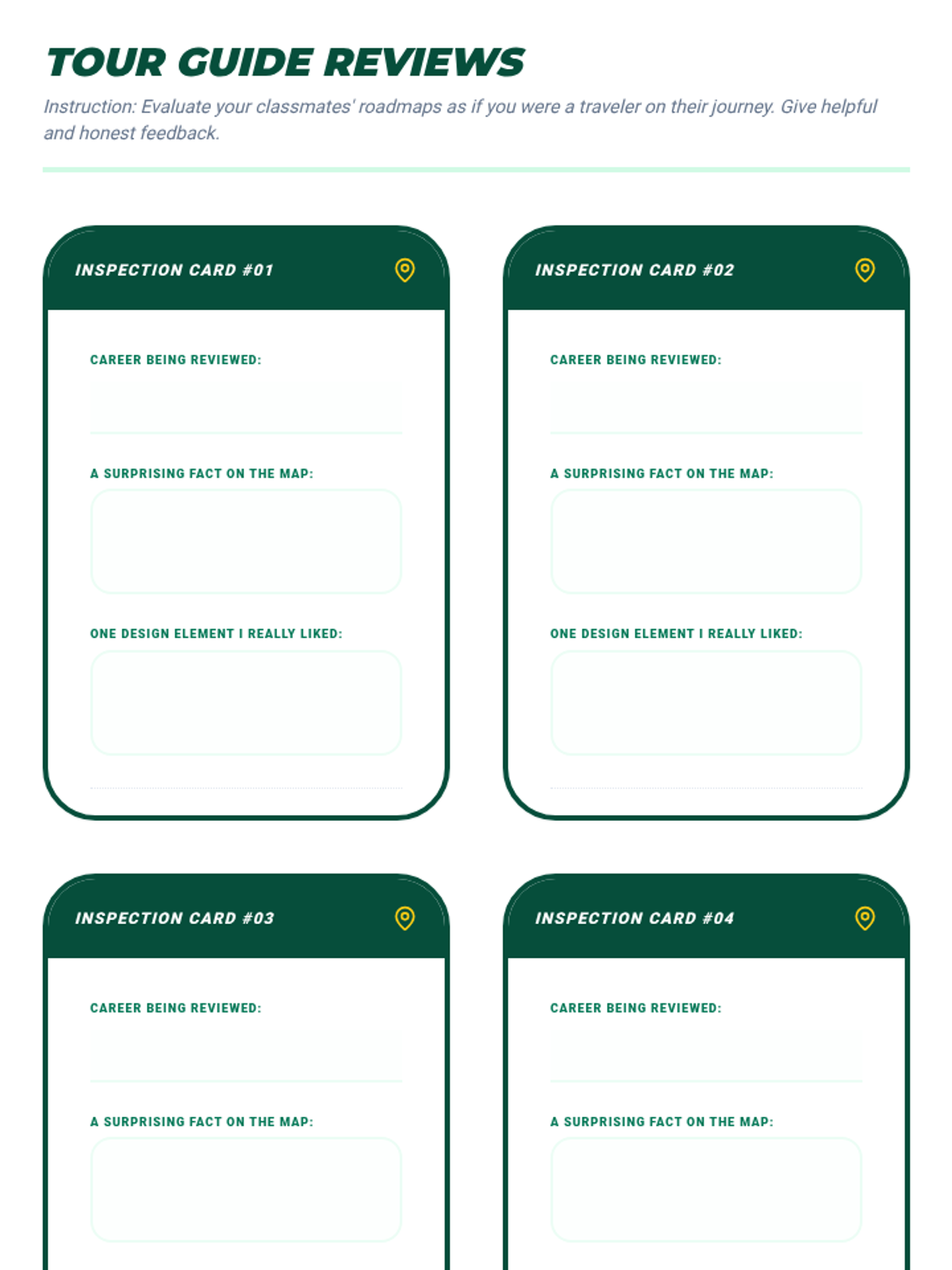
Peer feedback cards for the Gallery Walk phase of the Career Roadmap Project, designed as 'Inspection Cards' where students provide structured feedback on their classmates' posters.
A slide presentation for the third phase of the Career Blueprint Project, guiding students through the process of translating their research data into a technical blueprint-themed poster layout.
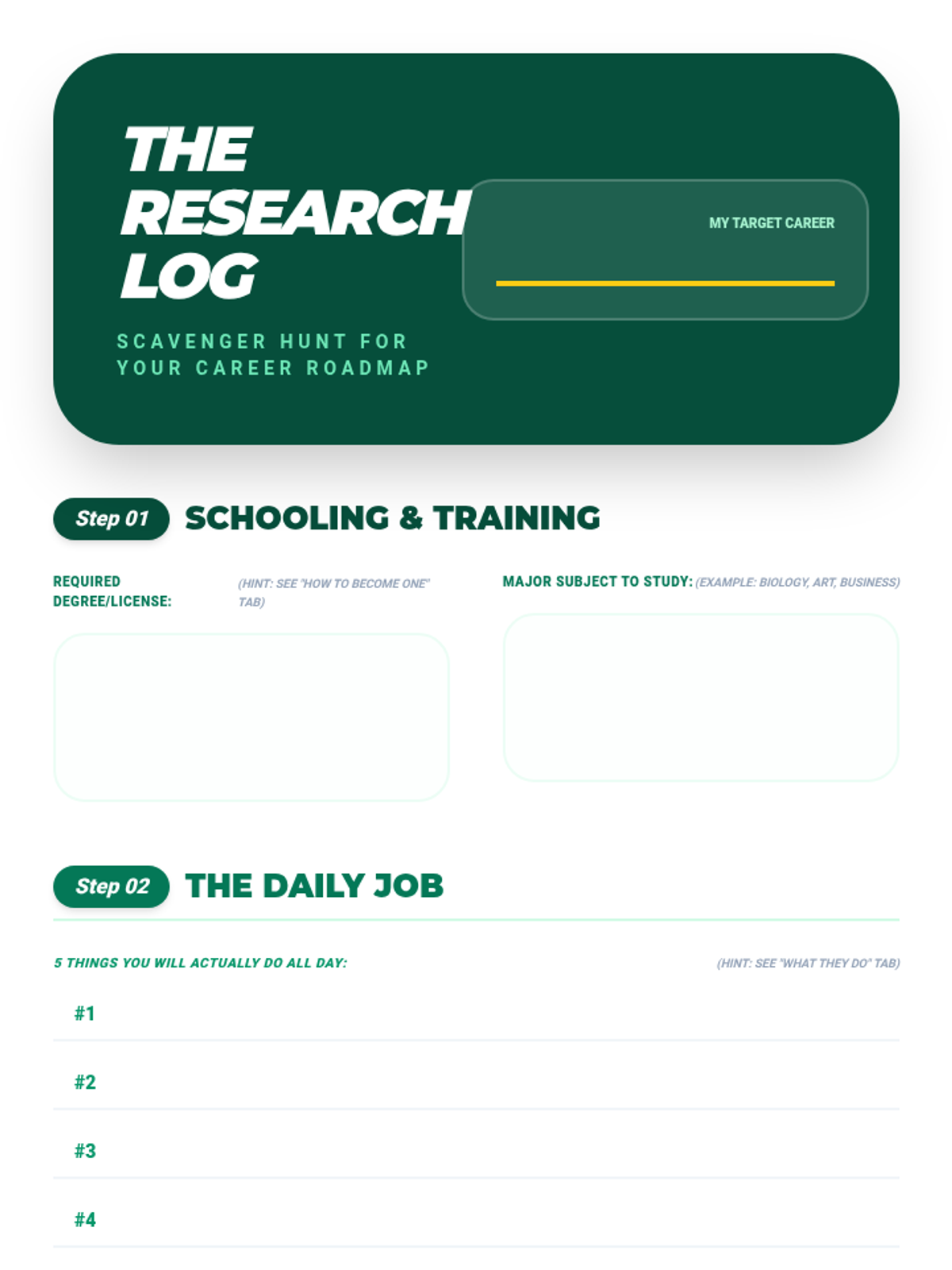
A detailed technical research organizer for the Career Roadmap Project, providing structured sections for students to record education requirements, skill sets, daily responsibilities, and market data. This version includes simple headers and hints specifically for beginners.
A slide presentation for the second phase of the Career Roadmap Project, specifically designed for students with no prior career research experience. It explains BLS/O*NET tools in simple terms and defines key vocabulary like 'Median Pay.'
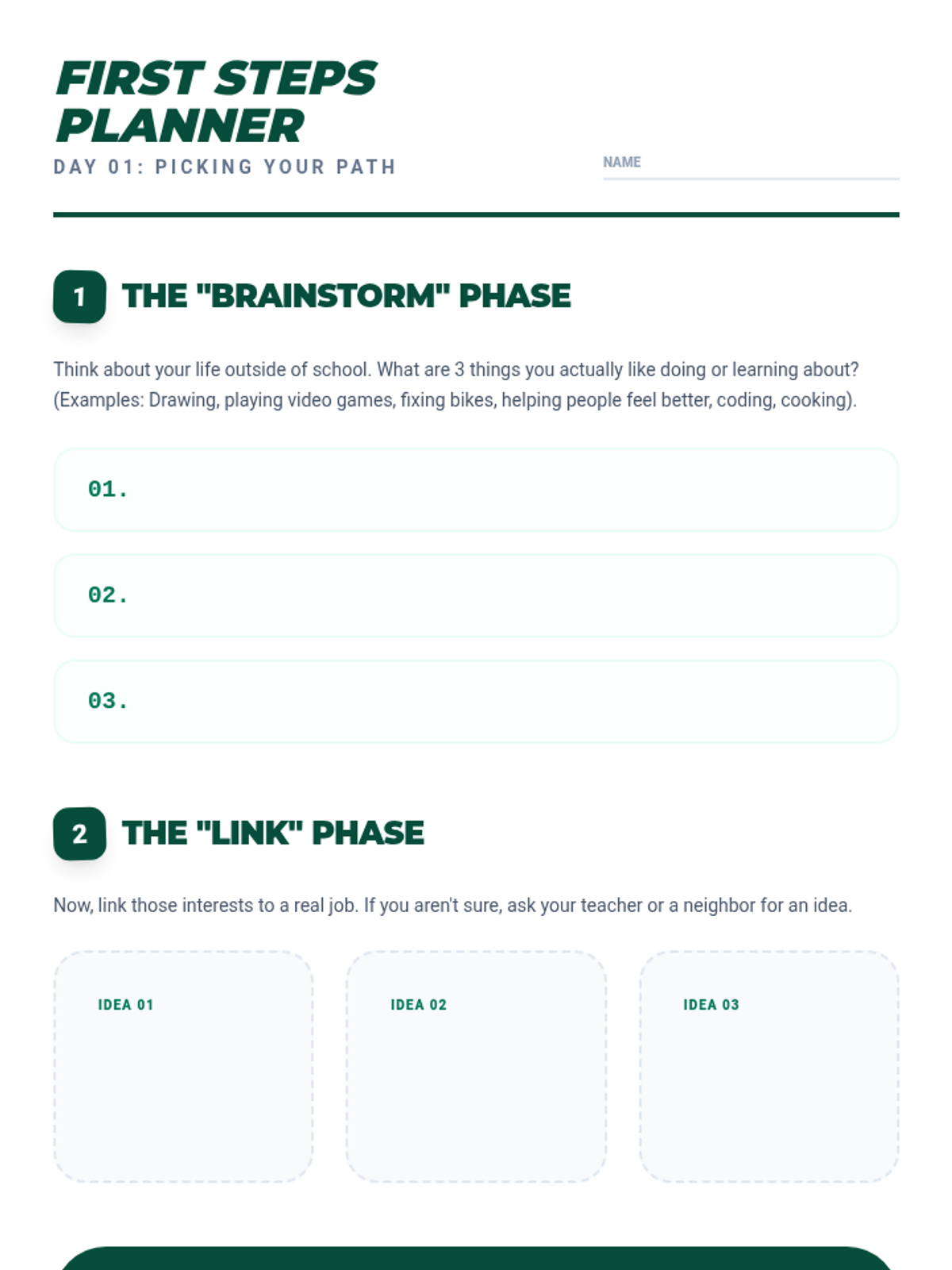
A student planning worksheet for the initial phase of the Career Roadmap Project, guiding 10th-grade students through interest inventory and career selection. This version is simplified for students new to career research.
A simplified visual presentation for 10th-grade students with no prior career research experience. It introduces the project as an investigation, explains the real-world tools they will use (BLS/O*NET), and outlines the 10-day roadmap.
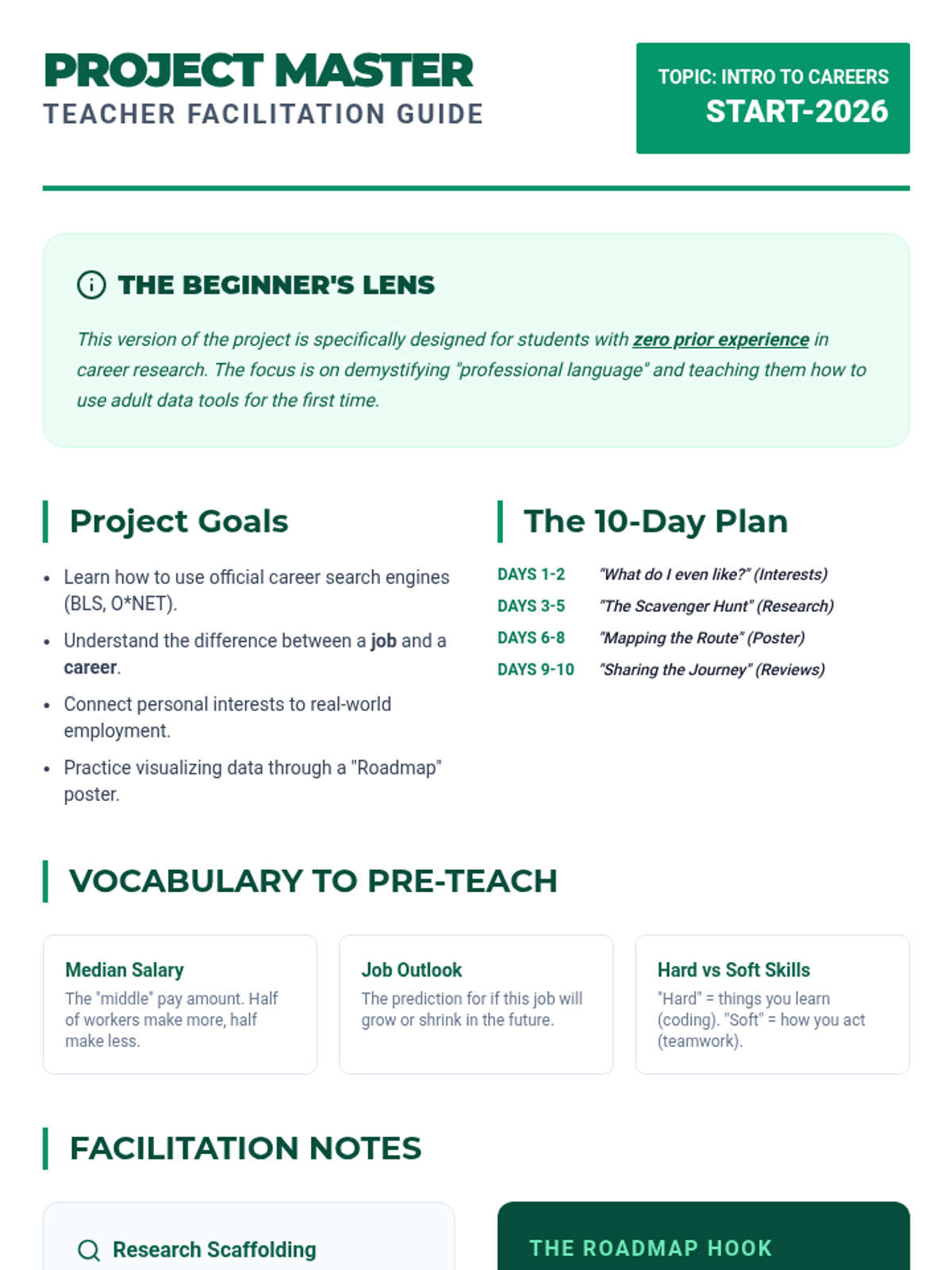
A simplified teacher facilitation guide for the Career Roadmap Project, specifically designed for students with no prior career research experience. It includes pre-teaching vocabulary, demonstration strategies, and a beginner-friendly project timeline.
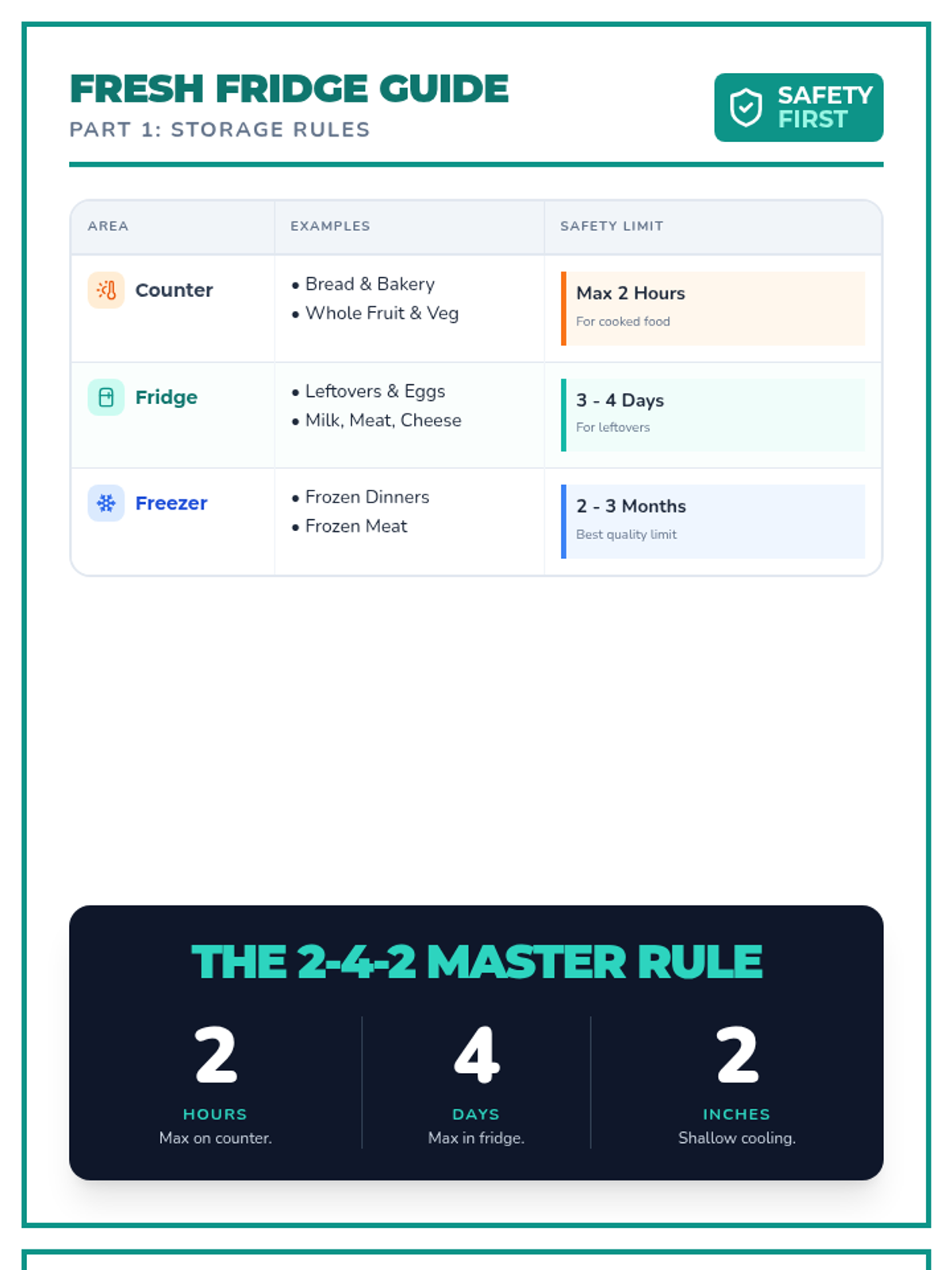
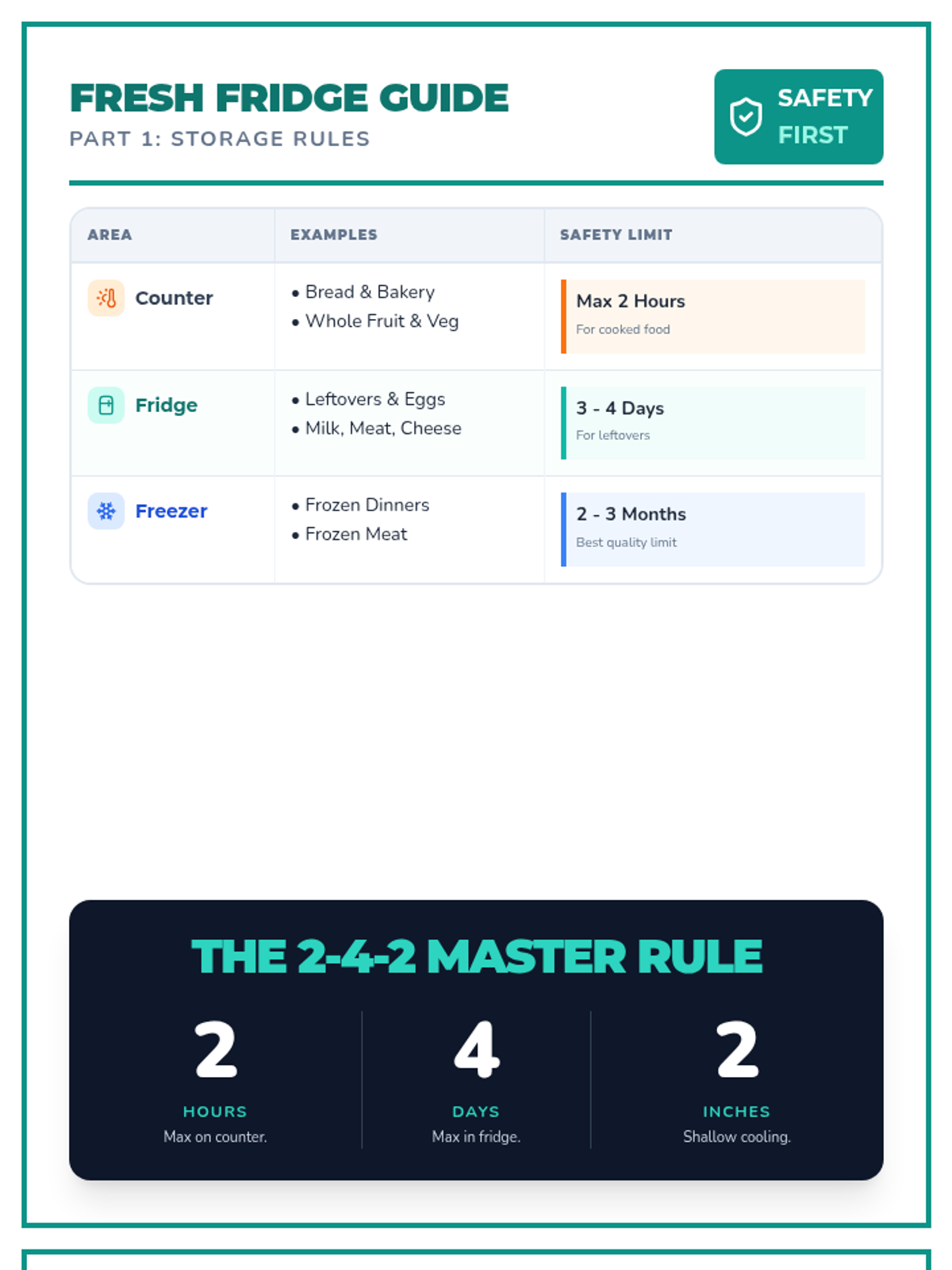
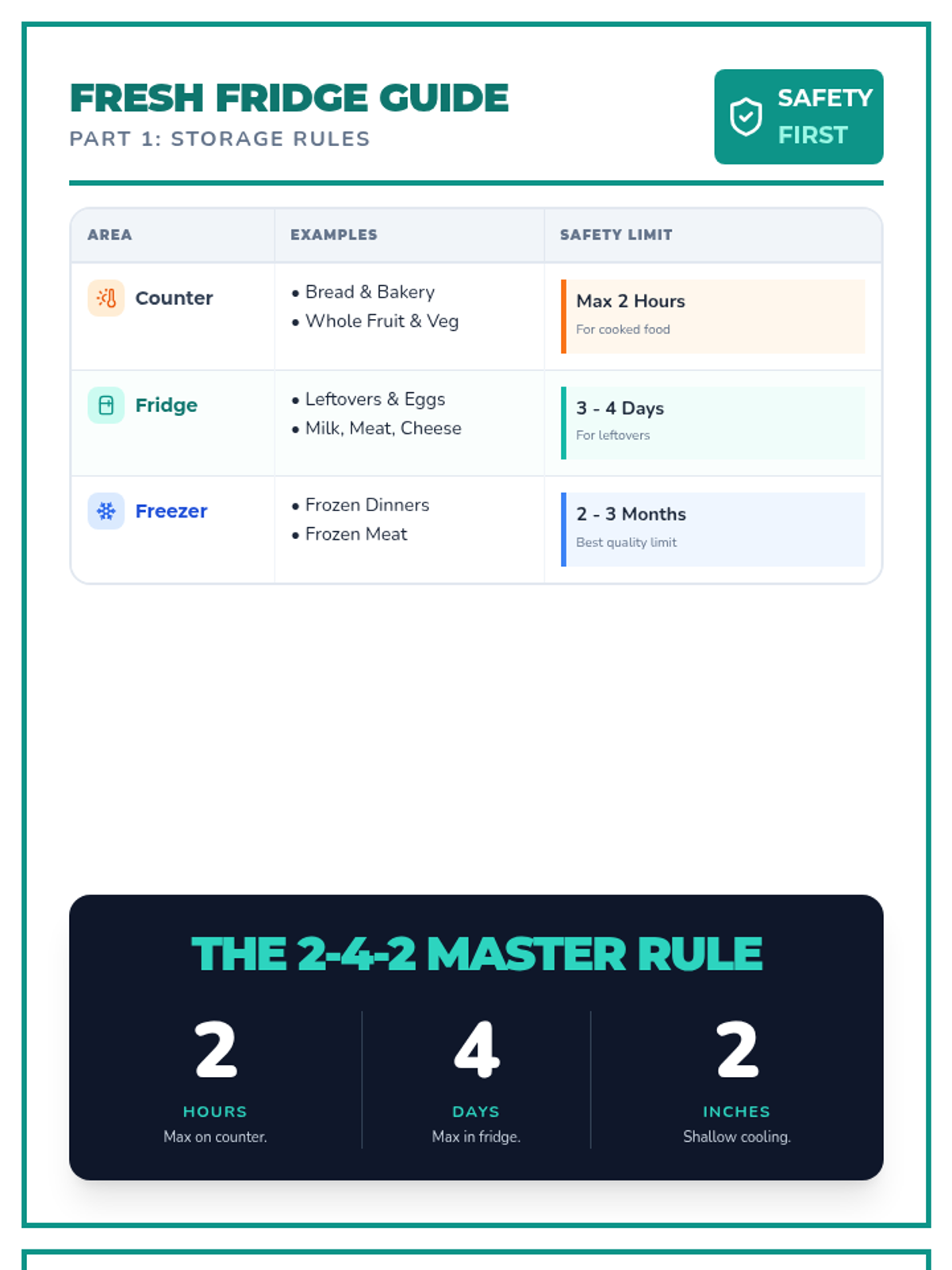
A reorganized visual guide for food storage and safety, featuring a clear tabular storage chart, the '2-4-2' rule, discard criteria, and a labeling tutorial with significantly increased font sizes for maximum readability.
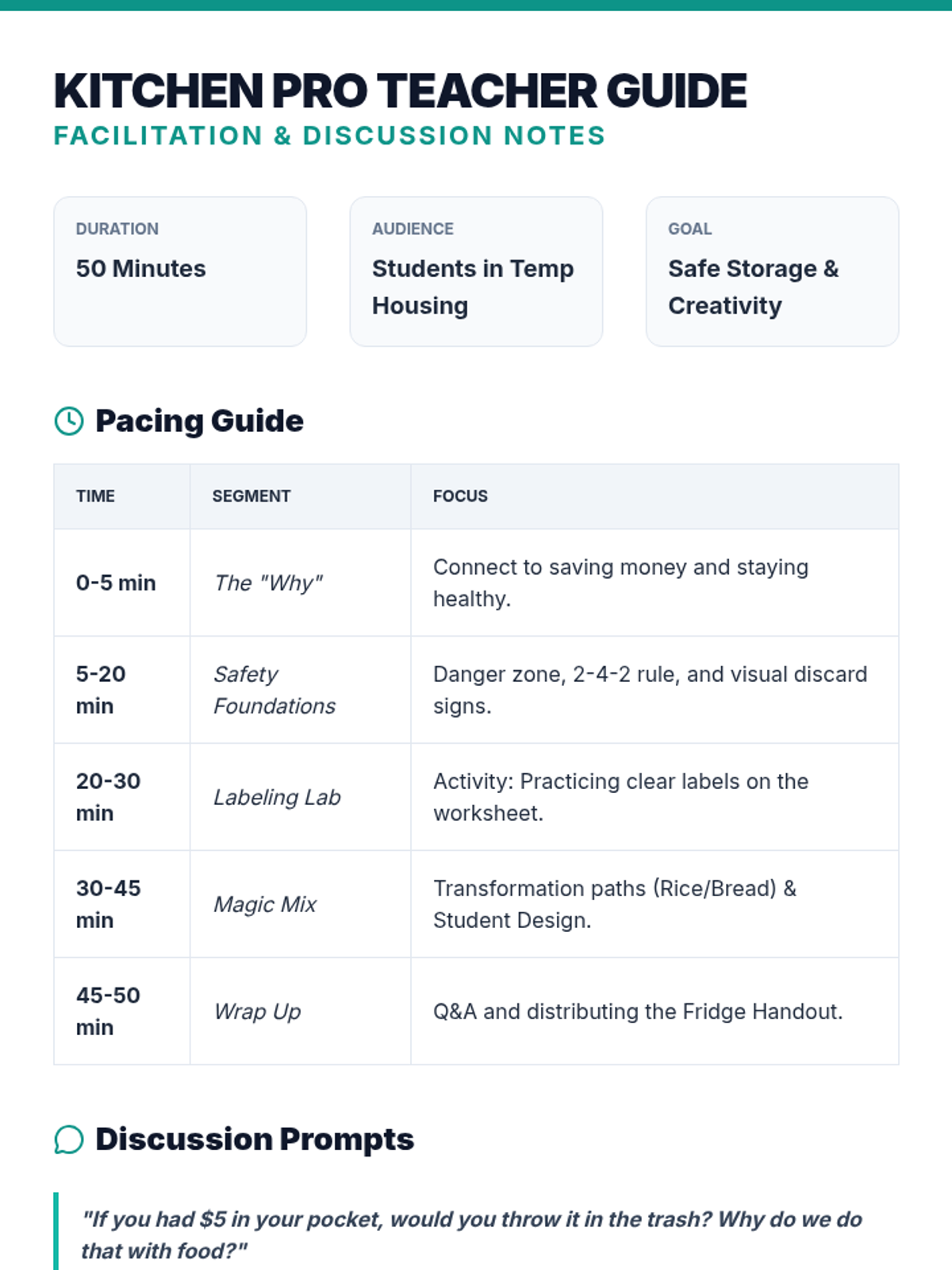
A comprehensive teacher's guide for the Kitchen Hacks lesson, including a 50-minute pacing guide, discussion prompts, and strategies for neurodiverse learners and students in temporary housing.
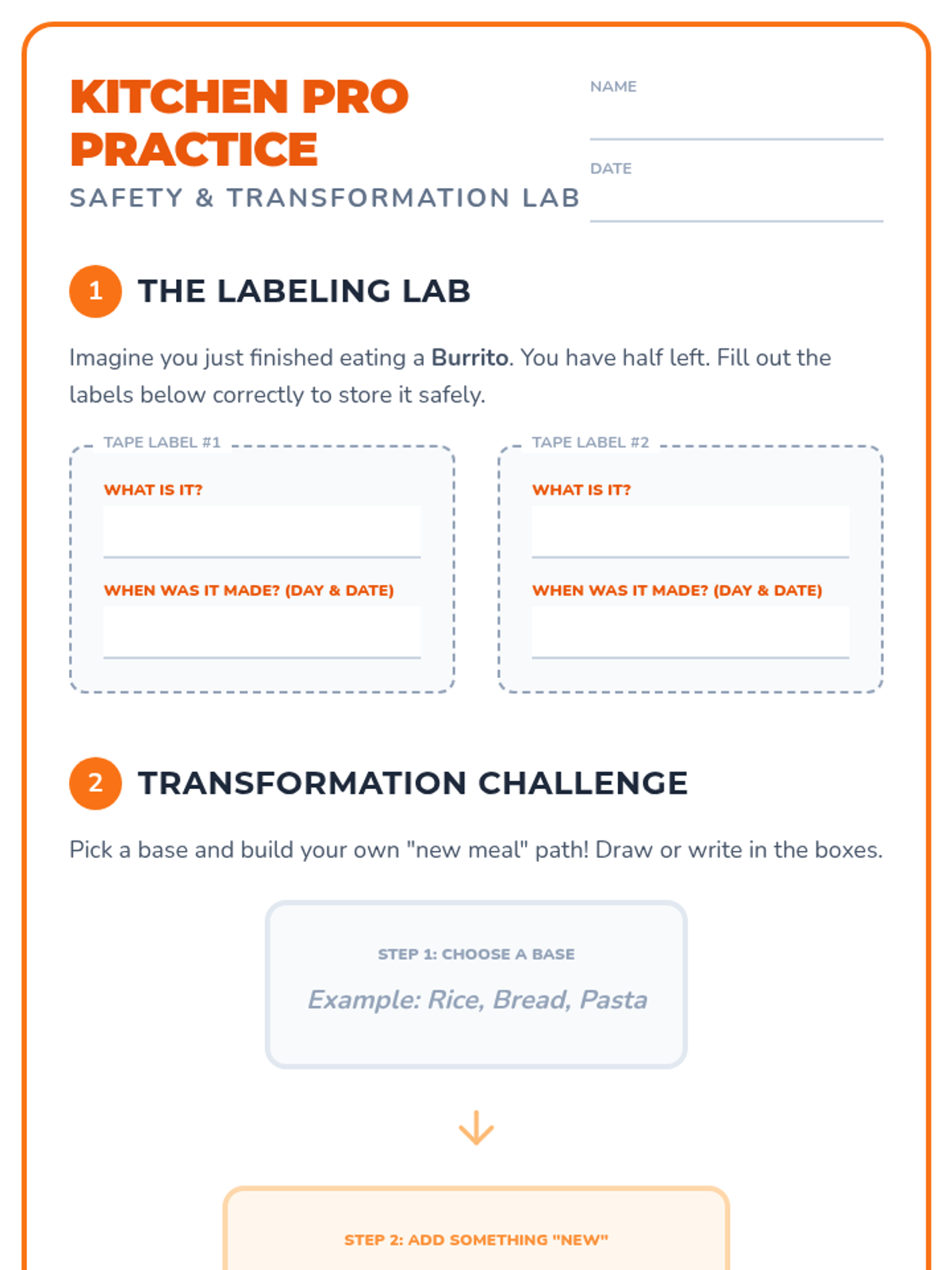
A student practice sheet for applying kitchen safety skills, including labeling exercises and a transformation flowchart activity.
A visually-driven slide deck for a 50-minute session on kitchen safety and food transformation, featuring the 2-4-2 rule and leftover flowcharts.
A reorganized visual guide for food storage and safety, featuring a clear tabular storage chart, the '2-4-2' rule, discard criteria, and a labeling tutorial with increased font sizes for readability.
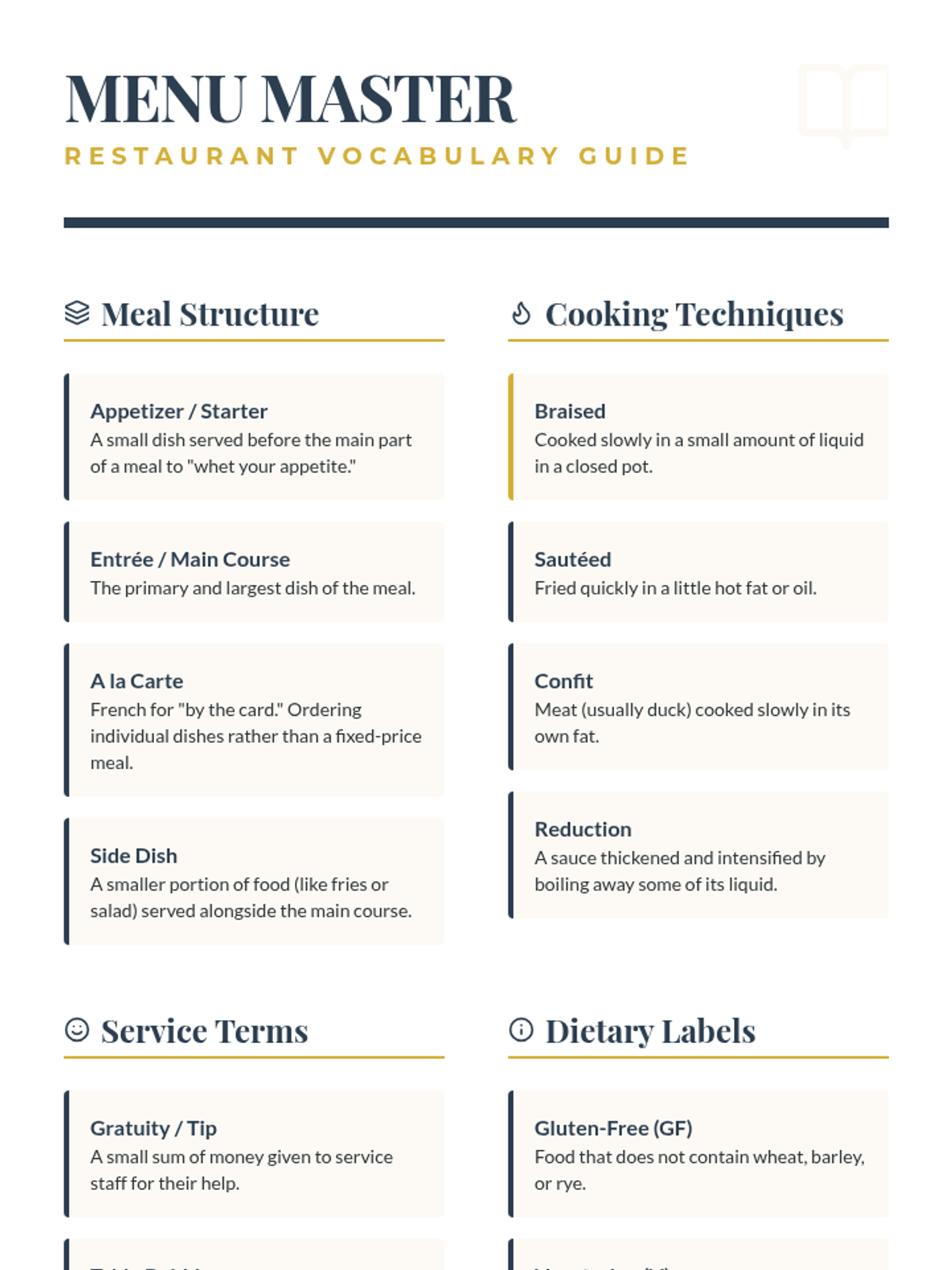
A vocabulary reference sheet for students to understand common restaurant terms, cooking styles, and dietary labels found on menus.
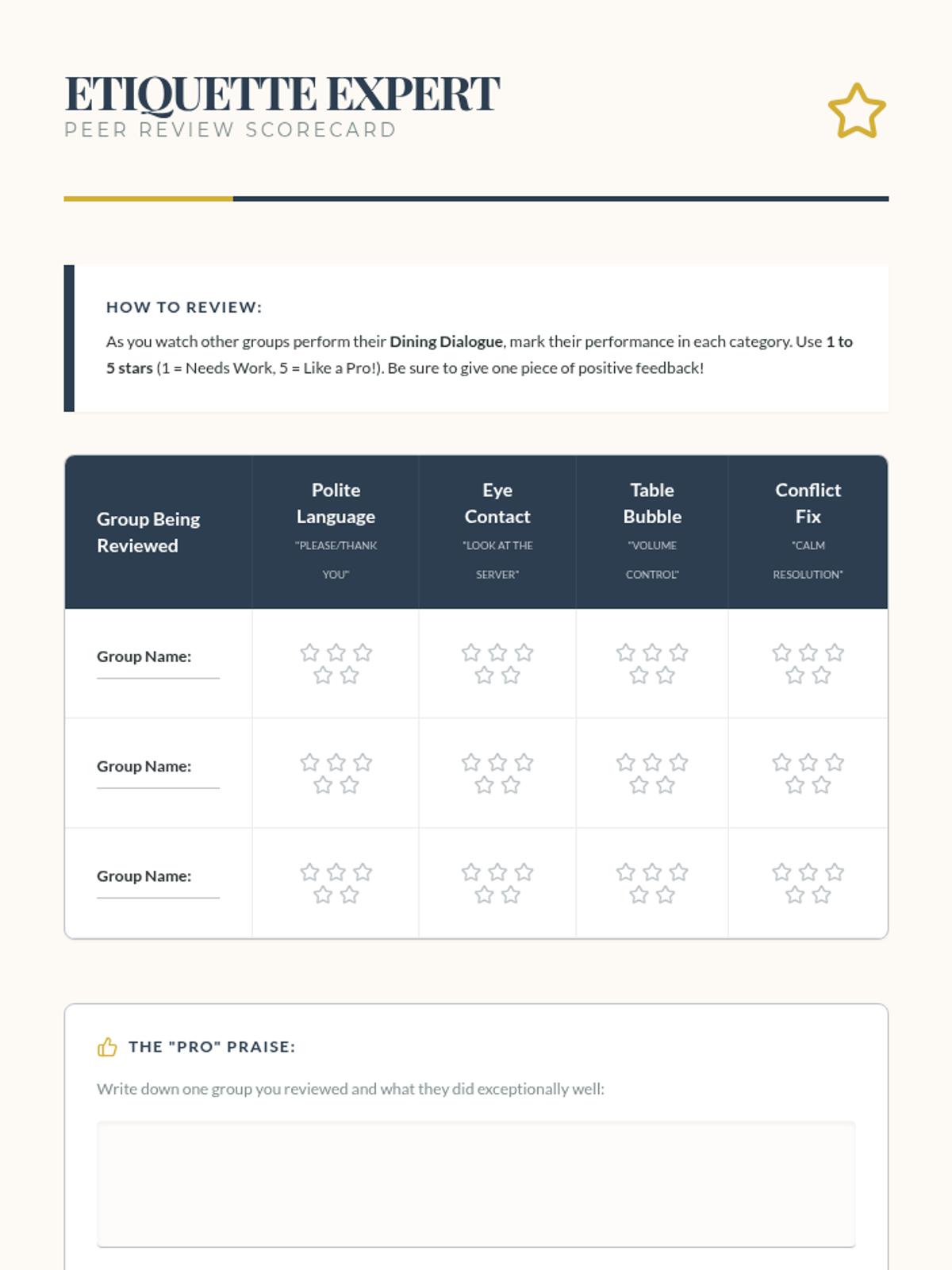
A peer review evaluation sheet for students to score each other's etiquette skills during the roleplay portion of the lesson.
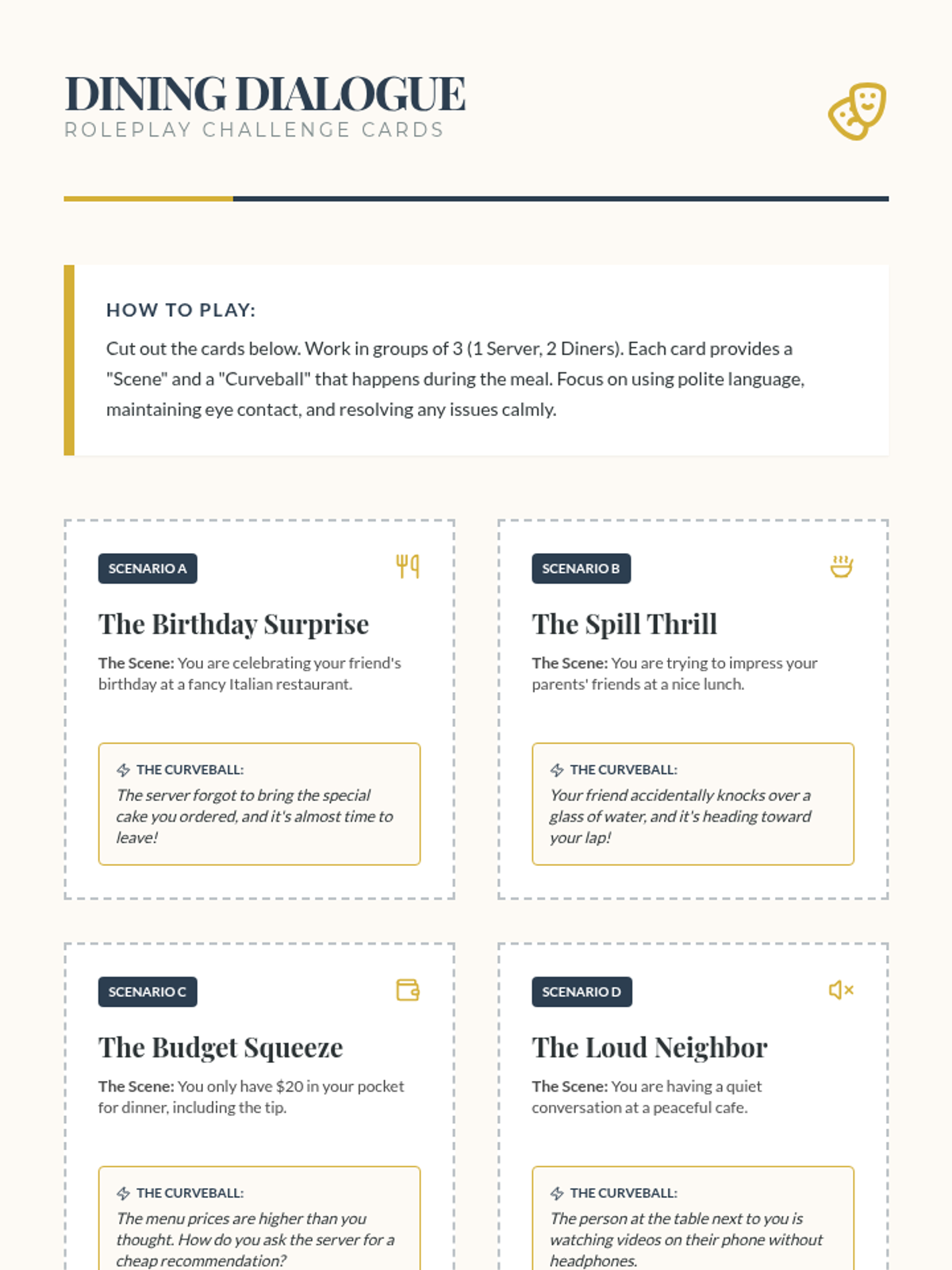
A set of four roleplay challenge cards for students to practice ordering, manners, and conflict resolution in various restaurant scenarios.
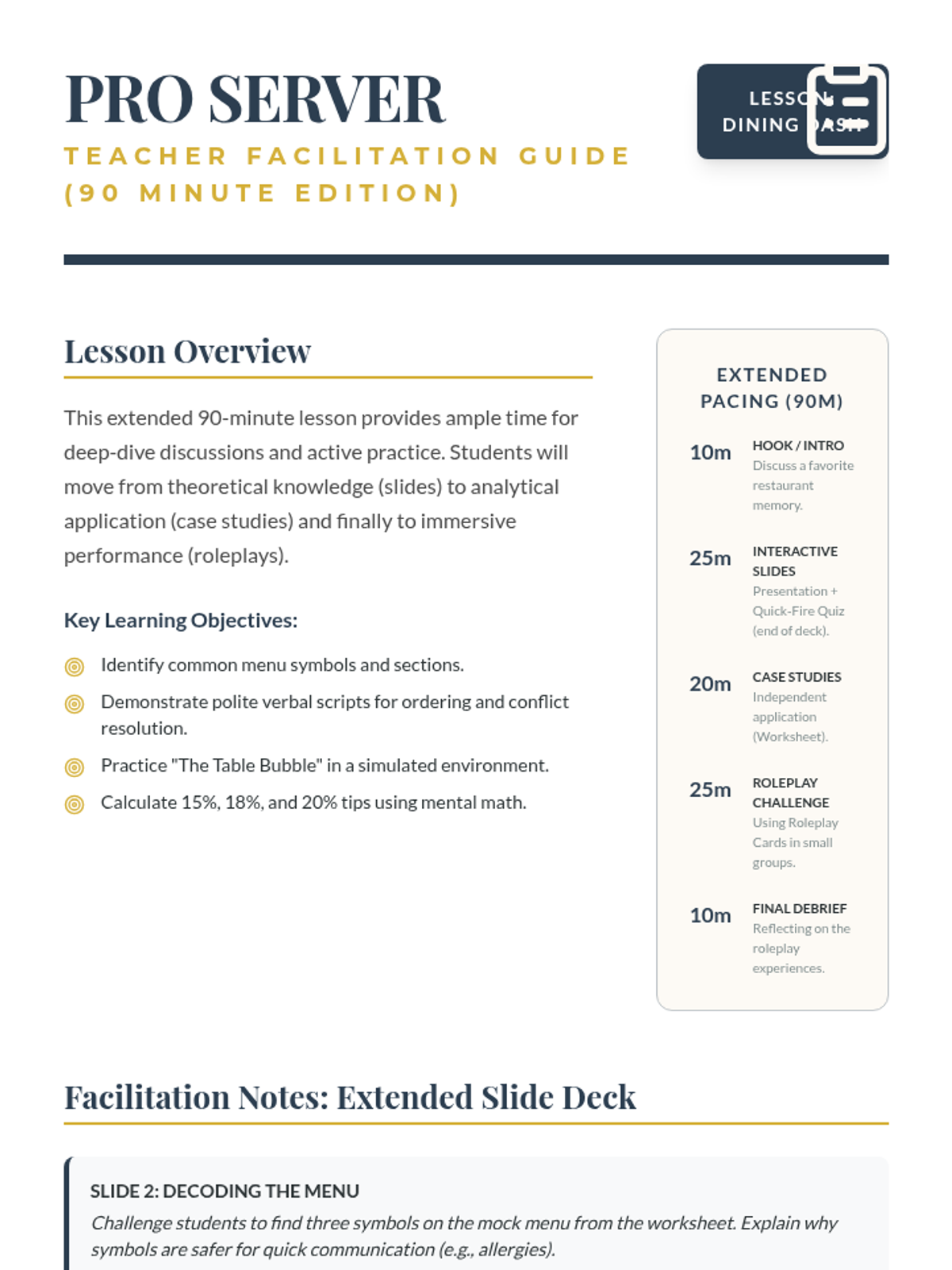
A teacher guide featuring lesson objectives, pacing suggestions, slide-by-slide discussion prompts, and a detailed answer key for the case studies.
A group-focused student worksheet featuring a mock menu, a collective ordering challenge, group bill calculations, and collaborative restaurant scenarios.
A visual slide deck teaching restaurant etiquette, including menu reading, ordering scripts, table manners, volume control, tipping, and conflict resolution. Separates quiz questions and answers for better engagement.
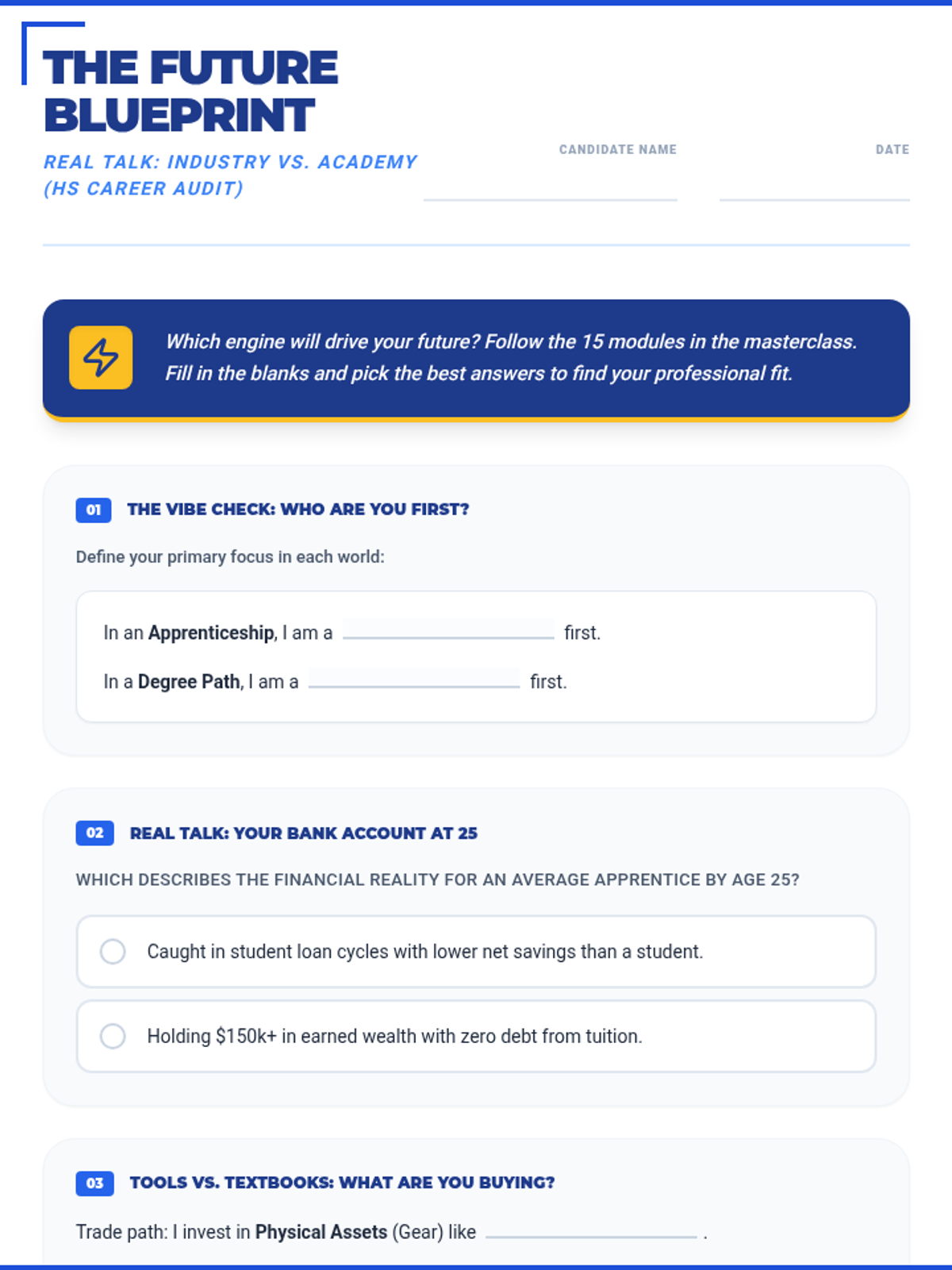
A 15-section career exploration worksheet designed for 16-year-old high school students, featuring punchy, relatable titles and refined "Real Talk" language like "The Vibe Check" and "Why I'll crush it." Meticulously aligned with the 45-slide masterclass. All correct answer highlights have been removed for student use.
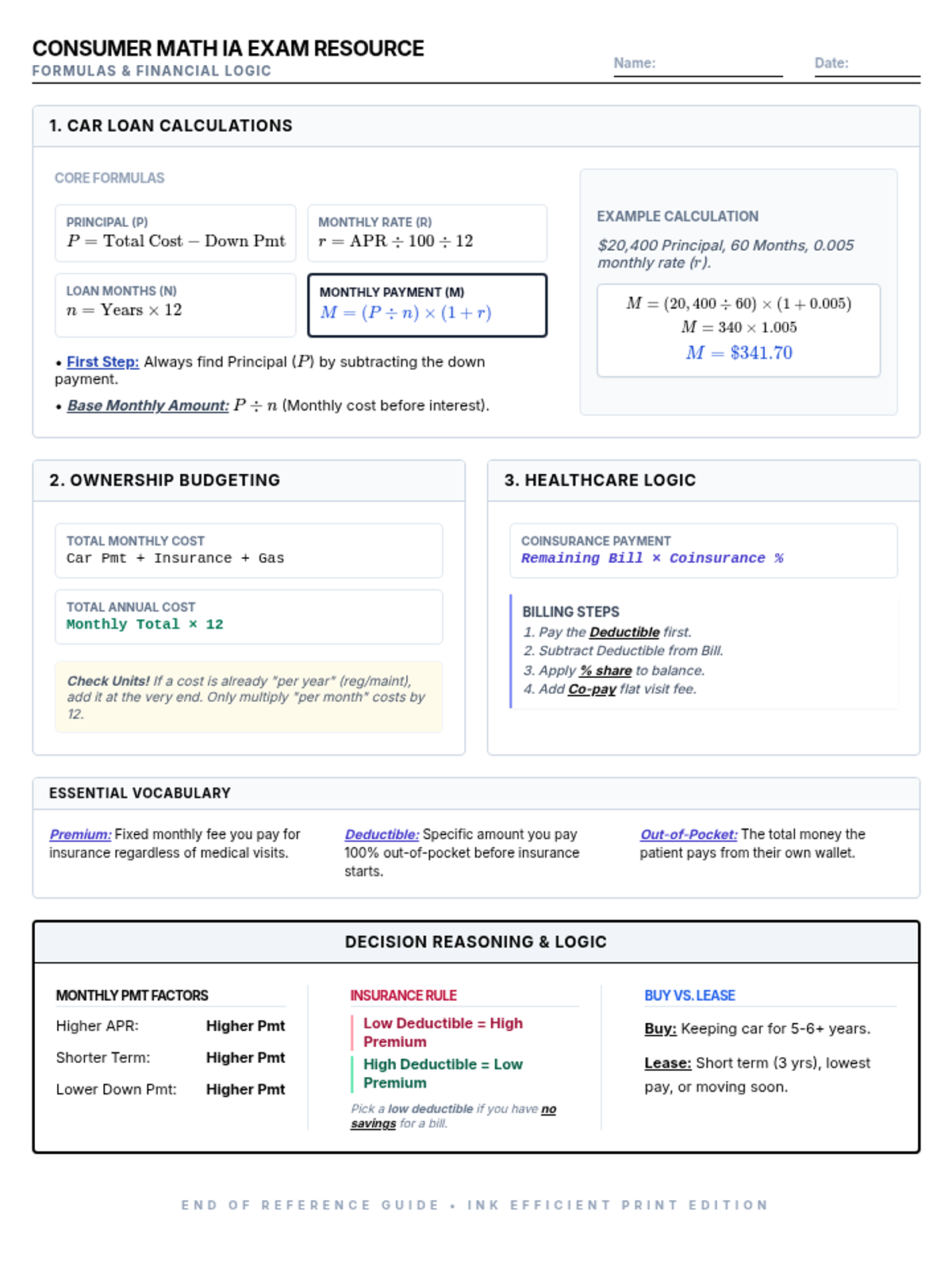
A hyper-compact, print-friendly one-page resource sheet for consumer math exams. Features ink-efficient white backgrounds, very small font sizes (8-10px) for maximum density, and grouped reference sections for car loans, ownership costs, and health insurance billing logic.