Peer relationship navigation, conversational turn-taking, and stress management strategies within supportive group settings. Develops communal belonging through shared mental health education and collaborative skill practice.
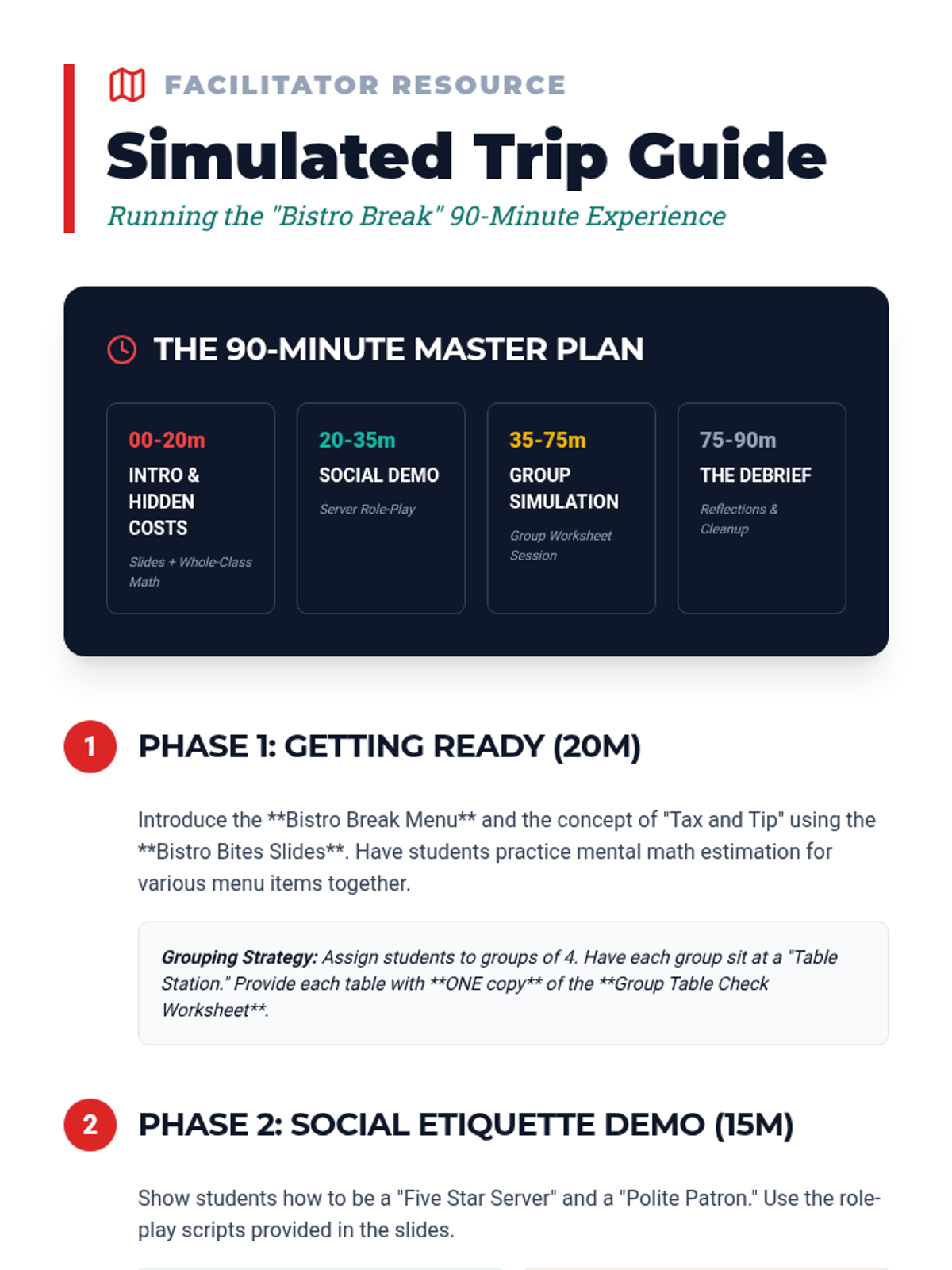
A facilitator's guide for conducting a simulated restaurant field trip in the classroom, including role-play scripts and setup instructions.
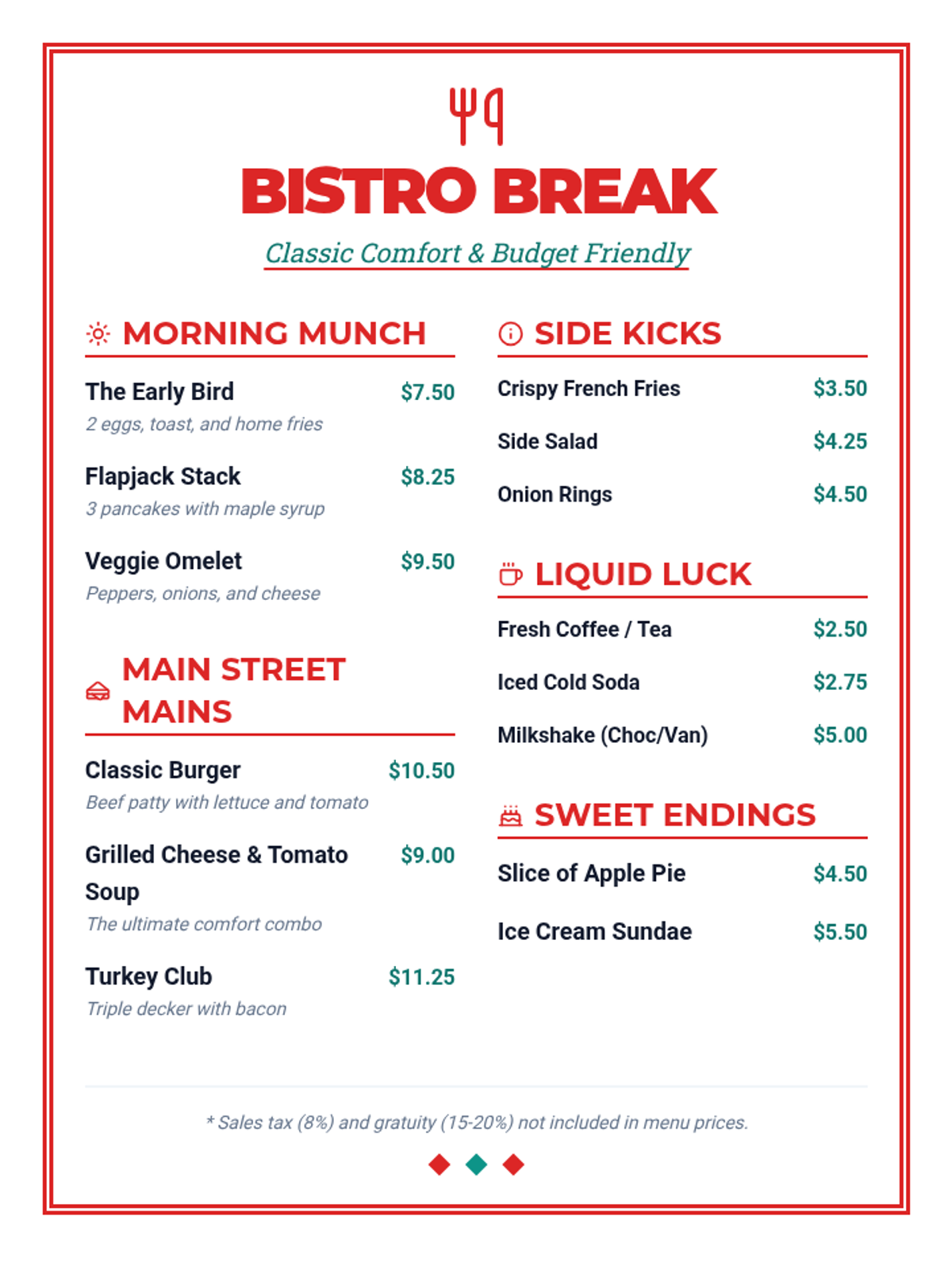
A retro-style bistro menu featuring breakfast, main courses, sides, drinks, and desserts with clear pricing for use in budget and math exercises.
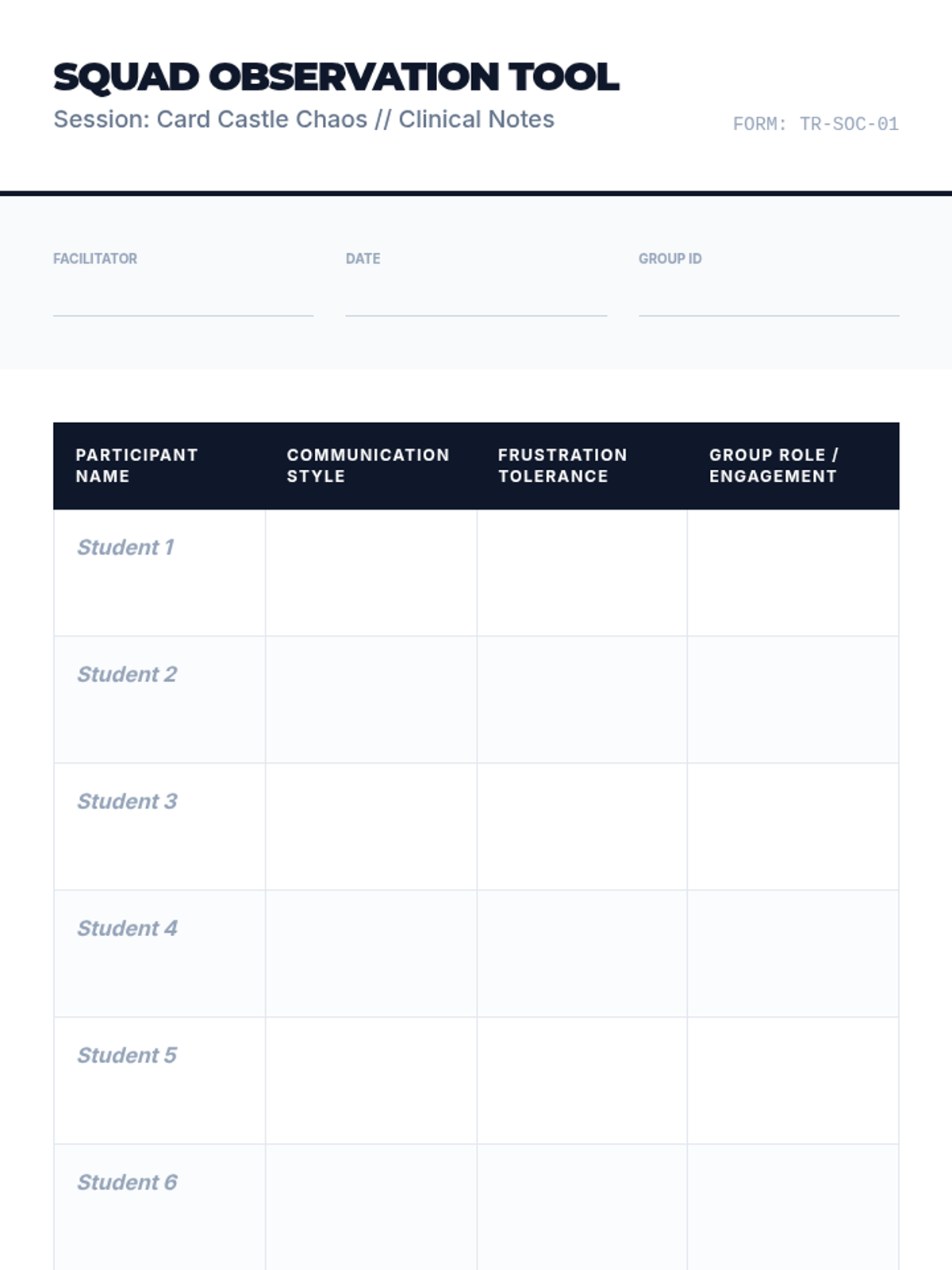
A clinical observation tool for the facilitator to track participant engagement, communication styles, and frustration tolerance during the session's activities. Designed specifically for the clinical rehab context.
A presentation slide deck for the Squad Support session. It introduces the session objectives, provides clear instructions for the "Common Threads" and "Card Castle Chaos" activities, and sets the stage for final reflection.
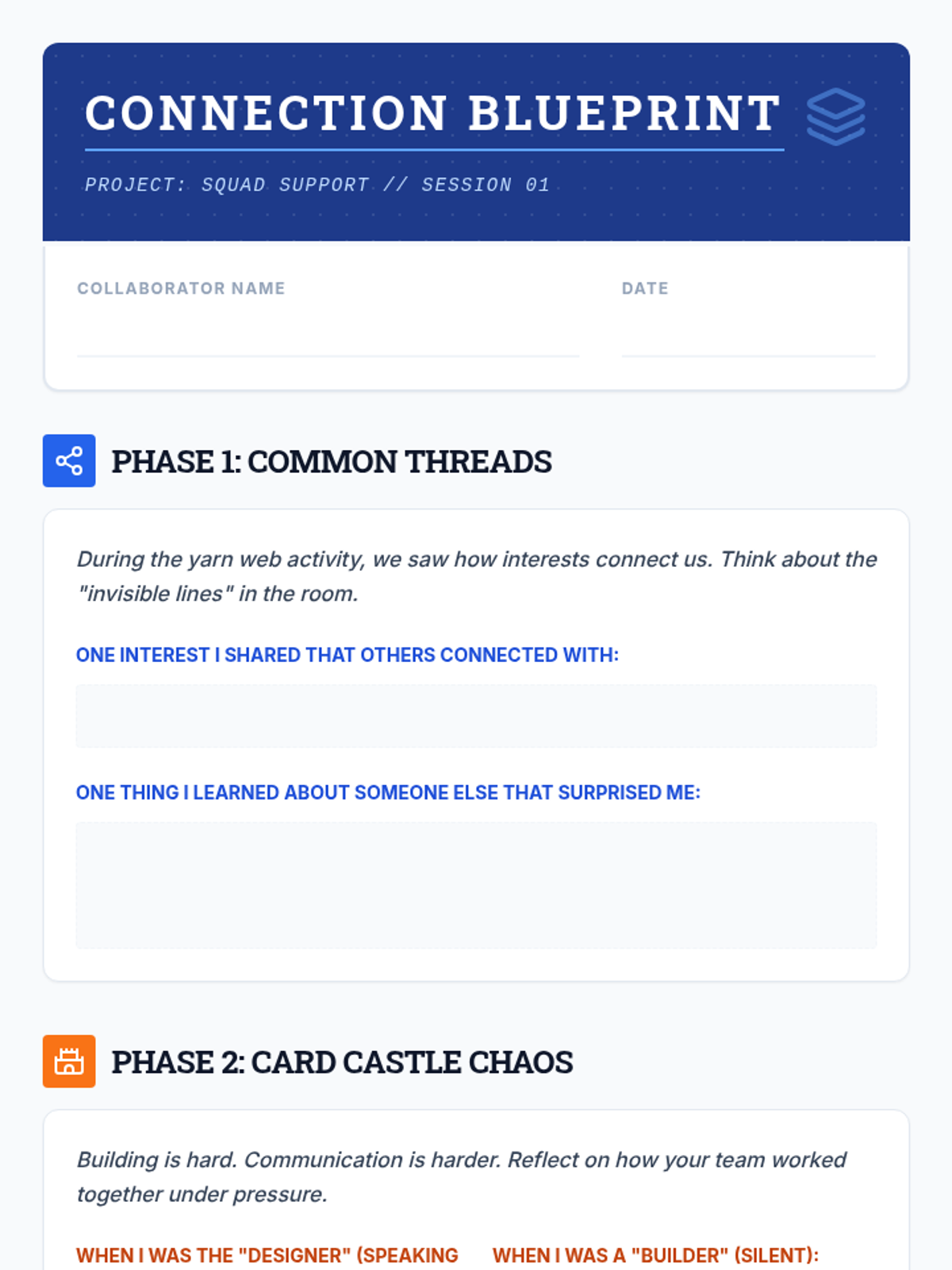
A student reflection worksheet using a "blueprint" aesthetic. It guides teens through processing their experiences with connection and teamwork from the session's activities.
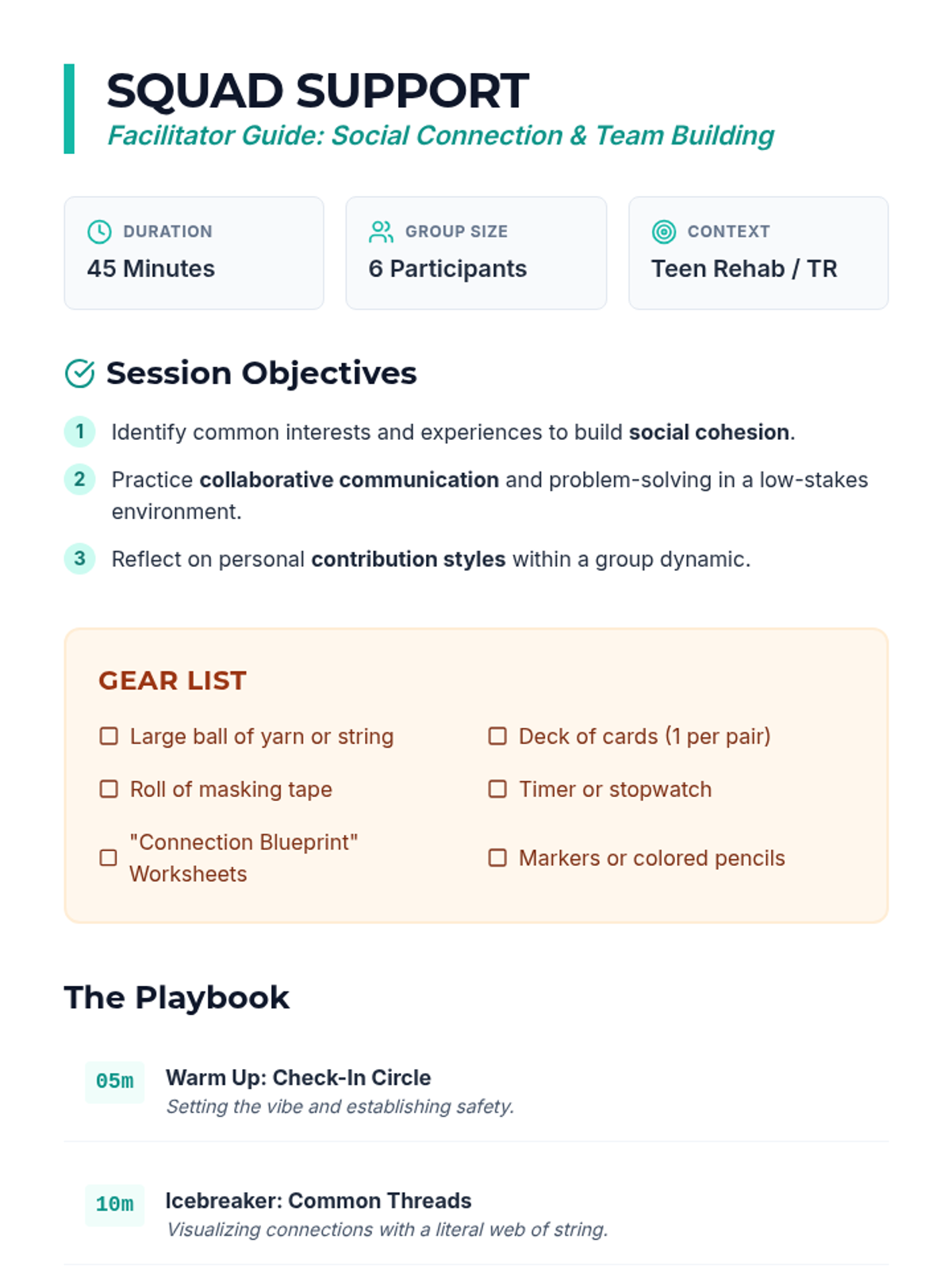
A comprehensive facilitator guide for a 45-minute therapeutic leisure session. Includes session objectives, a detailed materials checklist, activity breakdowns with specific prompts, and clinical considerations for working with teens in rehab.
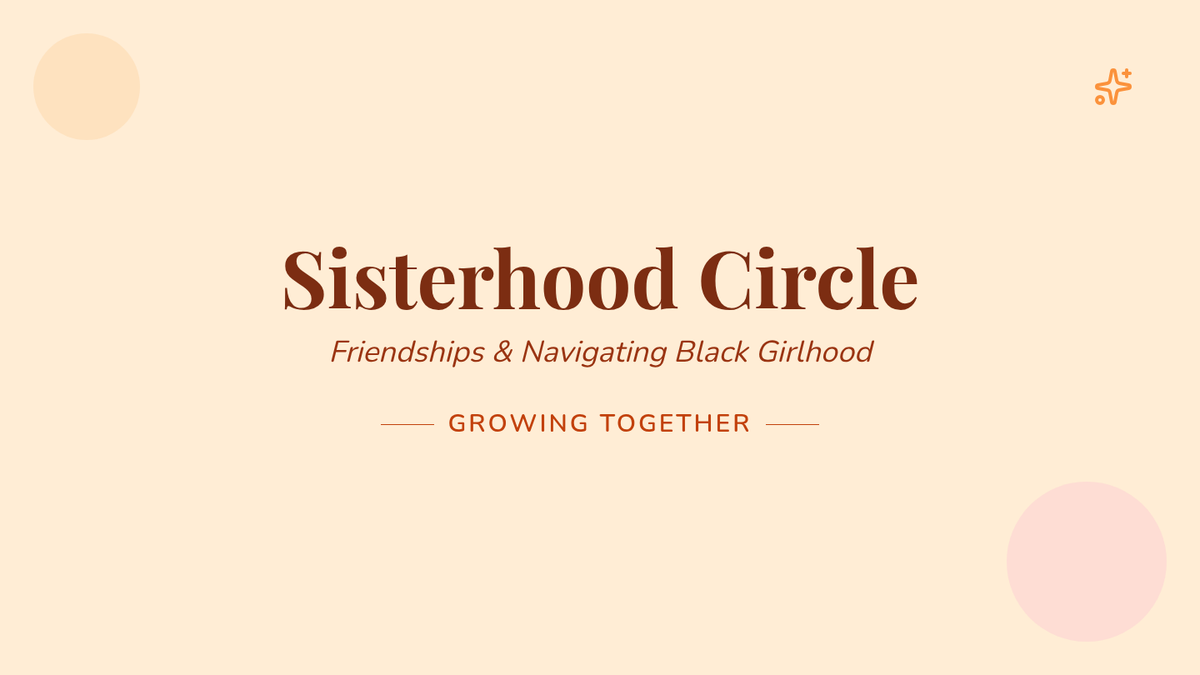
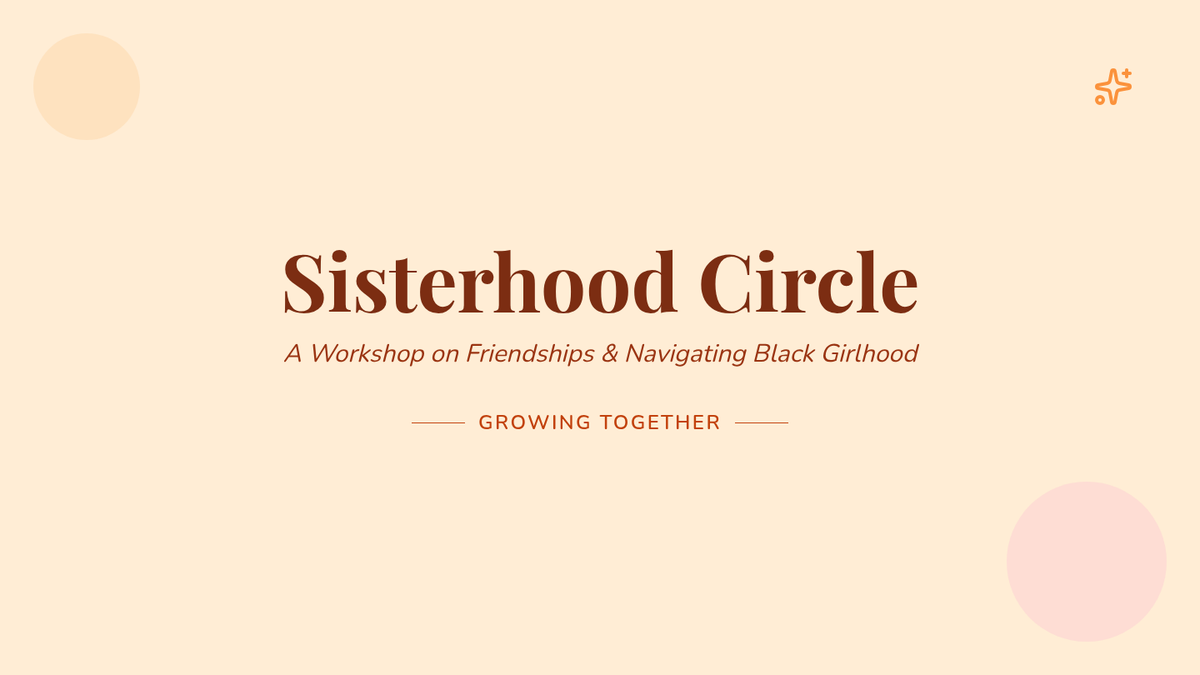
A vibrant slide deck for the Sisterhood Circle workshop, breaking down friendship profiles and exploring themes of Black girlhood and community. Revised for accessibility with minimum 24px font sizes.
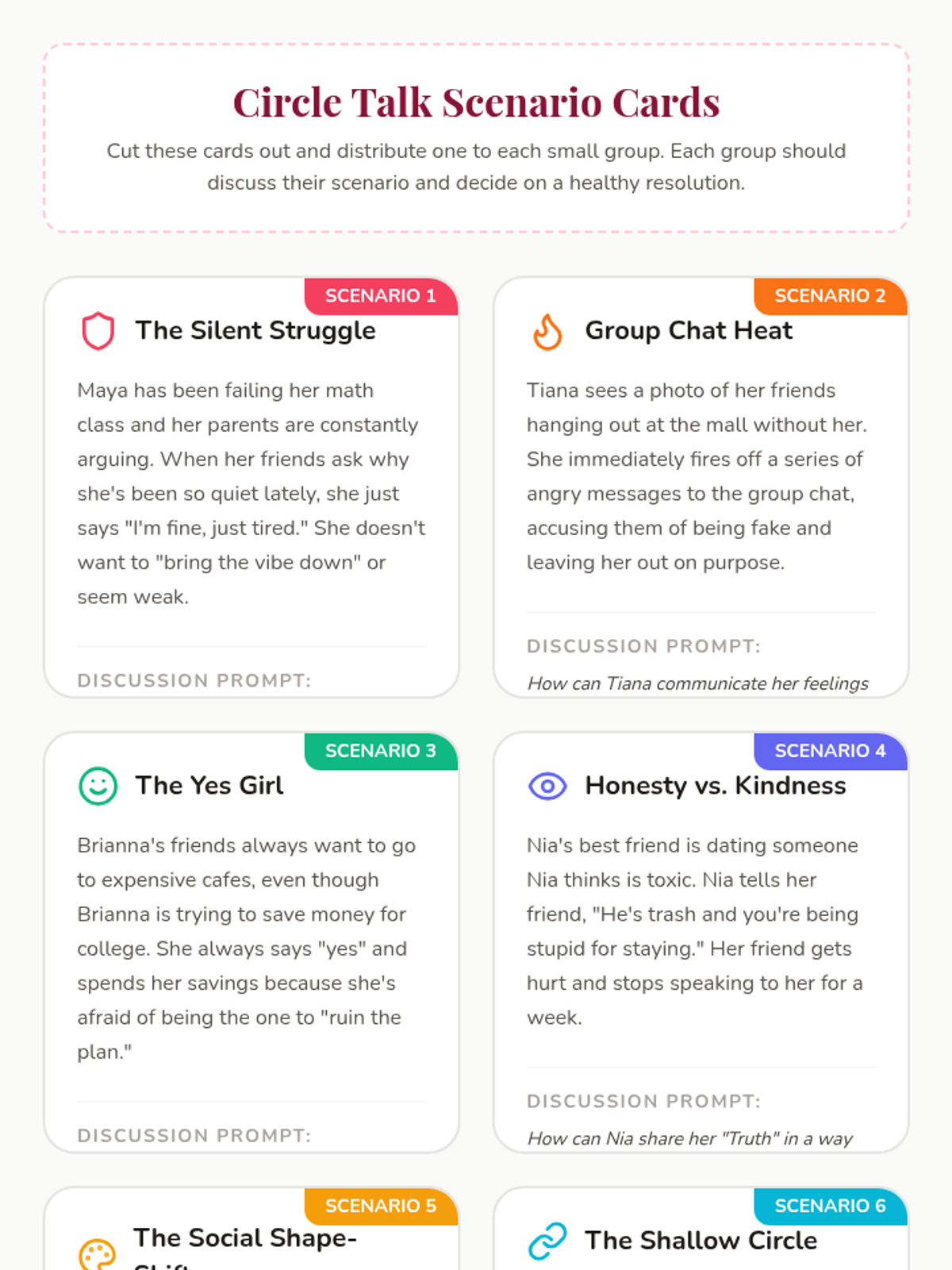
A set of scenario cards for small group discussion, highlighting different friendship profiles and challenges in Black girlhood friendships.
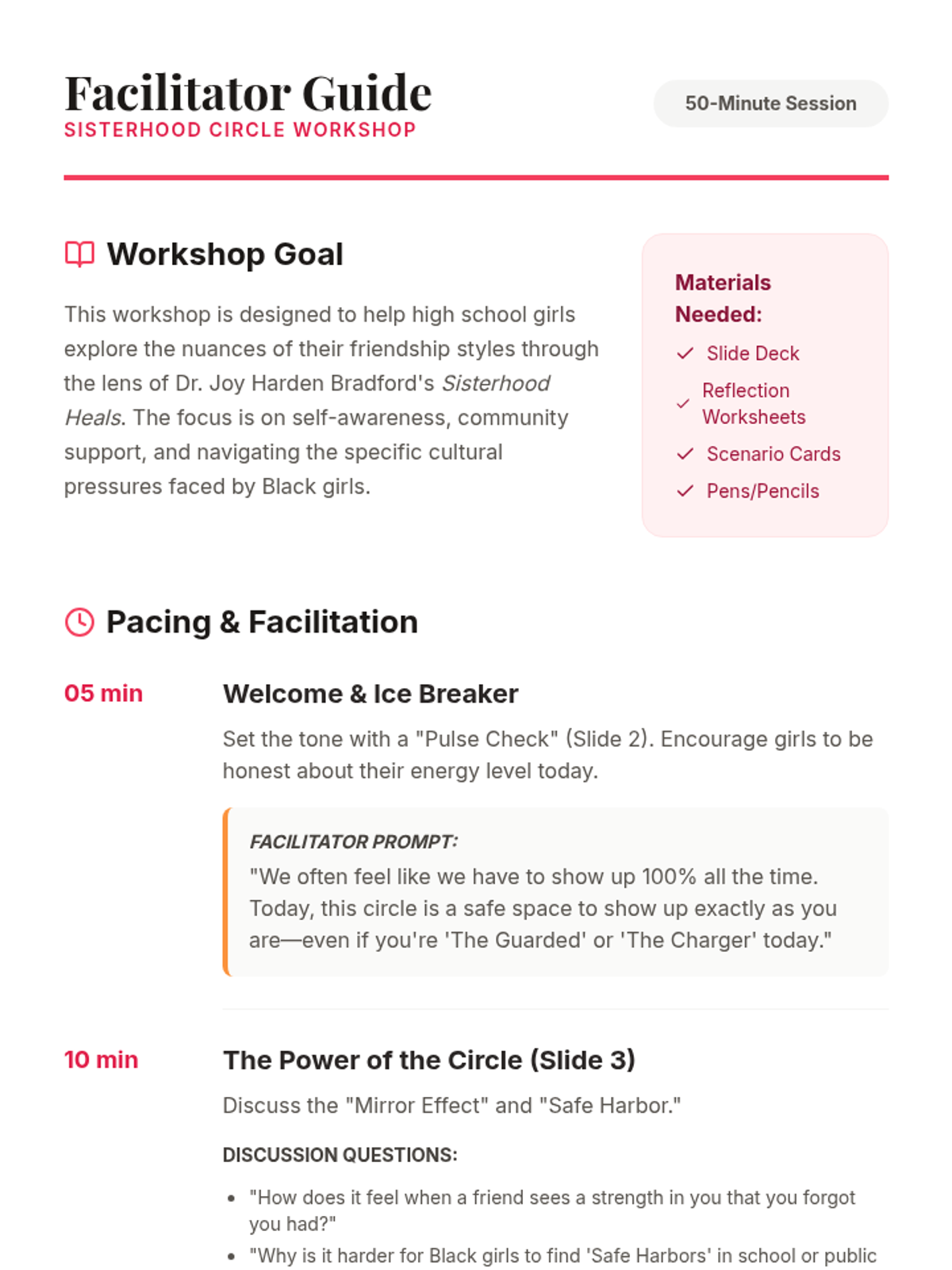
A comprehensive facilitator guide for the Sisterhood Circle workshop, including pacing, discussion prompts, and facilitation tips for high school girls.
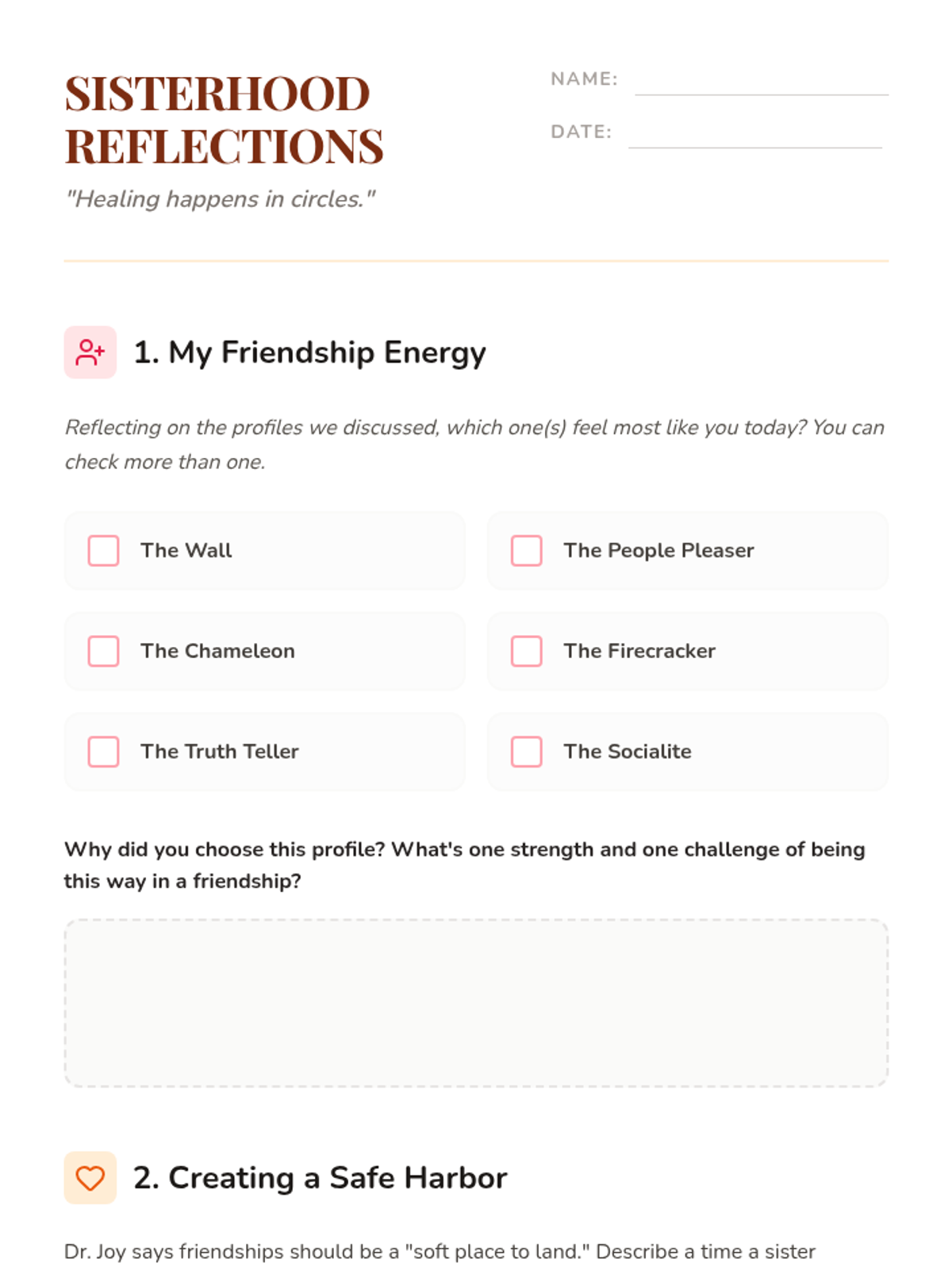
A personal reflection worksheet for students to self-identify their friendship profiles and reflect on their support systems.
A vibrant slide deck for the Sisterhood Circle workshop, breaking down friendship profiles and exploring themes of Black girlhood and community.
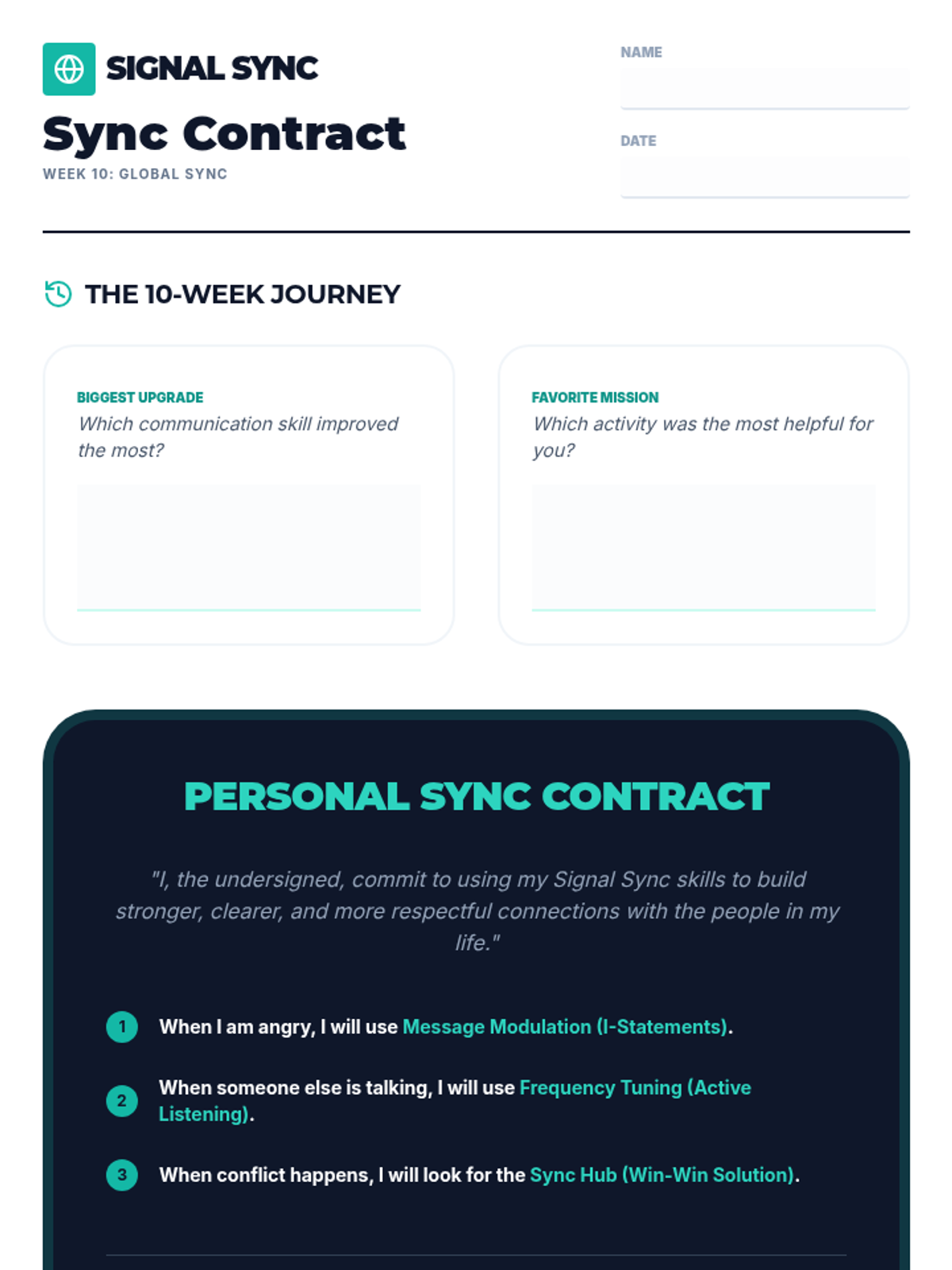
The final student activity sheet for the Signal Sync curriculum, featuring a reflection area and a formal communication commitment contract.
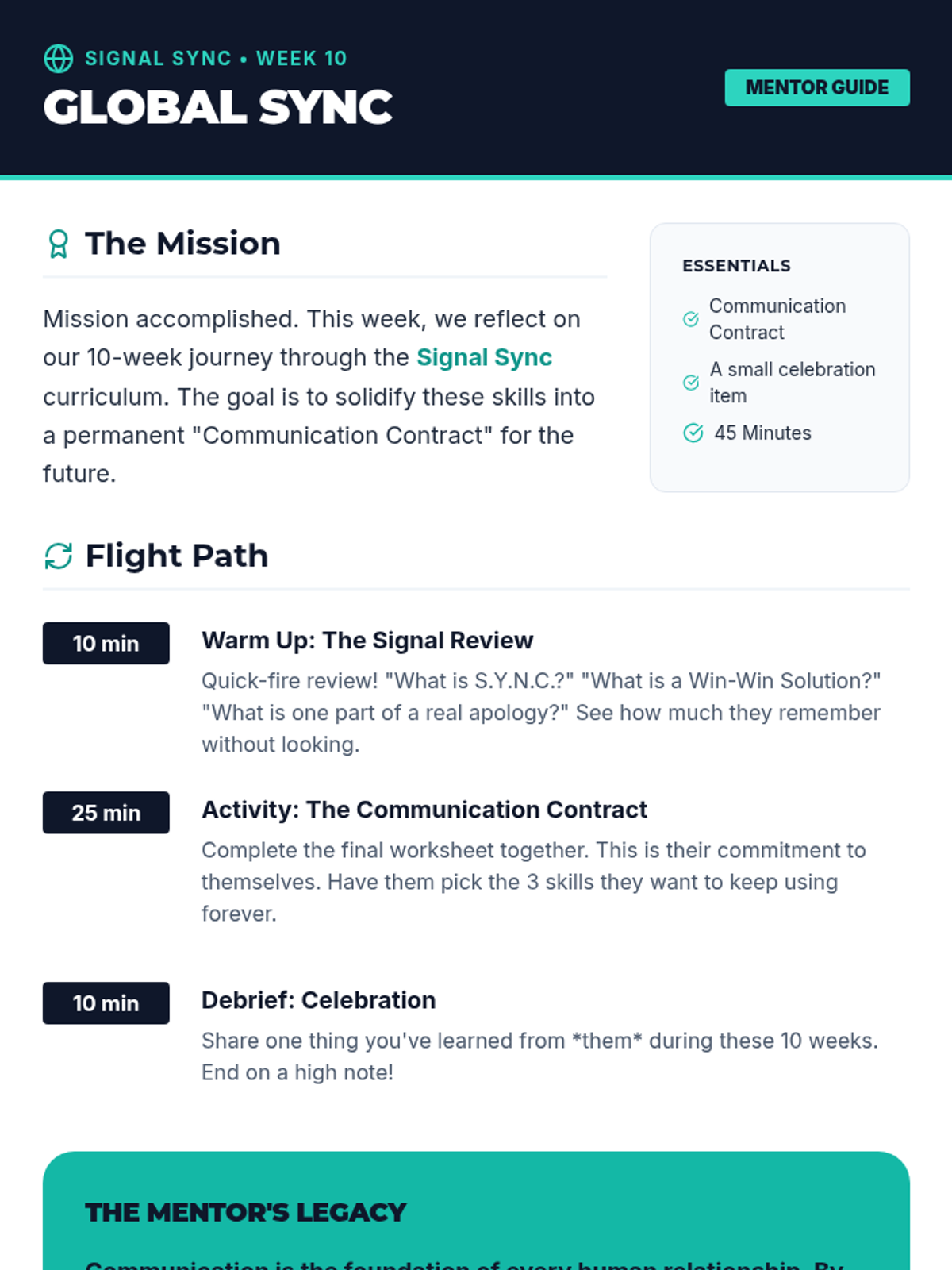
A mentor guide for the final week of the Signal Sync curriculum, focusing on reflection and the creation of a personal communication contract.
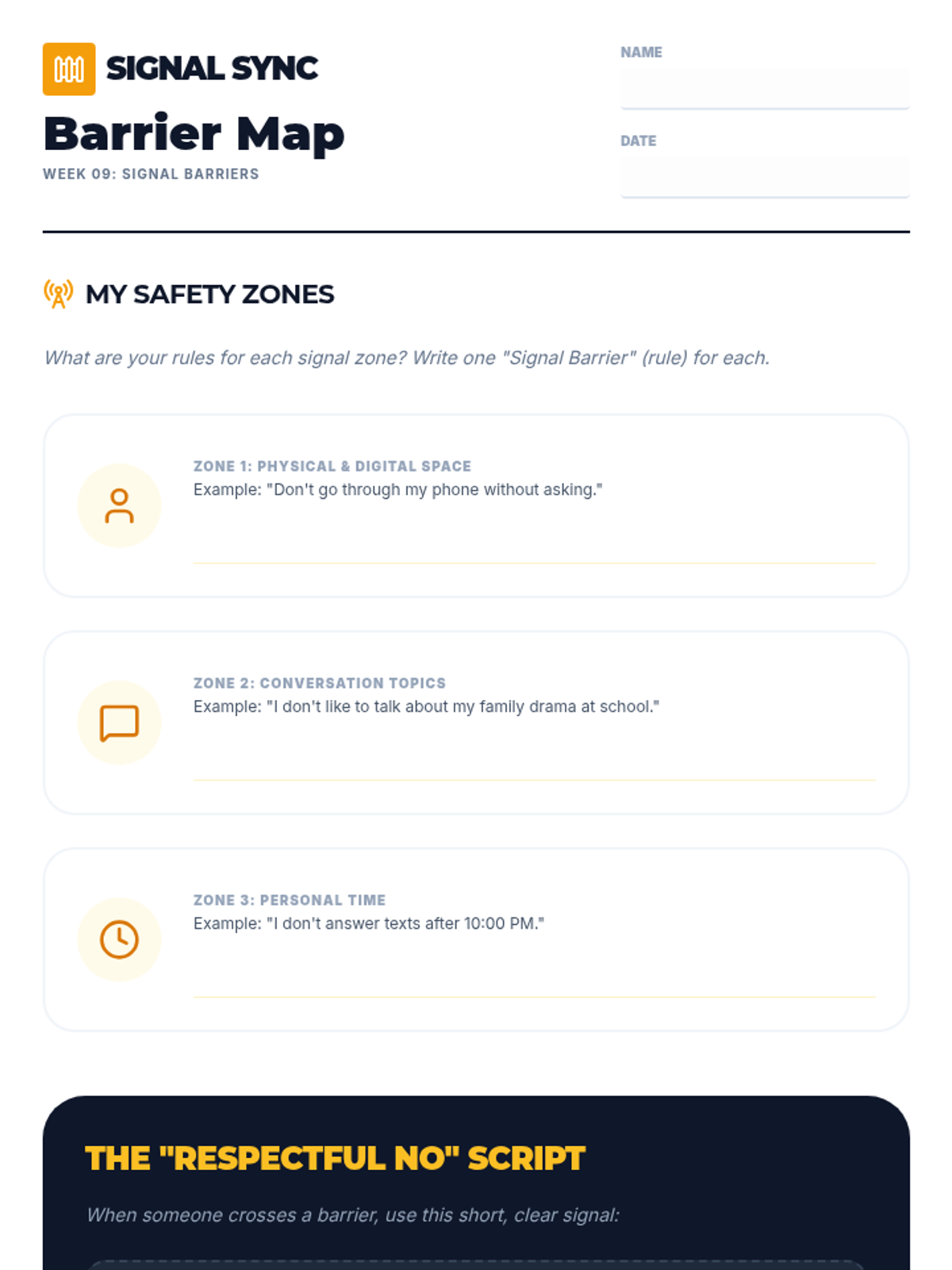
A student activity sheet for mapping personal boundaries and practicing assertive 'No' scripts.
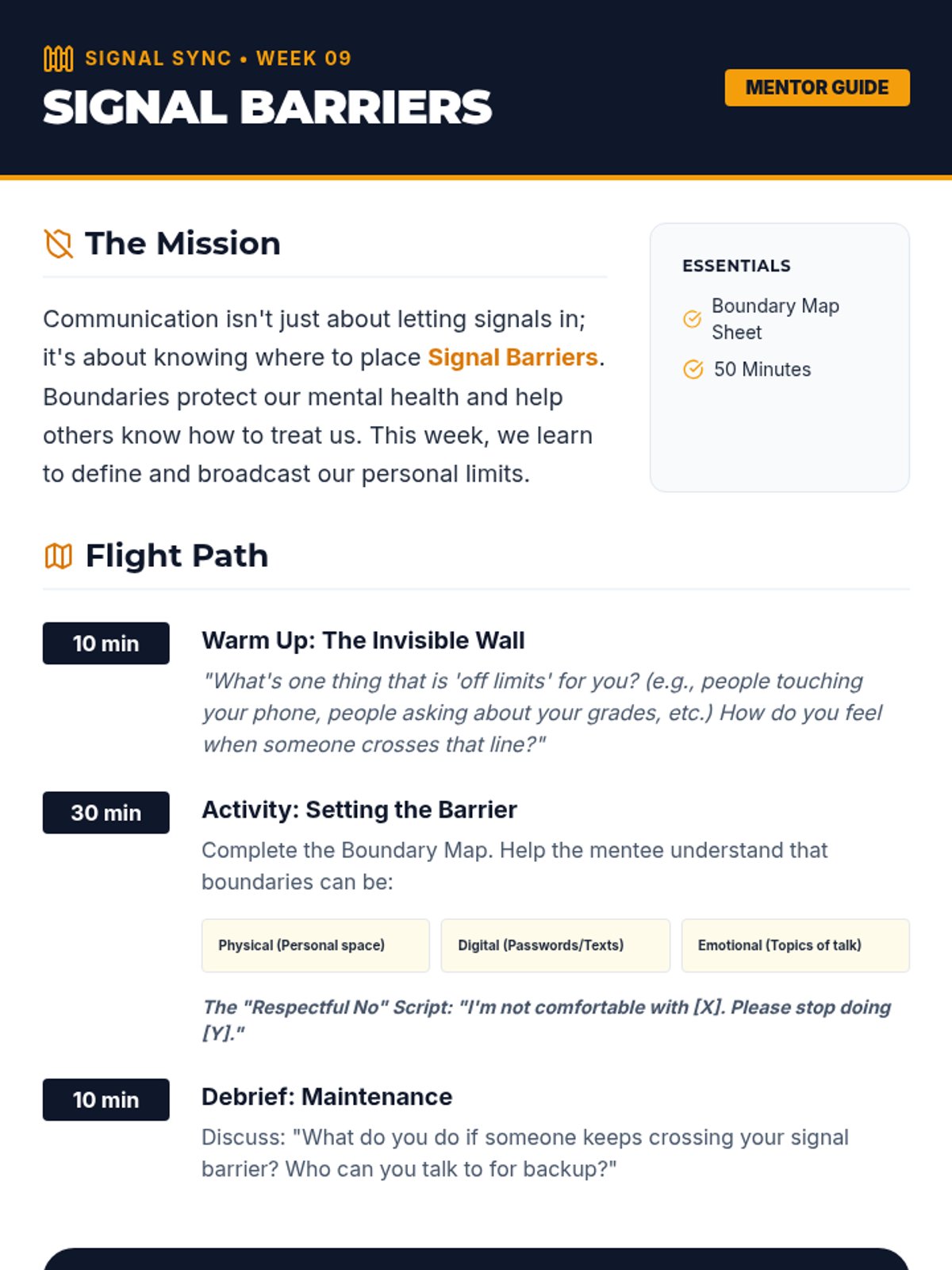
A mentor guide for the ninth week of the Signal Sync curriculum, focusing on establishing and communicating personal boundaries.
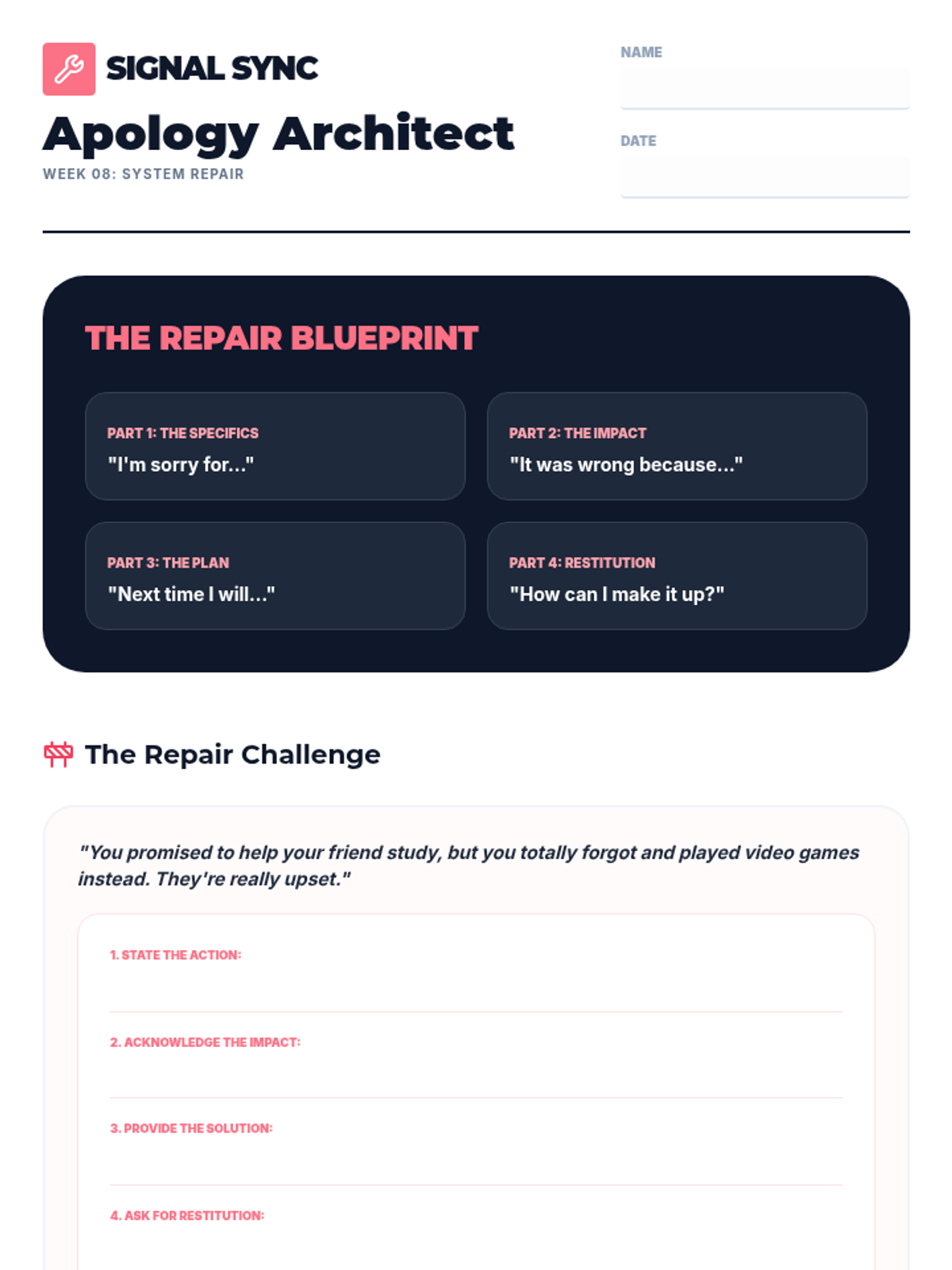
A student activity sheet for practicing the 4-part apology framework (Action, Impact, Solution, Restitution).
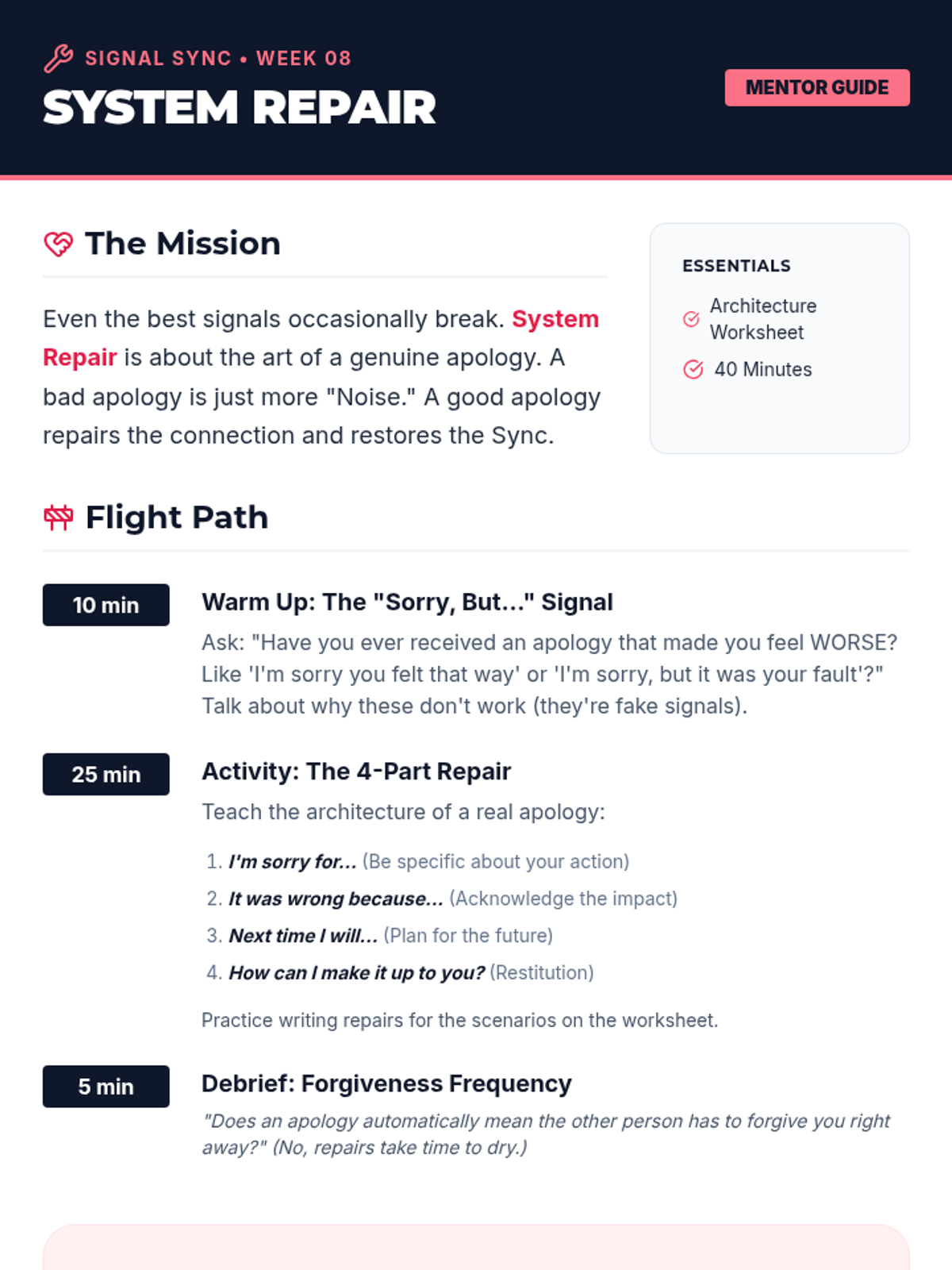
A mentor guide for the eighth week of the Signal Sync curriculum, teaching the 4-part framework for genuine apologies.
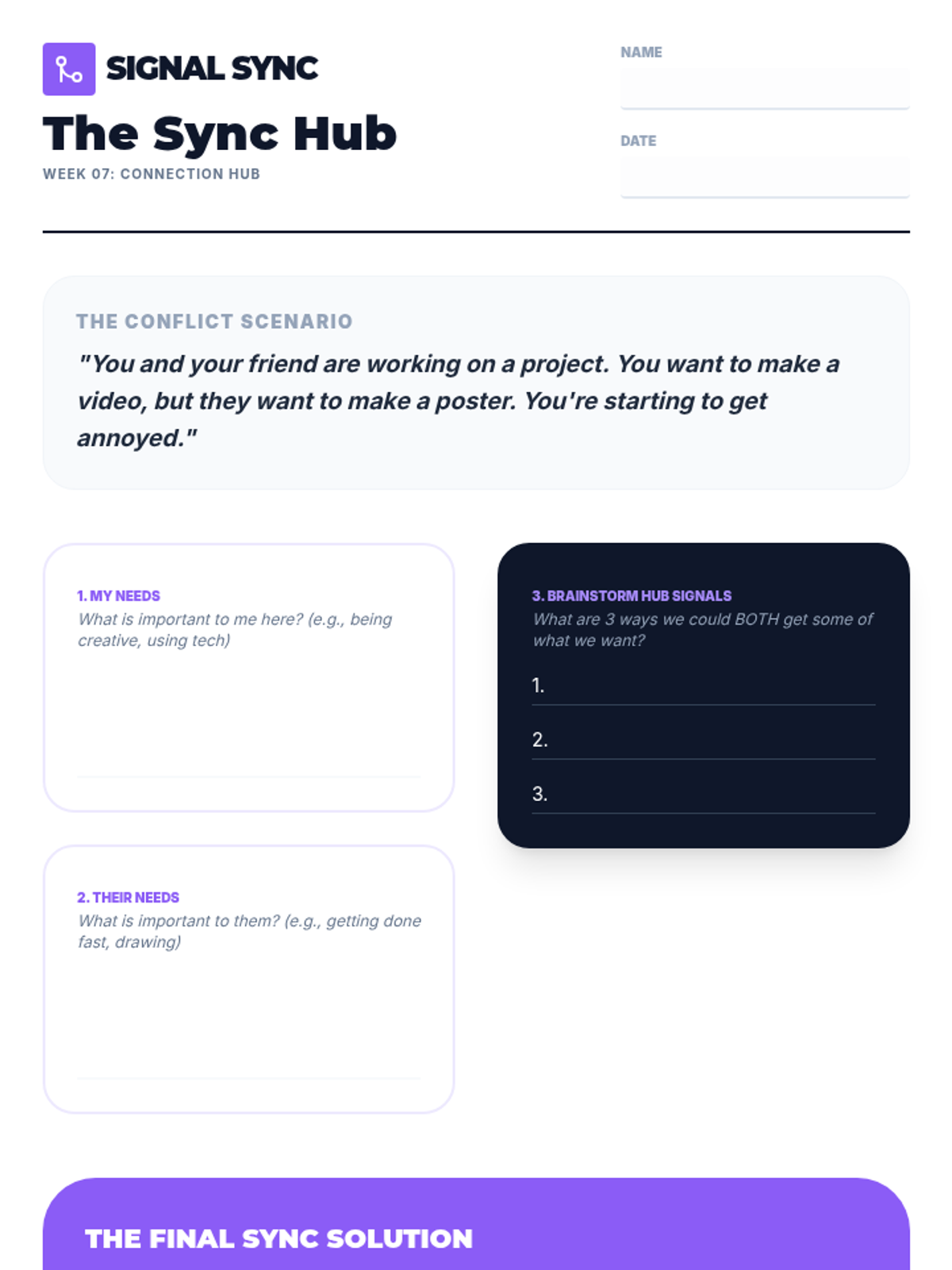
A student activity sheet for mapping out collaborative solutions to conflict using the Hub method.
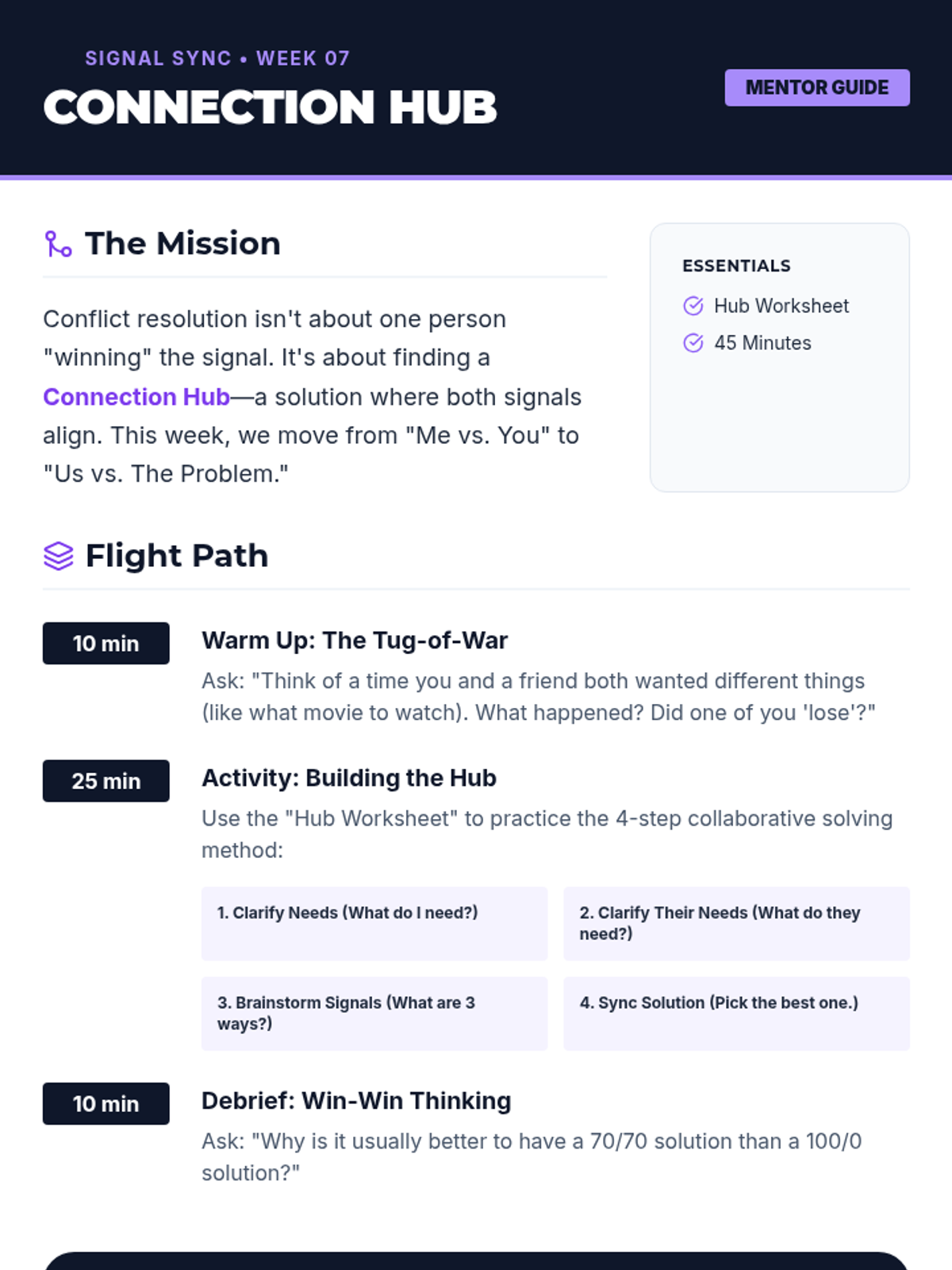
A mentor guide for the seventh week of the Signal Sync curriculum, focusing on collaborative problem-solving techniques.
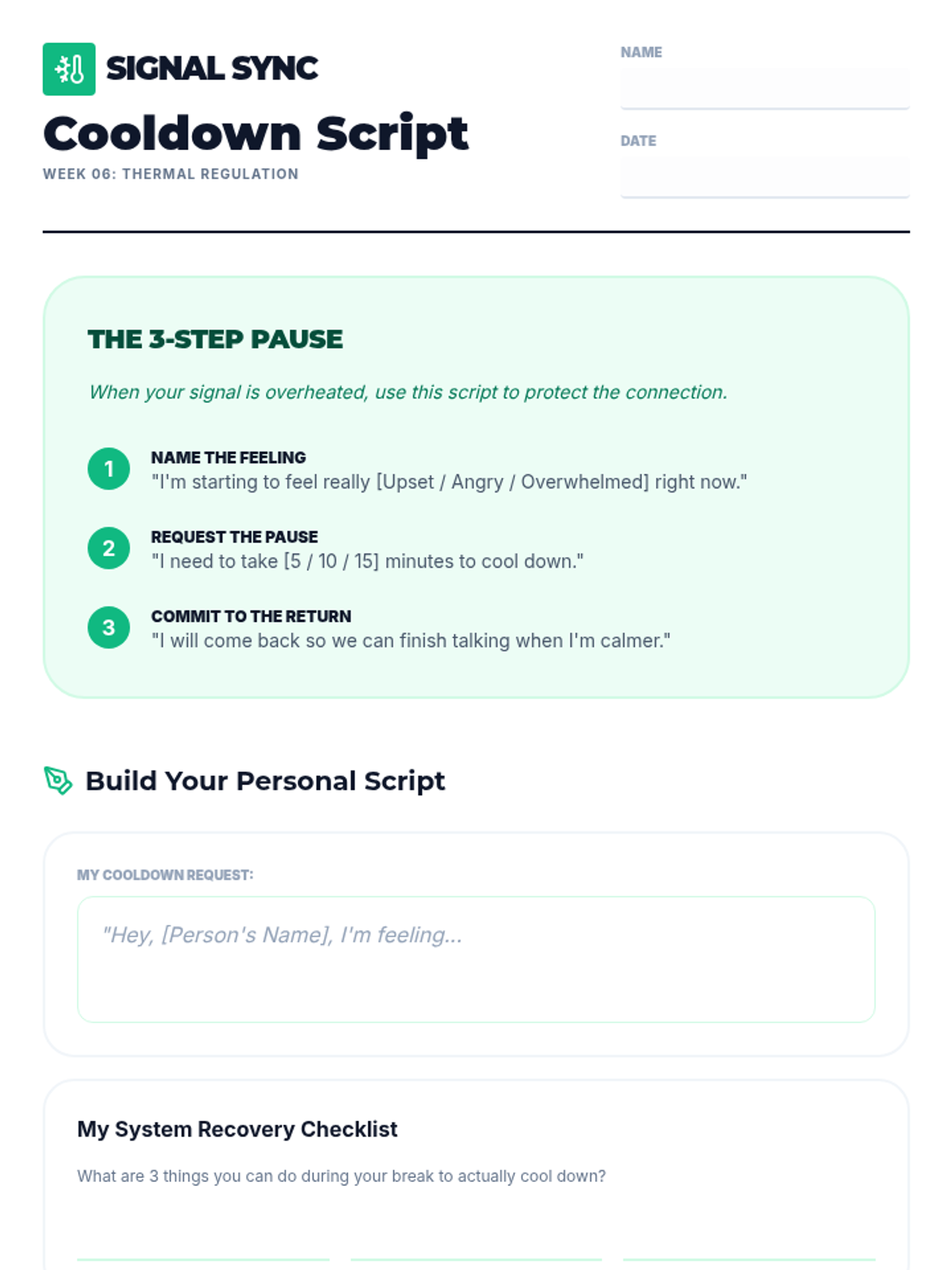
A student activity sheet for creating personalized emotional de-escalation scripts and recovery plans.
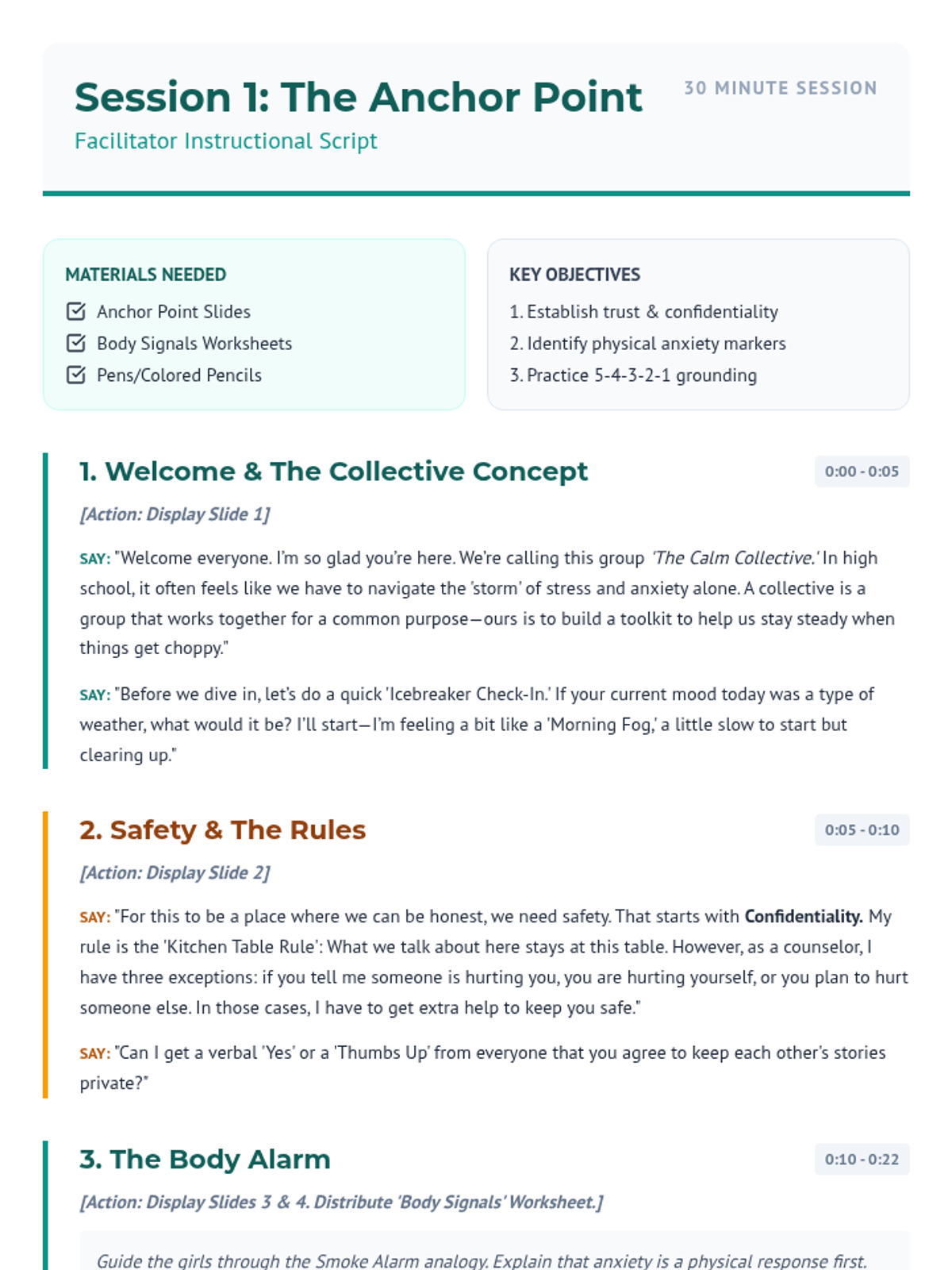
A detailed facilitation script for the first session of the Calm Collective, providing time-stamped sections, "what to say" prompts, and "what to do" instructions for the counselor.
A concluding slide deck for Session 4, providing reflection questions, growth mindset reinforcement, and a framework for maintaining long-term wellness after the group ends.
An instructional slide deck for Session 3, explaining sensory and cognitive coping strategies and guiding students through the "Coping Menu" selection process.
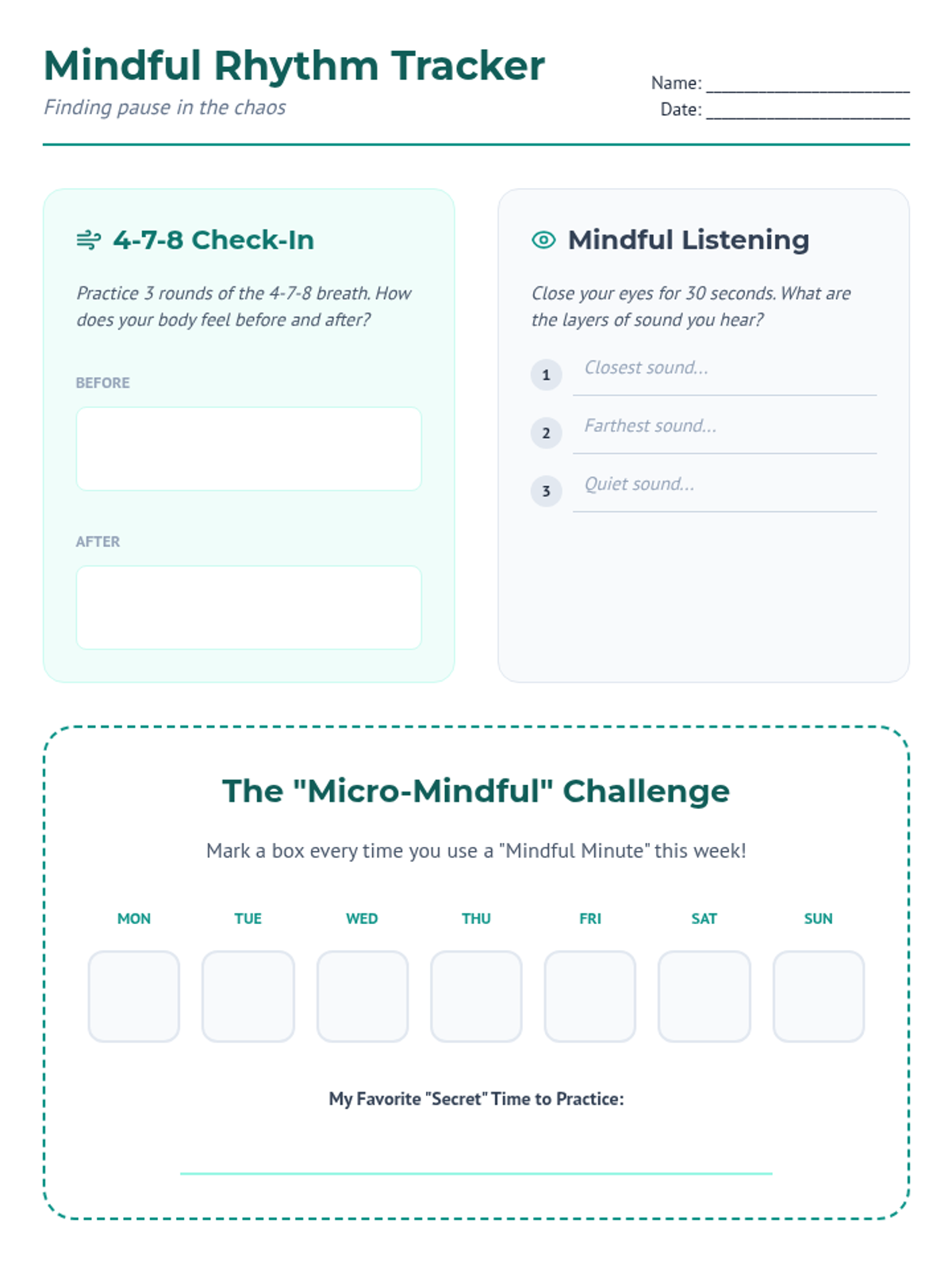
A student worksheet and weekly tracker for practicing 4-7-8 breathing and identifying "micro-mindfulness" moments throughout the school day.
Introductory slide deck for Session 1, covering group norms, confidentiality, defining anxiety, and the 5-4-3-2-1 grounding technique.
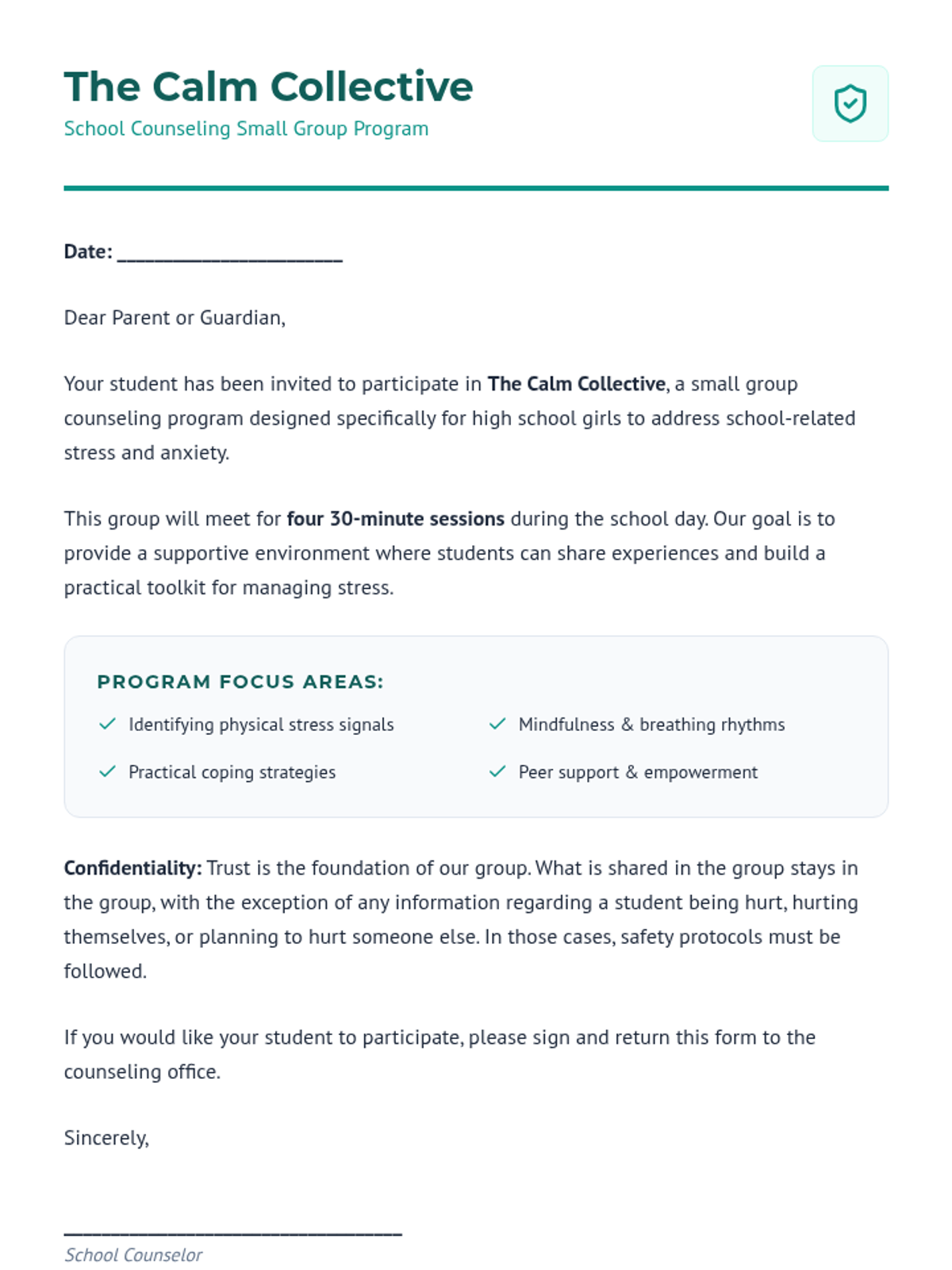
A professional parent permission and consent letter for The Calm Collective group, outlining program goals, confidentiality, and participation details.
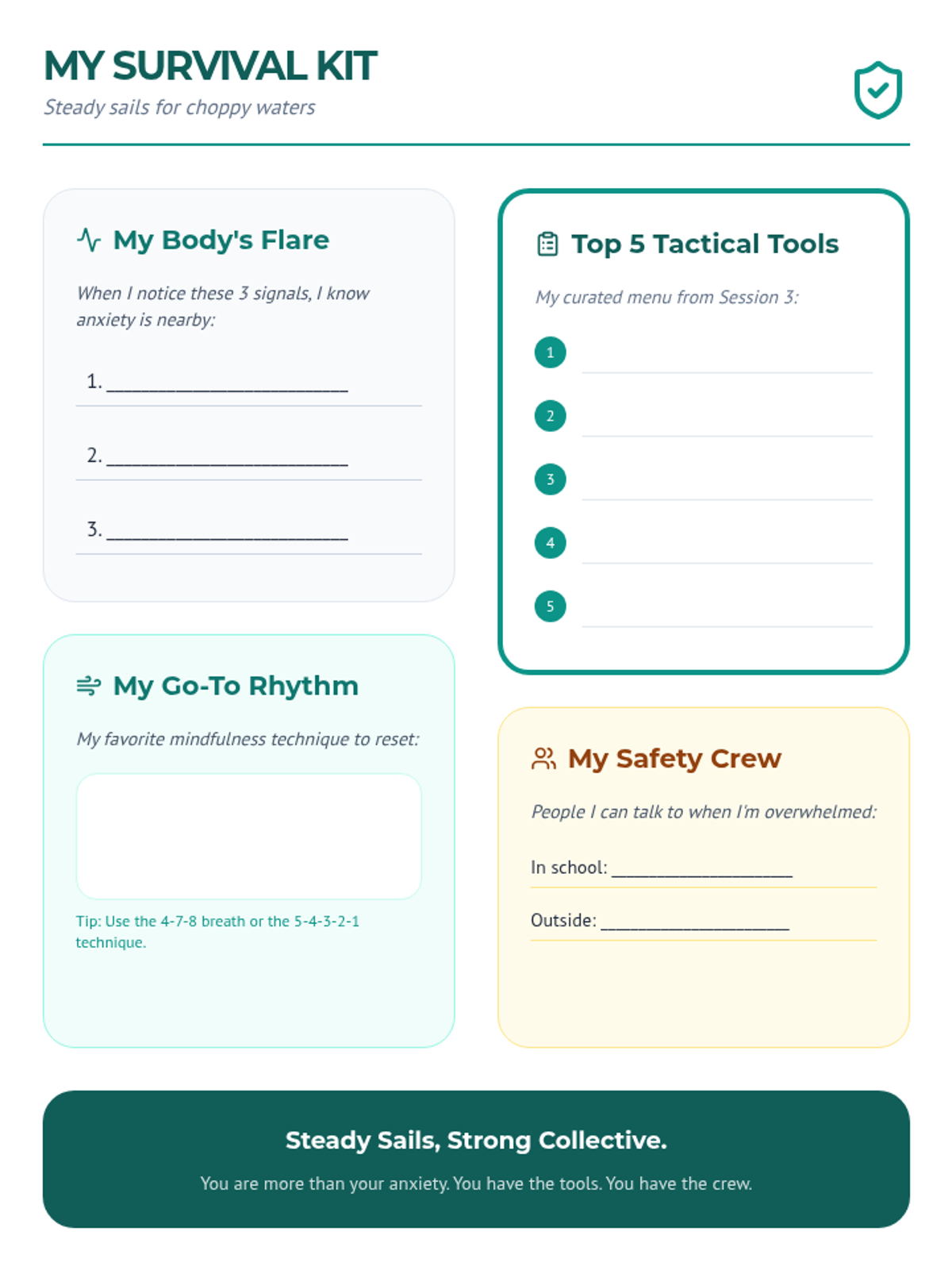
A one-page student "cheat sheet" and maintenance plan that summarizes the skills and tools learned throughout the 4 sessions.
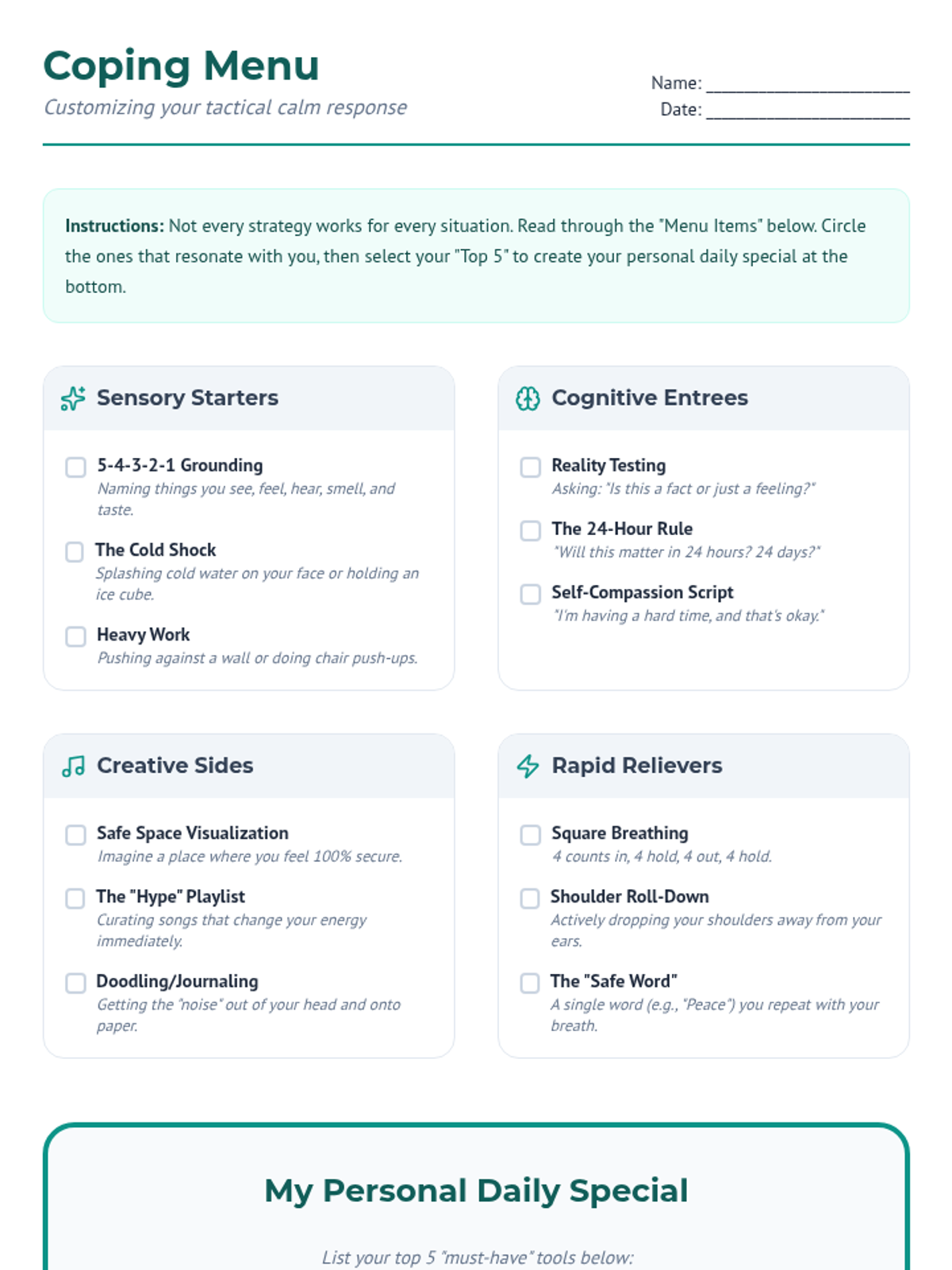
A student-facing "menu" of coping strategies divided into sensory, cognitive, creative, and rapid relief categories, allowing students to curate their own personalized toolkit.
An instructional slide deck for Session 2, introducing the concept of mindfulness, the 4-7-8 breathing technique, and practical ways to integrate mindfulness into a high school day.
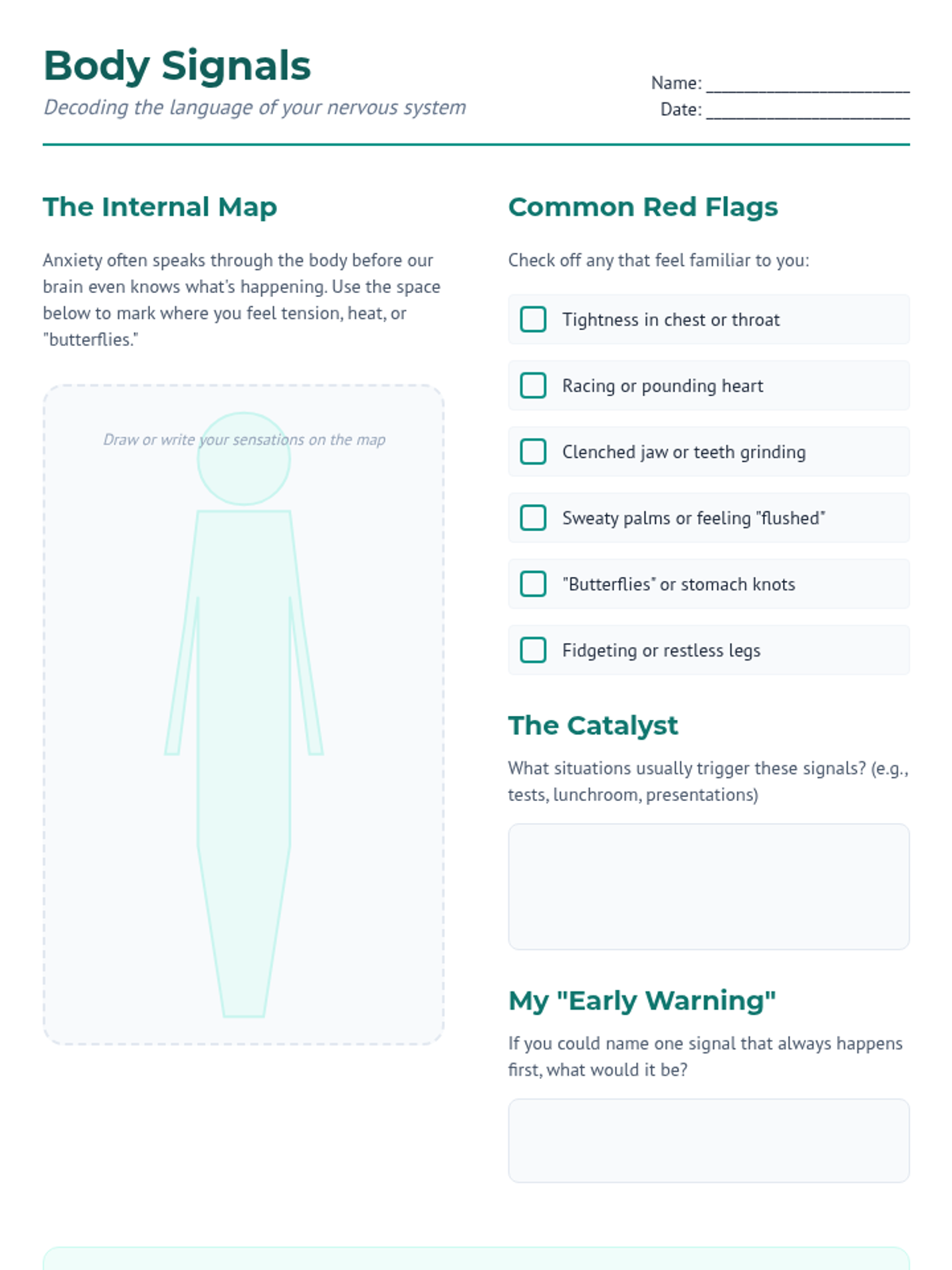
A student worksheet for identifying physical anxiety symptoms and triggers, featuring a body map and common physical "red flag" checklist.
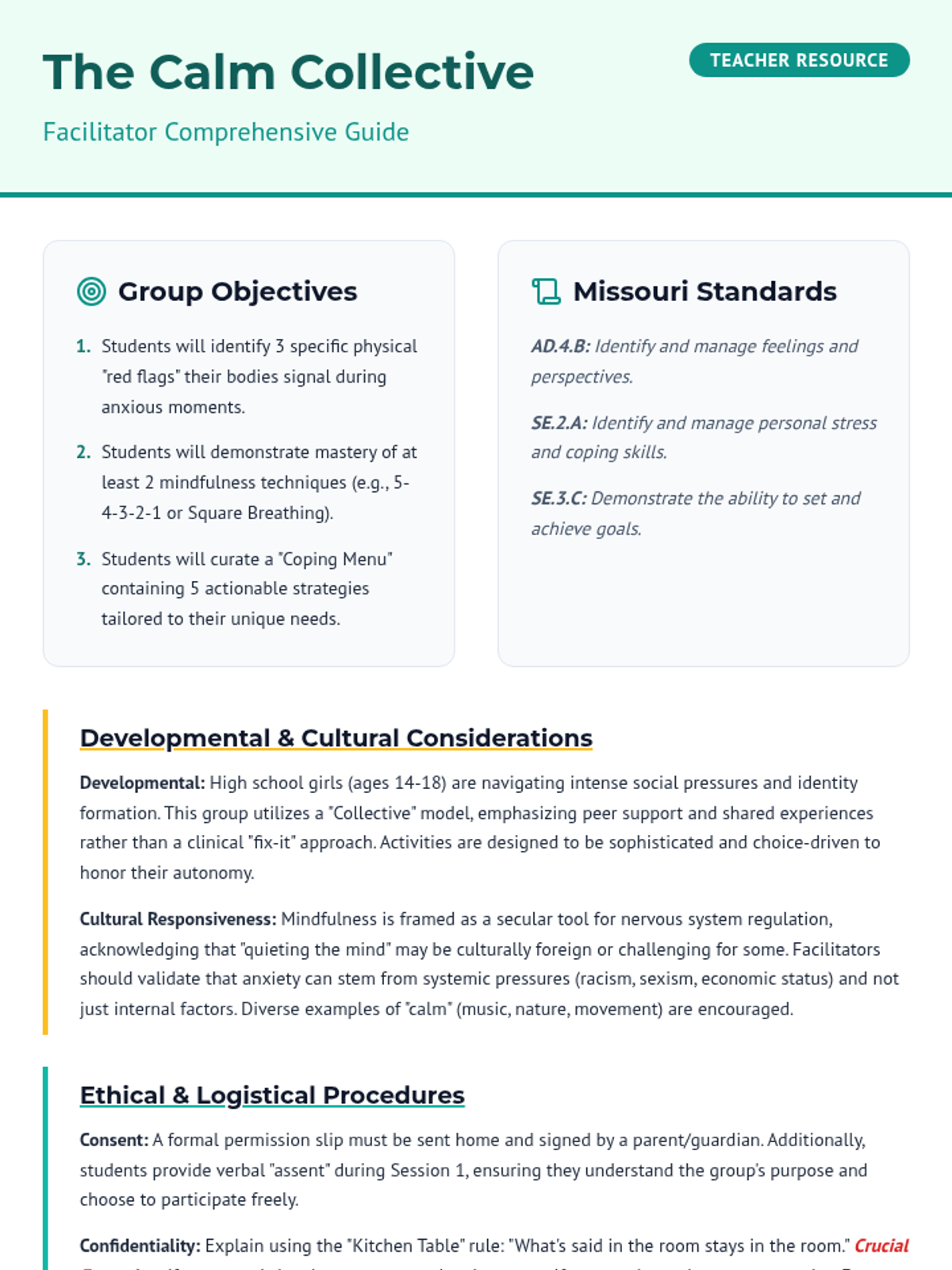
A comprehensive facilitator guide for the Calm Collective group, outlining measurable objectives, Missouri counseling standards, cultural/developmental considerations, and ethical procedures for the 4-session program.
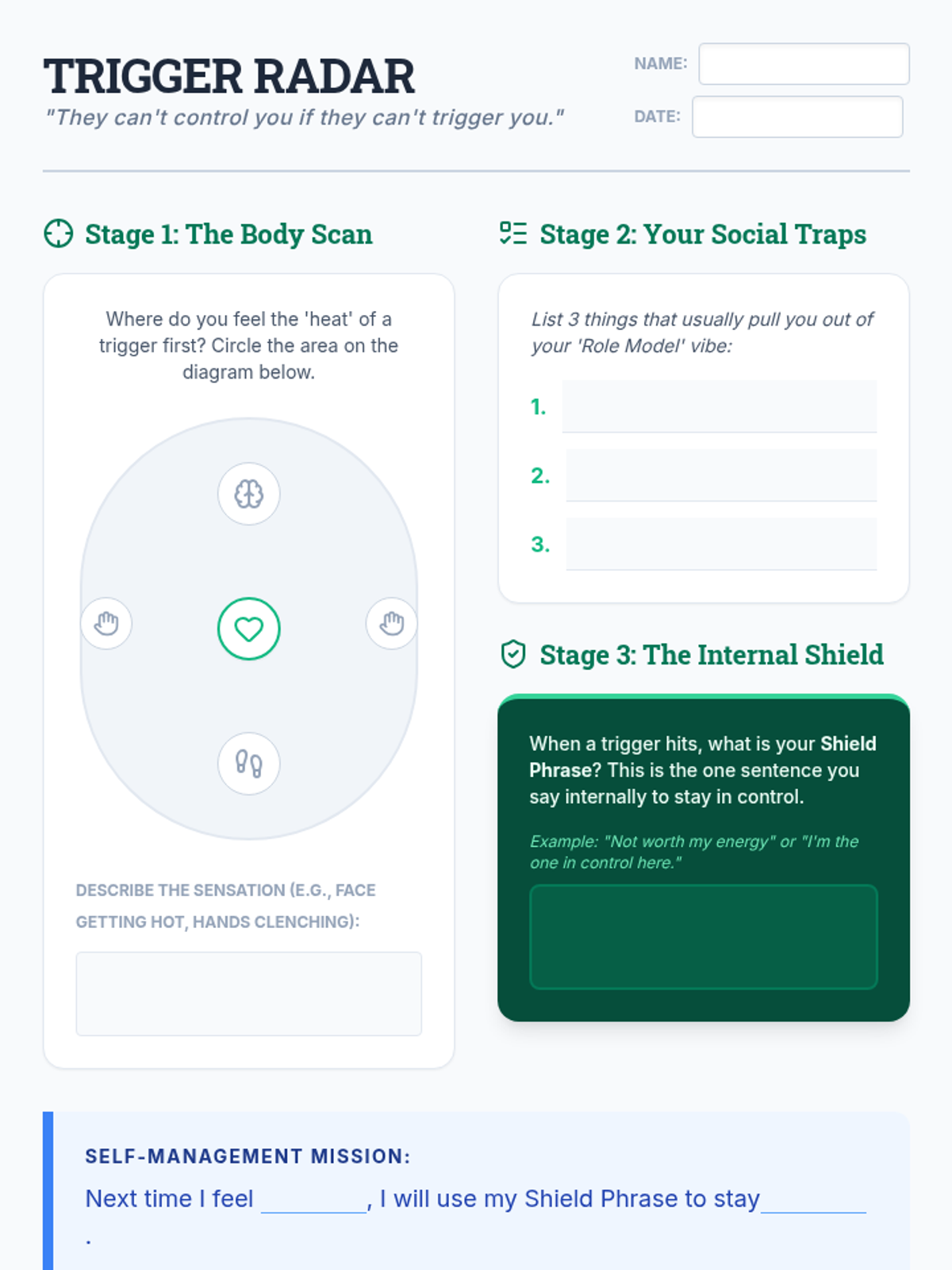
A student worksheet for identifying triggers and 'Shield' responses, focusing on emotional regulation and self-control.
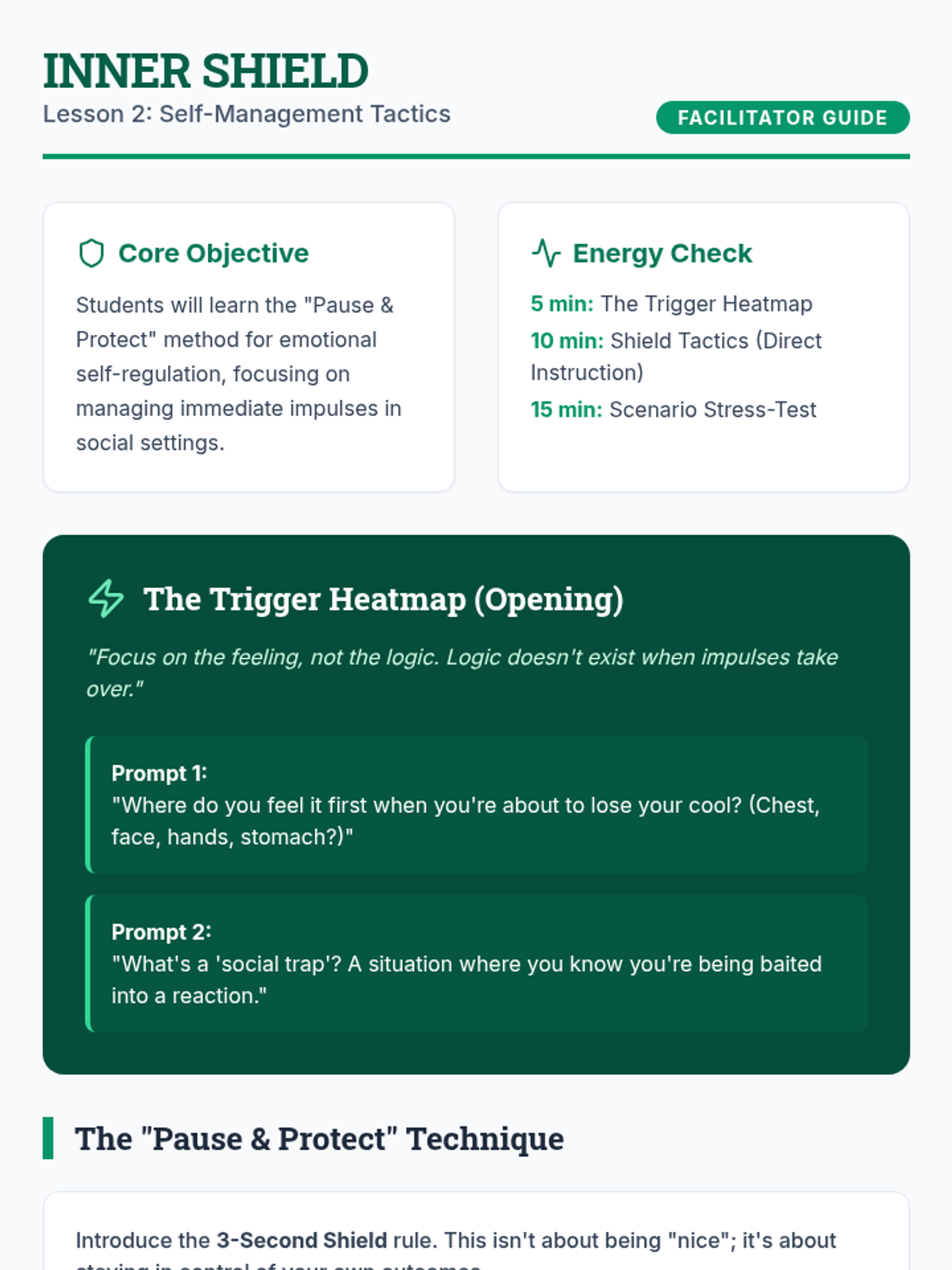
A facilitator guide for the Inner Shield lesson, focusing on self-management techniques and the 'Pause & Protect' method for emotional regulation.
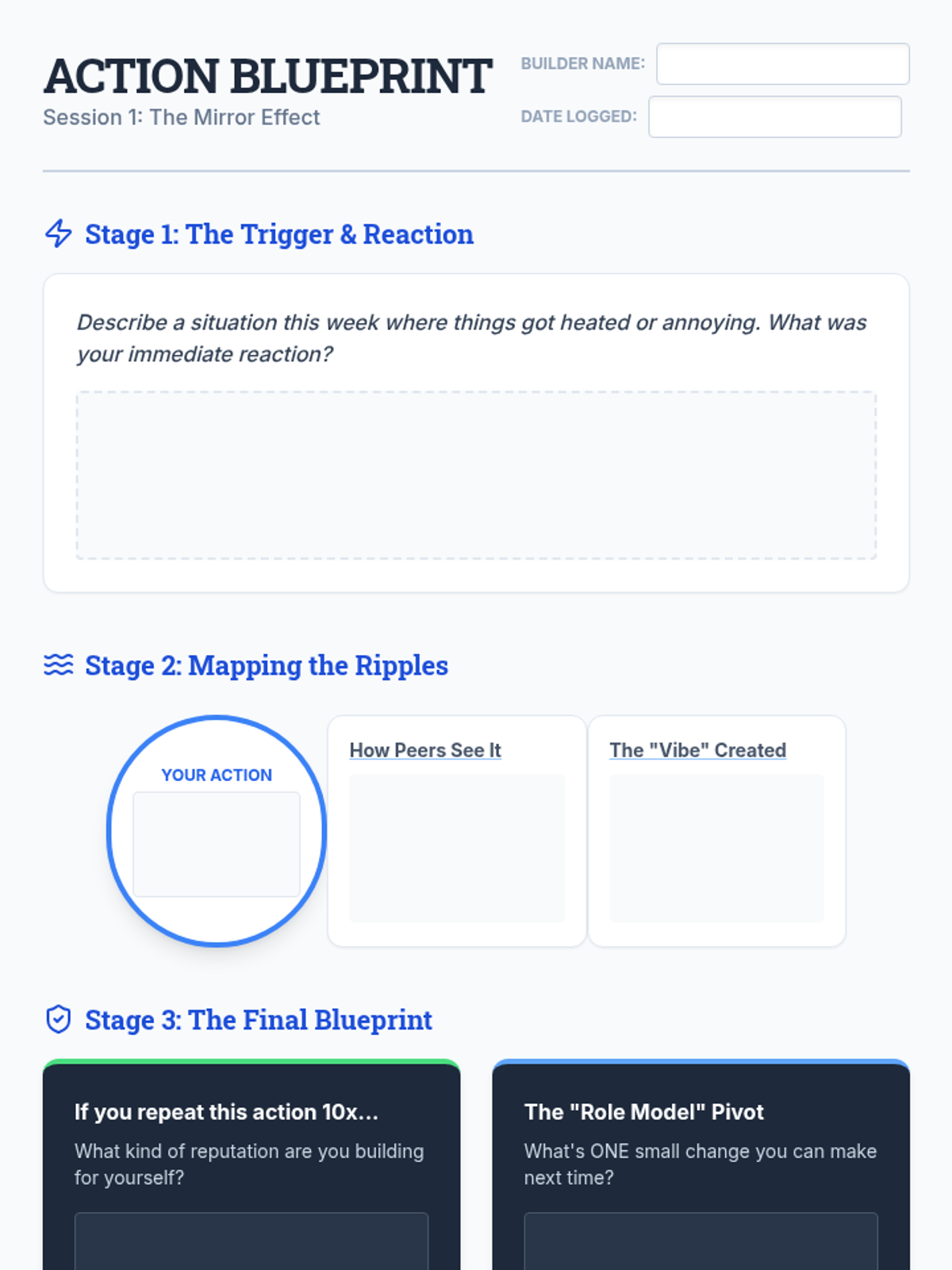
An interactive student worksheet for the Mirror Image lesson, guiding them to map out the consequences of their actions and identify a more constructive 'role model' response.
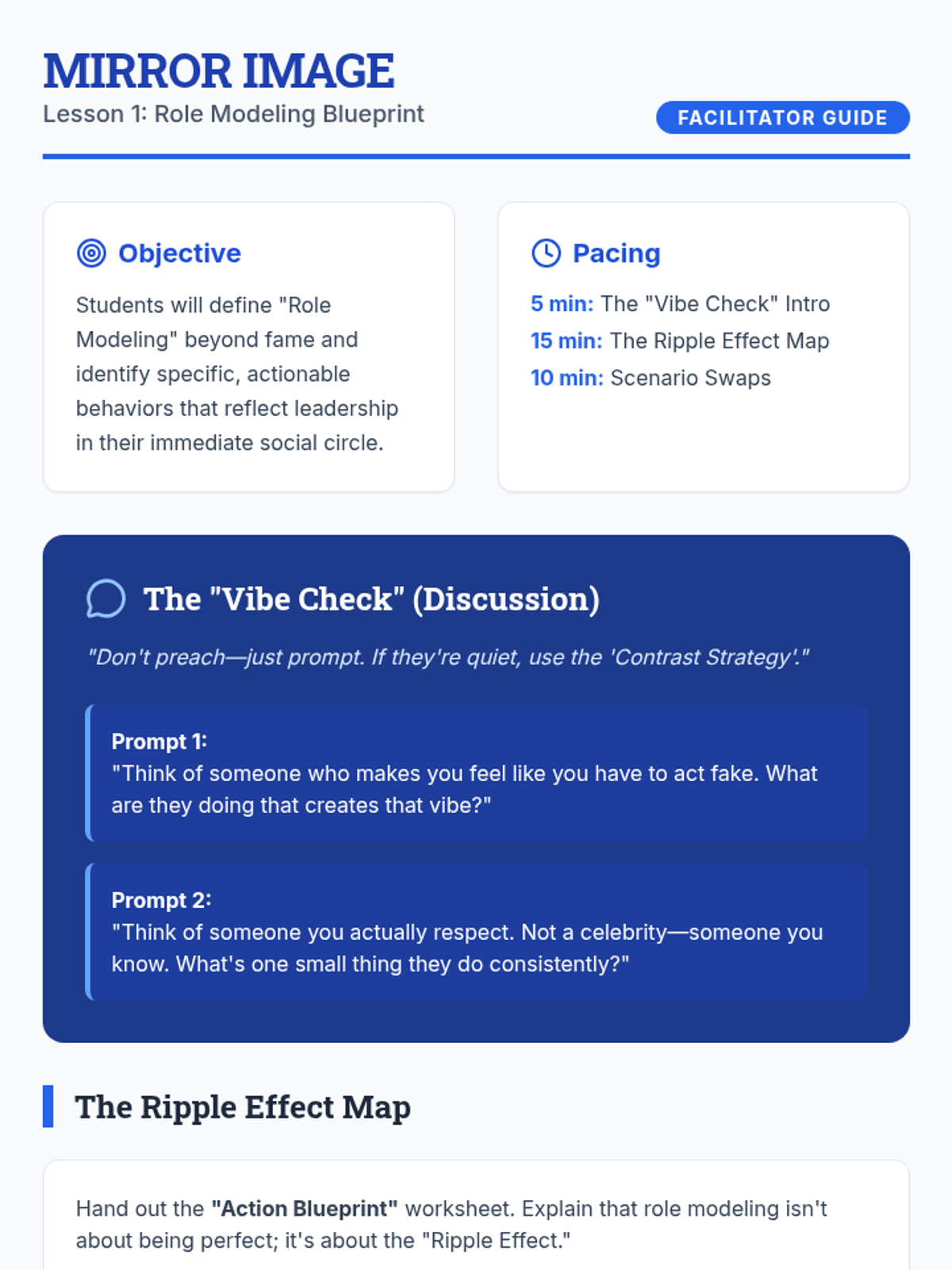
A facilitator guide for the Mirror Image lesson, providing discussion prompts, pacing suggestions, and strategies for managing group dynamics with high-school students.
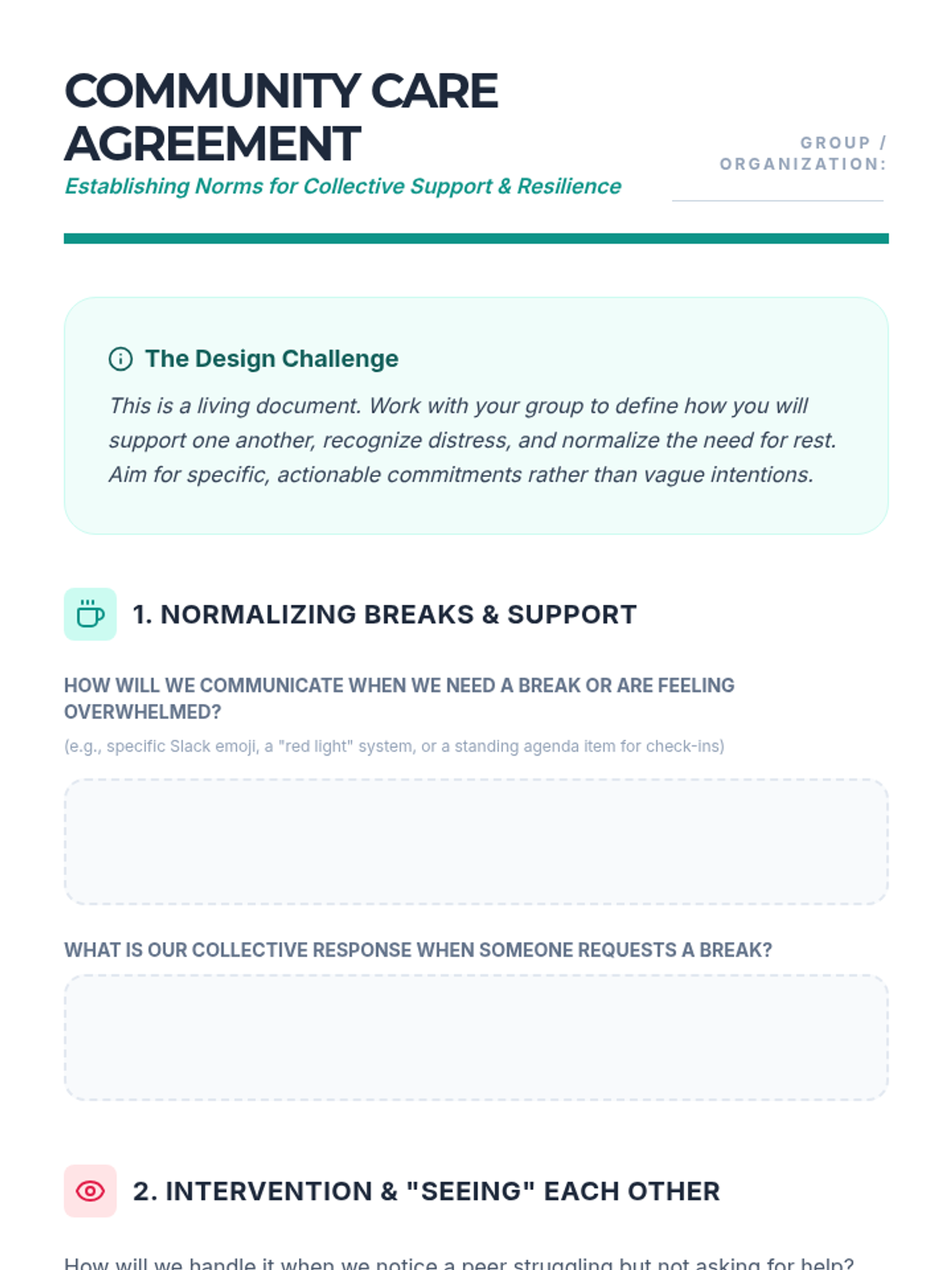
A design template for students to create a 'Community Care Agreement', establishing norms for mutual support, intervention strategies, and collective boundaries.
Slide deck for the 'Building Care Webs' lesson, introducing the concept of collective care vs. self-care and providing a framework for creating Community Care Agreements.
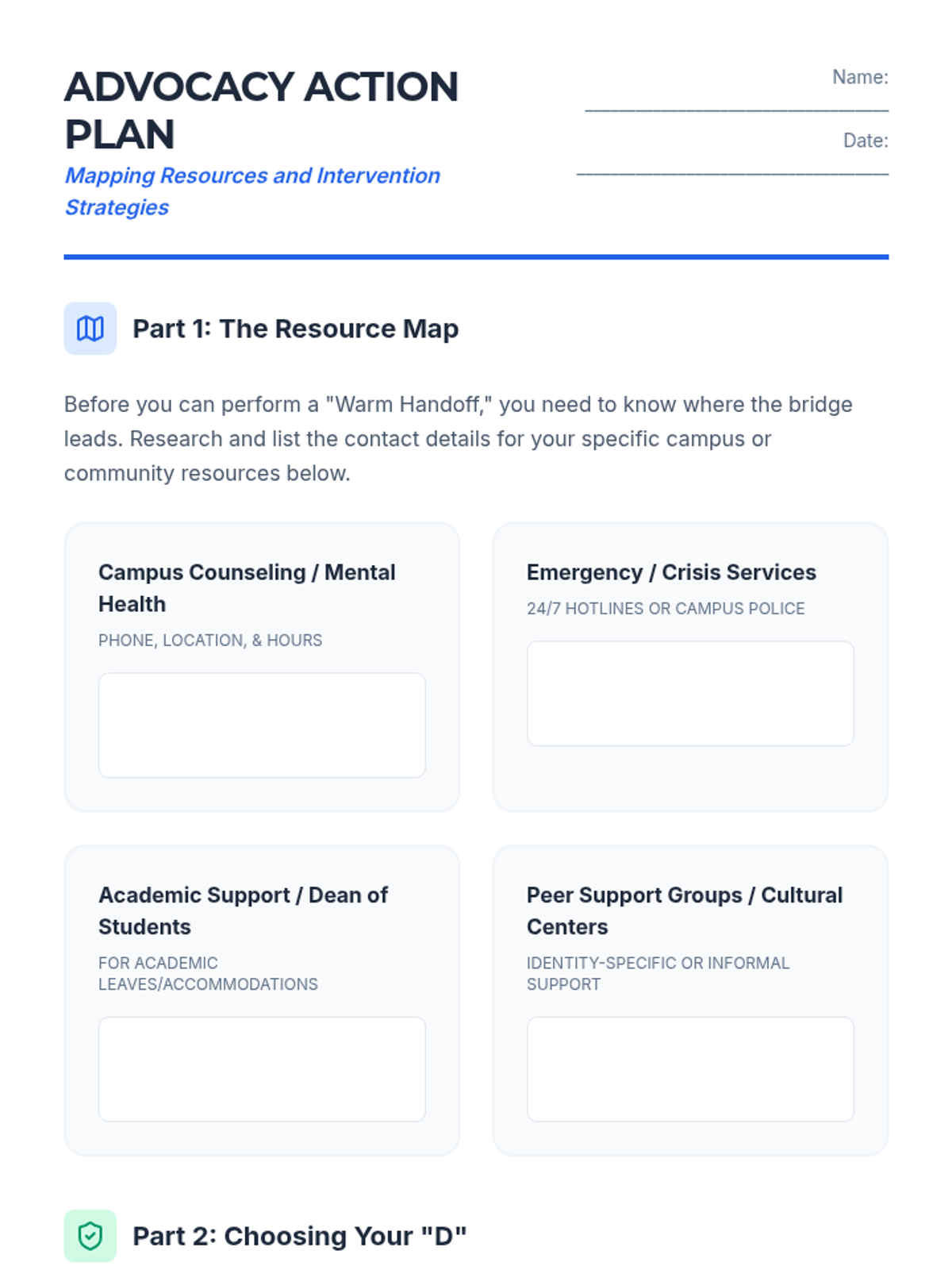
A student worksheet for mapping local mental health resources and practicing the 5Ds of intervention in a specific peer-distress scenario.
Slide deck for 'Mental Health Advocacy', covering the bystander effect, the 5Ds of intervention strategies, and the 'Warm Handoff' technique for connecting peers to professional resources.
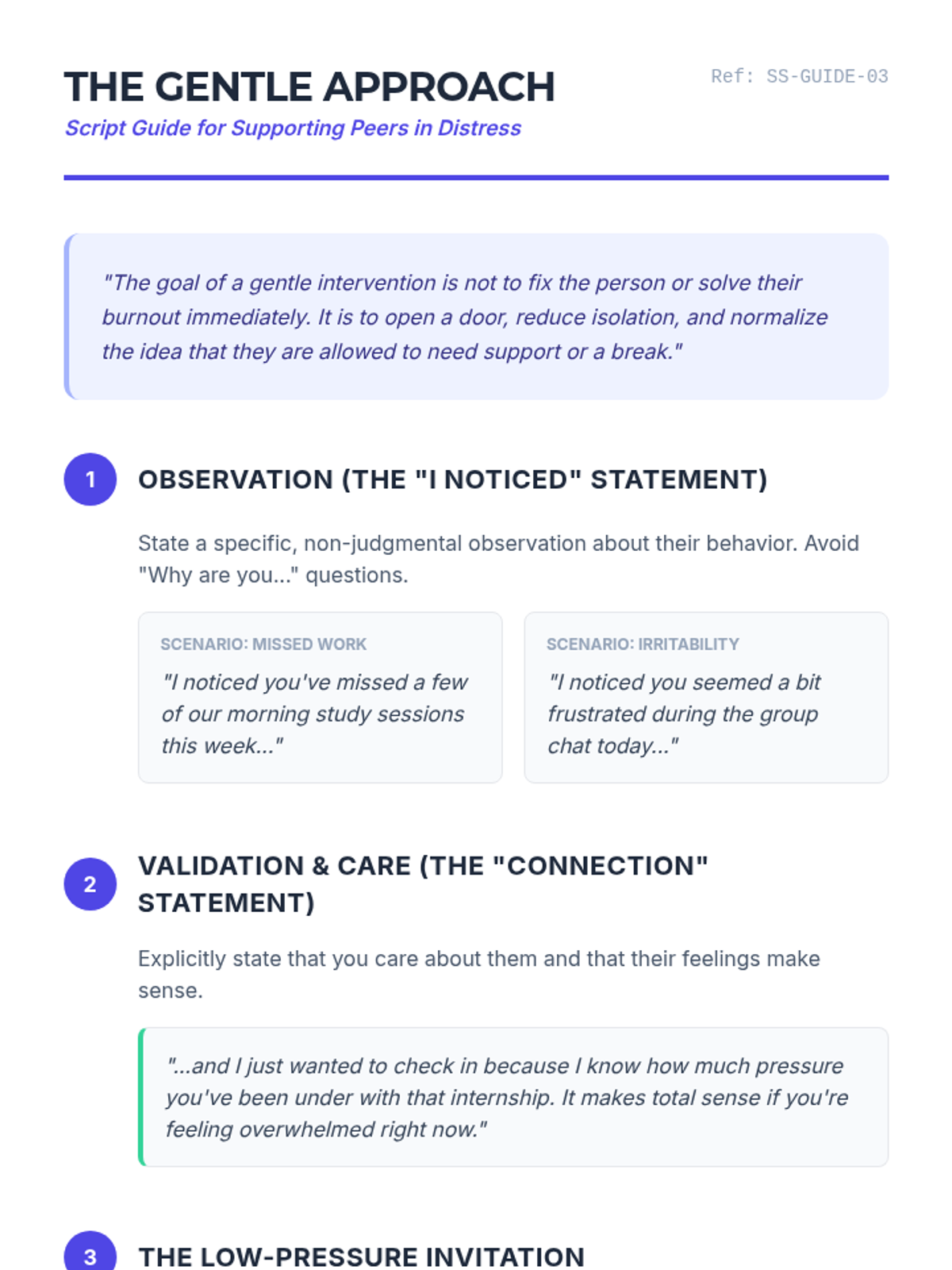
A script-building guide for students to practice the 'Gentle Approach' to intervention, providing specific phrasing for observations, validation, and low-pressure invitations.
Slide deck for 'Spotting the Signs', covering the three dimensions of burnout (Exhaustion, Cynicism, Inefficacy), behavioral red flags, and the three-step 'Gentle Approach' for intervention.
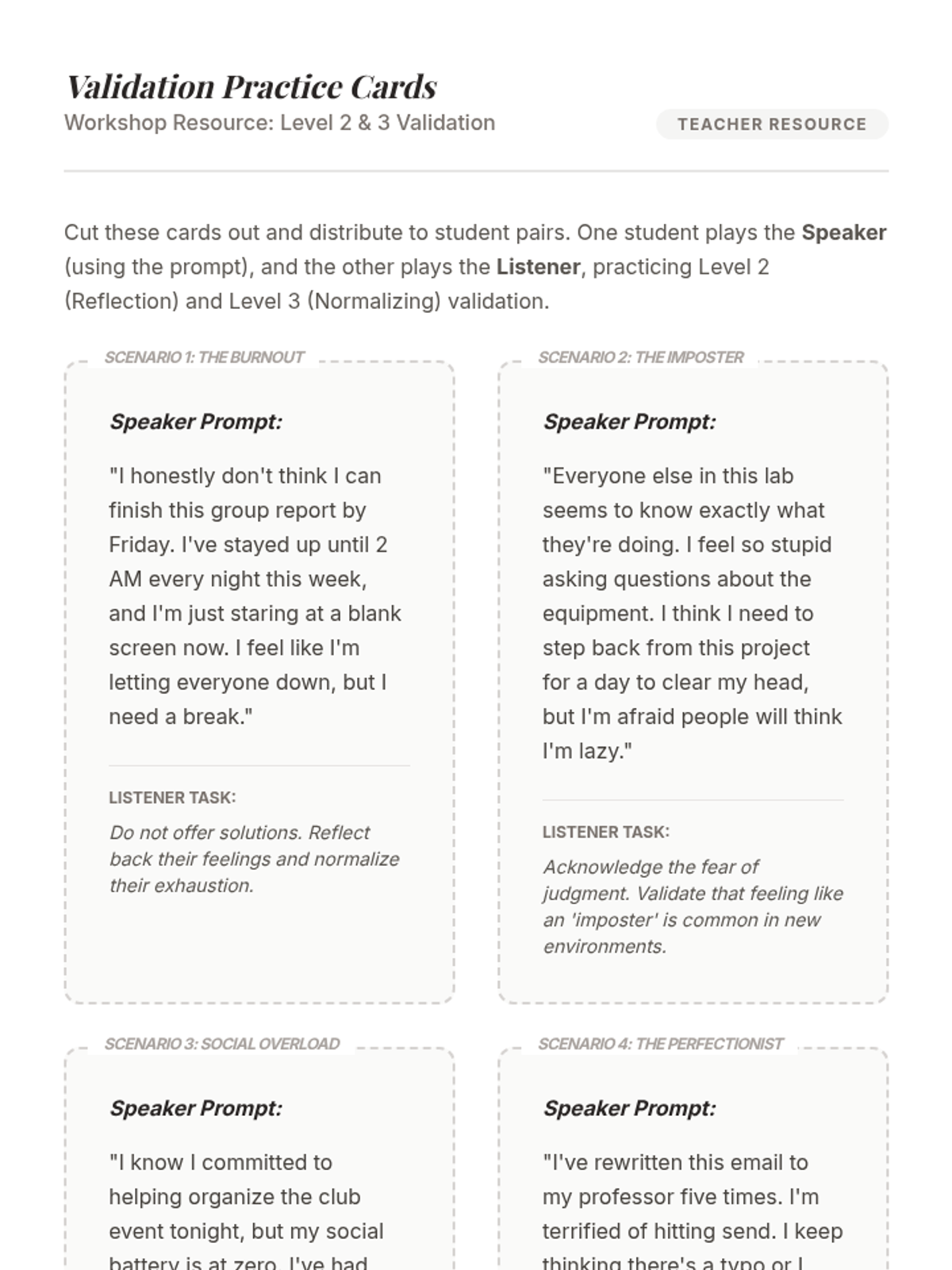
Scenarios and facilitator notes for the active listening workshop, providing students with structured practice in emotional validation and 'holding space' for peers in distress.
Slide deck for the 'Holding Space Workshop' lesson, focusing on the distinction between problem-solving ('fixing') and emotional validation, and introducing the 3 levels of validation.
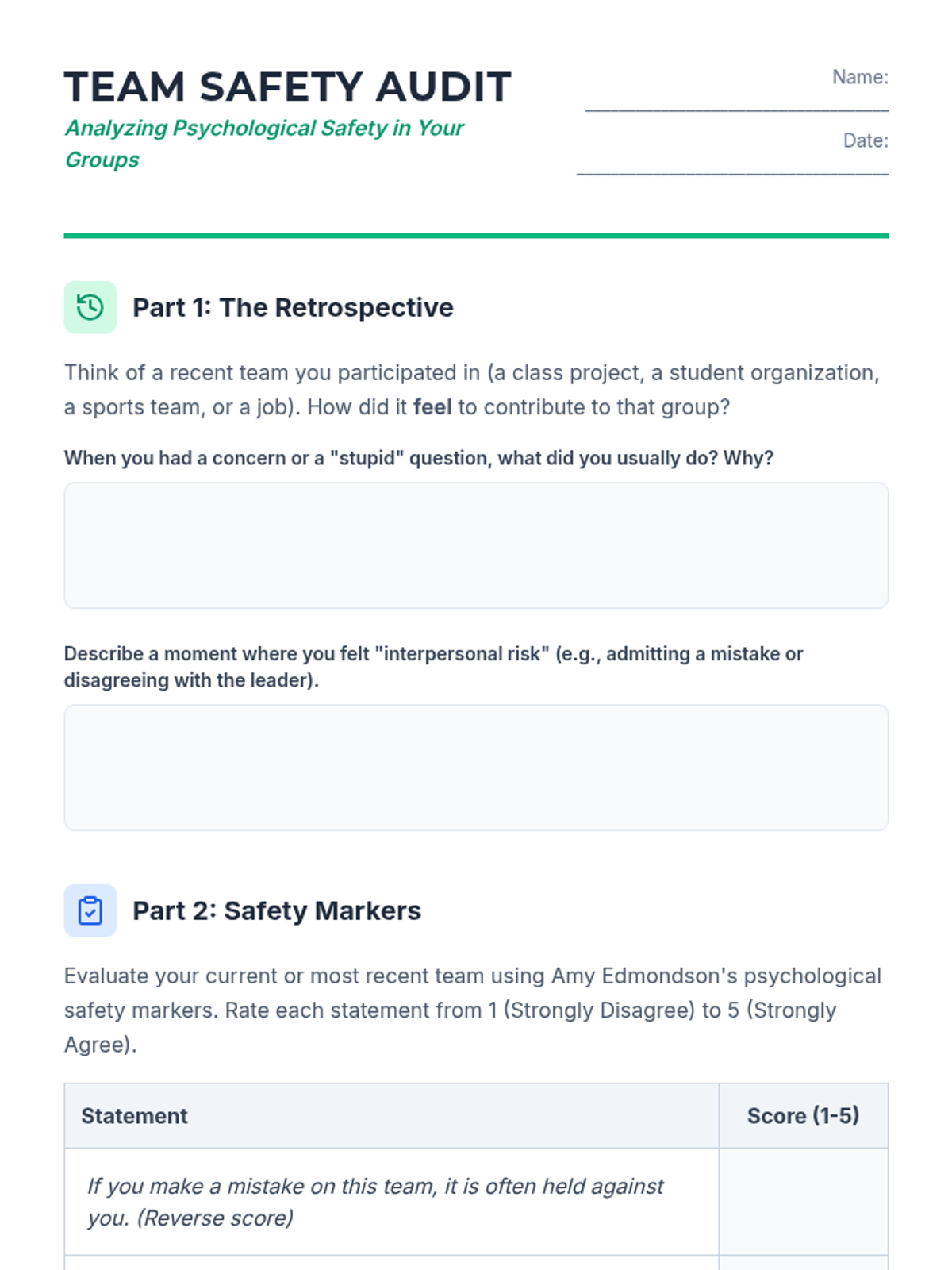
A reflection and audit worksheet for students to analyze the psychological safety of their own teams and identify barriers to requesting support.
Introductory slides for the 'Safe Spaces for Strong Teams' lesson, covering Google's Project Aristotle and the fundamental definition of psychological safety in group settings.
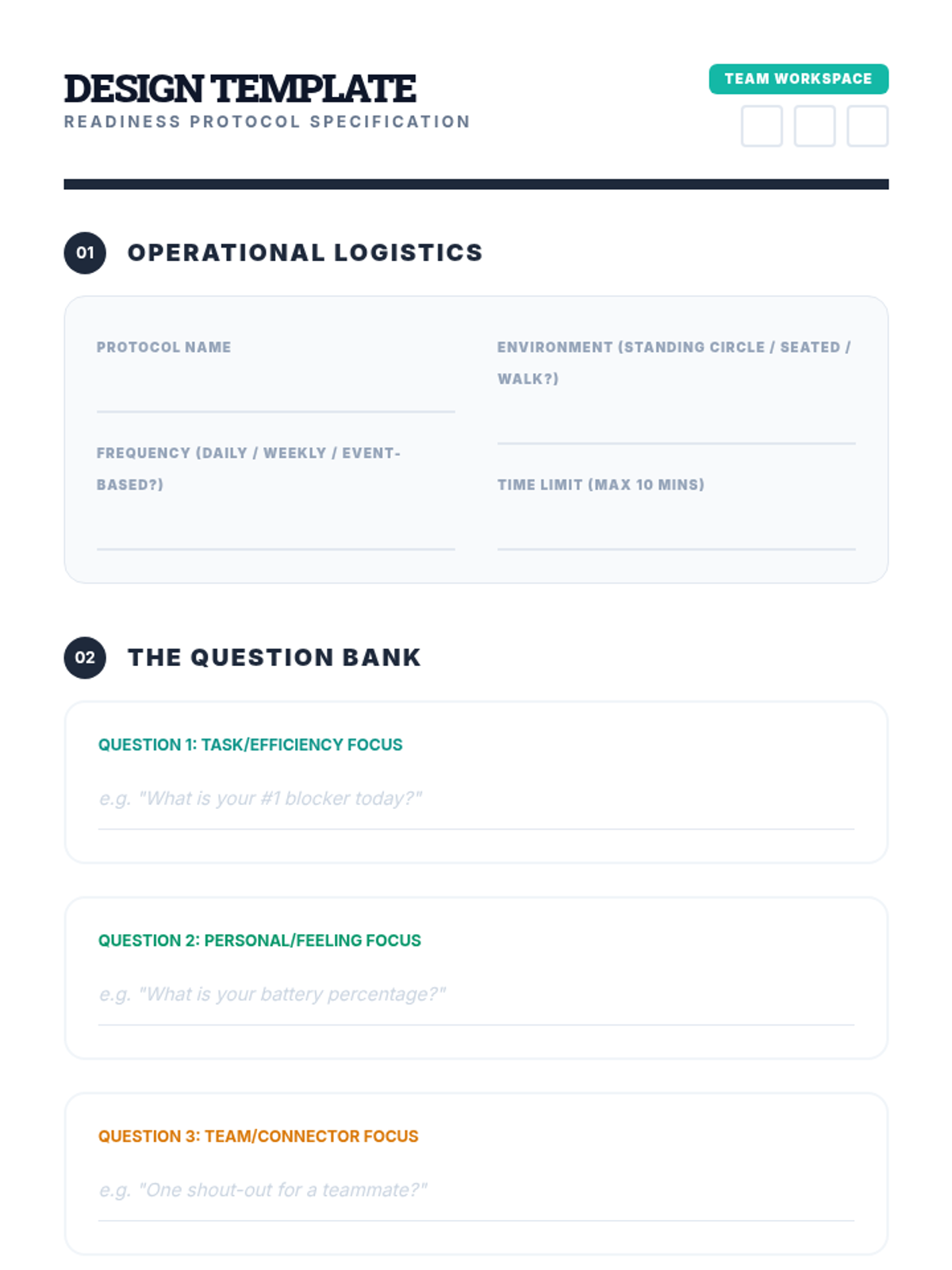
The project planning template for students to design their custom team protocol, including logistics, question banks, and escalation plans.
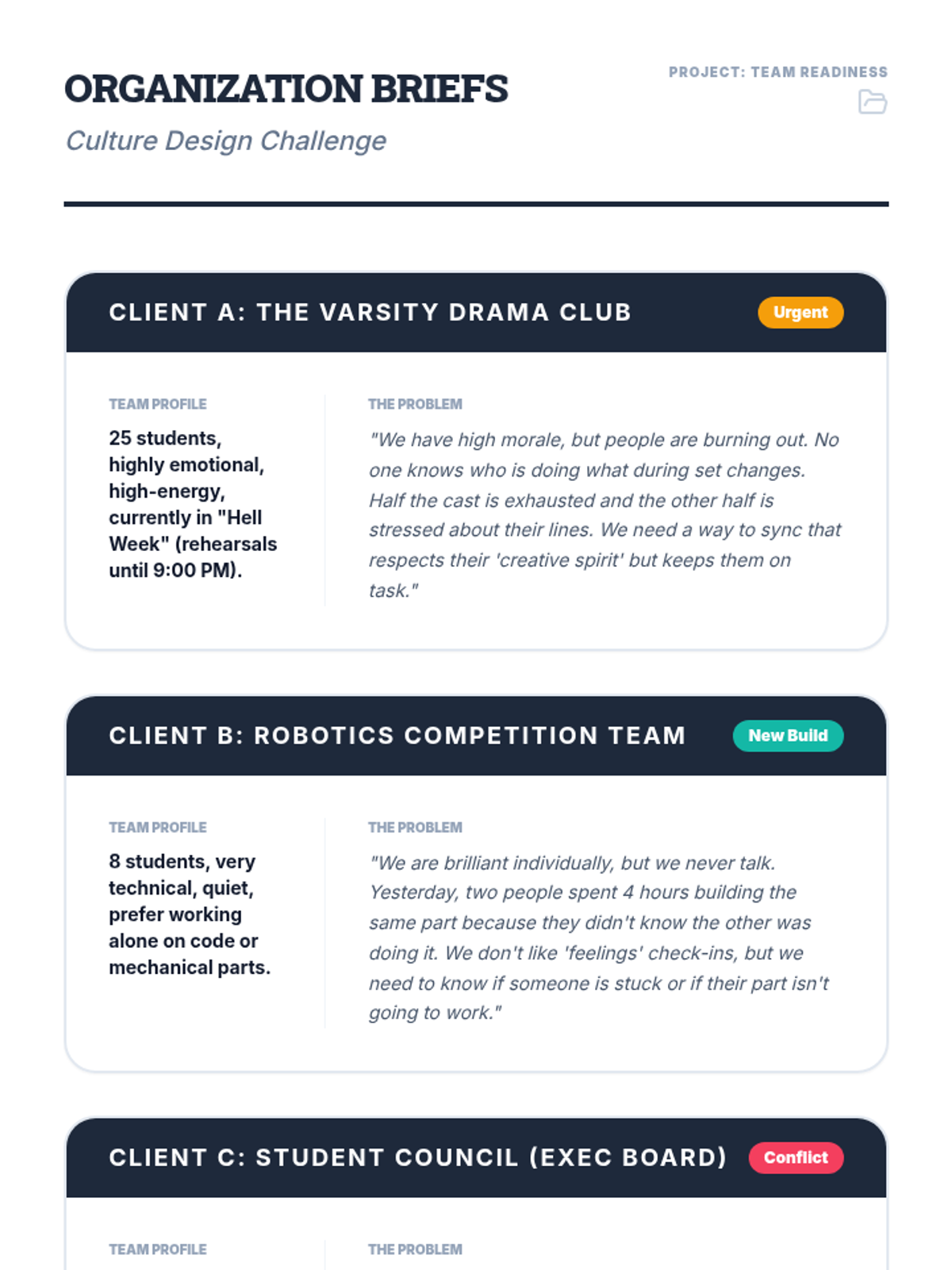
Client case study briefs for the final project, describing three different student organizations with unique team dynamic challenges.
Slide deck for the final project overview, detailing the "Culture Consultant" challenge and pitch requirements.
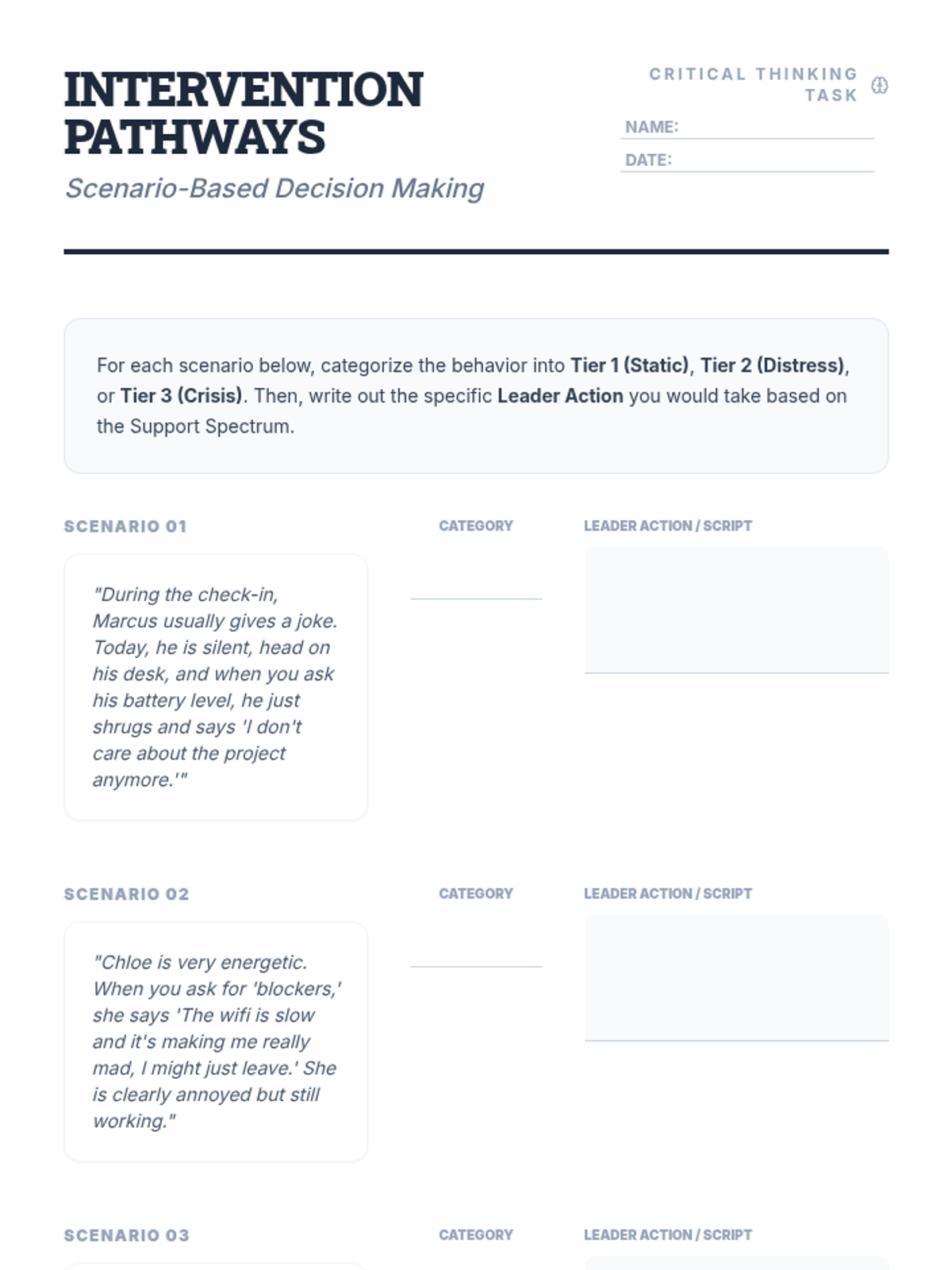
Worksheet for Lesson 4 where students analyze scenarios to determine the appropriate level of intervention and practice writing referral scripts.
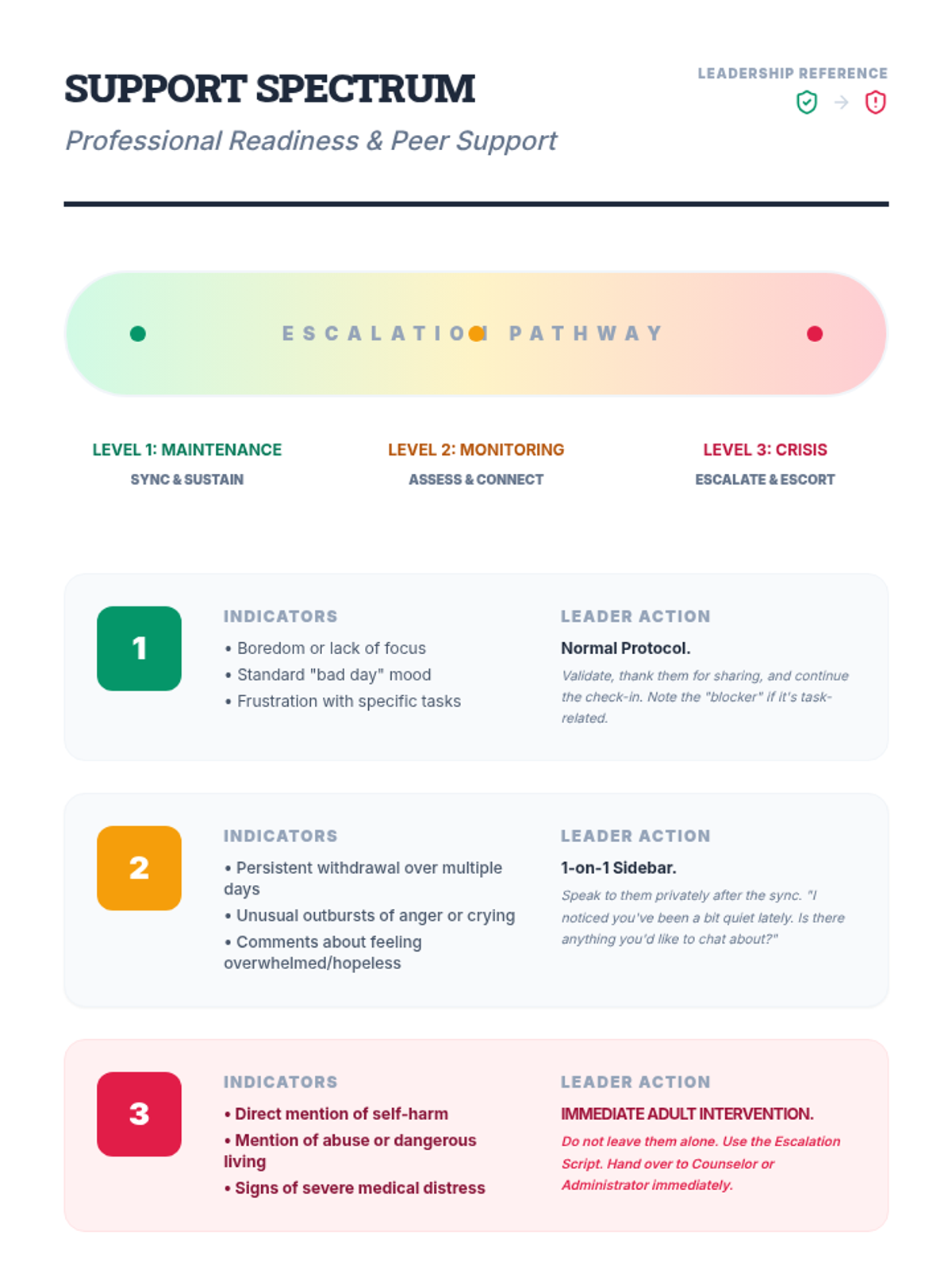
A visual guide and reference sheet for students to understand the different tiers of behavioral indicators and the appropriate leadership responses.
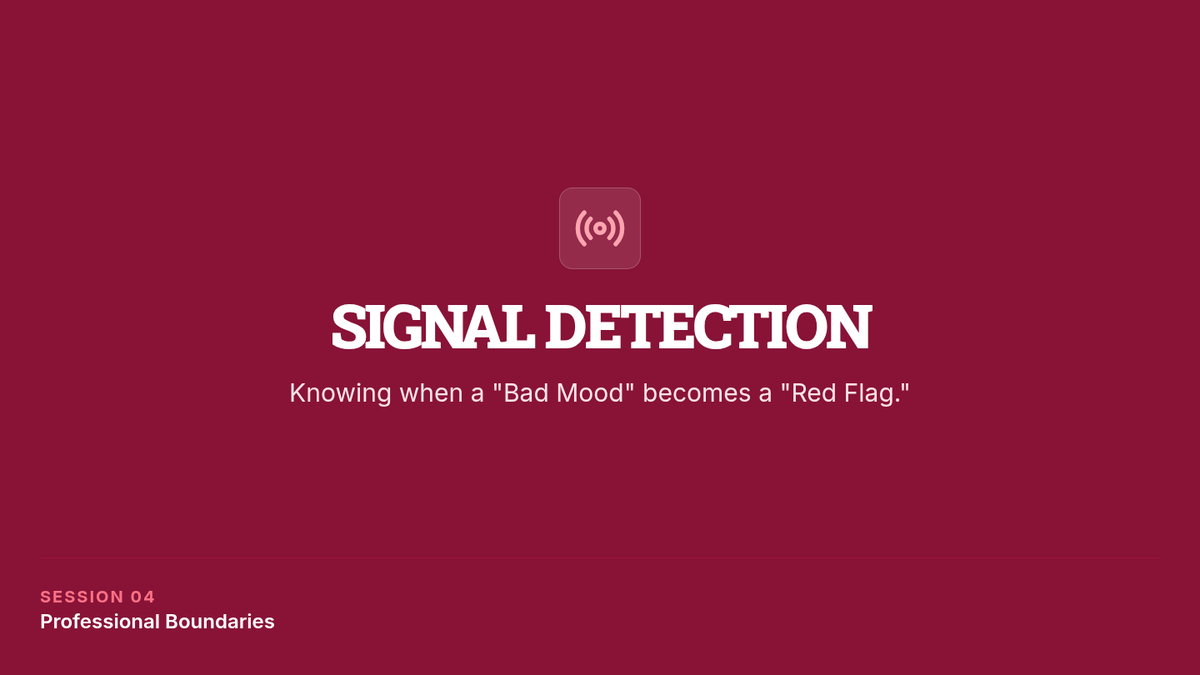
Slide deck for Lesson 4 exploring how to distinguish between a "bad mood" and a "red flag" and when to escalate concerns to professionals.
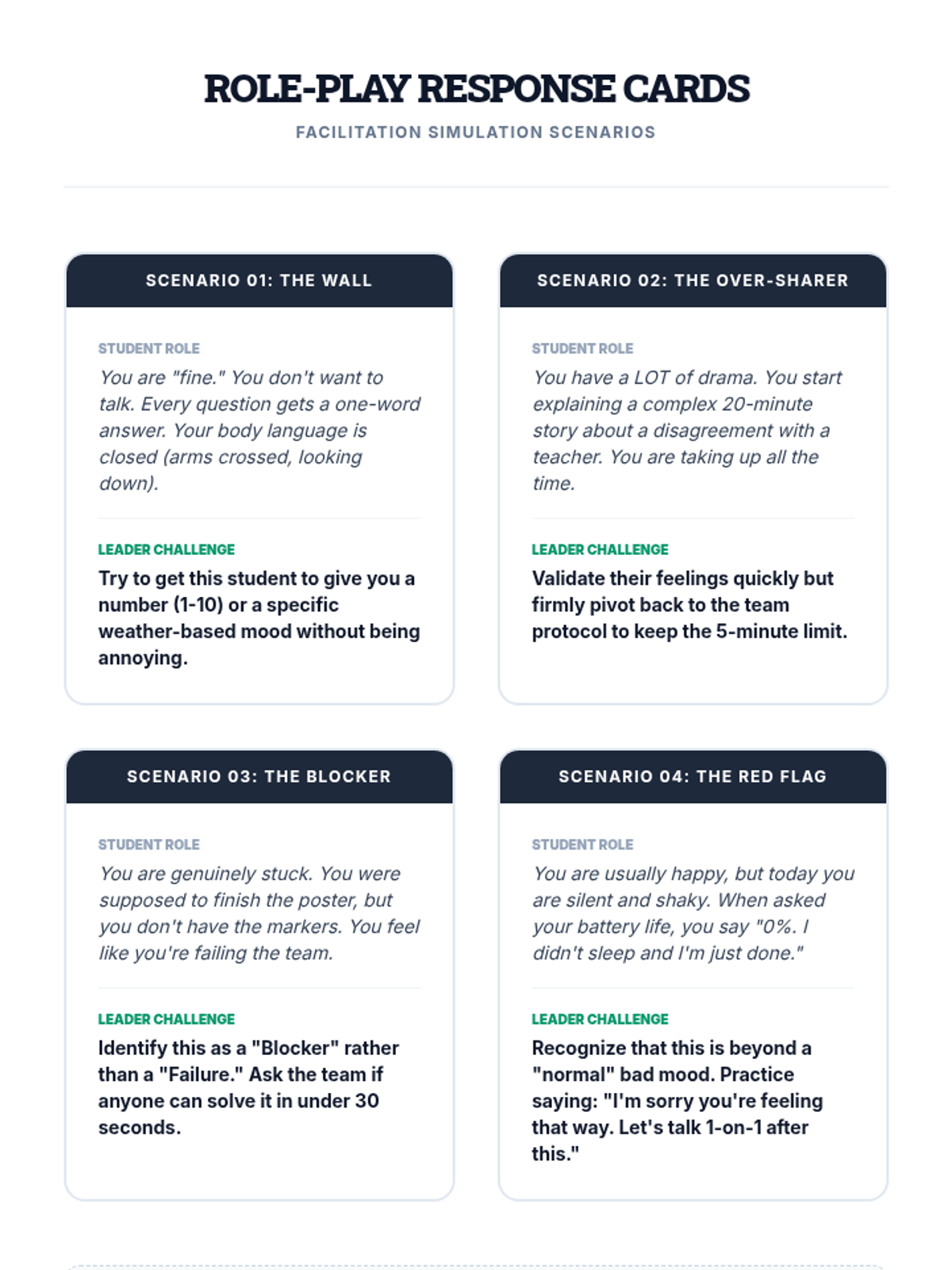
Scenario cards for role-playing common check-in challenges, including a silent student, an over-sharer, a team blocker, and a "red flag" situation.
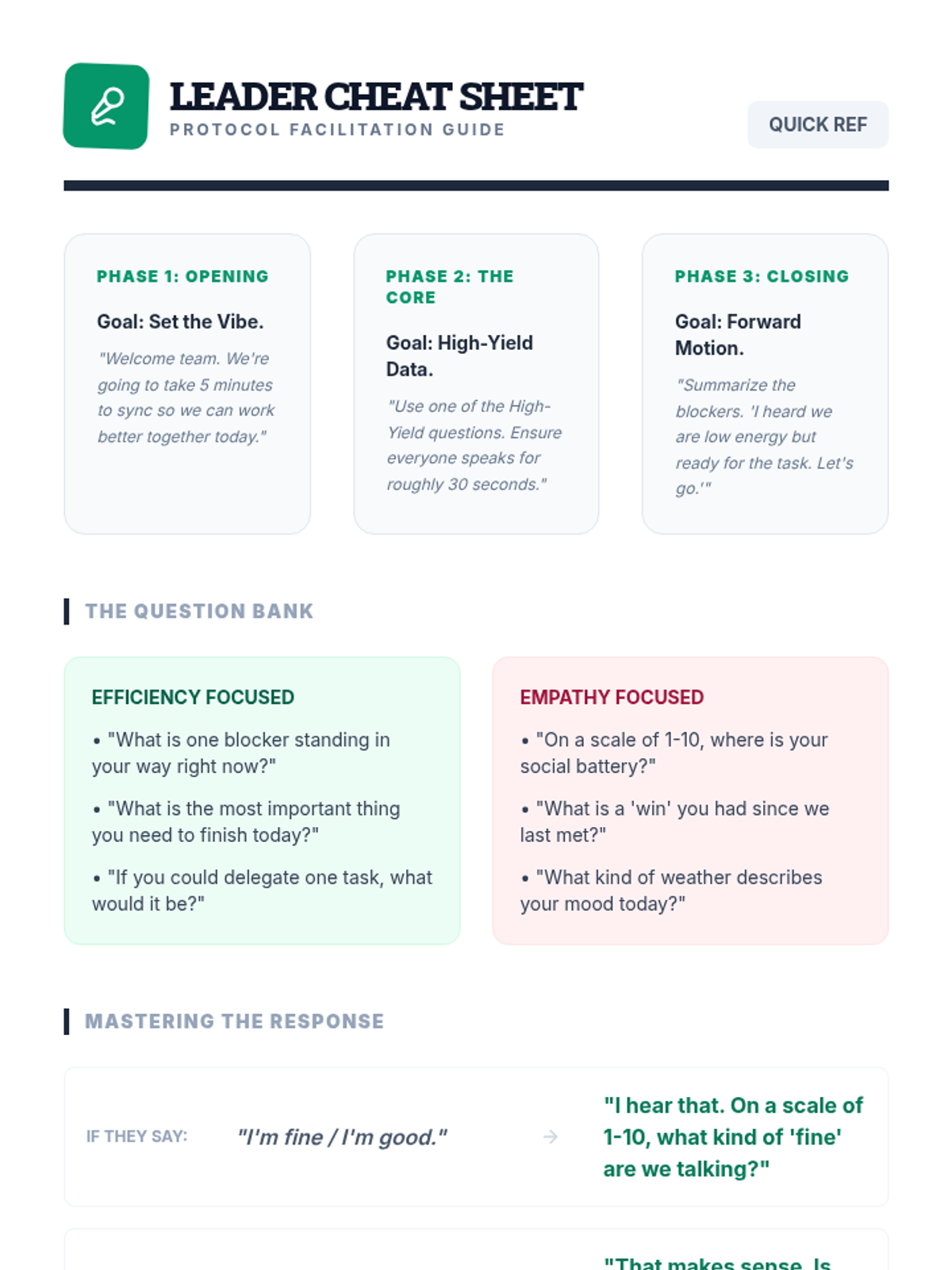
A tactical reference guide for student leaders to use during check-in facilitation practice, featuring question banks and response techniques.
Slide deck for Lesson 3 focusing on facilitation techniques, active listening, and avoid the "fixer" trap during peer check-ins.
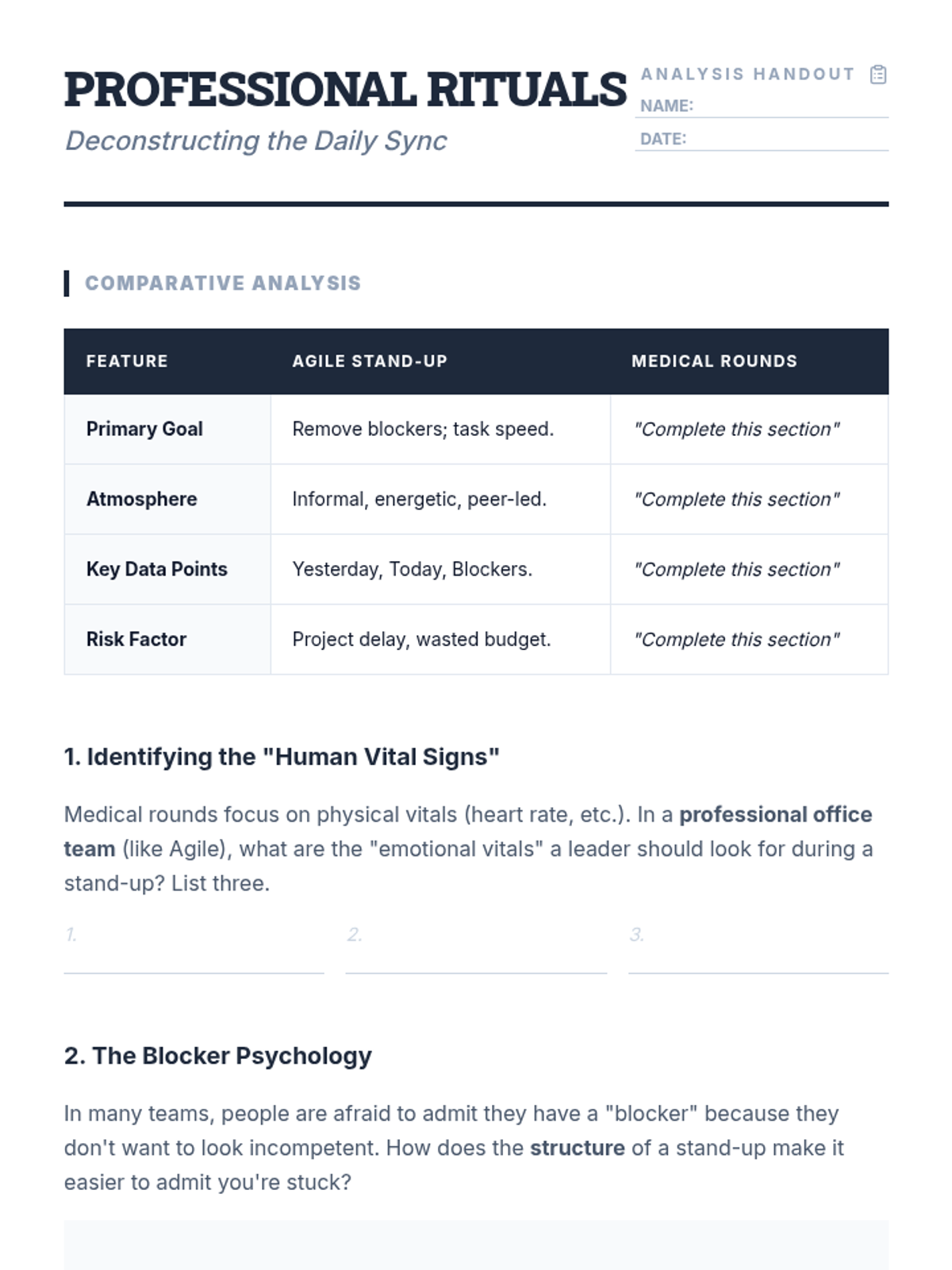
Worksheet for Lesson 2 that helps students compare different professional check-in rituals and analyze their effectiveness for different types of teams.
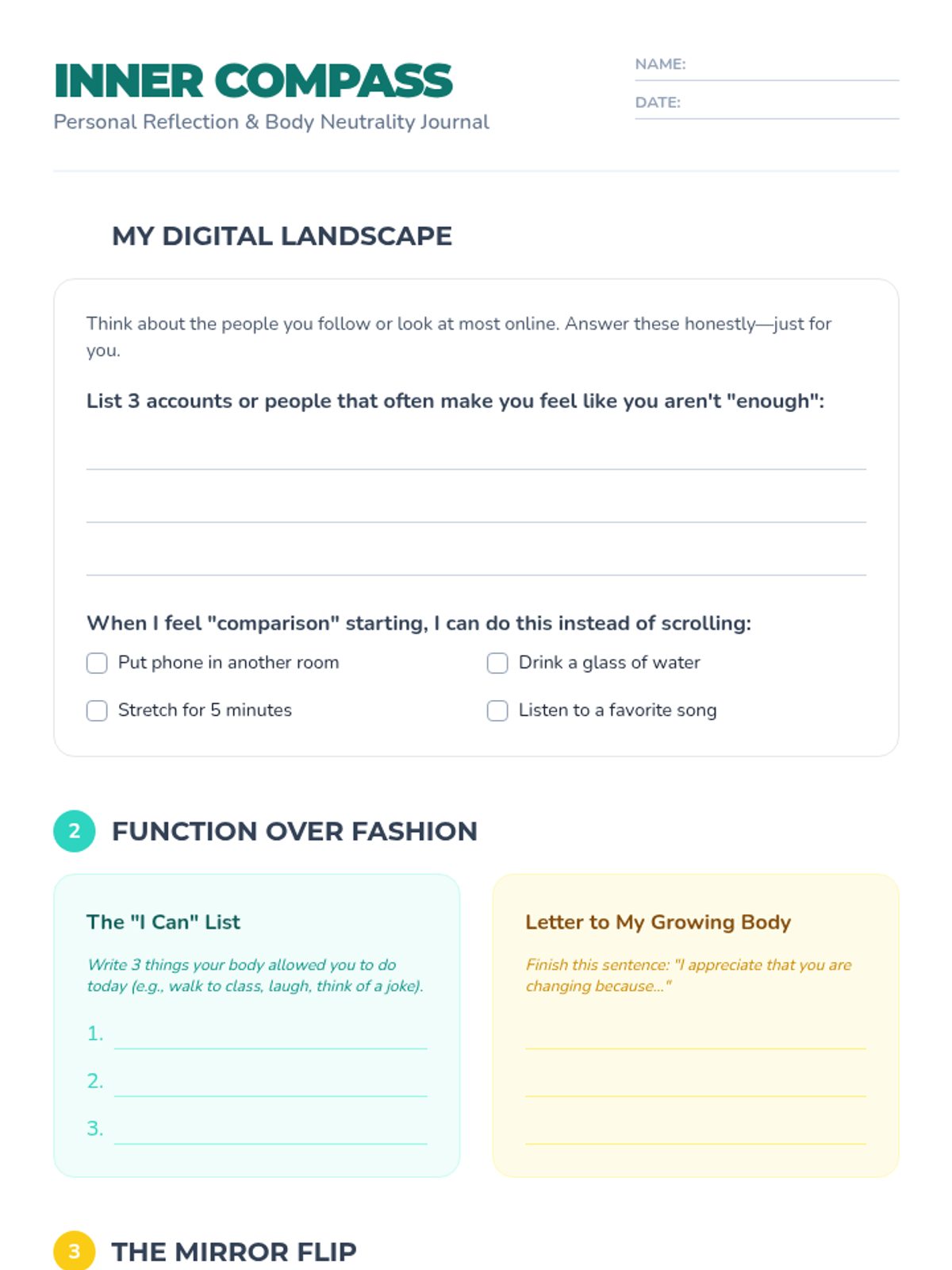
Individual student reflection worksheet focusing on social media habits, body neutrality shifts, and practicing compassionate self-talk.
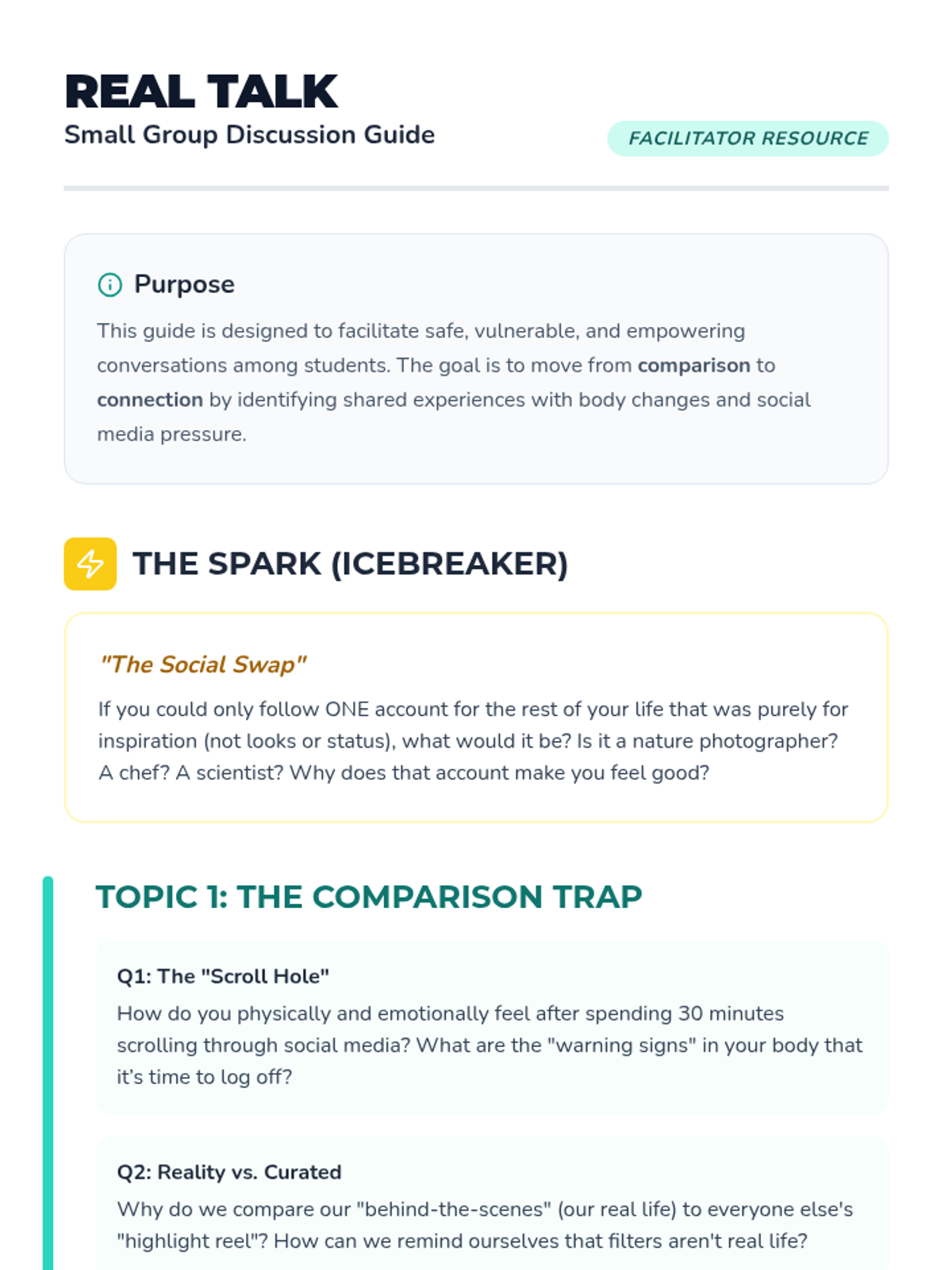
A comprehensive facilitator's guide for leading small-group discussions on social media influence, body neutrality, and healthy self-image.
Interactive slide deck exploring the impact of social media comparison and body changes on self-esteem, featuring group activities and body neutrality concepts.
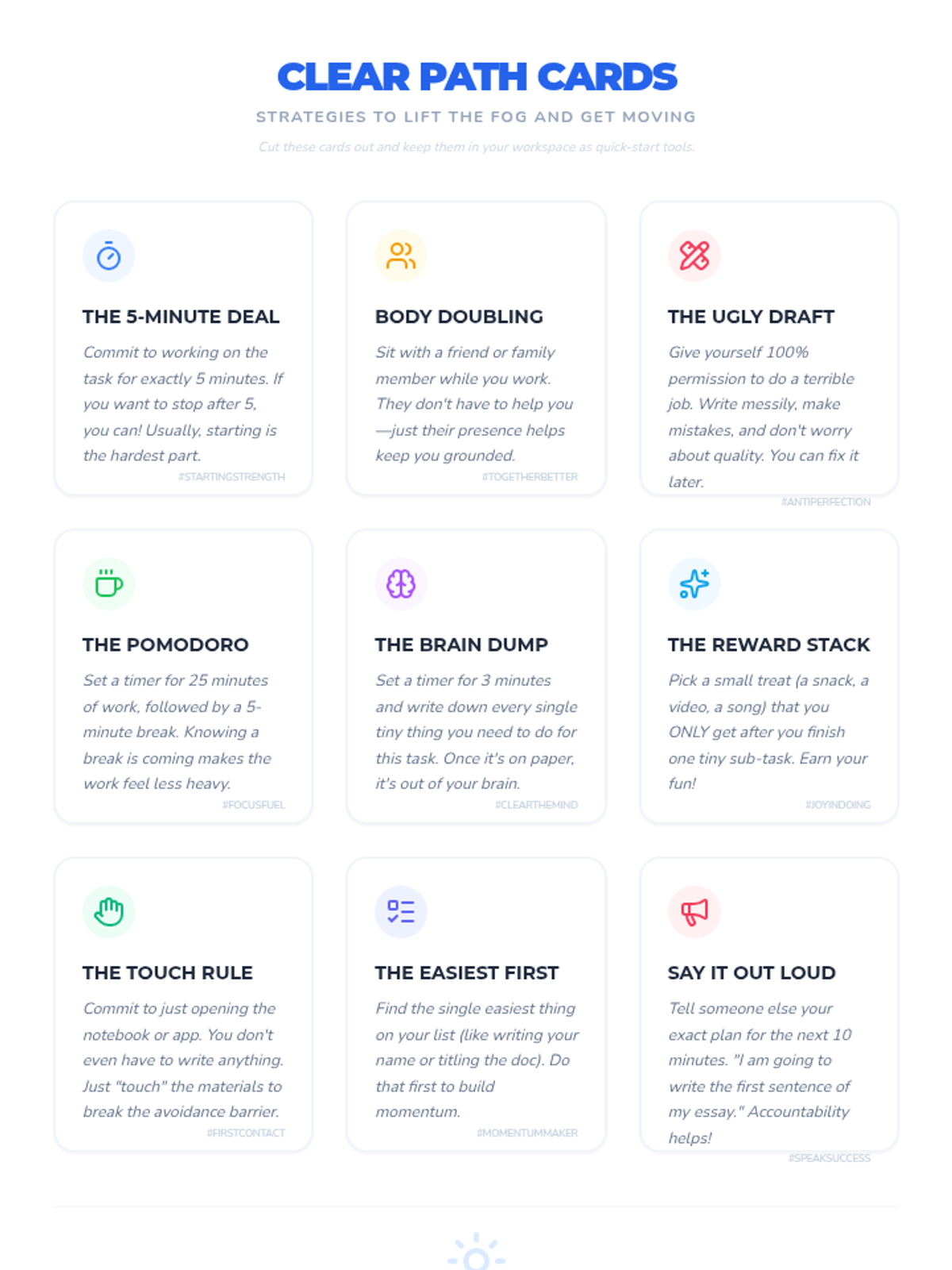
A set of nine strategy cards designed to help students overcome task avoidance through actionable, micro-motivation techniques like the 5-Minute Deal and Body Doubling.
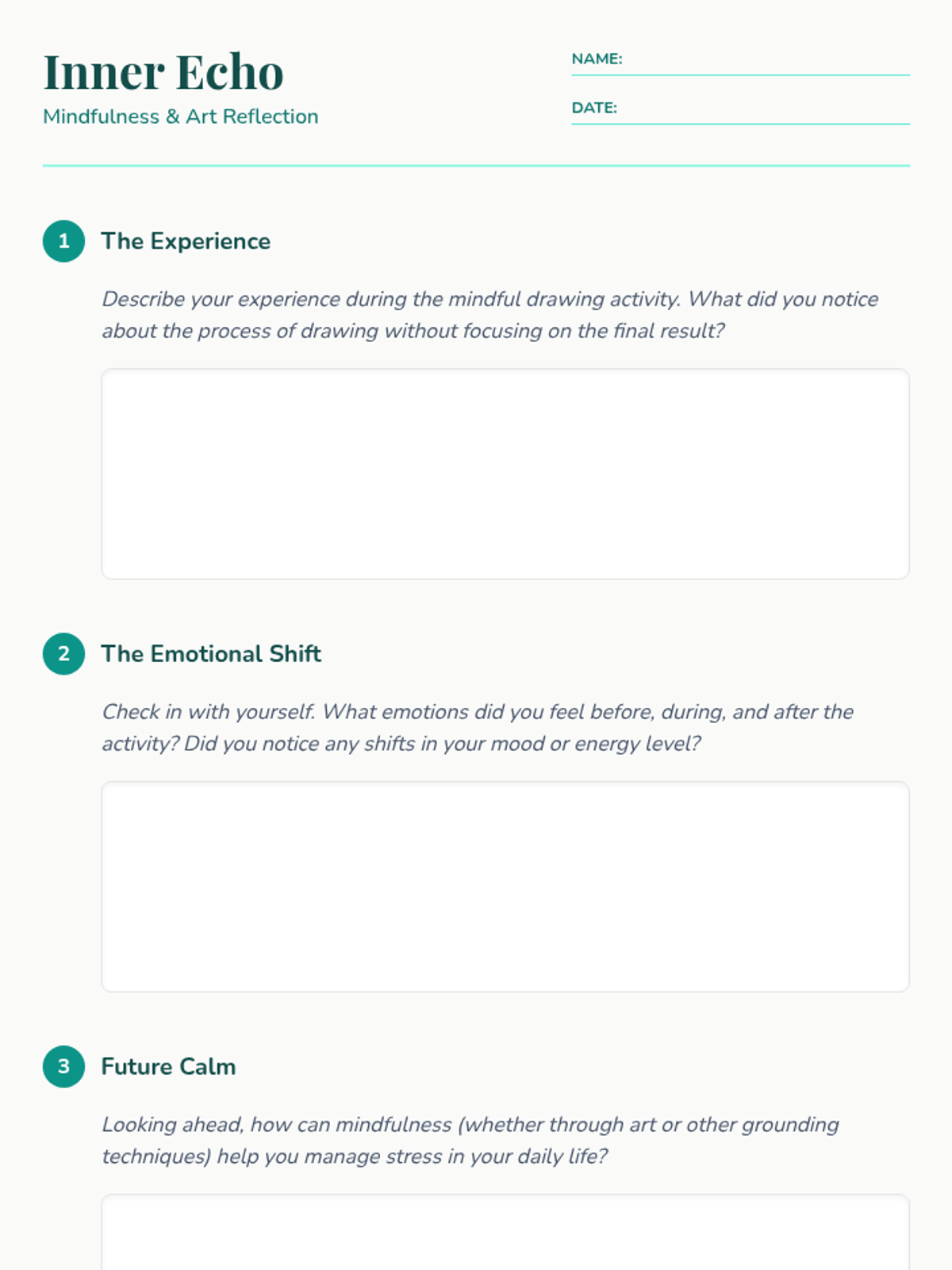
A student reflection worksheet for the 'Canvas of Calm' lesson, providing structured space for students to process their emotional and cognitive experiences during the mindful drawing session.
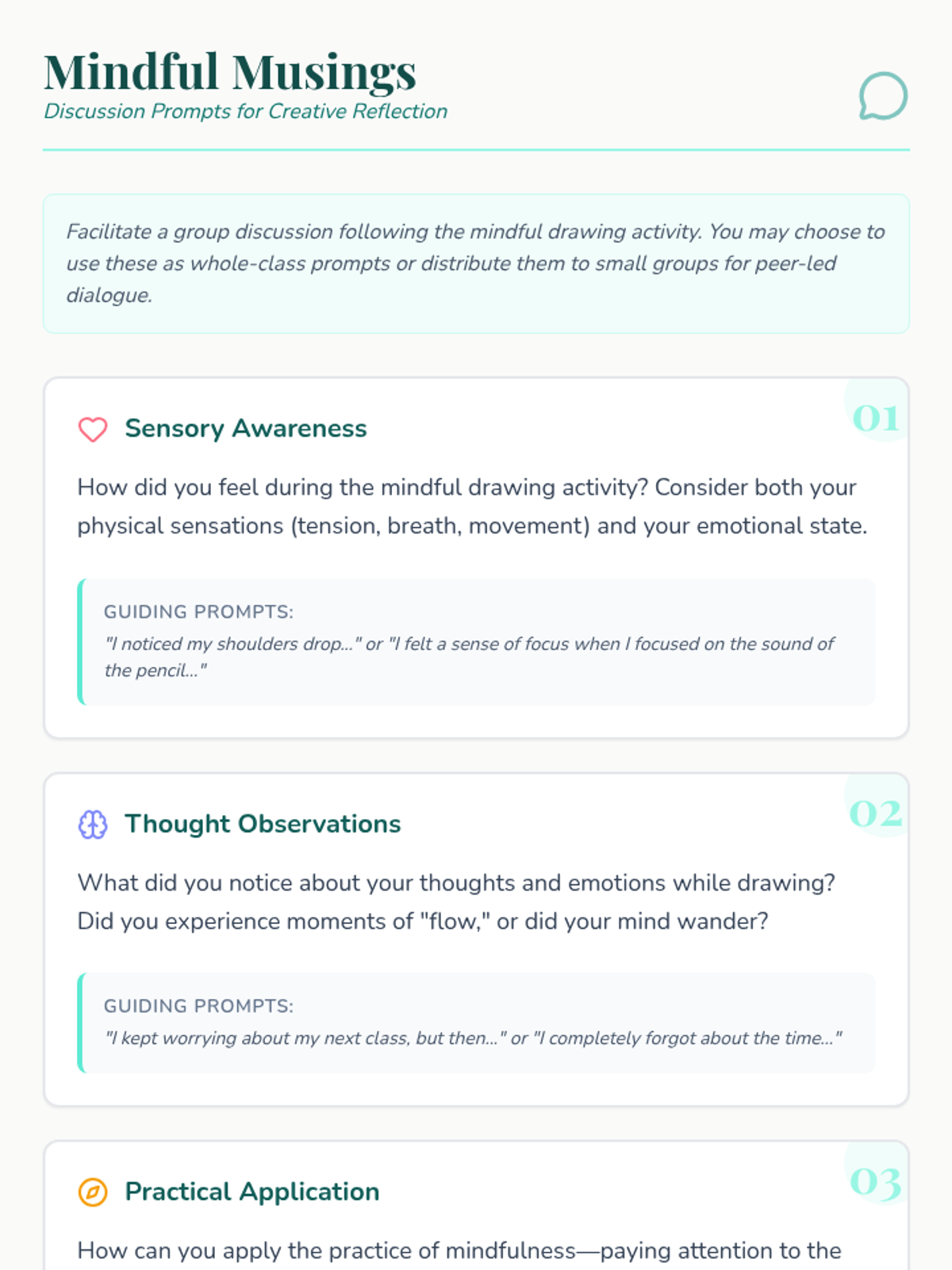
A set of guided discussion prompts designed to help students verbalize their internal experiences during the mindful drawing activity.
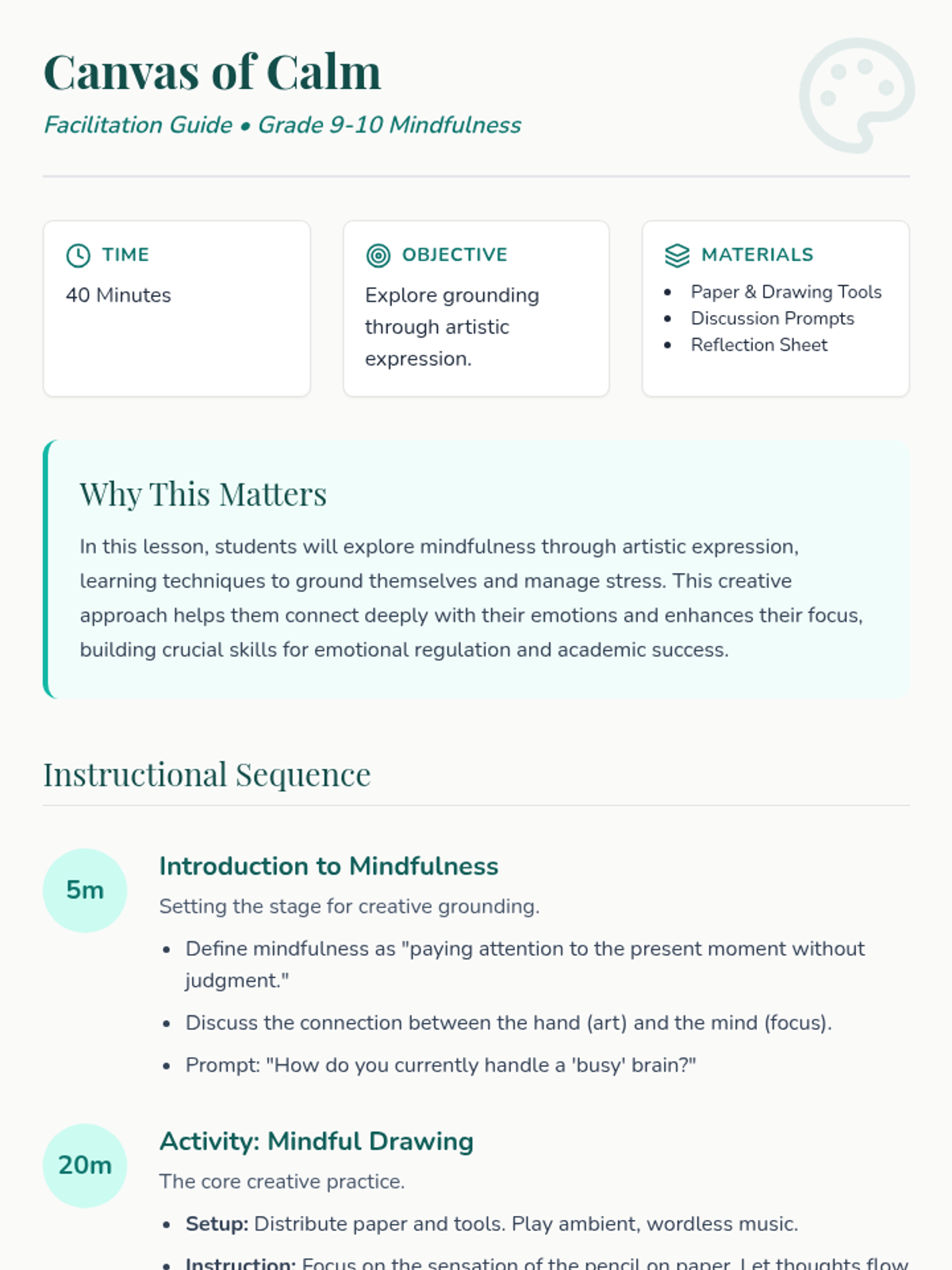
A comprehensive teacher facilitation guide for the 'Canvas of Calm' lesson, outlining timing, objectives, and step-by-step instructions for mindful art integration.
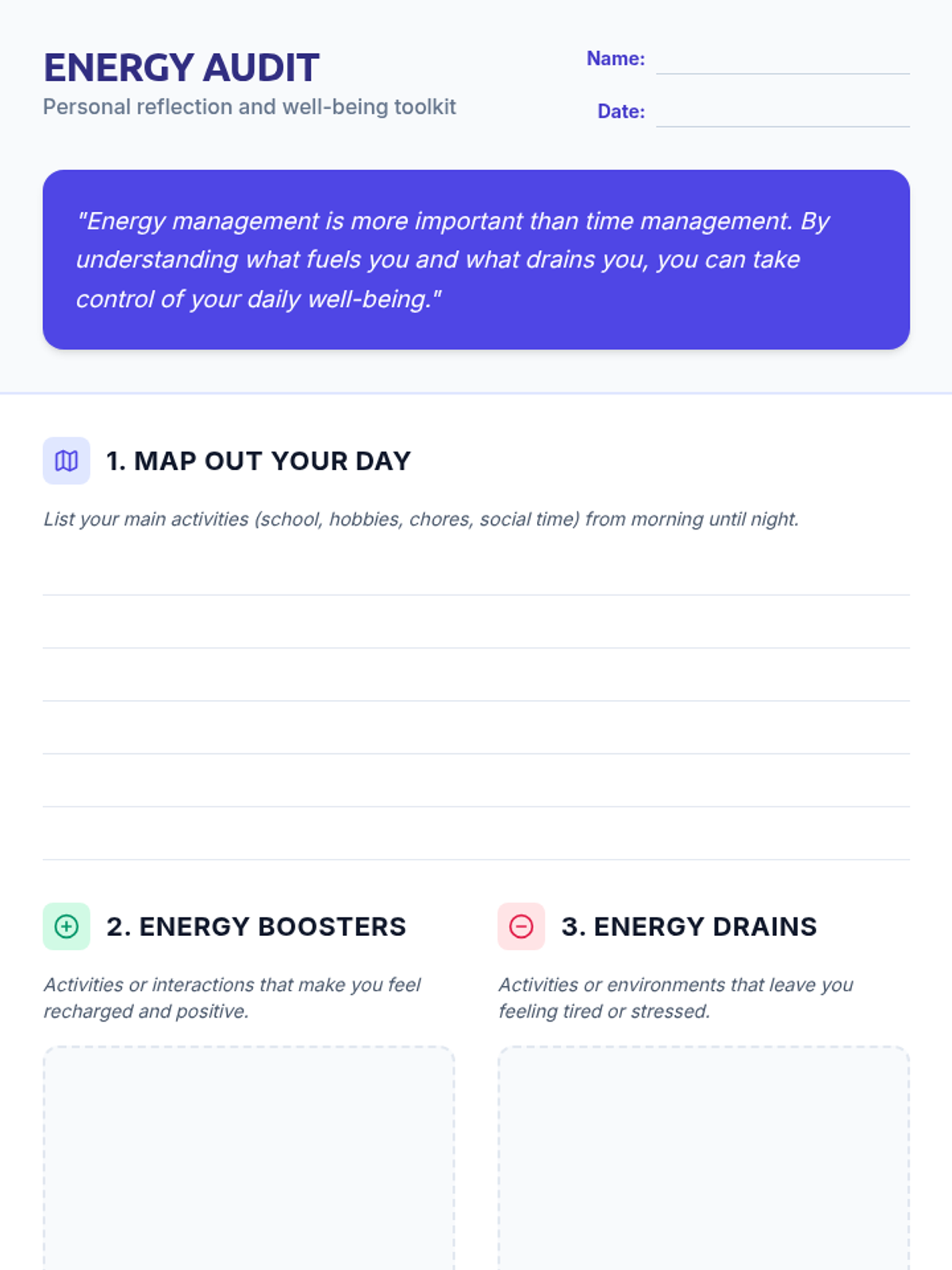
A structured reflection worksheet for students to map their daily energy, identifying specific boosters and drains while planning actionable changes for their well-being.
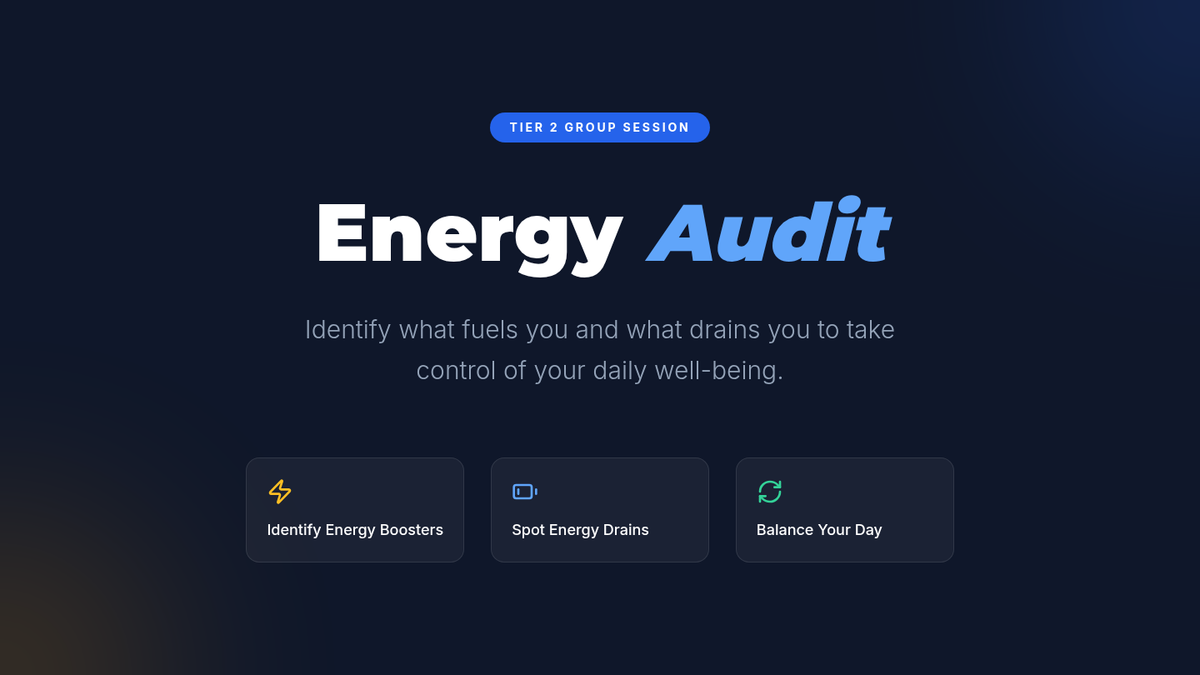
Visual presentation for the Energy Audit lesson, featuring interactive slides on energy boosters vs. drains, audit steps, and reflection prompts for a 10th-grade group session.
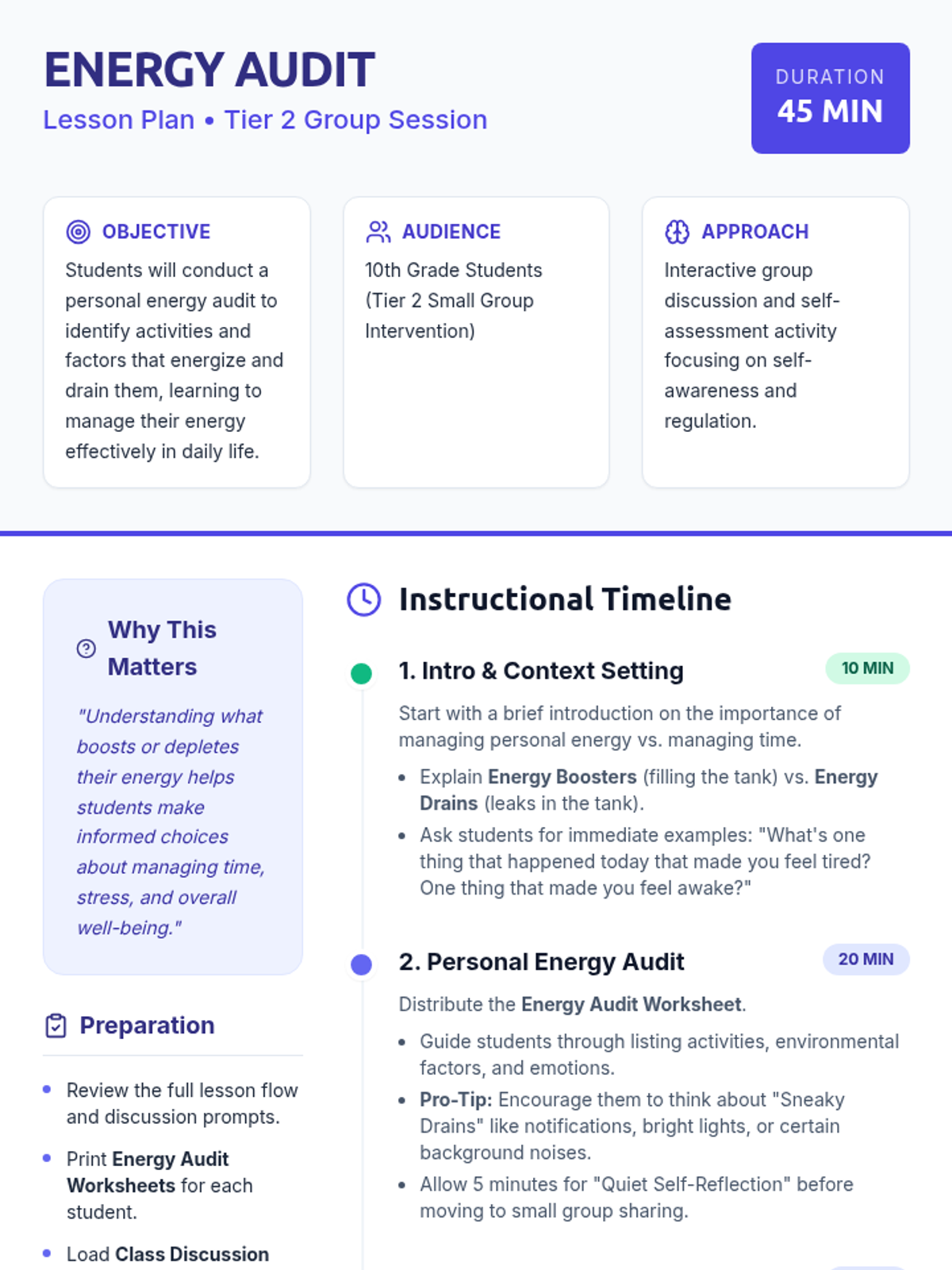
A comprehensive facilitator guide for the 45-minute Energy Audit lesson, featuring a clear instructional timeline, preparation checklist, and pedagogical insights for 10th-grade intervention groups.
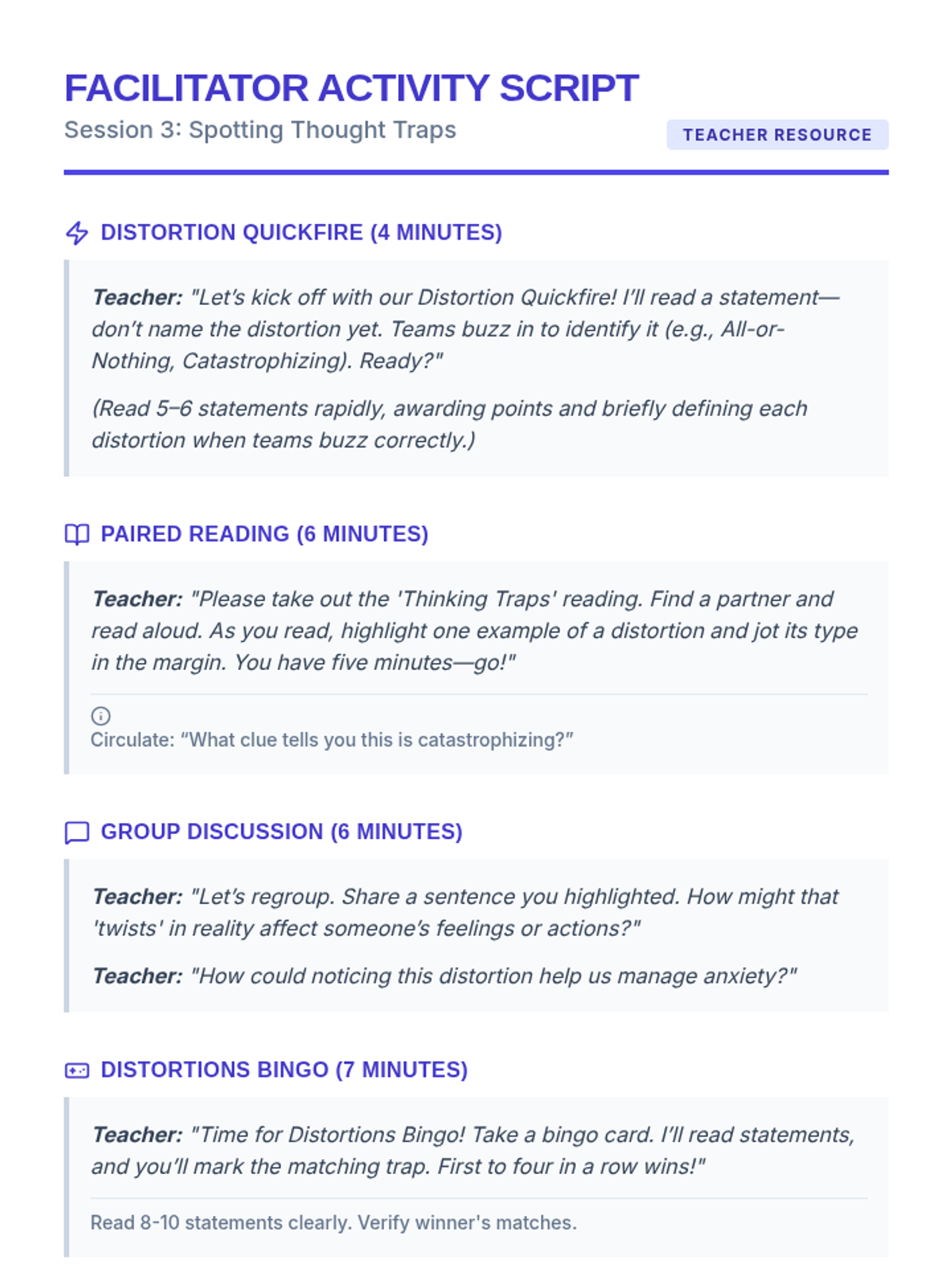
A script for Session 3 that guides the facilitator through the warm-up, reading discussion, and the "Distortions Bingo" game to identify cognitive distortions.
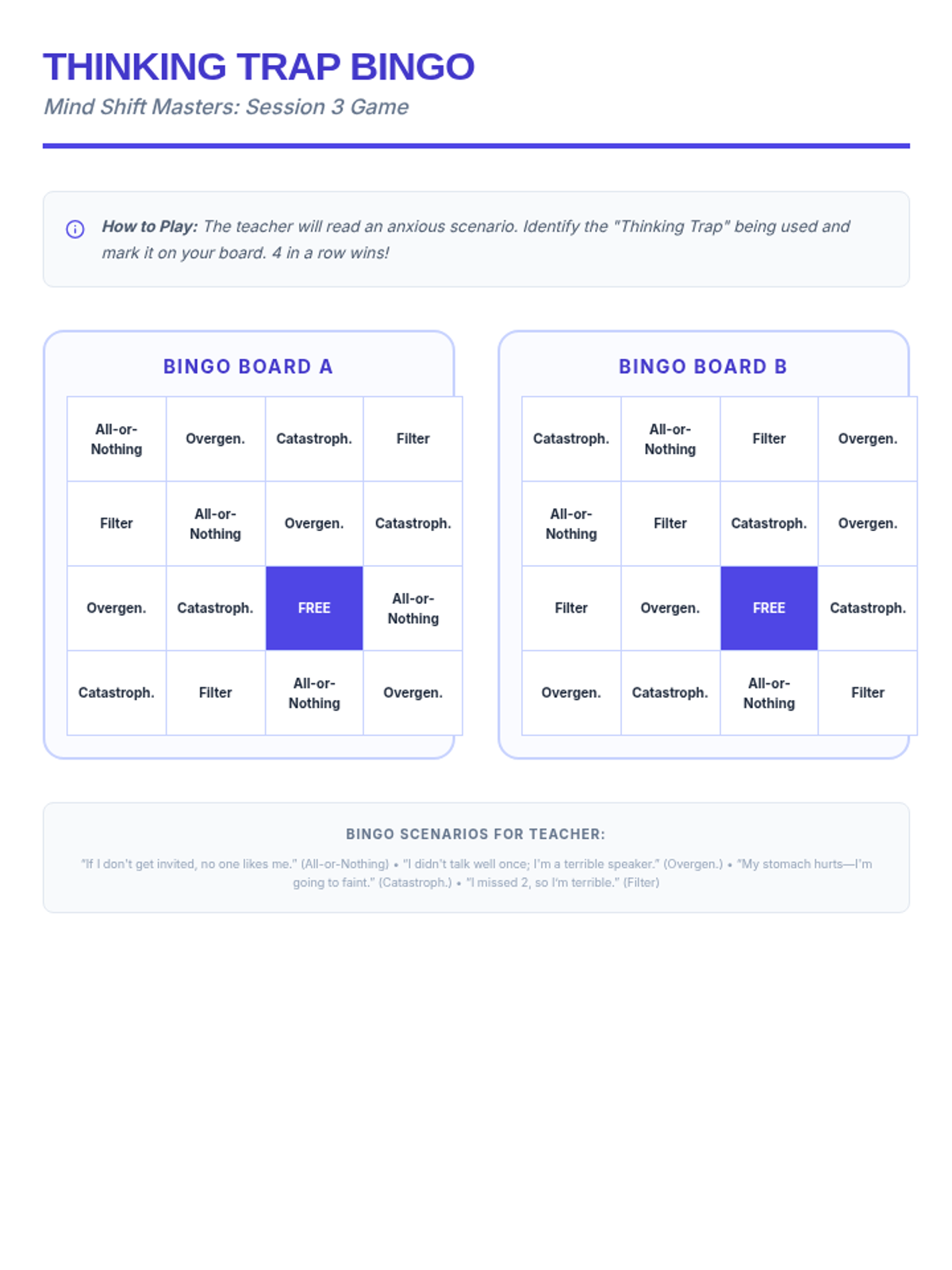
Customizable bingo boards for a Session 3 game where students identify cognitive distortions from given scenarios.
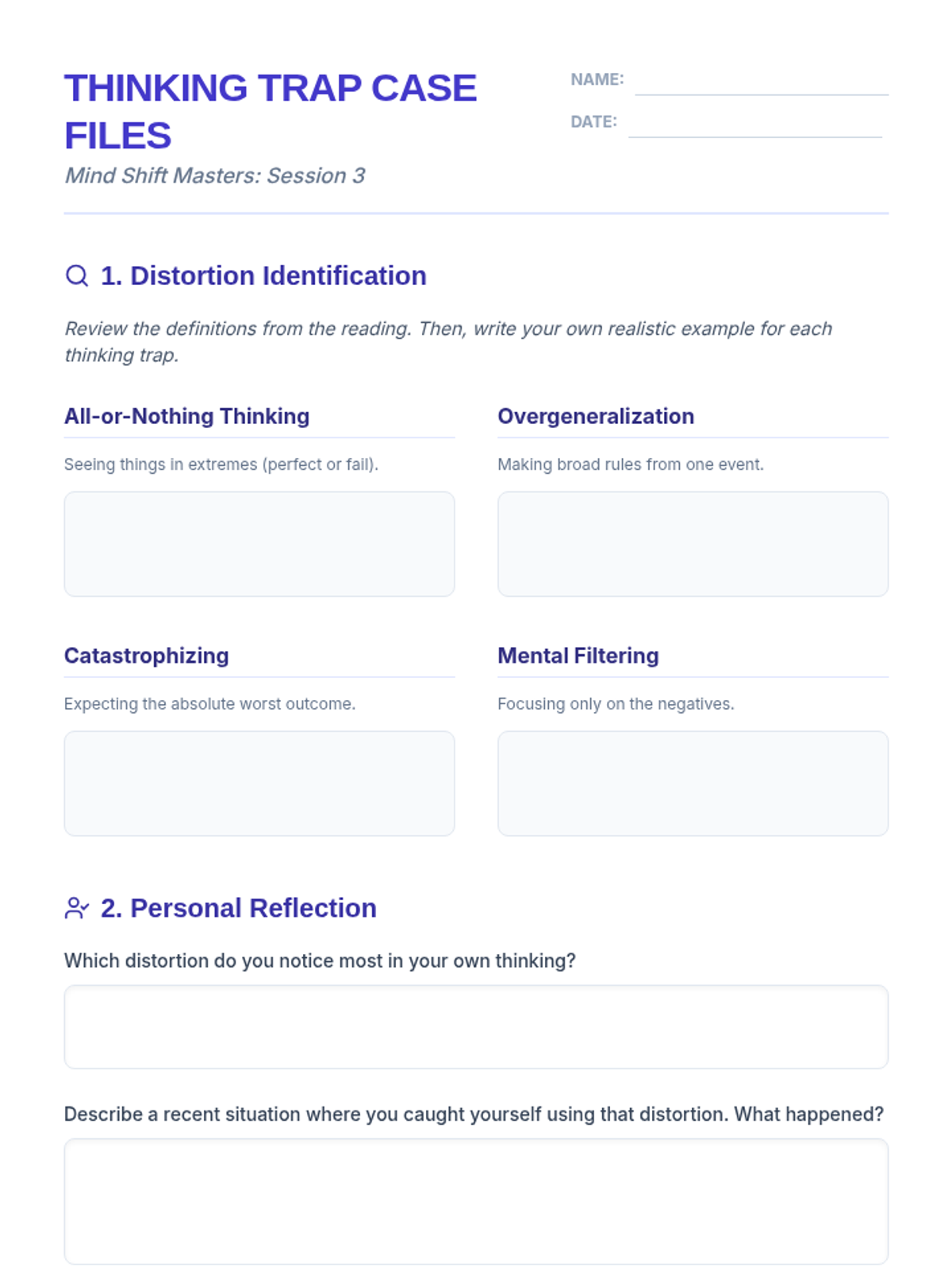
A handout for Session 3 where students define and provide examples for common cognitive distortions and reflect on their own thinking patterns.
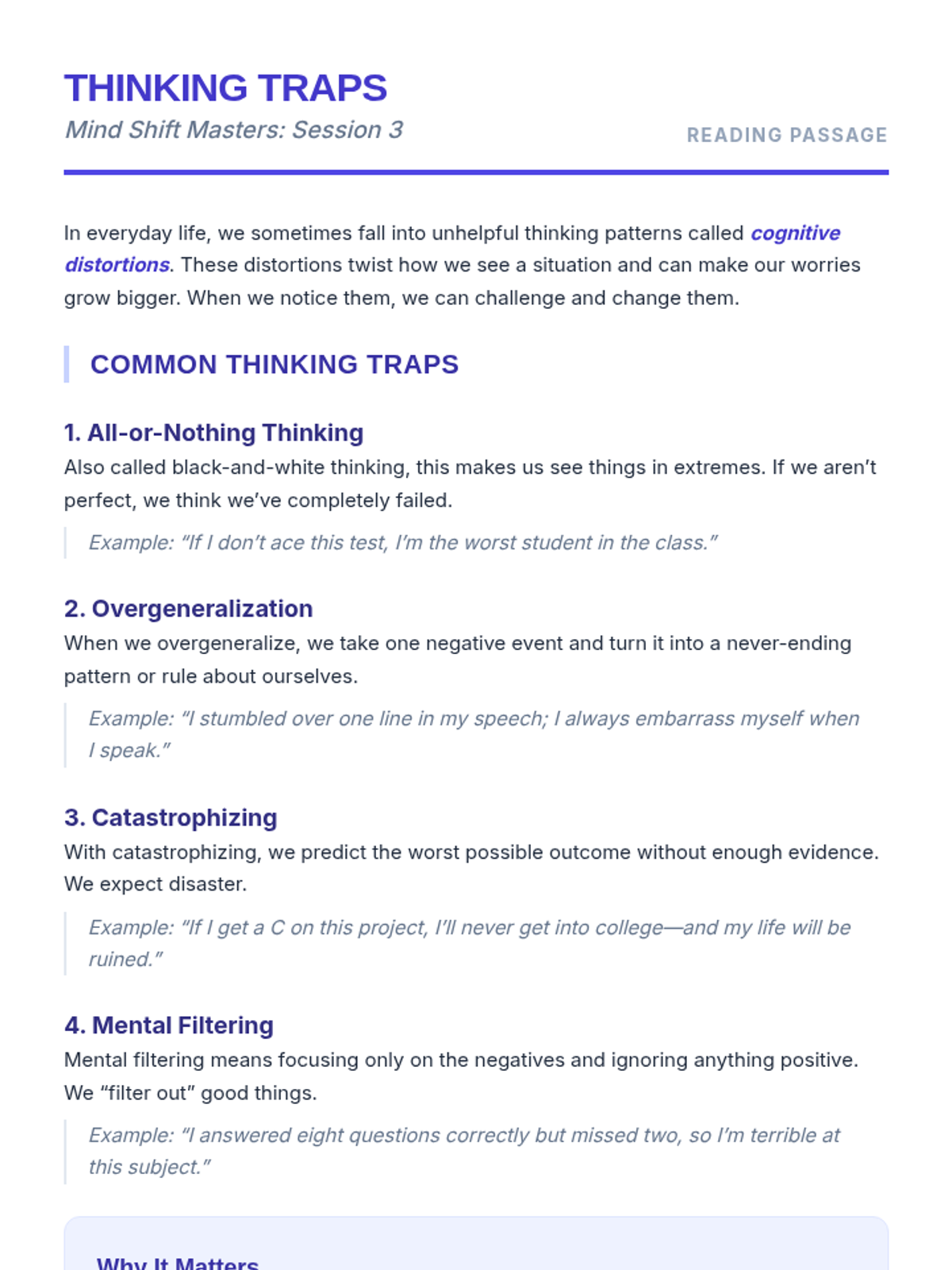
A short reading passage for Session 3 that explains common cognitive distortions like All-or-Nothing thinking, Catastrophizing, and Mental Filtering.
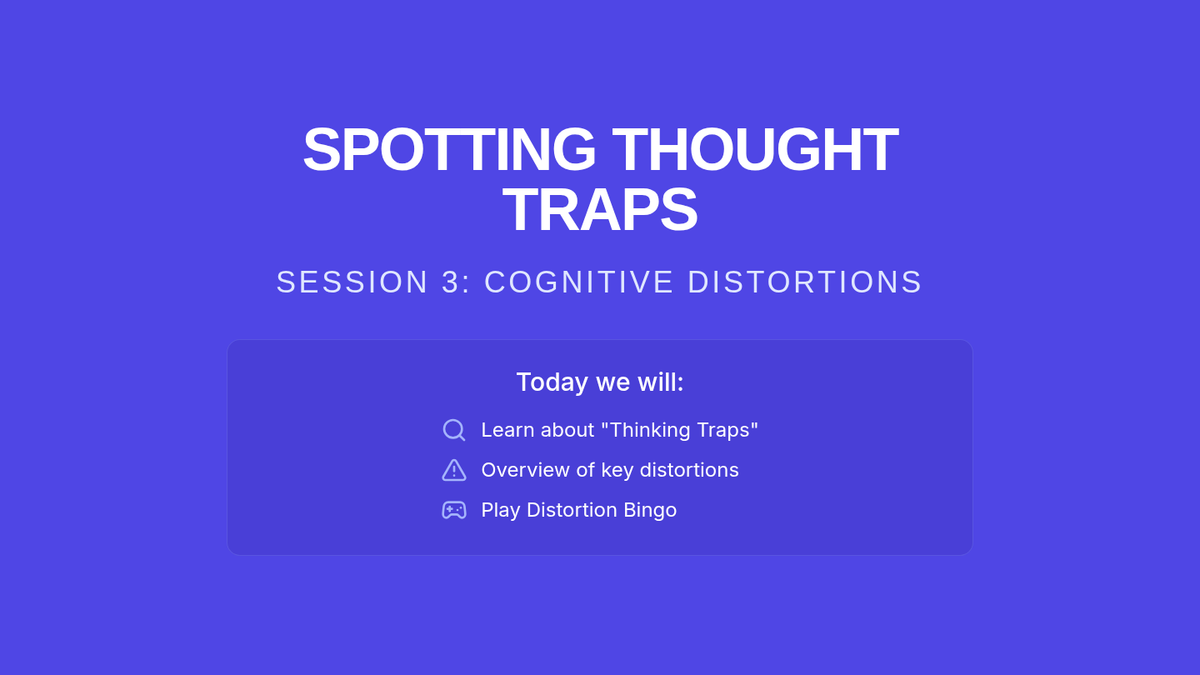
Visual presentation for Session 3 of Mind Shift Masters, introducing common cognitive distortions and the rules for Distortion Bingo.
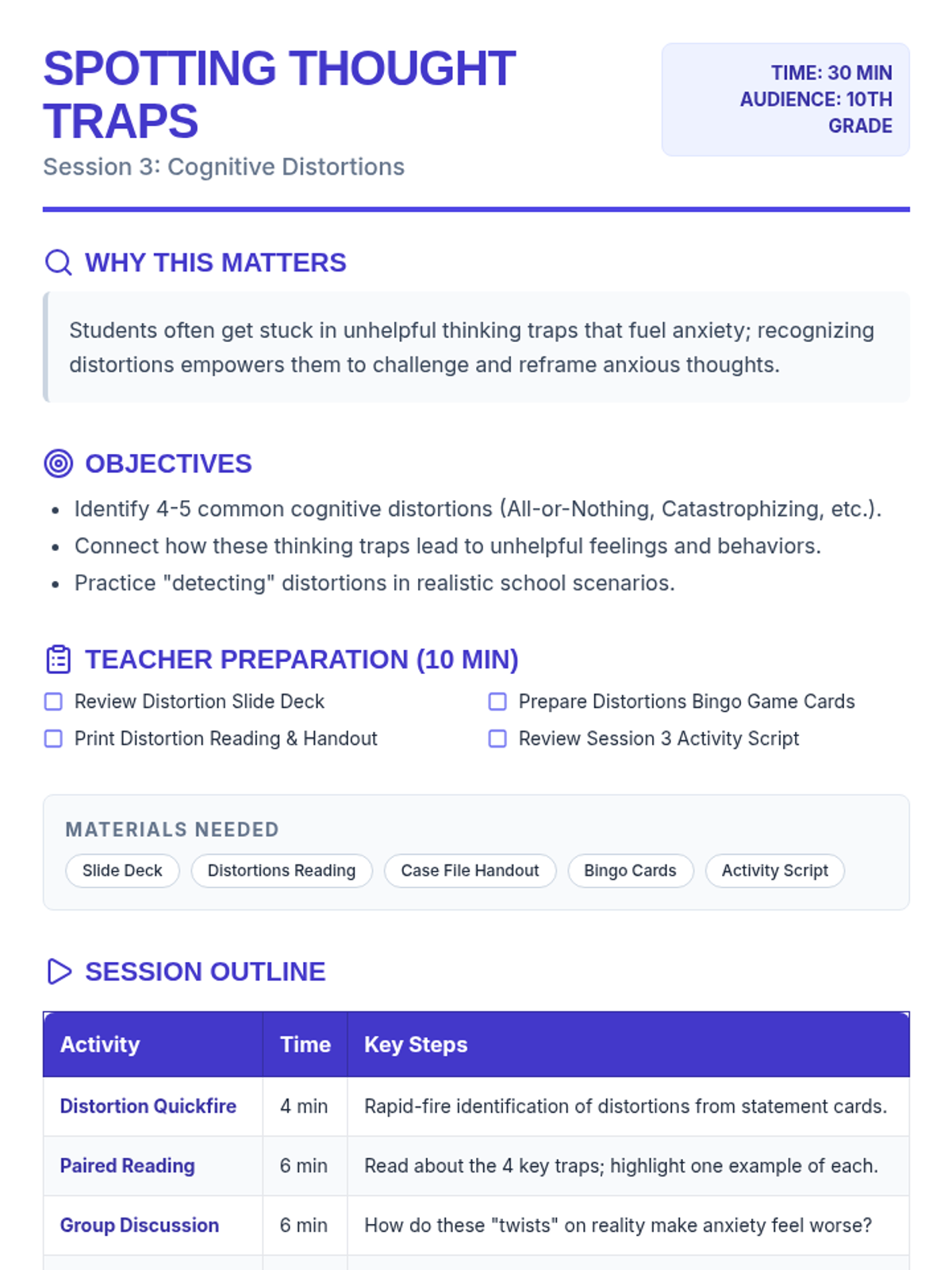
A detailed lesson plan for Session 3 of Mind Shift Masters, focusing on identifying common cognitive distortions through reading and a "Distortions Bingo" game.
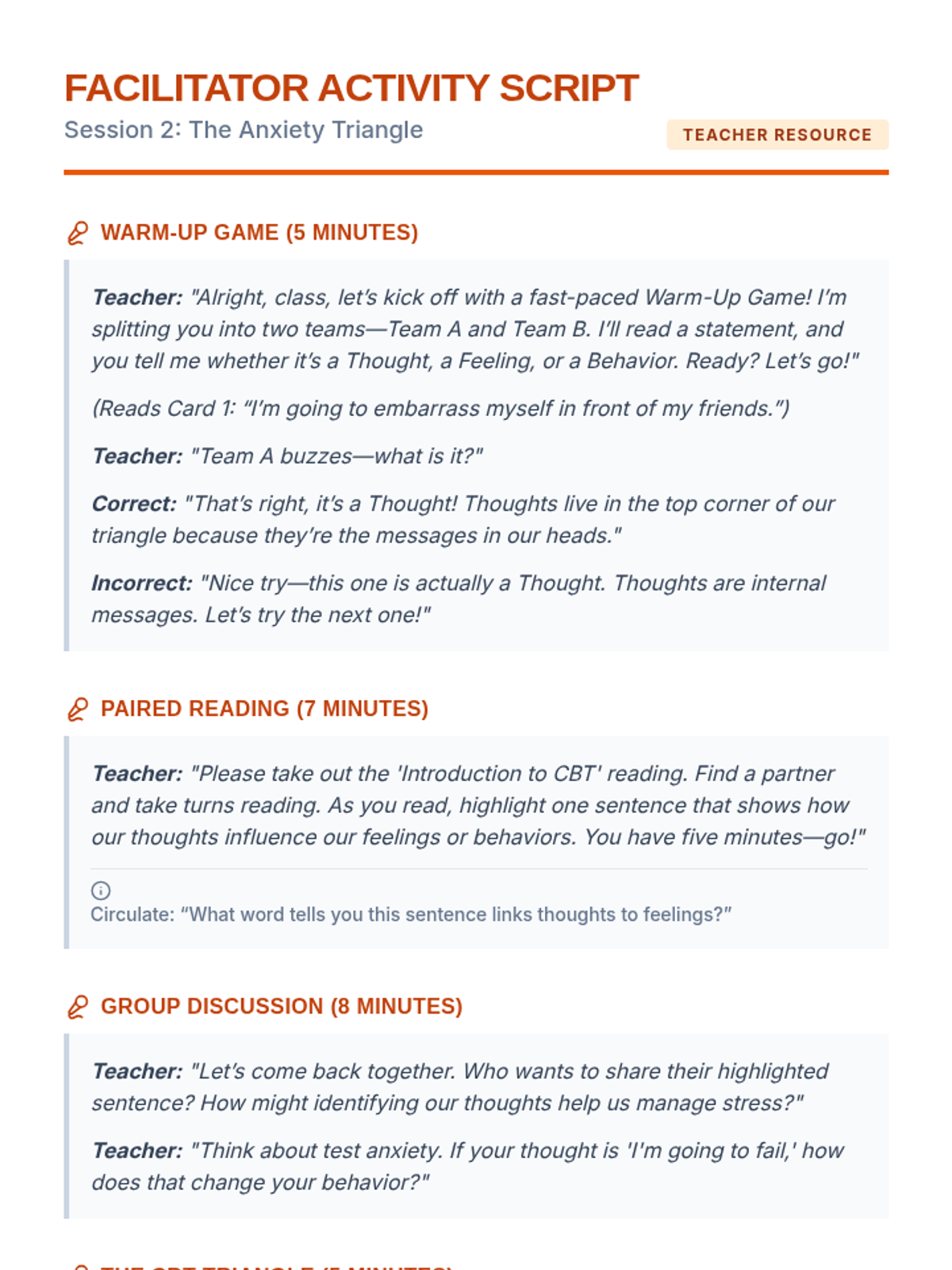
A script for Session 2 that guides the facilitator through the warm-up, reading discussion, and the introduction/application of the CBT Triangle.
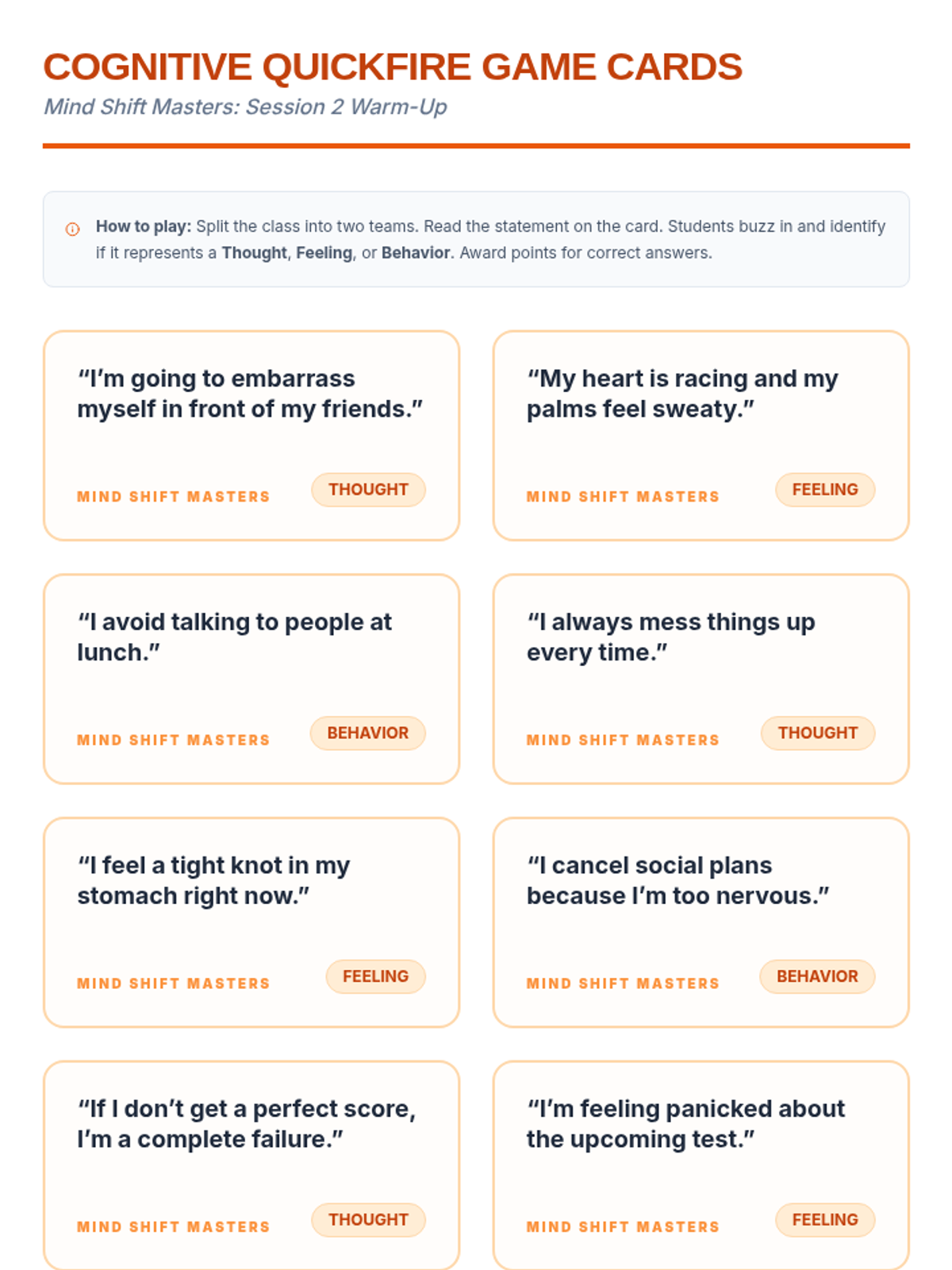
Game cards for the Session 2 warm-up activity, where students identify whether statements are thoughts, feelings, or behaviors.
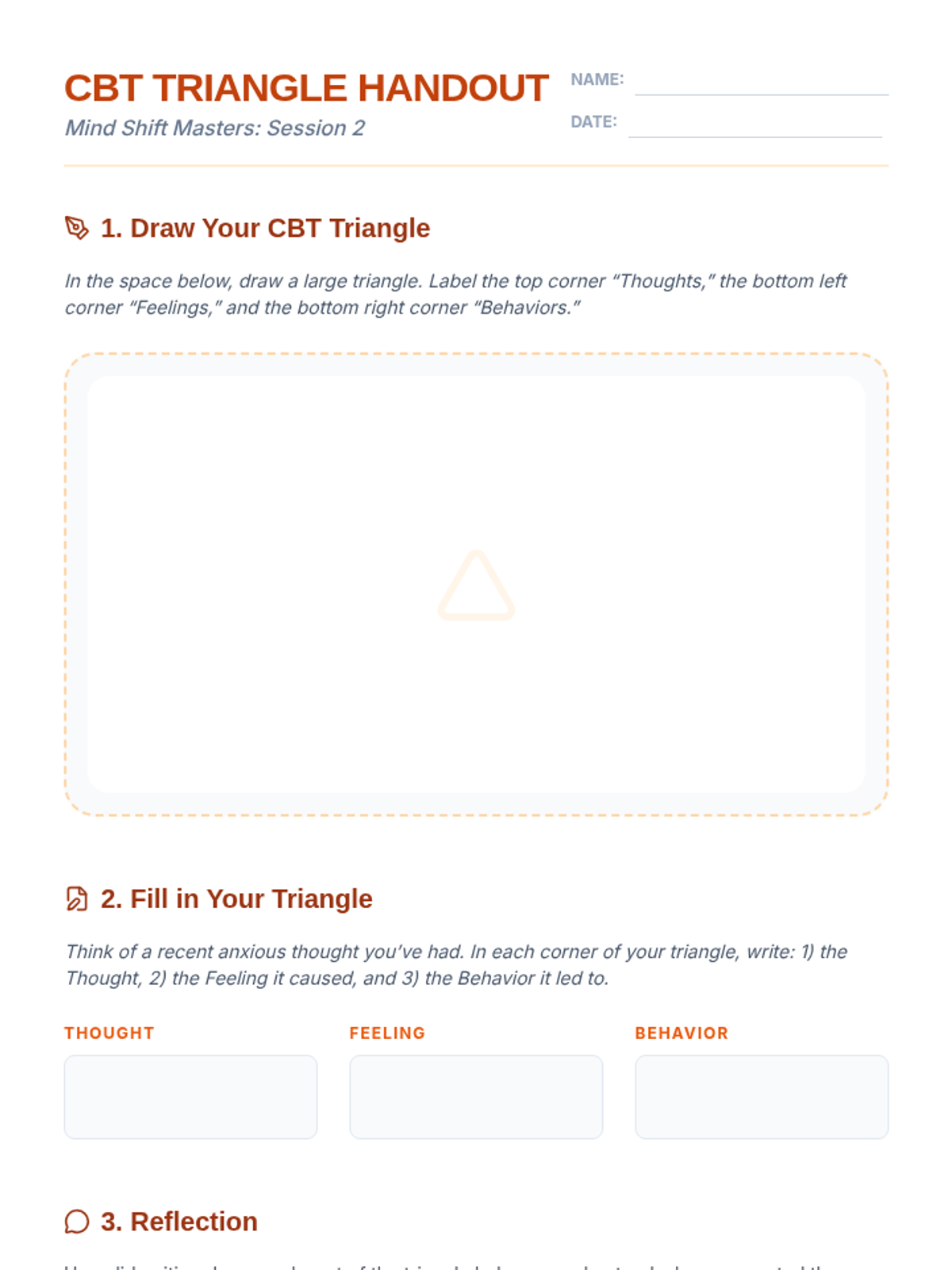
A handout for Session 2 that guides students through drawing and filling in their own CBT triangle based on a personal experience.
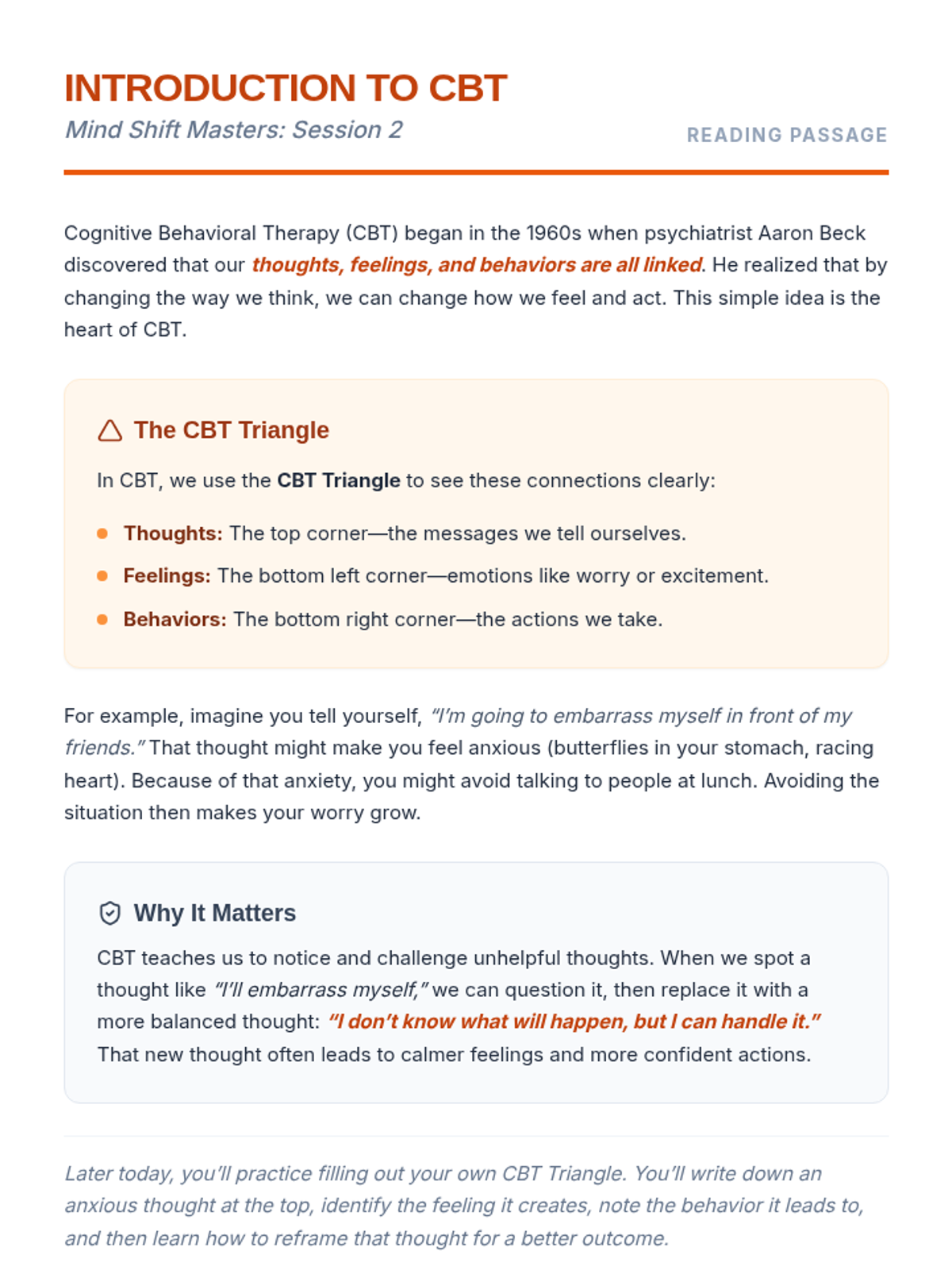
A short reading passage for Session 2 that explains the purpose and components of the CBT Triangle (Thoughts, Feelings, Behaviors).
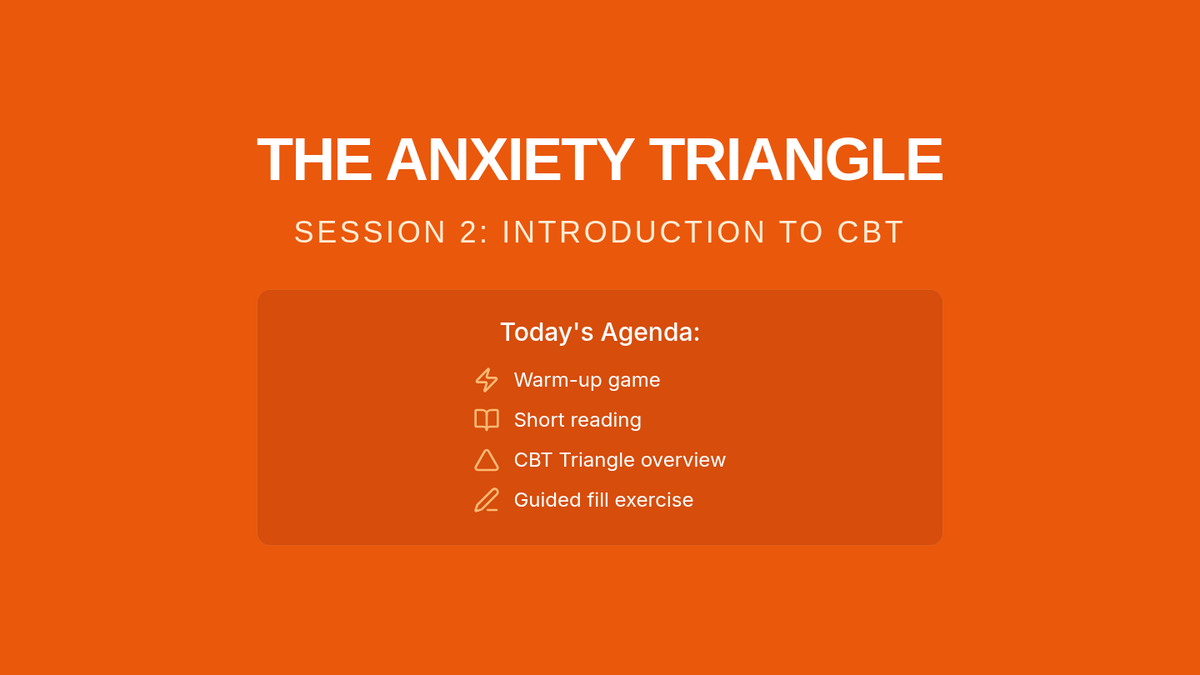
Visual presentation for Session 2 of Mind Shift Masters, introducing the CBT triangle and the connection between thoughts, feelings, and behaviors.
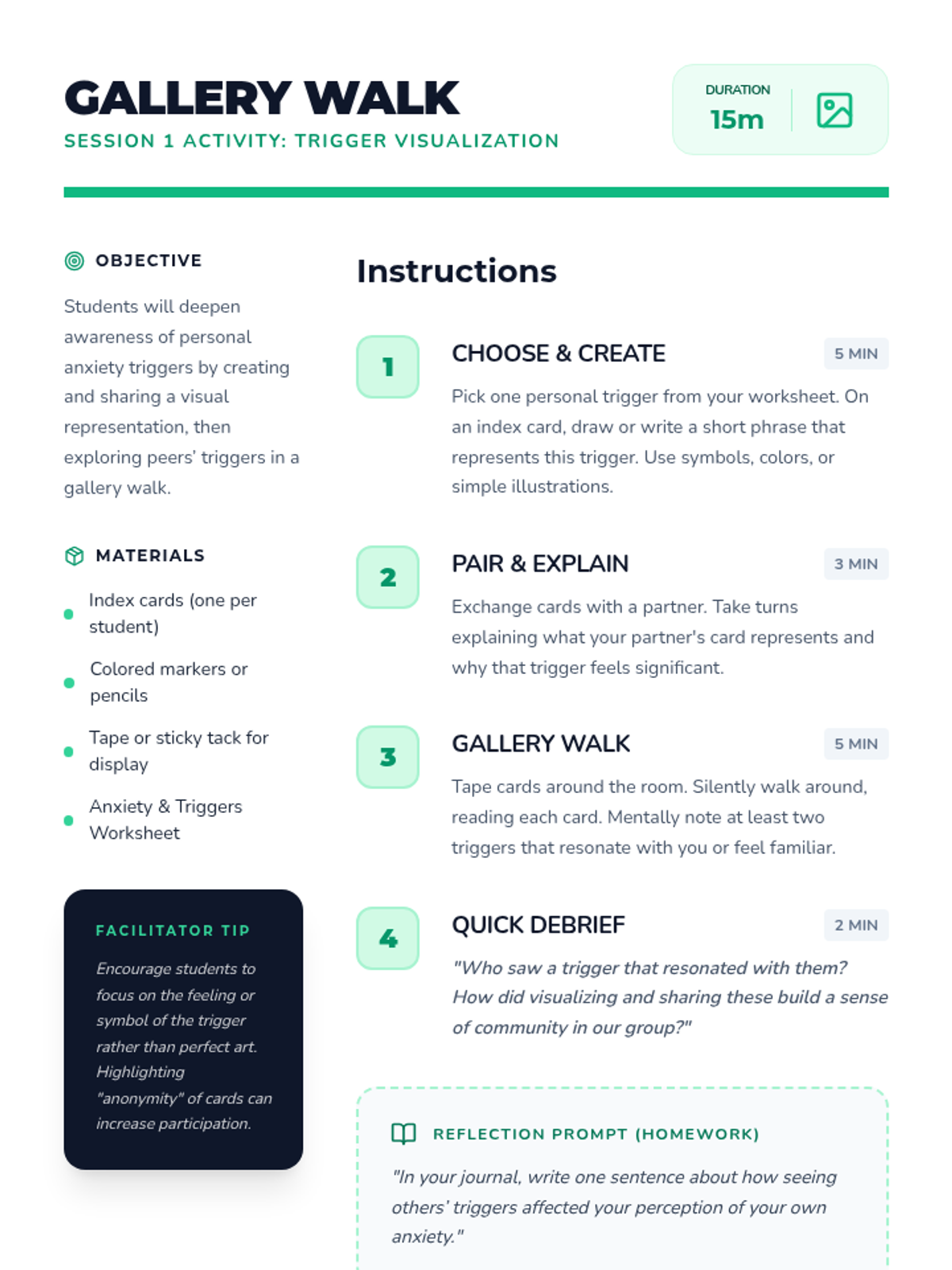
An activity guide for a gallery walk where students visualize and share their triggers to build community and awareness.
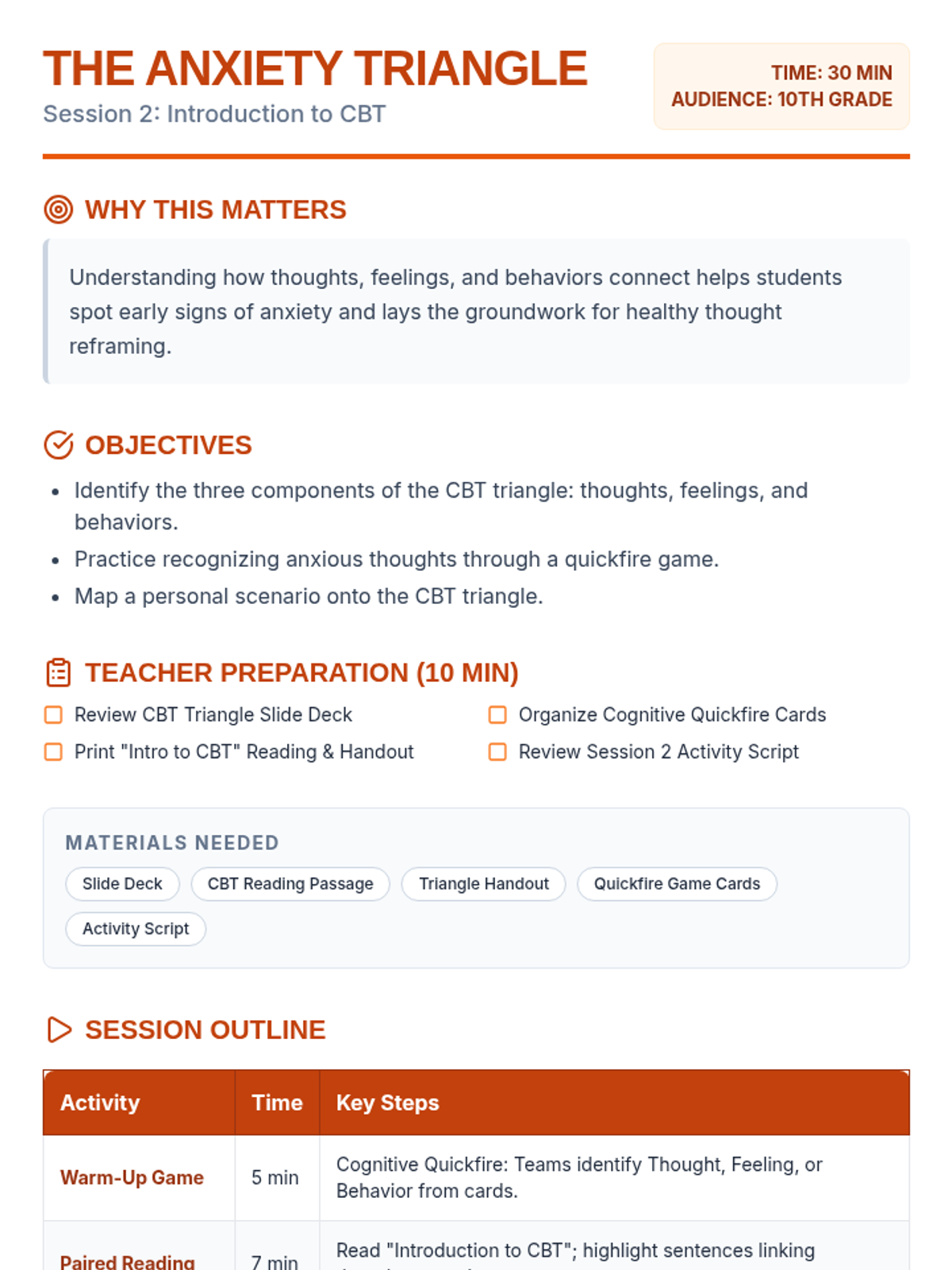
A detailed lesson plan for Session 2 of Mind Shift Masters, focusing on the CBT Triangle and the connection between thoughts, feelings, and behaviors.
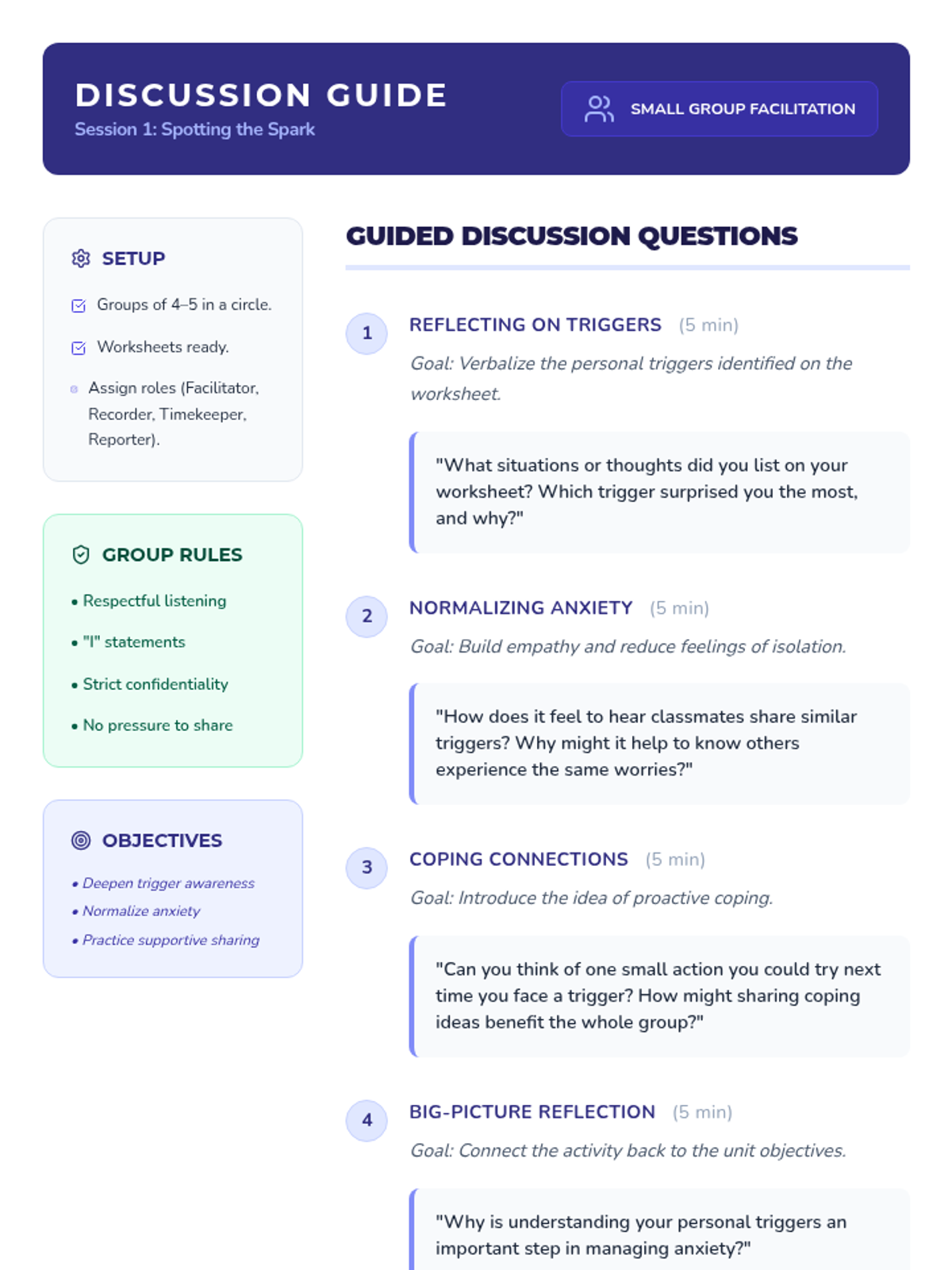
A facilitator's guide for Session 1, including small-group discussion questions, roles, and debrief instructions to help students process their triggers.