Functional behavior assessment, data tracking, and de-escalation strategies for managing classroom conduct. Addresses positive reinforcement, token economies, and individualized behavior contracts to support student self-regulation.
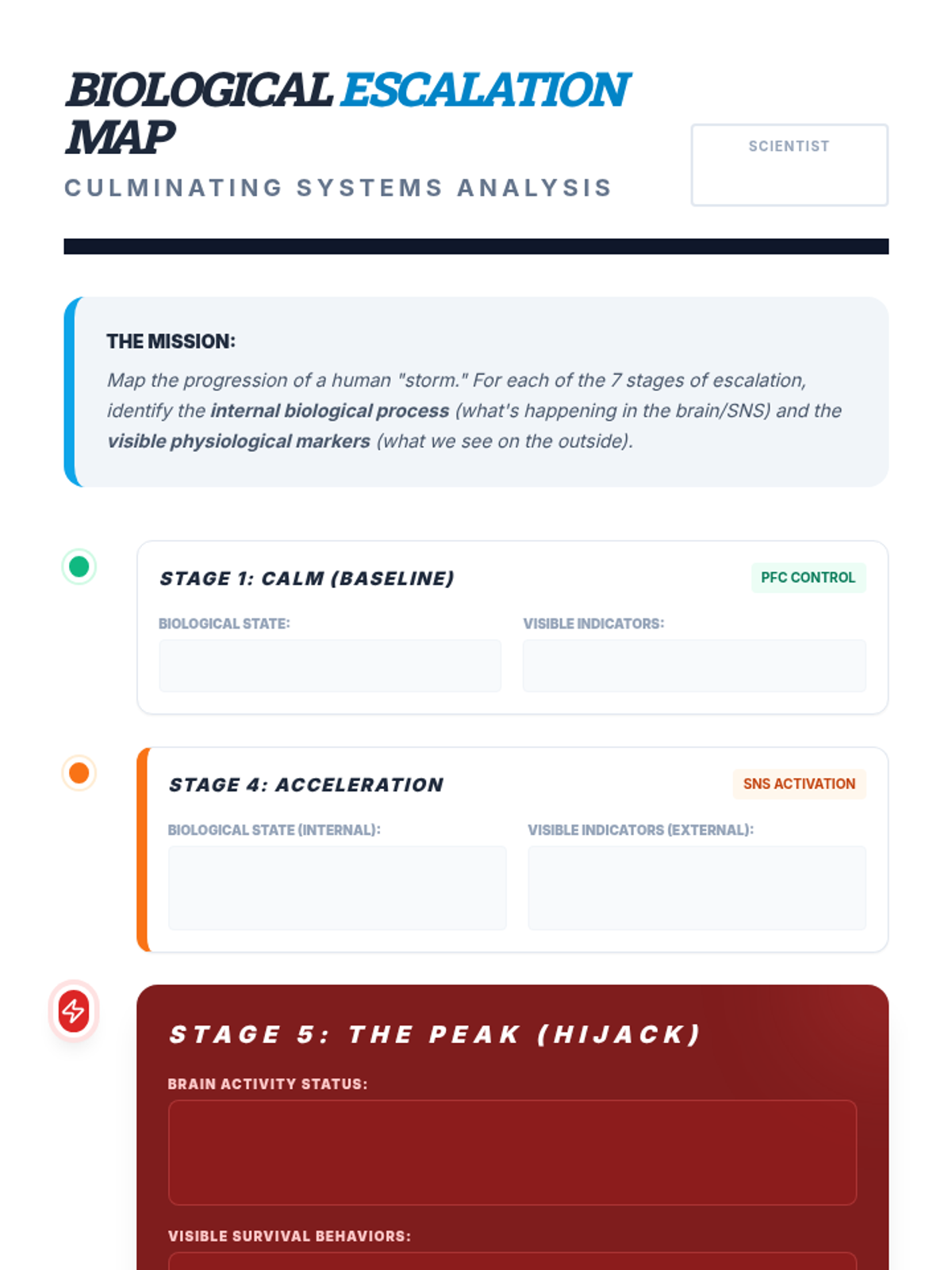
A culminating project sheet for students to map the internal biological states and external physiological markers across the seven stages of behavioral escalation.
A visual presentation on the seven stages of behavioral escalation, using a storm forecast metaphor to explain the progression from calm to peak and back to recovery.
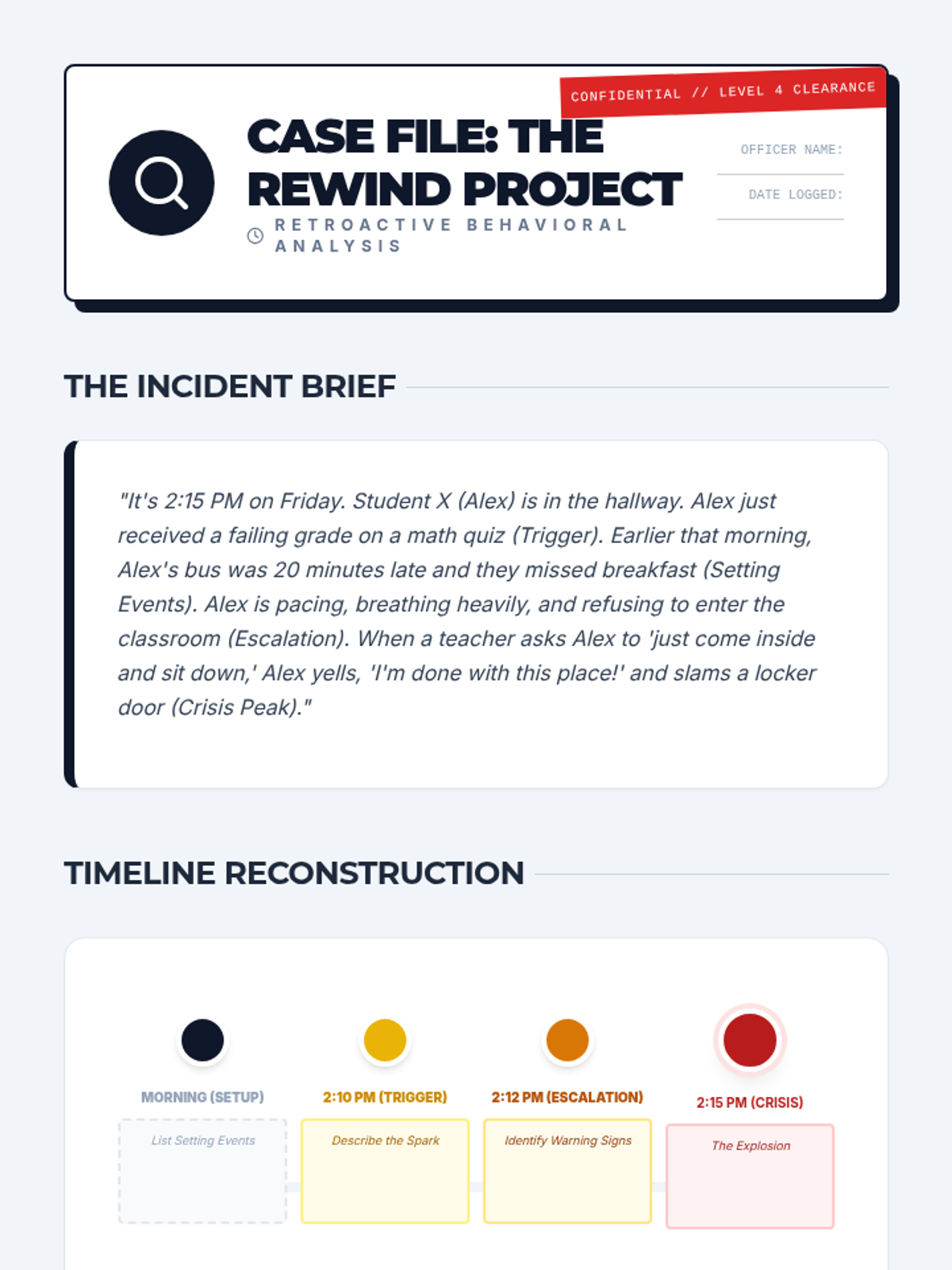
A summative project where students reconstruct a crisis event timeline to identify missed intervention 'off-ramps' and missed warning signs.
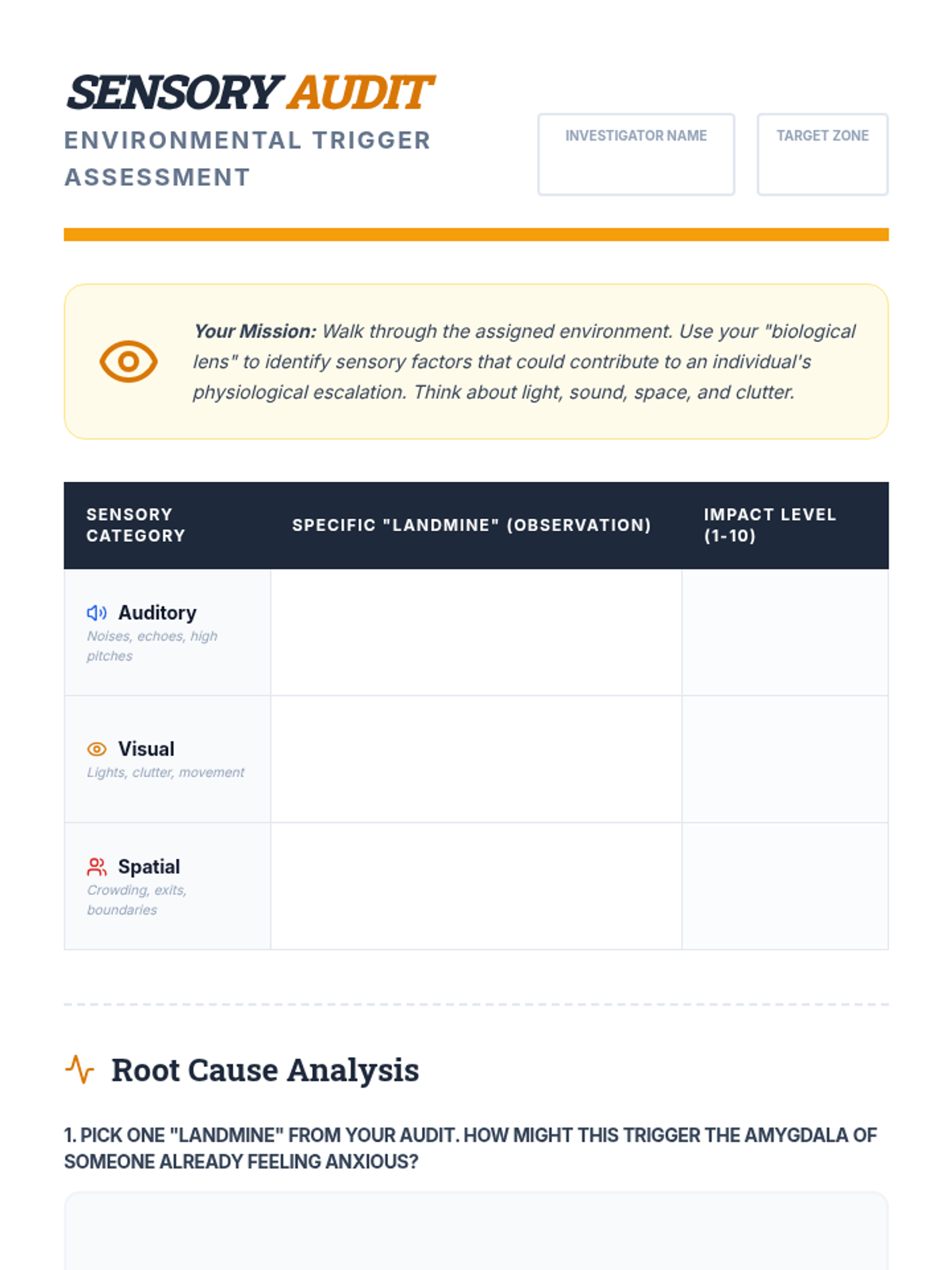
A classroom audit sheet for students to identify and analyze environmental sensory triggers and propose brain-friendly modifications.
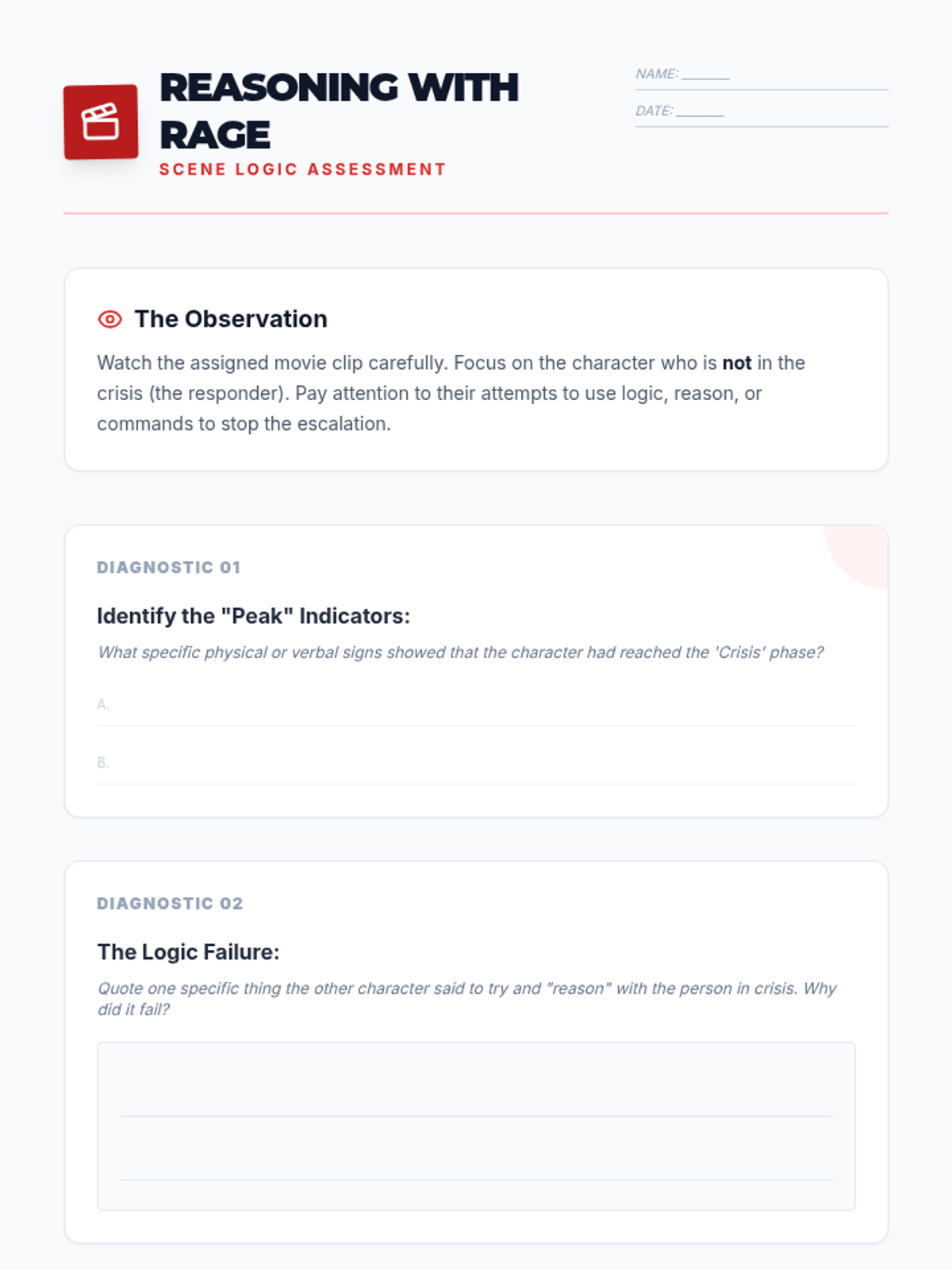
An analysis worksheet for Lesson 4 where students analyze a movie scene of a crisis to identify signs of the peak and why rational reasoning failed.
A visual presentation focusing on sensory overload as a physiological trigger for escalation, exploring the role of the thalamus and identifying common environmental triggers.
A slide deck for Lesson 4 exploring the biological 'Amygdala Hijack' and why rational communication fails during the peak of a crisis.
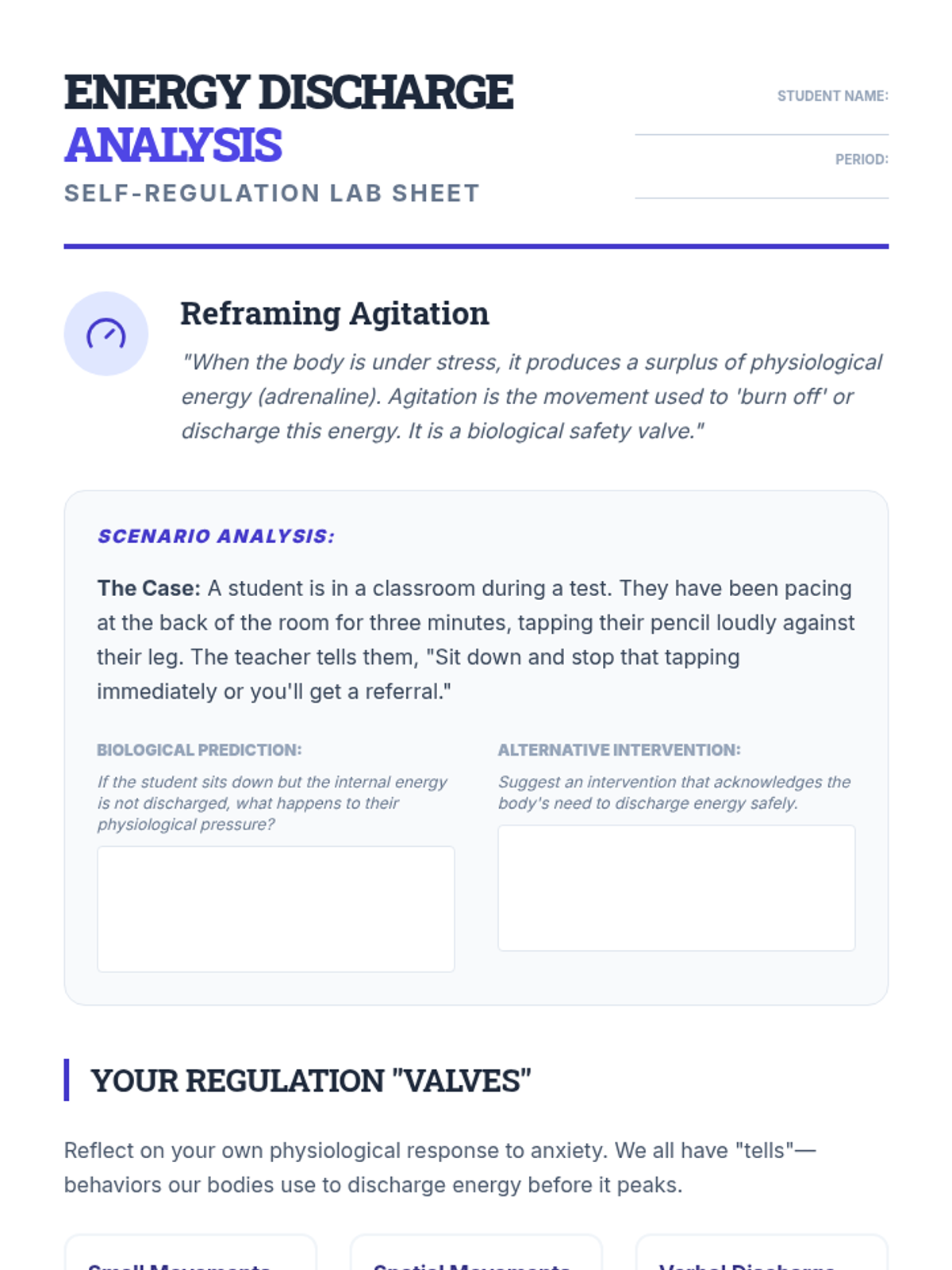
A worksheet for students to identify their own energy discharge behaviors and analyze scenarios through the lens of physiological self-regulation.
A slide deck for Lesson 3 focused on the cumulative nature of stress and the psychological signs of the acceleration phase.
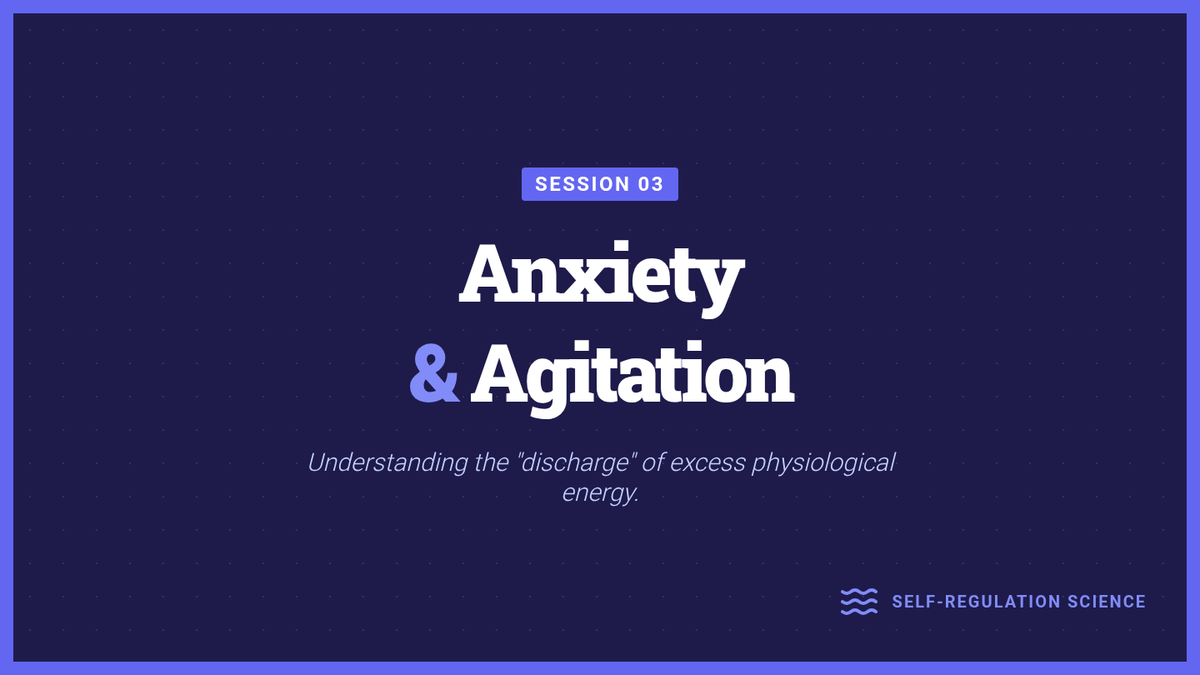
A visual presentation exploring the connection between internal anxiety and external agitation, reframing discharge behaviors as self-regulation attempts.
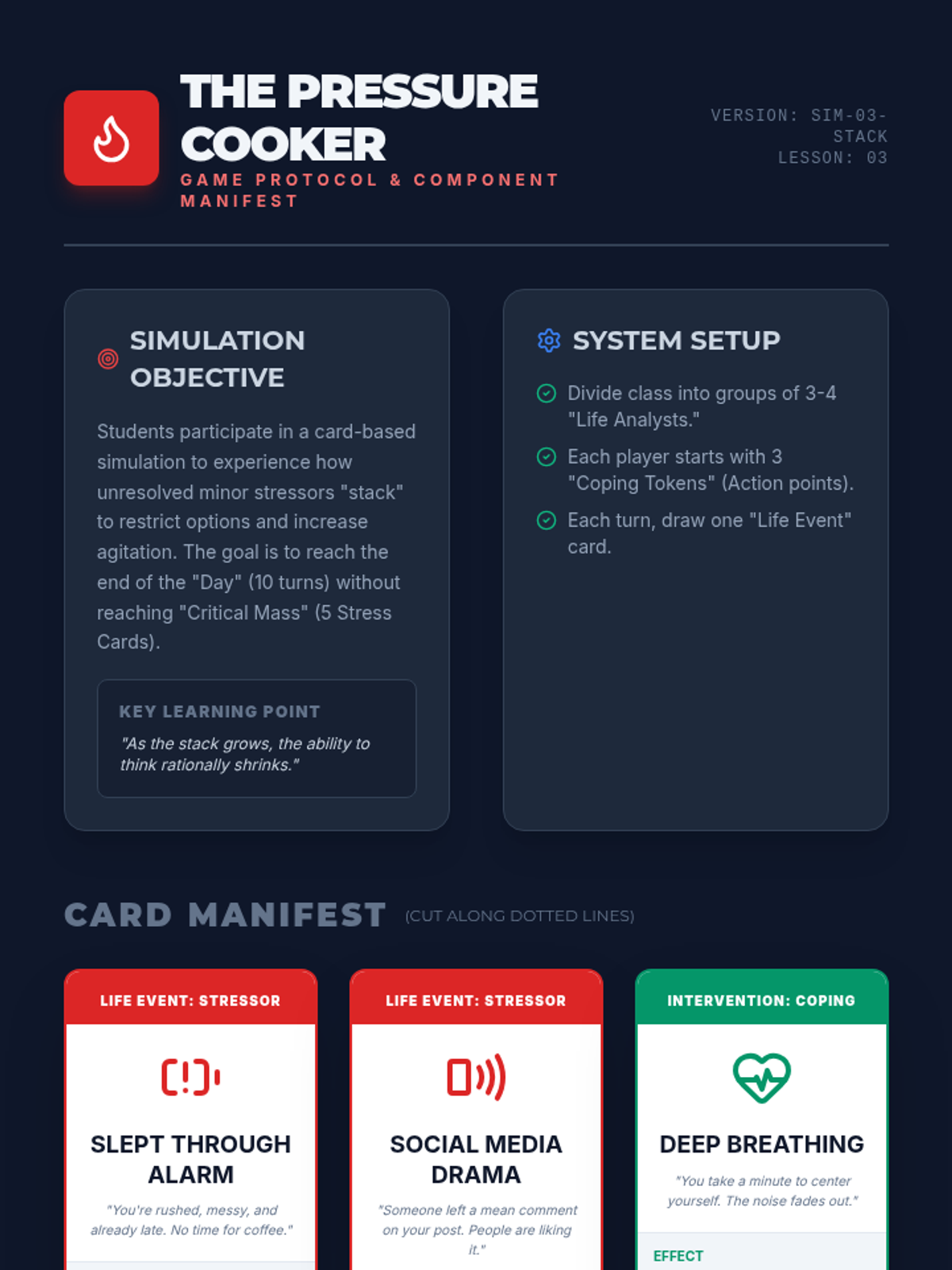
Teacher guide and card components for 'The Pressure Cooker', a game-based simulation where students experience the cumulative effects of stress on rational decision-making.
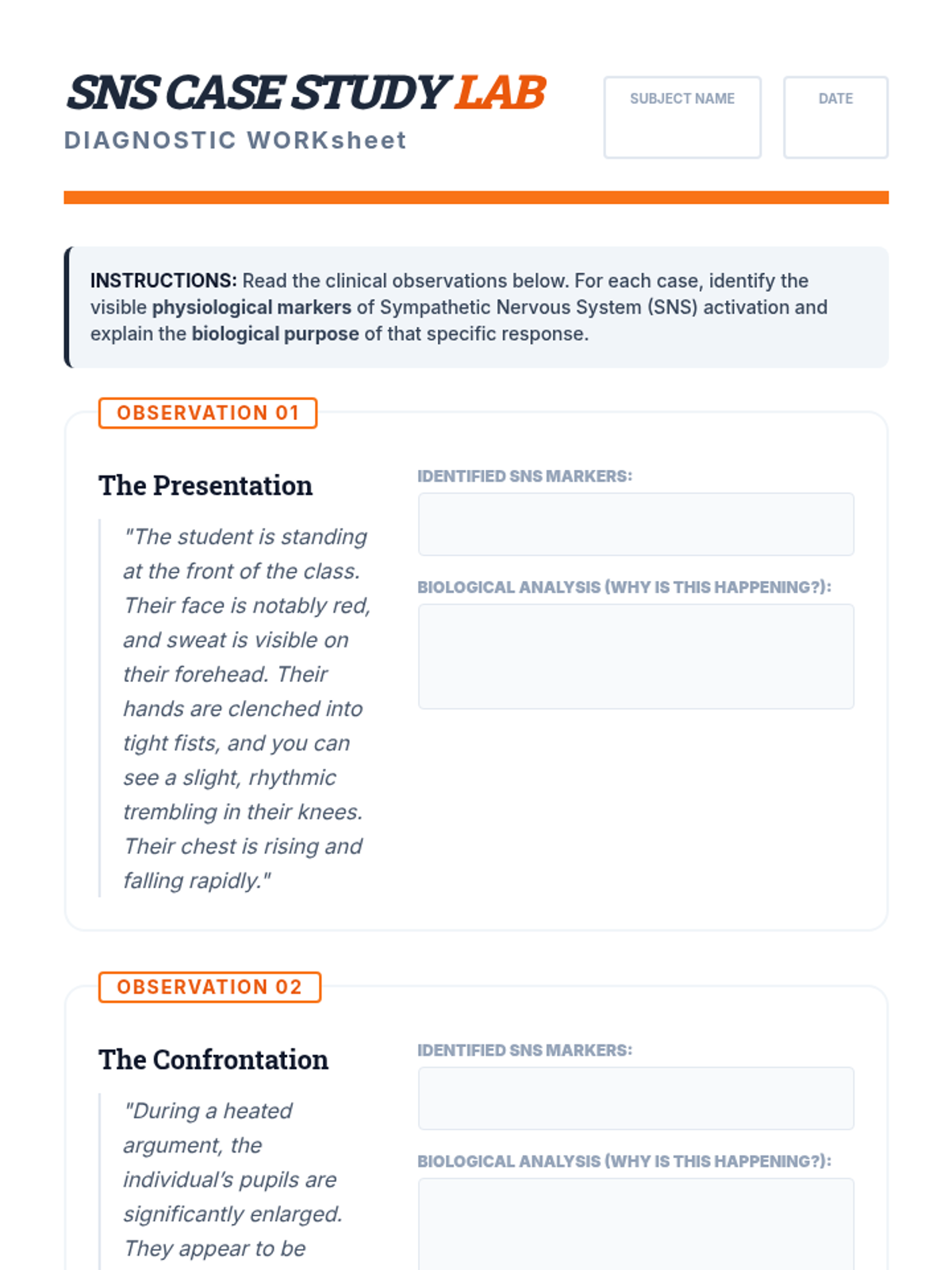
A worksheet where students analyze case study observations to identify Sympathetic Nervous System (SNS) markers and explain their biological purposes.
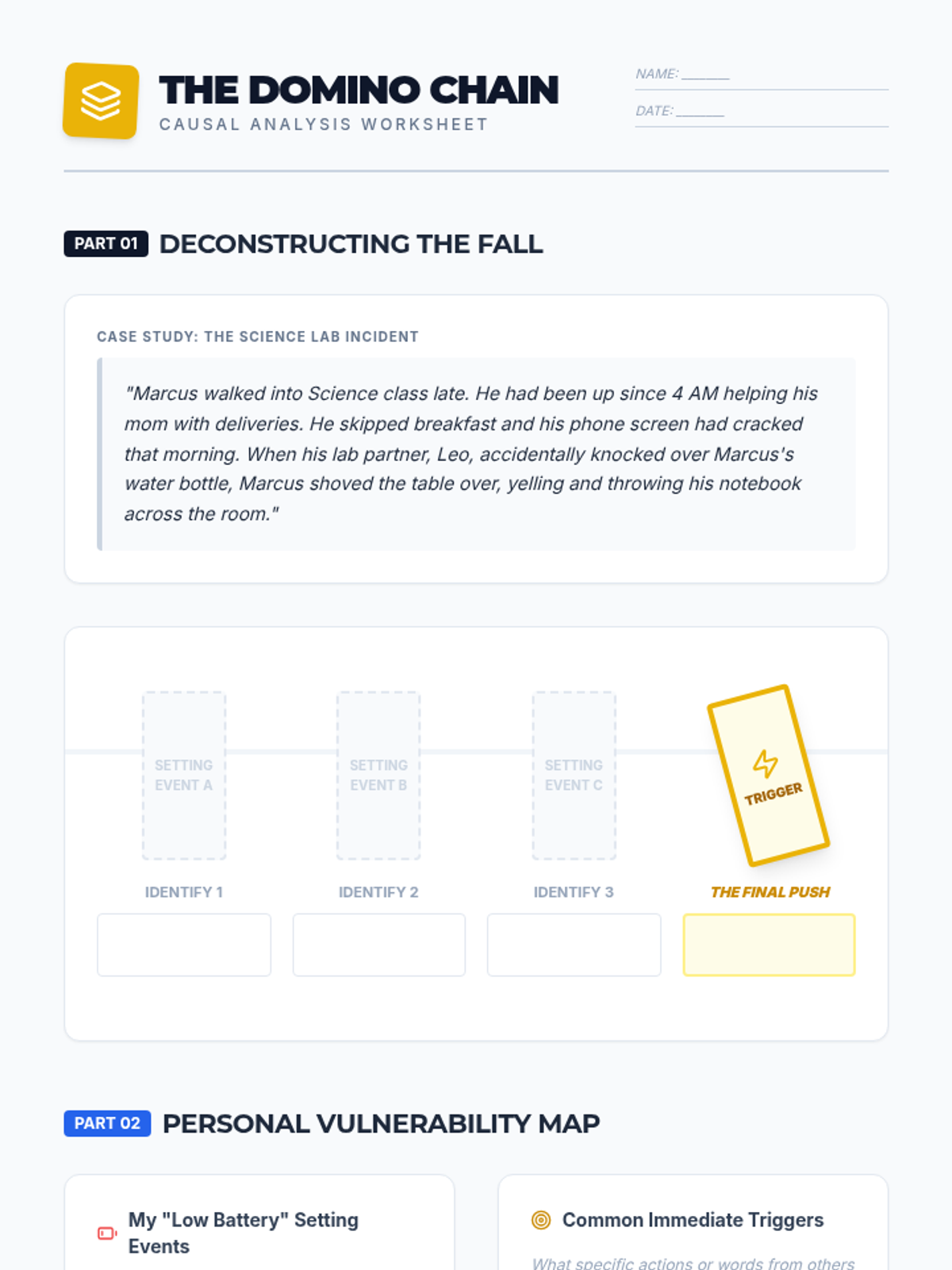
A causal analysis worksheet where students analyze setting events and triggers through a 'Domino Effect' case study and personal reflection.
A visual presentation focusing on the Sympathetic Nervous System (SNS), high-arousal symptoms (breathing, sweating, trembling), and the 'Gas vs Brake' analogy for the autonomic nervous system.
A slide deck for Lesson 2 exploring the distinction between vulnerability factors (setting events) and immediate triggers.
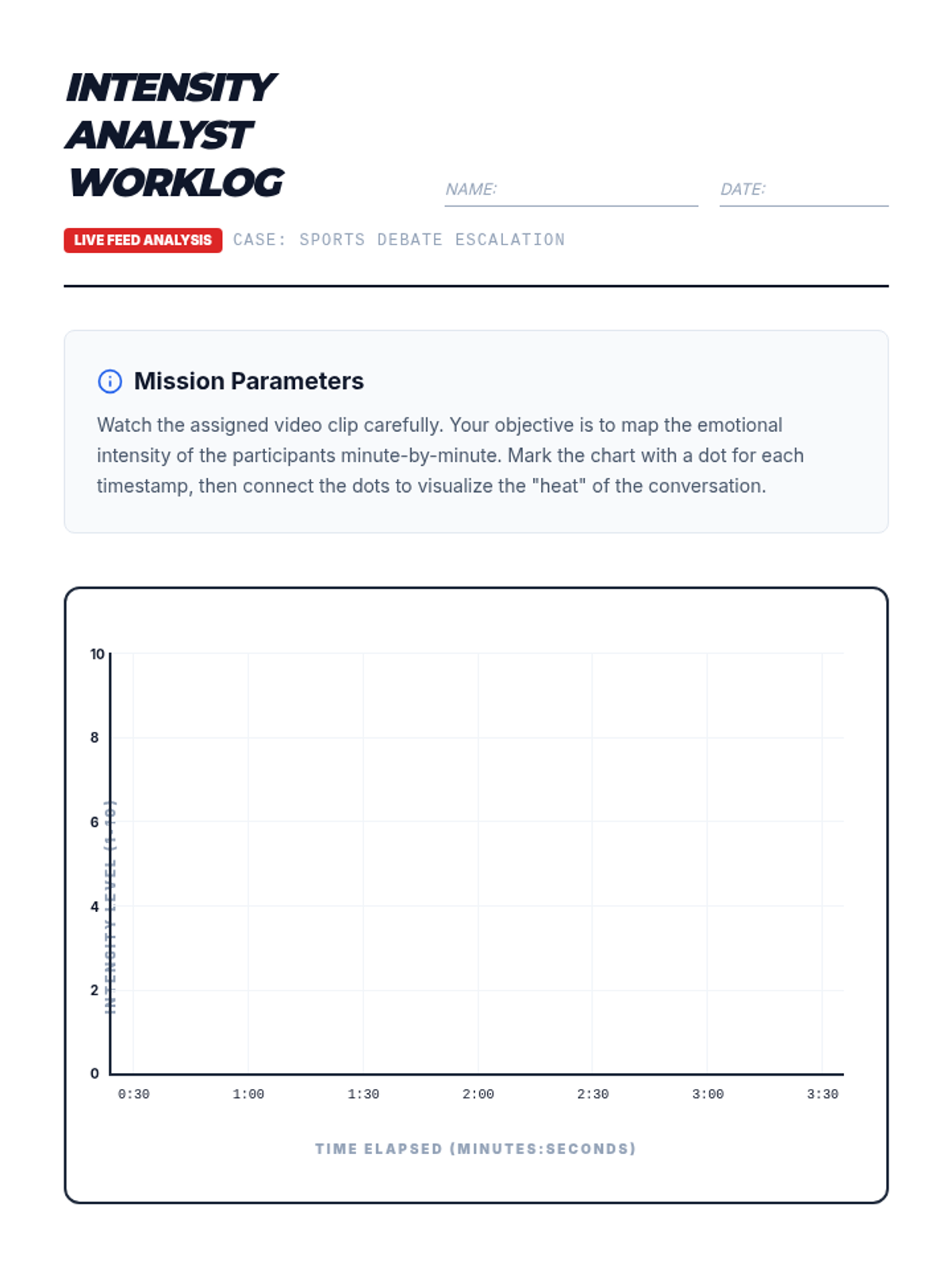
A data-analysis worksheet where students graph the emotional intensity of a sports argument video to identify stages of the Crisis Cycle.
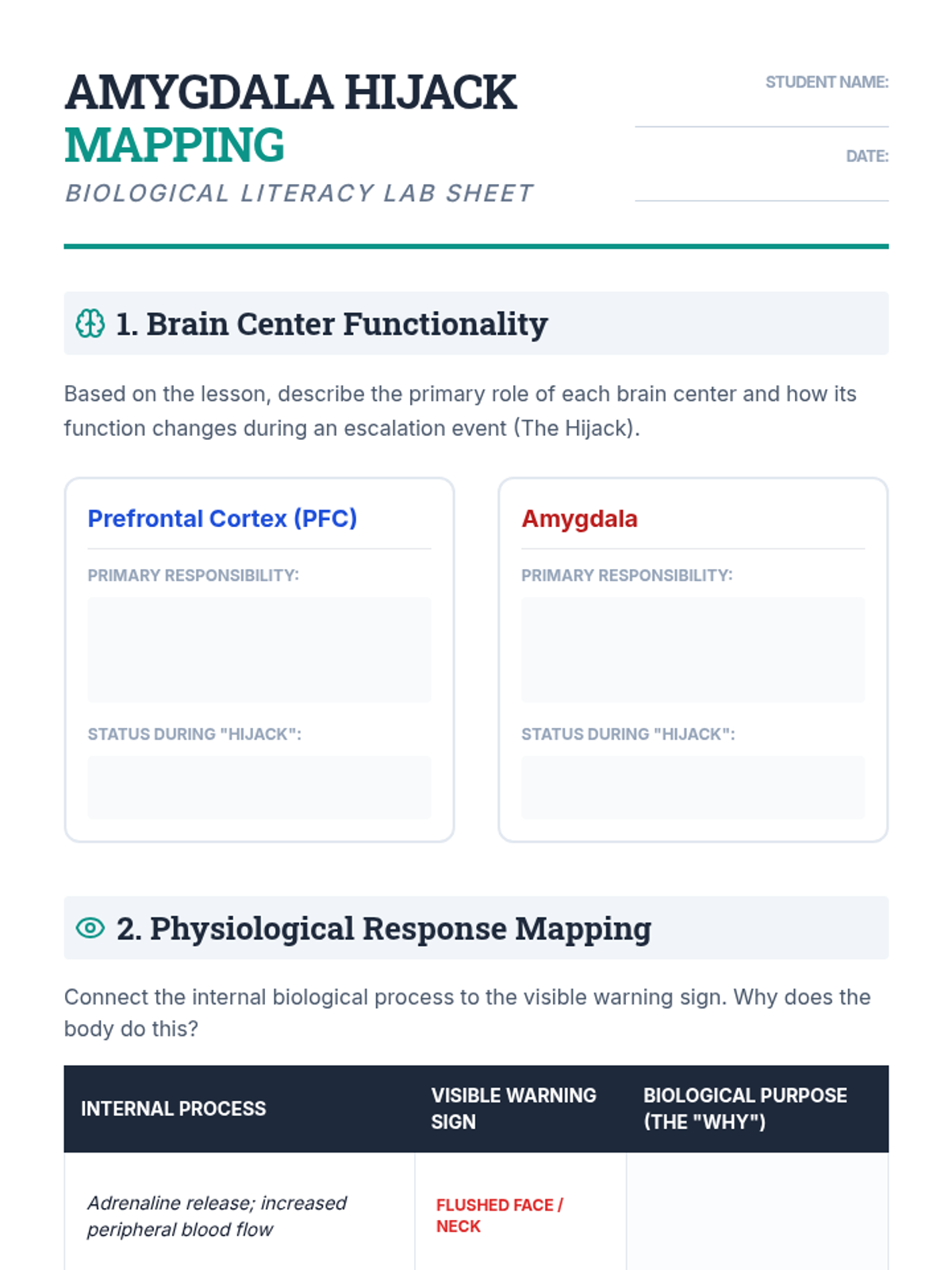
A worksheet for students to map the brain centers (Amygdala and Prefrontal Cortex) to physiological responses and reflect on the biological nature of escalation.
An introductory slide deck for Lesson 1, visually explaining the five stages of the Crisis Cycle and setting up the sports argument hook activity.
A visual presentation for 11th-grade students explaining the brain science of the amygdala hijack, contrasting the prefrontal cortex with the amygdala and identifying external physiological markers.
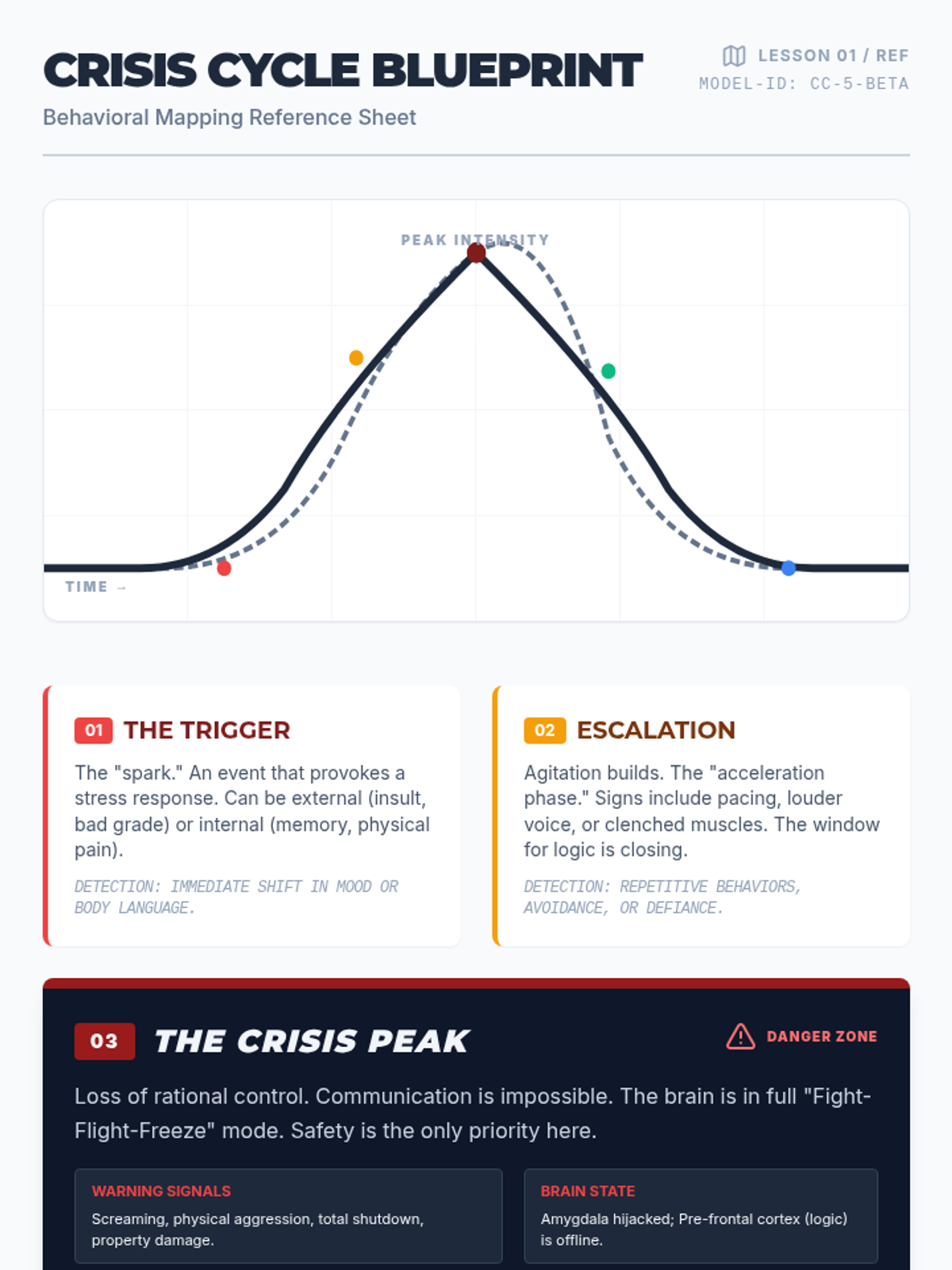
A technical reference sheet outlining the five stages of the Crisis Cycle with a visual curve and diagnostic descriptions for each phase.
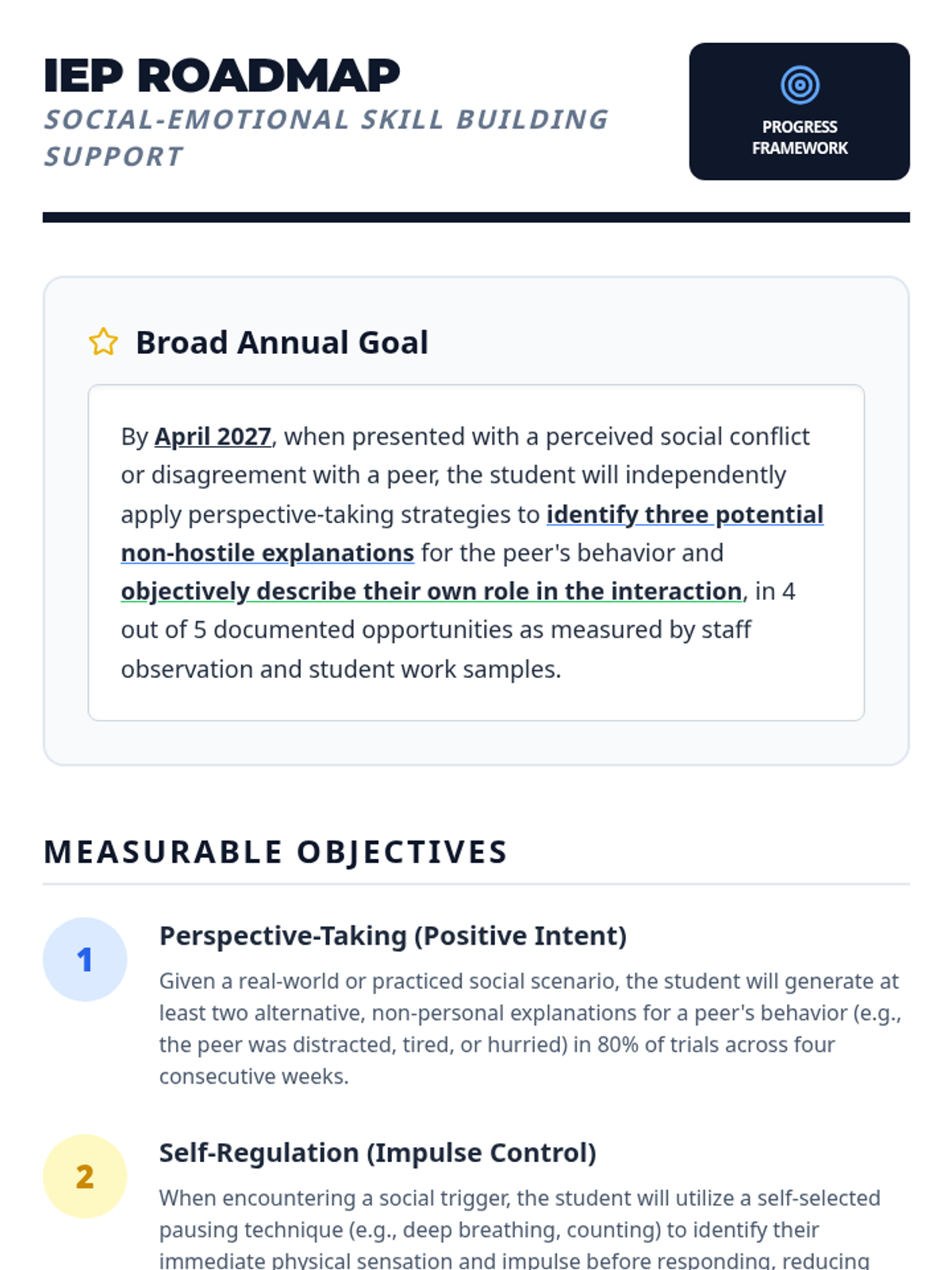
A finalized IEP Roadmap with generalized skill-building language for perspective-taking, self-regulation, and objective self-reflection, designed to support students with social perception challenges.
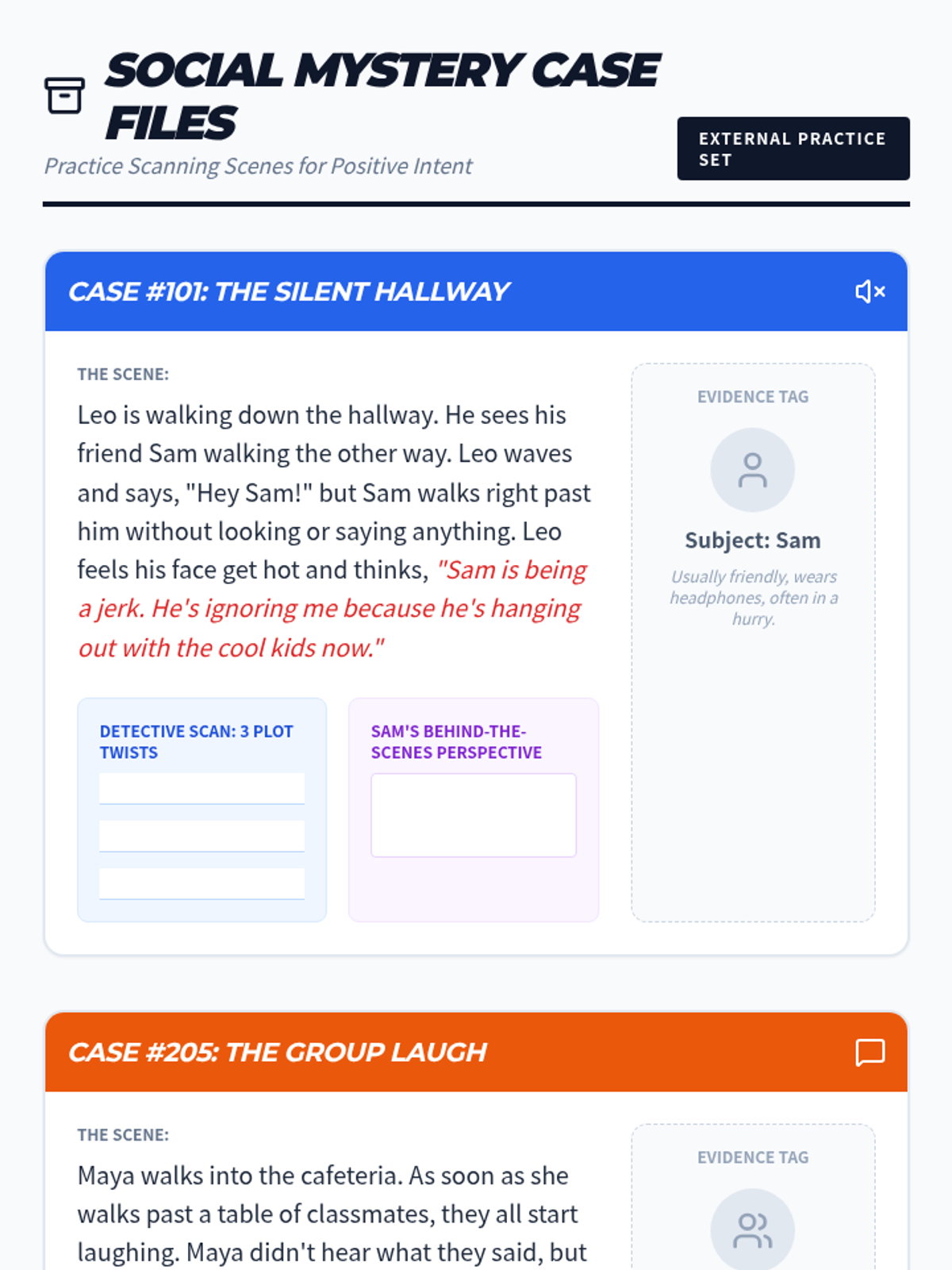
A multi-page set of 'Social Mystery Case Files' with four distinct practice scenarios. Each case includes a 'The Scene' description, an 'Evidence Tag' with extra clues, and space for students to brainstorm three 'Plot Twists' (positive intent explanations) and analyze the situation from an objective 'Camera View'.
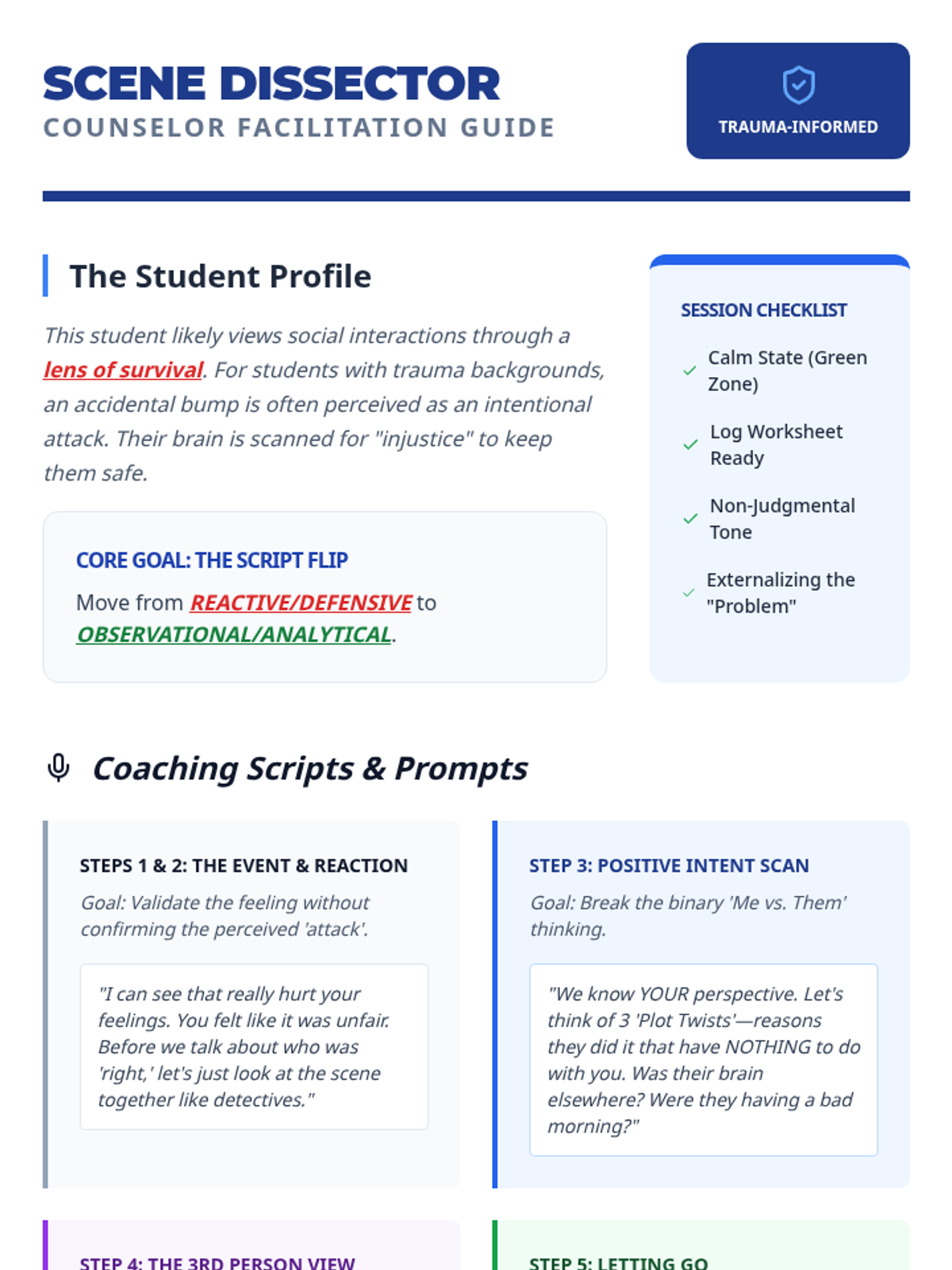
A facilitation guide for counselors to assist students in social interaction 'dissection'. It includes trauma-informed context, specific coaching scripts for each step of the 'Scene Scanners' process, and a metaphorical physical activity for addressing grudge-holding.
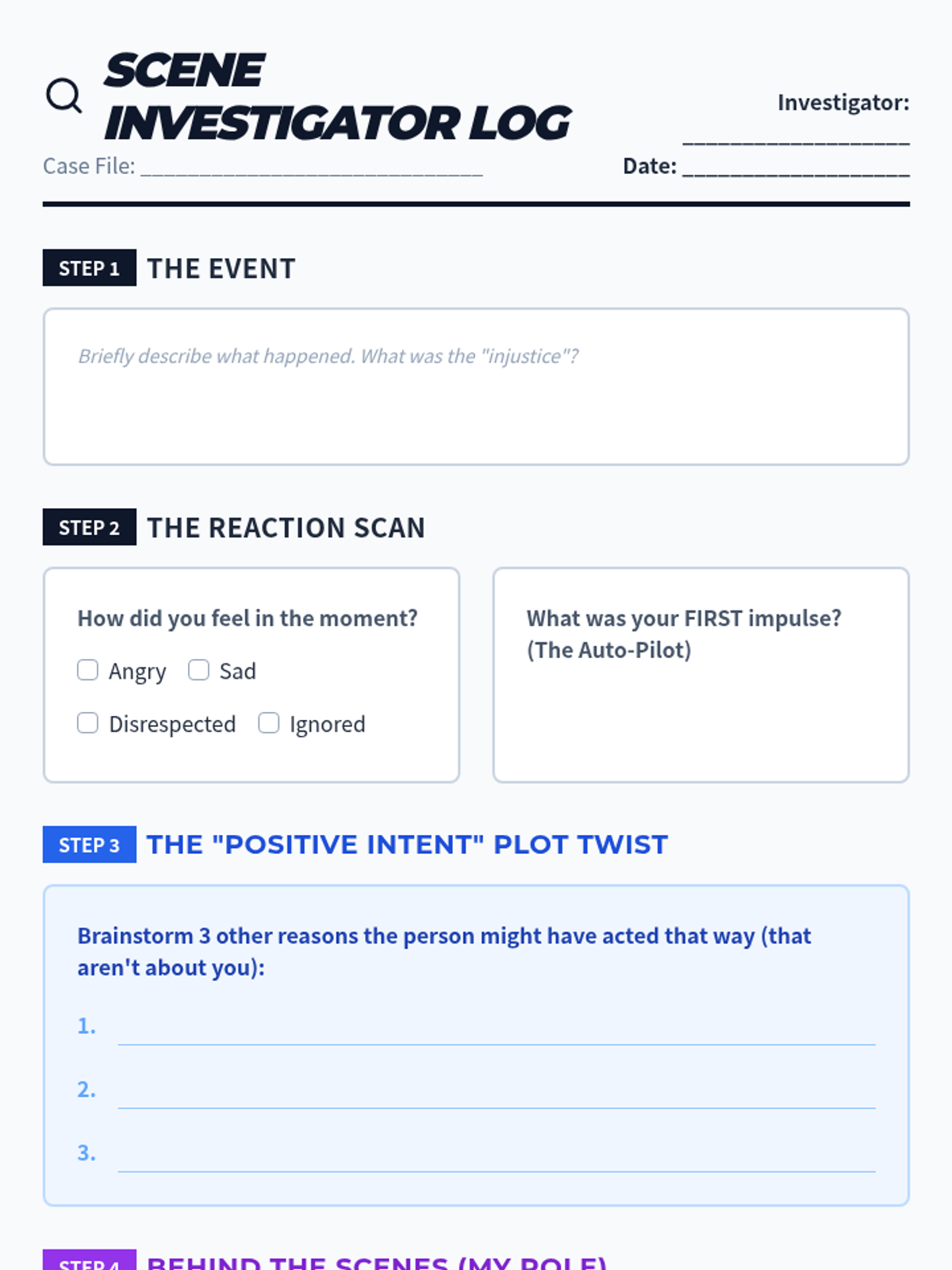
A student worksheet designed as an 'Investigator Log' to help students dissect social interactions. It prompts them to identify the event, their reaction, brainstorm positive intent, reflect on their own behavior, and consciously decide to let go of grudges.
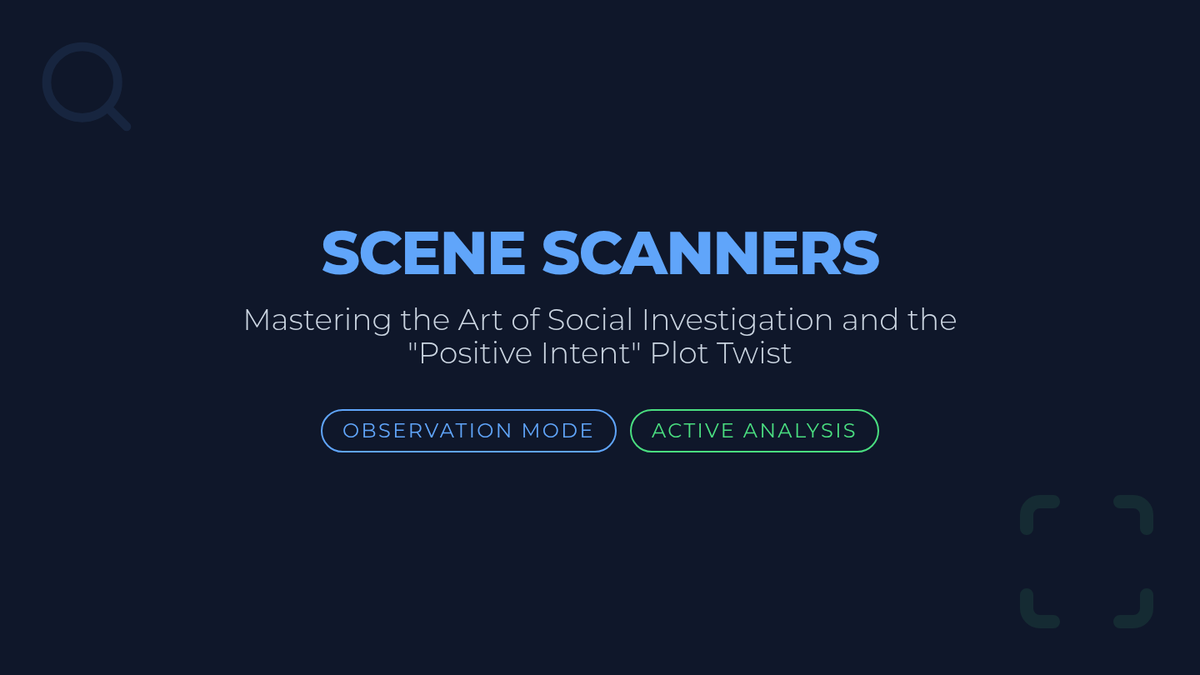
A visual slide deck teaching the 'Scene Scanners' methodology for social interaction analysis. It focuses on assuming positive intent, using a '3-second brake' for impulse control, and understanding the personal weight of holding grudges.
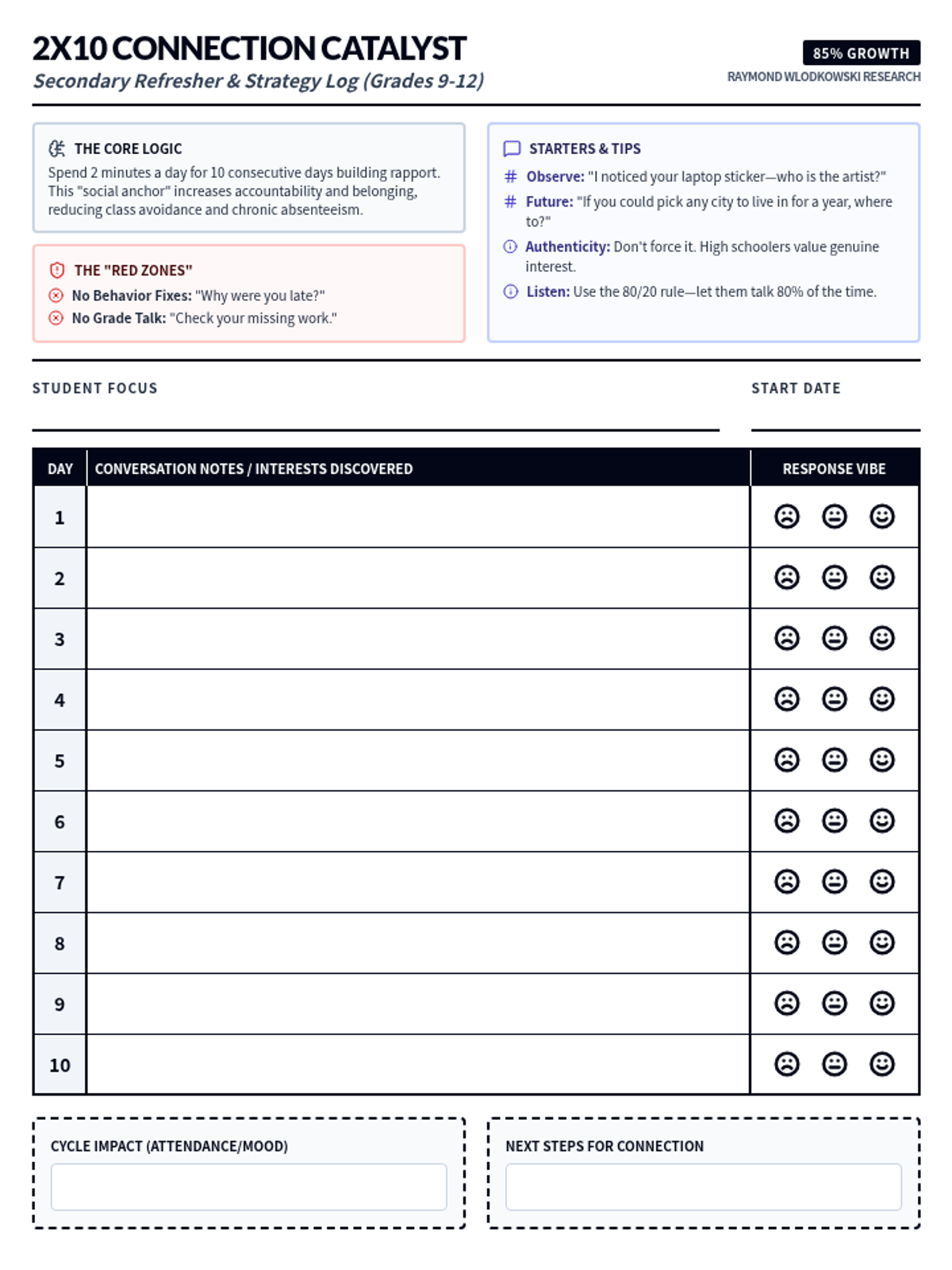
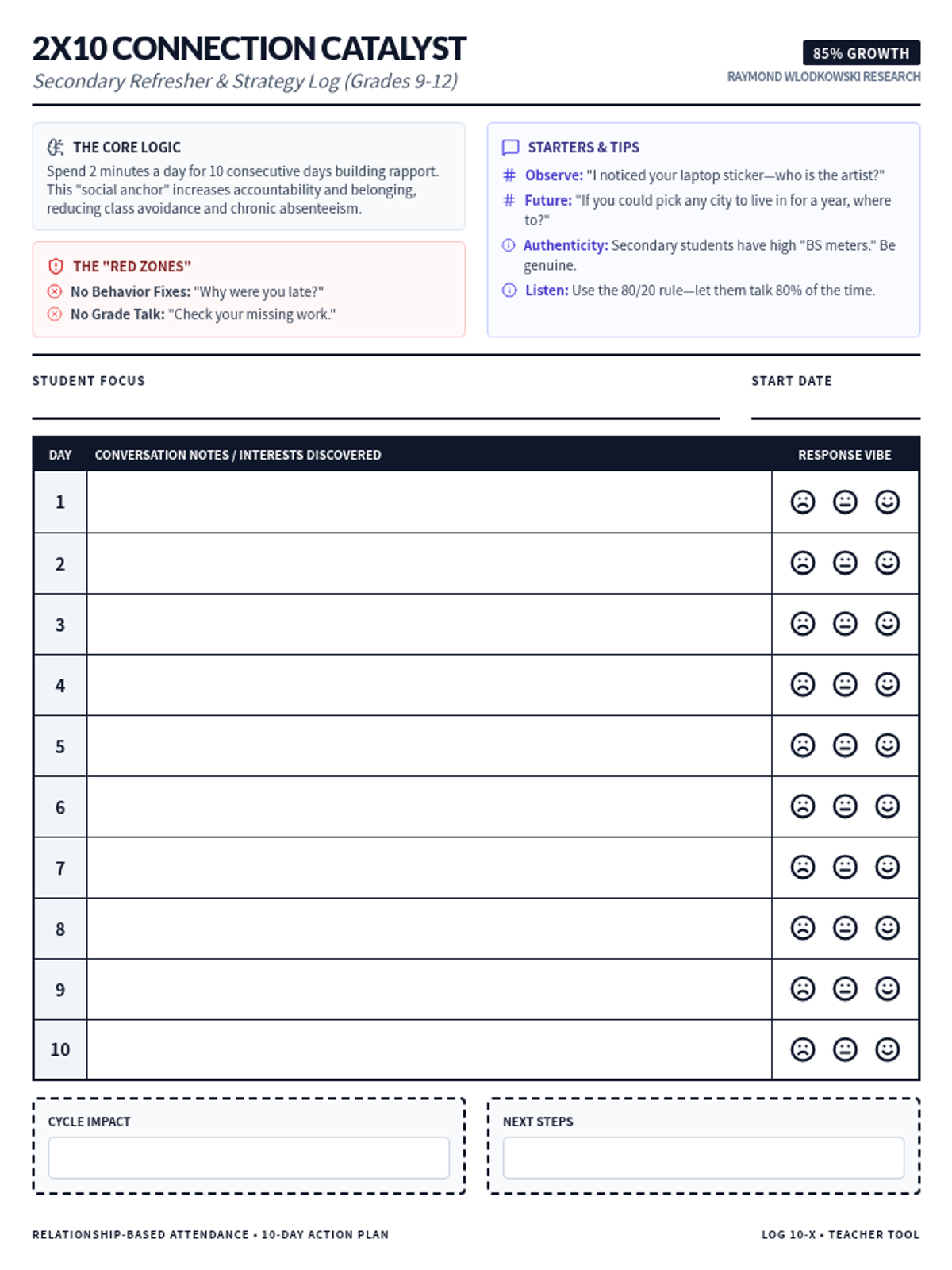
A high-contrast, all-in-one teacher tool that combines the 2x10 strategy refresher with a 10-day connection log on a single 8.5x11 page, featuring bold lines, large text, and highly visible vibe icons.
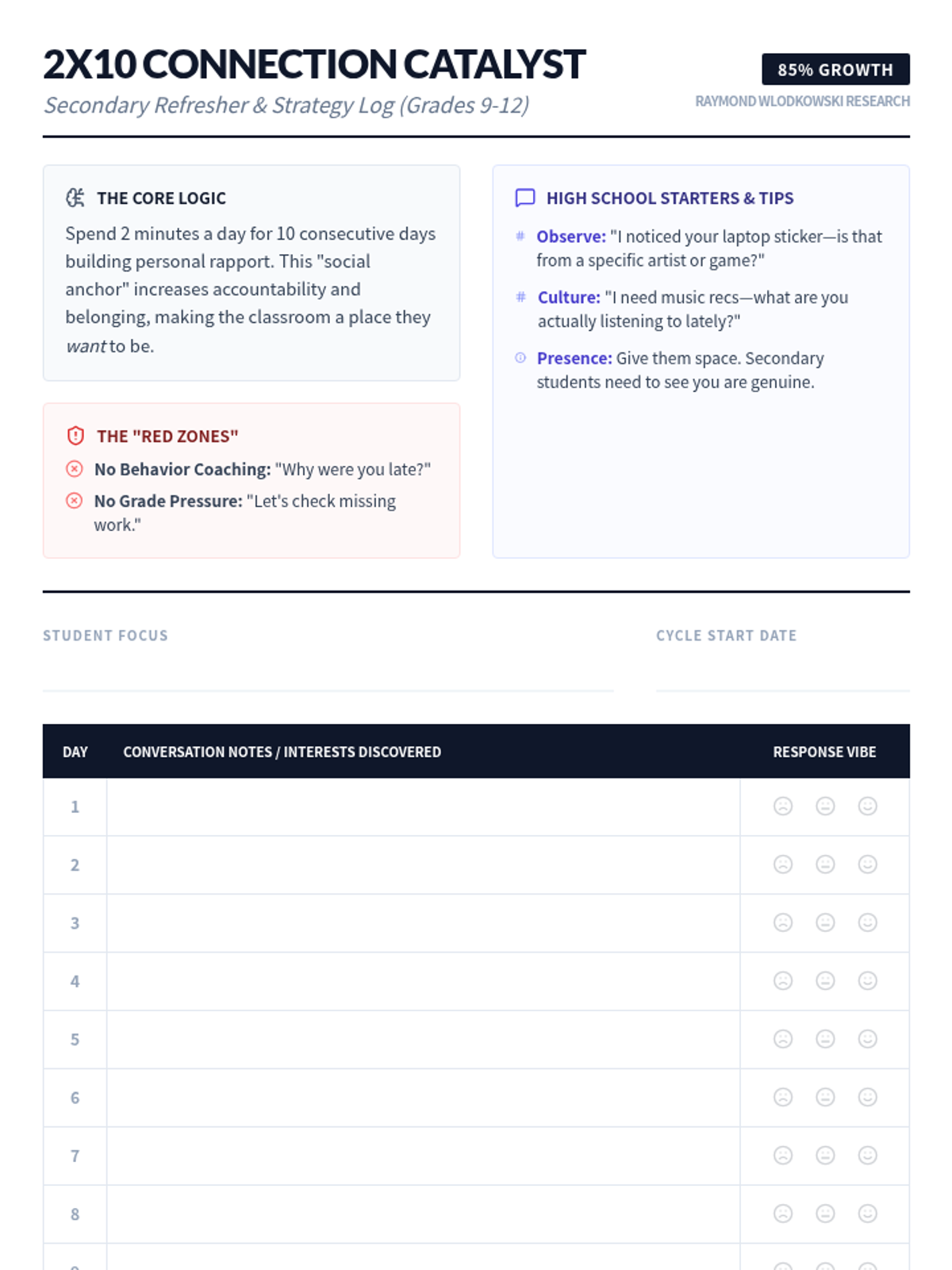
An all-in-one teacher tool that combines the 2x10 strategy refresher with a 10-day connection log on a single 8.5x11 page, featuring bold, high-contrast chart elements for better visibility.
A comprehensive one-page strategy sheet and tracking log for the 2x10 student relationship strategy, specifically designed for secondary teachers.
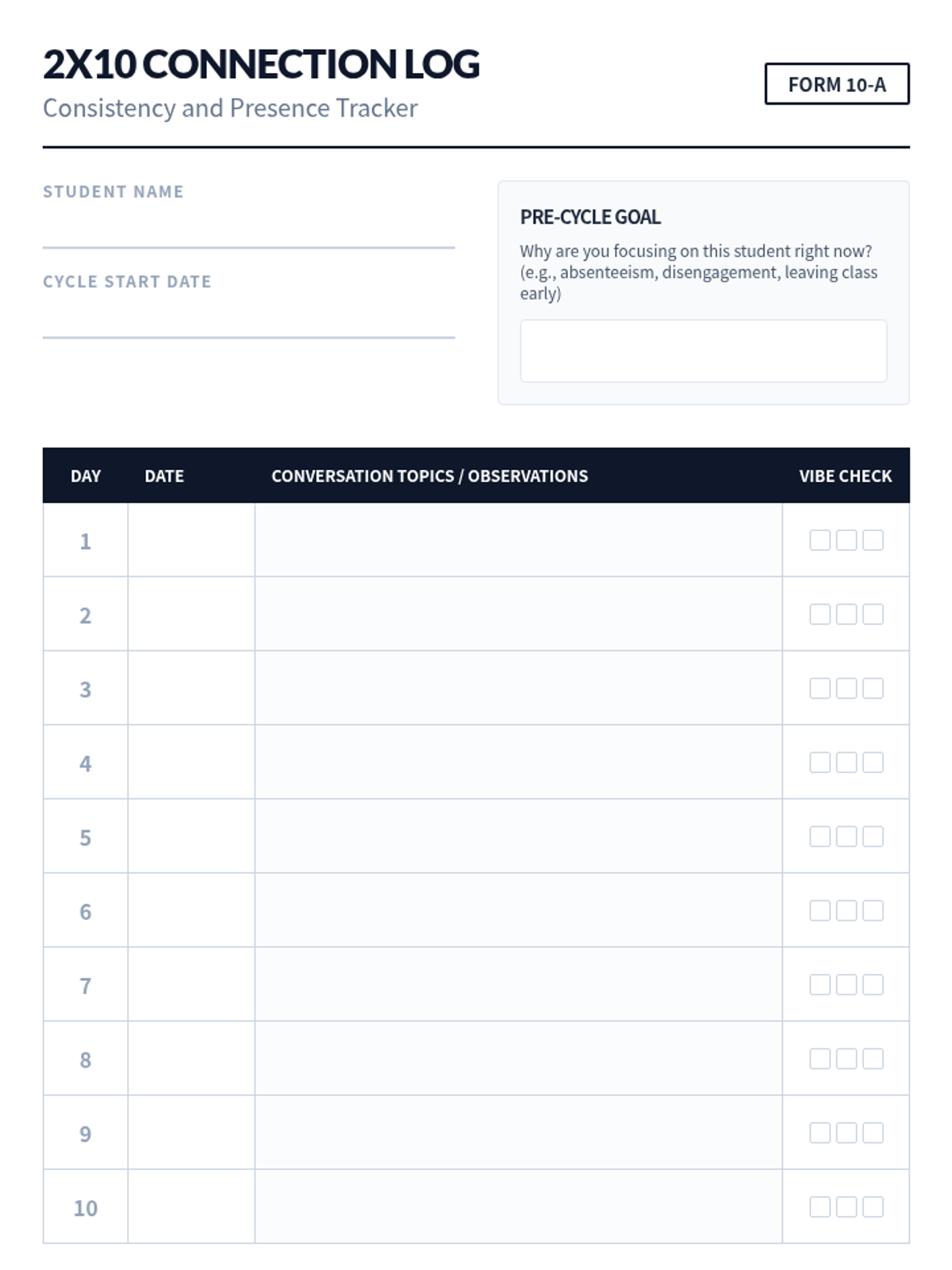
A practical tracking log for teachers to document their 10-day connection cycle with a student, including space for notes, vibe checks, and reflection.
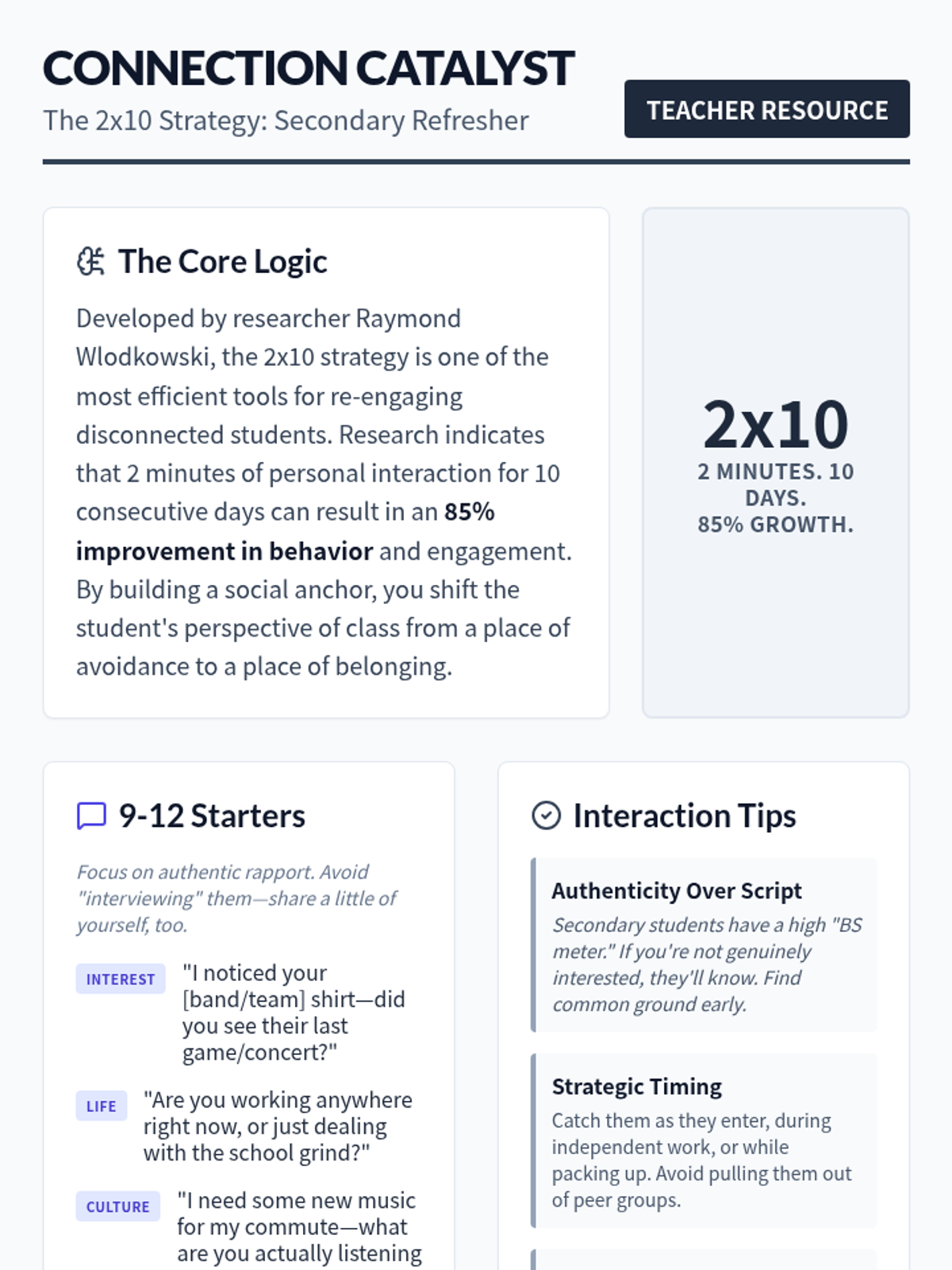
A refined one-page teacher refresher document for the 2x10 strategy, tailored for grades 9-12 with specific research-backed rationale and conversation starters.
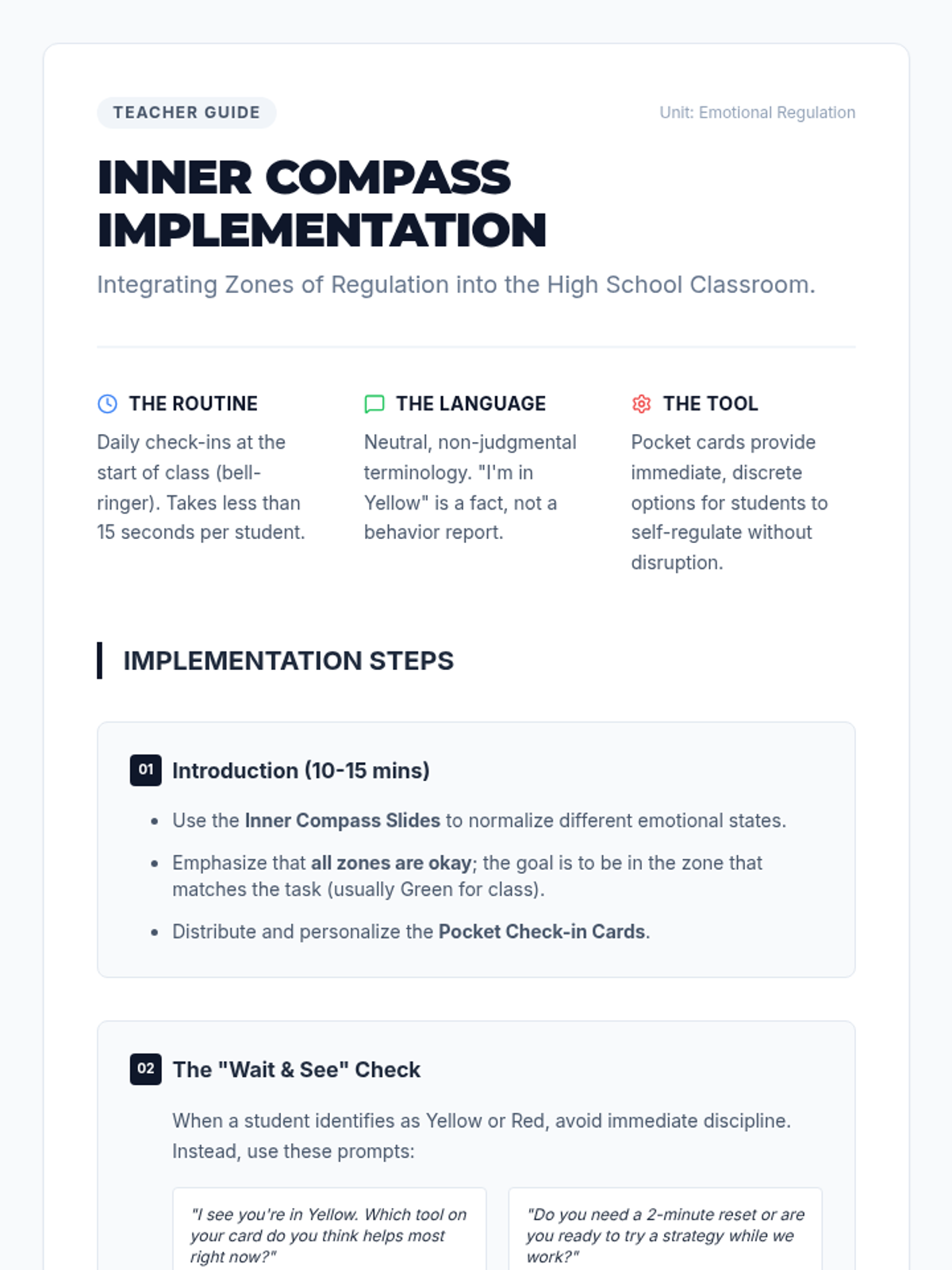
A comprehensive teacher implementation guide for using the Inner Compass regulation tools in a high school classroom setting.
A slide presentation for high schoolers to introduce the Zones of Regulation framework and how to use their pocket check-in cards effectively.
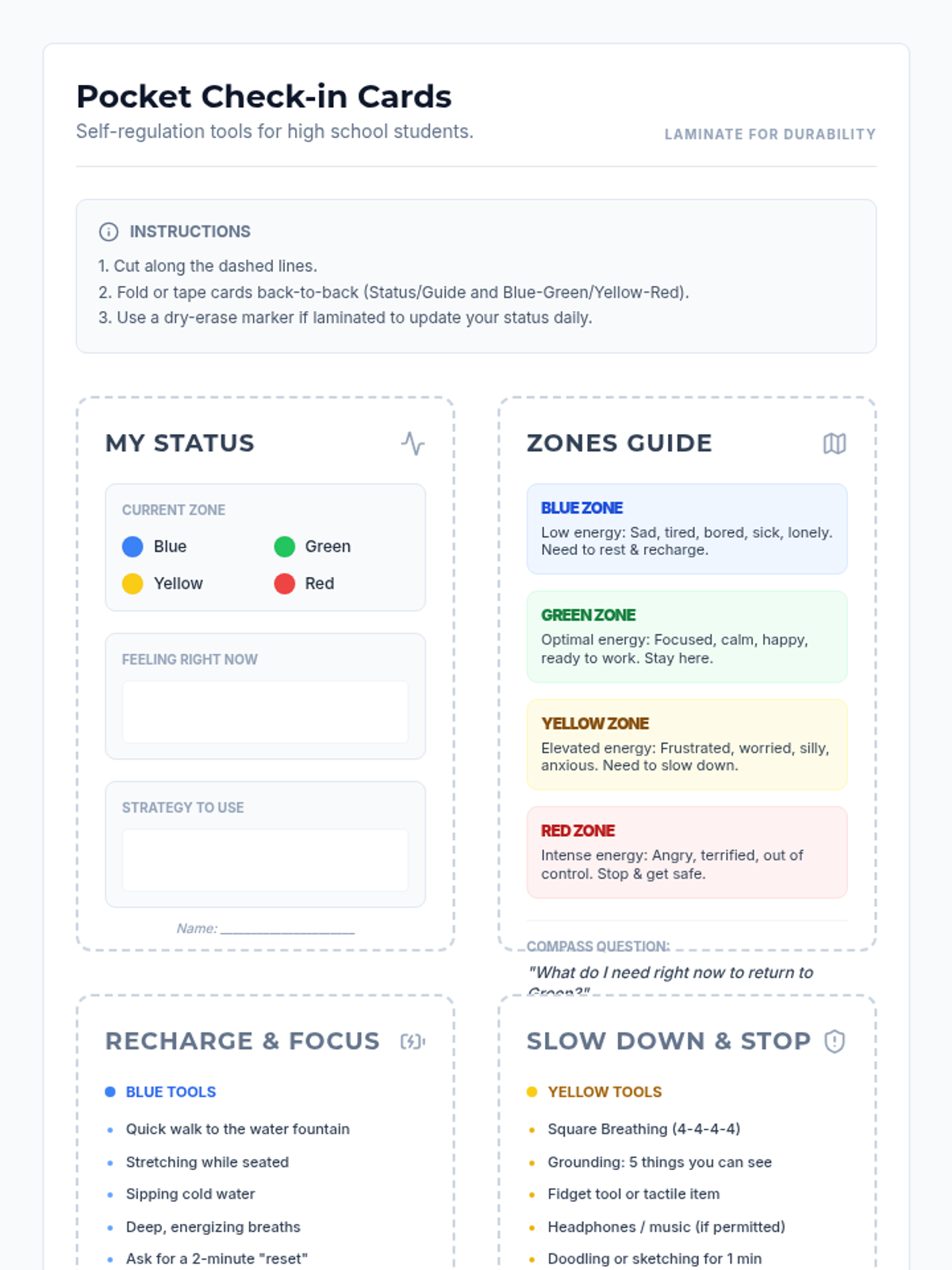
A set of four printable pocket-sized cards for high schoolers featuring status check-ins, a Zones of Regulation reference guide, and specific toolbox strategies for each zone.
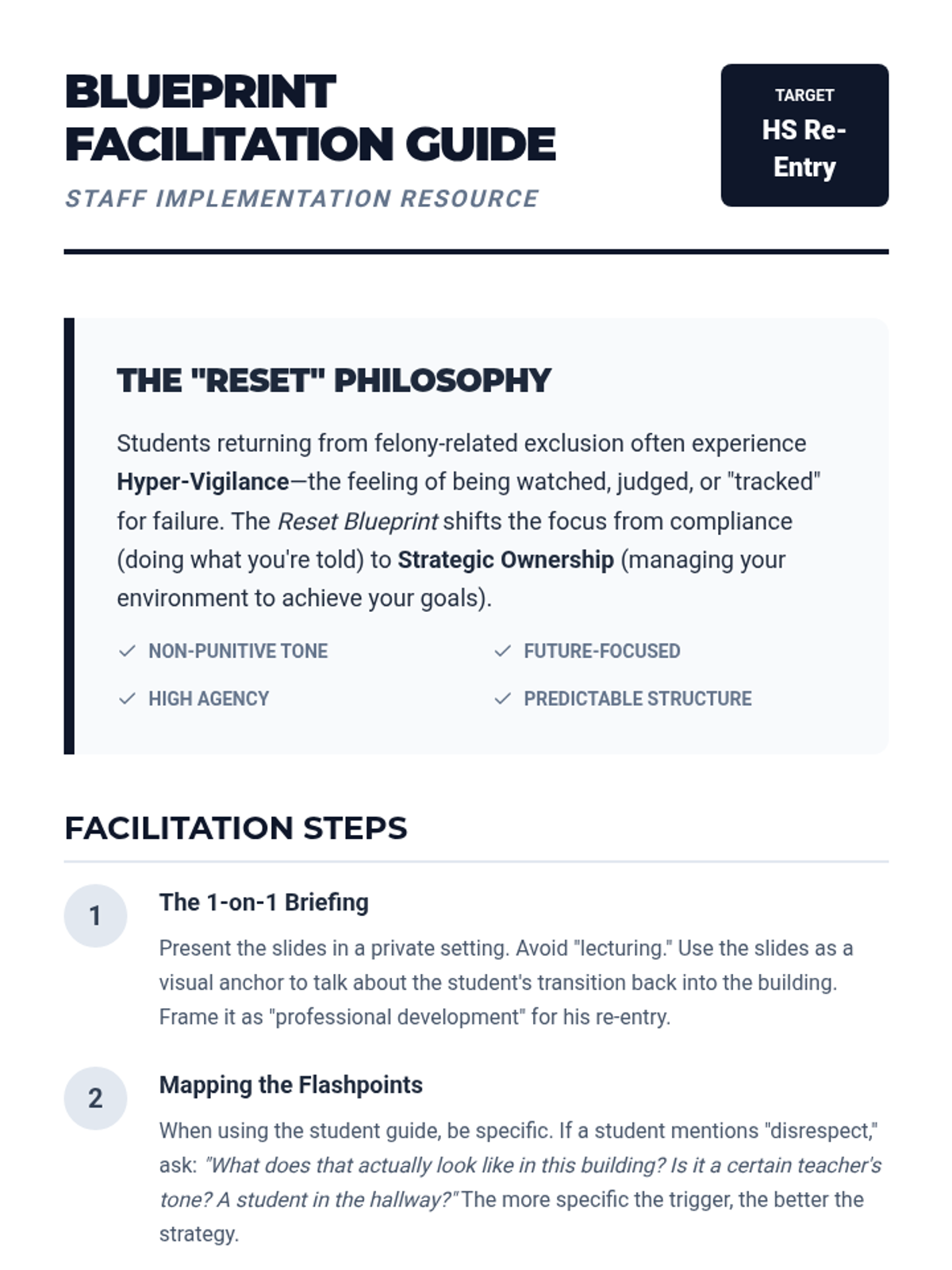
A 2-page facilitation guide for teachers and staff to effectively implement the Reset Blueprint, including core philosophies, discussion prompts, and a staff response matrix for de-escalation.
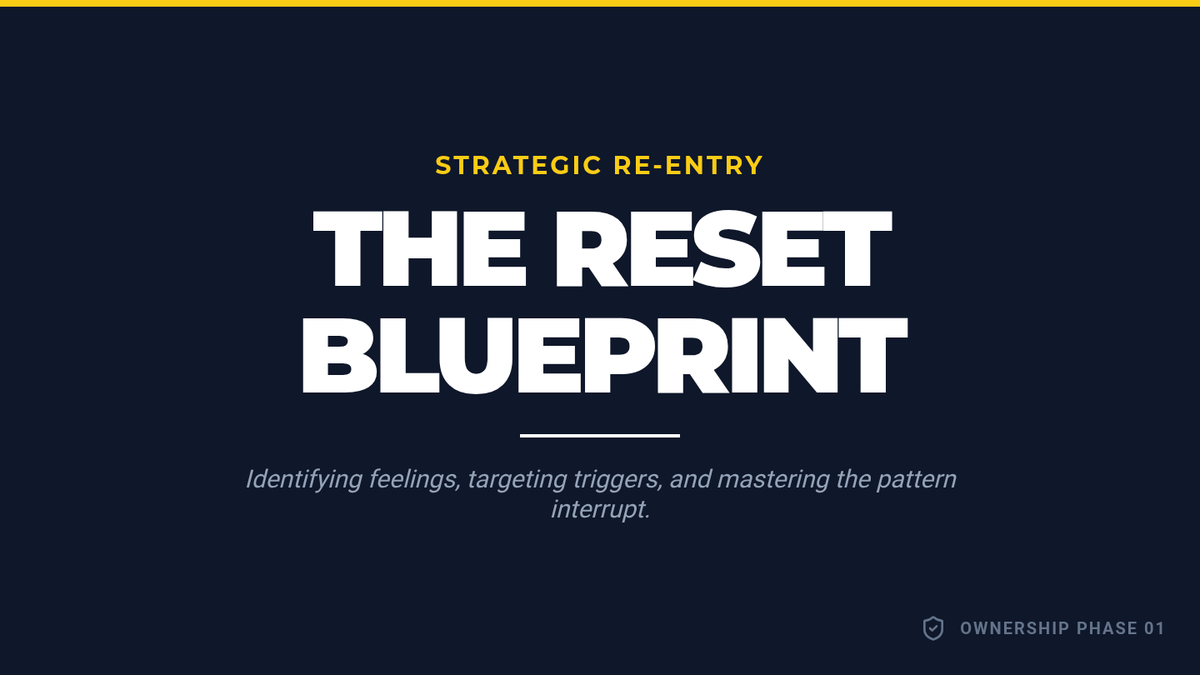
A 7-slide presentation for introducing the 'Reset Blueprint' concept to students, focusing on emotional ownership, trigger identification, and impulse management tactics.
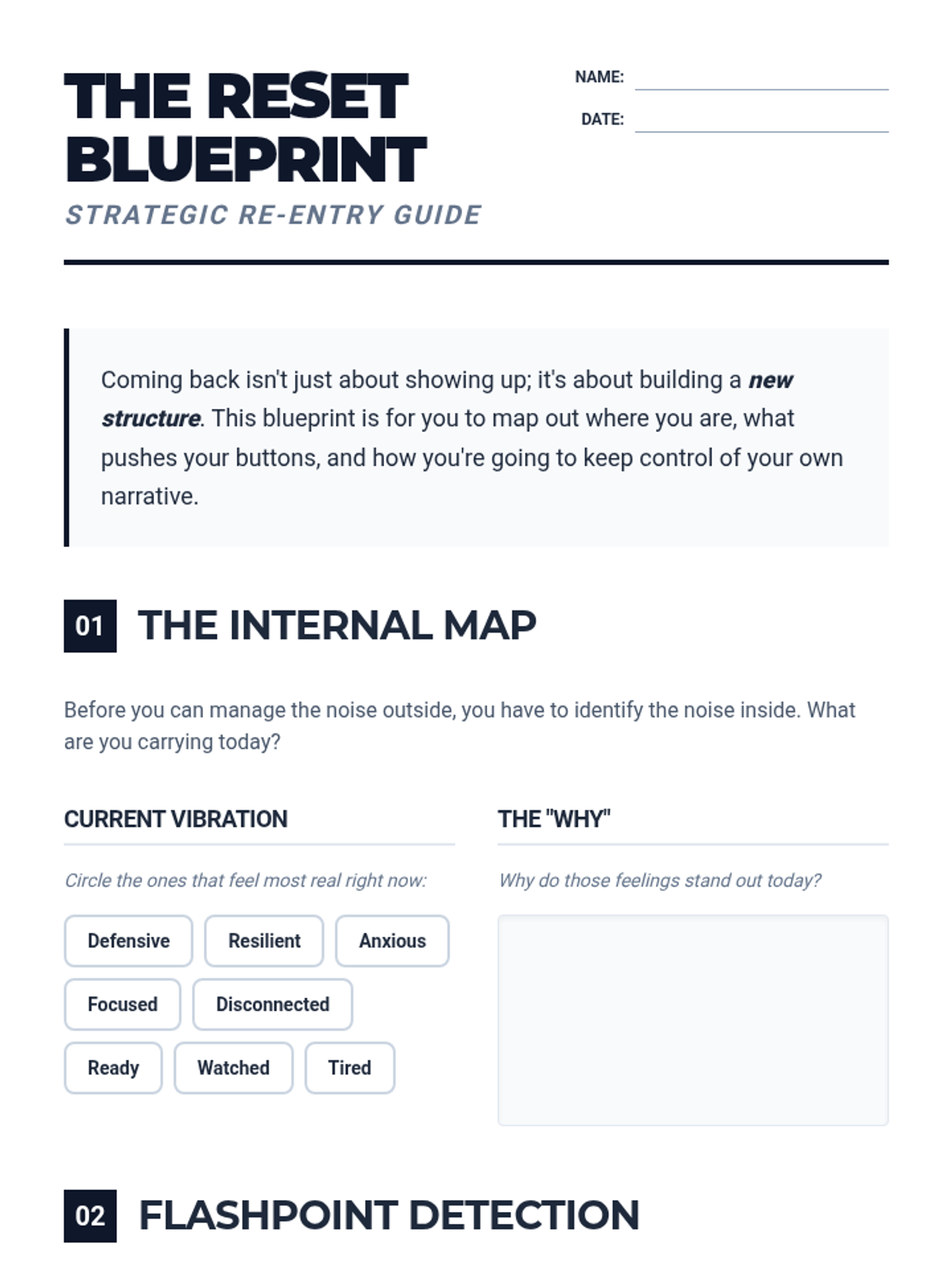
A 2-page strategic guide for students to map out their emotional state, identify triggers (flashpoints), and commit to specific impulsivity management tactics.
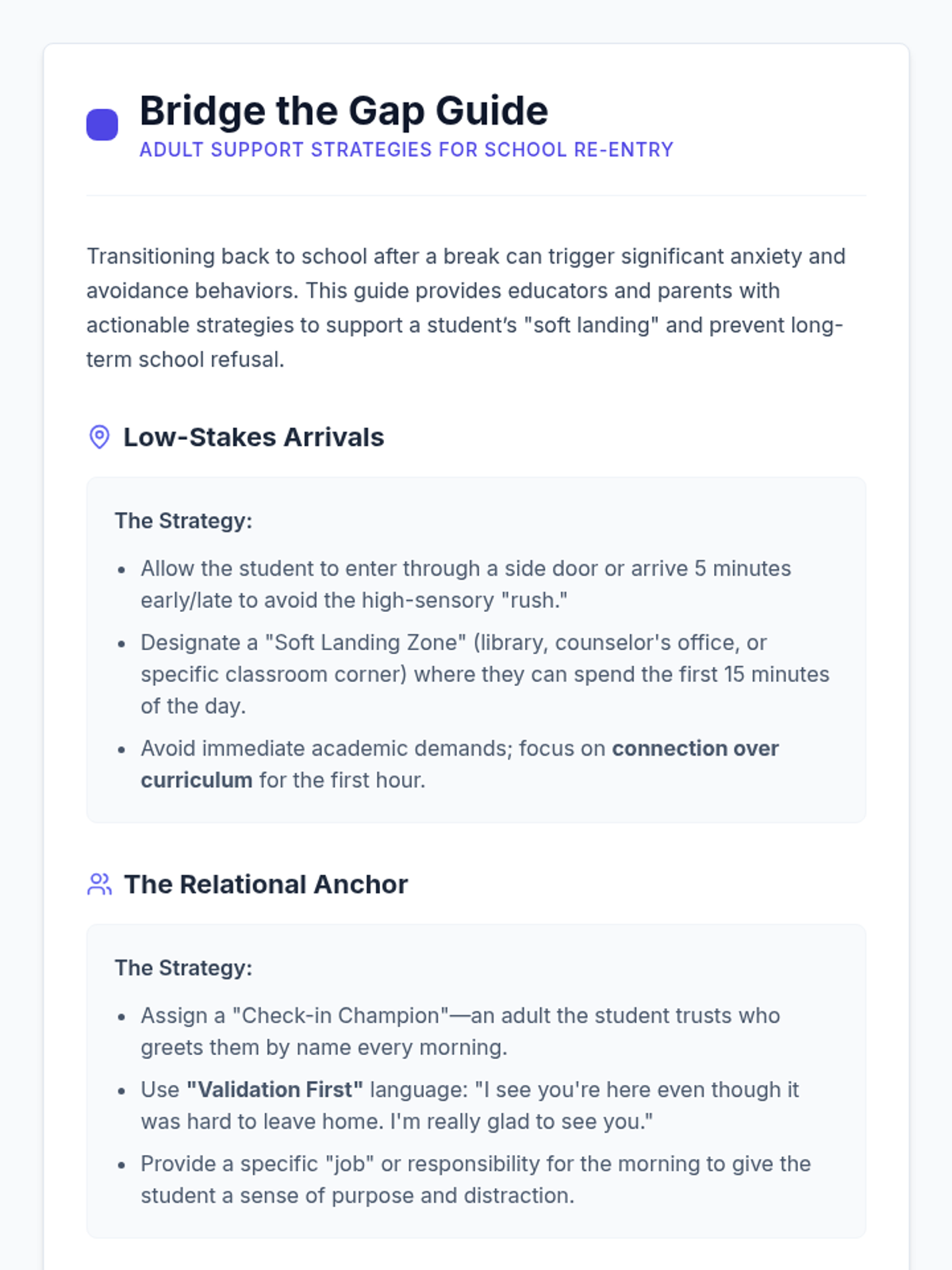
A teacher and parent-facing guide providing evidence-based strategies to support students struggling with school re-entry and school avoidance behaviors.
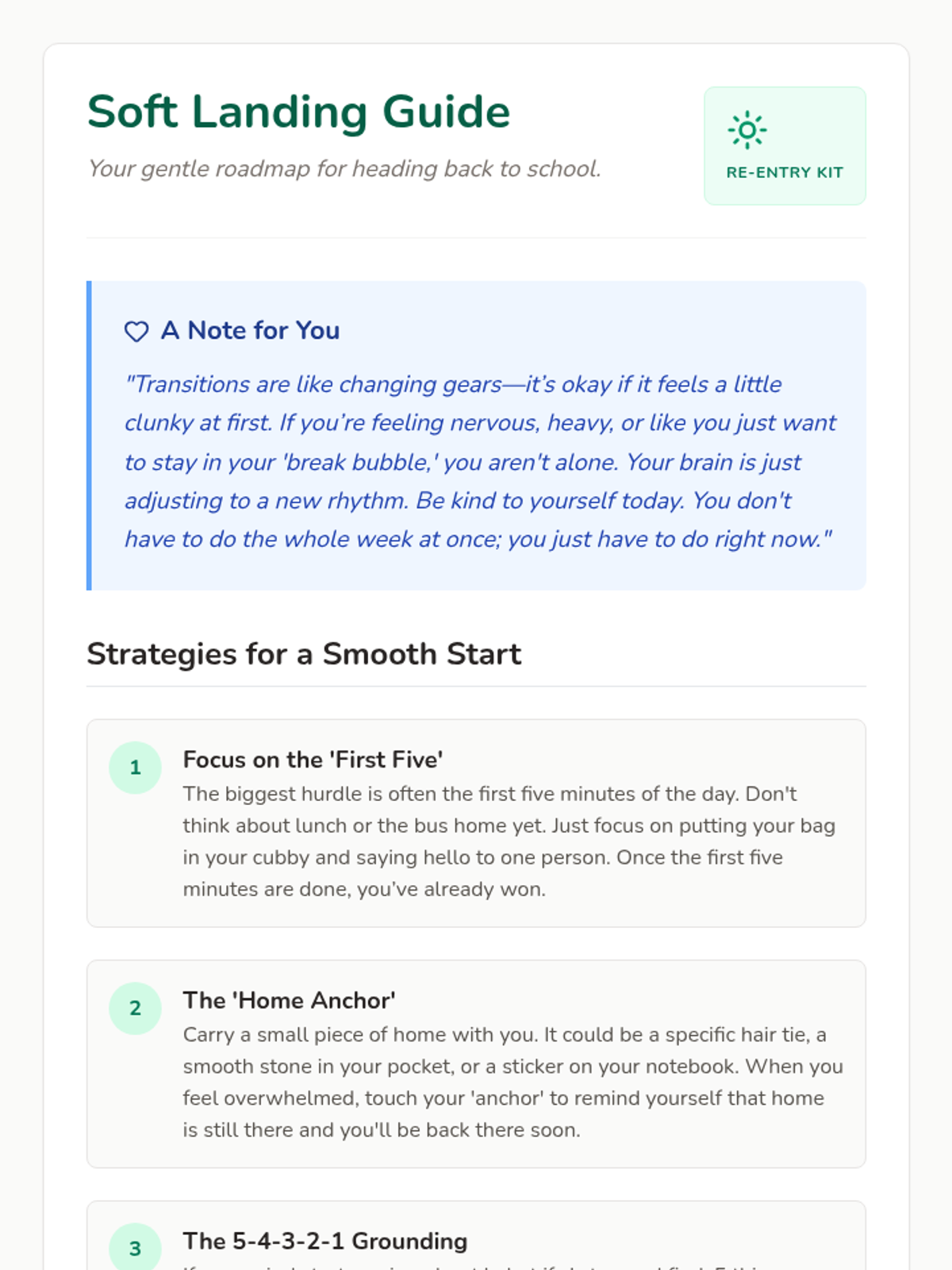
A supportive two-page document for students transitioning back to school, featuring a positive message, coping strategies for anxiety, and a personal planning worksheet.
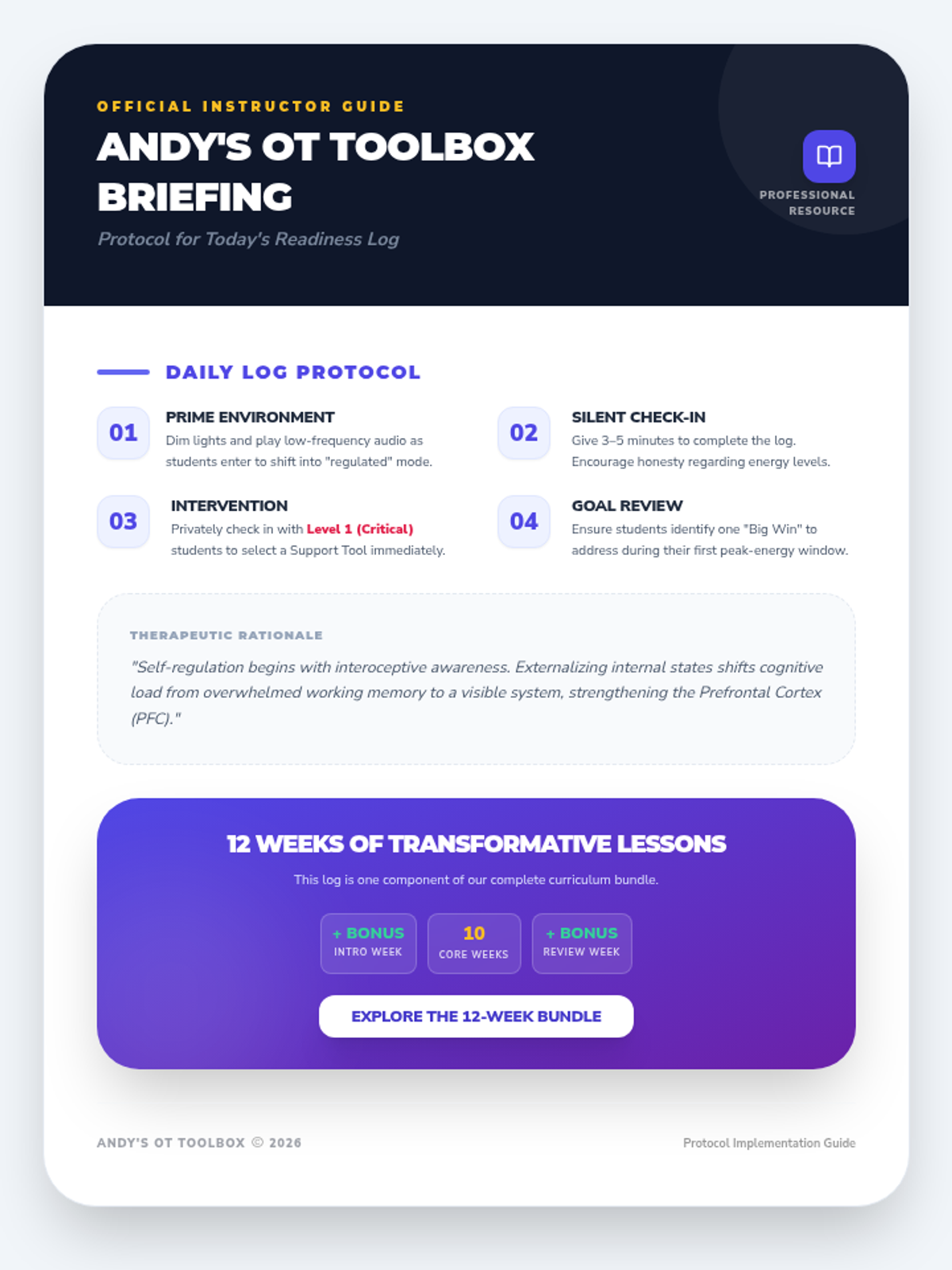
A dedicated teacher briefing document for Andy's OT Toolbox, providing detailed implementation steps for the readiness log, rationale, and curriculum bundle information. Optimized layout to prevent heading clipping.
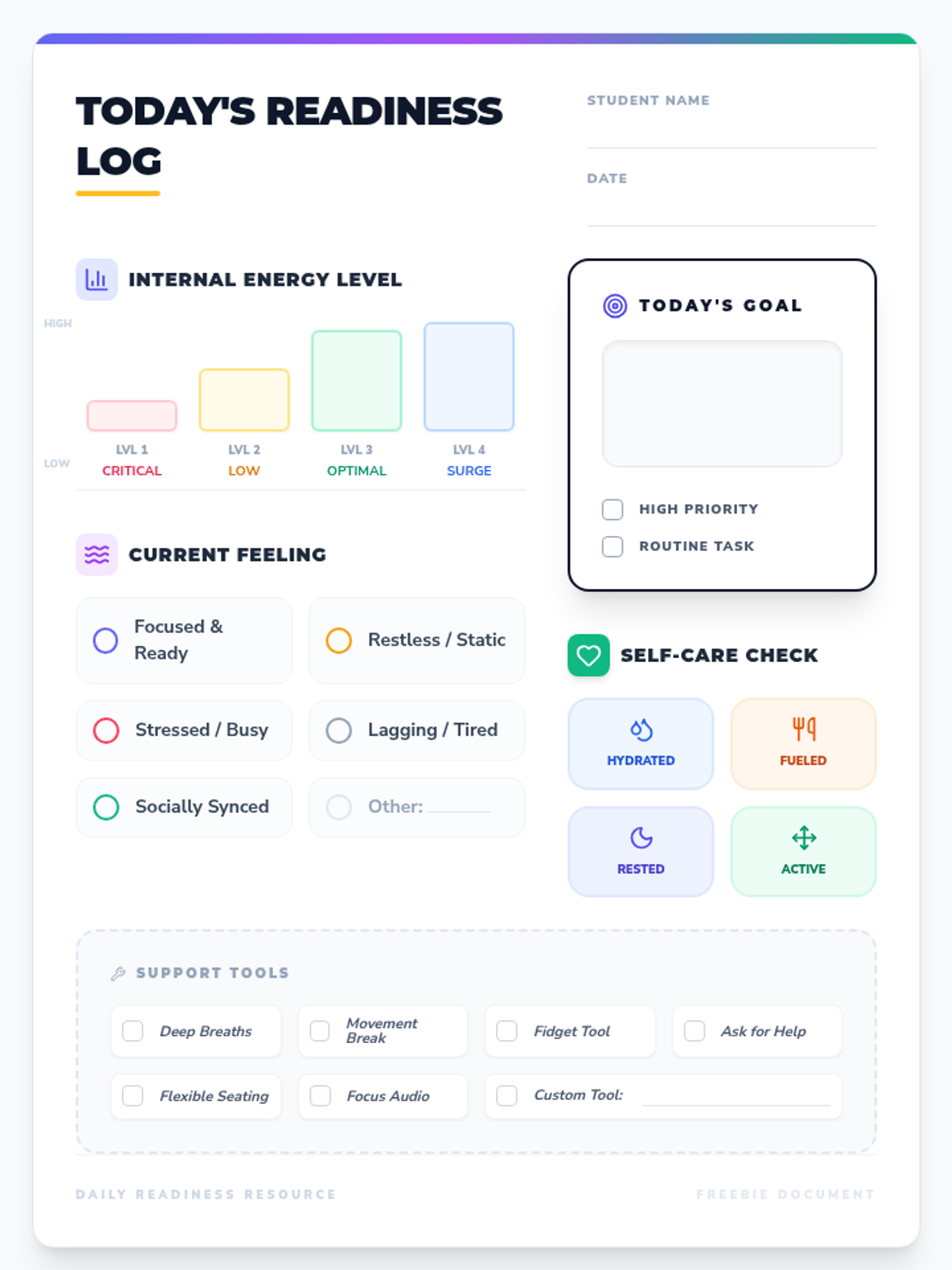
The final student-facing readiness log with a Montserrat title, bar graph visualization (Surge is highest), horizontal support tools, and high-visibility work areas. Guaranteed to fit on one printed page.
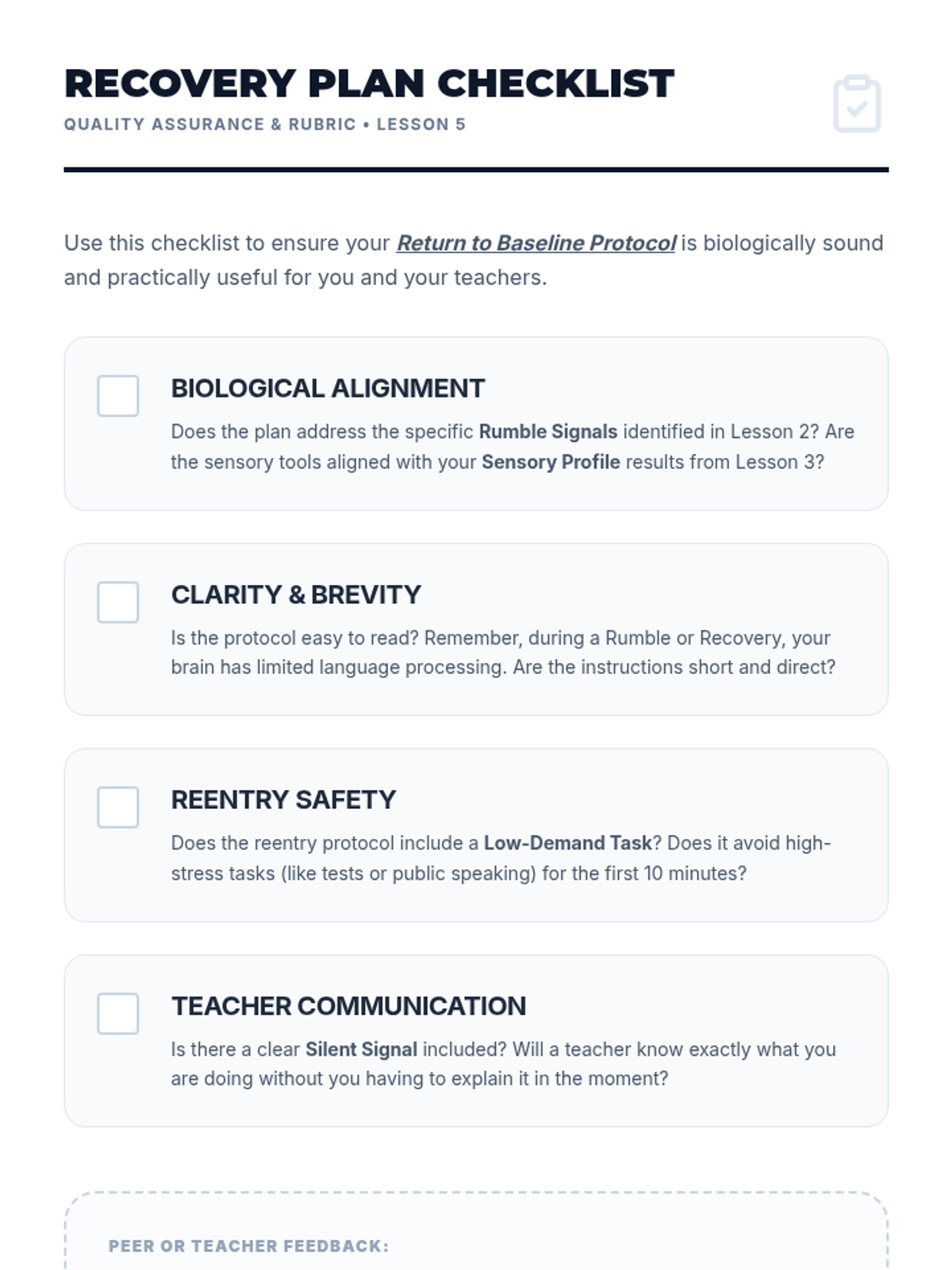
A checklist and rubric for ensuring the personalized recovery plan is high-quality, practical, and biologically aligned.
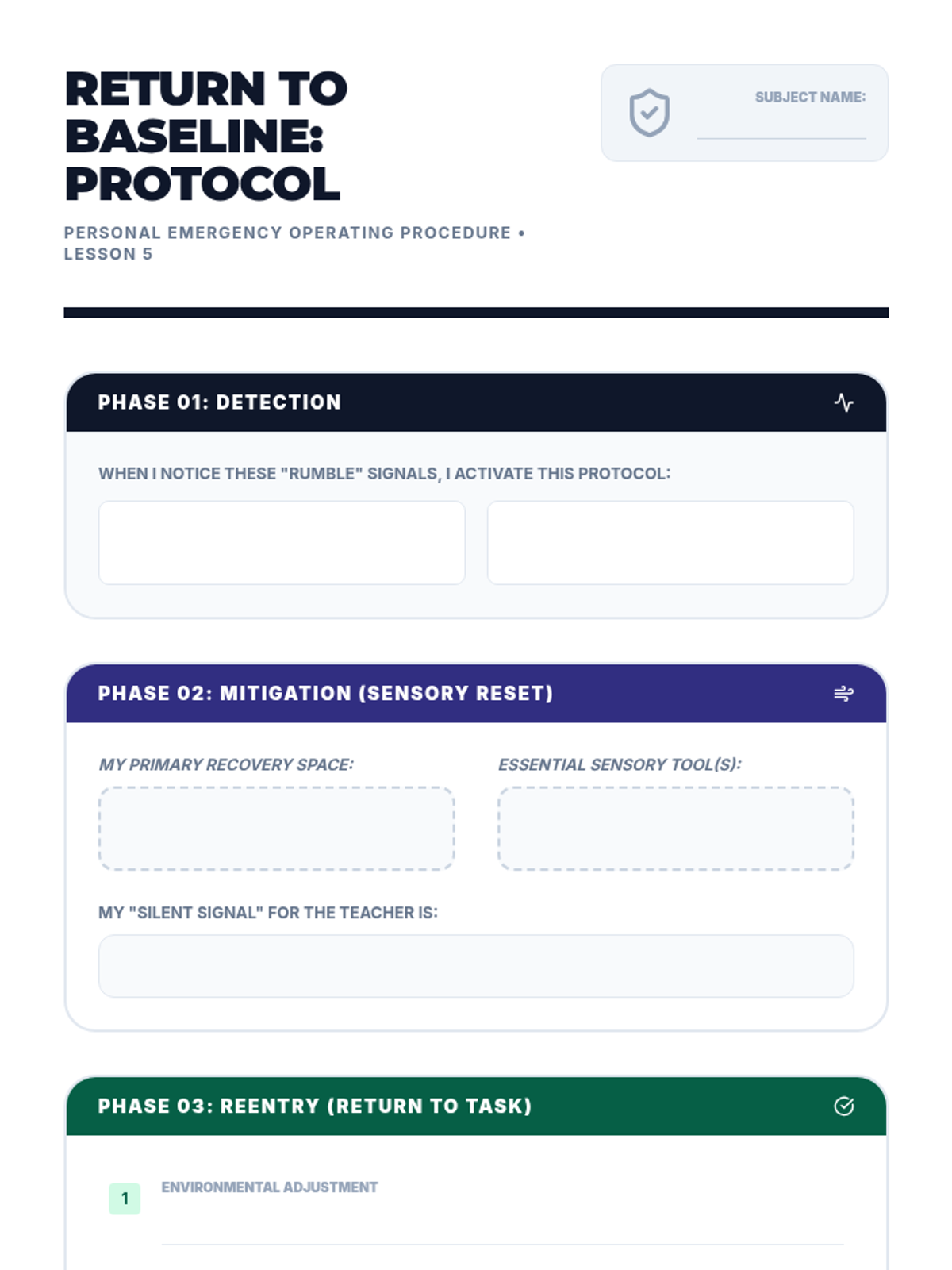
A finalized student template for creating a personalized 'Return to Baseline' protocol, including rumble signals, sensory tools, and reentry steps.
A slide deck guiding students through the components and importance of a personalized recovery plan and reentry strategy.
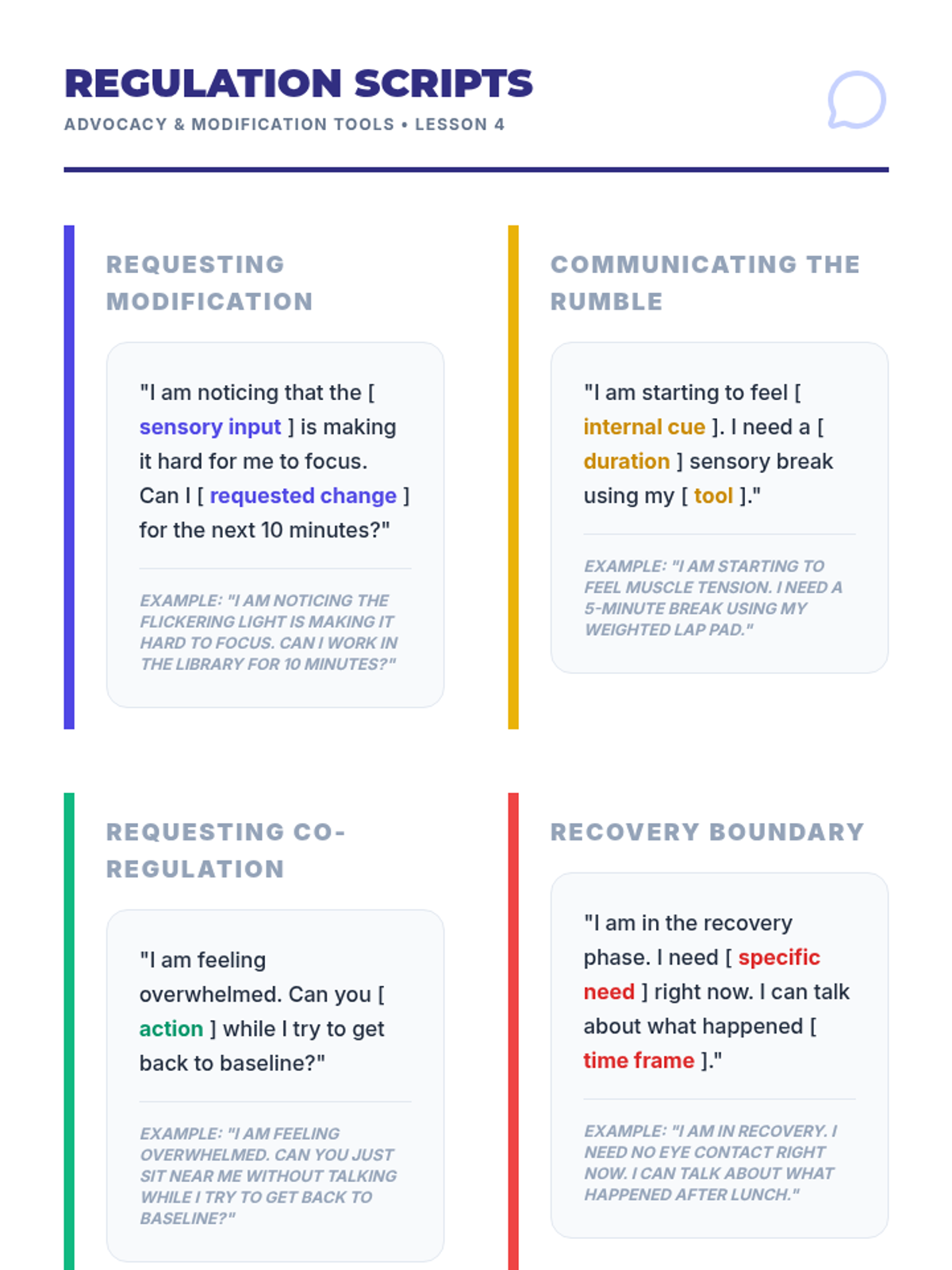
Communication scripts for students to practice requesting environmental modifications, sensory breaks, or co-regulation support.
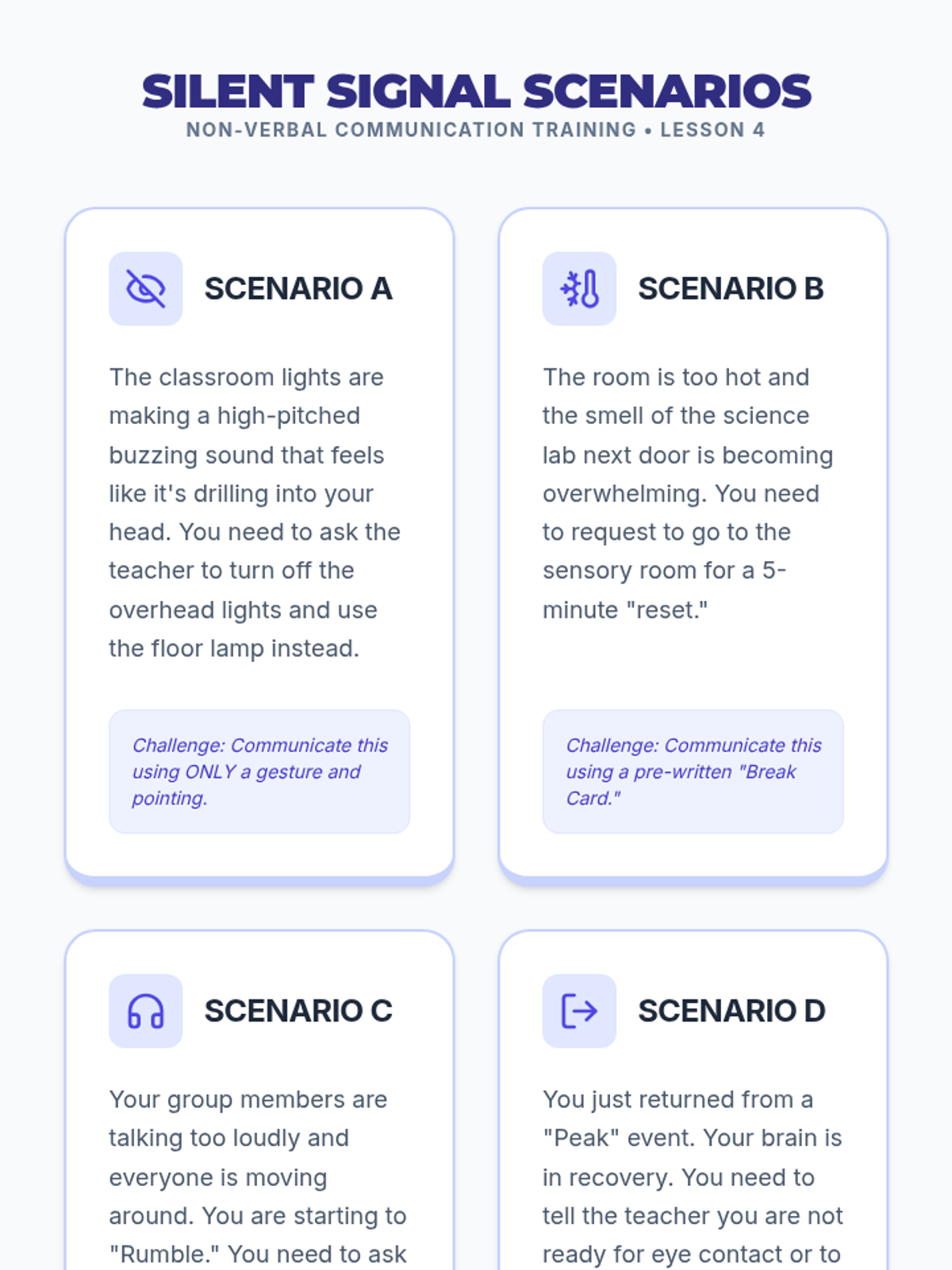
Activity cards for the 'Silent Signal' challenge, featuring four scenarios for non-verbal communication of sensory needs.
A slide deck introducing students to co-regulation vs. self-regulation and identifying environmental triggers.
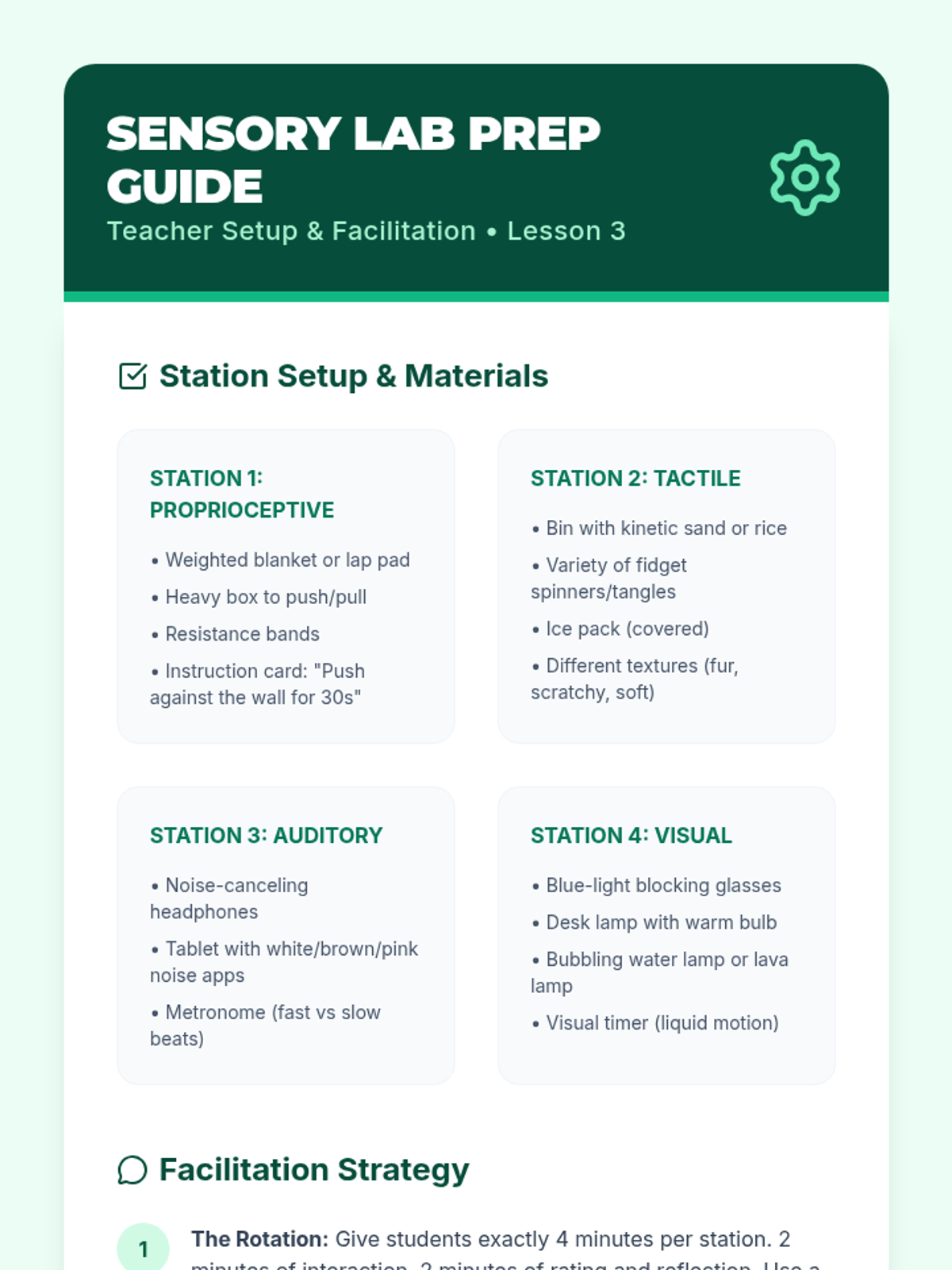
A teacher guide for preparing and facilitating the sensory lab workshop, including material lists and station rotations.
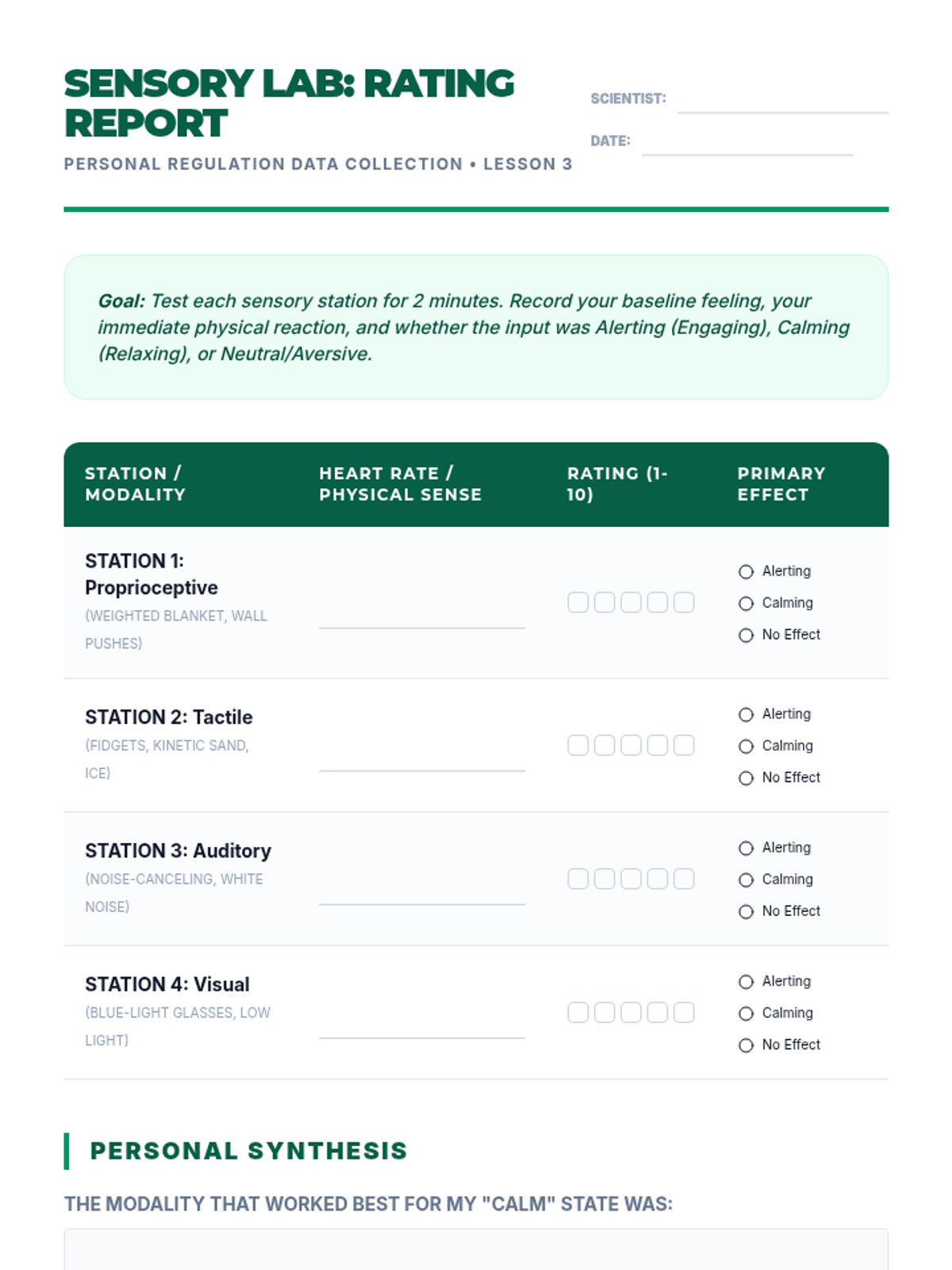
A student lab report for tracking physiological and emotional responses to various sensory inputs during the workshop.
A slide deck introducing students to alerting vs. calming sensory inputs, specifically focusing on proprioceptive, vestibular, and tactile systems.
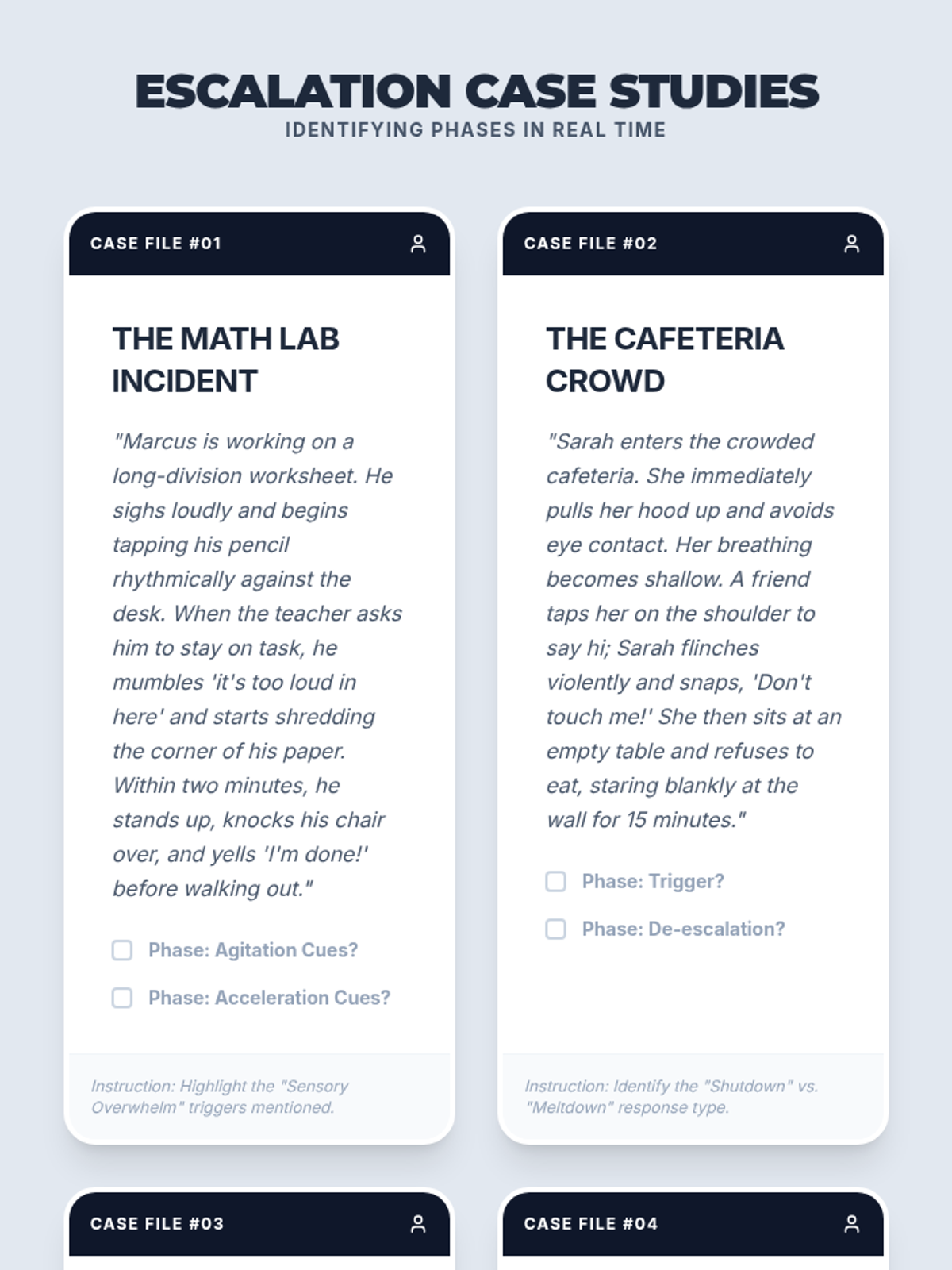
Case study cards featuring four different escalation scenarios for students to analyze and identify phases of the cycle.
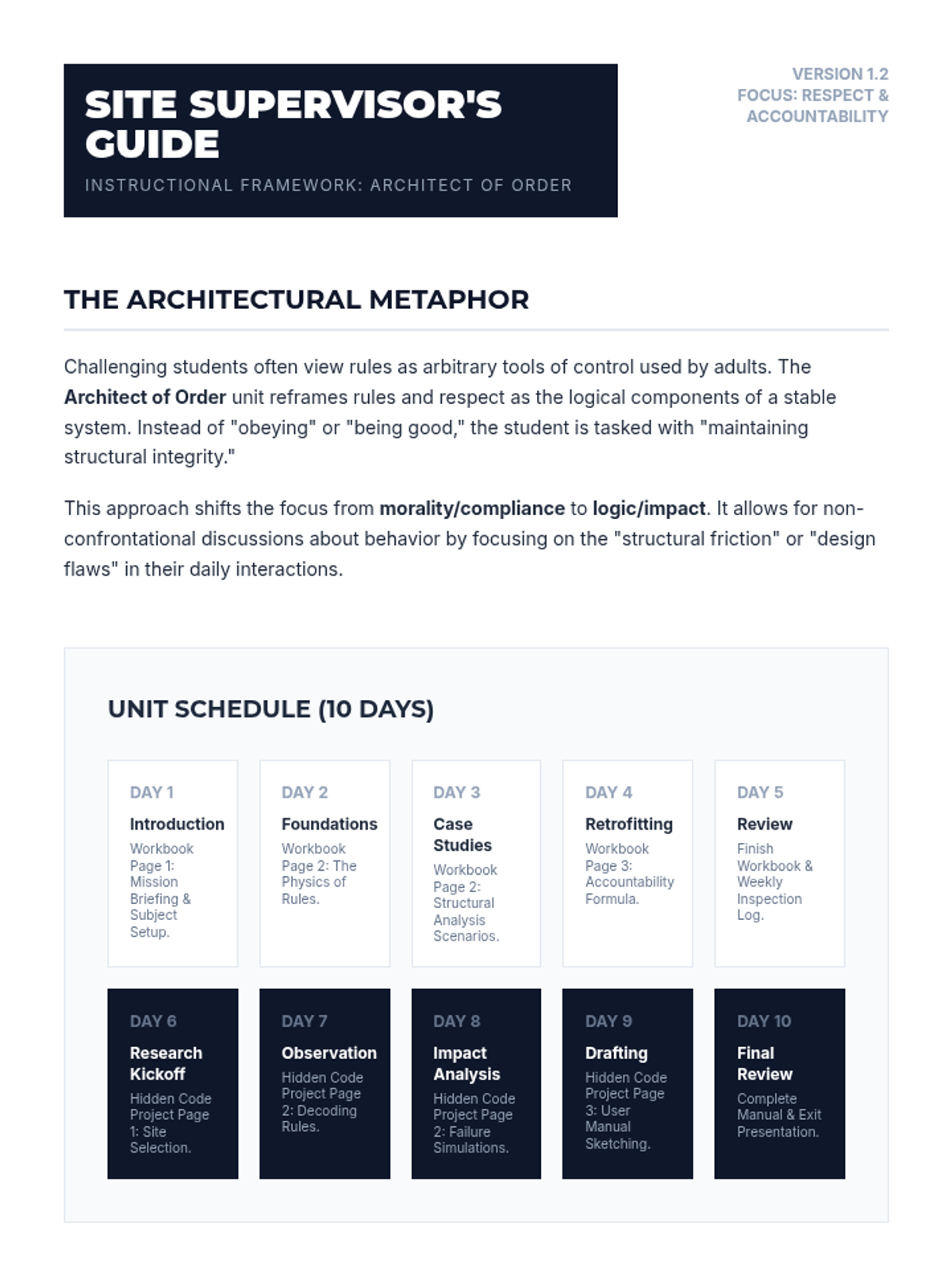
A 2-page instructional facilitation guide for teachers to implement the Architect of Order unit, including a 10-day pacing guide, de-escalation strategies, and feedback frameworks.
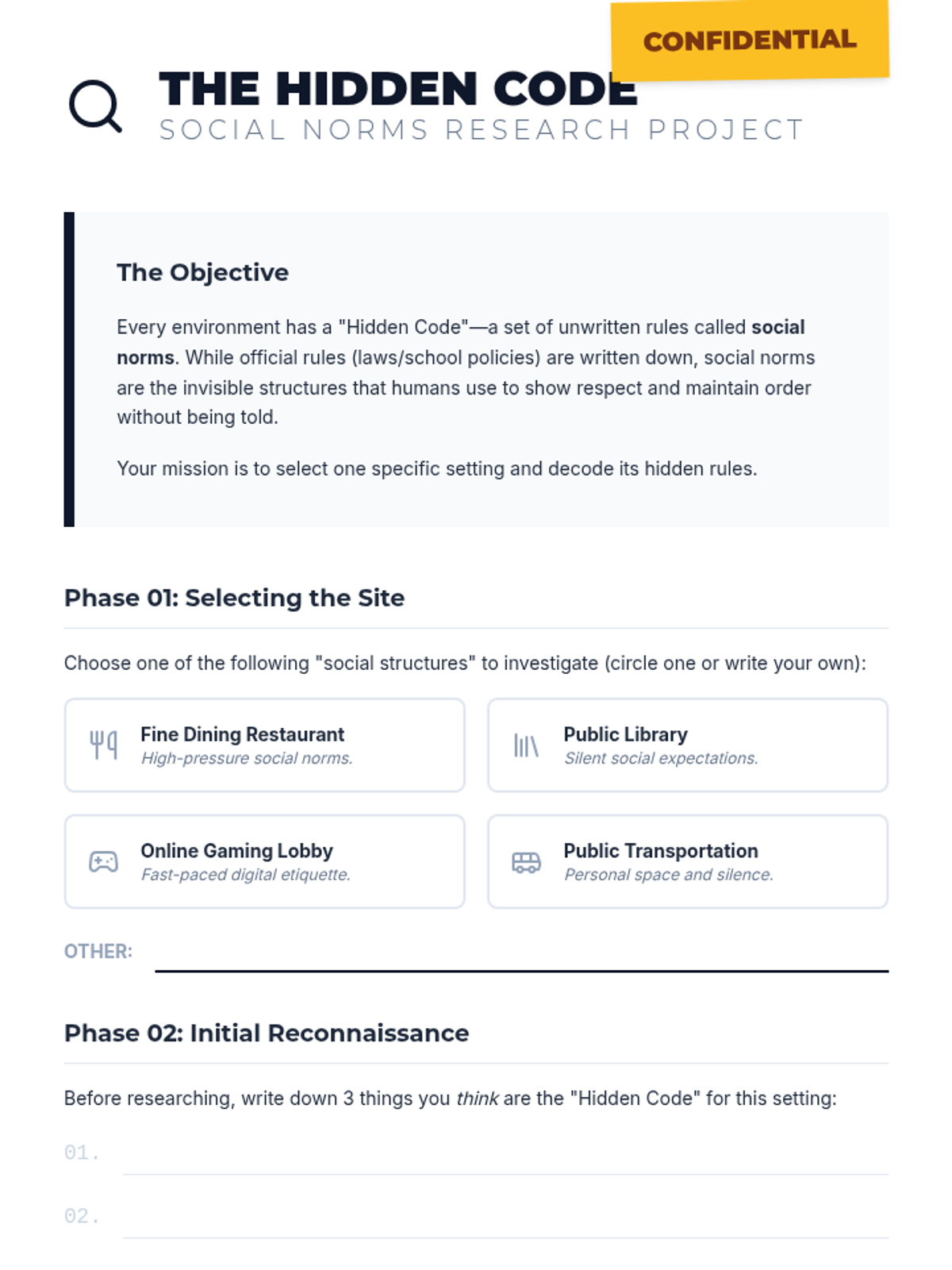
A 3-page guided research project titled 'The Hidden Code' where students investigate social norms, compare them to official rules, and create a user manual for a specific social setting.
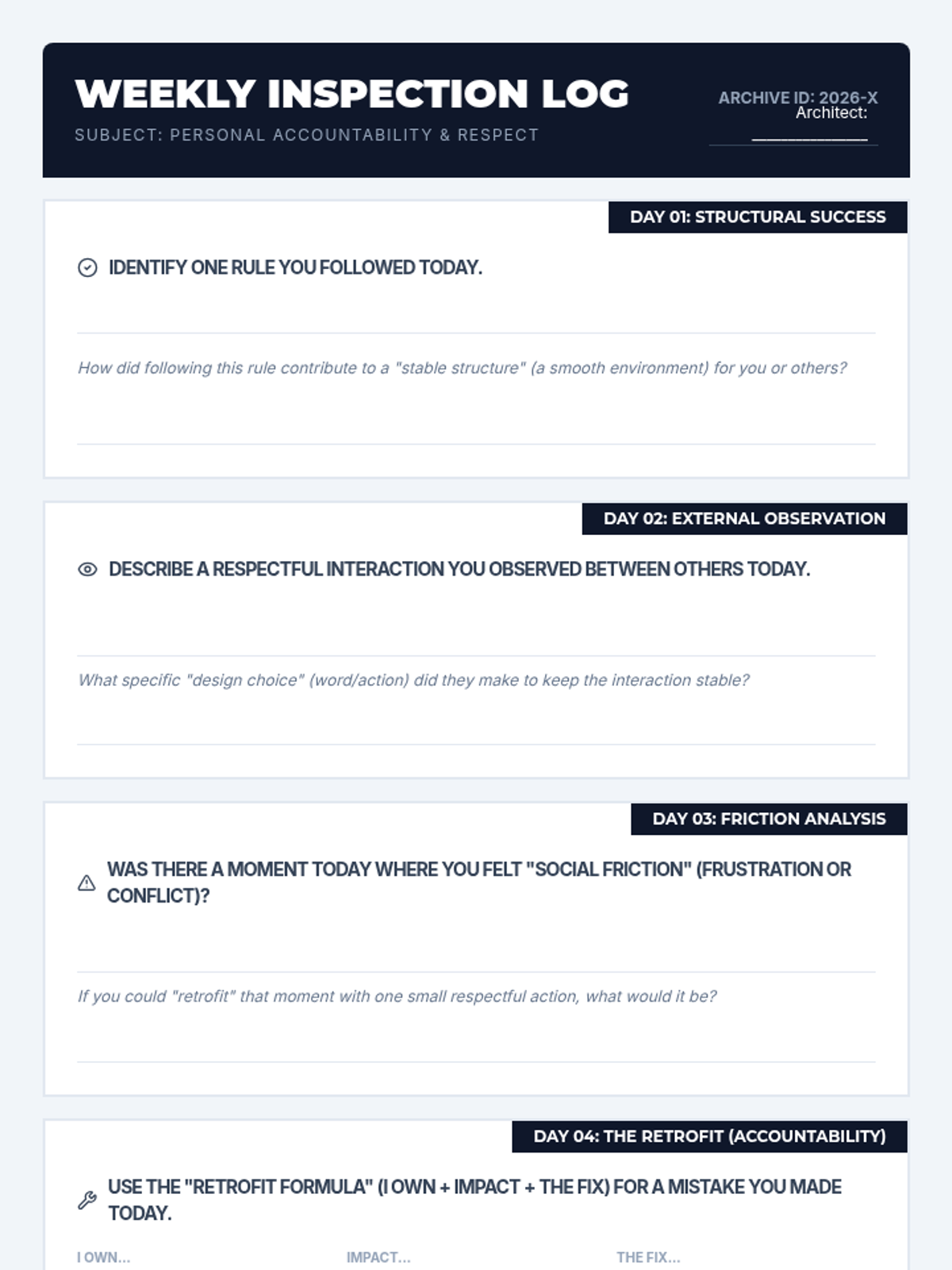
A weekly set of 5 daily exit tickets designed as 'Inspection Logs' for students to reflect on their daily interactions, rule-following, and accountability through an architectural theme.
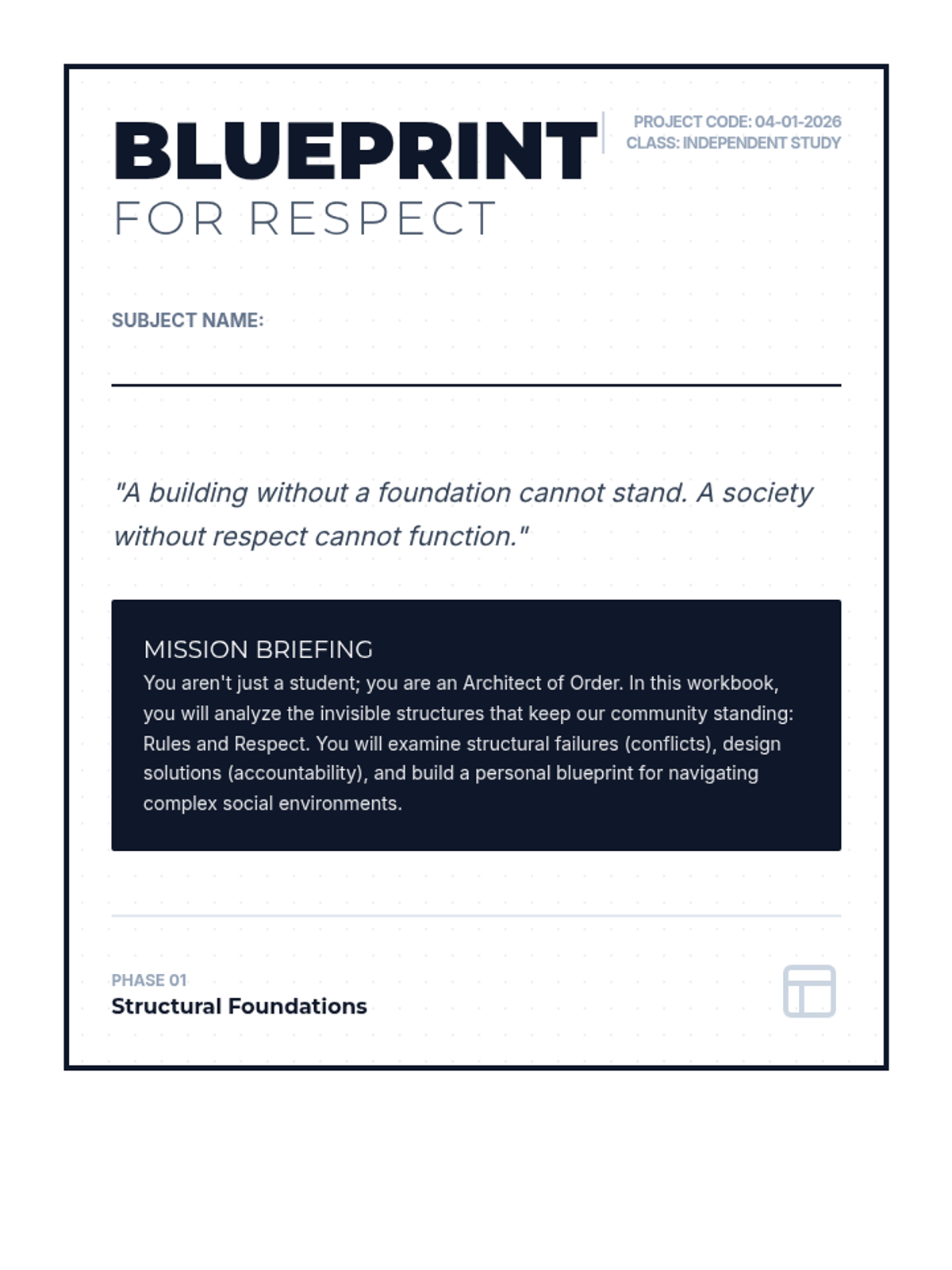
A 3-page student workbook titled 'Blueprint for Respect' that uses an architectural theme to help students analyze the logic of rules, social impact of behavior, and the mechanics of personal accountability.
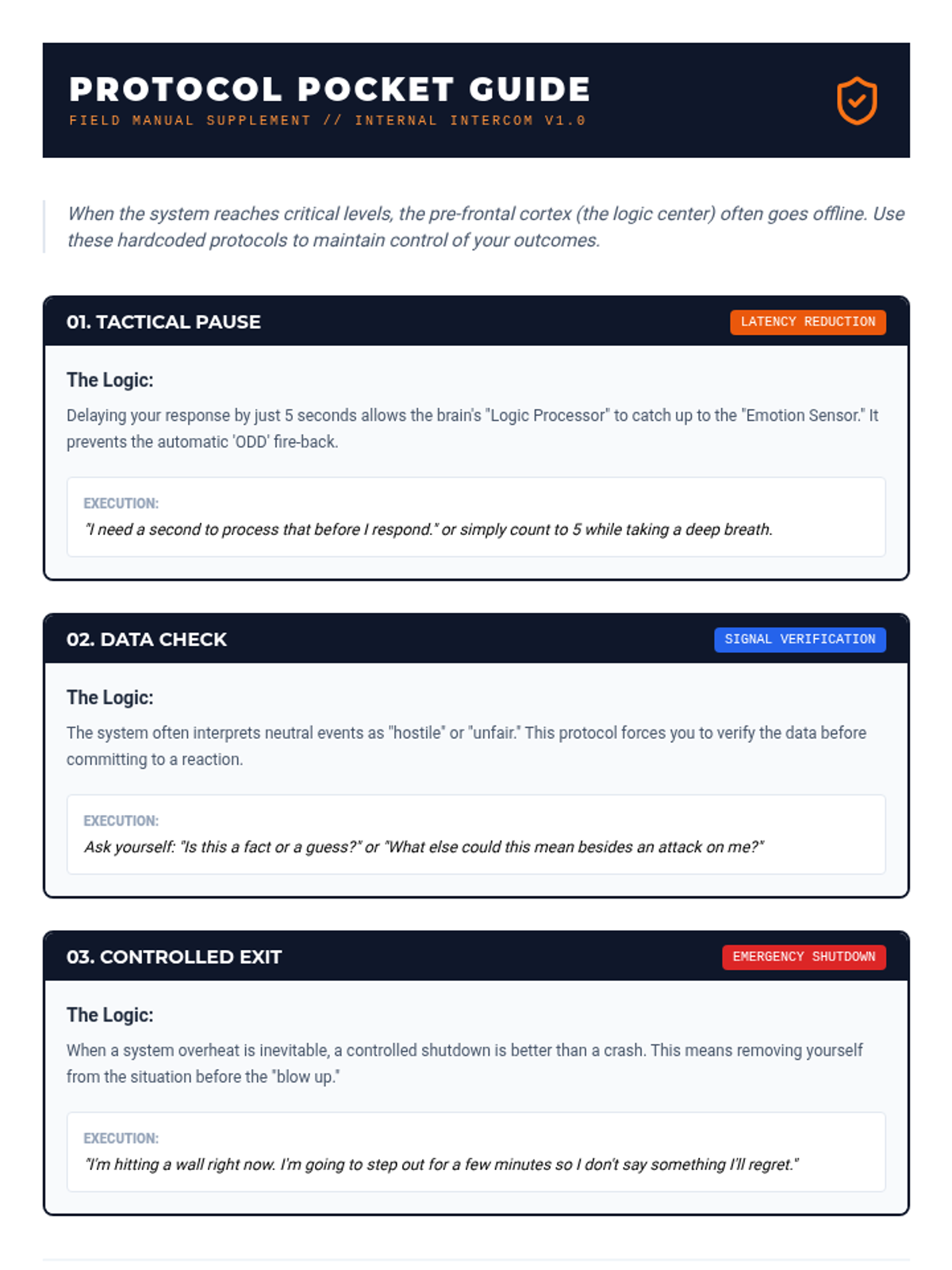
A practical, pocket-sized reference guide for students summarizing the three core emotion regulation protocols (Tactical Pause, Data Check, and Controlled Exit).
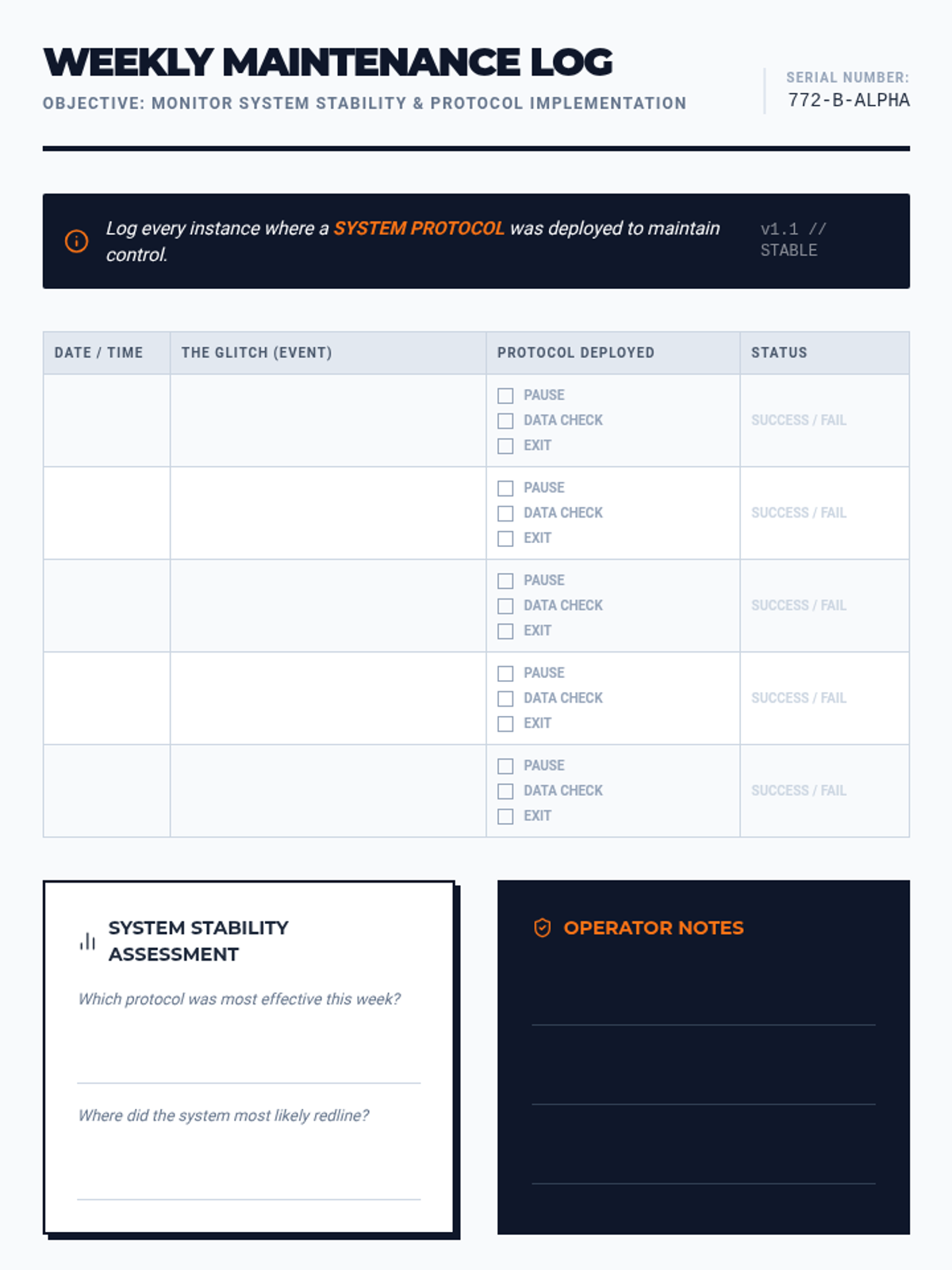
A weekly tracking log for students to monitor their implementation of emotion regulation protocols in real-world situations, maintaining the technical 'system control' theme.
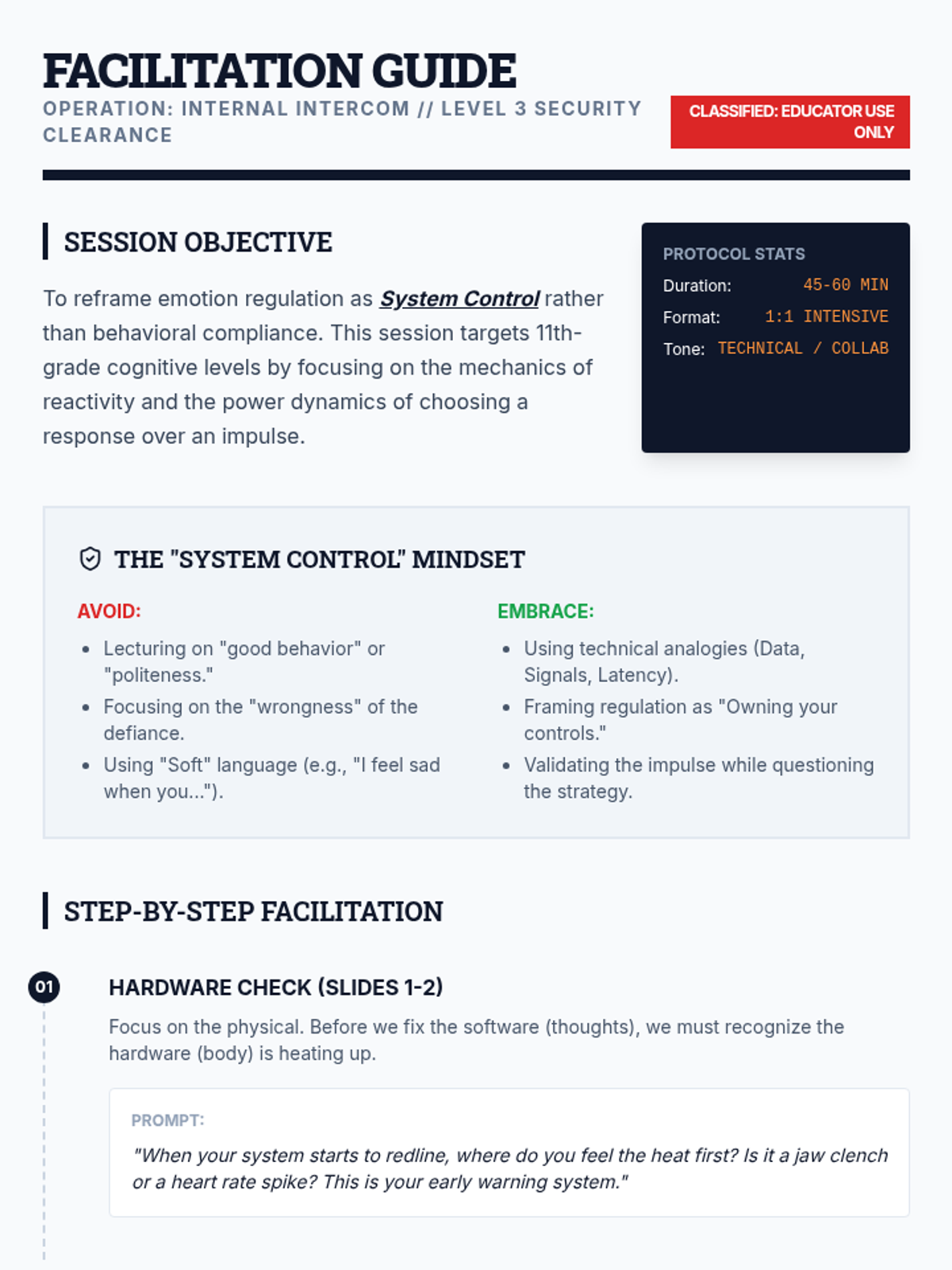
A facilitator's guide providing instructional scripts, troubleshooting strategies for defiance, and a technical framework for conducting the 1:1 'Internal Intercom' session.
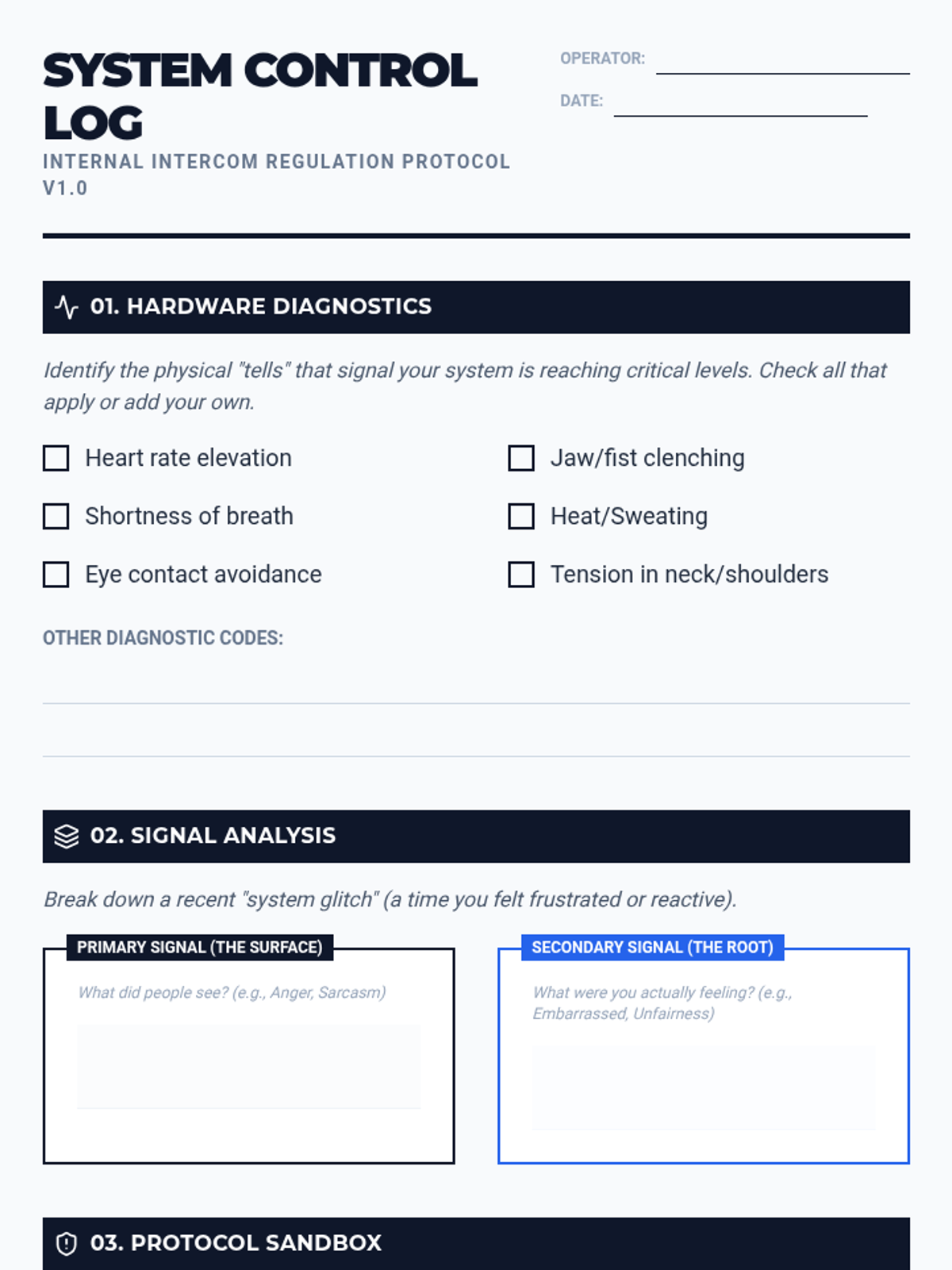
A technical 'blueprint' style worksheet for students to document their physical triggers, analyze primary vs. secondary emotions, and practice applying regulation protocols to real-world scenarios.
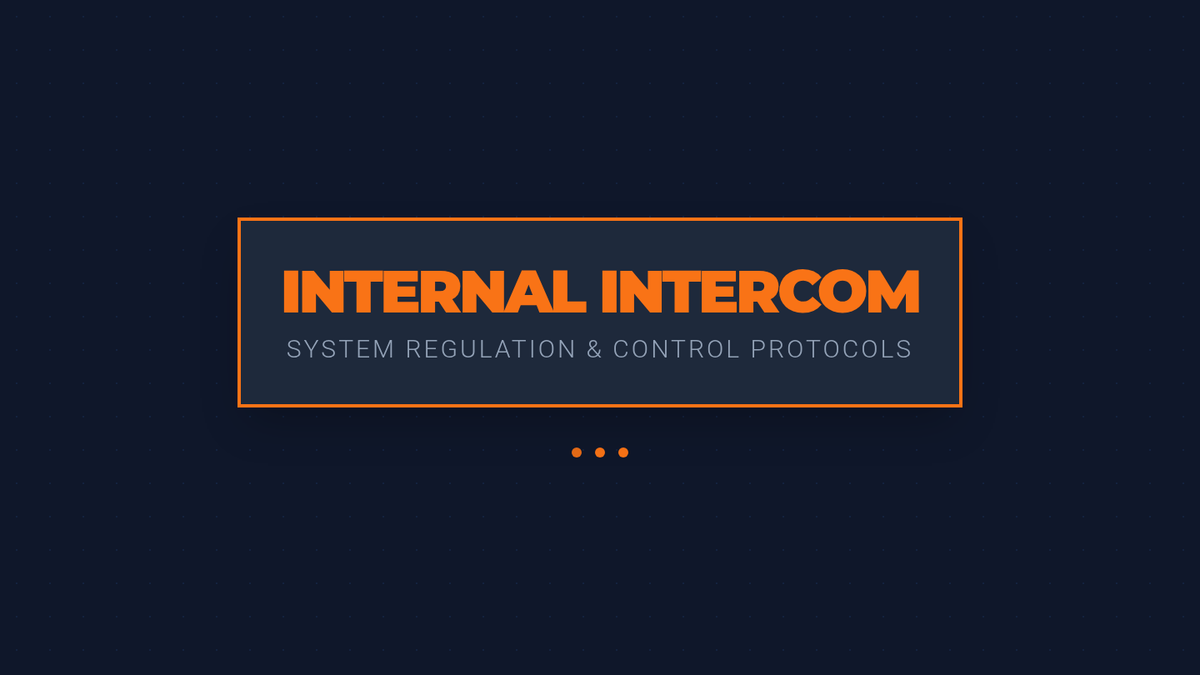
A visual presentation using a 'system control' aesthetic to facilitate a 1:1 discussion on emotion regulation, identifying physical triggers, and analyzing high-stakes social/academic scenarios.
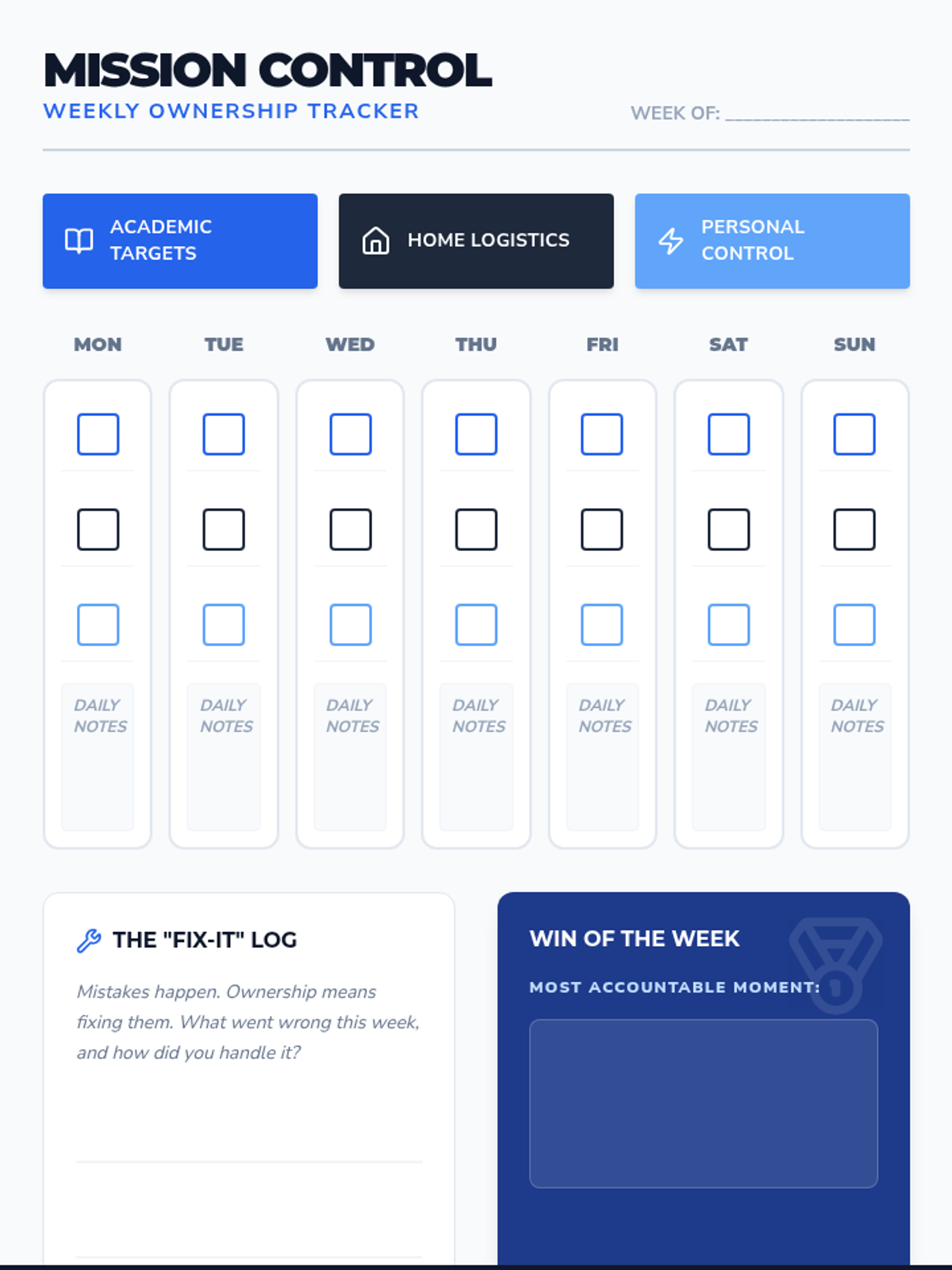
A weekly 'Mission Control' tracker for teens to monitor academic, domestic, and personal accountability. Features a grid for daily check-ins and a 'Fix-It Log' for learning from mistakes.
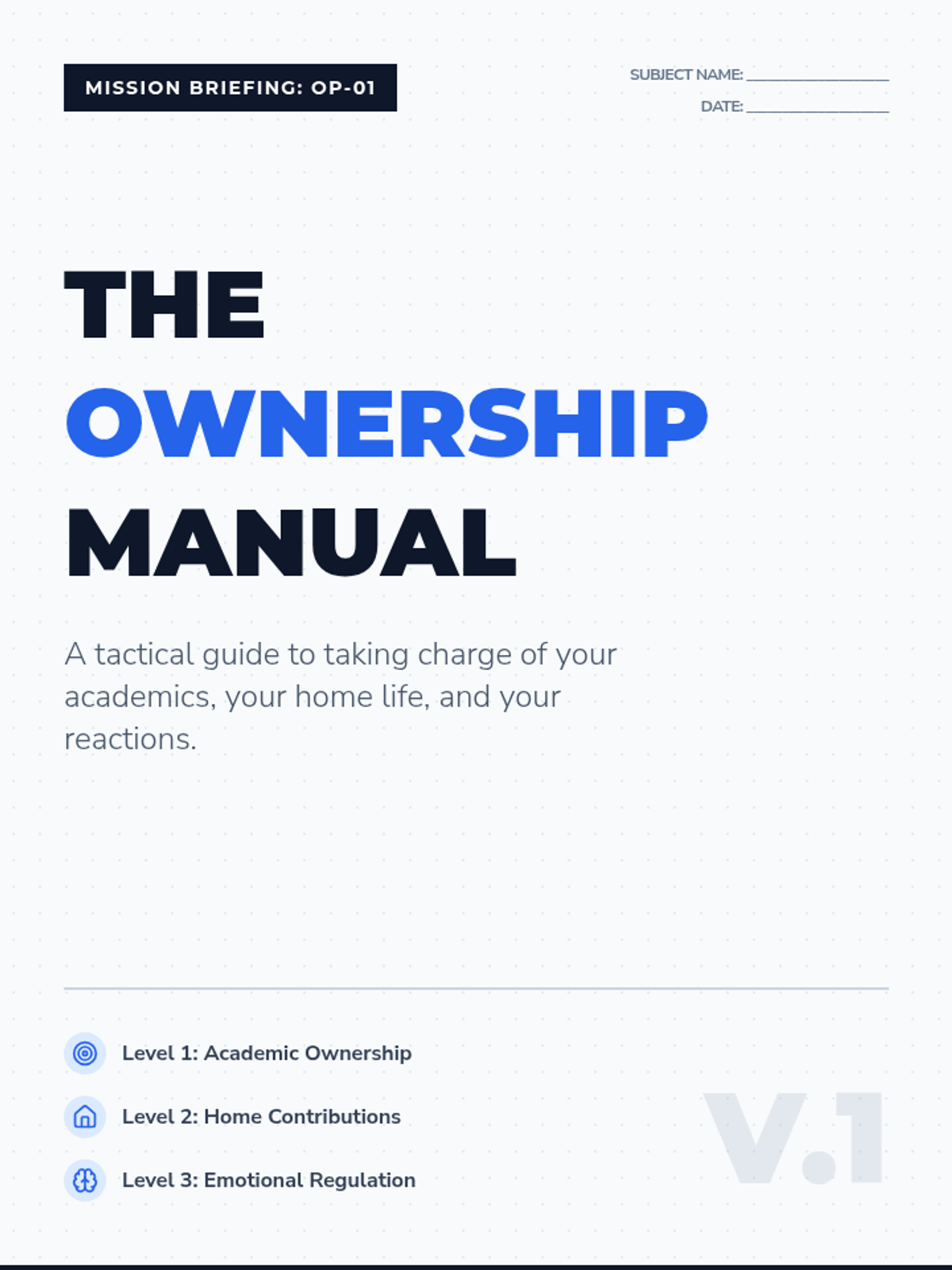
A scenario-based workbook for teens focusing on academic, home, and emotional accountability. Includes a new 'Mission Parameters' section for listing responsibilities and identifying their impact.
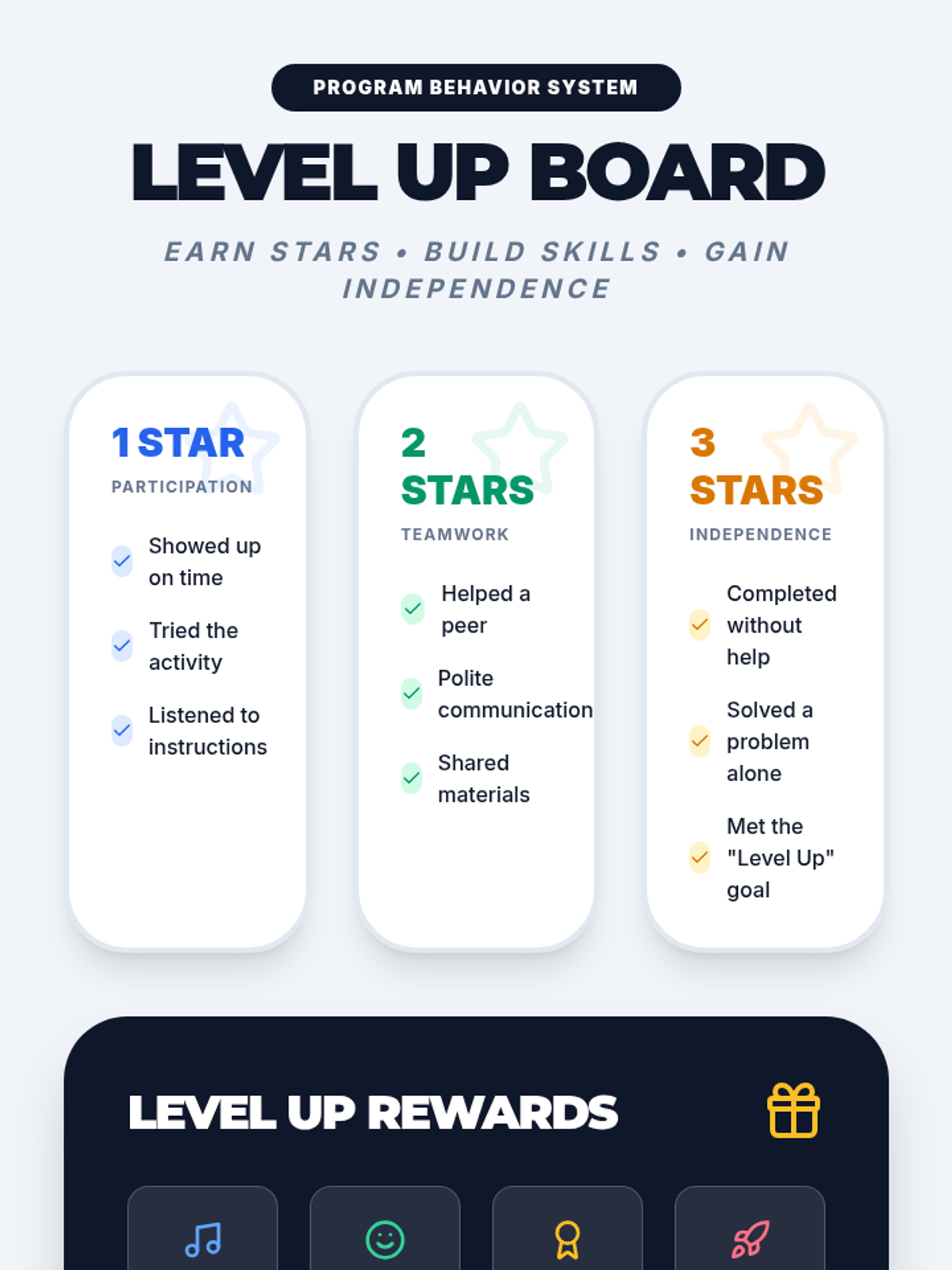
A program-wide behavior and motivation system poster featuring a tiered star reward system for participation, teamwork, and independence.
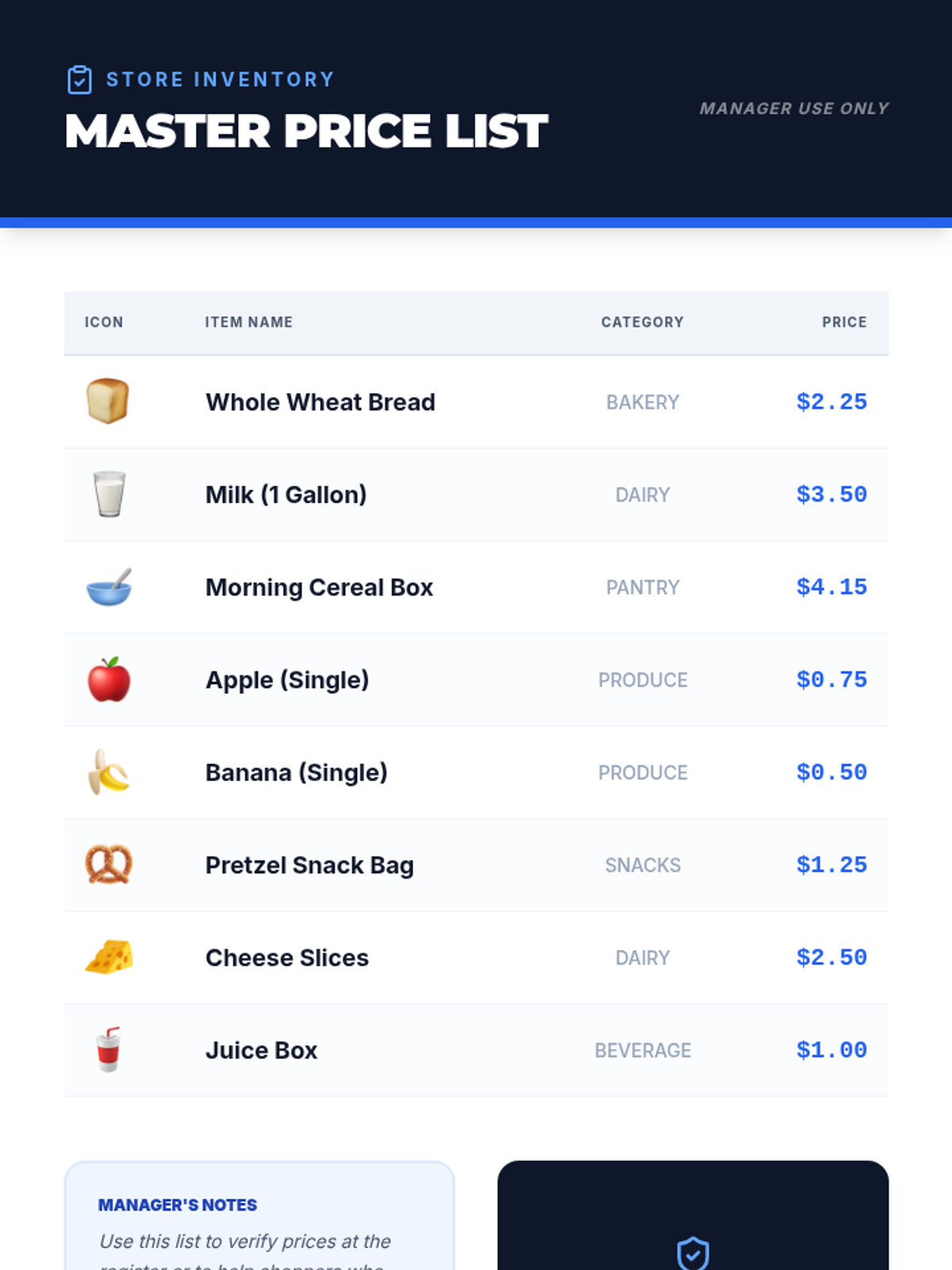
A master inventory and price list for the Pantry Store simulation, designed to help Cashiers and Managers verify pricing and category information.
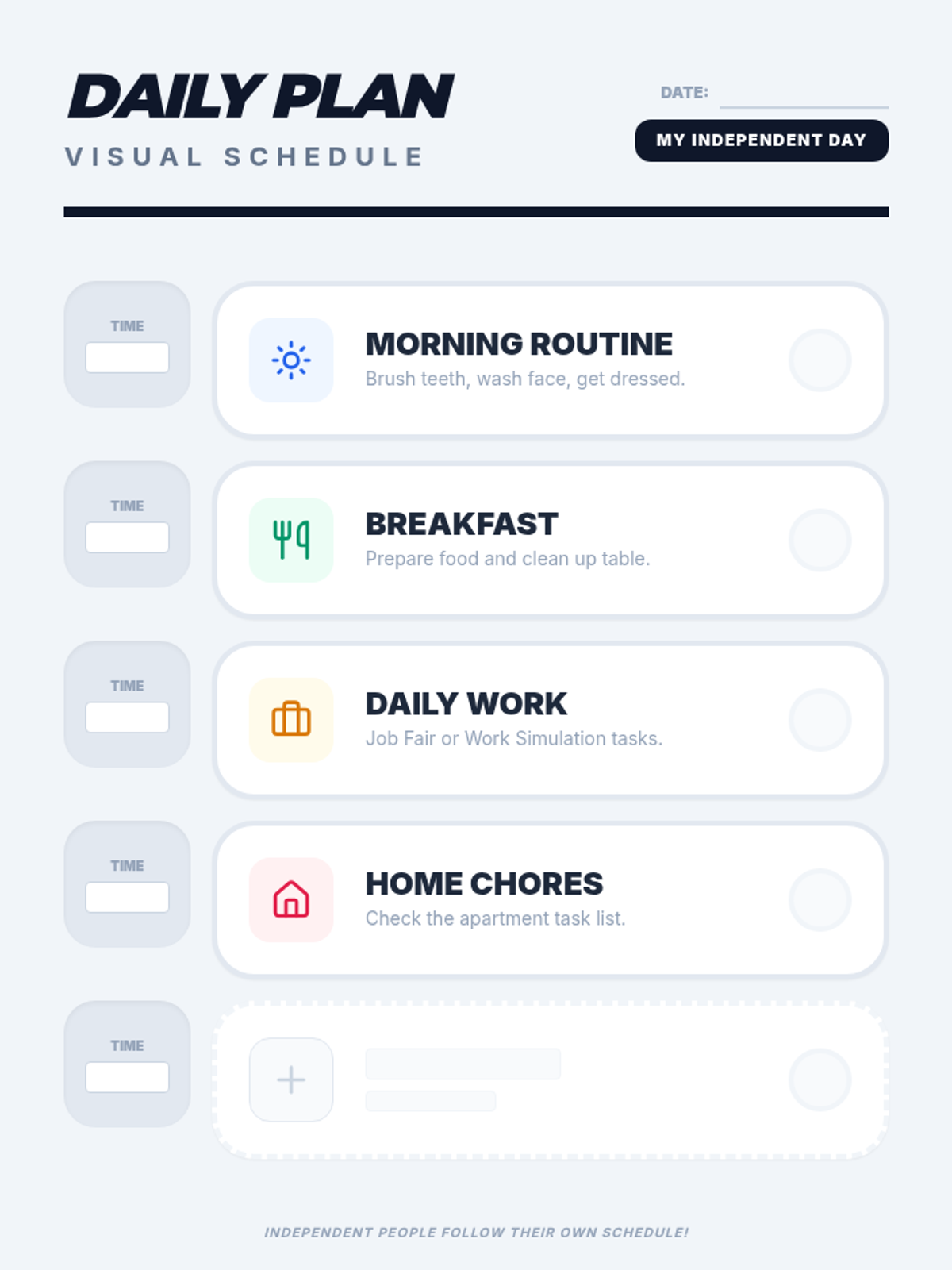
A visual daily schedule template with icons and checkboxes, helping students track their routines and simulation activities throughout the program.
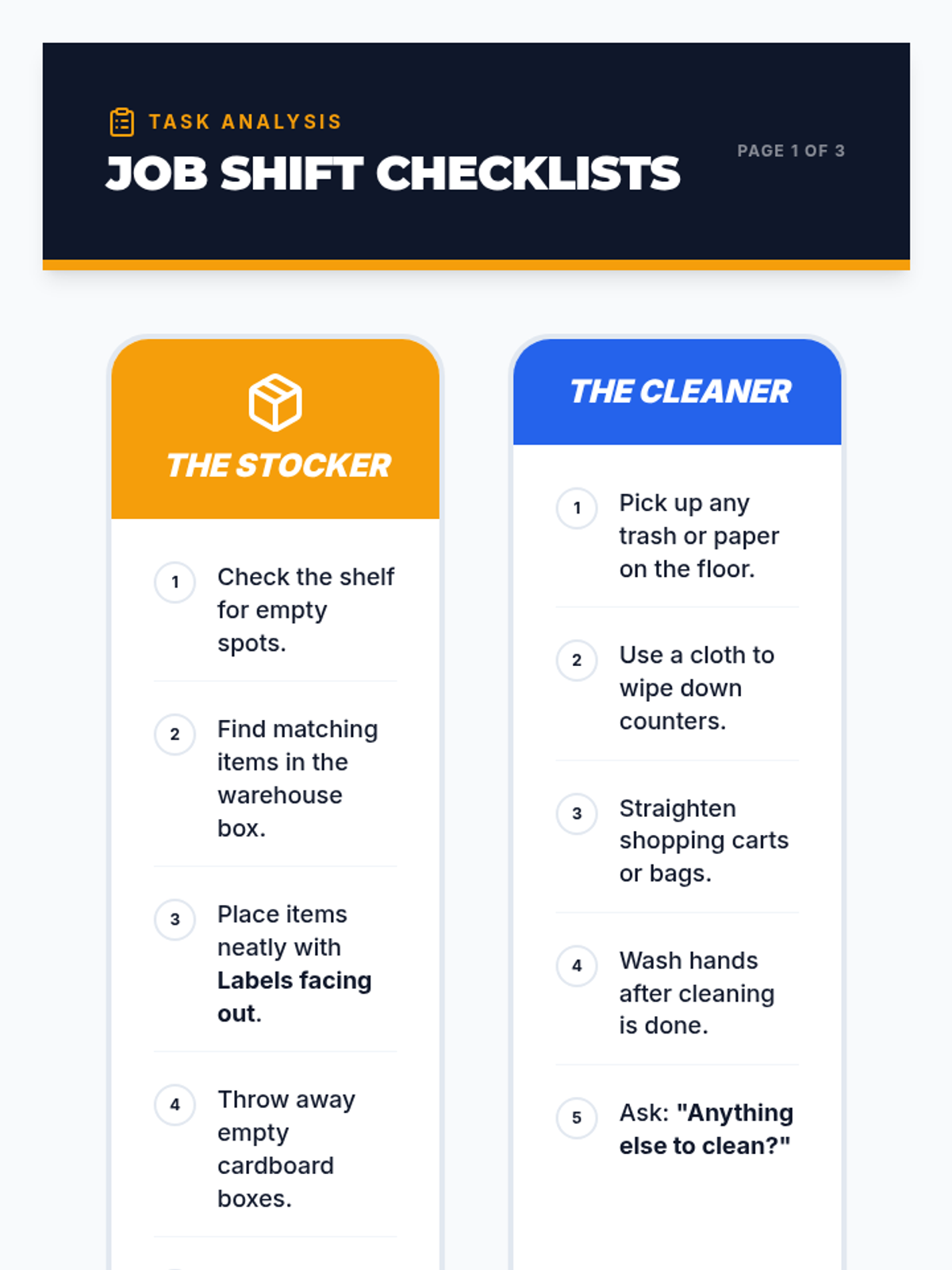
Step-by-step task analysis cards for stocking, cleaning, office assistance, bagging, table setting, and mail sorting jobs, designed to help students follow multi-step directions.
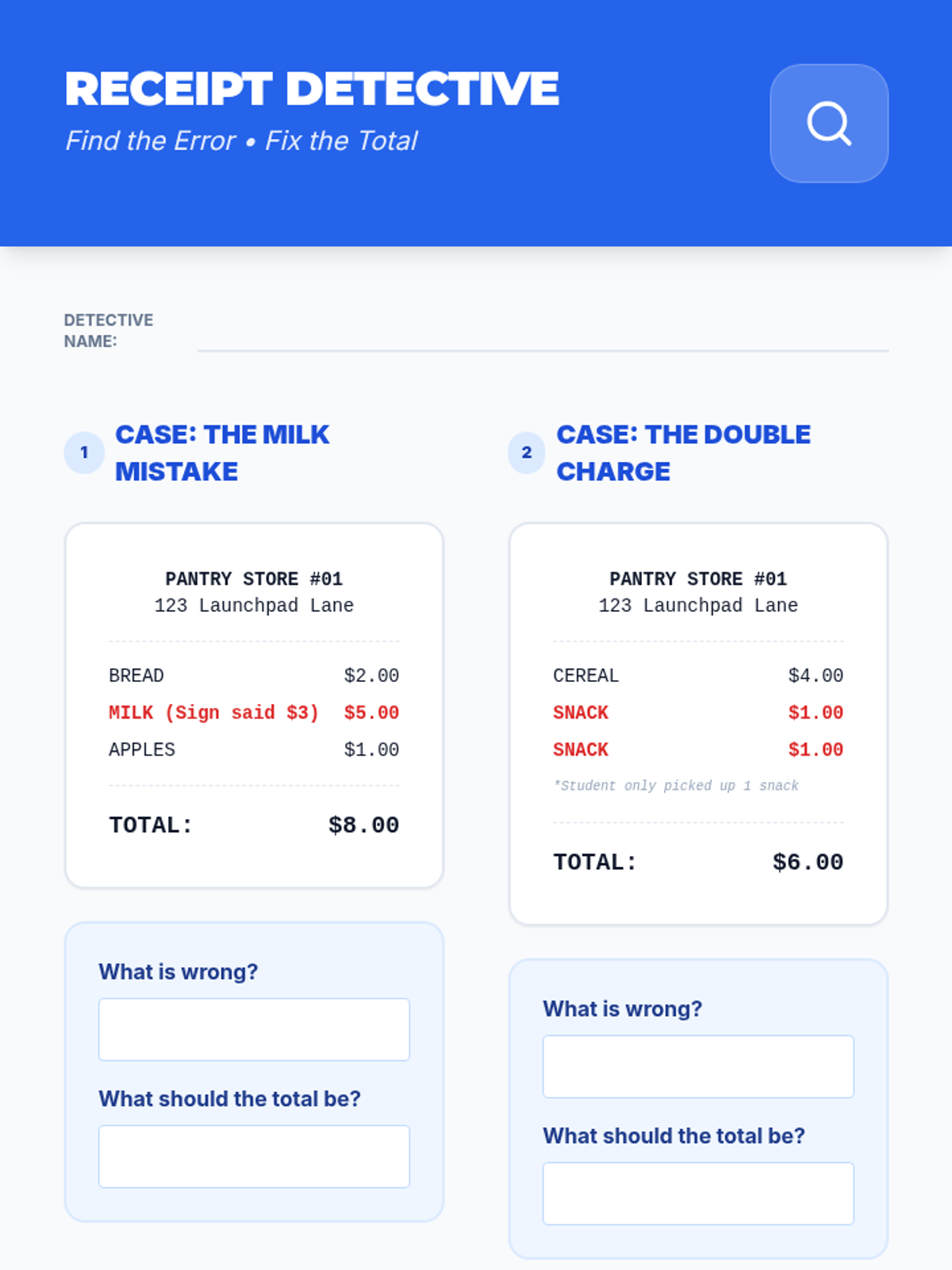
An error-analysis worksheet where students identify pricing mistakes and double charges on mock receipts, practicing both math and self-advocacy skills.
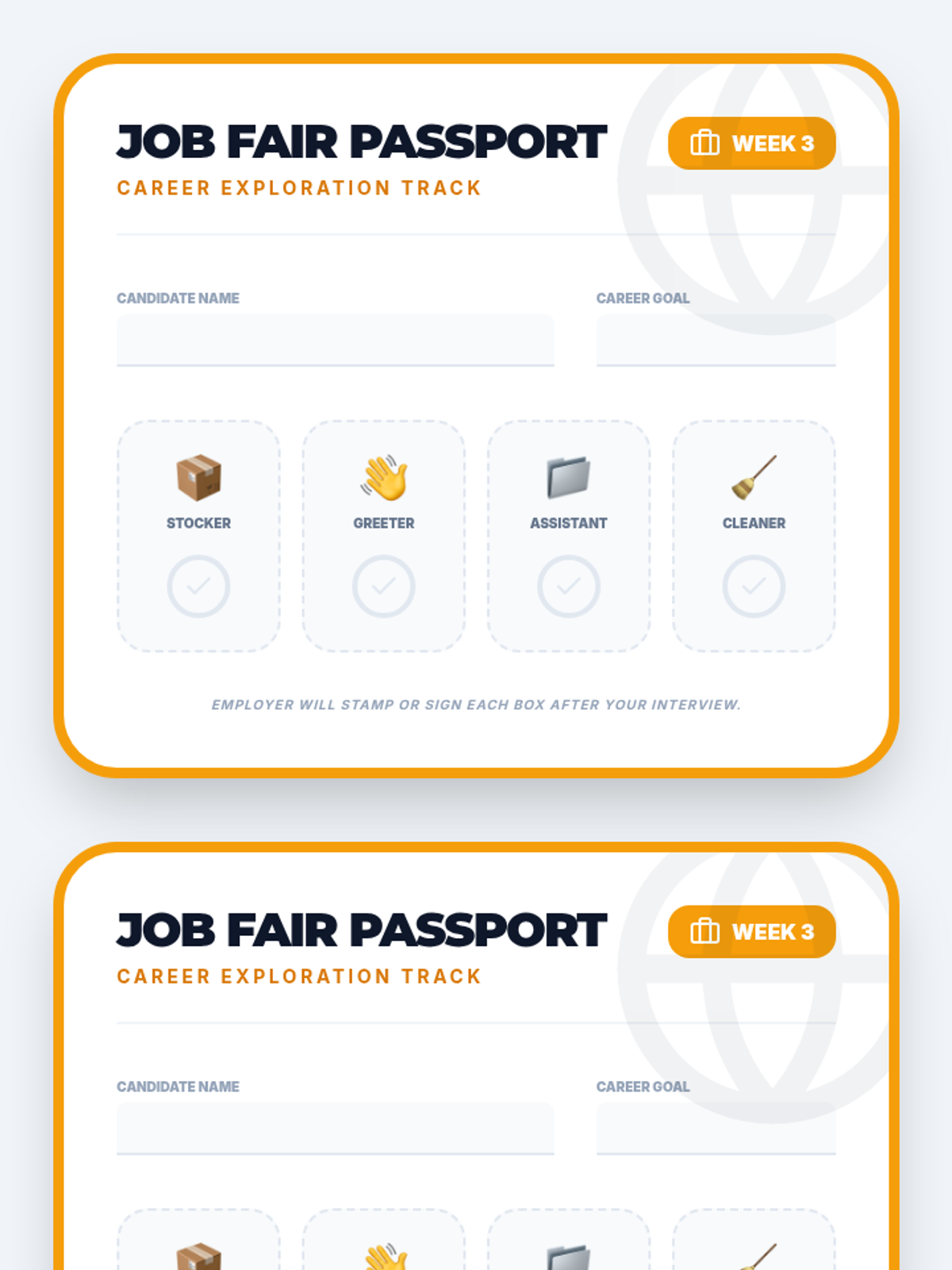
A printable passport card for the mock job fair, used by students to track their progress as they rotate through different employment stations.
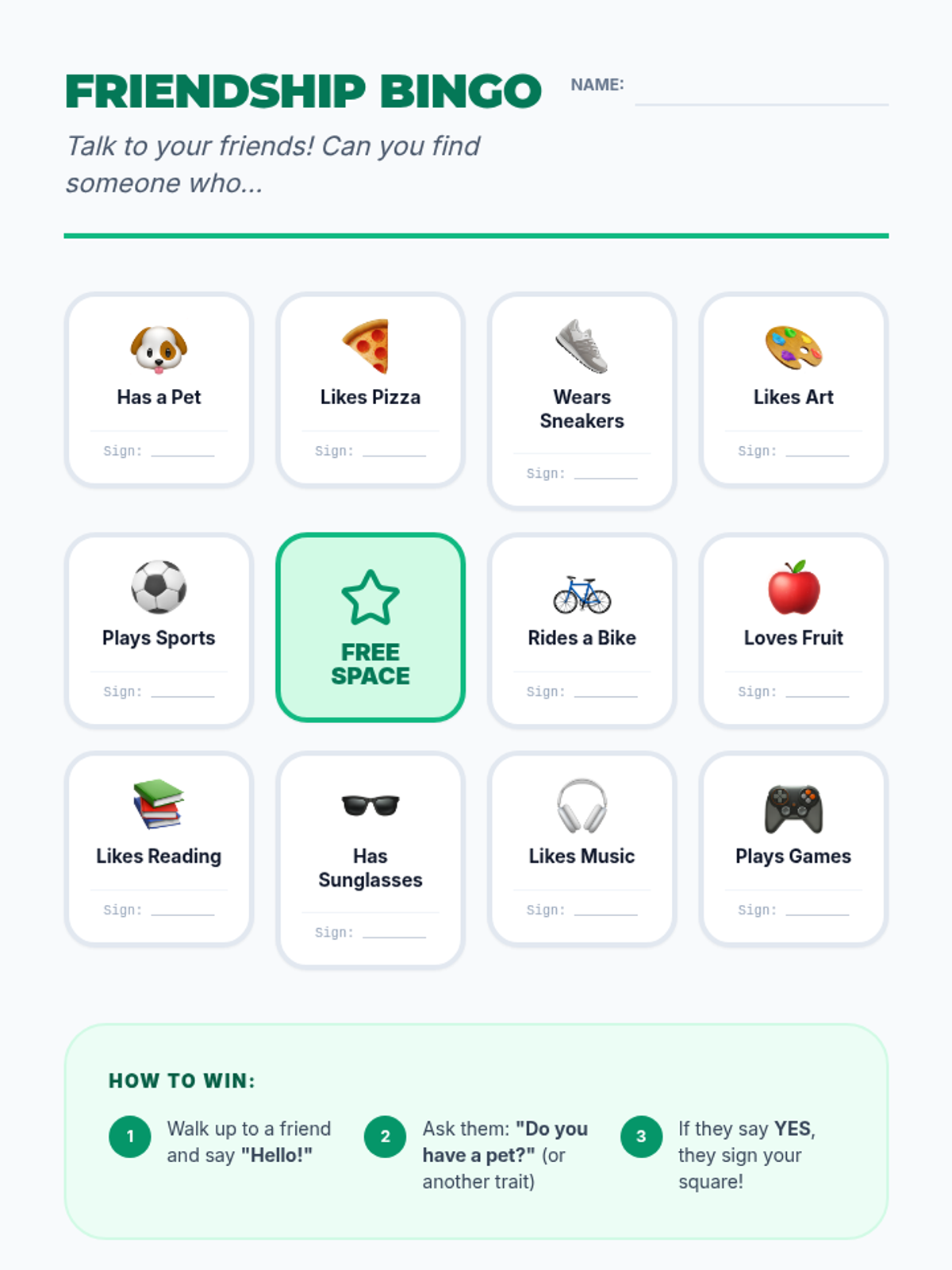
A social interaction bingo game designed to help students practice greetings and asking peer-focused questions.
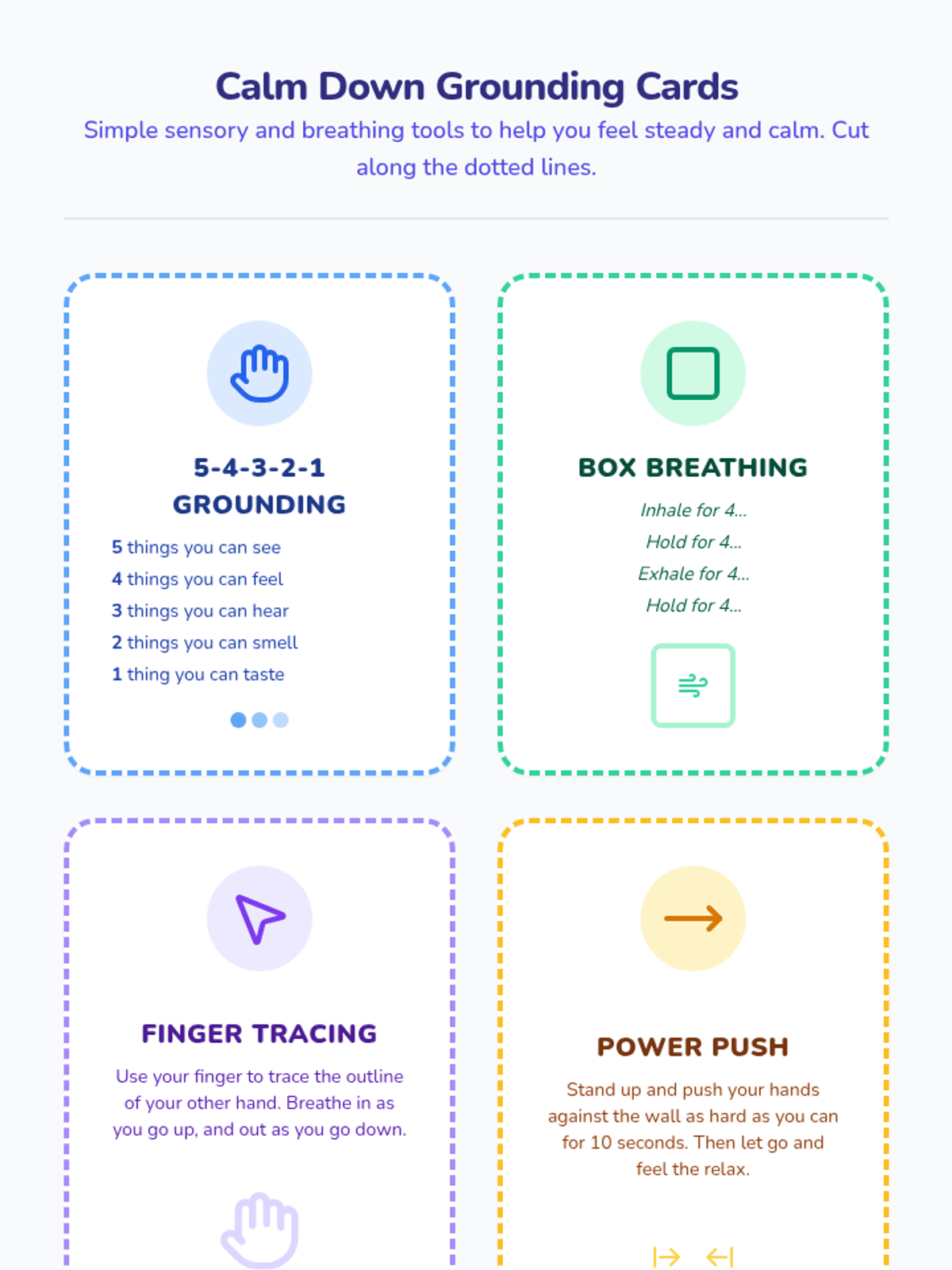
A 2-page collection of visual grounding cards for students, featuring sensory exercises, breathing techniques, and physical grounding tools to support emotional regulation.
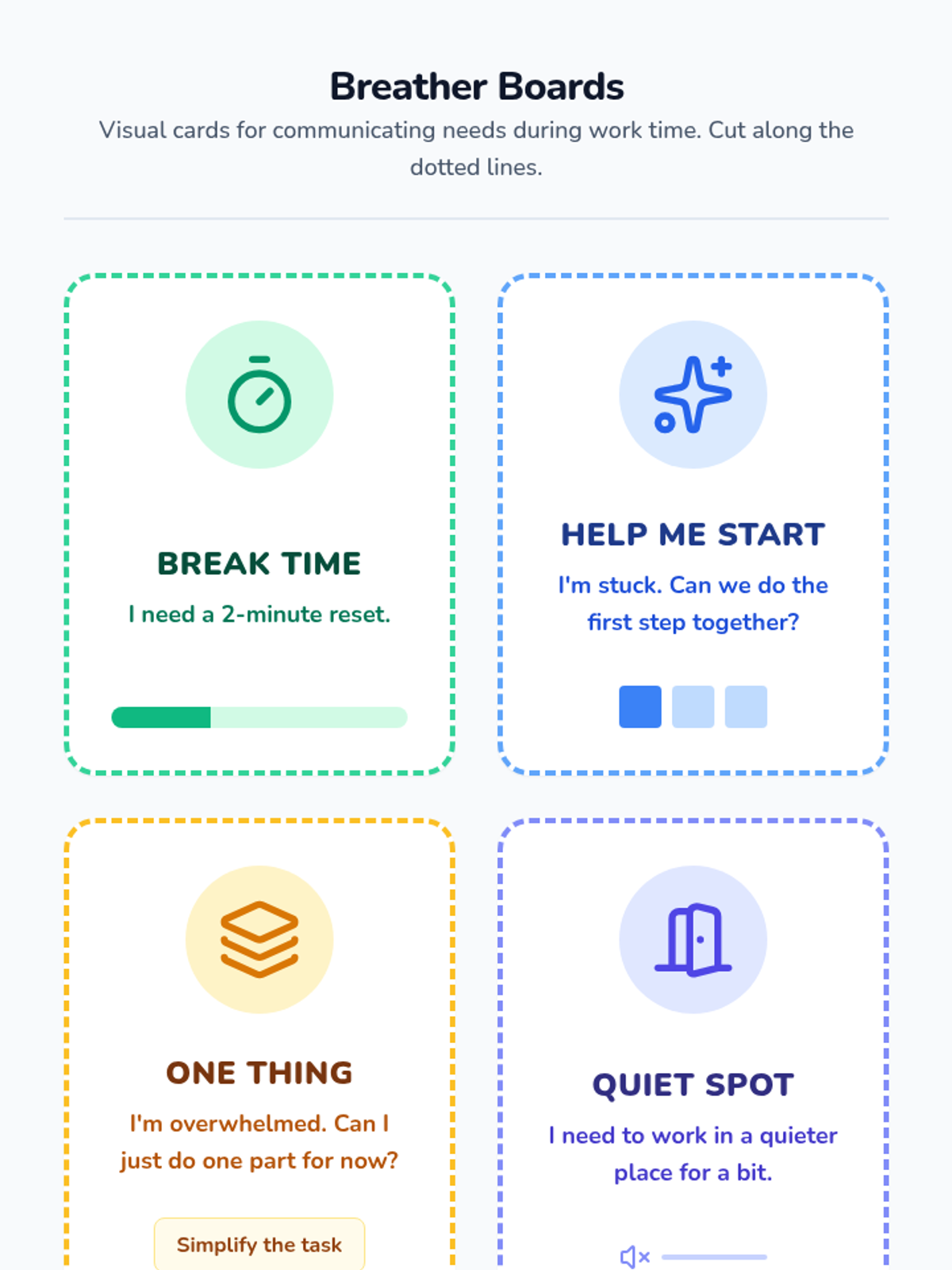
A 2-page collection of visual communication cards designed for students to communicate their needs (breaks, help, sensory needs) without verbalizing during moments of stress or shutdown.
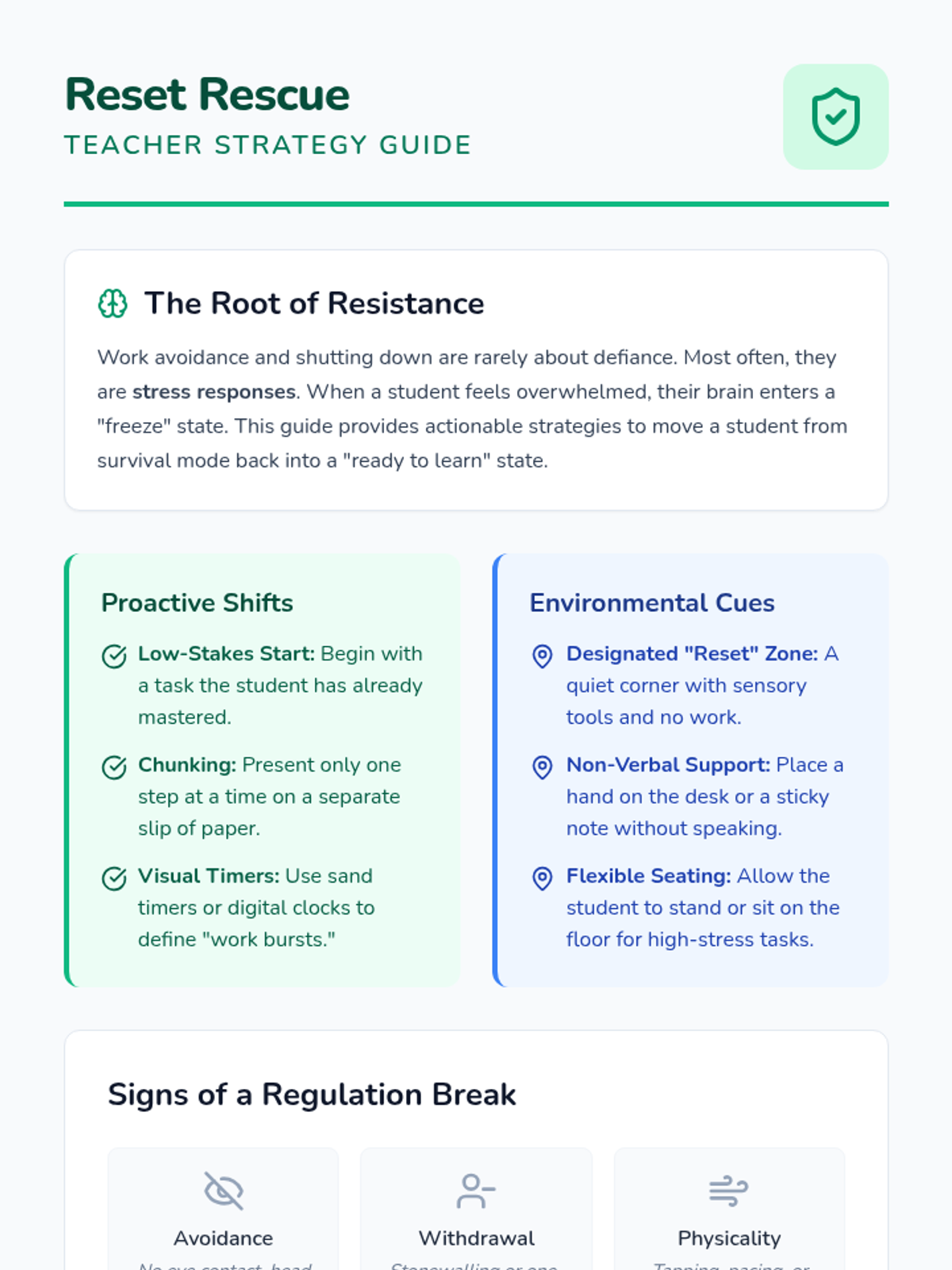
A 2-page strategy guide for teachers focusing on understanding work avoidance as a stress response and providing proactive, responsive, and recovery-based intervention strategies.
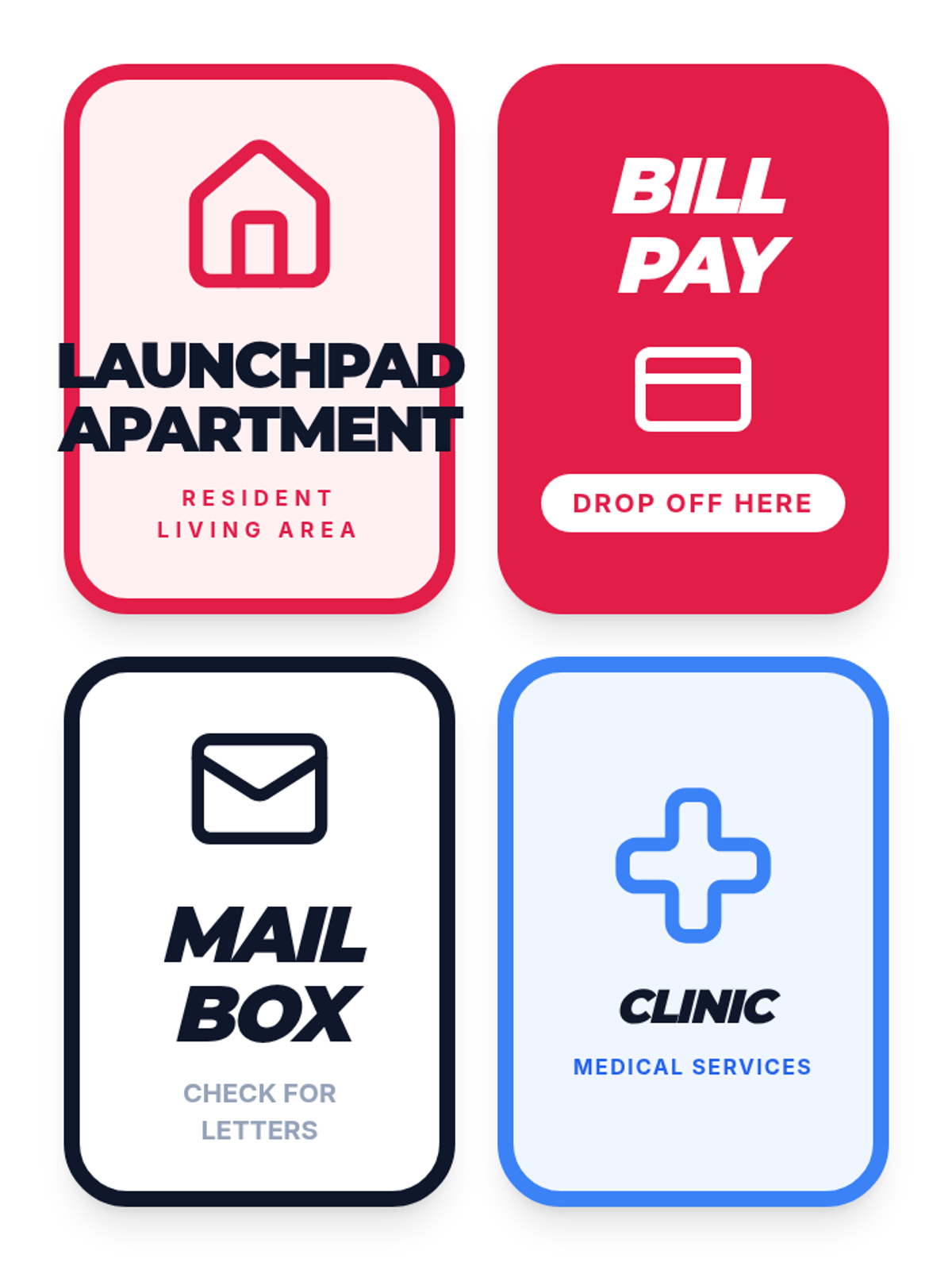
A collection of apartment simulation visuals including signs for the resident living area, bill payment center, and a formal maintenance request form.
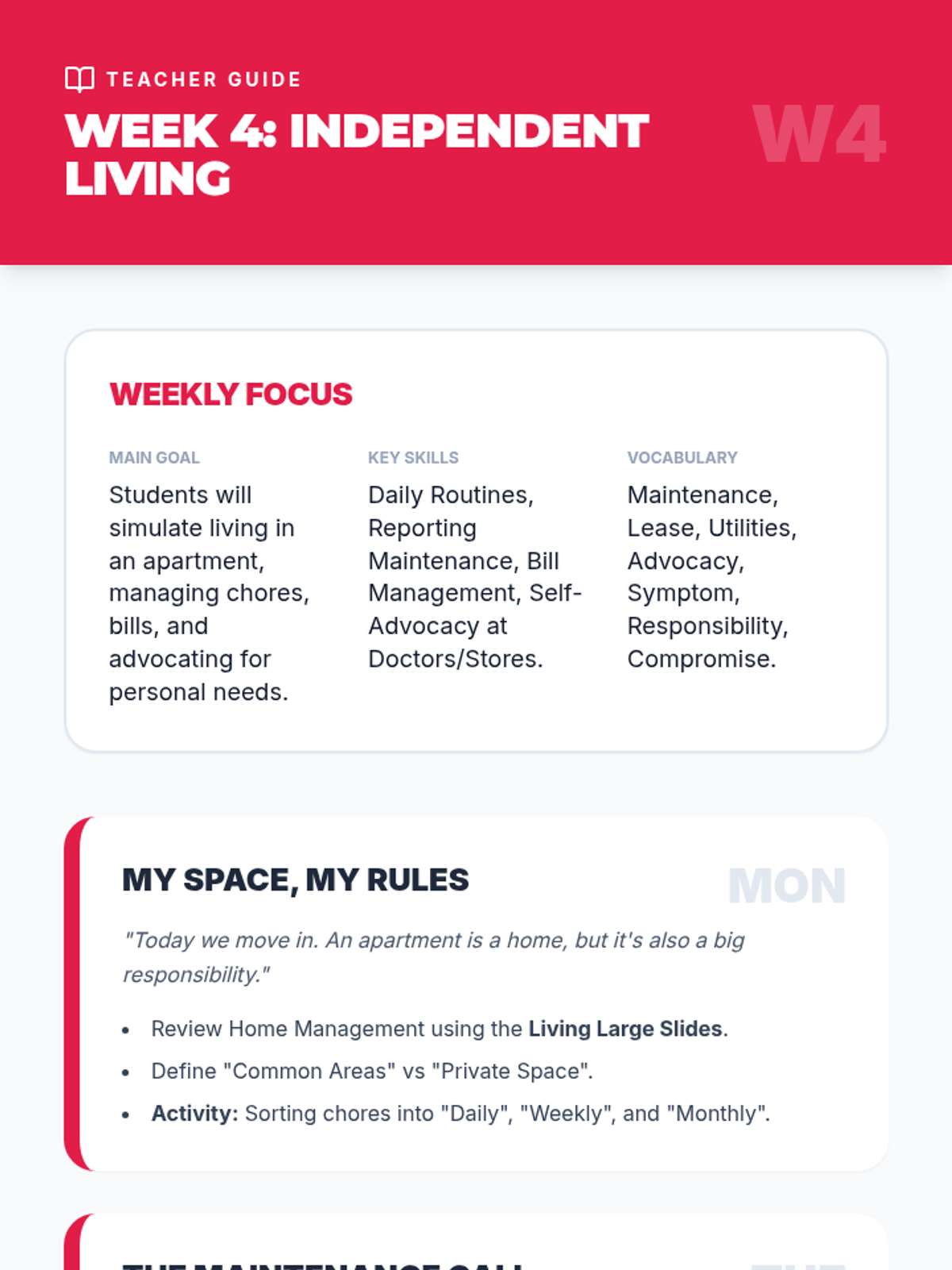
A detailed teacher-facing guide for Week 4, including daily lesson breakdowns, instructional scripts, and apartment simulation facilitation notes.
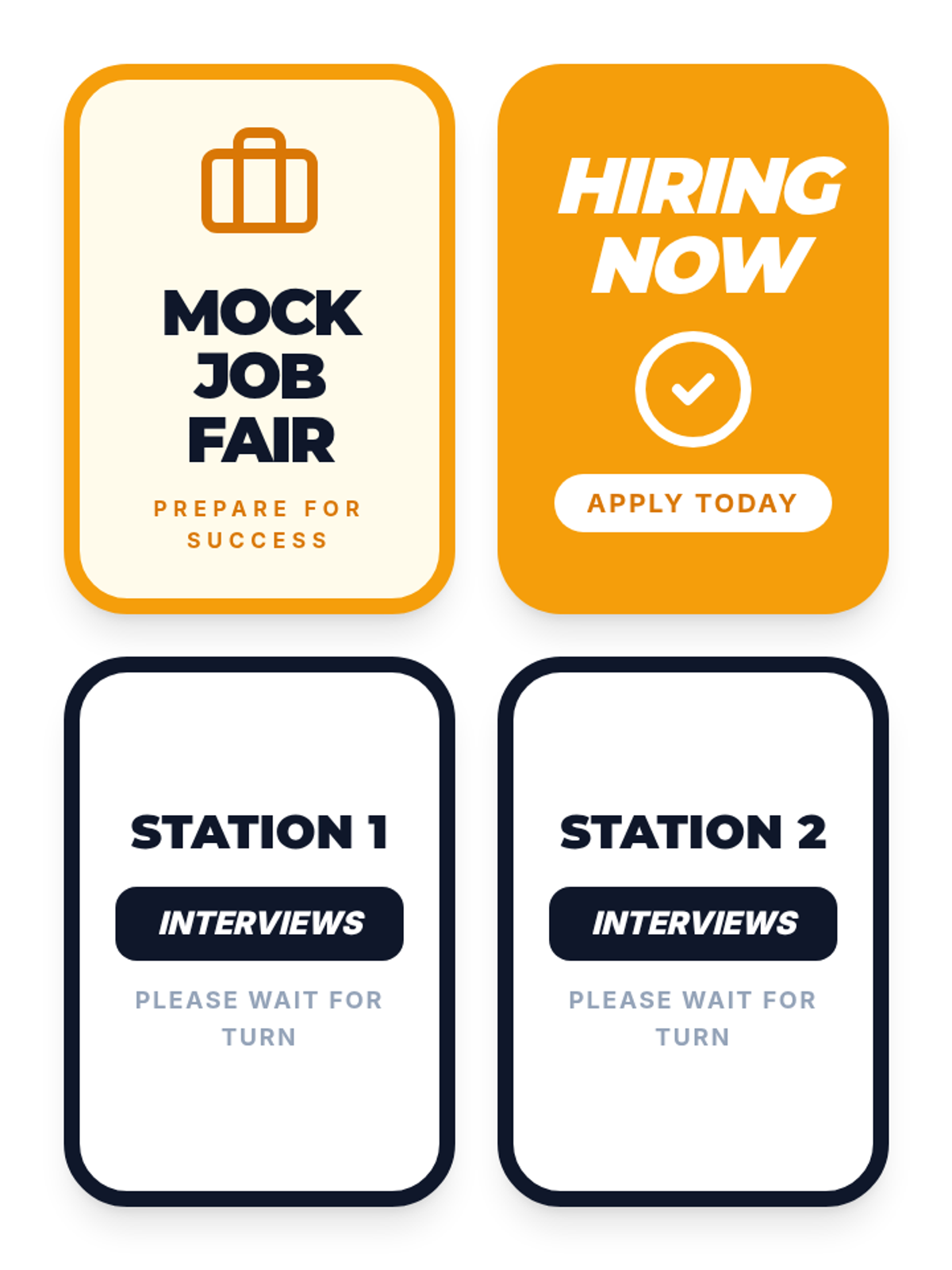
A set of job fair station signs, a "Hiring Now" poster, and an "Employee of the Month" photo frame for the mock job fair.
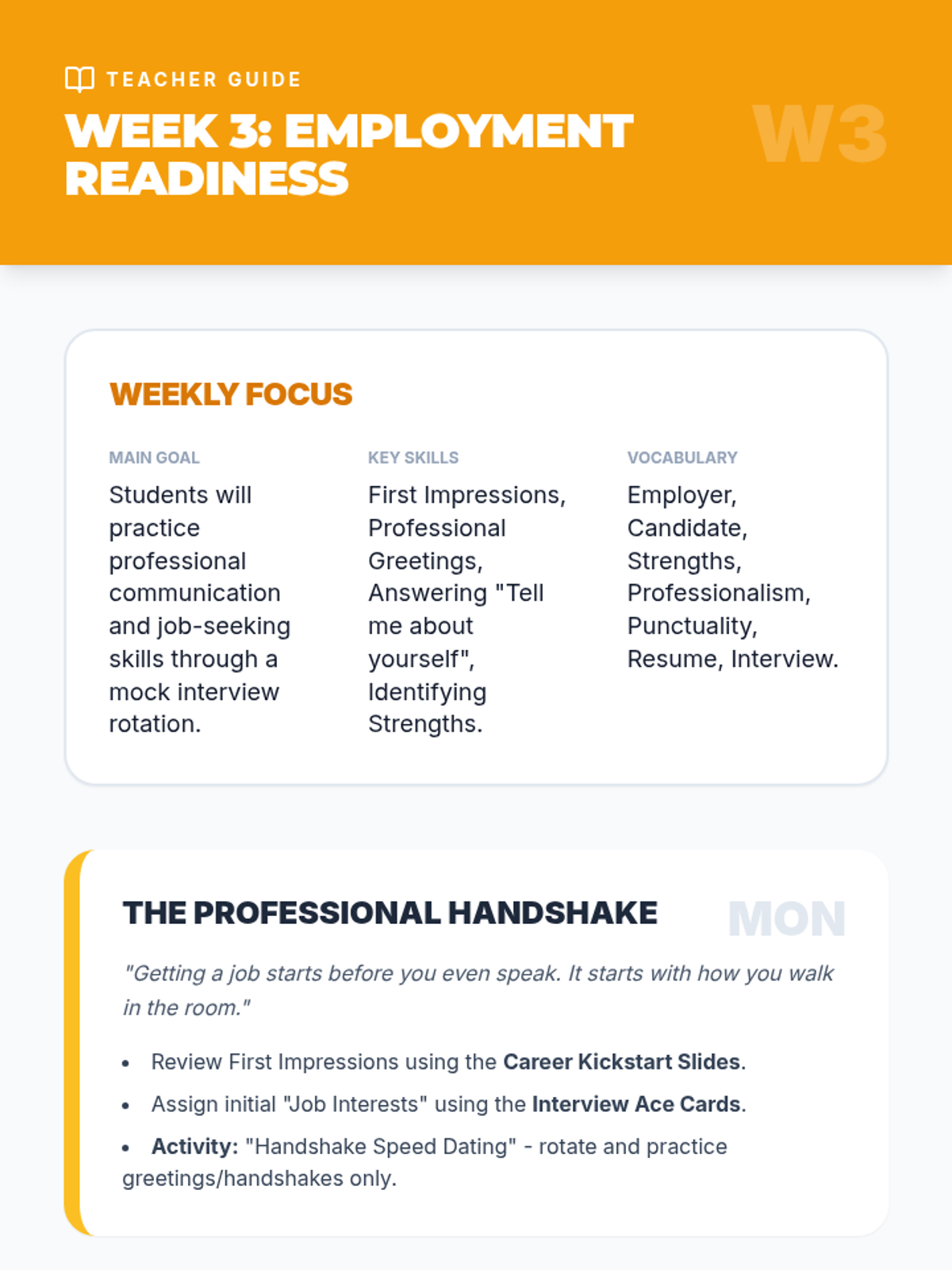
A detailed teacher-facing guide for Week 3, including daily lesson breakdowns, instructional scripts, and mock job fair facilitation notes.
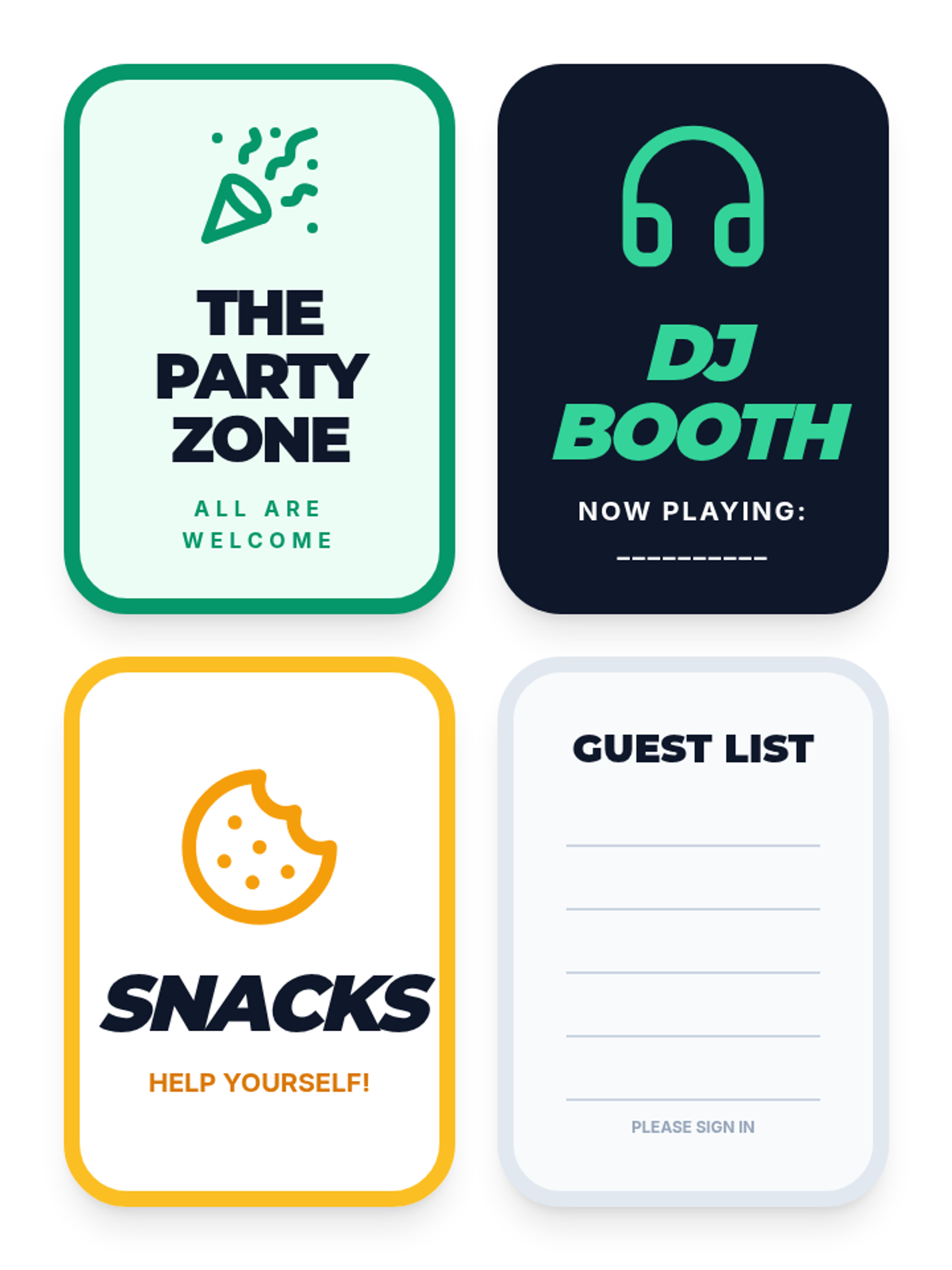
A collection of printable signs and role badges for the Week 2 Social Skills mini-party, featuring color-coded designs and clear iconography.
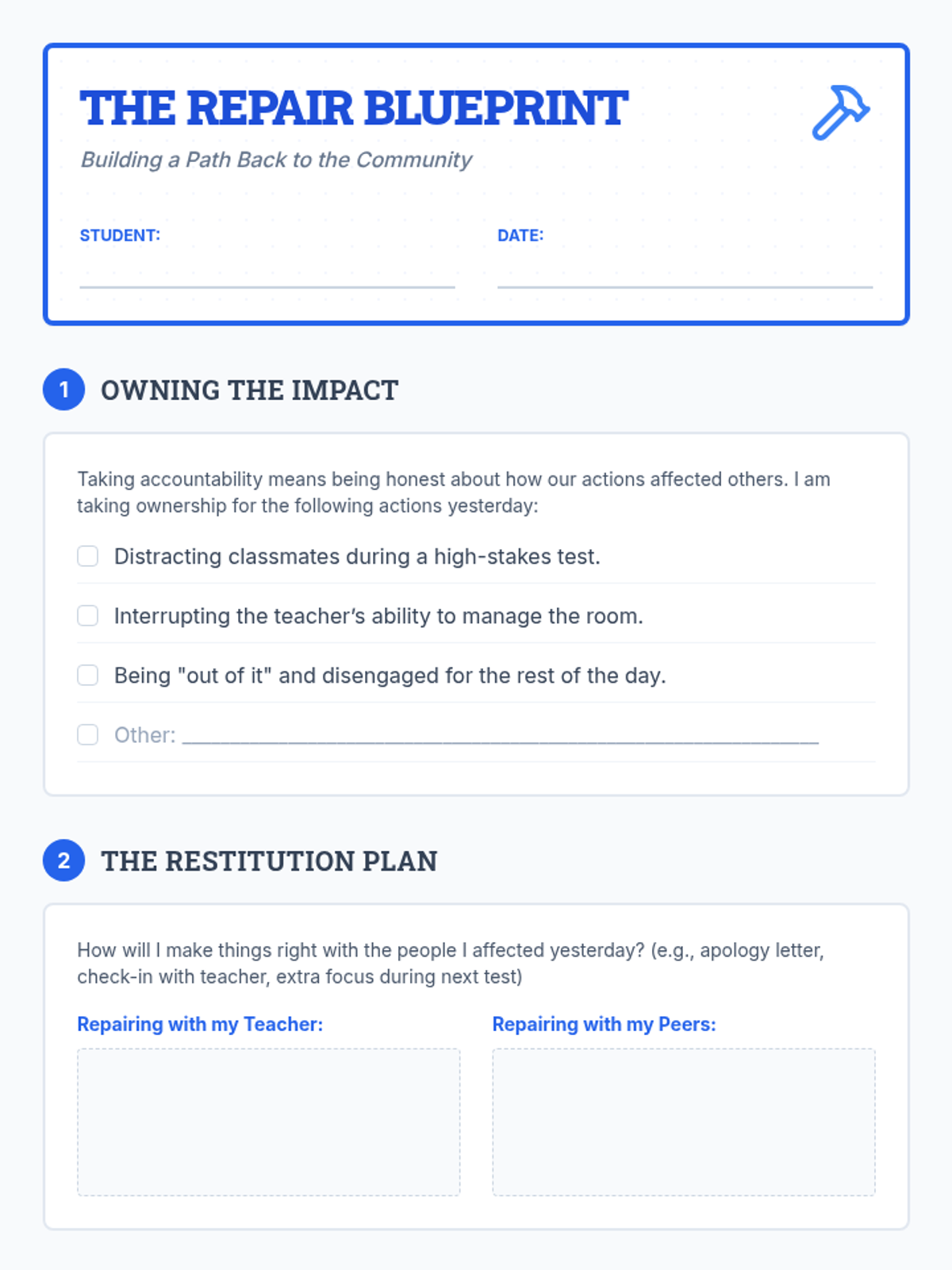
A behavior repair plan template that guides students through naming the impact of their actions, planning restitution, and identifying alternative strategies for future challenges.
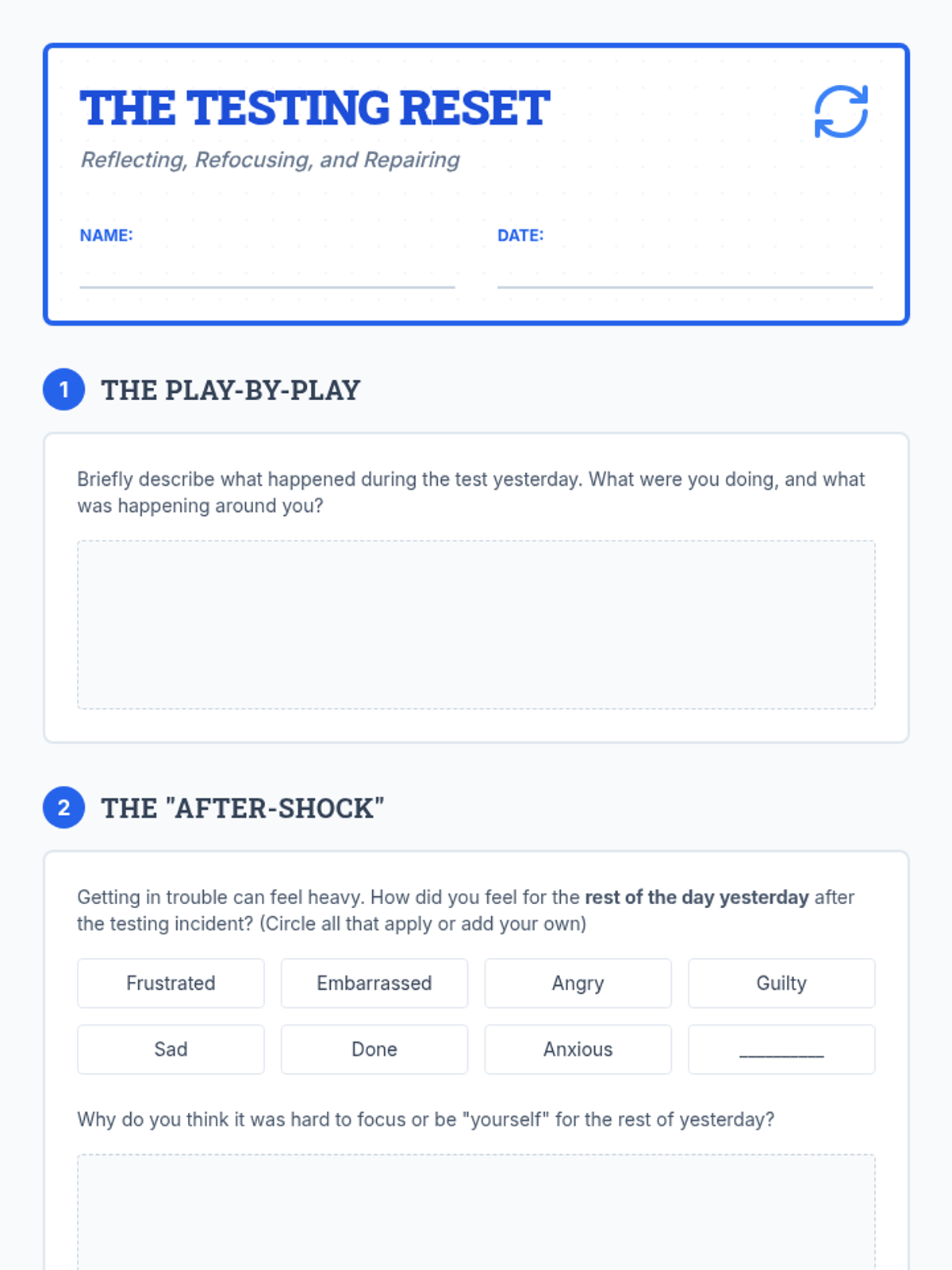
A restorative reflection worksheet for students to process their feelings after a disciplinary incident, evaluate the impact of their actions on others, and practice accountability.
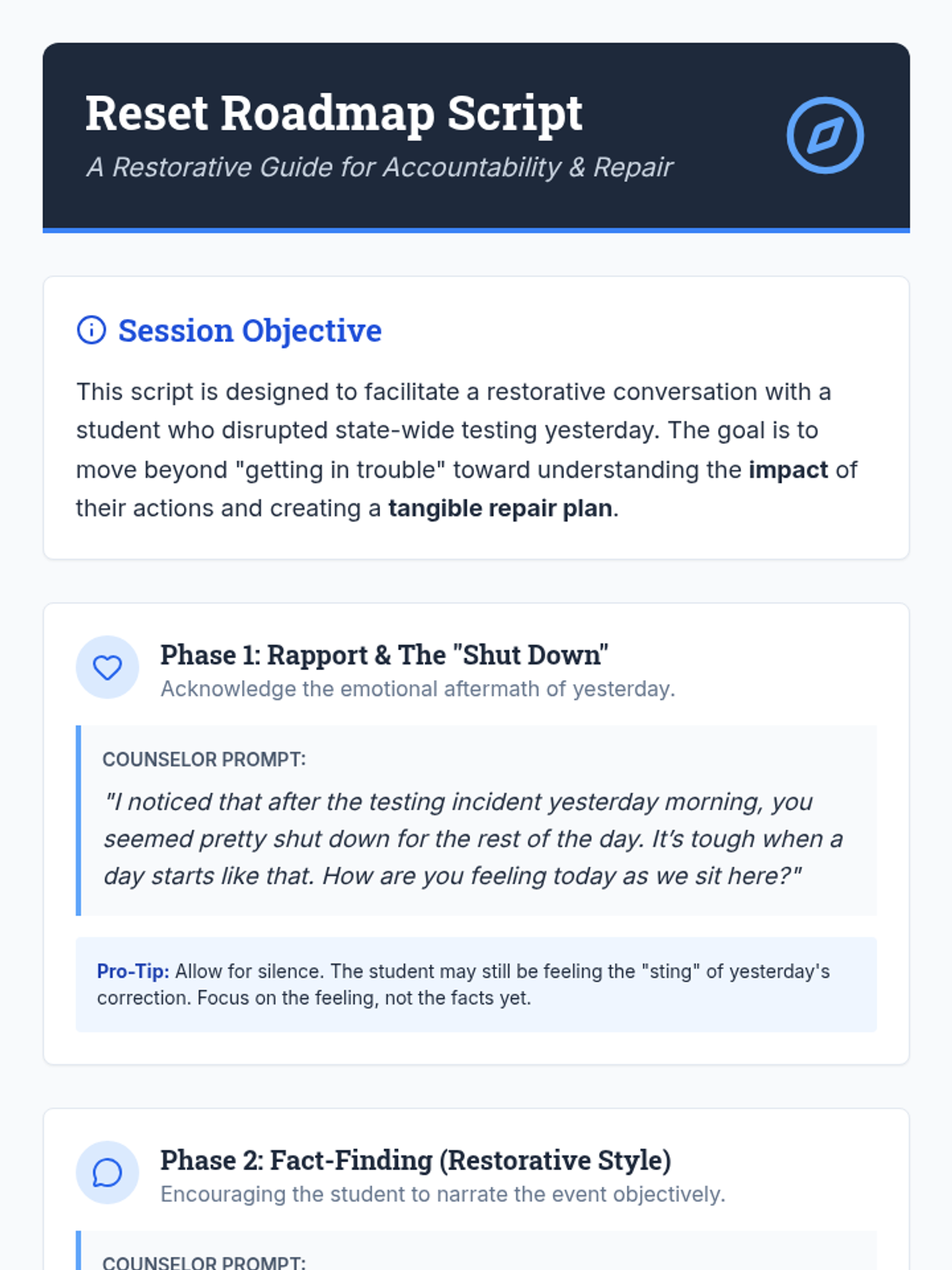
A restorative counseling script and facilitation guide designed to lead a student through an accountability conversation after a major classroom disruption. It uses affective questioning to explore impact and empathy.
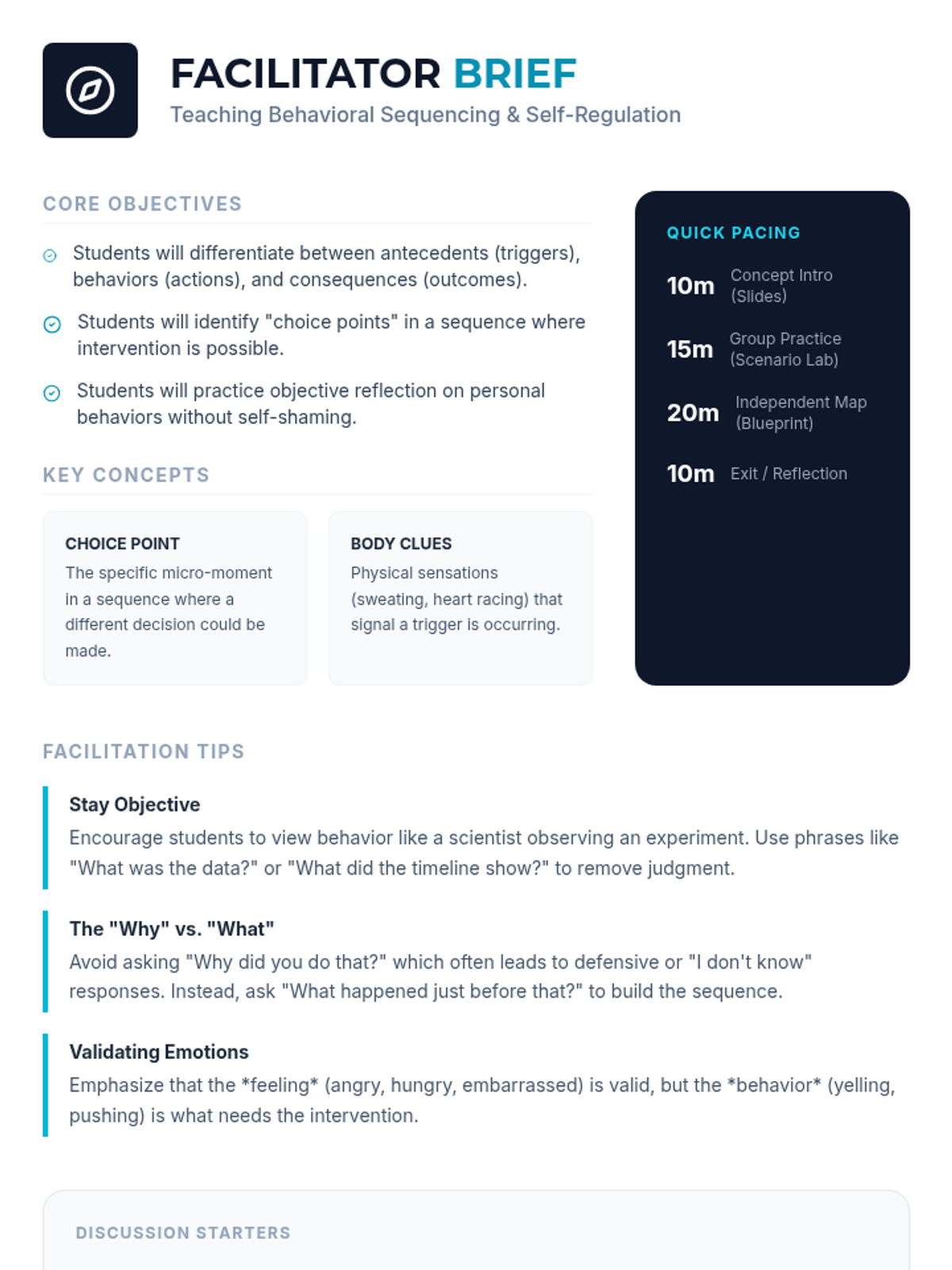
A teacher's guide providing instructional strategies, pacing suggestions, and discussion prompts for facilitating the behavioral sequencing lesson.
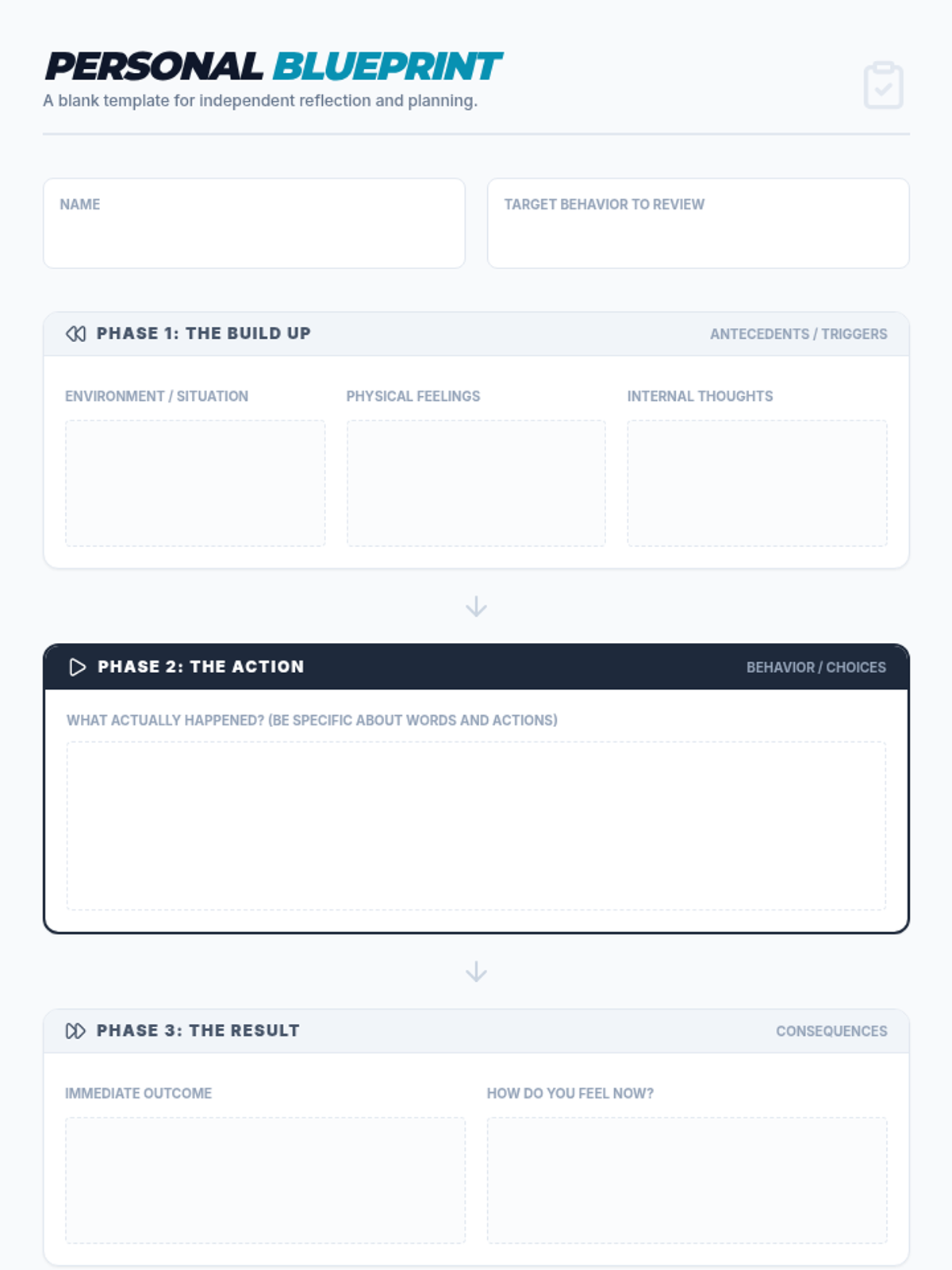
A generic template for students to map their own personal behavior sequences and plan specific intervention strategies for the future.
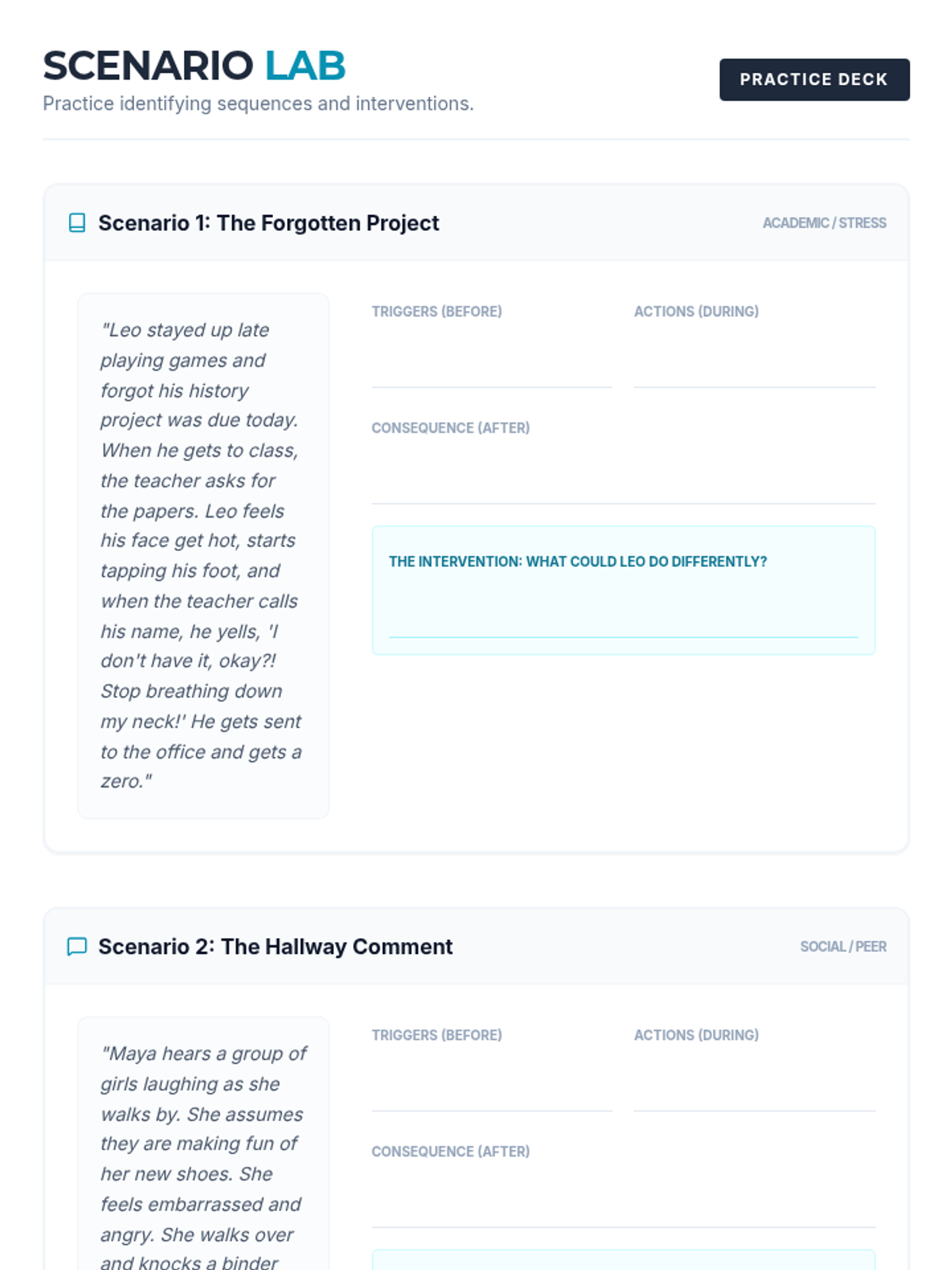
A graphic organizer featuring three school-based scenarios where students must map the behavior sequence and suggest interventions to change the outcome.
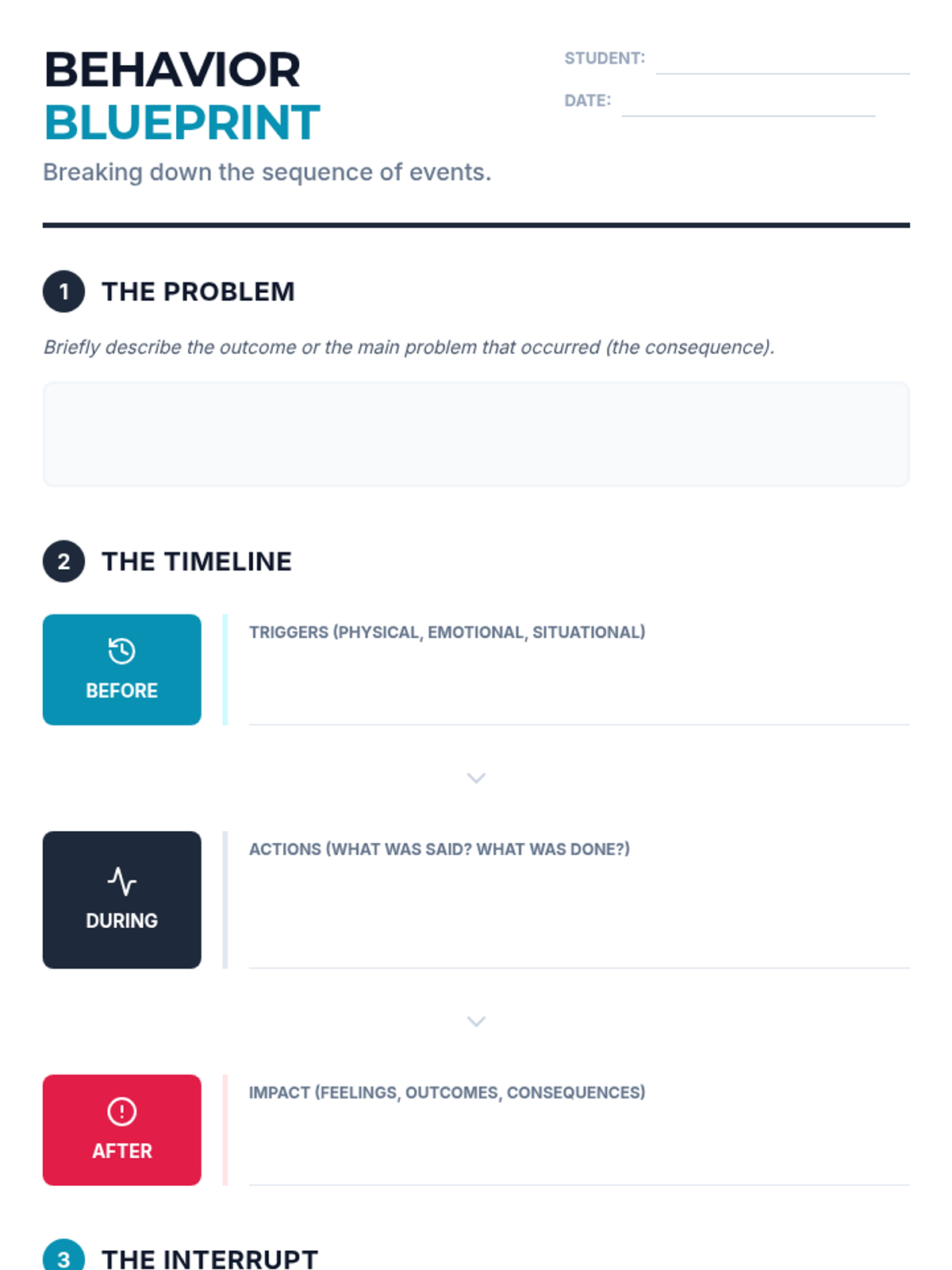
A step-by-step worksheet guiding students through behavioral sequencing, mapping the triggers (before), actions (during), and impact (after), and identifying points of intervention.
An introductory presentation for the "Action Replay" lesson, visually defining behavioral sequencing (before, during, after) and the concept of interrupting the loop.
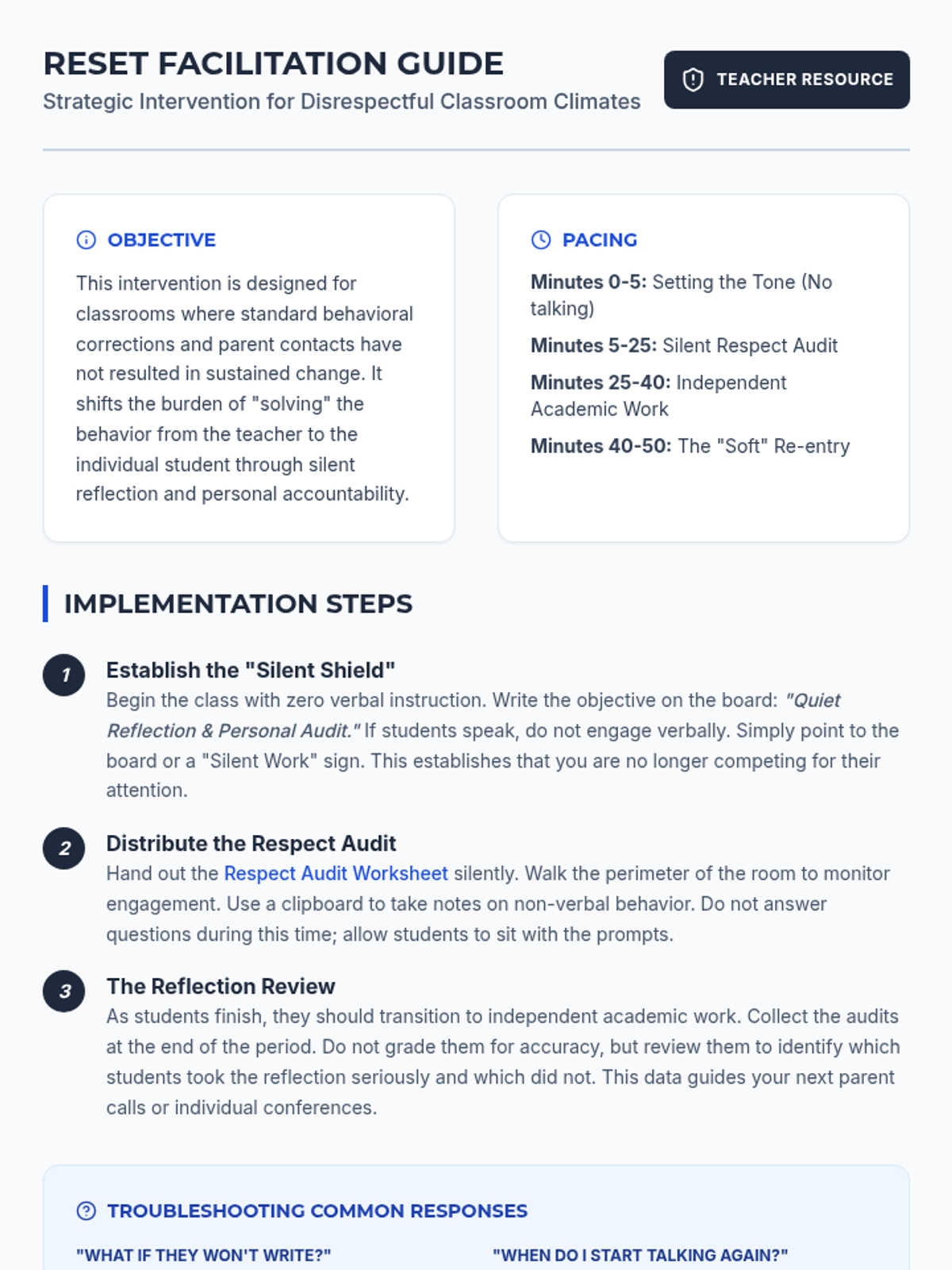
A guide for teachers on how to implement the Respect Audit and transition back to a collaborative classroom environment after a period of silent reflection.
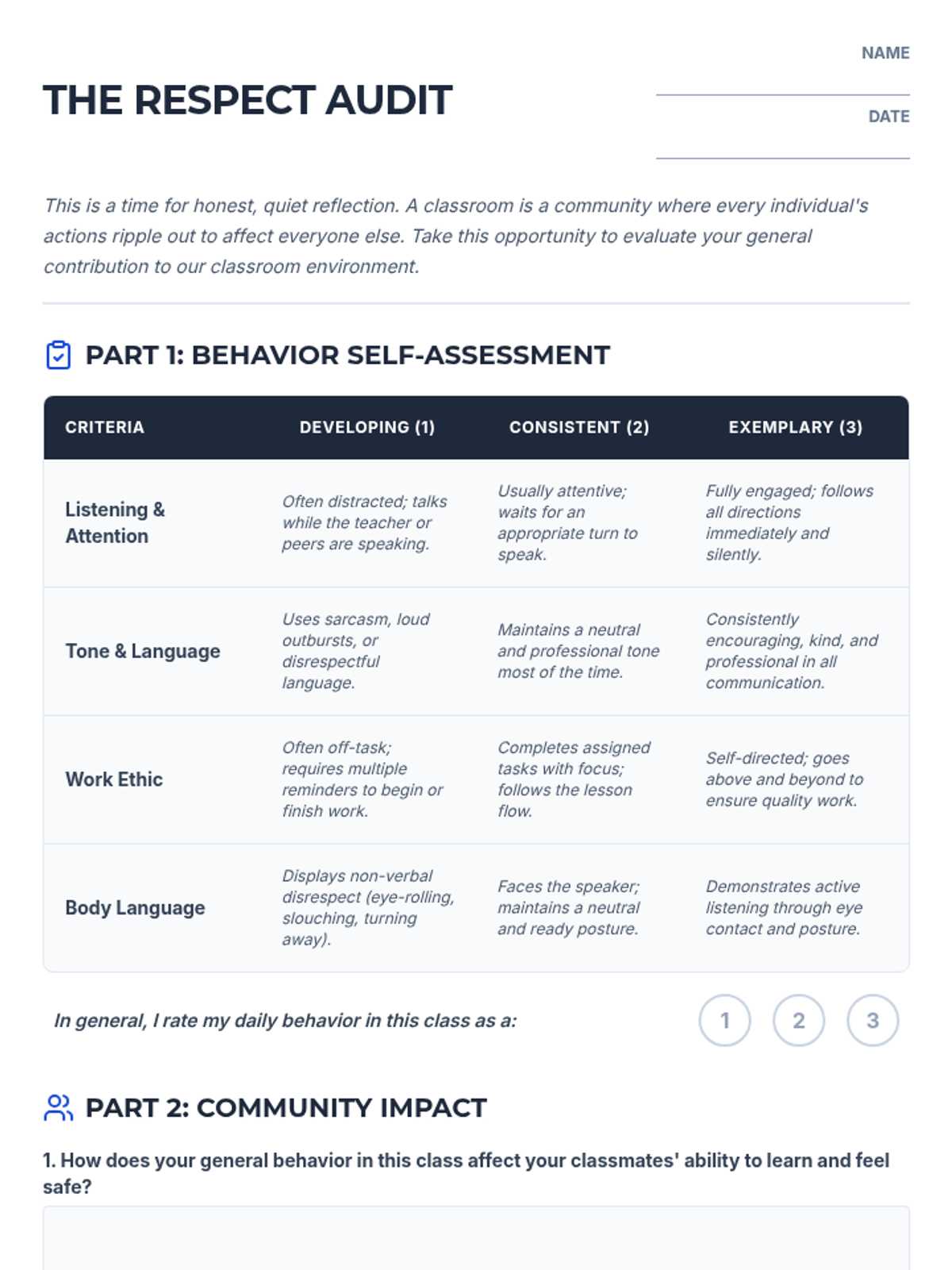
A two-page self-reflection worksheet for students. Page 1 focuses on a behavioral audit and community impact, while Page 2 is dedicated to a formal "Reset Plan" with personal and community goals.
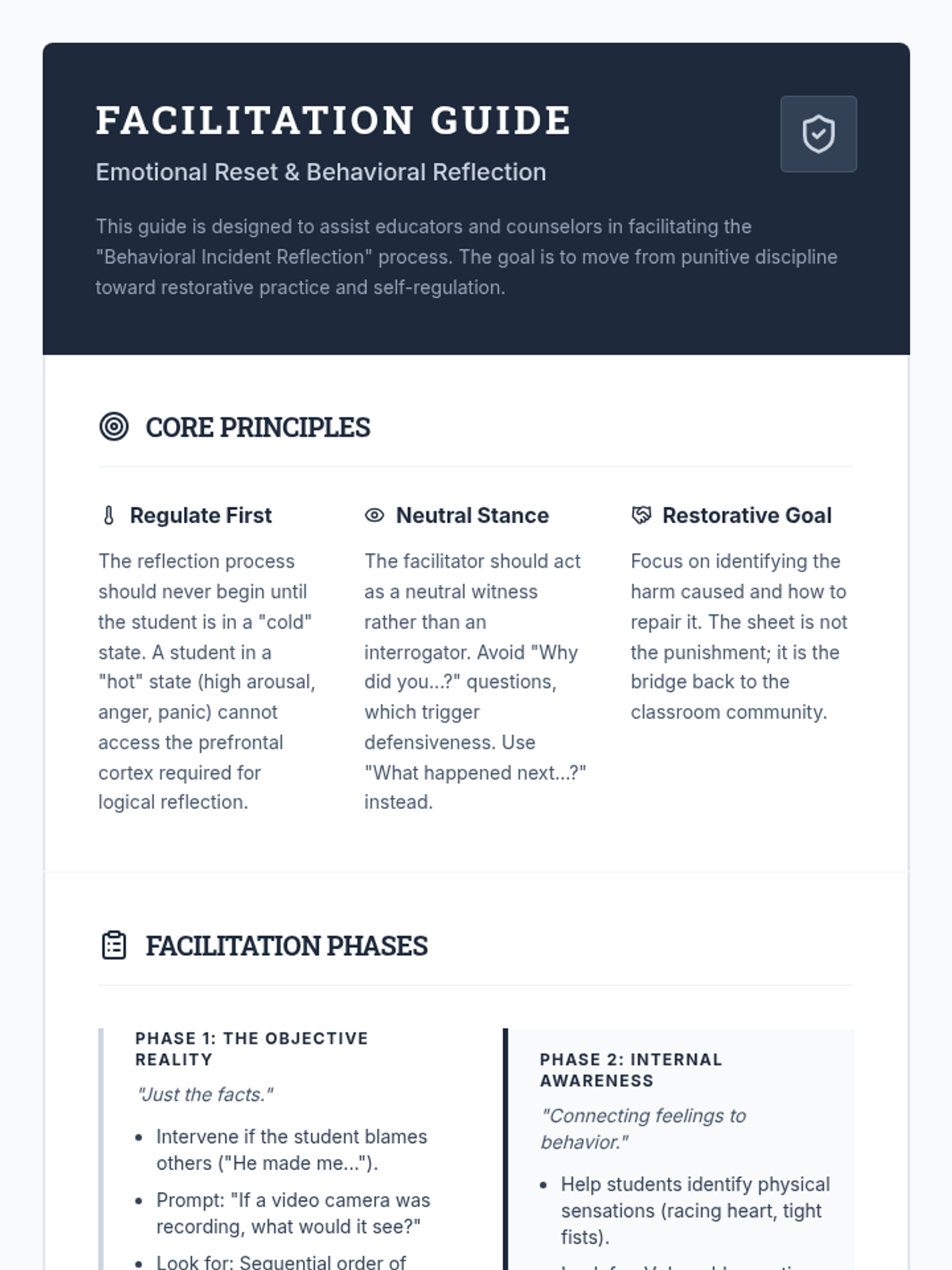
A teacher-facing guide for facilitating restorative reflection sessions with students. Includes core principles, phase-by-phase tips, and dialogue starters.
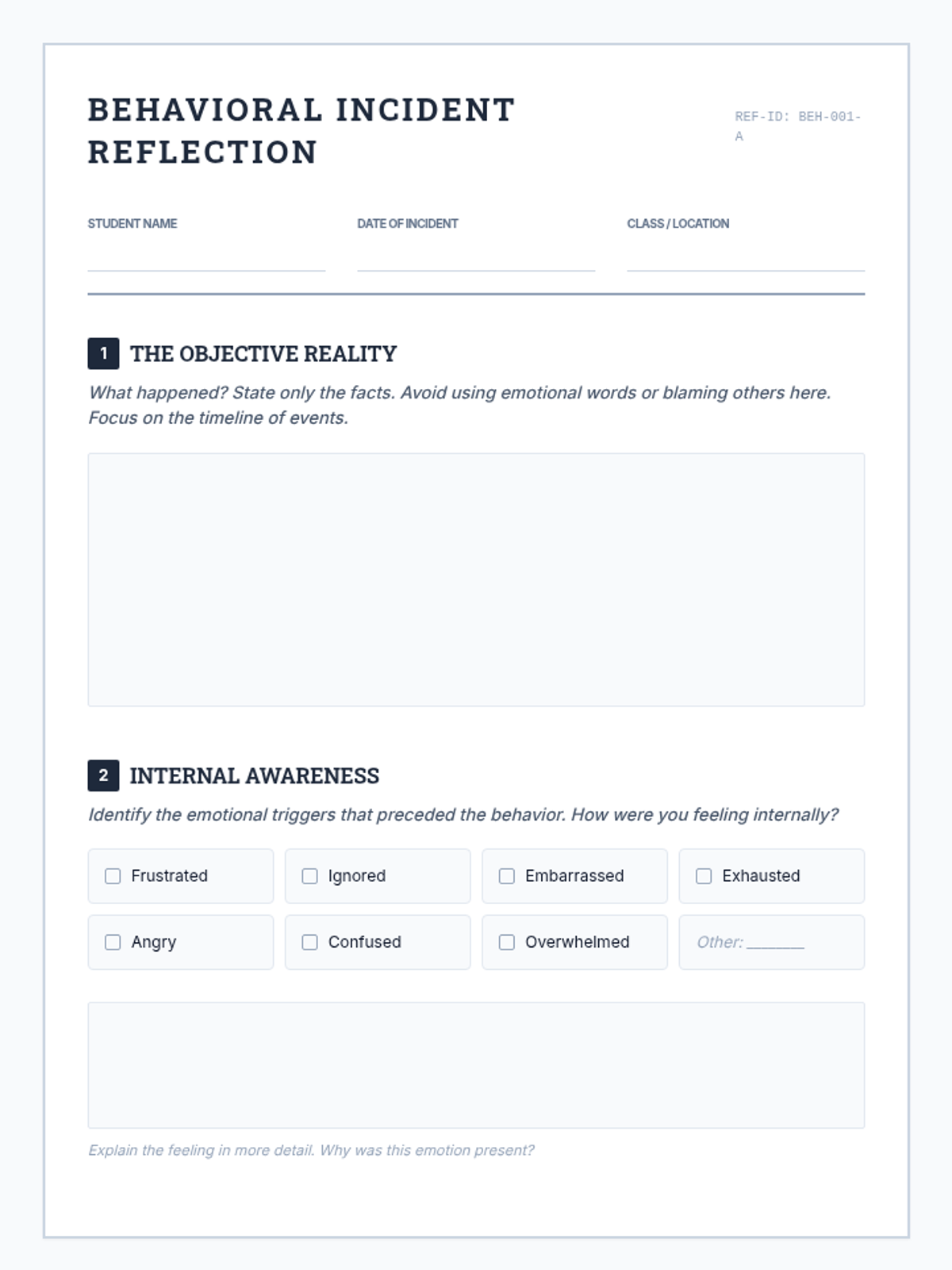
A structured reflection worksheet for students to document incidents, identify underlying emotions, and plan restorative actions after behavioral issues.
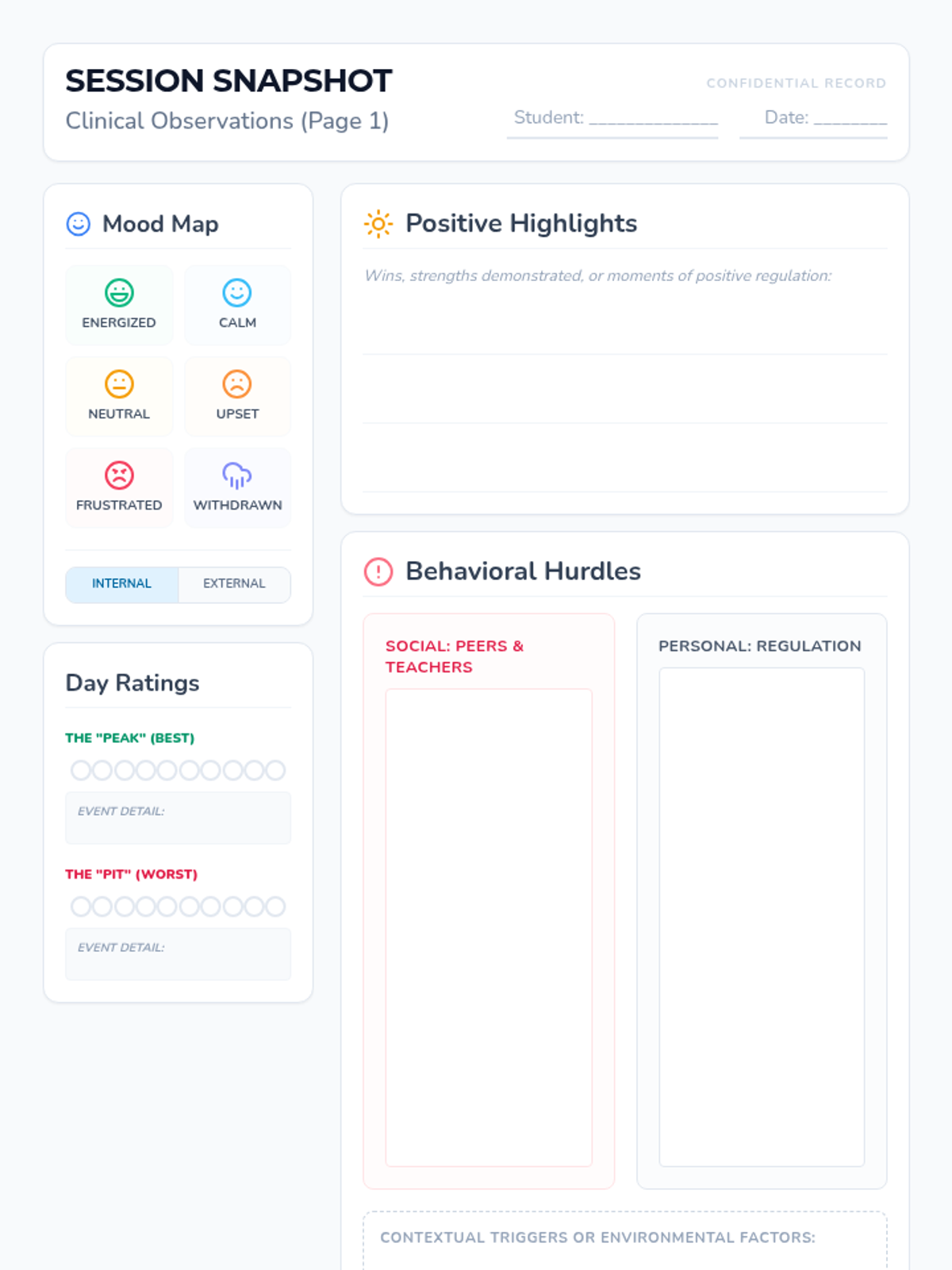
A comprehensive two-page session note-taking template for counselors. Page one tracks observation data like mood, day ratings, and behavior hurdles, while page two provides extensive space for clinical narrative, session synthesis, and planning. Strict page containment prevents messy overlap between printed pages.
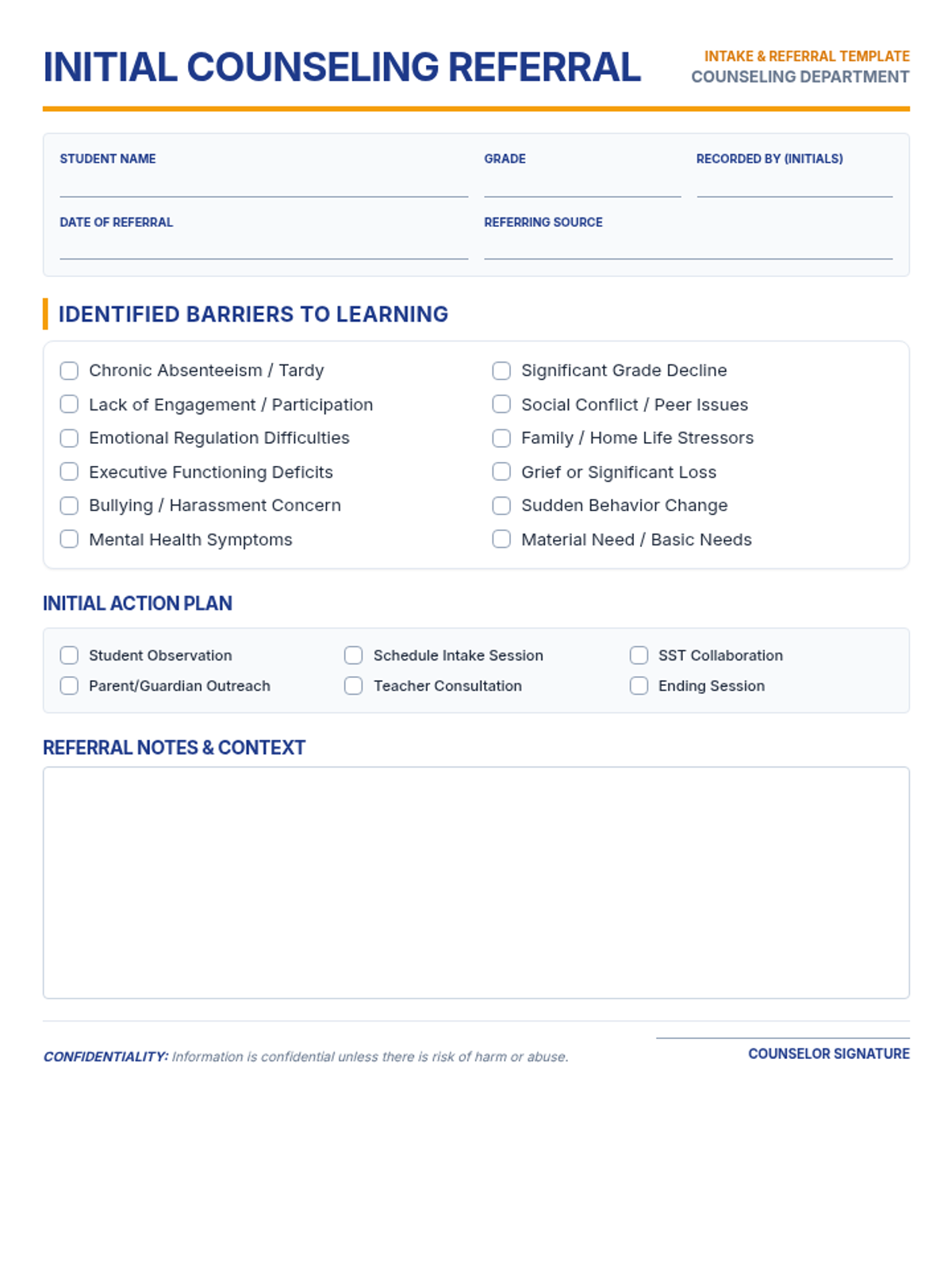
New Initial Counseling Referral Template with 'Recorded by (initials)' field, checkboxes for 'Barriers to Learning', and an initial action plan. Branding for the Counseling Department.
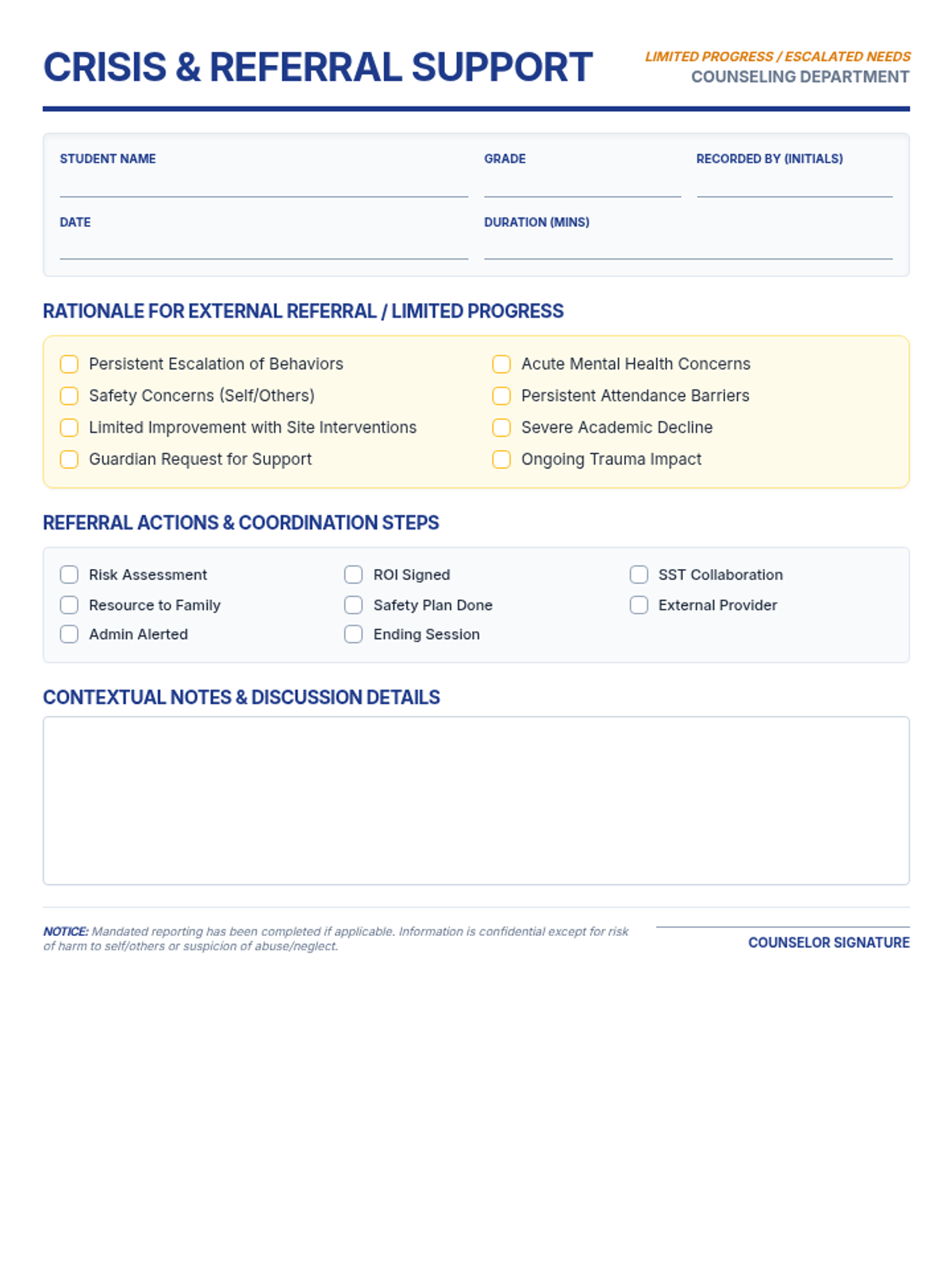
Updated Crisis & Referral Note Template with 'Recorded by (initials)' field and 'Ending Session' checkbox. Removed 'Location' and 'Counselor' fields. SST Collaboration remains in the action steps.
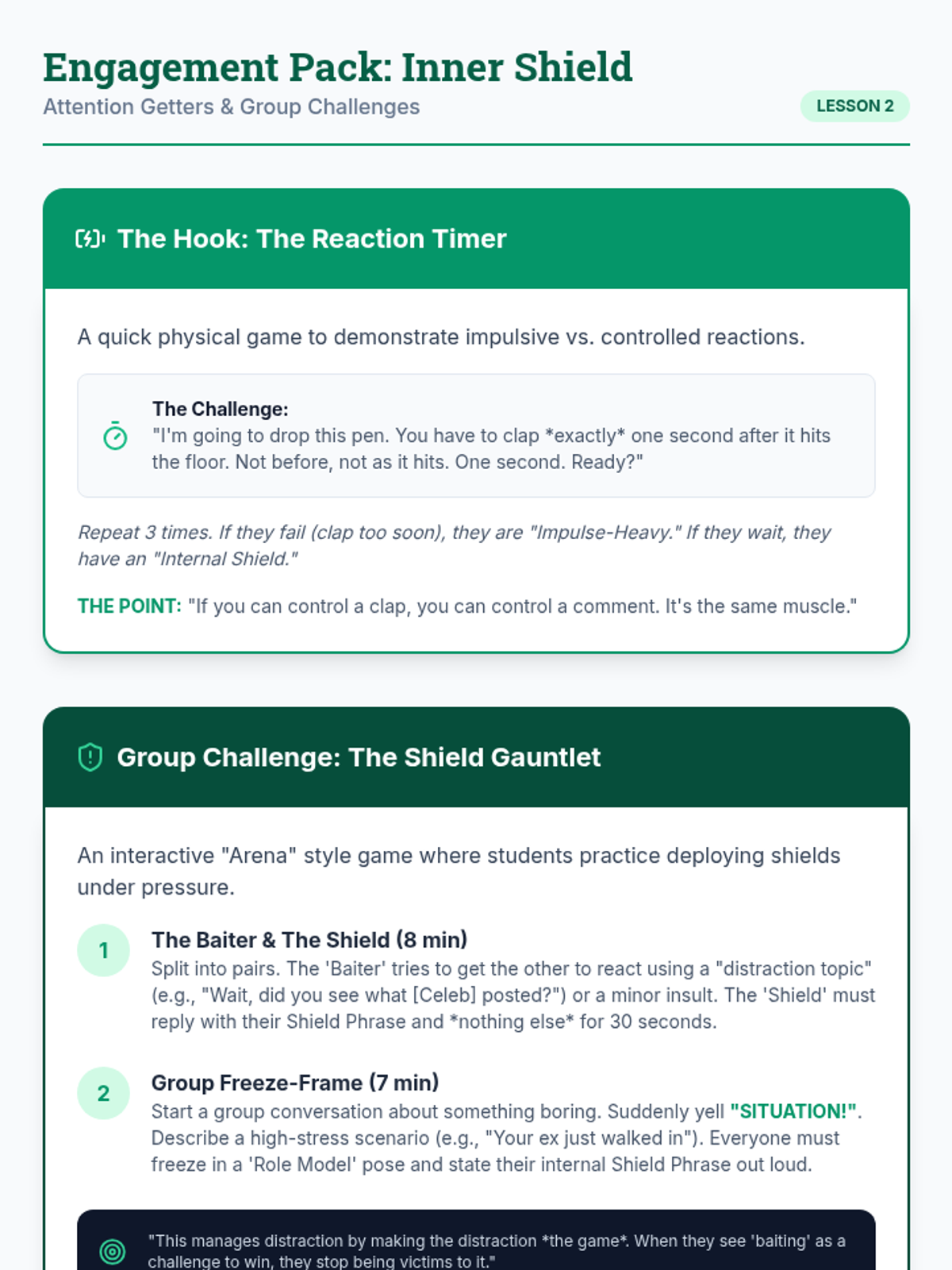
A high-engagement engagement pack for Lesson 2, featuring the 'Reaction Timer' hook and the 'Shield Gauntlet' group challenge to build impulse control.
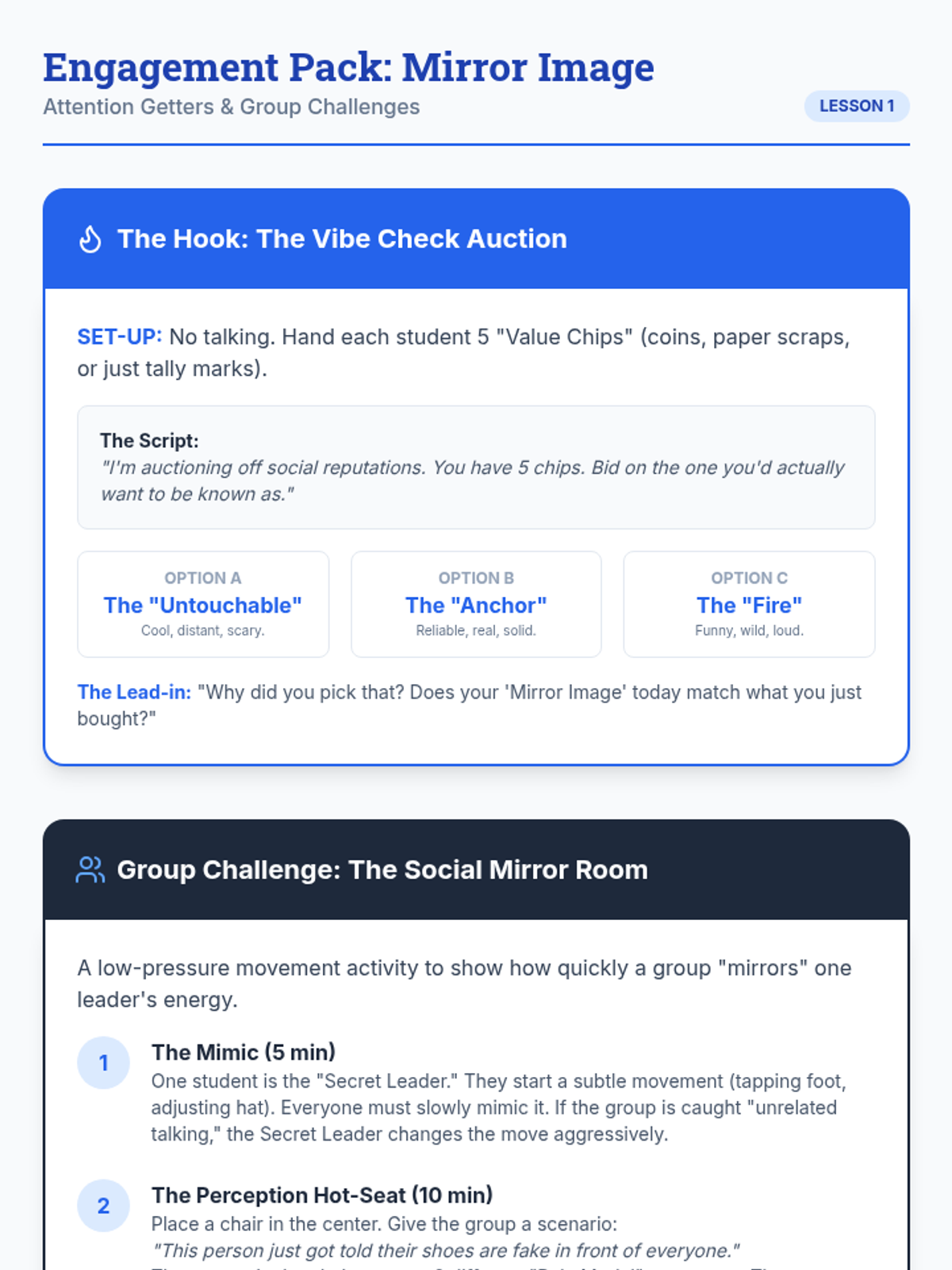
A high-engagement engagement pack for Lesson 1, featuring a 'Value Auction' hook and the 'Social Mirror Room' group activity to manage attention and distraction.
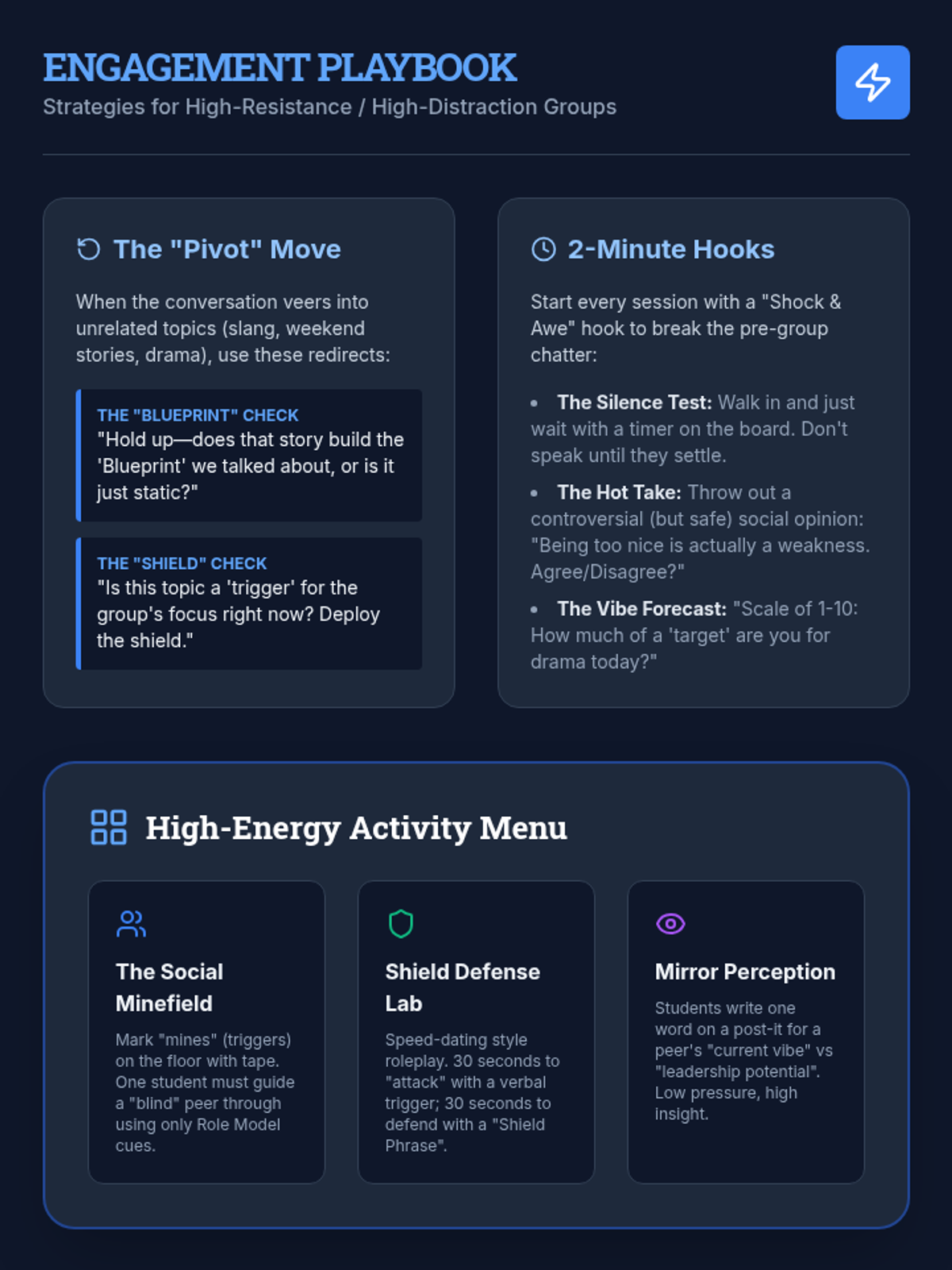
A high-engagement facilitator playbook for the Social Architects program, providing tactical redirections, 2-minute hooks, and activity menus for resistant high-school groups.
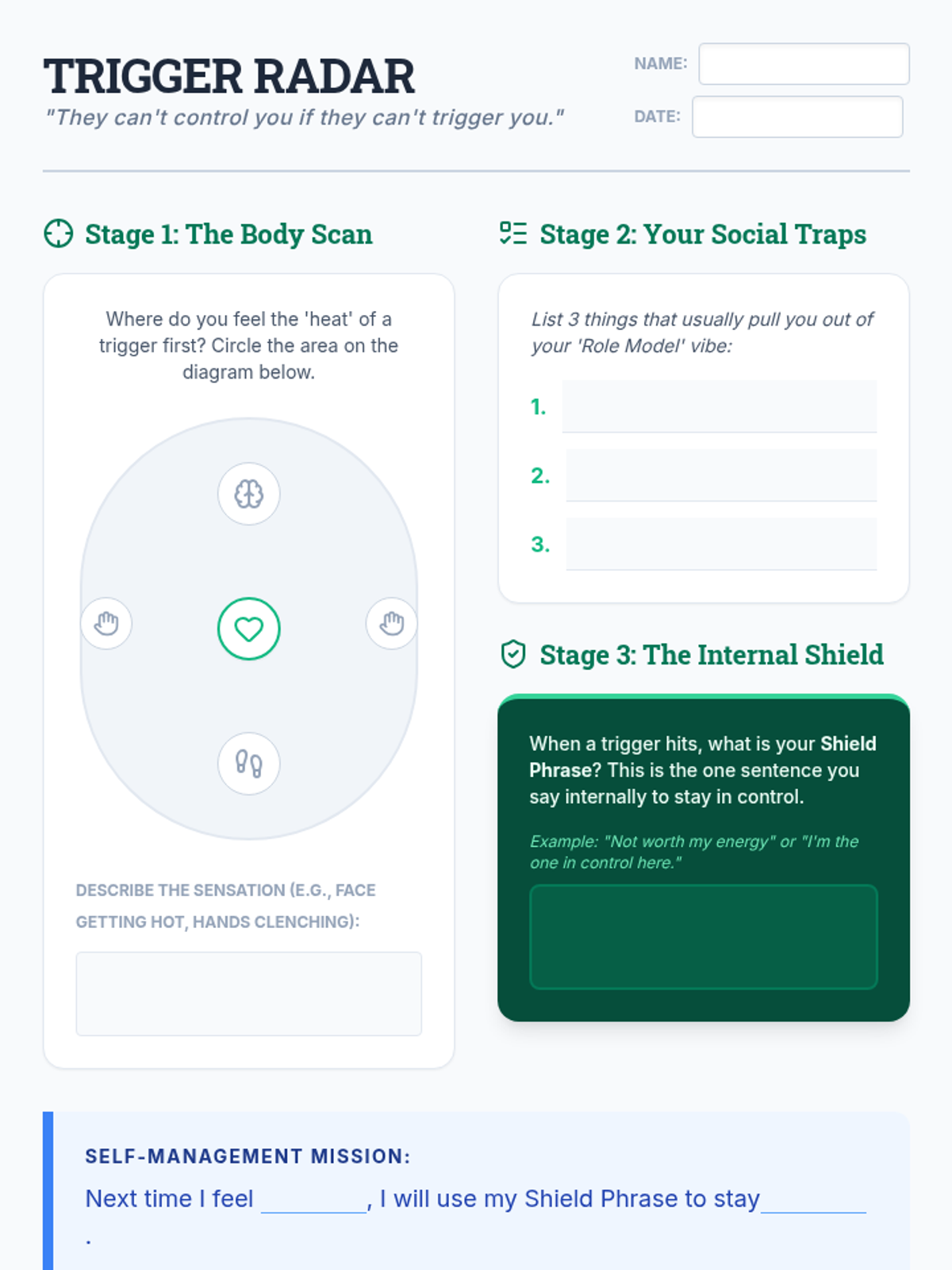
A student worksheet for identifying triggers and 'Shield' responses, focusing on emotional regulation and self-control.
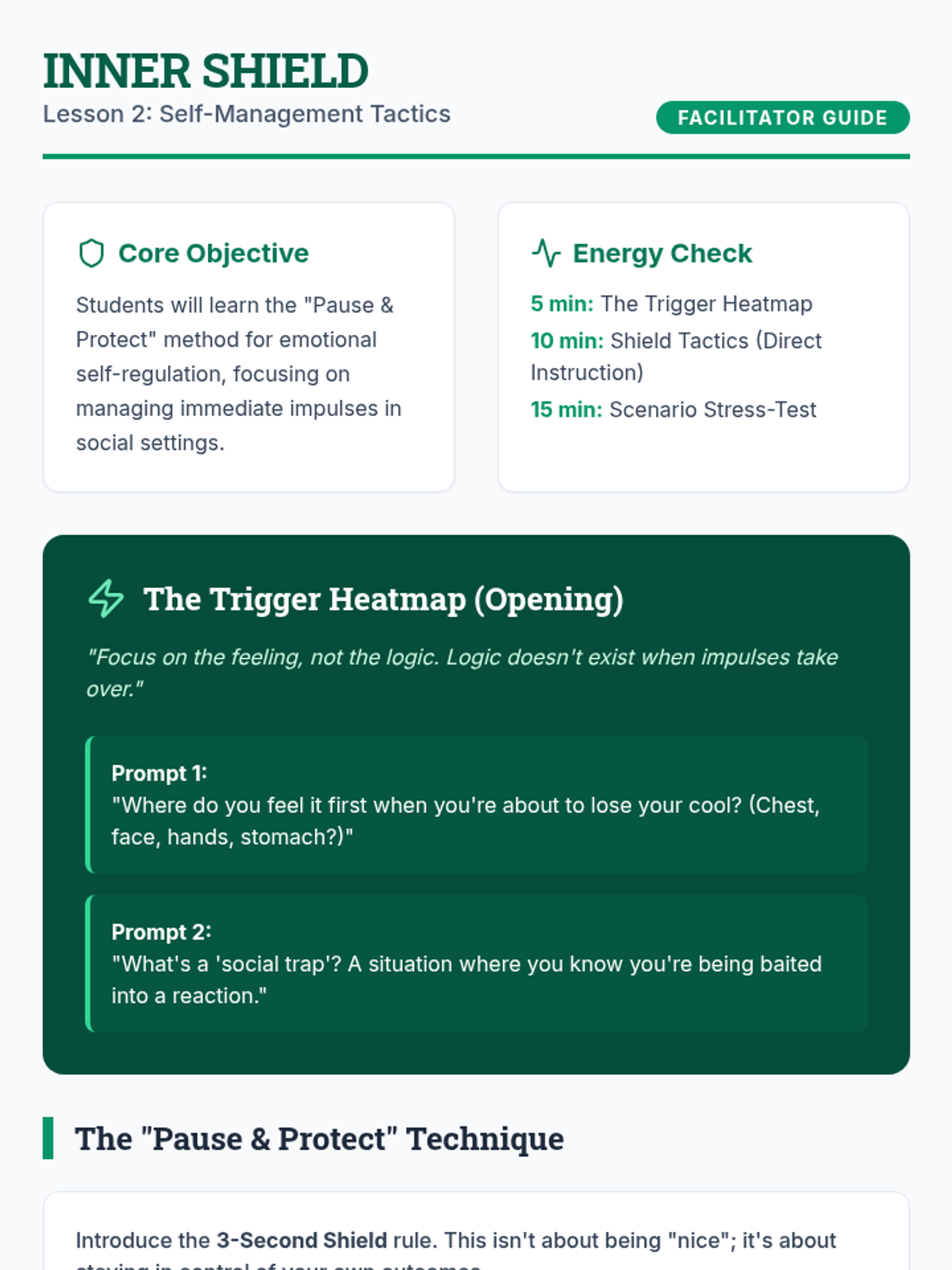
A facilitator guide for the Inner Shield lesson, focusing on self-management techniques and the 'Pause & Protect' method for emotional regulation.
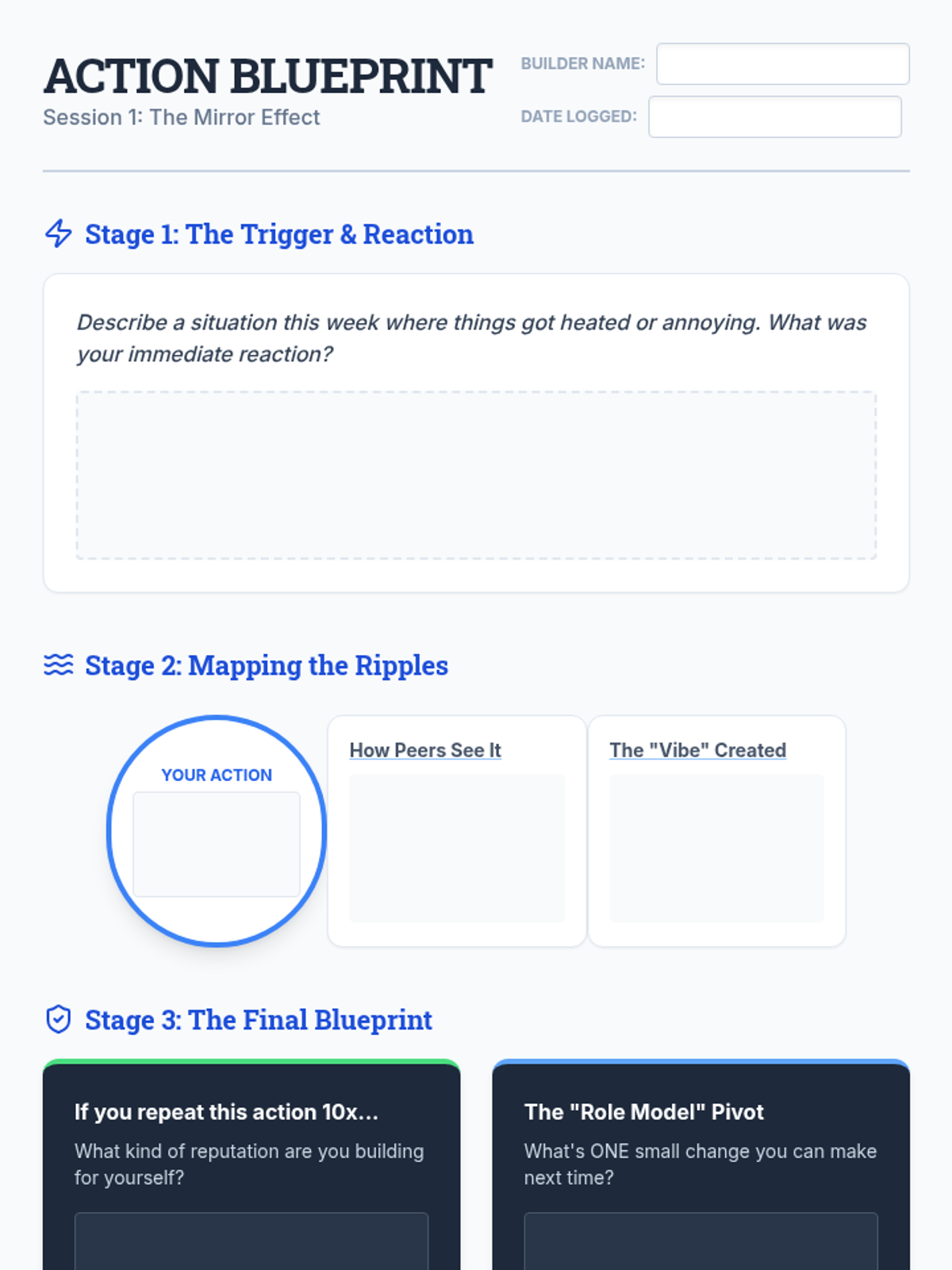
An interactive student worksheet for the Mirror Image lesson, guiding them to map out the consequences of their actions and identify a more constructive 'role model' response.
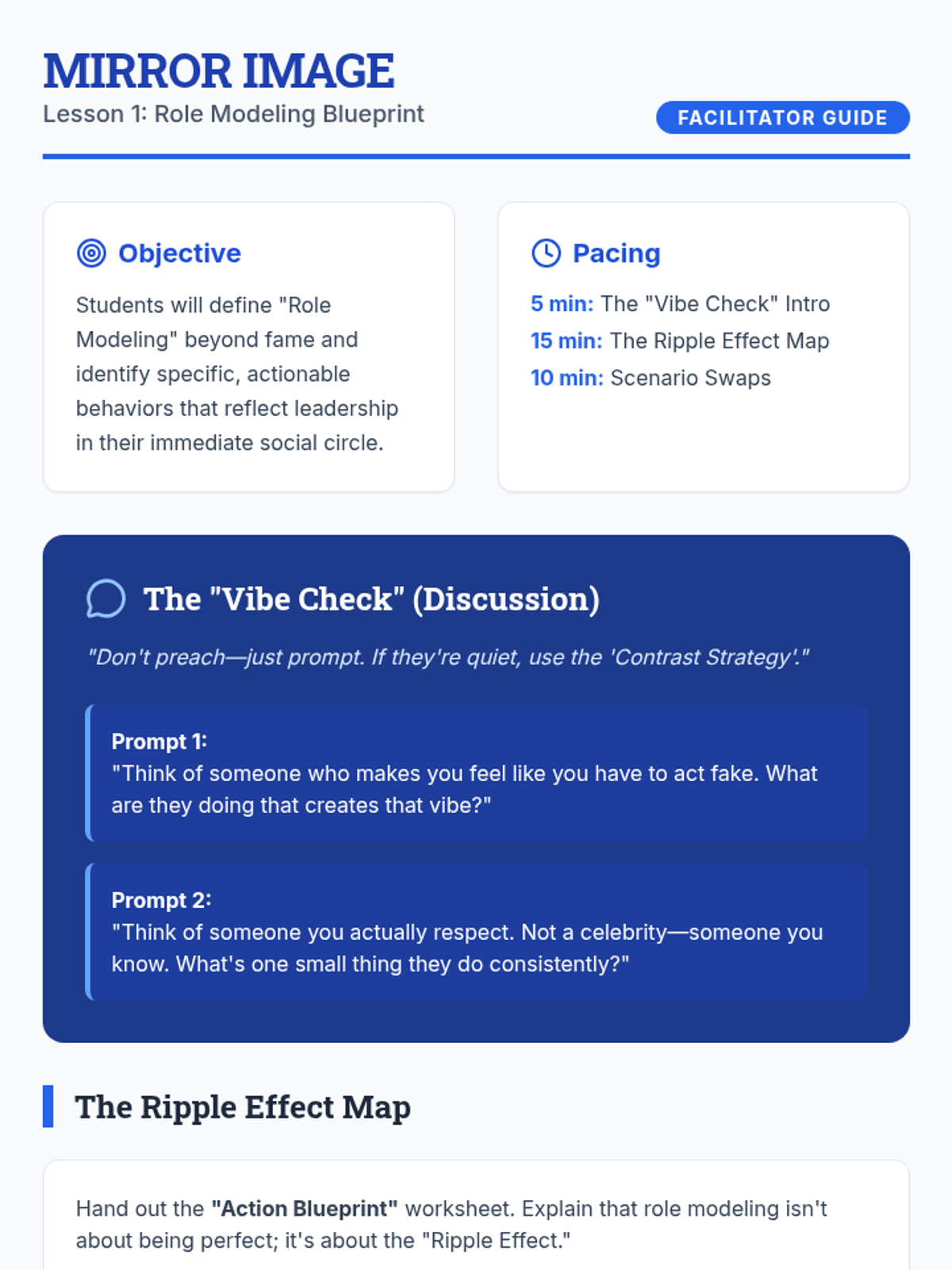
A facilitator guide for the Mirror Image lesson, providing discussion prompts, pacing suggestions, and strategies for managing group dynamics with high-school students.
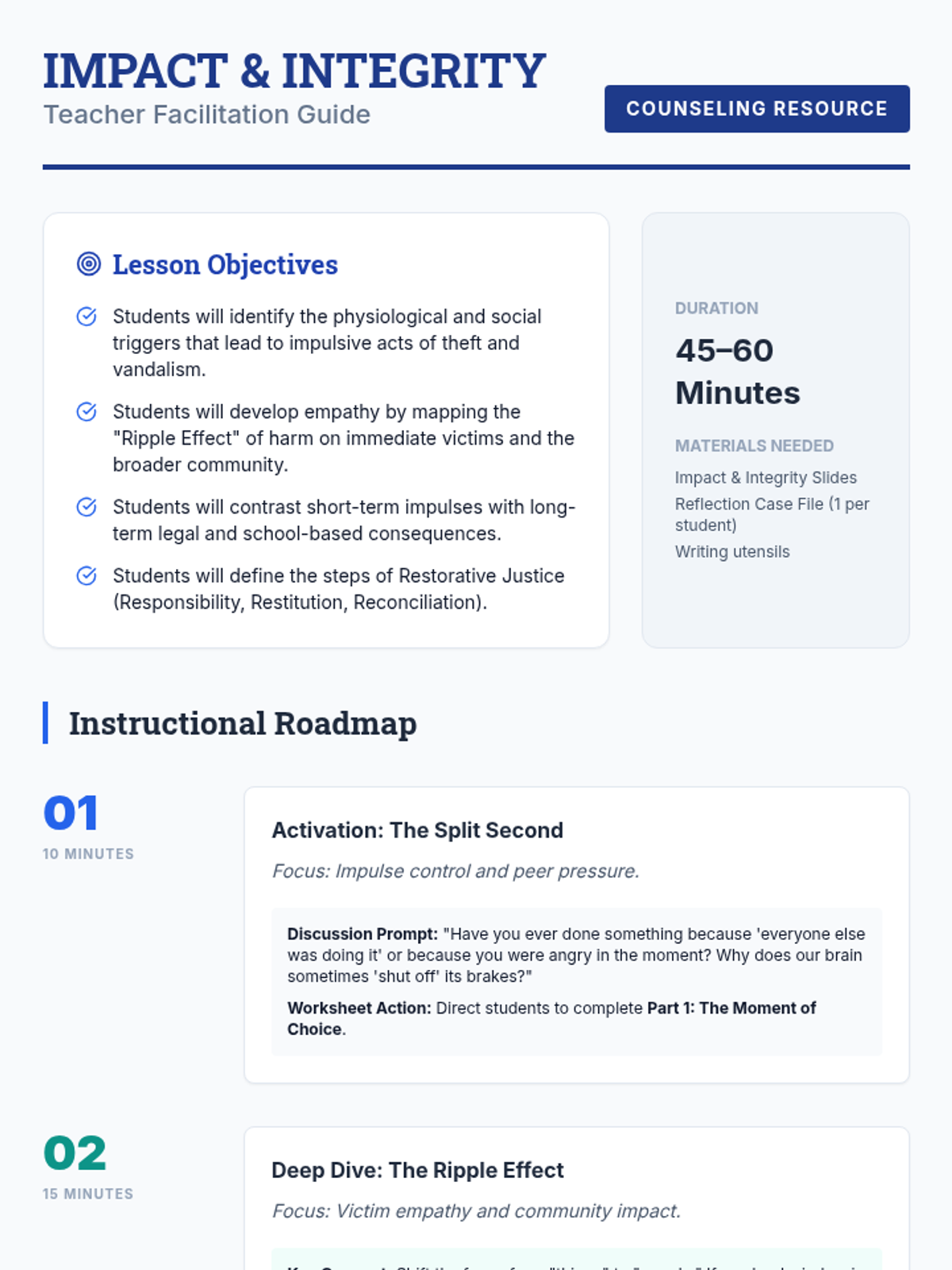
A detailed teacher facilitation guide for the 'Impact and Integrity' lesson, featuring instructional roadmap, duration estimates, discussion prompts, and differentiation strategies.
Instructional slides for the final lesson, teaching the student how to combine feelings, reasons, and requests into a single conflict resolution script.
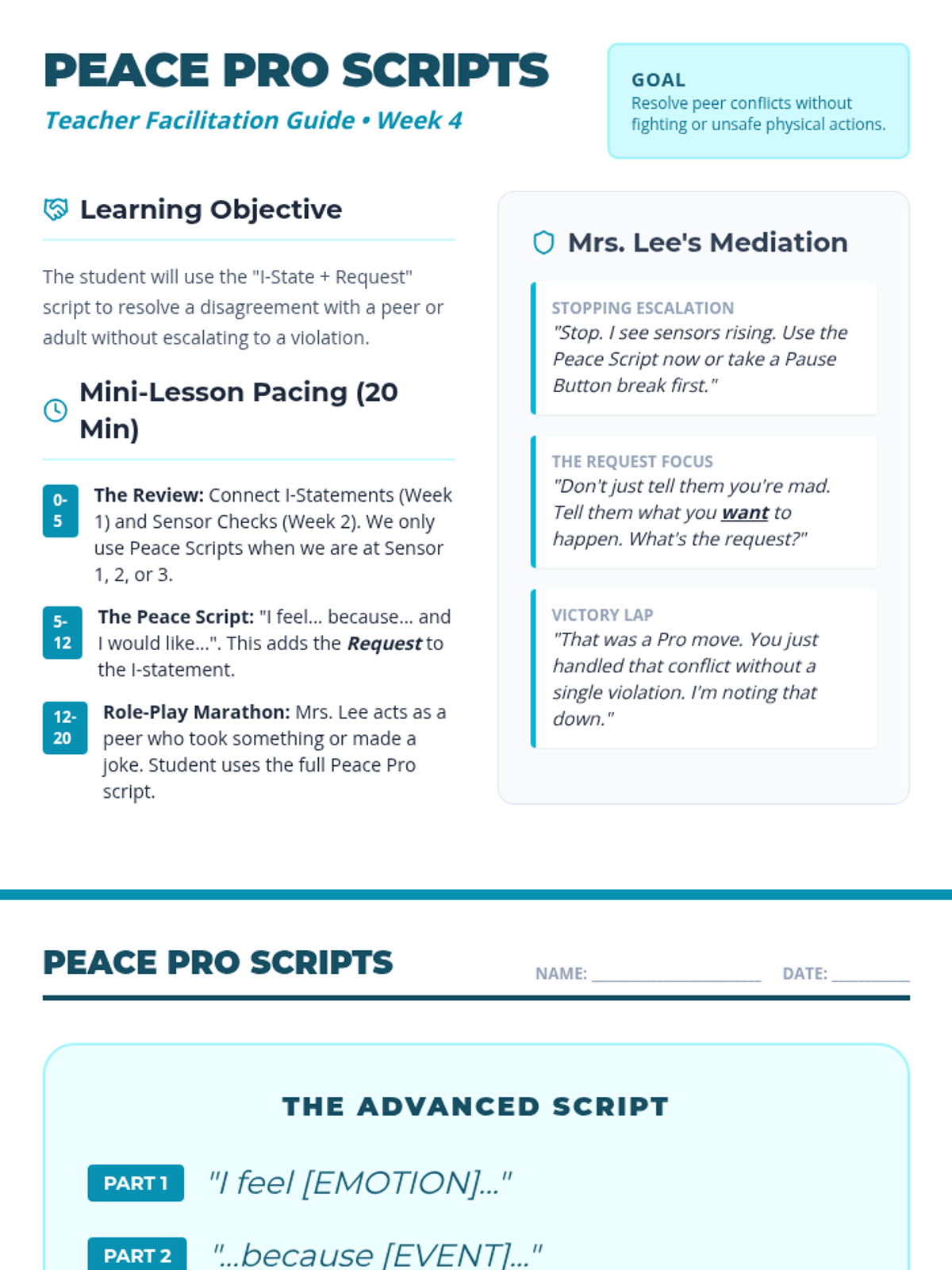
A teacher guide and student worksheet for Lesson 4, teaching the "Peace Pro" script which adds a specific request to an I-statement for conflict resolution.
Instructional slides for Lesson 3 on requesting a break, emphasizing the Level 4 trigger and the specific verbal protocol to use with Mrs. Lee.
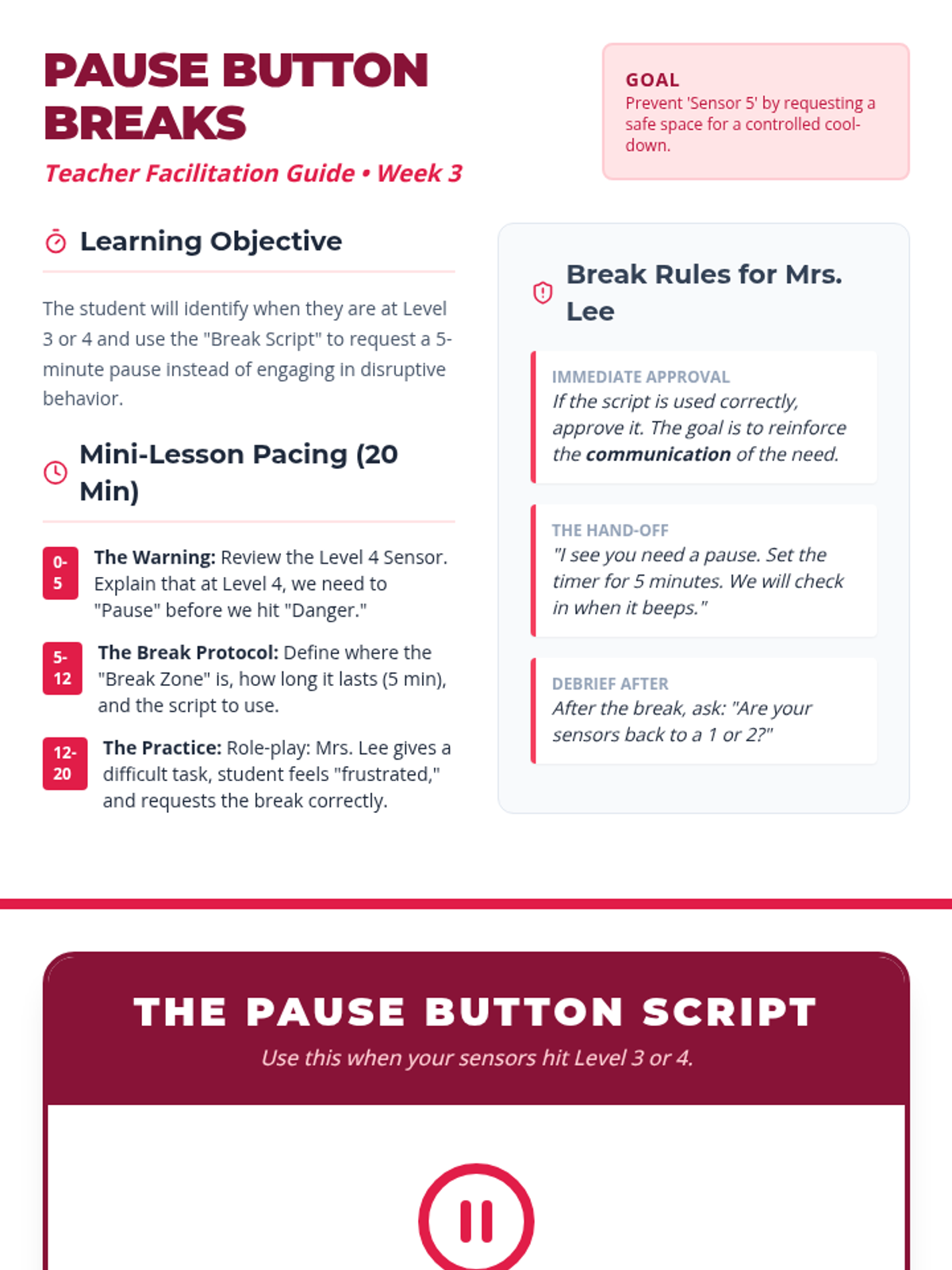
A teacher facilitation guide and student break protocol contract for Lesson 3, teaching the student how to appropriately request a "Pause Button" break.
Instructional slides for Lesson 2 on self-regulation, introducing the physical body scan and the 1-5 Sensor Scale for emotional monitoring.
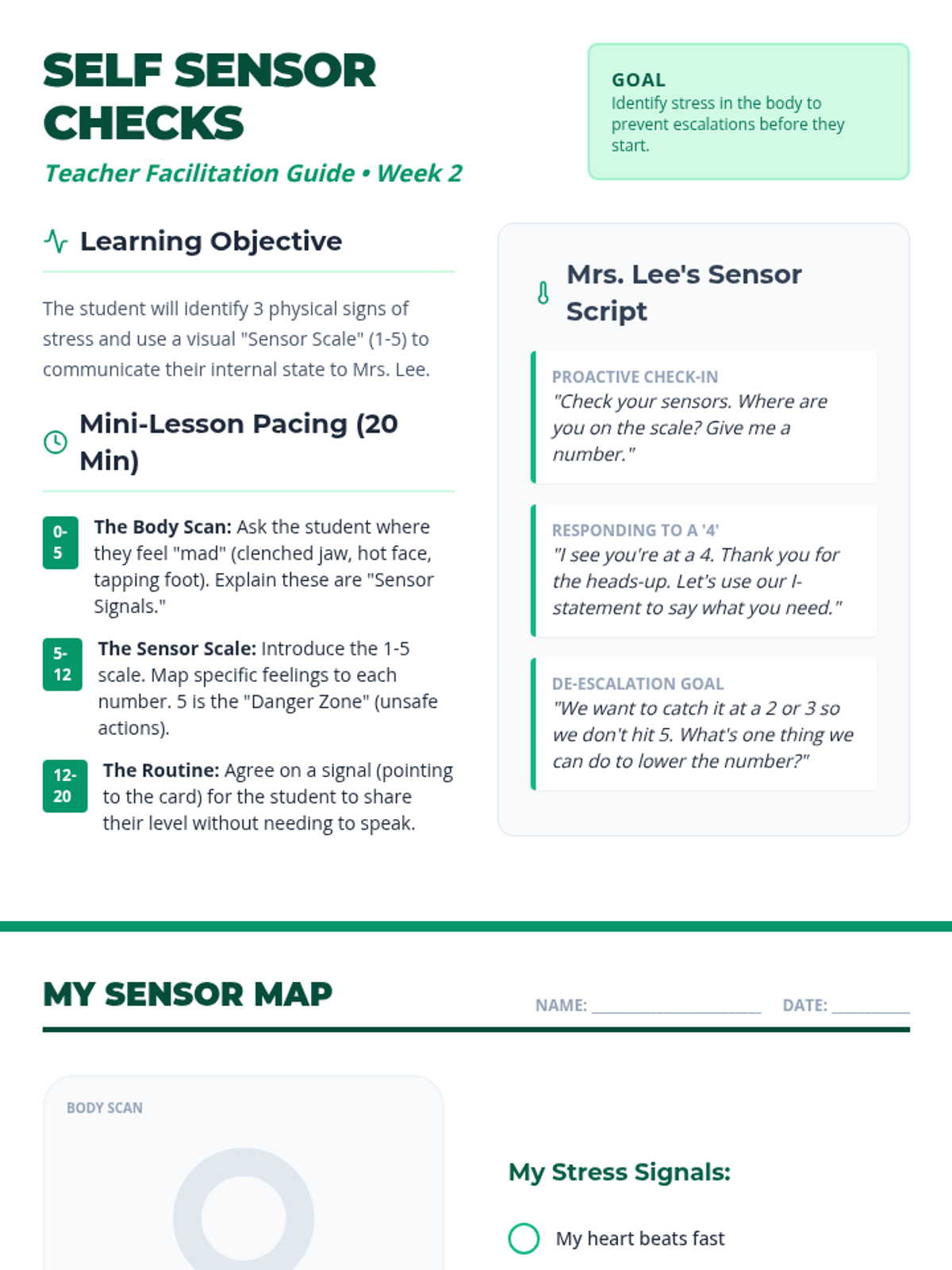
A teacher guide and student activity sheet for Lesson 2, focused on identifying physical stress signals and using a 1-5 "Sensor Scale" for self-regulation check-ins.
A set of instructional slides for Lesson 1 introducing "I" statements, explaining their benefits over "You" statements, and providing a clear formula for student use.
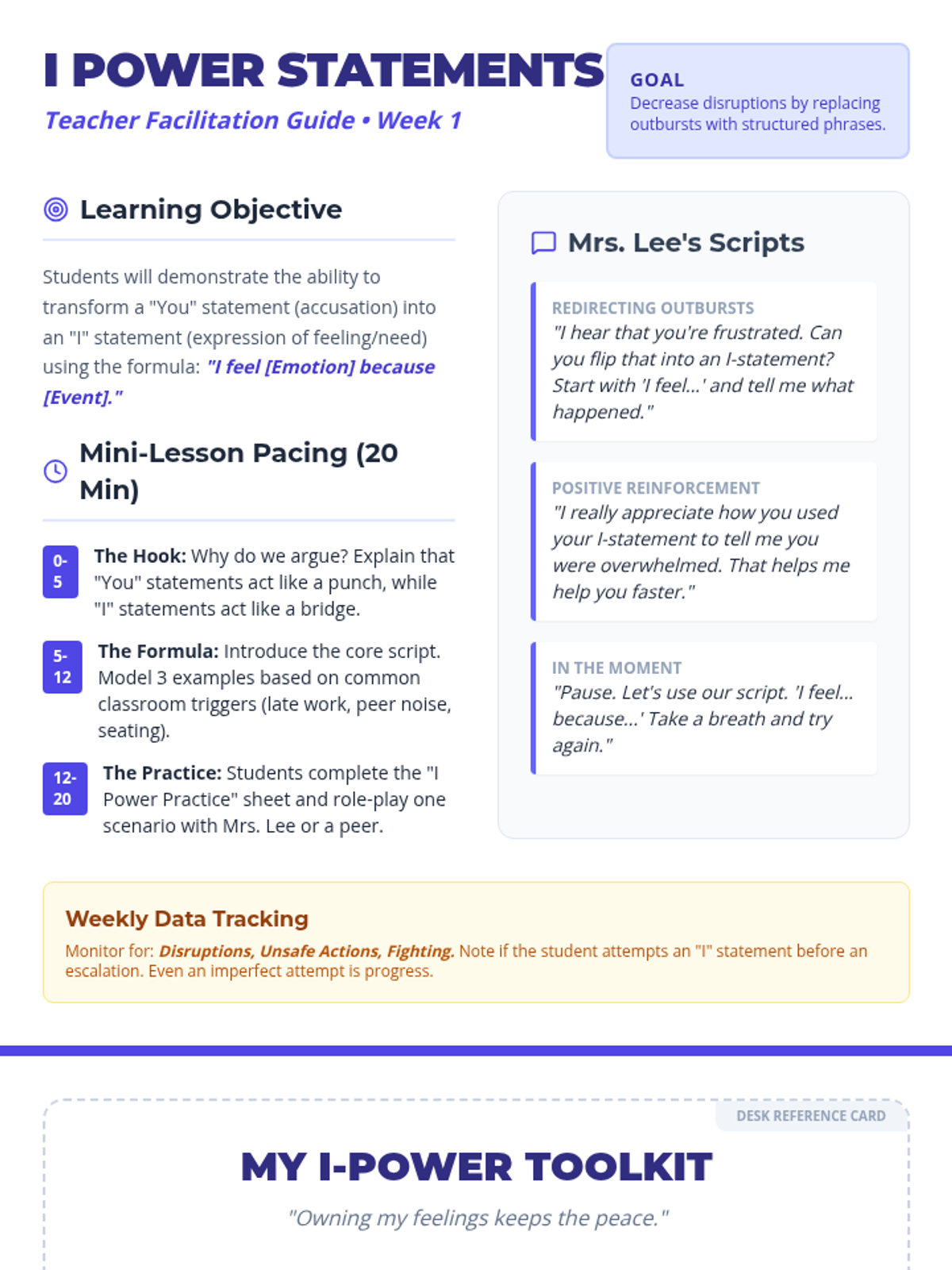
A teacher guide and student worksheet for Lesson 1, focusing on using "I" statements and the "I feel... because..." sentence starter to express emotions calmly.
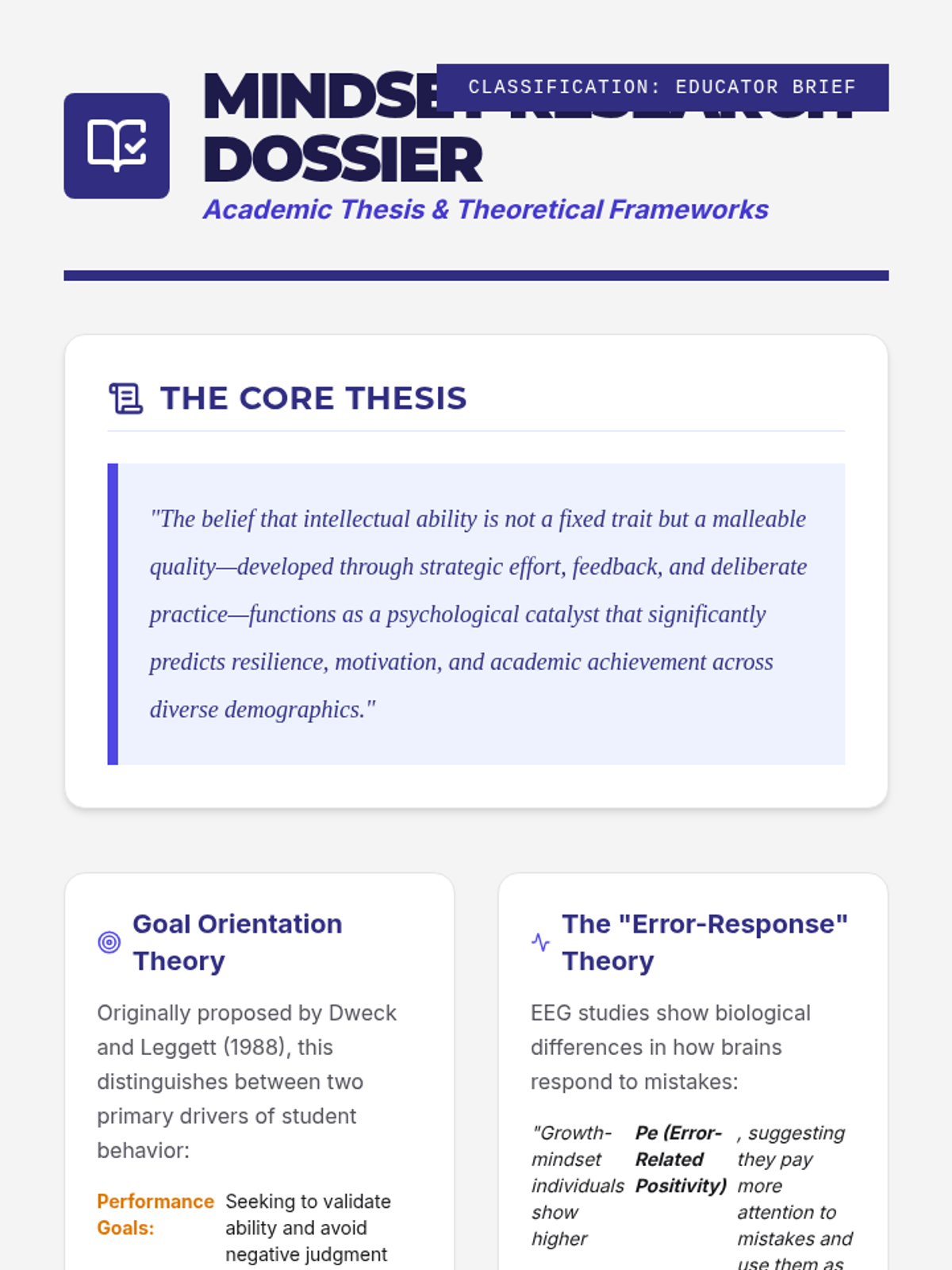
An academic-style teacher reference guide containing deep-dive theories of growth mindset, foundational research theses, and neurological evidence of neuroplasticity.
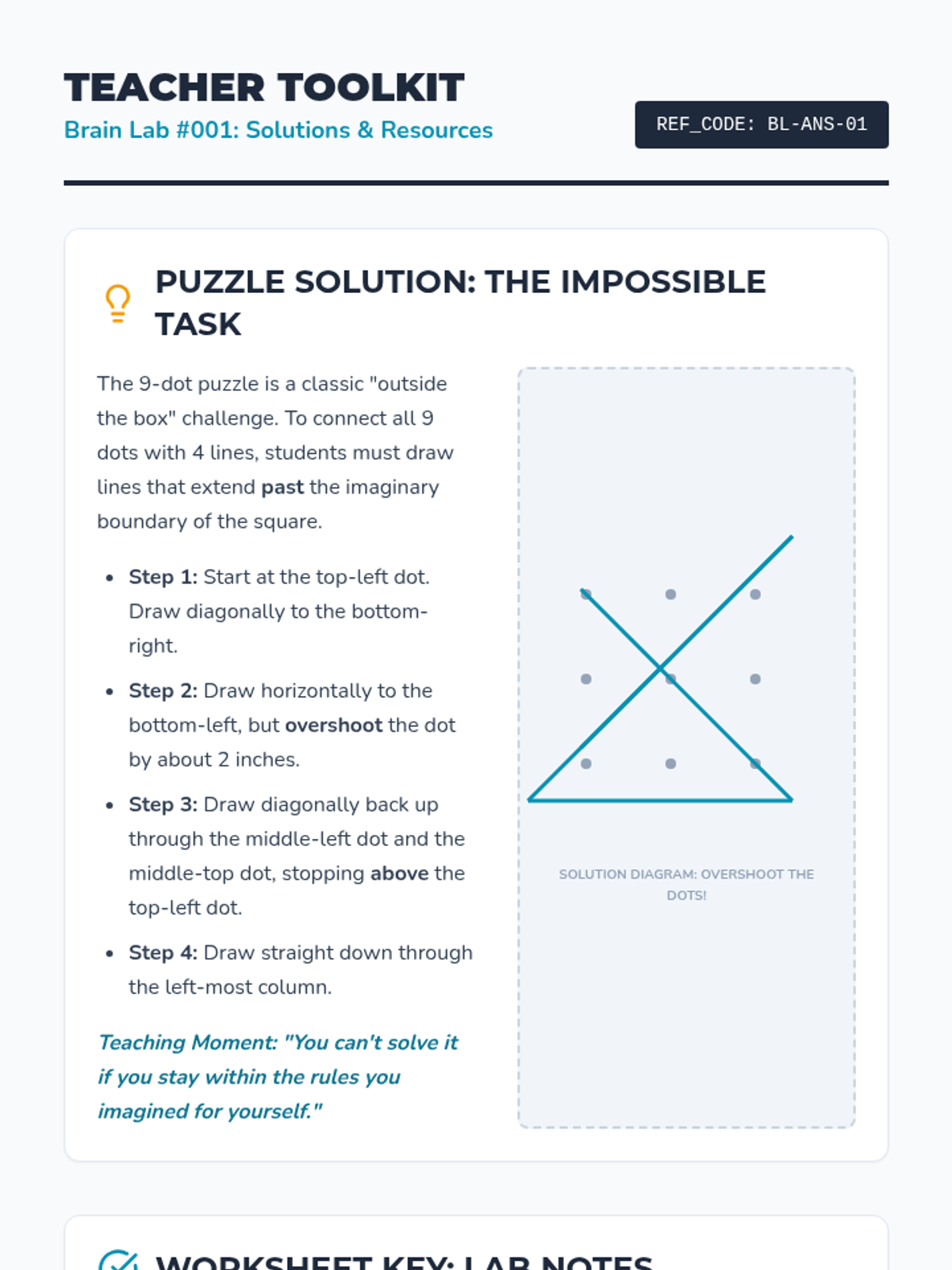
A teacher resource providing the solution to the 9-dot puzzle, an answer key for the Experiment Log worksheet, and a curated list of video recommendations to complement the lesson.
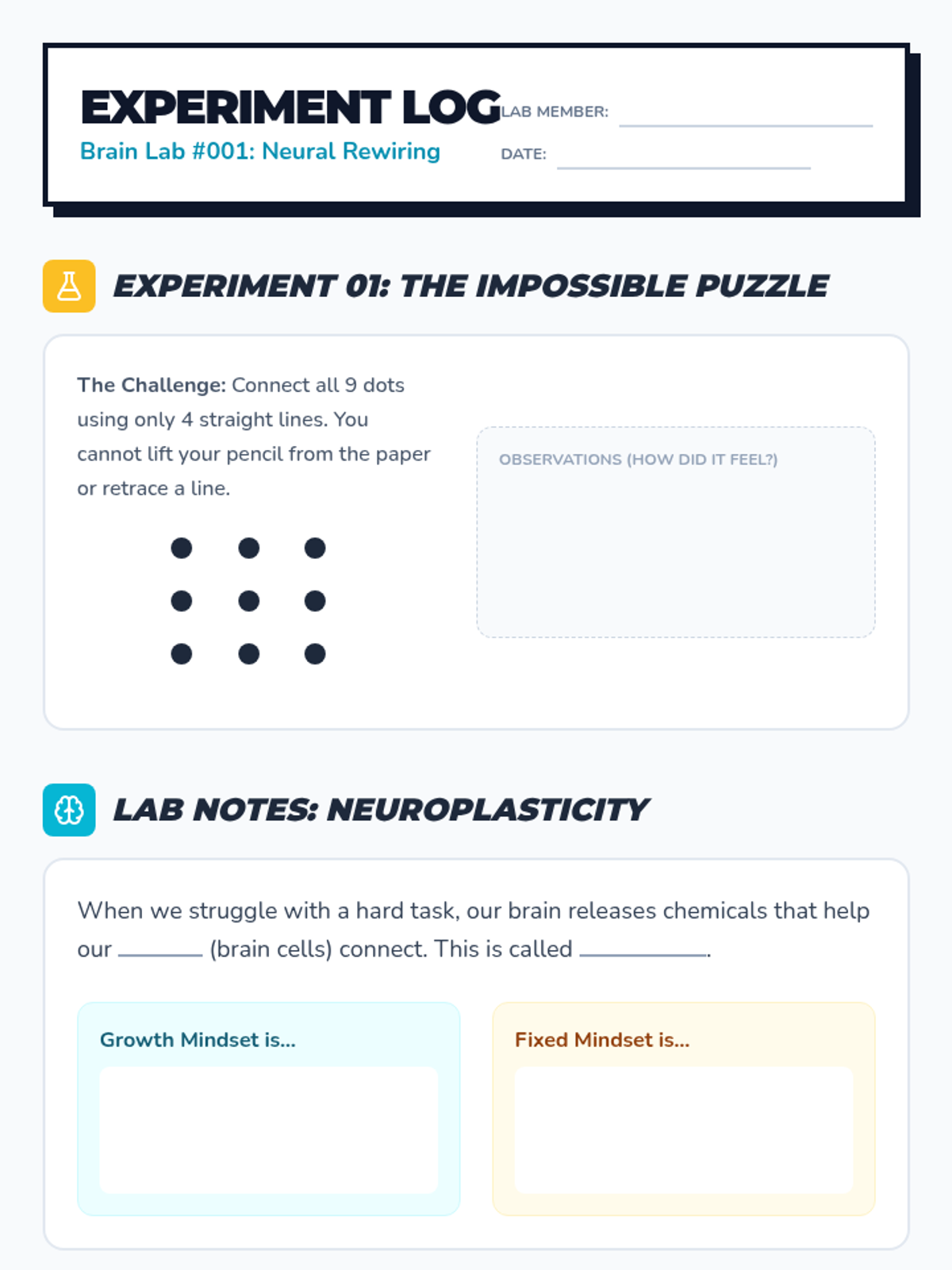
A laboratory-themed student worksheet designed to accompany the Brain Lab lesson. It includes a logic puzzle challenge, fill-in-the-blank neuroplasticity notes, a "Flip the Script" mindset activity, and a goal-setting section.
A high-energy, laboratory-themed slide deck for a growth mindset lesson. It covers neuroplasticity, the 'Impossible Task' challenge, the difference between effort and strategy, and the power of the word 'Yet'.
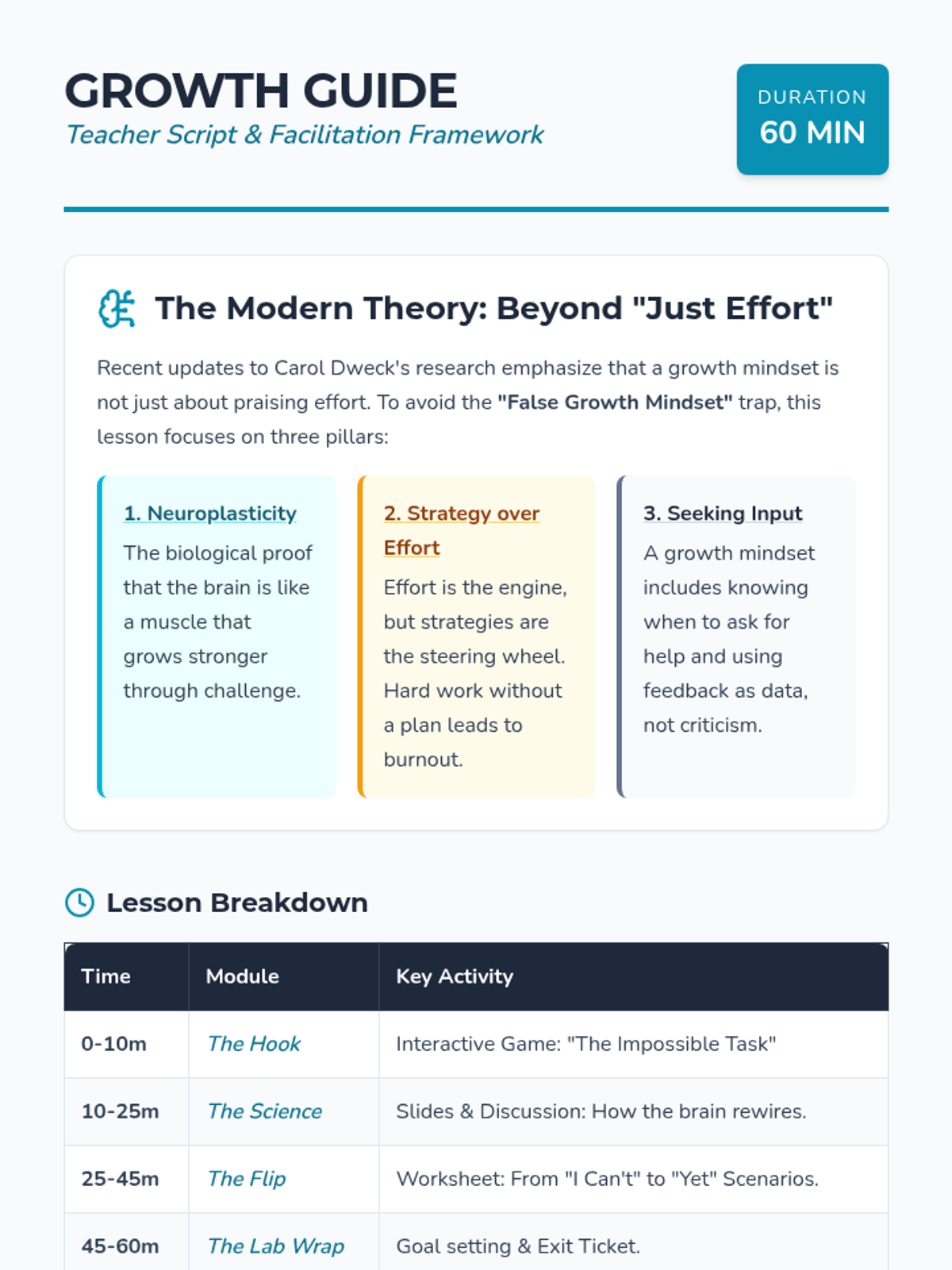
A comprehensive teacher facilitation guide for a 60-minute growth mindset lesson. It includes updated theory on neuroplasticity, a minute-by-minute breakdown, and instructional transcripts with discussion prompts.