Empathetic skill development through emotion recognition, cultural diversity appreciation, and bias confrontation. Targets multi-perspective analysis to support respectful interactions and complex social responses.
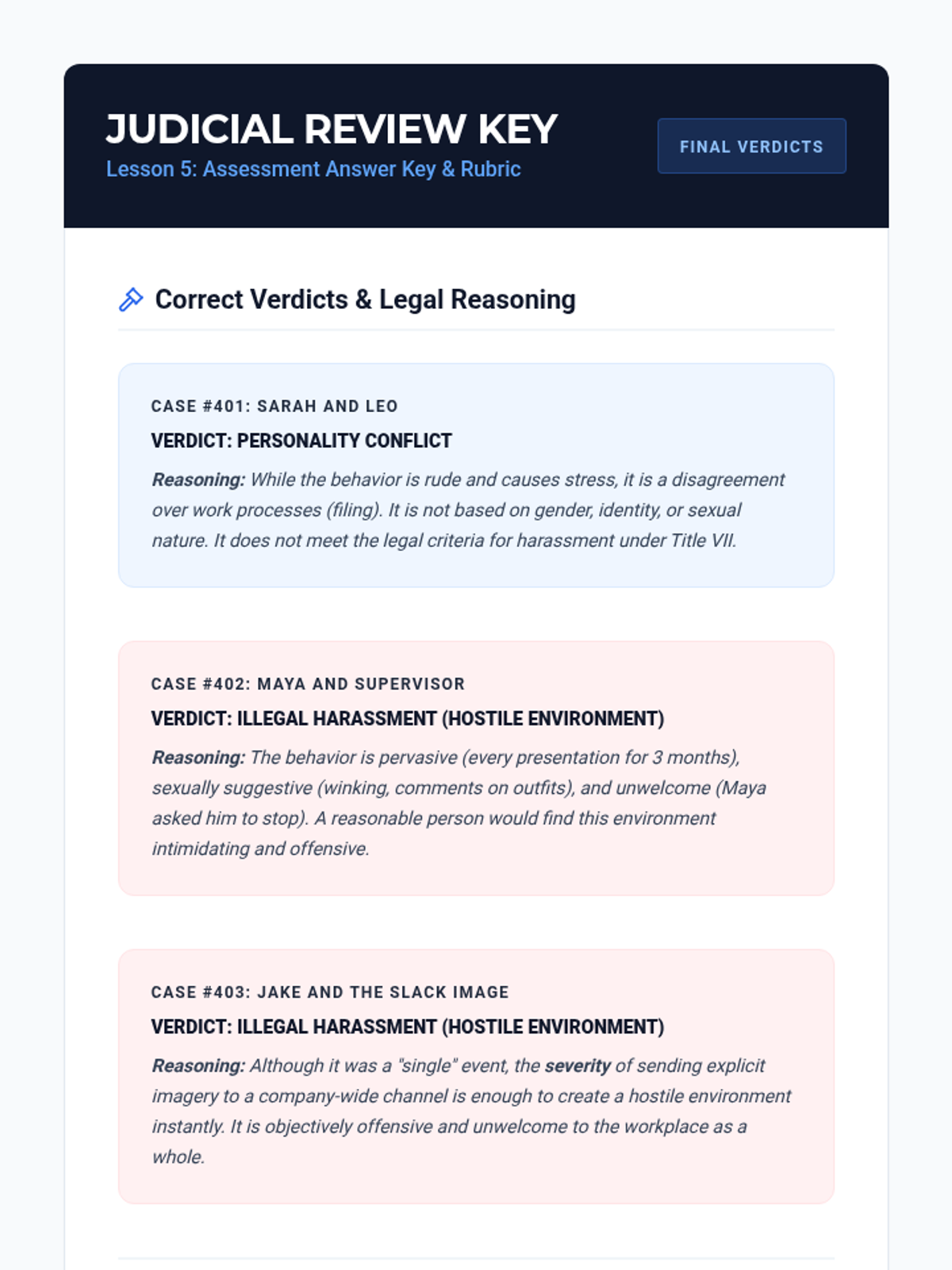
A teacher resource for Lesson 5: The Judicial Review. It includes the correct categorization of assessment scenarios, detailed legal justifications for each, and a grading rubric for student responses.
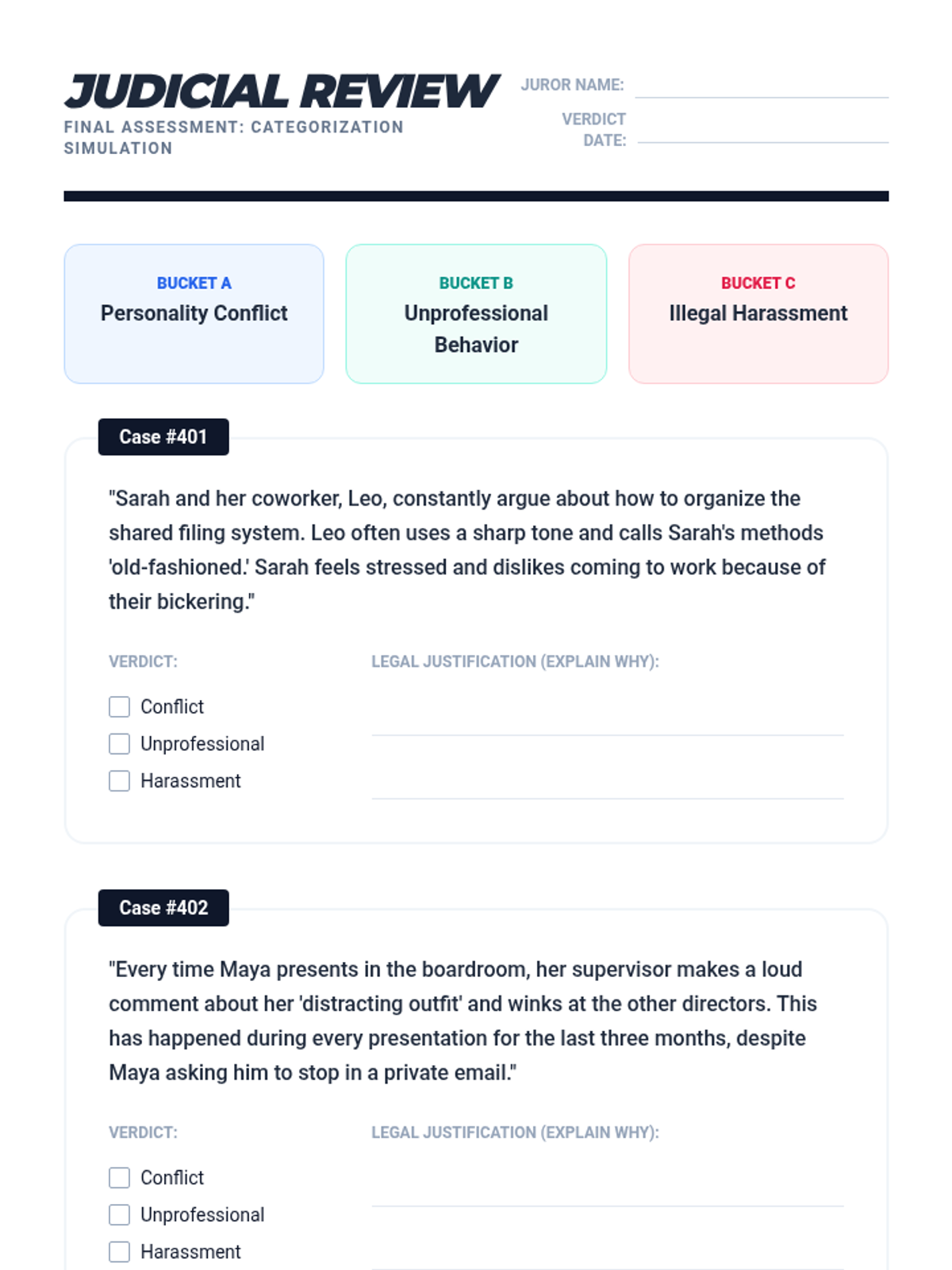
The final assessment worksheet for Lesson 5. Students categorize complex workplace scenarios as Personality Conflict, Unprofessional, or Illegal Harassment, providing legal justifications for each verdict.
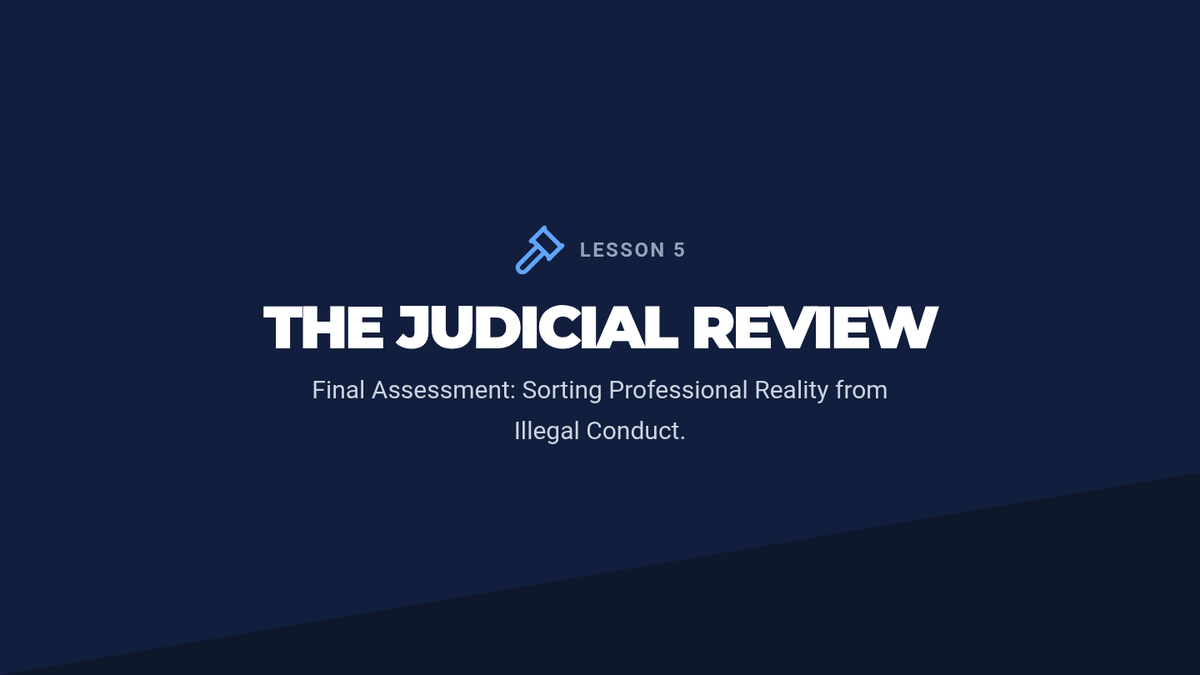
Educational slides for Lesson 5: The Judicial Review. This deck sets up the final simulation, defines the three categories (Conflict, Unprofessional, Harassment), and outlines the assessment task.
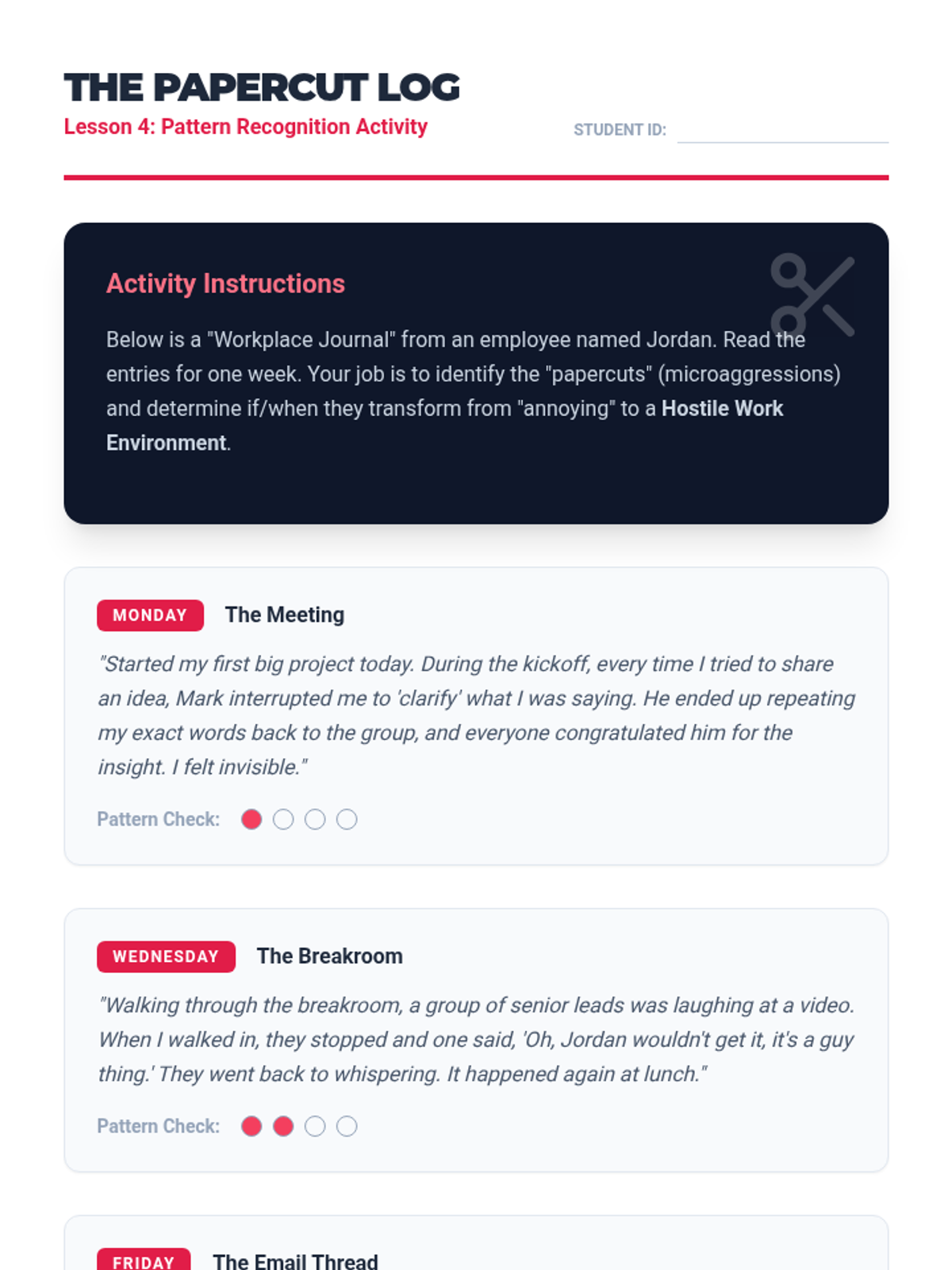
A student worksheet for Lesson 4 where they analyze a week's worth of workplace journal entries to identify a pattern of microaggressions. It focuses on the cumulative effect of small behaviors.
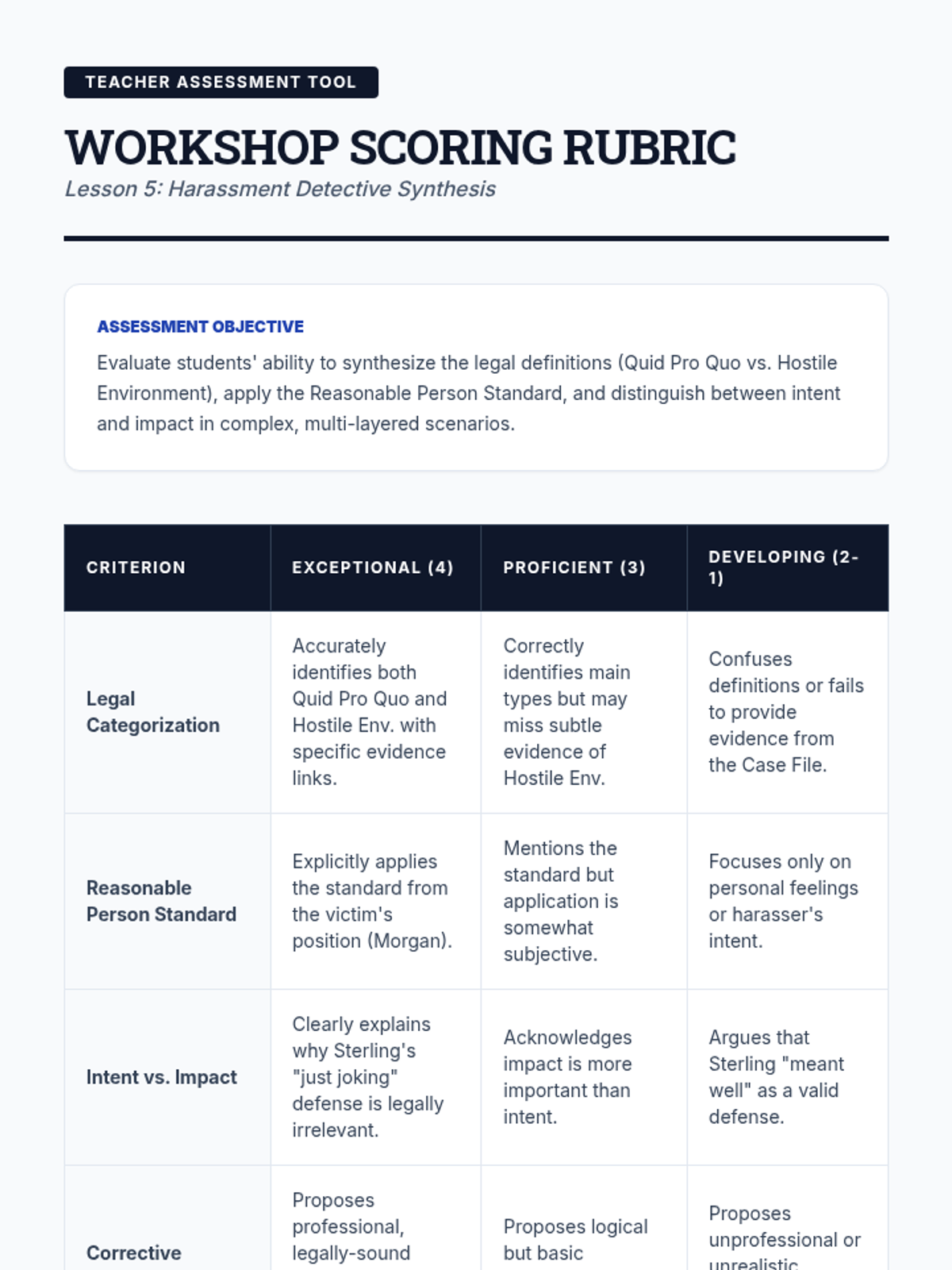
Teacher grading rubric and case study key for evaluating the Lesson 5 synthesis workshop.
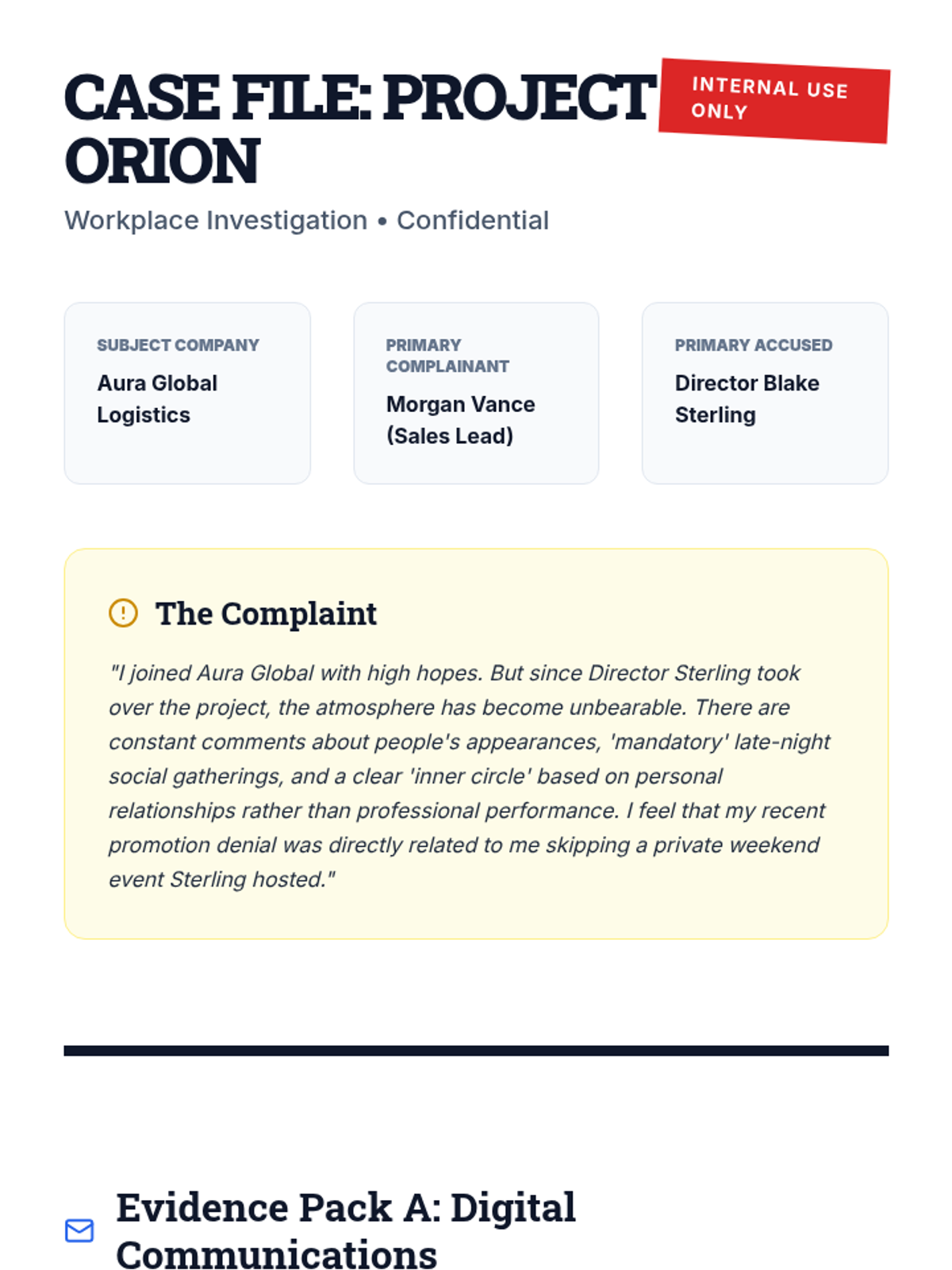
Student activity document containing case evidence (emails, statements, HR notes) for the Lesson 5 synthesis workshop.
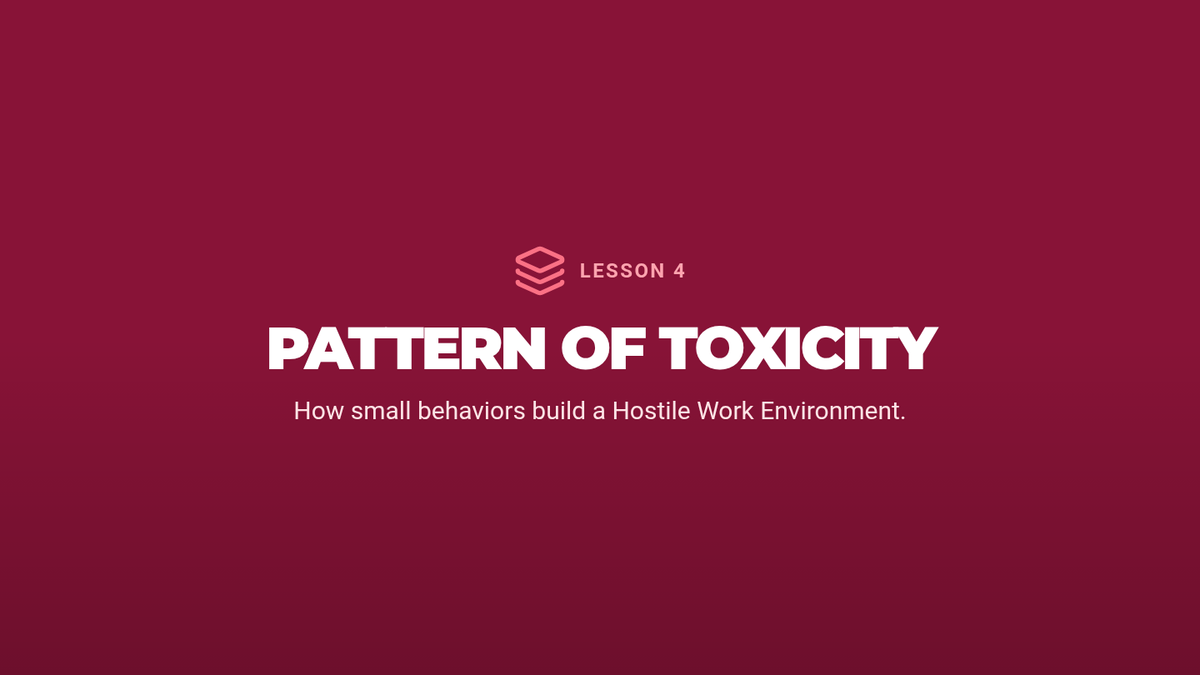
Educational slides for Lesson 4: The Pattern of Toxicity. This deck explains how microaggressions contribute to a hostile work environment over time, emphasizing the distinction between isolated incidents and pervasive patterns.
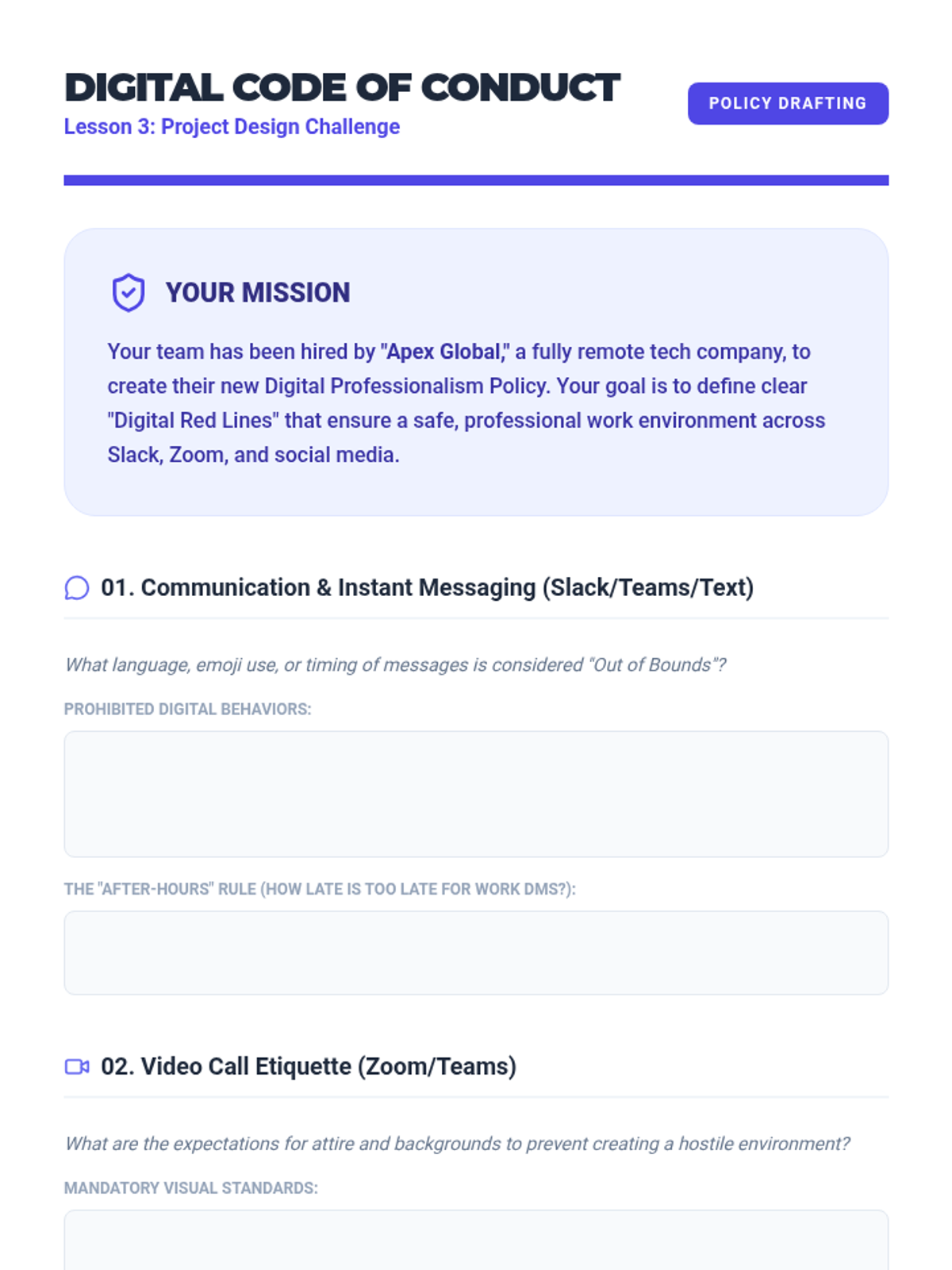
A student project guide for Lesson 3. Students act as HR consultants to draft a 'Digital Professionalism Policy' for a remote company, defining boundaries for instant messaging, video calls, and social media.
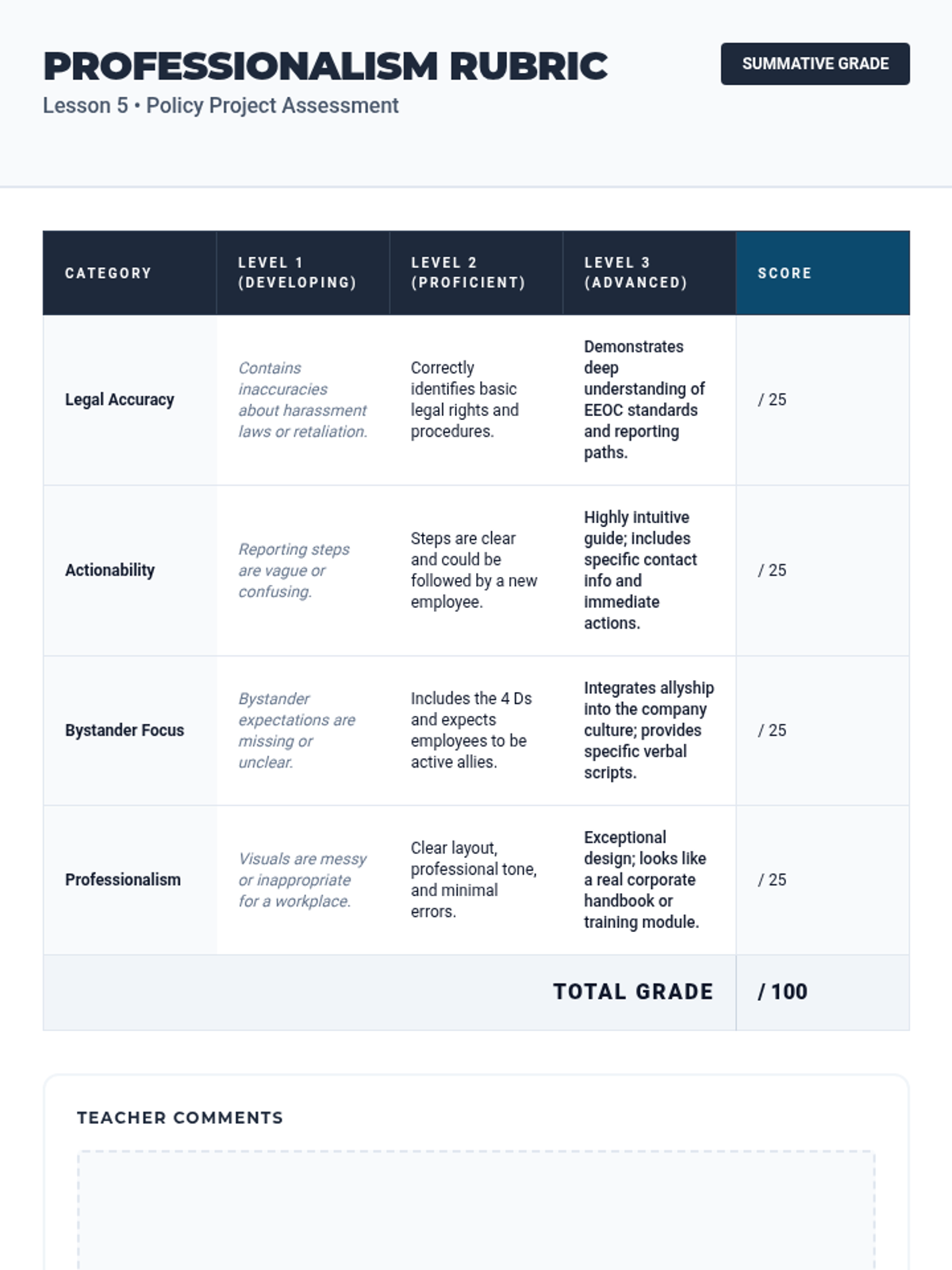
Final summative rubric for Lesson 5, assessing legal accuracy, actionability, bystander focus, and professionalism in the student-created workplace policies.
Final workshop slides for Lesson 5, introducing the Harassment Detective challenge and guiding students through the analysis process.
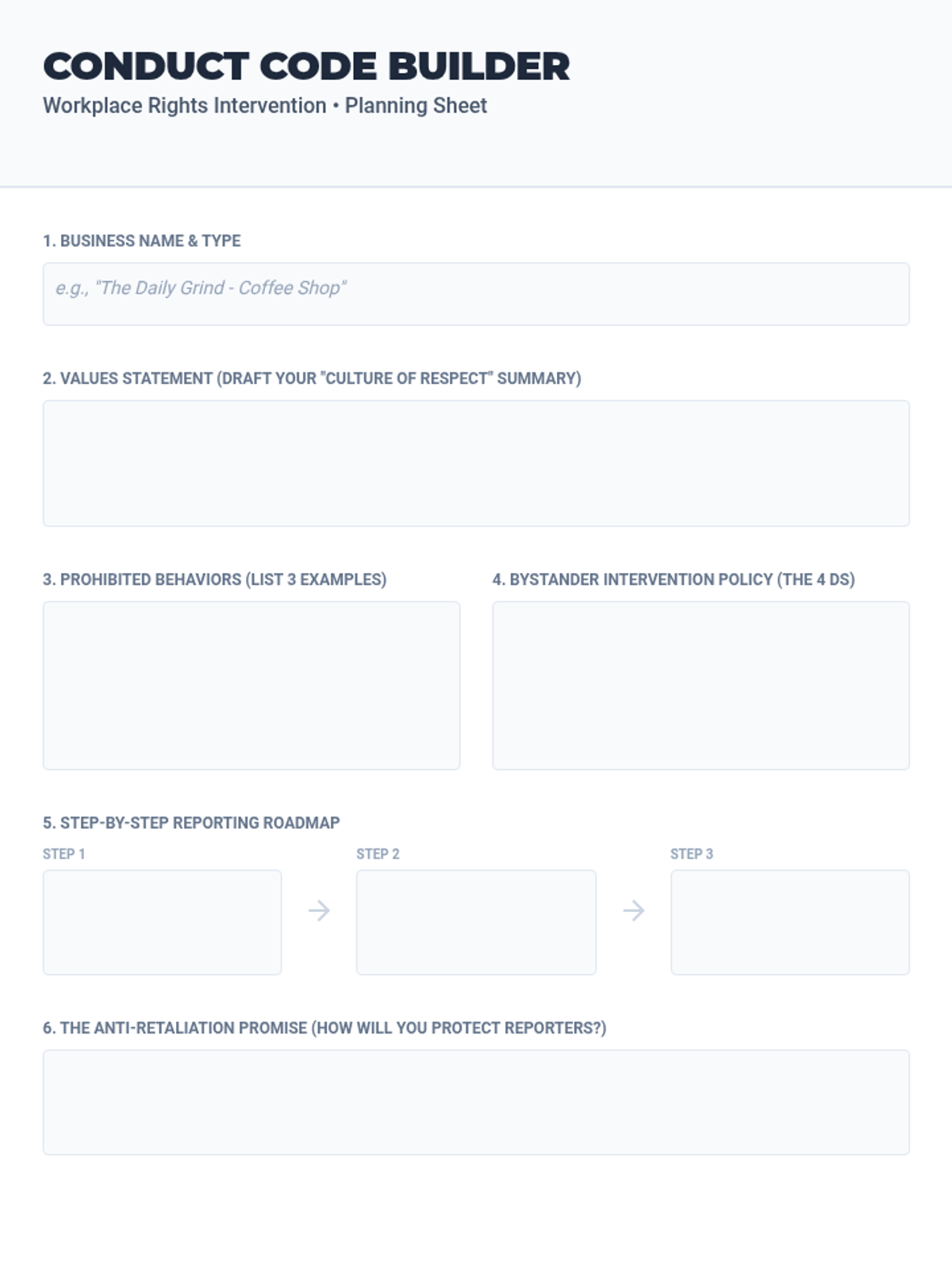
A planning worksheet for Lesson 5 where students draft the various components of their workplace code of conduct and reporting policy.
Educational slides for Lesson 3: Digital Professional Conduct. This deck covers how workplace harassment translates to digital spaces, the impact of social media interactions between coworkers, and the 'permanence' of digital evidence.
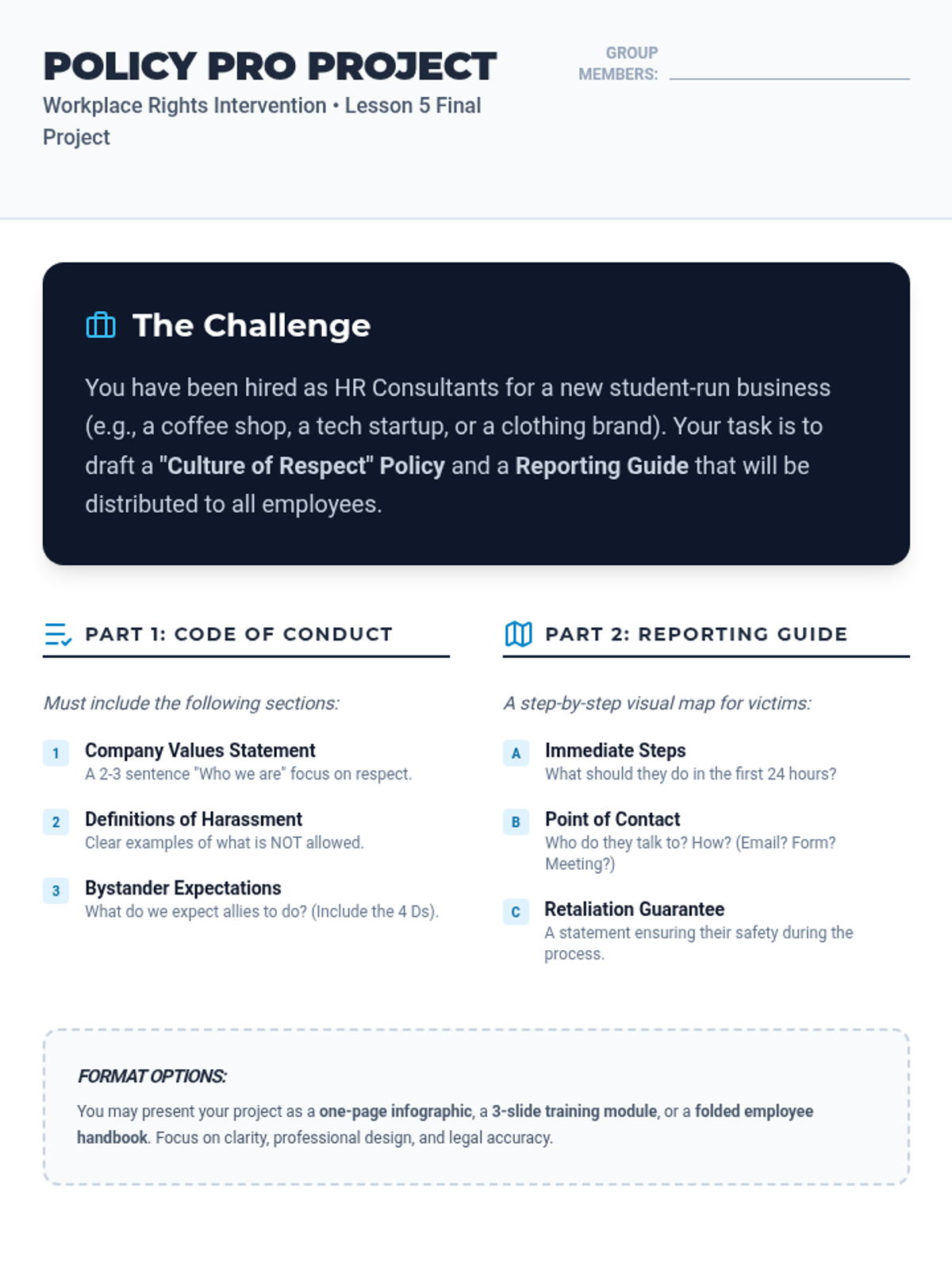
Final project guide for Lesson 5, tasking students to create a code of conduct and reporting guide for a fictional student-run business.
Lesson 4 slides on microaggressions, subtle behaviors, and how they aggregate into a hostile work environment.
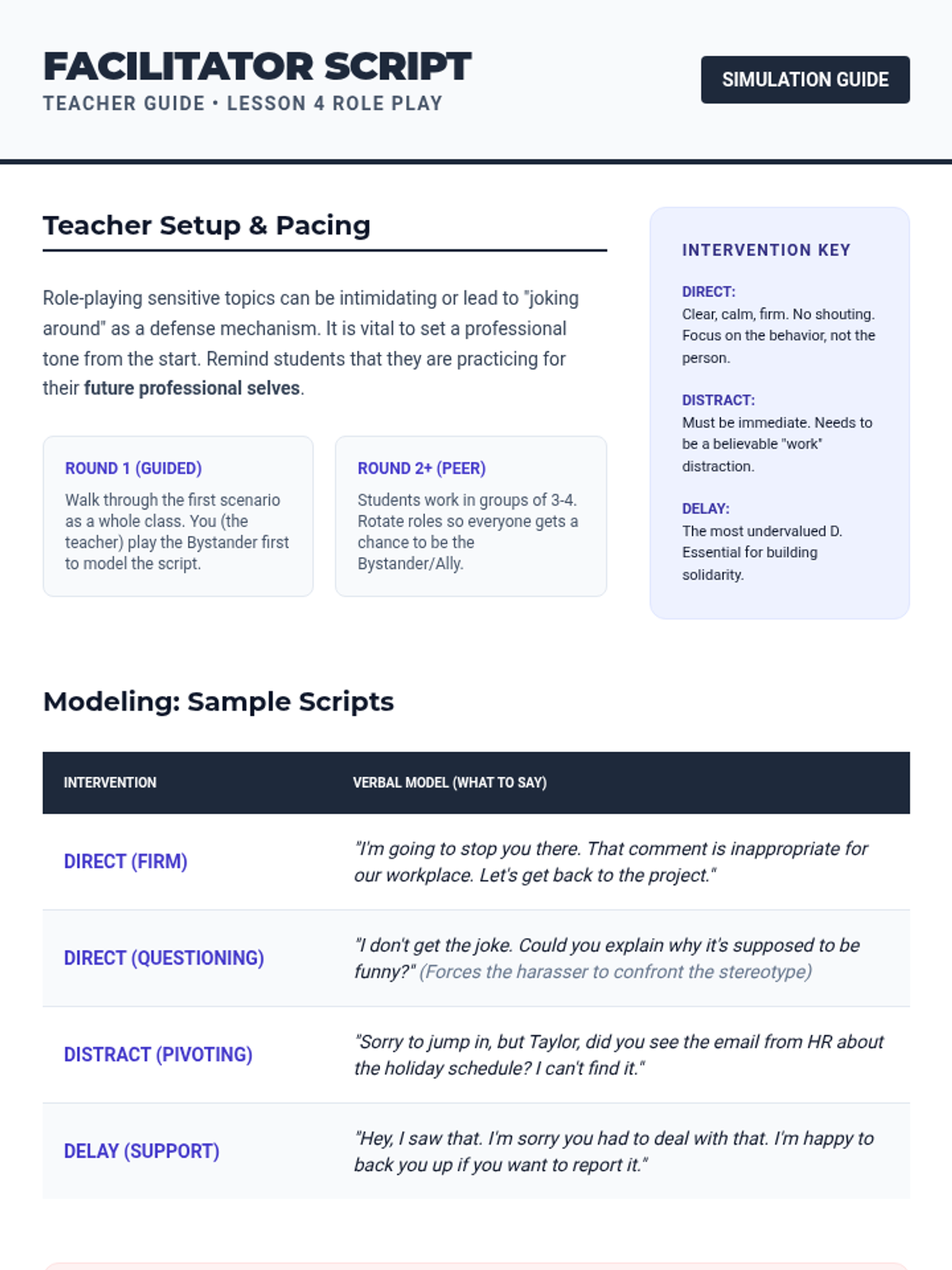
Teacher facilitator guide for Lesson 4 role-play simulations, including setup advice, verbal models for interventions, and safety protocols.
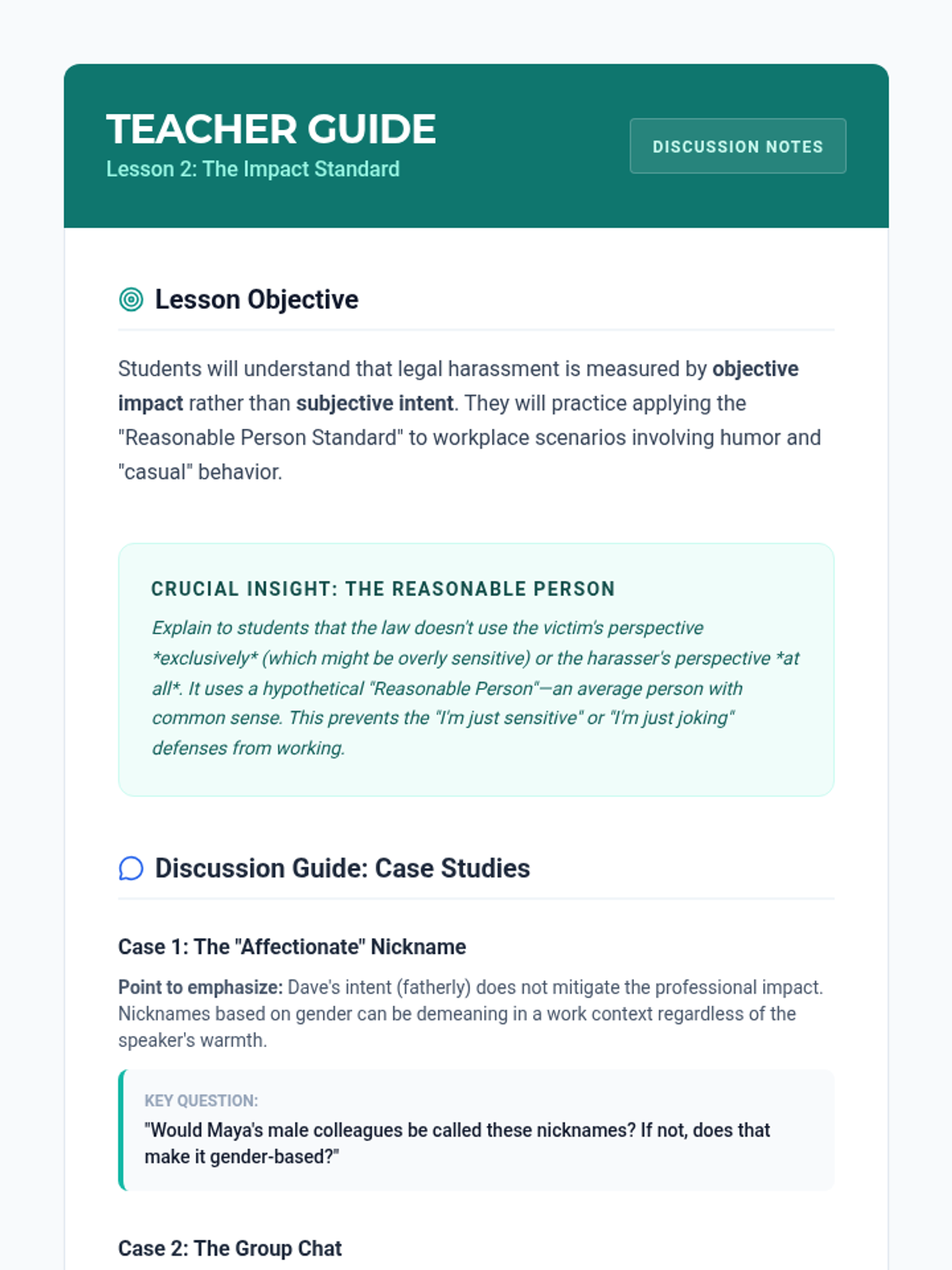
Teacher facilitation notes for Lesson 2: The Impact Standard. It includes guiding questions for the case studies and tips for addressing common student concerns about the "Reasonable Person Standard."
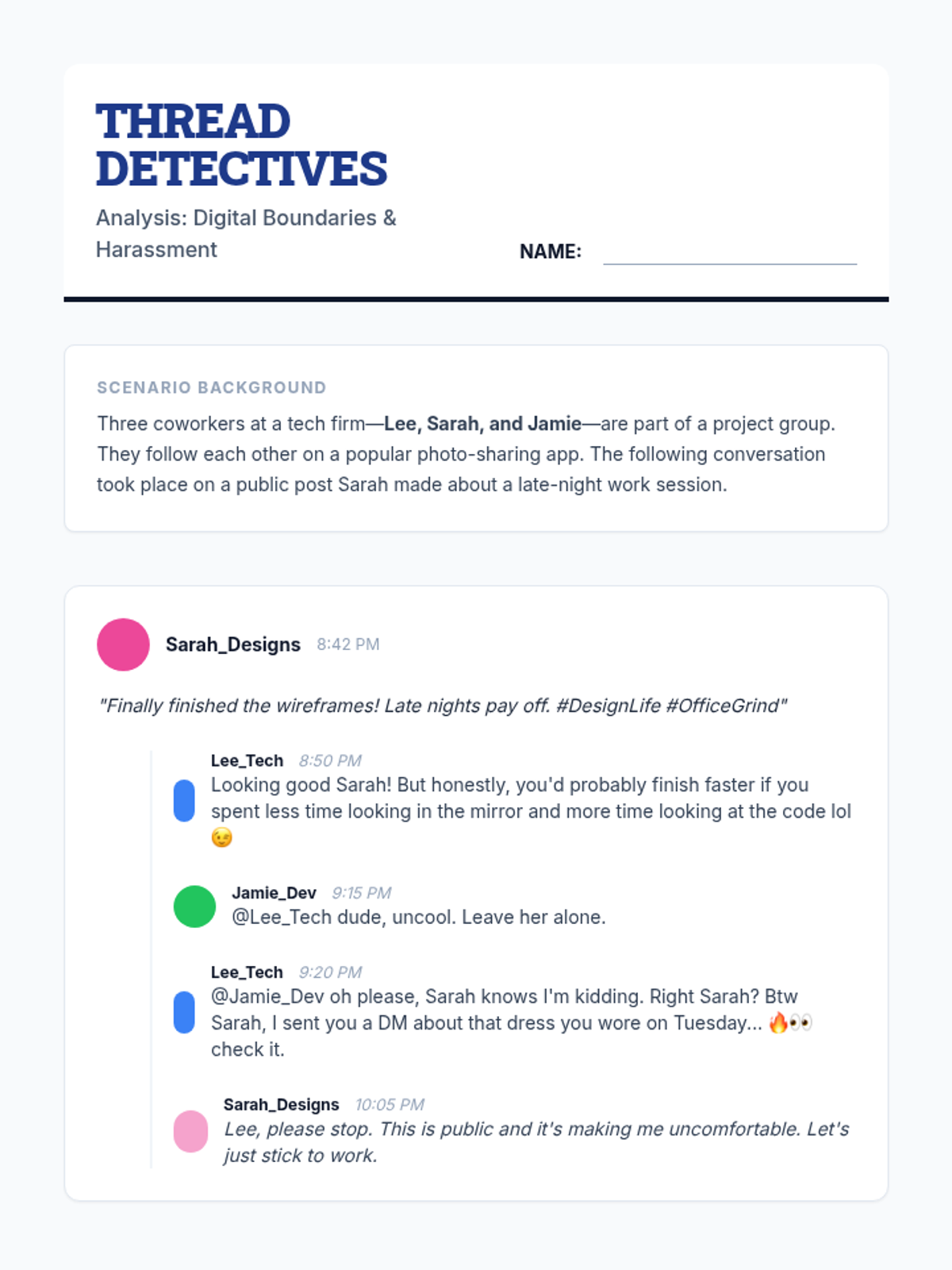
Student activity sheet for analyzing a fictional social media thread between coworkers to identify digital harassment.
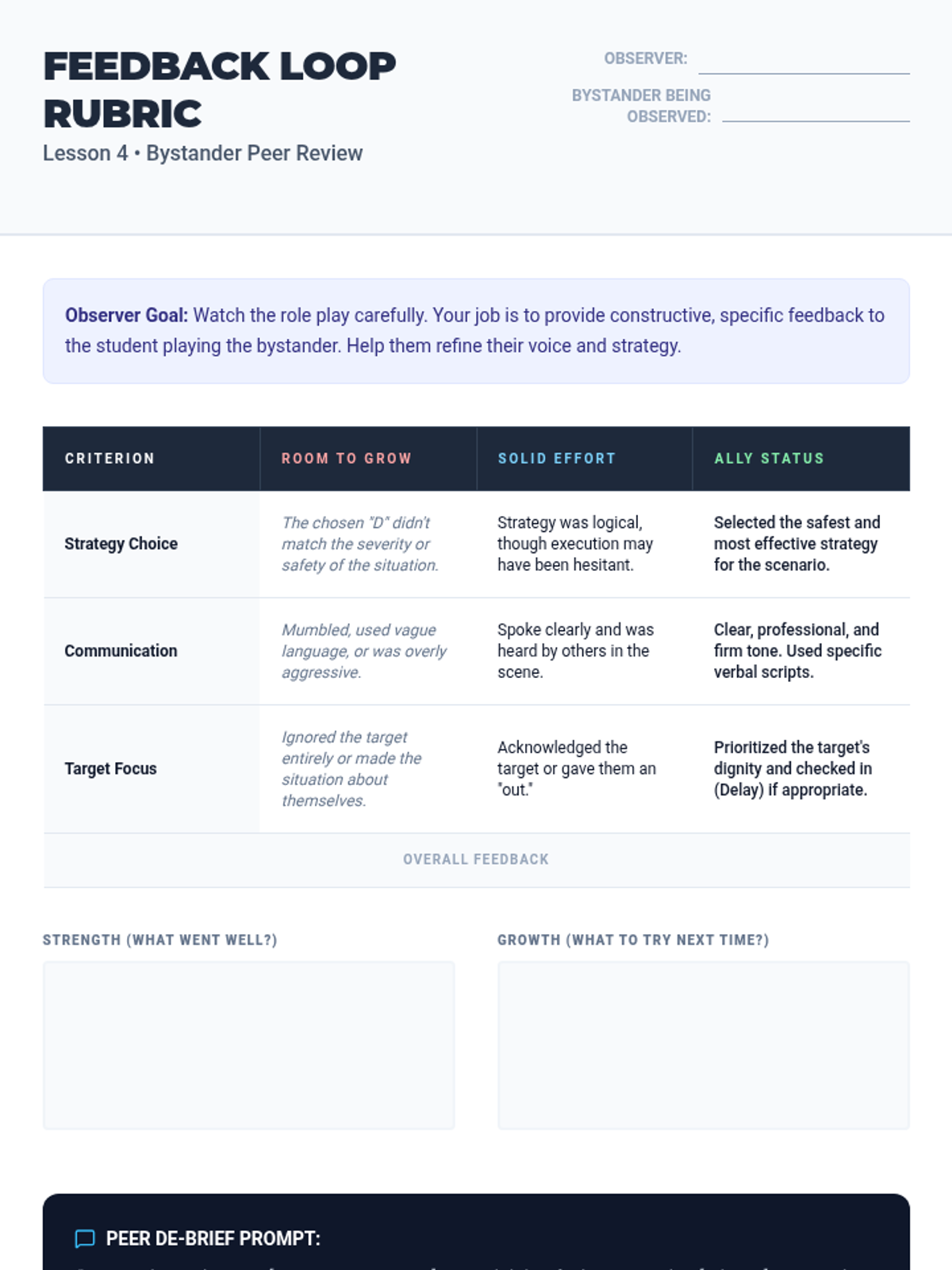
A peer-assessment rubric for Lesson 4 role-play activities, focusing on strategy choice, communication, and target-focused intervention.
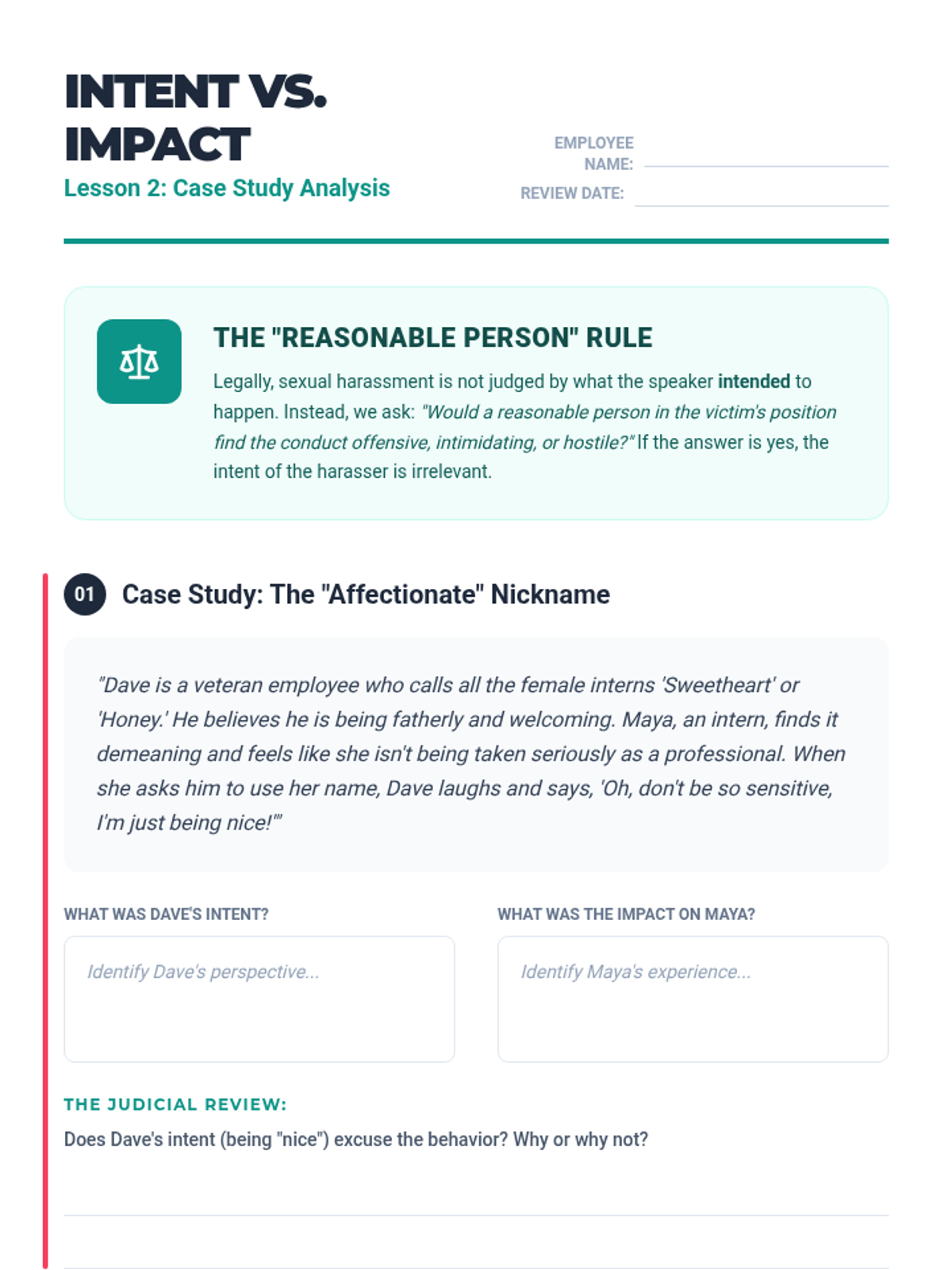
A student case study analysis for Lesson 2 focusing on the 'Intent vs. Impact' legal standard. Students analyze two workplace scenarios to determine how intent differs from the actual impact on the victim and the environment.
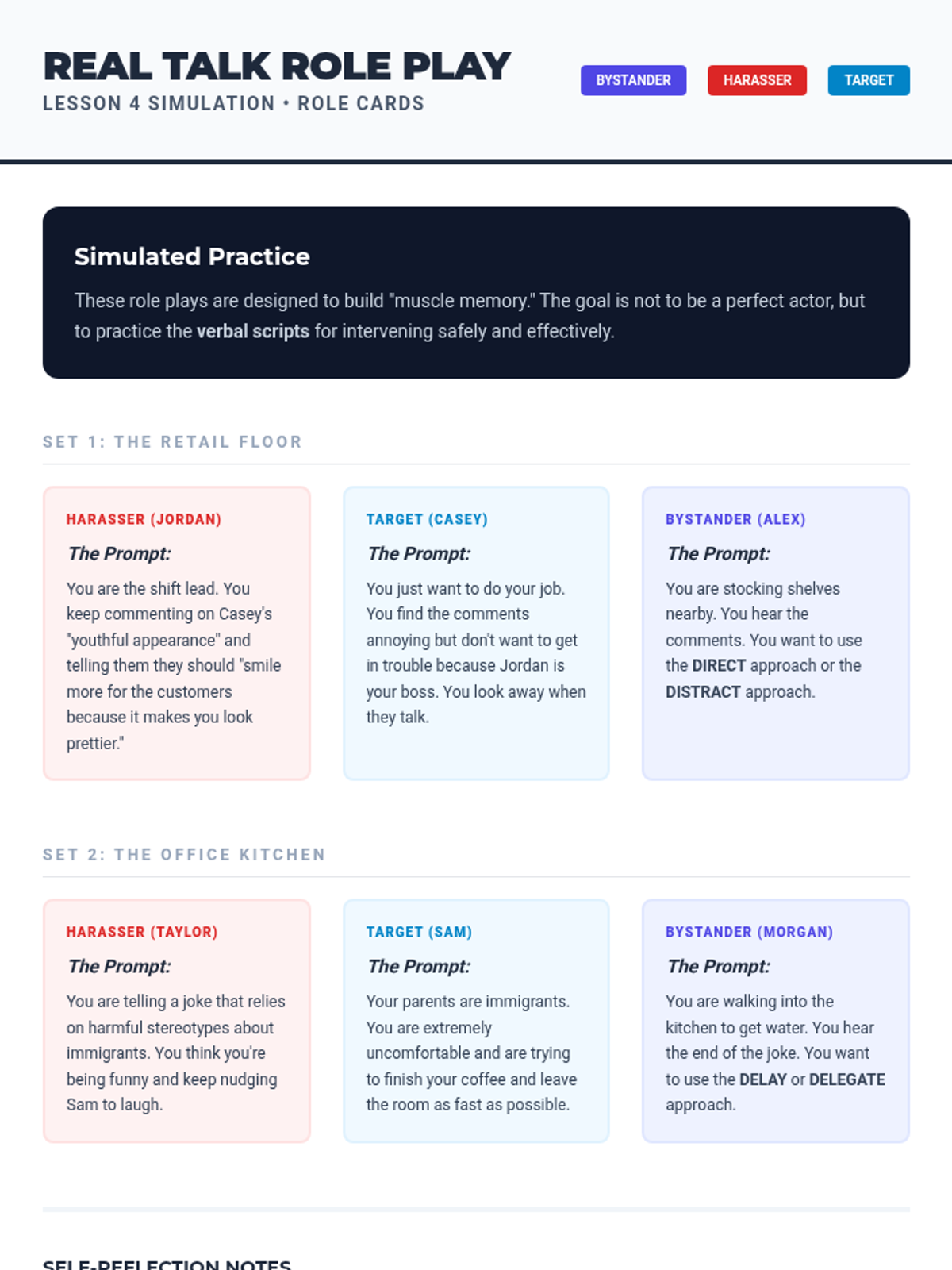
Role-play scenario cards for Lesson 4, including prompts for harassers, targets, and bystanders in different workplace settings.
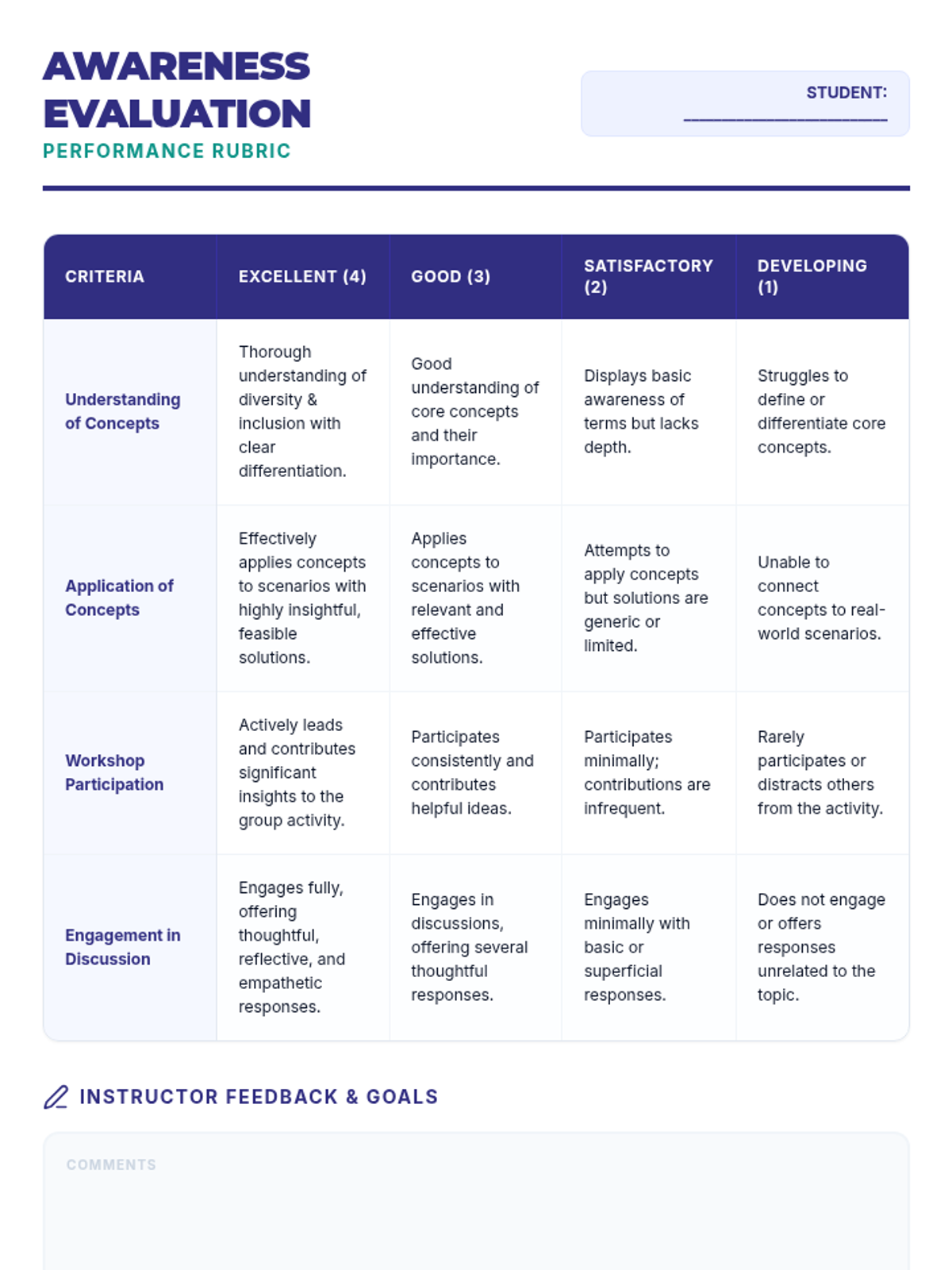
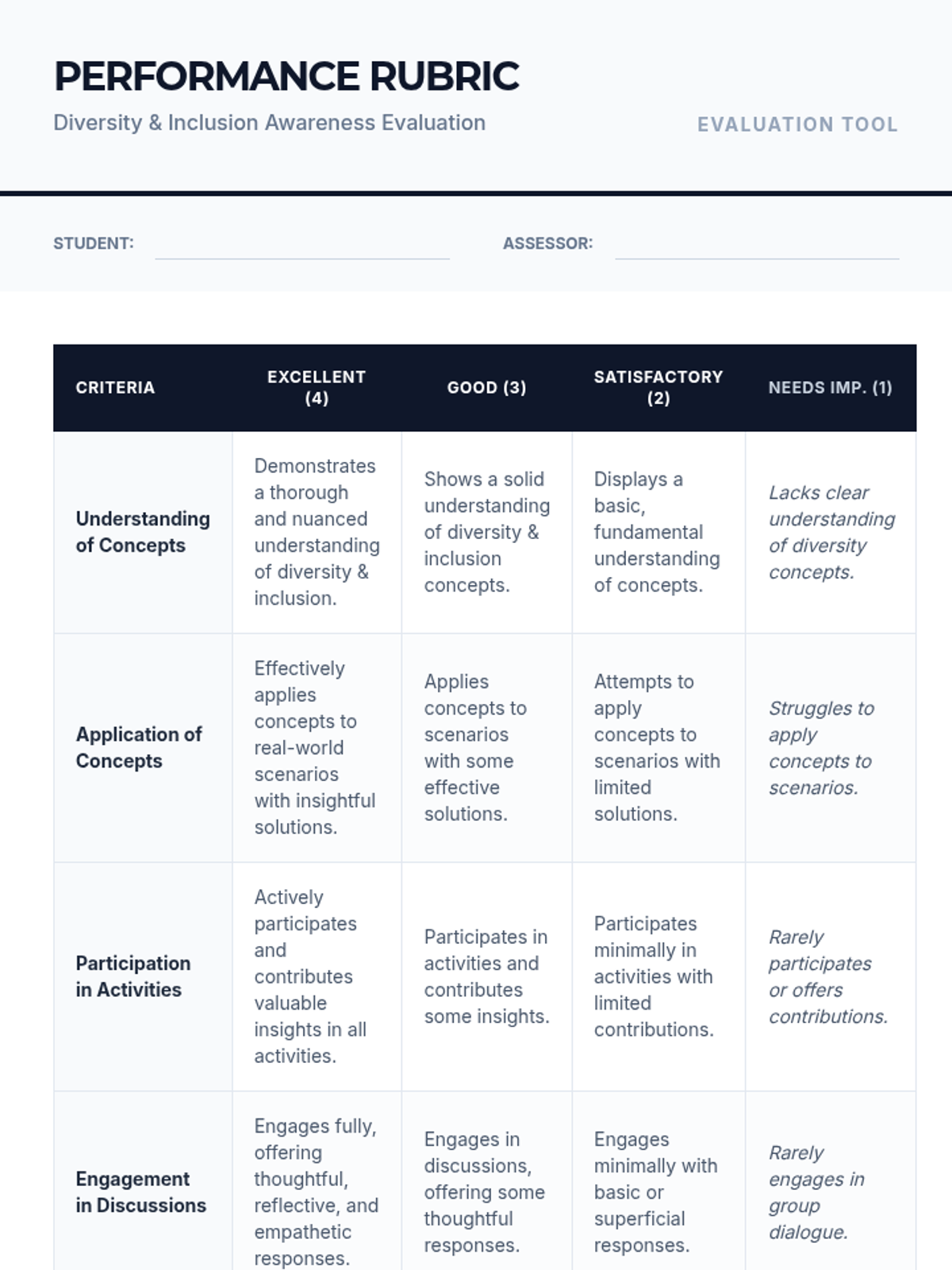
A professional evaluation rubric to assess students' understanding, application, and participation regarding workplace diversity and inclusion concepts.
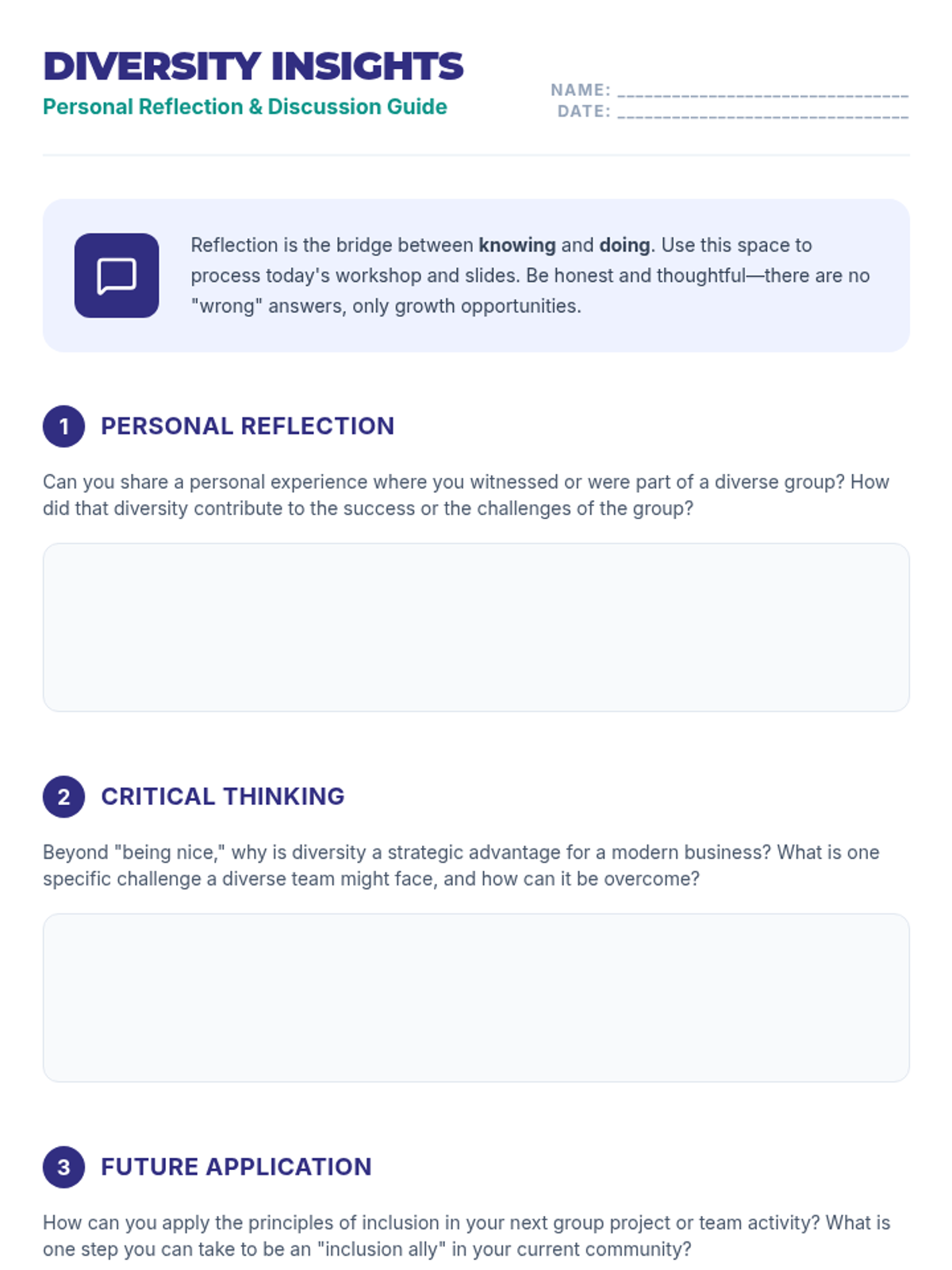
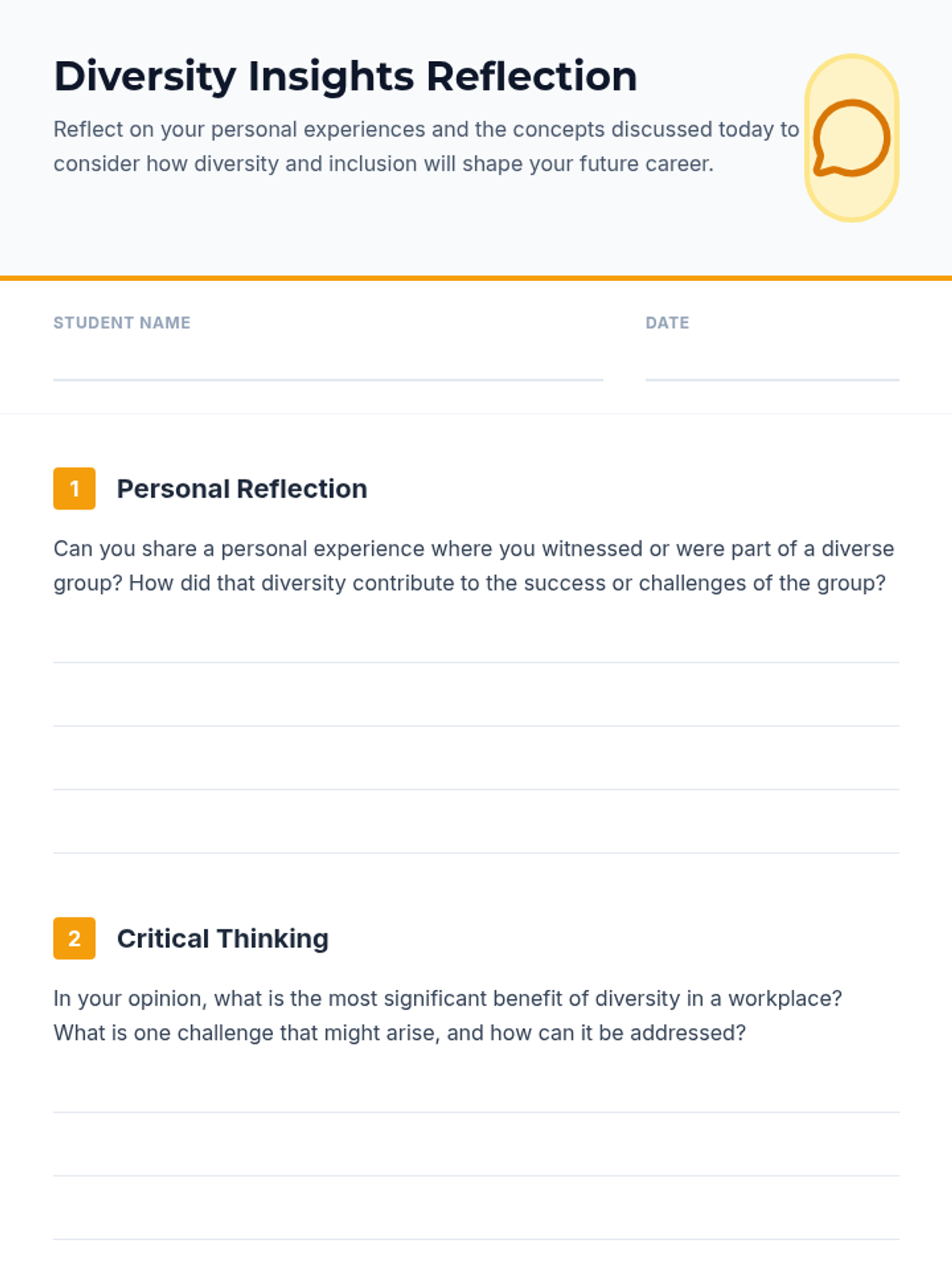
A guided reflection sheet for students to document their personal insights, critical thinking, and future applications of diversity and inclusion principles.
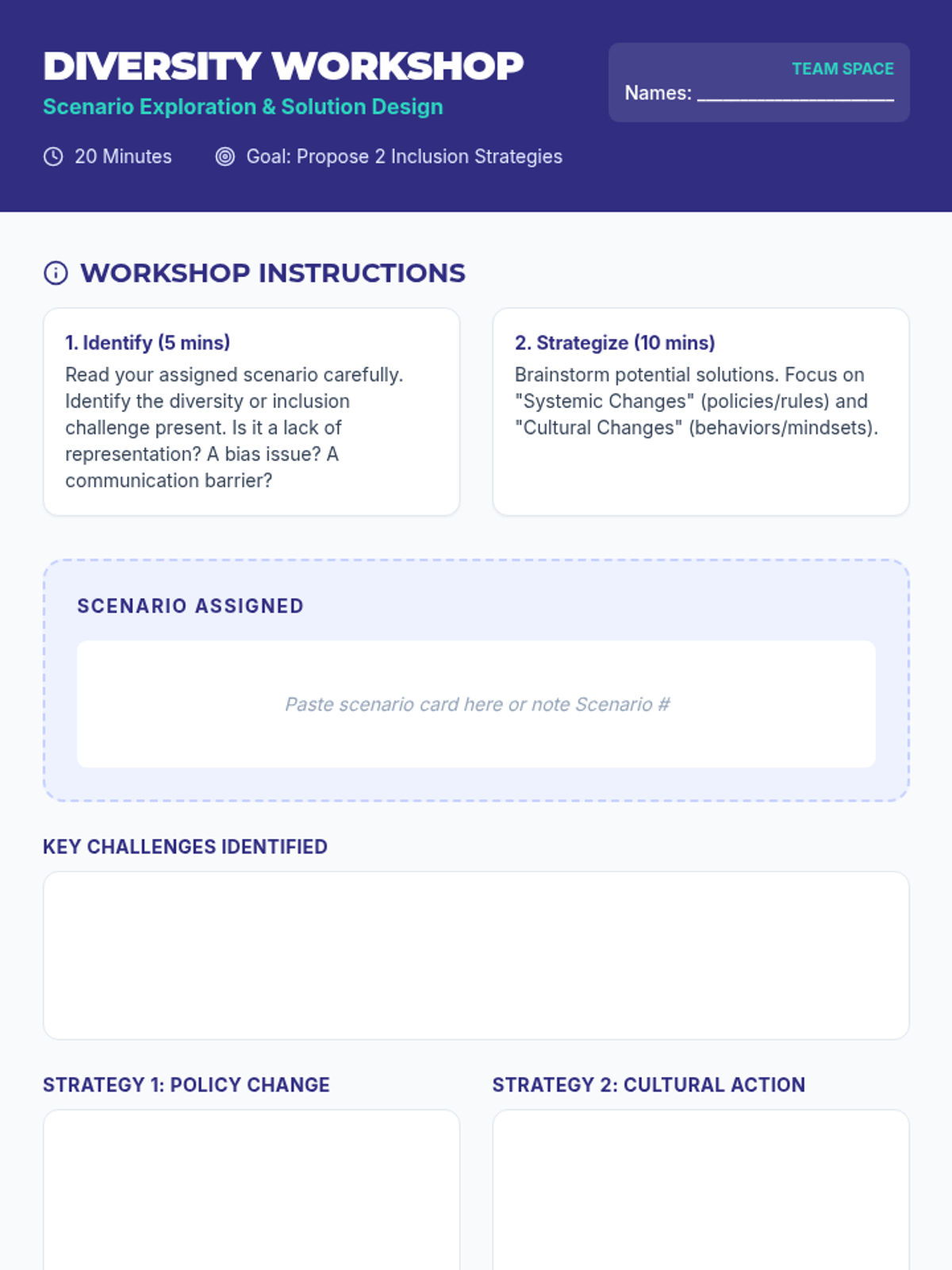
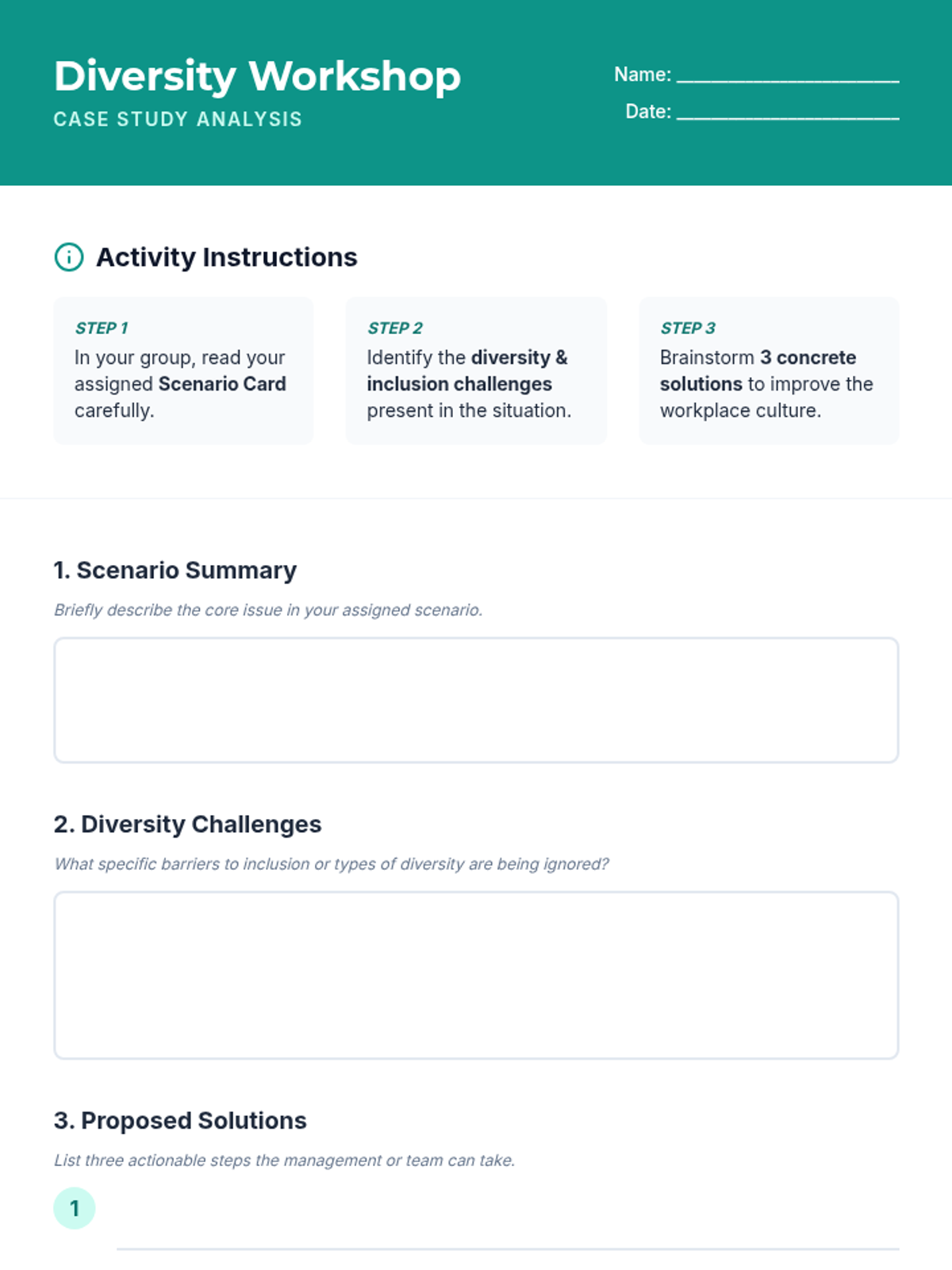
An interactive workshop worksheet and set of scenario cards for small group activities, focused on identifying diversity challenges and proposing inclusion strategies.
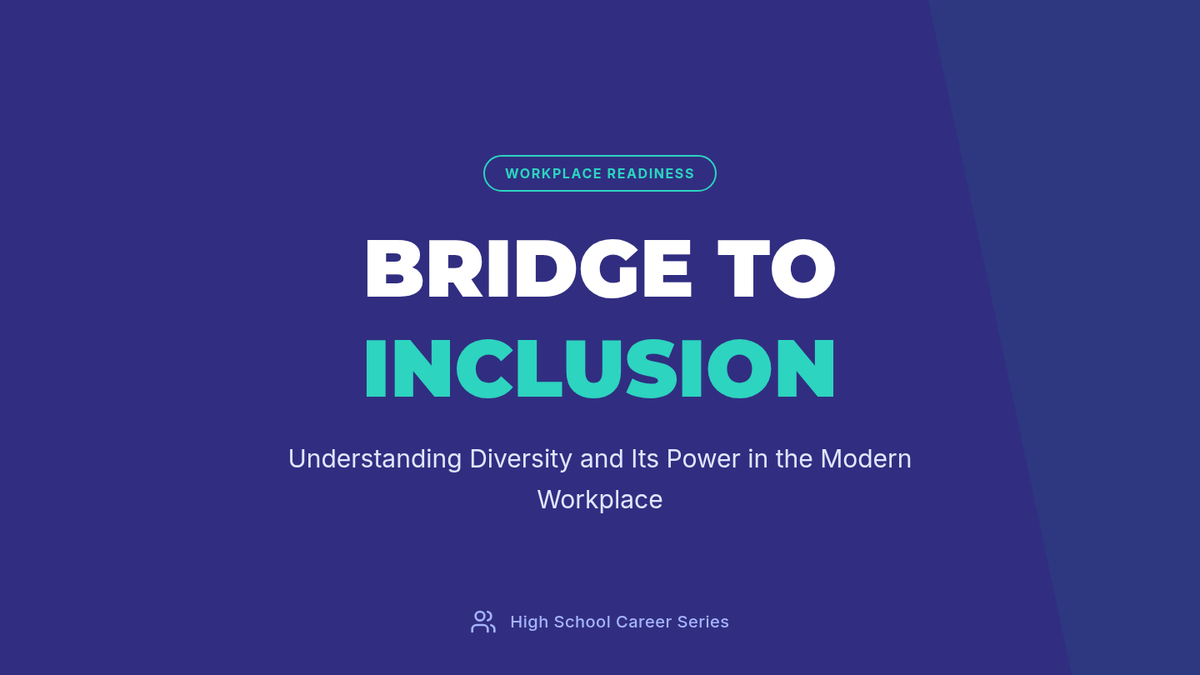
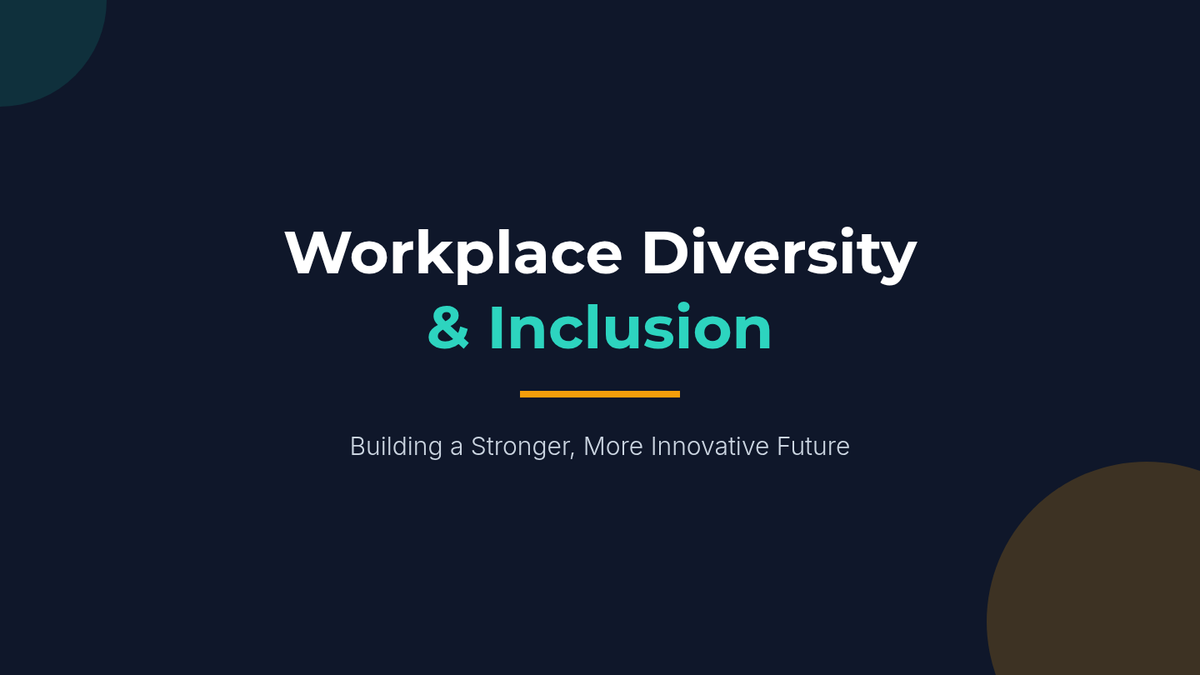
A vibrant, professional slide deck introducing the concepts of workplace diversity and inclusion, their business benefits, and strategies for building inclusive cultures.
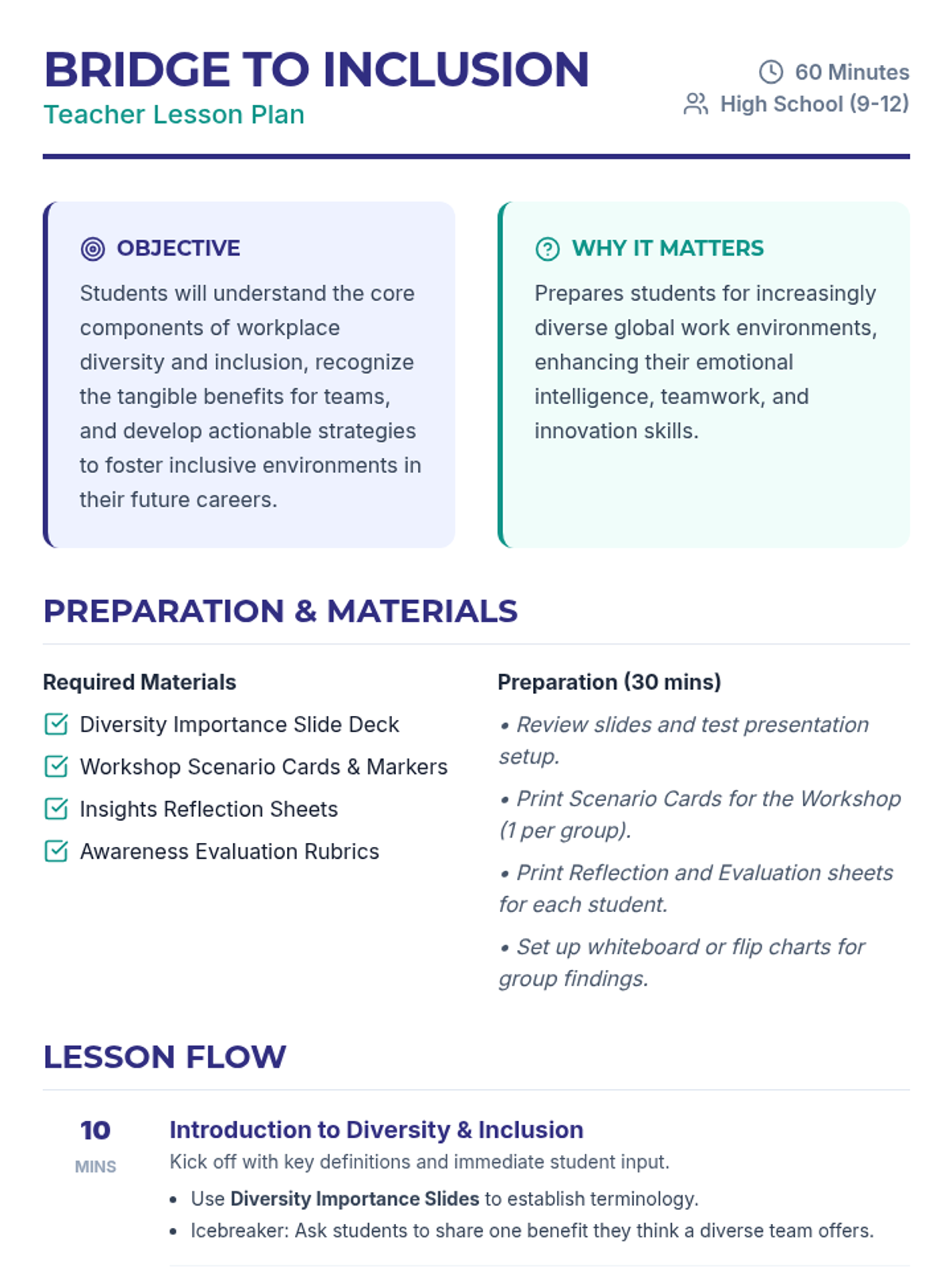
A comprehensive lesson plan for teachers, outlining the objectives, materials, and step-by-step flow for a 60-minute session on workplace diversity and inclusion.
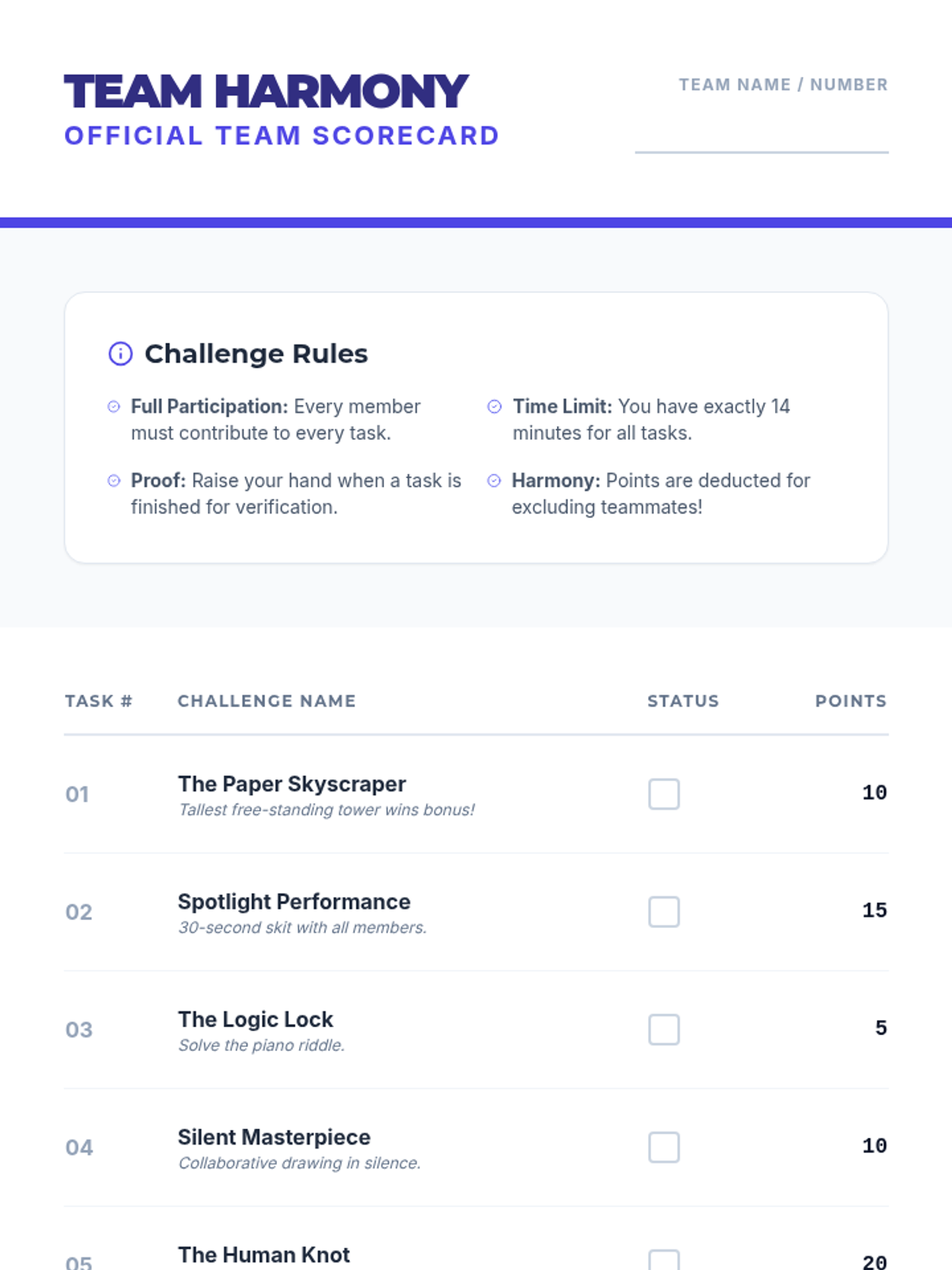
A student-facing handout that includes the challenge rules and a table for teams to track their progress and score during the Team Harmony activity.
A visual presentation to guide the Team Harmony Challenge, including rules, a timer cue, and debriefing questions.
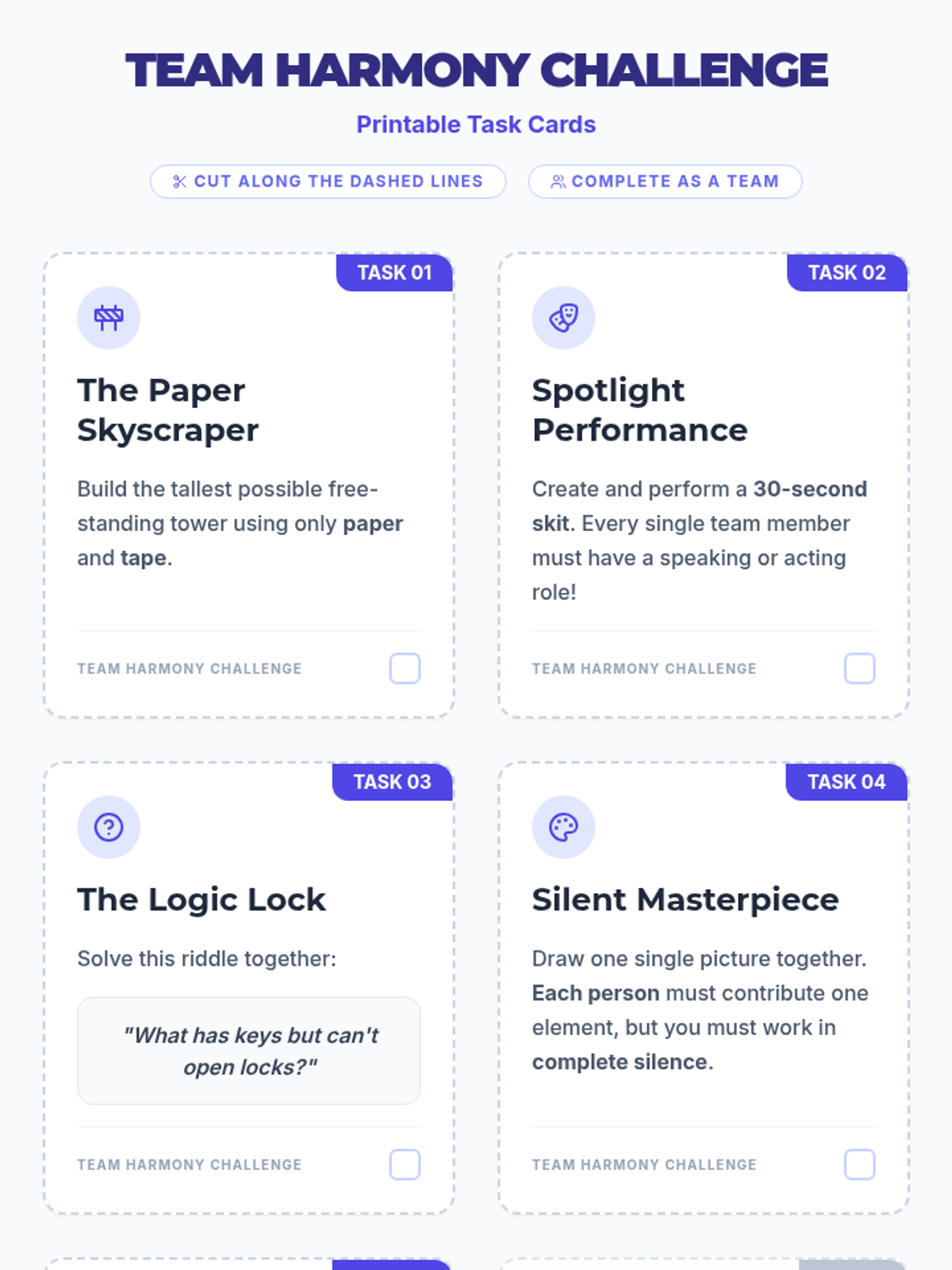
A set of printable challenge cards for the Team Harmony activity, featuring tasks that require collaboration, creativity, and problem-solving.
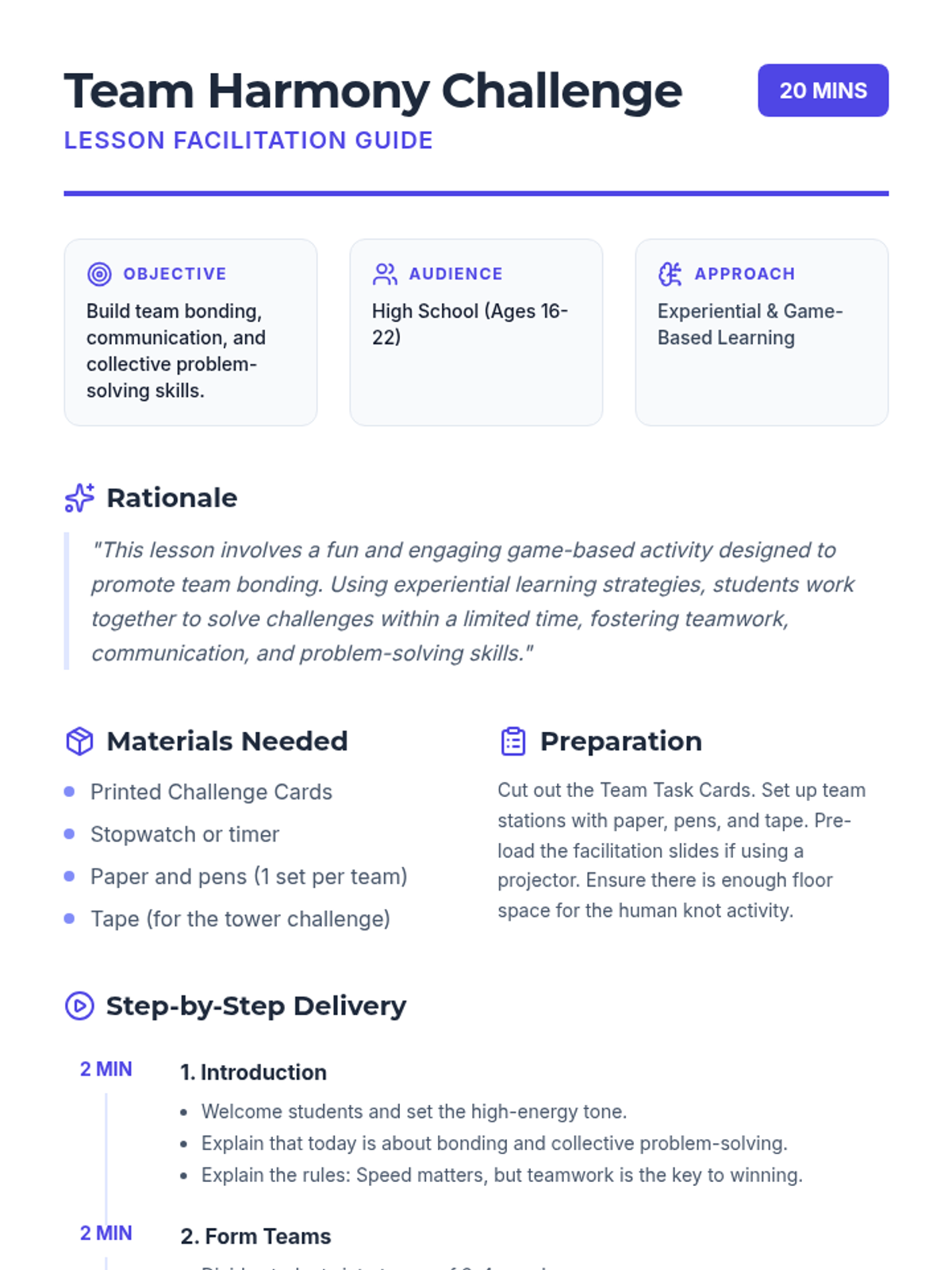
A comprehensive guide for teachers to lead the Team Harmony Challenge, including timing, materials, and step-by-step facilitation instructions.
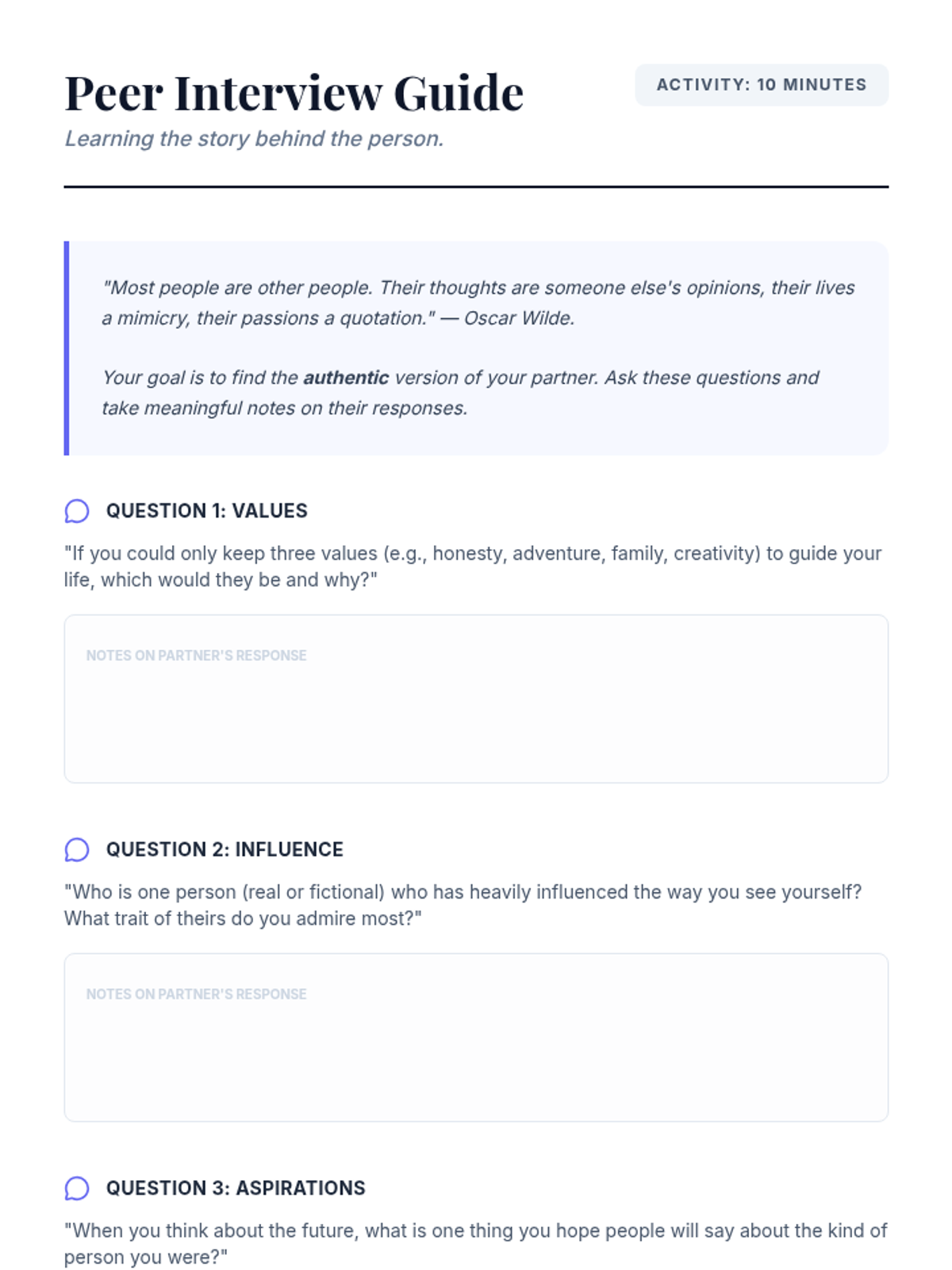
A peer interview guide for students to use during the Identity and Values Exploration lesson, featuring guiding questions and space for partner notes.
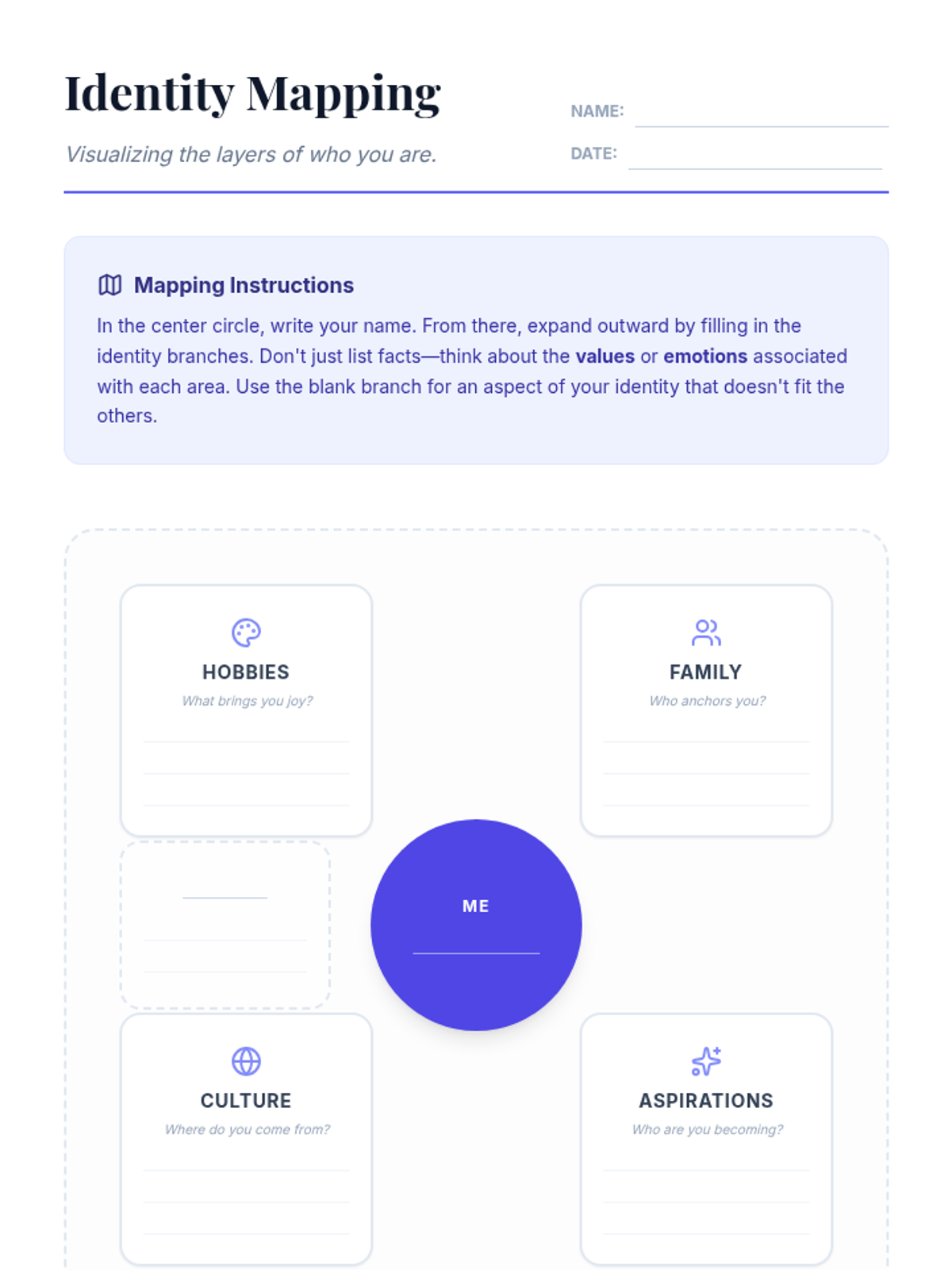
An identity mapping worksheet for students to visualize different aspects of their life, including hobbies, family, culture, and aspirations.
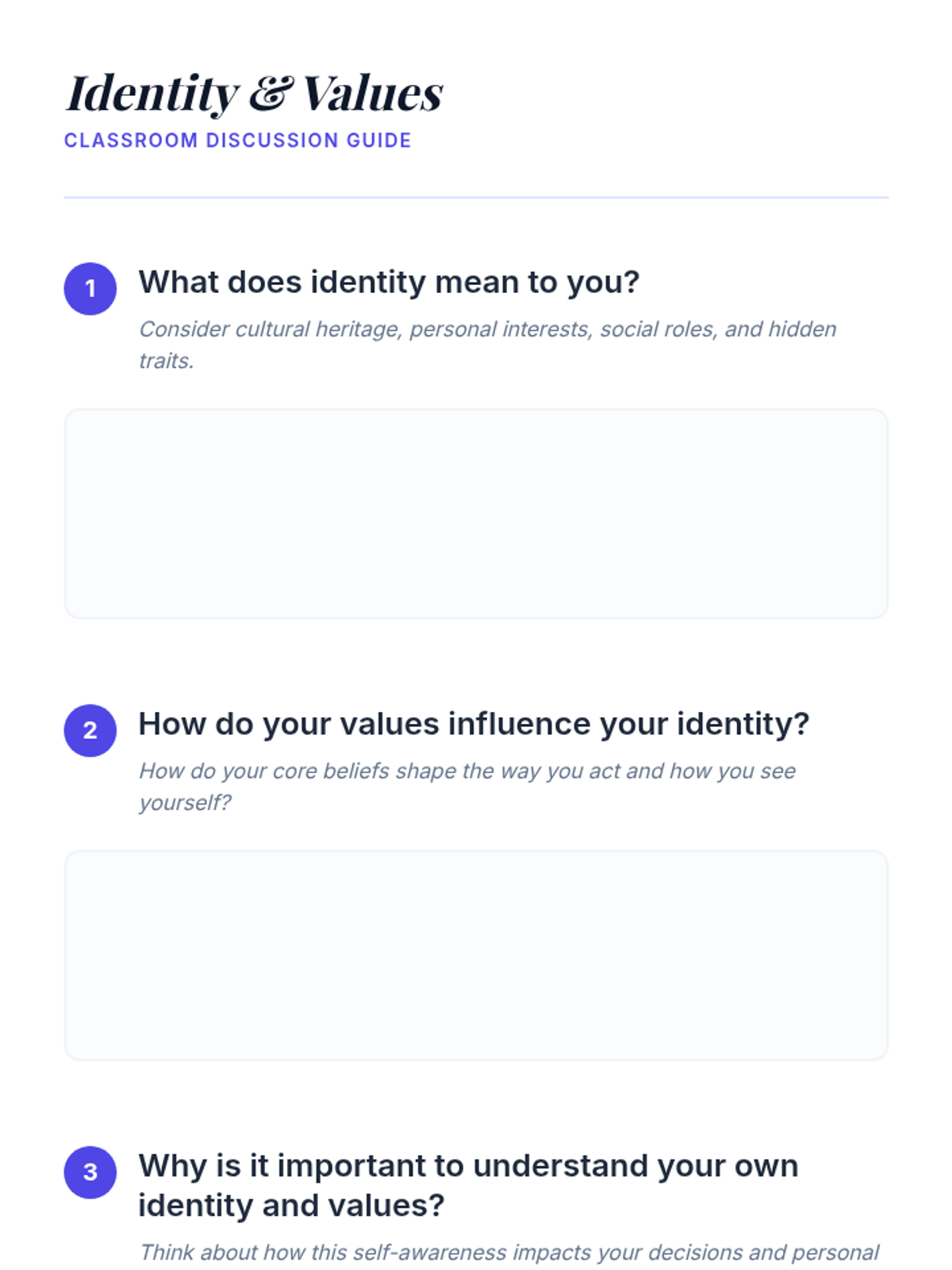
A discussion guide for students to record their reflections and notes during the identity and values classroom discussion.
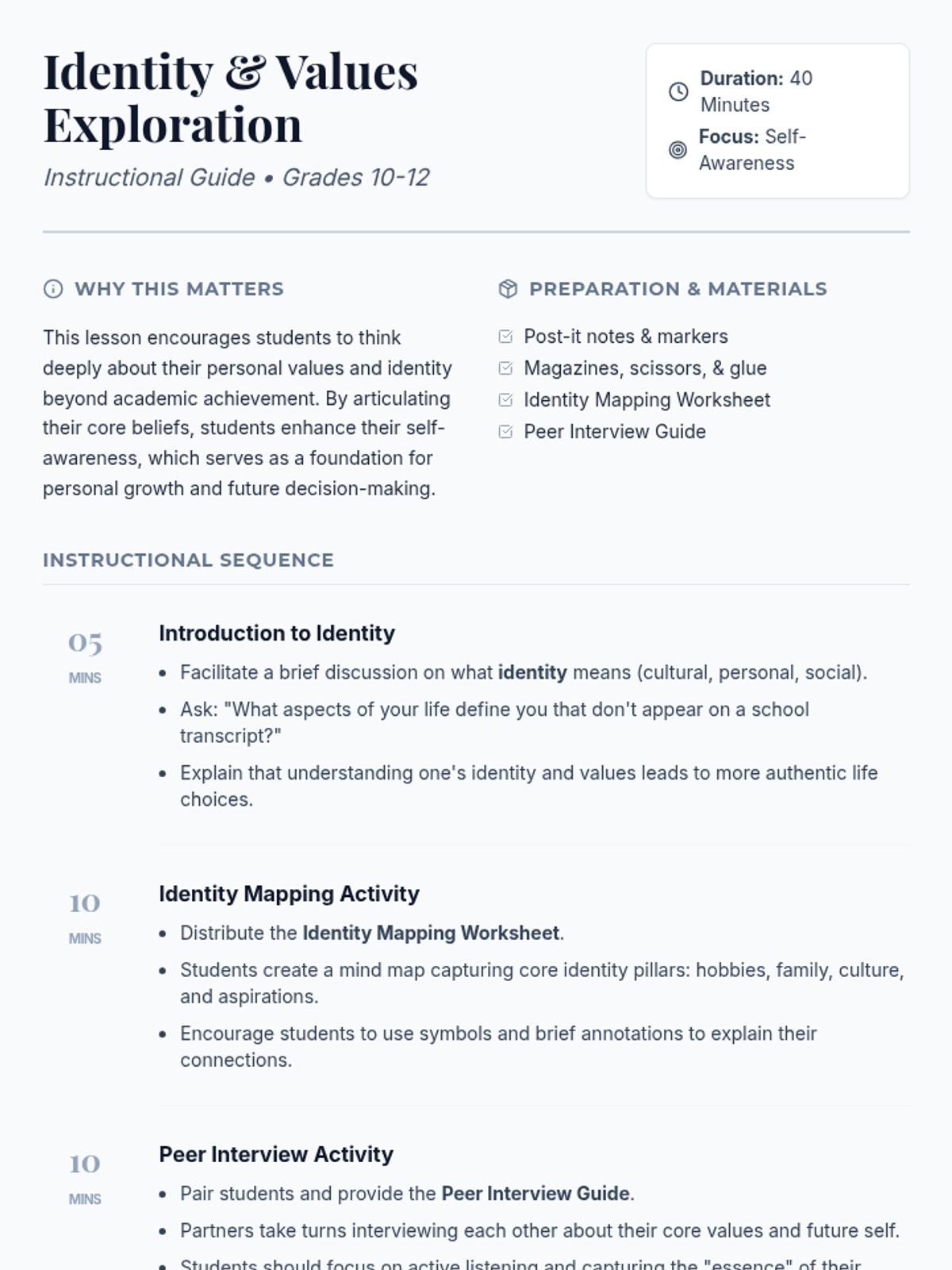
A comprehensive lesson plan for high school students exploring personal identity and values, featuring a 40-minute instructional sequence with mapping, interviews, and creative reflection.
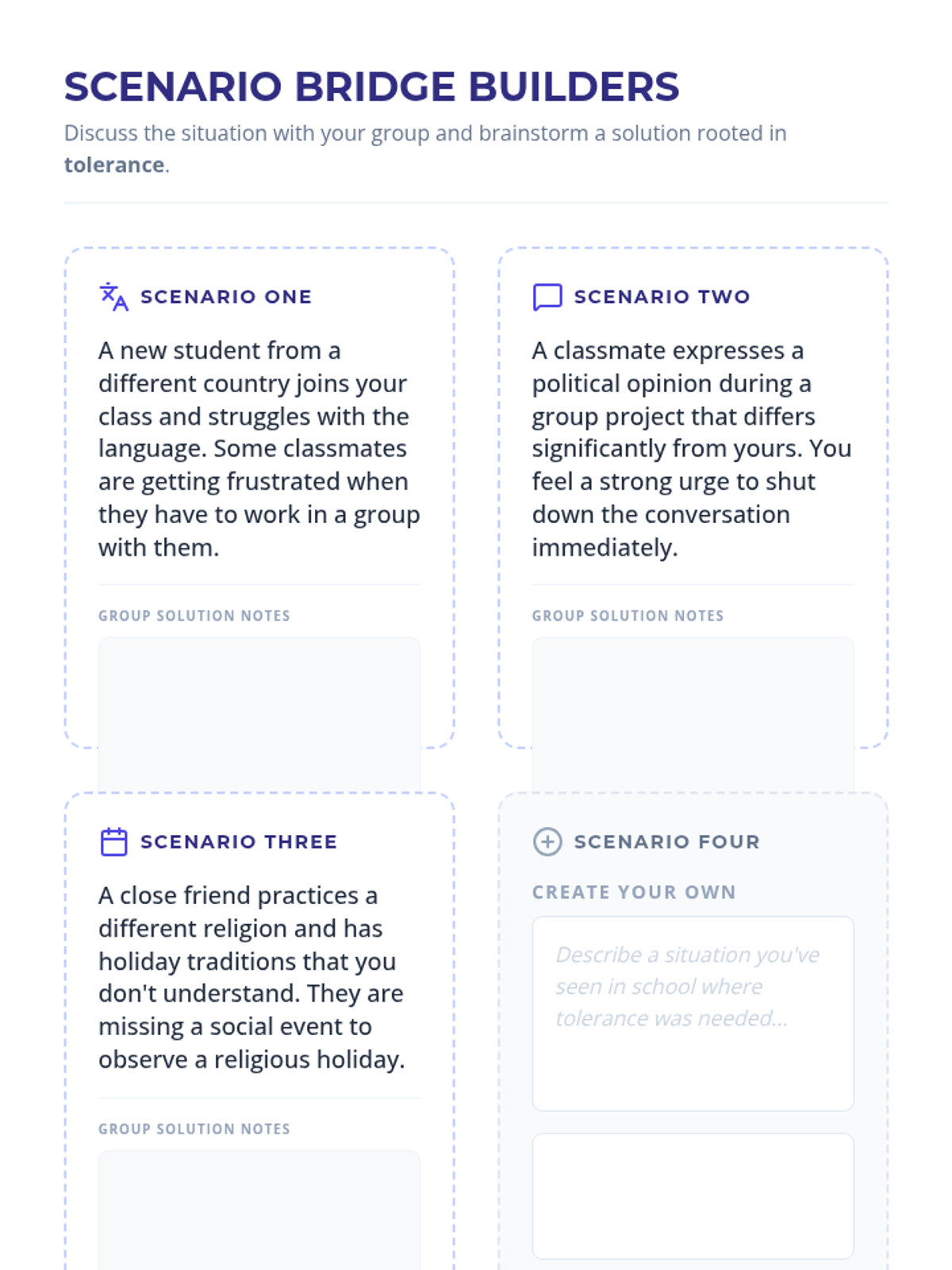
Printable cards with scenarios that require tolerance, designed for group discussion and problem-solving within the classroom.
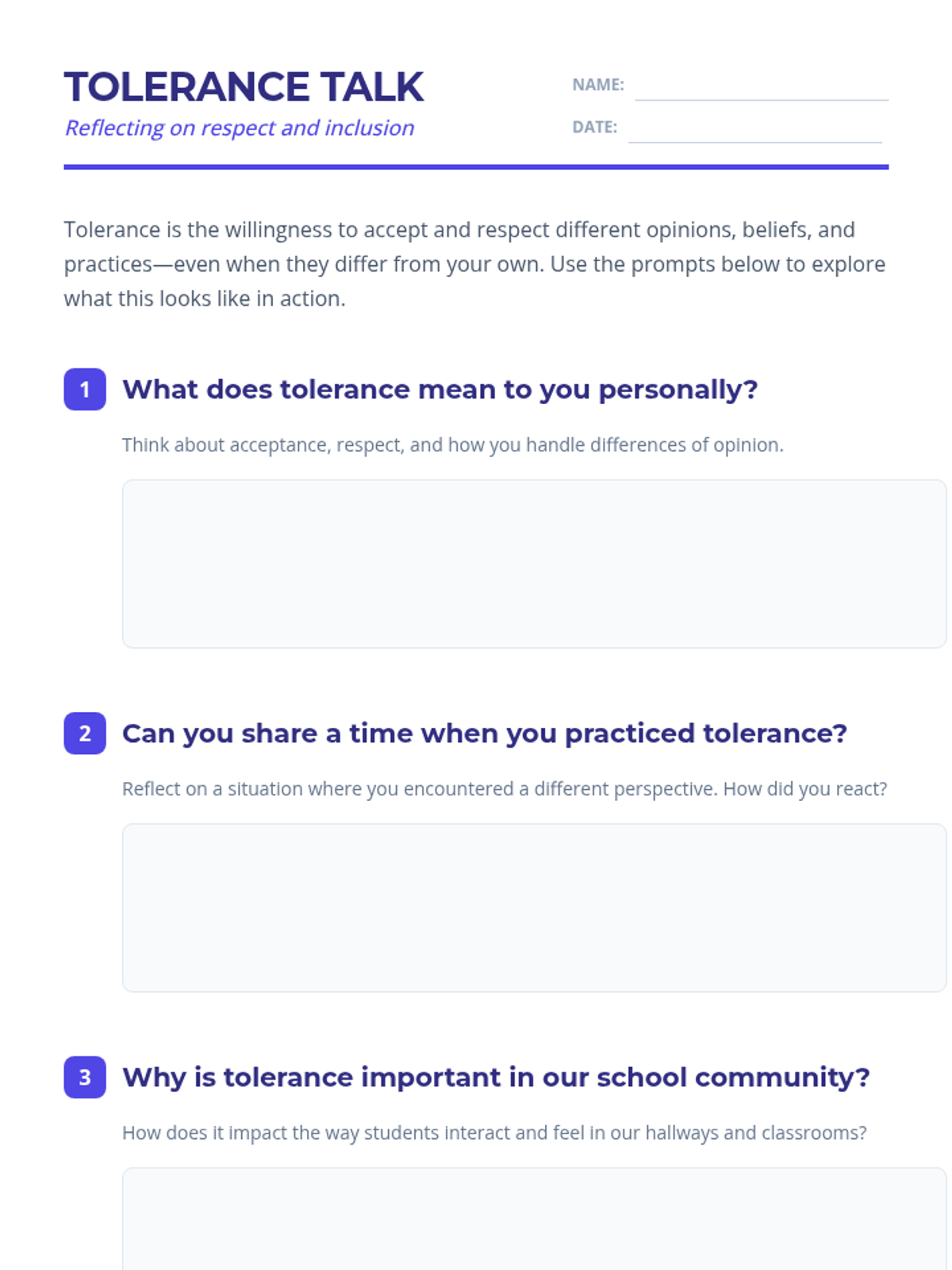
A student-facing handout with guided discussion questions and reflection space to explore the concept of tolerance and its impact on school culture.
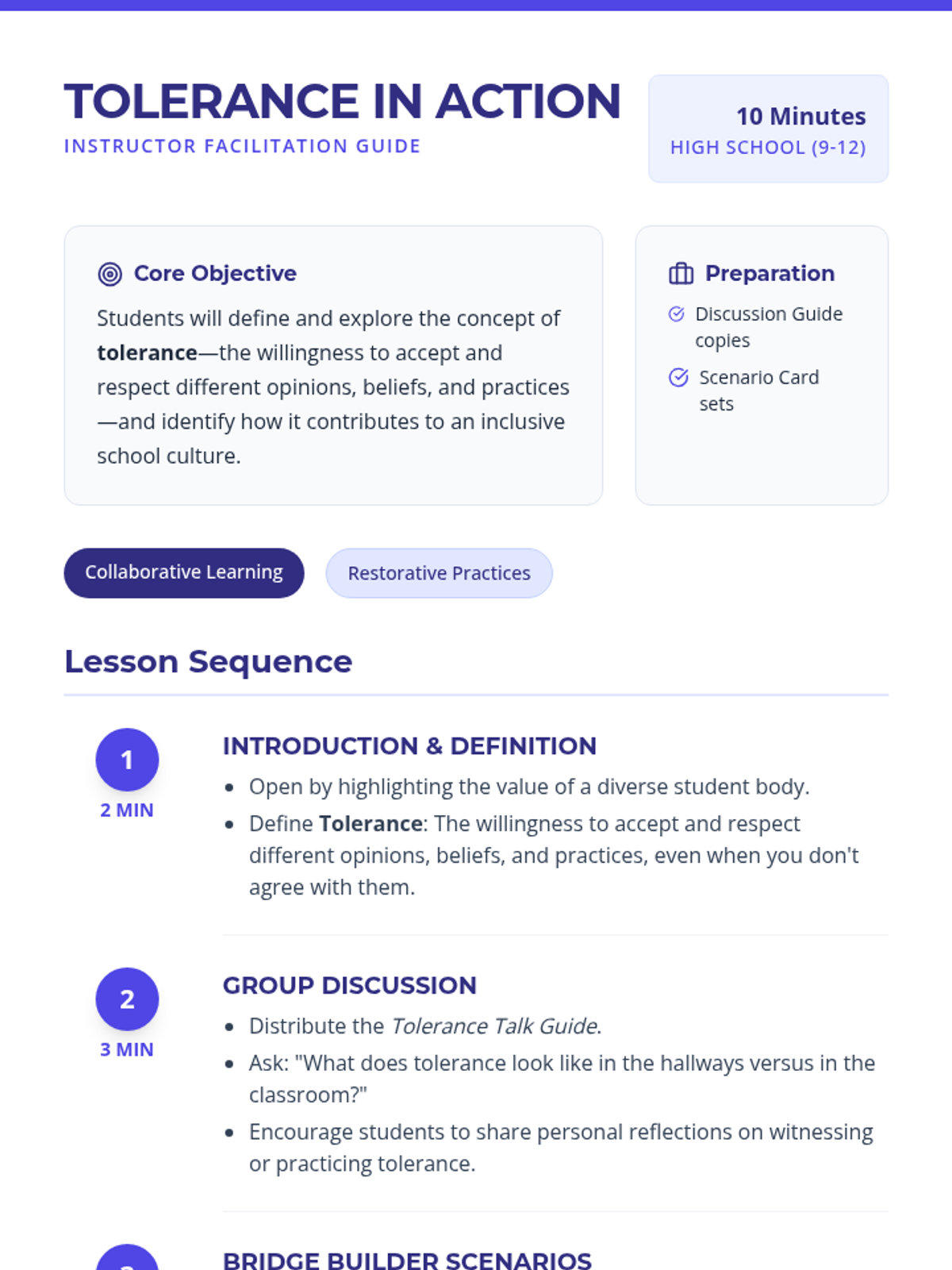
A comprehensive teacher facilitation guide for the 10-minute Tolerance in Action lesson, featuring a clear timing breakdown, instructional steps, and key definitions.
A formal assessment rubric to evaluate student understanding, application, and participation in the workplace diversity and inclusion lesson.
A reflection worksheet designed for students to document their personal insights, critical thoughts, and future applications of diversity and inclusion principles.
An interactive activity where students analyze workplace scenarios to identify diversity challenges and brainstorm inclusive solutions. Includes four unique scenario cards.
A visual presentation for students covering the definitions, benefits, and implementation of workplace diversity and inclusion.
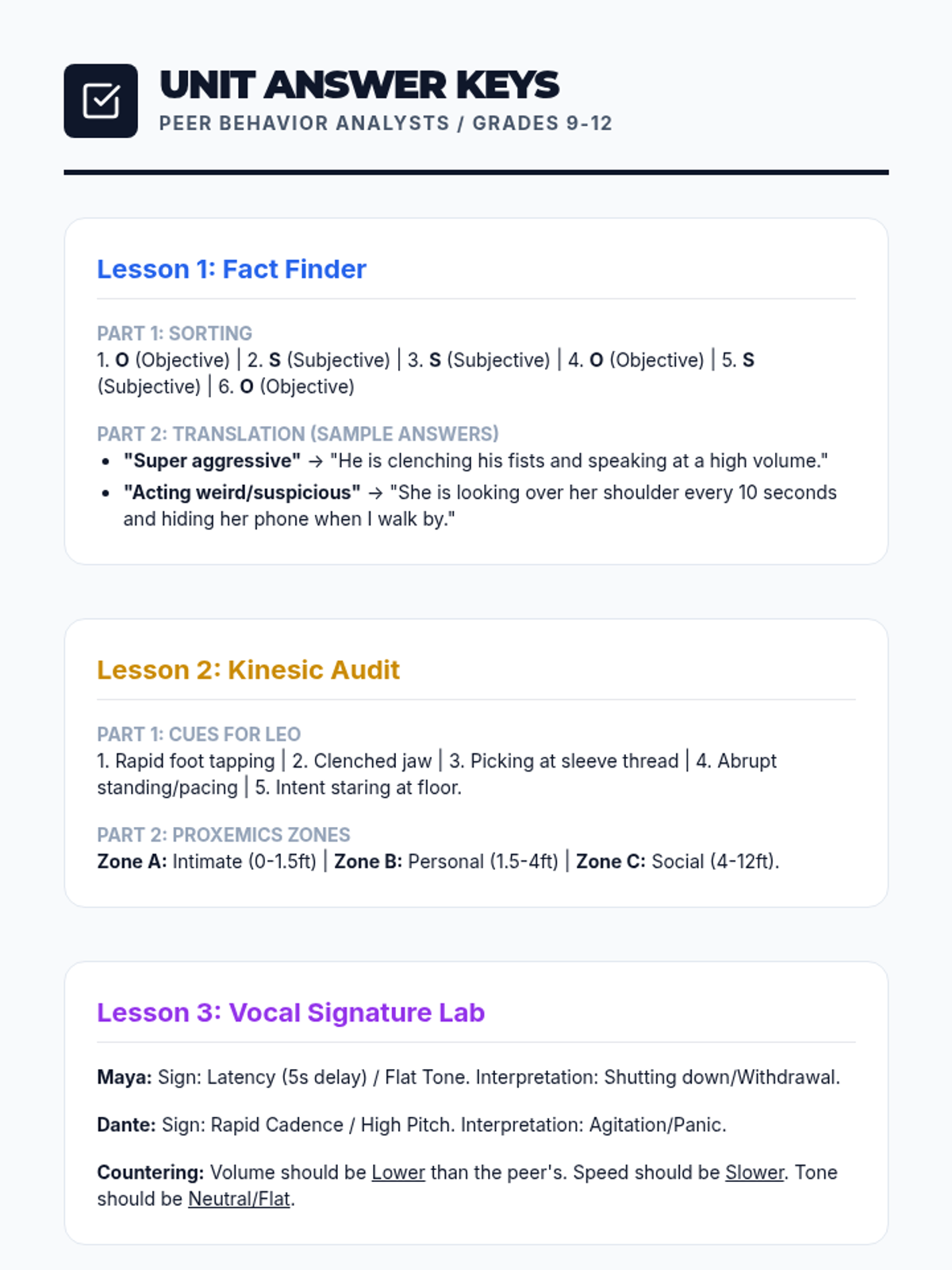
A complete set of answer keys and sample responses for all student worksheets and activities in the Peer Behavior Analysts sequence.
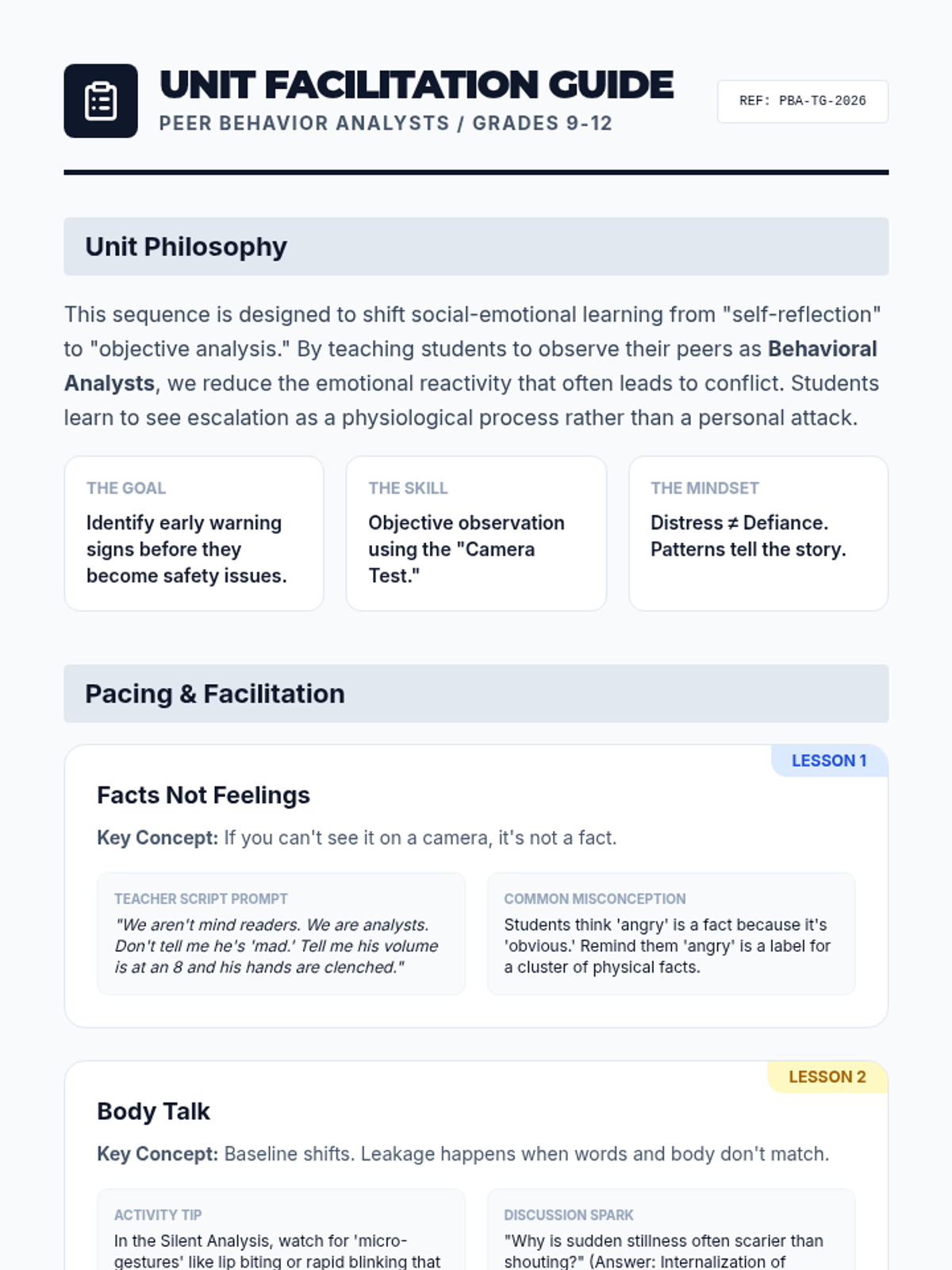
A comprehensive unit facilitation guide for teachers, providing instructional strategies, scripts, pacing notes, and differentiation tips for the Peer Behavior Analysts sequence.
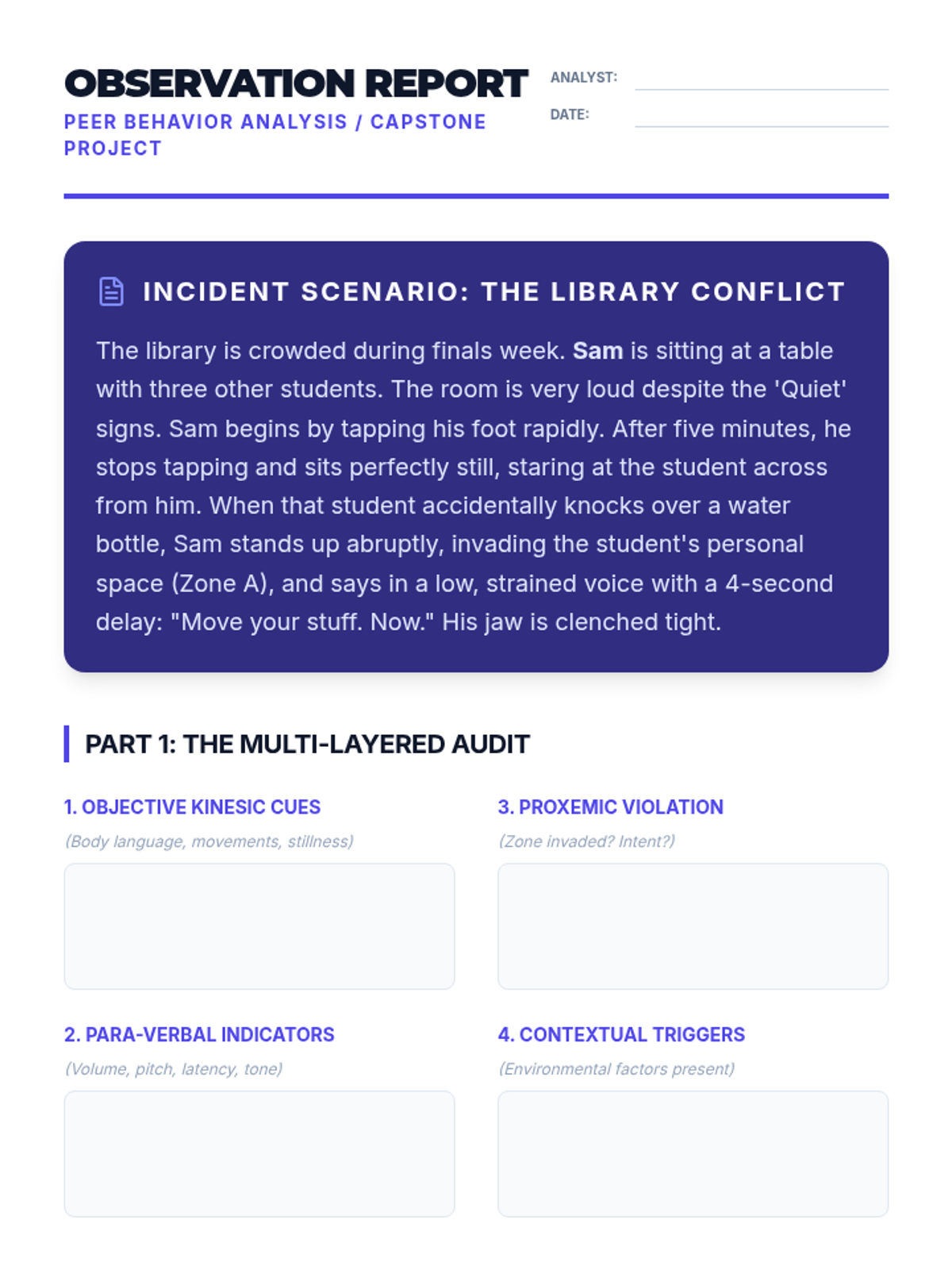
Capstone project worksheet where students synthesize all observation skills to analyze a complex scenario, identifying cues, environmental triggers, and intervention points.
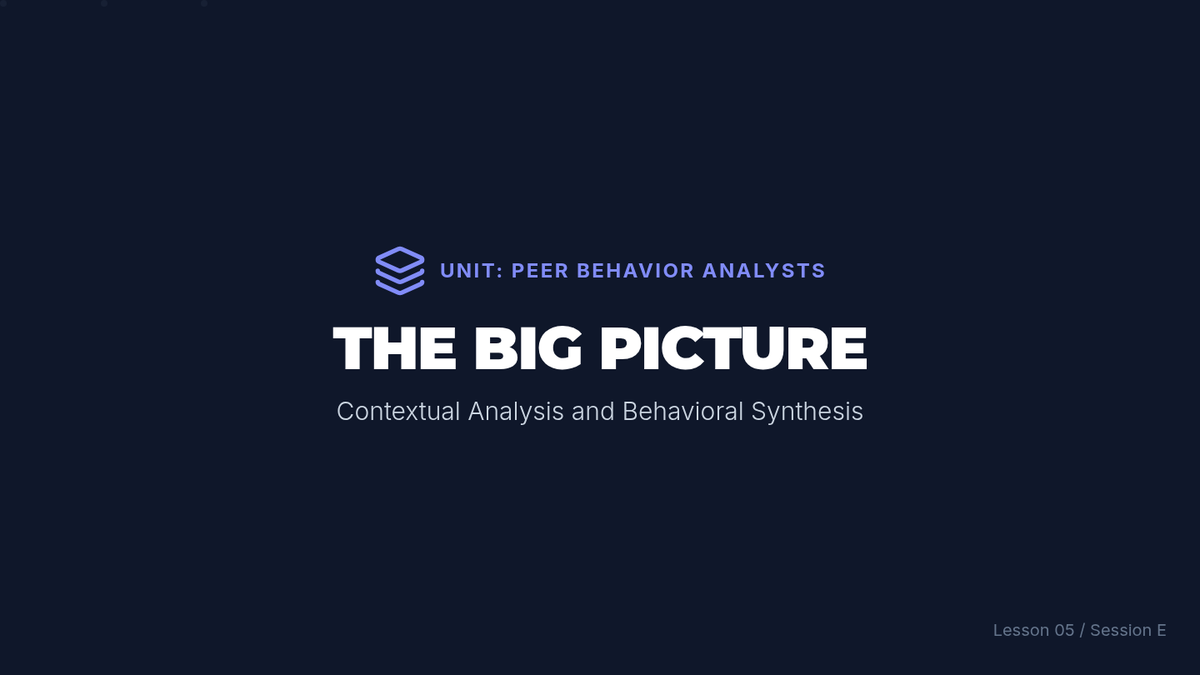
Final slide deck for the sequence, focusing on synthesis of behavioral observation skills and identifying environmental triggers in escalation analysis.
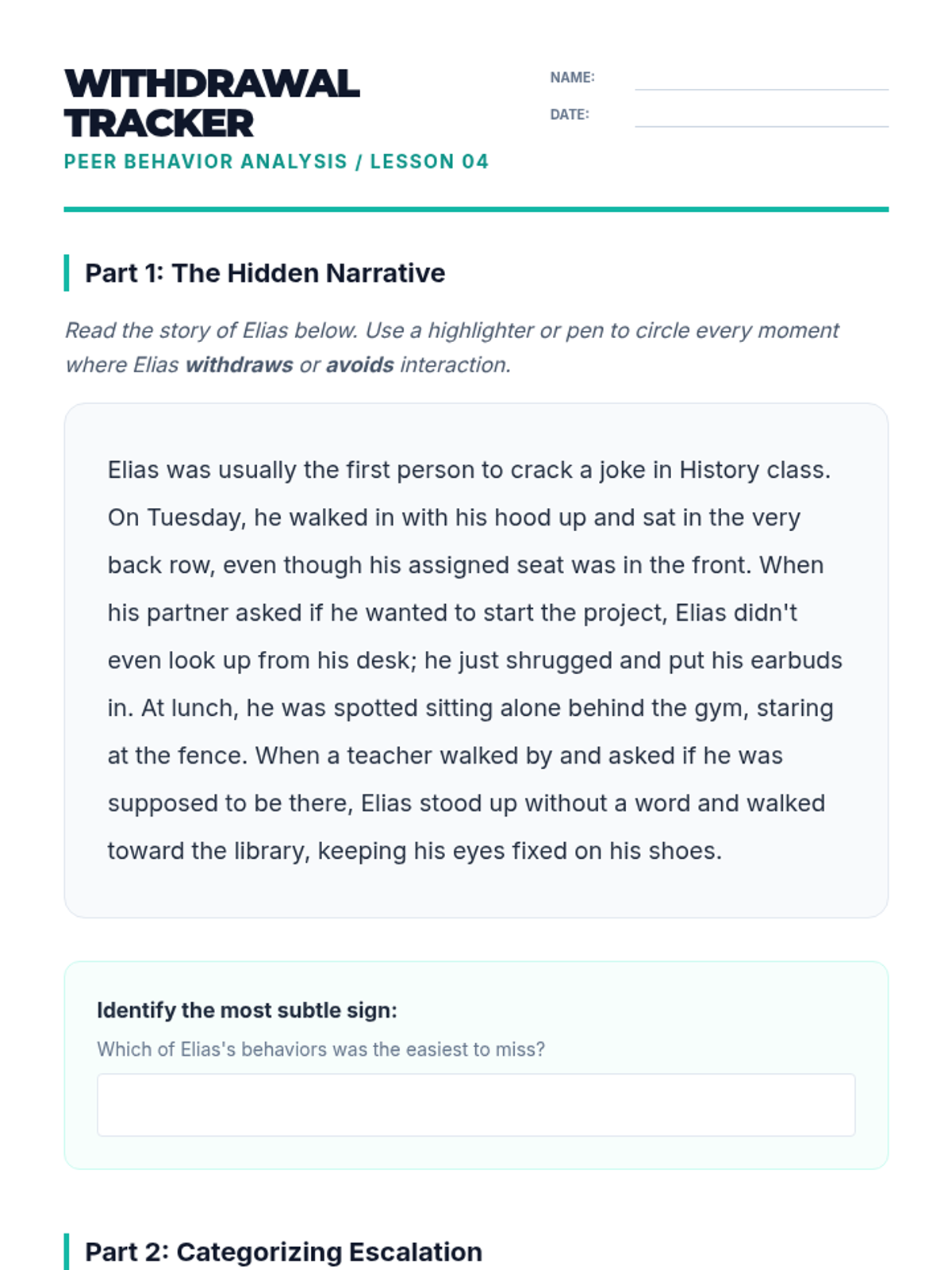
Student worksheet for Lesson 4, focusing on identifying withdrawal patterns in a narrative, sorting implosive vs. explosive behaviors, and practicing empathetic check-ins.
Slide deck for Lesson 4 focusing on identifying signs of implosive escalation, withdrawal, and avoidance behaviors in peers.
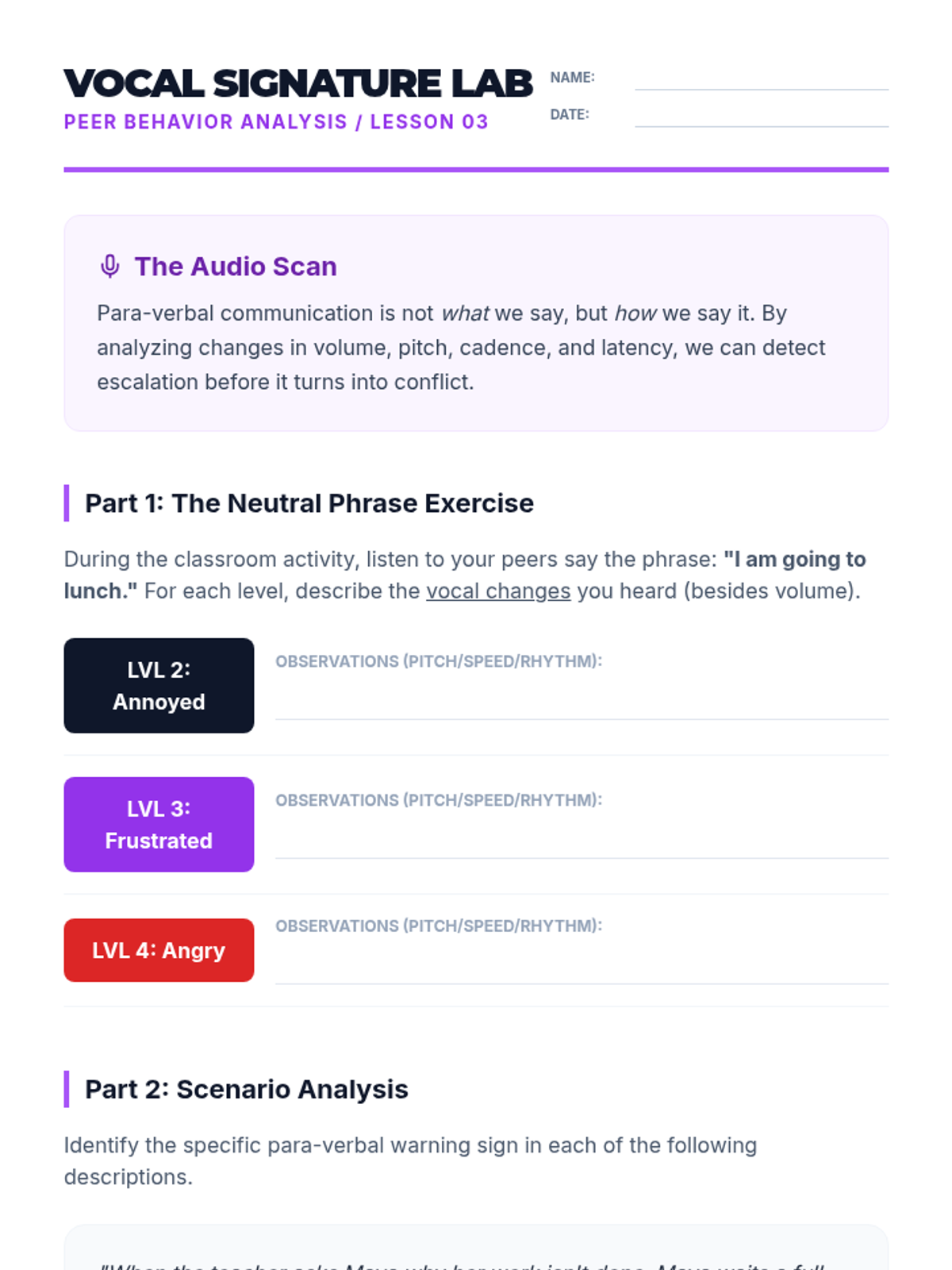
Student worksheet for Lesson 3, focusing on practicing the neutral phrase exercise, identifying vocal components in scenarios, and planning de-escalation responses.
Slide deck for Lesson 3 focusing on vocal para-language: tone, volume, cadence, and latency as indicators of escalation.
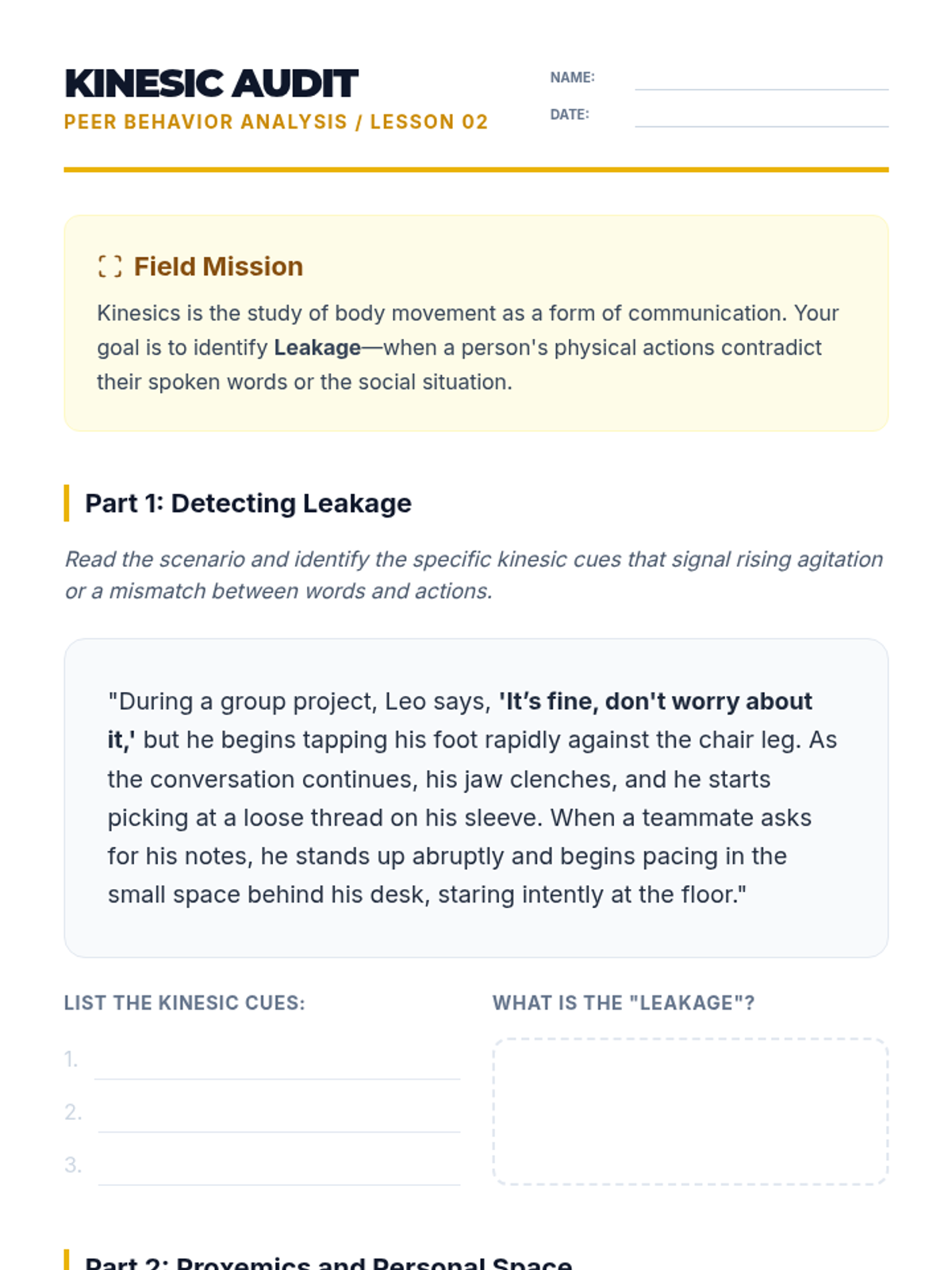
A student worksheet for identifying behavioral leakage, analyzing proxemics (personal space), and contrasting hyper-active vs. still behavior cues.
Slide deck for Lesson 2 focusing on physical movements, proxemics, and the concept of behavioral leakage in peer interactions.
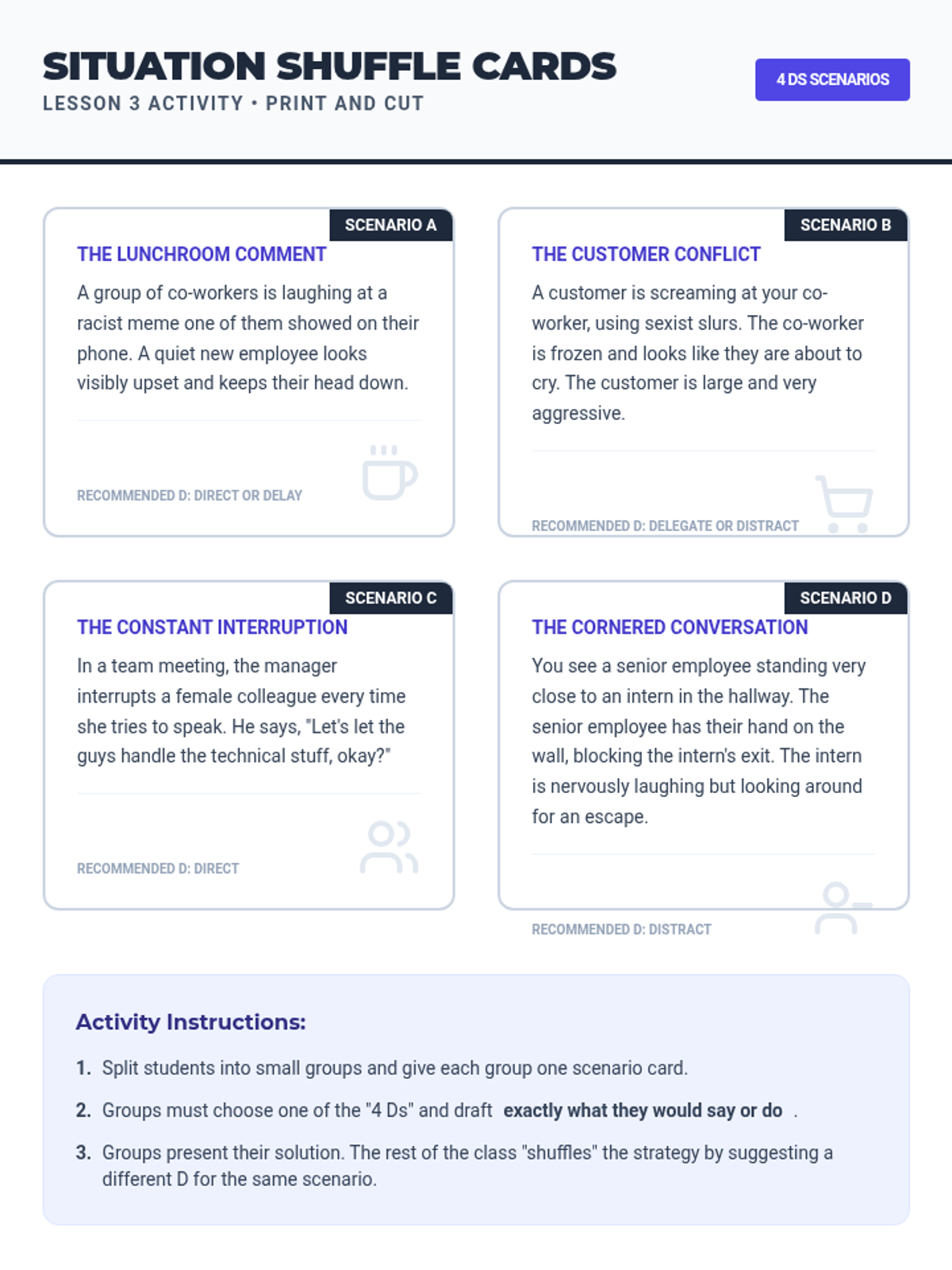
Printable activity cards featuring workplace harassment scenarios for students to analyze and apply bystander intervention strategies.
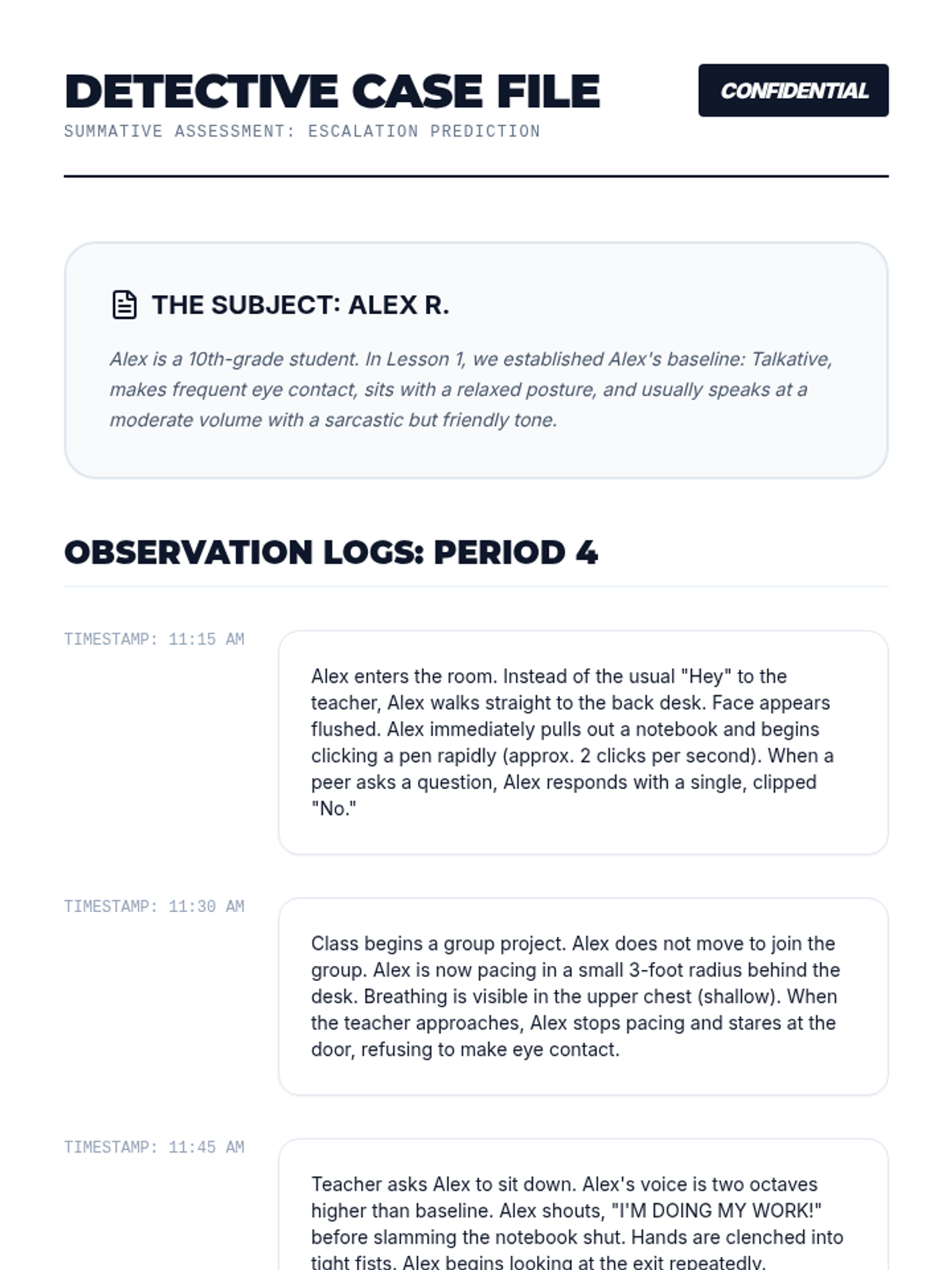
A multi-part summative assessment where students analyze a detailed case study of behavioral escalation, identifying specific markers and predicting crisis points.
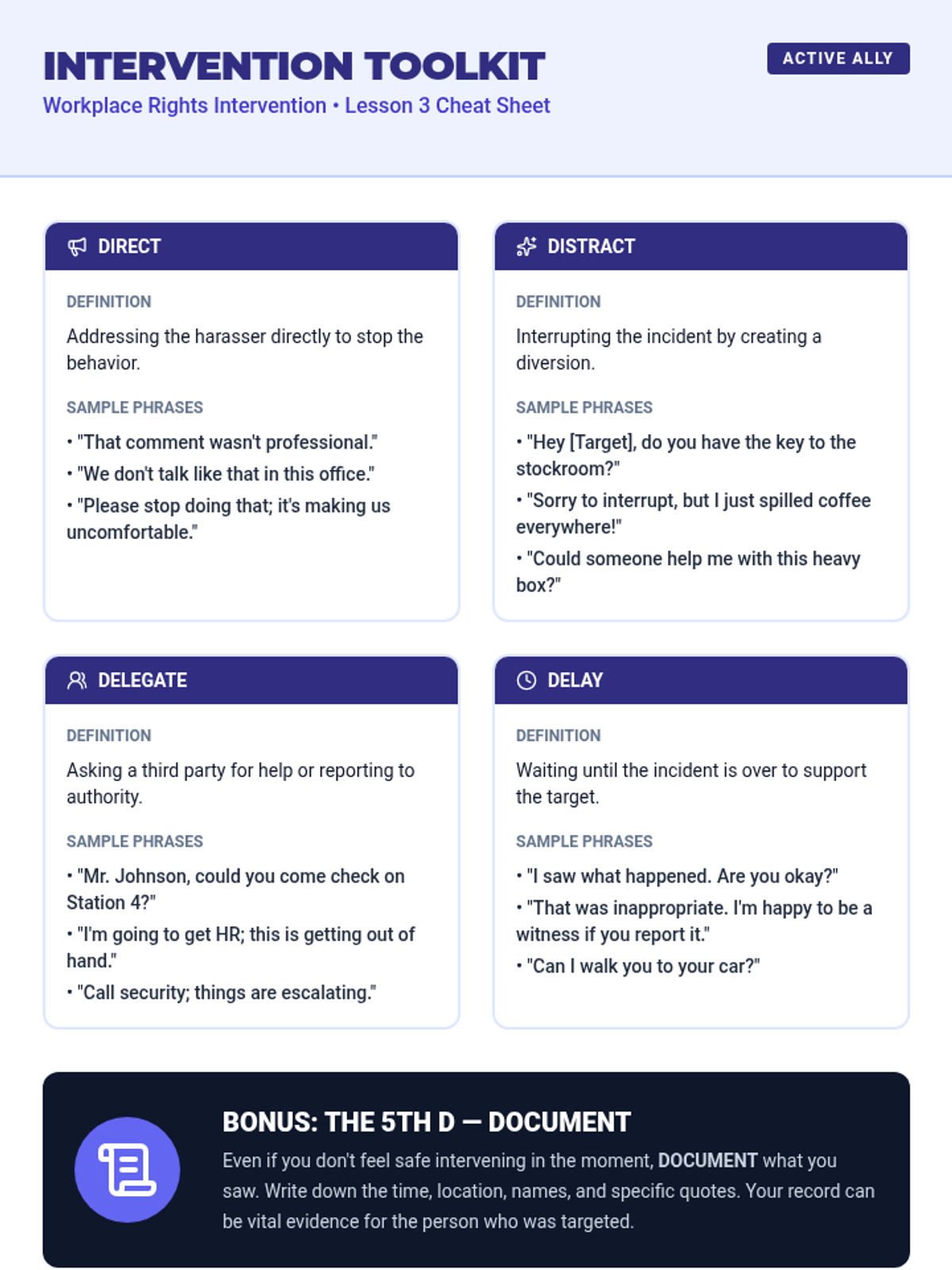
A comprehensive cheat sheet for students detailing the 4 Ds of bystander intervention with definitions, sample phrases, and safety tips.
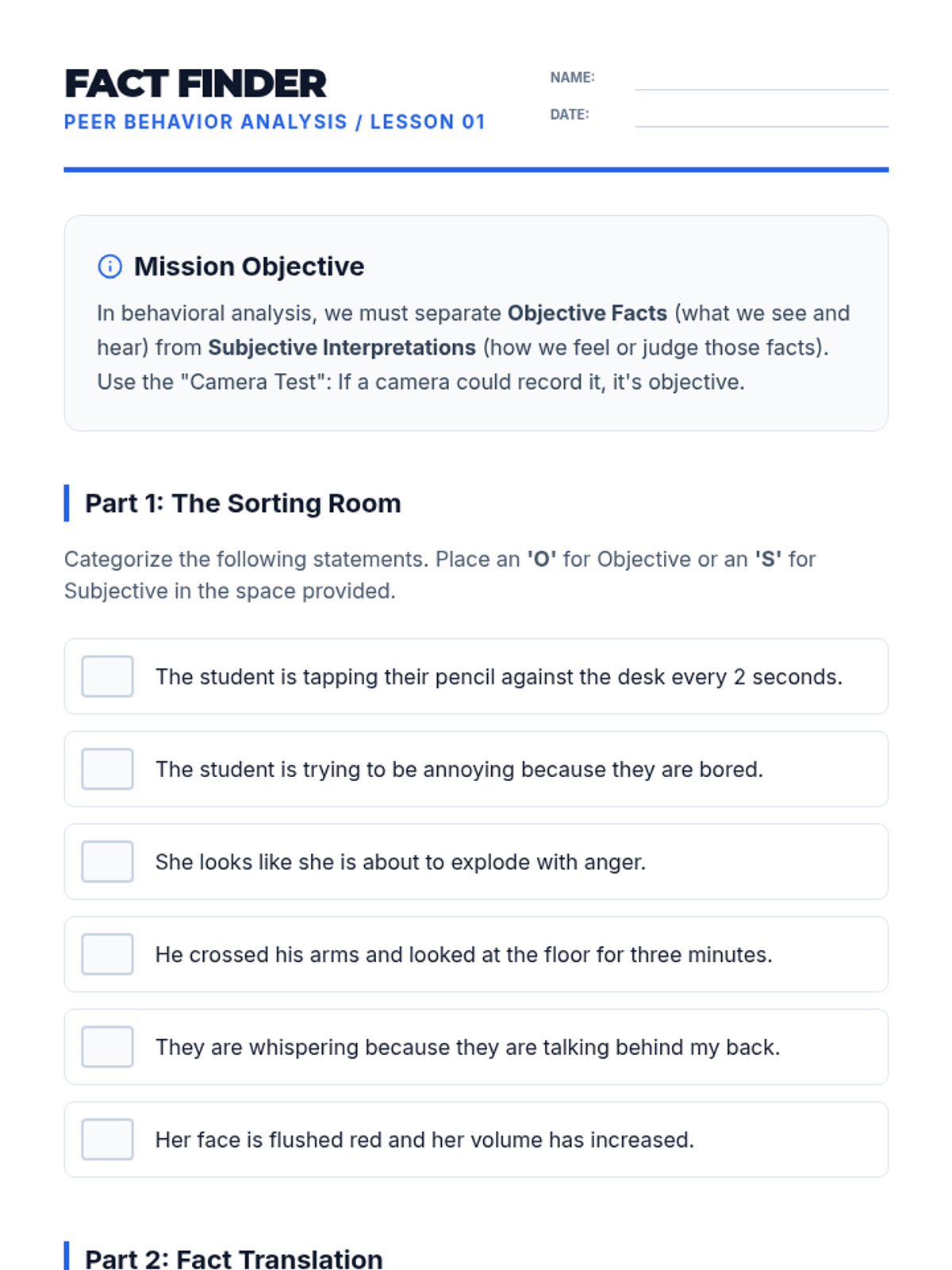
A student worksheet for practicing the distinction between objective observation and subjective interpretation through sorting, translation, and text analysis.
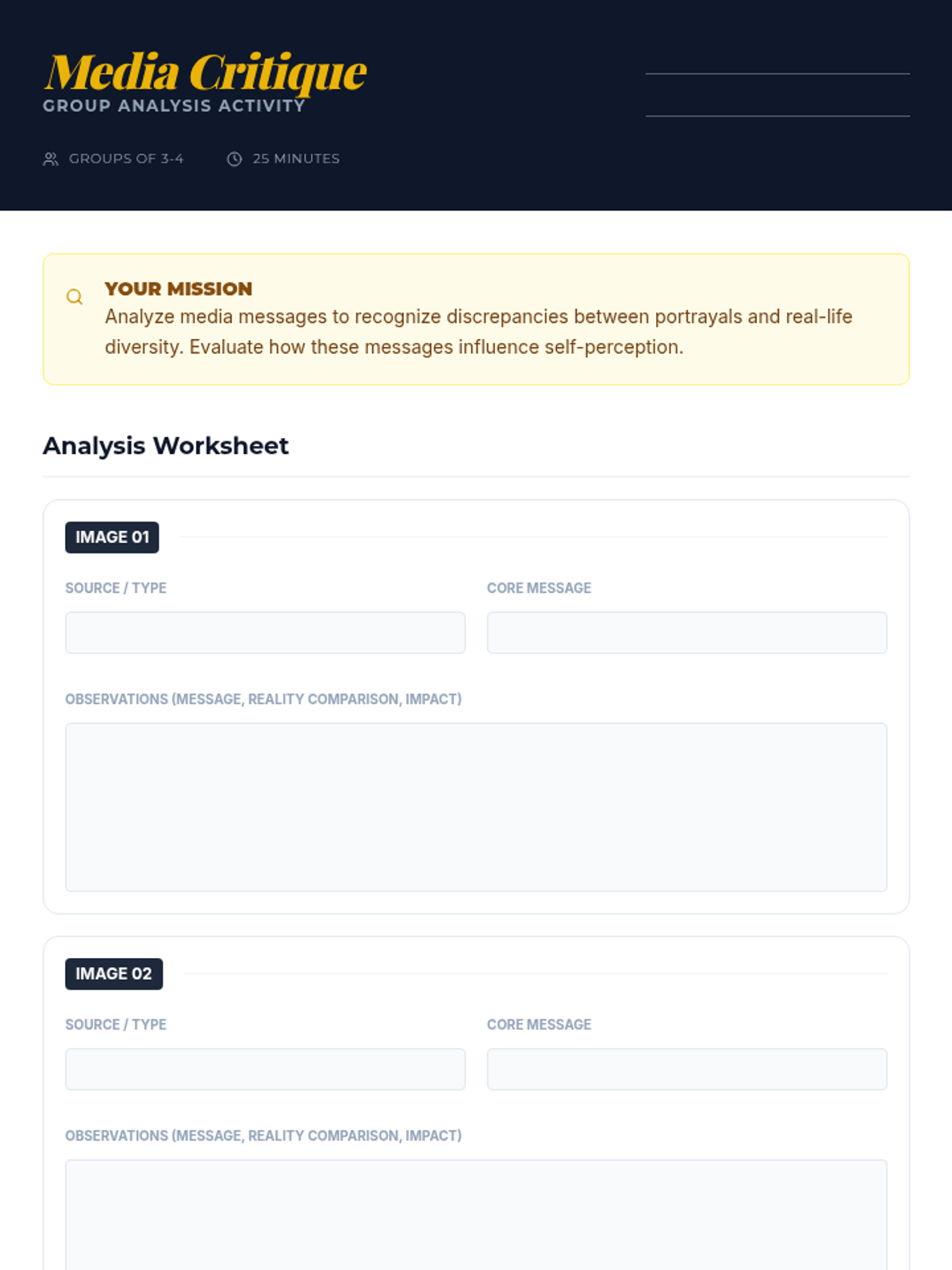
An activity sheet guiding students through a group analysis of media examples to identify and critique beauty standards and their impact on self-perception.
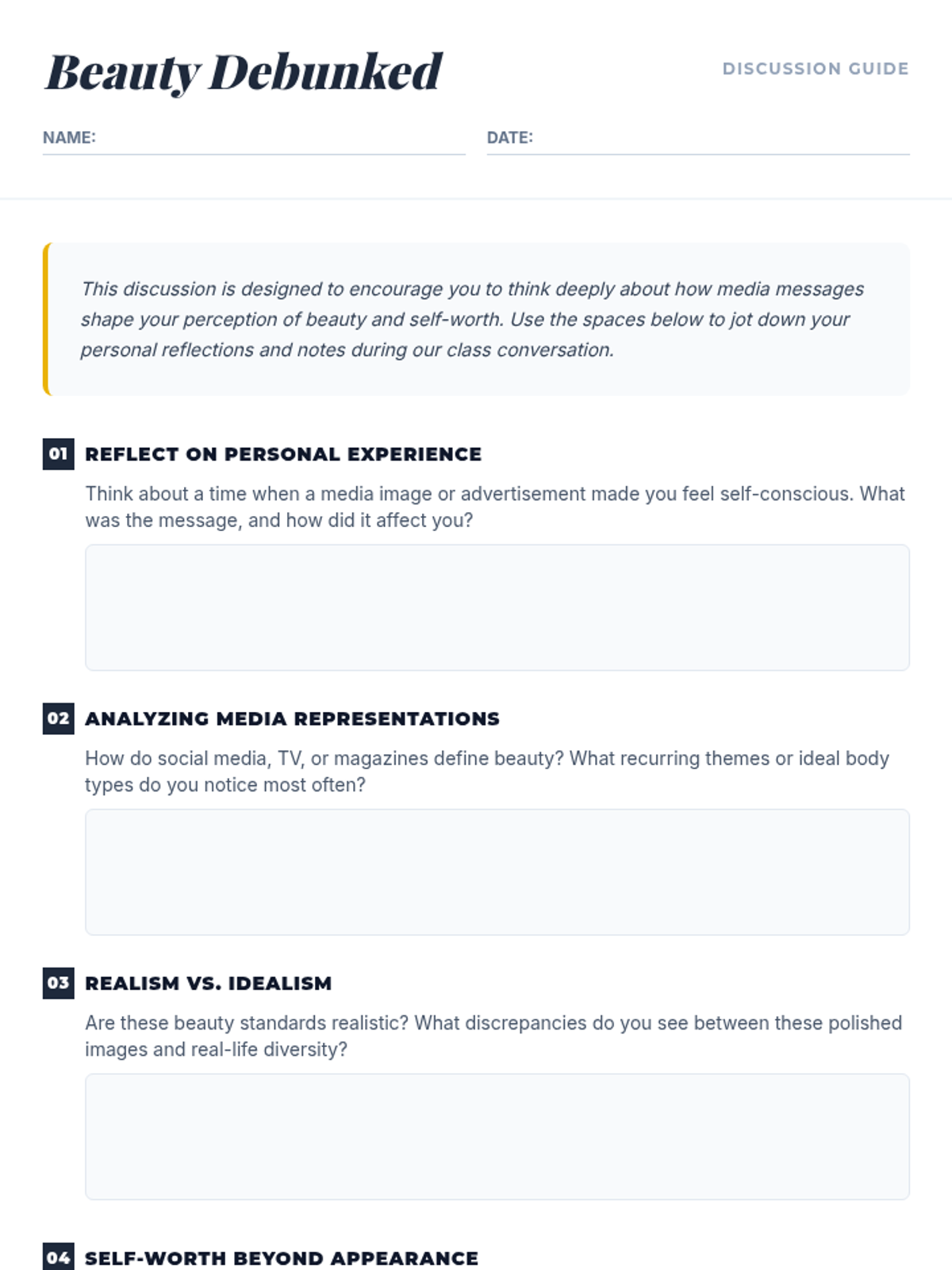
A student reflection sheet featuring guiding questions for a deep-dive discussion on media influence, beauty standards, and personal self-worth.
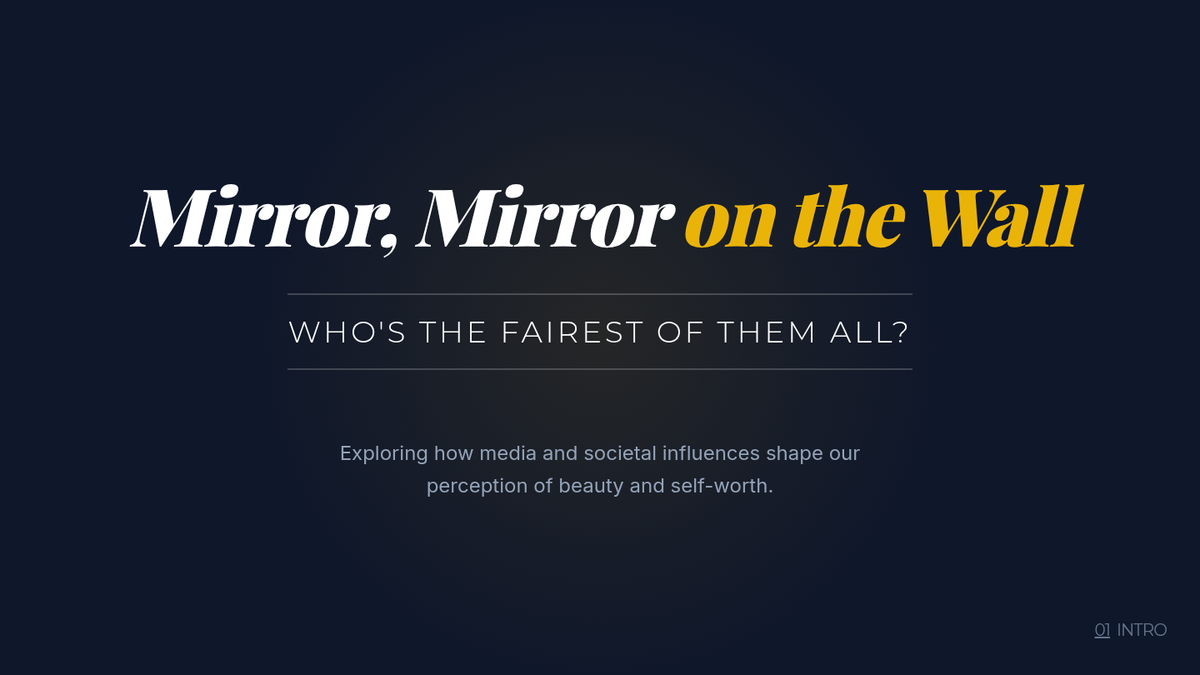
A visually striking slide deck for leading a class discussion and analysis of media influence on beauty standards and self-image.
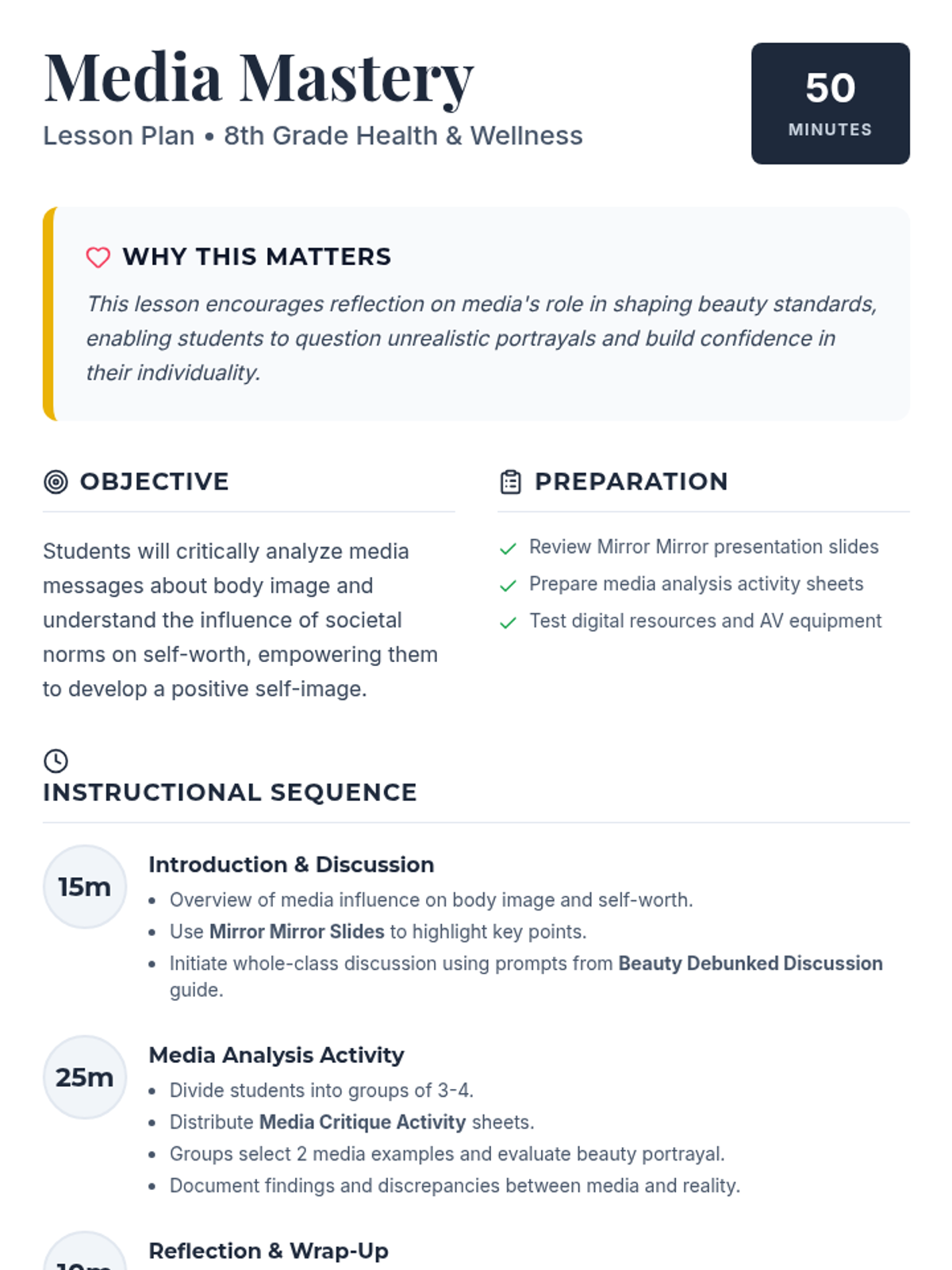
A comprehensive teacher's guide for facilitating a 50-minute lesson on media influence and self-image, including a detailed instructional sequence and learning objectives.
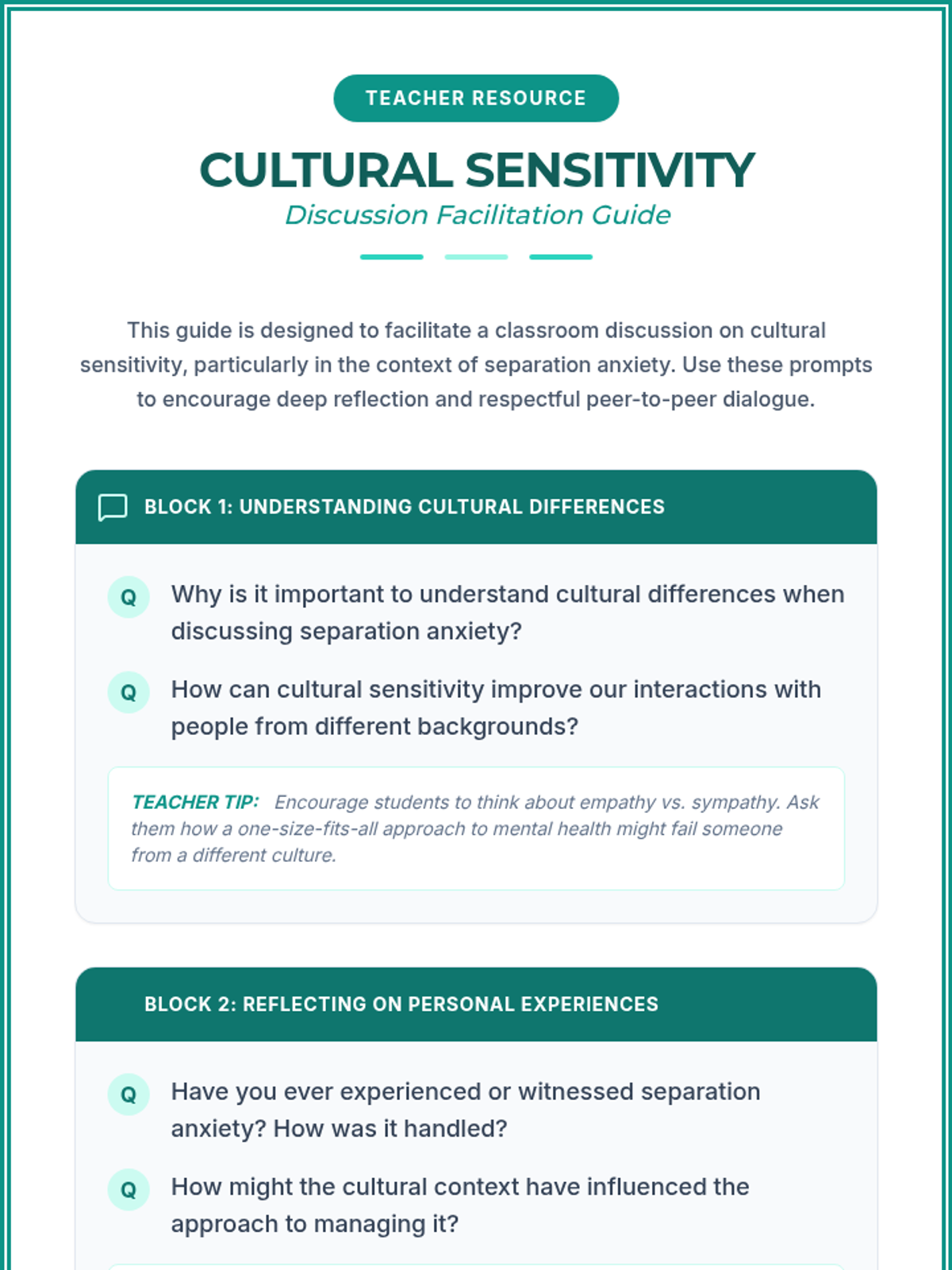
A discussion guide for teachers to facilitate classroom conversations about cultural sensitivity, personal experiences, and the global application of cultural awareness in managing separation anxiety.
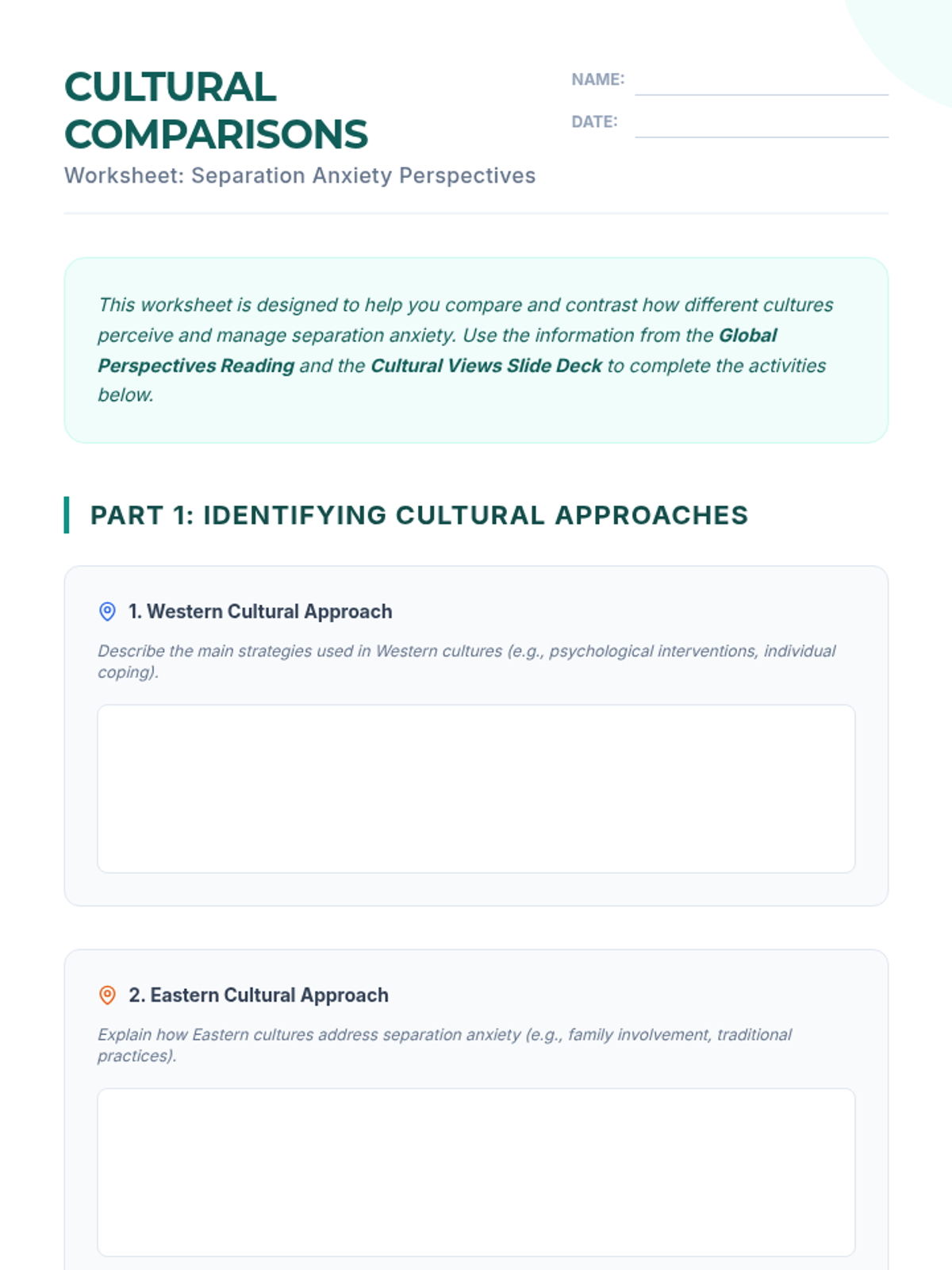
A worksheet for students to compare and contrast cultural approaches to separation anxiety, including critical thinking and personal reflection sections.
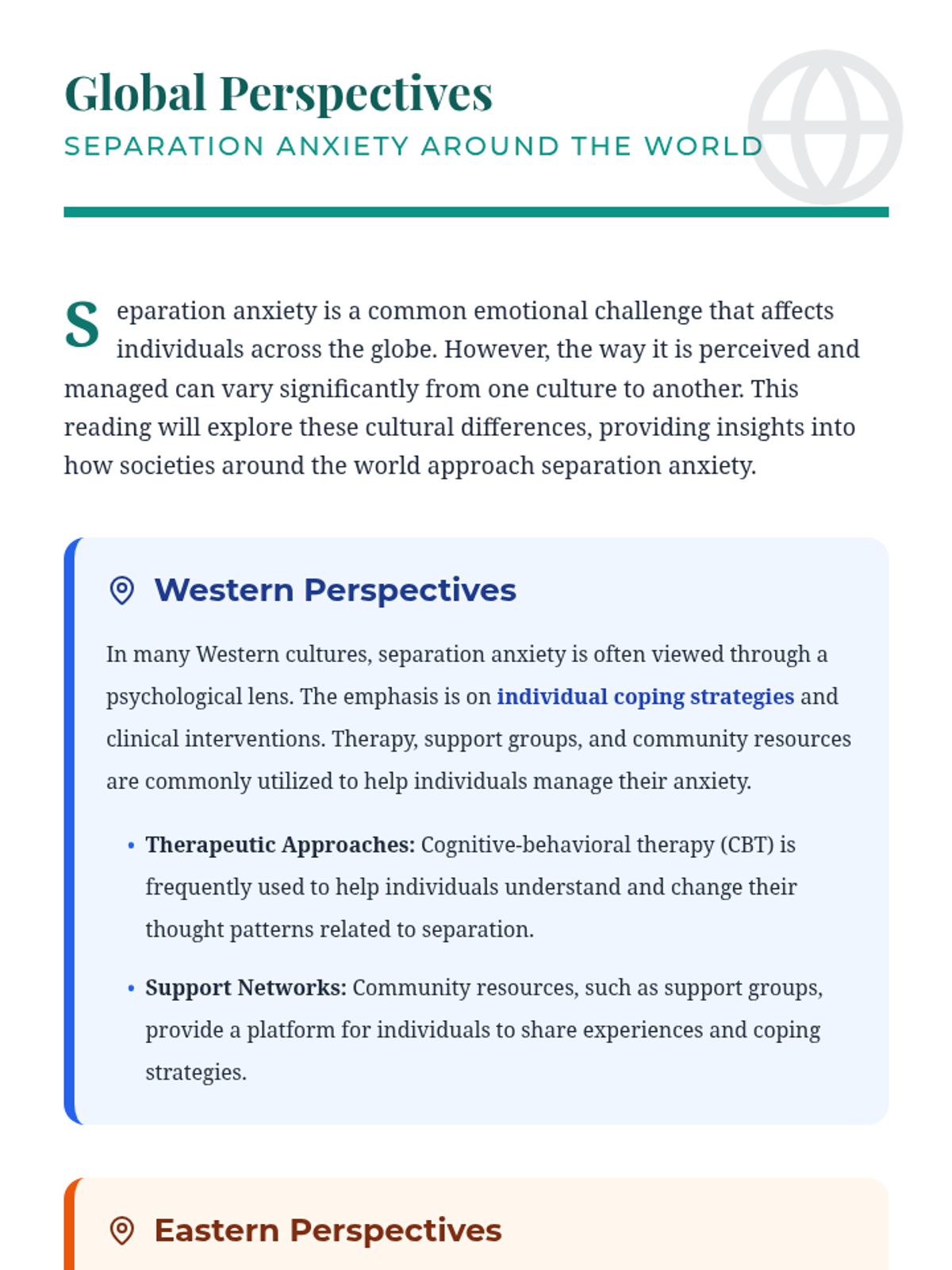
An informative reading passage exploring Western, Eastern, and African perspectives on separation anxiety, including management strategies and reflection questions.
A visual presentation exploring cultural perspectives on separation anxiety in Western, Eastern, and African contexts, emphasizing comparative analysis and empathy.
Educational slides for Lesson 2: The Impact Standard. This deck explains the legal shift from harasser intent to victim impact, introducing the 'Reasonable Person Standard' and debunking the 'just joking' defense.
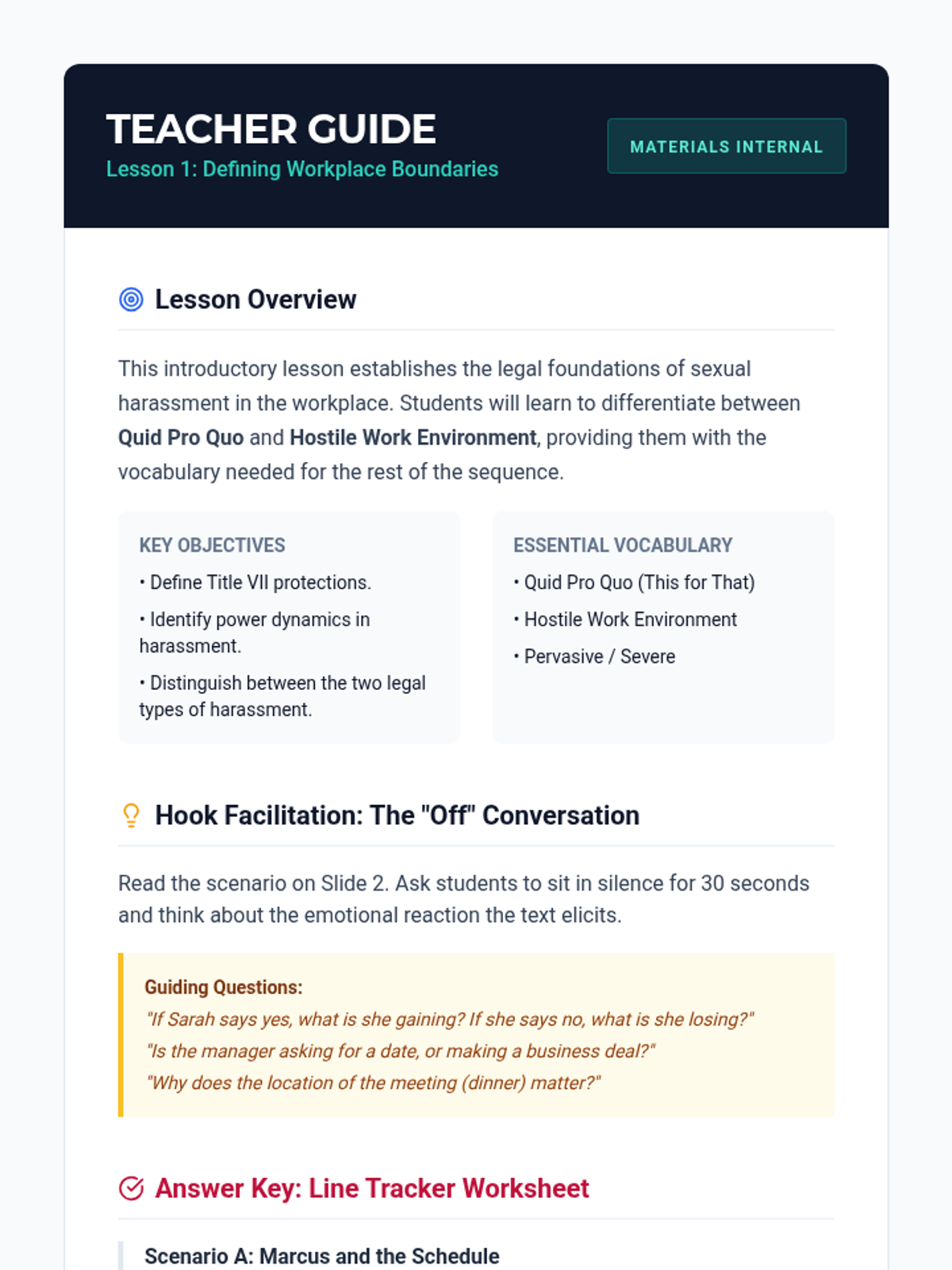
A teacher resource for Lesson 1: Defining Workplace Boundaries. It includes lesson objectives, facilitation tips for the hook, a complete answer key for the student worksheet, and notes on common misconceptions.
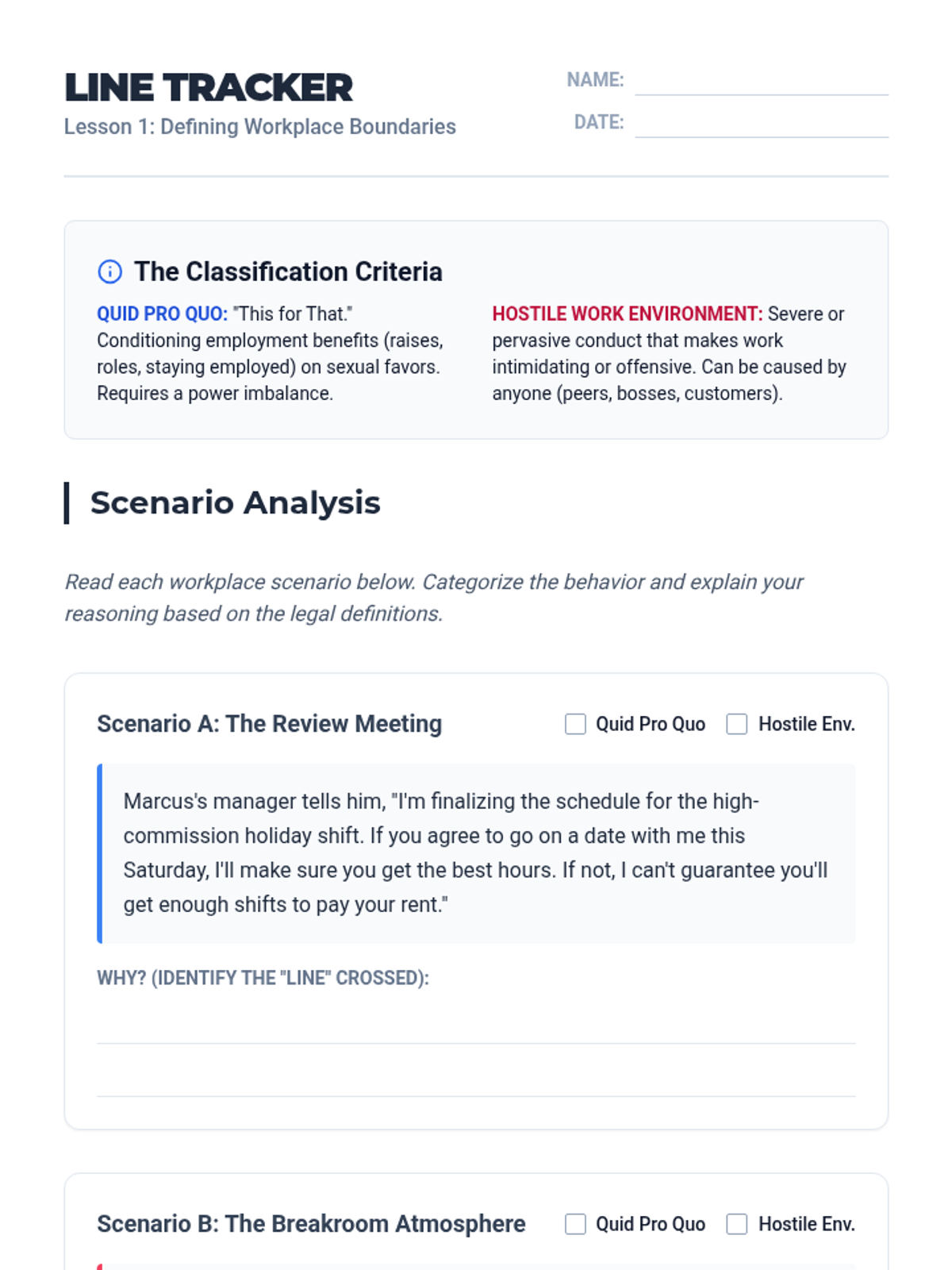
A student worksheet for Lesson 1 where they categorize workplace scenarios as Quid Pro Quo or Hostile Work Environment. It includes space for reasoning and critical reflection on power dynamics.
Educational slide deck for Lesson 1: Defining Workplace Boundaries. It covers legal definitions under Title VII, explains the difference between Quid Pro Quo and Hostile Work Environments, and provides clear examples of each.
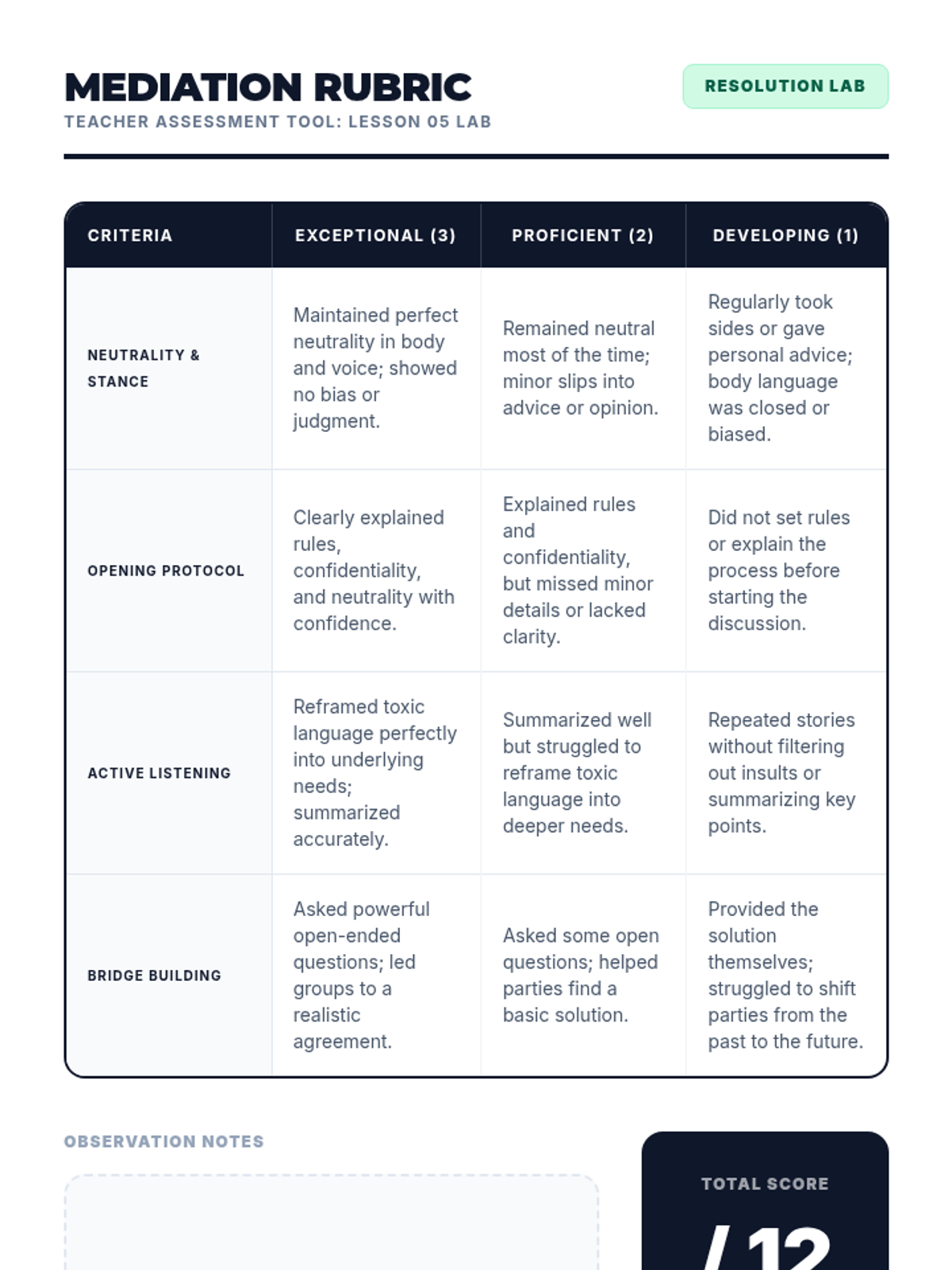
A comprehensive rubric for teachers to assess student facilitators during the final mock mediation Resolution Lab.
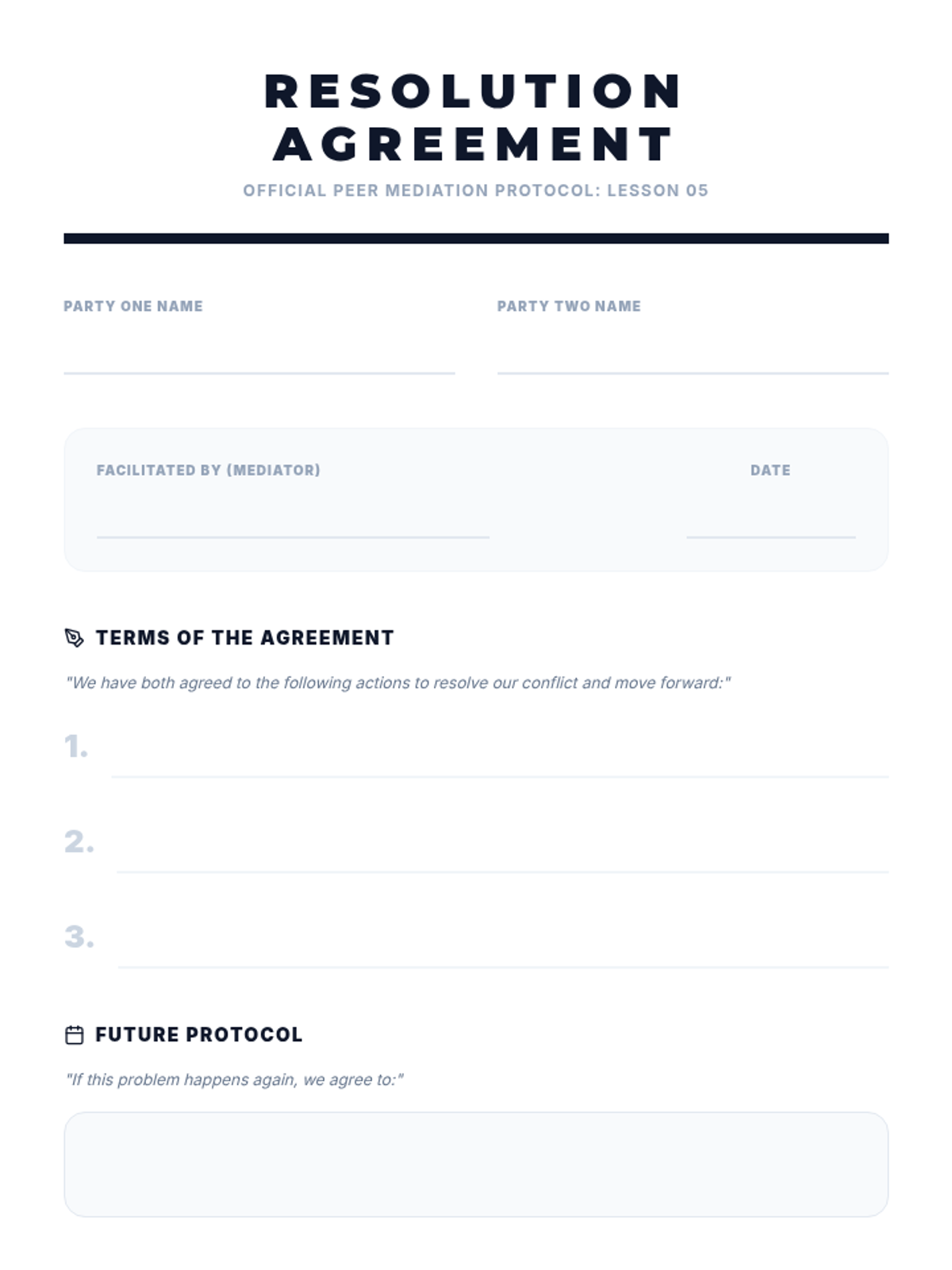
Official resolution agreement form for students to complete at the end of a successful peer mediation session.
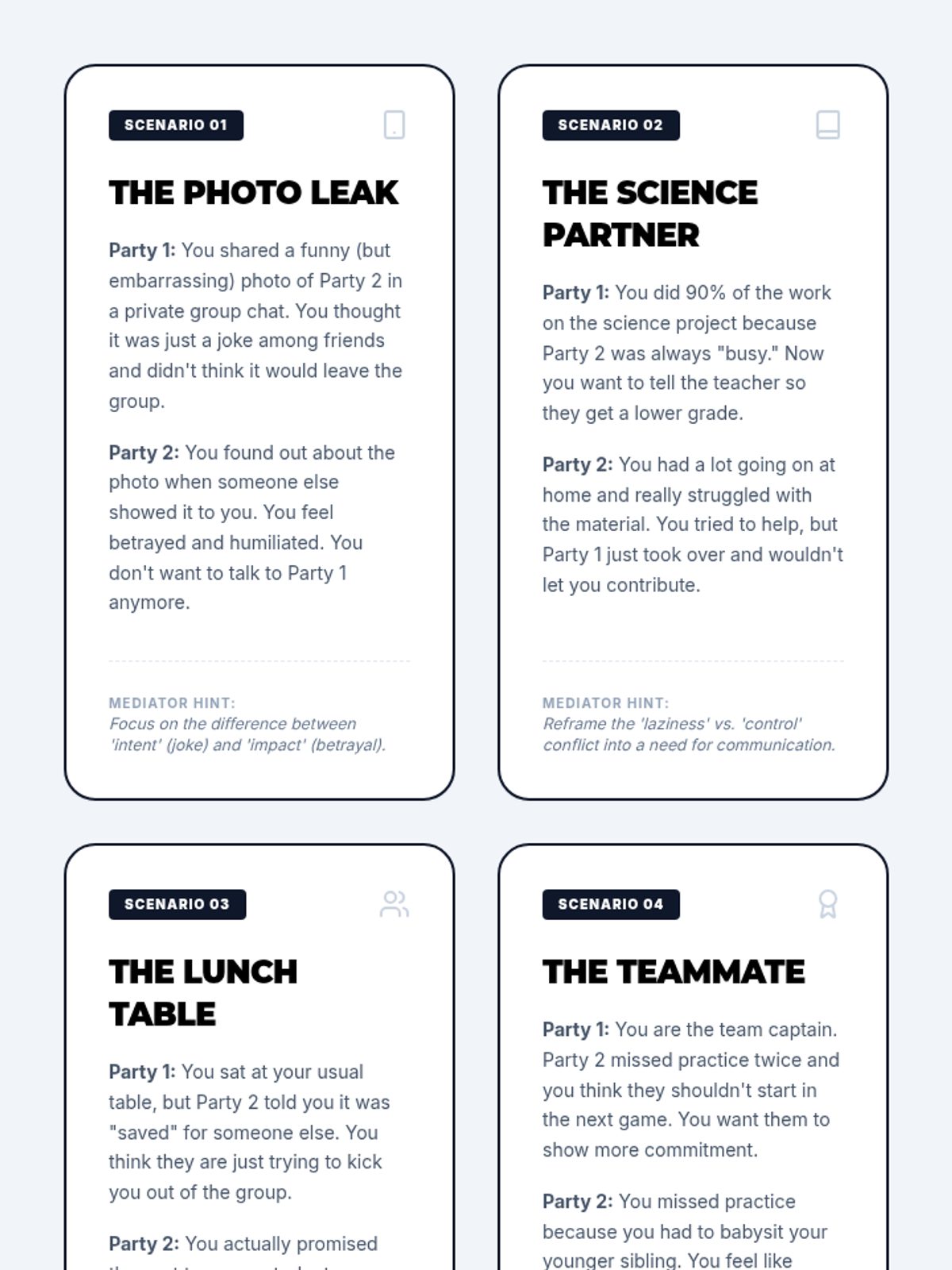
Printable scenario cards for mock mediation role-plays, featuring realistic middle school conflicts.
Instructional slides for Lesson 5, guiding students through the final mock mediation simulation.
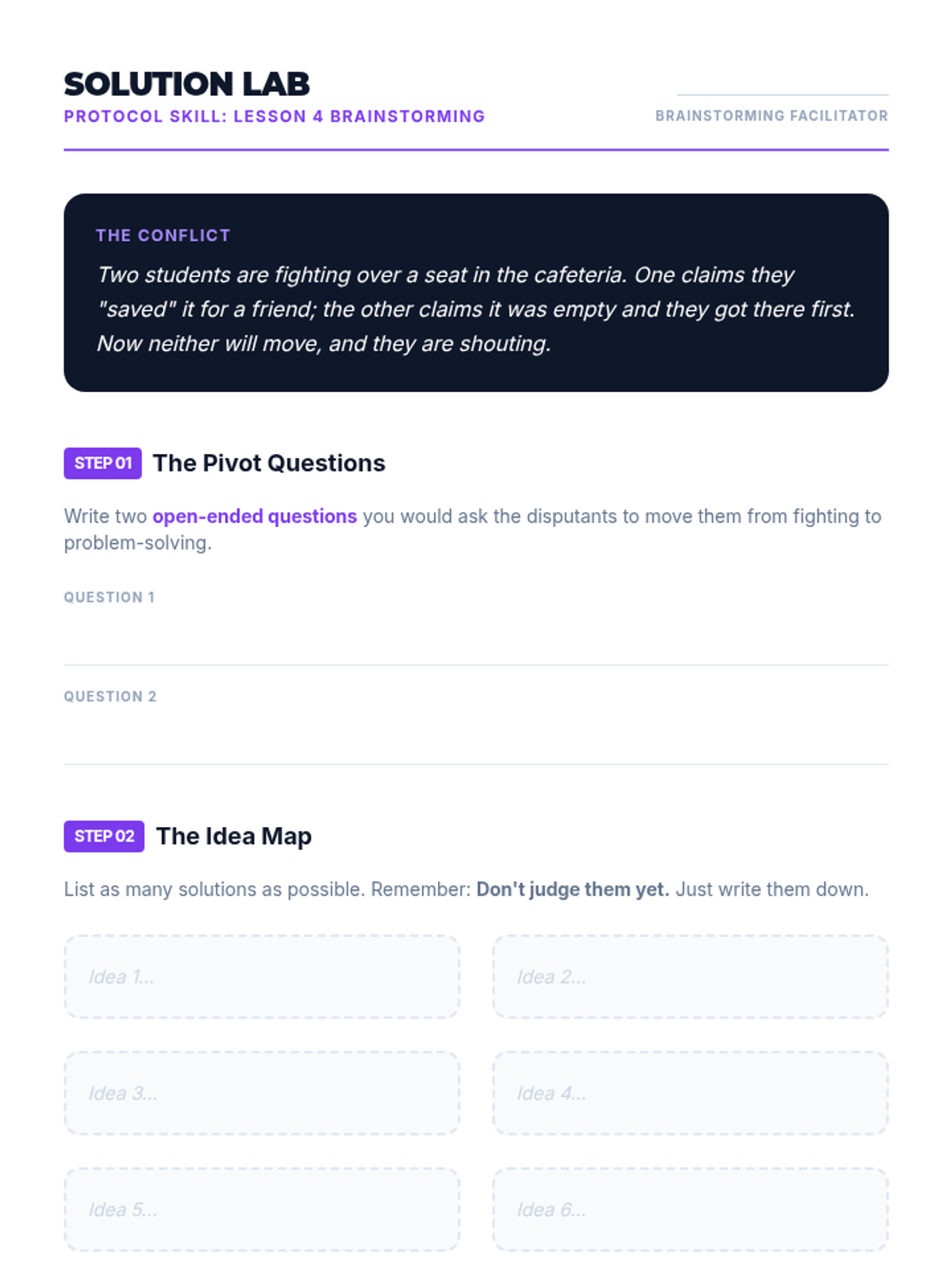
Student activity sheet for Lesson 4 to practice the shift from conflict to brainstorming and solution selection.
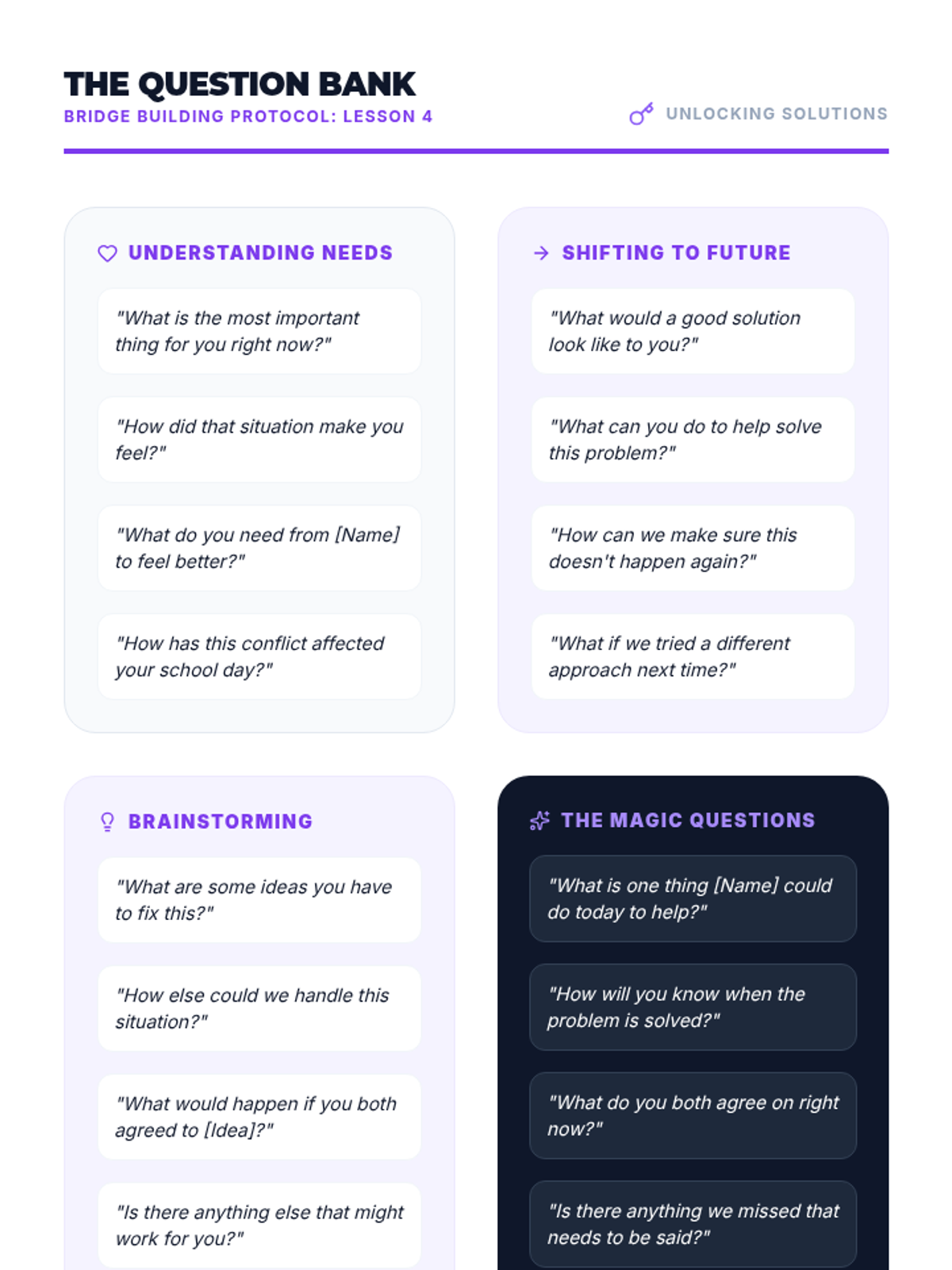
A student reference sheet containing categorised open-ended questions to facilitate the shift from conflict to resolution.
Instructional slides for Lesson 4, focusing on asking open-ended questions and facilitating brainstorming for conflict resolution.
Lesson 3 slides on digital harassment, social media conduct, and the permanence of digital evidence in workplace rights.
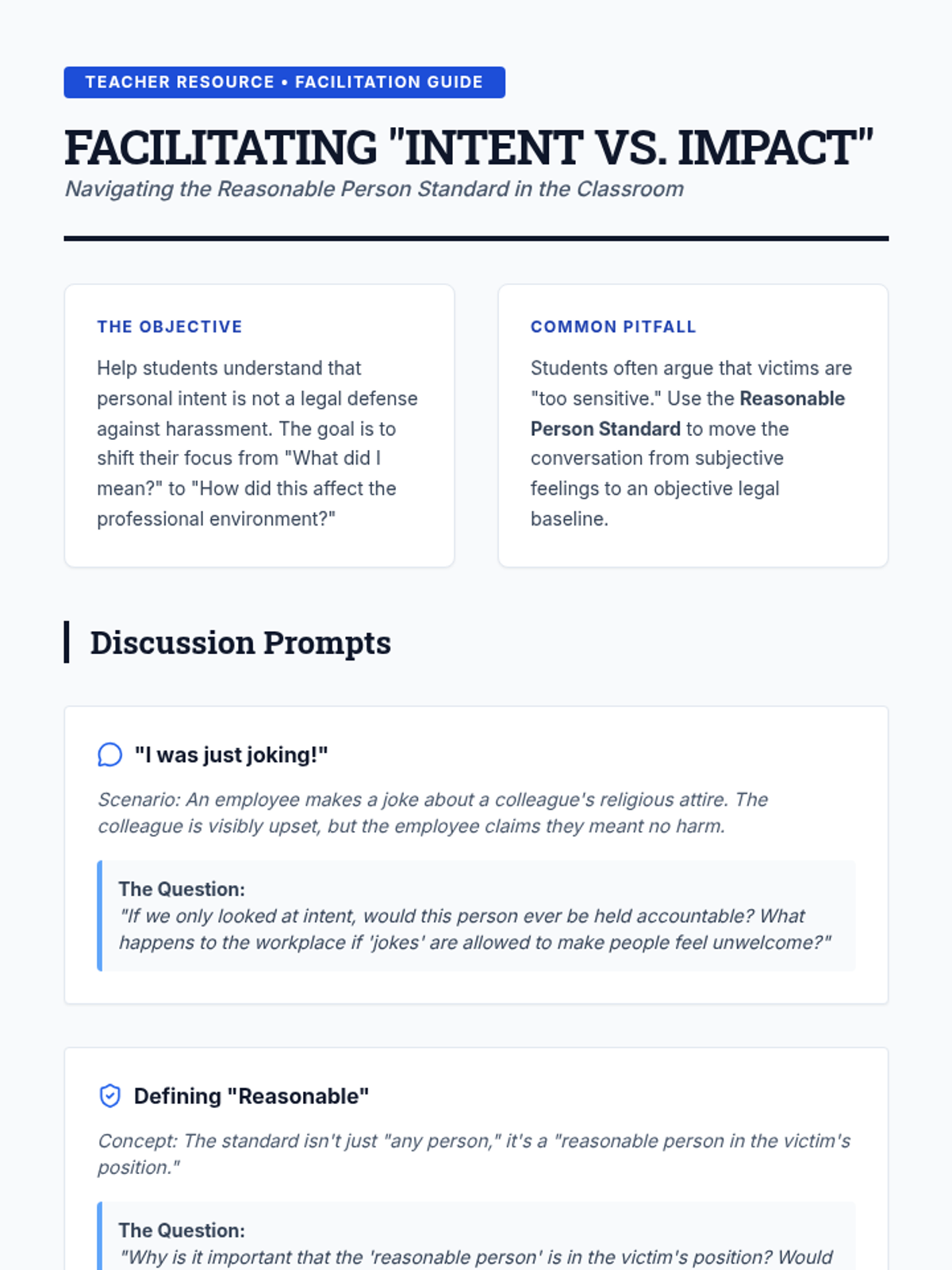
Teacher-facing guide for facilitating discussions on the 'reasonable person standard' and intent vs. impact.
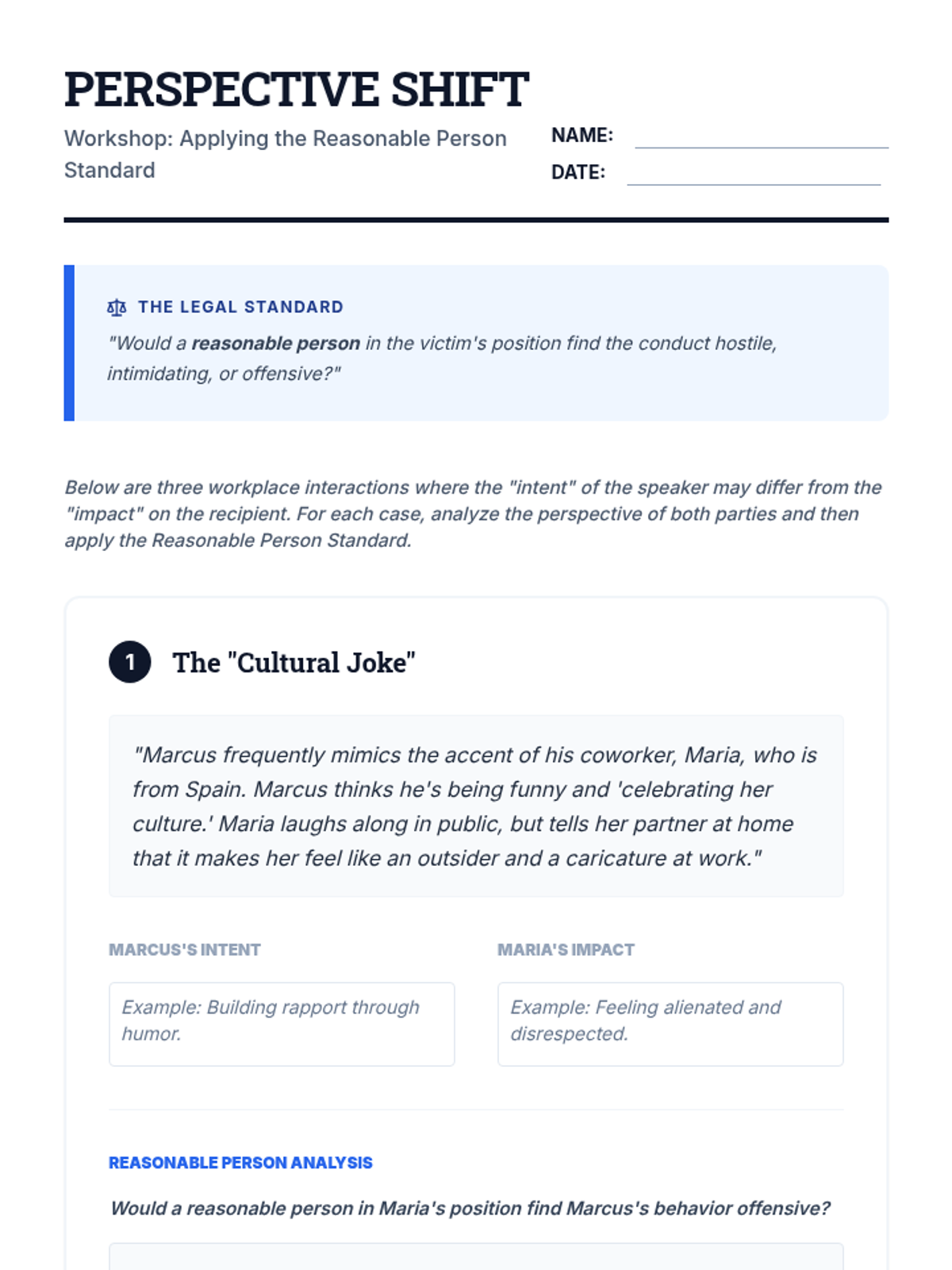
Student activity sheet for analyzing intent vs. impact using the reasonable person standard and practicing professional communication rewrites.