Employment laws, safety protocols, and legal protections against workplace harassment and discrimination. Connects regulatory requirements to practical understandings of pay stubs, insurance benefits, and employee advocacy.
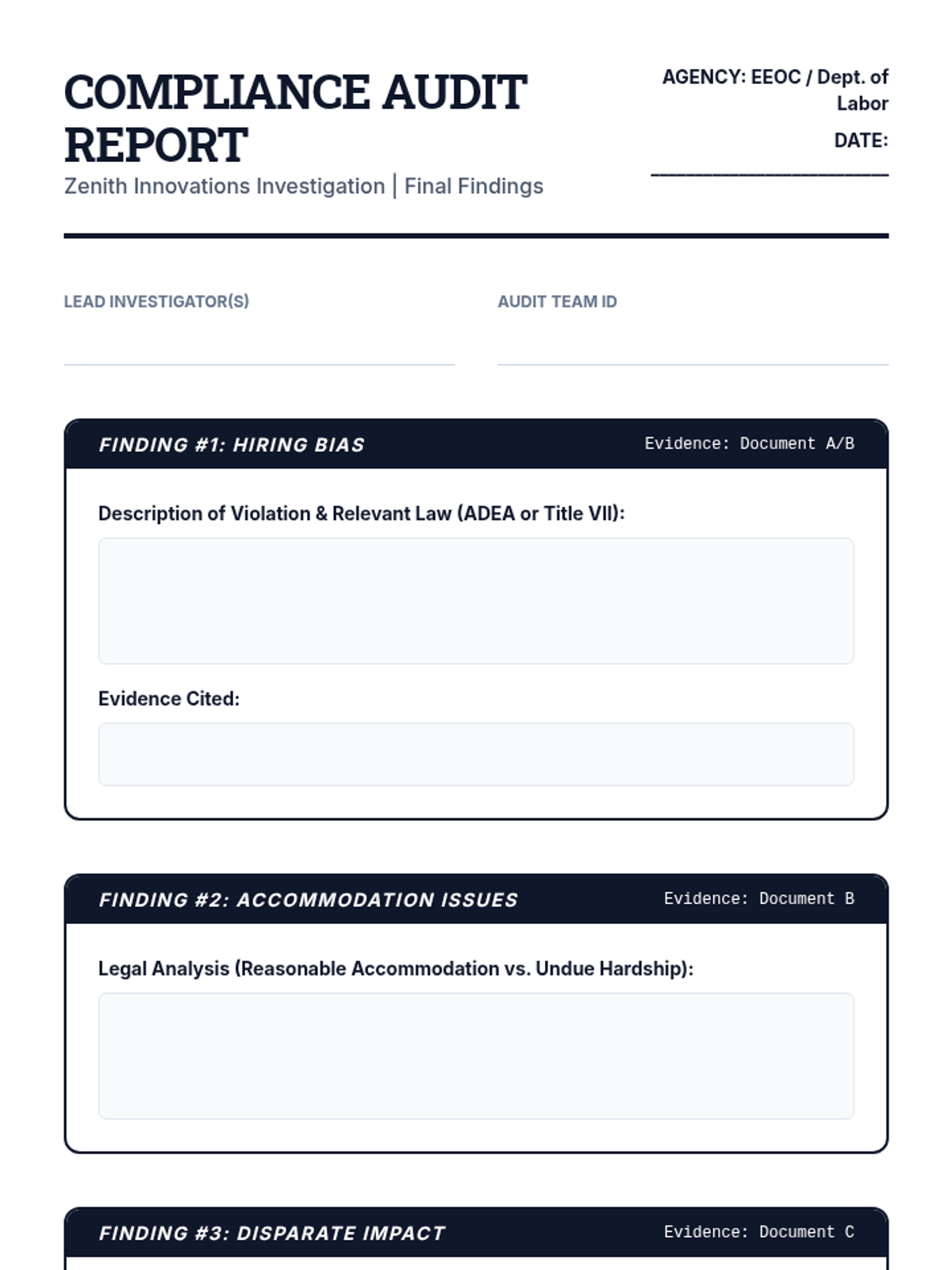
A report template for students to document their findings from the mock compliance audit, identifying legal violations and recommending corrective actions.
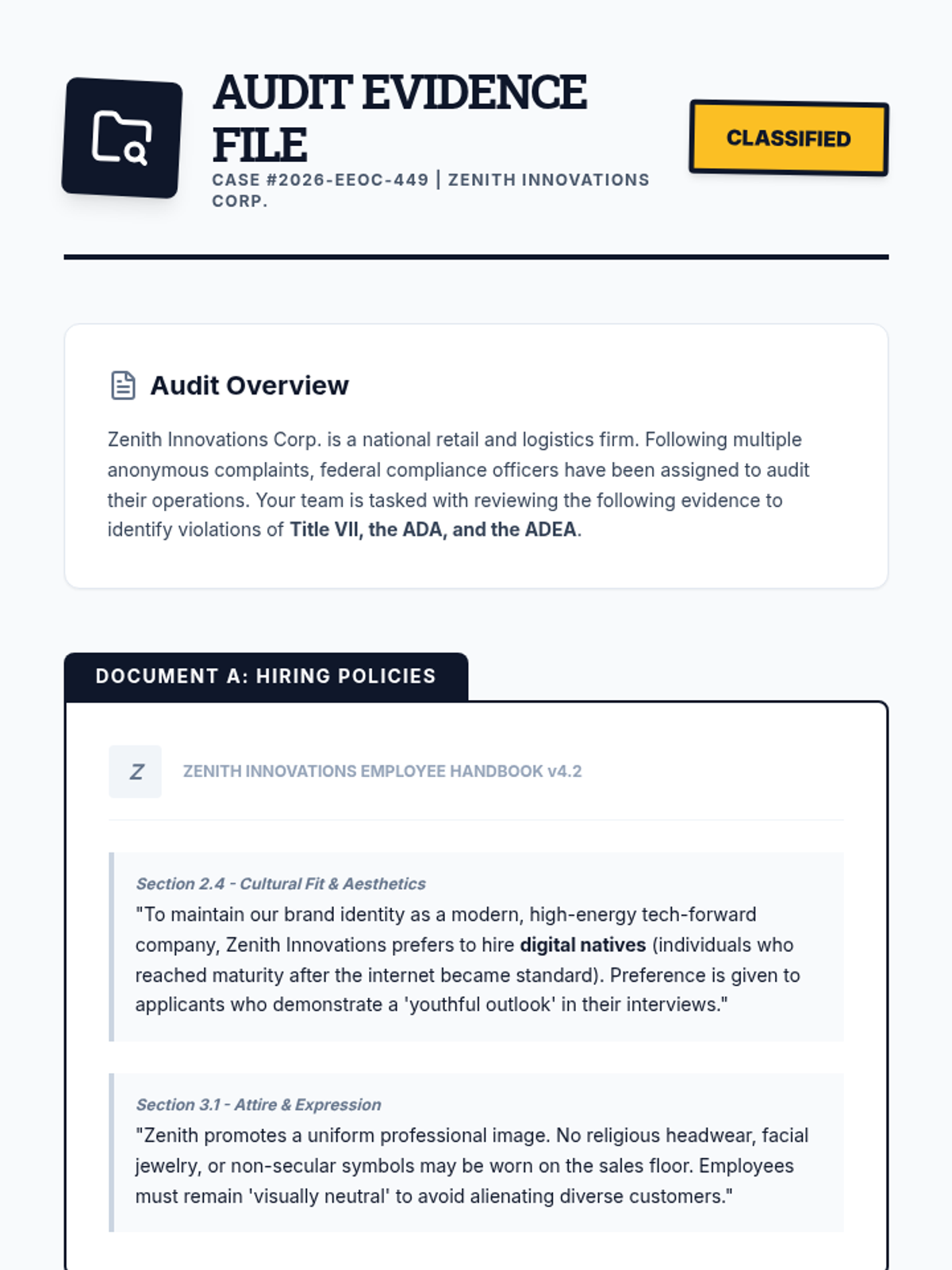
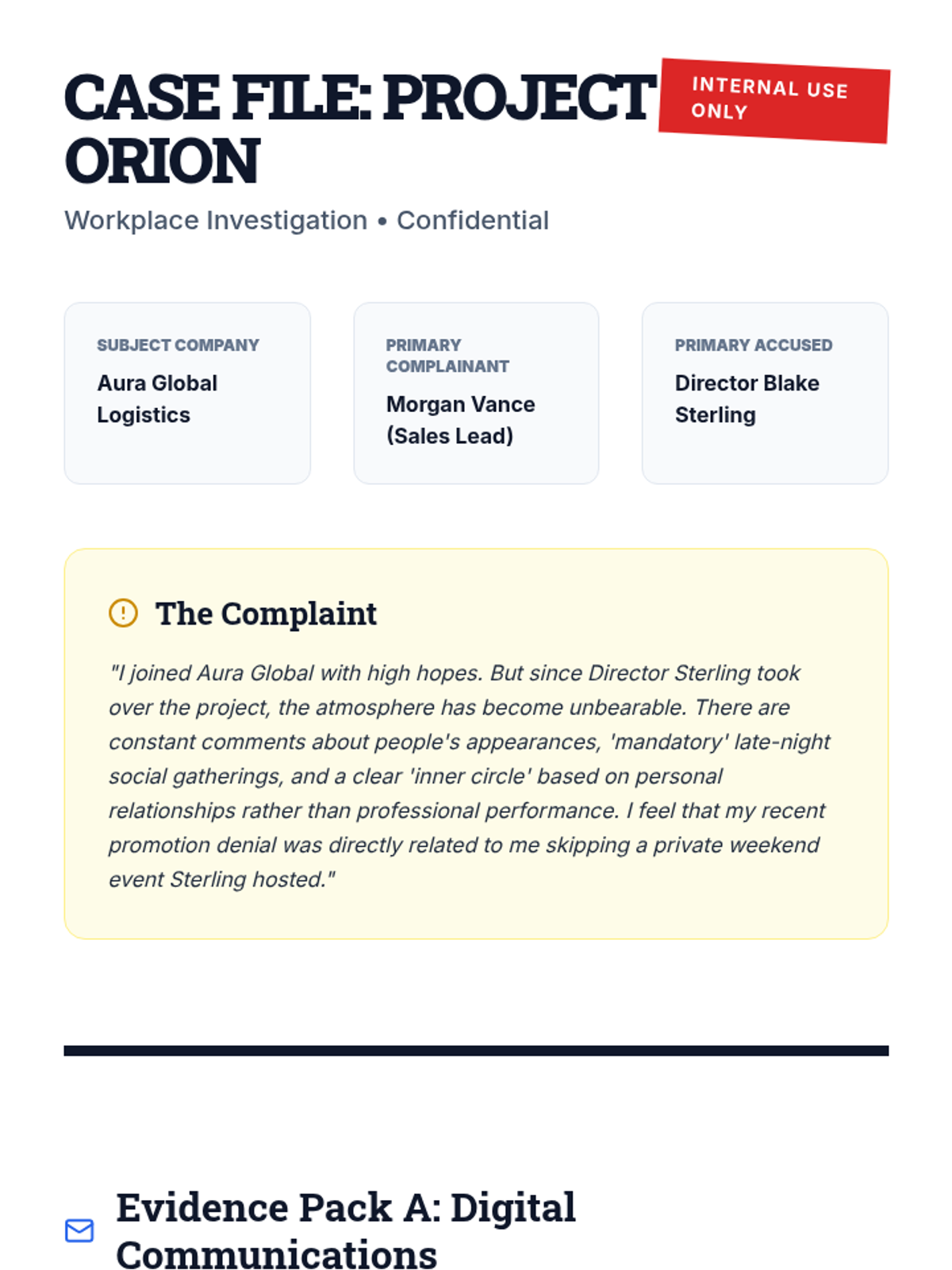
A comprehensive evidence file containing fictional company documents, transcripts, and complaints for students to analyze during the mock compliance audit.
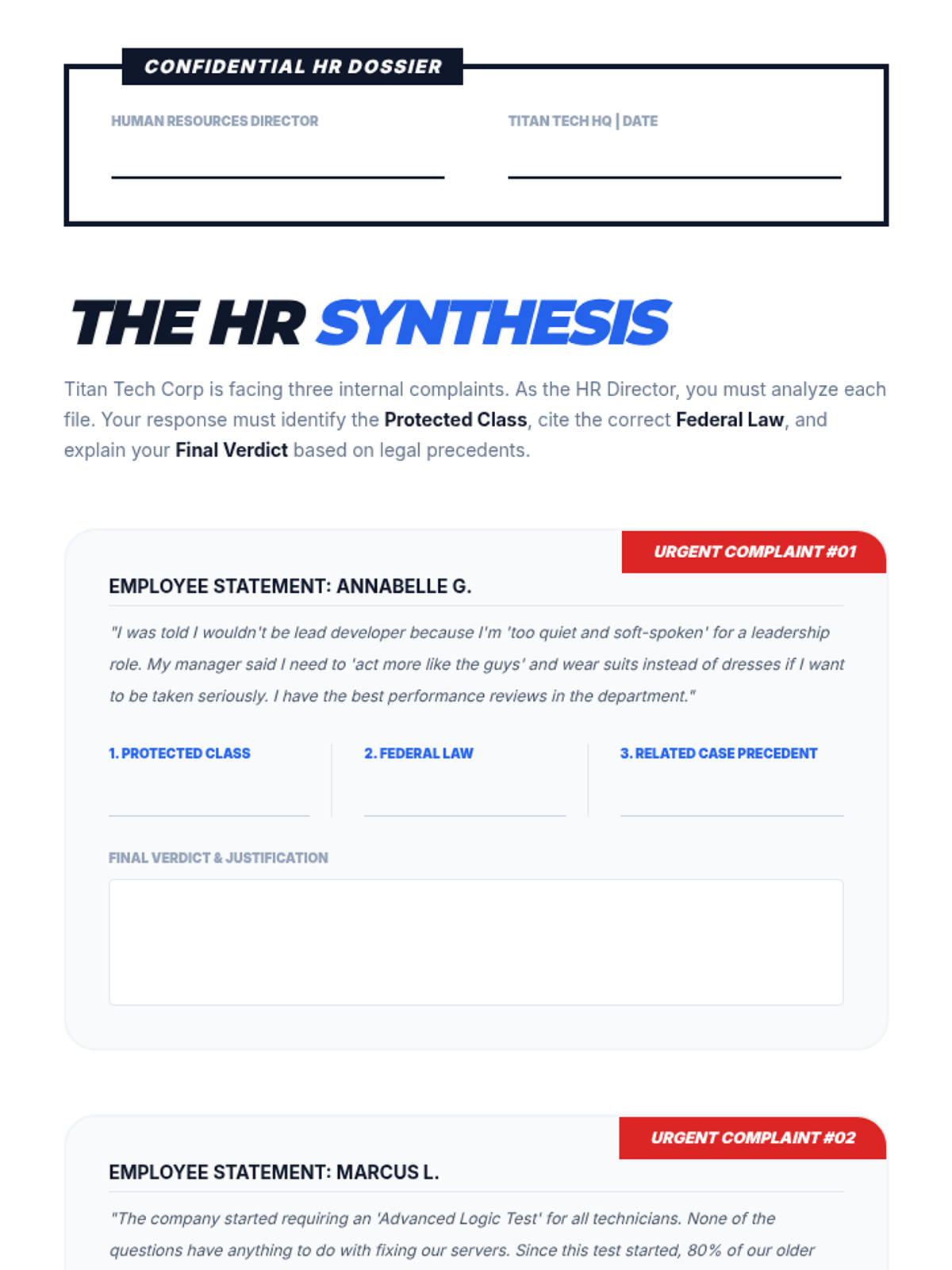
Final synthesis project for Lesson 5, where students act as an HR Director and must resolve complex workplace complaints by identifying protected classes, citing federal laws, and applying legal precedents.
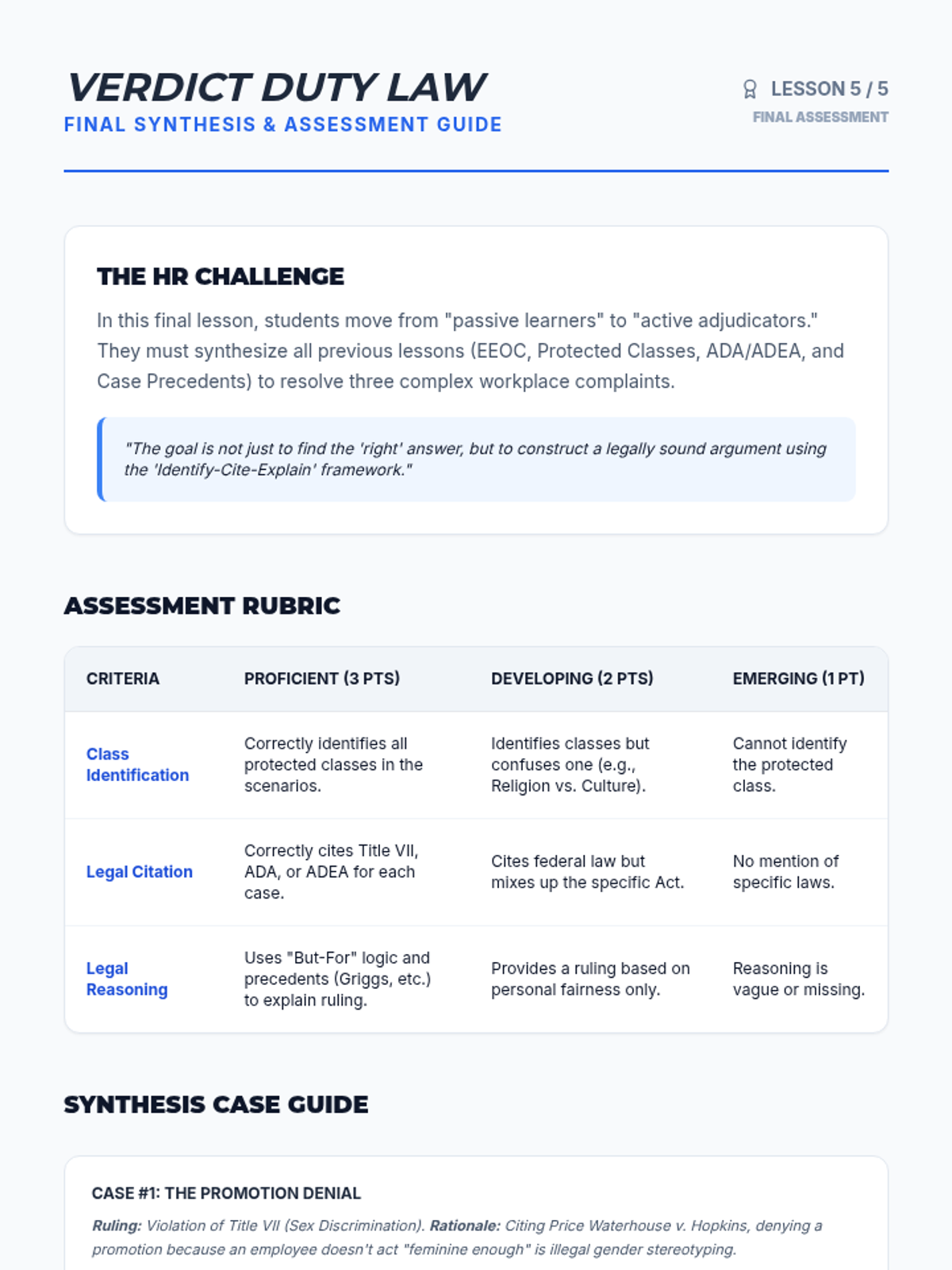
Facilitation guide for teachers for Lesson 5, including a grading rubric and answer key for the final HR synthesis project.
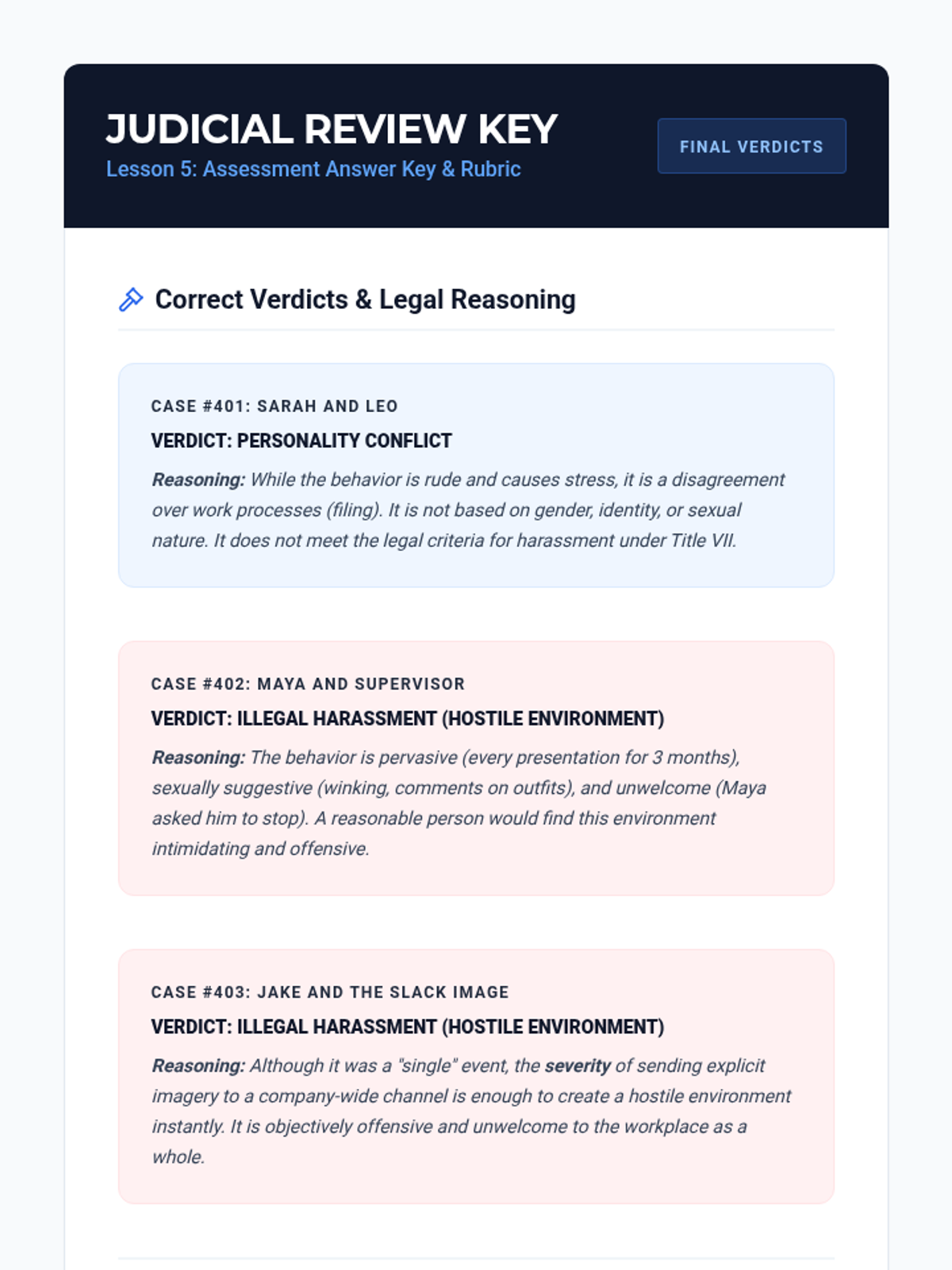
A teacher resource for Lesson 5: The Judicial Review. It includes the correct categorization of assessment scenarios, detailed legal justifications for each, and a grading rubric for student responses.
Slide deck for Lesson 5 summarizing legal standards and introducing the final HR synthesis project. Guides students through the process of building a legal argument and filing an EEOC complaint.
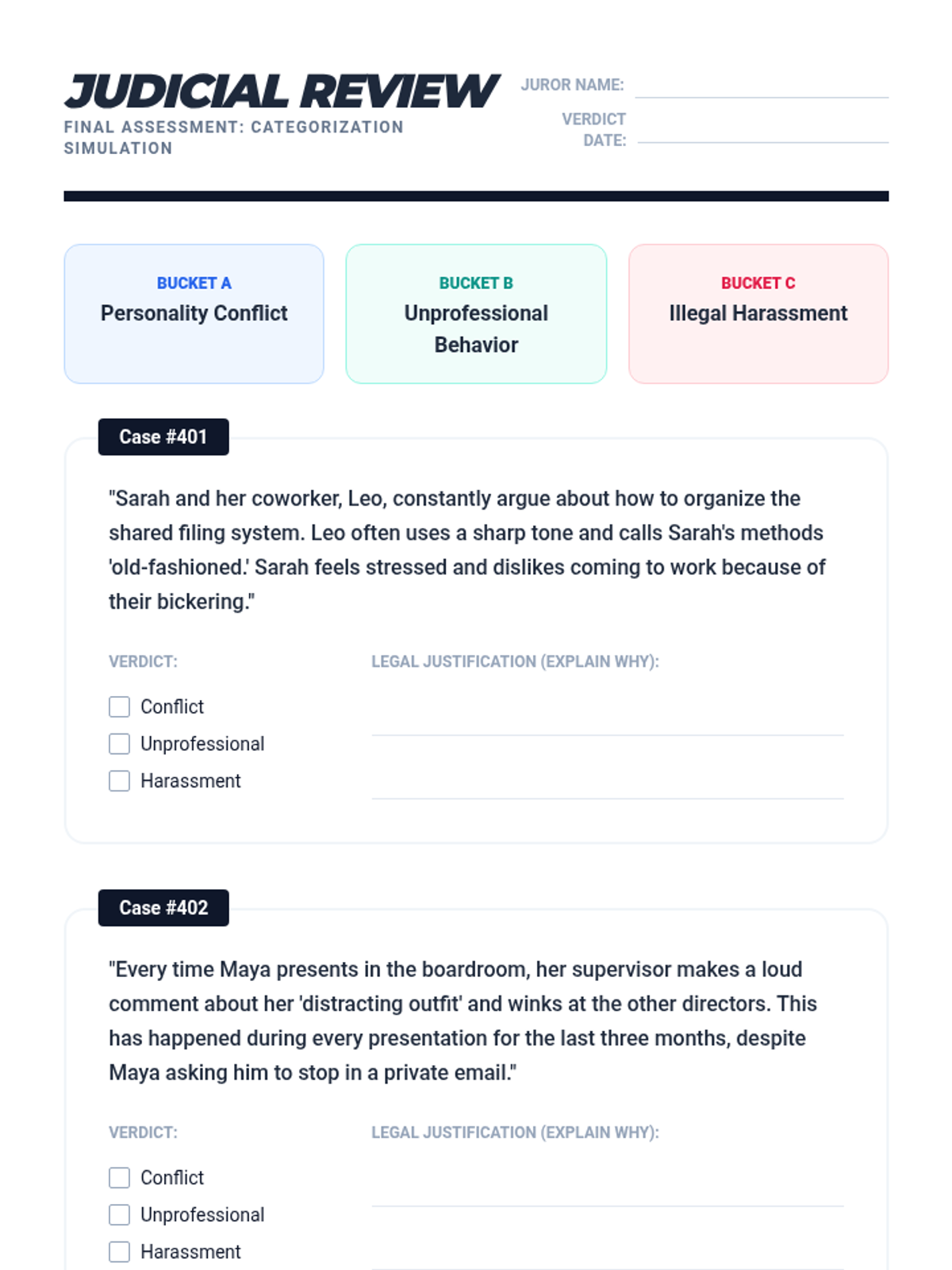
The final assessment worksheet for Lesson 5. Students categorize complex workplace scenarios as Personality Conflict, Unprofessional, or Illegal Harassment, providing legal justifications for each verdict.
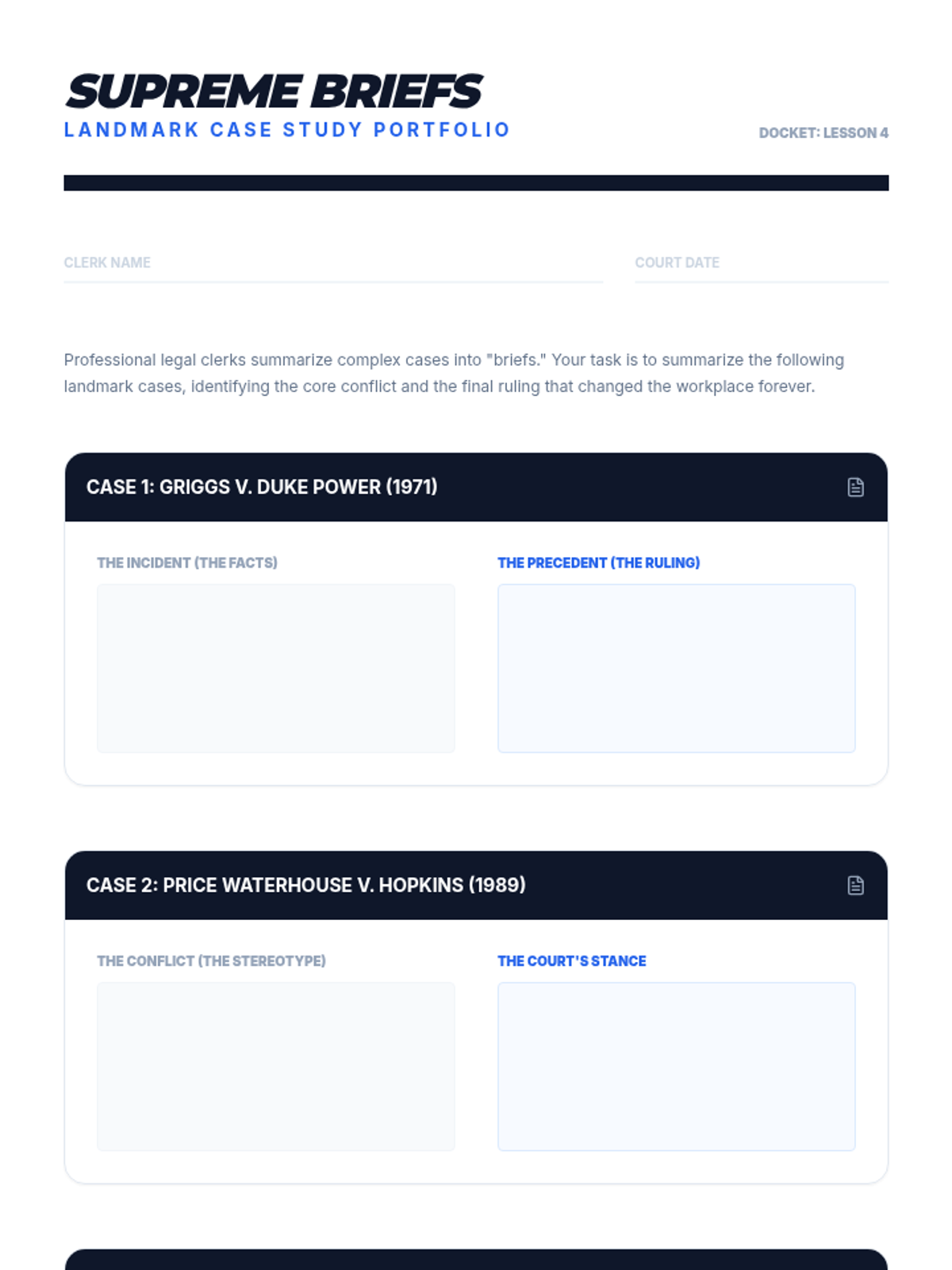
Student research portfolio for Lesson 4, providing a structured template for summarizing landmark Supreme Court cases and their impact on workplace law.
Educational slides for Lesson 5: The Judicial Review. This deck sets up the final simulation, defines the three categories (Conflict, Unprofessional, Harassment), and outlines the assessment task.
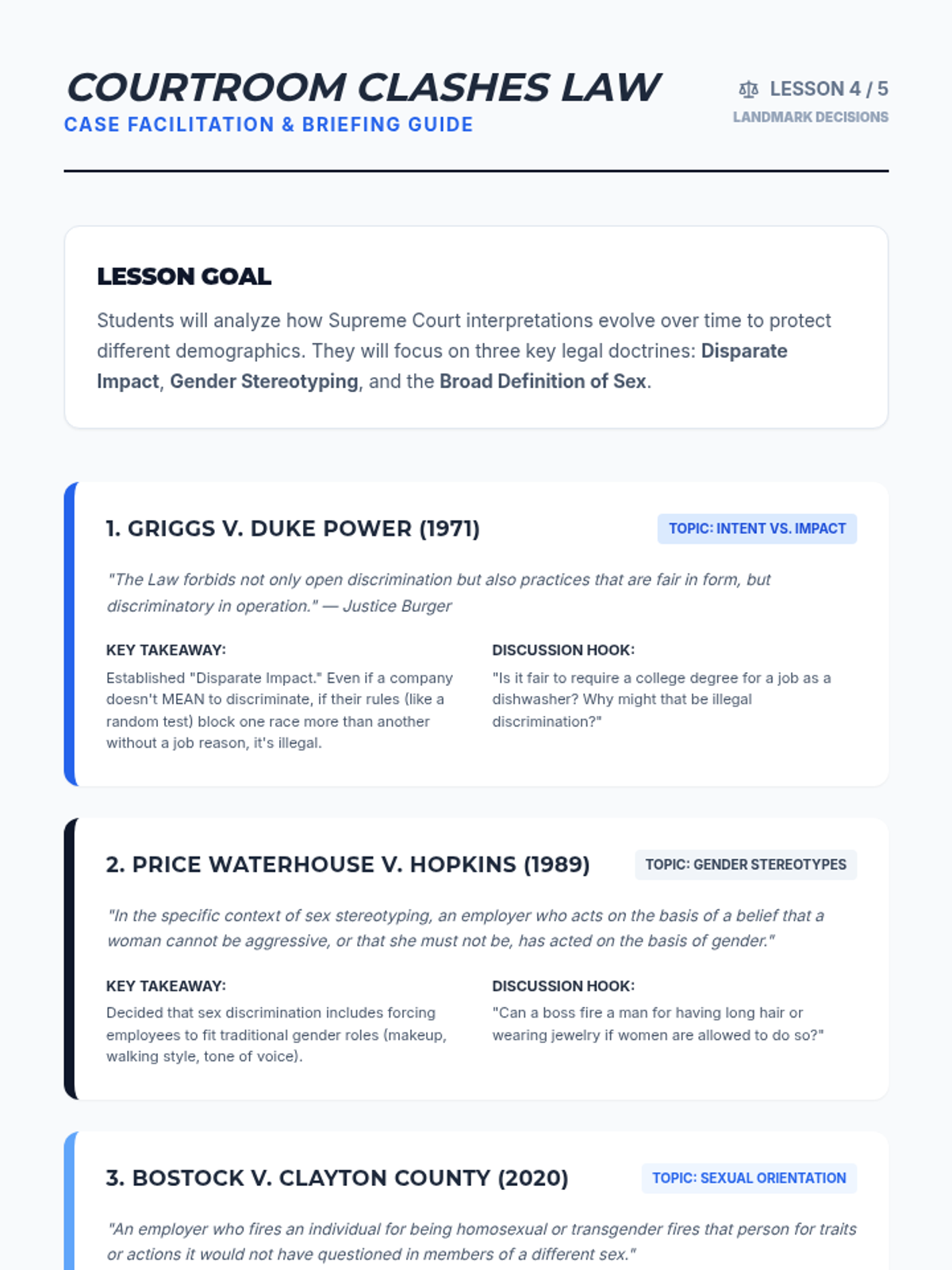
Facilitation guide for teachers for Lesson 4, detailing landmark Supreme Court cases (Griggs, Price Waterhouse, Bostock) and providing discussion prompts for each.
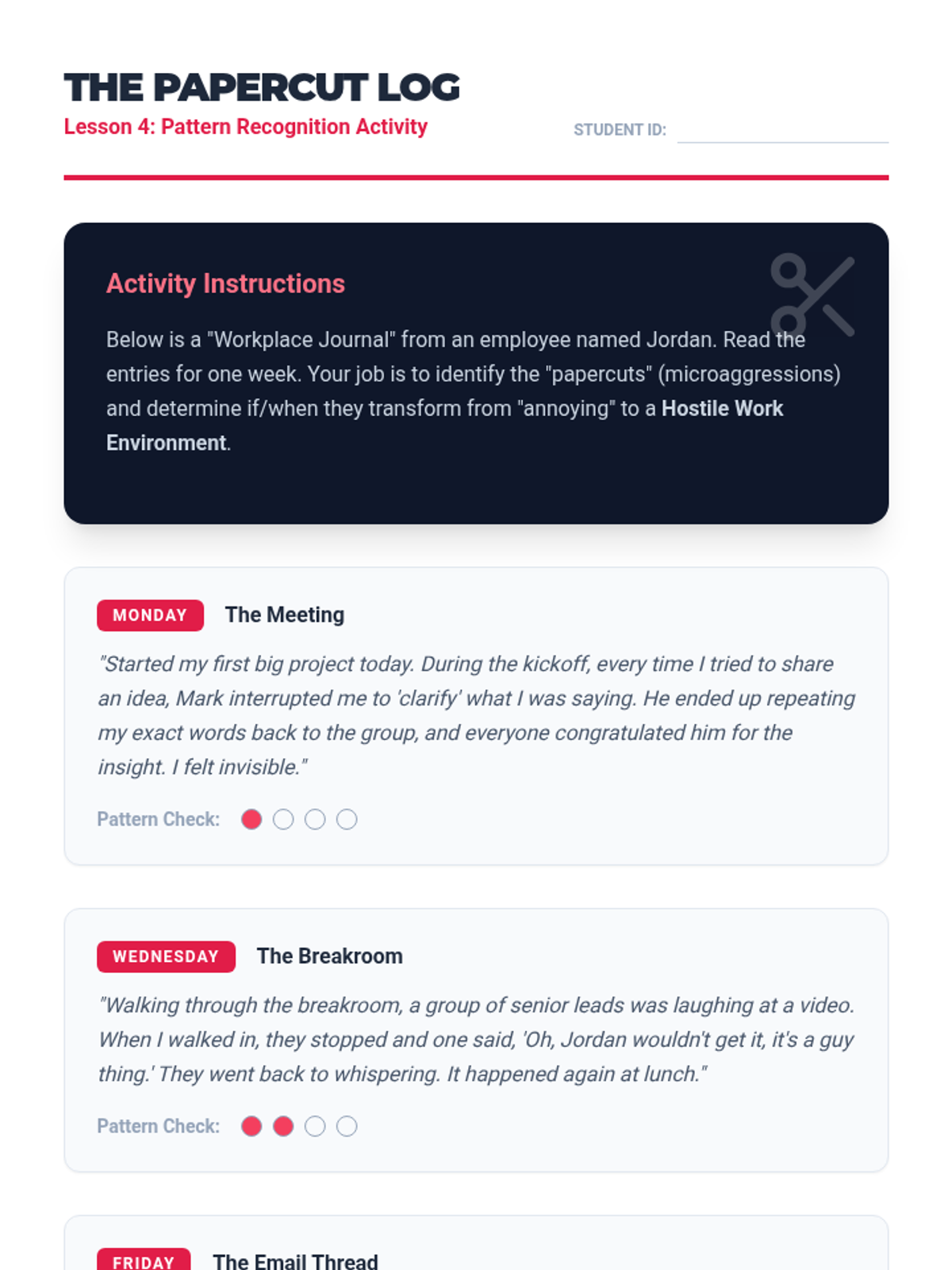
A student worksheet for Lesson 4 where they analyze a week's worth of workplace journal entries to identify a pattern of microaggressions. It focuses on the cumulative effect of small behaviors.
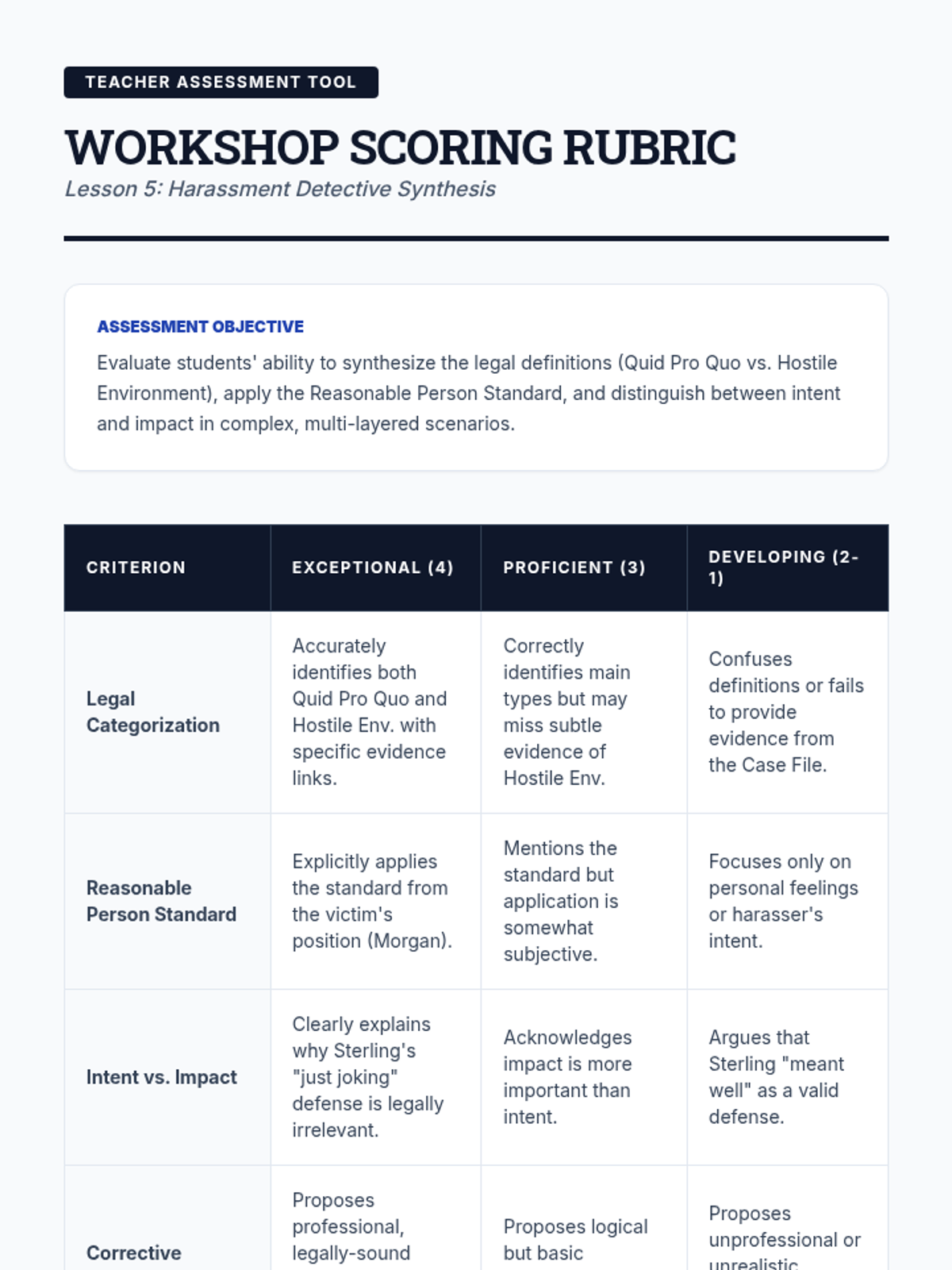
Teacher grading rubric and case study key for evaluating the Lesson 5 synthesis workshop.
Slide deck for Lesson 4 reviewing landmark Supreme Court cases that defined the boundaries of workplace discrimination, including Griggs v. Duke Power and Price Waterhouse v. Hopkins.
Student activity document containing case evidence (emails, statements, HR notes) for the Lesson 5 synthesis workshop.
Educational slides for Lesson 4: The Pattern of Toxicity. This deck explains how microaggressions contribute to a hostile work environment over time, emphasizing the distinction between isolated incidents and pervasive patterns.
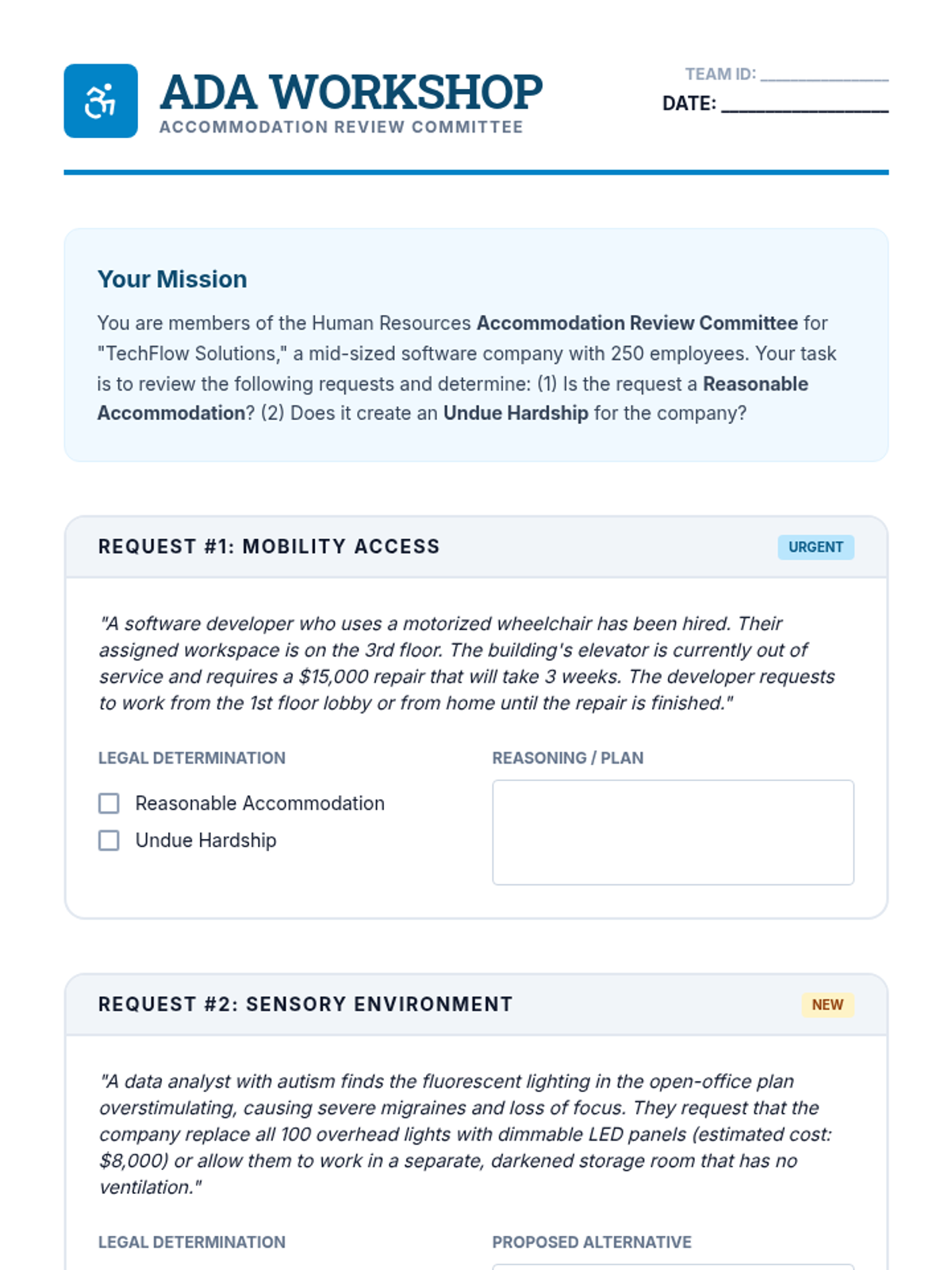
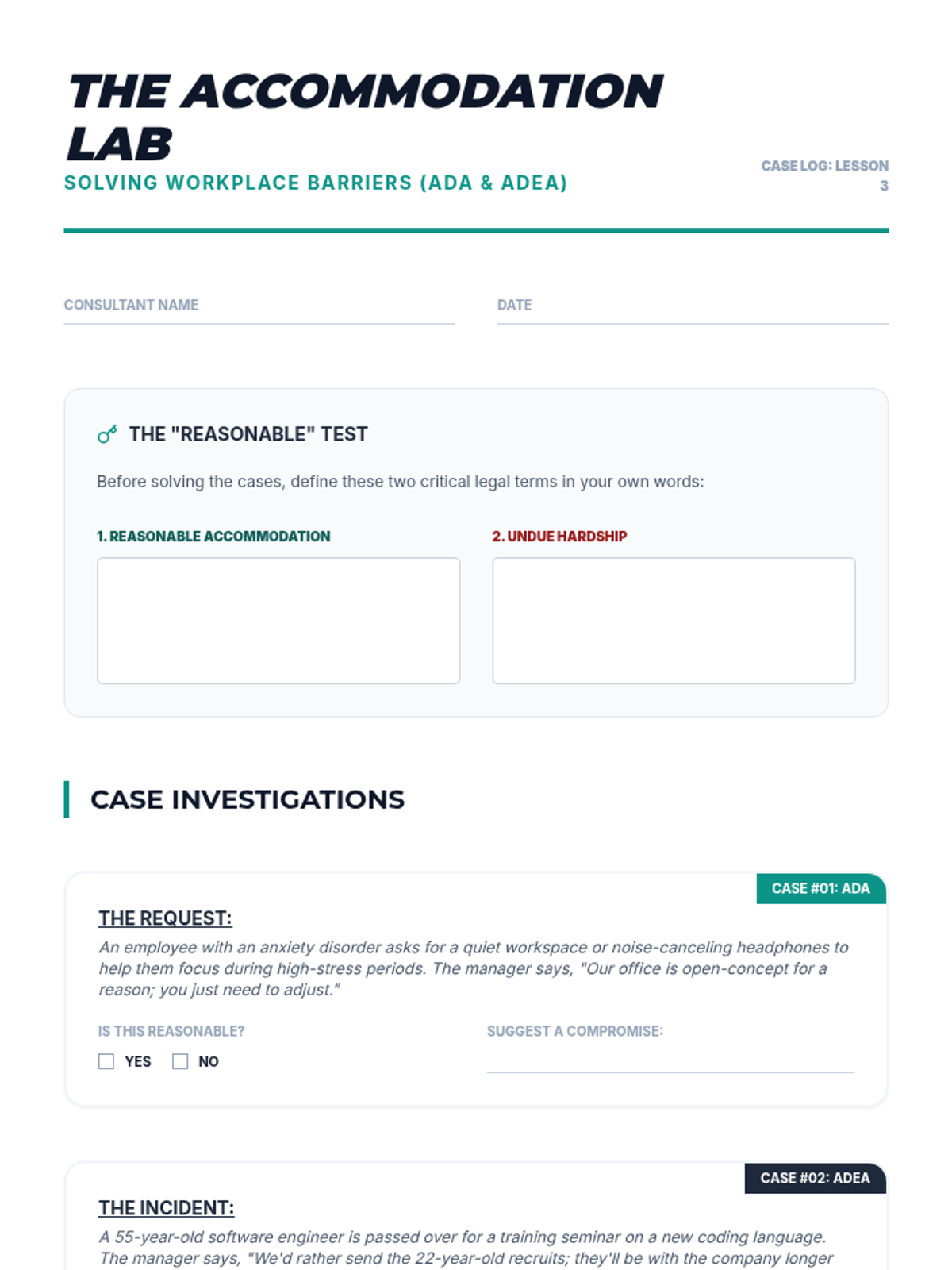
A simulation worksheet where students act as an HR committee to review accommodation requests and determine legal compliance under the ADA.
Student activity for Lesson 3, featuring scenarios where students must determine if a request for accommodation is reasonable or an undue hardship, and evaluate potential age discrimination.
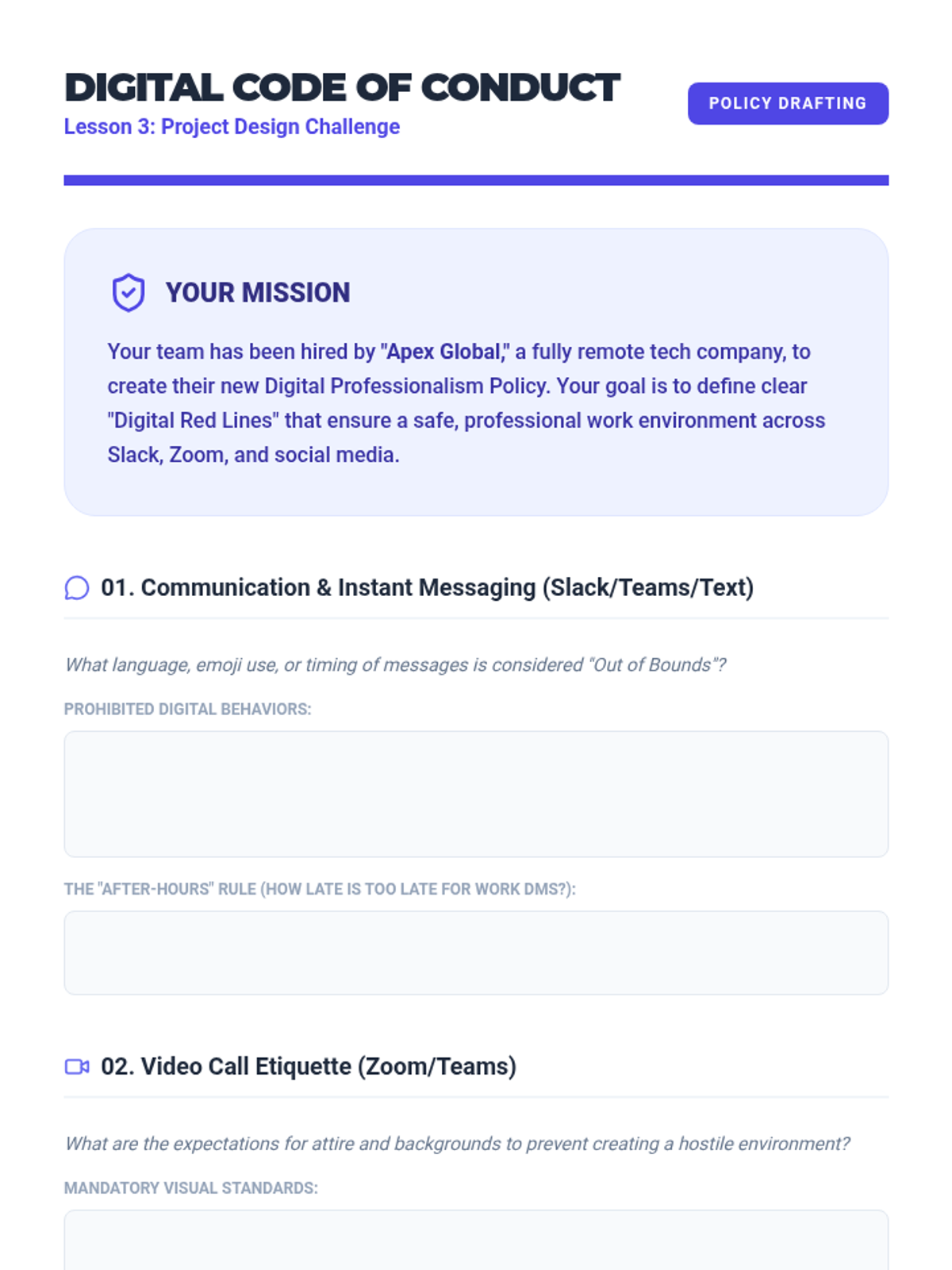
A student project guide for Lesson 3. Students act as HR consultants to draft a 'Digital Professionalism Policy' for a remote company, defining boundaries for instant messaging, video calls, and social media.
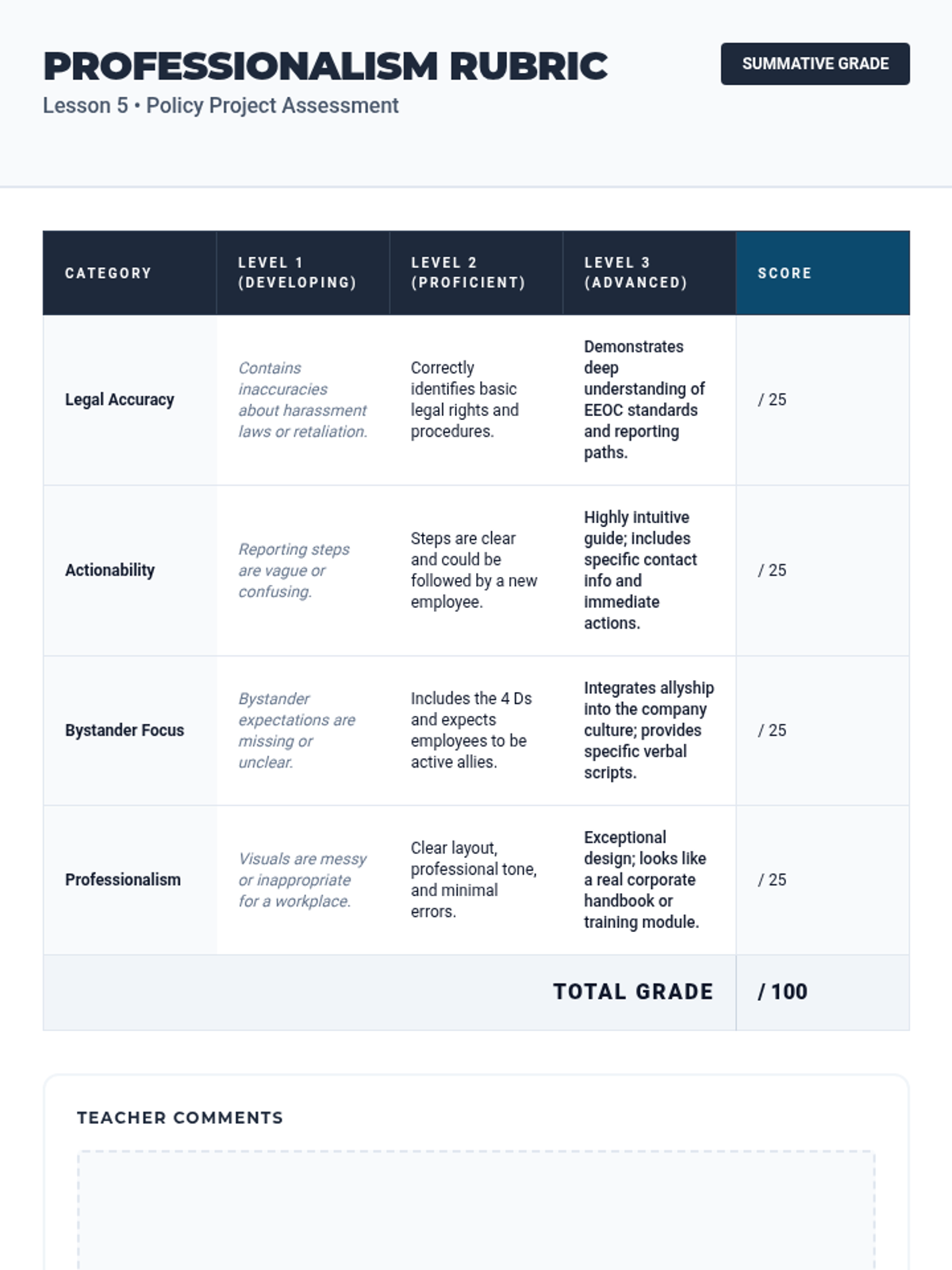
Final summative rubric for Lesson 5, assessing legal accuracy, actionability, bystander focus, and professionalism in the student-created workplace policies.
Final workshop slides for Lesson 5, introducing the Harassment Detective challenge and guiding students through the analysis process.
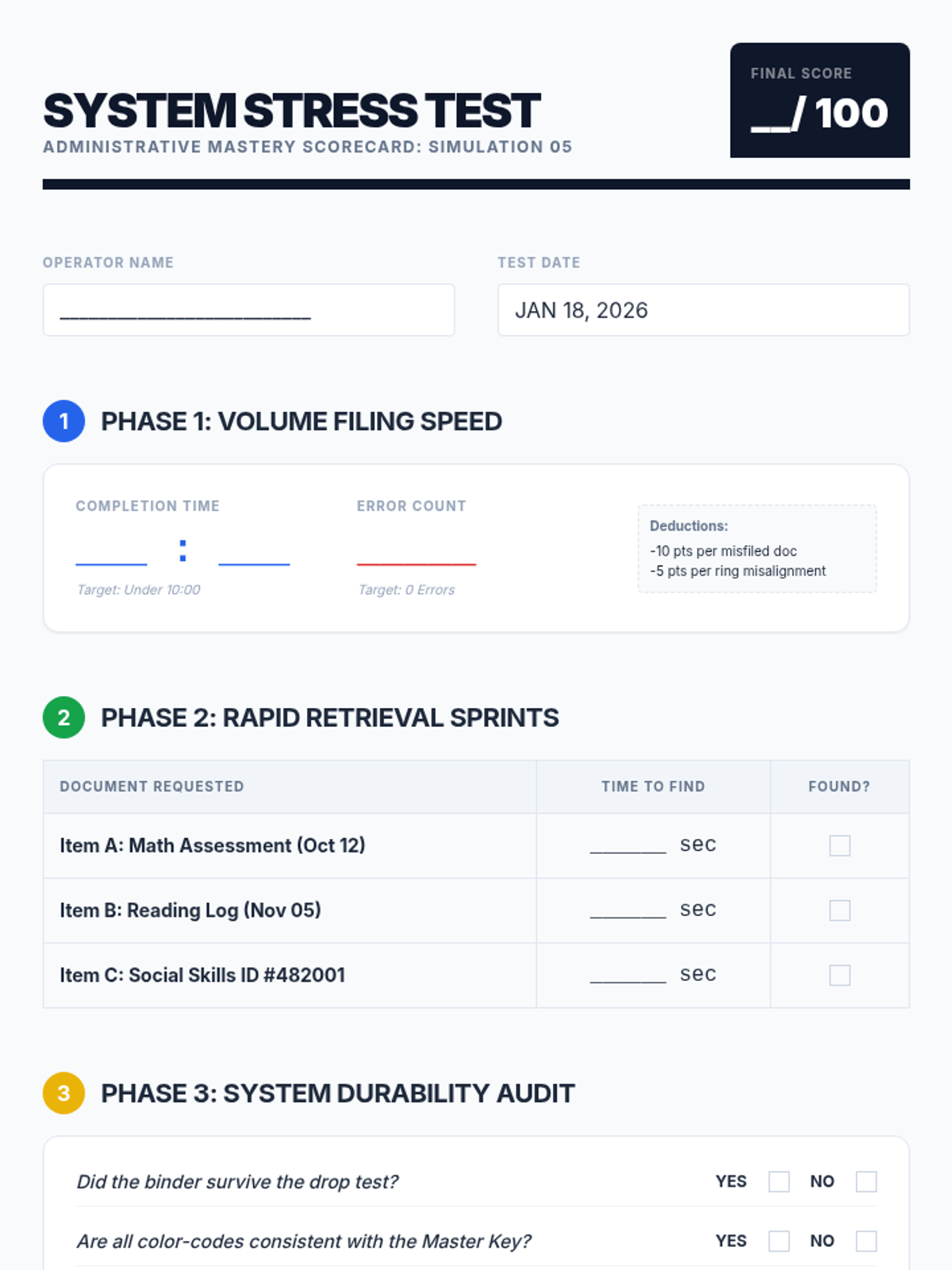
A comprehensive performance scorecard for the final administrative simulation, tracking filing speed, retrieval accuracy, and system durability.
A visual guide to the final administrative simulation, outlining retrieval goals, accuracy standards, and the 'stress factors' used to test organizational durability.
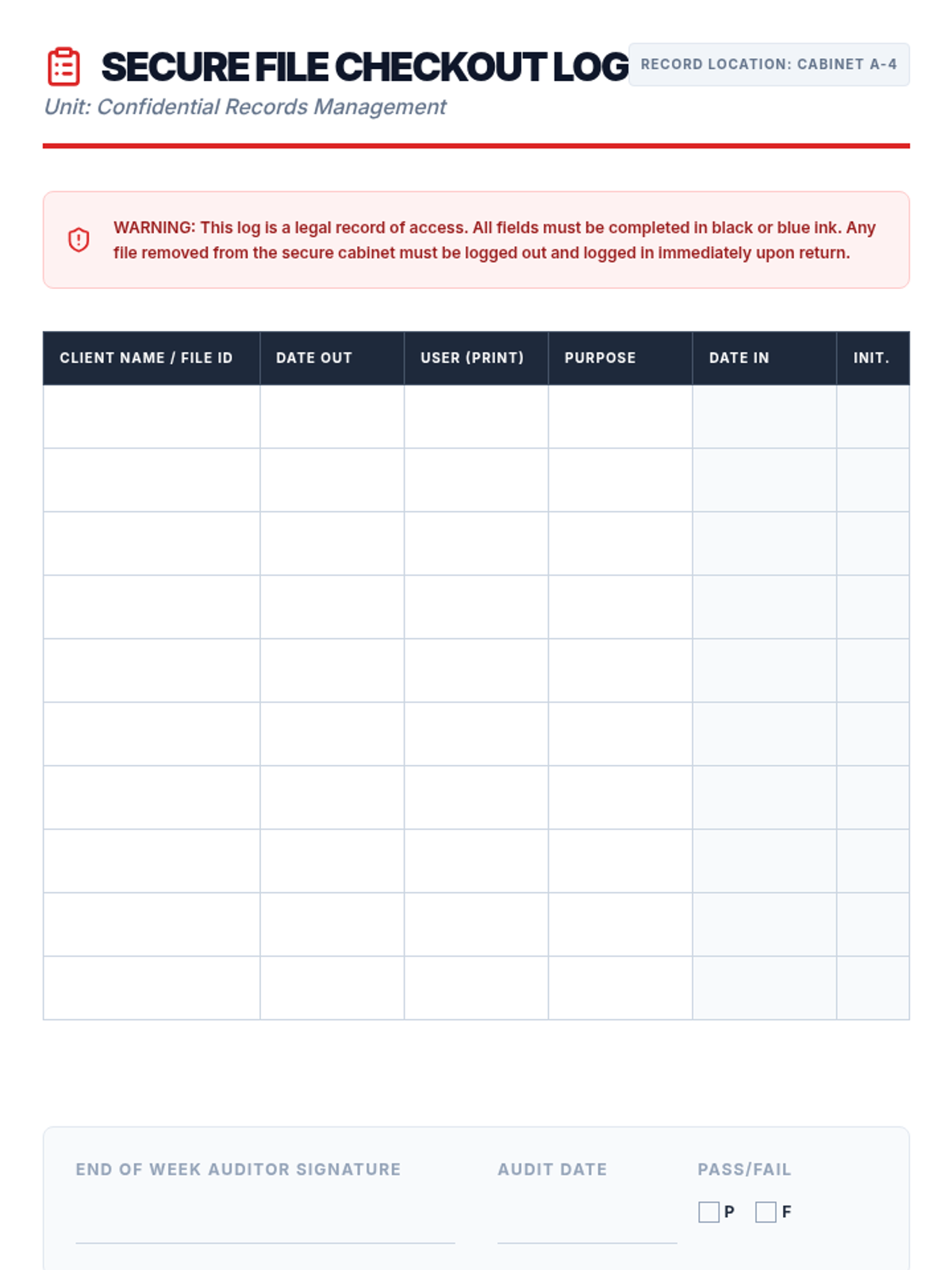
A formal check-out and check-in log for managing the chain of custody for sensitive files, including spaces for client ID, user signatures, and audit tracking.
A visual presentation for Lesson 4 on physical security protocols, the chain of custody, and the ethical handling of sensitive student data.
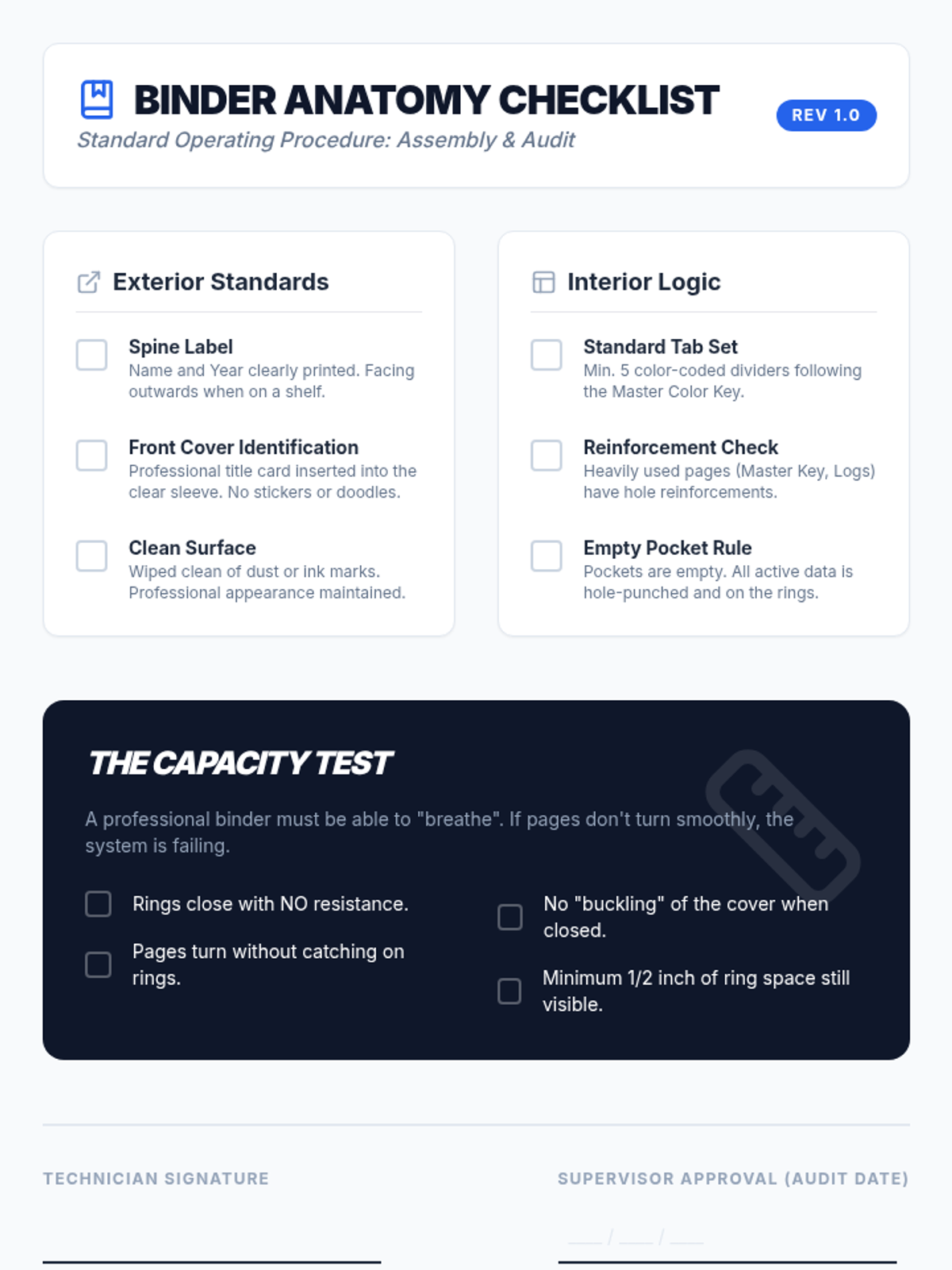
A professional assembly and audit checklist for students to ensure their data tracking binders meet clerical standards for organization and durability.
A visual guide to assembling and maintaining professional data tracking binders, focusing on ring alignment, divider strategies, and the 'Daily Reset' maintenance routine.
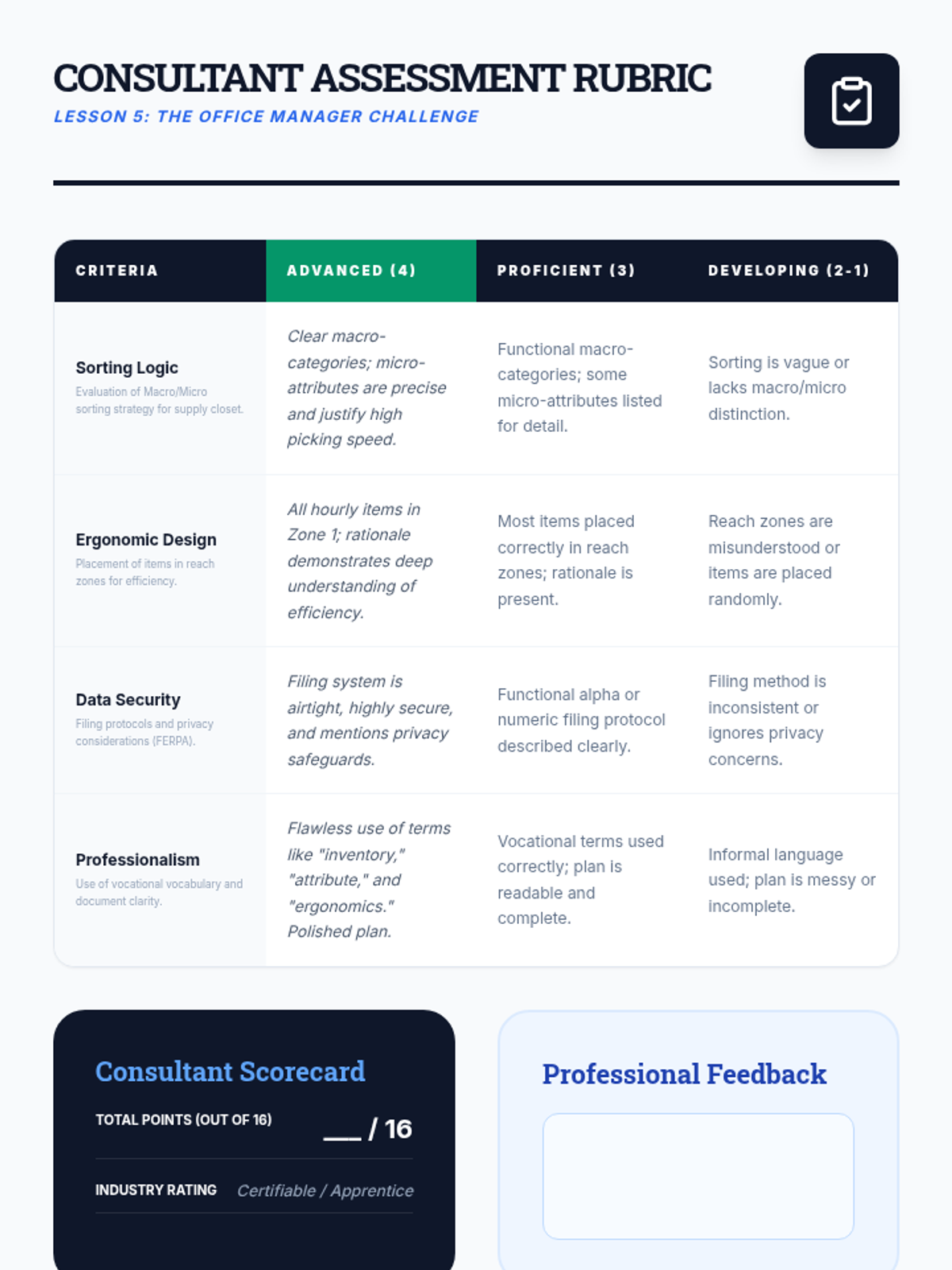
A professional grading rubric for the Office Manager Challenge, assessing sorting logic, ergonomics, data security, and professionalism.
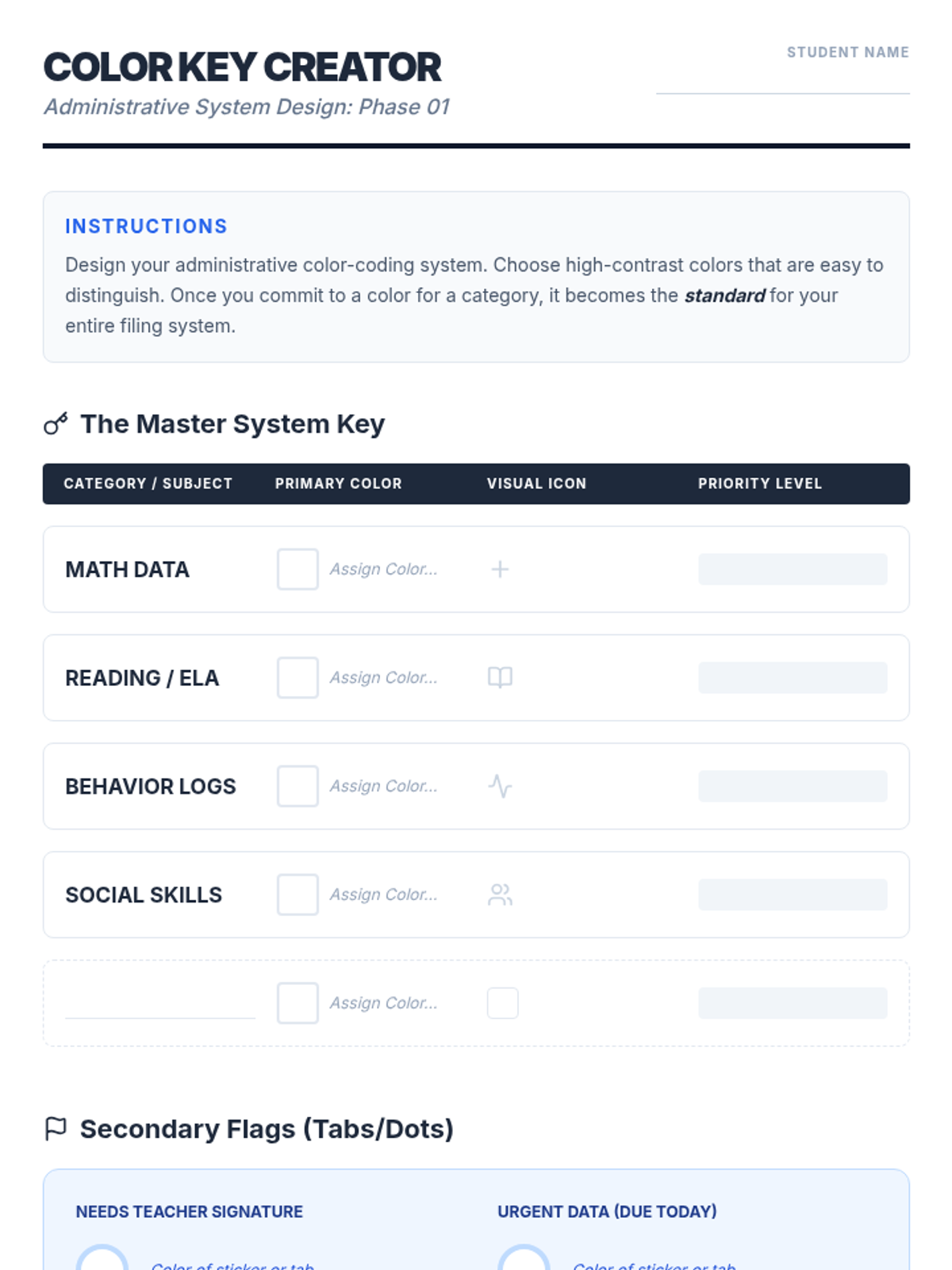
A design worksheet for students to establish their own color-coding system for data tracking, including primary category colors and secondary status flags.
A visual presentation for Lesson 2 on the psychology of color-coding, mapping categories to colors, and establishing a consistent hierarchy for data management.
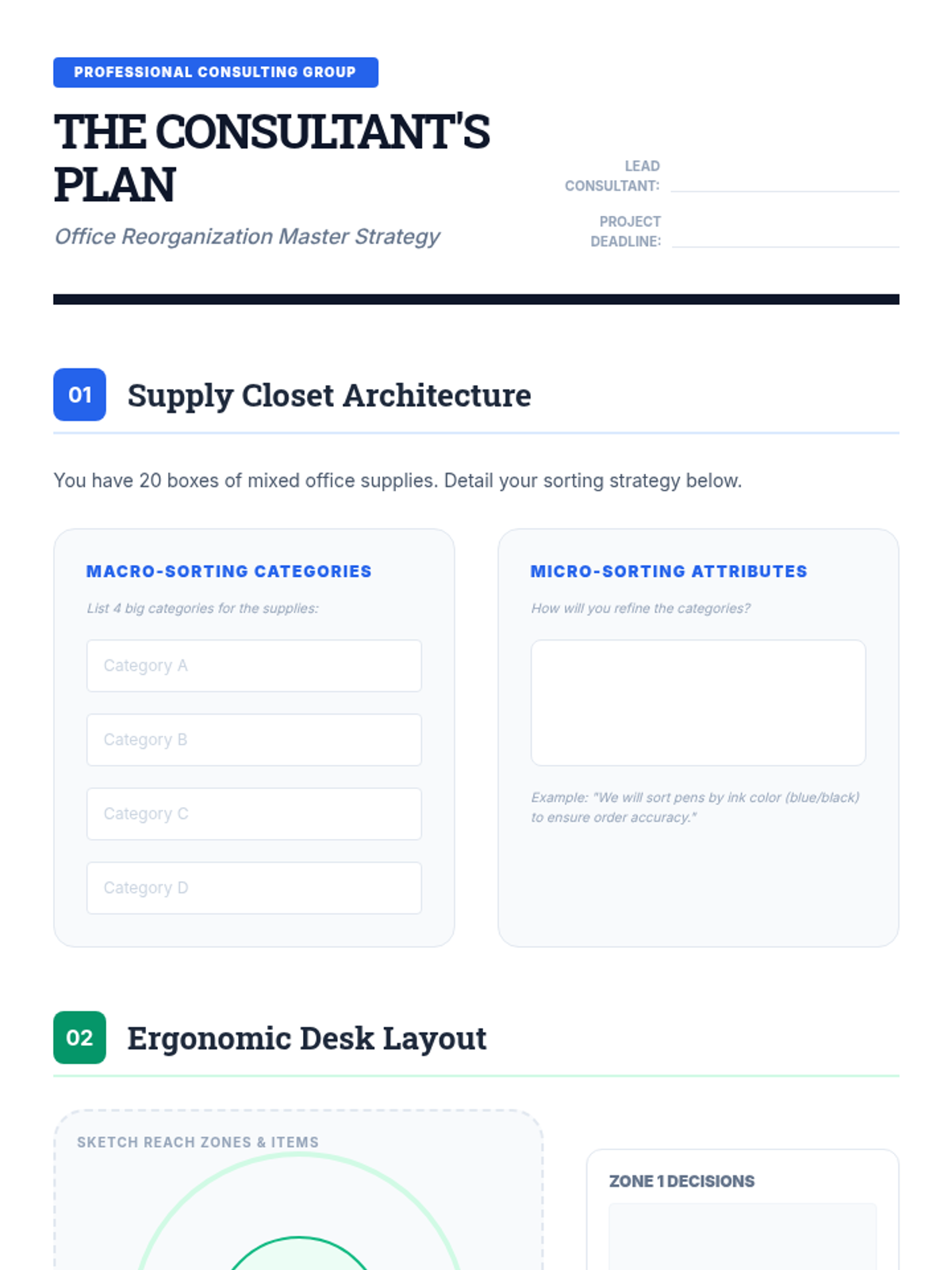
A comprehensive project planning document for the final Office Manager Challenge, guiding students through sorting, ergonomics, and filing tasks.
Slides briefing students on the final simulation: acting as an office consultant to reorganize a chaotic professional space.
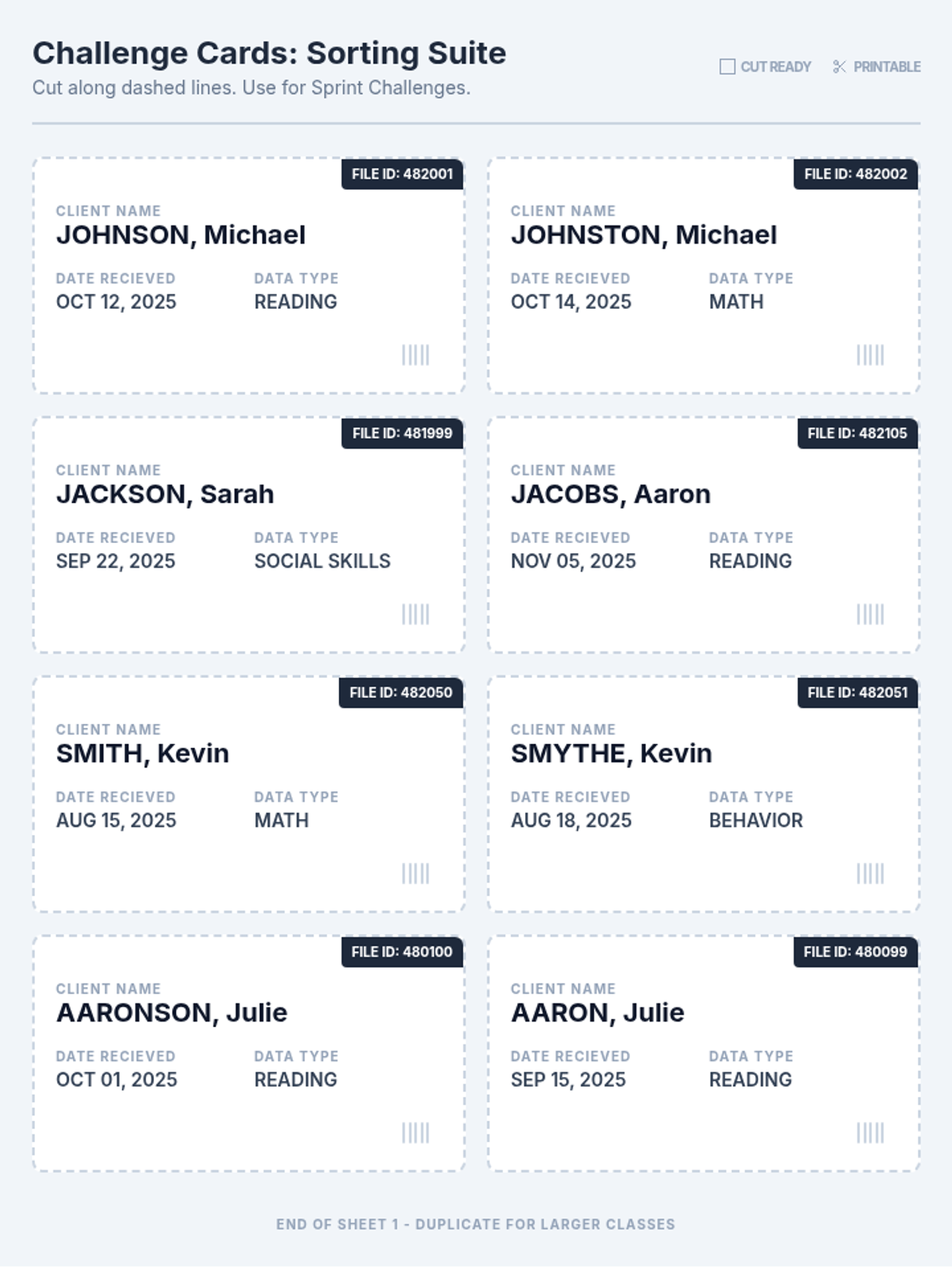
A printable set of 8 simulation client cards with names, ID numbers, and dates designed to test alphabetical (Rule of 3), numerical, and chronological sorting skills.
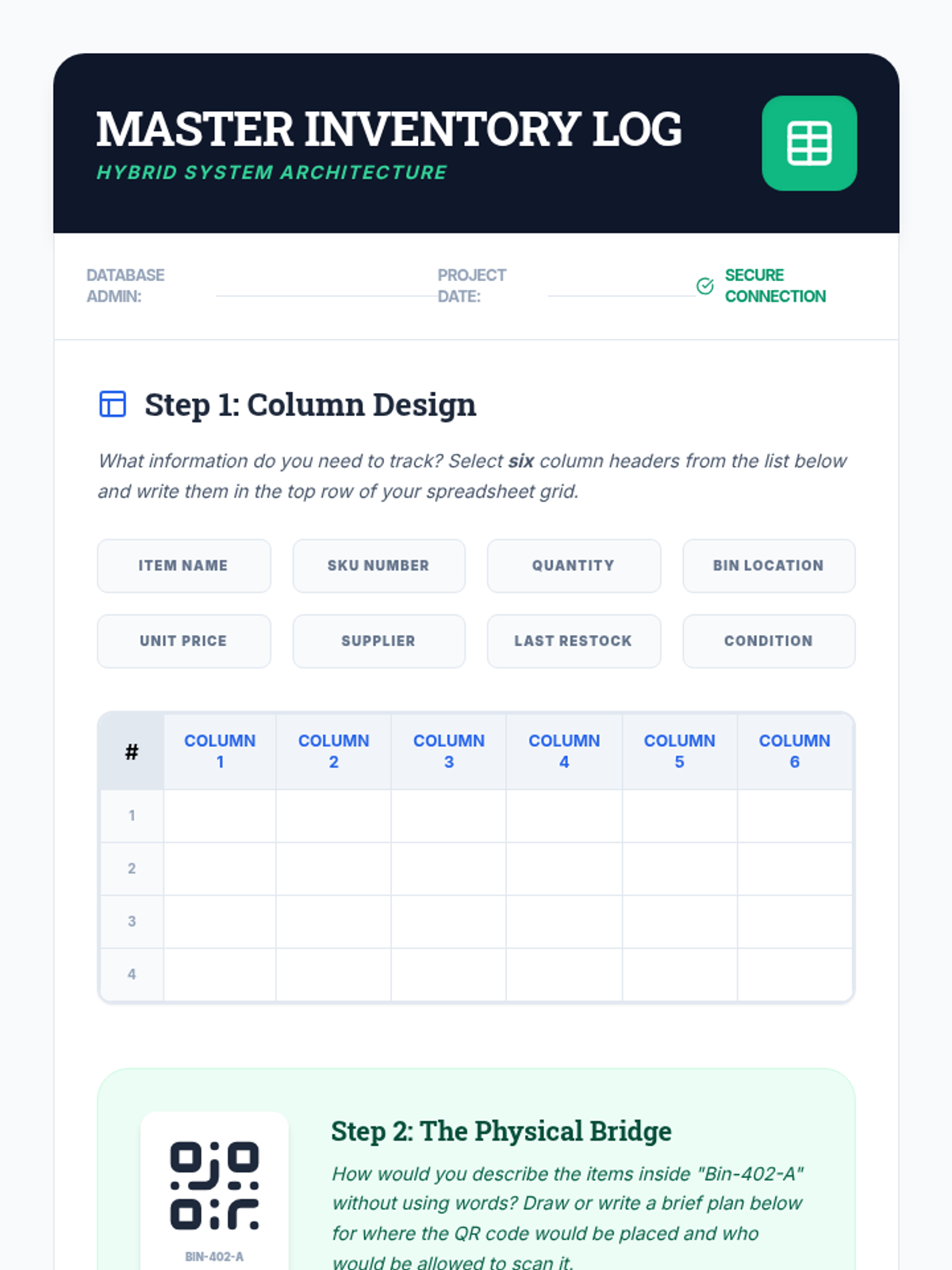
A structured worksheet for designing a digital inventory log, including column selection and QR code placement planning.
A visual presentation for Lesson 1 teaching alphabetical, numerical, and chronological sorting rules with clear examples and a sprint challenge prompt.
Slides on the connection between physical storage and digital inventory logs, featuring QR codes and spreadsheet basics.
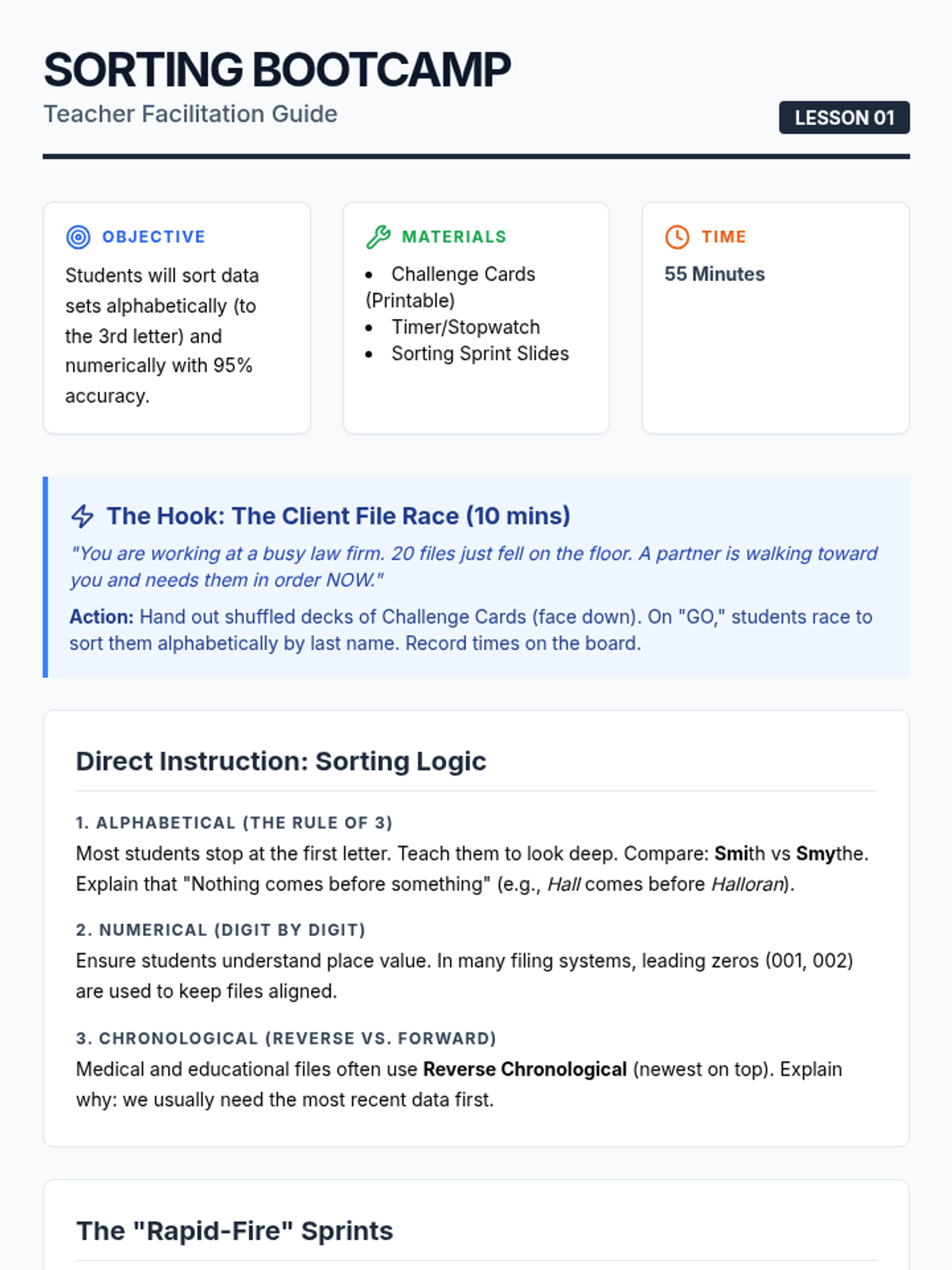
A comprehensive teacher facilitation guide for Lesson 1, detailing the 'Card Sorting Race' hook, instructional points for alpha-numeric sorting, and rapid-fire sprint activities.
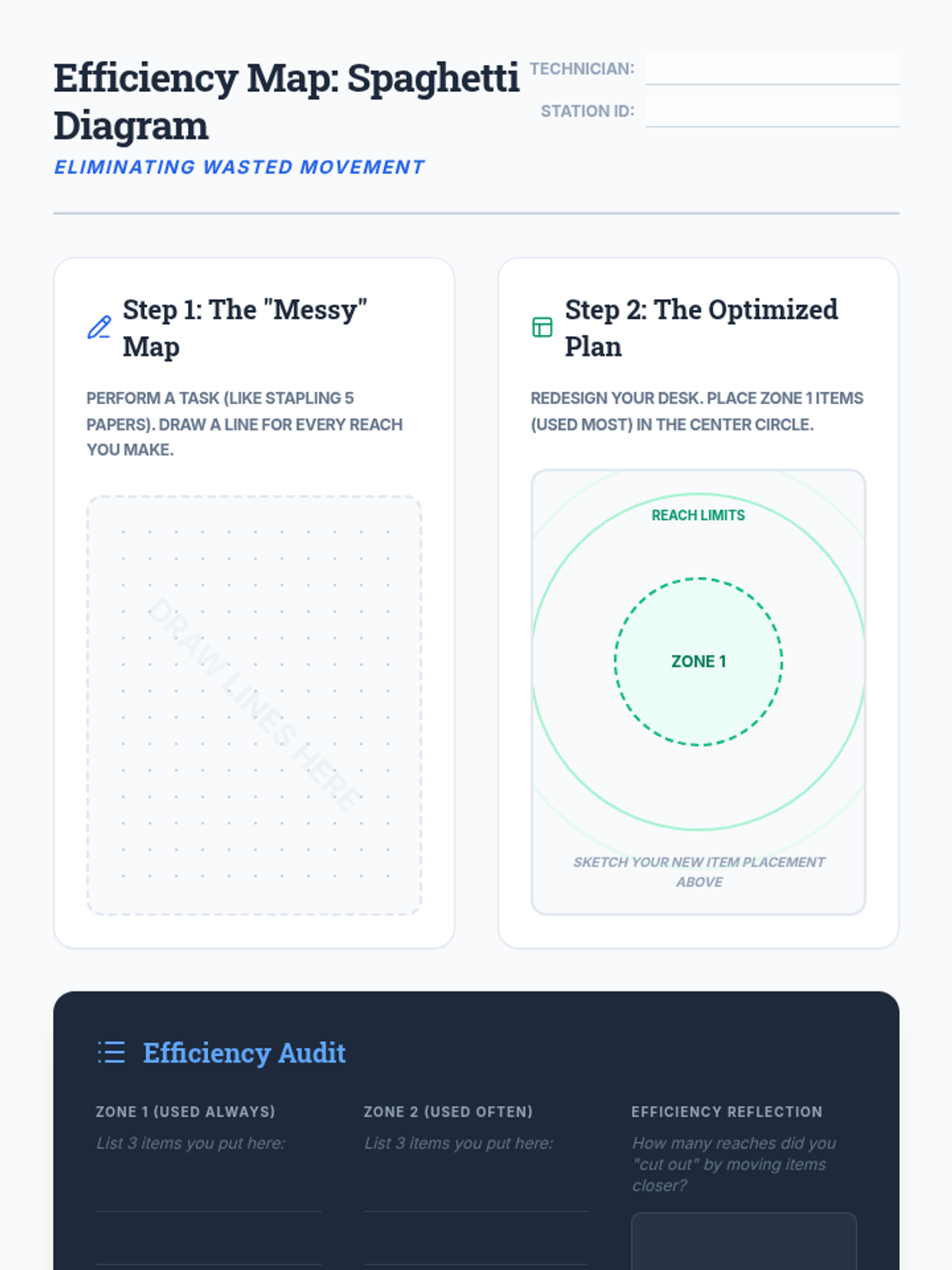
A student worksheet for the Spaghetti Diagram activity, featuring areas for movement analysis and workstation redesign based on reach zones.
Slides on workstation efficiency, ergonomics, and the concept of 'Spaghetti Diagrams' and 'Reach Zones'.
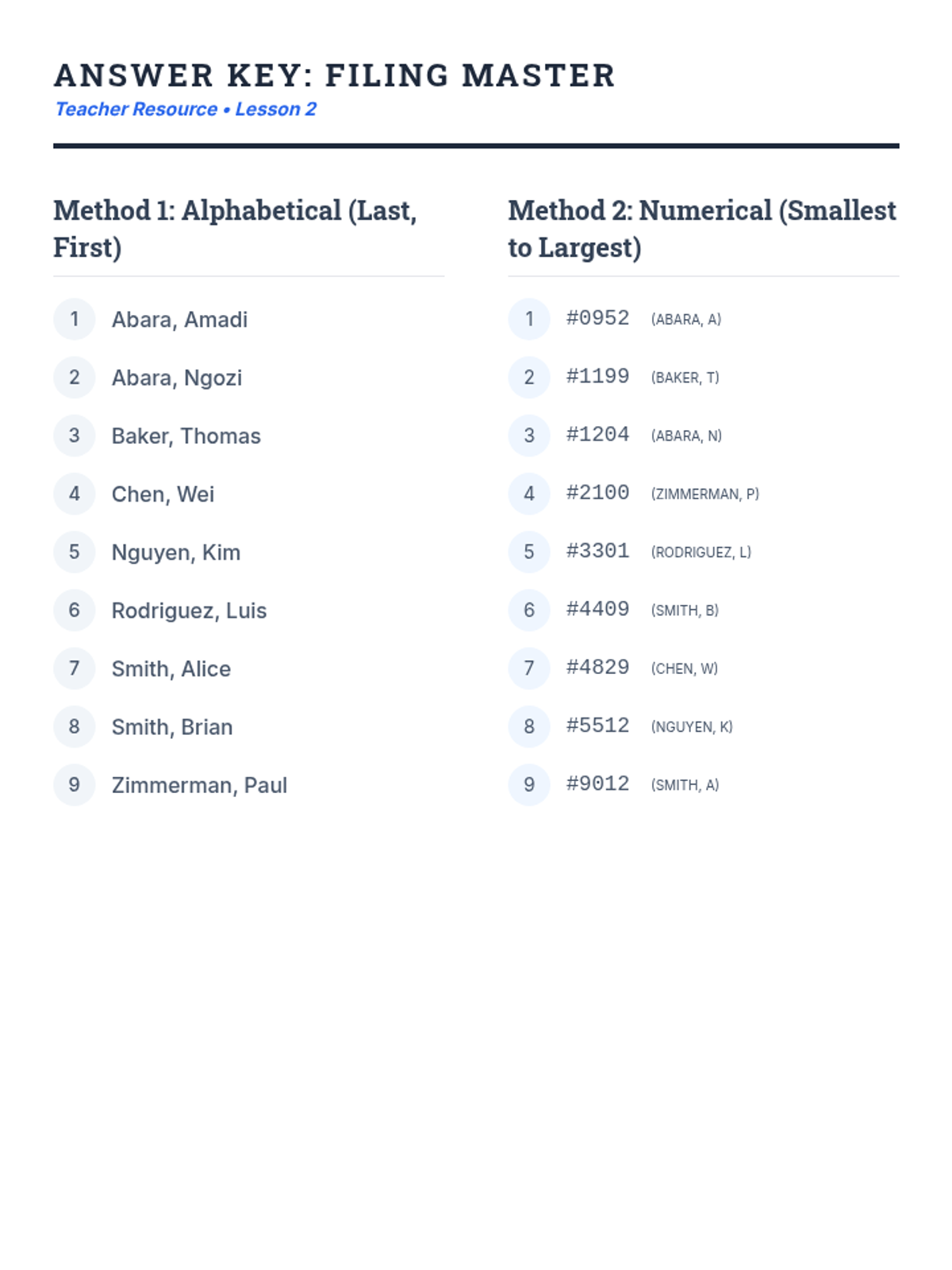
An answer key for the Filing Master Cards activity, providing the correct alphabetical and numerical order.
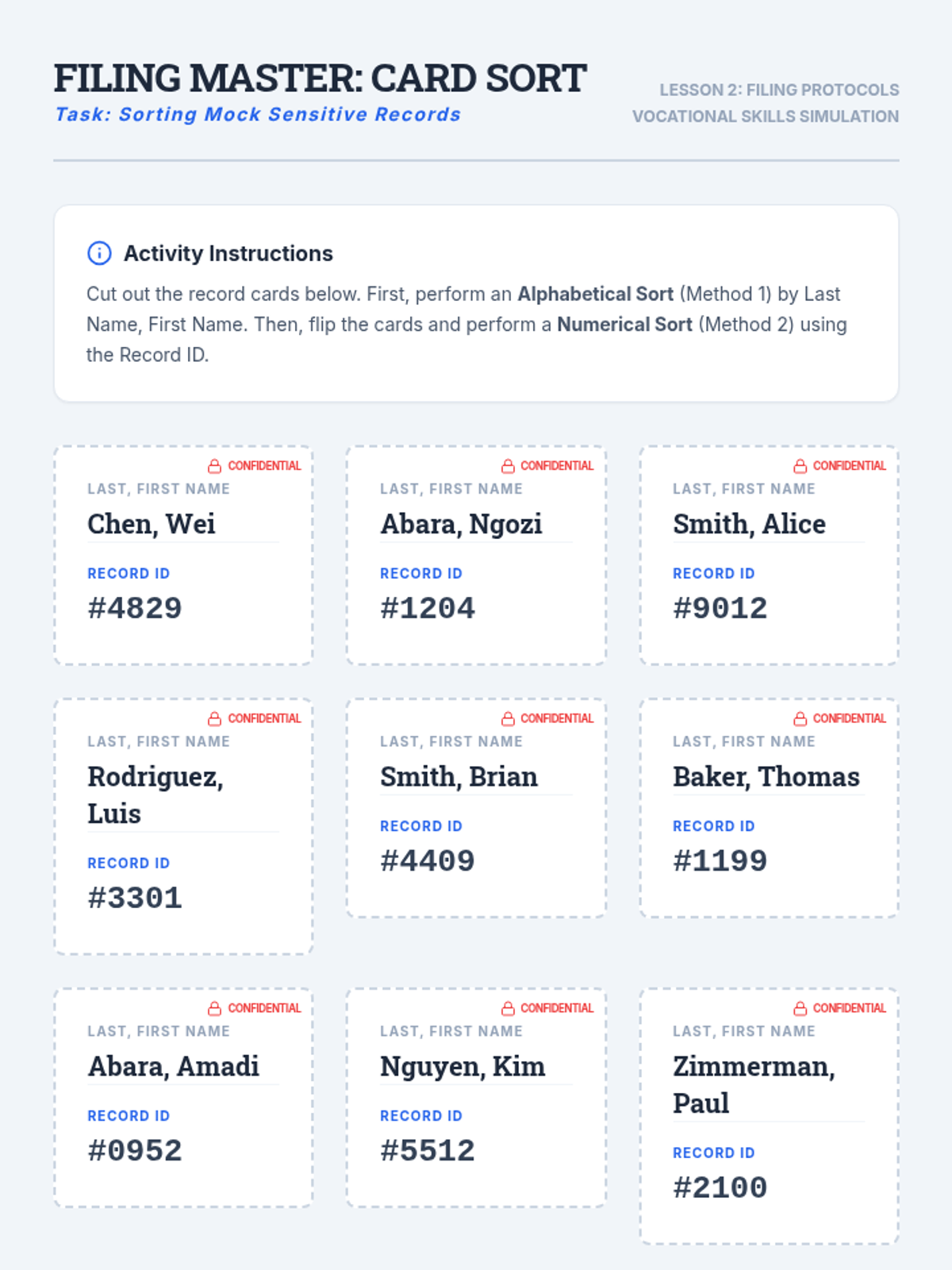
A set of 9 mock sensitive record cards for students to cut out and practice alphabetical and numerical filing techniques.
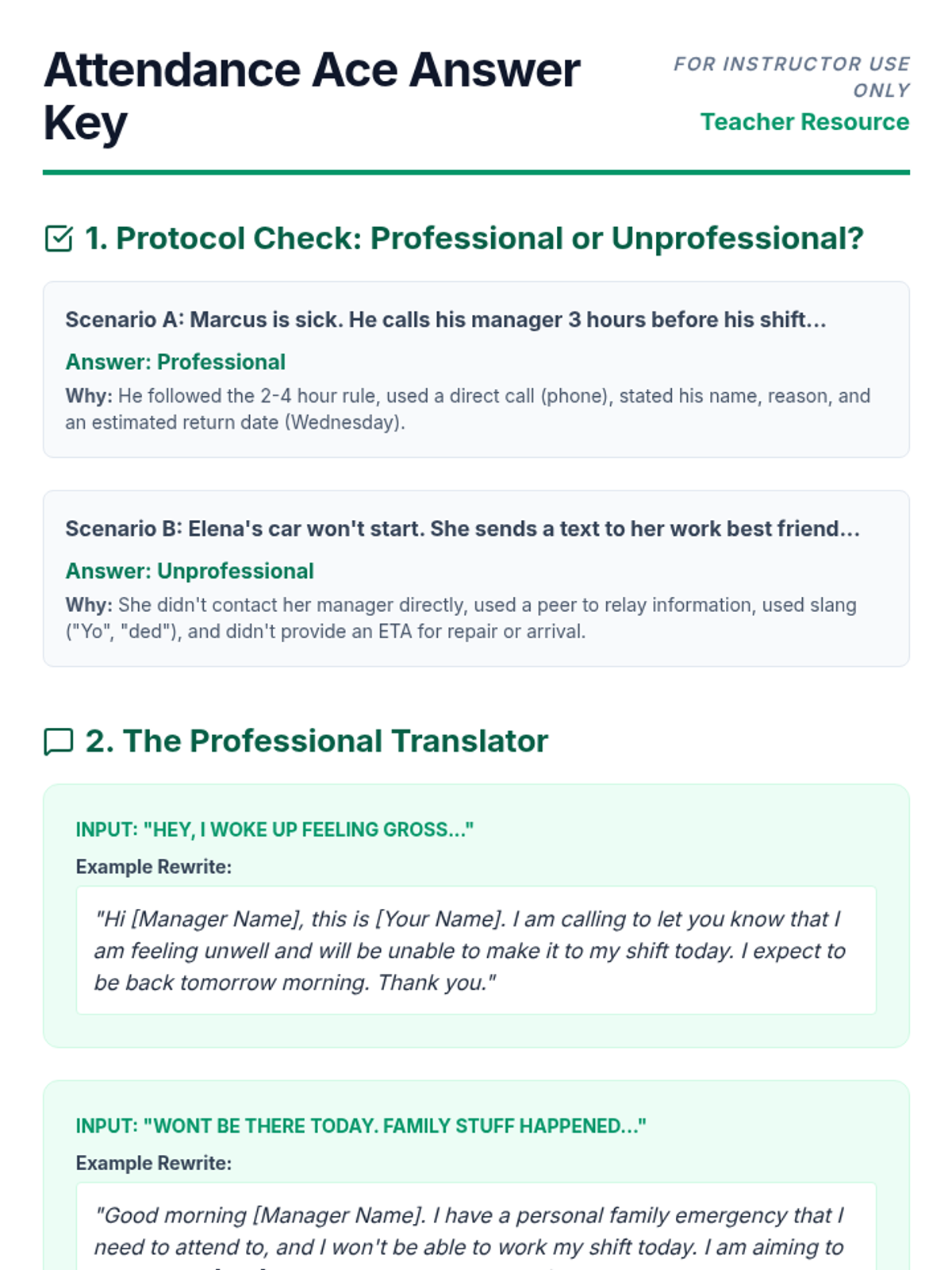
A comprehensive answer key for the Attendance Ace Worksheet, providing example professional rewrites and instructional guidance for the scenario analysis.
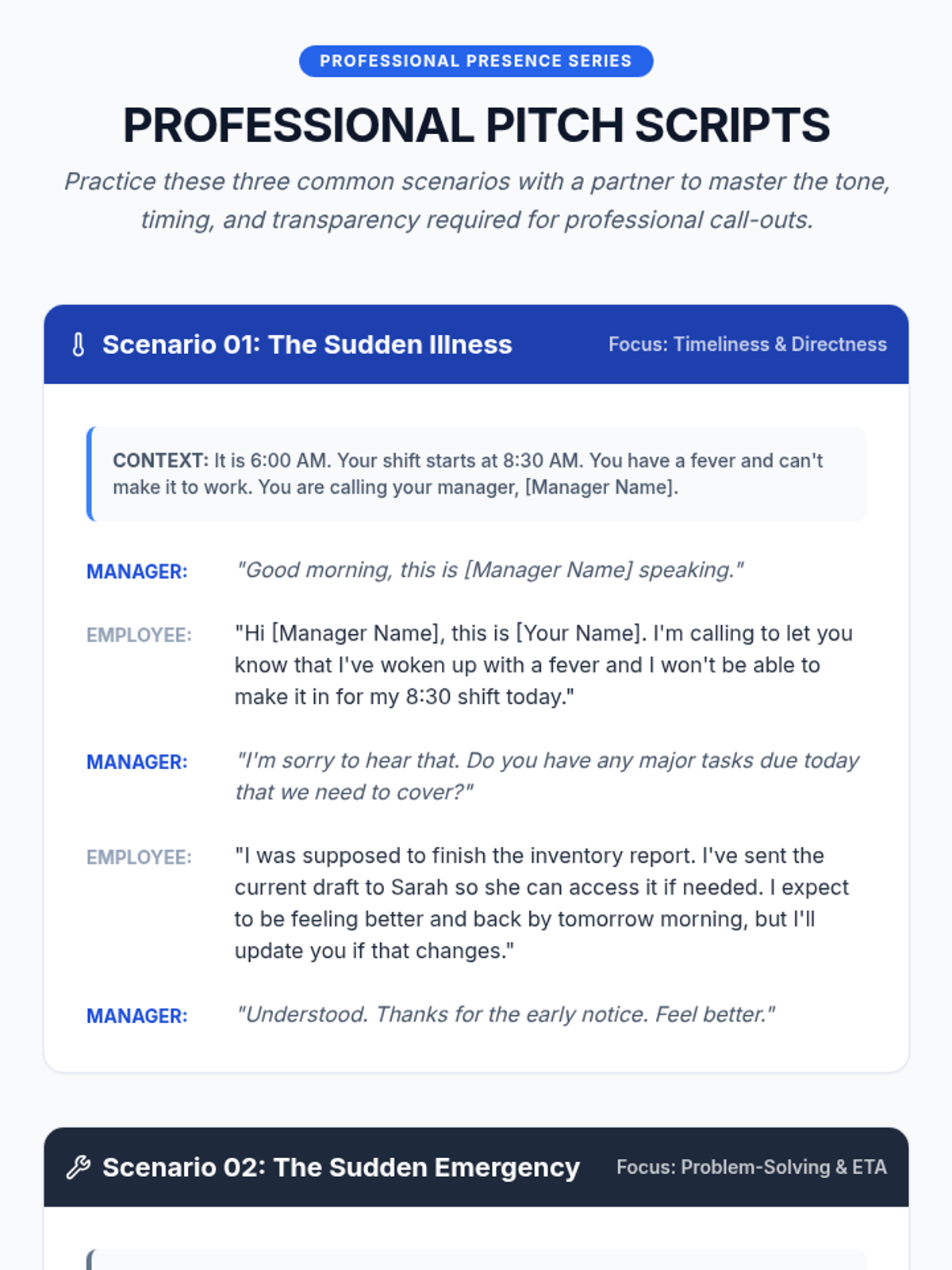
A set of three role-play scripts for practicing professional communication during common call-out scenarios: sudden illness, mechanical emergency, and planned appointments.
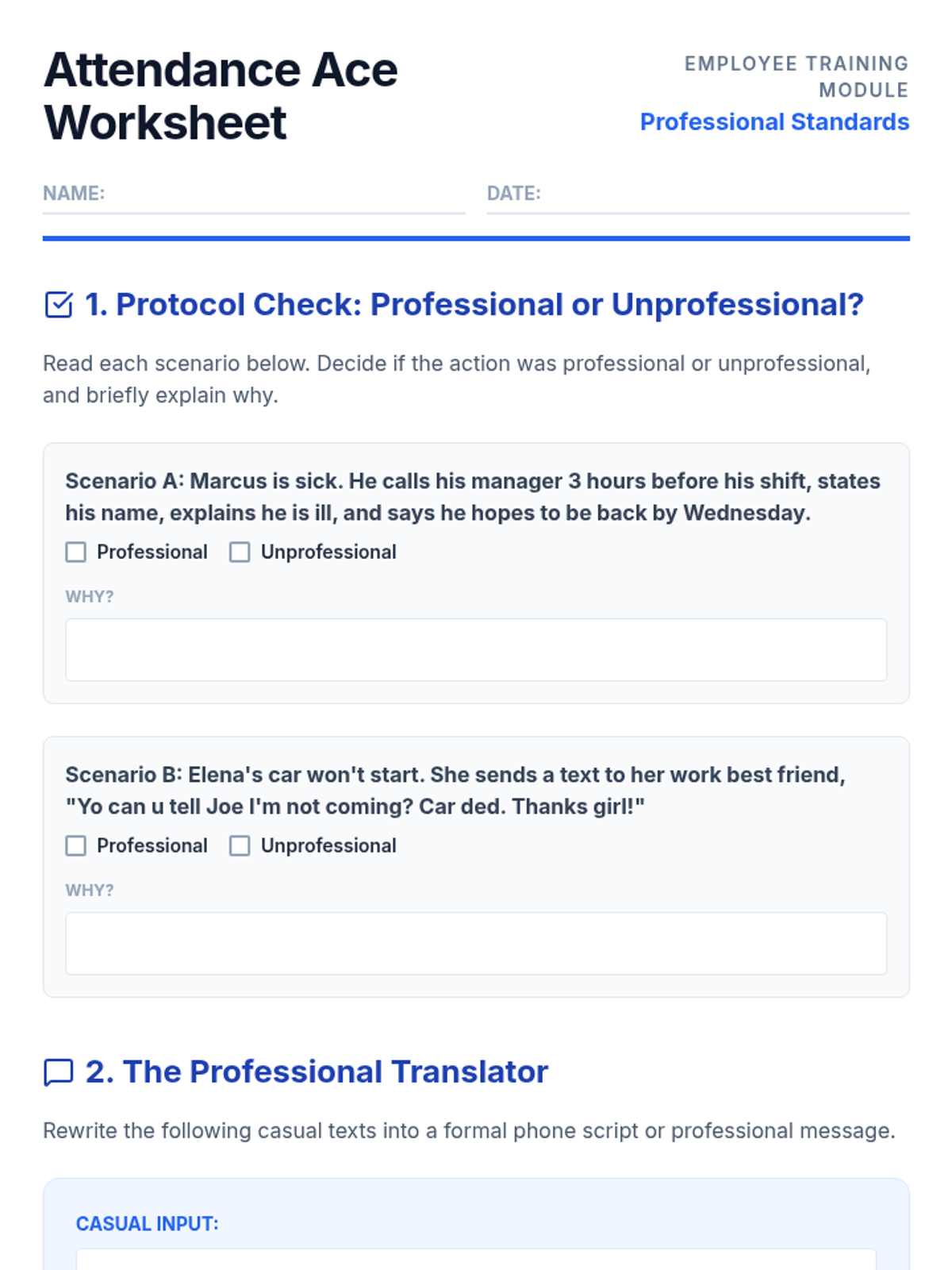
A worksheet for employees to practice professional call-out procedures, featuring scenario analysis, a text translator activity, and short-answer protocol questions.
A comprehensive slide deck for employment training on calling out protocols, covering timing, communication methods, professional phrasing, and medical excuses through informative content and case studies.
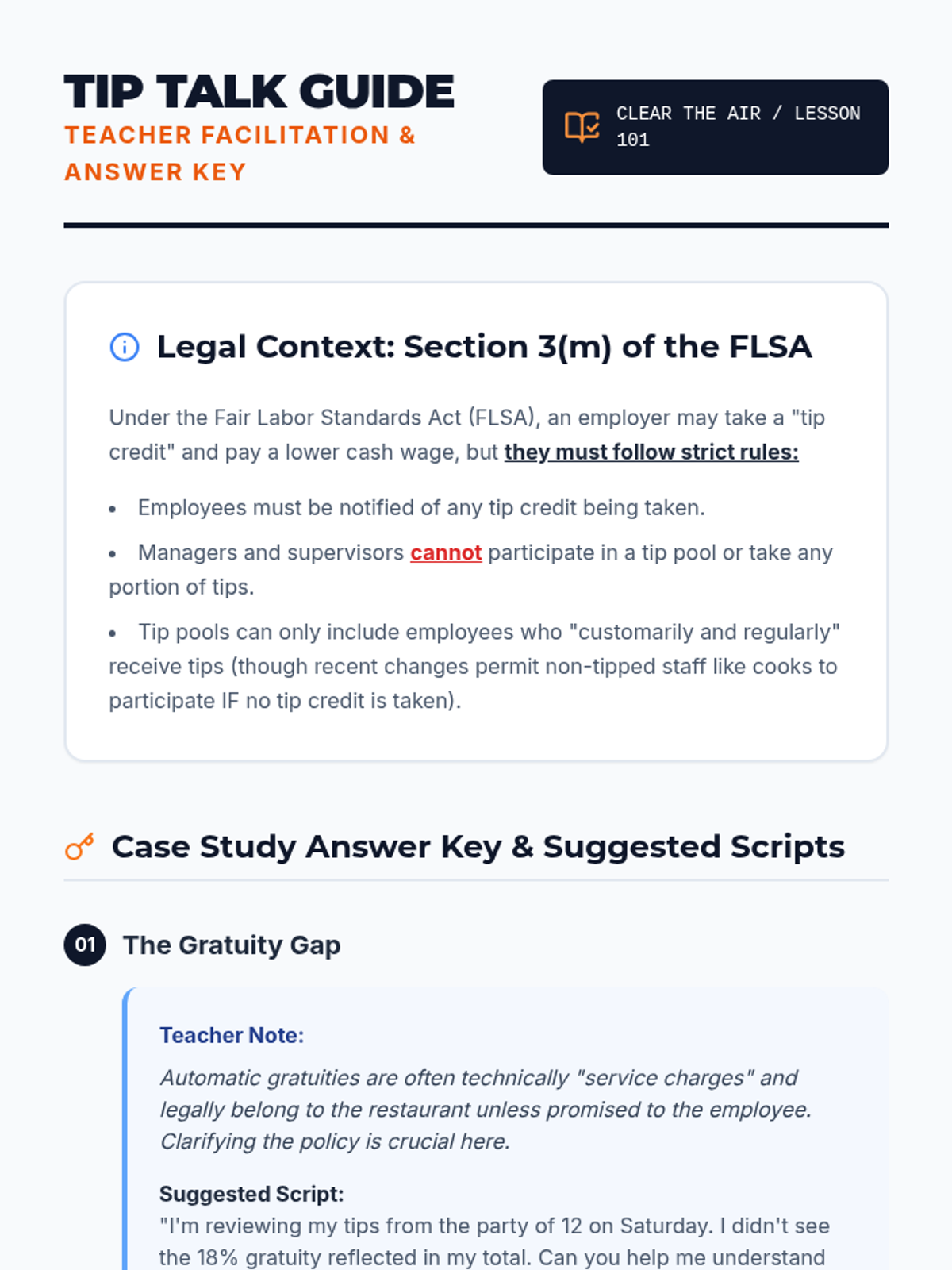
A facilitation guide for instructors, featuring key legal concepts regarding the Fair Labor Standards Act, suggested scripts for case studies, and discussion prompts to encourage self-advocacy in the service industry.
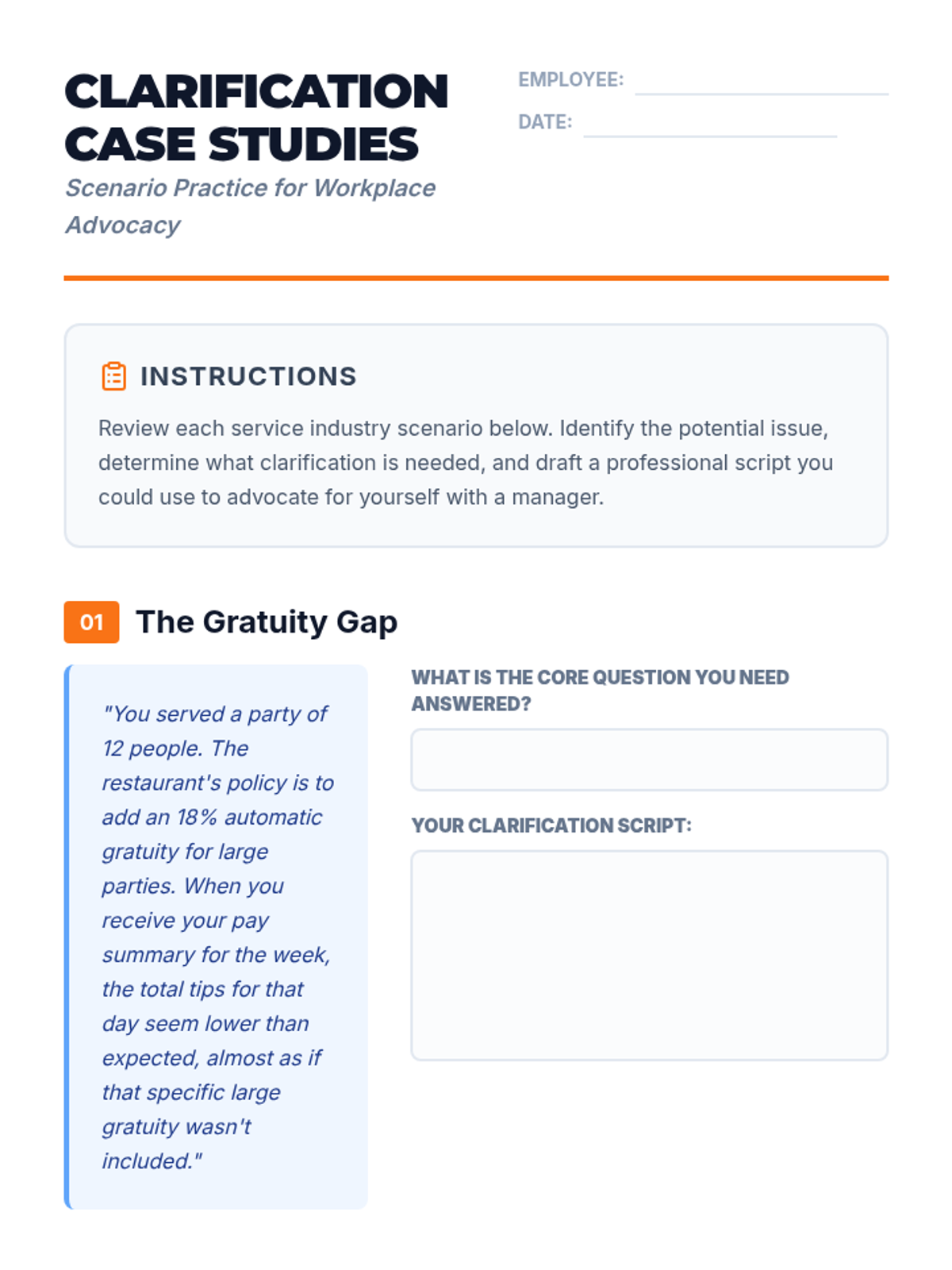
A worksheet featuring three real-world service industry scenarios involving tipping confusion. Students practice identifying core issues and drafting professional scripts to ask for clarification from management.
A visual presentation designed to teach service industry employees about different tipping systems, their legal rights regarding tips, and professional strategies for asking for clarification on pay. It includes specific scripts and identification of red flags in the workplace.
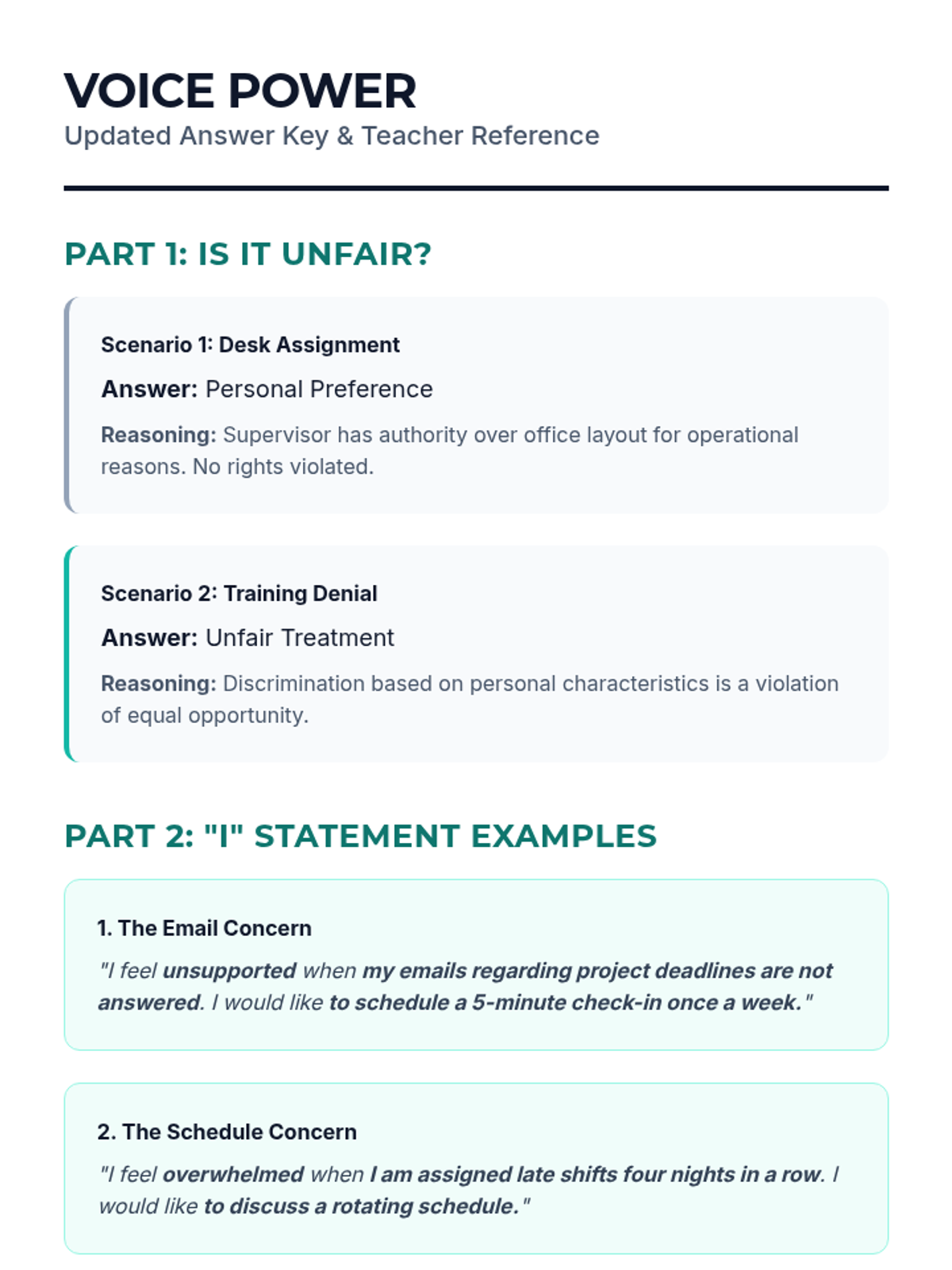
An updated answer key and teacher reference sheet that includes suggested responses for the advanced safety, promotion, and consumer rights case studies.
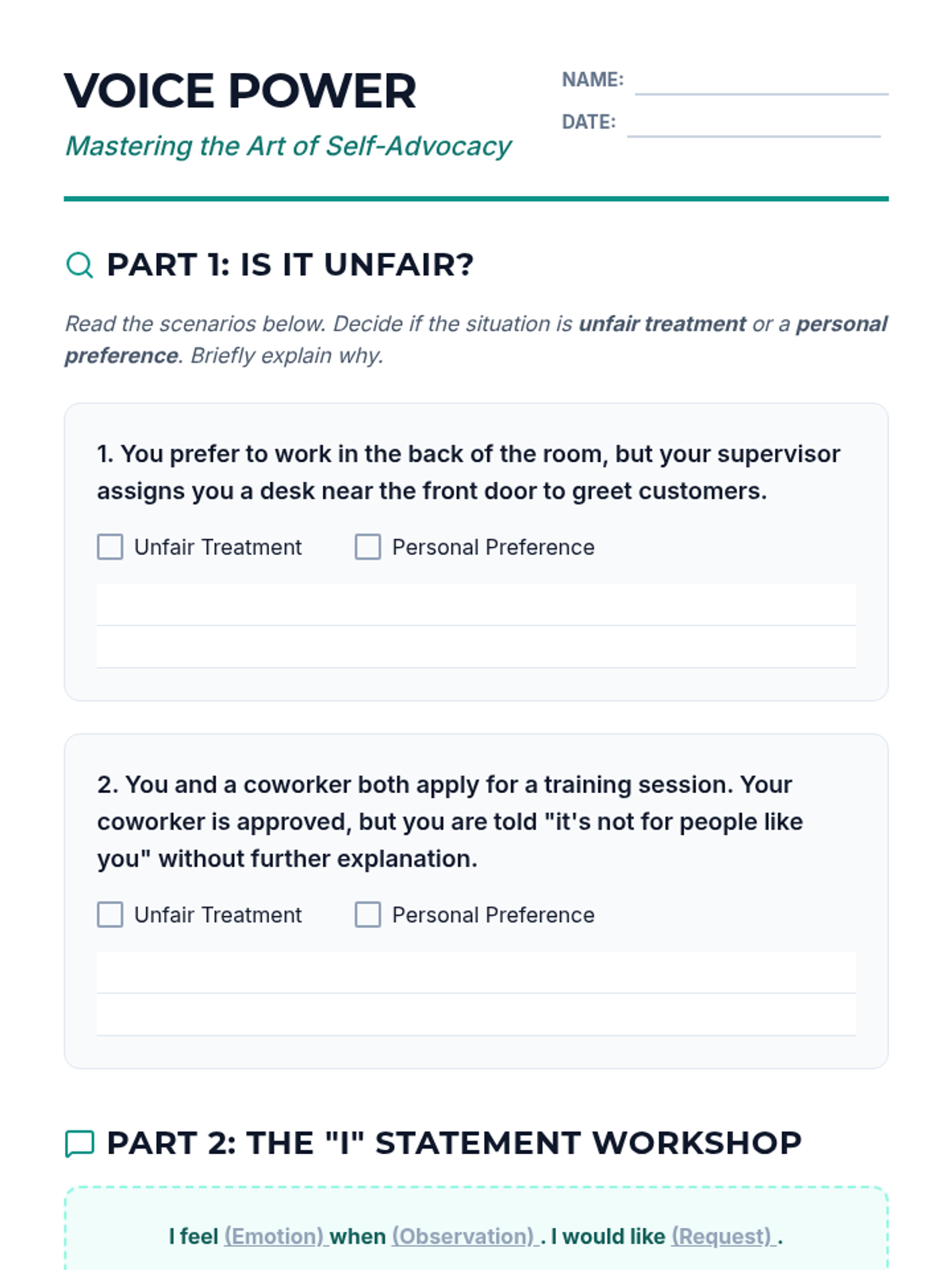
An expanded two-page student worksheet that includes the original scenarios plus three new advanced case studies focused on workplace safety, promotion fairness, and consumer rights.
An updated slide deck featuring four YouTube videos on effective complaining and consumer rights, along with three new workplace and consumer case studies for class discussion.
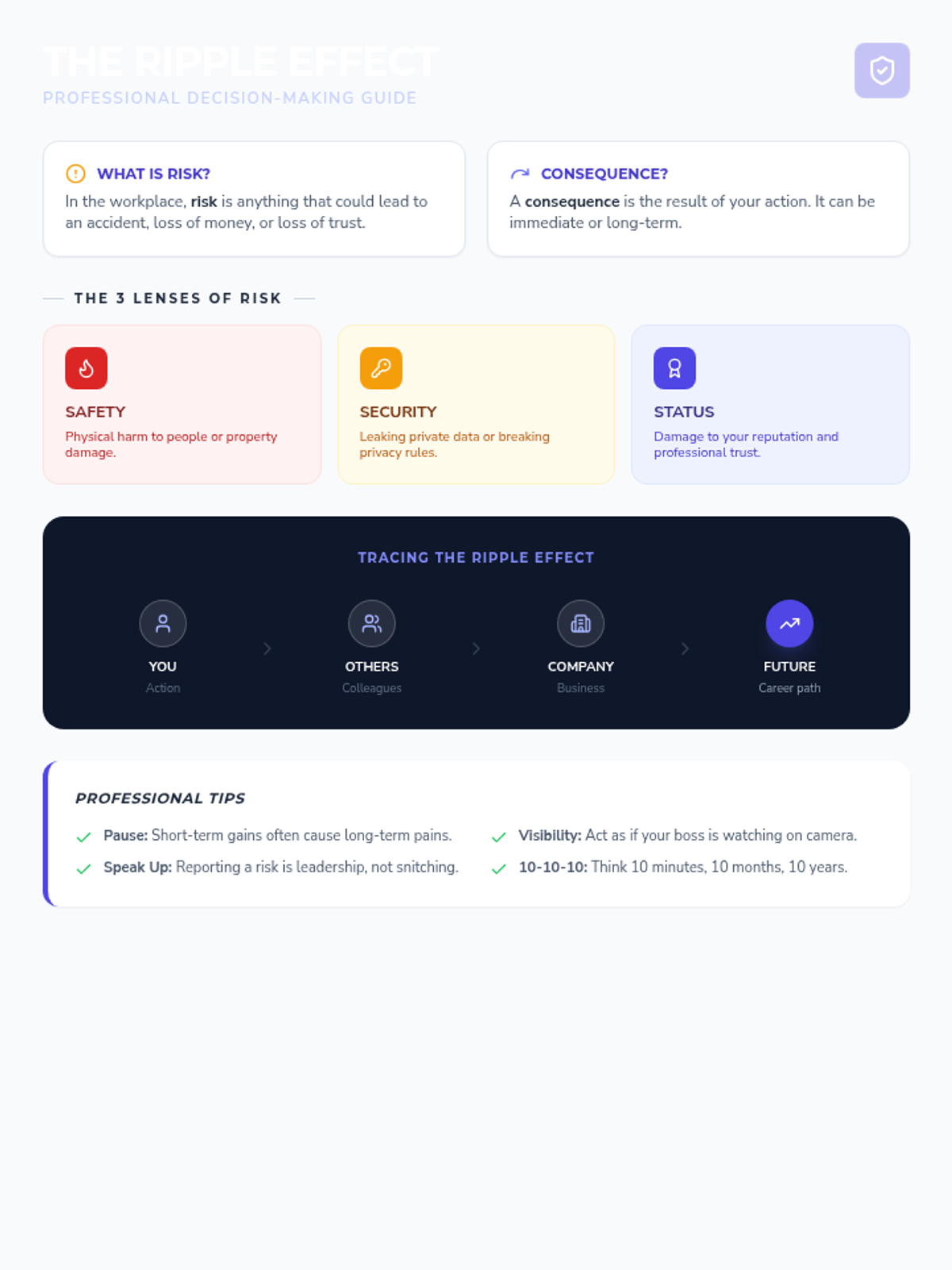
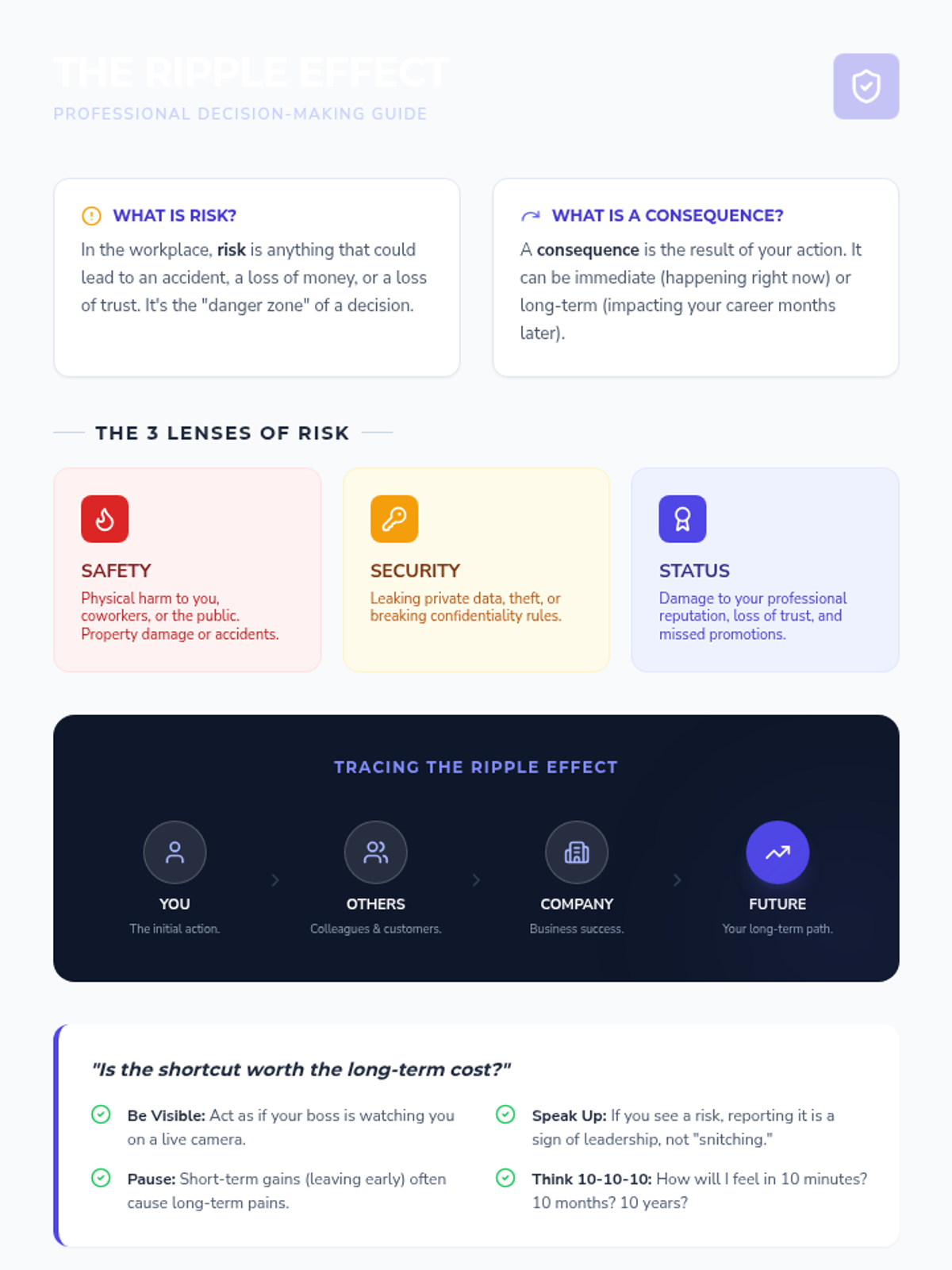
A two-page student-facing resource featuring an information sheet on workplace risks and the "ripple effect" of decisions, followed by a scenario analysis worksheet. Compact design ensures it fits on exactly two printable pages.
A complete two-page resource for discussing workplace decision-making. Page 1 is an information sheet explaining risk types and the ripple effect; page 2 is a worksheet for analyzing workplace scenarios.
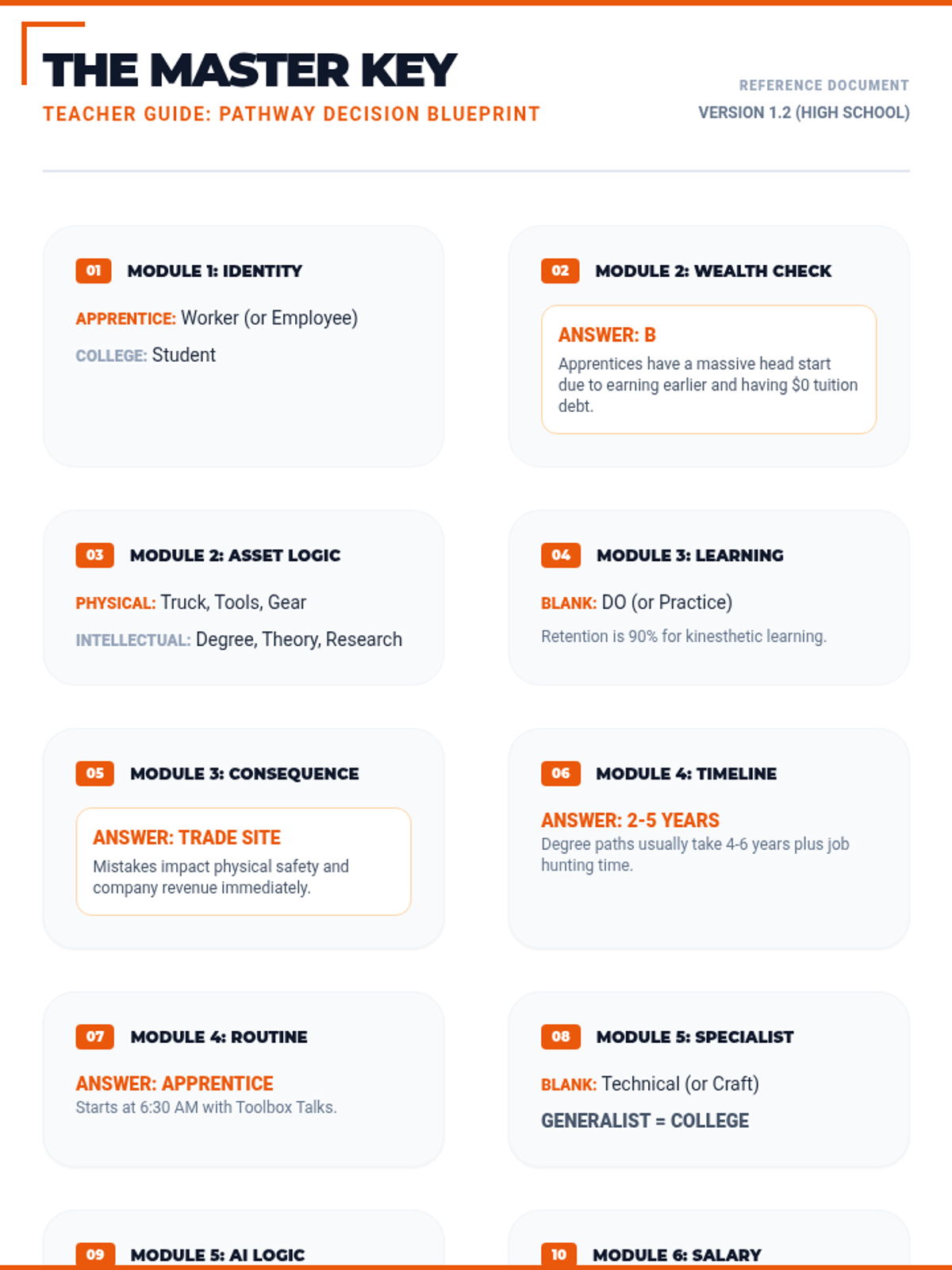
A teacher's master answer key for the Pathway Decision Blueprint Worksheet (15-section version), provided in a clean print layout with a Safety Orange and Slate theme.
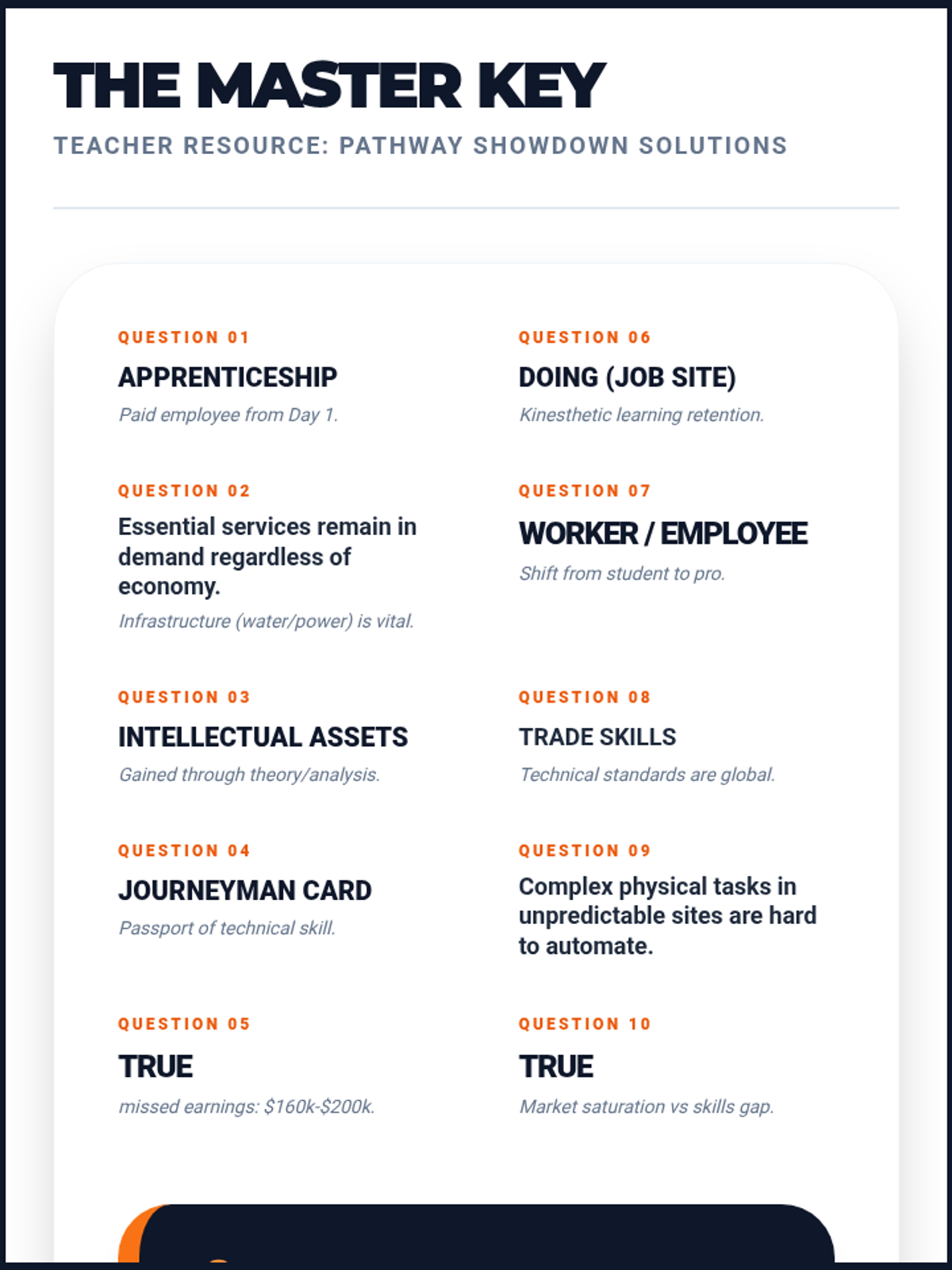
A standalone print-ready teacher answer key for the Pathway Showdown Info Sheet, featuring solutions for all 10 knowledge-check questions with detailed explanations.
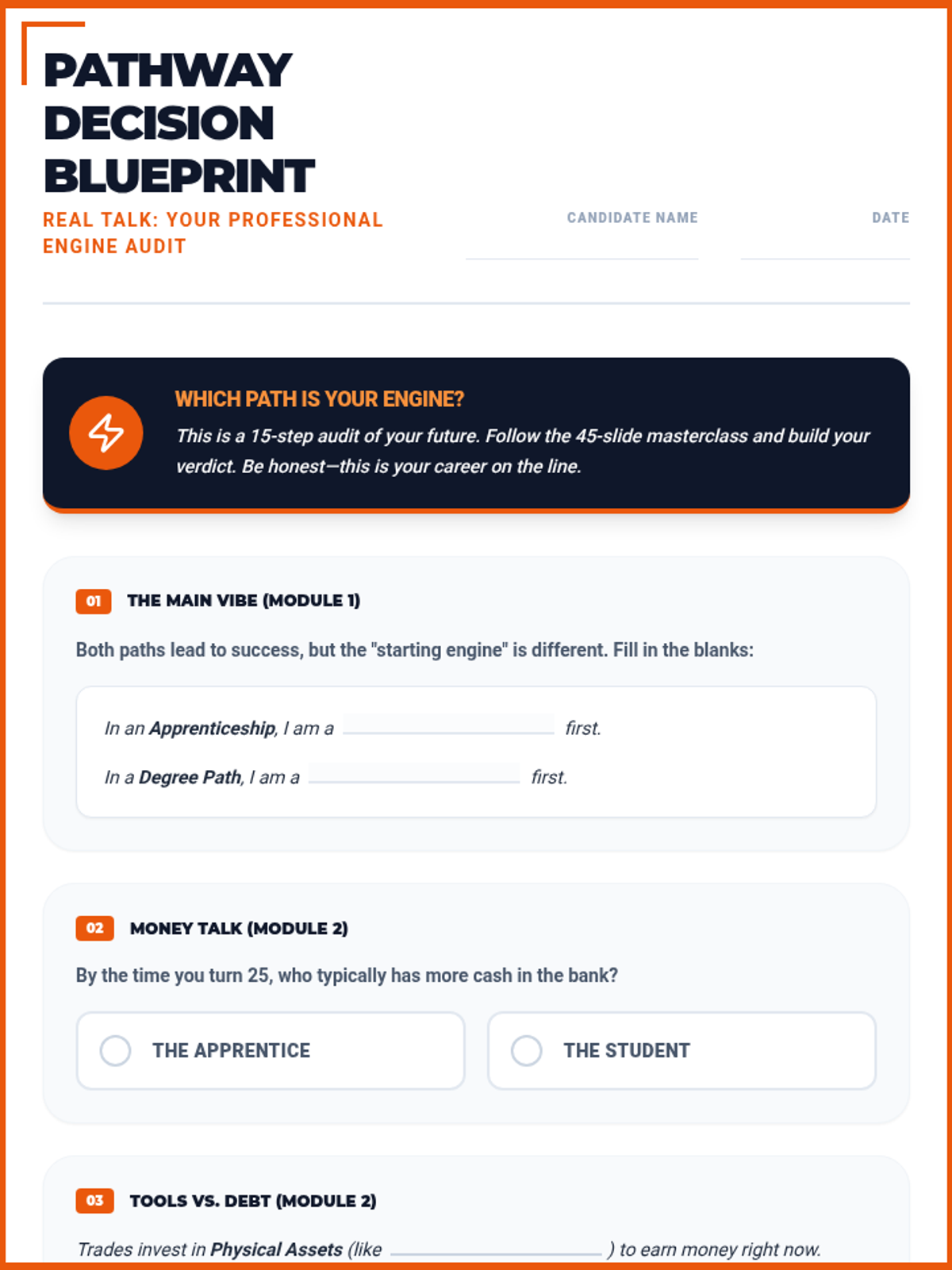
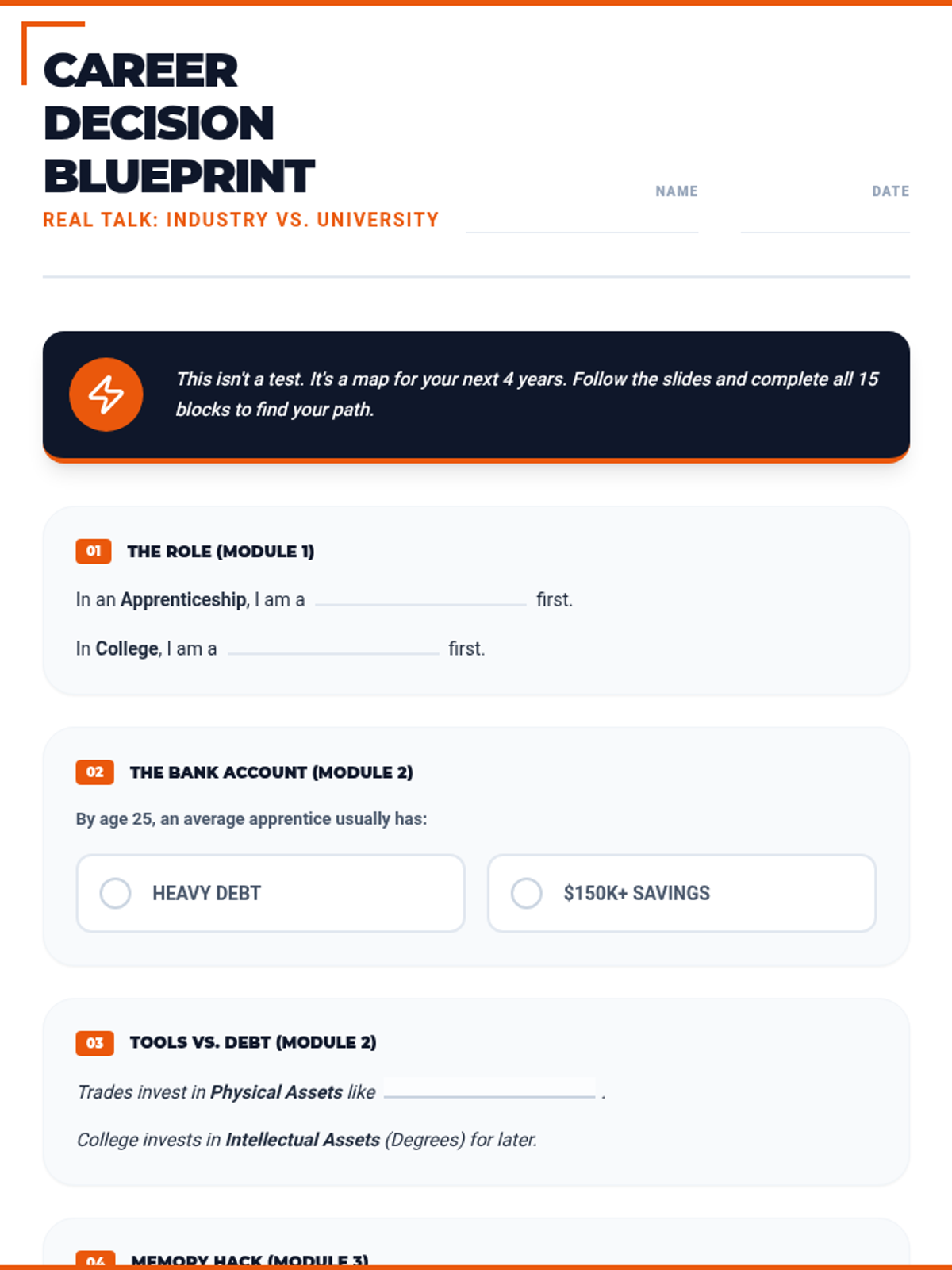
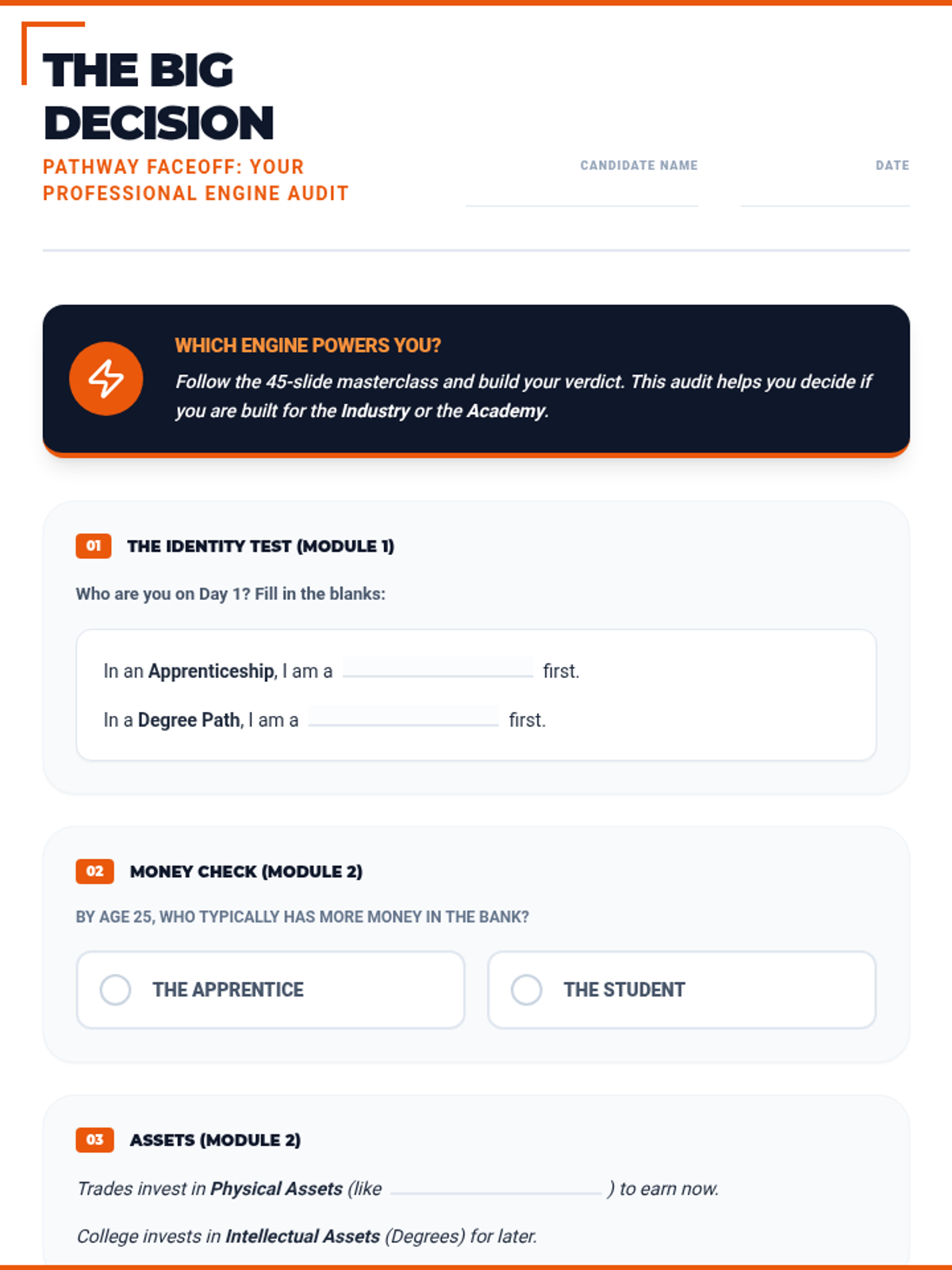
A simplified 15-section career exploration worksheet designed for 16-year-old high school students, featuring punchy, relatable titles and a "Safety Orange & Slate" theme. Meticulously aligned with the 45-slide masterclass. All correct answer highlights have been removed for student use.
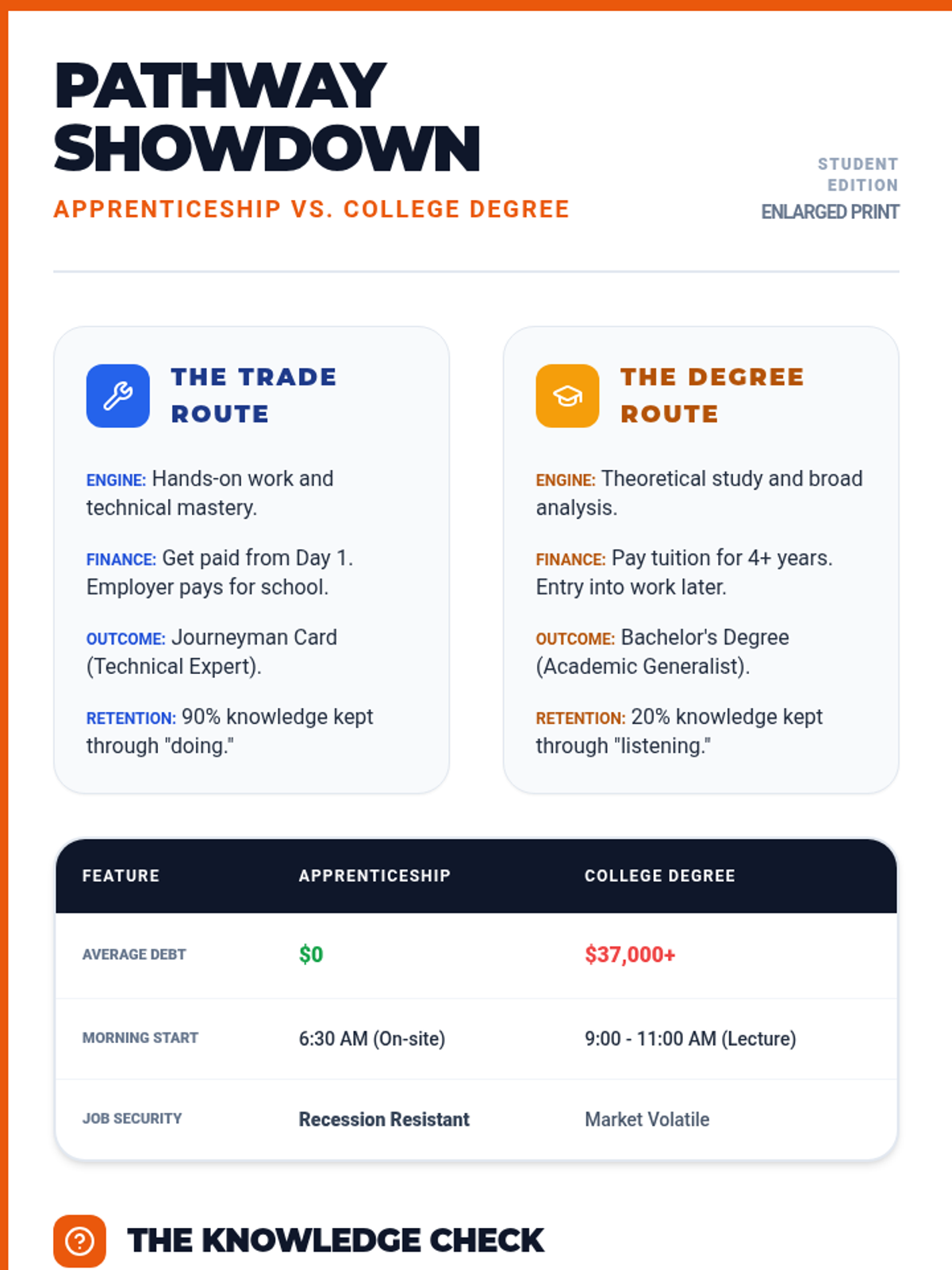
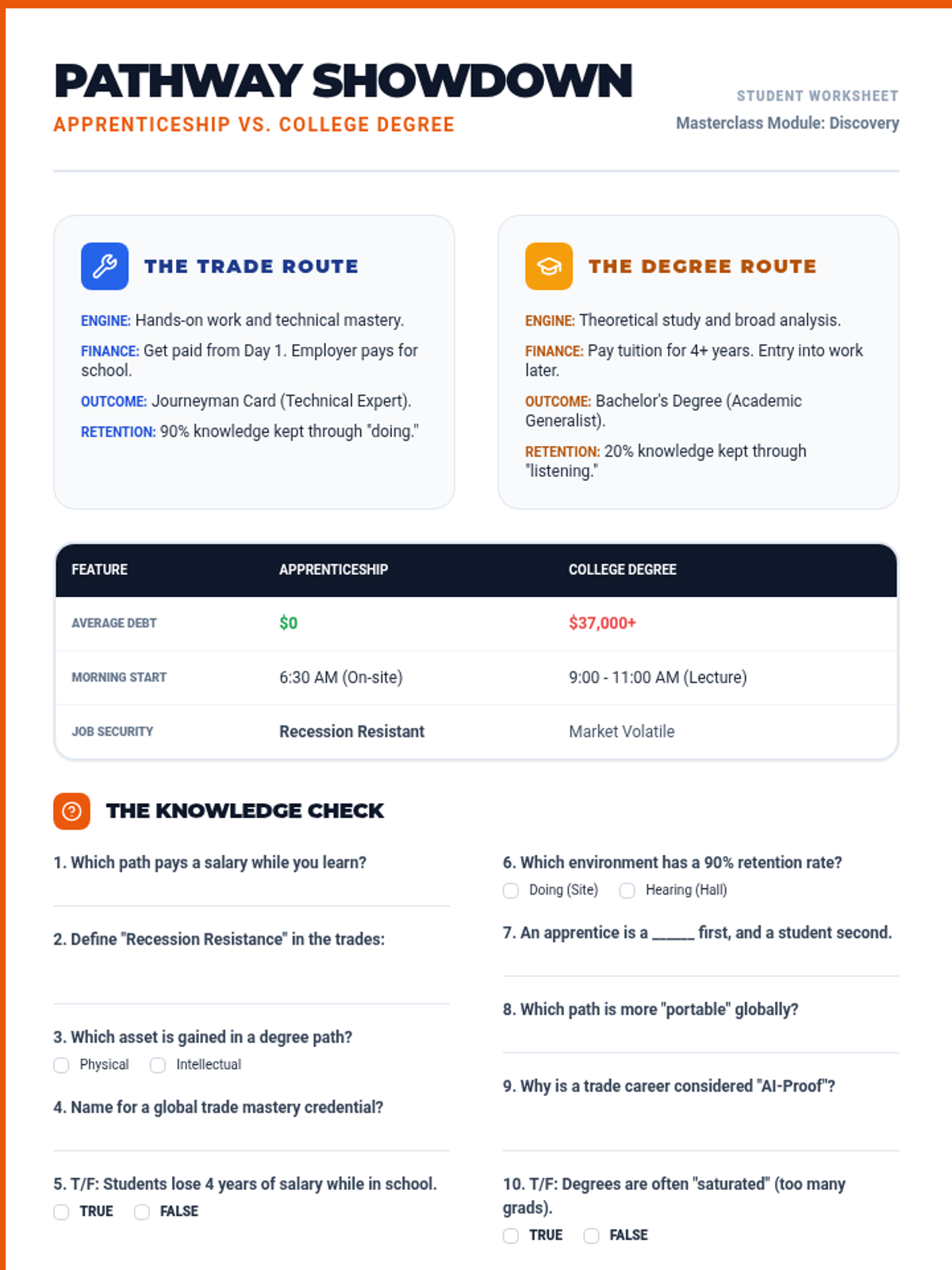
A 1-page enlarged informational summary comparing Apprenticeships and College Degrees, designed for maximum readability. Includes a facts breakdown, comparison table, and 6 key knowledge-check questions.
A 1-page informational summary comparing Apprenticeships and College Degrees, featuring a facts breakdown, comparison table, and 10 knowledge-check questions.
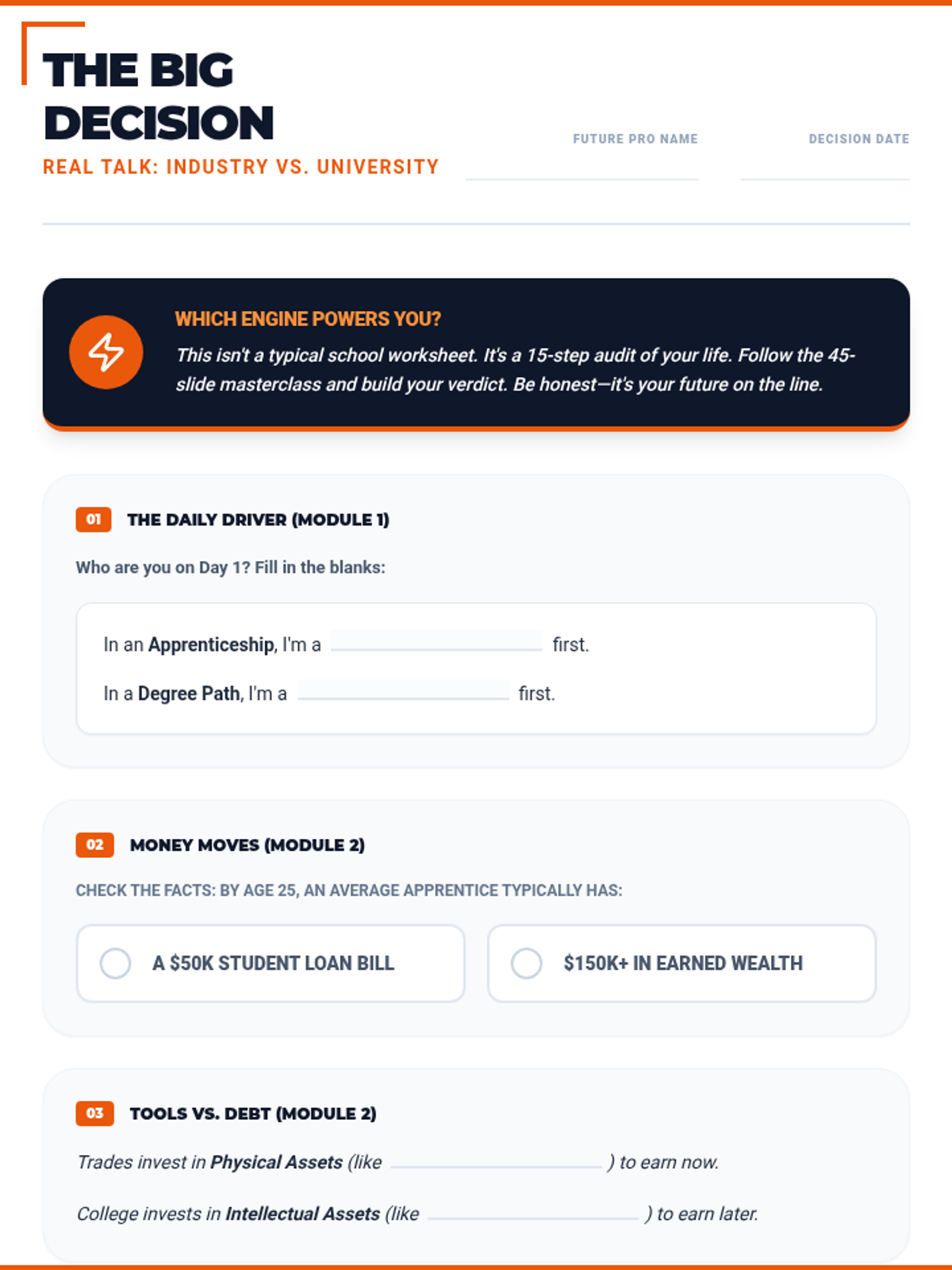
A 15-section career exploration worksheet designed for 16-year-old high school students, featuring punchy, relatable titles and refined "Real Talk" language like "The Main Vibe" and "Why I'll crush it." Meticulously aligned with the 45-slide masterclass. All correct answer highlights have been removed for student use.
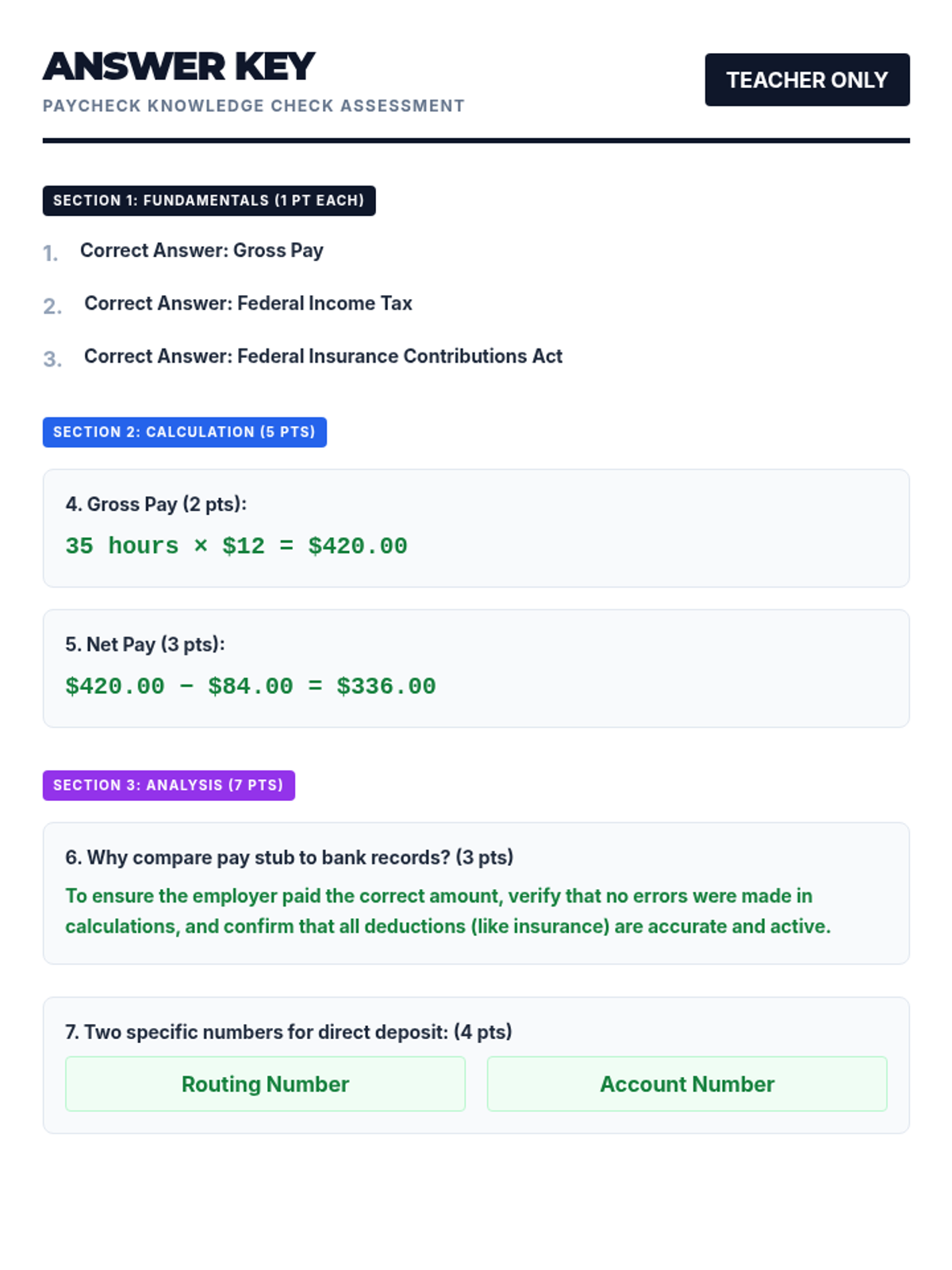
An answer key for the Paycheck Knowledge Check assessment, providing correct answers for multiple-choice, math, and analysis questions.
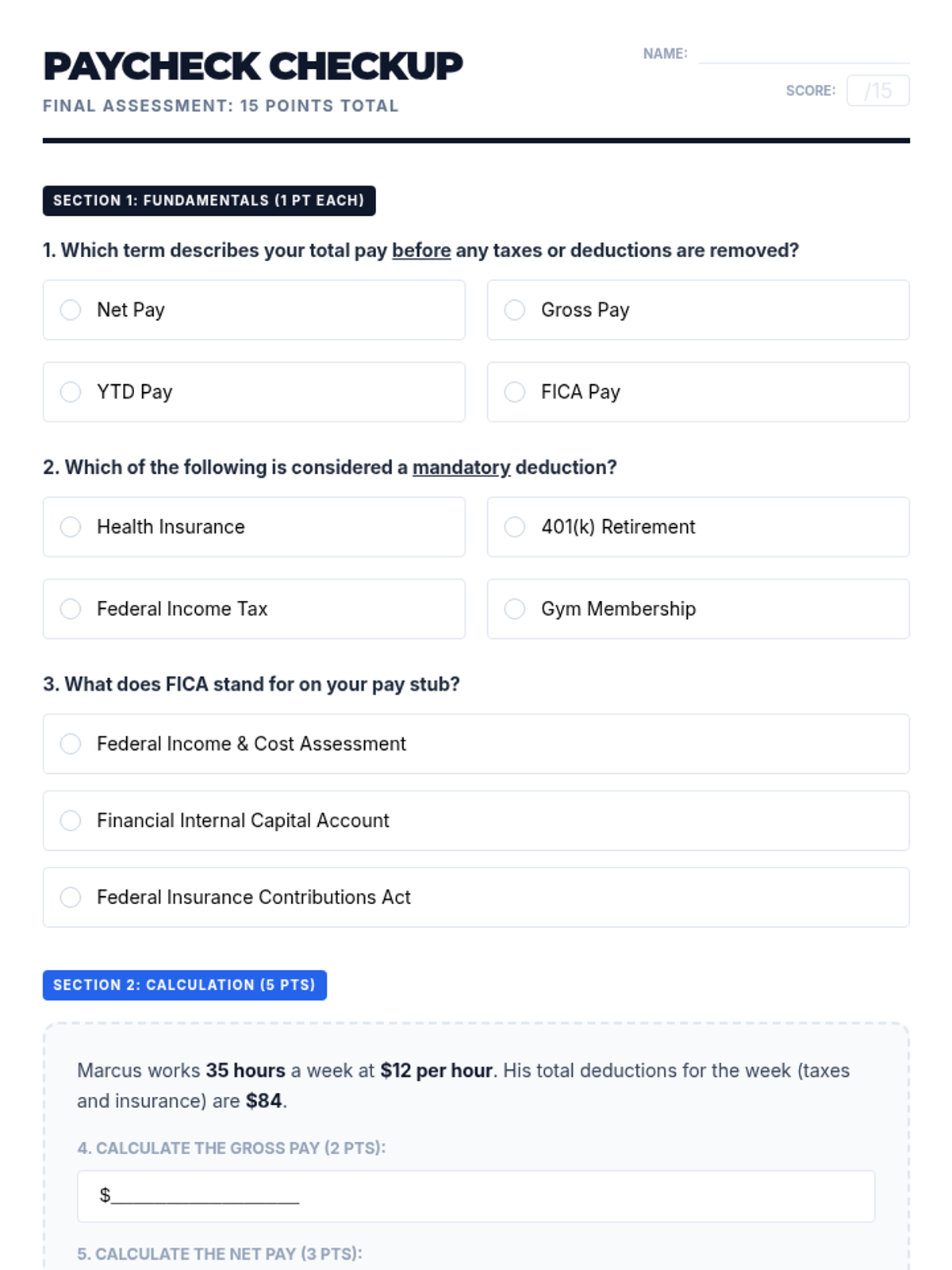
A formal assessment to measure student understanding of paycheck components, calculations, and financial security practices.
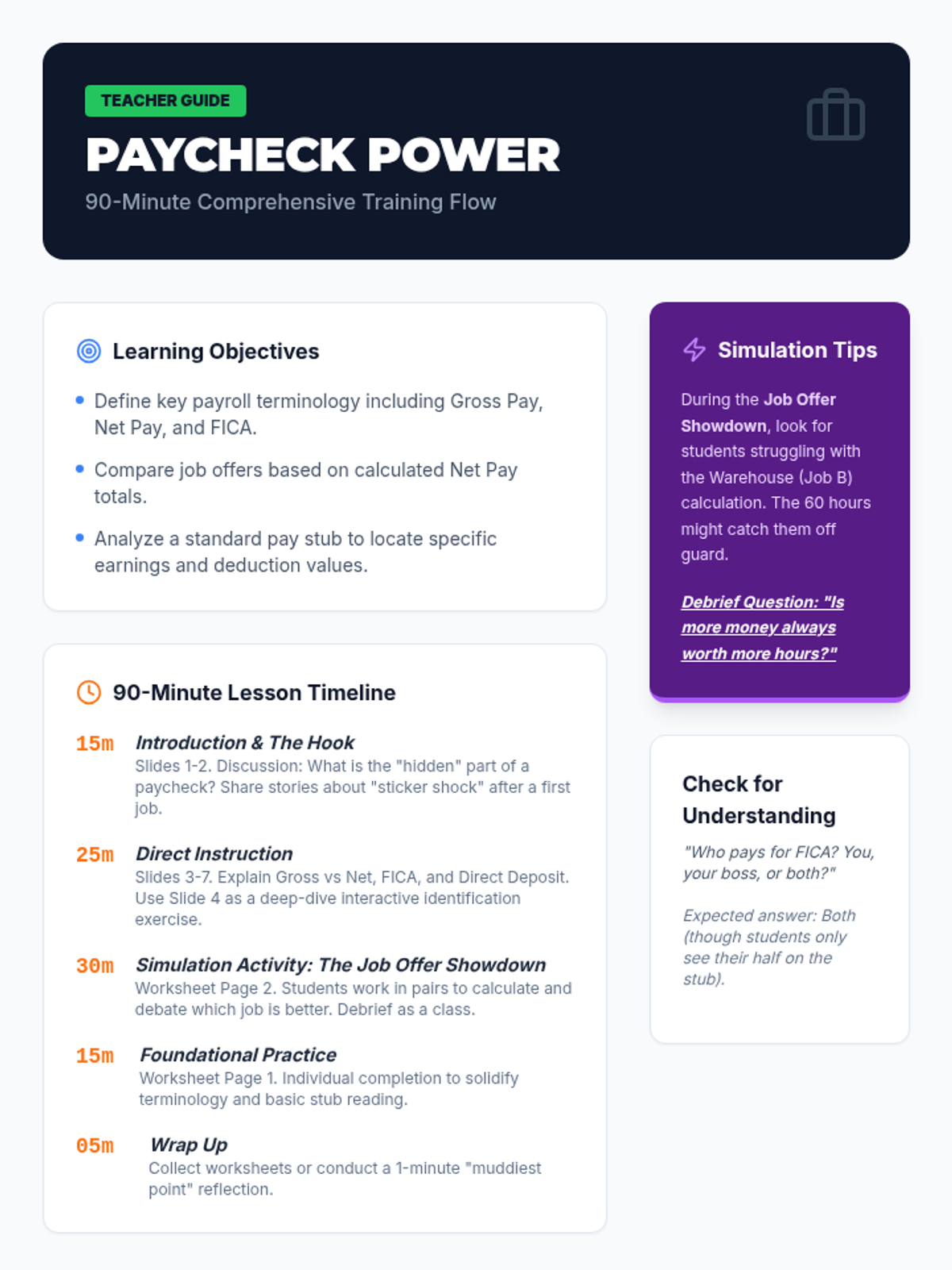
A teacher facilitation guide for the Paycheck Power lesson, including learning objectives, a suggested lesson flow, discussion prompts, and differentiation strategies.
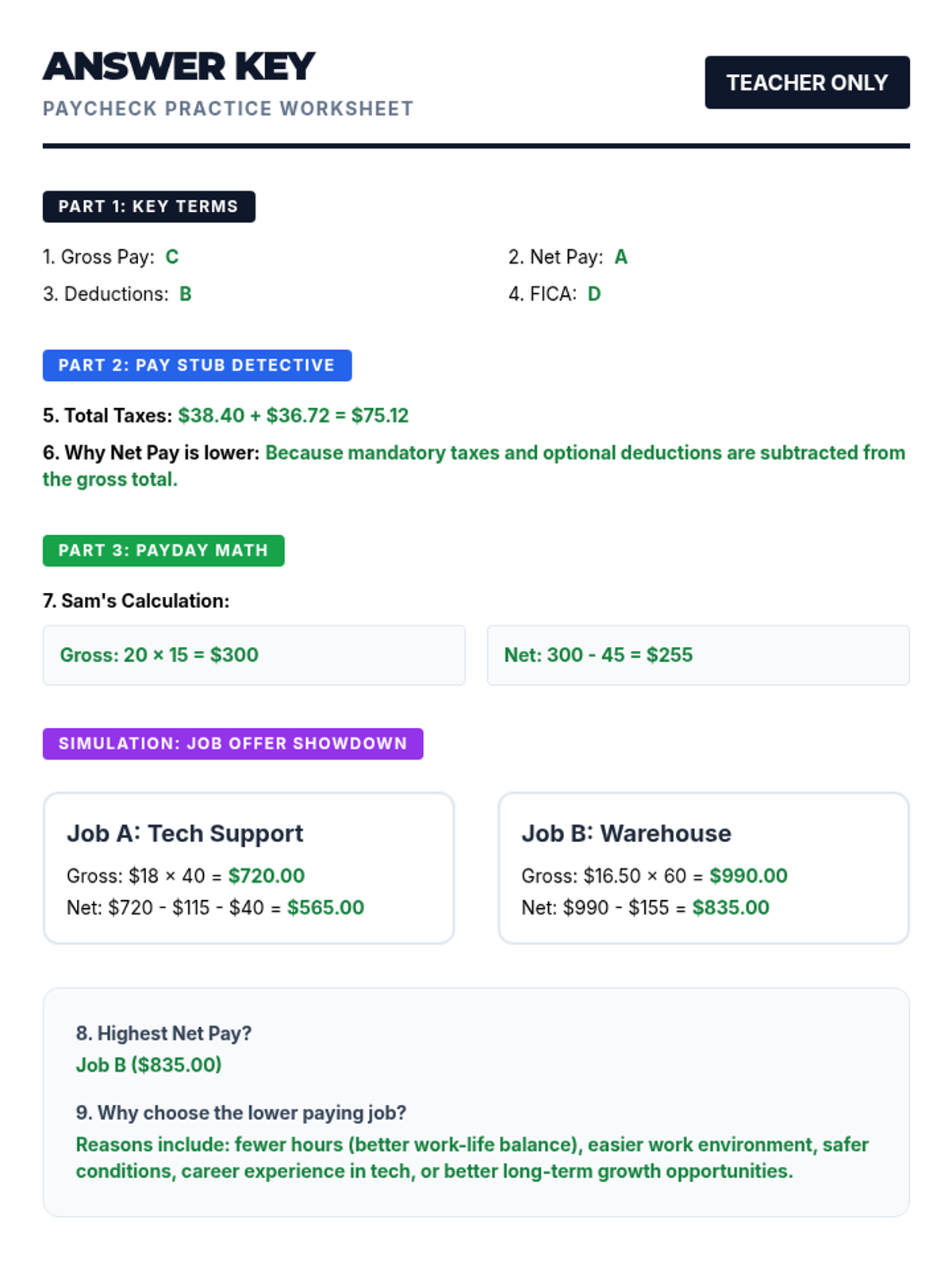
An updated answer key reflecting the expanded practice worksheet and simulation activity.
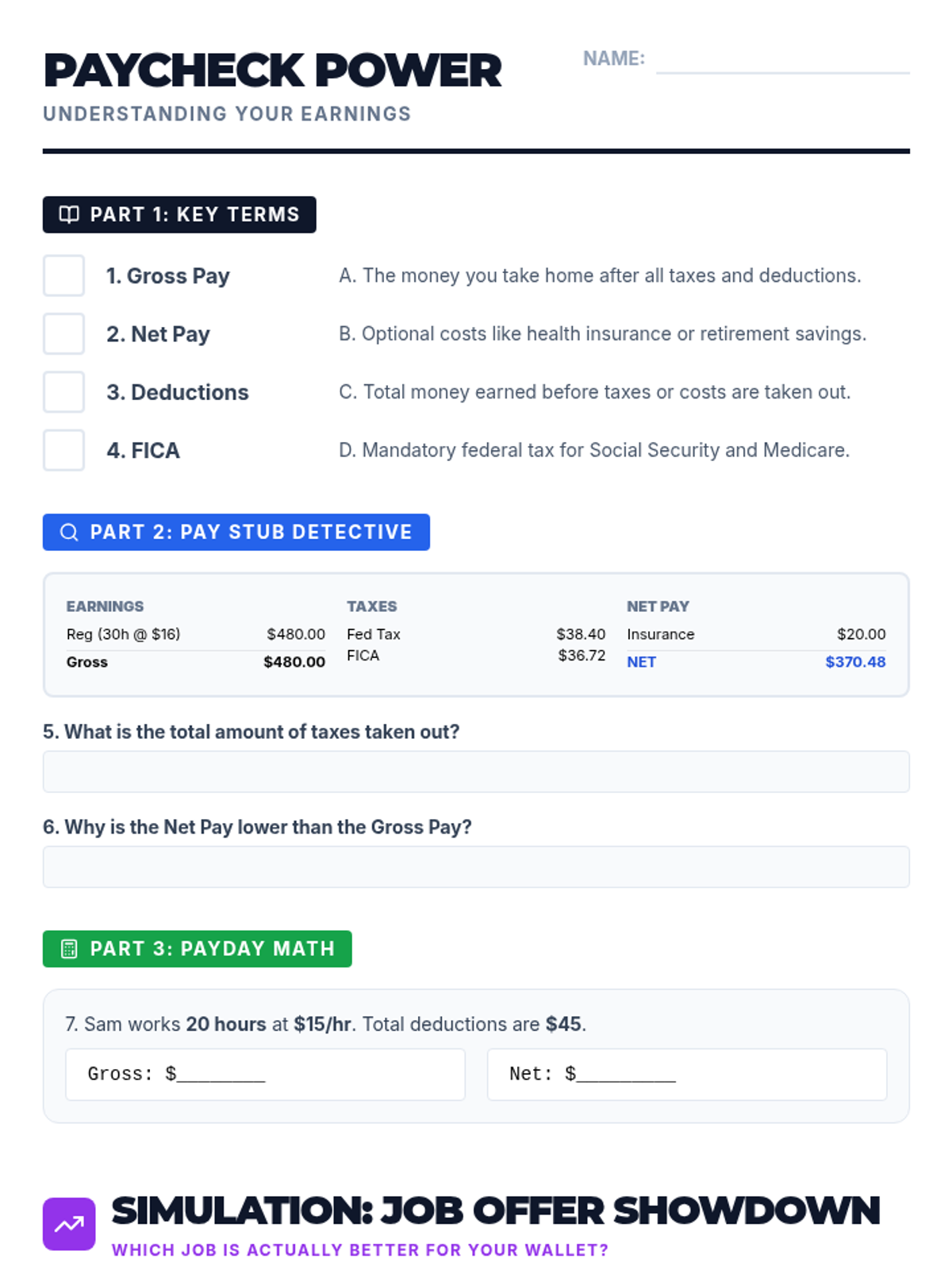
An expanded practice worksheet featuring a multi-page layout with foundational terminology, pay stub analysis, and a new "Job Offer Showdown" simulation activity to fill a 90-minute session.
A vibrant slide deck covering the fundamentals of paychecks, including key vocabulary, tax breakdowns, the difference between gross and net pay, and direct deposit basics.
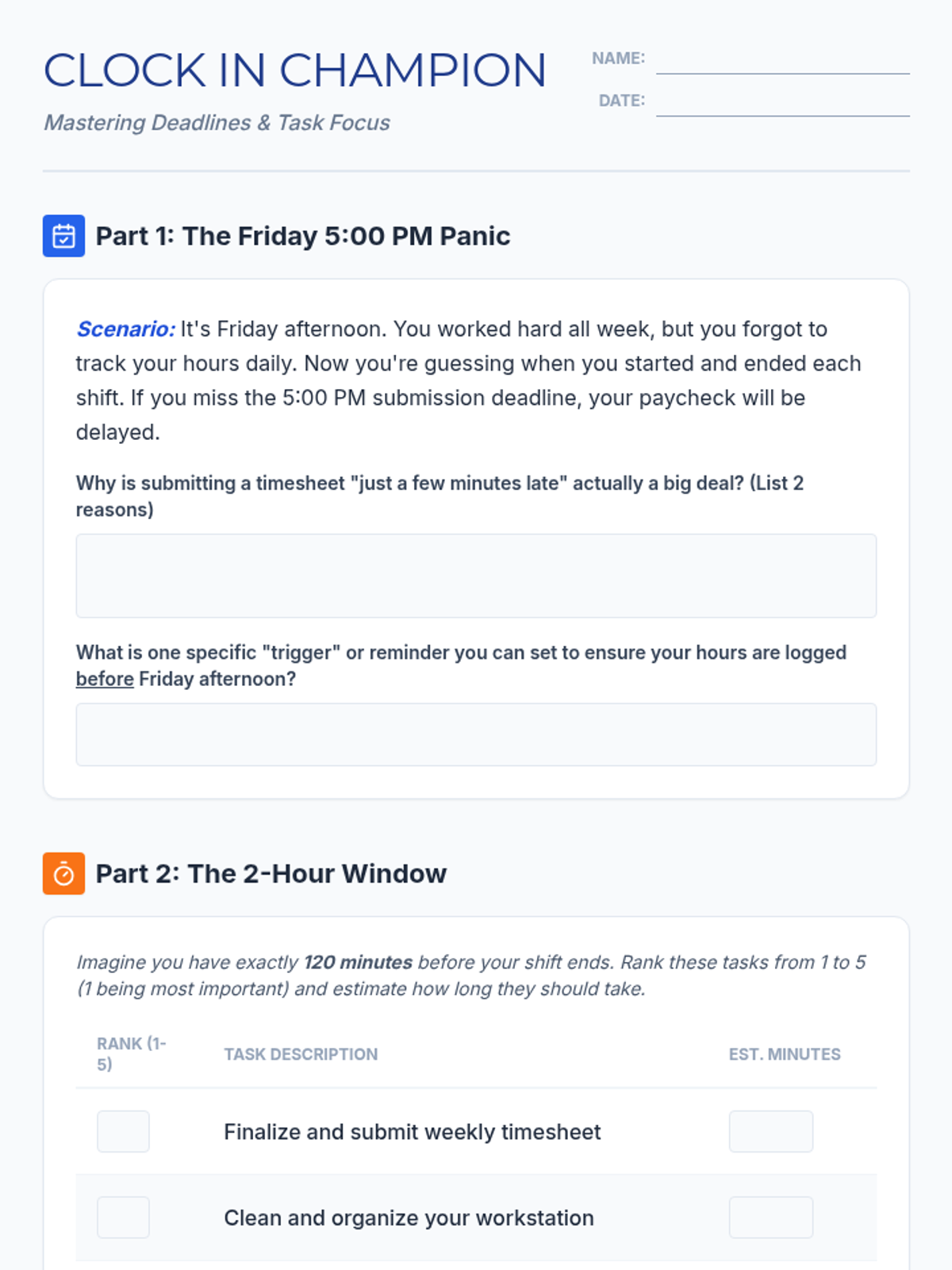
A focused 10-15 minute worksheet for students or employees to practice timesheet compliance and task prioritization. It includes a scenario-based problem, a ranking activity for a 120-minute window, and a personal commitment section.
A complete presentation guide for the facilitator, following the 7-step Pipeline to Pathway activity with integrated "Big Three" themes and prompts. All text is sized for maximum visibility (minimum 24px).
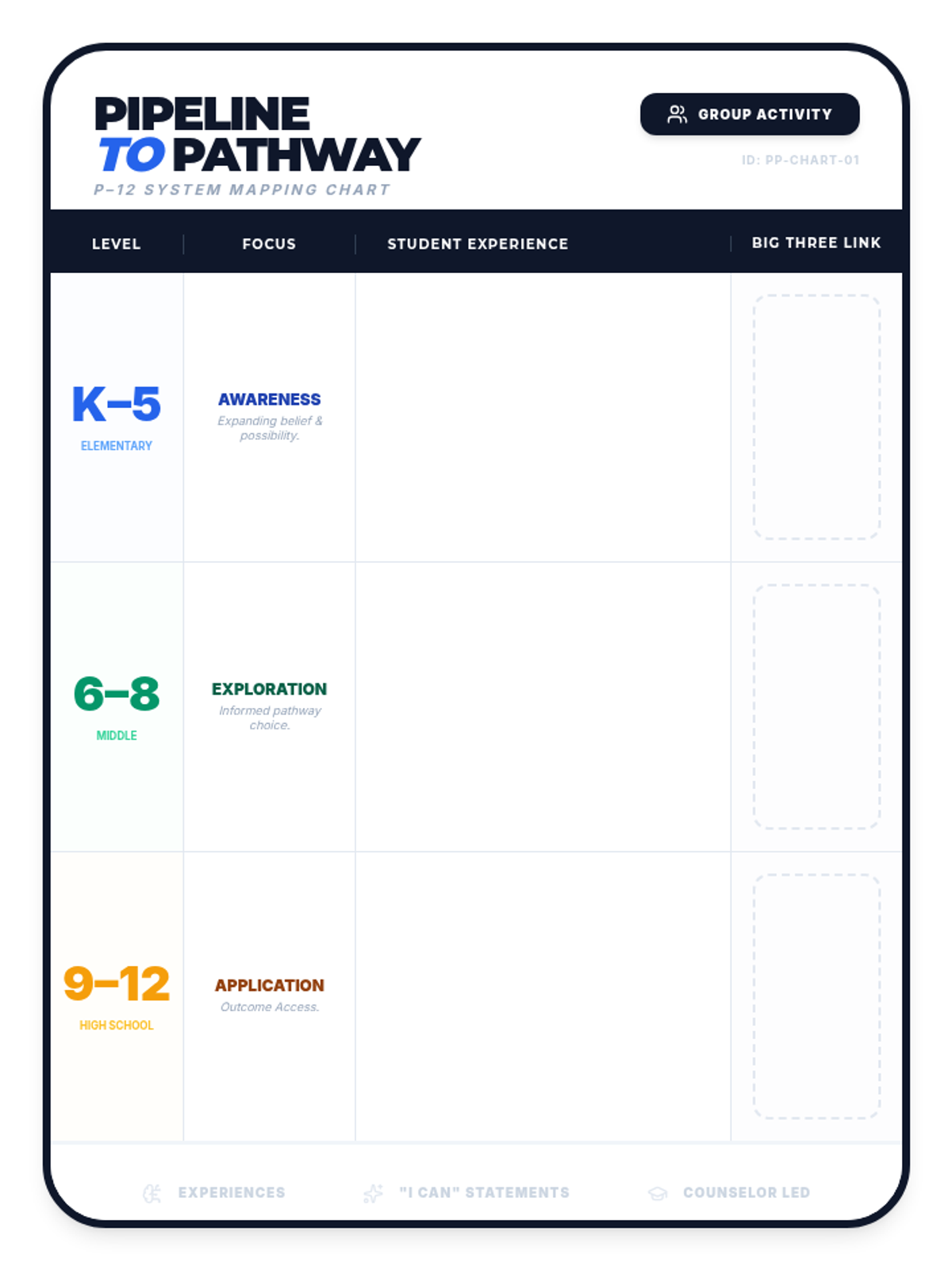
A large-format chart template for group activity, precision-fitted for a portrait printable area (720x960). Features three equal sections for Elementary, Middle, and High School mapping.
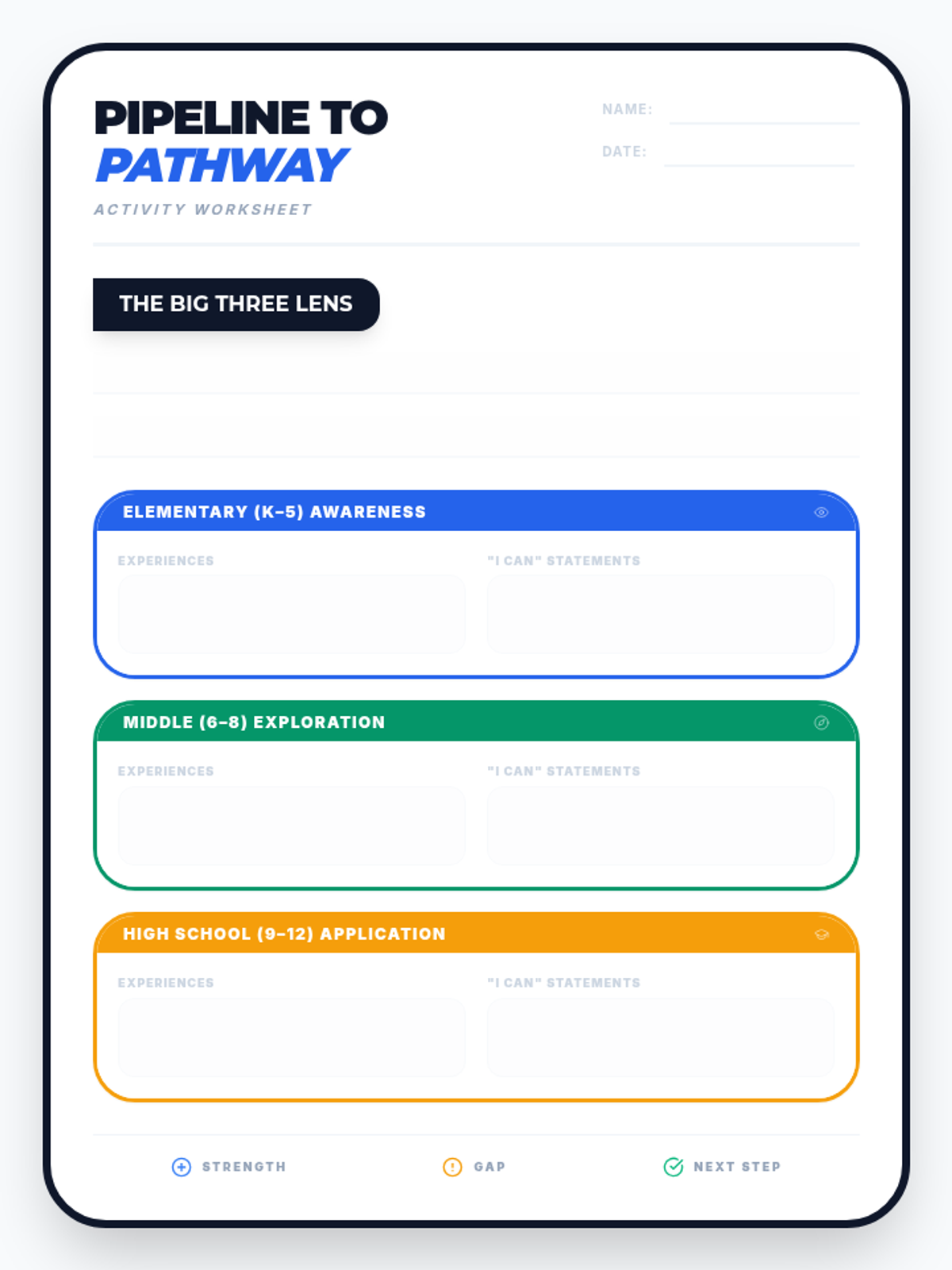
A participant handout for the Pipeline to Pathway activity. Redesigned to fill the full 720x960 page with three equal grade-level sections and clear work areas.
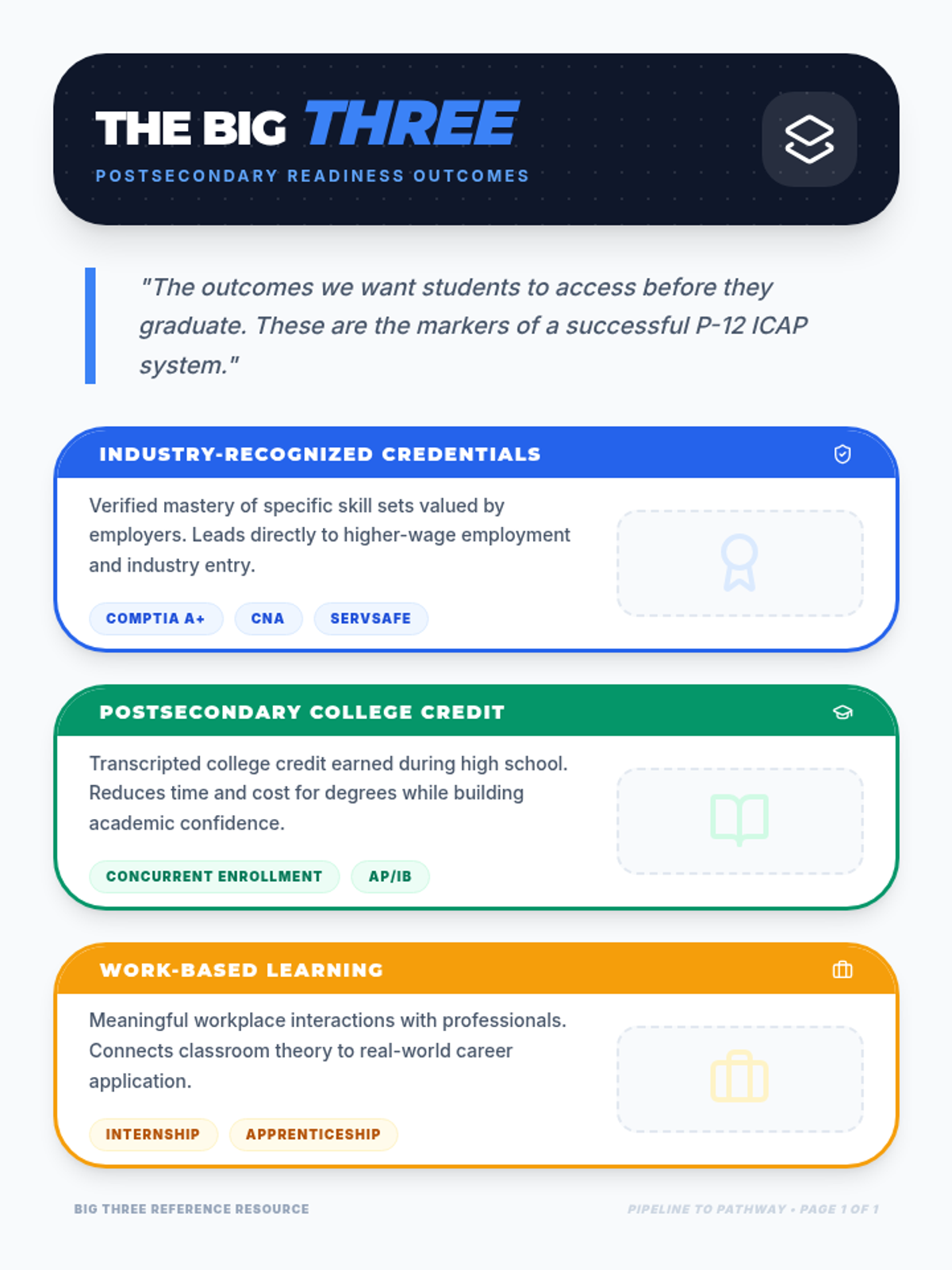
A high-quality reference sheet defining the Big Three outcomes (Industry Credentials, College Credit, and Work-Based Learning). Redesigned to fill the full 720x960 page with high-impact visuals.