Root cause analysis and brainstorming techniques for everyday problem-solving. Equips learners with ethical frameworks and risk-benefit evaluation skills to predict consequences and make informed choices.
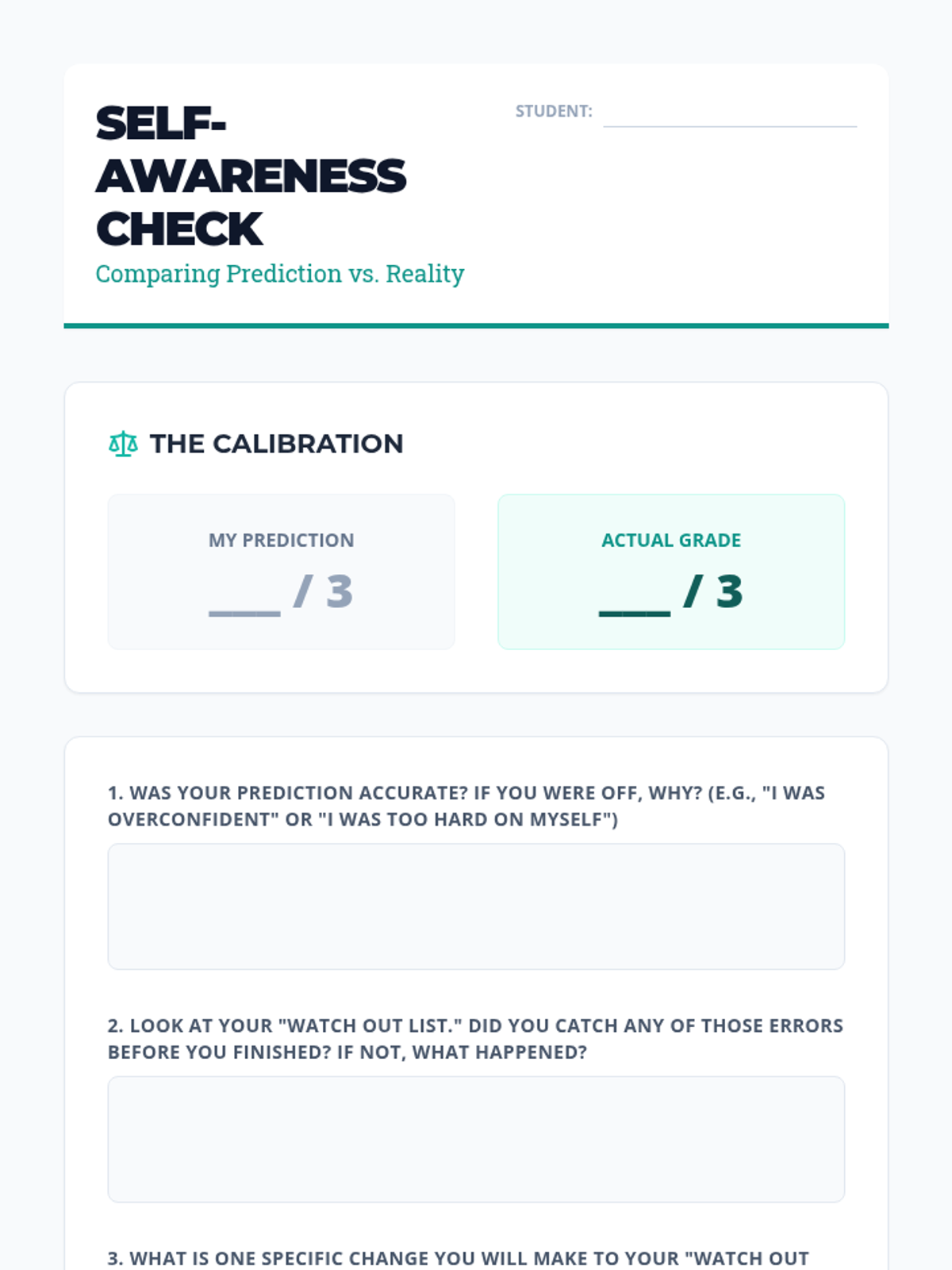
A final reflection sheet for students to compare their quiz predictions with their actual grades, evaluating the effectiveness of their metacognitive strategies.
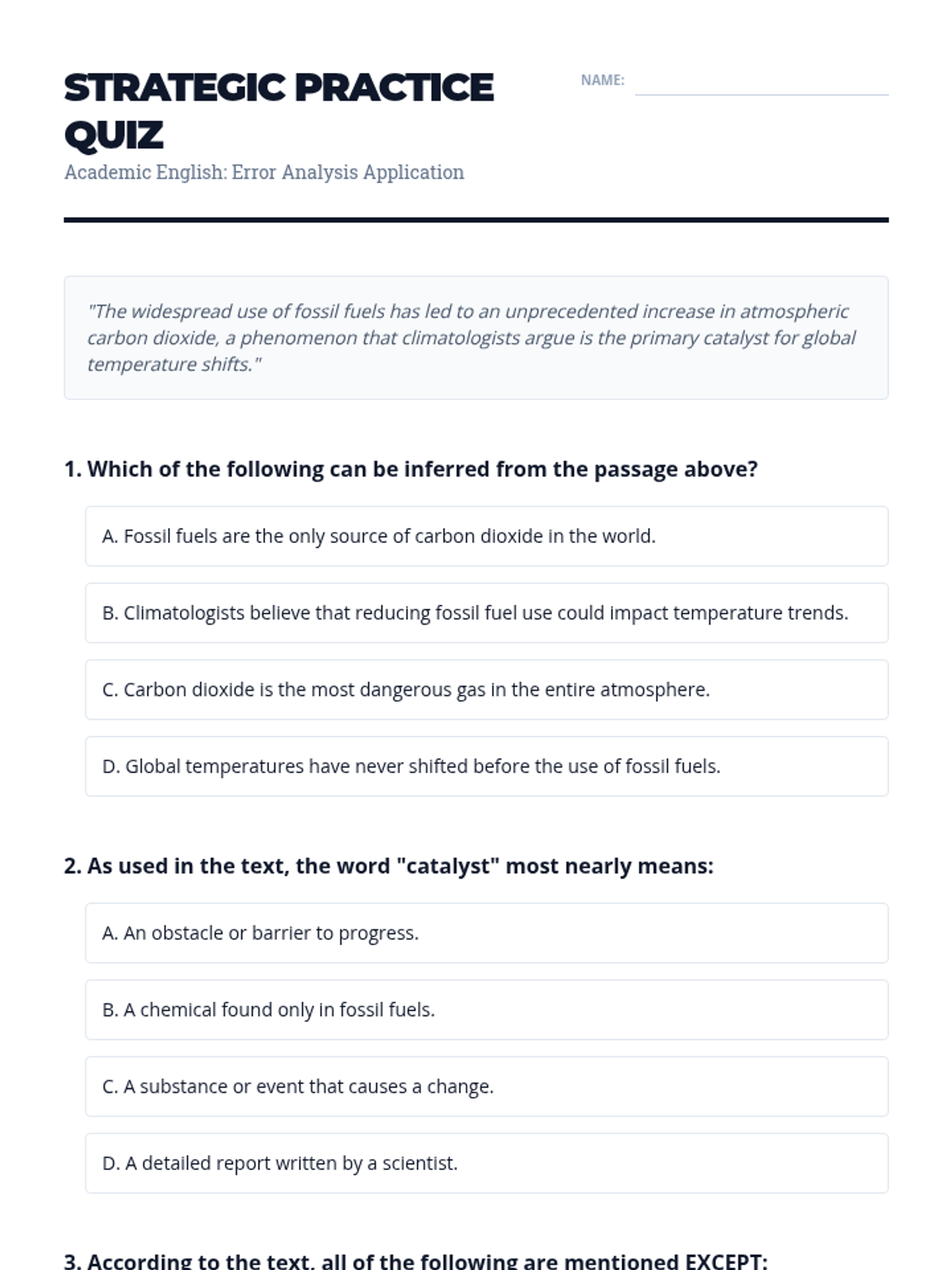
A short Academic English quiz designed to test students' application of their "Watch Out List," including a mandatory pre-grading self-reflection and score prediction section.
Final slides for the sequence focusing on the "Showtime" assessment. It introduces the score prediction challenge and real-time error analysis.
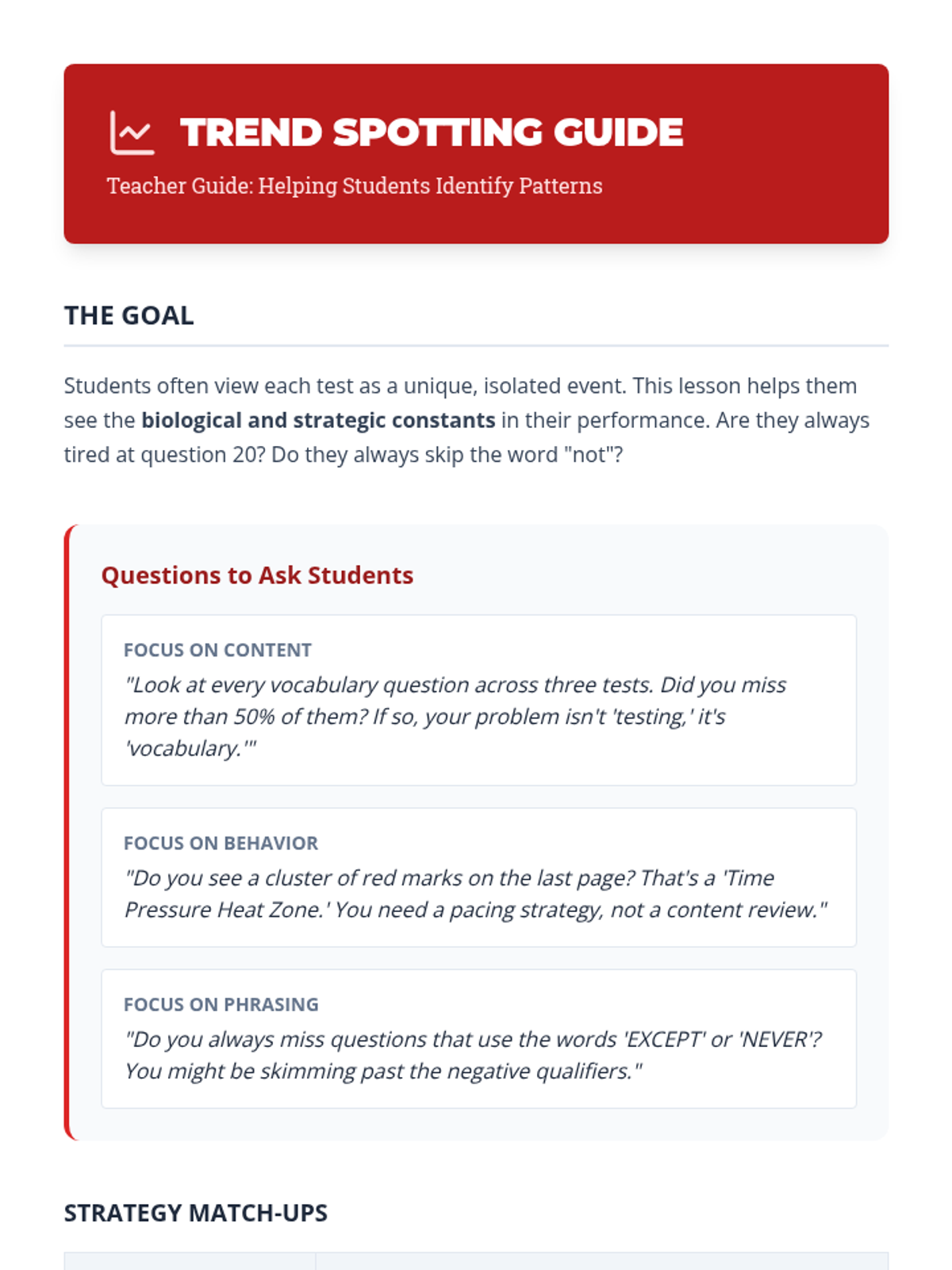
A guide for teachers to help students interpret their error data and connect patterns to specific defensive strategies.
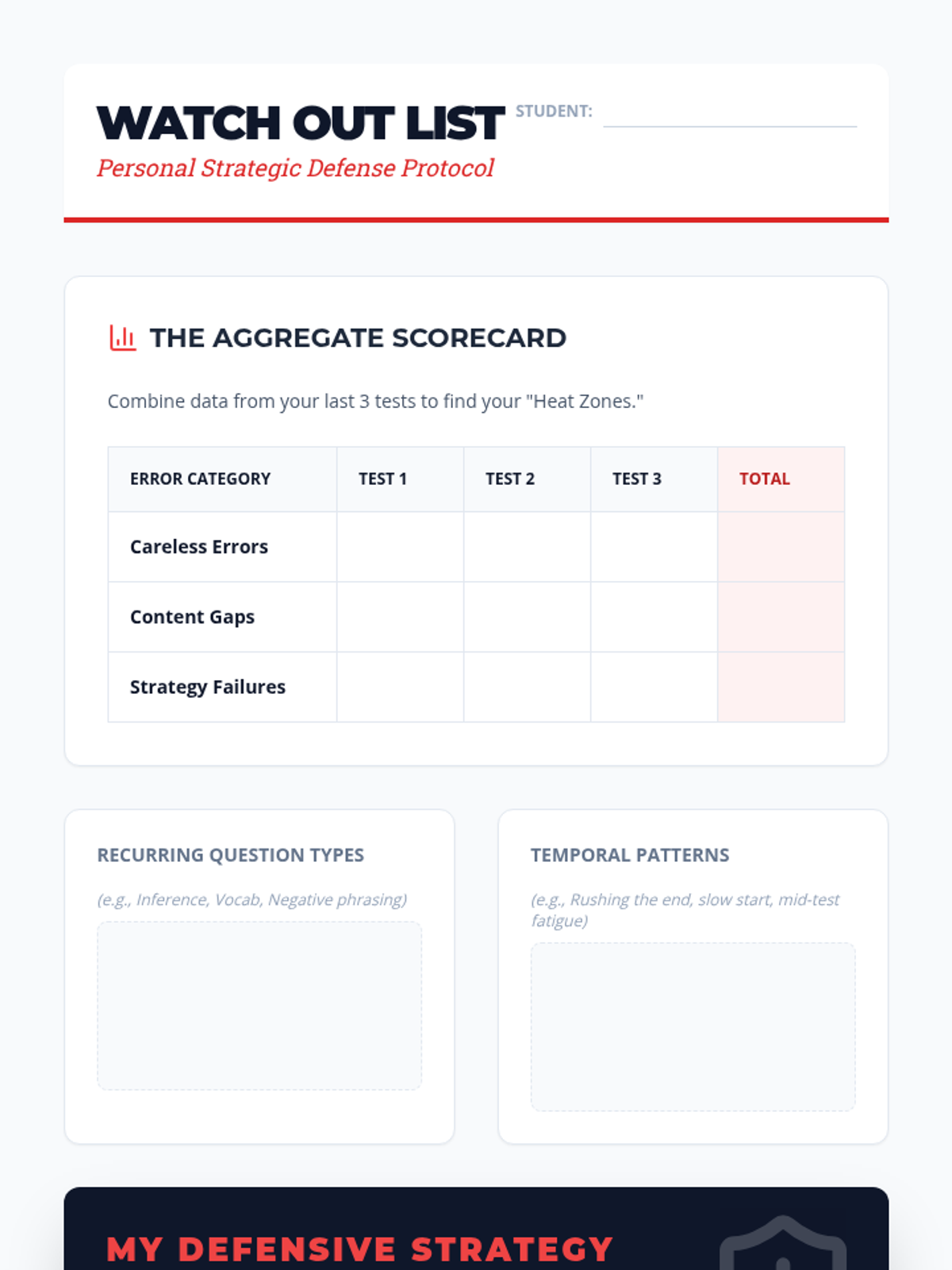
A student worksheet for aggregating error data across multiple assessments and distilling those patterns into a "Watch Out List" for future defense.
Slides for Lesson 4 that use a "Heatmap" analogy to teach students how to aggregate error data and identify recurring personal patterns.
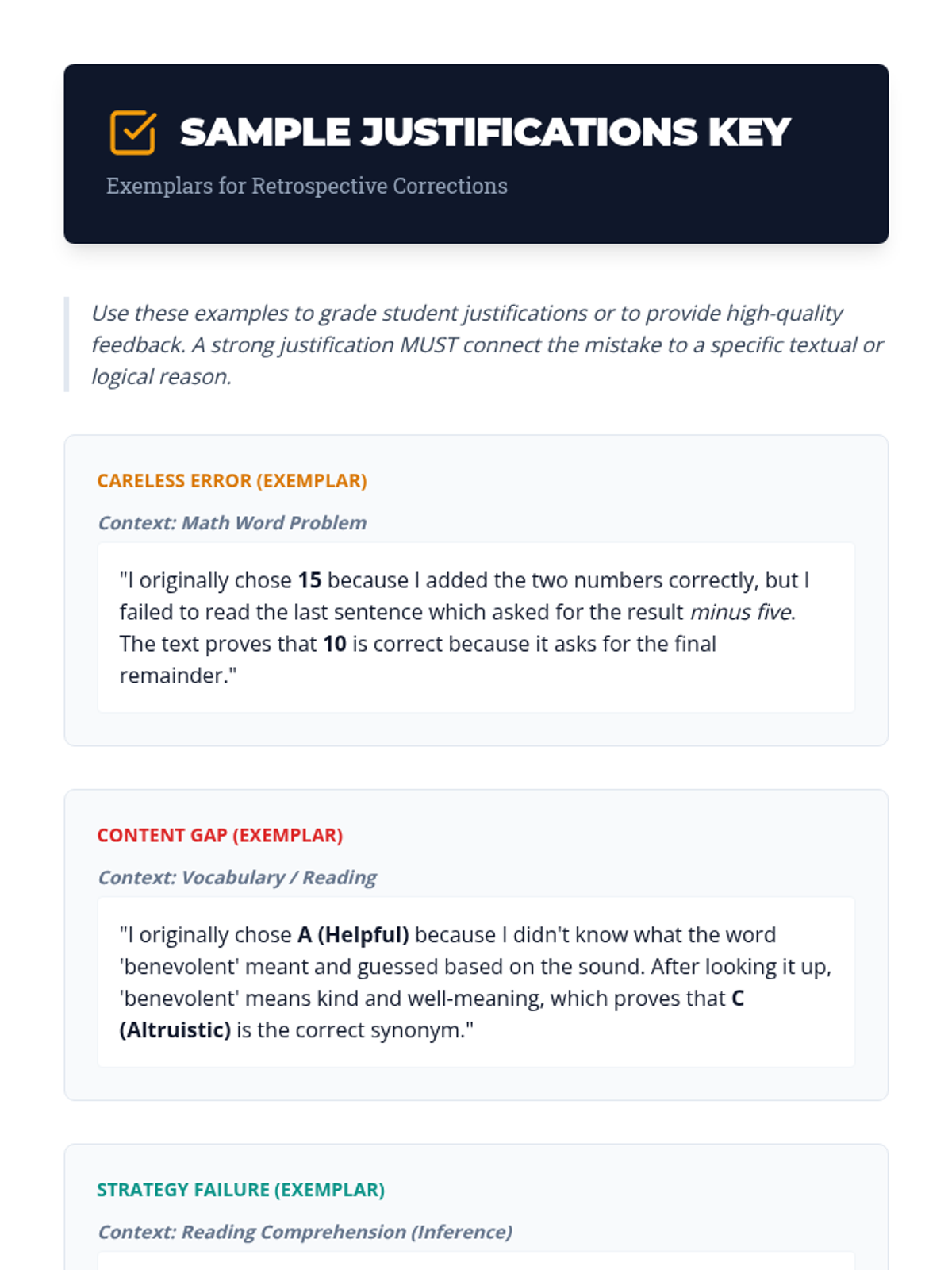
An answer key/exemplar guide for teachers to evaluate student justification statements, showing the difference between weak and mastery-level corrections.
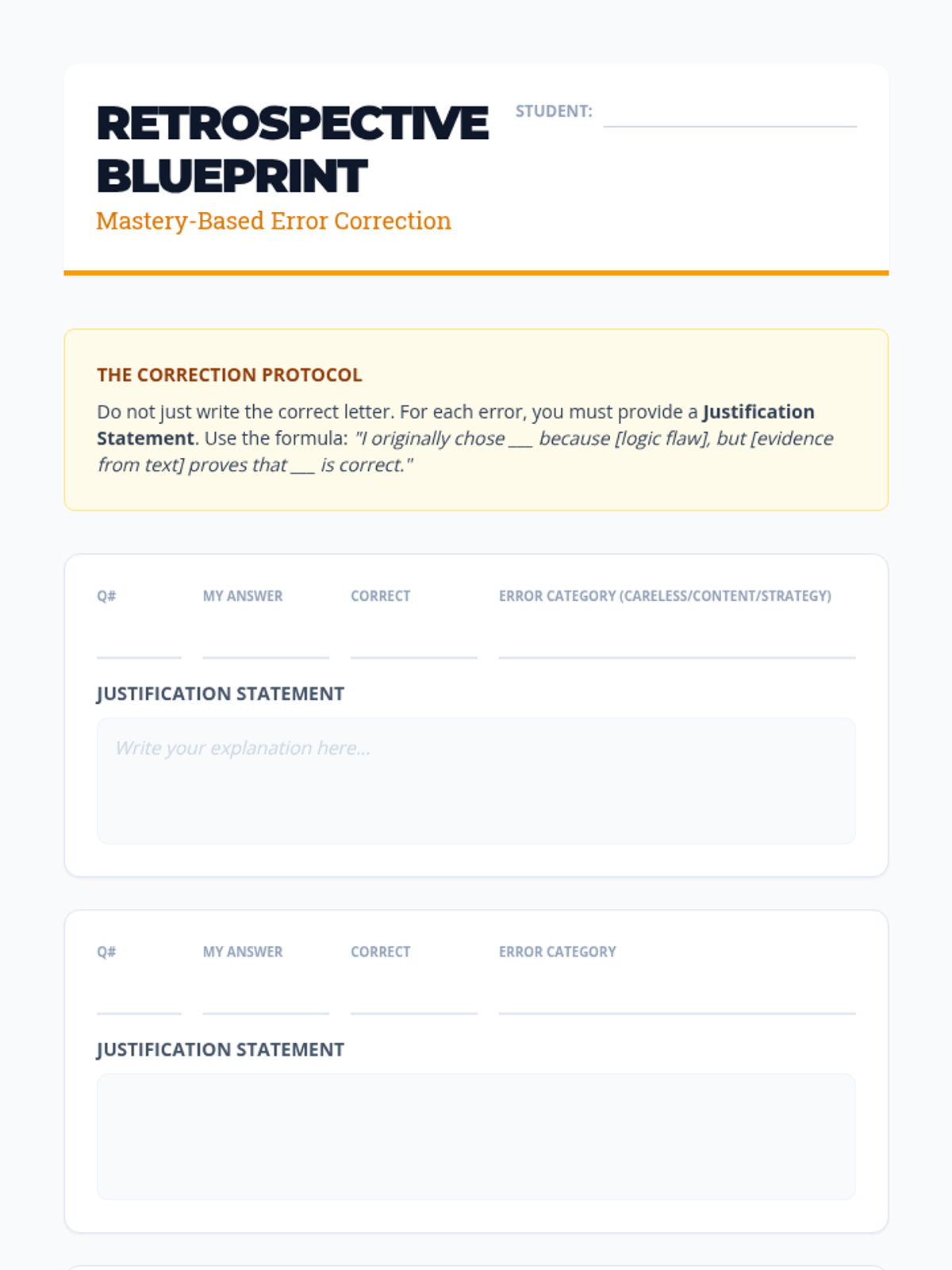
A template for students to perform deep error corrections, requiring them to write justification statements using a specific logic-based formula.
Slides for Lesson 3 introducing the "Justified Fix" method. It emphasizes that students must explain why they were wrong and why the new answer is right using evidence.
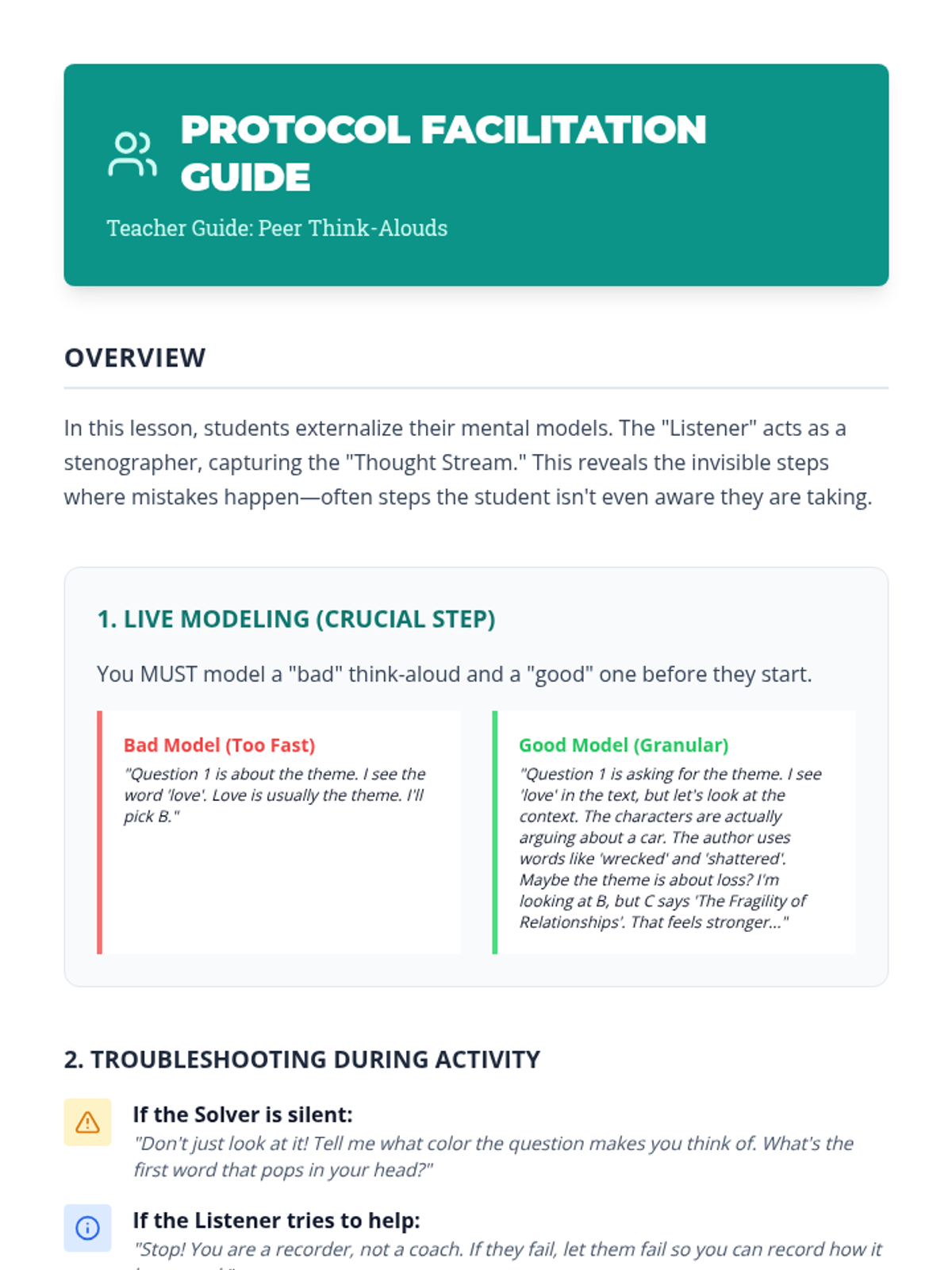
A facilitation guide for teachers to lead the "Think-Aloud" protocol, including scripts for modeling and tips for troubleshooting silent students.
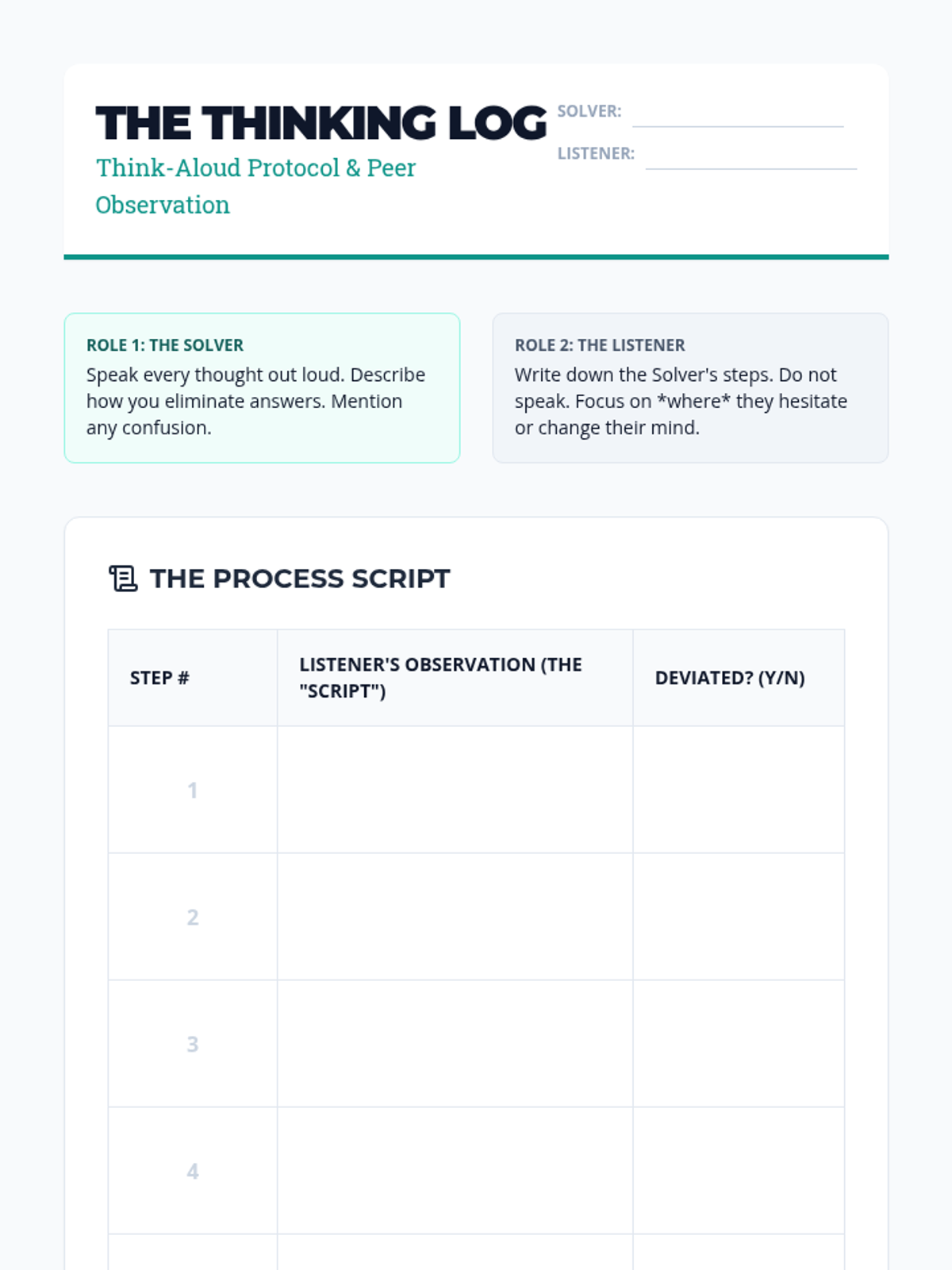
A peer-observation worksheet where students record their partner's "Think-Aloud" steps and analyze where their logic deviated from the correct path.
Slides for Lesson 2 that introduce the "Think-Aloud" protocol using a gamer commentary analogy. It outlines the roles of "The Solver" and "The Listener."
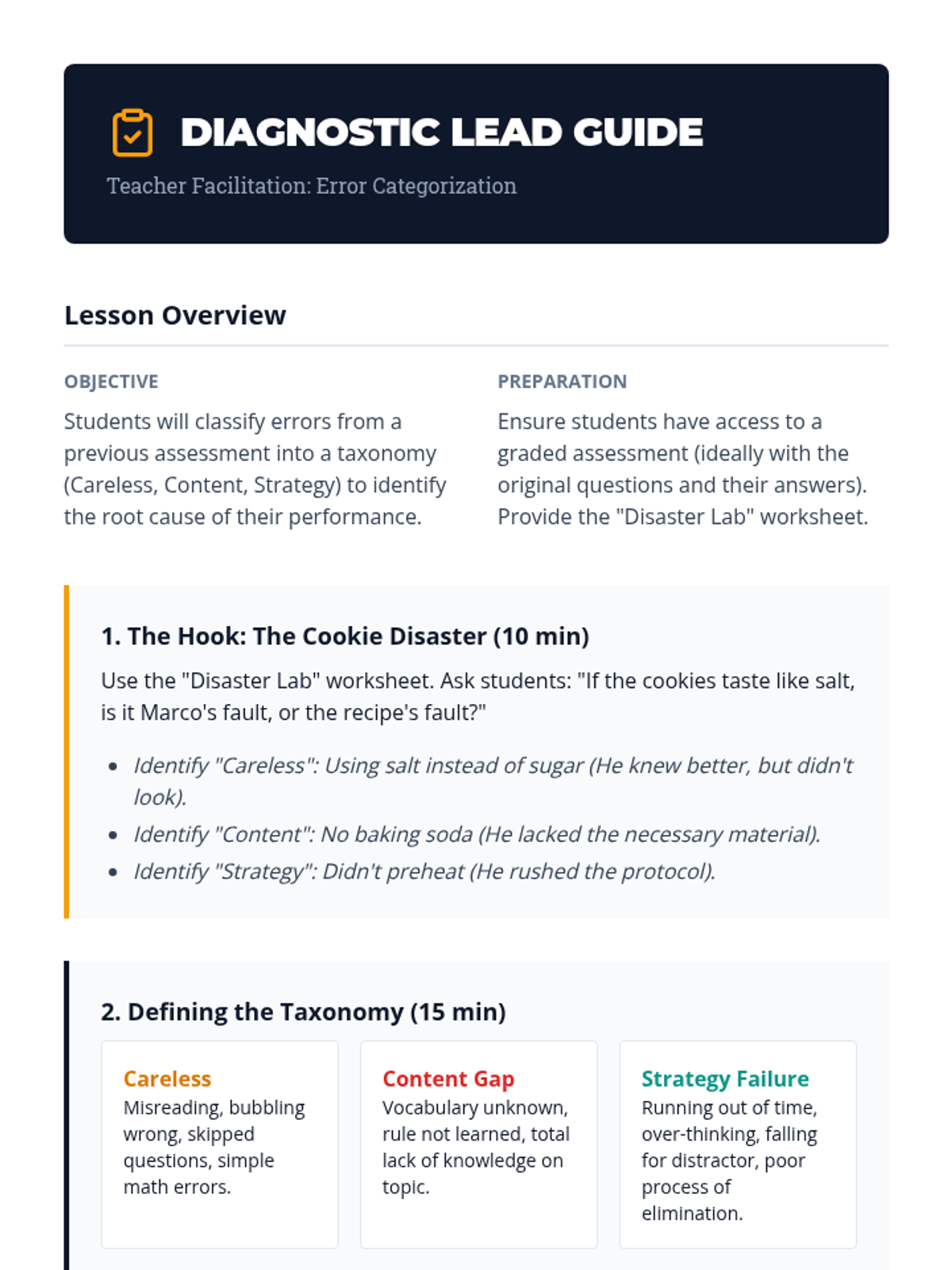
A teacher facilitation guide for Lesson 1, providing instructional prompts and definitions for error taxonomy.
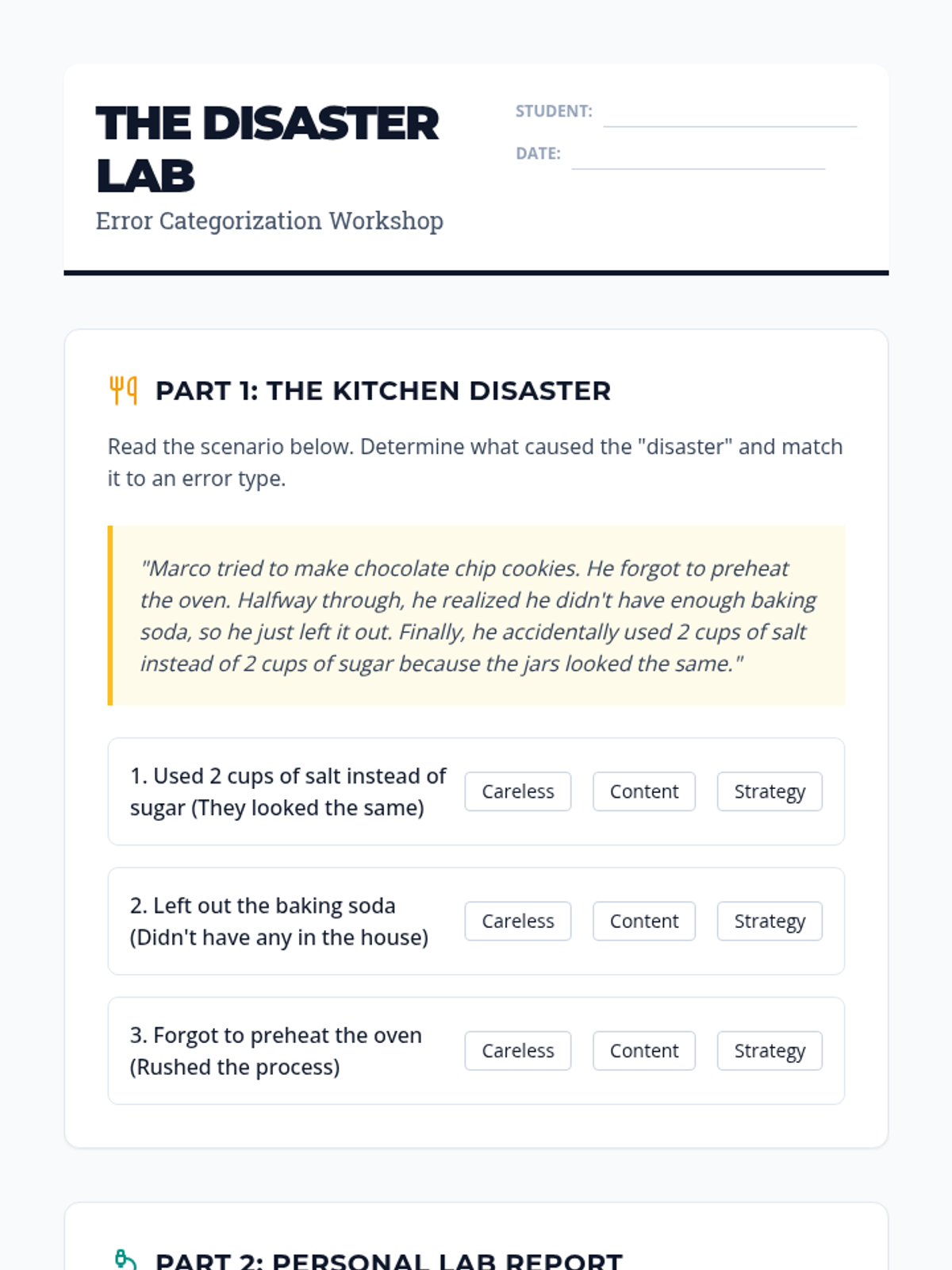
A student worksheet for the first lesson that uses a cookie recipe disaster to hook students into error categorization, followed by a table for analyzing their own test mistakes.
An introductory slide deck explaining the three main types of errors: Careless, Content Gap, and Strategy Failure, using a recipe disaster analogy.
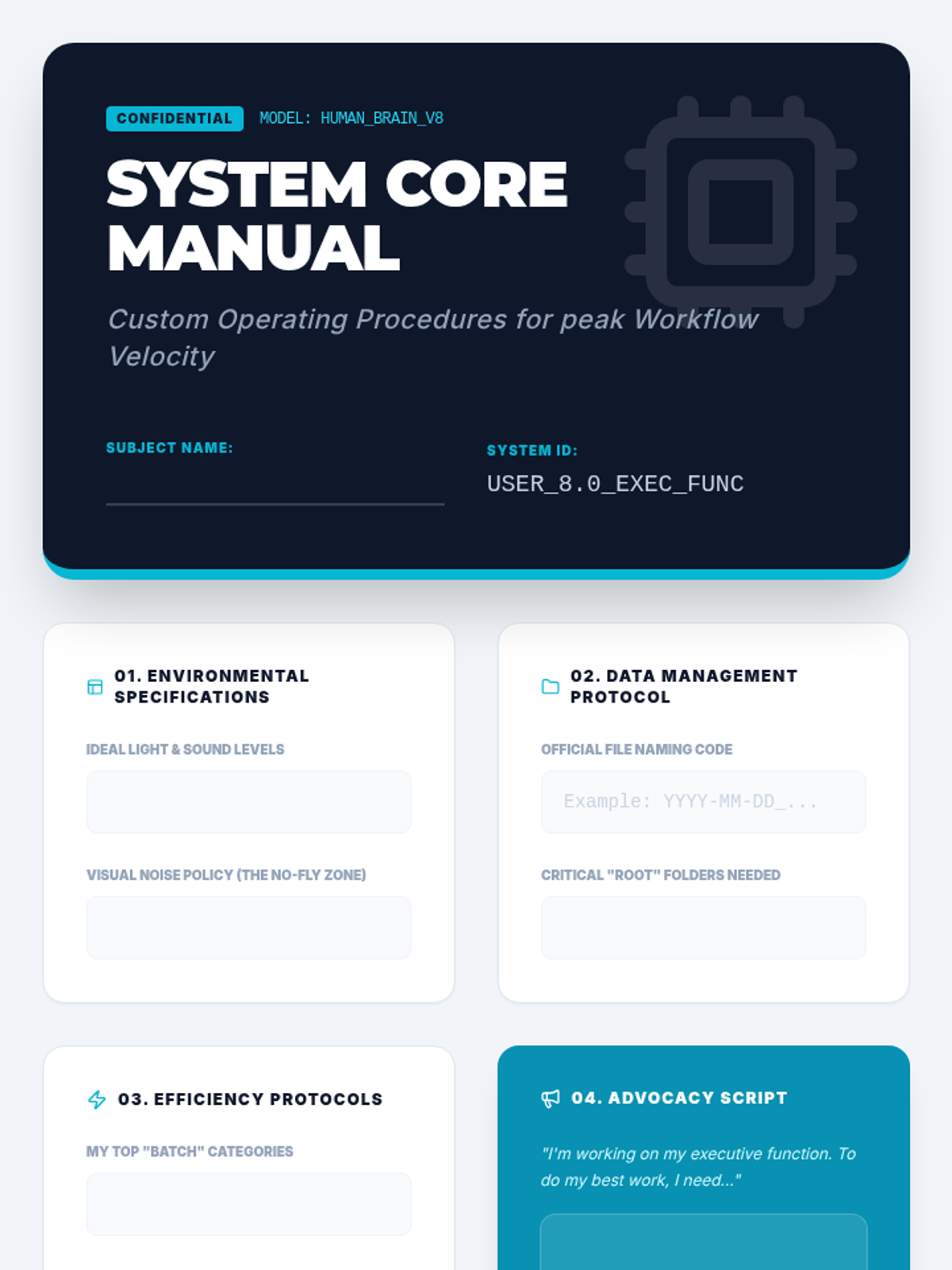
The capstone project template for the sequence. Students synthesize all previous learning into a professional-looking "System Core Manual" that documents their personalized organizational strategies and self-advocacy needs.
Final project presentation guiding students to synthesize their learning into a personal "Operating Manual." Focuses on self-advocacy and developing a set of standard operating procedures for their individual cognitive needs.
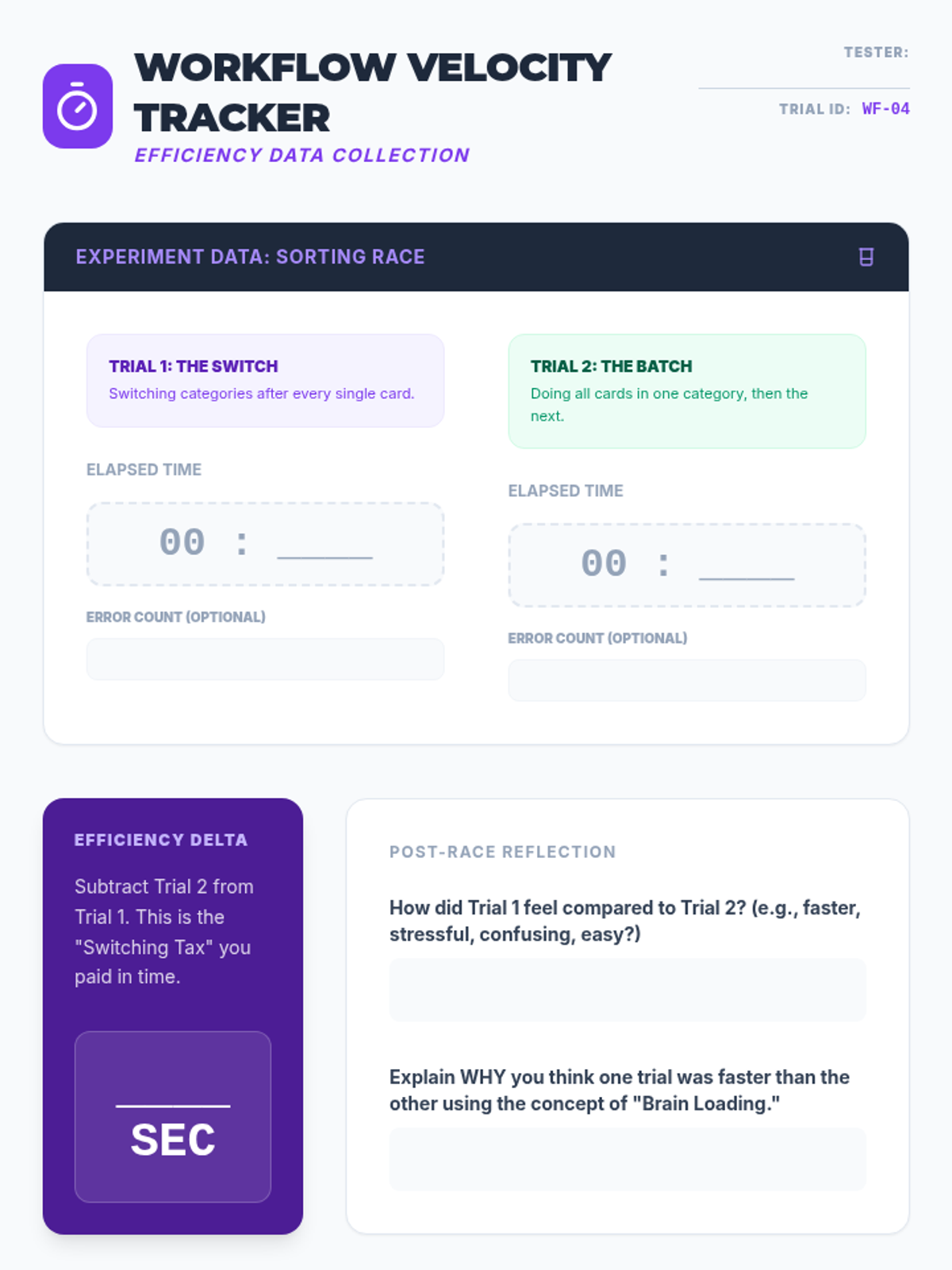
Experimental data tracker for the sorting race. Students record times for sequential versus batched tasks, calculate their efficiency delta, and plan real-world application of batching strategies to their homework.
Slides explaining the concept of task batching versus context switching. Includes instructions for a physical "Sorting Race" experiment to demonstrate the productivity cost of multitasking.
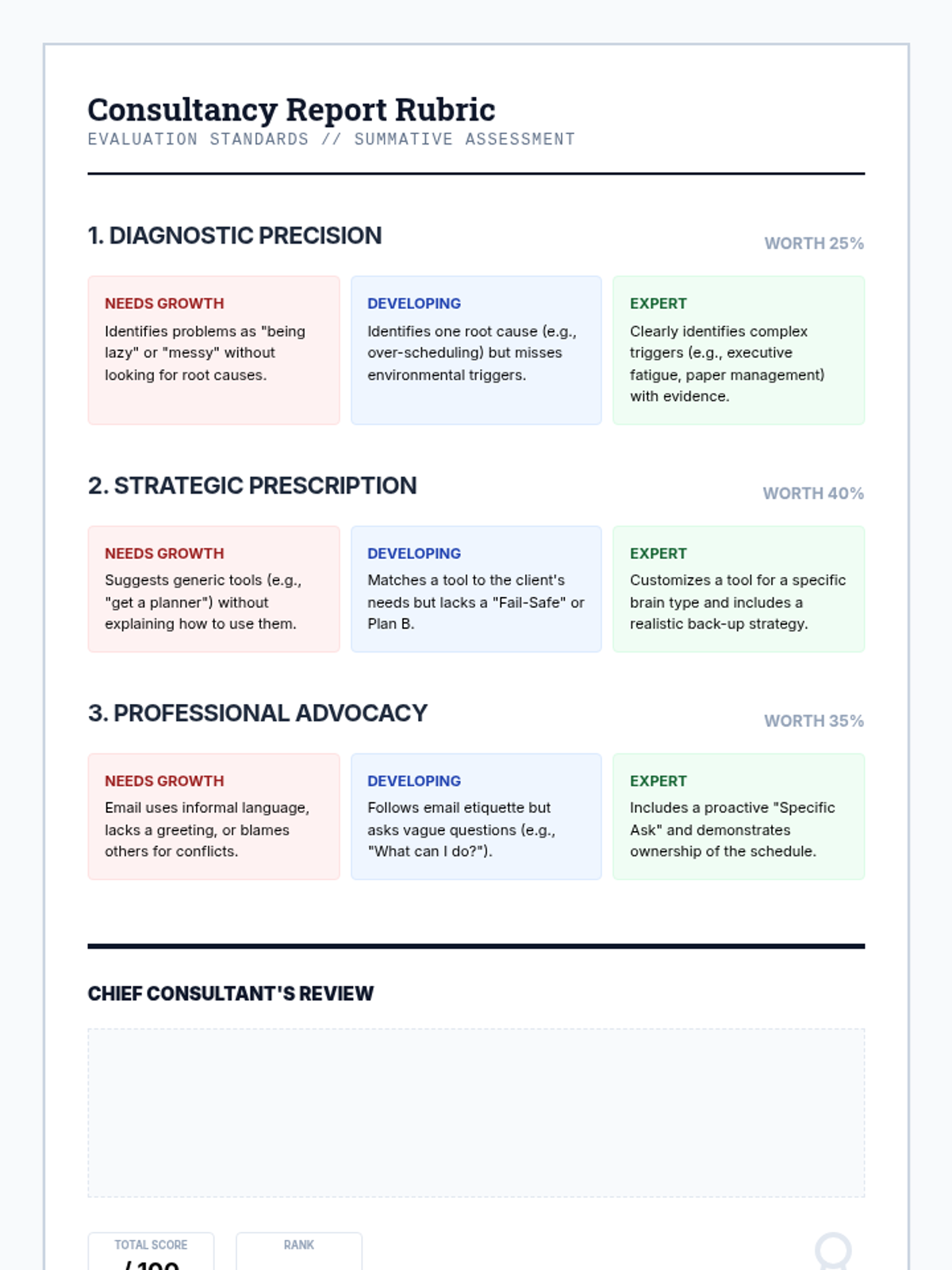
Teacher-facing rubric for assessing the Final Consultancy Report. Evaluates diagnostic precision, strategic prescription (tools), and professional advocacy (communication).
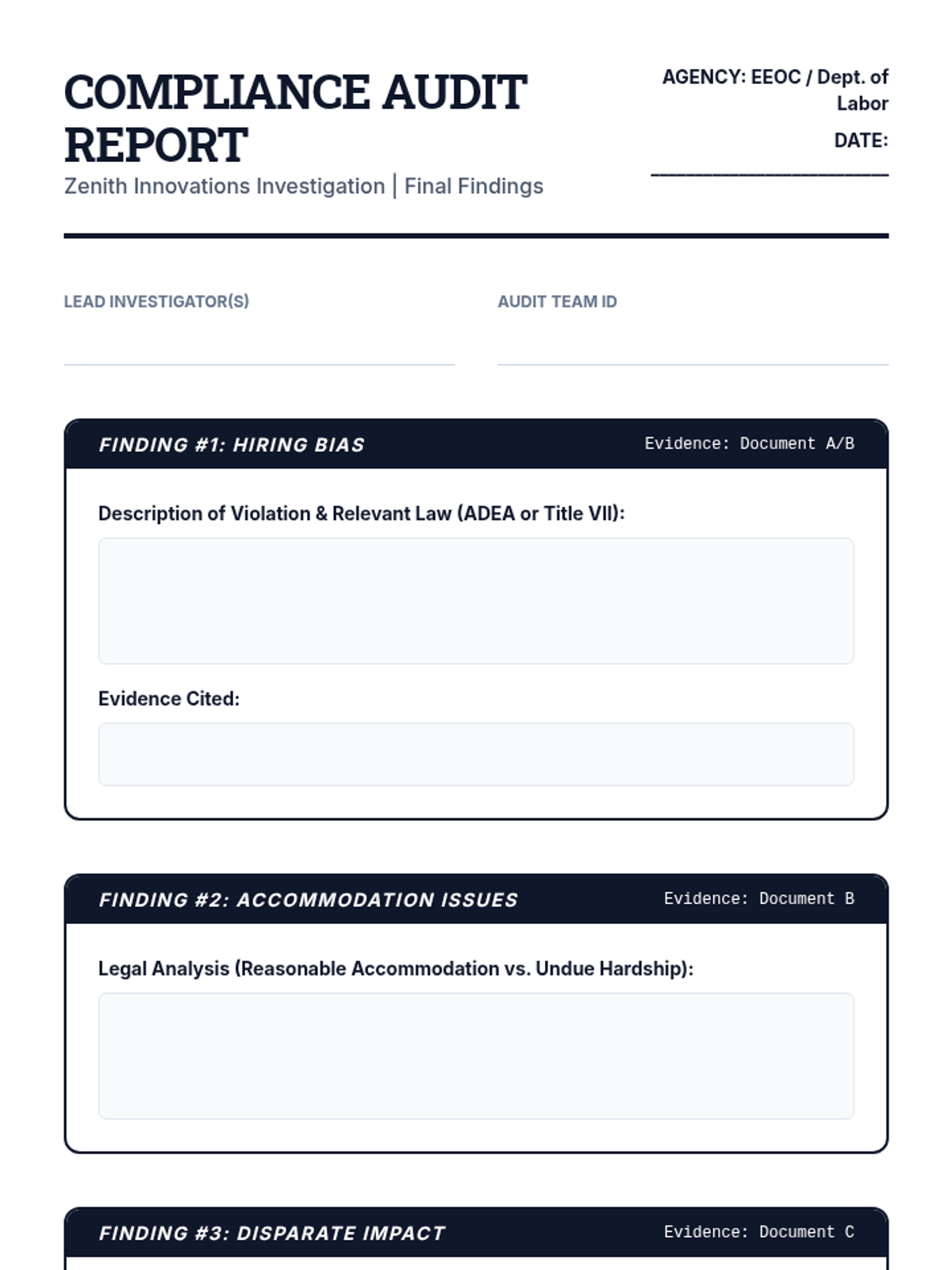
A report template for students to document their findings from the mock compliance audit, identifying legal violations and recommending corrective actions.
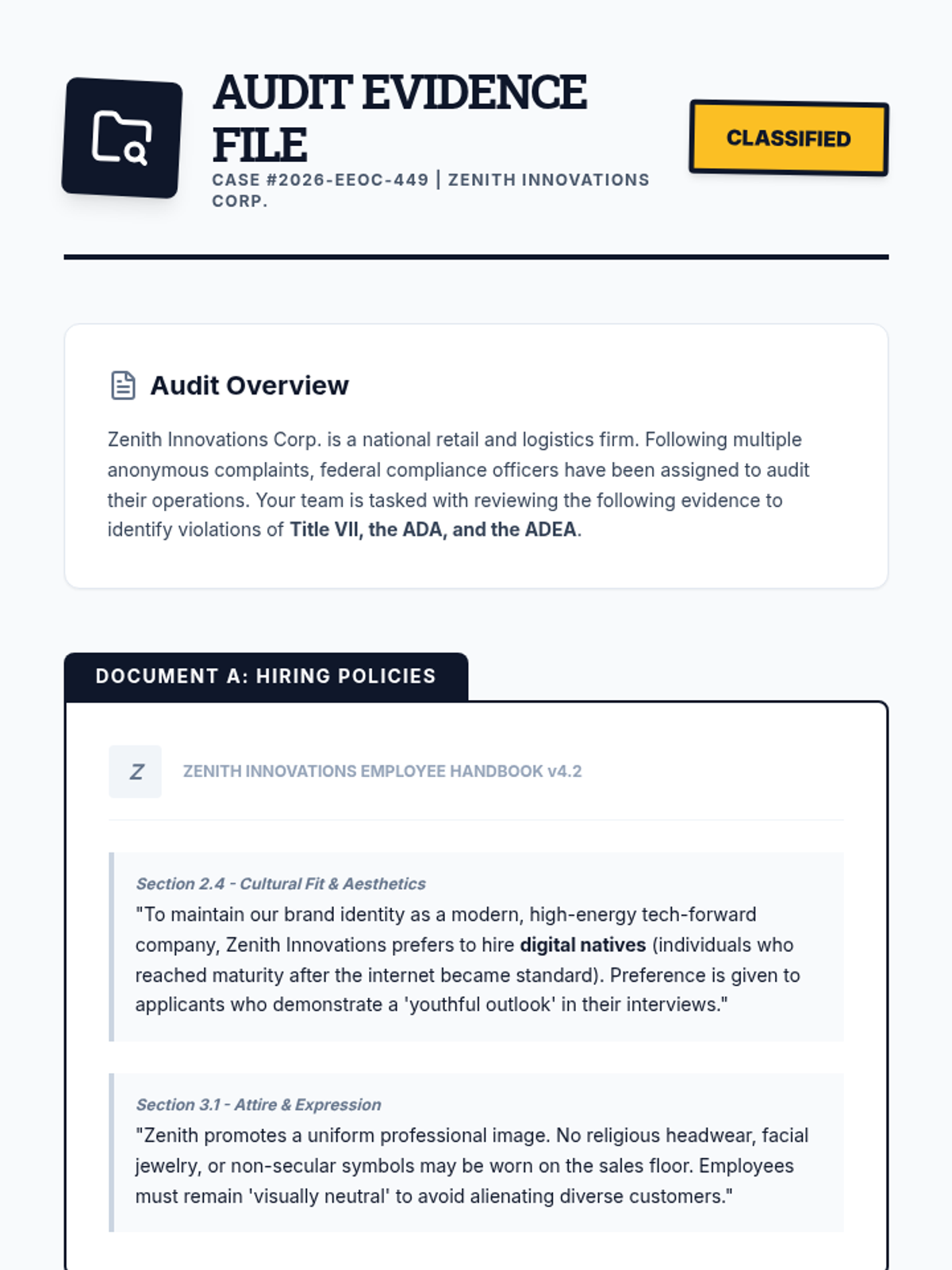
A comprehensive evidence file containing fictional company documents, transcripts, and complaints for students to analyze during the mock compliance audit.
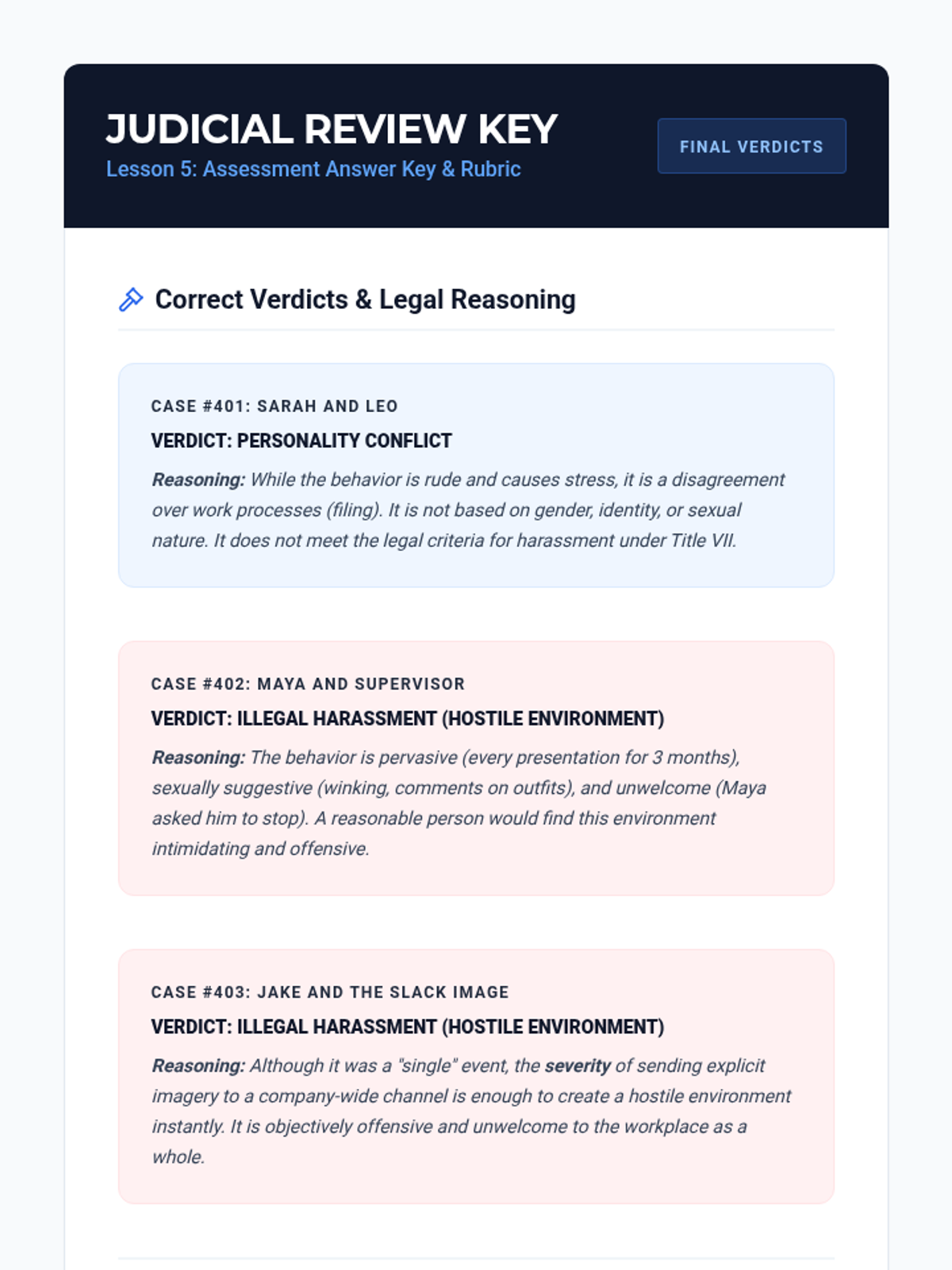
A teacher resource for Lesson 5: The Judicial Review. It includes the correct categorization of assessment scenarios, detailed legal justifications for each, and a grading rubric for student responses.
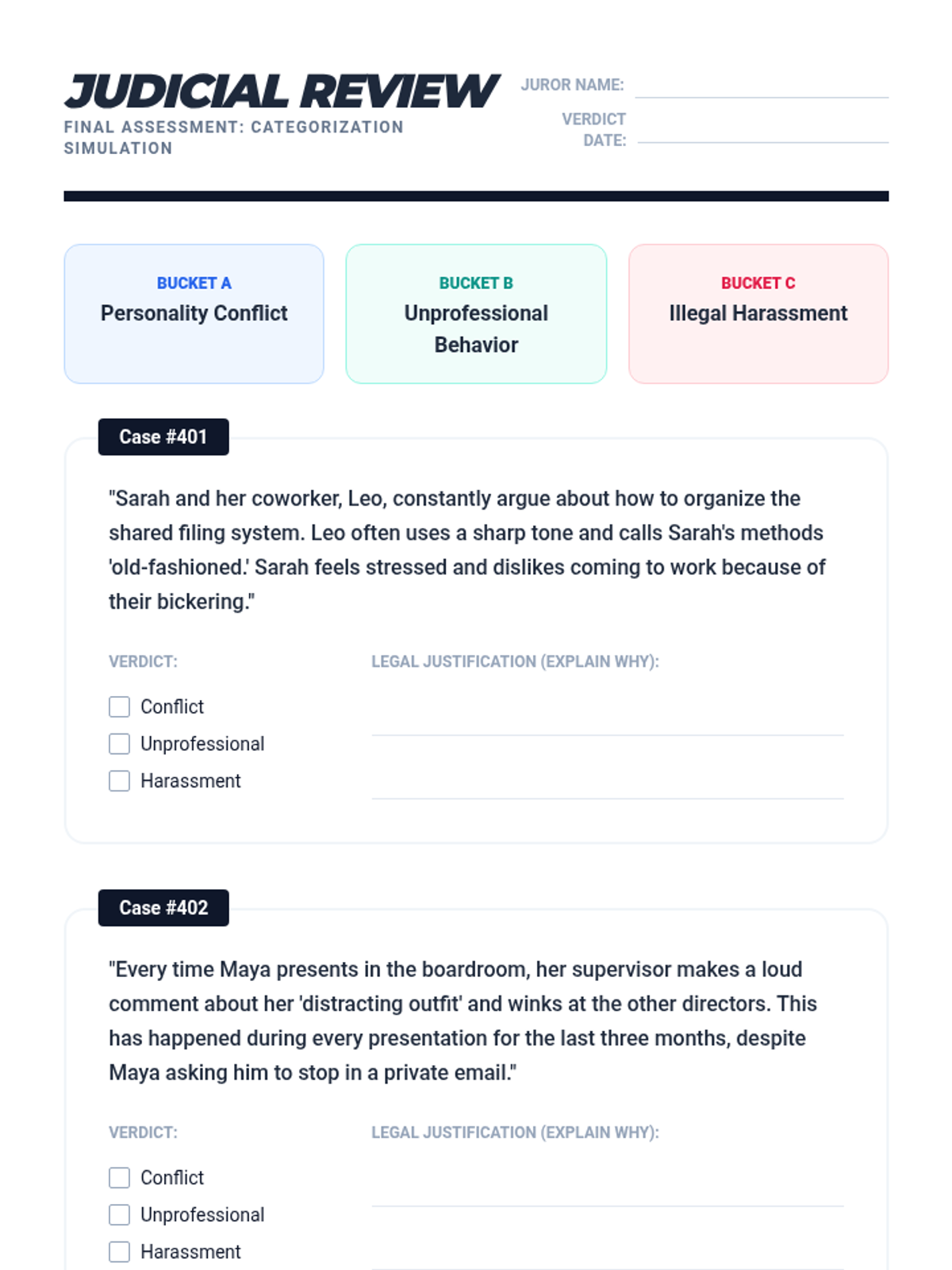
The final assessment worksheet for Lesson 5. Students categorize complex workplace scenarios as Personality Conflict, Unprofessional, or Illegal Harassment, providing legal justifications for each verdict.
Educational slides for Lesson 5: The Judicial Review. This deck sets up the final simulation, defines the three categories (Conflict, Unprofessional, Harassment), and outlines the assessment task.
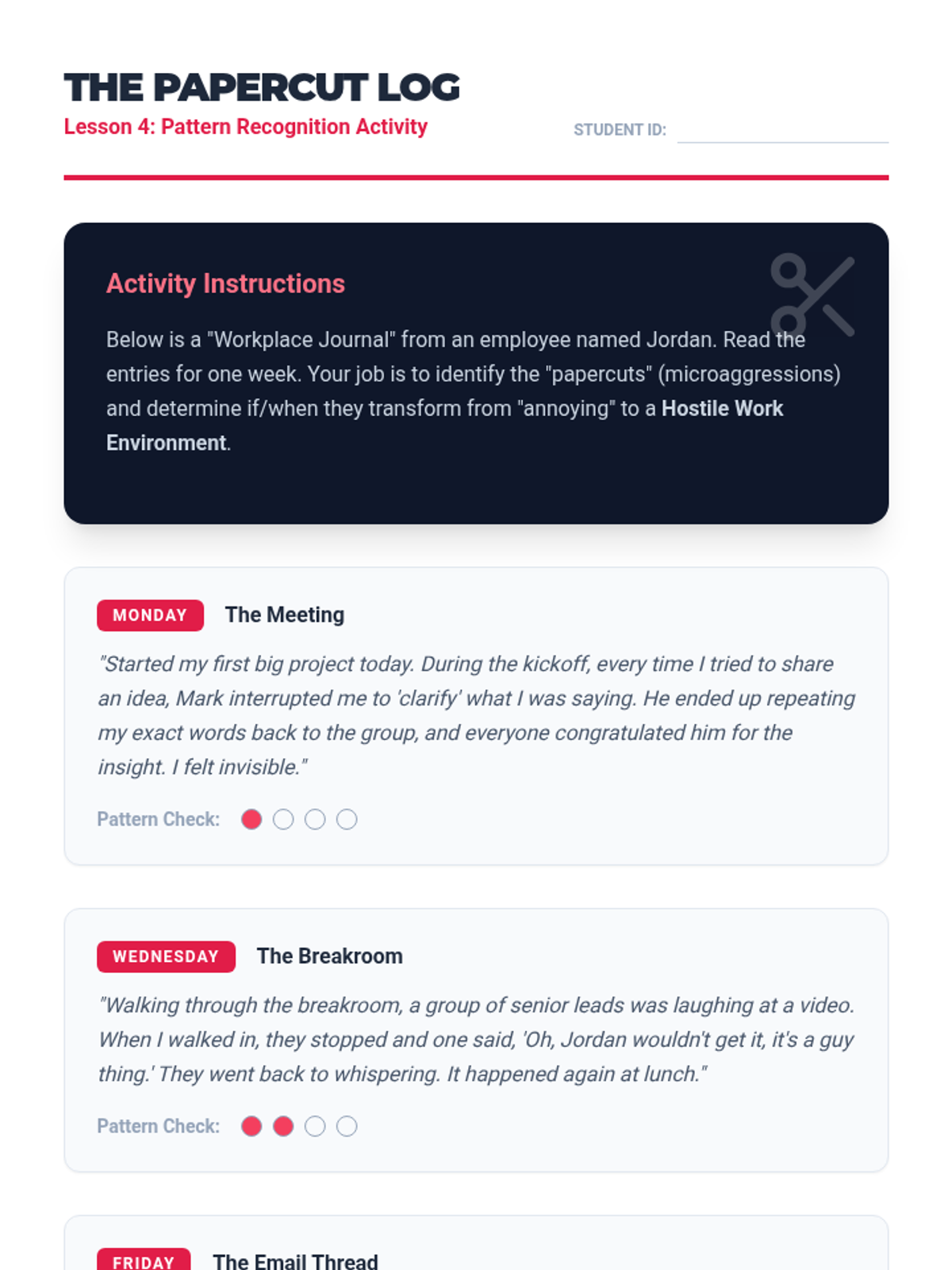
A student worksheet for Lesson 4 where they analyze a week's worth of workplace journal entries to identify a pattern of microaggressions. It focuses on the cumulative effect of small behaviors.
Educational slides for Lesson 4: The Pattern of Toxicity. This deck explains how microaggressions contribute to a hostile work environment over time, emphasizing the distinction between isolated incidents and pervasive patterns.
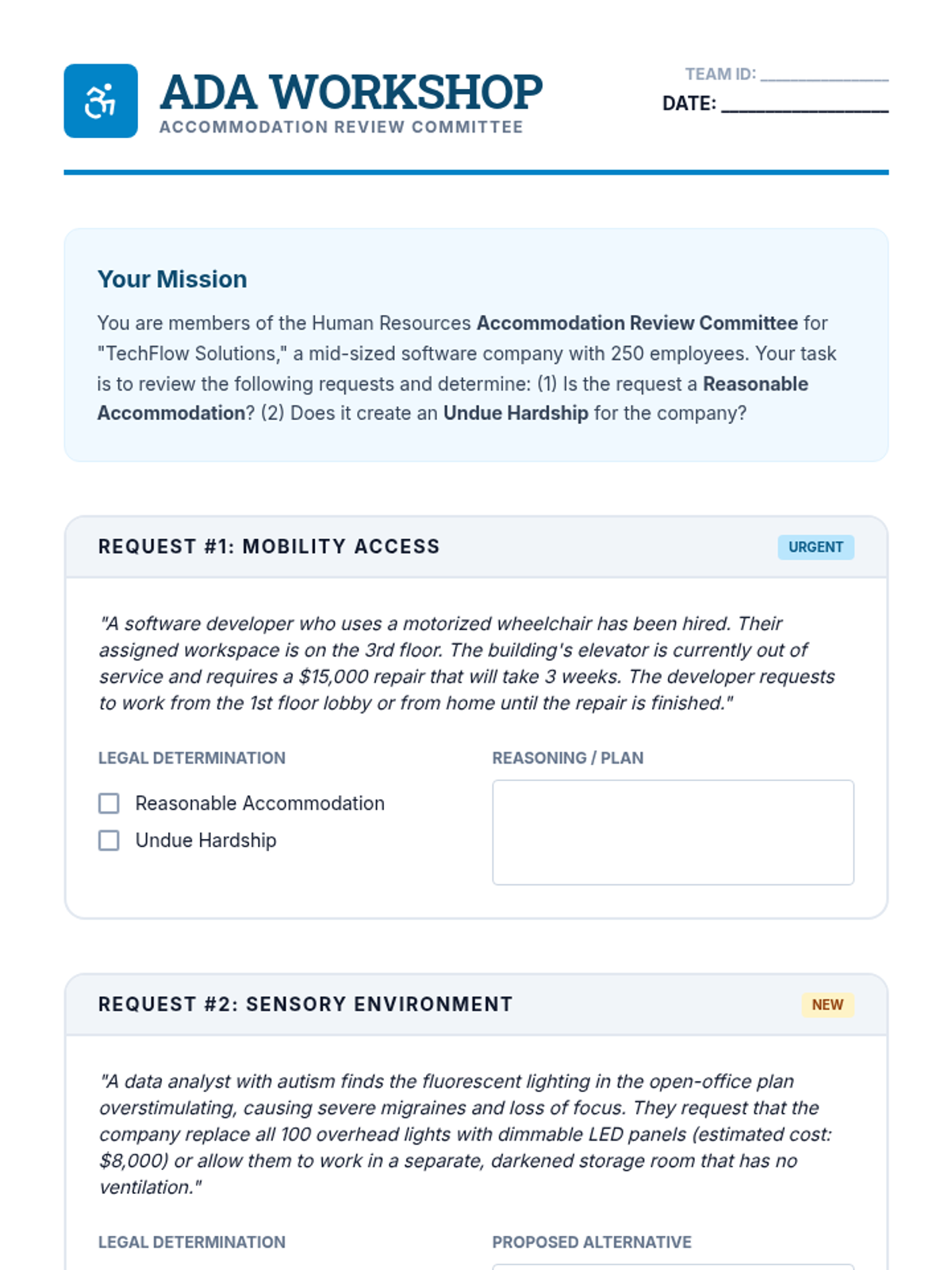
A simulation worksheet where students act as an HR committee to review accommodation requests and determine legal compliance under the ADA.
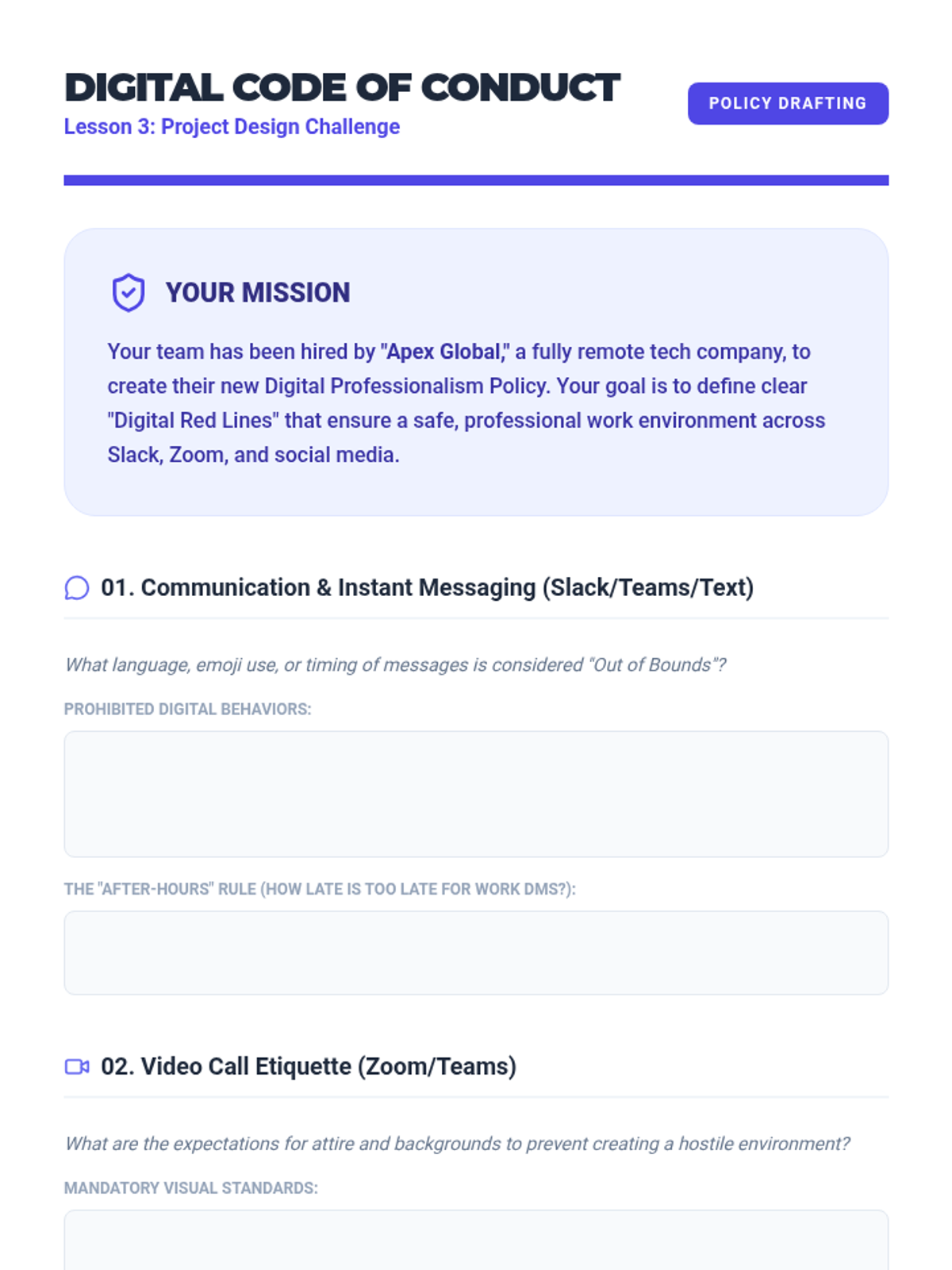
A student project guide for Lesson 3. Students act as HR consultants to draft a 'Digital Professionalism Policy' for a remote company, defining boundaries for instant messaging, video calls, and social media.
Slide deck explaining ADA terminology, the concept of reasonable accommodation, and the criteria for undue hardship.
Educational slides for Lesson 3: Digital Professional Conduct. This deck covers how workplace harassment translates to digital spaces, the impact of social media interactions between coworkers, and the 'permanence' of digital evidence.
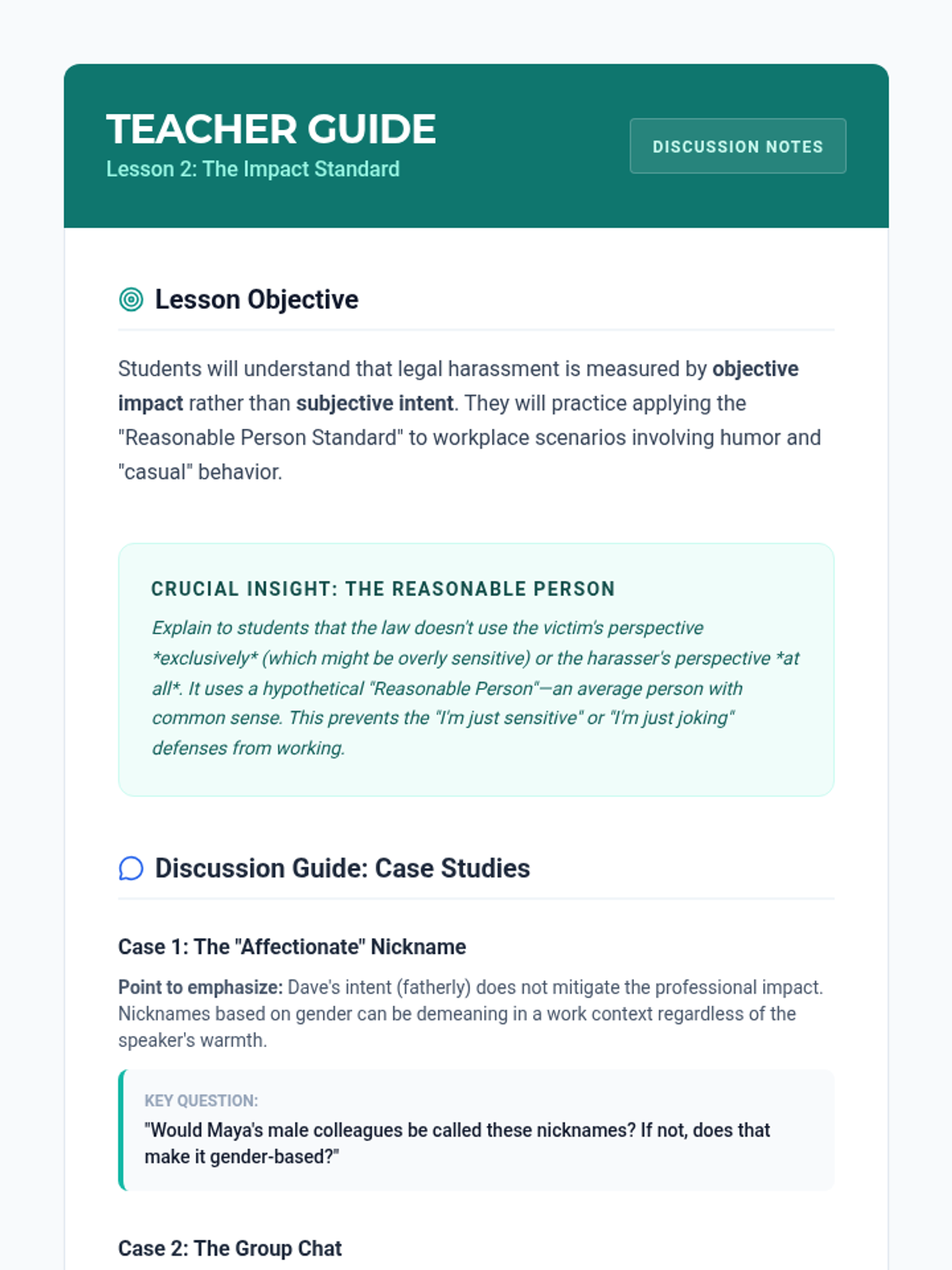
Teacher facilitation notes for Lesson 2: The Impact Standard. It includes guiding questions for the case studies and tips for addressing common student concerns about the "Reasonable Person Standard."
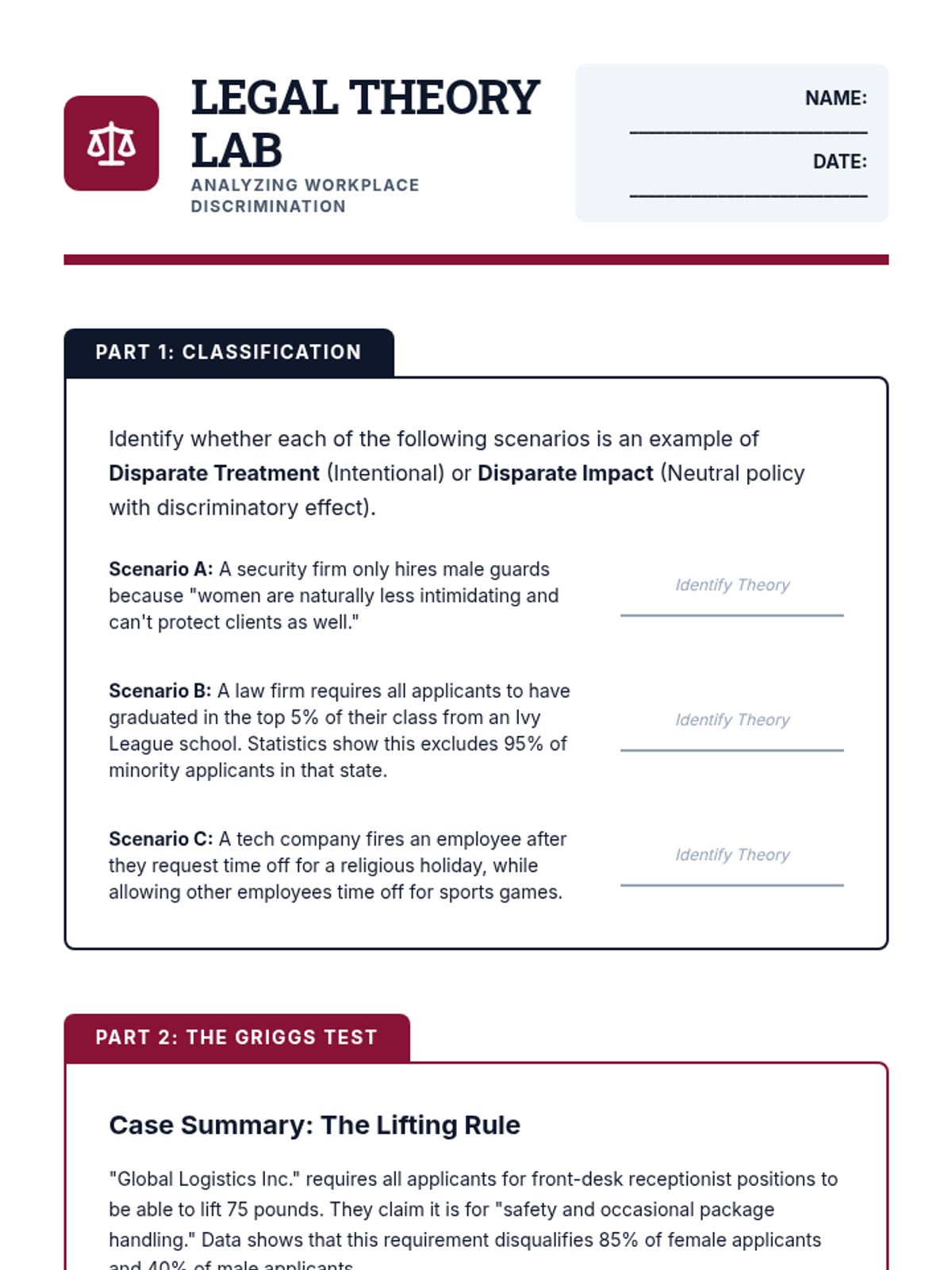
A worksheet where students analyze scenarios to distinguish between disparate treatment and disparate impact, including a case analysis of business necessity.
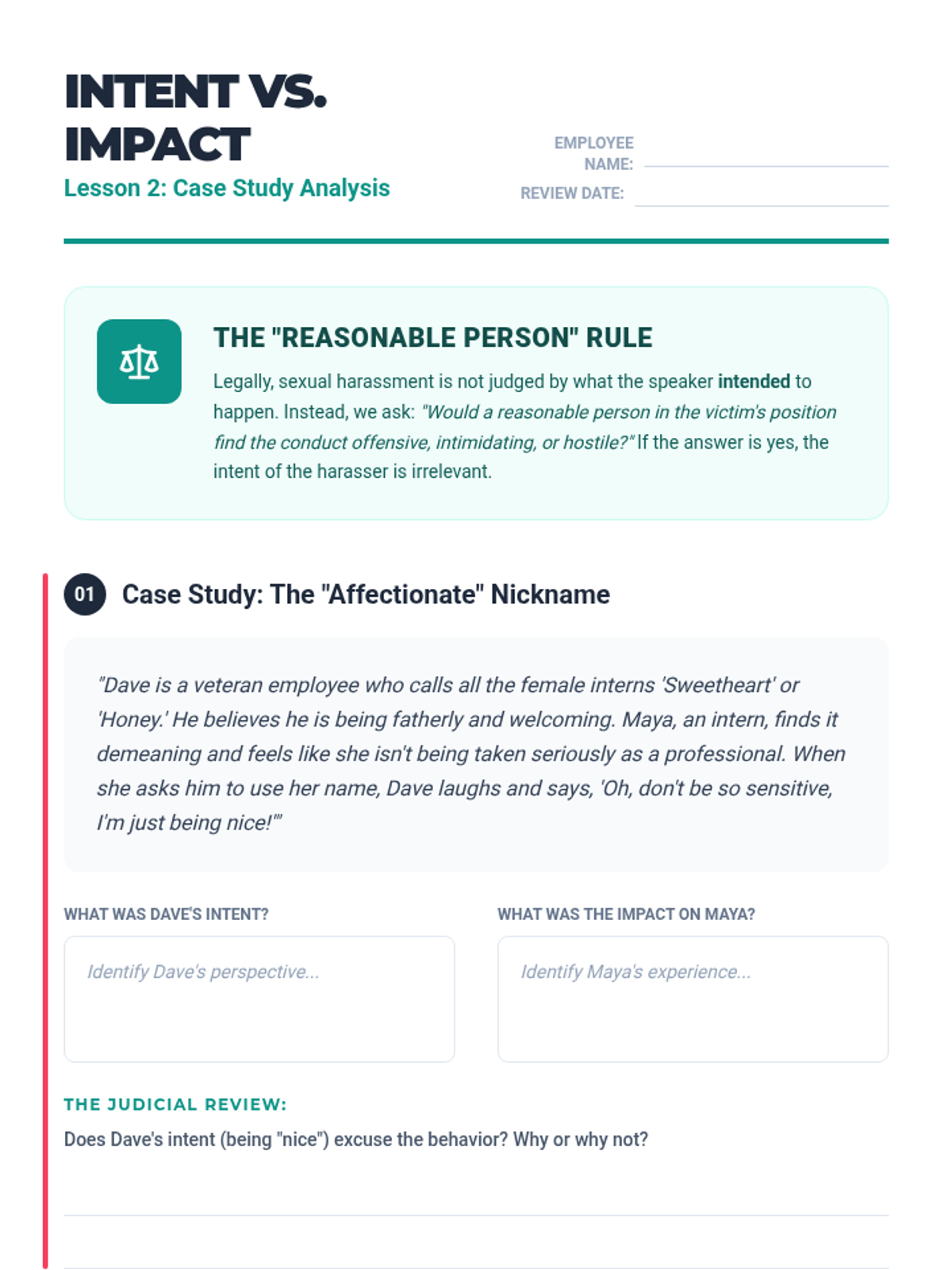
A student case study analysis for Lesson 2 focusing on the 'Intent vs. Impact' legal standard. Students analyze two workplace scenarios to determine how intent differs from the actual impact on the victim and the environment.
Slide deck explaining the legal theories of disparate treatment (intentional) and disparate impact (unintentional) with case examples.
Educational slides for Lesson 2: The Impact Standard. This deck explains the legal shift from harasser intent to victim impact, introducing the 'Reasonable Person Standard' and debunking the 'just joking' defense.
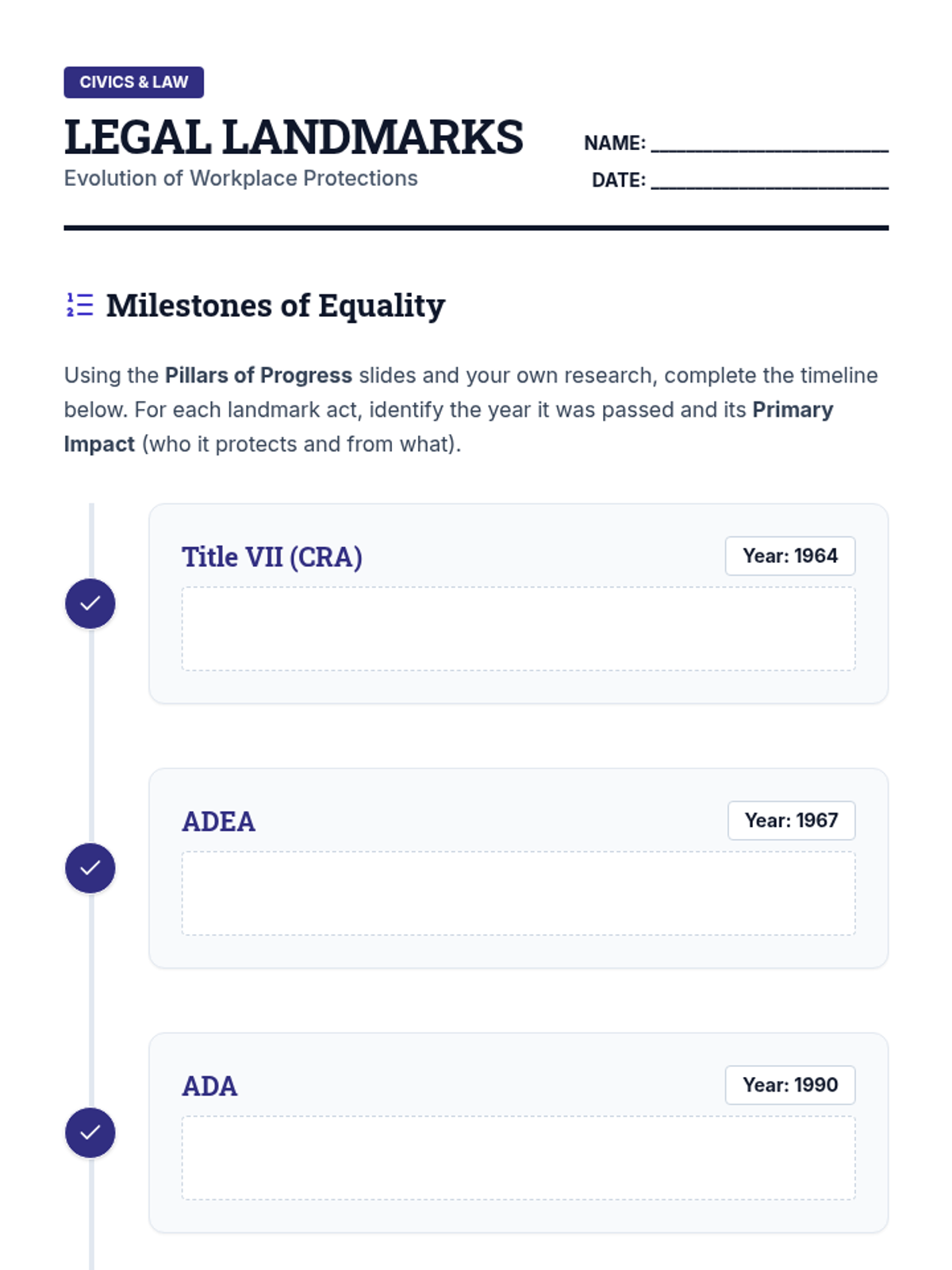
A graphic organizer for students to map the historical evolution of major federal anti-discrimination acts and analyze their collective impact on workplace rights.
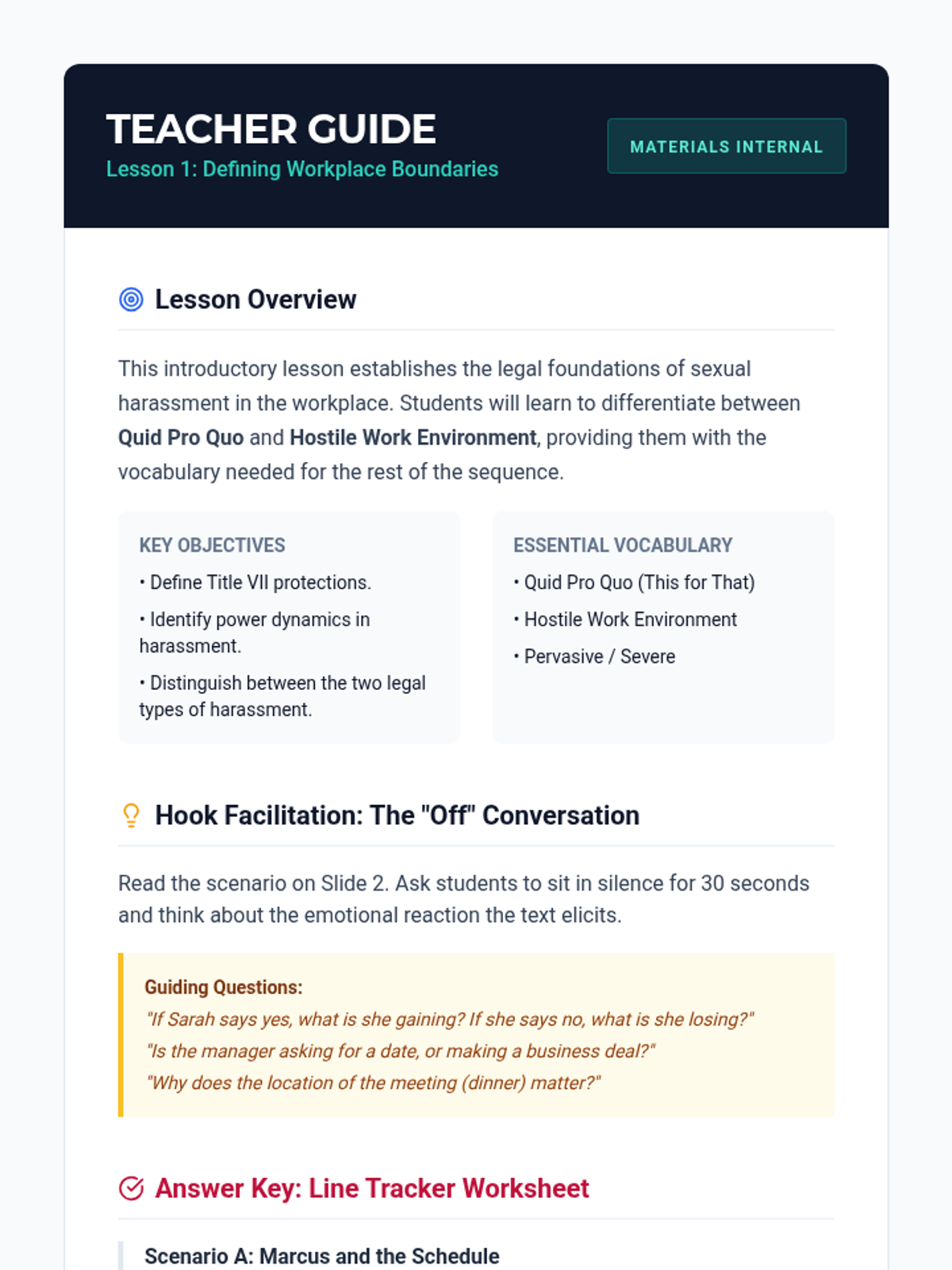
A teacher resource for Lesson 1: Defining Workplace Boundaries. It includes lesson objectives, facilitation tips for the hook, a complete answer key for the student worksheet, and notes on common misconceptions.
Slide deck detailing Title VII of the Civil Rights Act, the ADEA, and the ADA, including historical context and legal requirements.
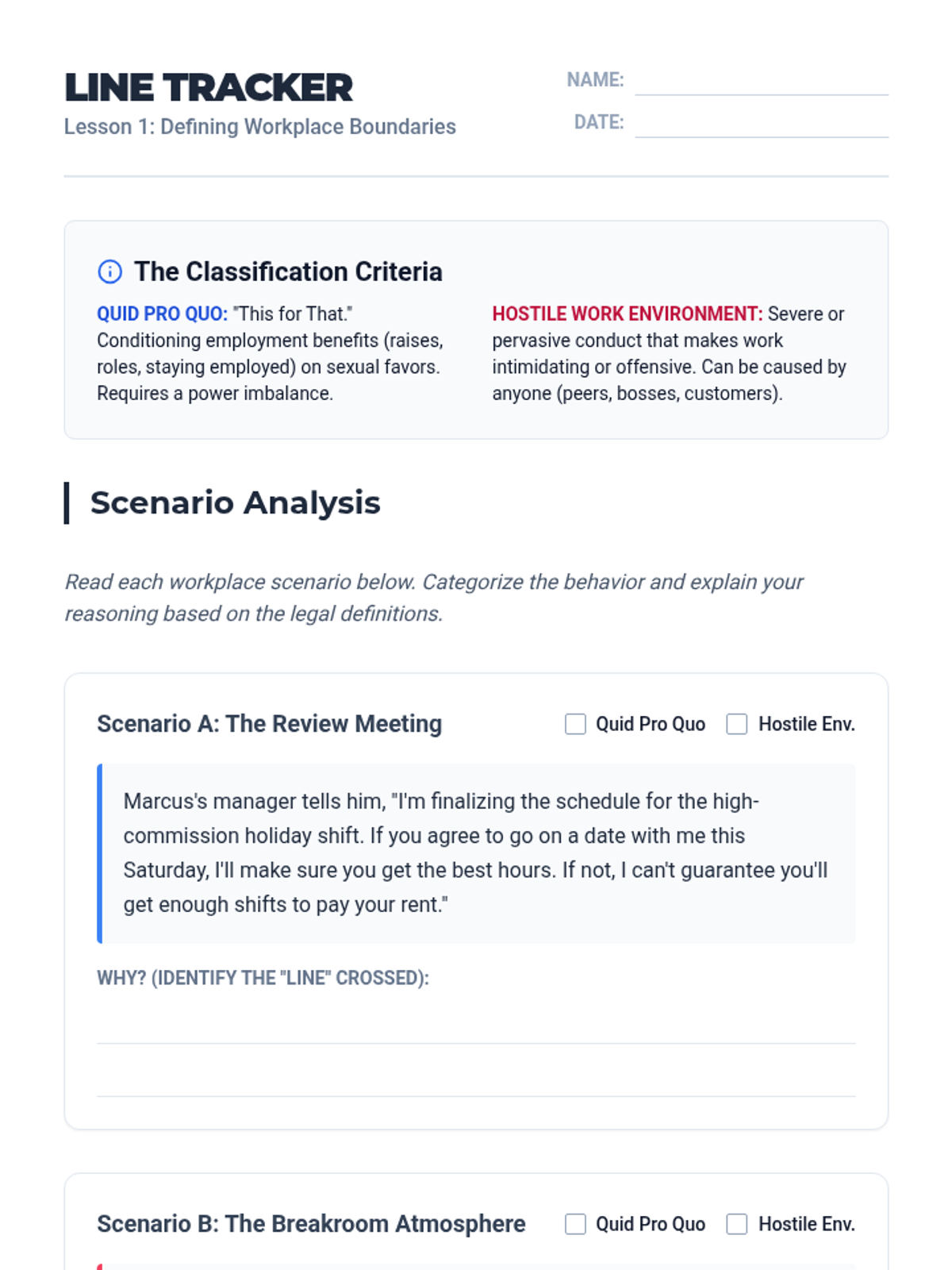
A student worksheet for Lesson 1 where they categorize workplace scenarios as Quid Pro Quo or Hostile Work Environment. It includes space for reasoning and critical reflection on power dynamics.
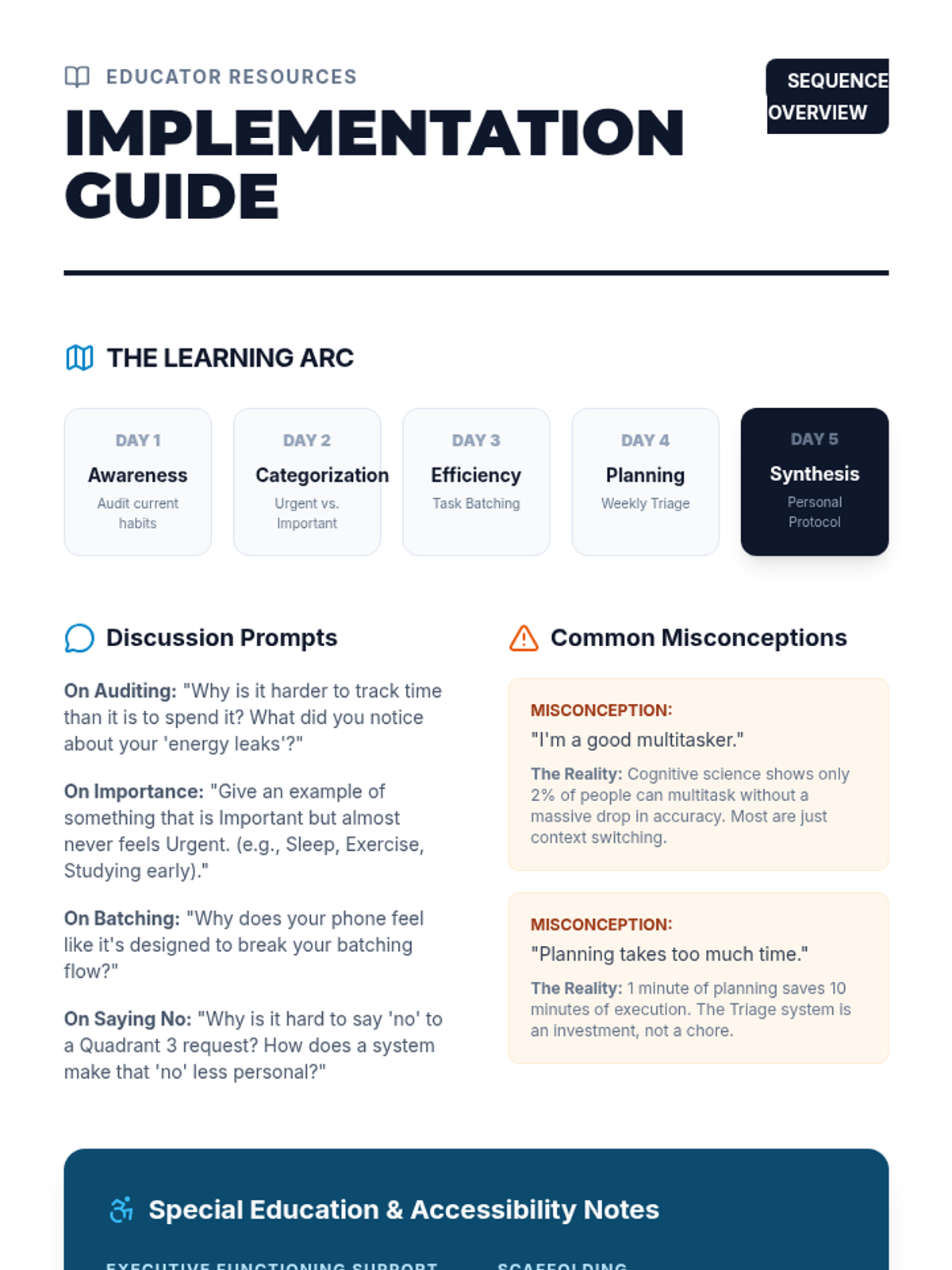
A teacher implementation guide for the Strategic Prioritization sequence. Includes an instructional arc, facilitation tips, common misconceptions, Special Education accommodation strategies, and answer keys.
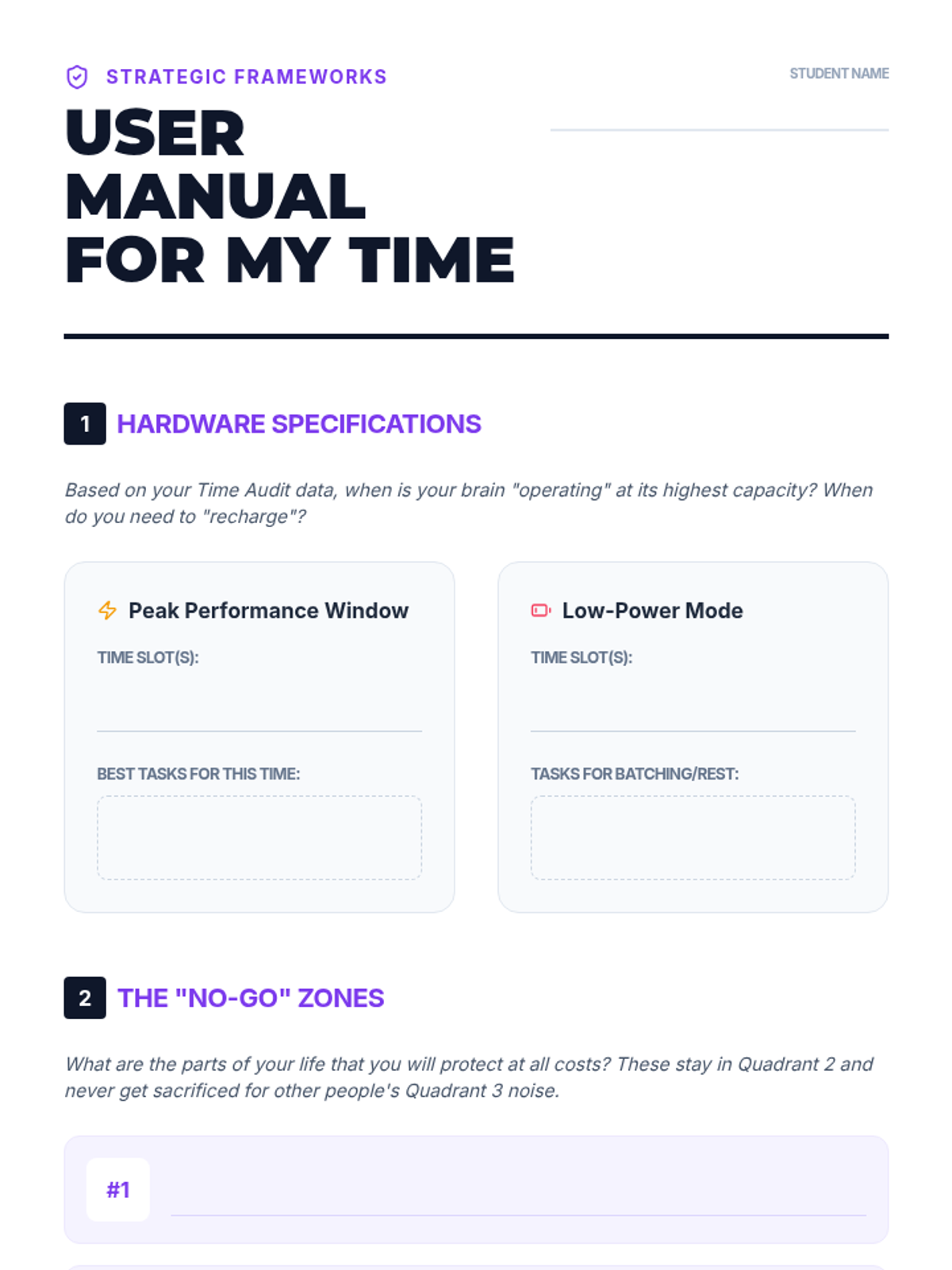
A culminating project worksheet where students synthesize their time audit data, non-negotiables, and triage routines into a personalized "User Manual" for managing their time and commitments.
An 6-slide presentation on the Personal Priority Protocol. Synthesizes all previously learned tools into a final "Decision Tree" system and introduces the "User Manual for My Time" project.
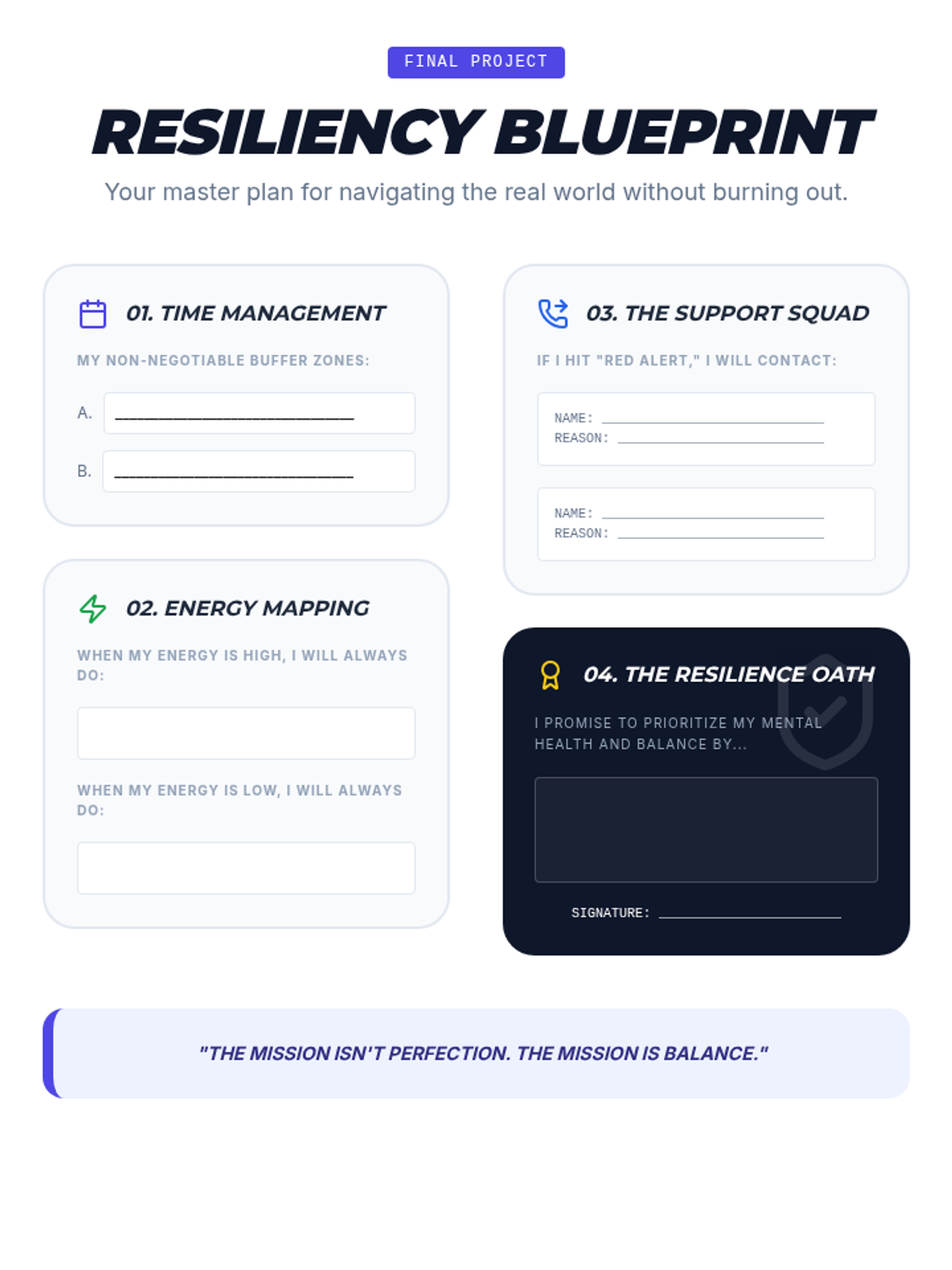
A summative project document where students synthesize everything they have learned into a personal 'Resiliency Blueprint' for real-world application.
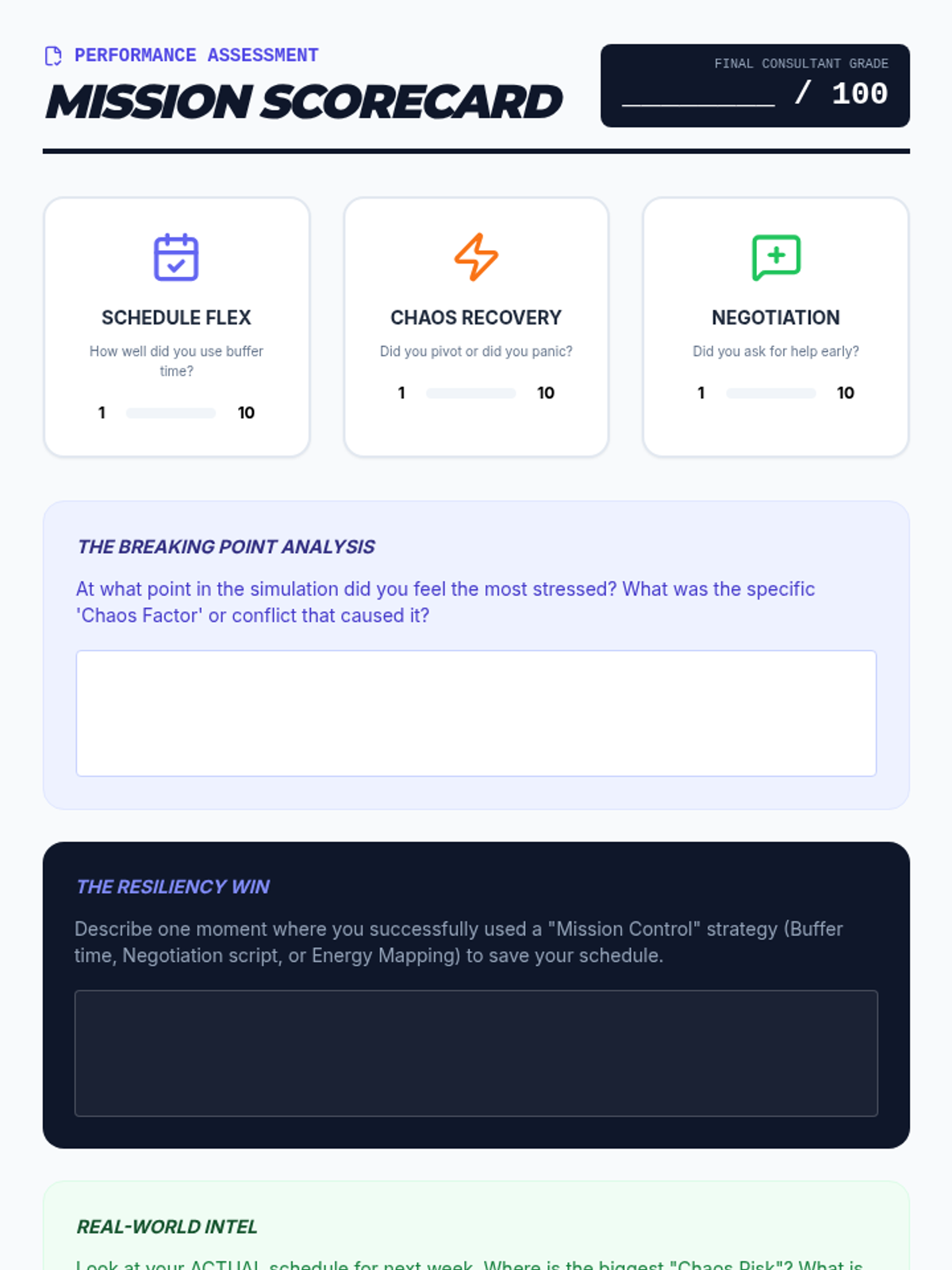
A final self-assessment 'Scorecard' for the Mission Balance sequence, allowing students to rate their performance and reflect on their growth in schedule management and resiliency.
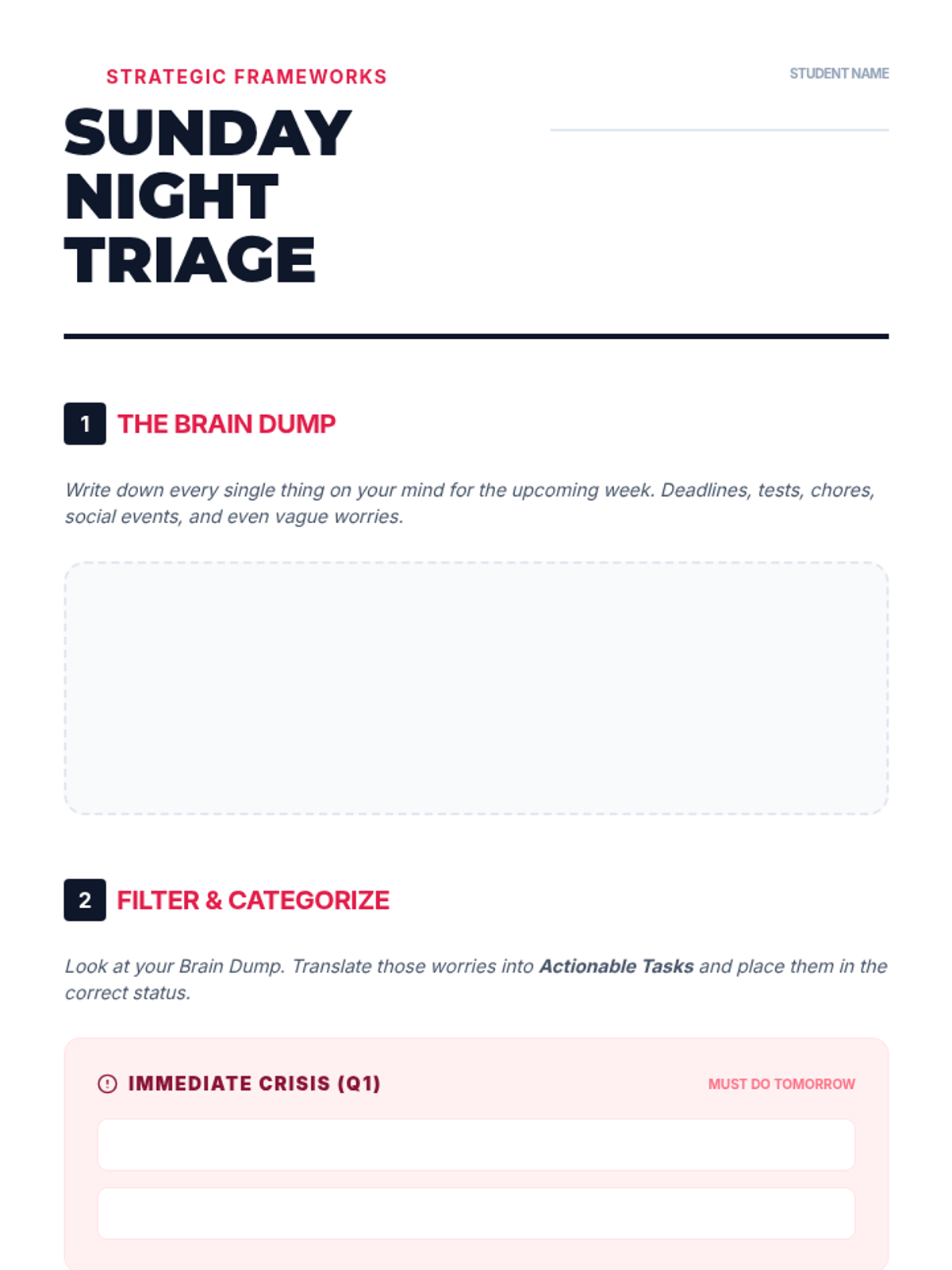
A worksheet for students to perform a Sunday night "Brain Dump" and categorize tasks into a weekly triage system. Includes a stabilization checklist to reduce morning anxiety.
Final presentation for the Mission Balance sequence, reviewing core concepts of chaos management, negotiation, and energy management, and introducing the final scorecard activity.
An 6-slide presentation on the Weekly Triage system. Uses an emergency room metaphor to teach students how to clear mental clutter, distinguish actionable tasks, and establish a Sunday night routine.
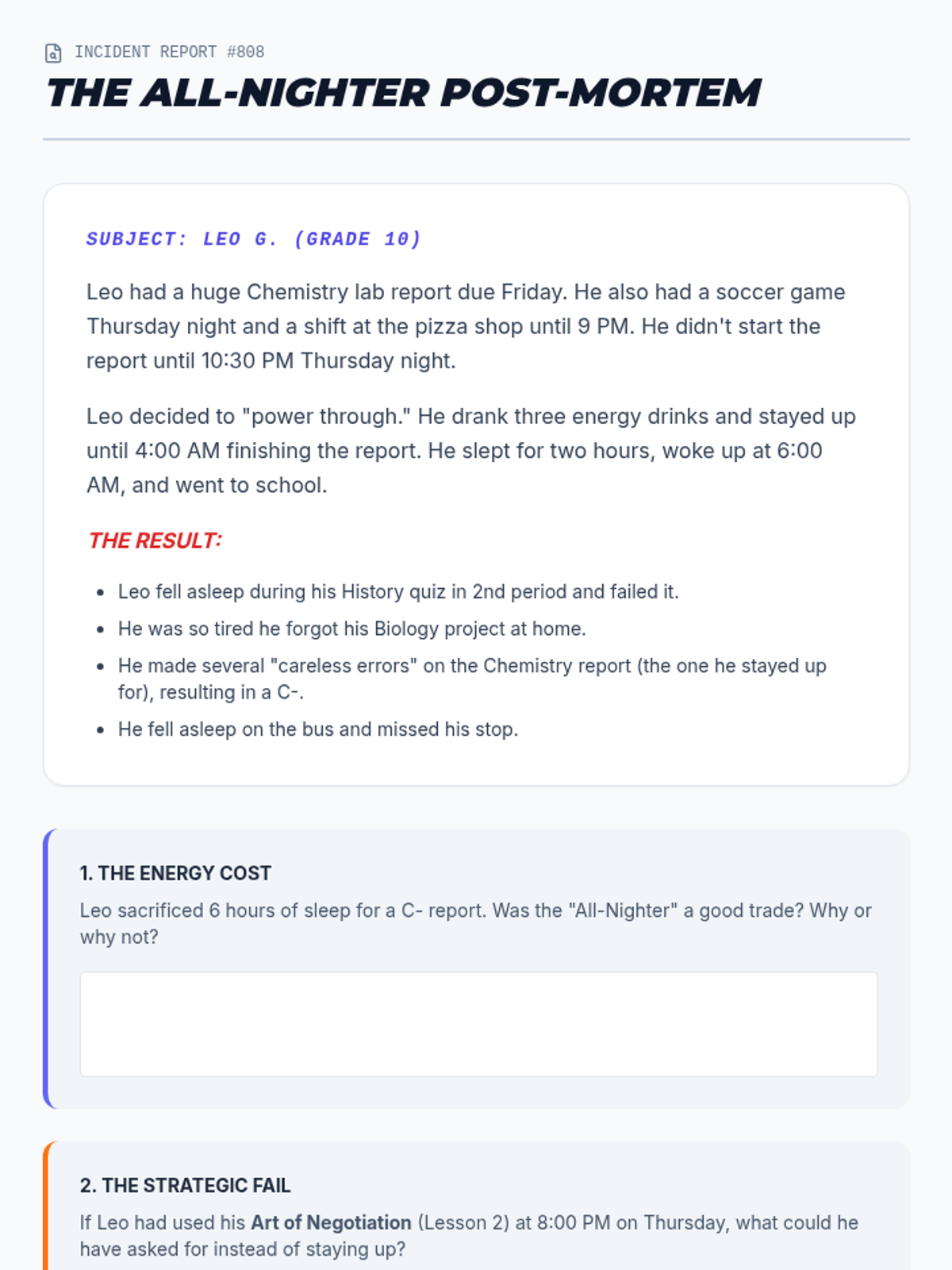
A case study analysis of a student's 'all-nighter' experience, prompting students to evaluate the consequences and identify alternative strategies from the sequence.
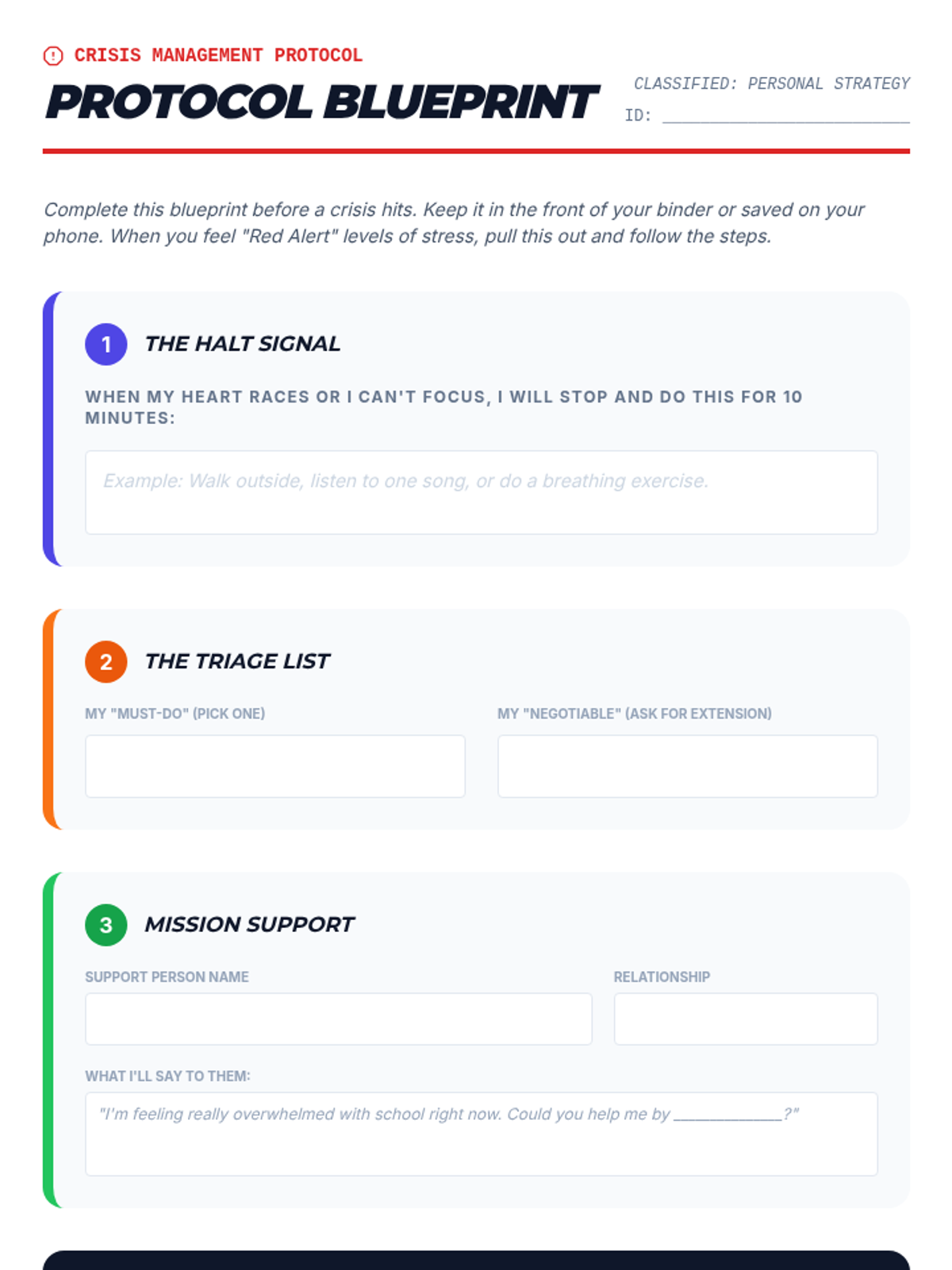
A personal crisis management worksheet where students document their specific 'Red Alert' protocols, including triage strategies, support contacts, and recovery plans.
Lesson 4 slides on crisis management protocols, teaching students how to identify burnout, prioritize tasks during 'Red Alert' scenarios, and activate support systems.
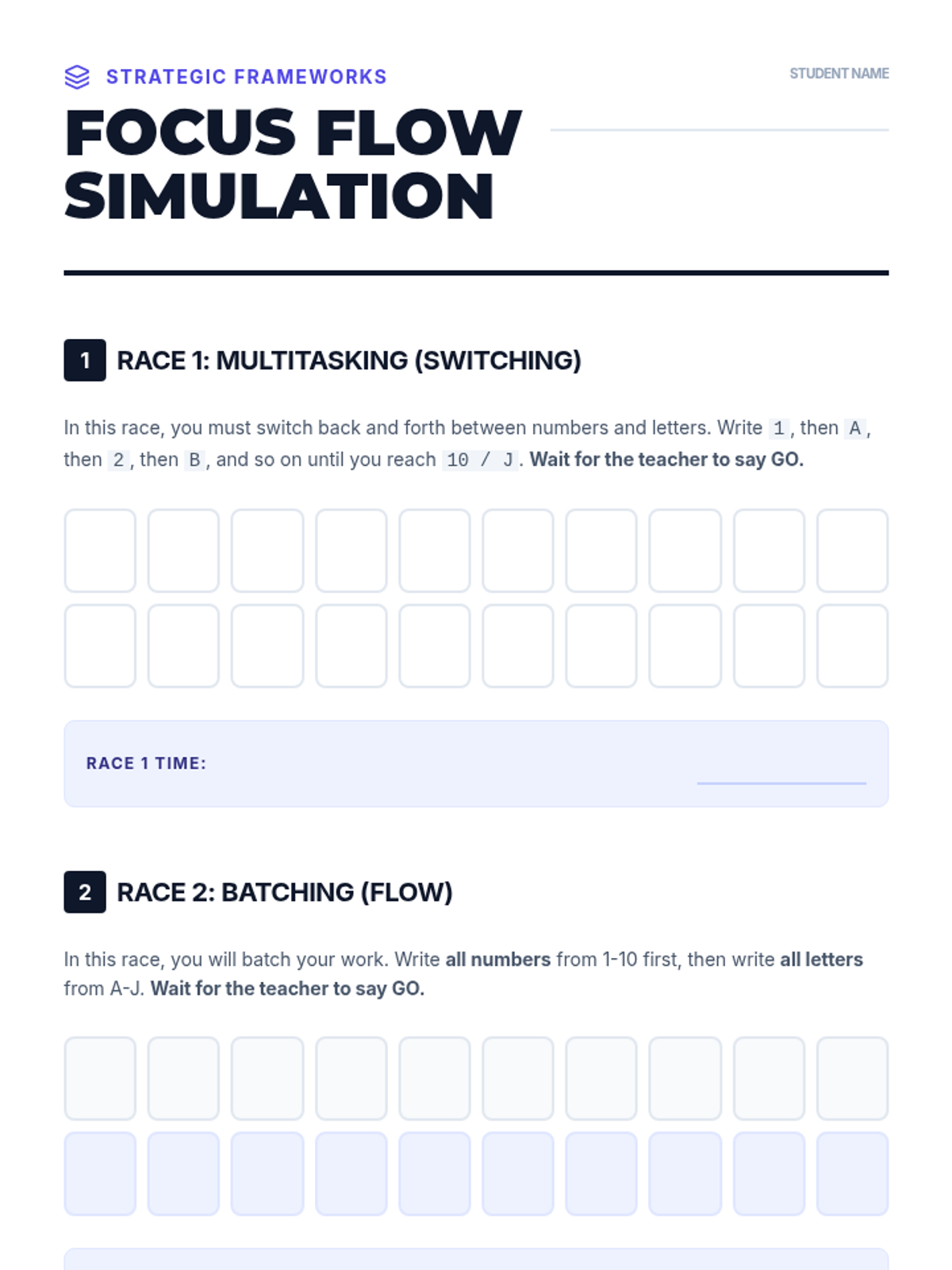
A simulation worksheet for the "Alphabet vs. Numbers" race, demonstrating the cognitive cost of multitasking and the efficiency of task batching.
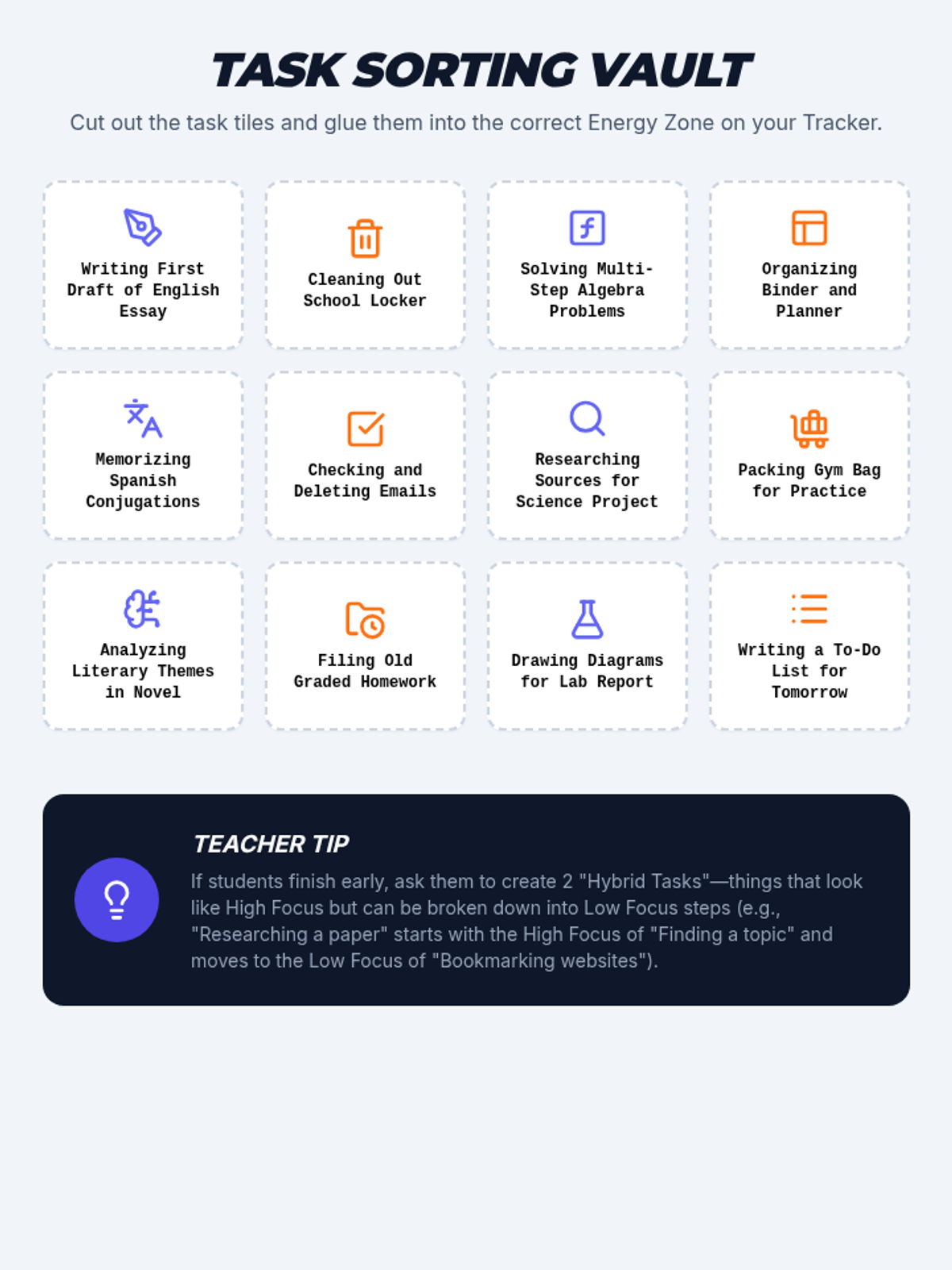
A cut-and-paste sorting activity for students to categorize common school and life tasks as either 'High Focus' or 'Low Focus' energy requirements.
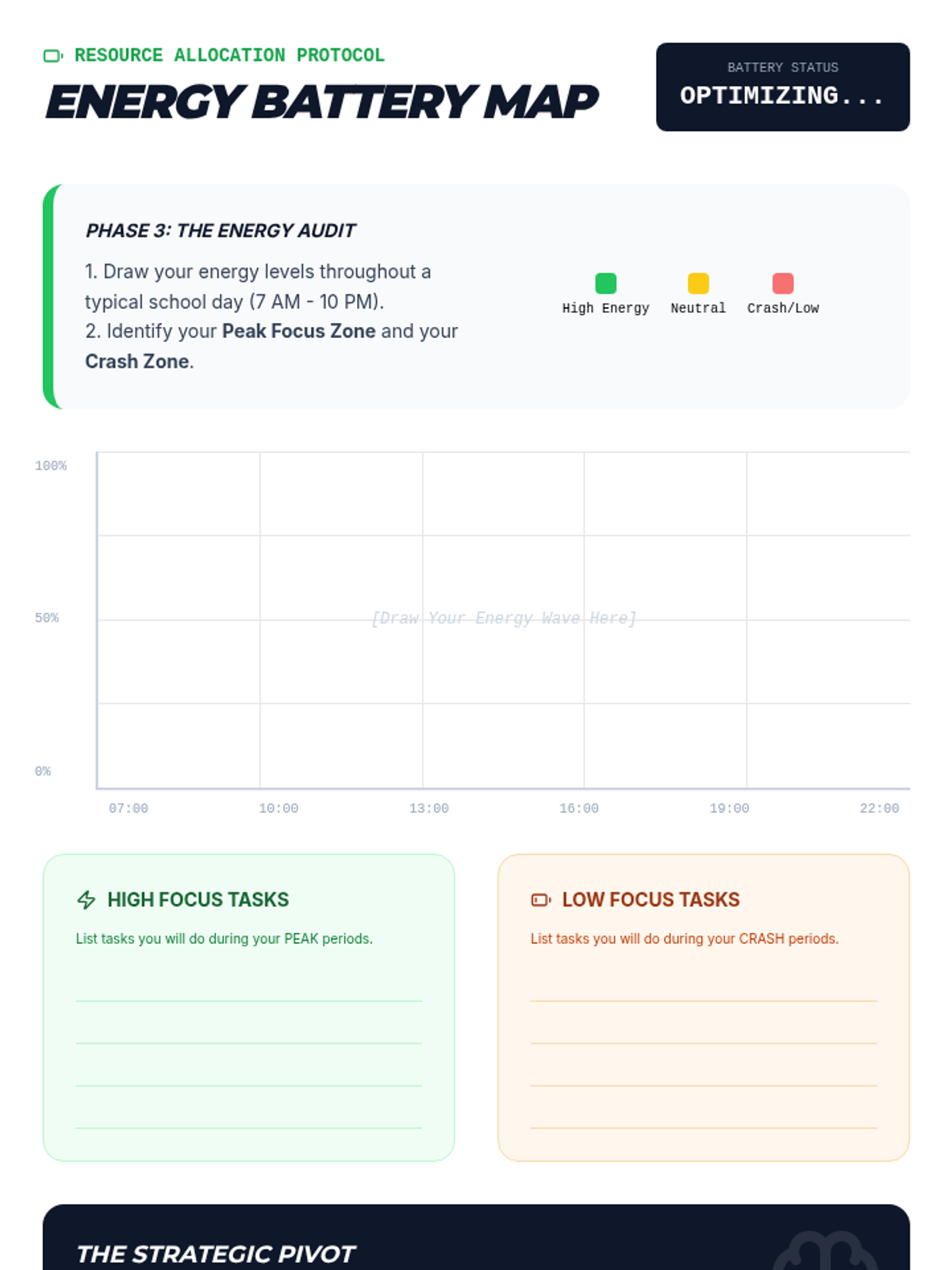
A worksheet for students to map their daily energy levels and strategically assign tasks based on their peak focus periods.
An 6-slide presentation on task batching and context switching. Introduces the concept of cognitive cost, the multitasking myth, and a 3-step strategy for batching similar tasks.
Lesson 3 presentation on energy management, teaching students to differentiate between High Focus and Low Focus tasks and to identify their personal peak energy periods.
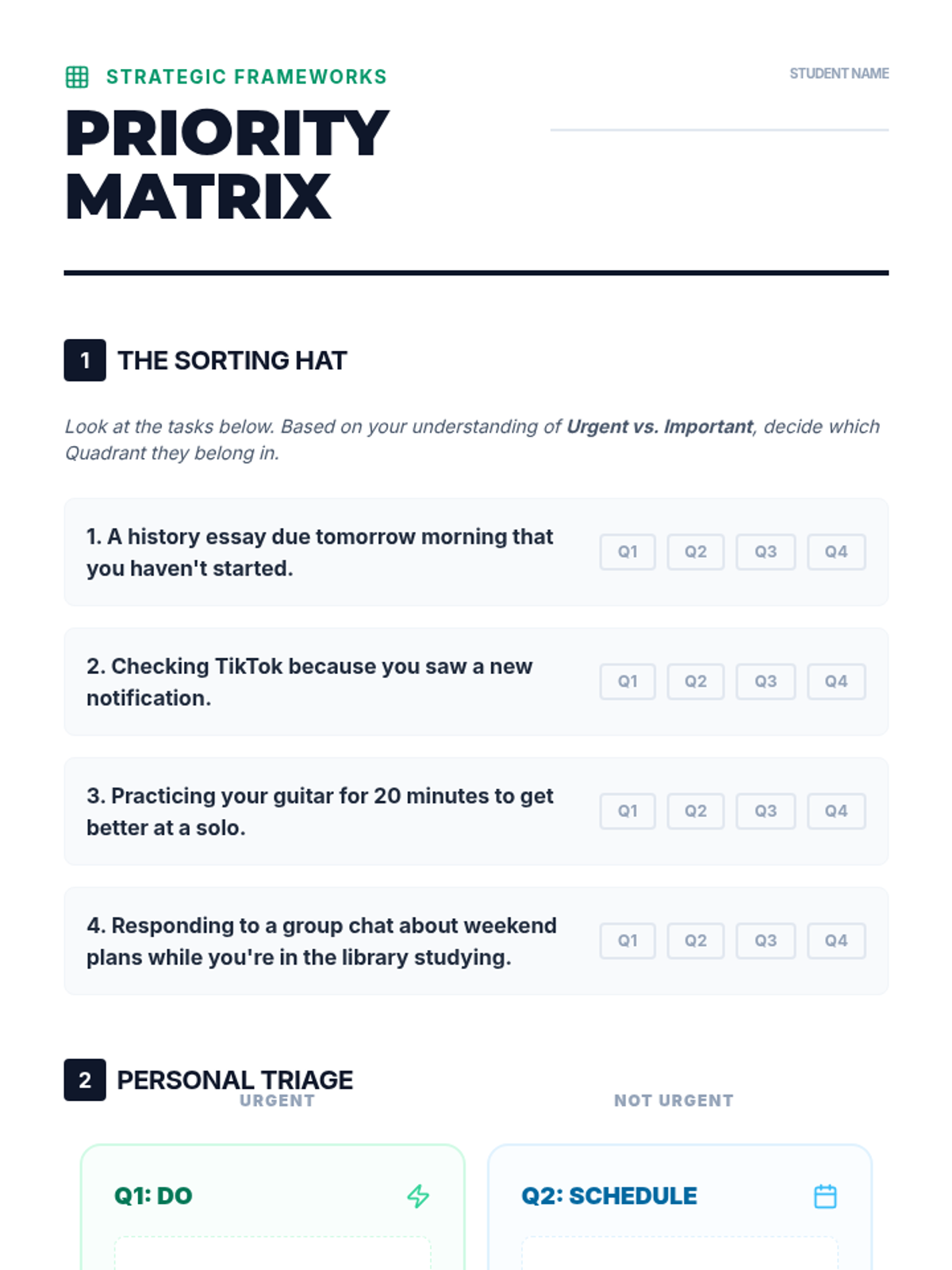
A worksheet for students to practice categorizing tasks into the Eisenhower Matrix quadrants. Includes scenarios for sorting and a blank grid for personal triage.
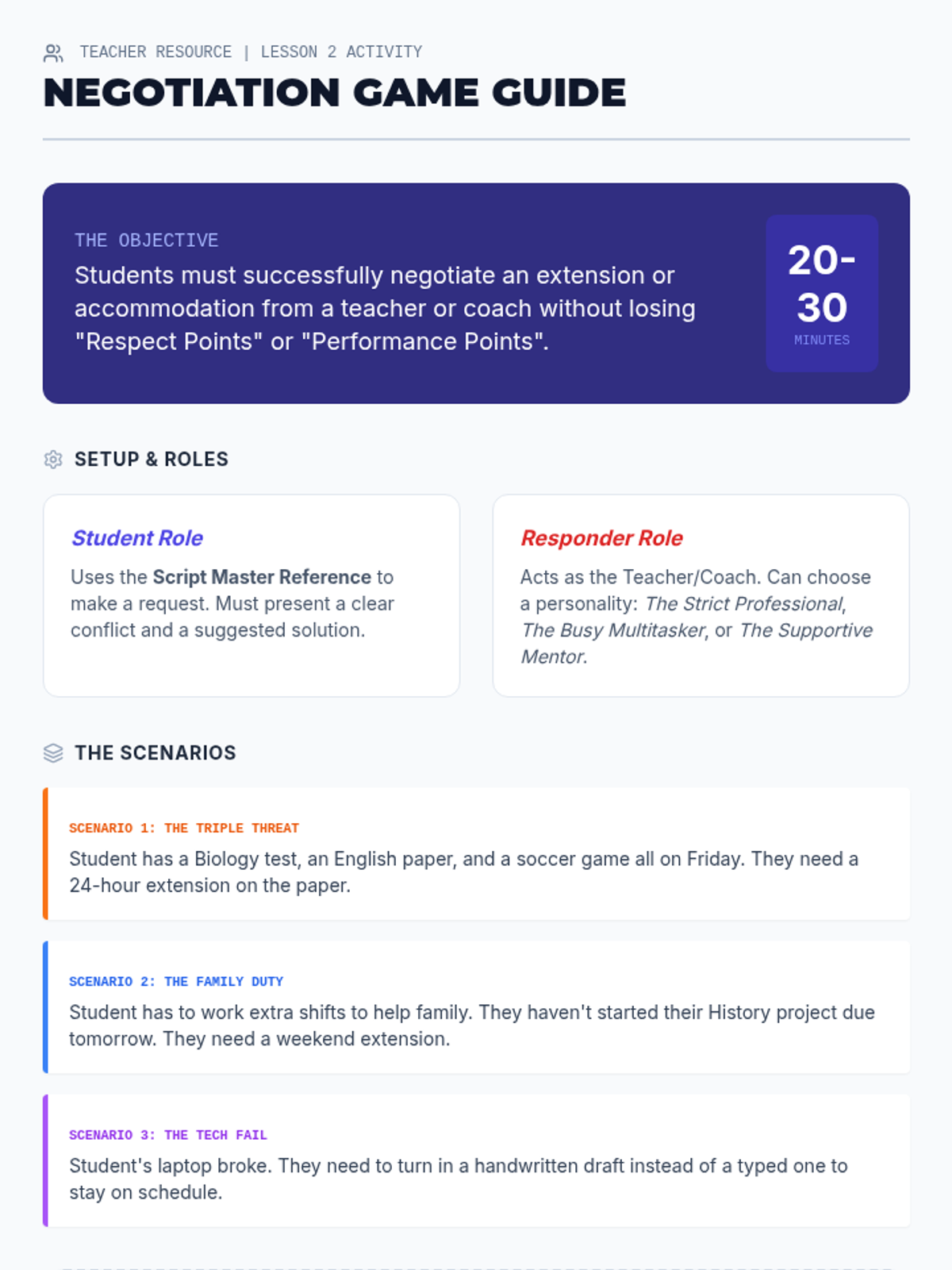
Teacher facilitation guide for the Lesson 2 role-play simulation, providing scenarios, roles, and assessment criteria for student negotiations.
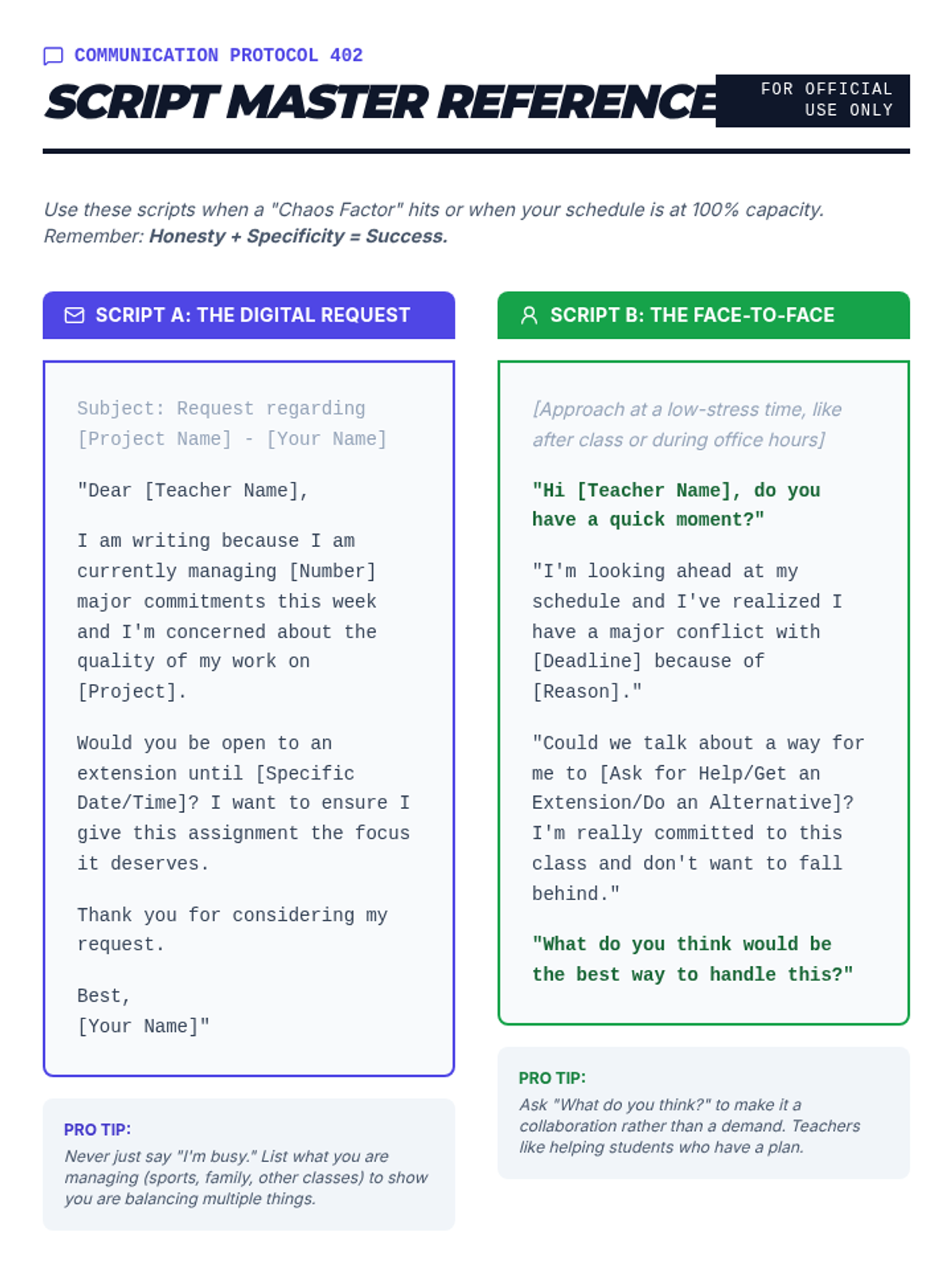
A professional communication guide for students, featuring scripted templates for digital and in-person deadline negotiations, including a practice exercise.
An 6-slide presentation on the Eisenhower Matrix, teaching students how to distinguish between urgency and importance. Features clear visual breakdowns of the four quadrants and the "Time Credits" hook.
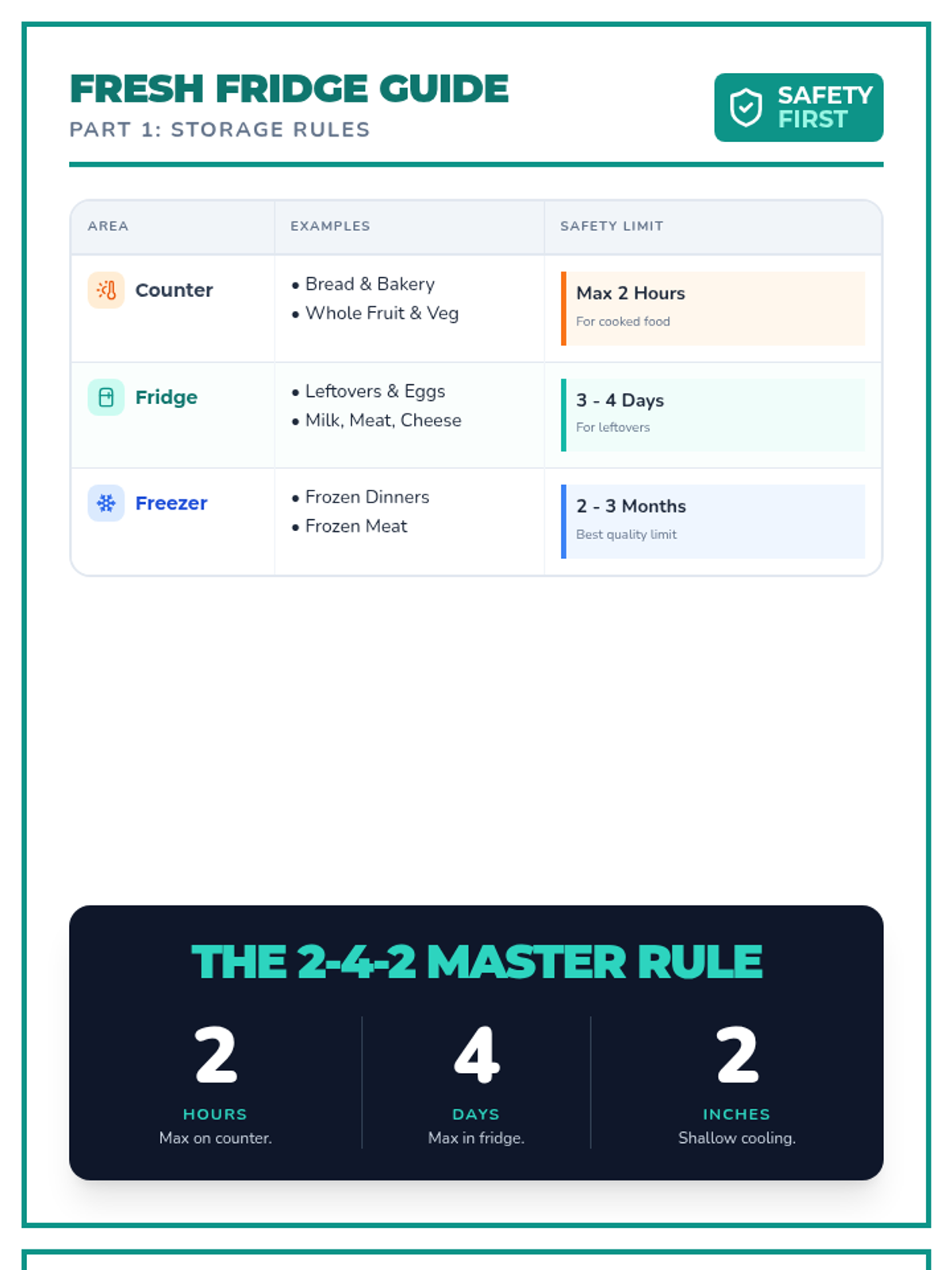
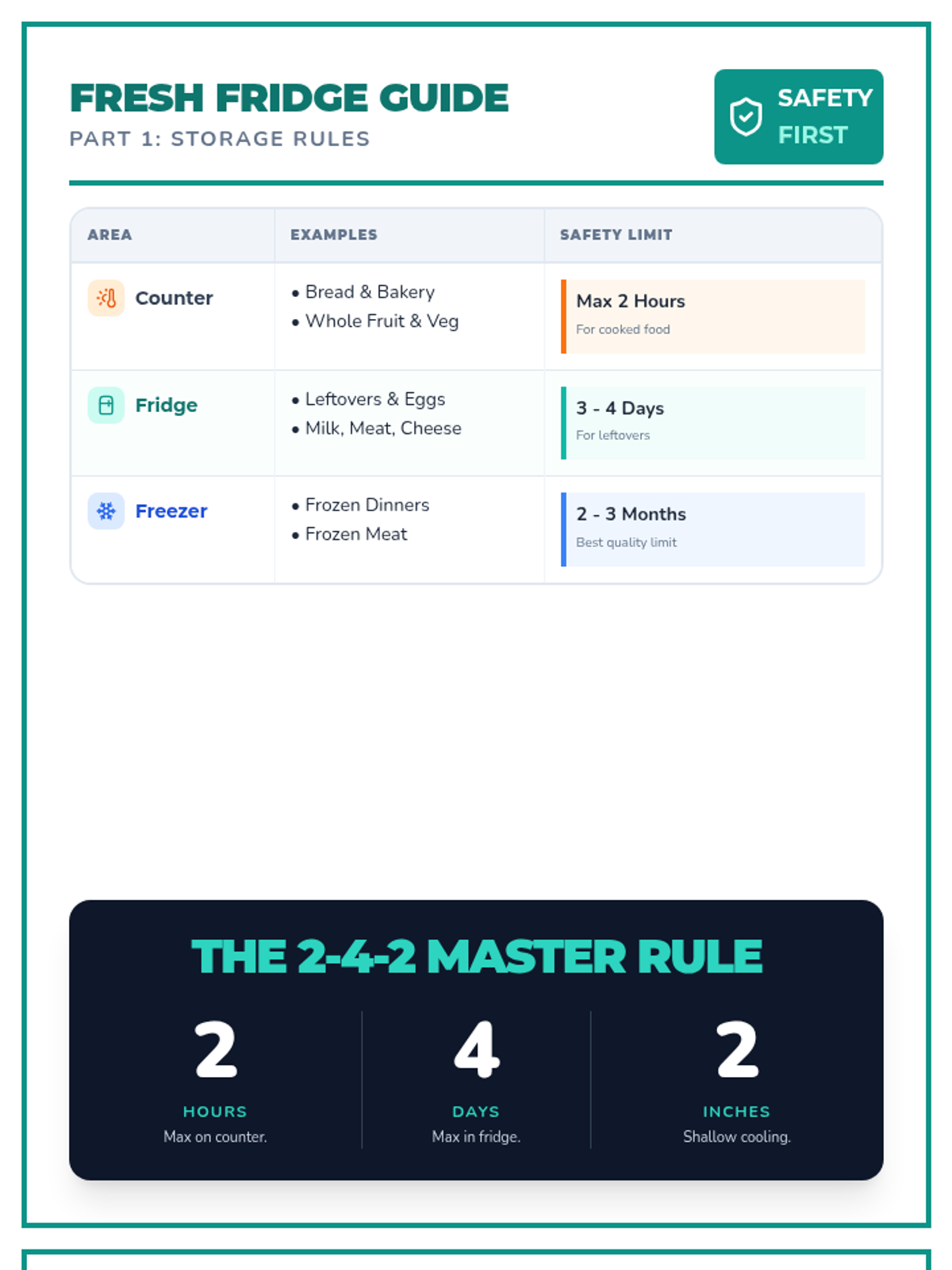
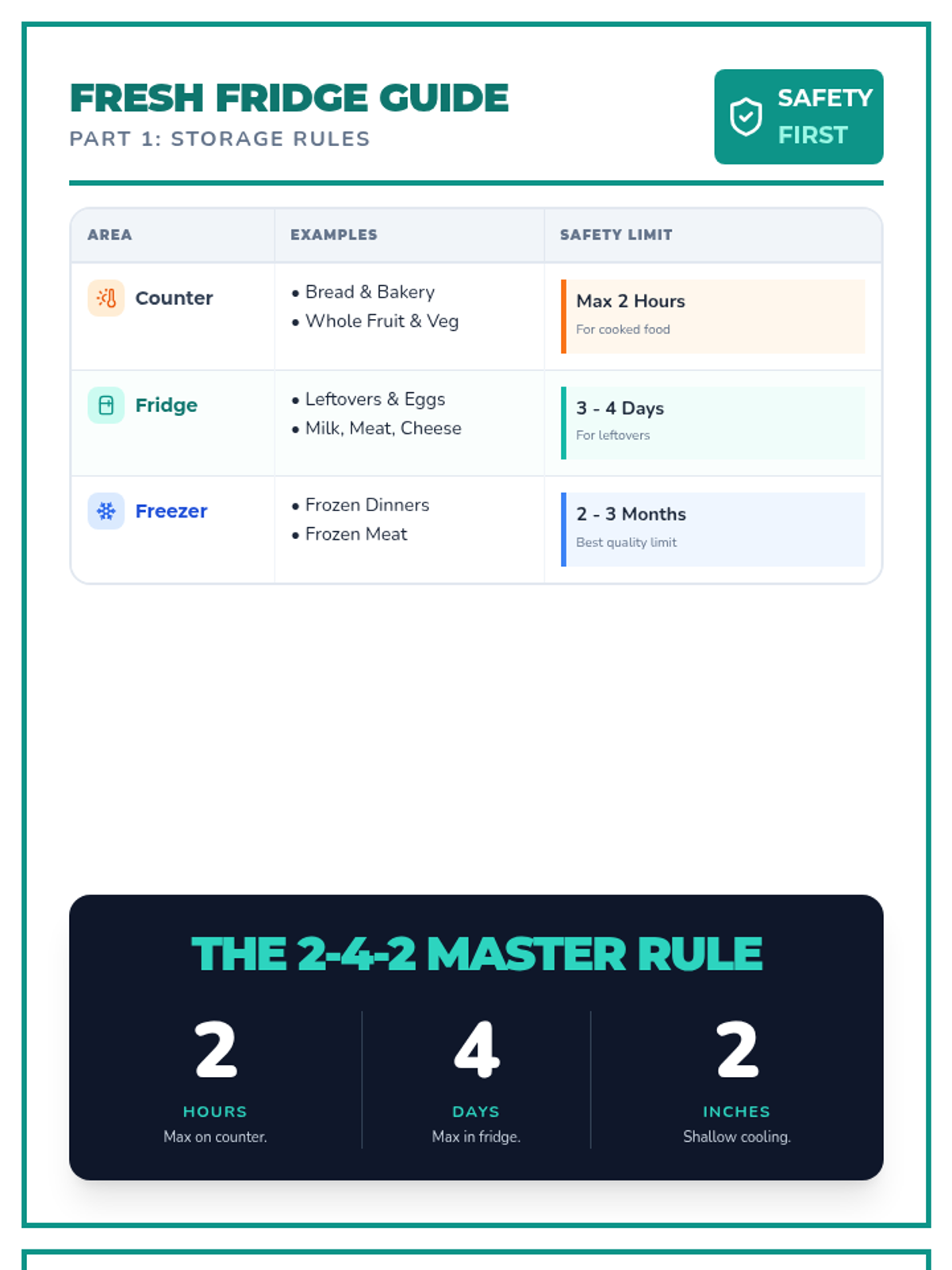
A reorganized visual guide for food storage and safety, featuring a clear tabular storage chart, the '2-4-2' rule, discard criteria, and a labeling tutorial with significantly increased font sizes for maximum readability.
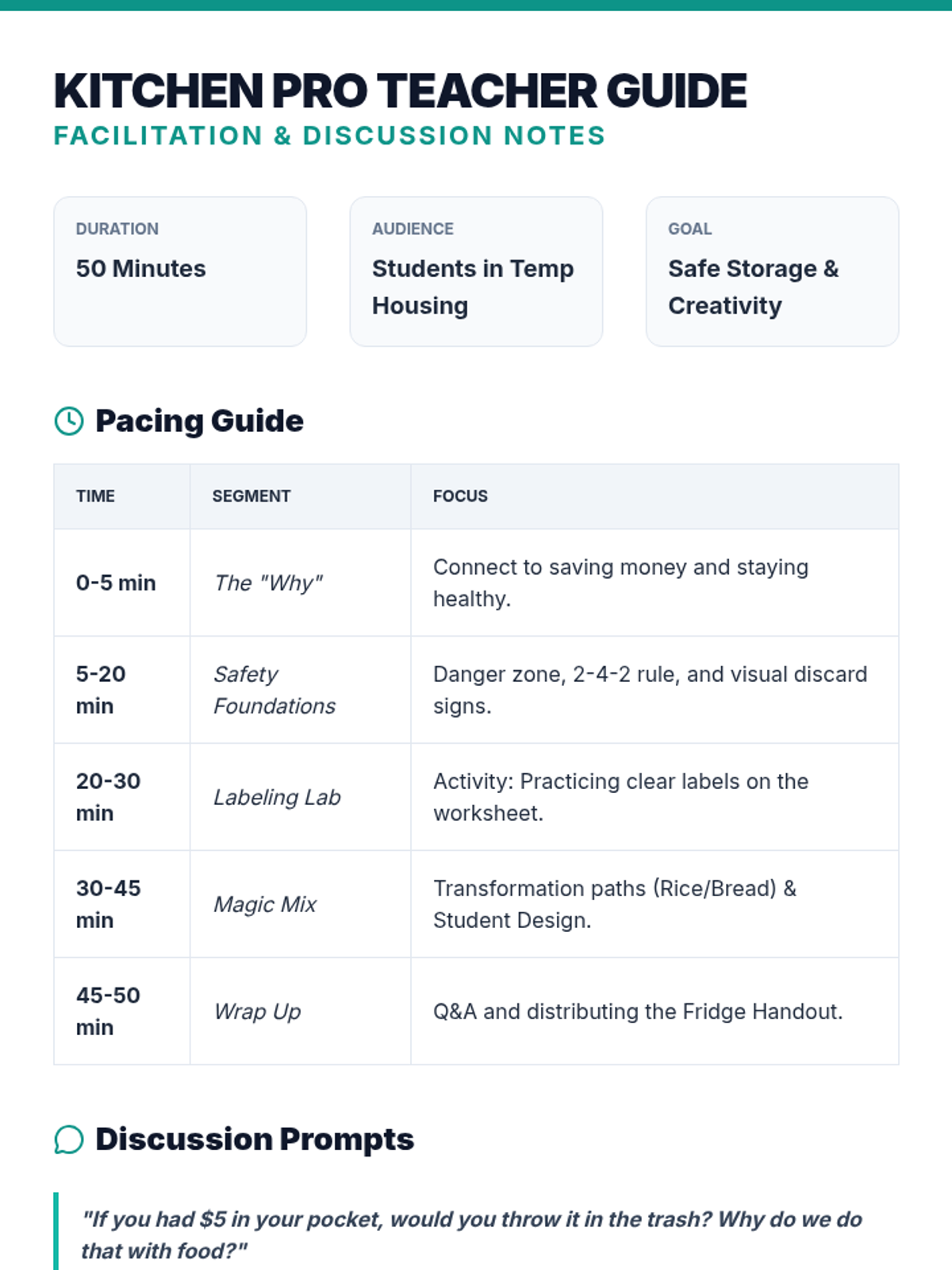
A comprehensive teacher's guide for the Kitchen Hacks lesson, including a 50-minute pacing guide, discussion prompts, and strategies for neurodiverse learners and students in temporary housing.
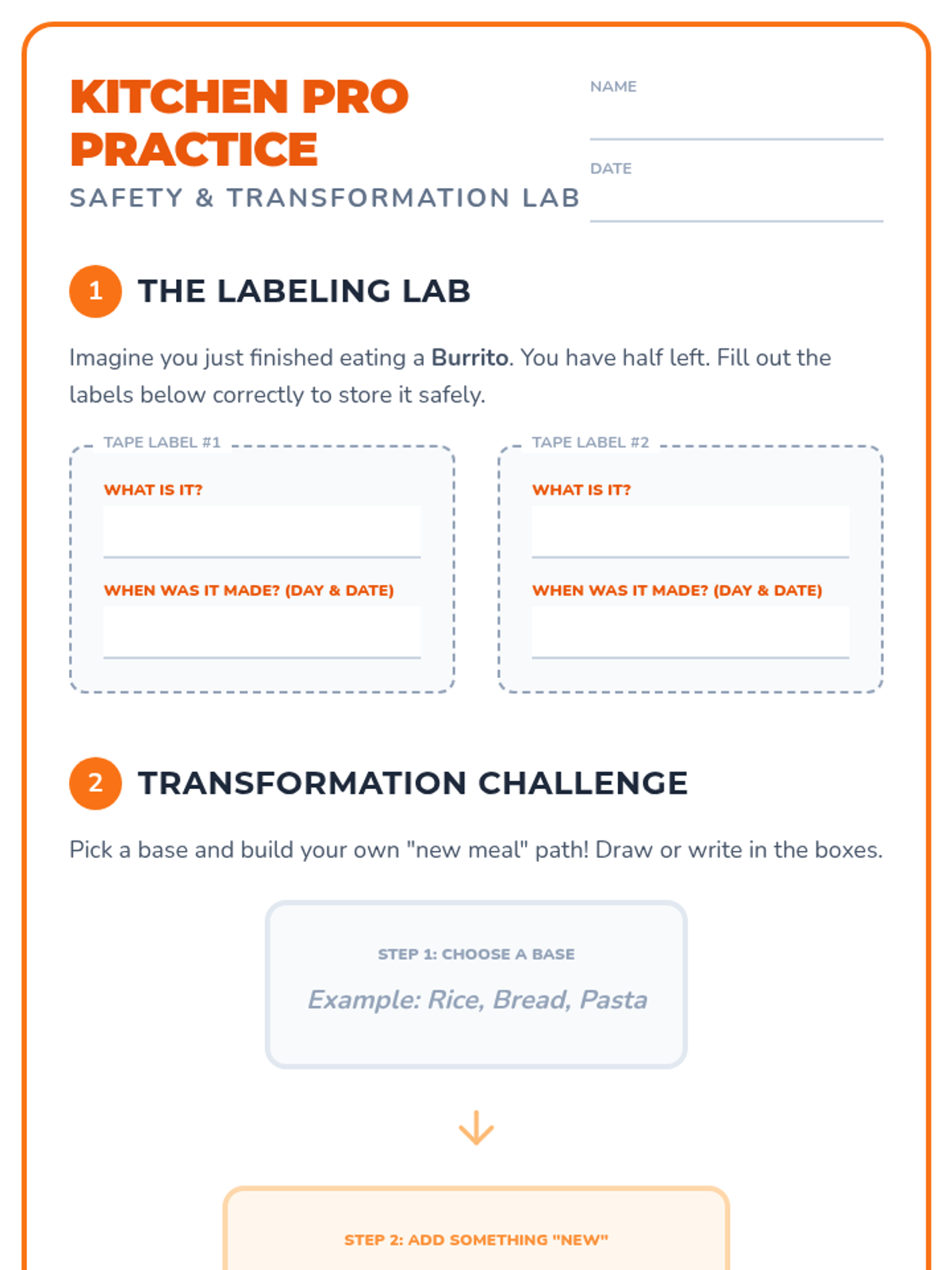
A student practice sheet for applying kitchen safety skills, including labeling exercises and a transformation flowchart activity.
A visually-driven slide deck for a 50-minute session on kitchen safety and food transformation, featuring the 2-4-2 rule and leftover flowcharts.
A reorganized visual guide for food storage and safety, featuring a clear tabular storage chart, the '2-4-2' rule, discard criteria, and a labeling tutorial with increased font sizes for readability.
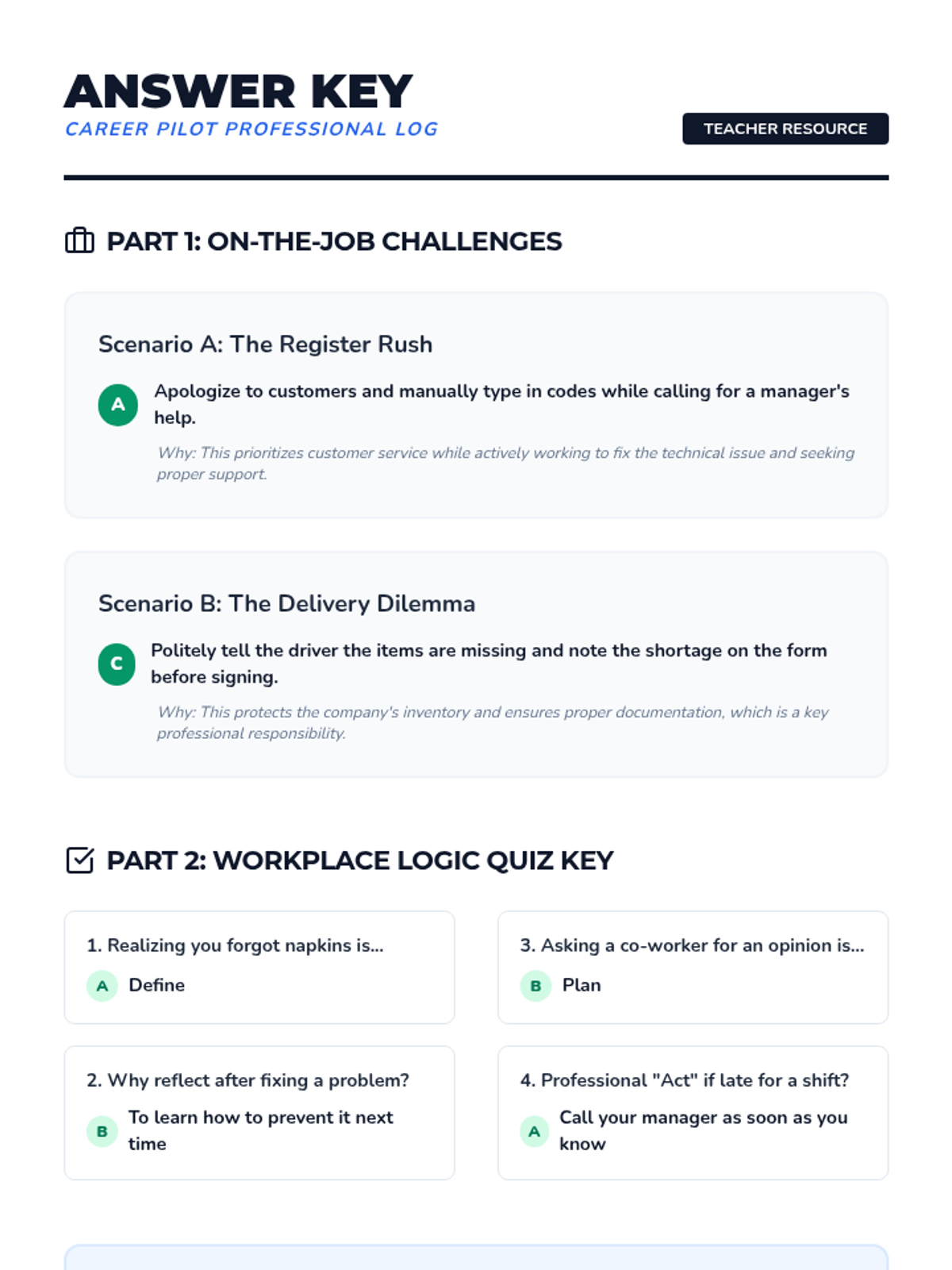
The updated answer key for entry-level workplace scenarios, providing correct multiple-choice selections and brief rationales.
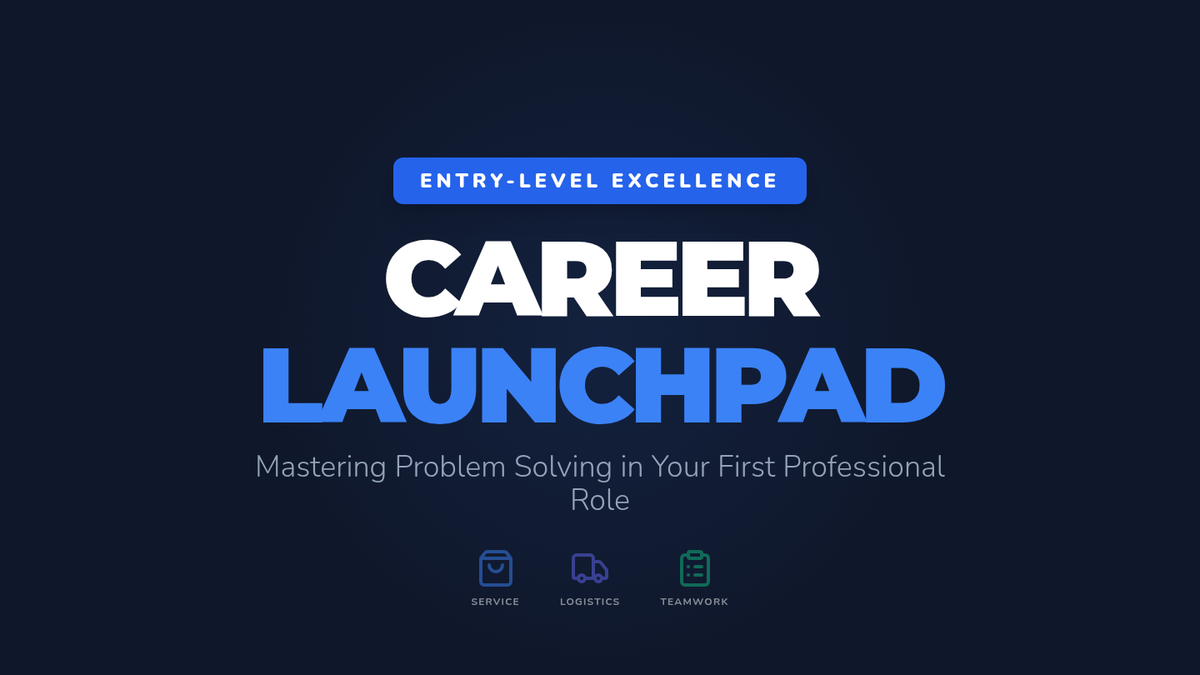
A career-focused slide deck for entry-level workers, teaching the 4-step problem-solving sequence with examples from service and logistics.
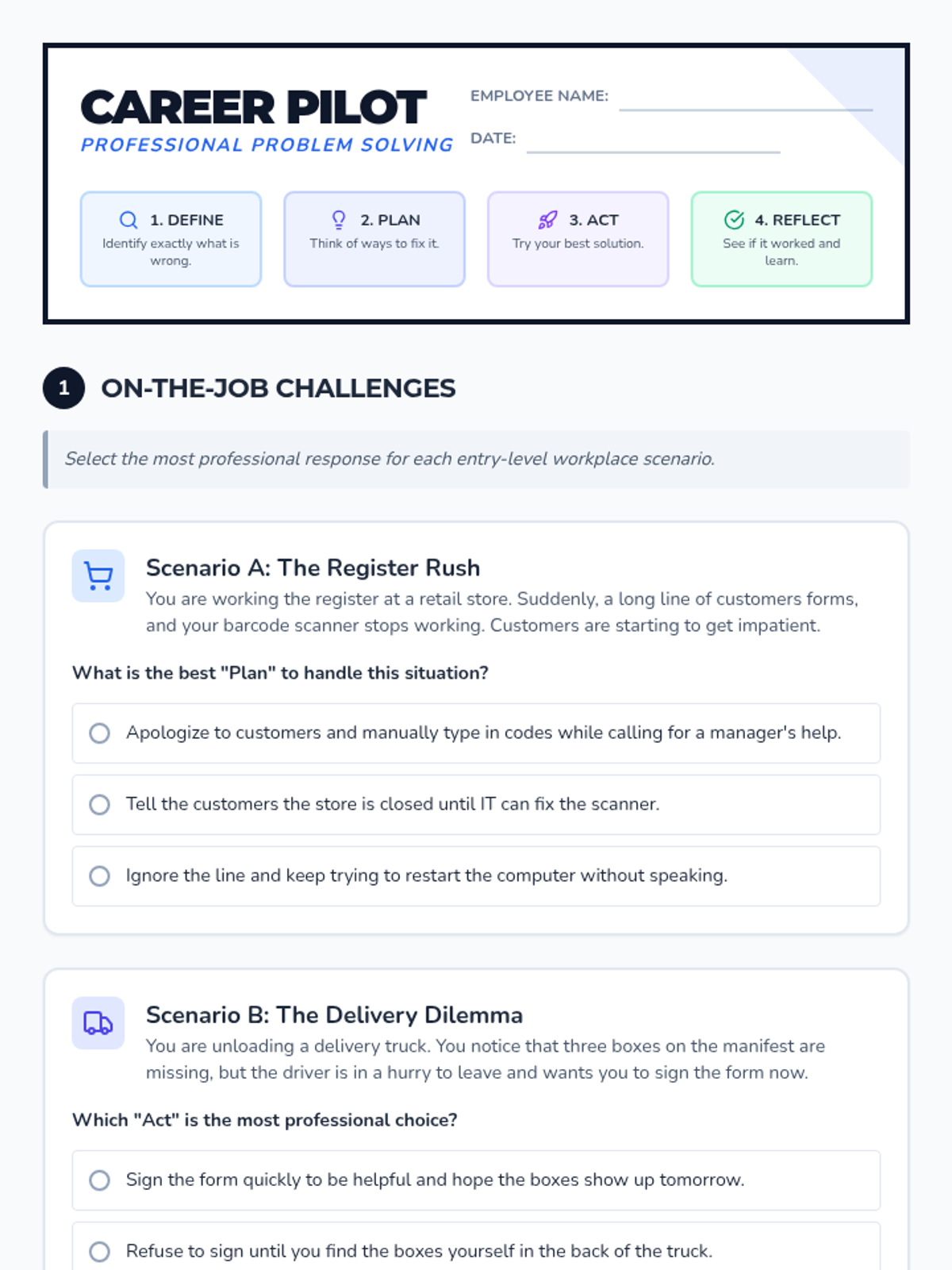
An entry-level workplace problem-solving worksheet with multiple-choice scenarios involving retail, delivery, and basic workplace etiquette.
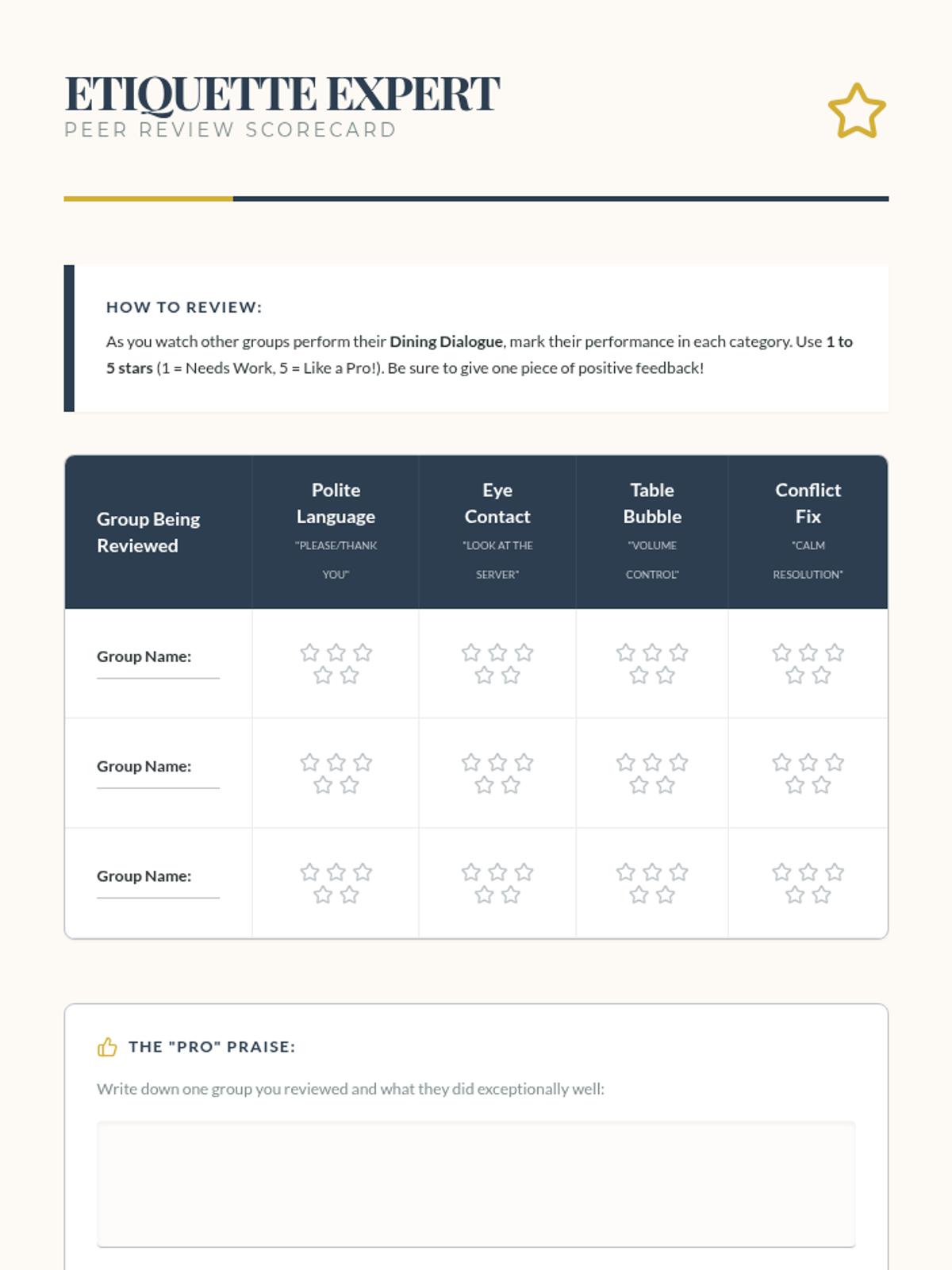
A peer review evaluation sheet for students to score each other's etiquette skills during the roleplay portion of the lesson.
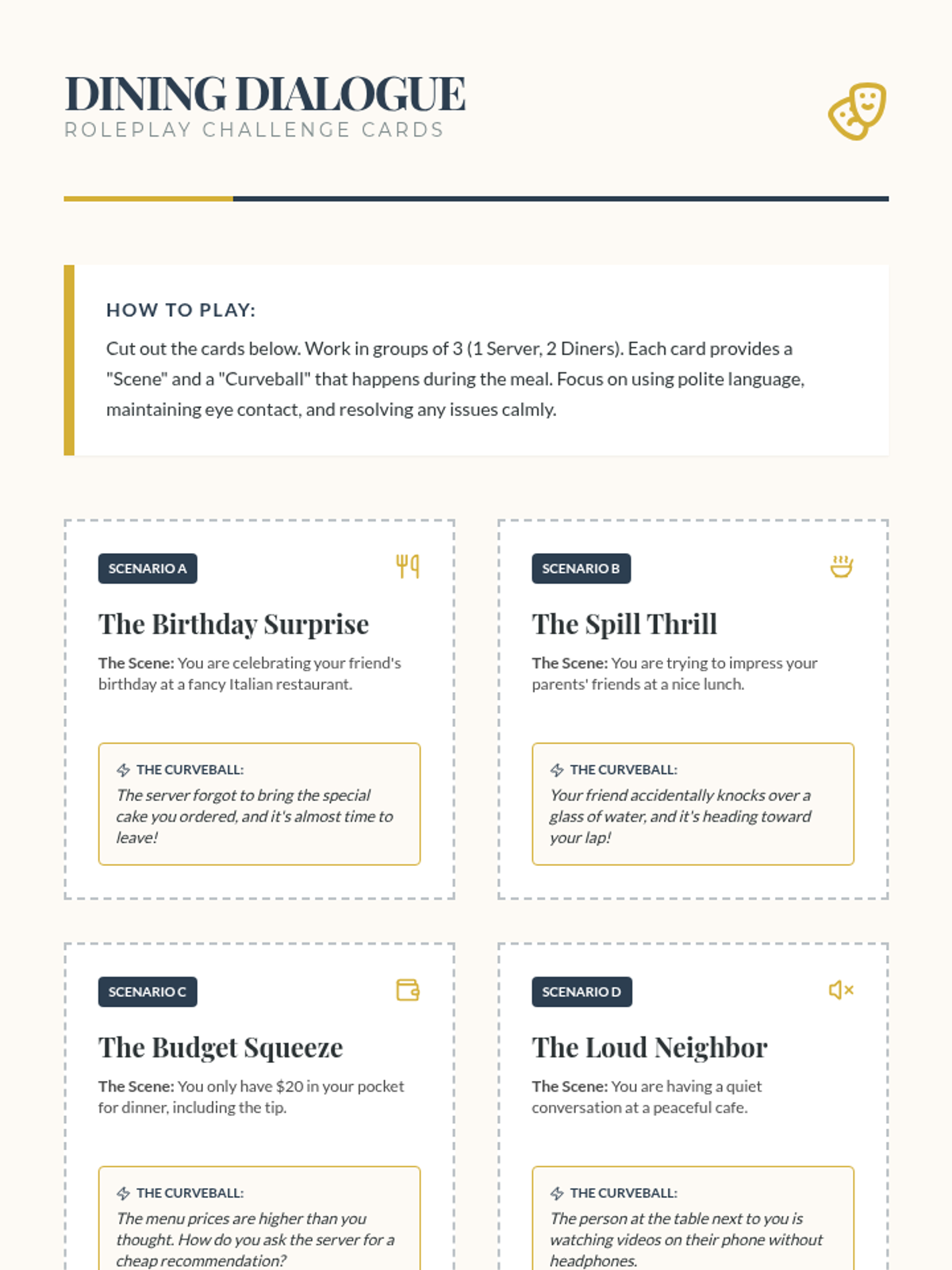
A set of four roleplay challenge cards for students to practice ordering, manners, and conflict resolution in various restaurant scenarios.
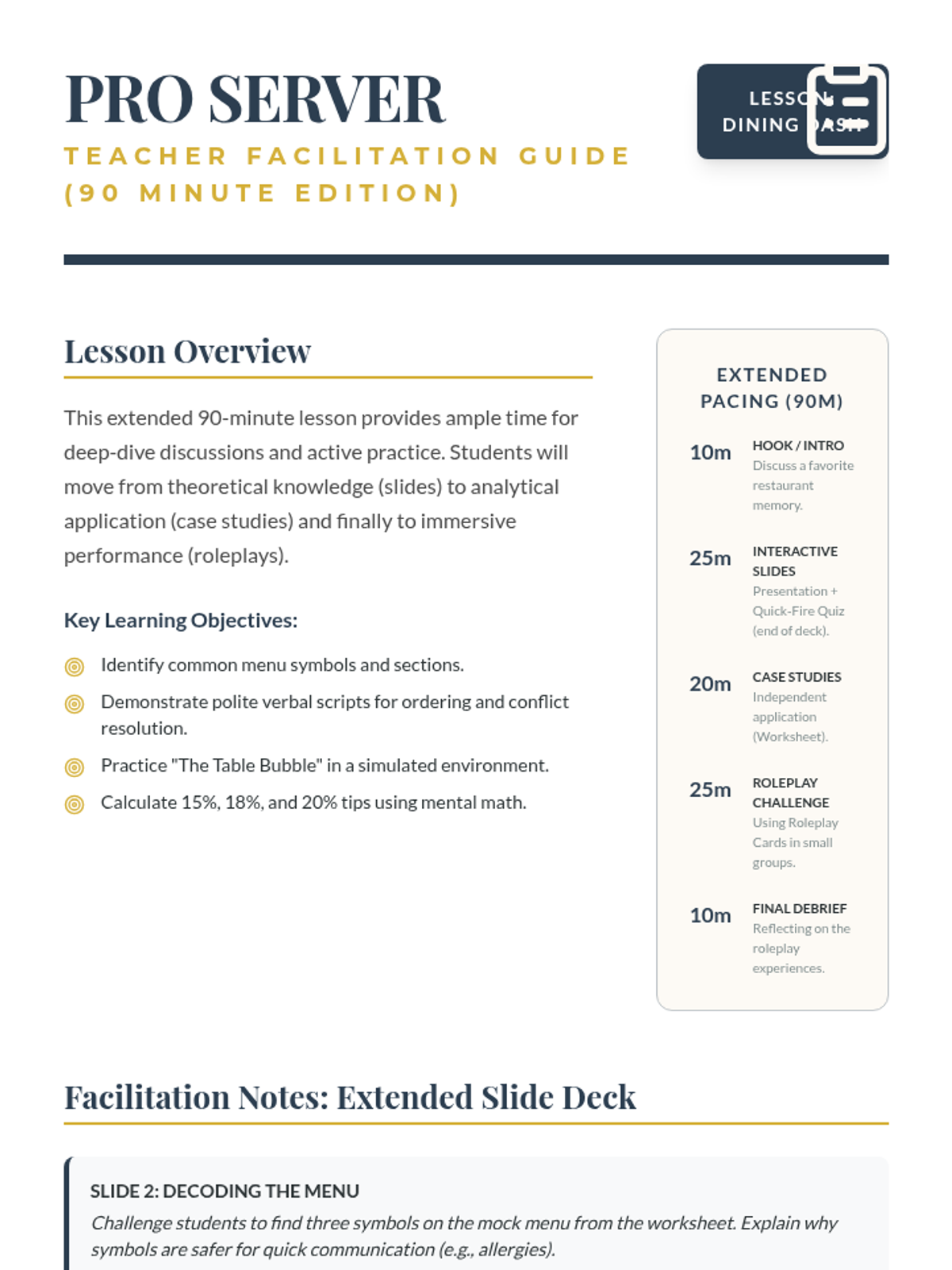
A teacher guide featuring lesson objectives, pacing suggestions, slide-by-slide discussion prompts, and a detailed answer key for the case studies.
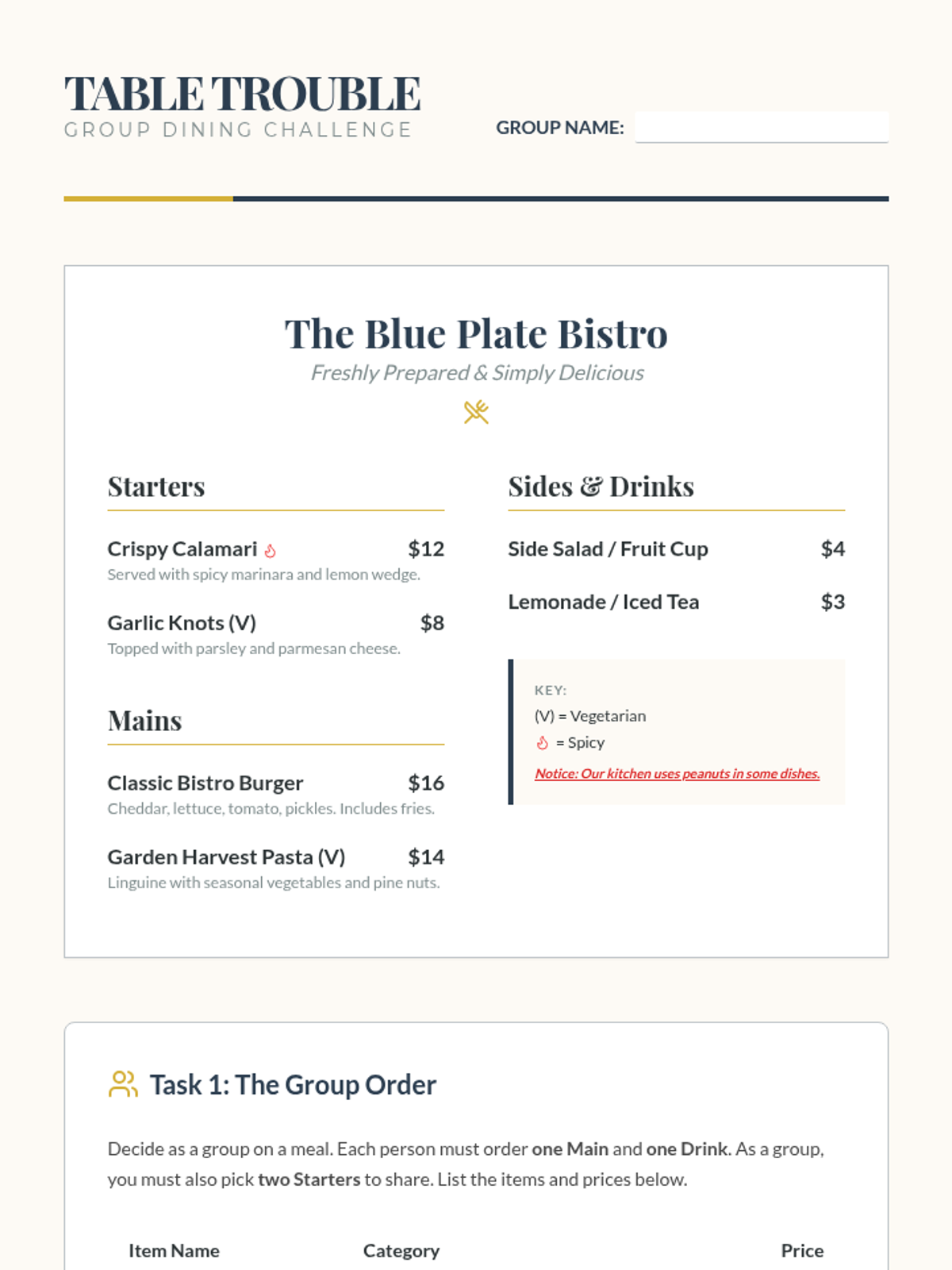
A group-focused student worksheet featuring a mock menu, a collective ordering challenge, group bill calculations, and collaborative restaurant scenarios.
A visual slide deck teaching restaurant etiquette, including menu reading, ordering scripts, table manners, volume control, tipping, and conflict resolution. Separates quiz questions and answers for better engagement.
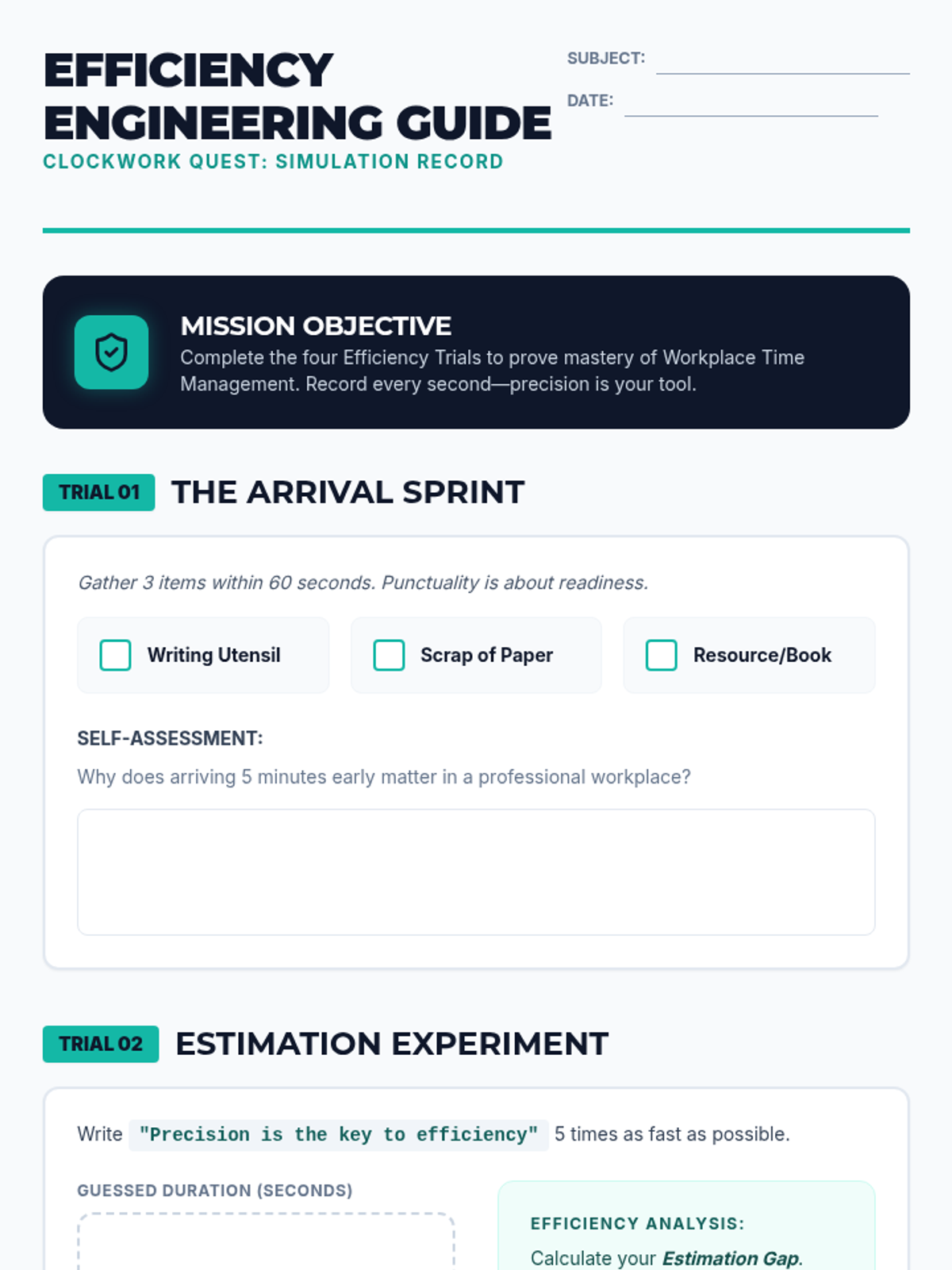
A comprehensive student worksheet featuring hands-on 'trials' to master time management. Updated with an expanded 'Simulation Prompt' for Trial 3 that includes low-priority tasks, challenging students to practice prioritization and postponement. Content optimized for clarity and student completion.
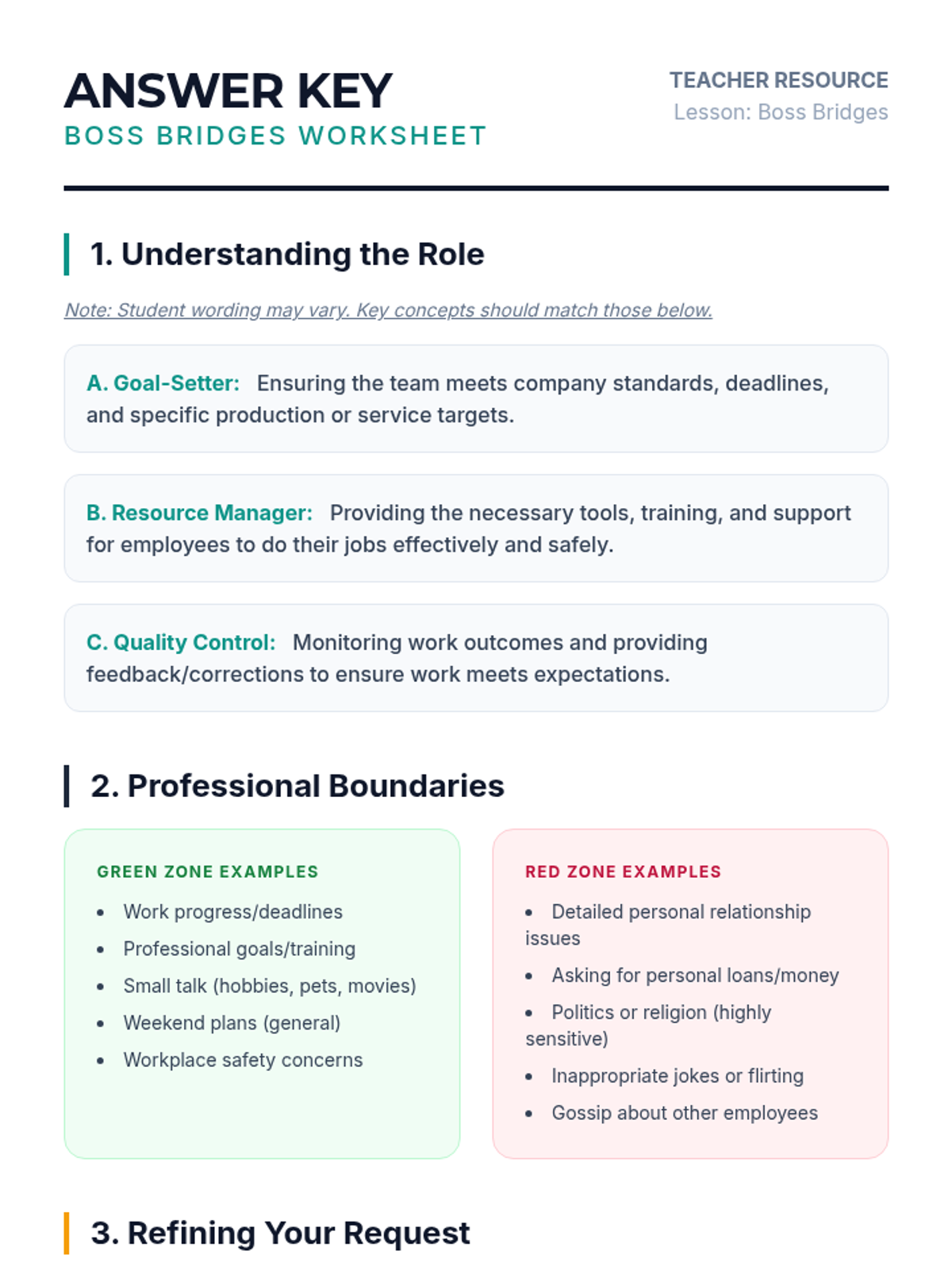
A 2-page teacher-facing answer key for the Boss Bridges Worksheet. It provides suggested professional responses for role definitions, boundary categorization, communication rewrites, and the three training case studies.
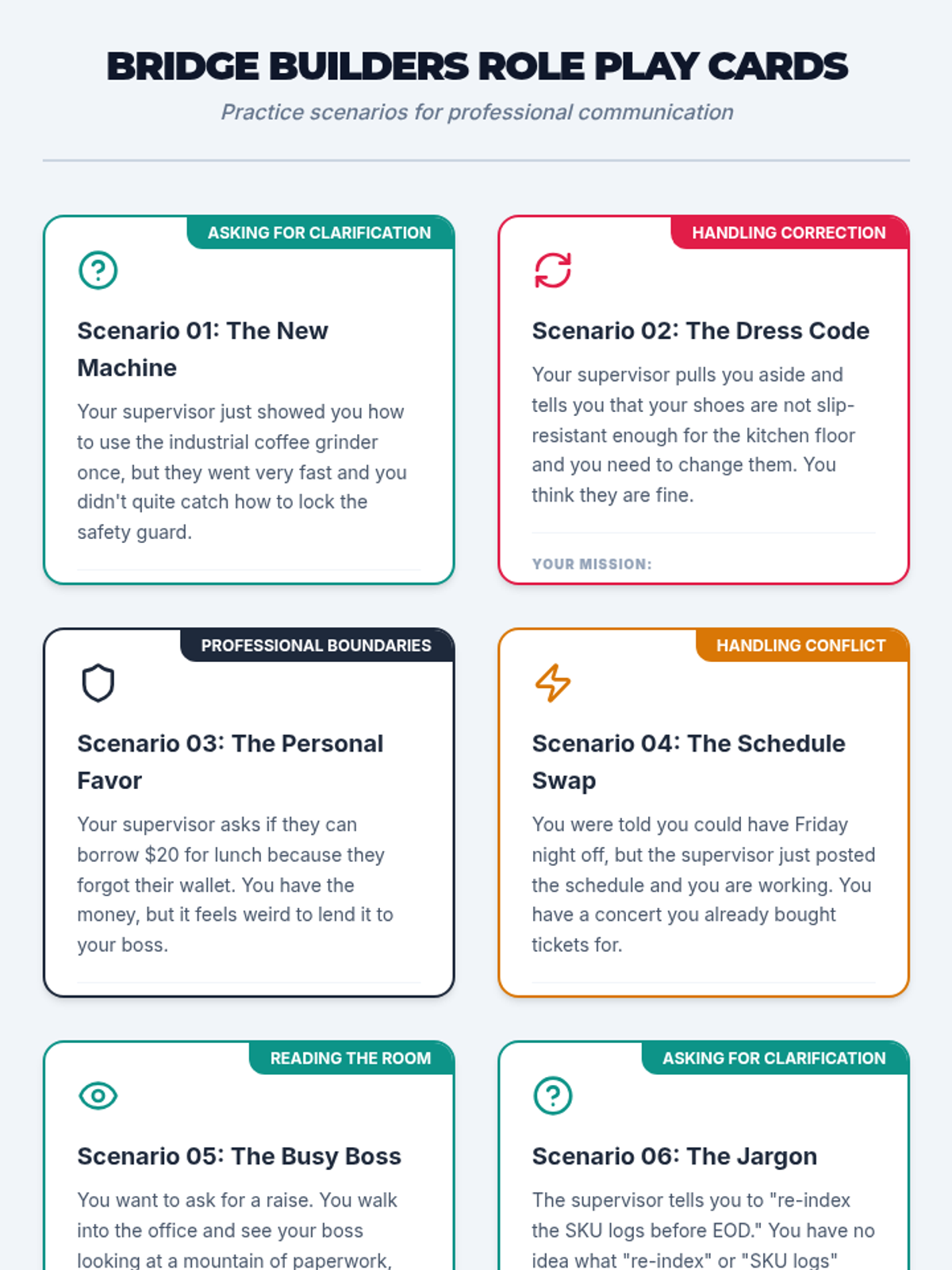
A printable set of 8 role-play scenario cards (Clarification, Correction, Boundaries, Conflict) designed to provide hands-on practice for students in employment training. Each card includes a specific scenario and a clear communication mission.
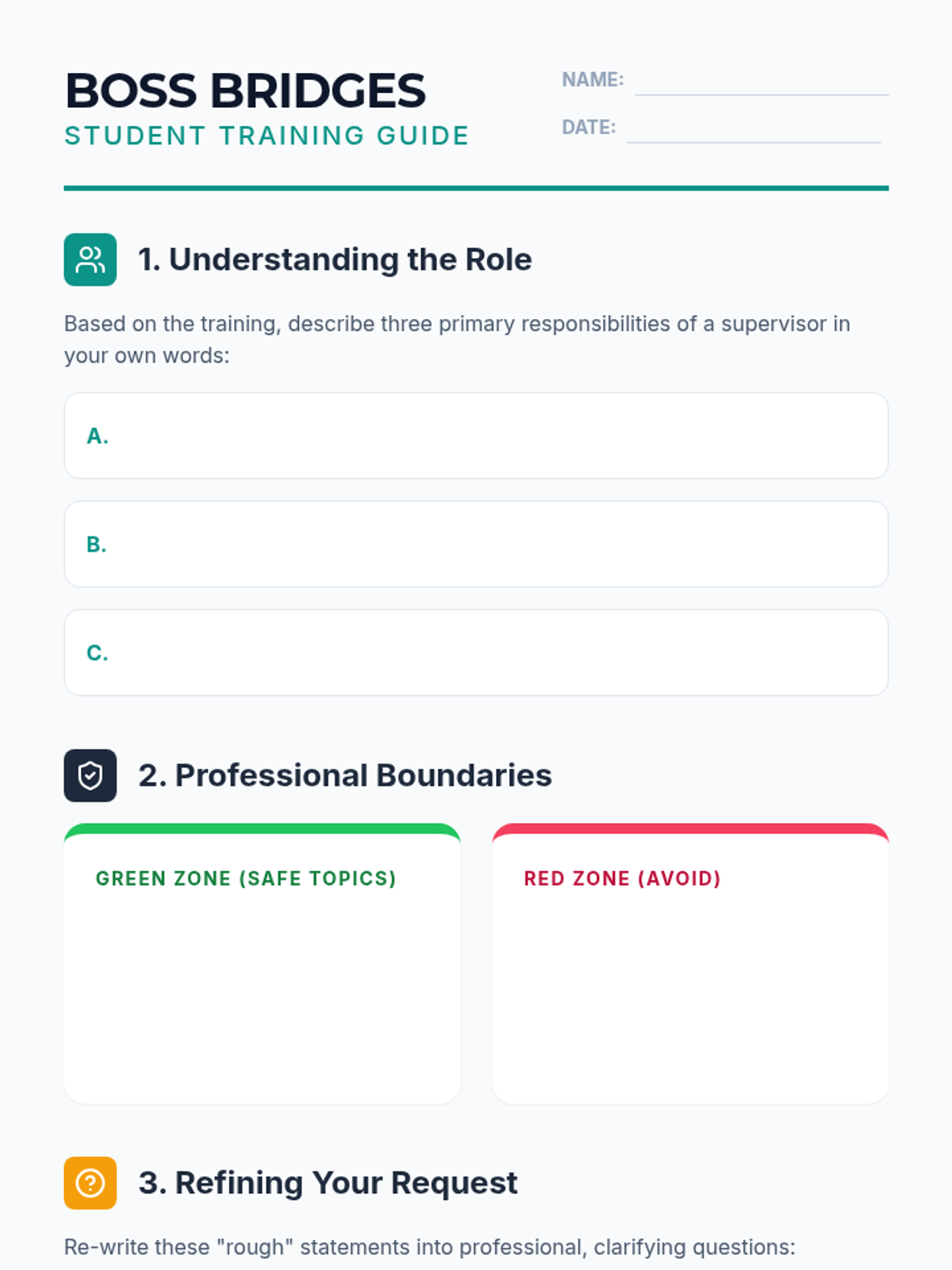
A 2-page student worksheet that complements the slide deck. It includes sections for identifying supervisor roles, mapping professional boundaries, practicing communication strategies, and documenting reflections on the training case studies.
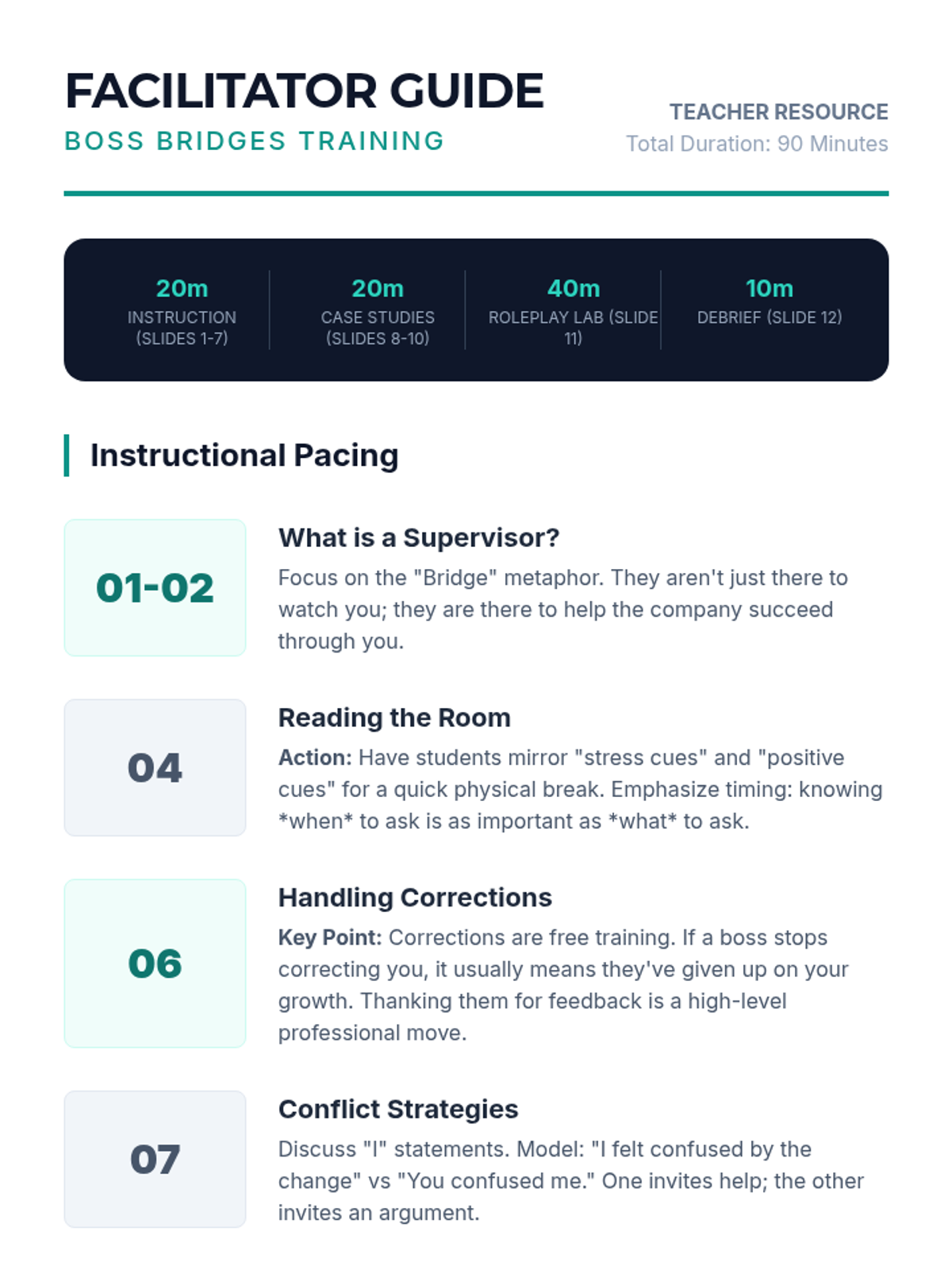
A 2-page facilitator guide updated for a 90-minute session, including detailed pacing, instruction on slides, and a structured plan for the 40-minute Roleplay Lab.
An updated 12-slide presentation that includes a dedicated "Roleplay Lab" slide to guide the 40-minute practice session, ensuring a cohesive 90-minute training experience.
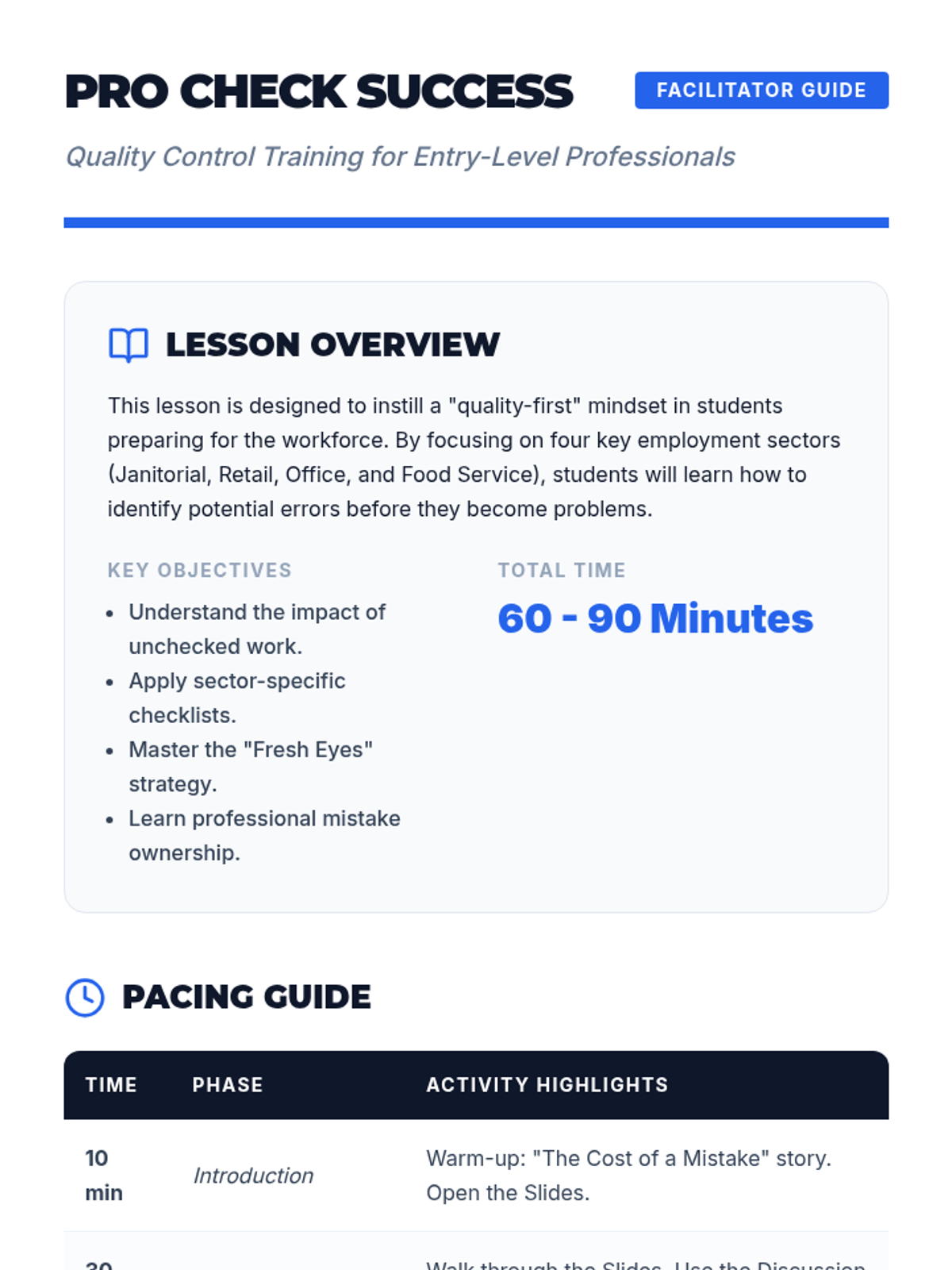
A comprehensive teacher guide for the 'Pro Check Success' lesson, including pacing, slide-by-slide discussion prompts, a 'The Intentional Error' classroom activity, and an answer key for the student worksheet.
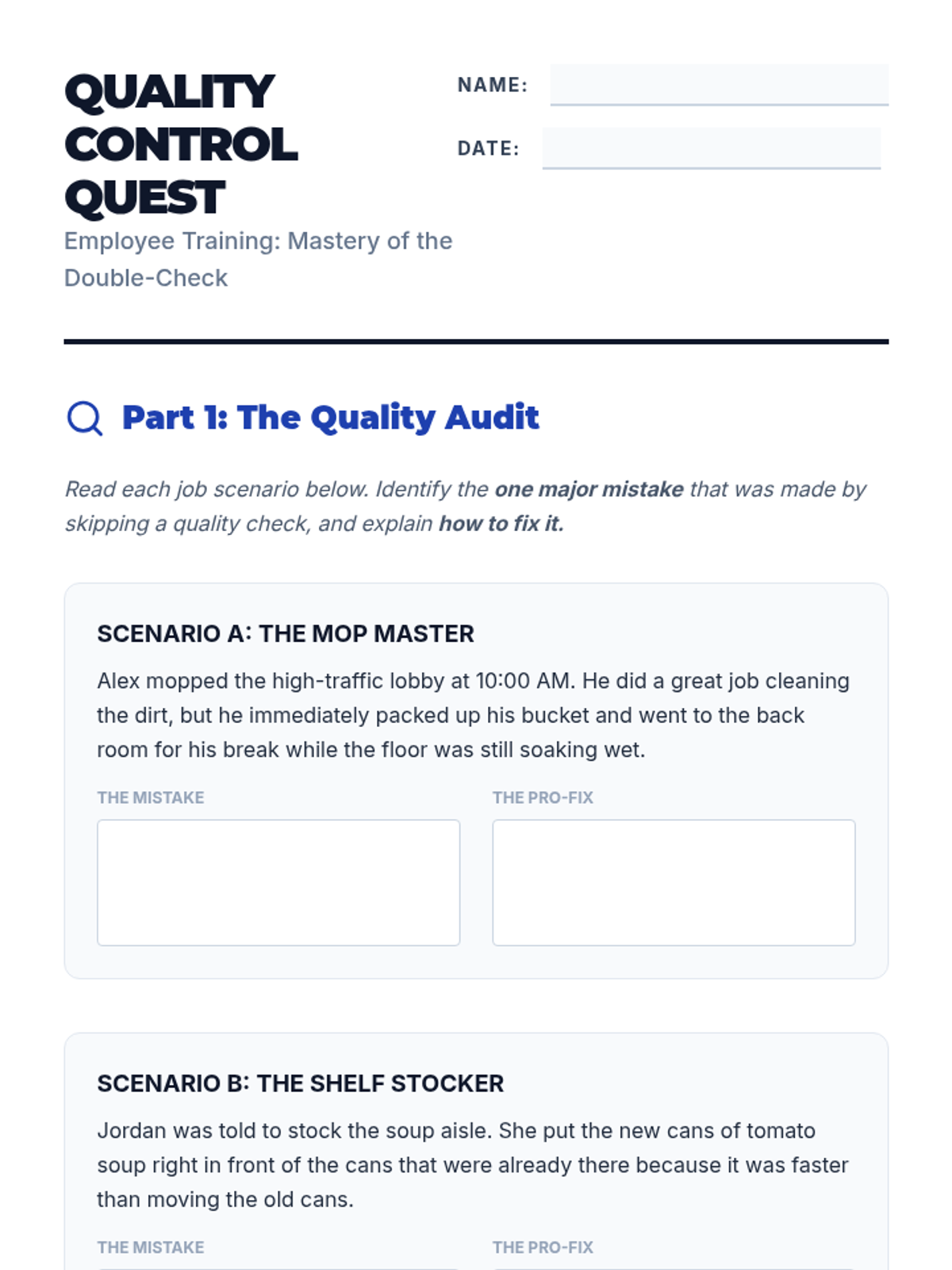
A 2-page student worksheet that reinforces quality control concepts through scenario analysis, a custom checklist design activity, and reflection on the 'Fresh Eyes' strategy. Includes professional branding and ample writing space.
A comprehensive 10-slide presentation designed for employment training, focusing on quality control and checking work across four key job sectors: janitorial, retail, office, and food service. Includes specific checklists, professional strategies like 'Fresh Eyes', and scenarios for discussion.
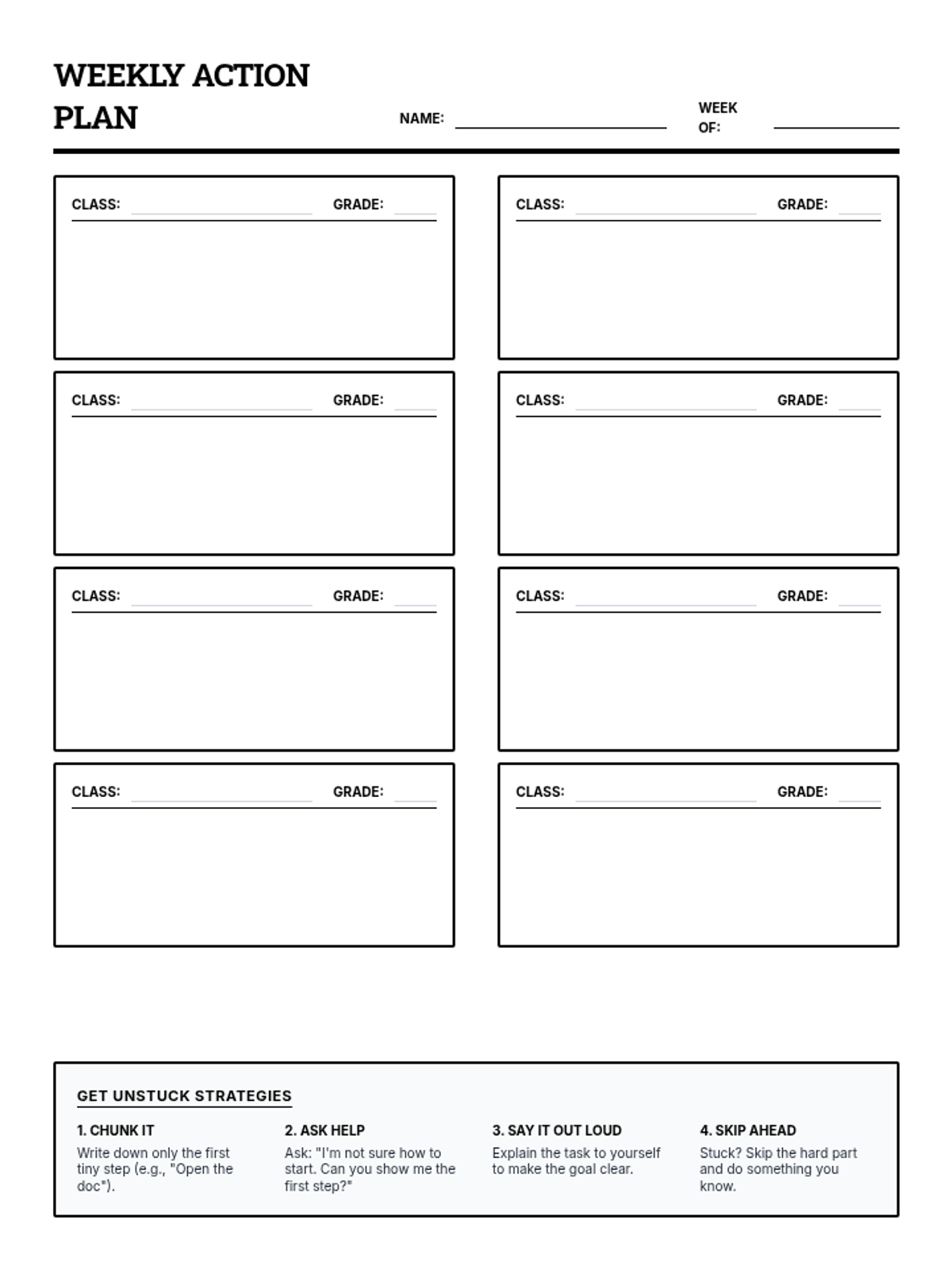
A highly efficient, single-page Weekly Action Plan designed for students with executive functioning needs. It features 8 streamlined class boxes with space for subjects and grades, plus a concise footer with 'Get Unstuck' strategies, all formatted to fit within a single printable page.
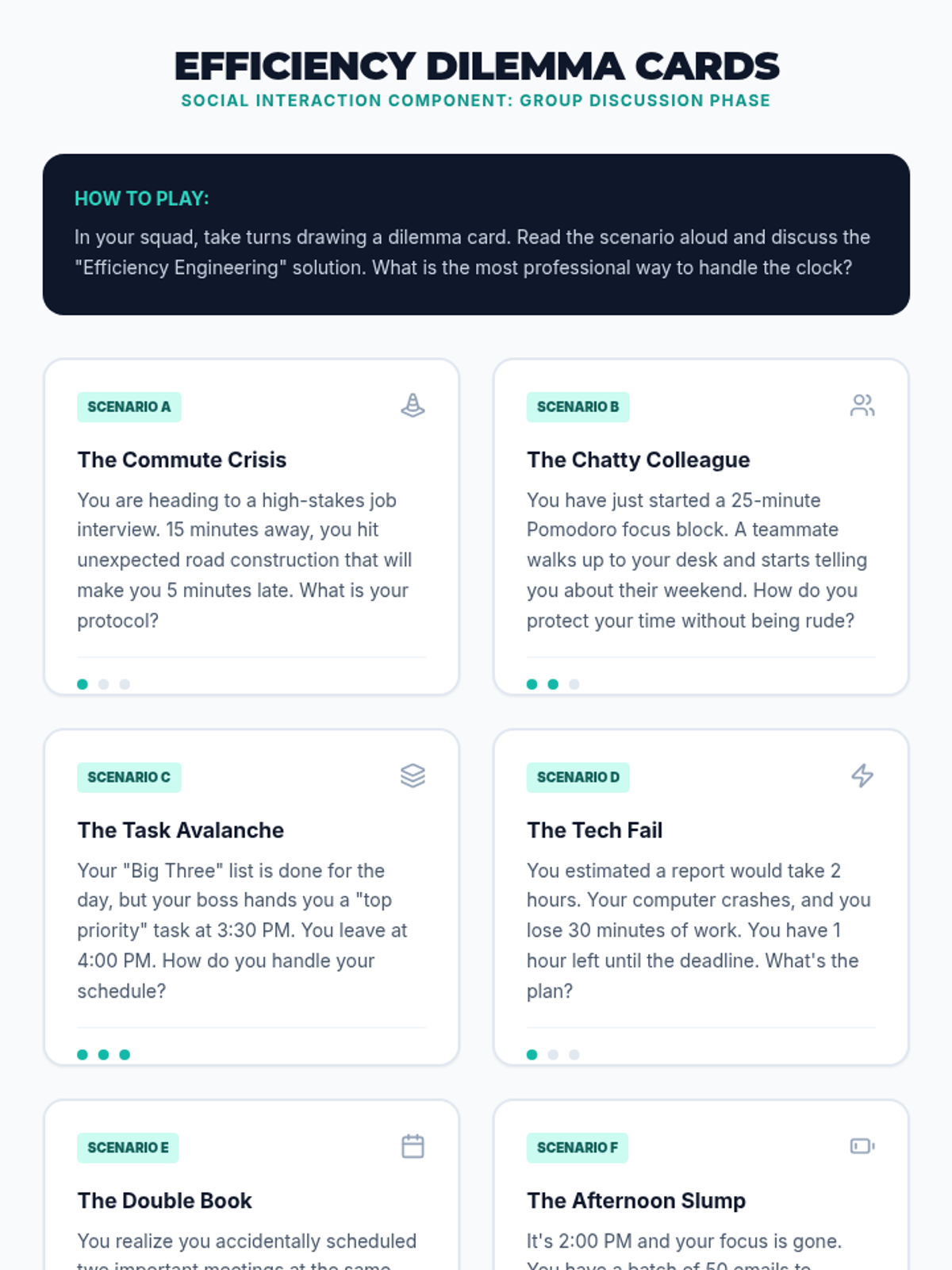
A set of scenario-based discussion cards designed to help students navigate real-world time management dilemmas in a social, collaborative setting.
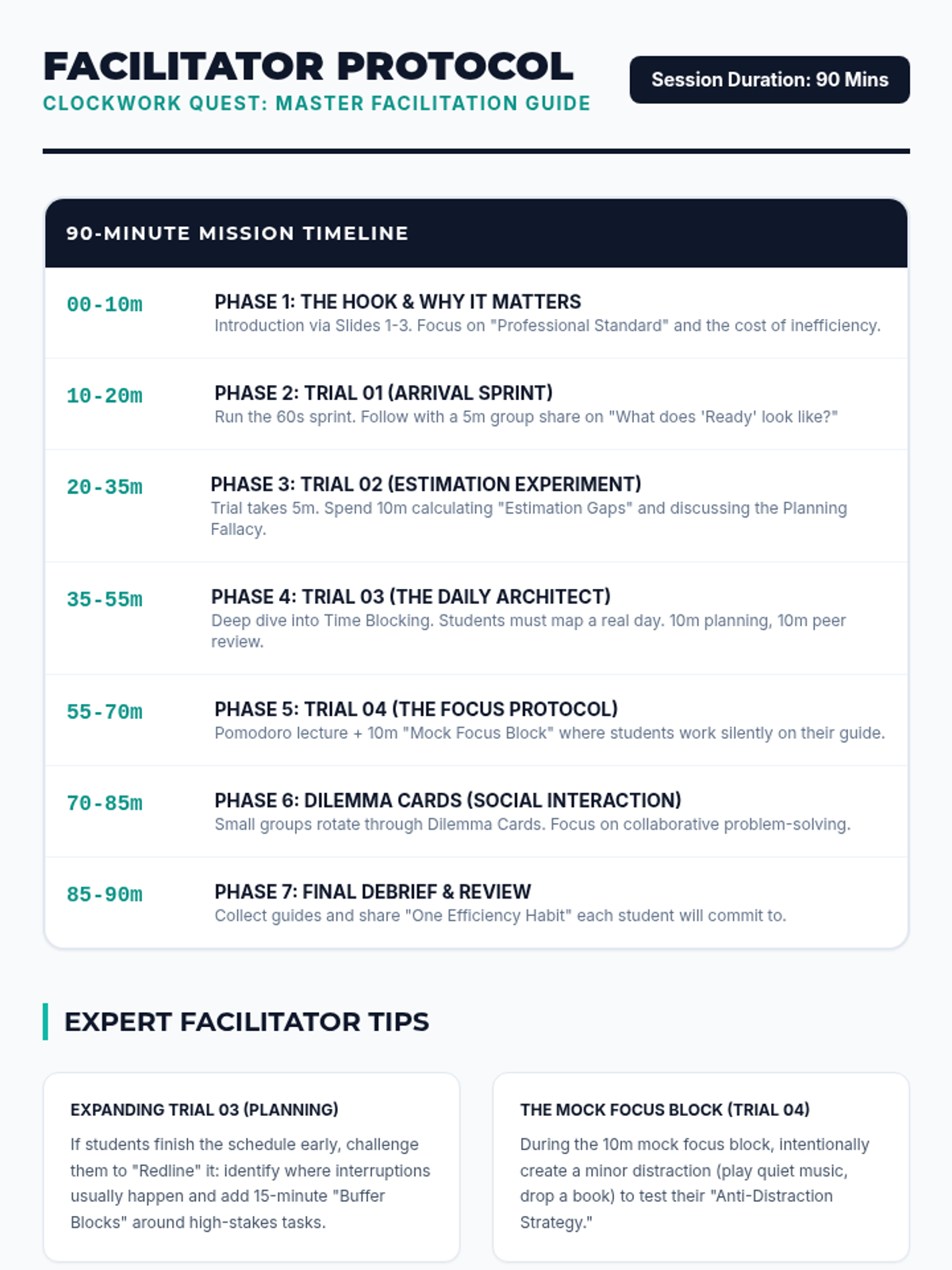
A comprehensive teacher-facing facilitation guide for running the Clockwork Quest trials, featuring a detailed 90-minute agenda, expert tips, and success metrics.
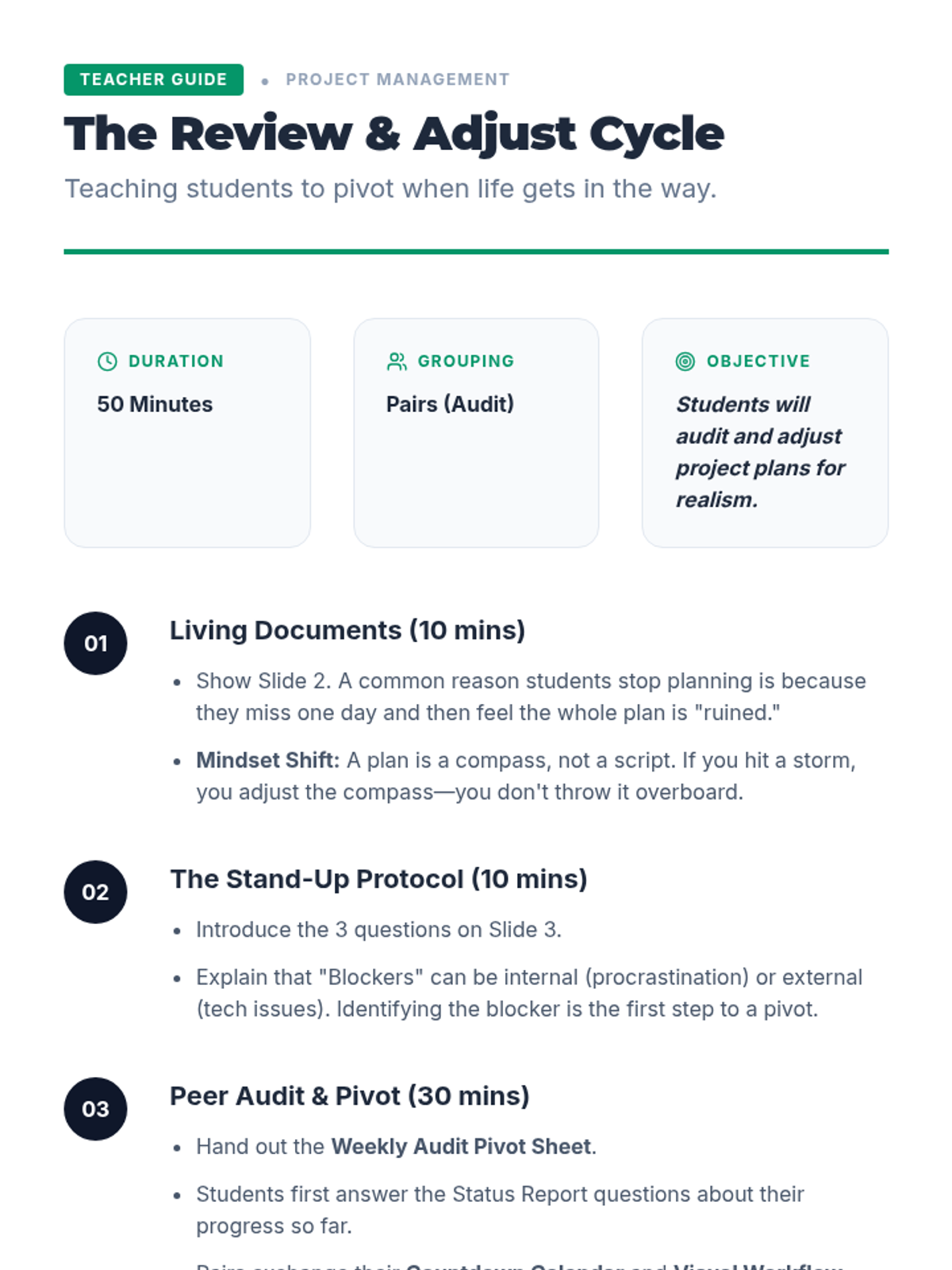
Teacher guide for Lesson 5 focusing on plan adjustments, the Stand-Up protocol, and peer project audits.
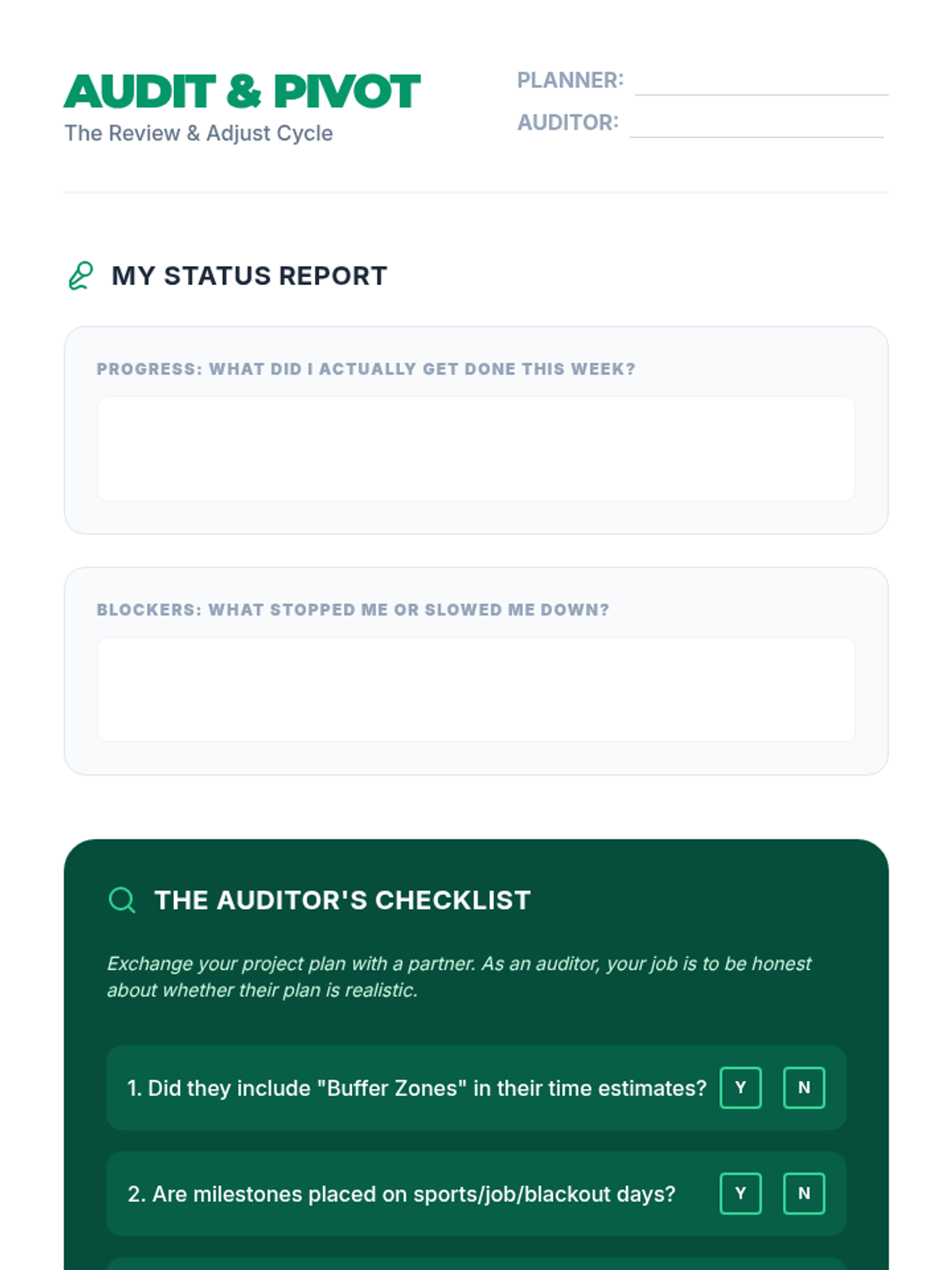
A student worksheet for conducting a 'Status Report' and a peer project plan audit to identify and adjust unrealistic plans.
A visual presentation for Lesson 5 introducing the concept of the 'Stand-Up' meeting, plan flexibility, and peer audits.
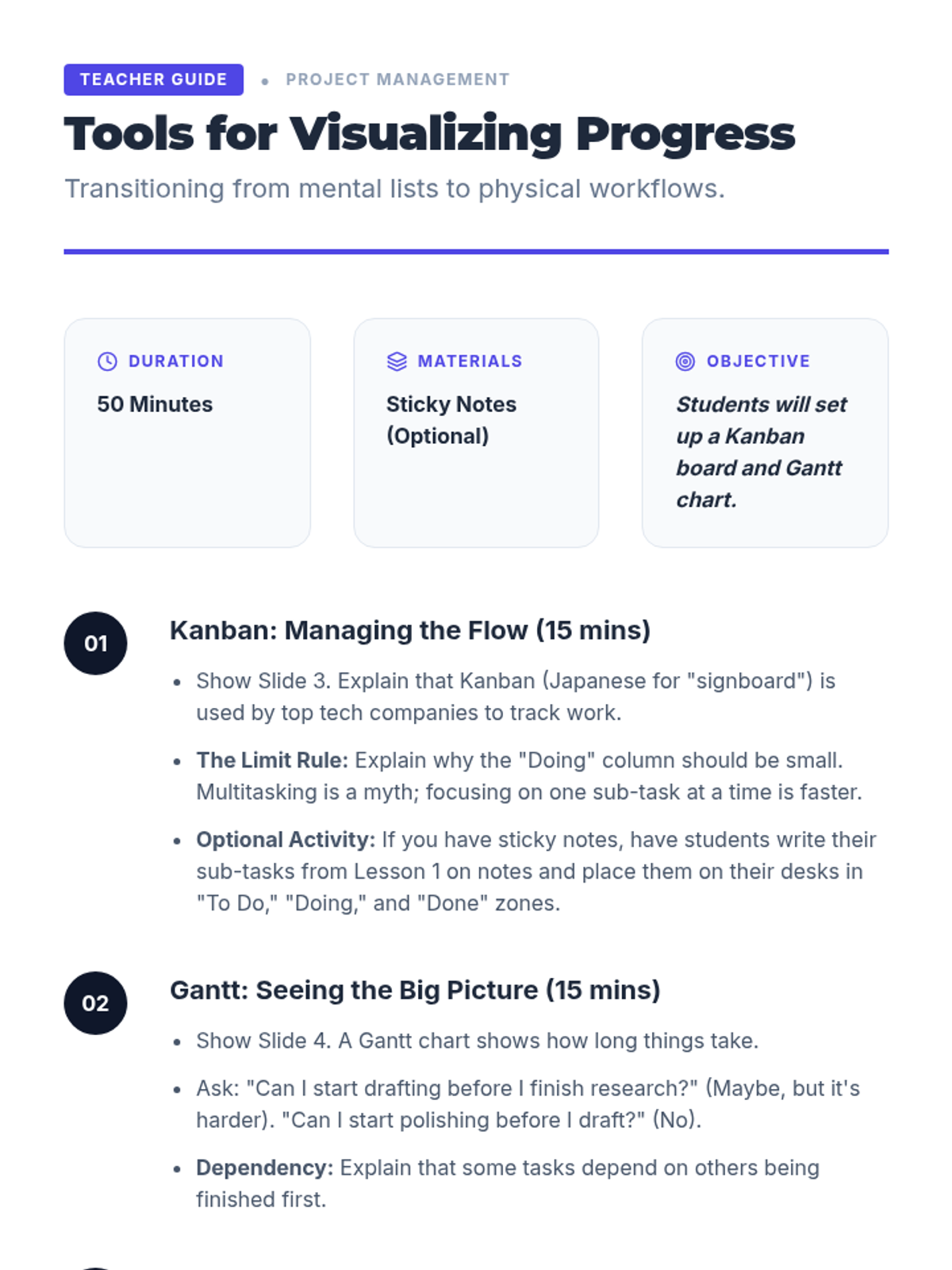
Teacher guide for Lesson 4 focusing on visual tools like Kanban and Gantt charts for project tracking.
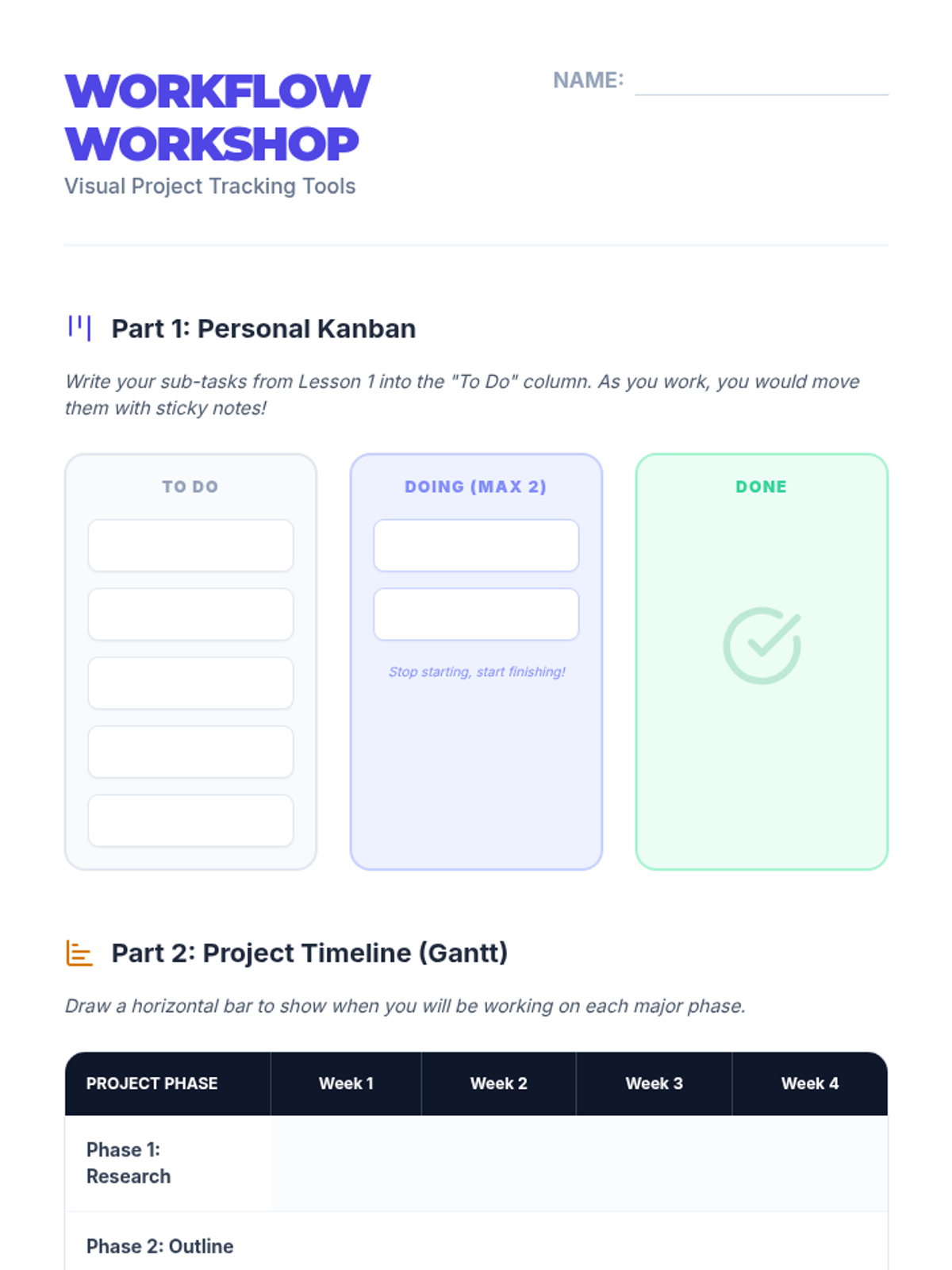
A student worksheet with templates for creating a personal Kanban board and a project Gantt chart.
A visual presentation for Lesson 4 introducing visual project management tools like Gantt charts and Kanban boards.
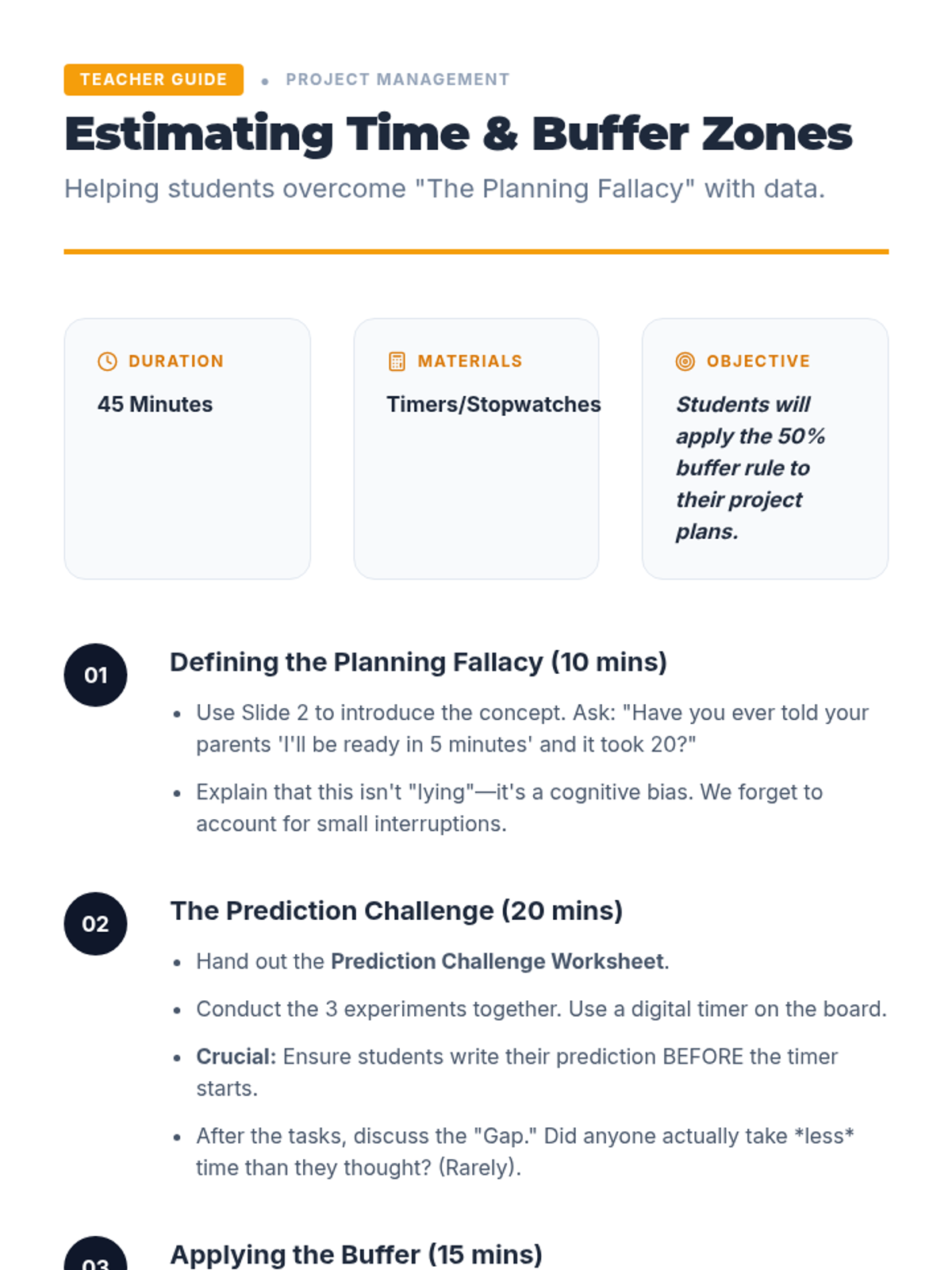
Teacher facilitation guide for Lesson 3 focusing on time estimation experiments and the 50% buffer rule.