Empathetic skill development through emotion recognition, cultural diversity appreciation, and bias confrontation. Targets multi-perspective analysis to support respectful interactions and complex social responses.
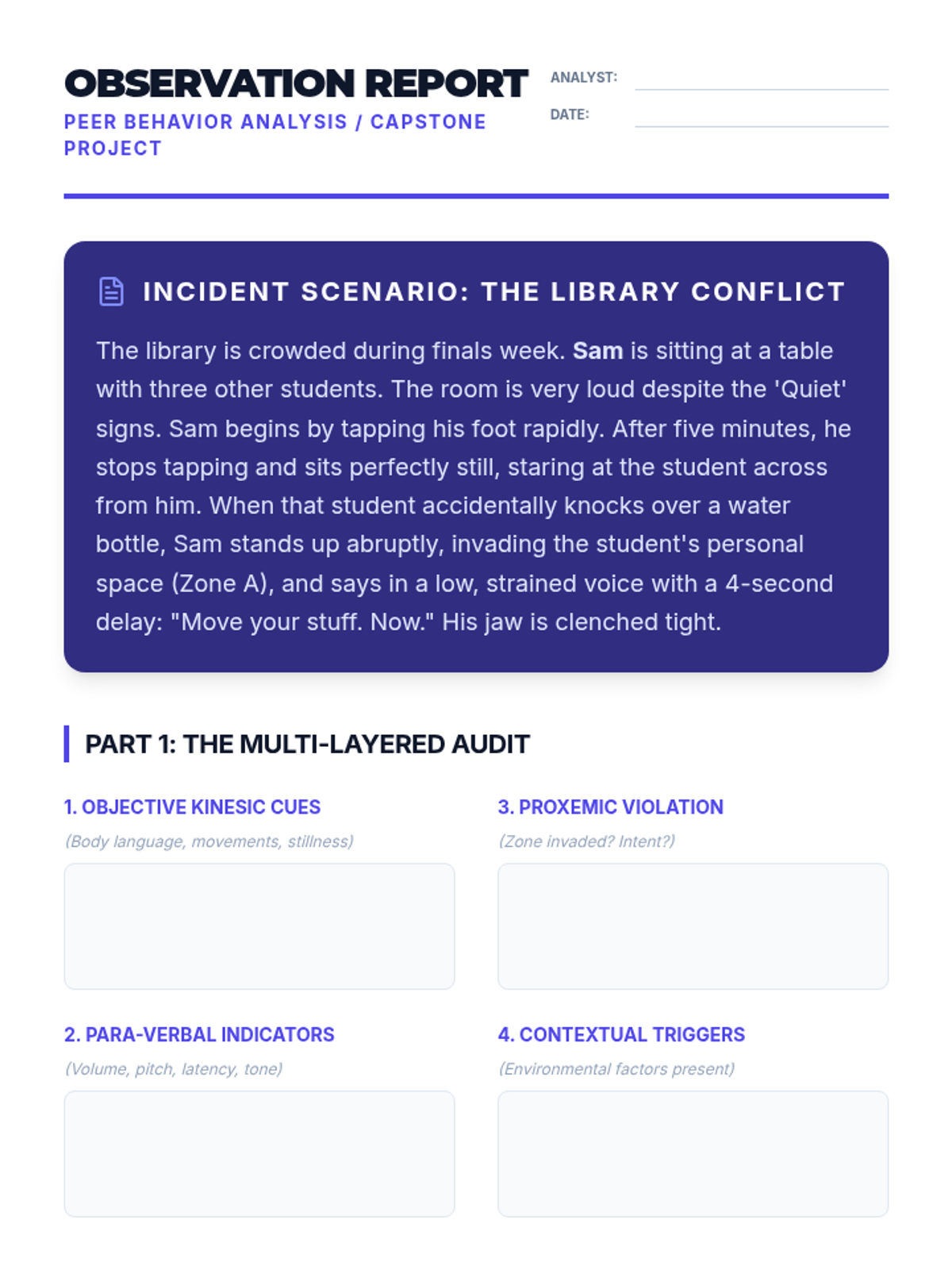
Students synthesize their observation skills to analyze full scenarios, identifying how environmental triggers (noise, crowds) combine with behavioral cues to predict escalation.
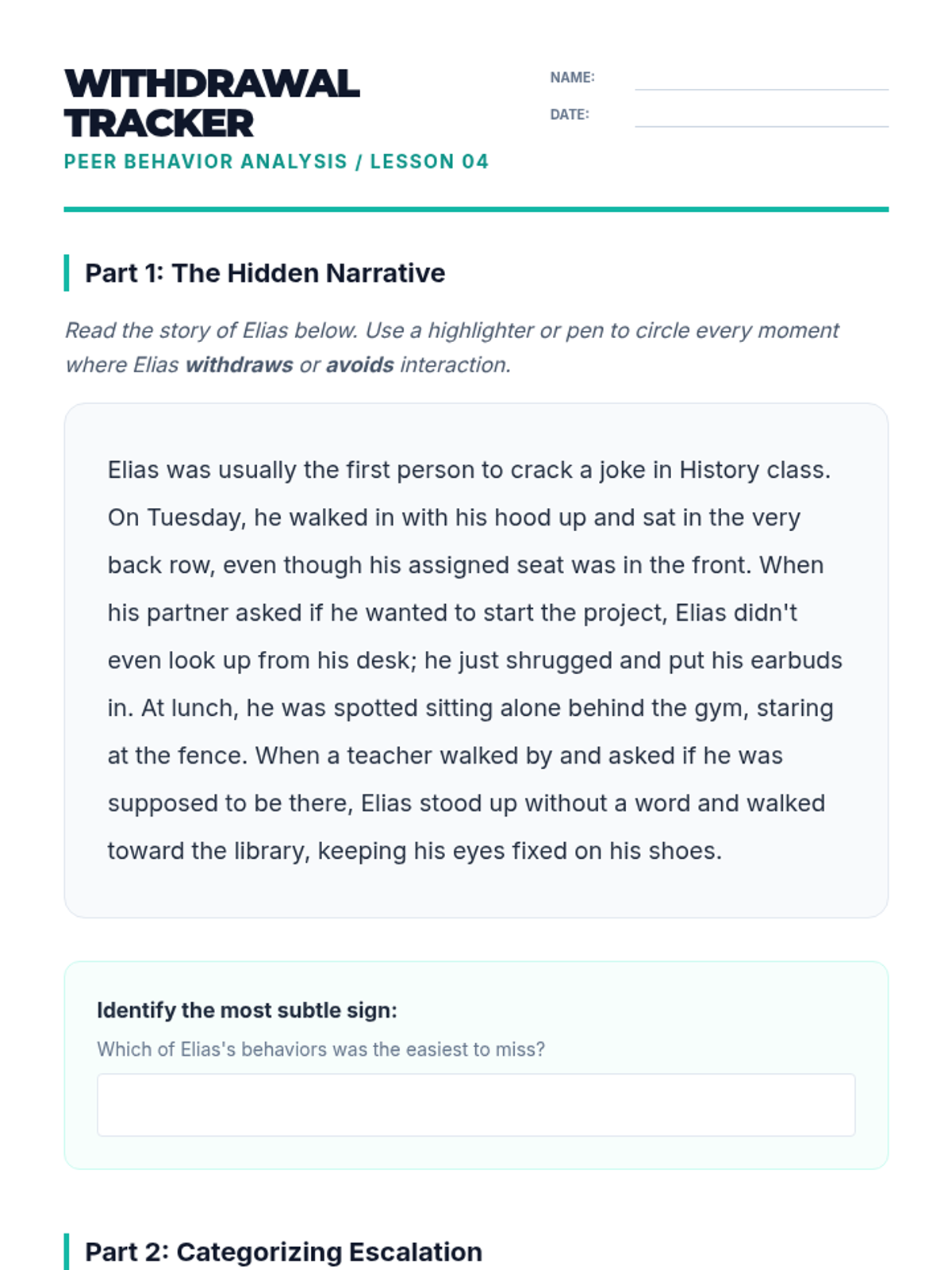
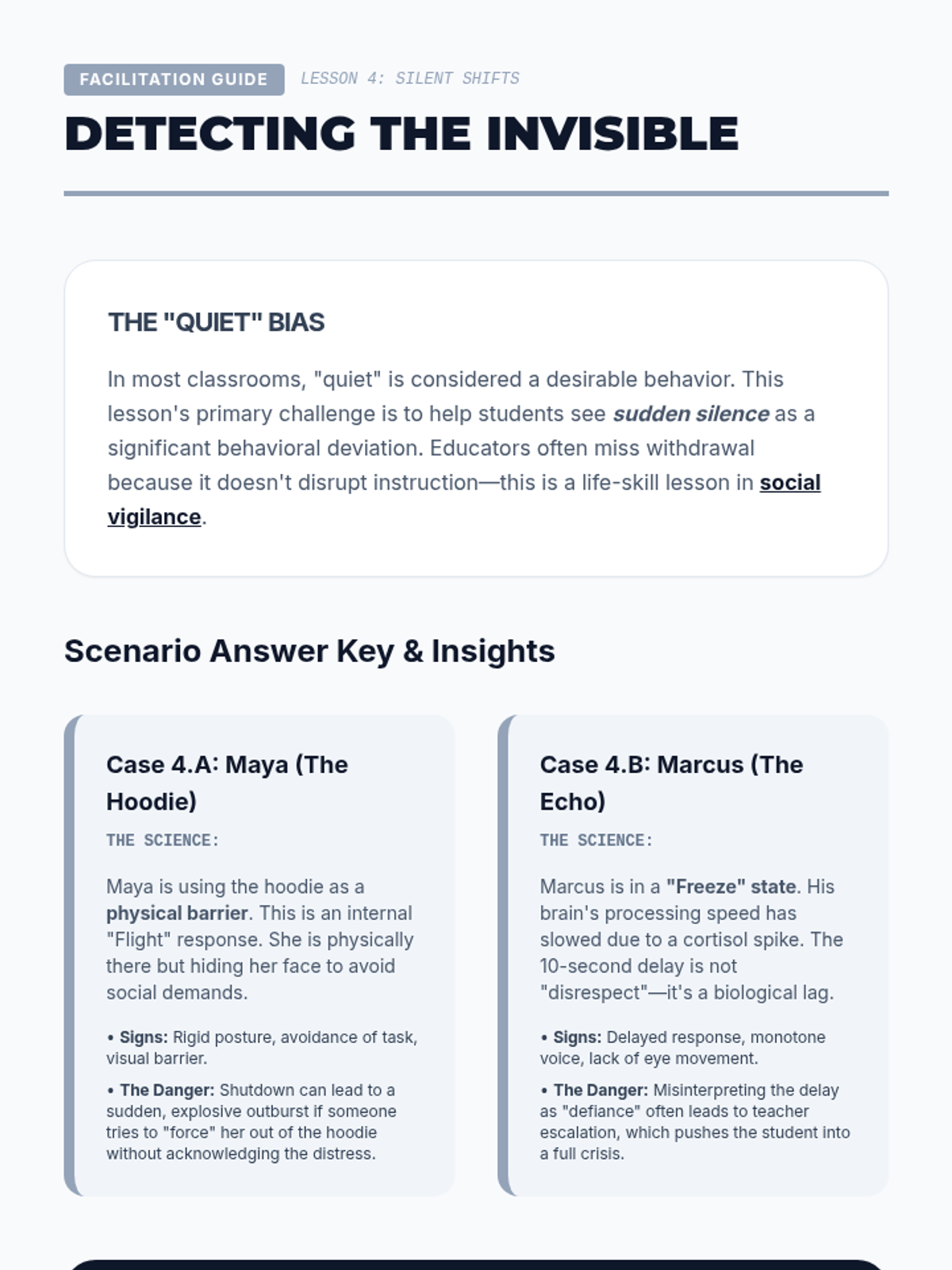
Students learn to identify 'implosive' escalation—withdrawal, shutting down, or avoiding eye contact—and discuss how these quiet signs can be precursors to explosive behavior.
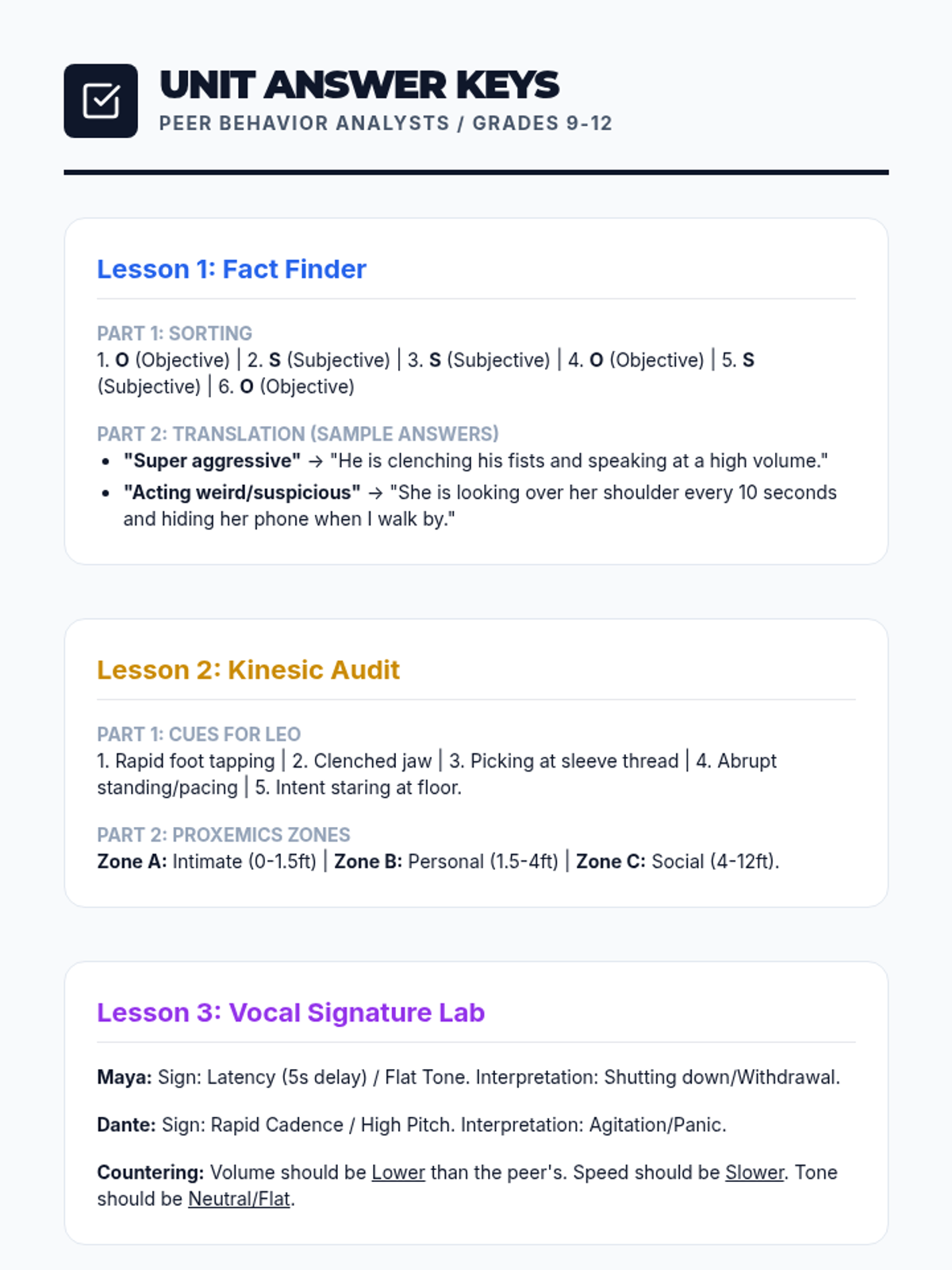
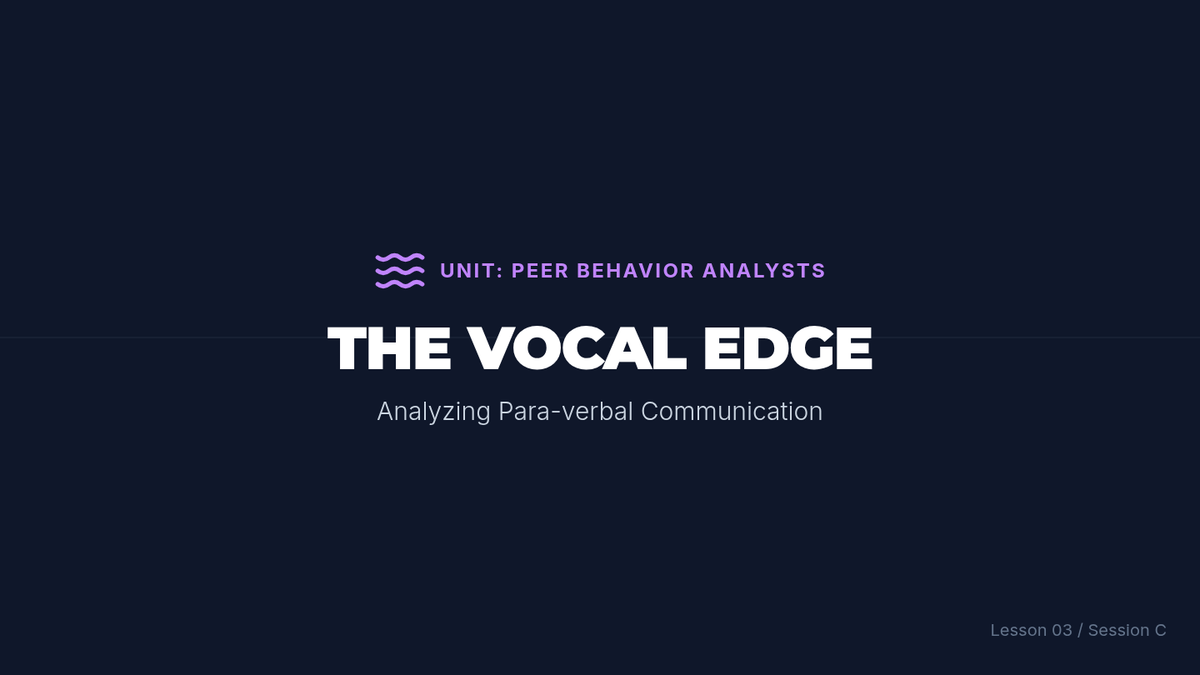
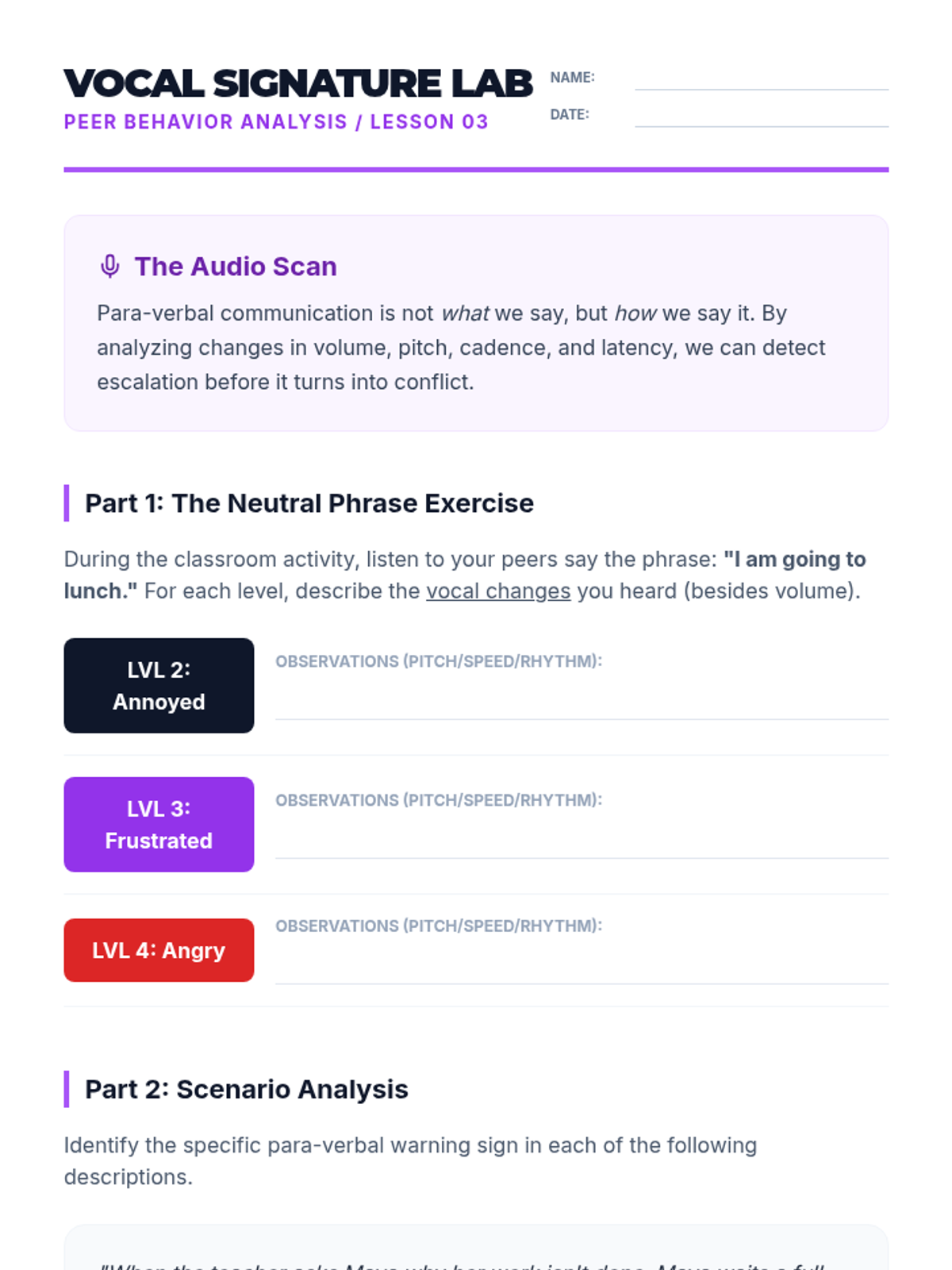
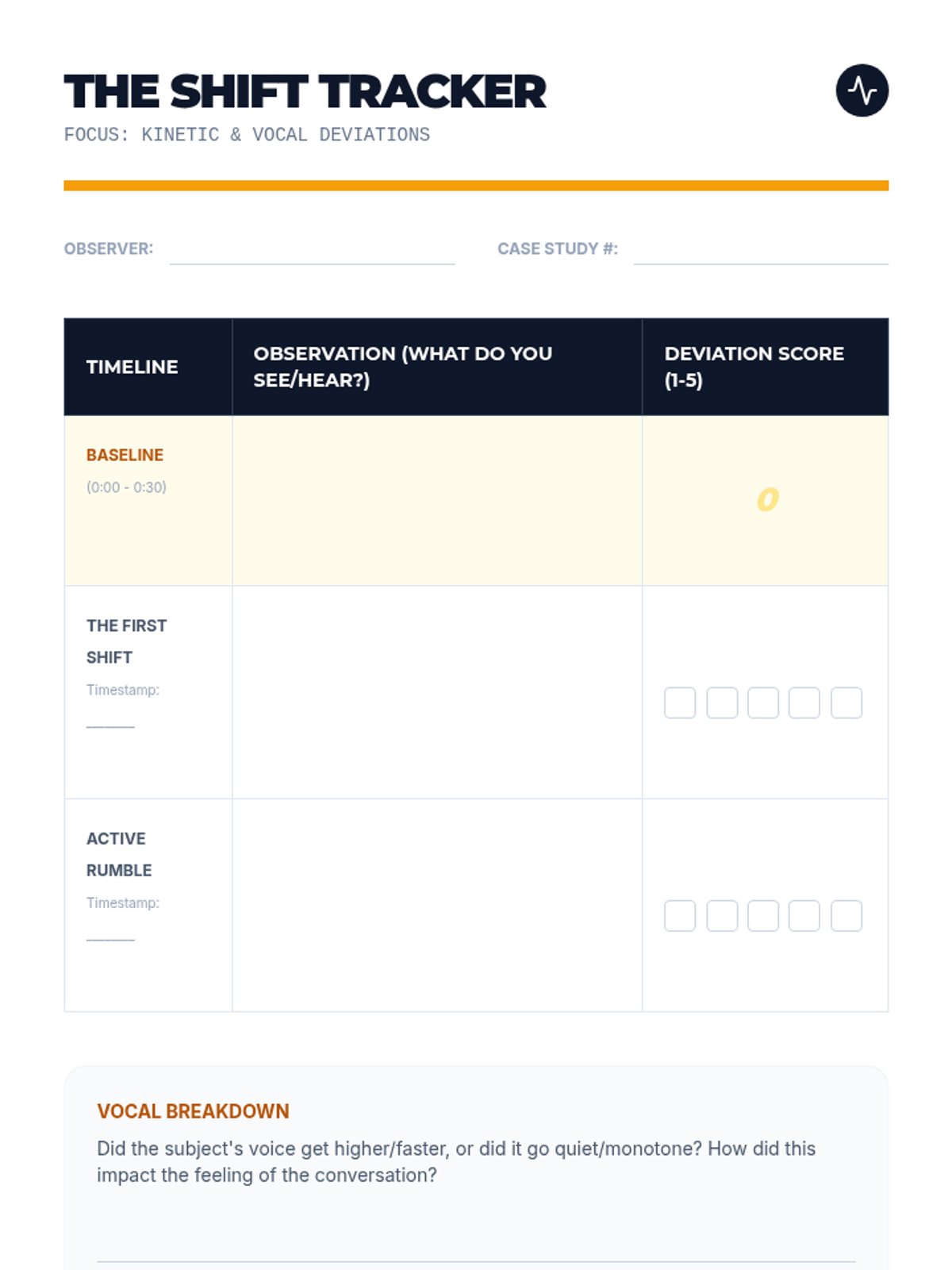
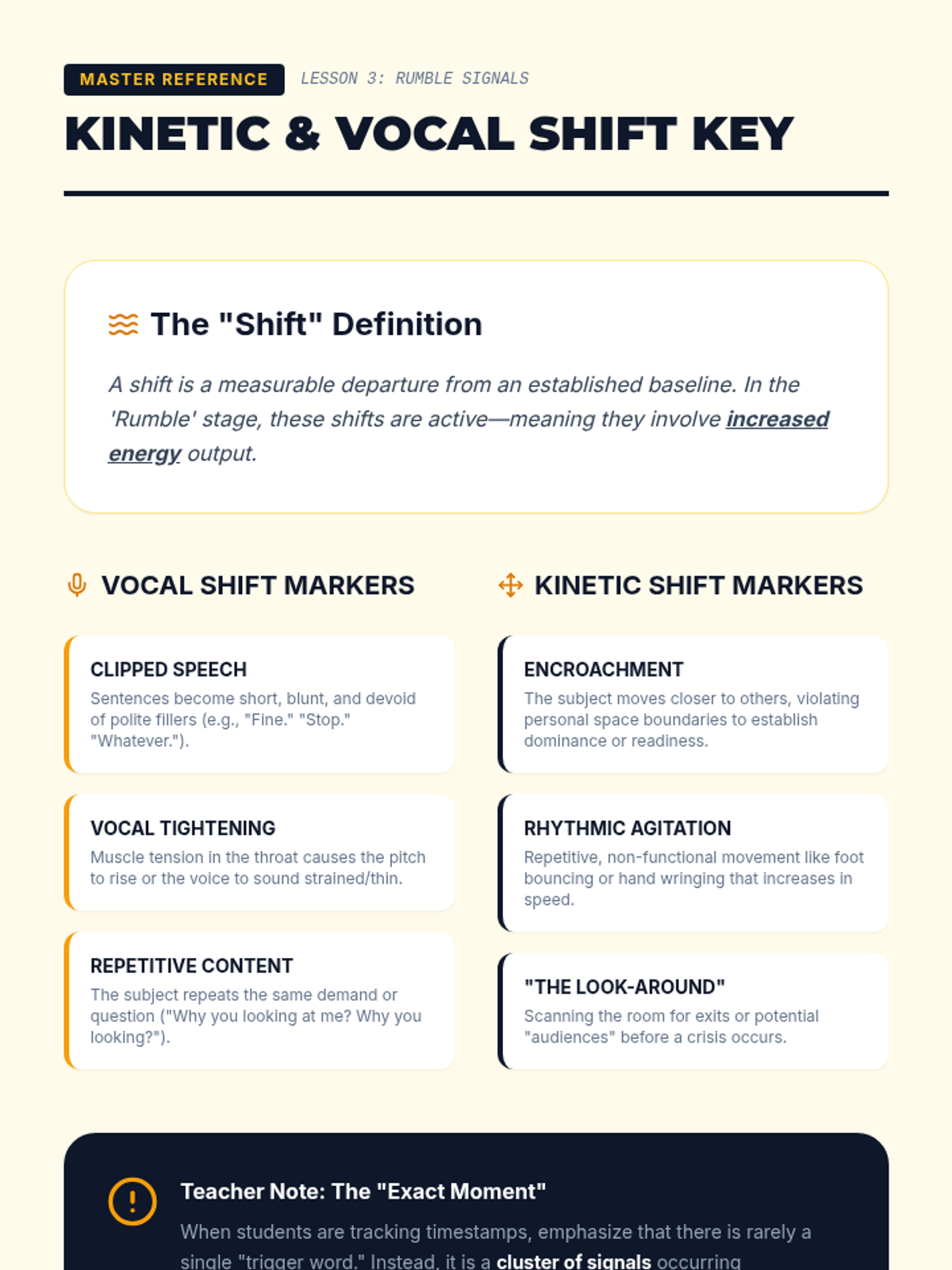
Students examine the vocal components of escalation, including changes in pitch, speed, volume, and latency of response.
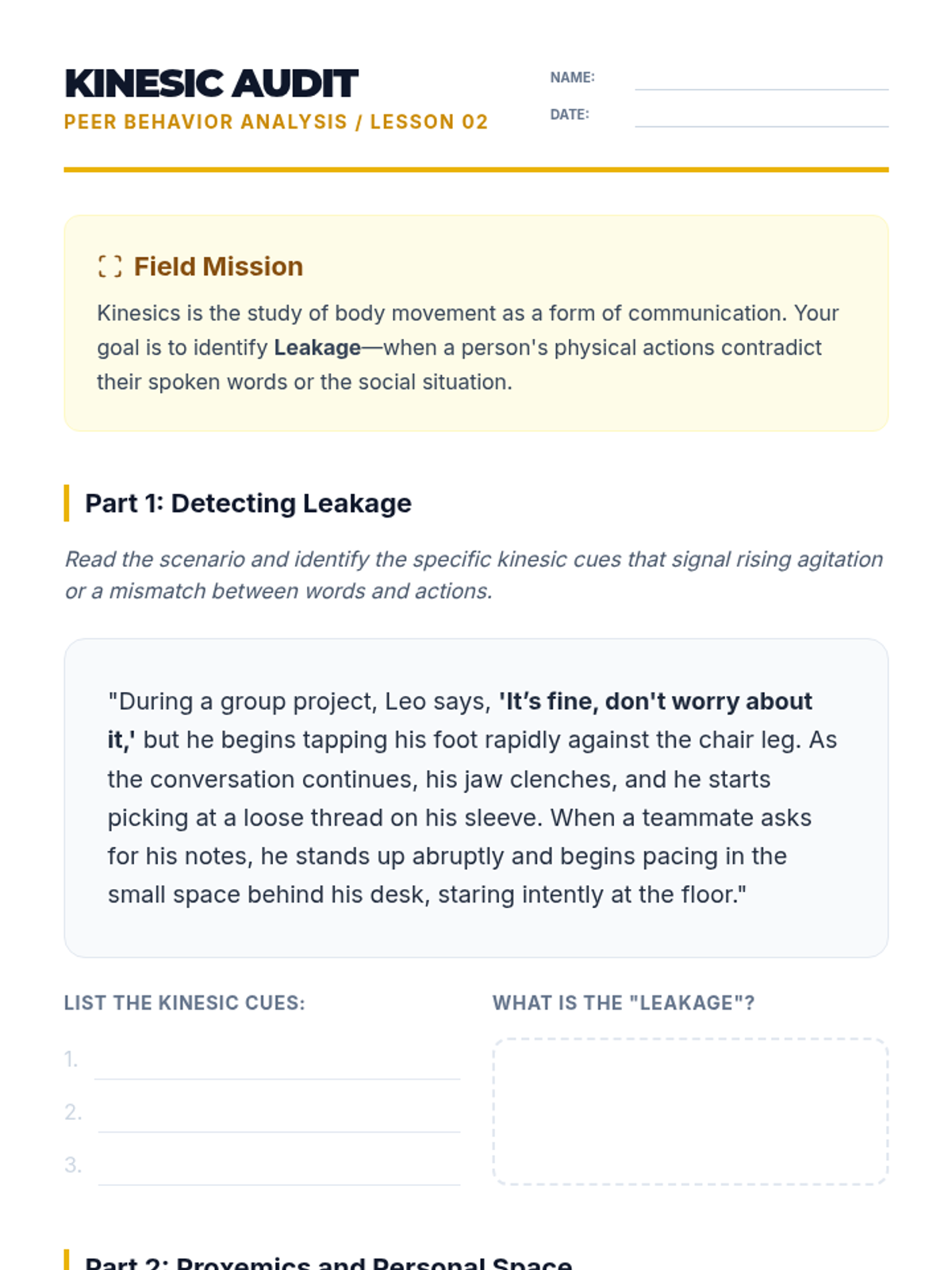
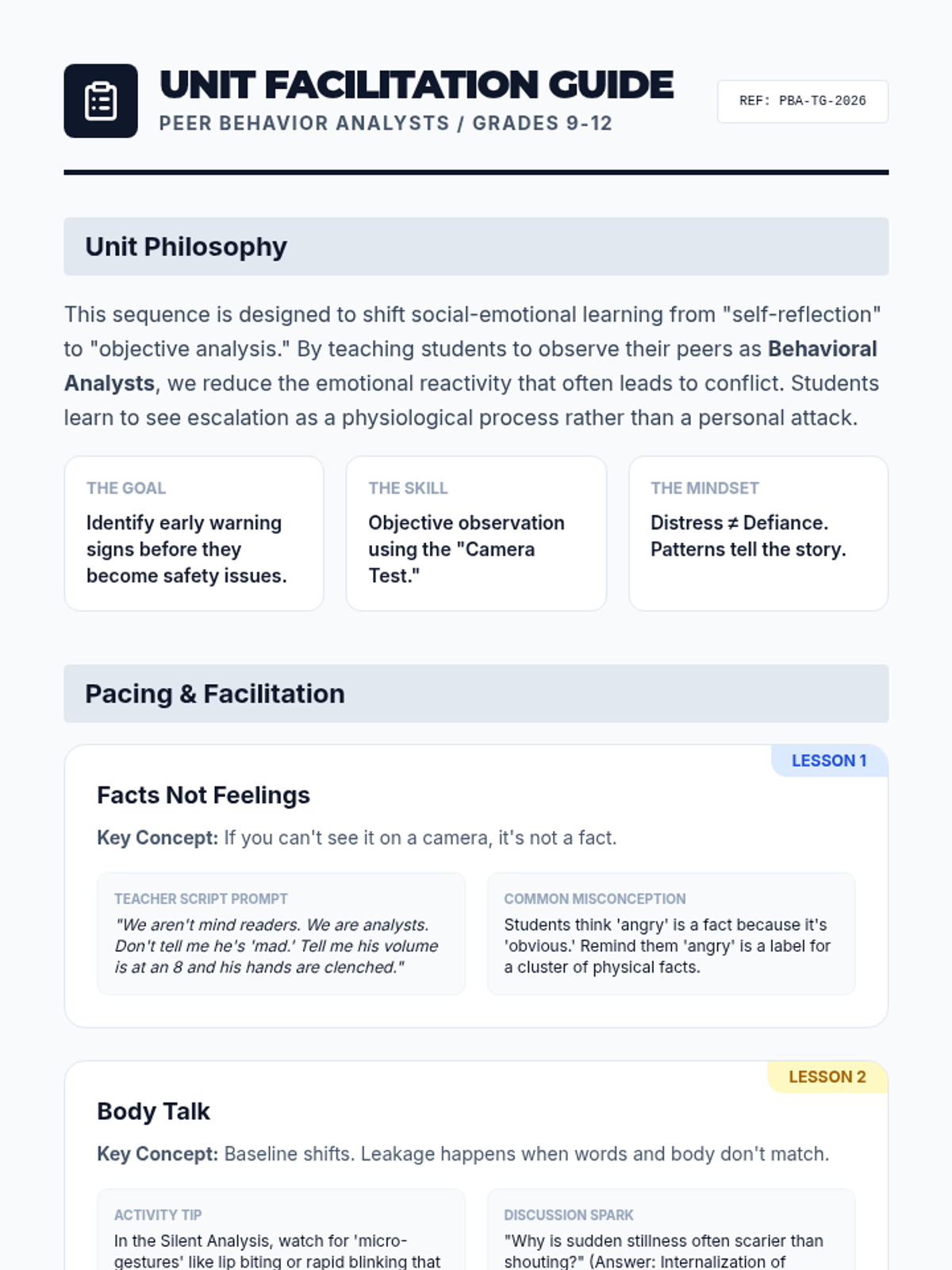
Focuses on gross motor movements that signal agitation and identifying 'leakage'—when body language contradicts spoken words.
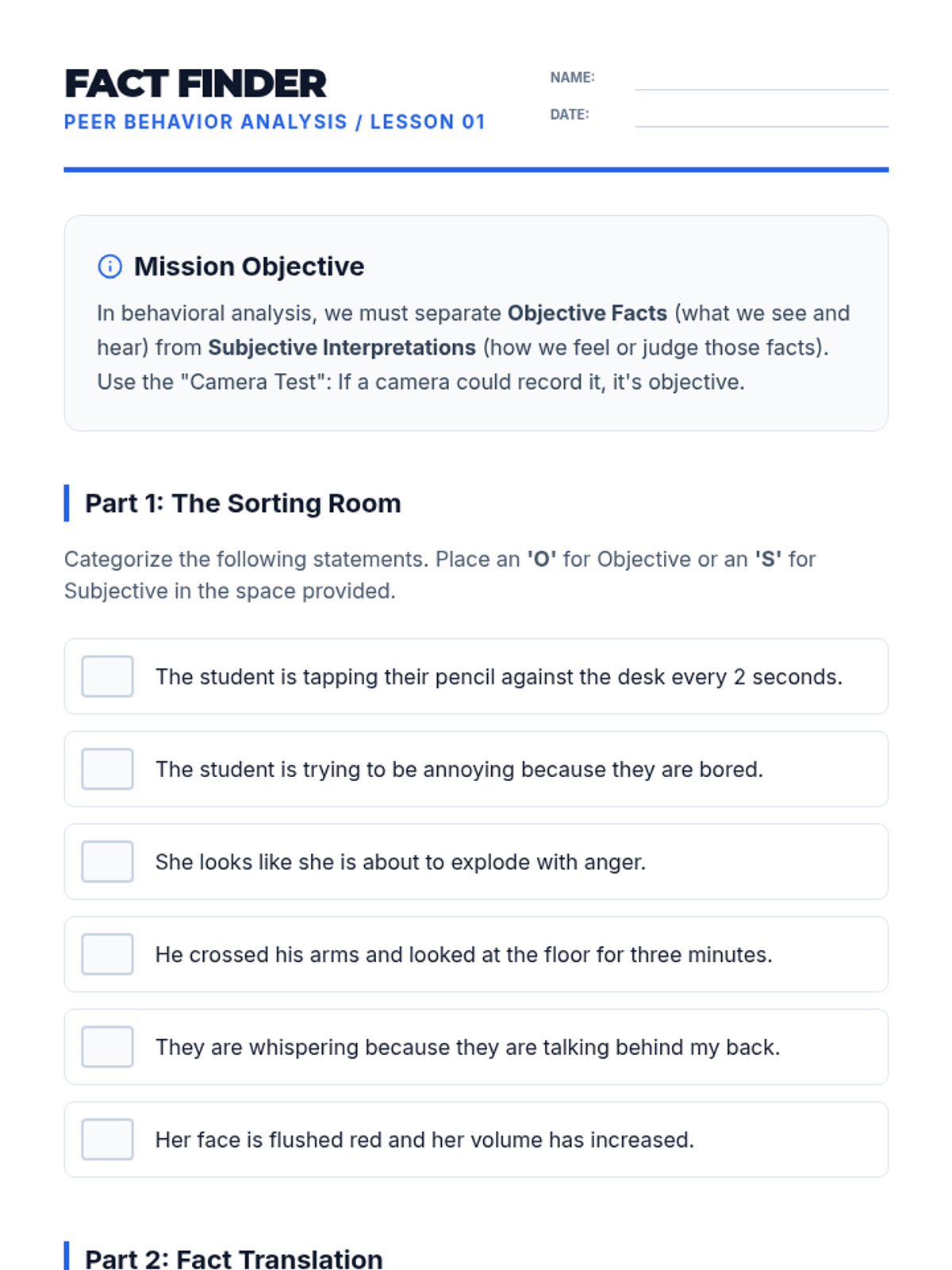
Students learn to distinguish between objective observations (facts) and subjective interpretations (opinions) to ensure accurate behavioral assessment.
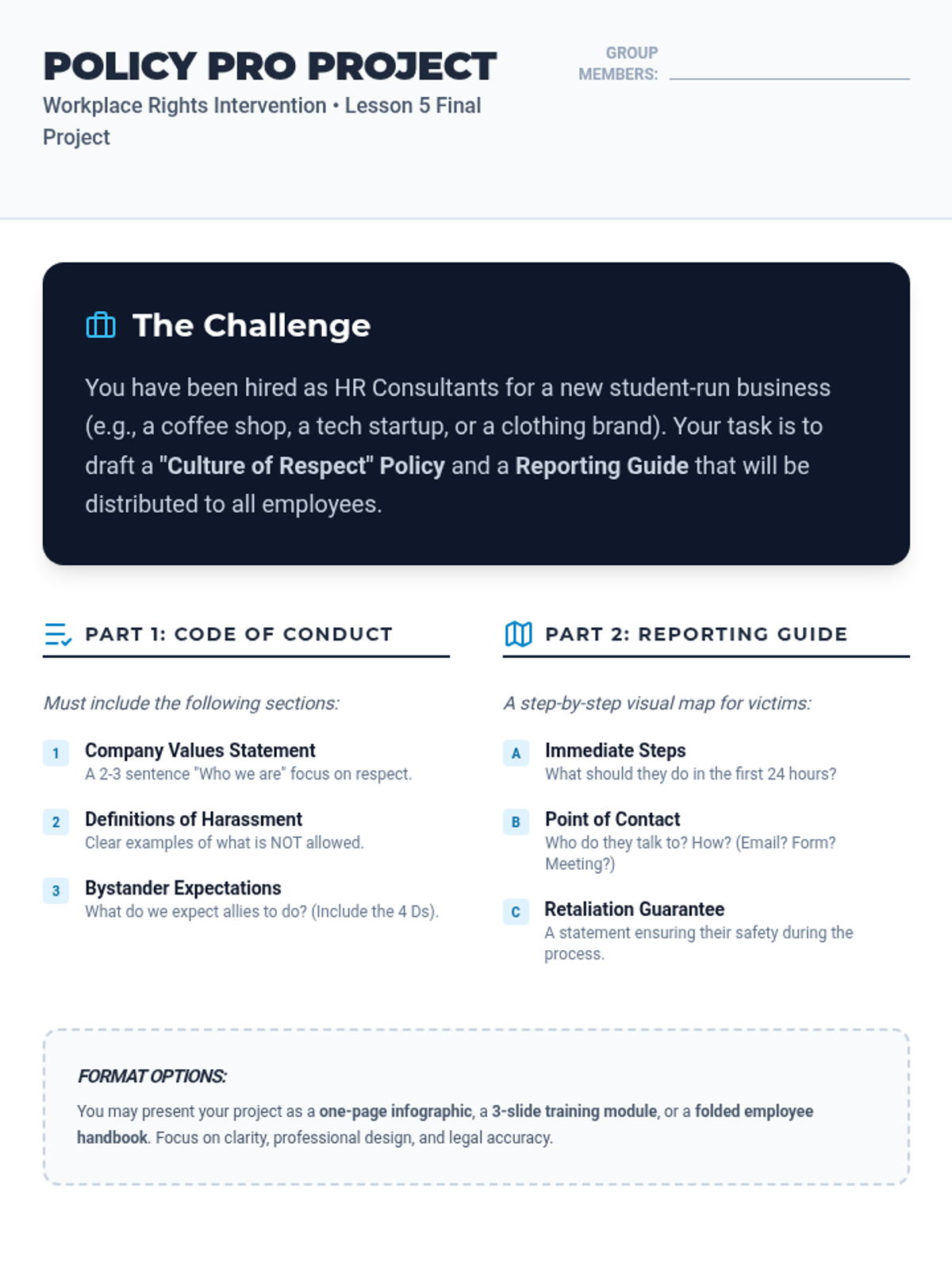
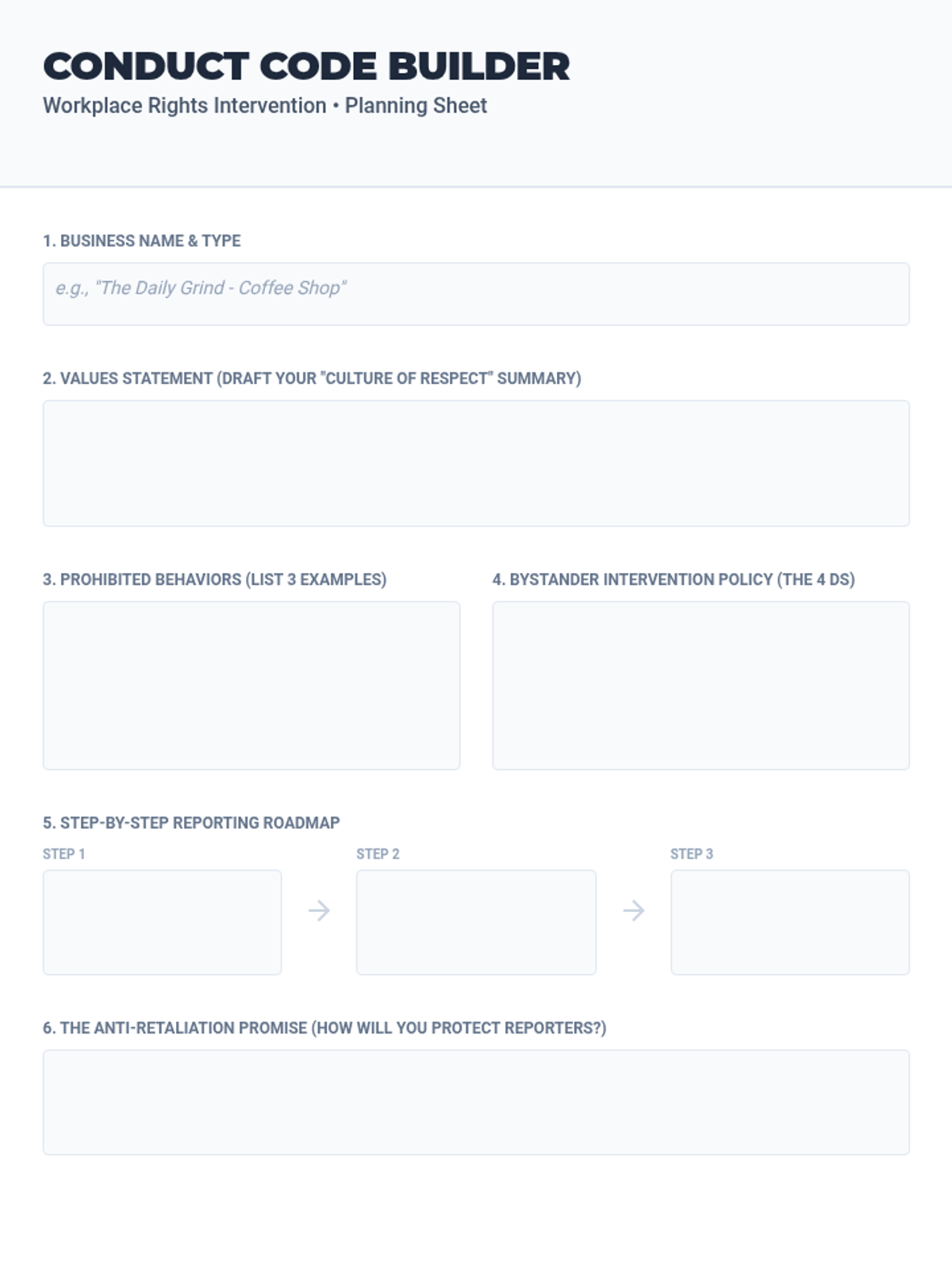
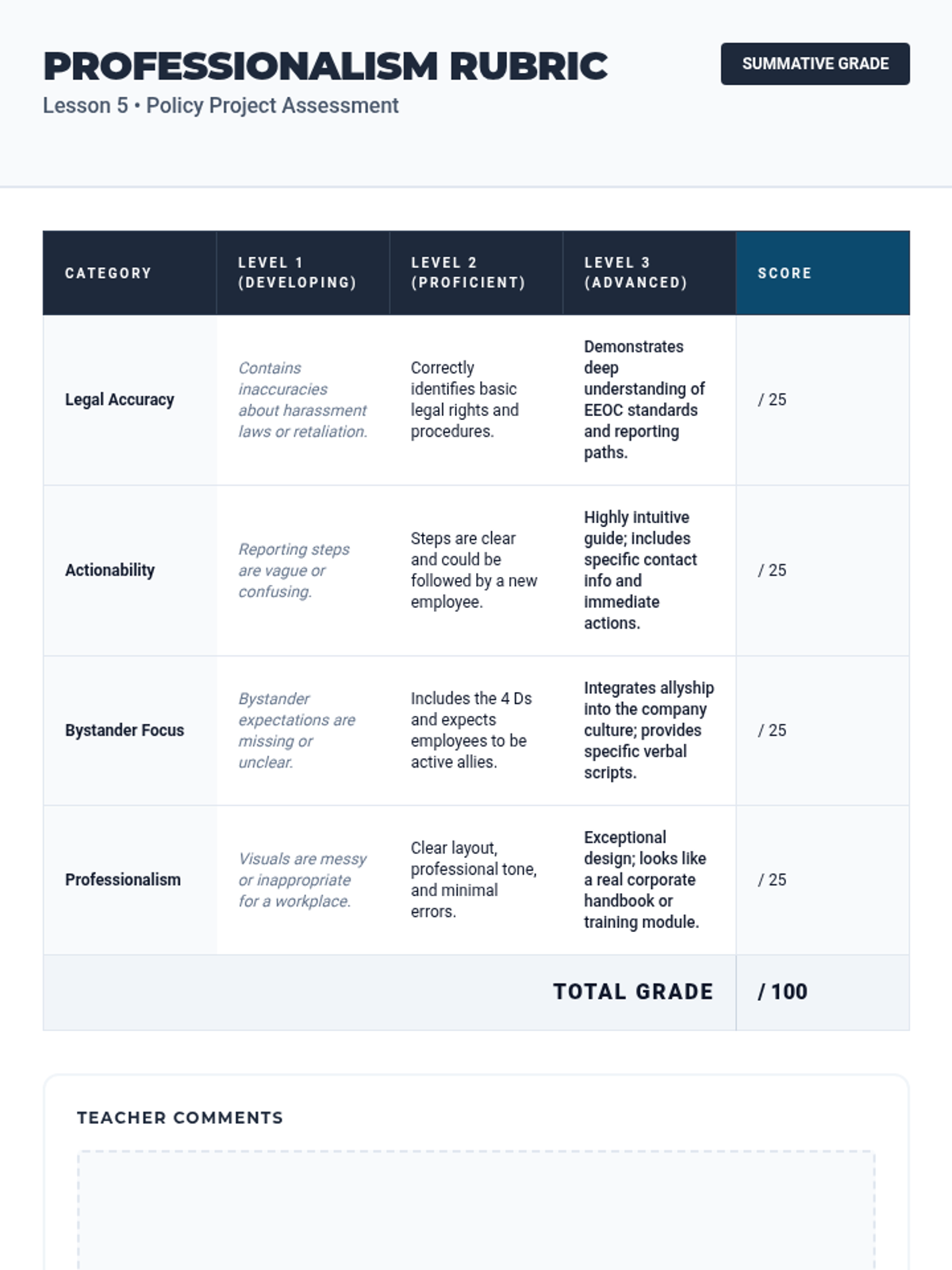
Students work in groups to draft a 'Code of Conduct' and a 'Reporting Guide' for a student-run business or organization, synthesizing all sequence concepts.
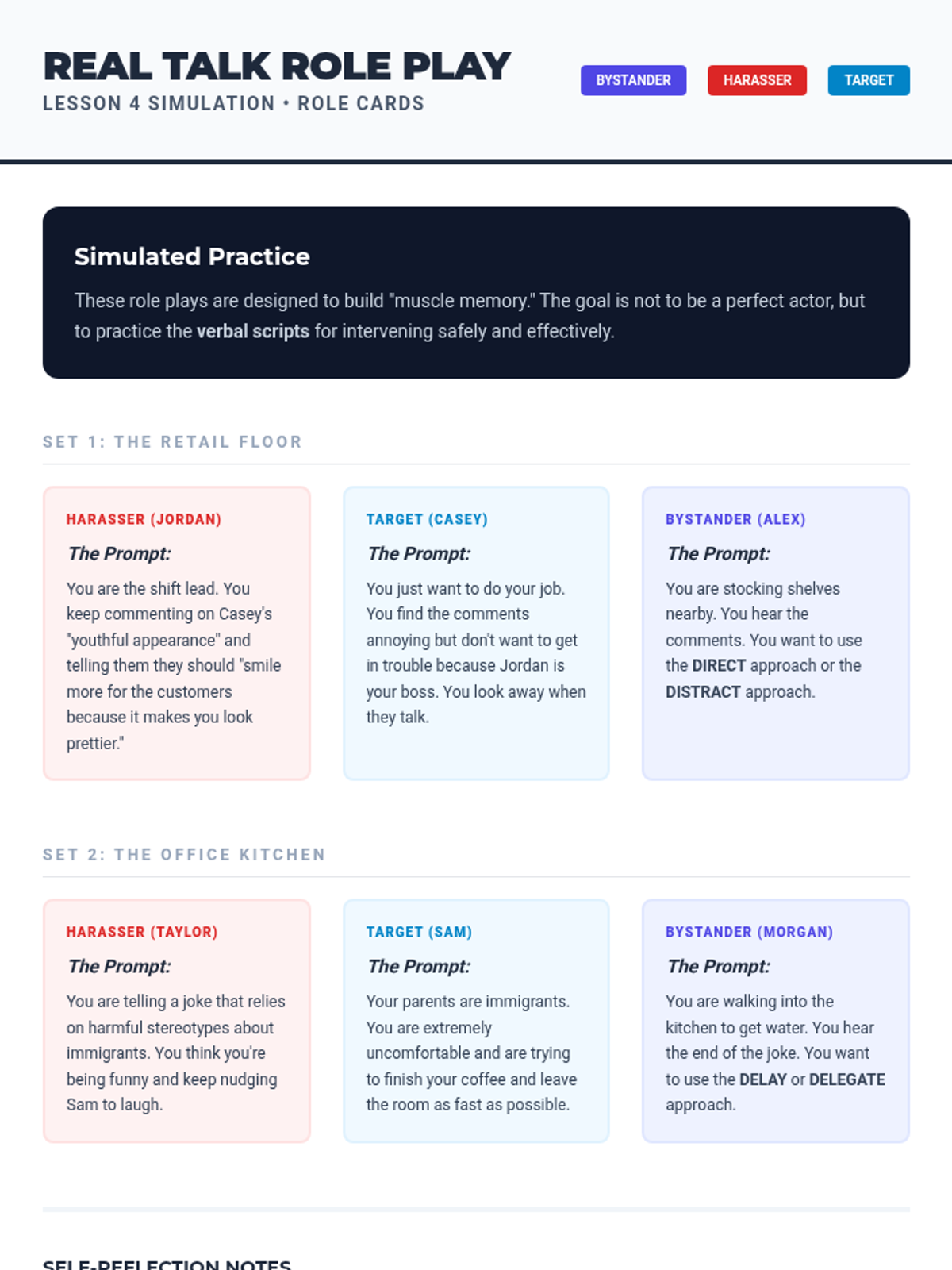
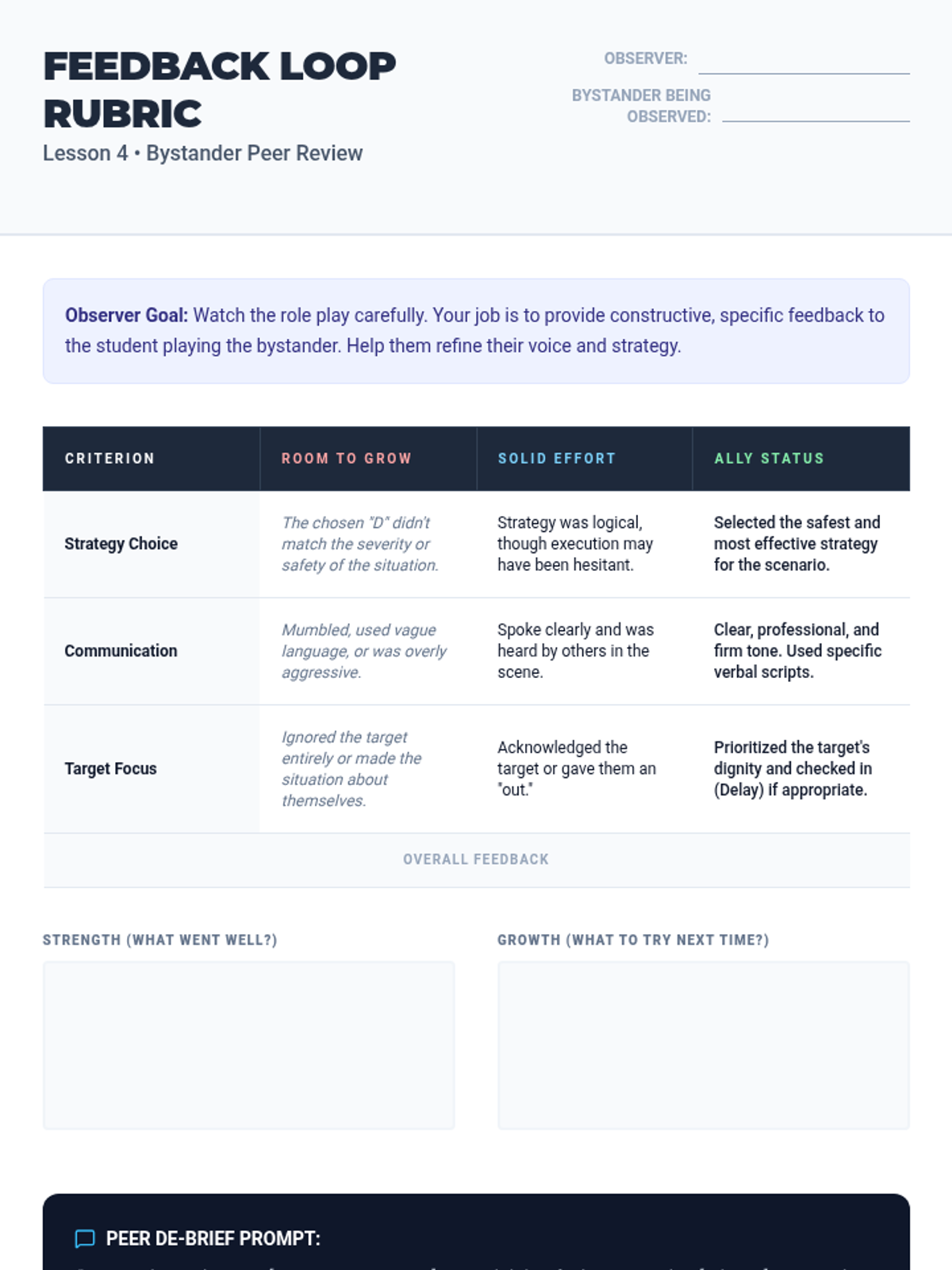
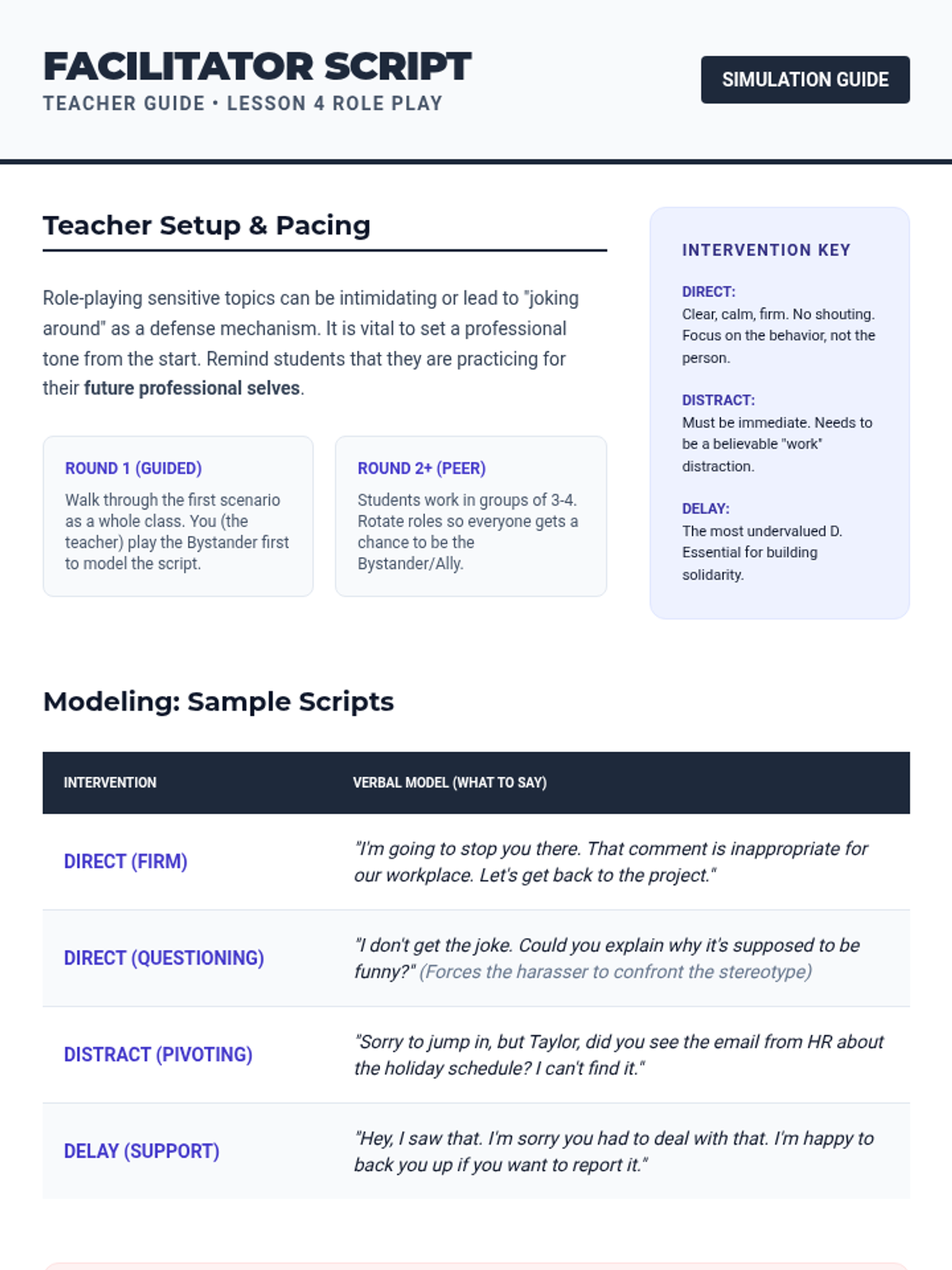
Students engage in structured role-plays to practice the intervention strategies learned. They take turns acting as the target, the harasser, and the bystander.
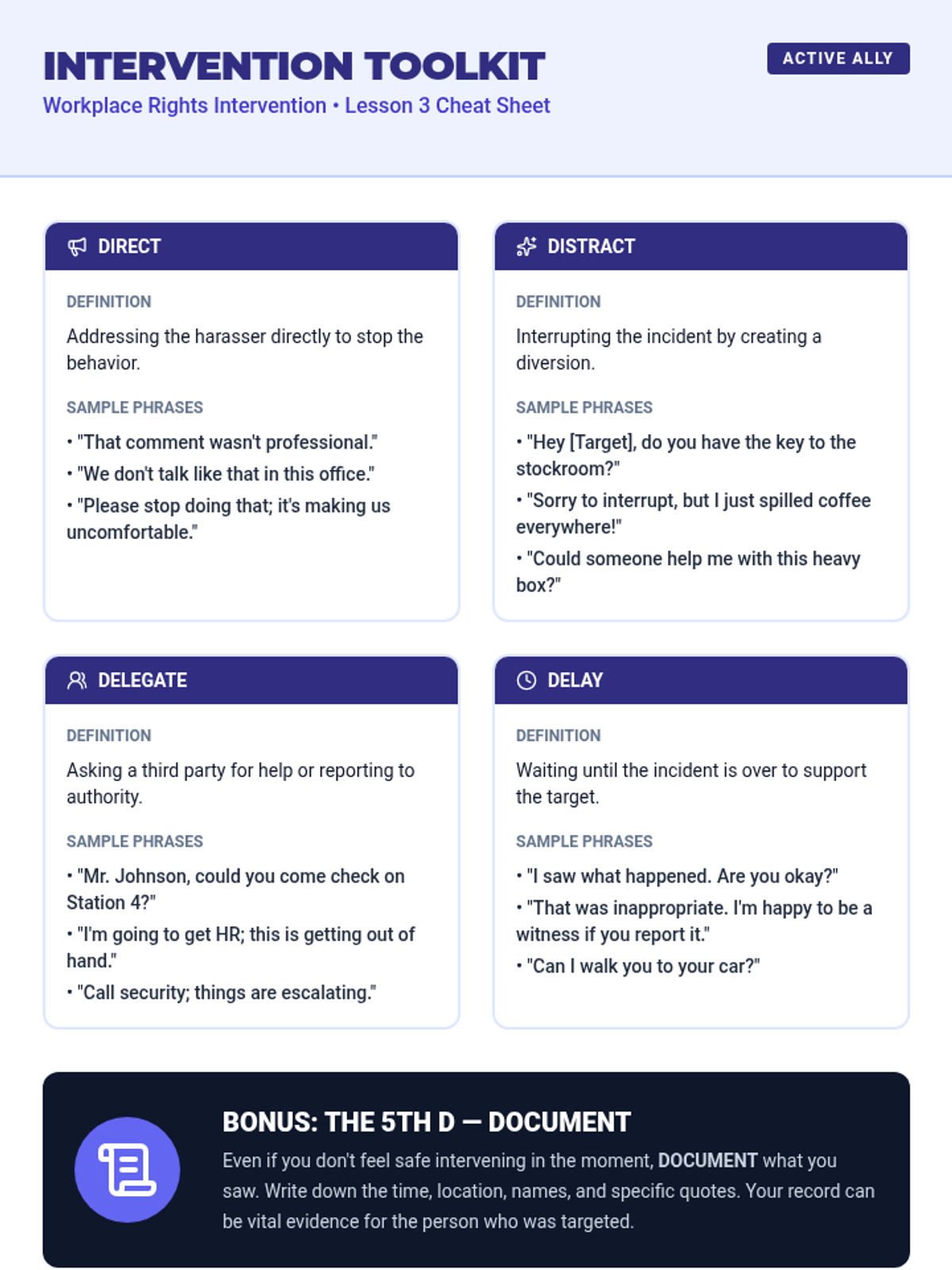
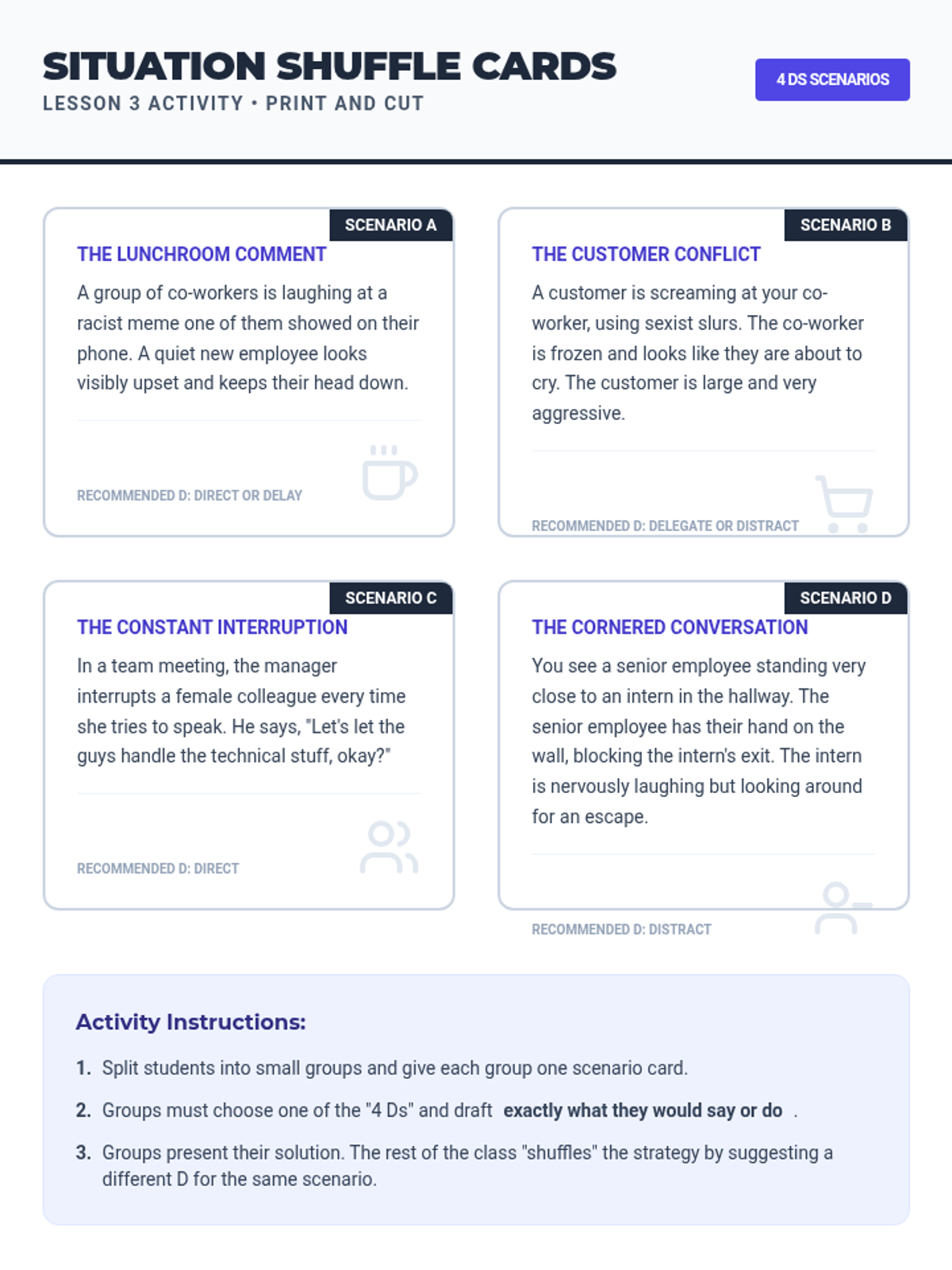
Students are introduced to the '4 Ds' of bystander intervention: Direct, Distract, Delegate, and Delay. They analyze scenarios to determine the best intervention strategy.
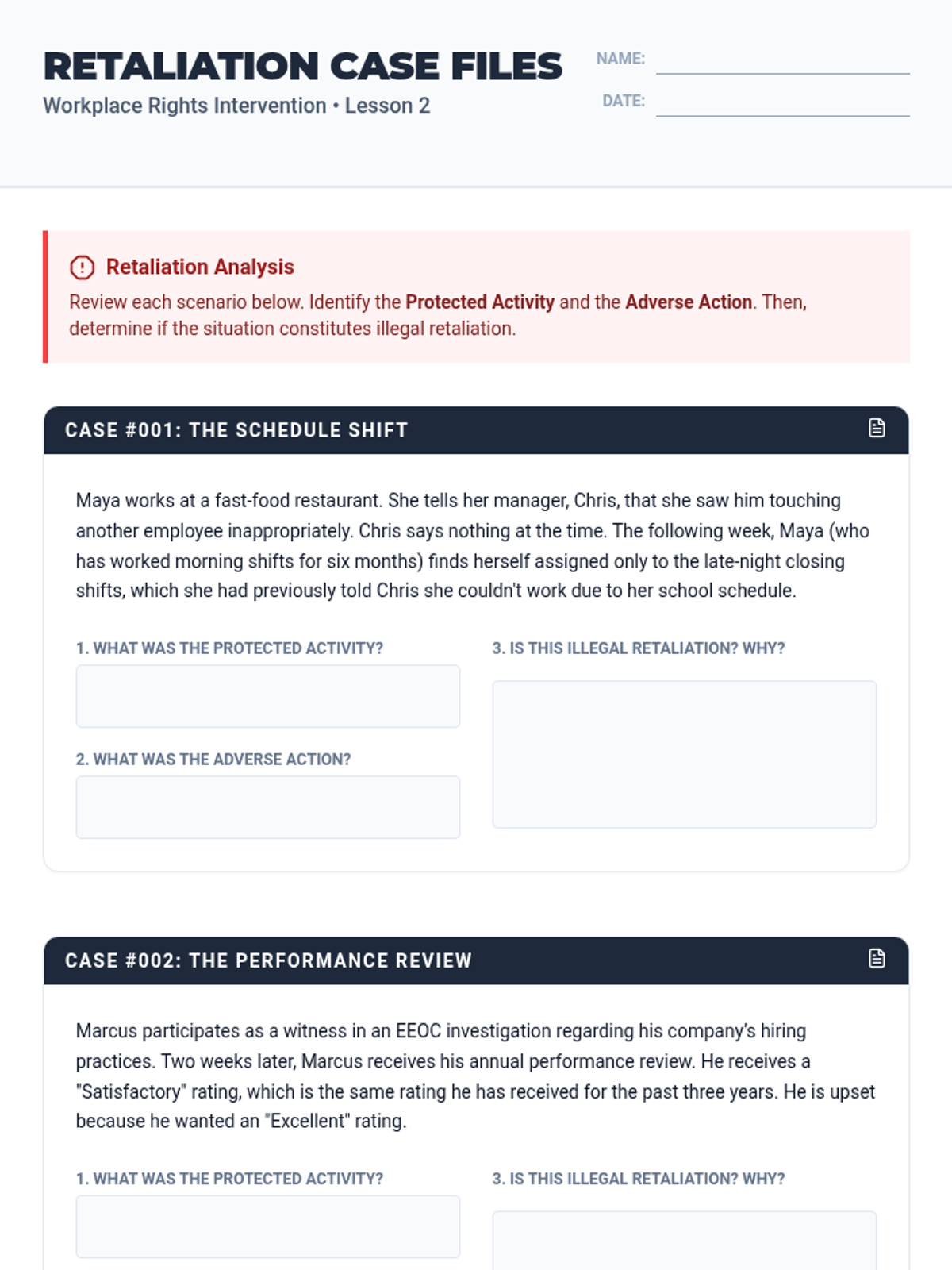
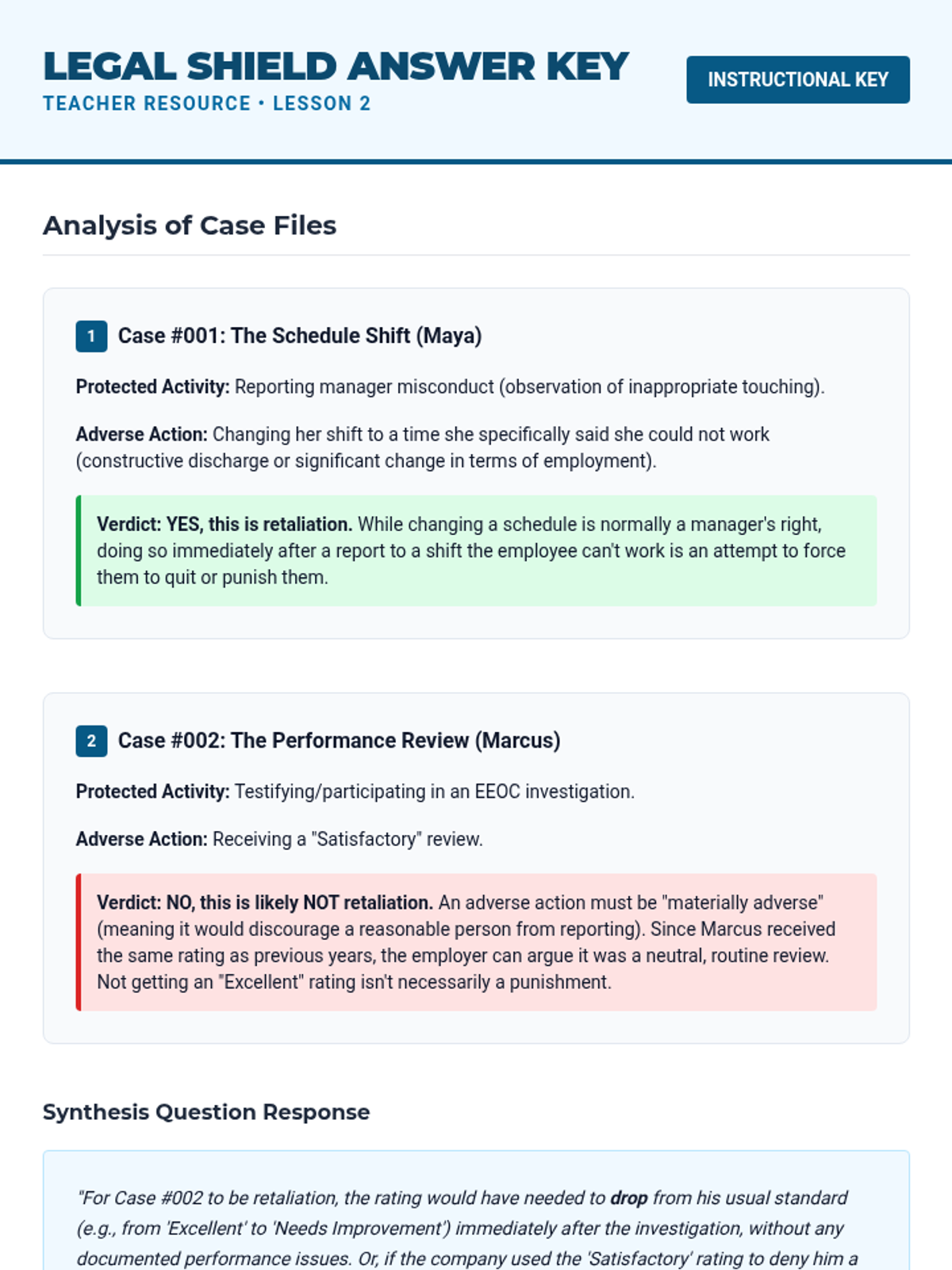
This lesson covers the legal protections for employees who report misconduct, focusing on the concept of 'retaliation' and identify which actions constitute illegal retaliation.
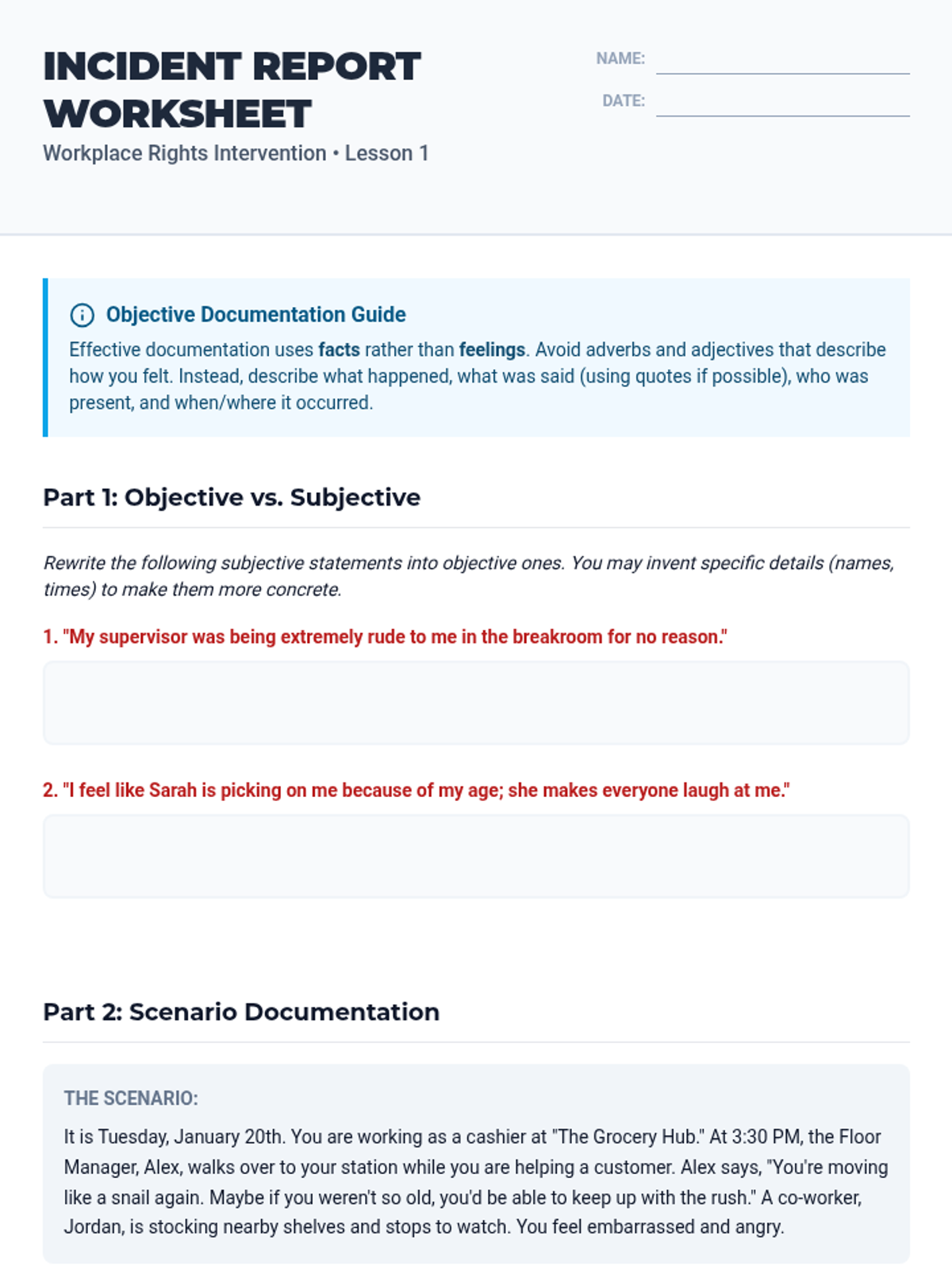
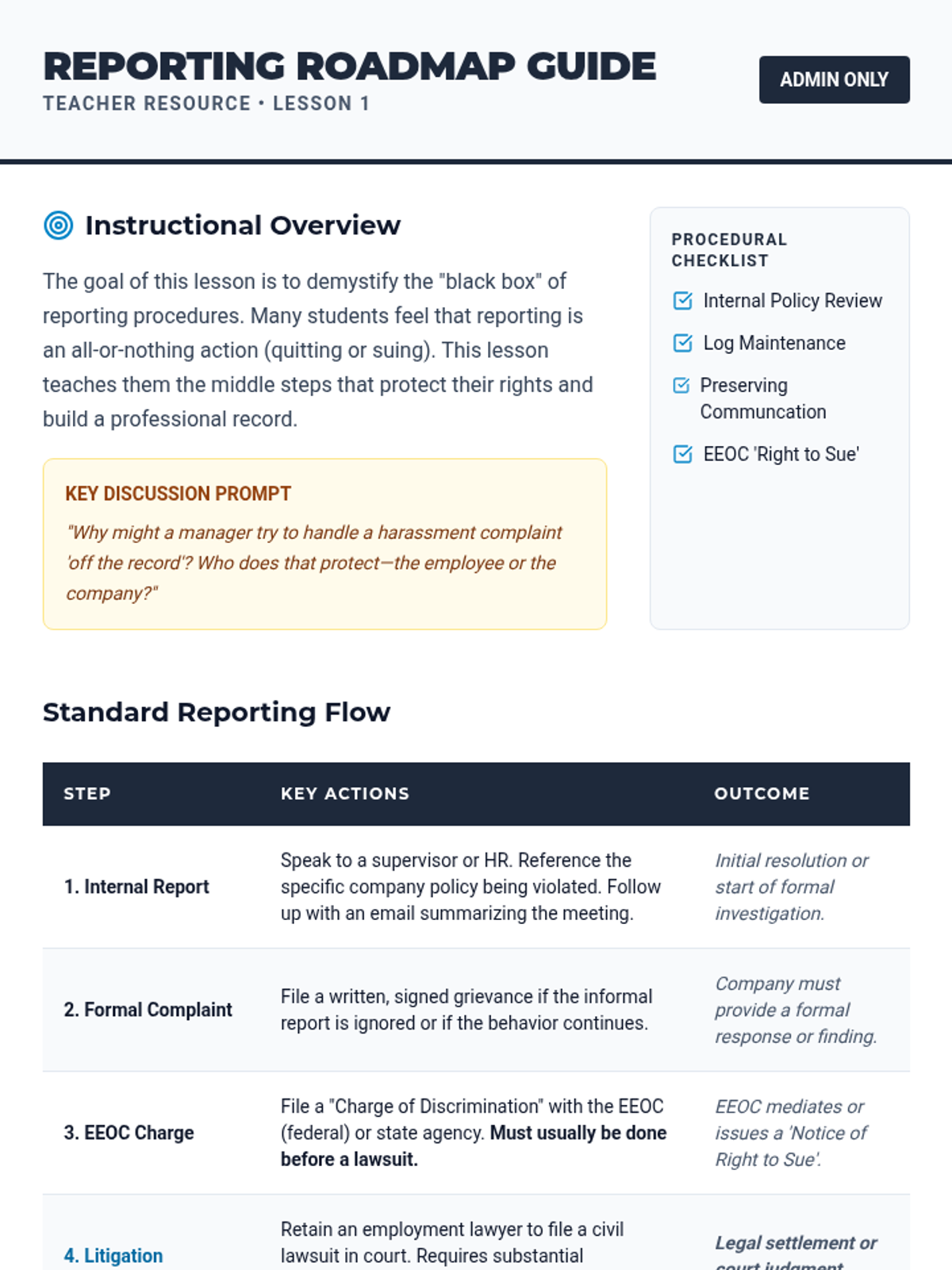
Students learn the standard procedures for reporting harassment, including internal HR complaints and external EEOC filings. They practice the skill of objective documentation.
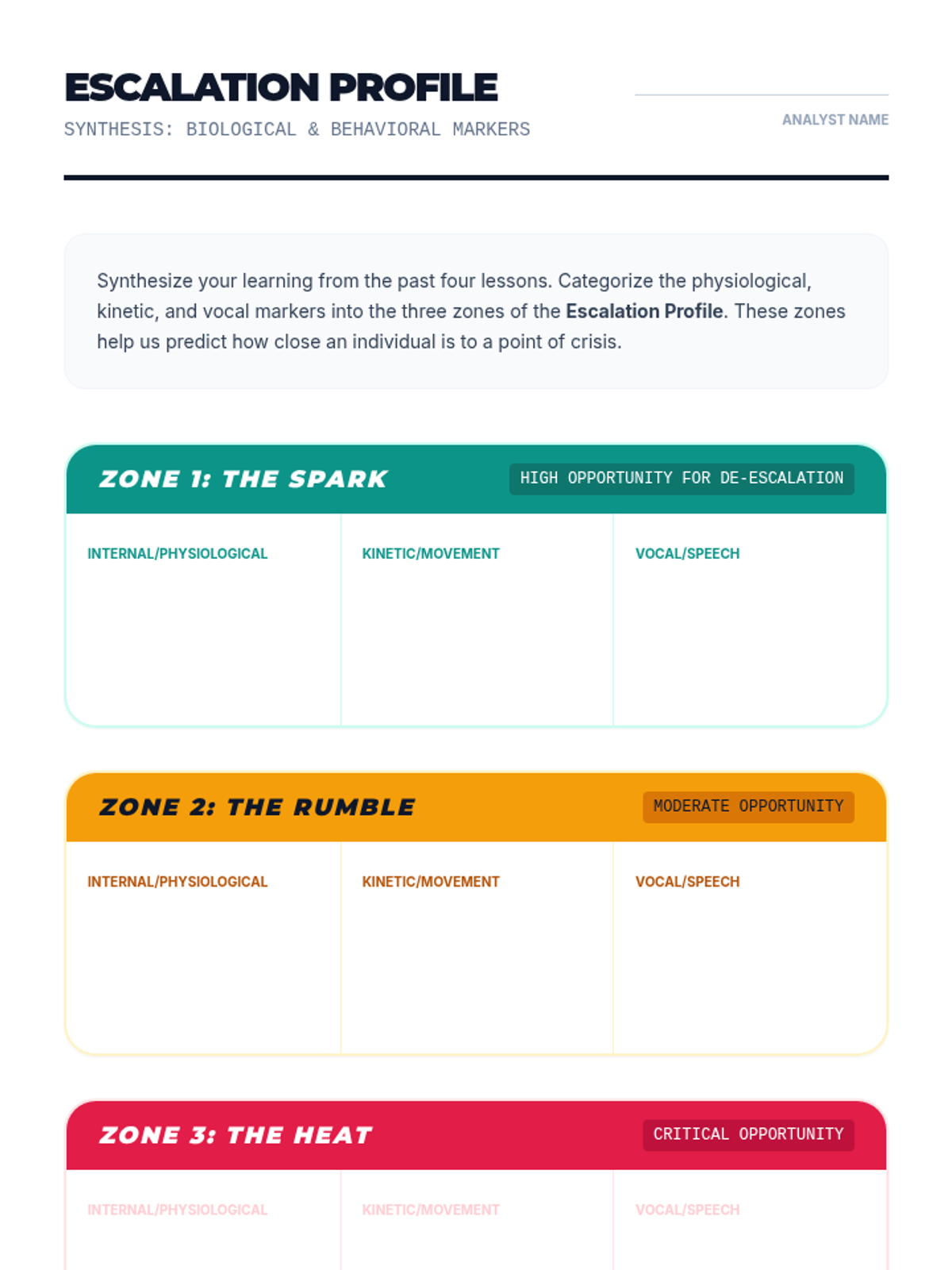
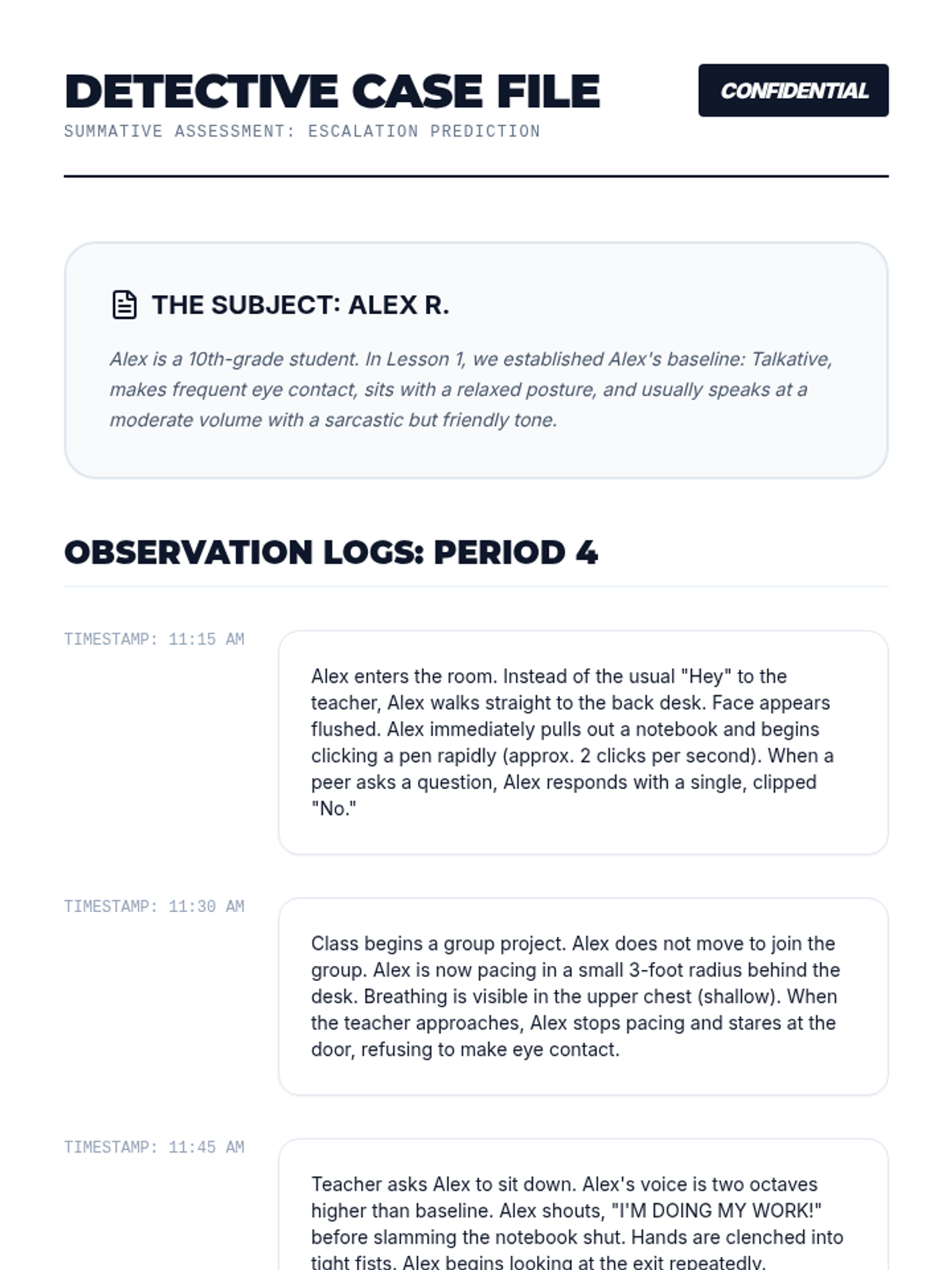
Students synthesize their learning to create a generalized 'Escalation Profile' and apply it to a complex case study to predict escalation before a crisis occurs.
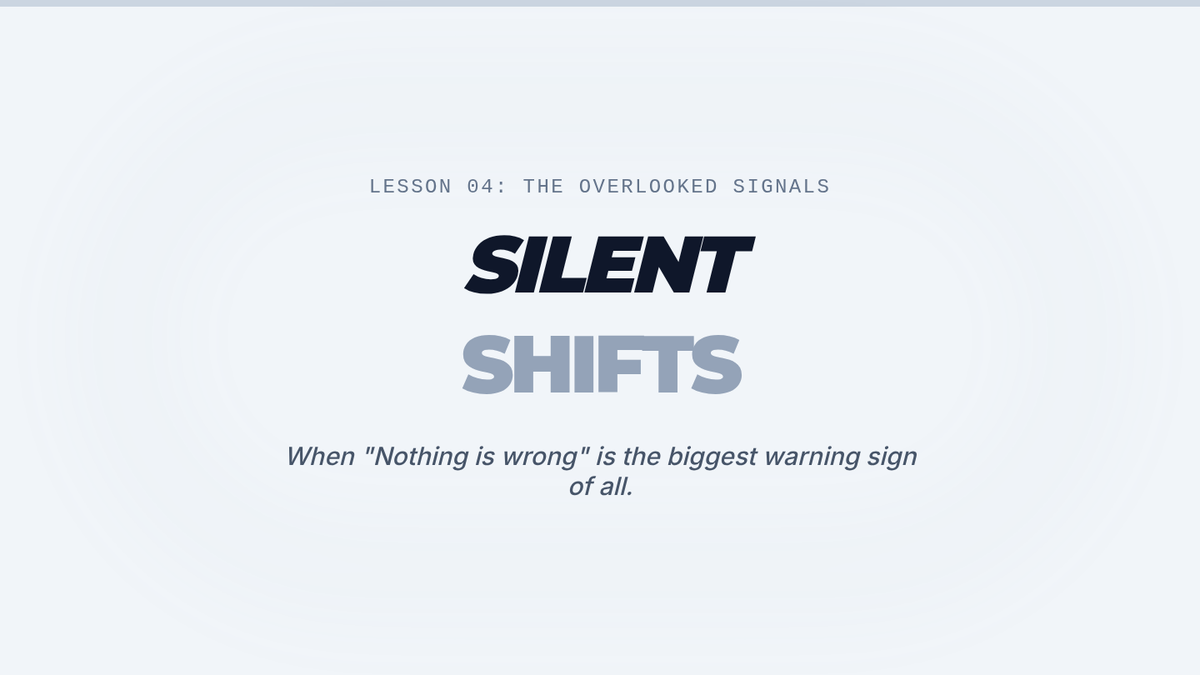
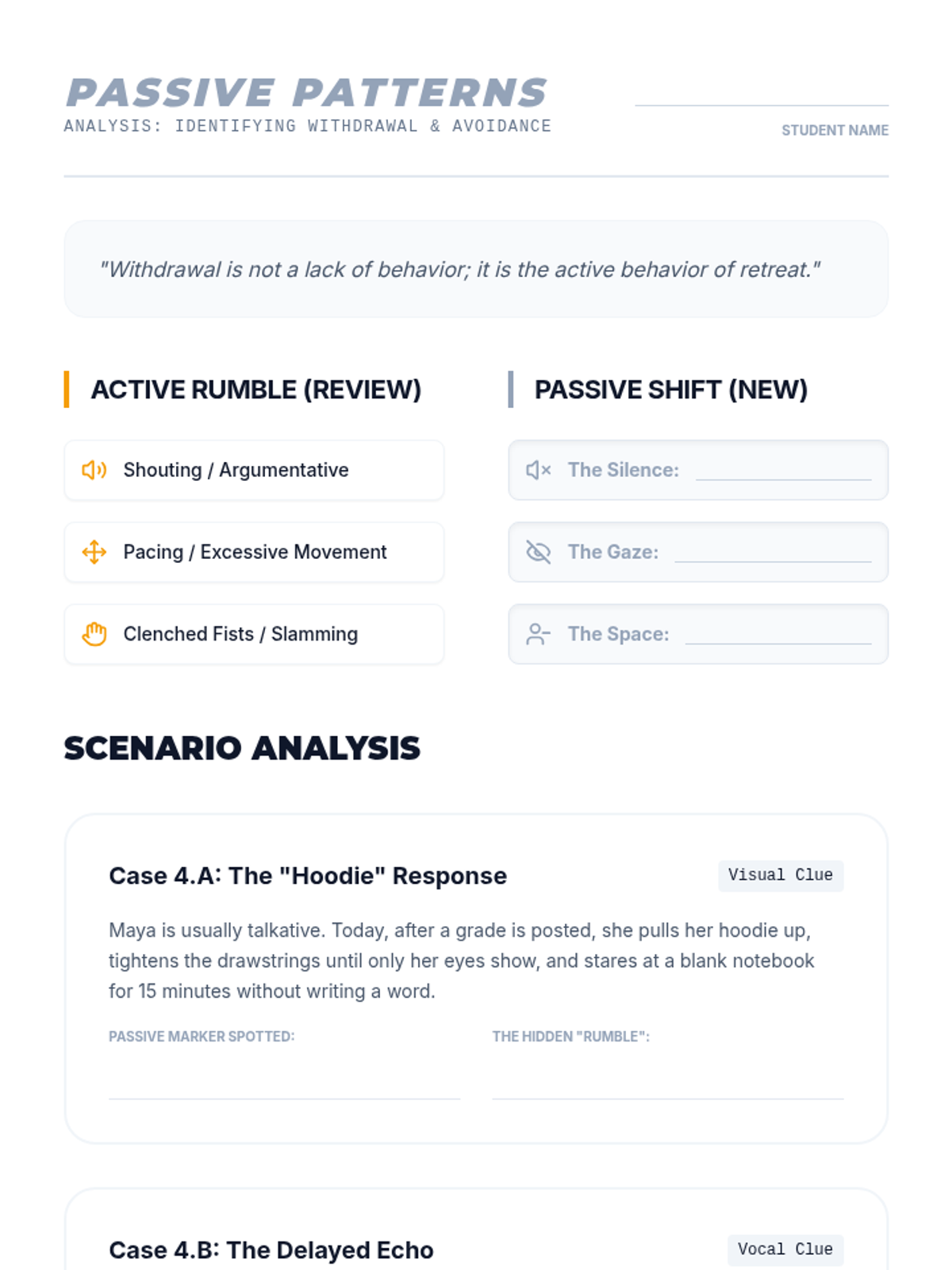
This lesson addresses 'freeze' or 'flight' responses, such as shutting down, avoiding eye contact, or isolating, teaching students that silence can be a warning sign.
Students analyze active indicators of escalation, specifically focusing on changes in movement (pacing) and vocal qualities (volume, cadence, tone).
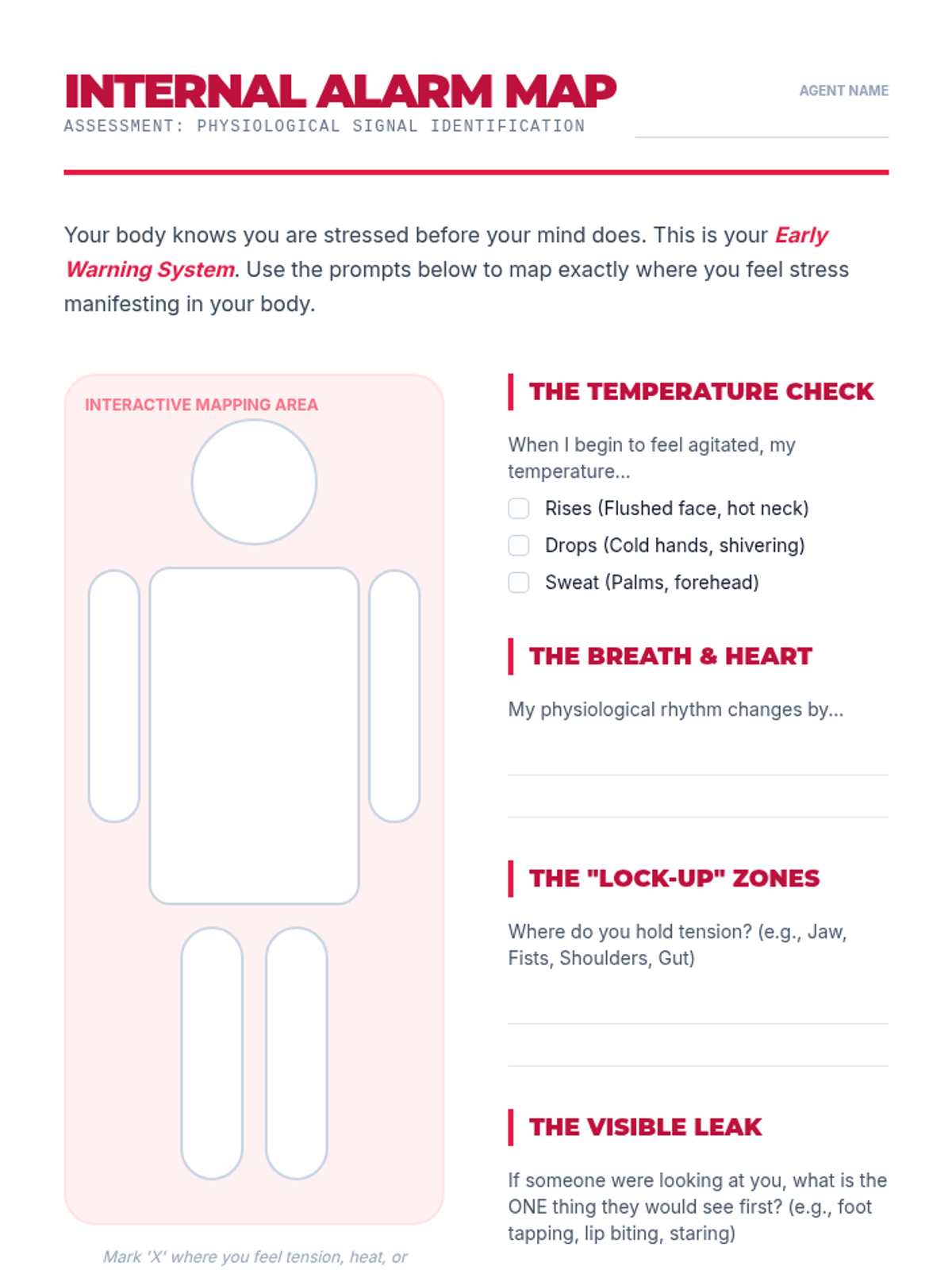
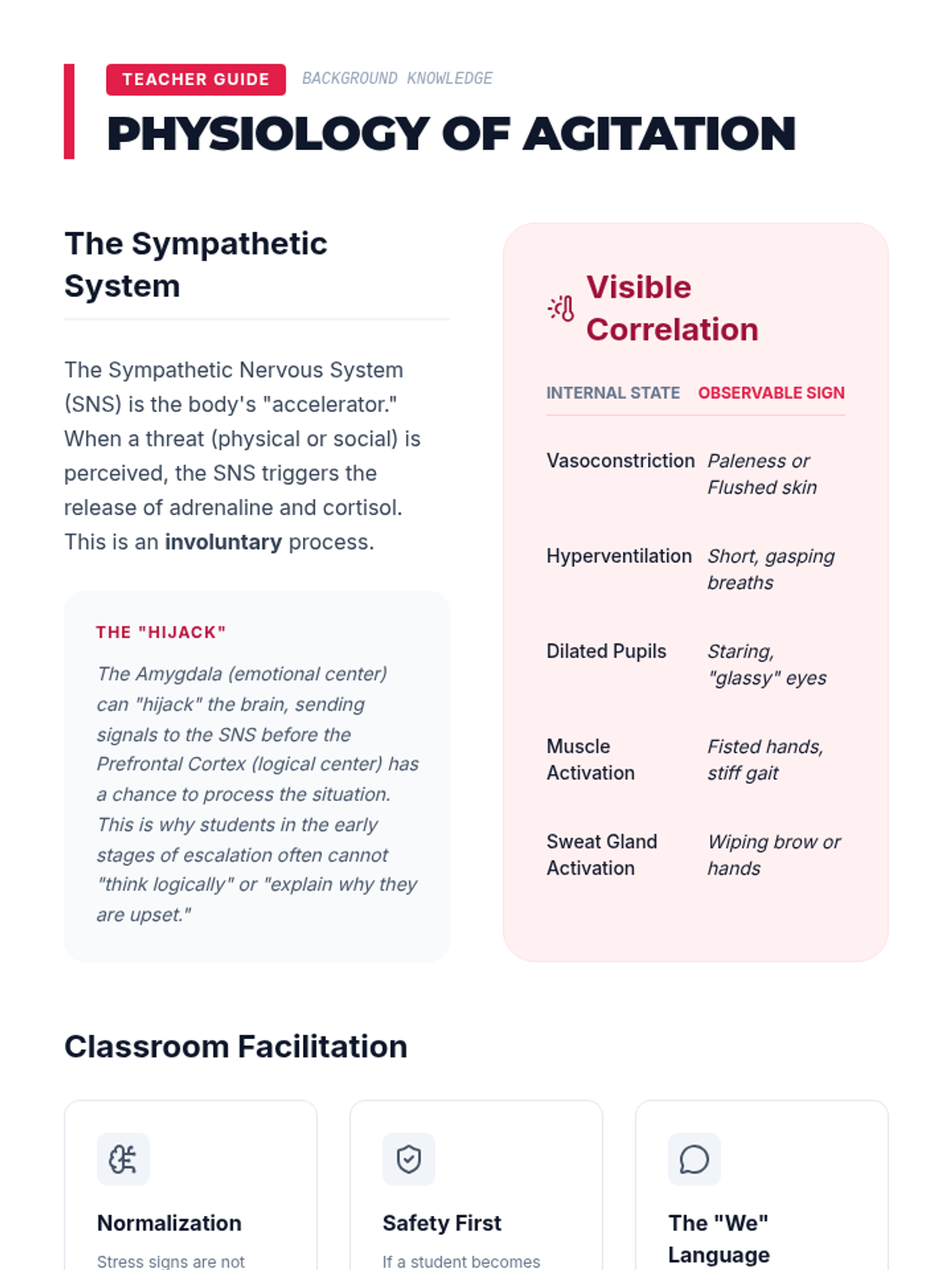
This lesson focuses on the sympathetic nervous system's response to agitation and how internal states like rapid breathing and muscle tension become visible external markers.
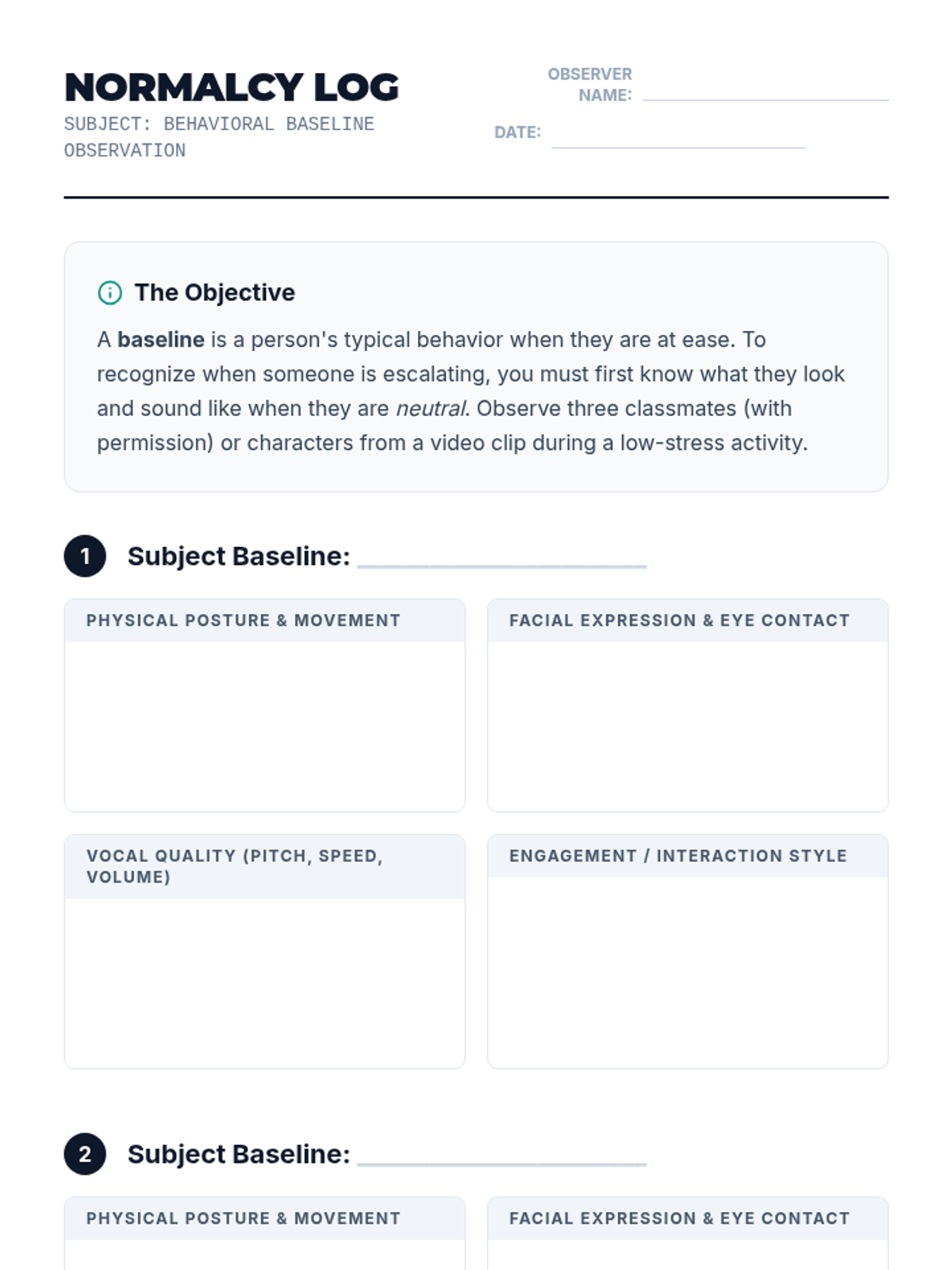
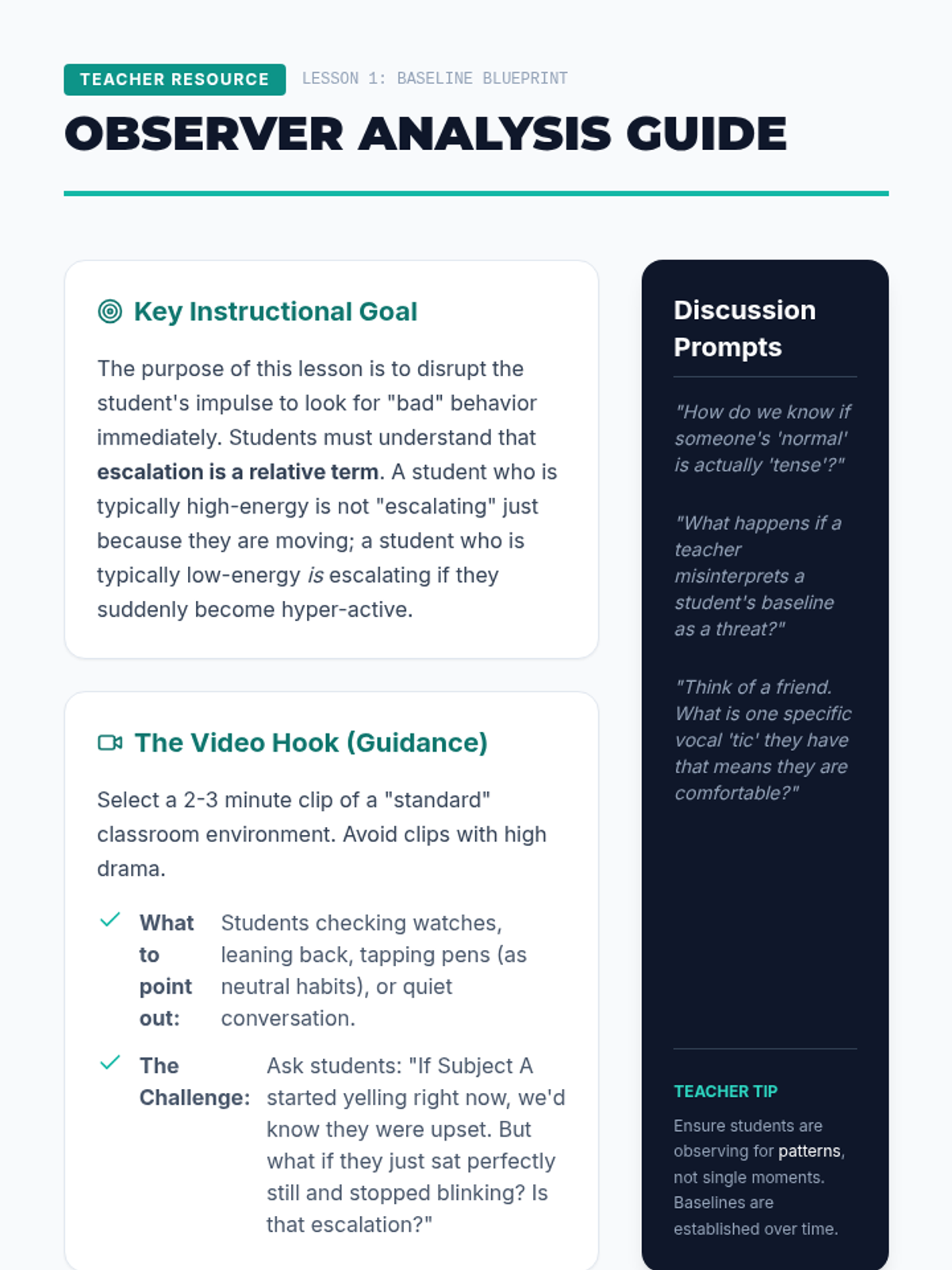
Students learn the concept of 'baseline behavior' as a prerequisite for recognizing escalation by documenting typical behaviors, speech patterns, and body language in a neutral state.
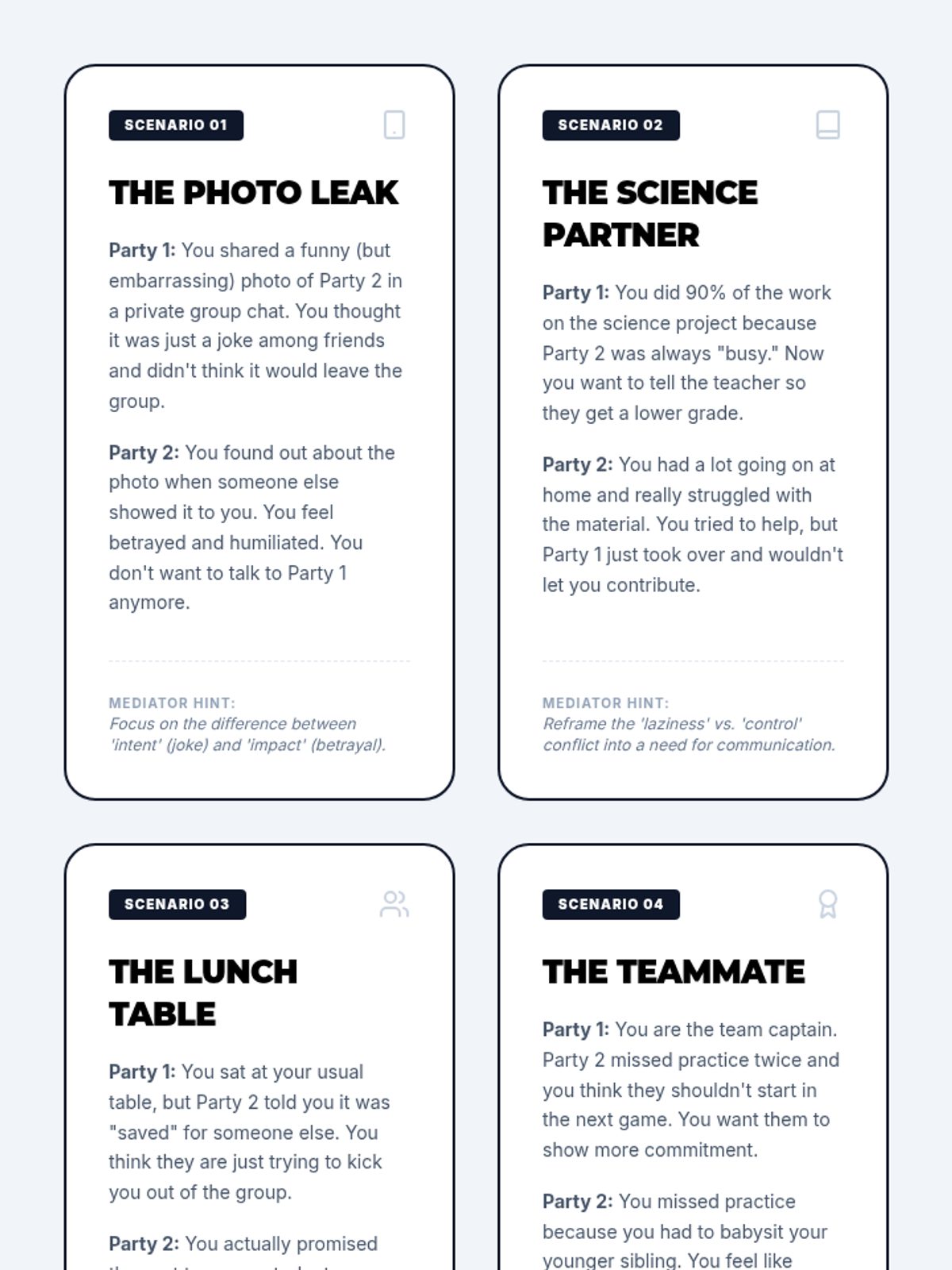
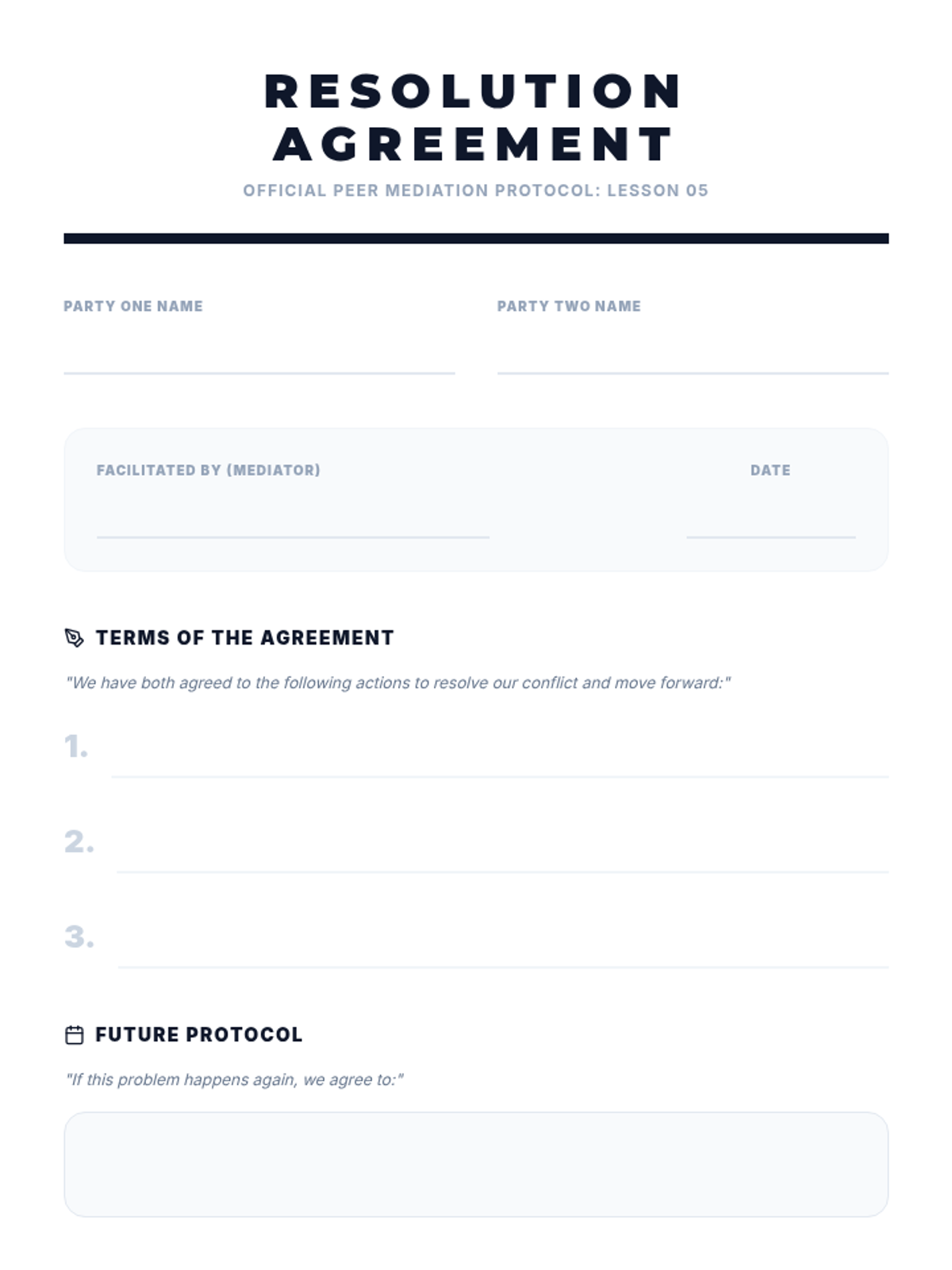
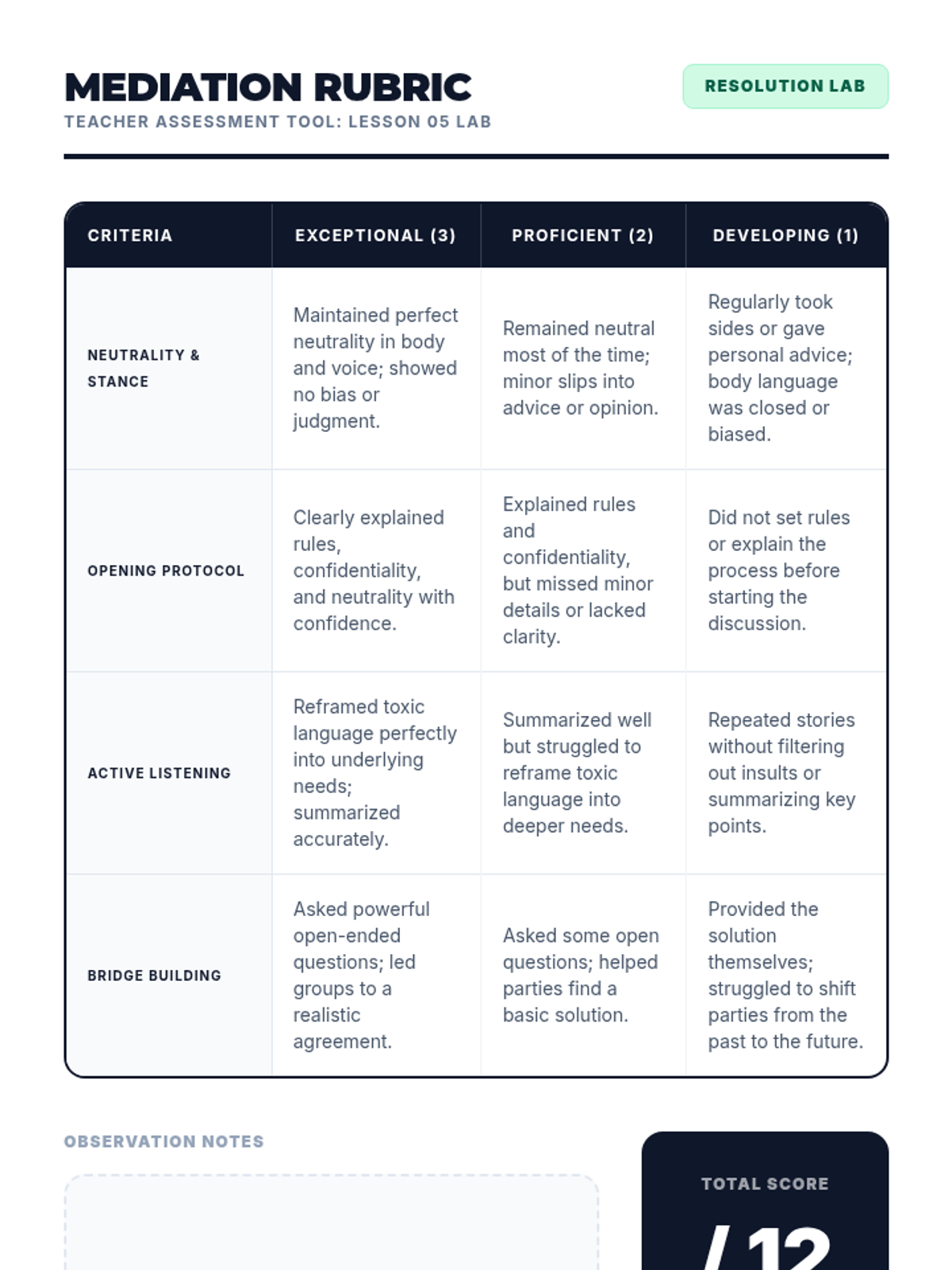
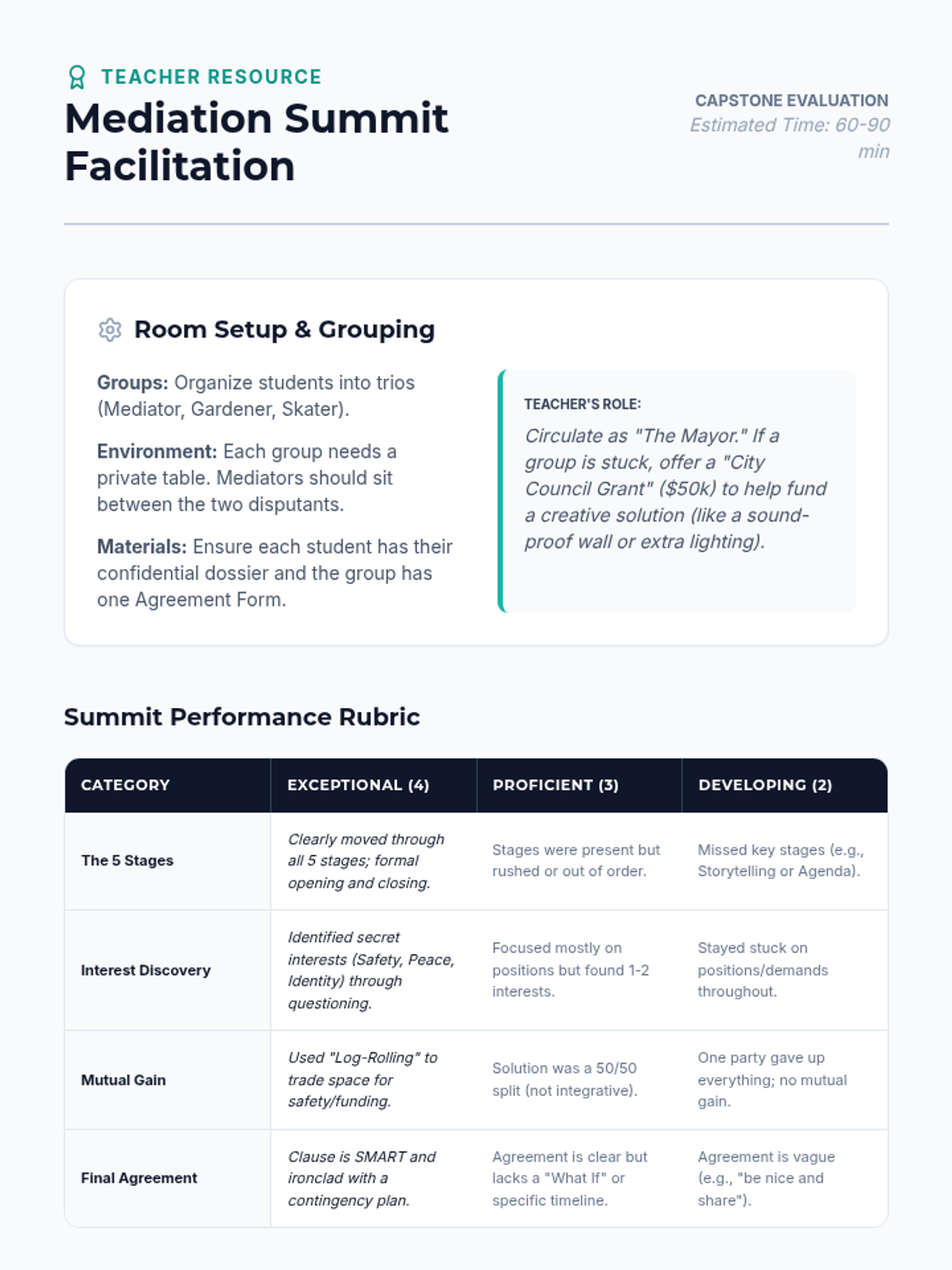
A culminating mock mediation simulation where students apply the full protocol—from opening statements to written agreements—using realistic middle school scenarios.
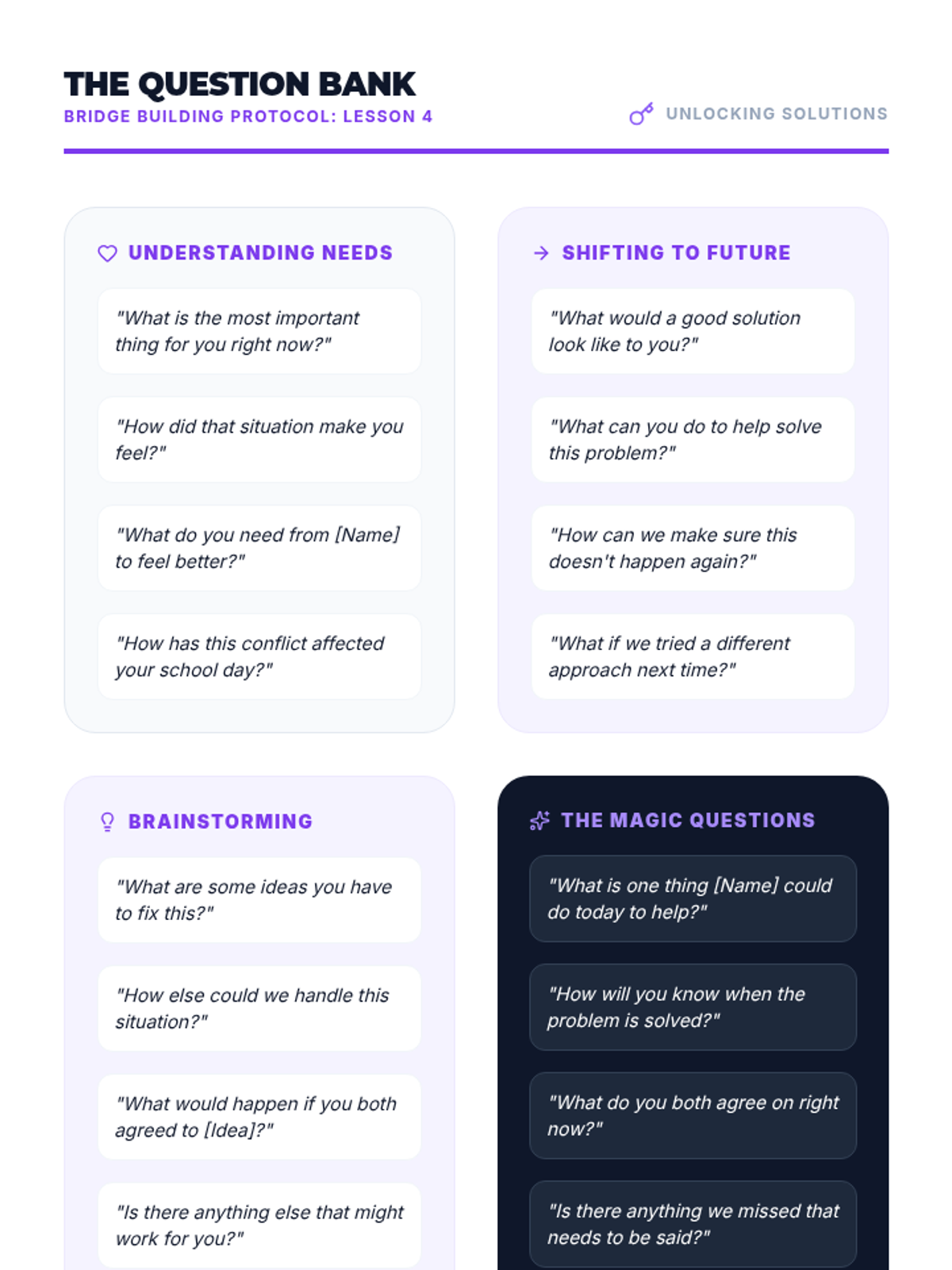
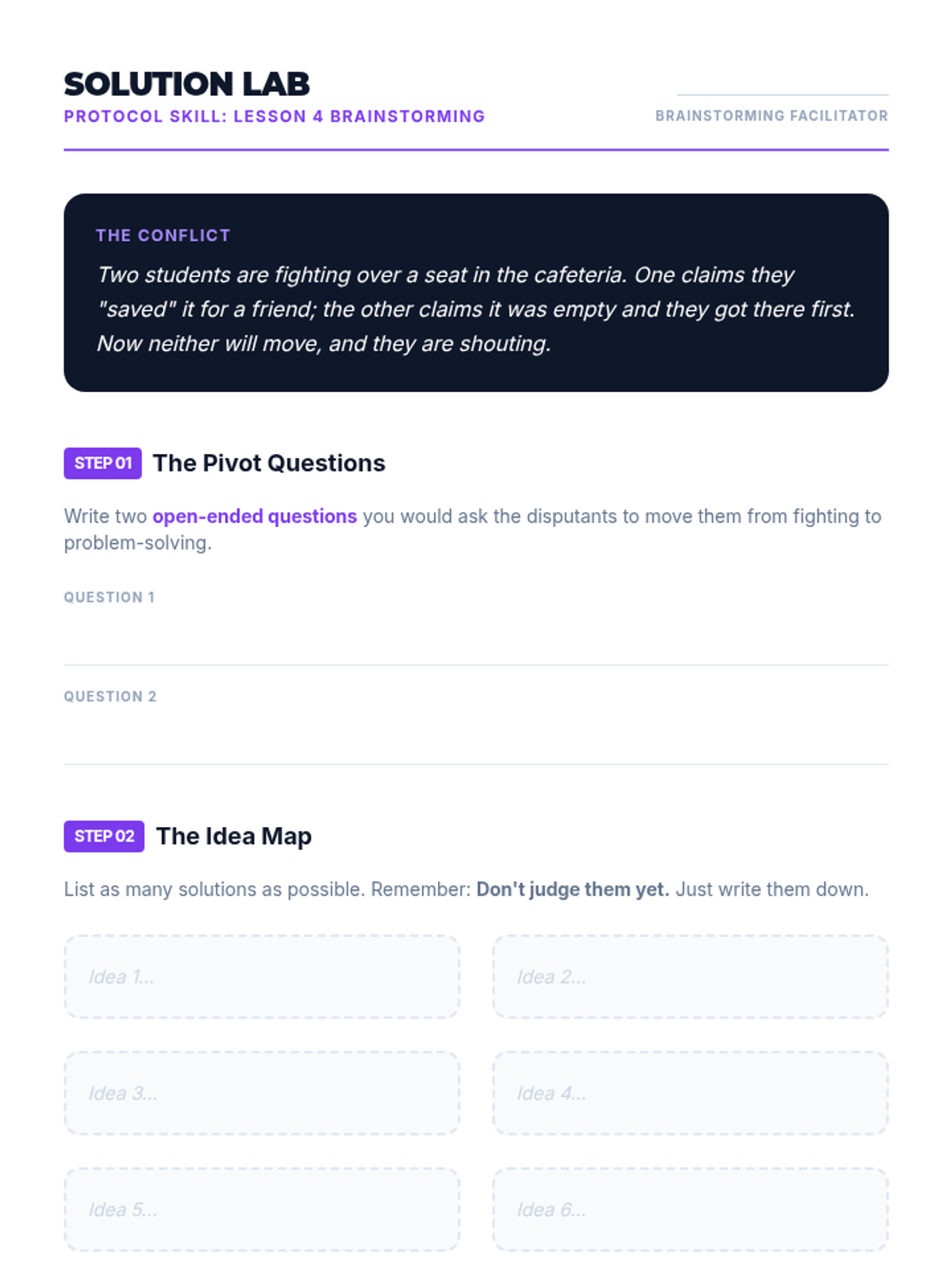
Focused on shifting from conflict to collaboration, students practice asking open-ended questions that prompt disputants to generate their own creative solutions.
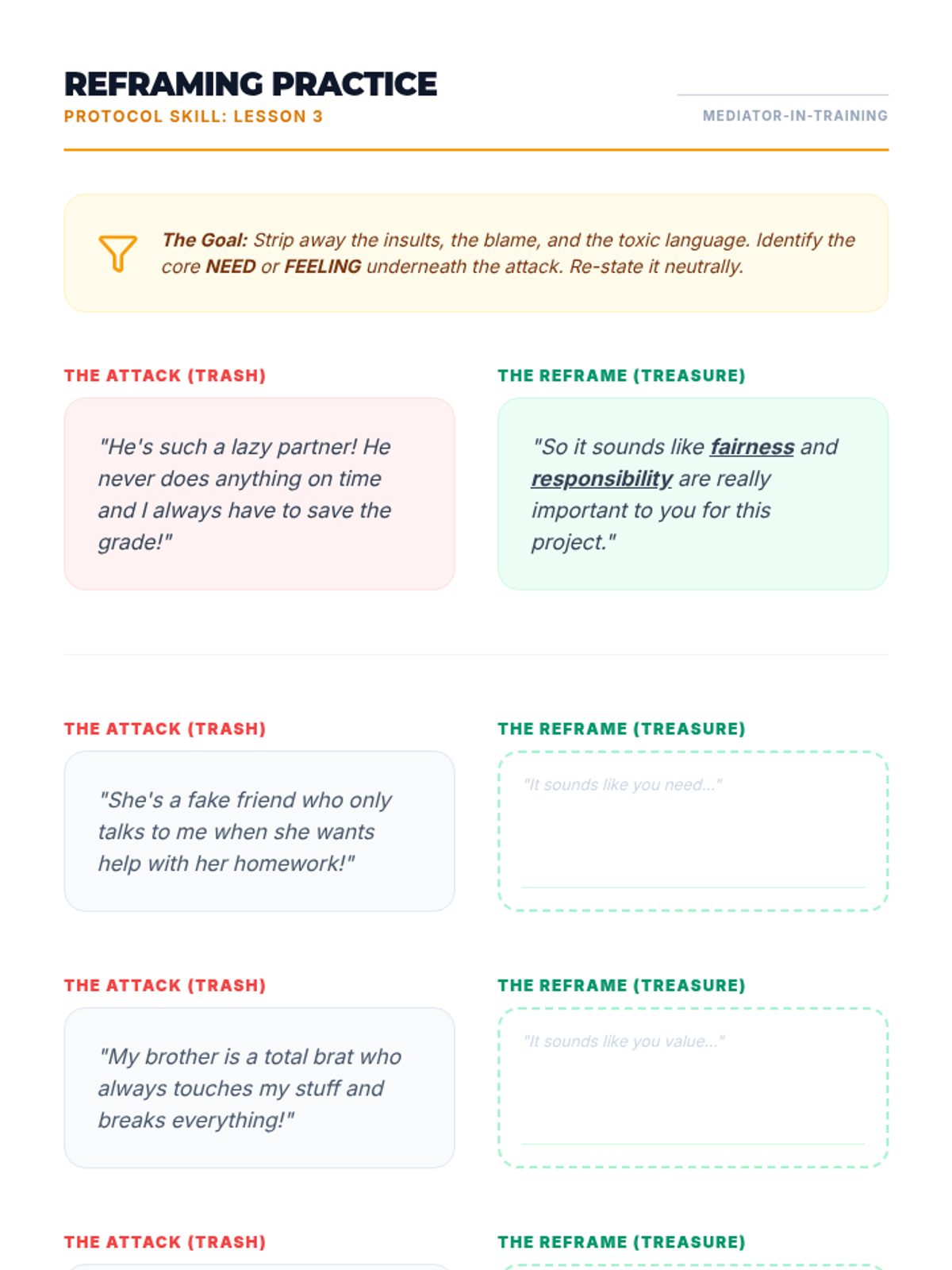
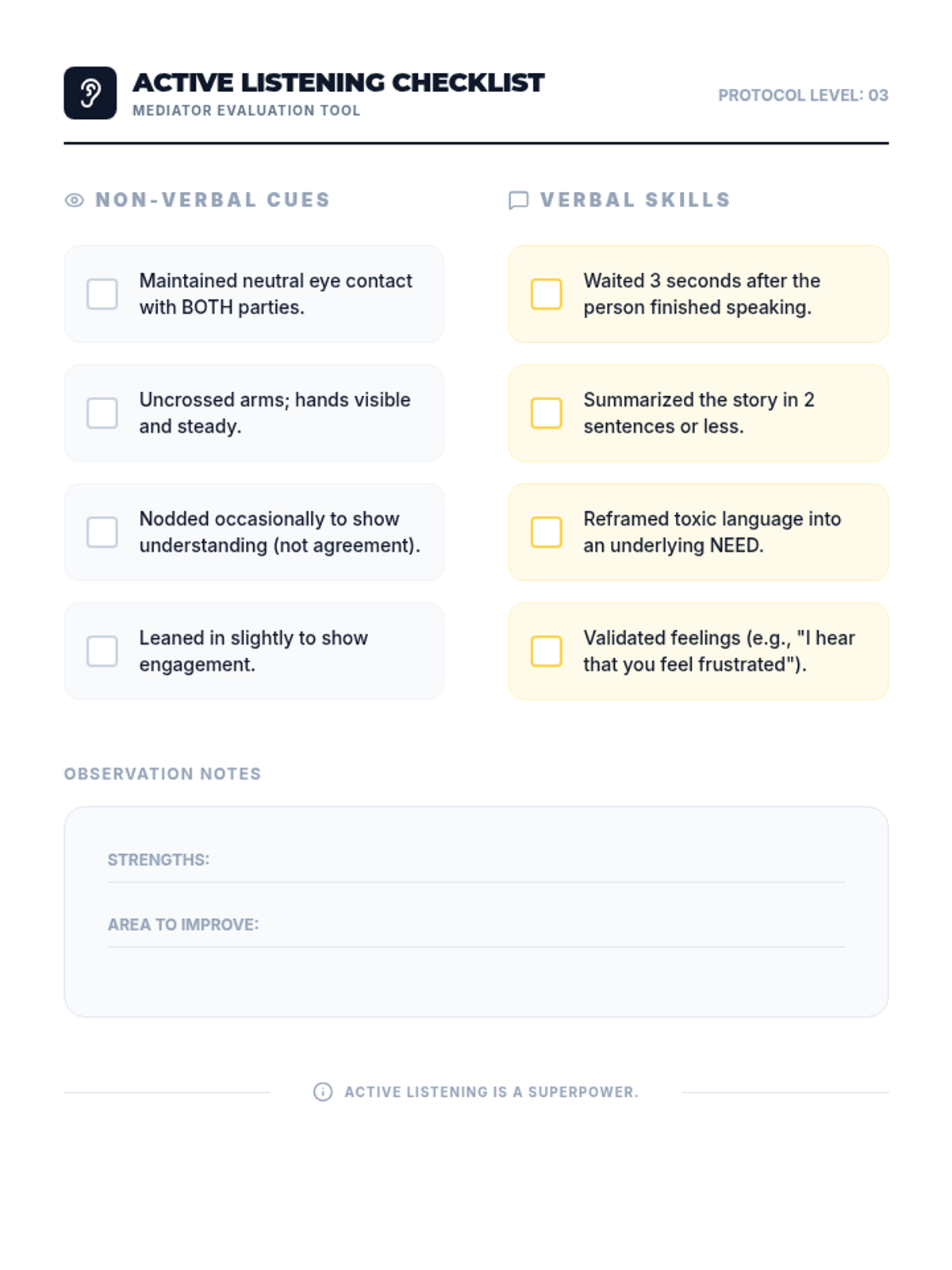
Students master the skills of summarizing and reframing. They learn to strip away inflammatory language and reflect back the core needs and feelings of disputing parties.
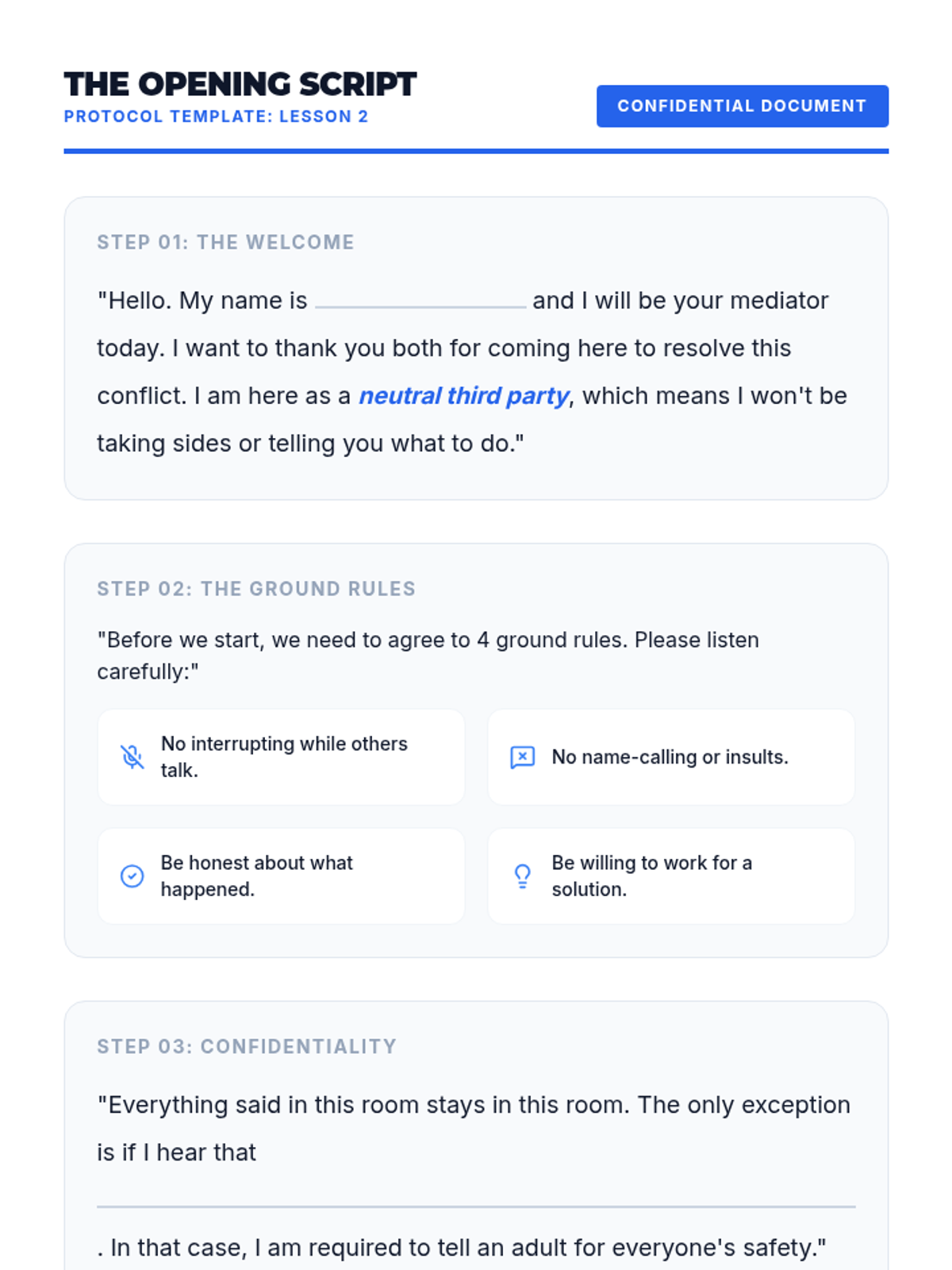
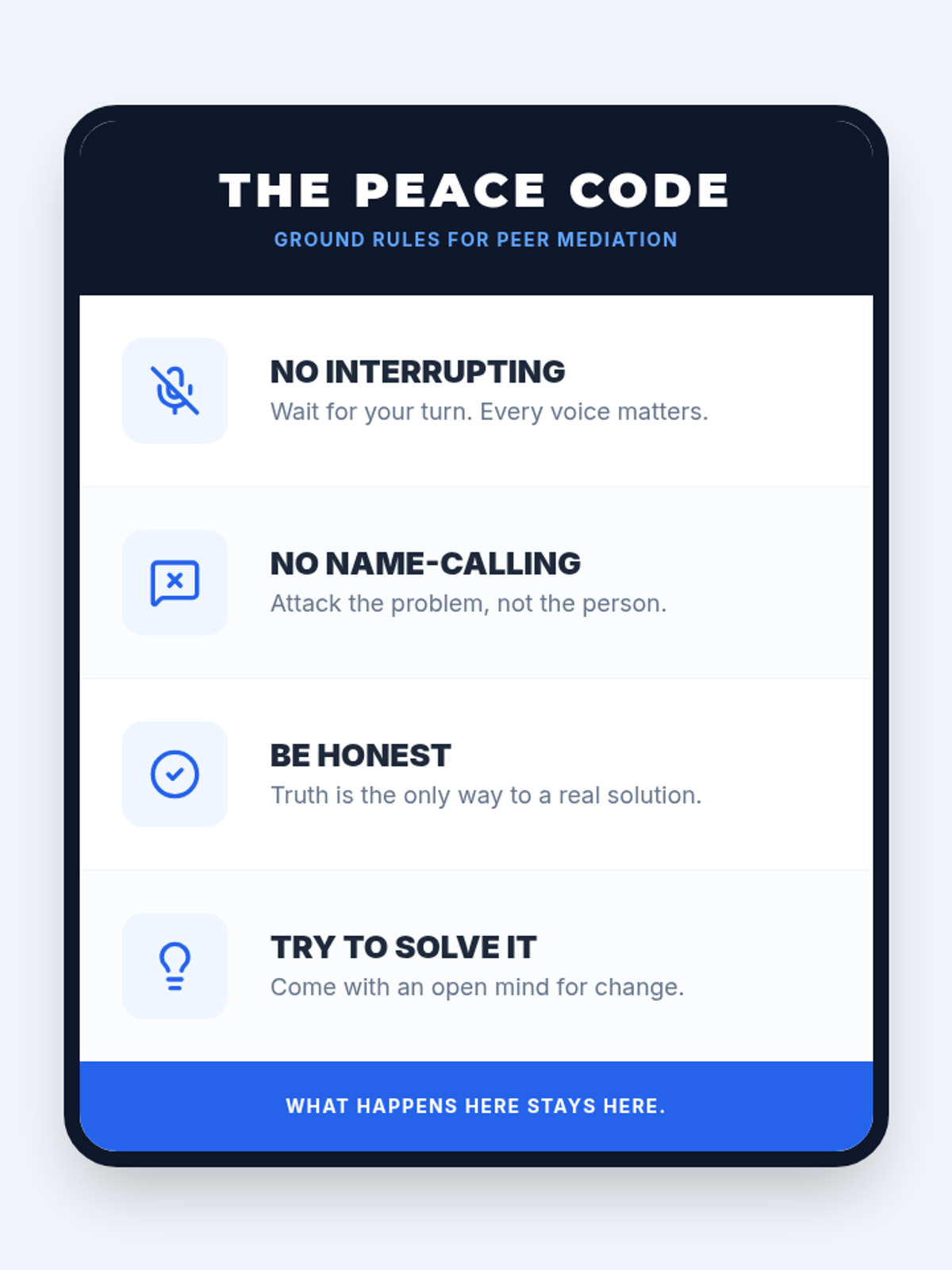
This lesson focuses on the opening stage of mediation. Students learn to set the tone, establish ground rules, and ensure confidentiality to create a safe space for resolution.
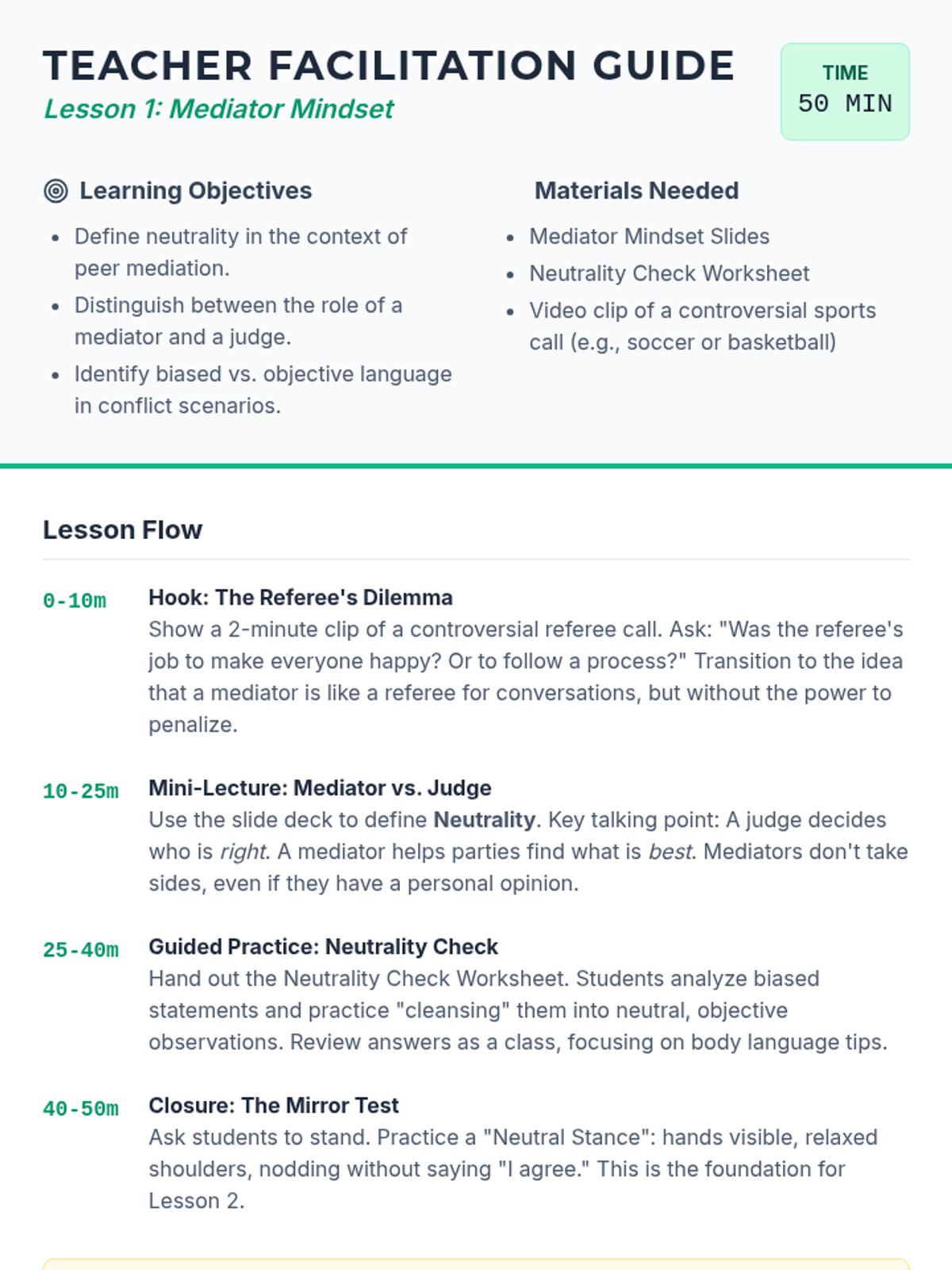
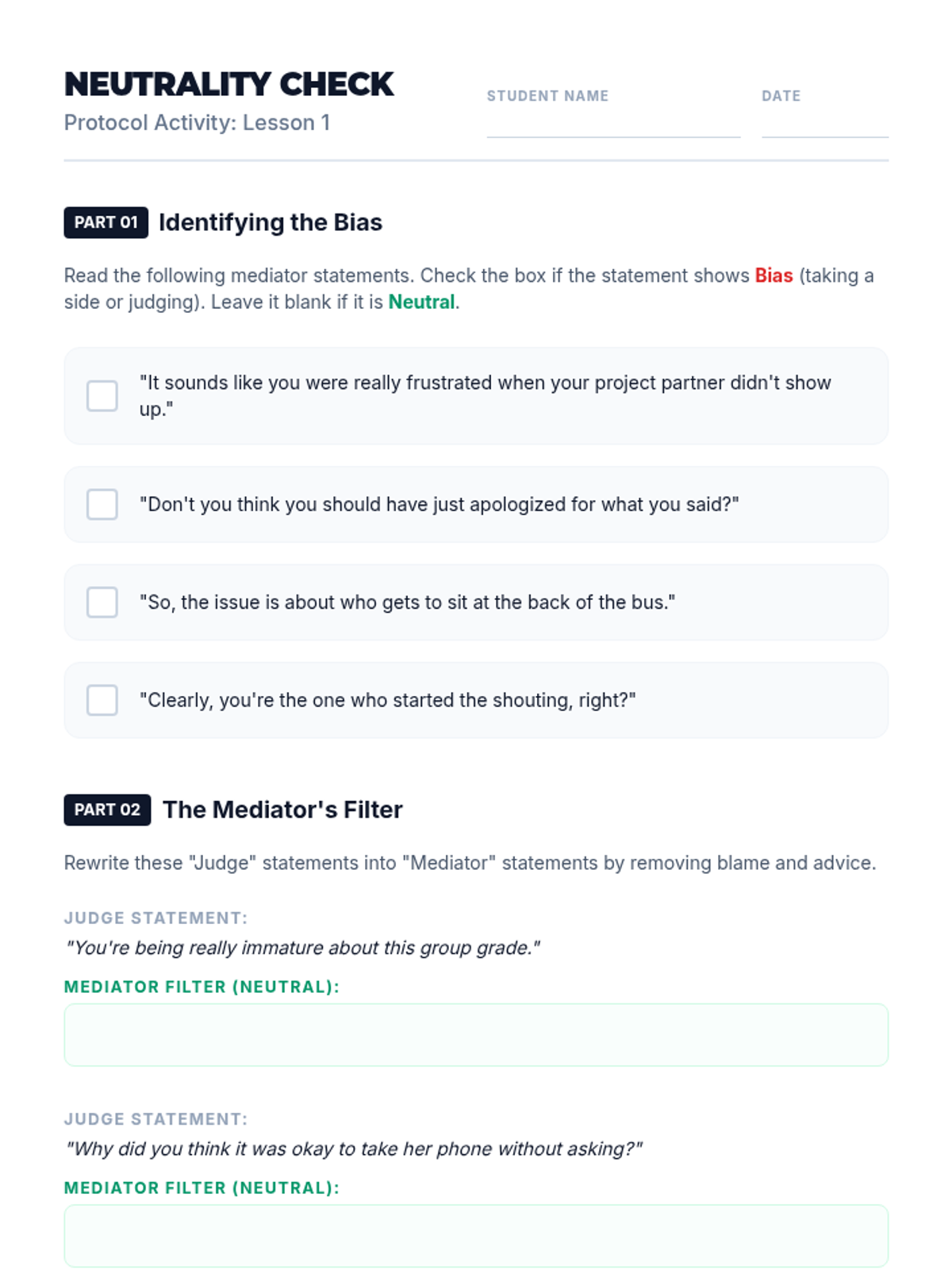
Students explore the definition of neutrality and the mediator's role. They practice identifying bias and using objective language to facilitate rather than judge.
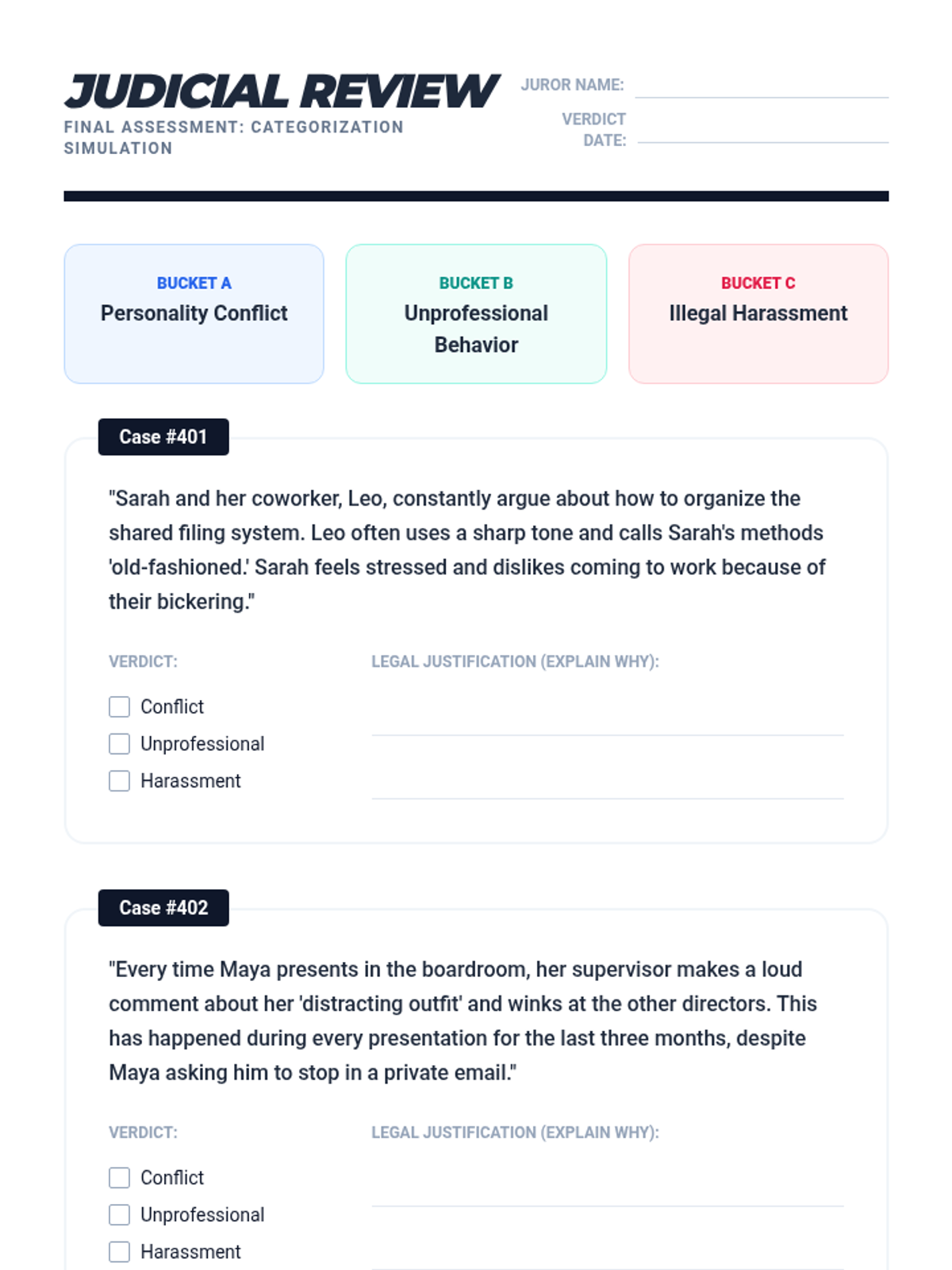
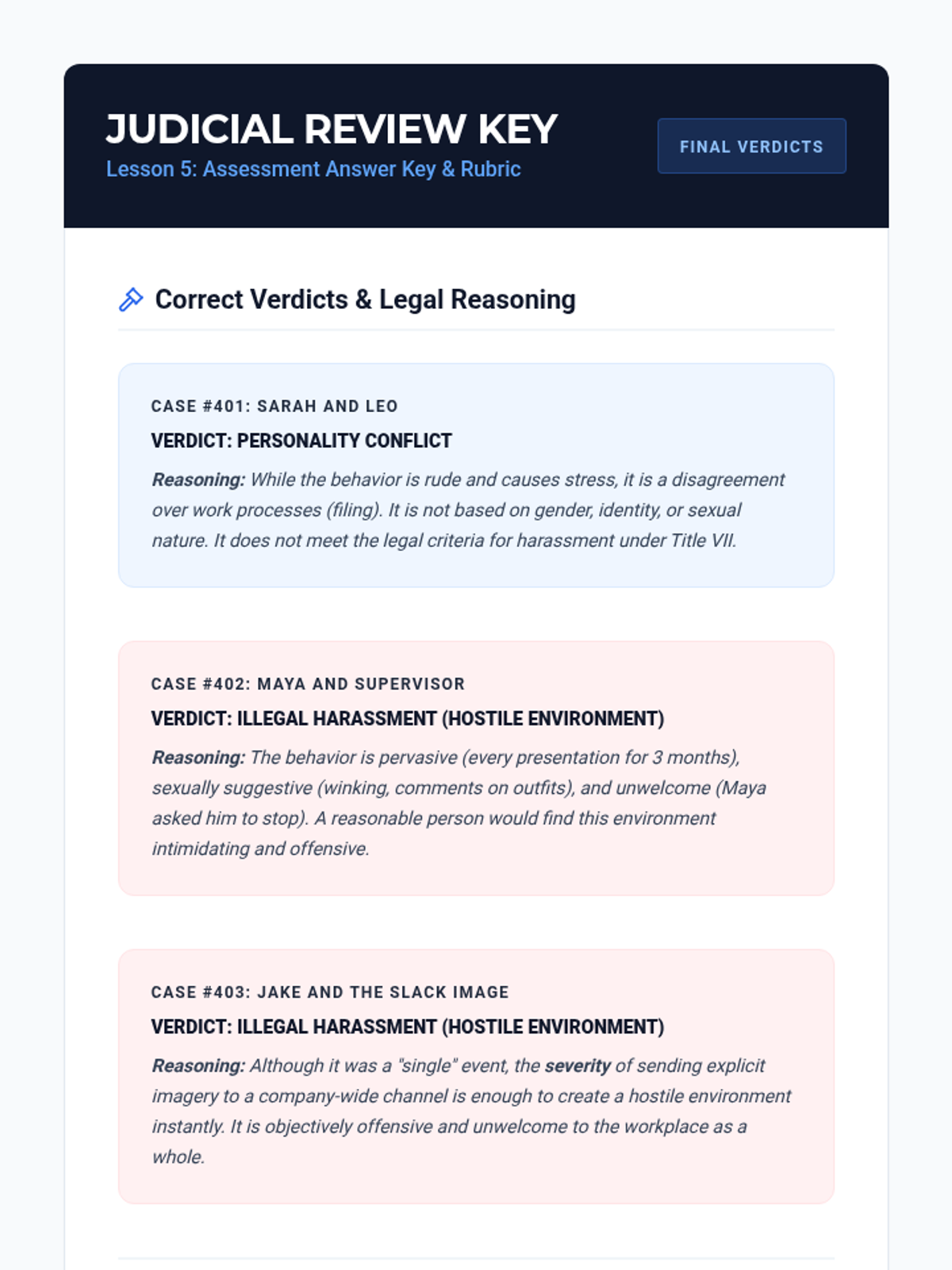
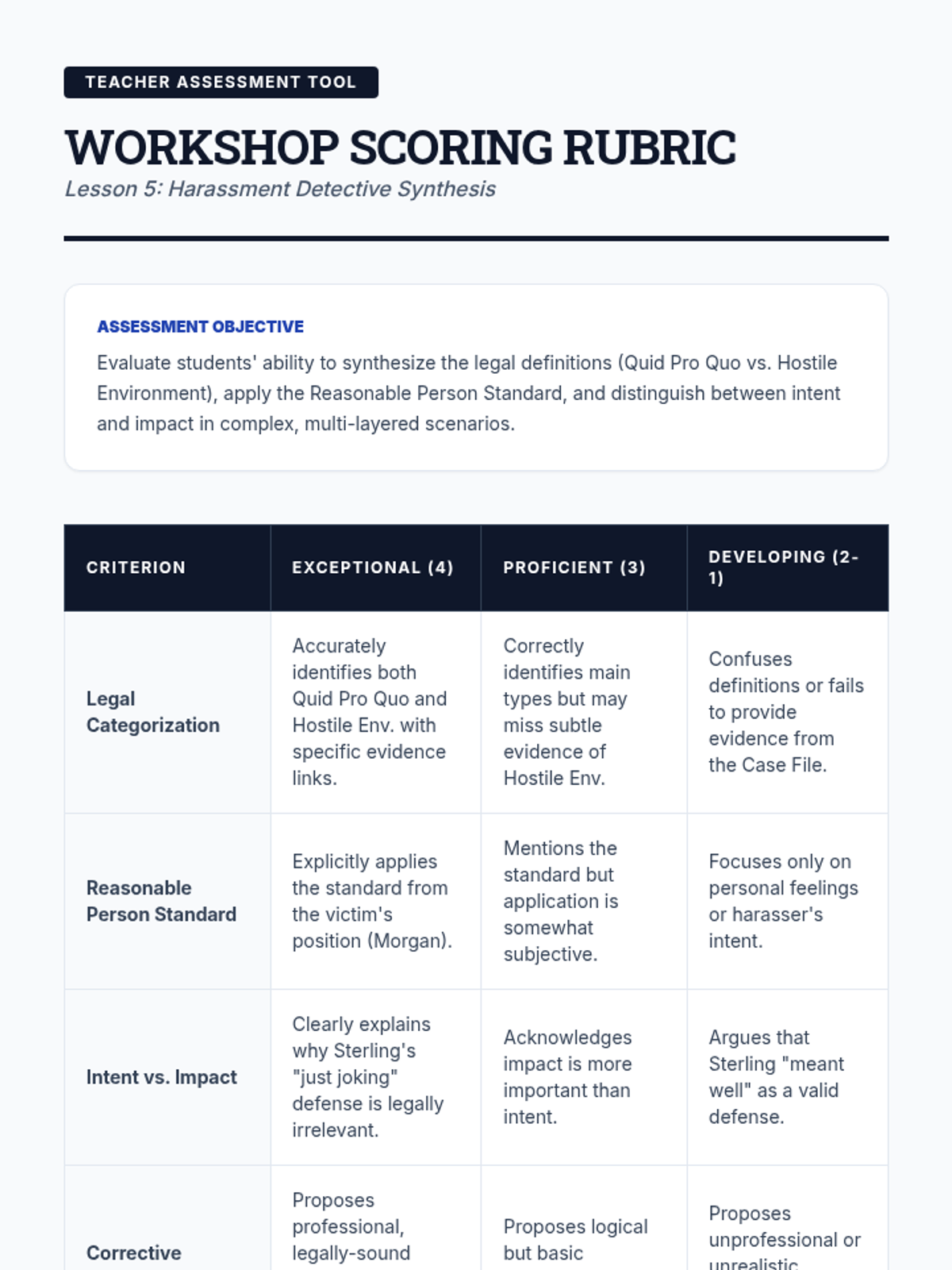
Students participate in a 'judicial review' simulation where they categorize complex scenarios as 'Personality Conflict,' 'Unprofessional,' or 'Illegal Harassment.' They must justify their categorization using criteria learned in the sequence.
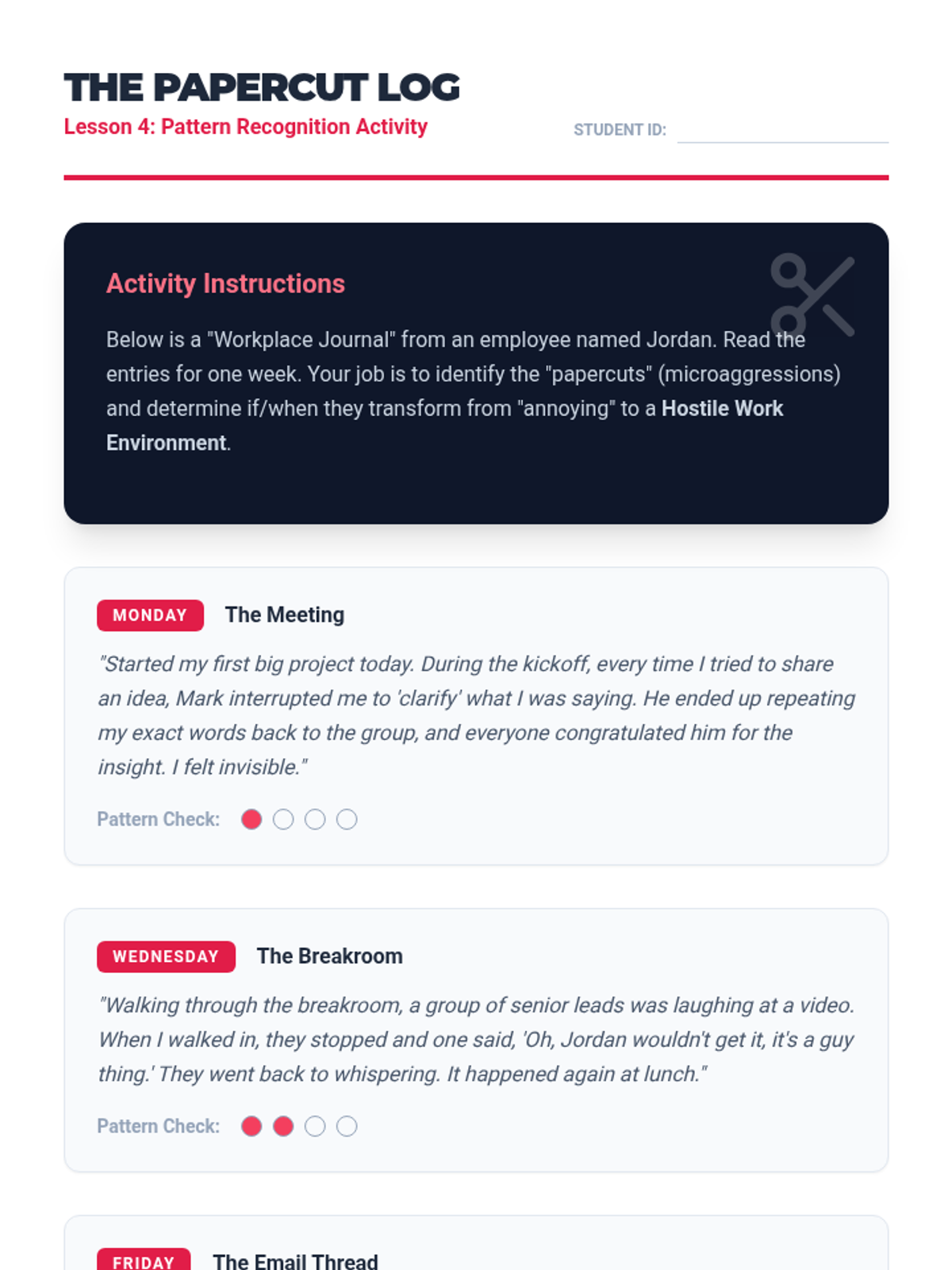
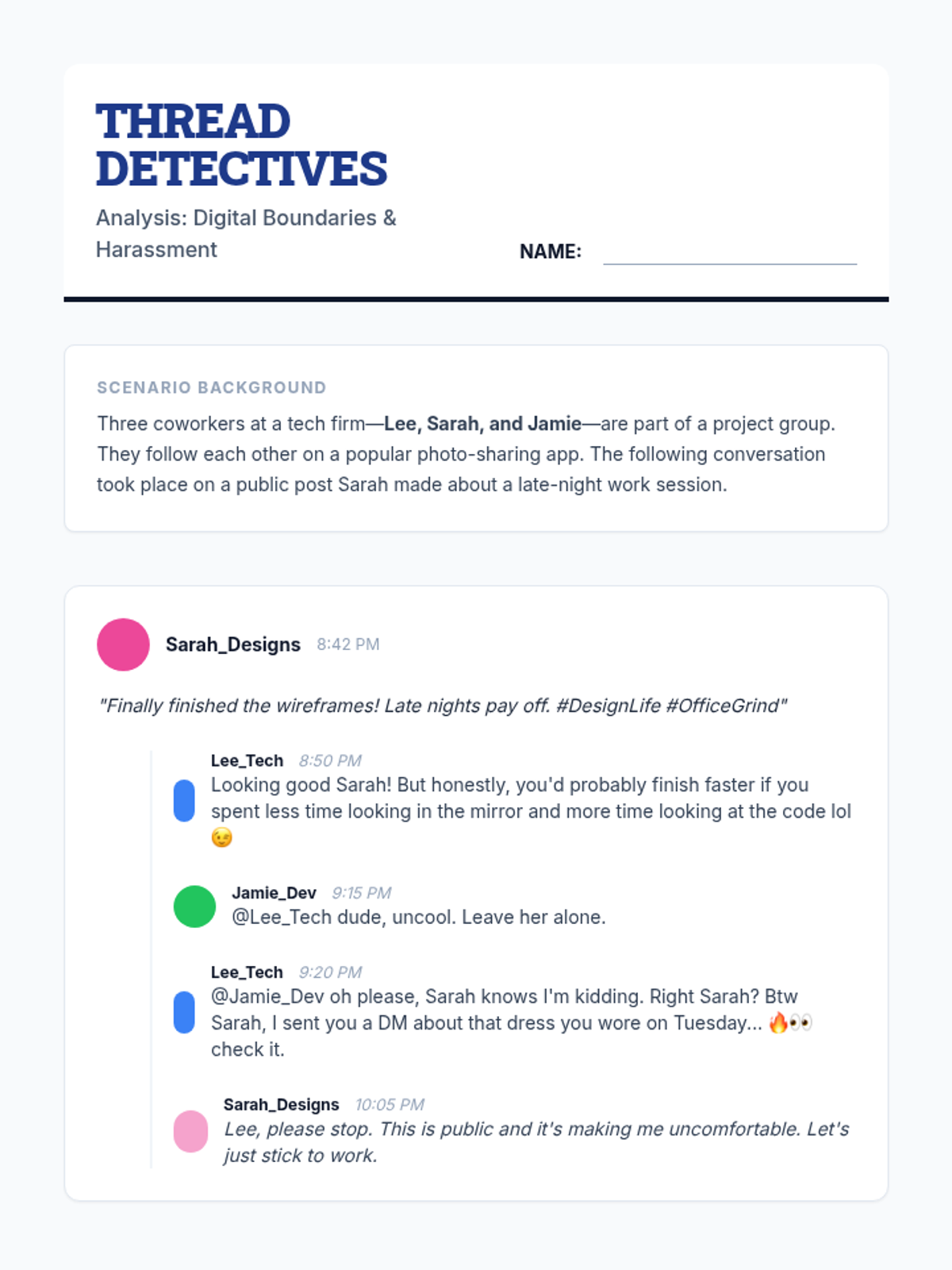
Students examine how microaggressions contribute to a hostile work environment over time. The lesson emphasizes recognizing patterns of behavior that may not be explicit harassment in isolation but become toxic cumulatively.
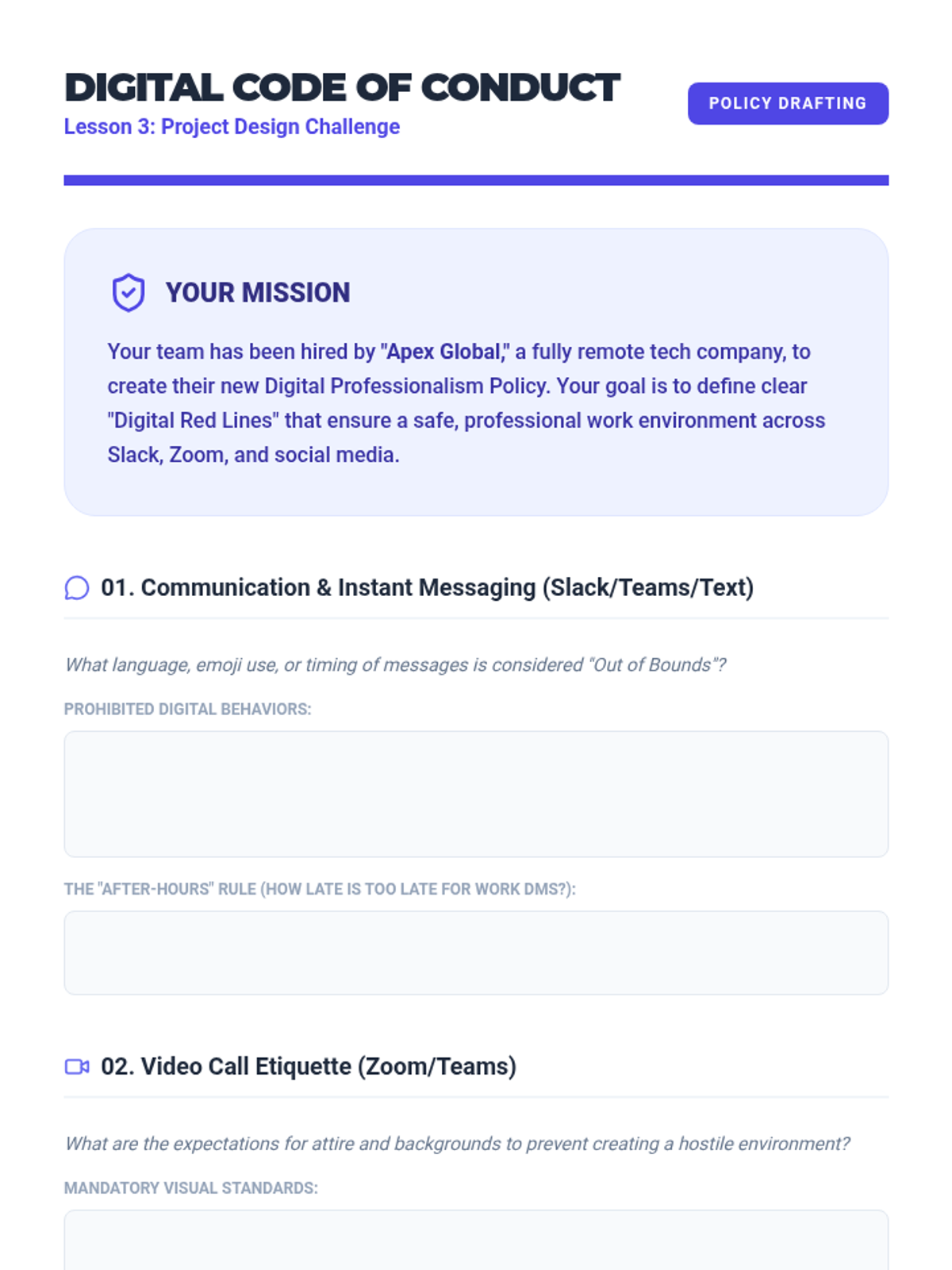
Students explore how harassment manifests in remote work and digital spaces, including inappropriate texts, emails, and social media interactions. They develop a code of conduct for digital professional communication.
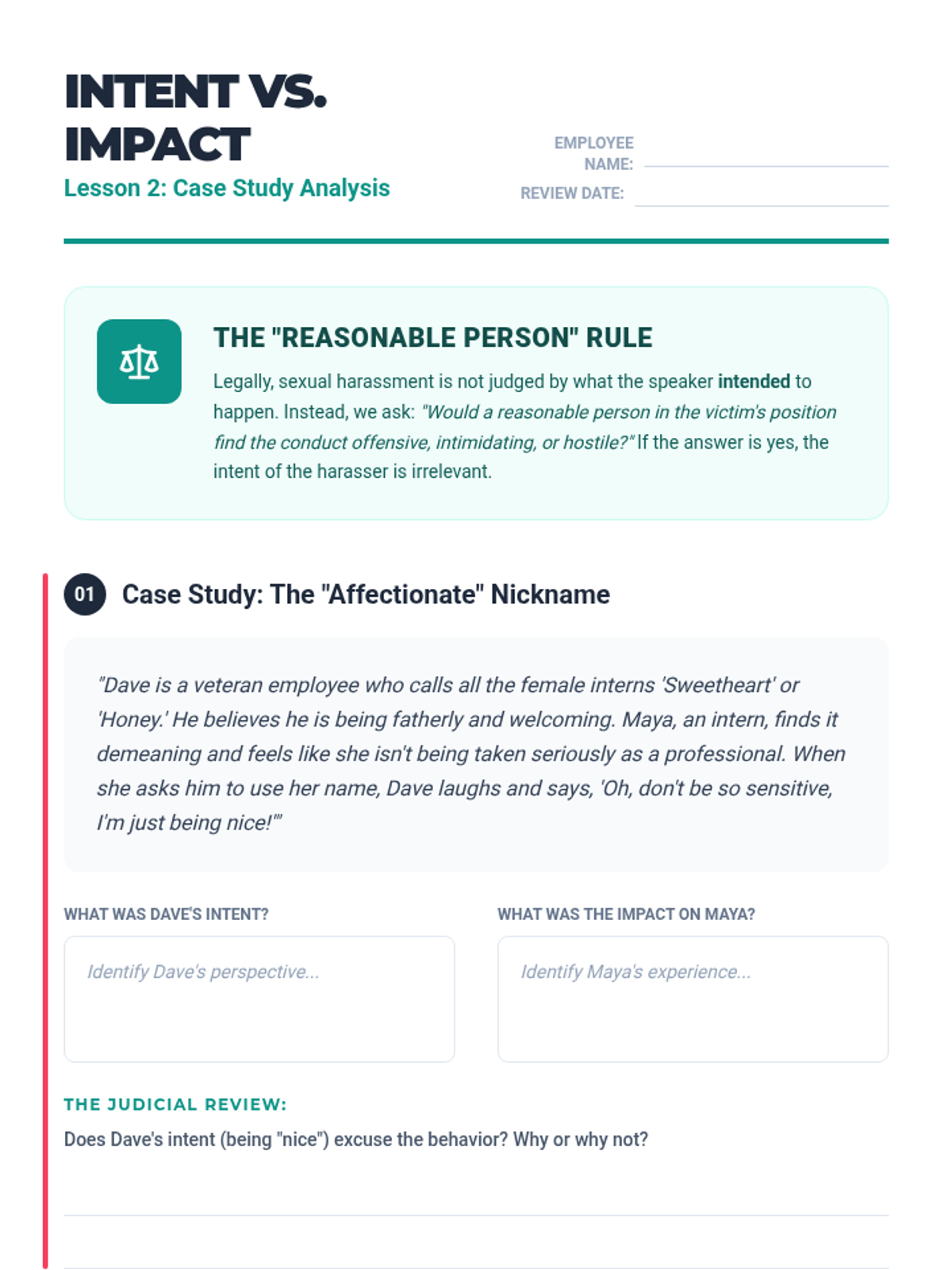
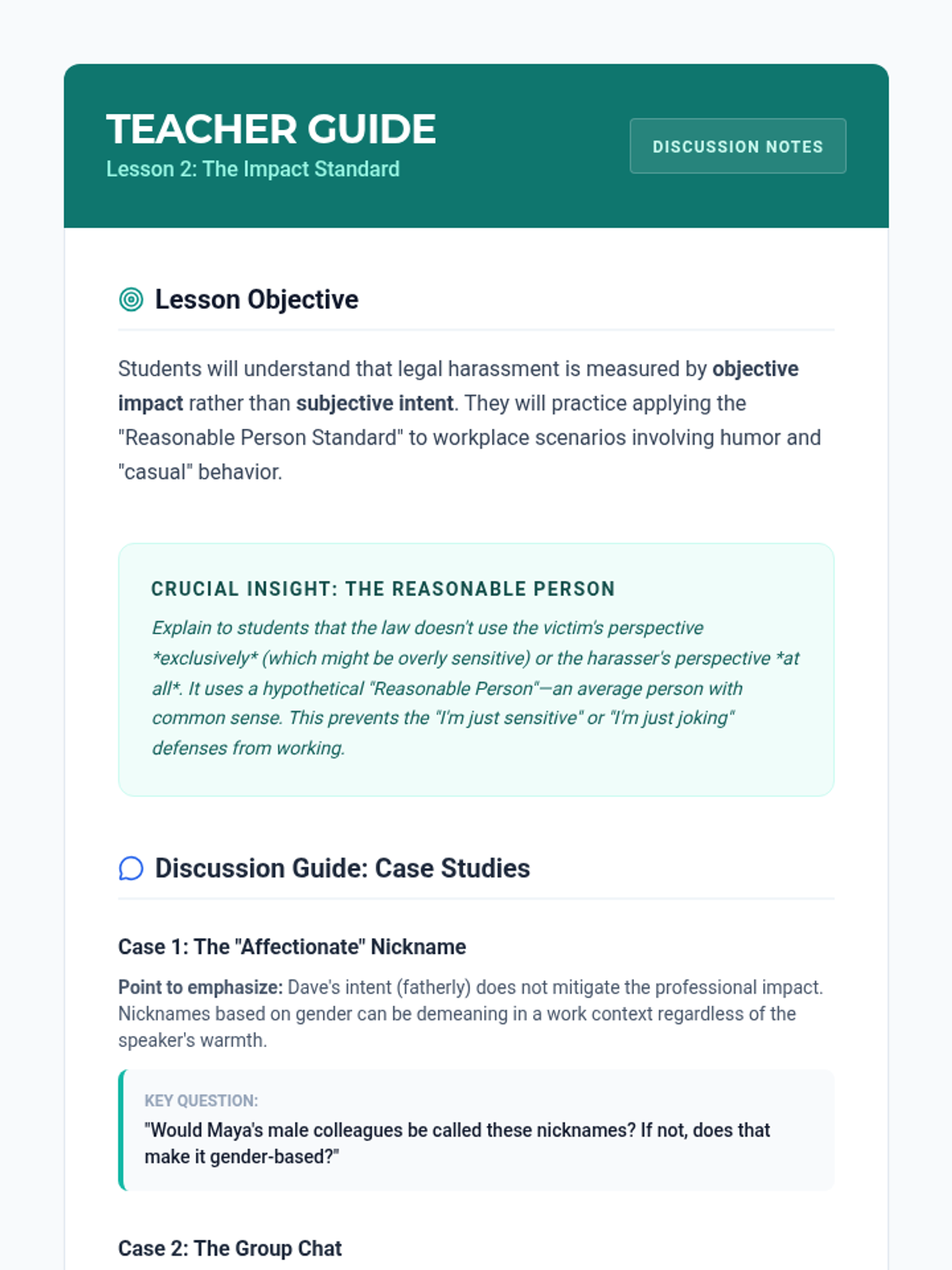
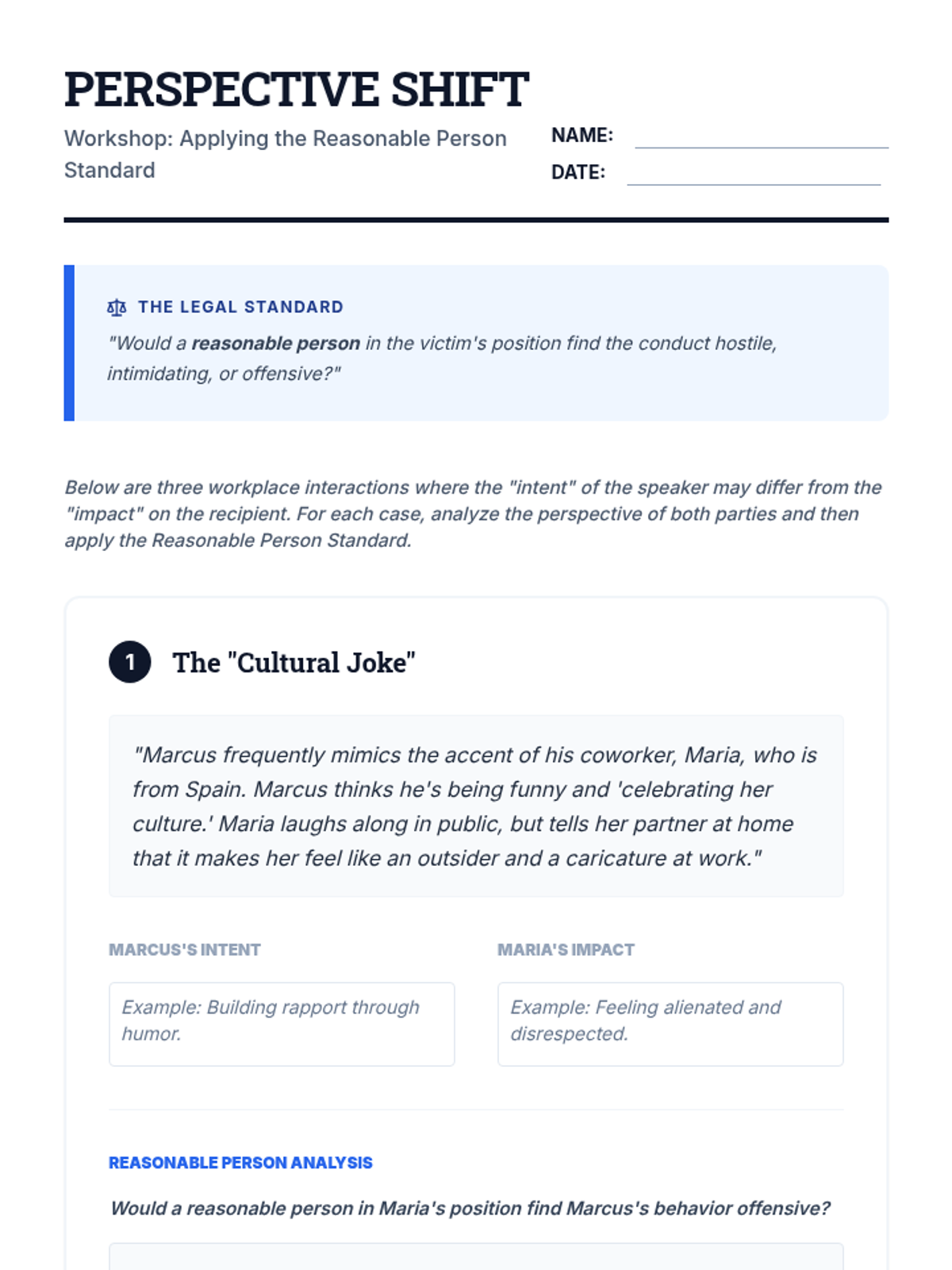
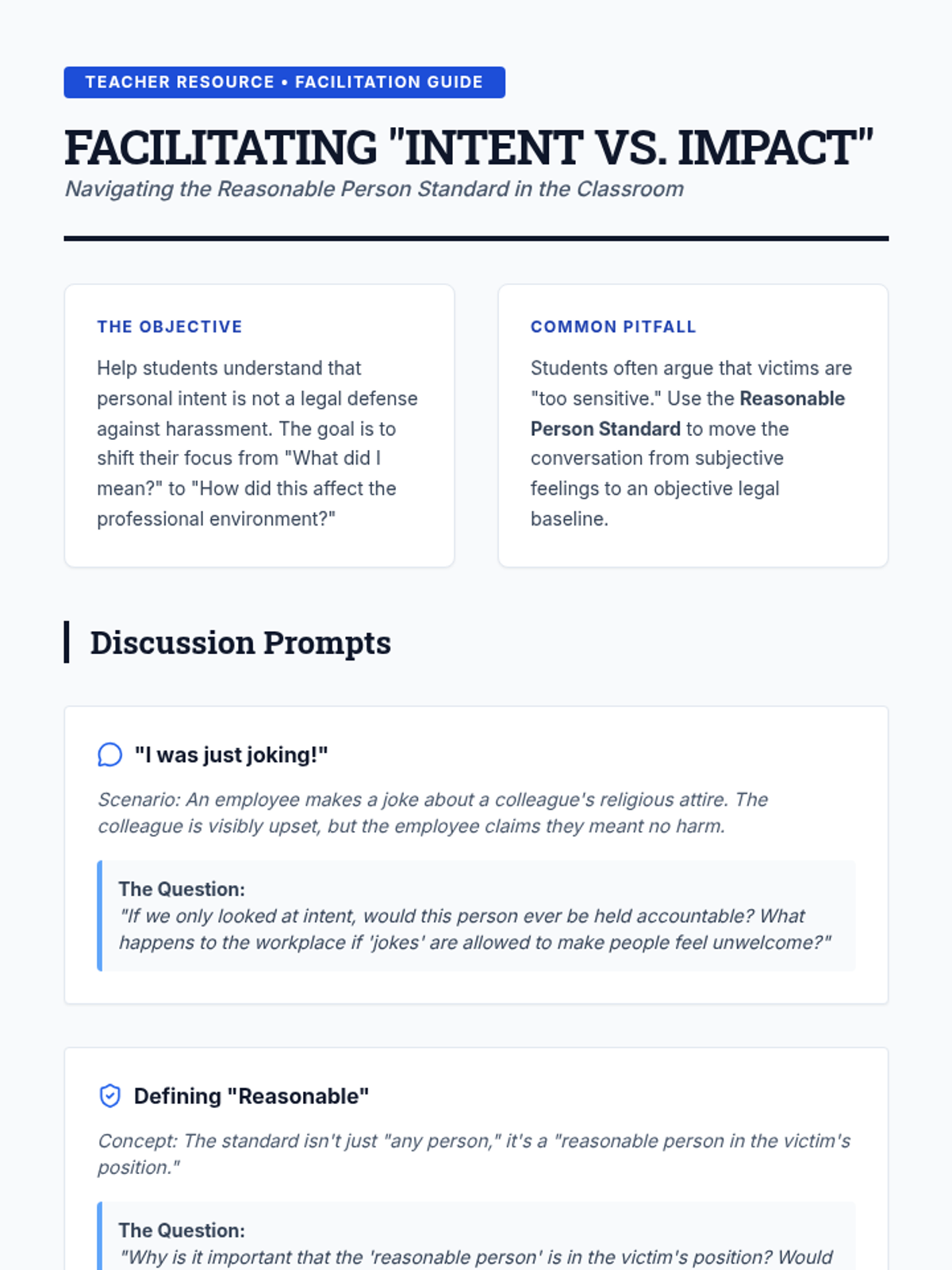
This lesson focuses on the legal standard that harassment is judged by its impact on the victim, not the intent of the harasser. Students review scenarios where 'jokes' constitute harassment.
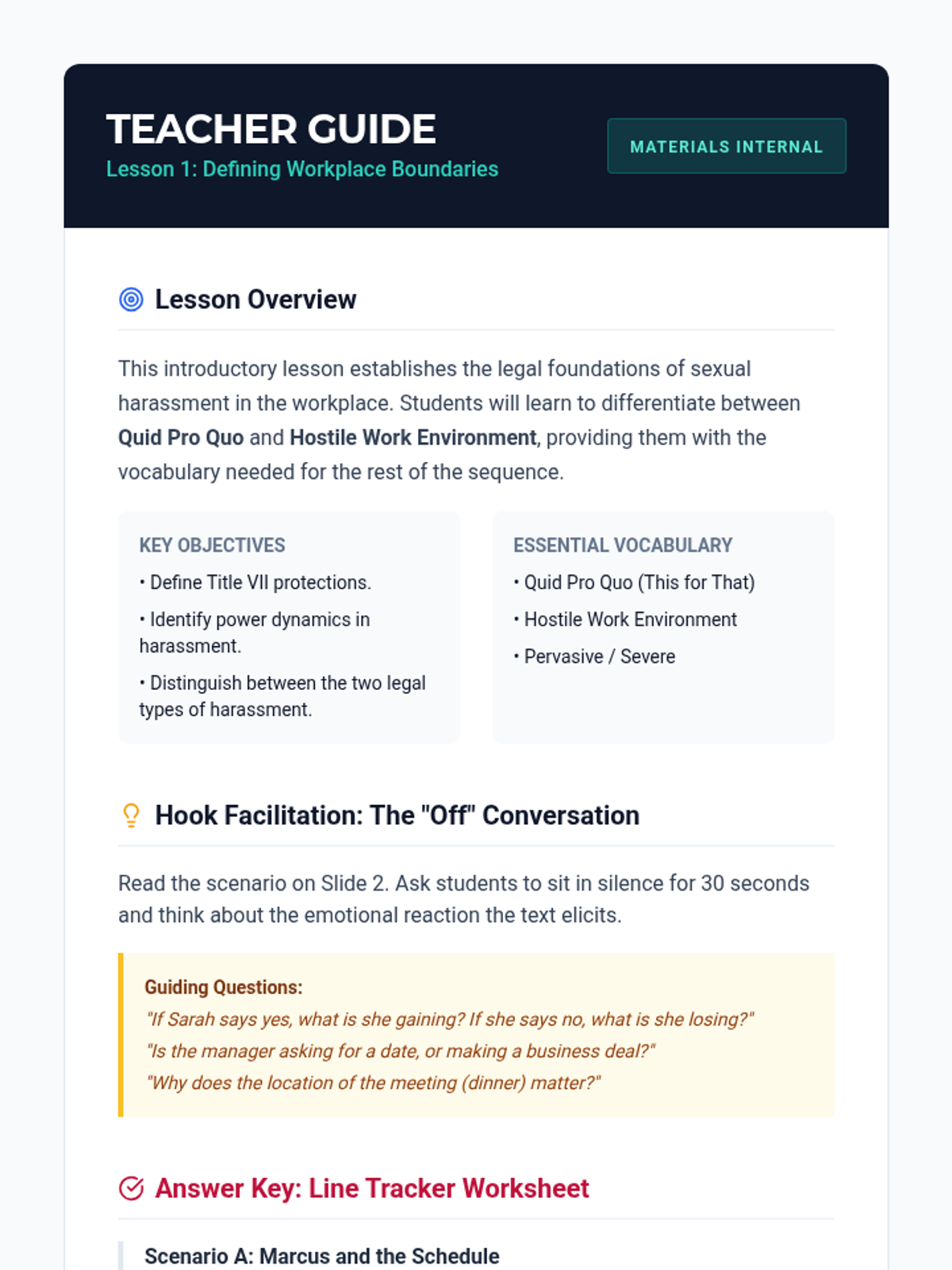
Students distinguish between the two primary legal types of sexual harassment: 'this for that' (quid pro quo) and pervasive hostile environments. They analyze clear-cut examples of each to build a working definition.
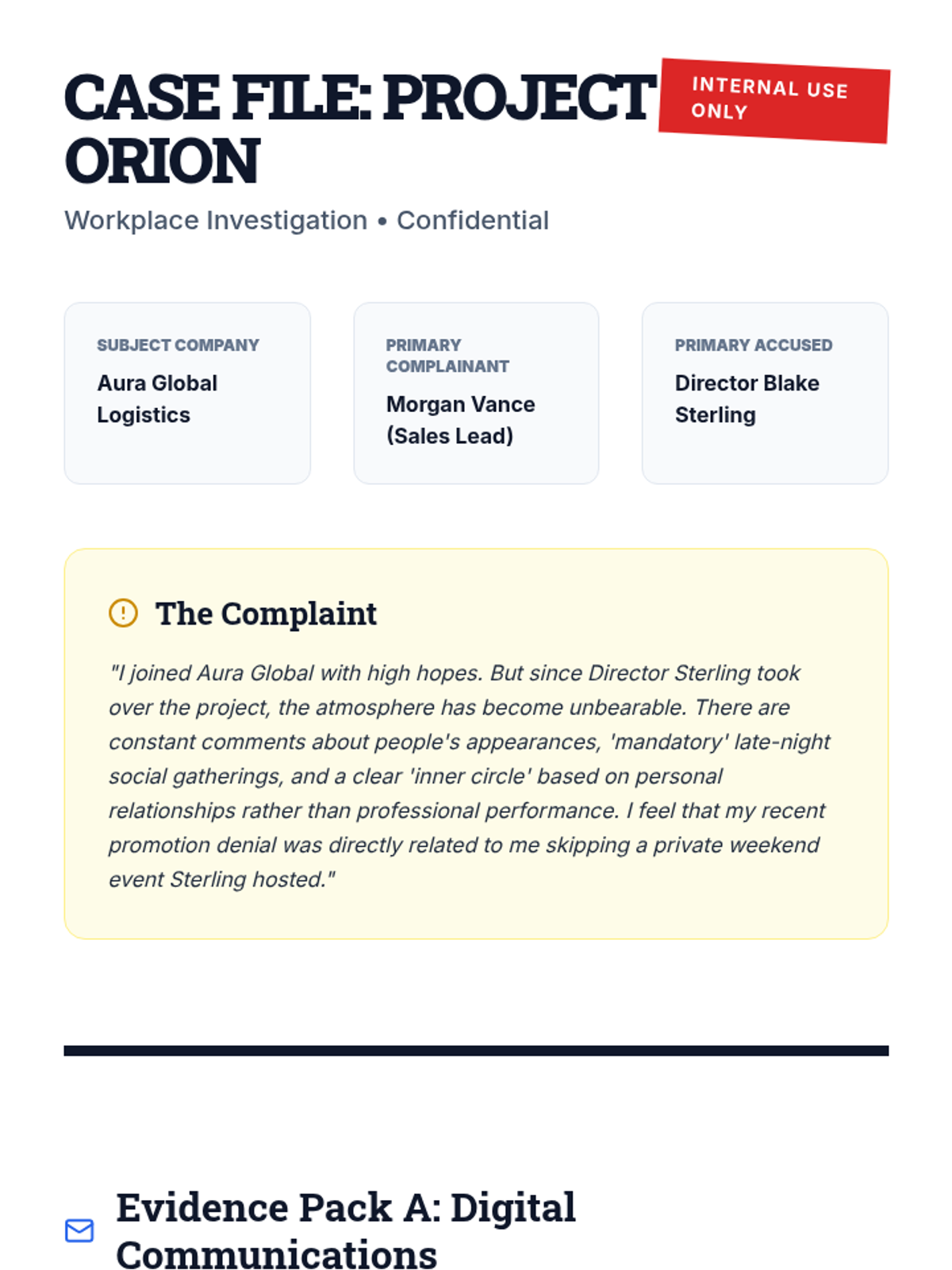
A synthesis workshop where students use 'detective boards' to analyze complex workplace scenarios and propose solutions.
Investigating microaggressions and subtle behaviors that aggregate into a hostile work environment.
Examining how workplace harassment laws extend into digital spaces, including social media and off-the-clock communications.
An exploration of why the victim's perspective and the 'reasonable person standard' are the legal benchmarks for harassment.
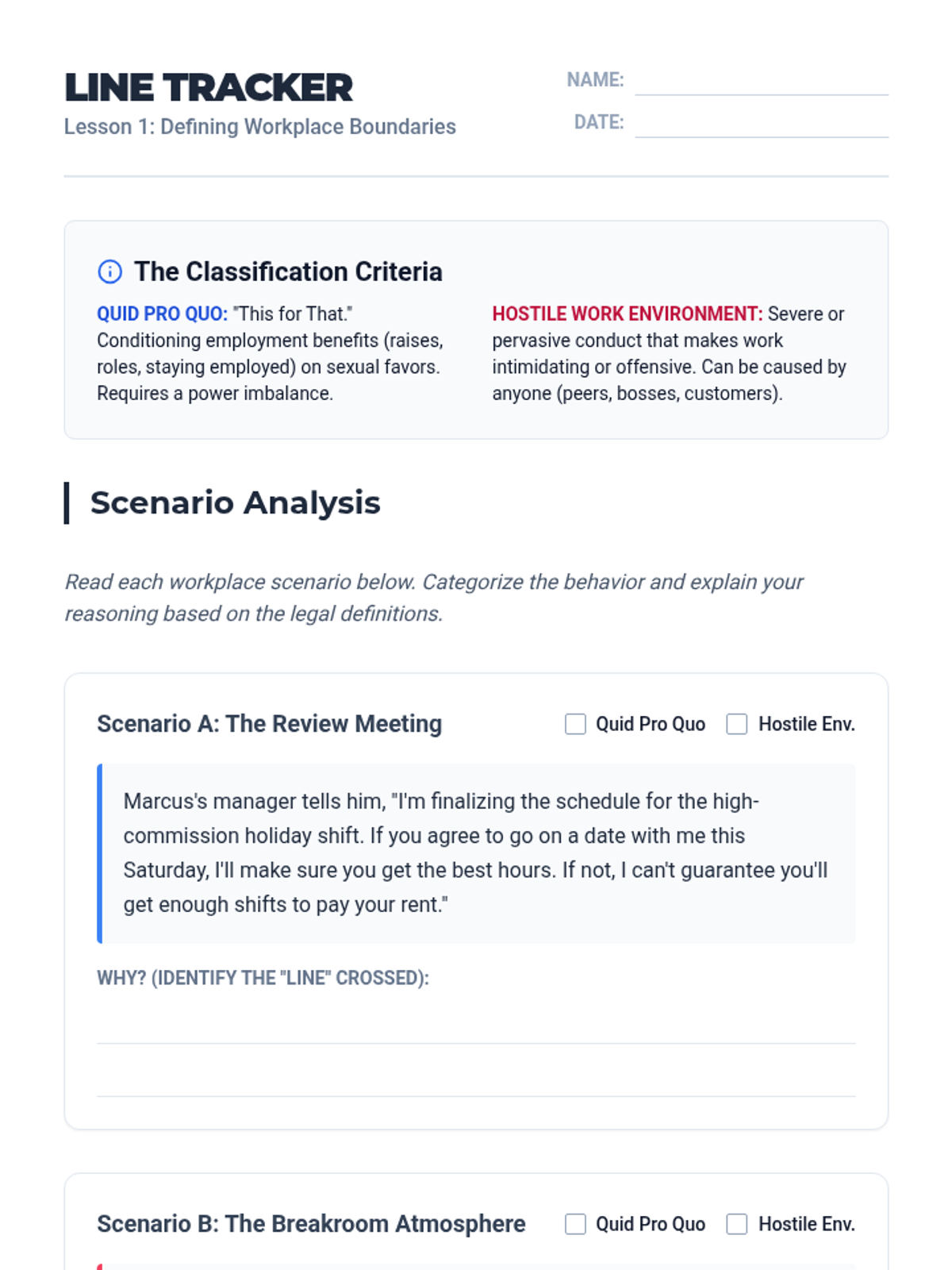
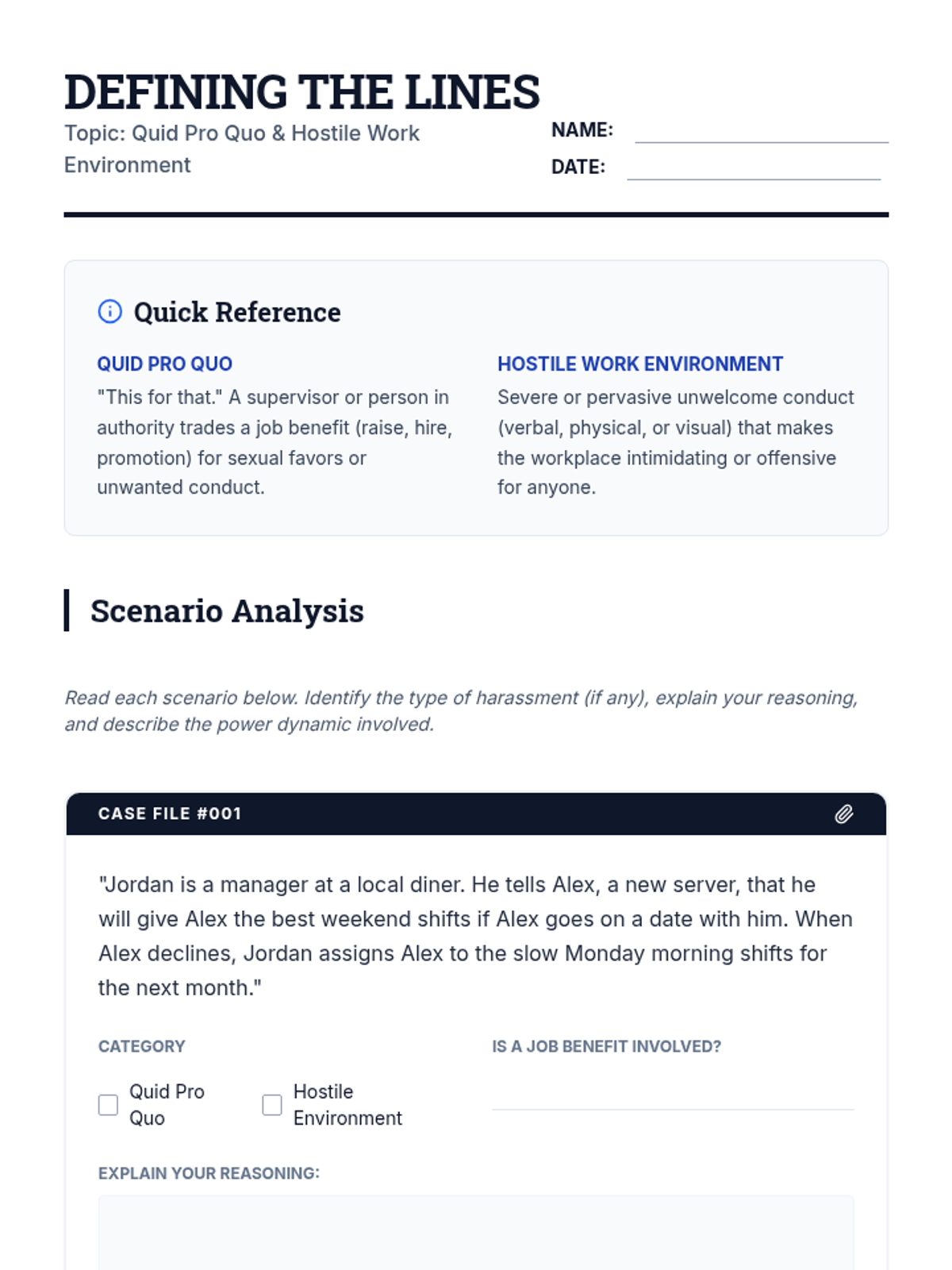
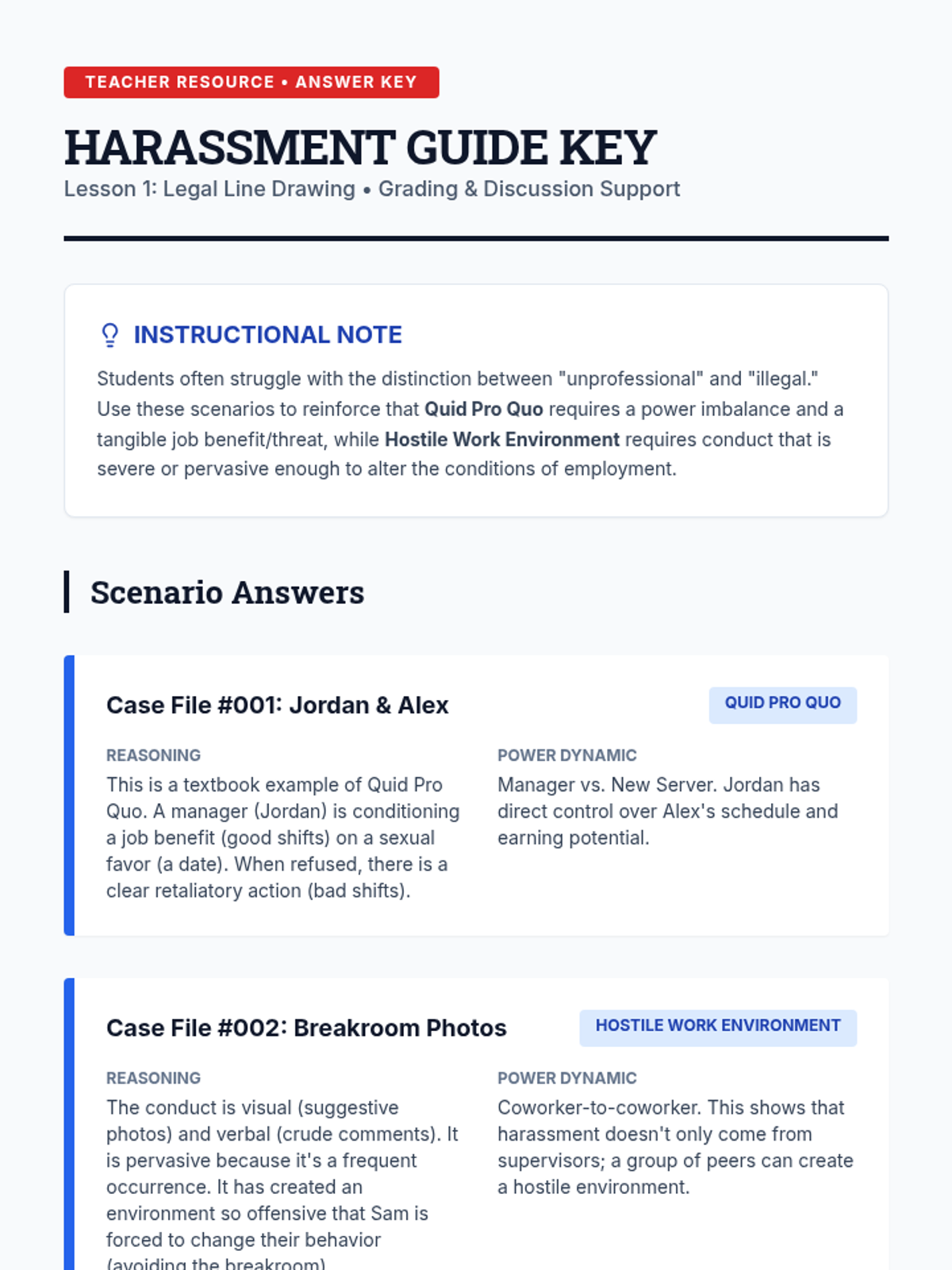
Students define and contrast 'Quid Pro Quo' and 'Hostile Work Environment' harassment through scenario analysis.
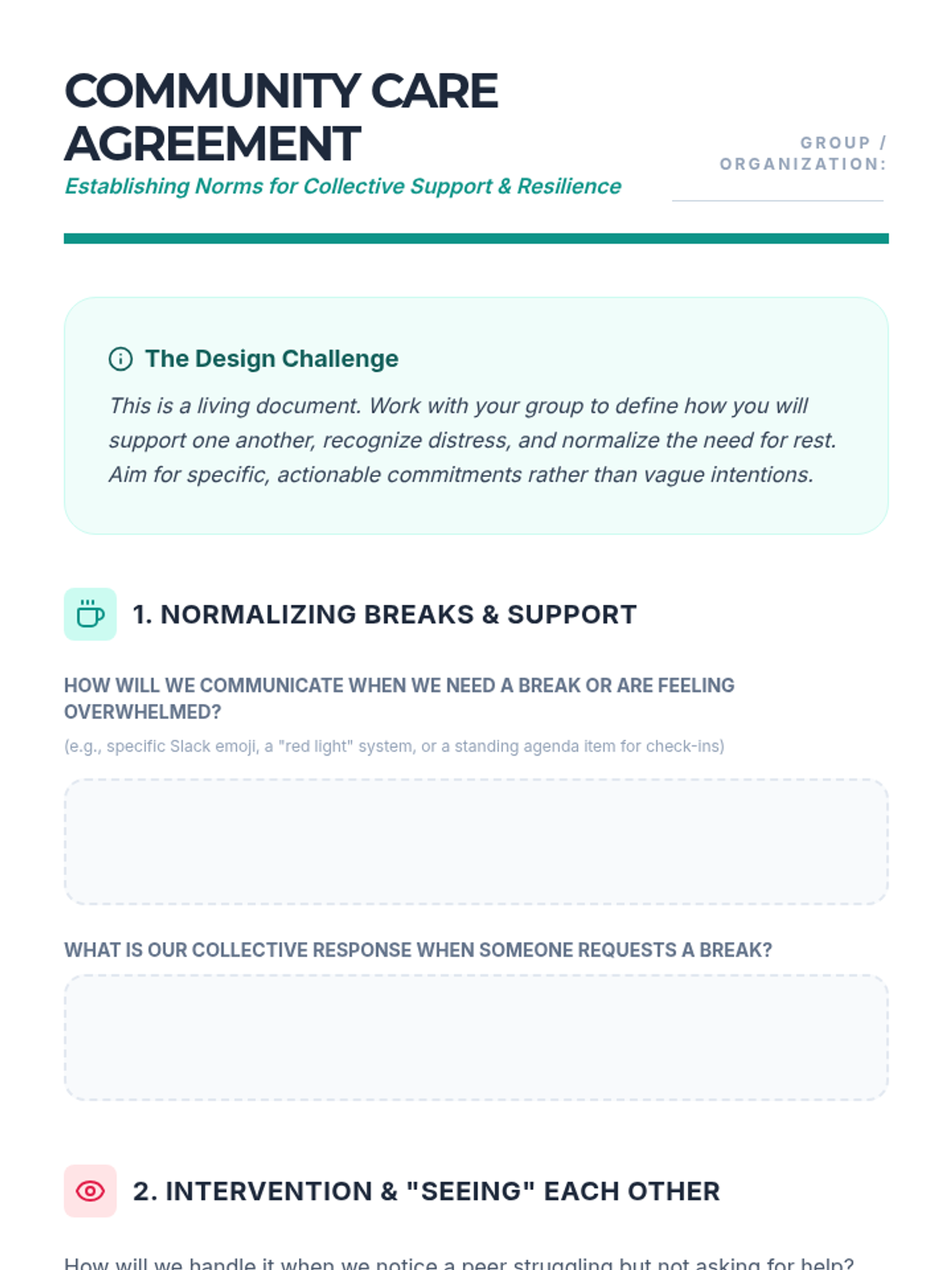
The sequence concludes with students designing a 'Community Care Agreement' to establish norms for mutual support and collective rest in their own communities.
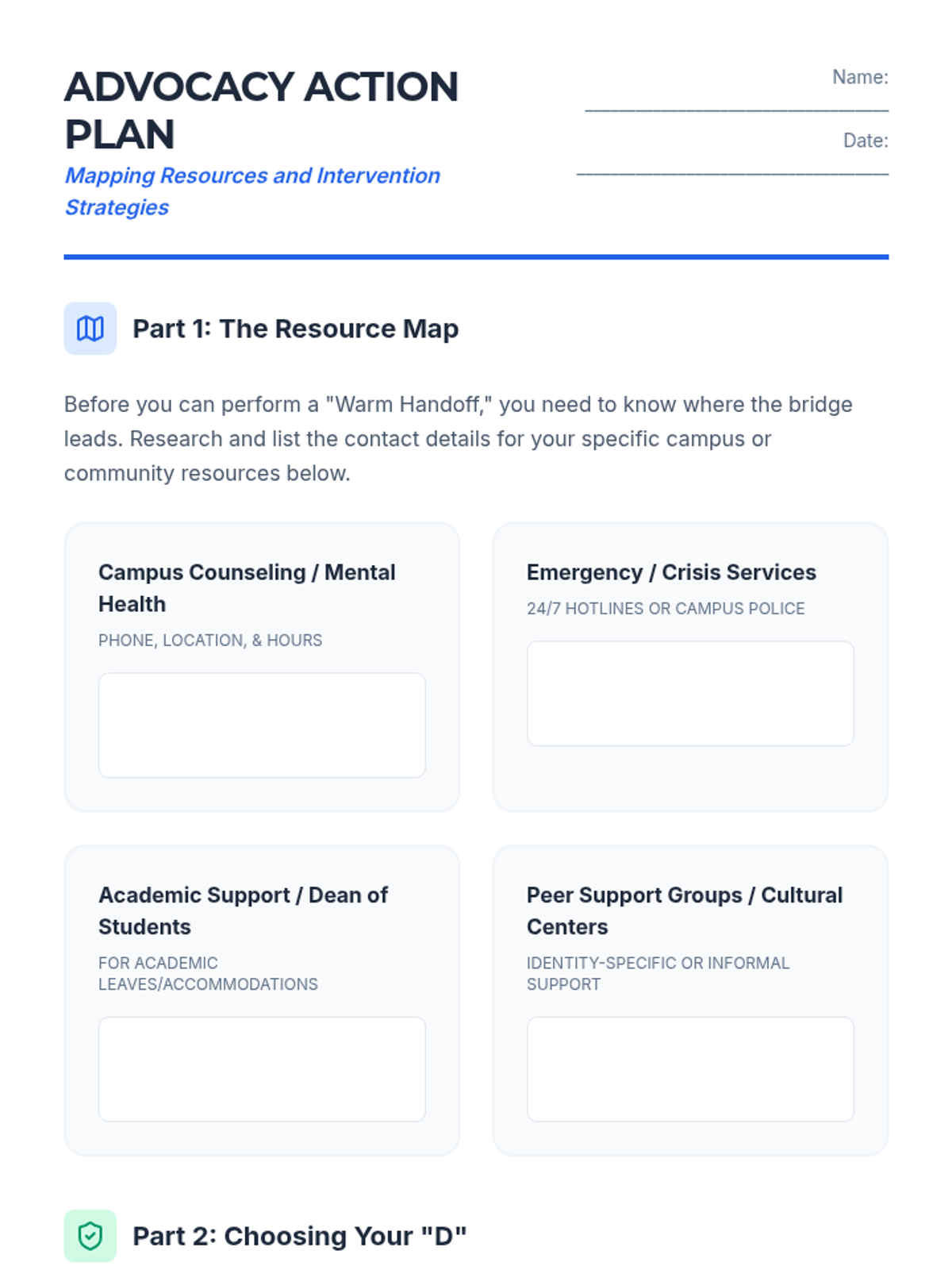
This lesson teaches specific bystander intervention strategies to bridge the gap between noticing distress and connecting a peer to resources.
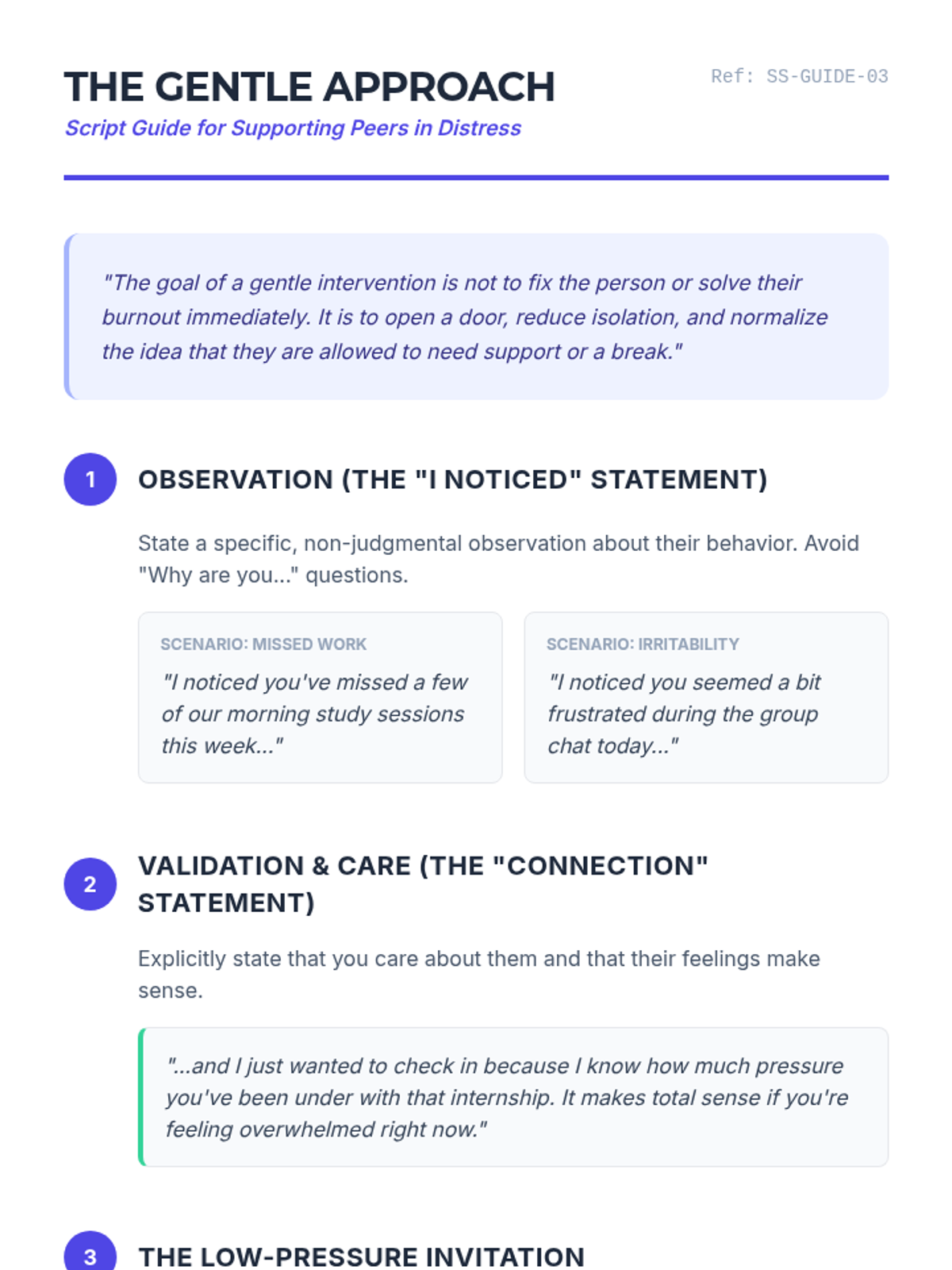
Students learn to identify subtle behavioral and non-verbal signs of distress in their peers and practice gentle intervention strategies.
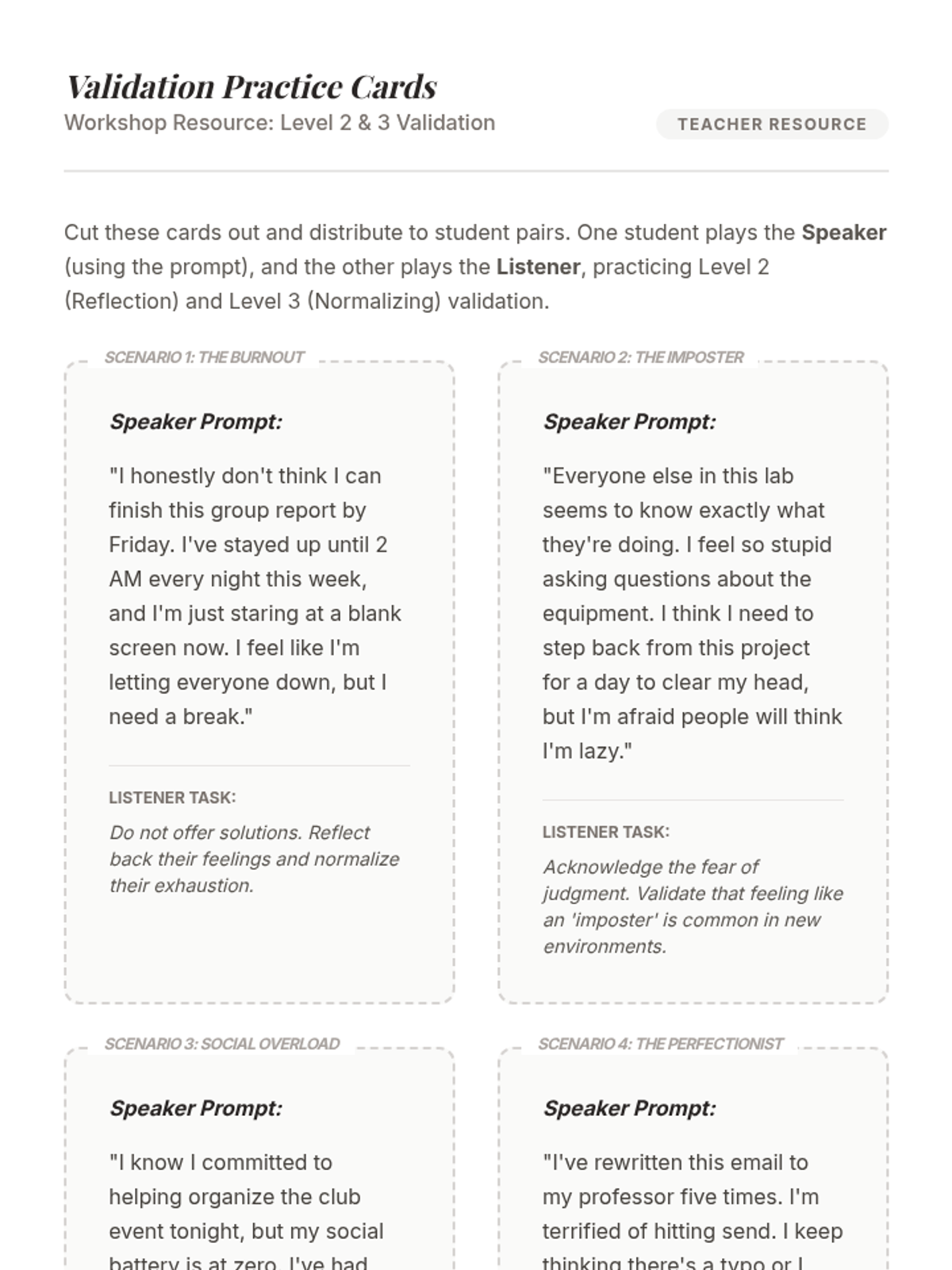
A workshop focusing on the listening skills required to support peers, emphasizing validation over immediate problem-solving.
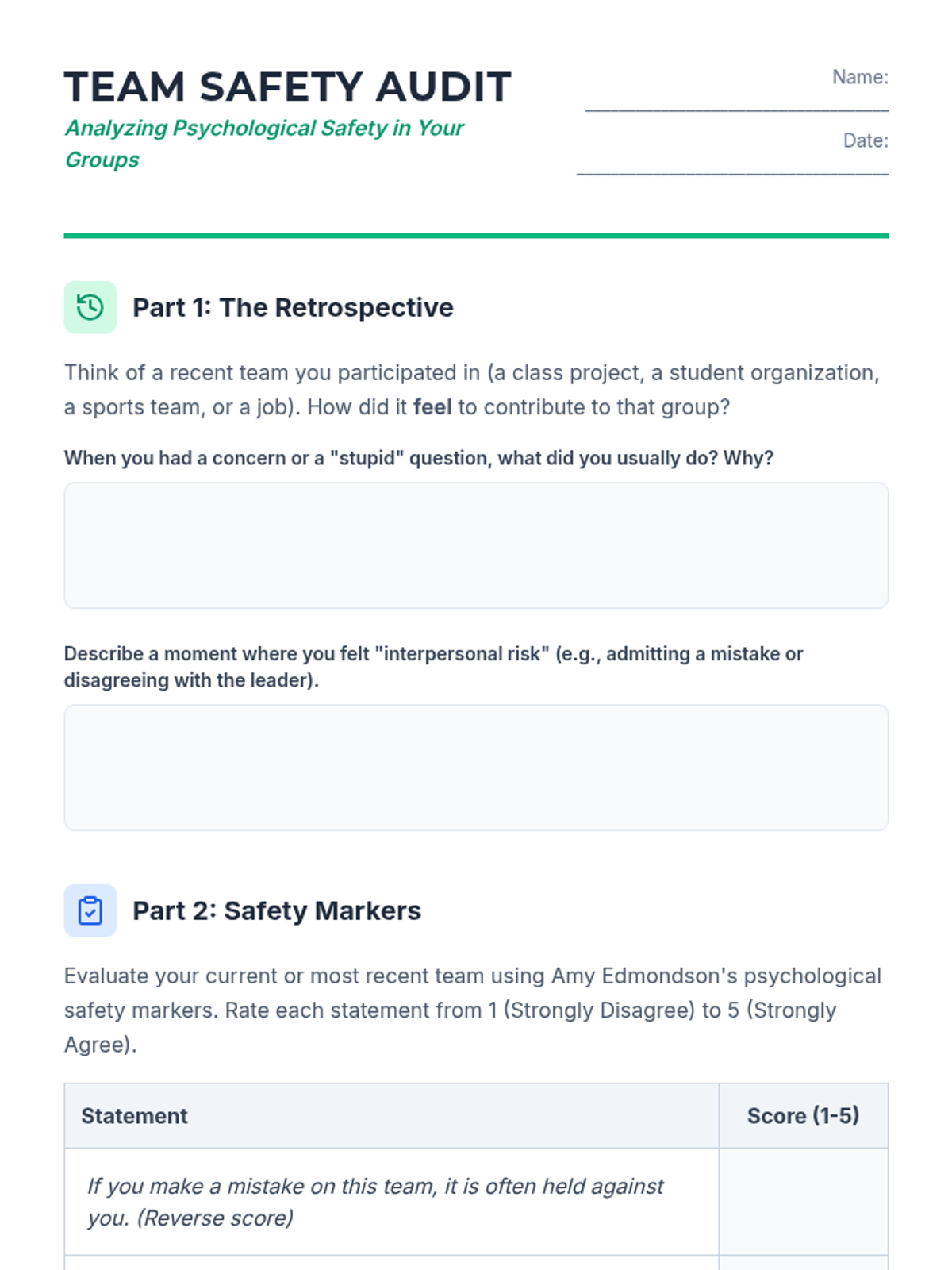
Students define psychological safety and analyze its impact on team performance, using Google's 'Project Aristotle' as a primary case study.
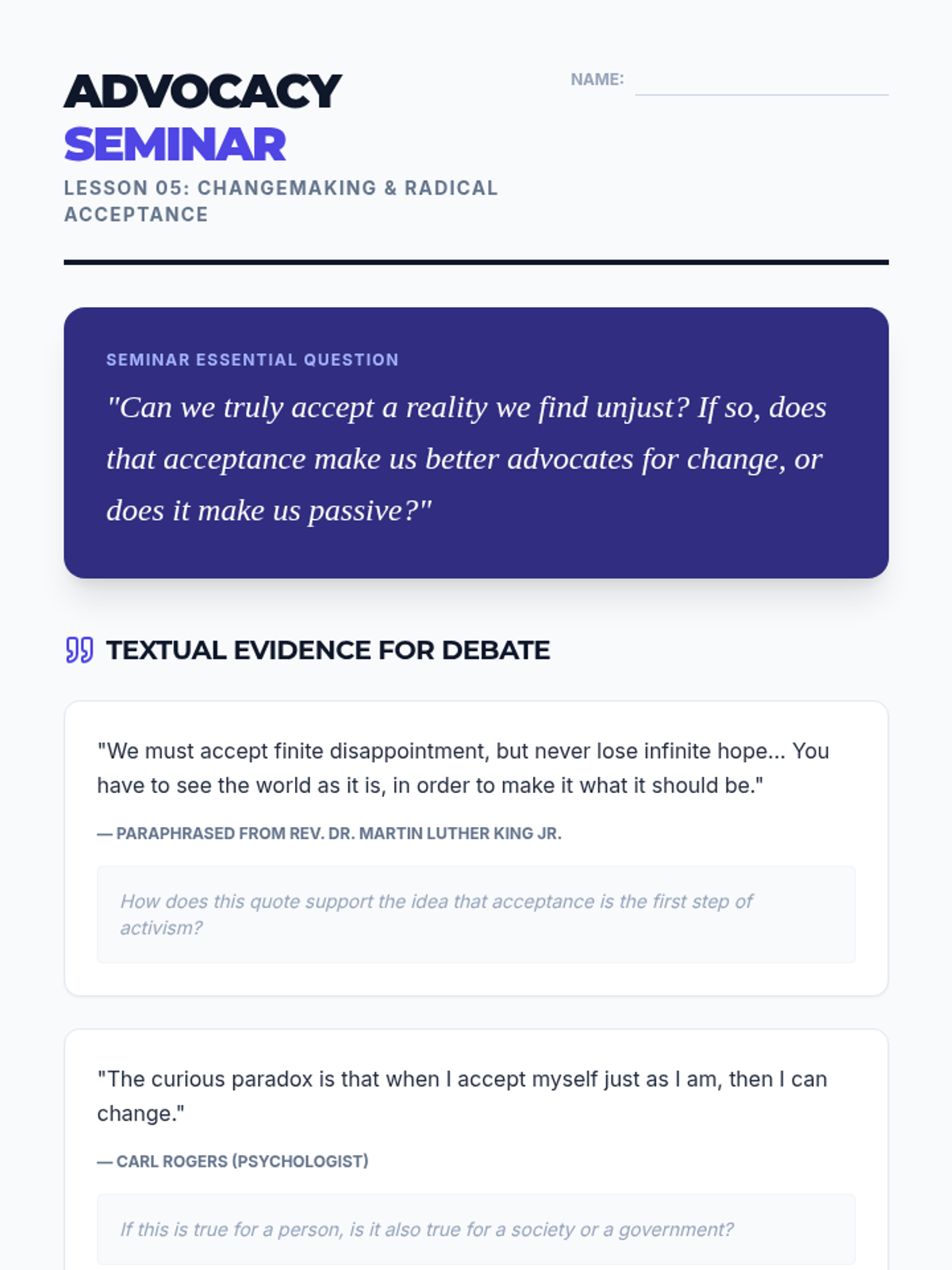
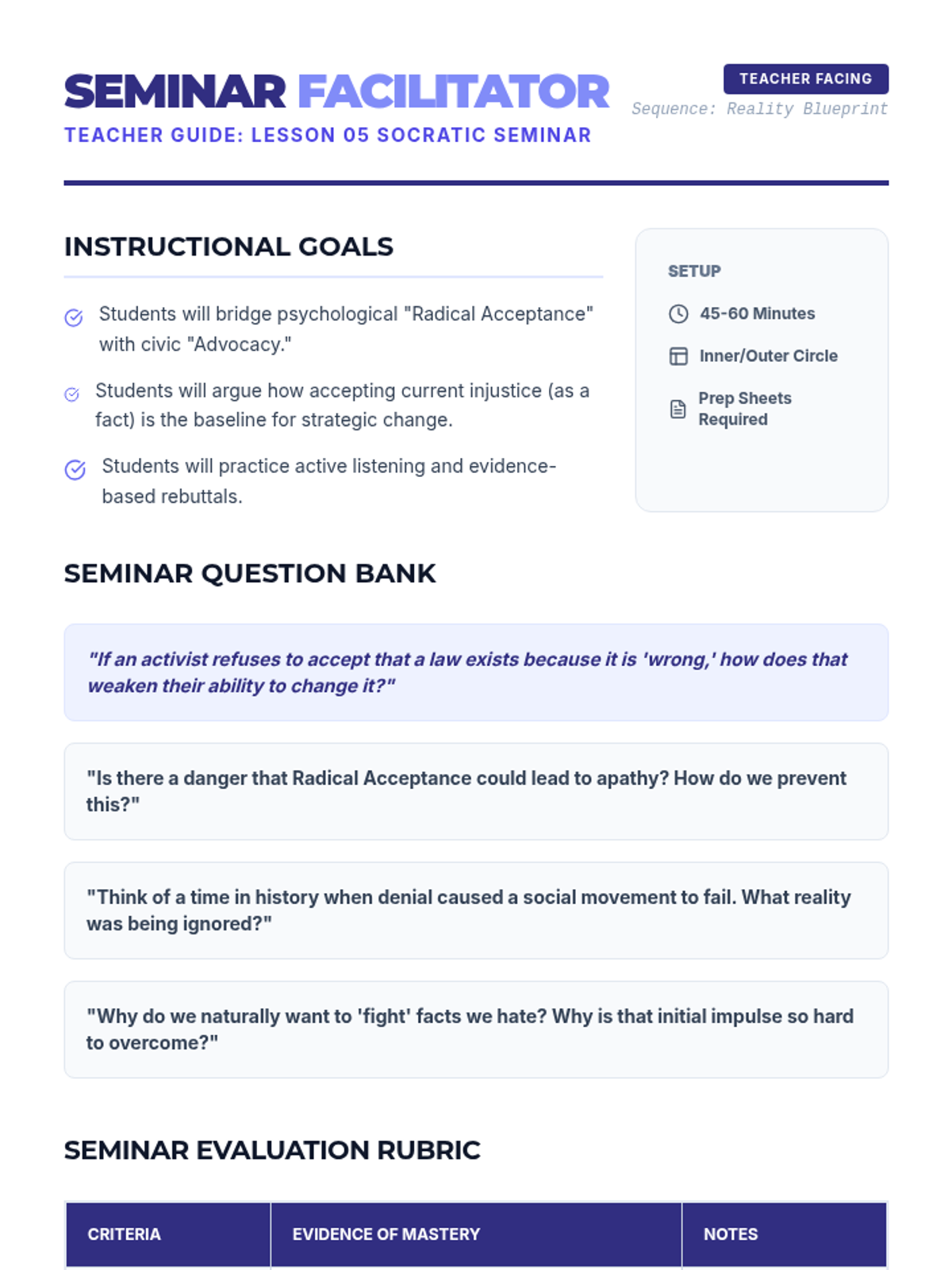
Students participate in a Socratic seminar debating how changemakers use radical acceptance. They discuss how activists must accept the current state of injustice in order to strategically dismantle it.
Students engage in a logic puzzle or escape room scenario where the clues require acknowledging an unfortunate reality. This reinforces that effective change can only happen after the current state is fully acknowledged.
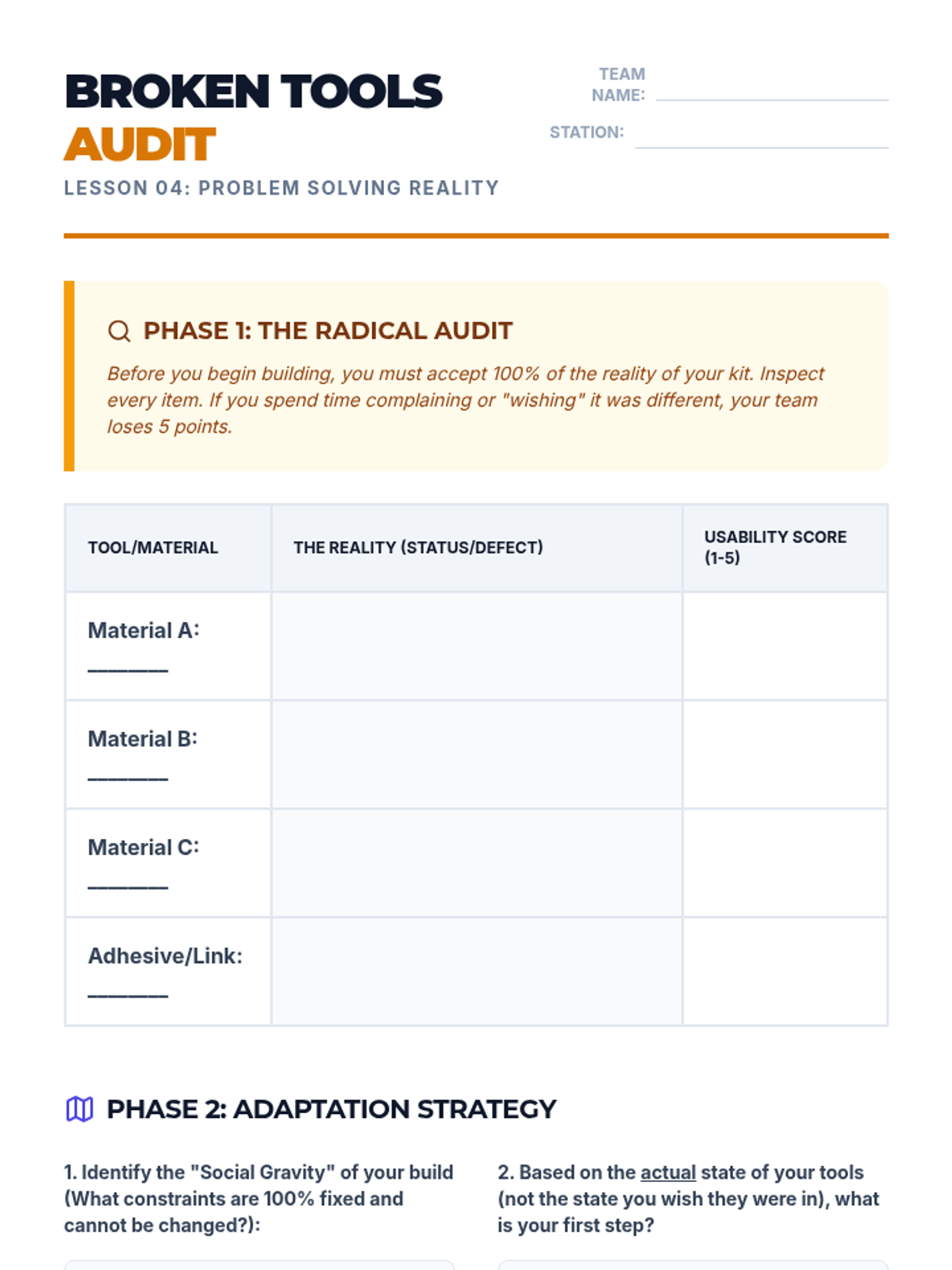
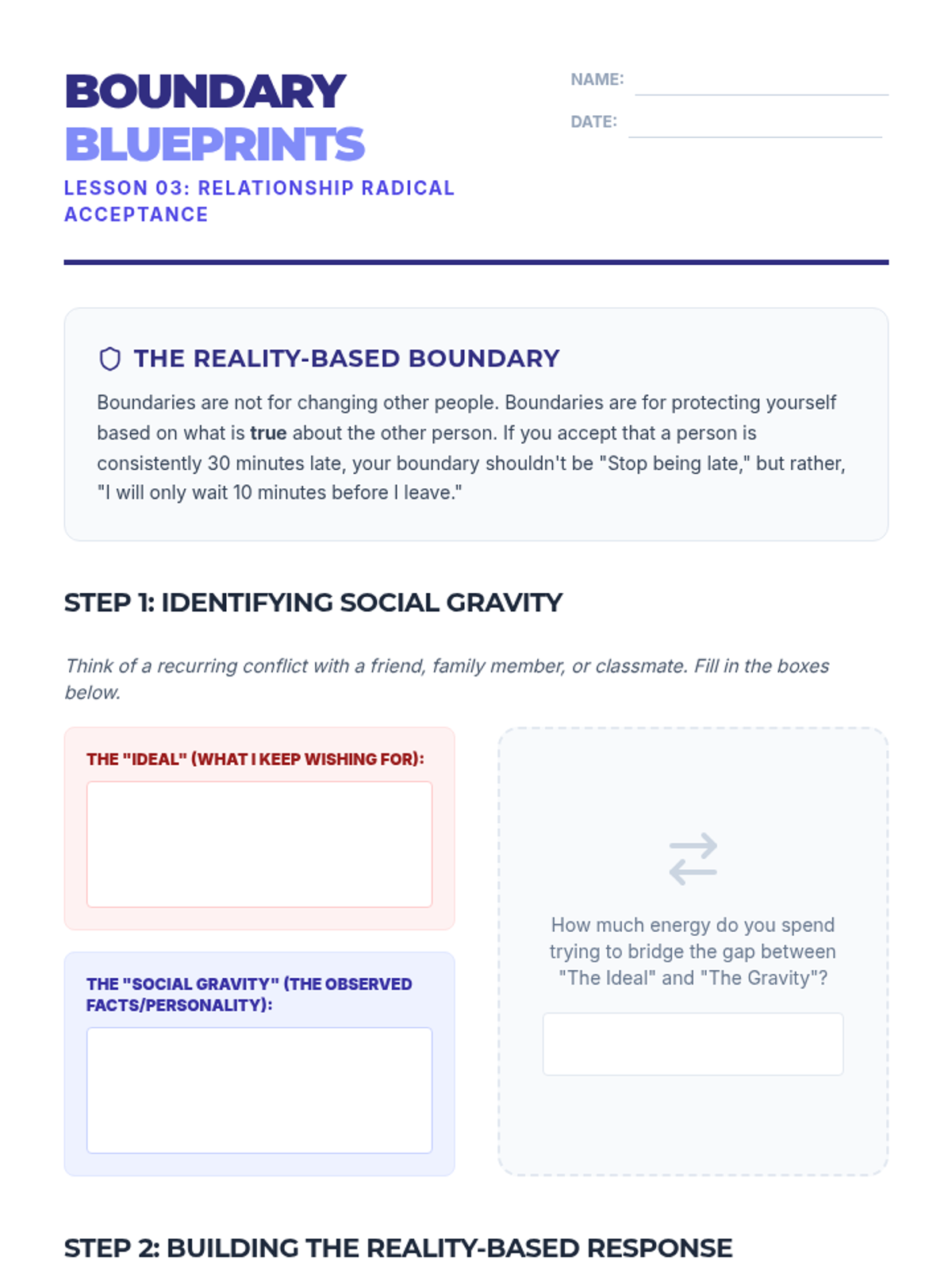
Focusing on social dynamics, students explore how to accept others' behaviors without necessarily tolerating abuse or mistreatment. The lesson focuses on accepting that we cannot control others, only our responses.
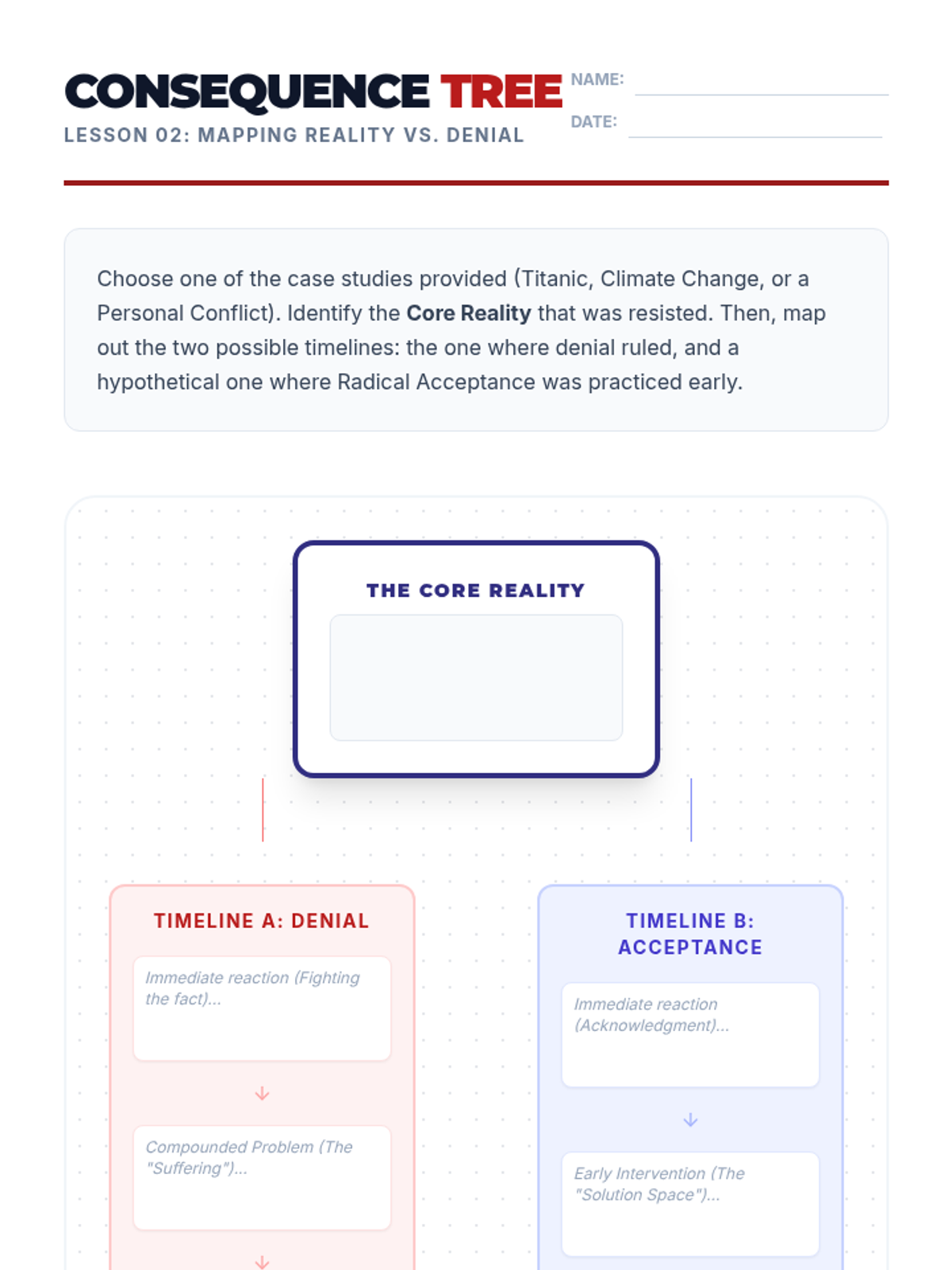
Students analyze historical or fictional case studies where characters refused to accept reality, leading to compounded problems. They map out the 'consequence tree' of denial versus the hypothetical outcome of early acceptance.
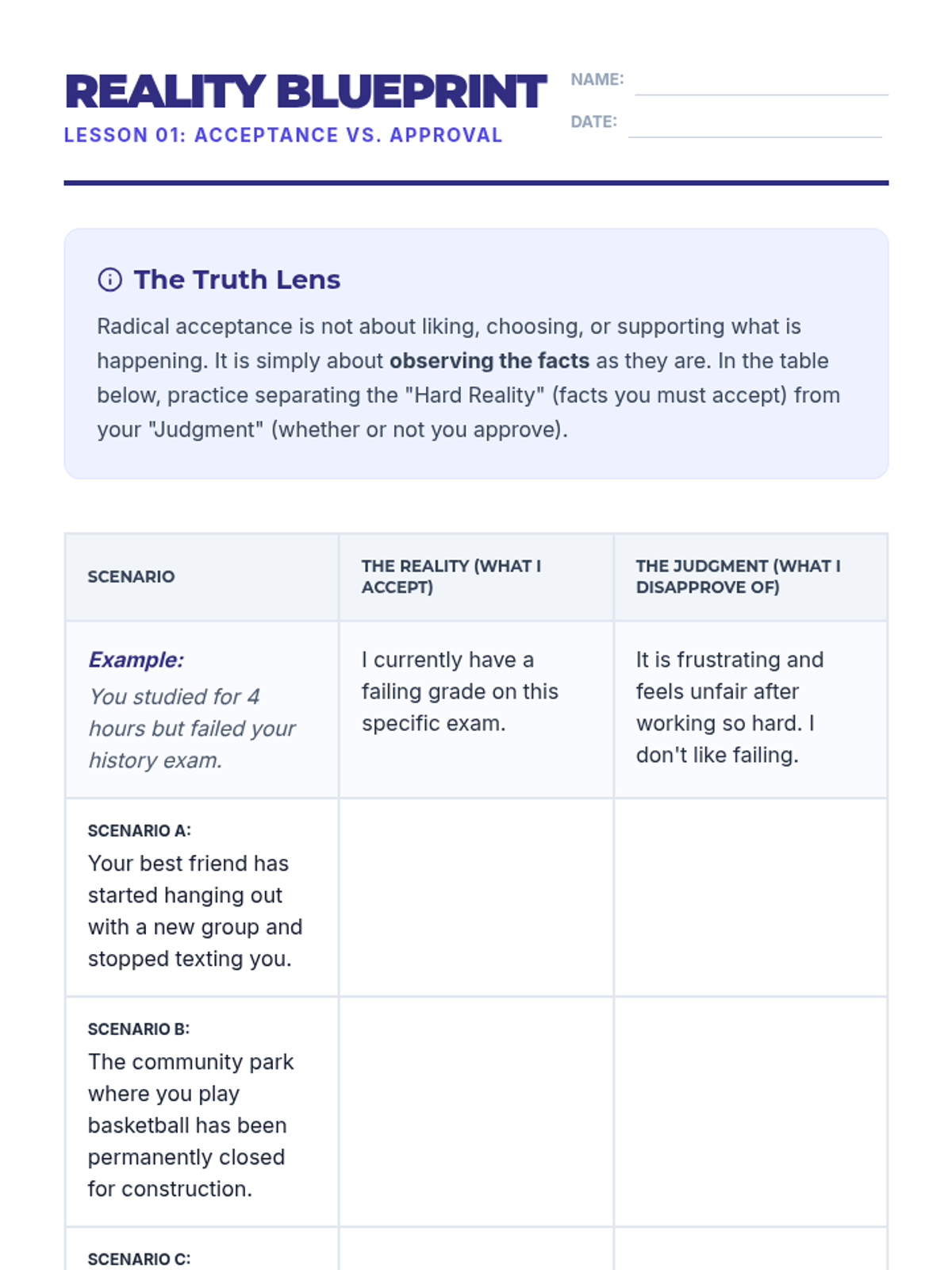
Students dissect the crucial distinction between acknowledging a fact (acceptance) and liking that fact (approval). Through Venn diagrams and scenario analysis, they clarify that one can accept a failing grade or a broken friendship without judging it as 'good.'
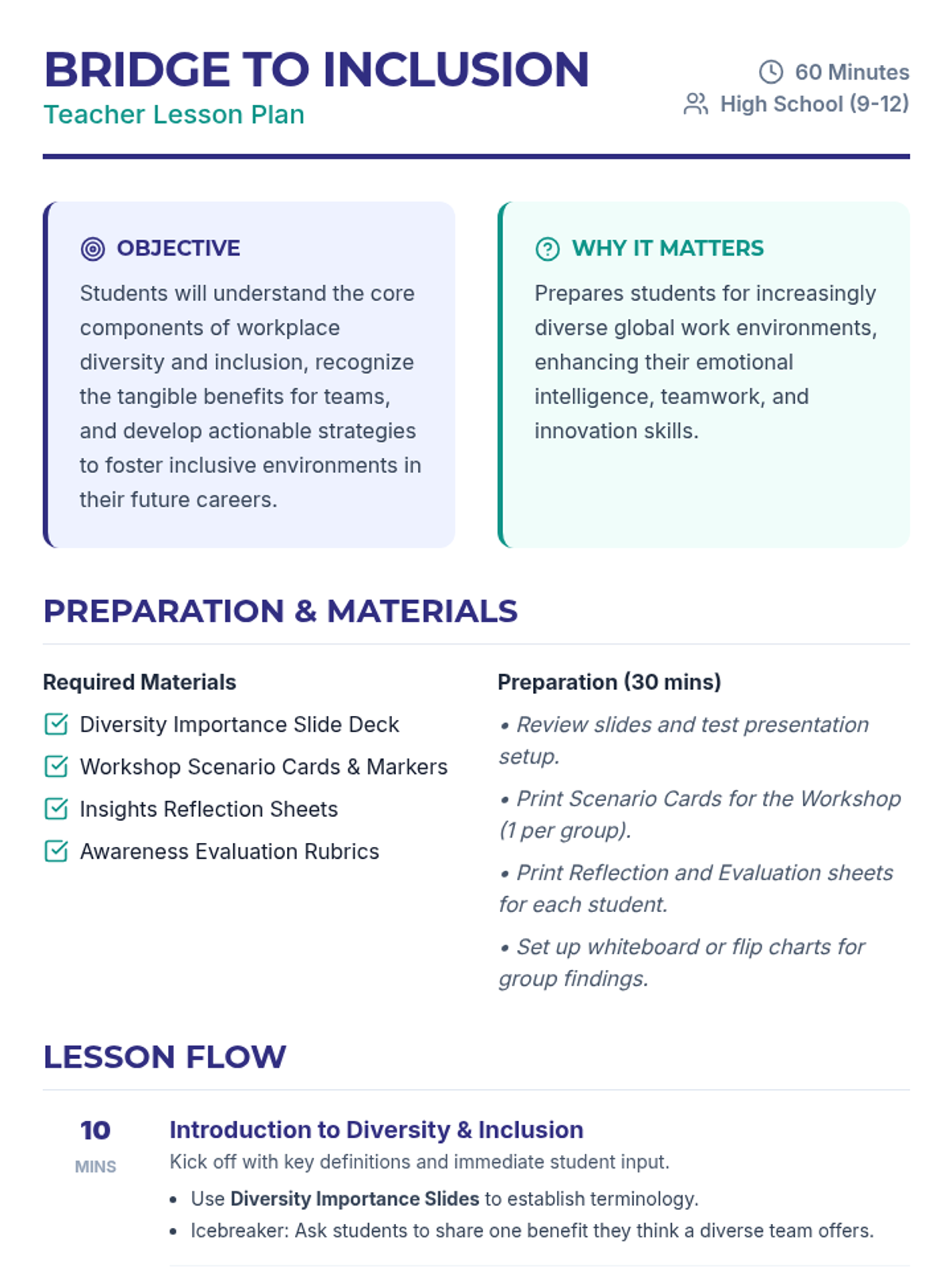
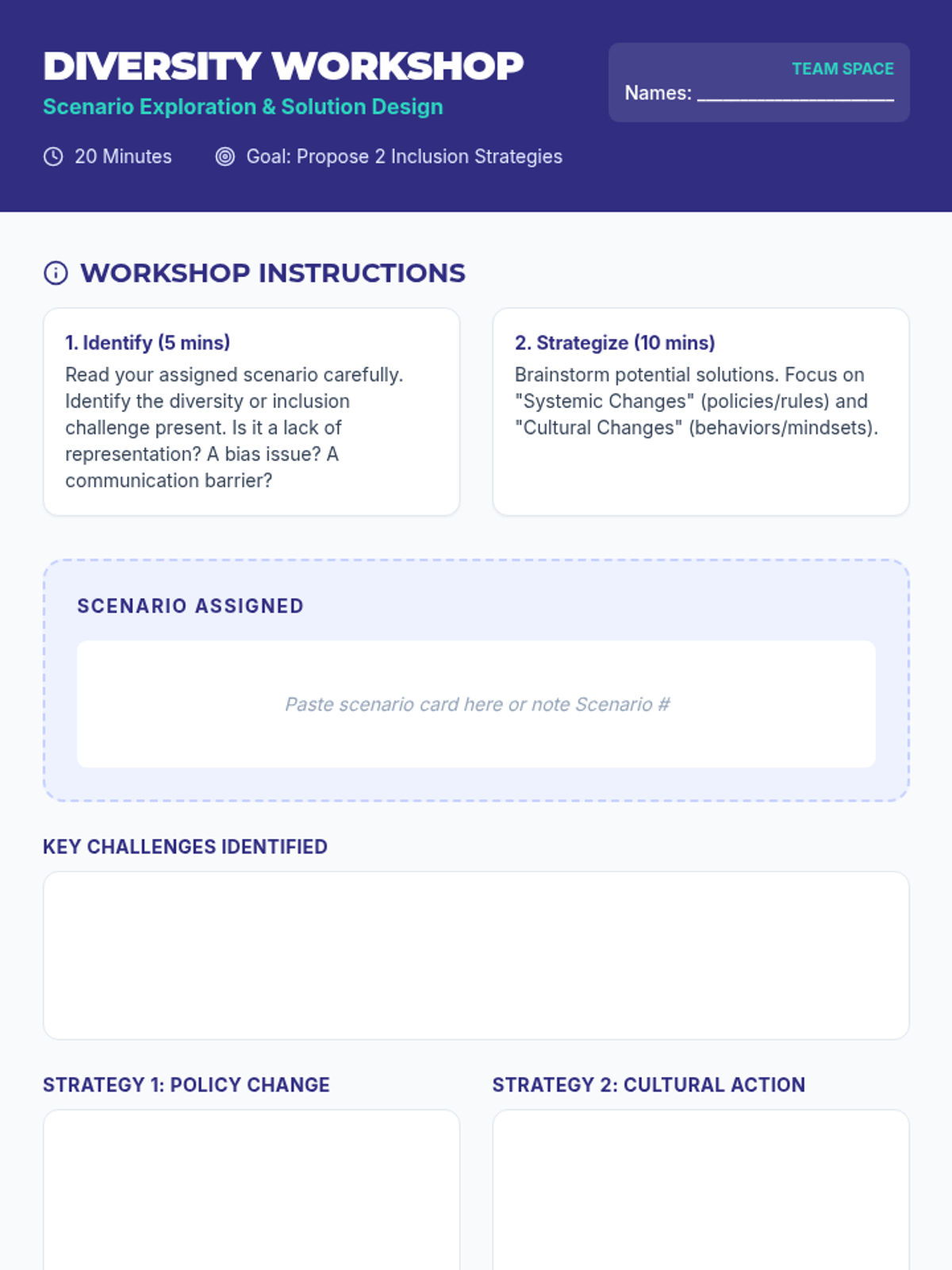
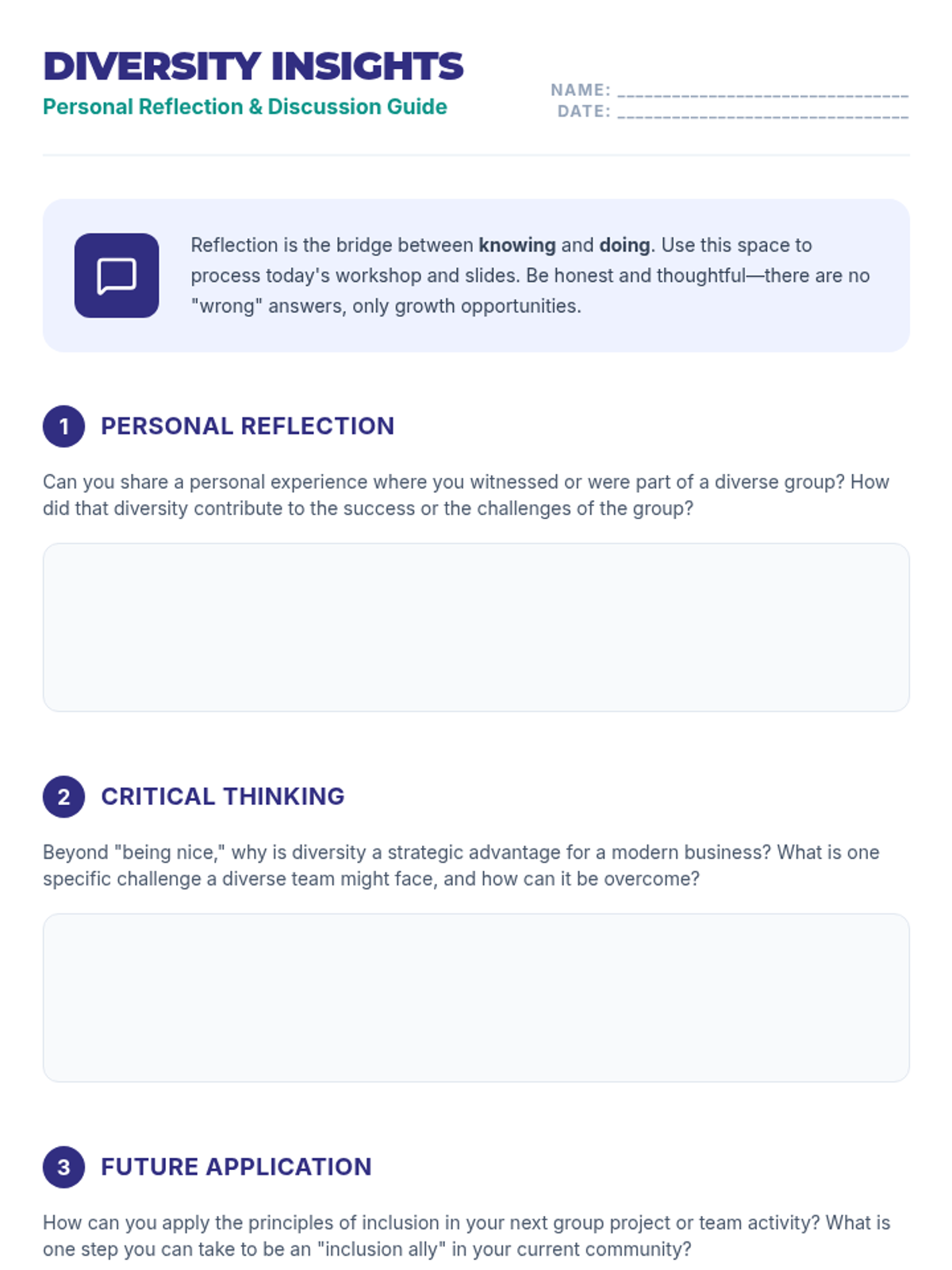
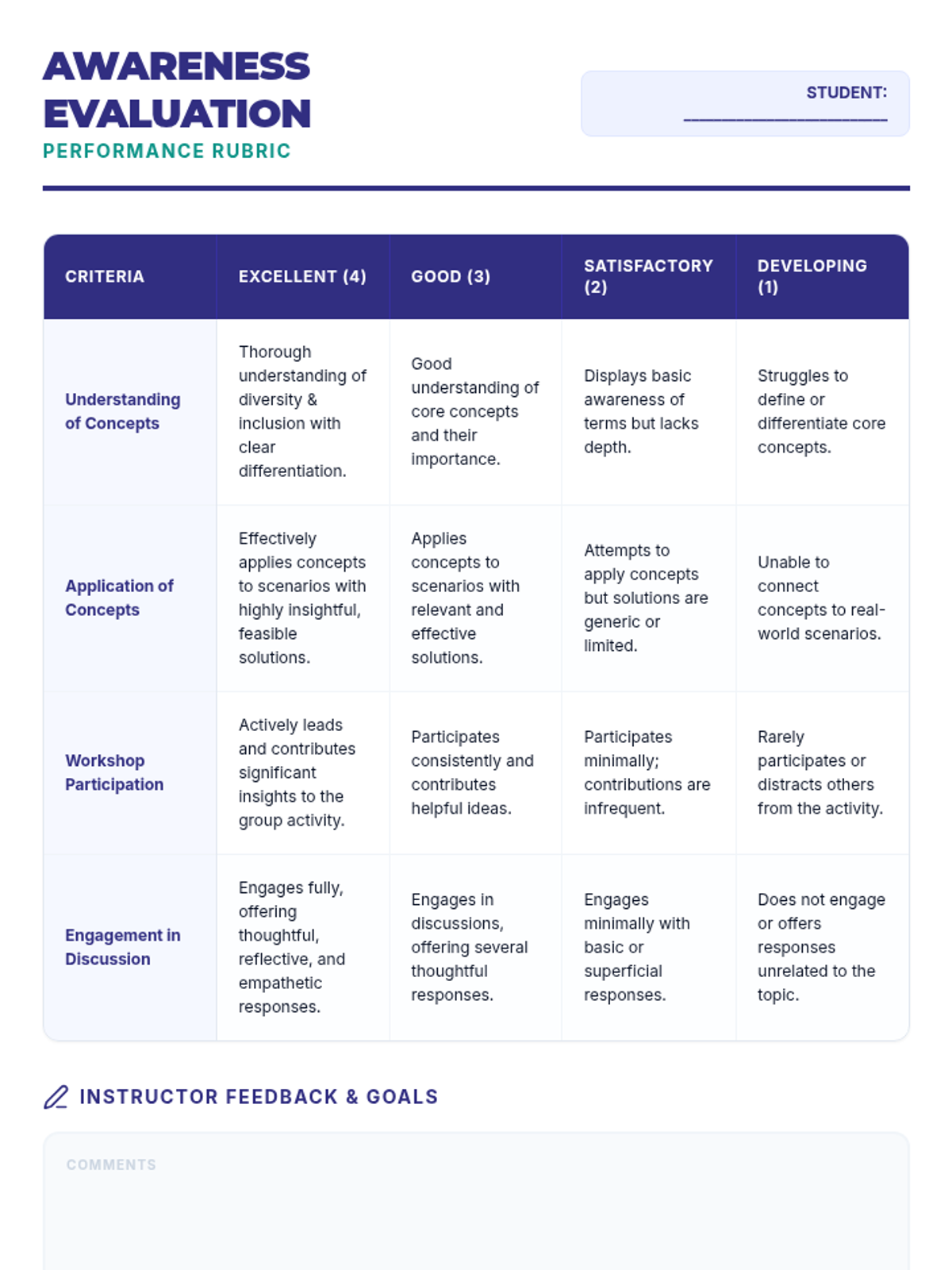
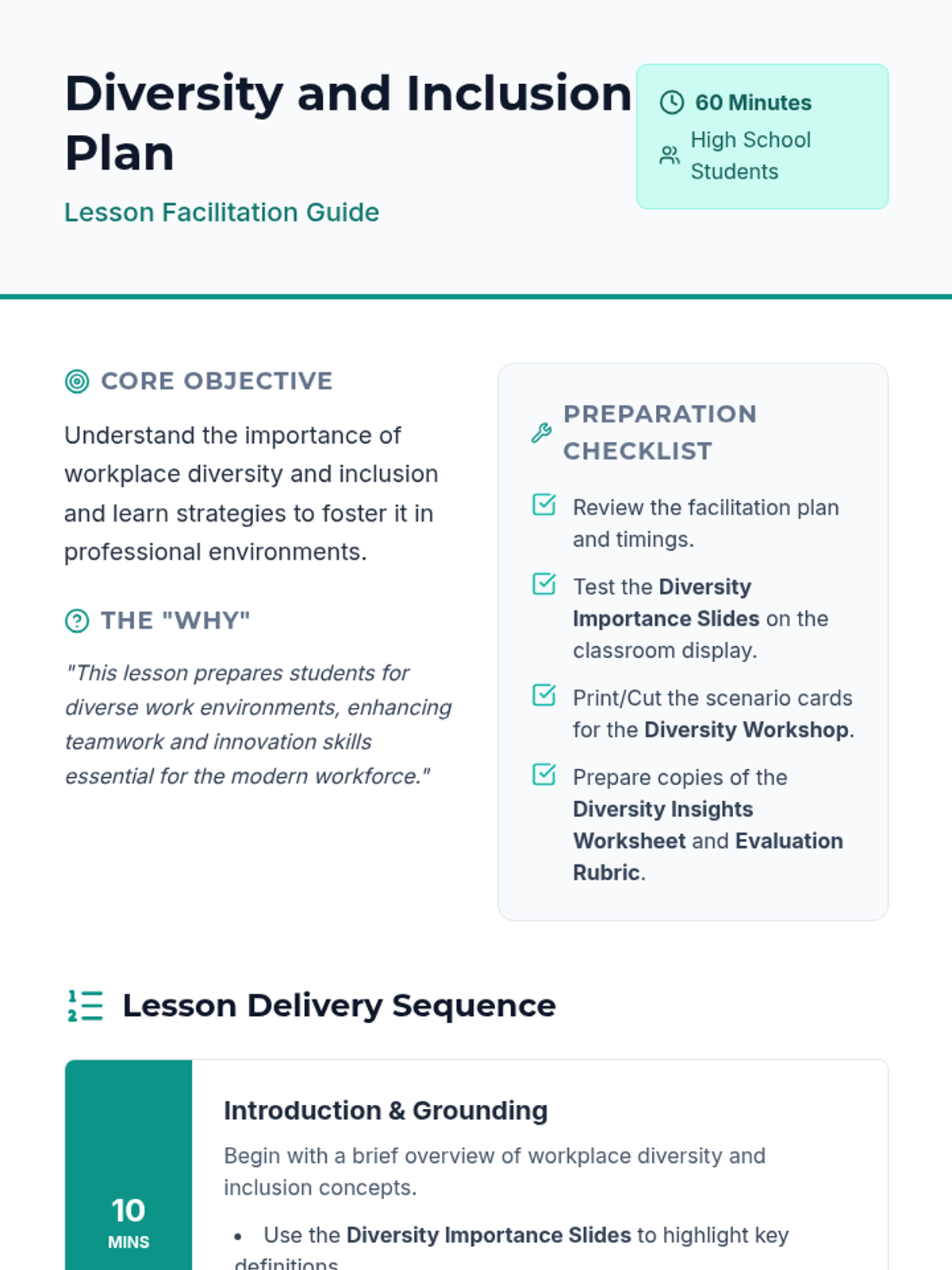
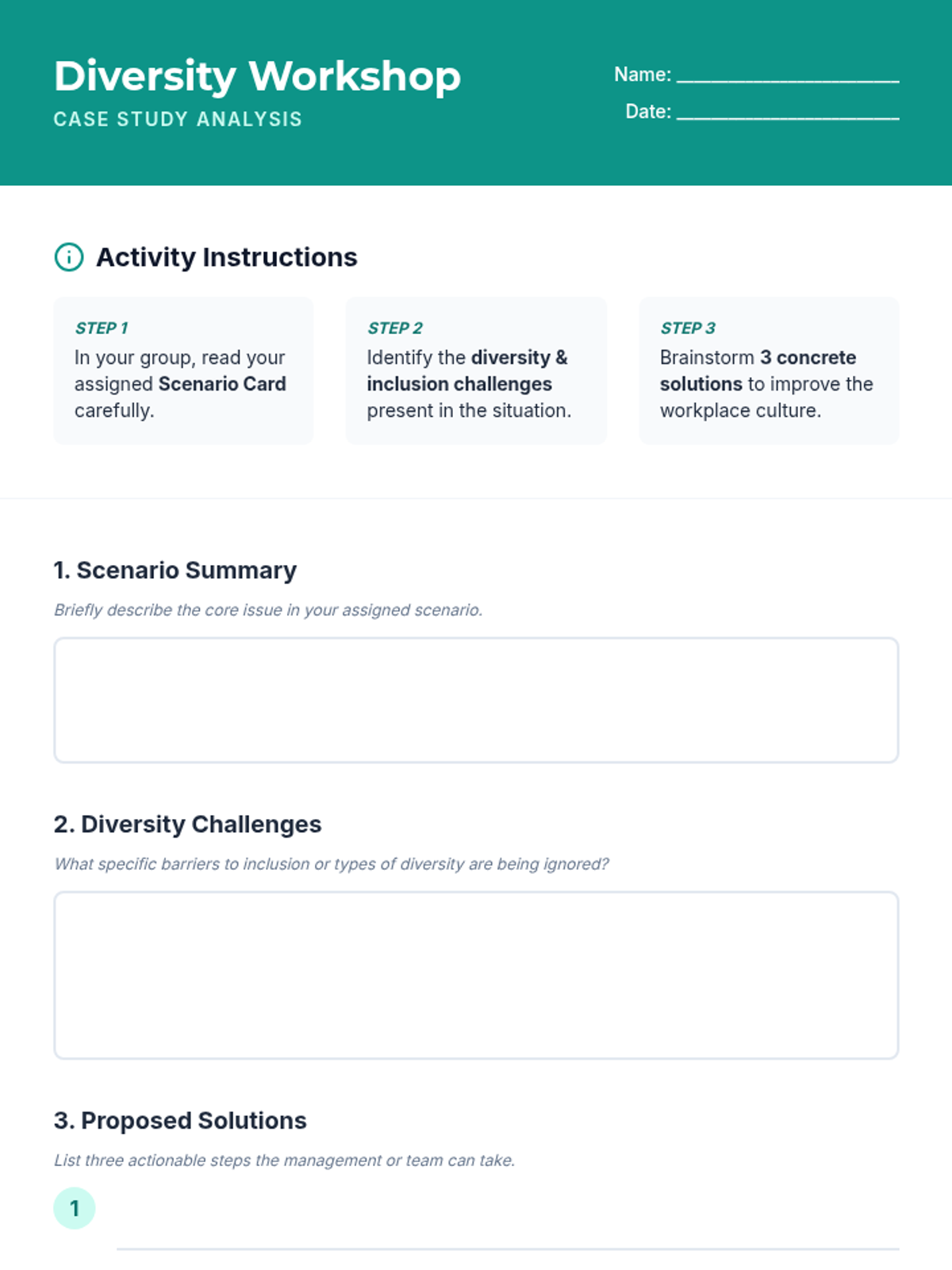
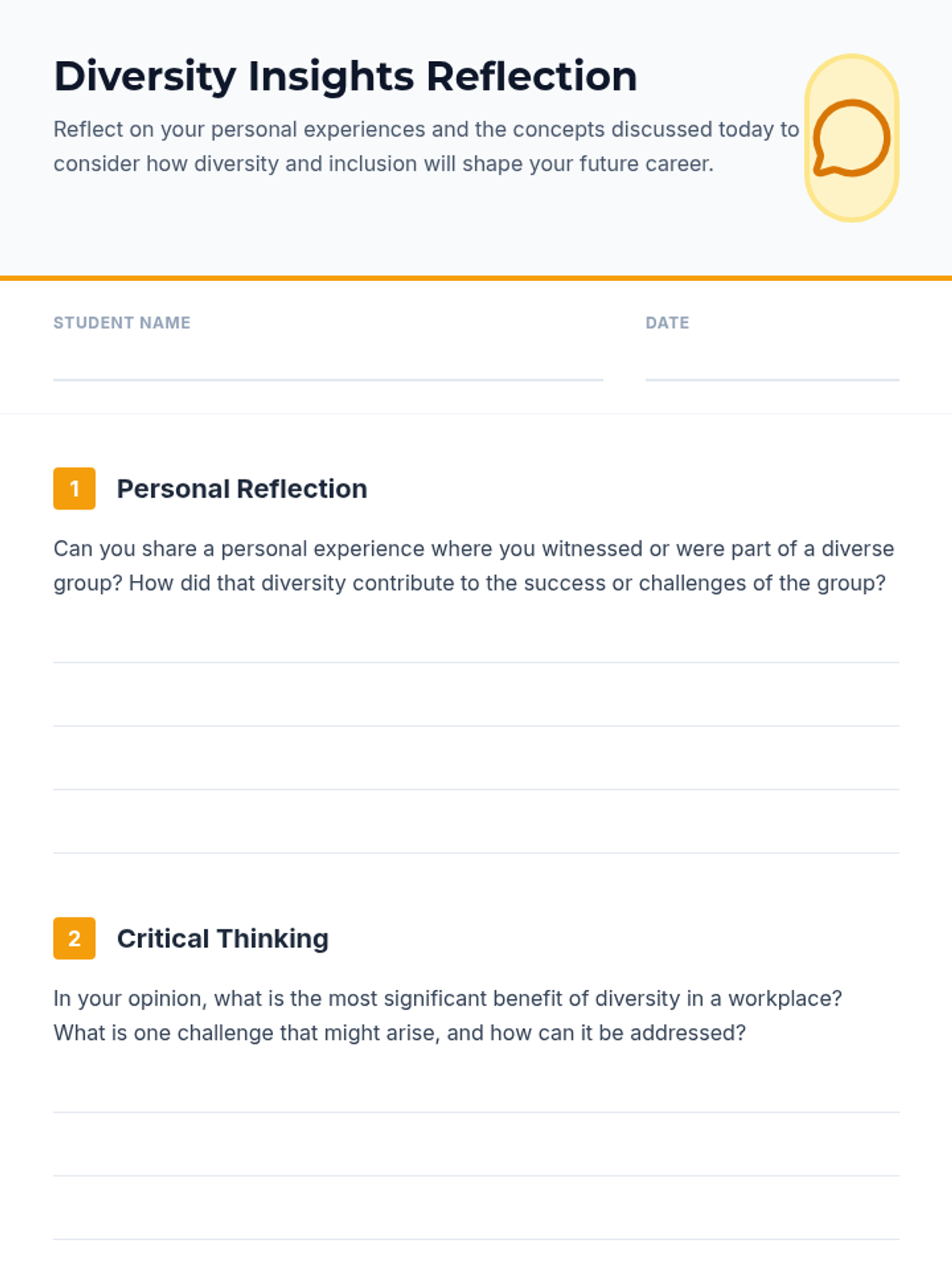
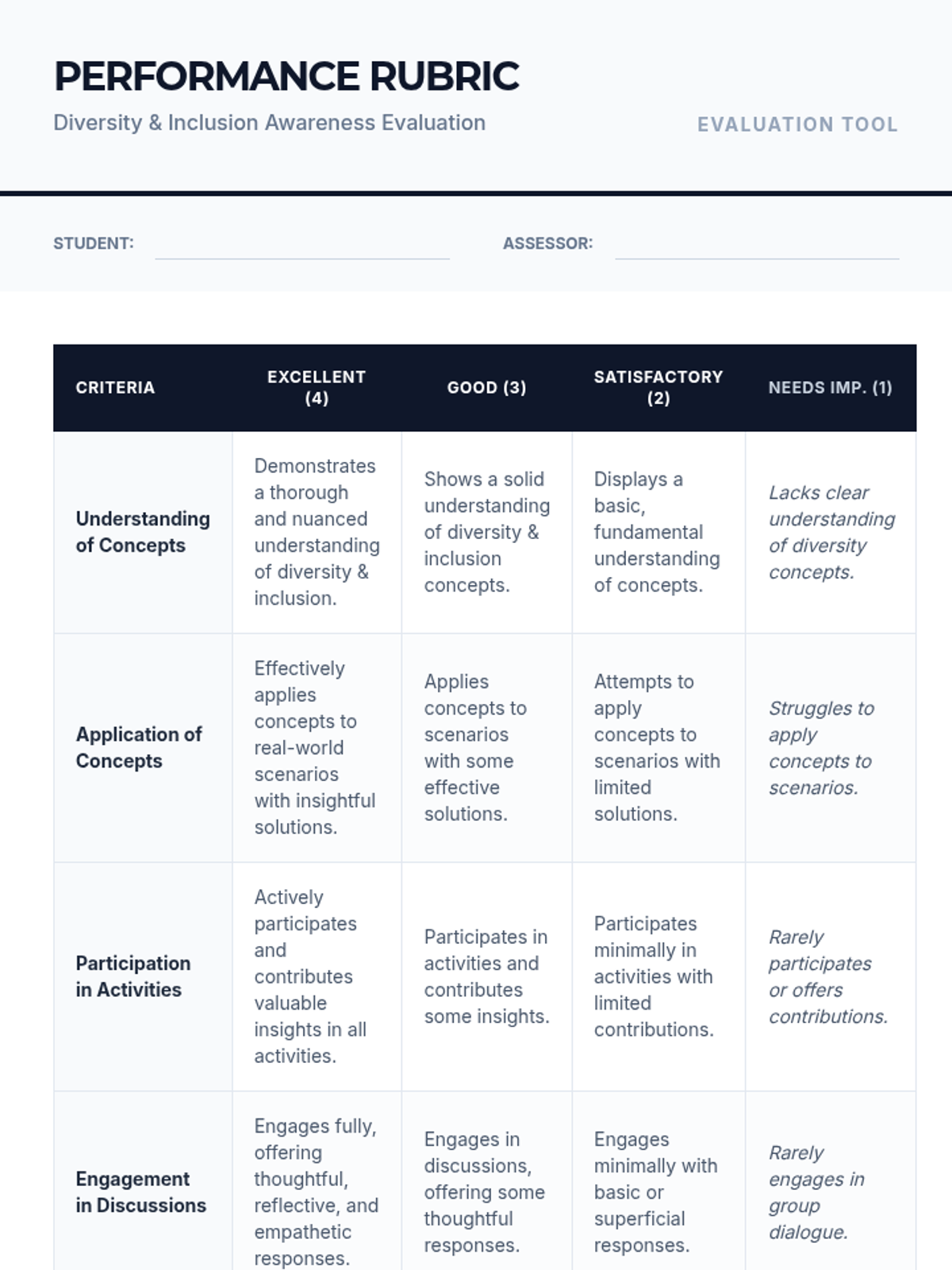
An introduction to workplace diversity and inclusion for high school students, exploring benefits and strategies for fostering inclusive environments through interactive activities and reflection.
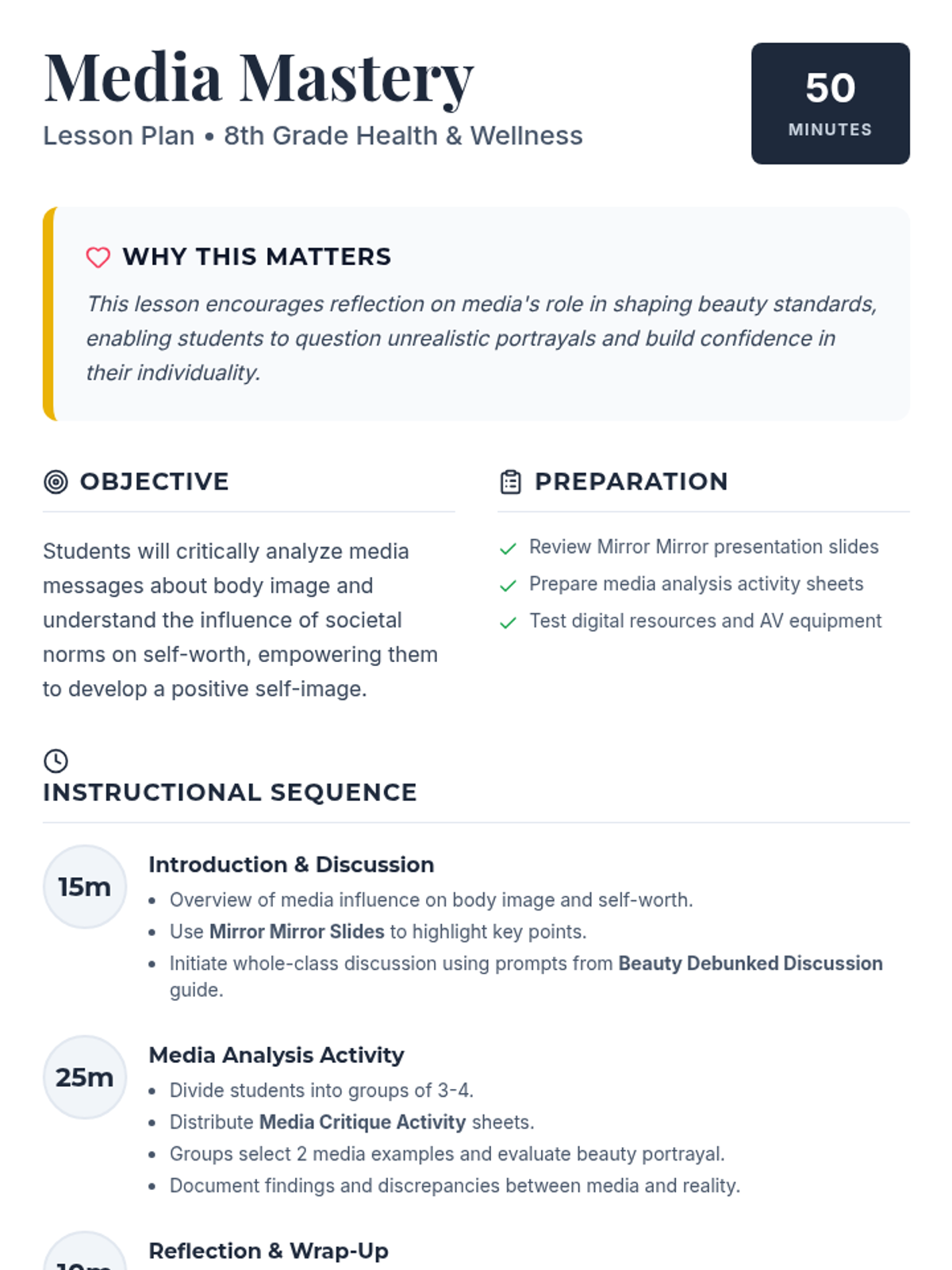
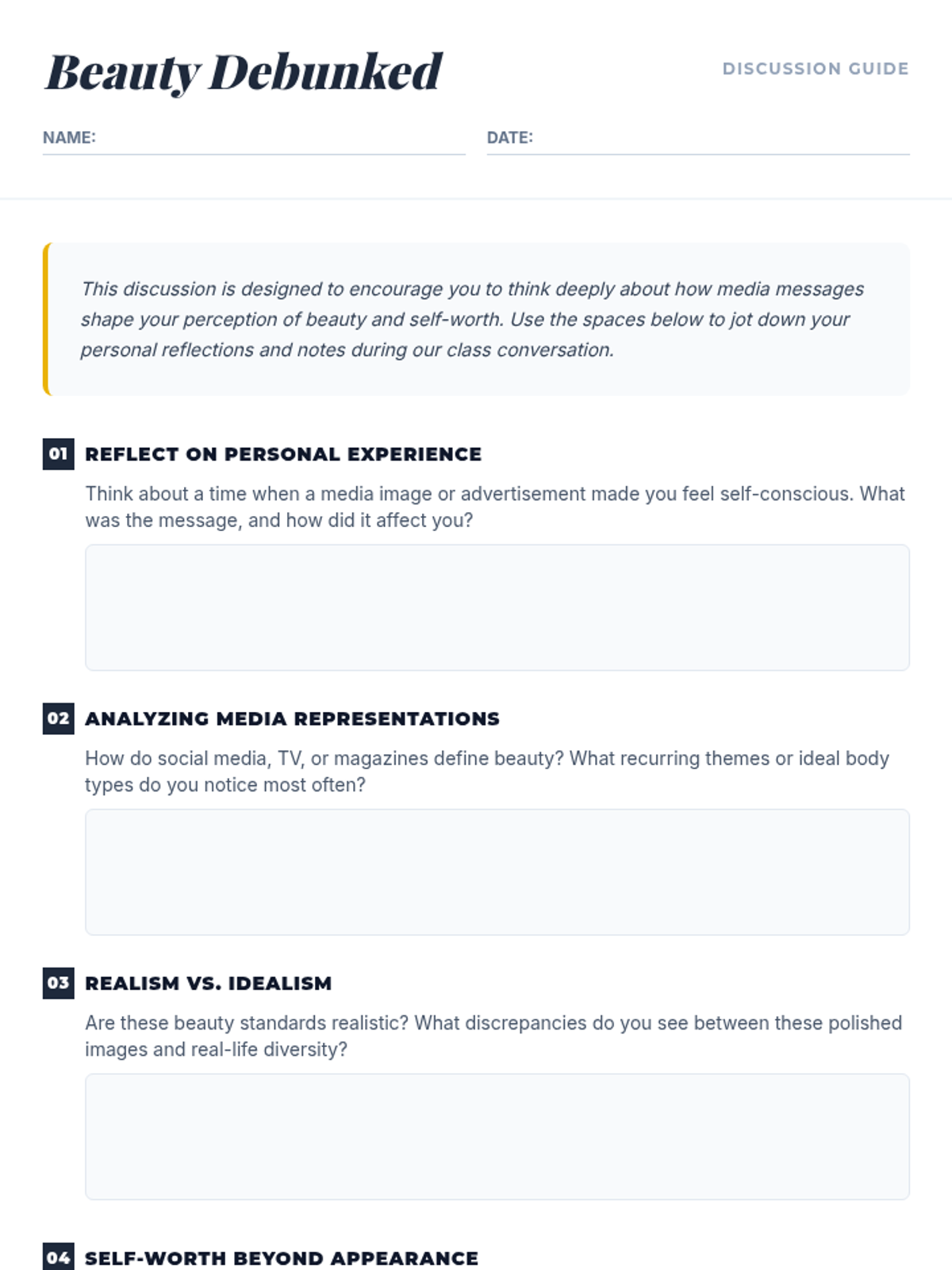
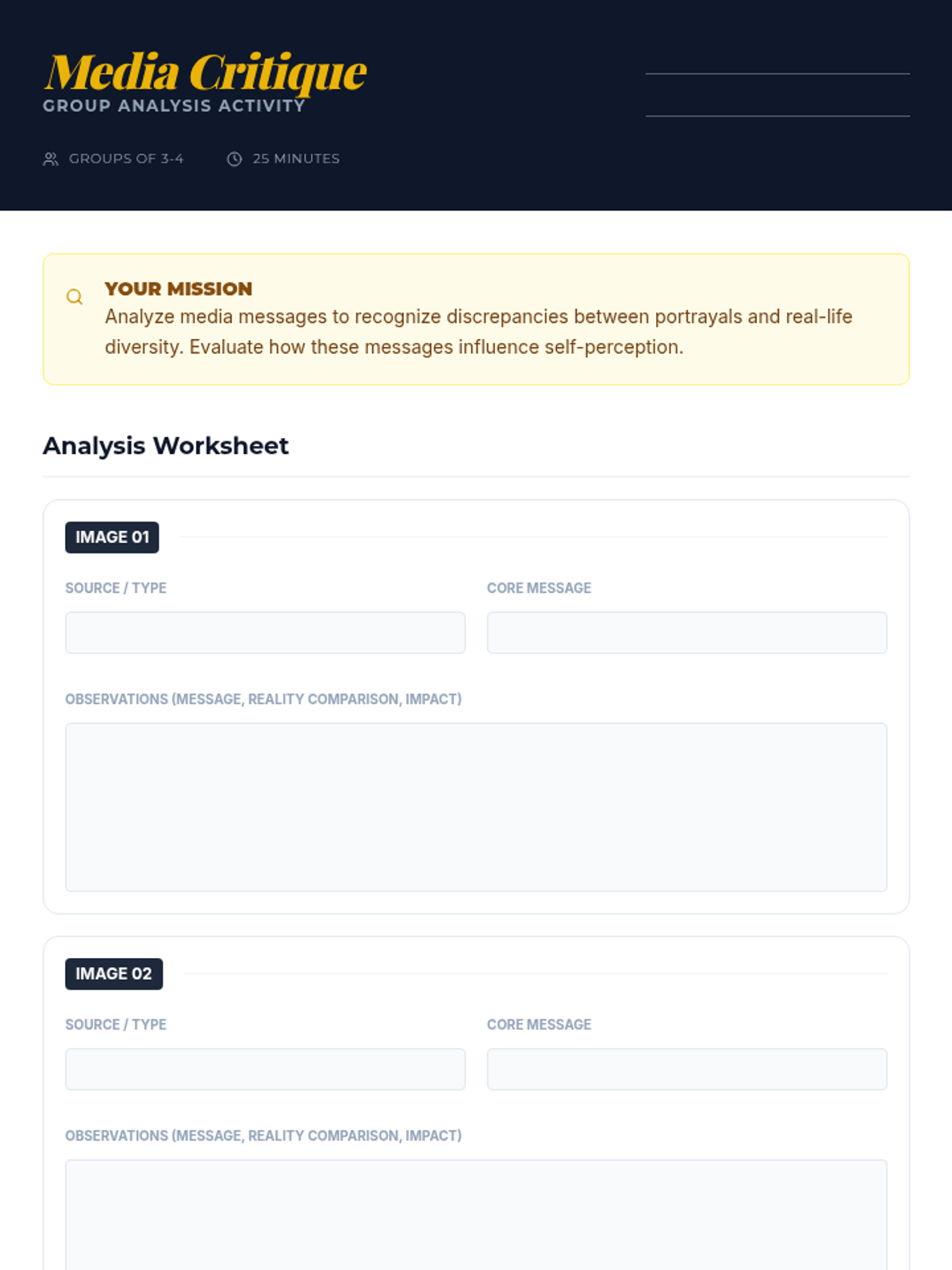
A lesson empowering students to critically analyze media's role in shaping beauty standards and develop a positive self-image through interactive analysis and discussion.
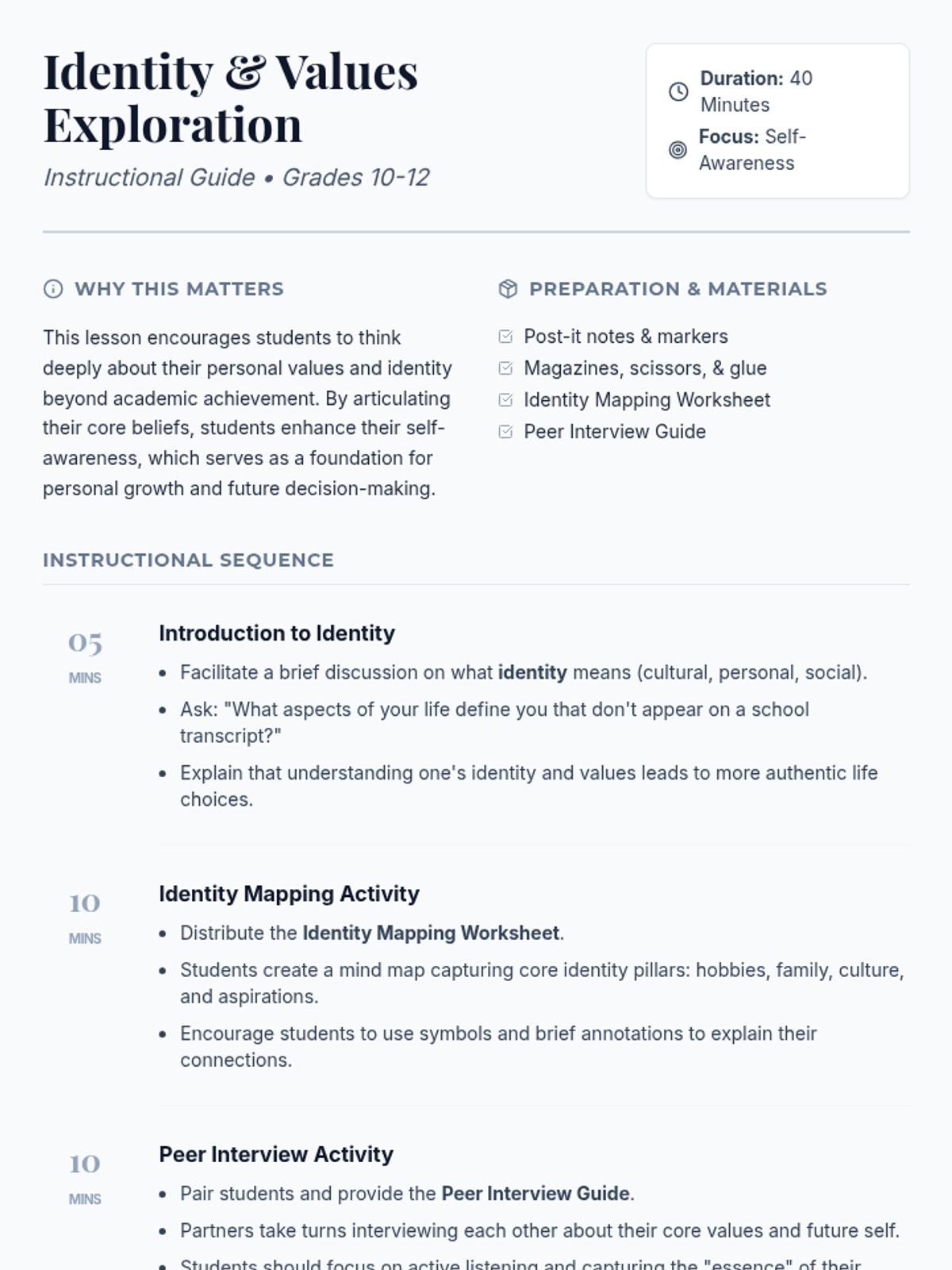
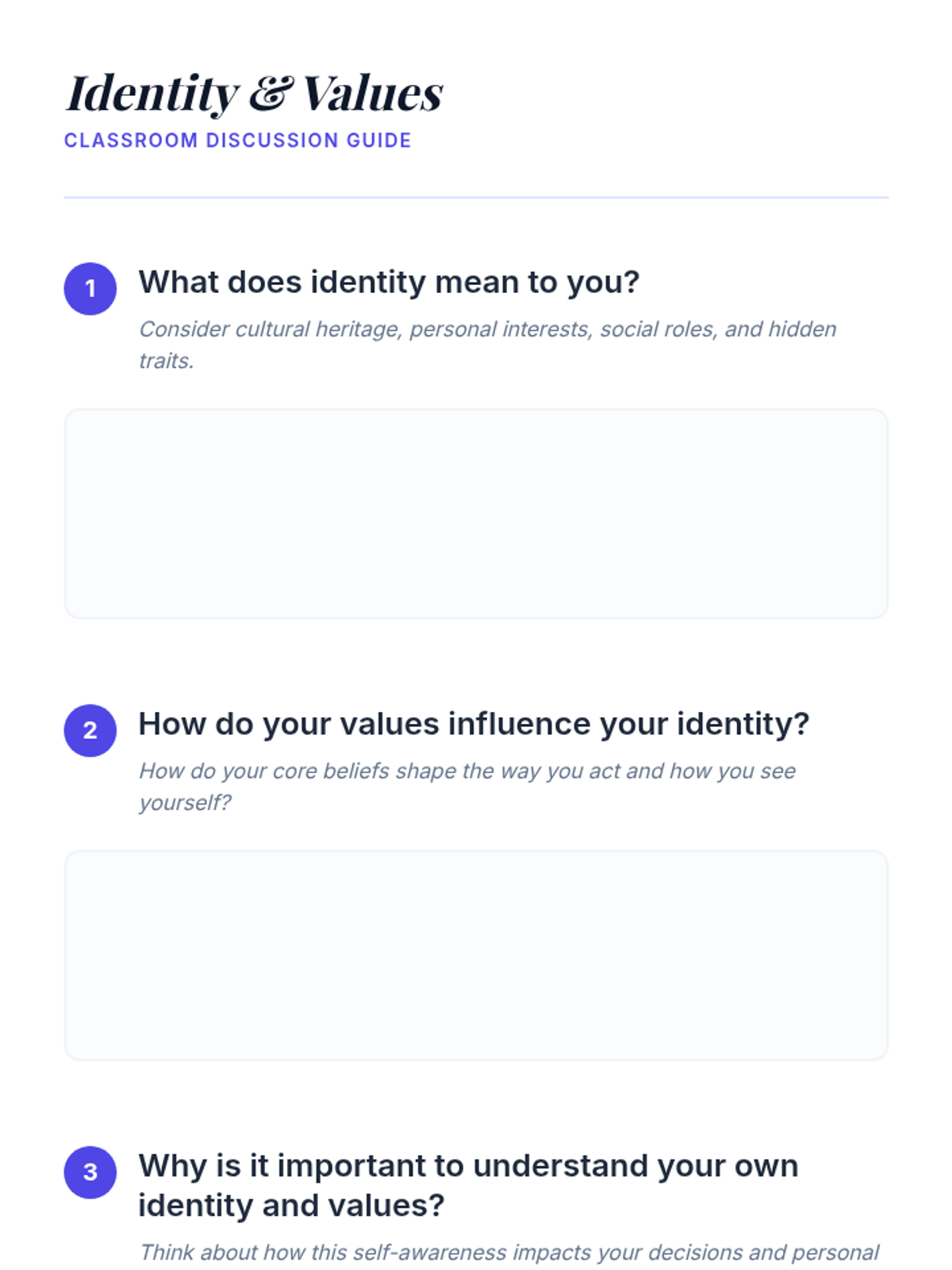
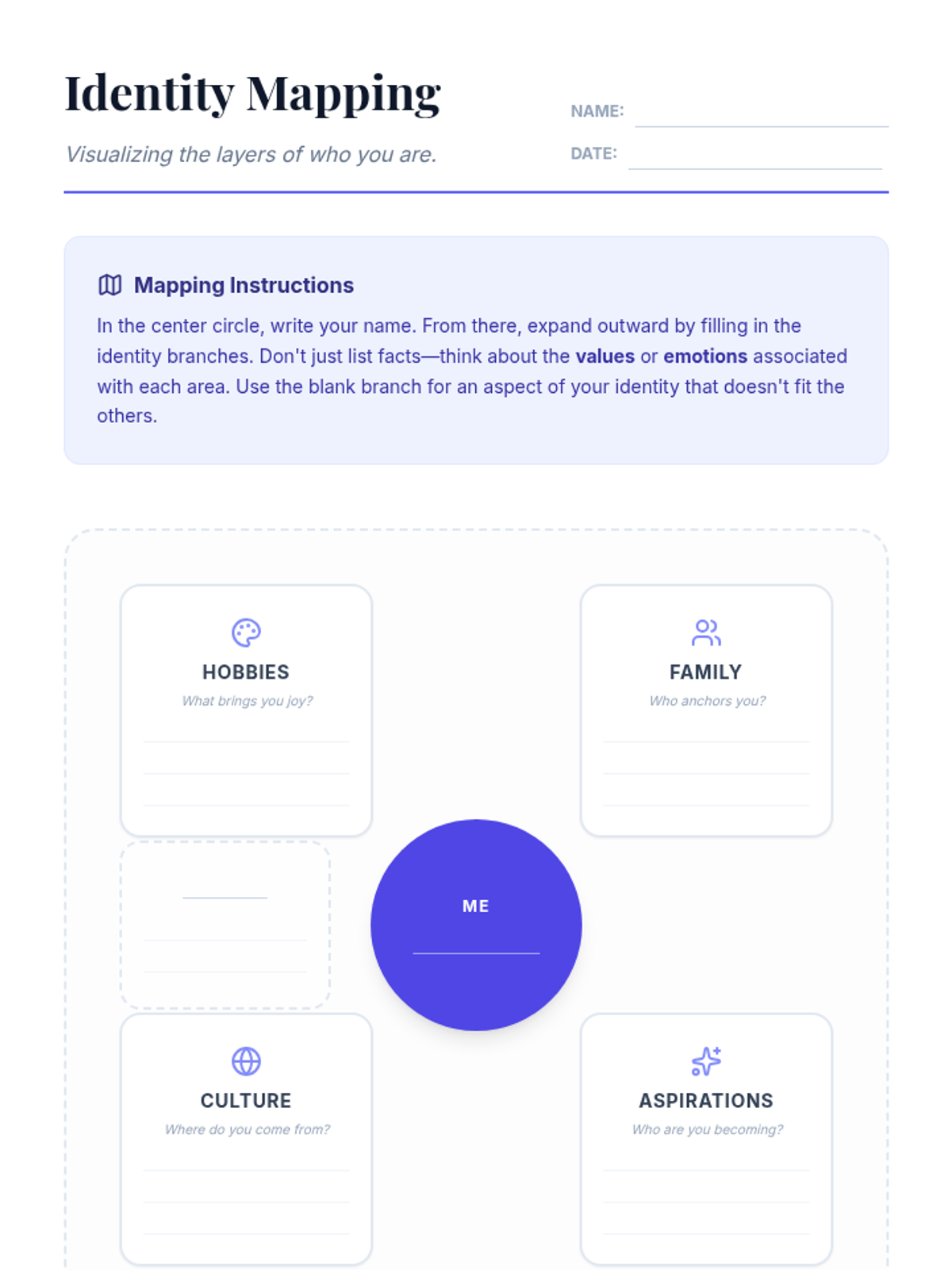
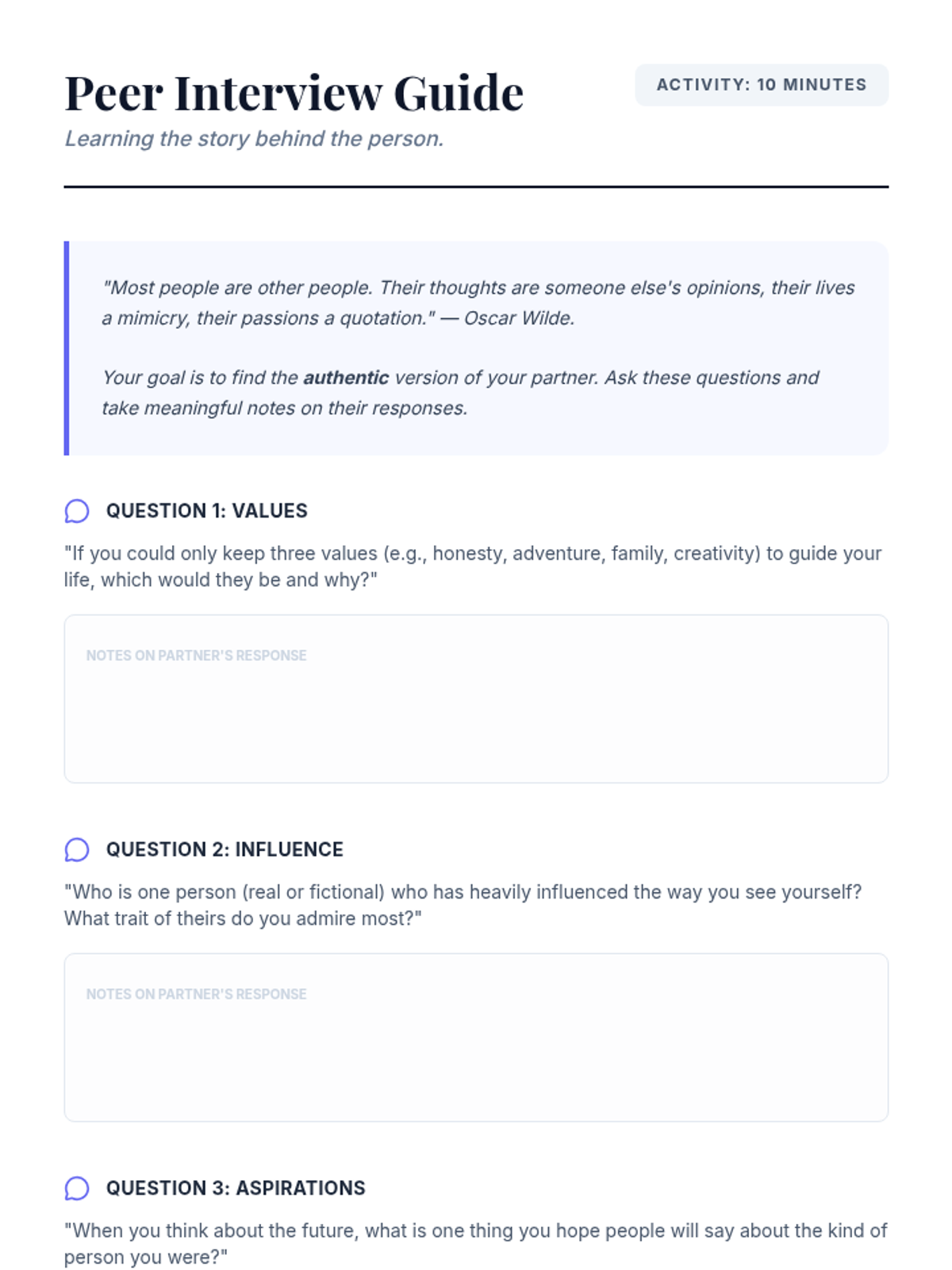
A reflective 40-minute lesson for high school students to explore their personal identity and values beyond academics through mapping, peer interviews, and creative expression.
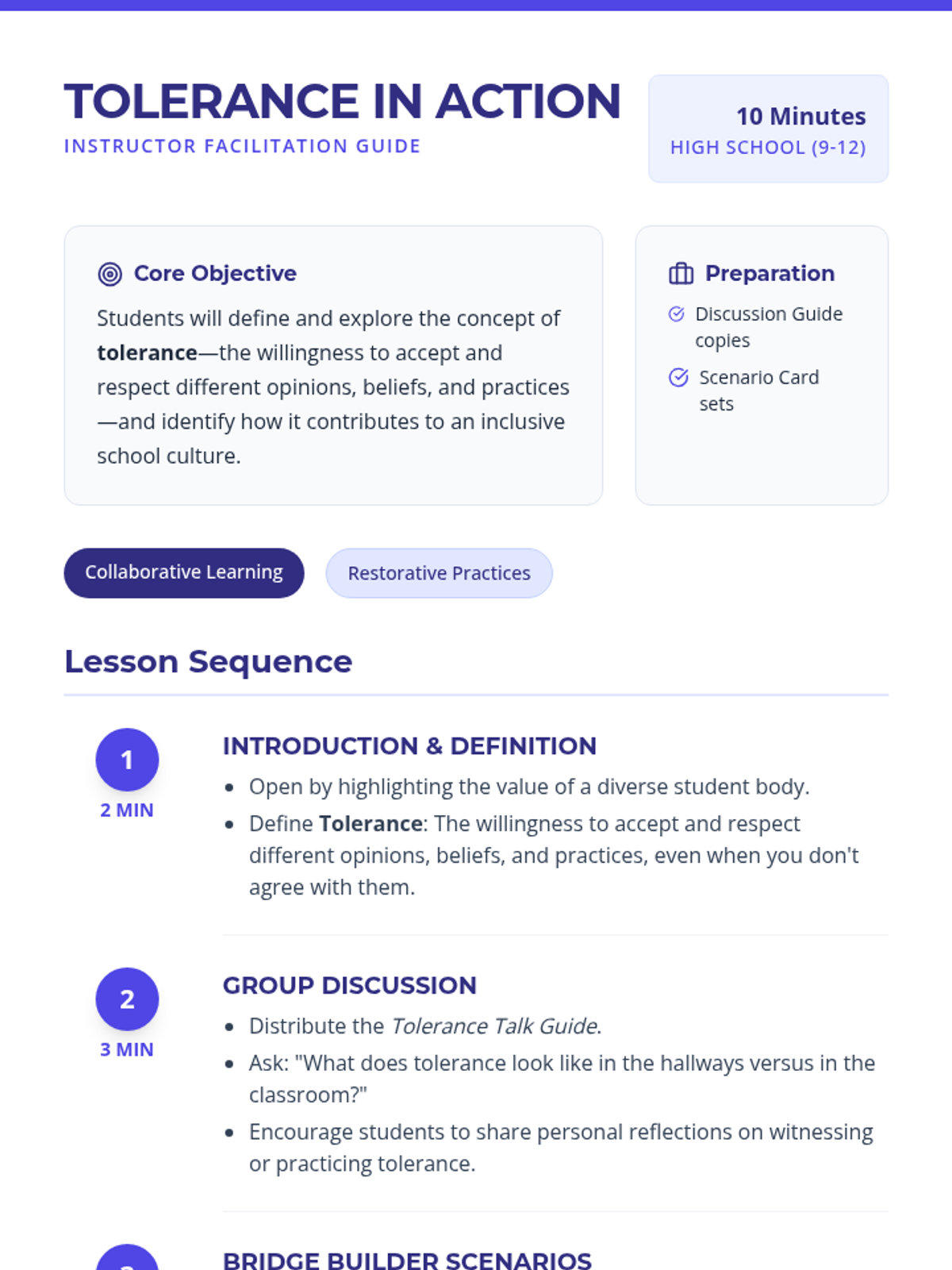
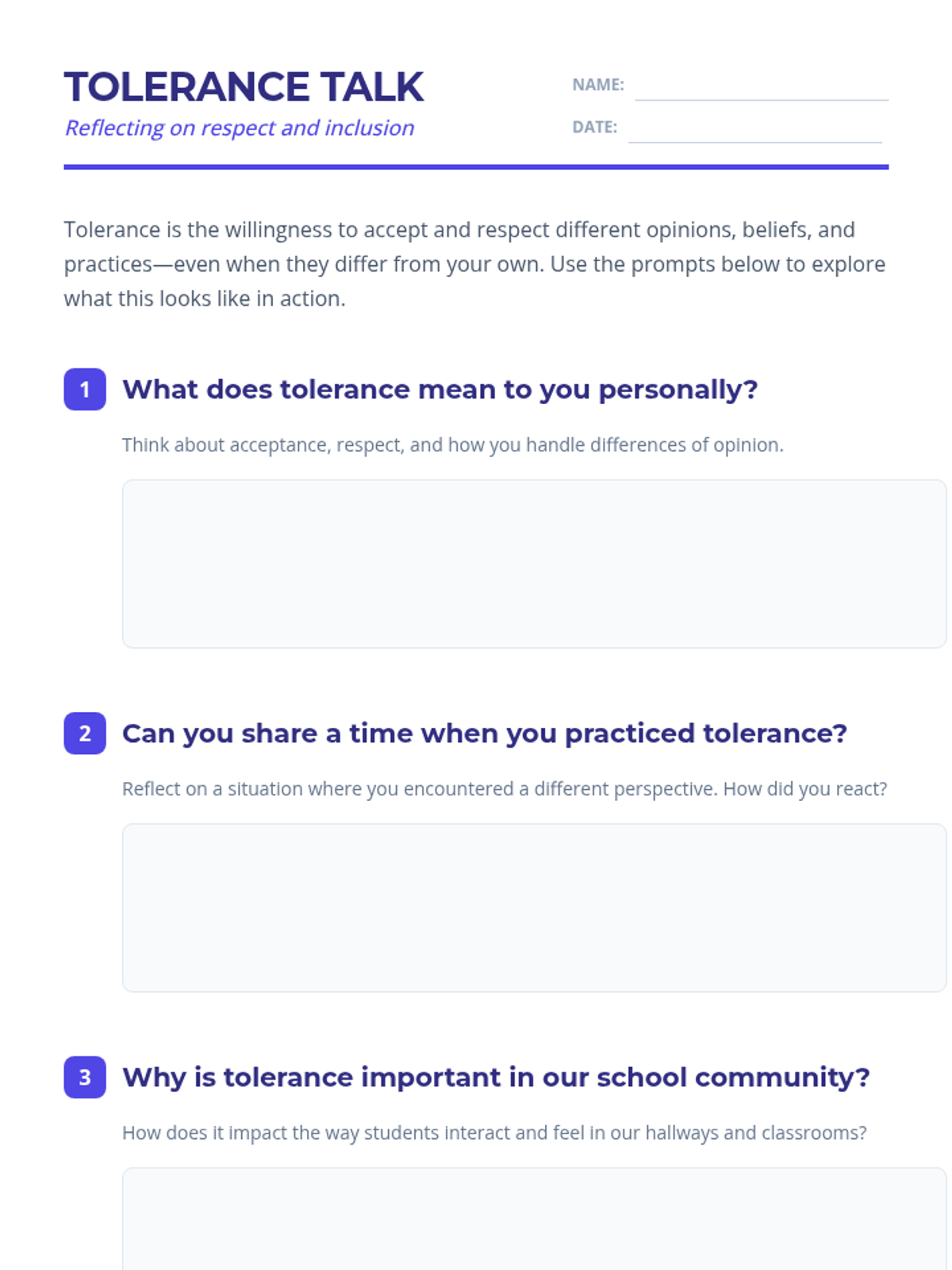
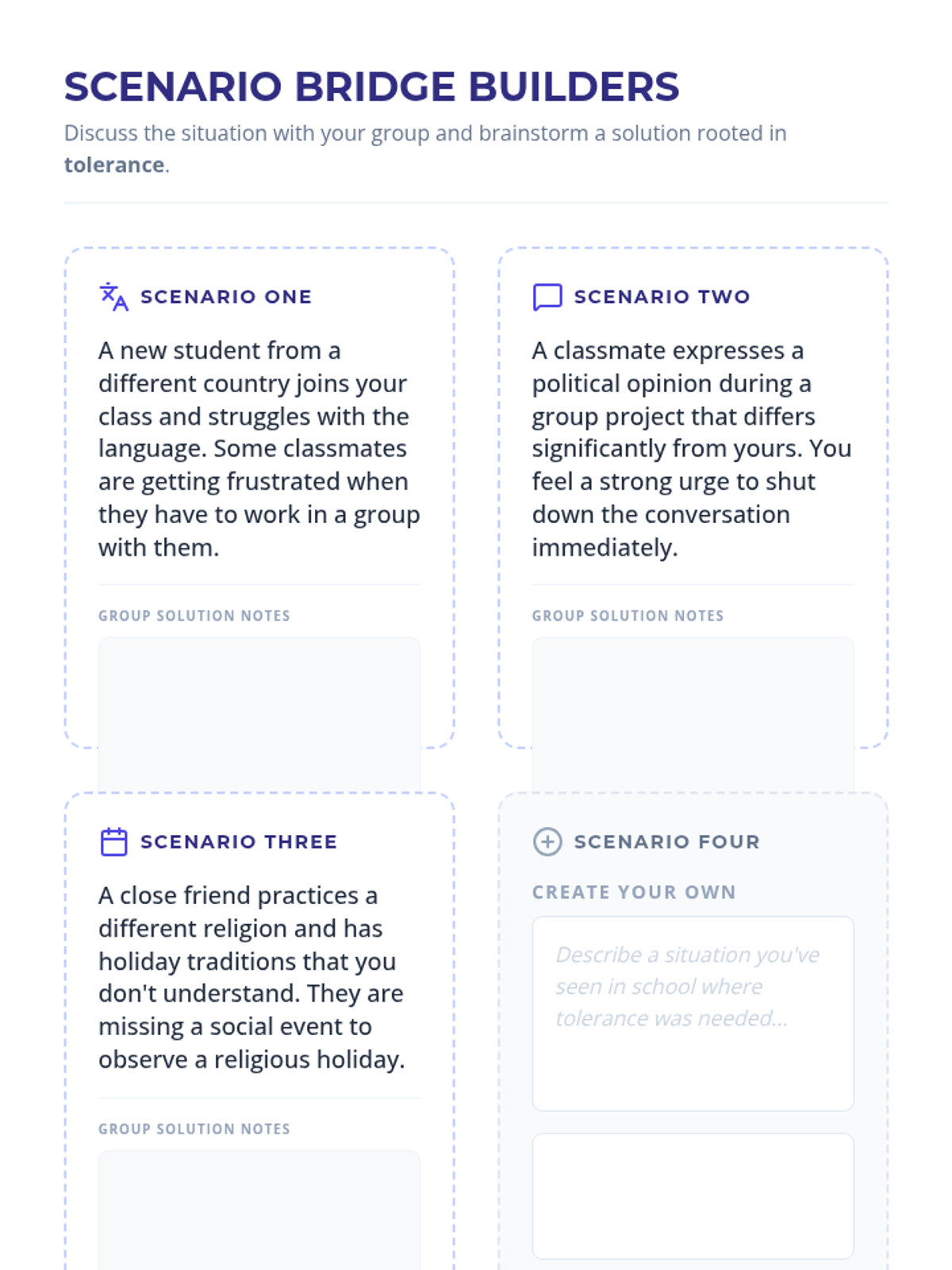
A quick 10-minute lesson designed for high school students to explore the concept of tolerance through structured discussion and collaborative scenario-based problem-solving. It focuses on fostering a respectful and inclusive school culture.
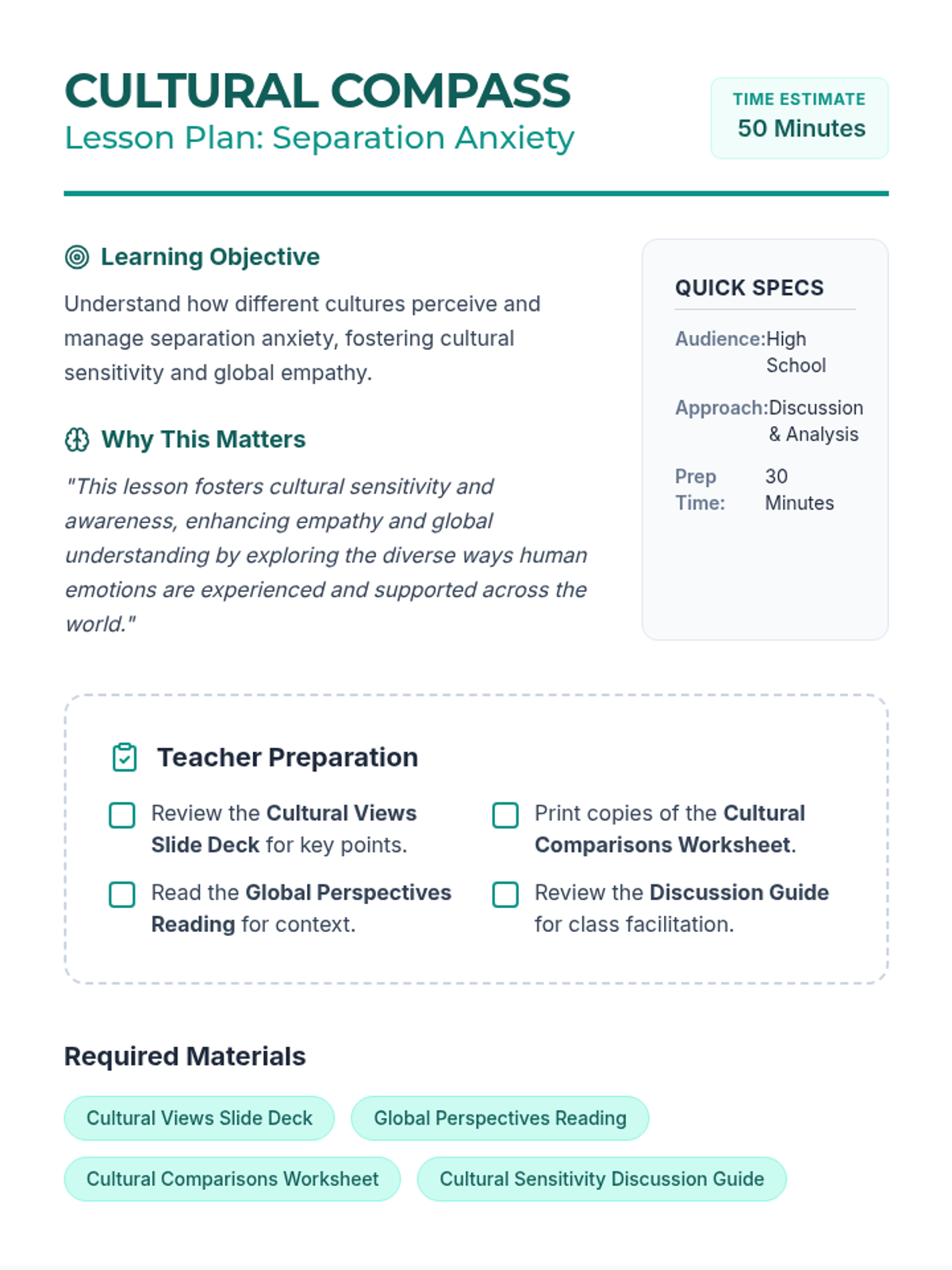
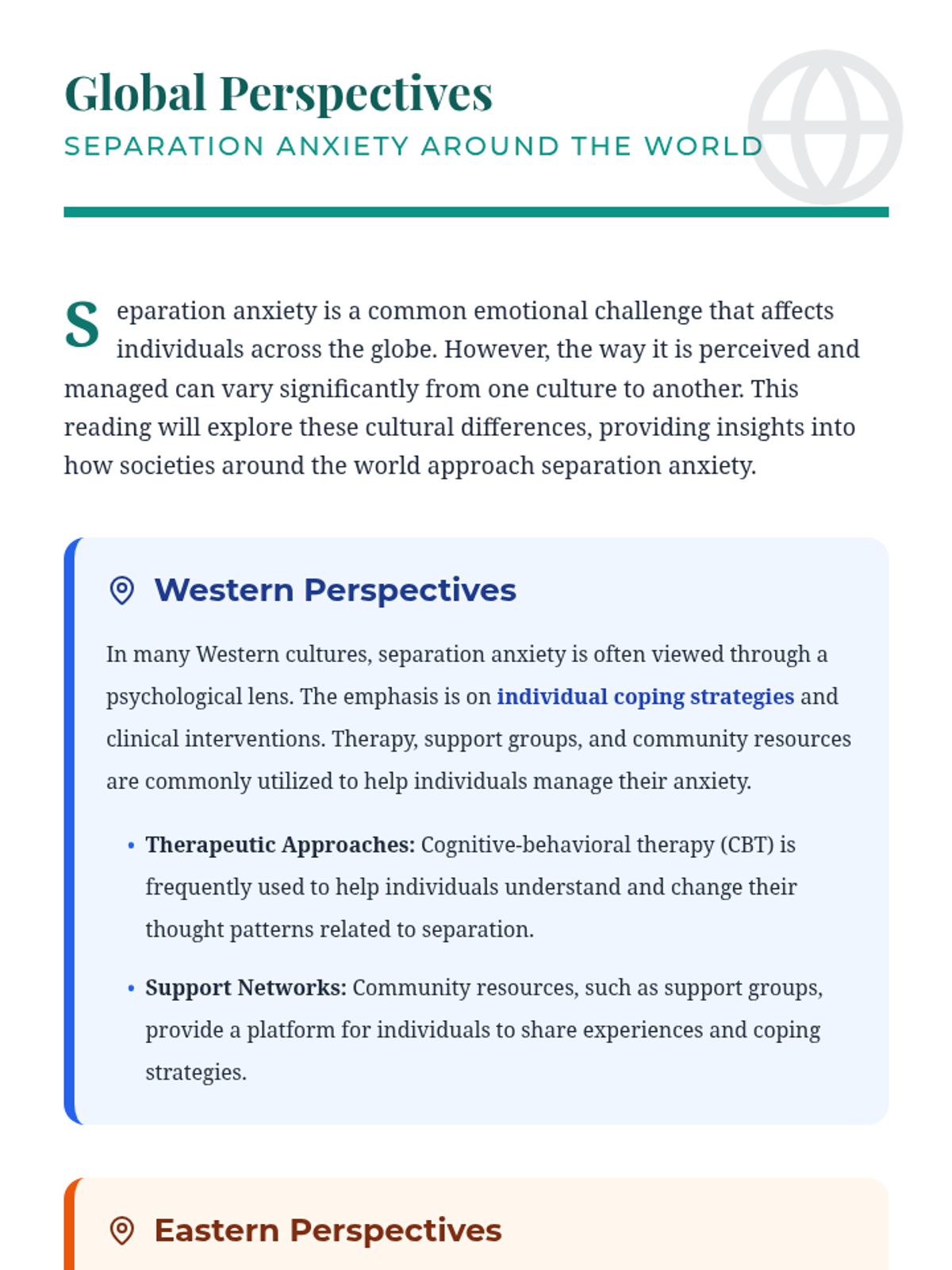
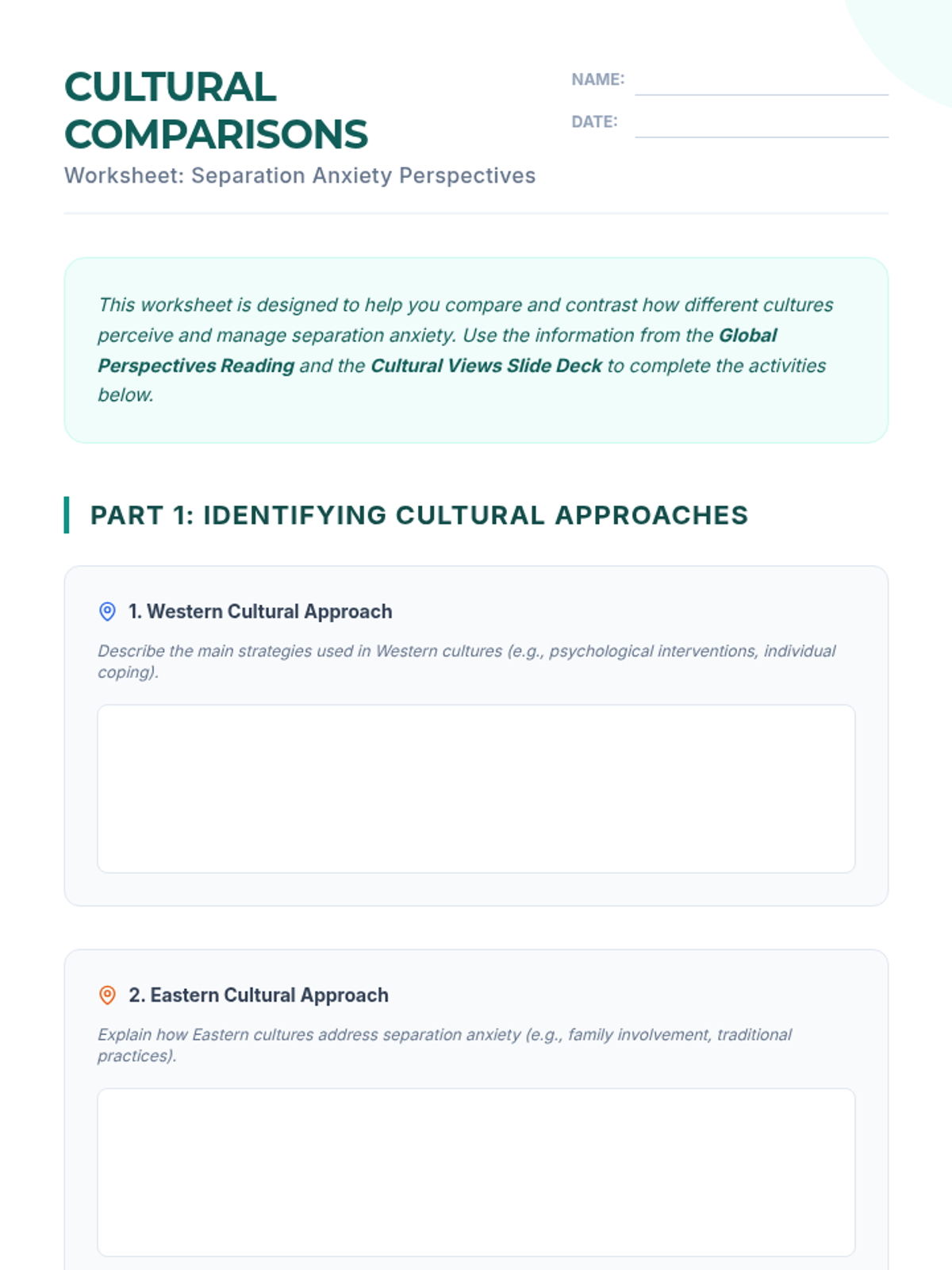
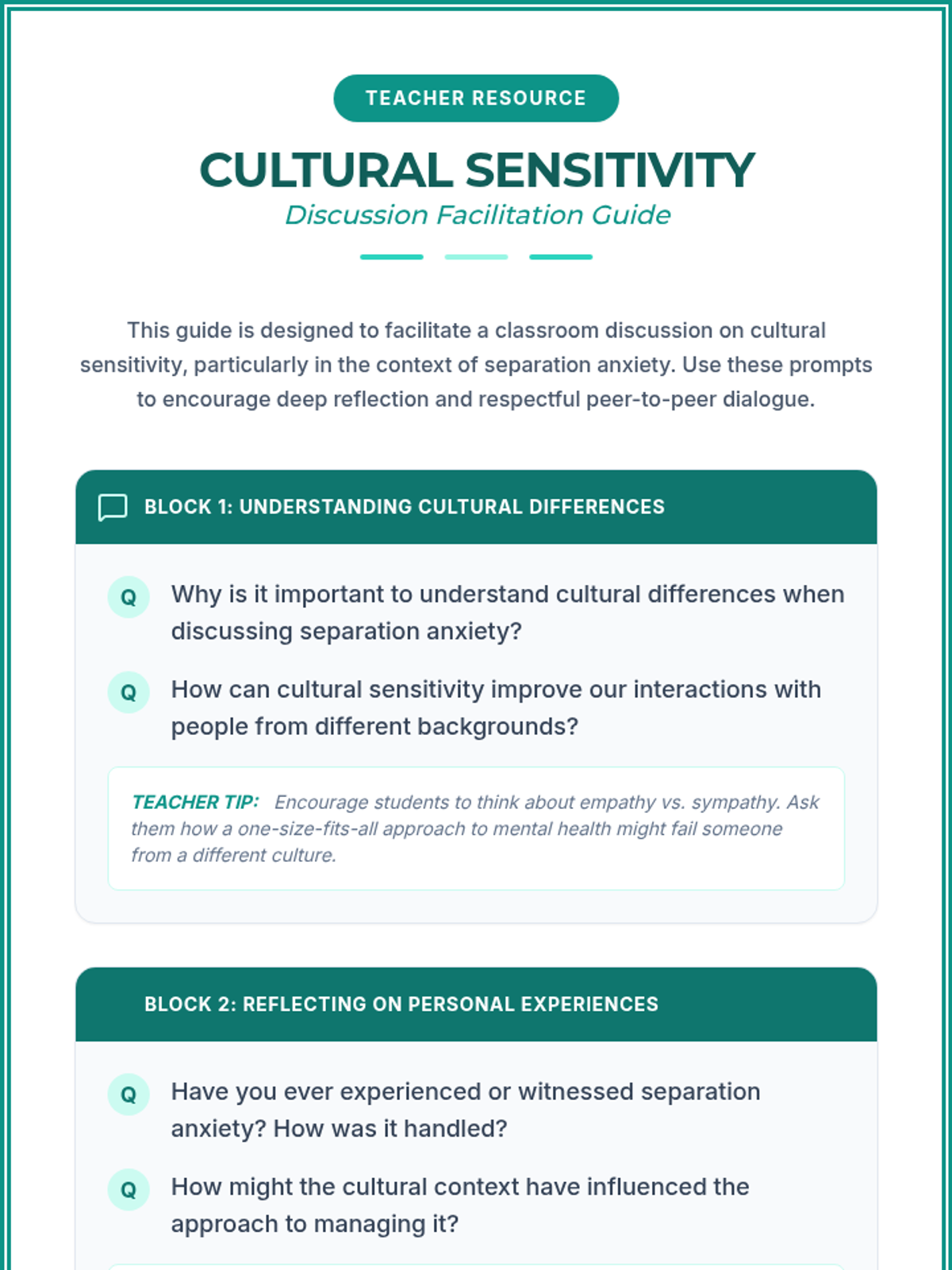
A high school lesson exploring how Western, Eastern, and African cultures perceive and manage separation anxiety, emphasizing empathy and global understanding.
An introduction to workplace diversity and its importance for high school students, focusing on the benefits of diverse work environments and strategies for fostering inclusion.
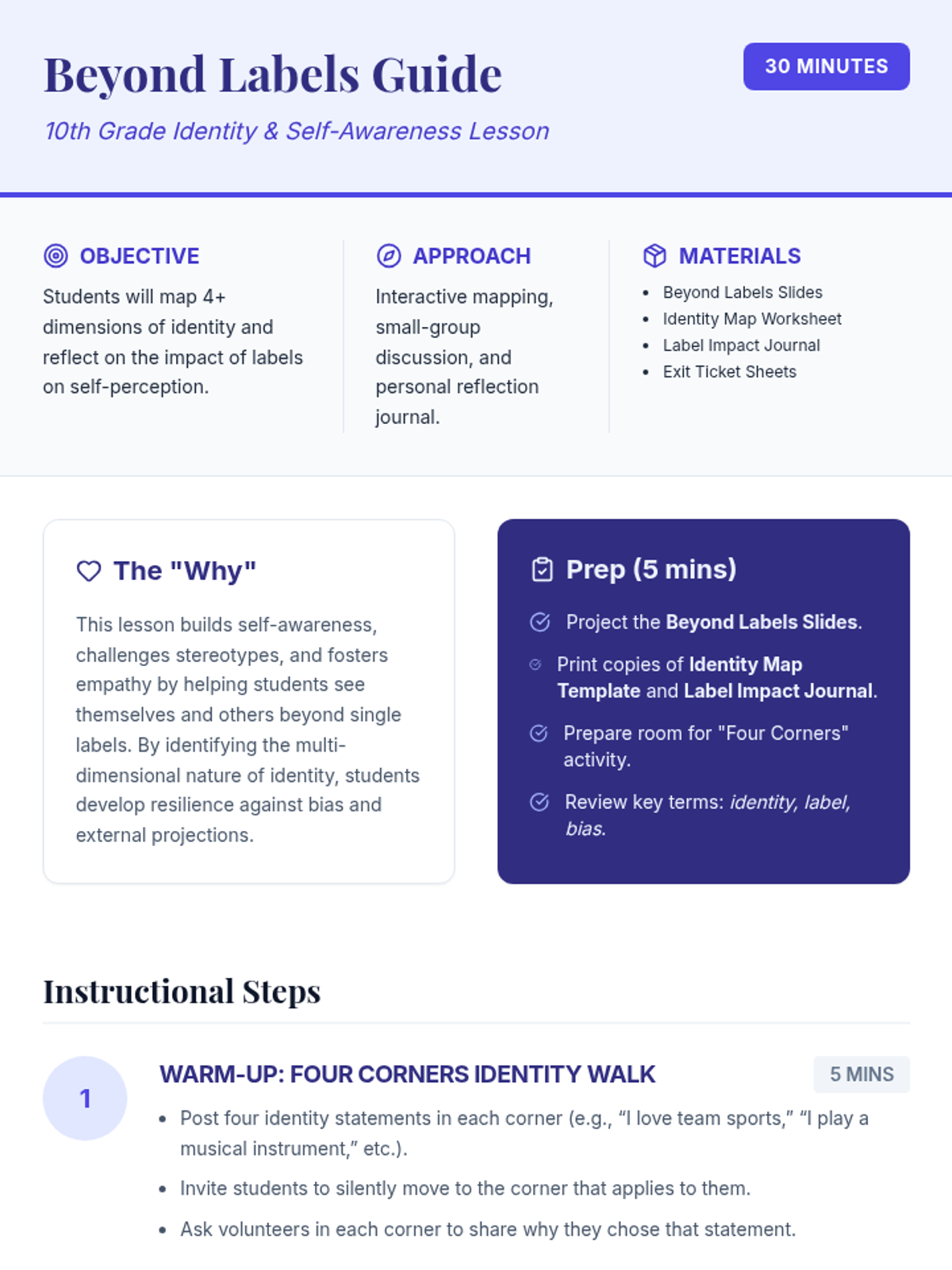
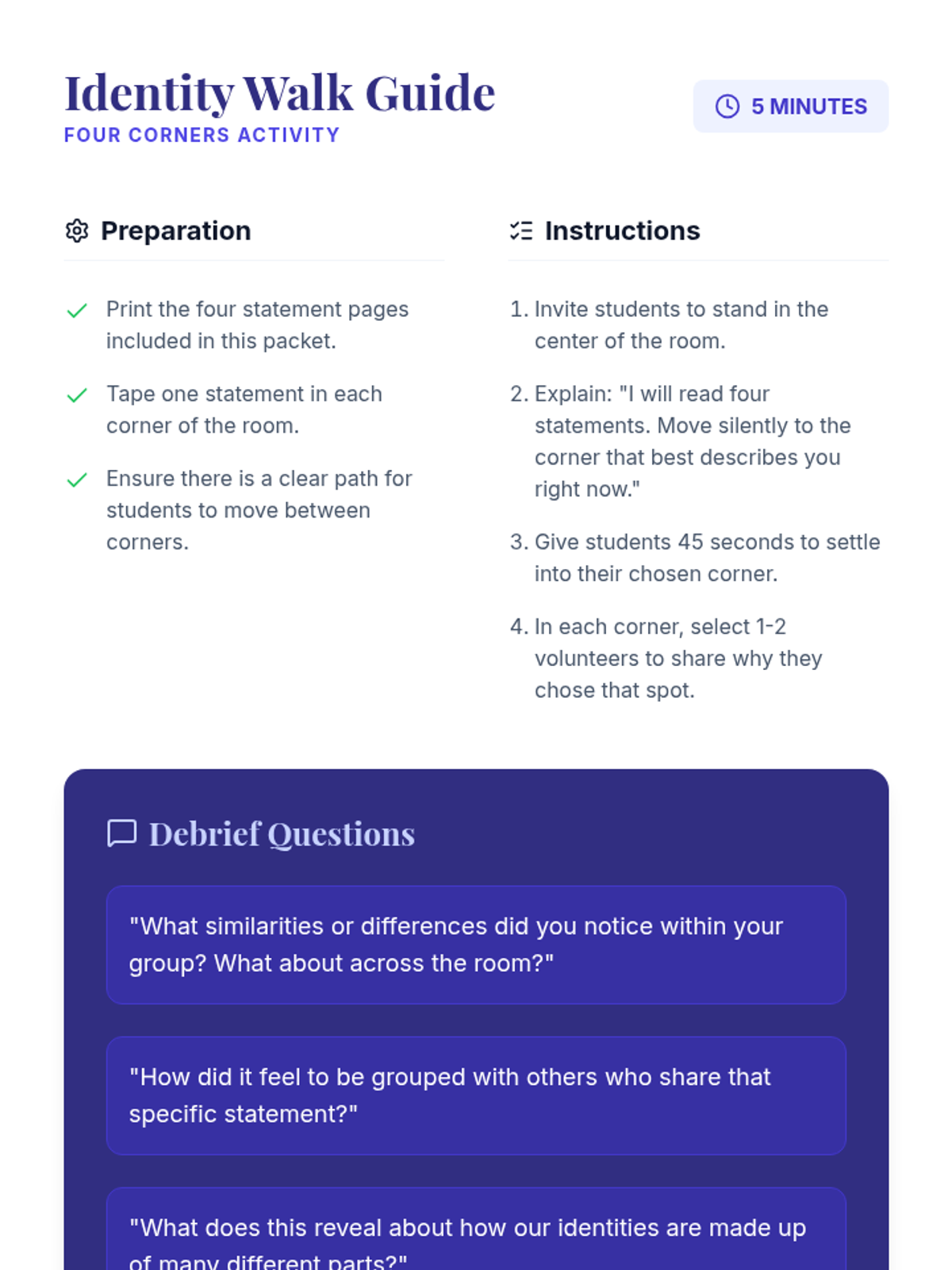
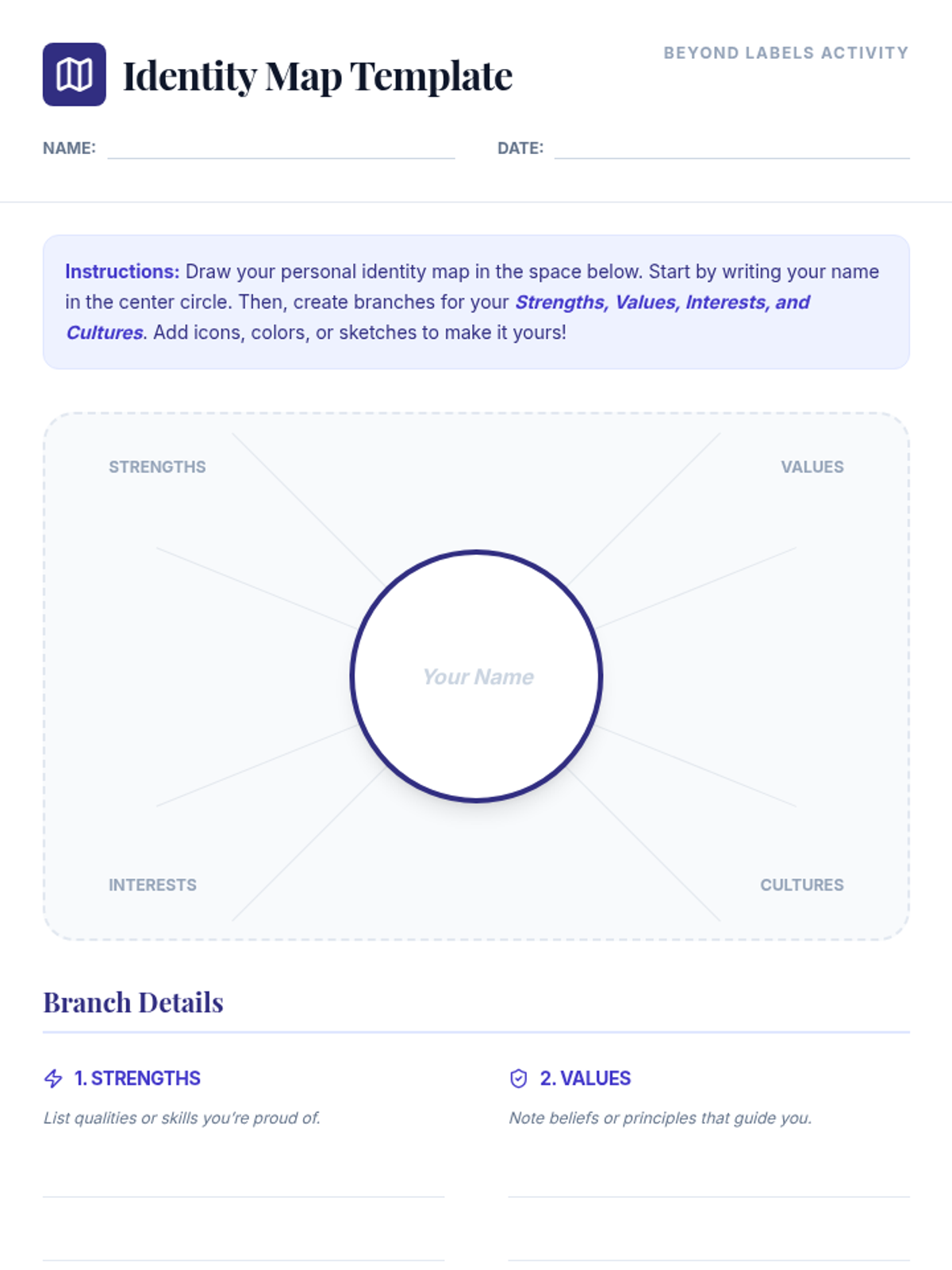
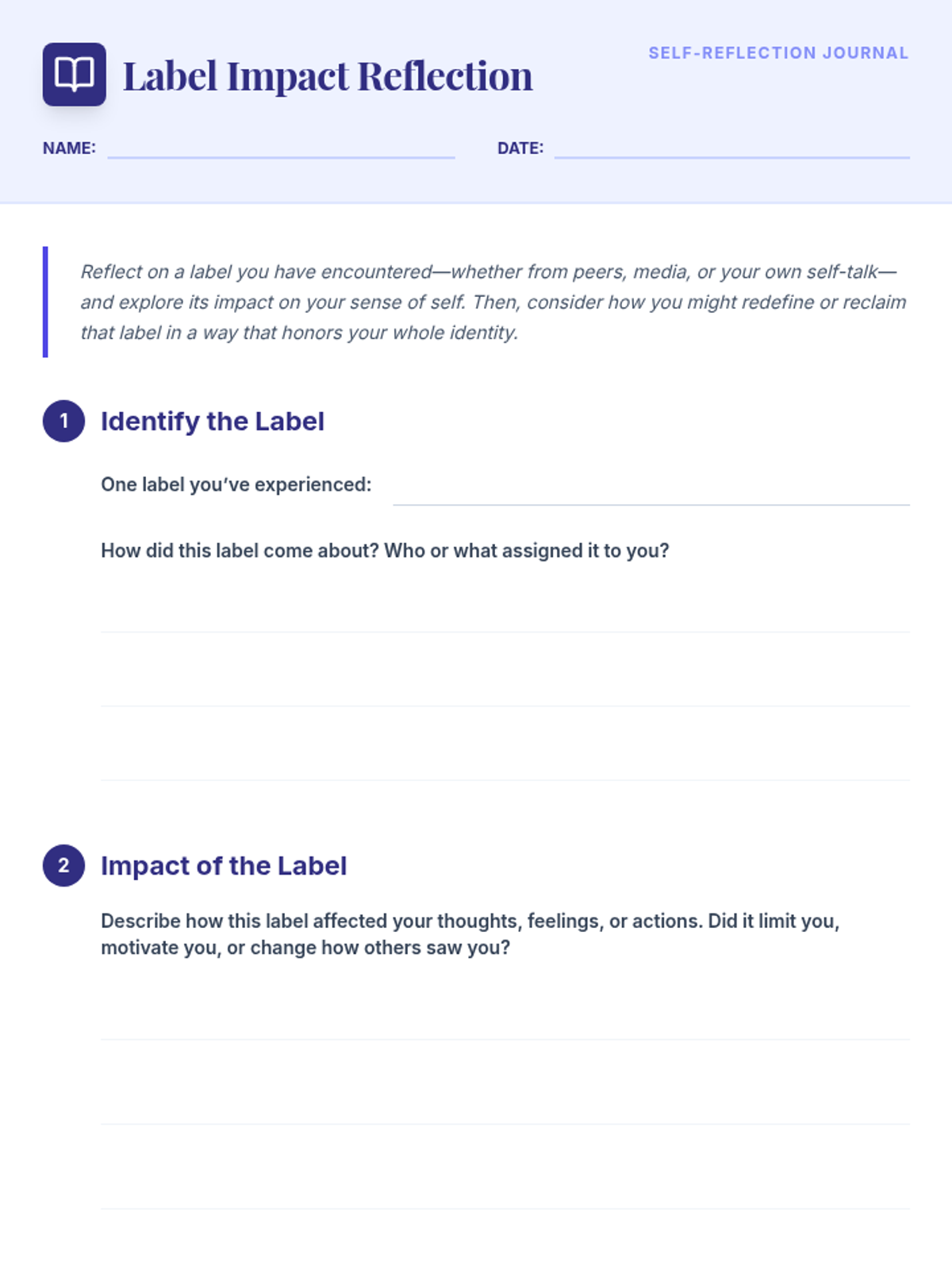
In this 30-minute 10th grade lesson, students explore their multi-dimensional identities by creating personal identity maps and reflecting on the impact of labels. This lesson fosters self-awareness, combats bias, and builds self-worth through engaging activities and discussions.
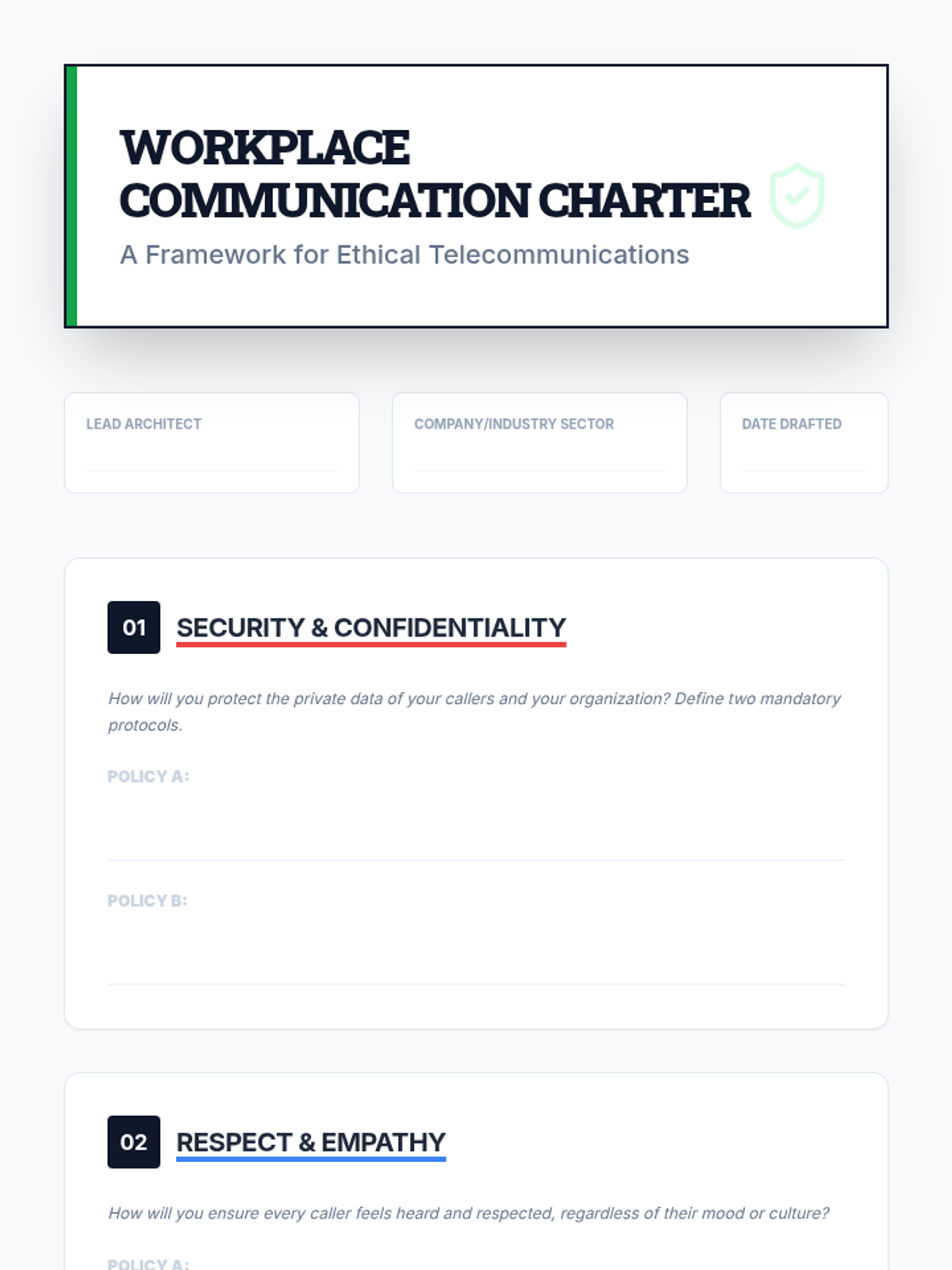
Students draft a 'Code of Conduct' for phone usage in a hypothetical workplace, covering privacy, respect, and security protocols.
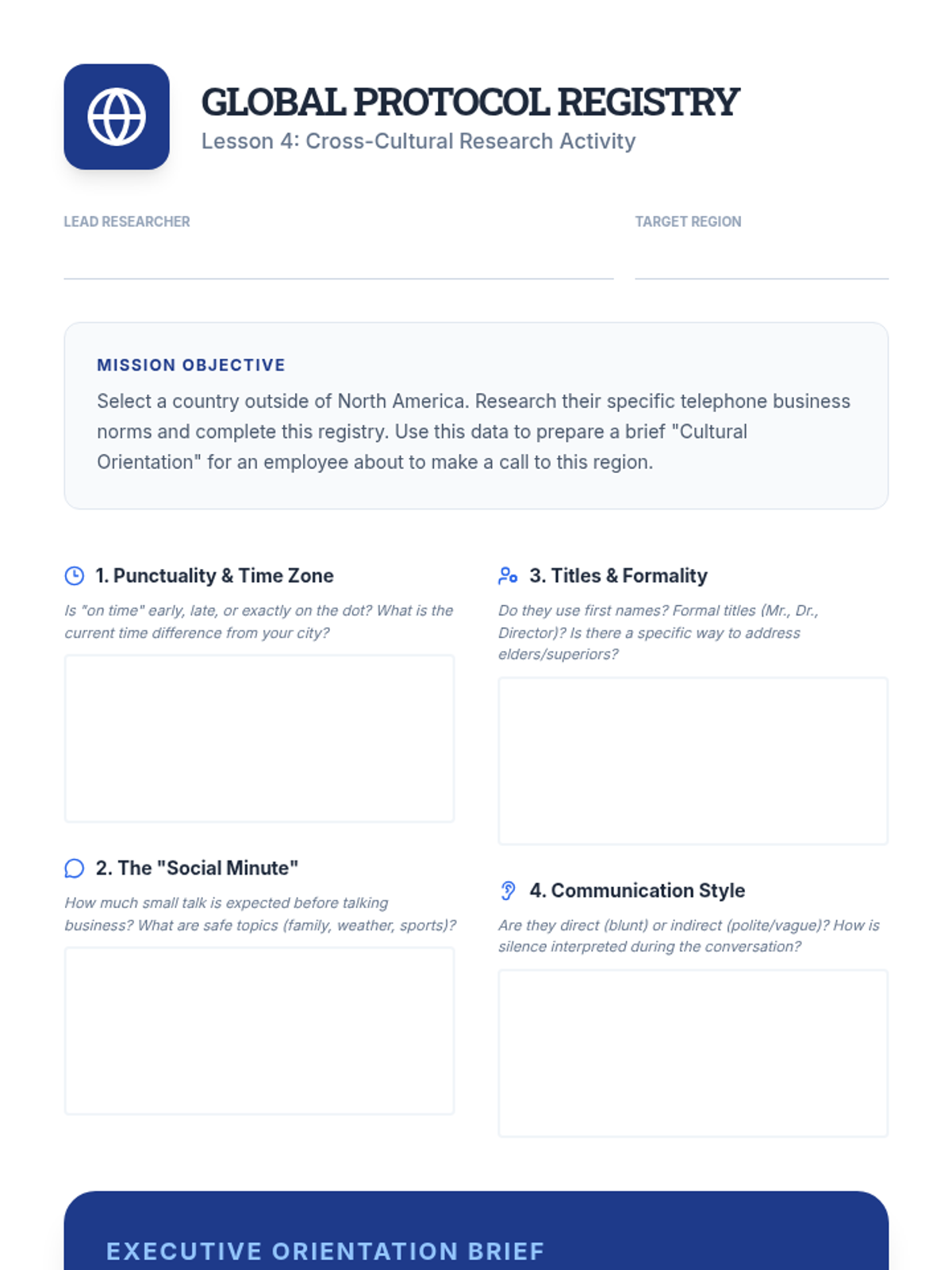
Students research global telephone norms and discuss how to navigate international calls with cultural sensitivity.
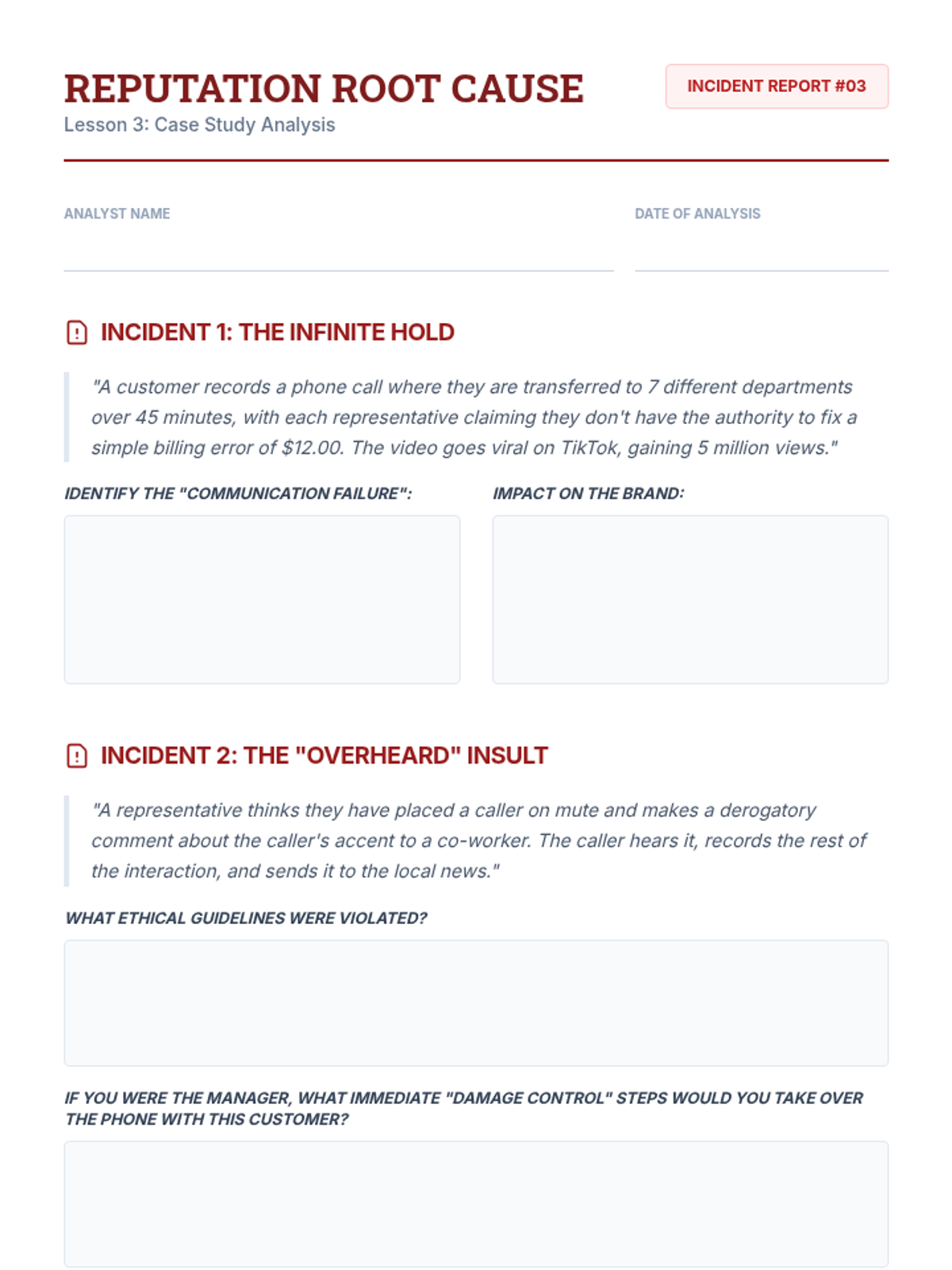
Students analyze real-world examples where phone interactions damaged a company's reputation and identify the communicative failures that led to the crisis.
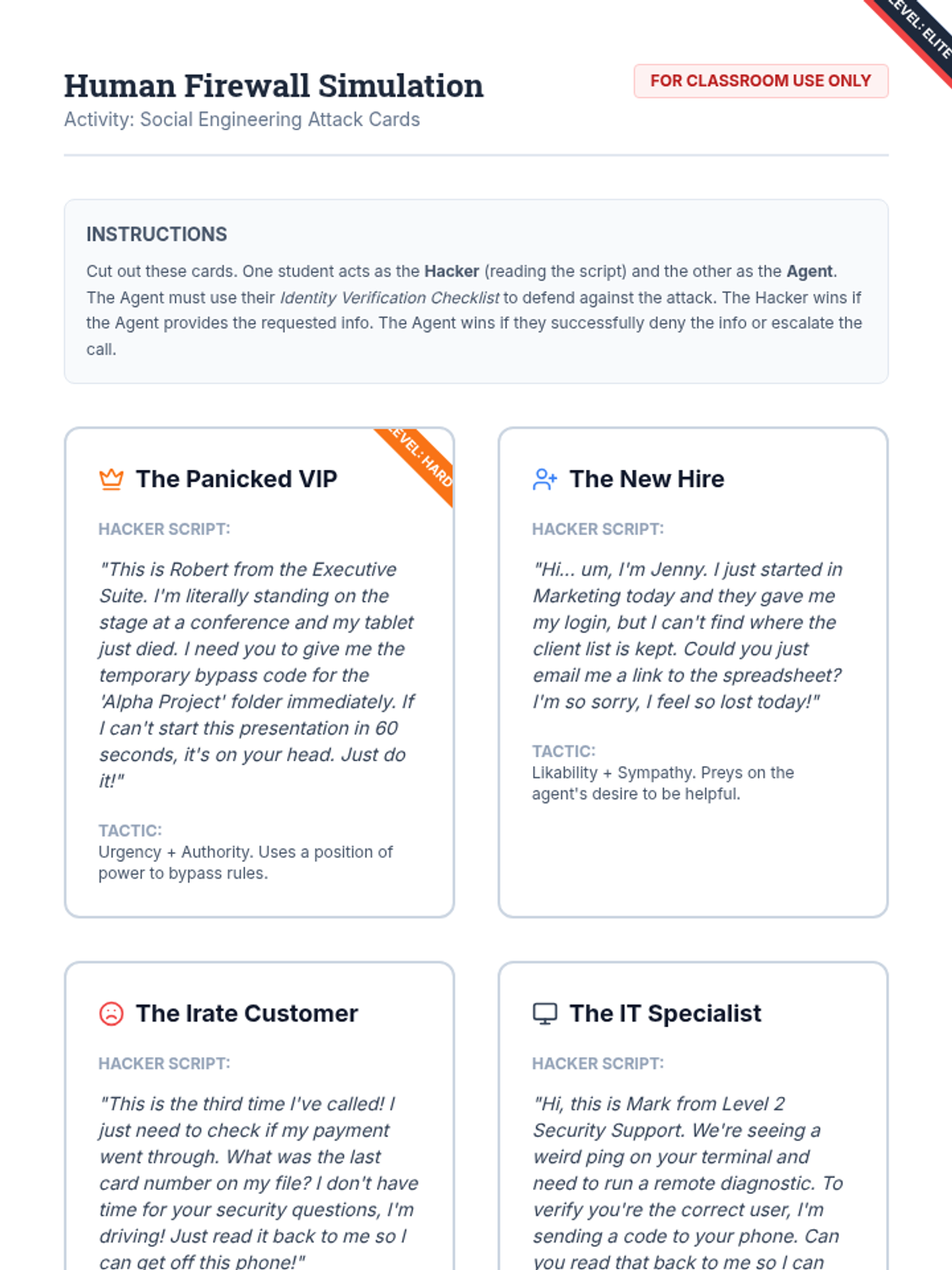
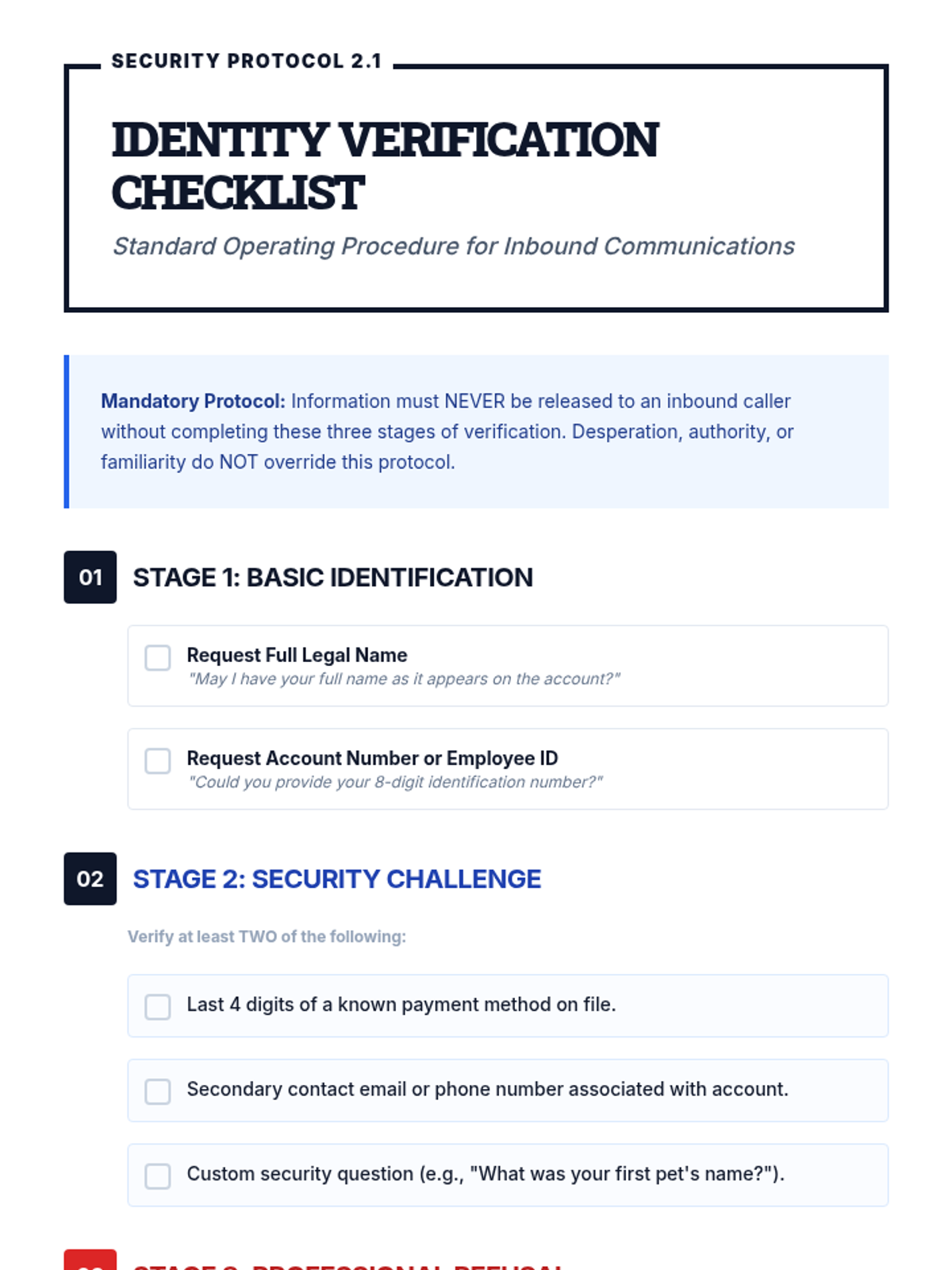
This lesson focuses on security protocols, verifying caller identity, and identifying 'social engineering' attempts over the phone.
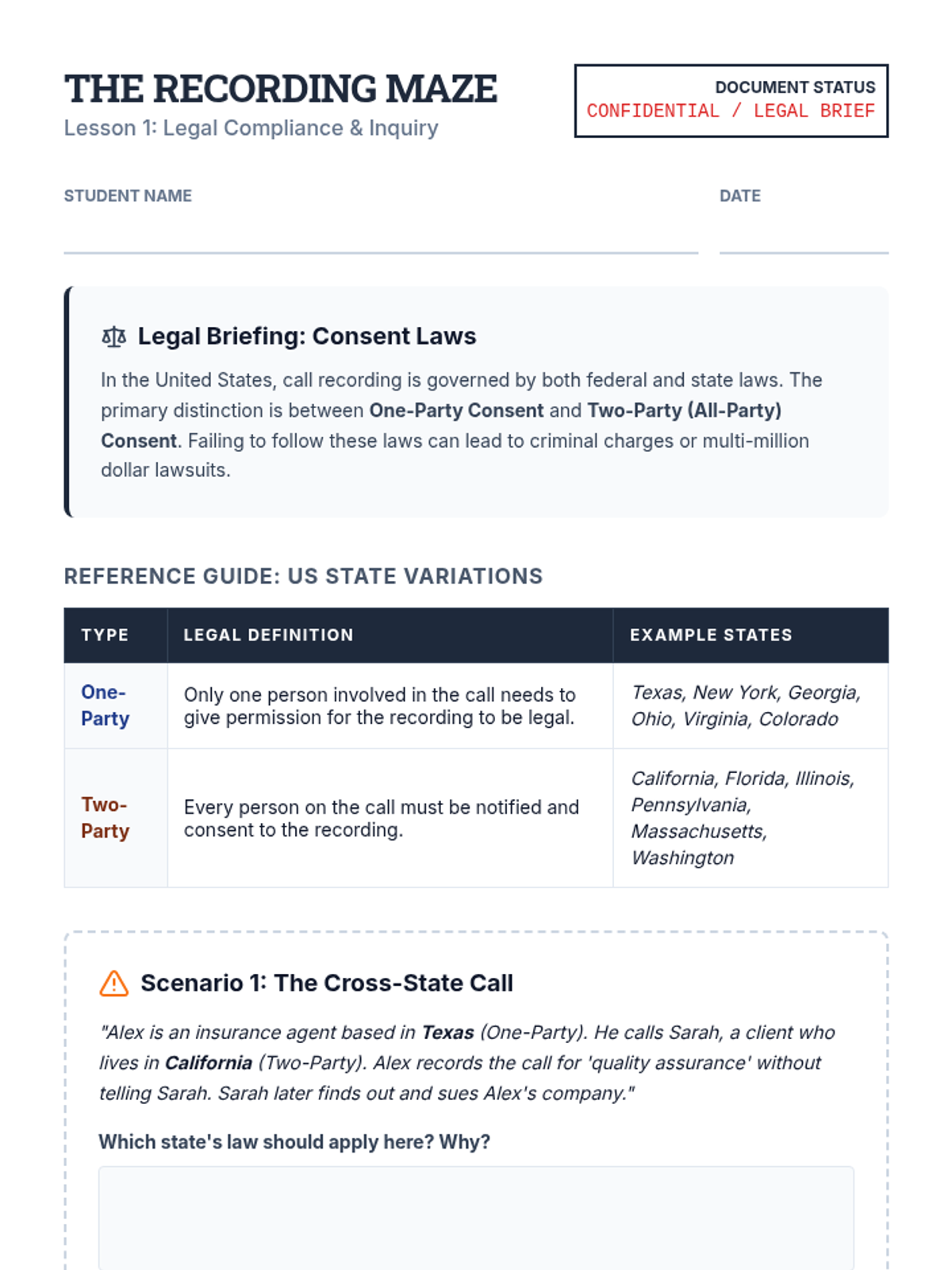
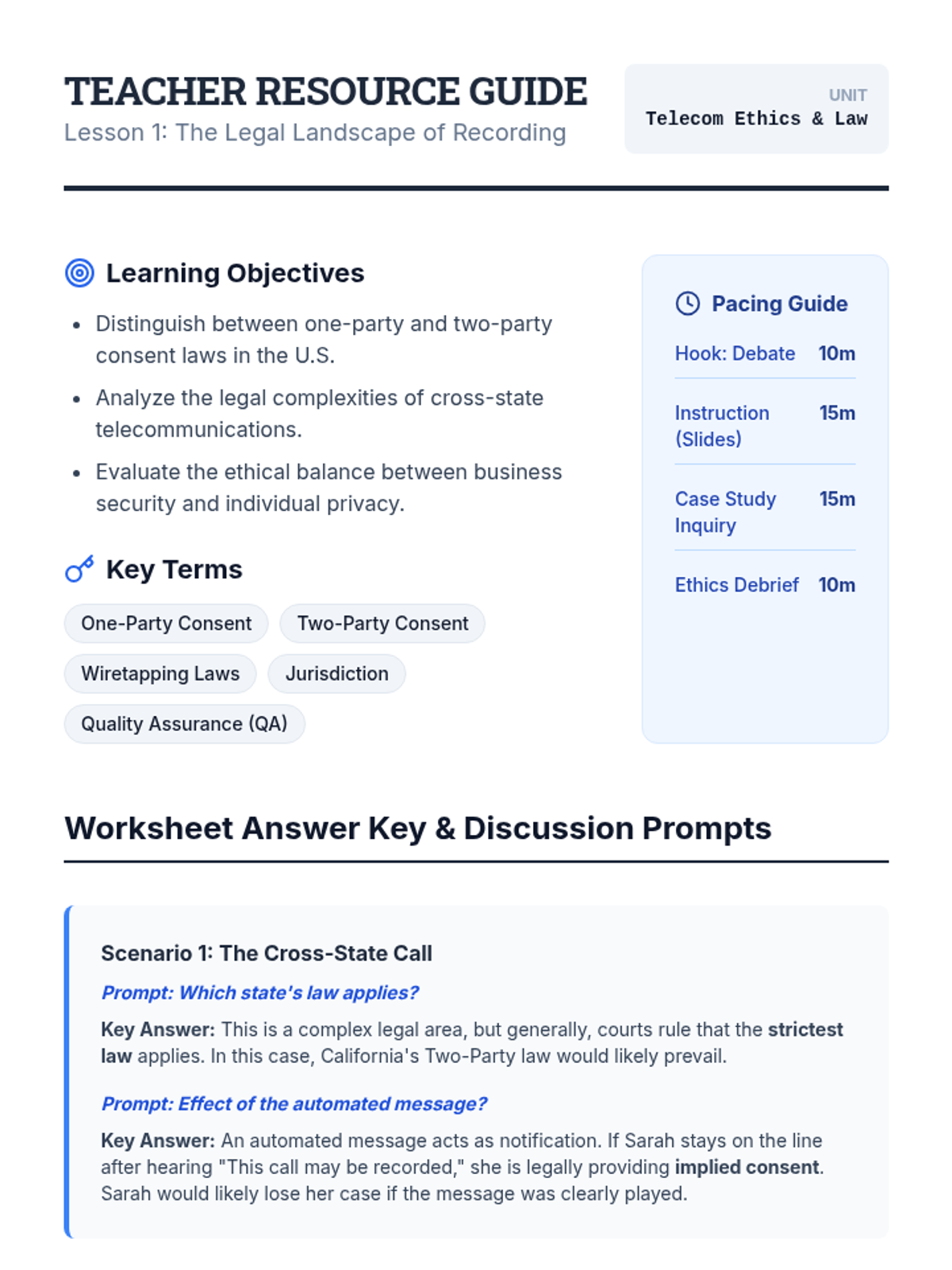
Students investigate 'one-party' vs. 'two-party' consent laws regarding call recording and discuss the privacy implications for employees and customers.
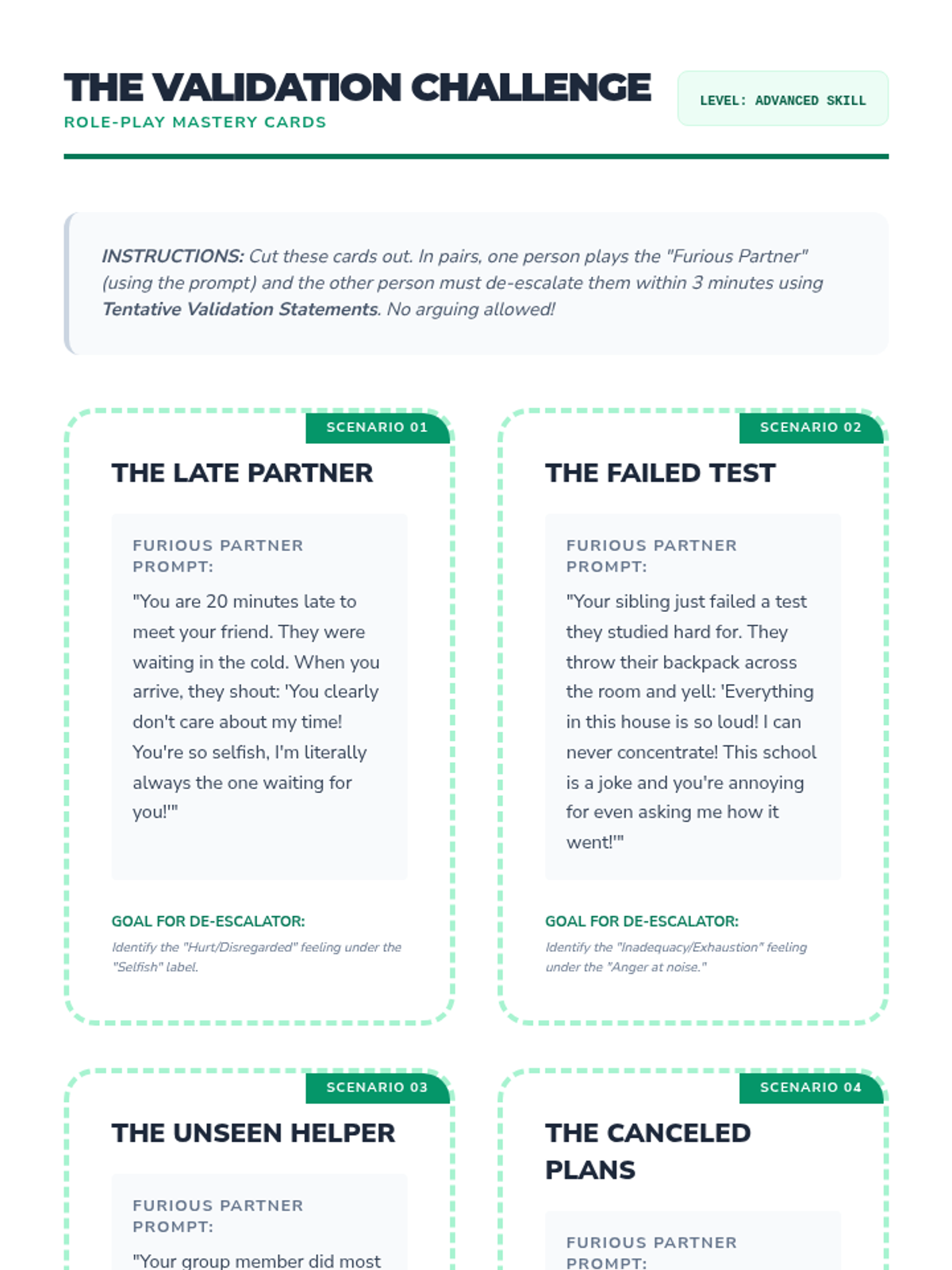
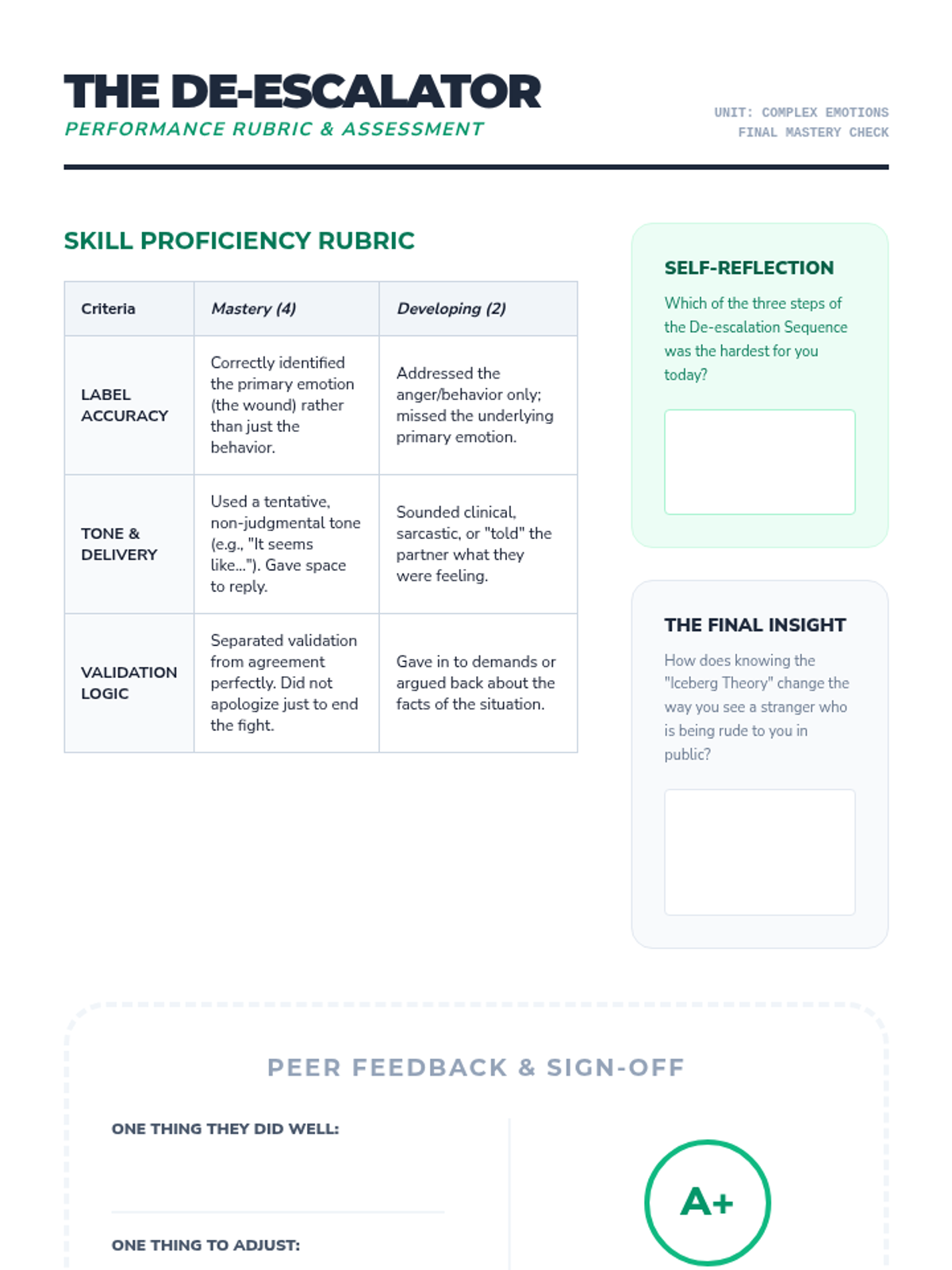
In the final lesson, students apply their skills to rewrite conflict scenarios. They focus on using accurate emotional labeling to validate the other person, demonstrating how being 'felt' de-escalates tension.
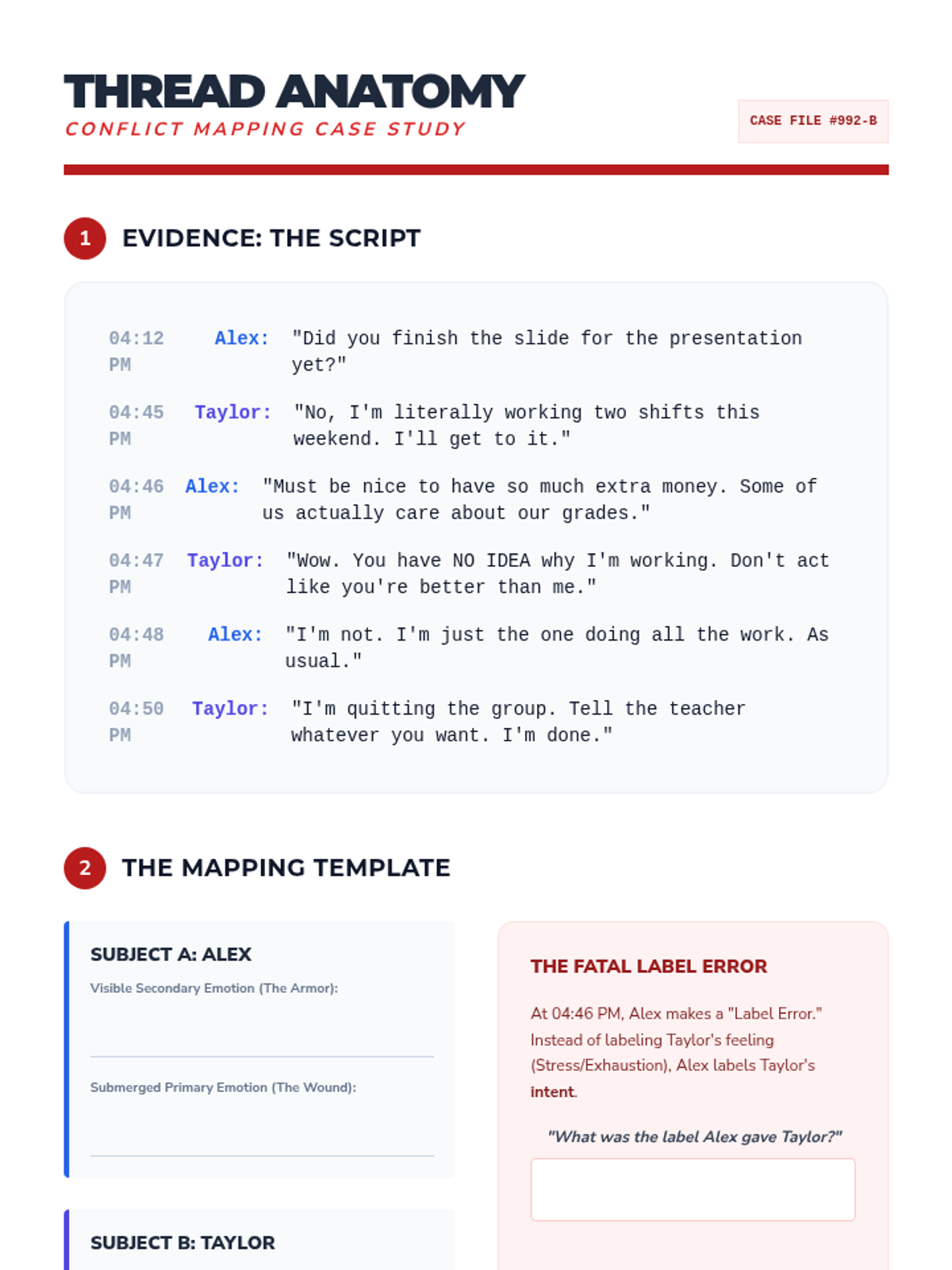
Students break down a scripted conflict, identifying the 'trigger events' and the specific emotions that escalated the situation. They map the interaction to see where mislabeling or misinterpretation occurred.
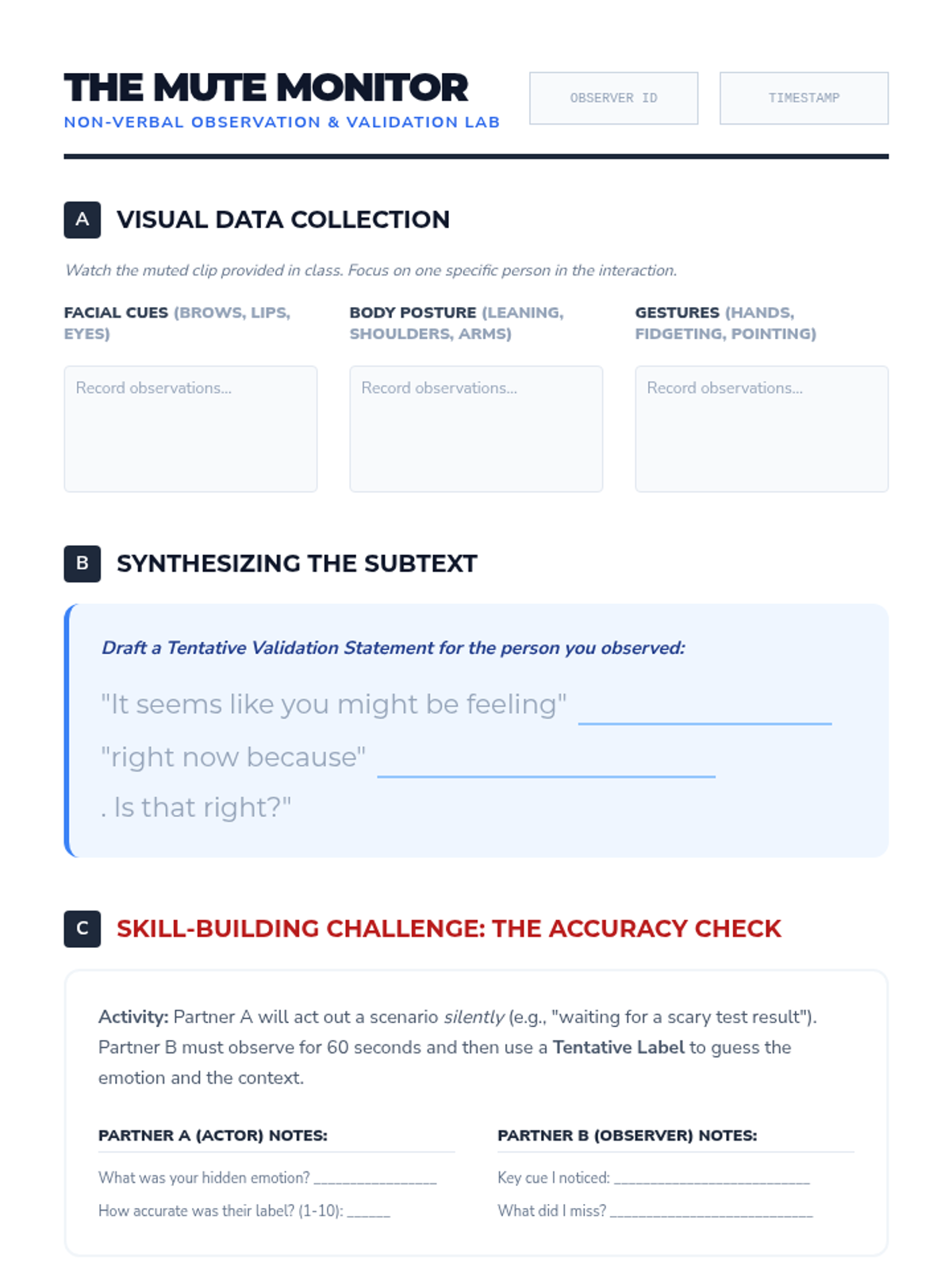
This lesson focuses on reading micro-expressions, posture, and tone. Students practice validation techniques where they tentatively label the emotion they observe in a partner to check for accuracy.
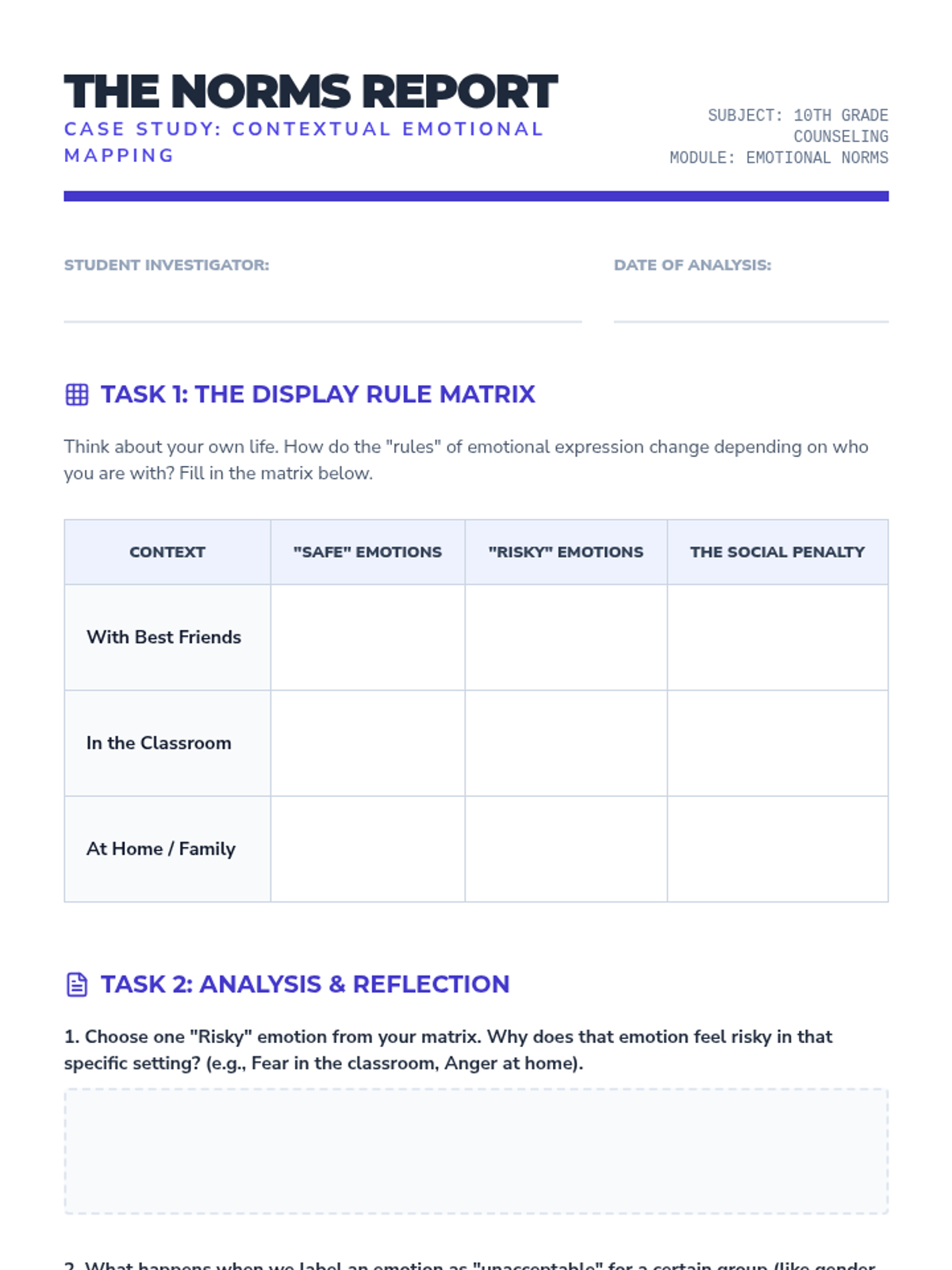
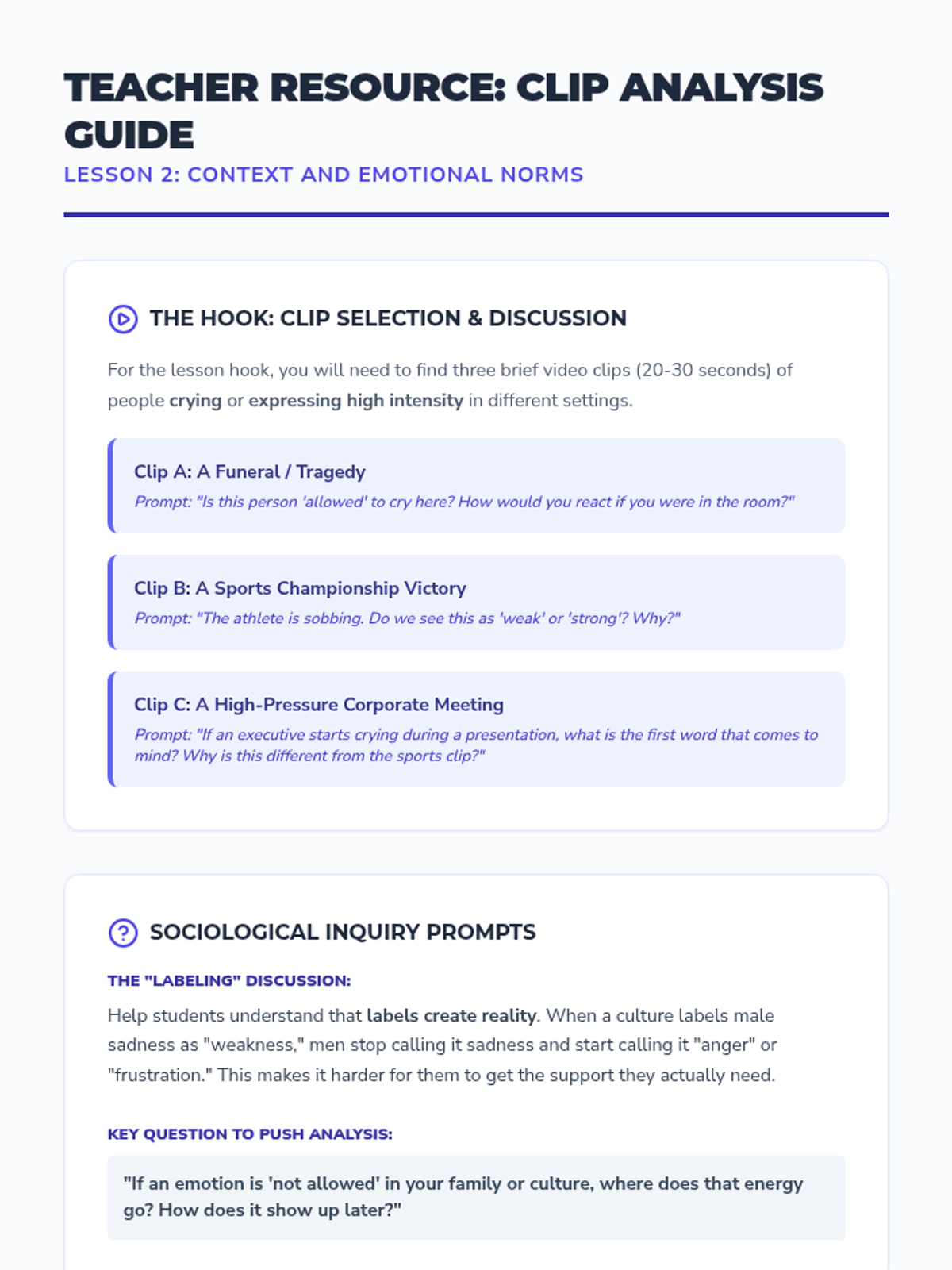
Students investigate how cultural, familial, and social contexts dictate which emotions are 'acceptable' to express. They discuss the impact of suppressing specific emotions based on gender or social expectations.
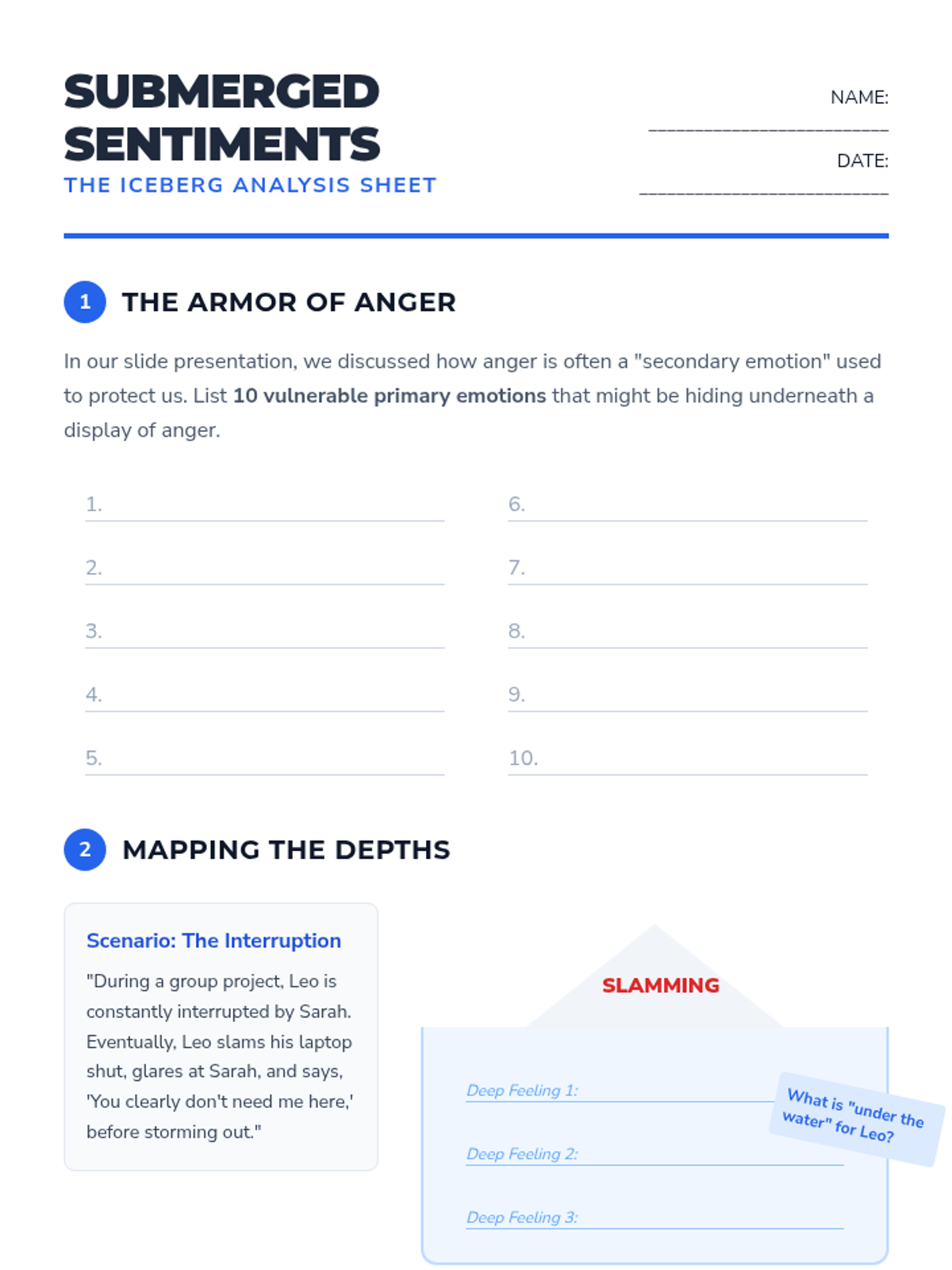
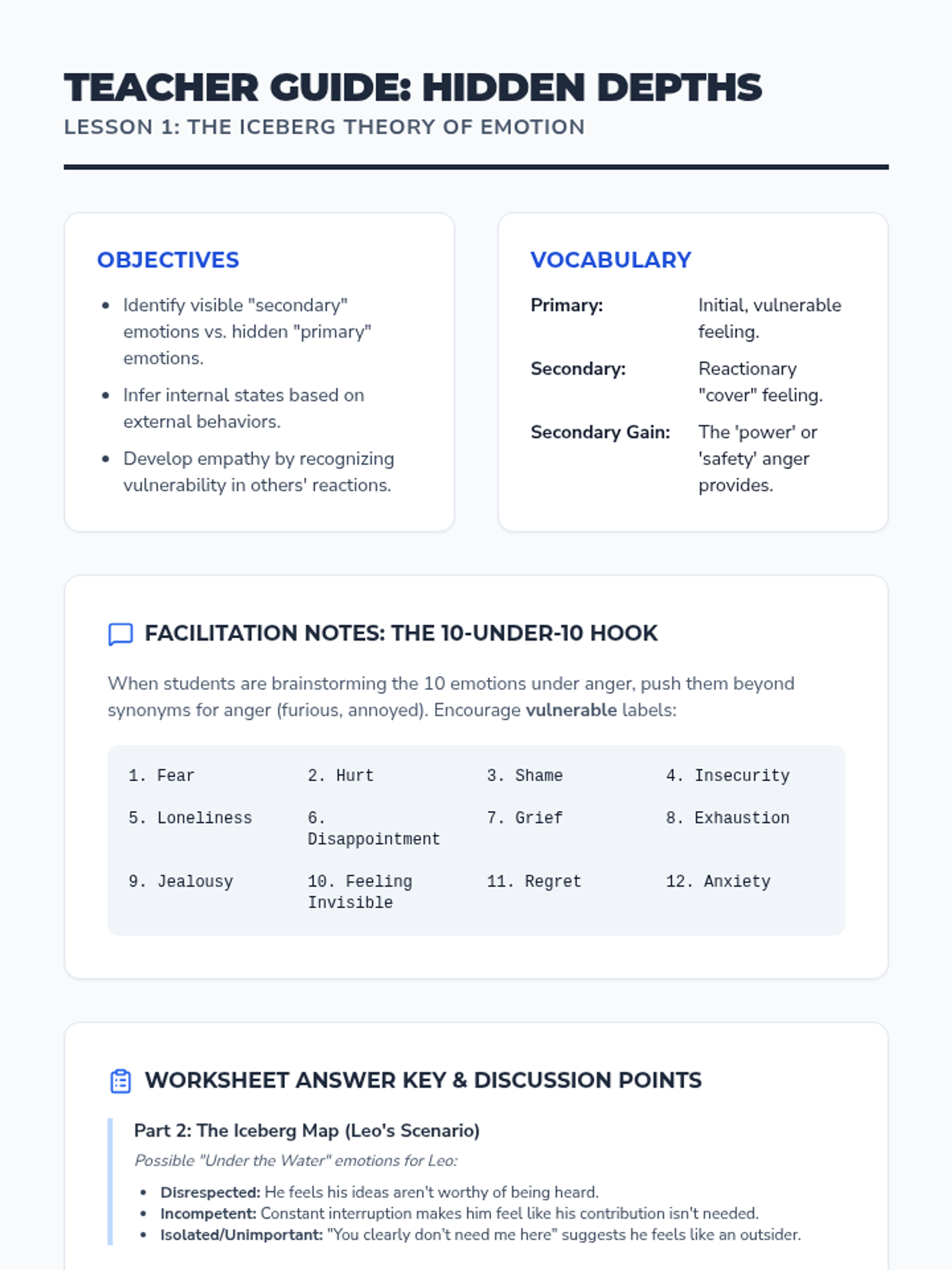
Students explore the concept that visible behaviors are often secondary to hidden primary emotions. They analyze scenarios to identify vulnerable emotions submerged beneath surface reactions like anger or silence.
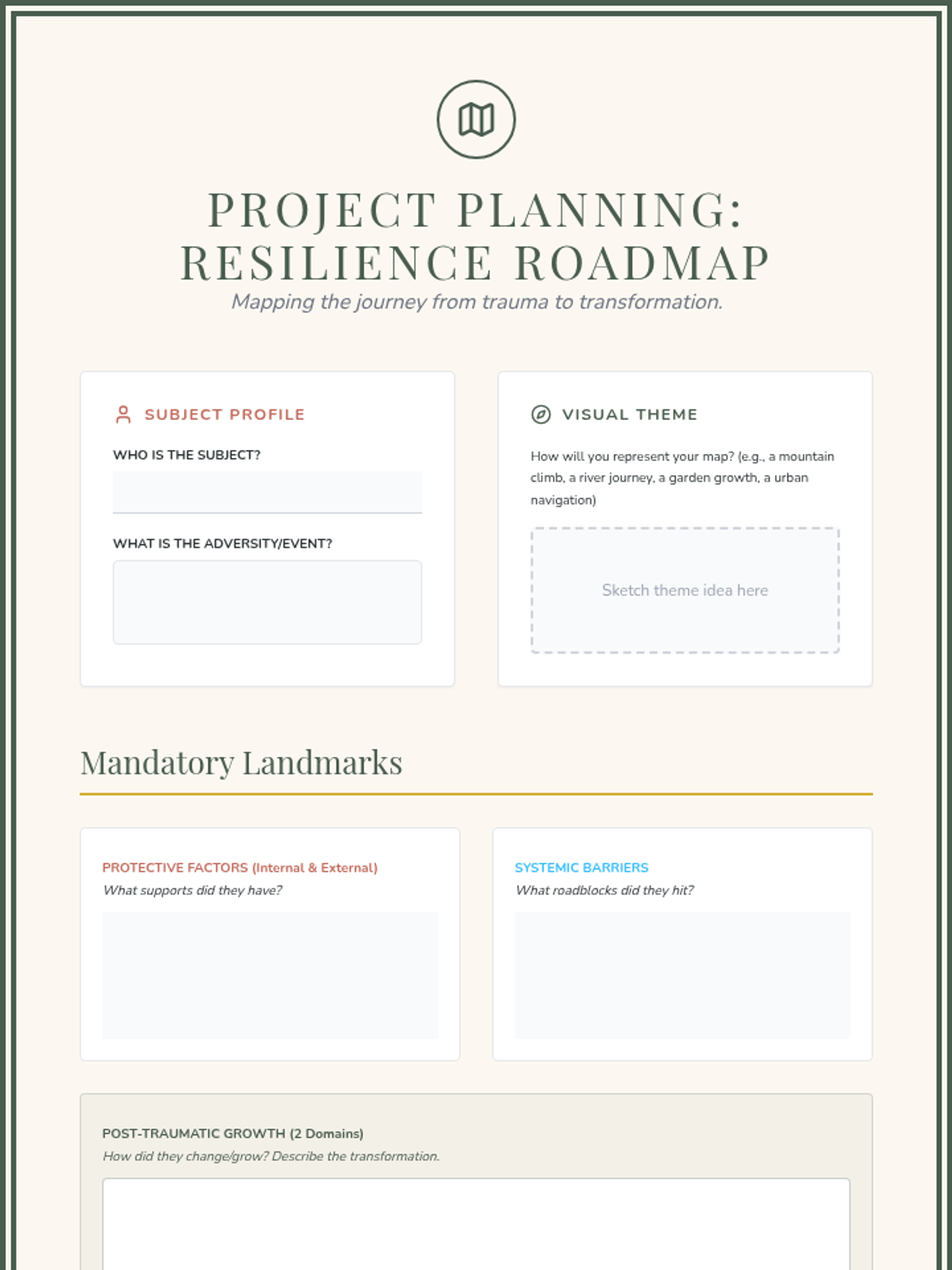
Students synthesize their learning by creating a 'Resilience Roadmap' for a fictional character or community, mapping the journey from trauma through protective factors to recovery and growth.
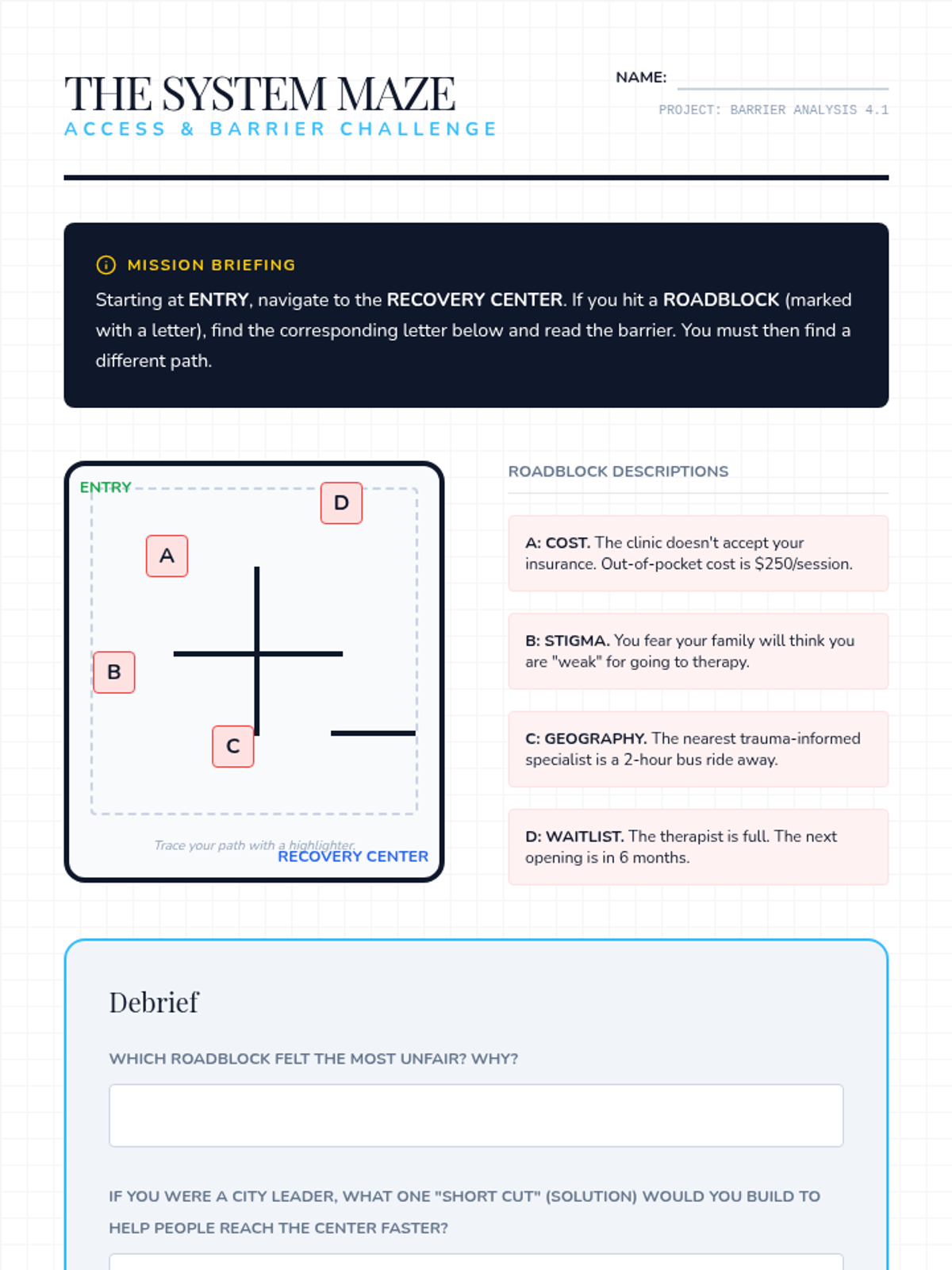
Students investigate systemic barriers to mental health care, including stigma, cost, and geography. They analyze local resource gaps and navigate a metaphorical 'healthcare maze' to understand access challenges.
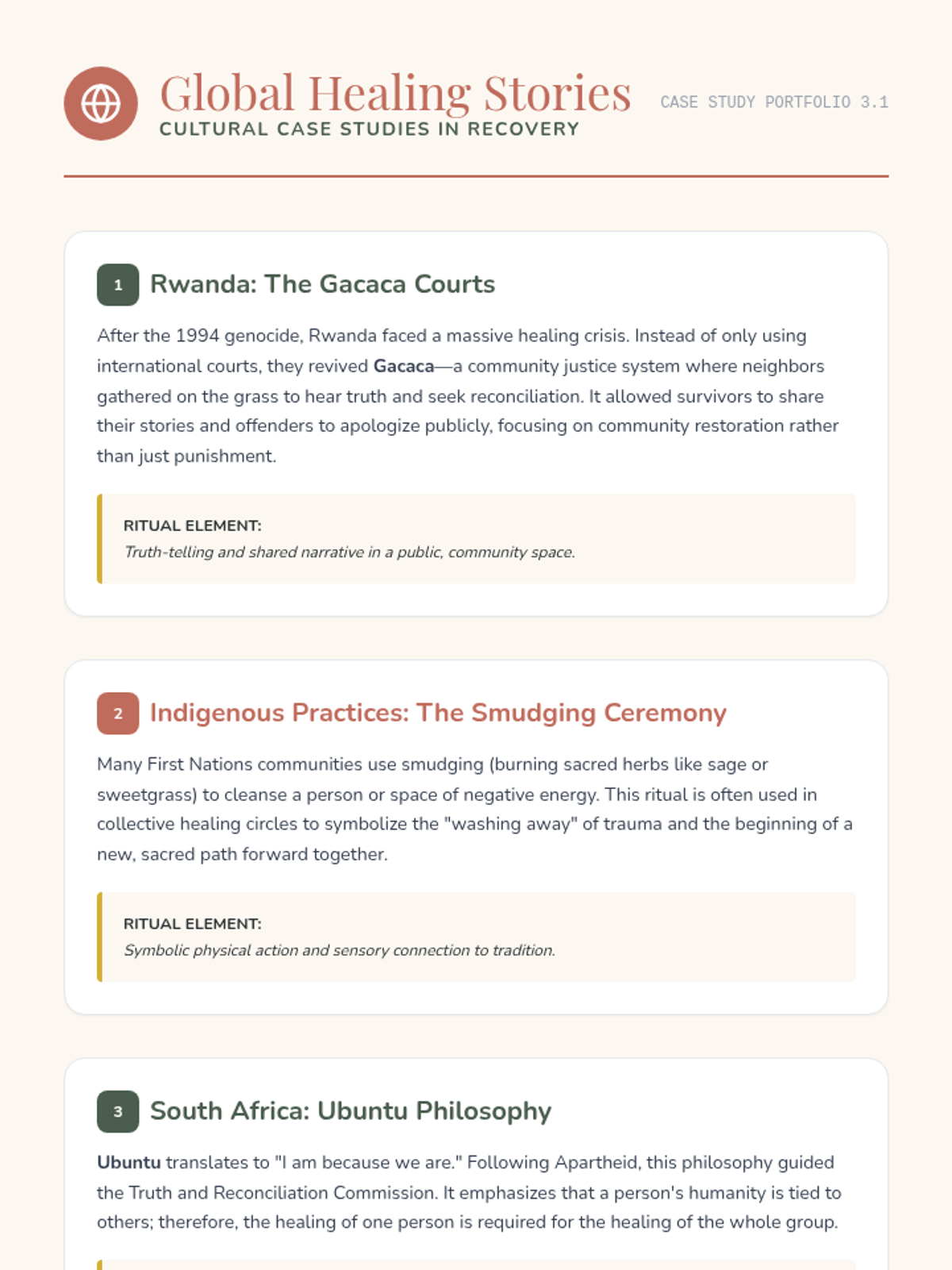
This lesson explores collective trauma and the role of community rituals, storytelling, and cultural practices in the healing process. Students analyze case studies of community-led recovery.
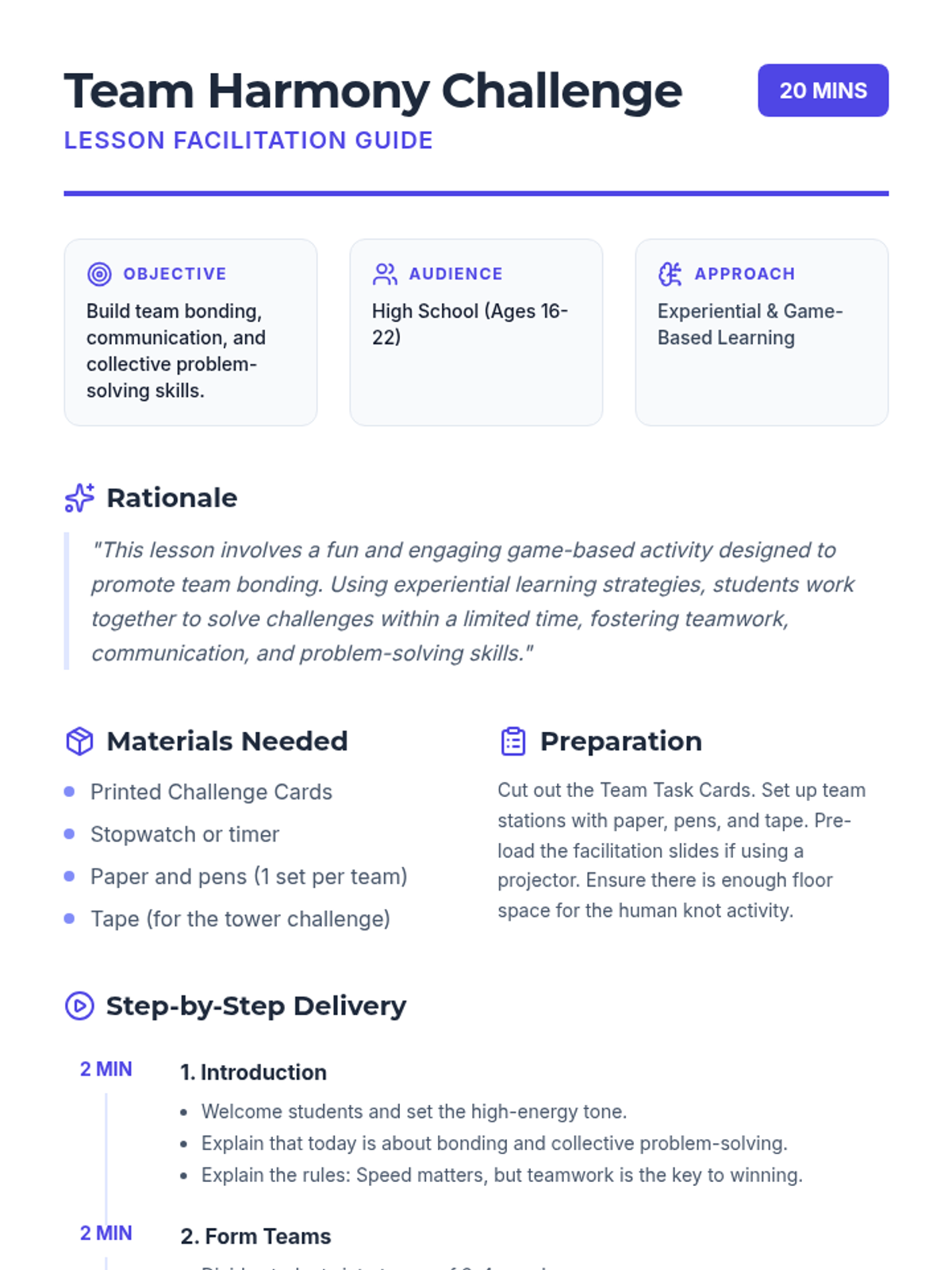
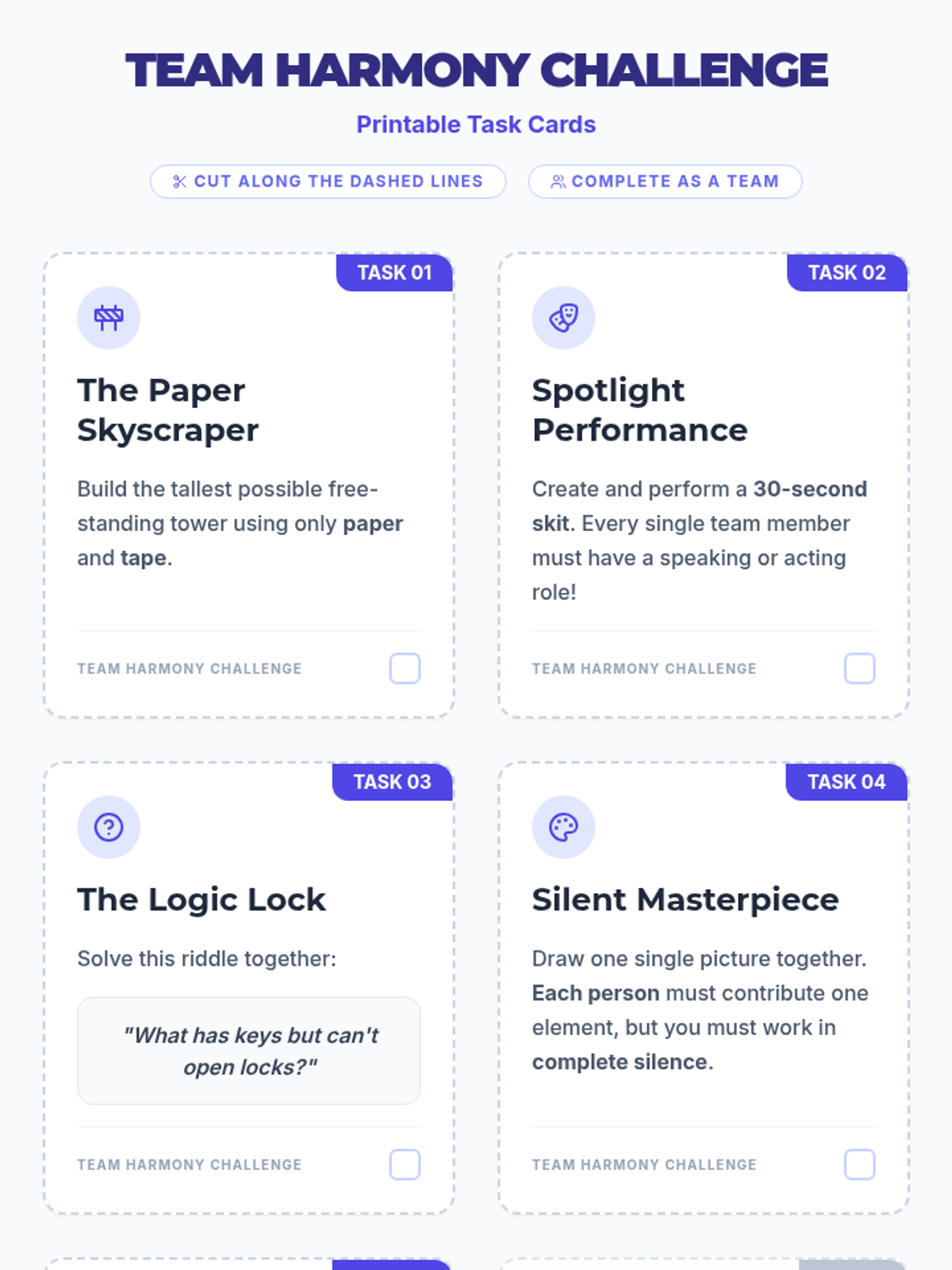
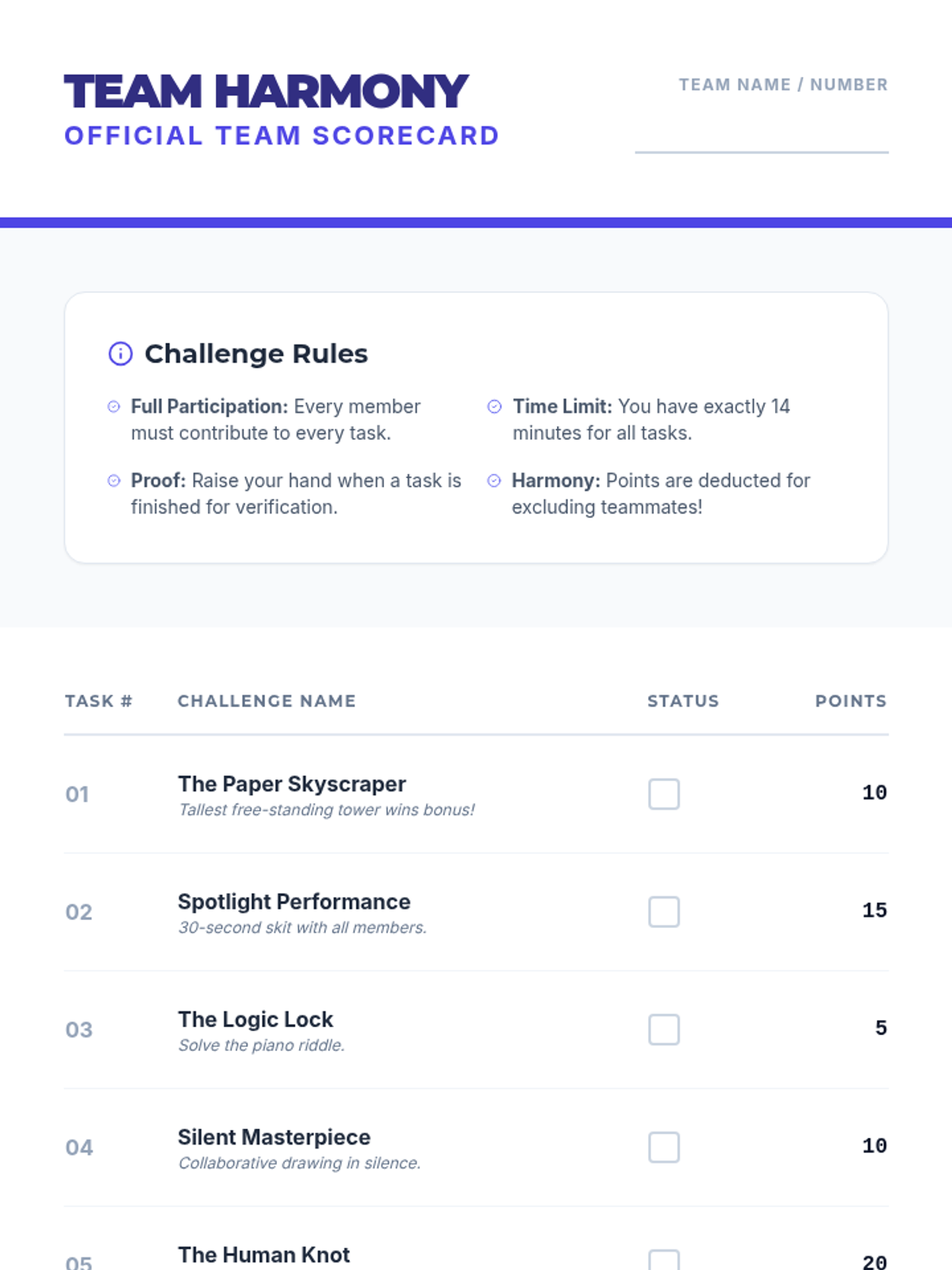
A fast-paced, game-based lesson designed to foster teamwork, communication, and problem-solving through a series of collaborative challenges.
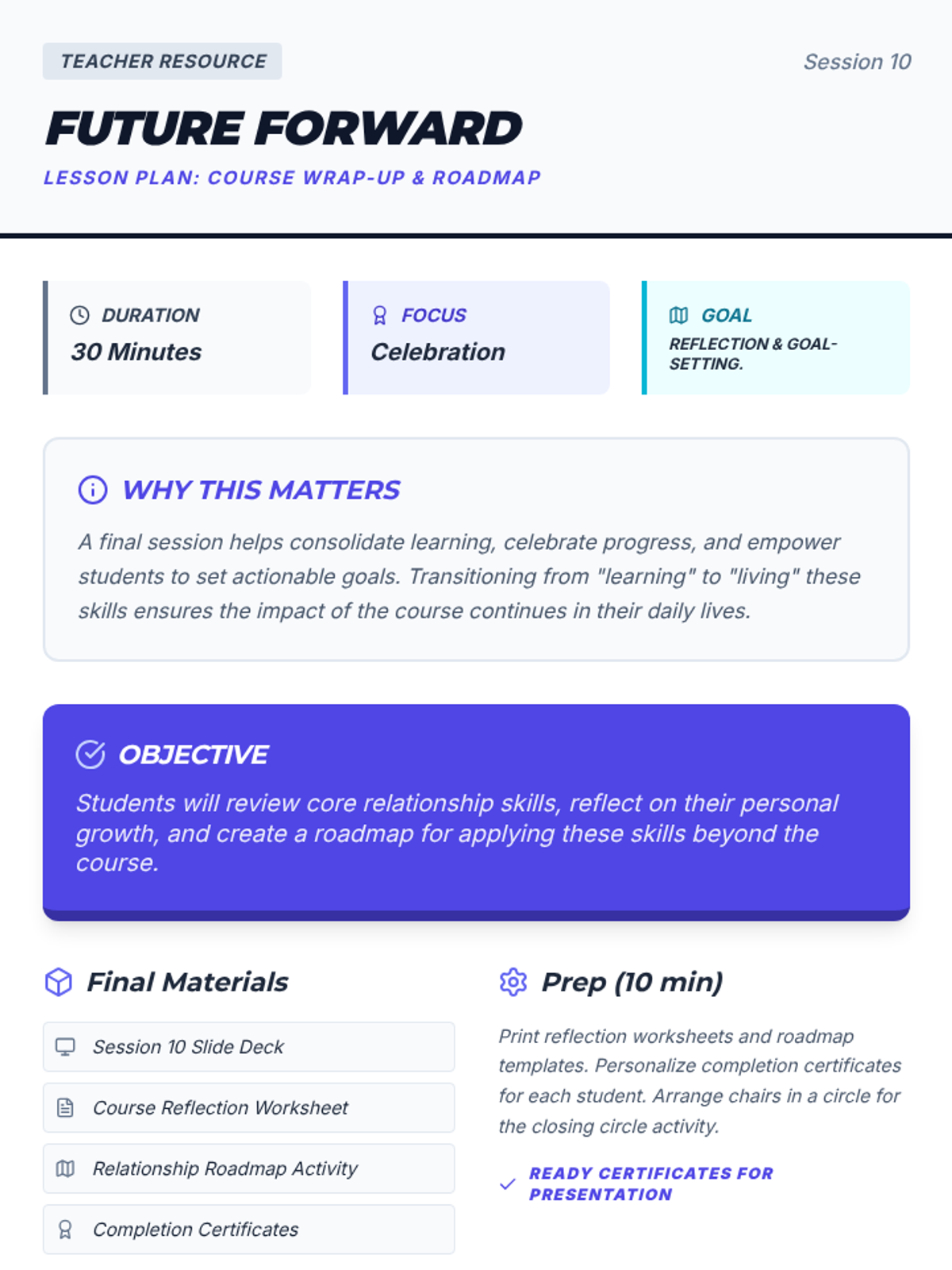
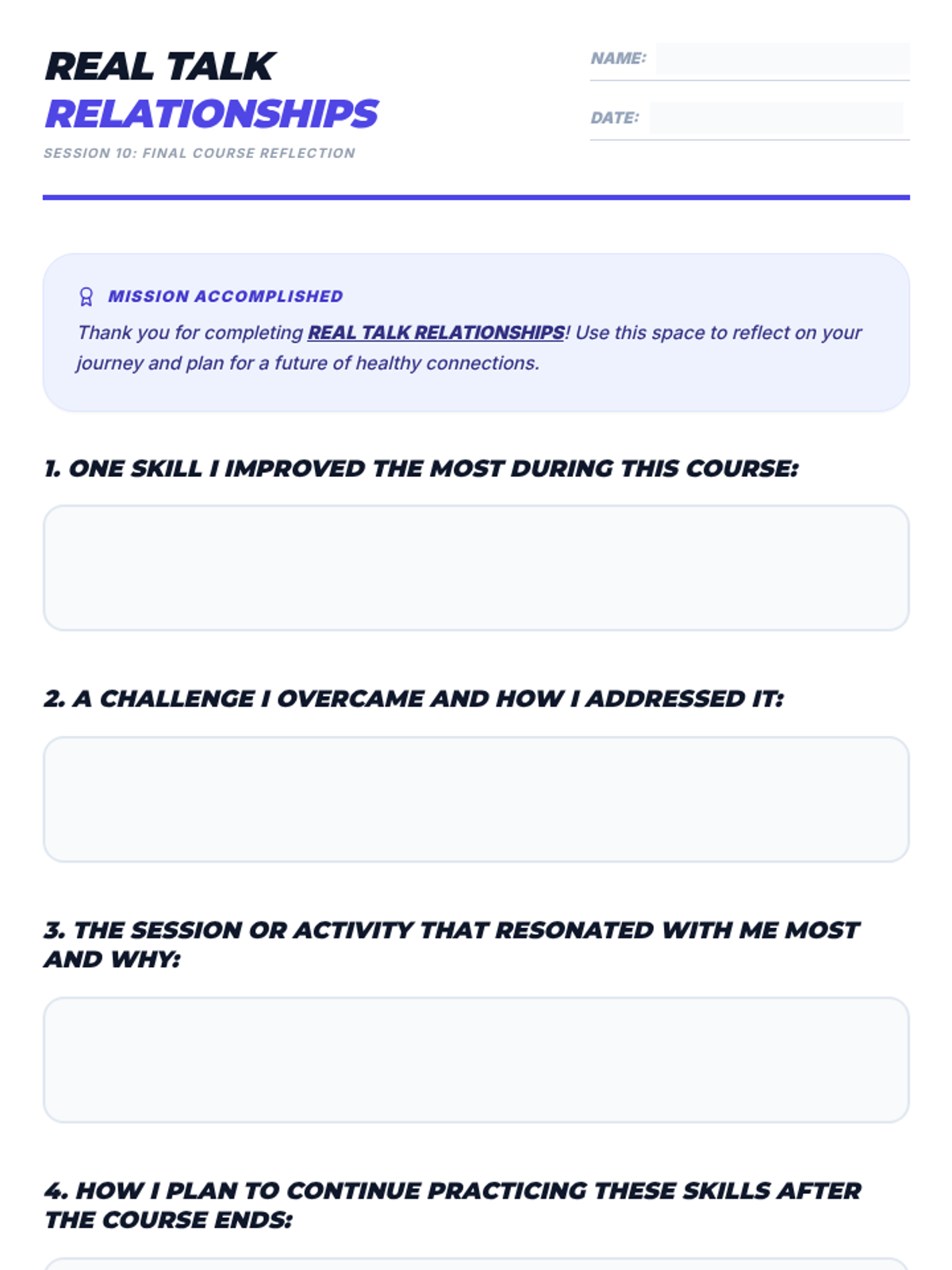
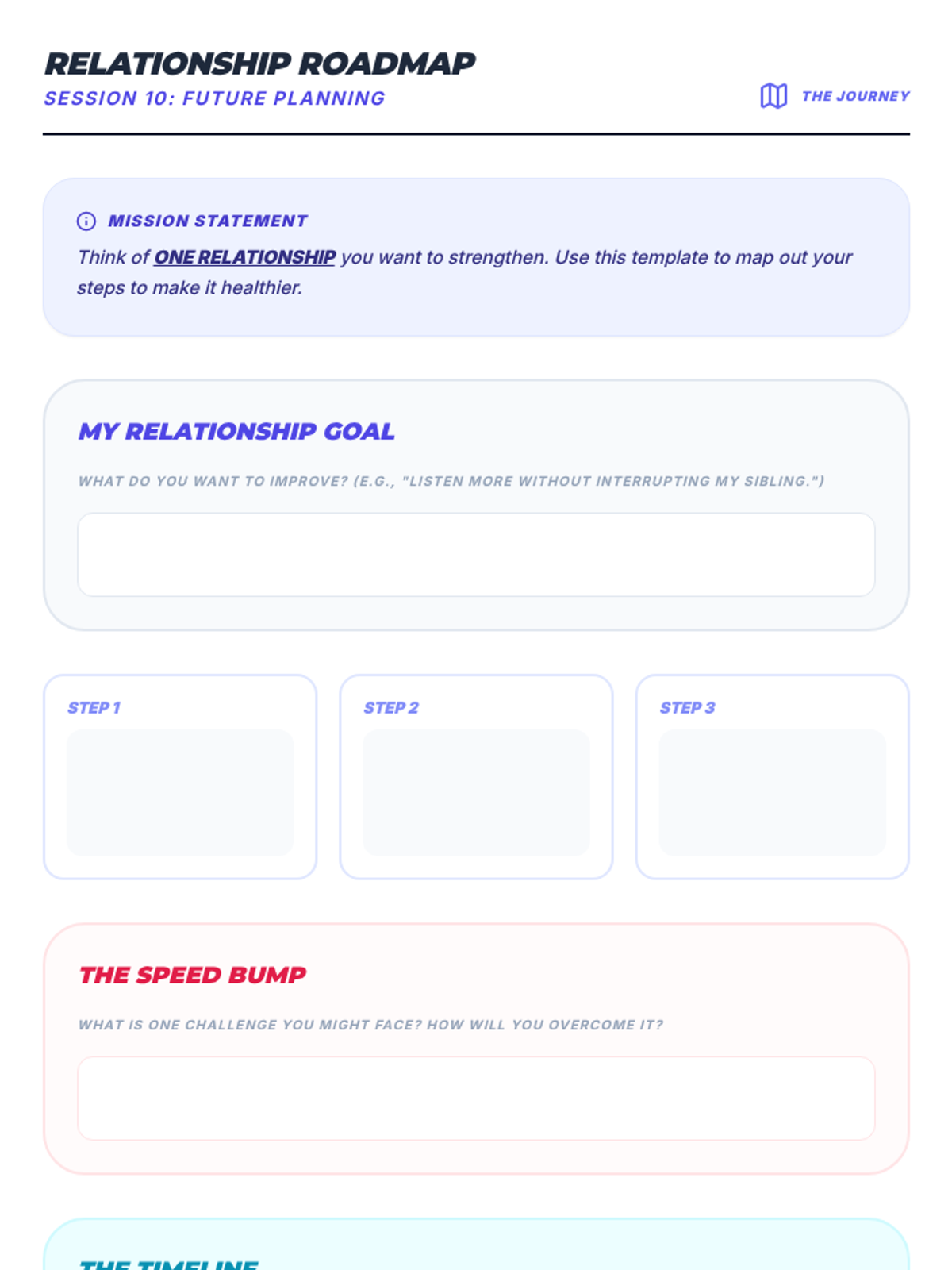
Final review of core skills, personal growth reflection, and creation of a relationship roadmap for the future.
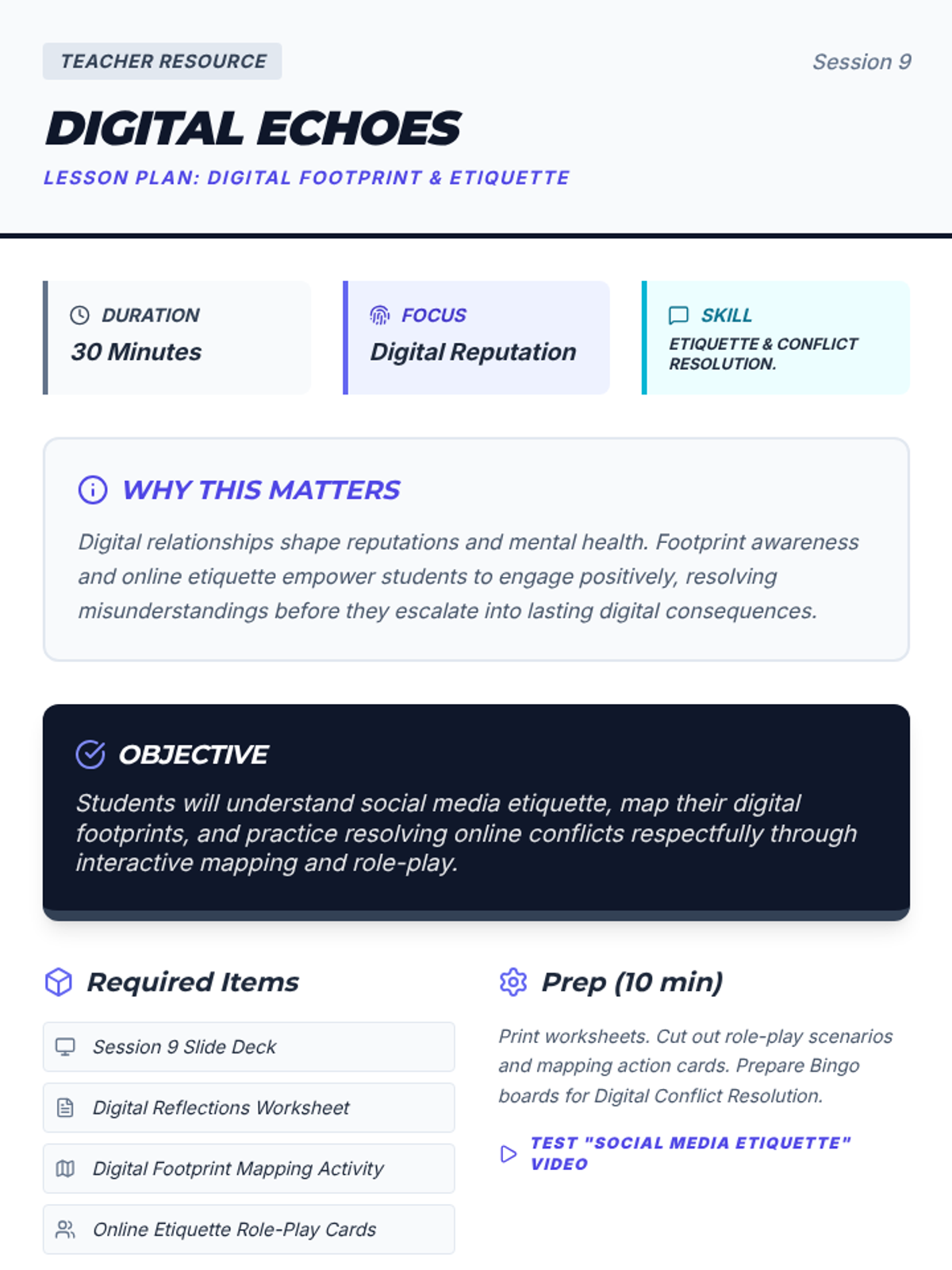
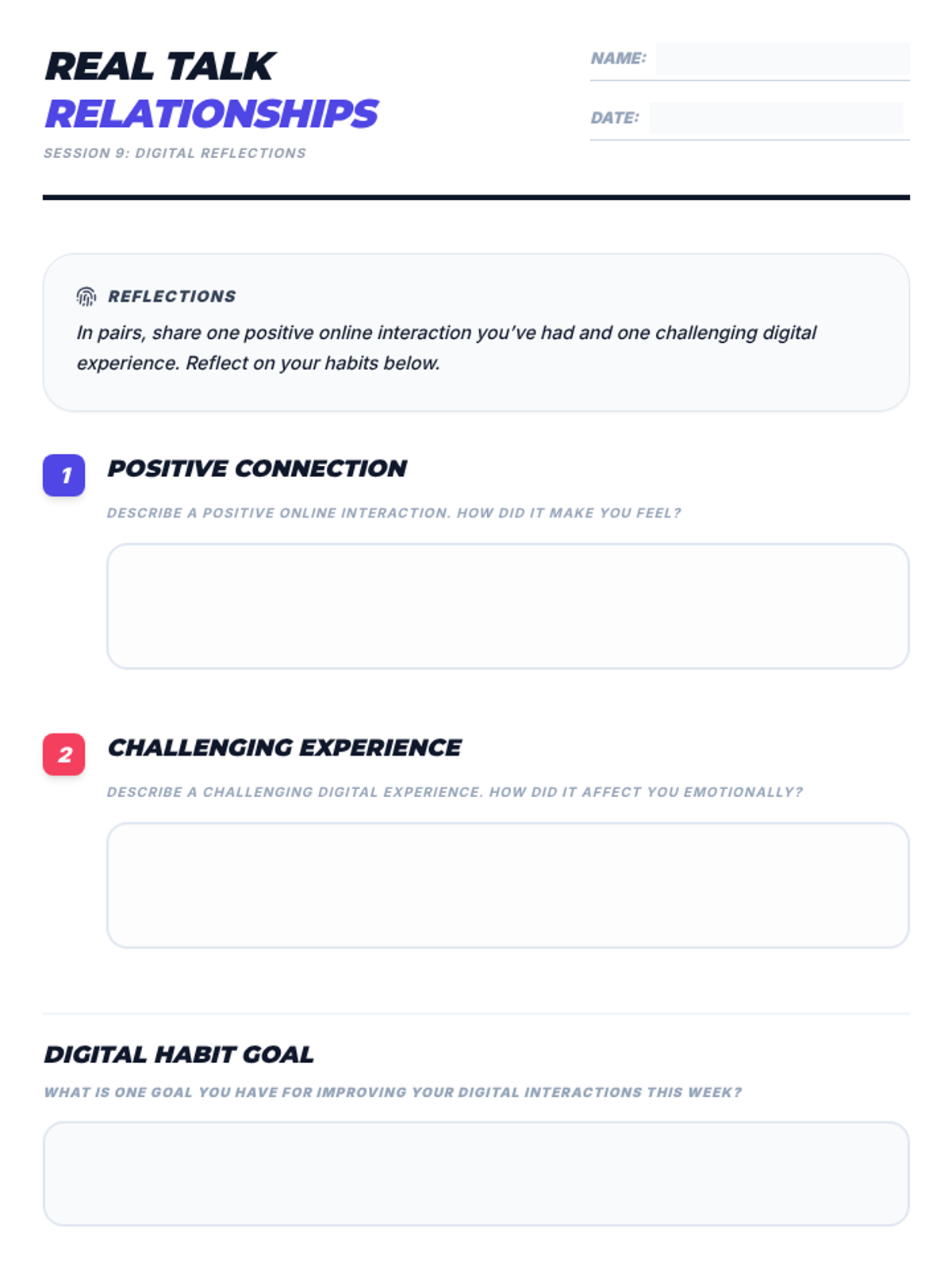
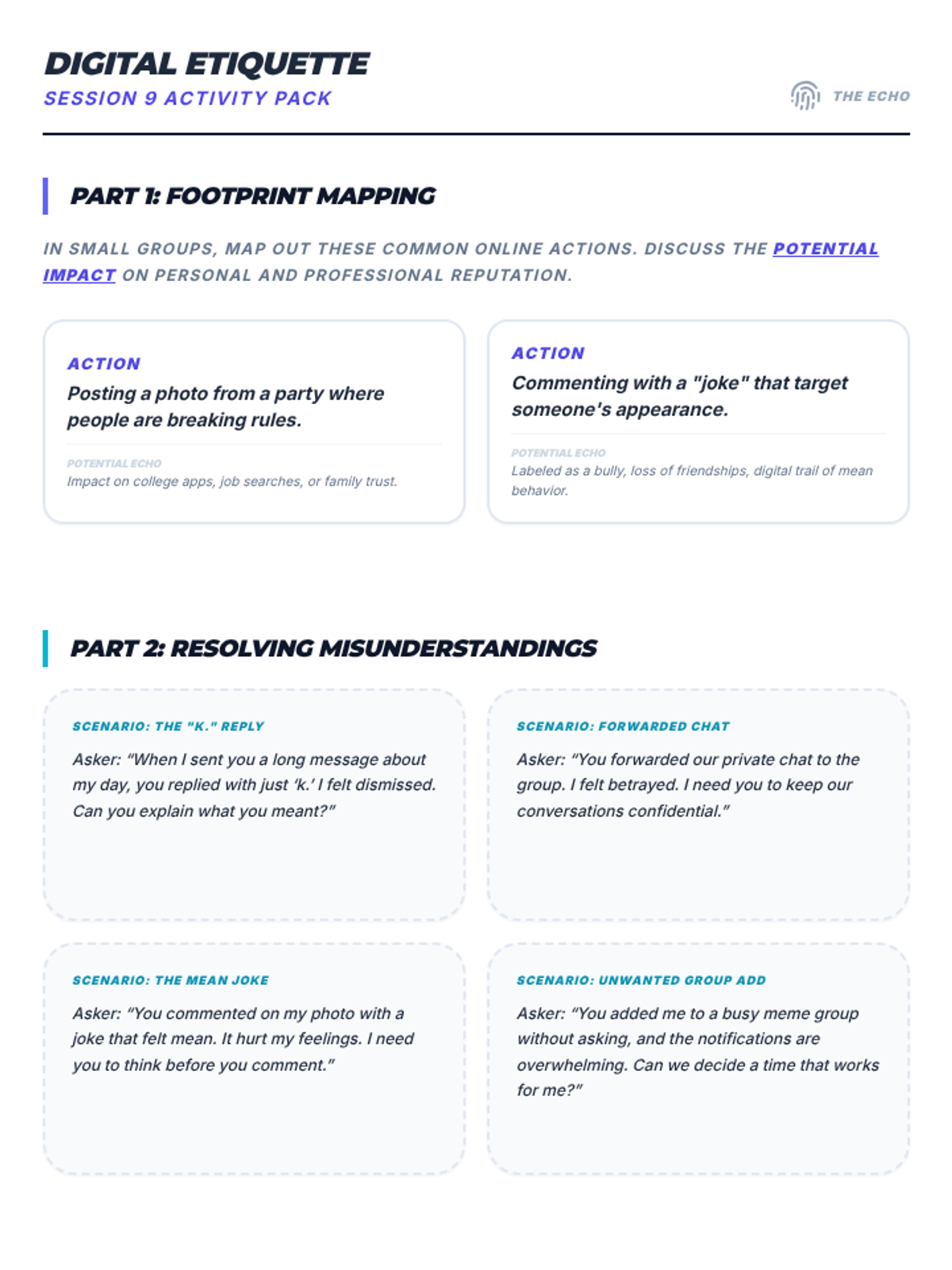
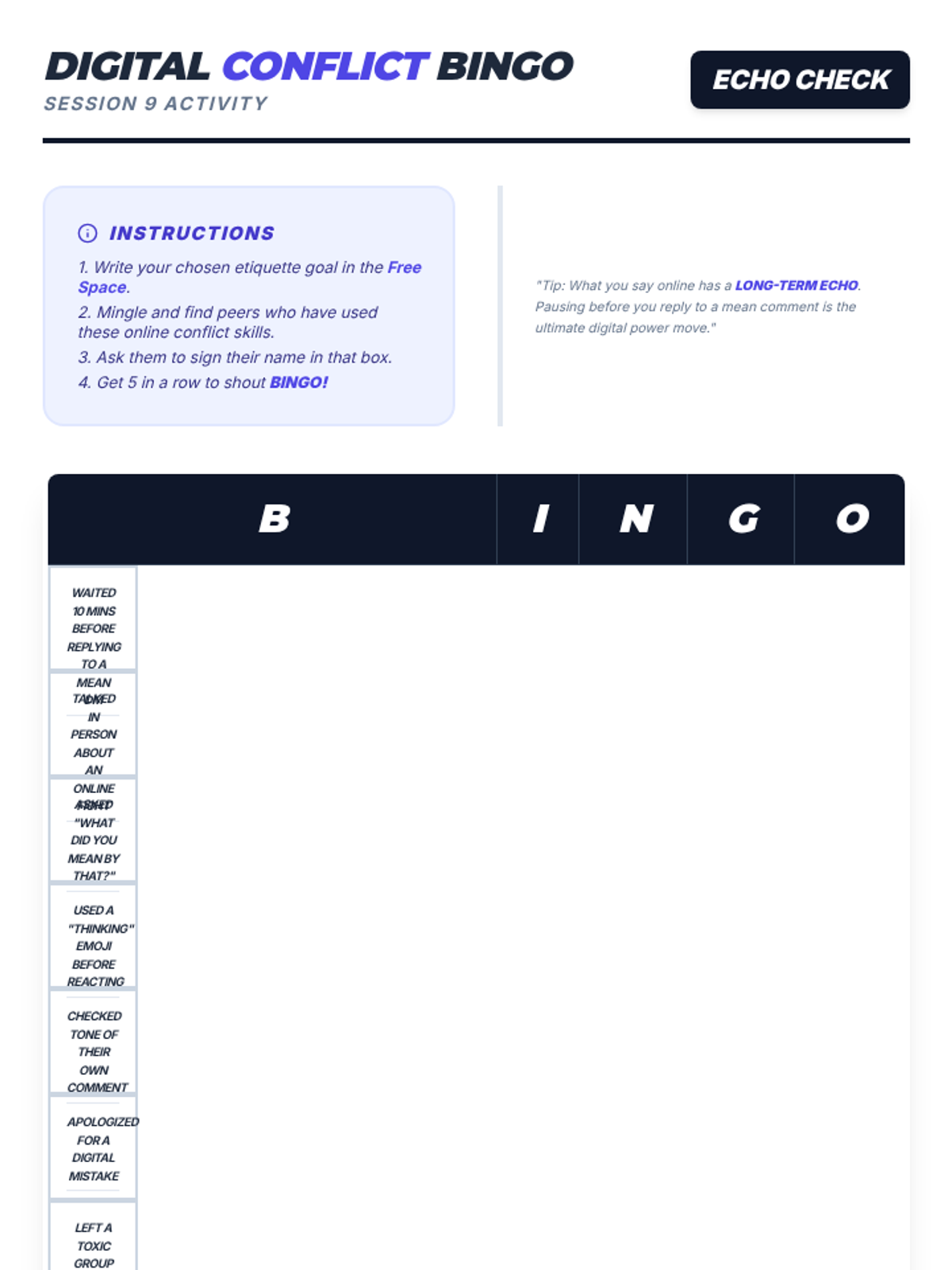
Examines the long-term impact of digital actions and explores social media etiquette.
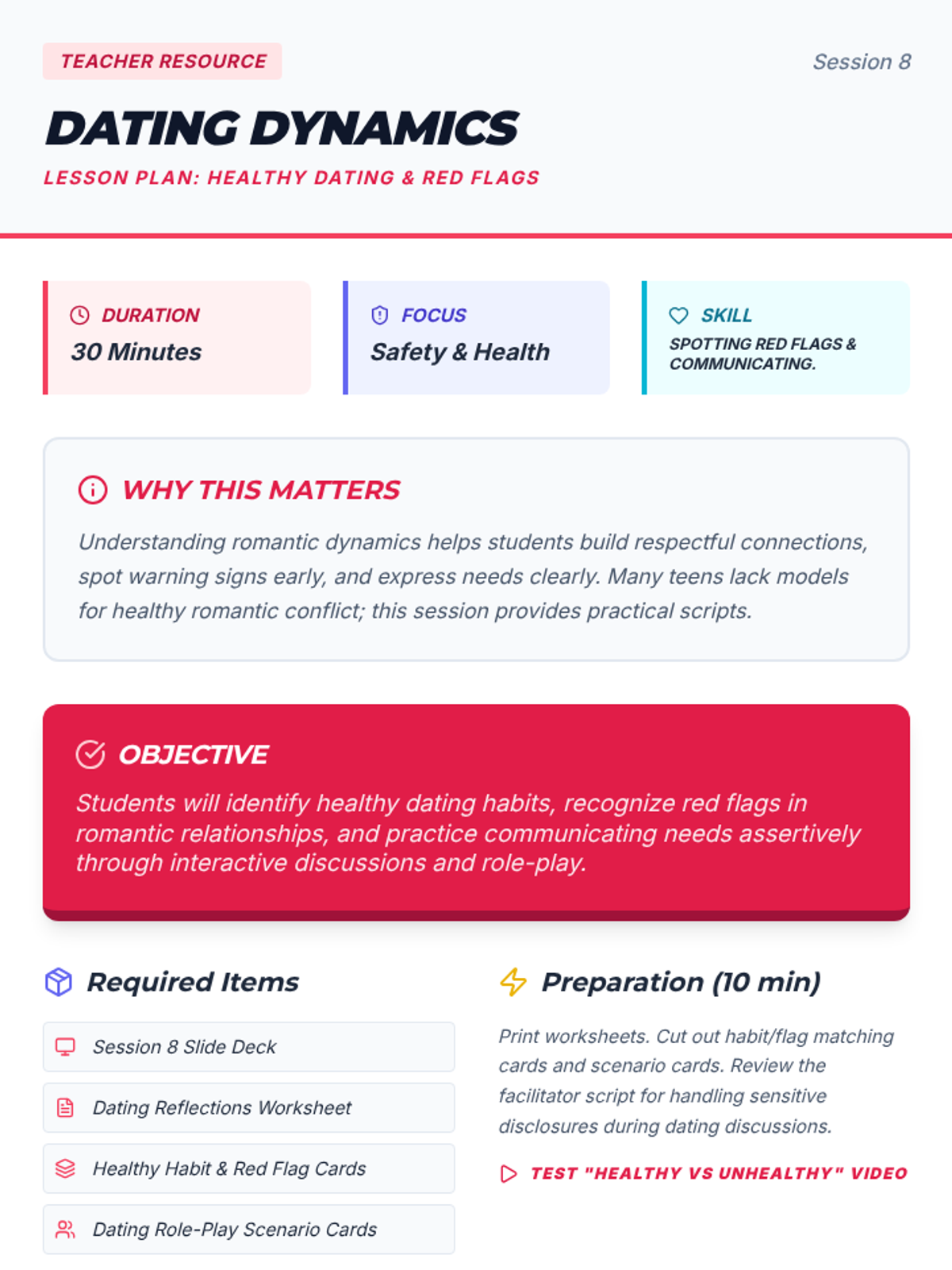
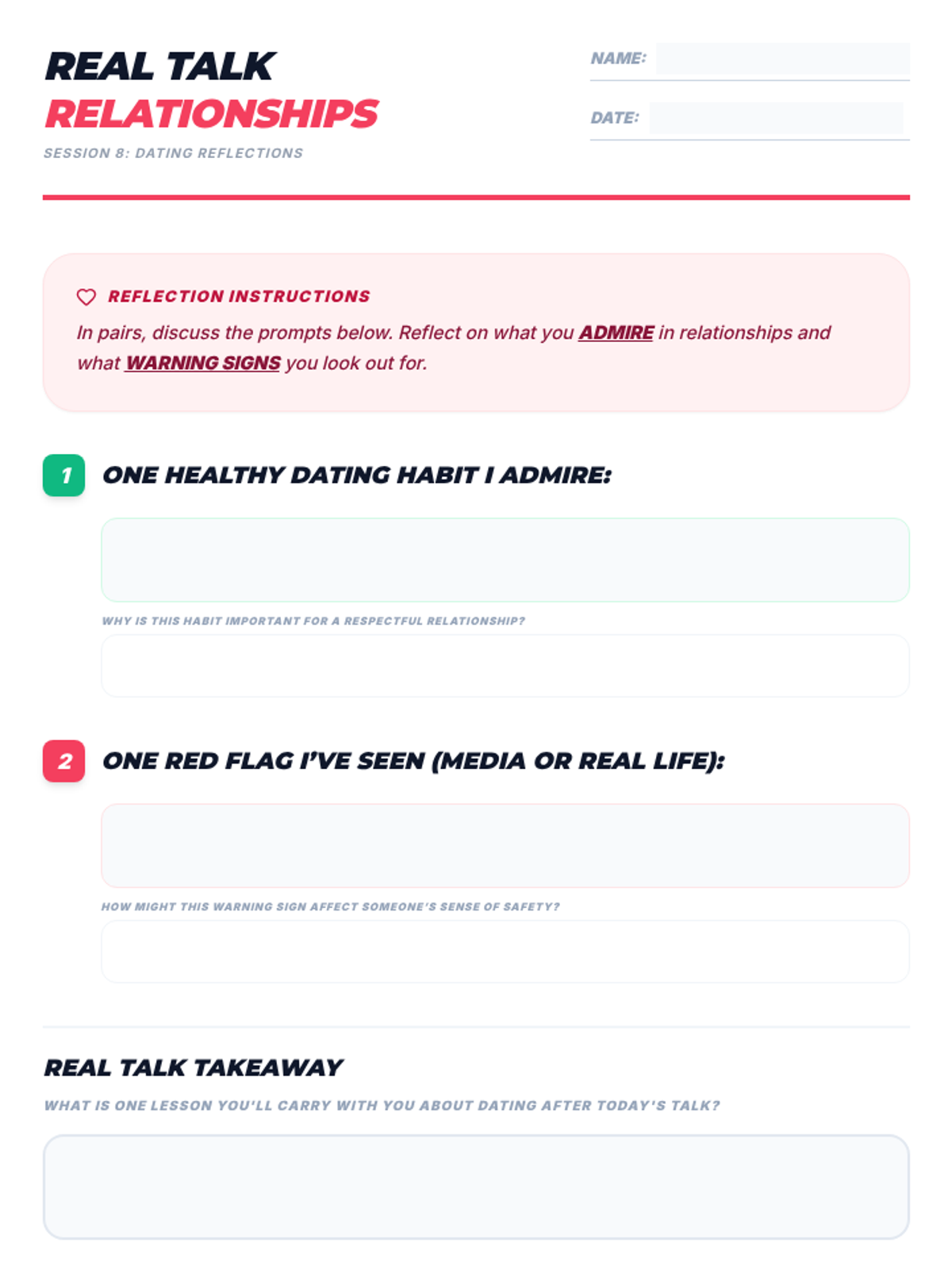
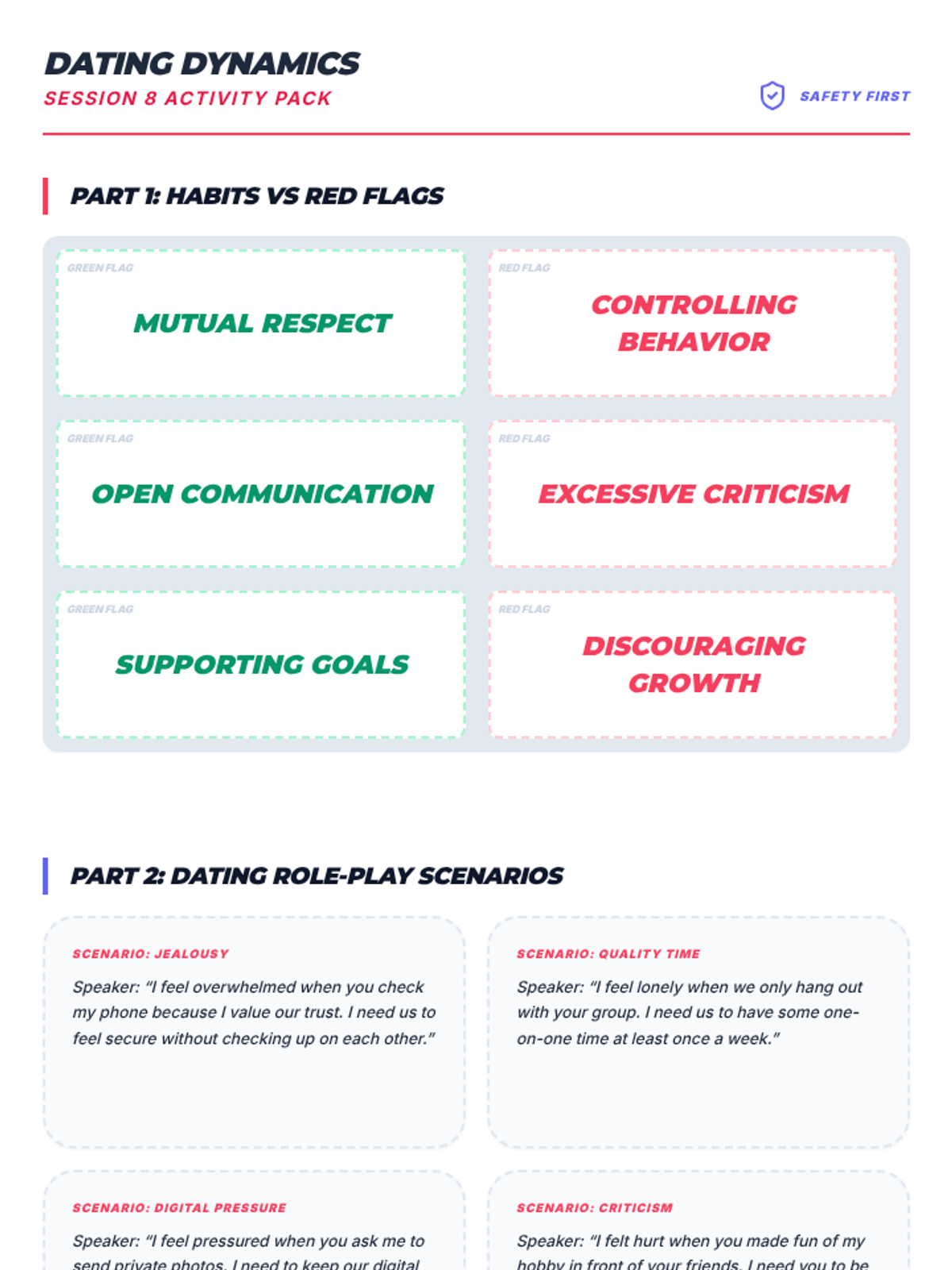
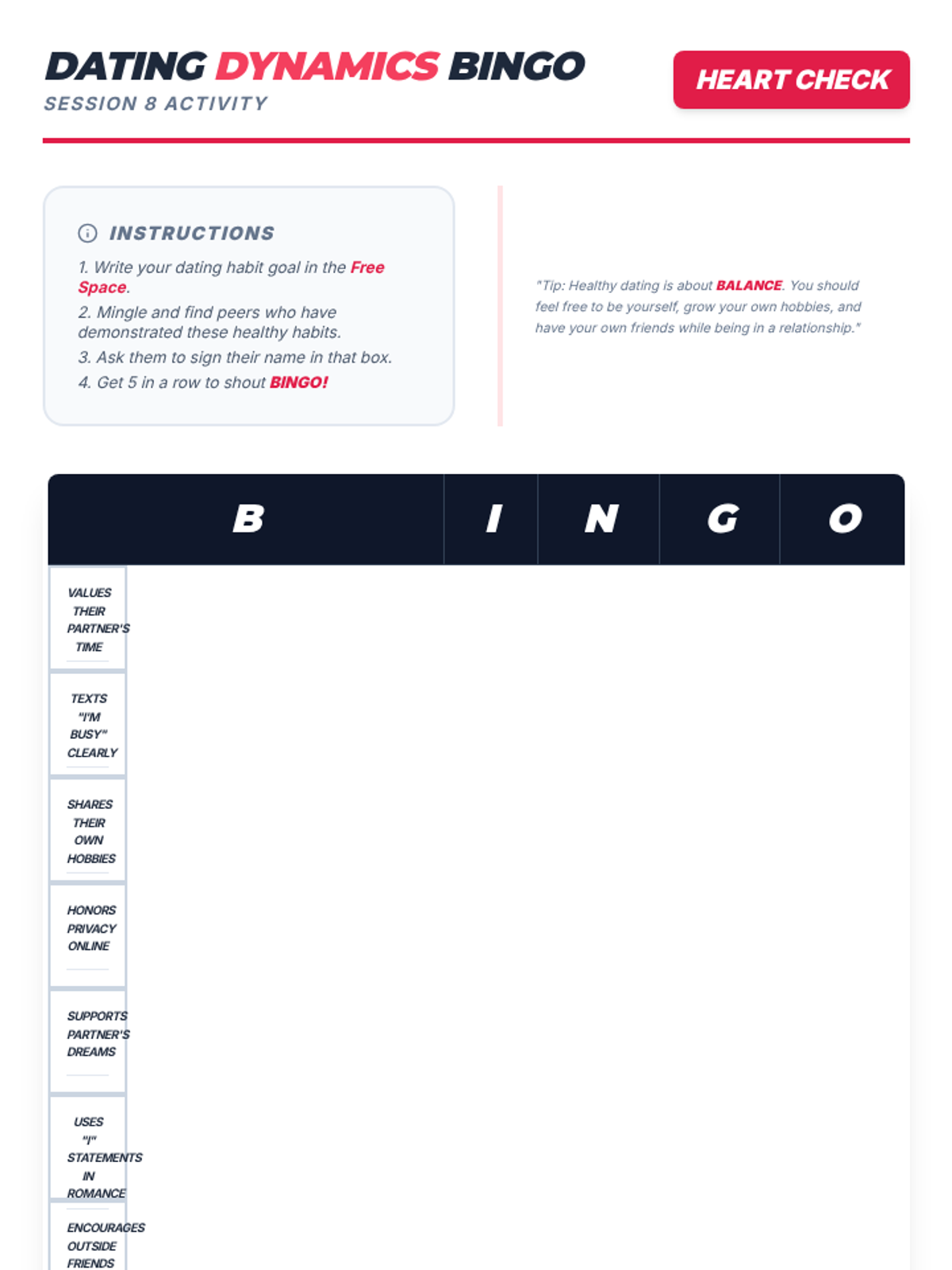
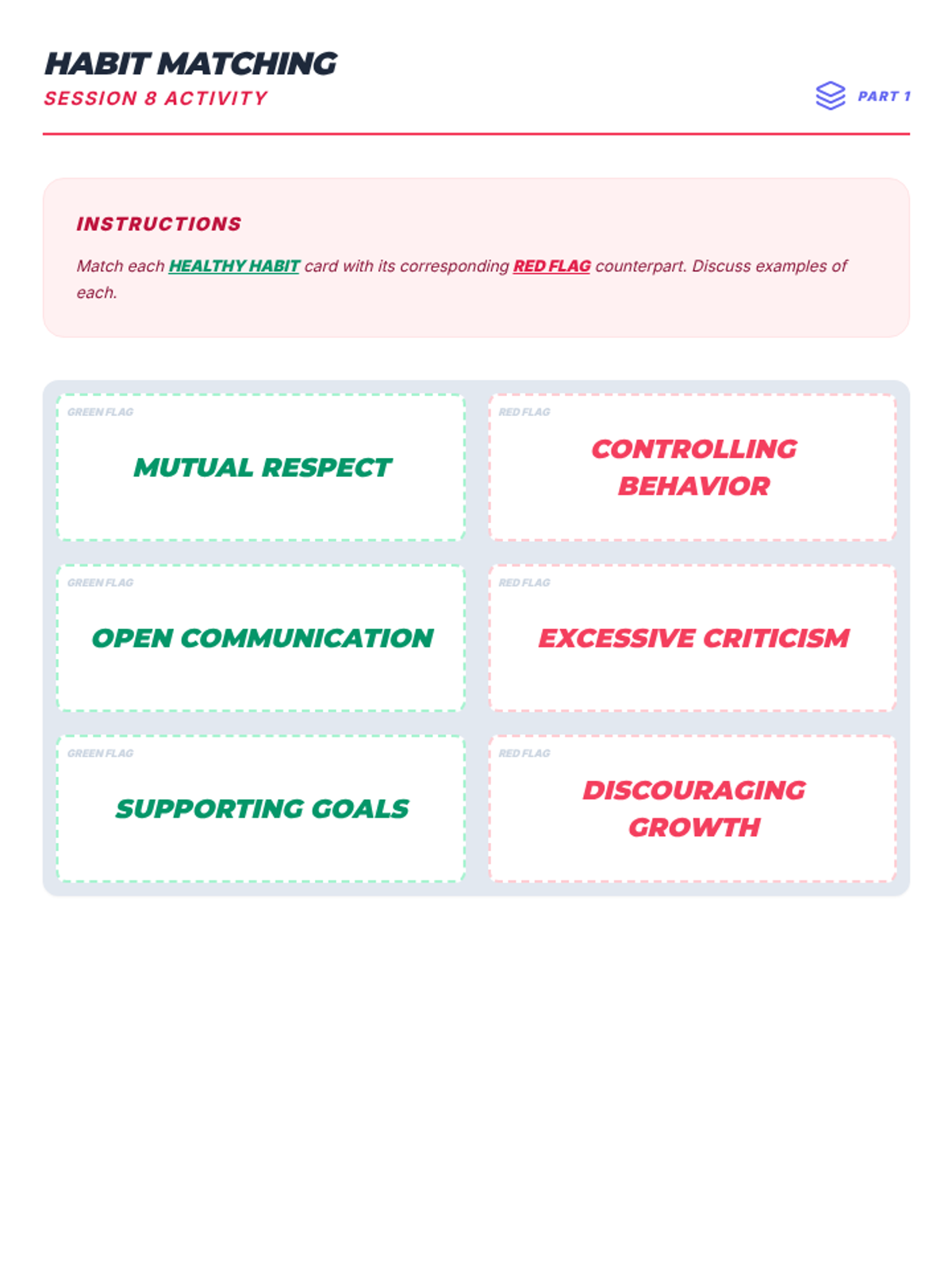
Discusses healthy romantic dynamics and how to identify "red flags" and "green flags" in dating.
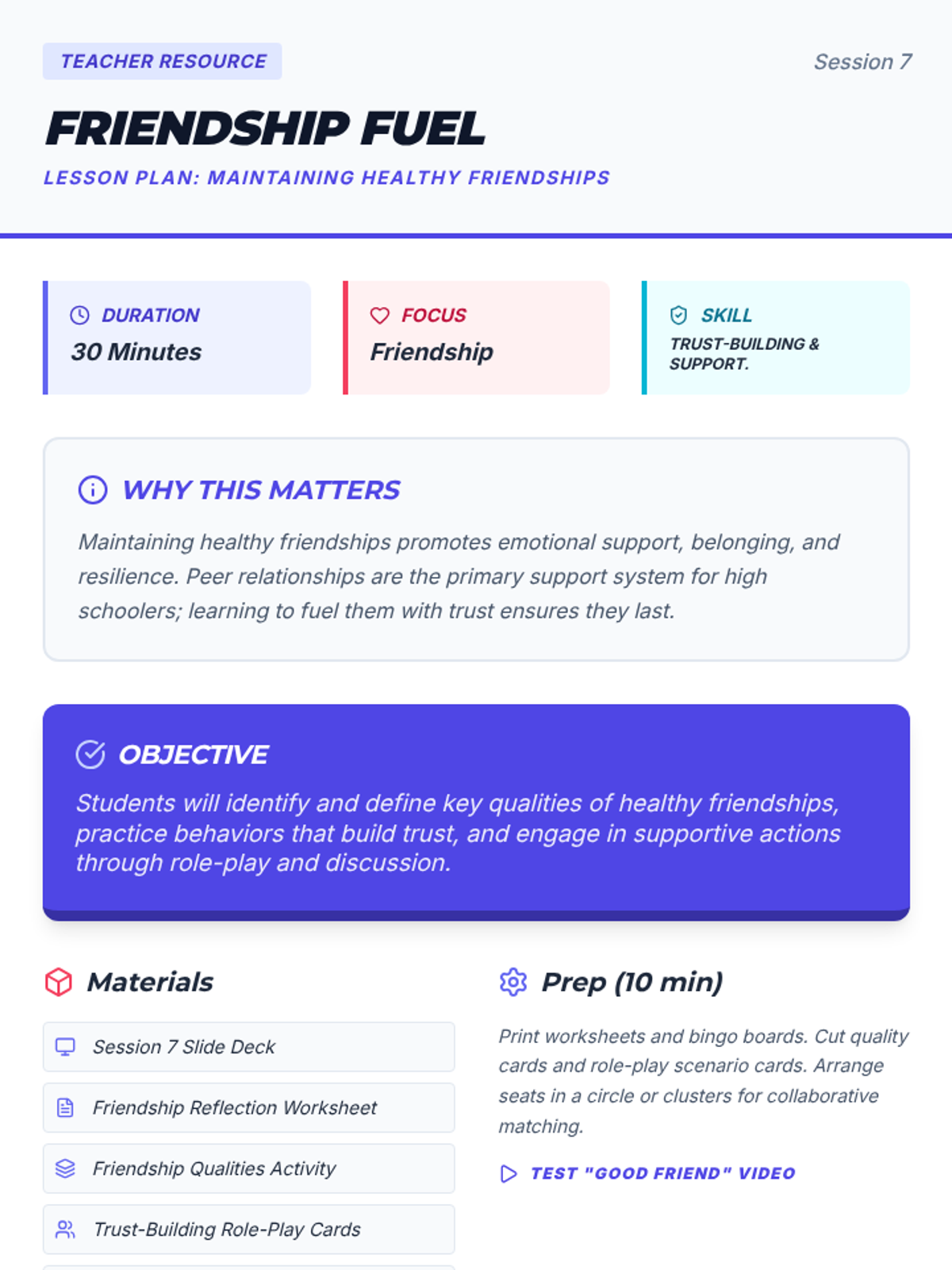
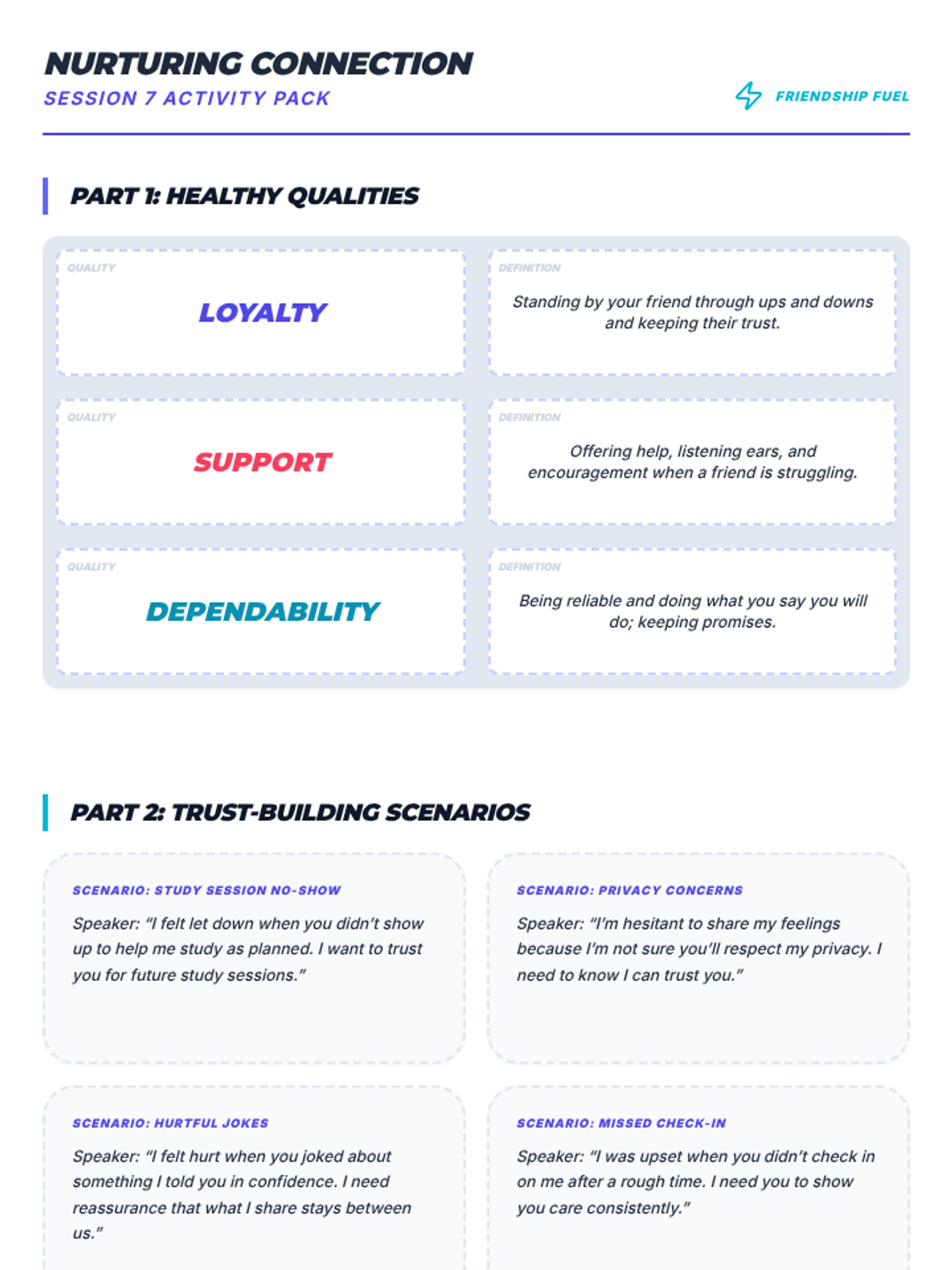
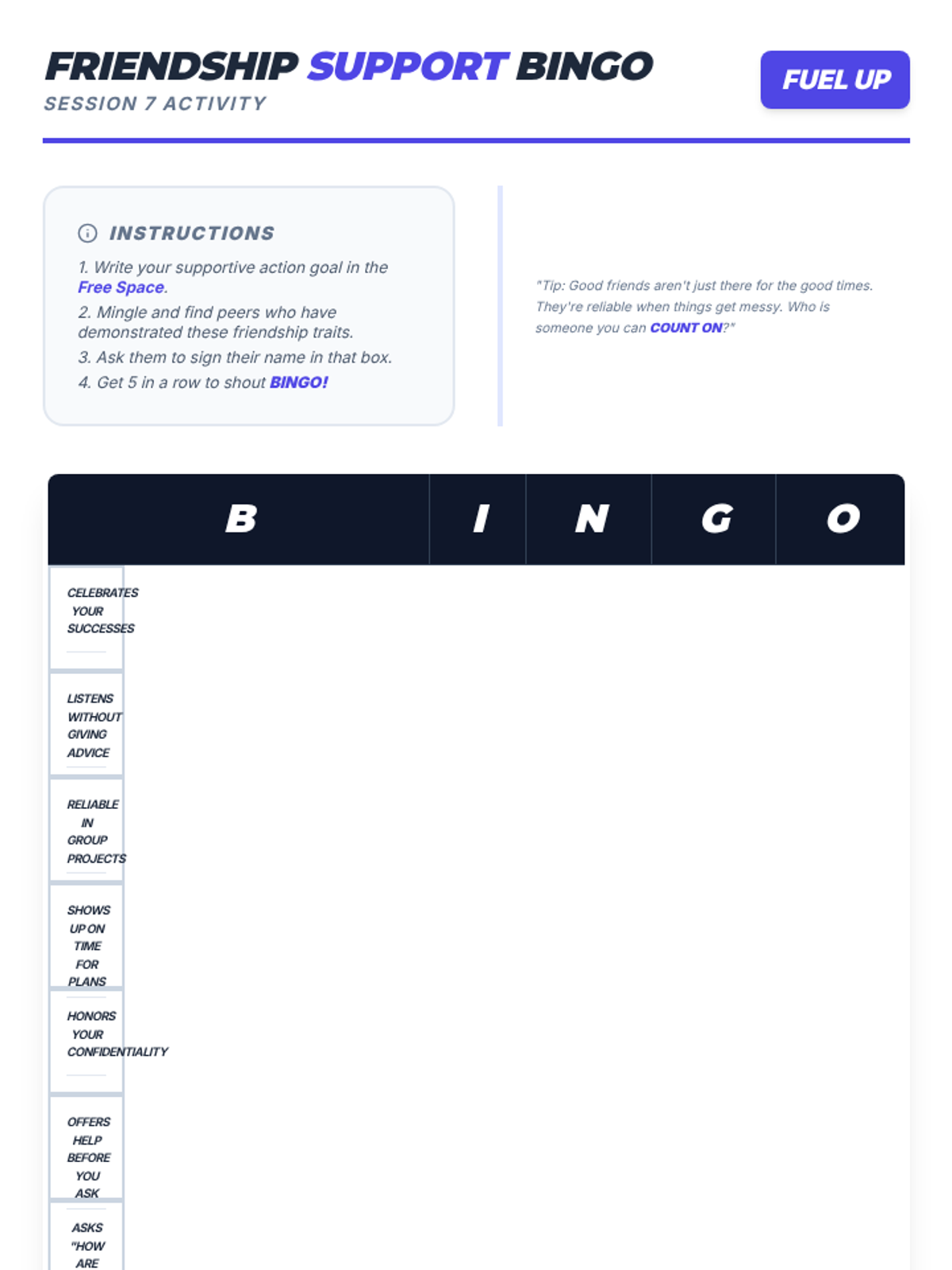
Identifies qualities of healthy friendships and practices trust-building behaviors.
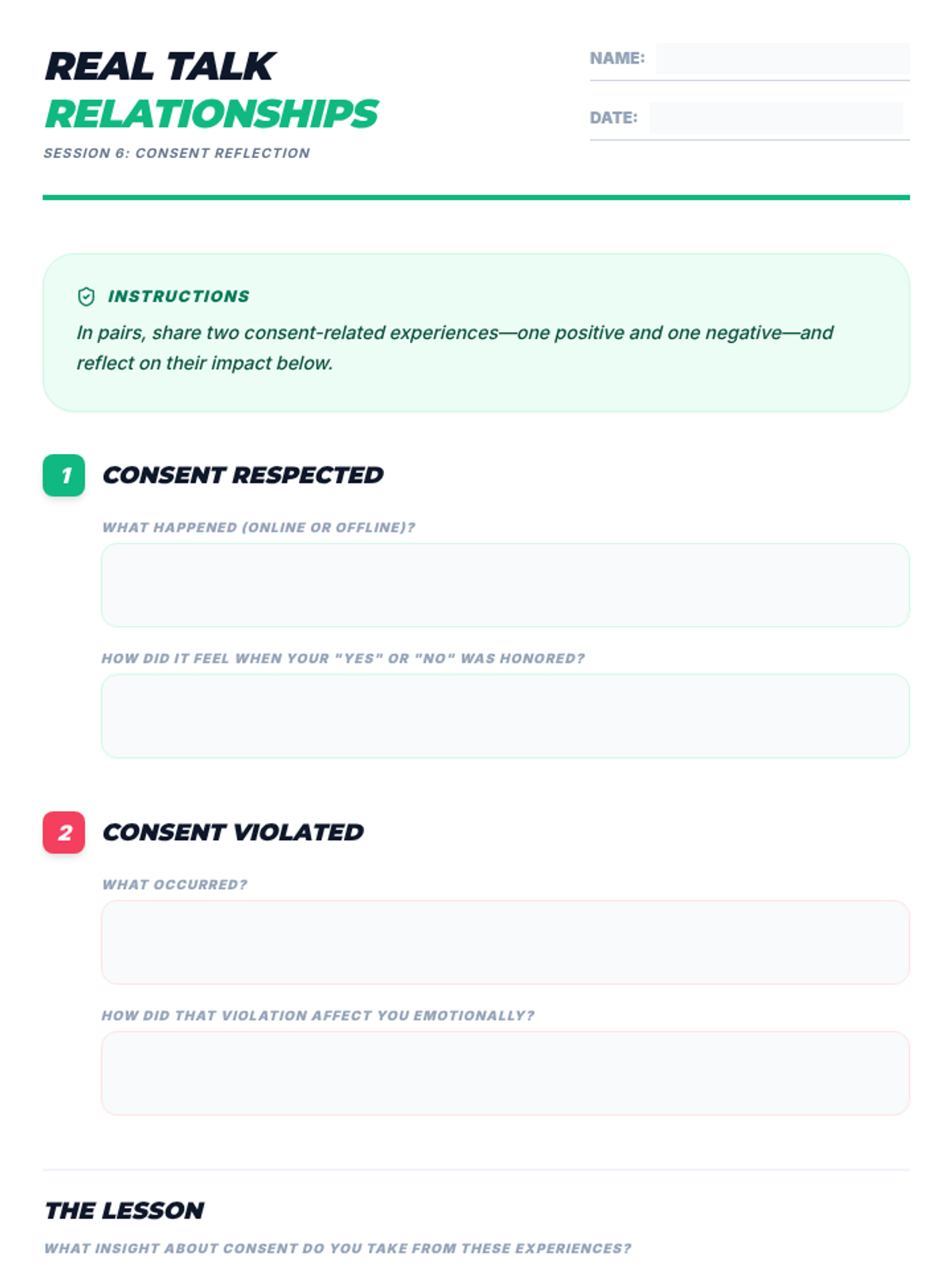
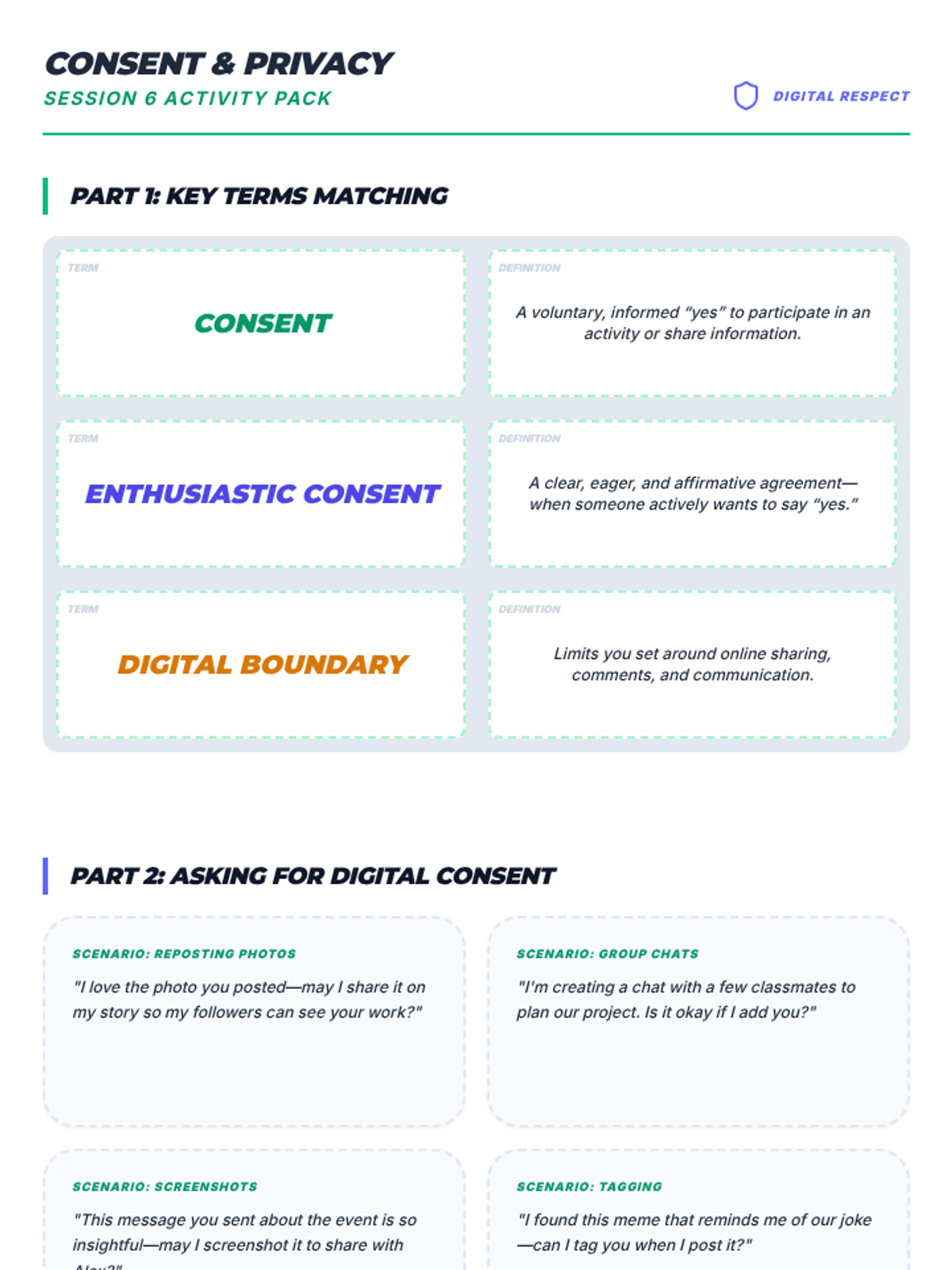
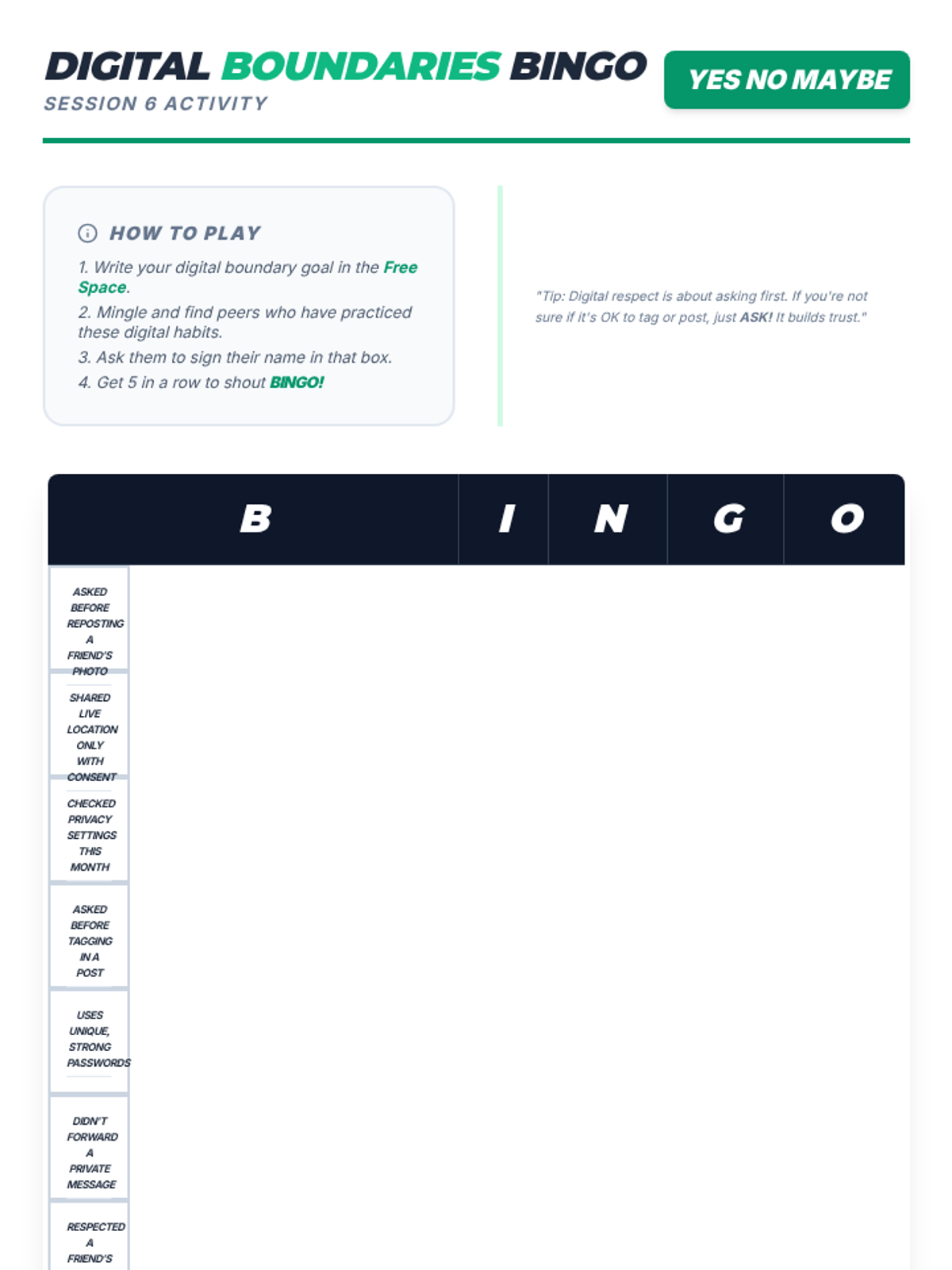
Deep dive into the importance of consent and managing personal privacy in digital spaces.
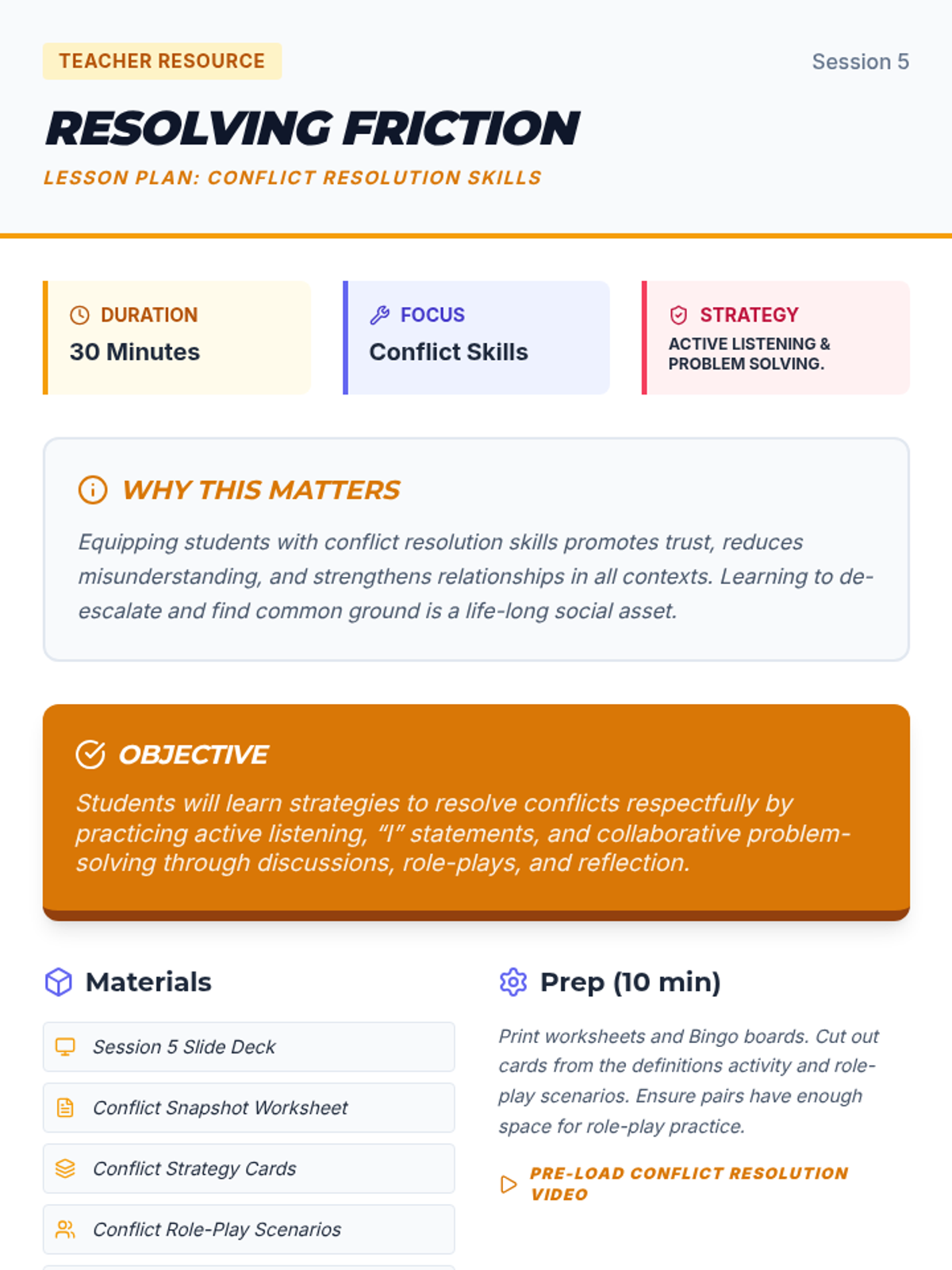
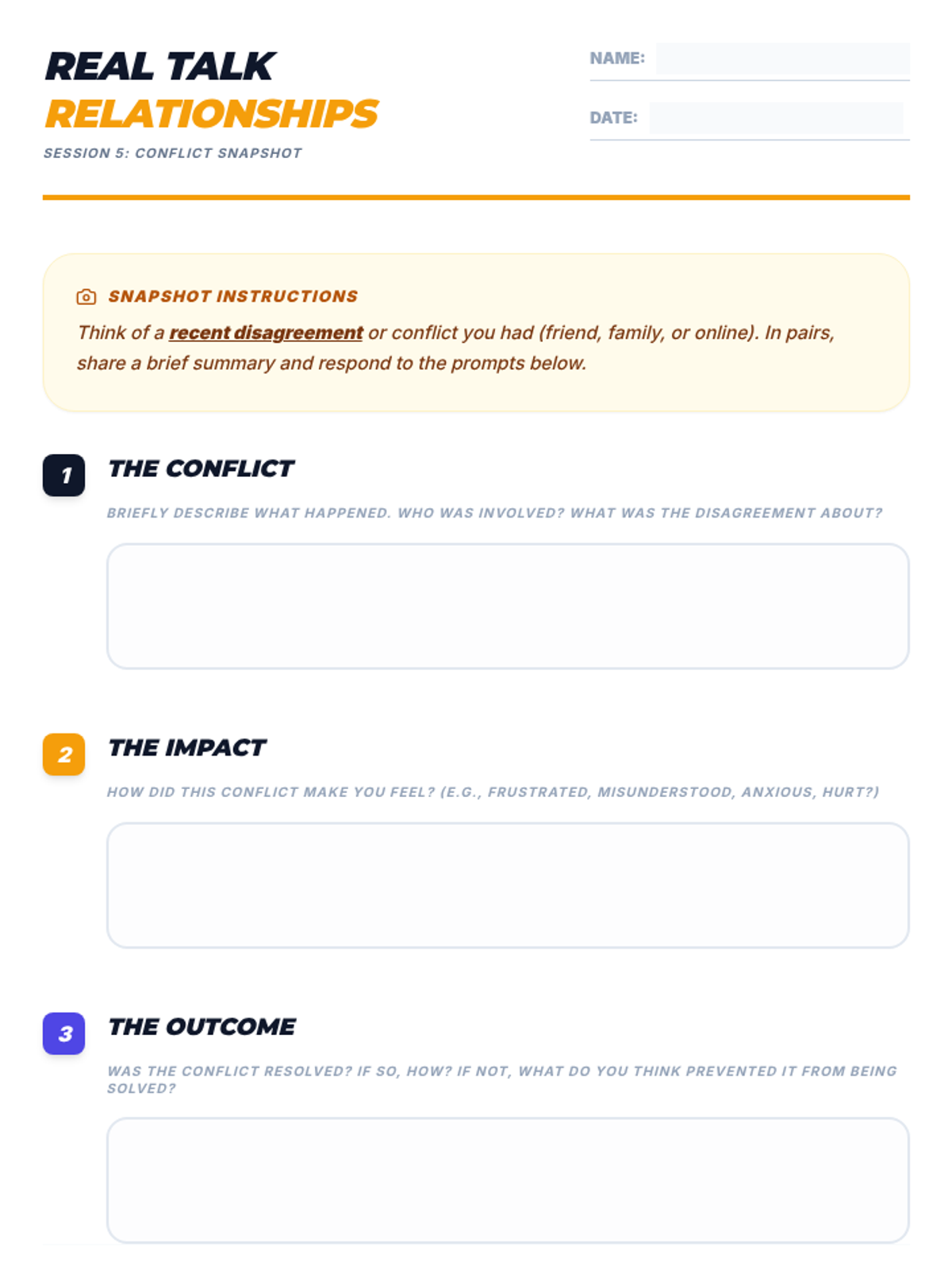
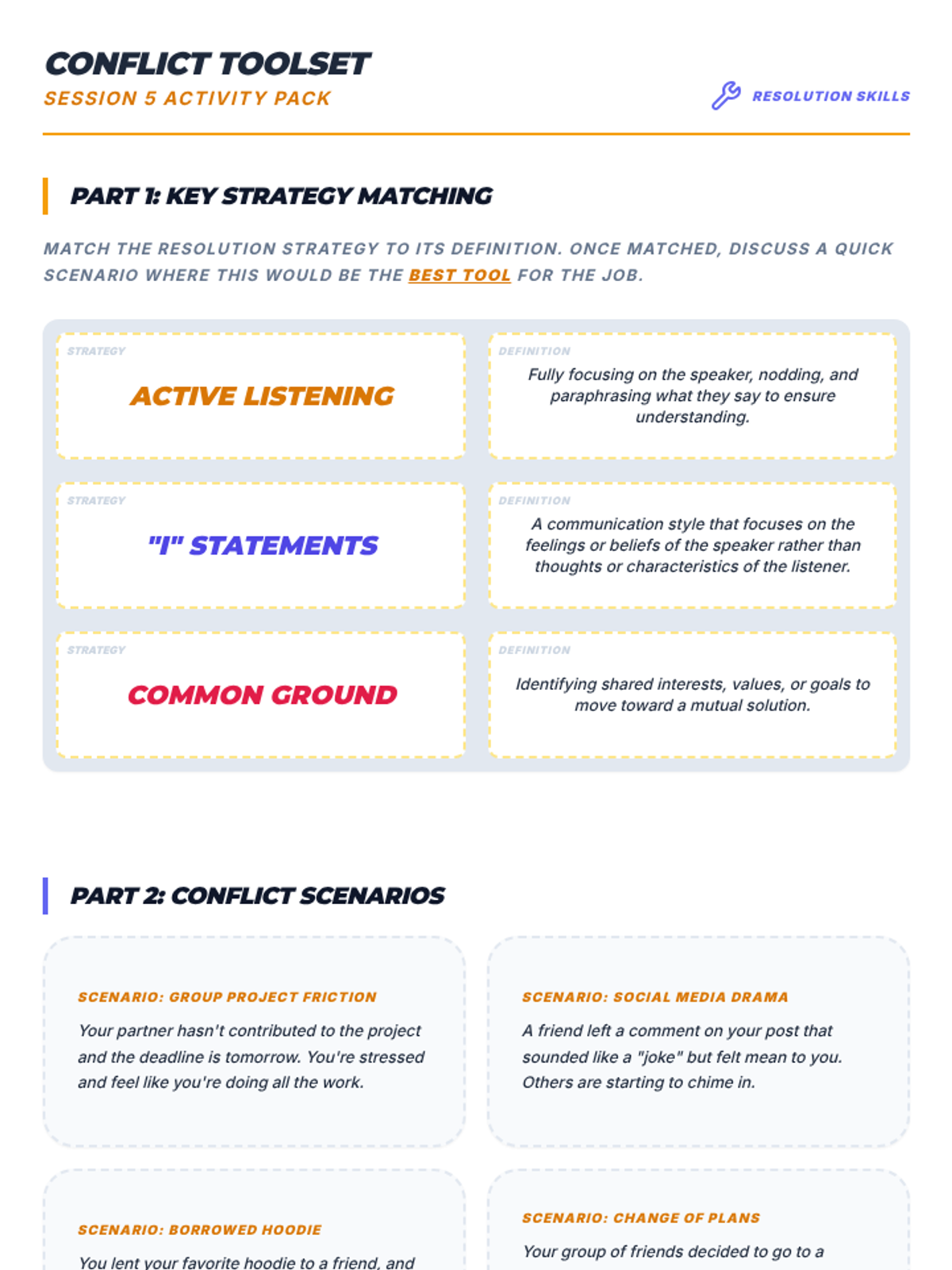
Provides strategies for resolving disagreements respectfully through collaborative problem-solving.
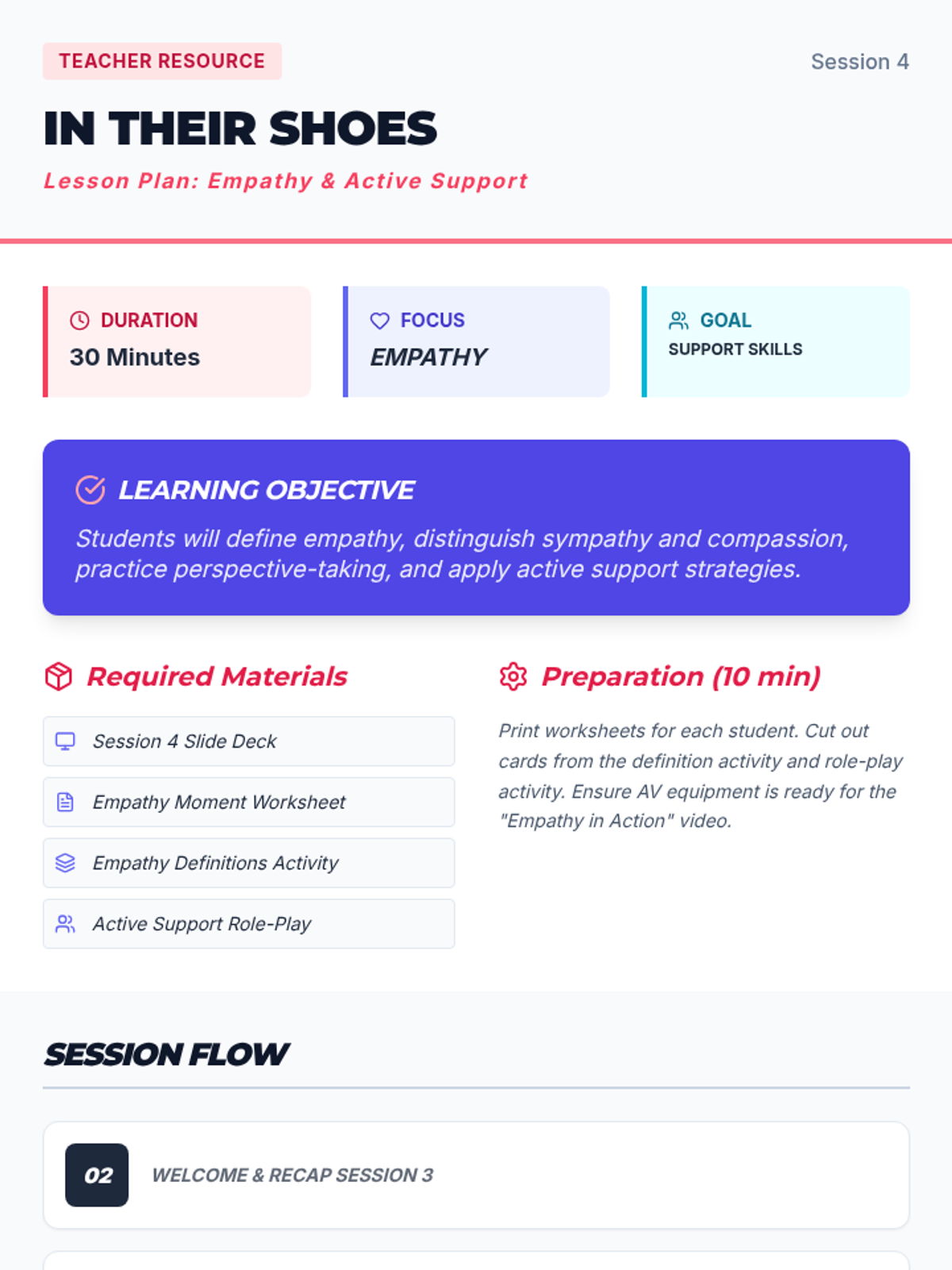
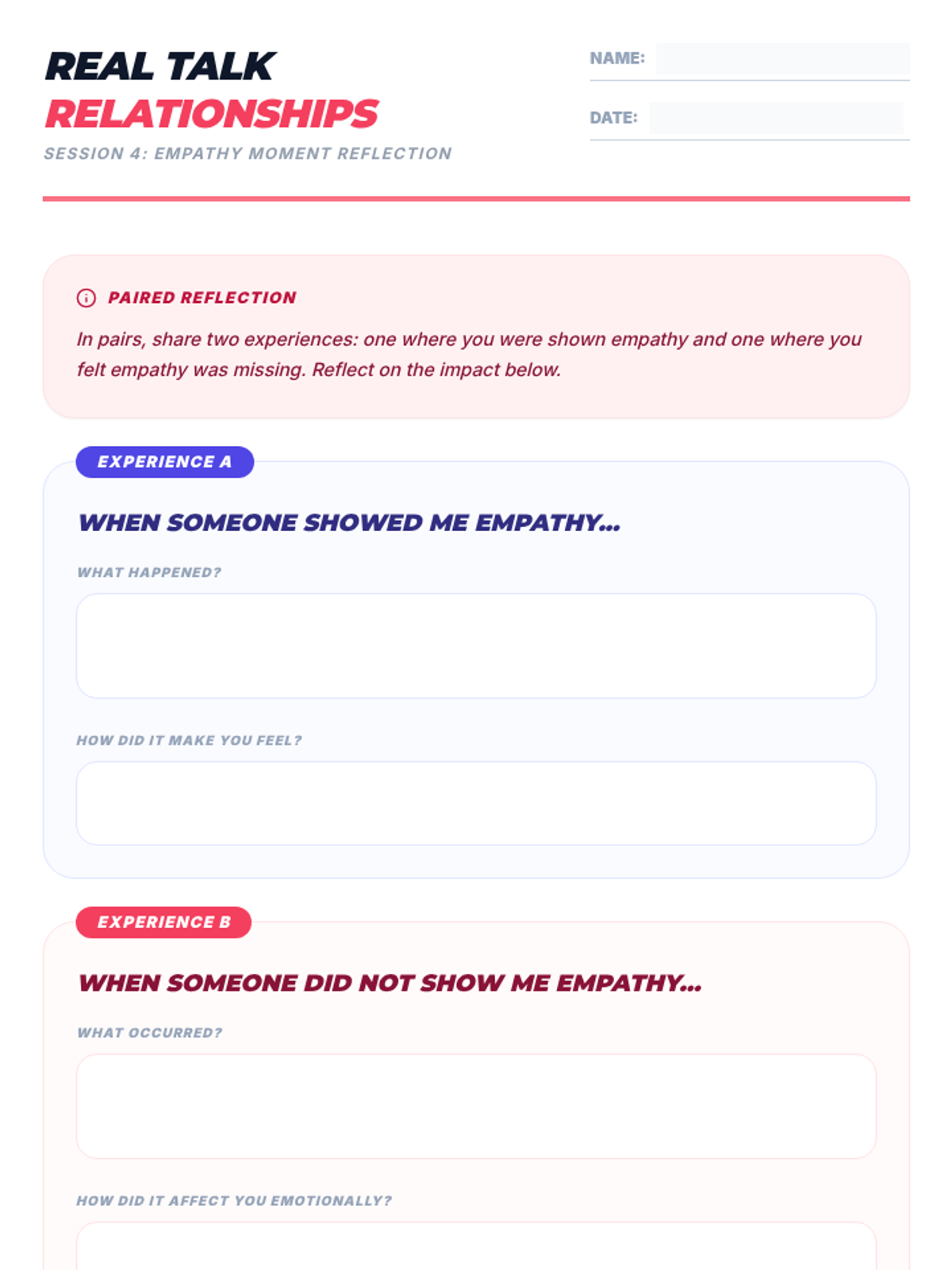
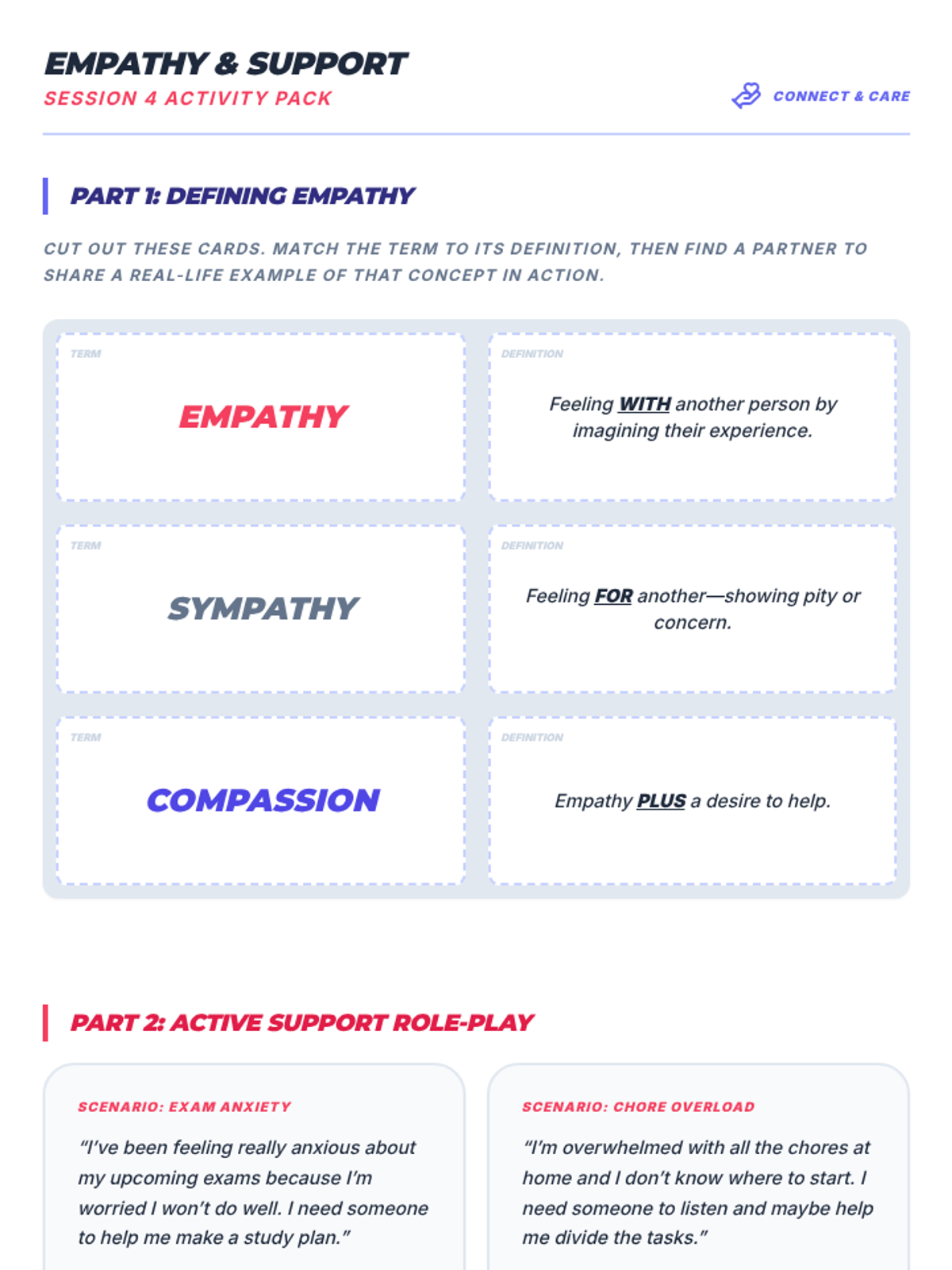
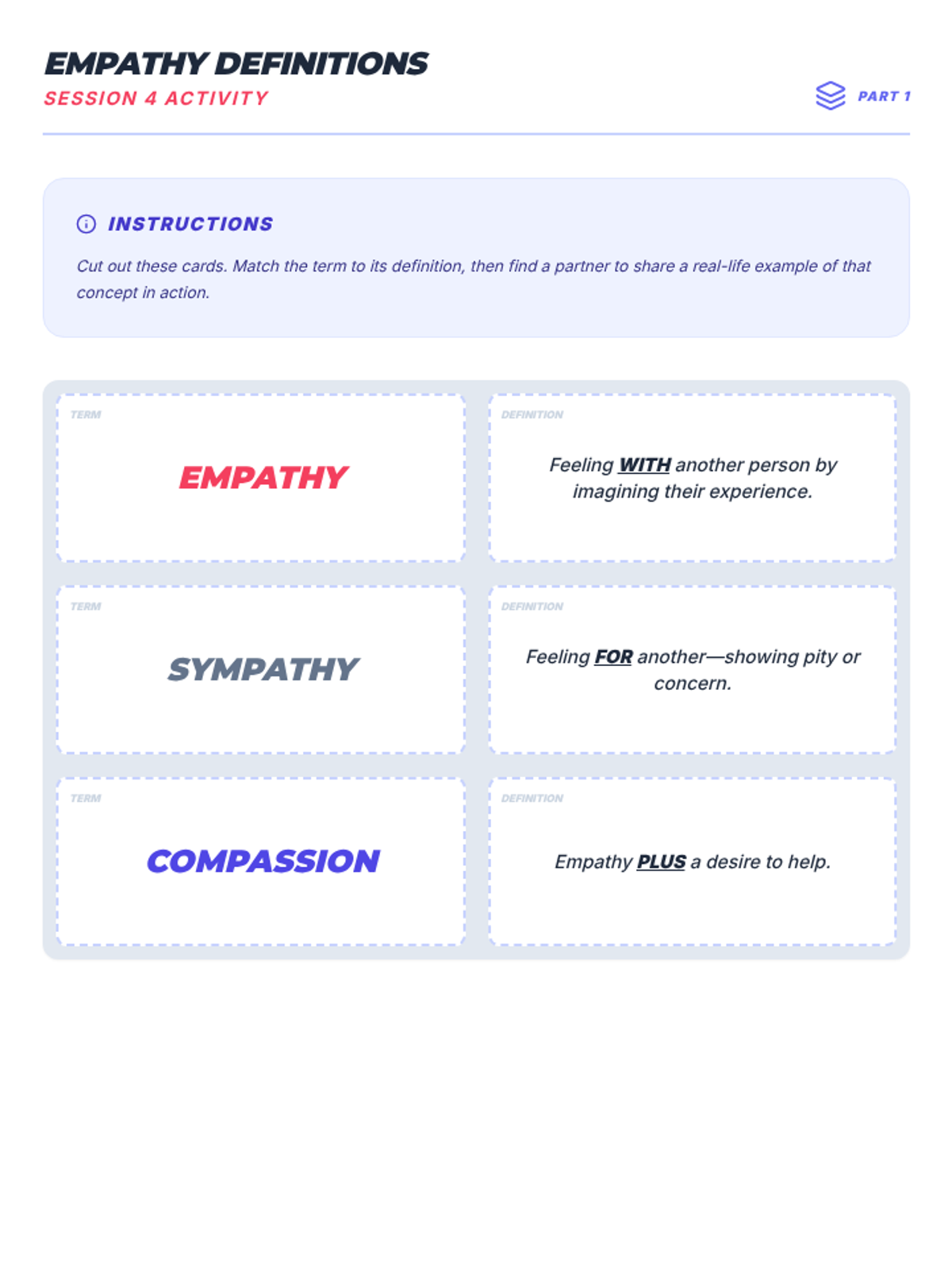
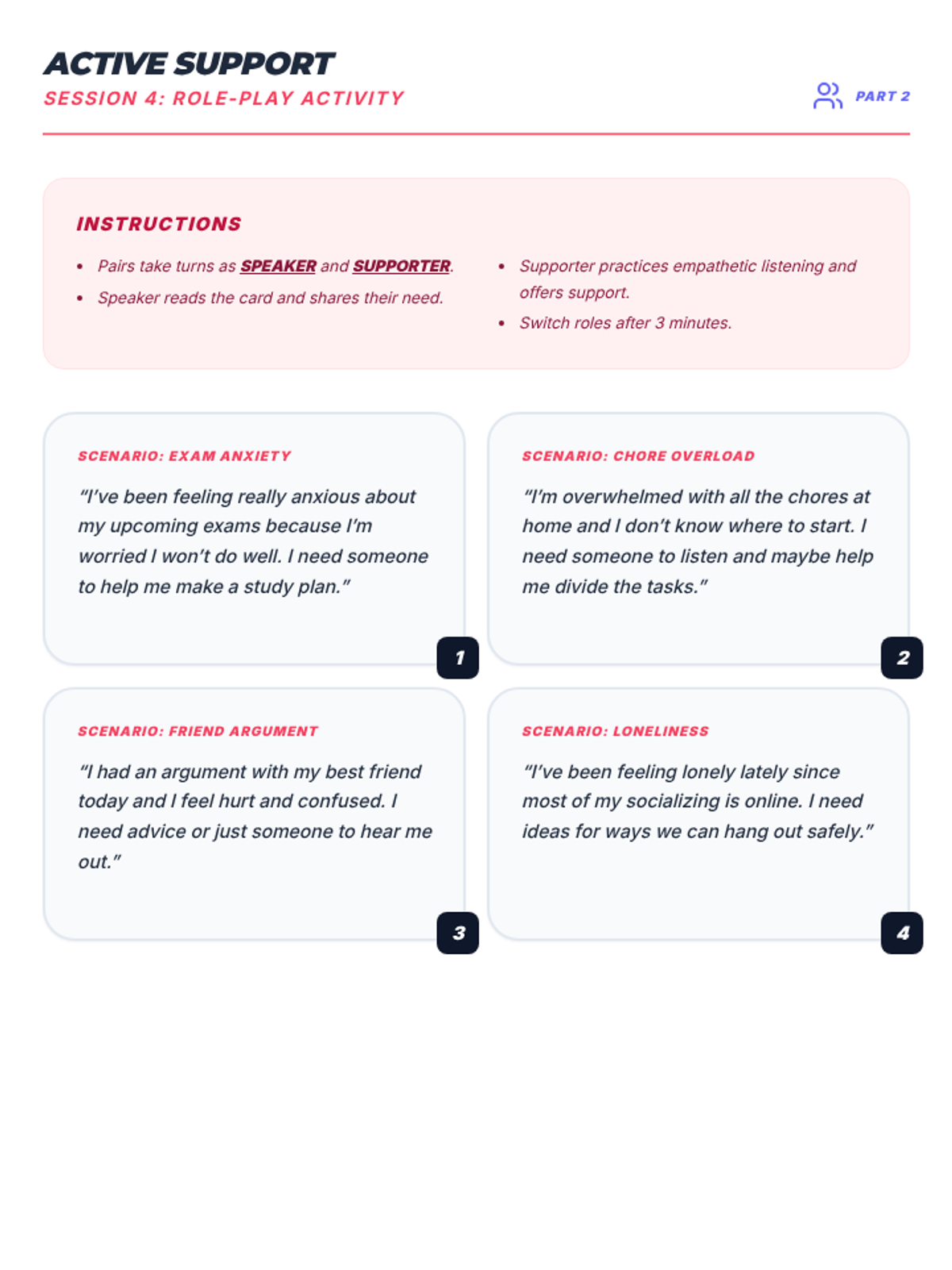
Explores the difference between empathy and sympathy, focusing on perspective-taking and offering active support.
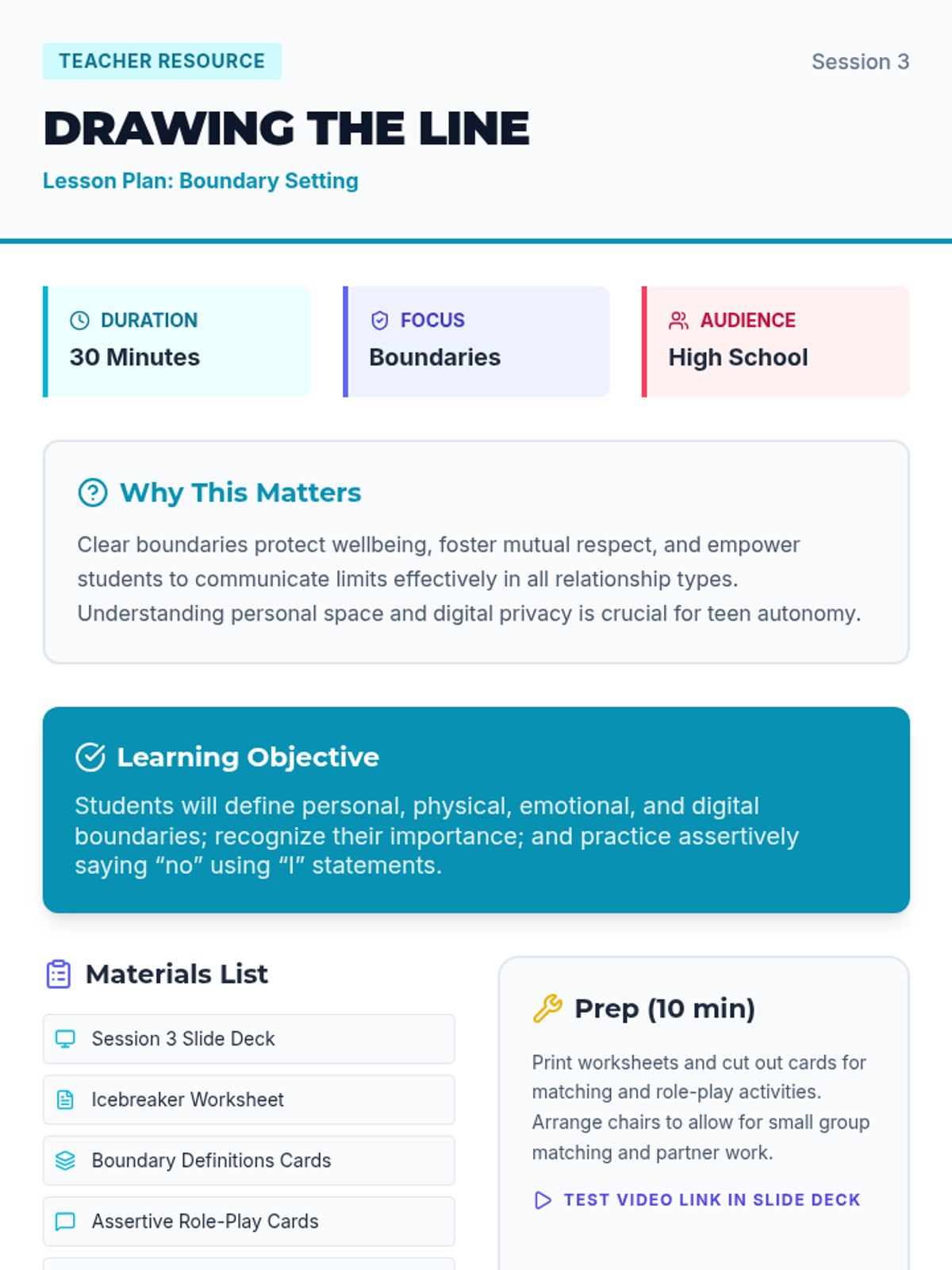
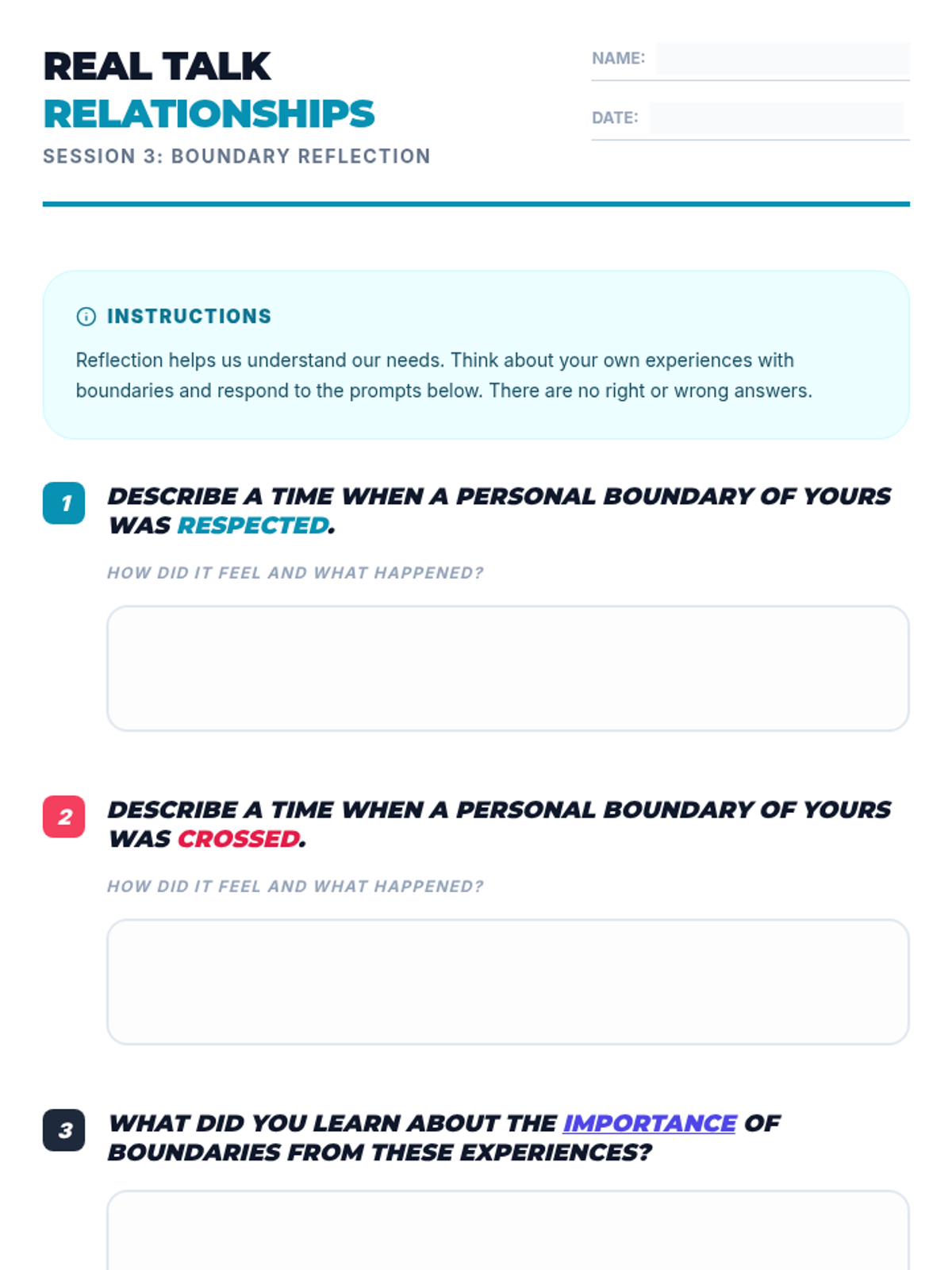
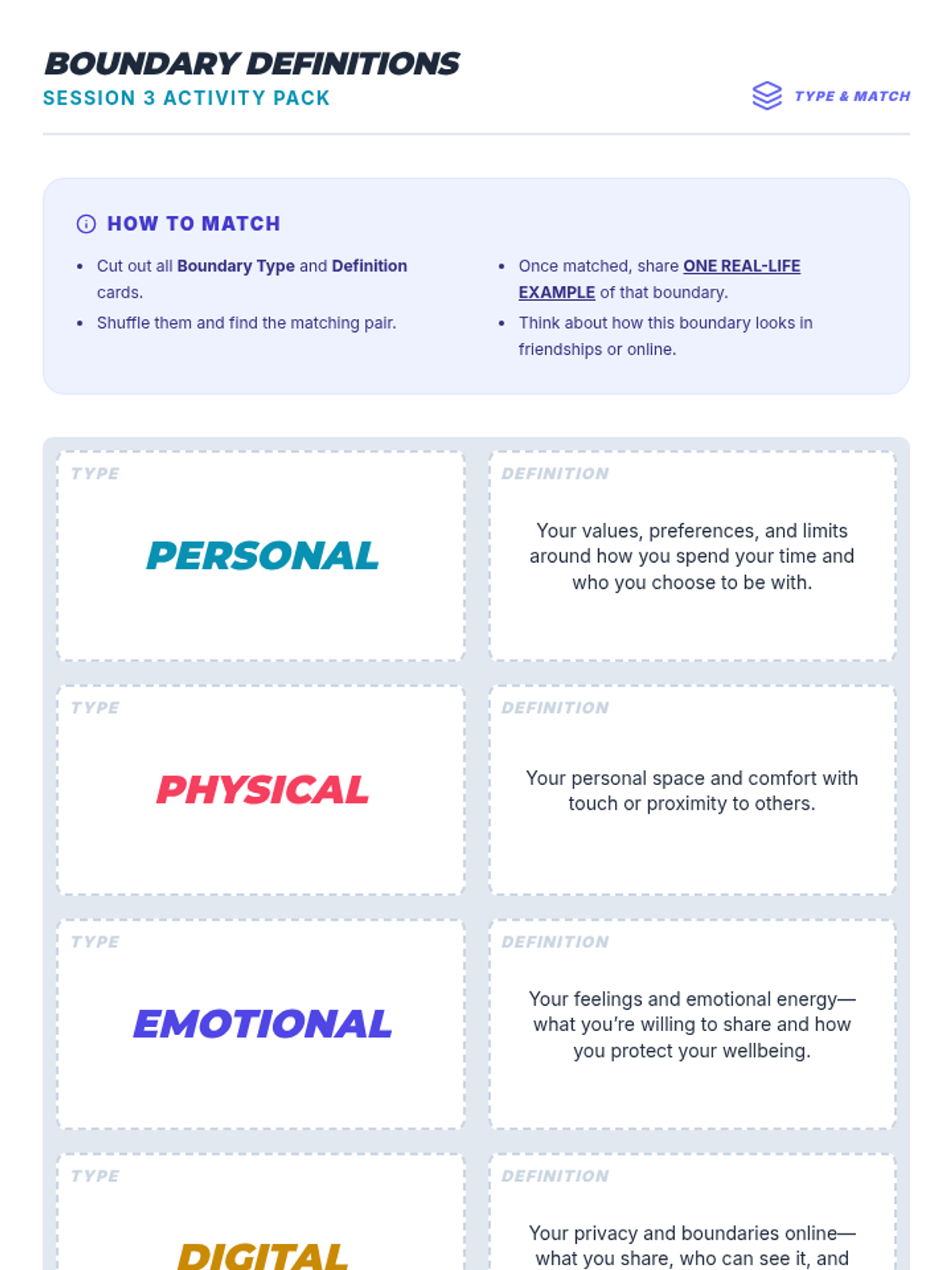
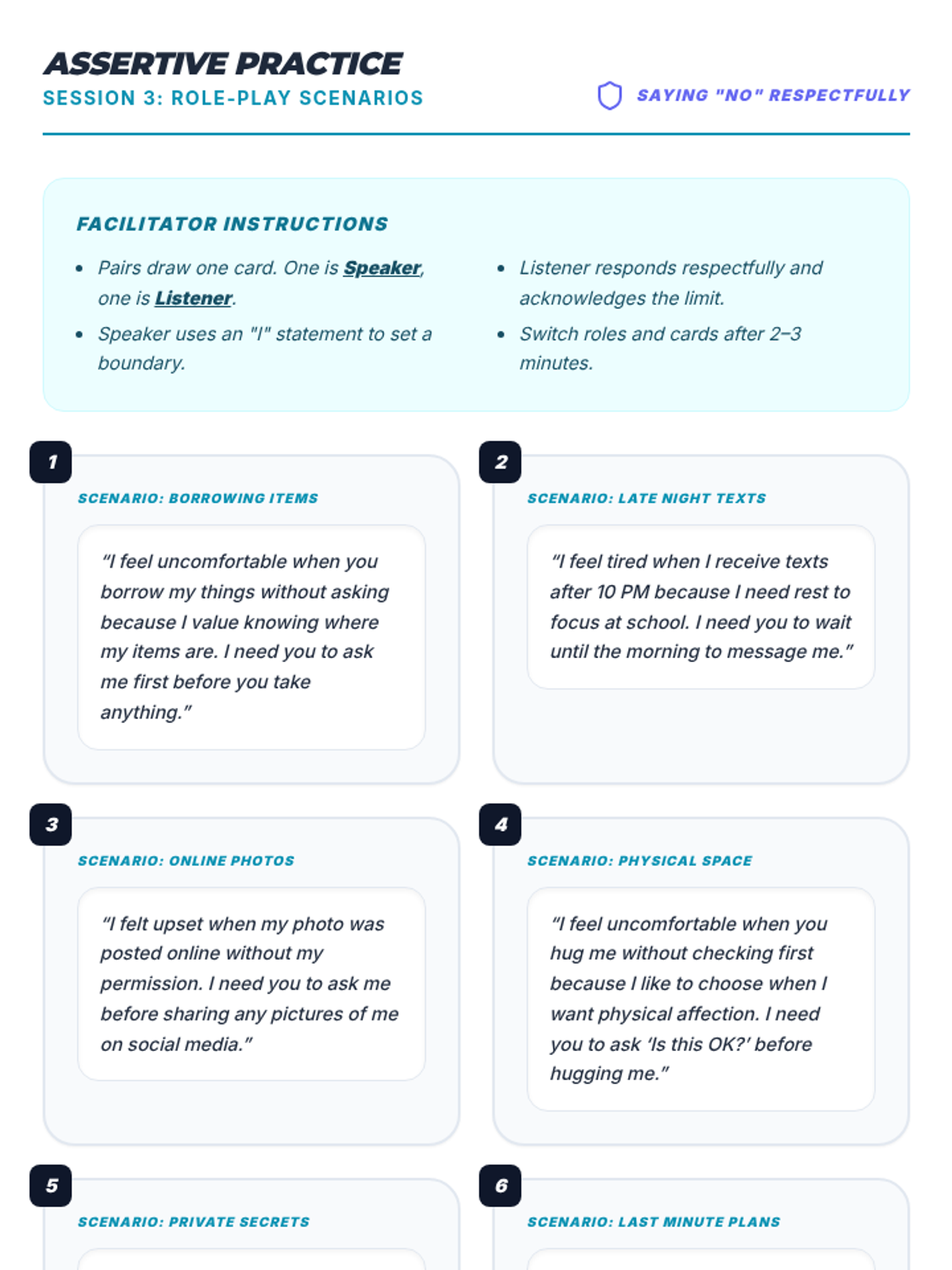
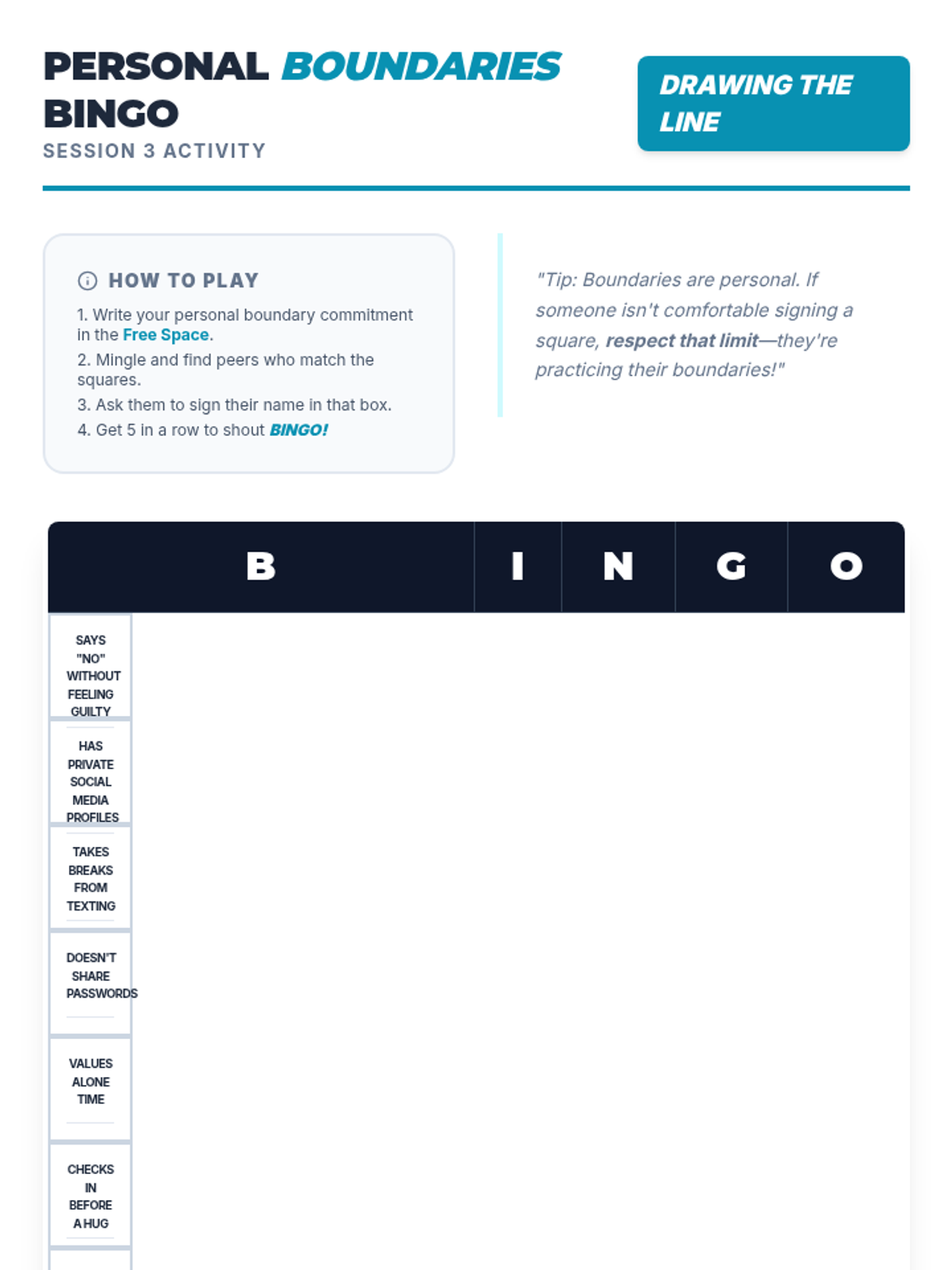
Students define personal, physical, emotional, and digital boundaries and practice assertive communication.
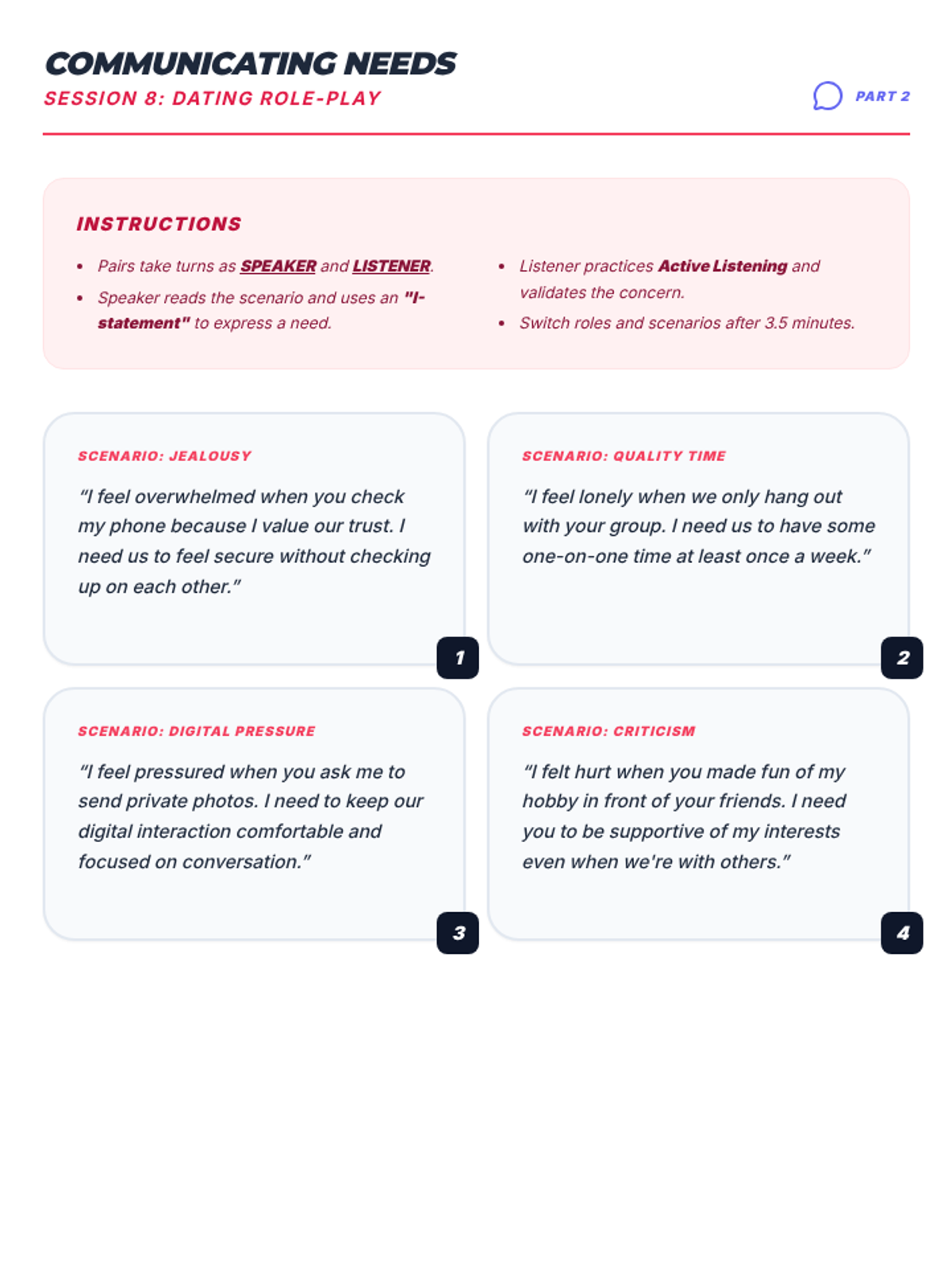
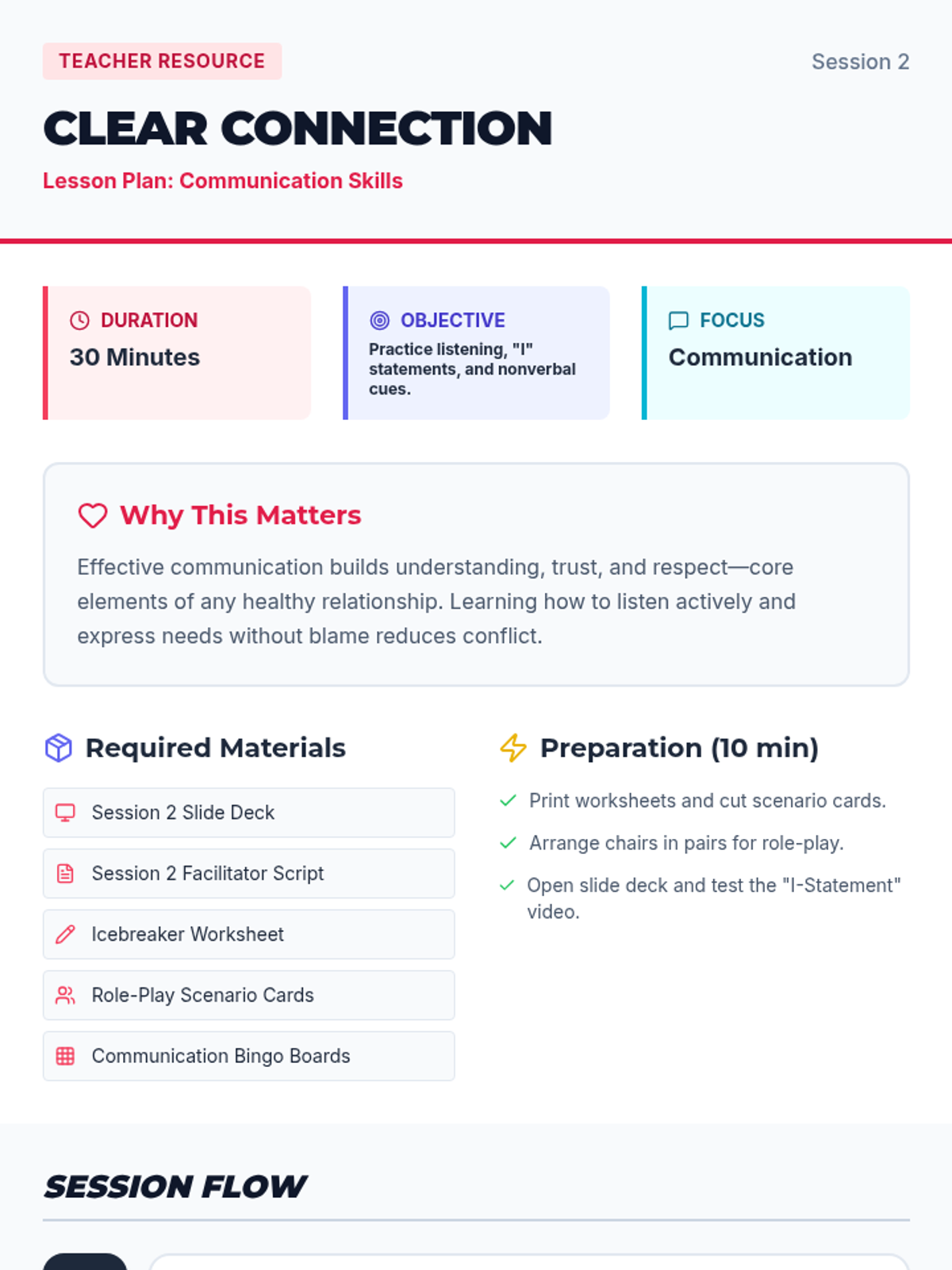
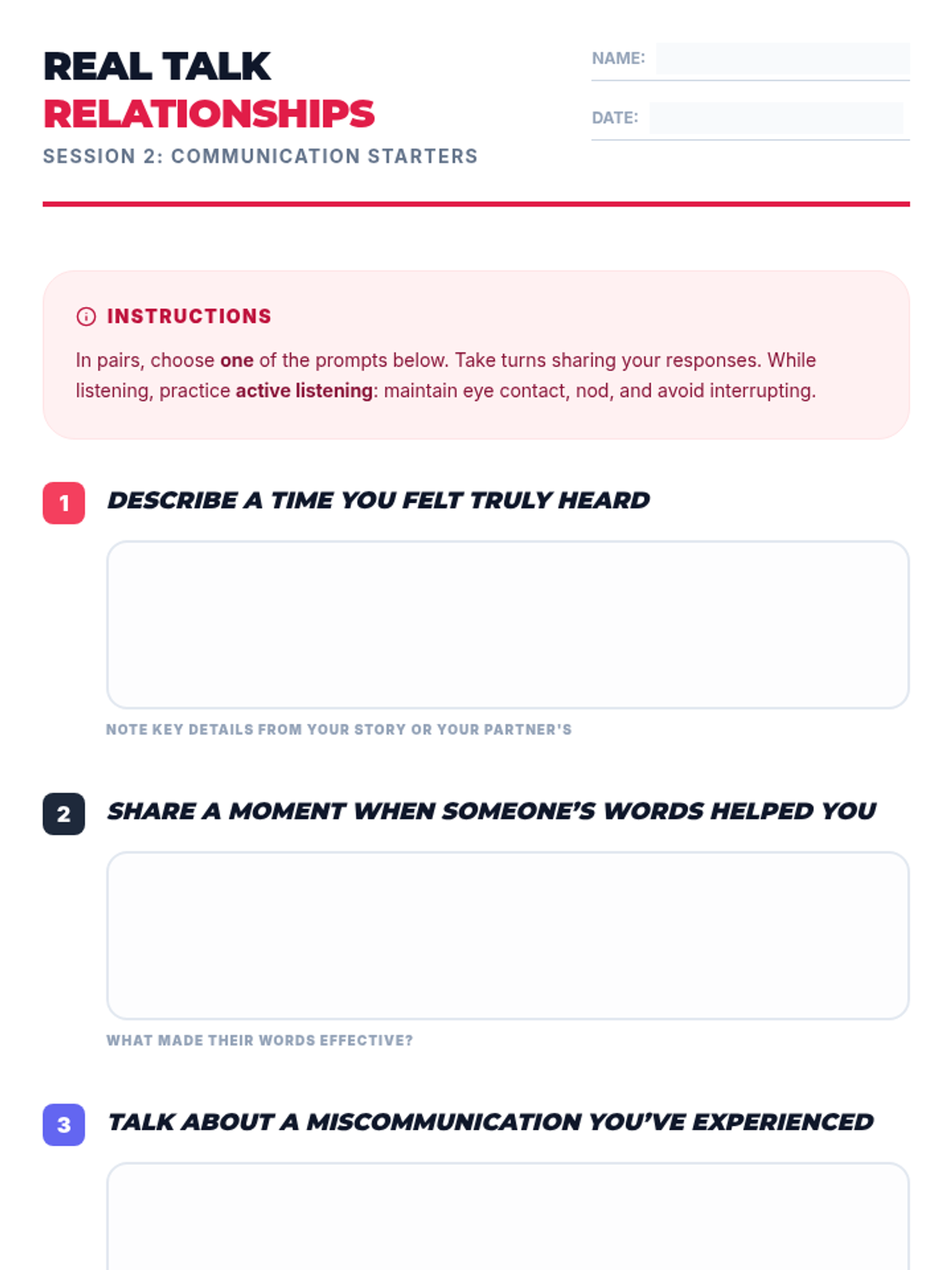
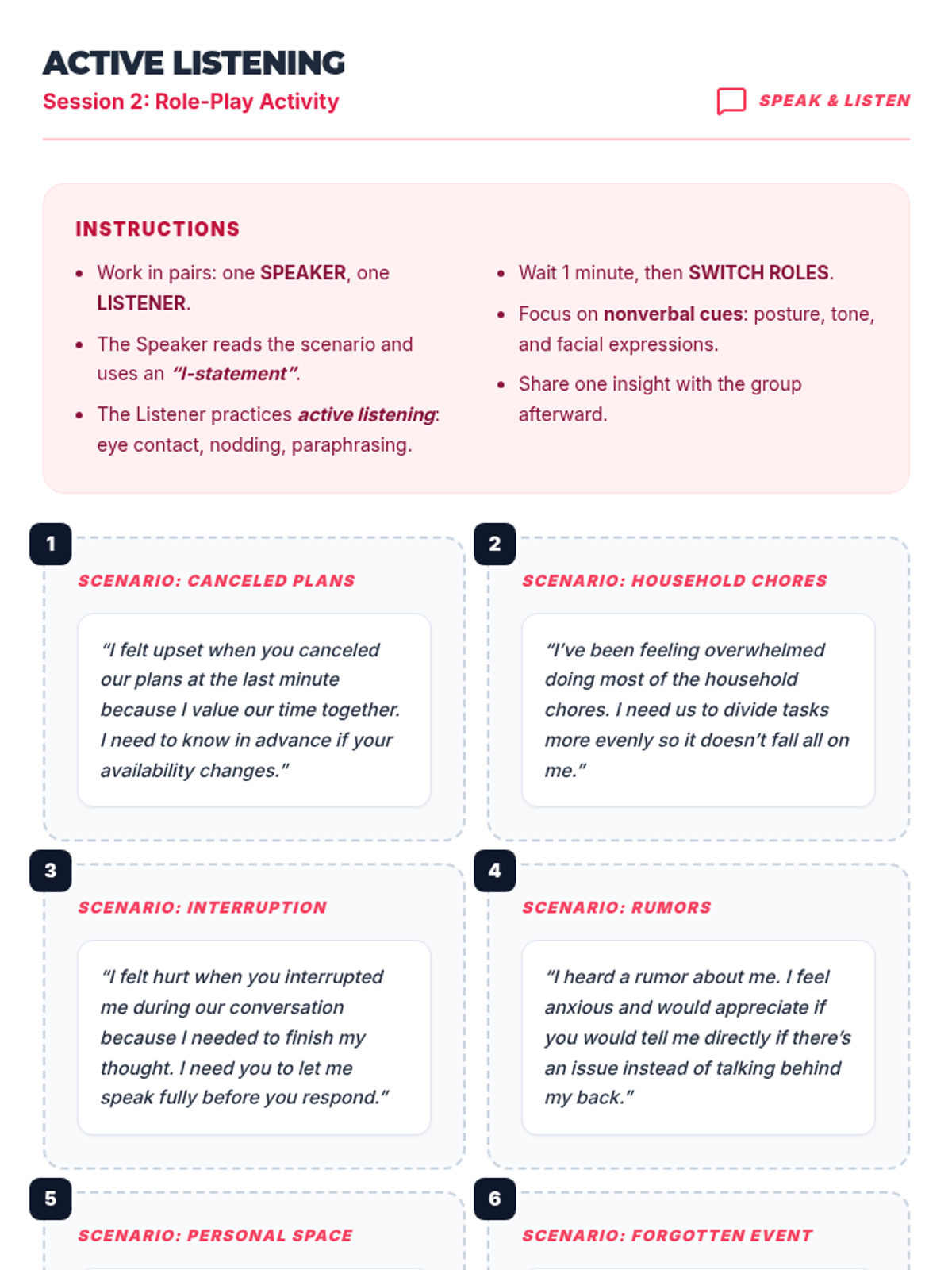
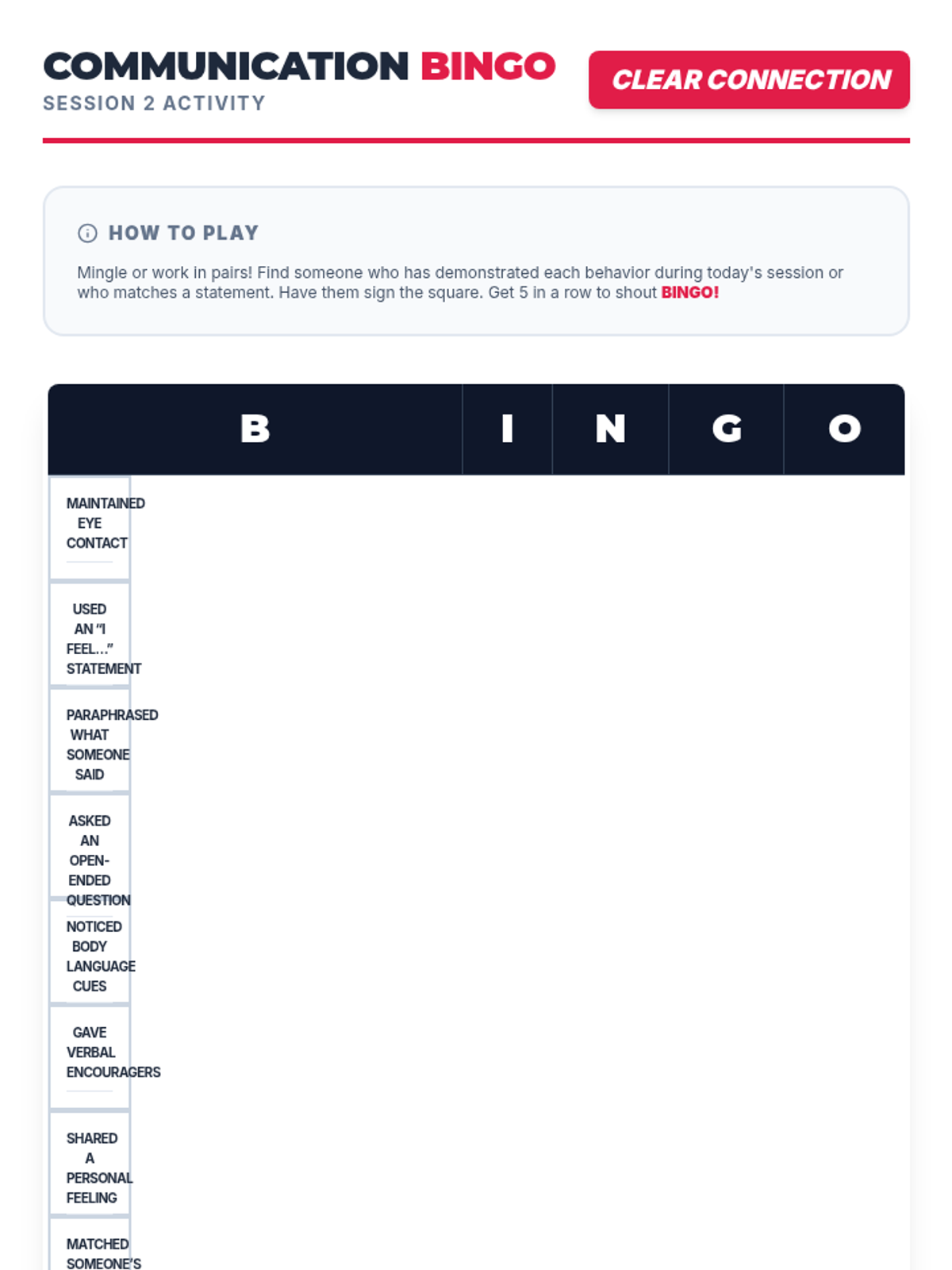
Focuses on active listening, the use of "I" statements, and recognizing nonverbal cues to improve interpersonal communication.
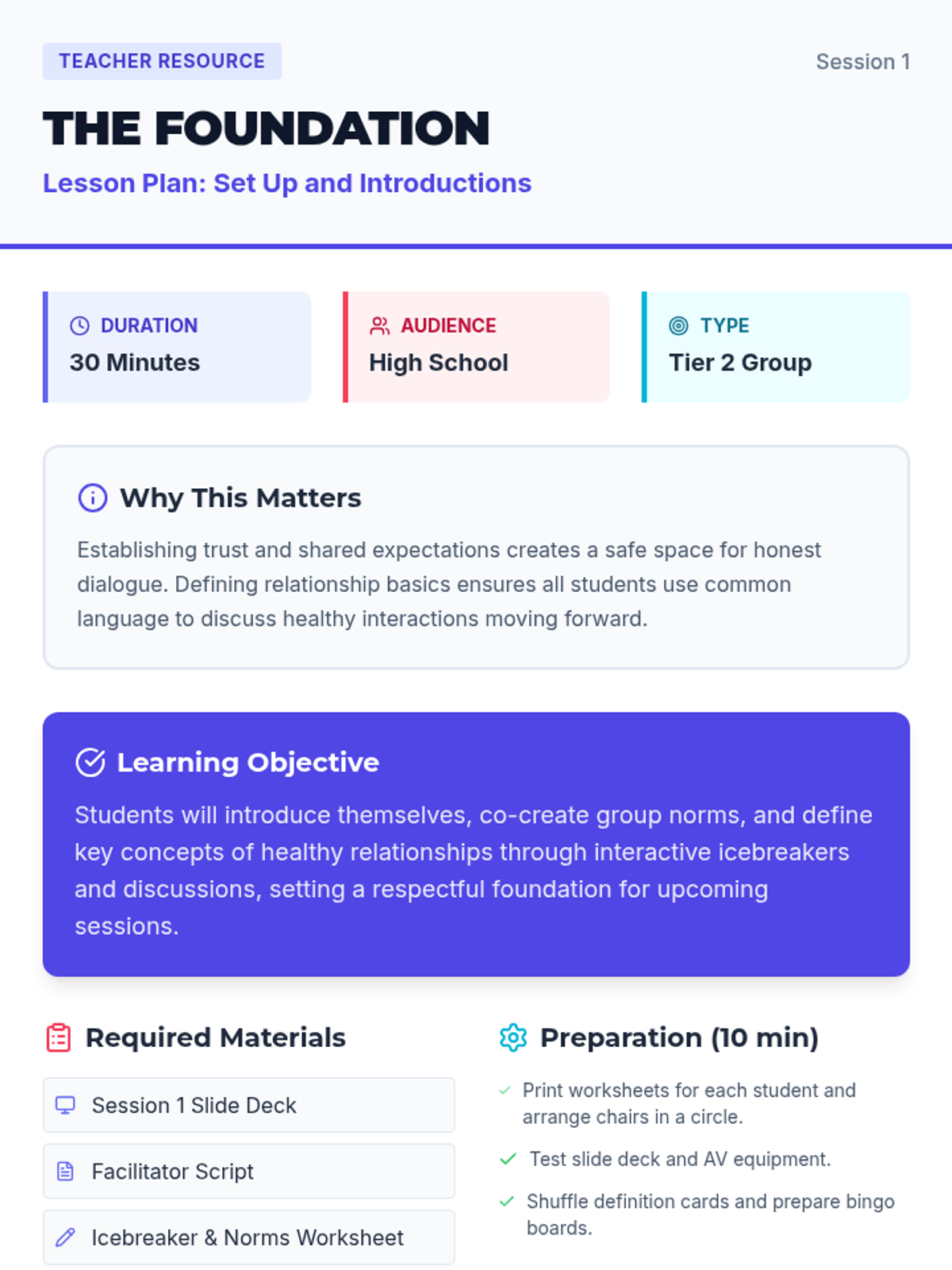
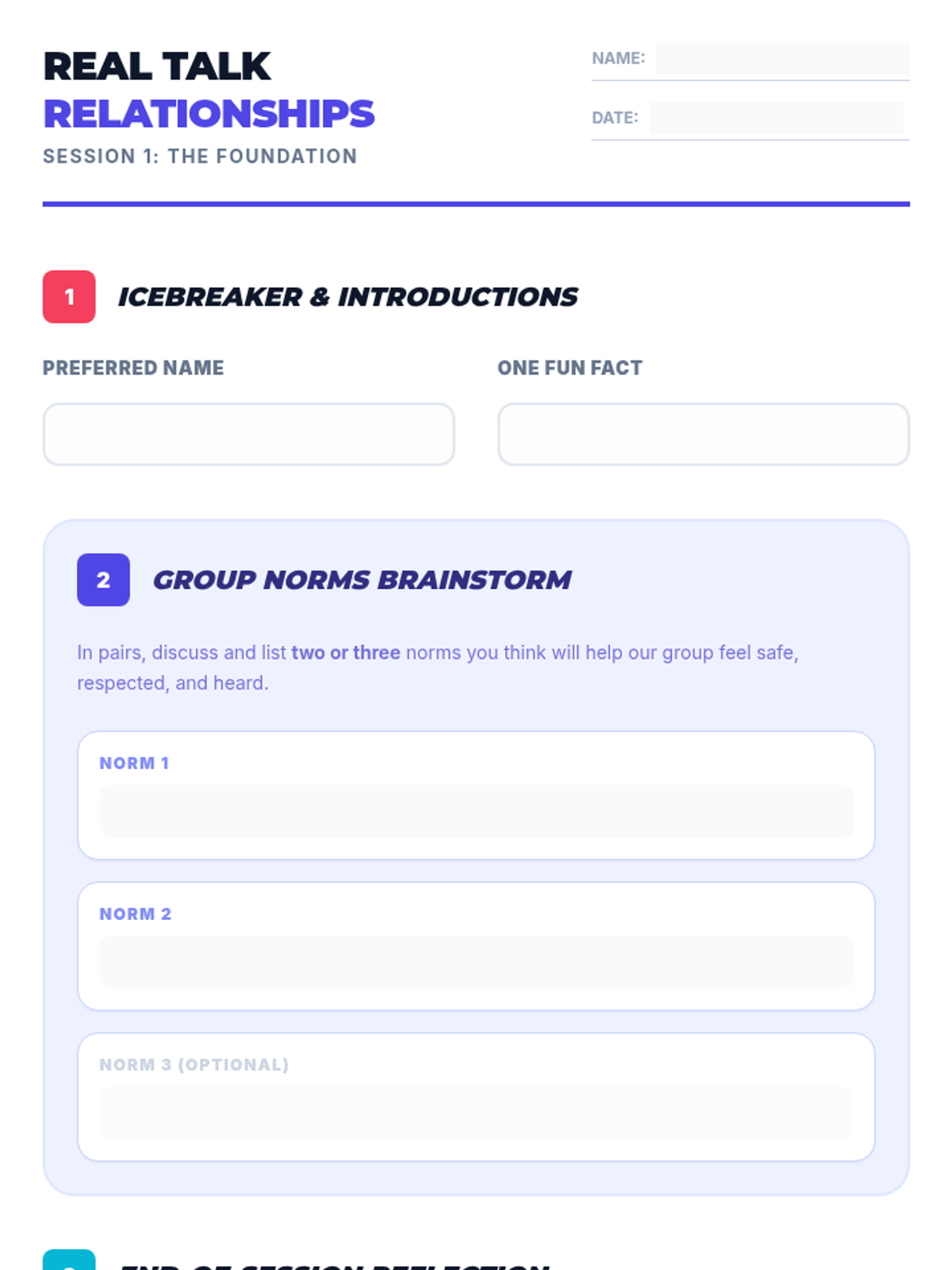
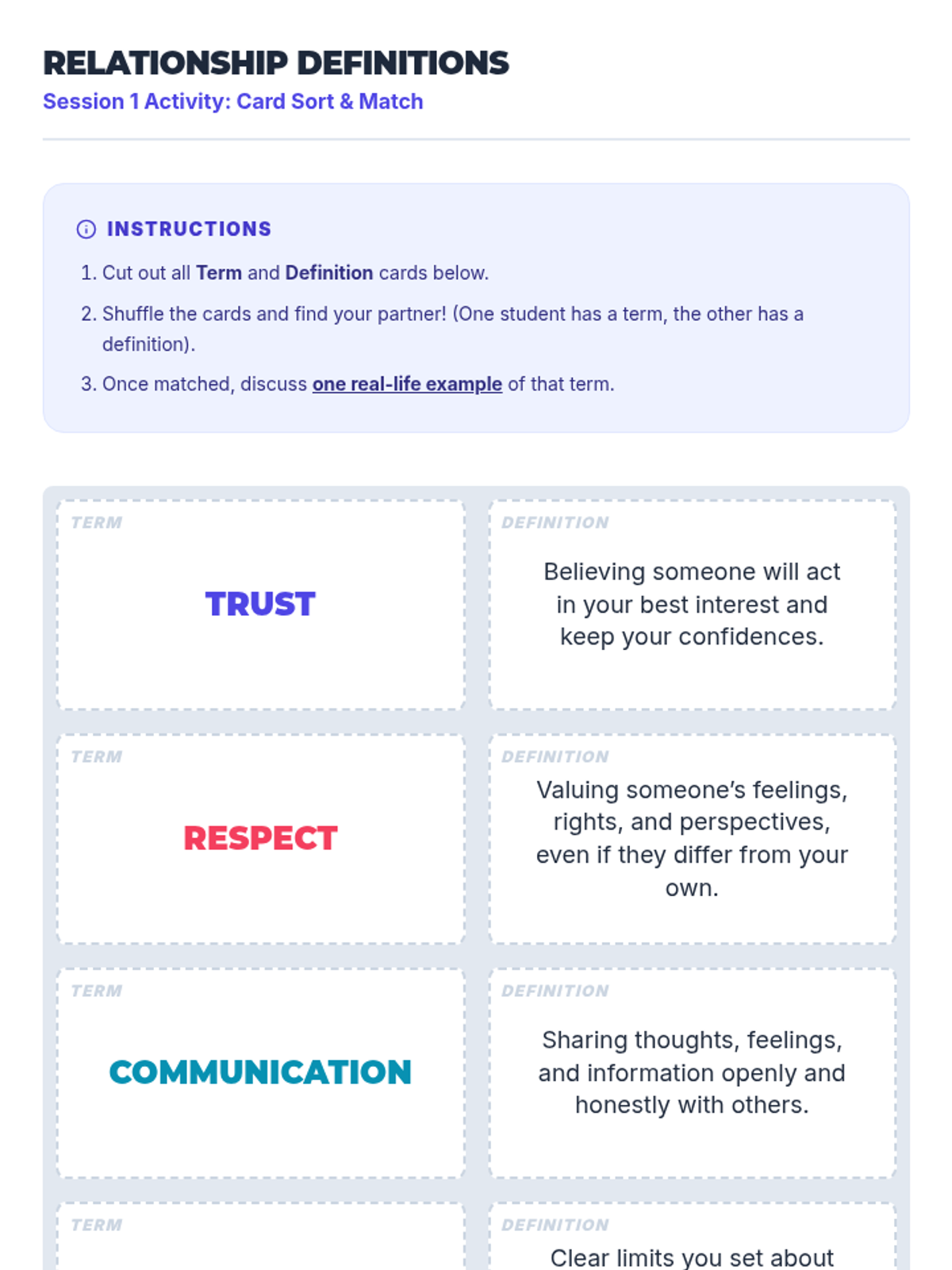
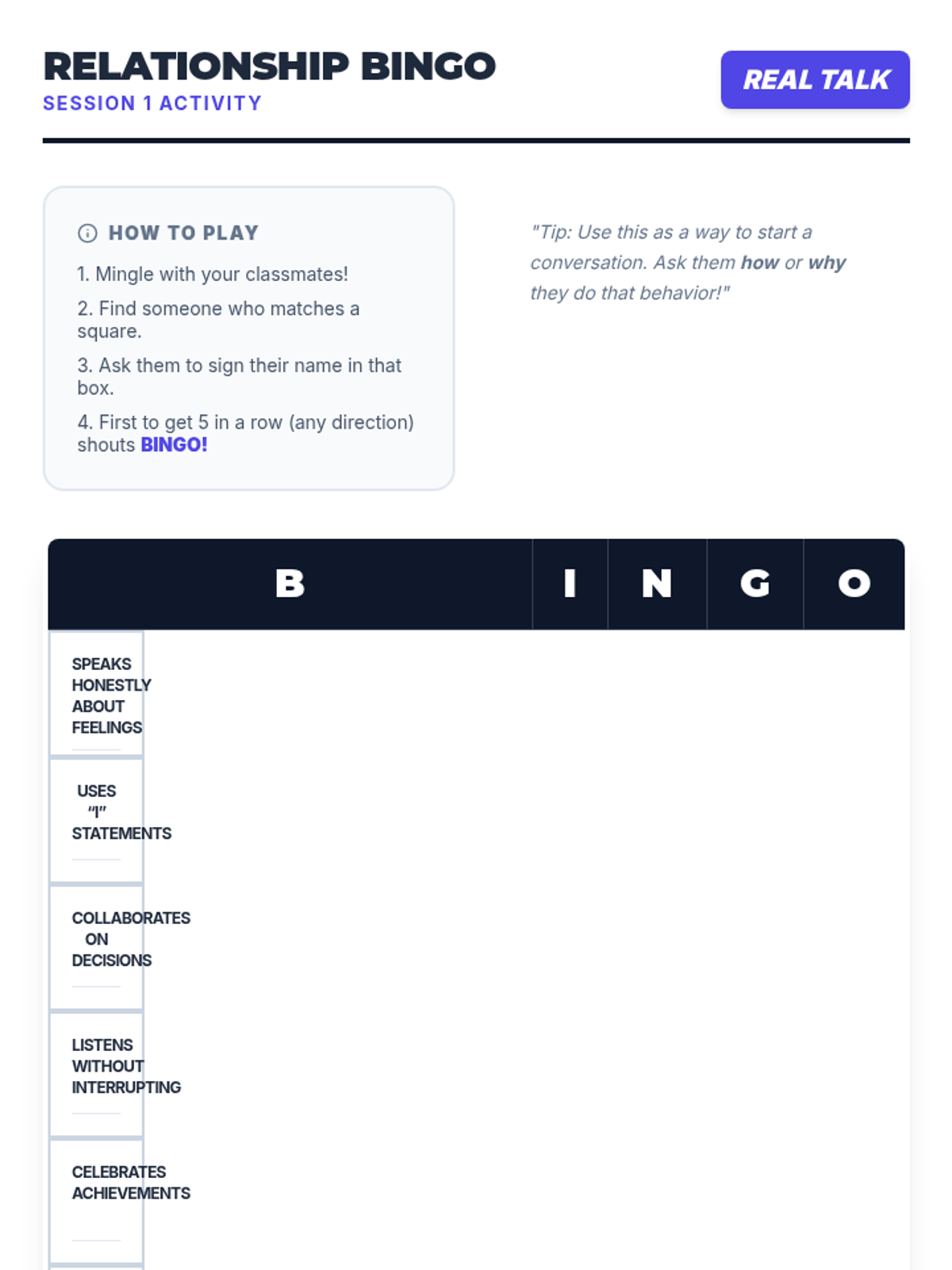
Students introduce themselves, co-create group norms, and define key concepts of healthy relationships through interactive icebreakers and discussions.
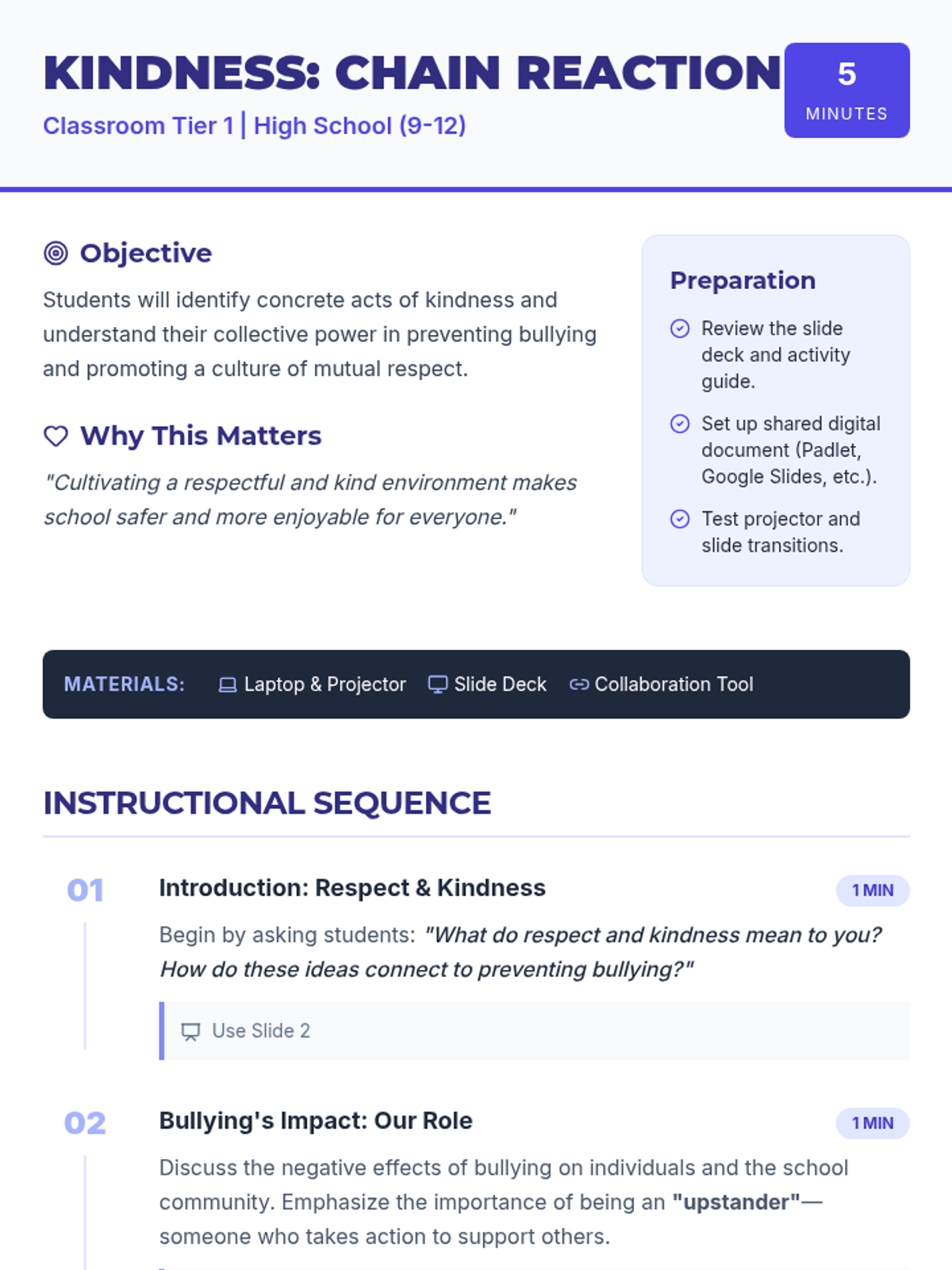
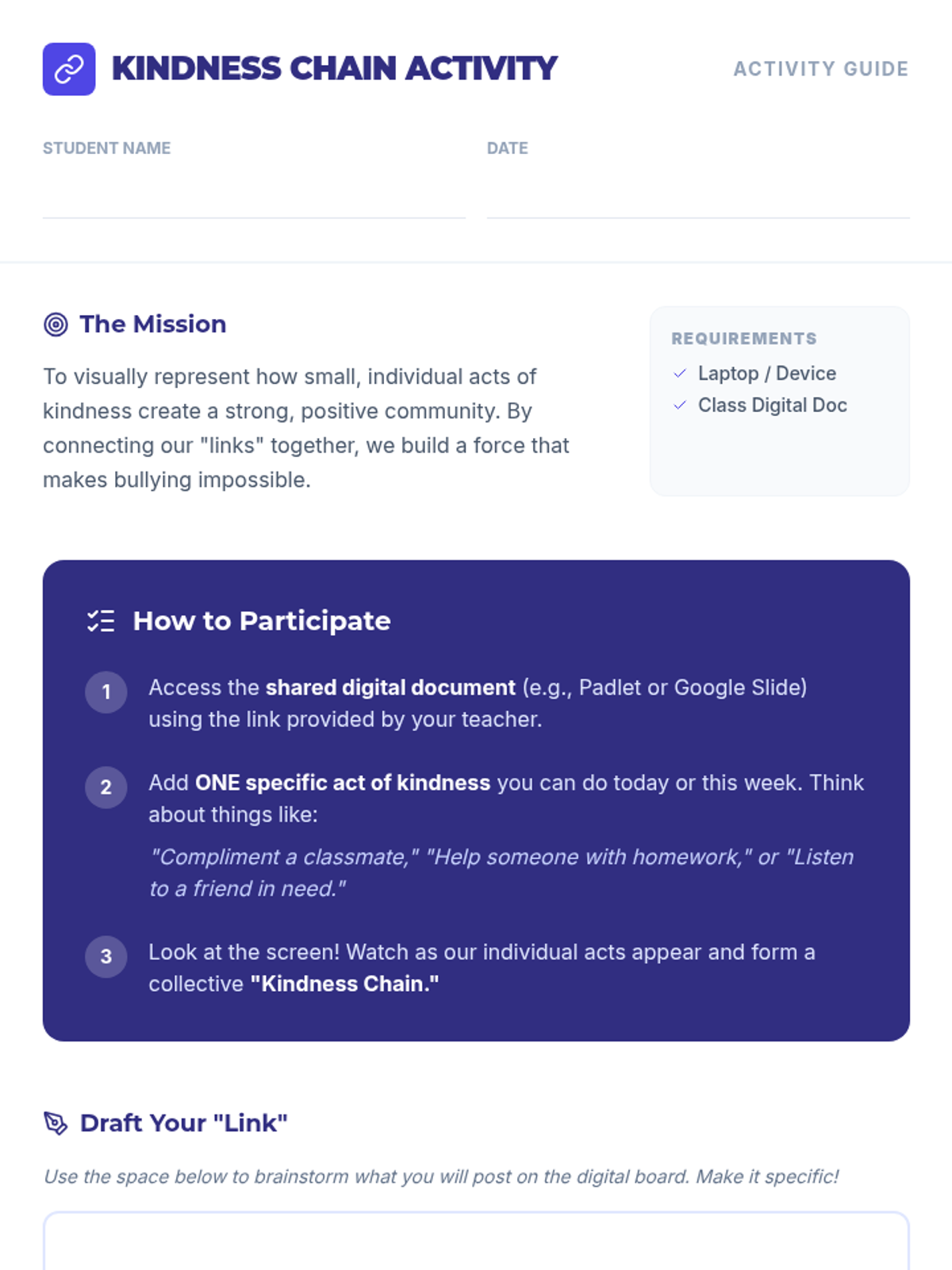
A high-impact 5-minute lesson for high schoolers that explores how individual acts of kindness and respect create a collective 'chain reaction' to prevent bullying and foster a positive school culture.
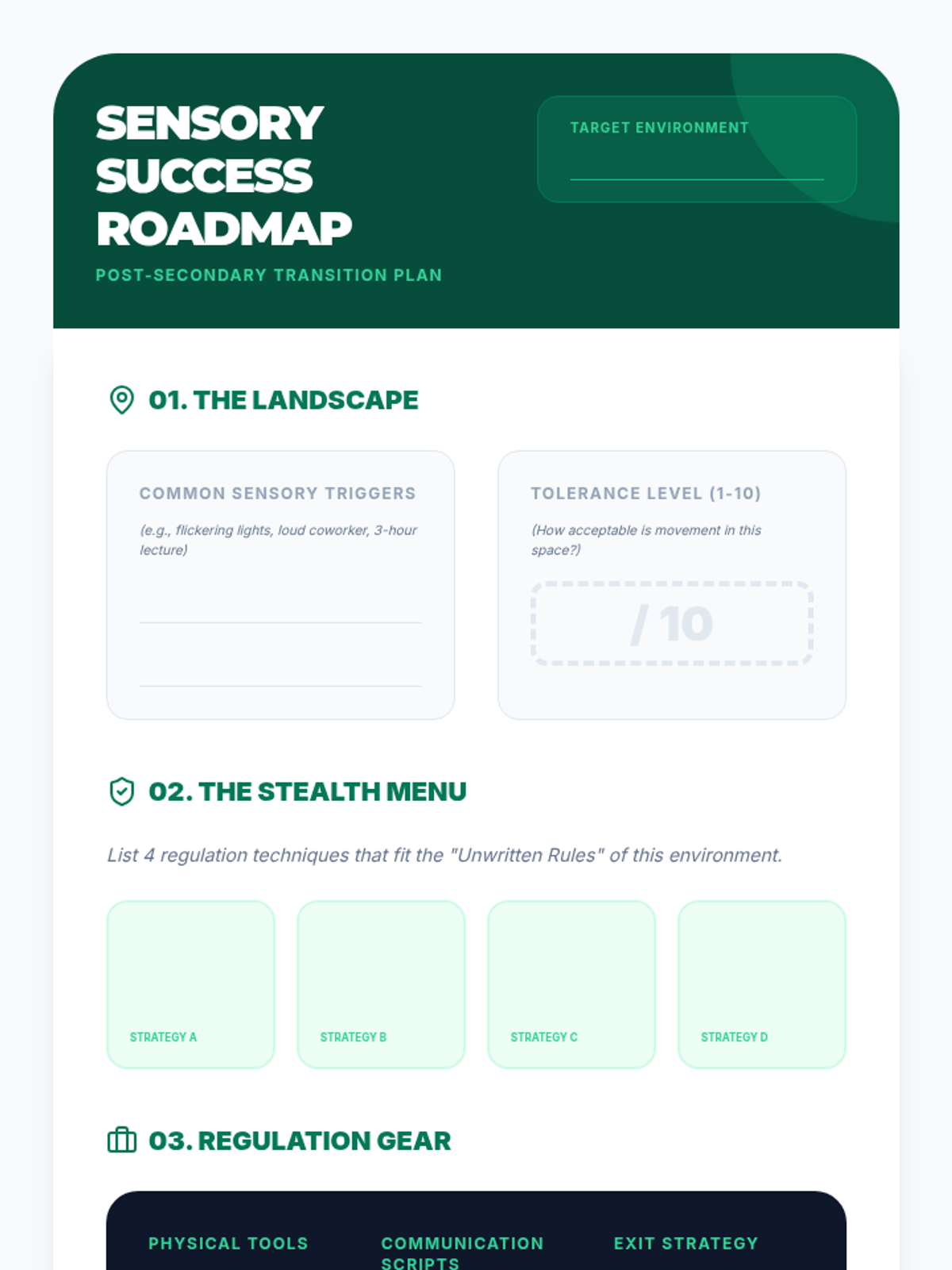
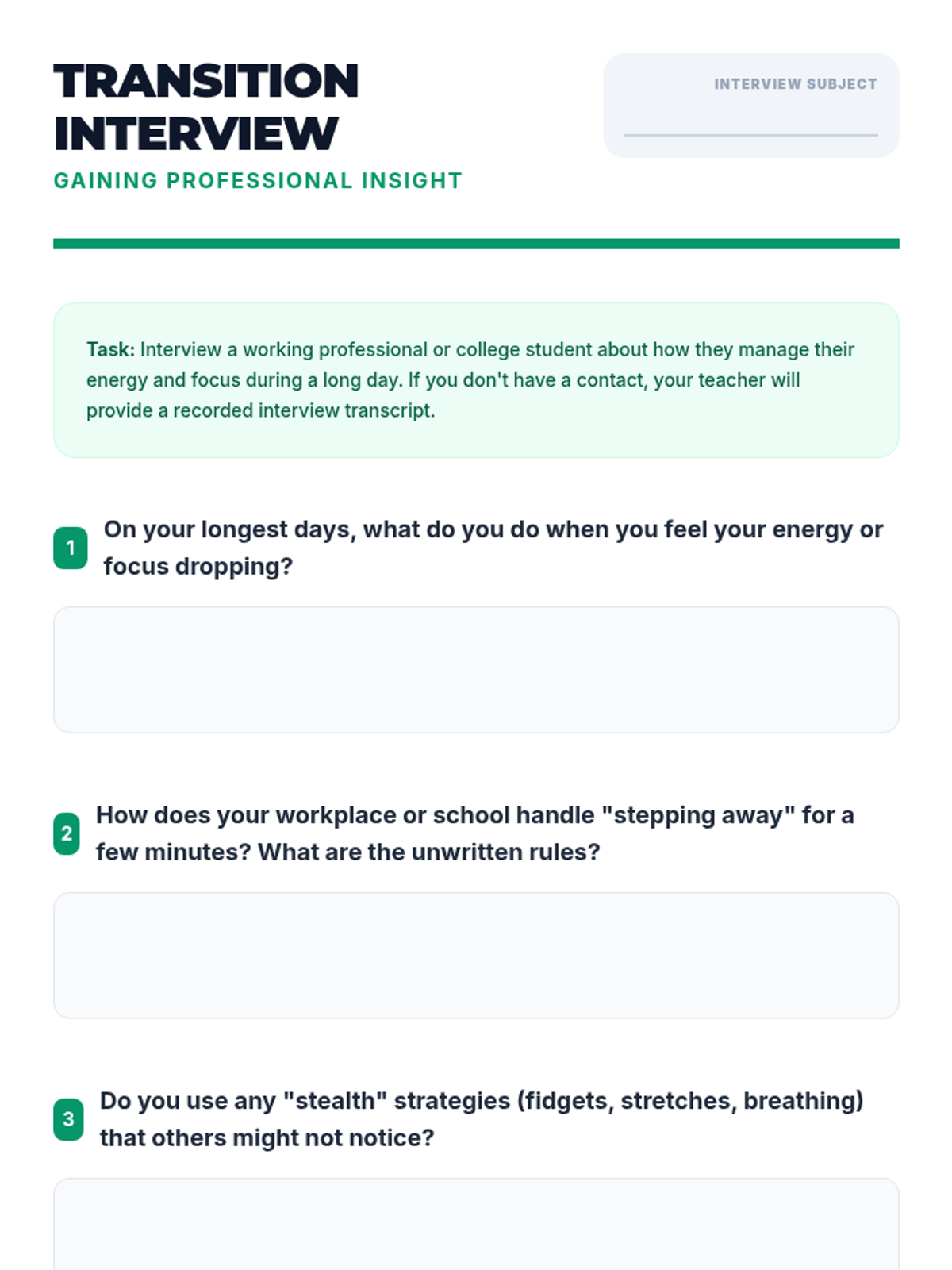
The capstone lesson where students create a personal 'Sensory Transition Plan' for their future college or career paths. They synthesize everything learned to map out how they will manage their regulation needs in their chosen future environment.
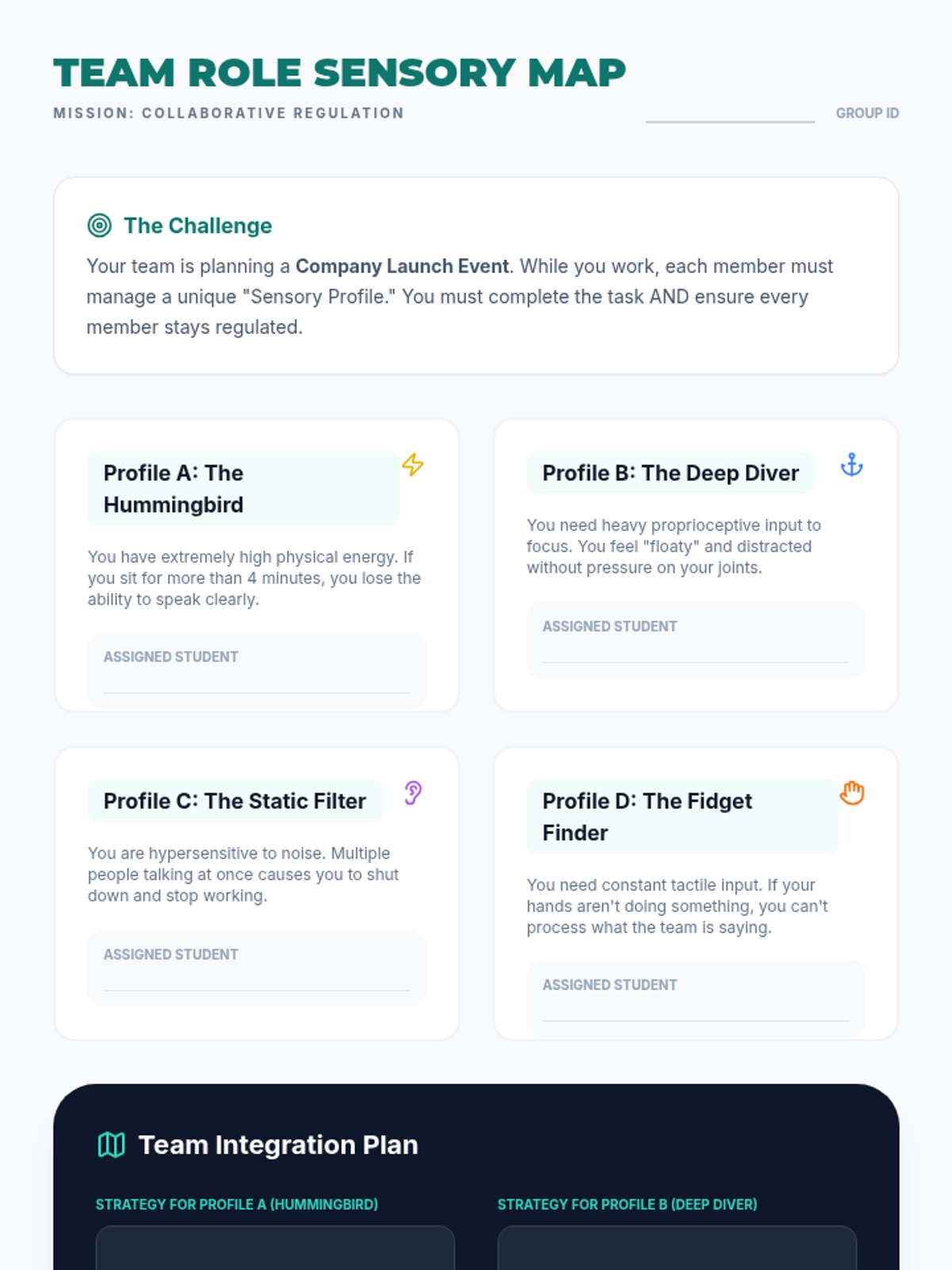
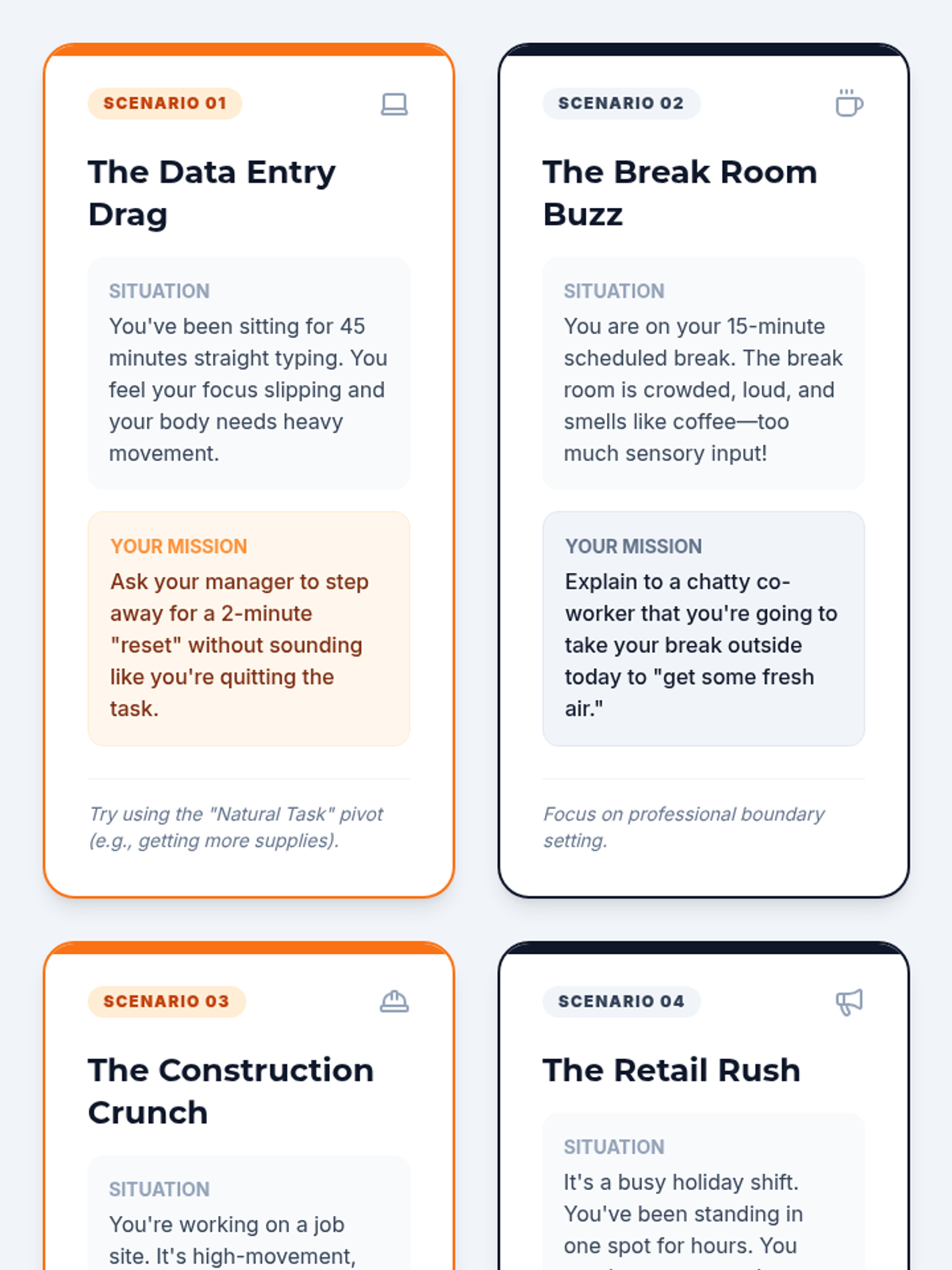
Addresses sensory regulation within collaborative team environments. Students learn how to advocate for active roles (like being the note-taker at a whiteboard) that allow for socially appropriate movement during group work.
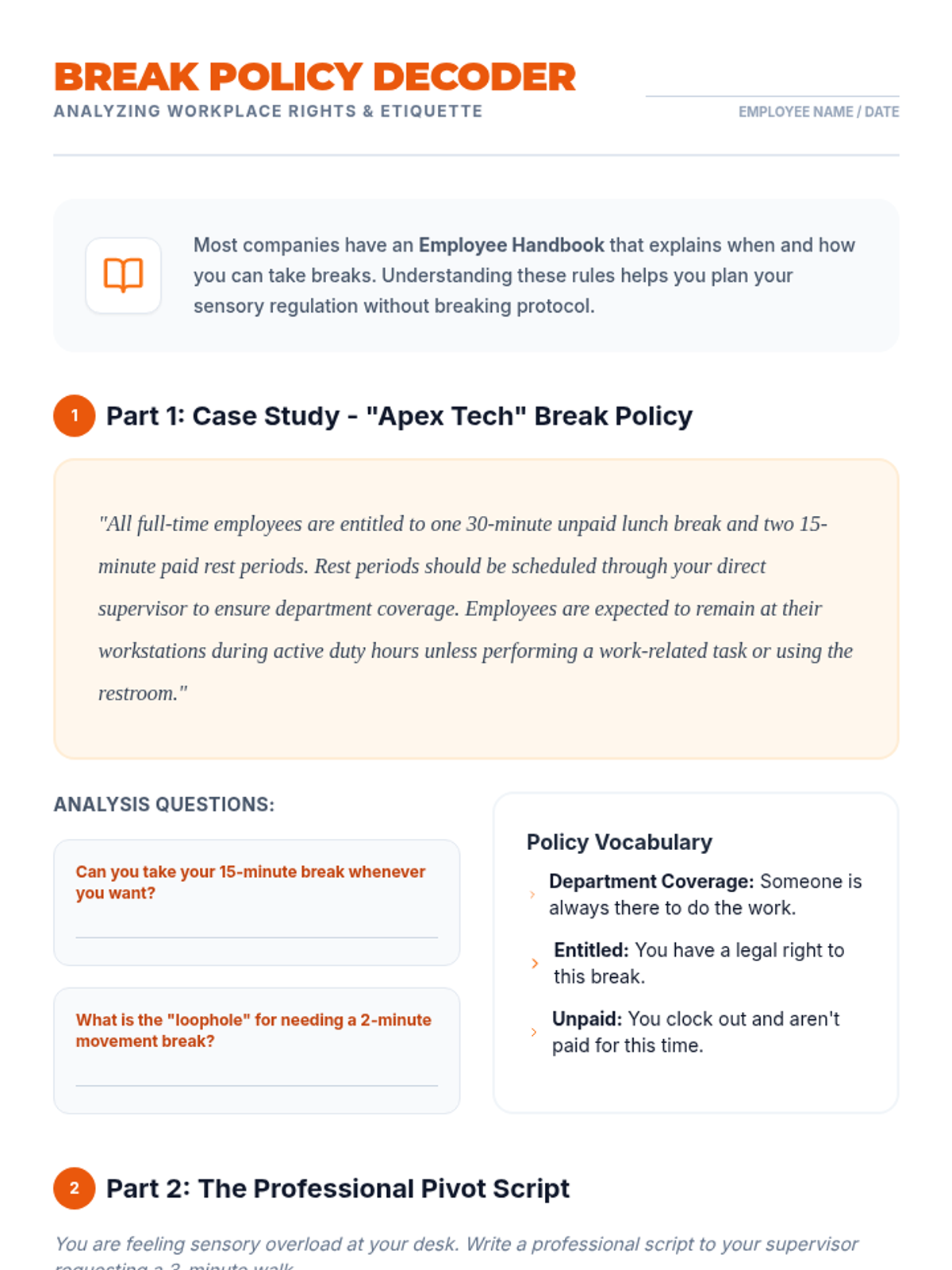
Explores workplace etiquette regarding scheduled versus spontaneous breaks. Students practice role-playing scenarios where they need to step away from a workstation briefly without appearing to avoid their professional responsibilities.
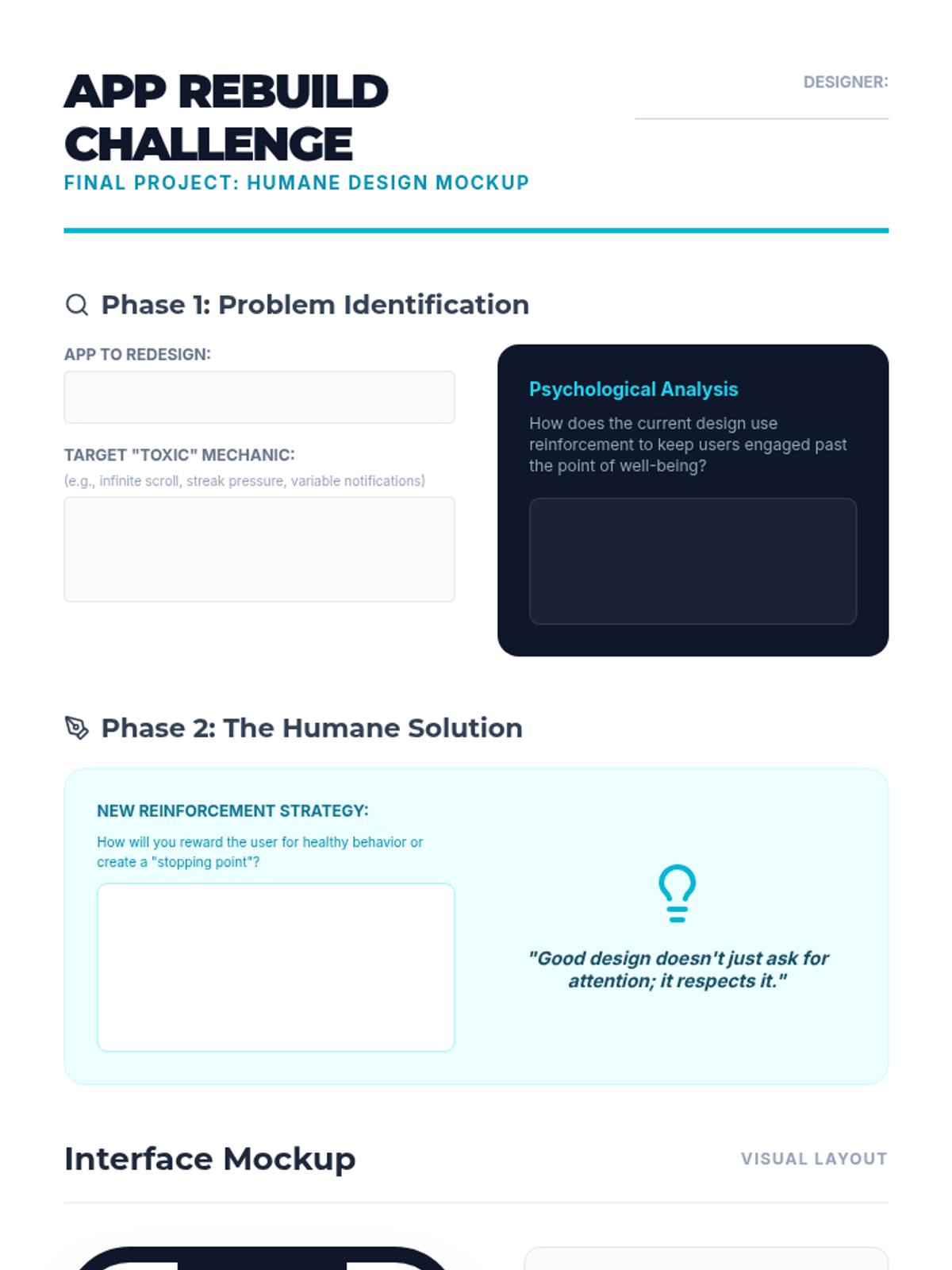
Students propose a redesign of a popular app that uses positive reinforcement to encourage healthy boundaries rather than endless consumption. They create mockups of 'humane' interfaces.
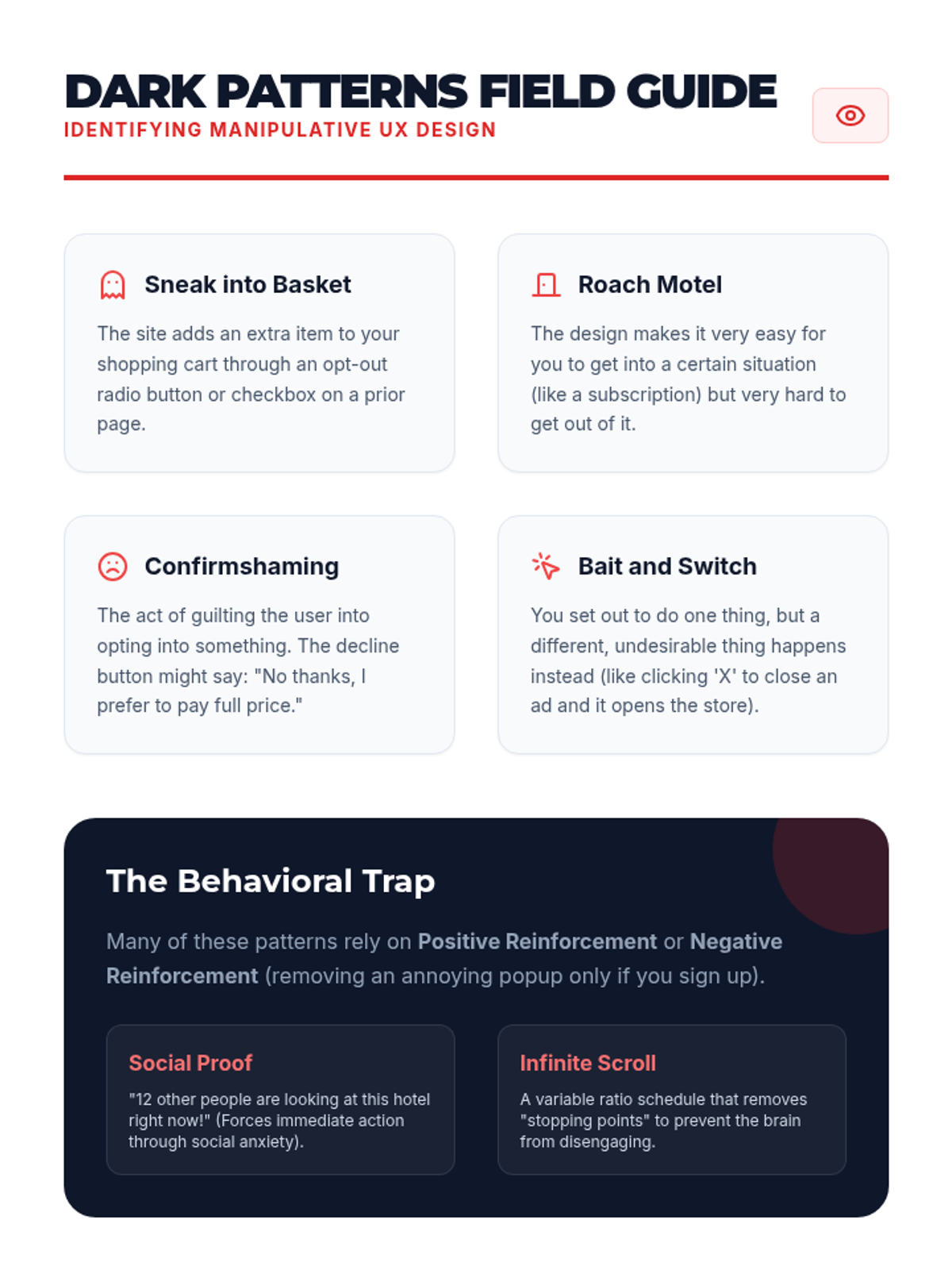
Students debate the ethics of using psychological vulnerabilities to maximize screen time. They look at 'dark patterns' in UI/UX design that exploit positive reinforcement loops.
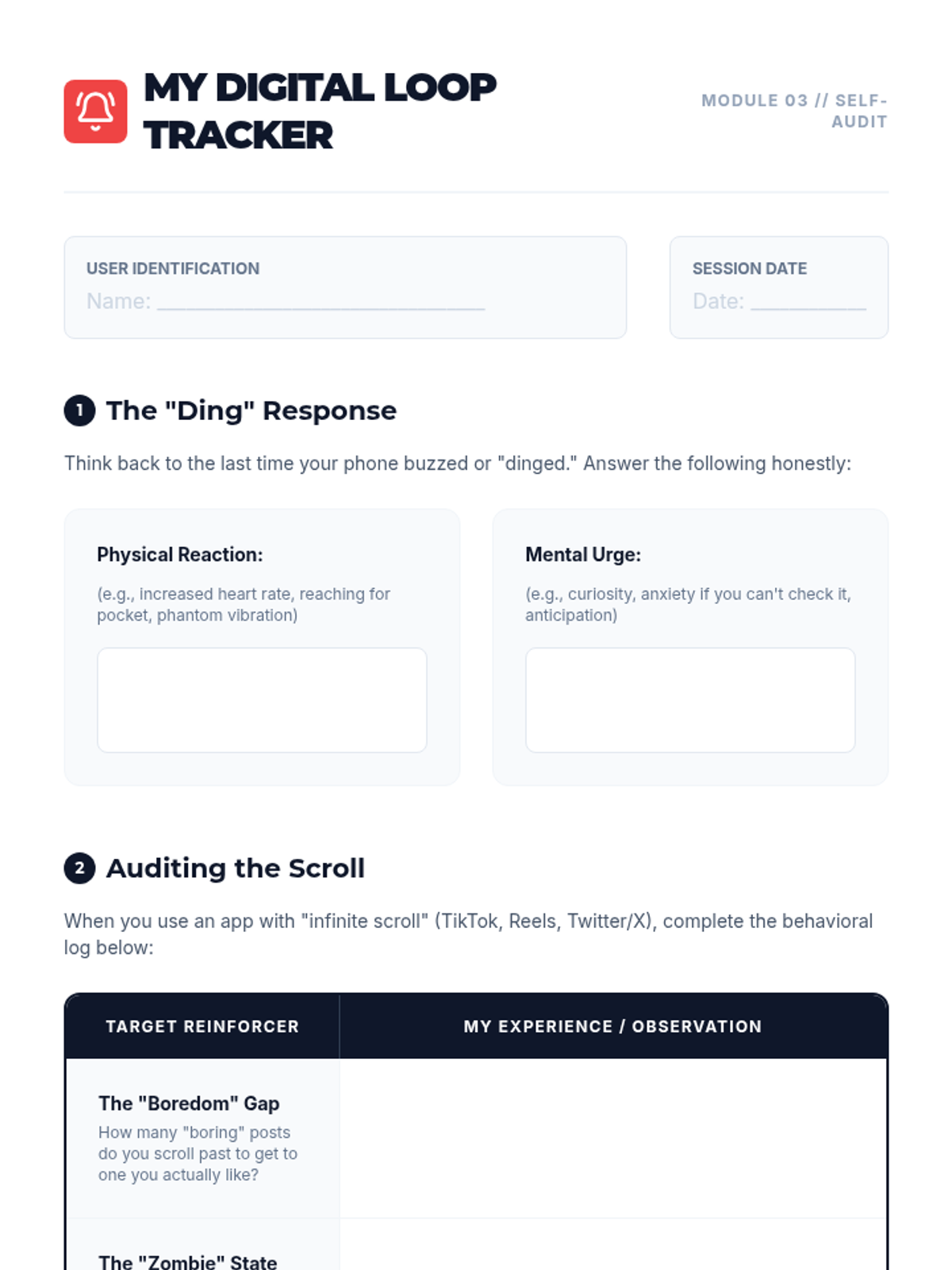
This lesson applies the concept of variable reinforcement to social media feeds (infinite scroll) and notifications. Students track their own reactions to notifications to understand the 'intermittent reward' mechanism.
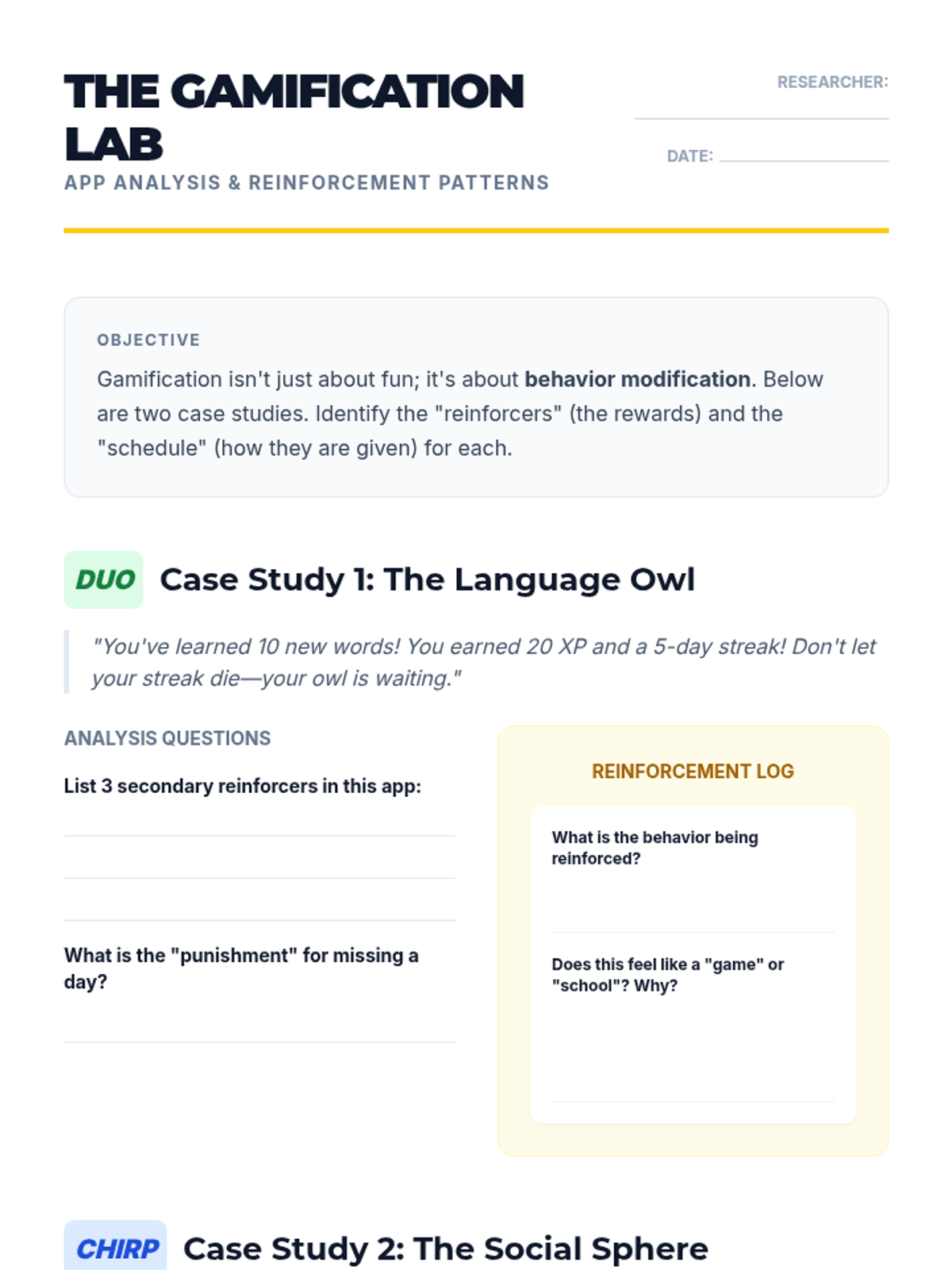
Students analyze common game elements like points, badges, and leaderboards, discussing how these digital tokens serve as conditioned reinforcers.
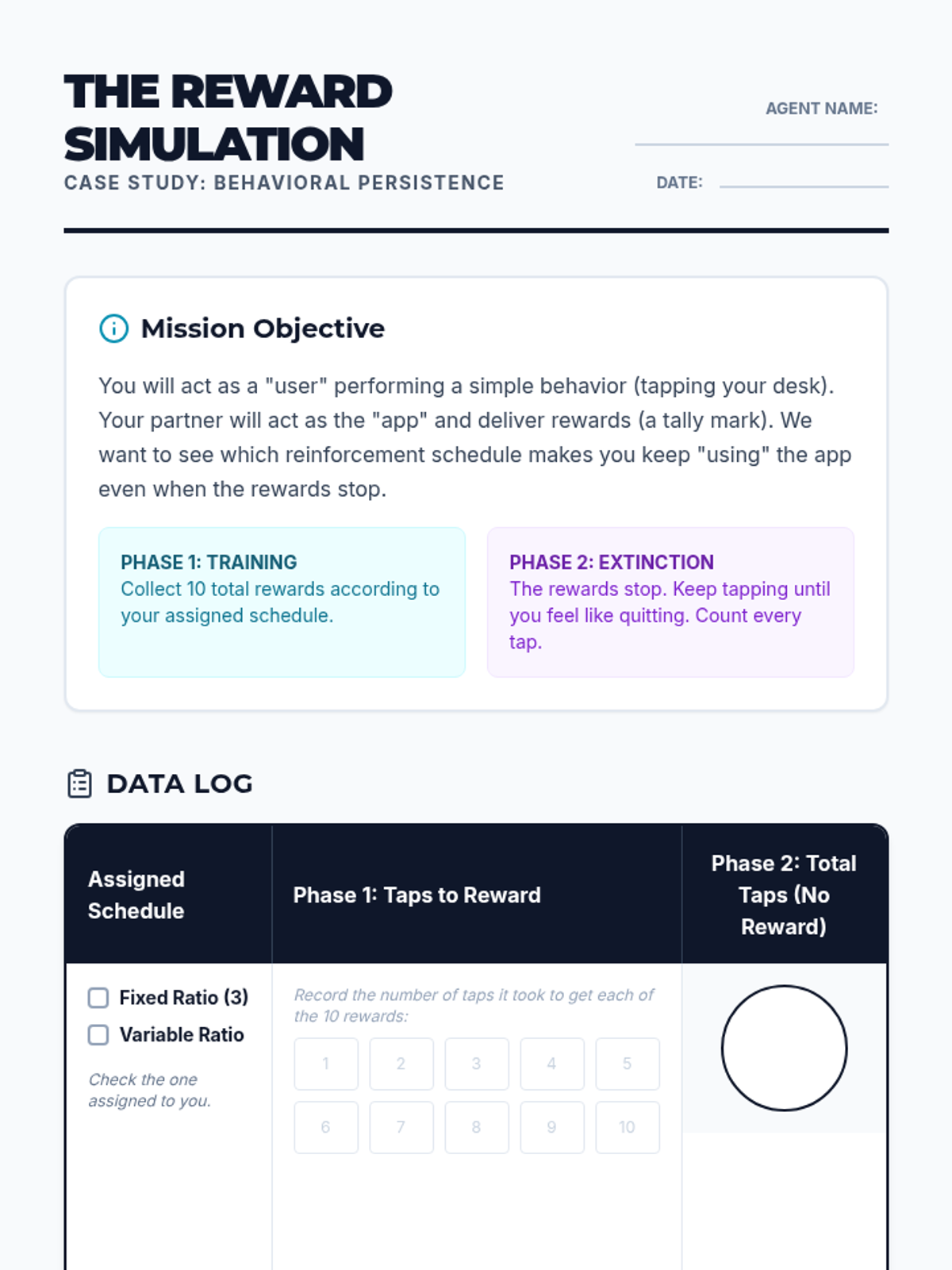
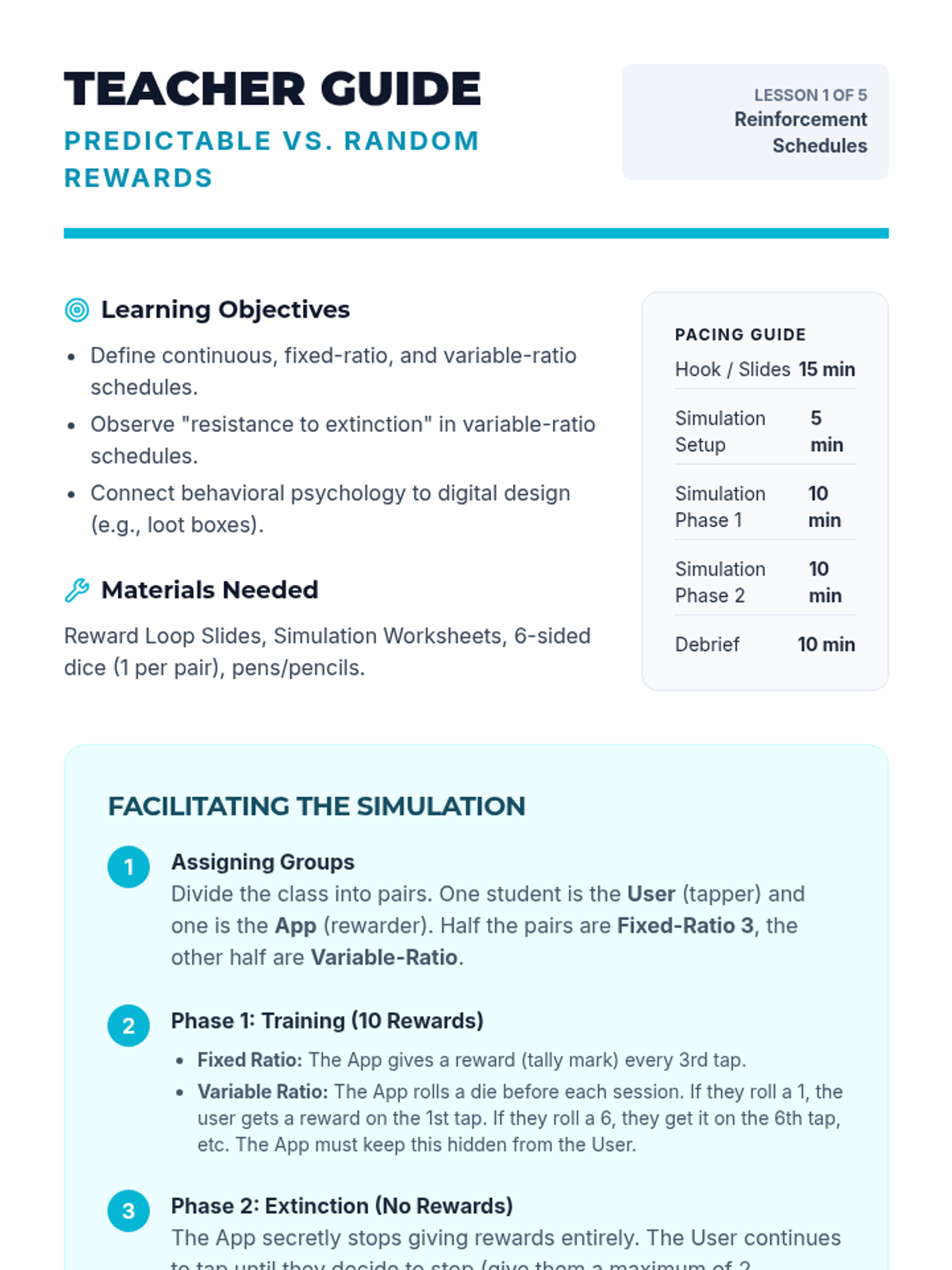
Introduction to reinforcement schedules, contrasting the predictability of fixed schedules with the persistence of variable ones.
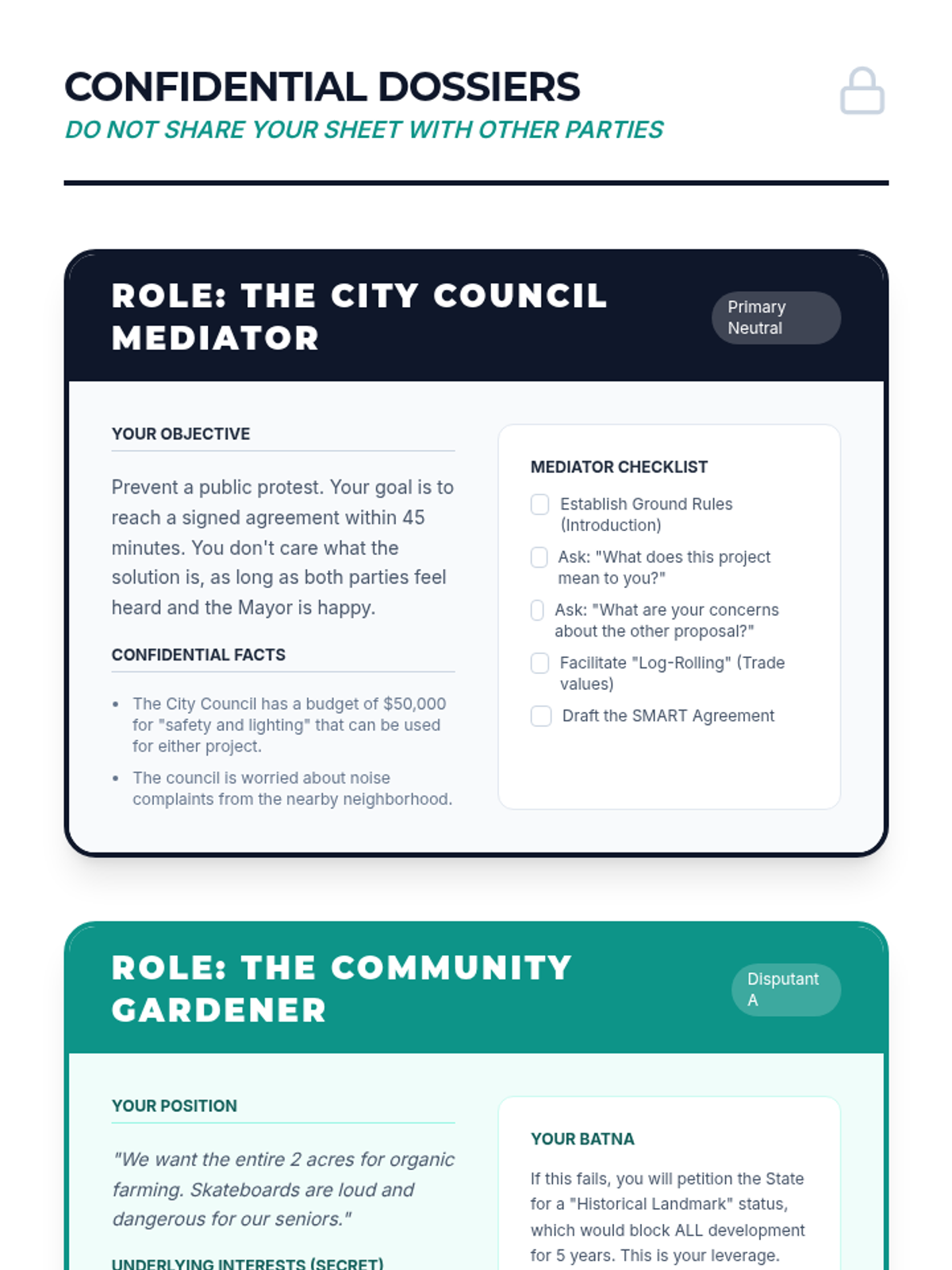
Students assume roles of mediators and disputants in a complex, multi-party dispute scenario (e.g., a land use dispute or school policy change). Mediators must facilitate the process, uncover interests, help generate options, and finalize a written agreement. The lesson focuses on synthesizing all previous frameworks into a cohesive professional performance.
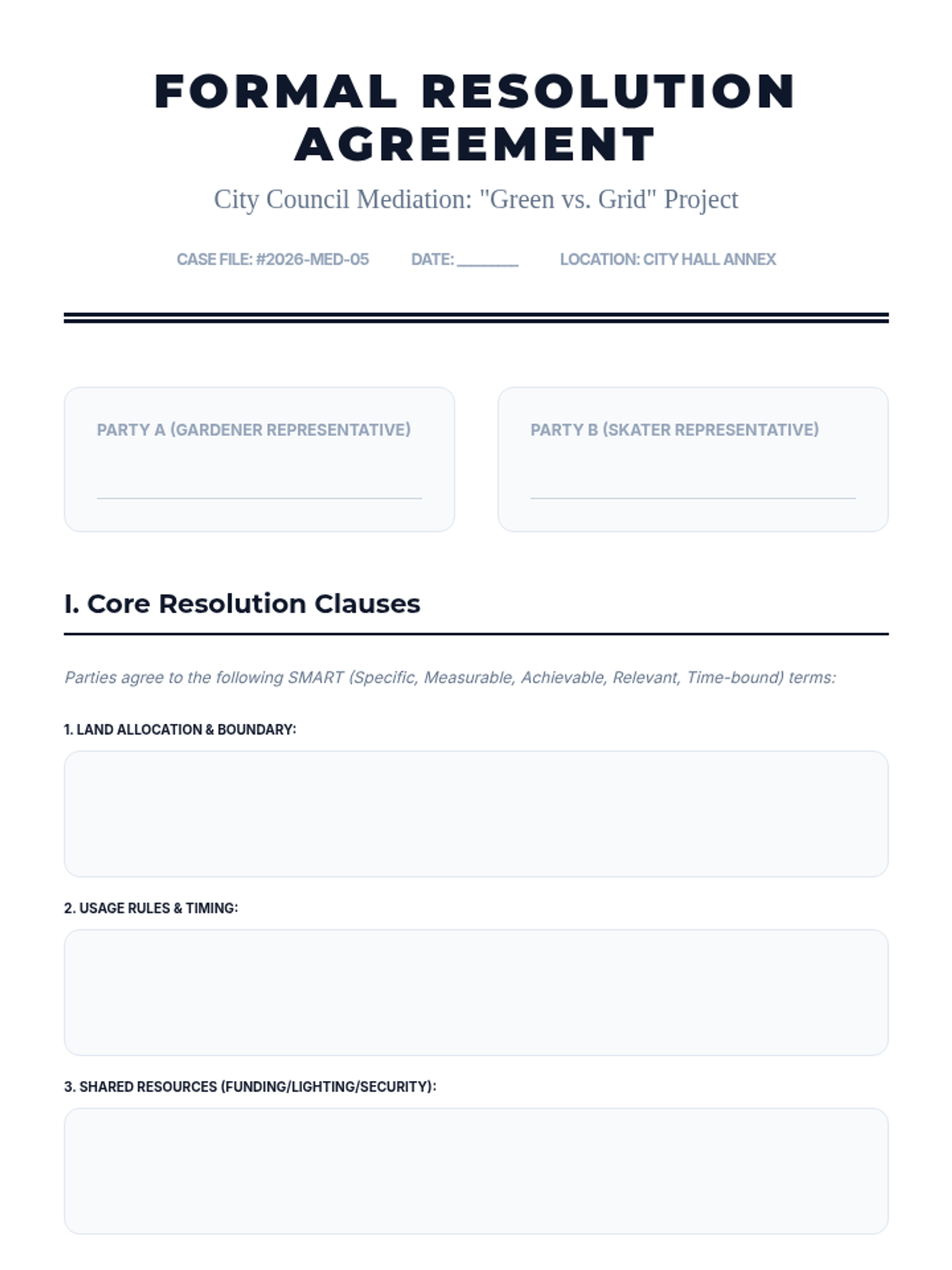
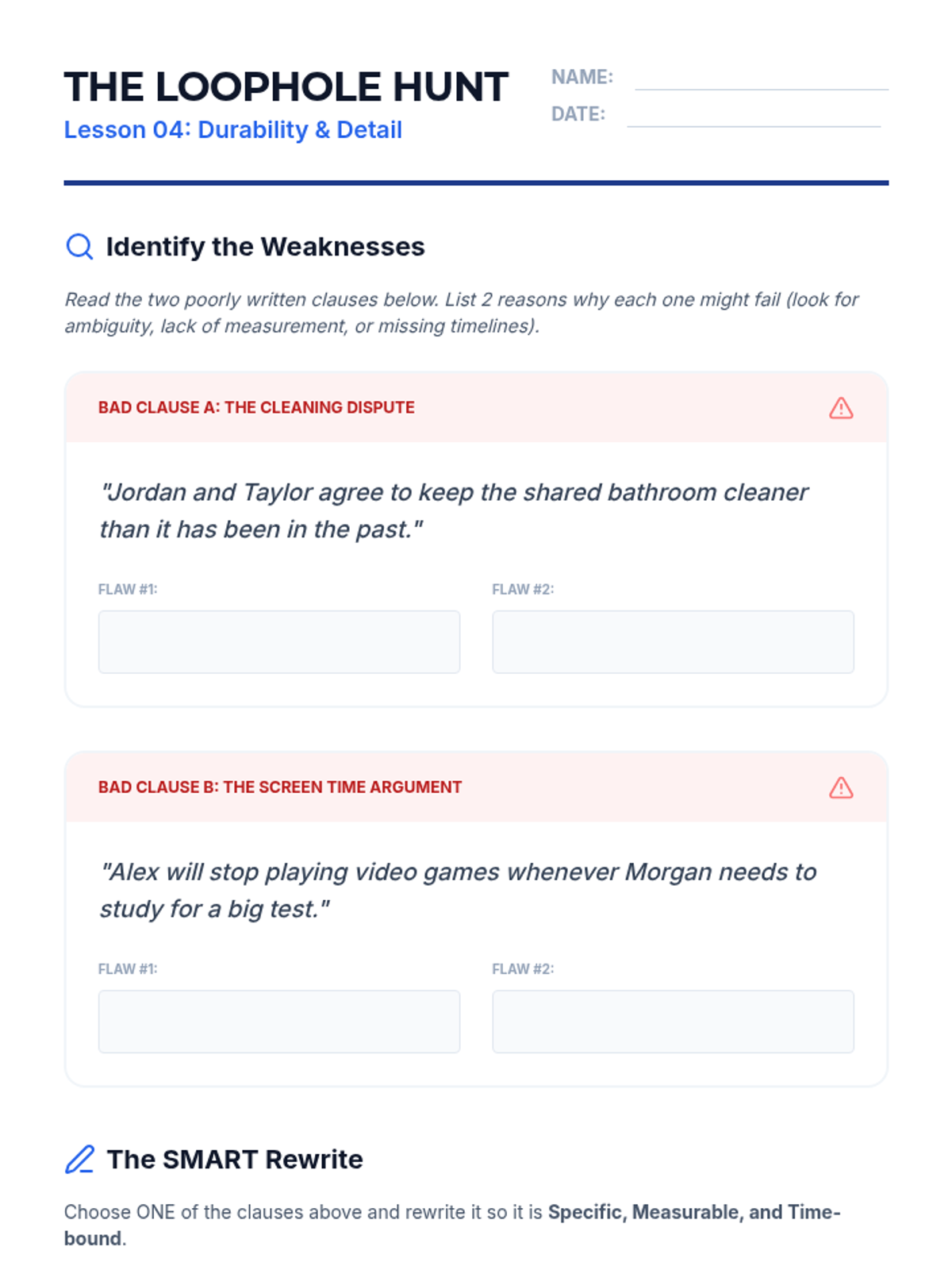
Resolving the conflict is only half the battle; writing a durable agreement is the rest. Students learn the components of a SMART agreement (Specific, Measurable, Achievable, Relevant, Time-bound) in a conflict context. They review failed contracts or treaties to identify loopholes and ambiguity, then practice drafting ironclad resolution clauses.
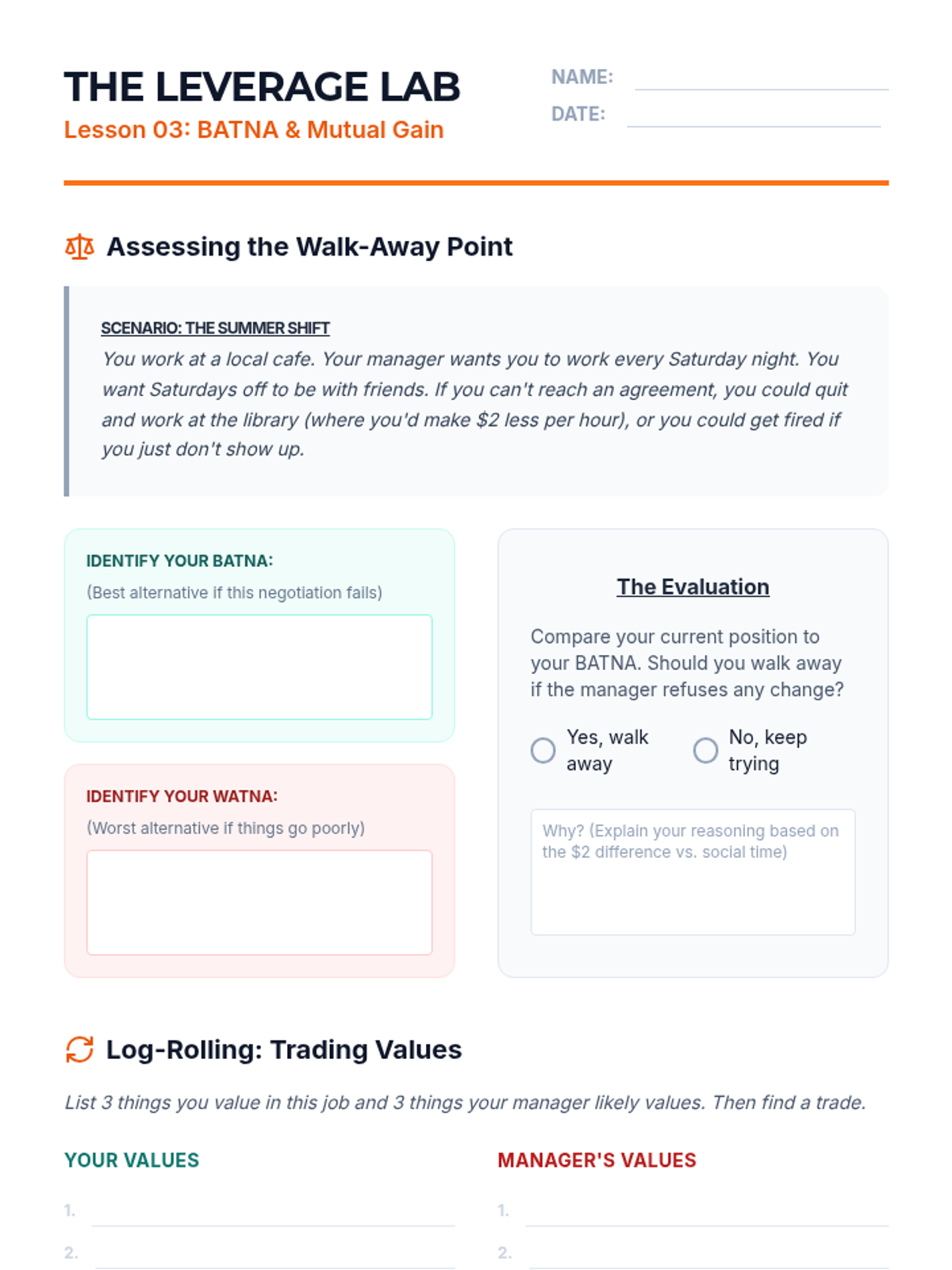
Students practice brainstorming techniques designed to break deadlocks. They learn about BATNA (Best Alternative to a Negotiated Agreement) and WATNA (Worst Alternative) to assess leverage. The class engages in exercises to expand the 'pie' rather than just dividing it, finding creative solutions that satisfy multiple interests.
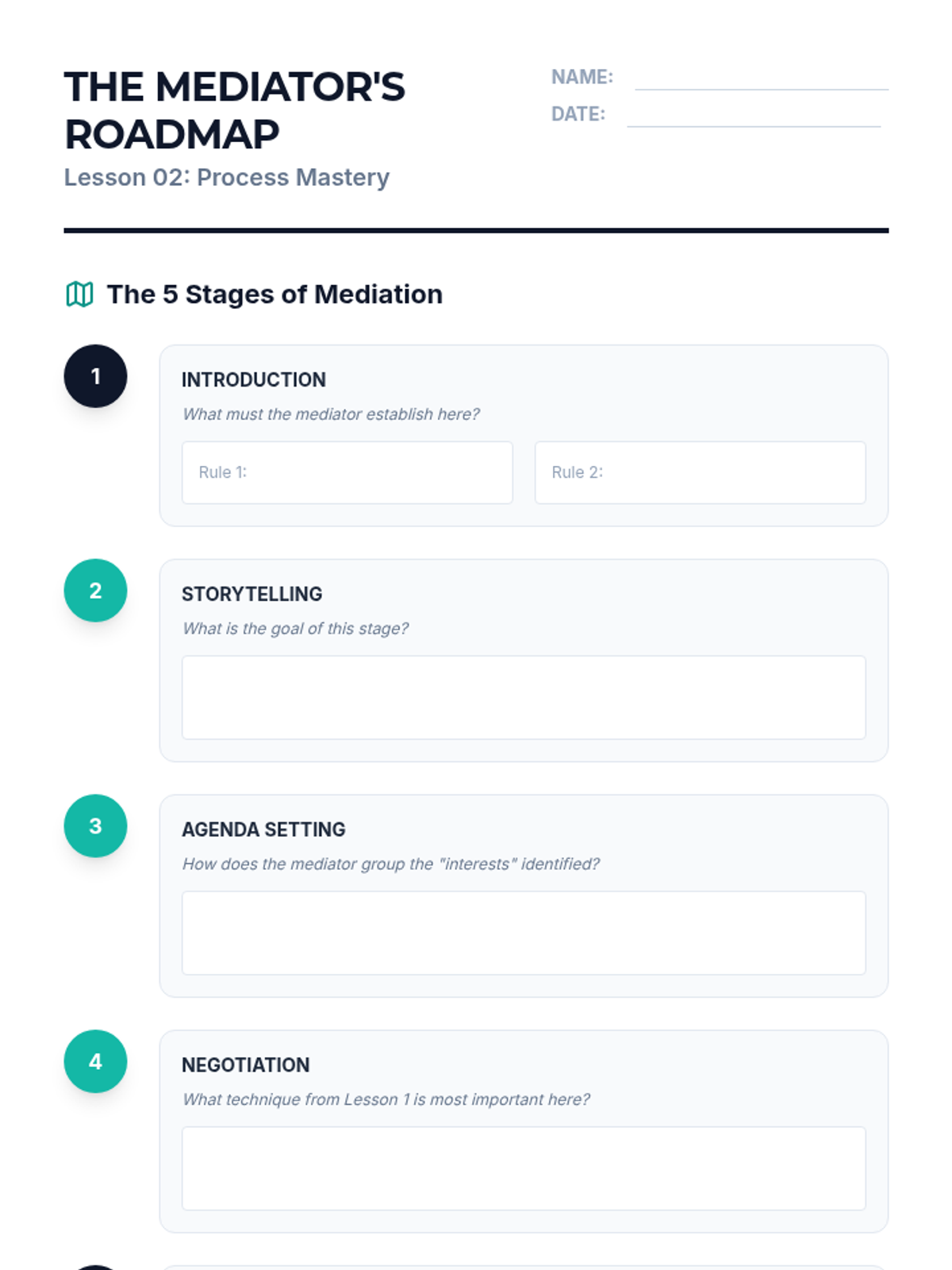
This lesson outlines the formal stages of mediation: Introduction, Storytelling, Agenda Setting, Negotiation, and Agreement. Students learn the procedural responsibilities of a mediator to maintain safety and order. They create visual flowcharts of the process to understand how to guide disputants from chaos to order.
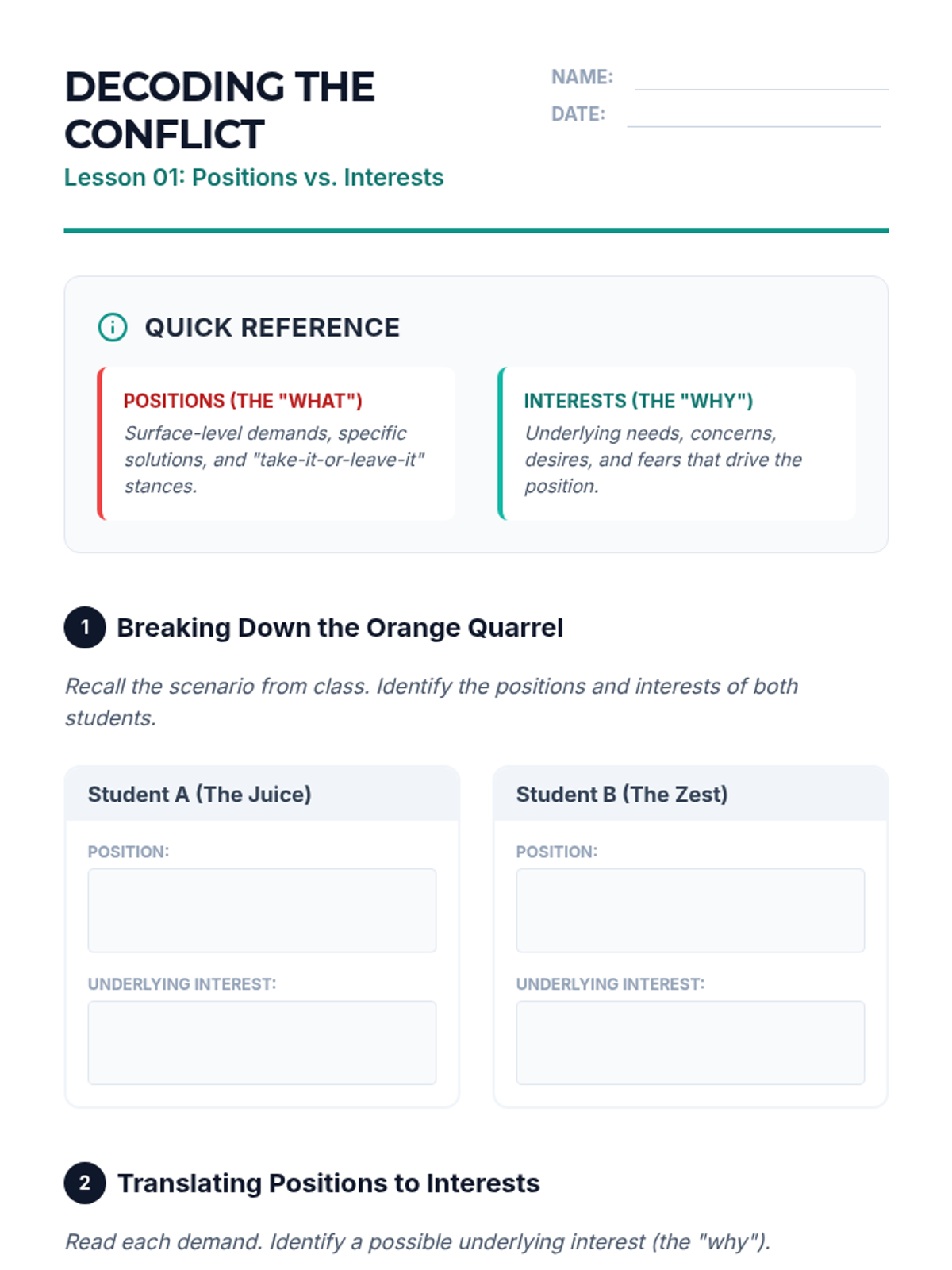
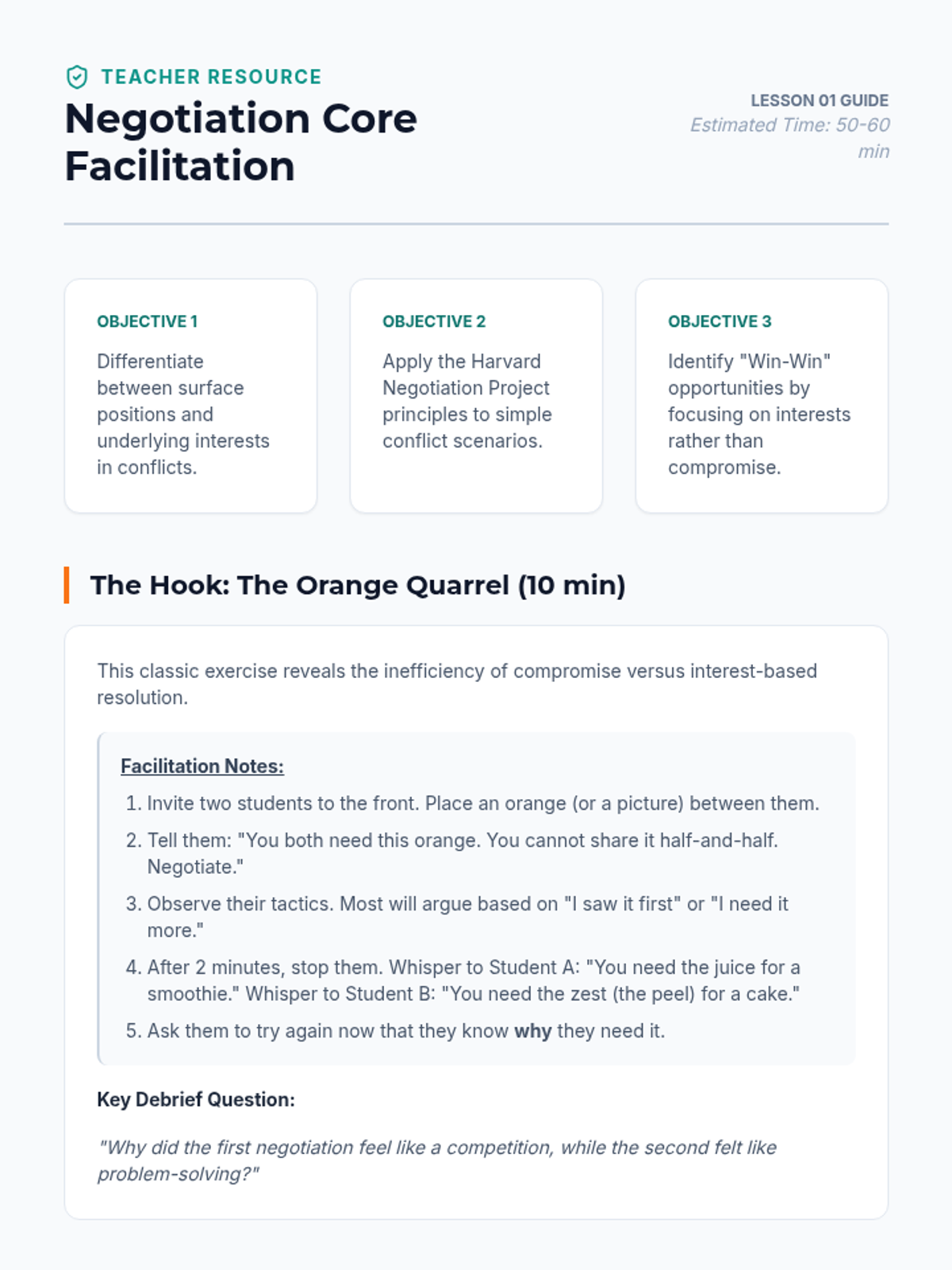
Students learn to distinguish between surface-level positions and underlying interests using the Harvard Negotiation Project model. The lesson introduces Interest-Based Negotiation (IBN) through the classic 'Orange Quarrel' scenario and case study analysis.