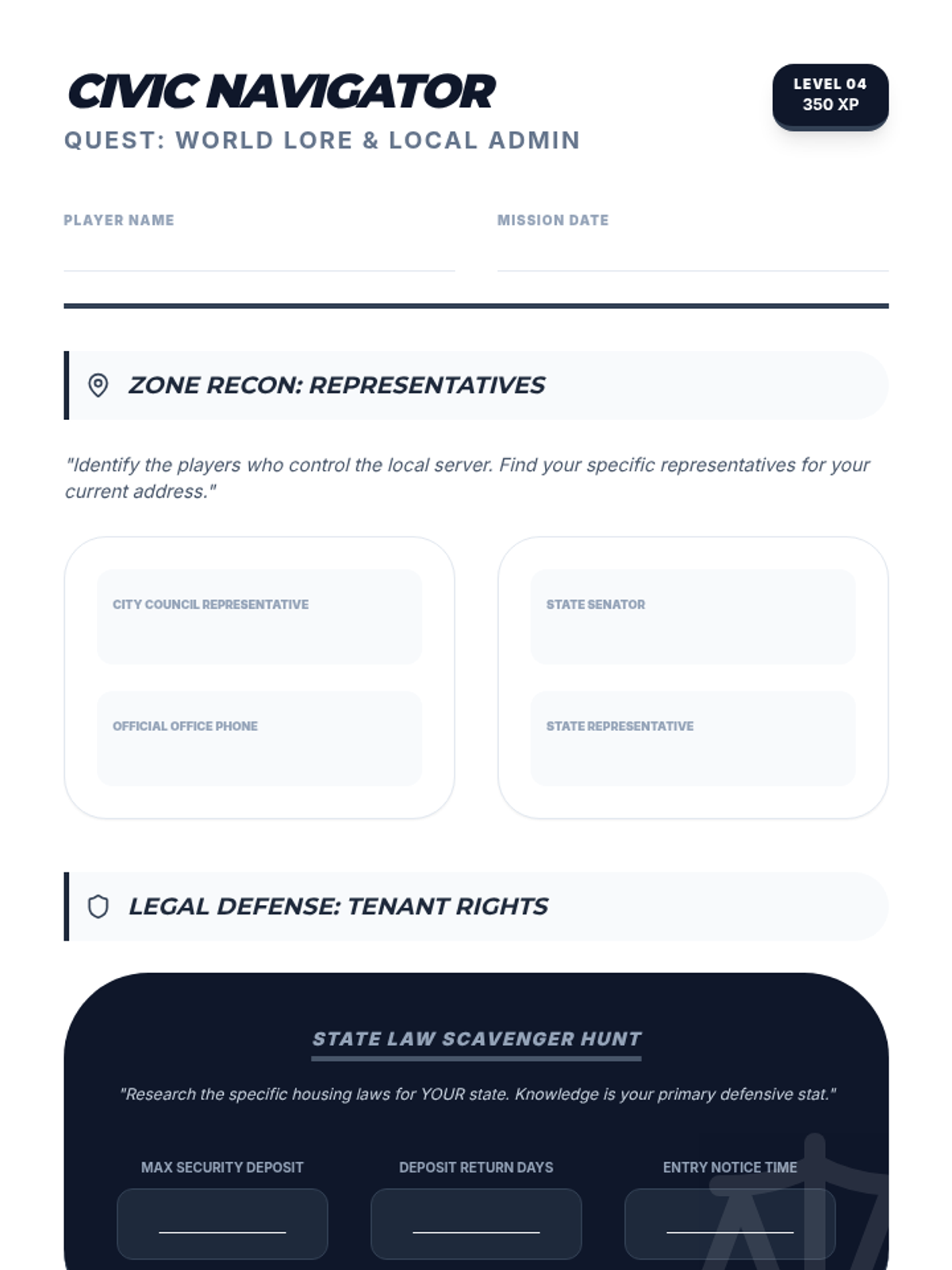
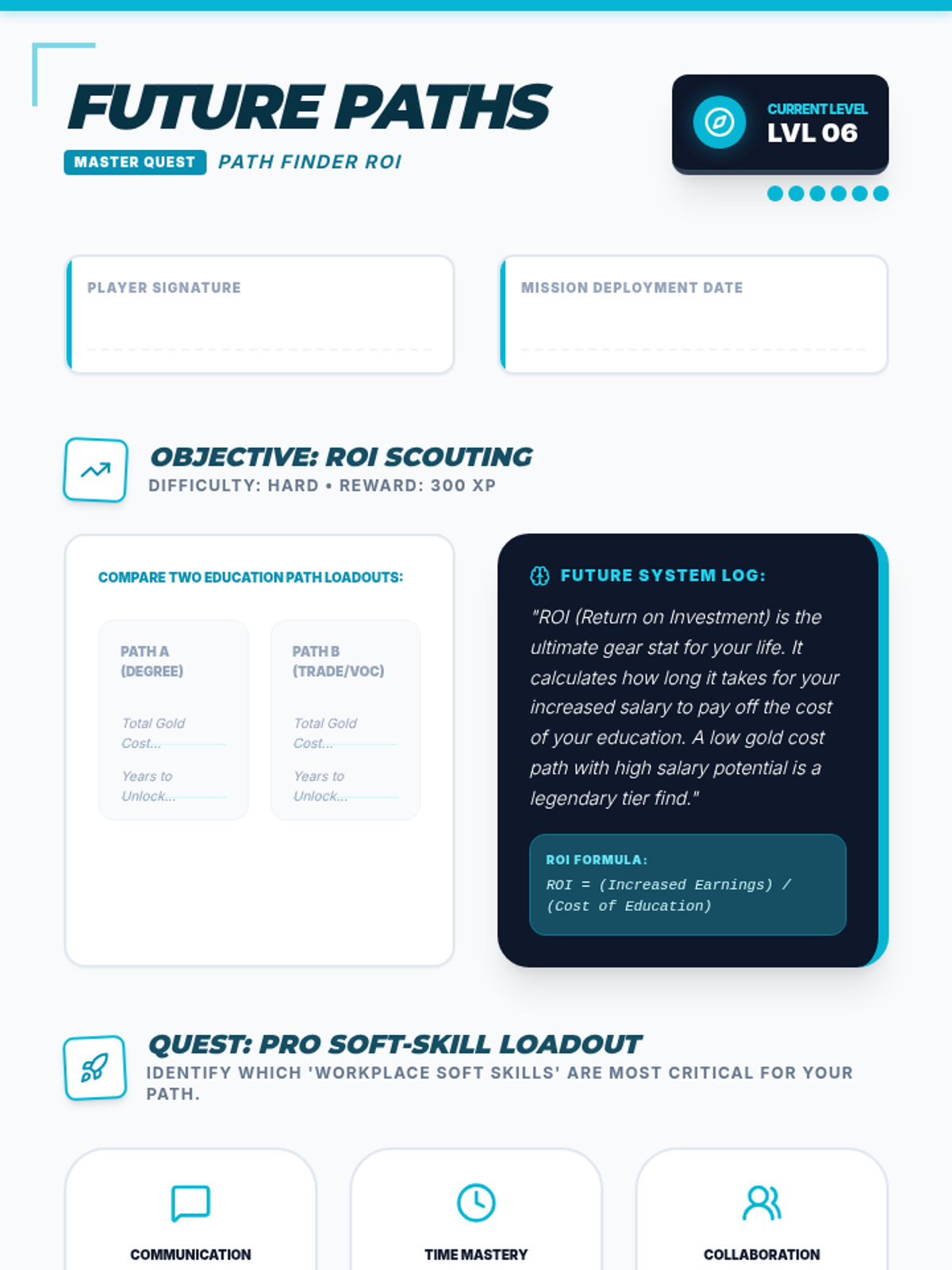
Budgeting, saving, and investment strategies alongside practical skills for managing credit, taxes, and banking. Addresses insurance needs, employment income, and major purchase decisions to support comprehensive long-term financial planning.
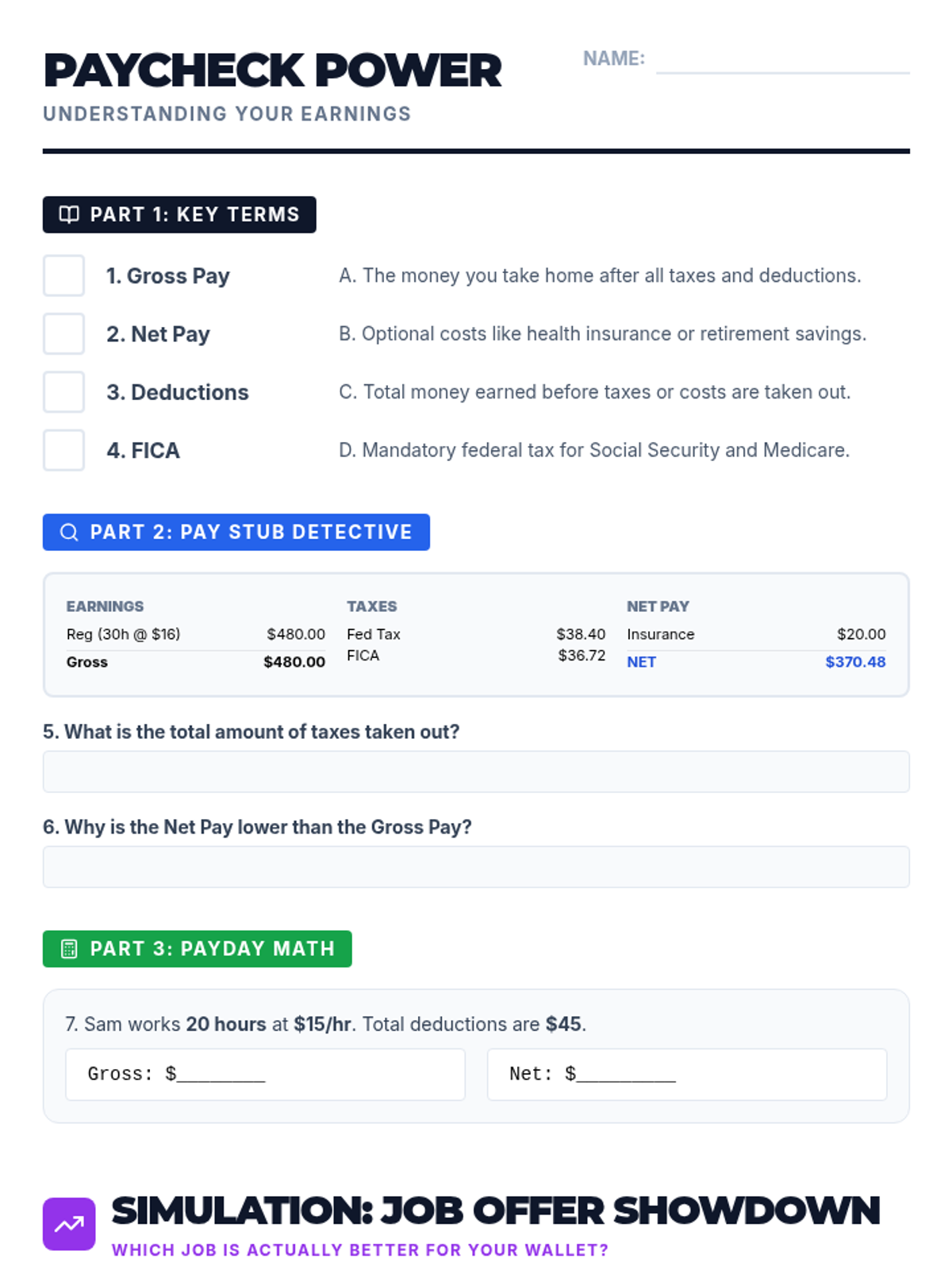
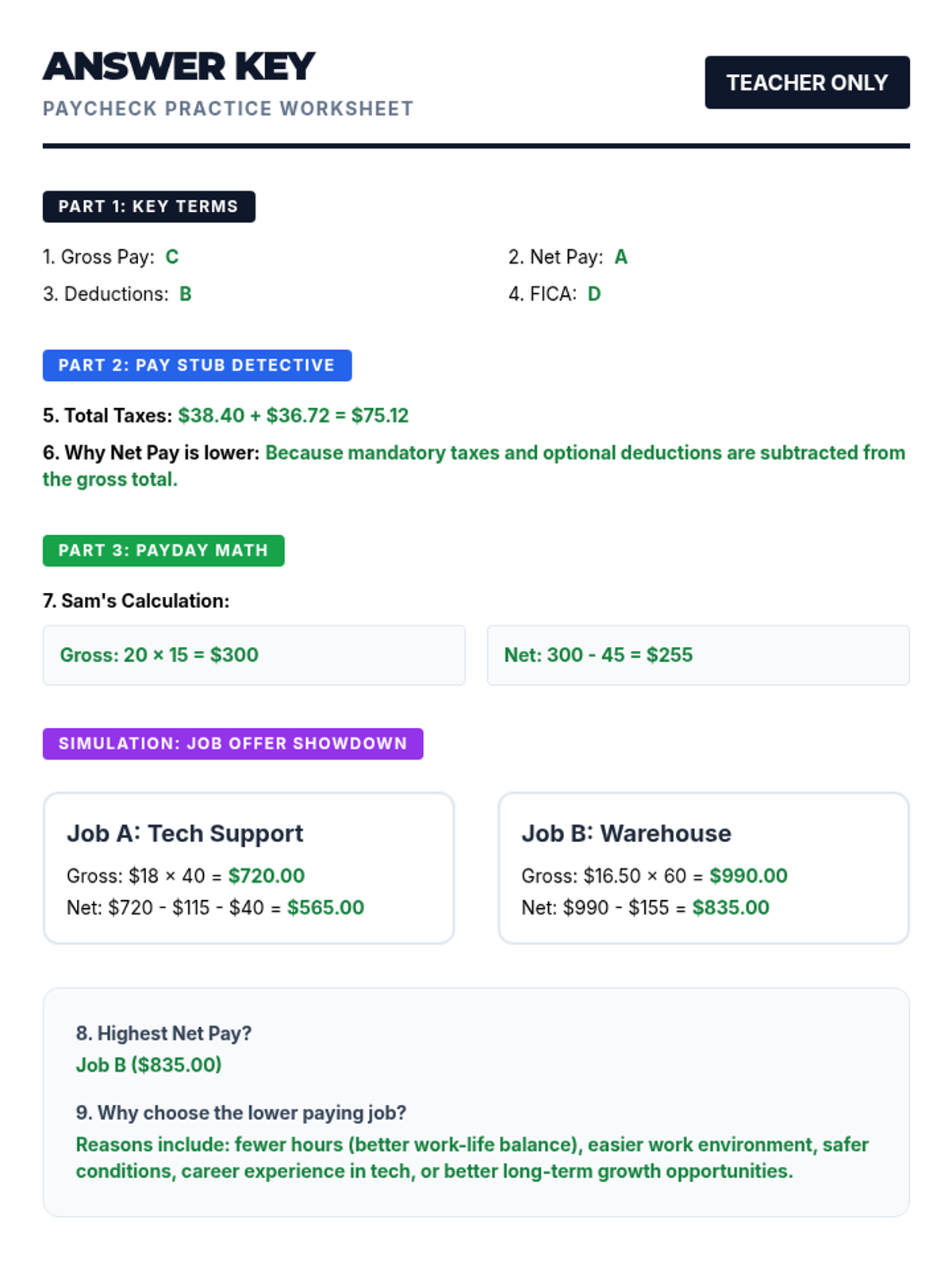
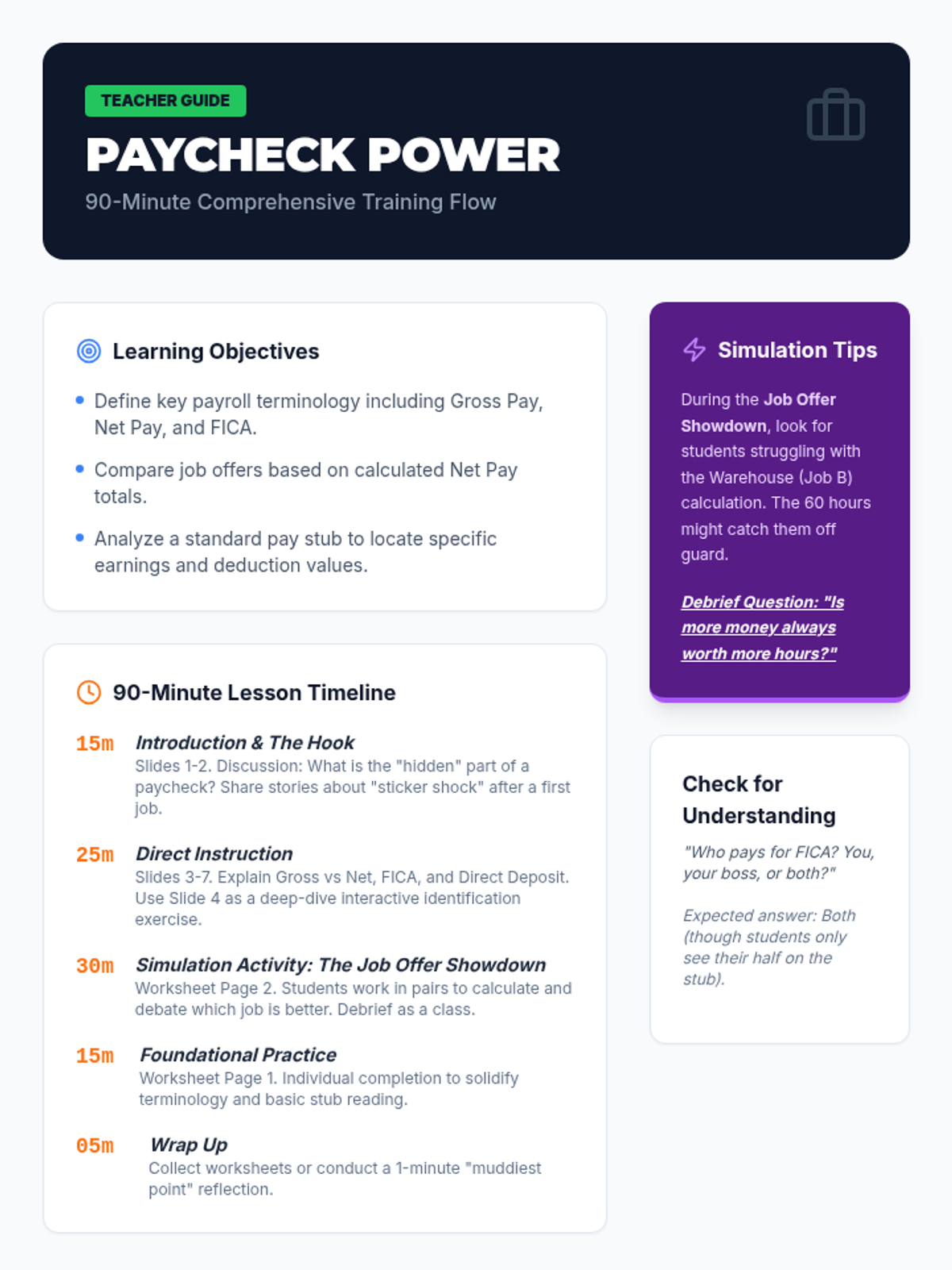
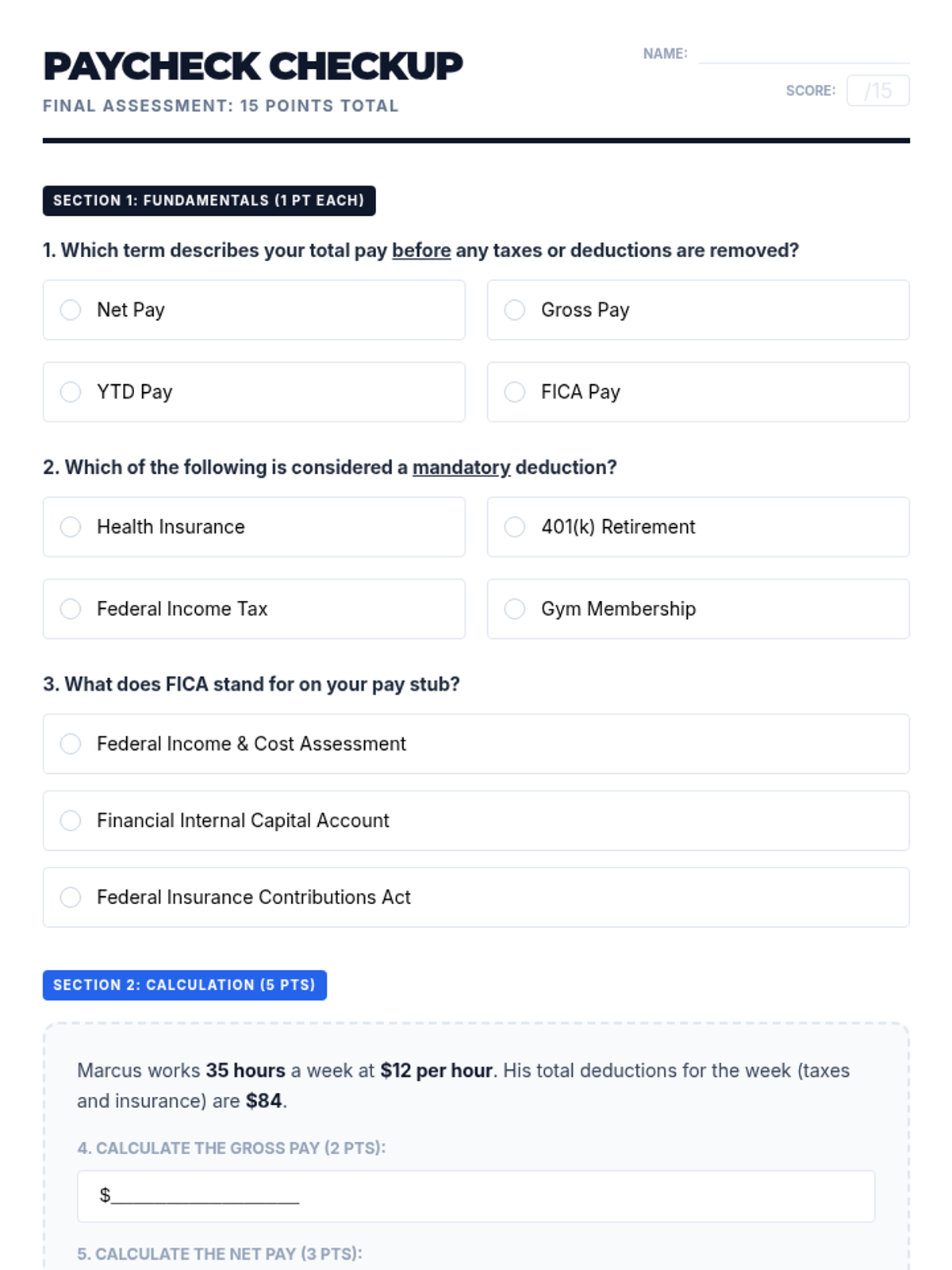
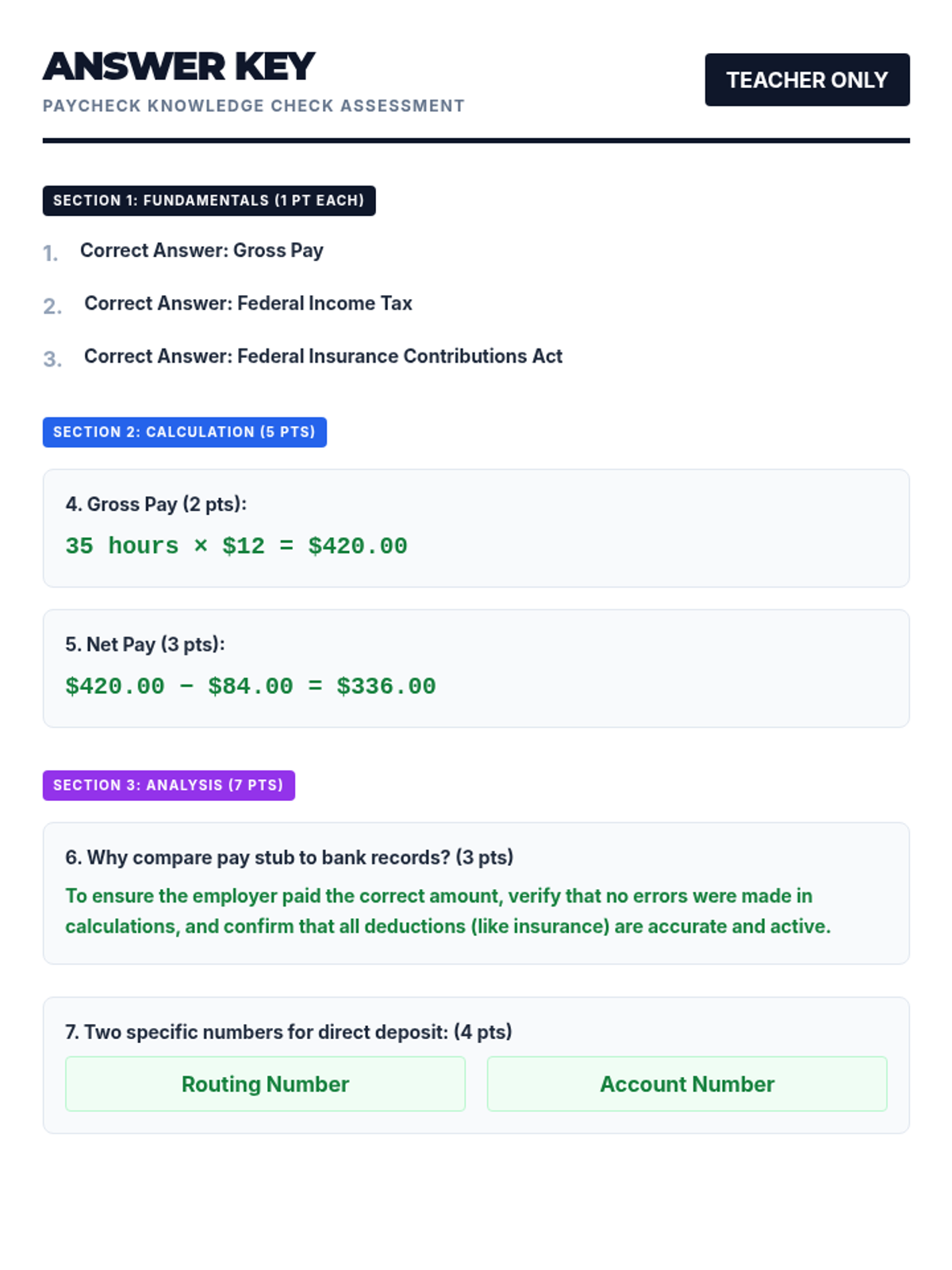
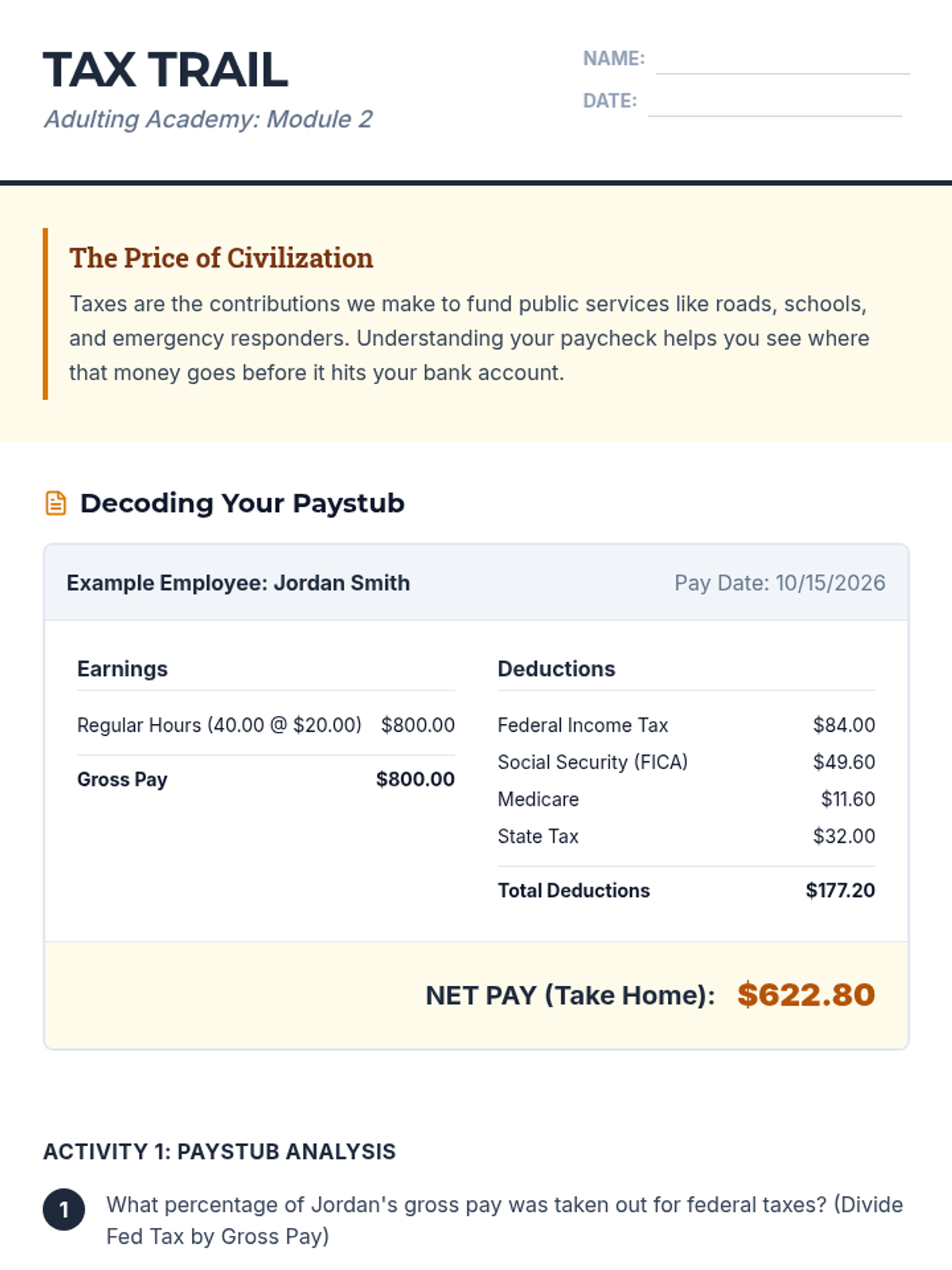
A comprehensive guide to understanding paychecks, including gross vs. net pay, tax deductions, and the anatomy of a pay stub. Students will learn how to read their earnings statements and manage their direct deposit information.
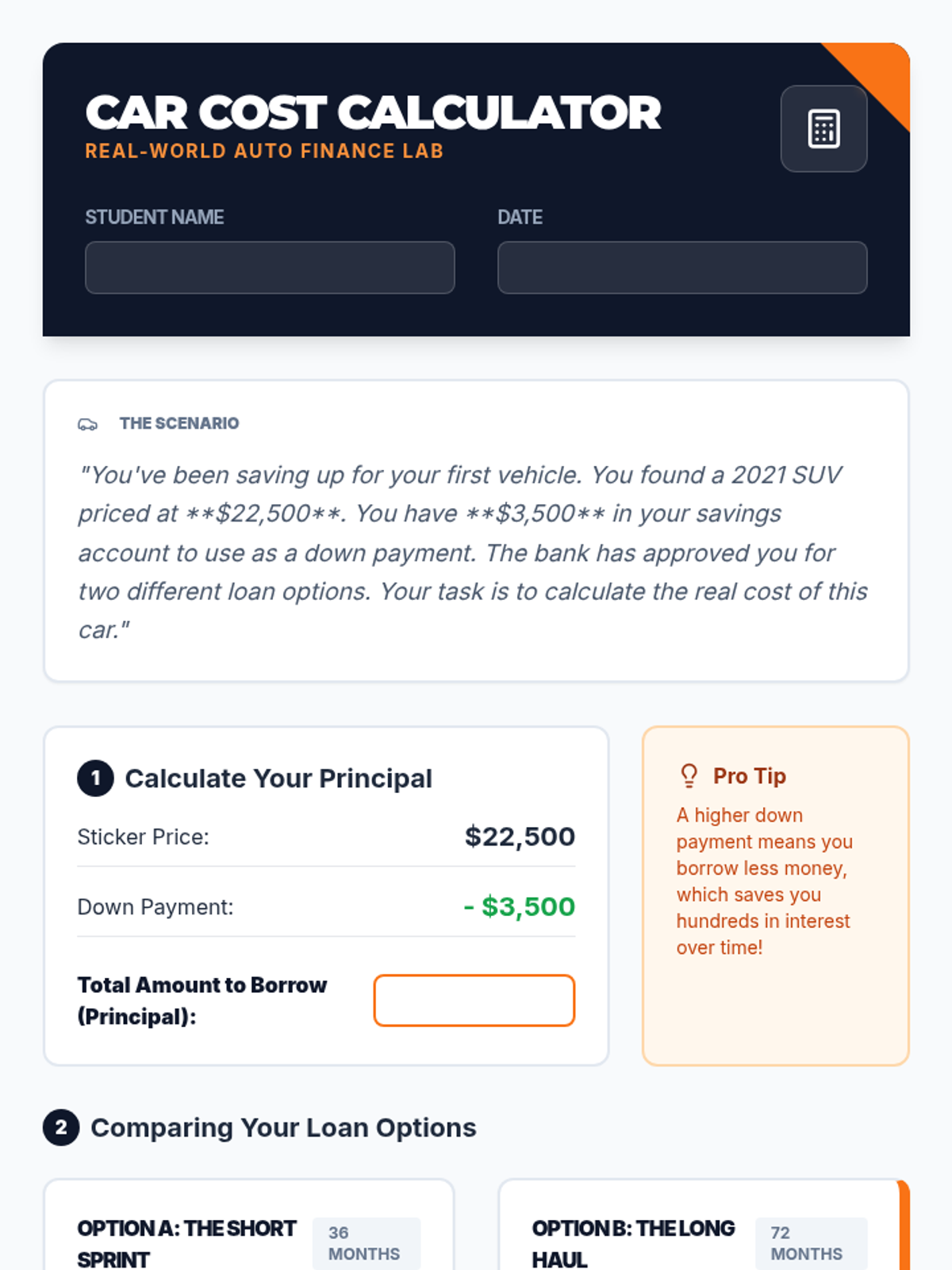
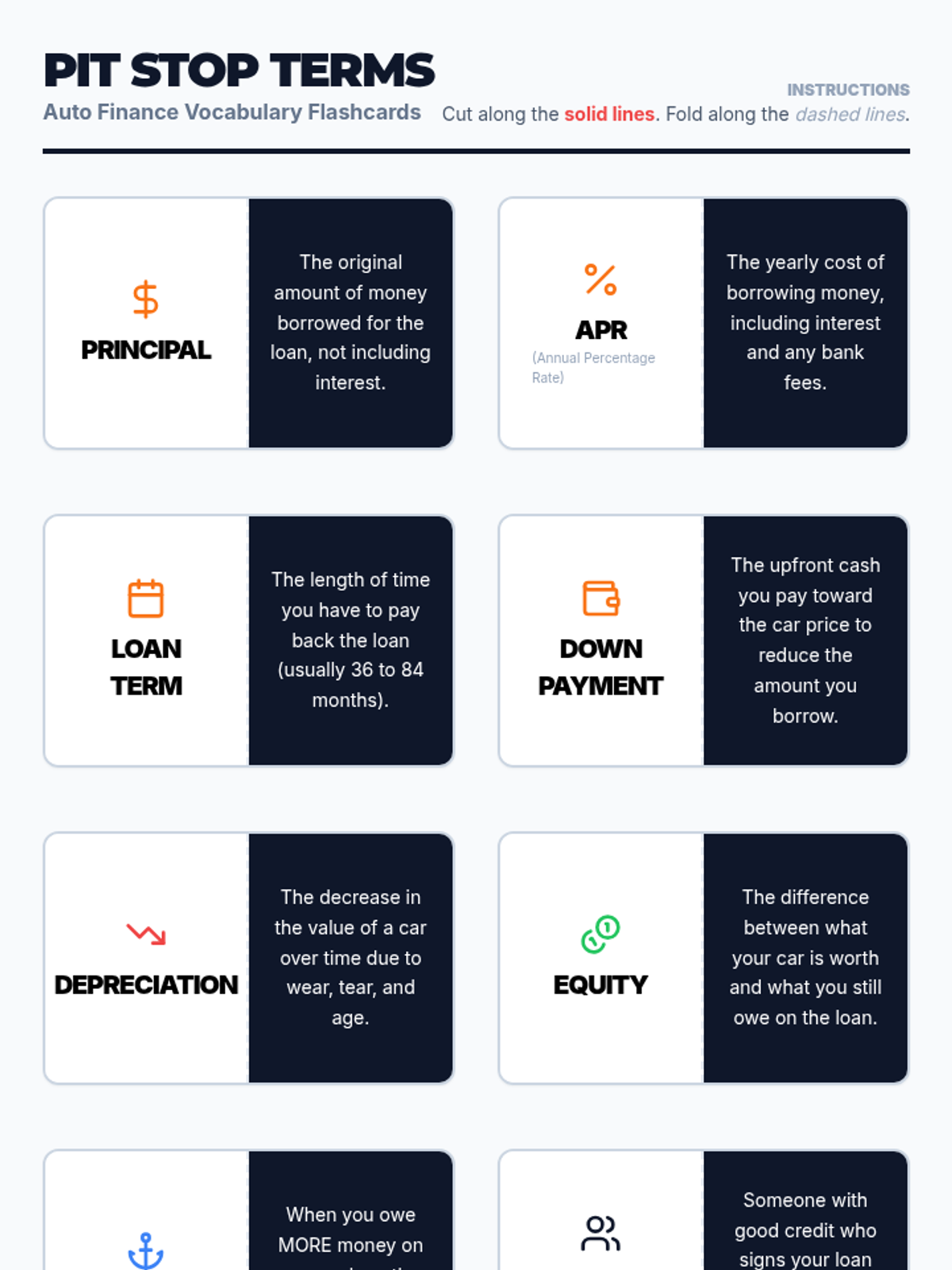
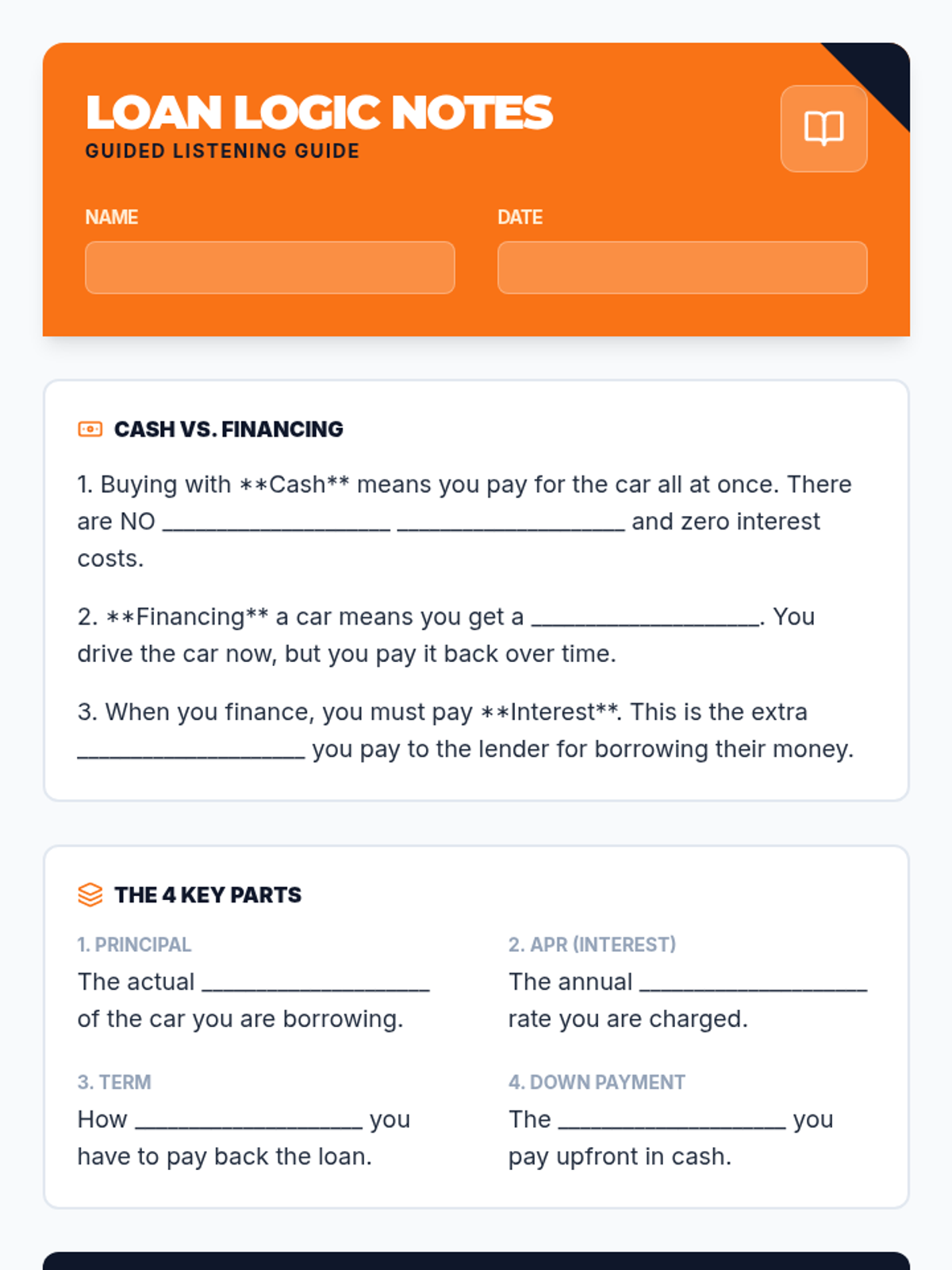
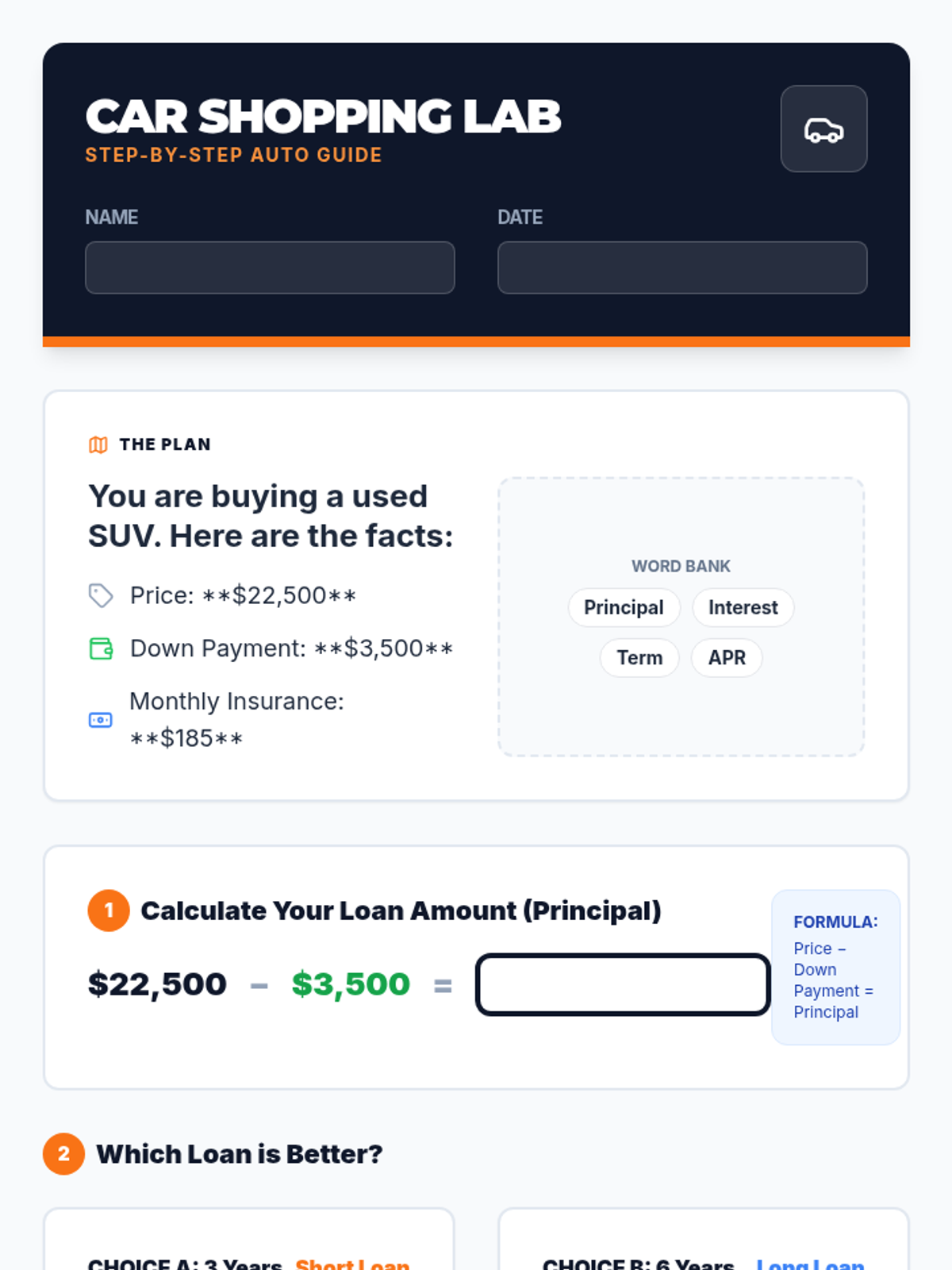
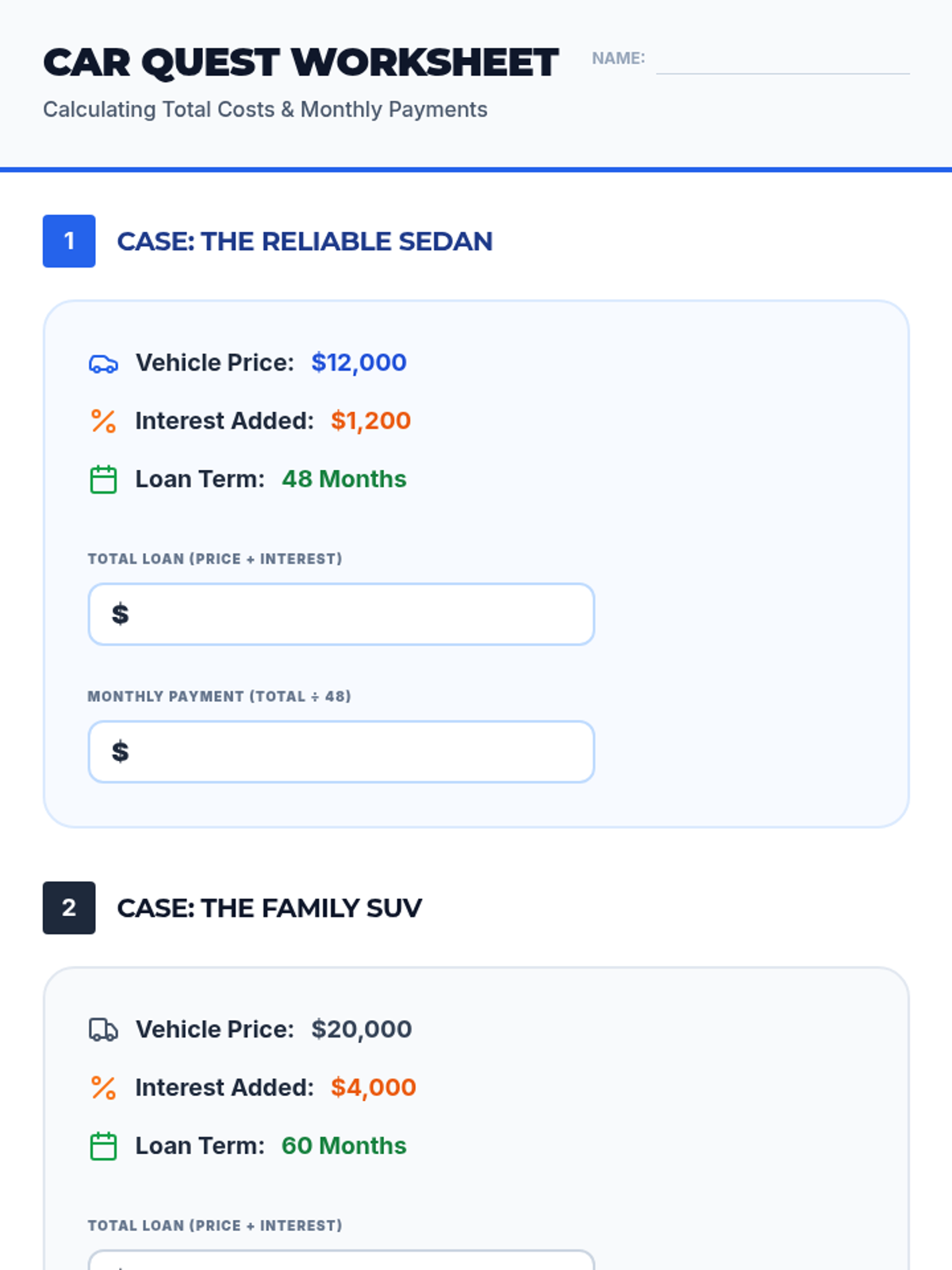
A practical lesson on navigating the complexities of car loans, focusing on interest rates, loan terms, and total cost of ownership. Students will learn to distinguish between monthly payments and the long-term cost of financing a vehicle.
A comprehensive lesson on retirement planning, compound interest, and long-term budgeting for students to understand the importance of early financial preparation.
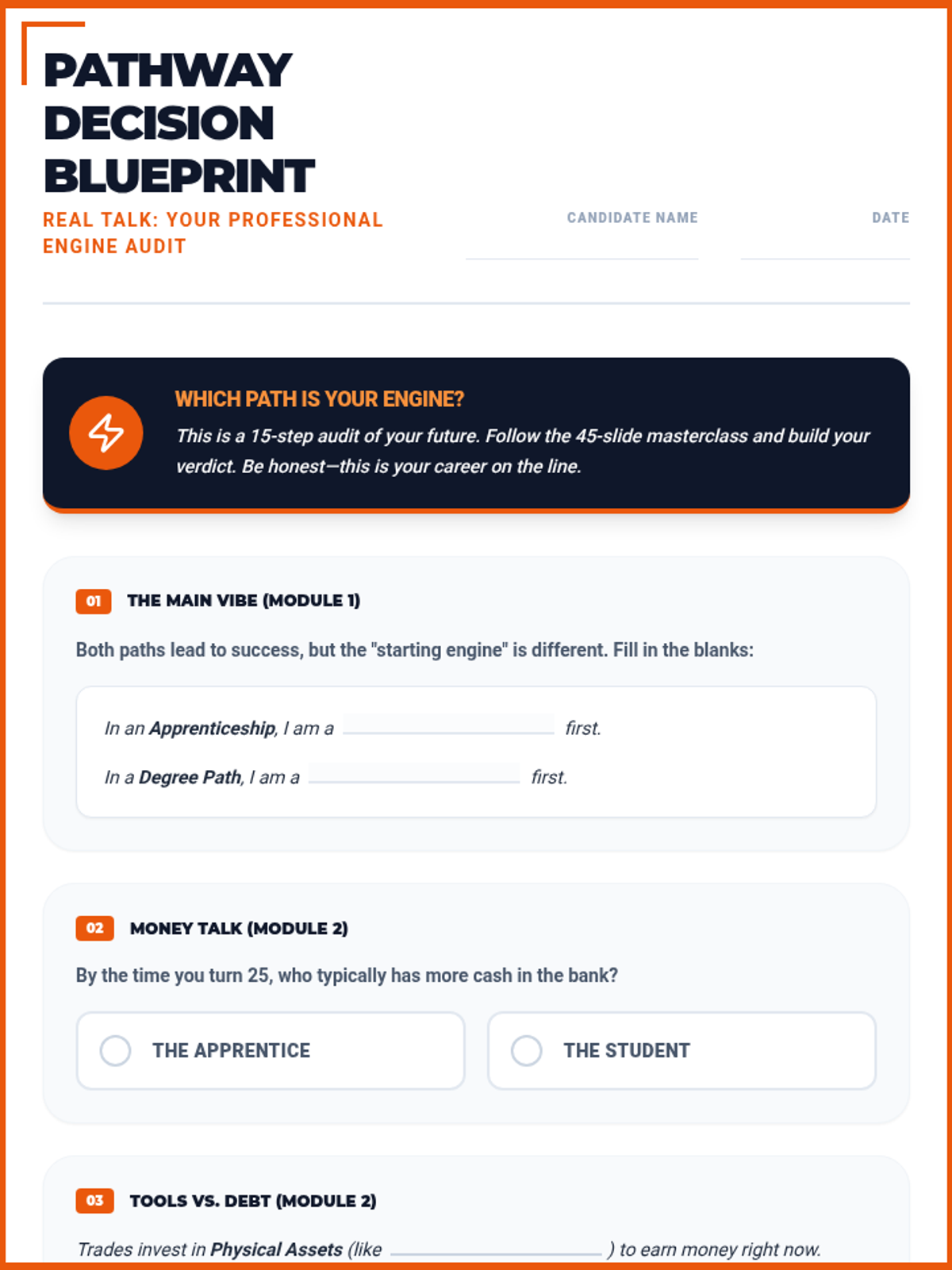
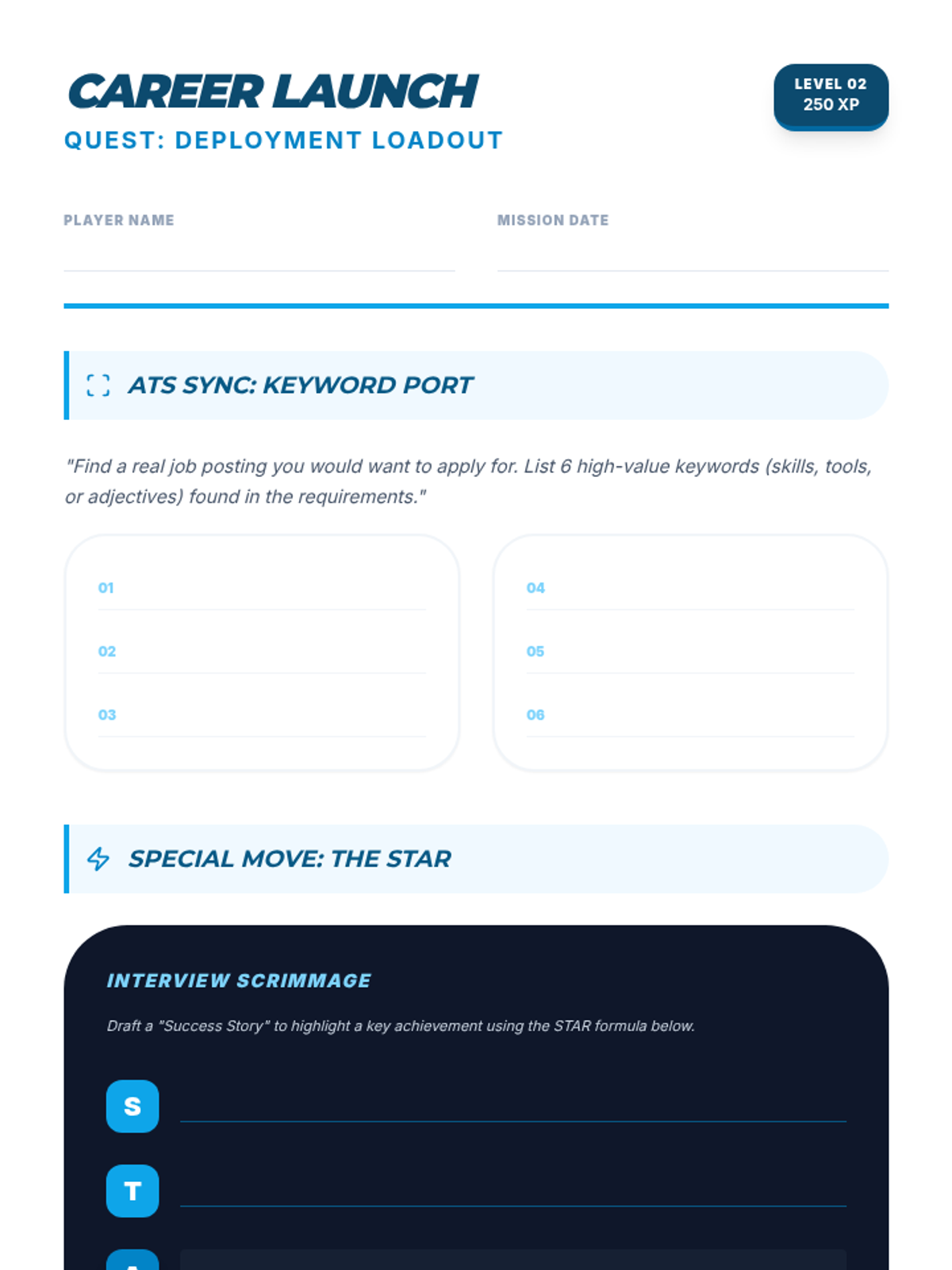
Master the transition from student to professional. This lesson covers workplace etiquette and the application process through engaging puzzles and reflective self-assessments.
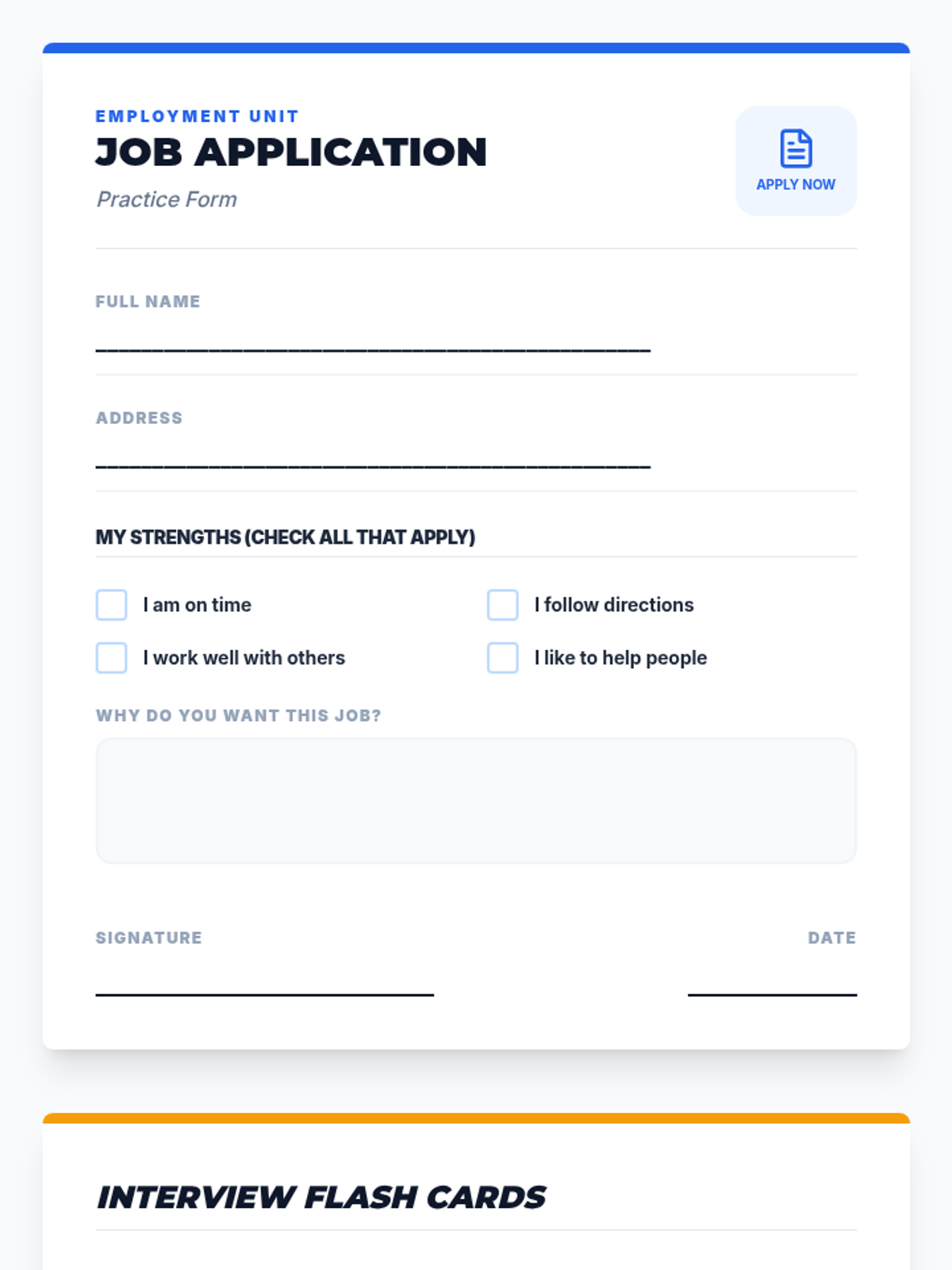
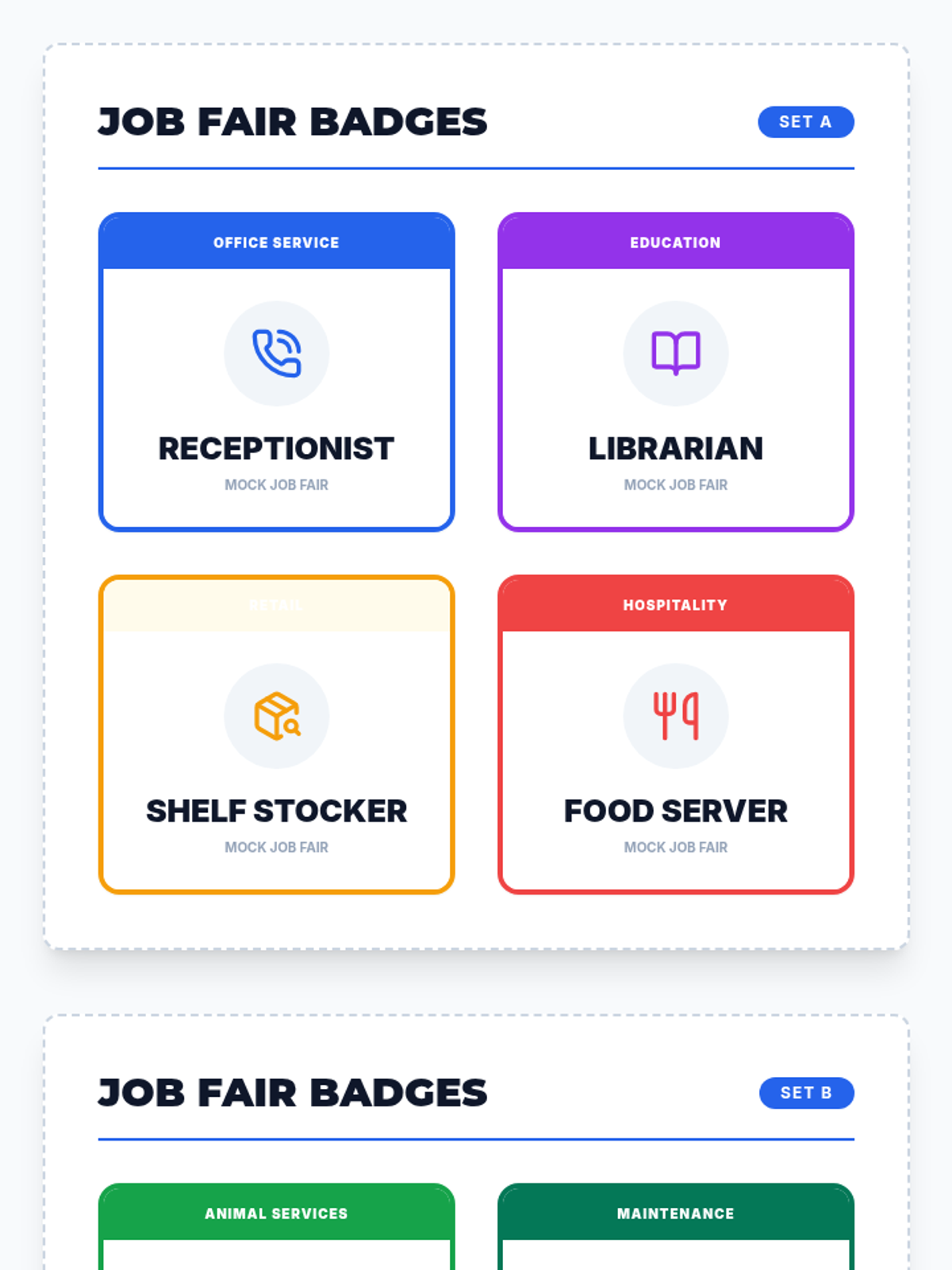
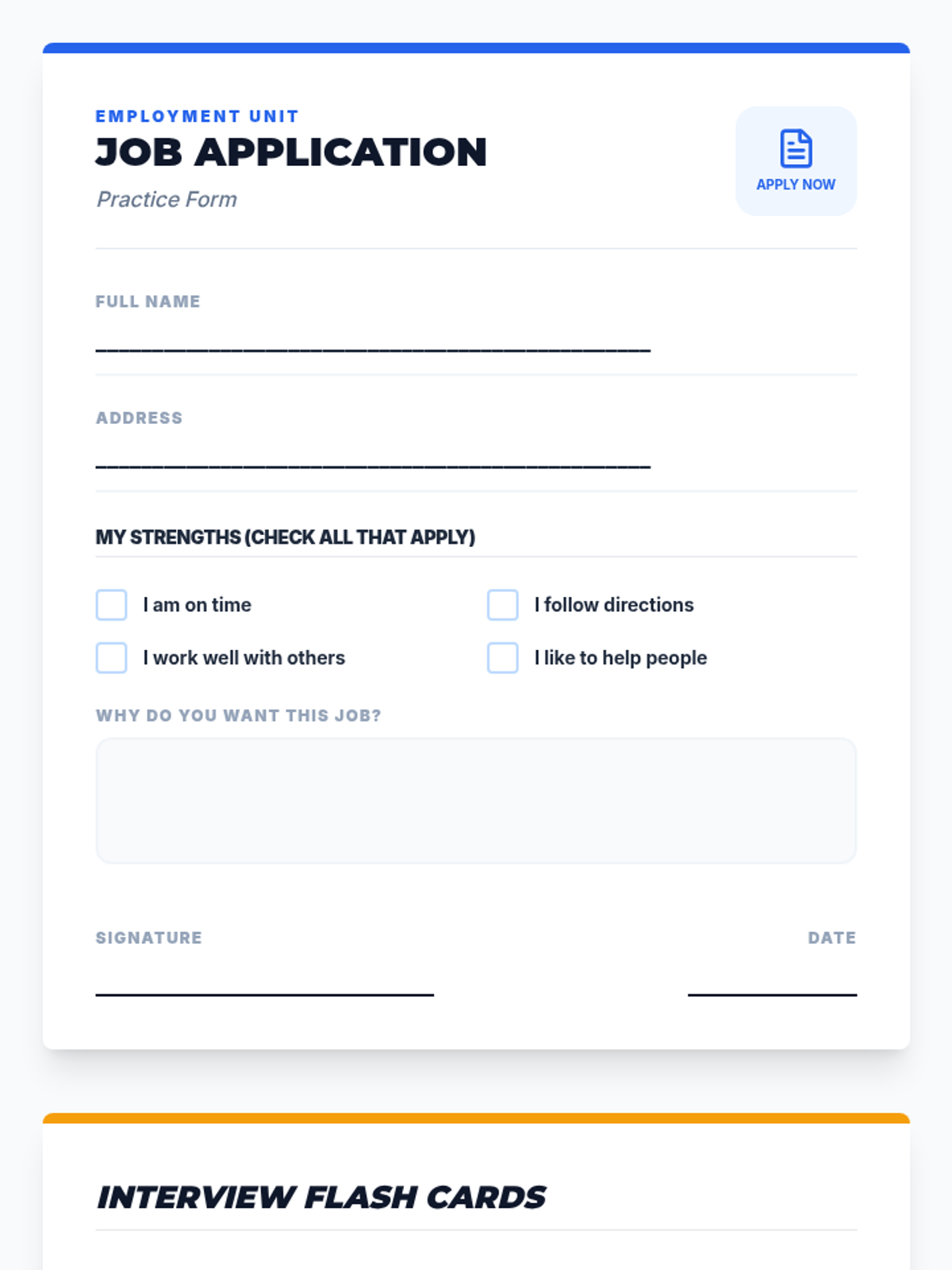
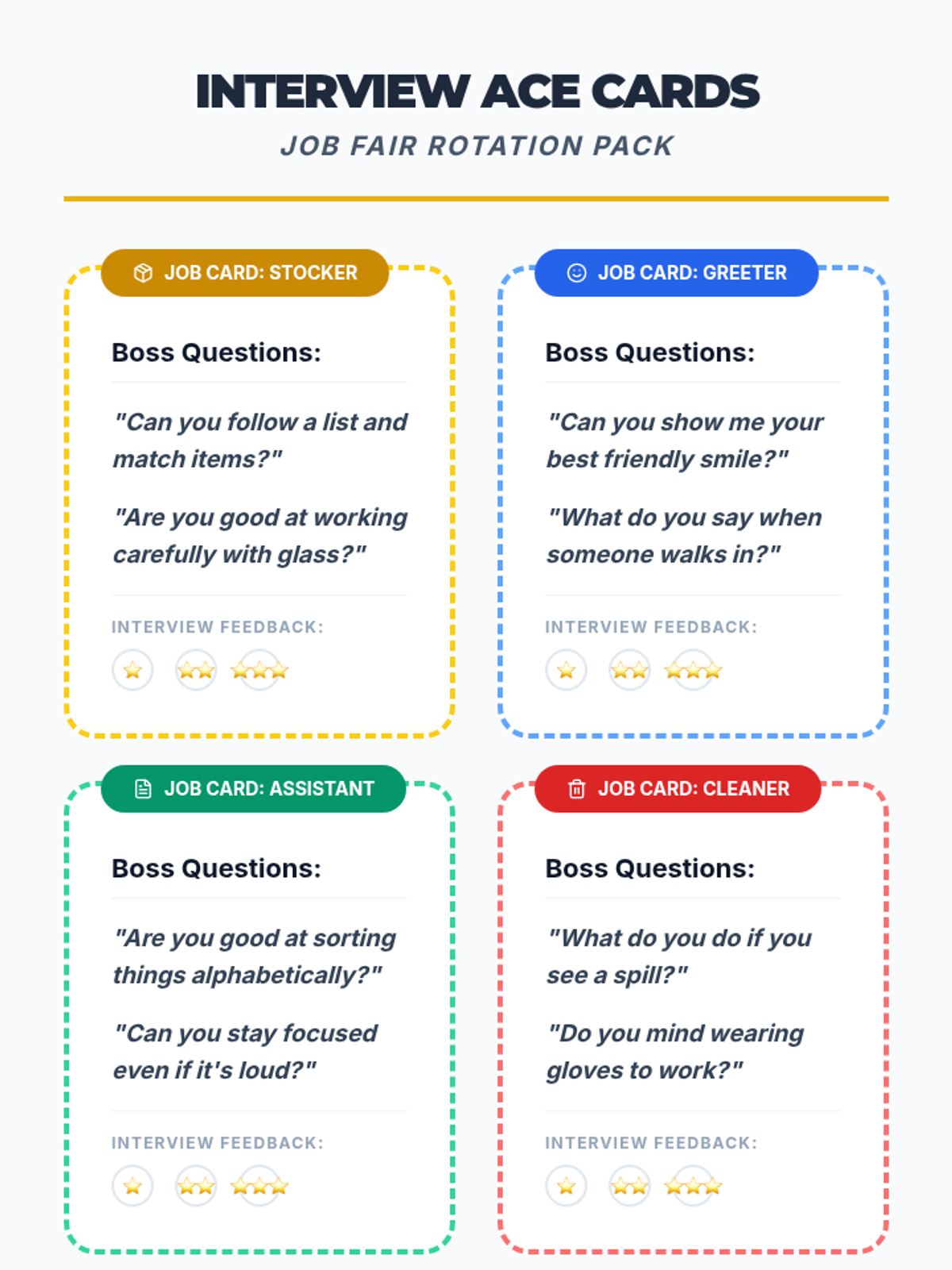
Building essential job-seeking skills, including application completion, interview preparation, and understanding job roles.
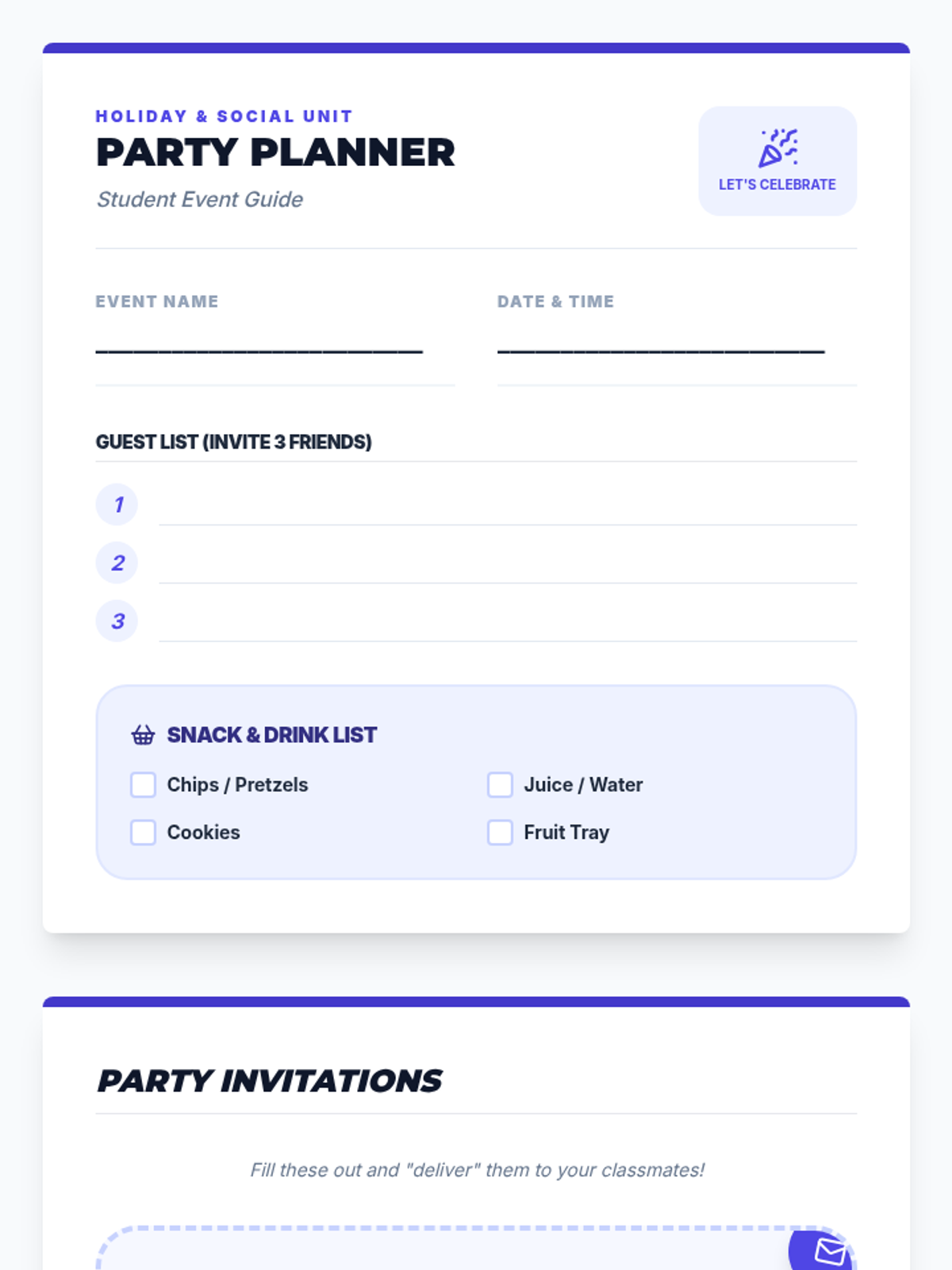
Planning social gatherings, managing invitations, and practicing etiquette for holiday and community events.
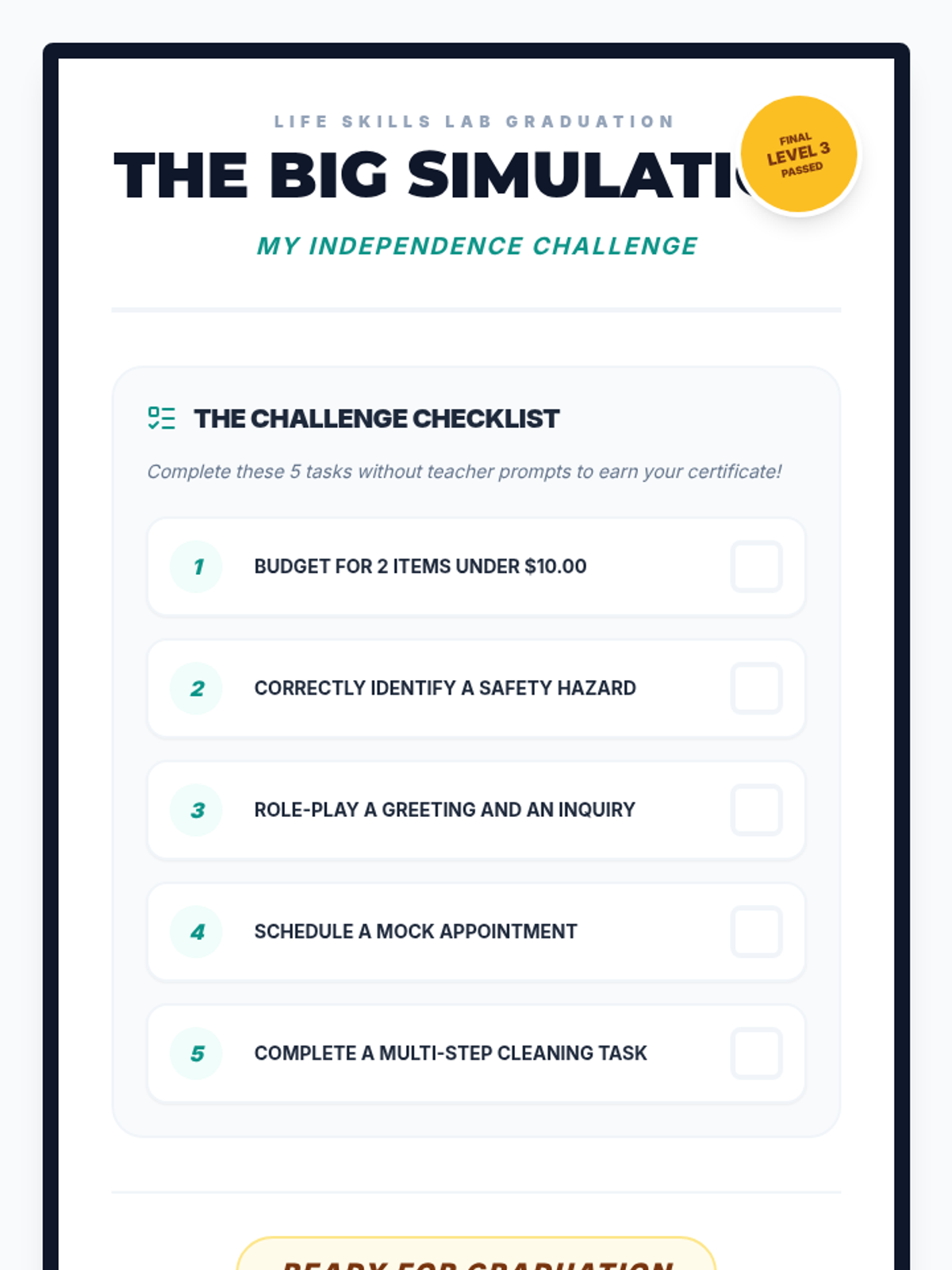
The capstone unit of the program, where students apply all learned skills in complex, multi-step simulations of independent adult life.
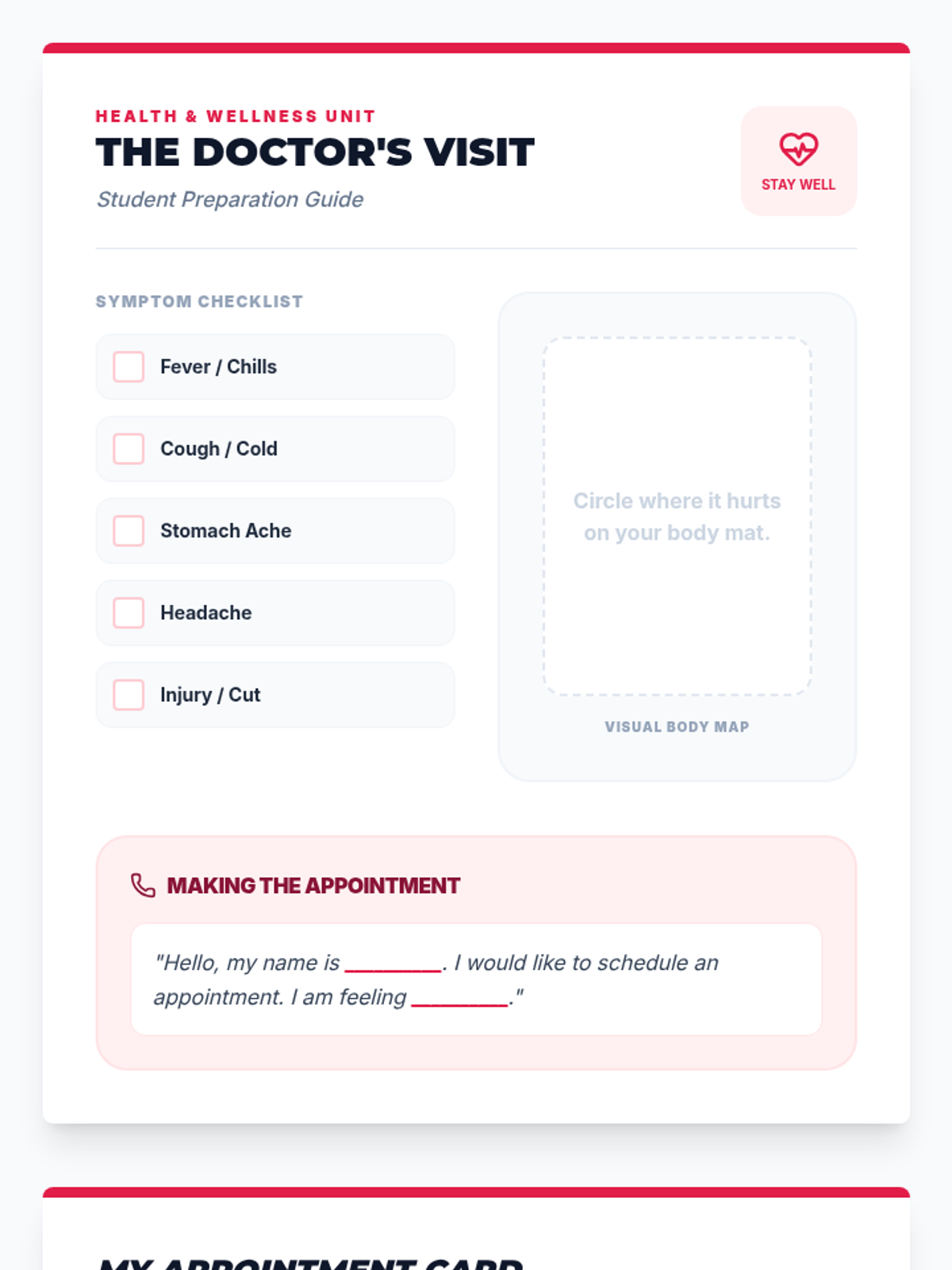
Navigating healthcare settings, identifying body parts and symptoms, and practicing social scripts for making and attending medical appointments.
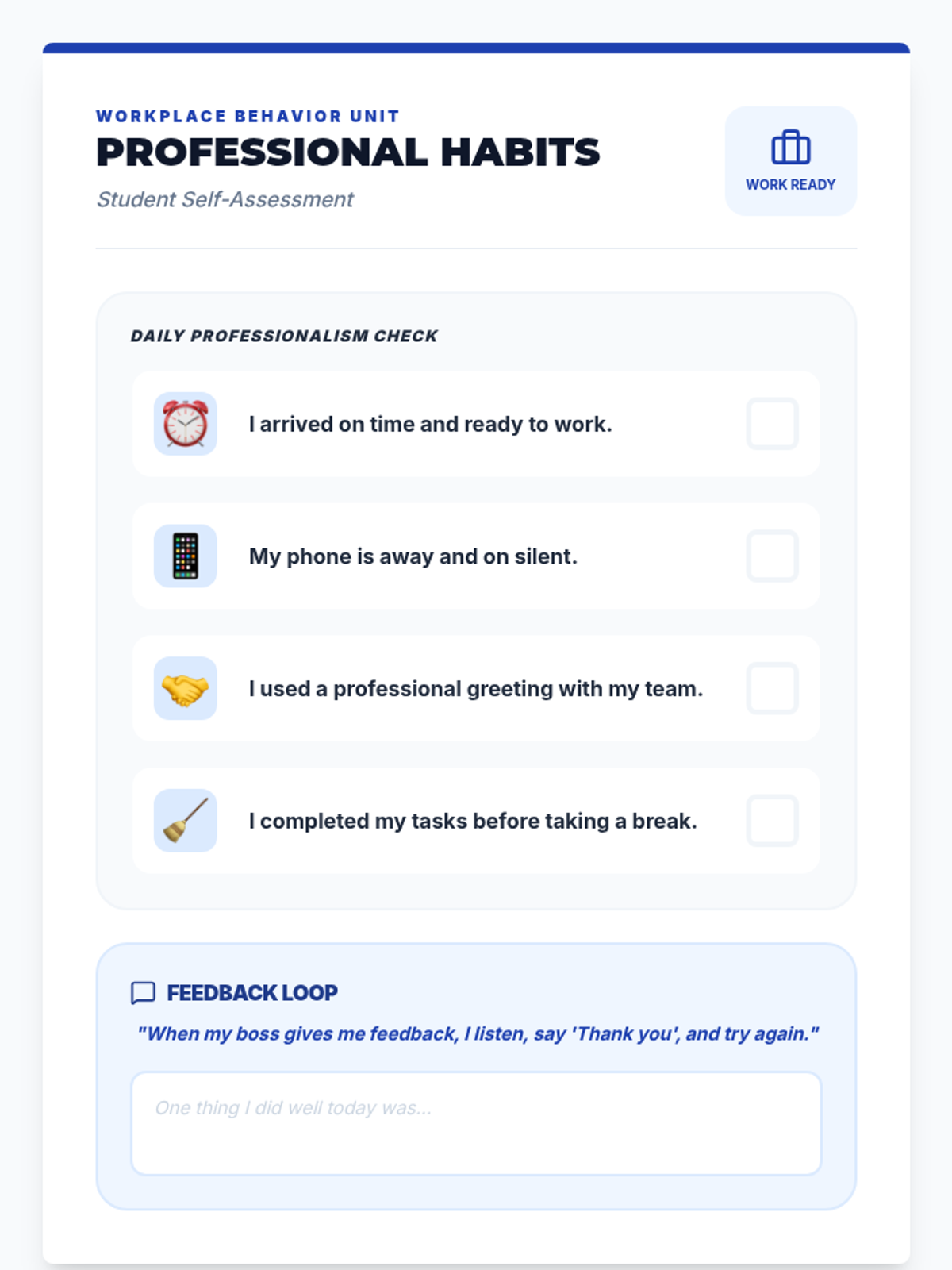
Building professional habits, understanding workplace social cues, and practicing teamwork in a job setting.
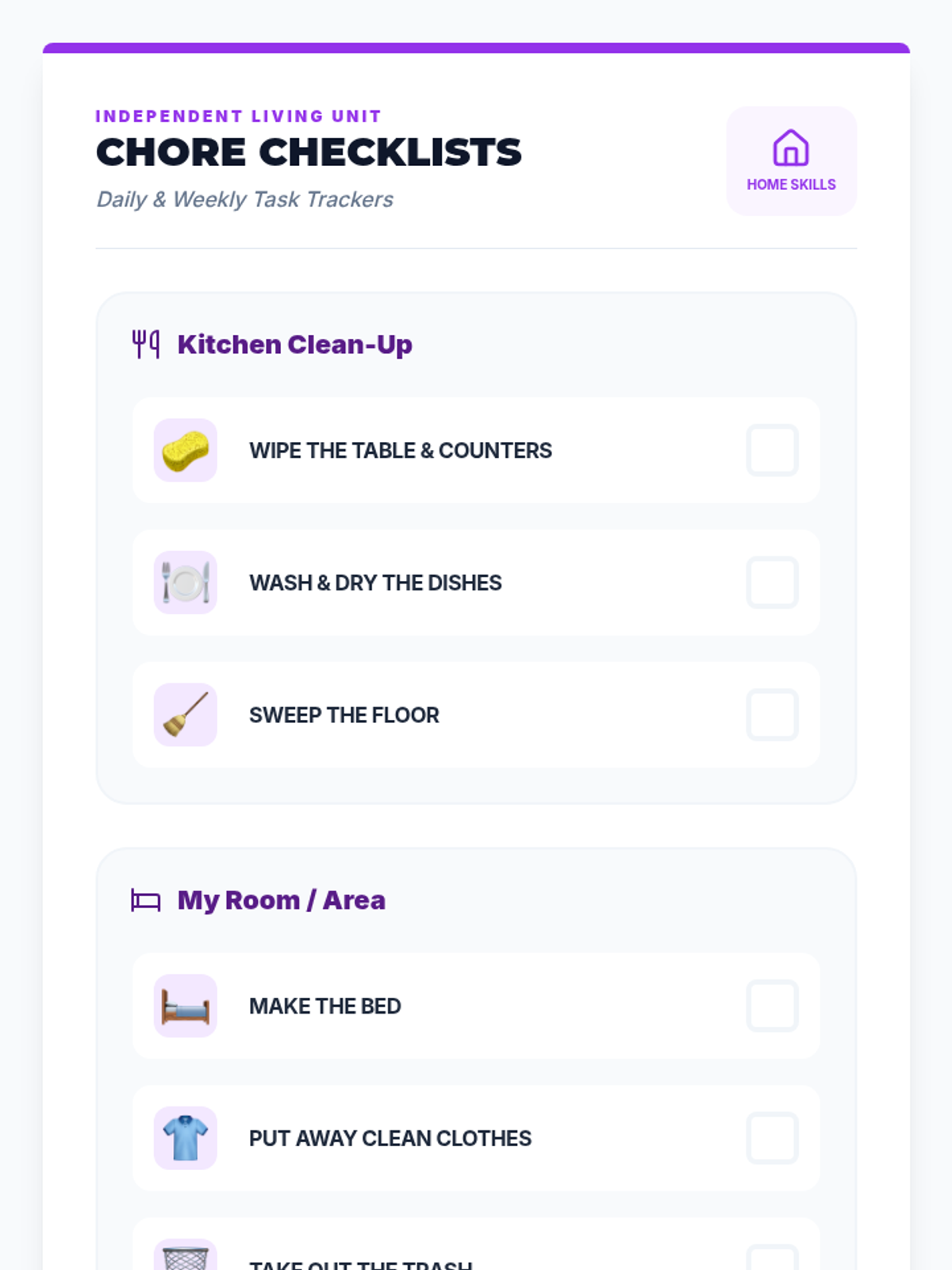
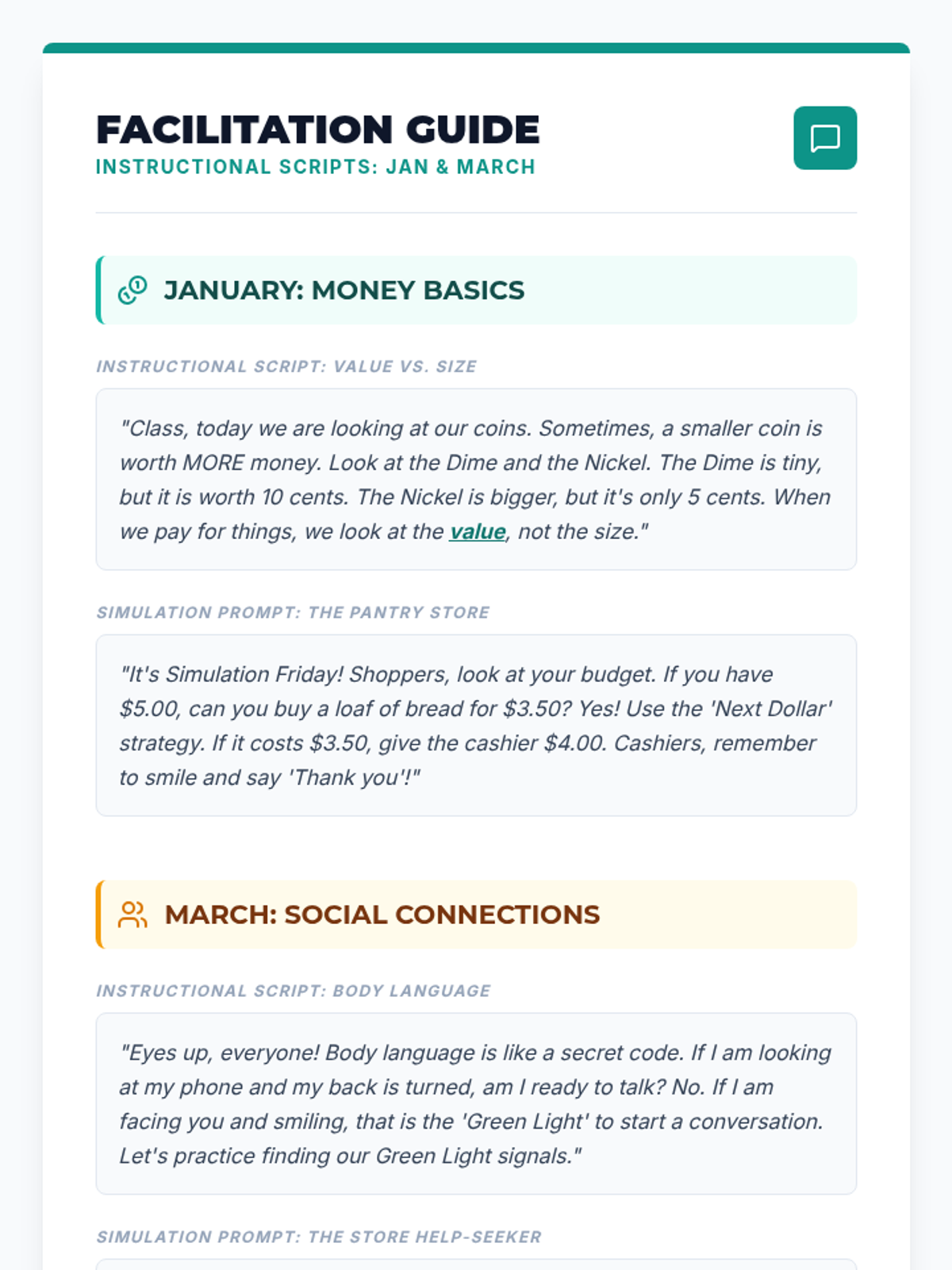
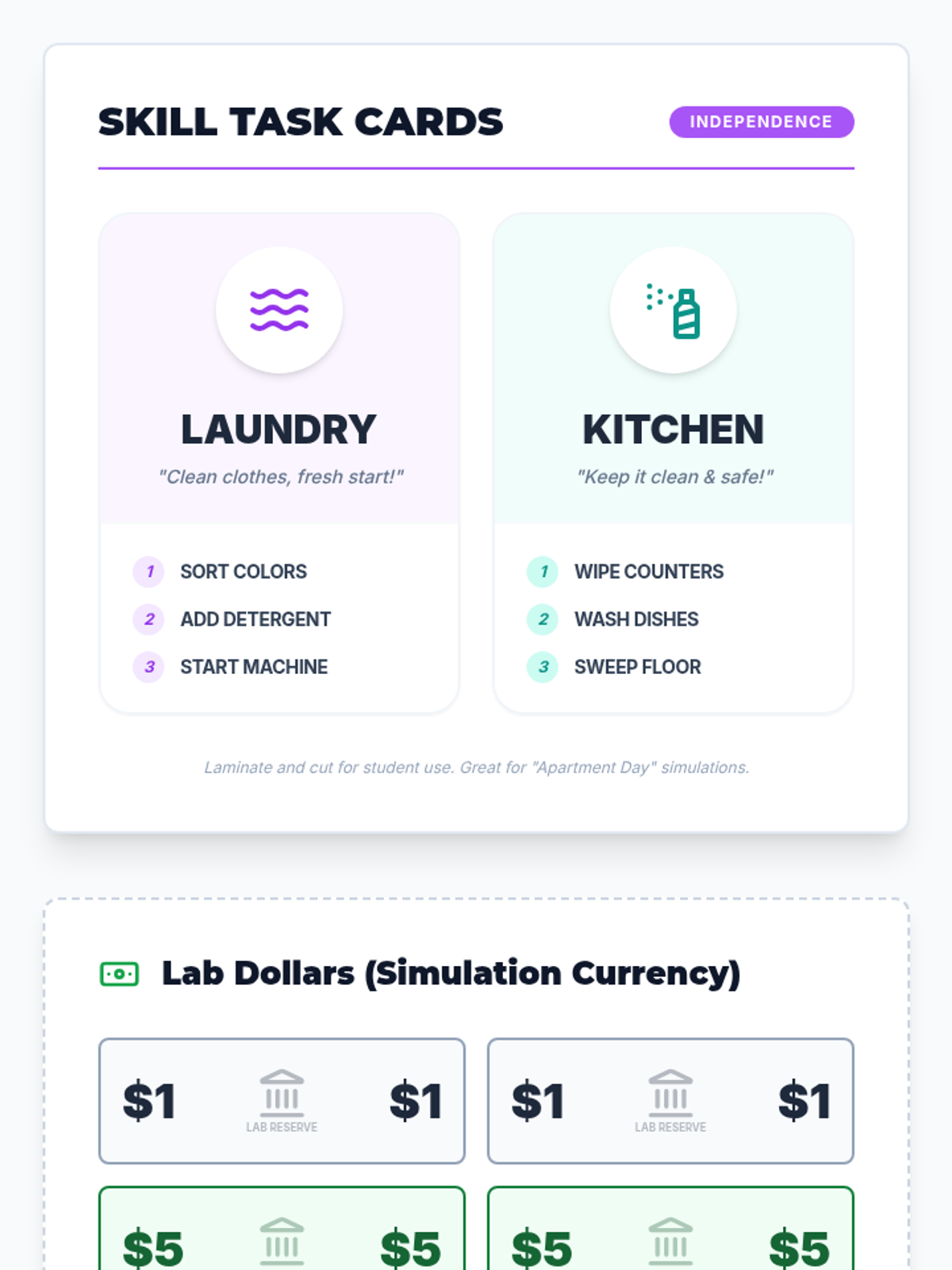
Essential skills for maintaining a household, including chores, laundry, and daily organization.
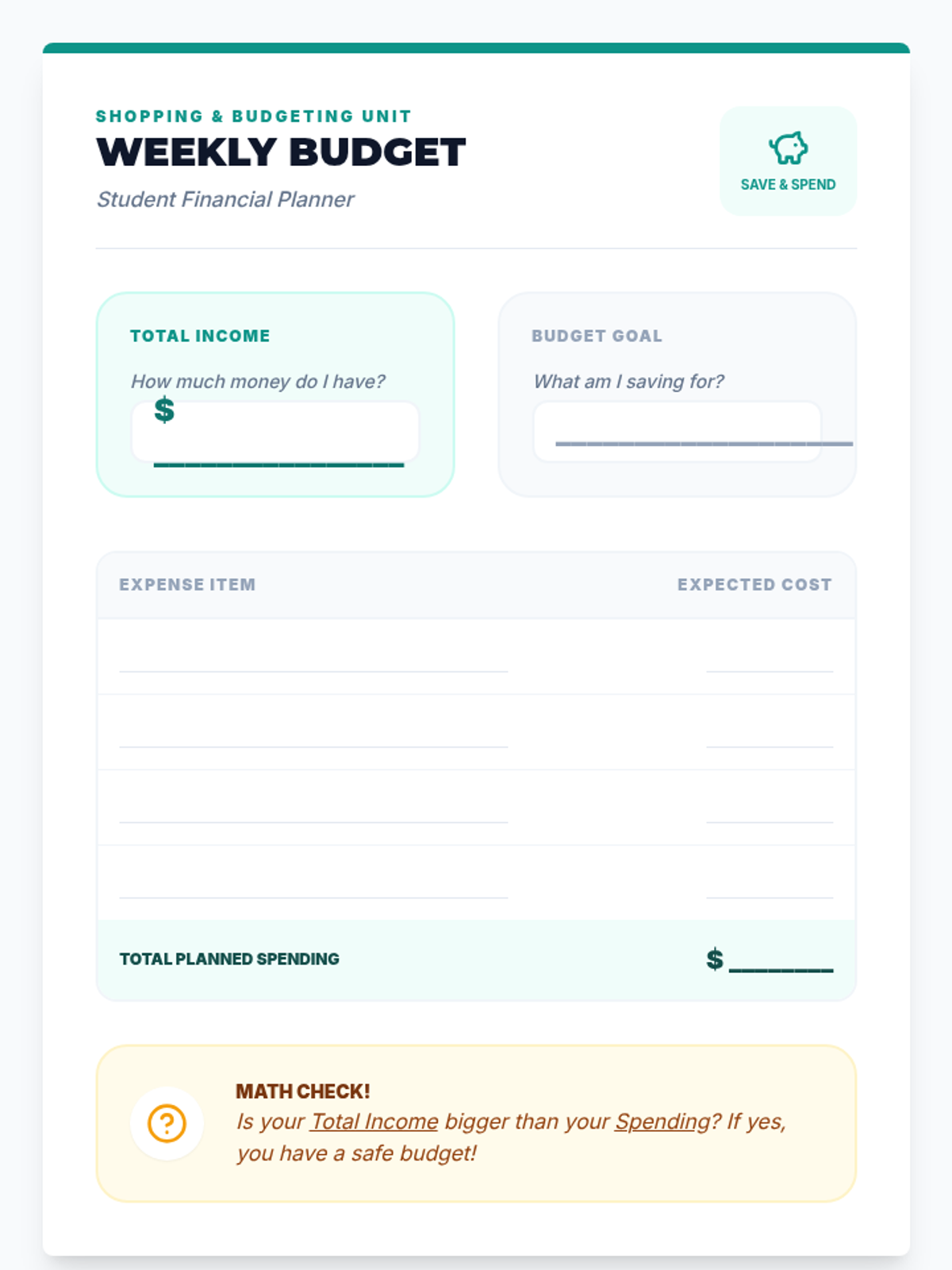
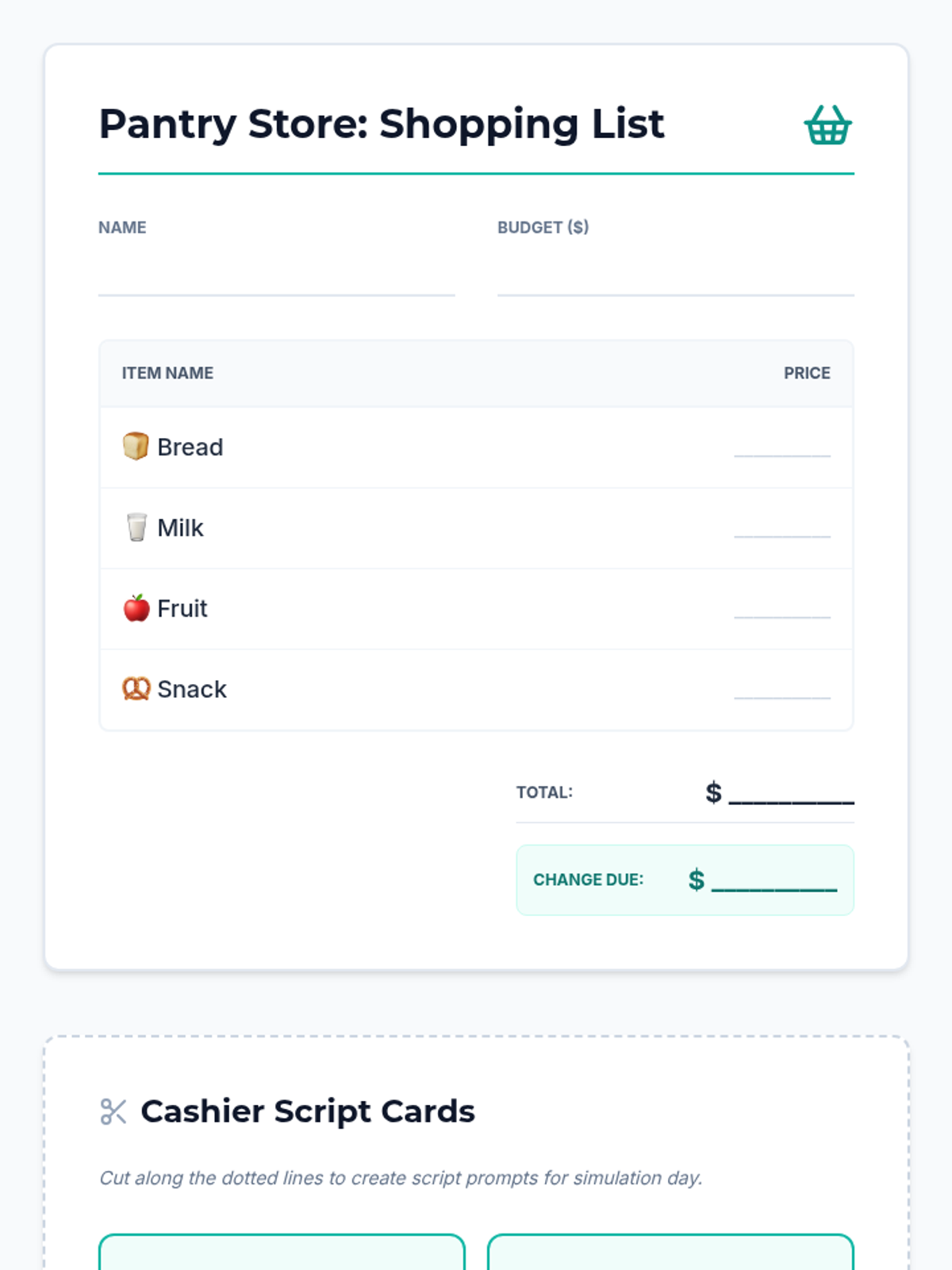
Practical application of money skills through budgeting, price comparison, and navigating a shopping environment.
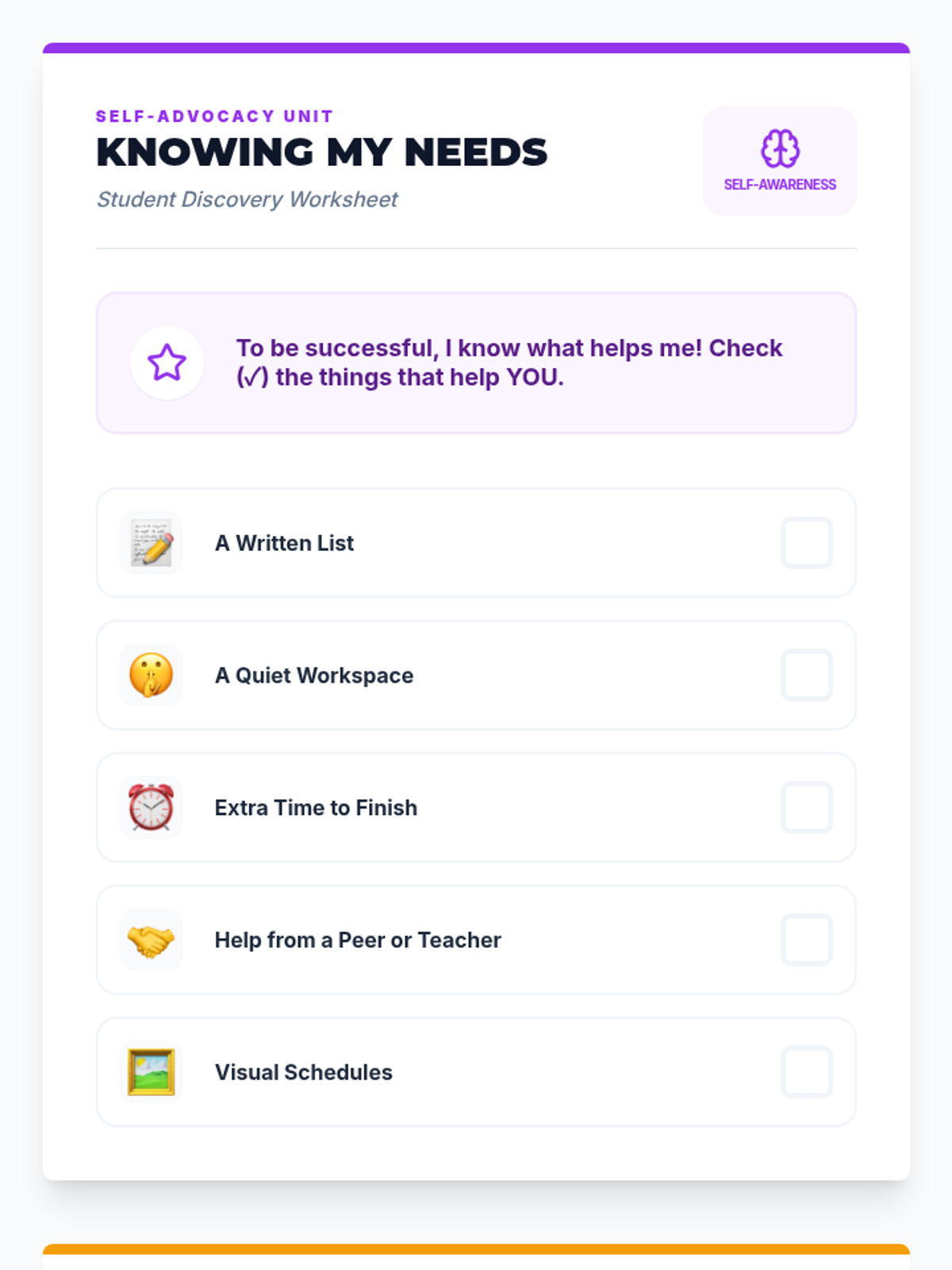
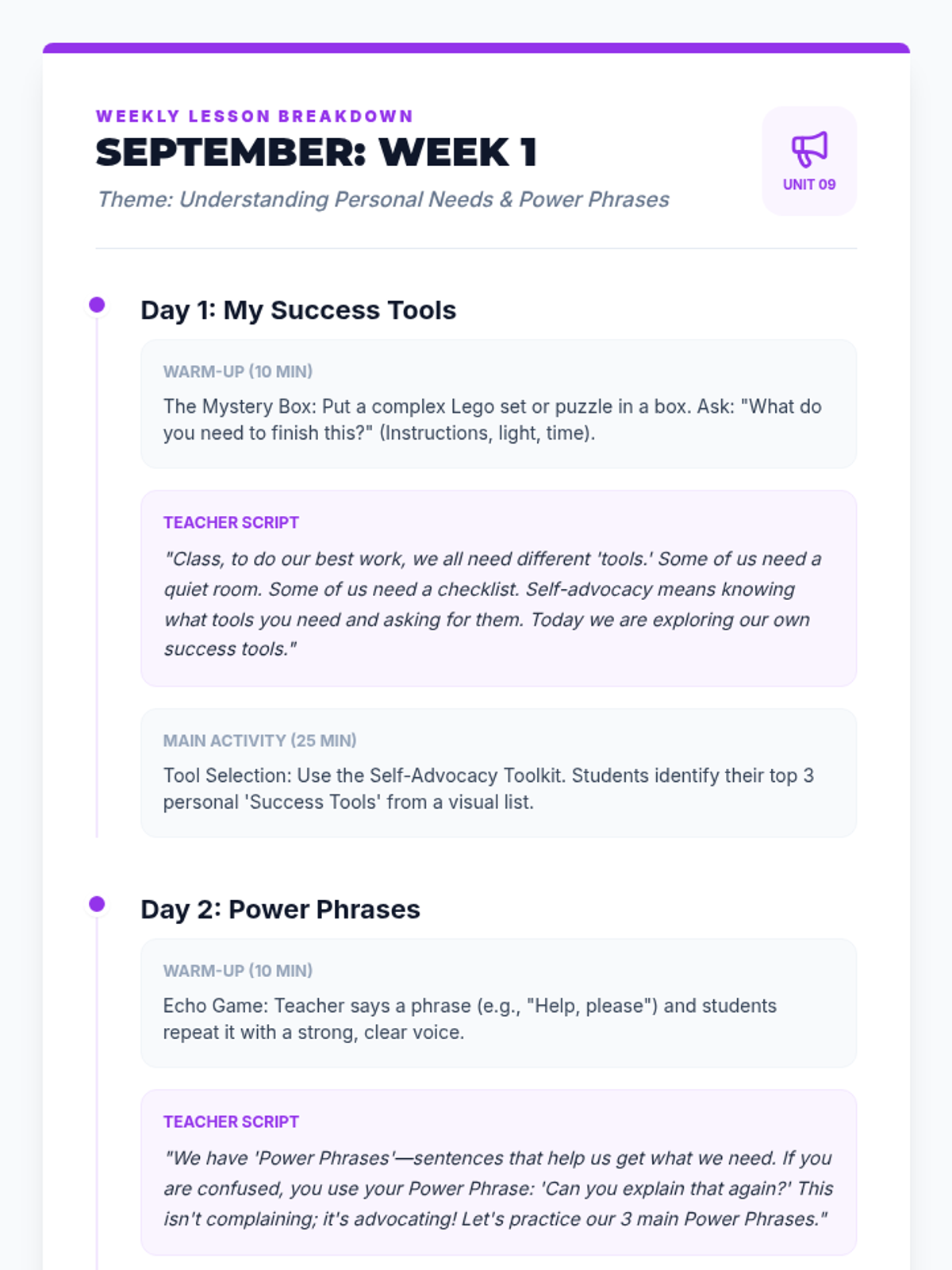
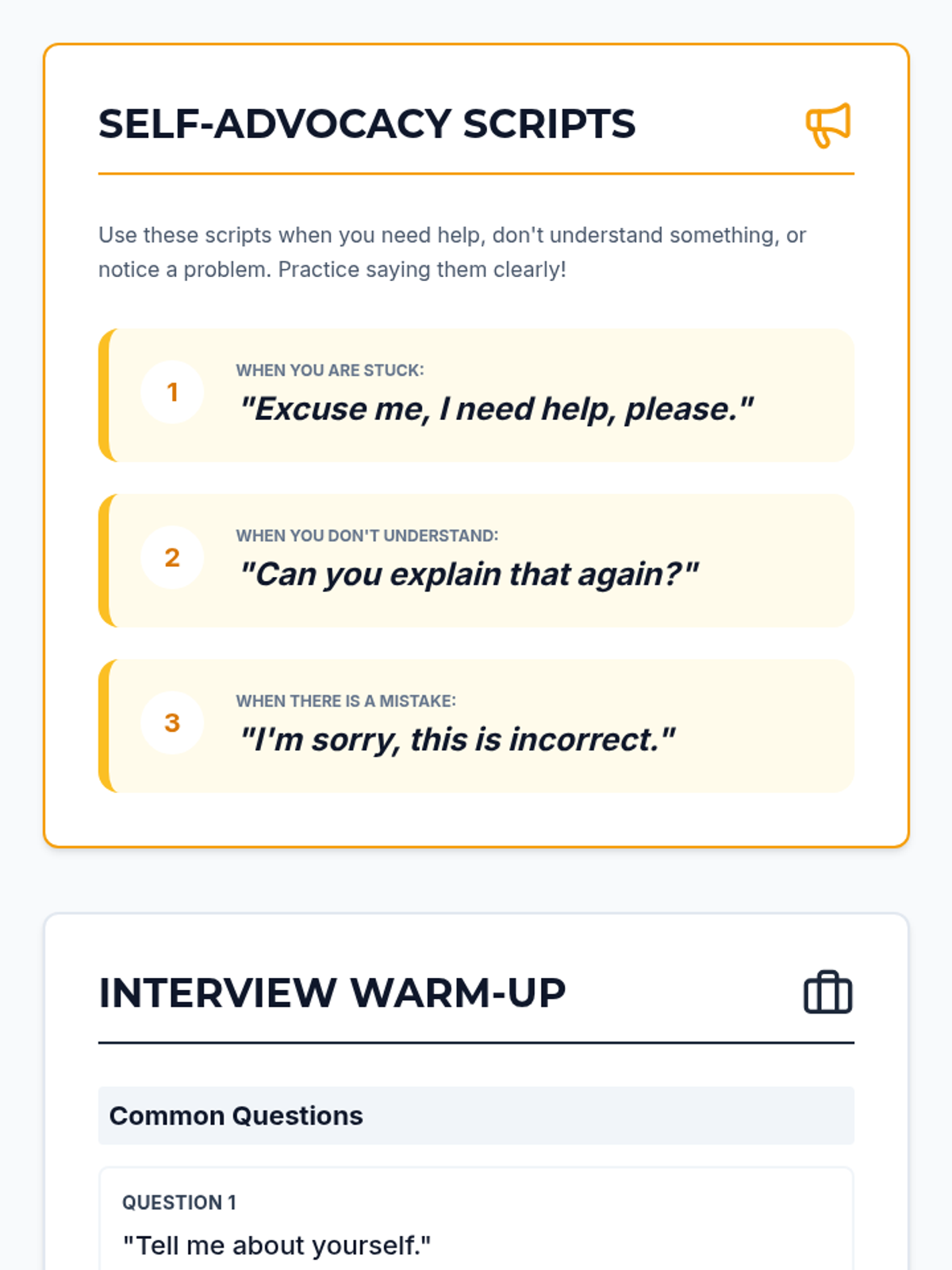
Empowering students to speak up for their needs, understand their rights, and communicate effectively in various personal and community situations.
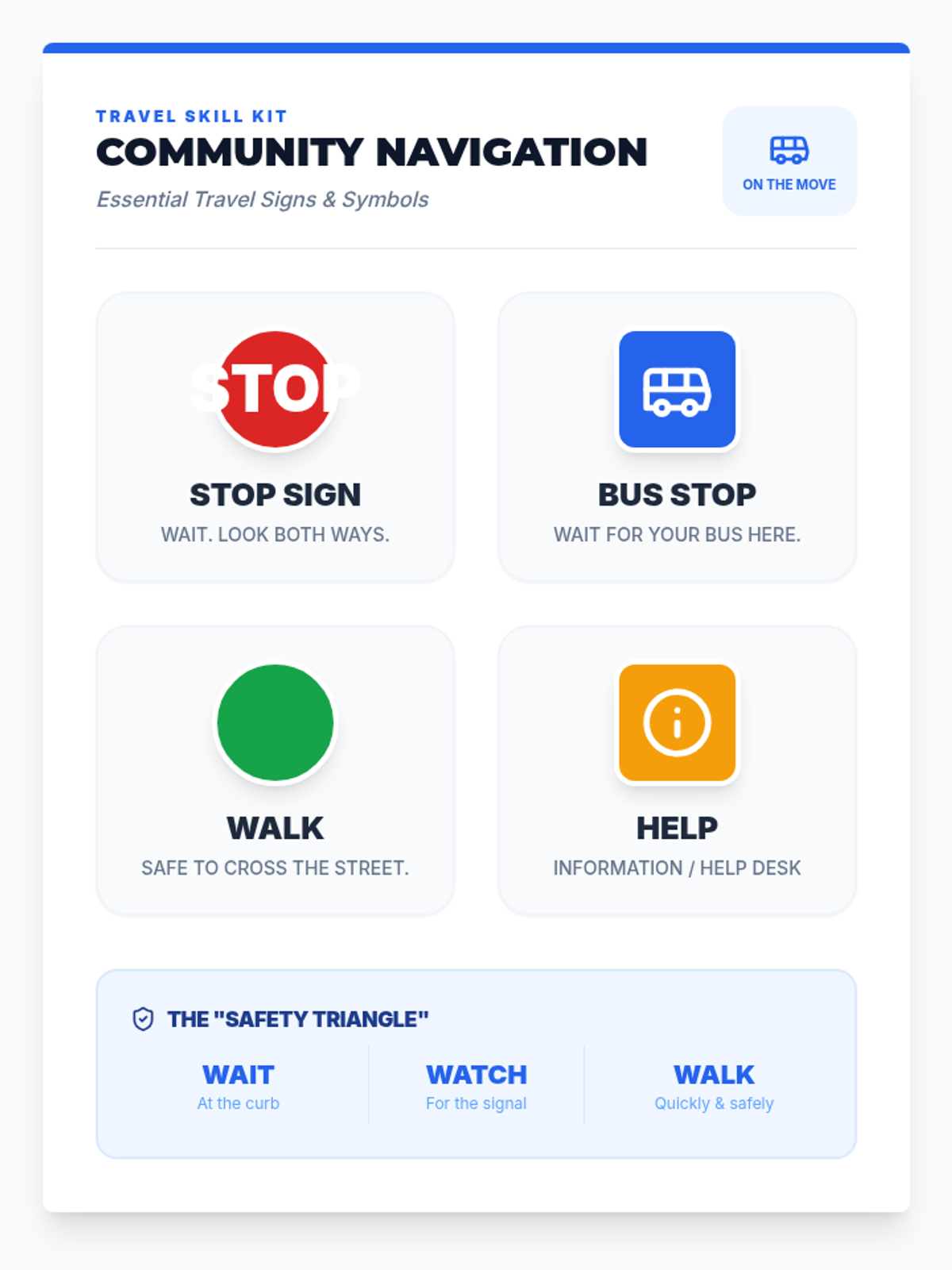
Navigating the community using public transportation, reading schedules, and practicing safety and social etiquette while traveling.
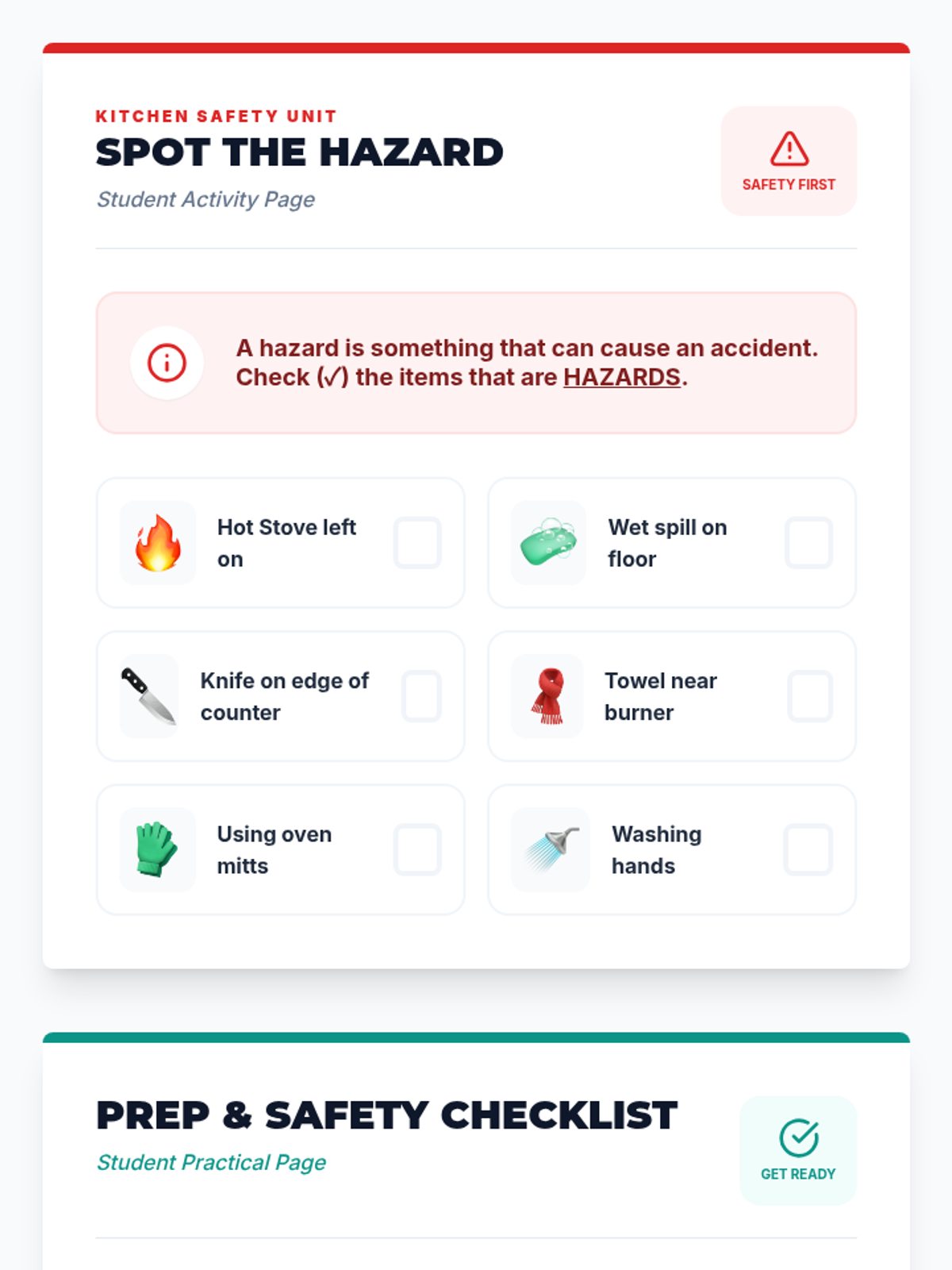
Essential knowledge for identifying hazards, handling tools safely, and maintaining a hygienic cooking environment through visual checklists and simulations.
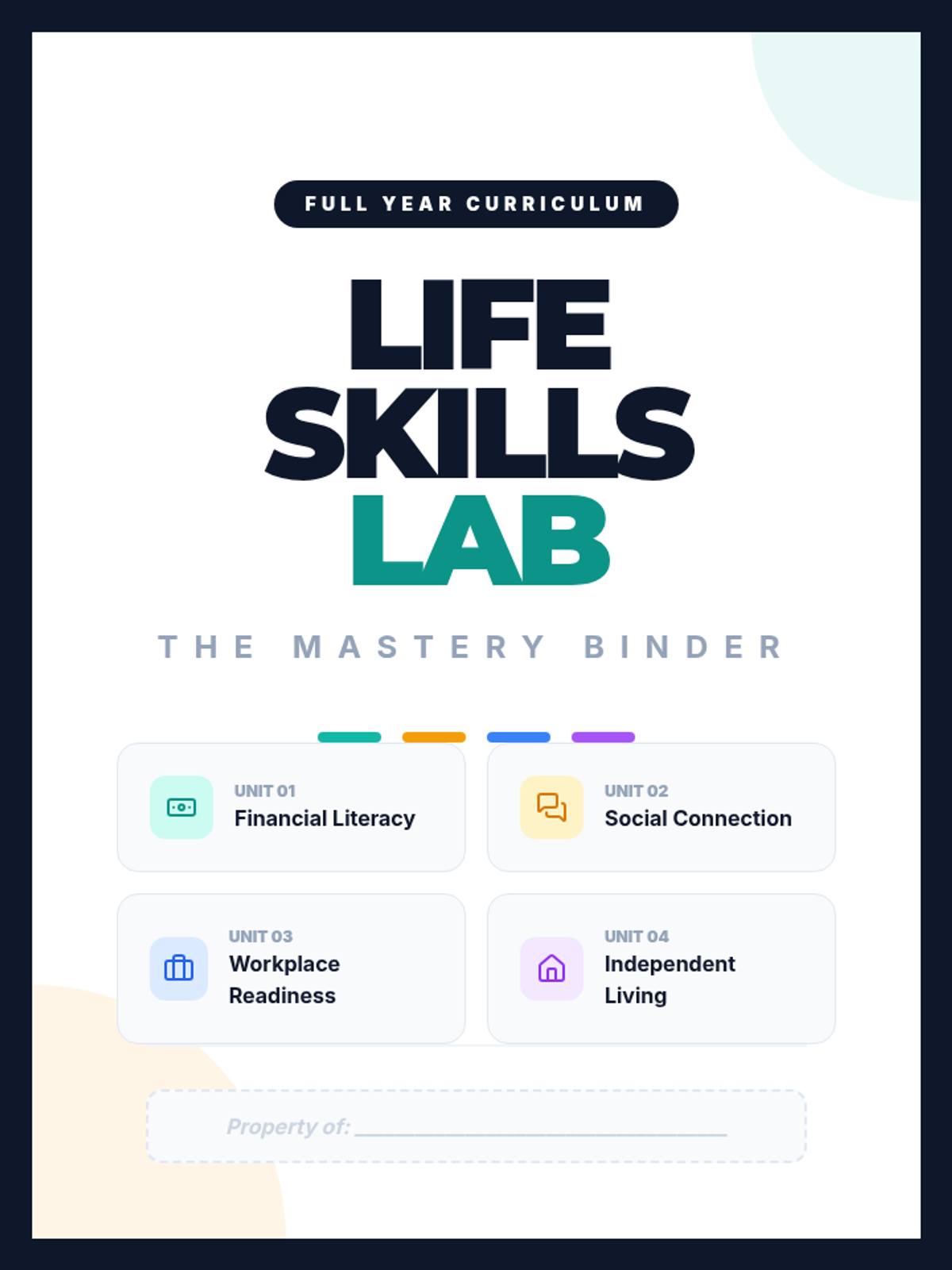
Foundational materials for the Life Skills Launchpad, including binder covers, dividers, and sequence-wide tracking systems.
Building essential social cues, conversational scripts, and self-advocacy skills for various community and professional settings.
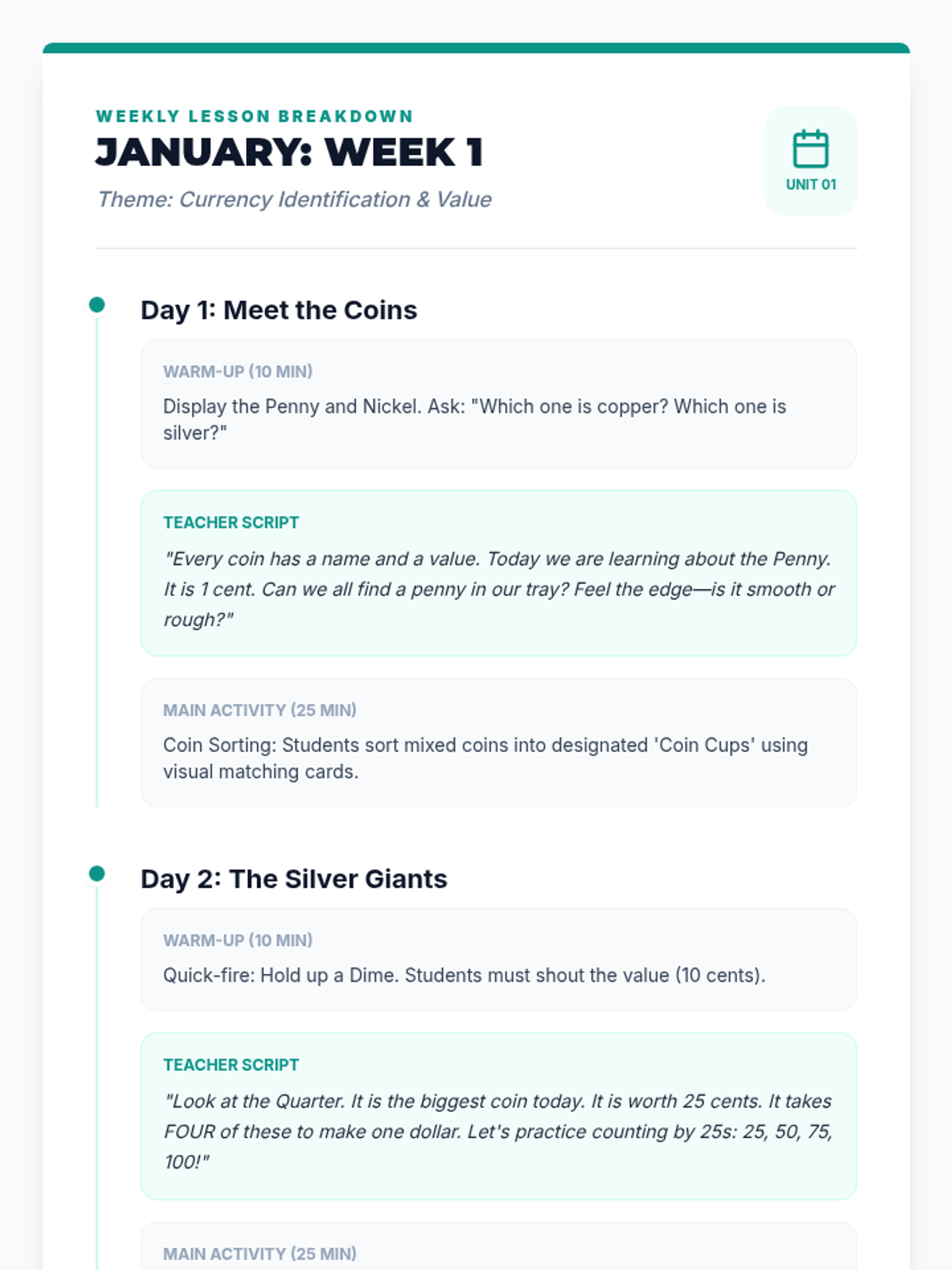
A deep dive into identifying currency, understanding value, and managing basic transactions through visual supports and hands-on practice.
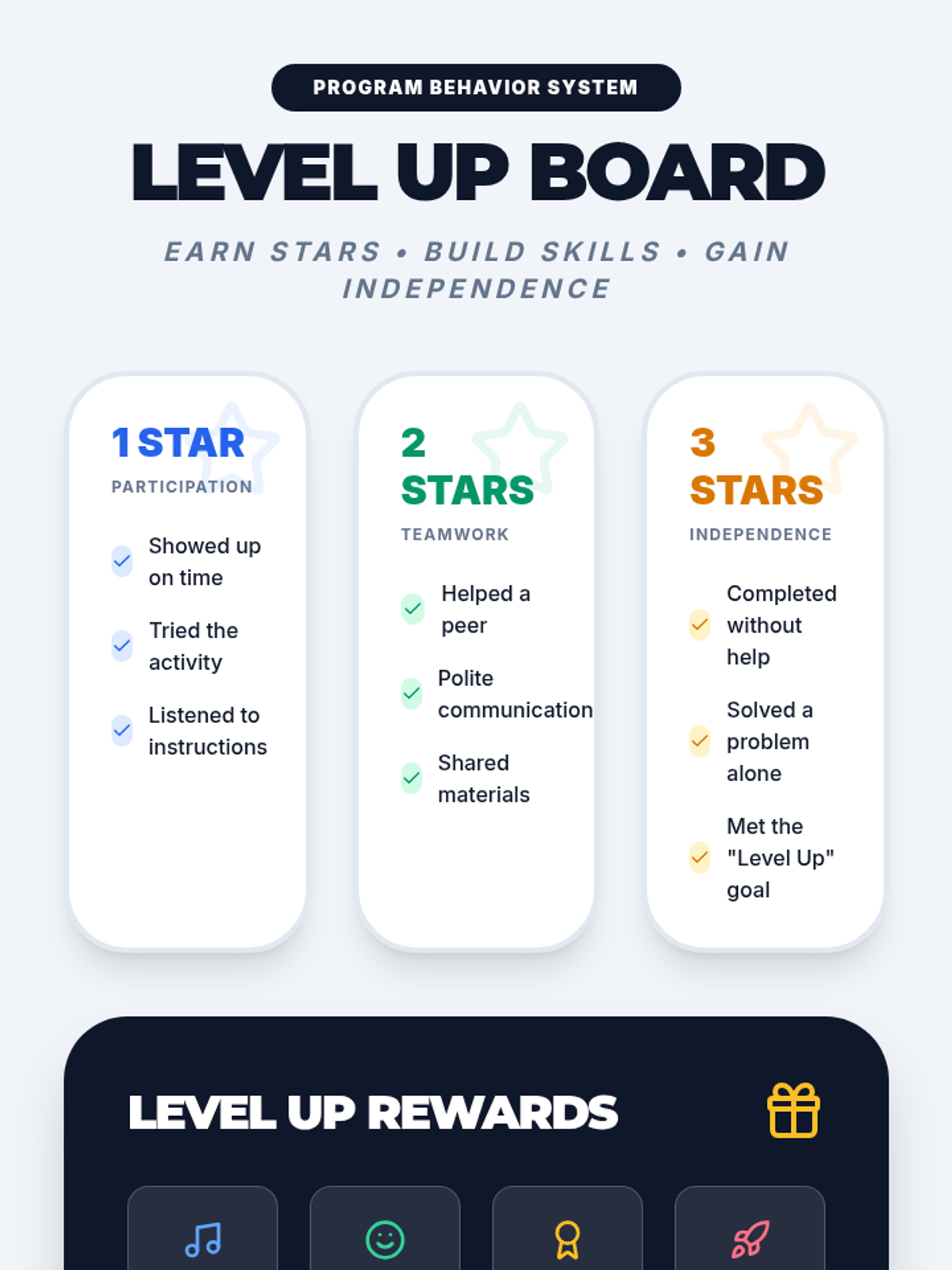
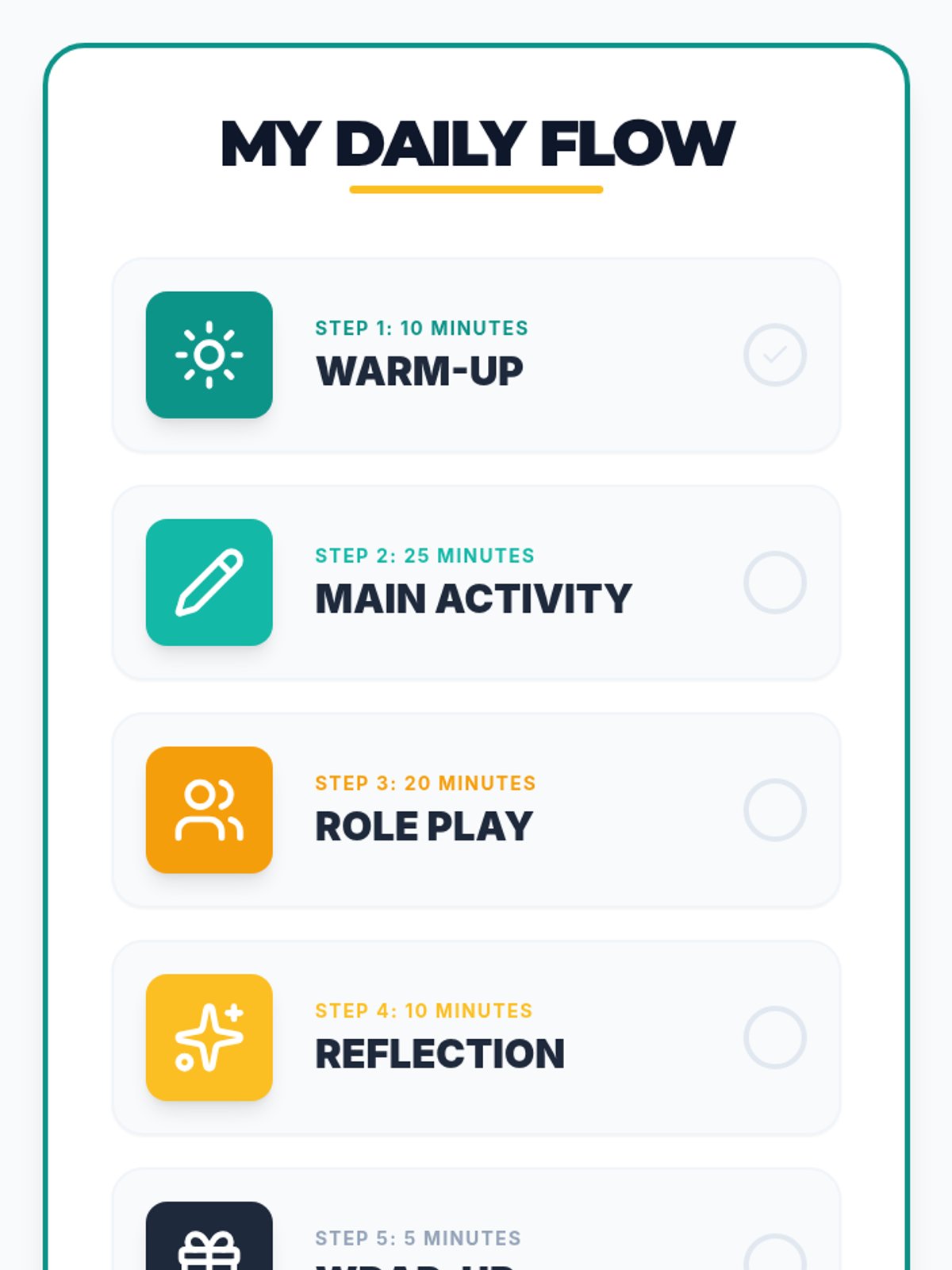
Essential templates, tracking sheets, and the overall framework for the Life Skills program to ensure consistent daily structure and progress monitoring.
Practicing the core skills of independent living, including home maintenance, personal advocacy, and daily scheduling.
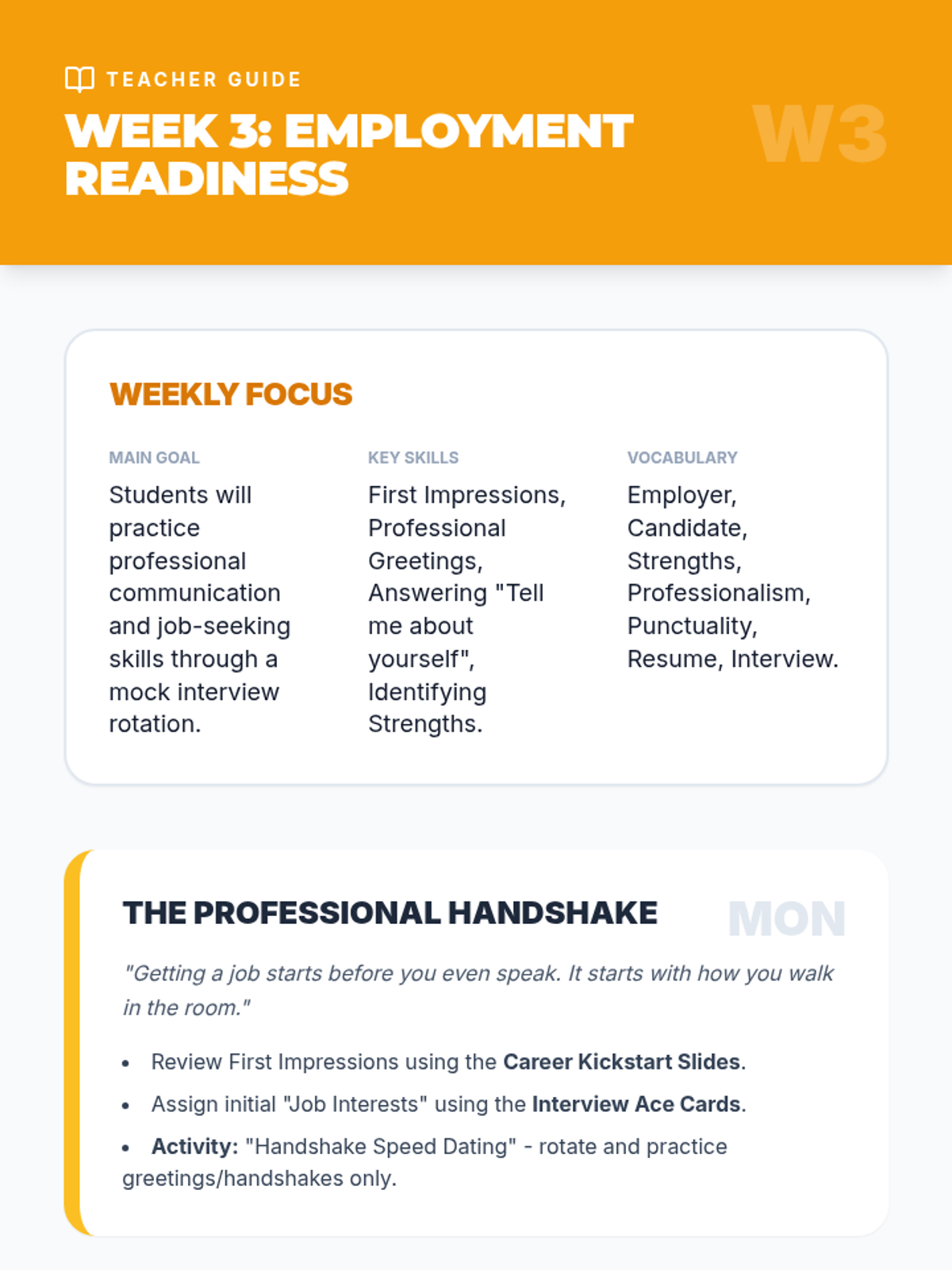
Preparing for the workforce with mock interviews, professional communication practice, and on-the-job simulations.
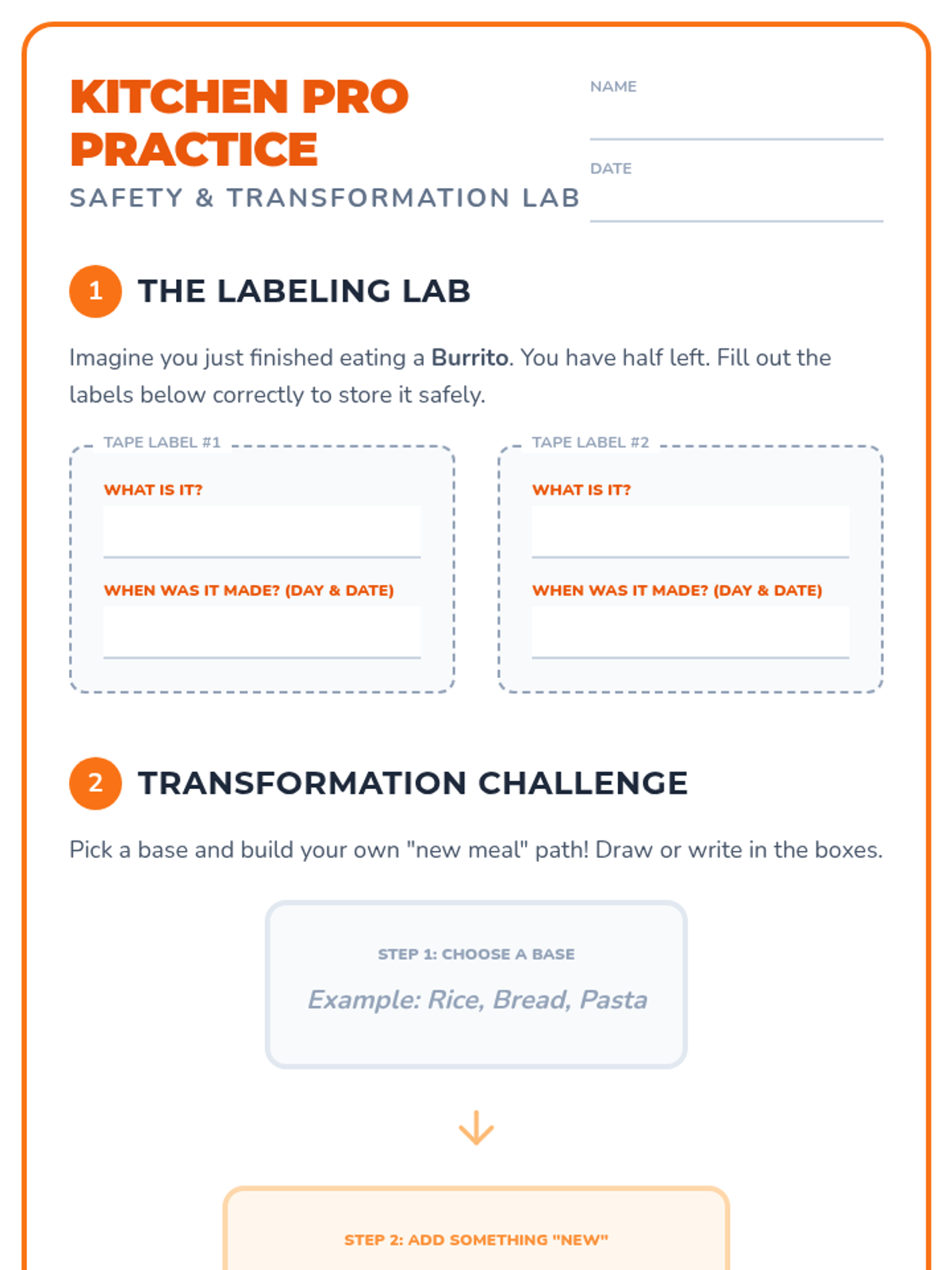
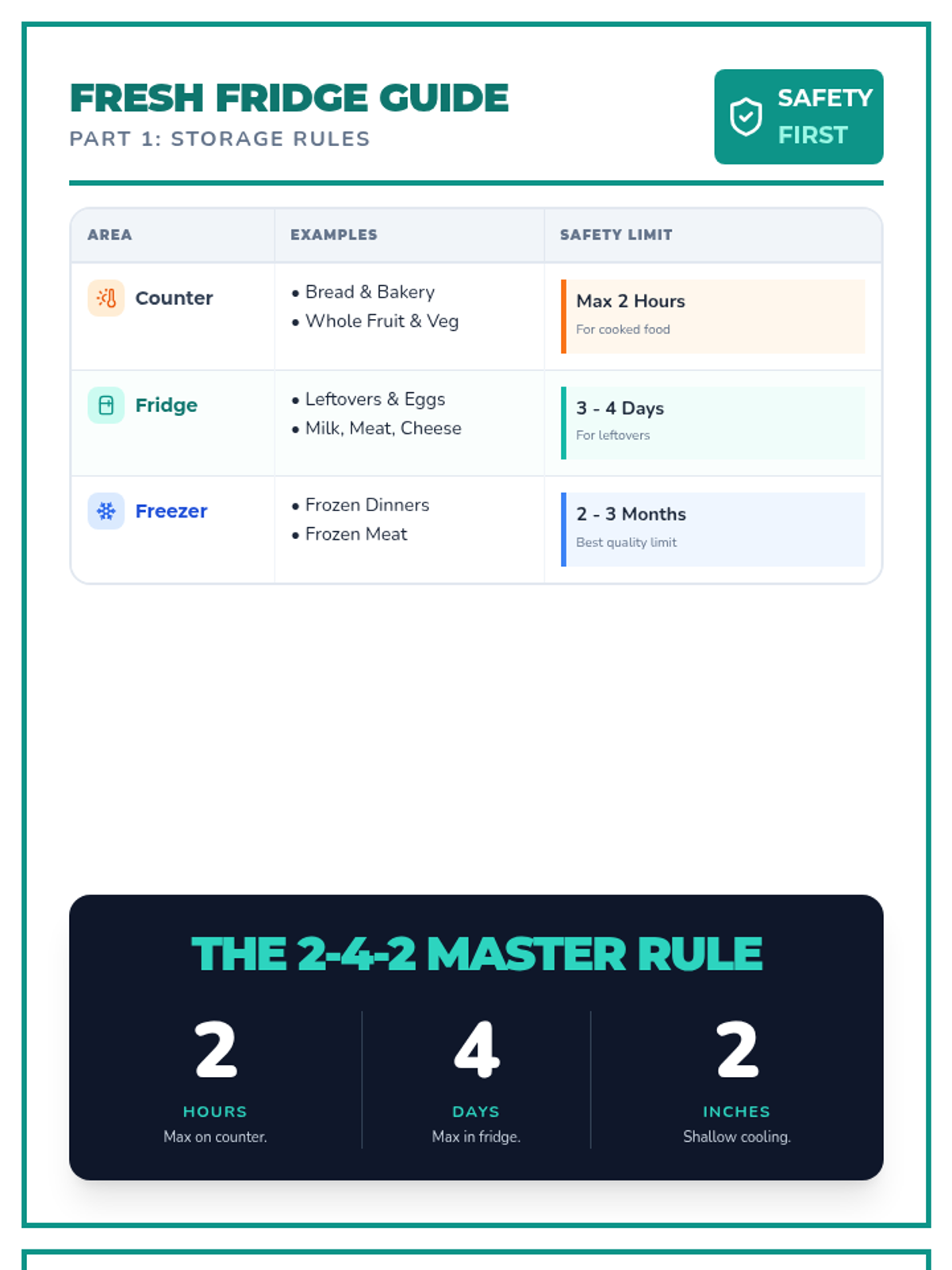
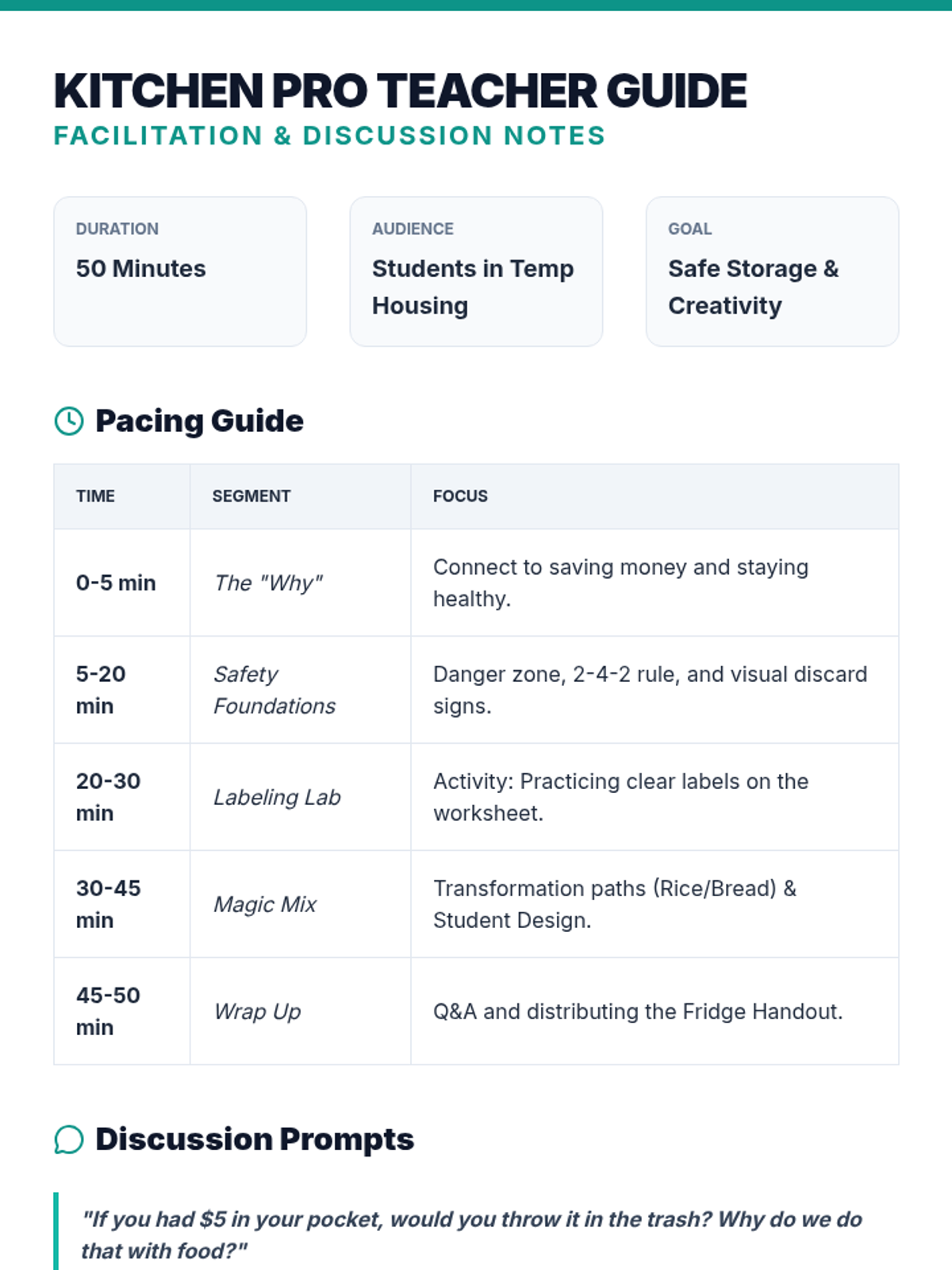
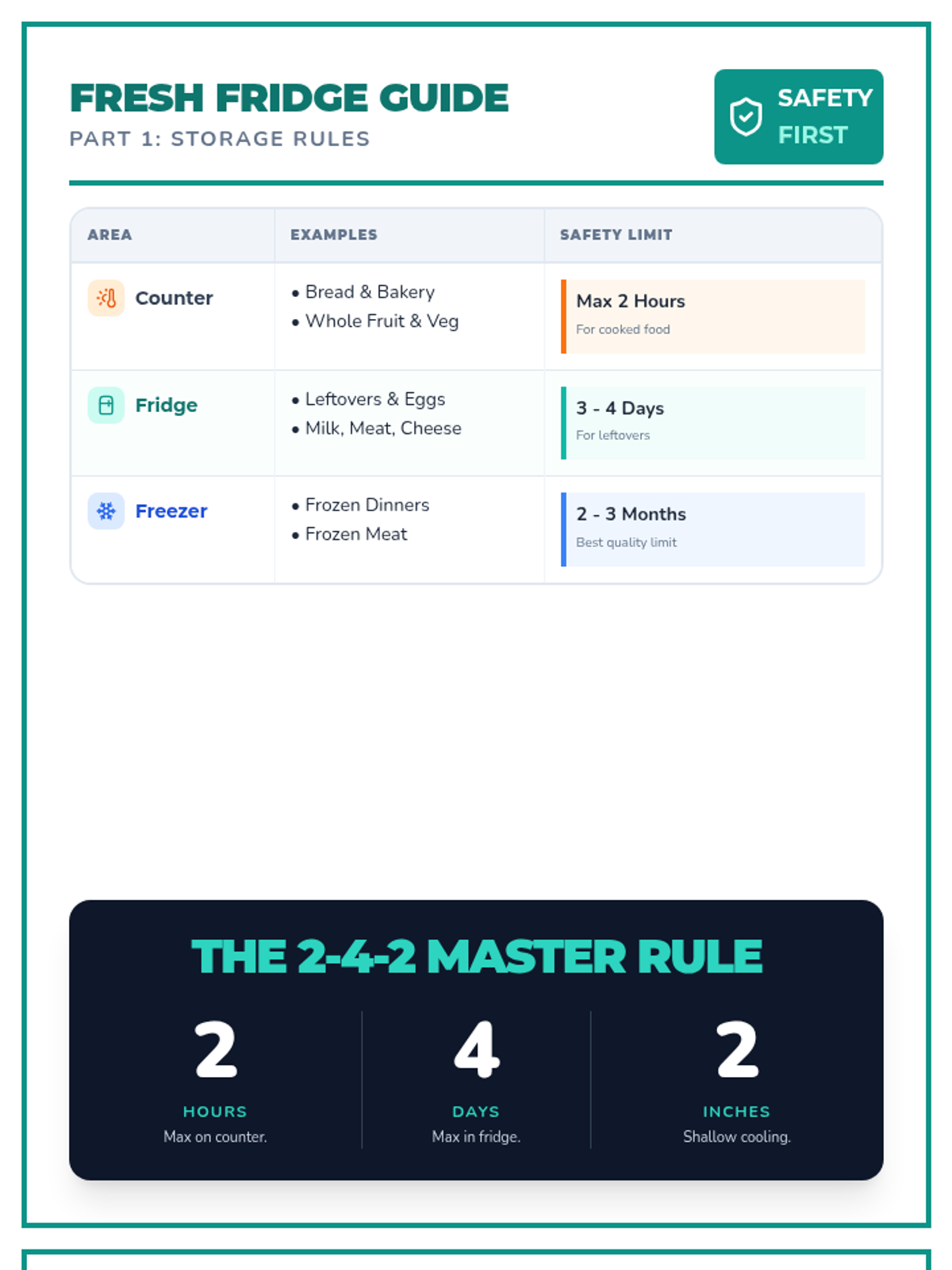
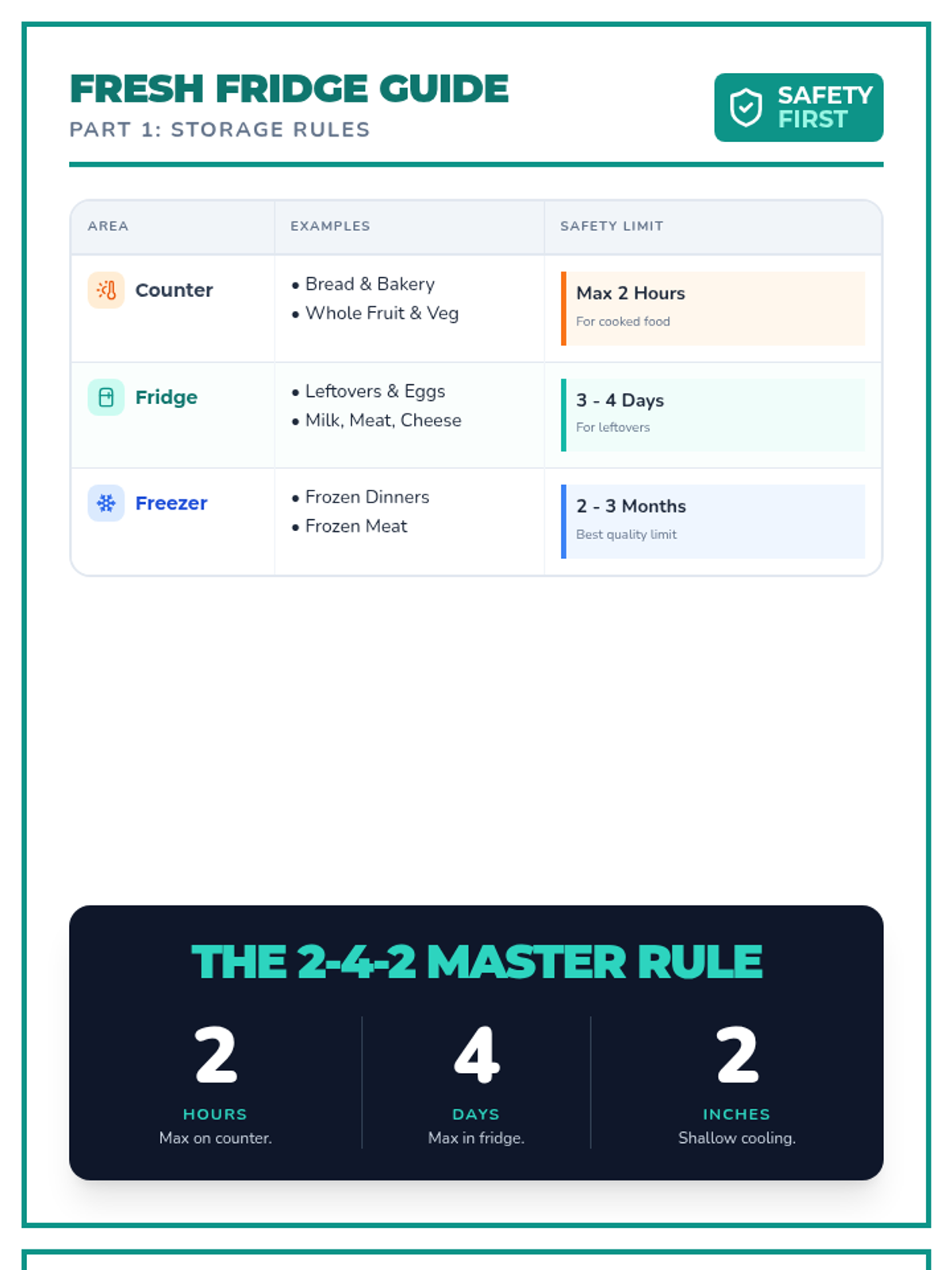
A 50-minute instructional session for students in temporary housing, focusing on safe food storage and creative leftover use through visual guides and sequence flowcharts.
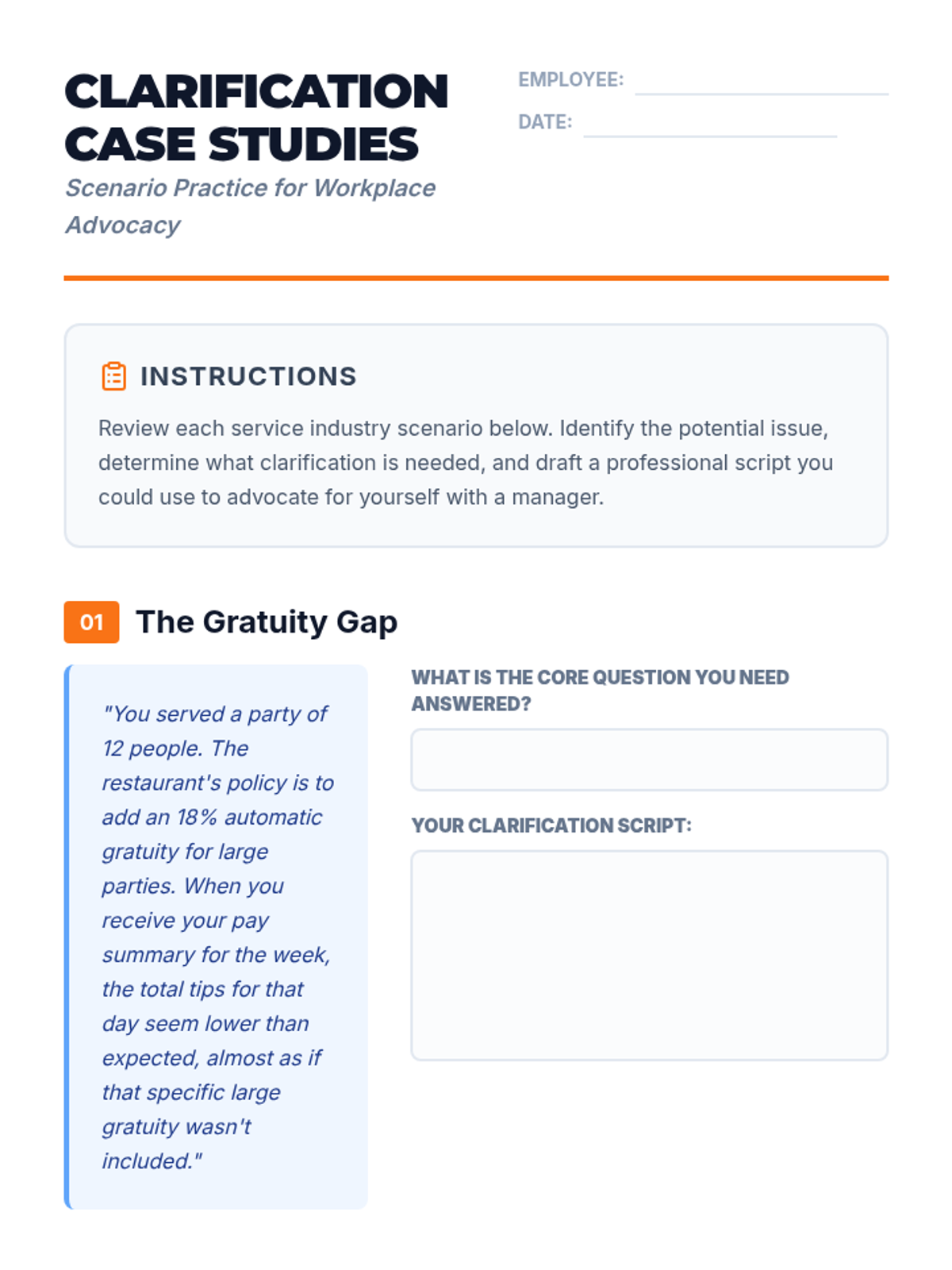
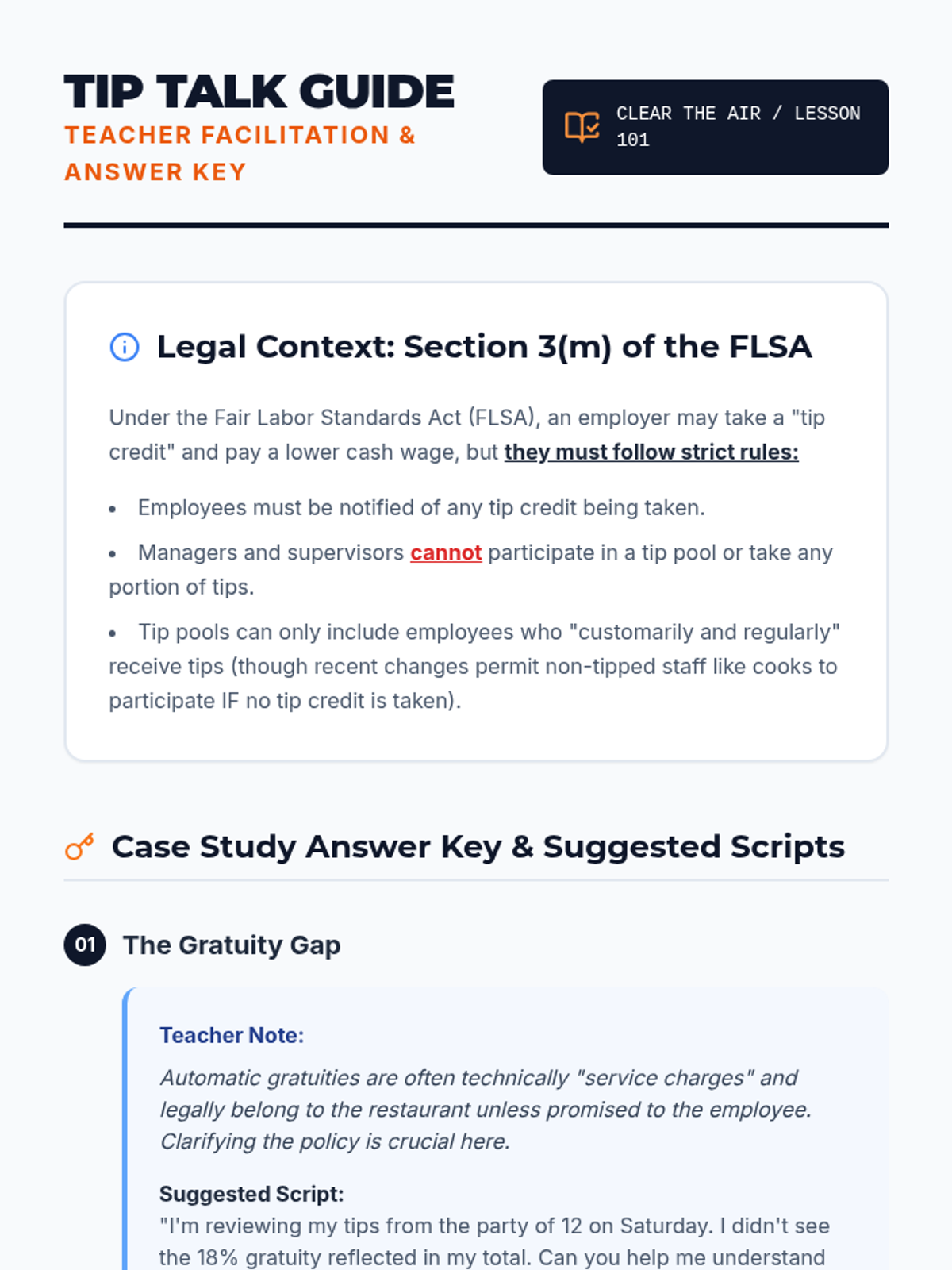
This lesson focuses on self-advocacy in the service industry, specifically regarding tipping policies and procedures. Students will learn how to identify different tipping systems and practice asking for clarification when they have questions about their earnings.
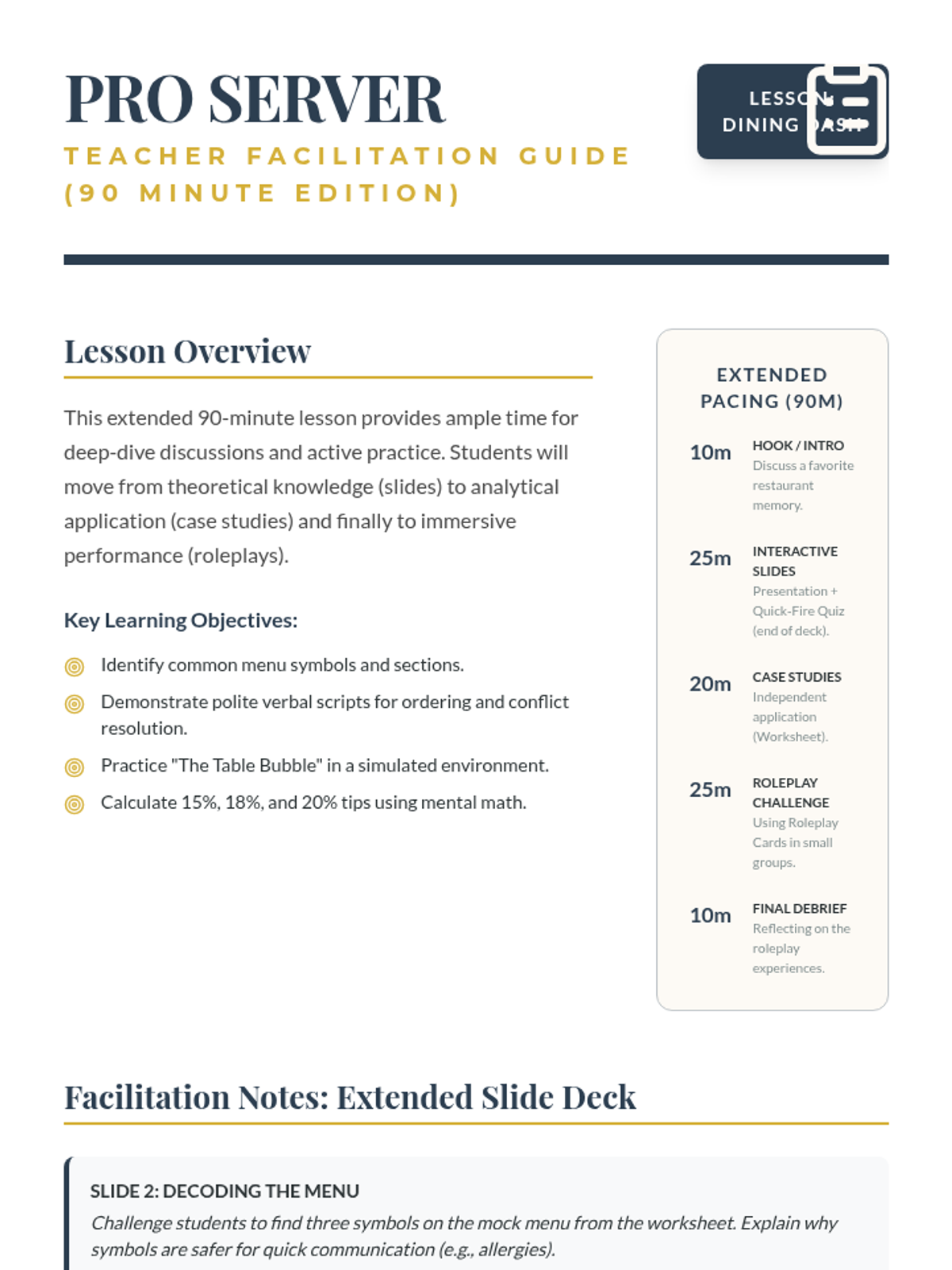
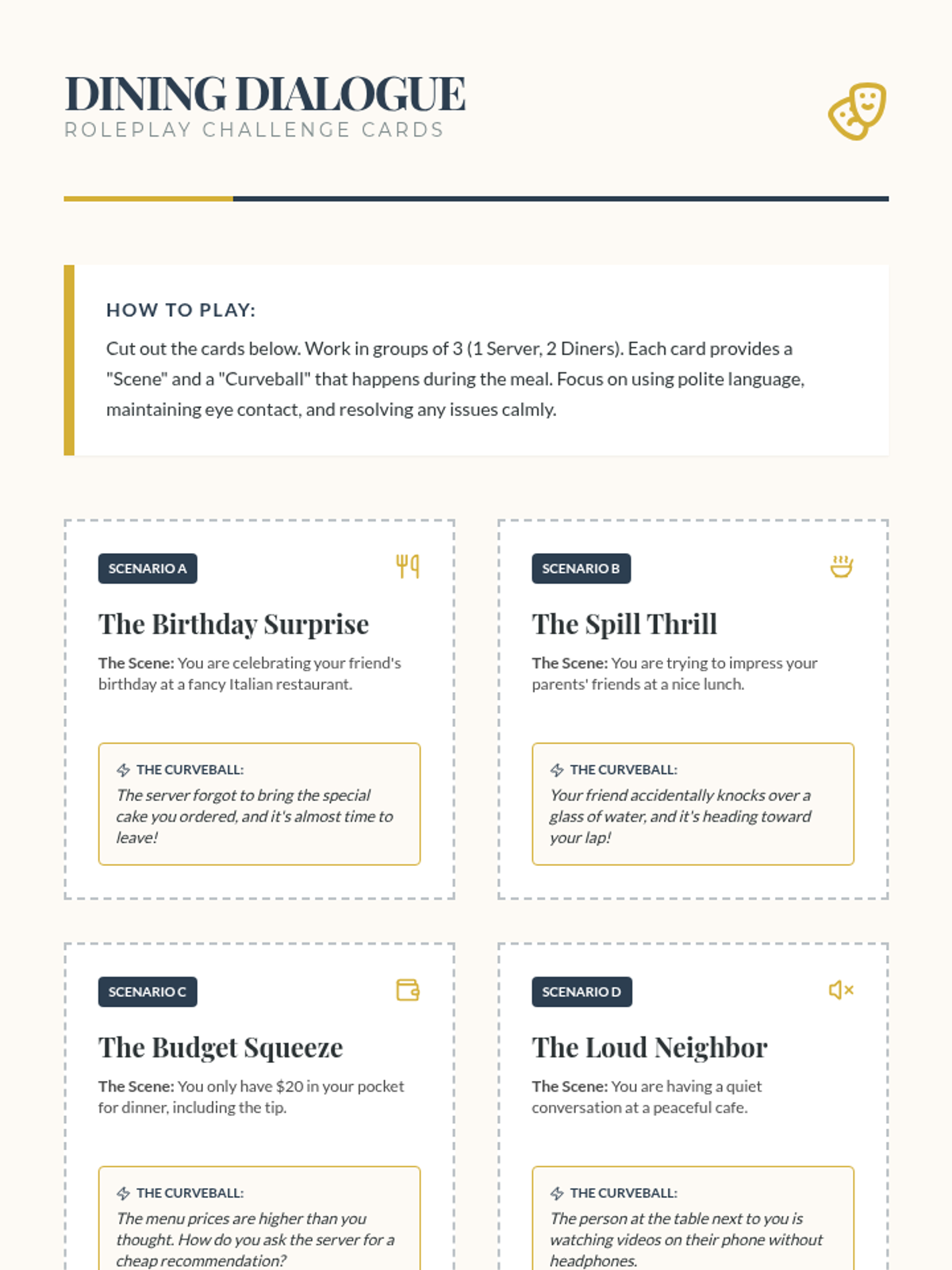
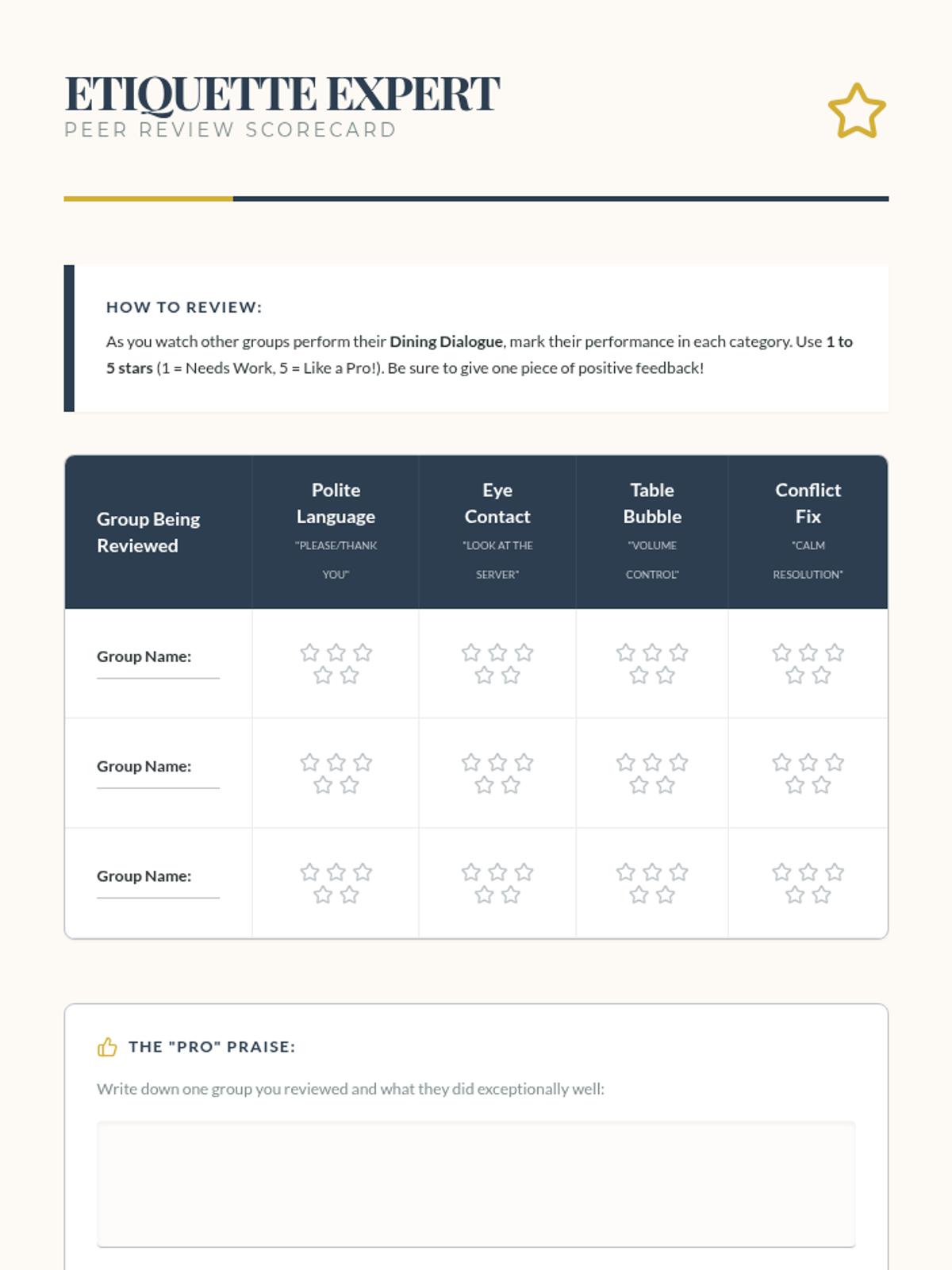
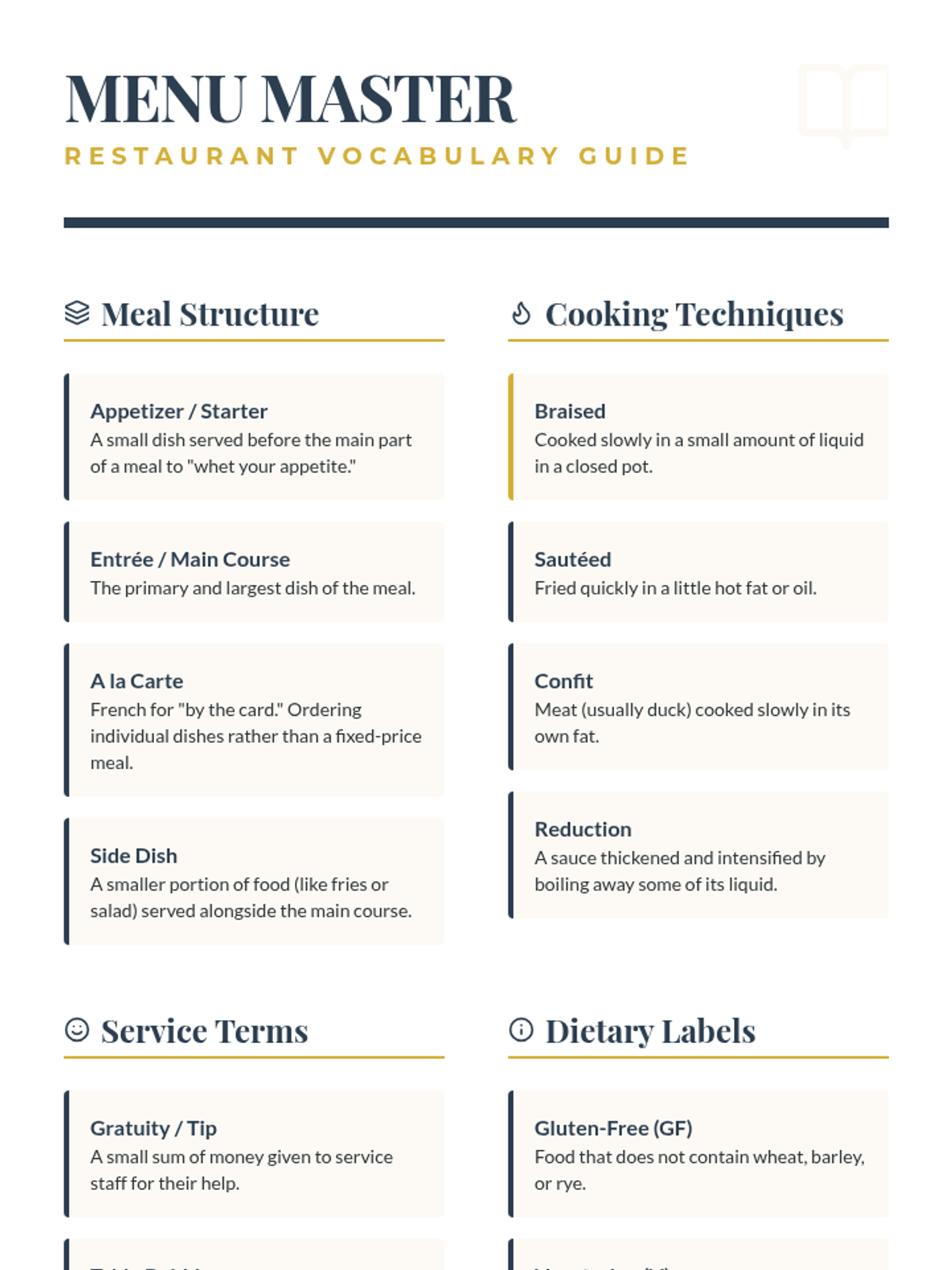
A comprehensive lesson on restaurant etiquette covering menu reading, ordering, manners, volume control, tipping, and conflict resolution.
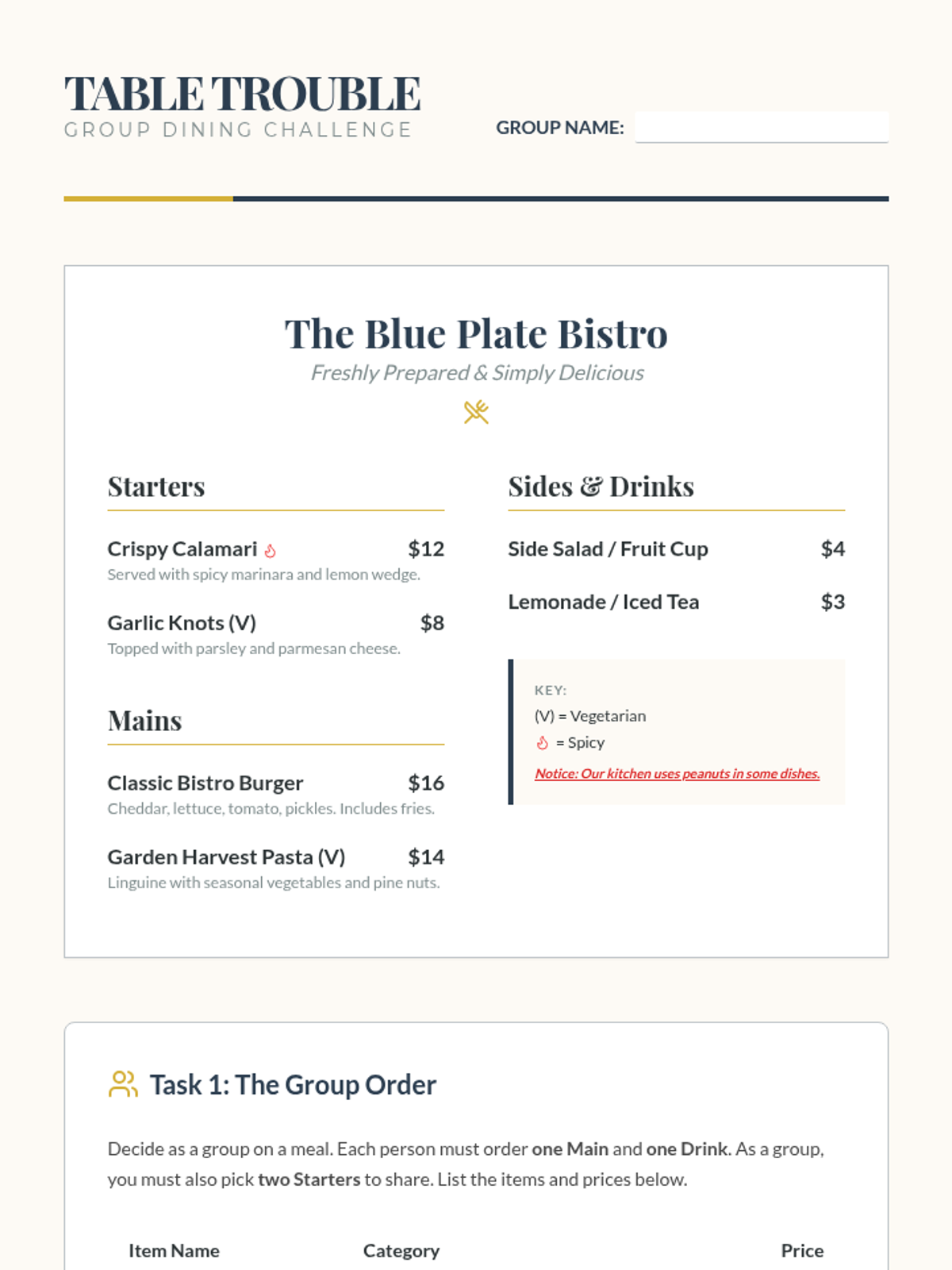
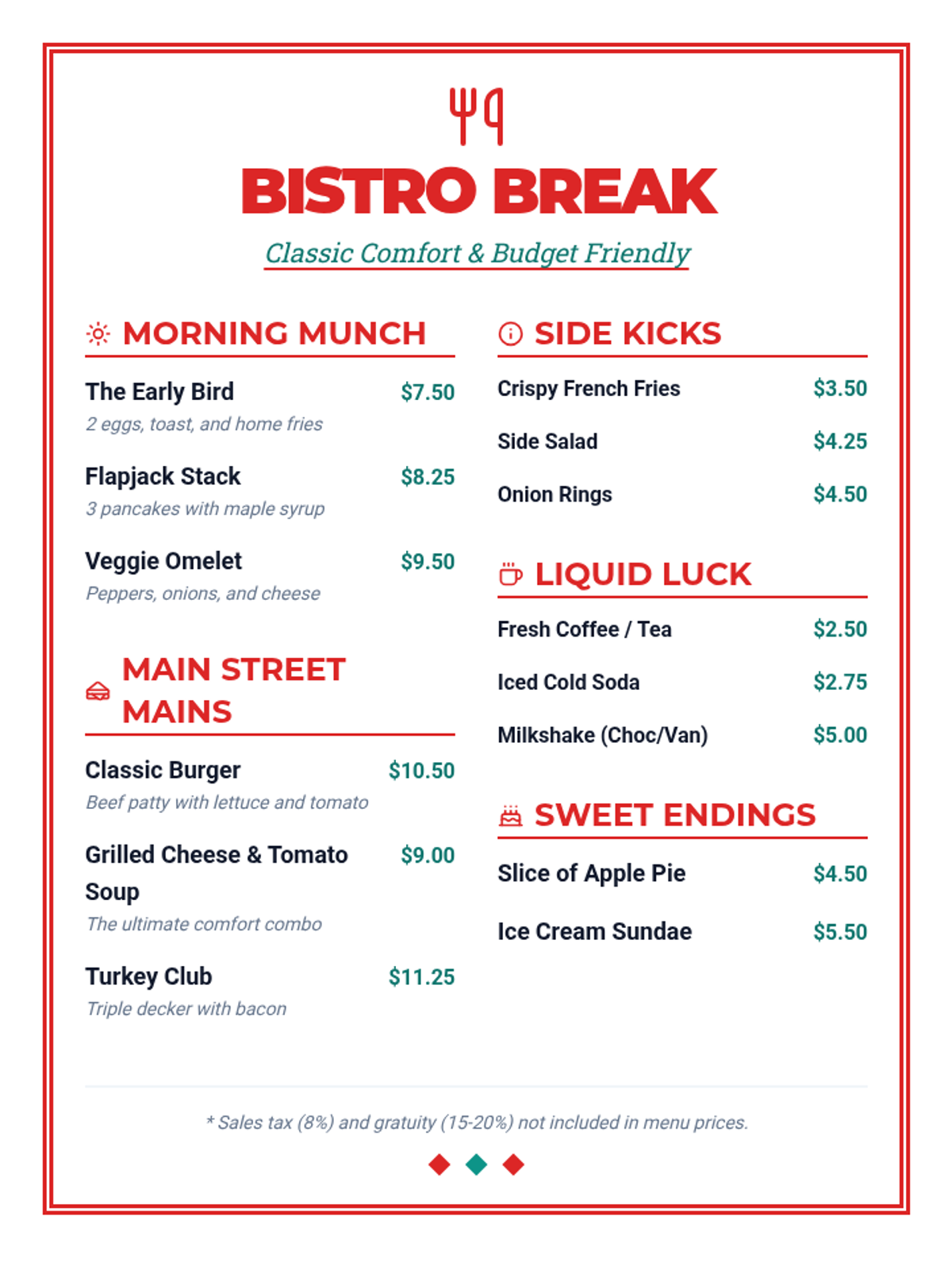
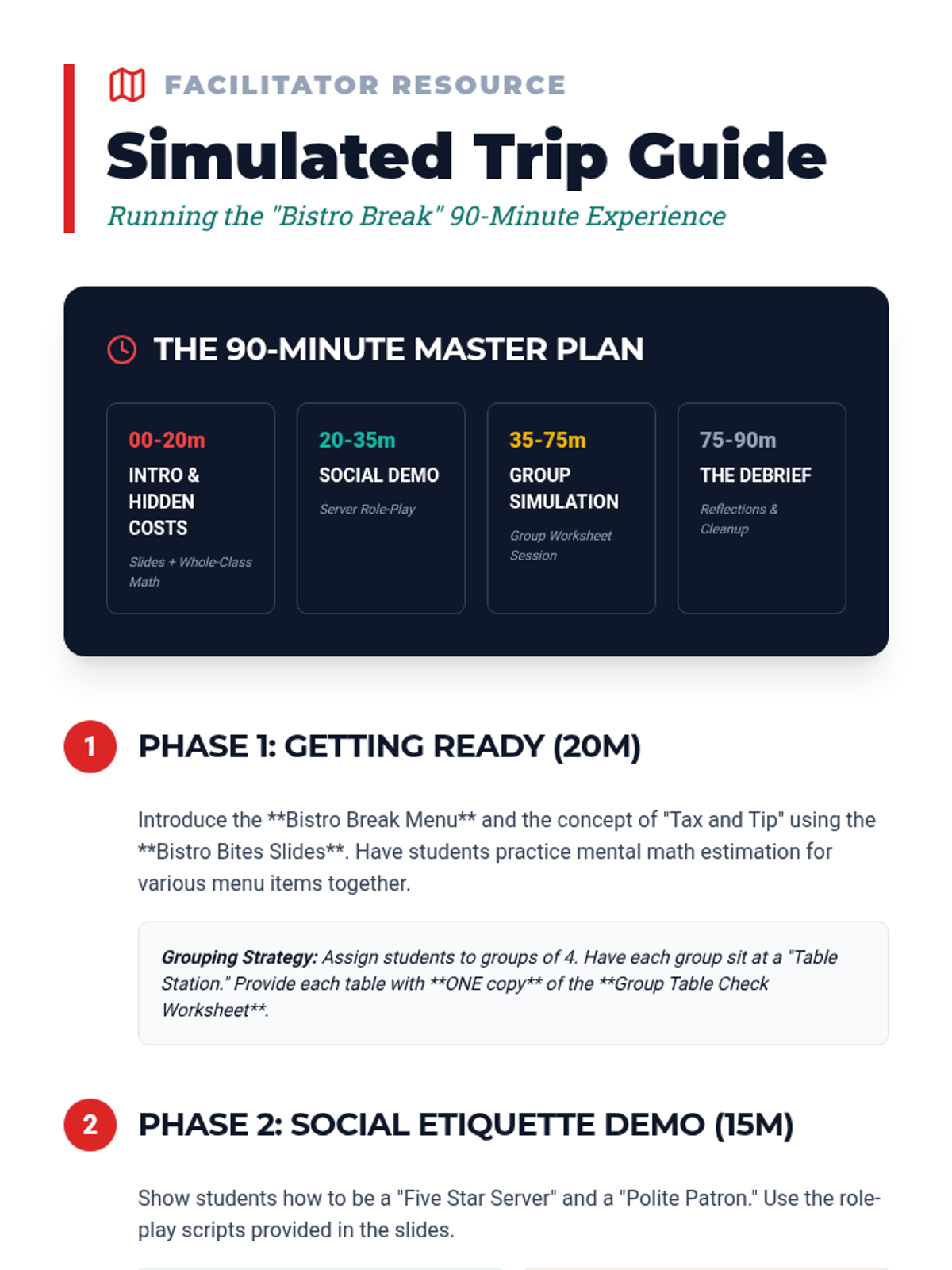
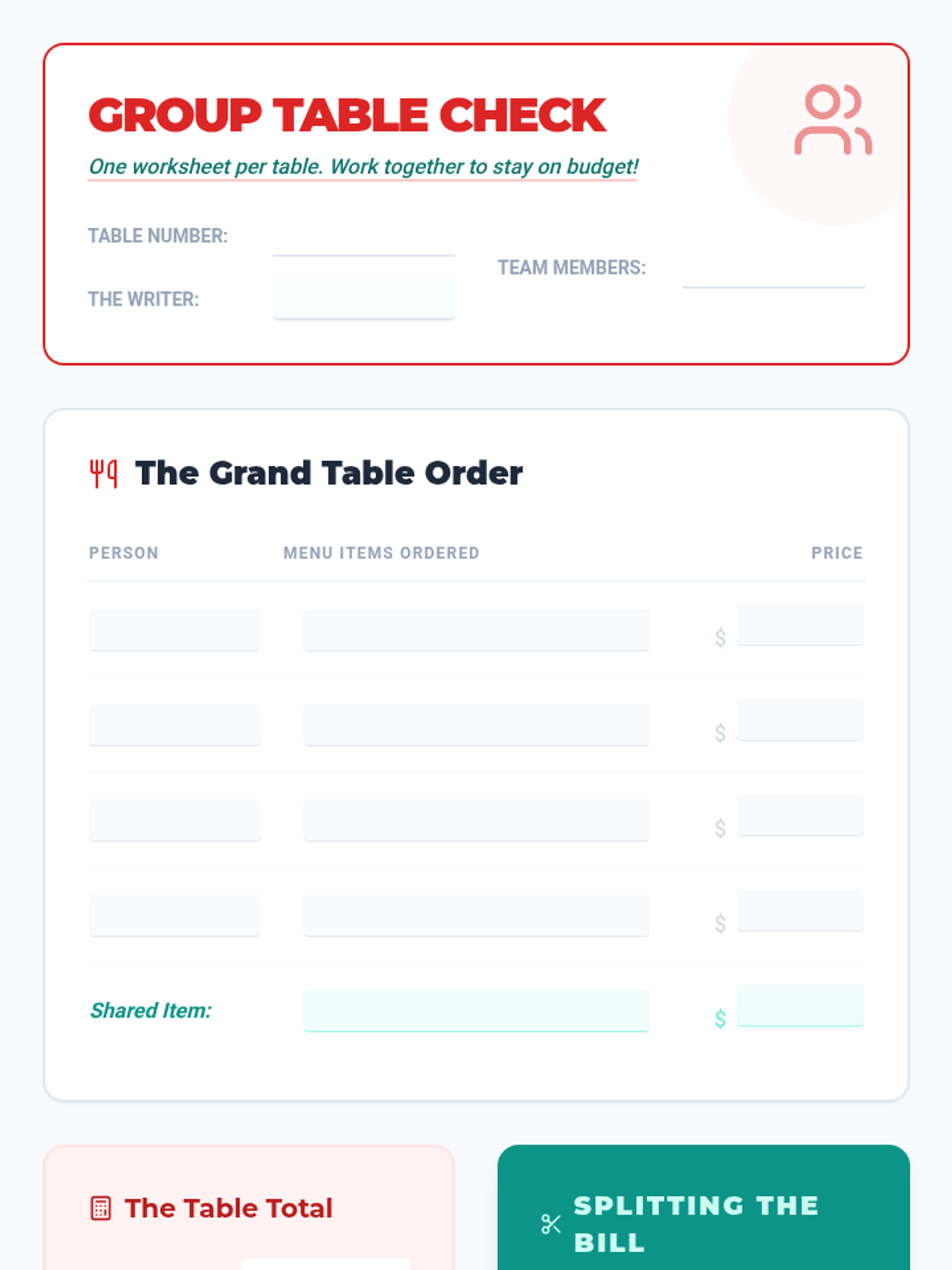
A functional skills lesson focused on navigating a restaurant experience on a budget, covering menu reading, budget planning, social etiquette, and group check splitting.
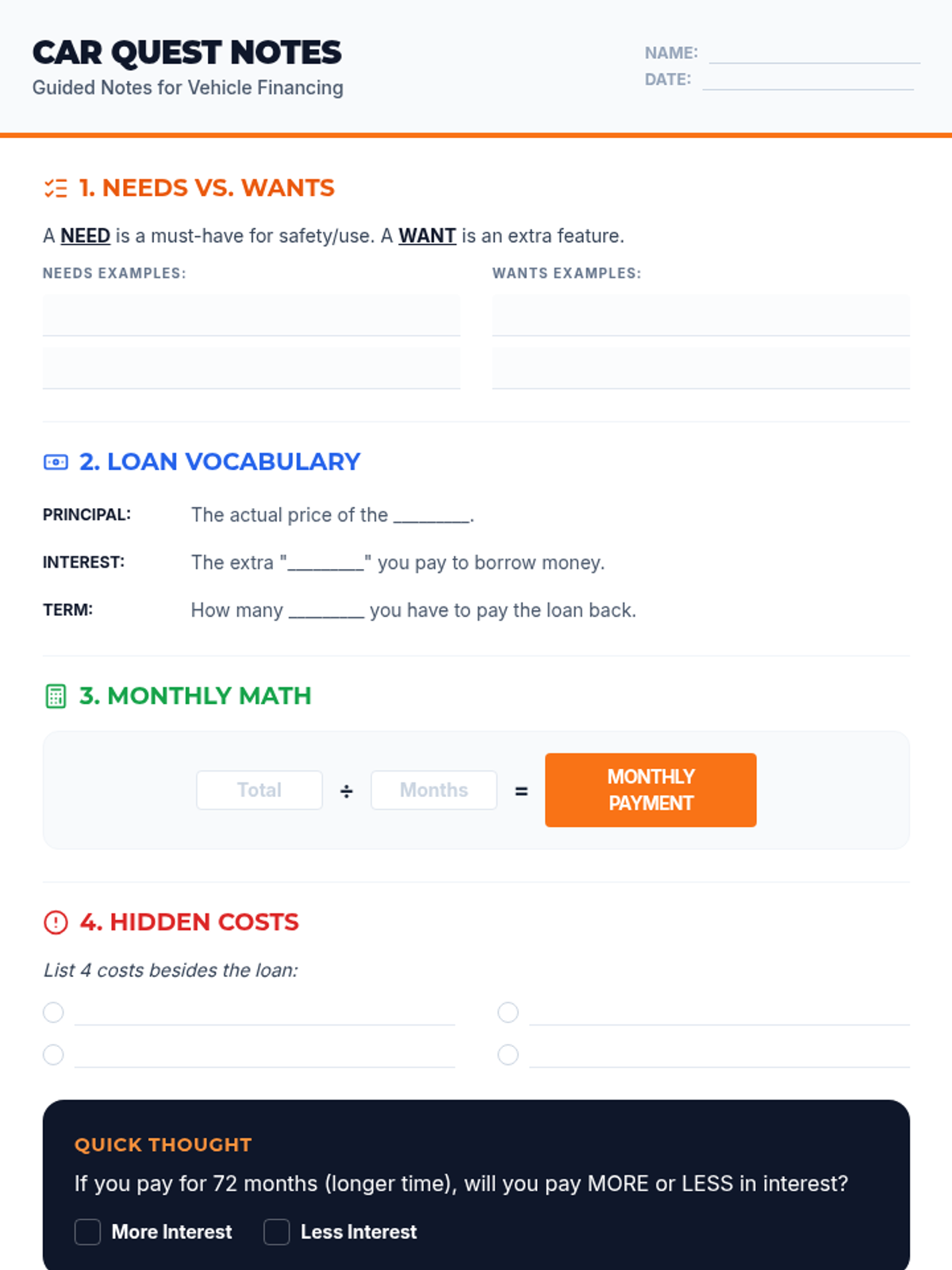
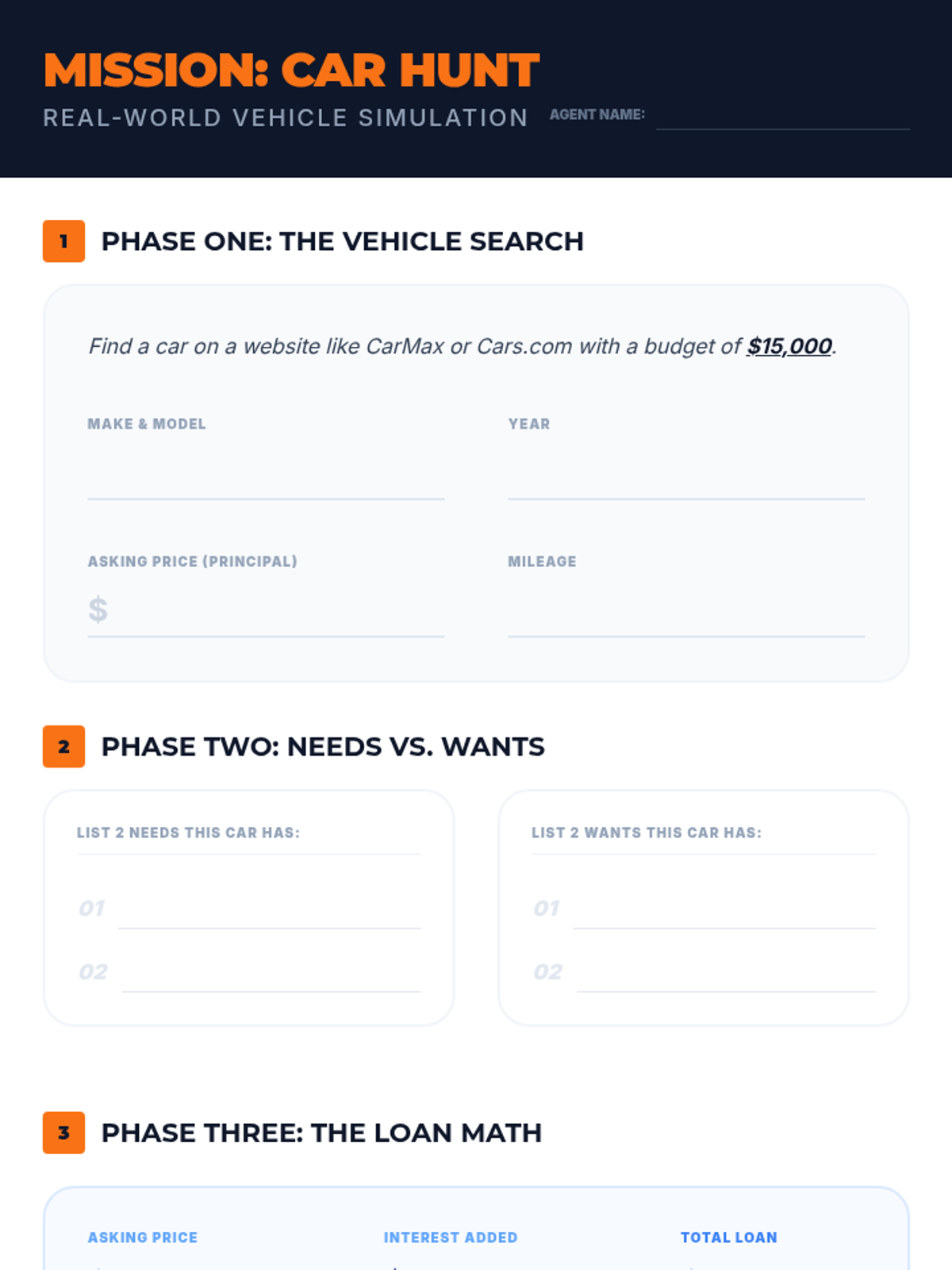
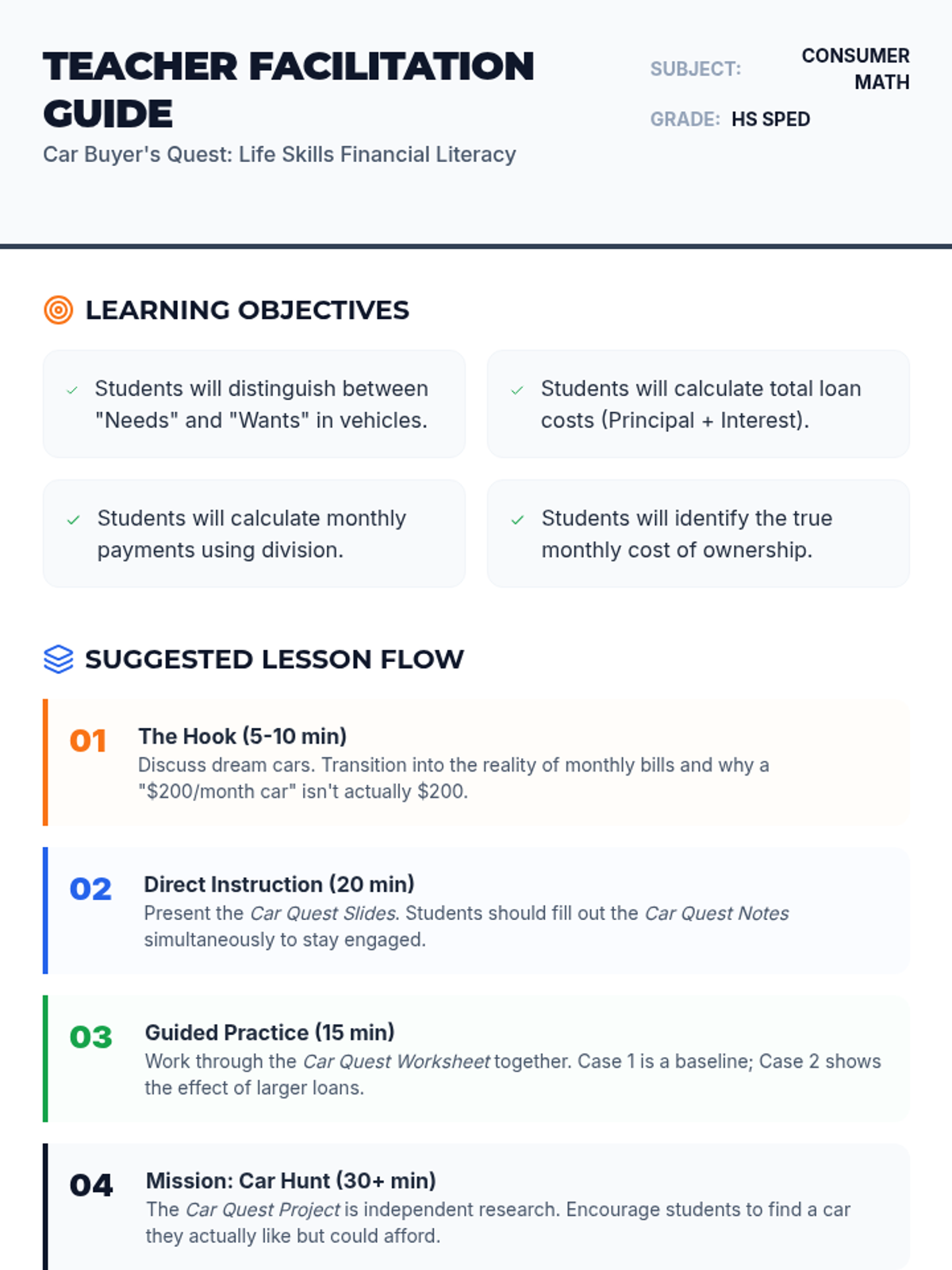
A comprehensive life skills lesson focused on the financial realities of purchasing a vehicle, covering loans, interest, hidden costs, and budgeting for total ownership.
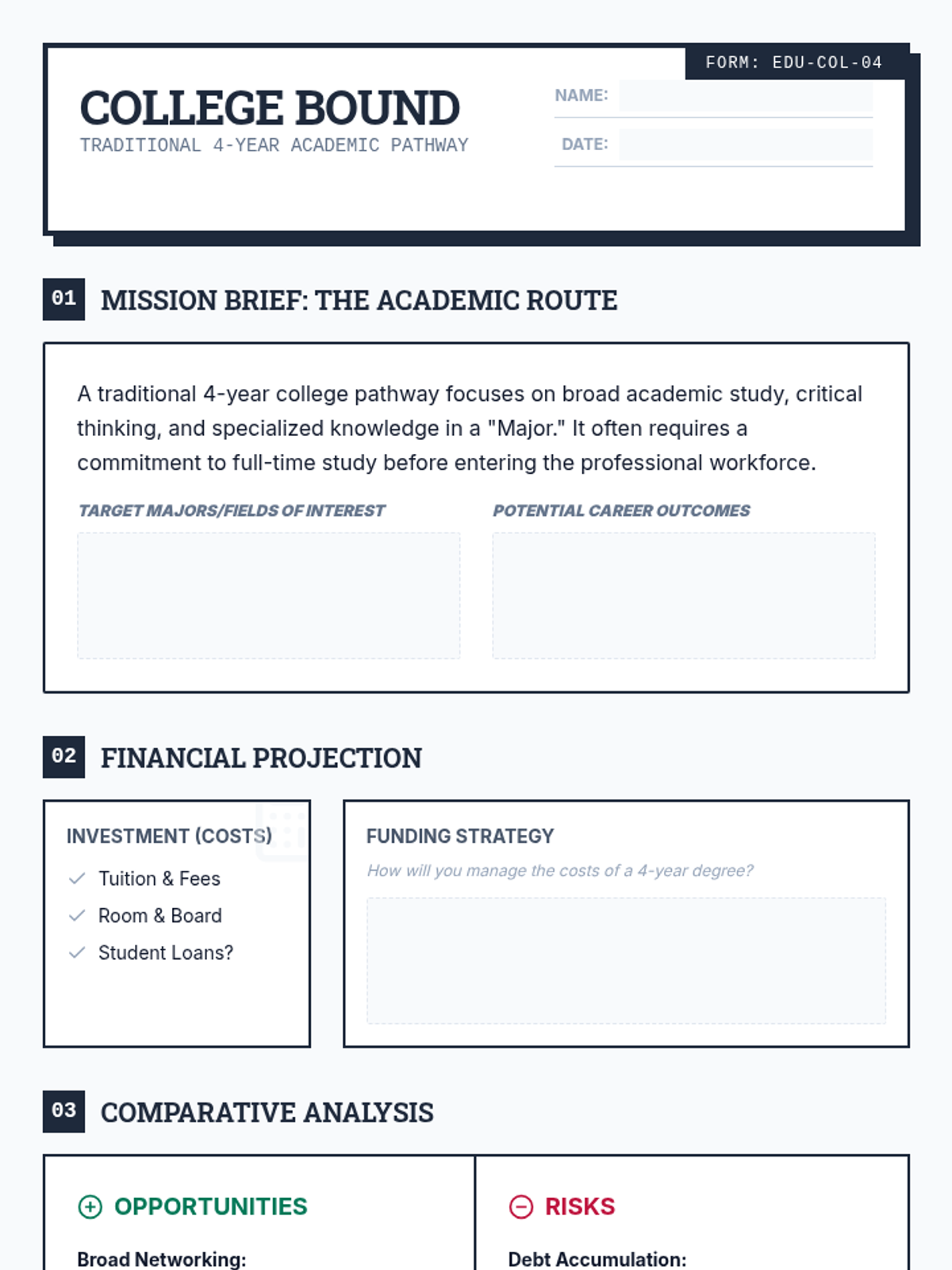
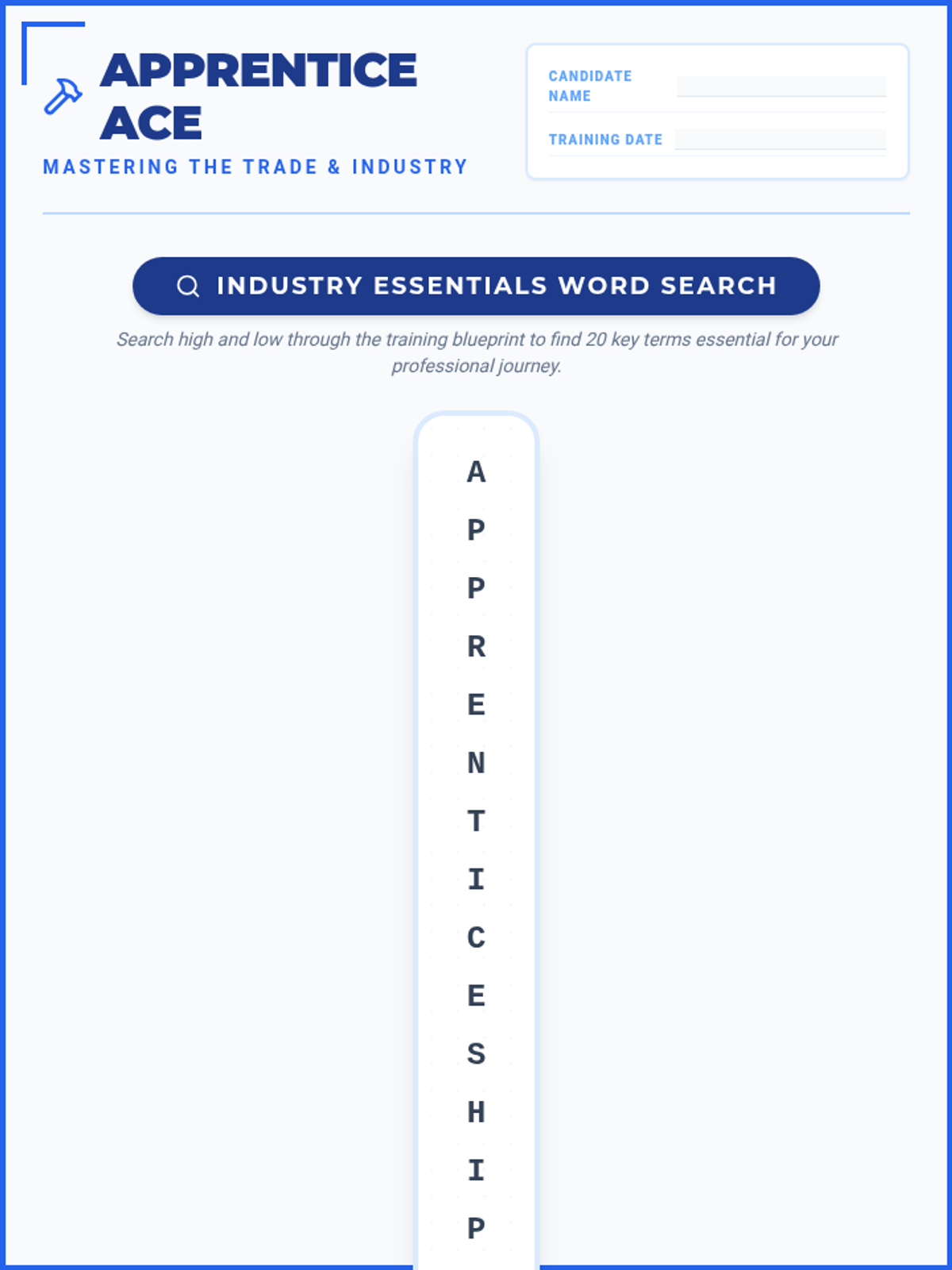
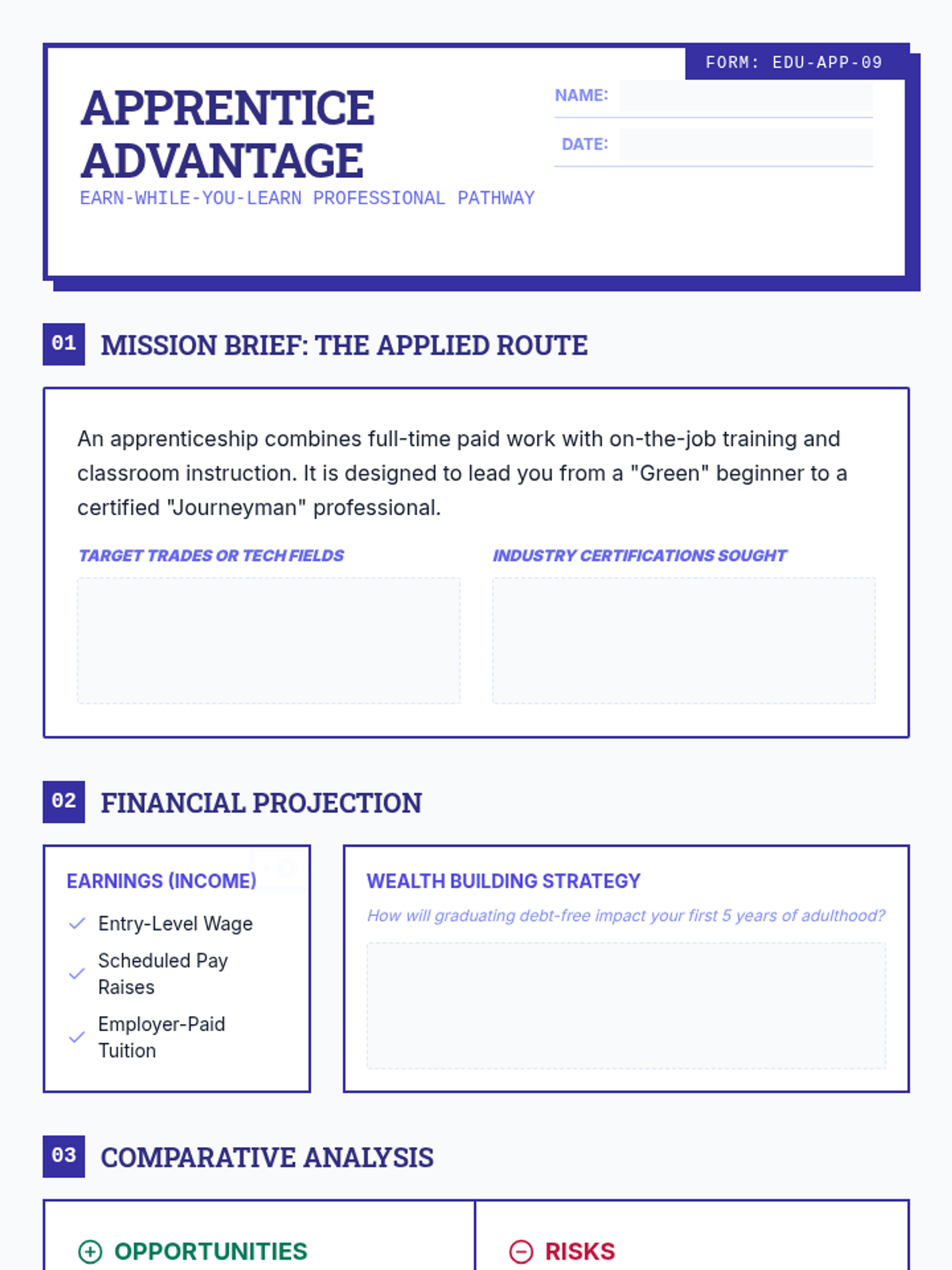
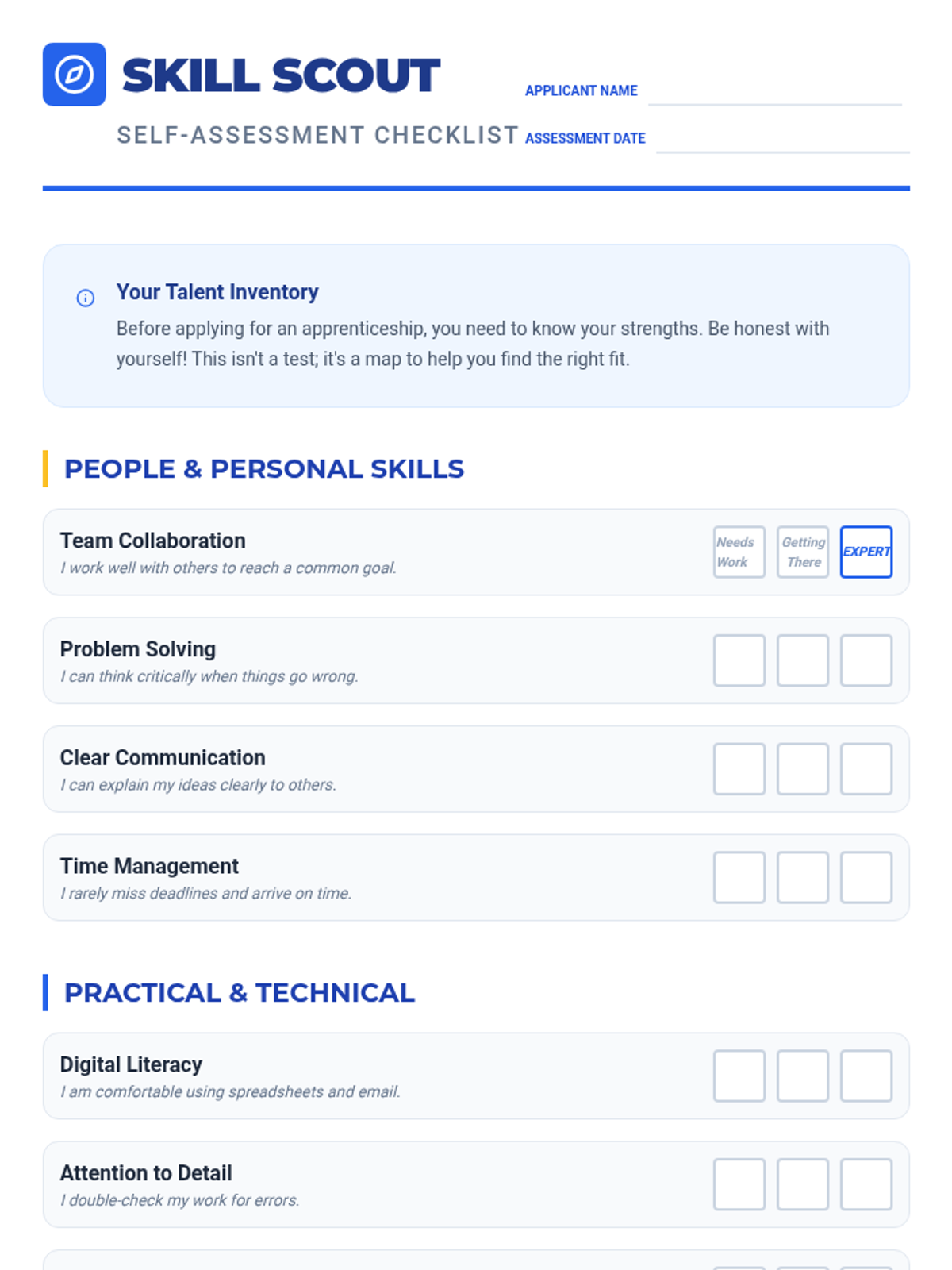
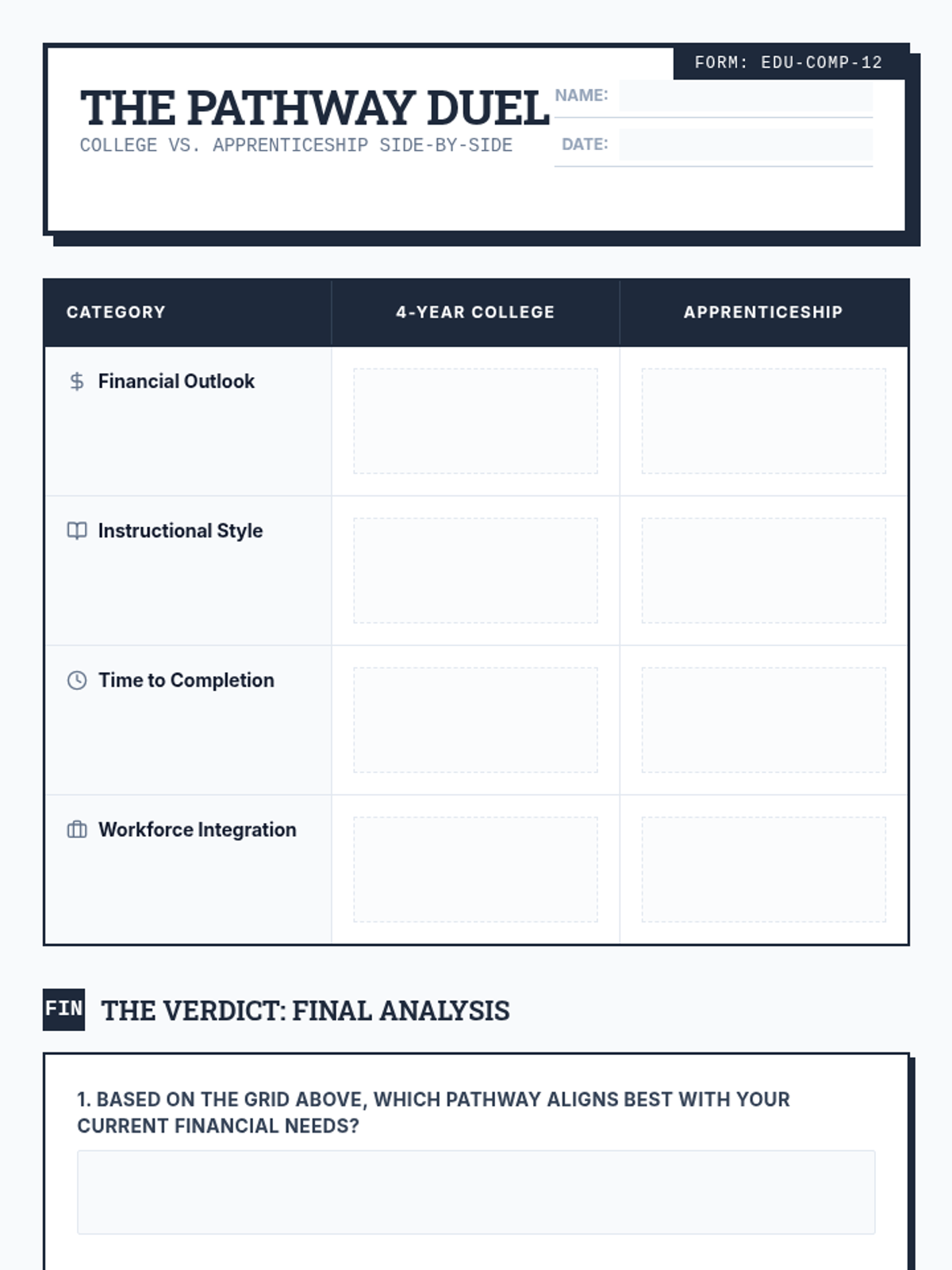
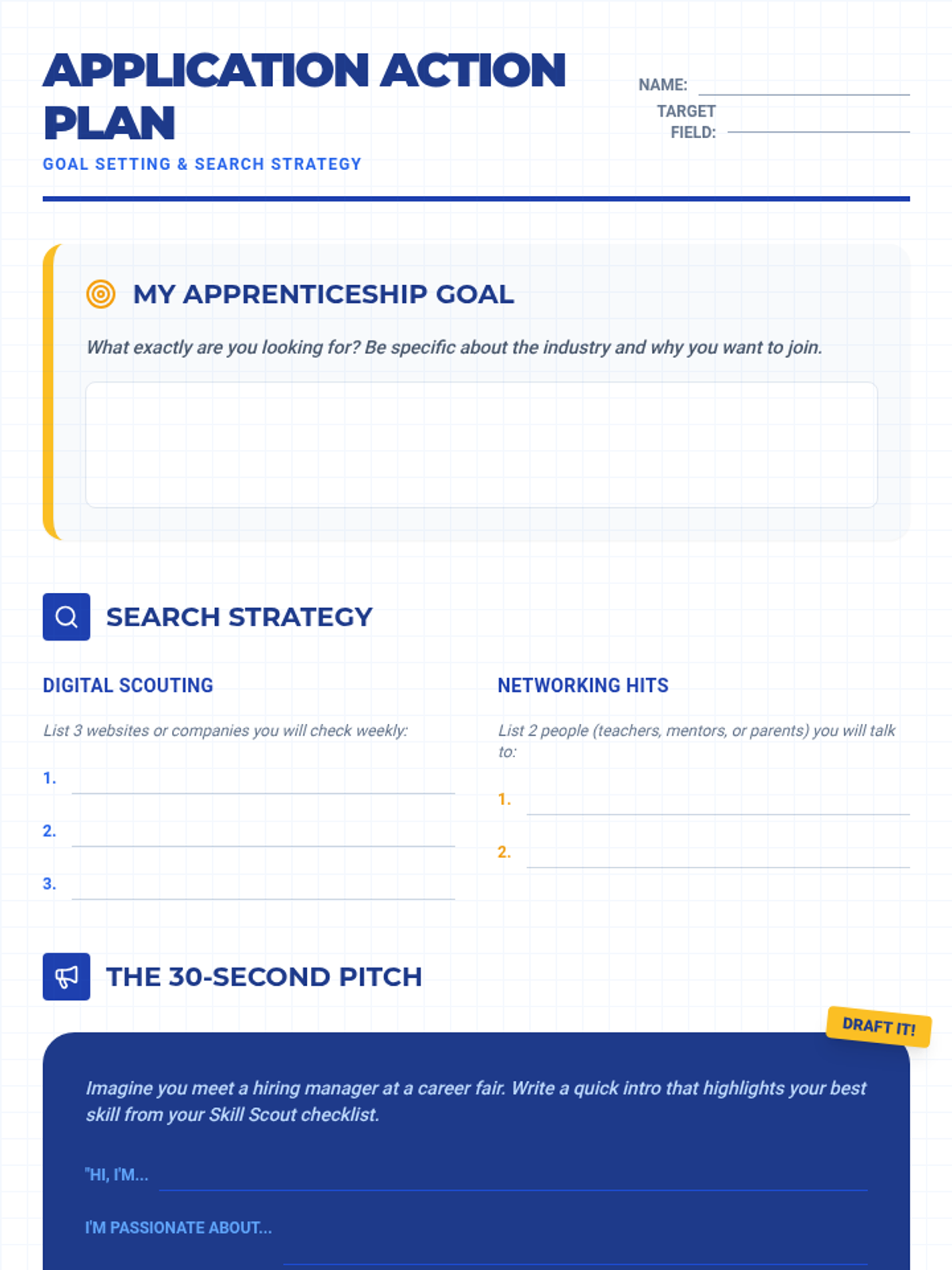
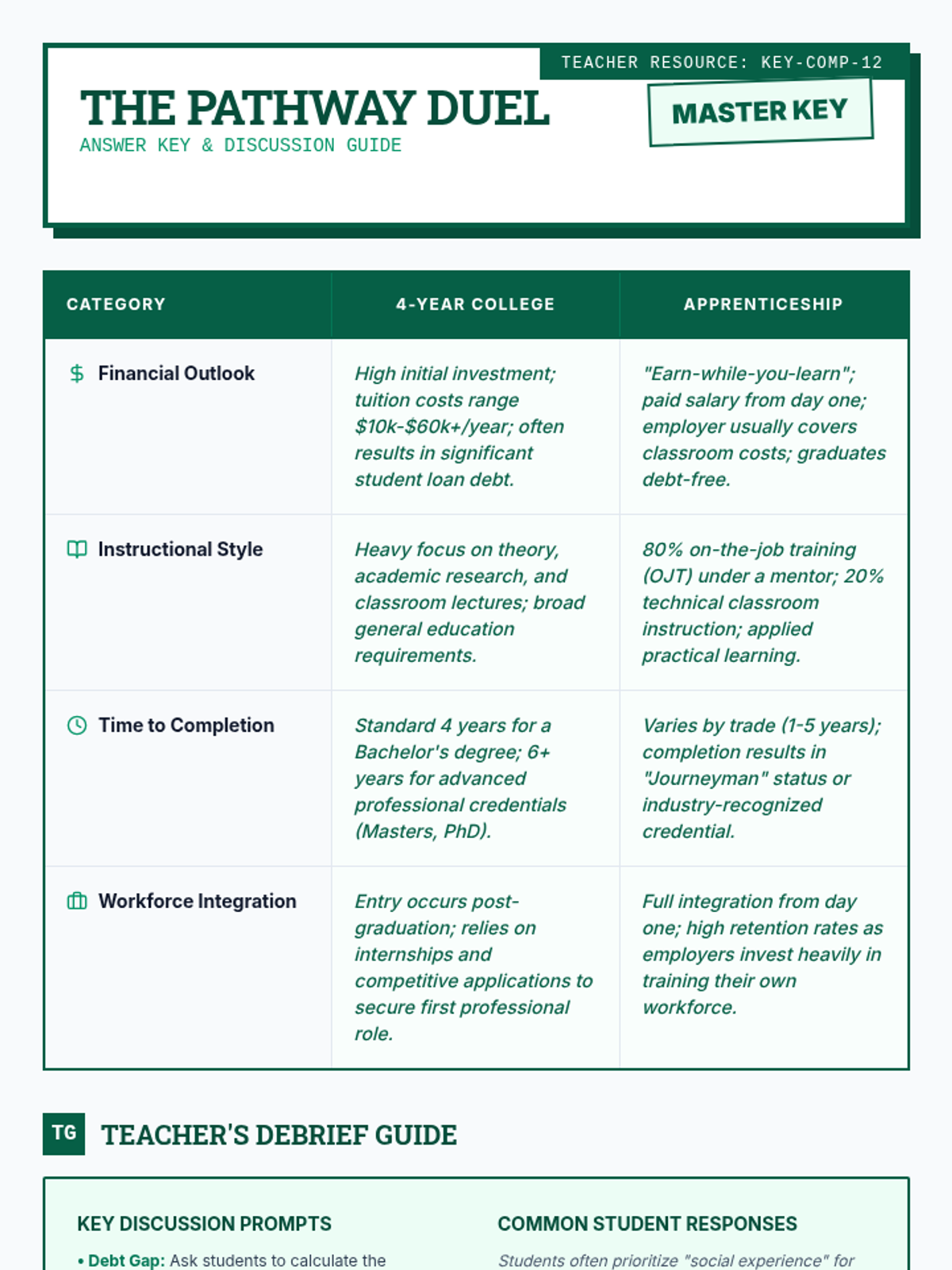
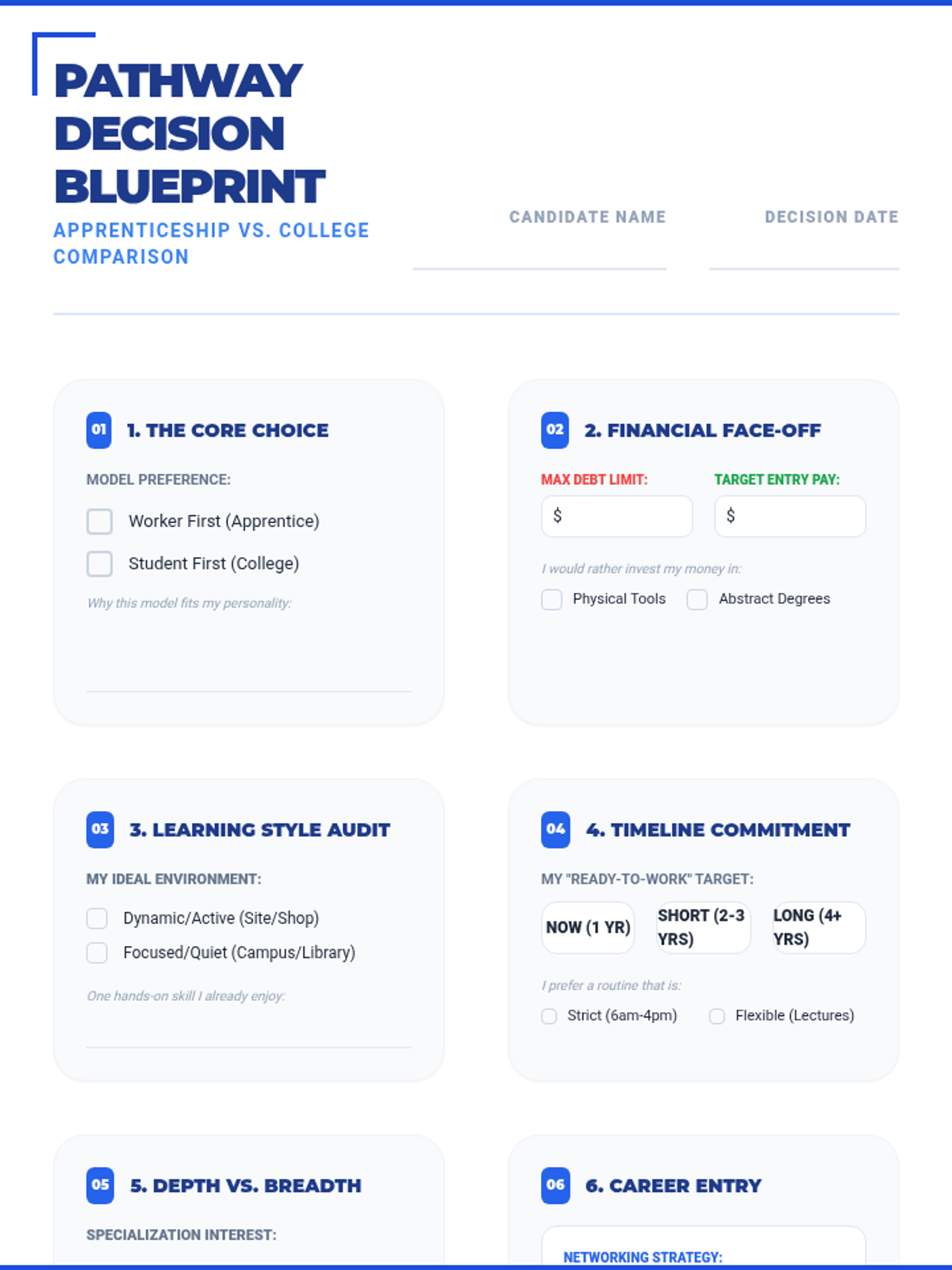
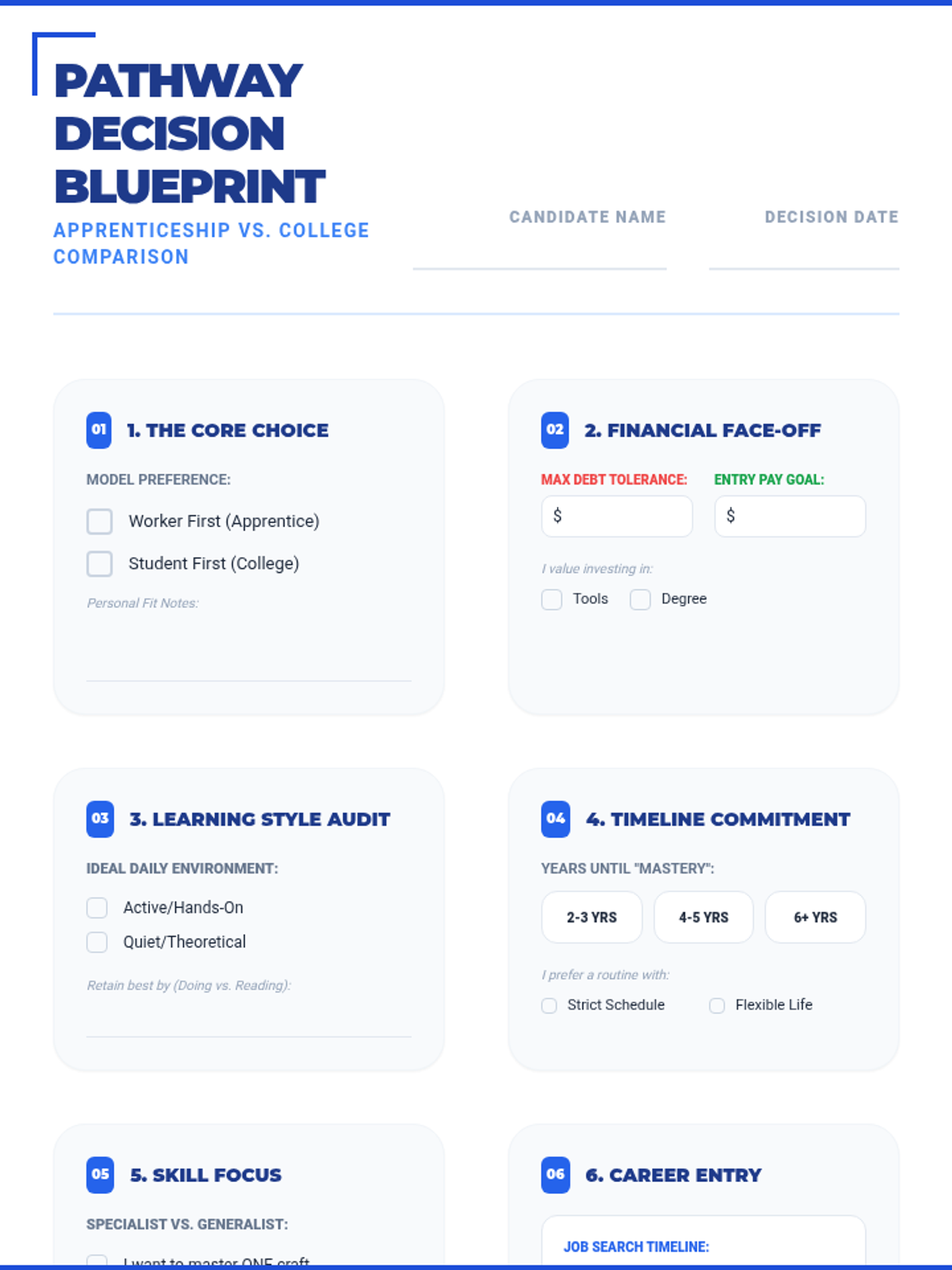
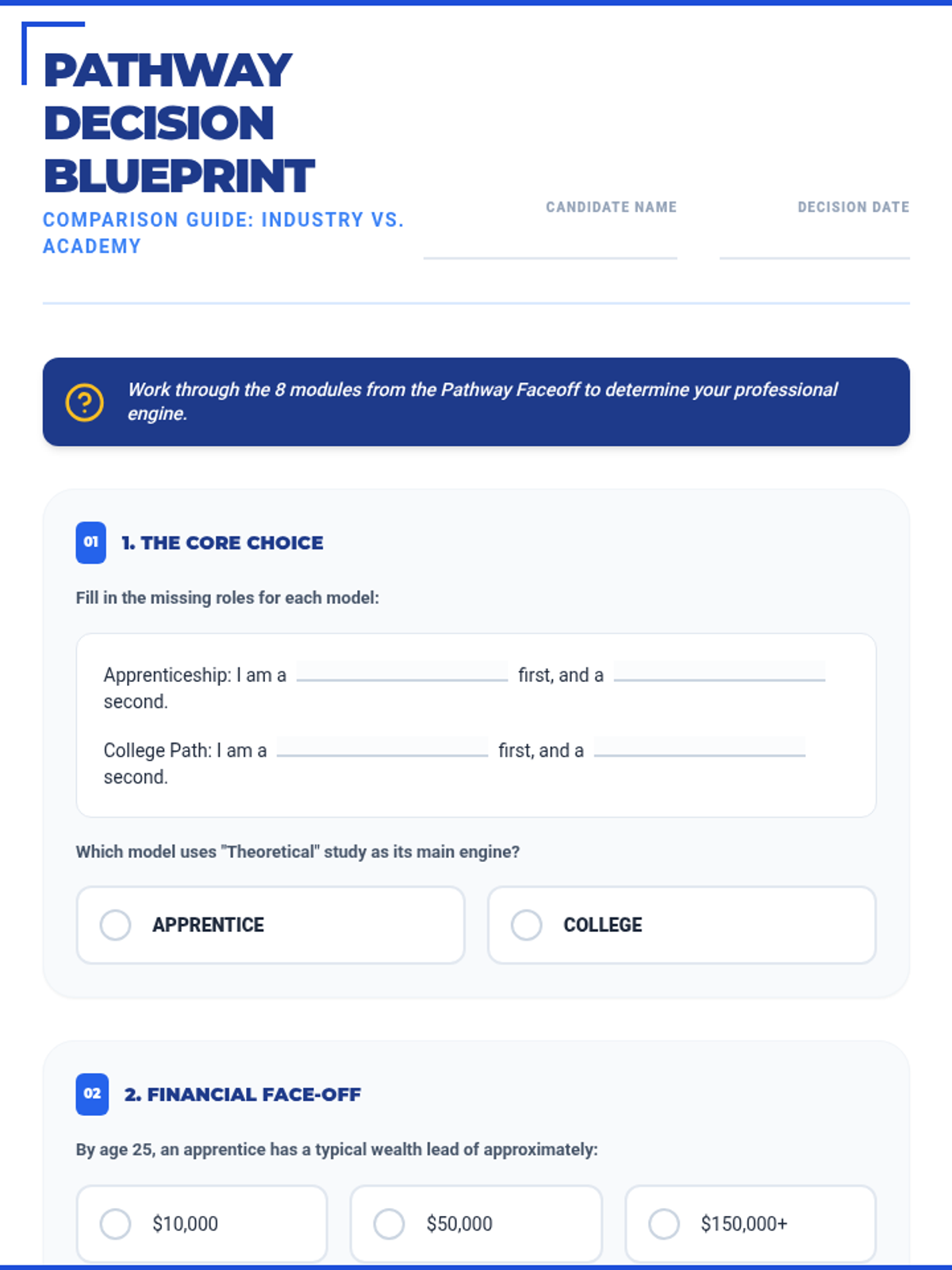
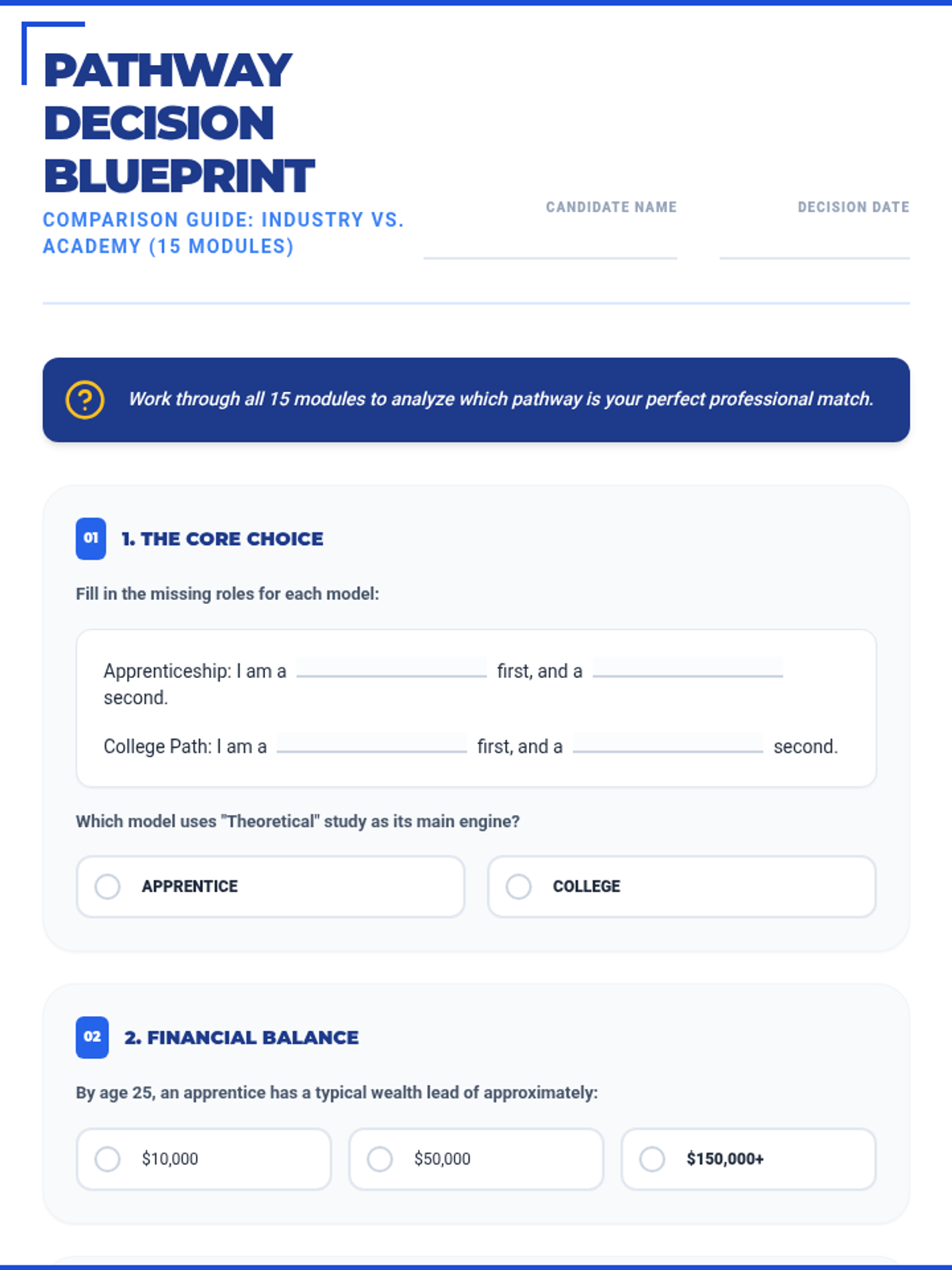
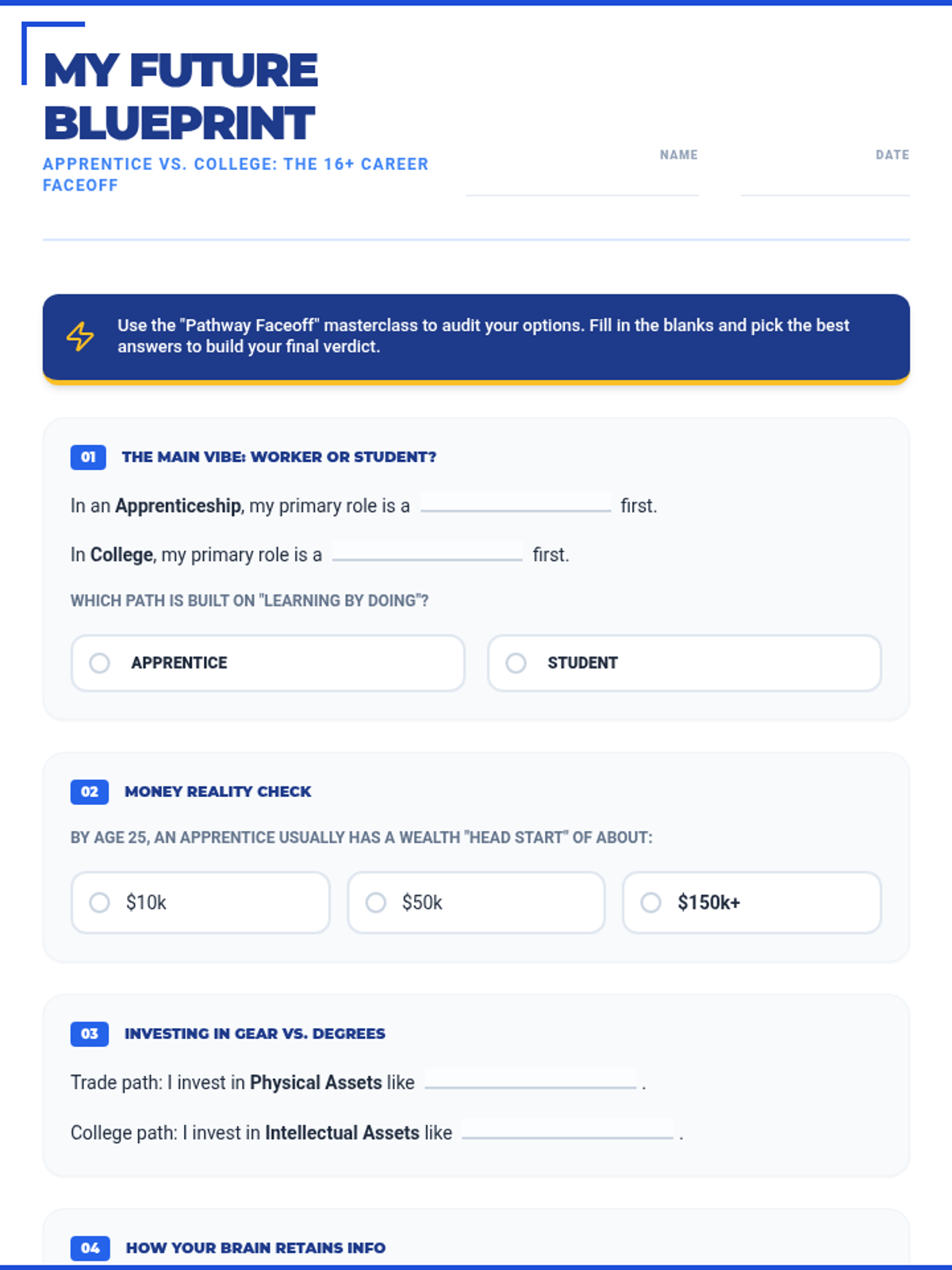
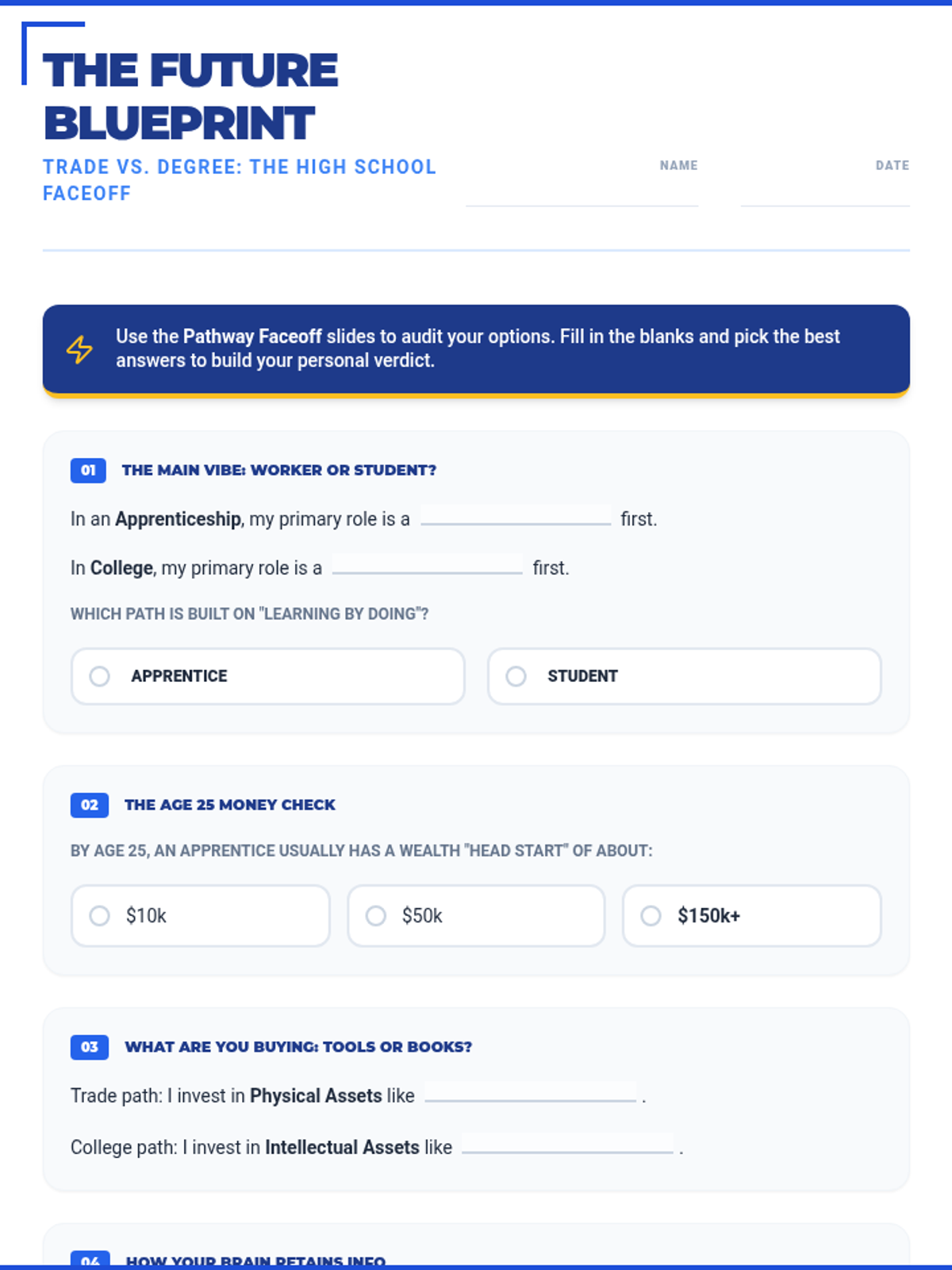
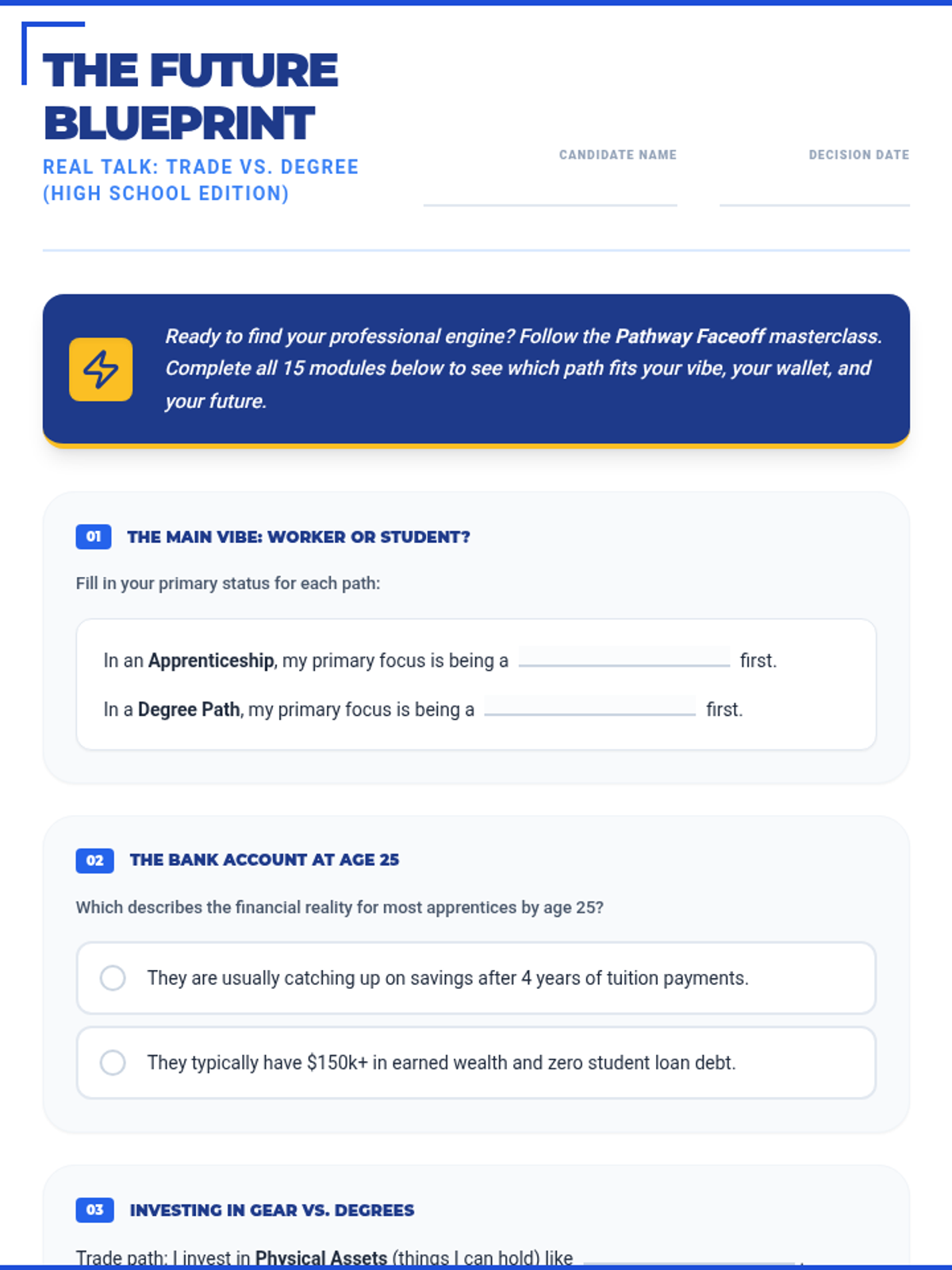
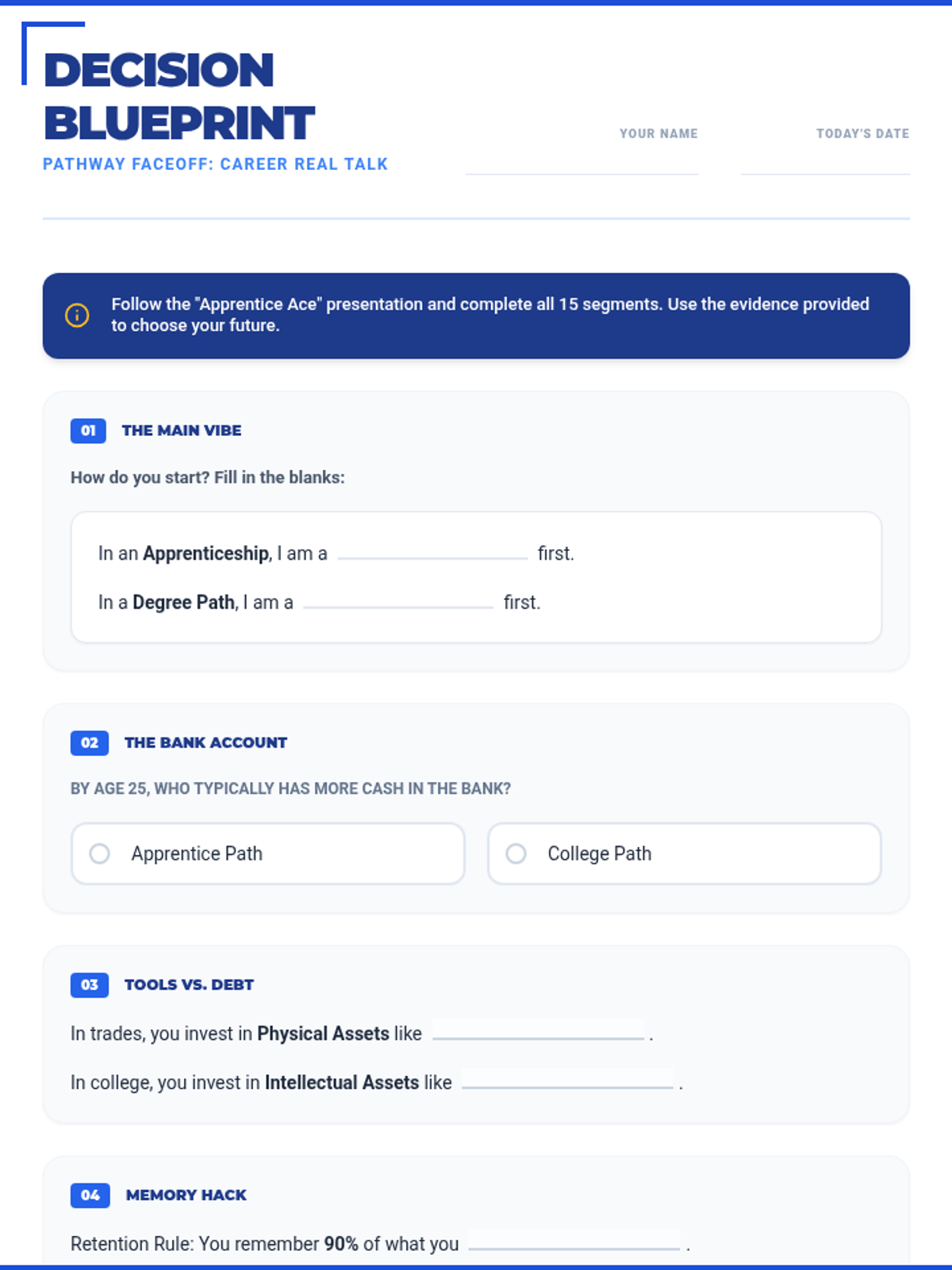
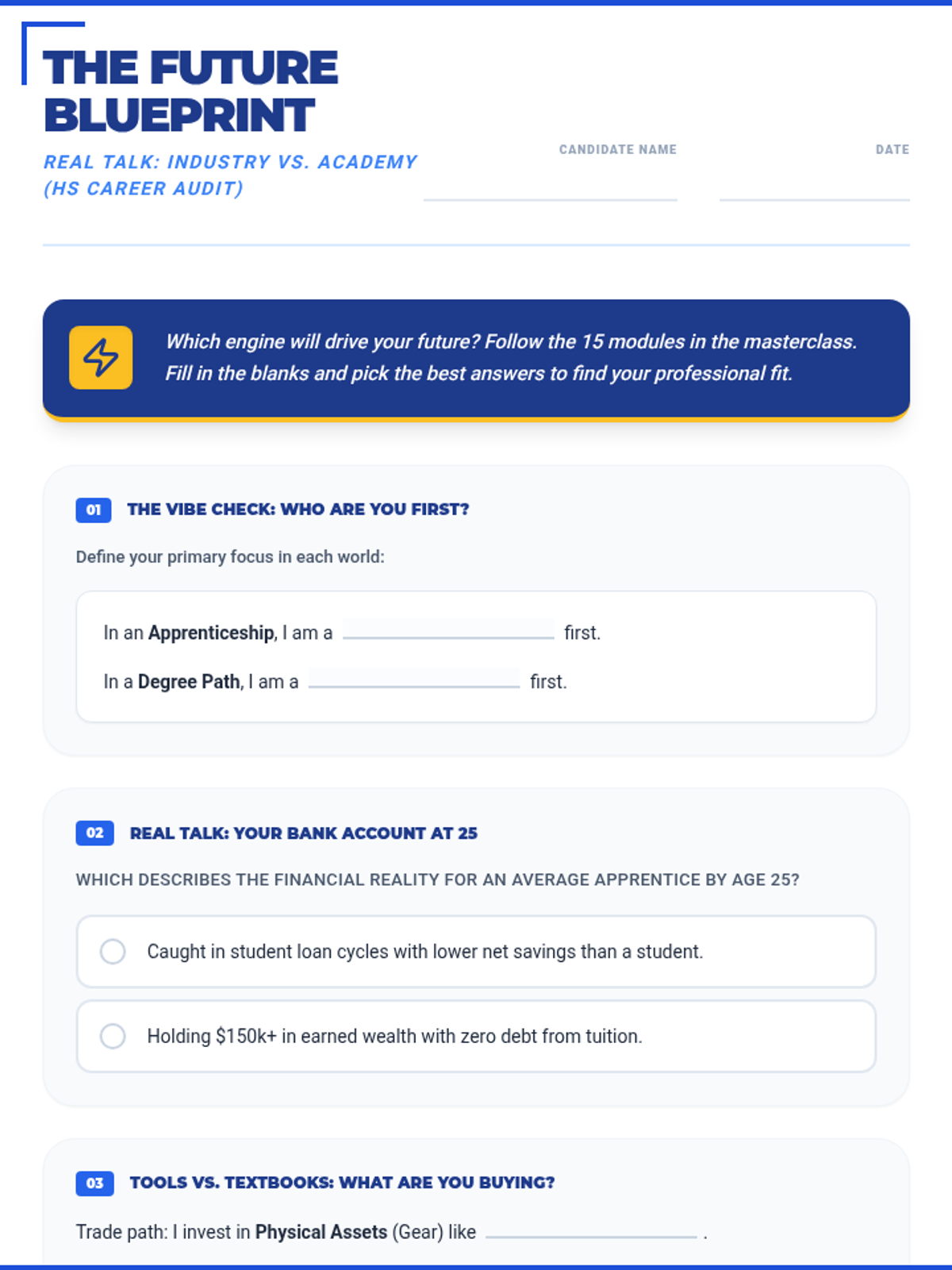
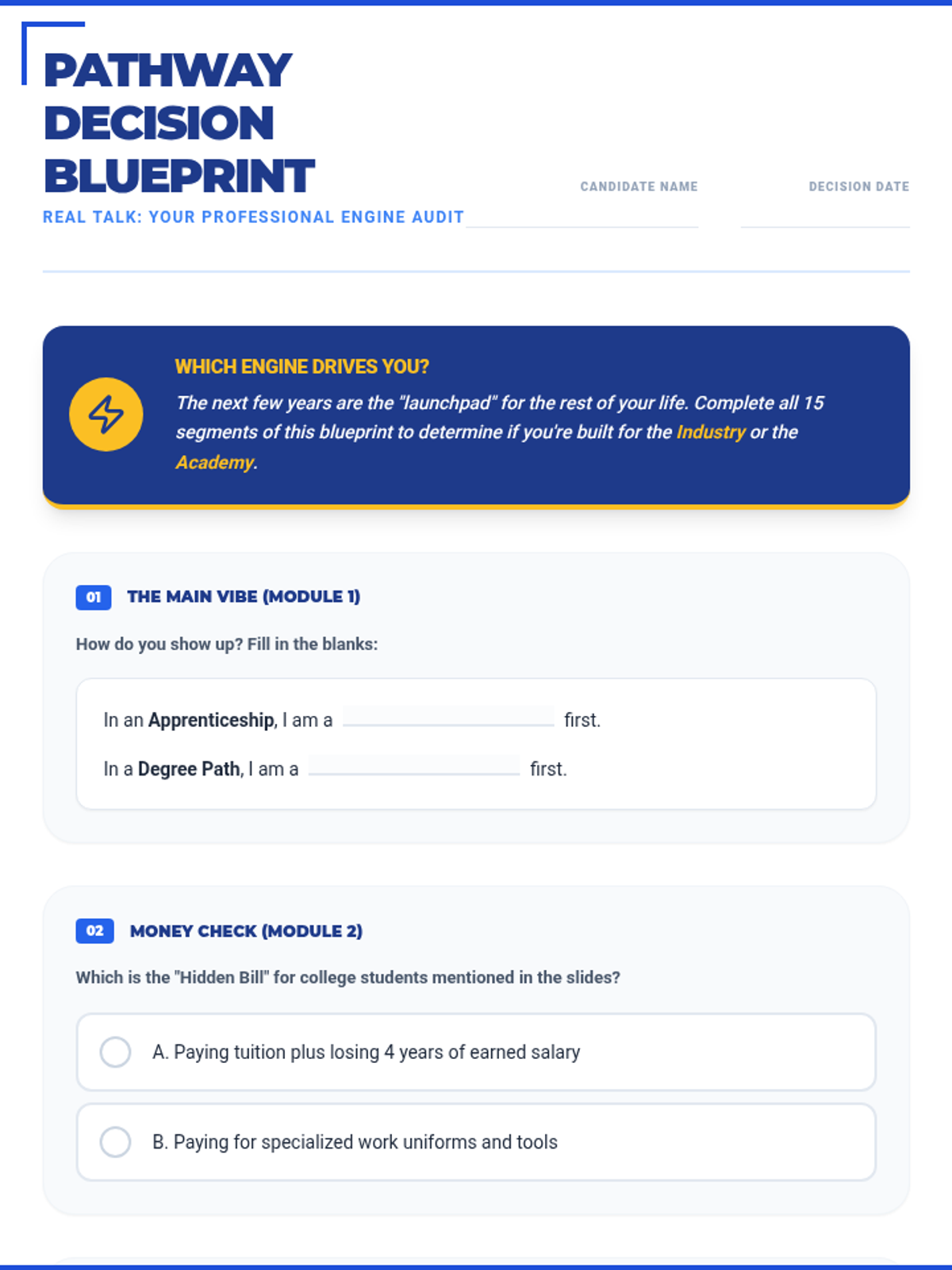
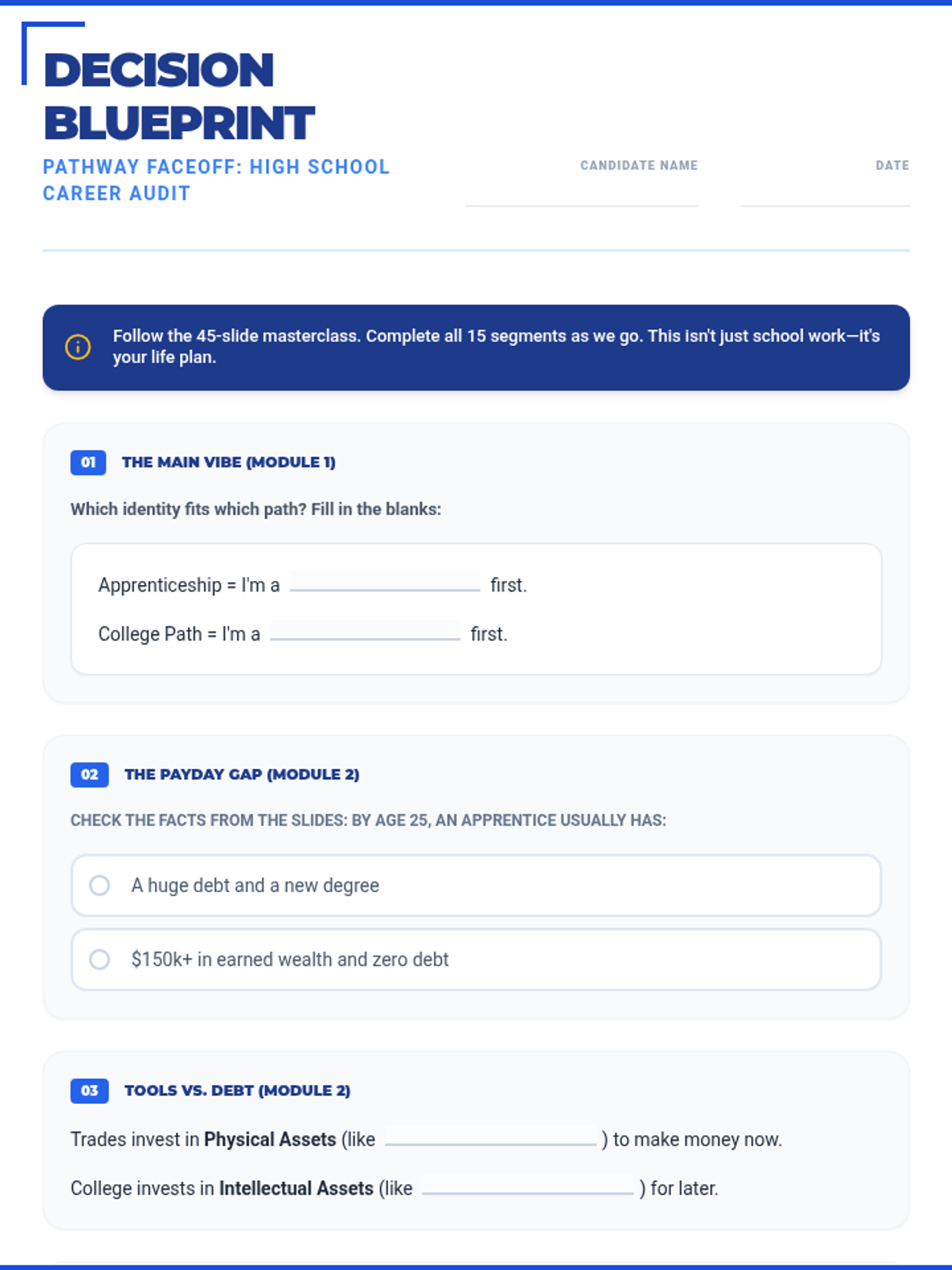
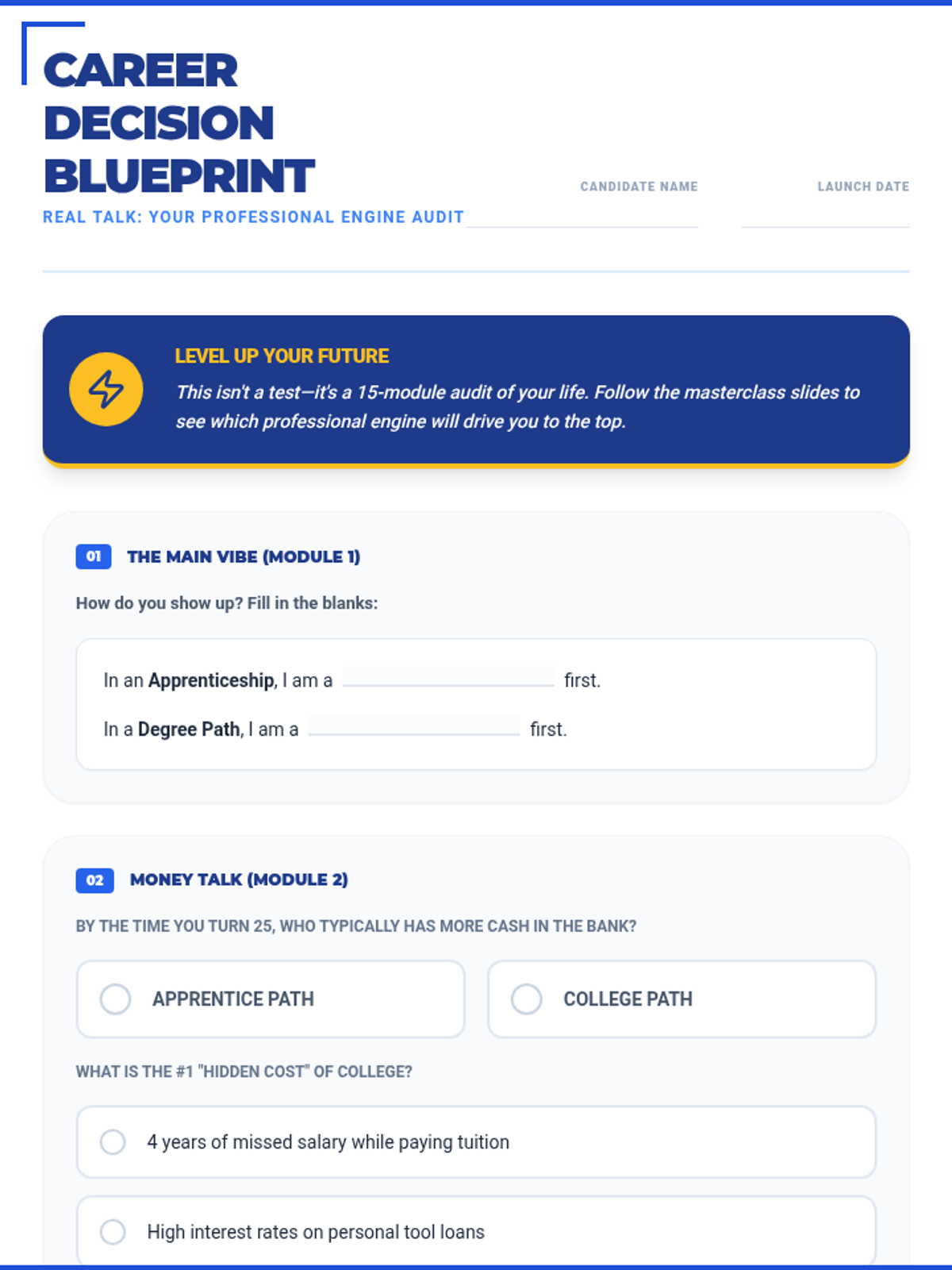
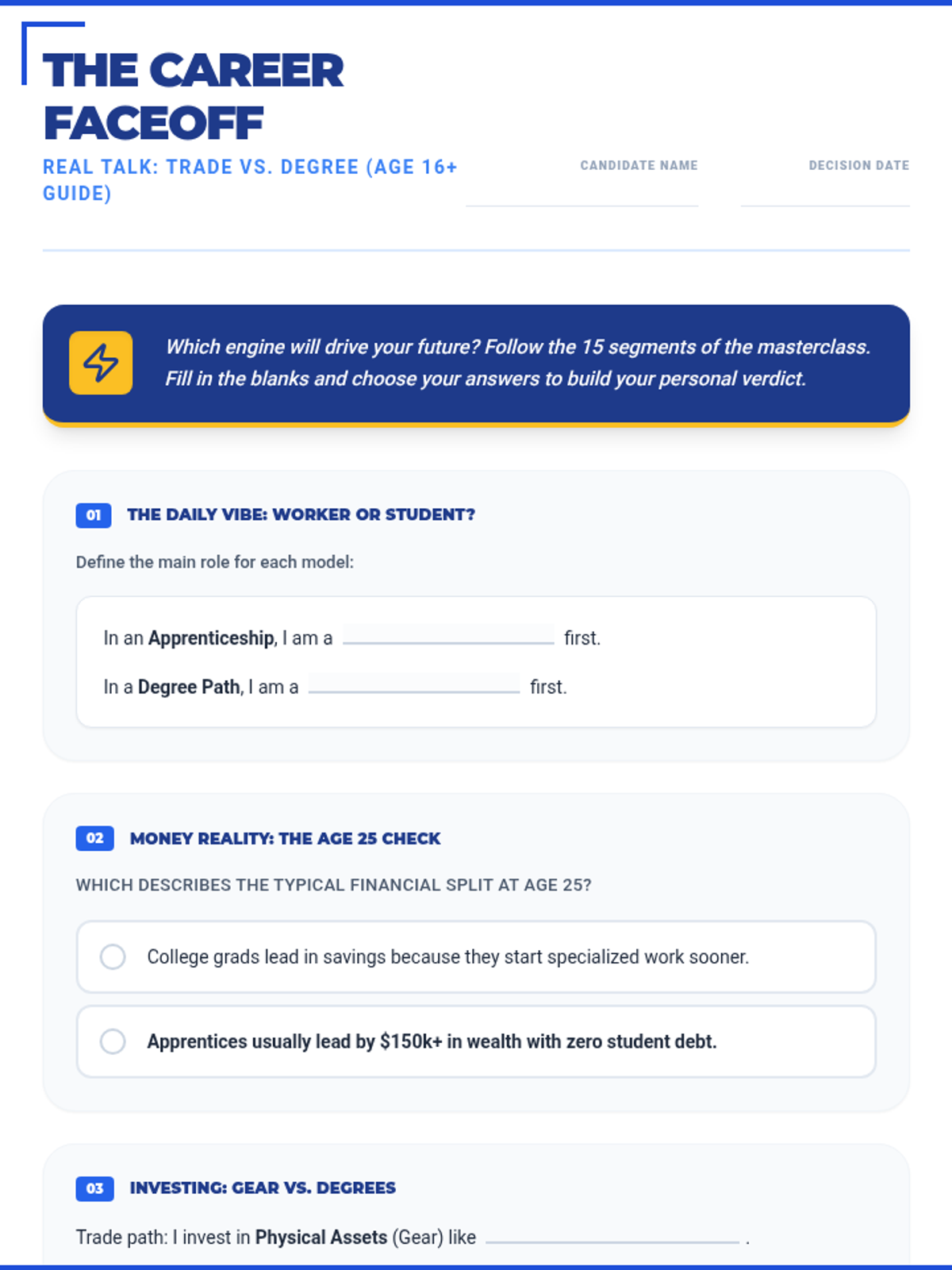
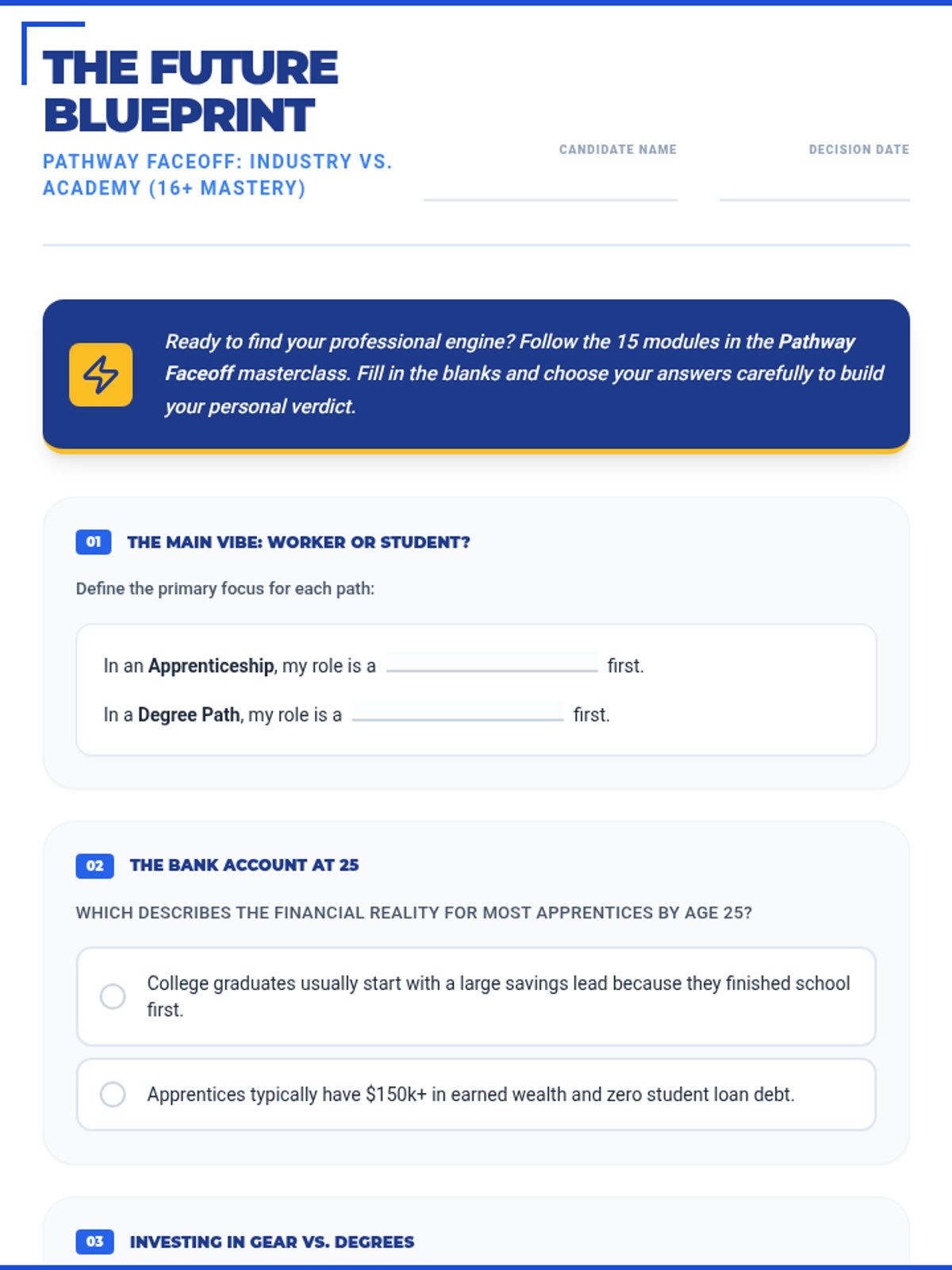
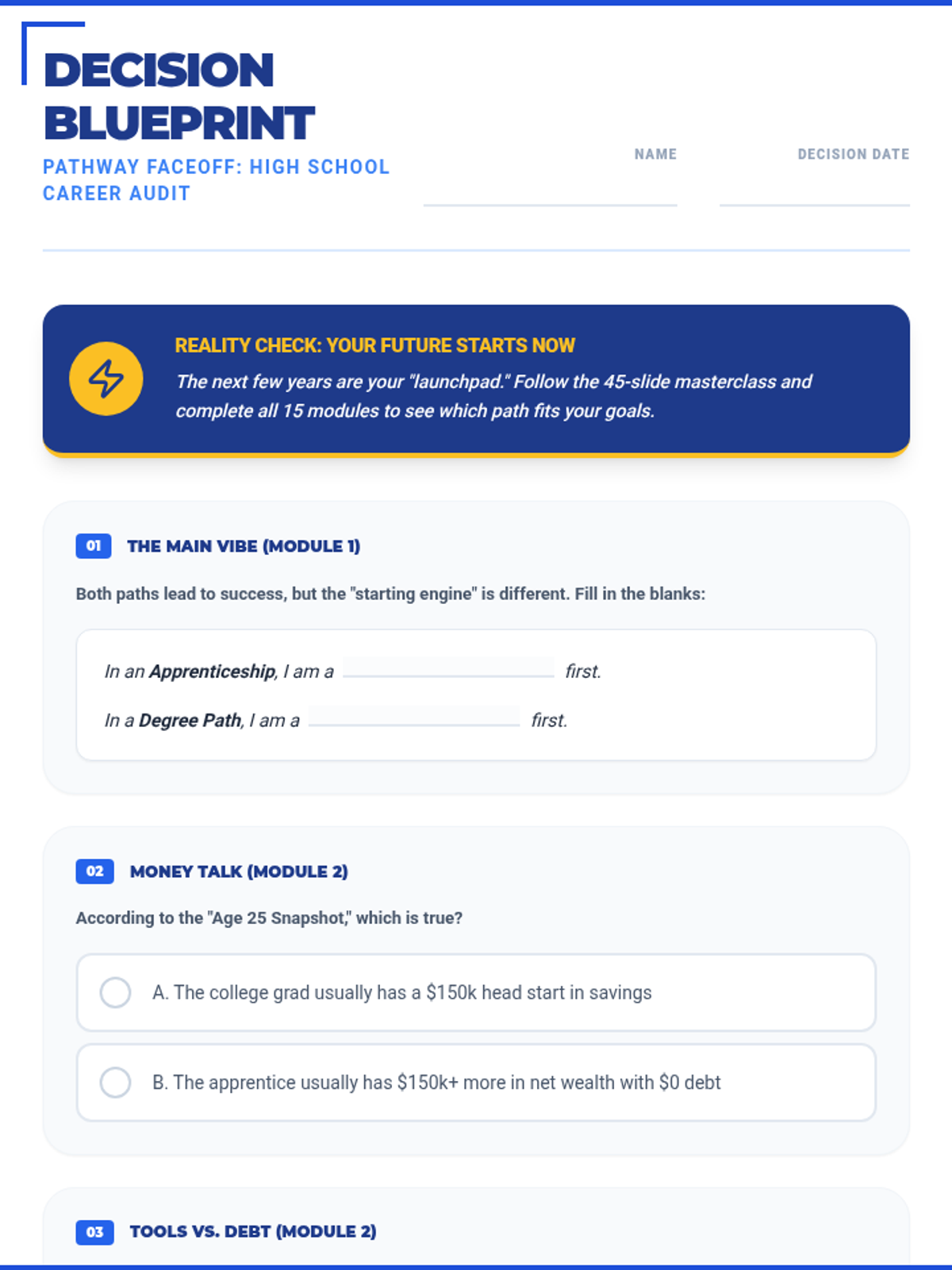
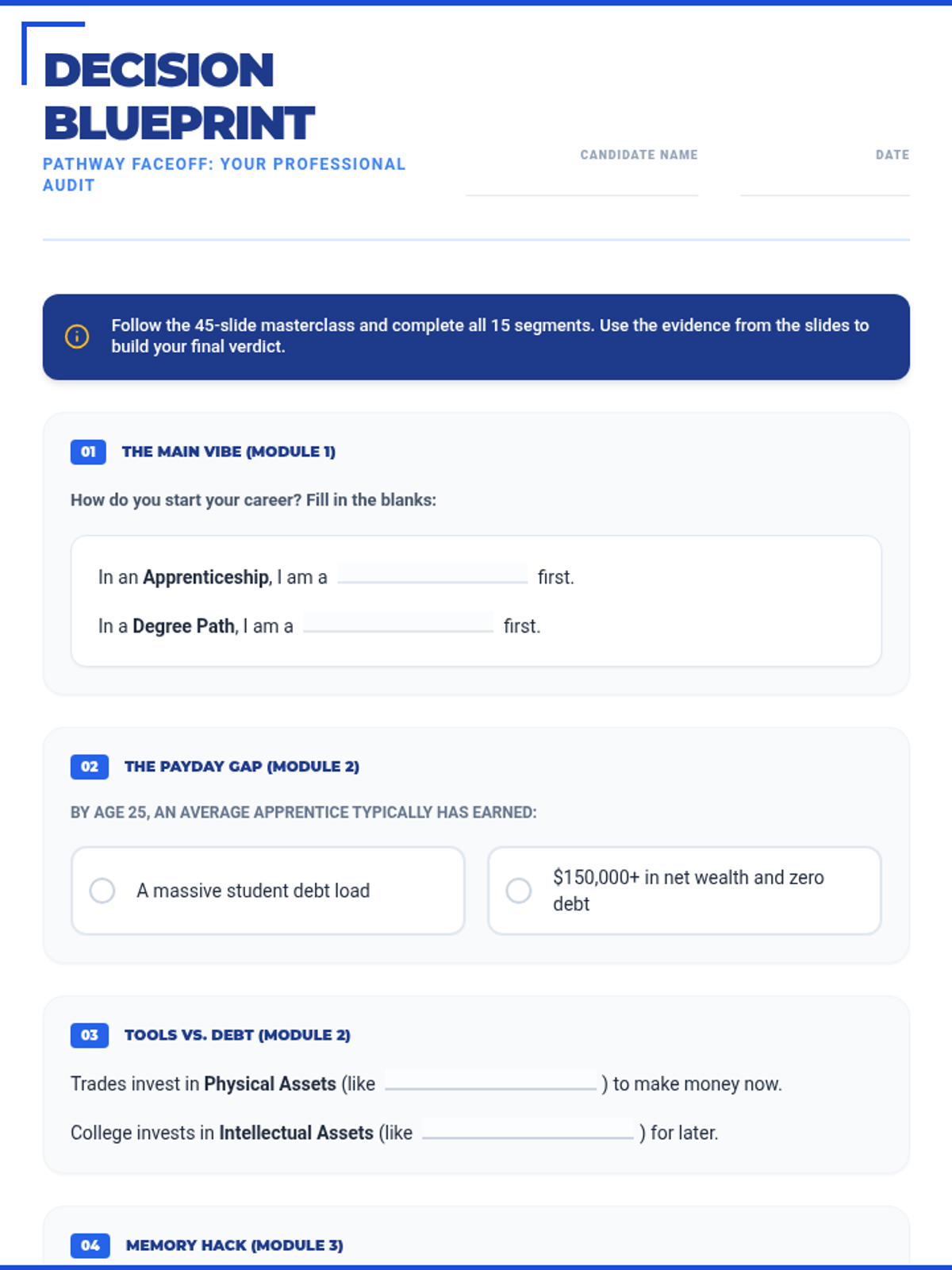
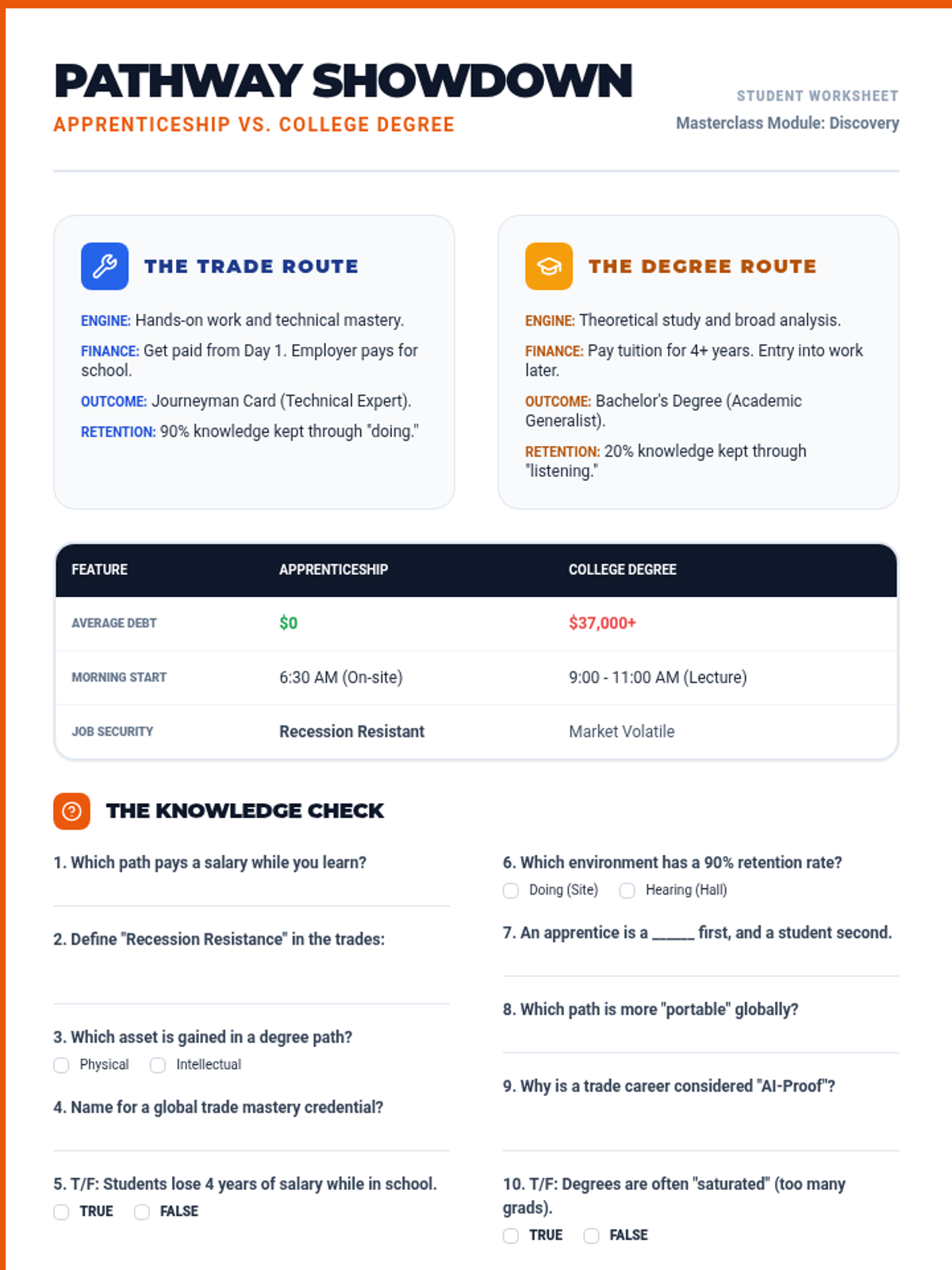
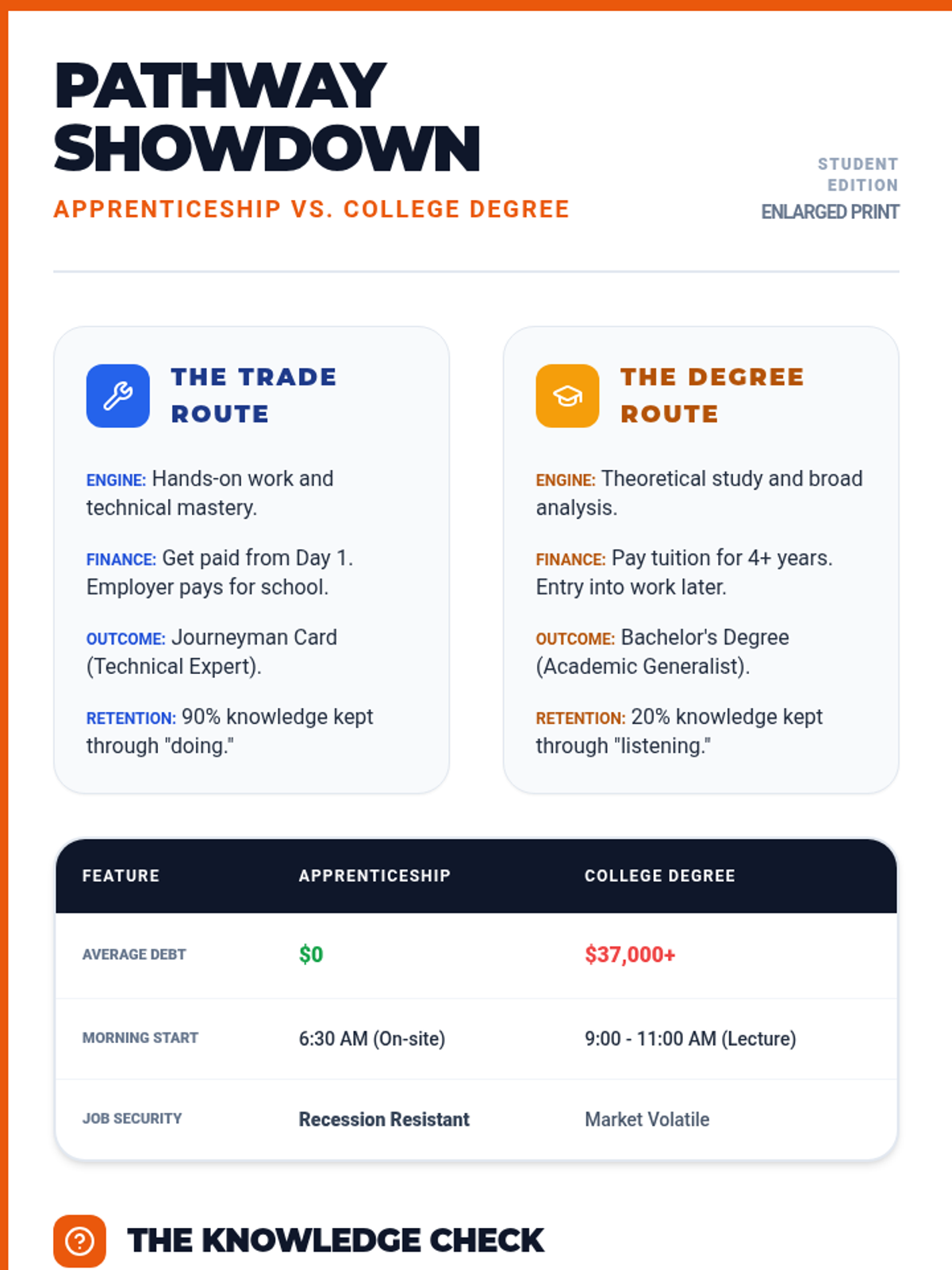
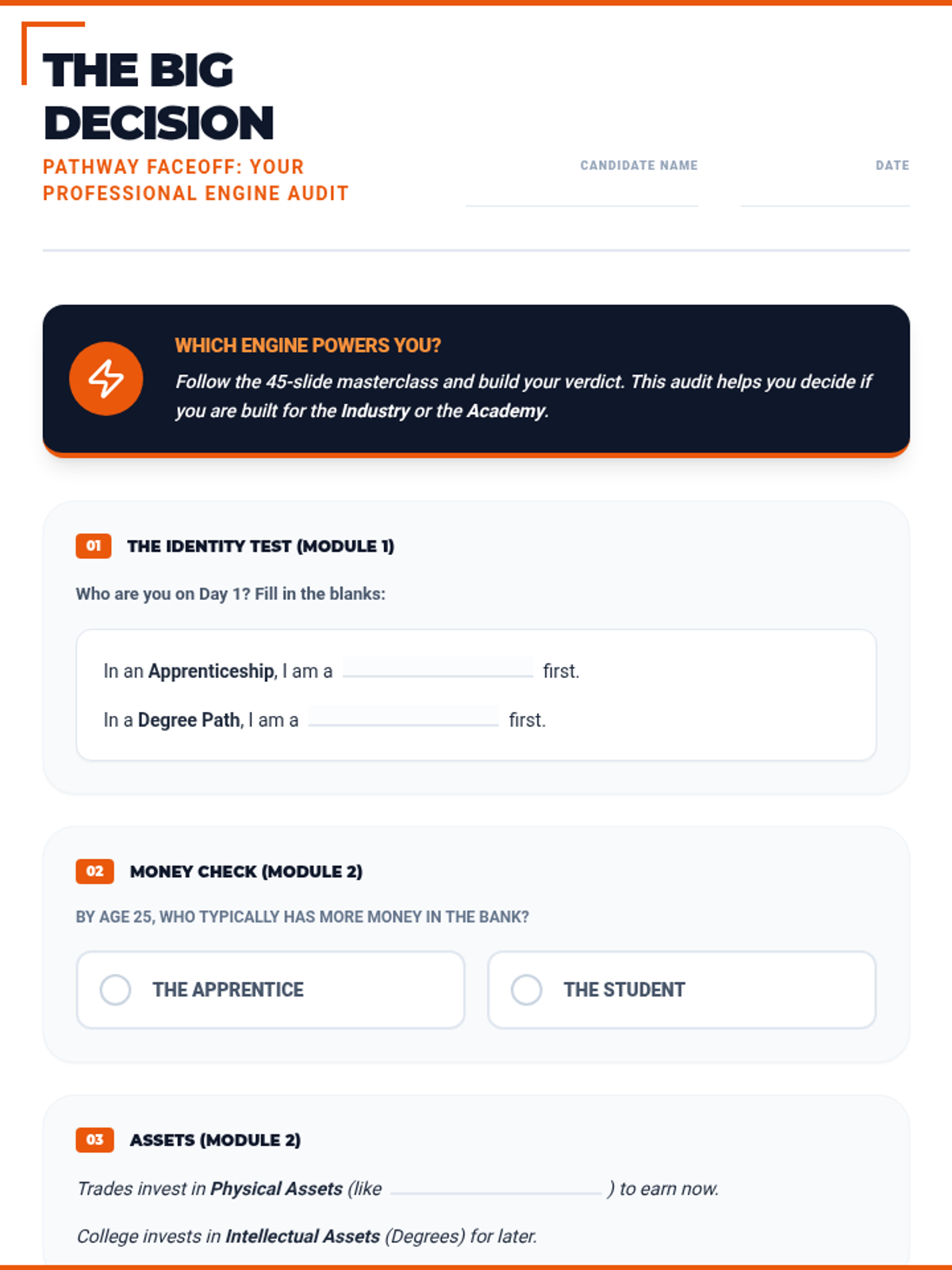
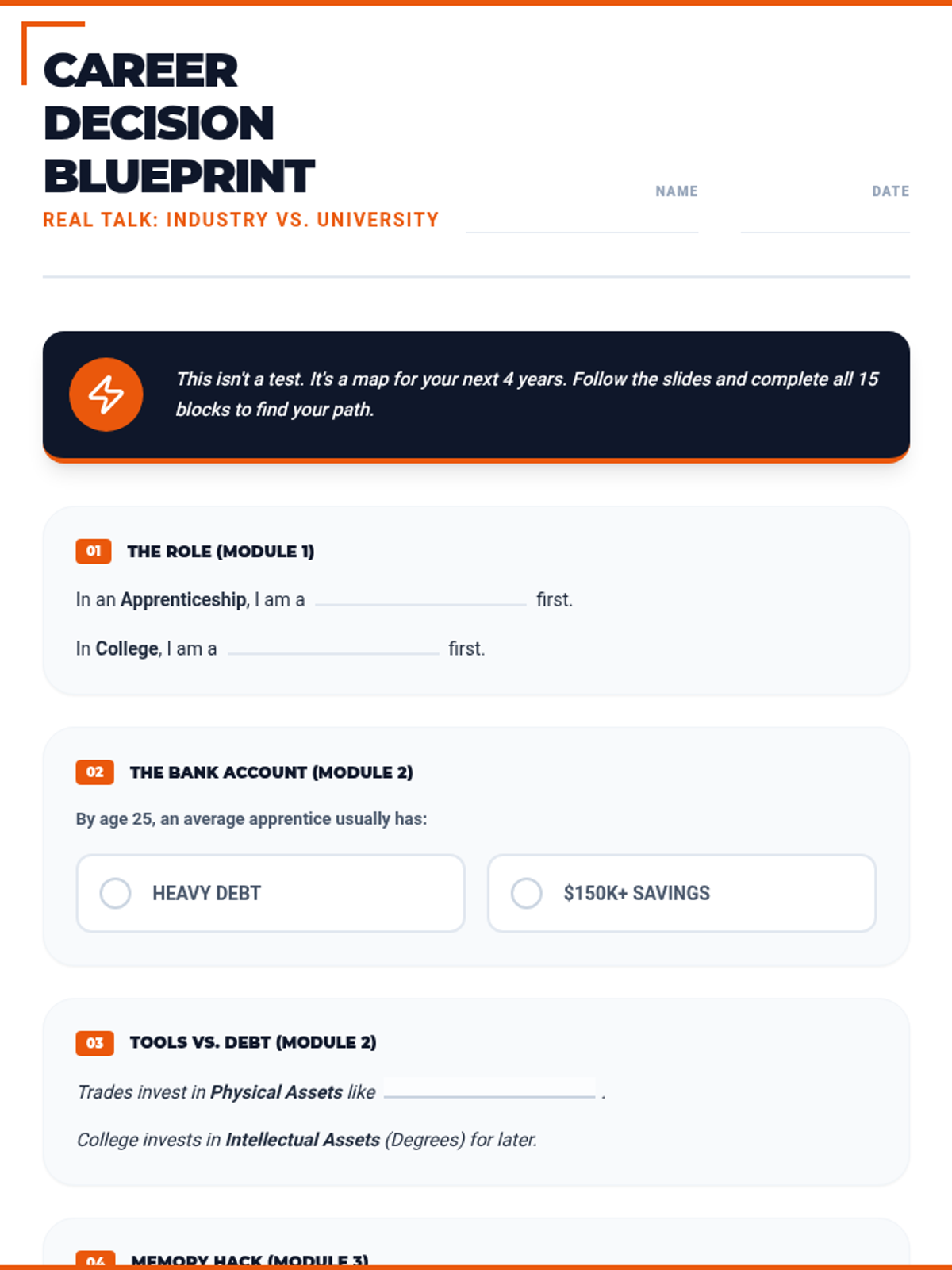
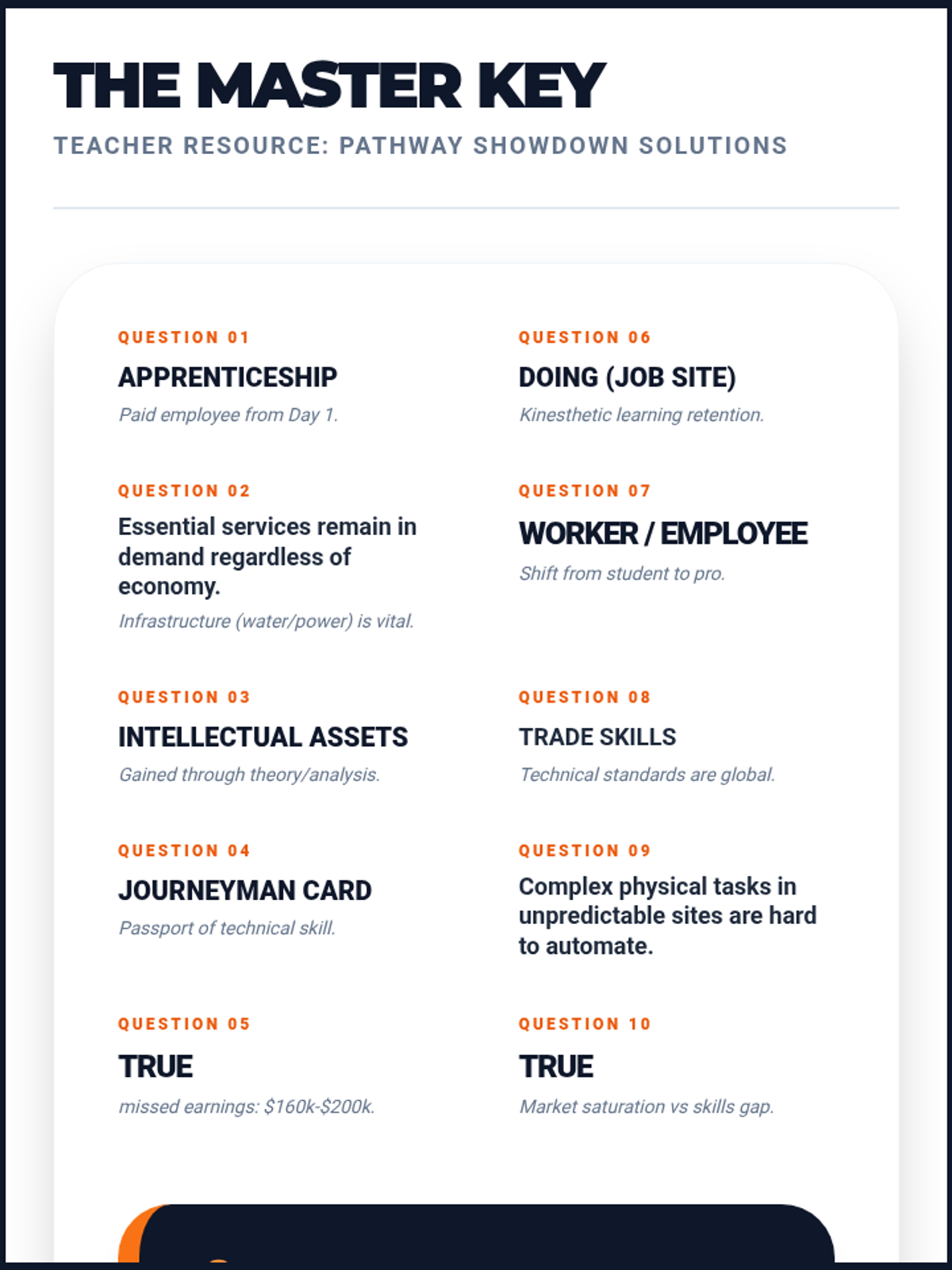
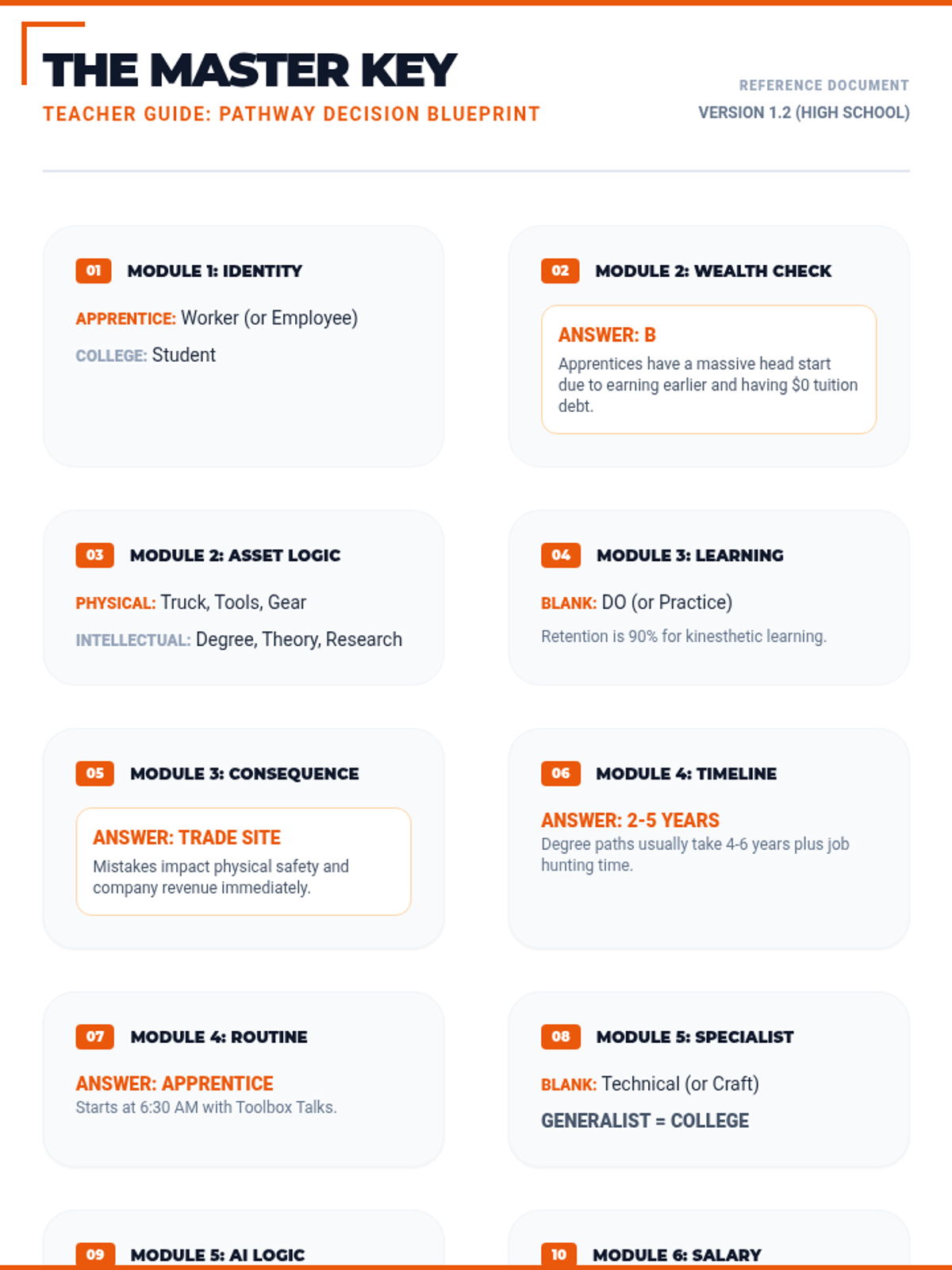
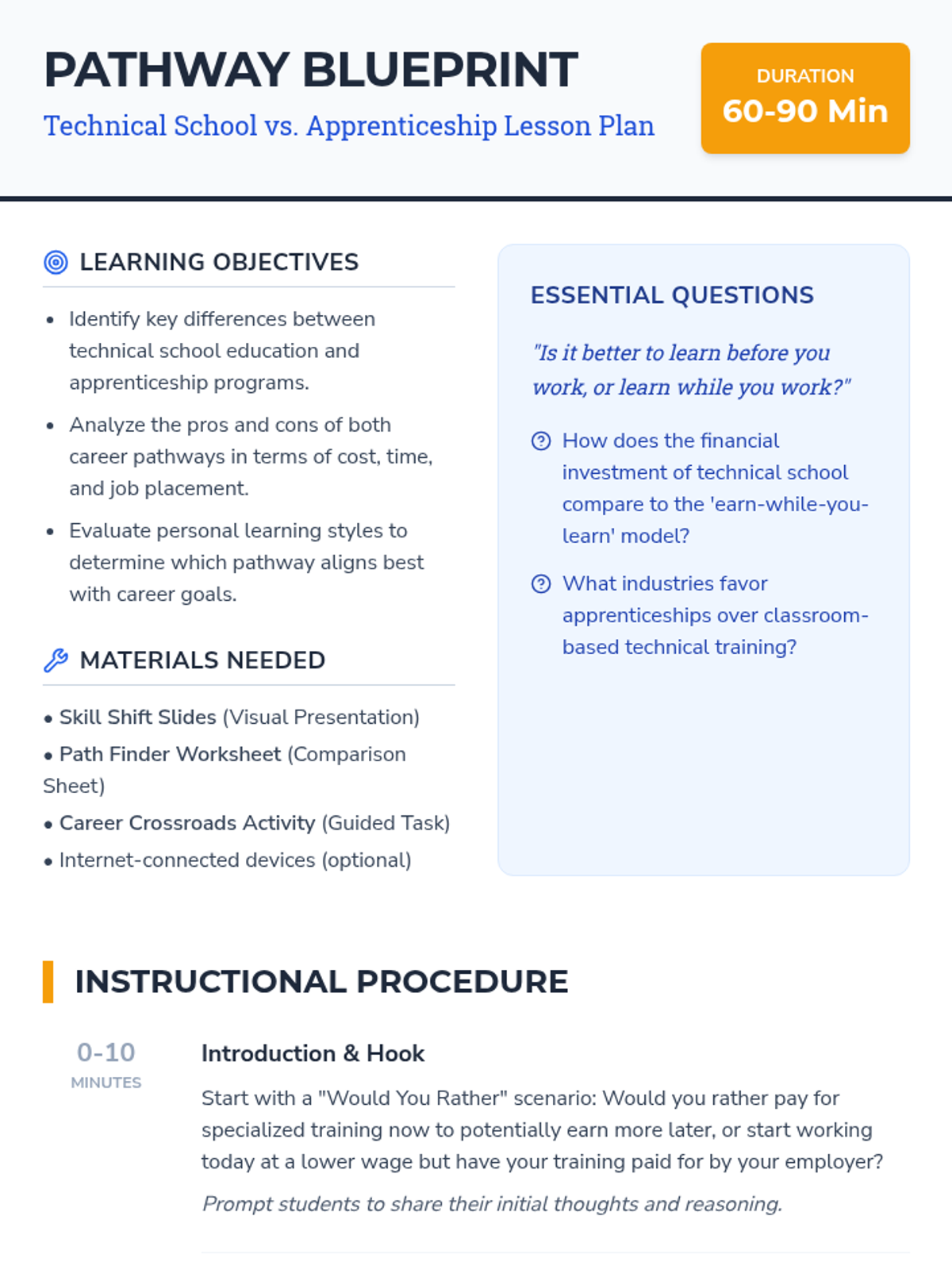
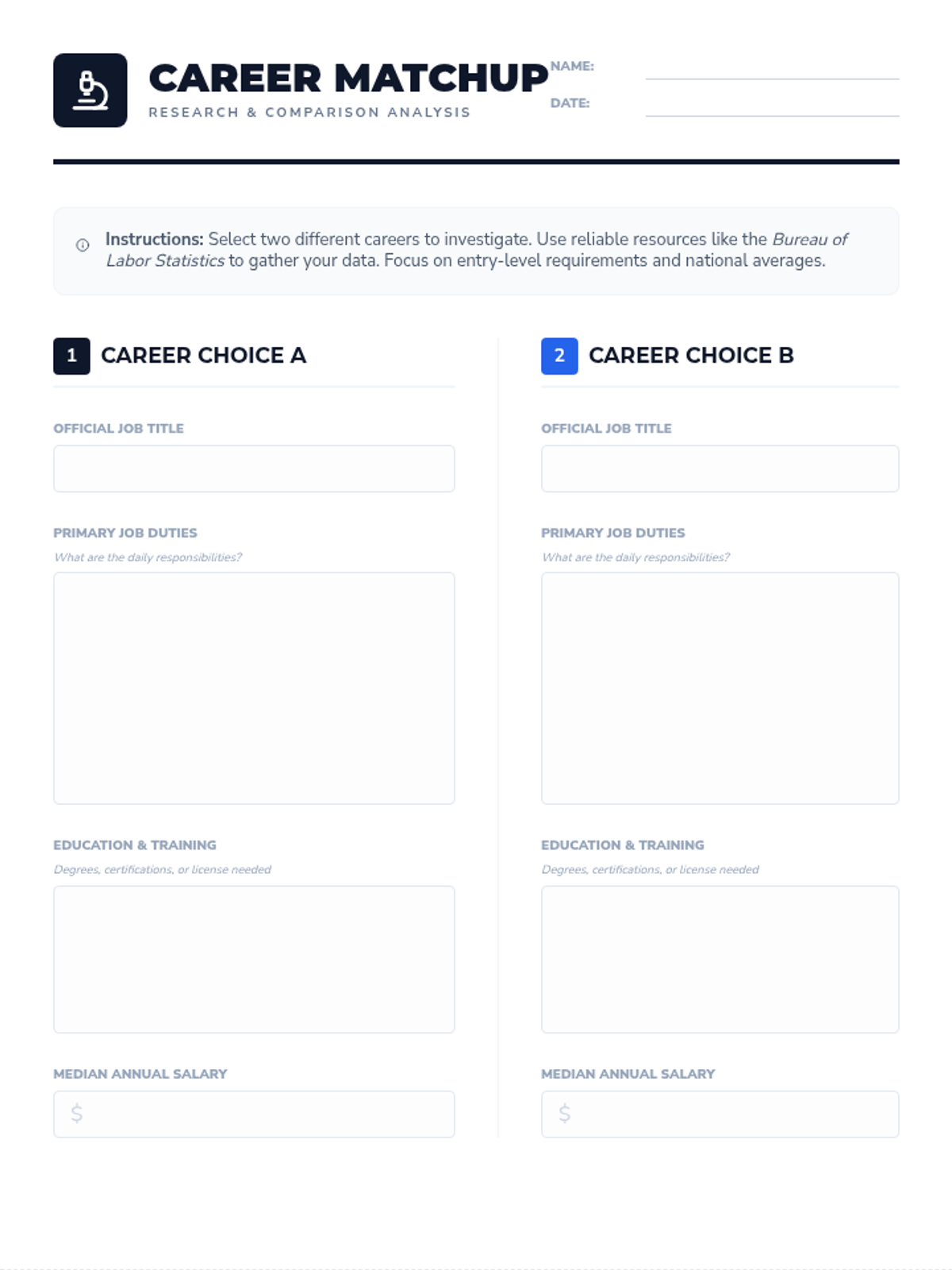
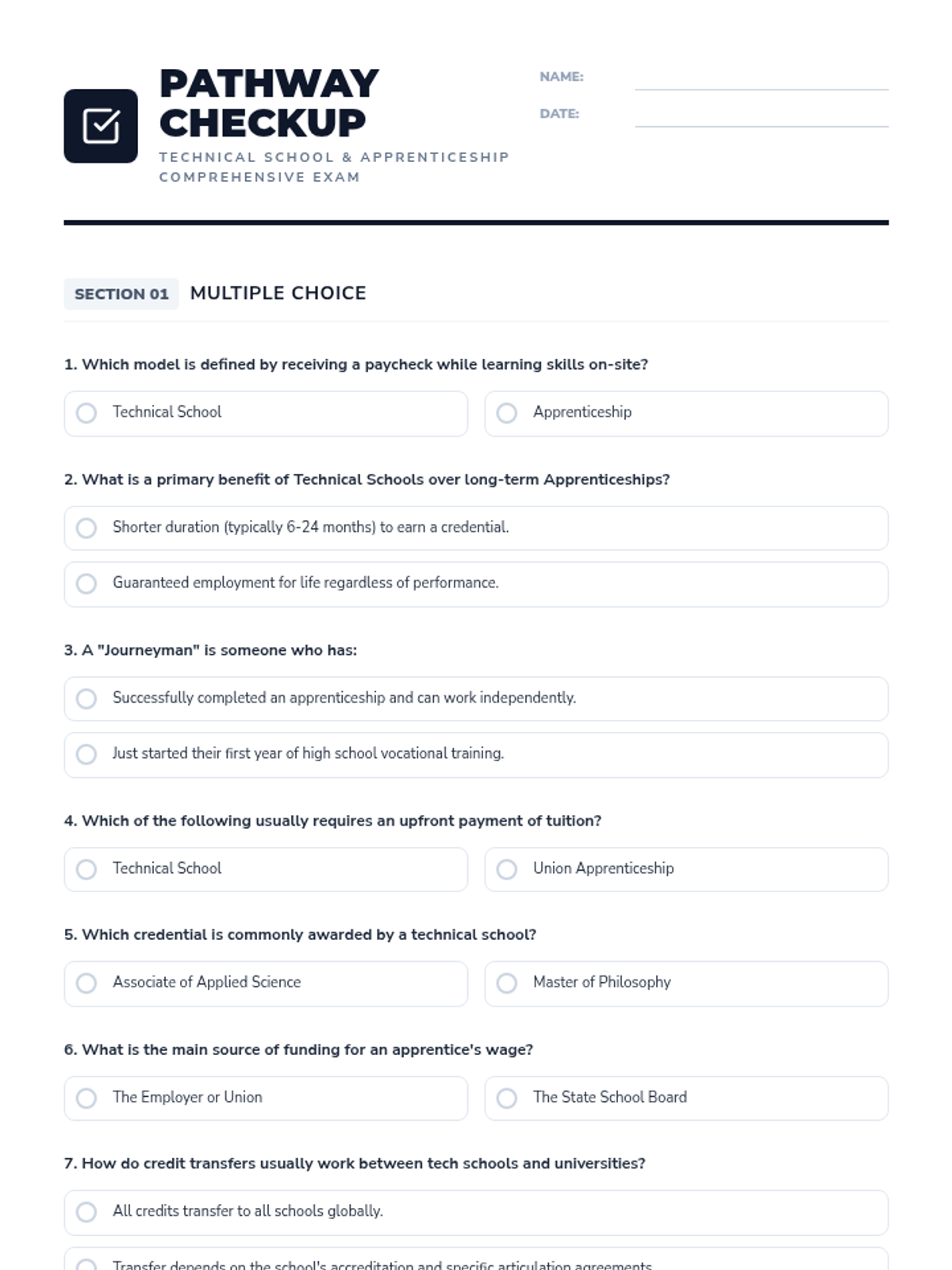
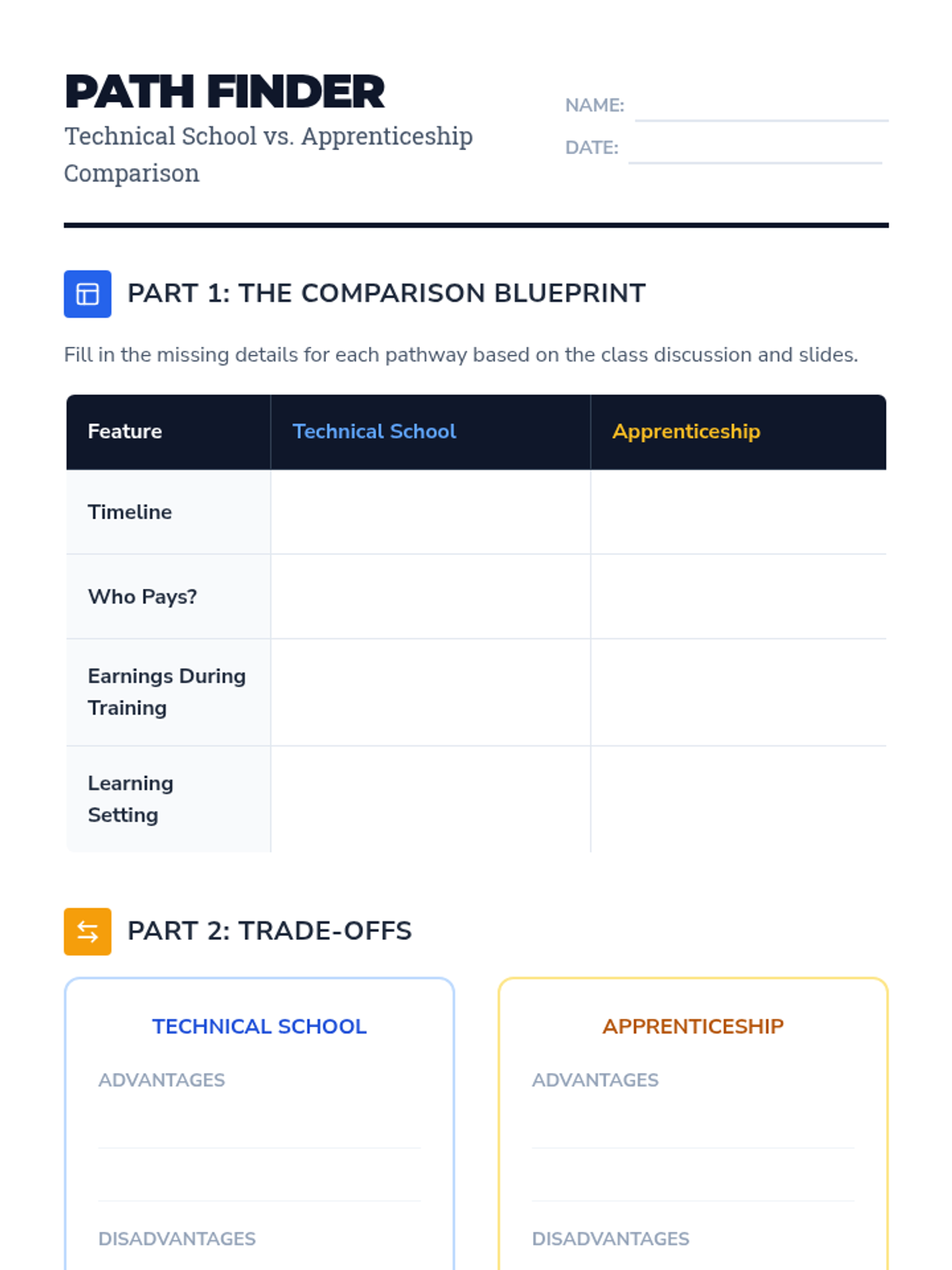
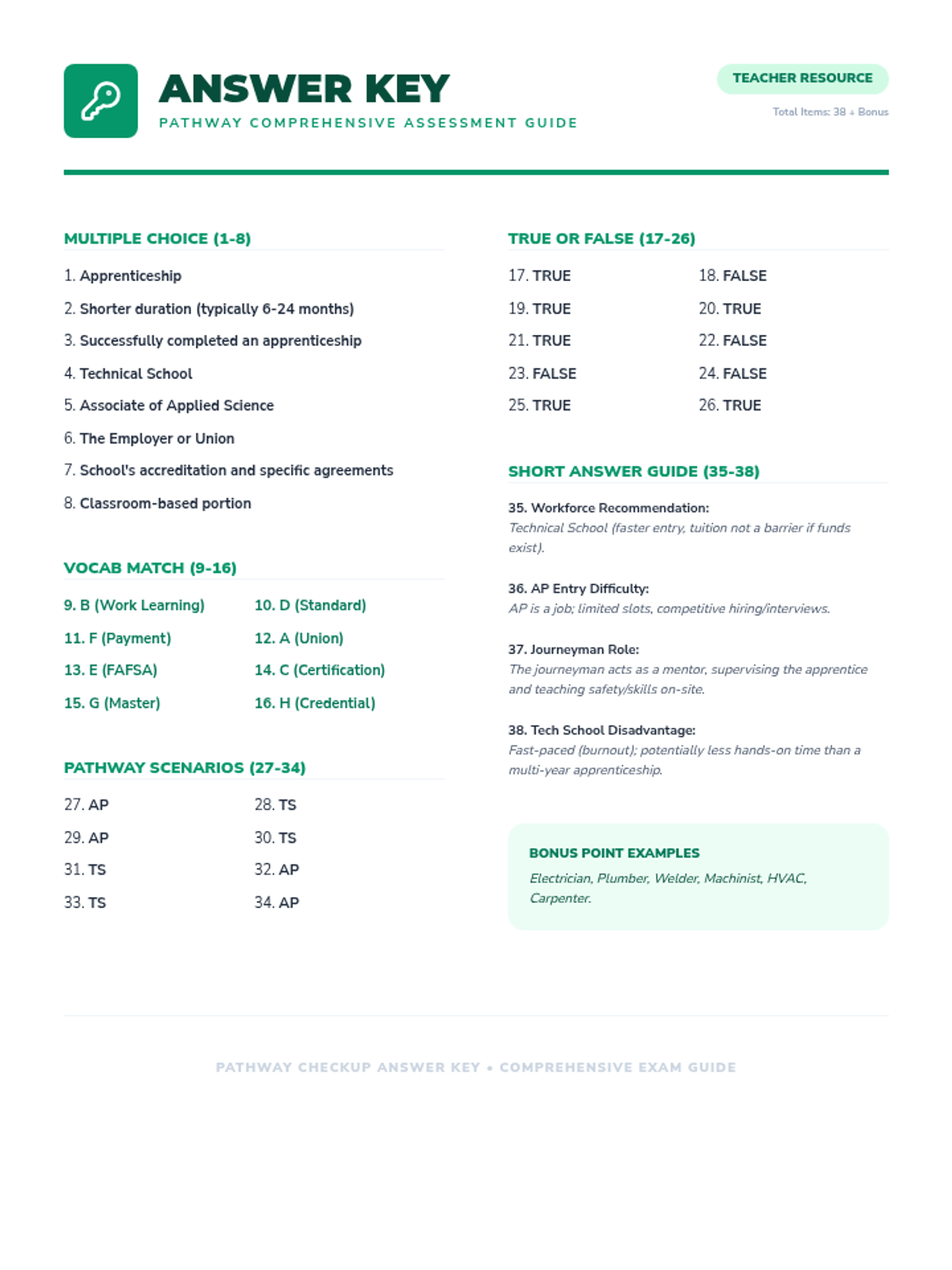
A comprehensive lesson exploring the differences, benefits, and drawbacks of technical schools and apprenticeships to help students navigate post-secondary options.
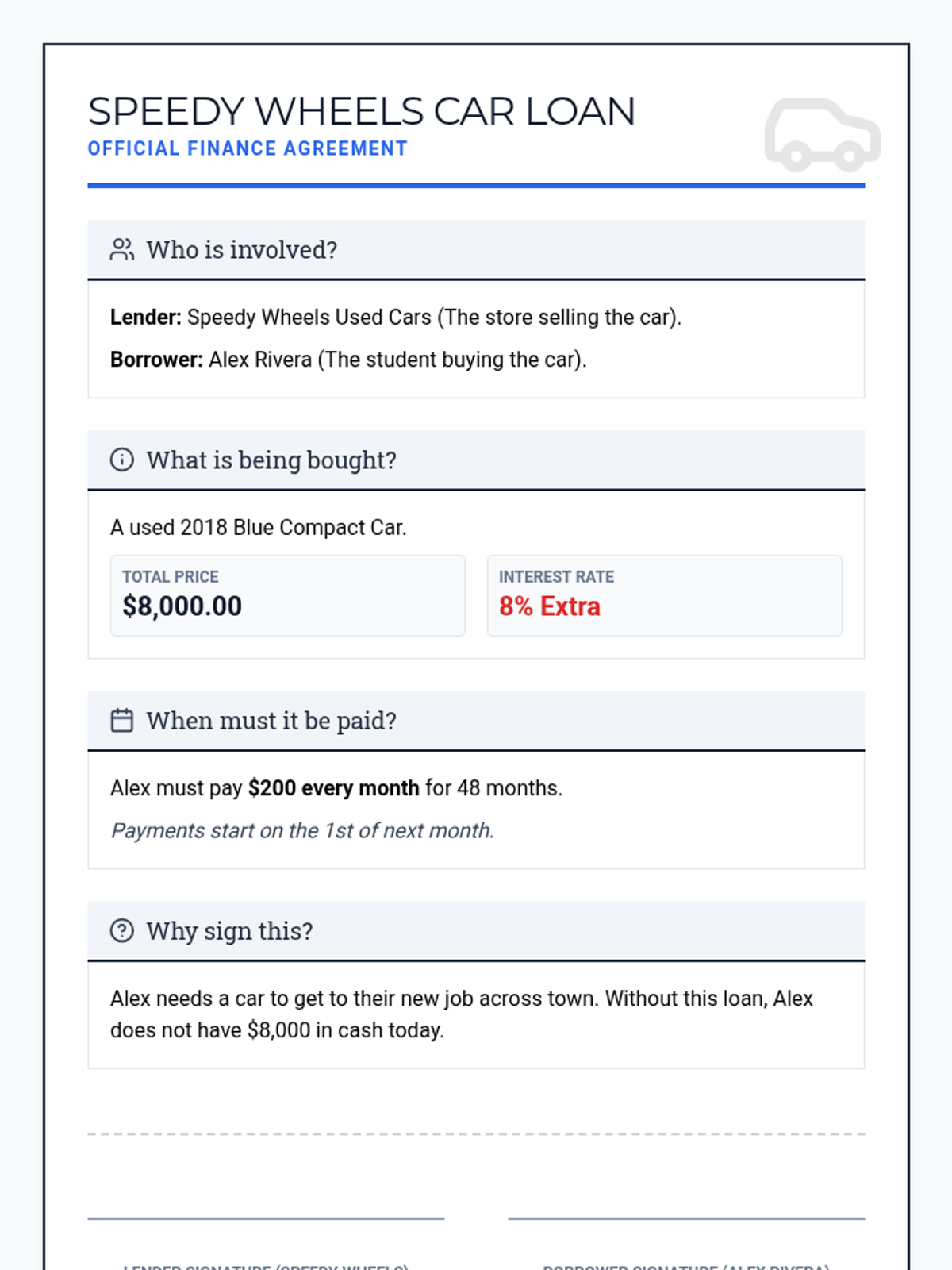
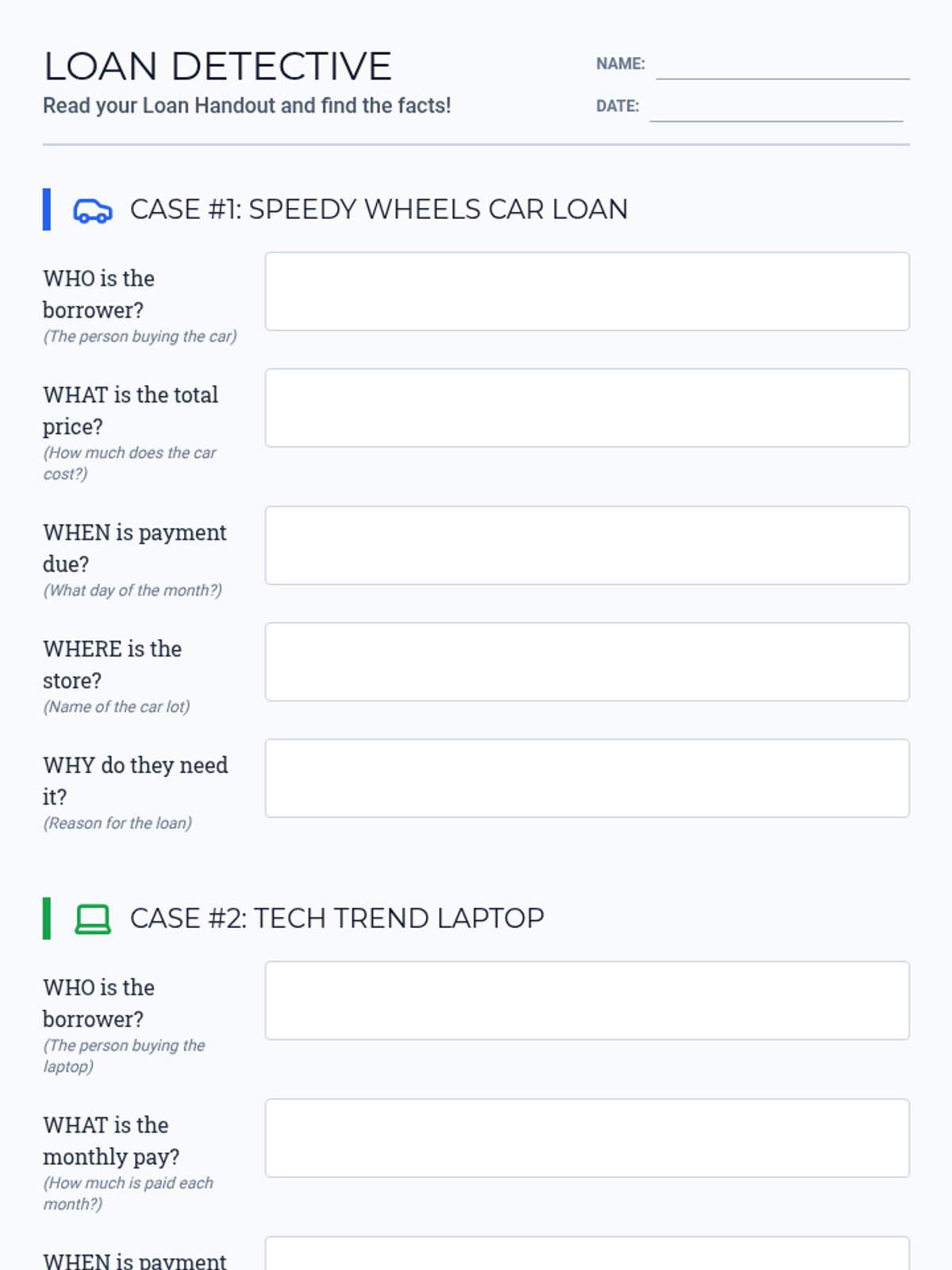
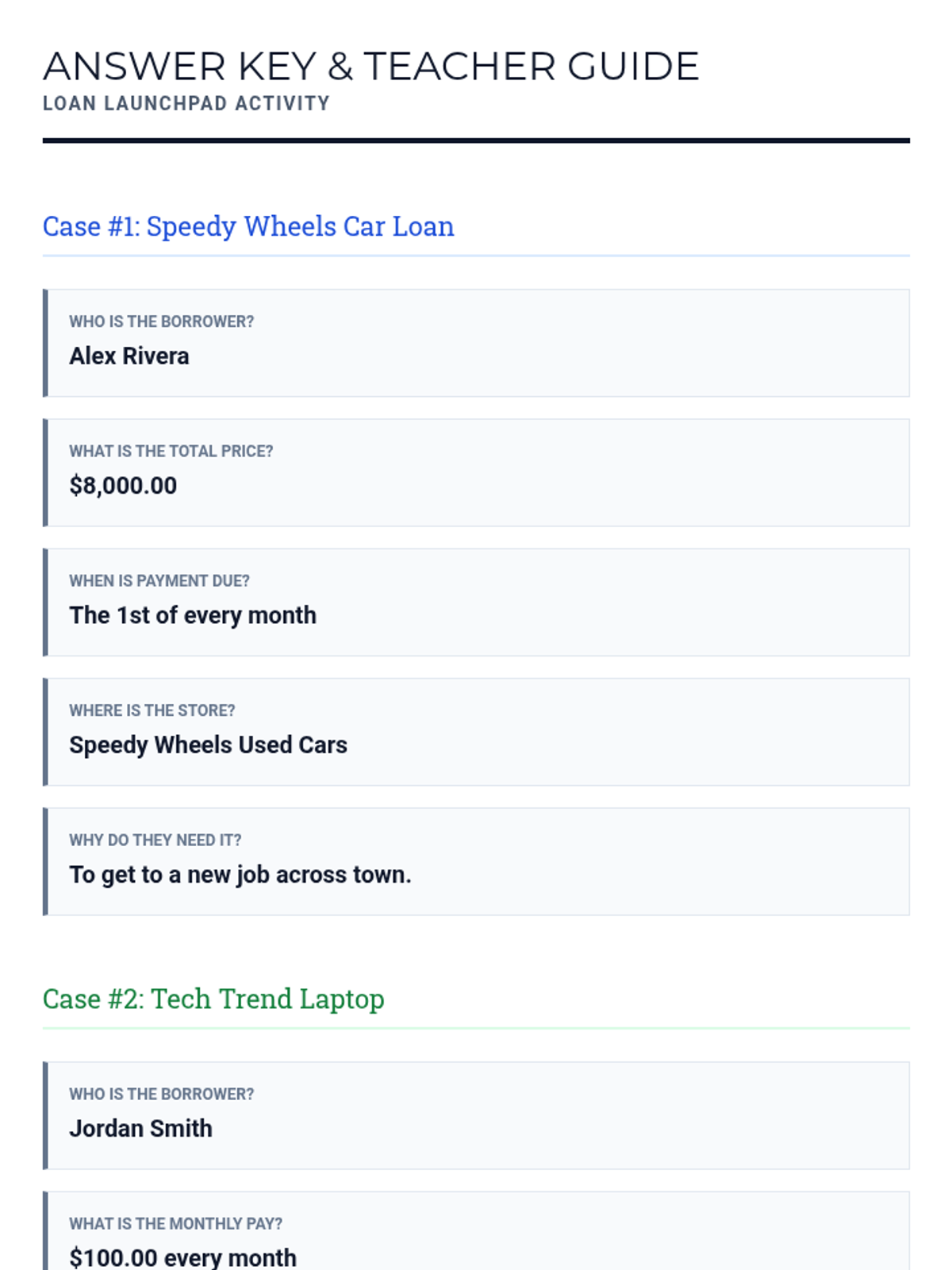
A practical literacy lesson designed for high school students with special needs to master reading and understanding basic loan agreements. Students analyze simplified car and laptop financing documents using a 5W (Who, What, When, Where, Why) framework.
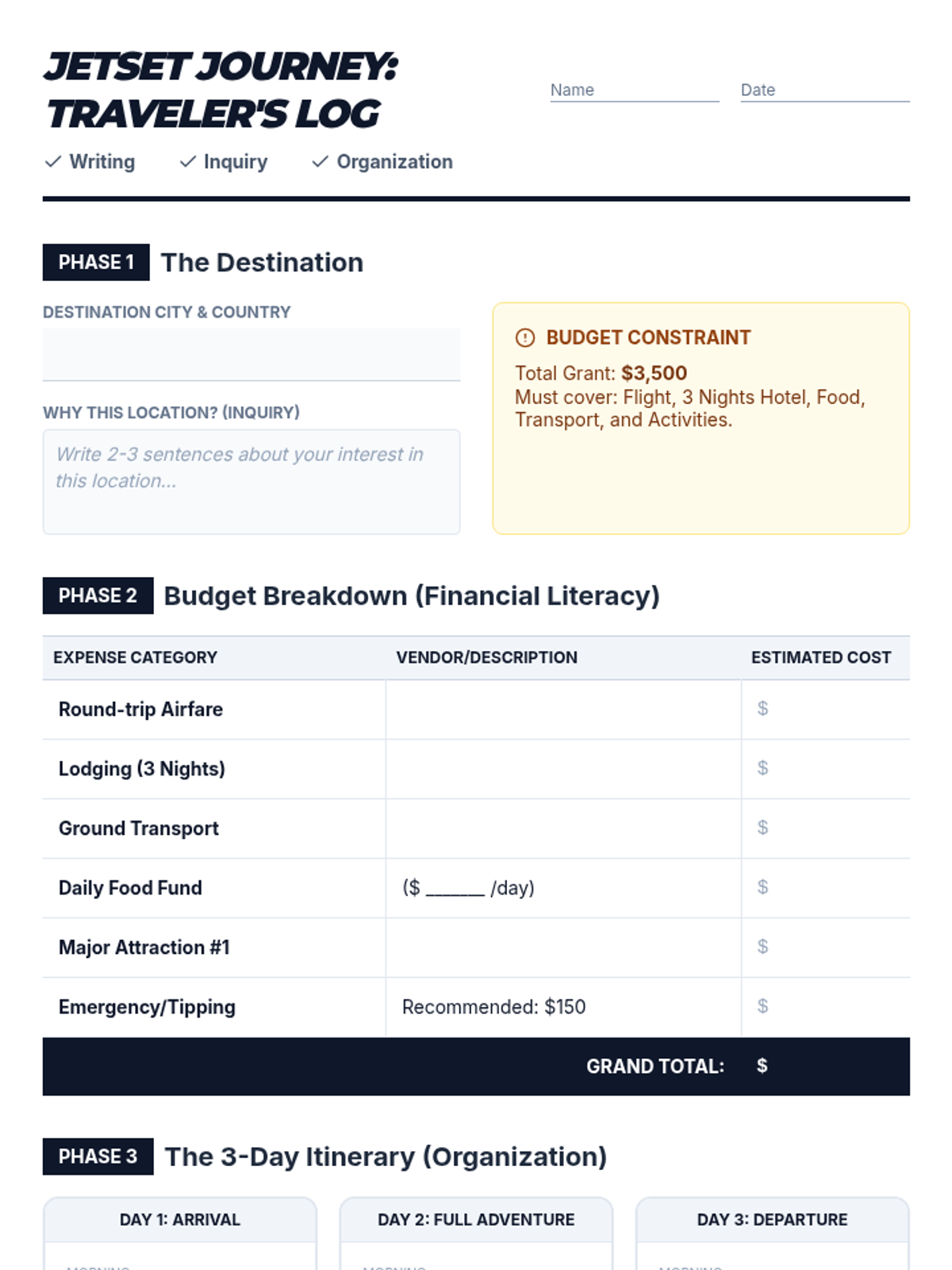
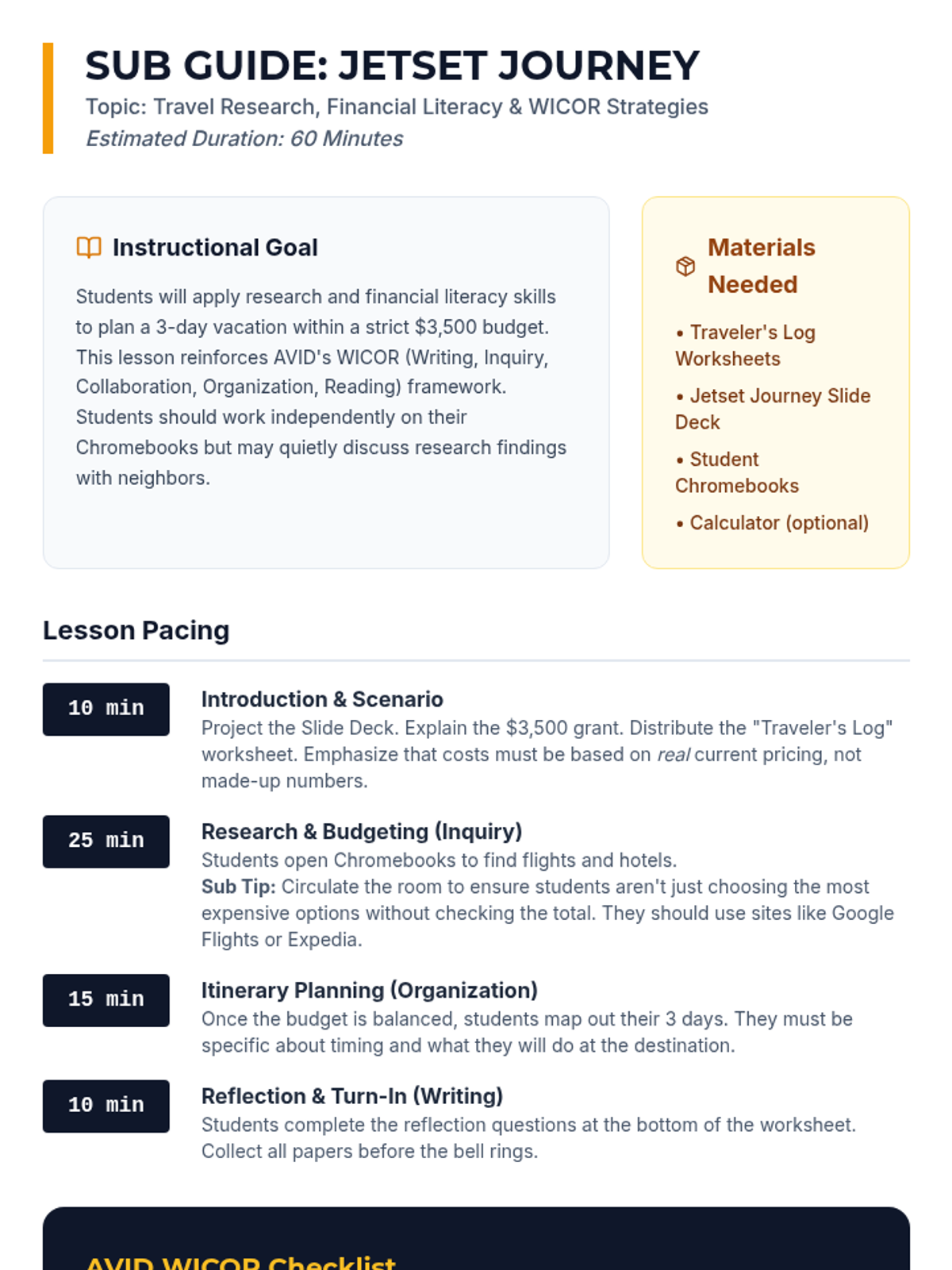
A high-engagement, sub-friendly lesson where AVID students research, budget, and plan a 3-day dream vacation while applying WICOR strategies and financial literacy skills.
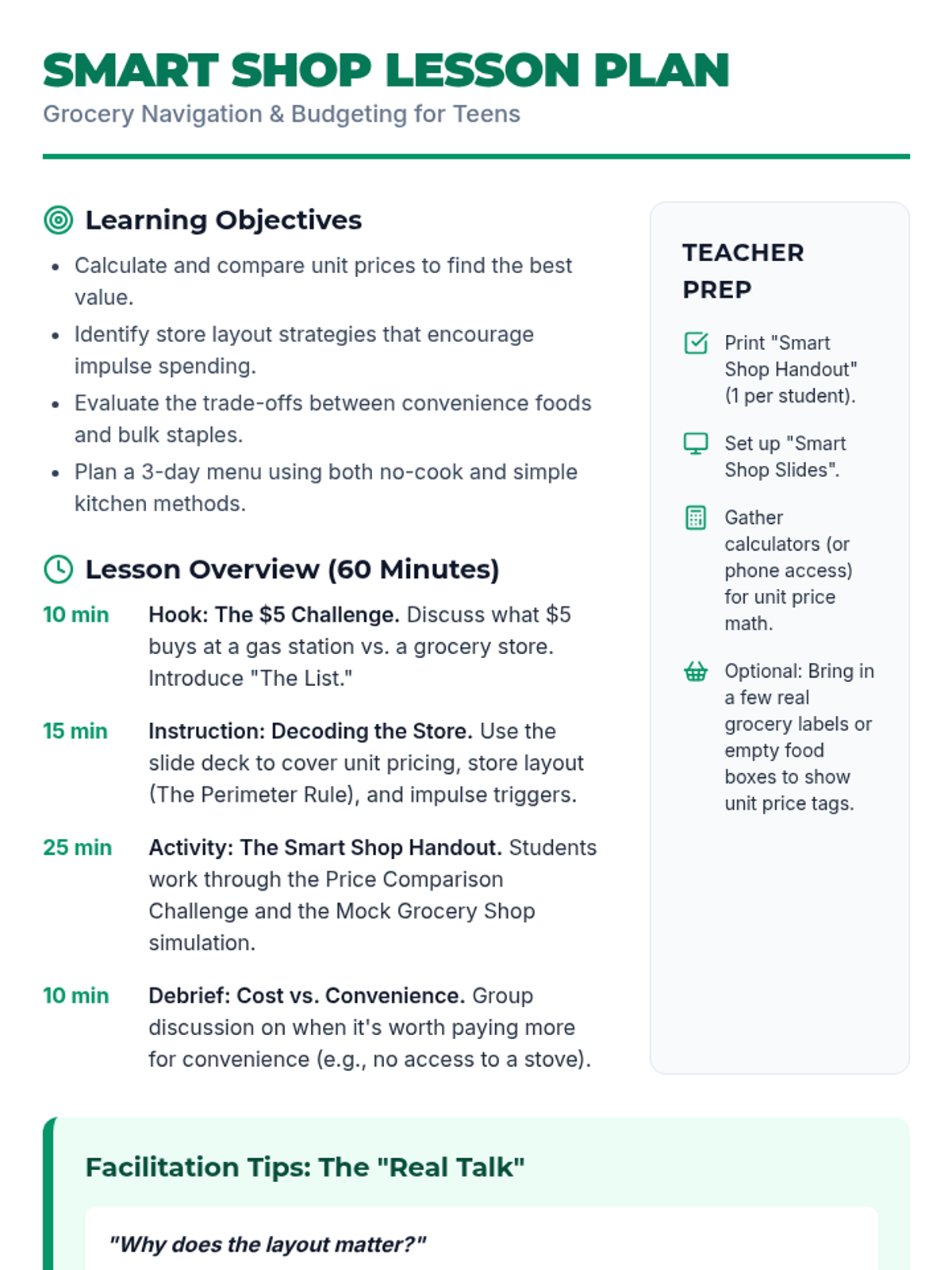
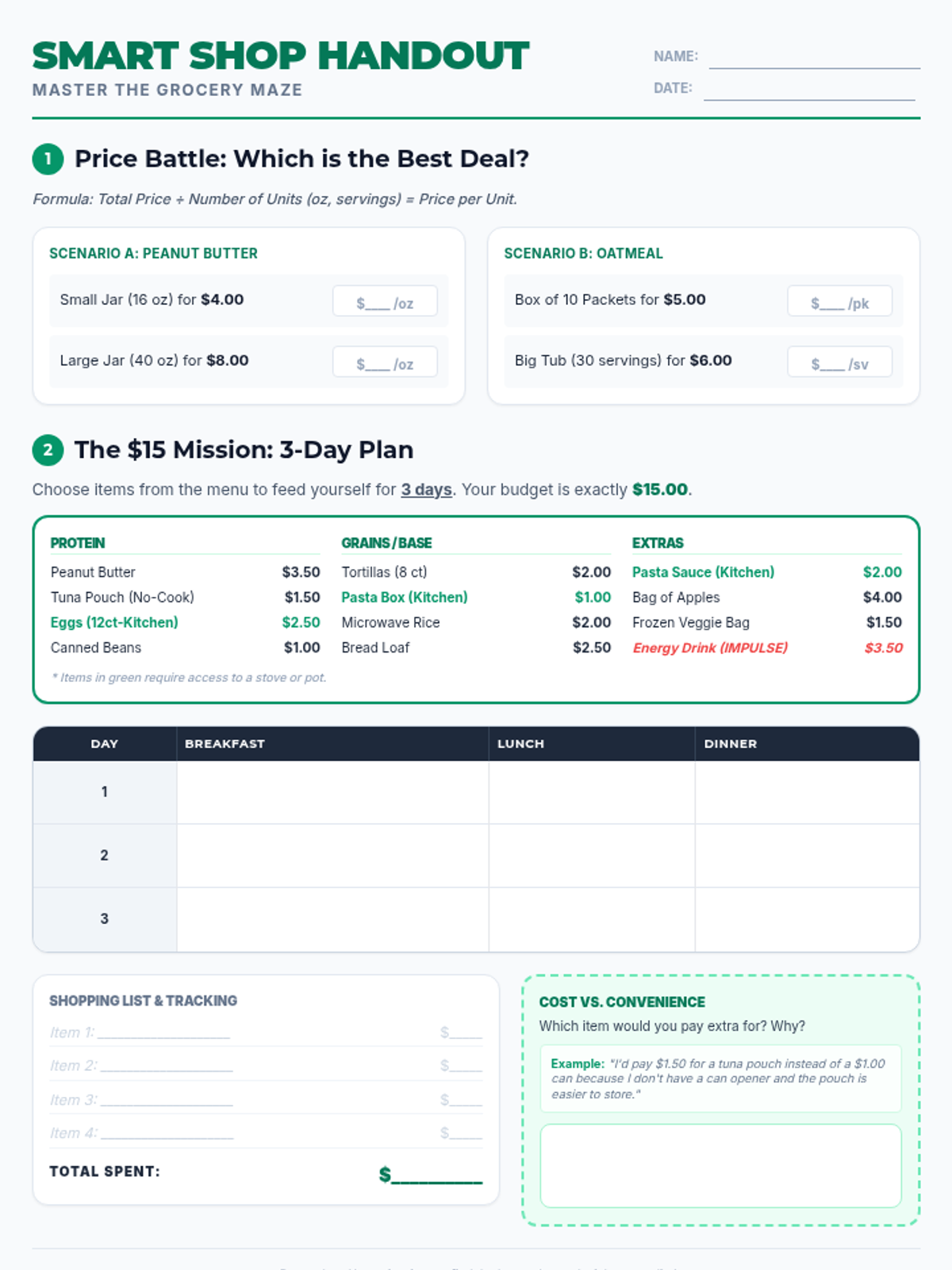
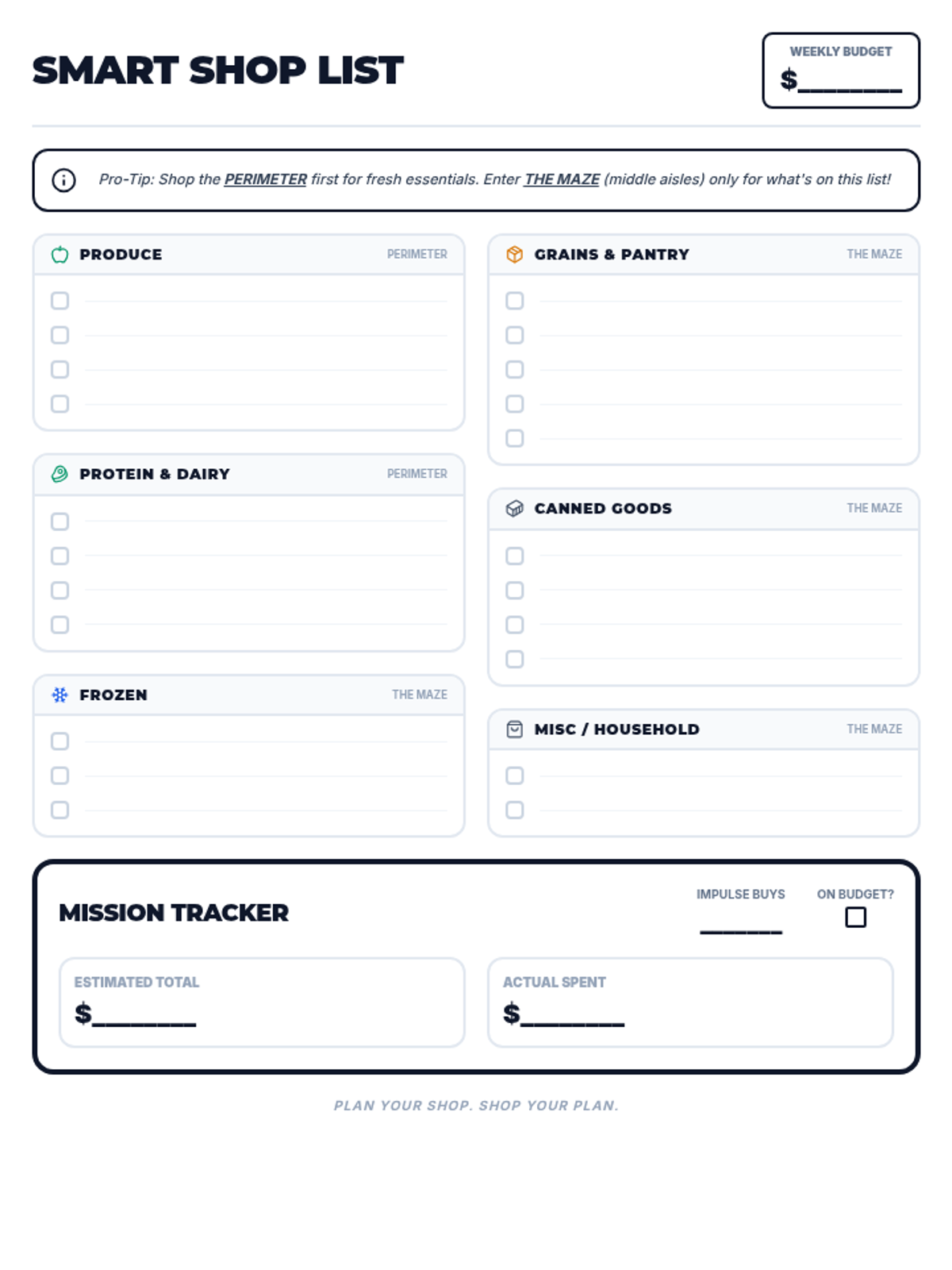
A practical guide for teens to navigate grocery stores efficiently, focusing on unit pricing, store layout, and balancing convenience with cost for both no-cook and kitchen-based meals.
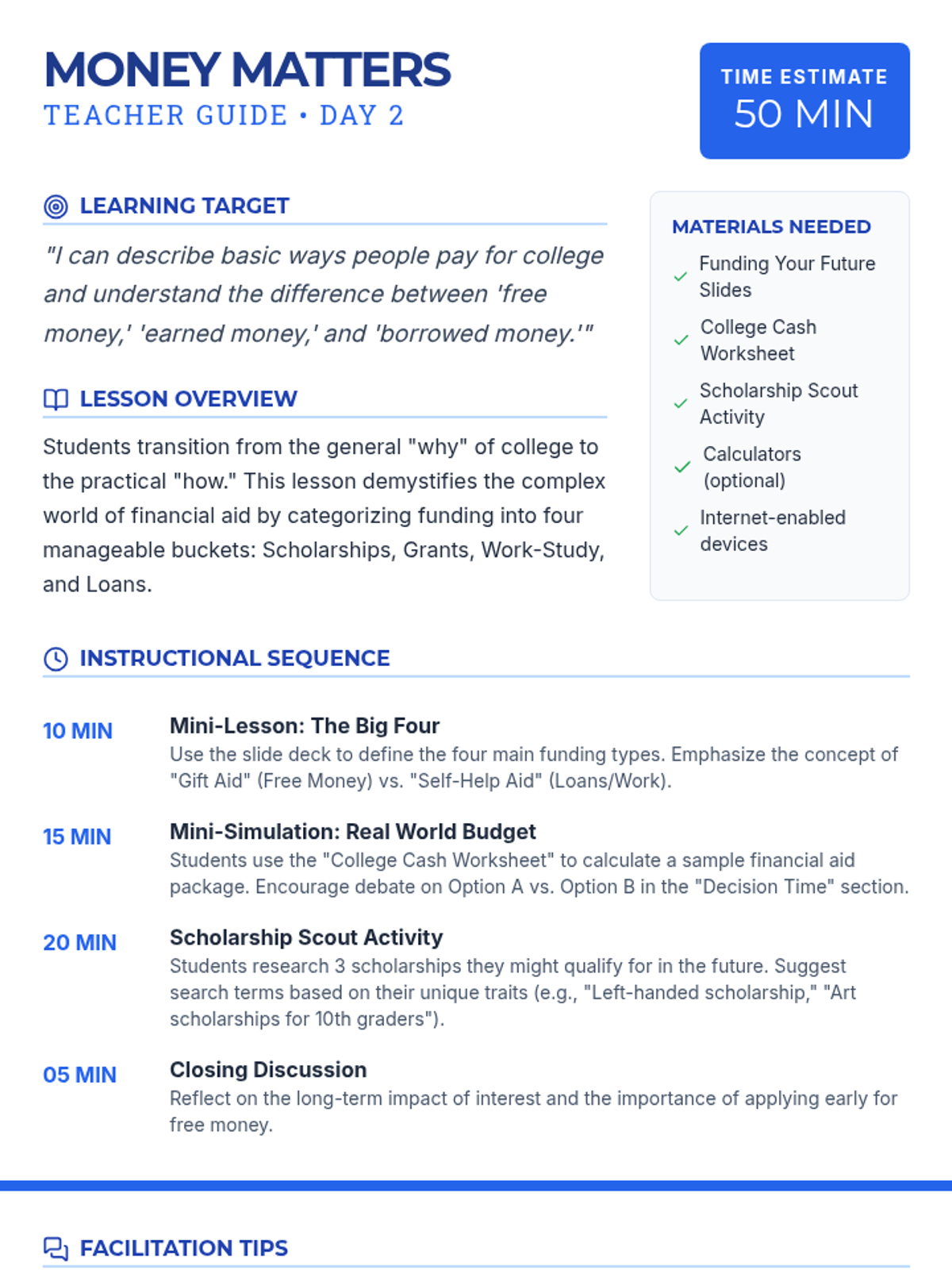
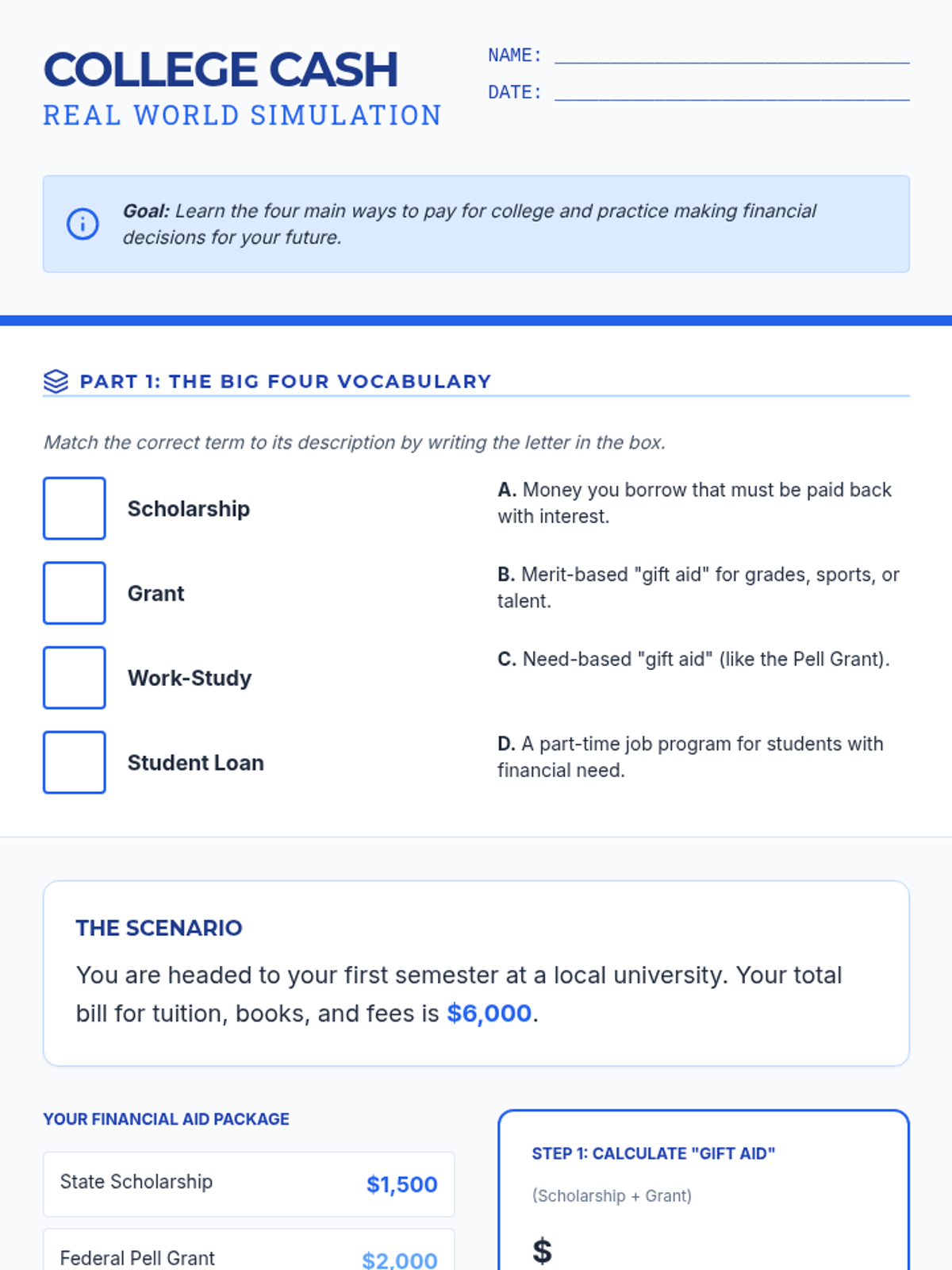
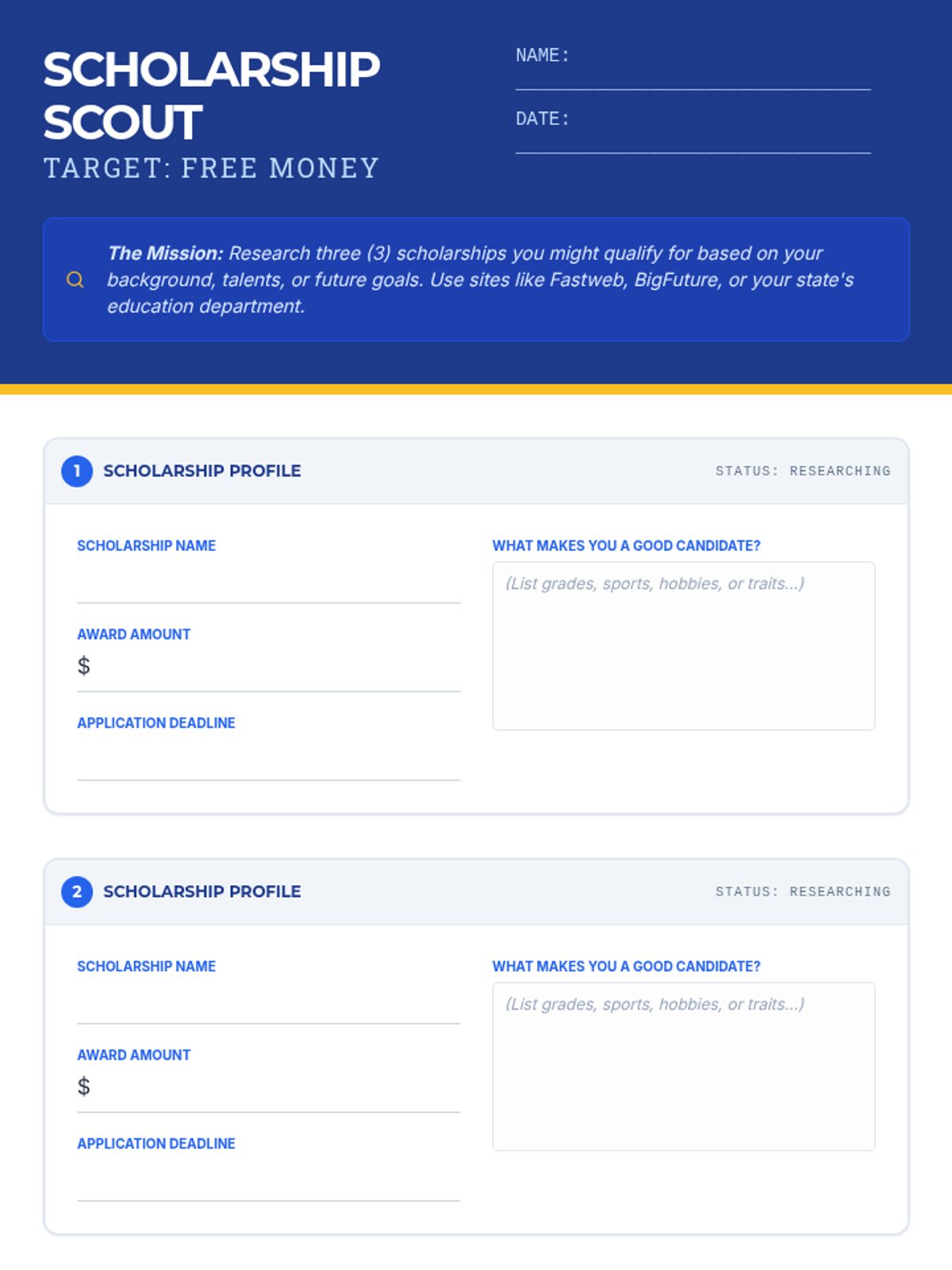
A lesson covering the four main ways to pay for college: scholarships, grants, work-study, and loans, featuring a budget simulation and a scholarship research activity.
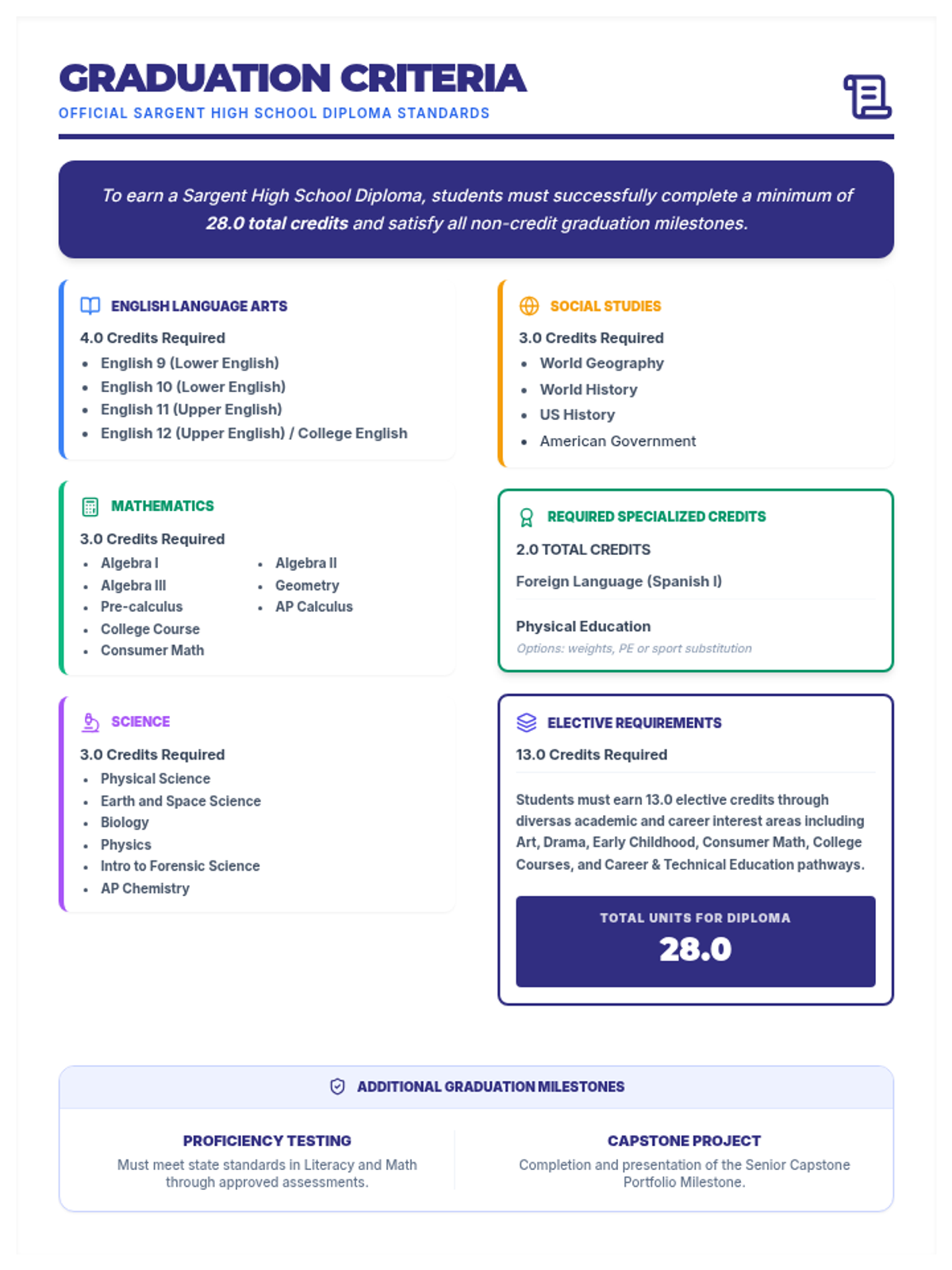
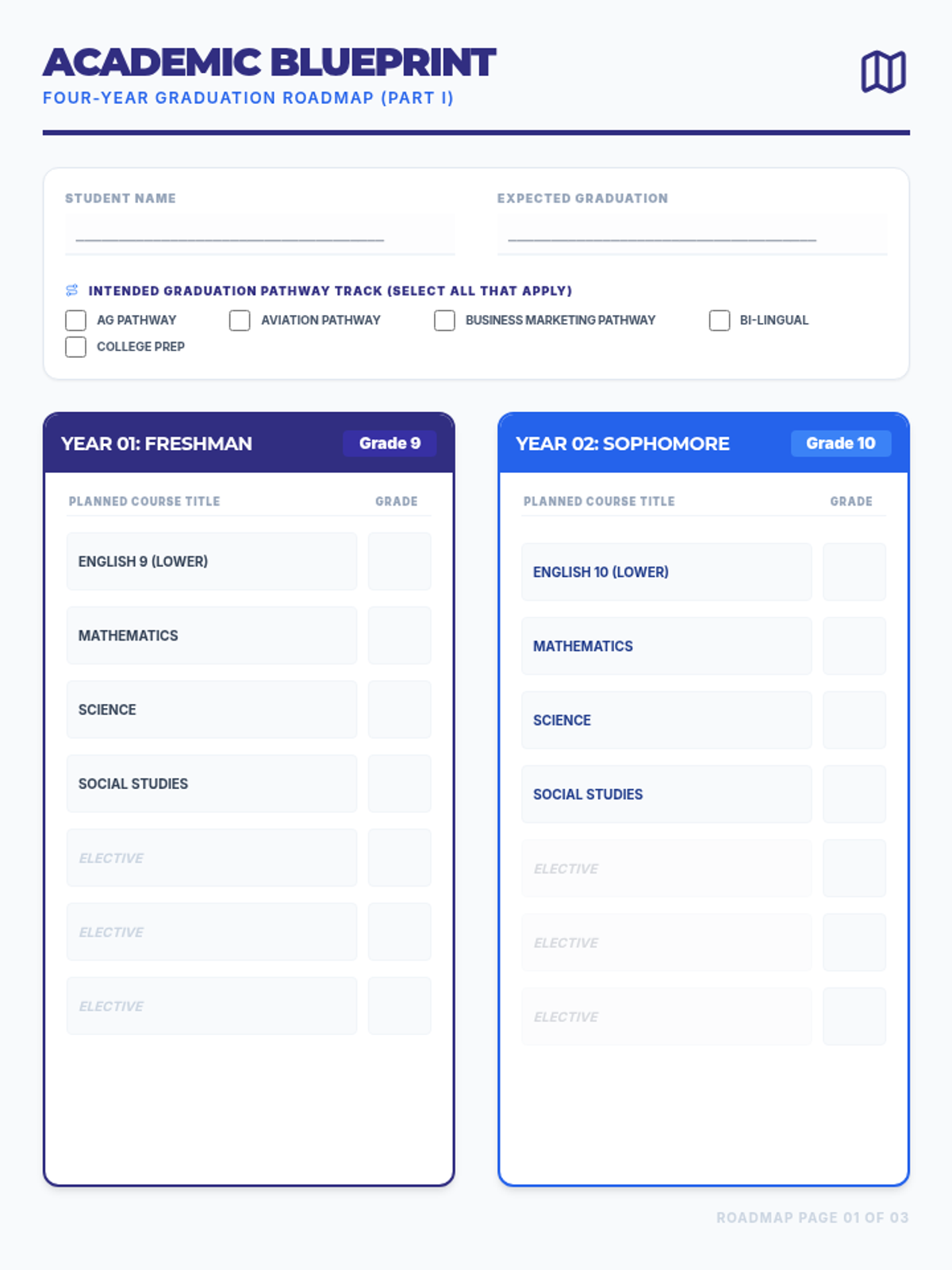
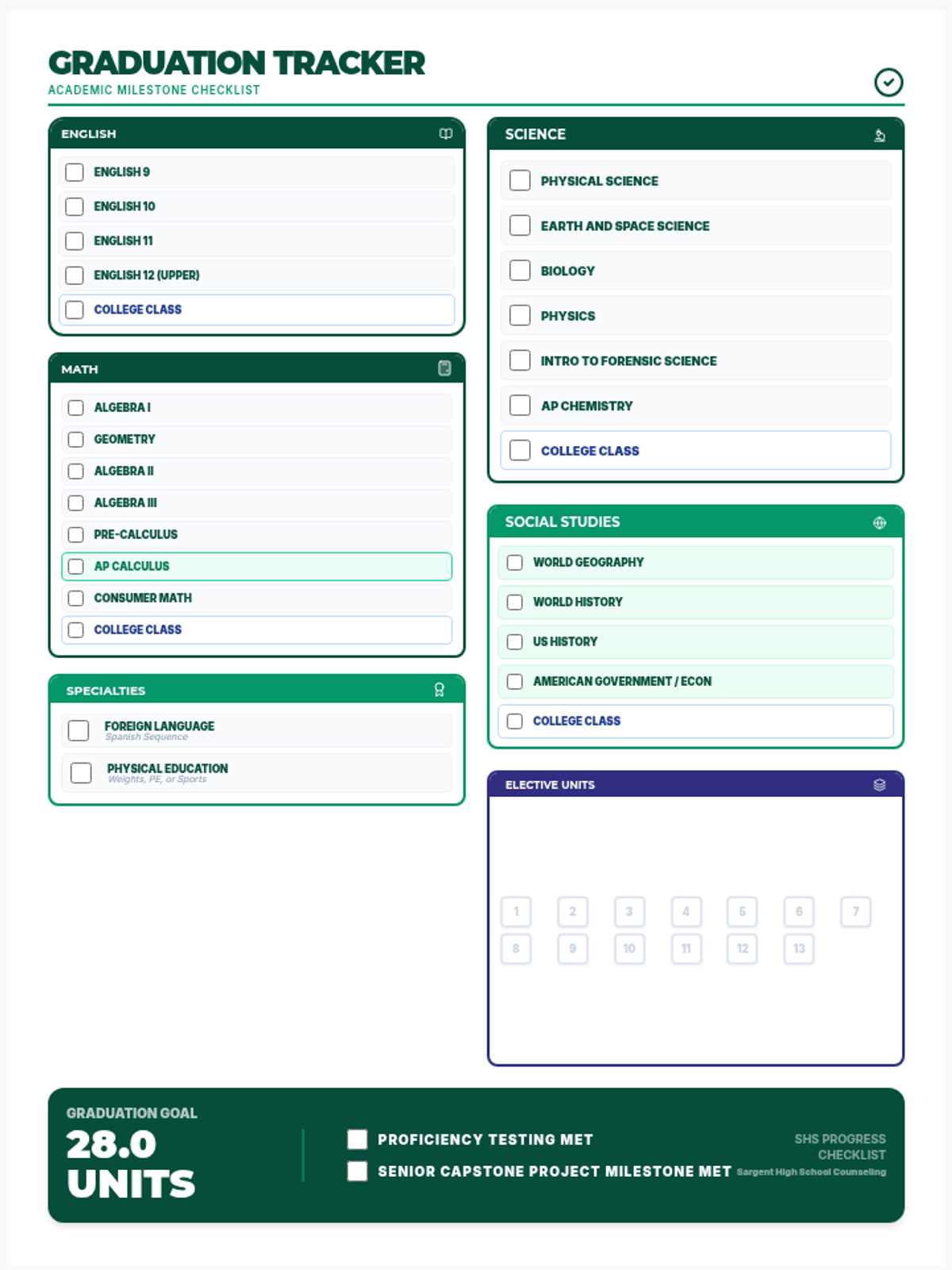
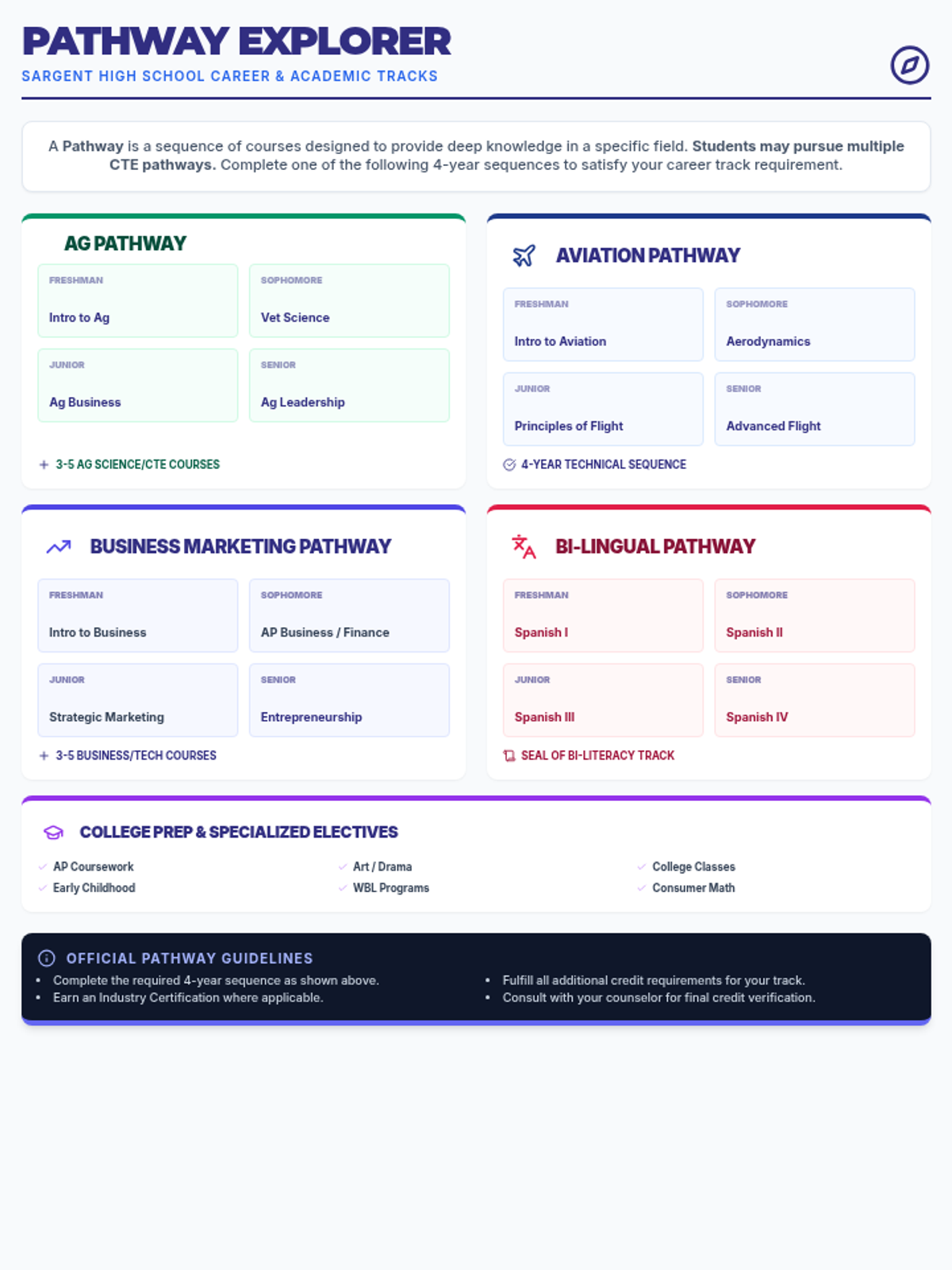
A comprehensive suite of academic planning tools designed for high school students to map out their graduation requirements and future career paths with their school counselor.
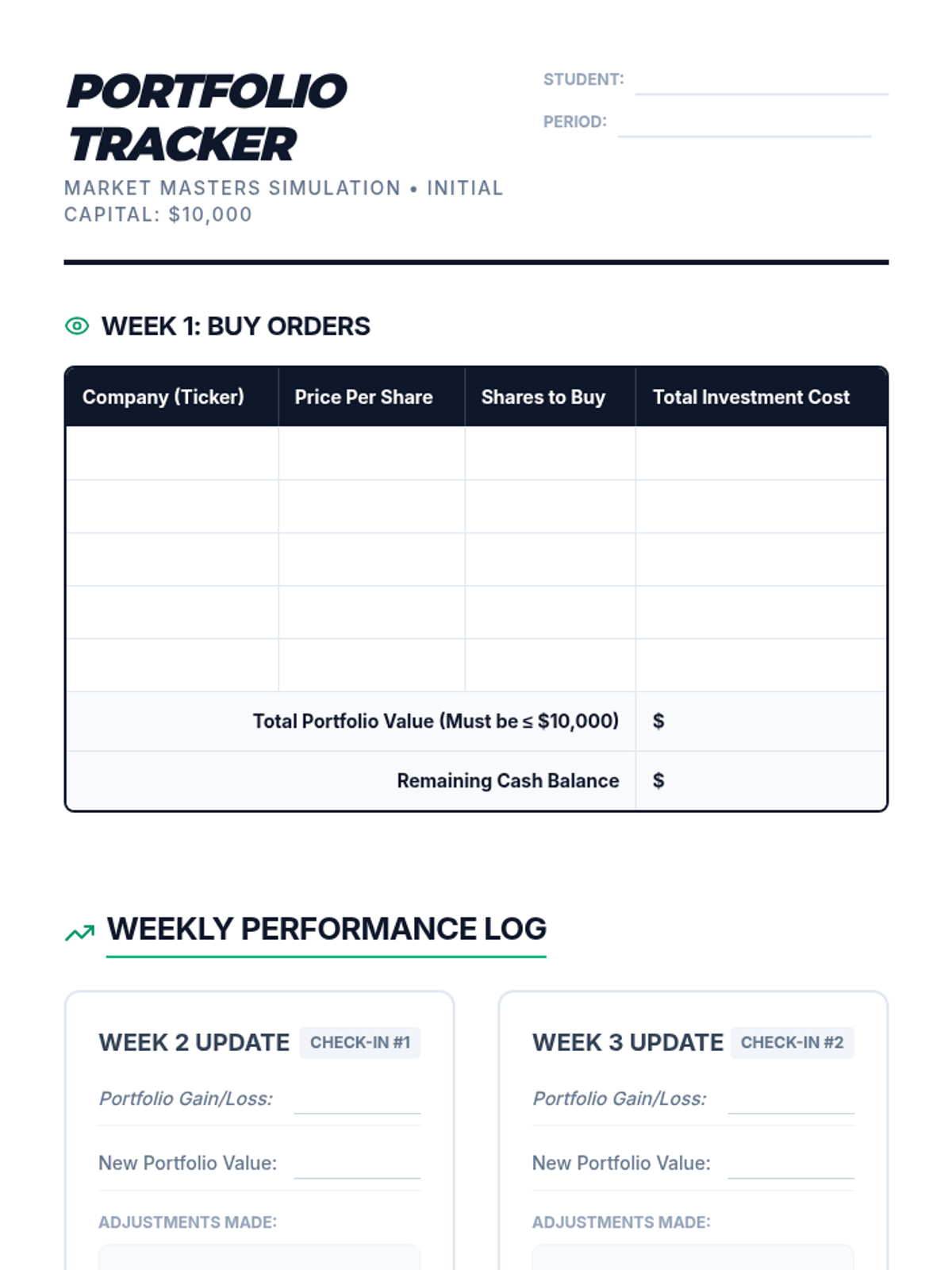
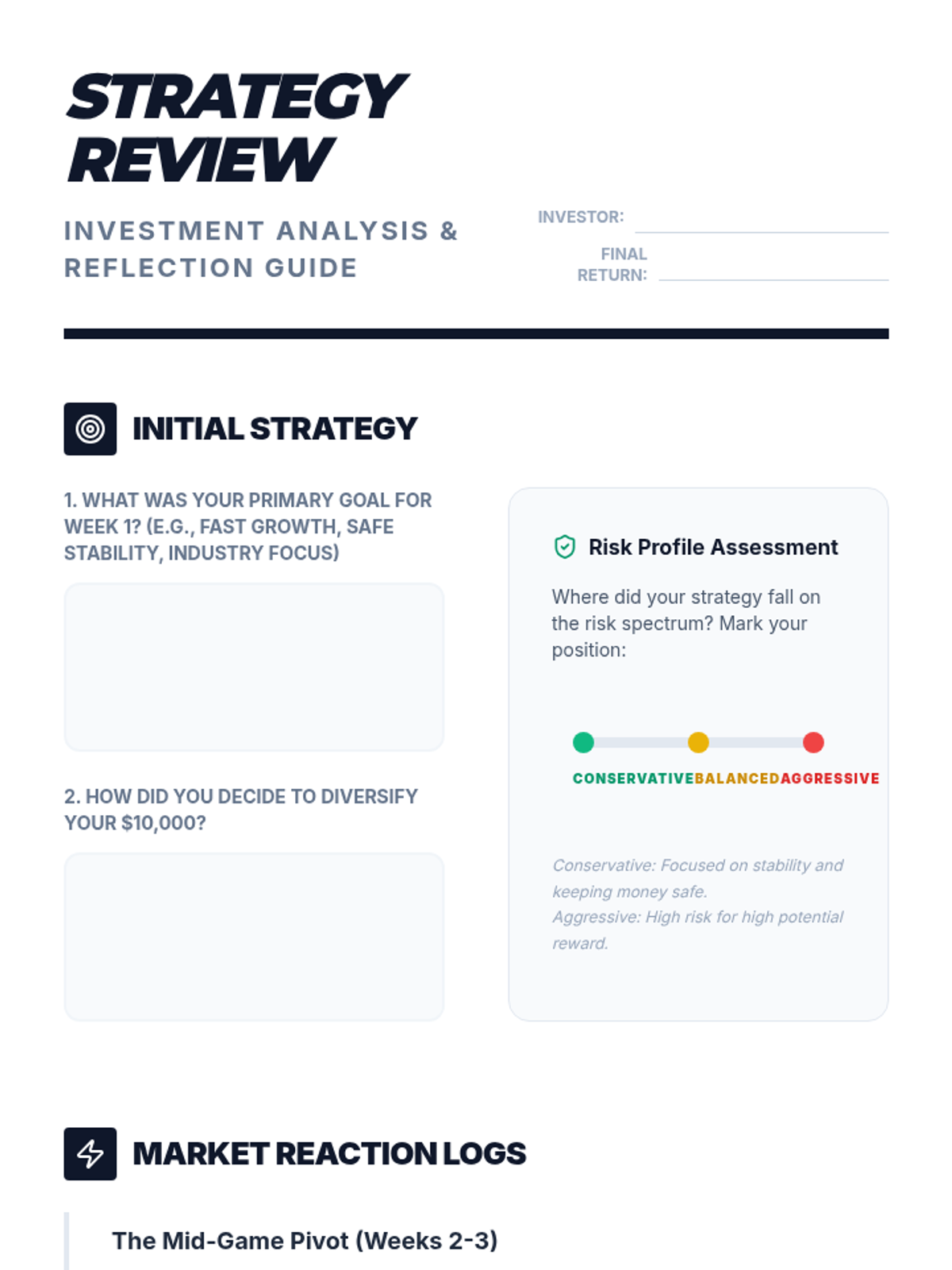
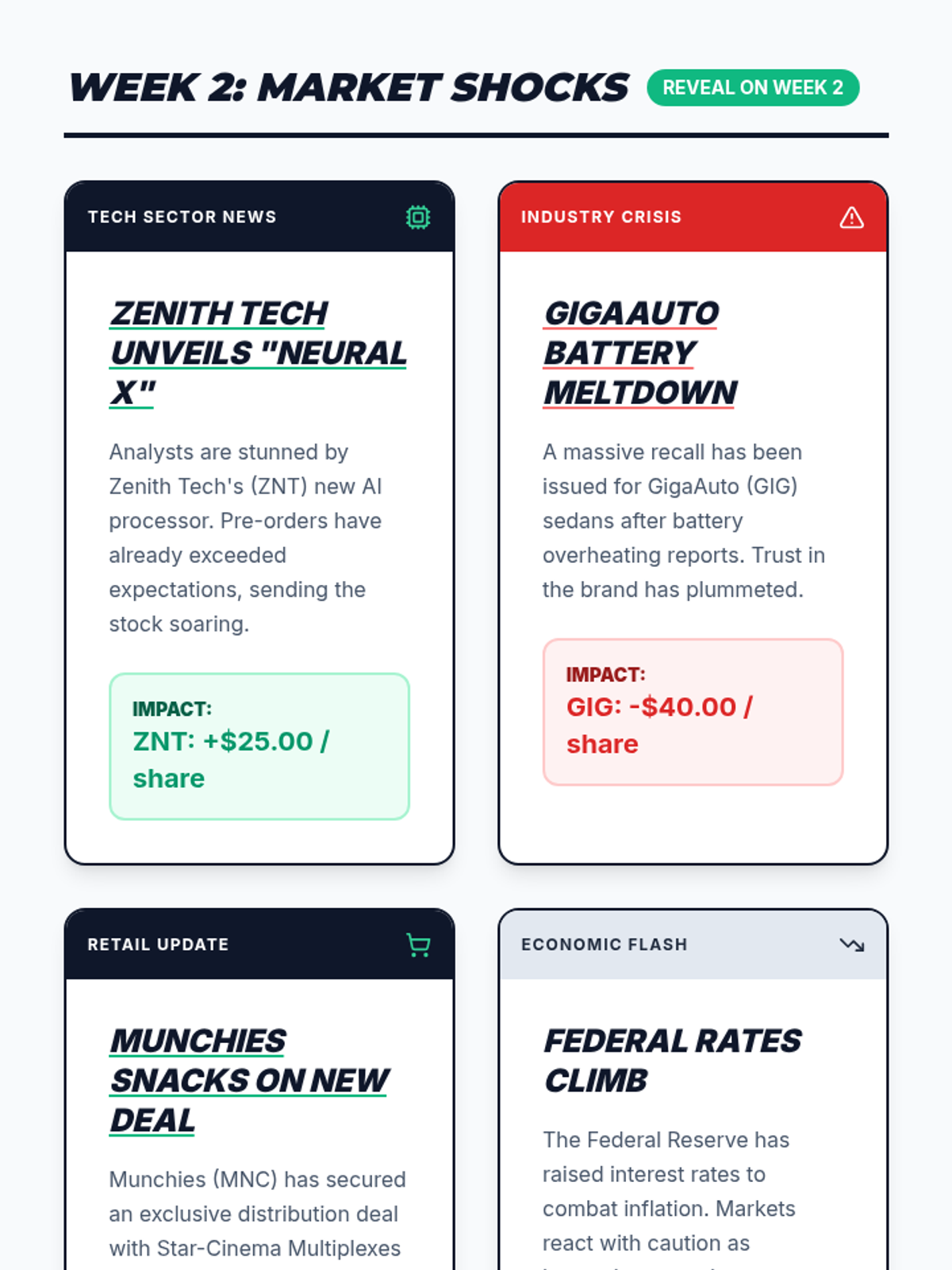
A core simulation lesson where students manage a $10,000 portfolio over four weeks, reacting to market news and tracking their gains or losses.
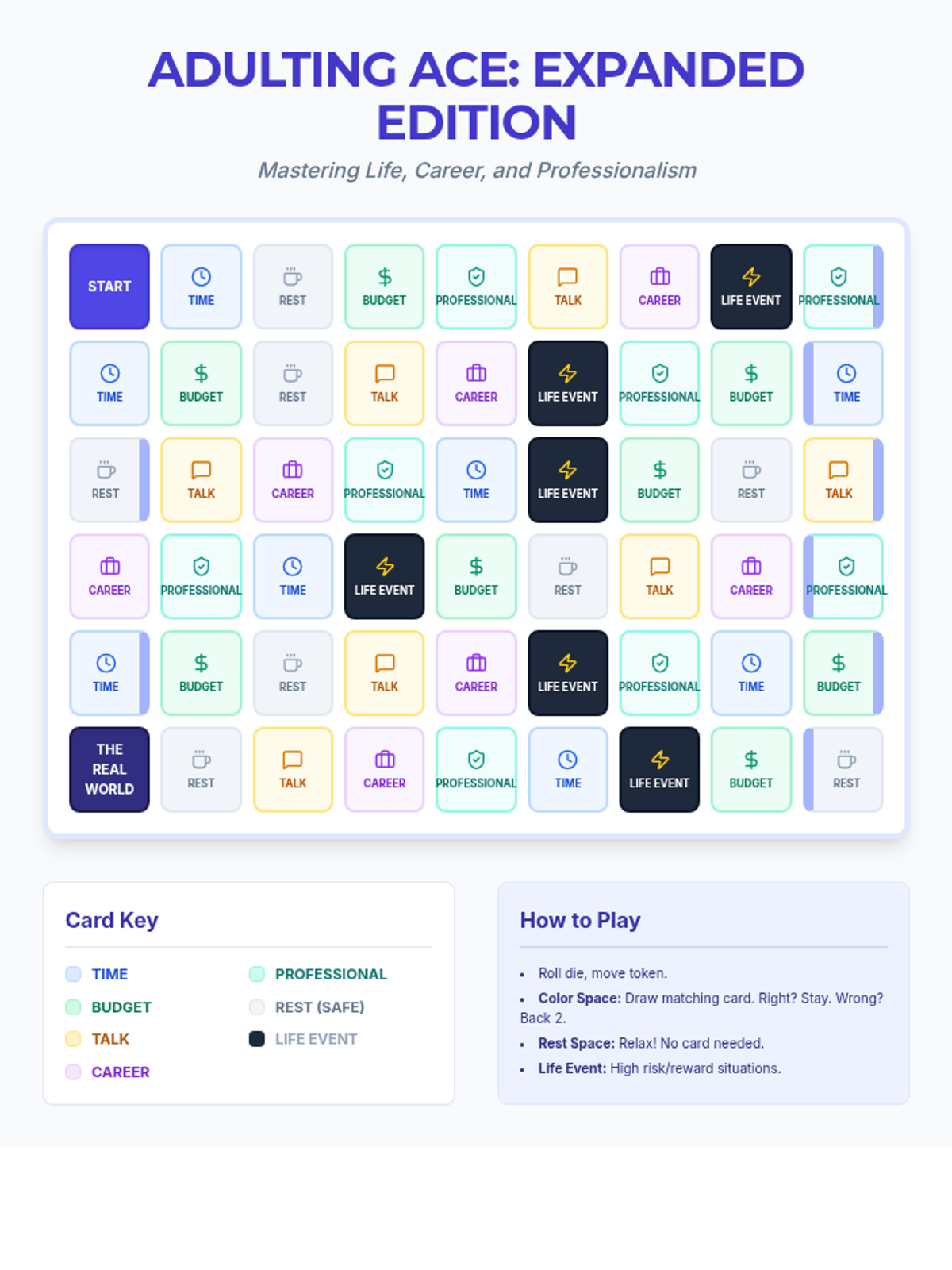
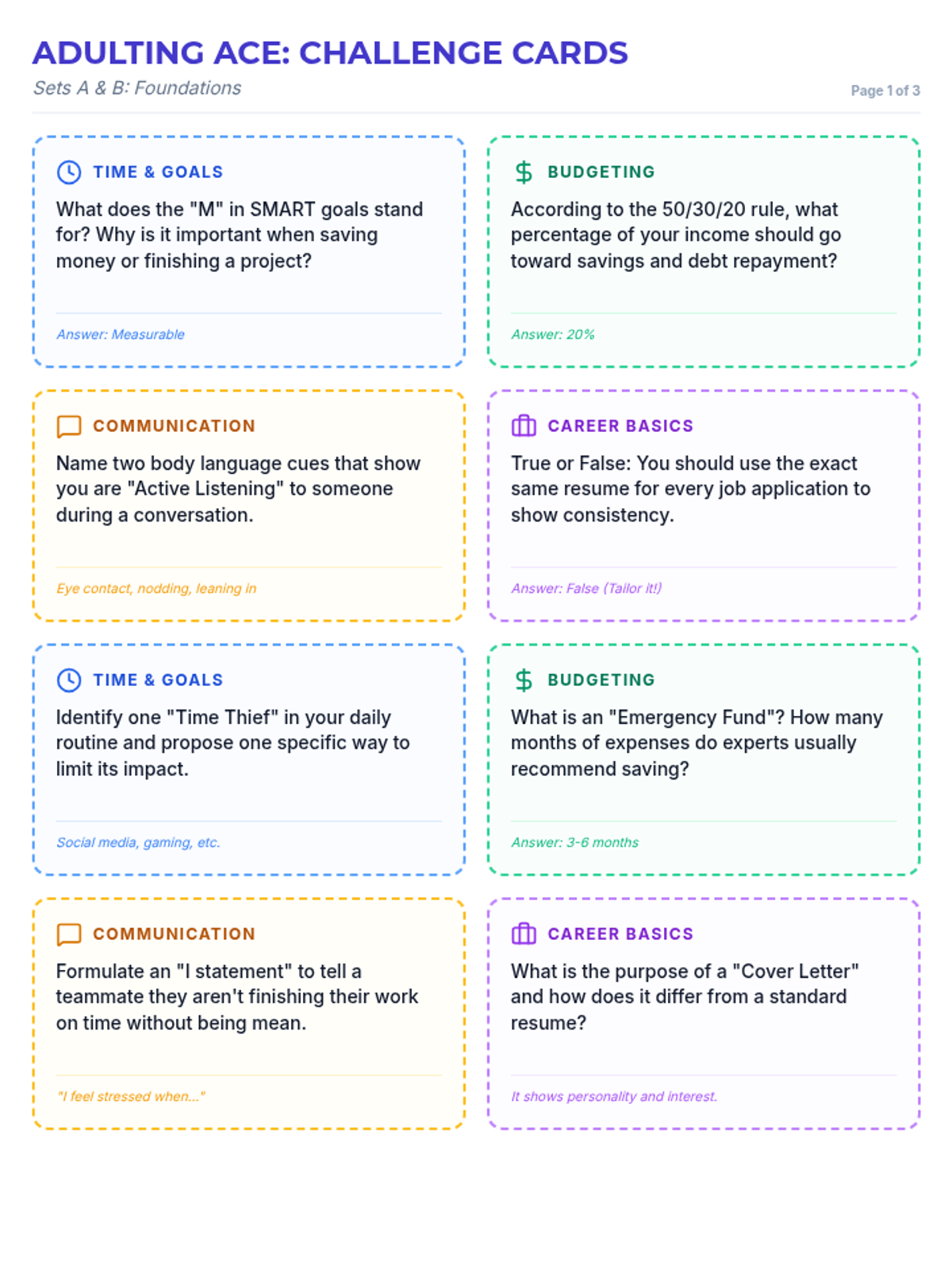
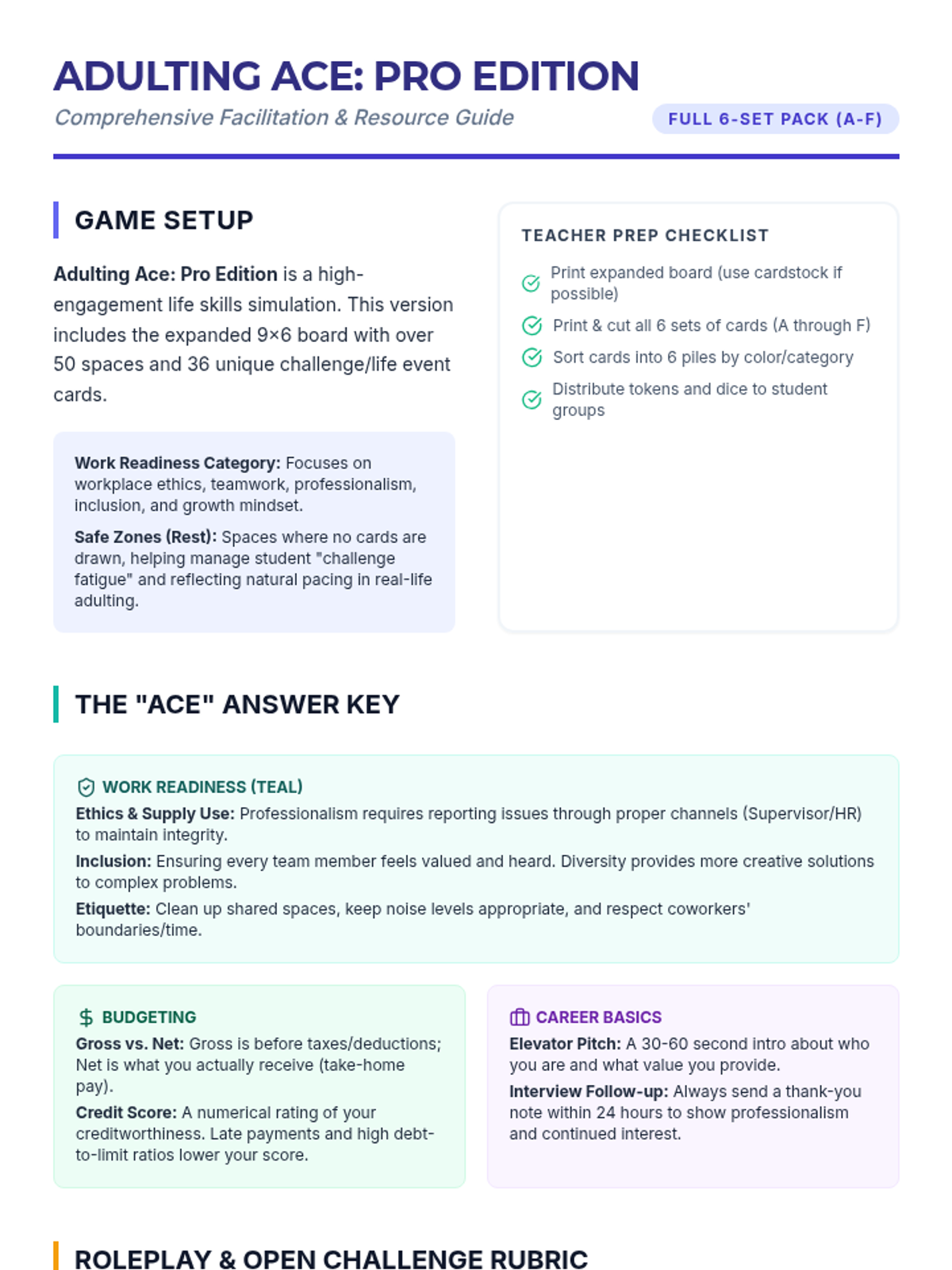
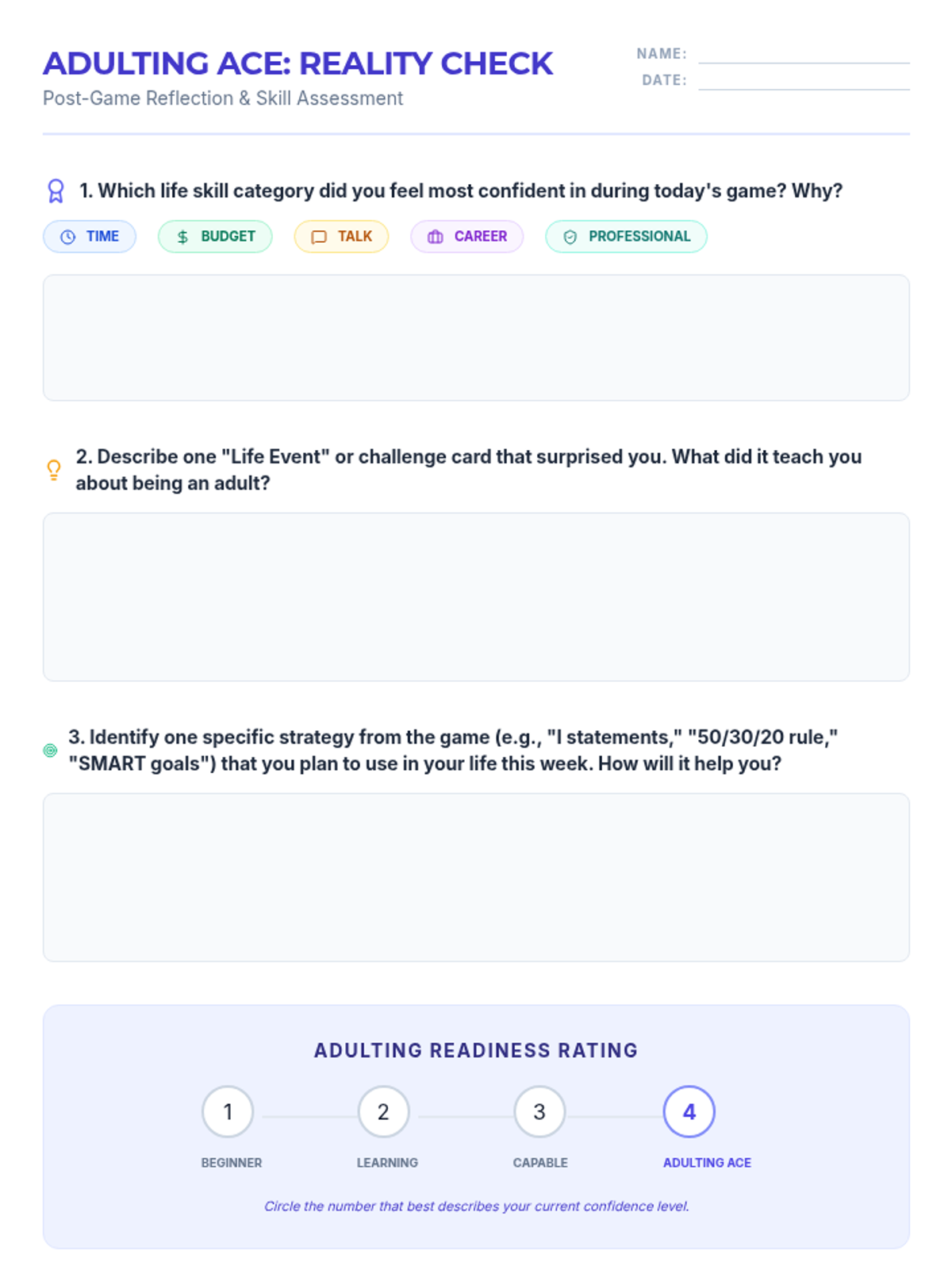
An interactive board game experience covering essential life skills including financial literacy, time management, communication, and career readiness.
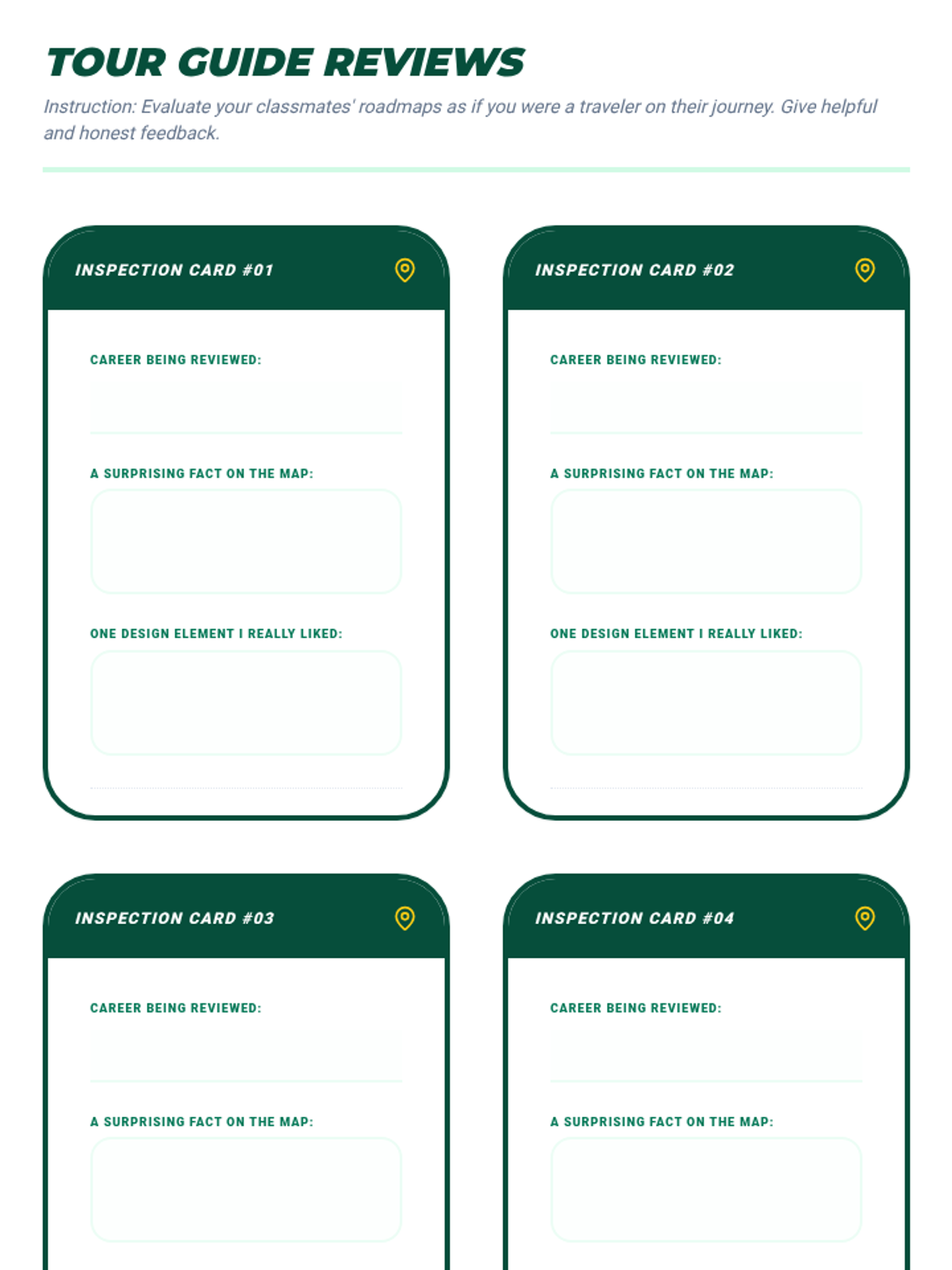
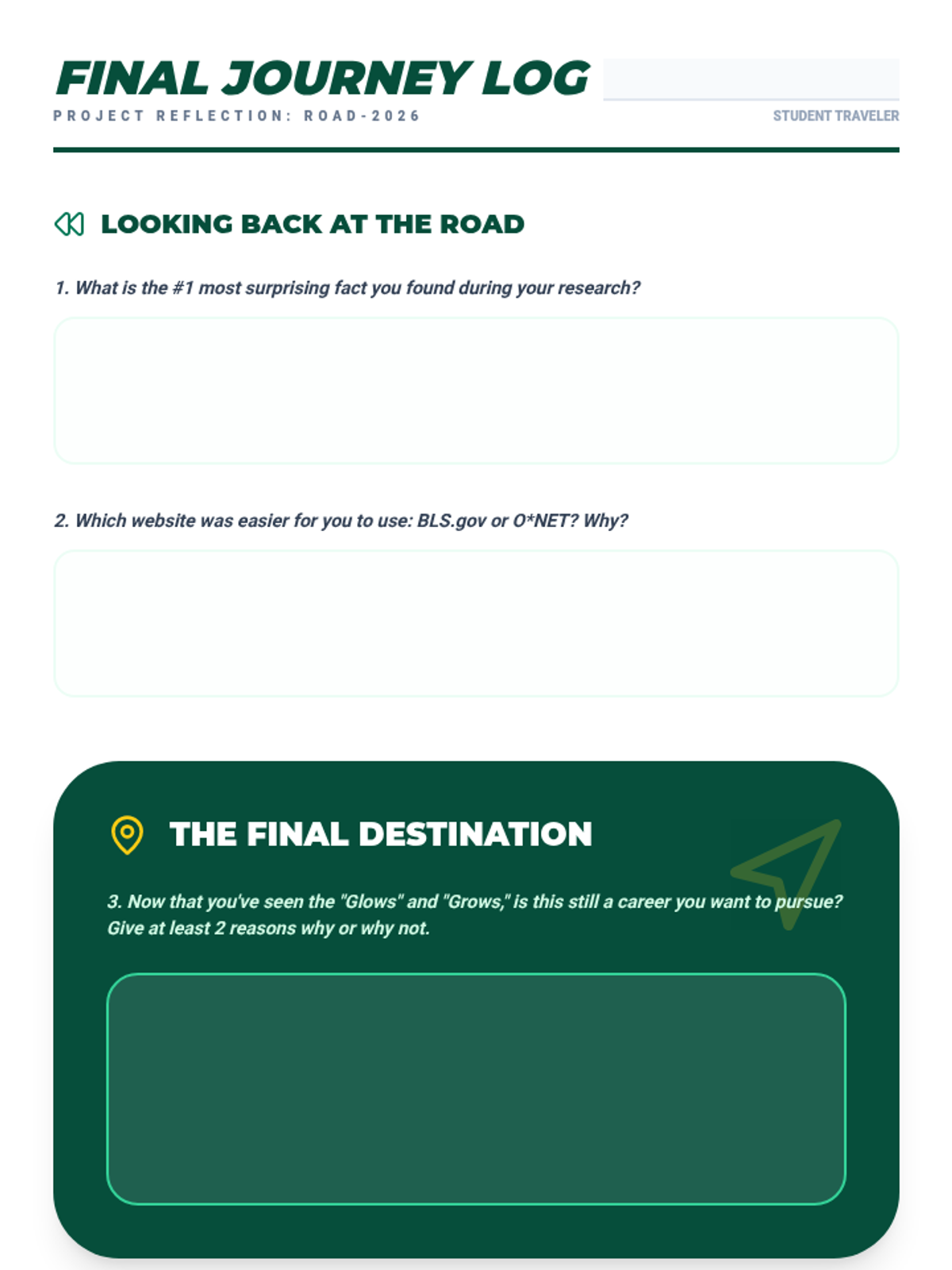
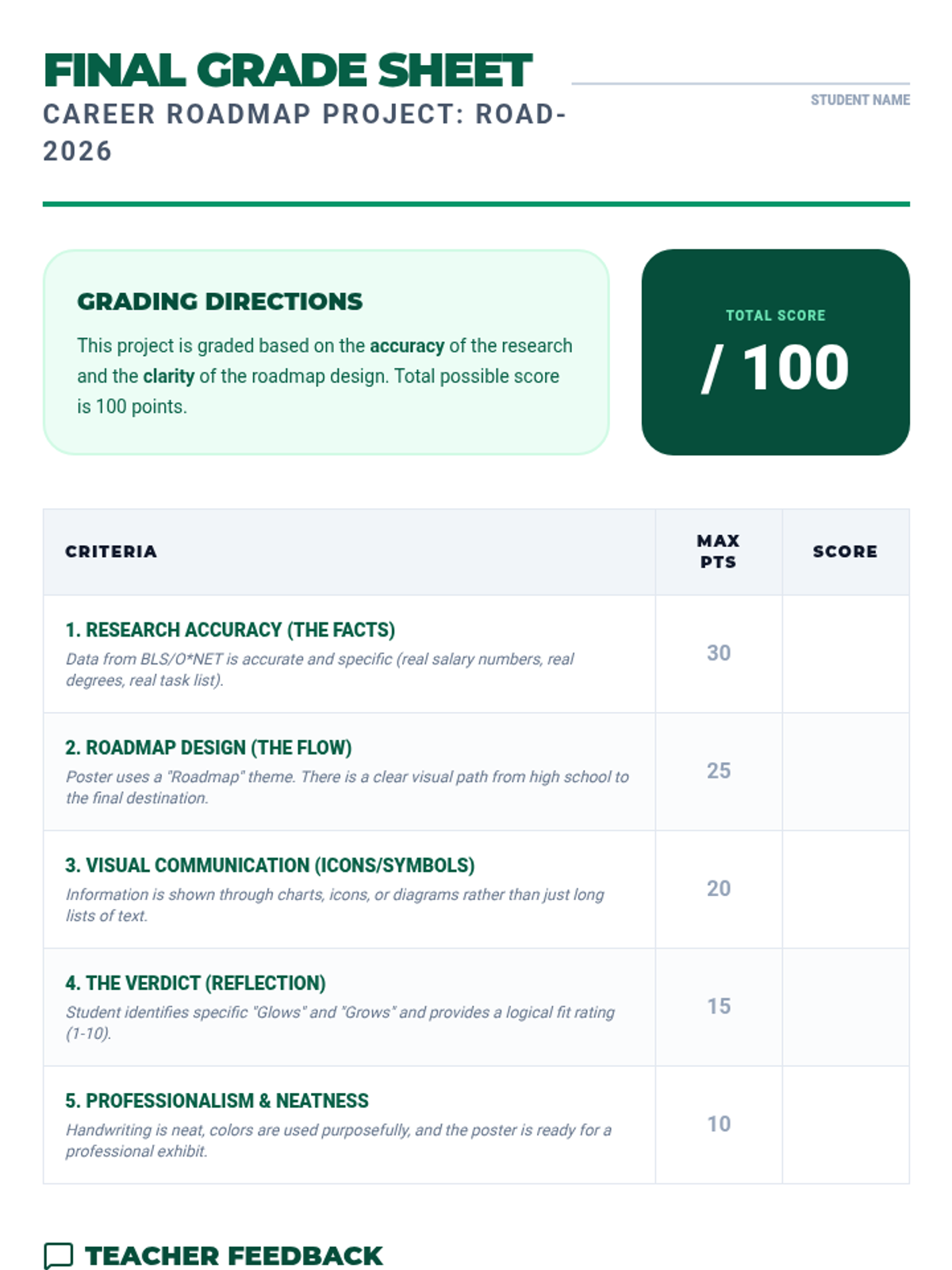
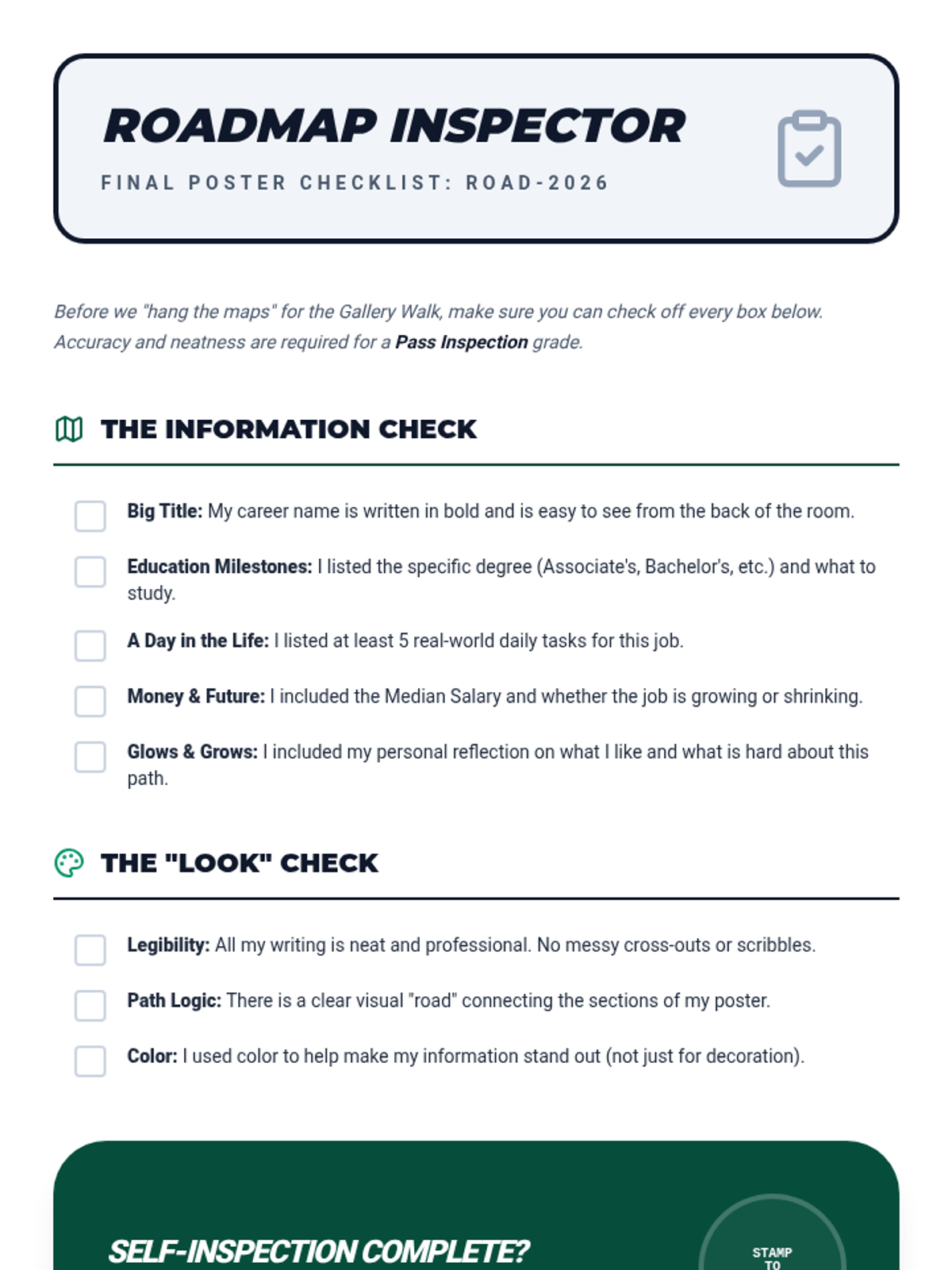
Students present their career roadmaps in a gallery walk and reflect on the journey they've mapped out.
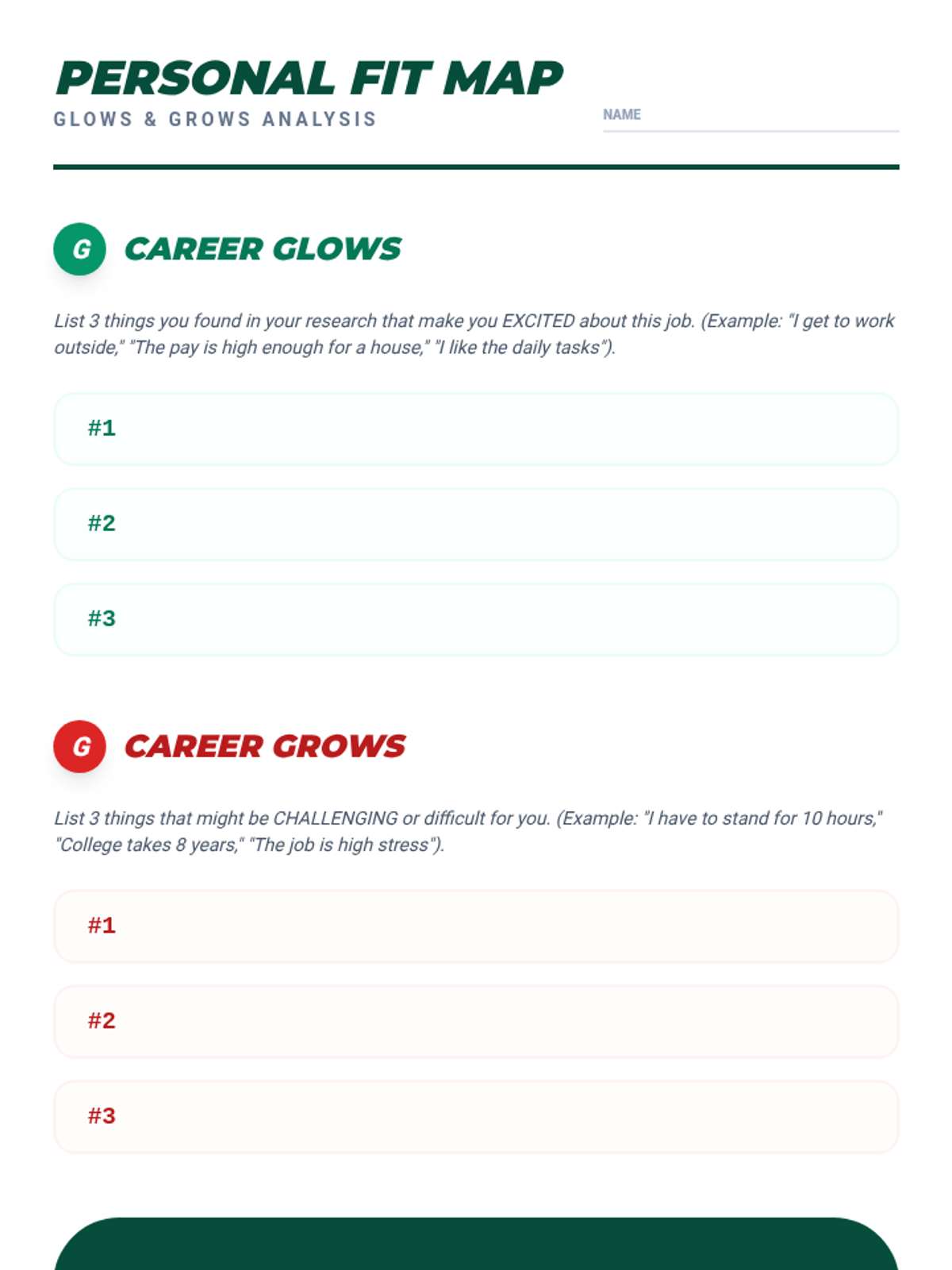
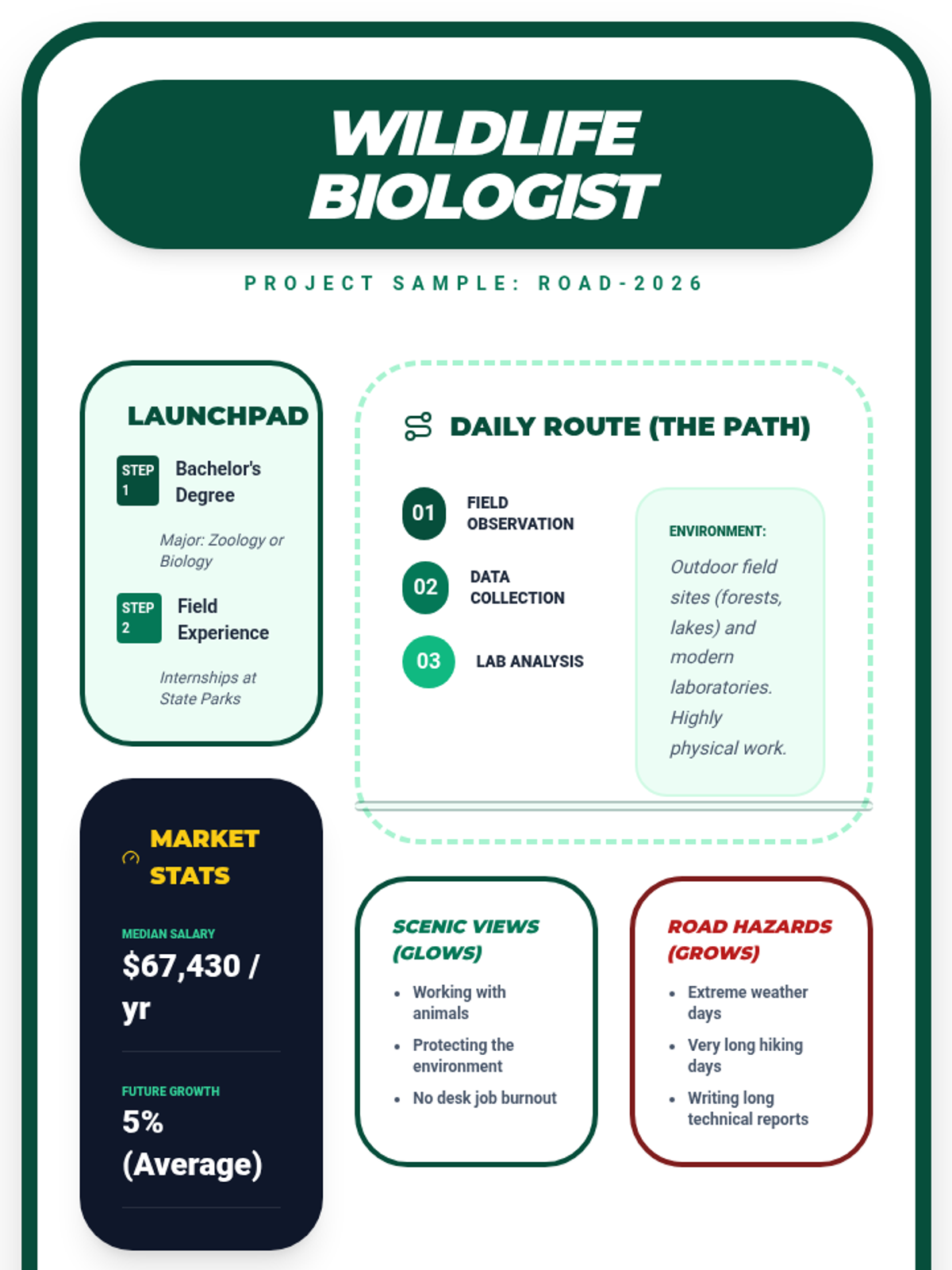
Students synthesize their research into a visual roadmap poster, analyzing the terrain of their career choice.
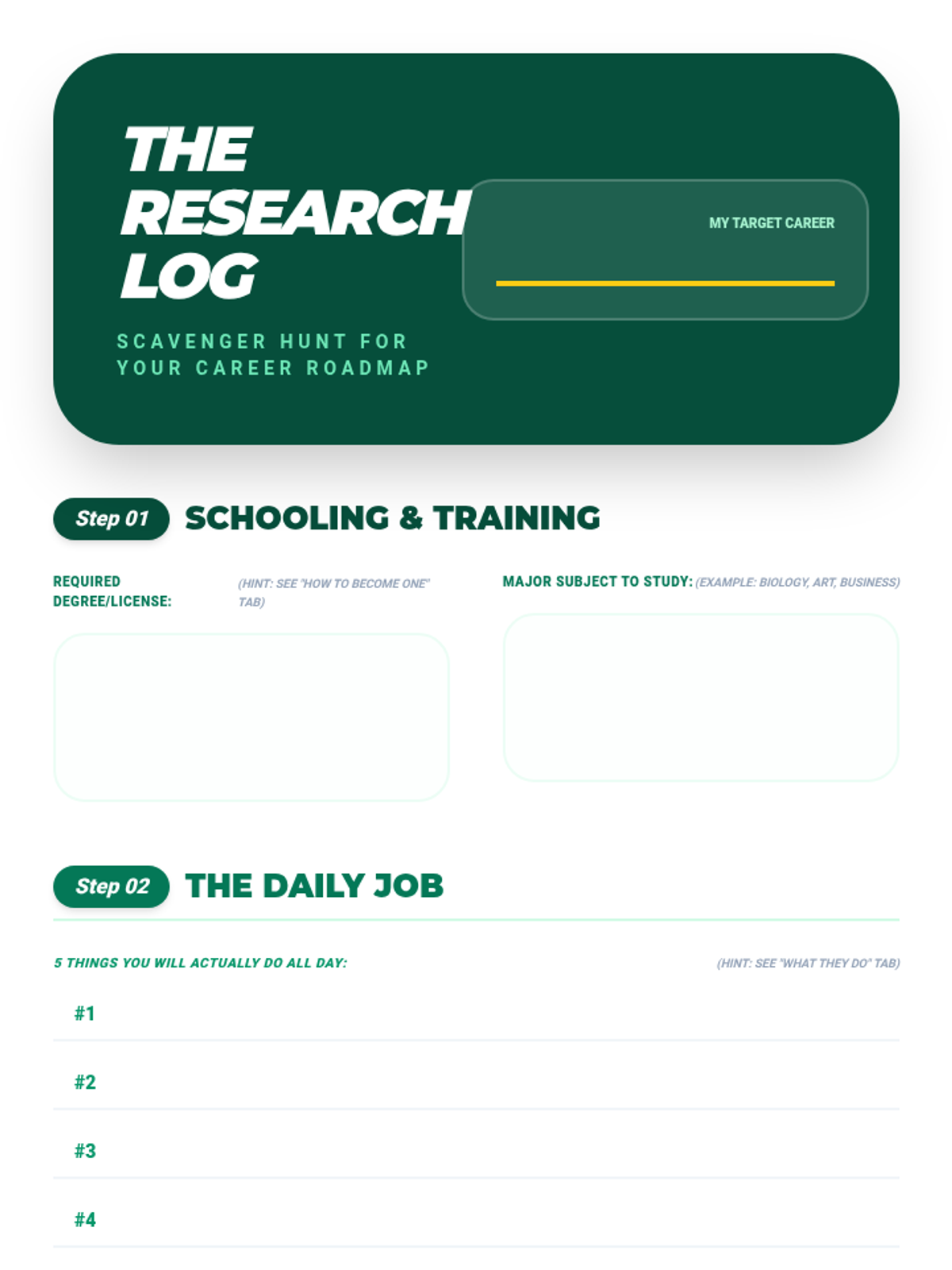
Students map out the technical details of their chosen career, including required skills, education, and daily responsibilities.
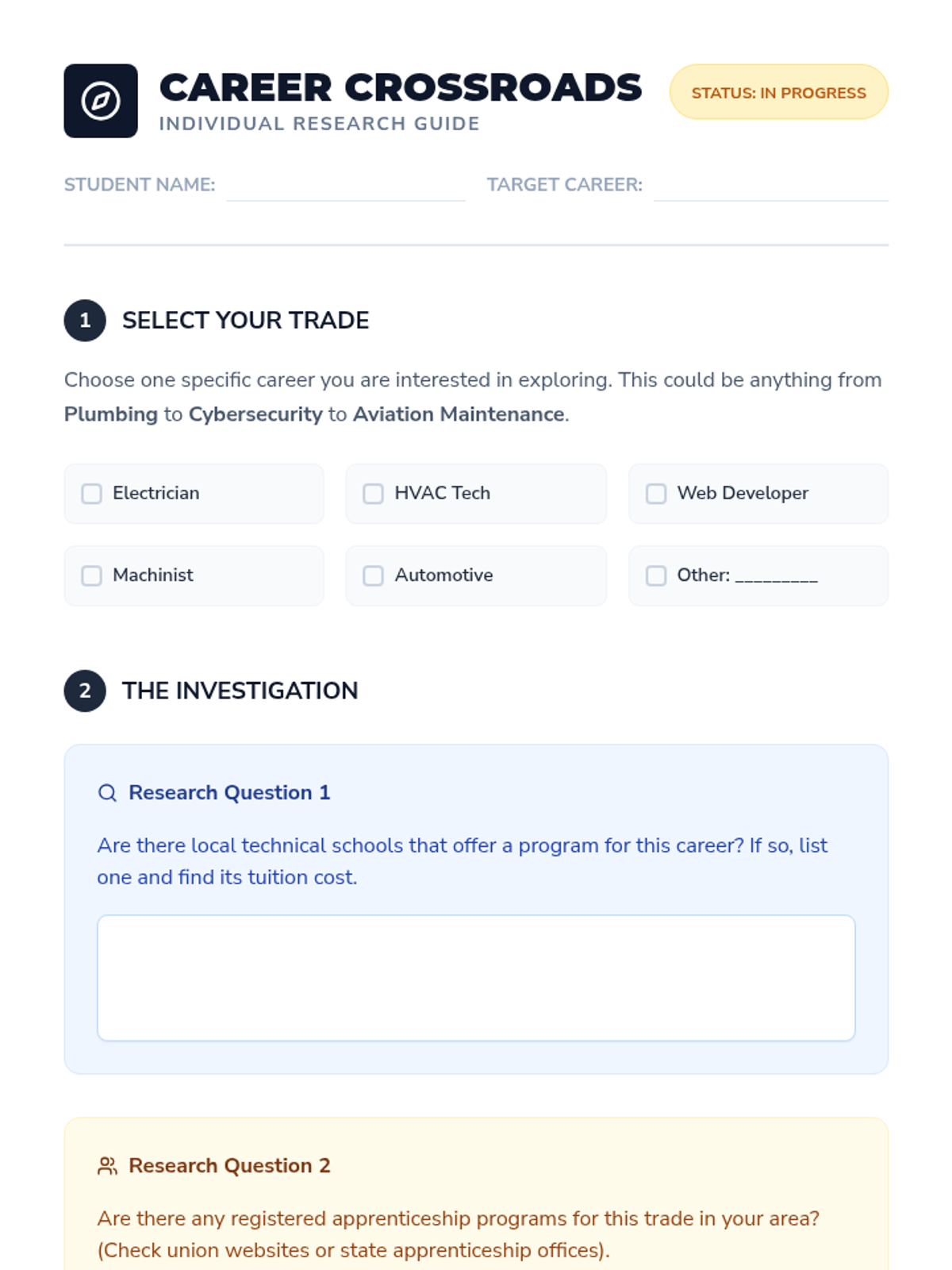
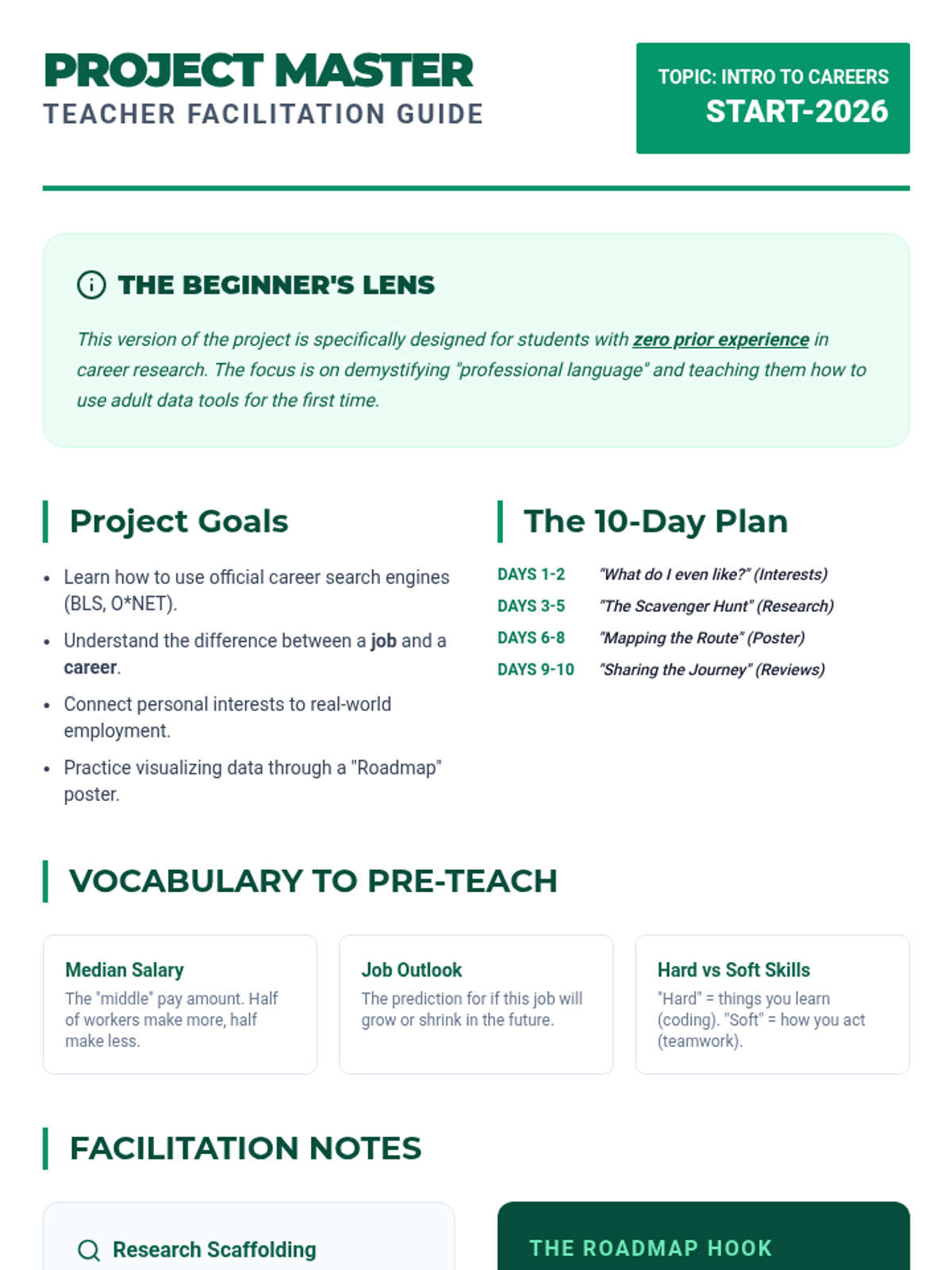
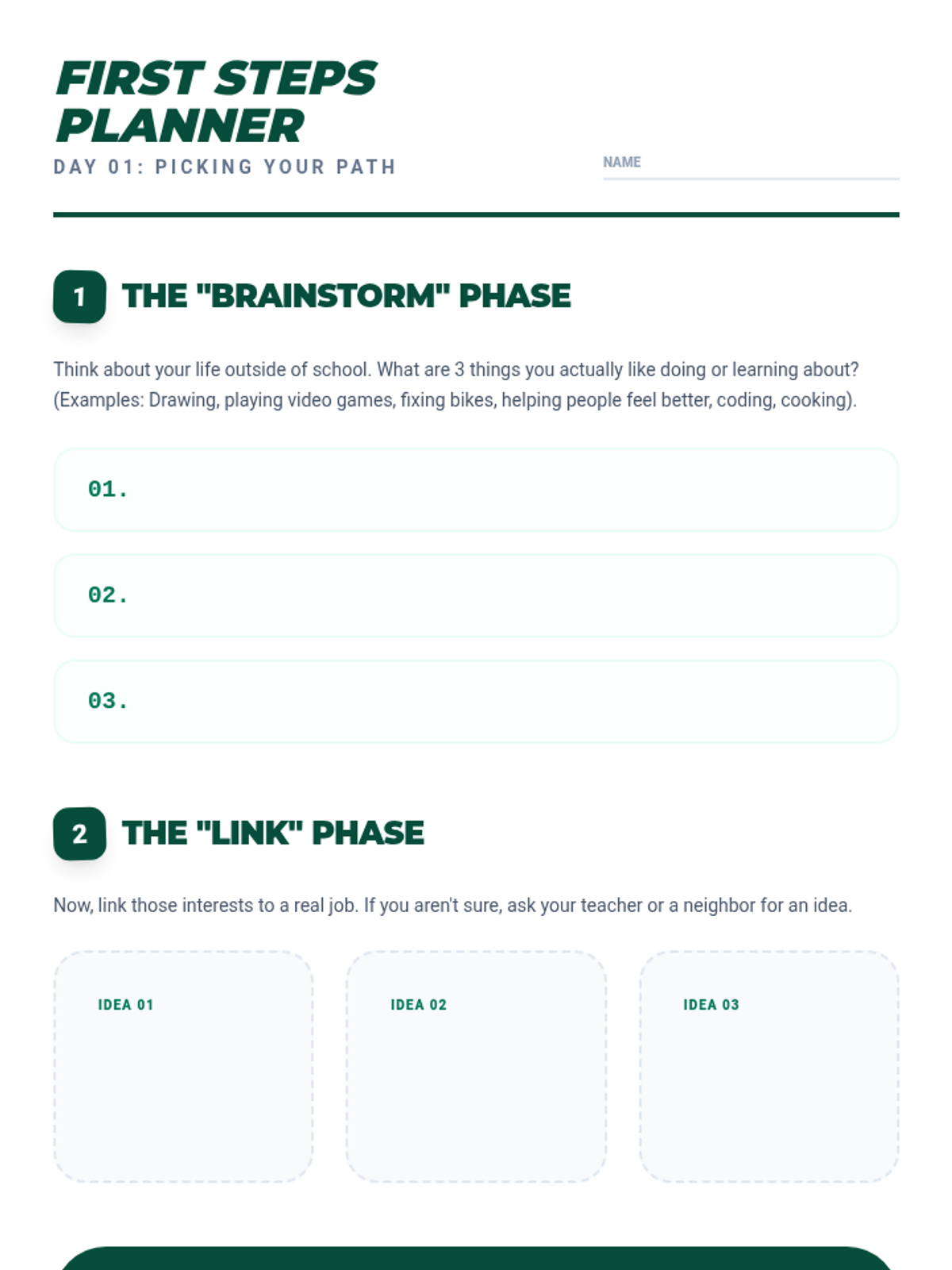
Students explore their interests, select a target career path, and understand the project roadmap and timeline.
Outlines the steps to take after receiving acceptance letters, including deposits, orientation, and housing, concluding with a reflection journal.
Guides students through the application timeline, components of a college application, and the admissions review process.
Focuses on financial literacy, including FAFSA/ORSAA, scholarship hunting, and decoding financial aid award letters.
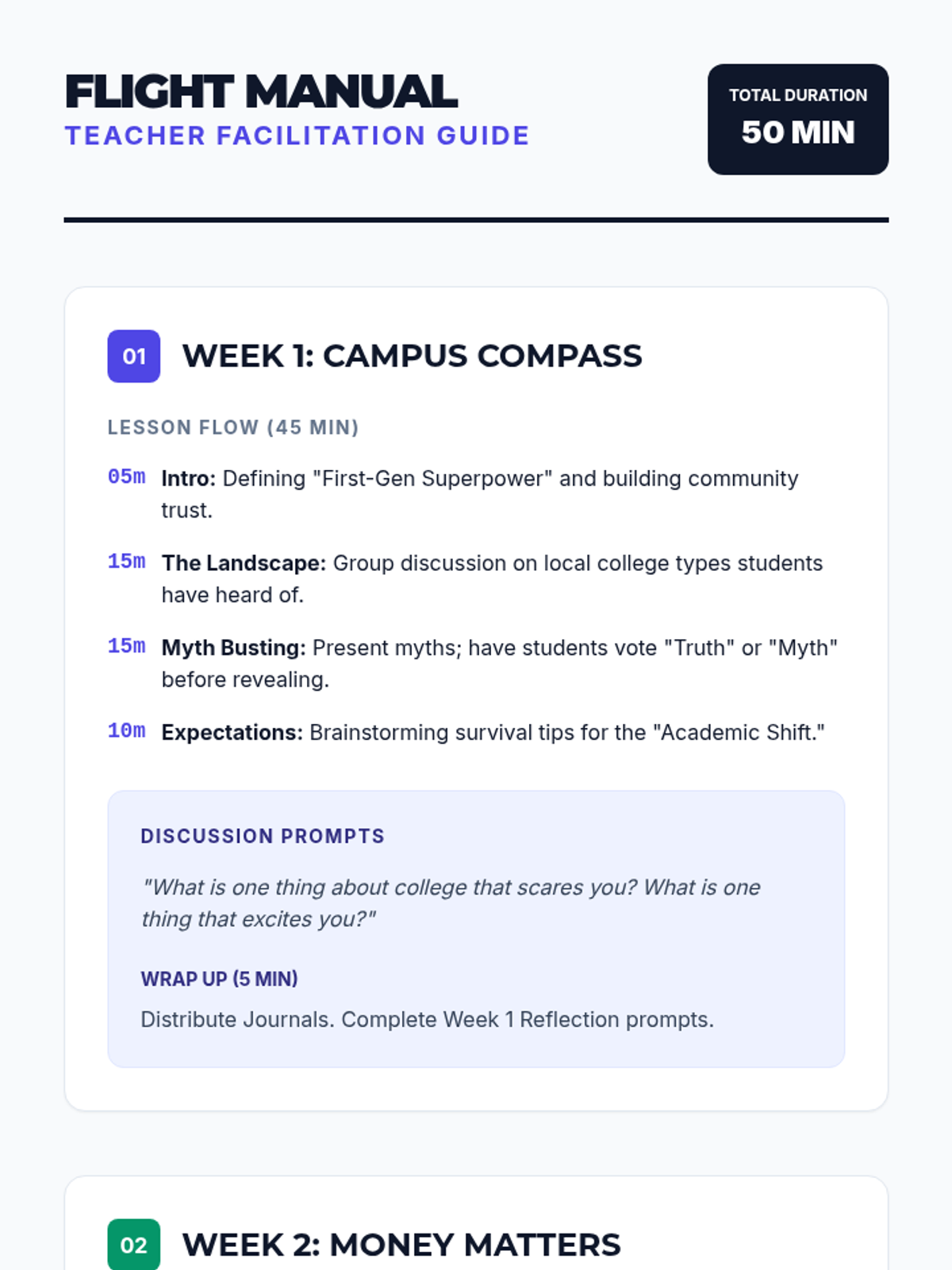
Covers the different types of colleges (2-year vs. 4-year, public vs. private), debunks common academic myths, and sets expectations for the college experience.
Compare the mechanics of market, command, and mixed economies through historical documents like ration cards and industrial quotas, as well as modern tax structures.
Uncover the metrics of national wealth through the history of hyperinflation, the ethics of economic growth, and simulations of central bank management.
Master the dynamics of market forces through the history of the Tulip Mania, the ethics of ticket scalping, and simulations of price elasticity and equilibrium.
Explore the foundational pillars of economics through the history of the Dust Bowl, the ethics of organ markets, and simulations of scarcity and marginal utility.
Master the mechanics of life's largest financial commitments through the history of the 30-year mortgage, the ethics of urban gentrification, and complex simulations of home ownership.
Uncover the mechanisms of risk management through the history of the Great Fire of London, the ethics of pre-existing conditions, and complex simulations of health and auto insurance.
Master the battlefield of the modern marketplace through the history of consumer protection, the ethics of planned obsolescence, and simulations of contract negotiation.
Uncover the mechanics of modern banking through historical currency crises, the ethics of fee structures, and simulations of liquidity management.
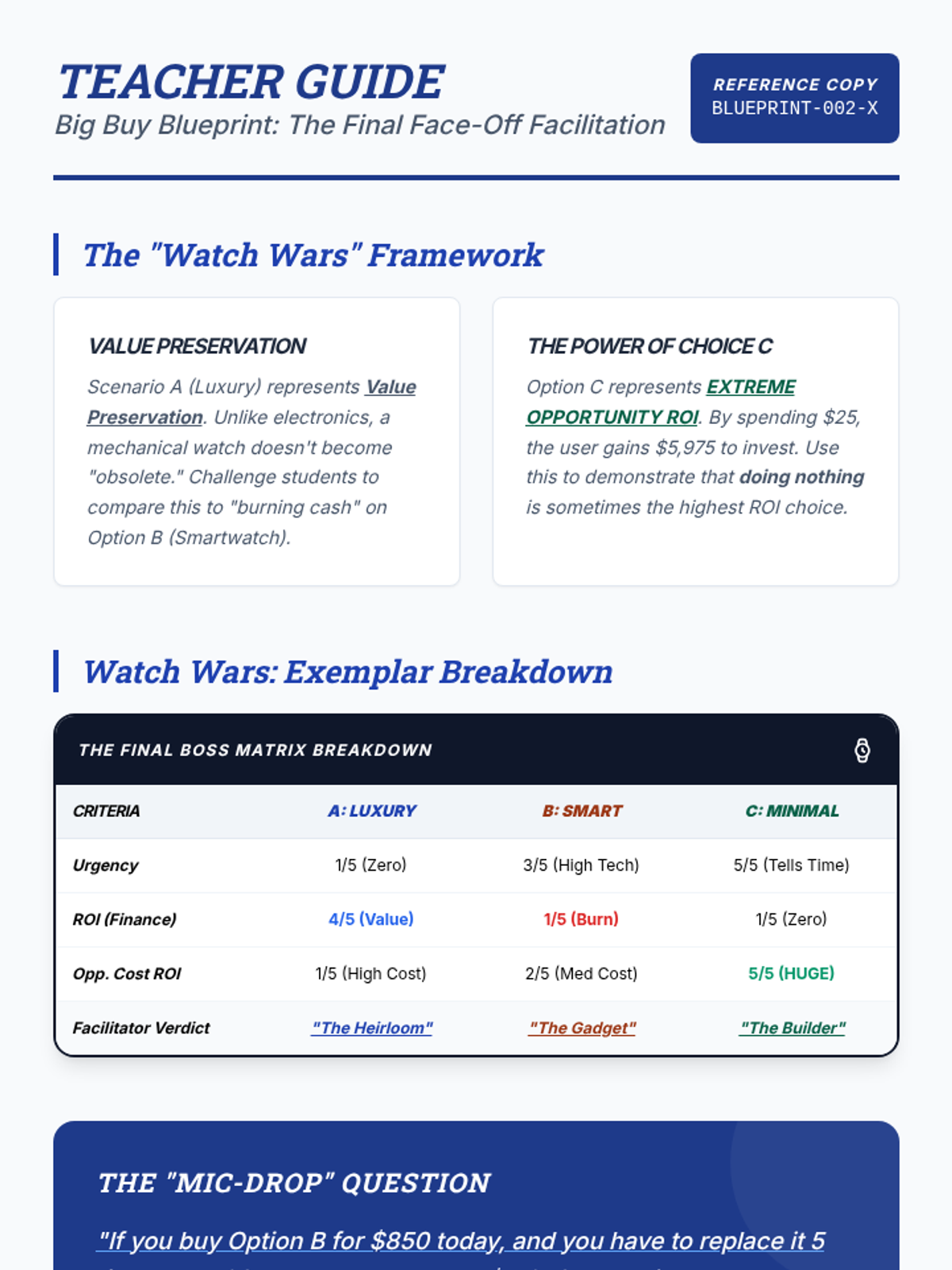
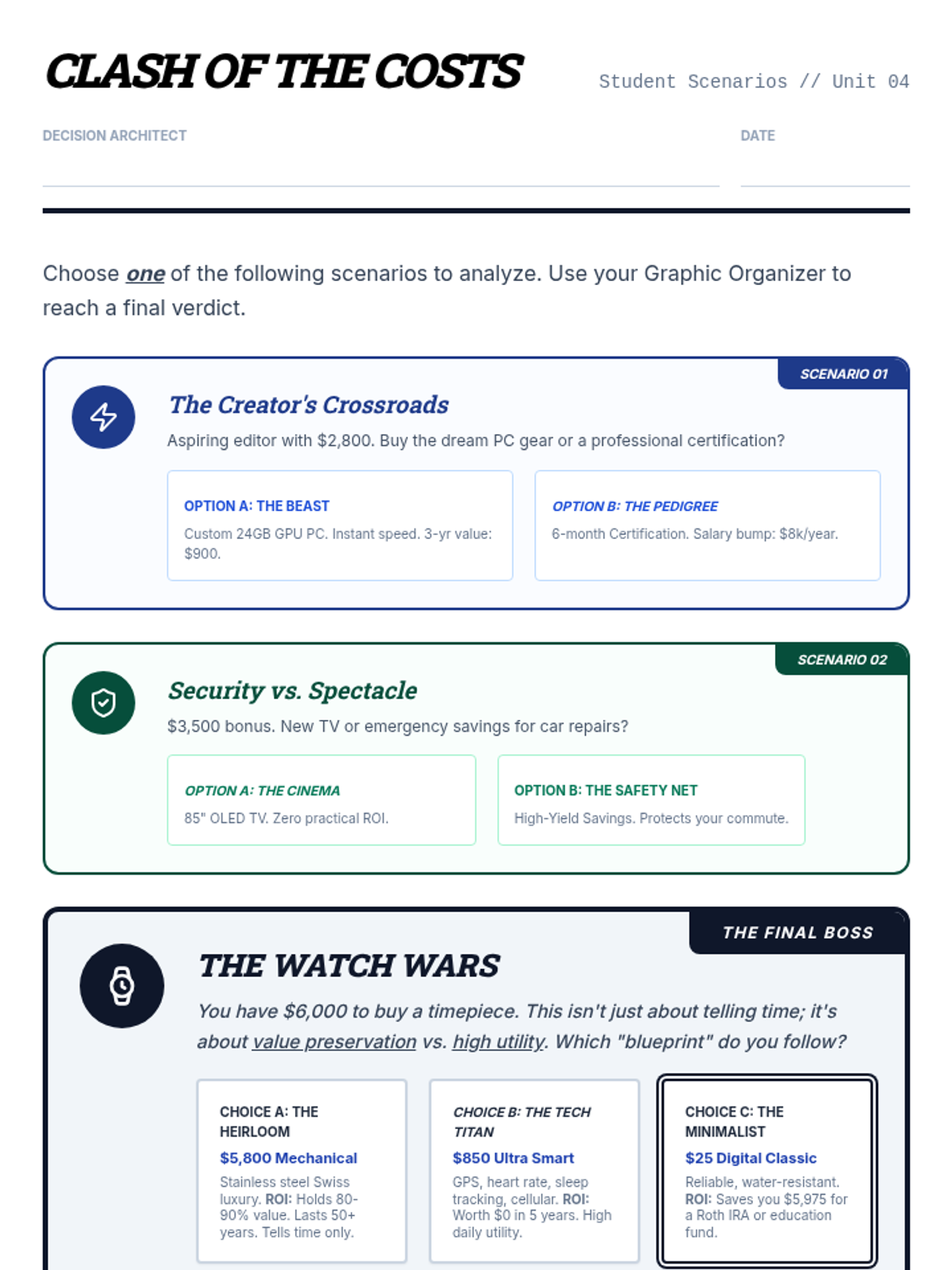
Analyze the mechanics of financial choice through historical market crashes, the ethics of credit, and complex simulations of high-stakes adult purchases.
Master the art of information gathering and source verification in the digital age through historical misinformation cases and modern research simulations.
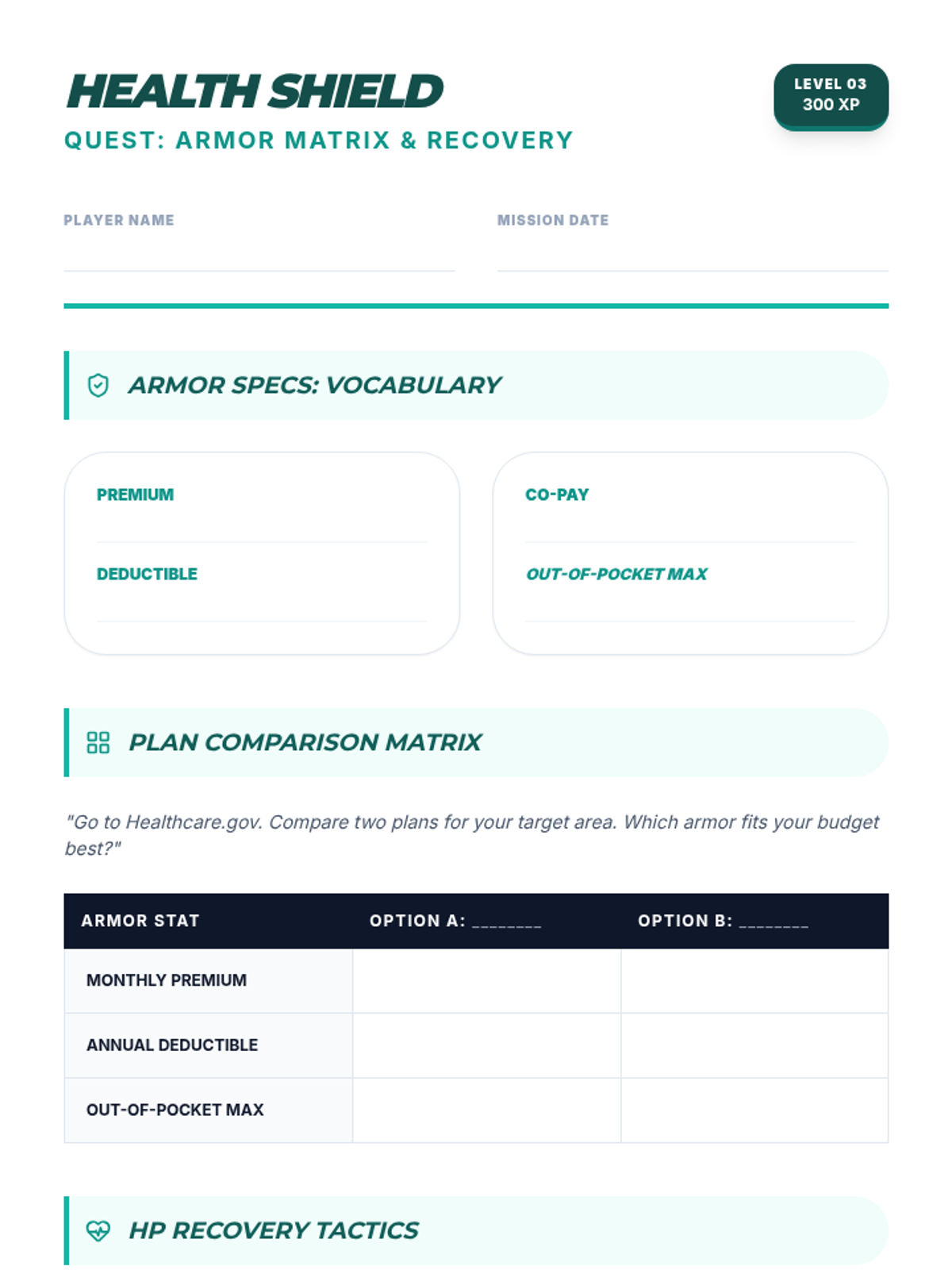
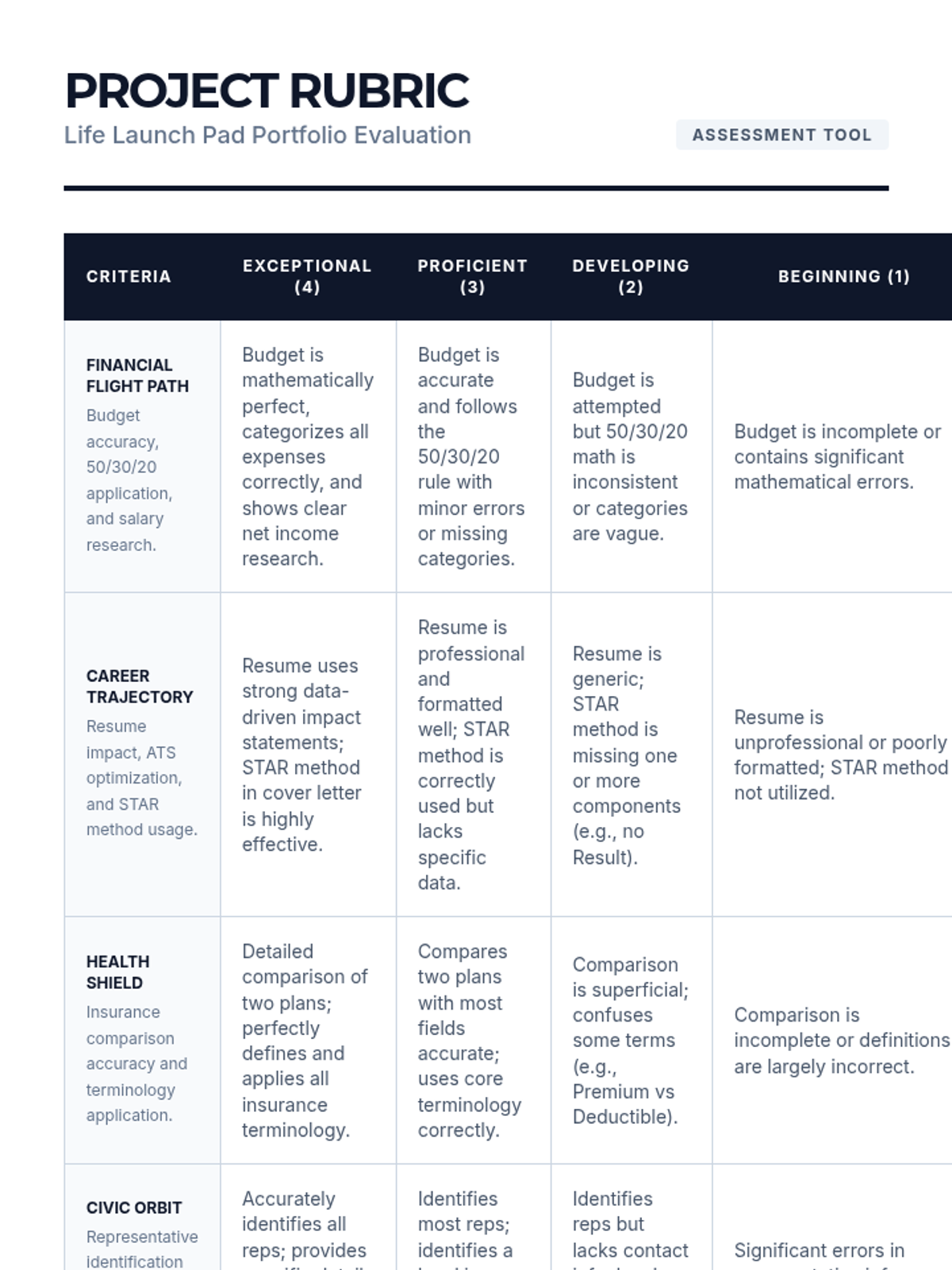
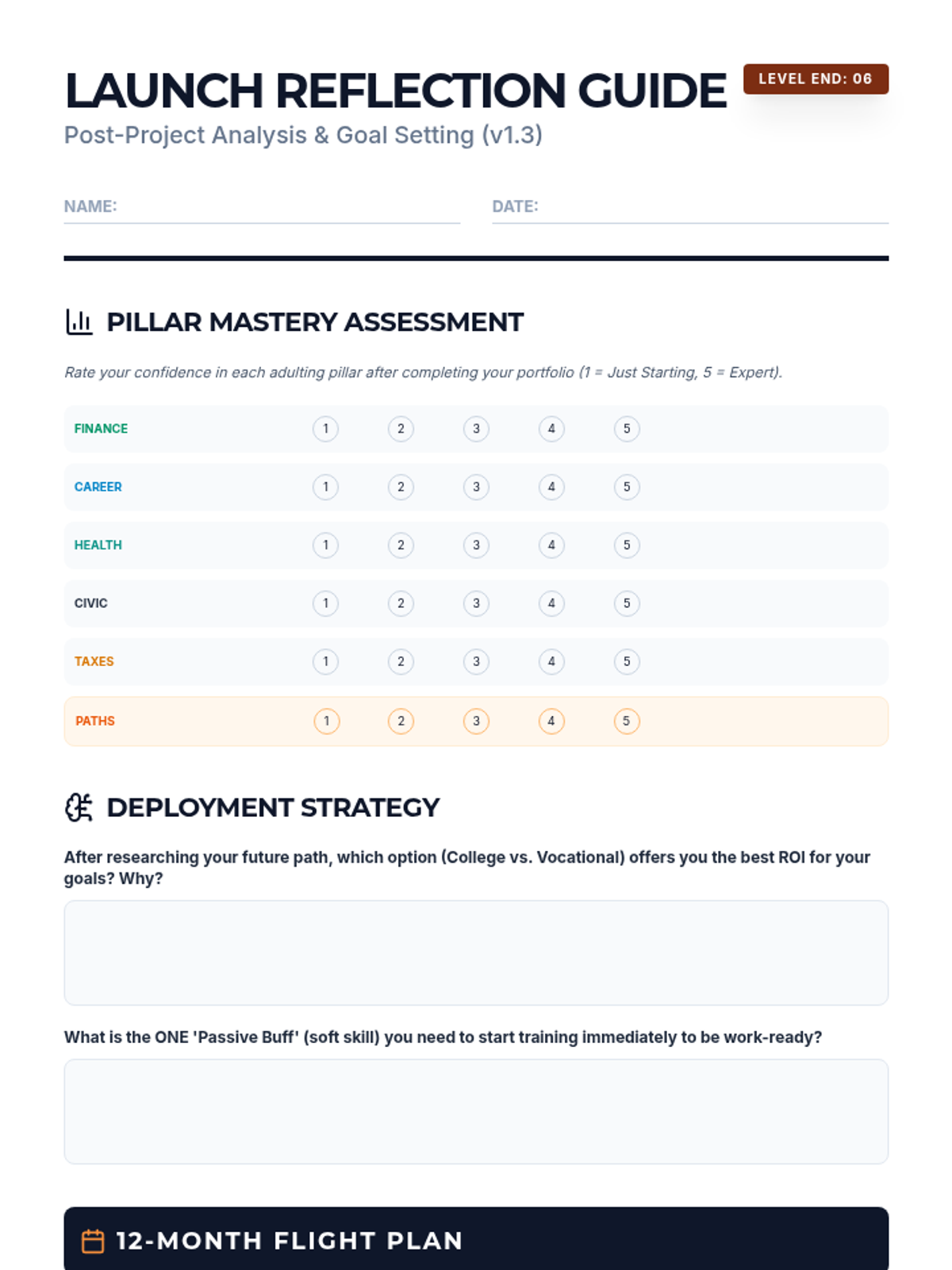
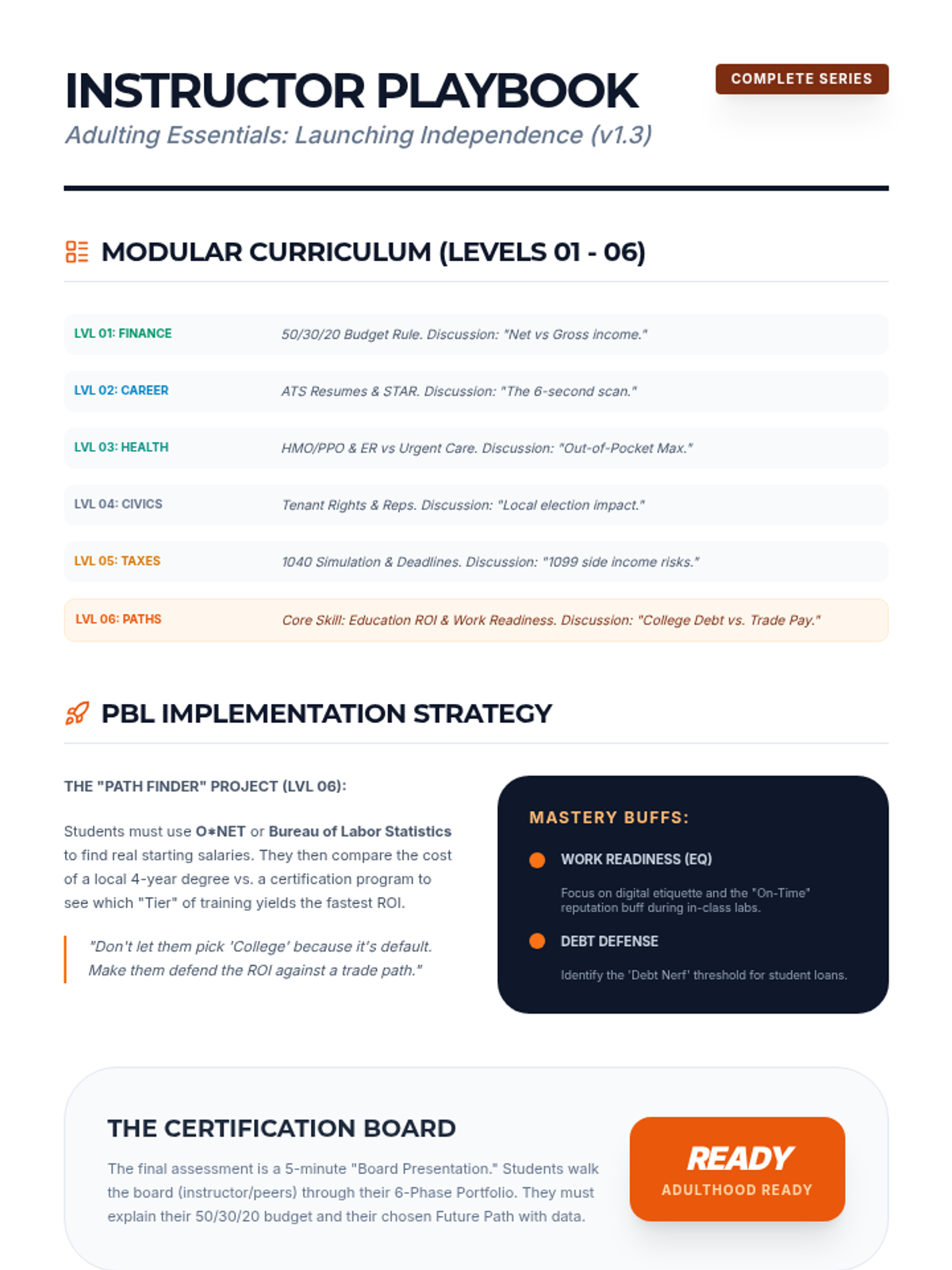
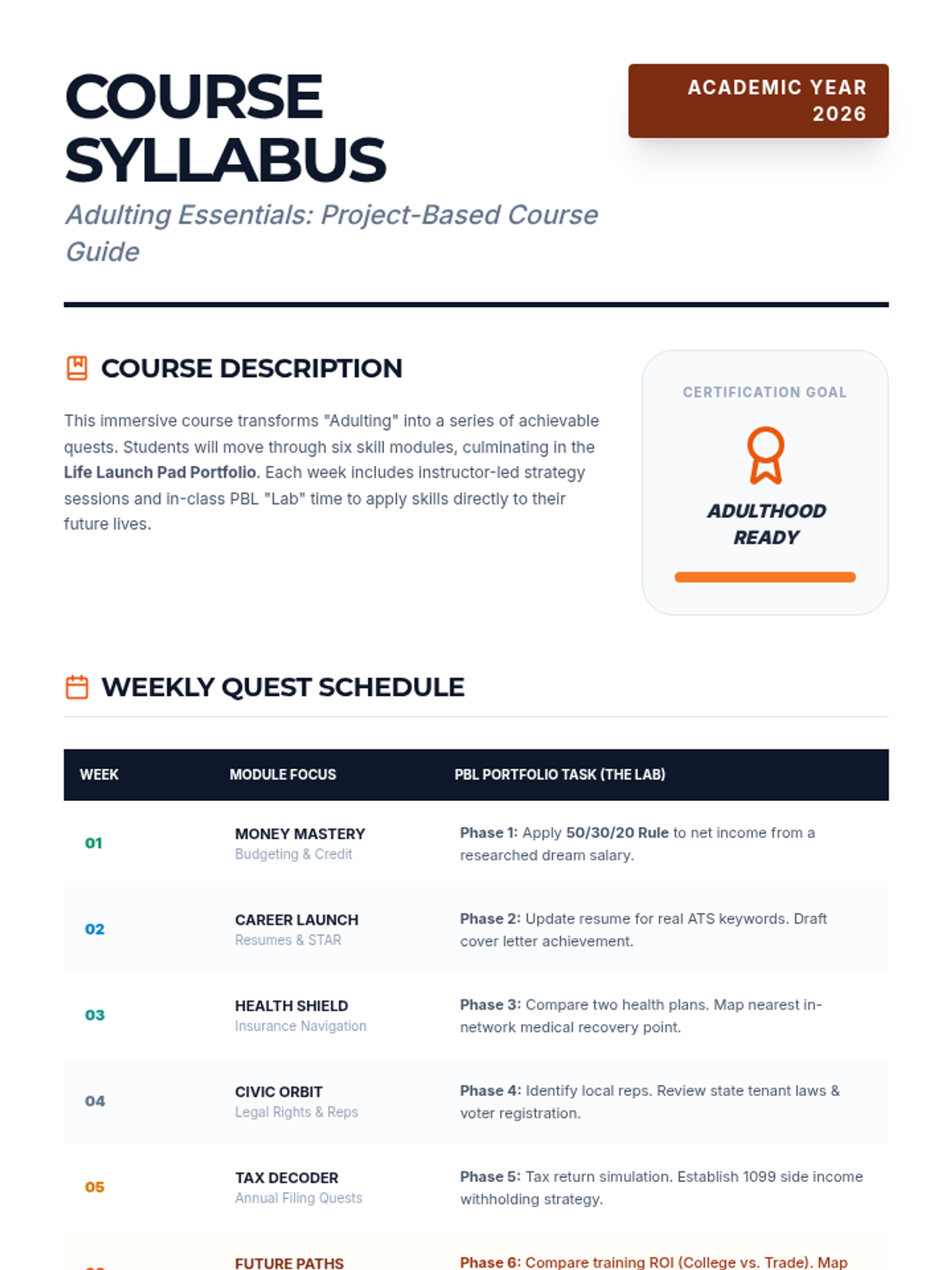
A comprehensive guide to essential adulting skills covering financial literacy, career development, health navigation, and civic responsibilities.
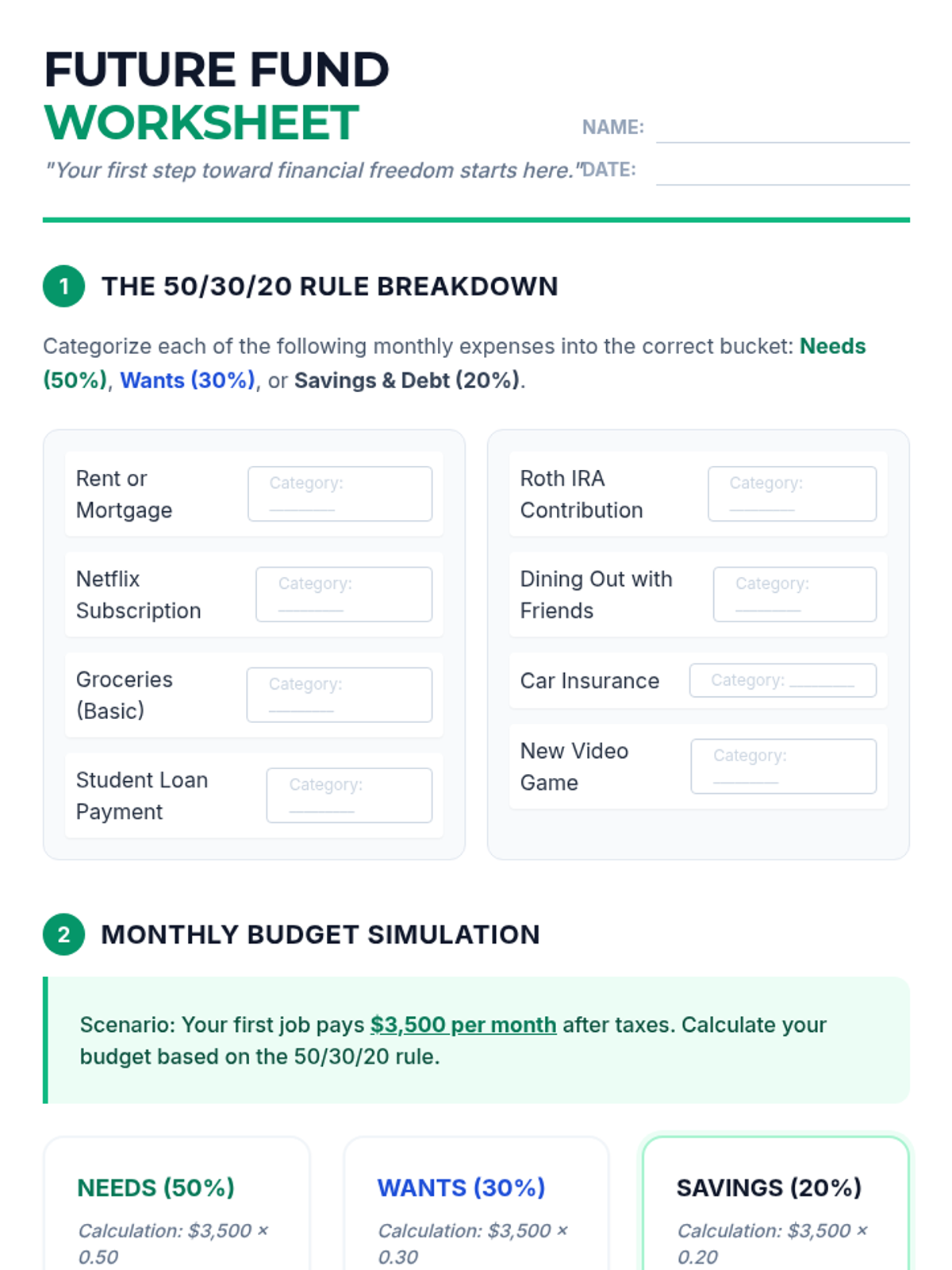
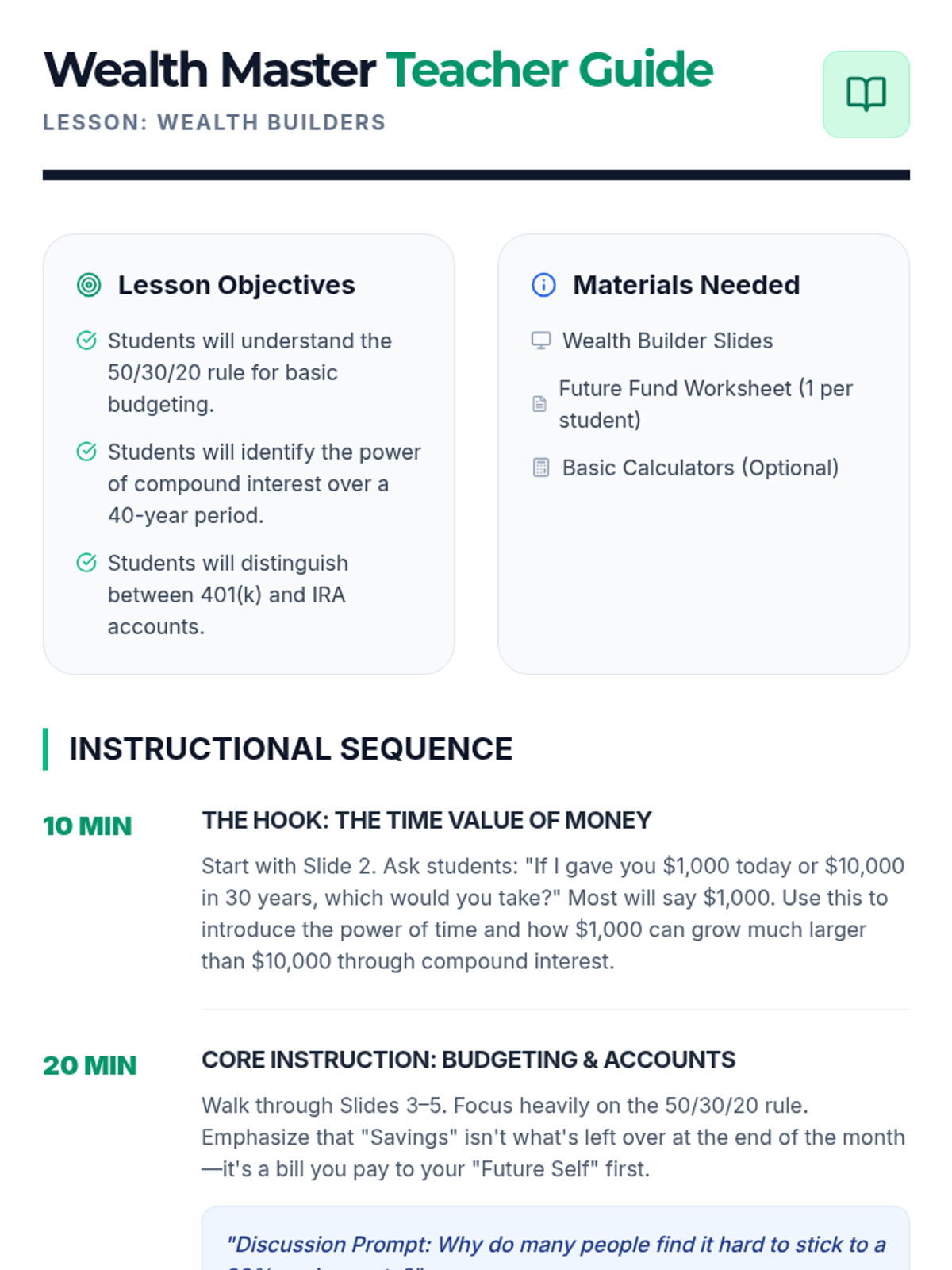
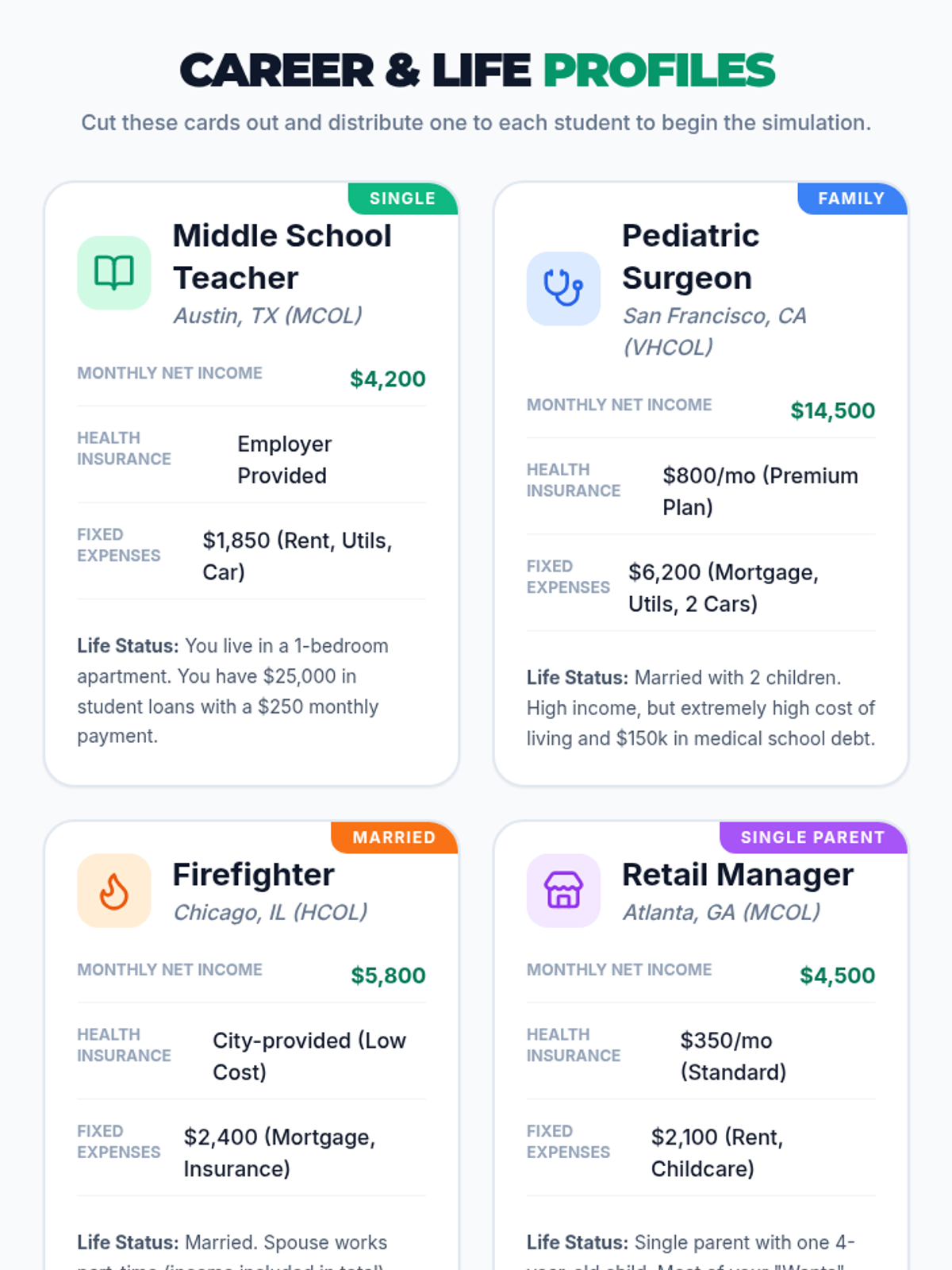
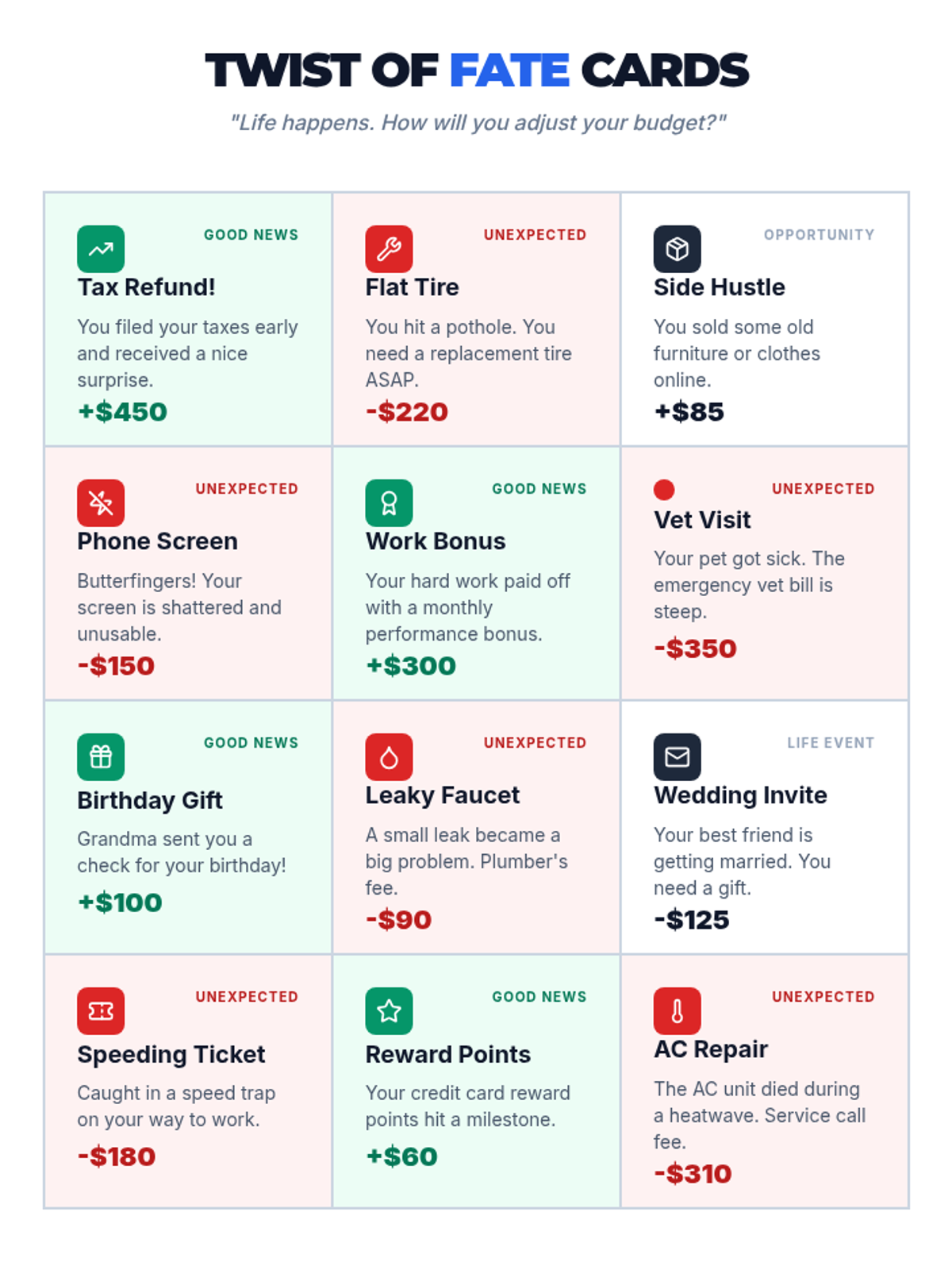
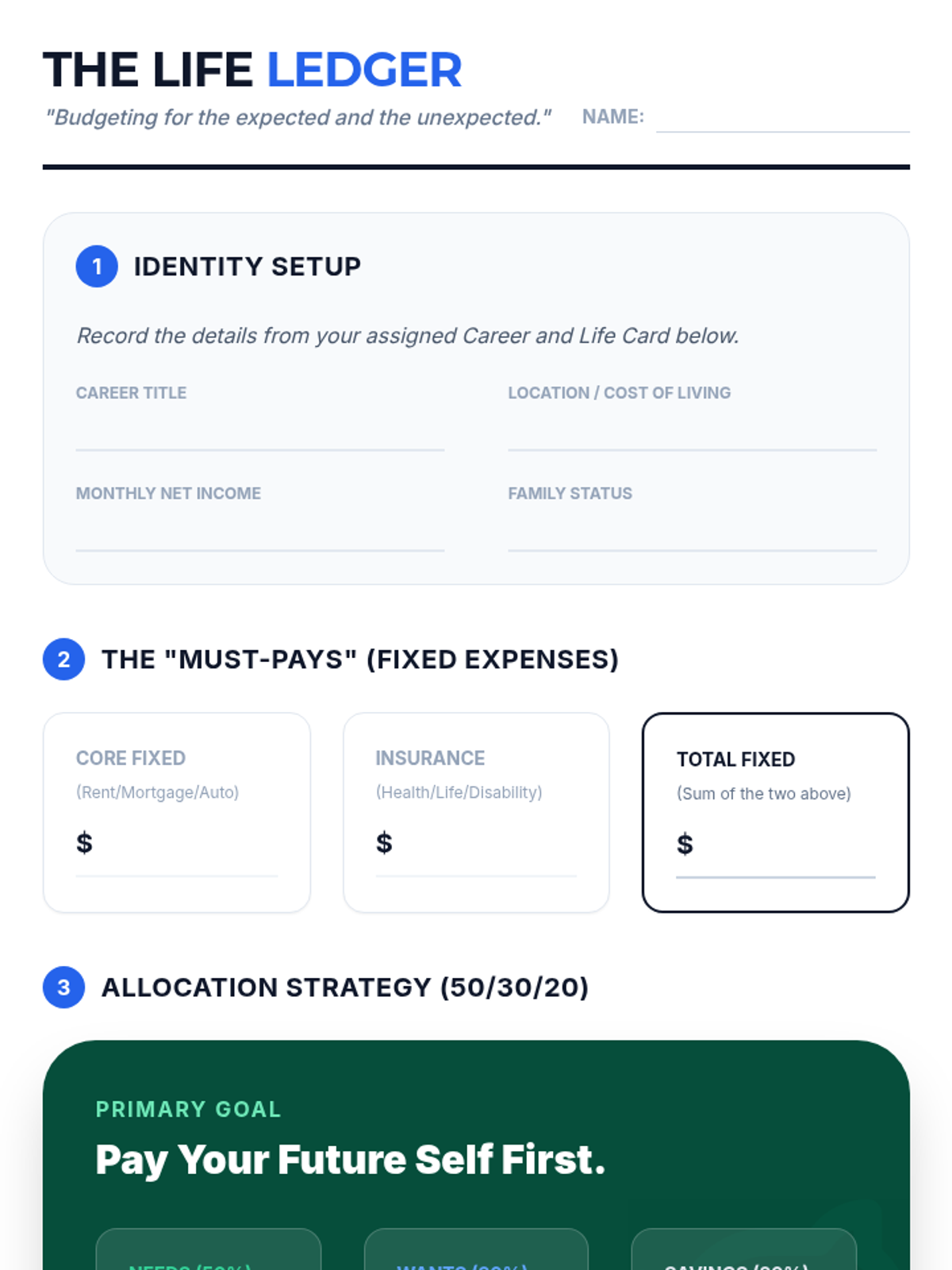
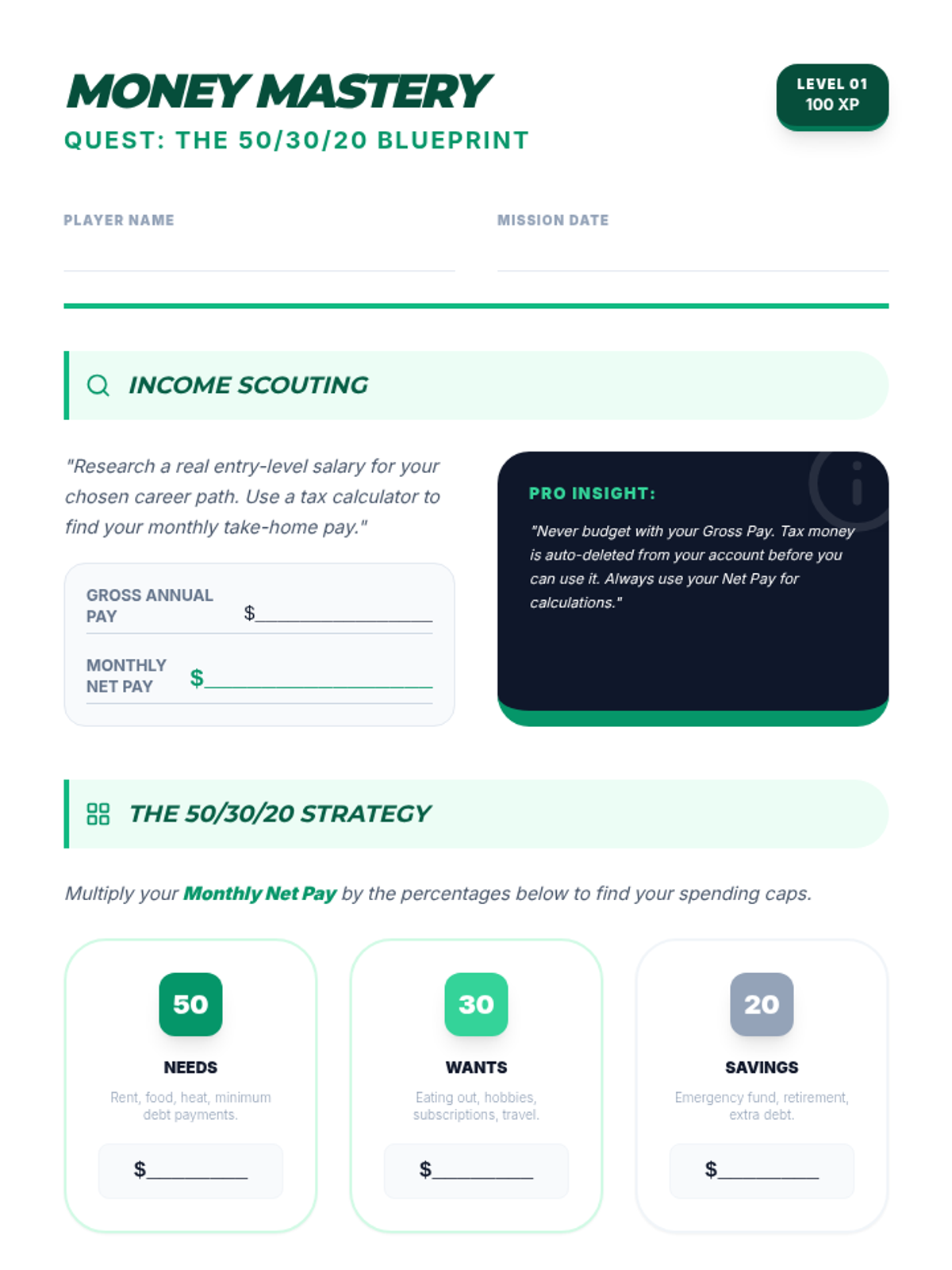
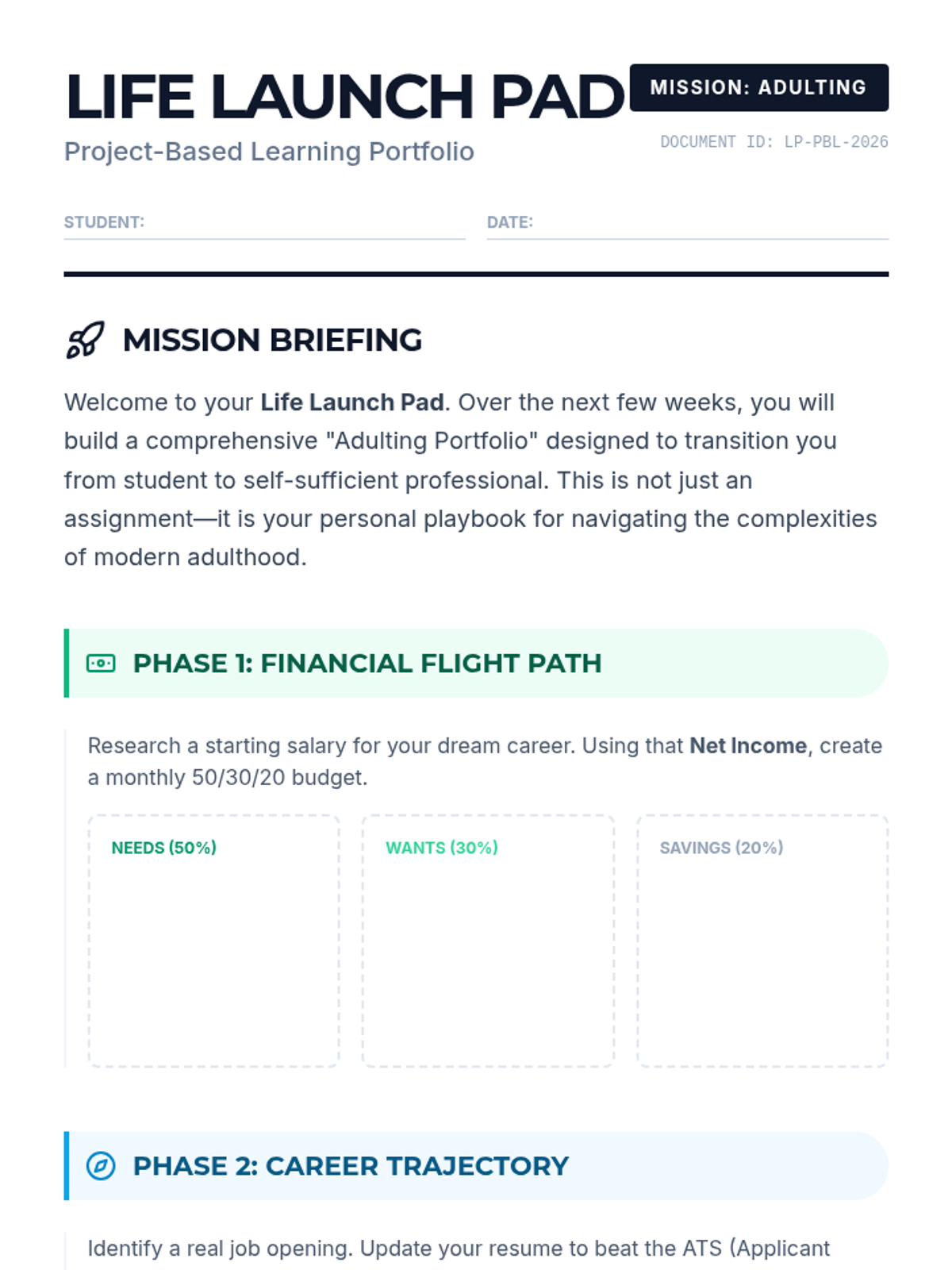
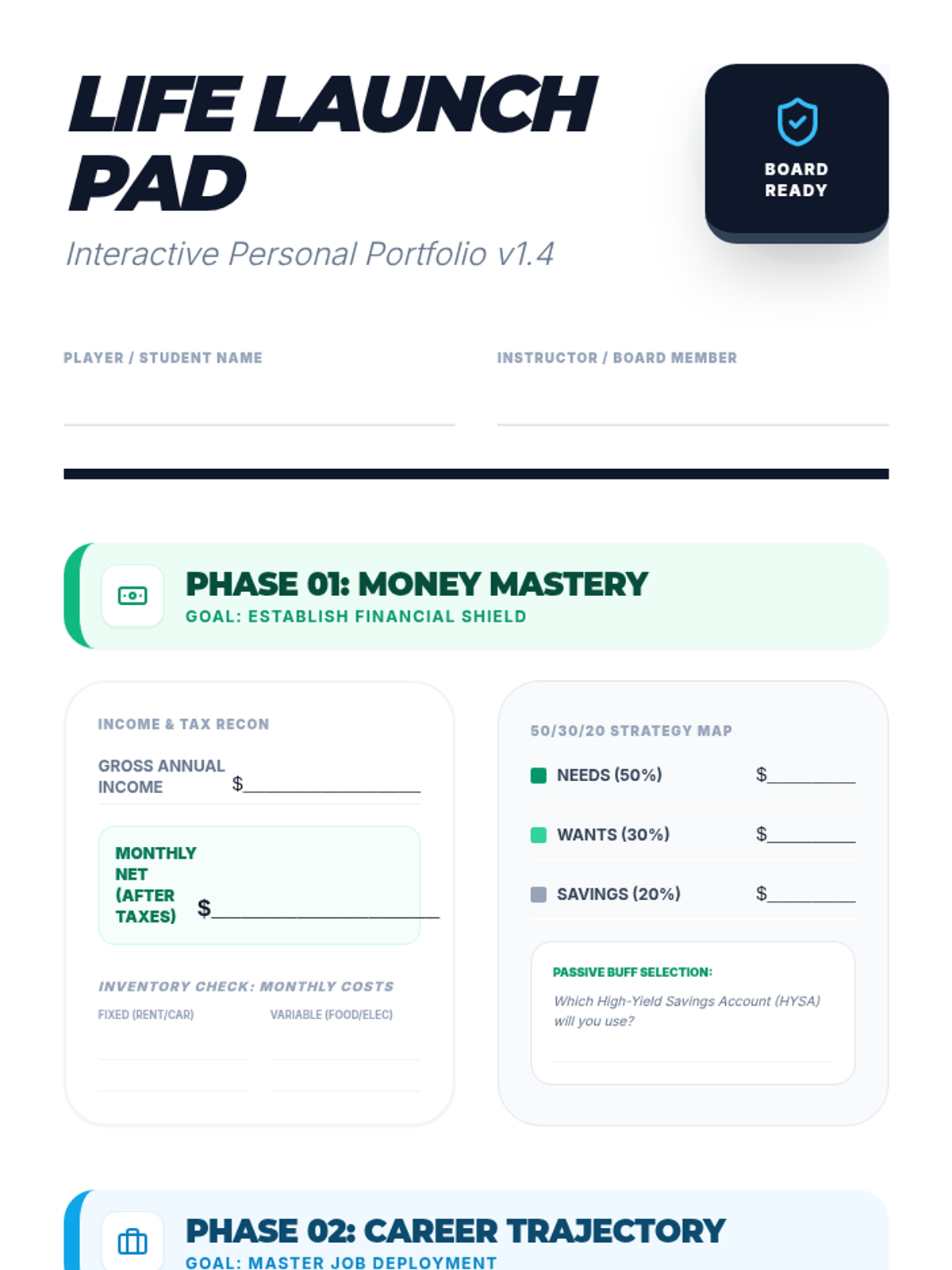
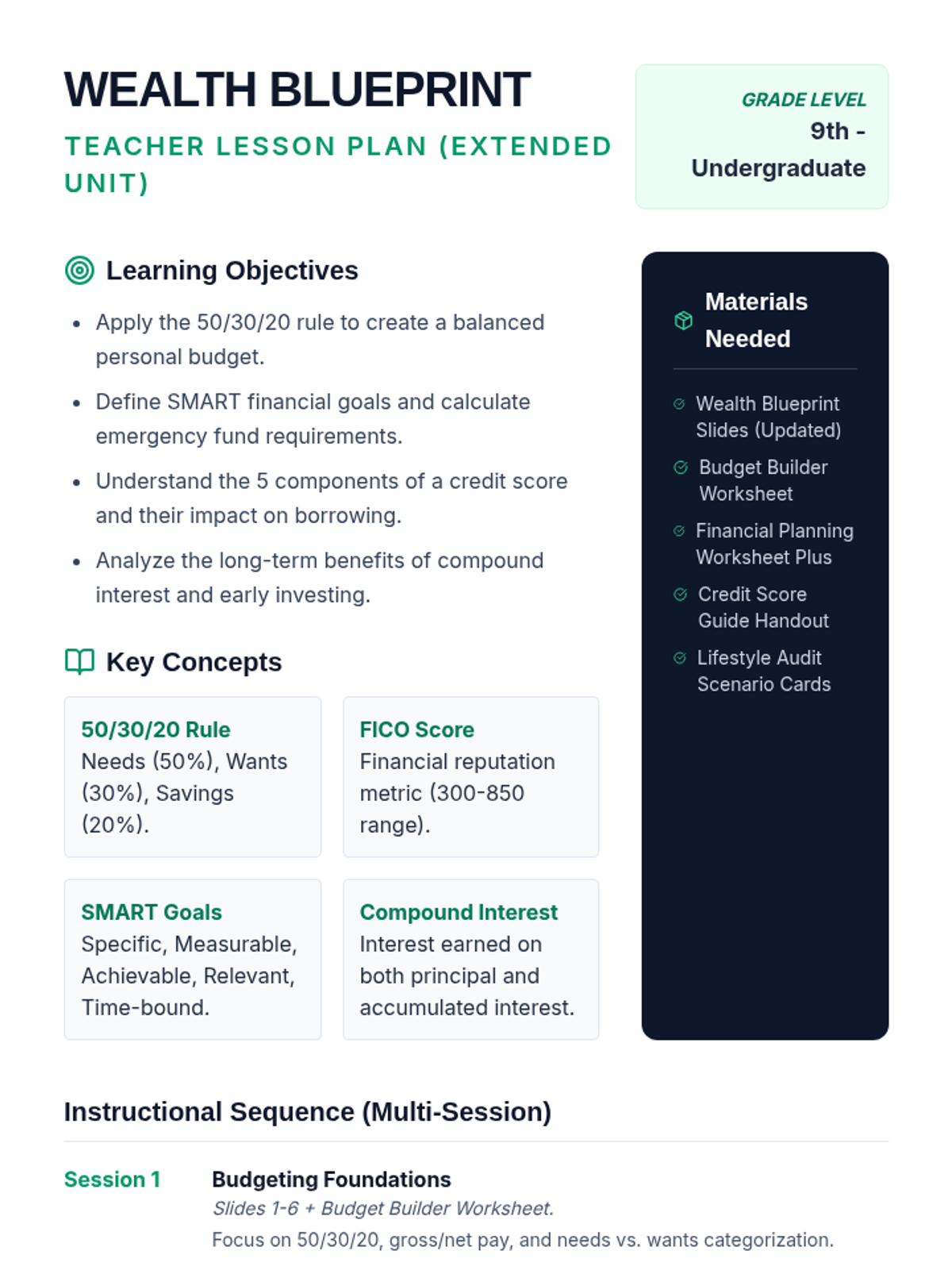
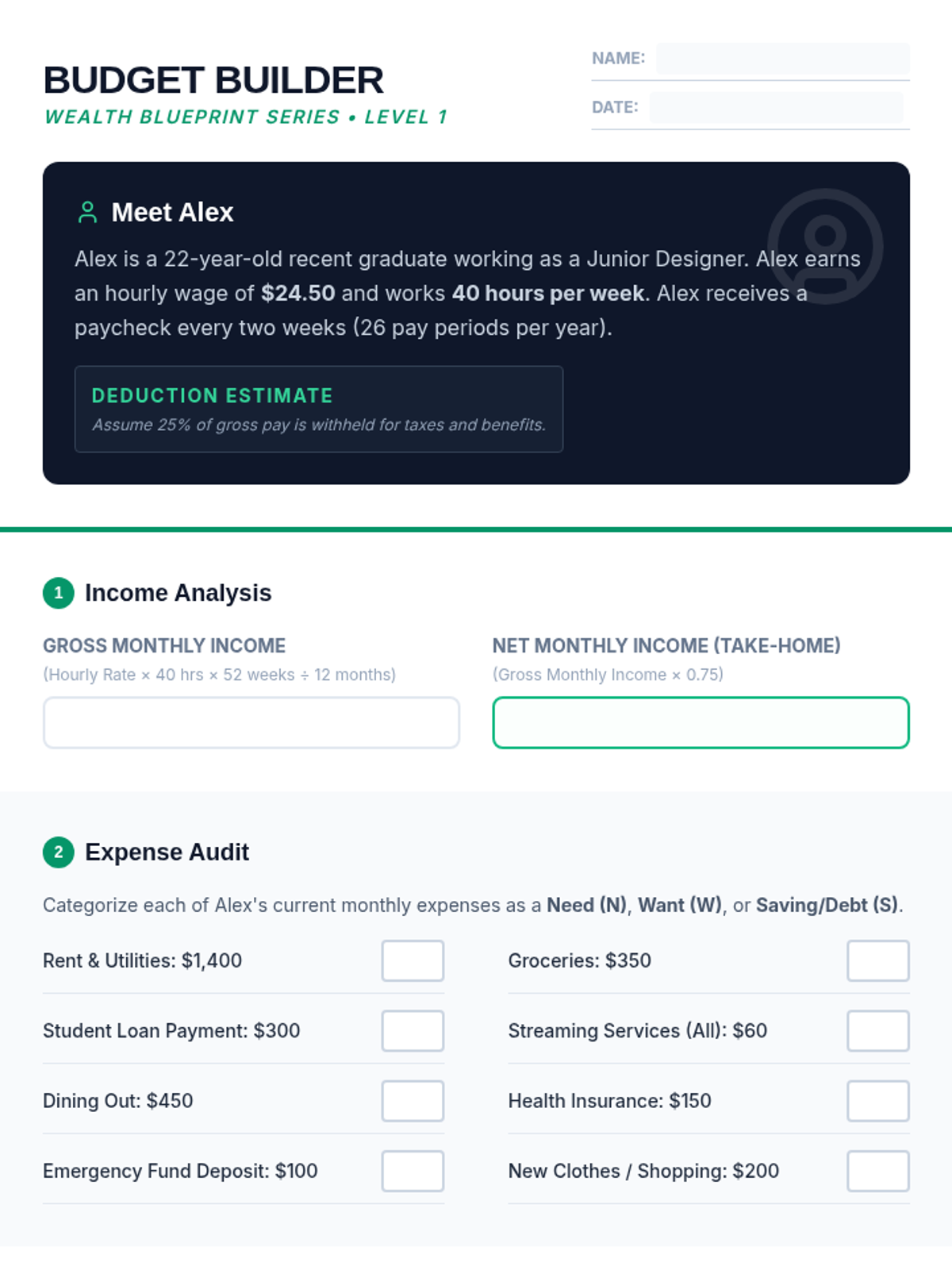
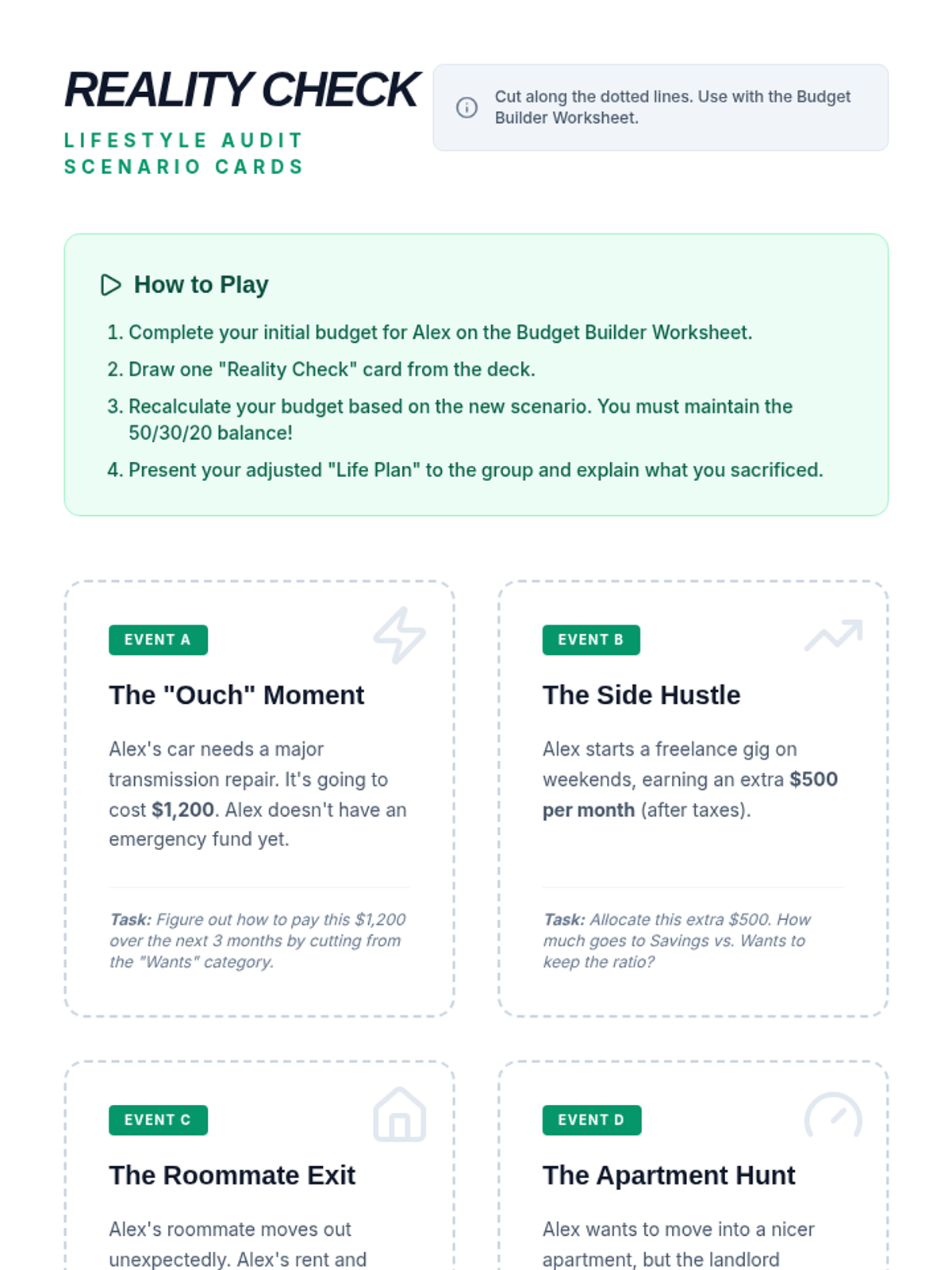
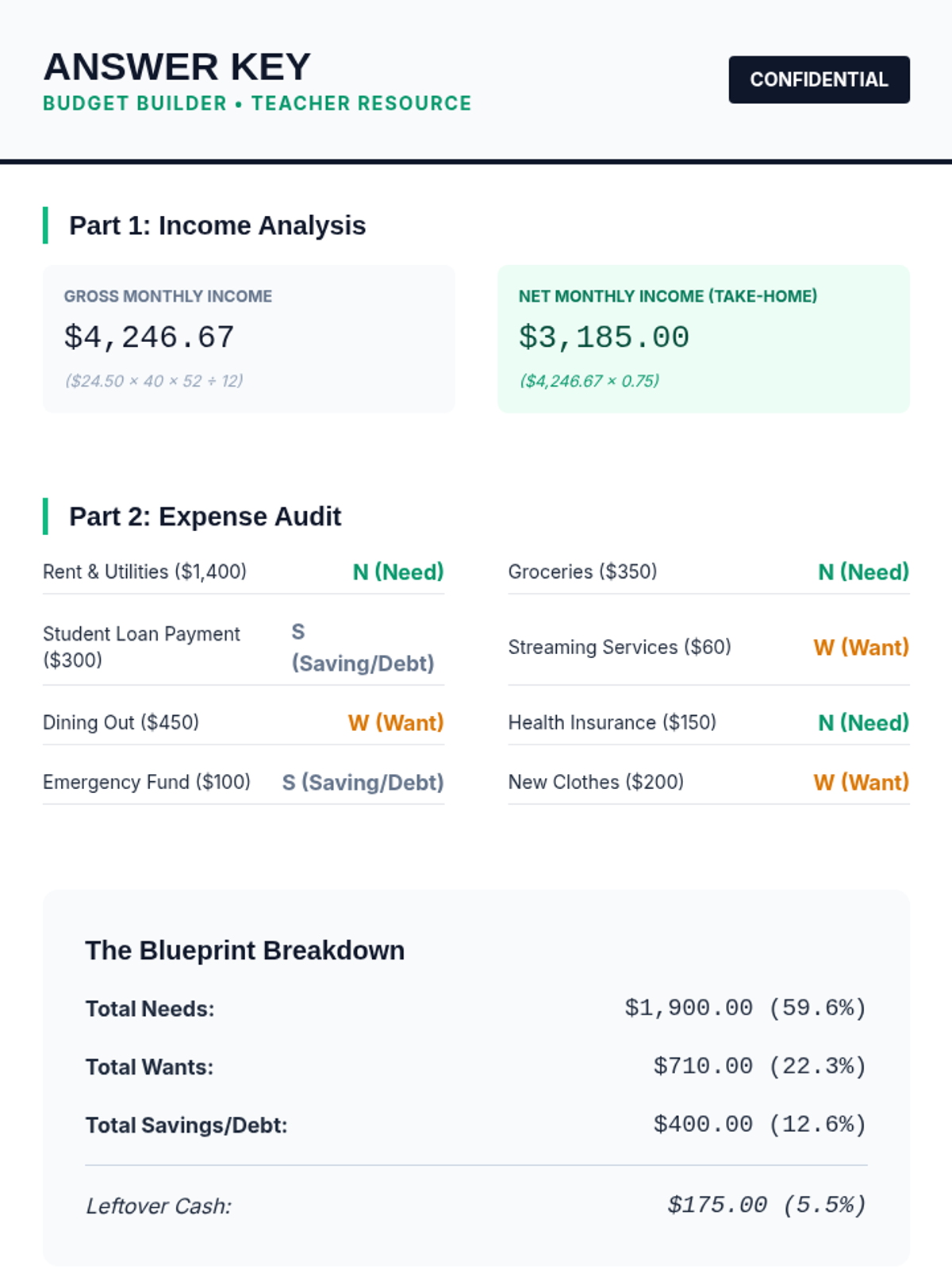
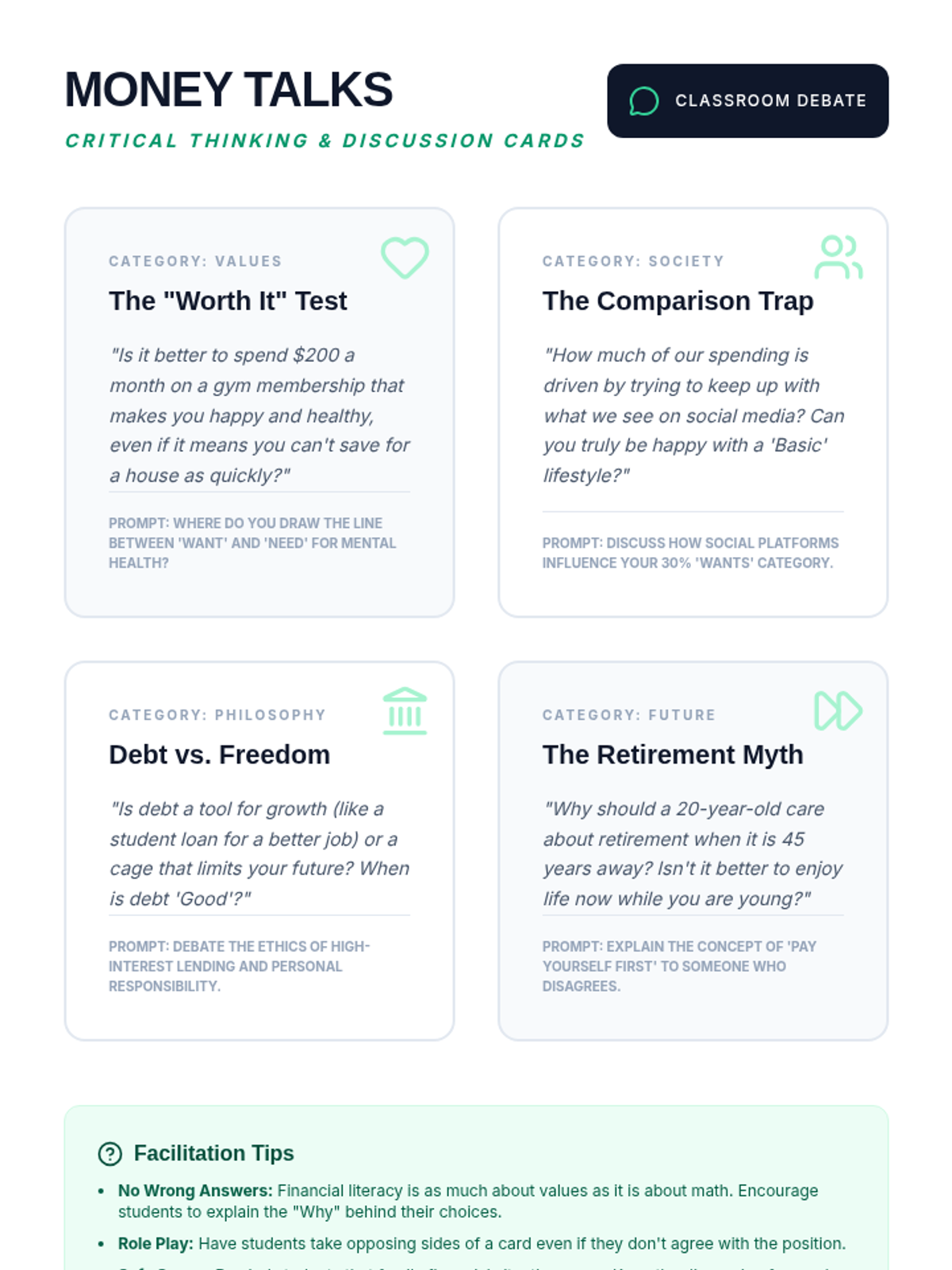
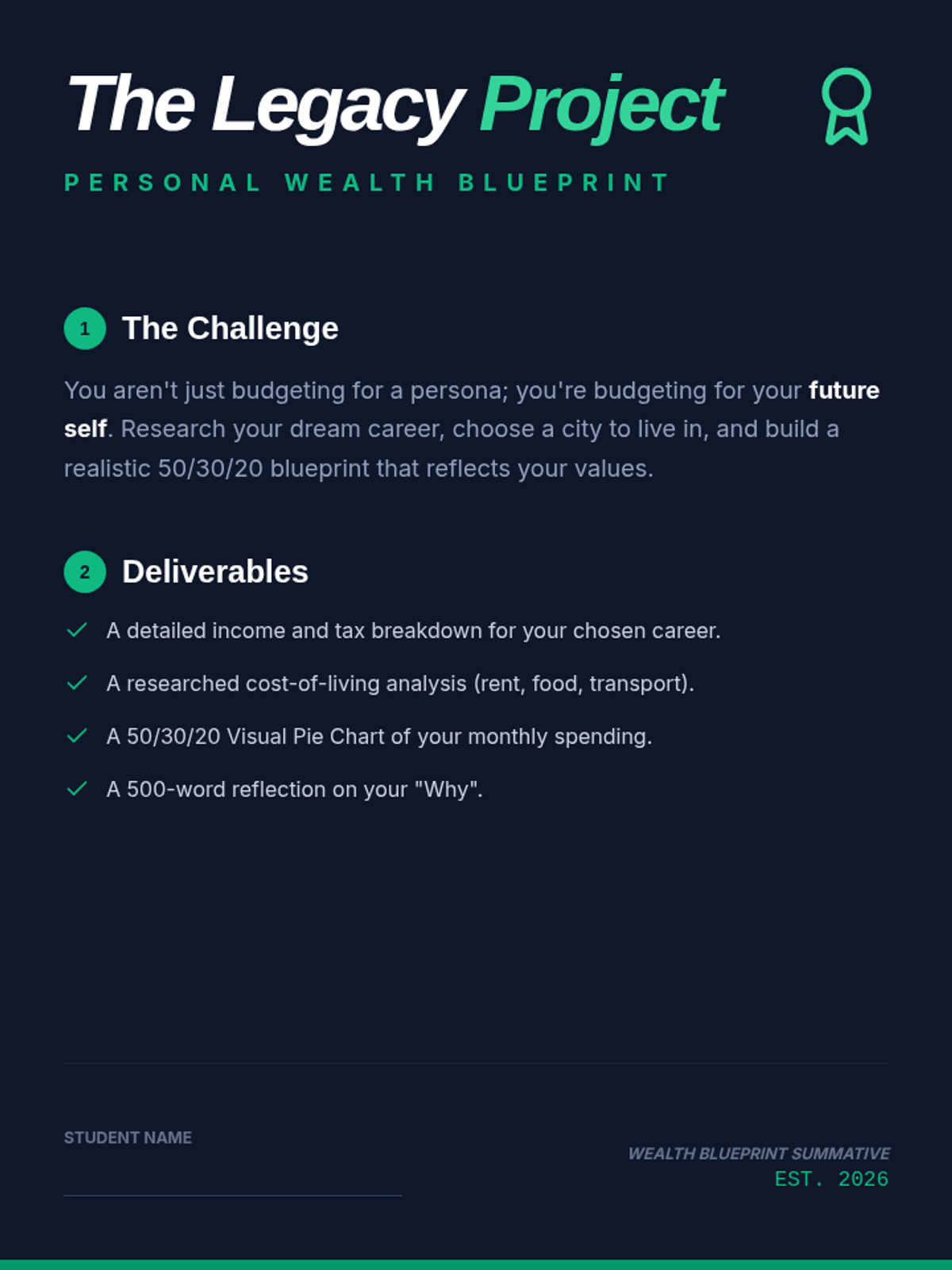
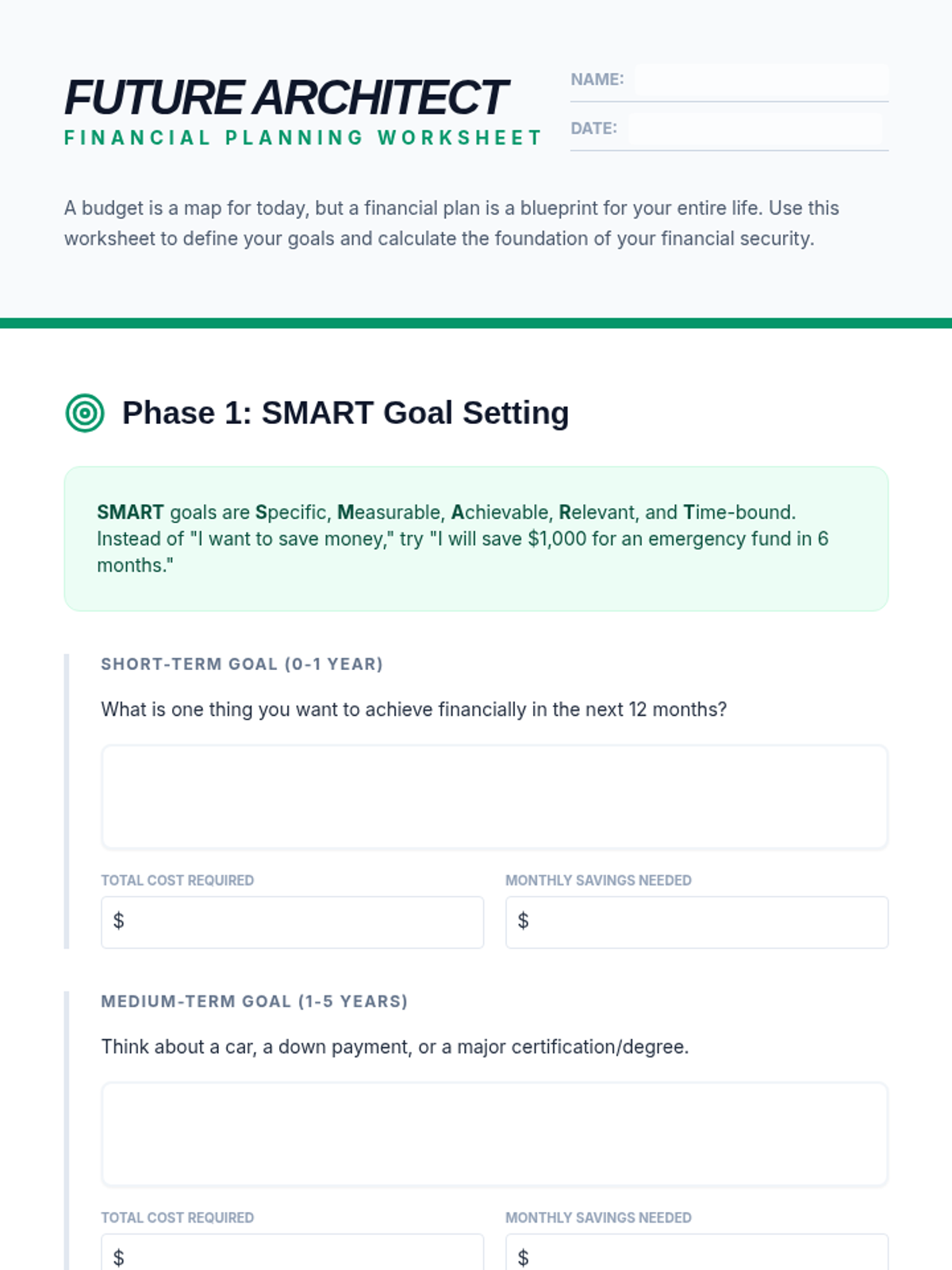
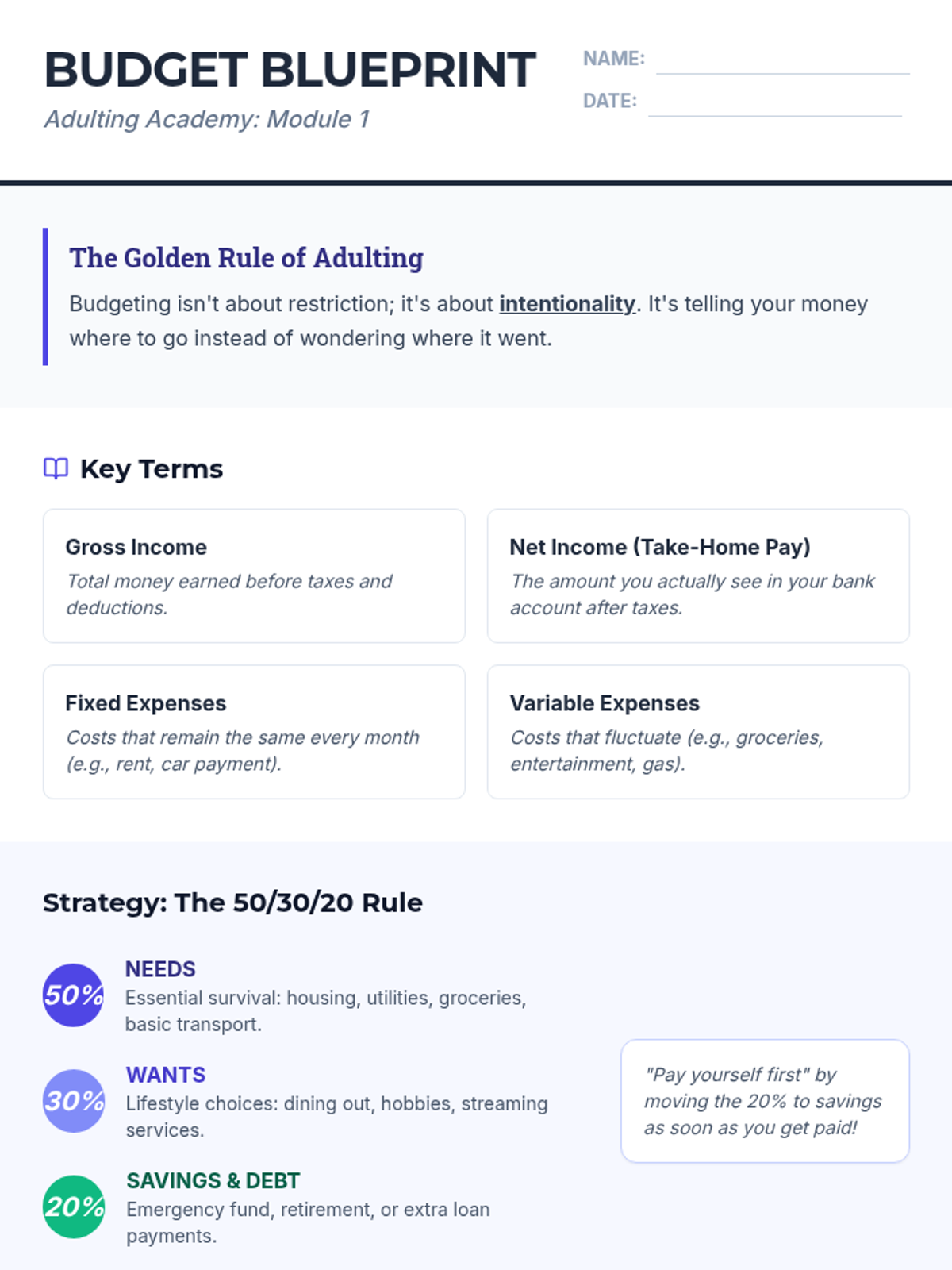
A comprehensive guide to personal finance, covering budgeting, the 50/30/20 rule, and long-term financial planning for young adults.
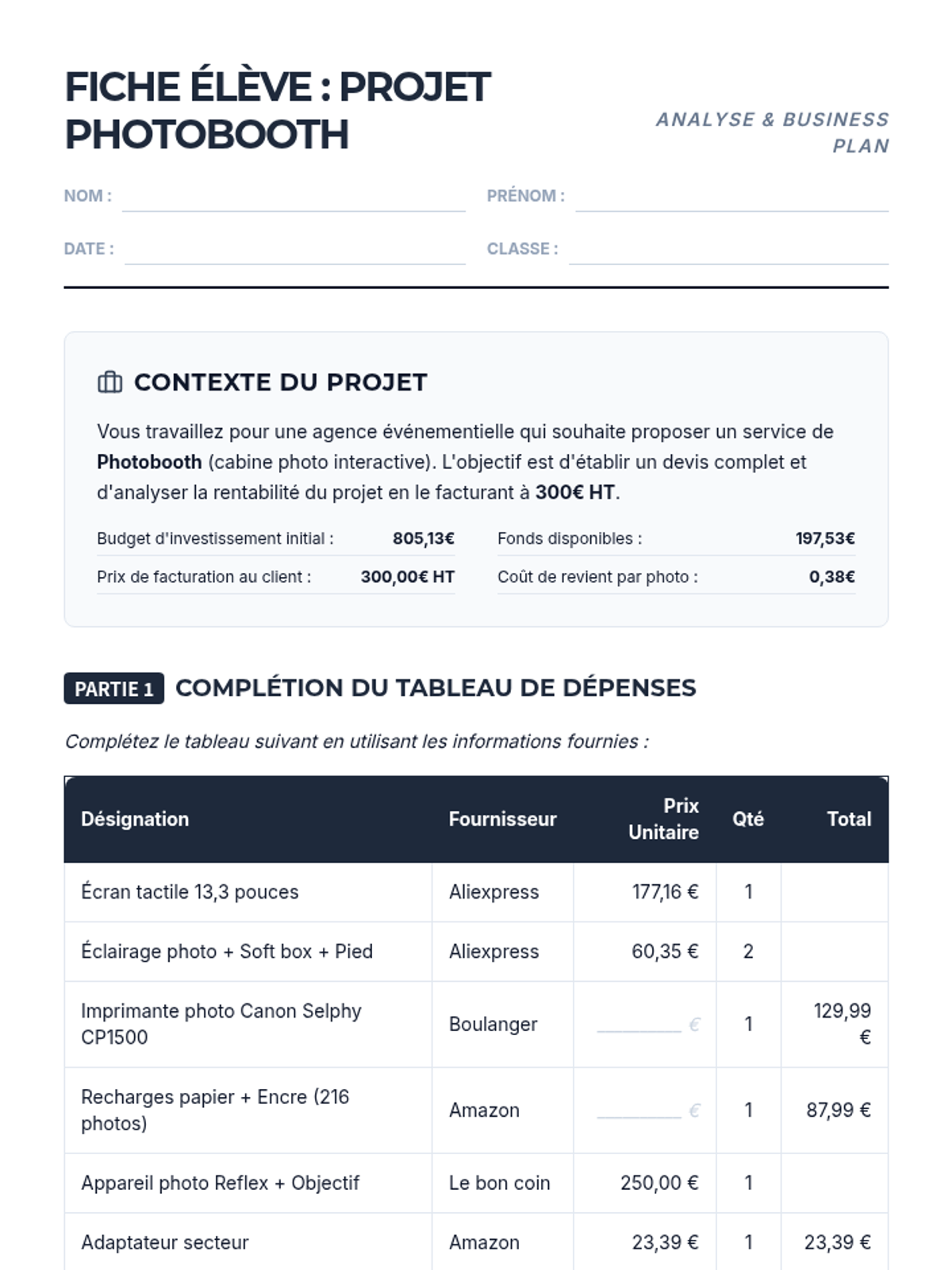
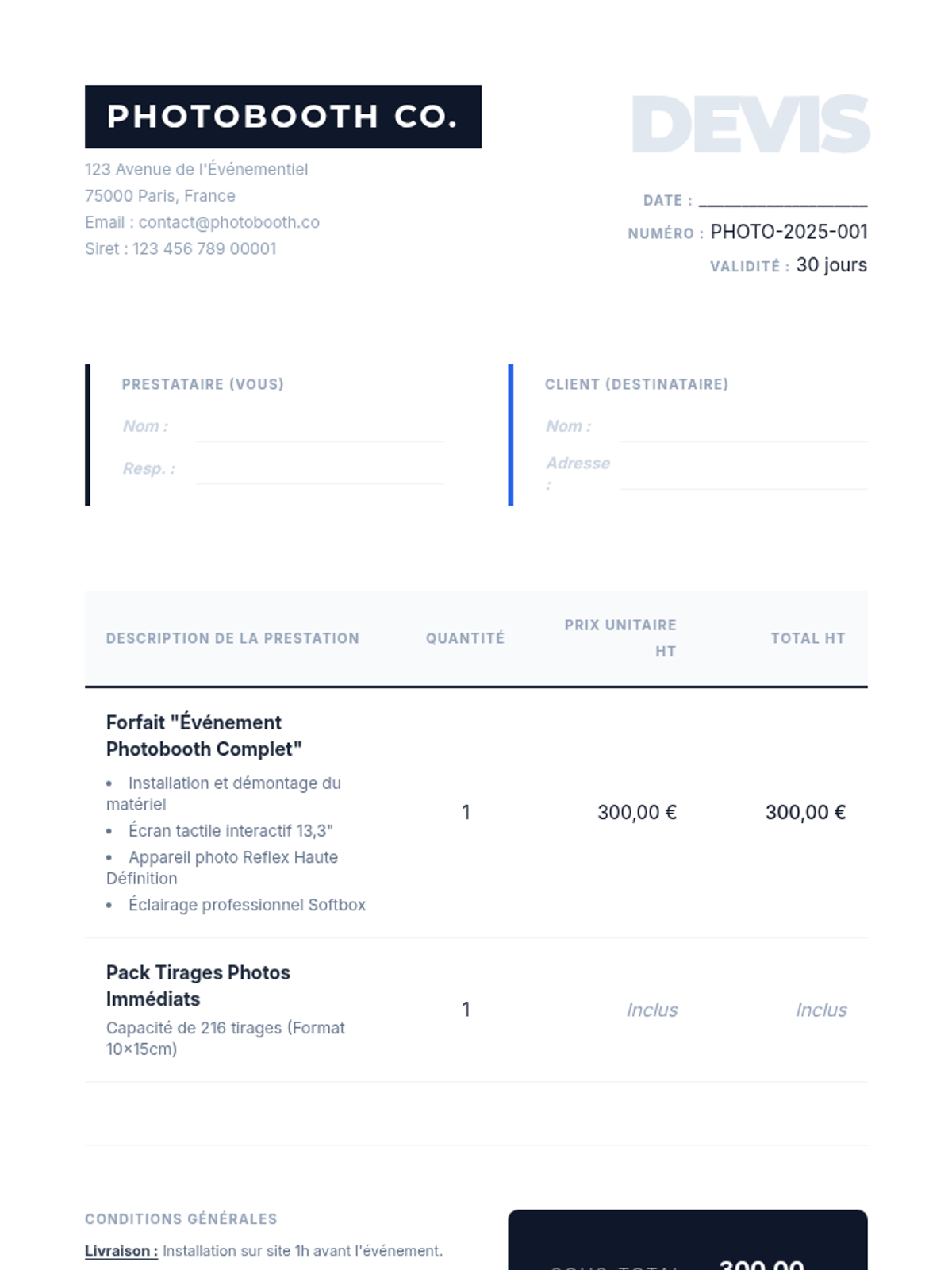
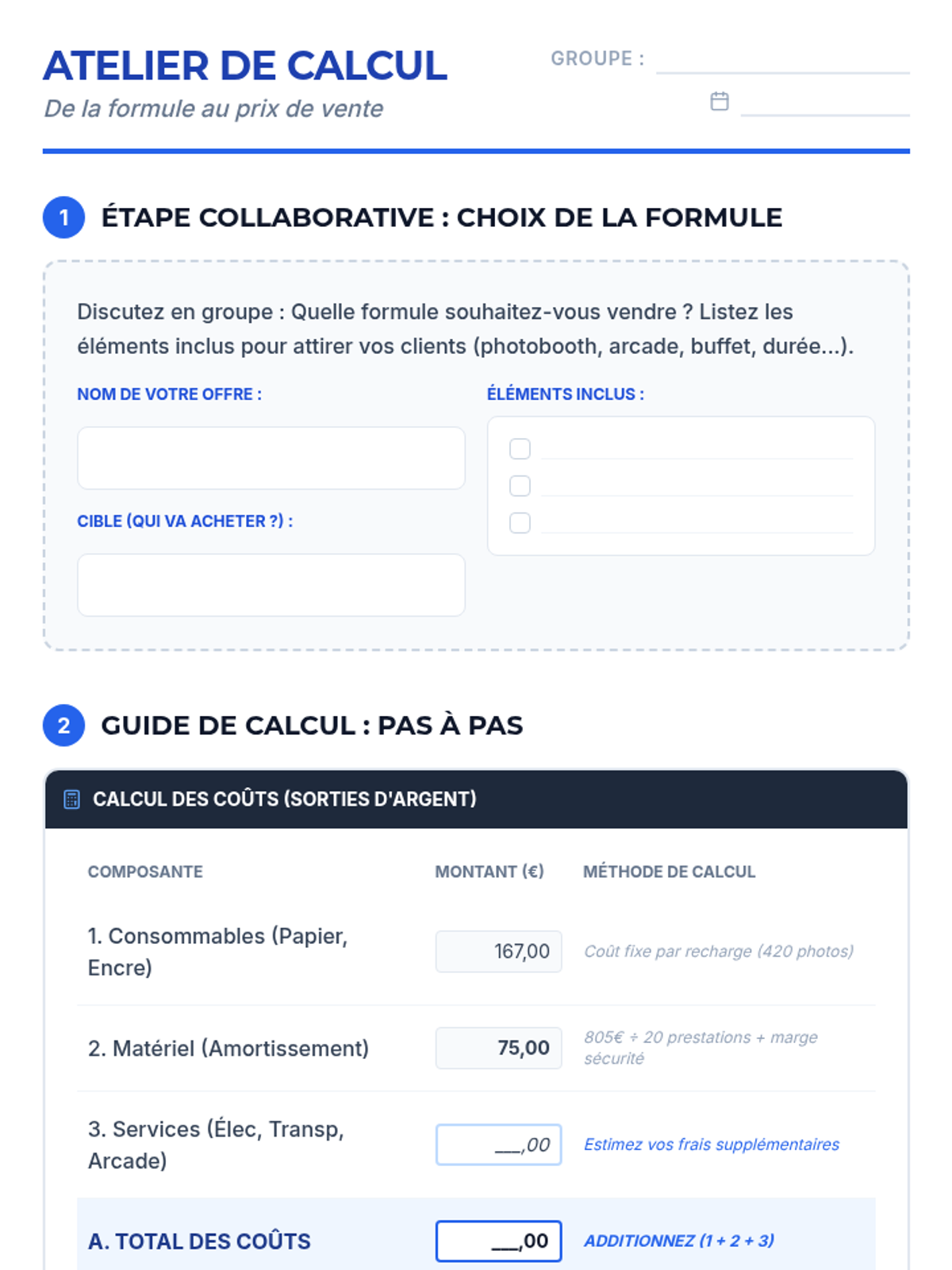
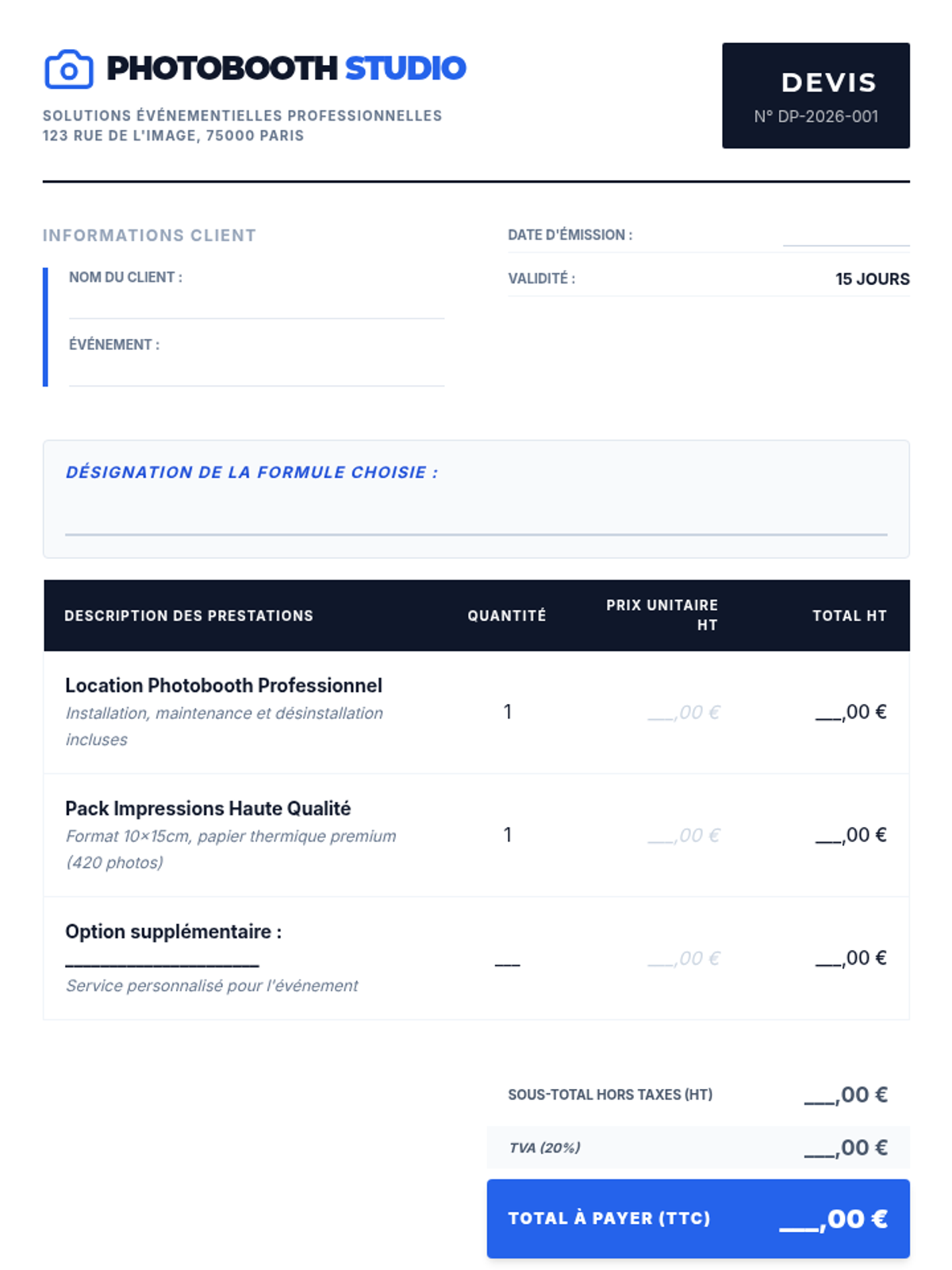
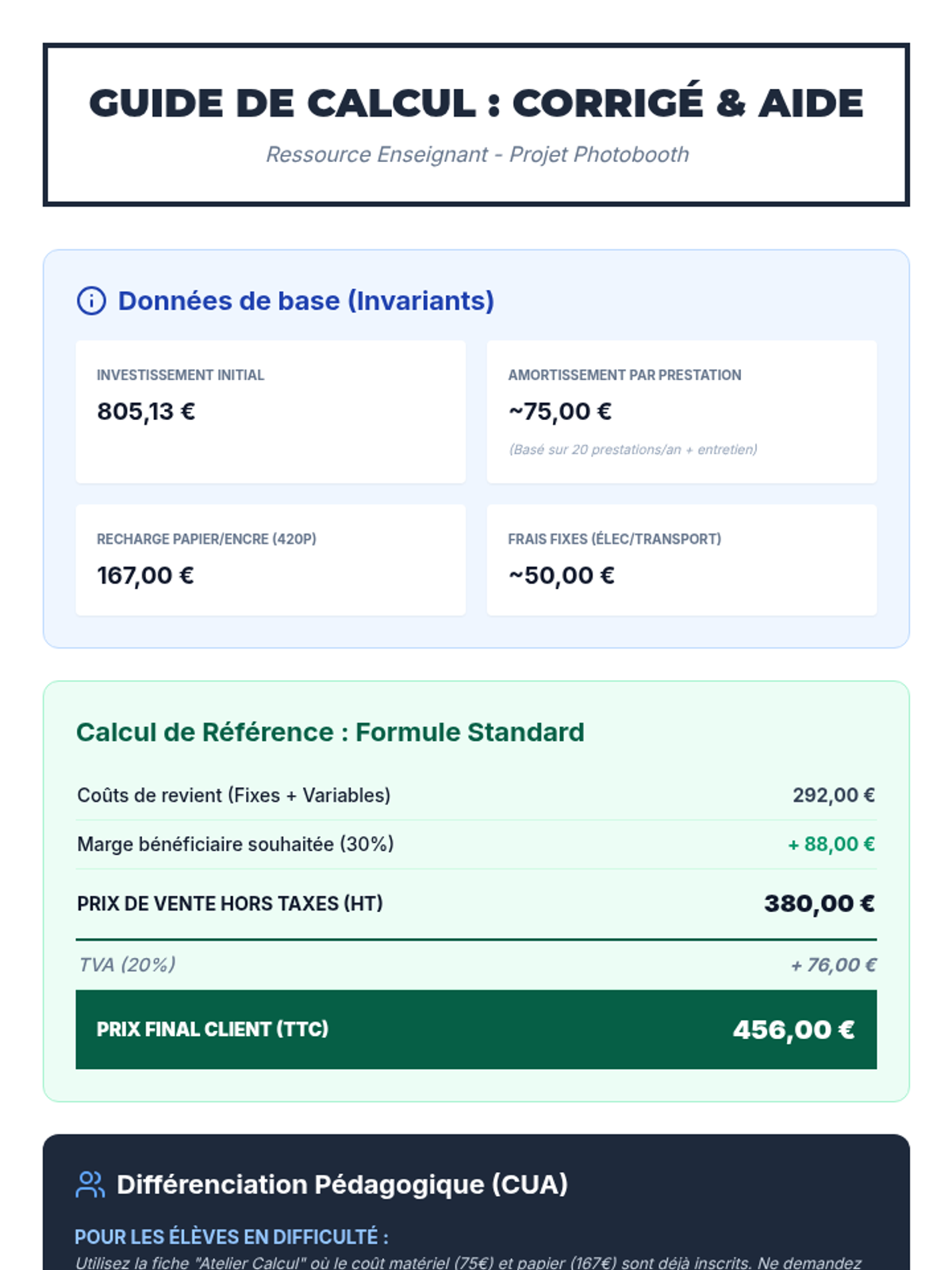
Une étude de cas pratique sur la création et l'analyse financière d'un projet de service événementiel (Photobooth). Les élèves calculent l'investissement, analysent la rentabilité et rédigent un devis professionnel.
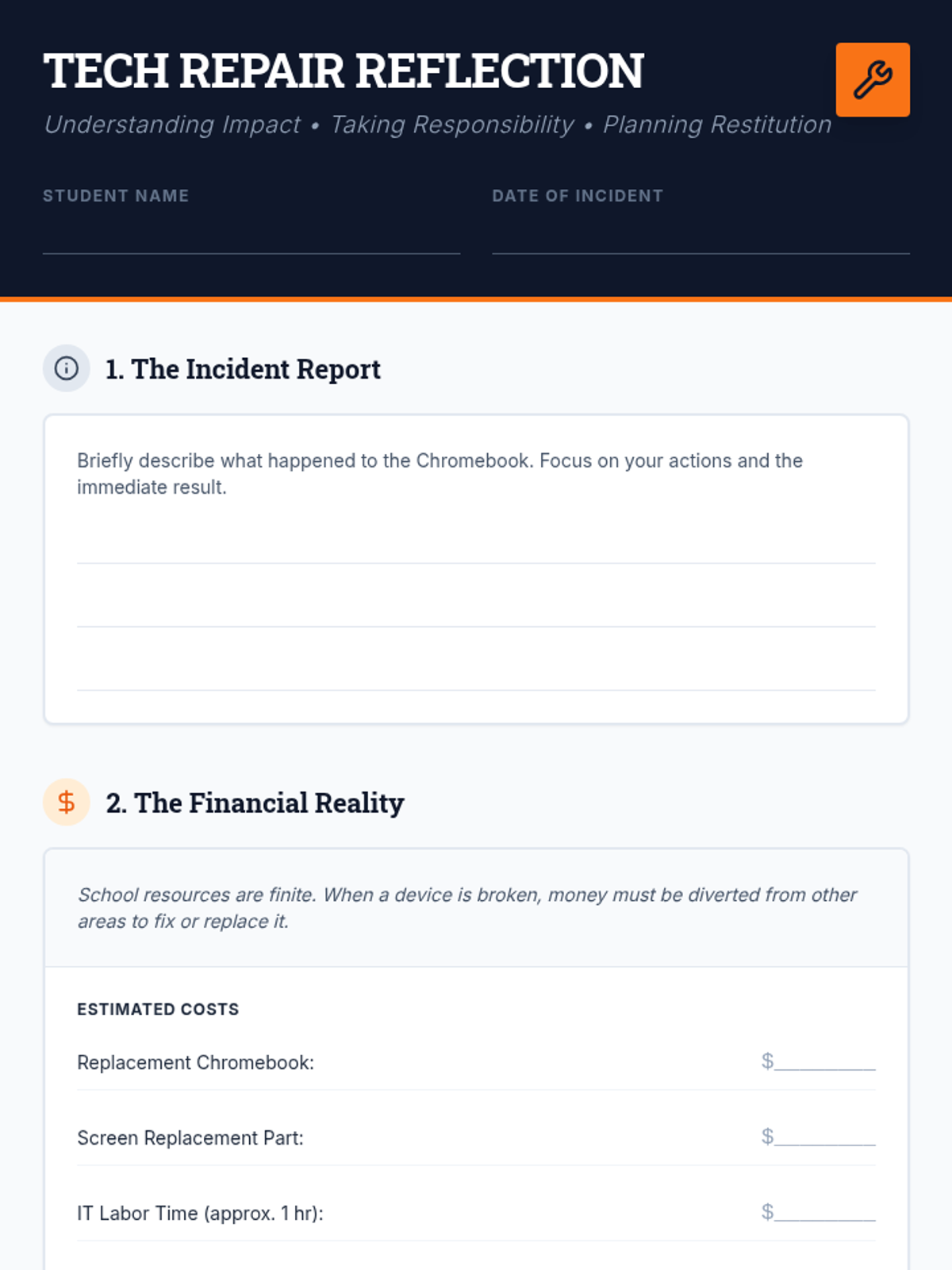
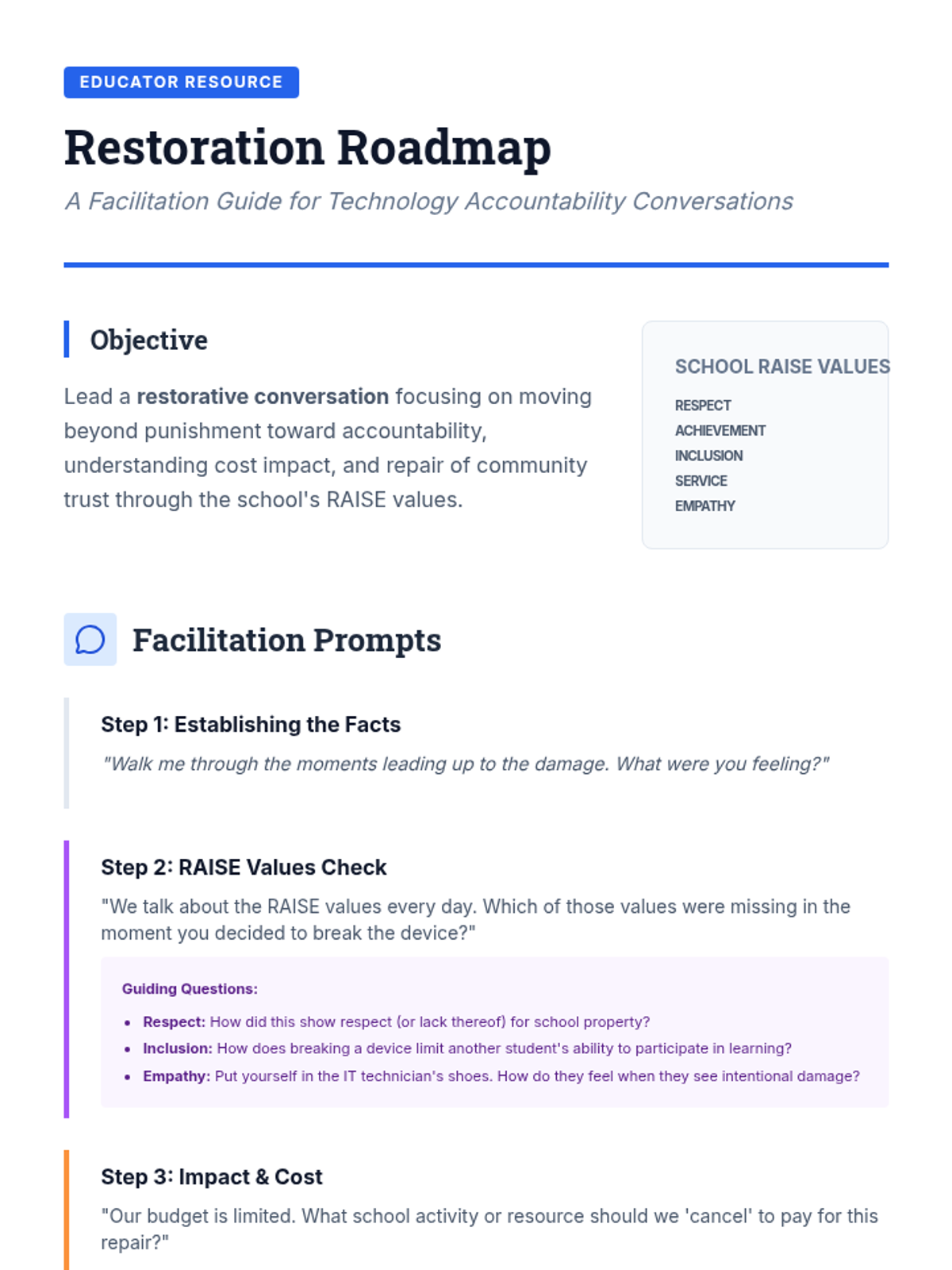
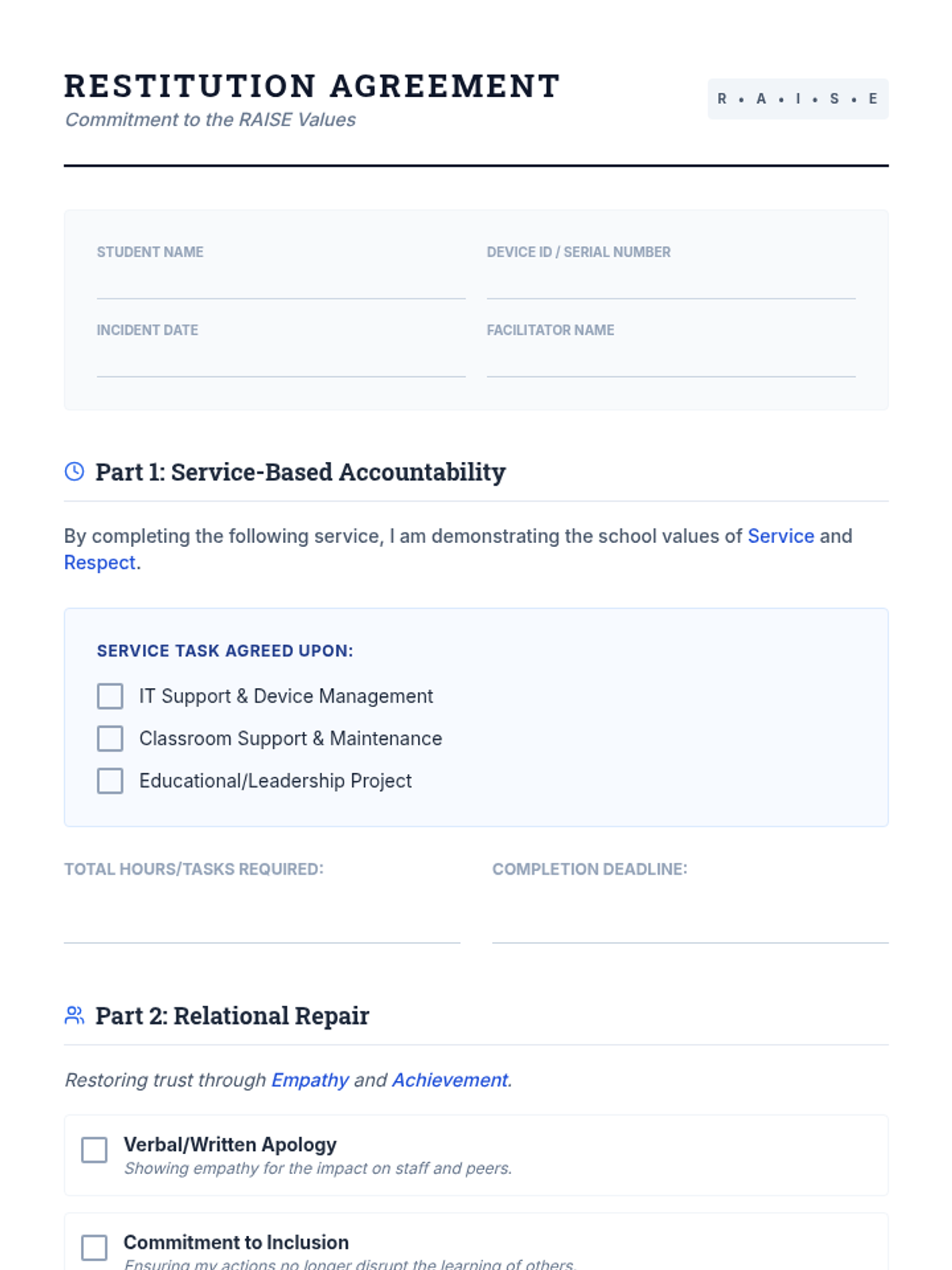
A restorative justice resource designed for students who have intentionally damaged school technology, focusing on financial accountability and community impact.
Cette leçon permet aux élèves de comprendre les mécanismes du calcul commercial à travers la création d'offres pour un photobooth. Ils apprennent à calculer des coûts, des marges et à formaliser une offre commerciale professionnelle sous forme de devis.
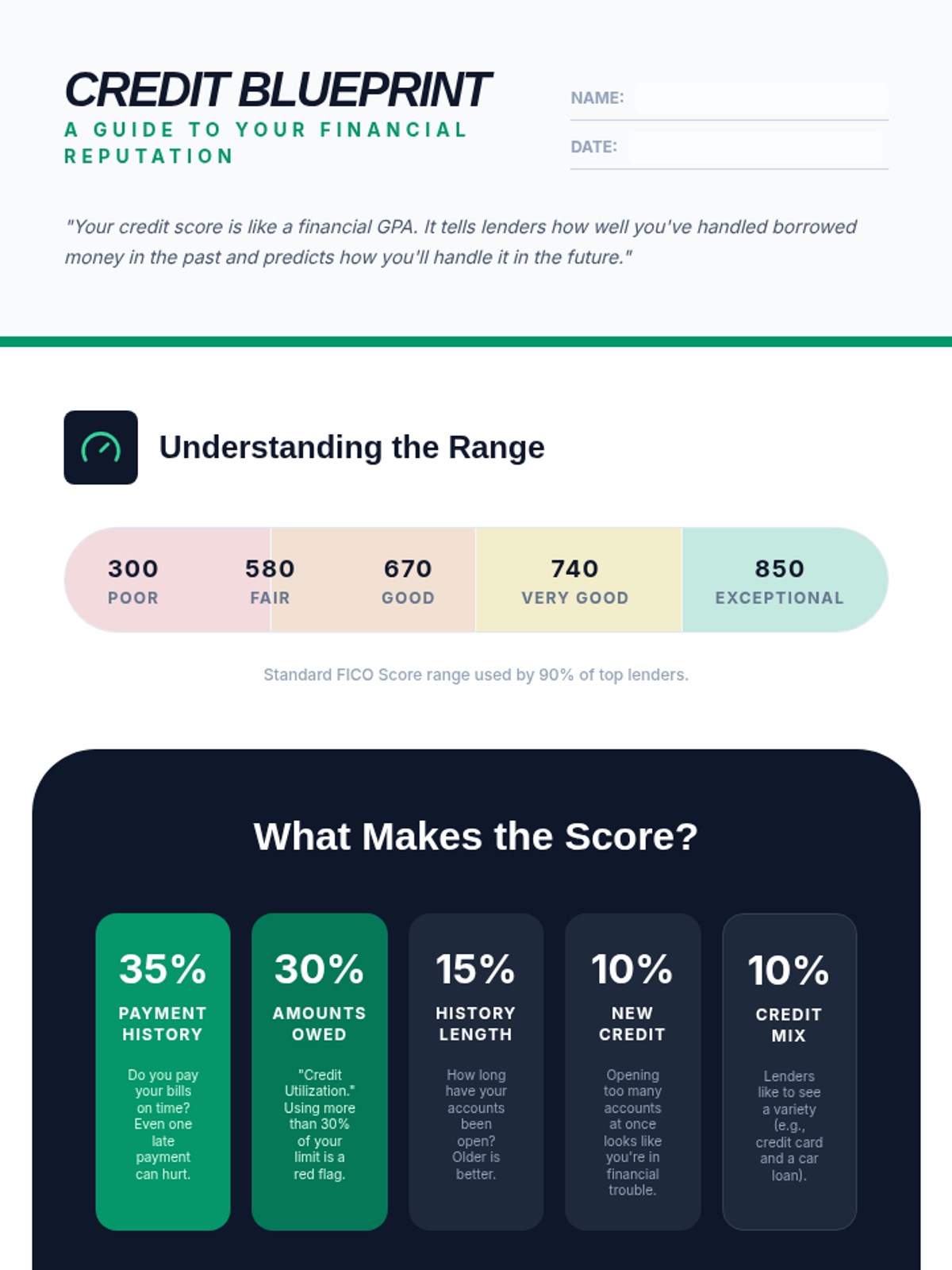
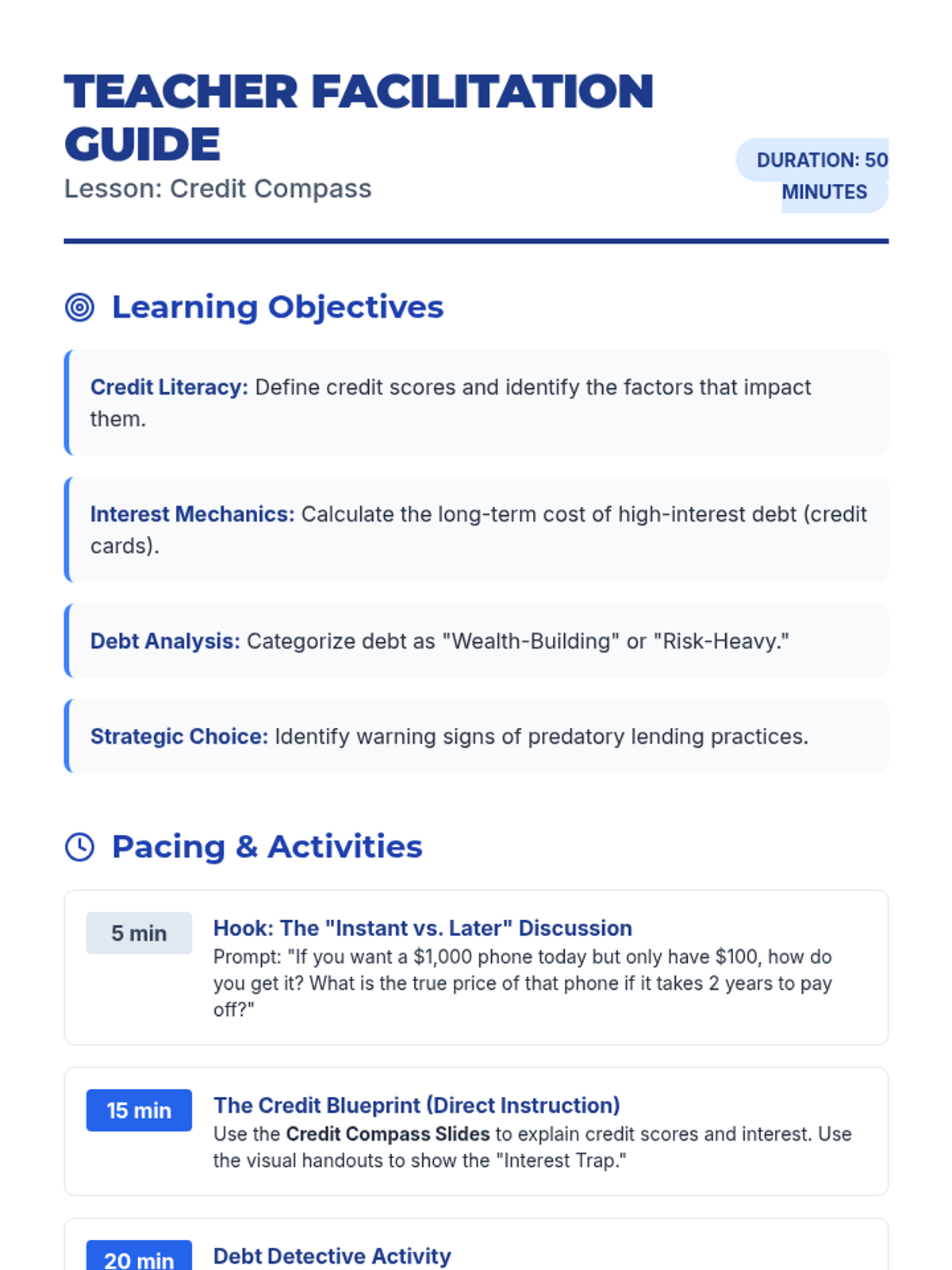
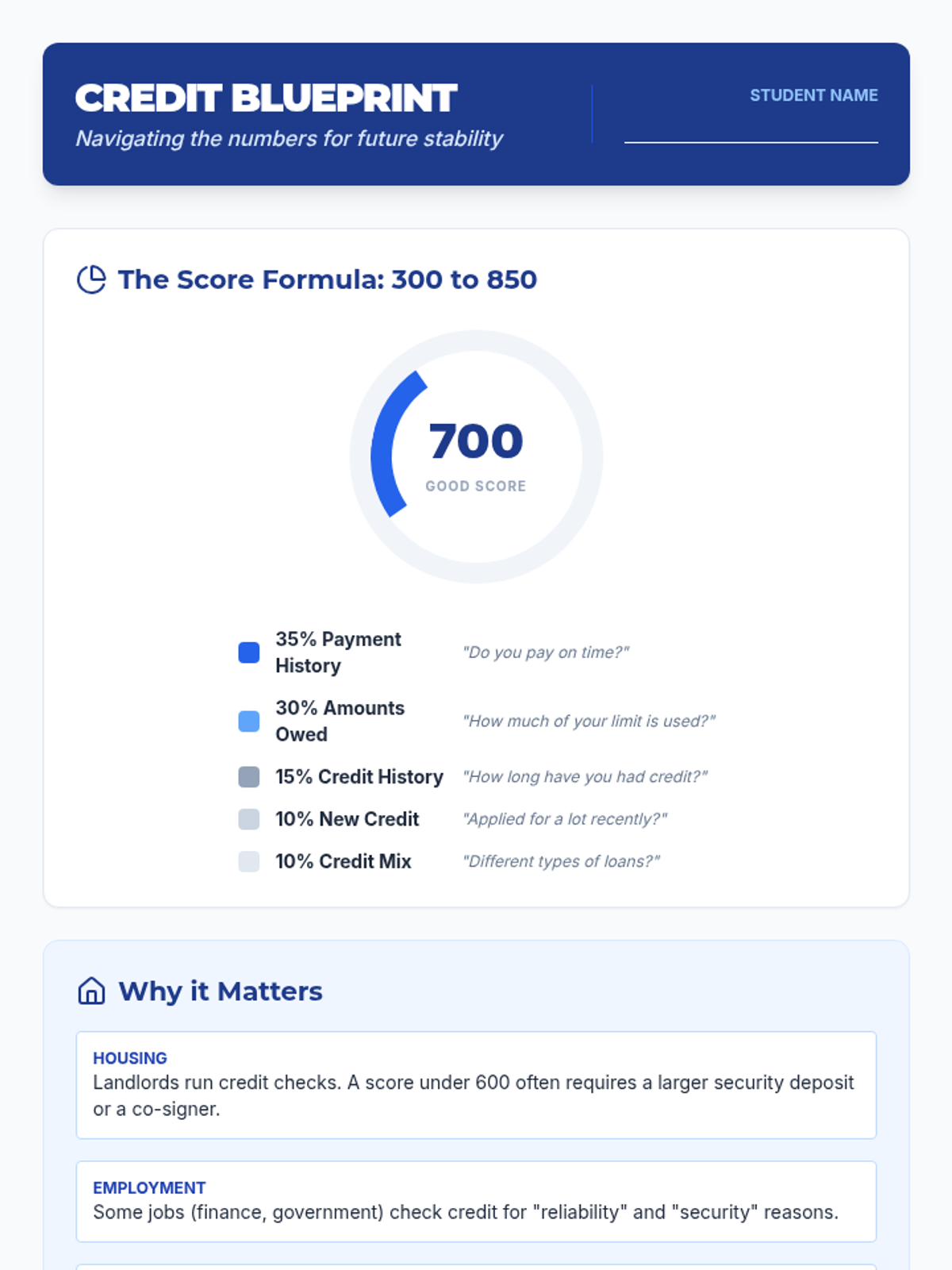
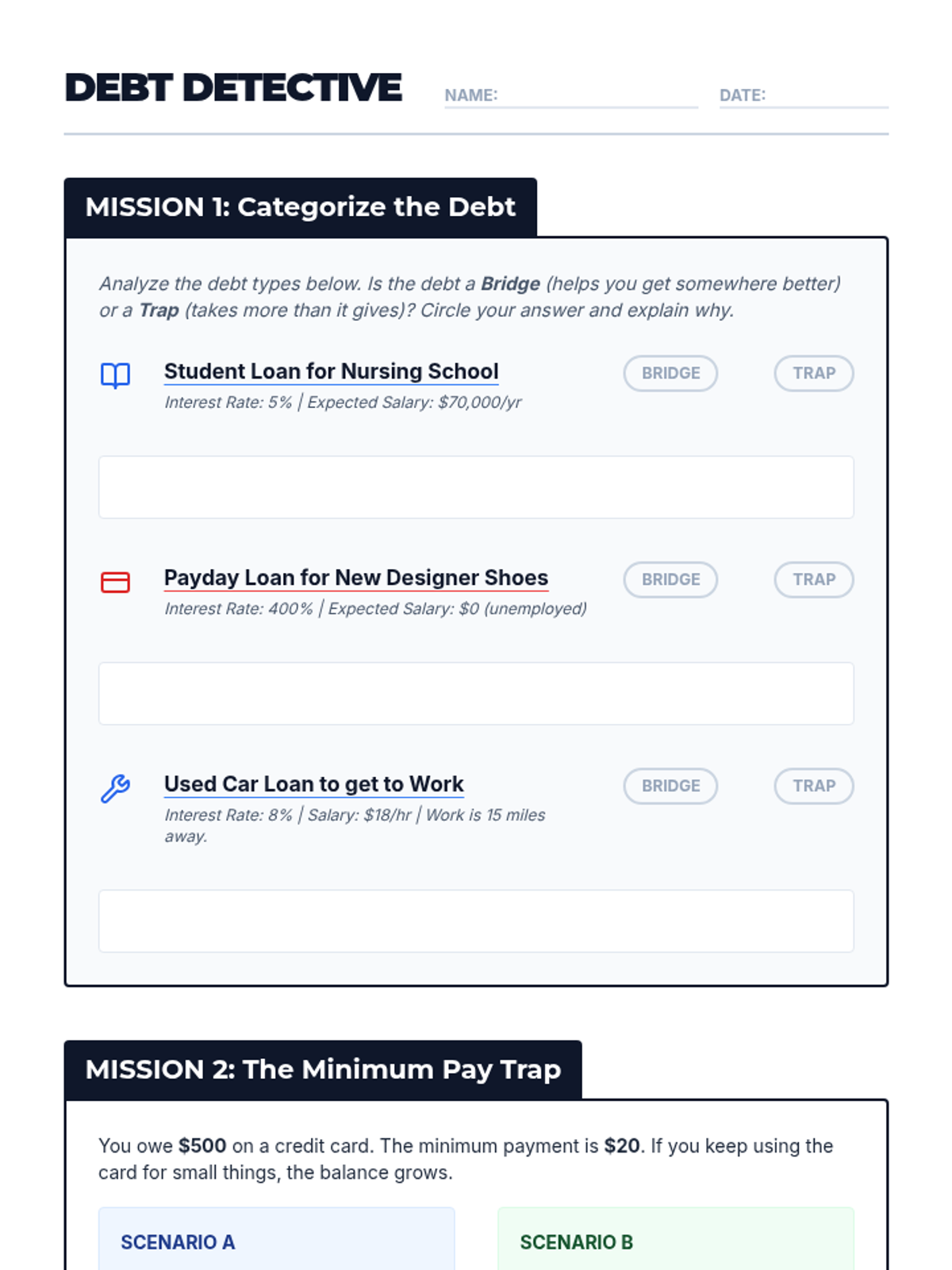
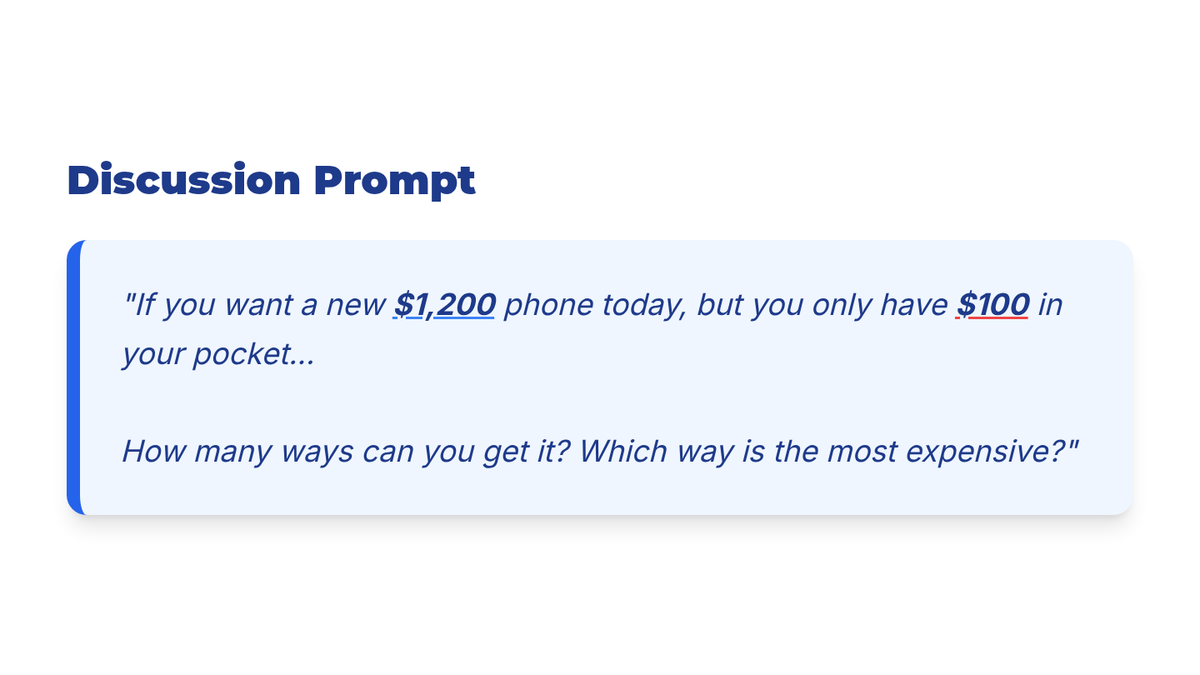
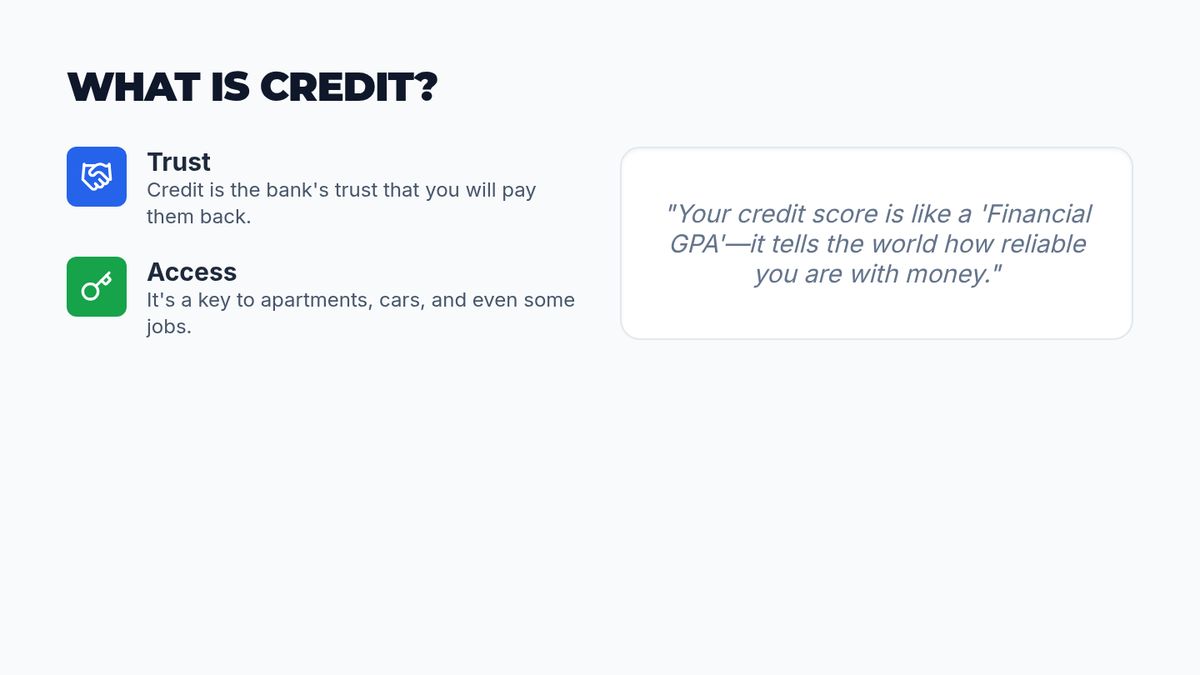
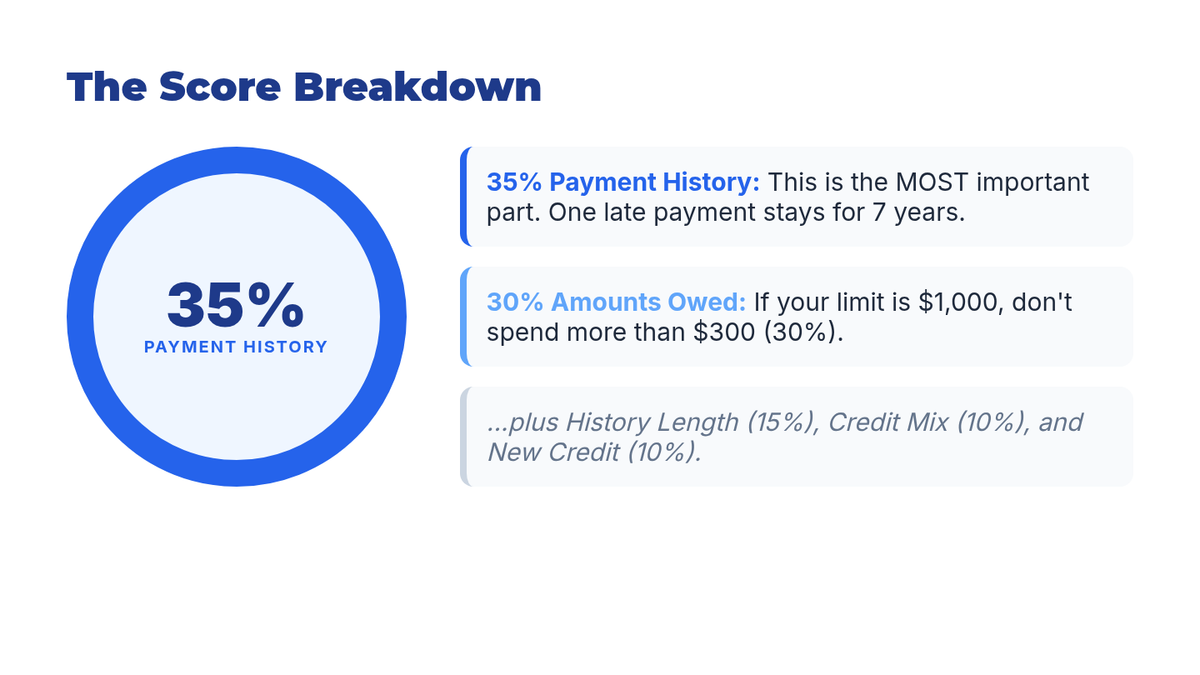
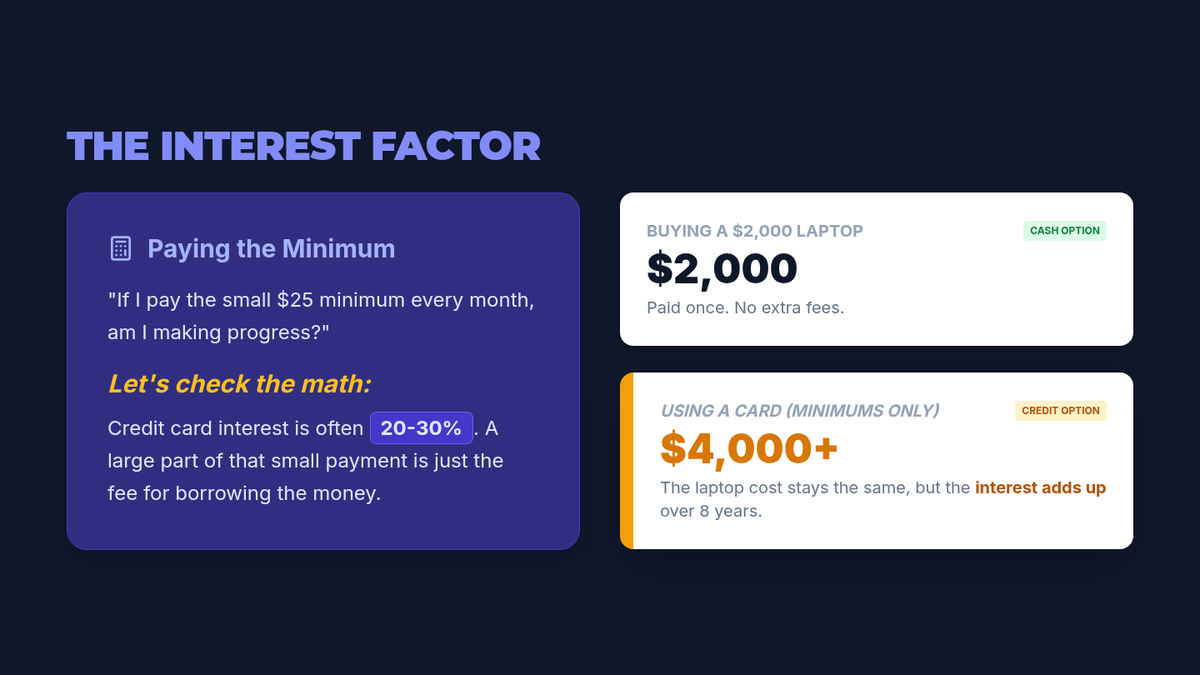
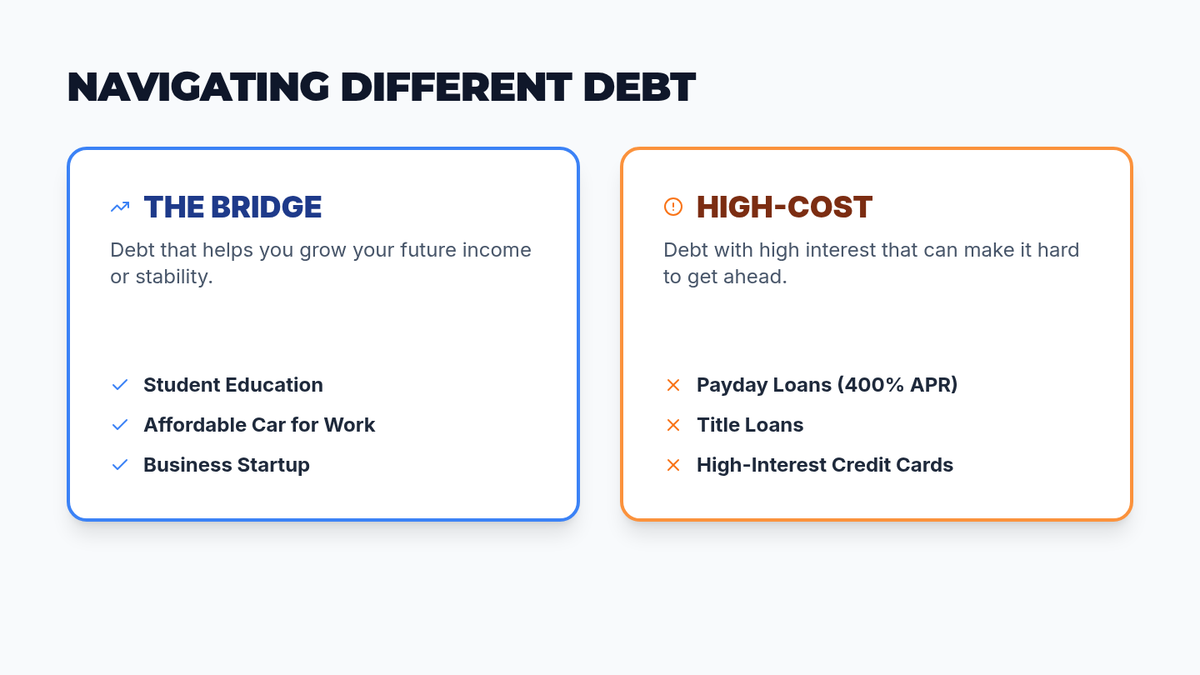
A 50-minute lesson designed for high school students, particularly those facing housing instability, to understand the mechanics of credit scores, the cost of interest, and how to differentiate between productive and predatory debt.
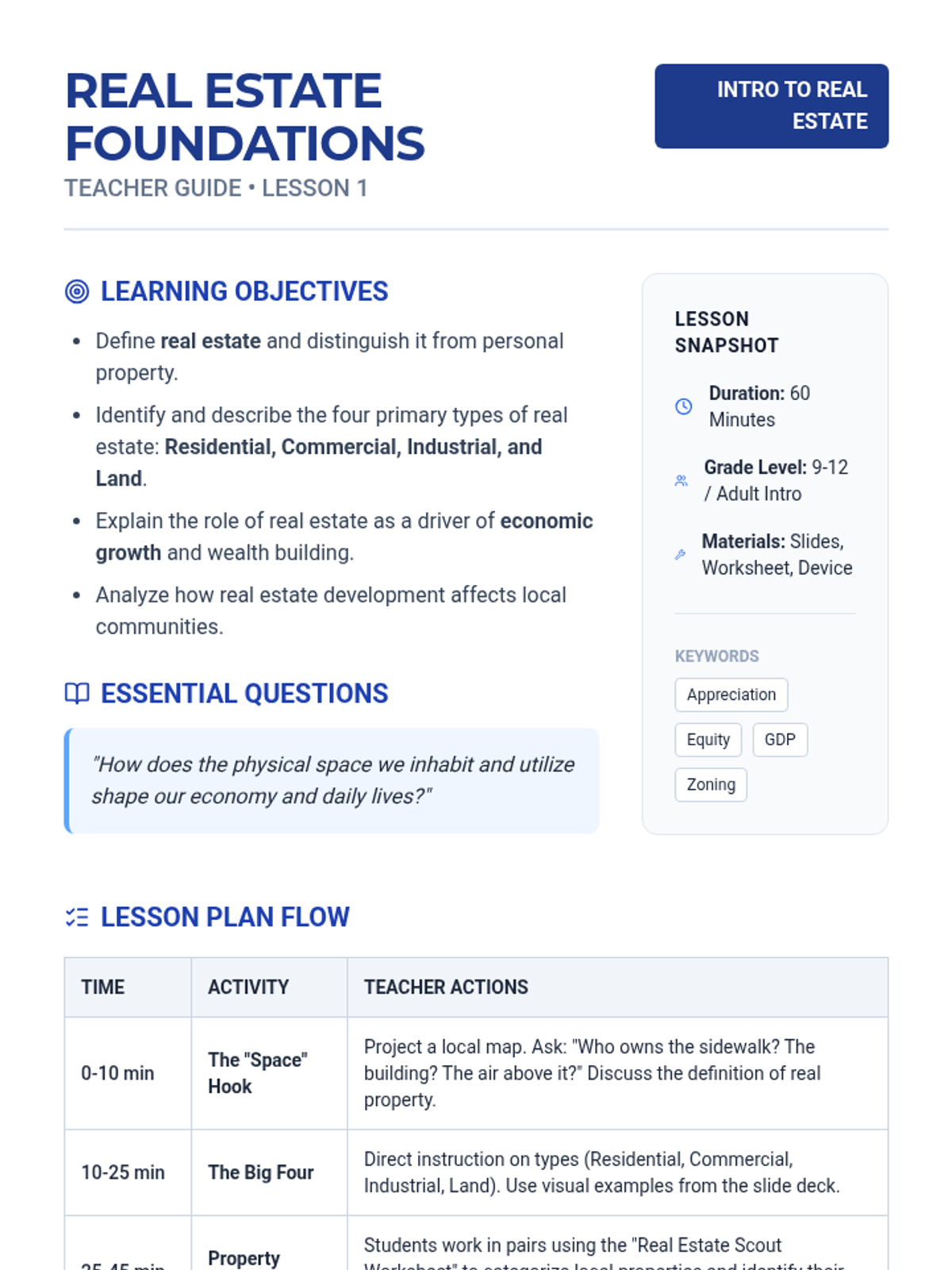
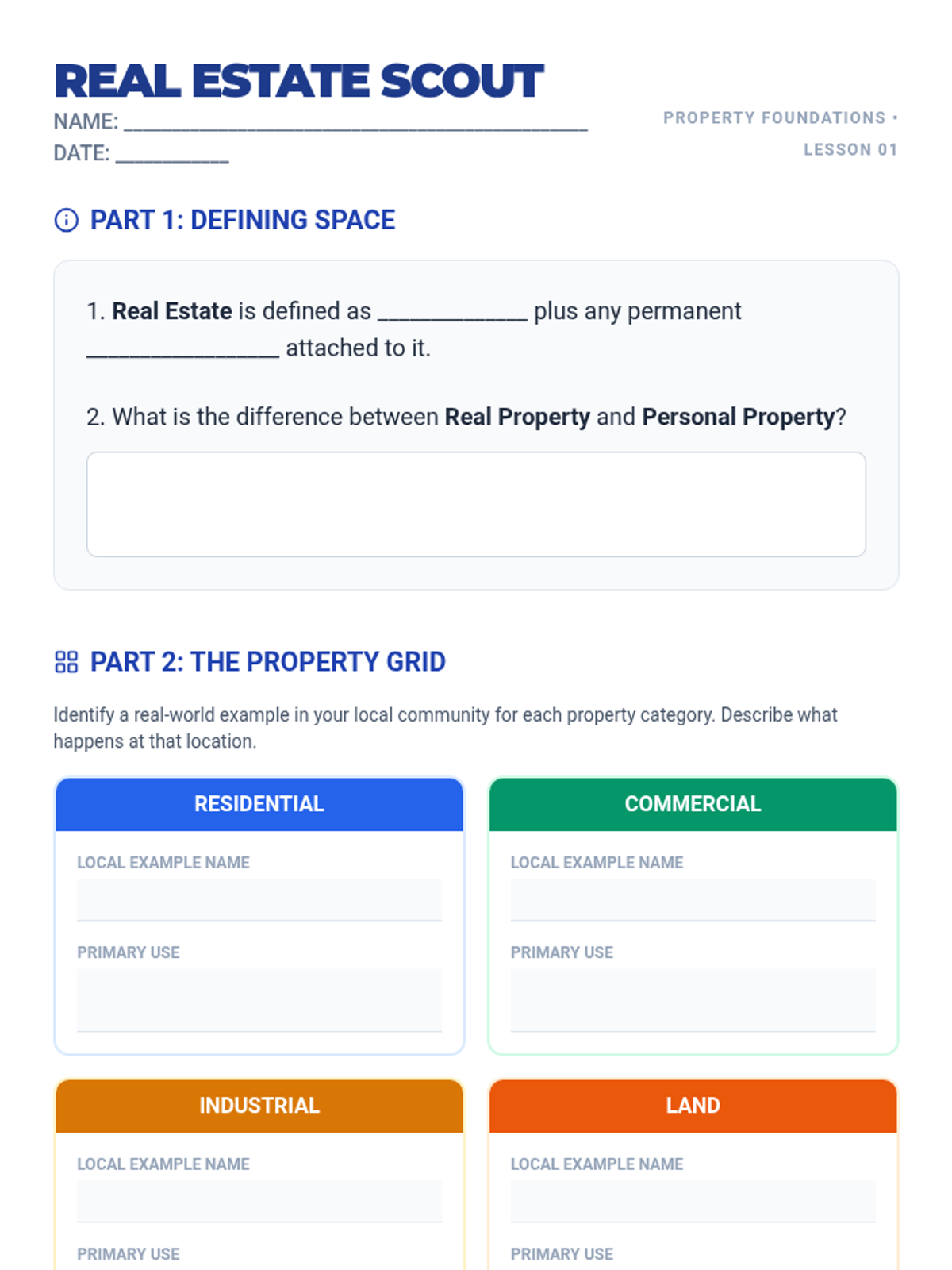
An introductory lesson exploring the definition of real estate, the four main categories (residential, commercial, industrial, and land), and its significant impact on the economy.
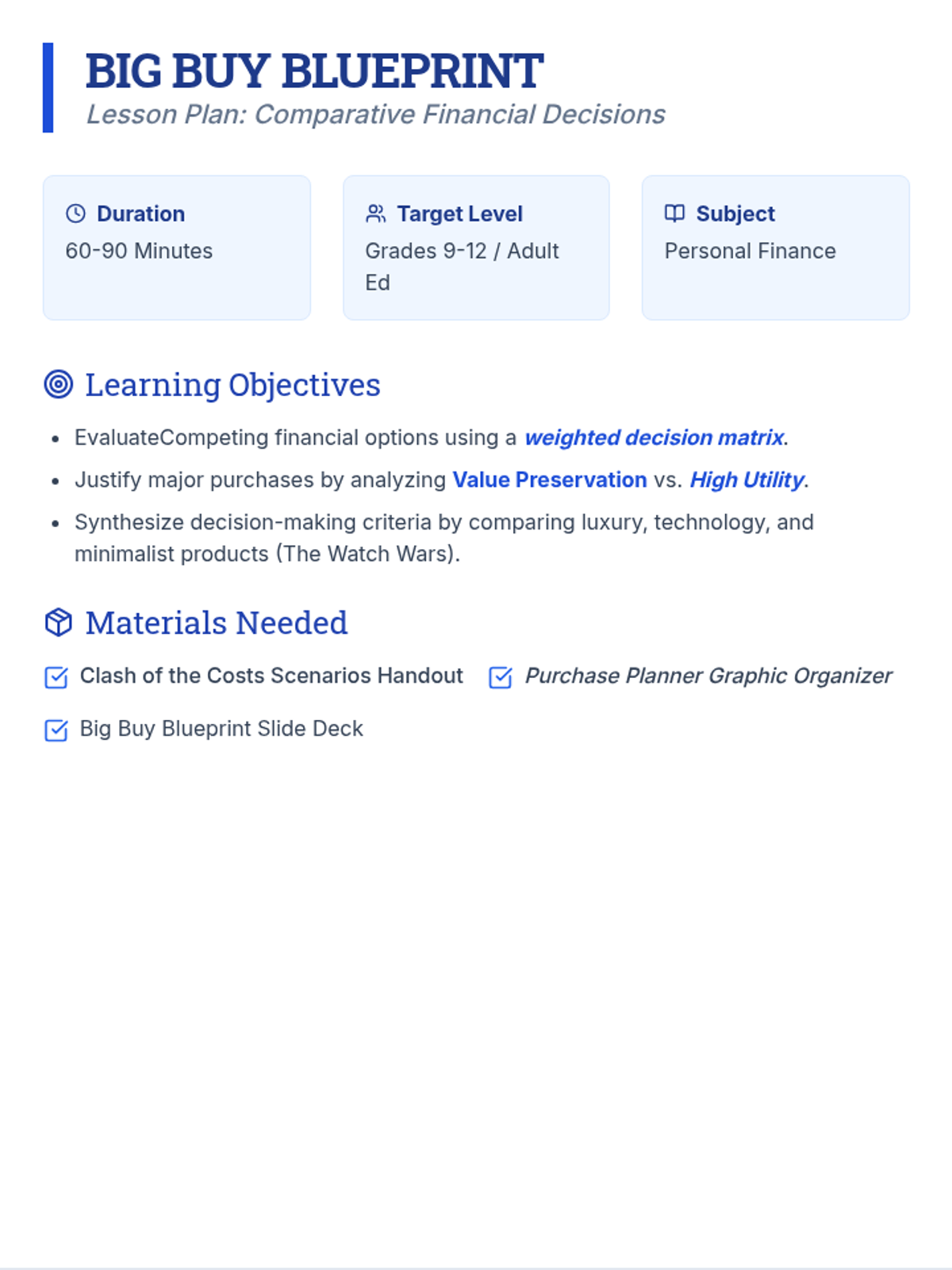
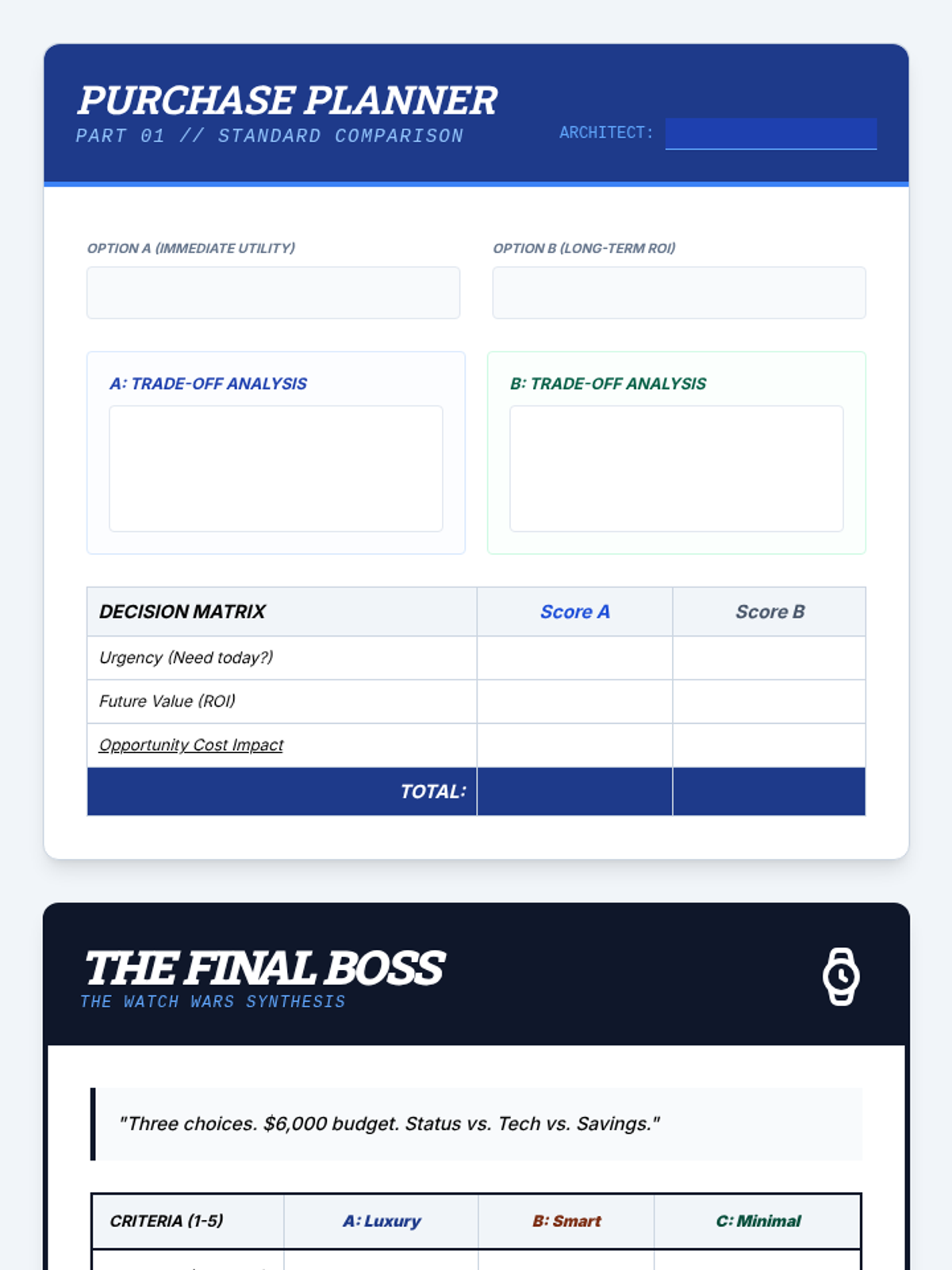
A comprehensive lesson on navigating significant financial decisions, comparing the immediate utility of large electronics with the long-term investment of higher education and vocational training. Students learn to use a structured decision-making process to evaluate needs, wants, and opportunity costs.
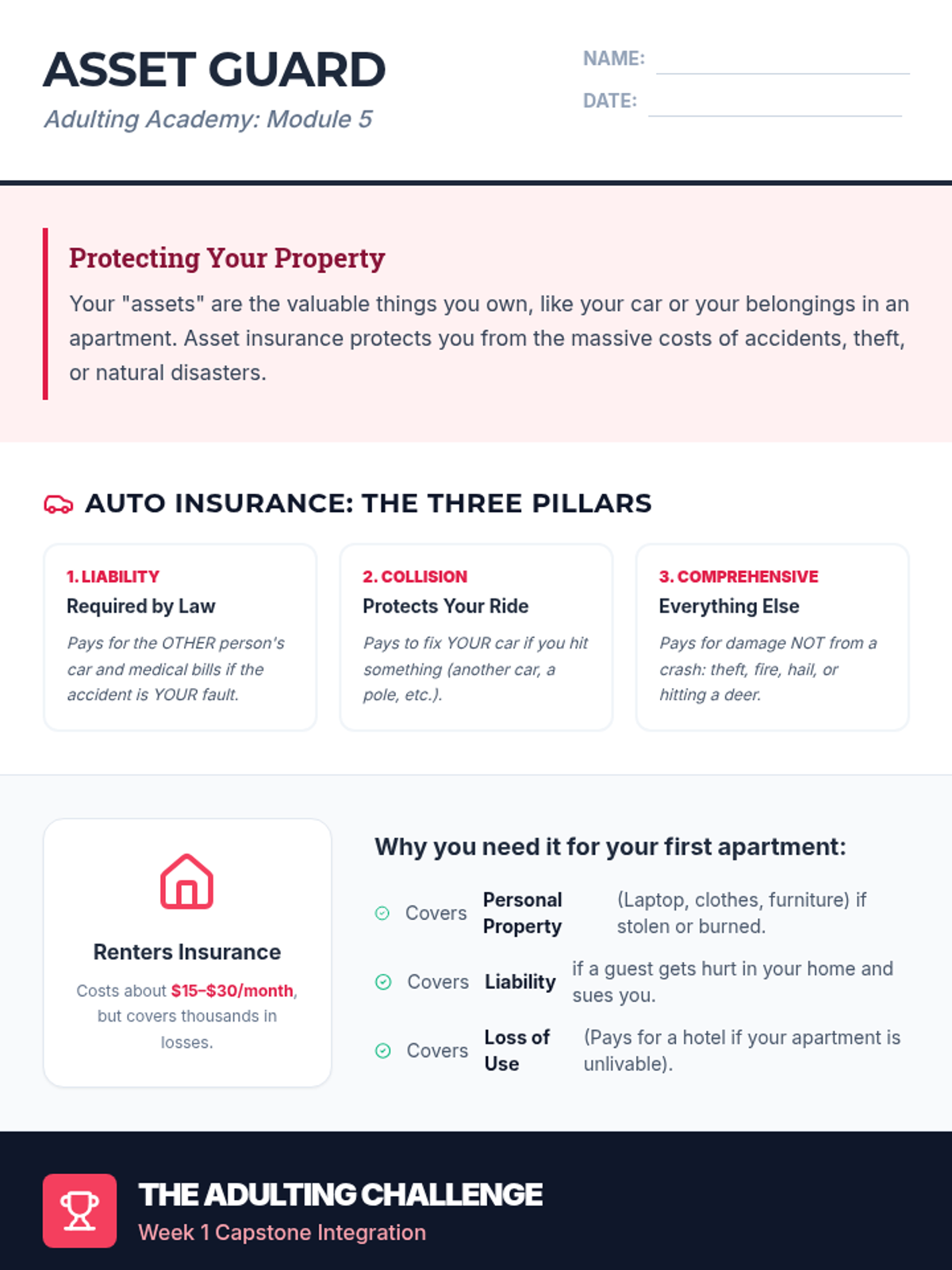
Protecting personal assets with auto and home insurance, and applying all skills to real-world scenarios.
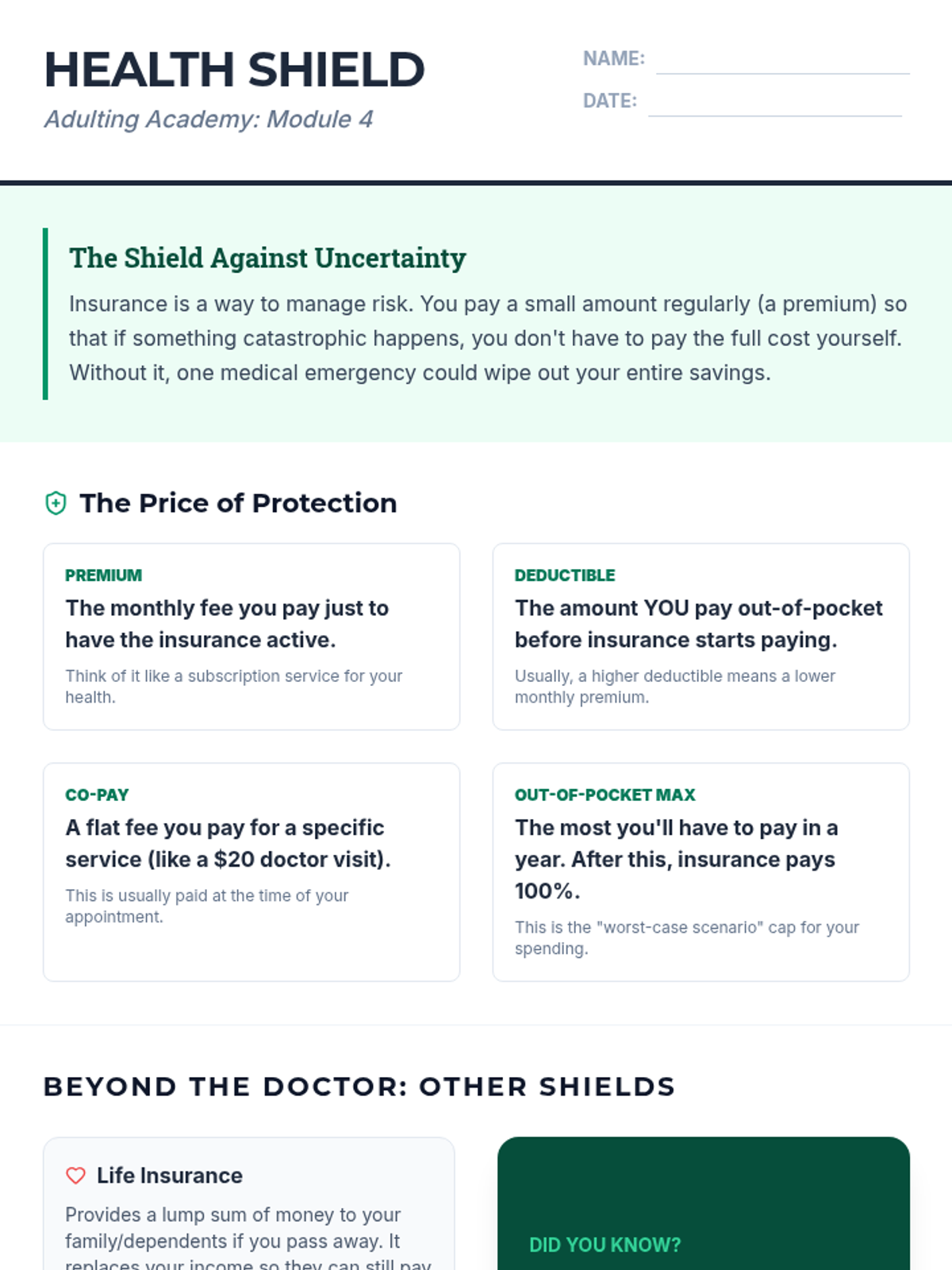
Understanding health, life, and disability insurance basics to protect physical and financial well-being.
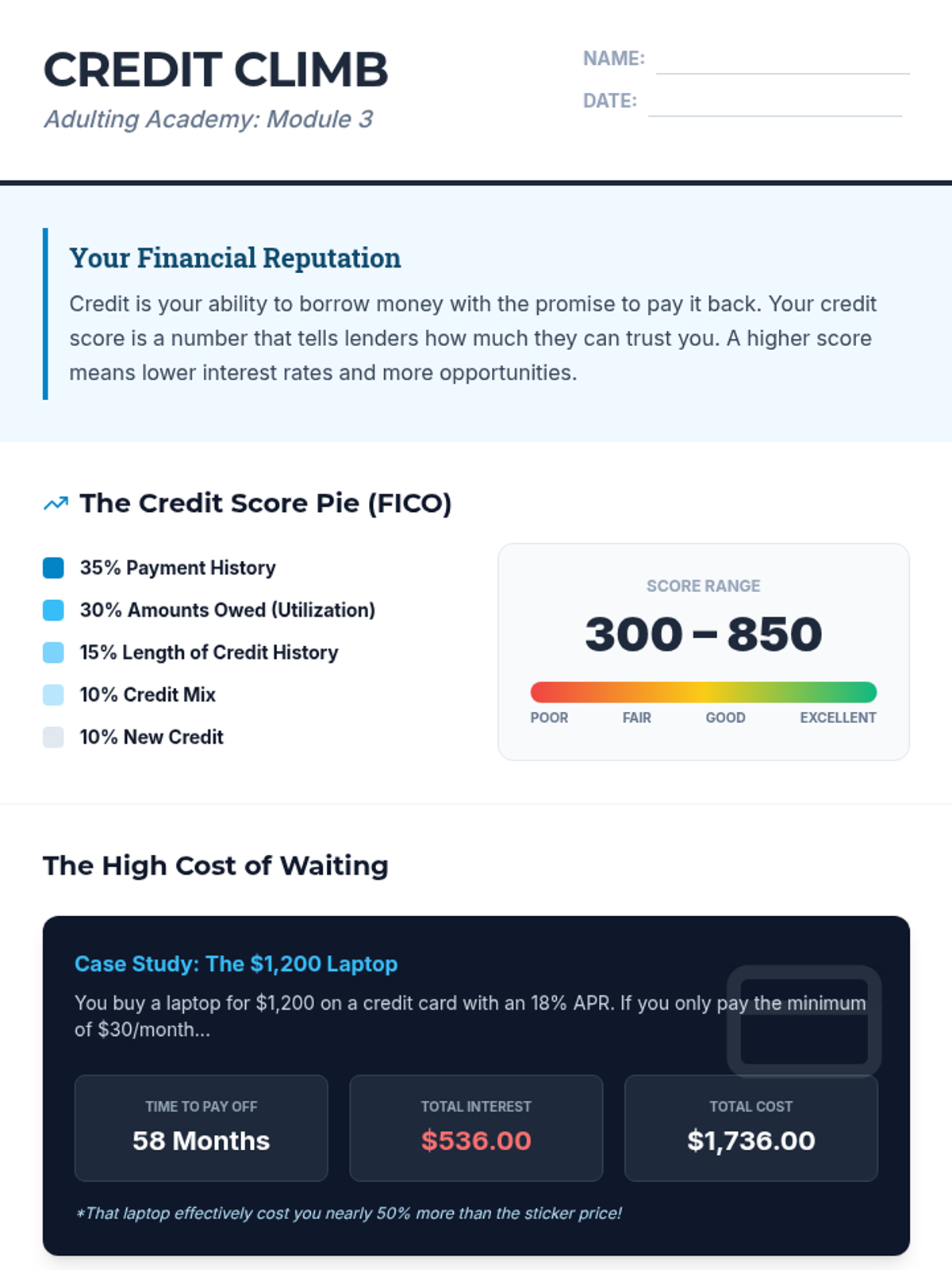
Exploring credit scores, interest rates, and responsible borrowing habits.
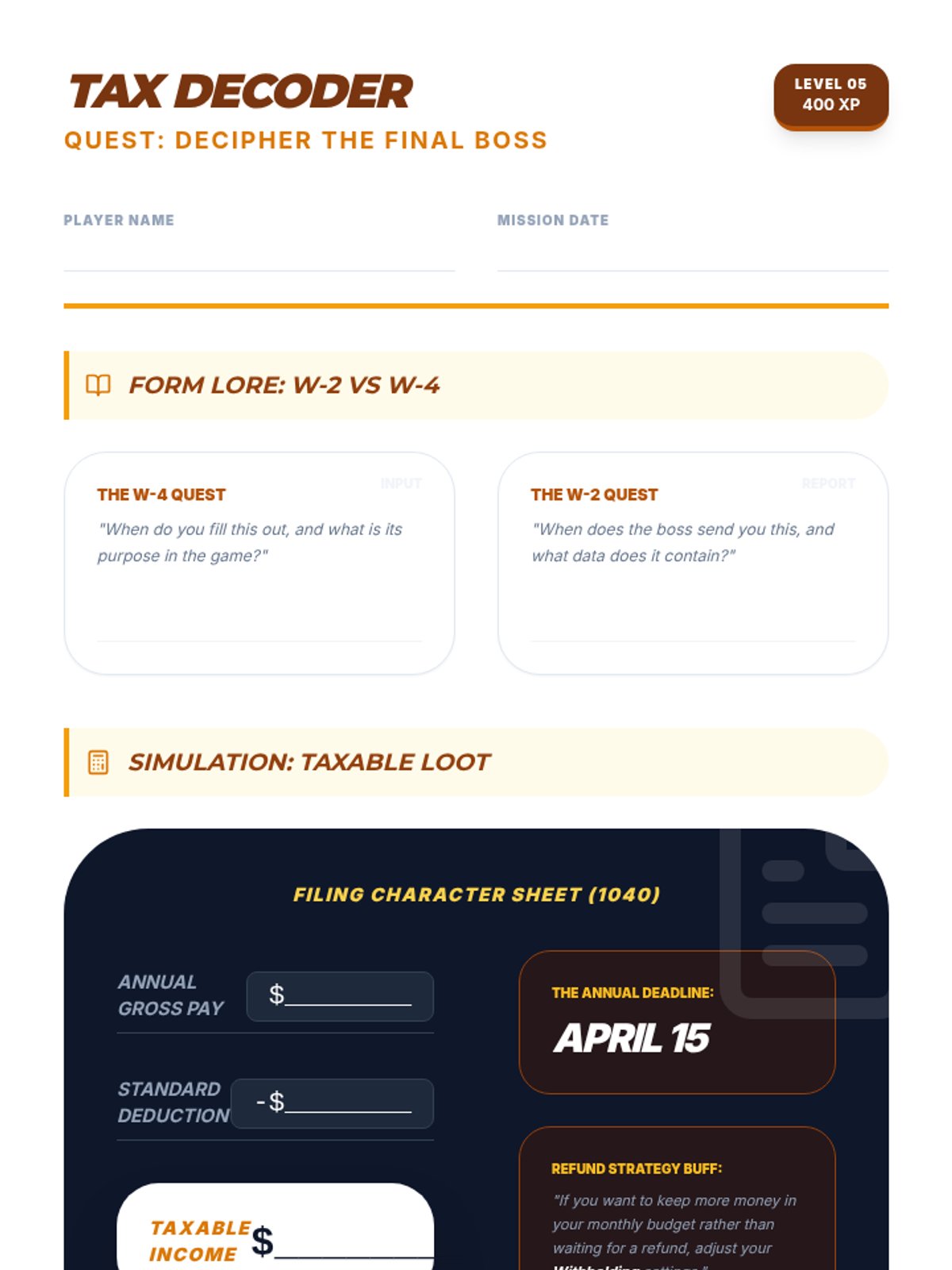
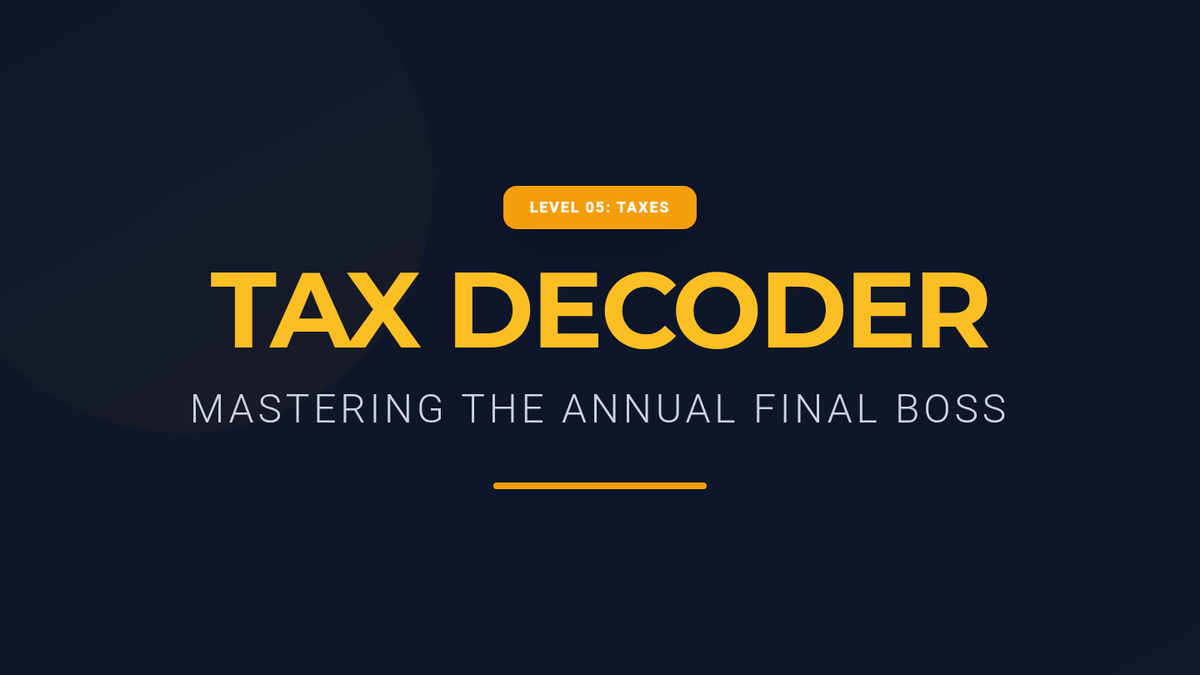
Decoding the paycheck, understanding tax forms, and where tax dollars go.
Foundational concepts of income, expenses, and creating a sustainable budget.
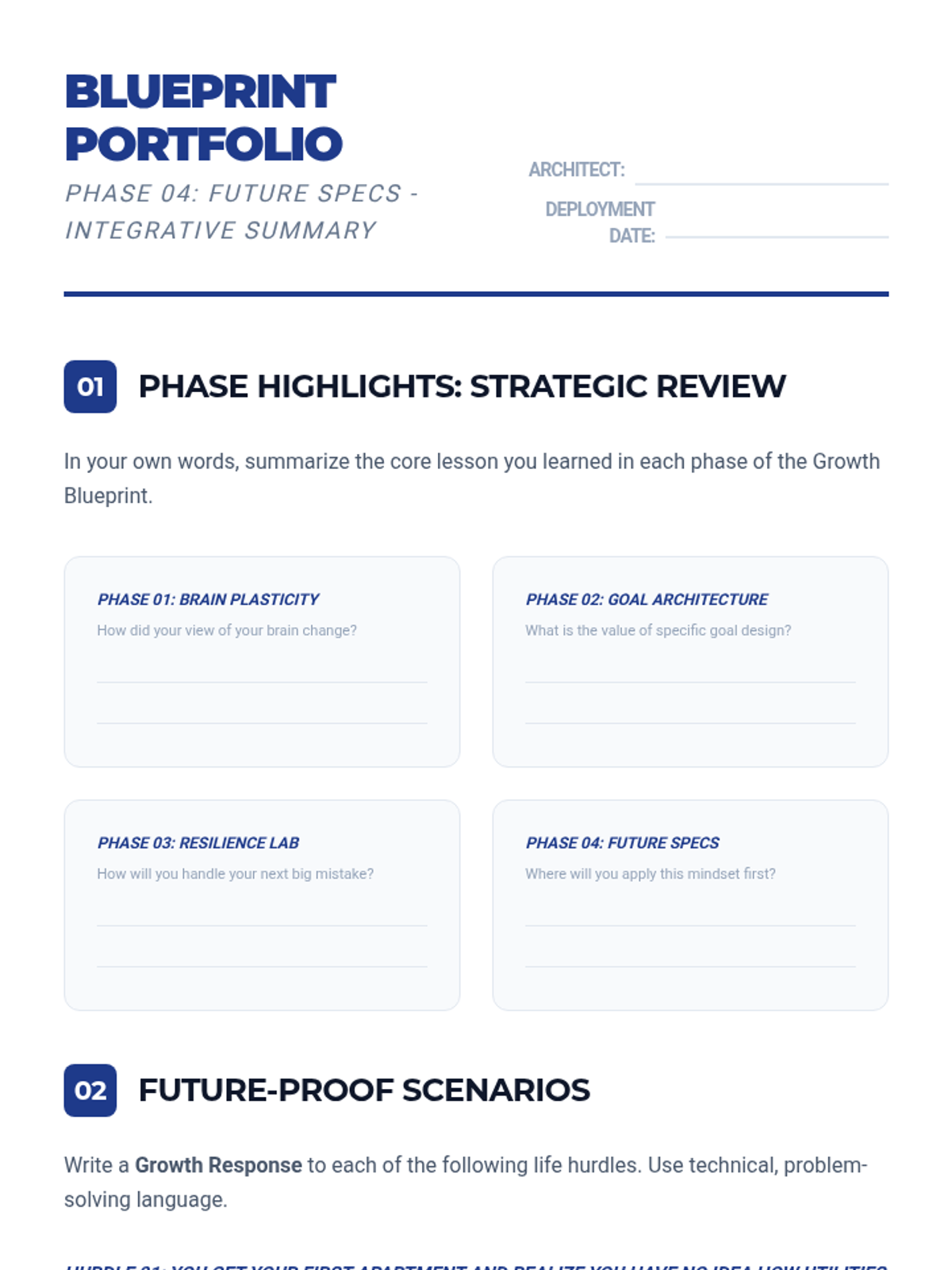
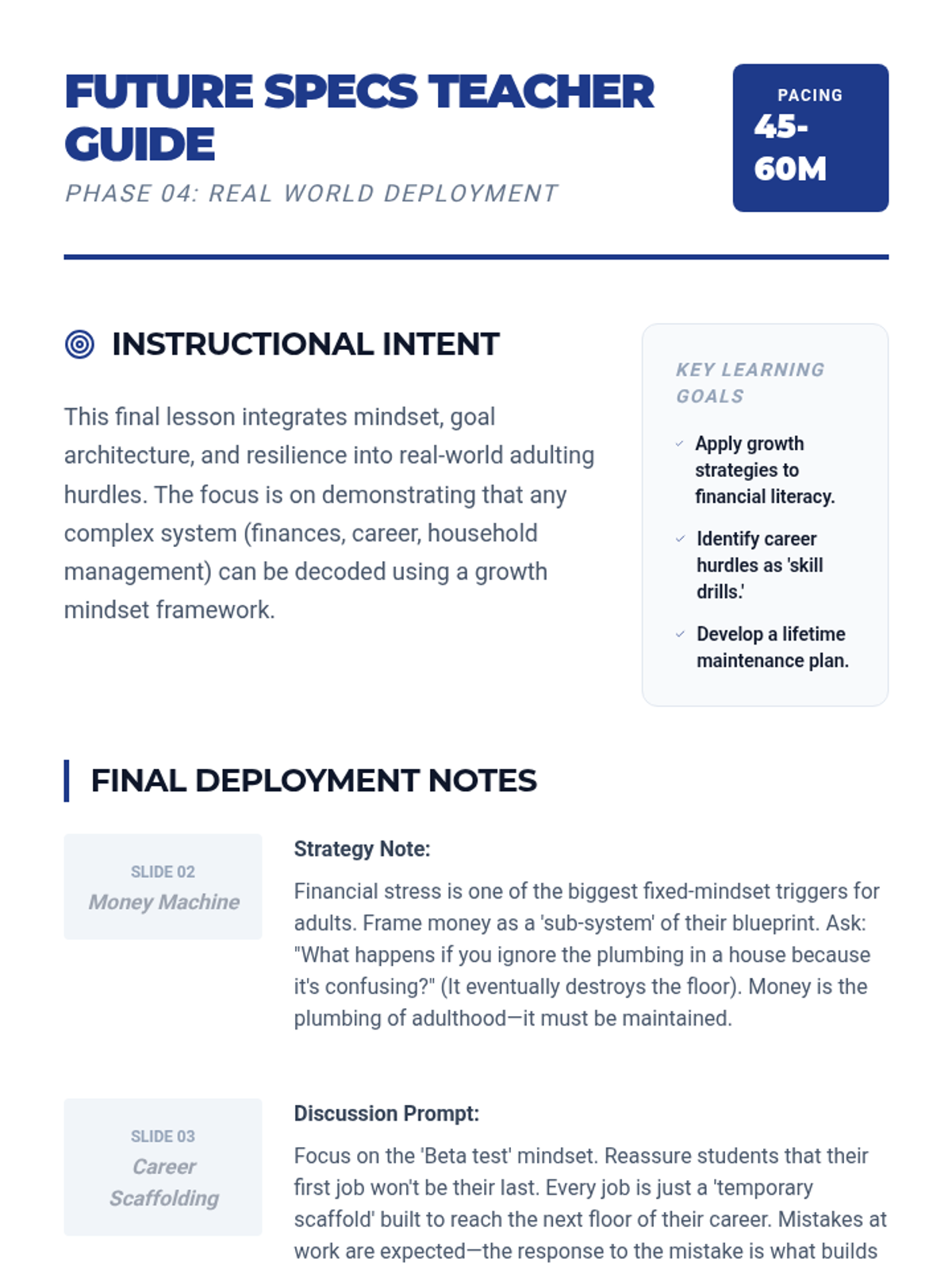
The final phase applies growth mindset and goal architecture to real-world life skills: financial management, professional communication, and career planning.
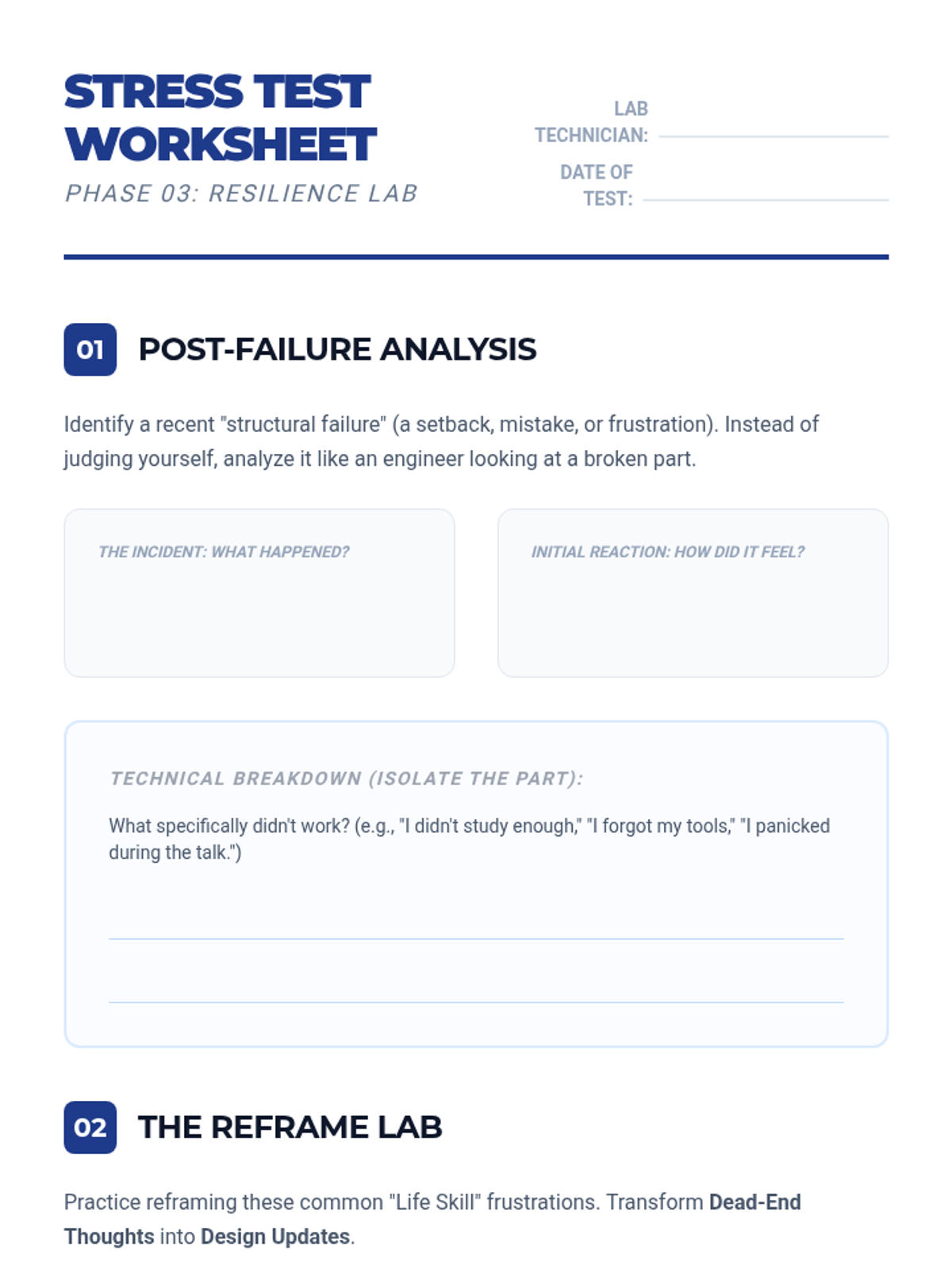
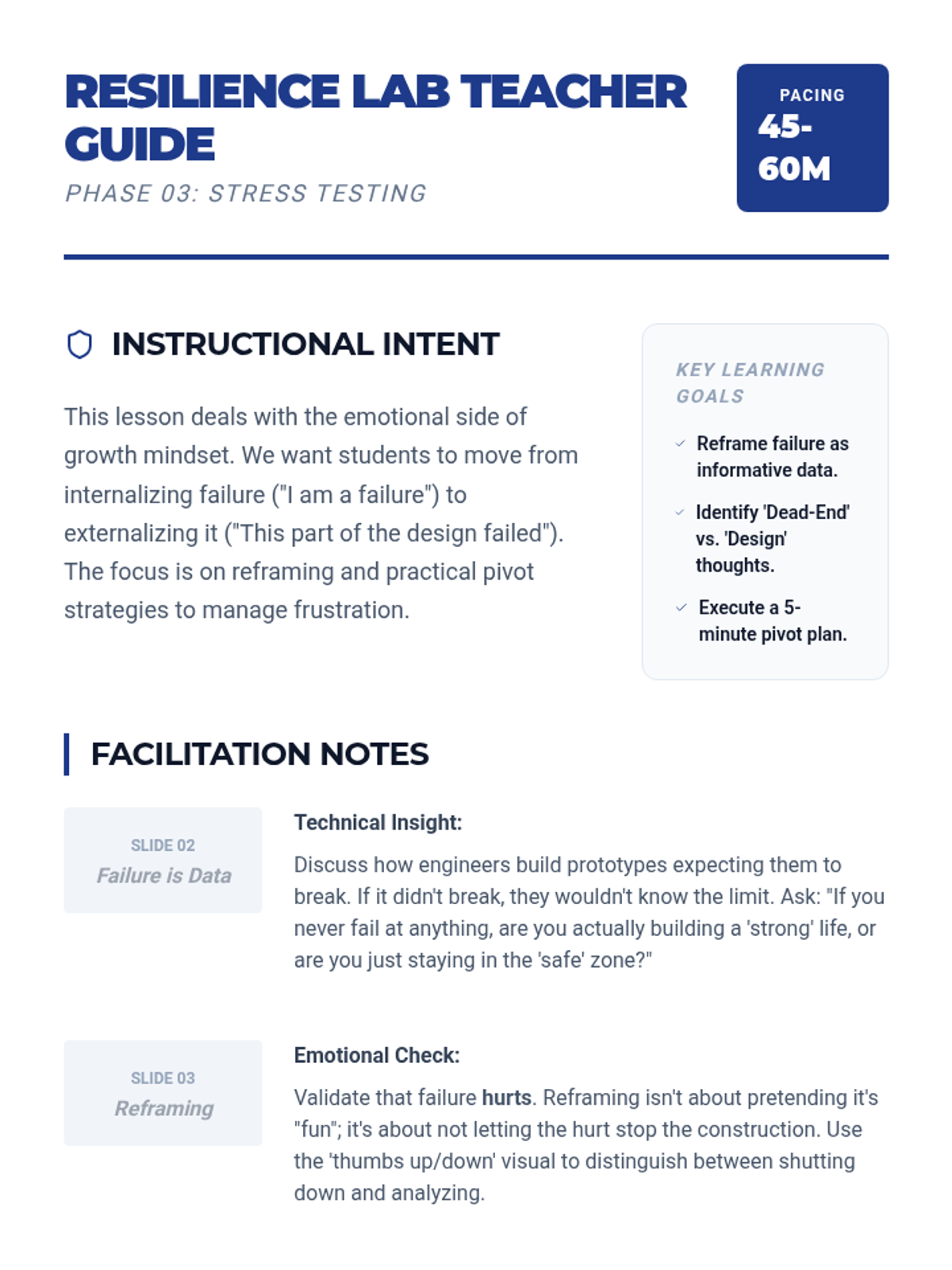
Students explore strategies for handling setbacks, reframing failure as data, and building emotional resilience through specific reframing techniques.
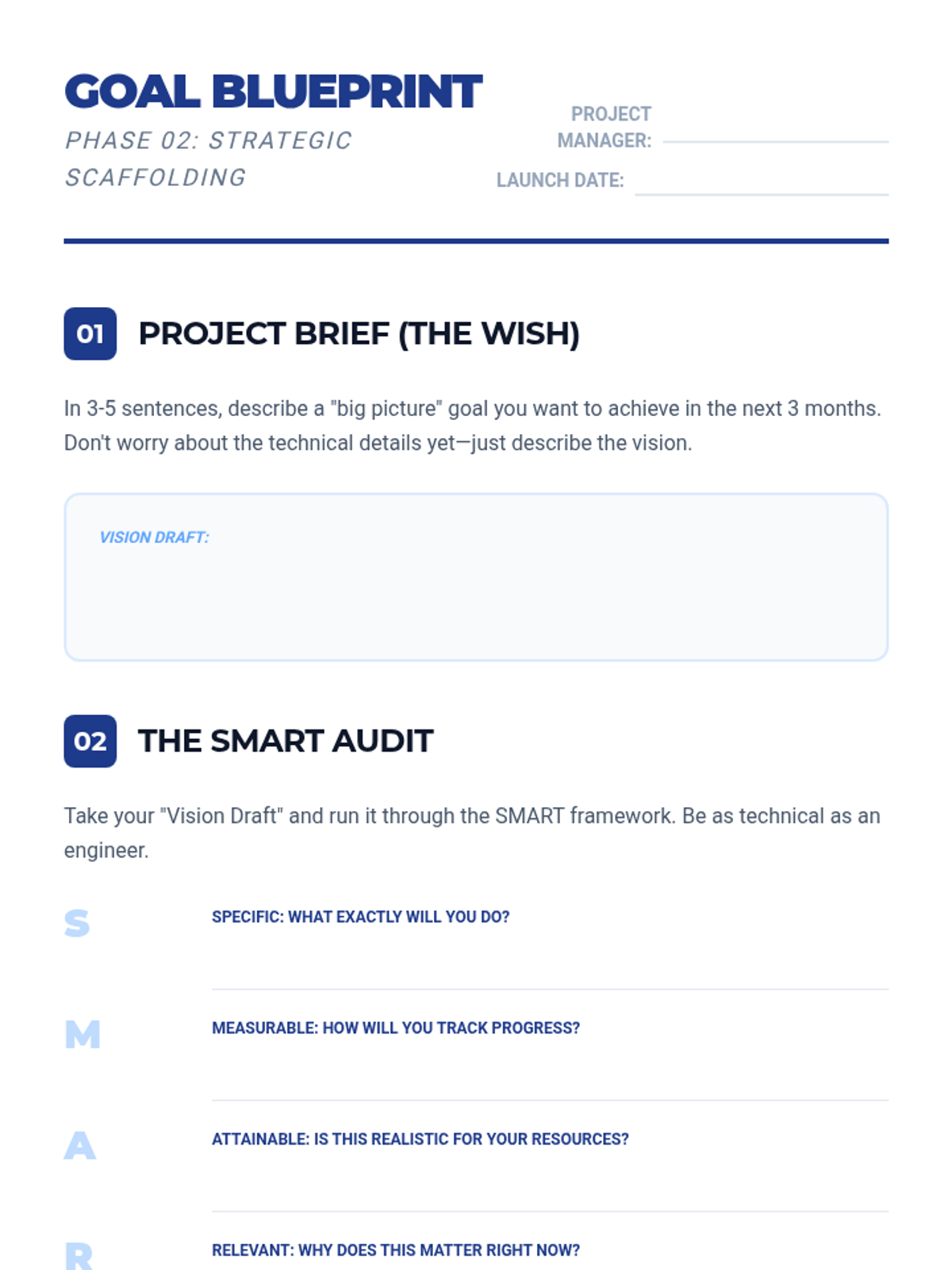
Students learn to transform abstract dreams into concrete, actionable goals using architectural frameworks for planning and milestone tracking.
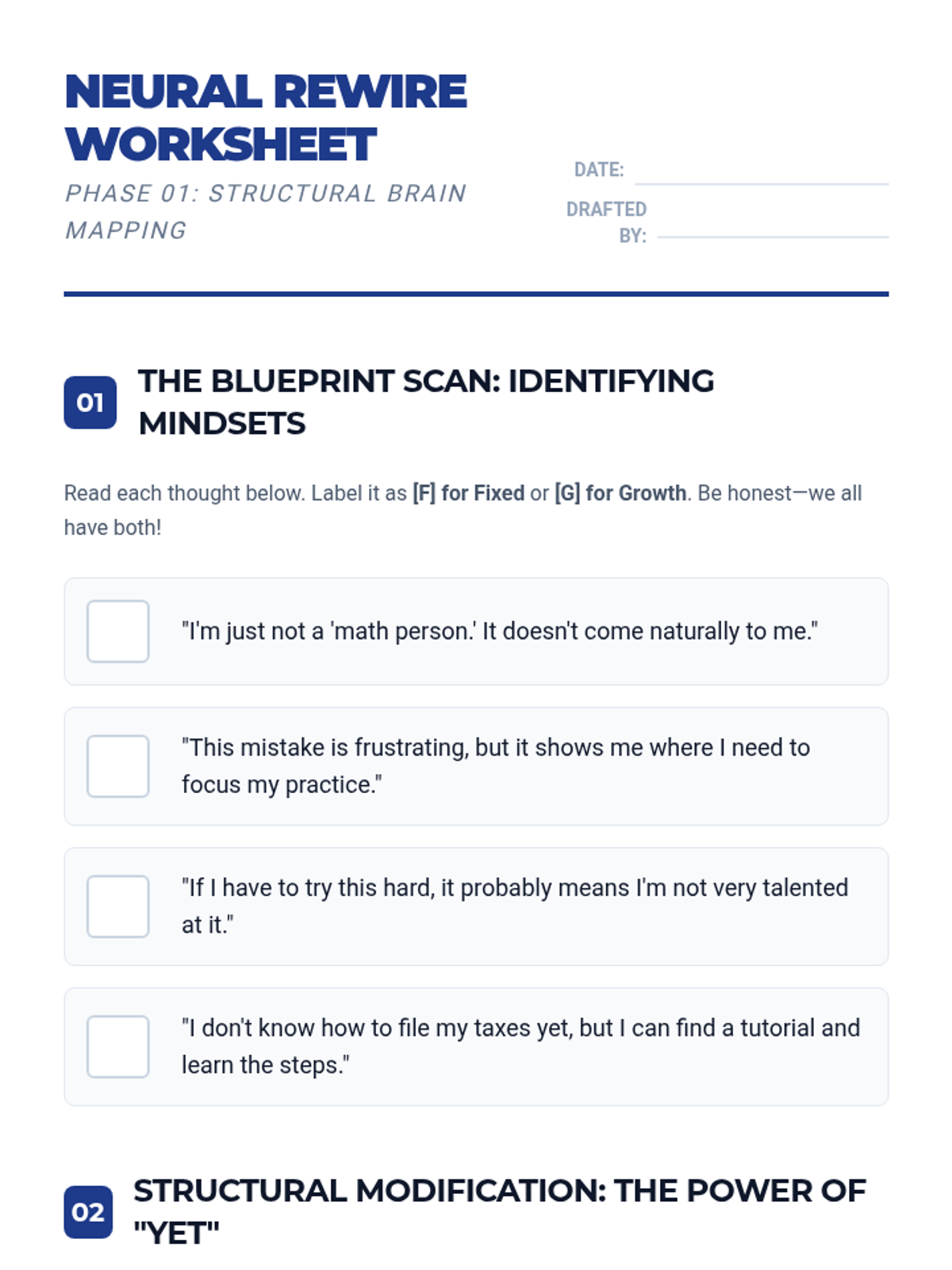
Students explore the science of neuroplasticity and the fundamental difference between fixed and growth mindsets, learning how the brain physically changes with effort.
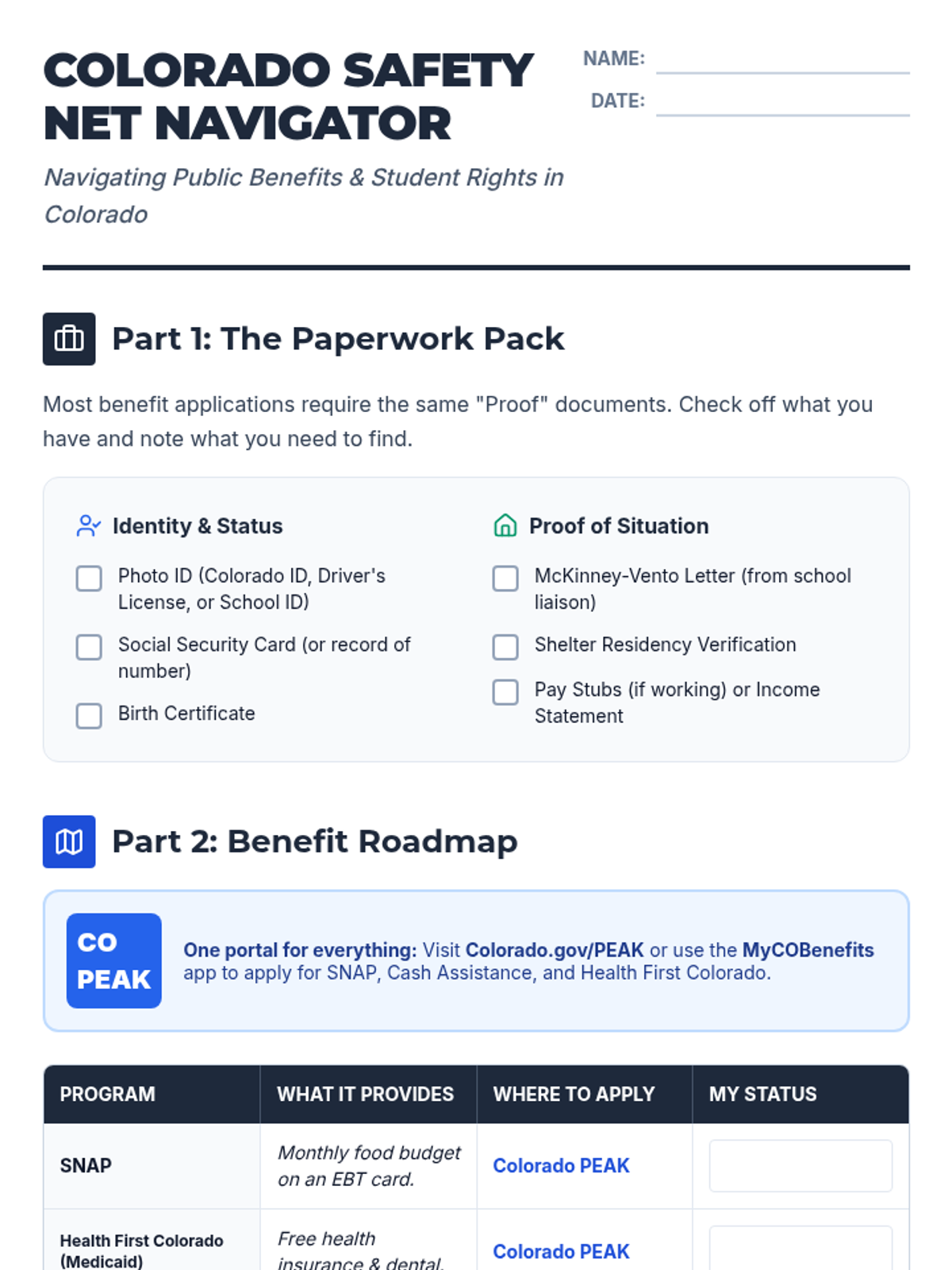
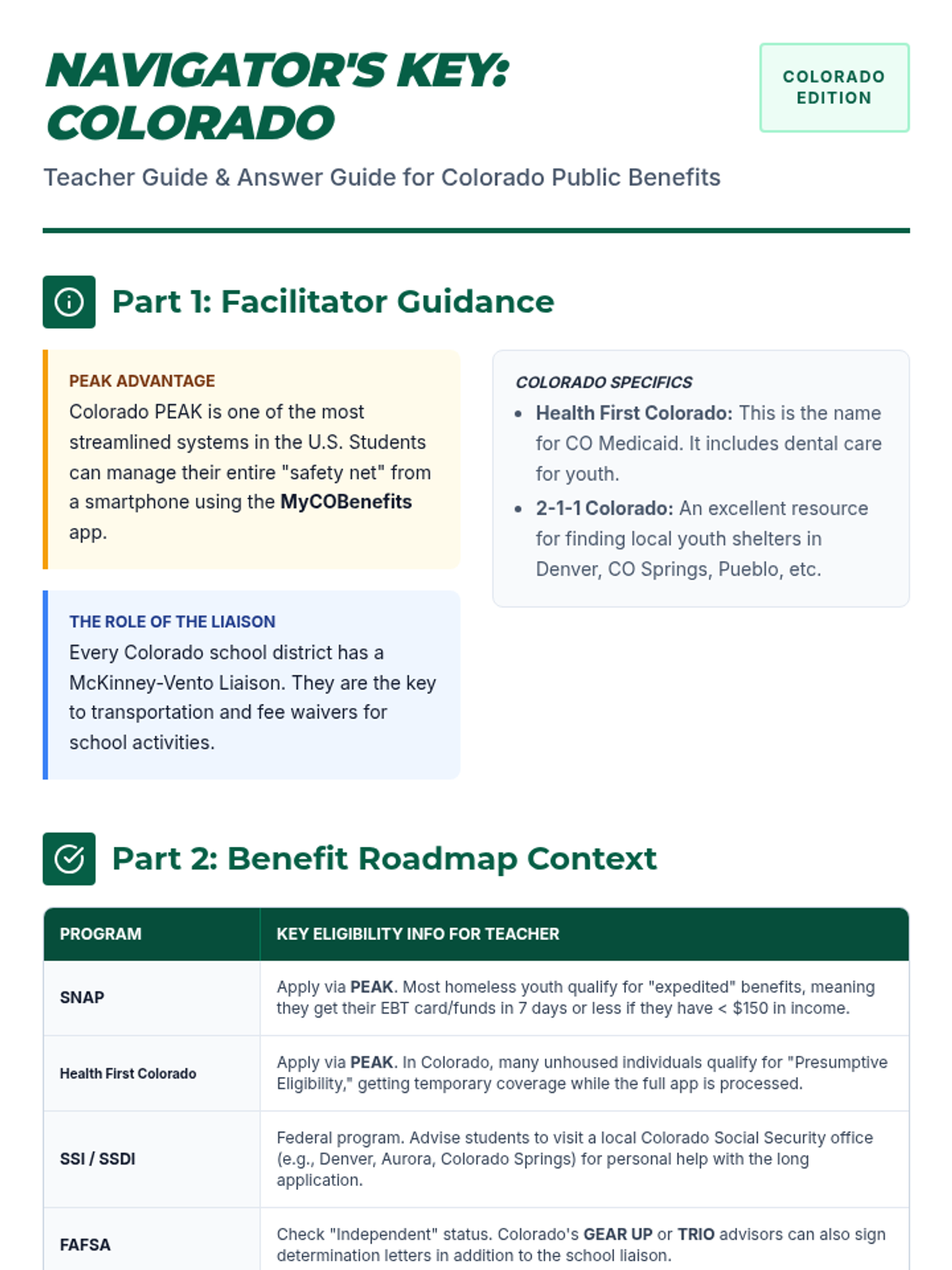
A comprehensive lesson designed to help homeless high school students navigate complex public benefit systems, understand their rights under McKinney-Vento, and manage the documentation required for stability and post-secondary success.
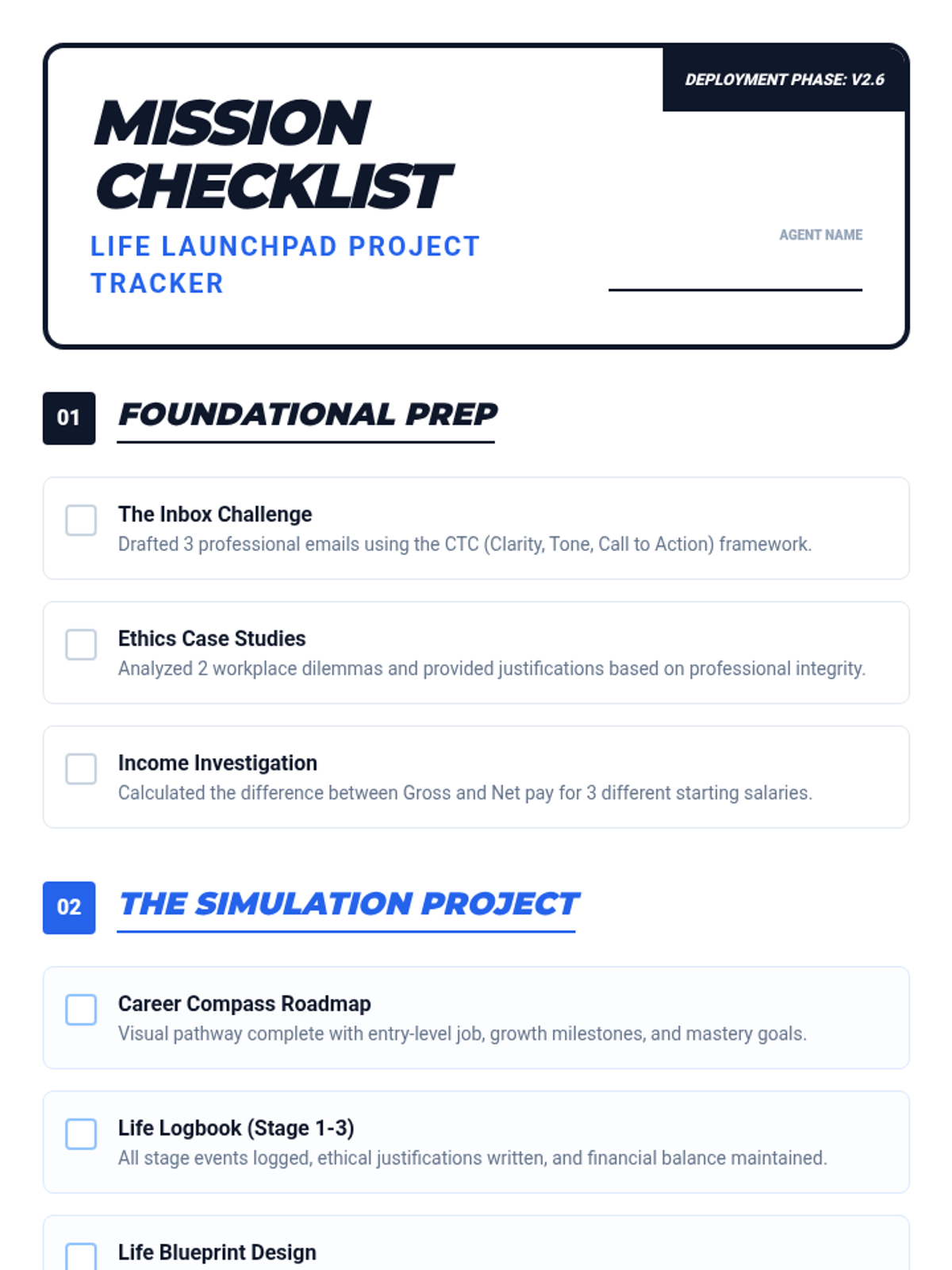
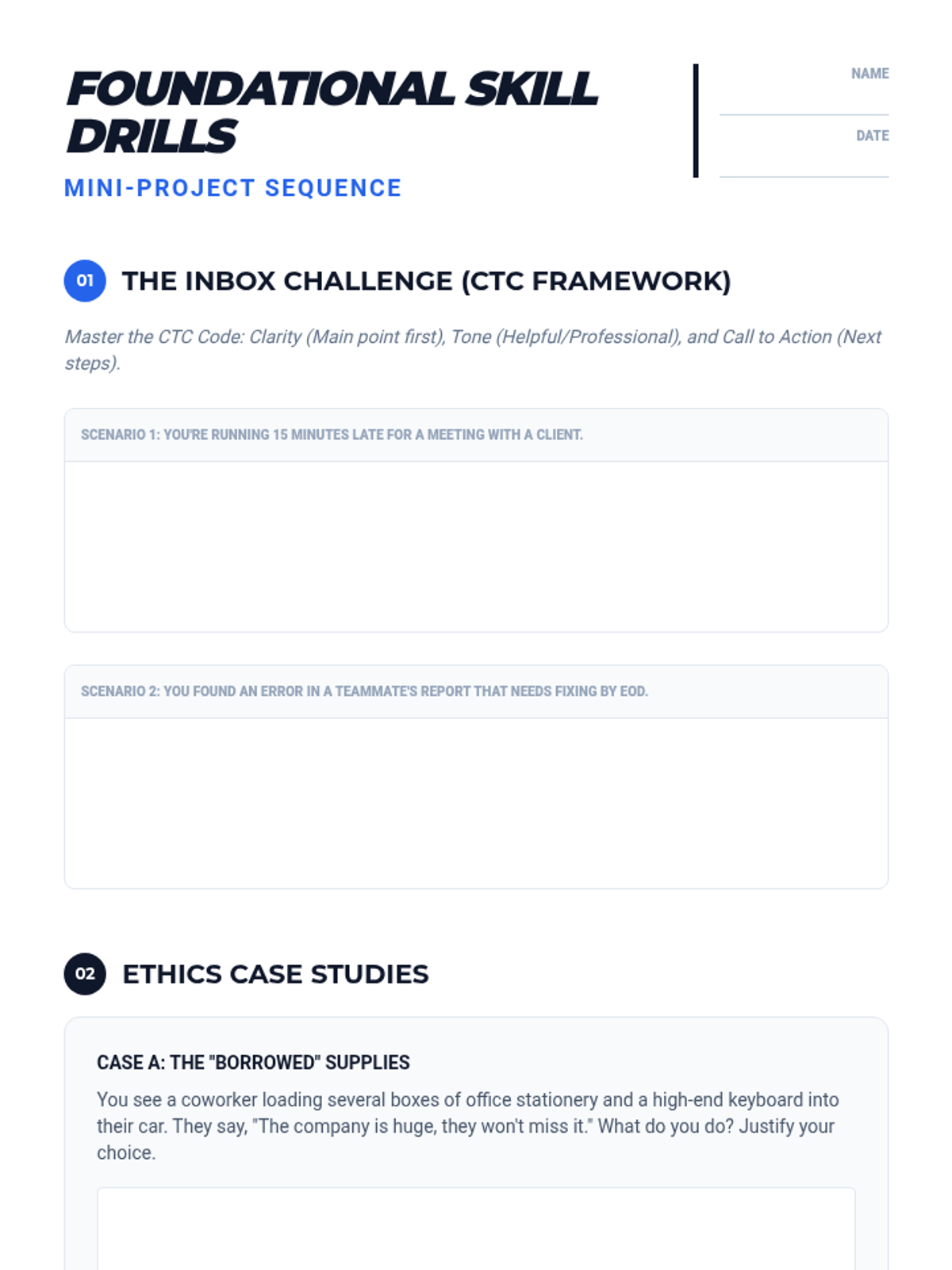
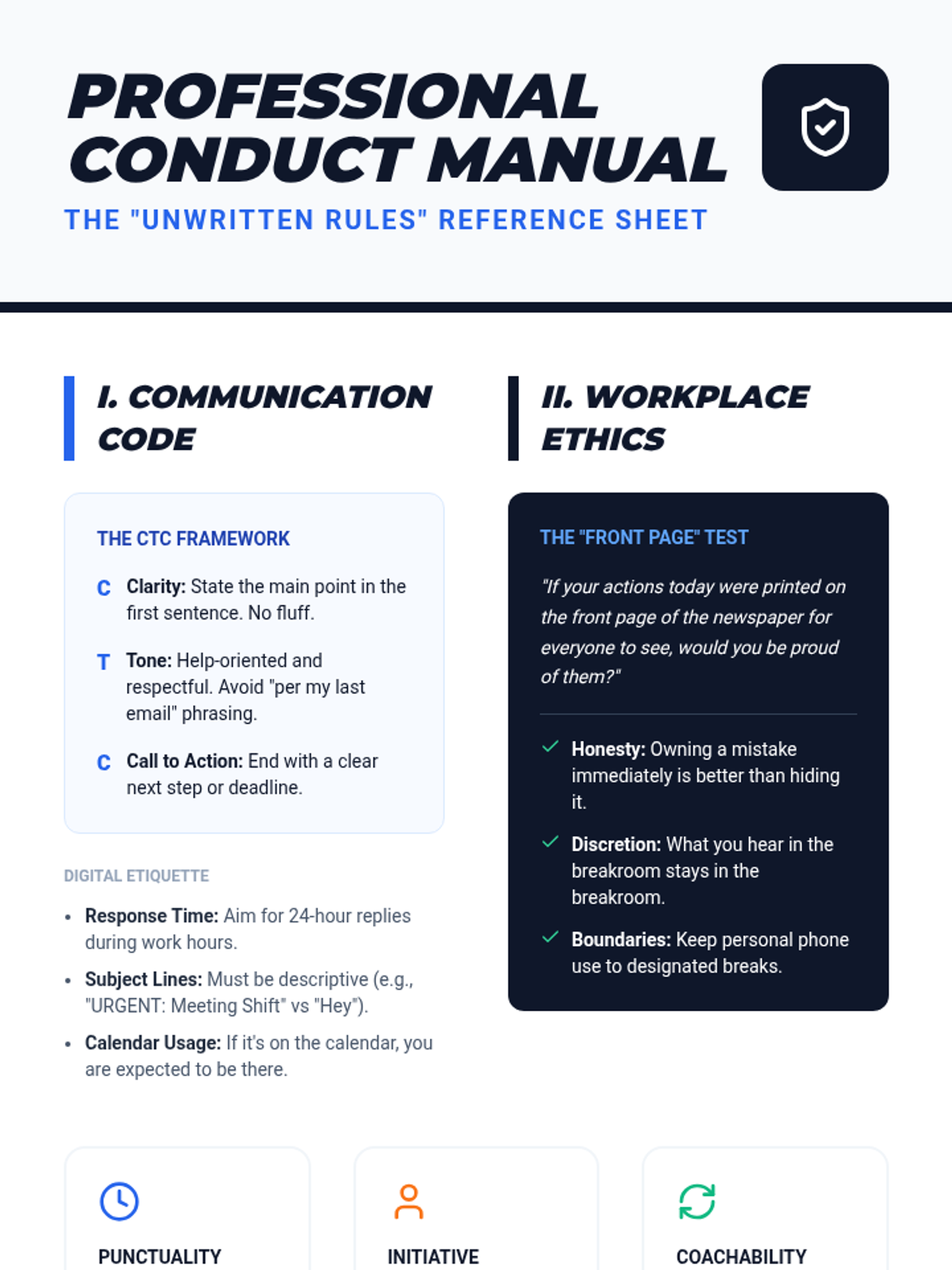
A preparatory lesson focused on mastering the foundational skills of workplace ethics, professional communication, and financial literacy before beginning the full-scale simulation.
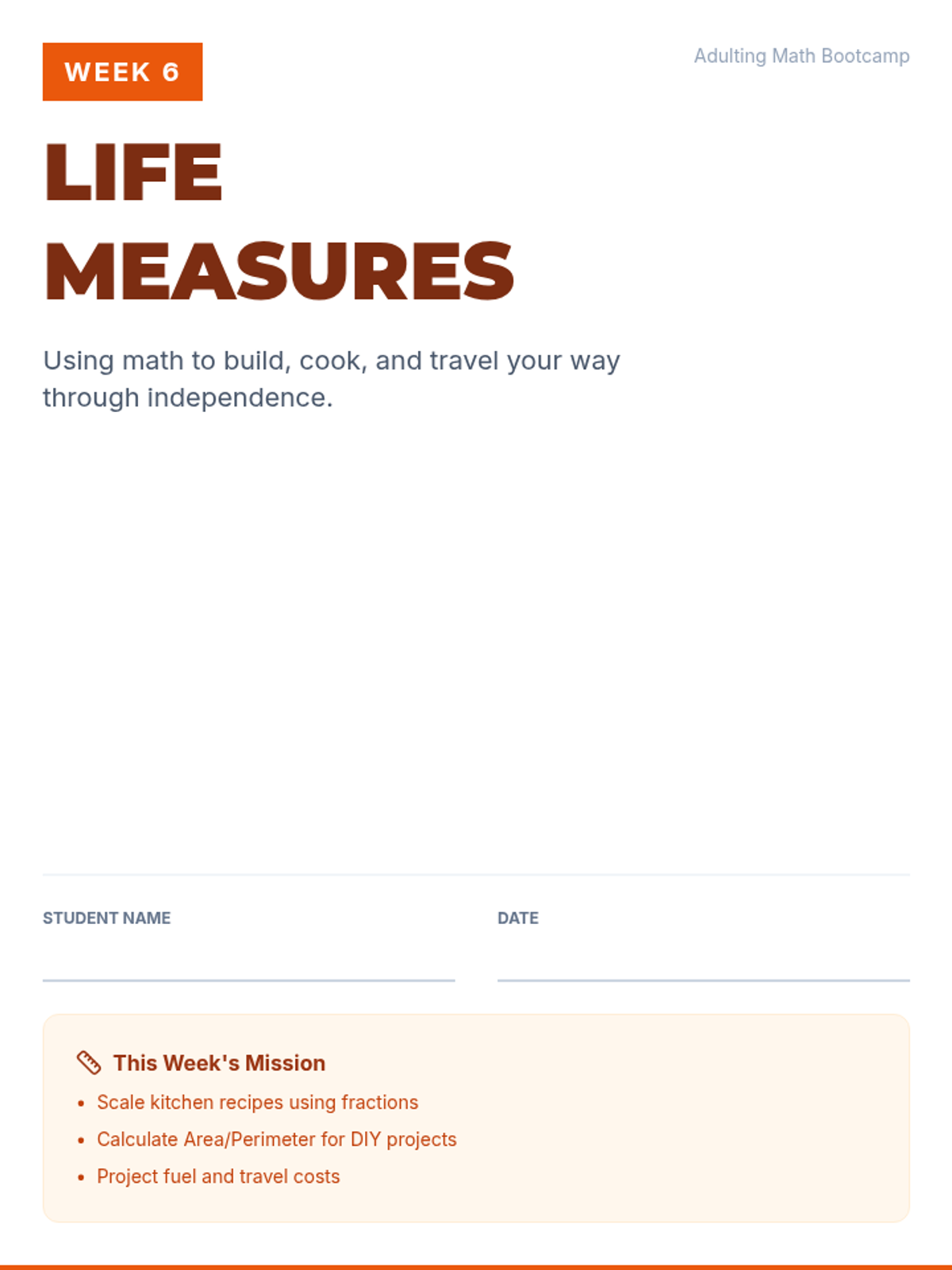
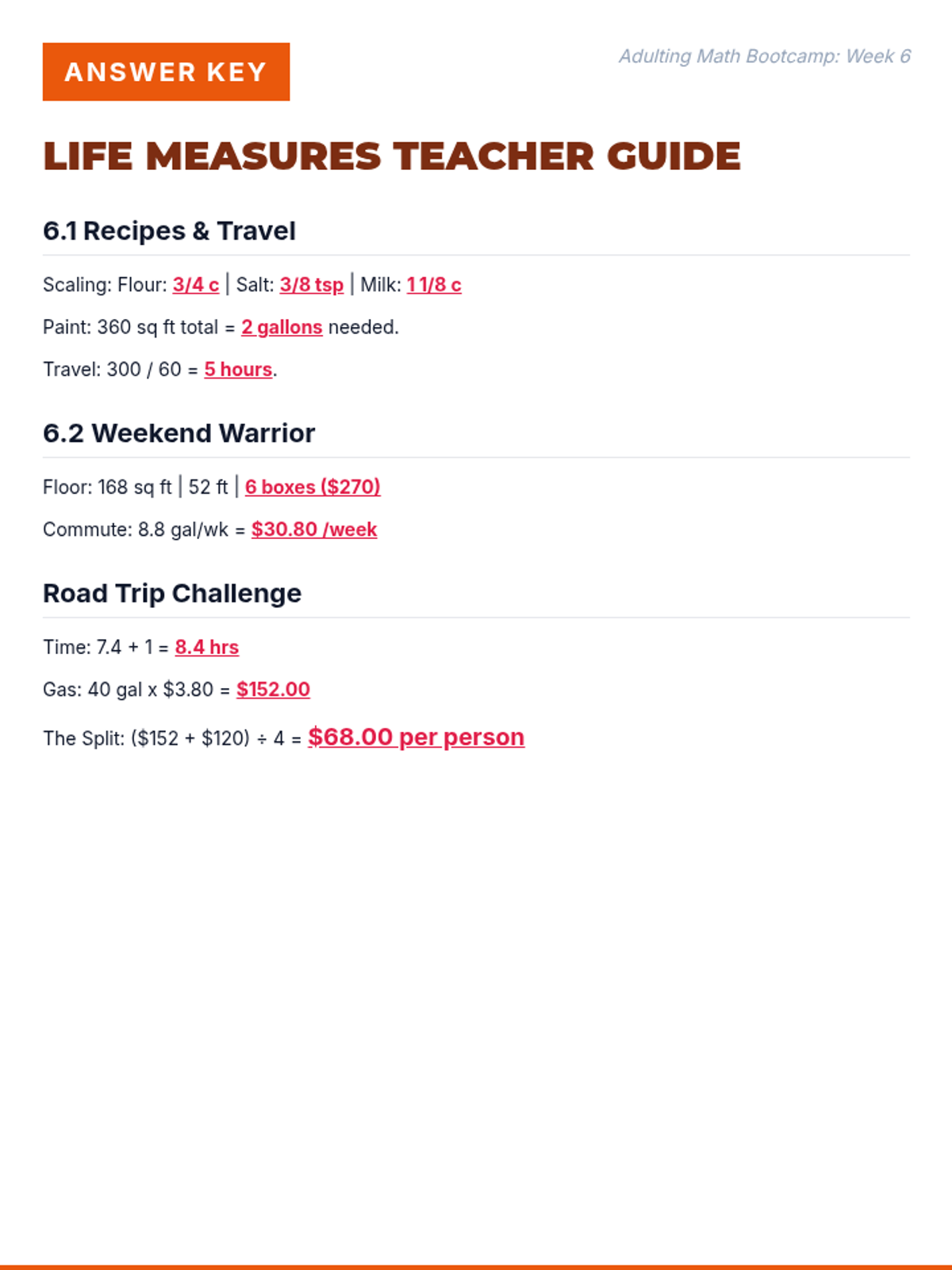
Applies geometry and arithmetic to everyday tasks like cooking measurements, home DIY projects, and travel planning.
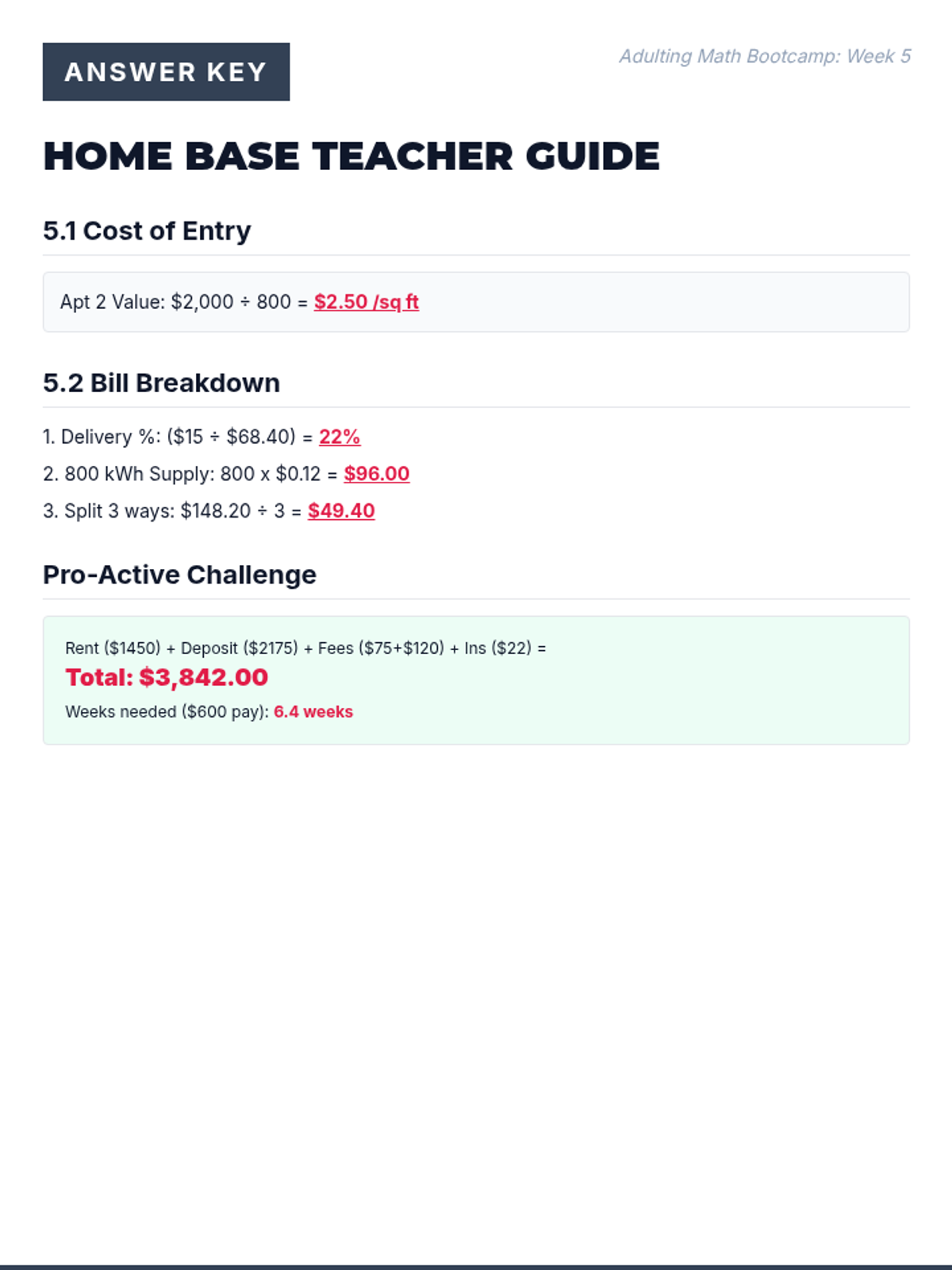
Covers the financial aspects of independent living, including renting, utility usage math, and basic insurance concepts.
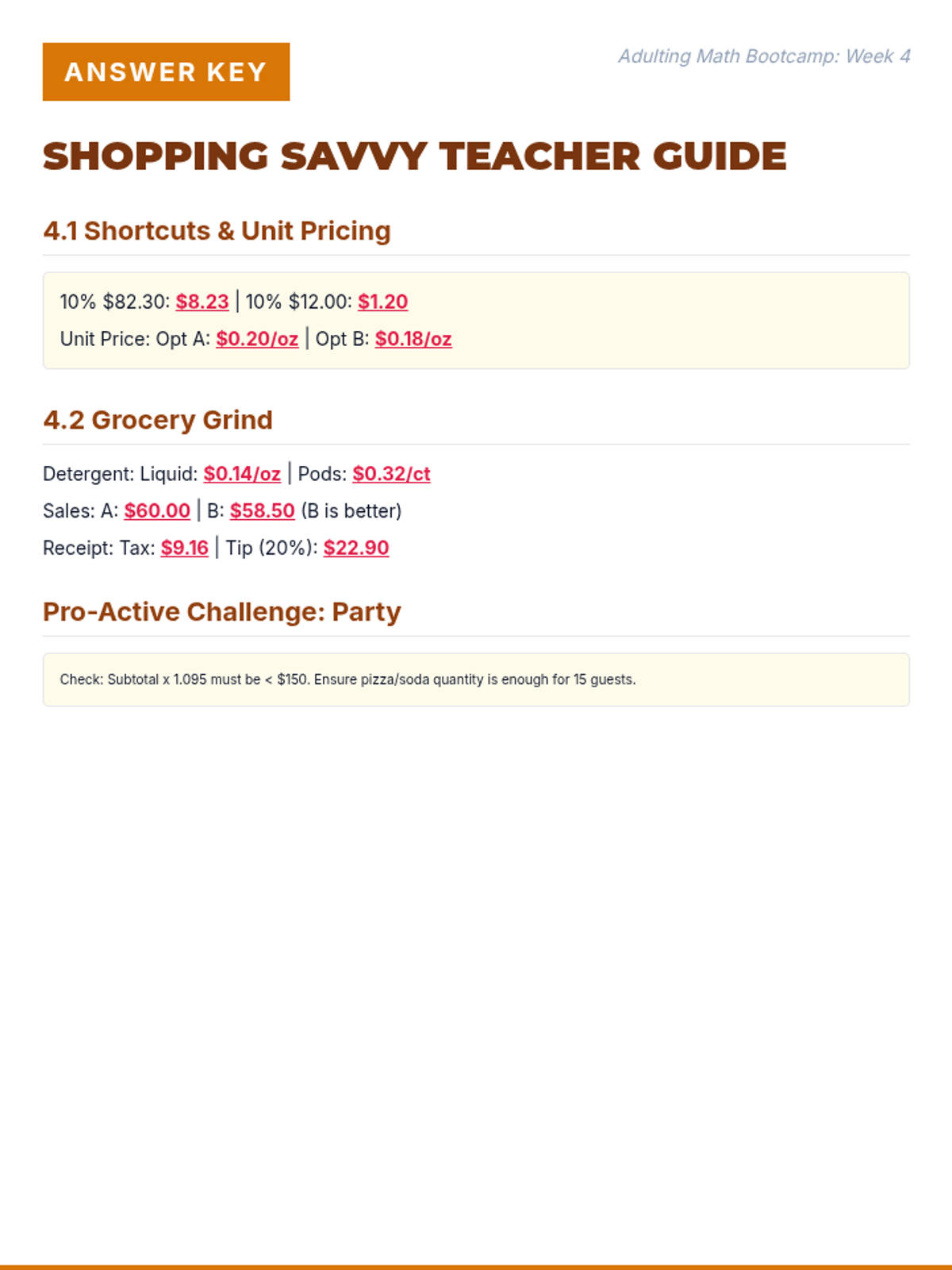
Practical applications of percentages and ratios in shopping, including sales tax, discounts, tips, and unit price comparisons.
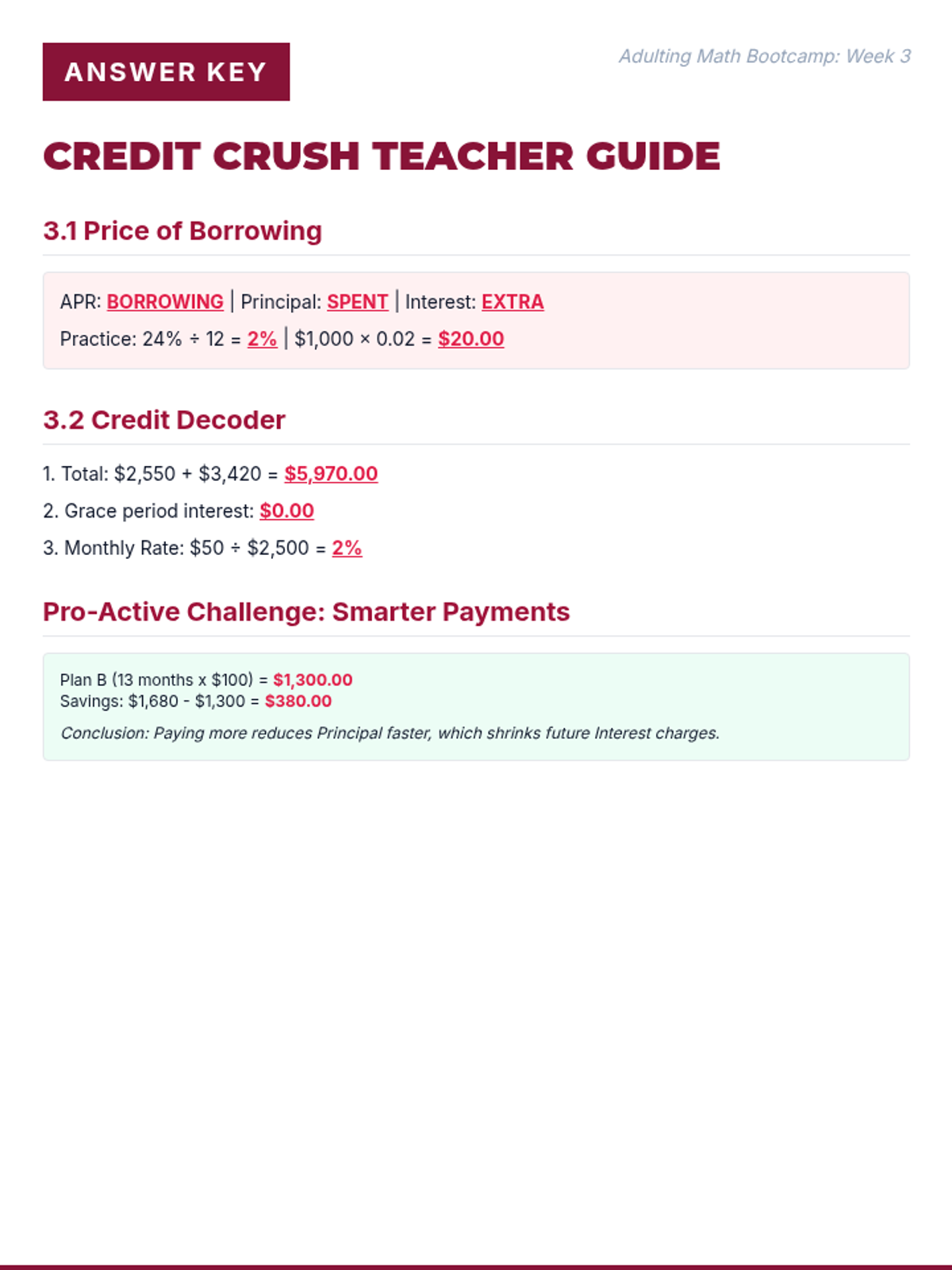
Explores the math behind interest rates (APR), credit card statements, and the long-term impact of debt.
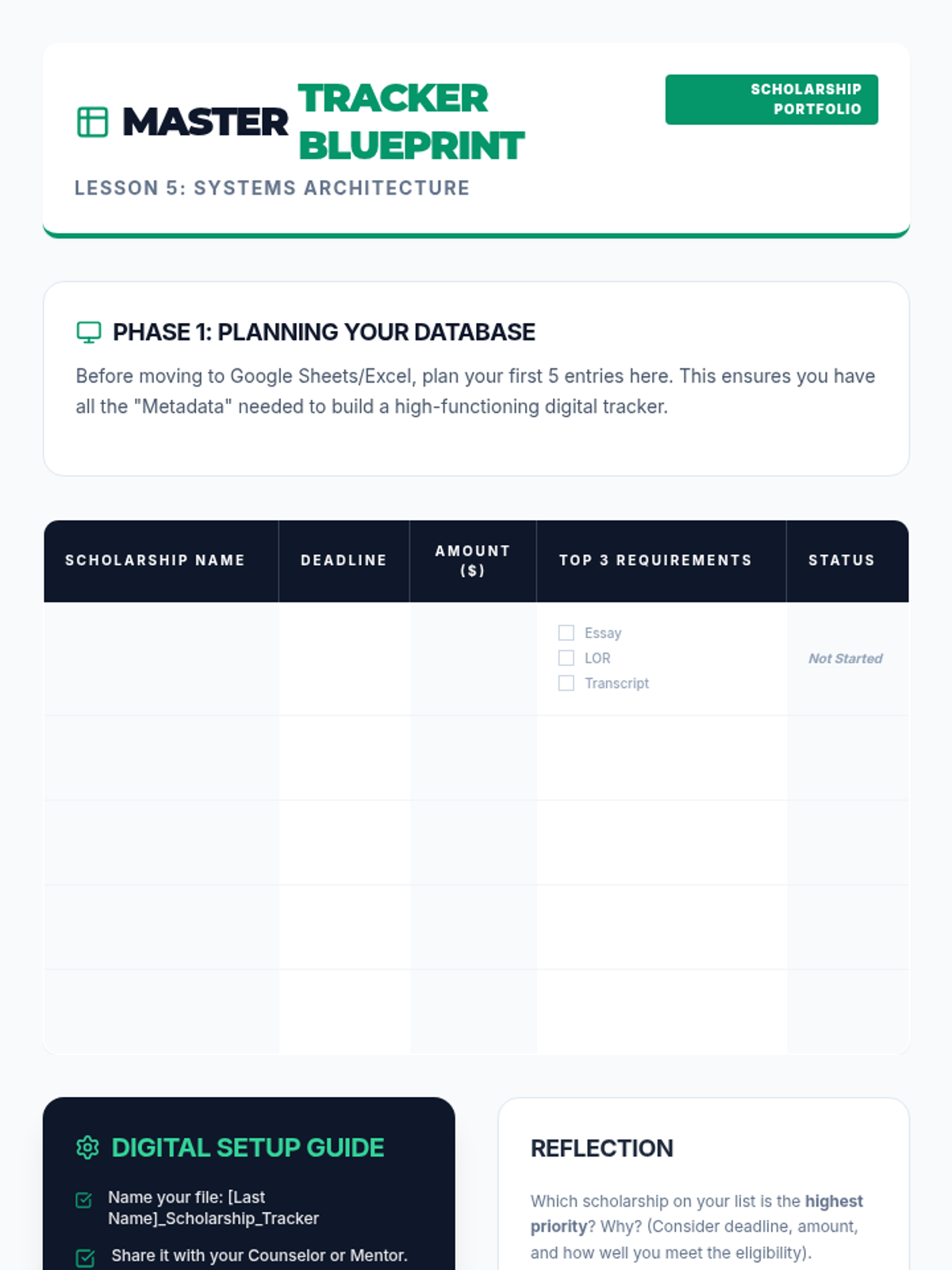
Students build a personal scholarship tracking system to organize deadlines, requirements, and application statuses.
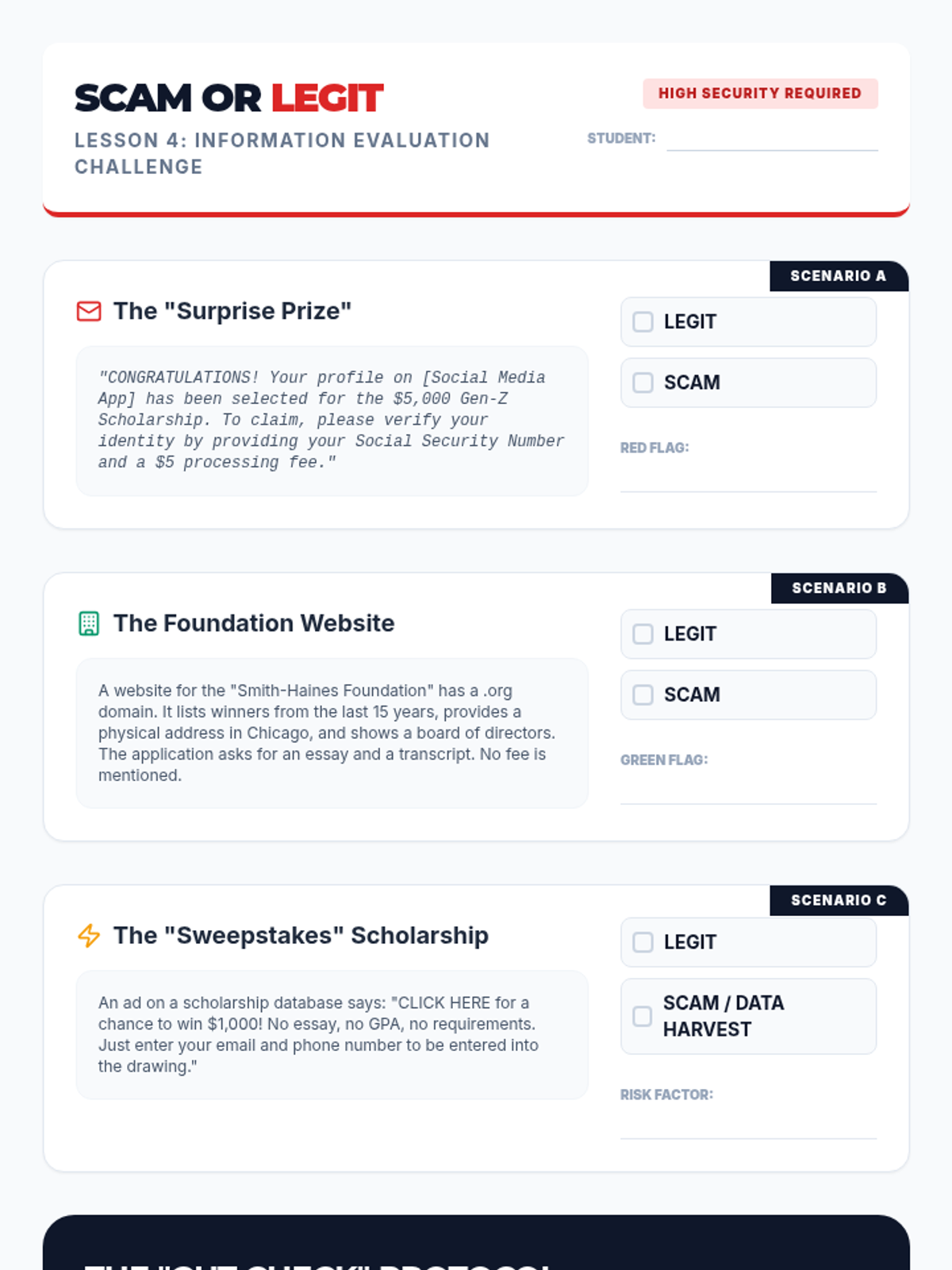
Students develop the critical thinking skills to identify scholarship scams and predatory financial aid practices.
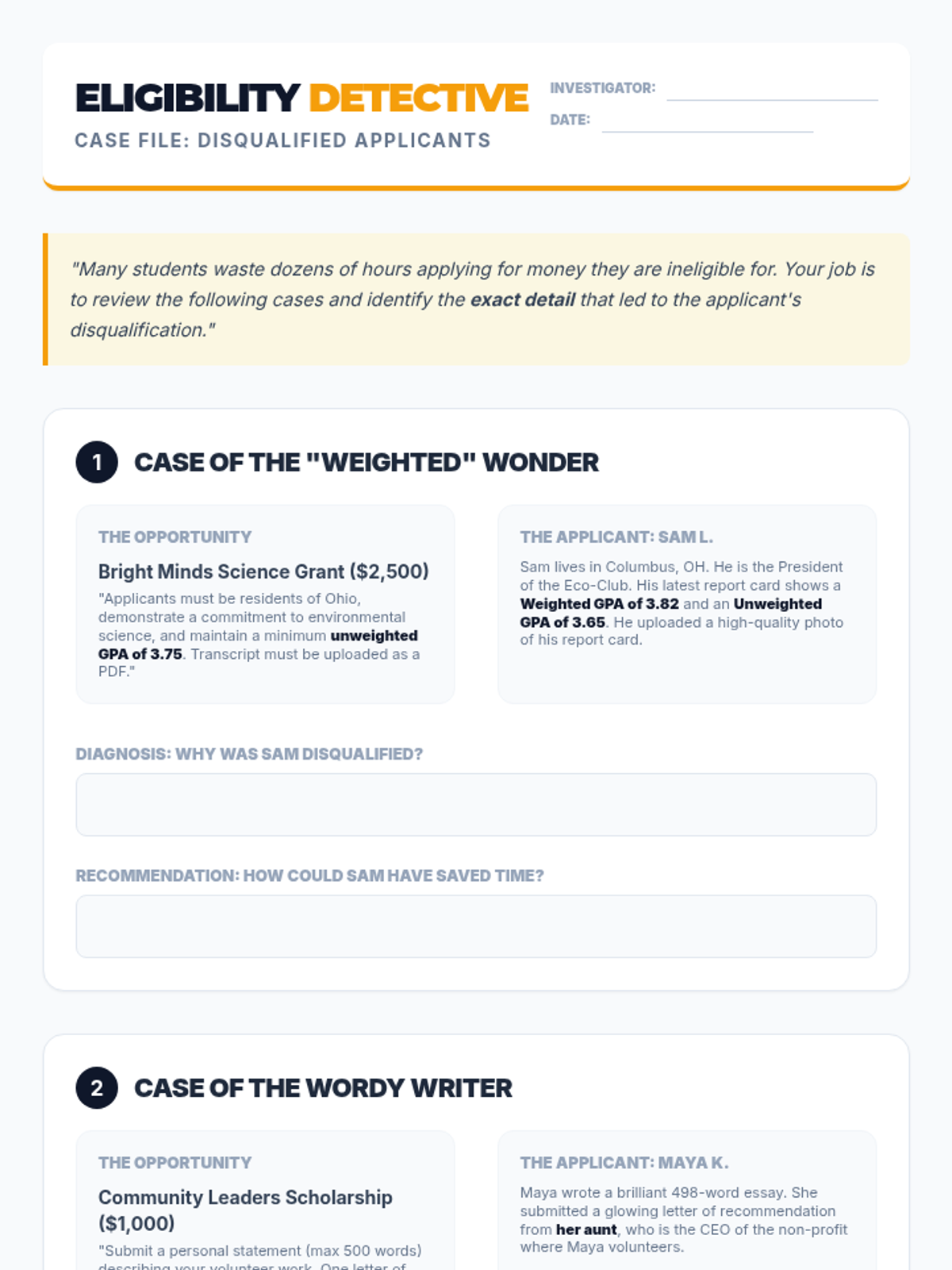
Using a case study approach, students learn to read the 'fine print' of applications to identify hidden requirements and disqualifiers.
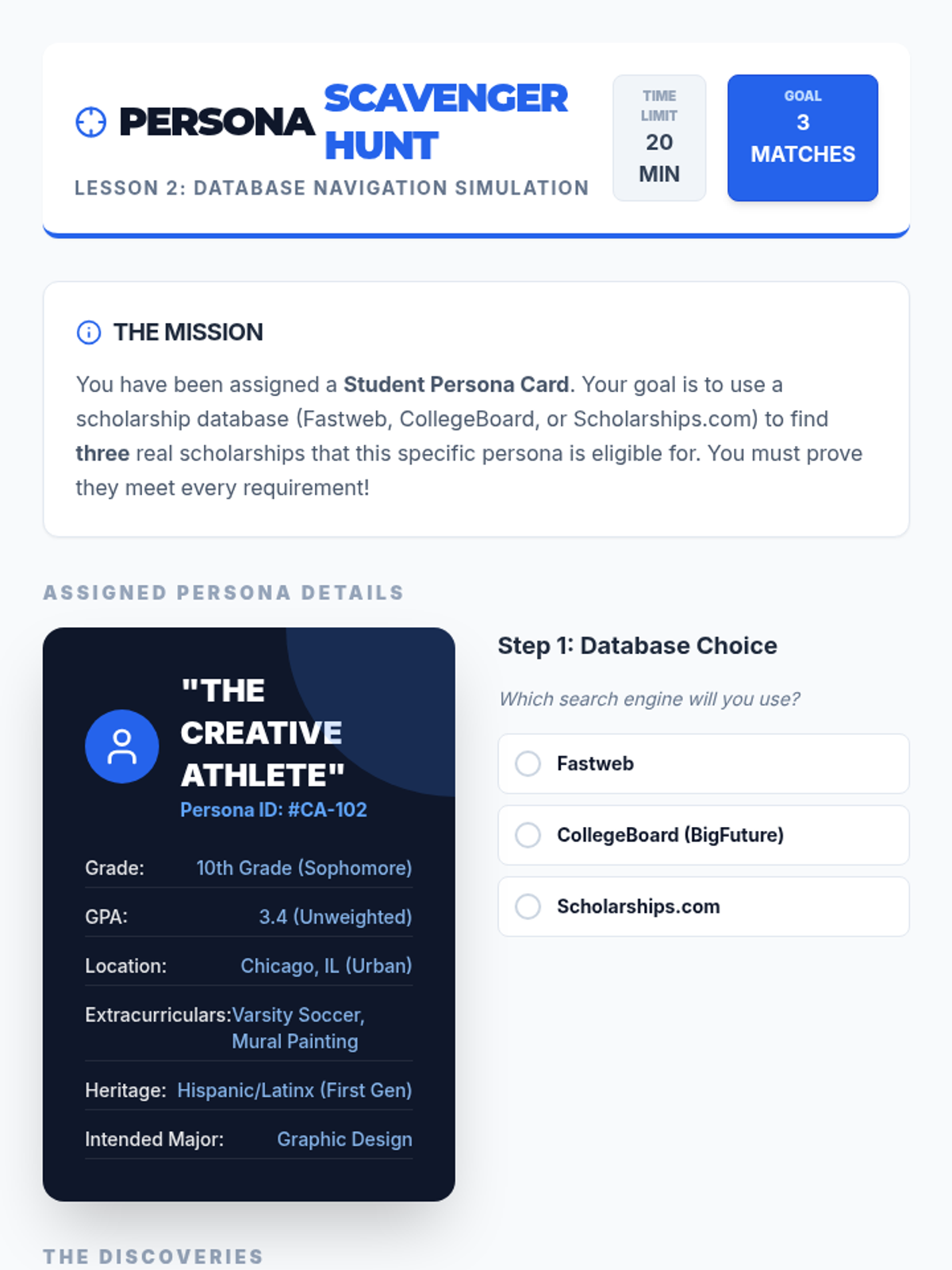
Students set up professional scholarship profiles and learn to use advanced filters to match their specific backgrounds and interests.
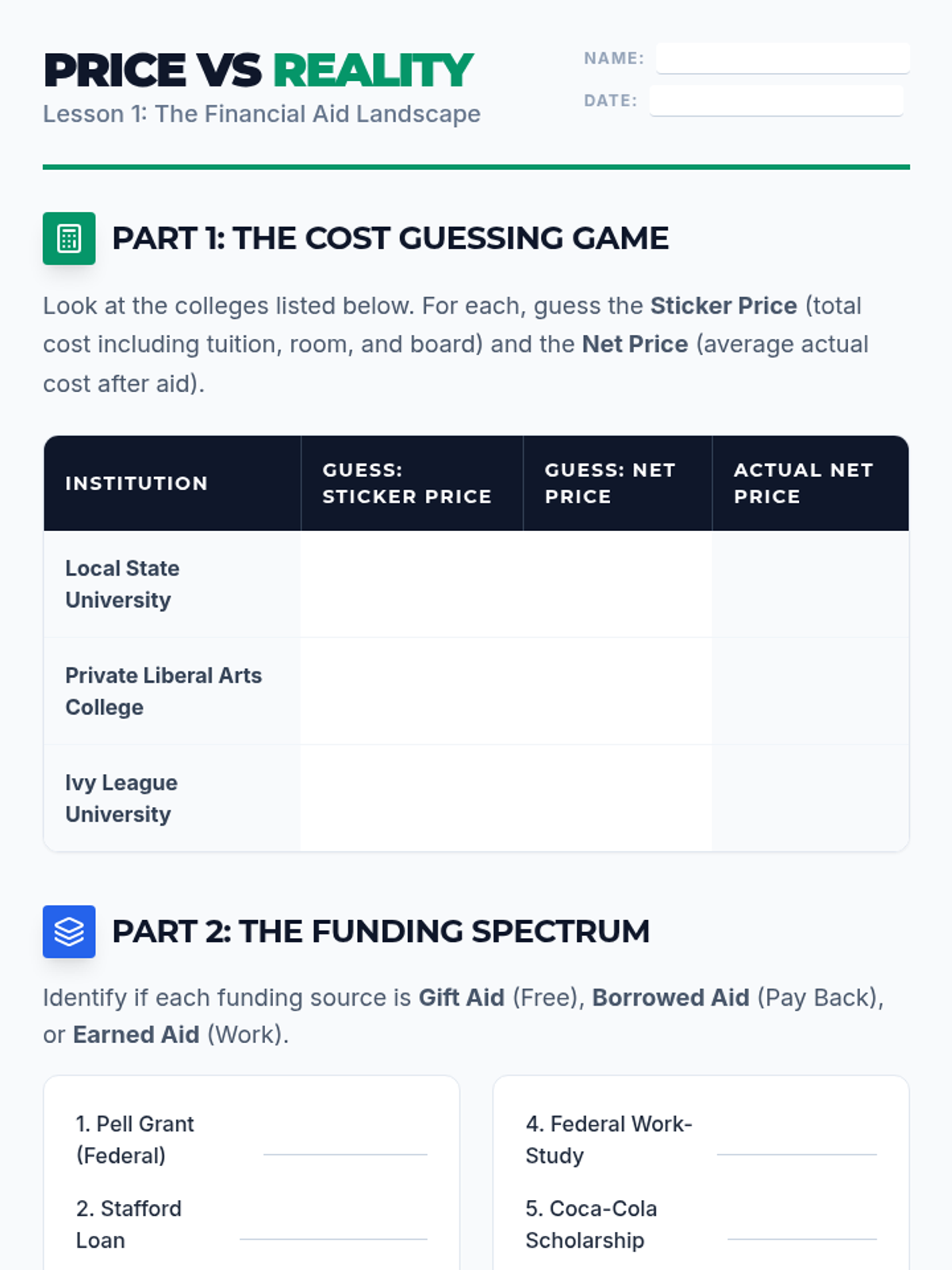
Students explore the spectrum of financial aid, distinguishing between merit, need, and loans while analyzing college costs versus available aid.
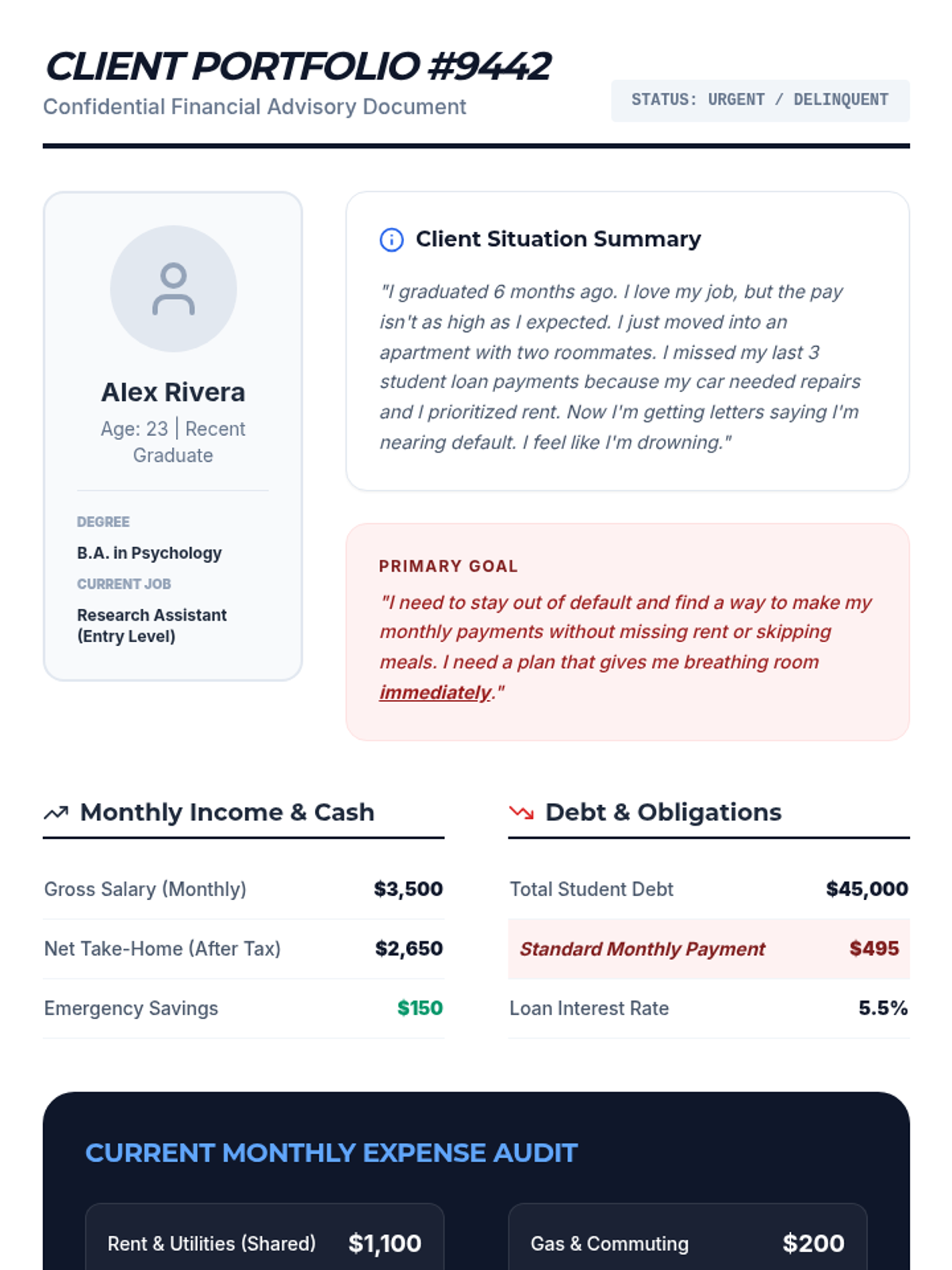
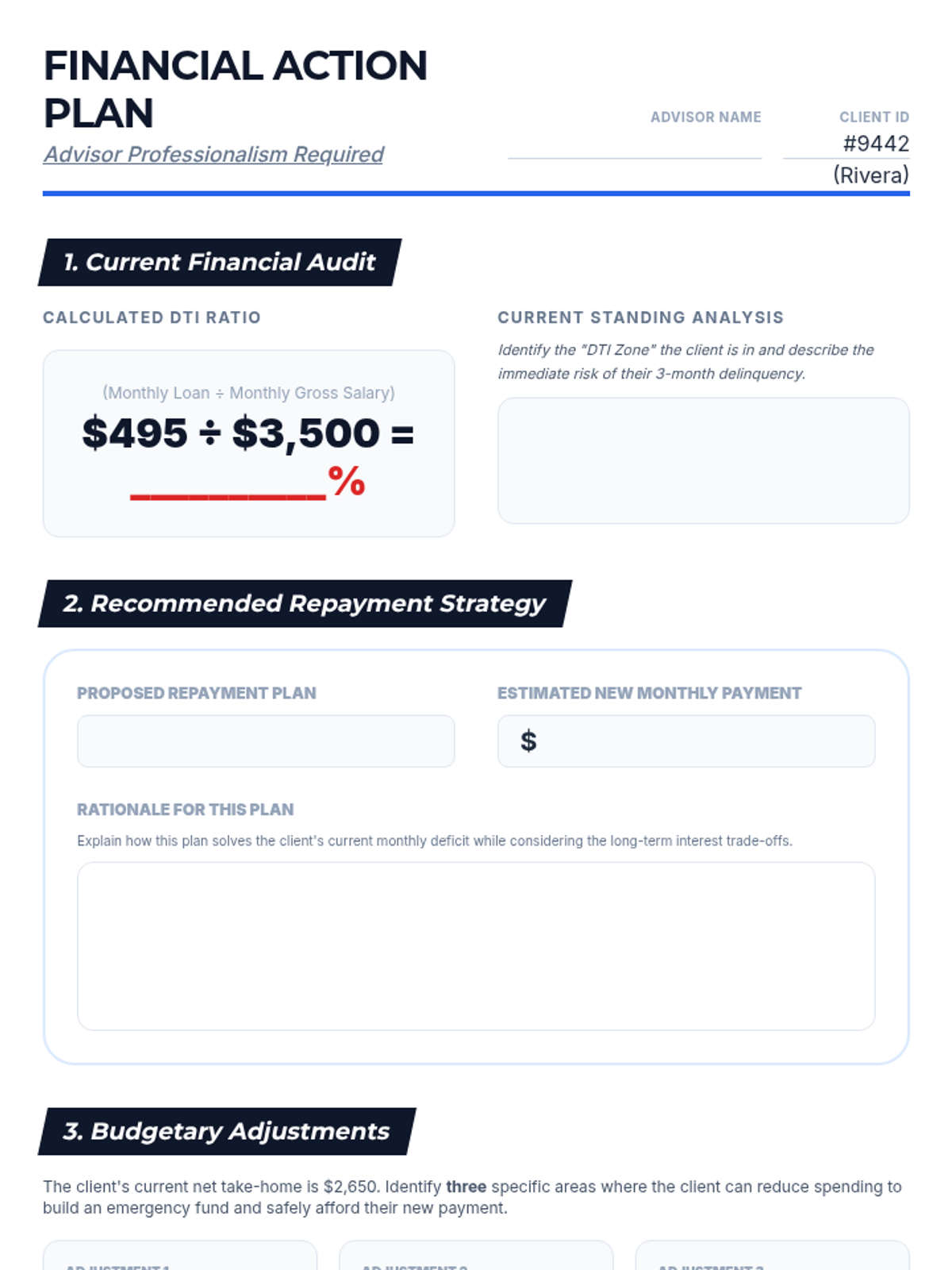
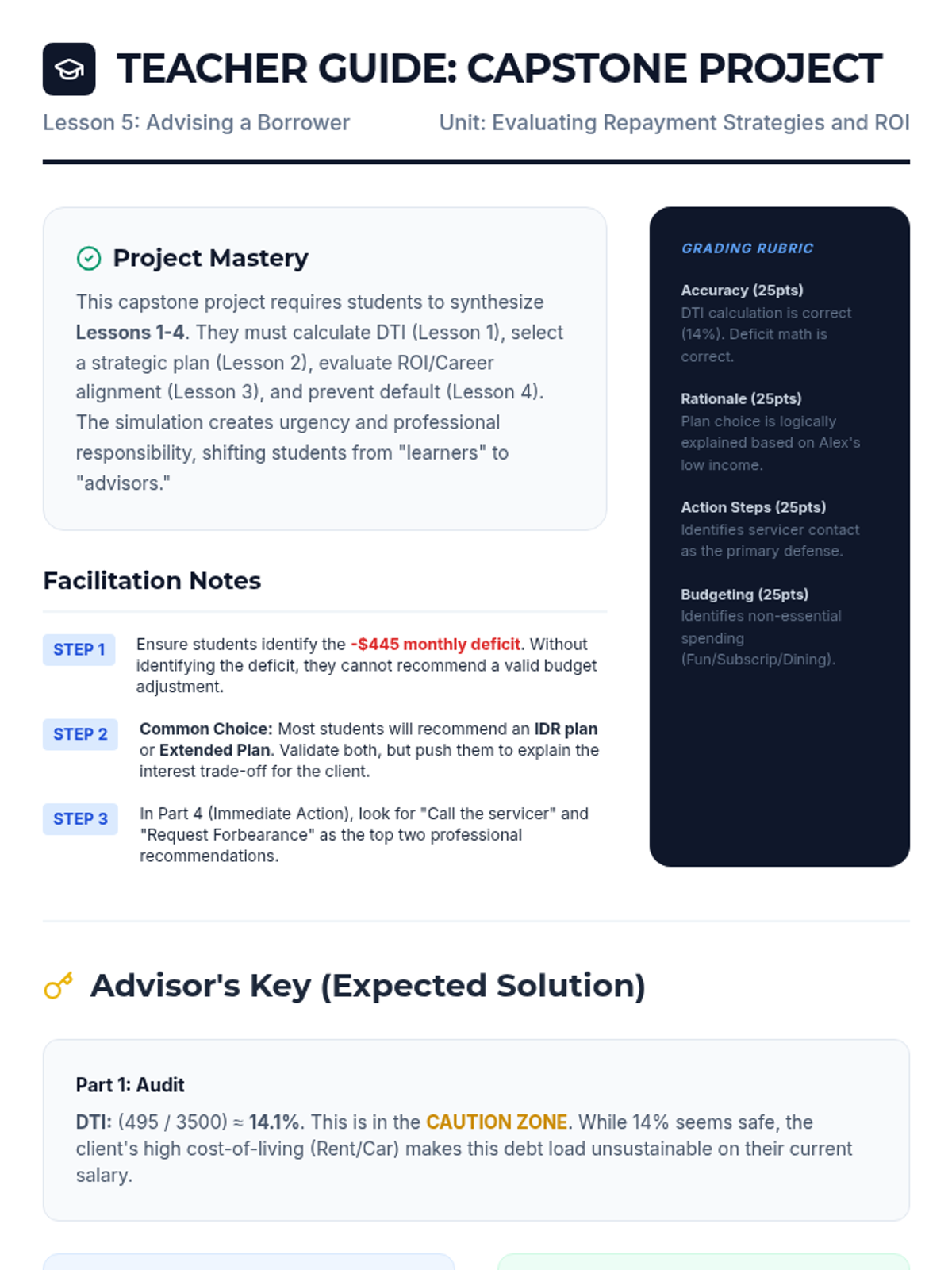
Students act as financial counselors for a detailed case study of a recent graduate struggling with payments. They analyze debt load and income to recommend a specific repayment plan and budget adjustments, producing a final 'Financial Action Plan'.
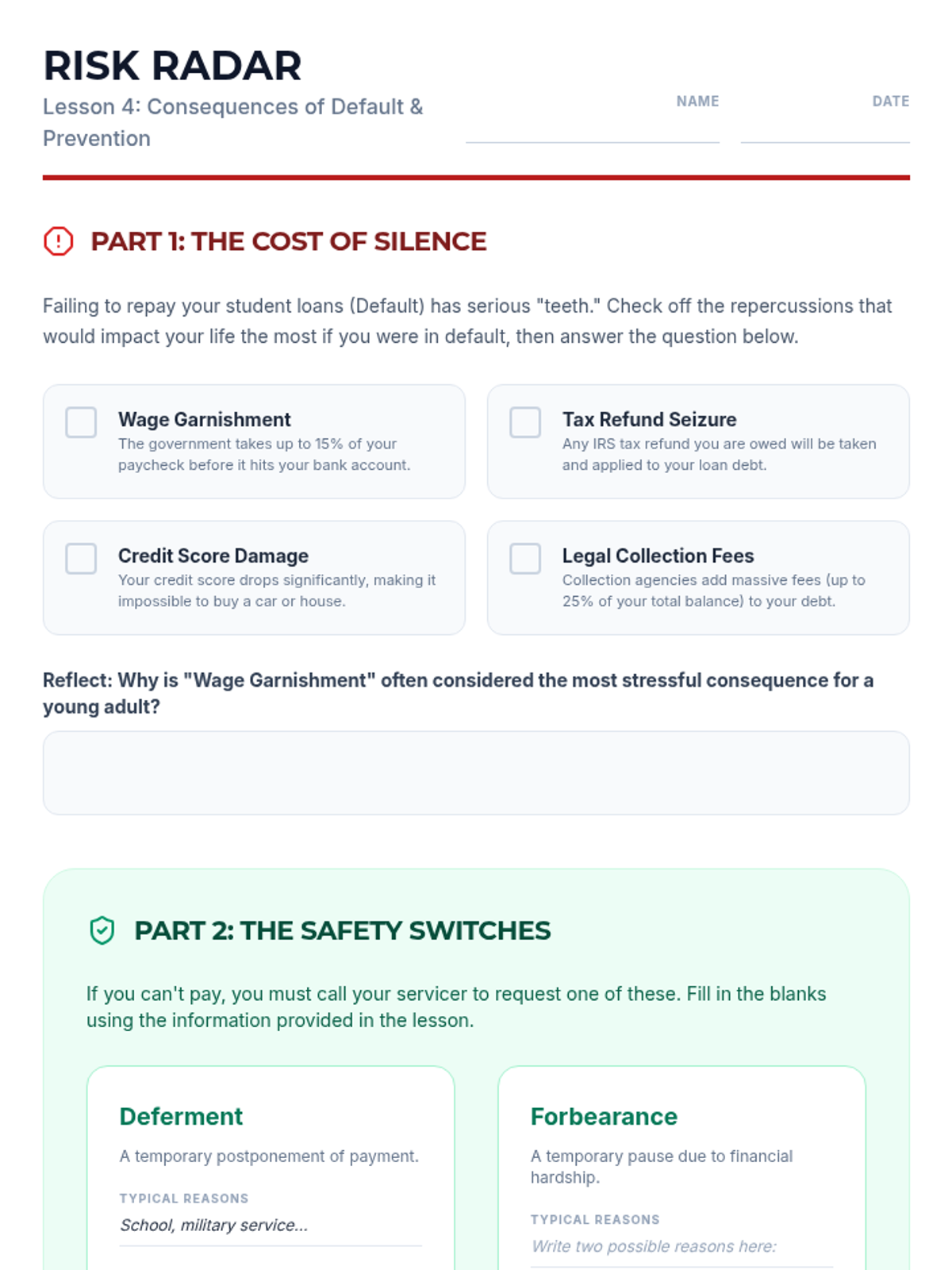
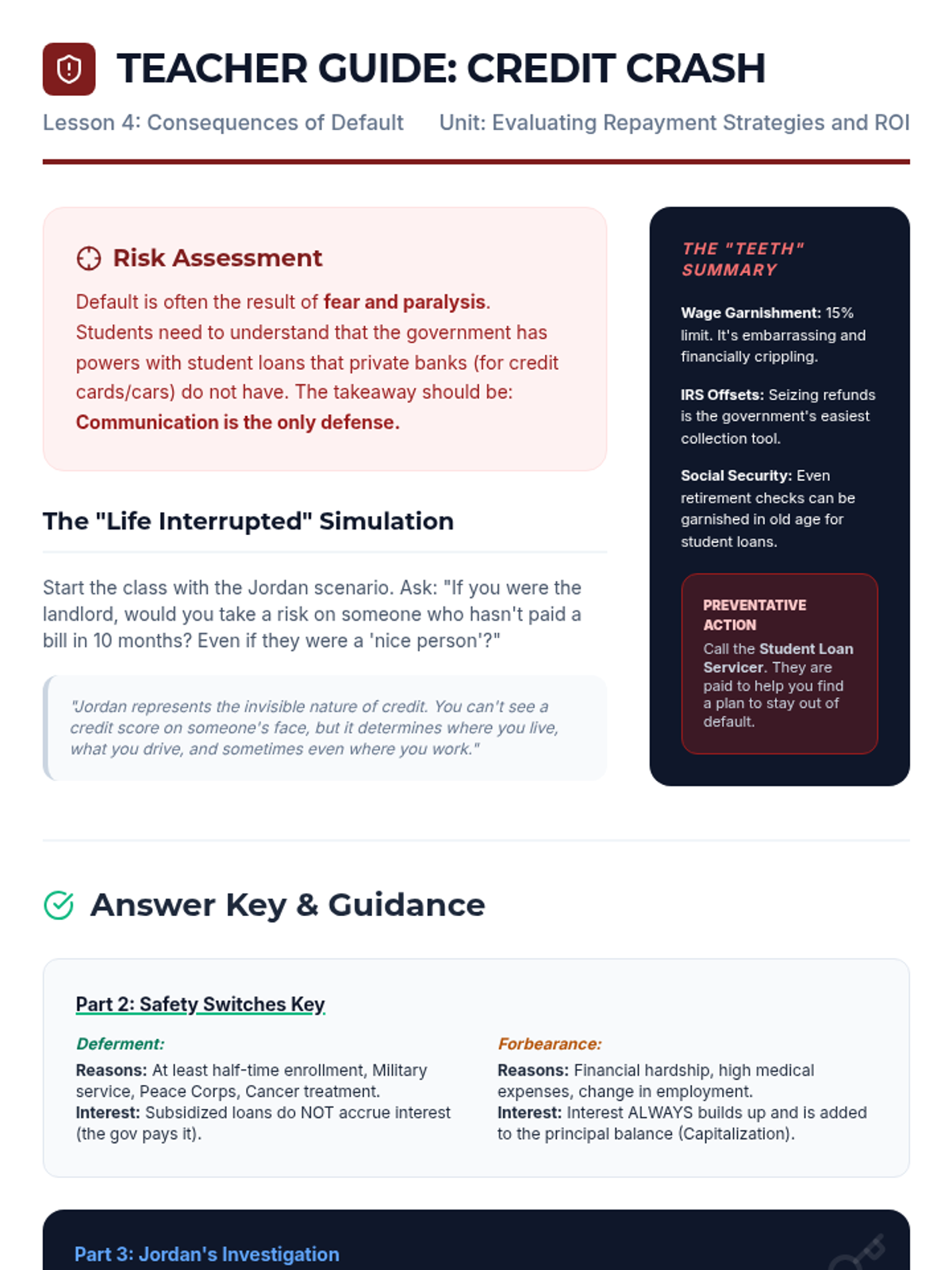
Students examine the timeline and repercussions of failing to repay student loans, including damaged credit scores, wage garnishment, and tax refund offsets. They learn the difference between postponement options and simply stopping payment.
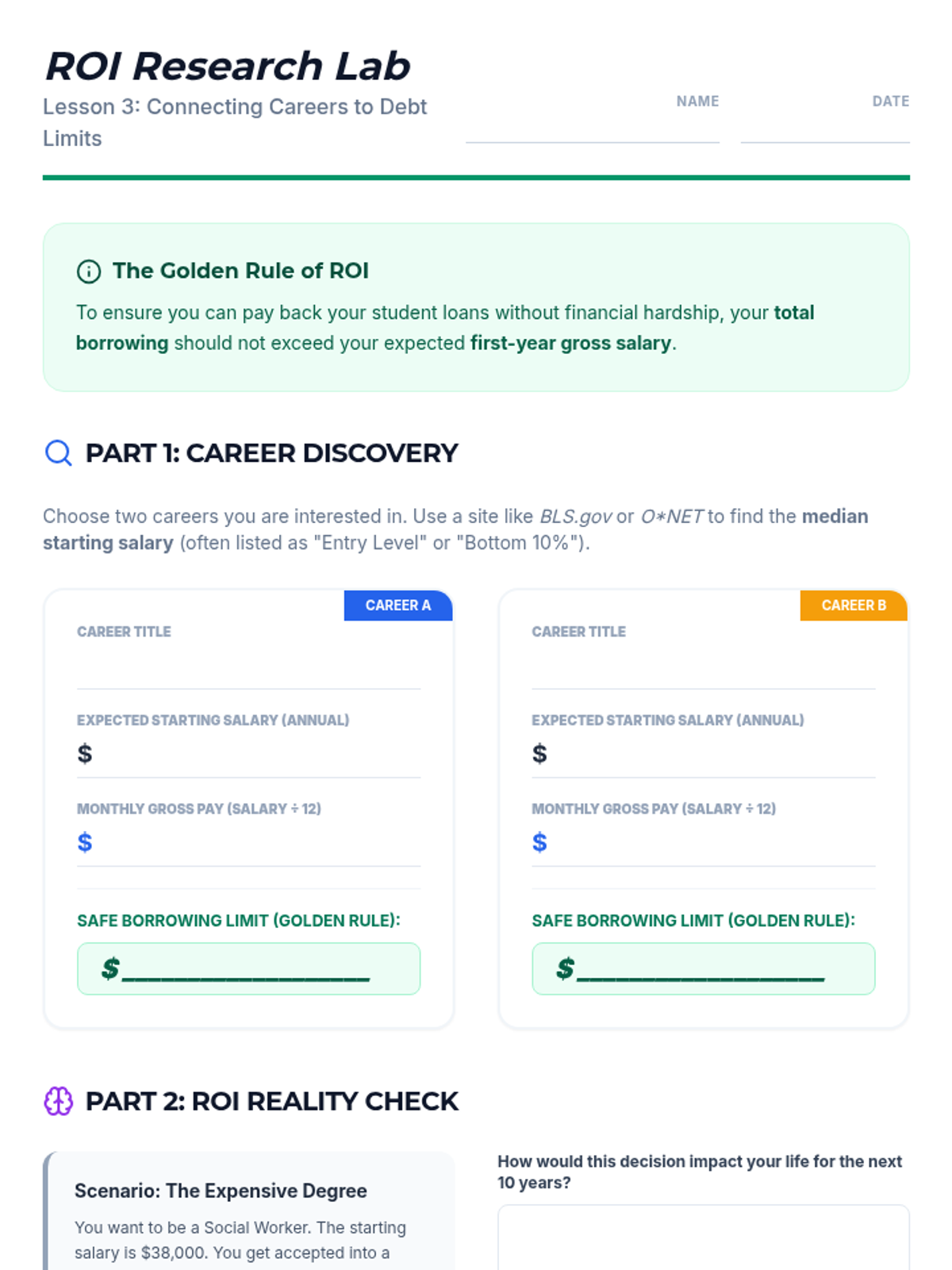
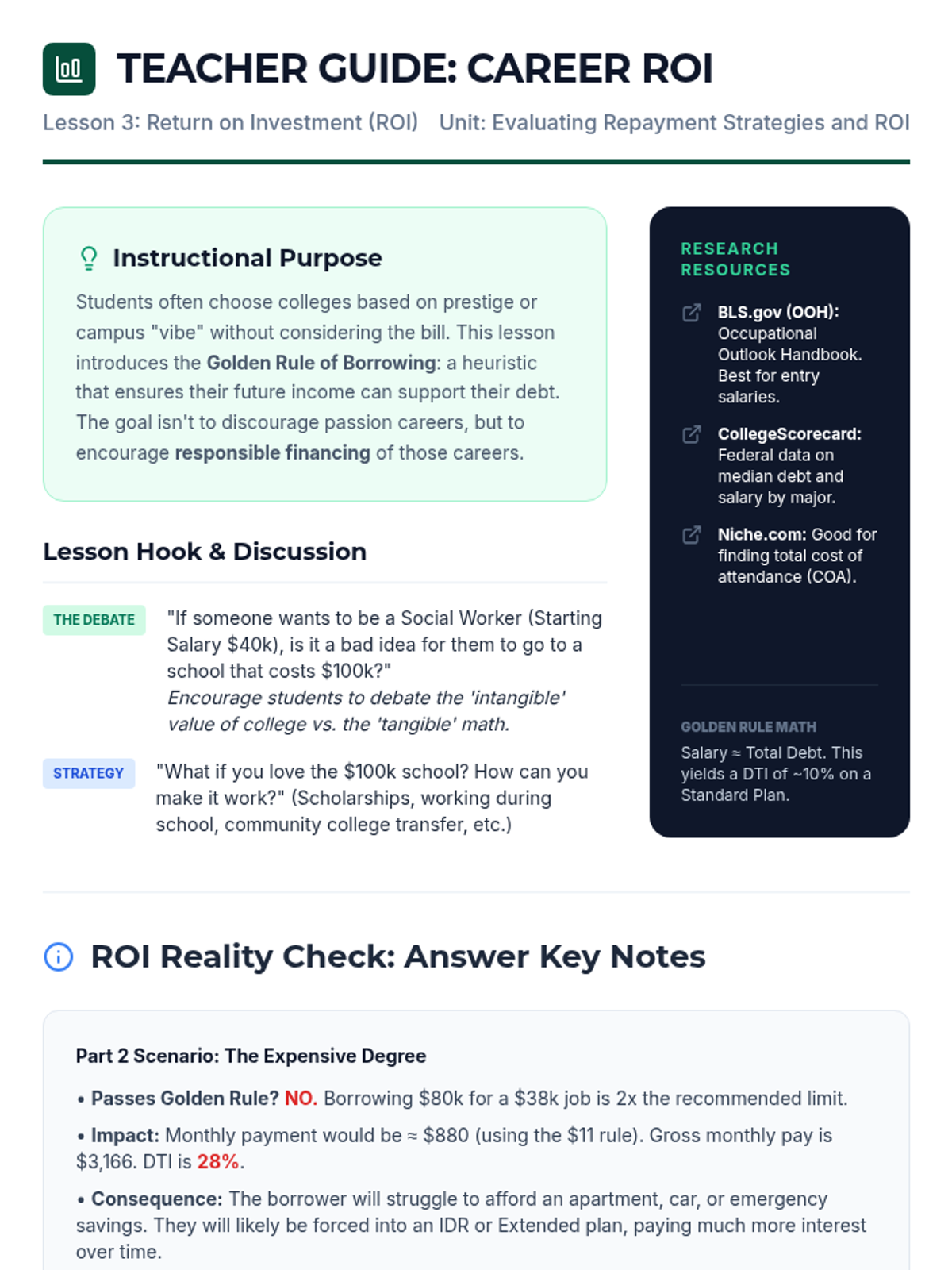
This lesson connects career aspirations with borrowing limits. Students research entry-level salaries for specific careers and calculate a safe borrowing limit based on the rule of thumb that total debt should not exceed expected first-year salary.
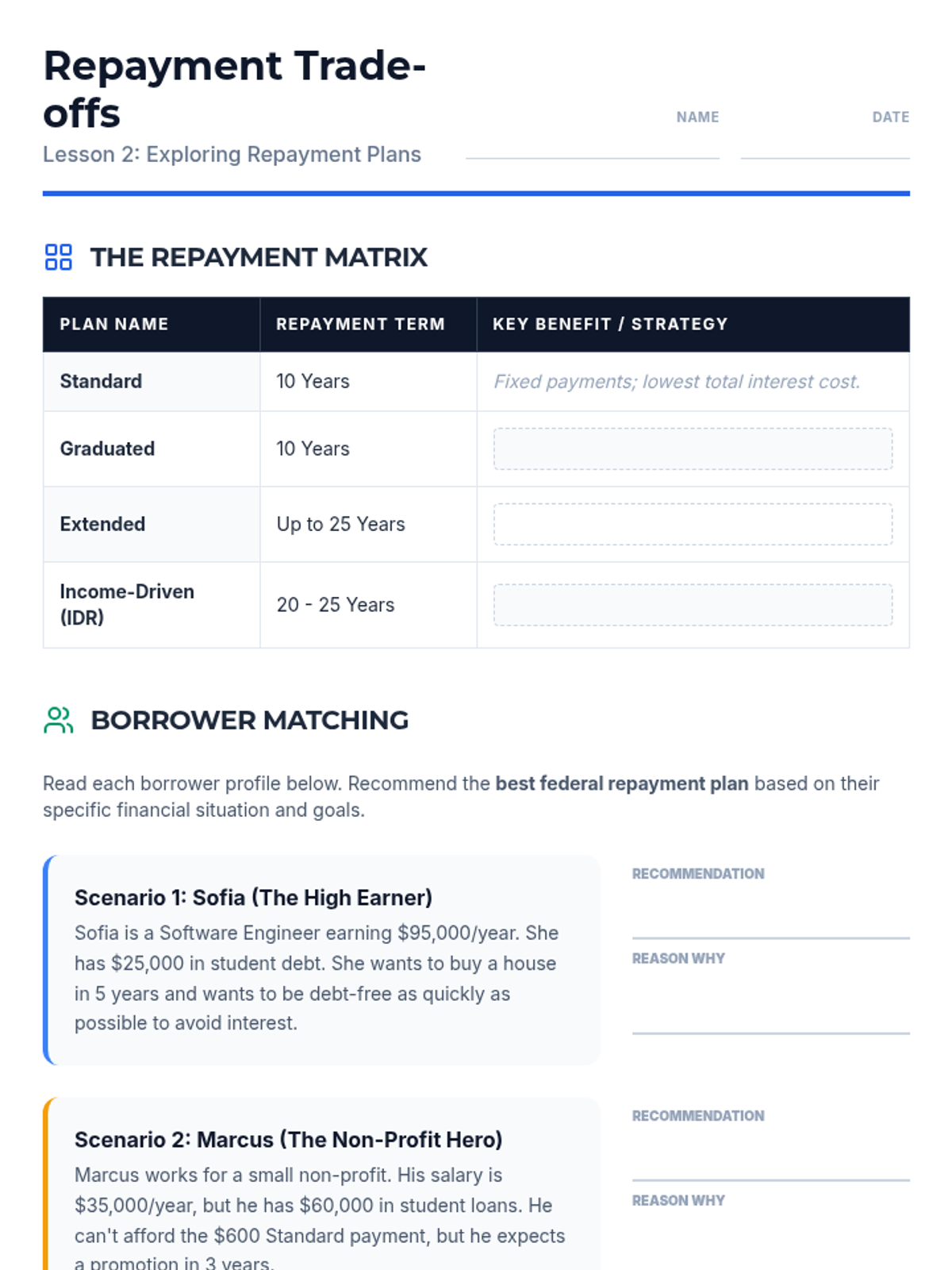
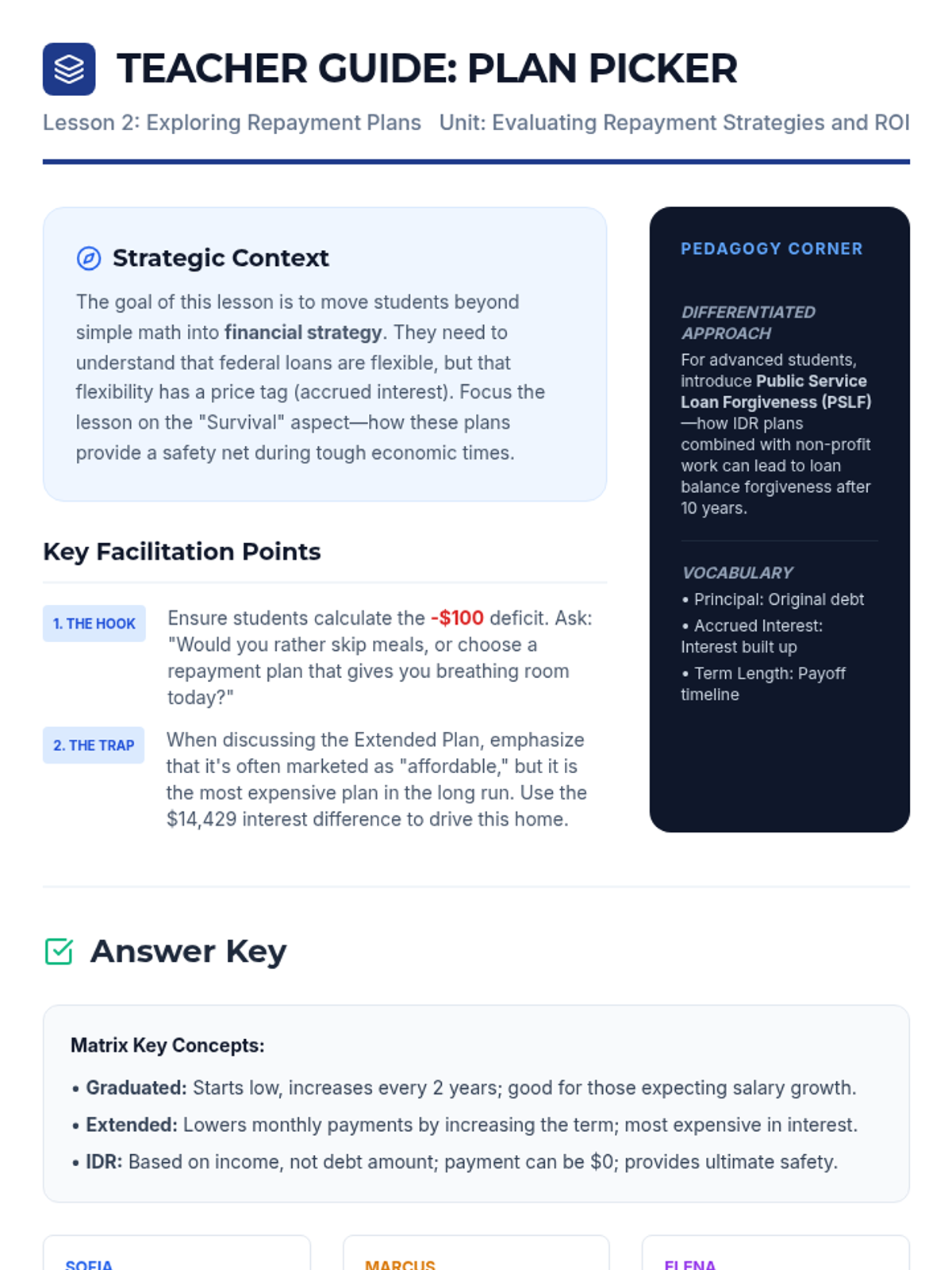
Learners investigate alternative federal repayment options, including Graduated, Extended, and Income-Driven Repayment (IDR) plans. They analyze how lowering a monthly payment often results in paying significantly more interest over the life of the loan.
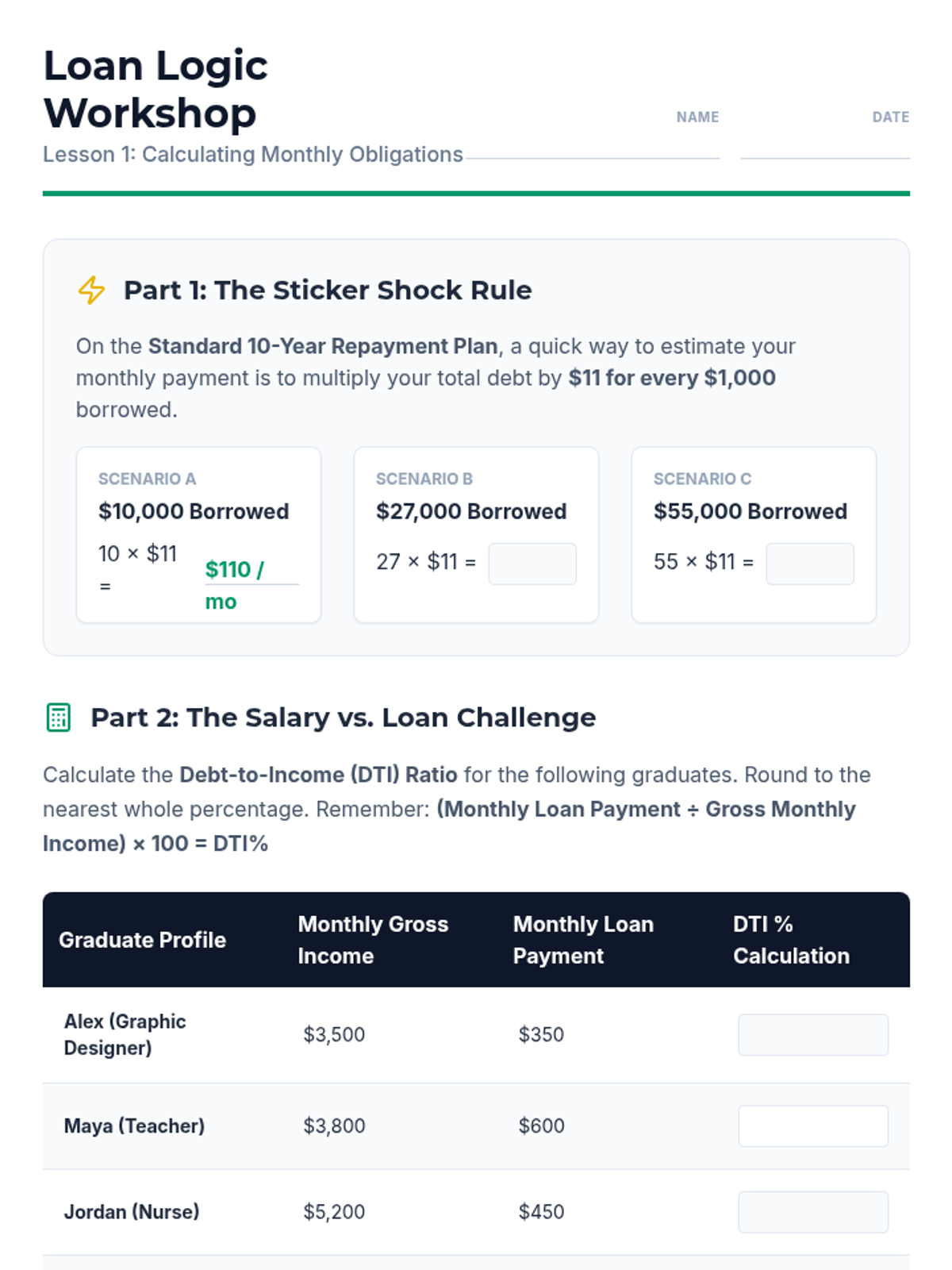
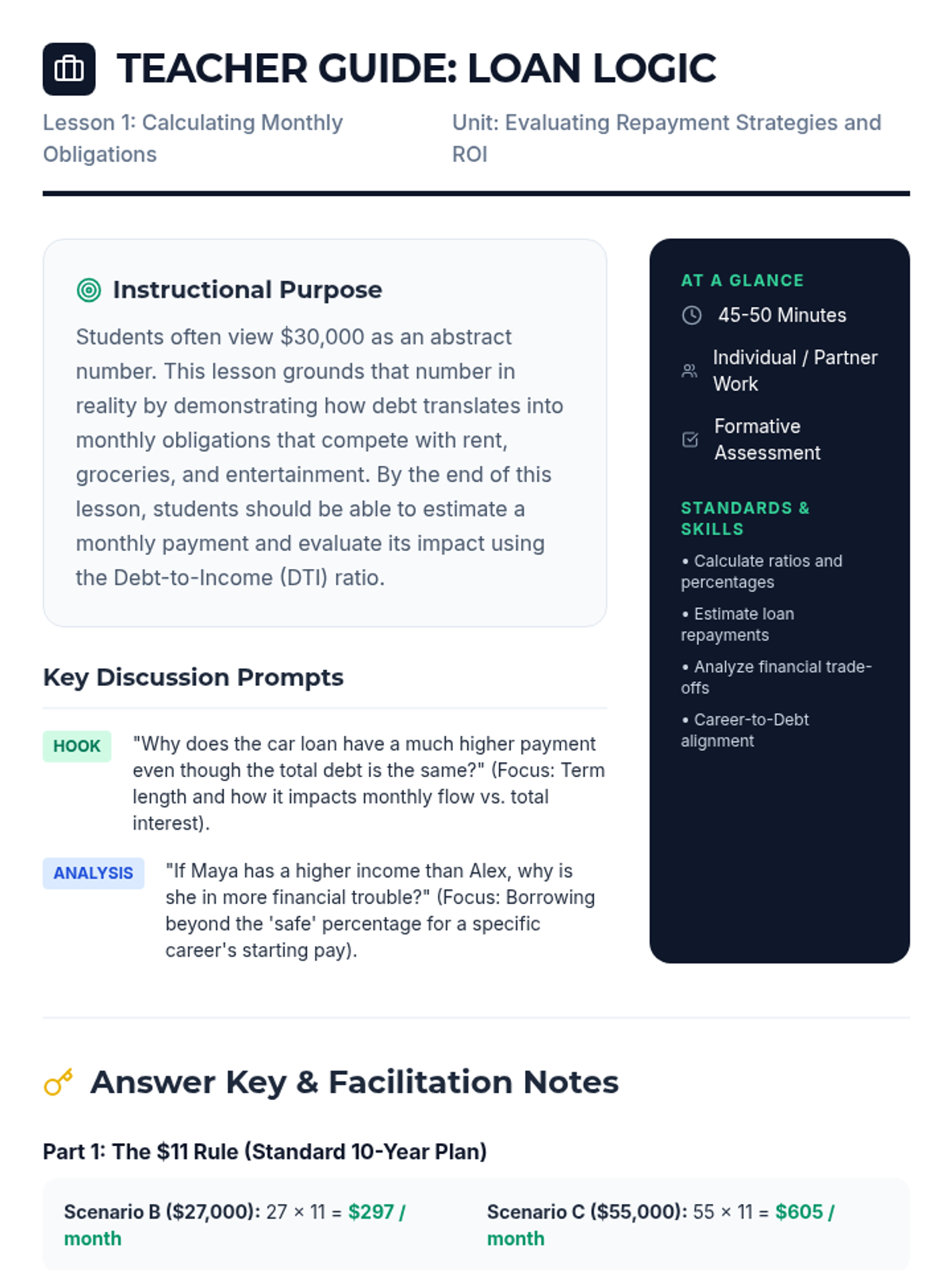
Students use the 'Standard Repayment Plan' model to calculate estimated monthly payments for various total debt amounts and compare them to entry-level salaries. This lesson introduces the concept of the debt-to-income ratio through the 'Sticker Shock' challenge.
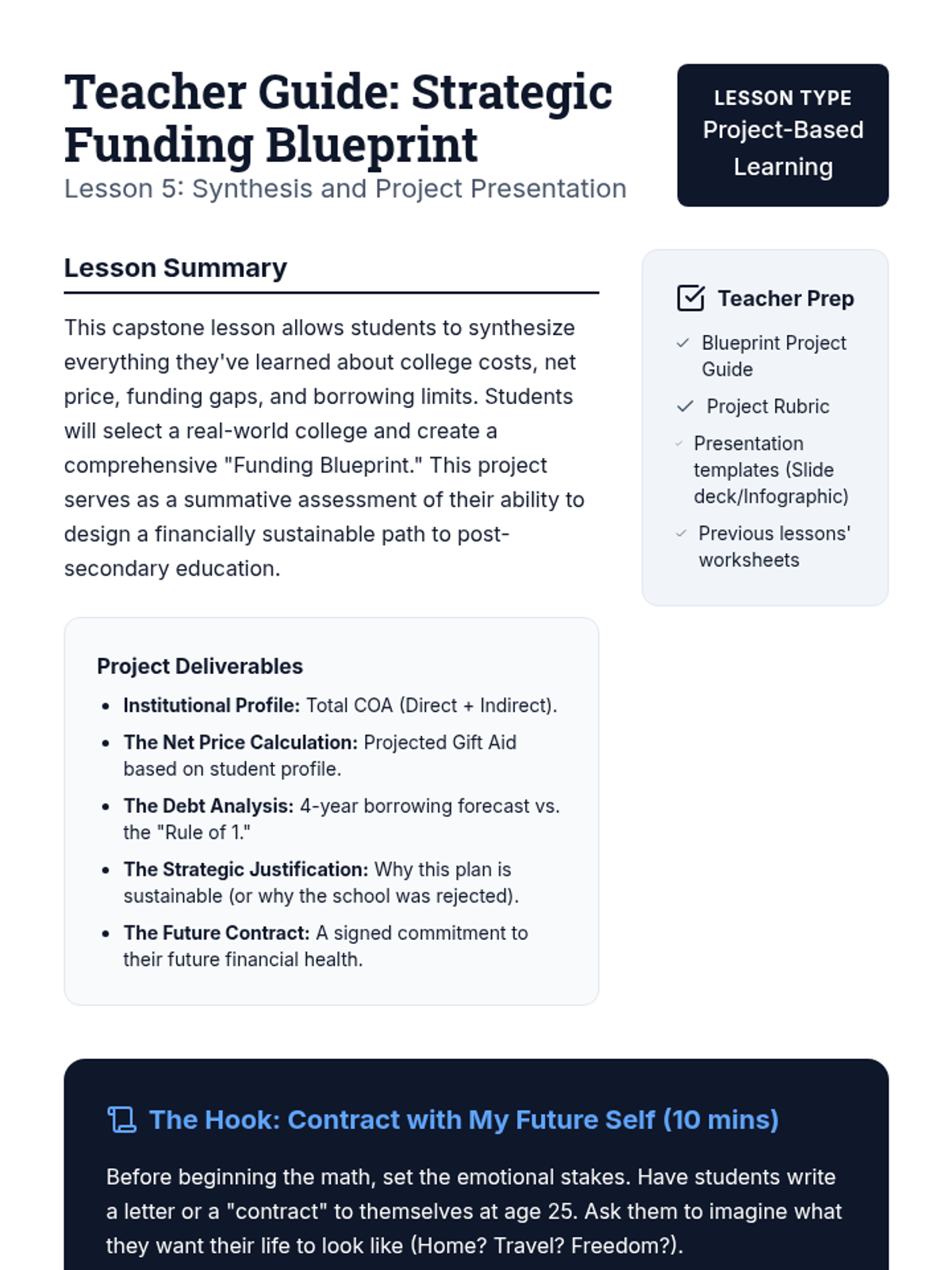
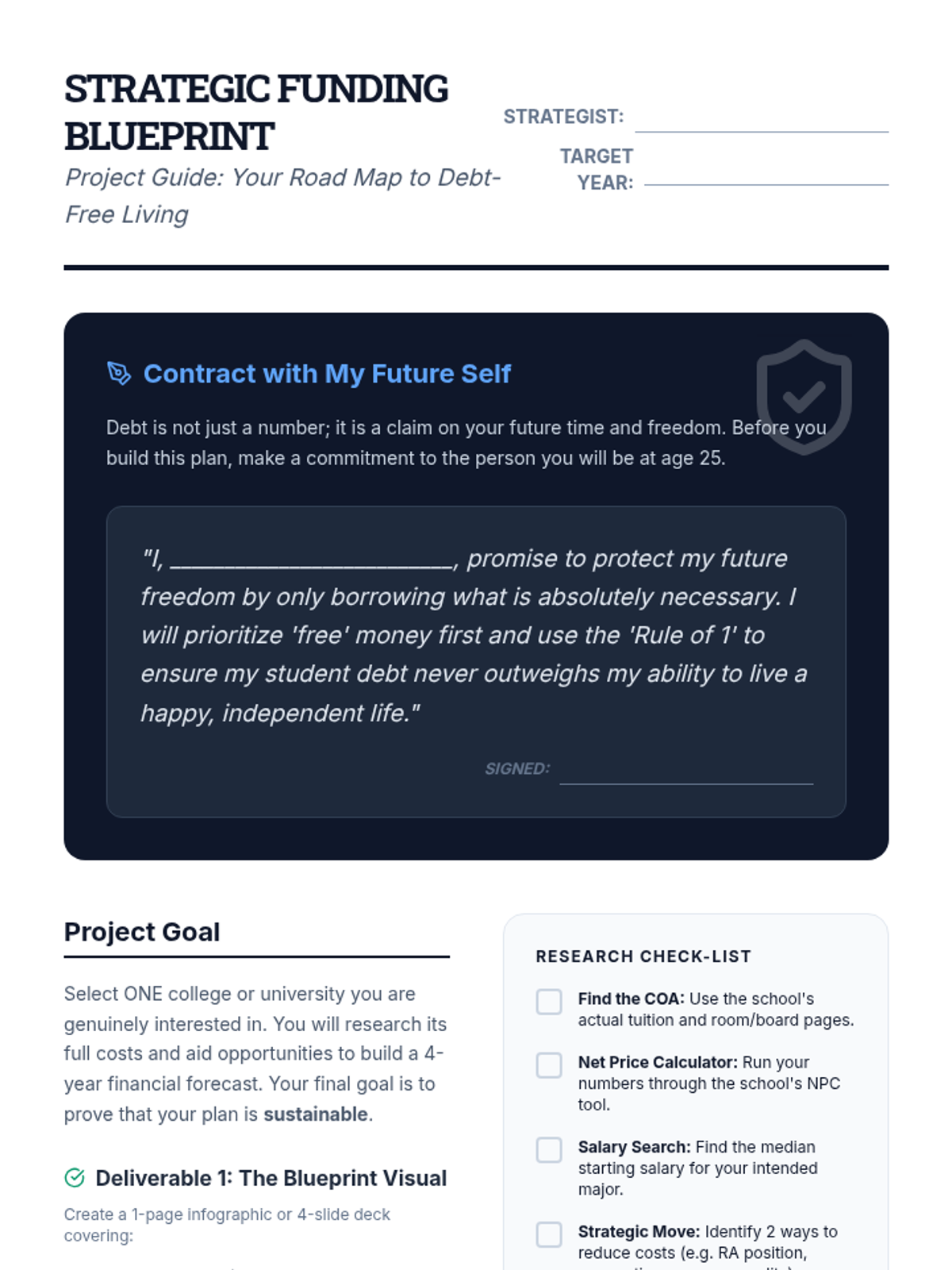
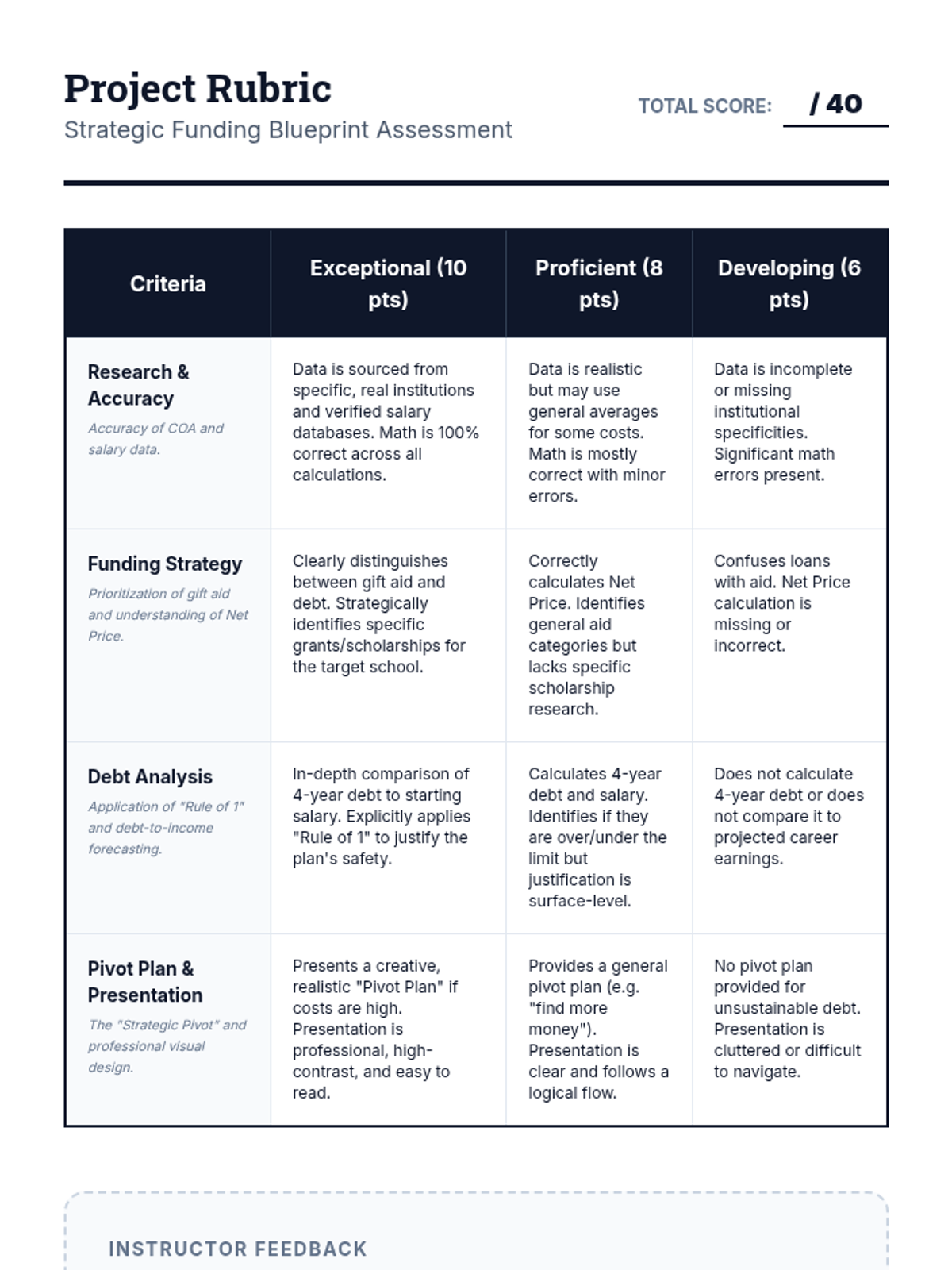
Students synthesize their learning by creating a comprehensive, justified funding plan for a prospective college, outlining their strategy to minimize debt.
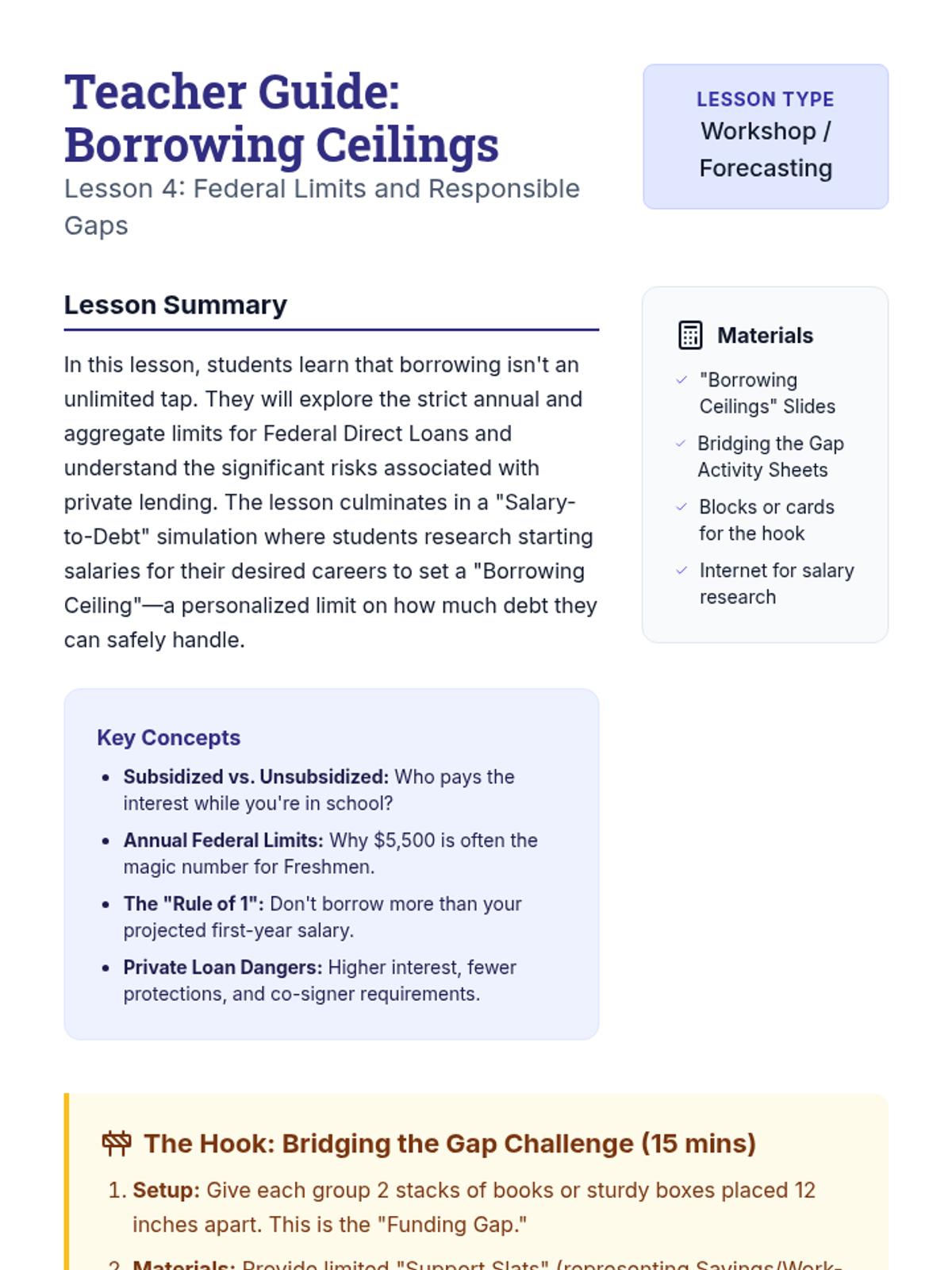
Learners explore federal borrowing limits and assess the risks of private loans, setting personal borrowing ceilings based on projected career earnings and bridgeable gaps.
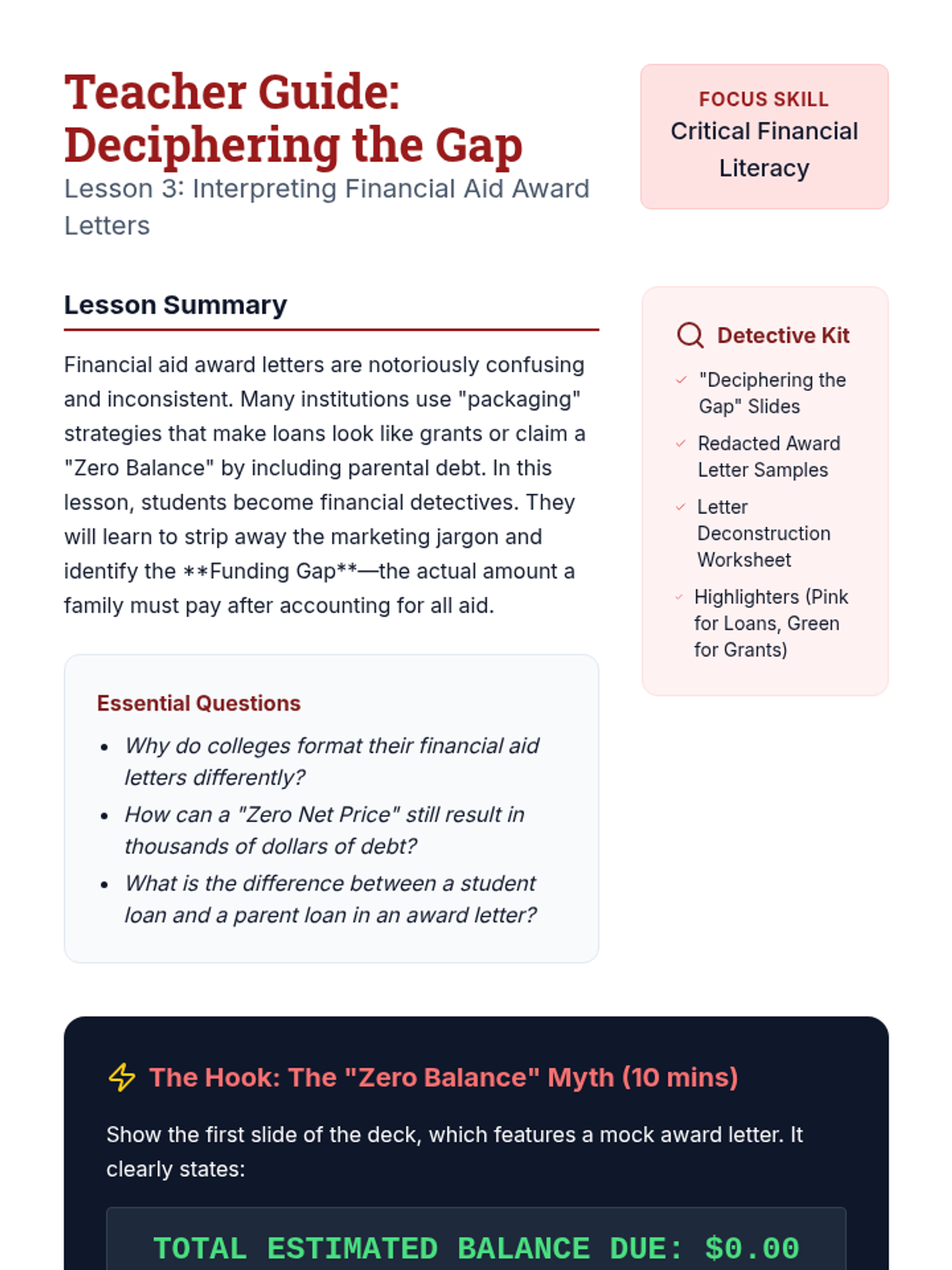
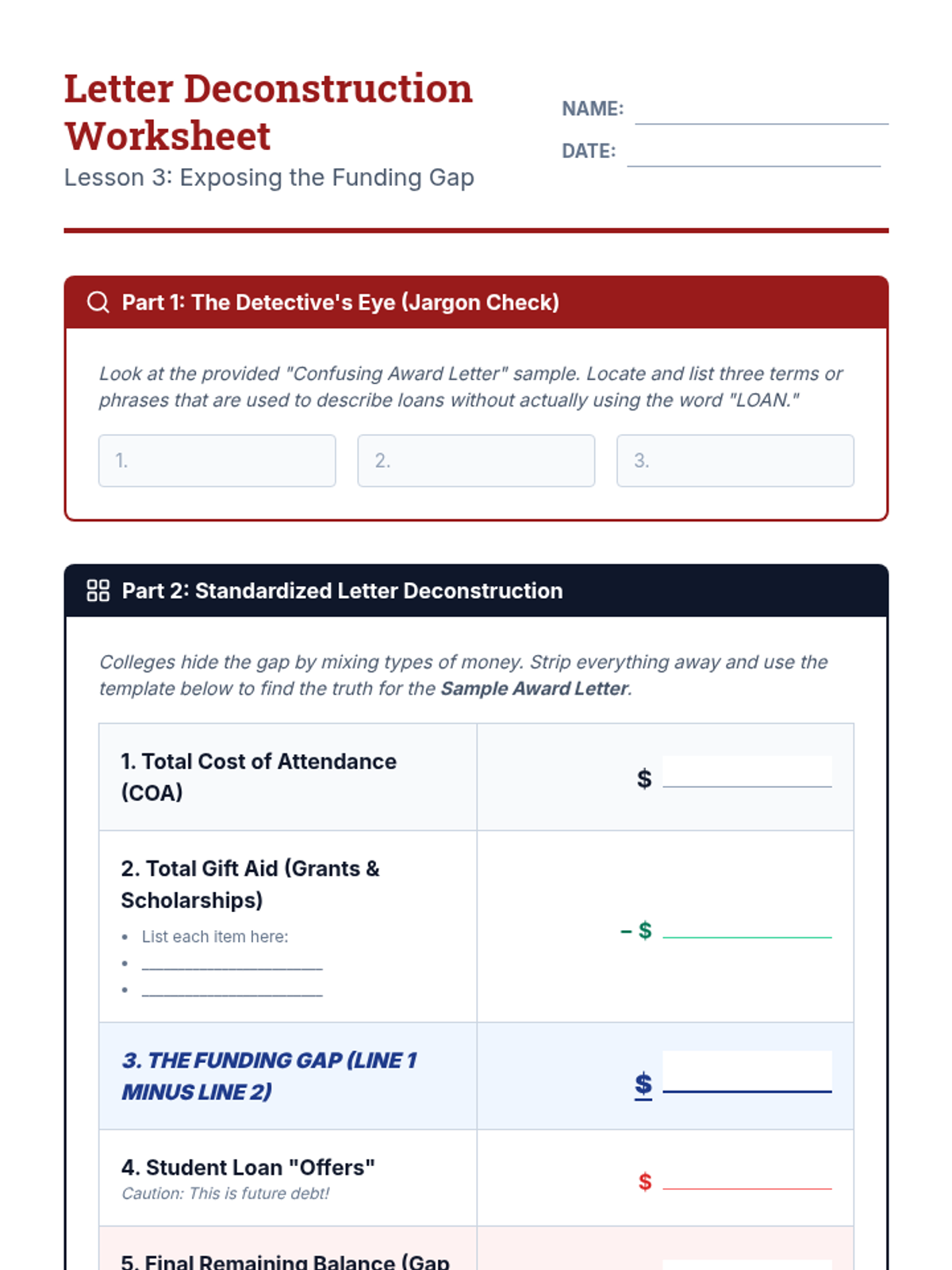
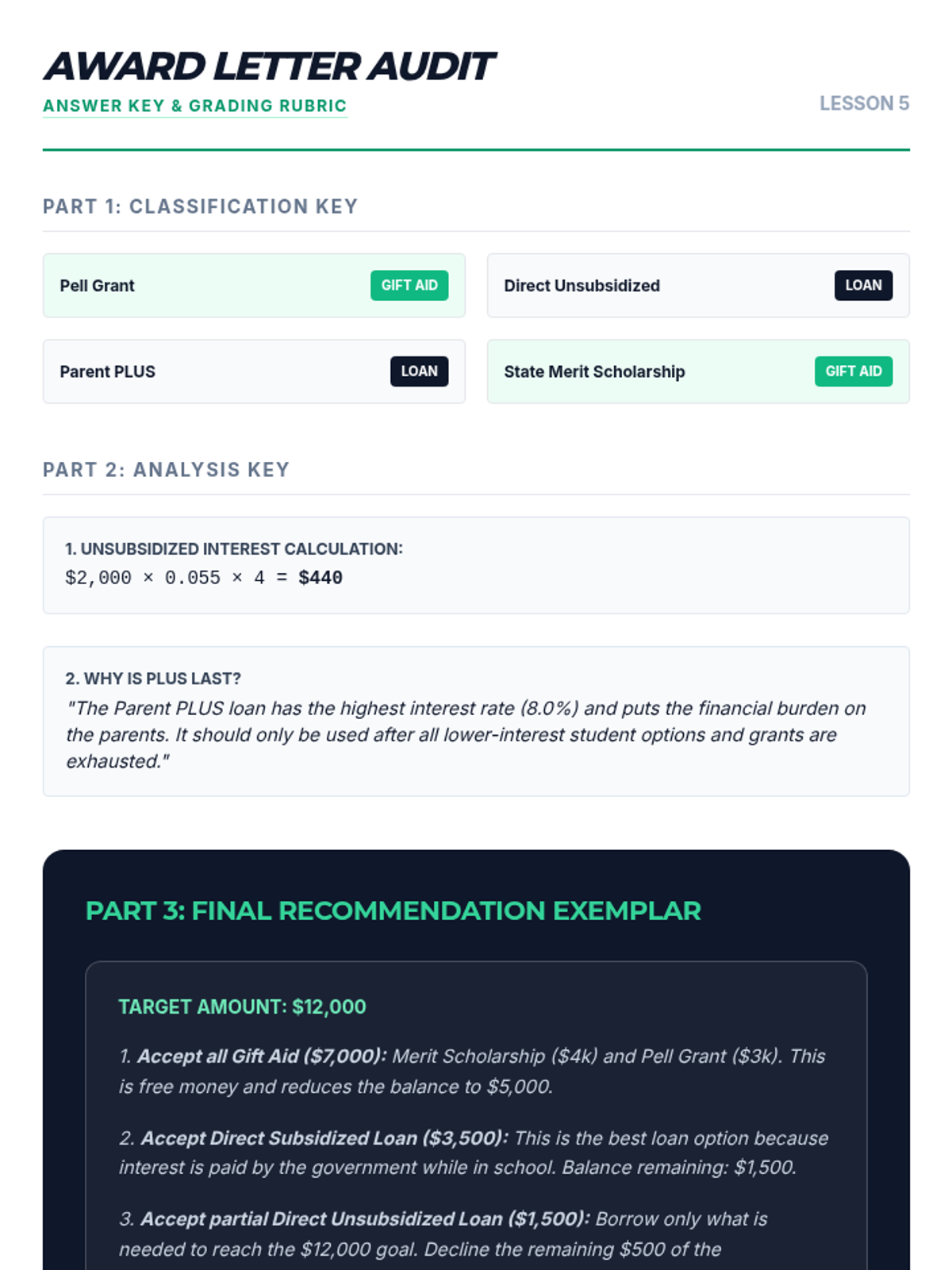
Students analyze financial aid award letters to identify hidden loans and calculate the 'funding gap,' learning to distinguish between what is truly free and what must be repaid.
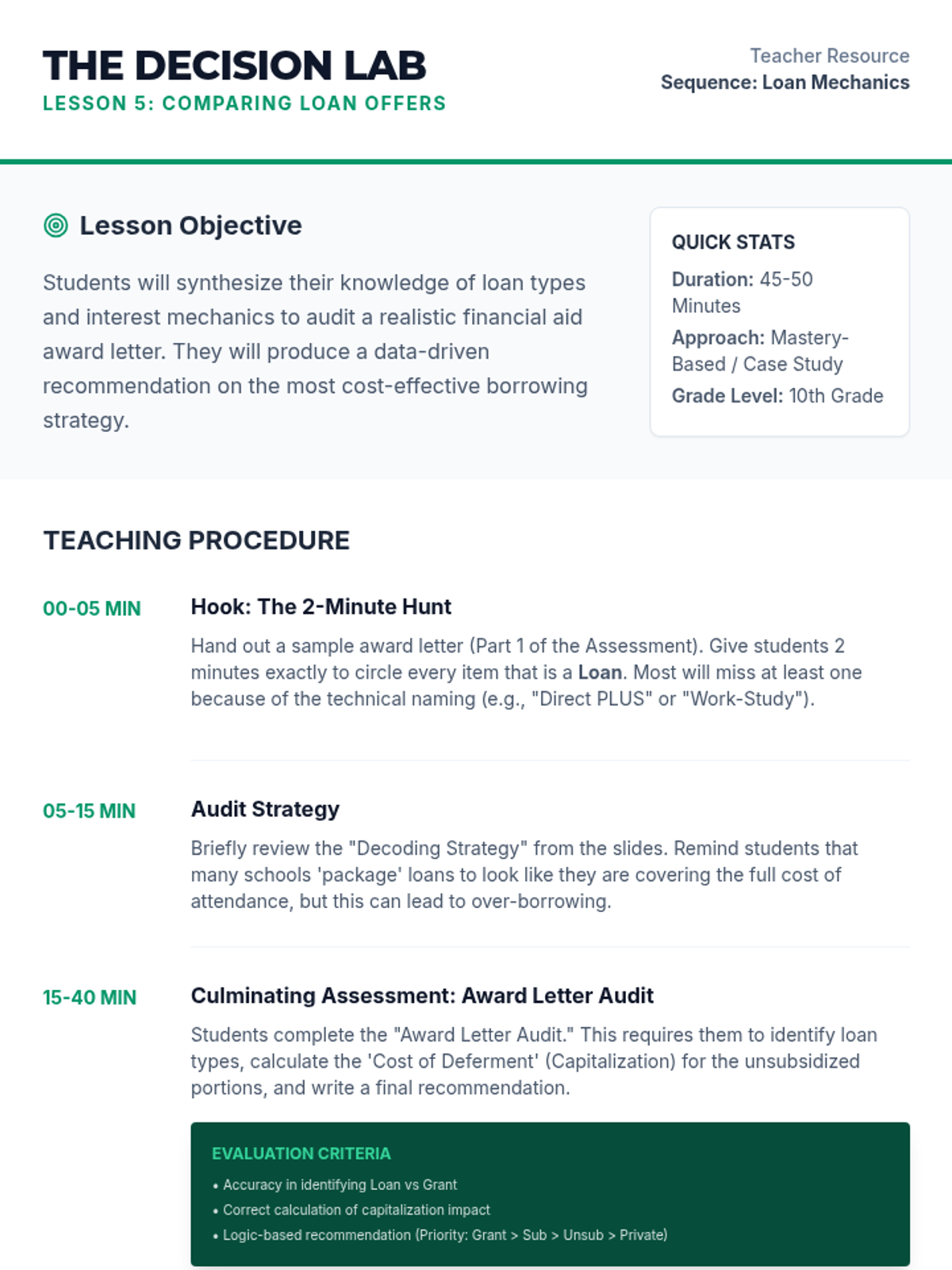
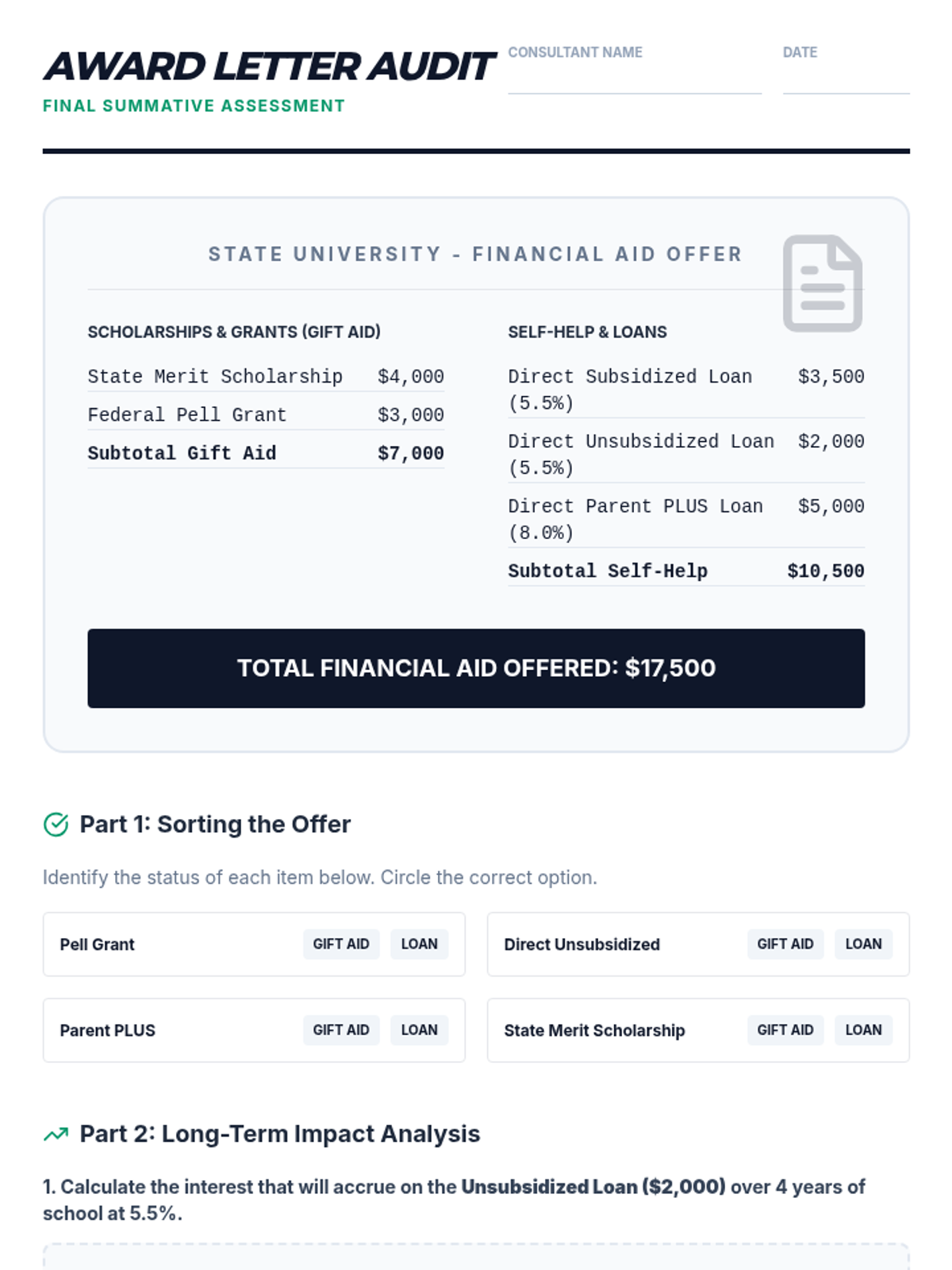
In this culminating lesson, students analyze sample financial aid offer letters containing a mix of loan types. They must extract key data points to calculate the total cost of repayment for each scenario. Students produce a written recommendation on which loan package is most financially sound.
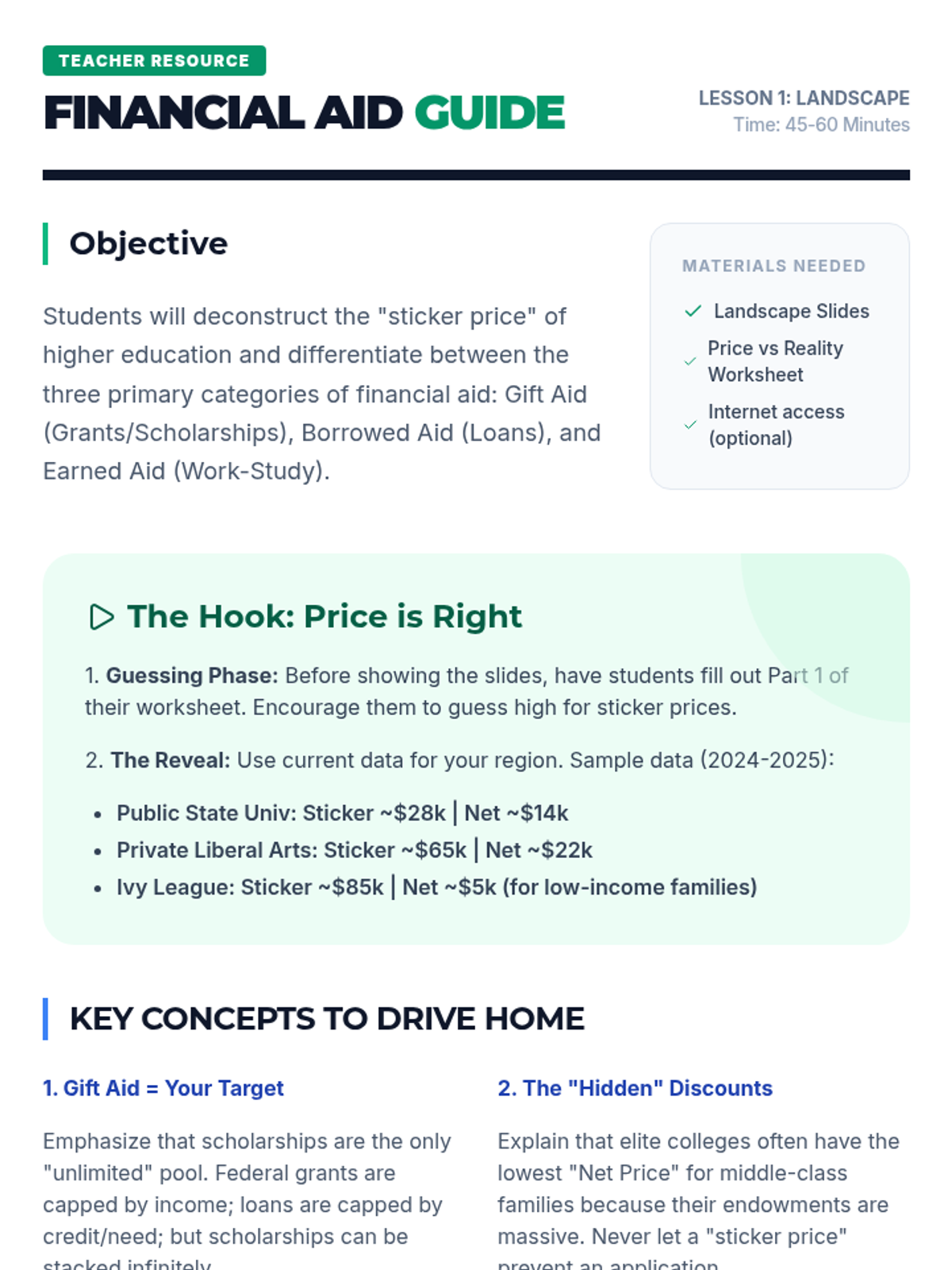
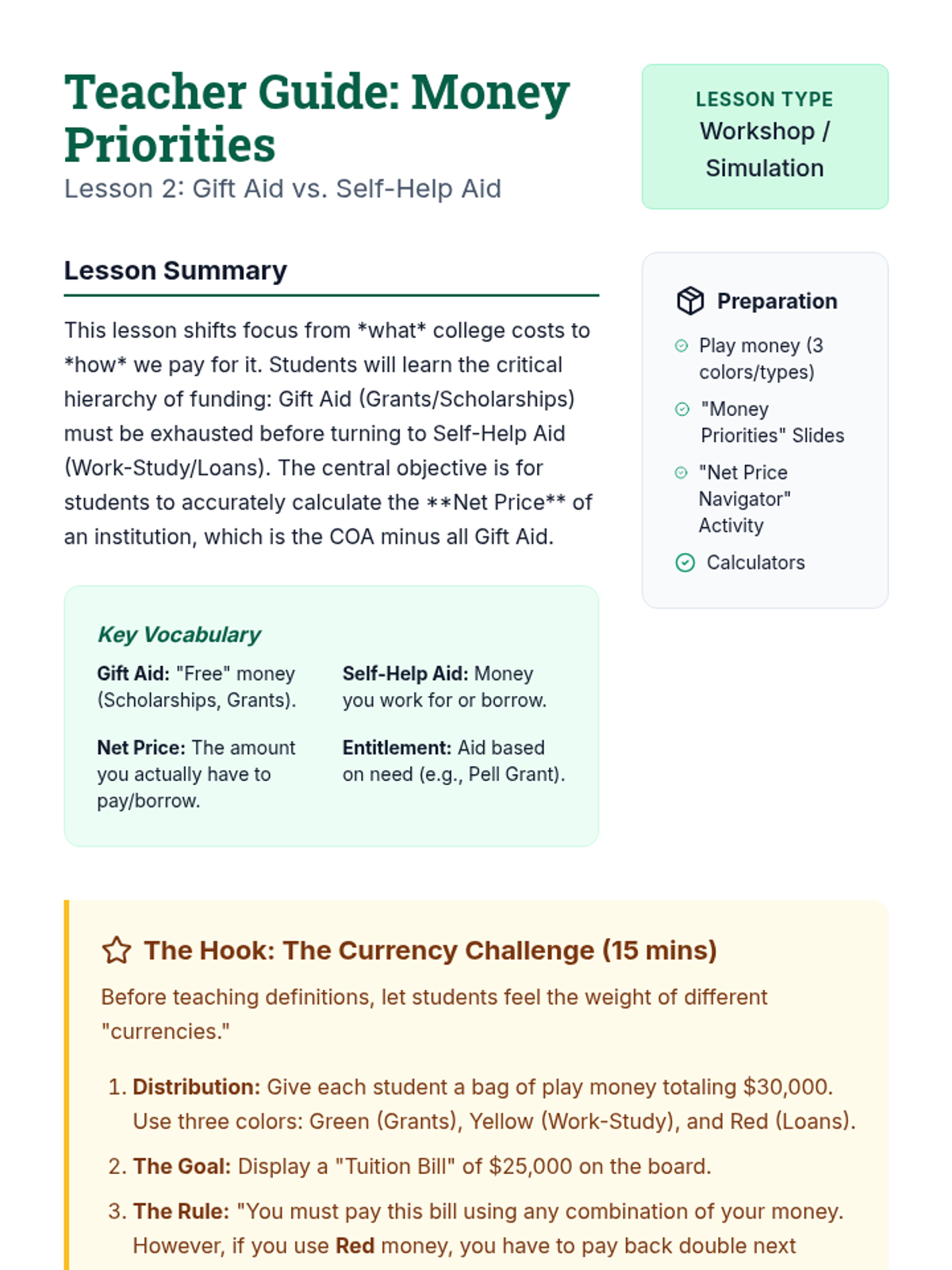
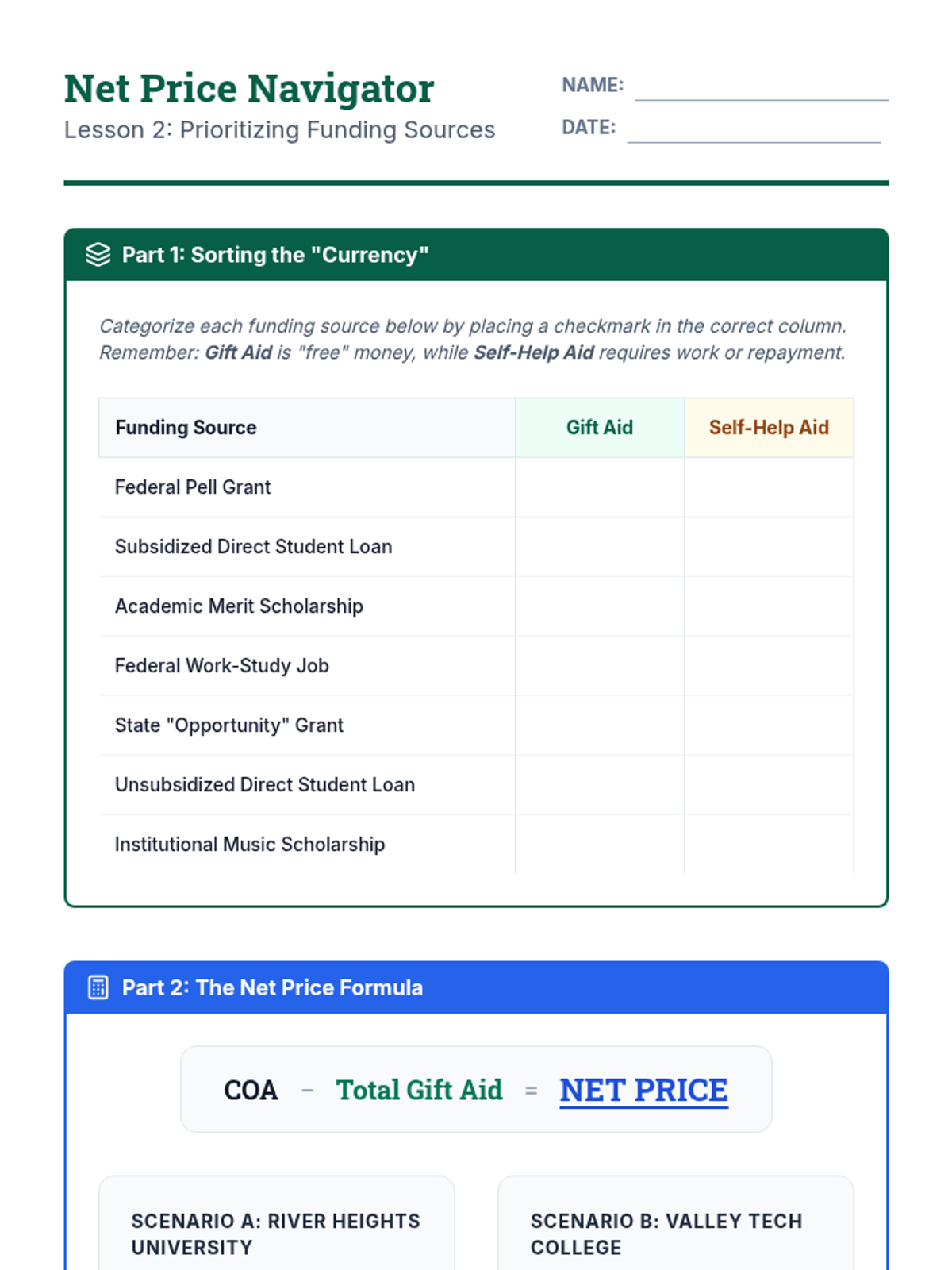
This lesson focuses on maximizing 'gift aid' (scholarships and grants) and calculating the 'net price' before considering 'self-help aid' like loans and work-study.
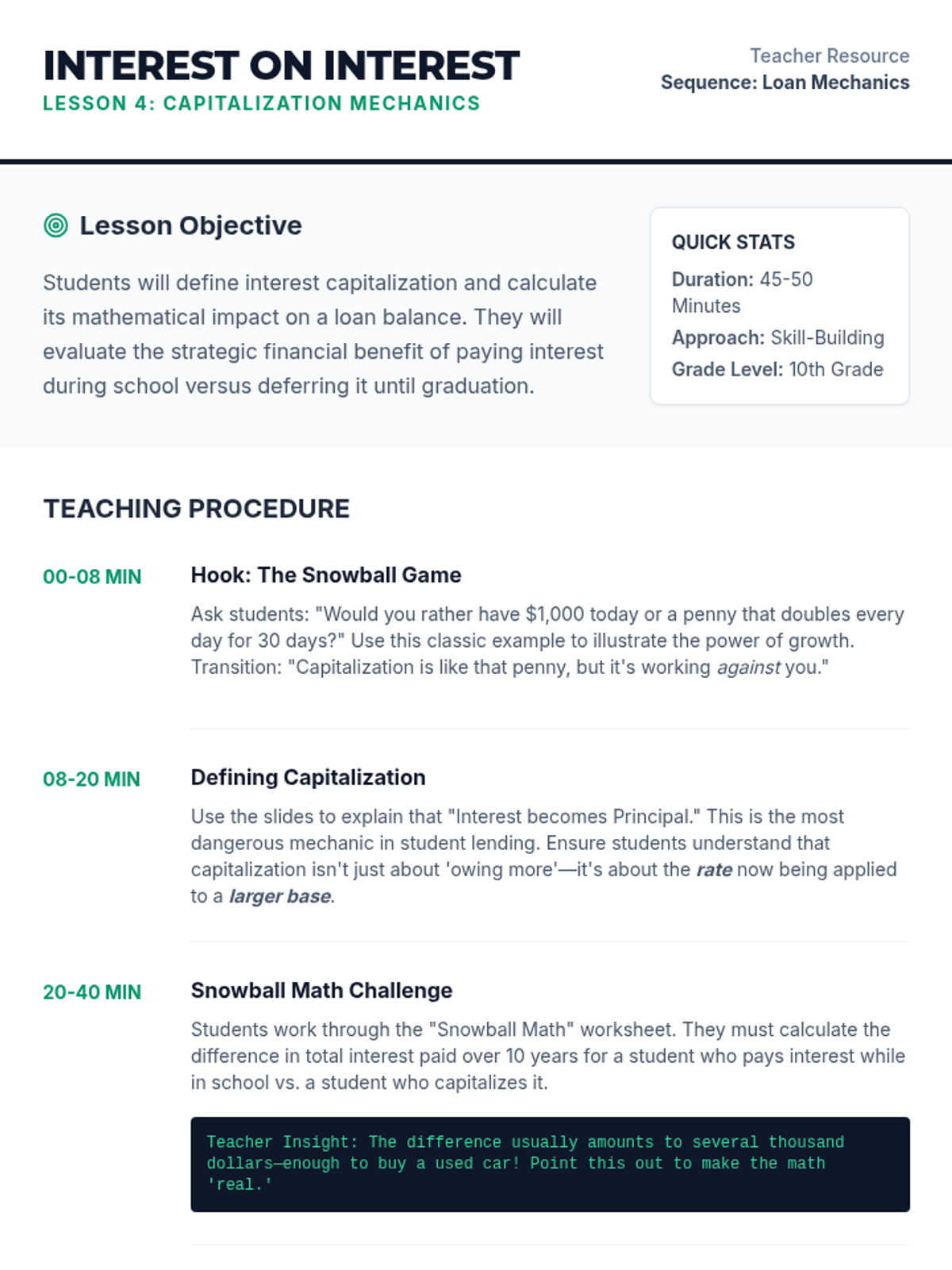
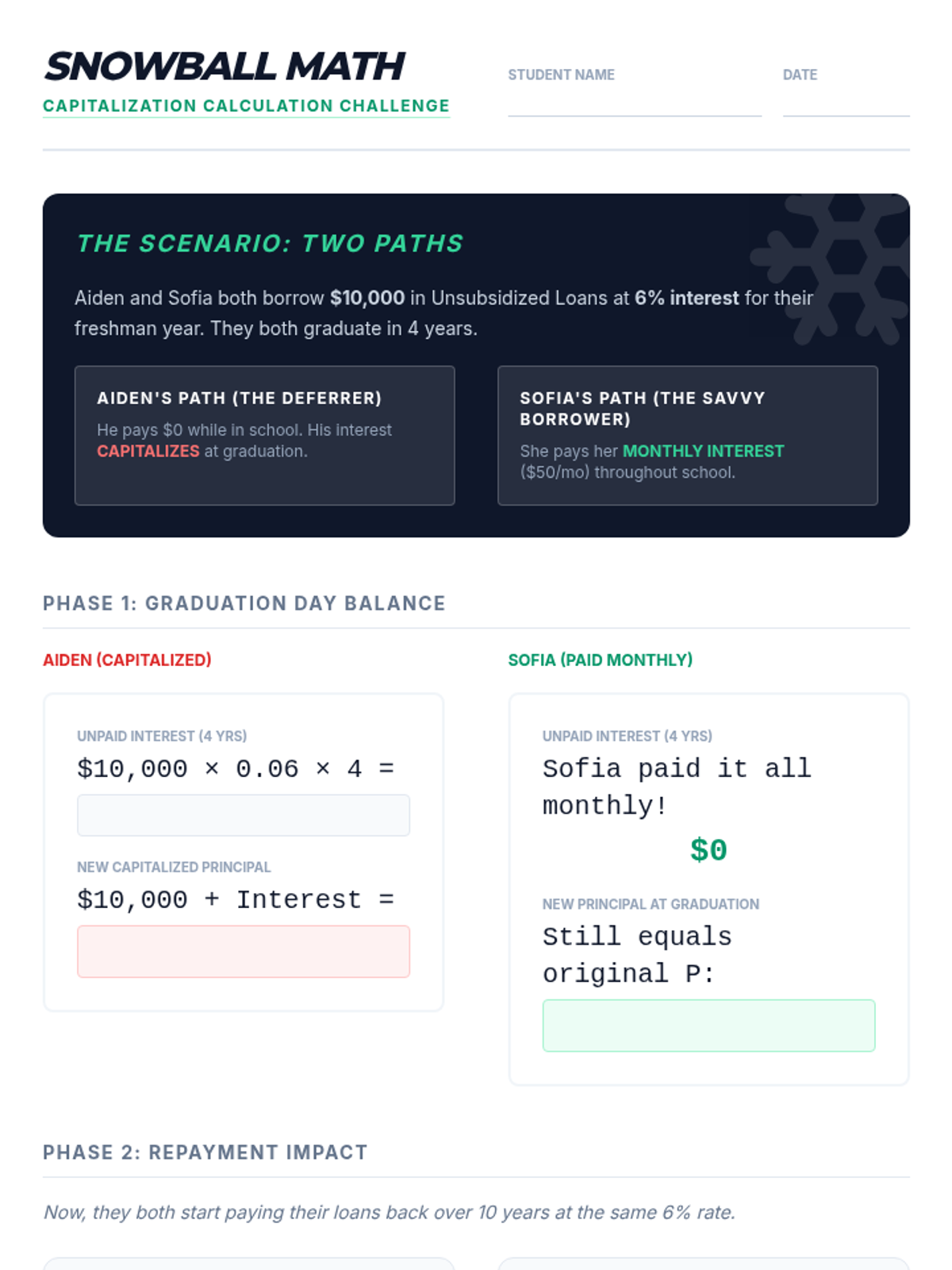
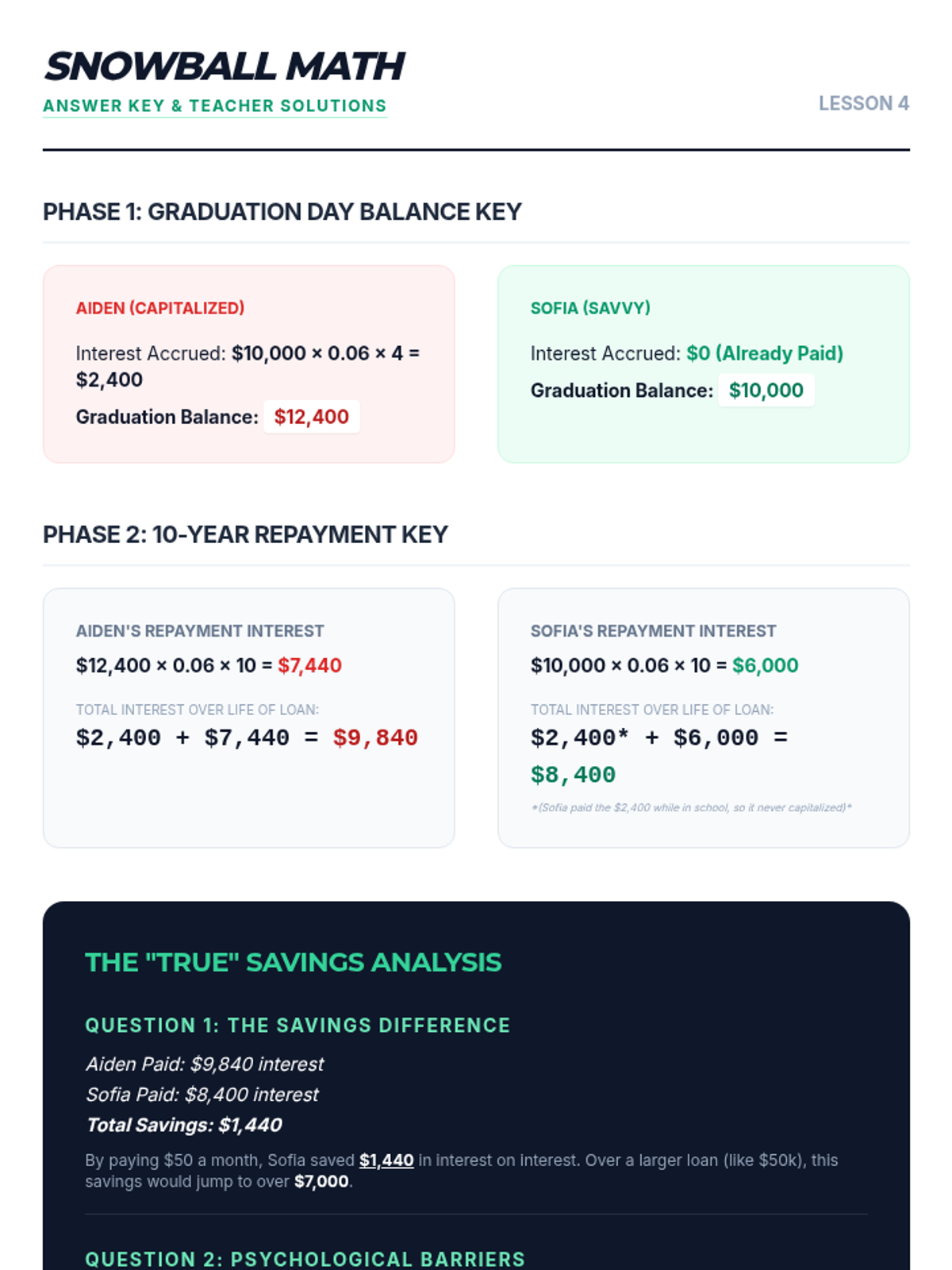
Students learn about interest capitalization and how unpaid interest is added to the principal balance, causing interest to be charged on interest. Through guided practice problems, they calculate the financial impact of paying interest while in school versus deferring it until graduation.
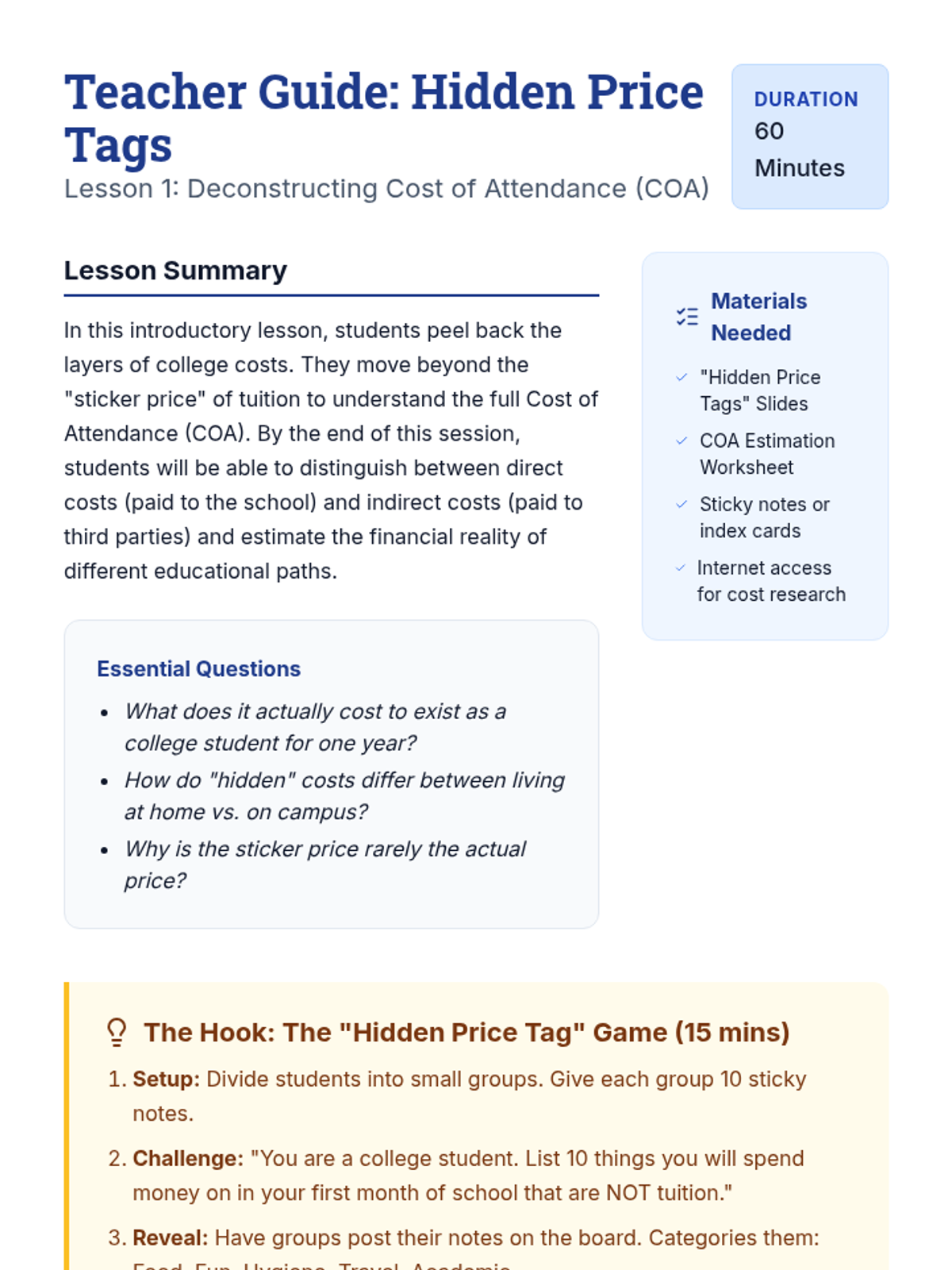
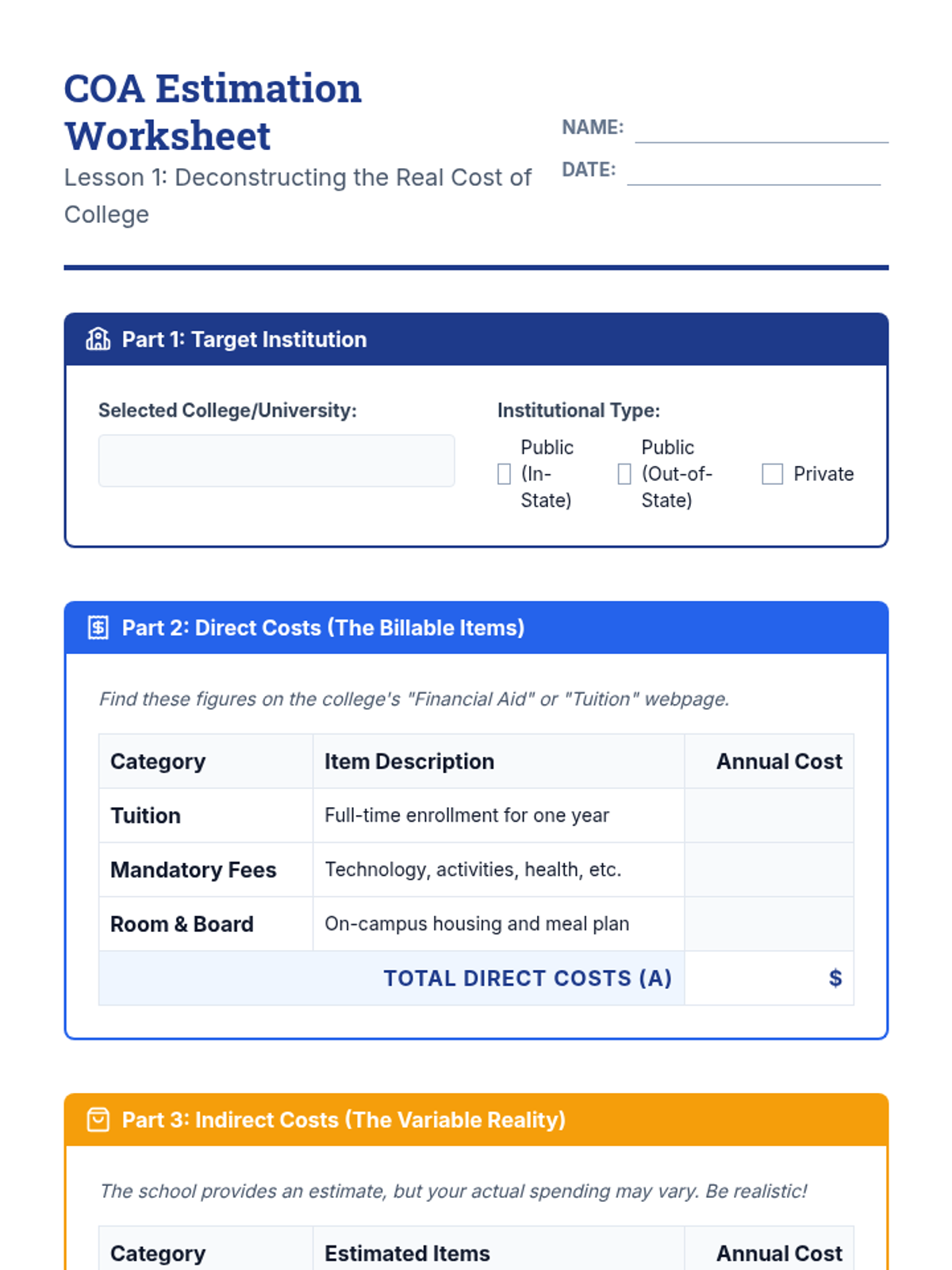
Students differentiate between direct and indirect college costs, calculating the true Cost of Attendance (COA) for various institution types to establish a baseline financial need.
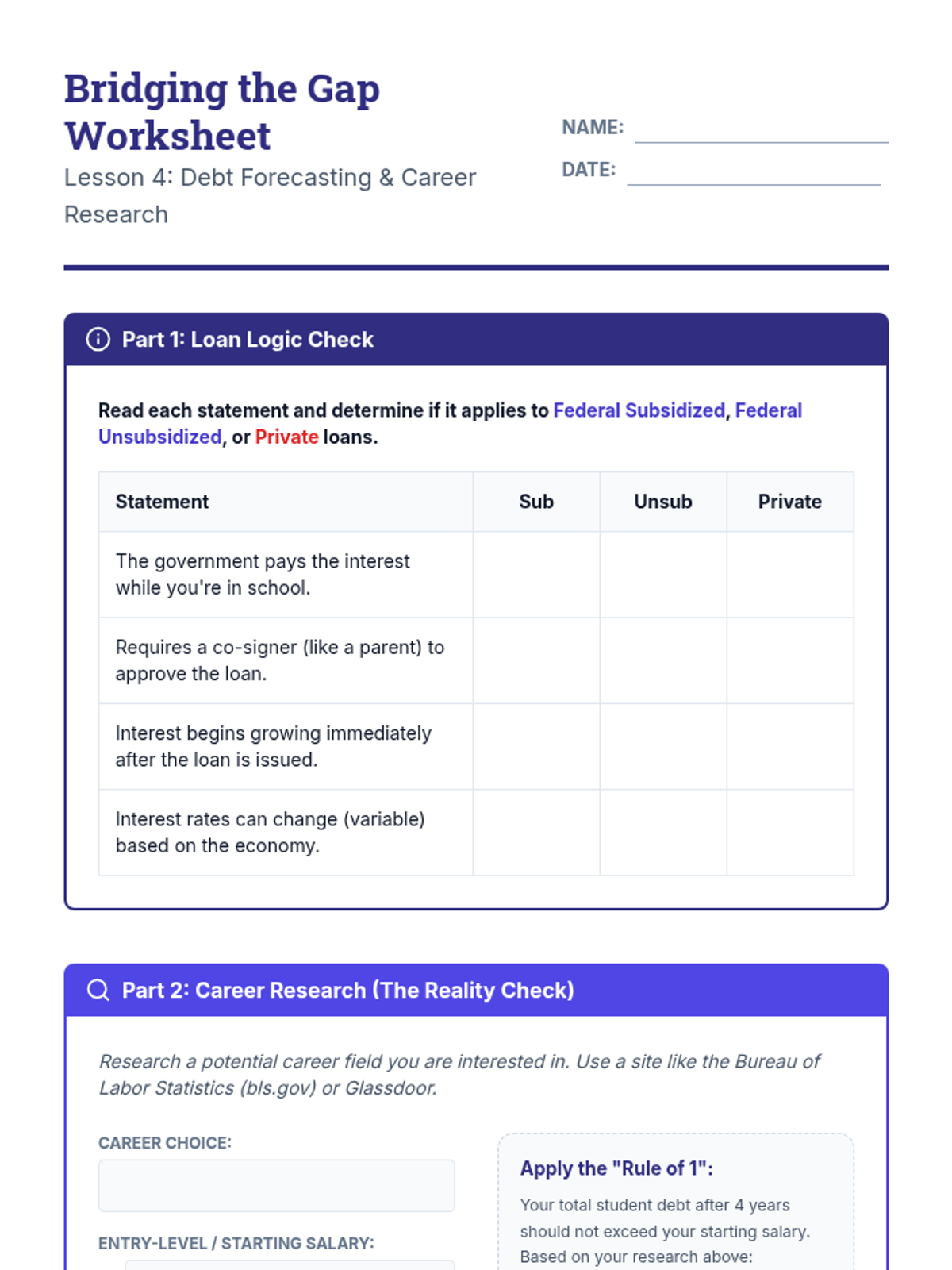
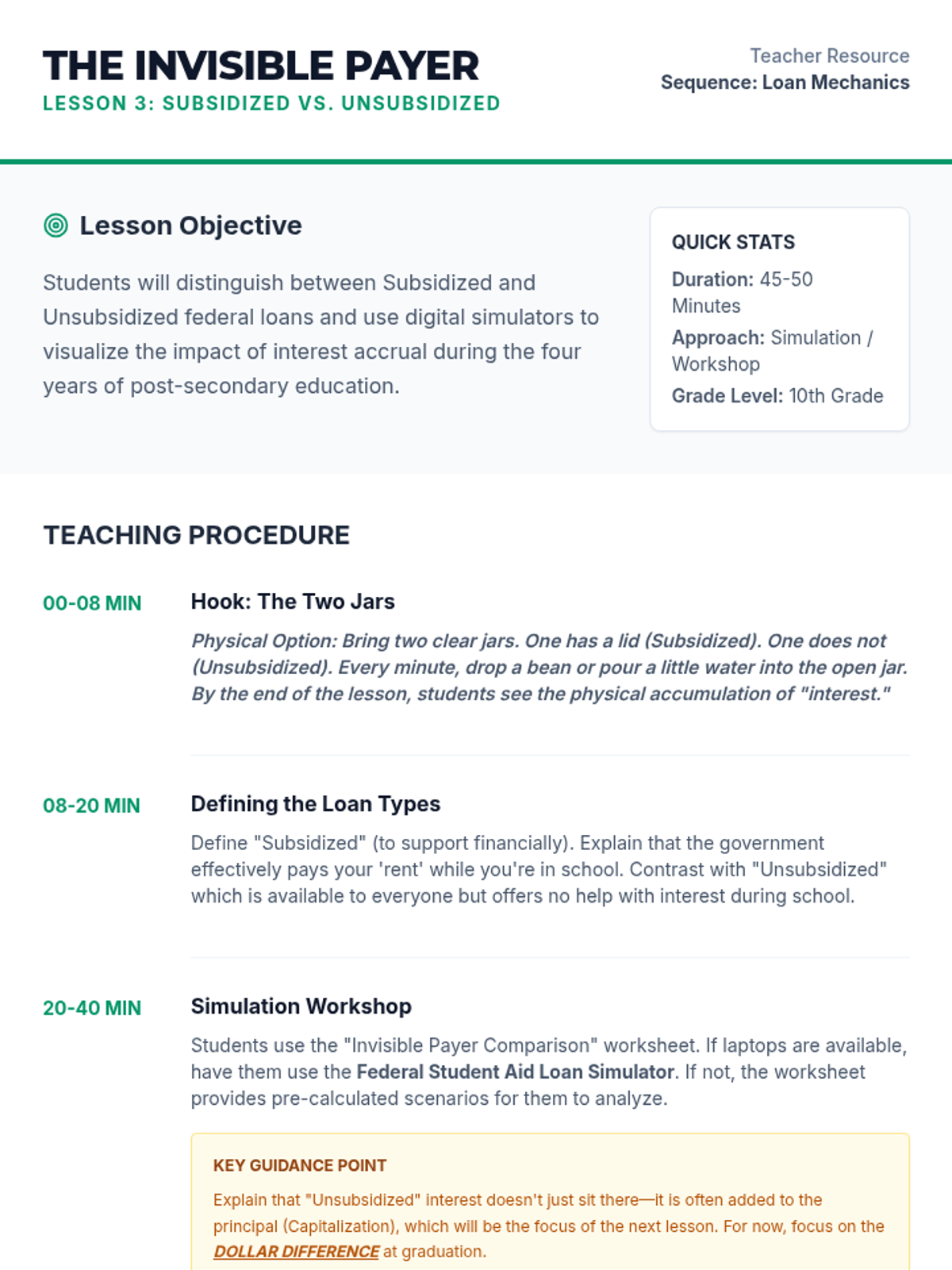
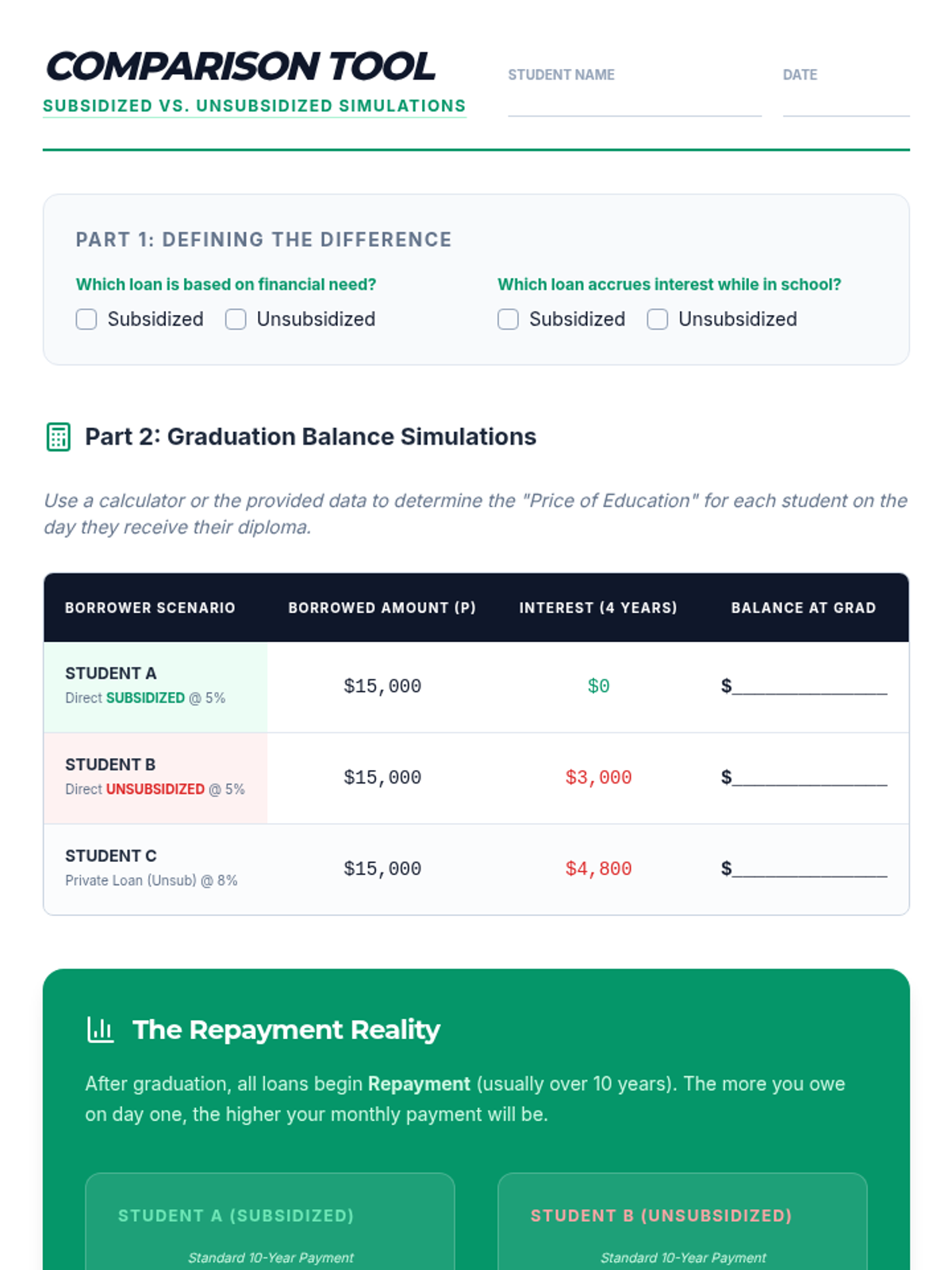
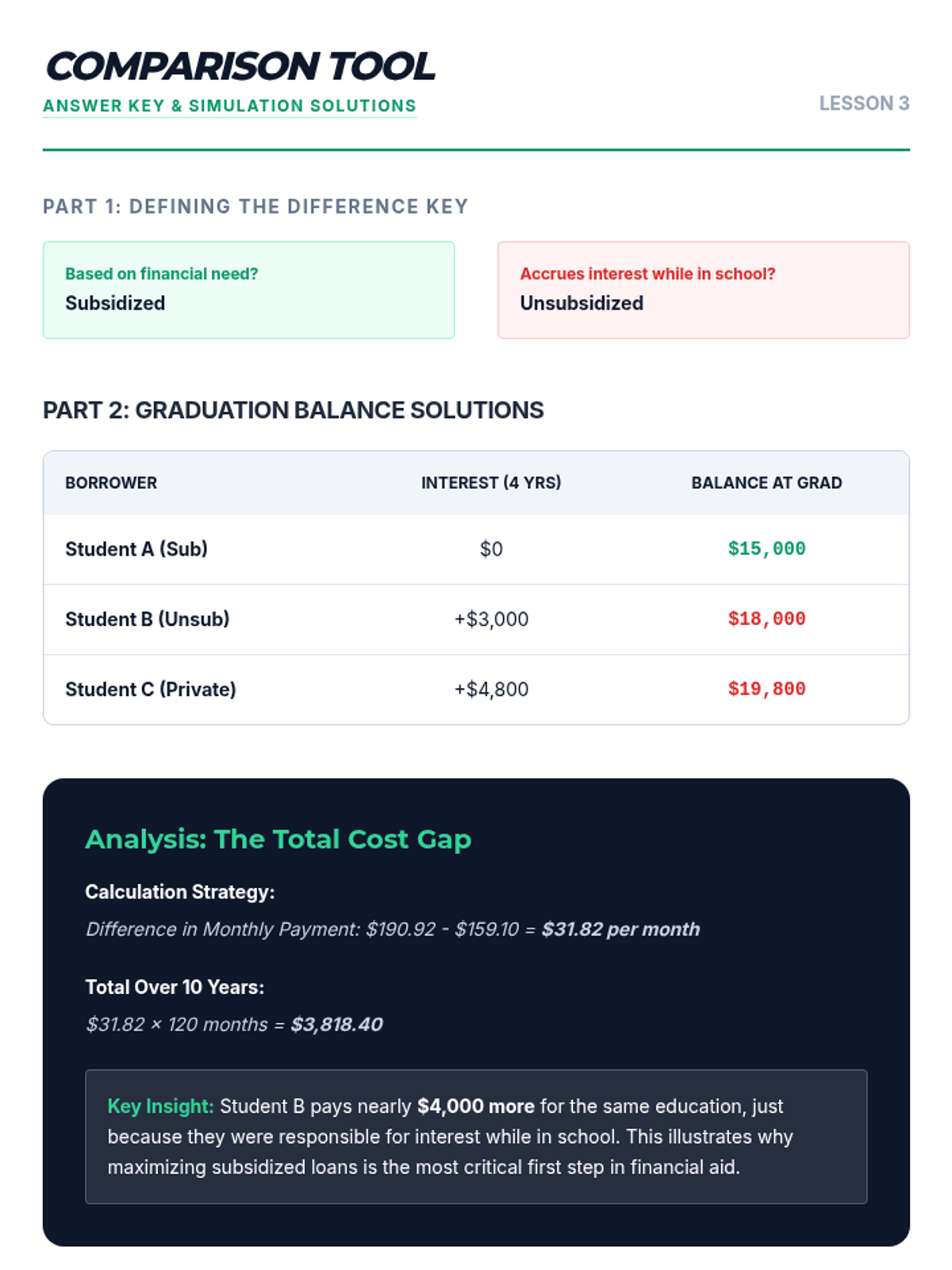
This lesson focuses on the critical distinction between subsidized and unsubsidized federal loans. Students examine how the government pays interest on subsidized loans while the student is in school, contrasting this with how interest accumulates immediately on unsubsidized loans.
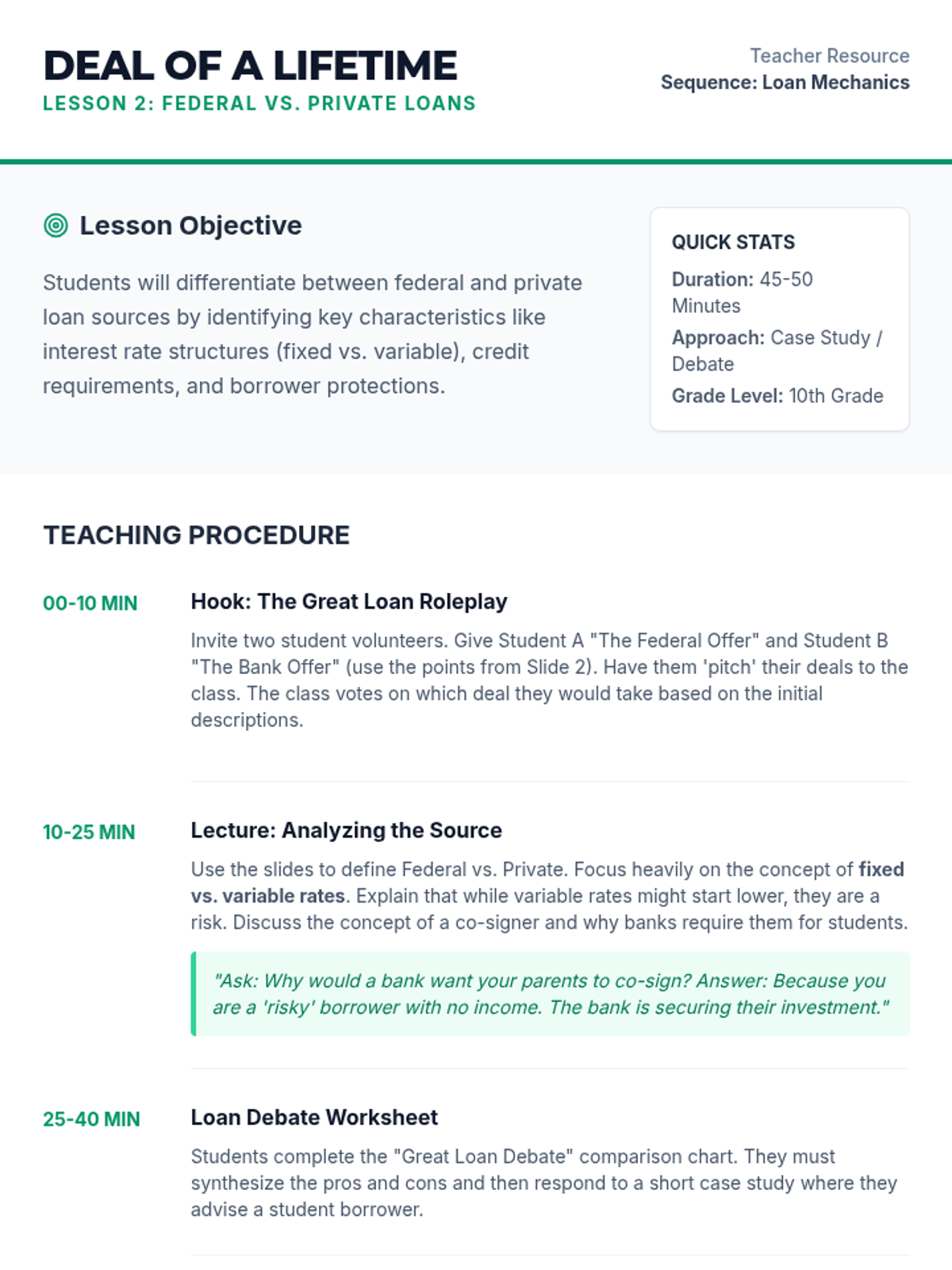
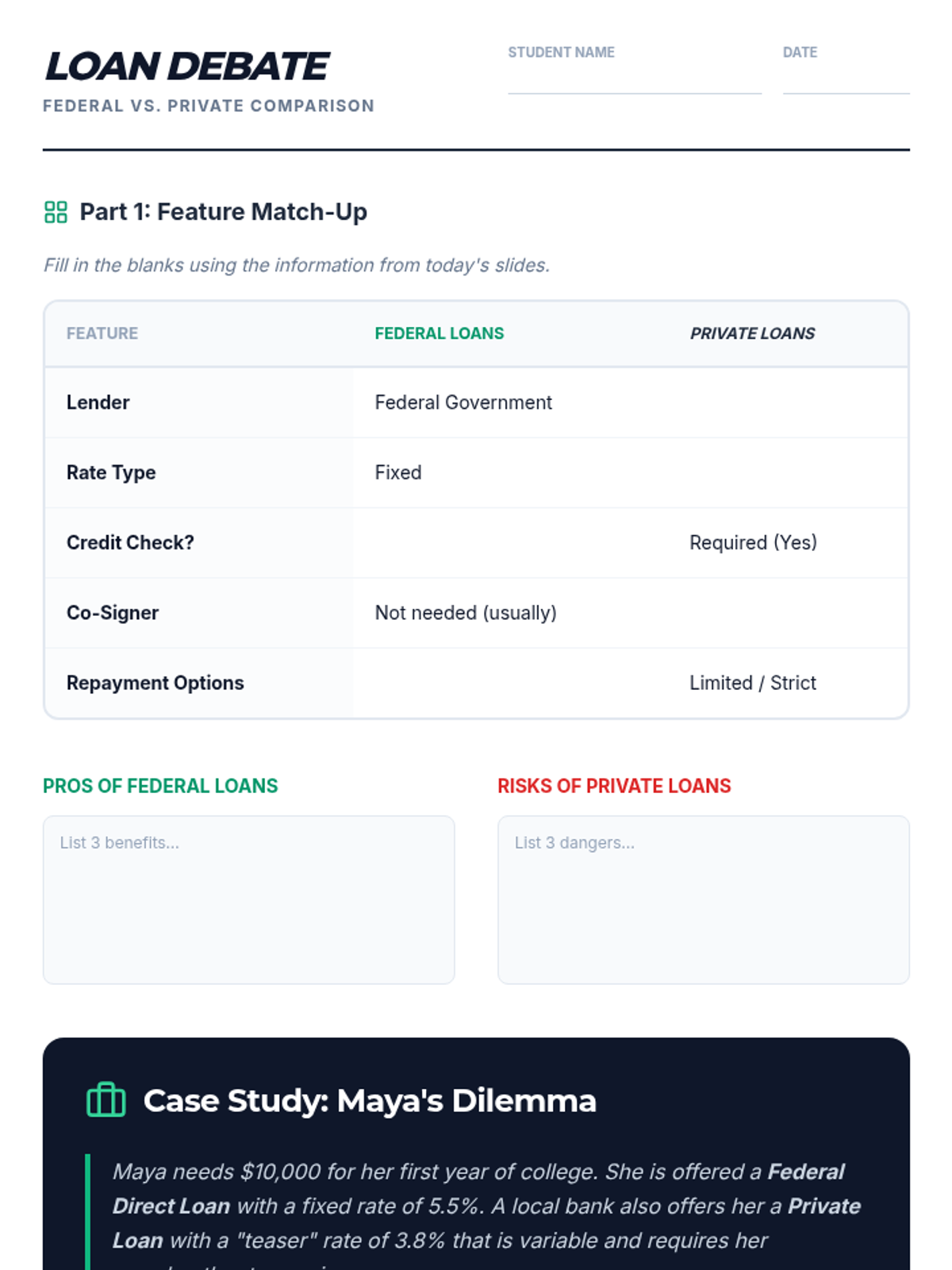
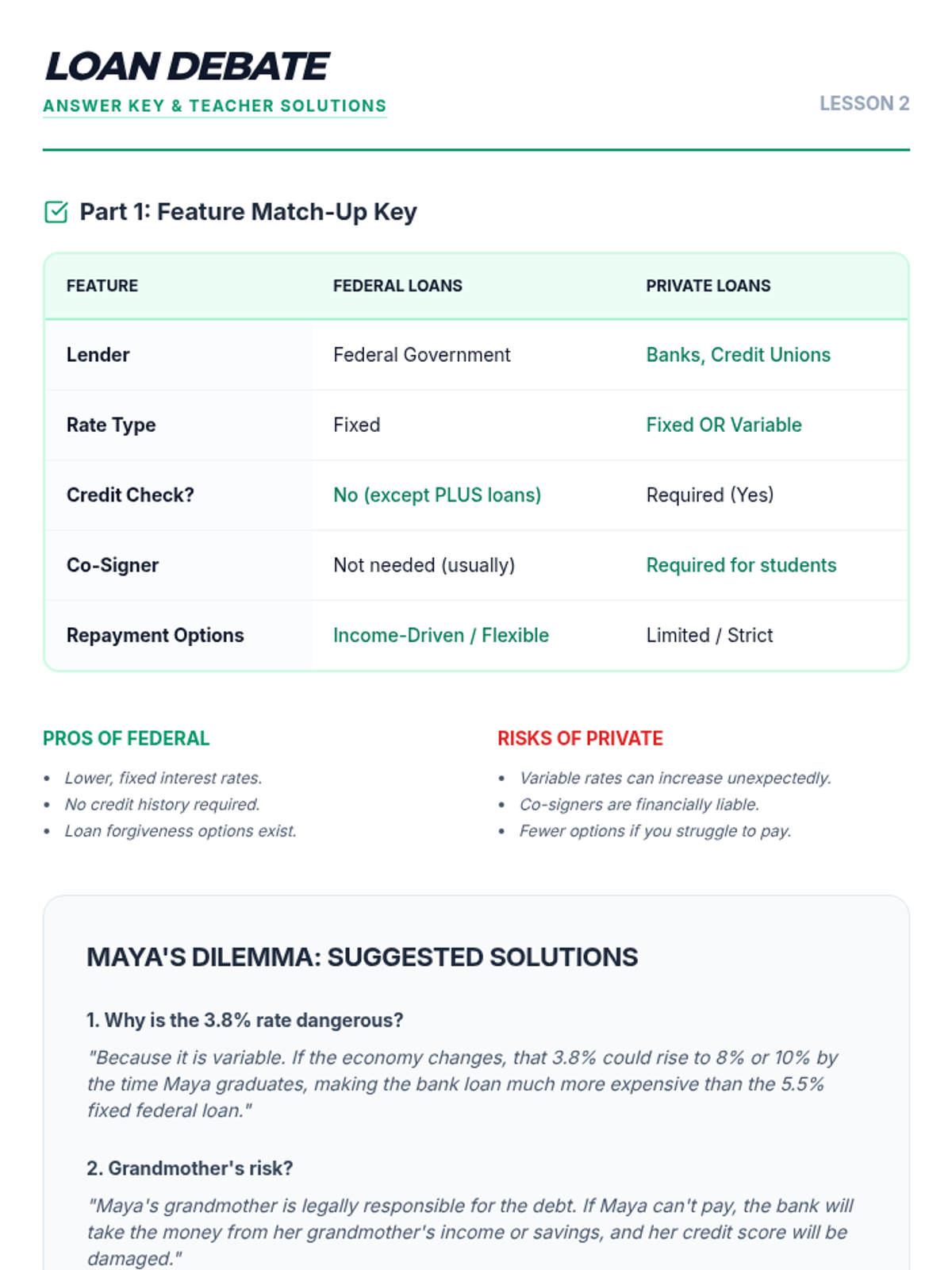
Learners investigate the differences between federal government loans and private bank loans, comparing interest rate structures (fixed vs. variable) and borrower protections. Students create a comparison chart highlighting the pros and cons of each funding source.
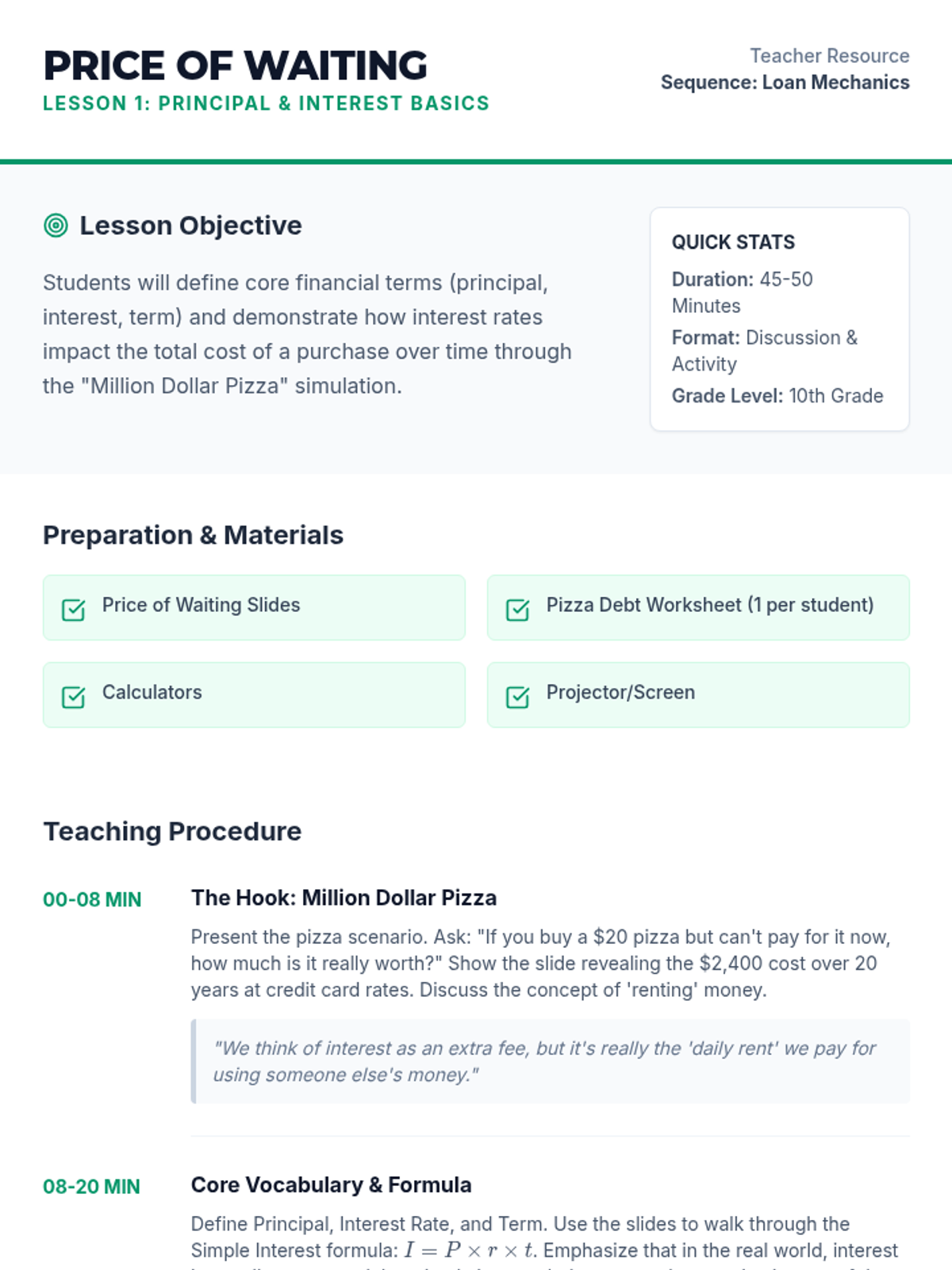
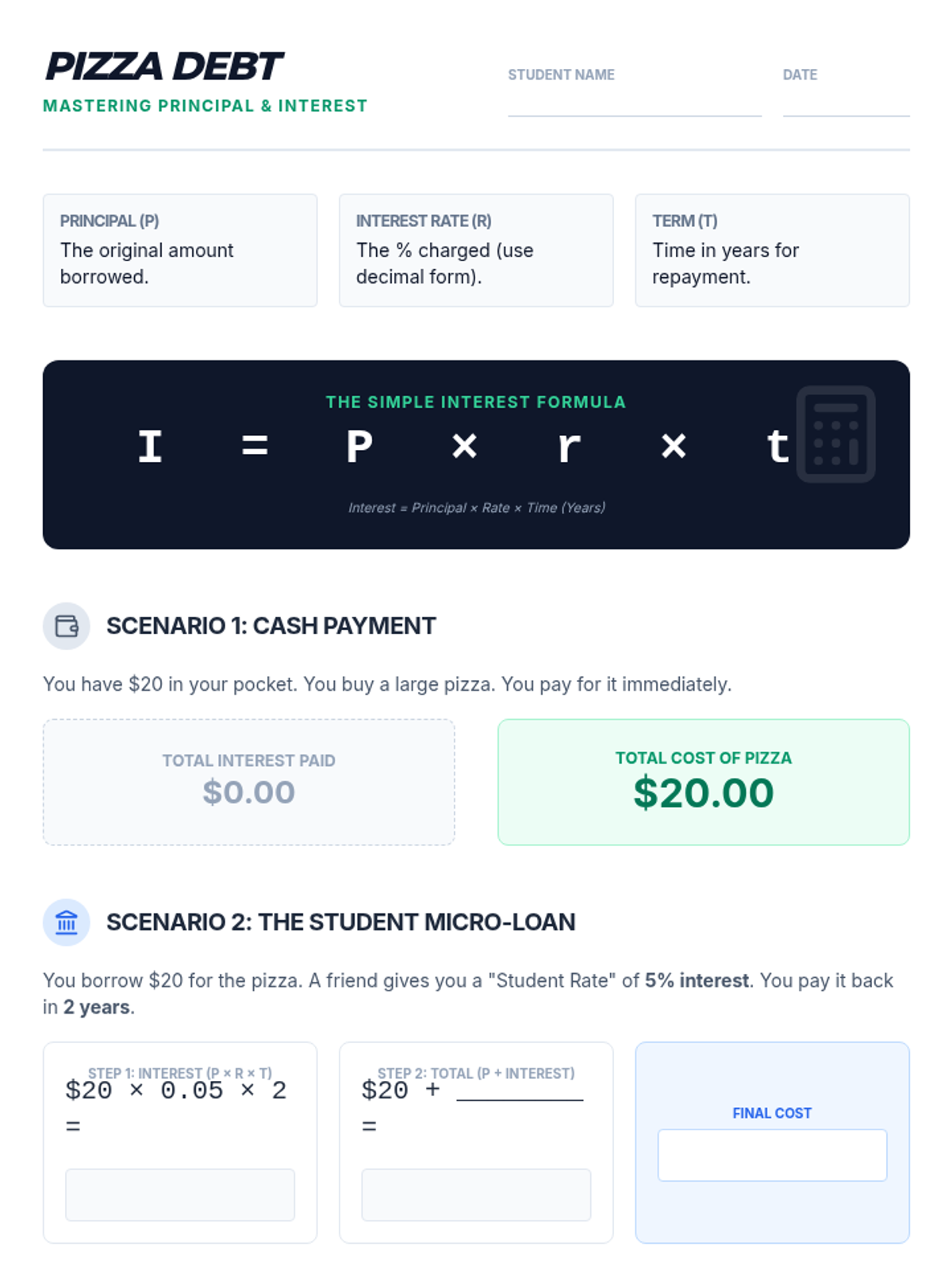
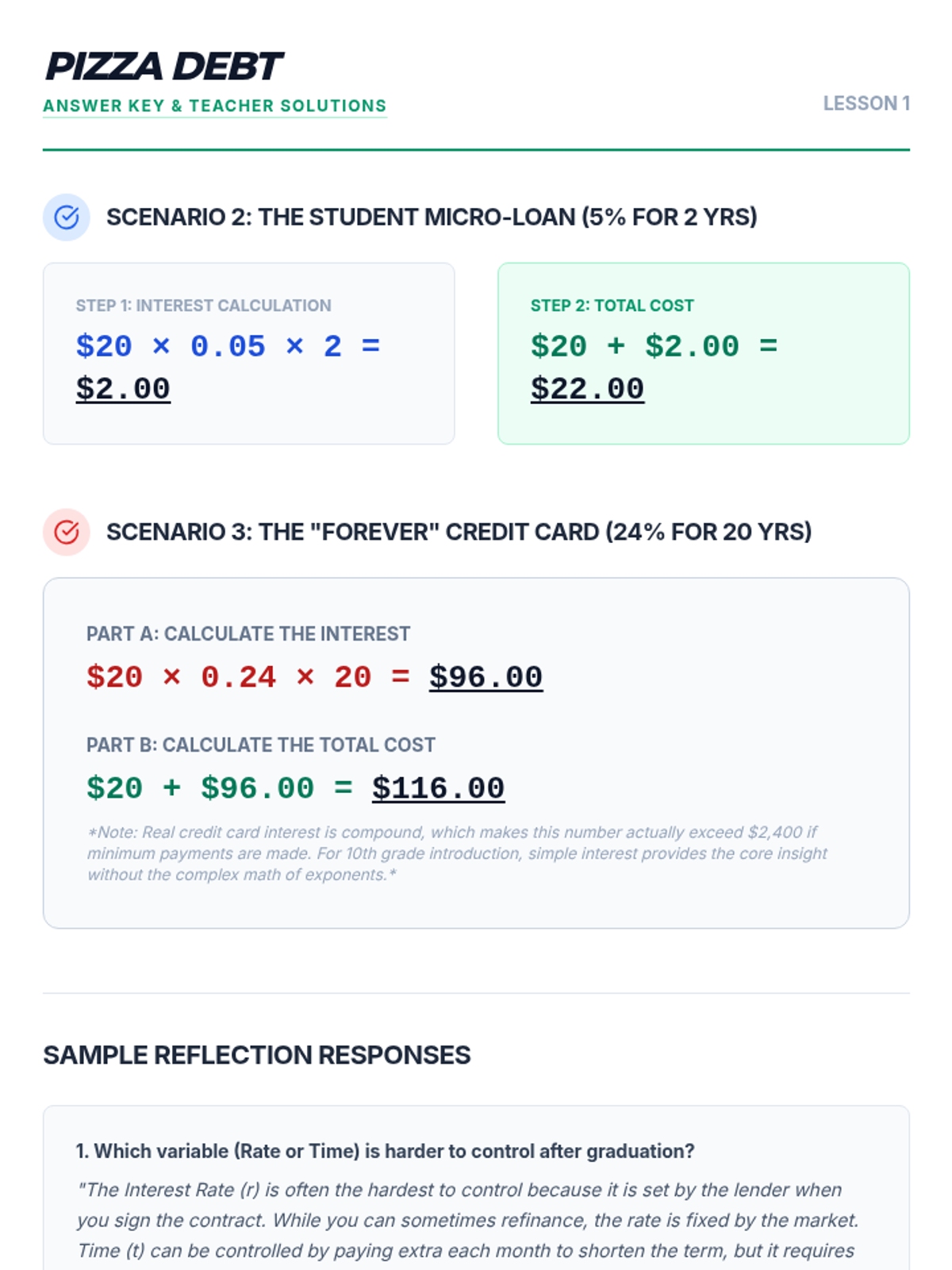
Students explore the basic vocabulary of lending, defining principal, interest rates, and the term of a loan. They perform basic calculations to see how the cost of an item increases when purchased on credit versus cash.