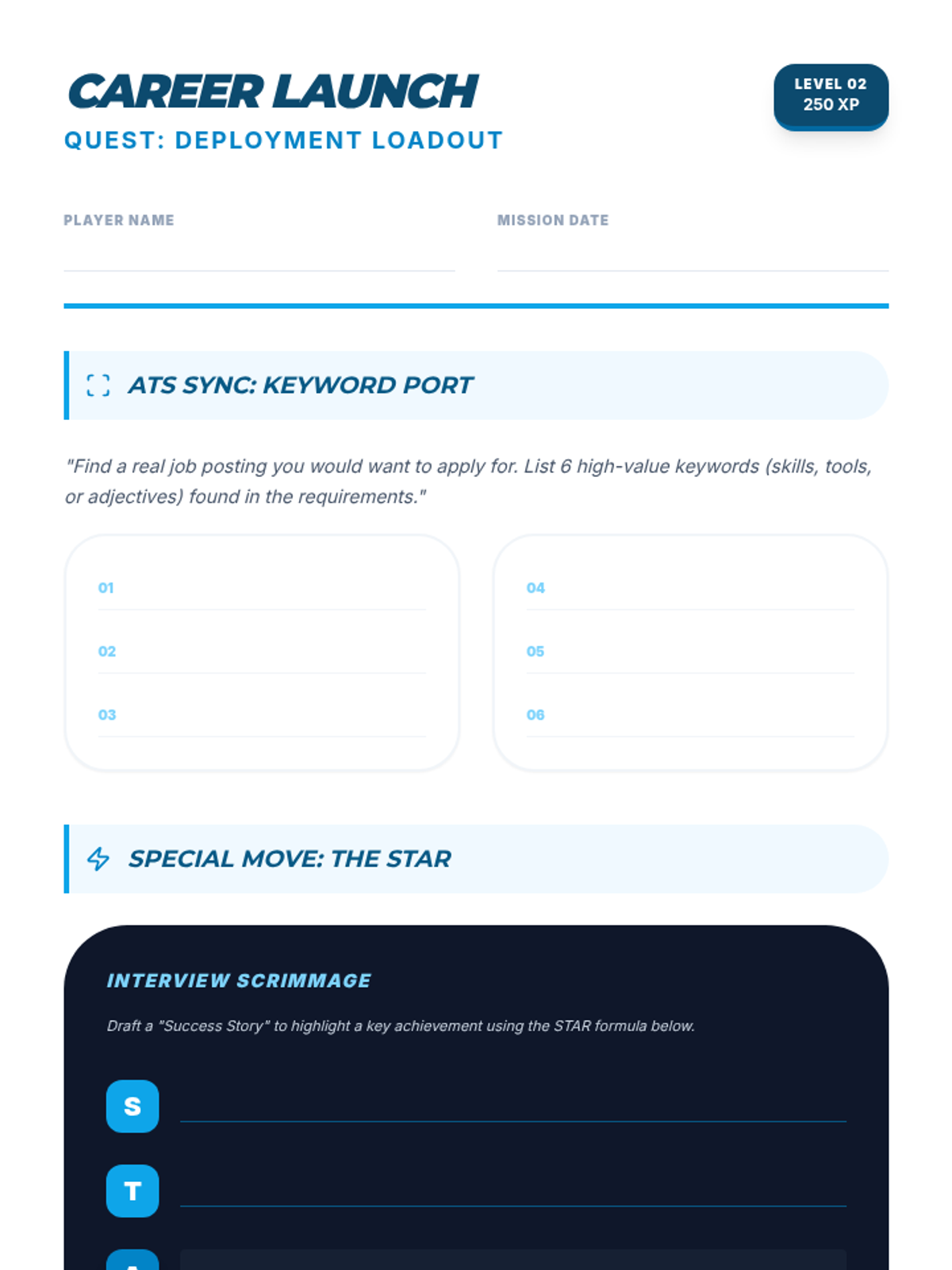
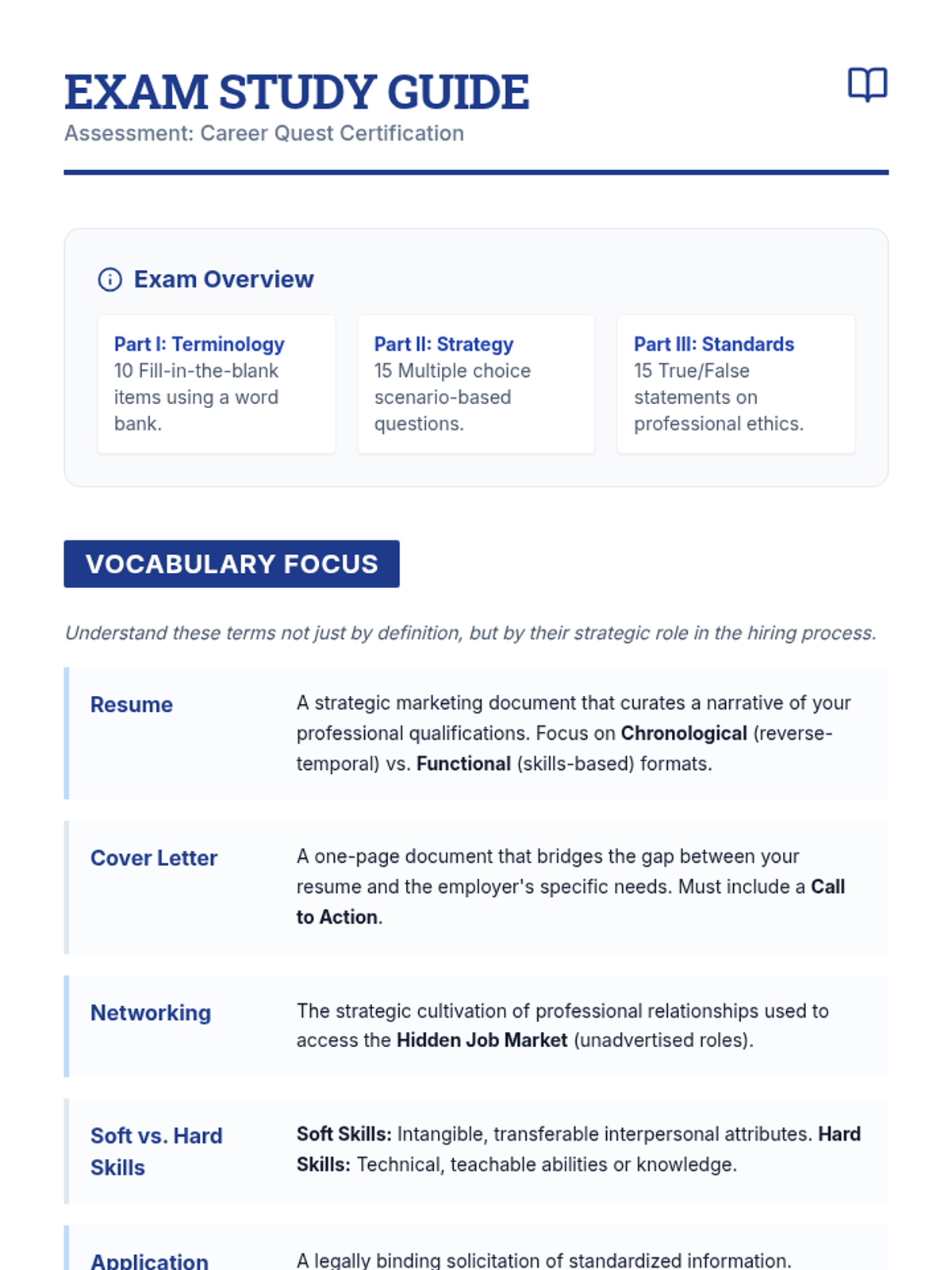
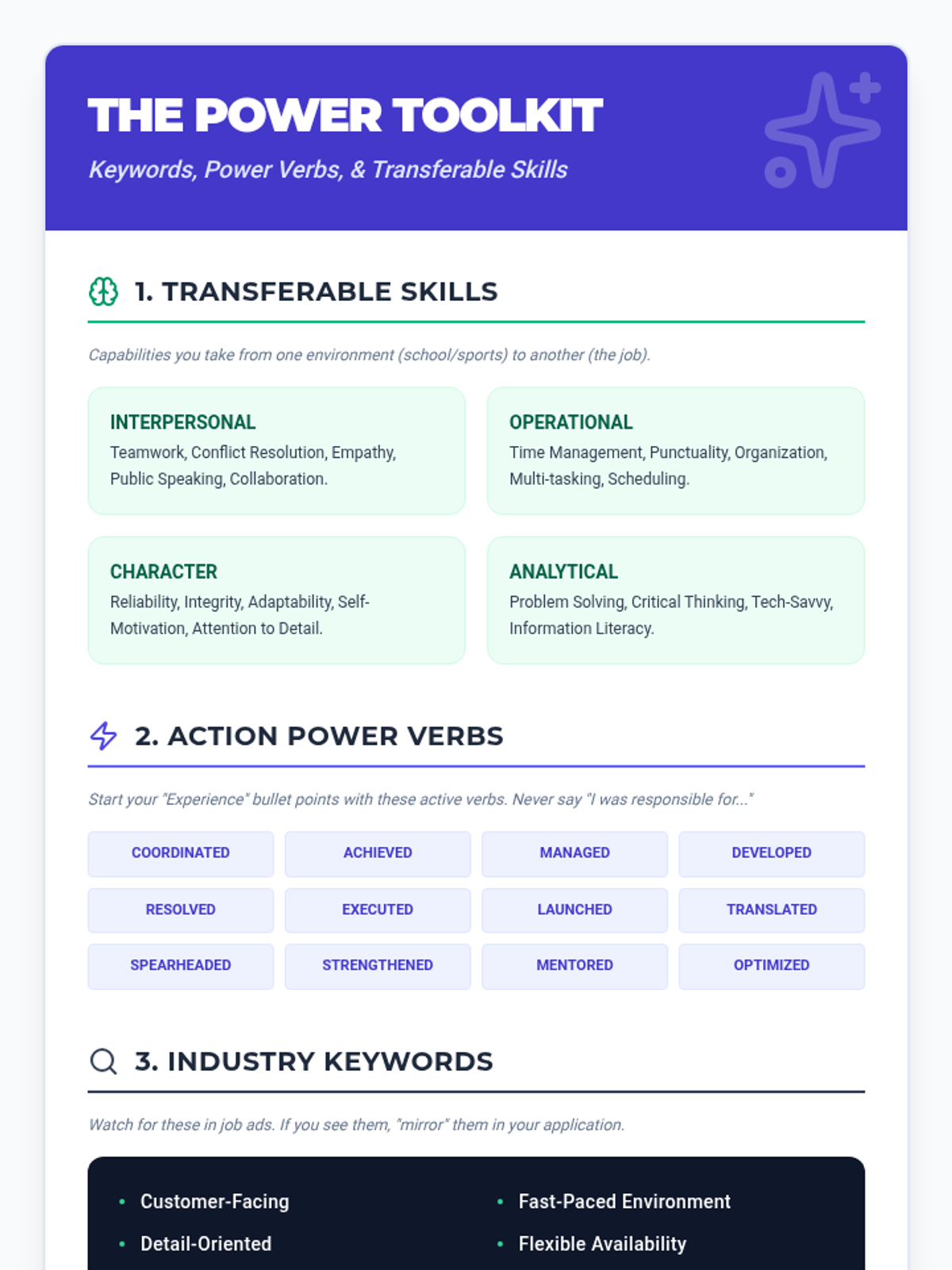
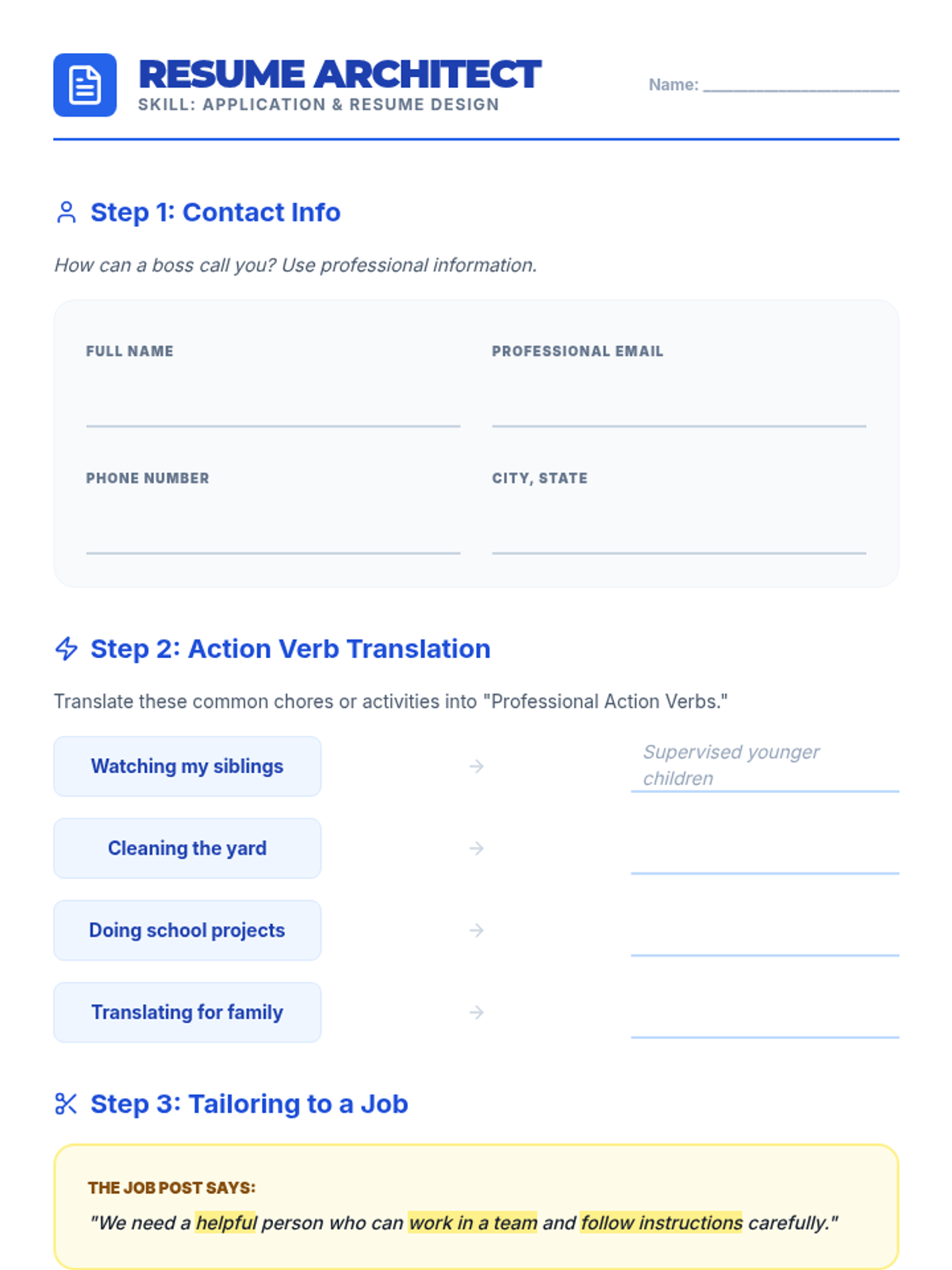
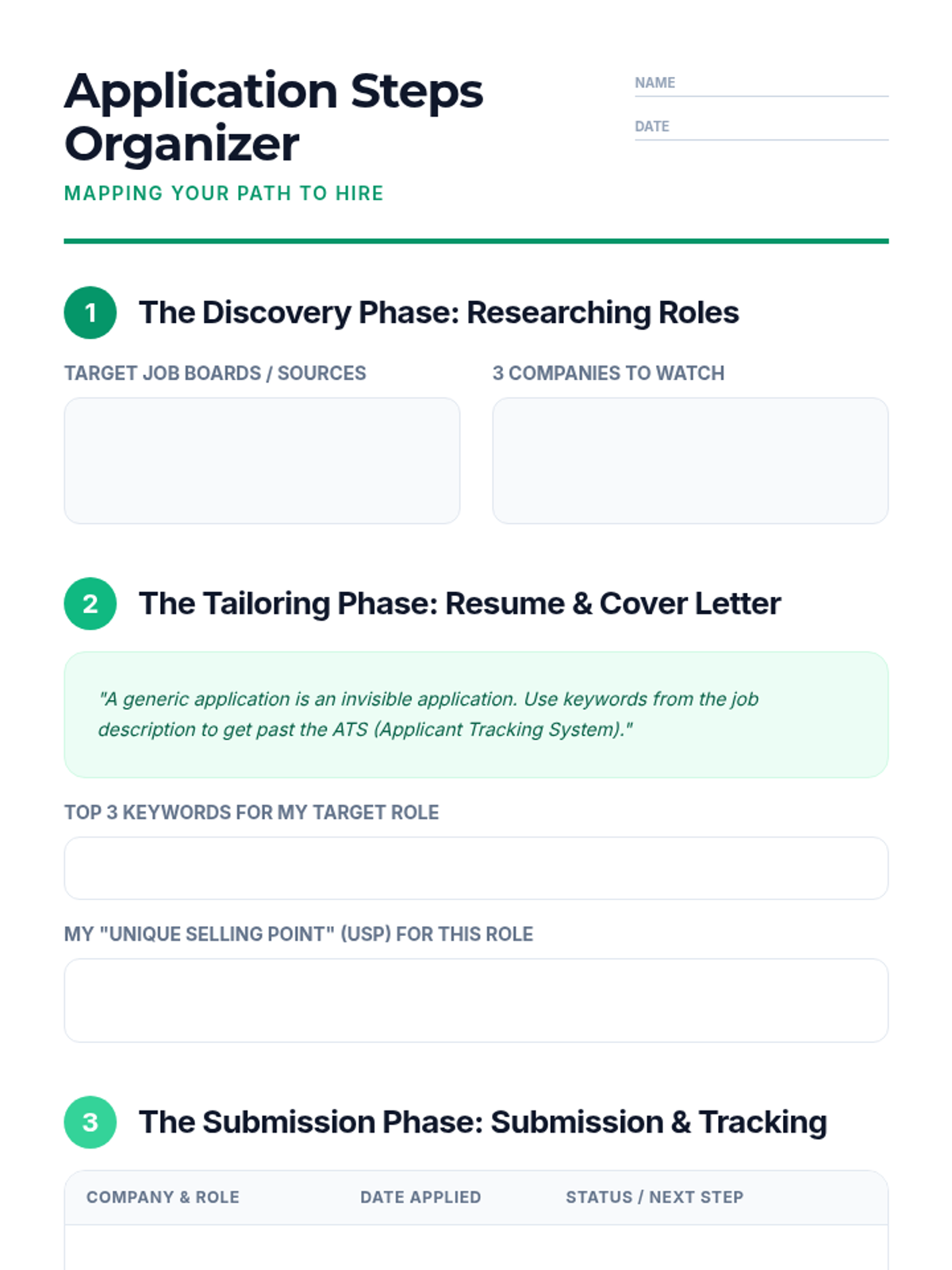
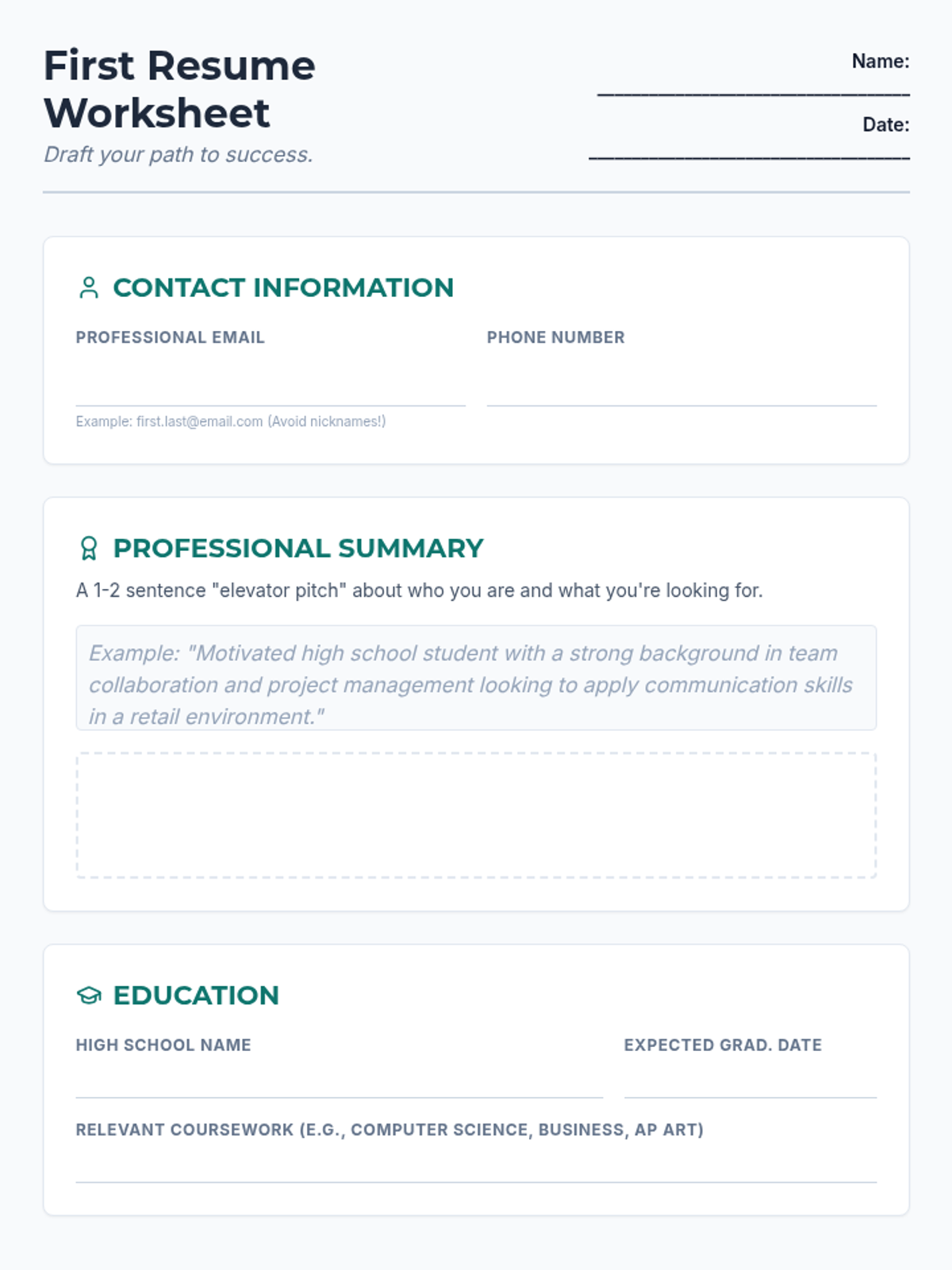
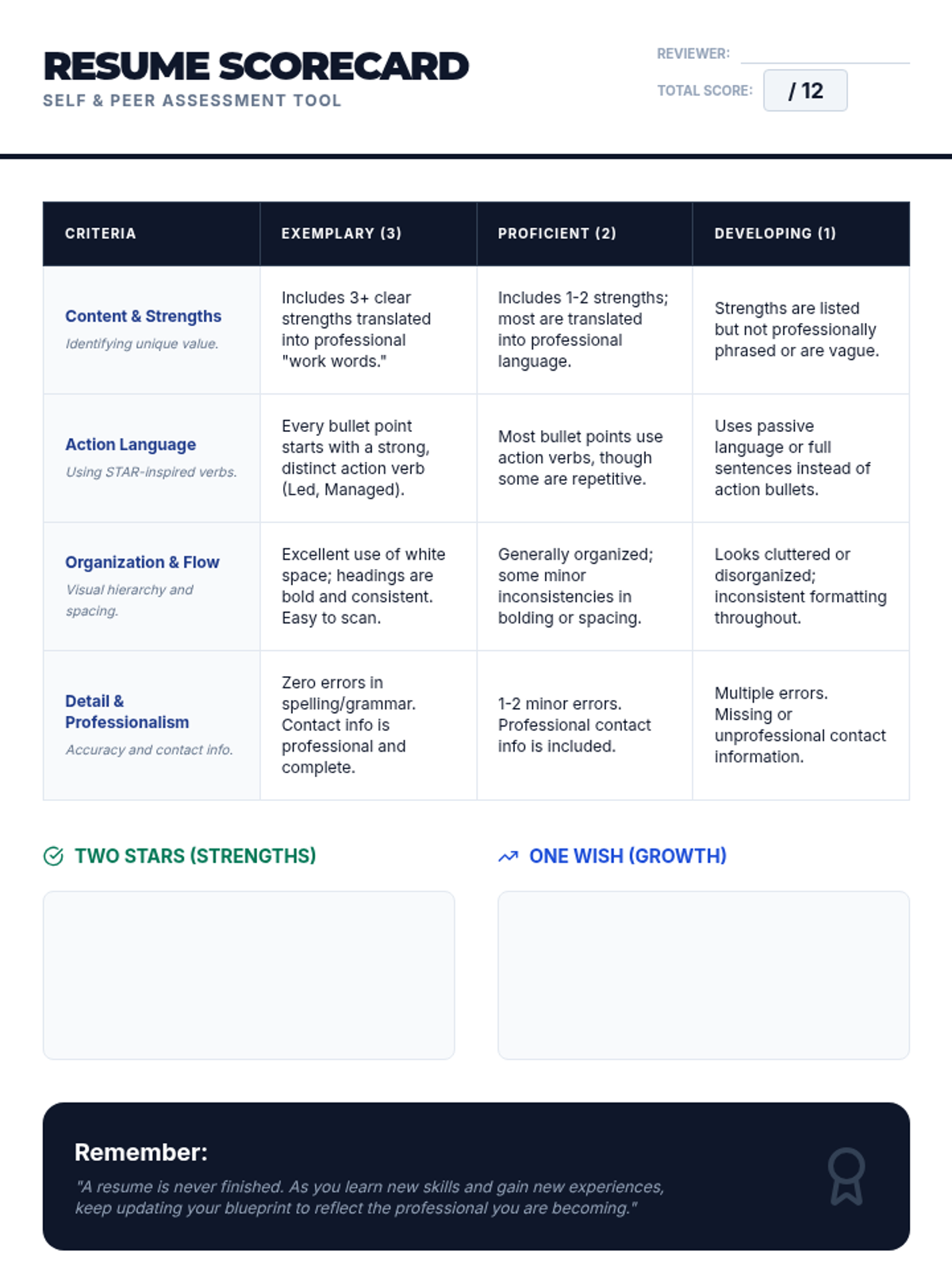
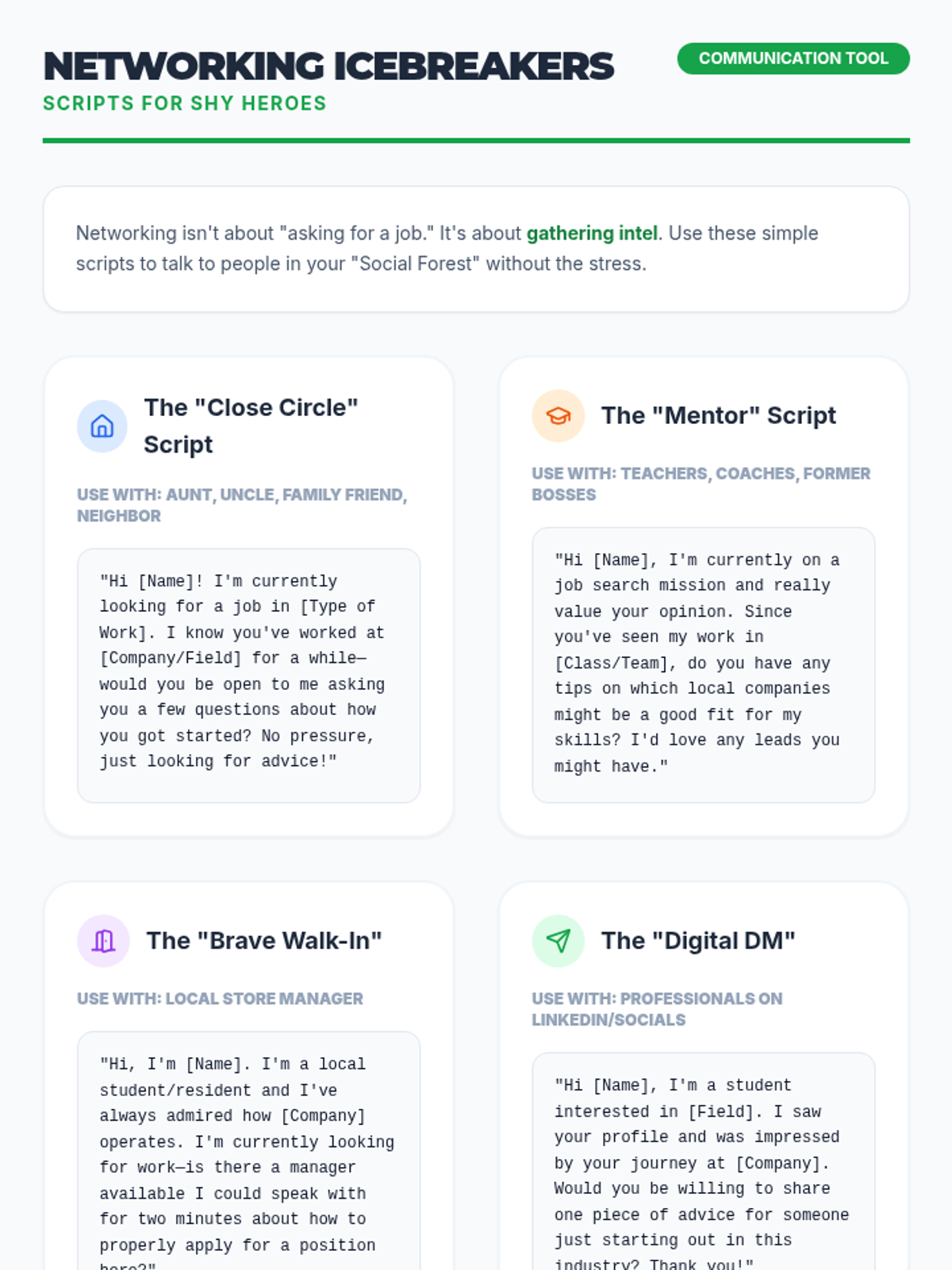
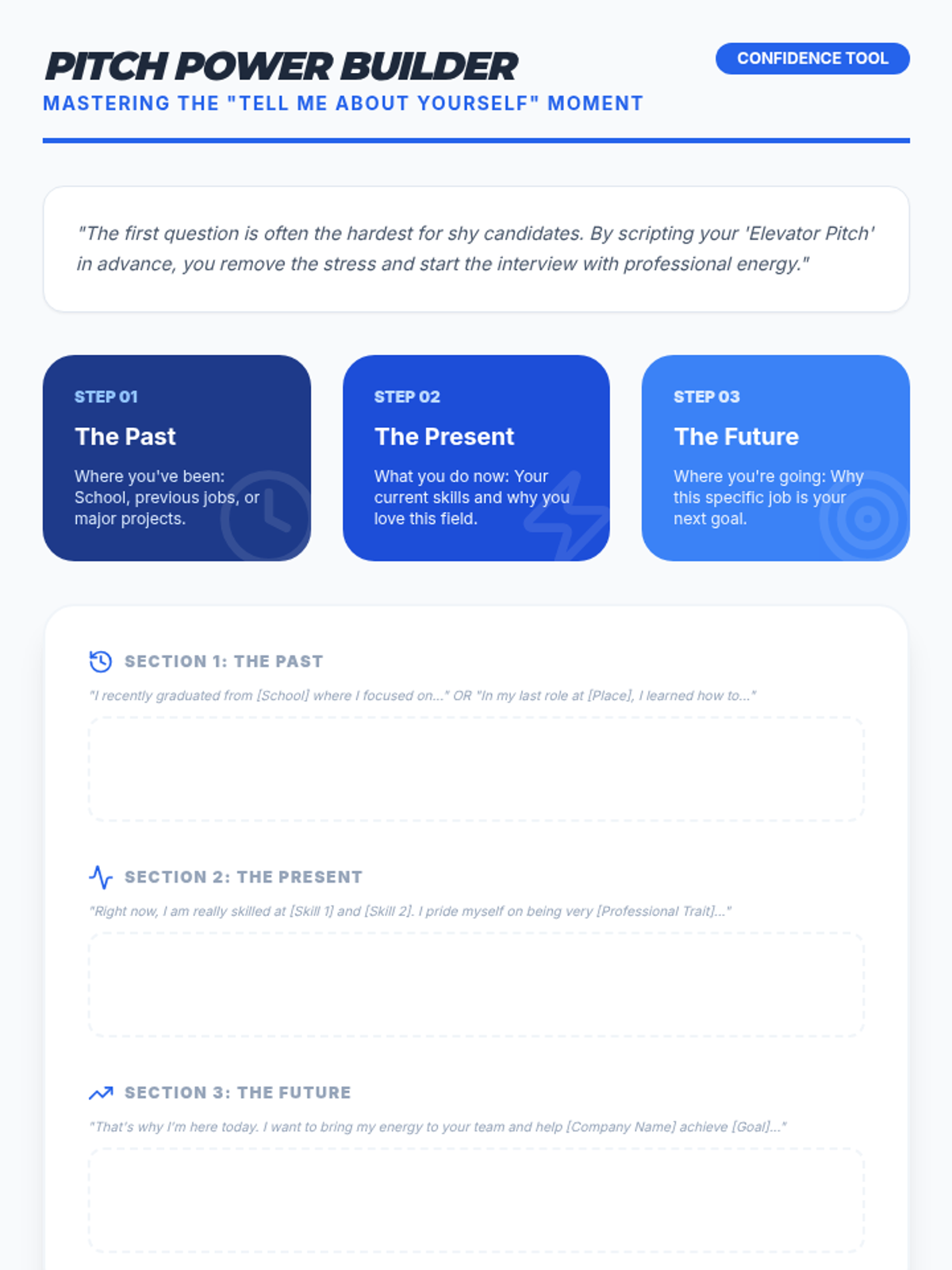
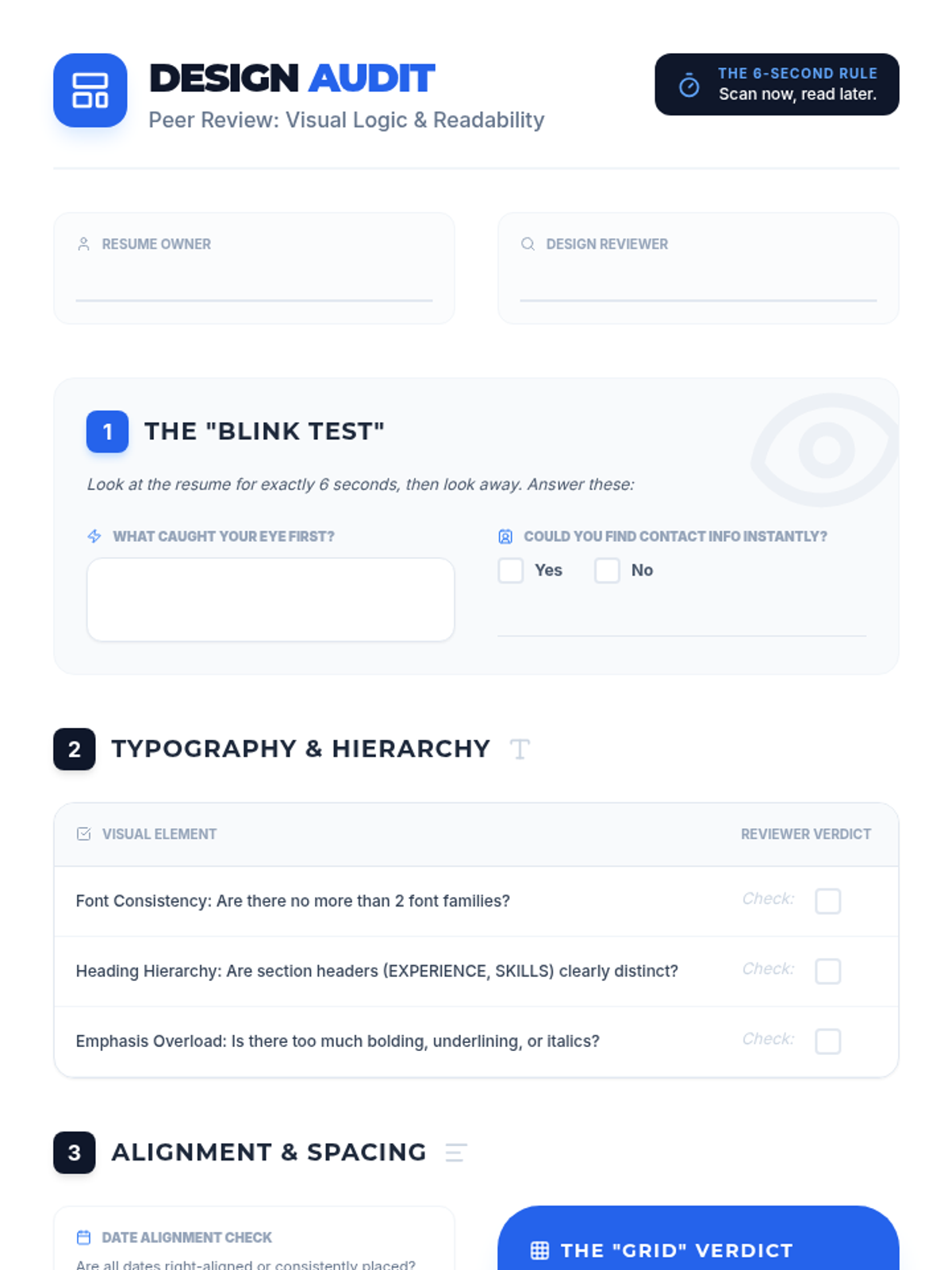
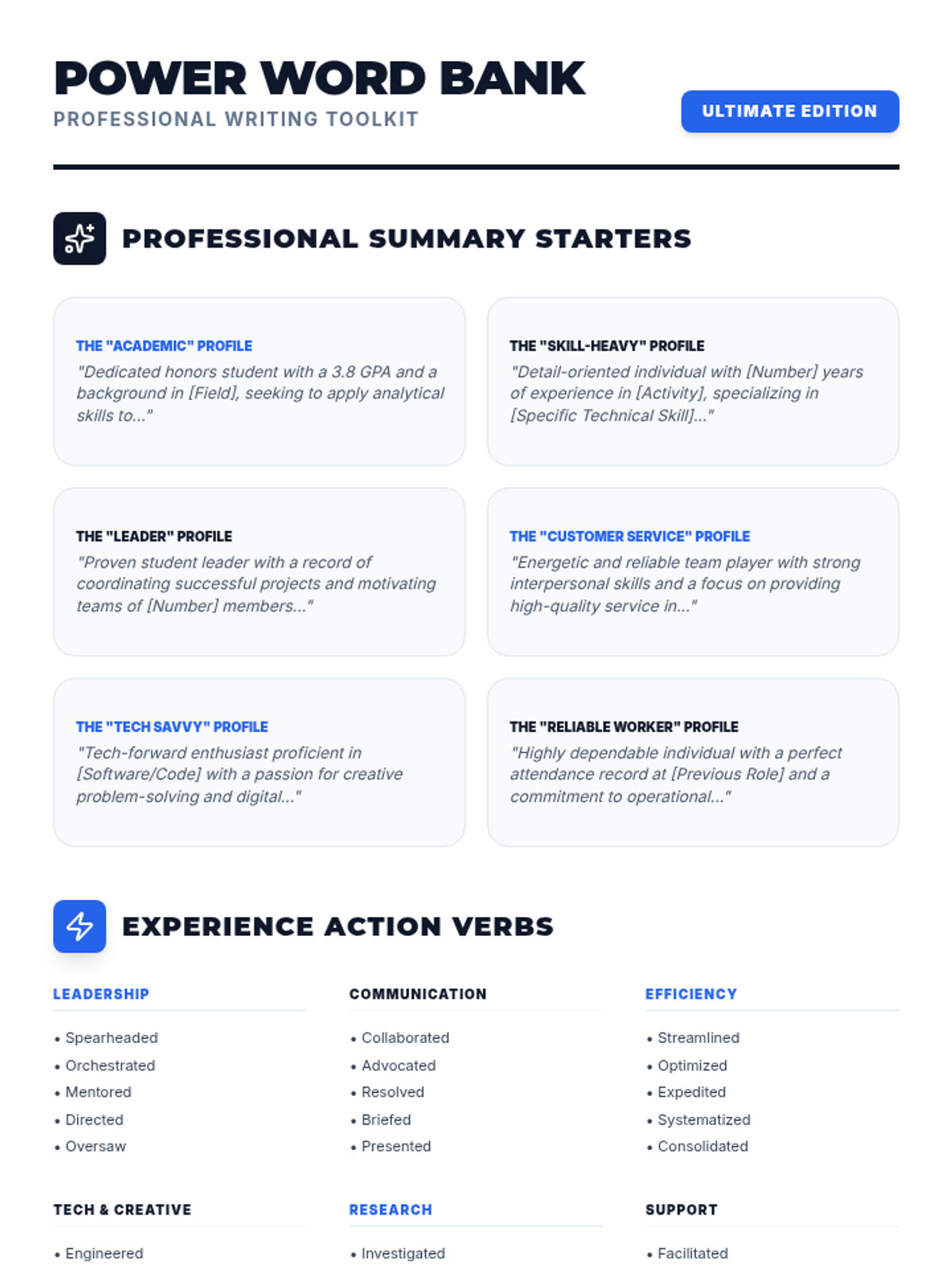
Resume construction, cover letter drafting, and networking techniques for modern job markets. Equips learners to analyze job descriptions and tailor applications using achievement-based language.
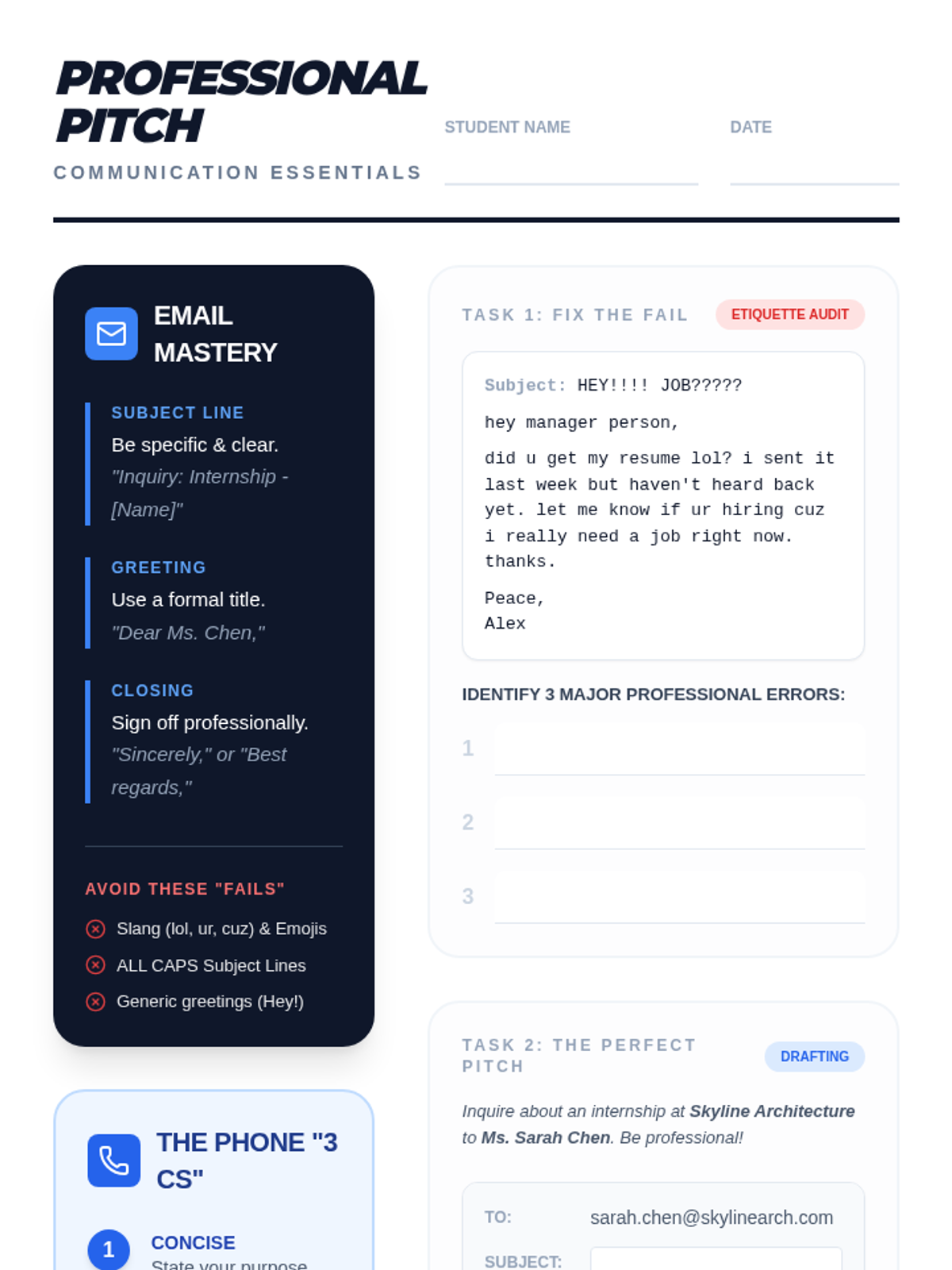
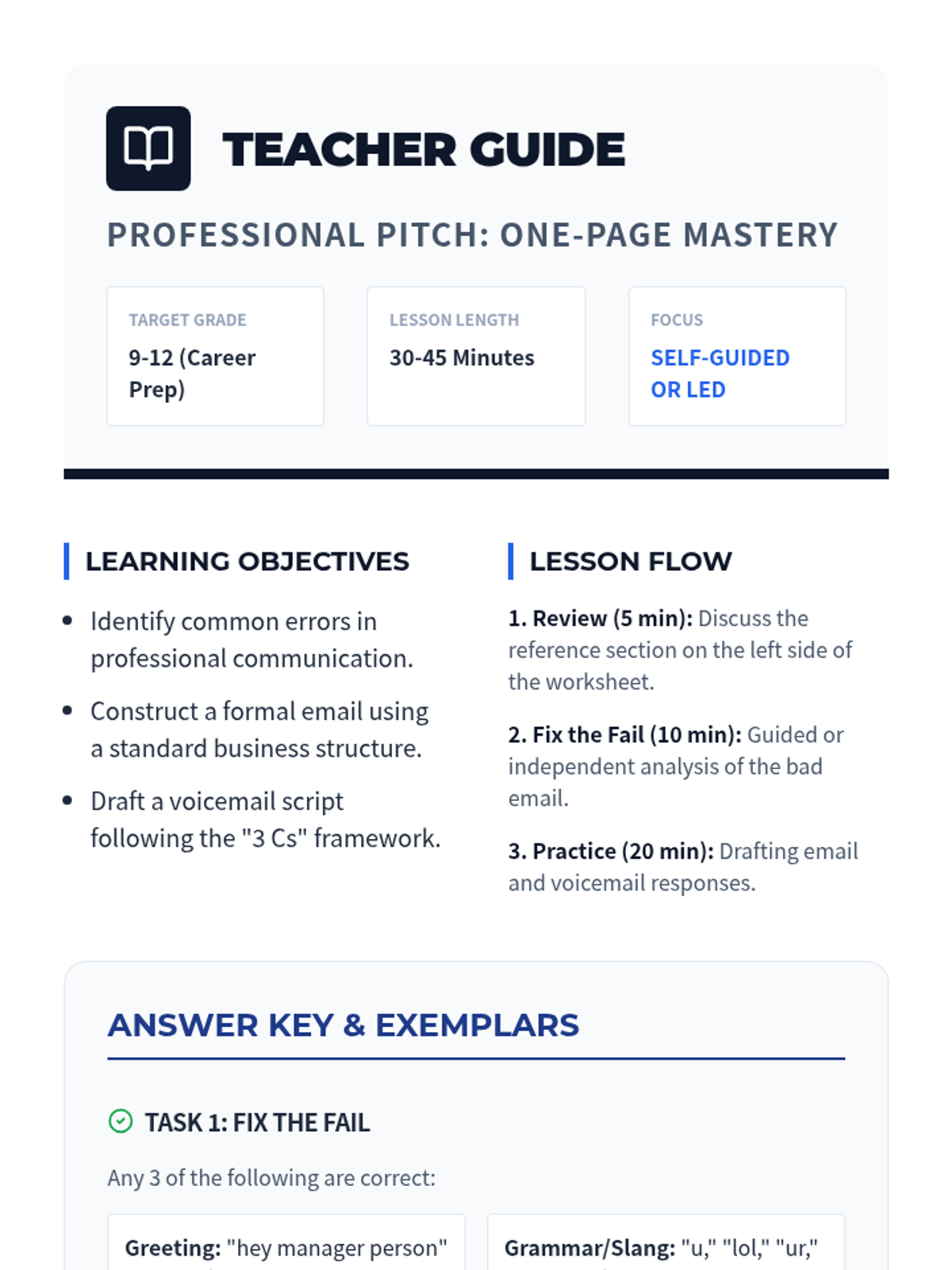
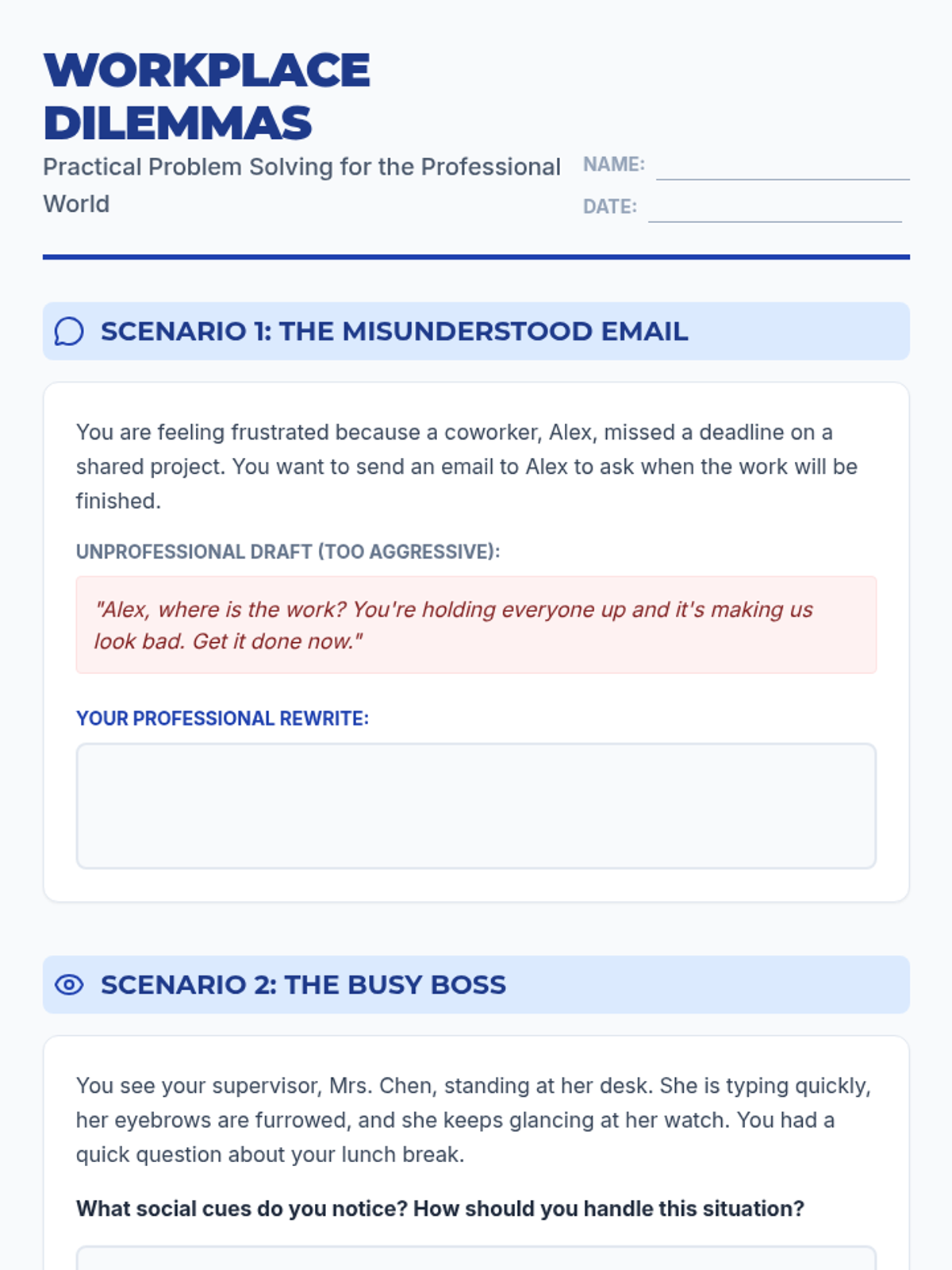
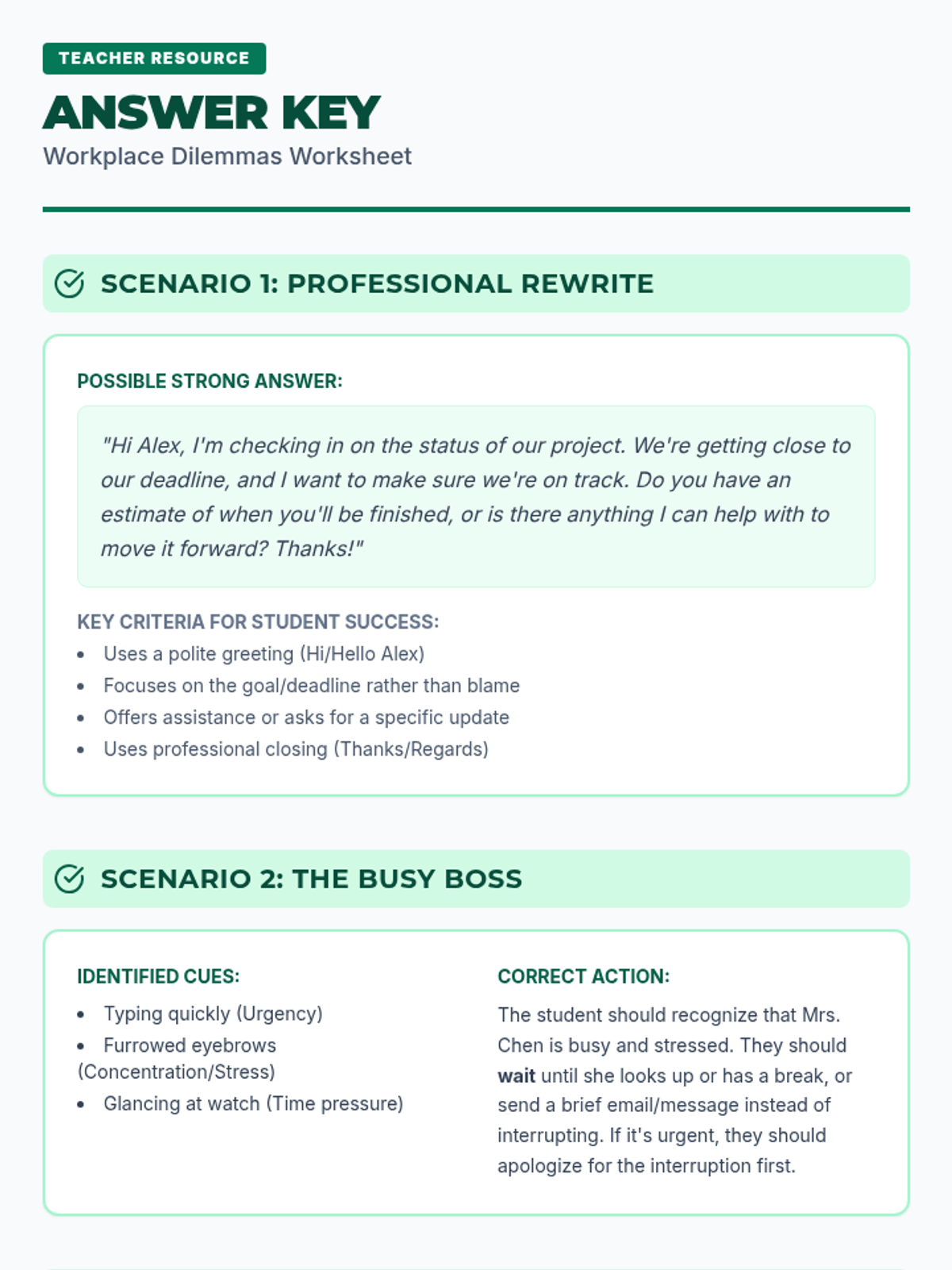
A comprehensive lesson on professional communication skills, focusing on email and phone etiquette for the workplace. Students learn the 'do's and don'ts' and practice crafting their own professional responses.
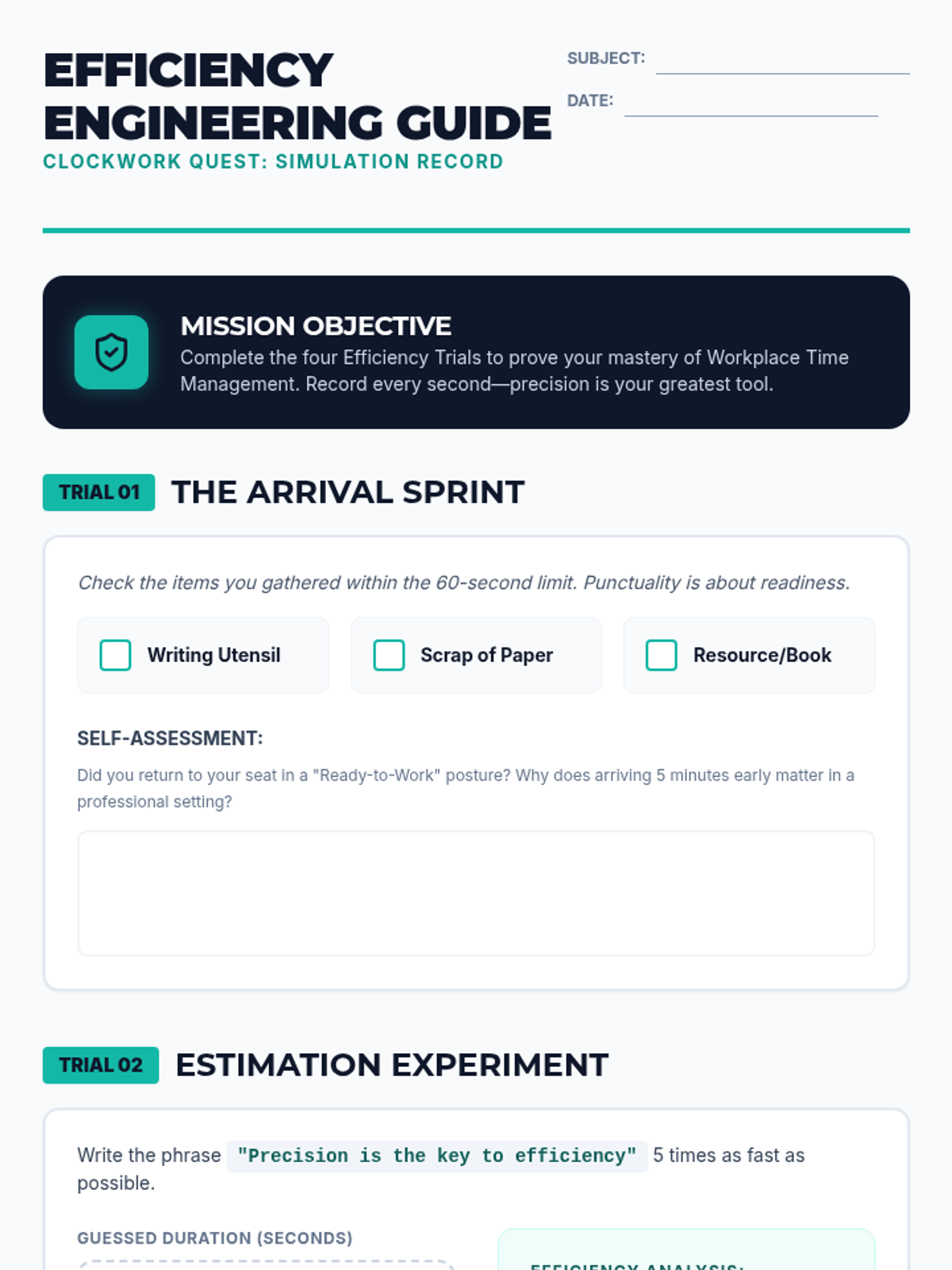
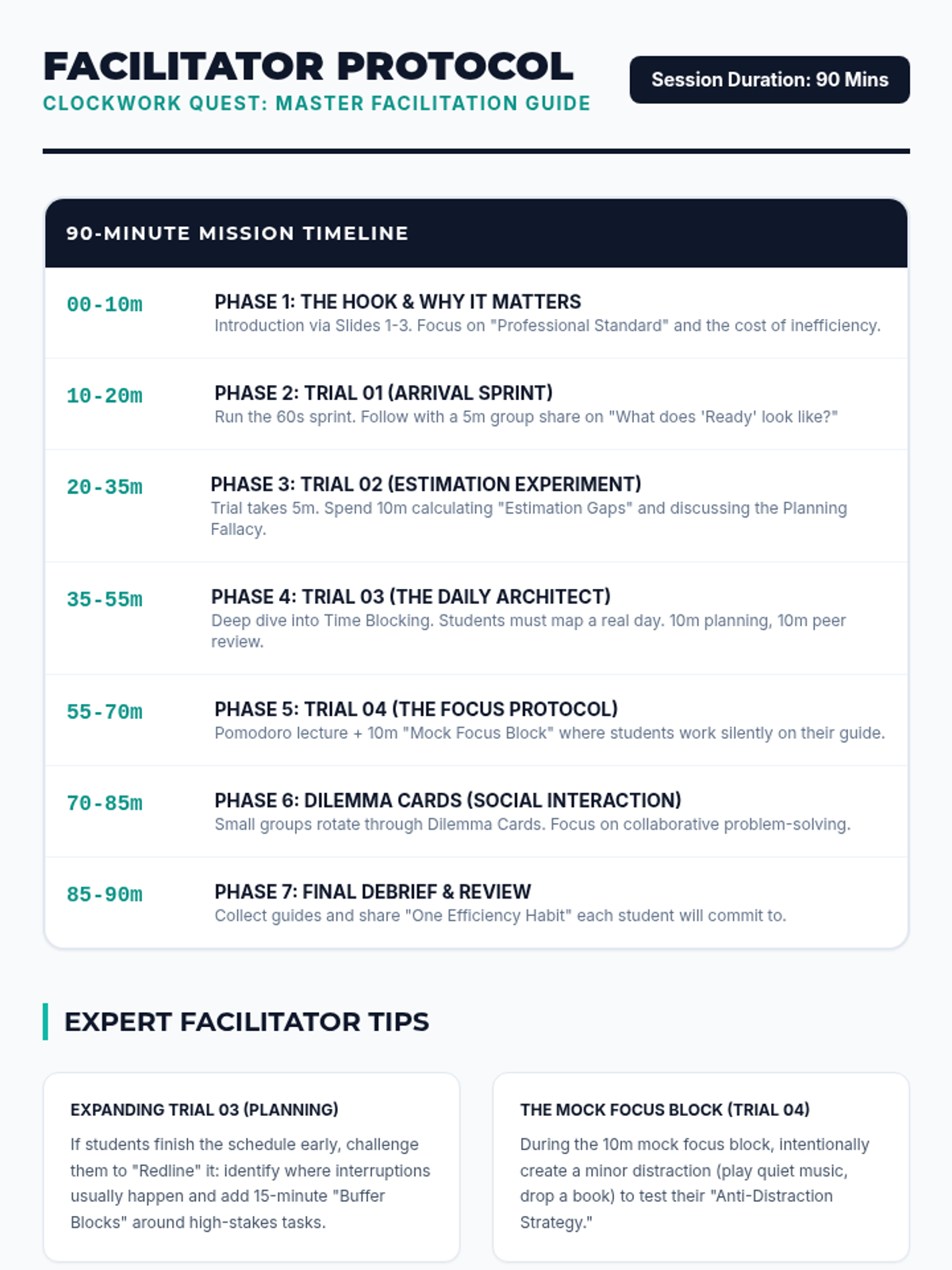
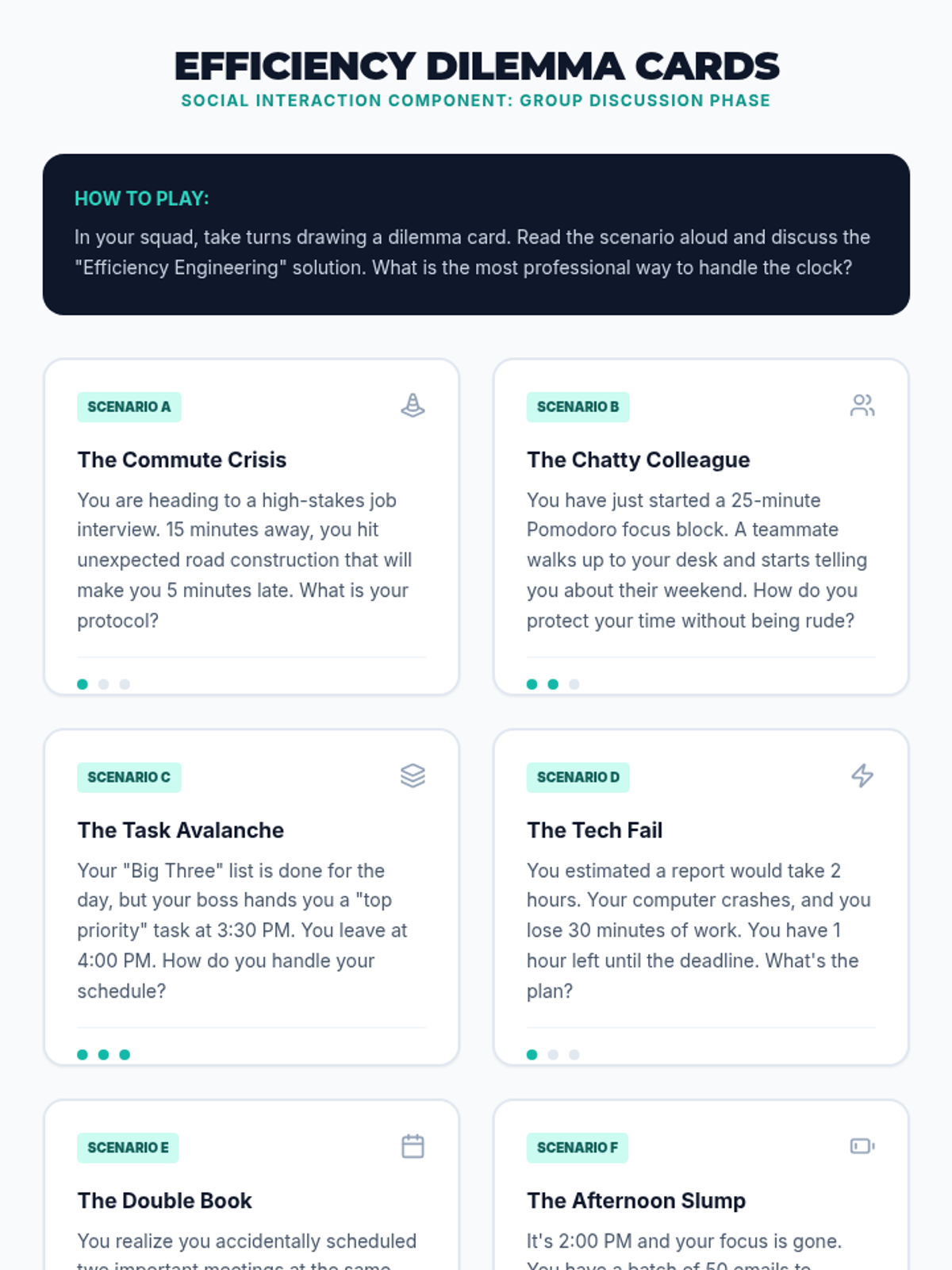
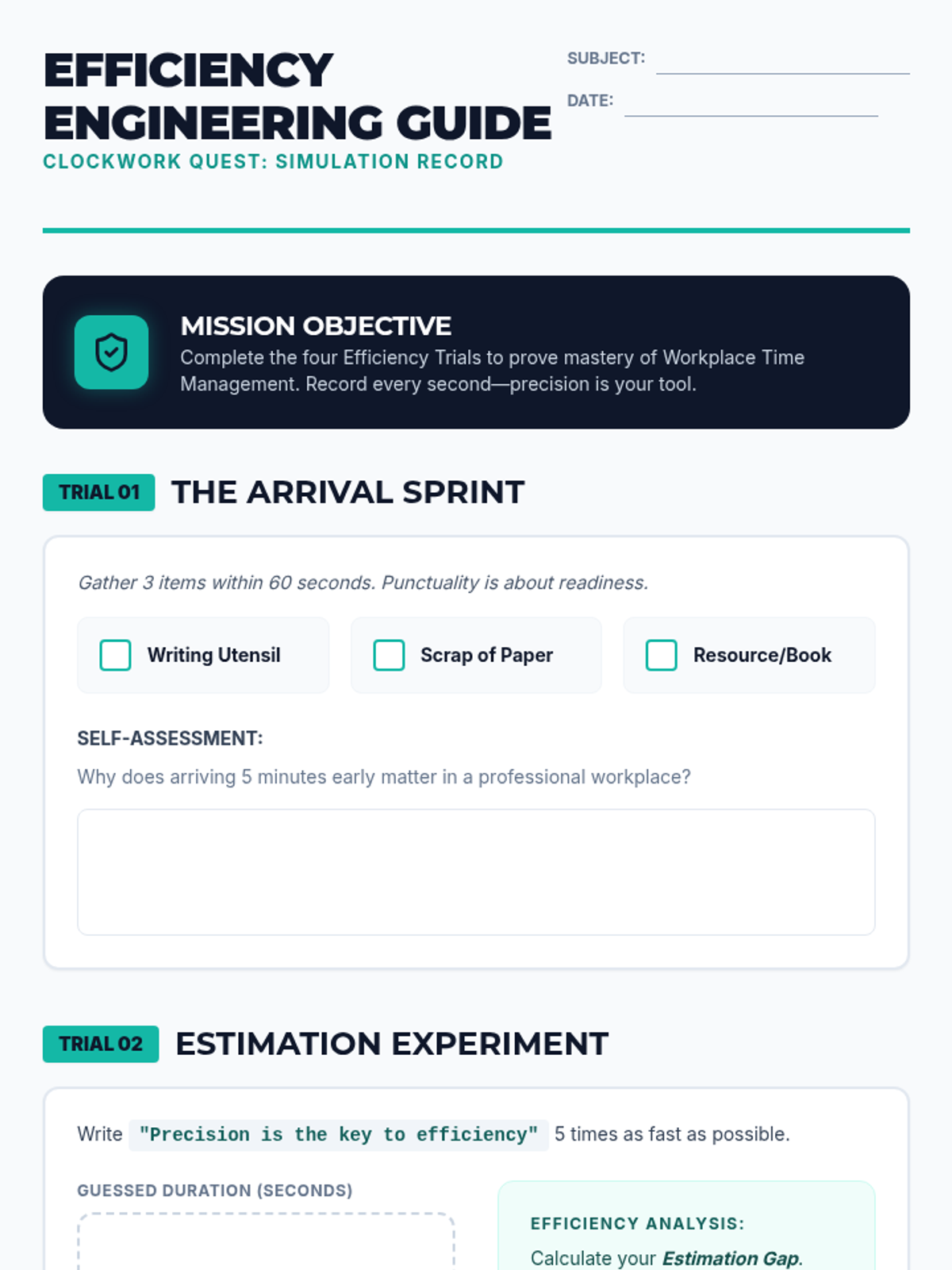
A lesson focused on mastering time management through hands-on 'trials' that teach punctuality, task estimation, scheduling, and focus techniques.
Master the transition from student to professional. This lesson covers workplace etiquette and the application process through engaging puzzles and reflective self-assessments.
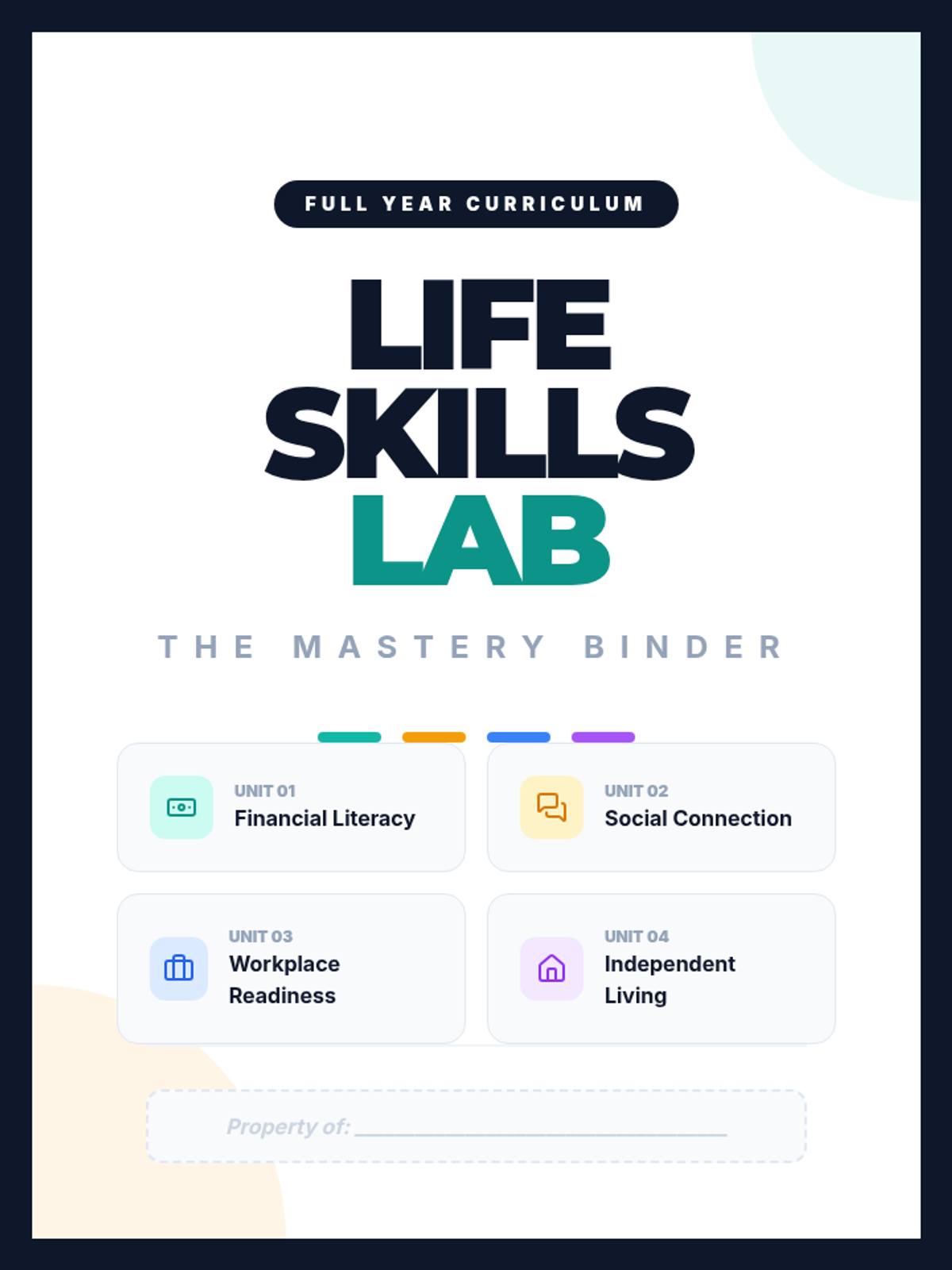
Foundational materials for the Life Skills Launchpad, including binder covers, dividers, and sequence-wide tracking systems.
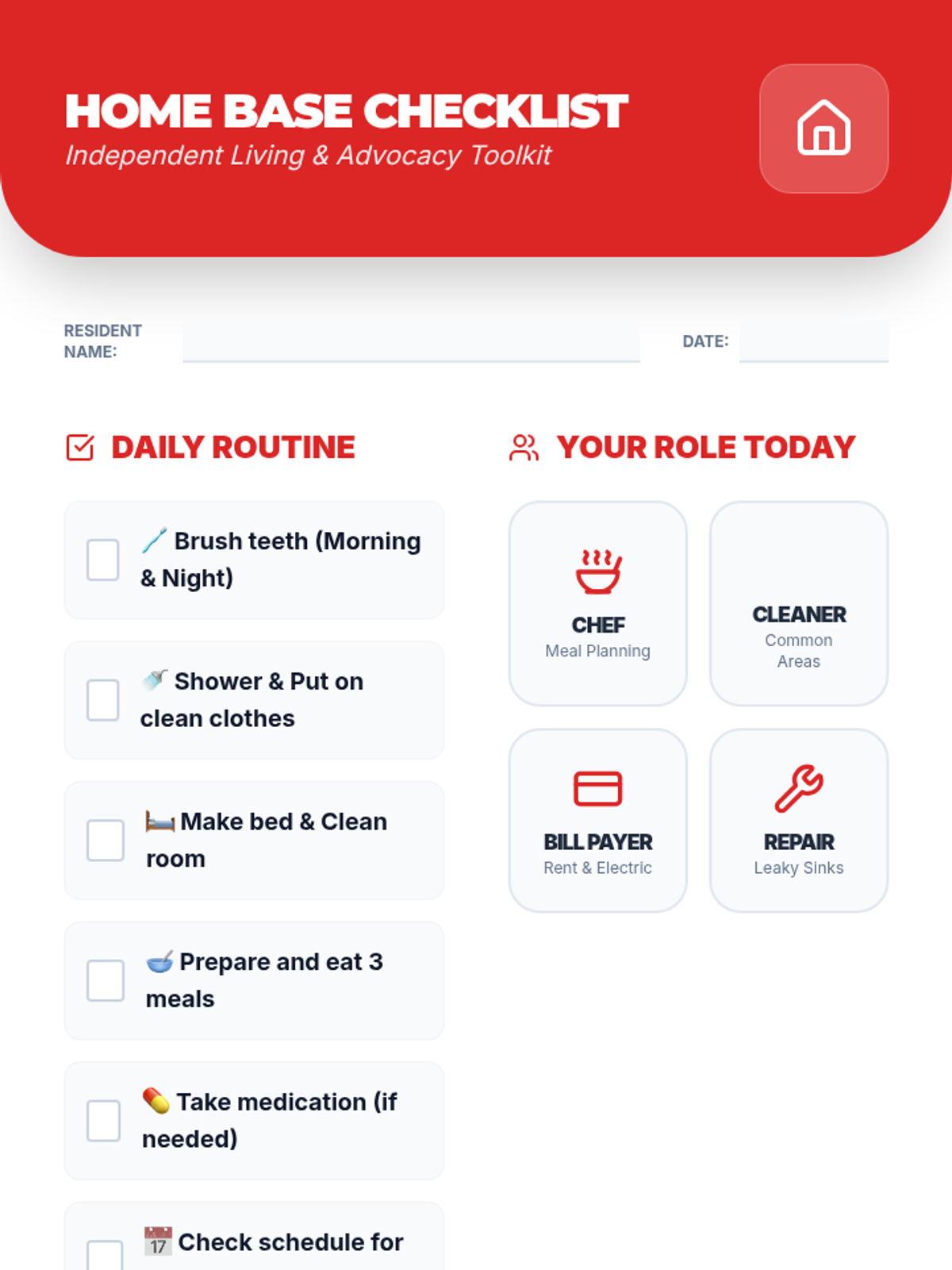
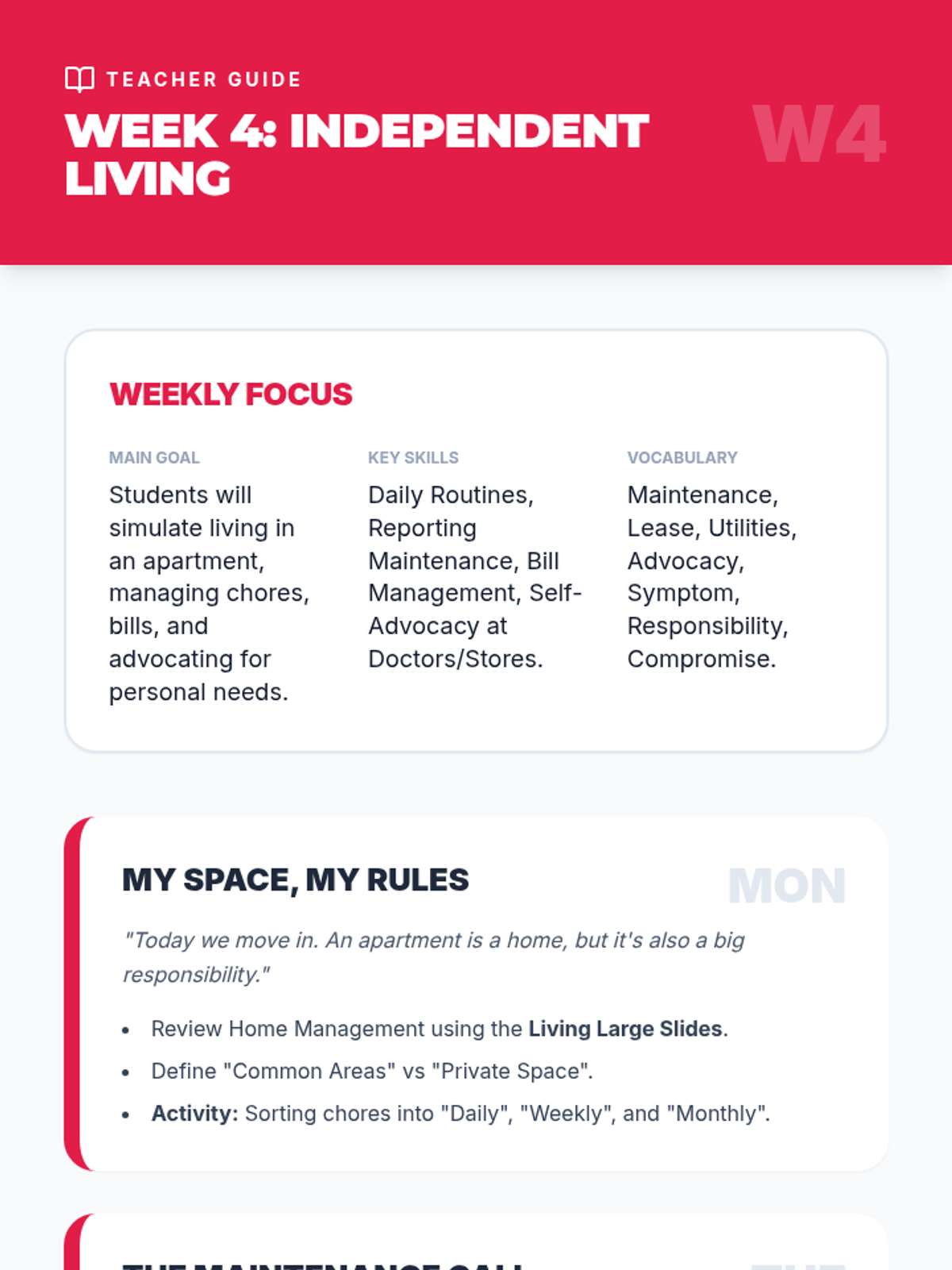
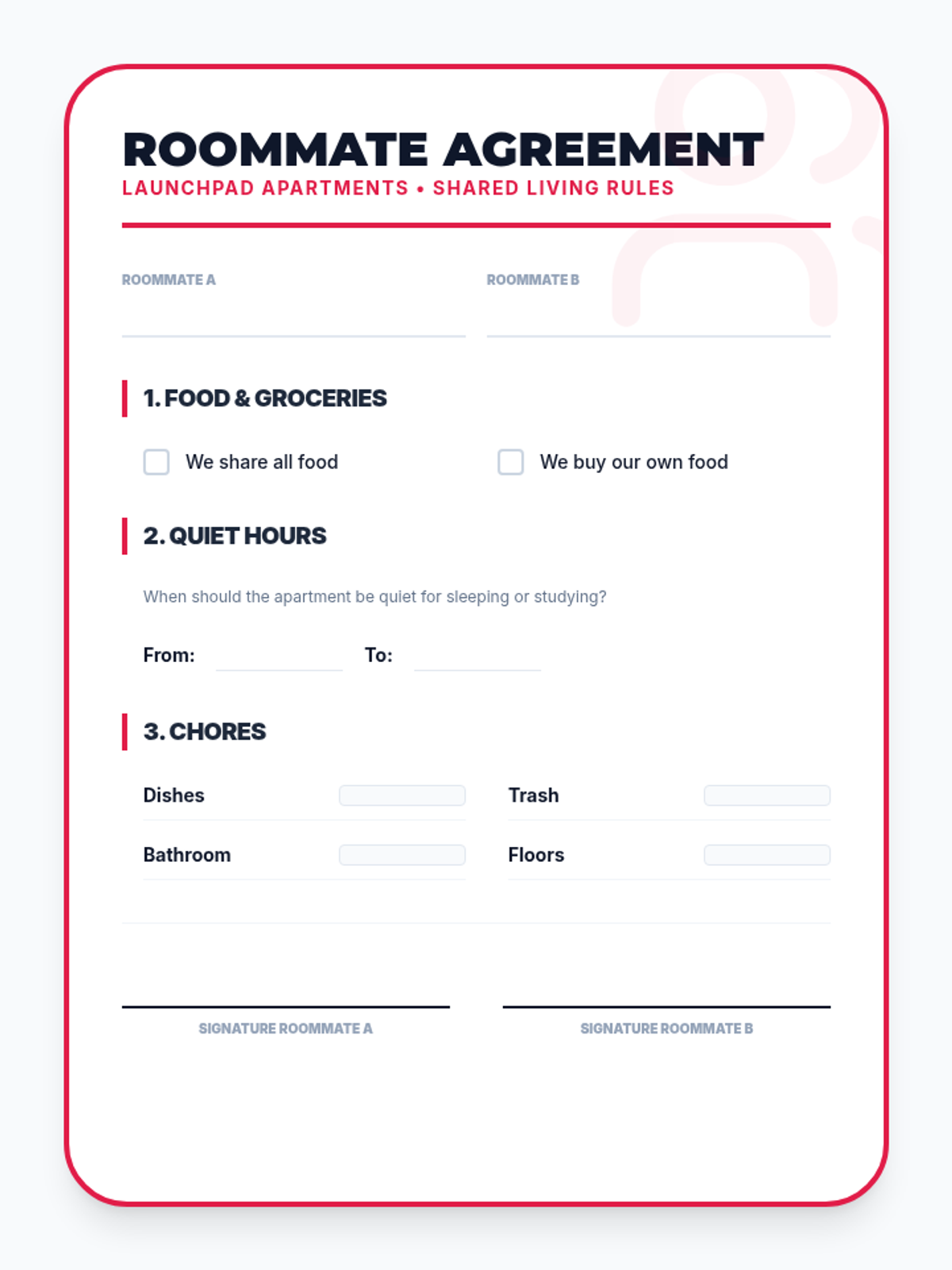
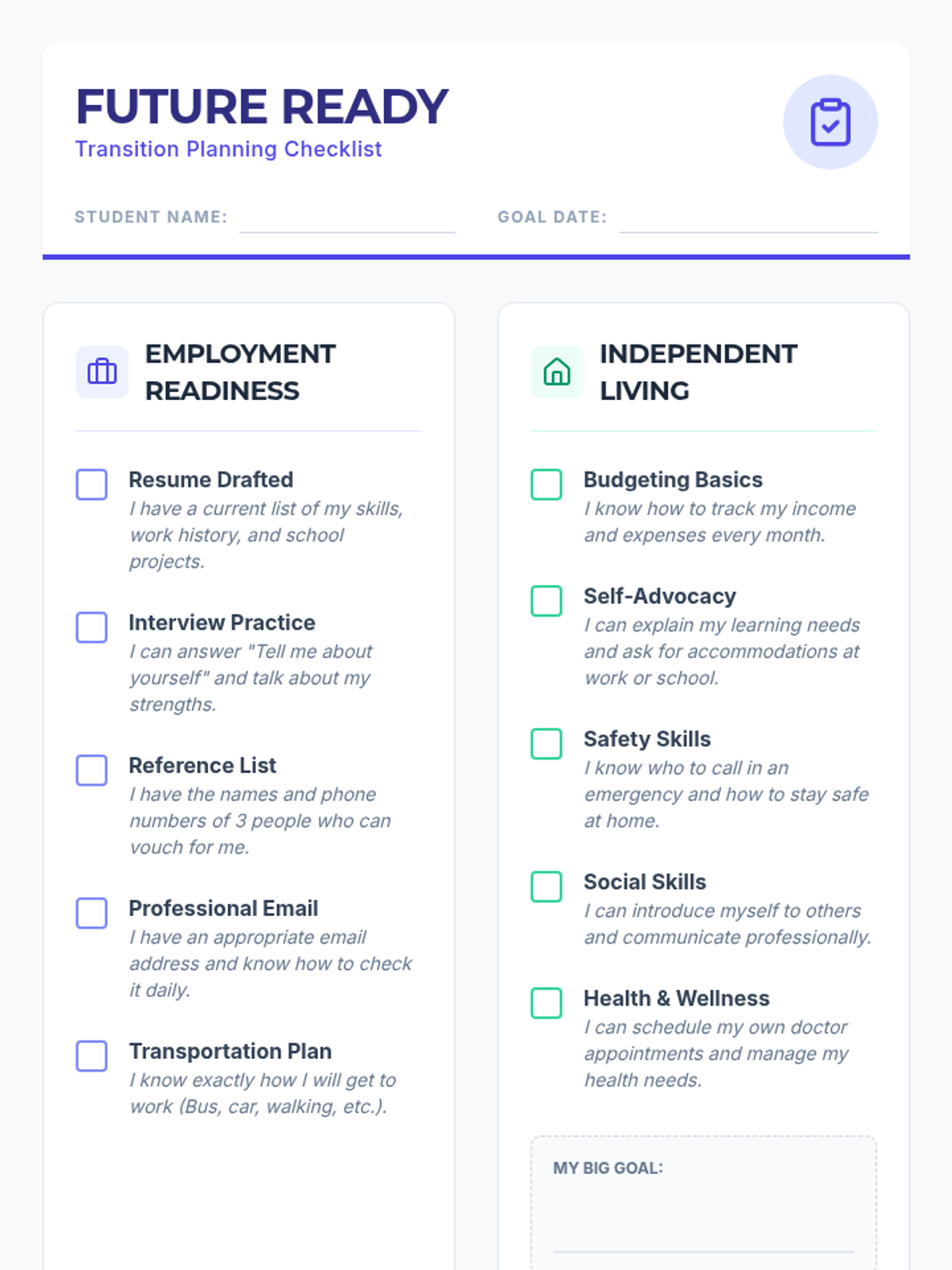
Practicing the core skills of independent living, including home maintenance, personal advocacy, and daily scheduling.
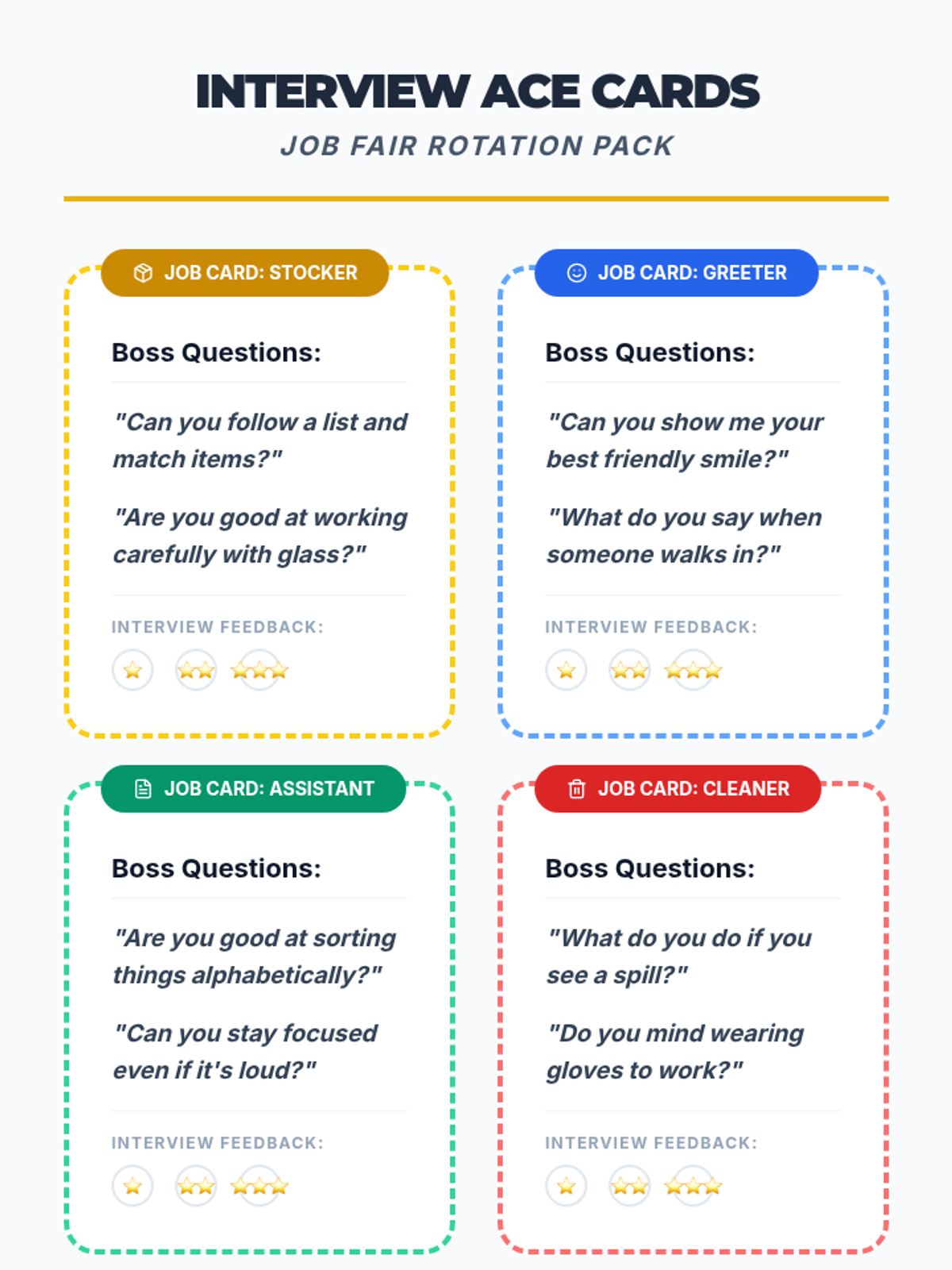
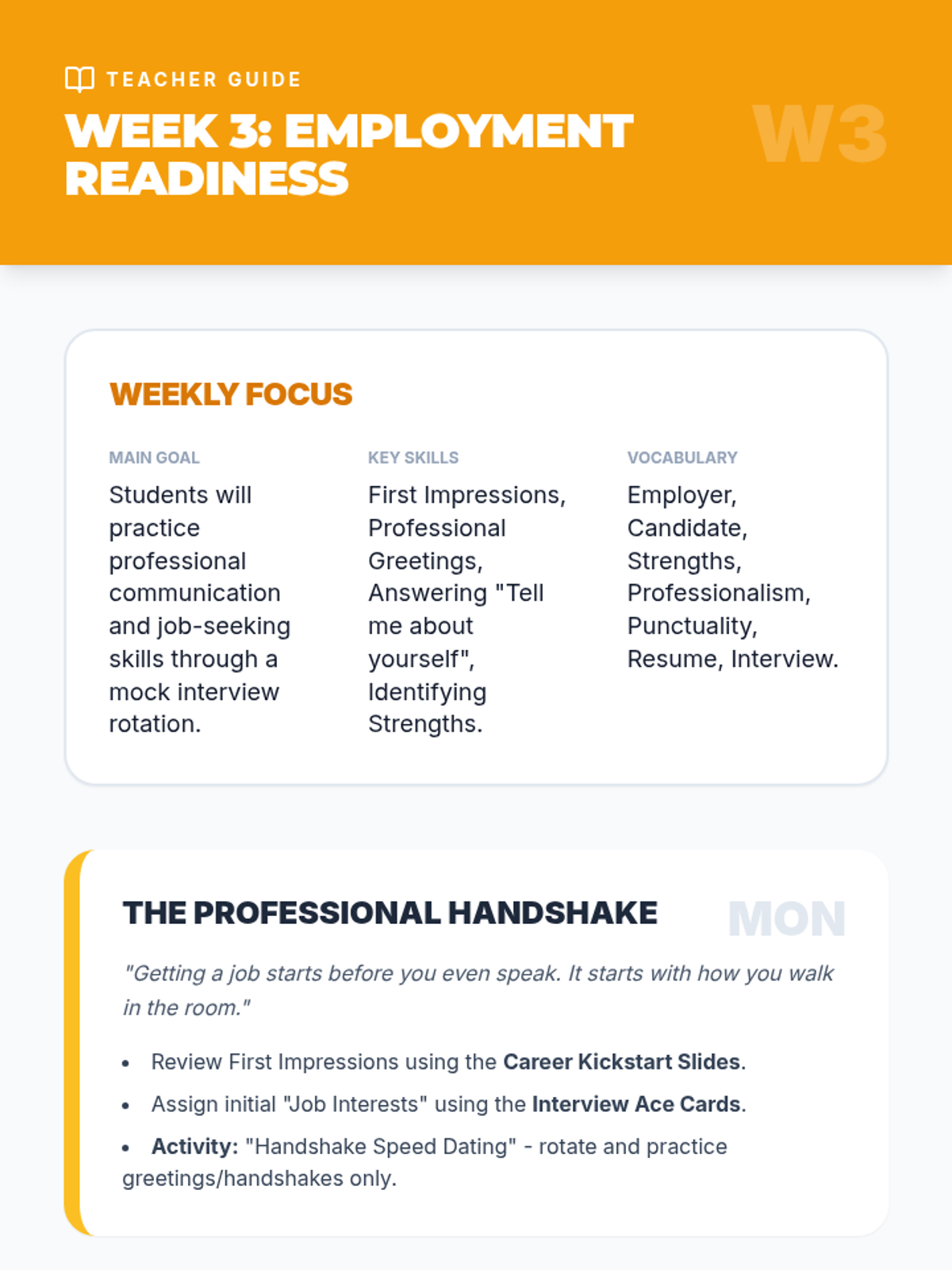
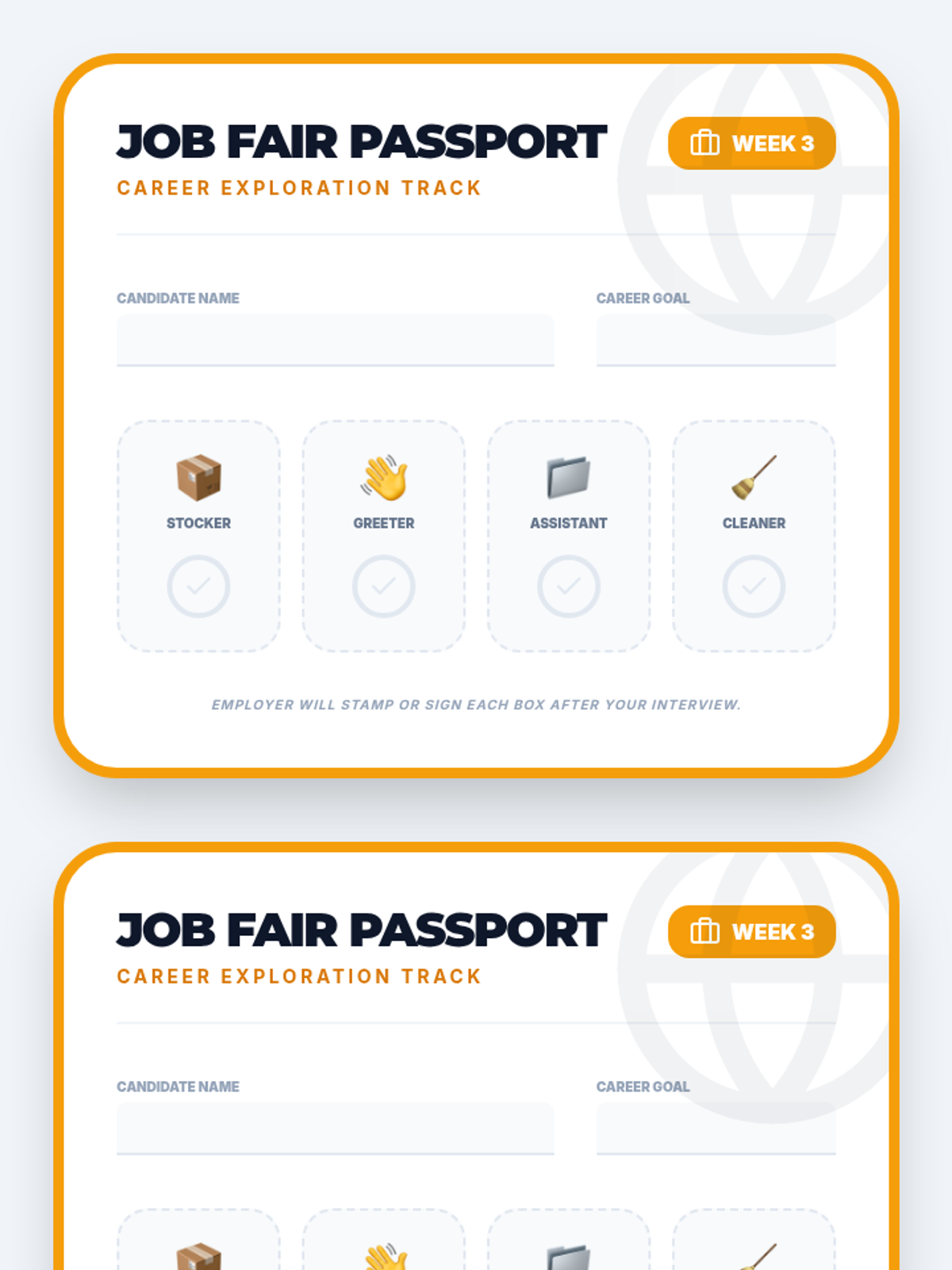
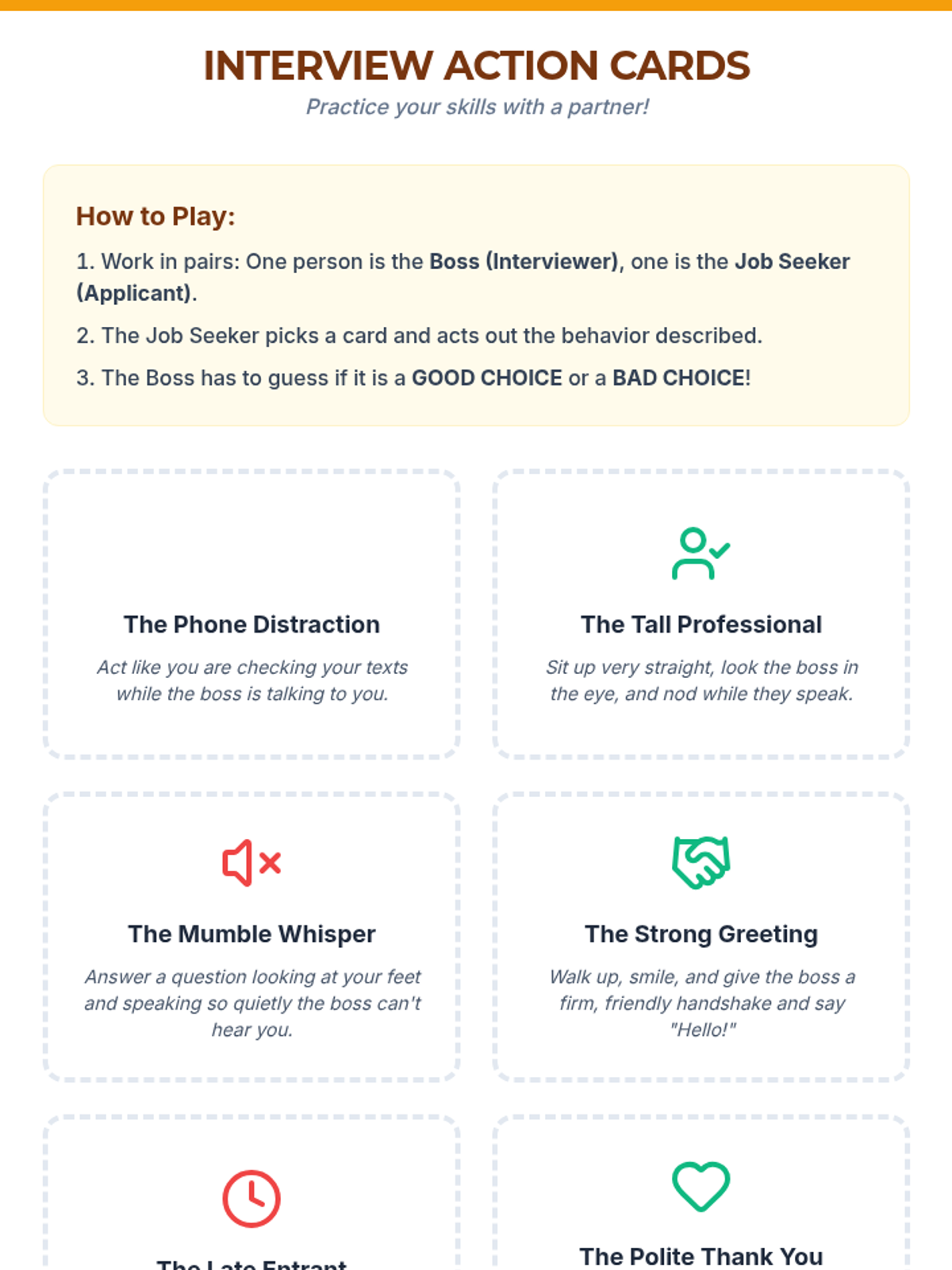
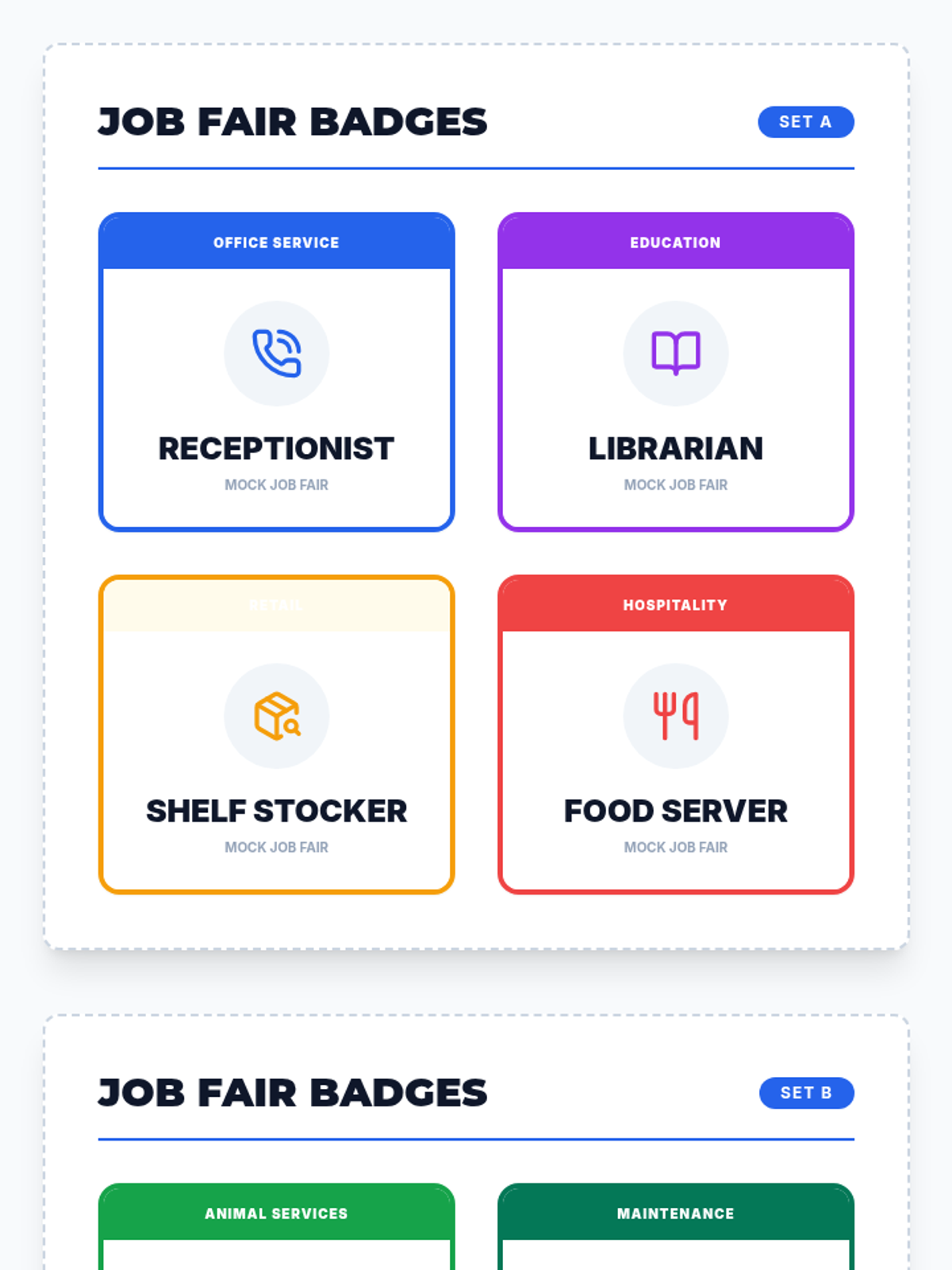
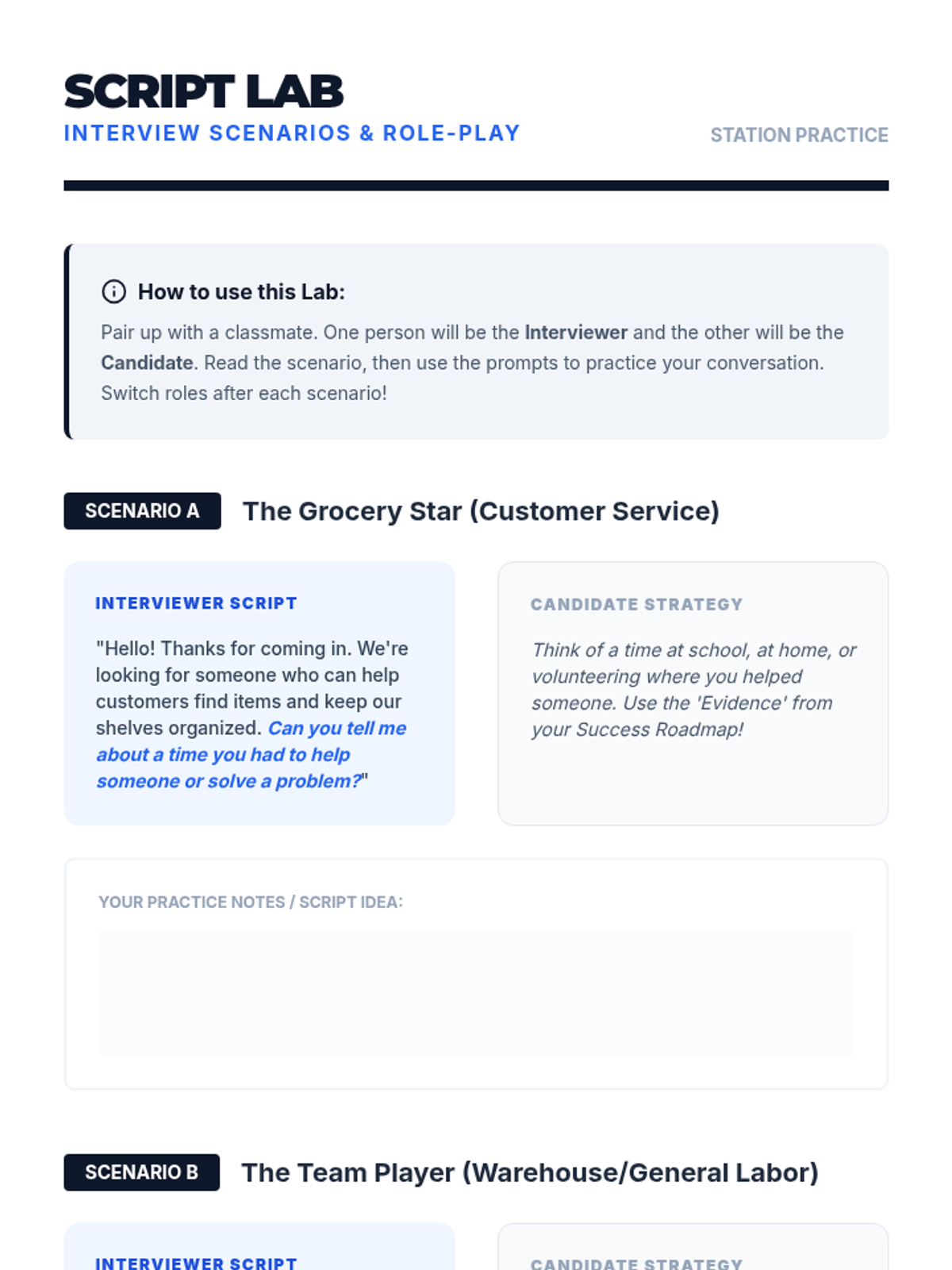
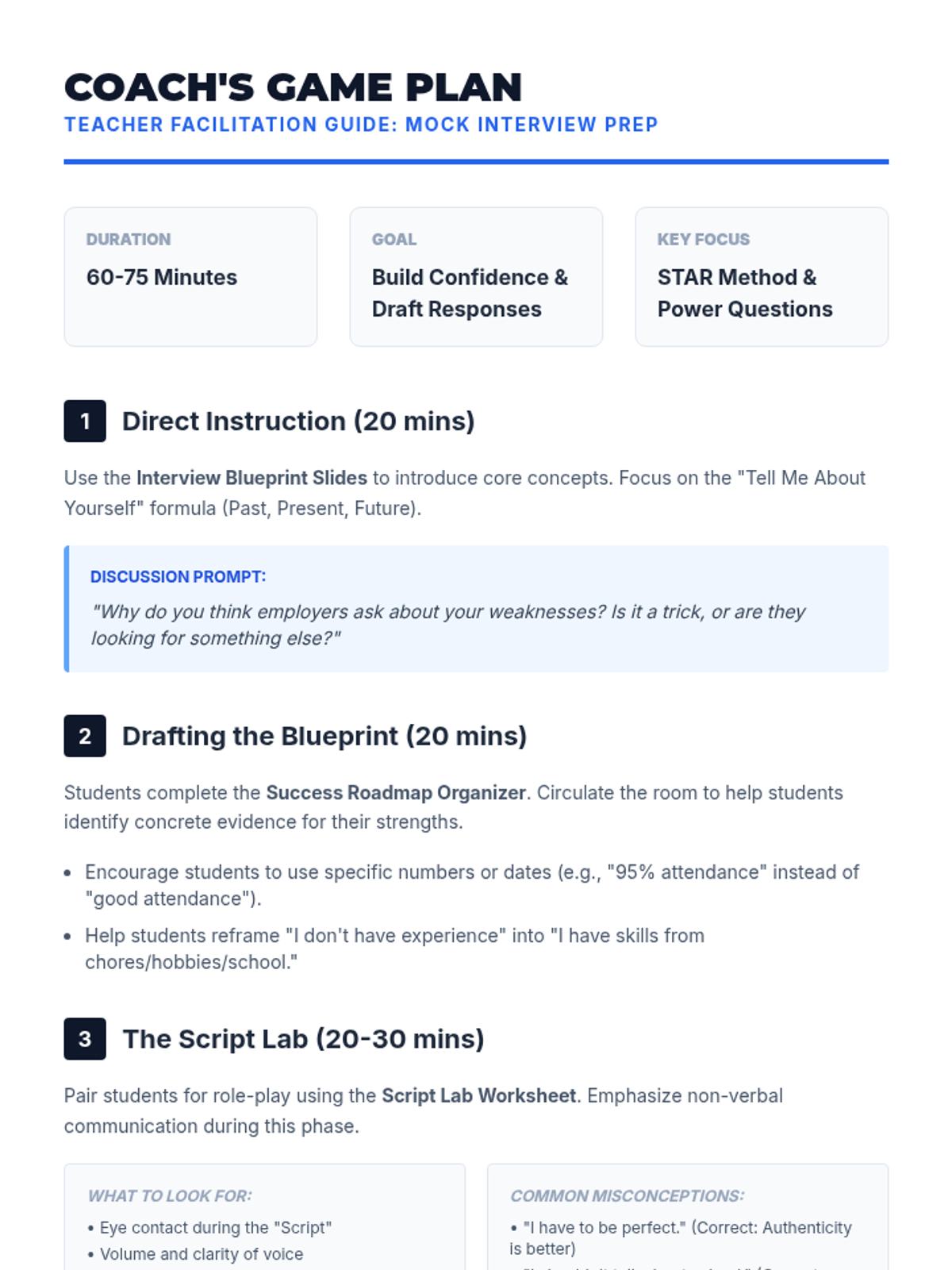
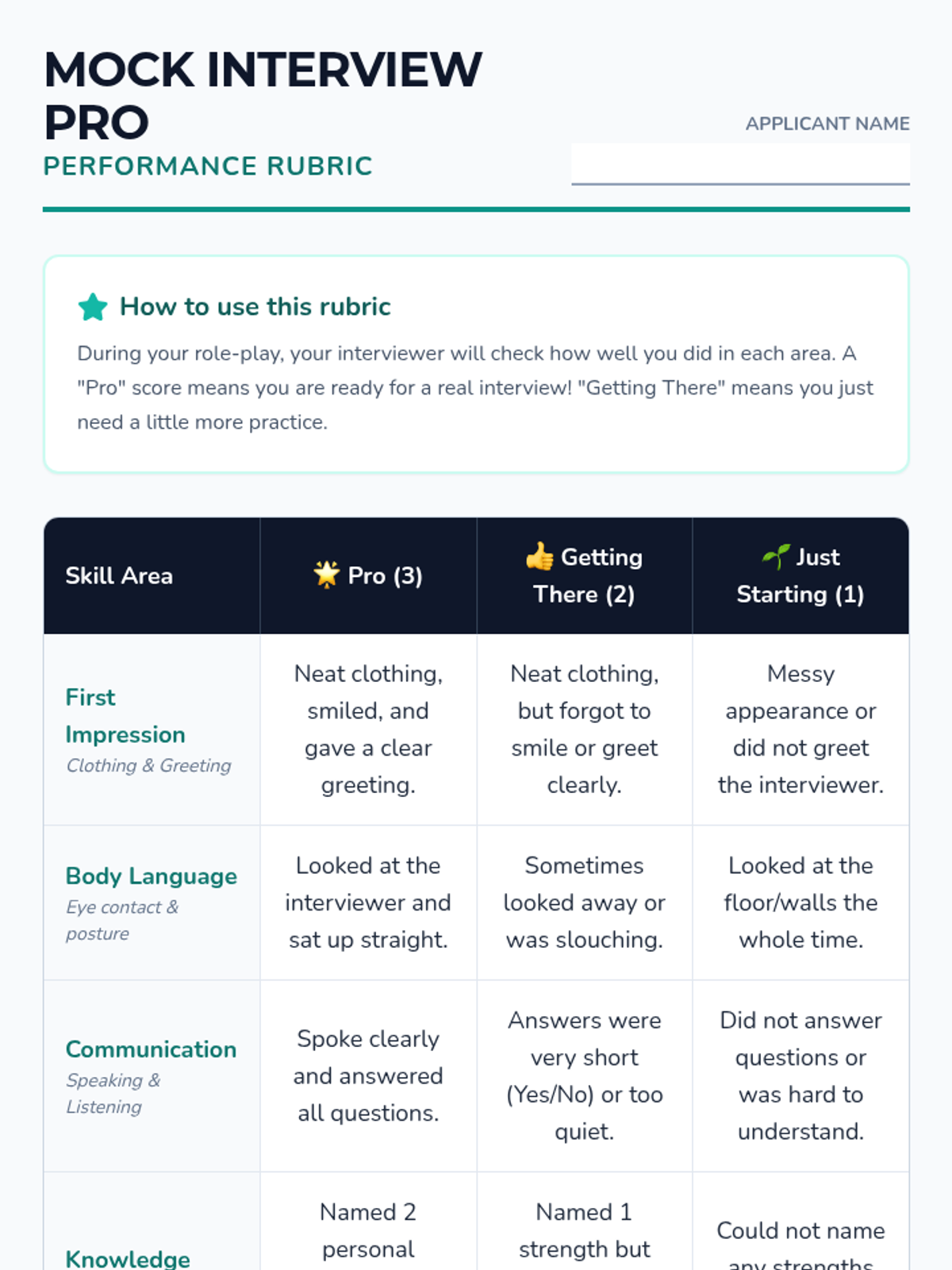
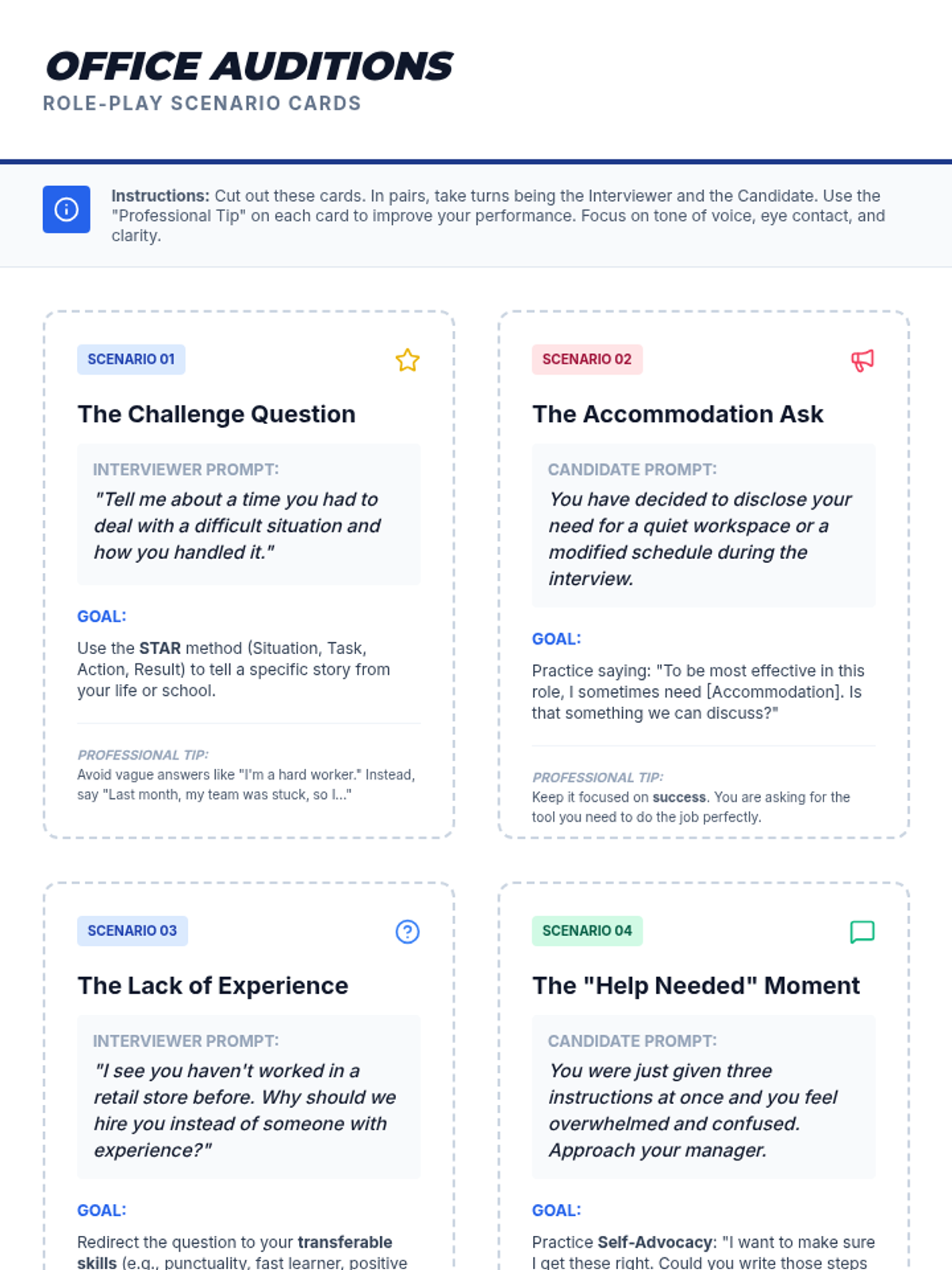
Preparing for the workforce with mock interviews, professional communication practice, and on-the-job simulations.
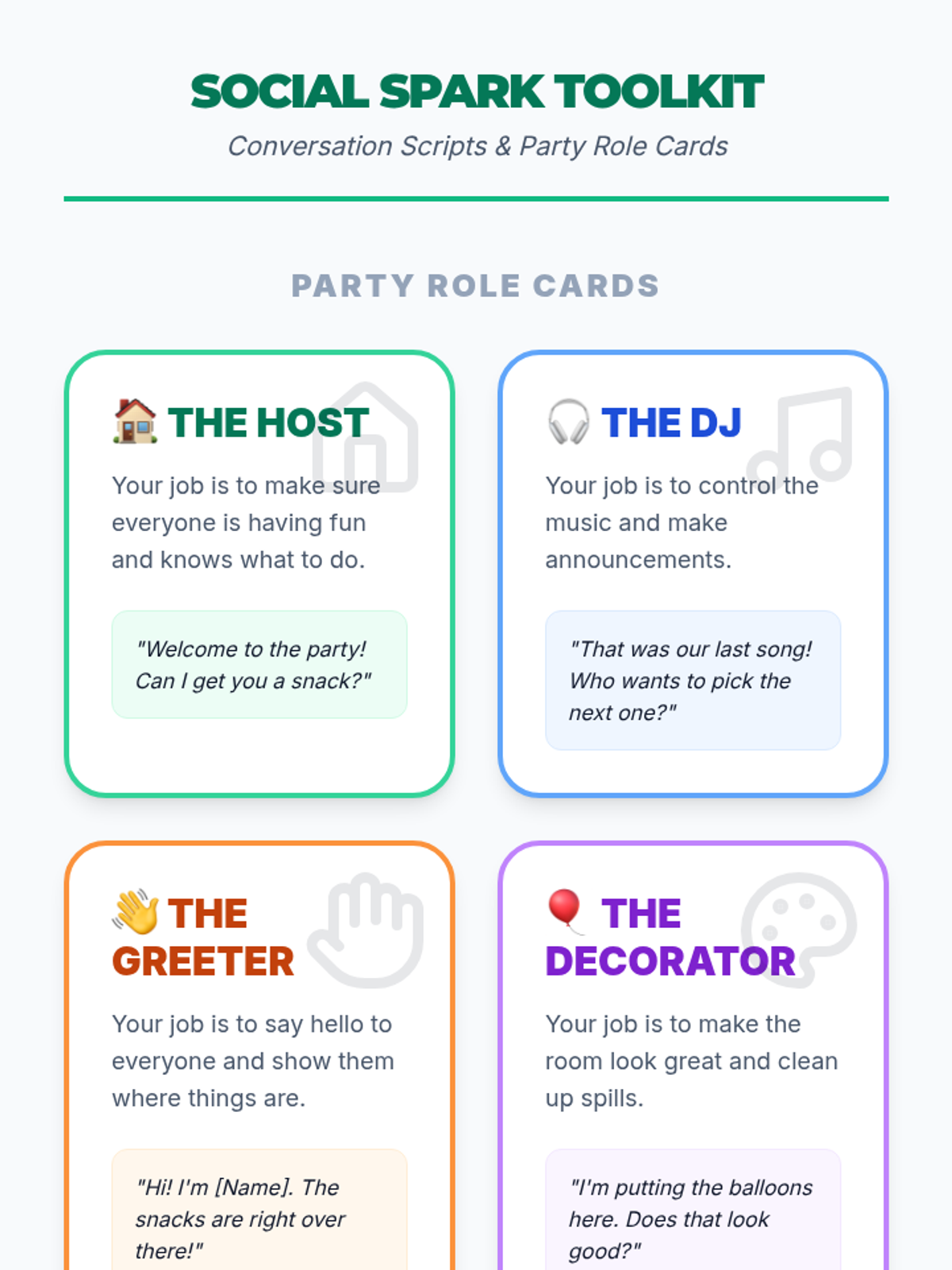
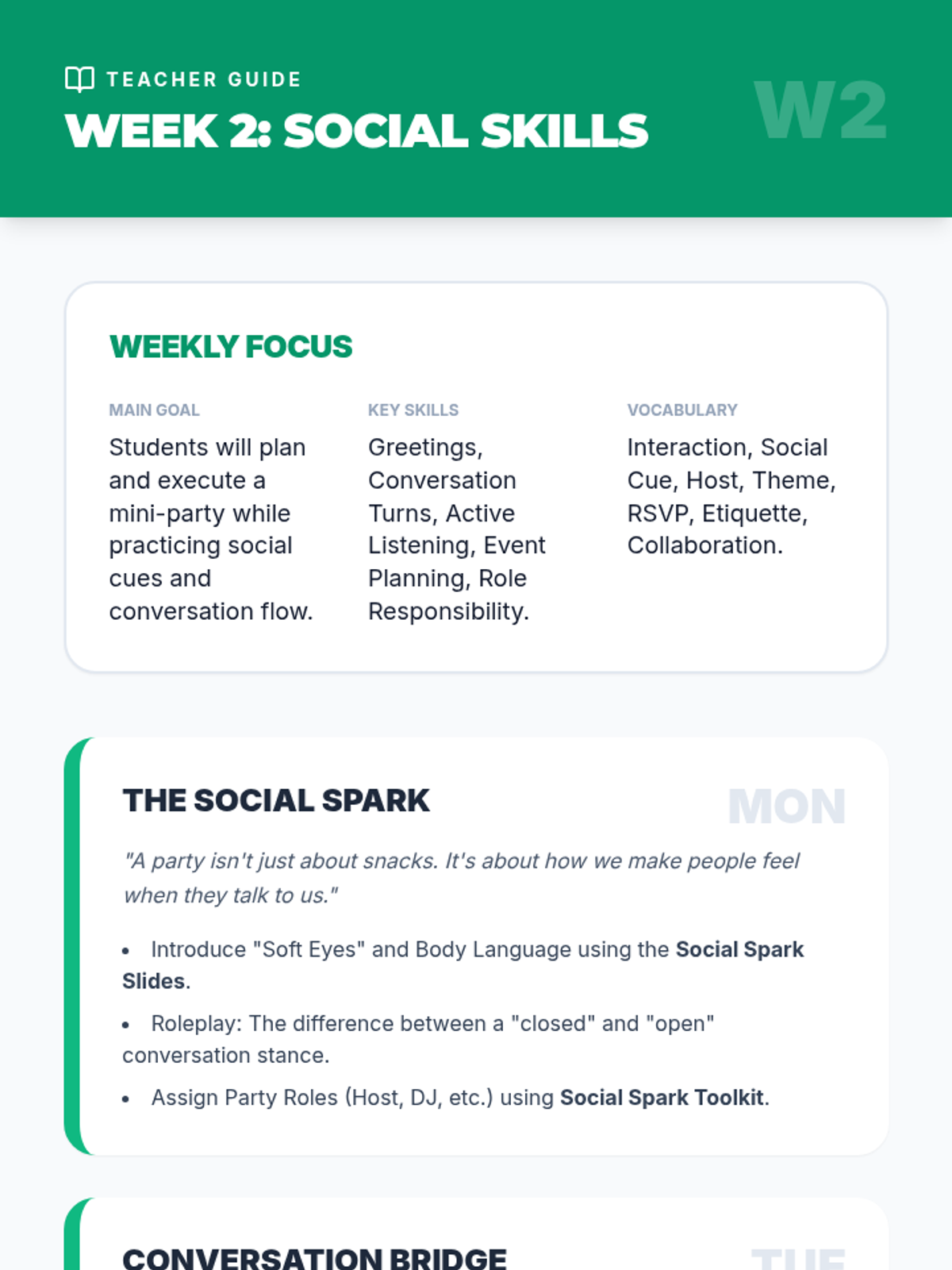
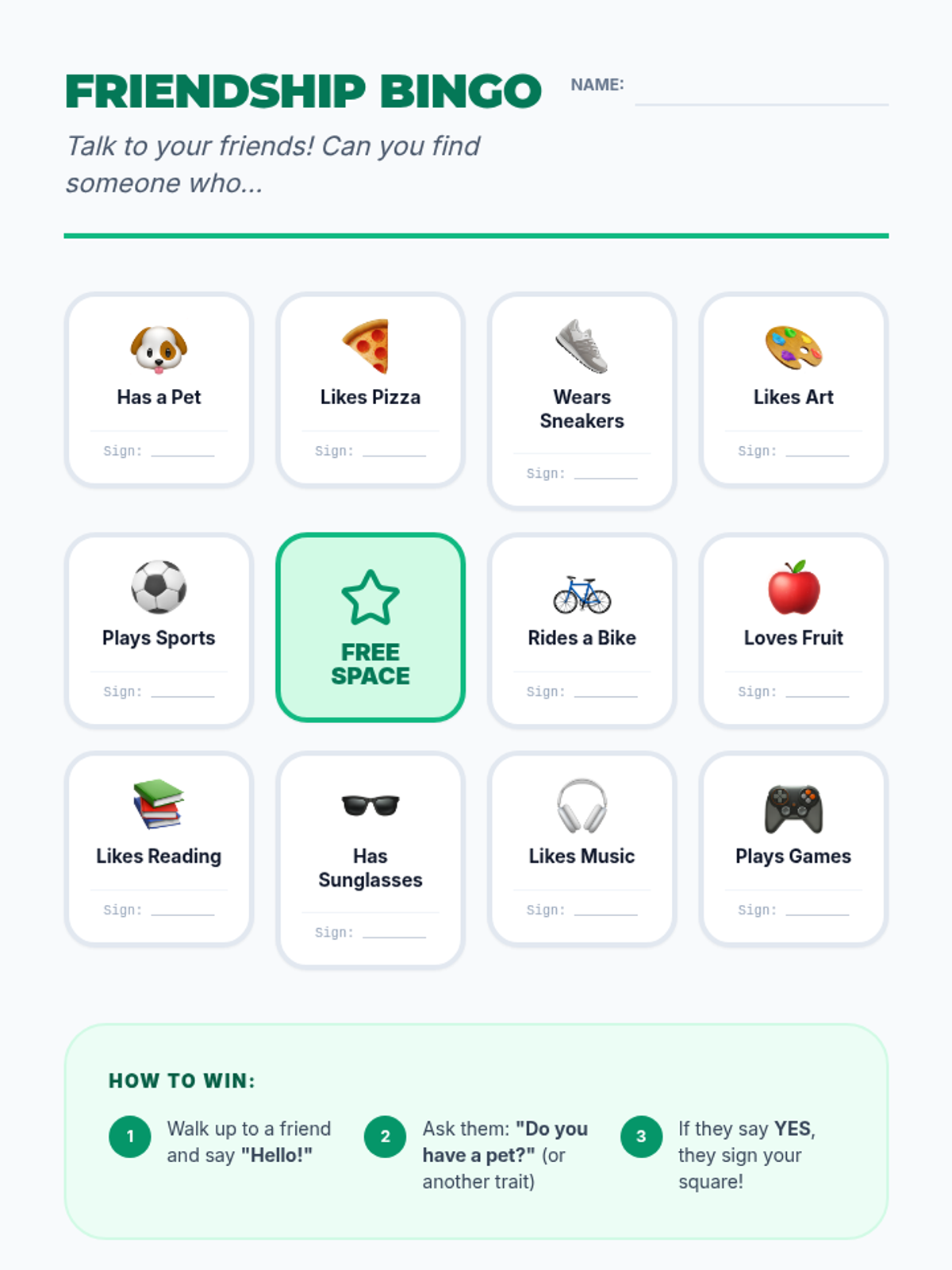
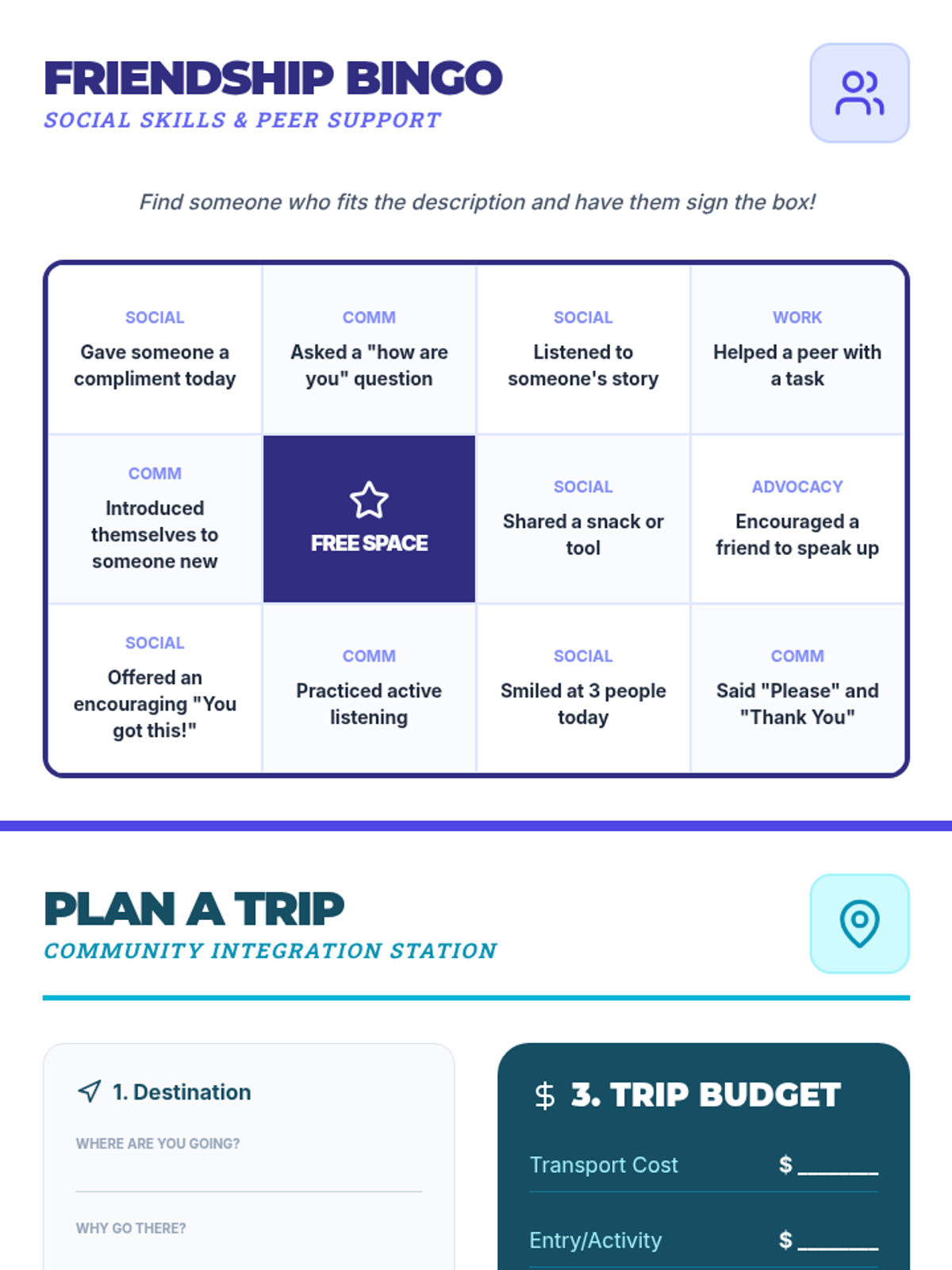
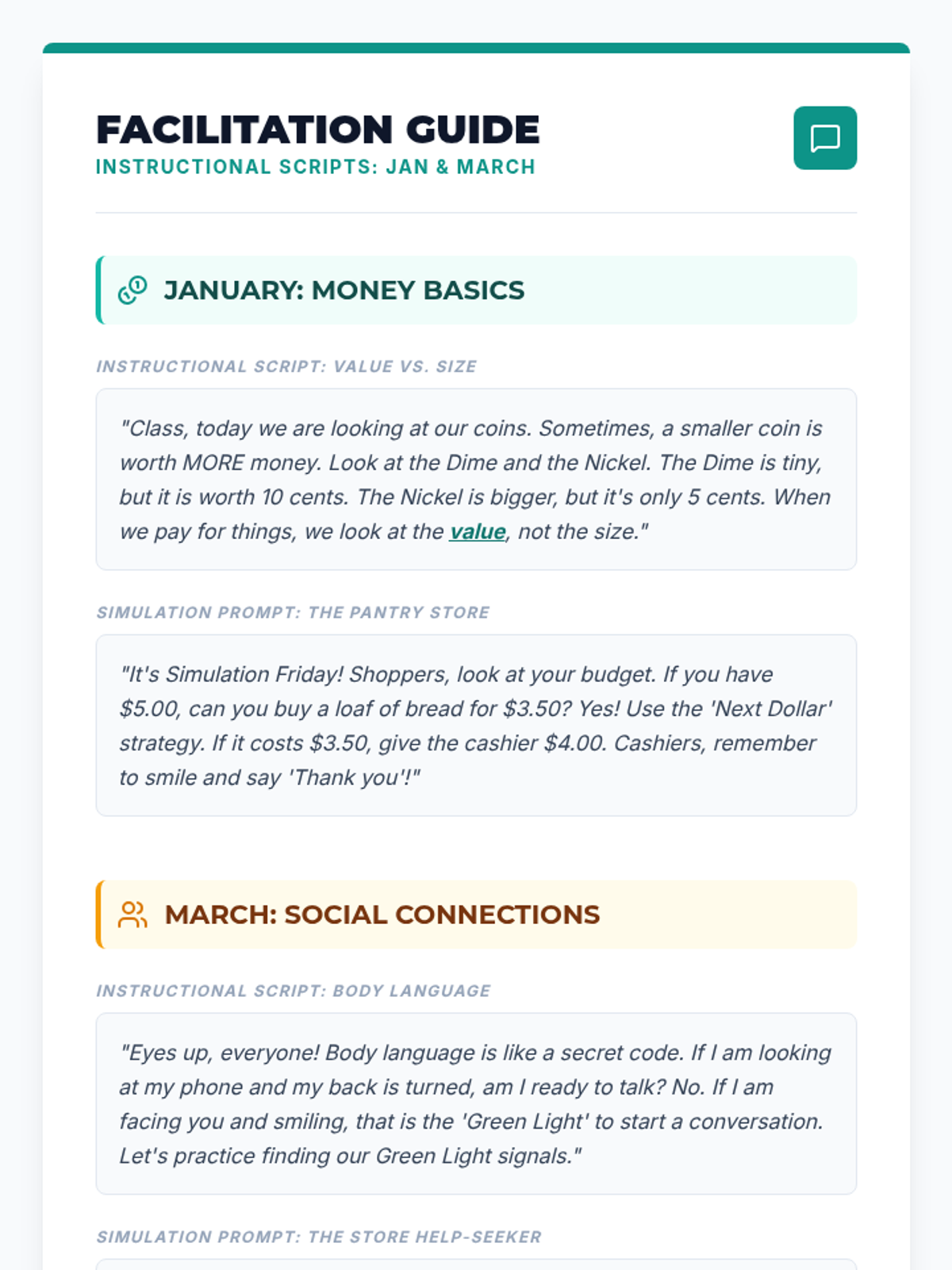
Developing social-emotional awareness through event planning, role-play conversations, and meaningful peer interactions.
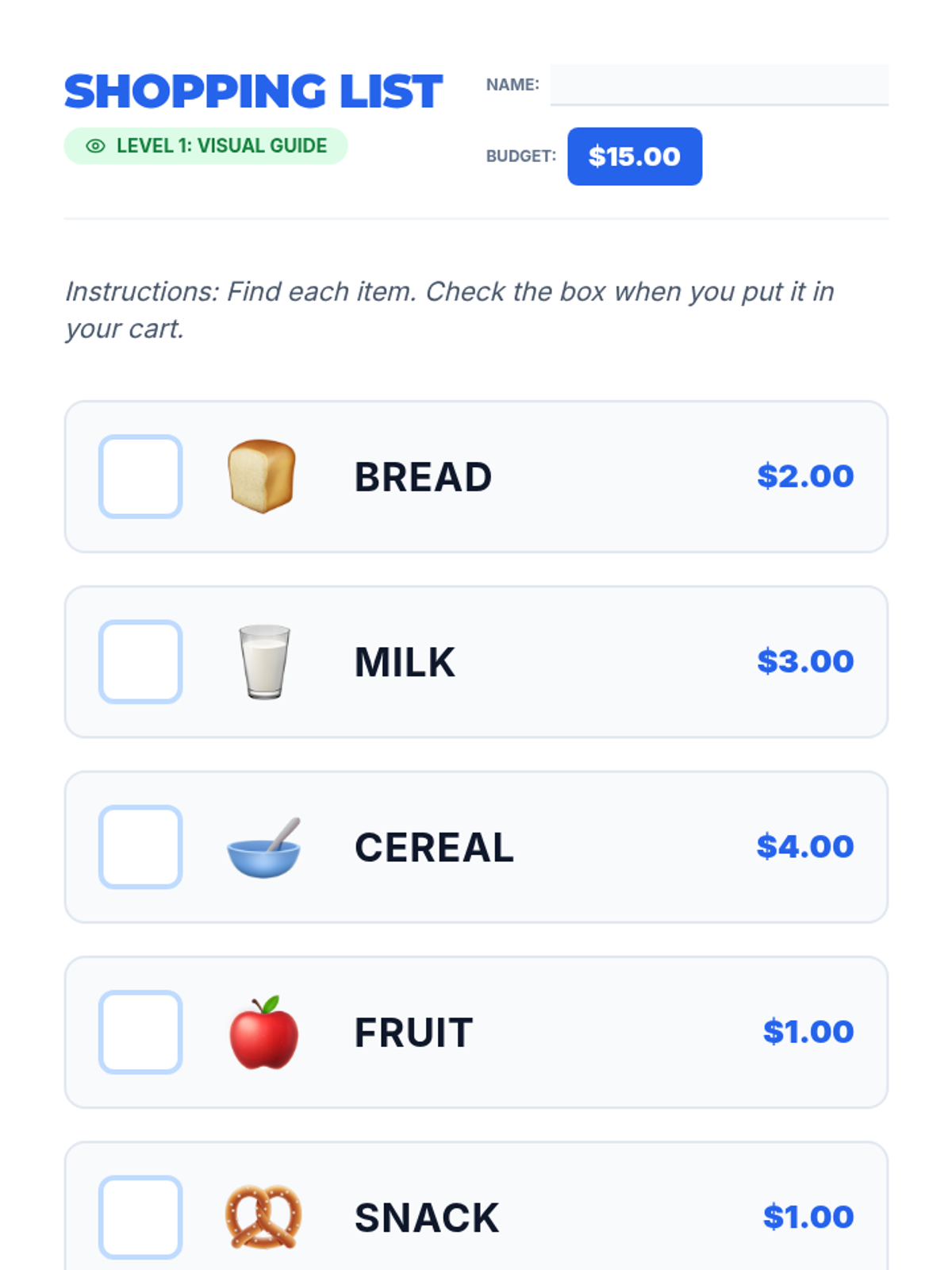
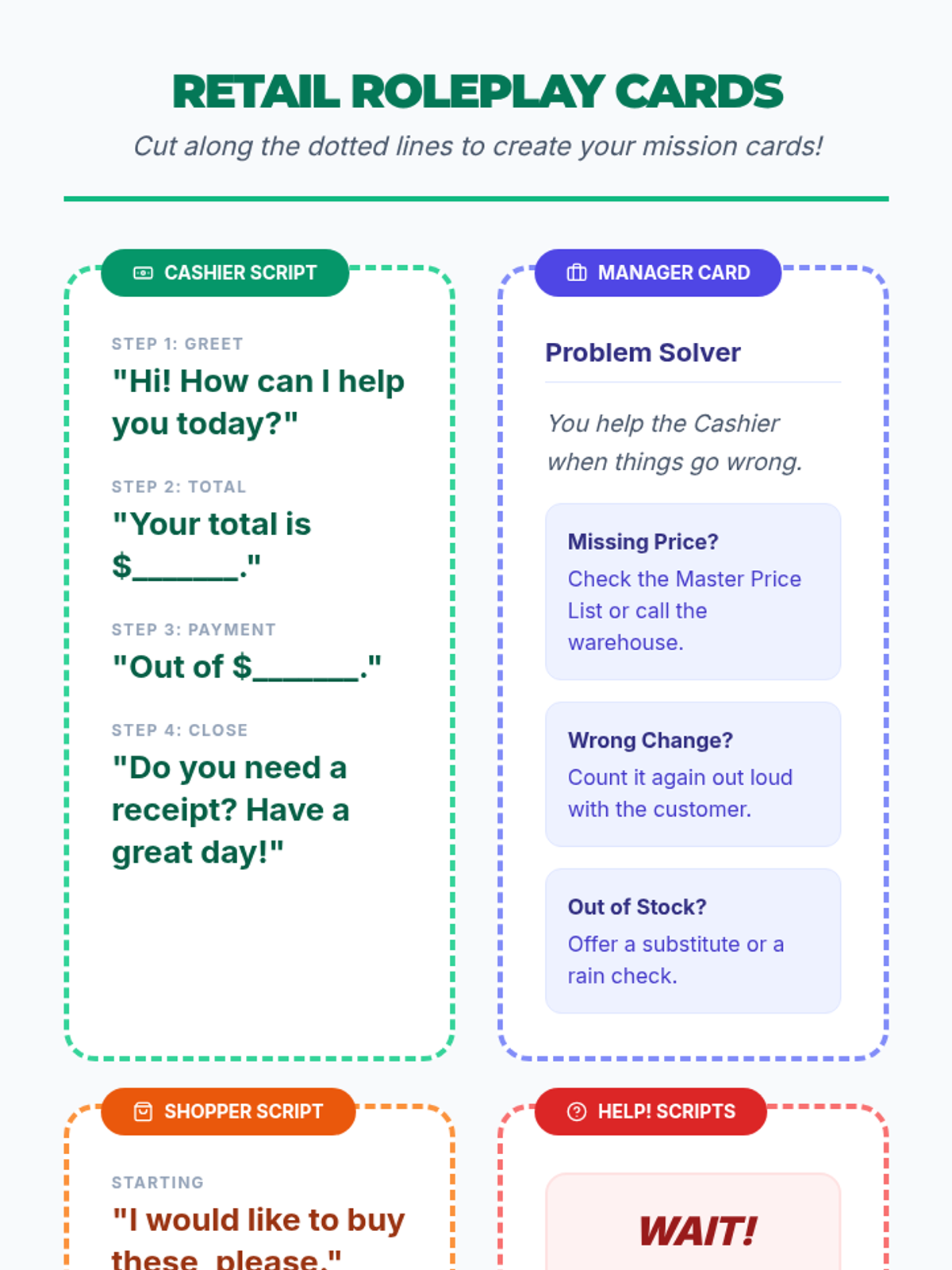
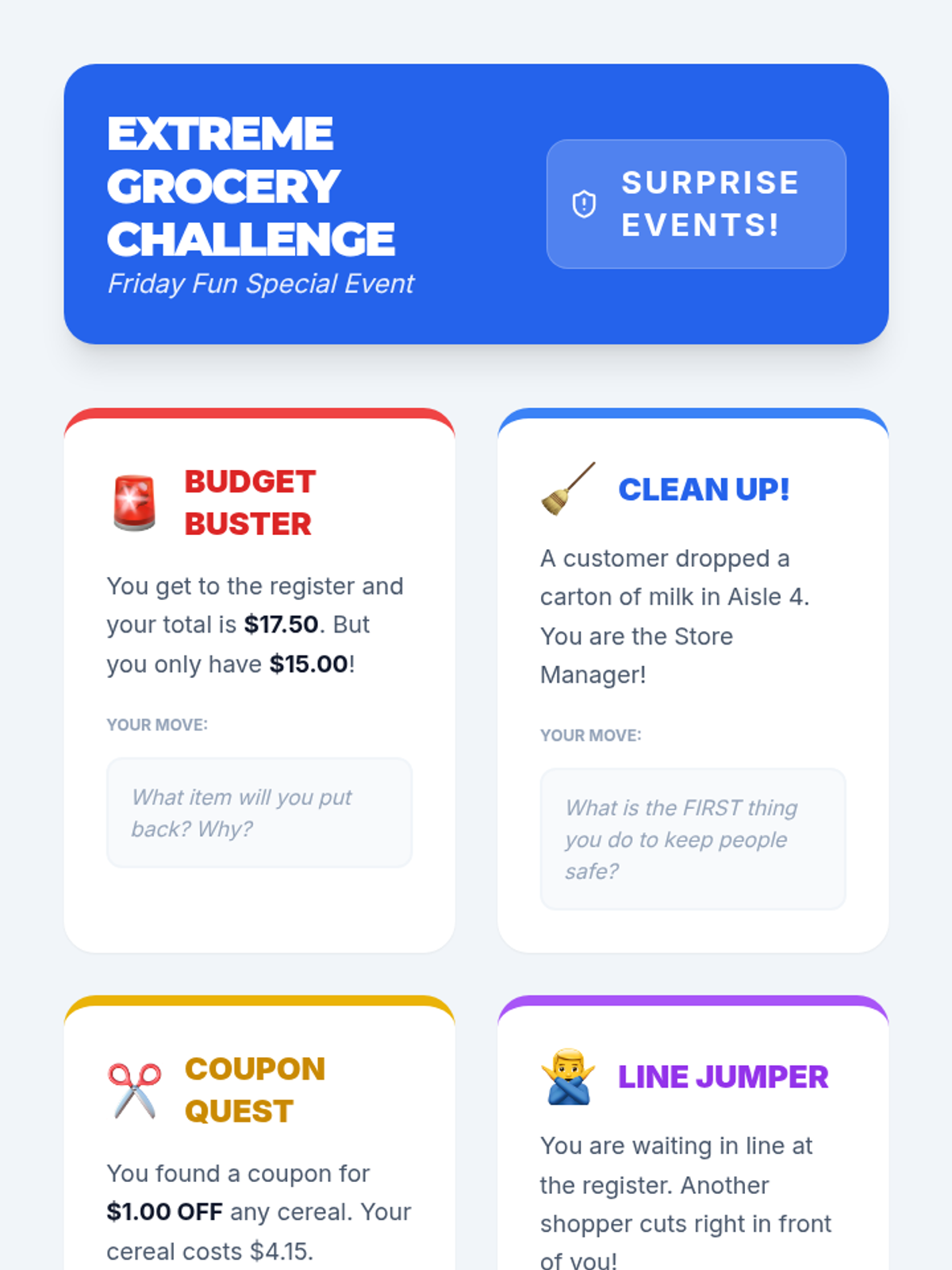
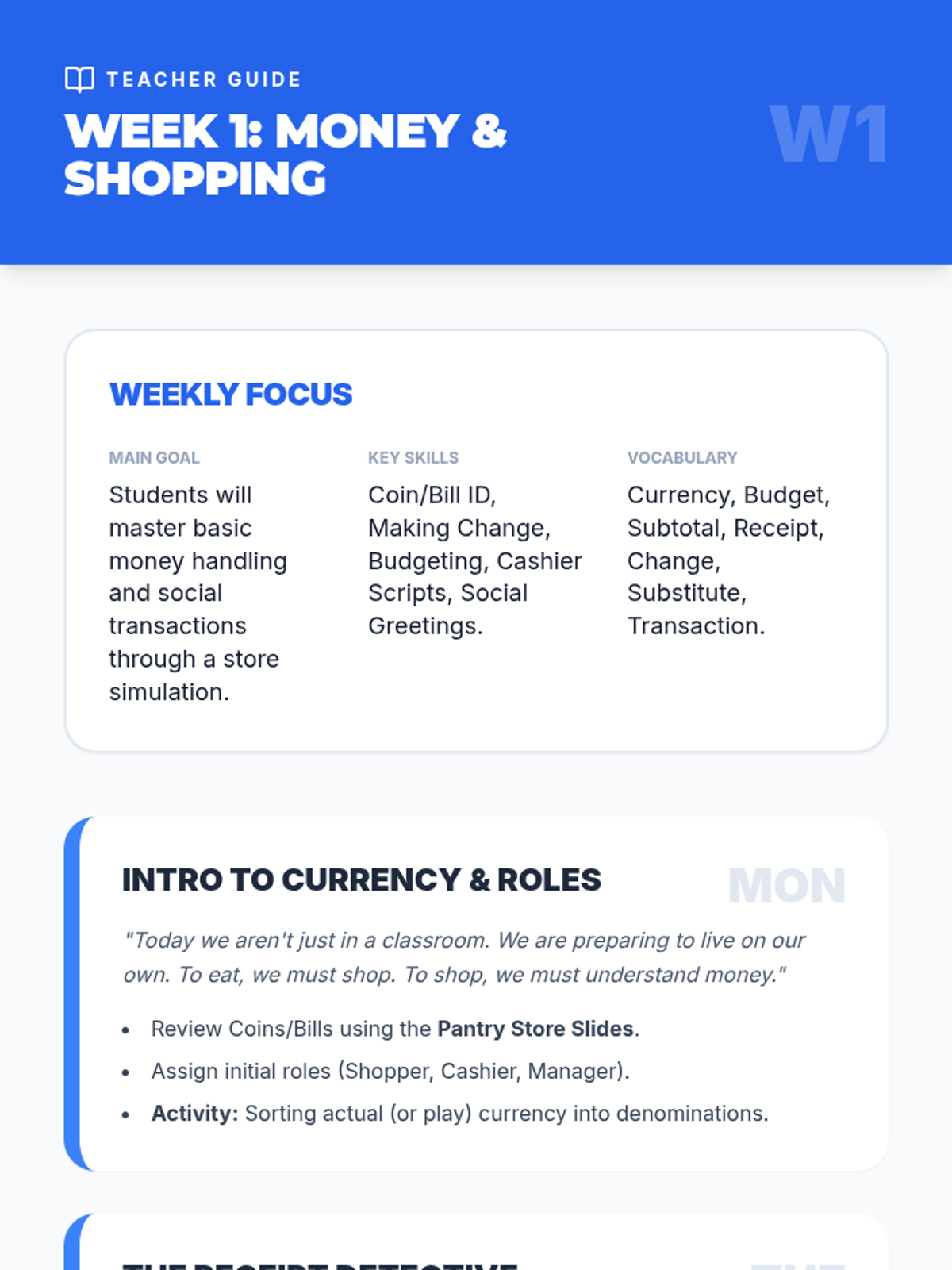
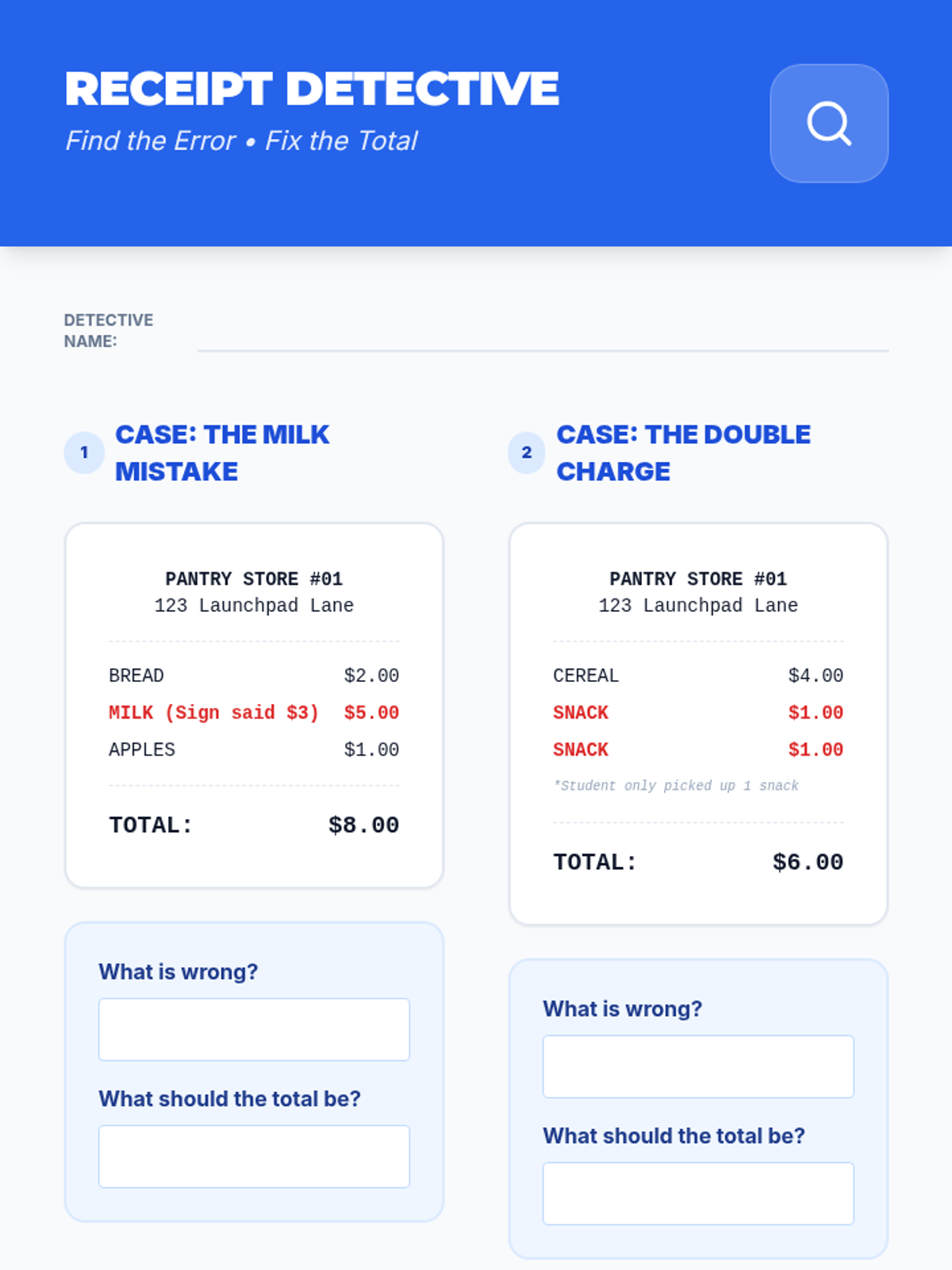
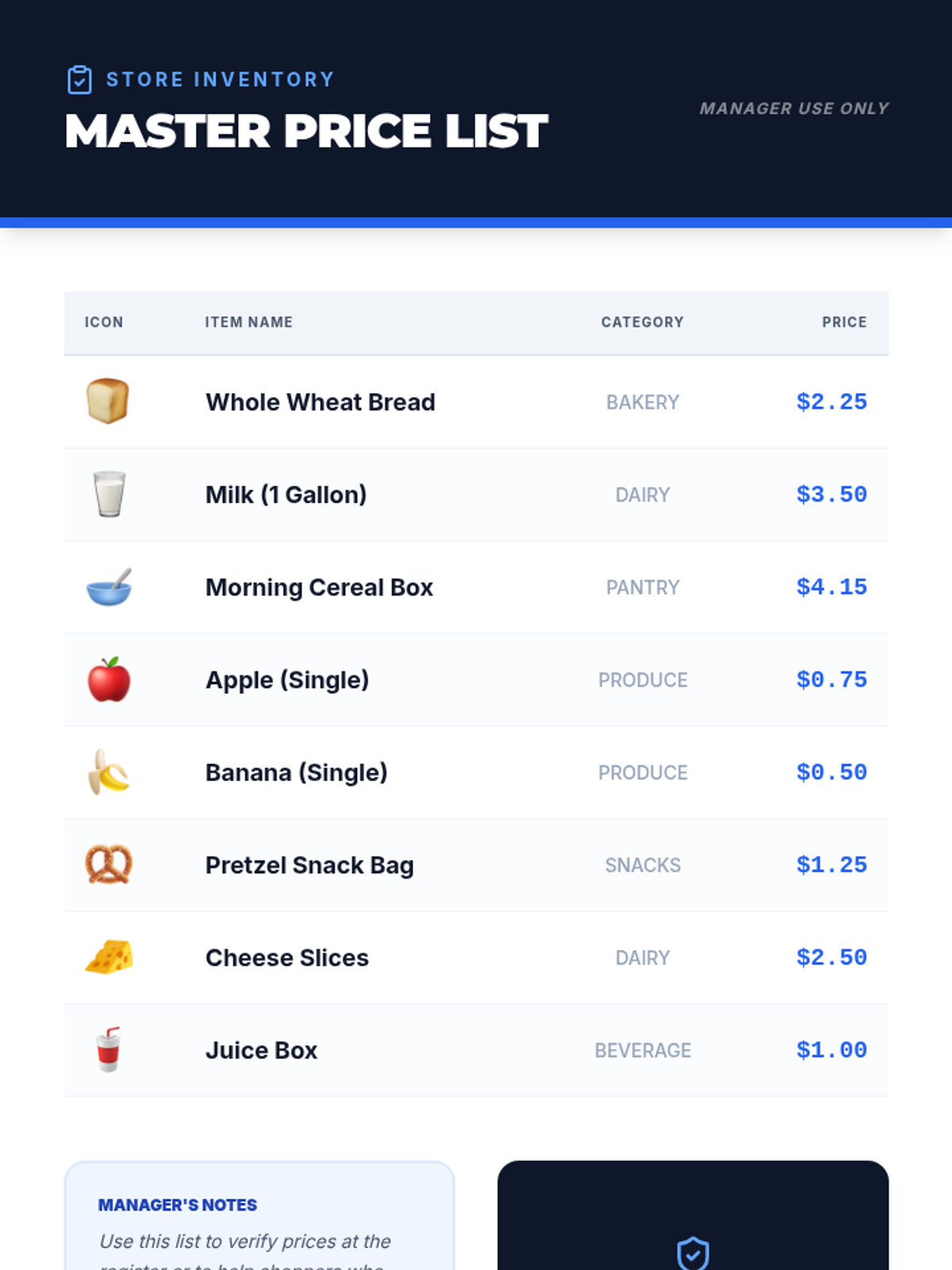
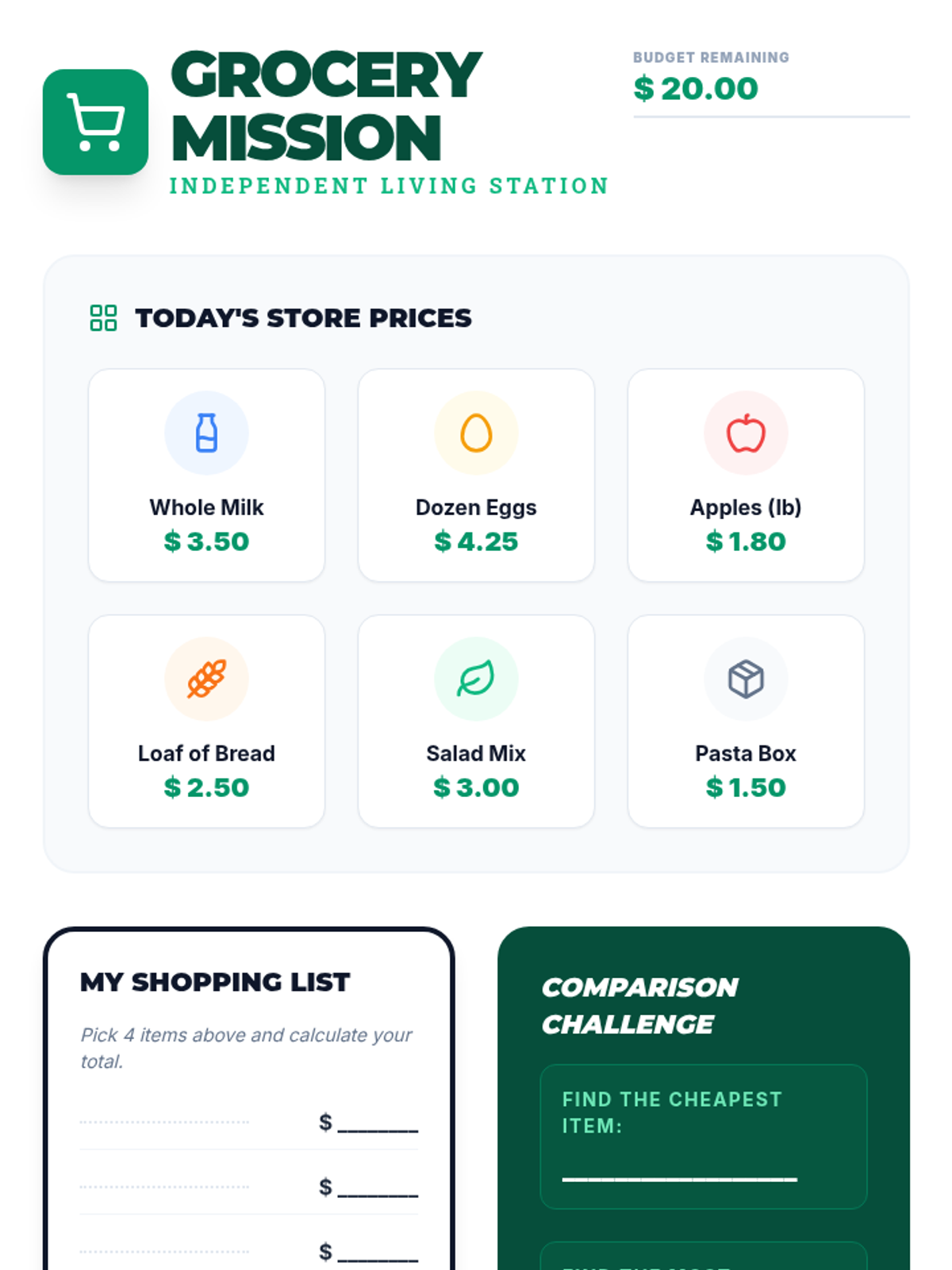
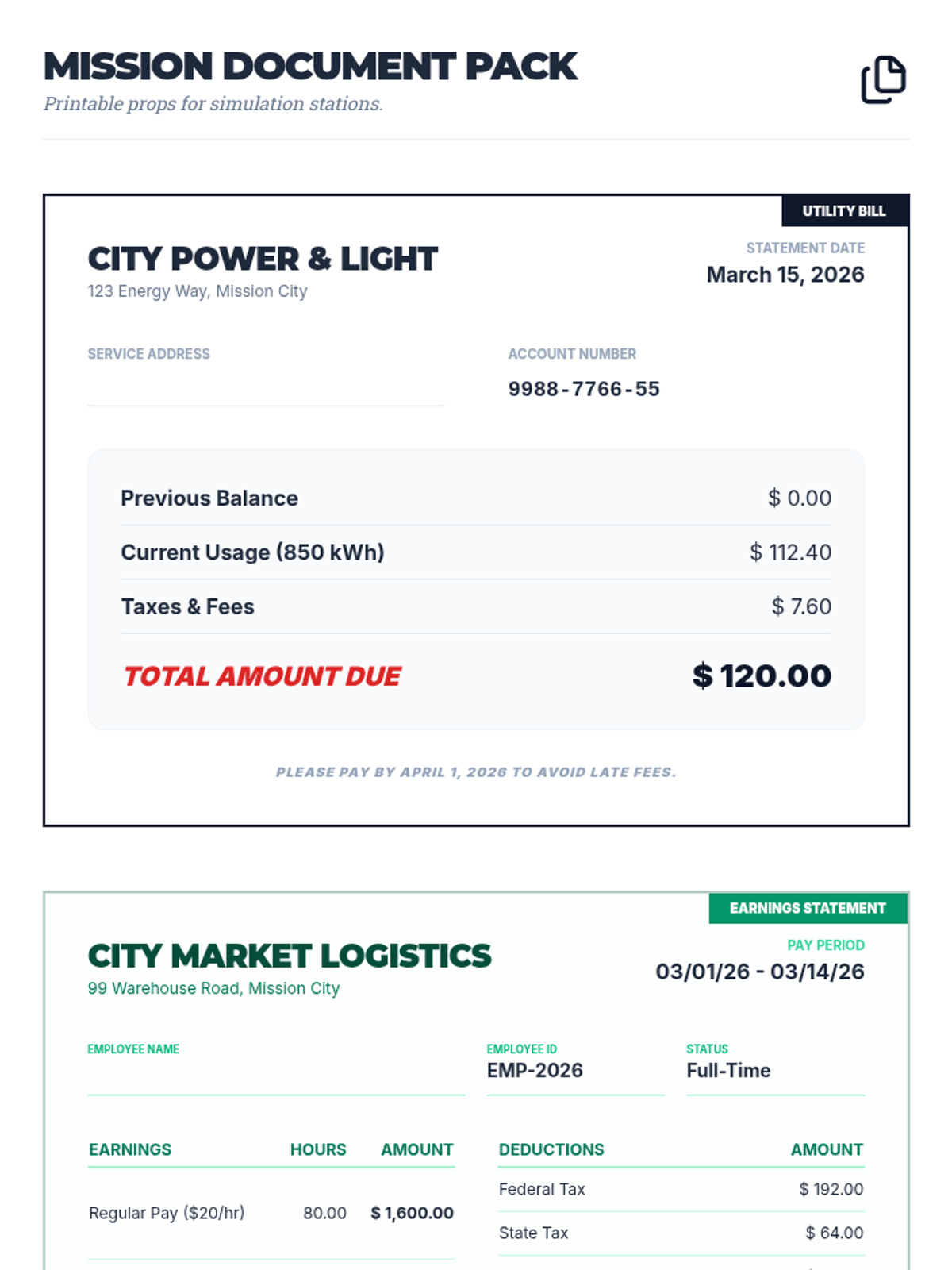
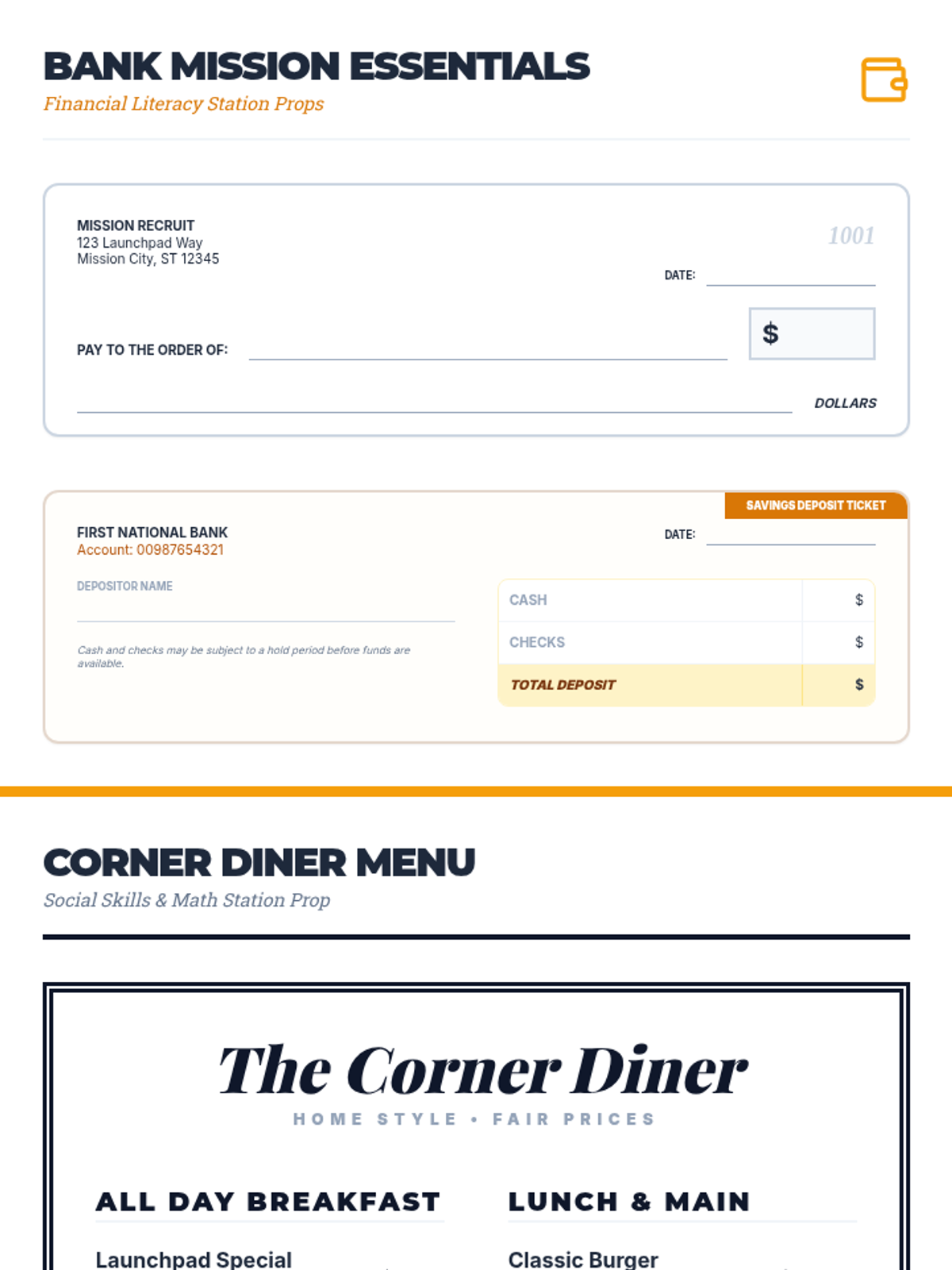
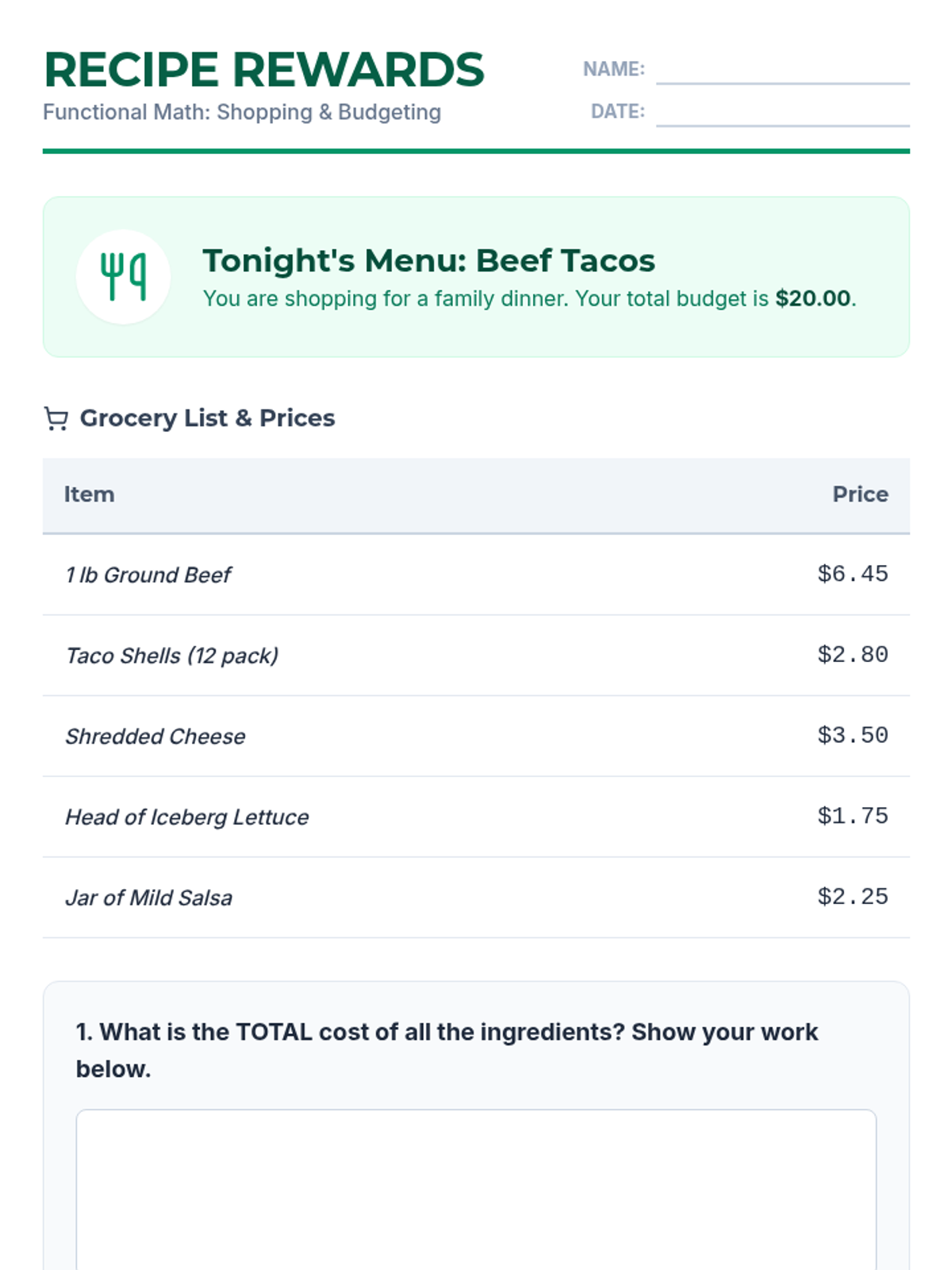
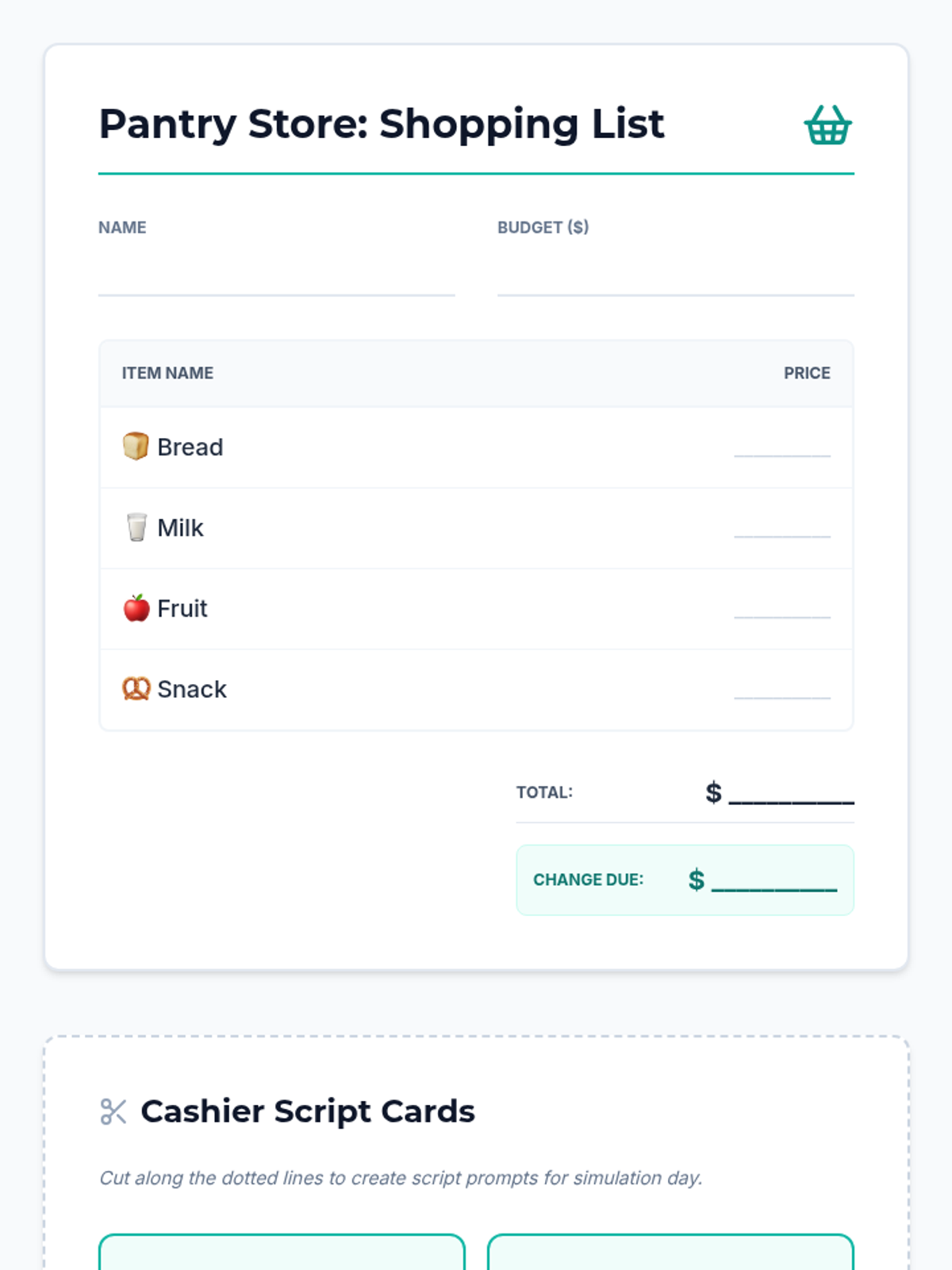
Mastering money identification, budgeting, and the mechanics of shopping through a pantry store simulation and real-world problem-solving.
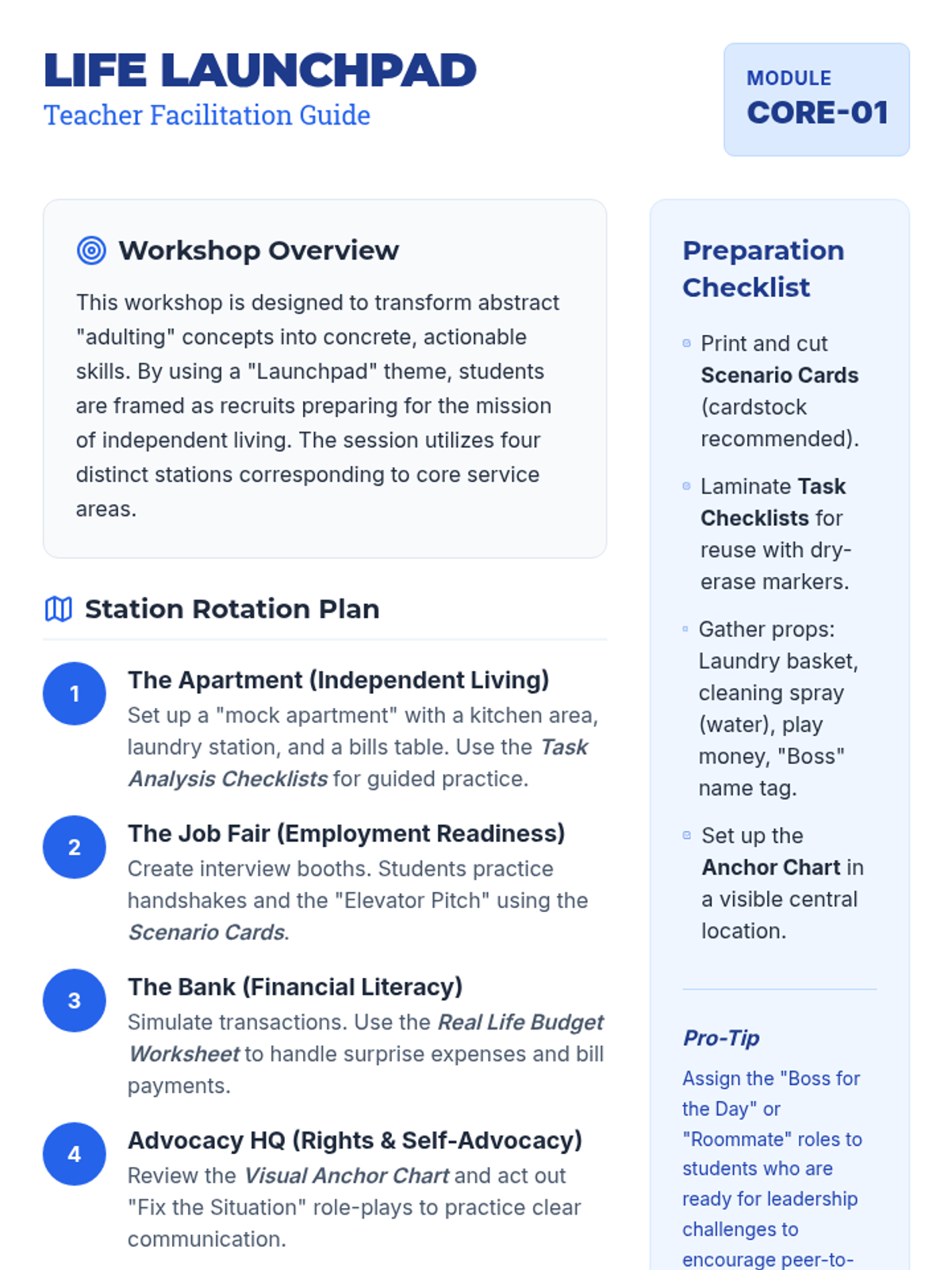
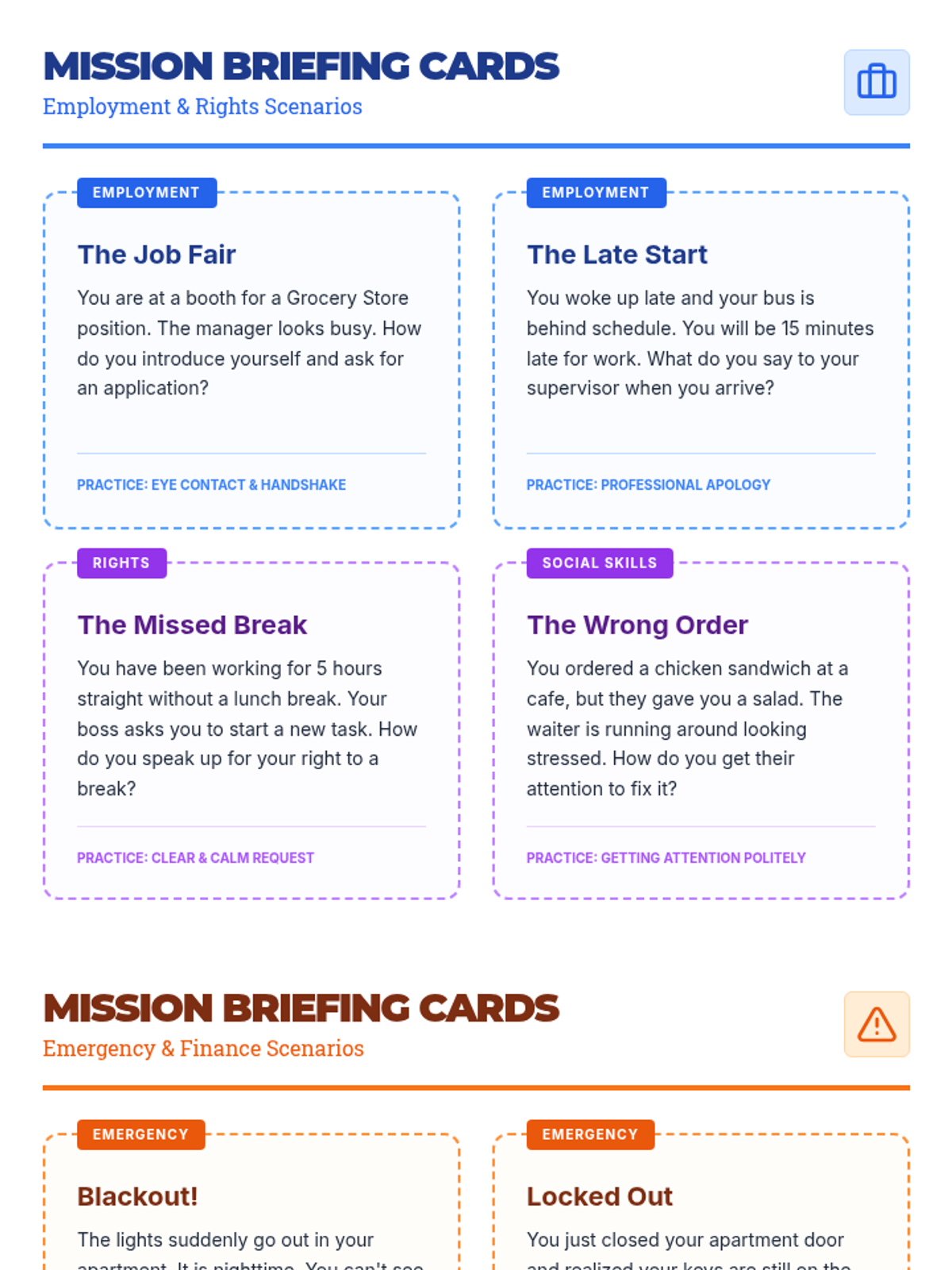
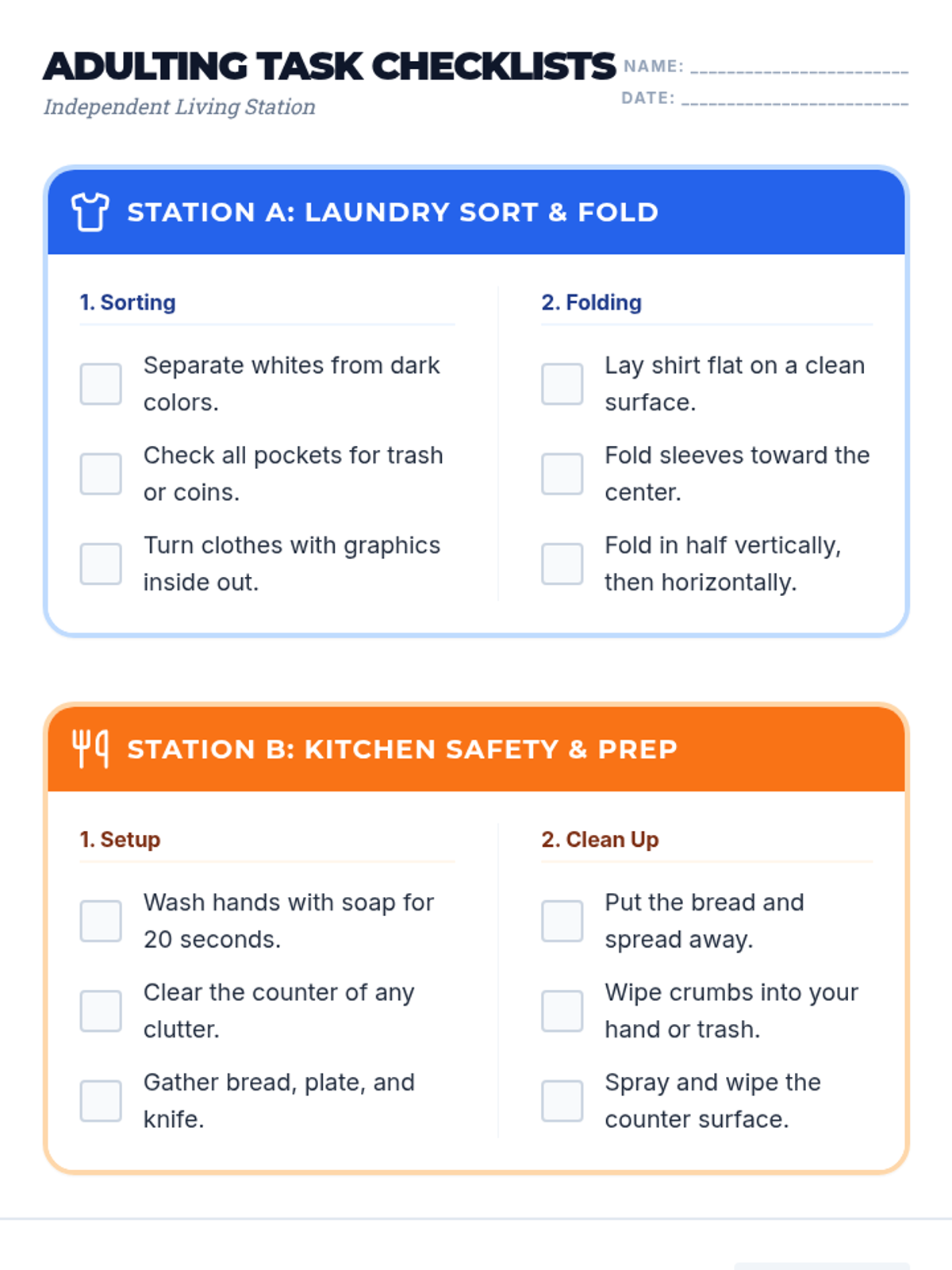
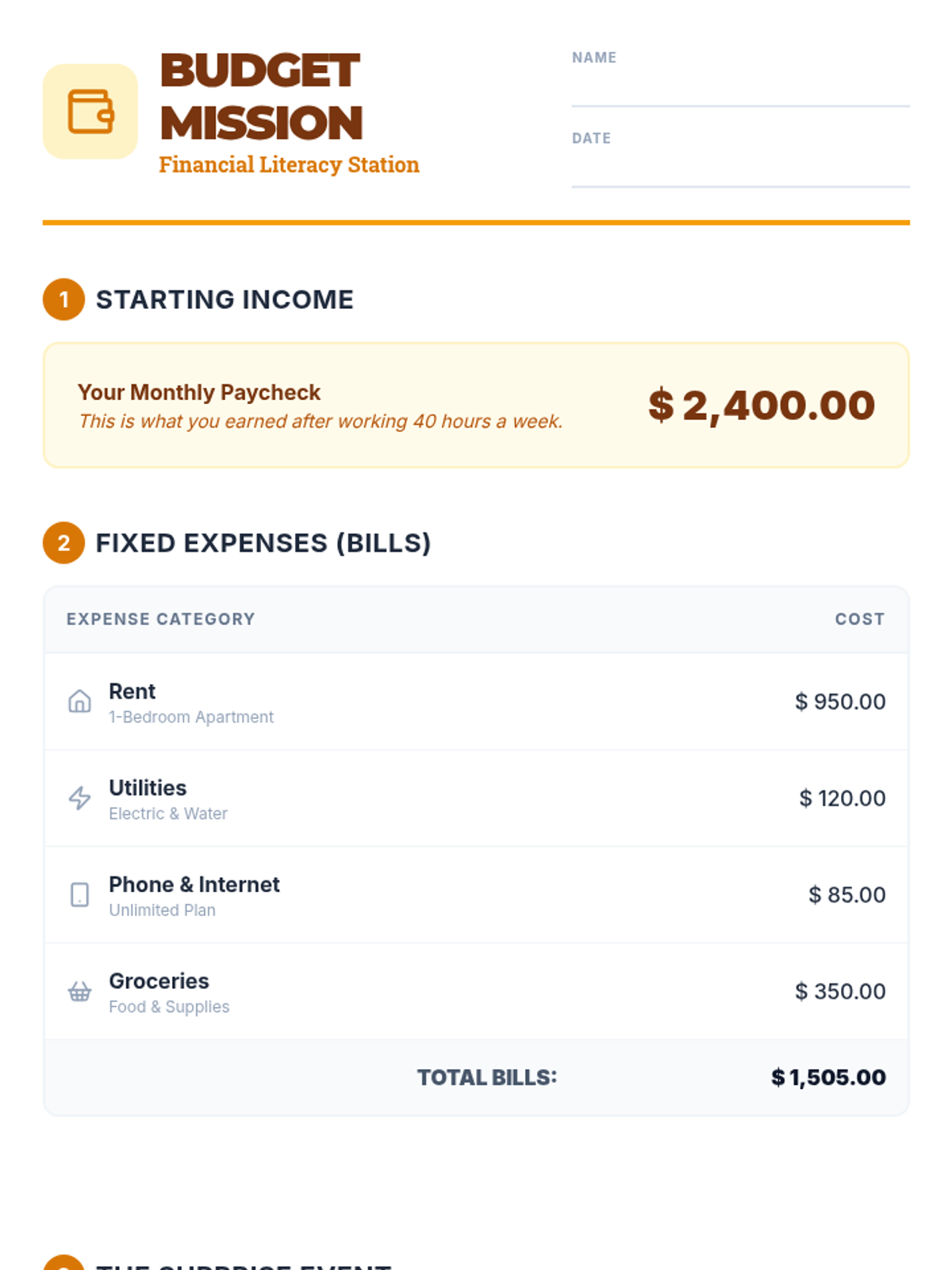
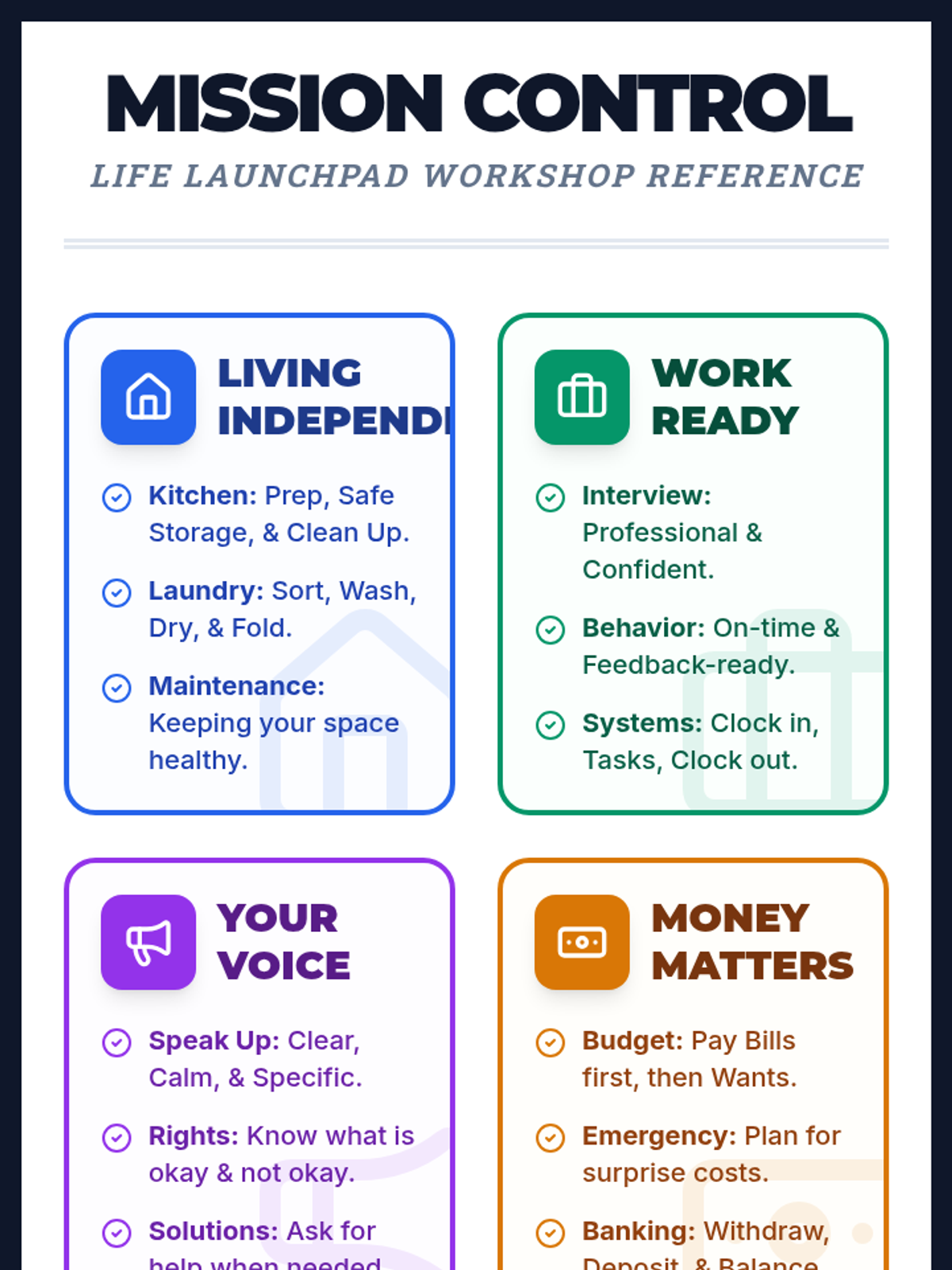
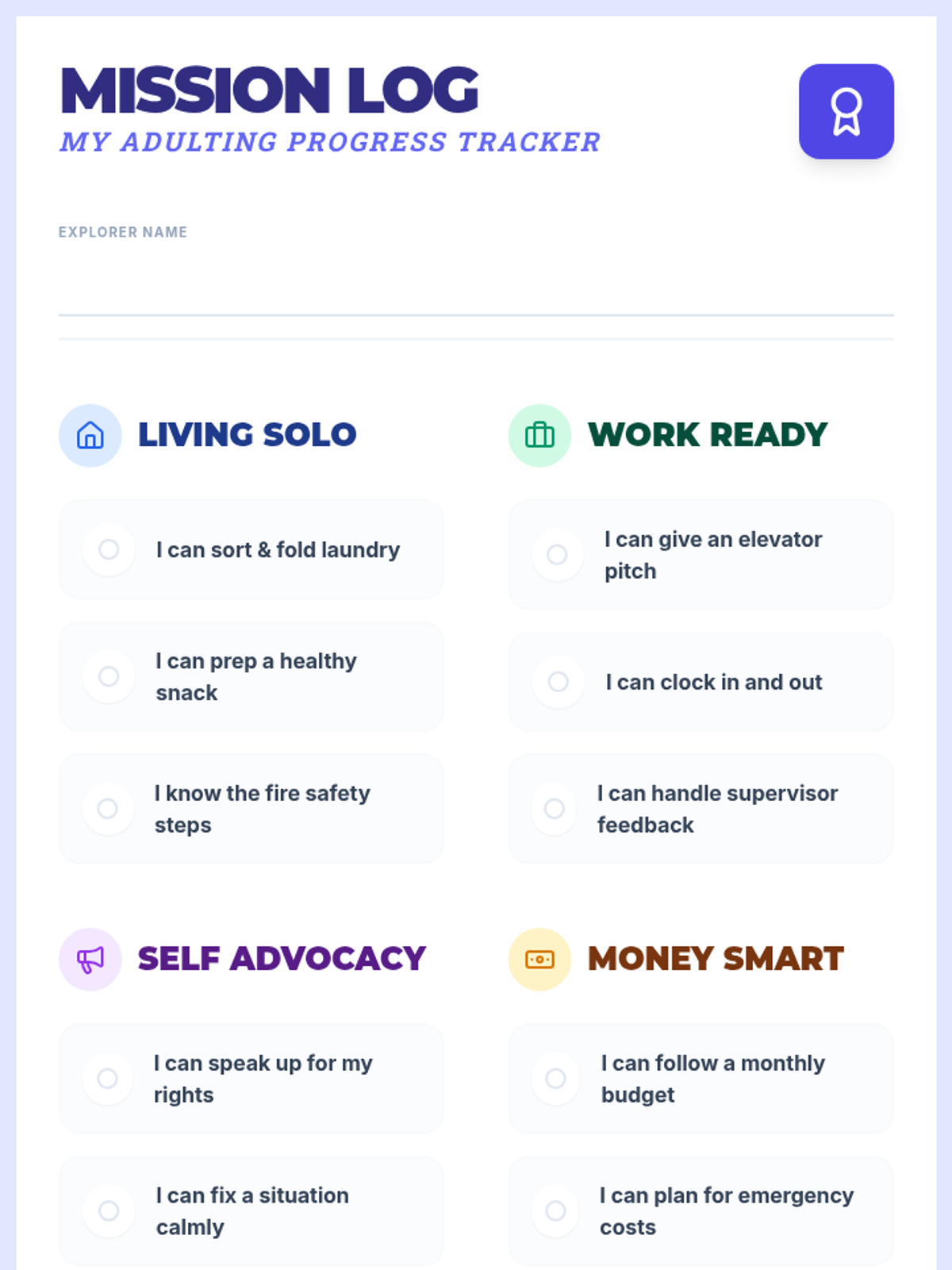
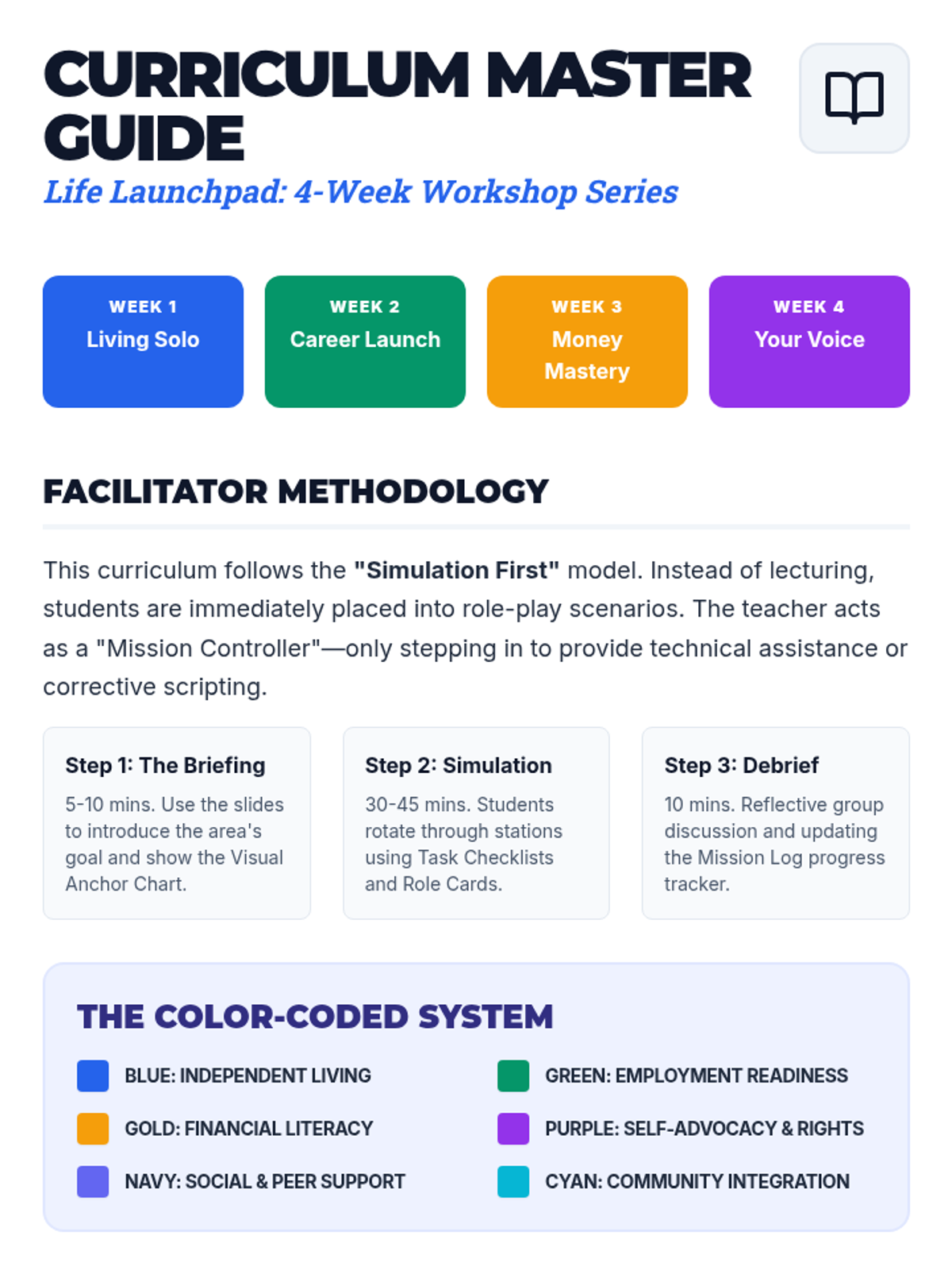
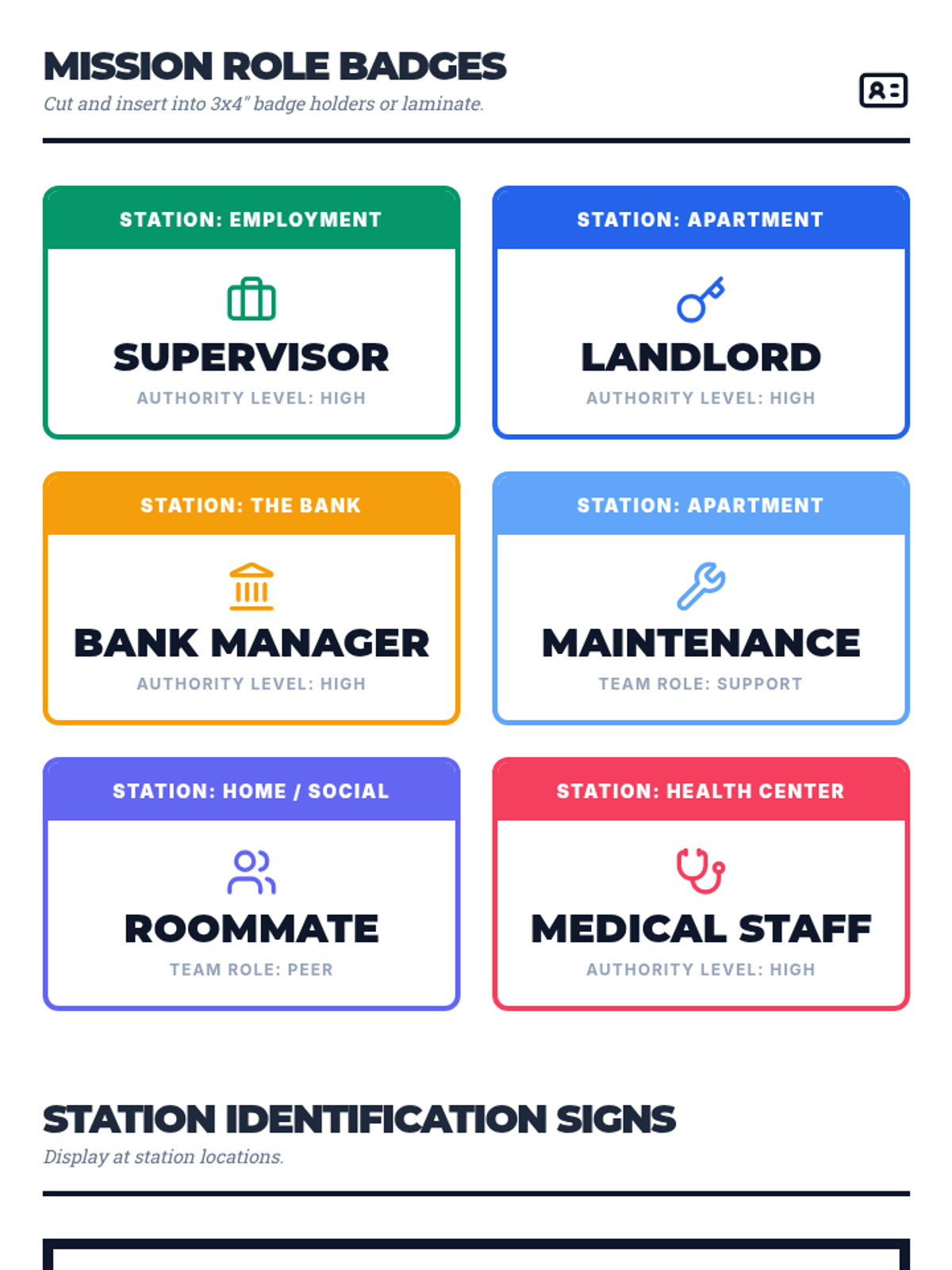
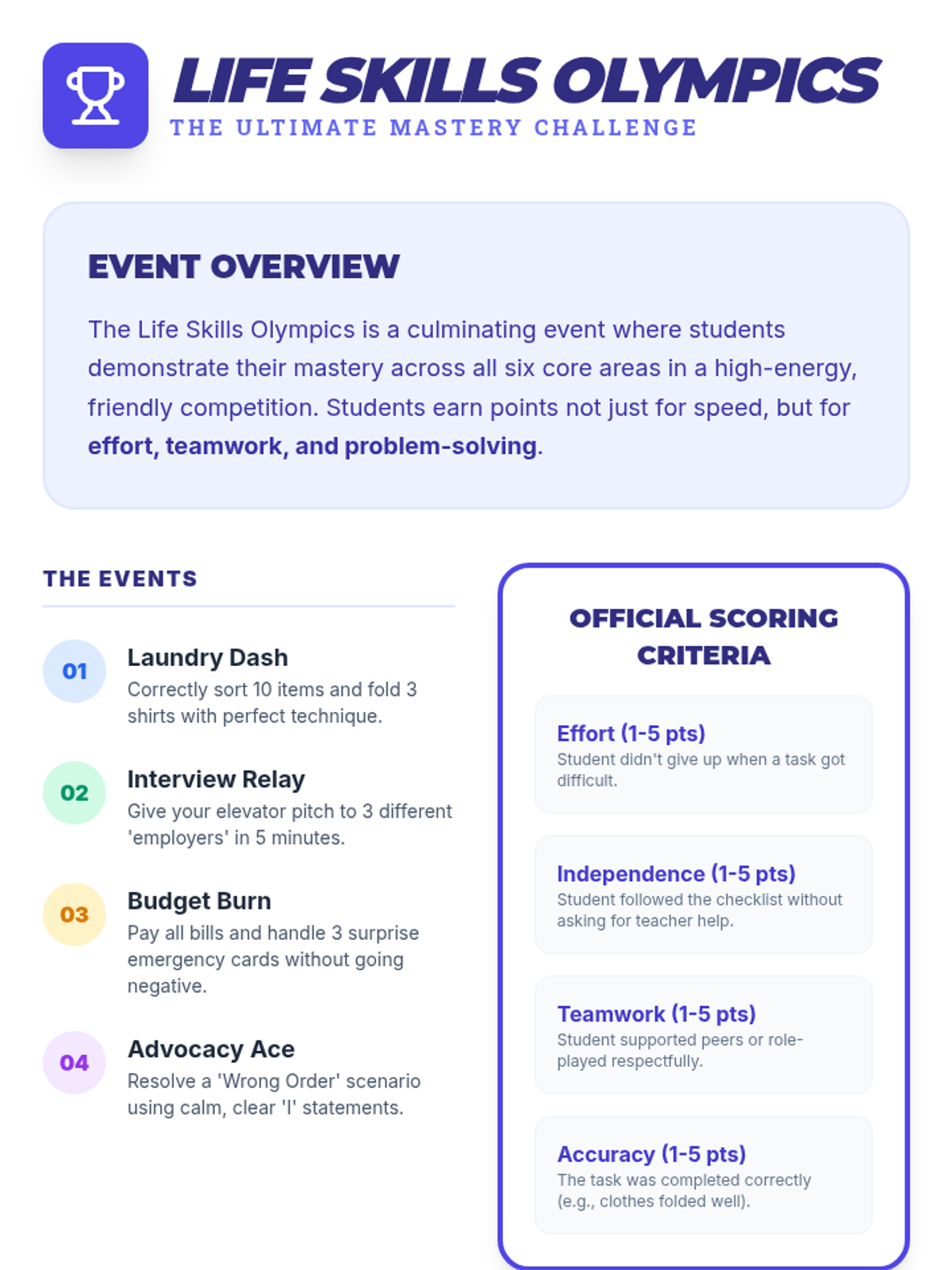
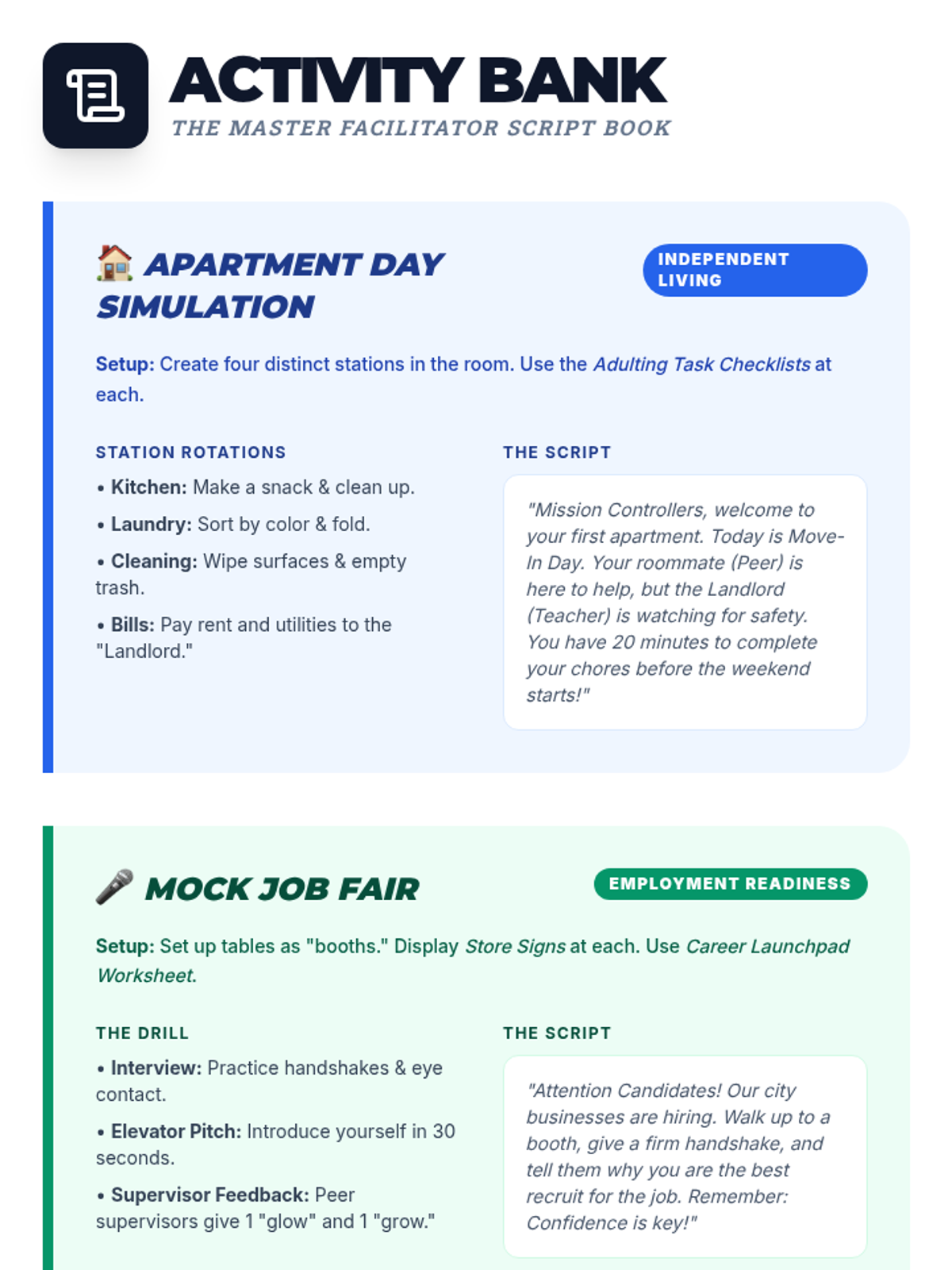
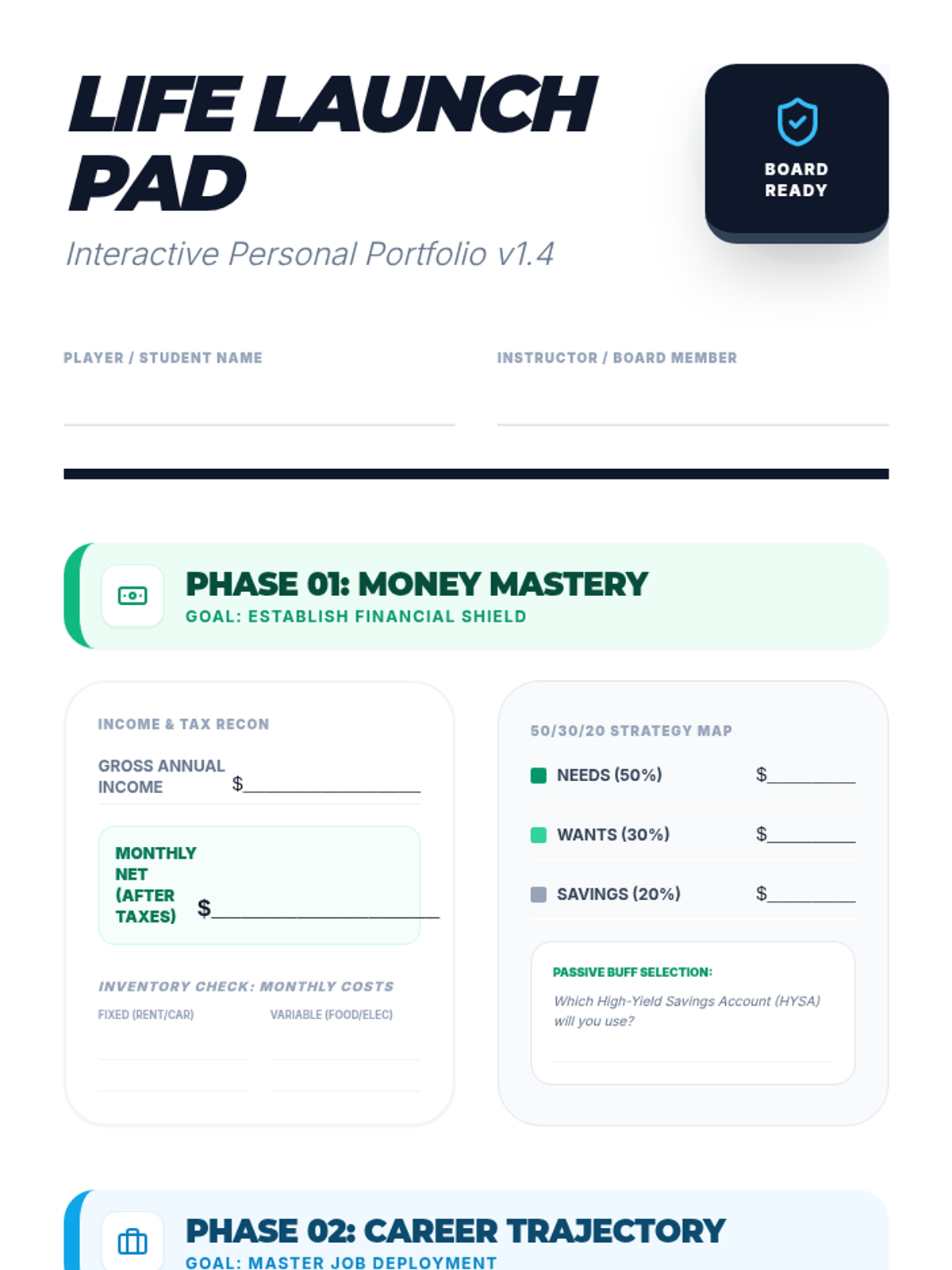
A comprehensive workshop focusing on essential adulting skills through immersive role-play, task simulations, and practical financial planning. This lesson covers Independent Living, Employment Readiness, Self-Advocacy, and Financial Literacy.
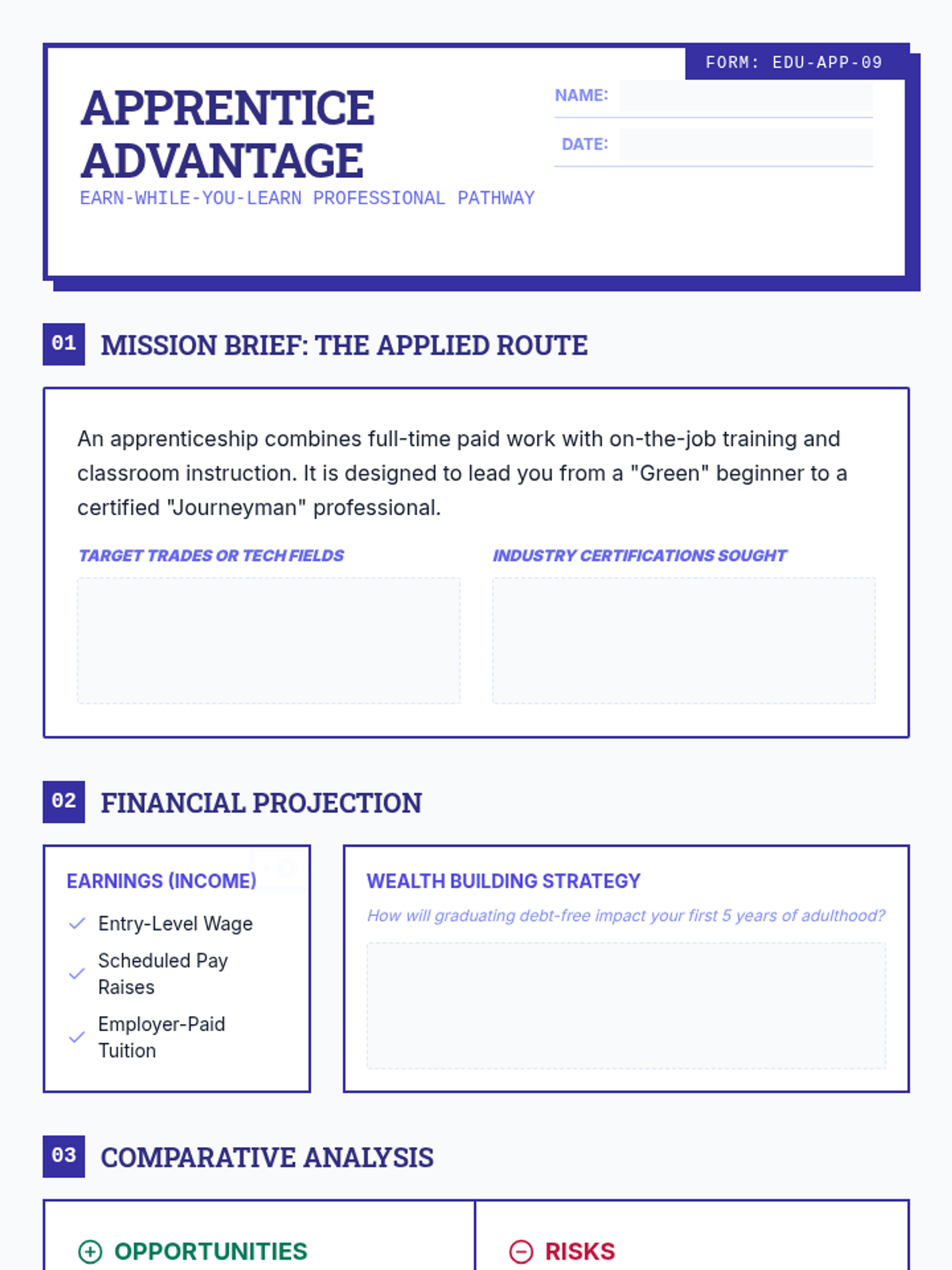
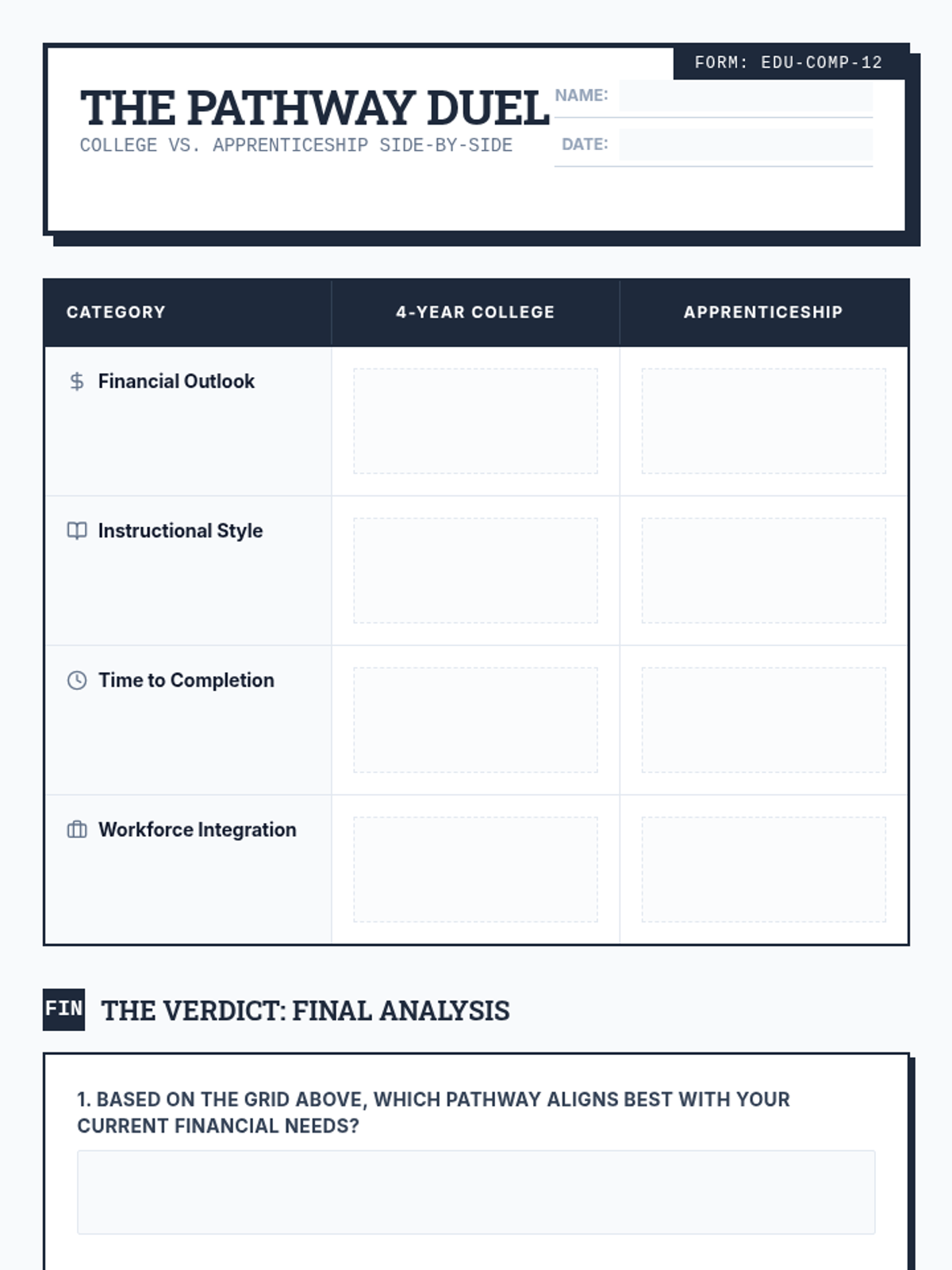
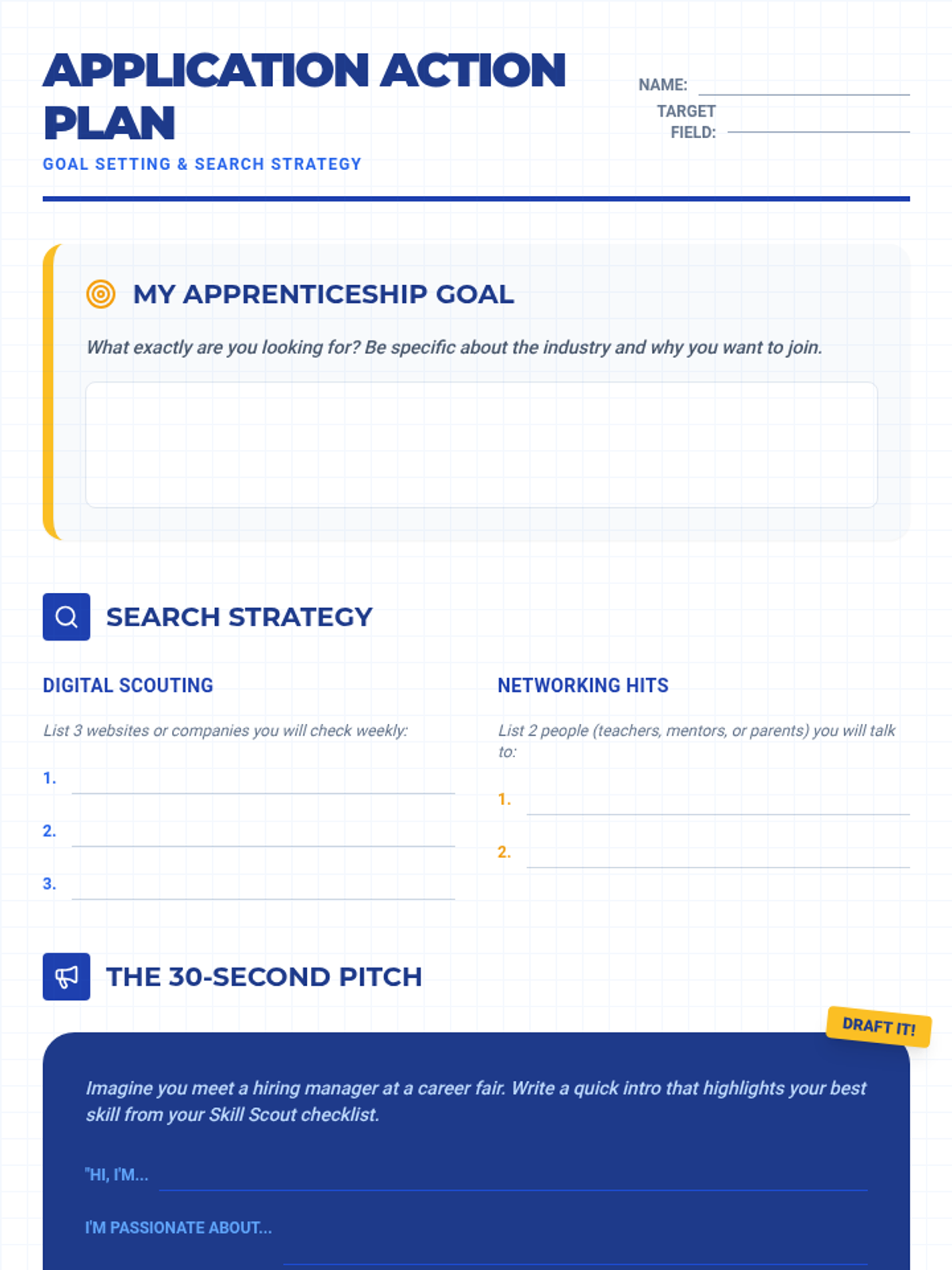
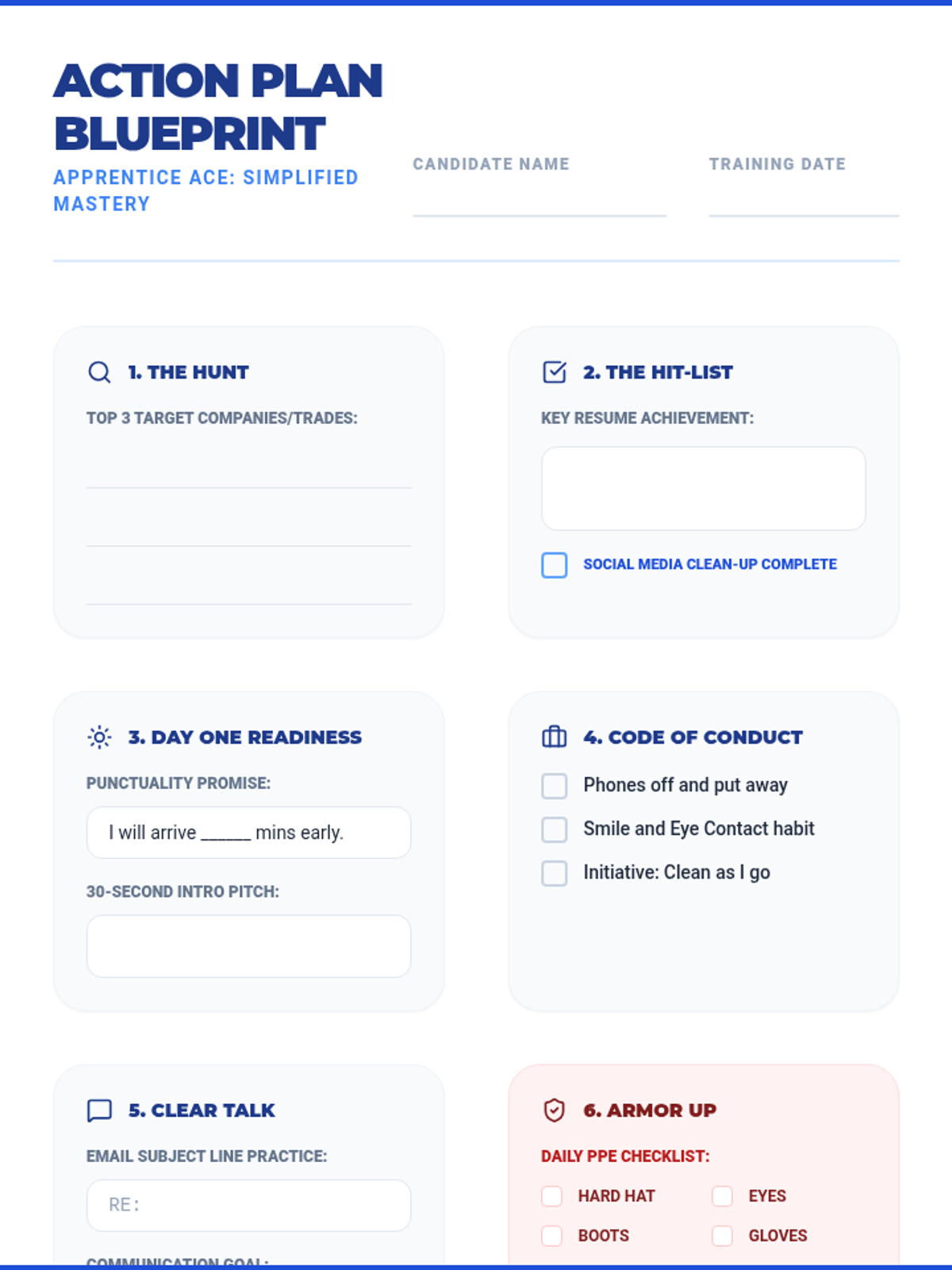
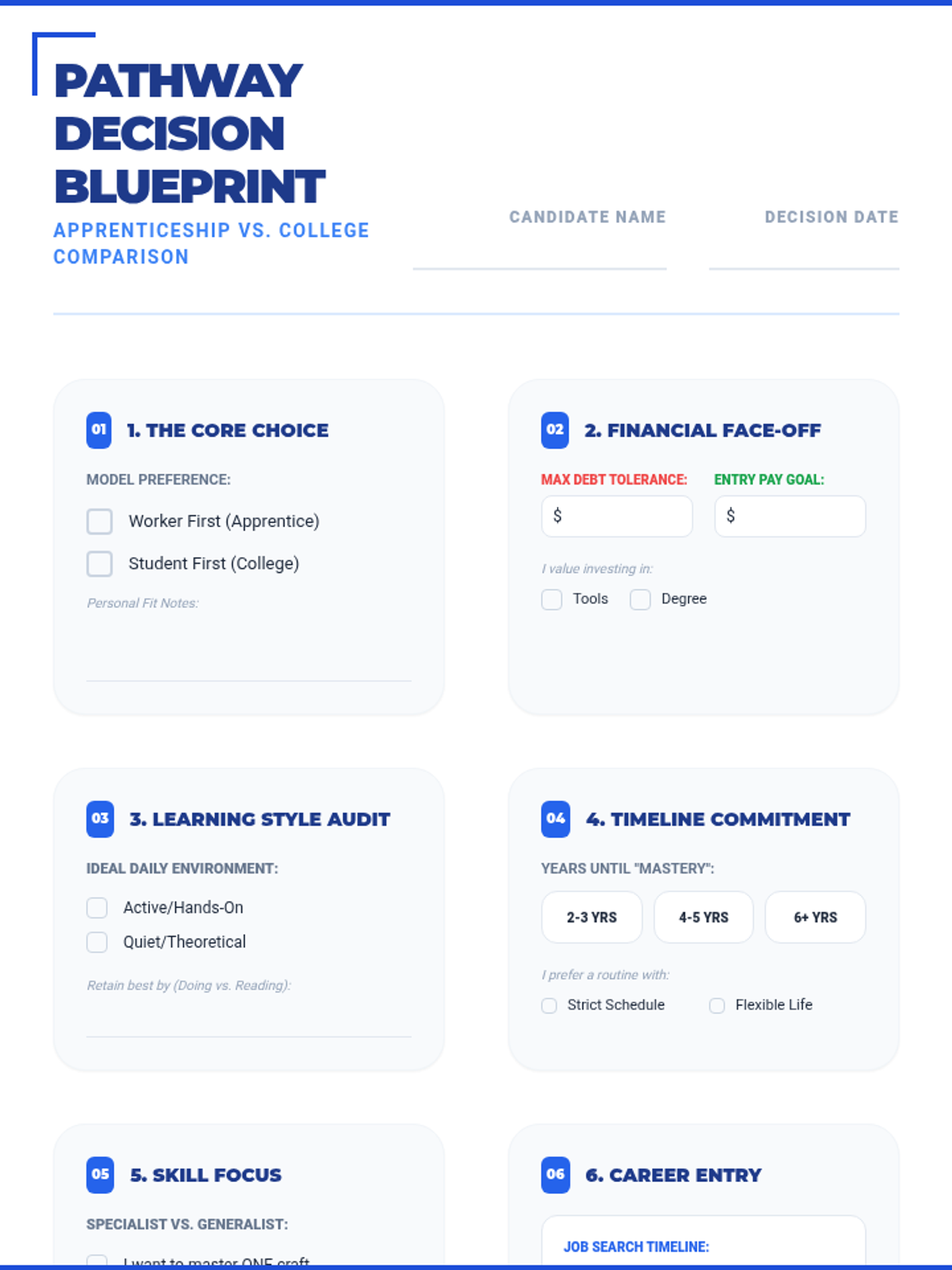
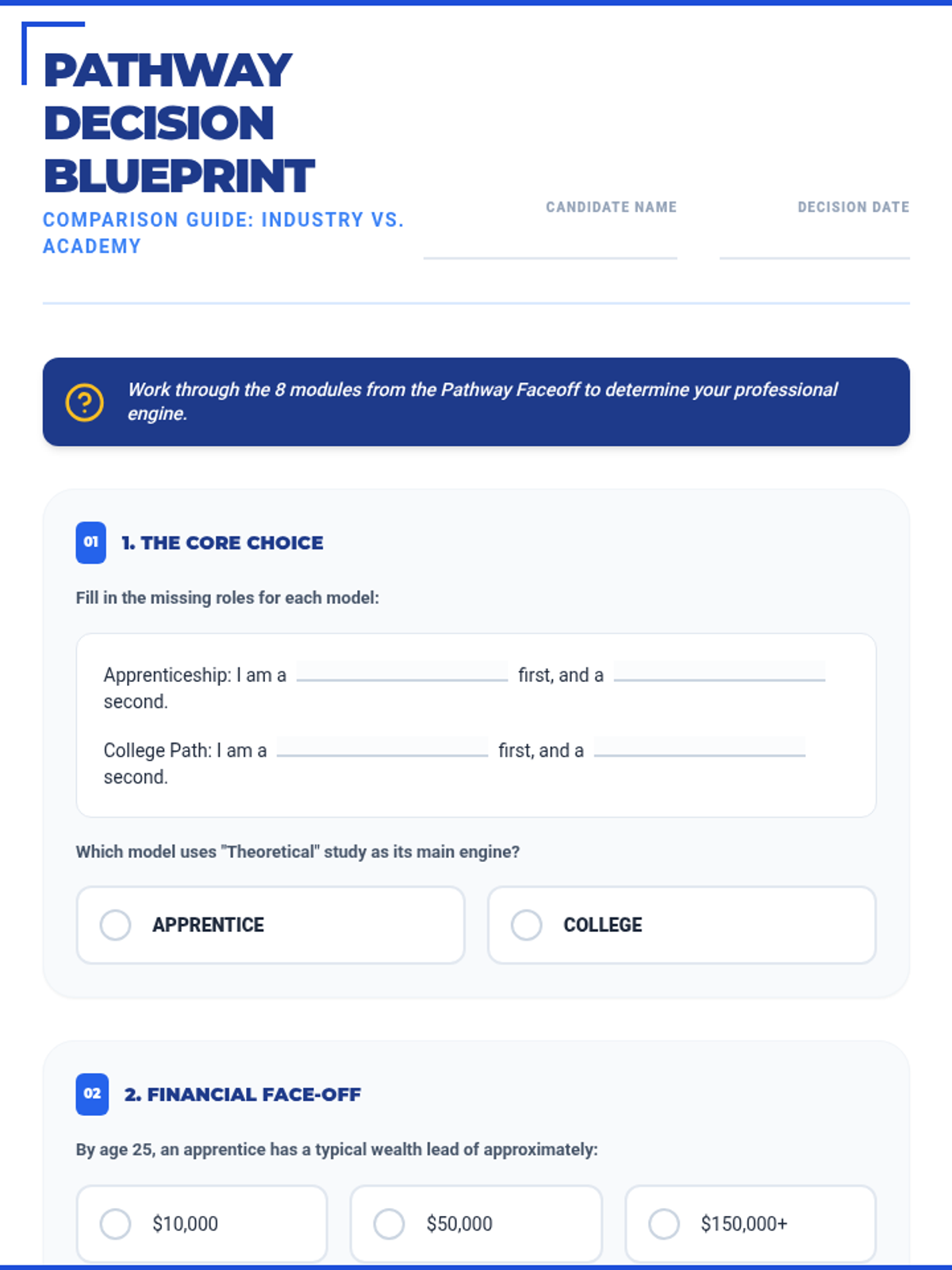
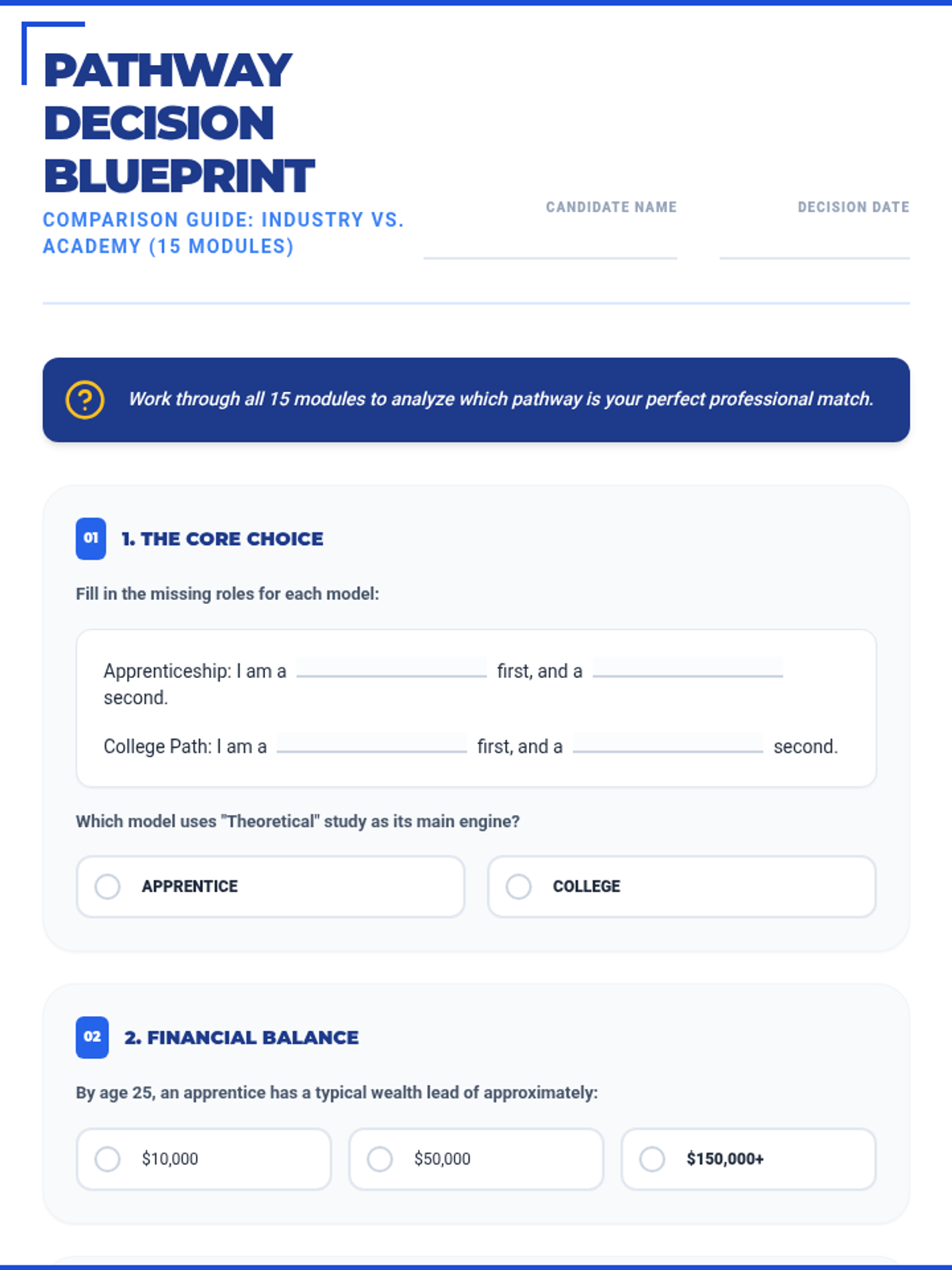
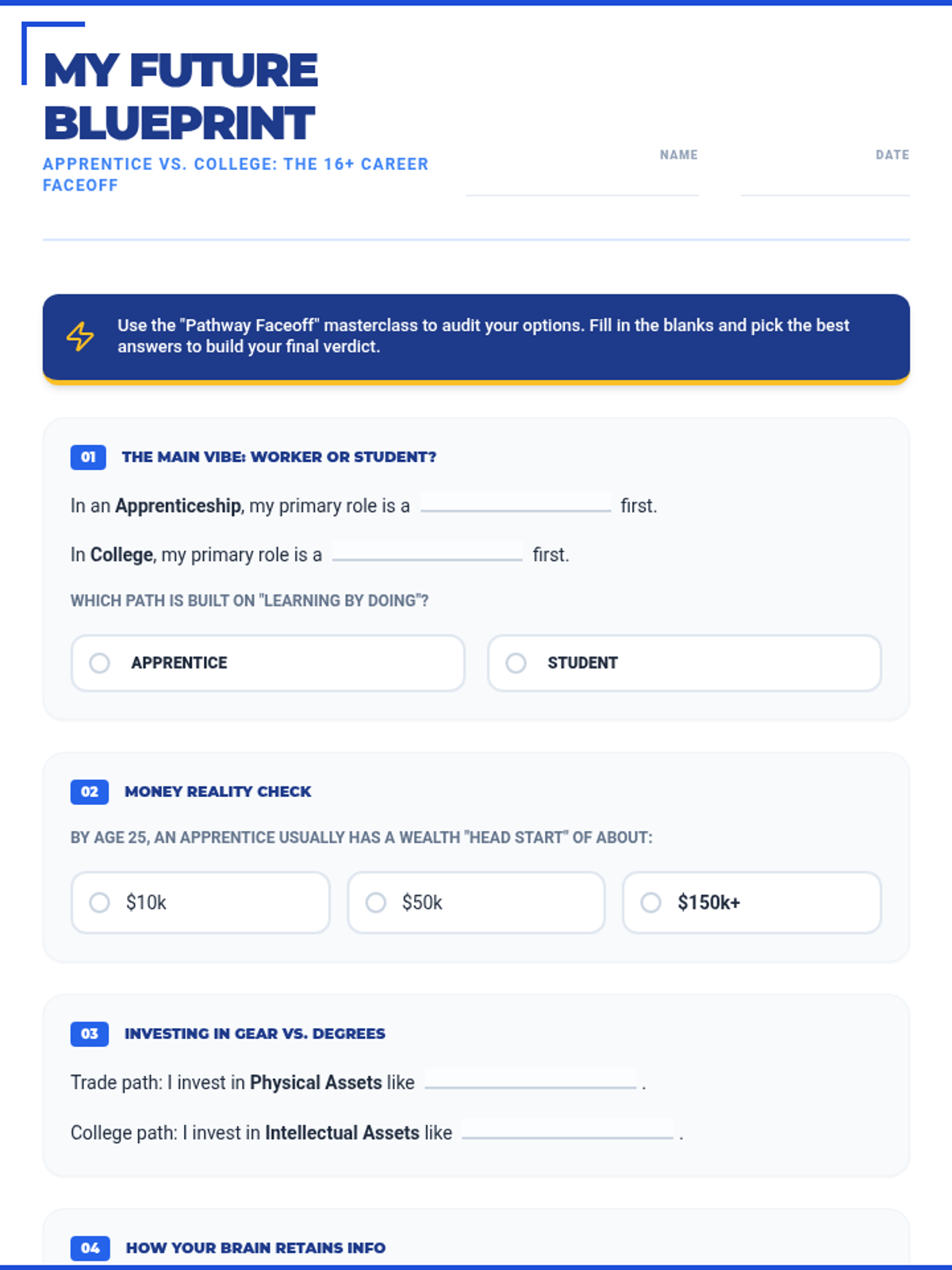
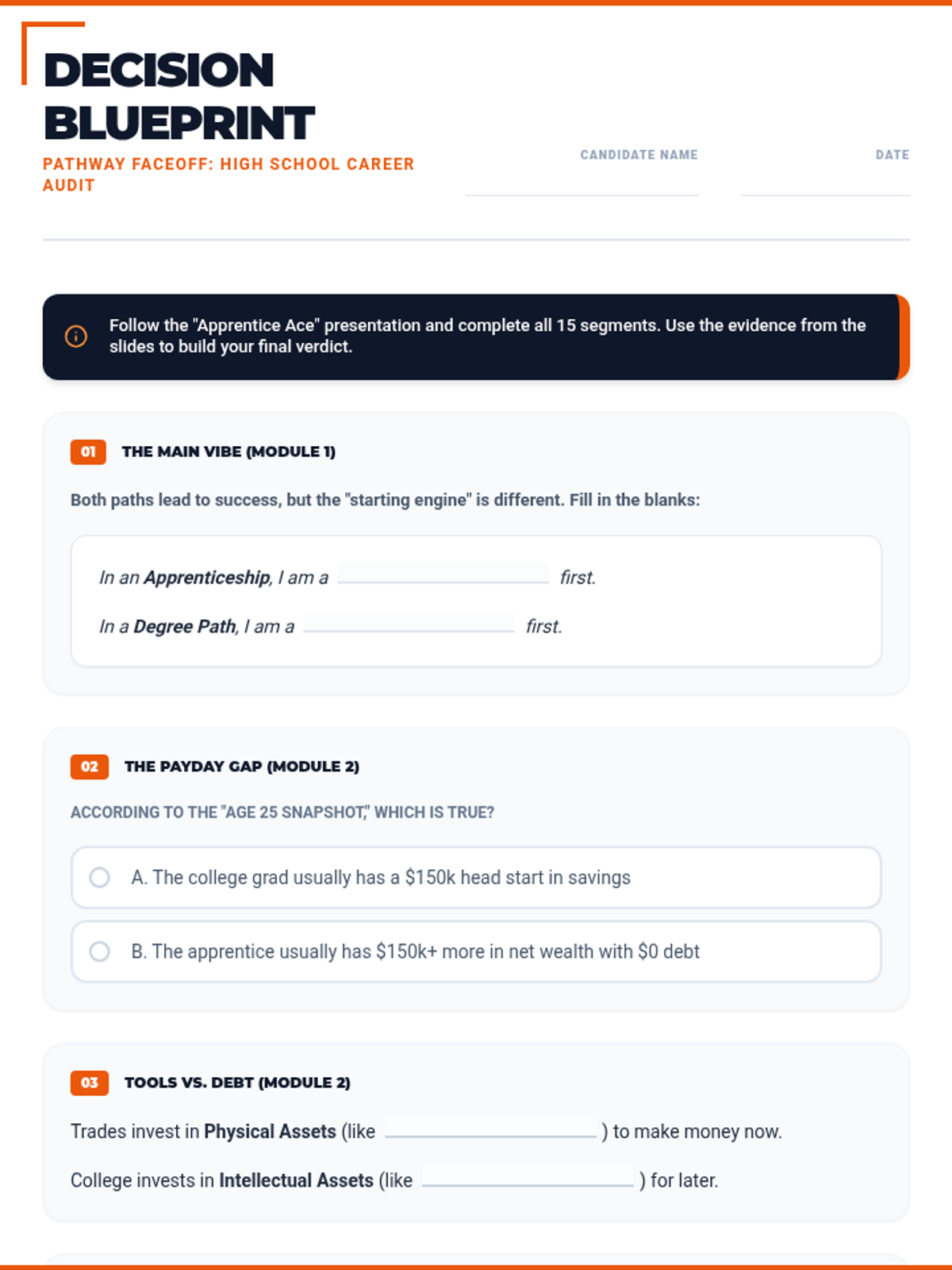
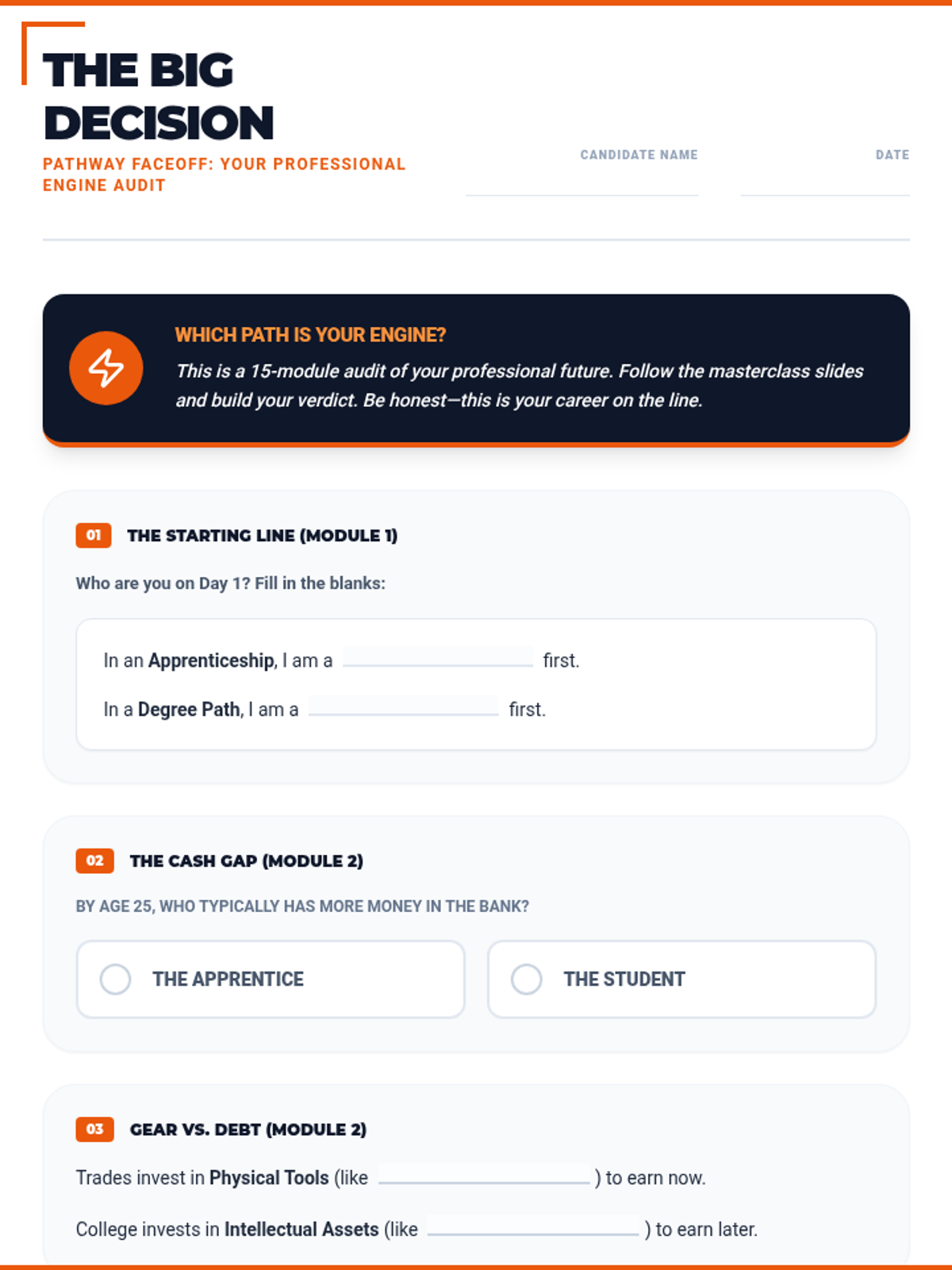
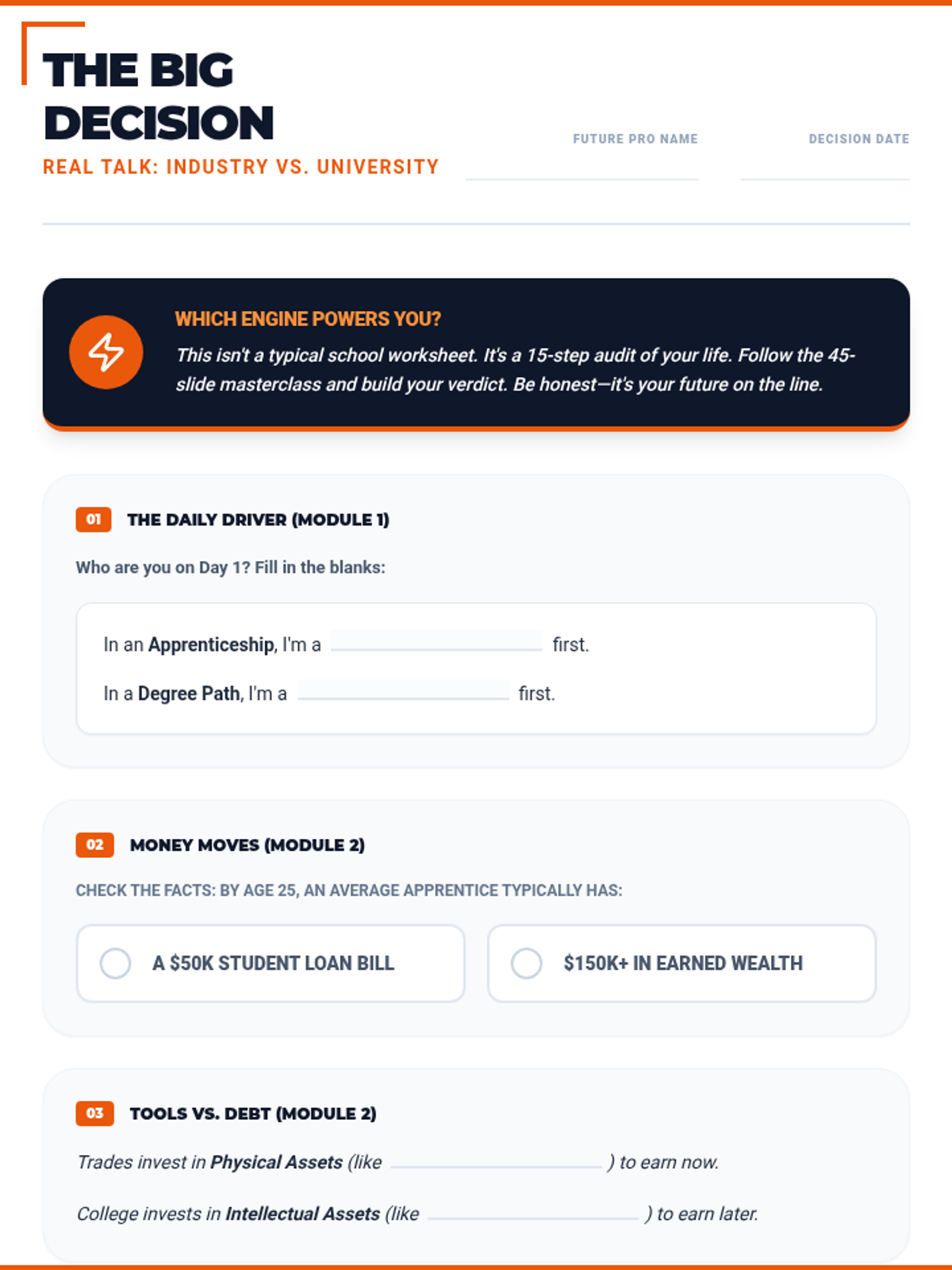
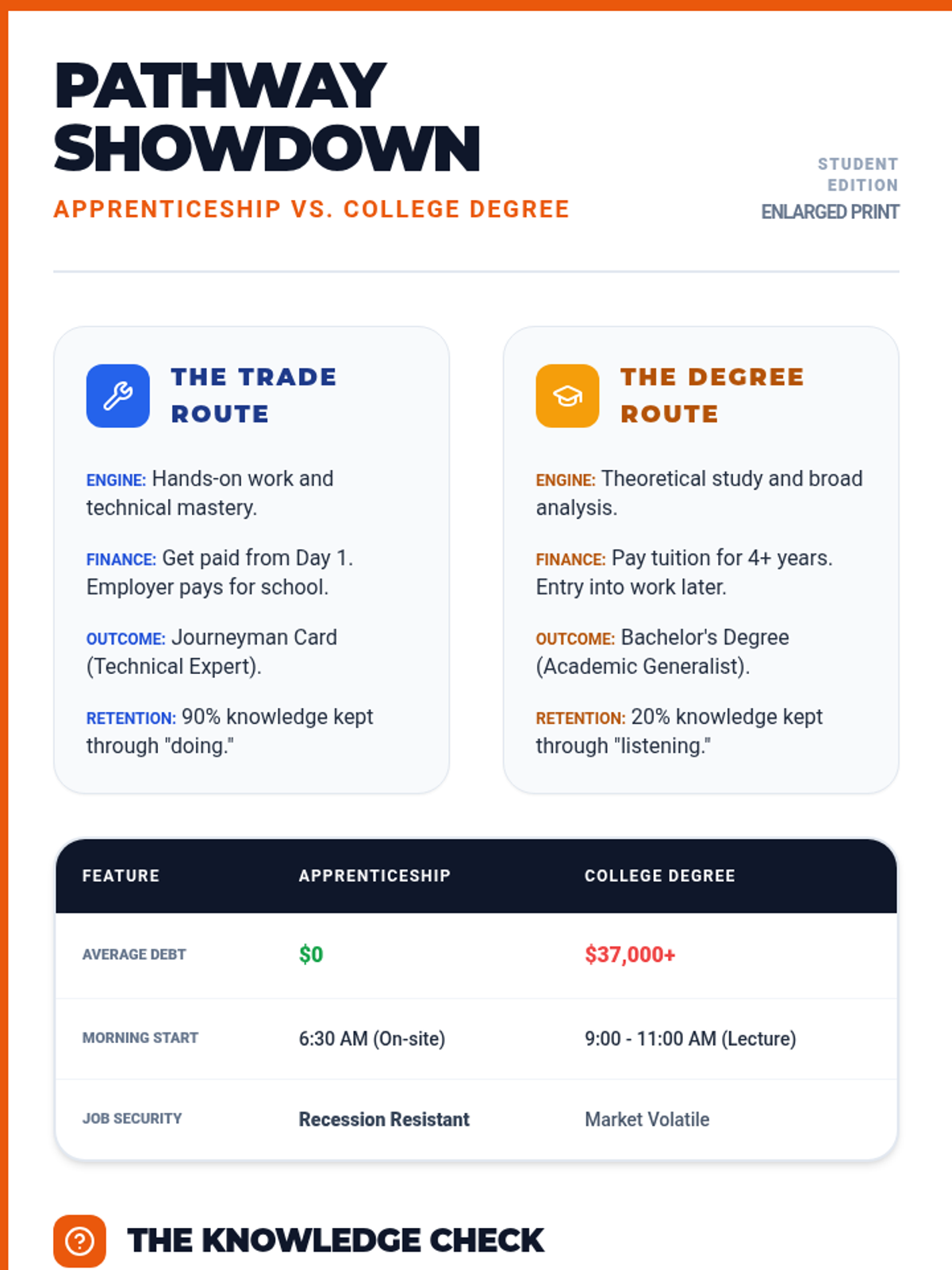
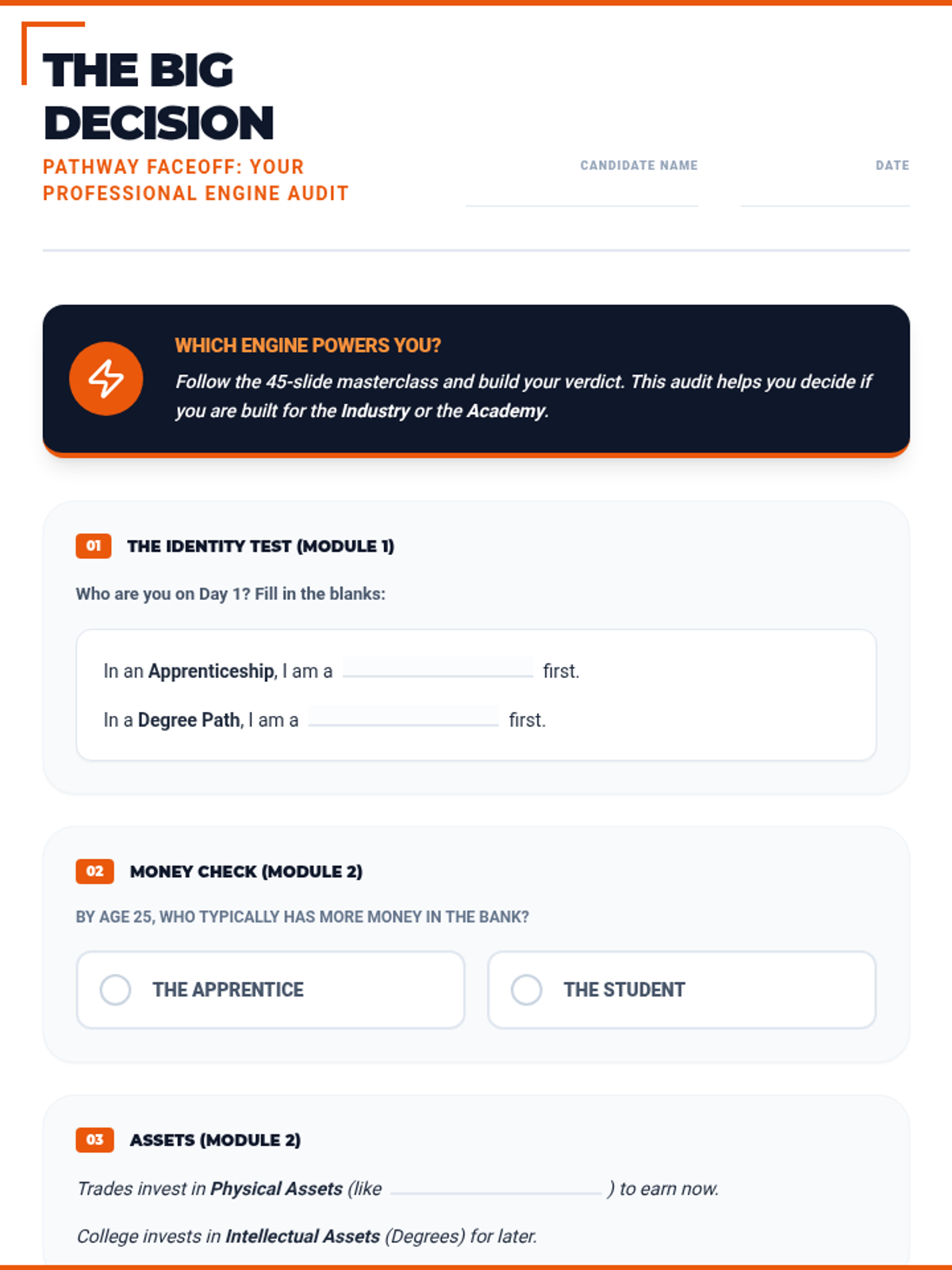
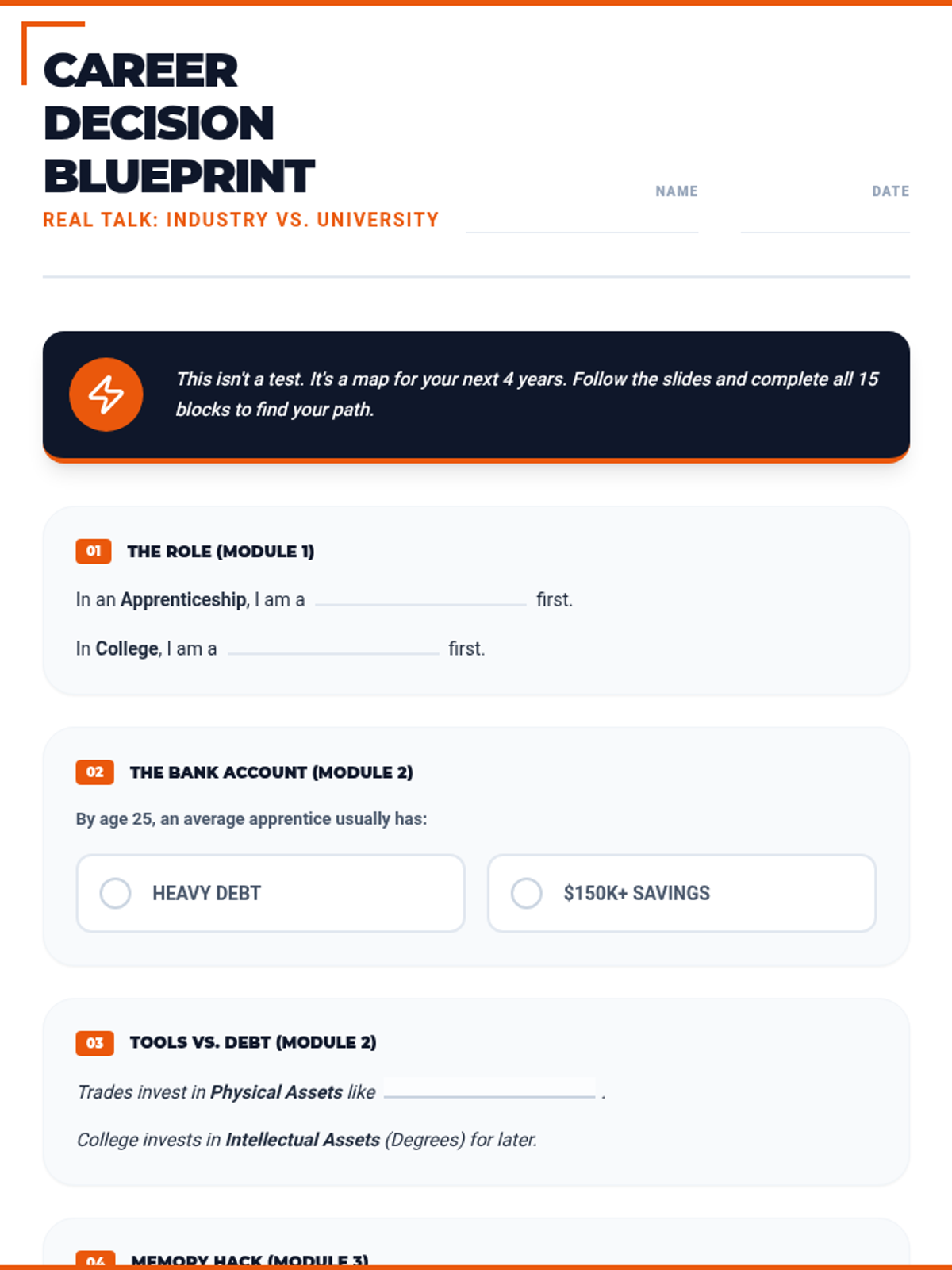
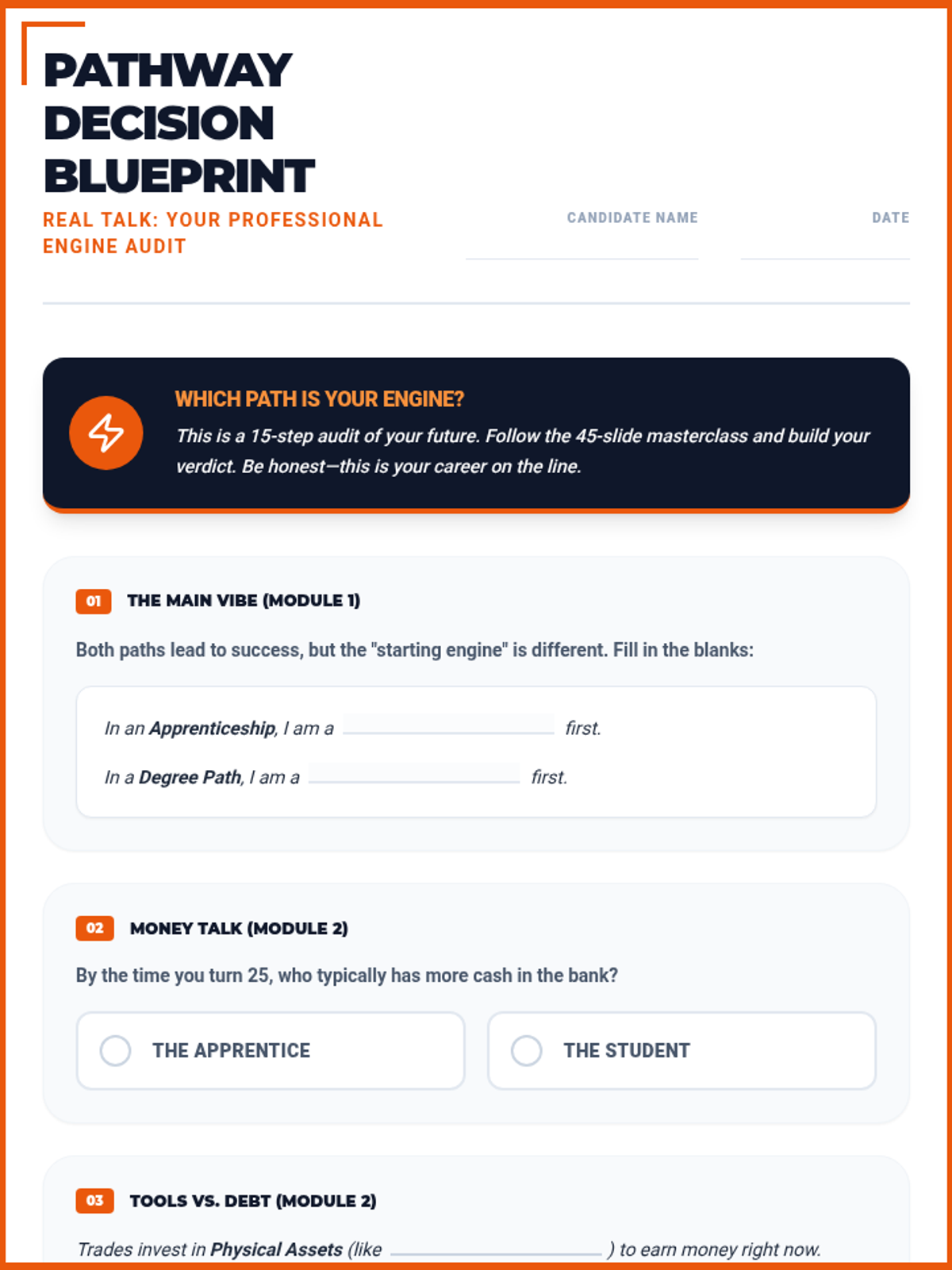
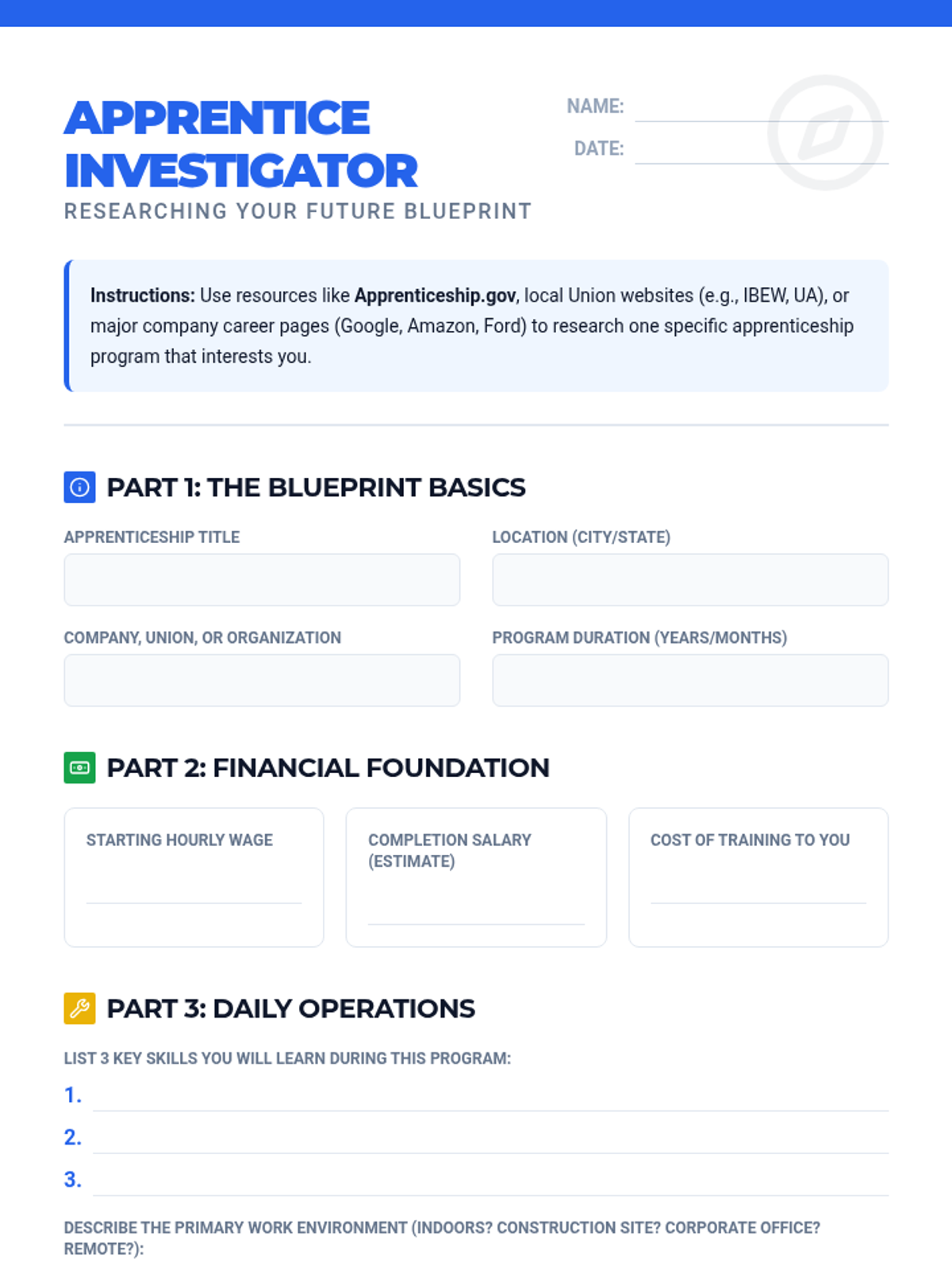
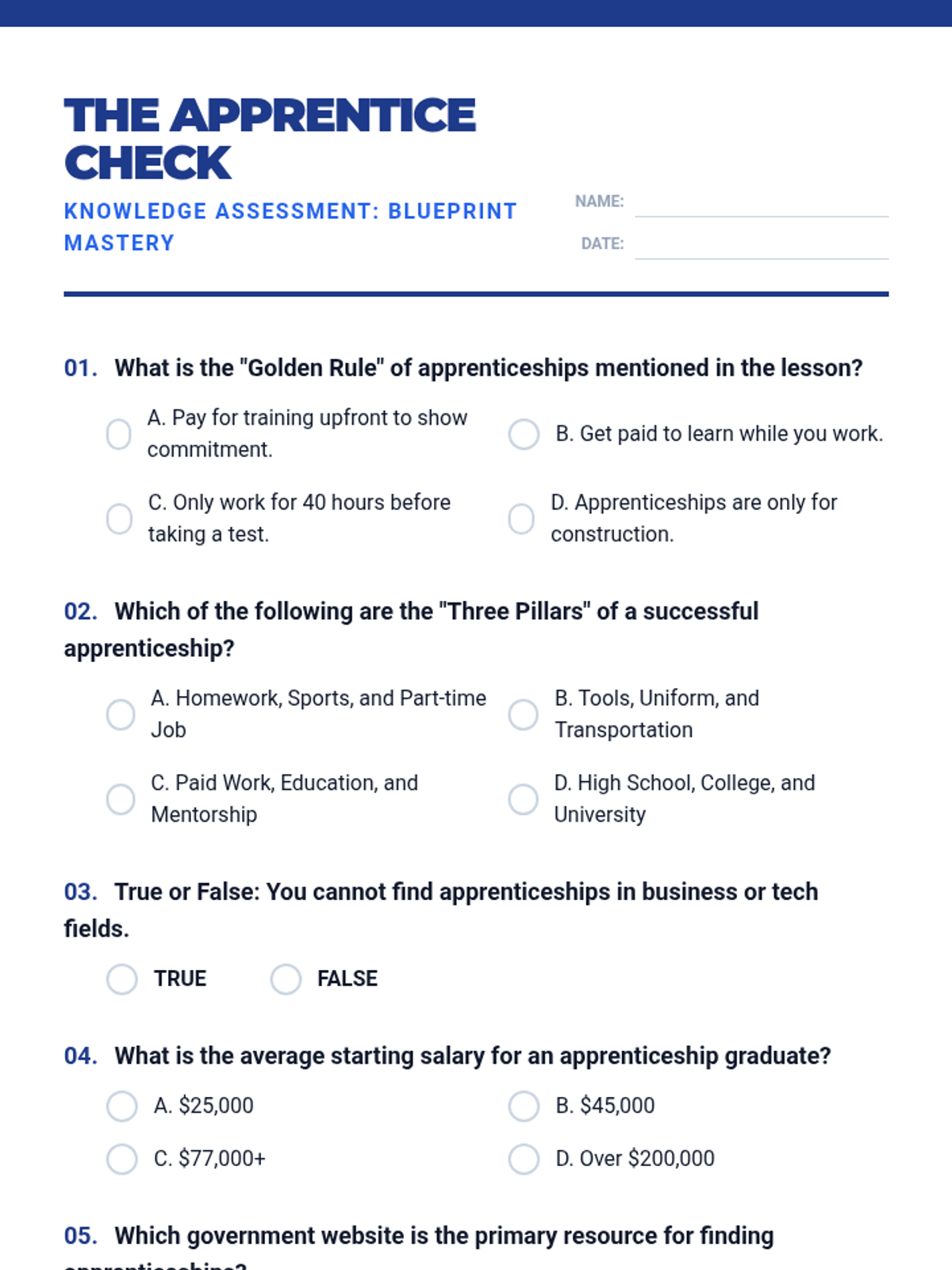
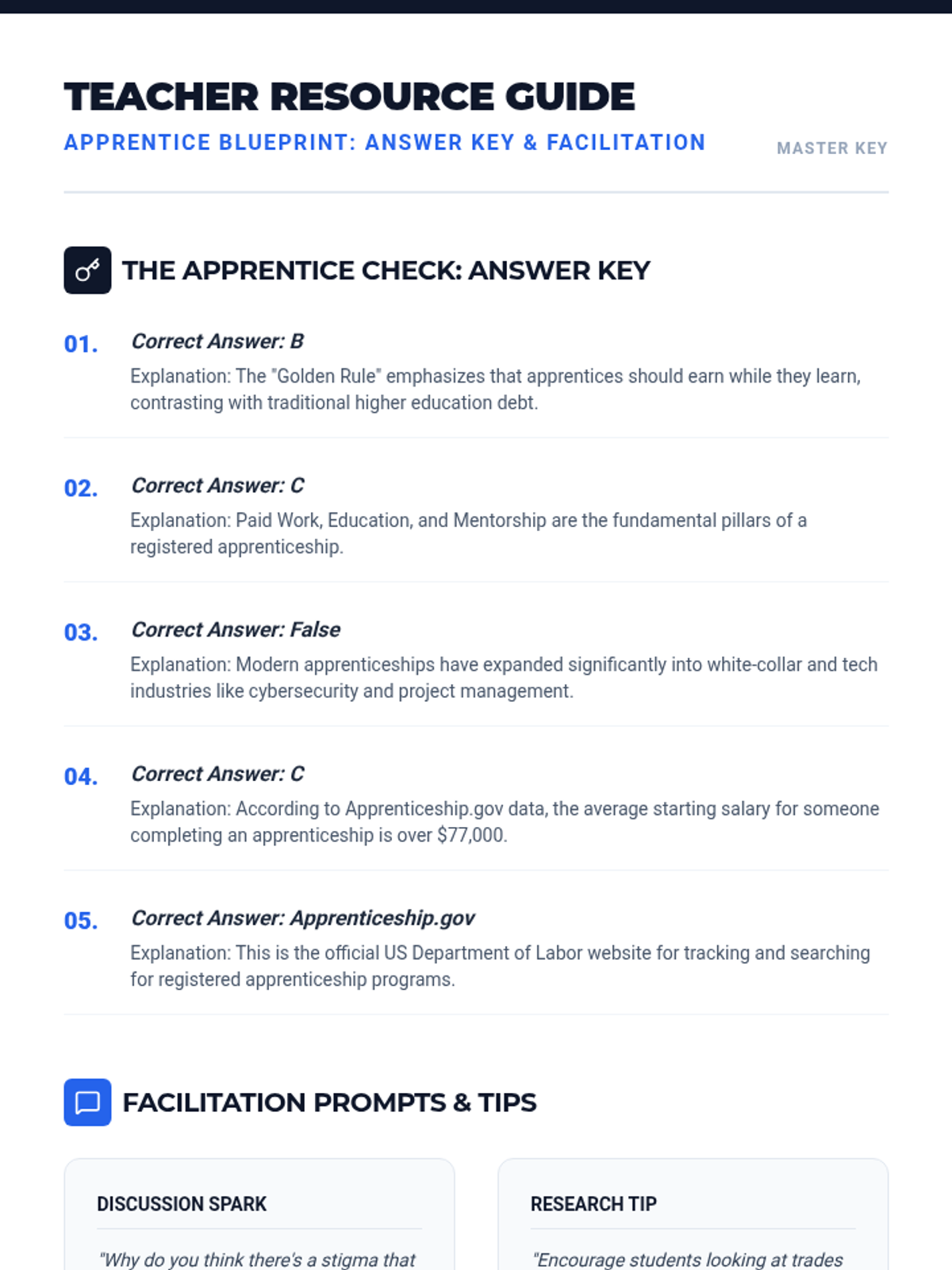
A comprehensive guide to understanding, finding, and securing apprenticeships in trades, business, and high-growth industries. This lesson covers the definition, benefits, and practical steps to starting a career through an apprenticeship.
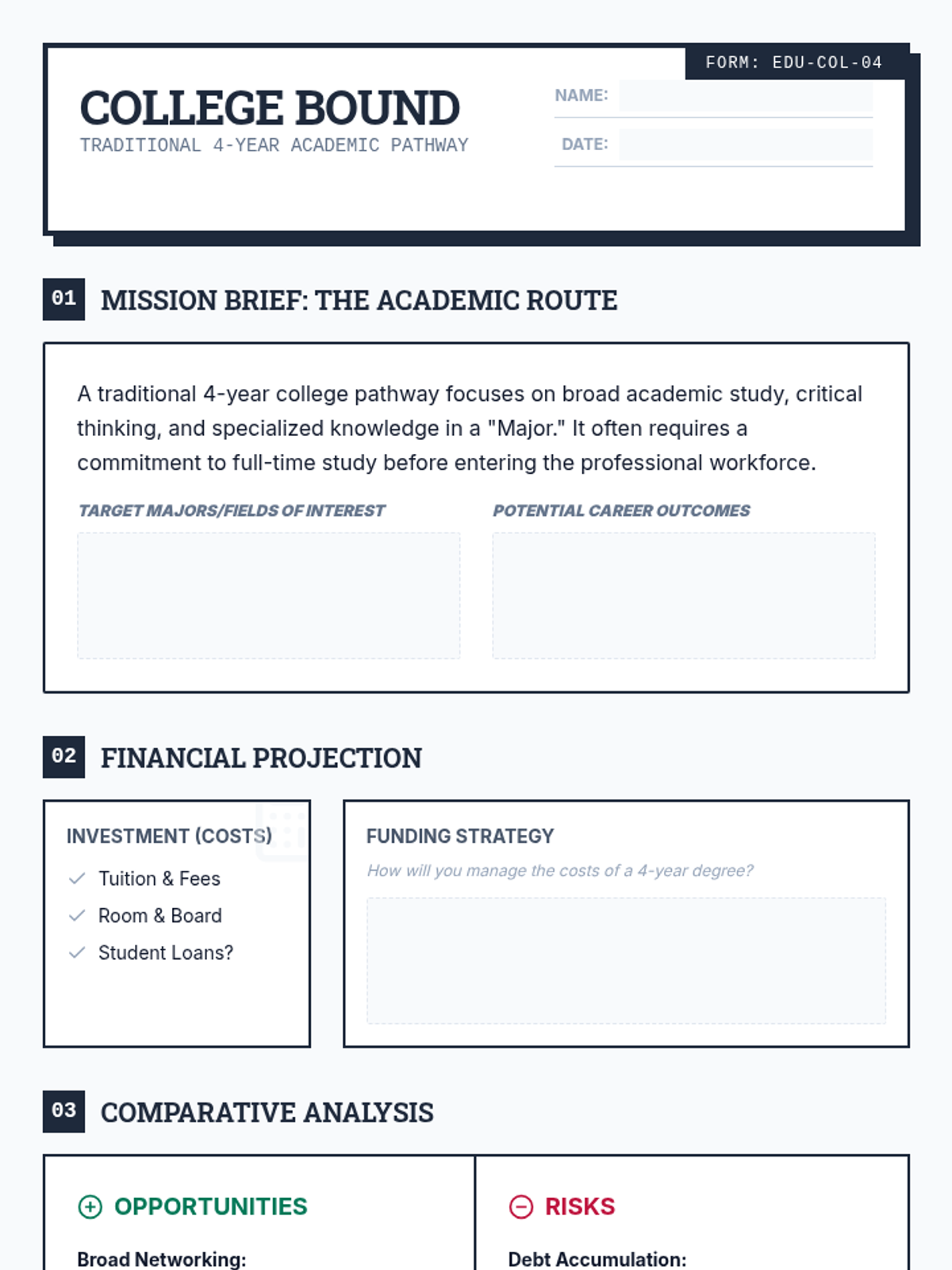
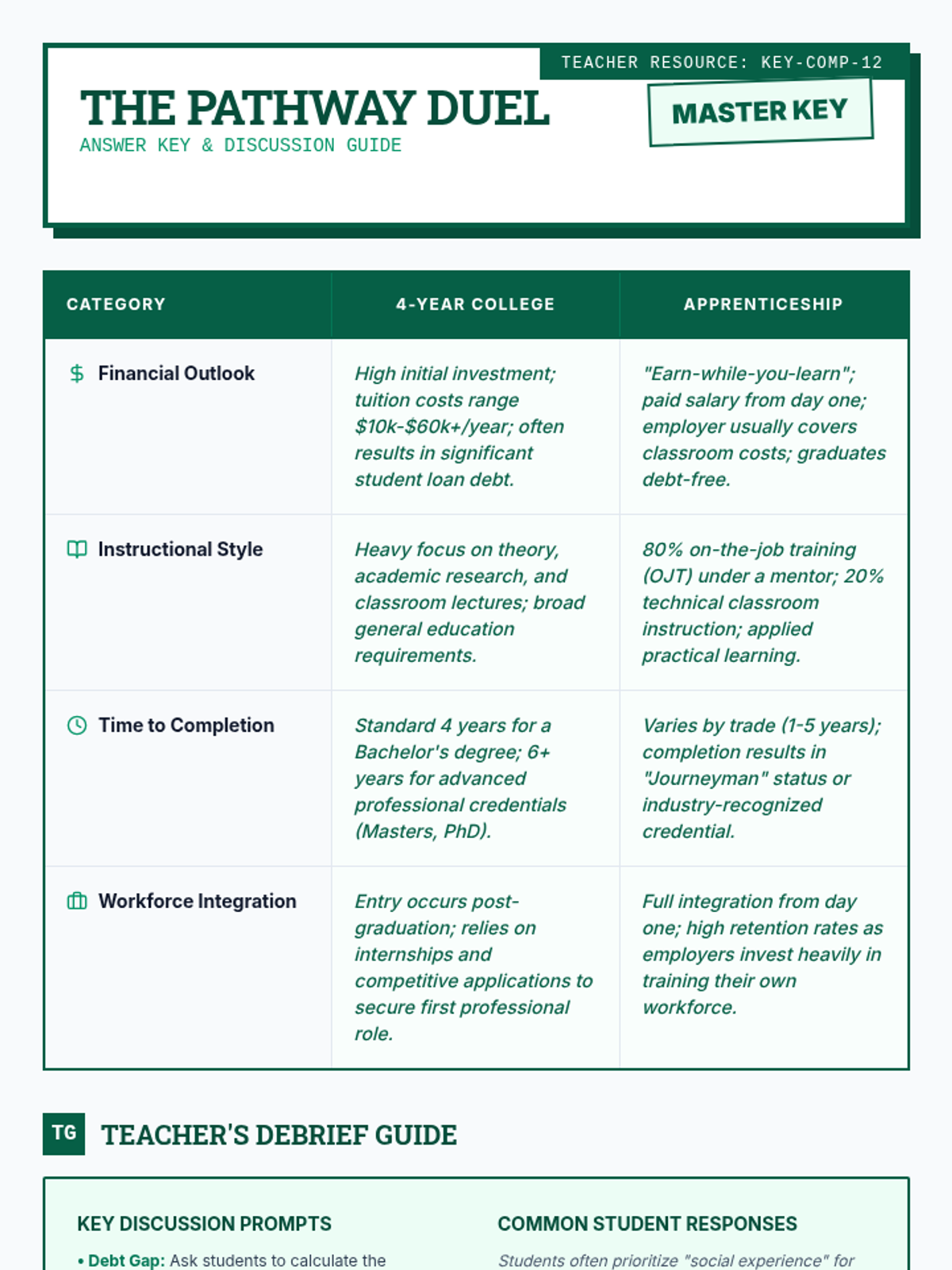
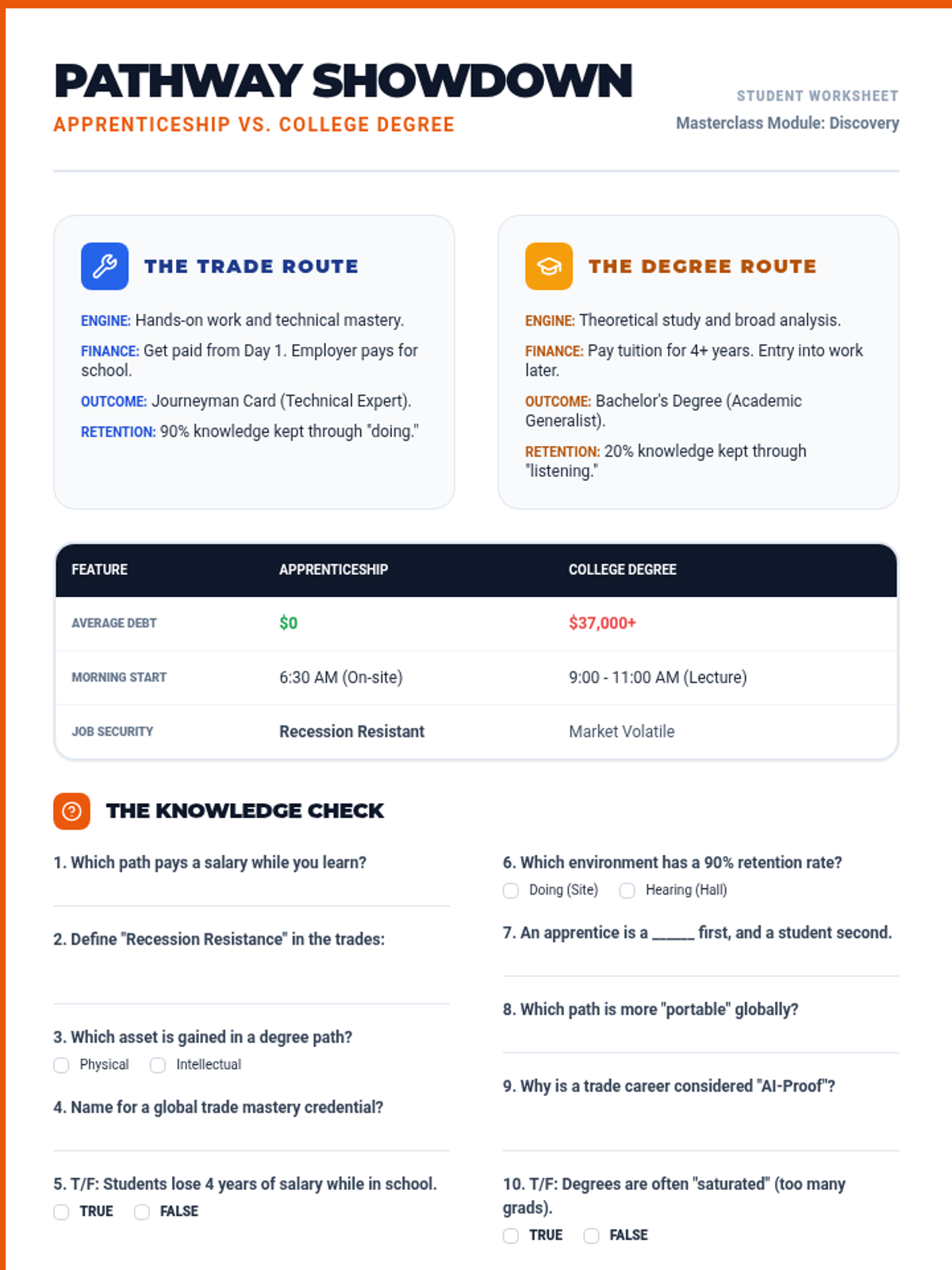
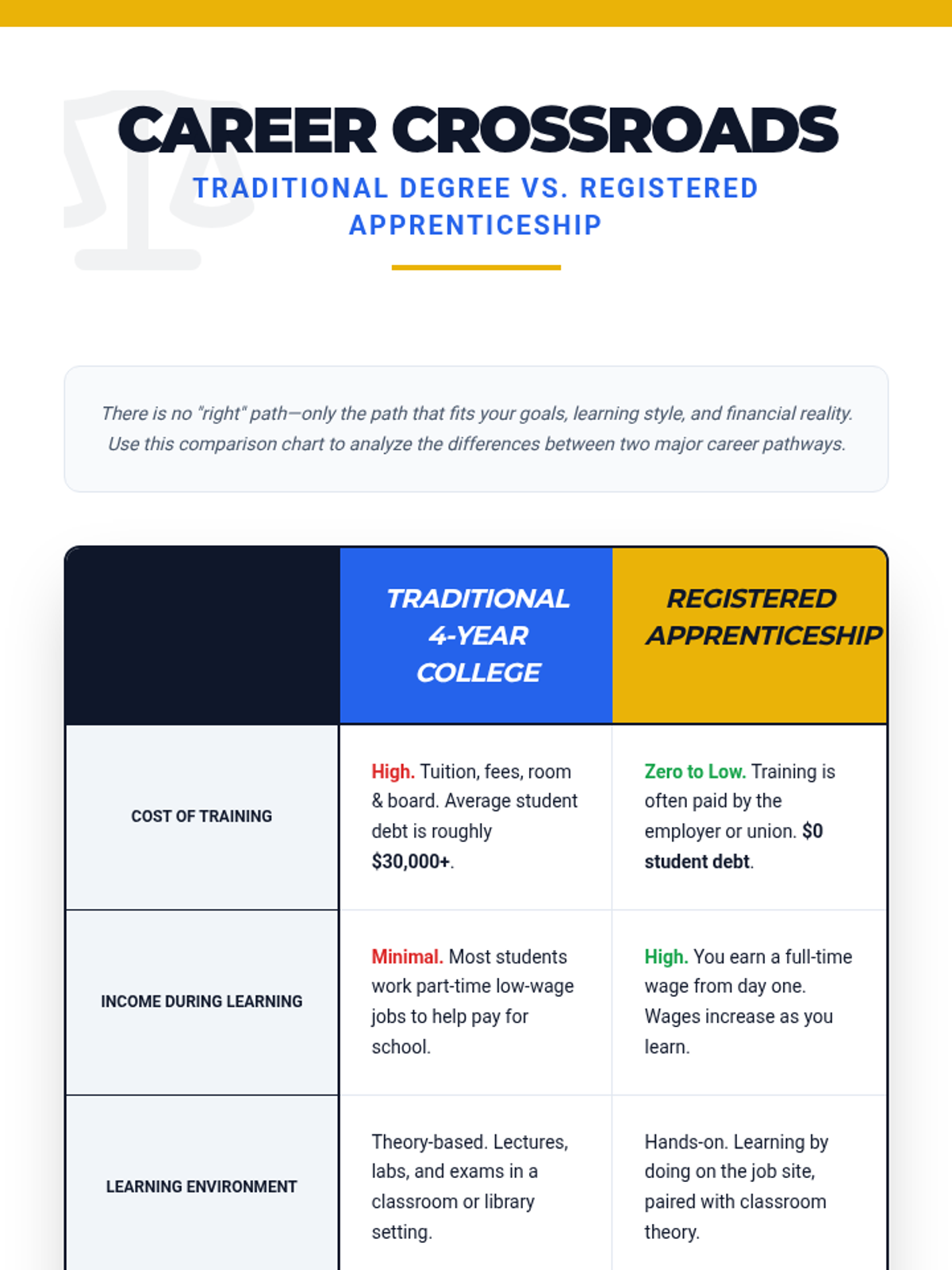
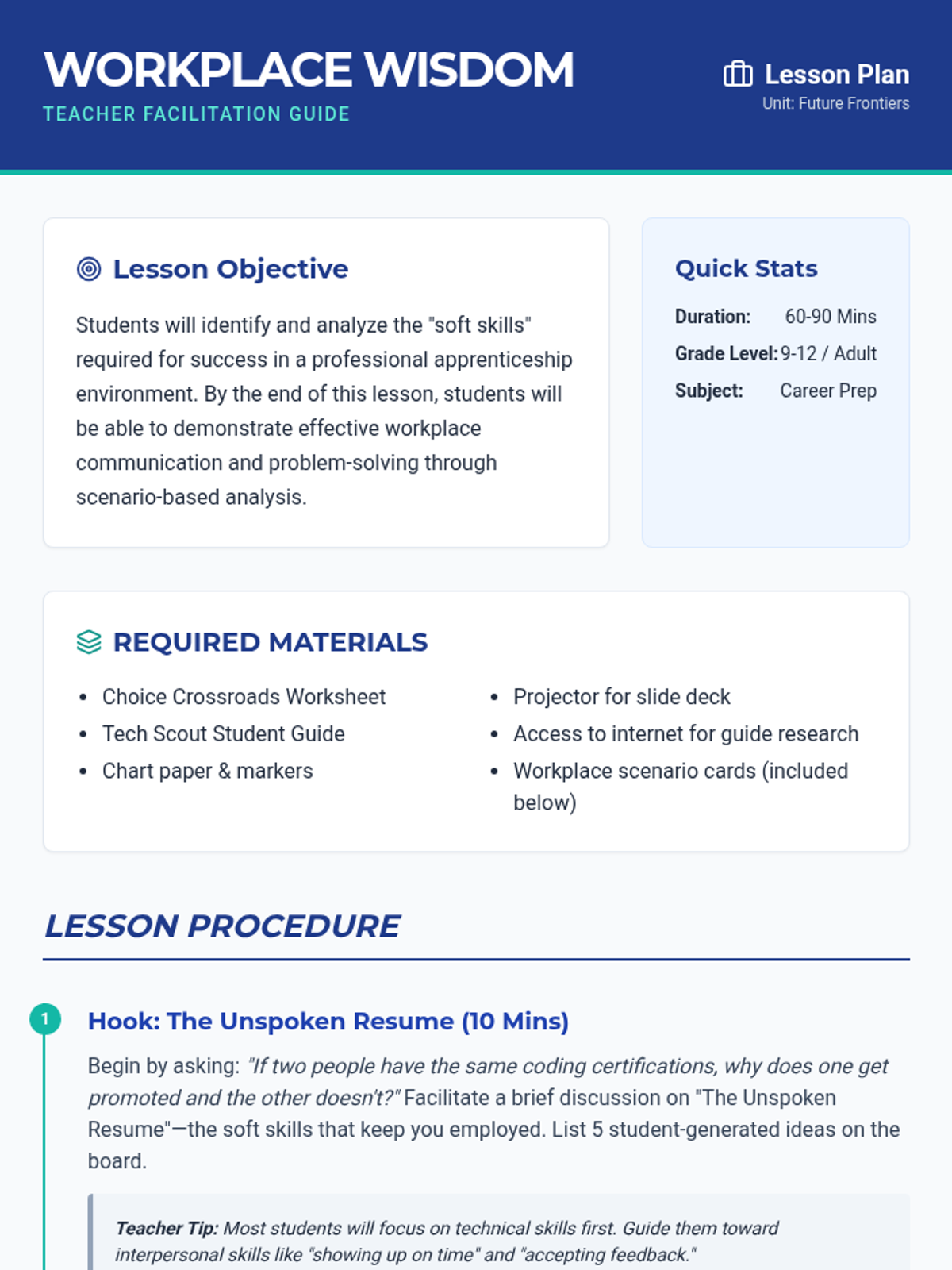
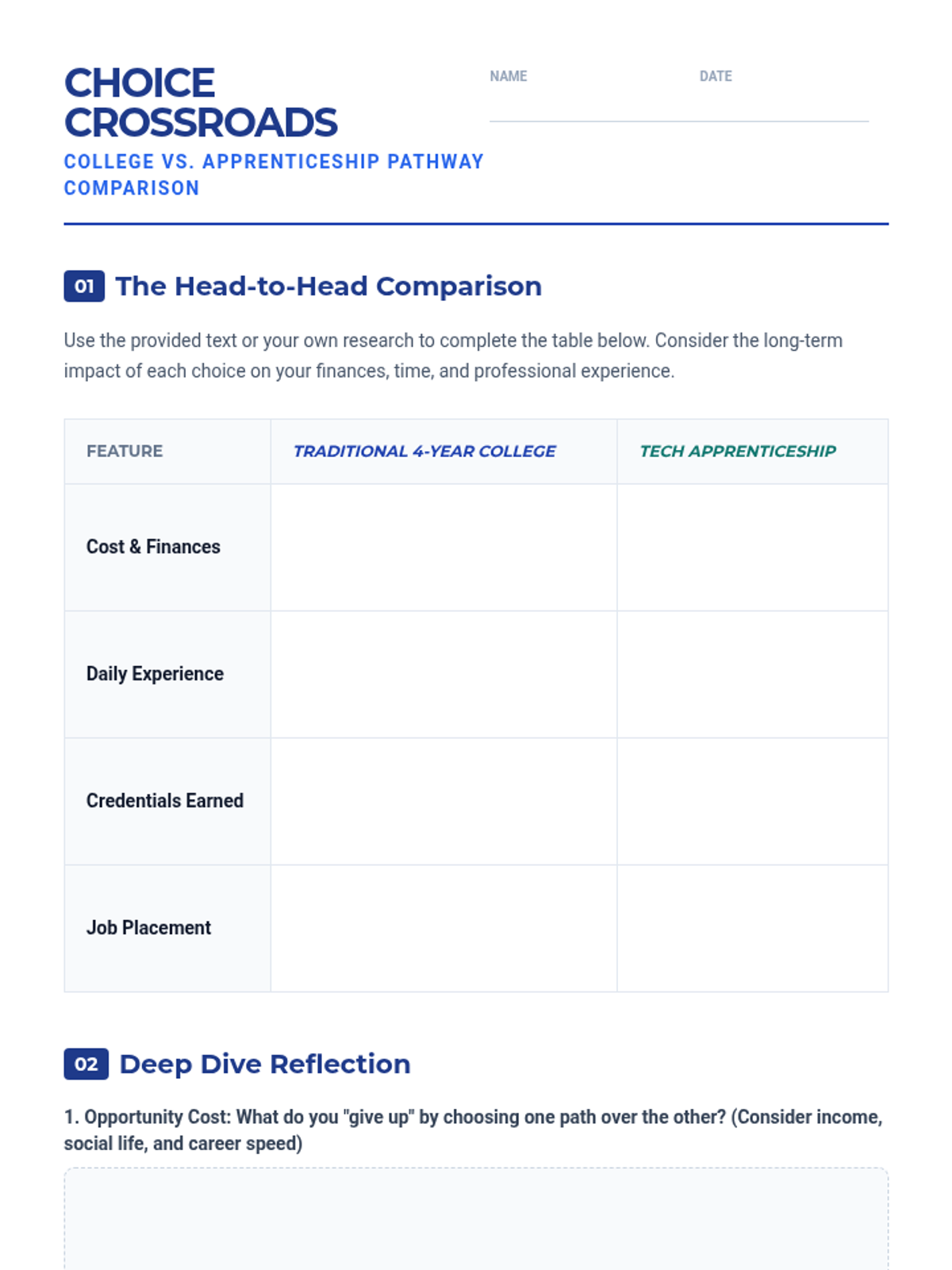
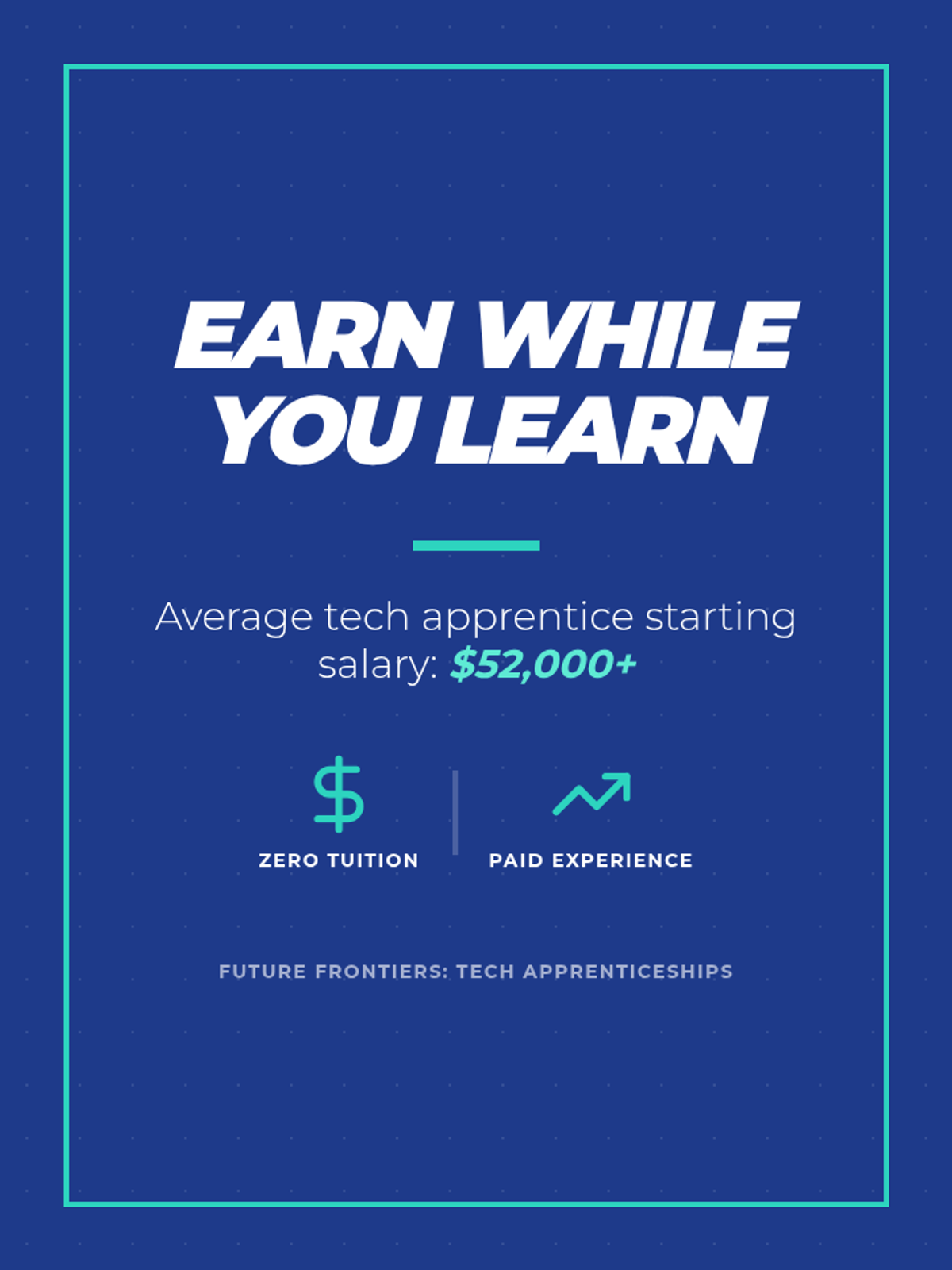
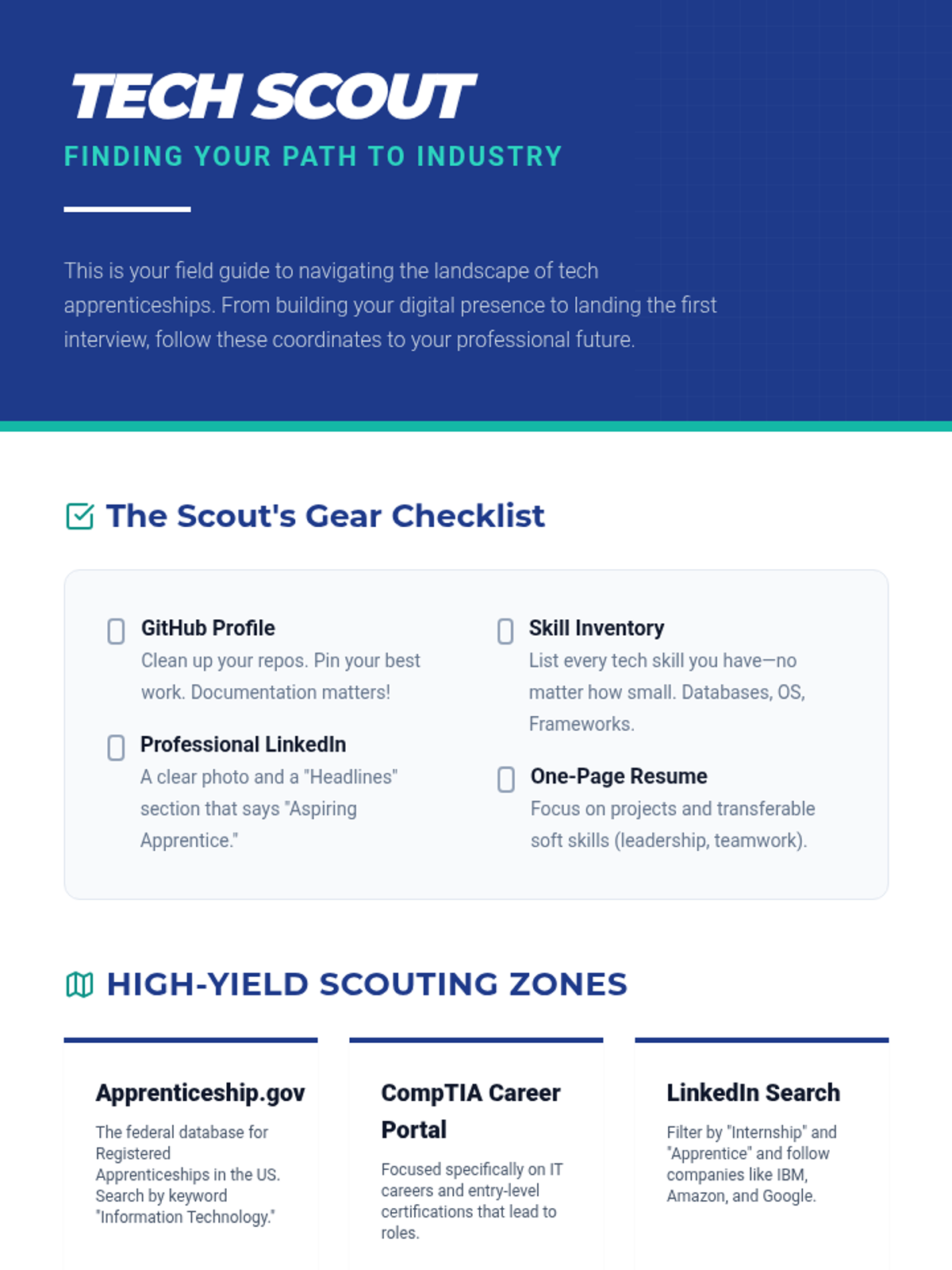
A comprehensive exploration of modern apprenticeship paths in technology, focusing on comparing traditional education to work-based learning and developing essential workplace soft skills.
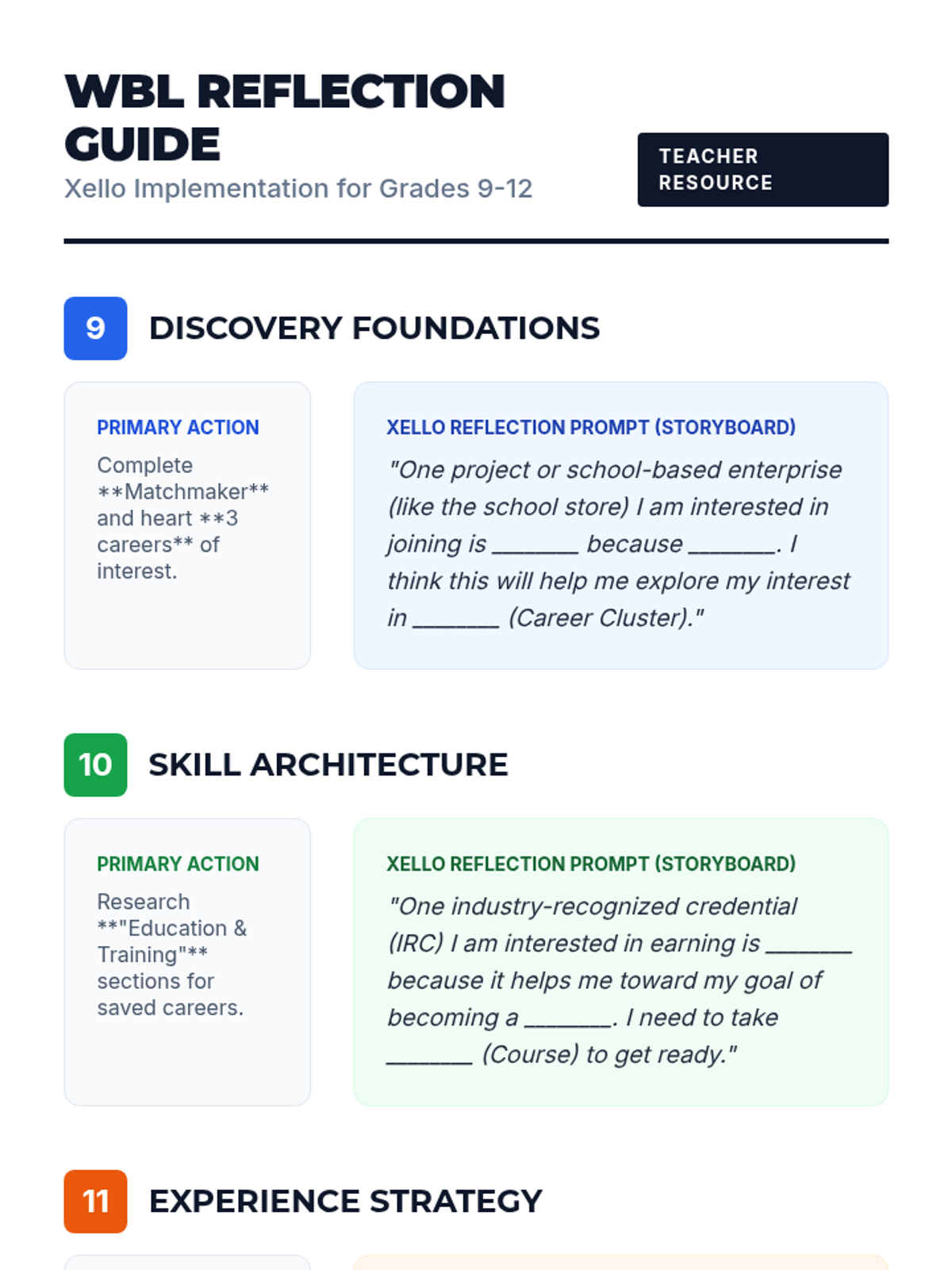
Prepares 12th graders for the transition to professional life, focusing on finalizing credentials and bridging Work-Based Learning into post-secondary success.
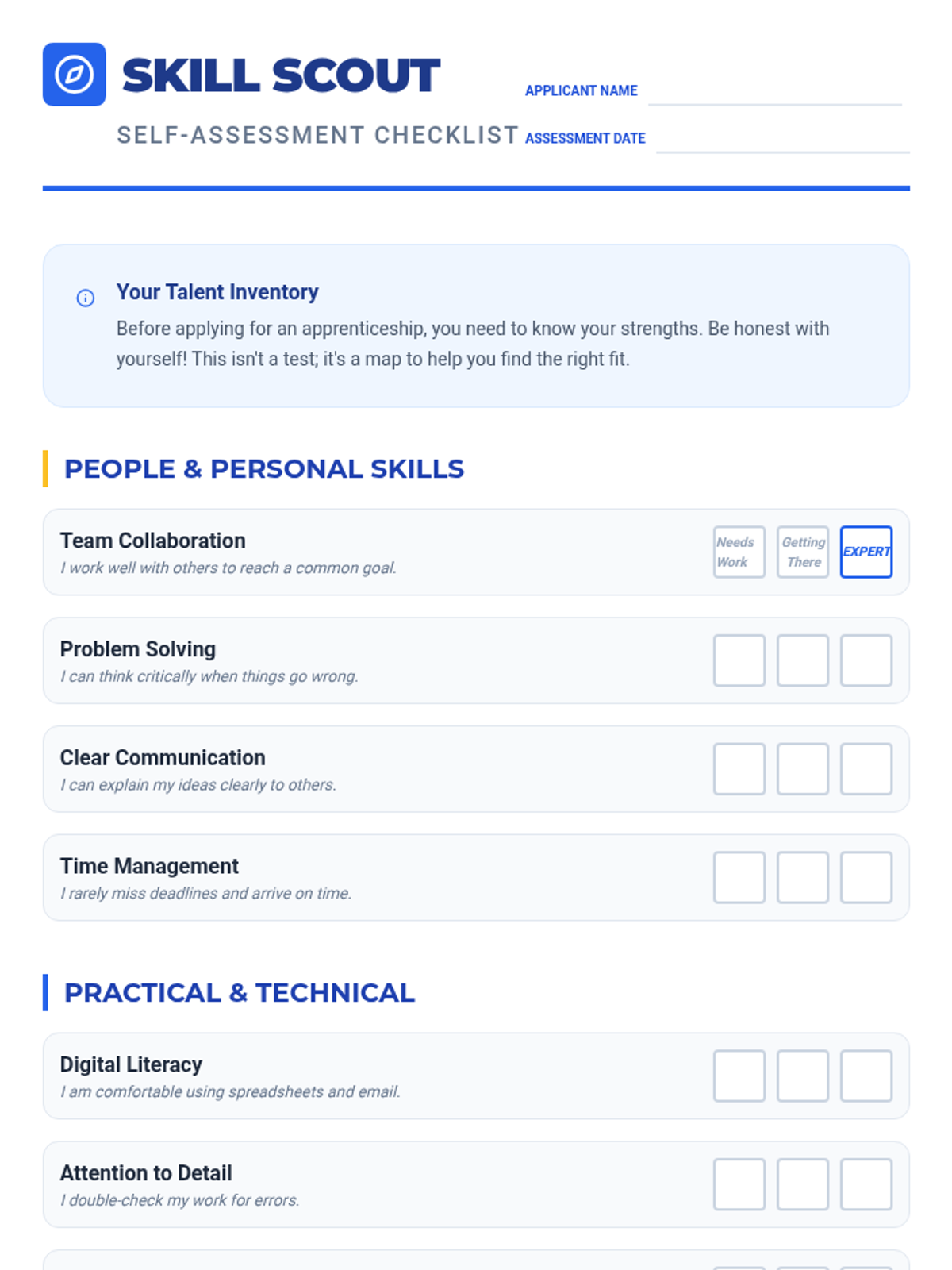
Guides 11th graders through the practicalities of Internships and Apprenticeships, focusing on preparation and the application process.
Engages 10th graders in exploring Industry-Recognized Credentials (IRCs) and Pre-Apprenticeships as steps toward specialized career pathways.
Introduces 9th graders to the core concepts of Work-Based Learning, focusing on Project-Based Learning and School-Based Enterprises to build initial interest and awareness.
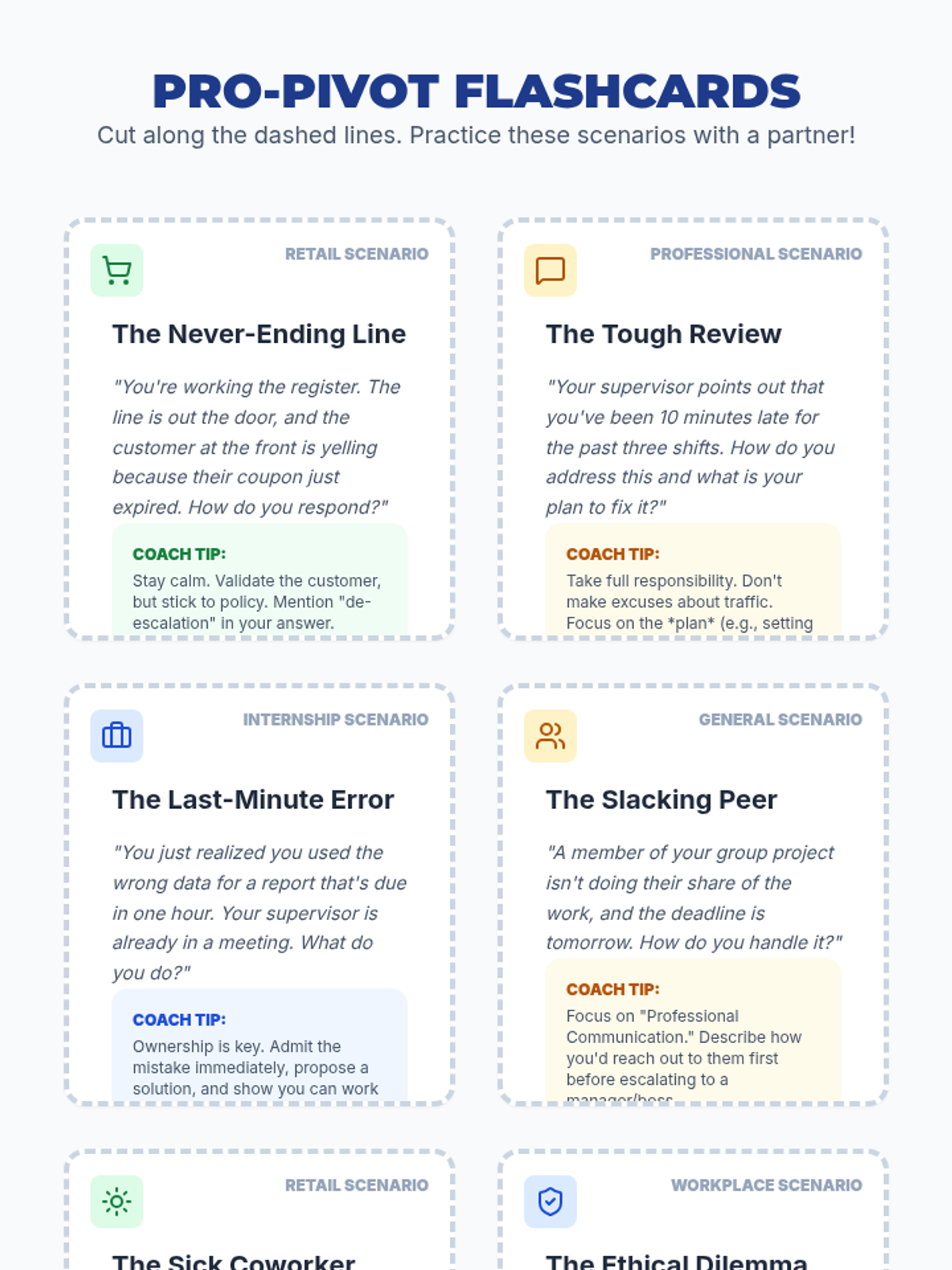
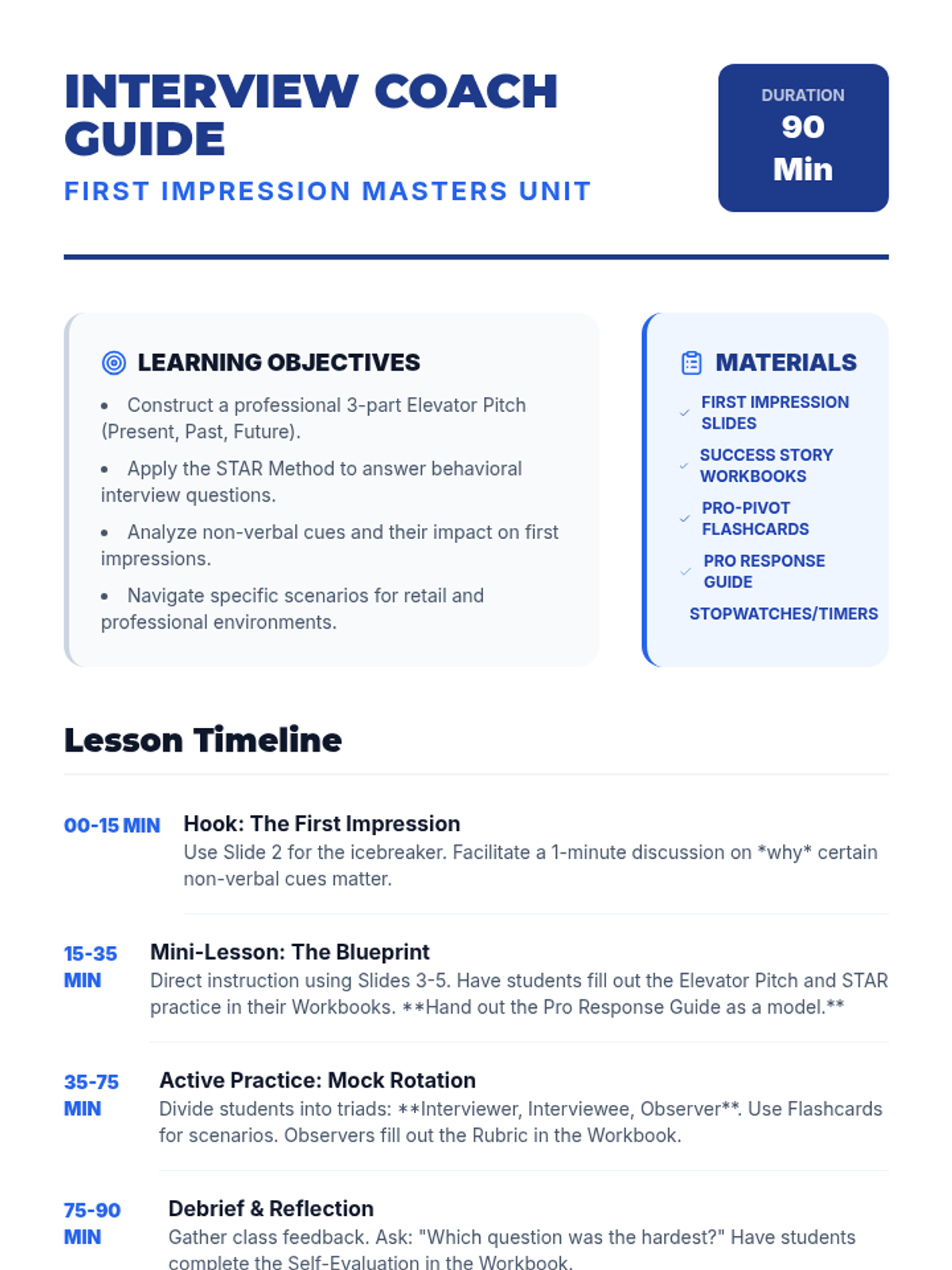
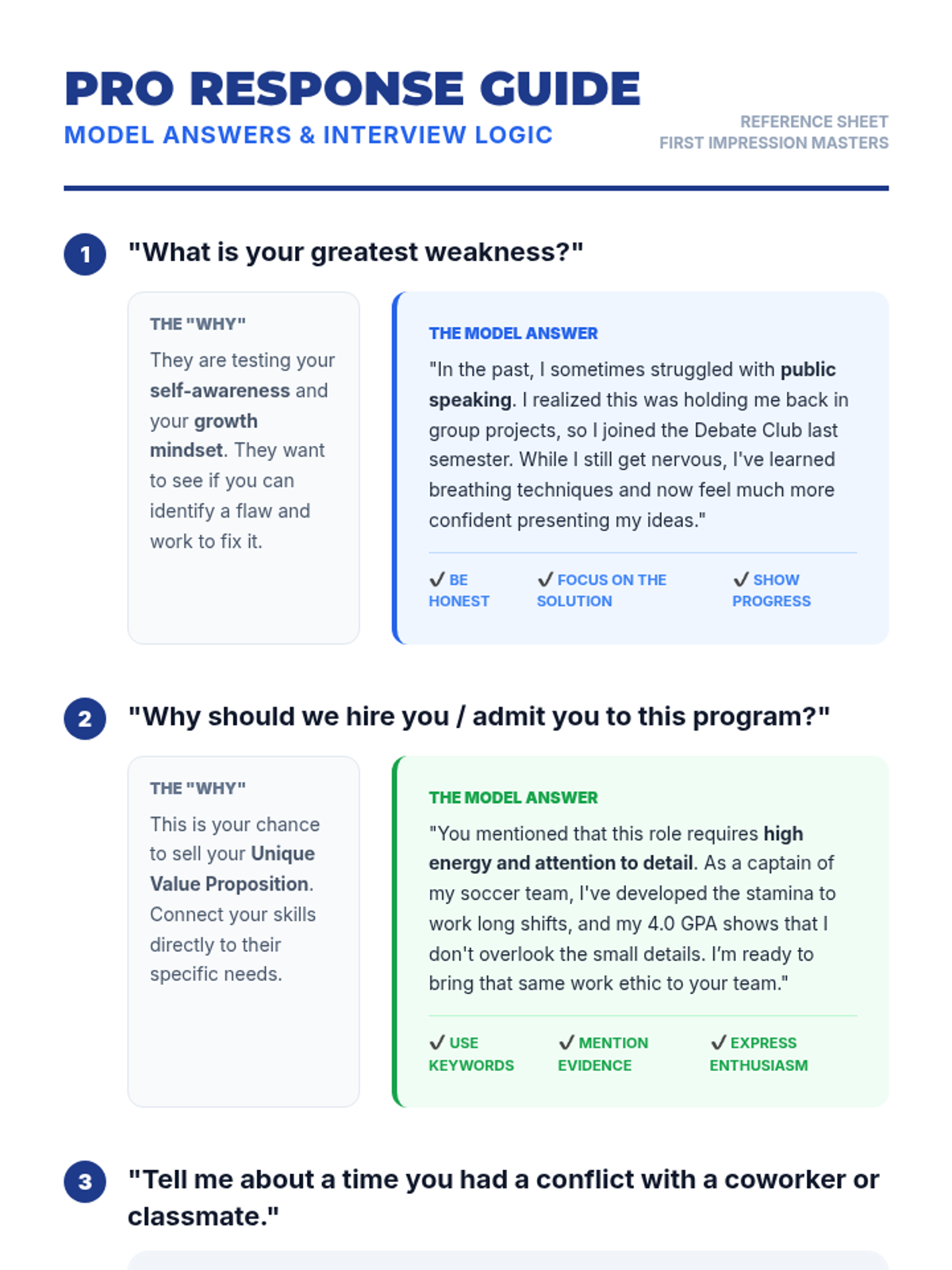
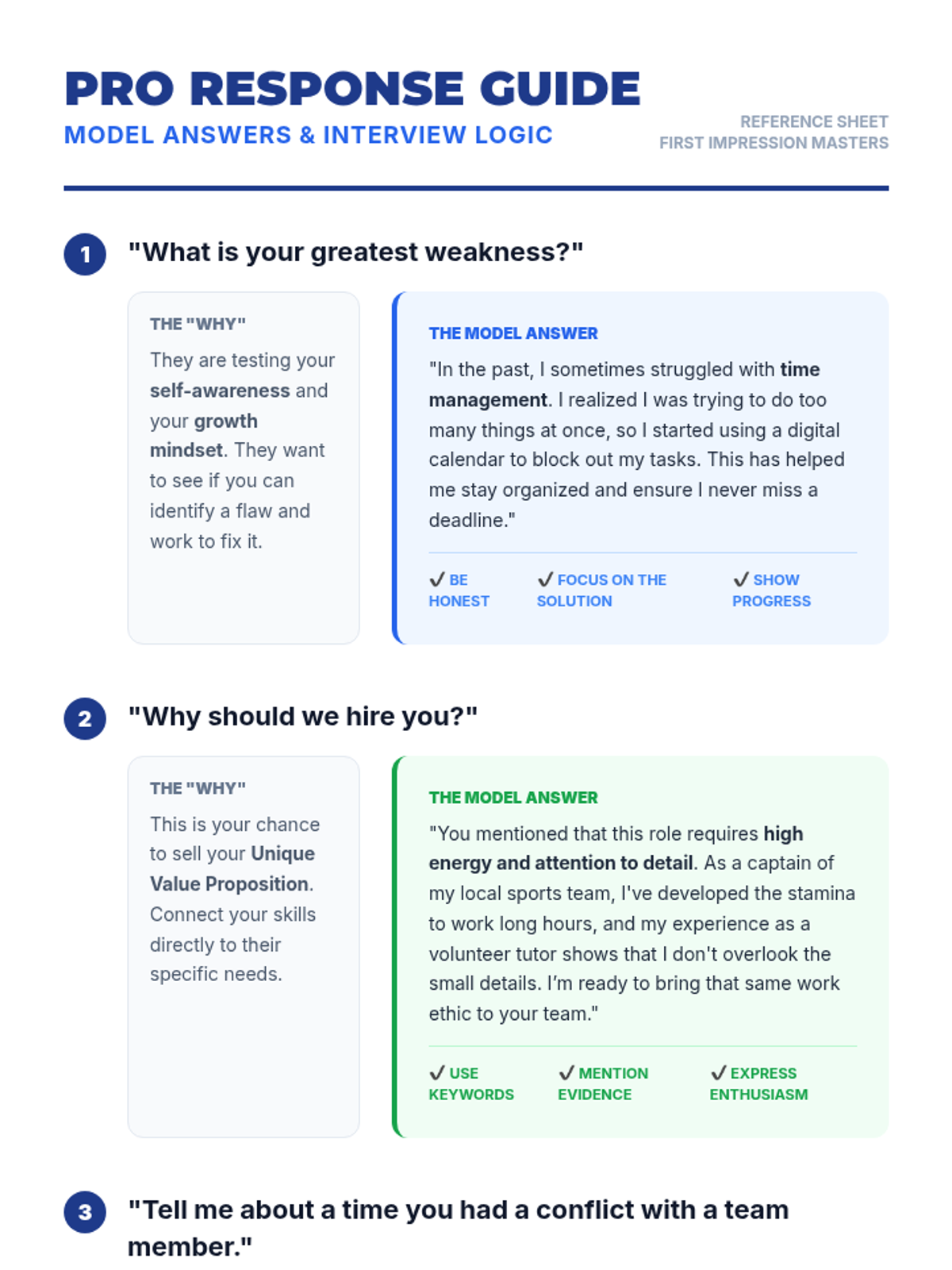
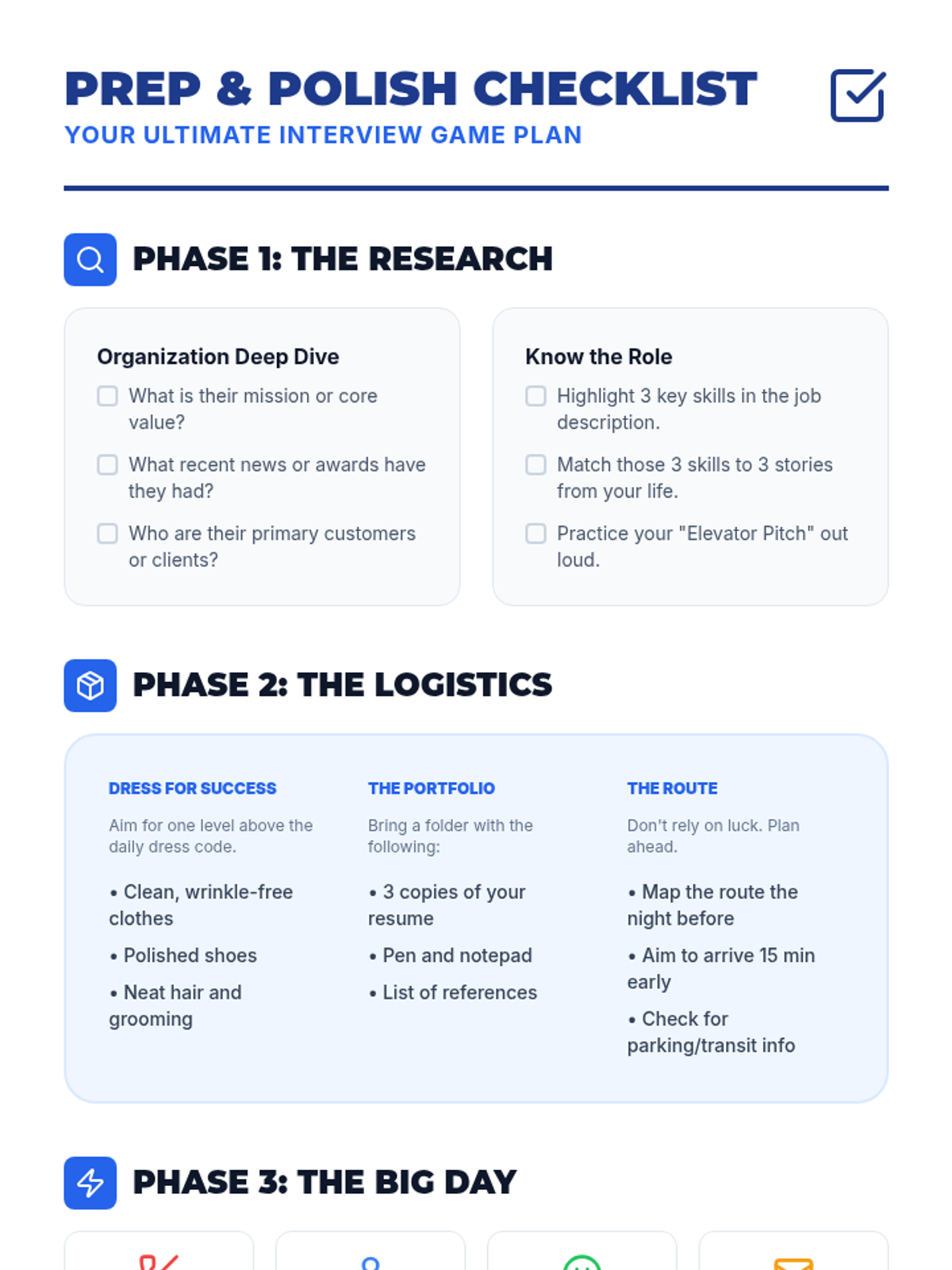
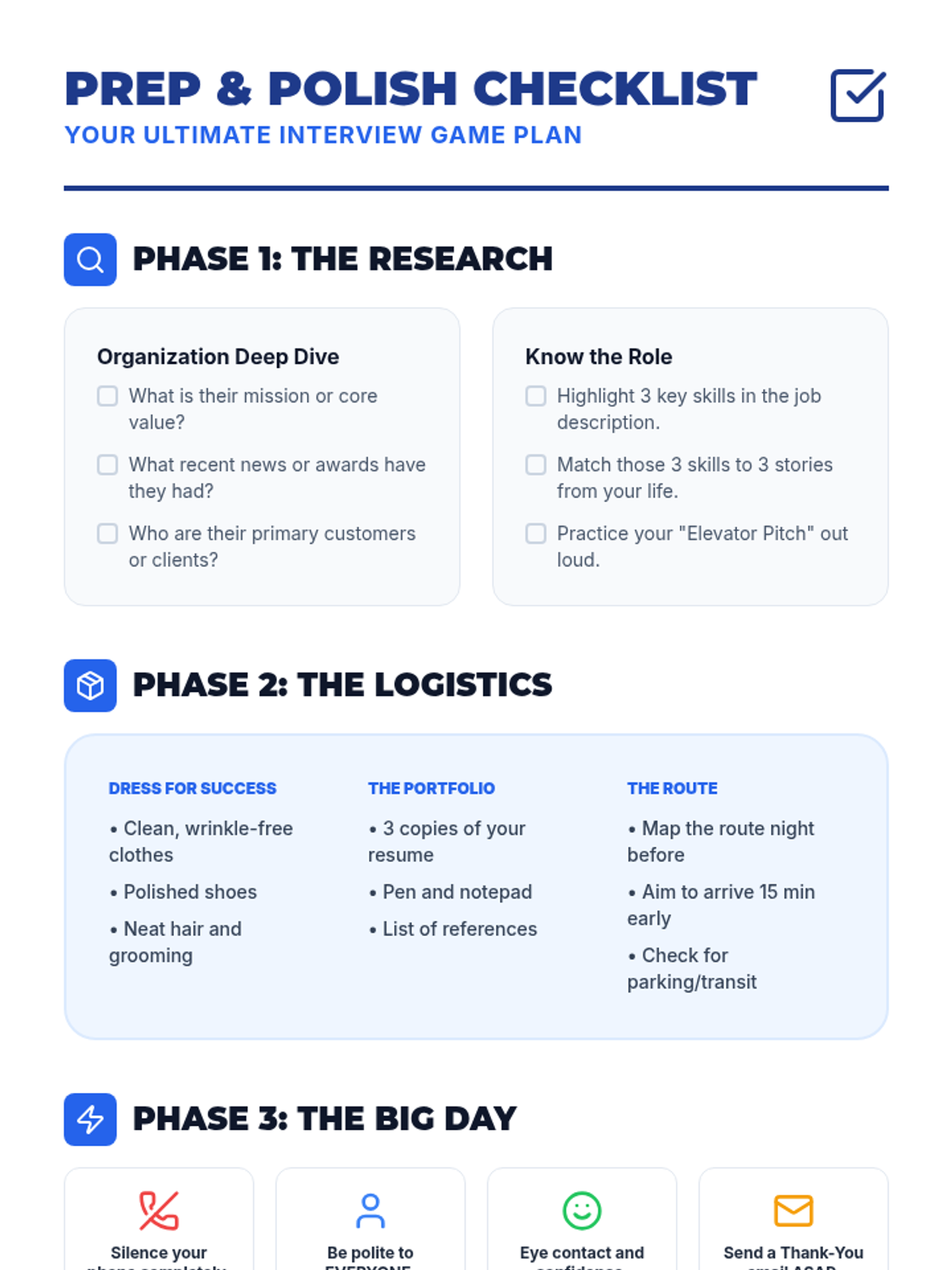
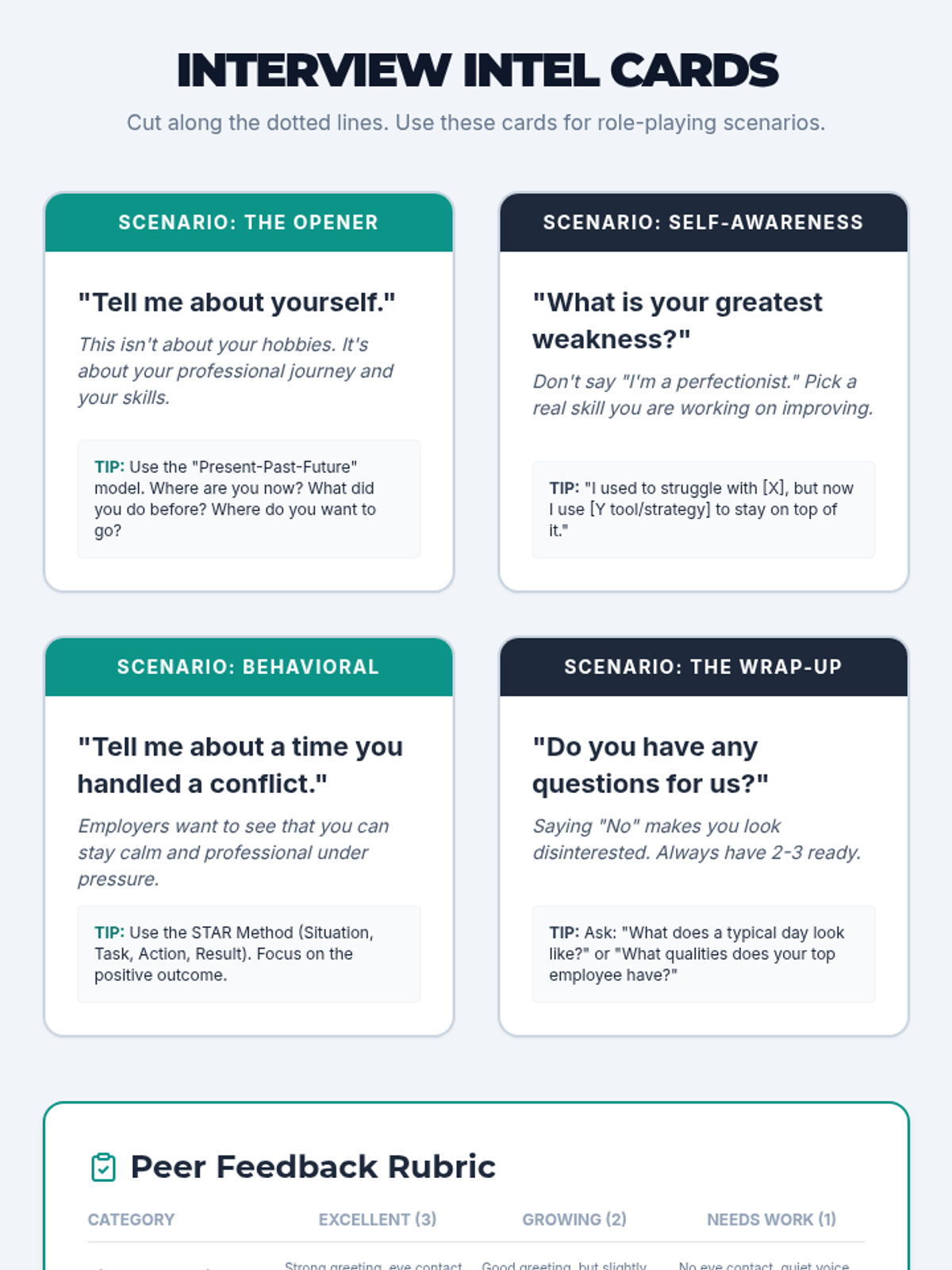
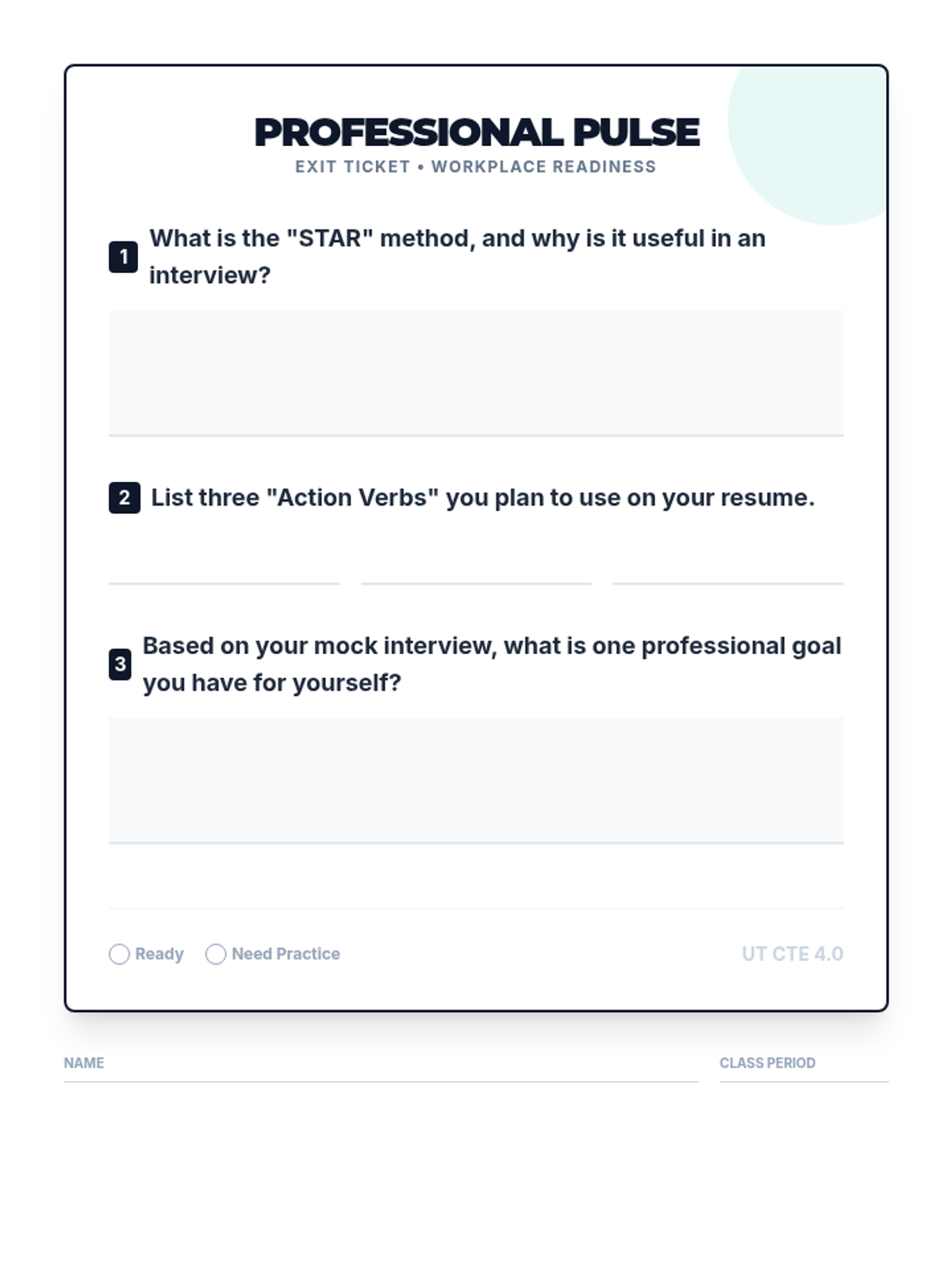
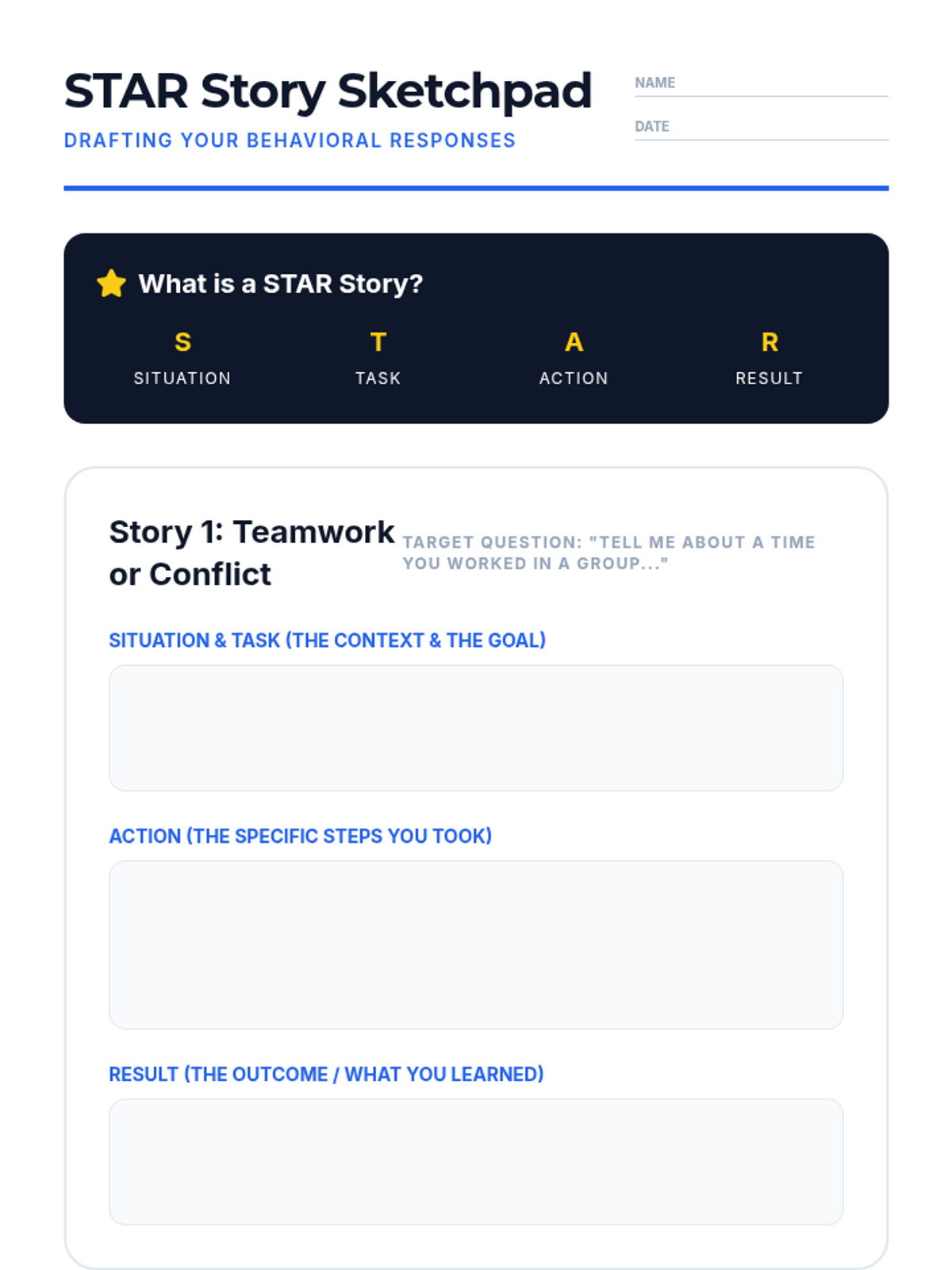
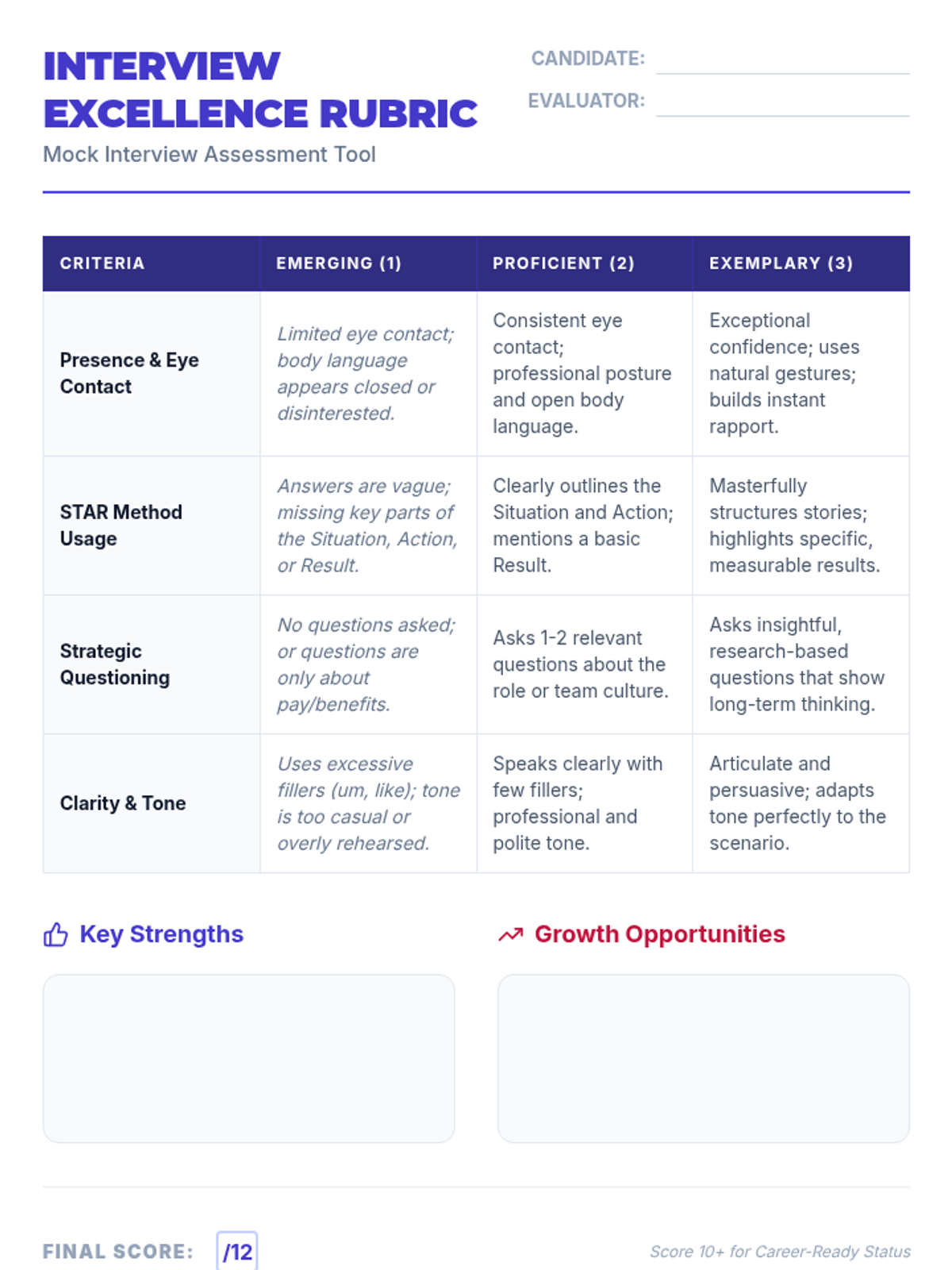
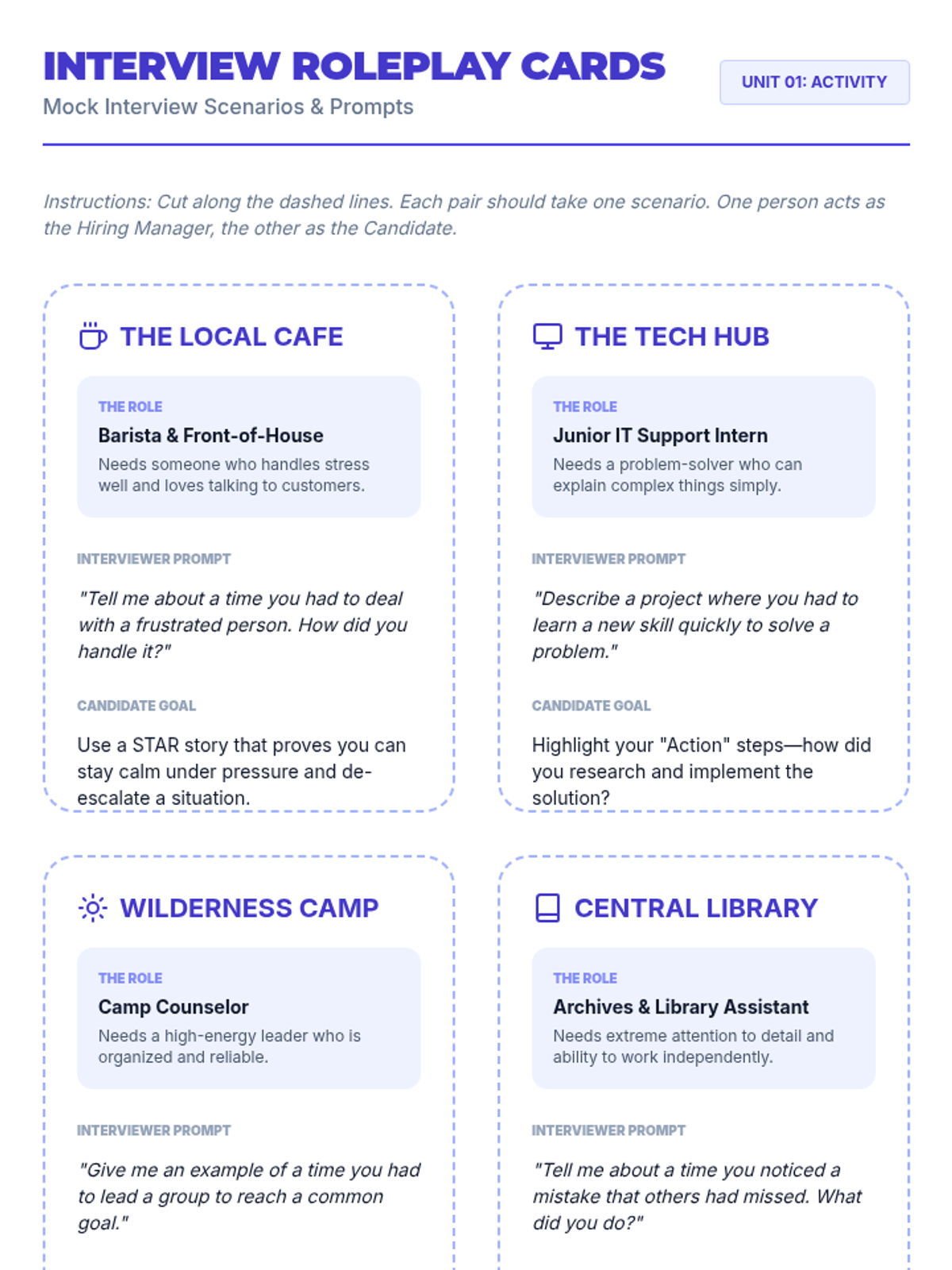
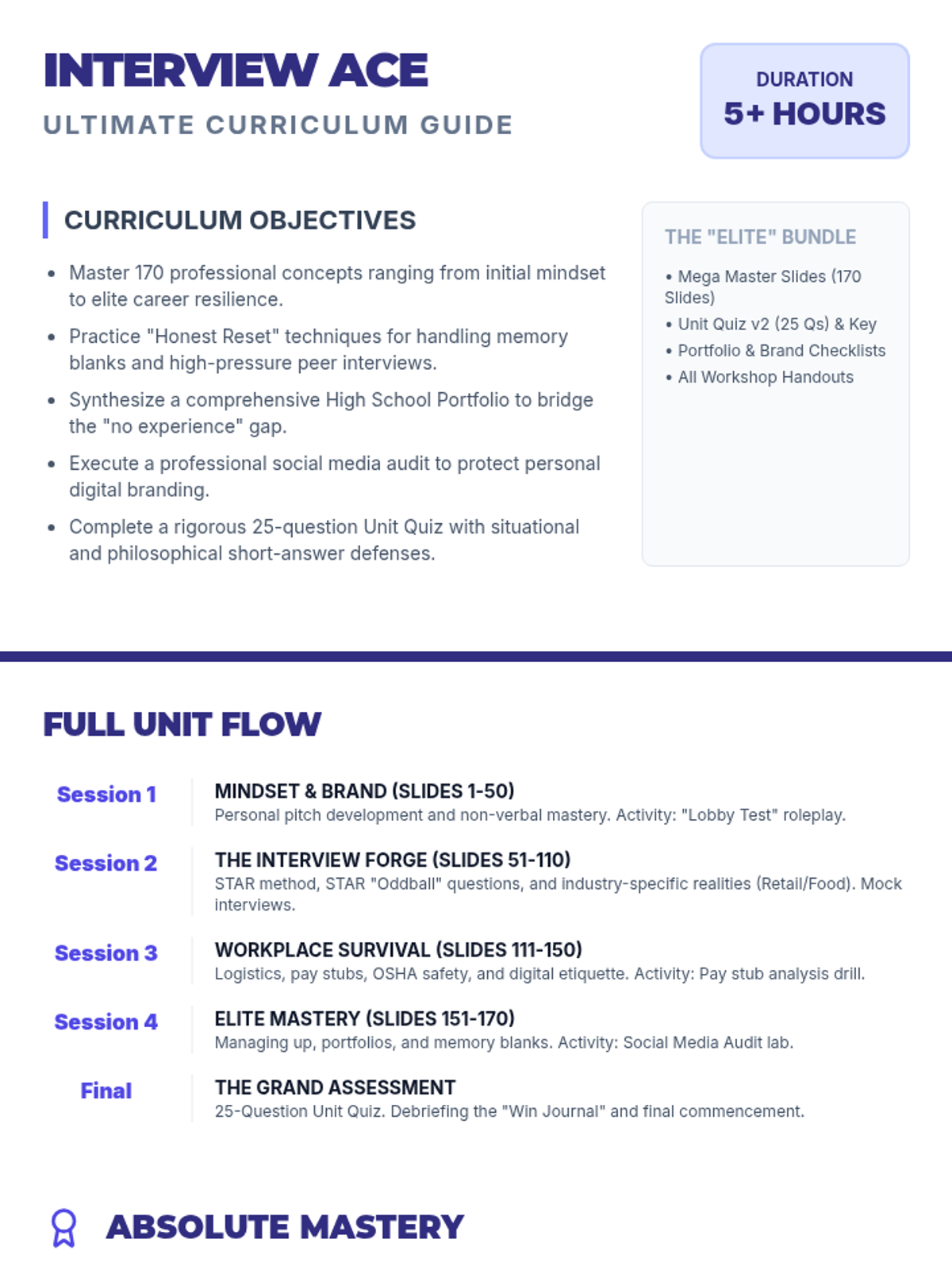
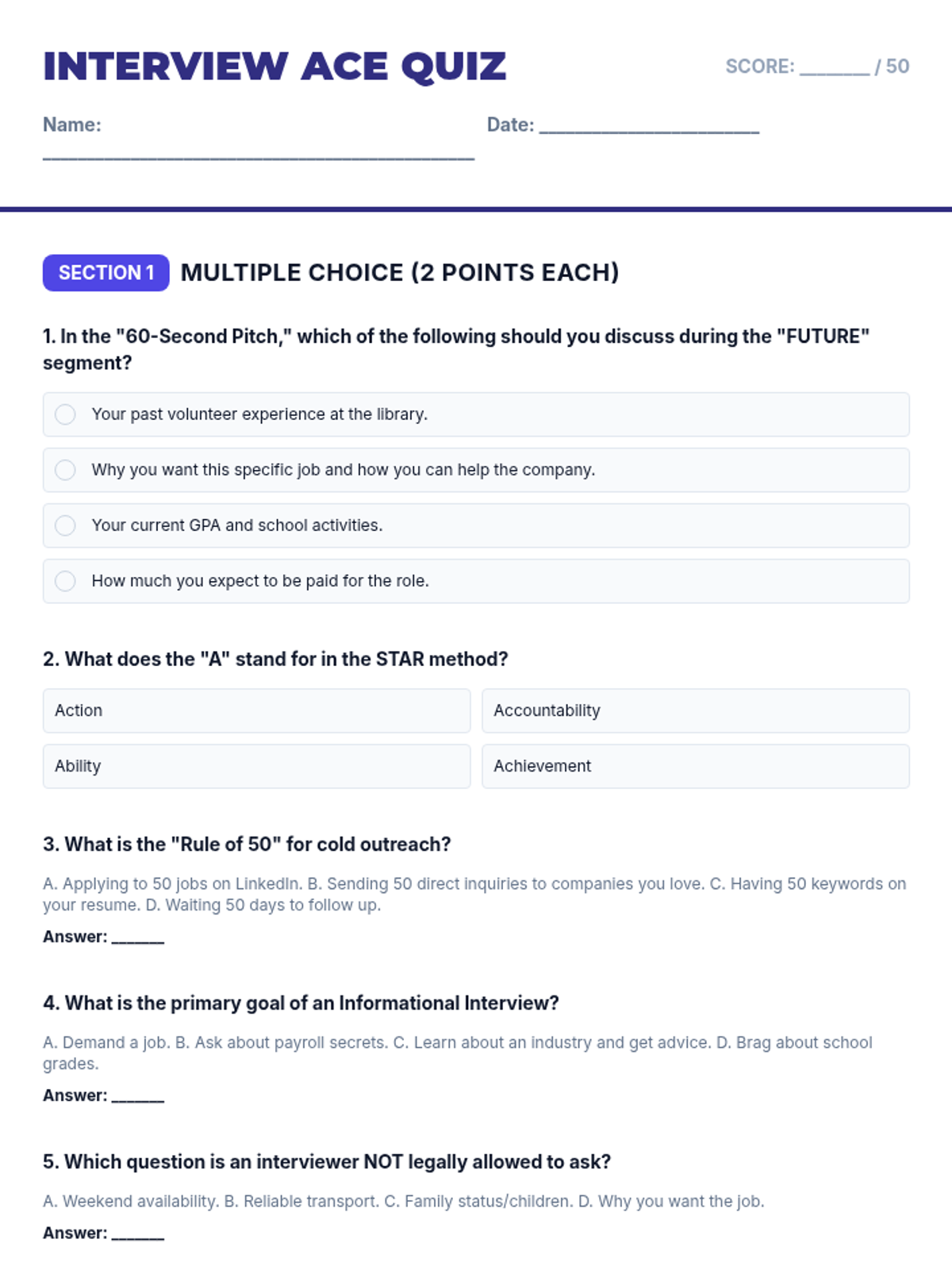
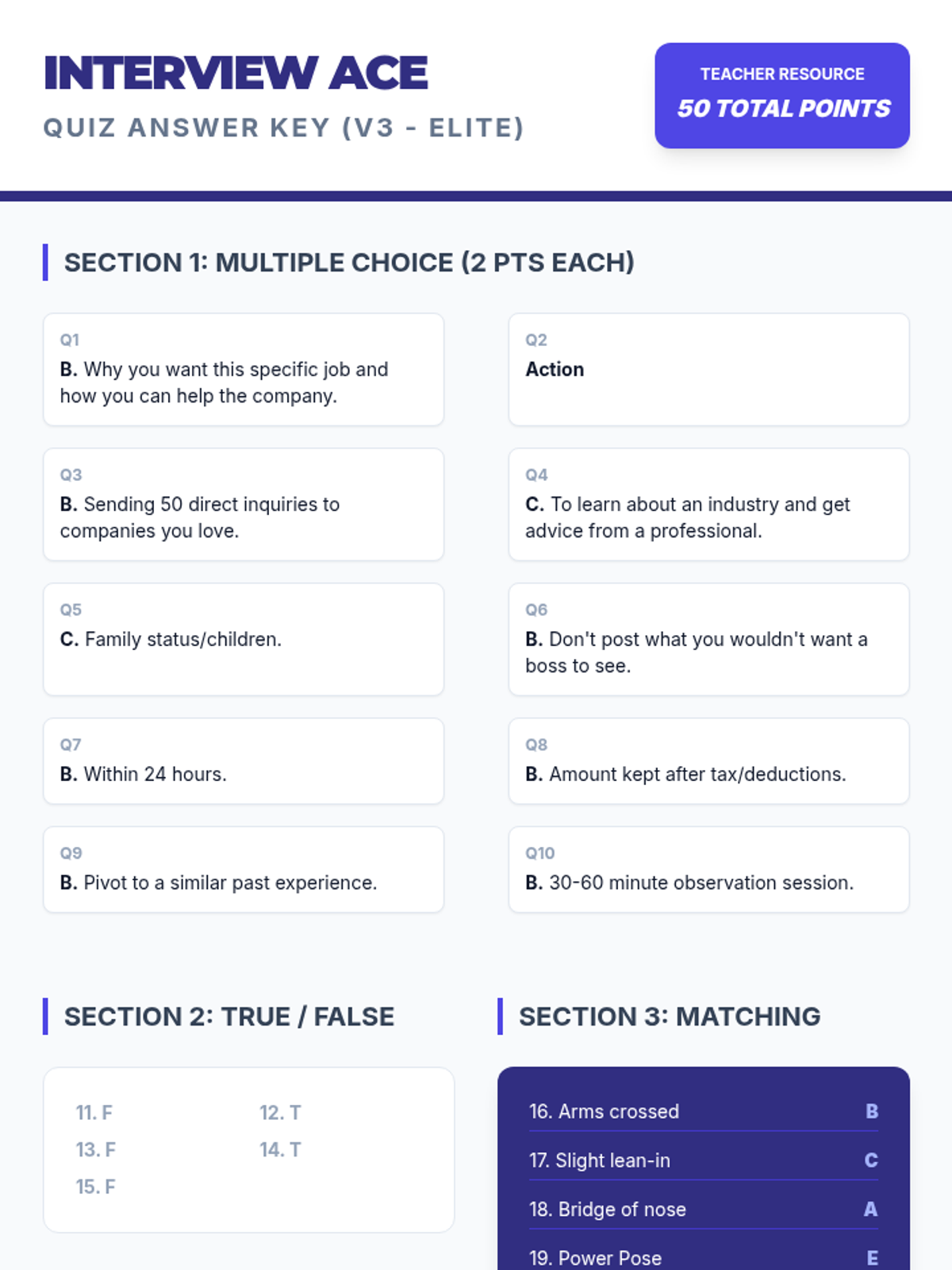
A comprehensive guide to mastering entry-level and academic interviews through the STAR method, practical scenarios, and self-reflection. Students will build a portfolio of stories to demonstrate their skills to future employers and admissions officers.
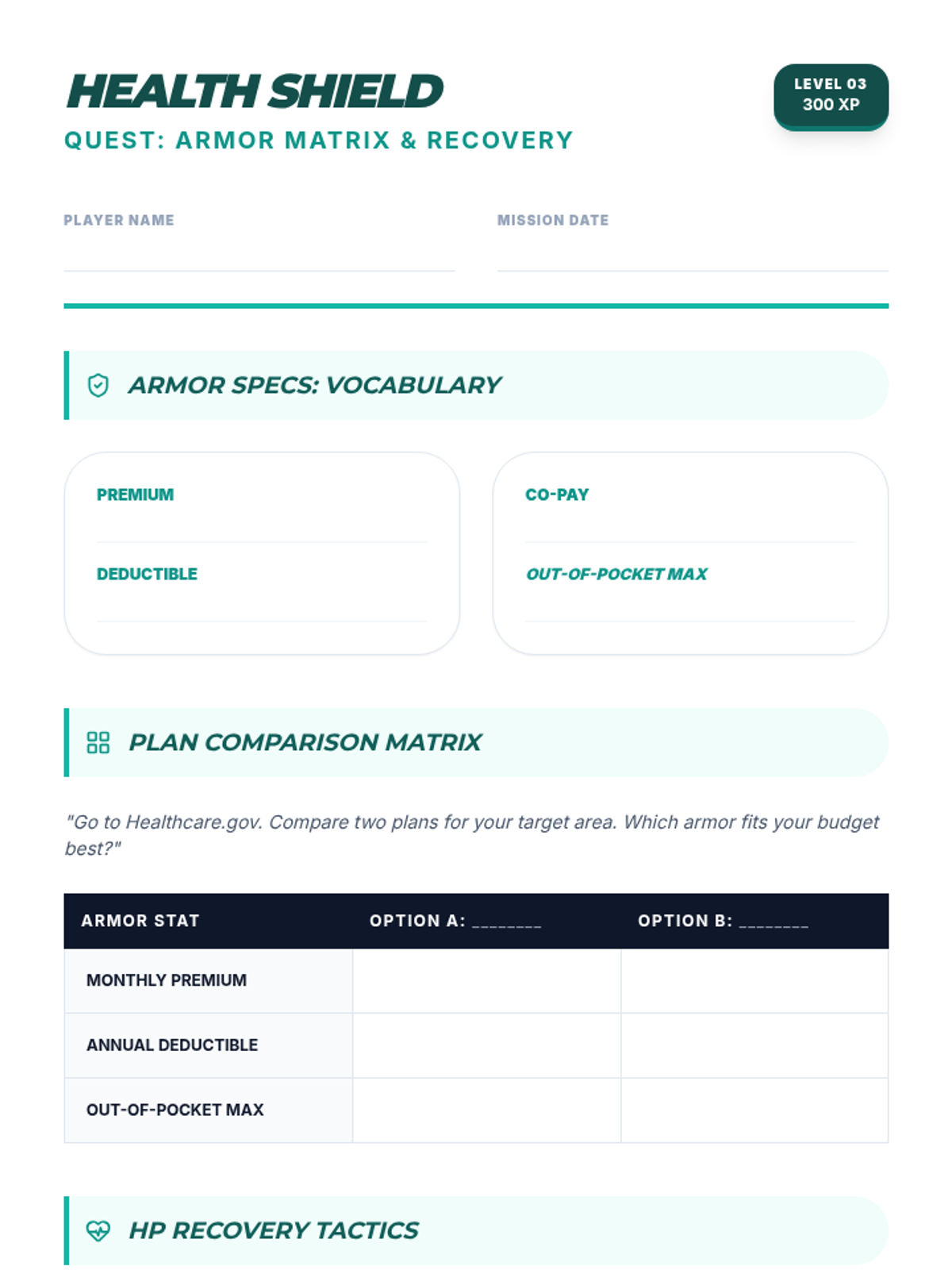
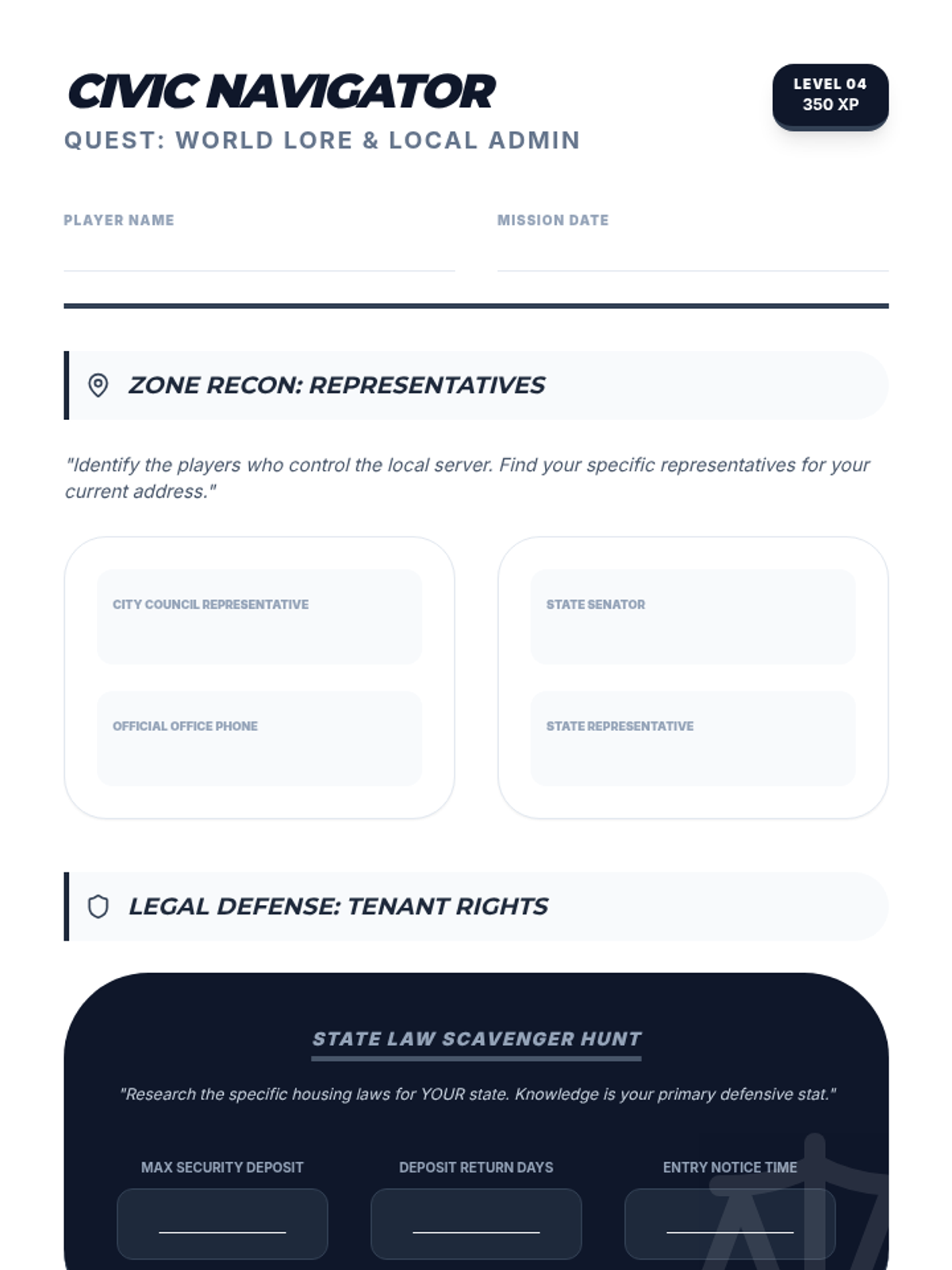
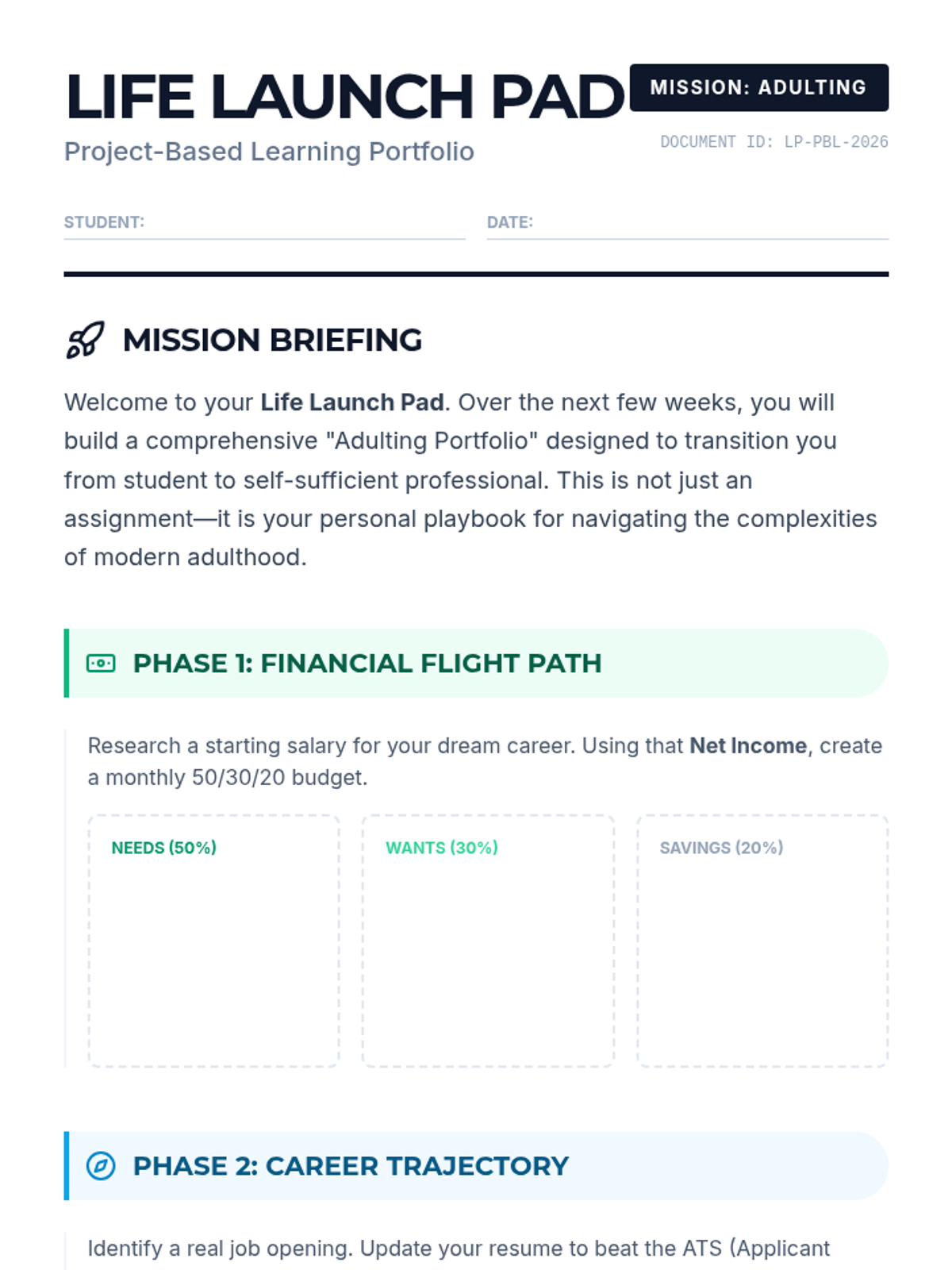
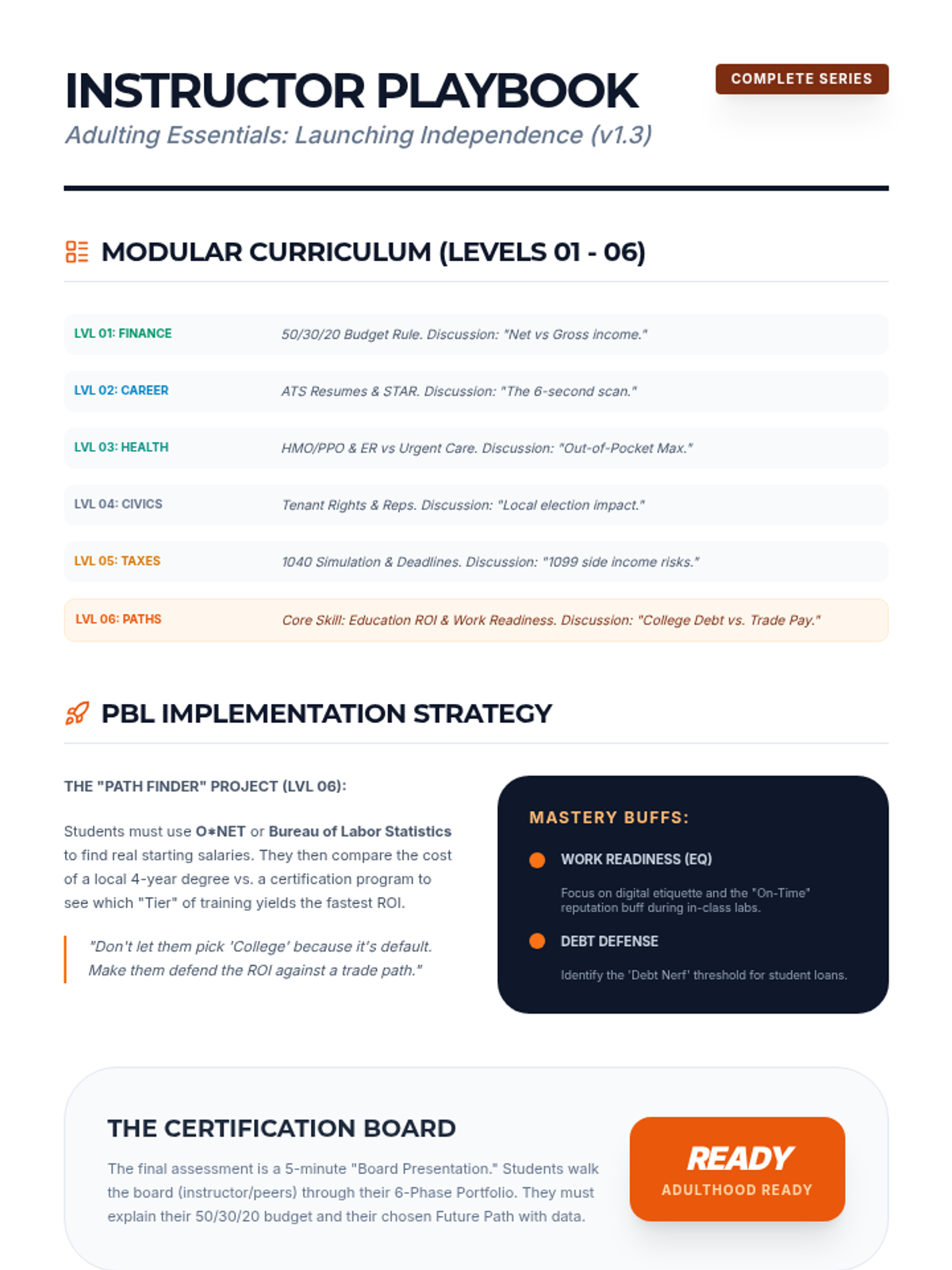
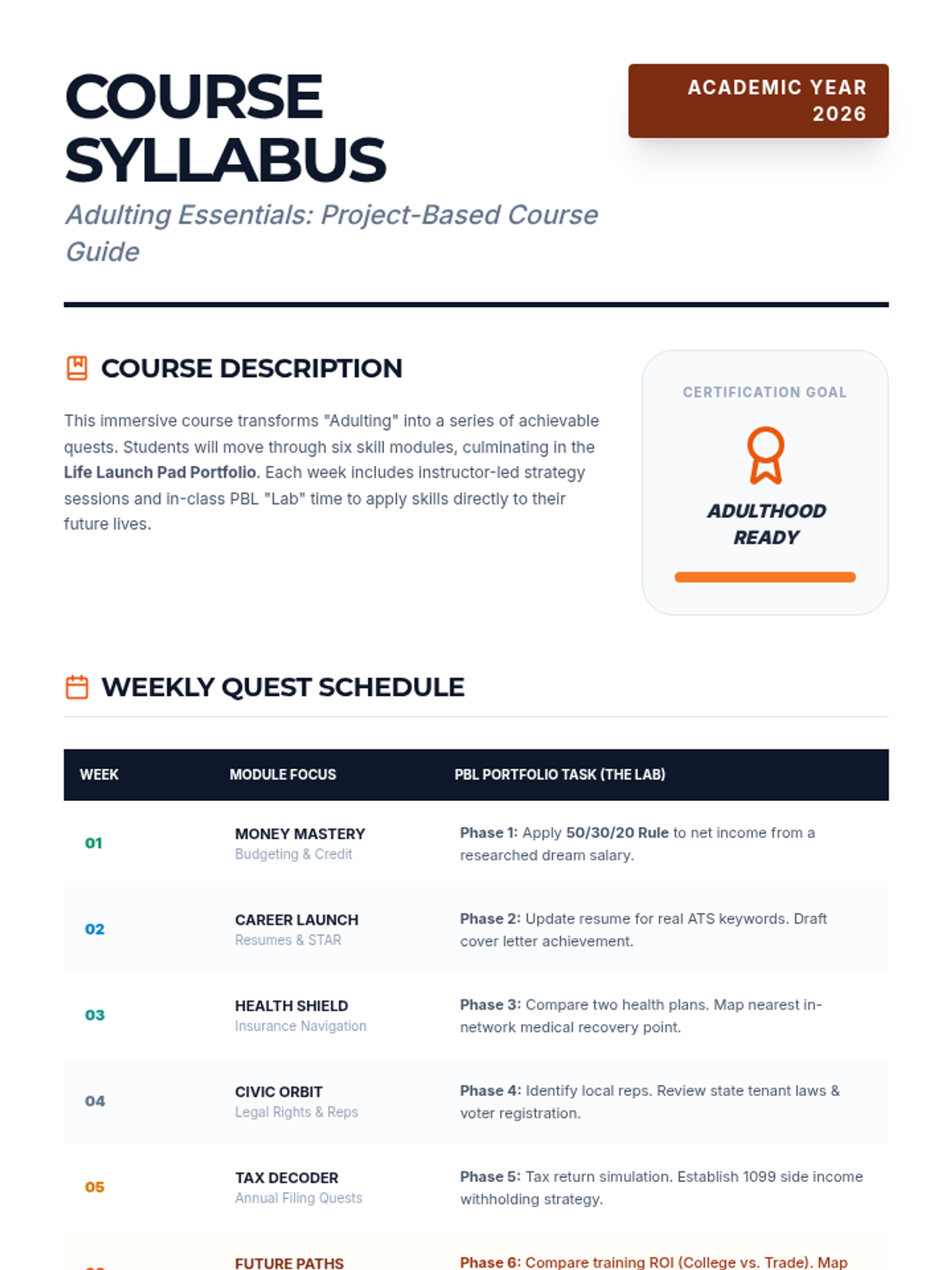
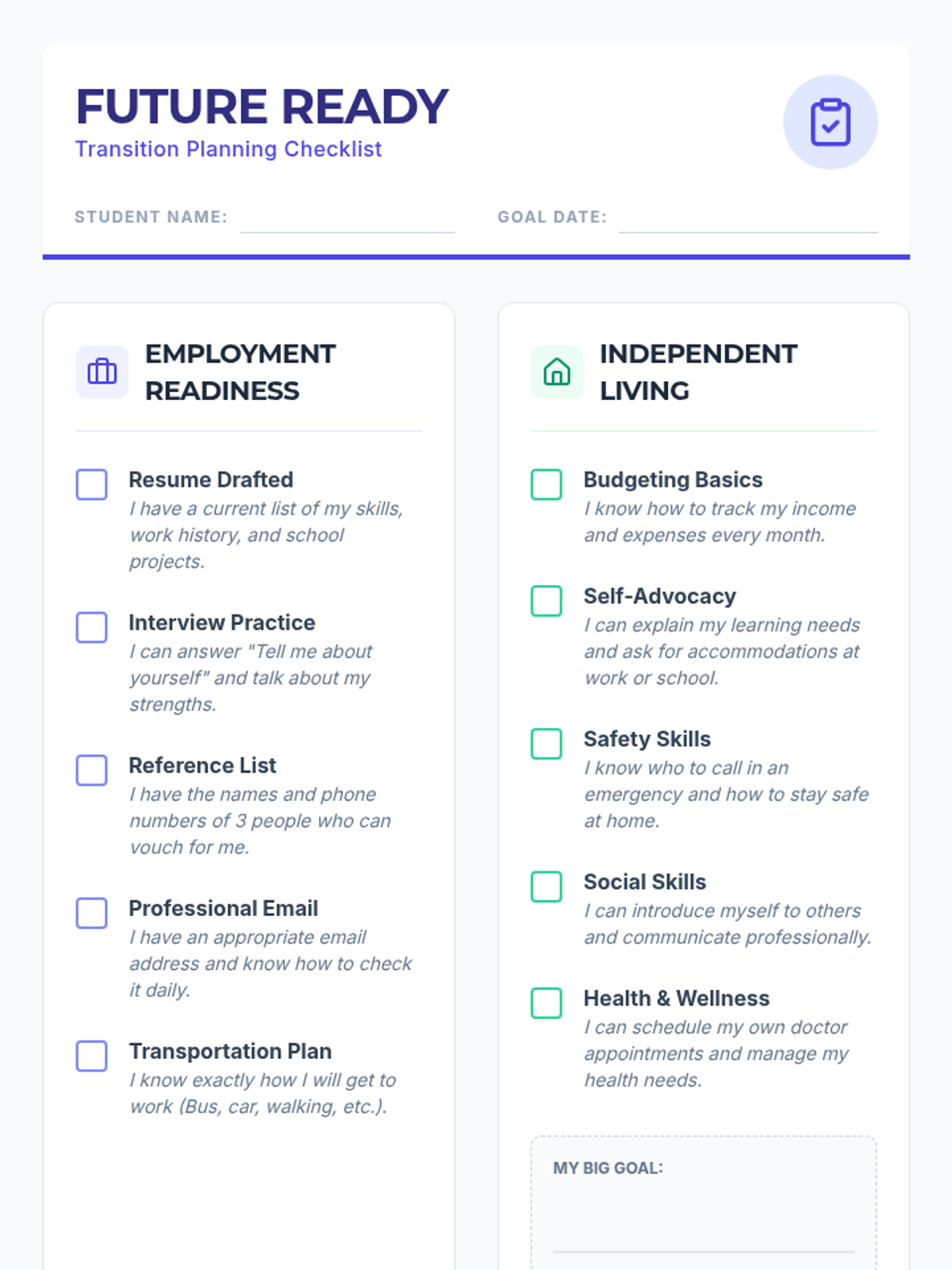
A comprehensive guide to essential adulting skills covering financial literacy, career development, health navigation, and civic responsibilities.
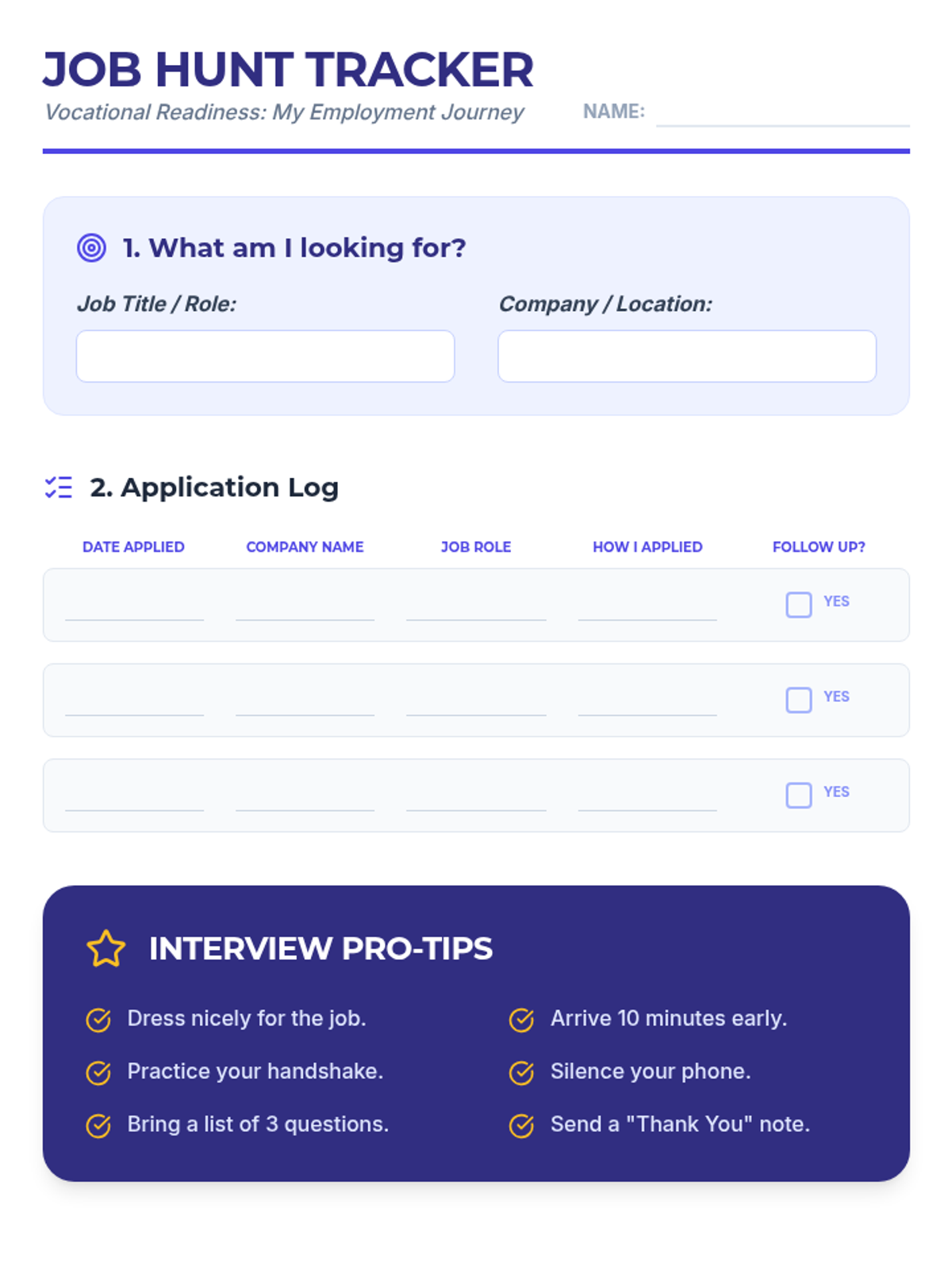
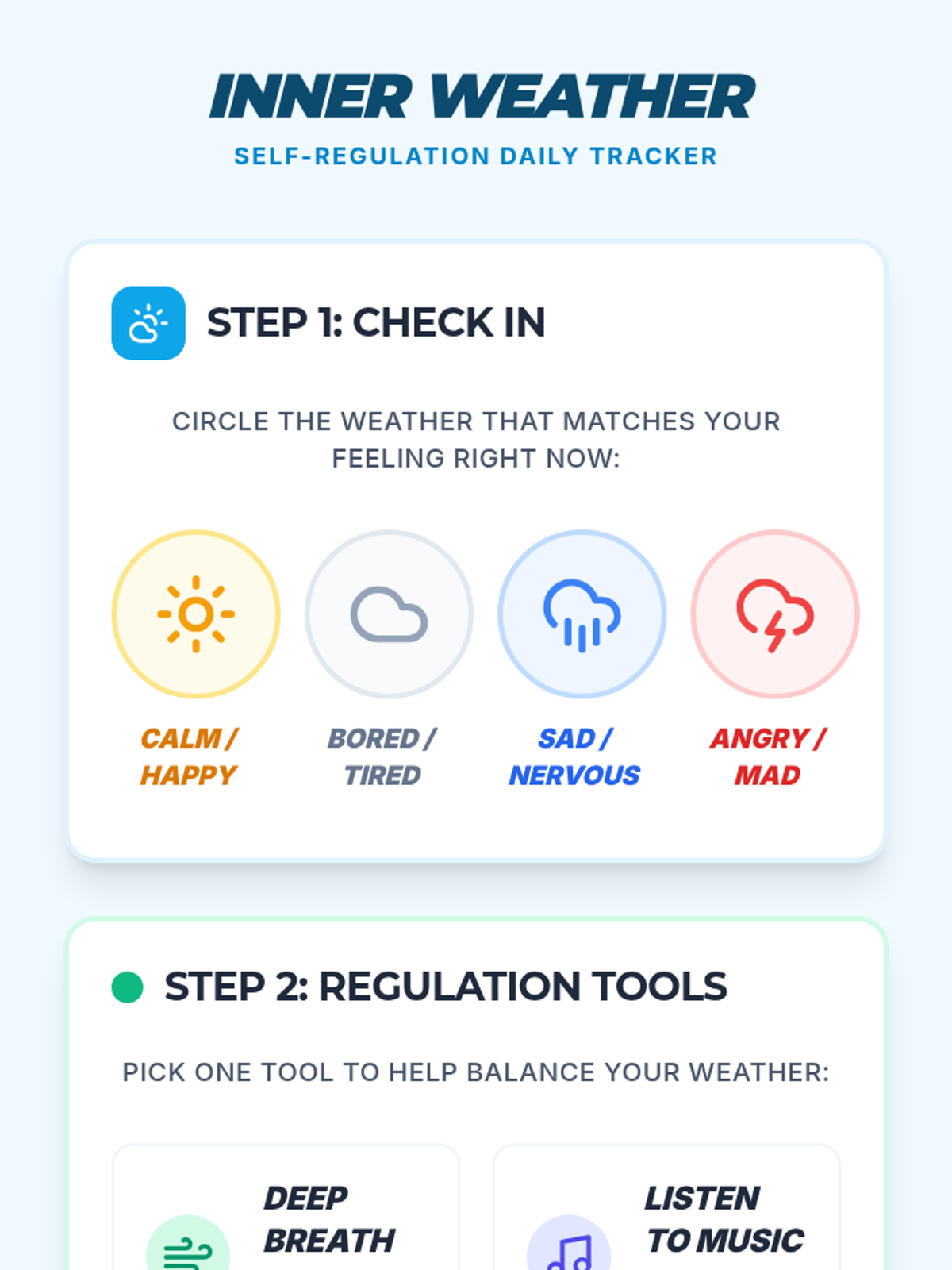
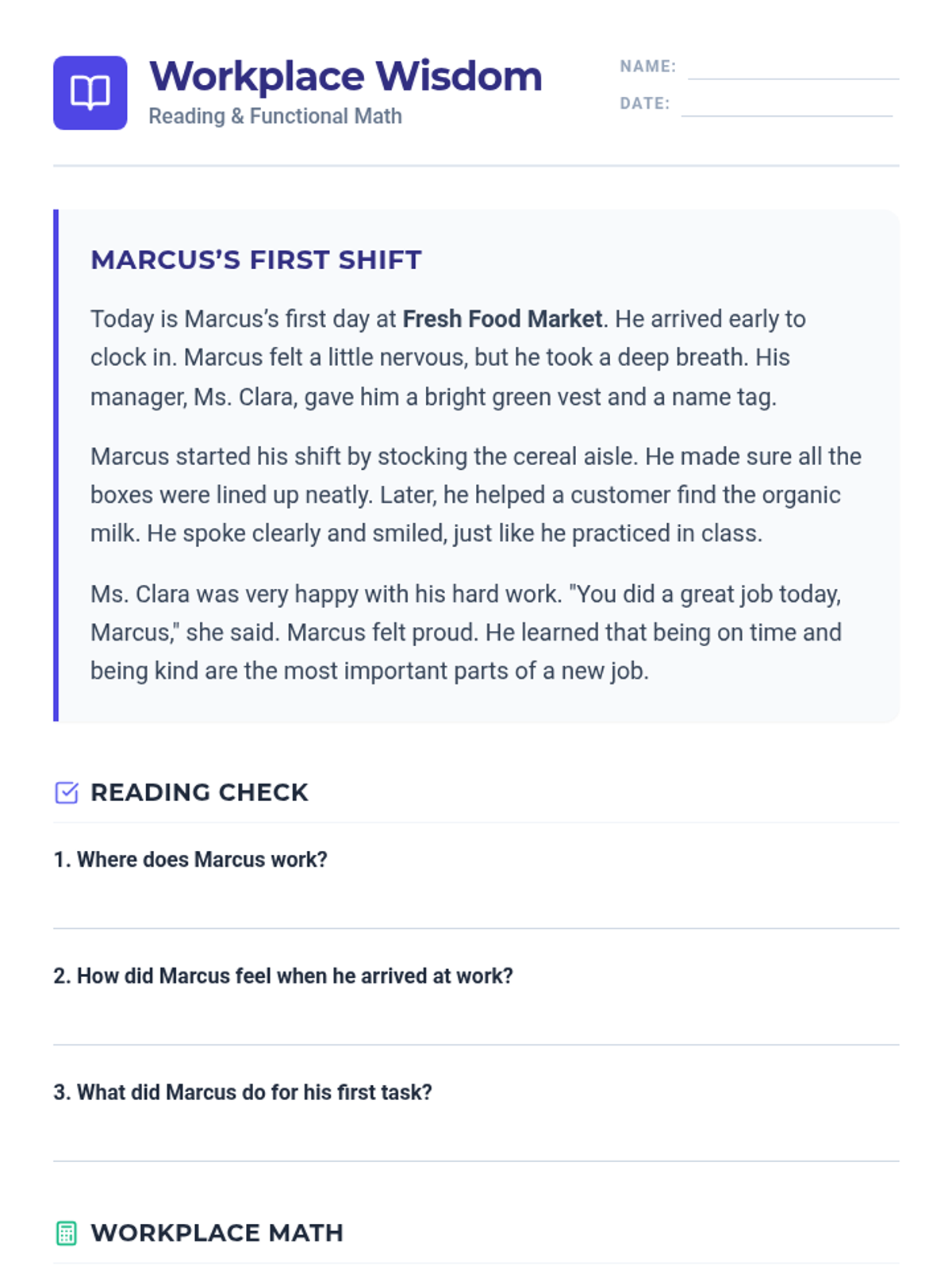
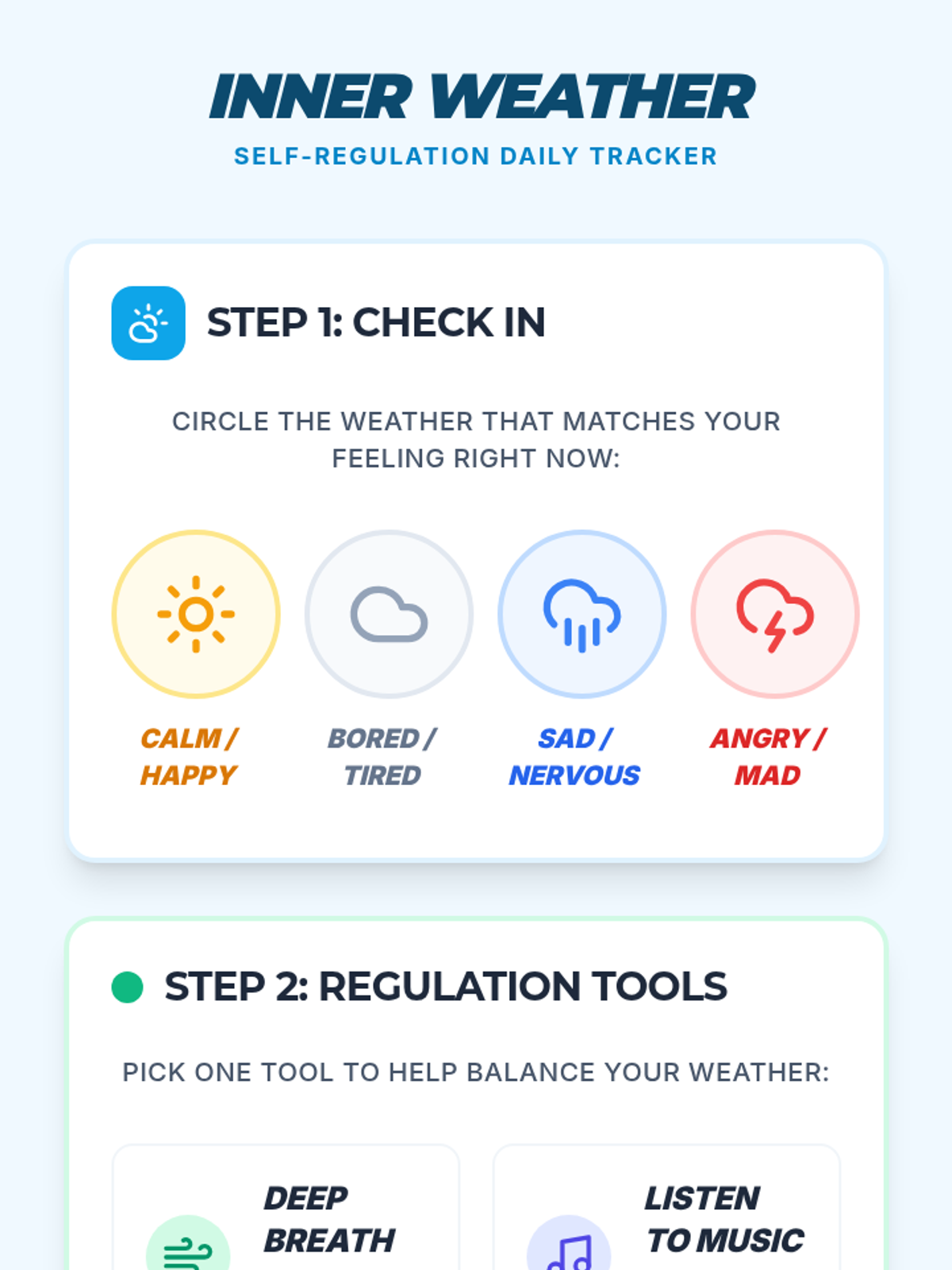
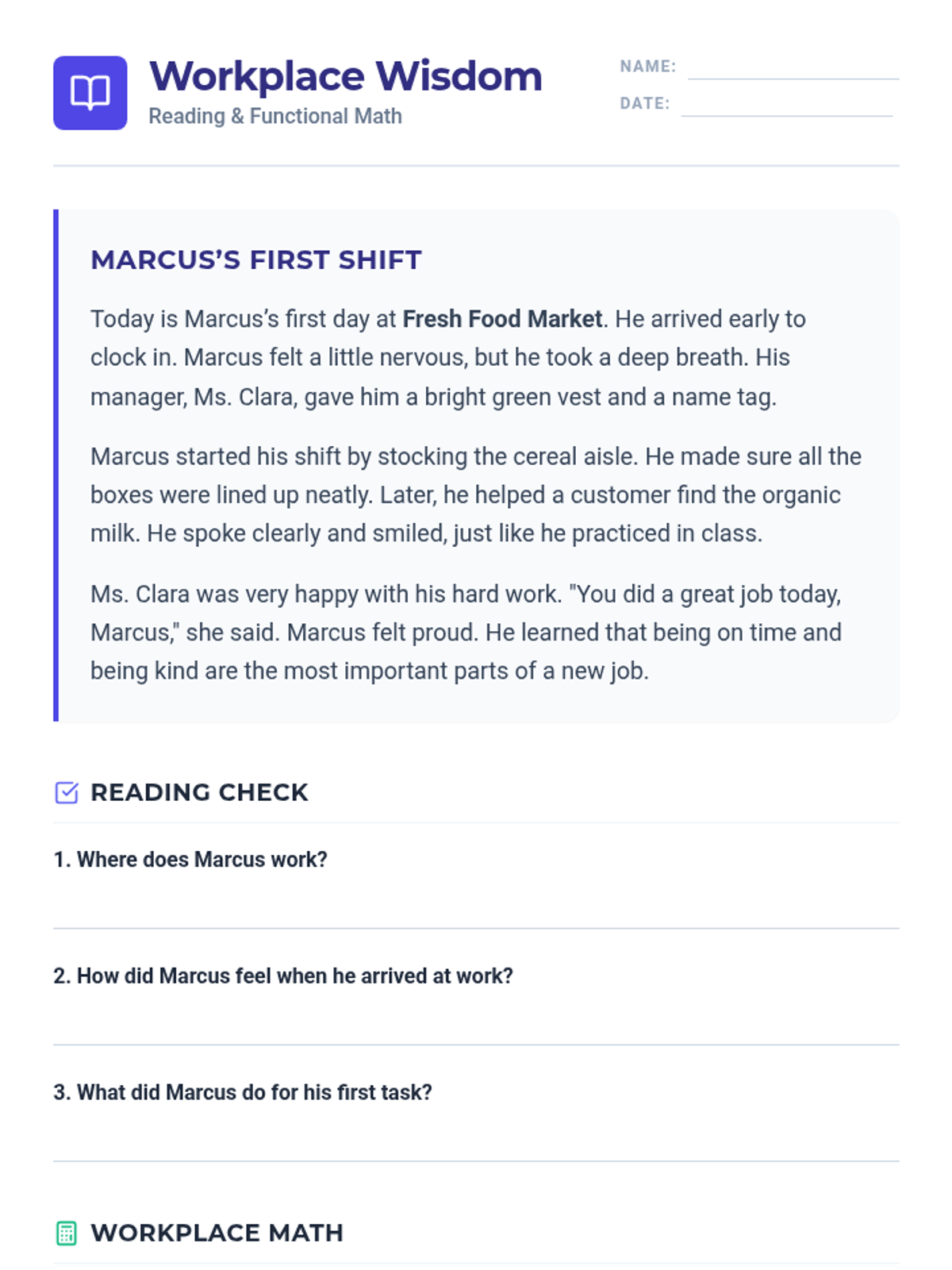
A collection of functional life skills resources designed for high school students transitioning to independence, focusing on budgeting, self-regulation, vocational readiness, and literacy.
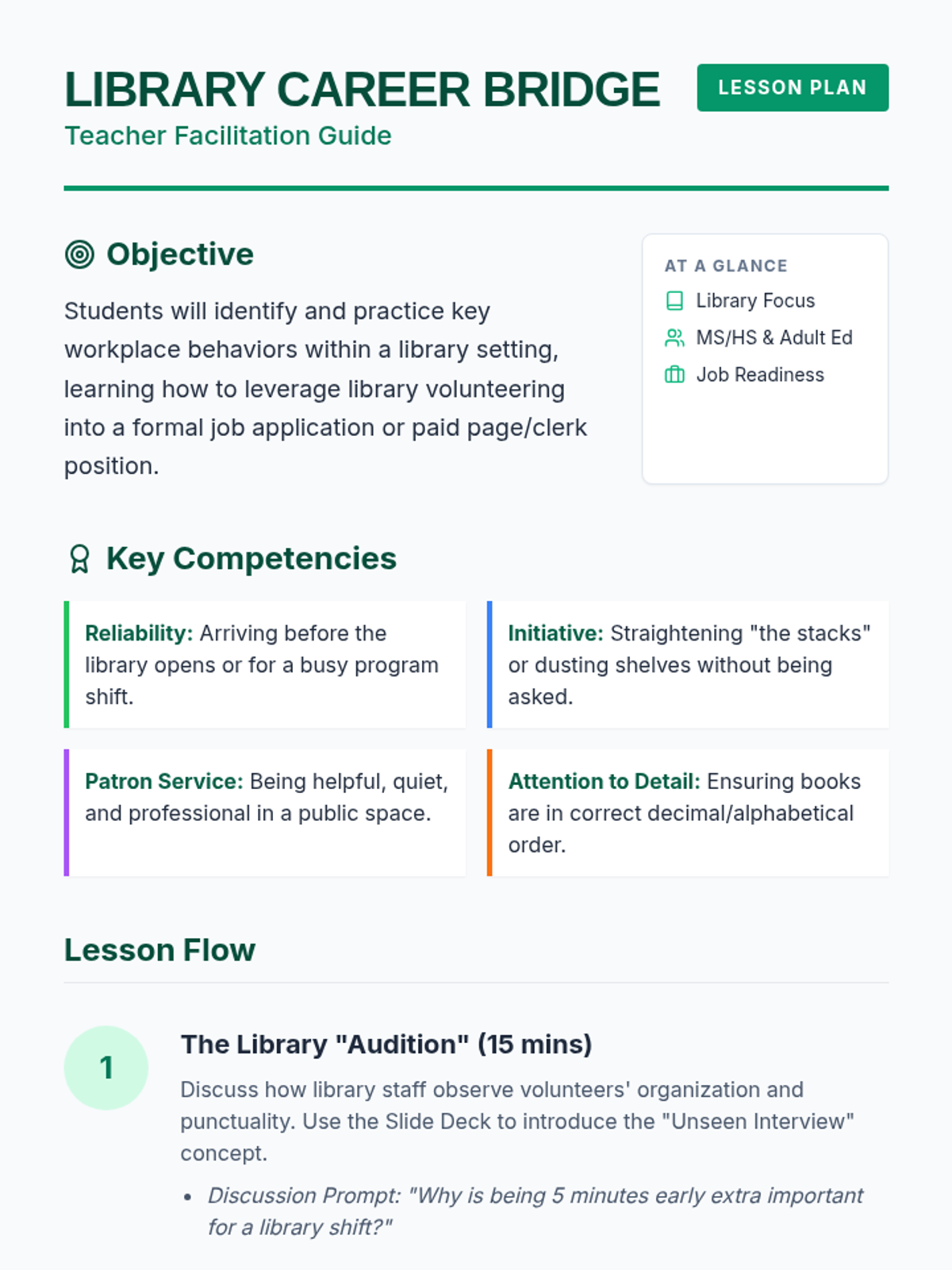
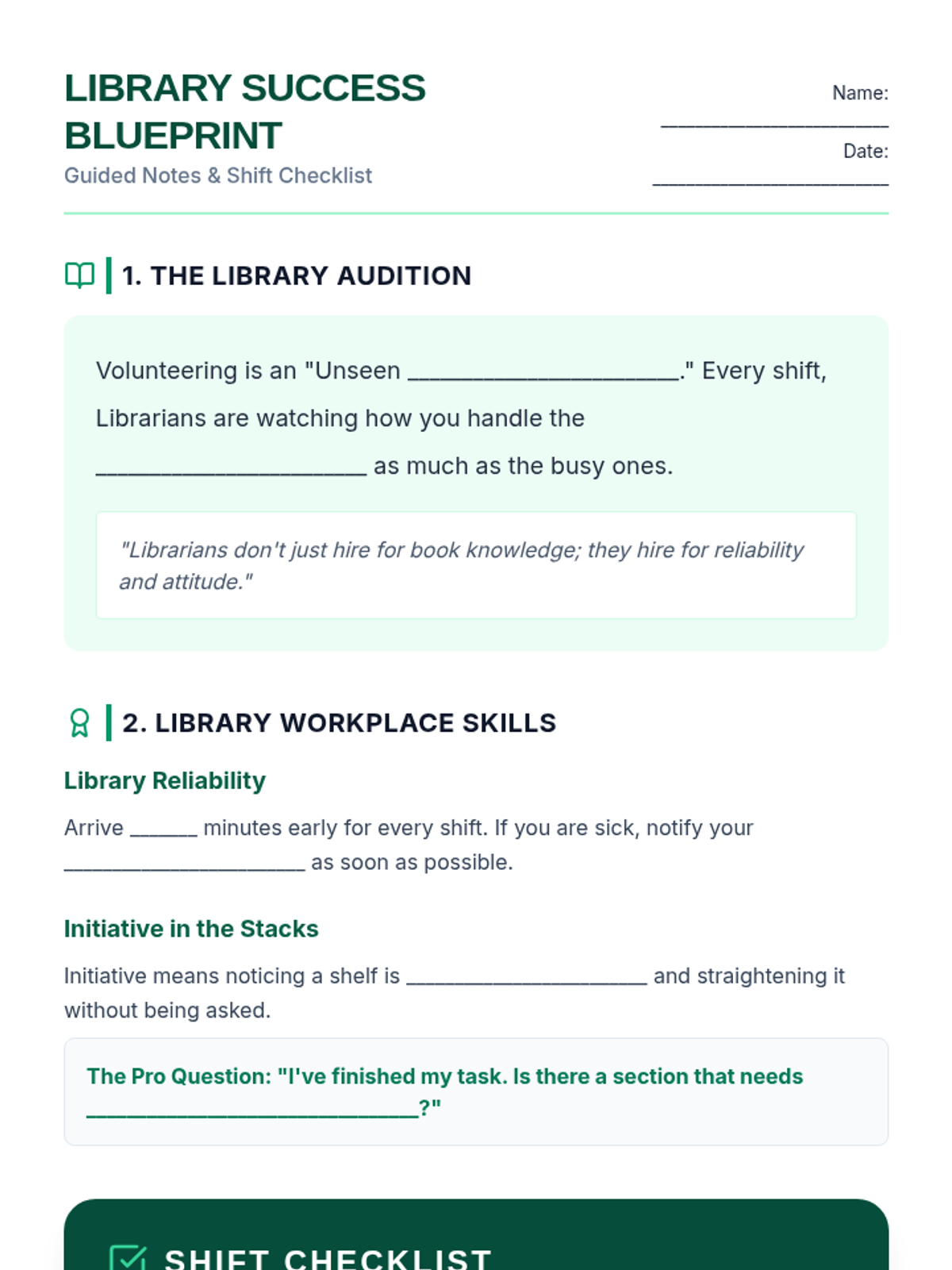
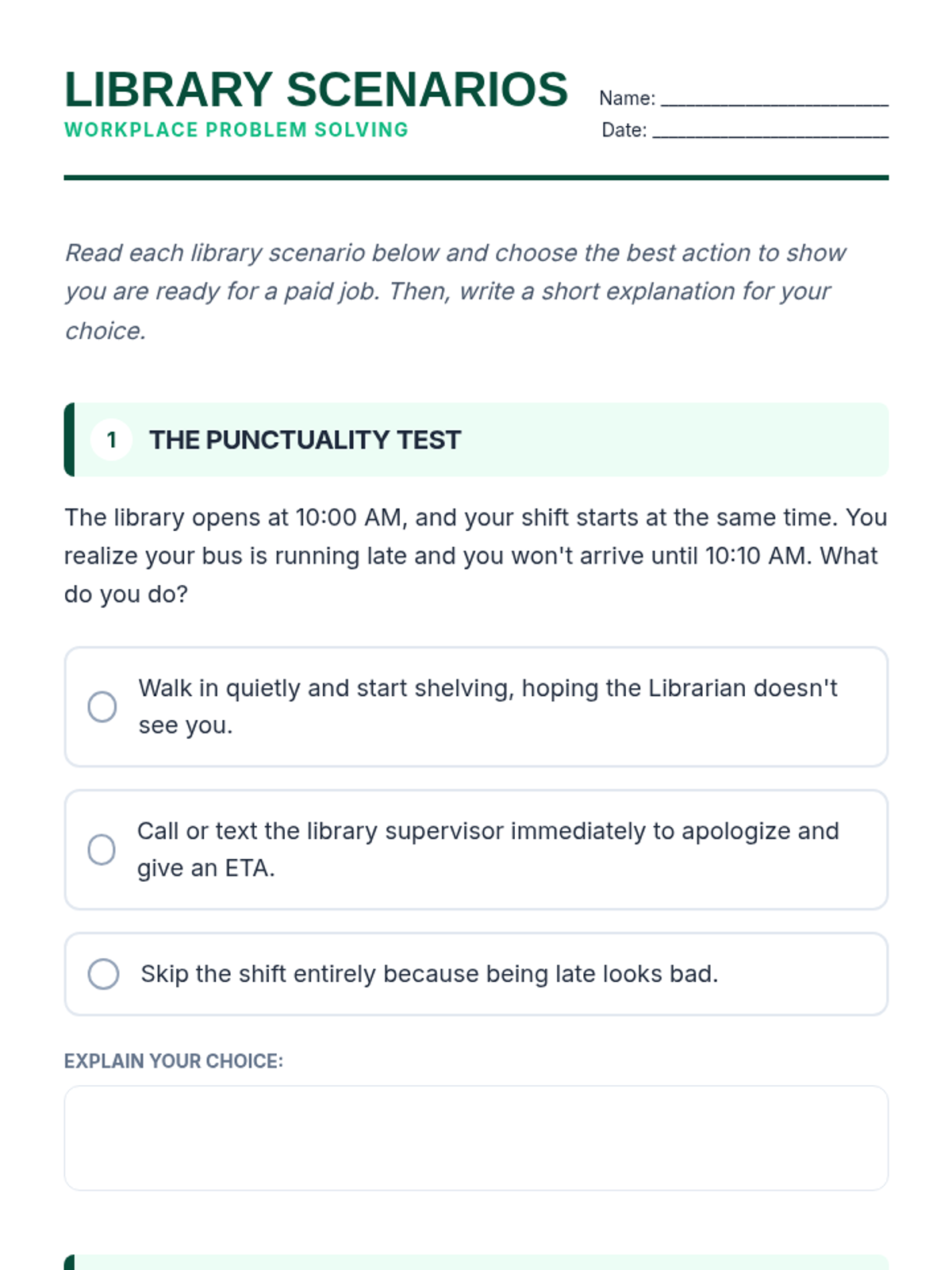
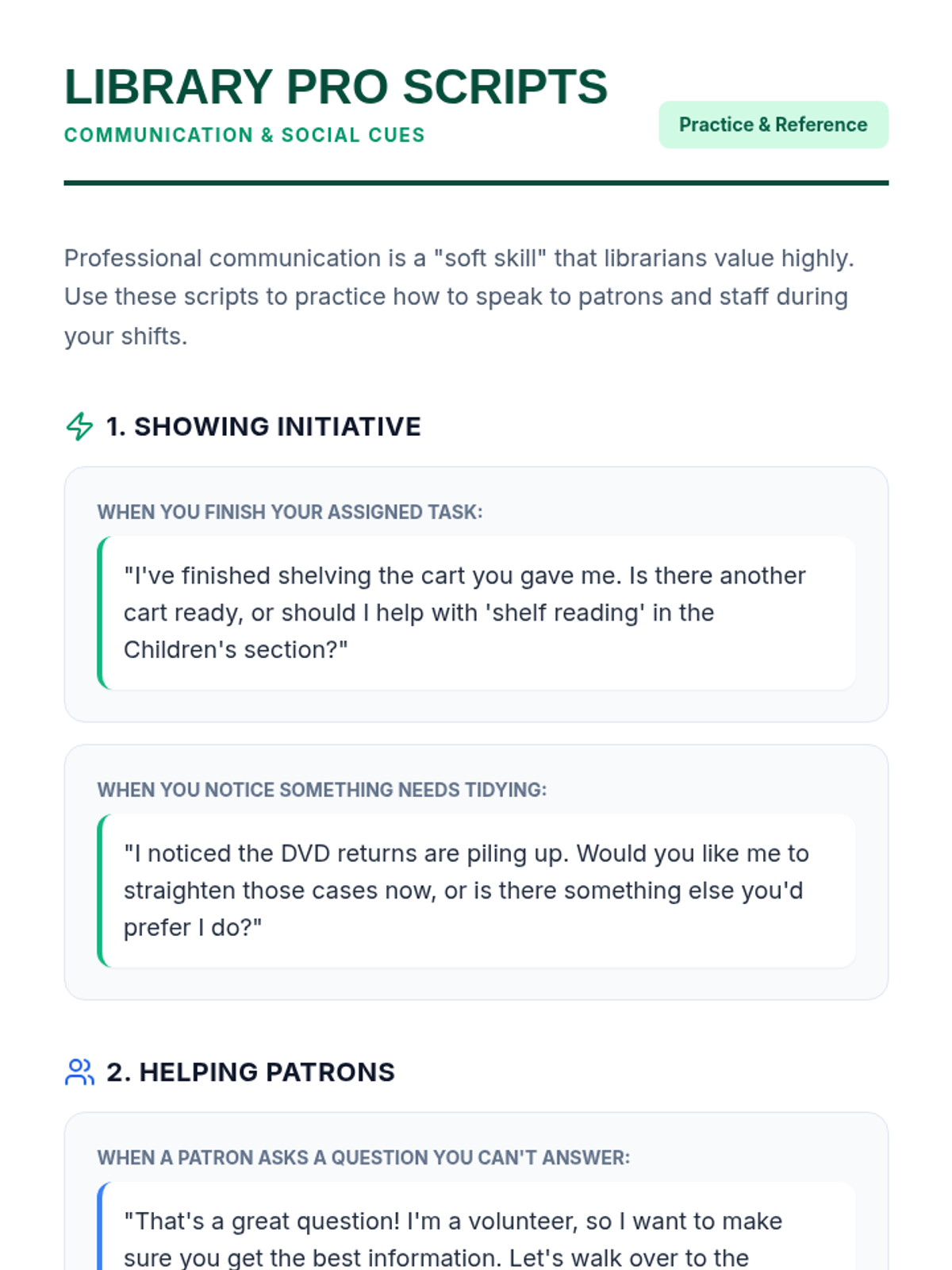
This lesson teaches students how to transition from a volunteer position to a paid role by demonstrating high-value workplace behaviors like initiative, reliability, and teamwork. It is designed for diverse learners, including those in job-readiness programs and students with social/communication goals.
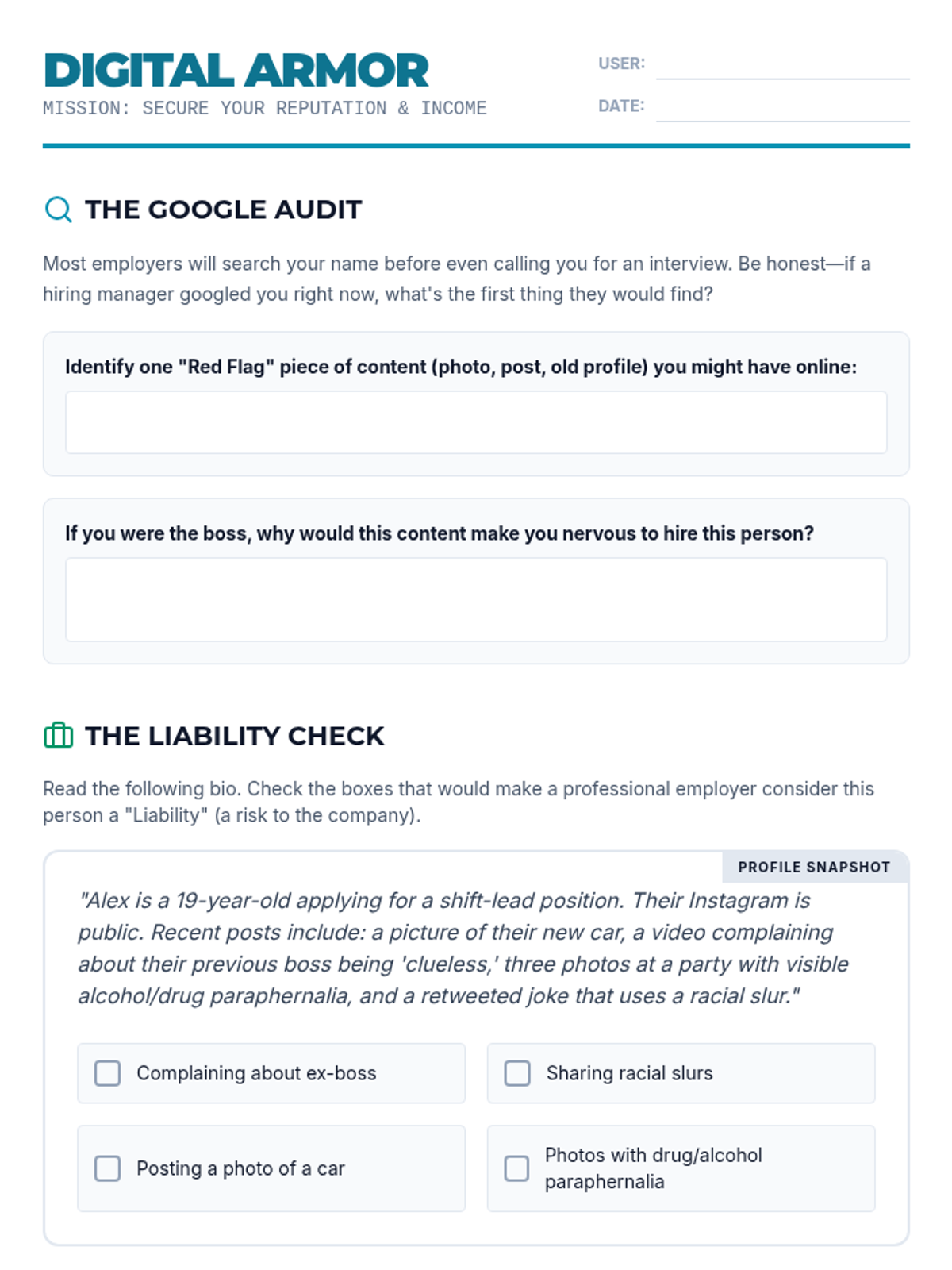
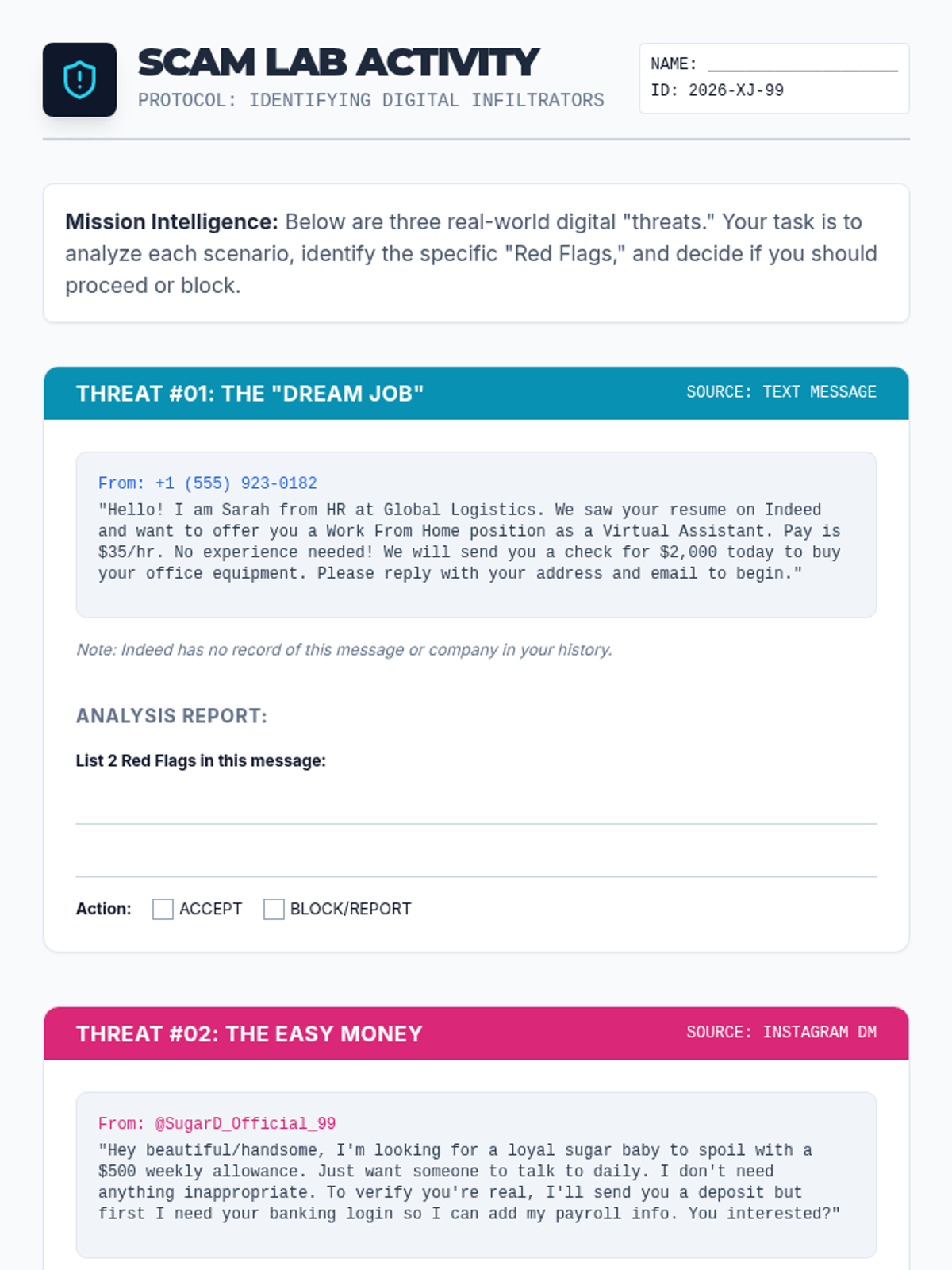
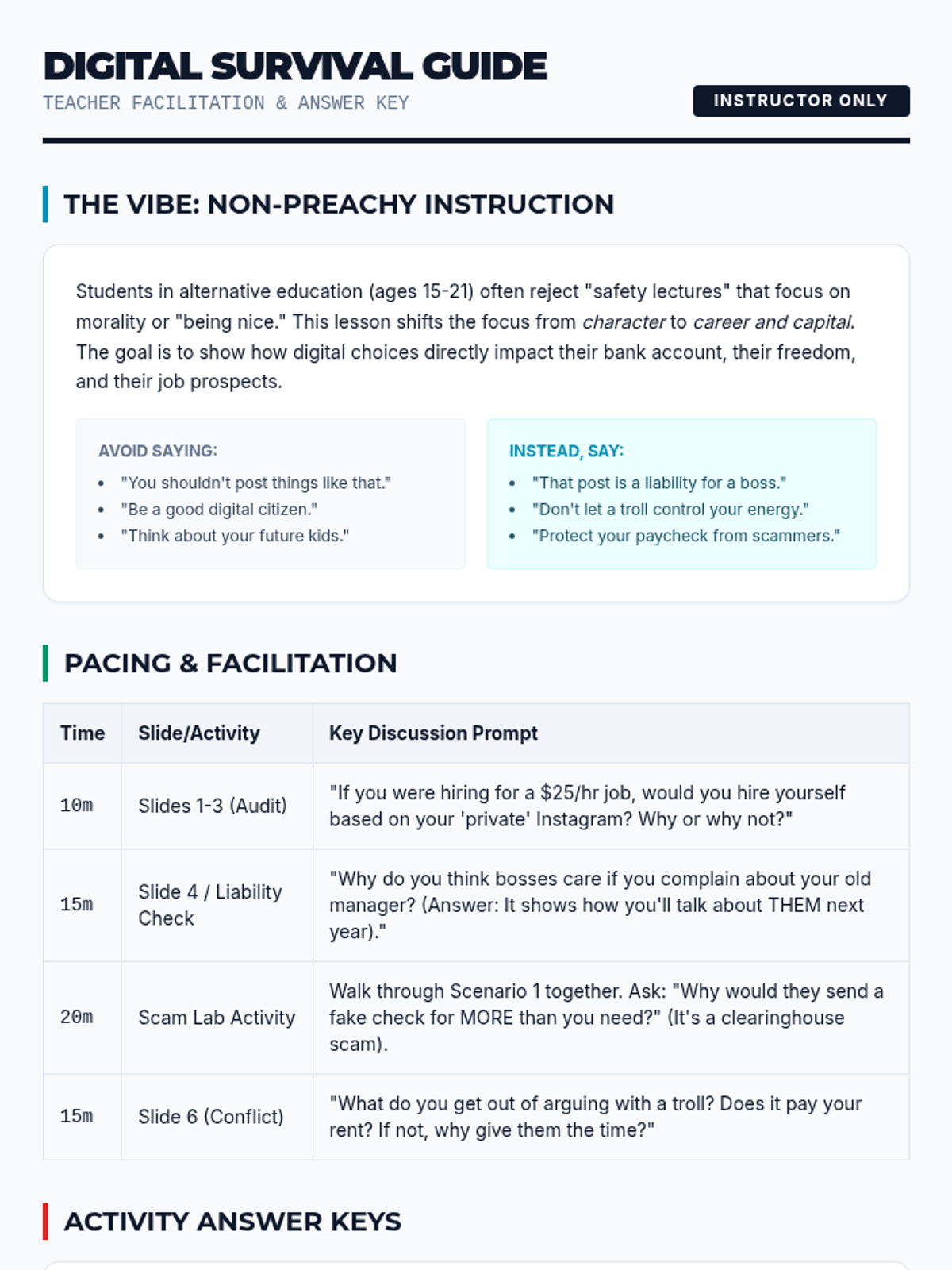
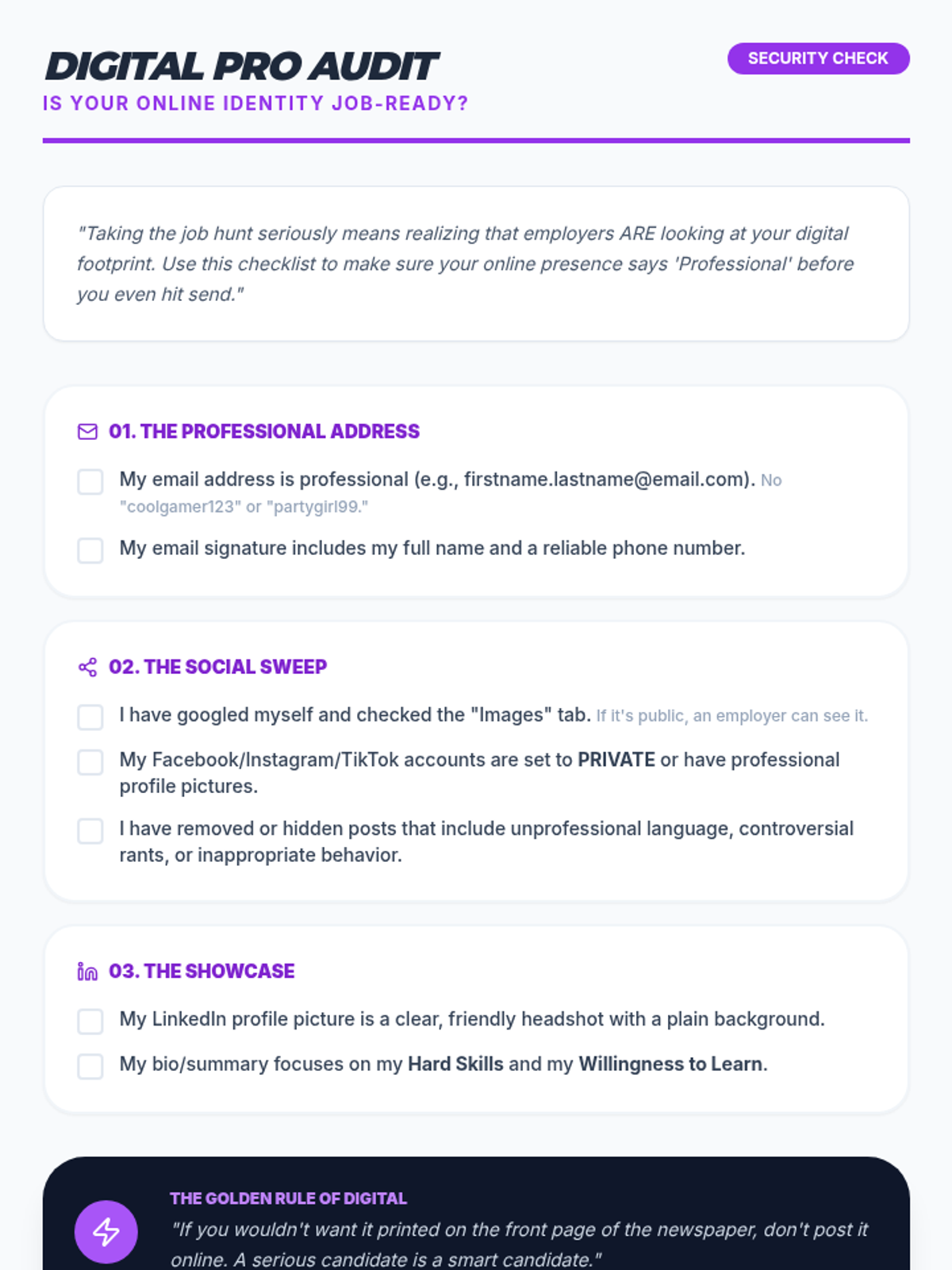
A practical, non-preachy lesson for older students (15-21) on navigating the digital world safely. Focuses on digital footprints, employment, scam detection, and online conflict resolution through real-world scenarios and professional readiness.
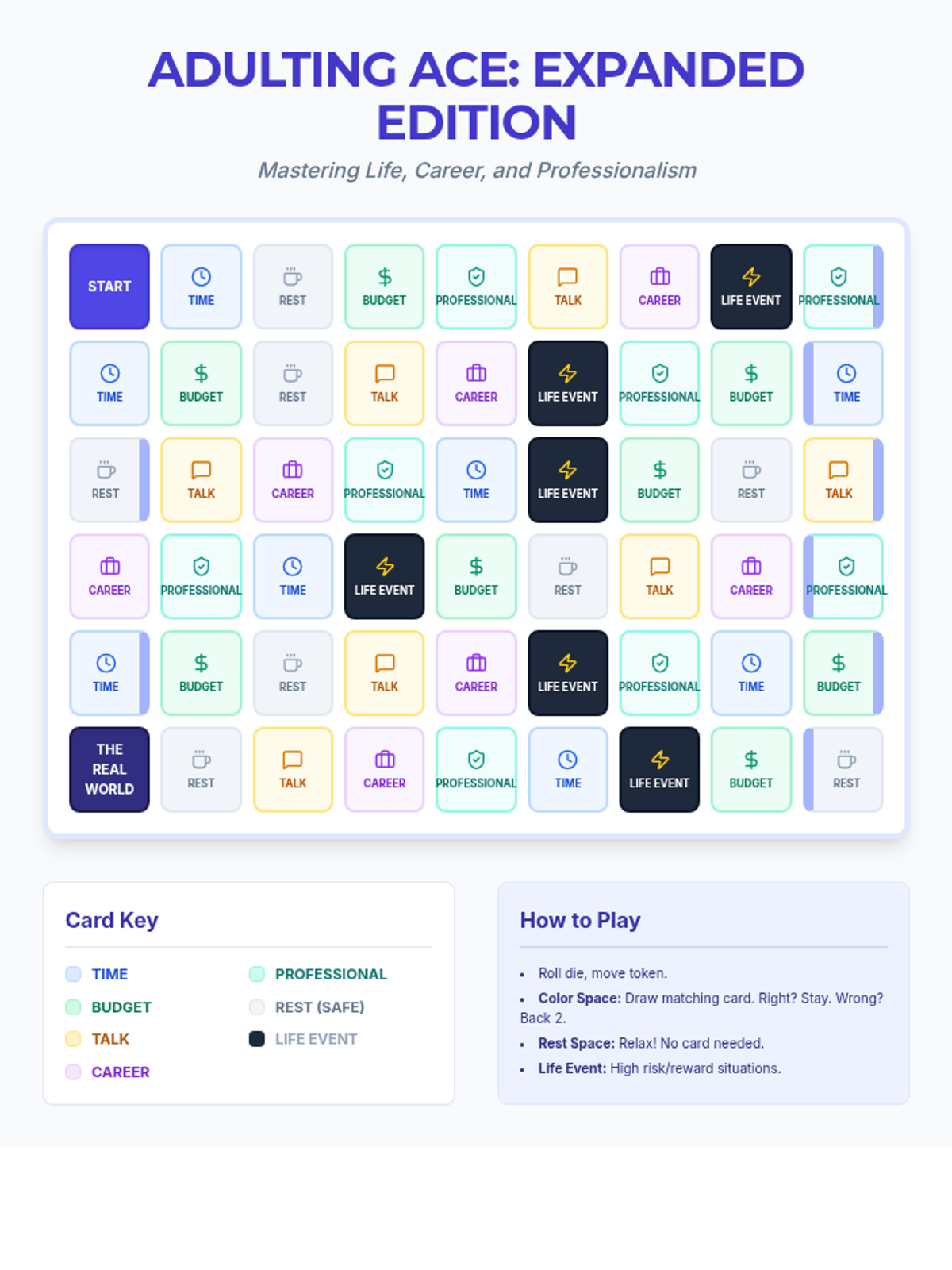
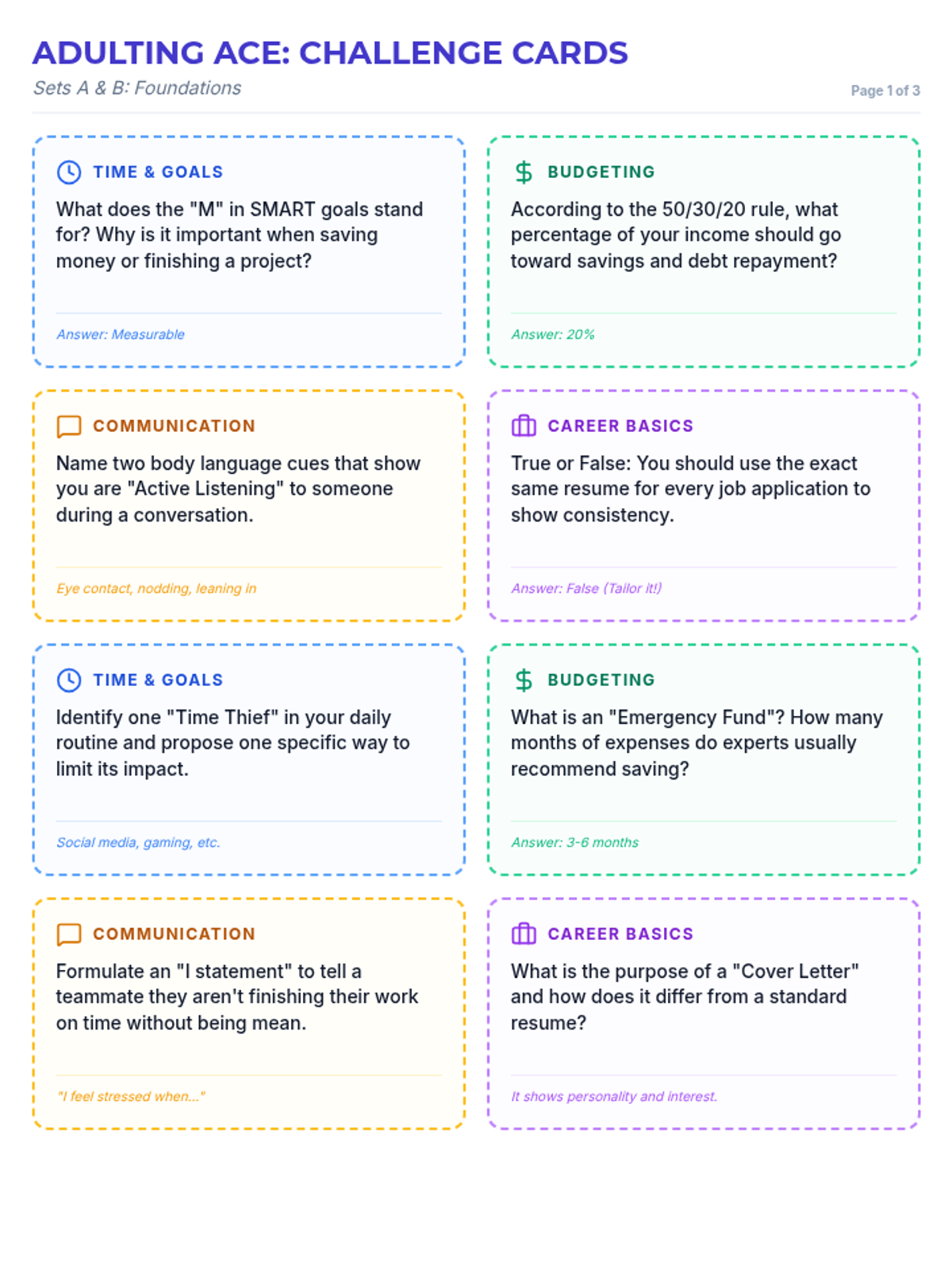
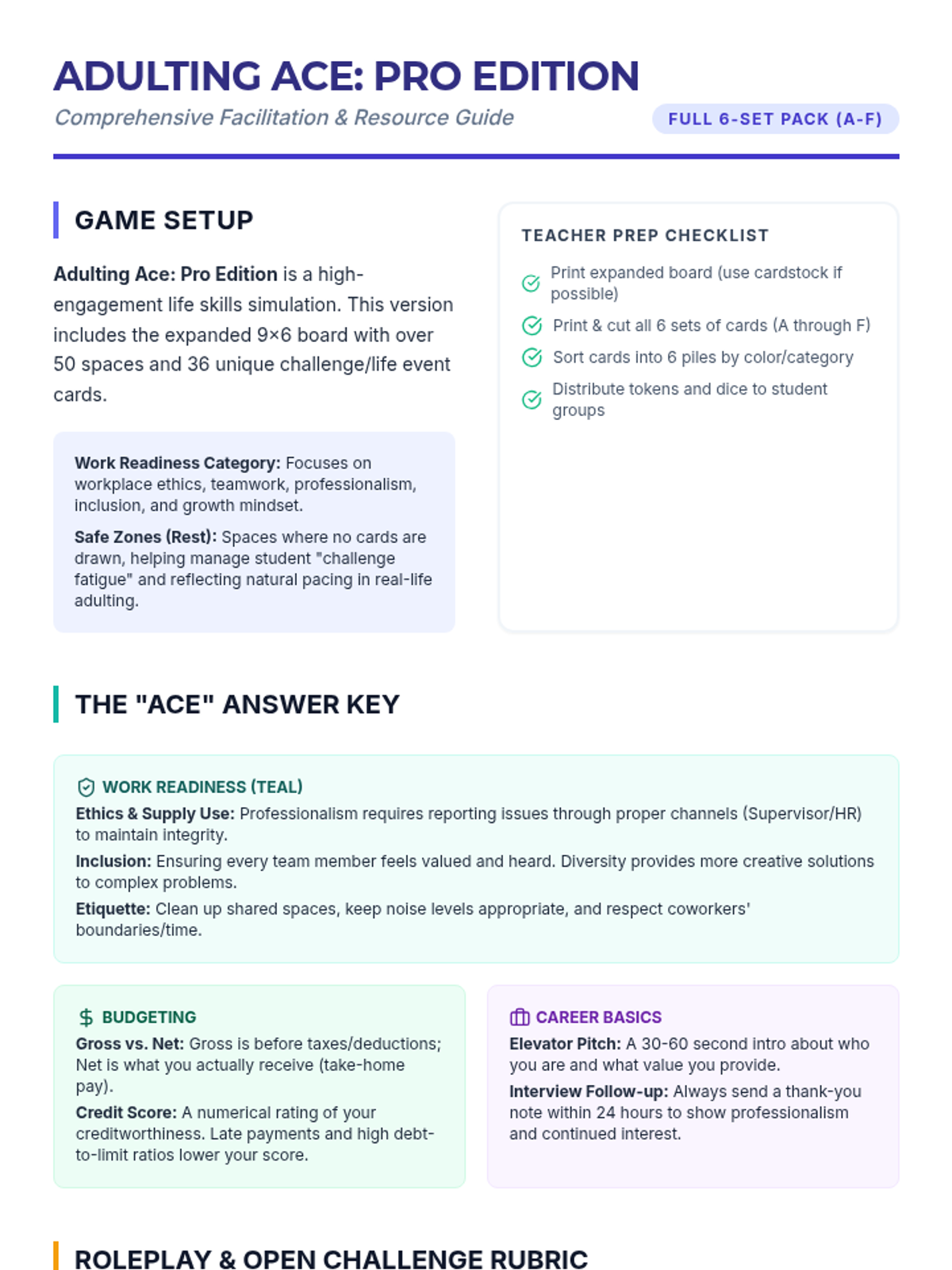
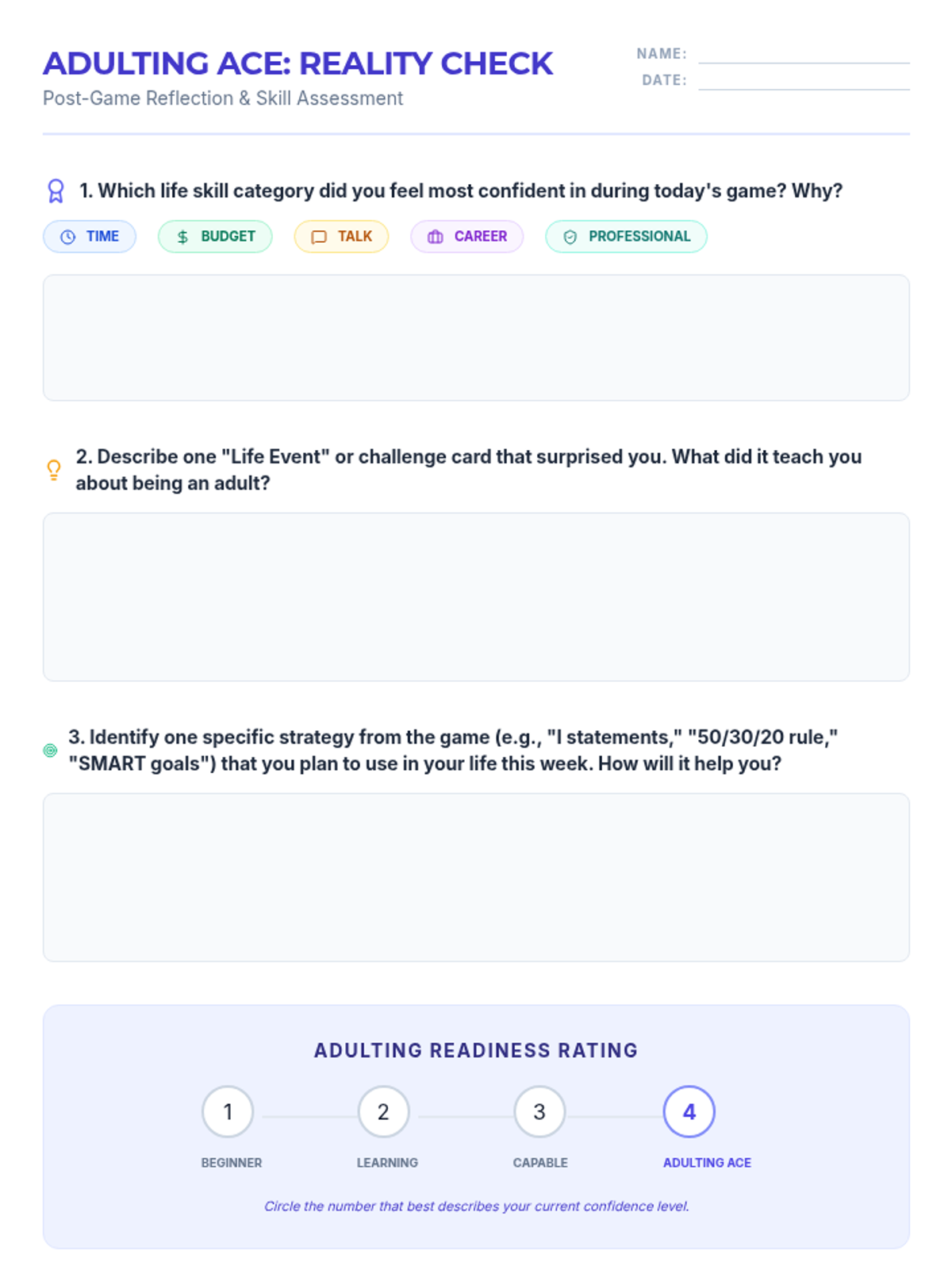
An interactive board game experience covering essential life skills including financial literacy, time management, communication, and career readiness.
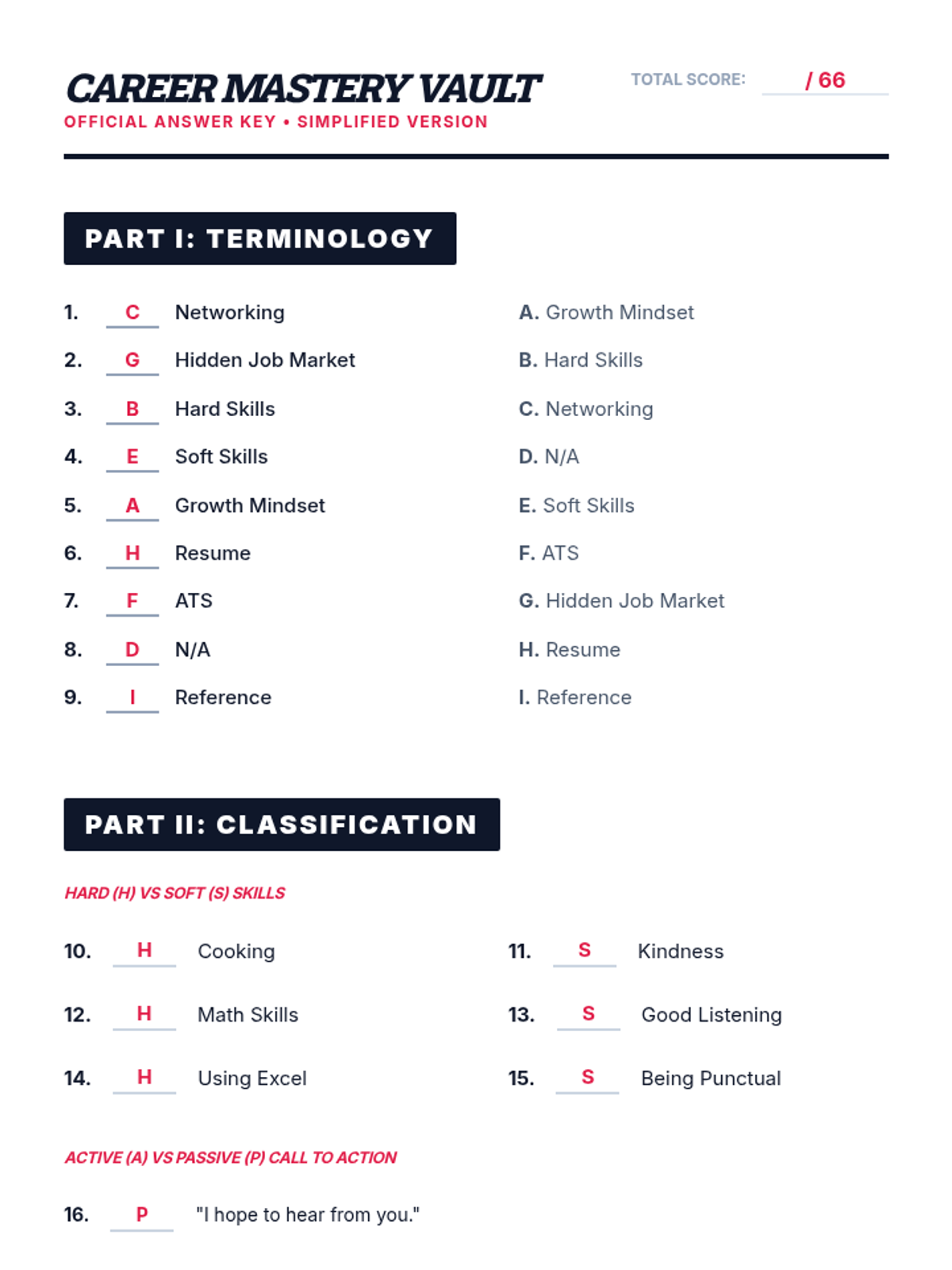
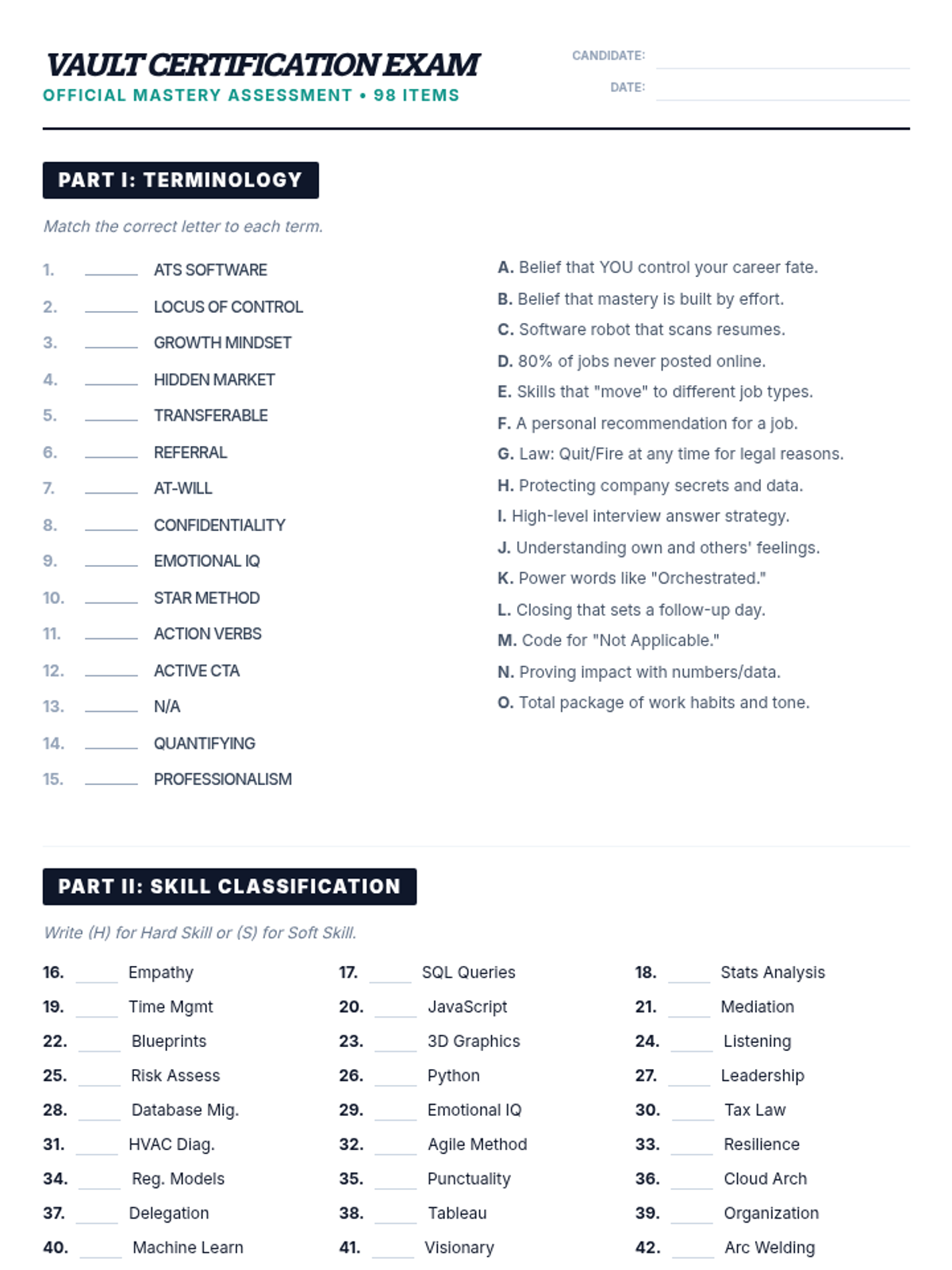
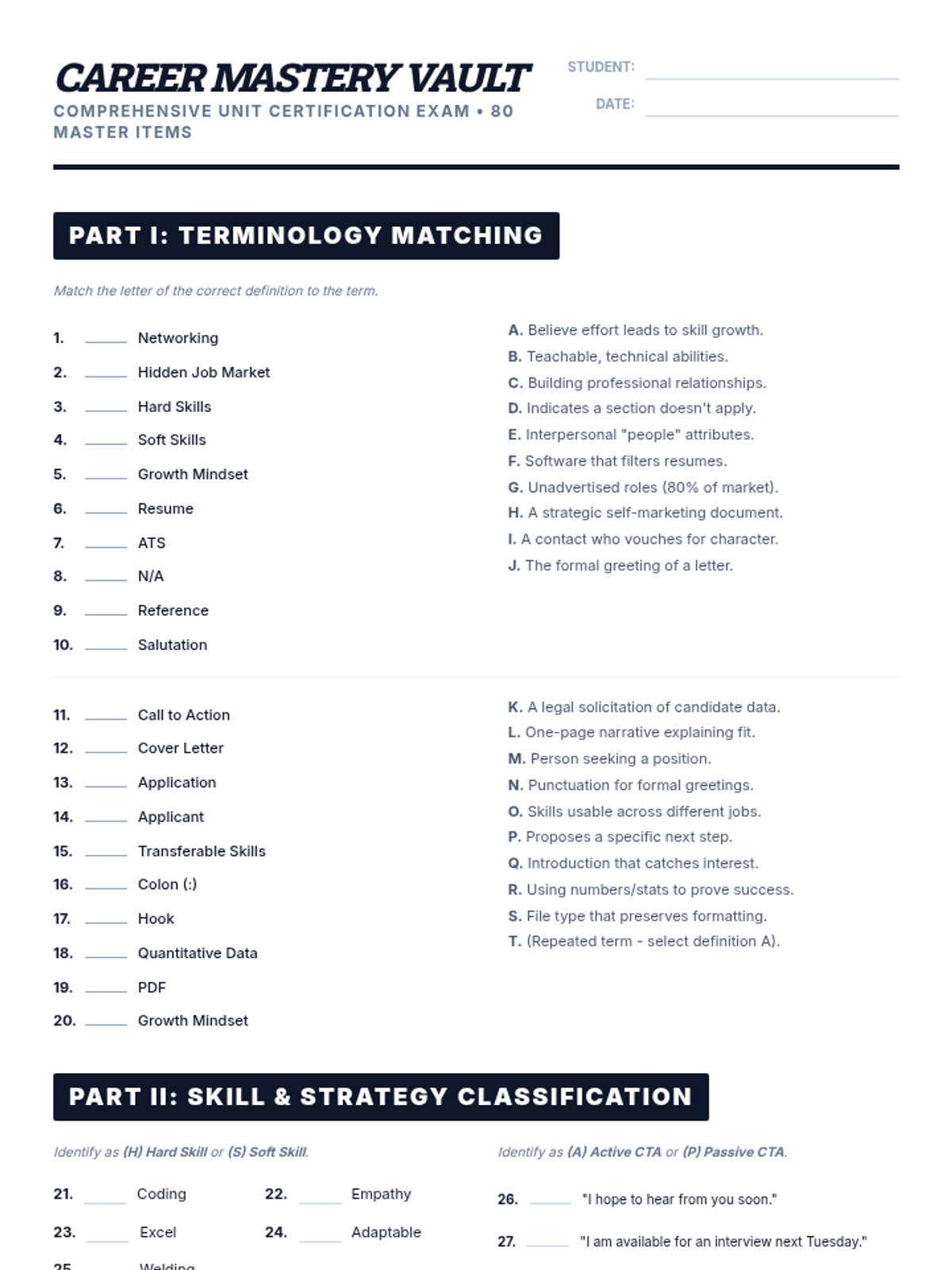
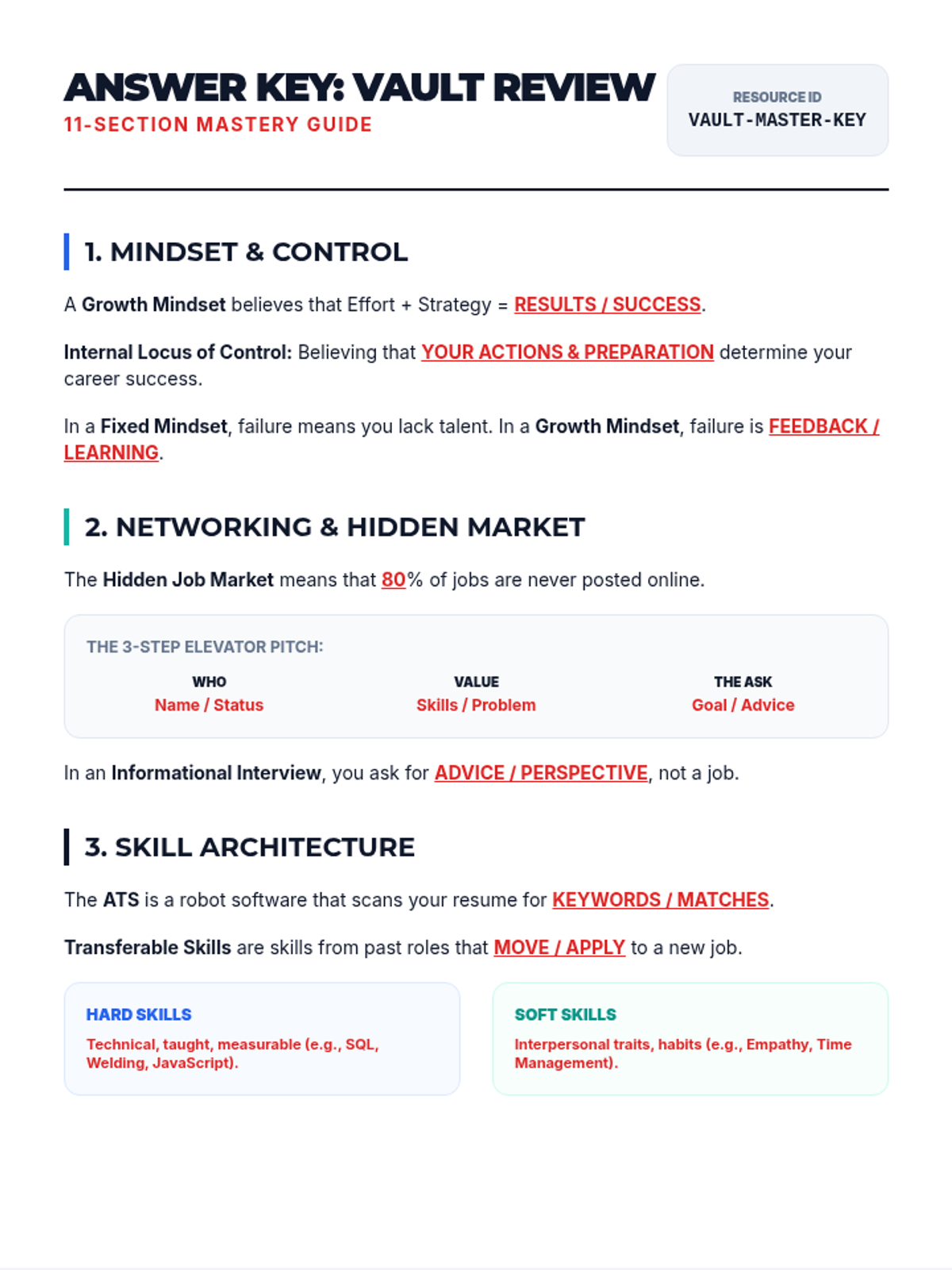
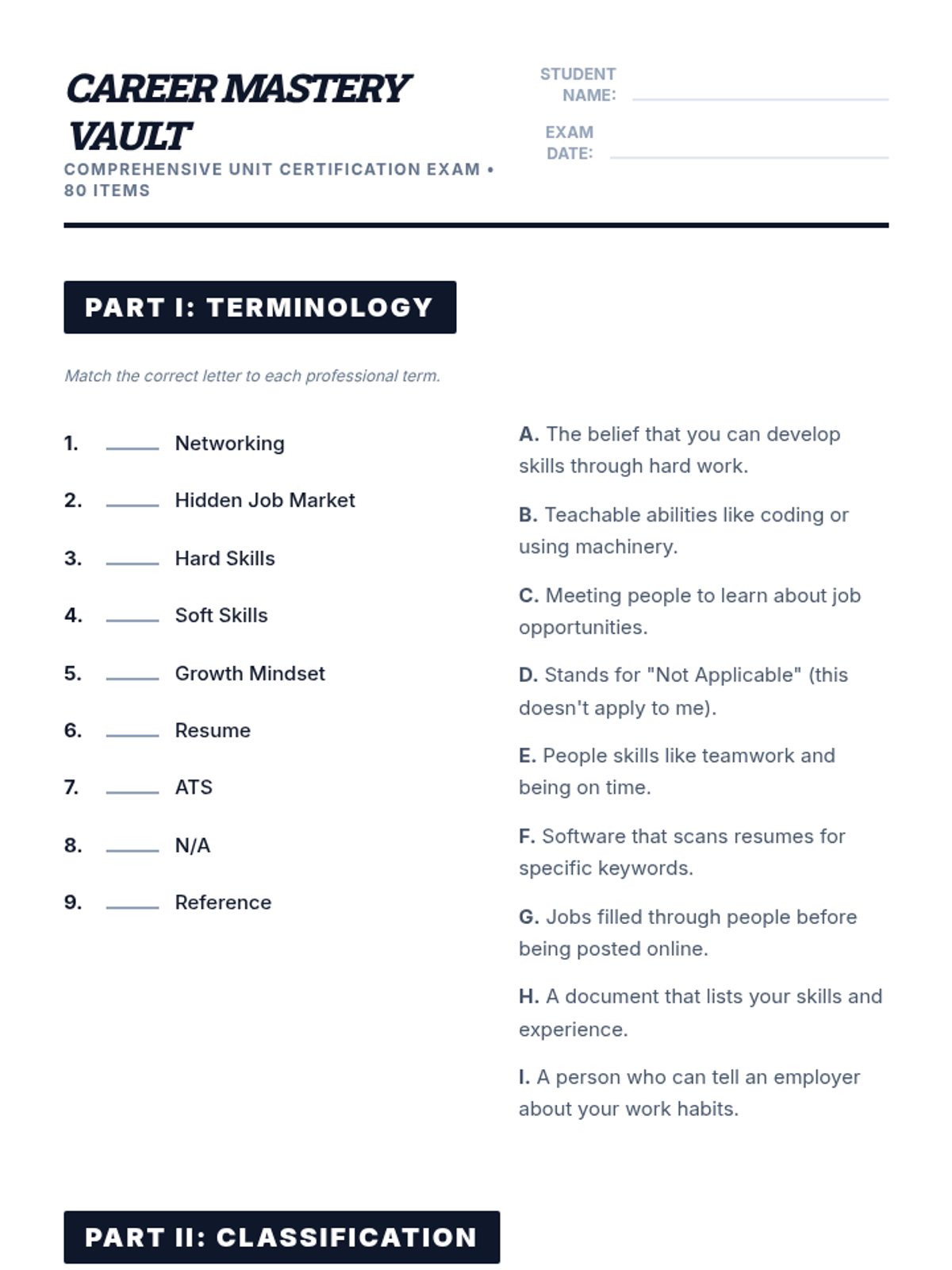
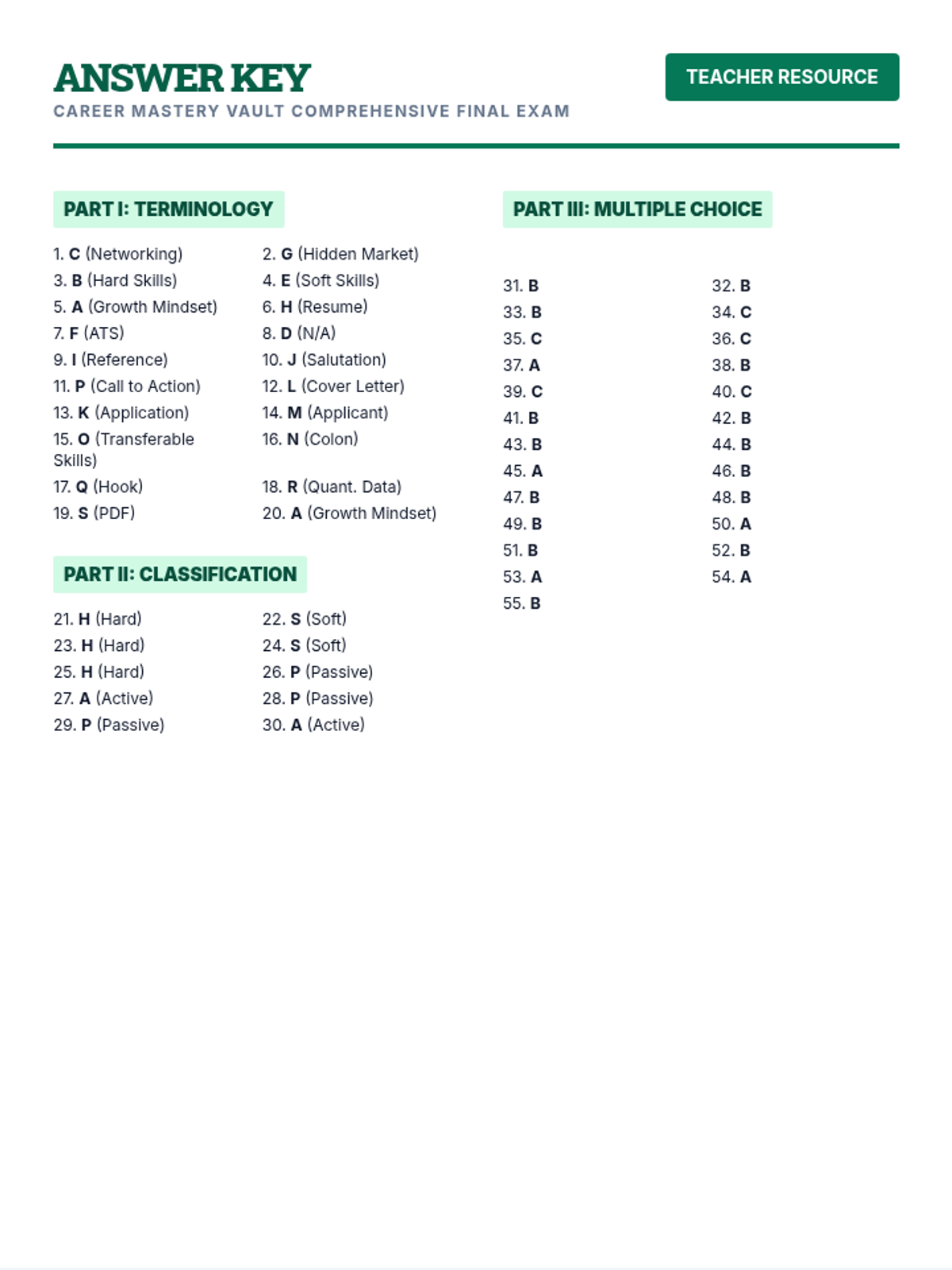
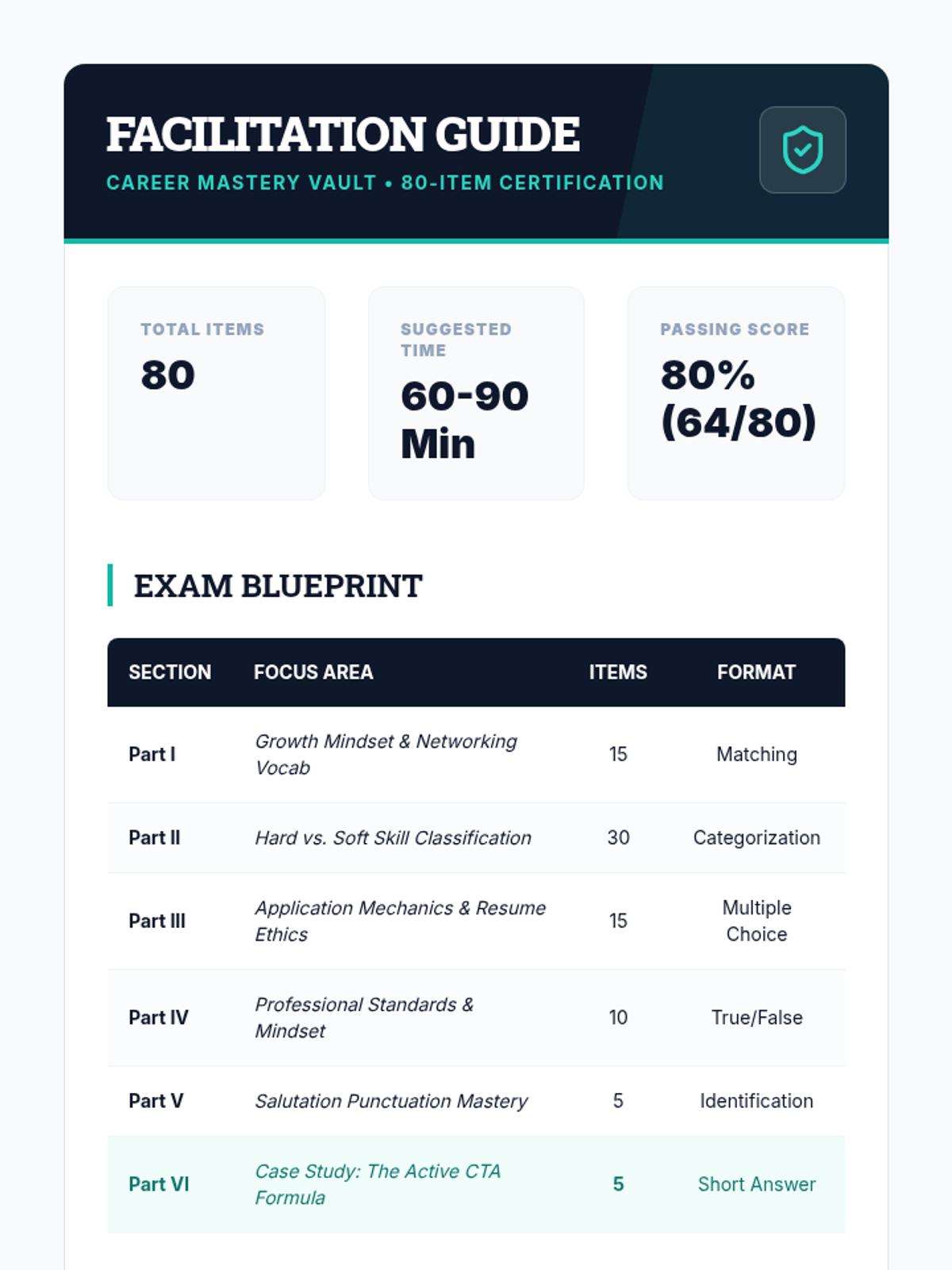
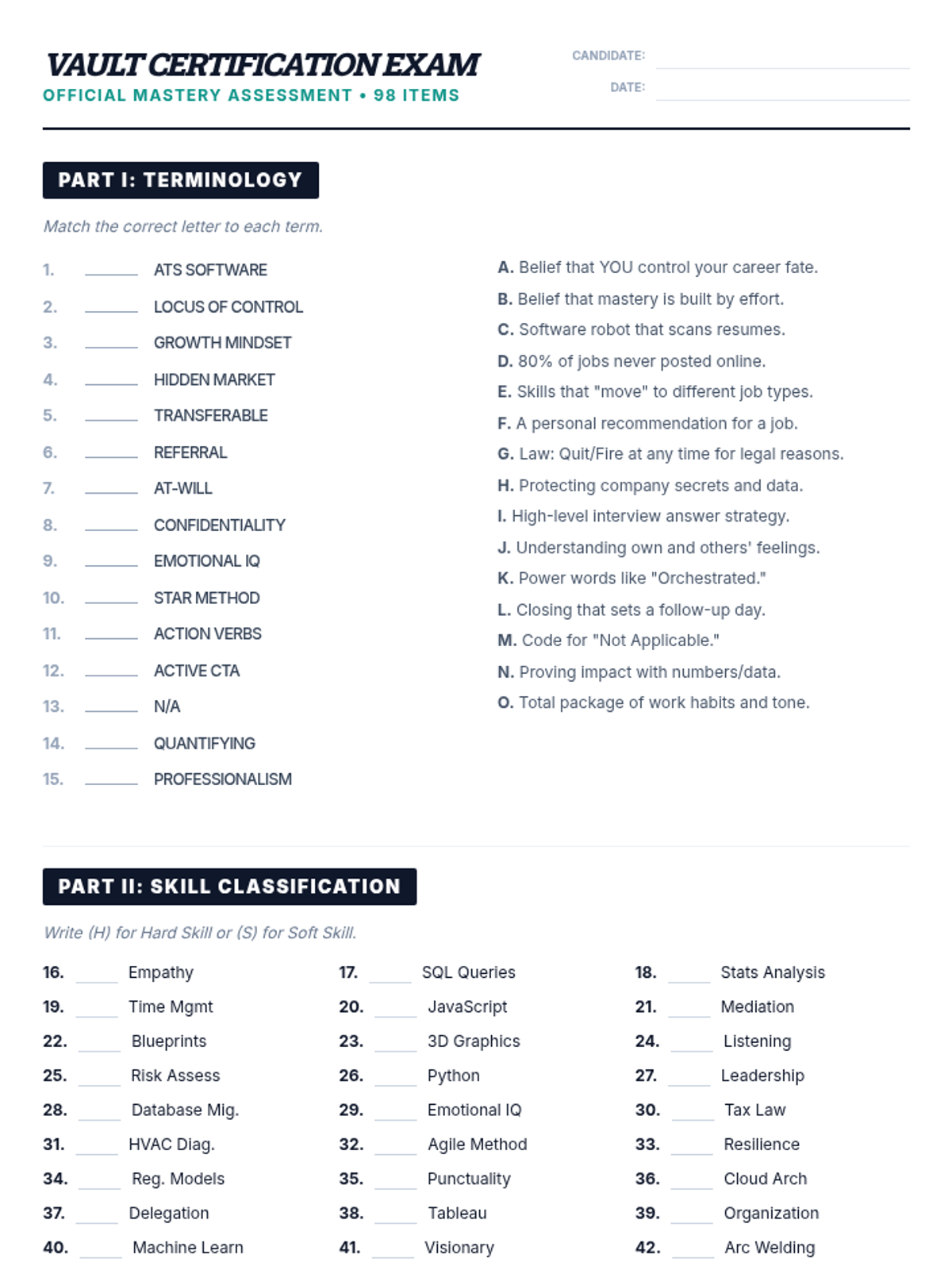
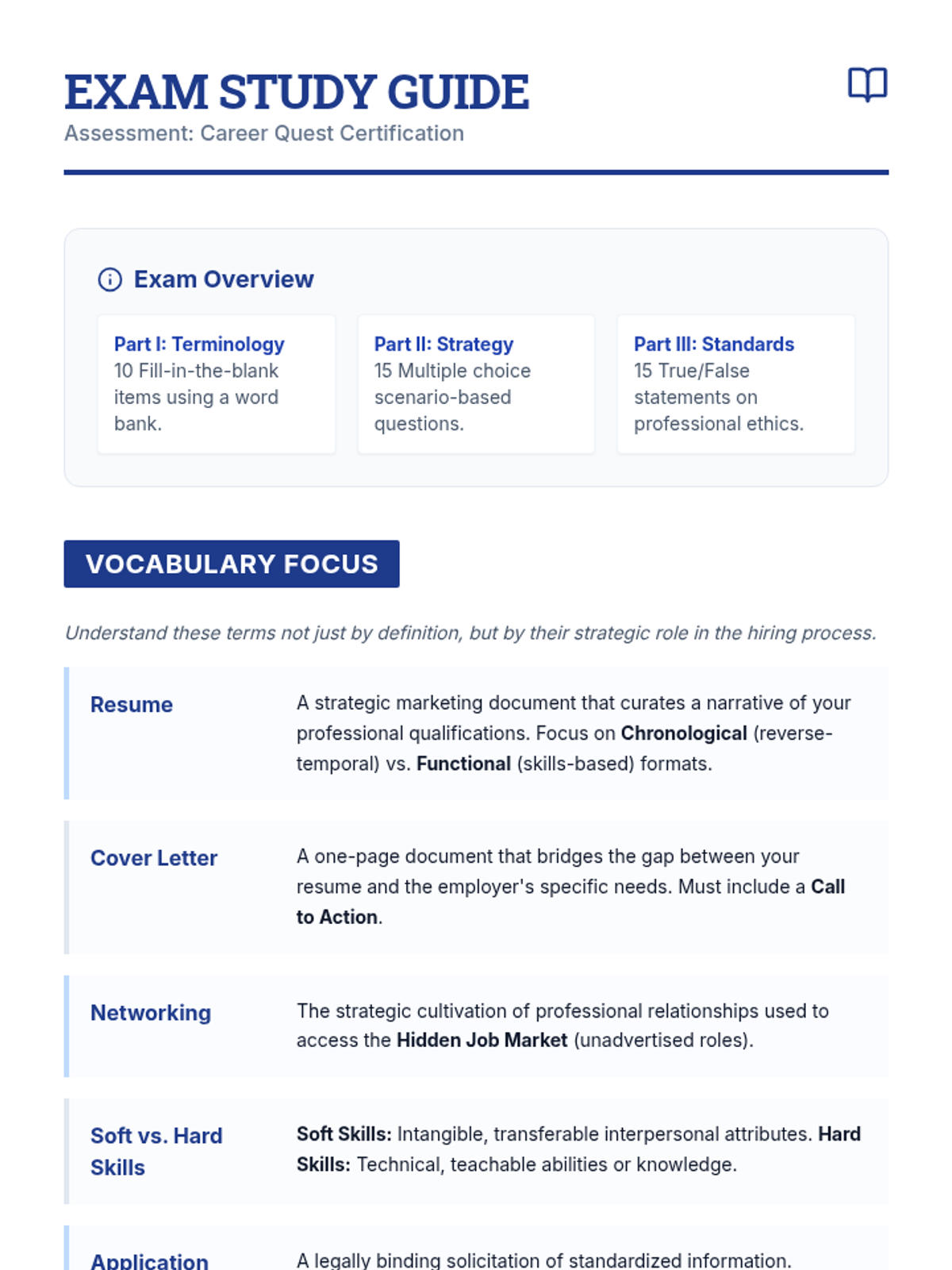
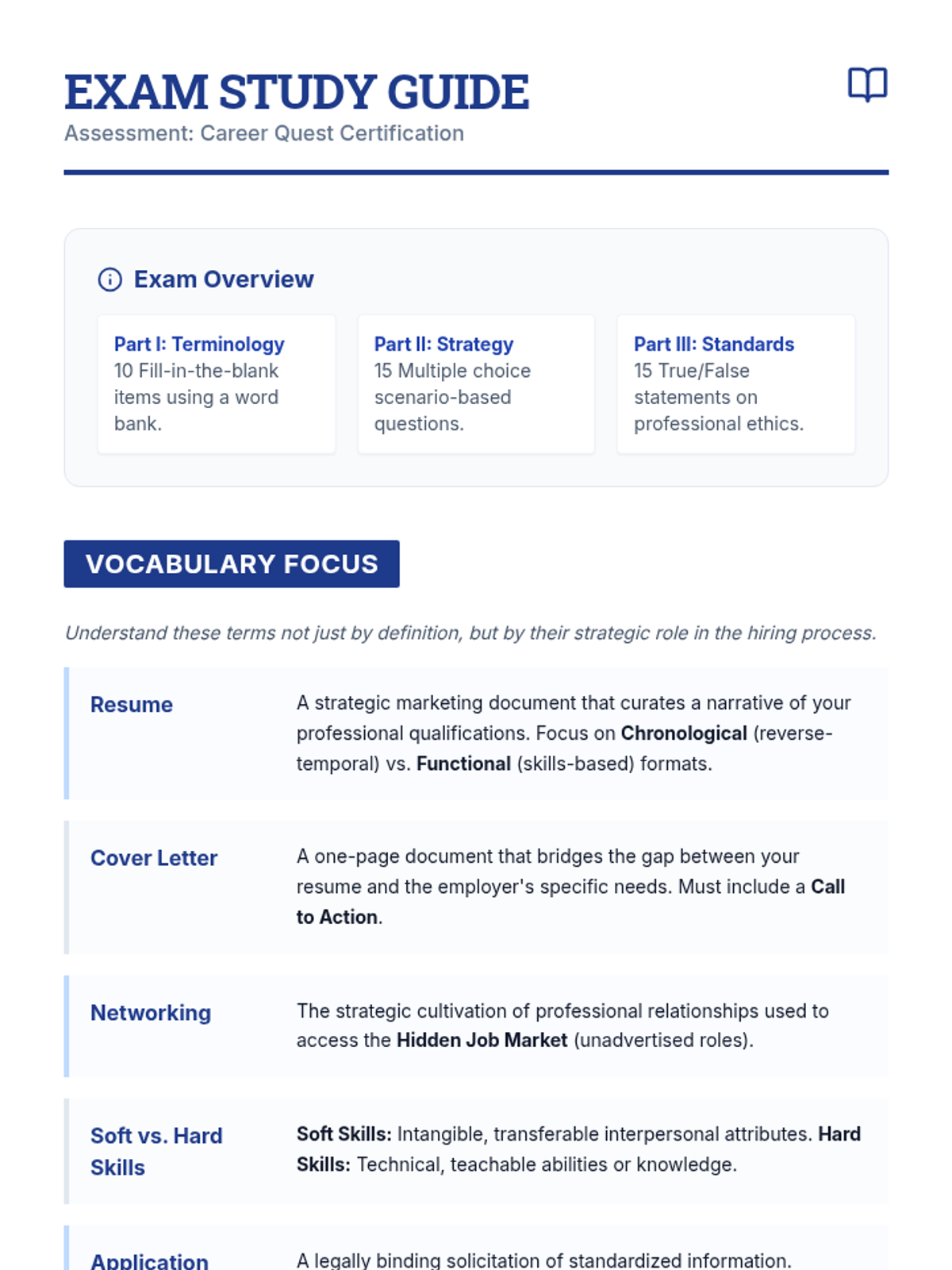
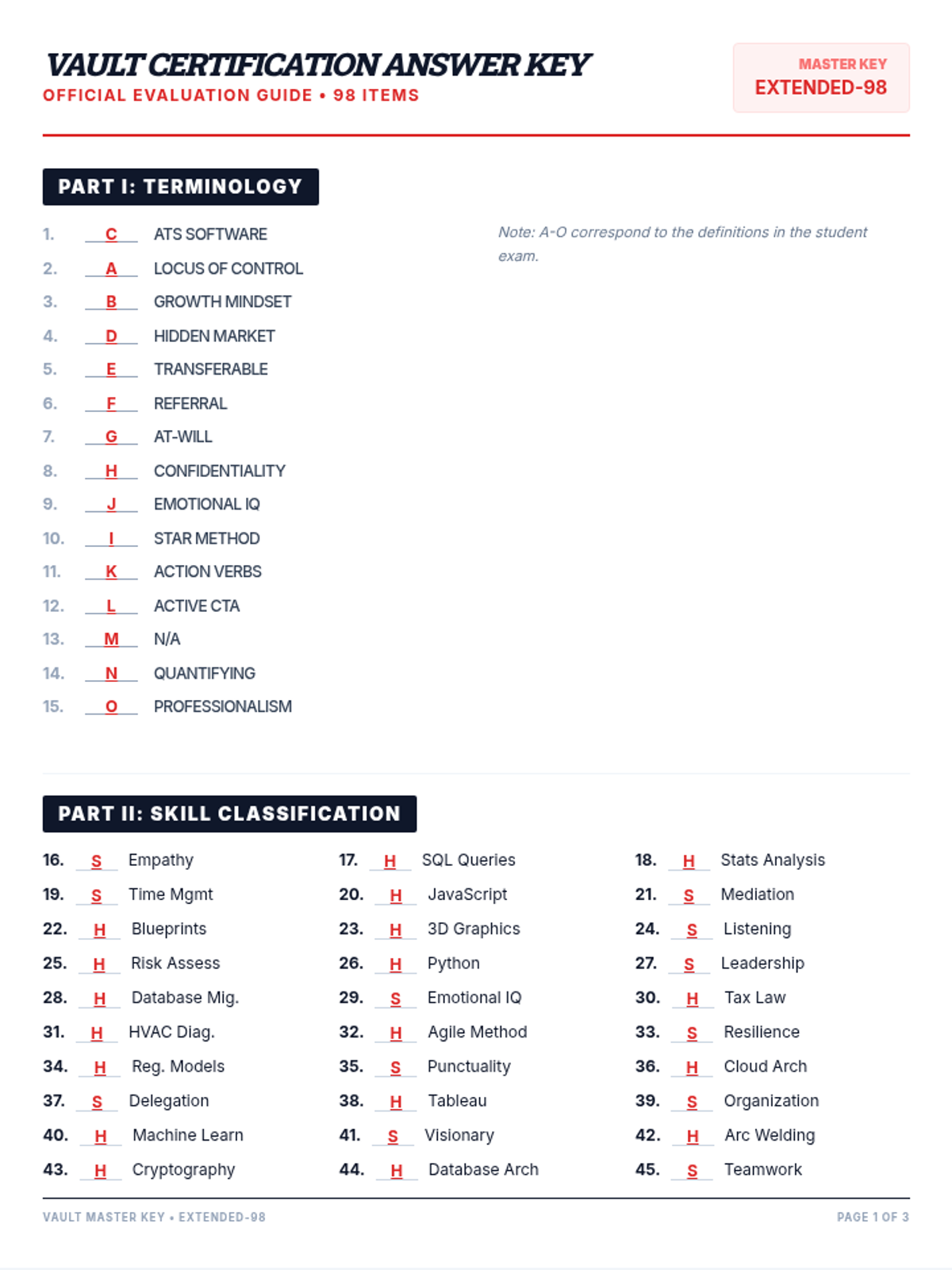
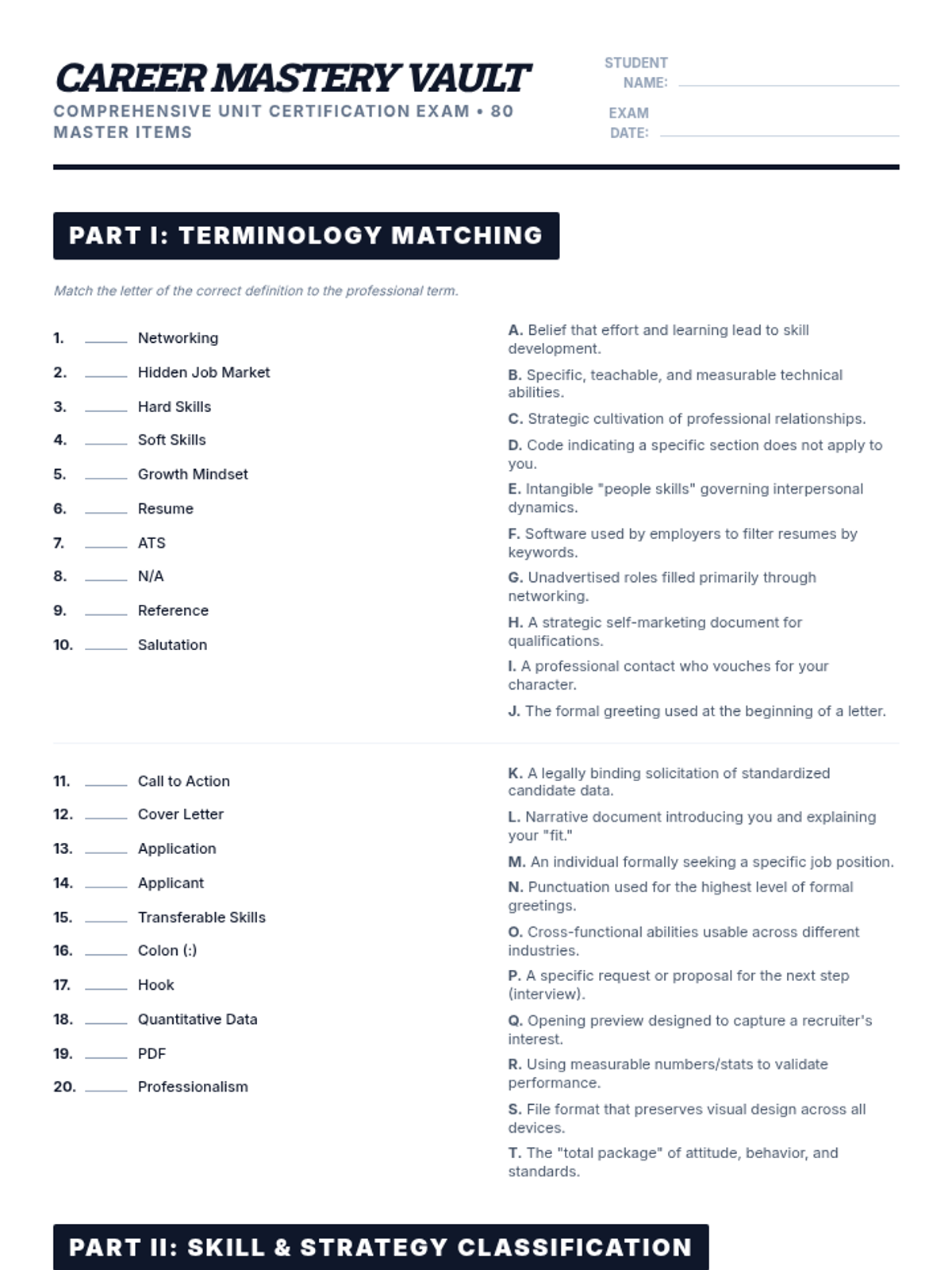
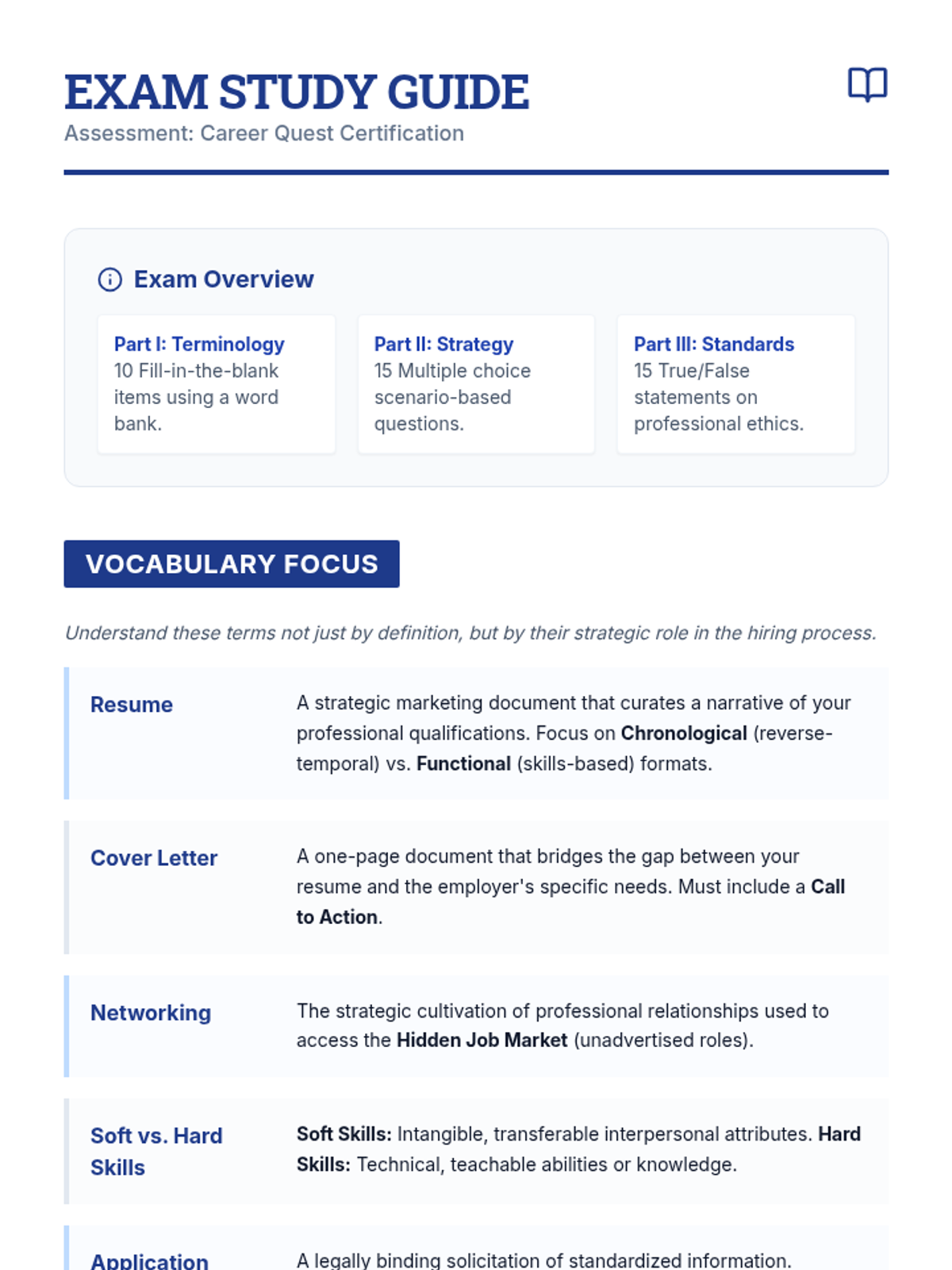
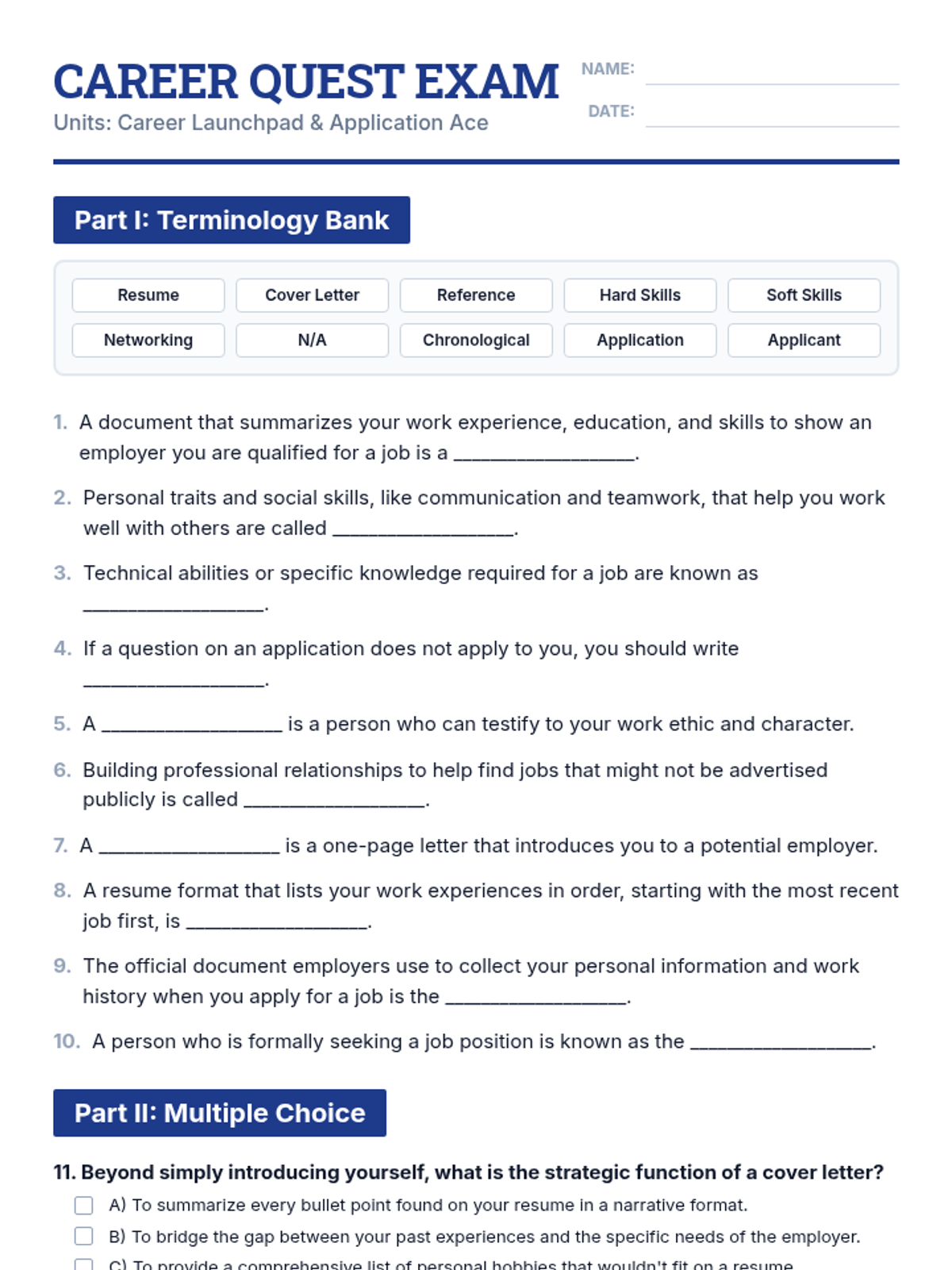
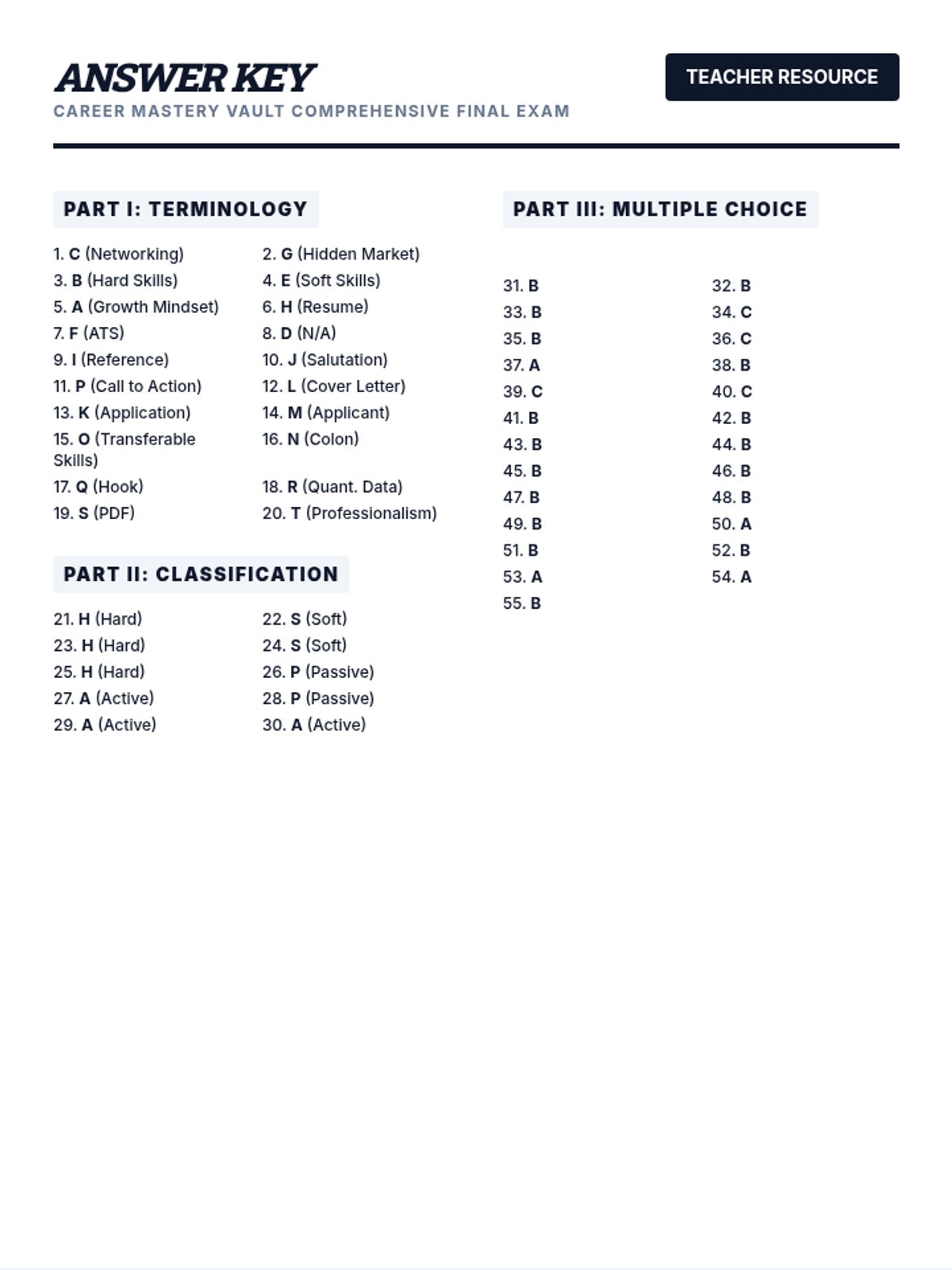
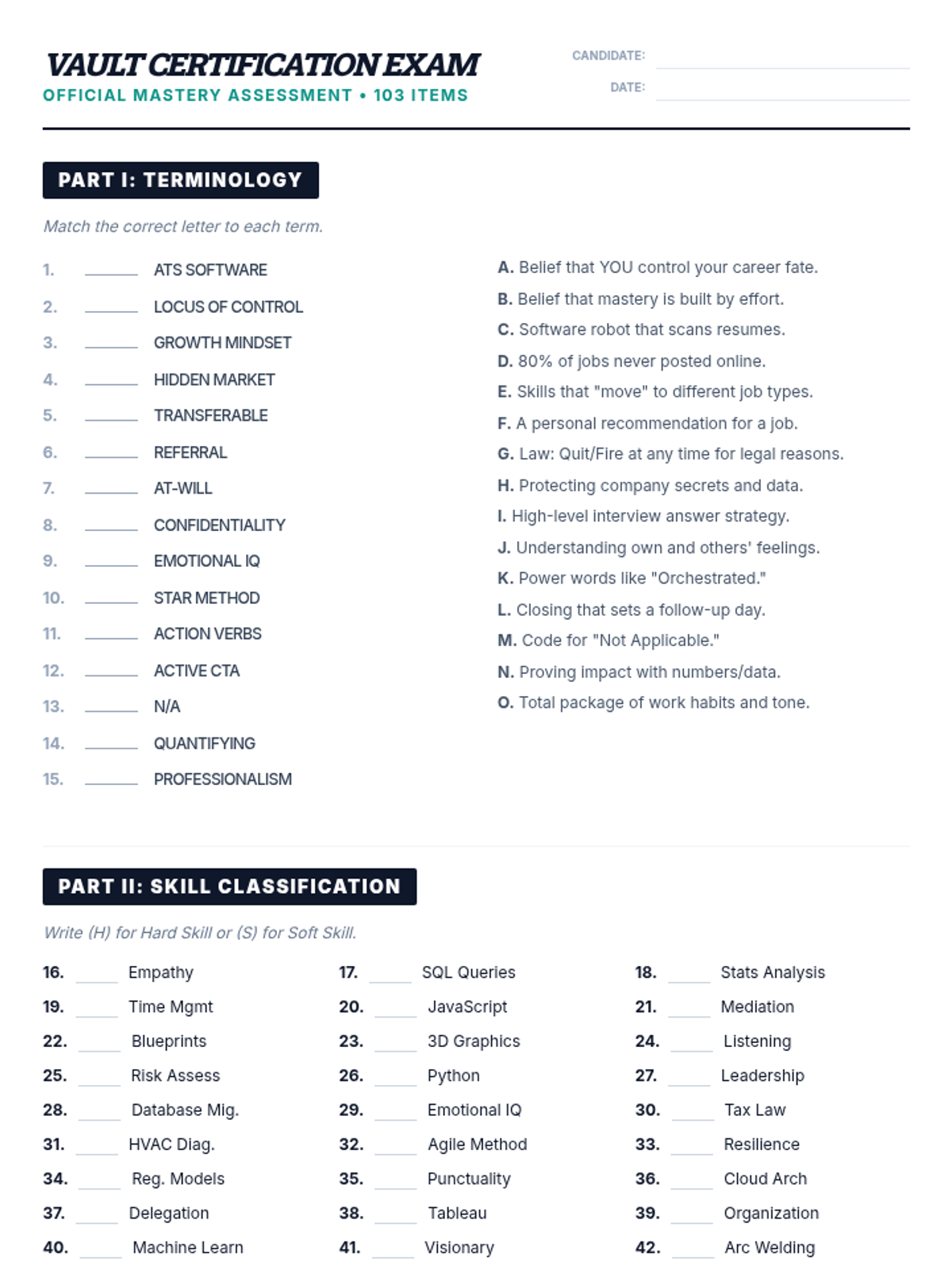
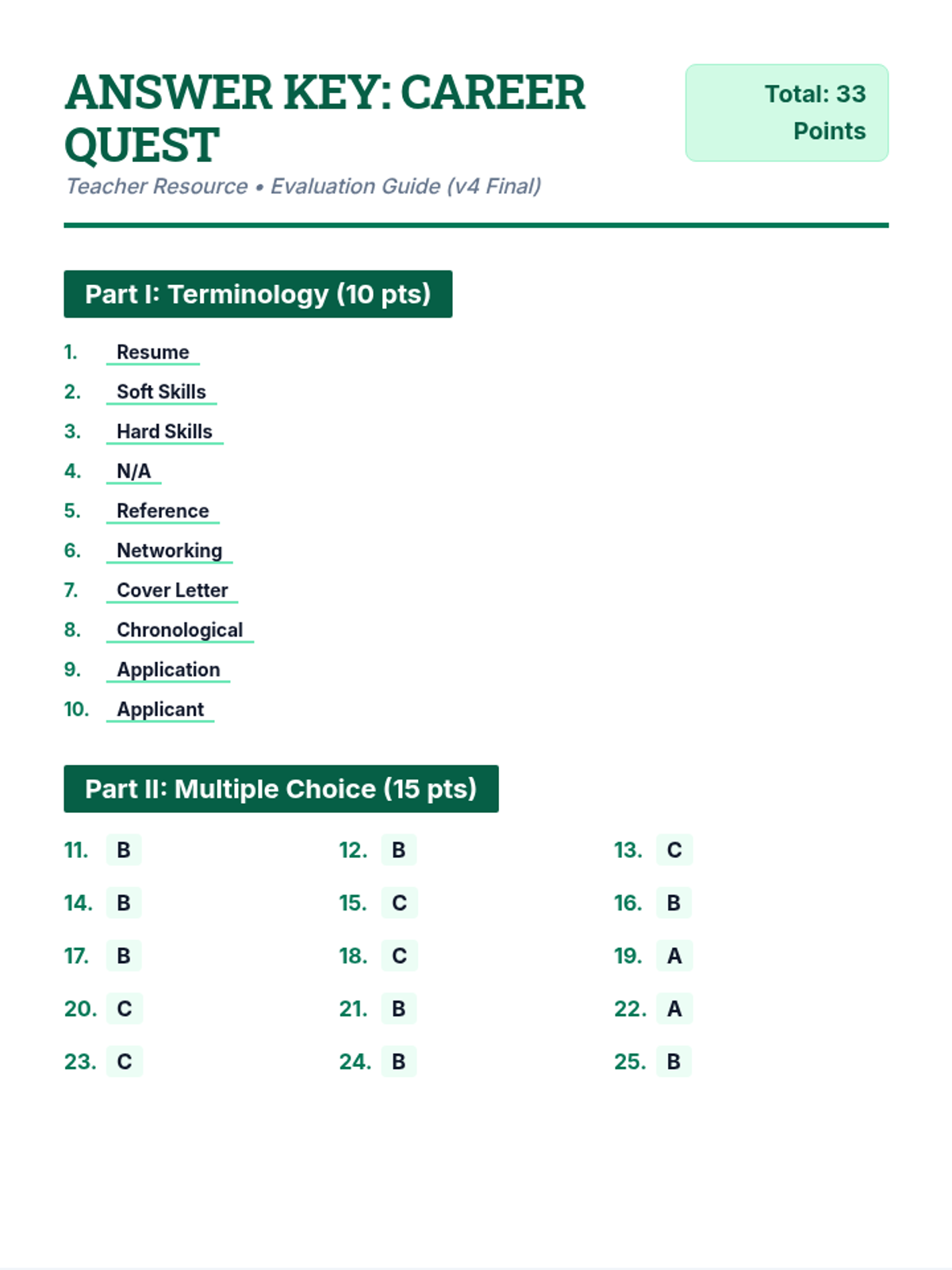
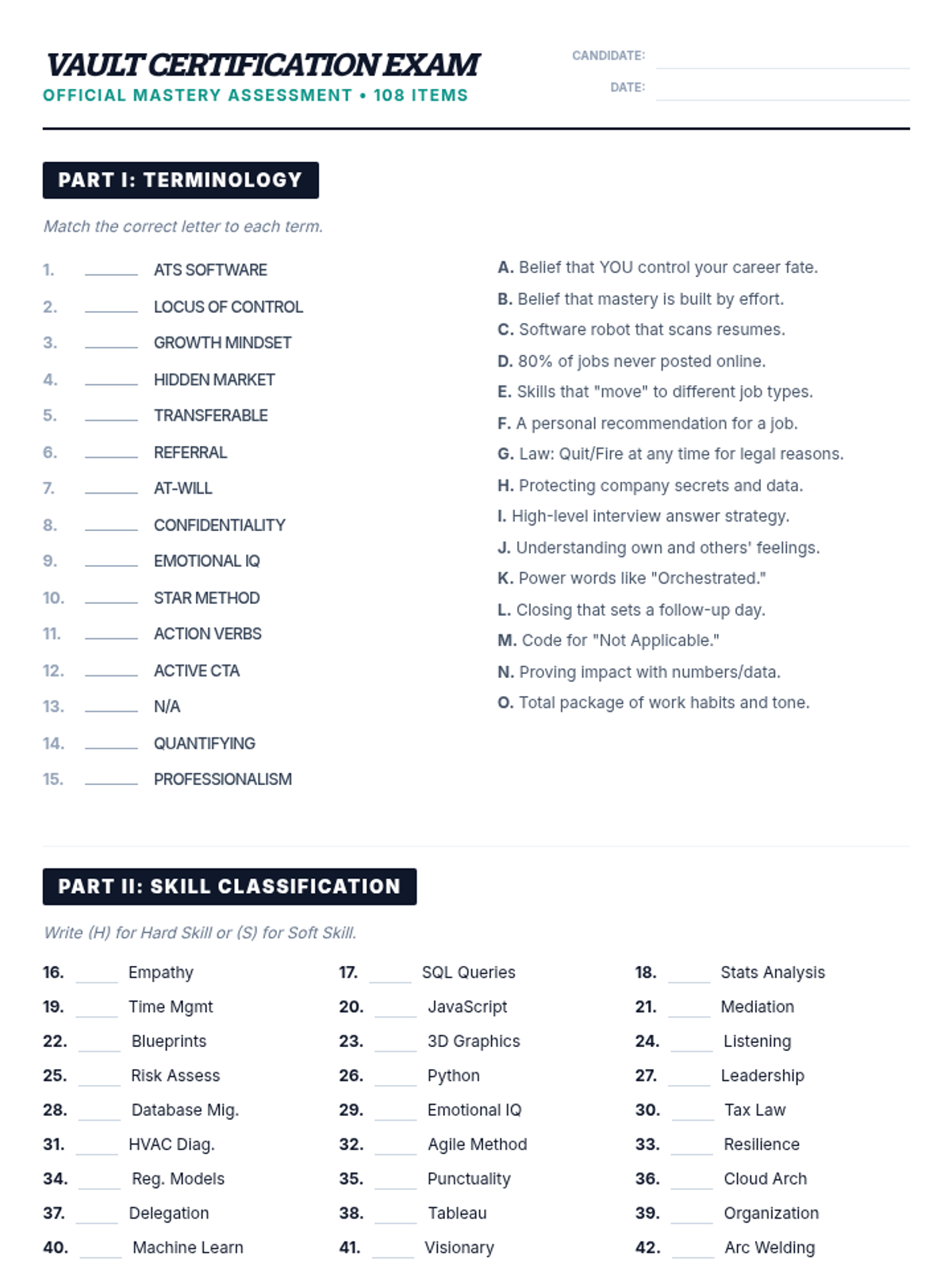
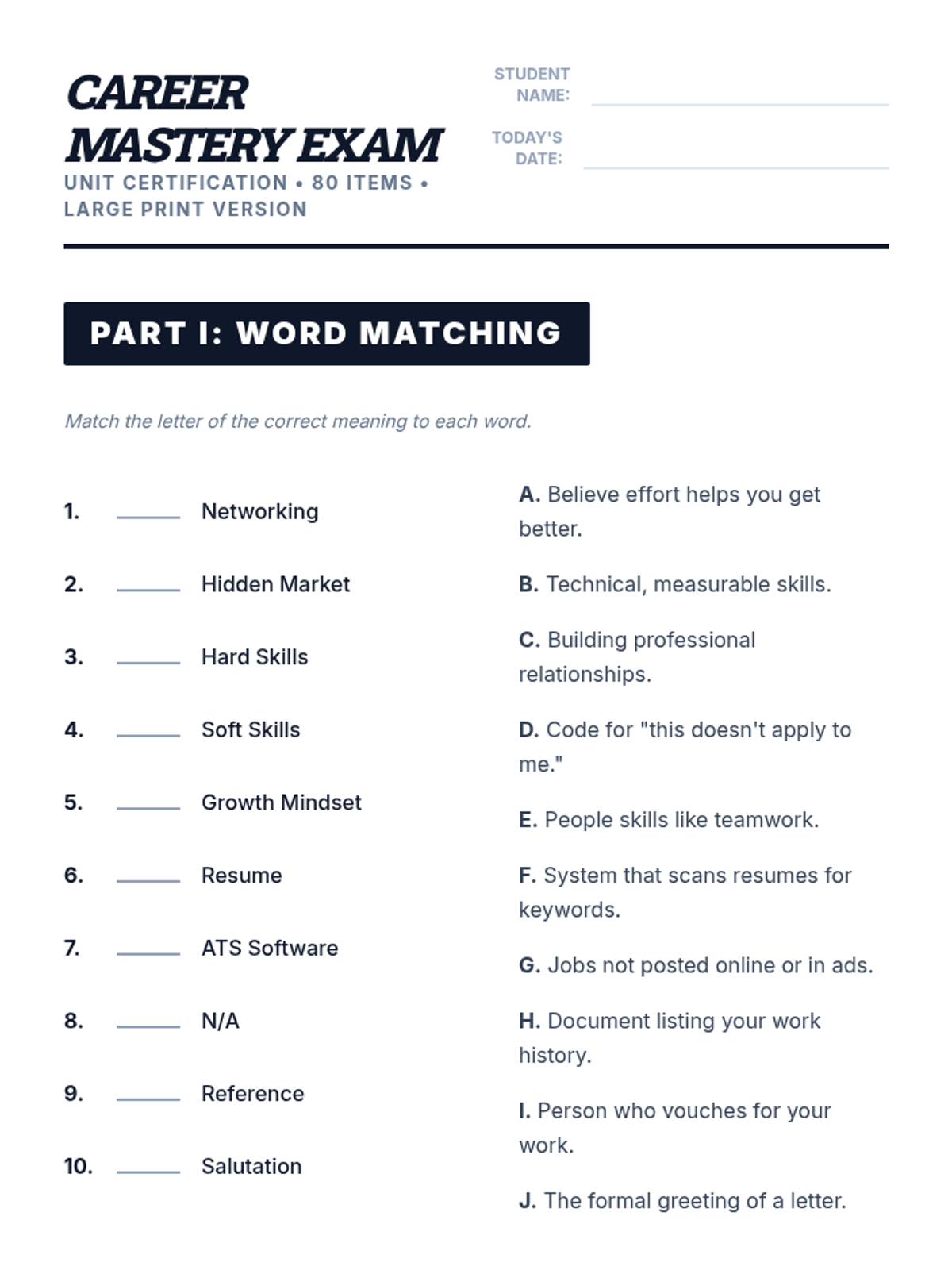
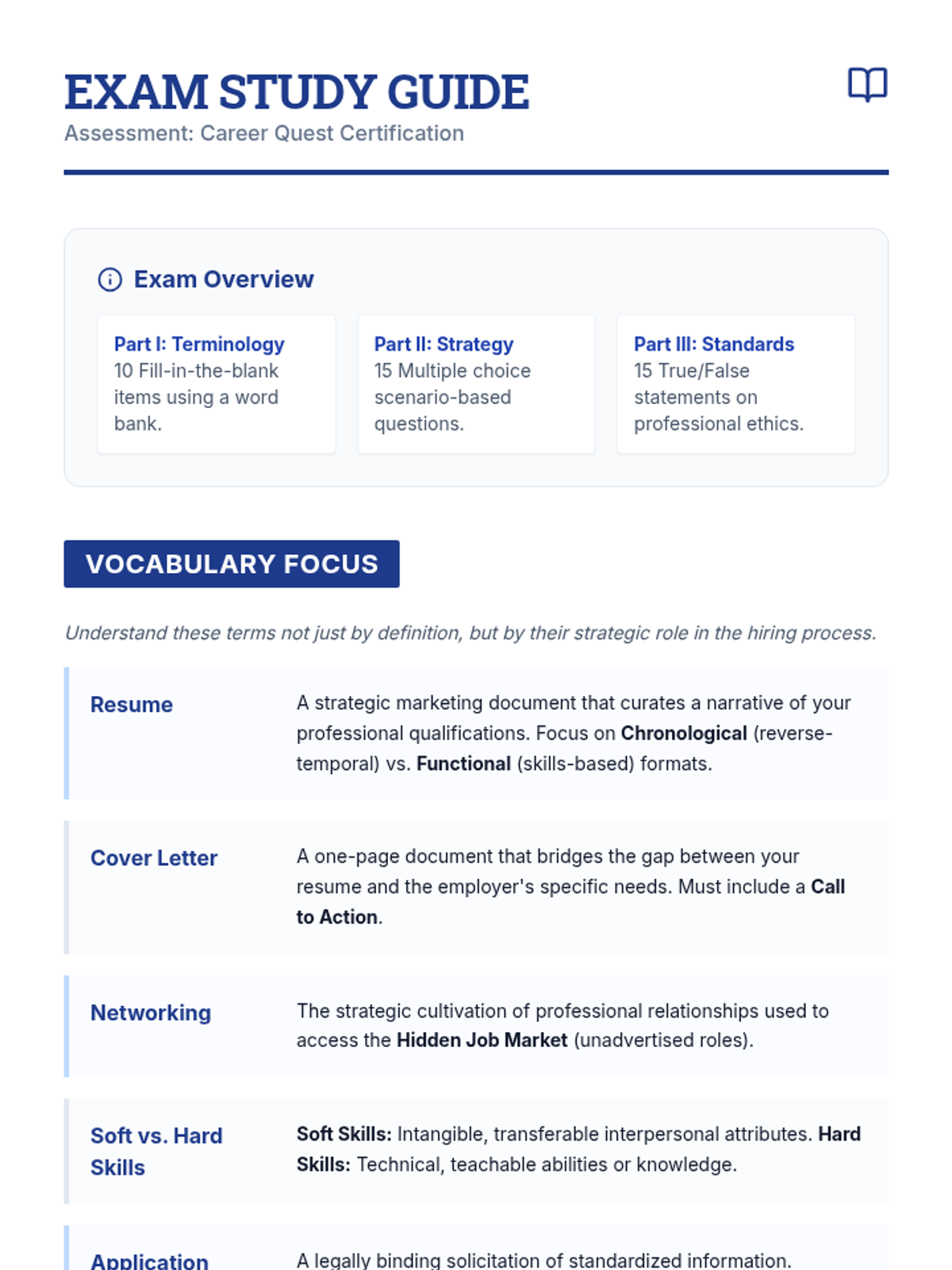
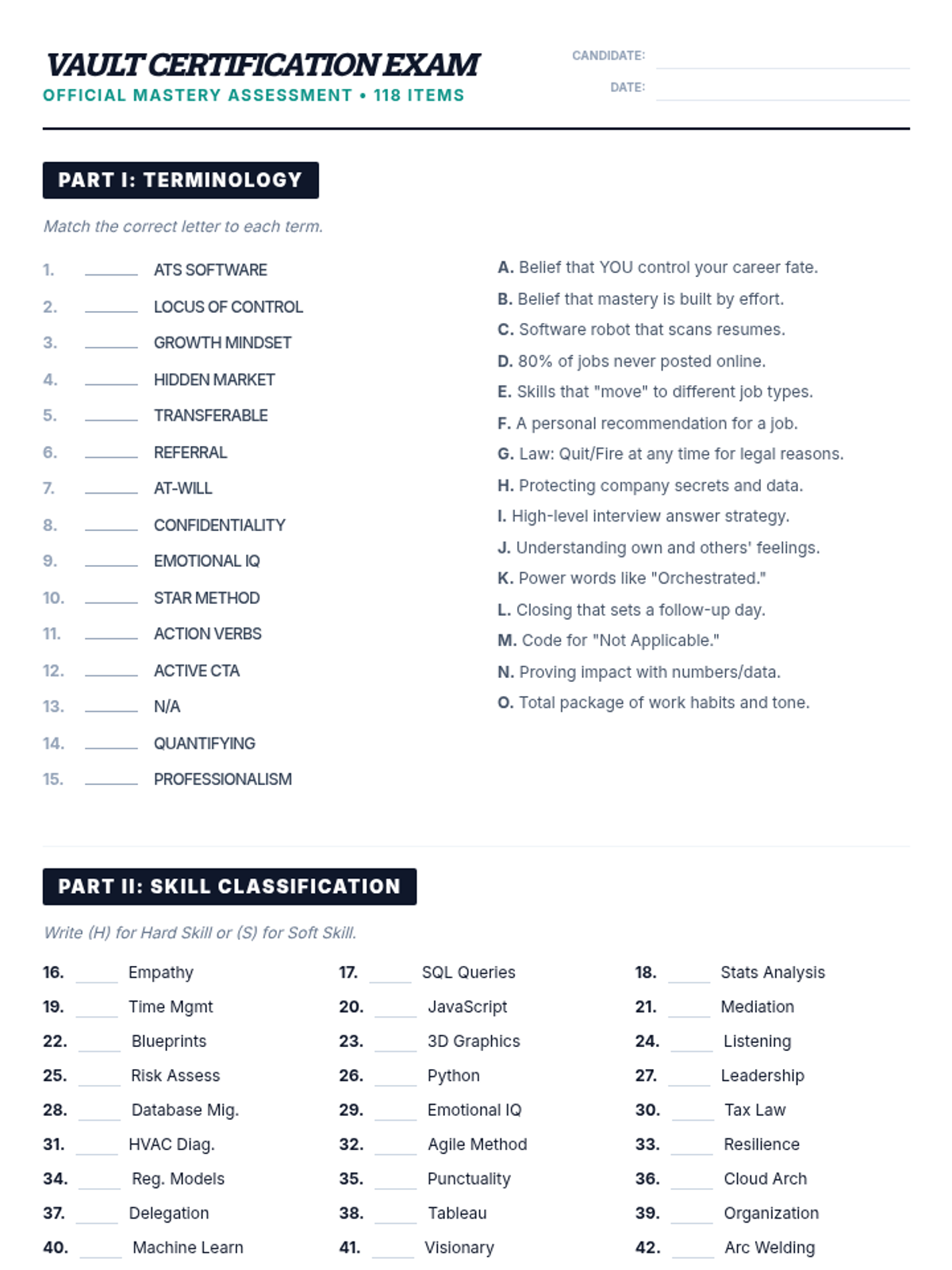
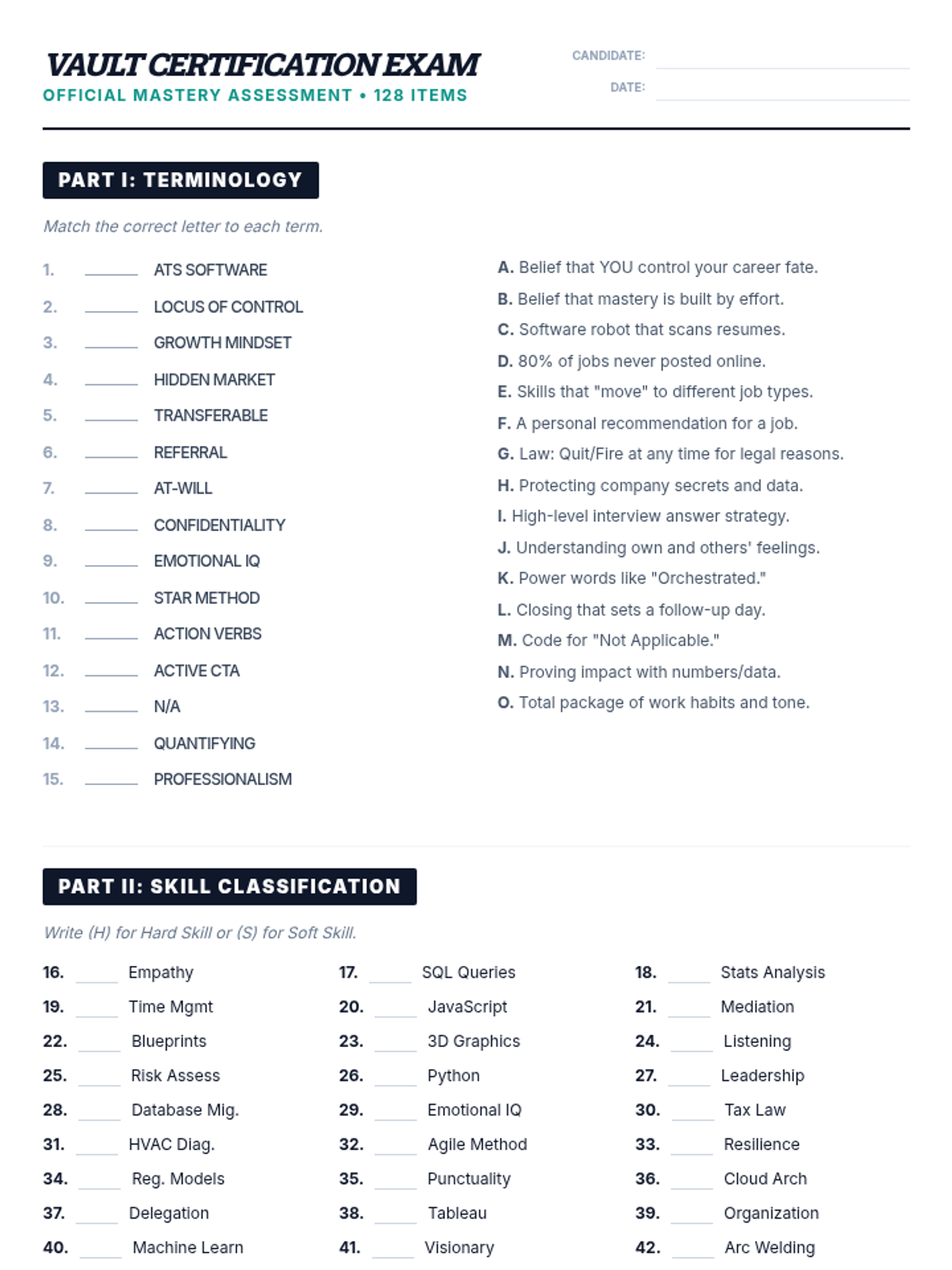
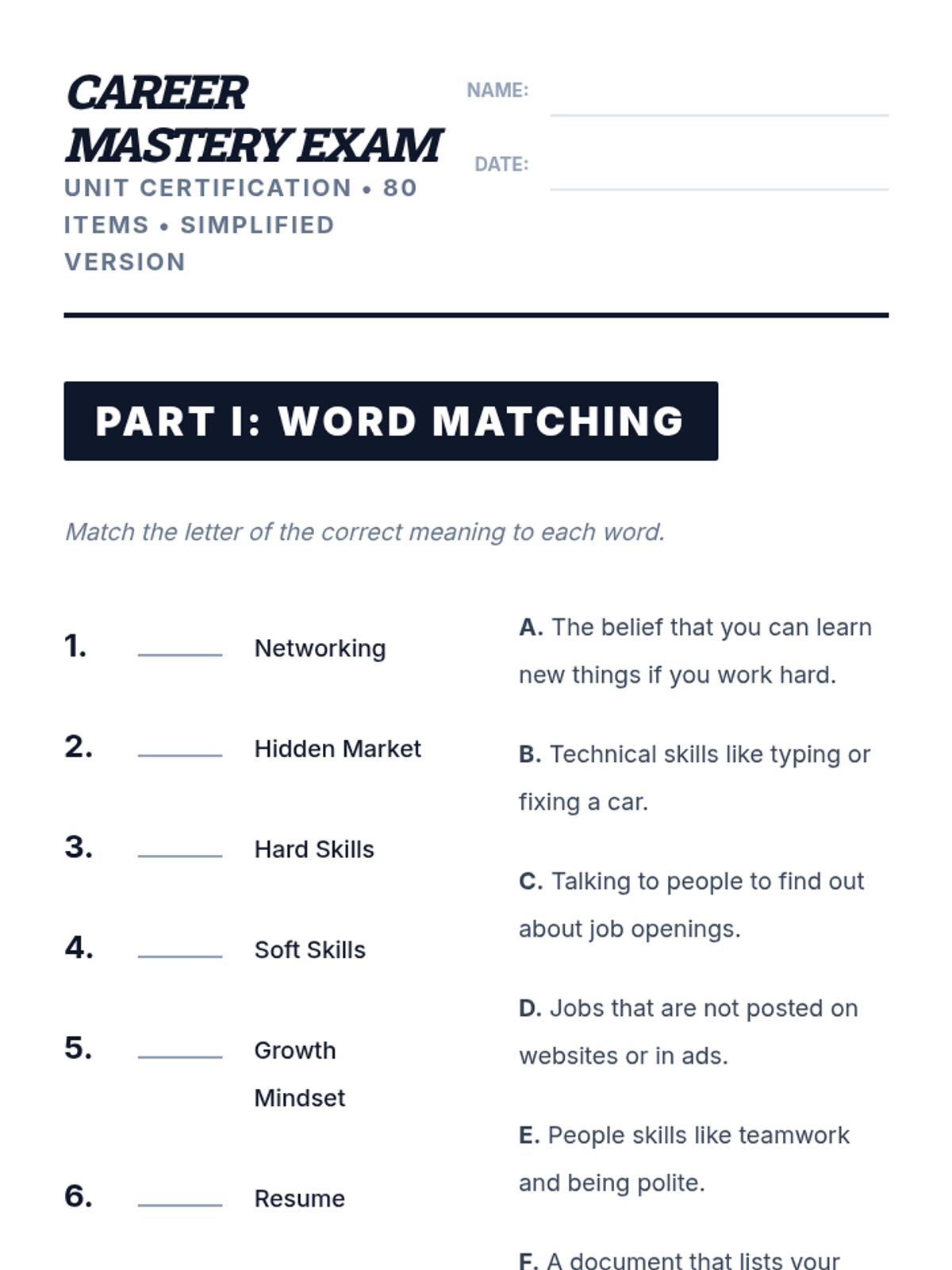
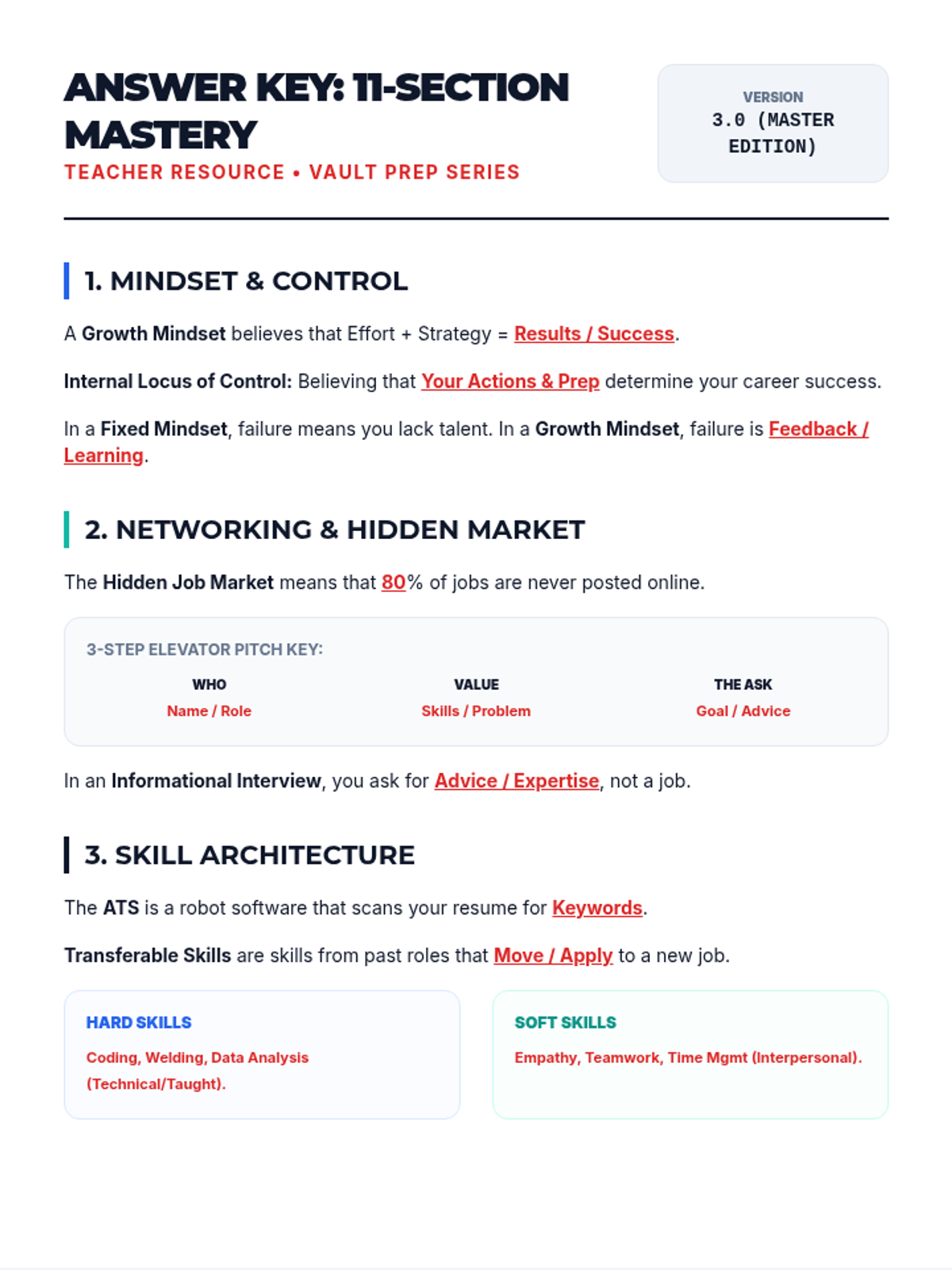
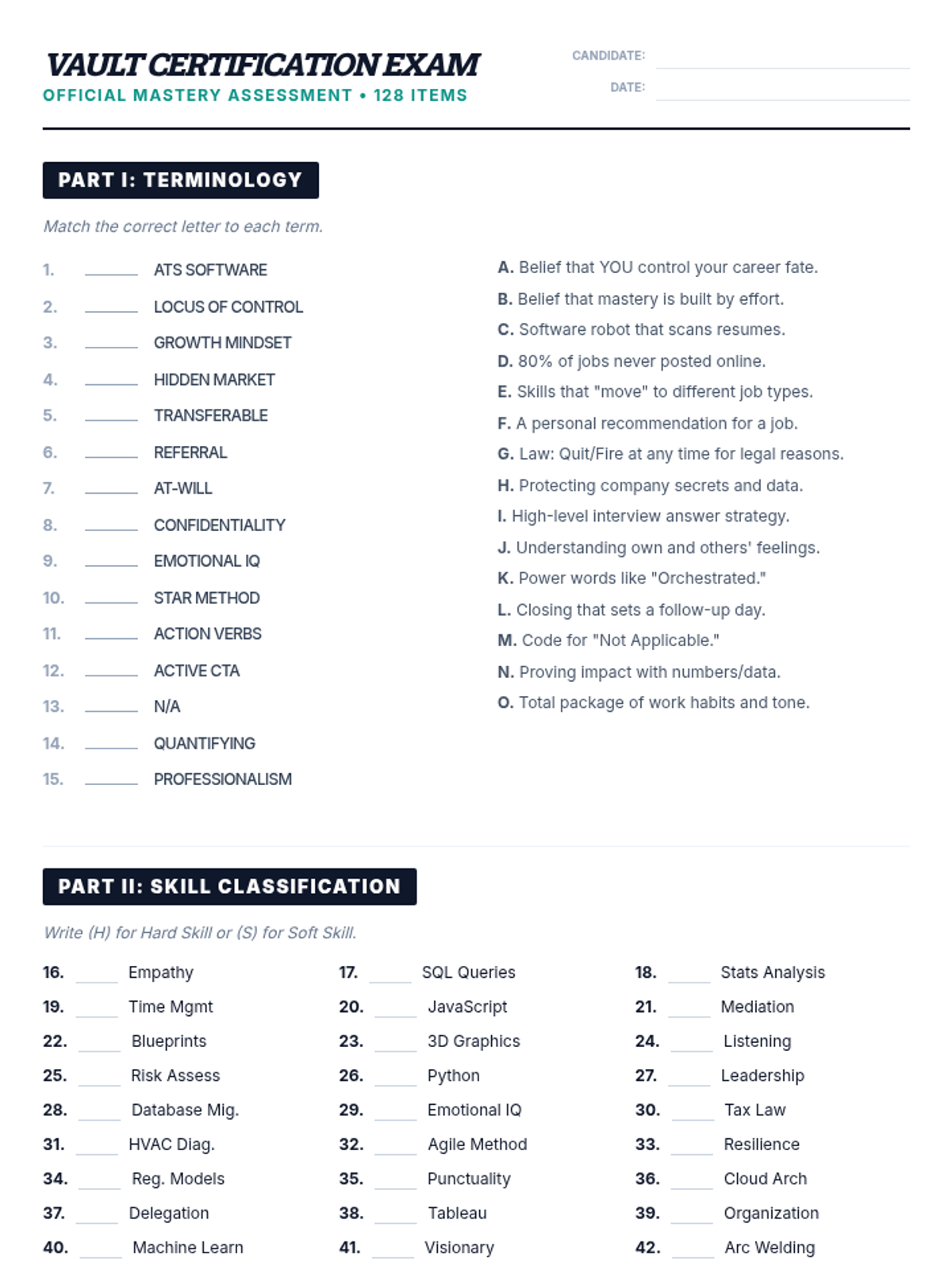
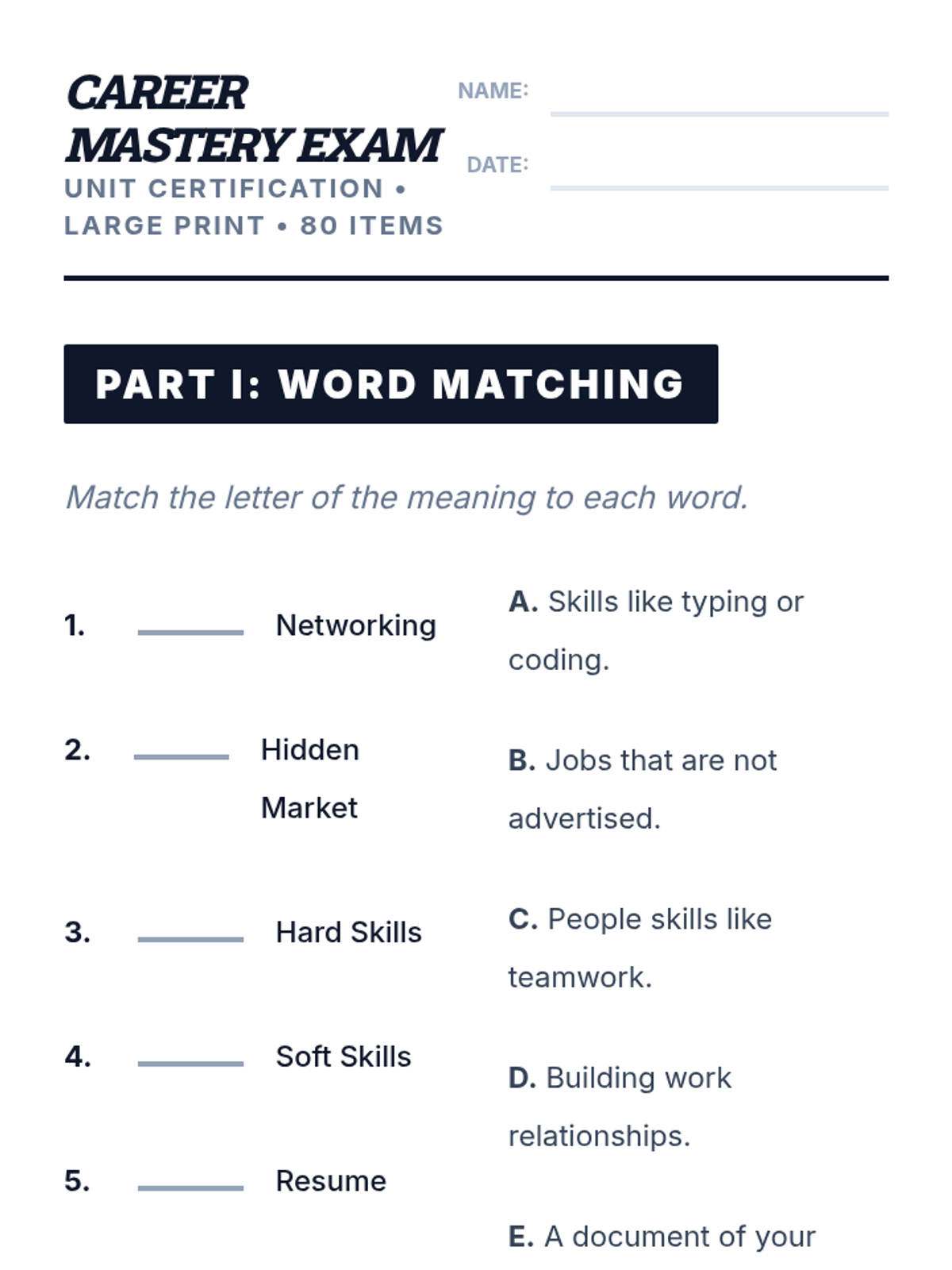
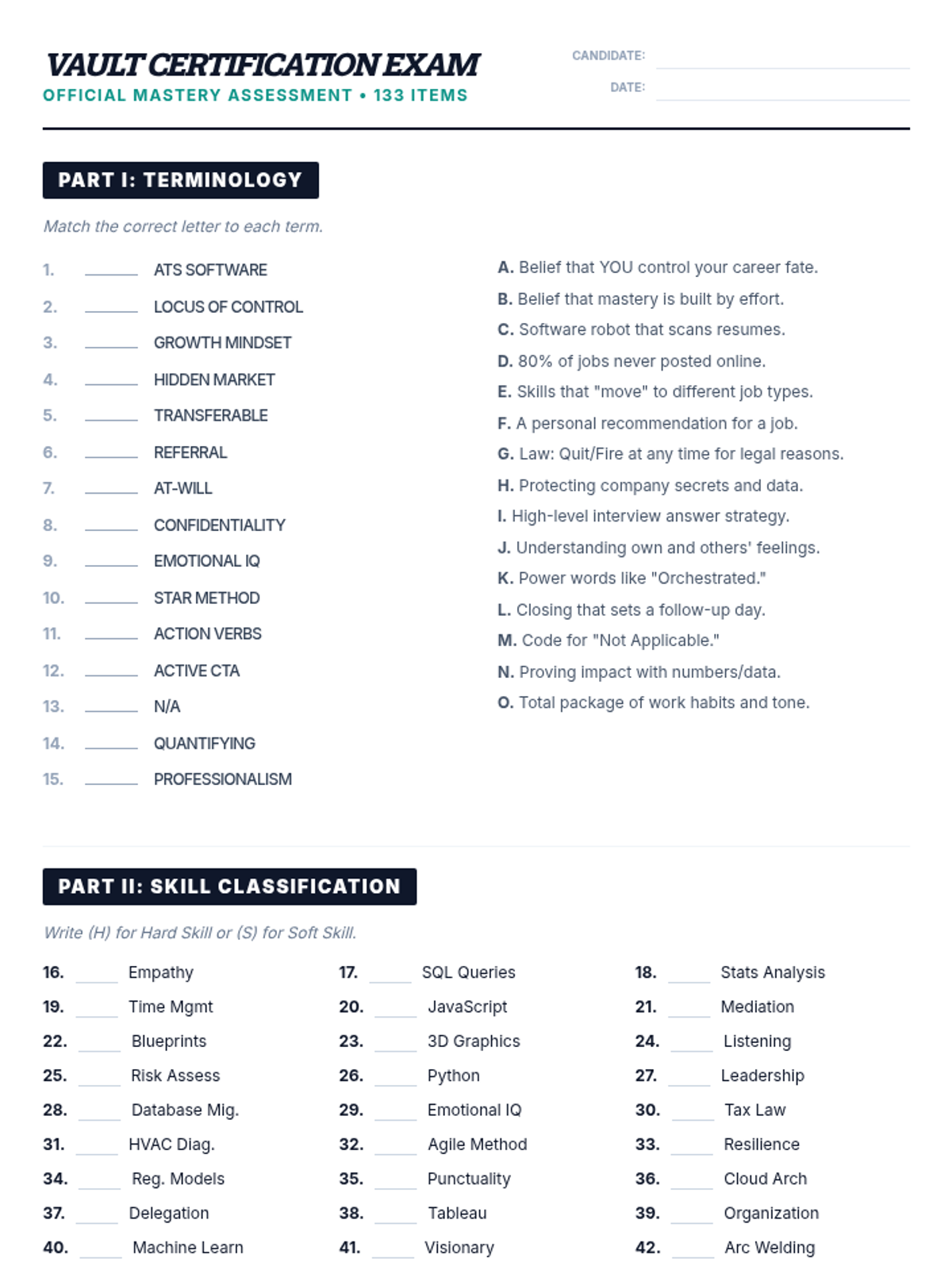
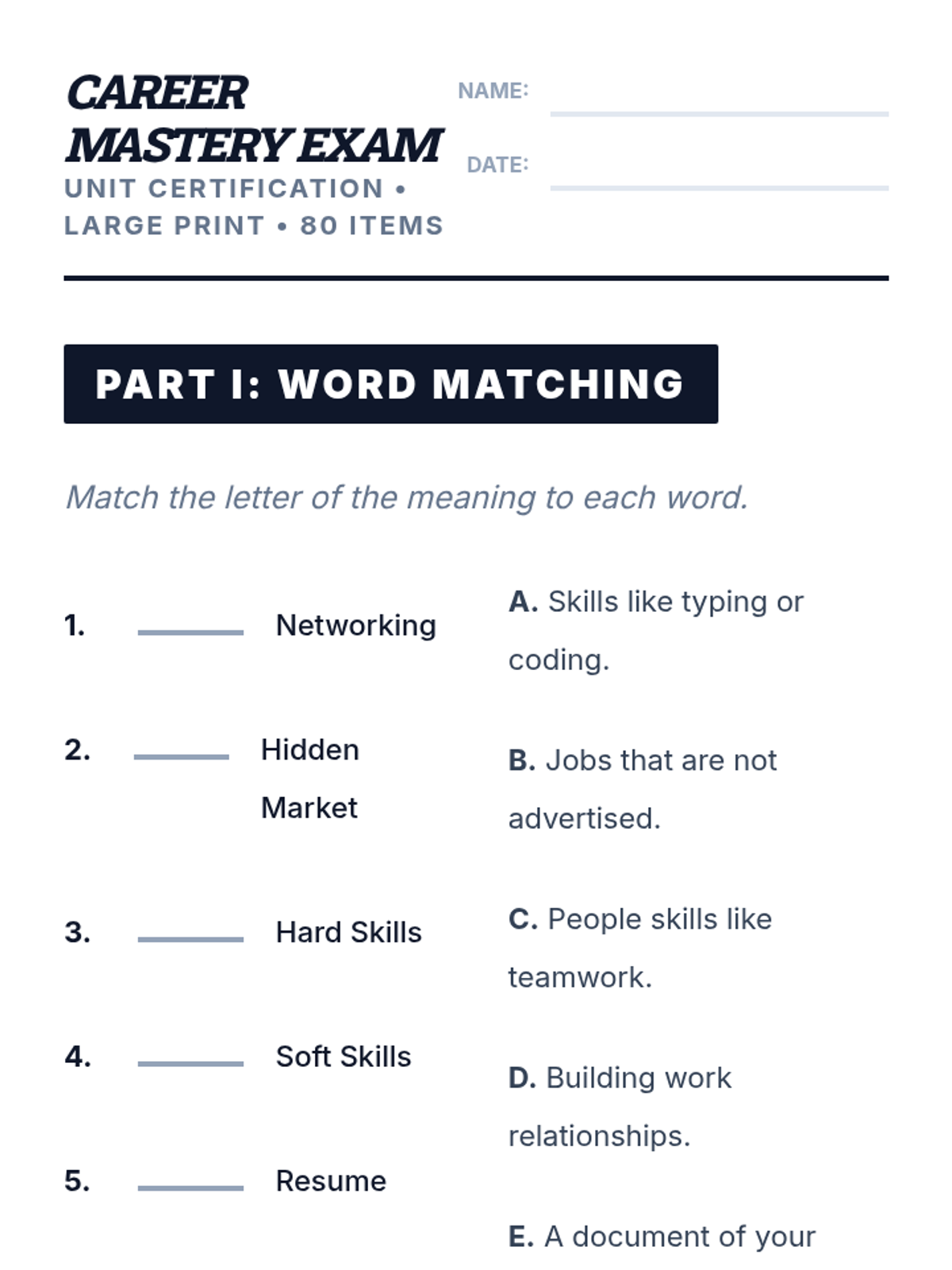
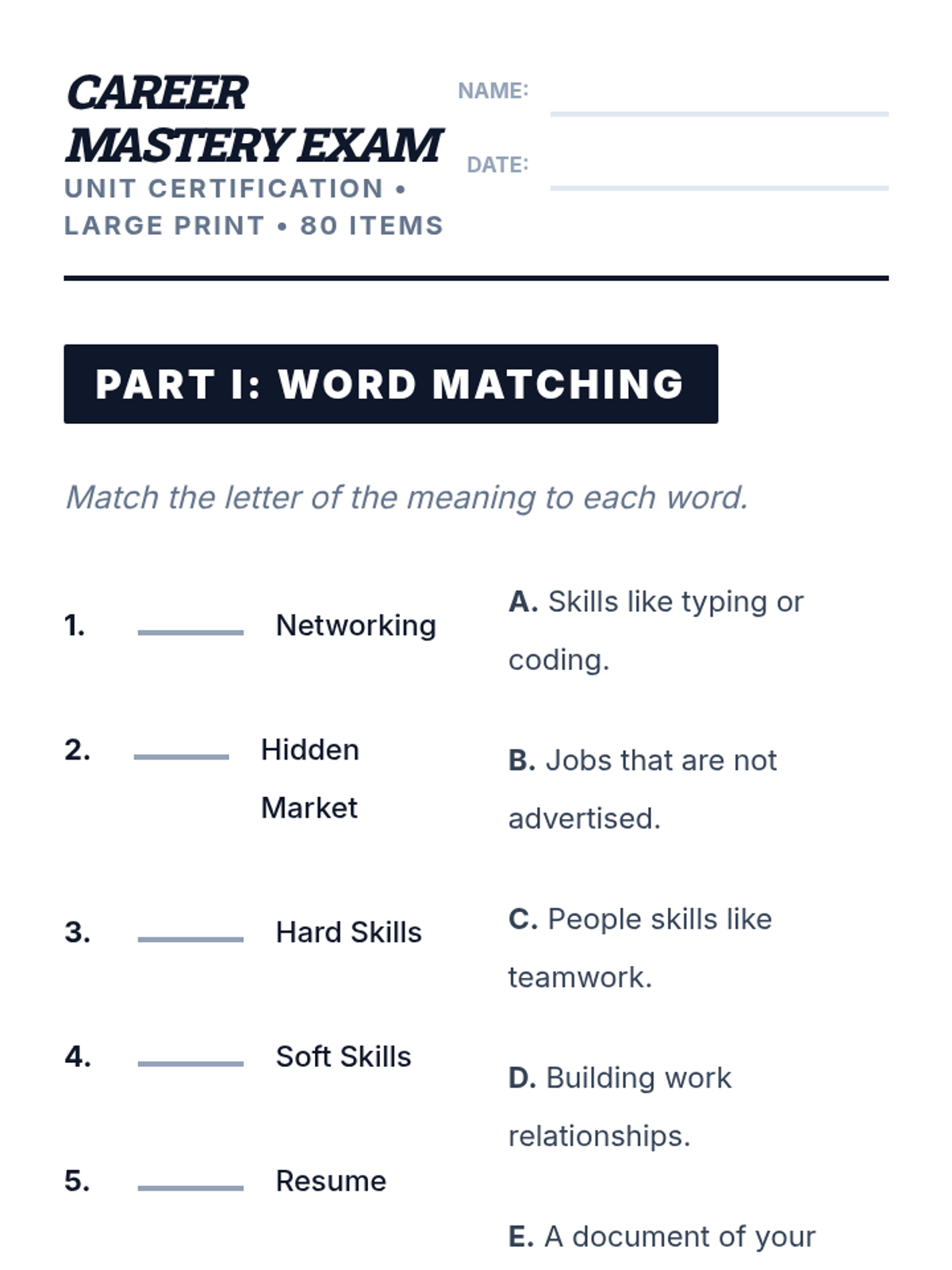
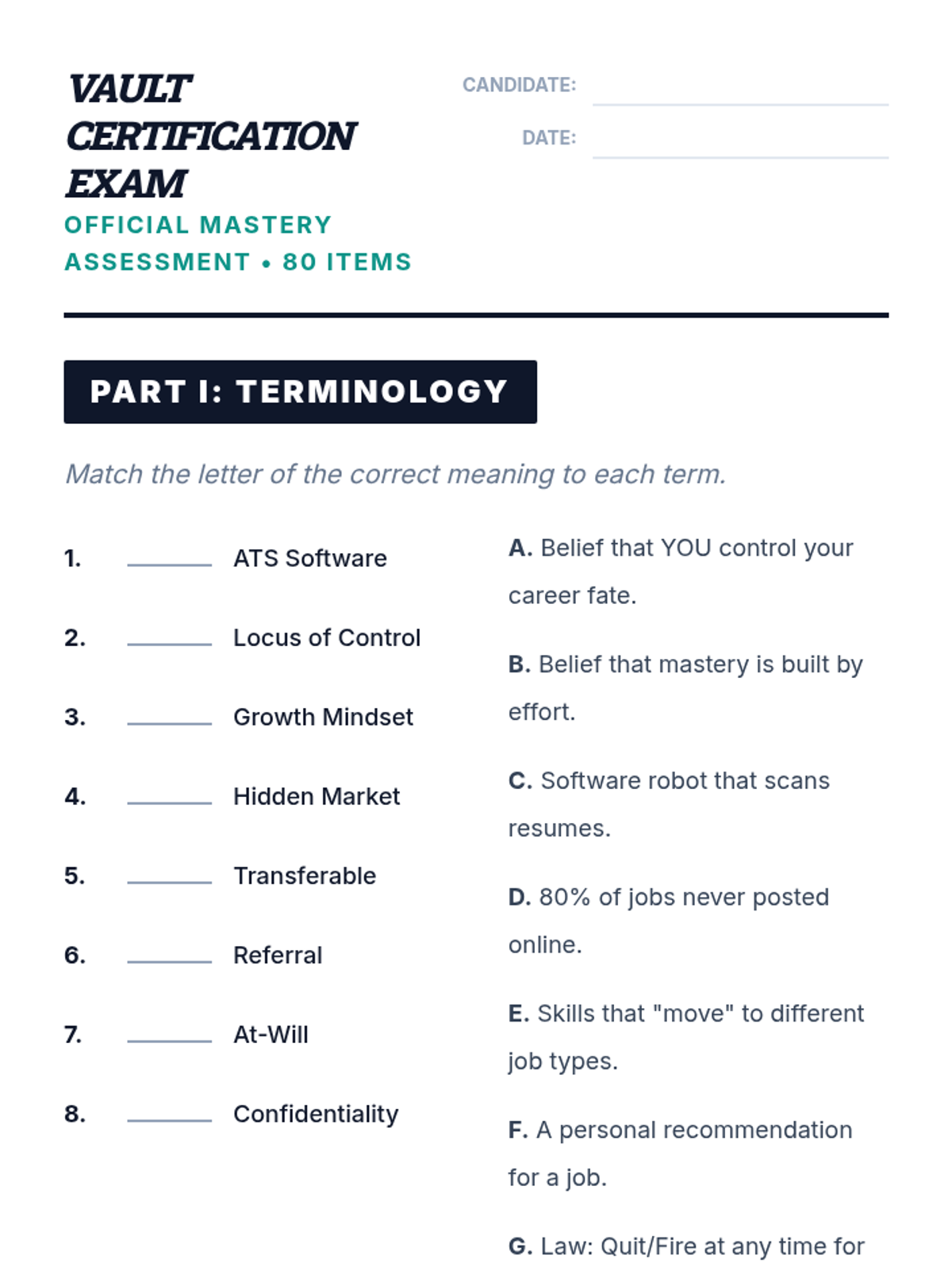
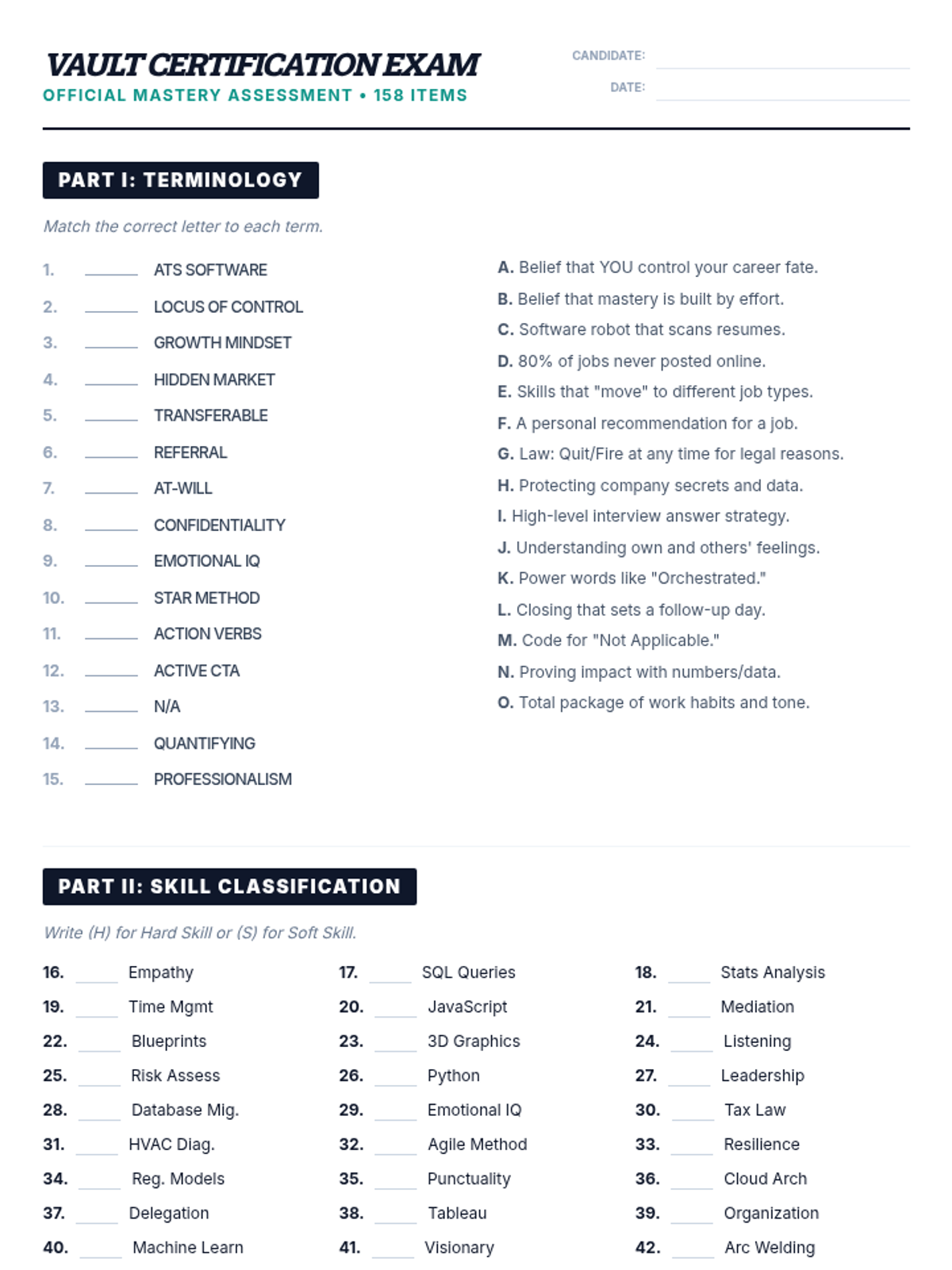
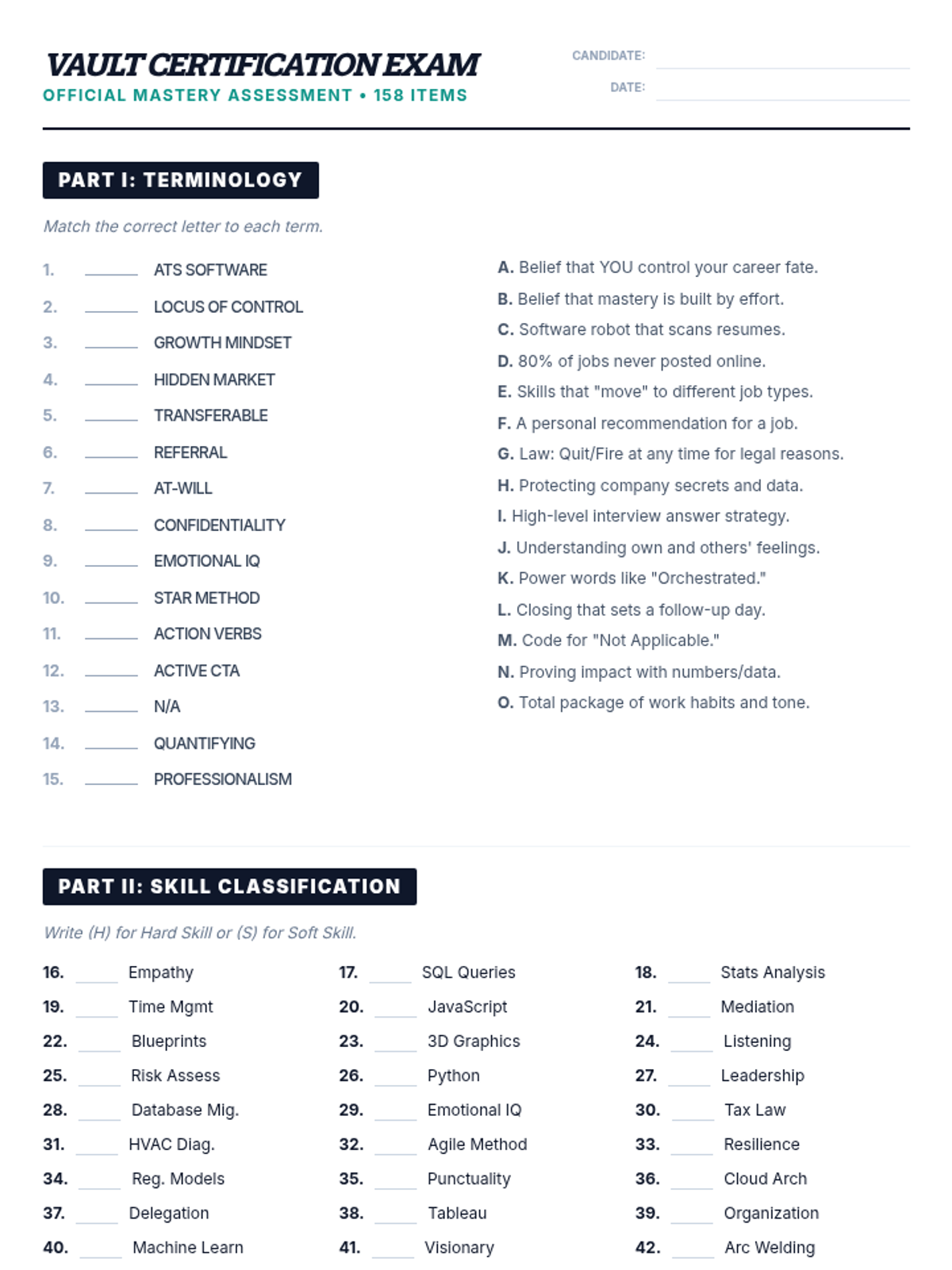
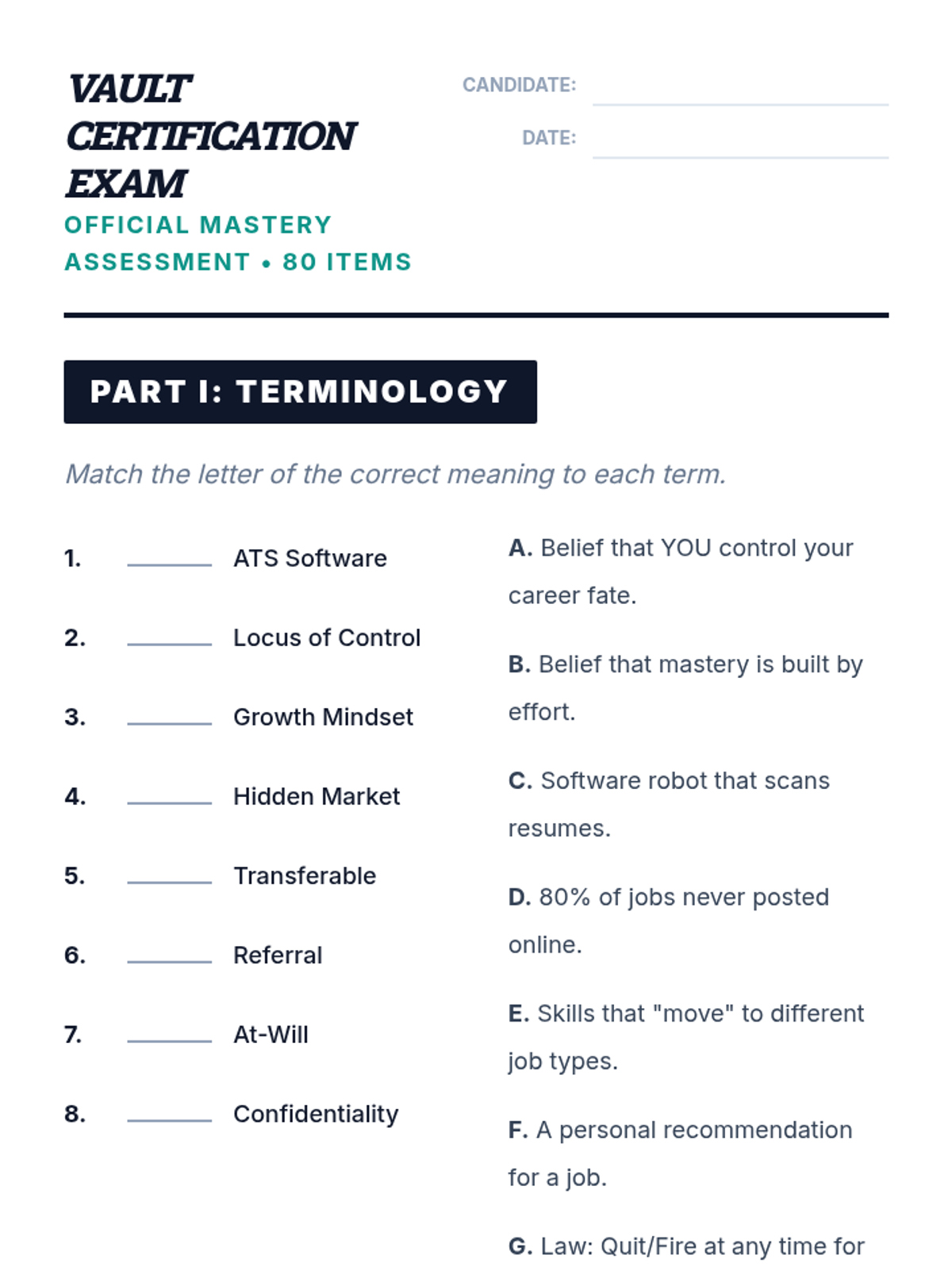
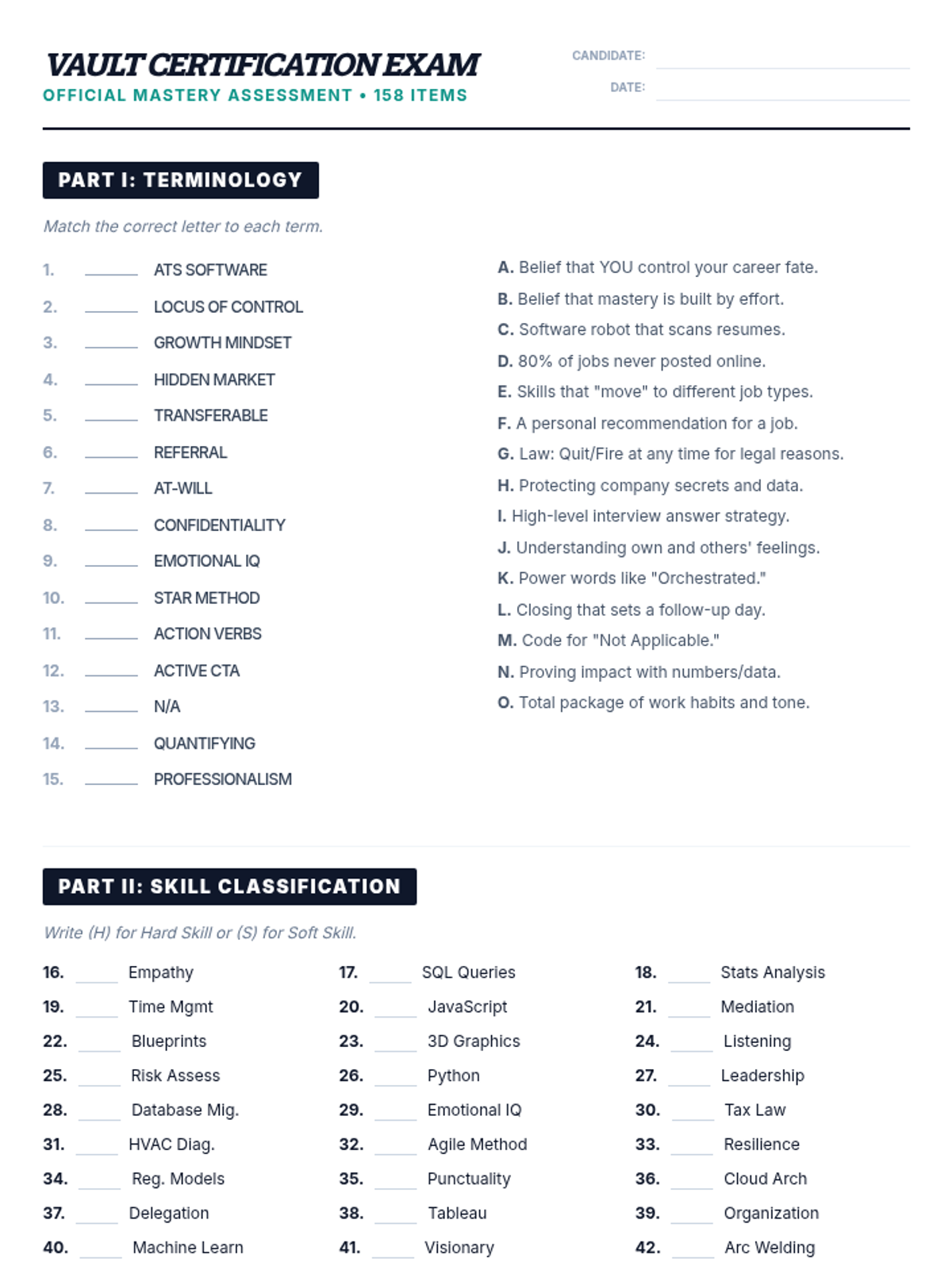
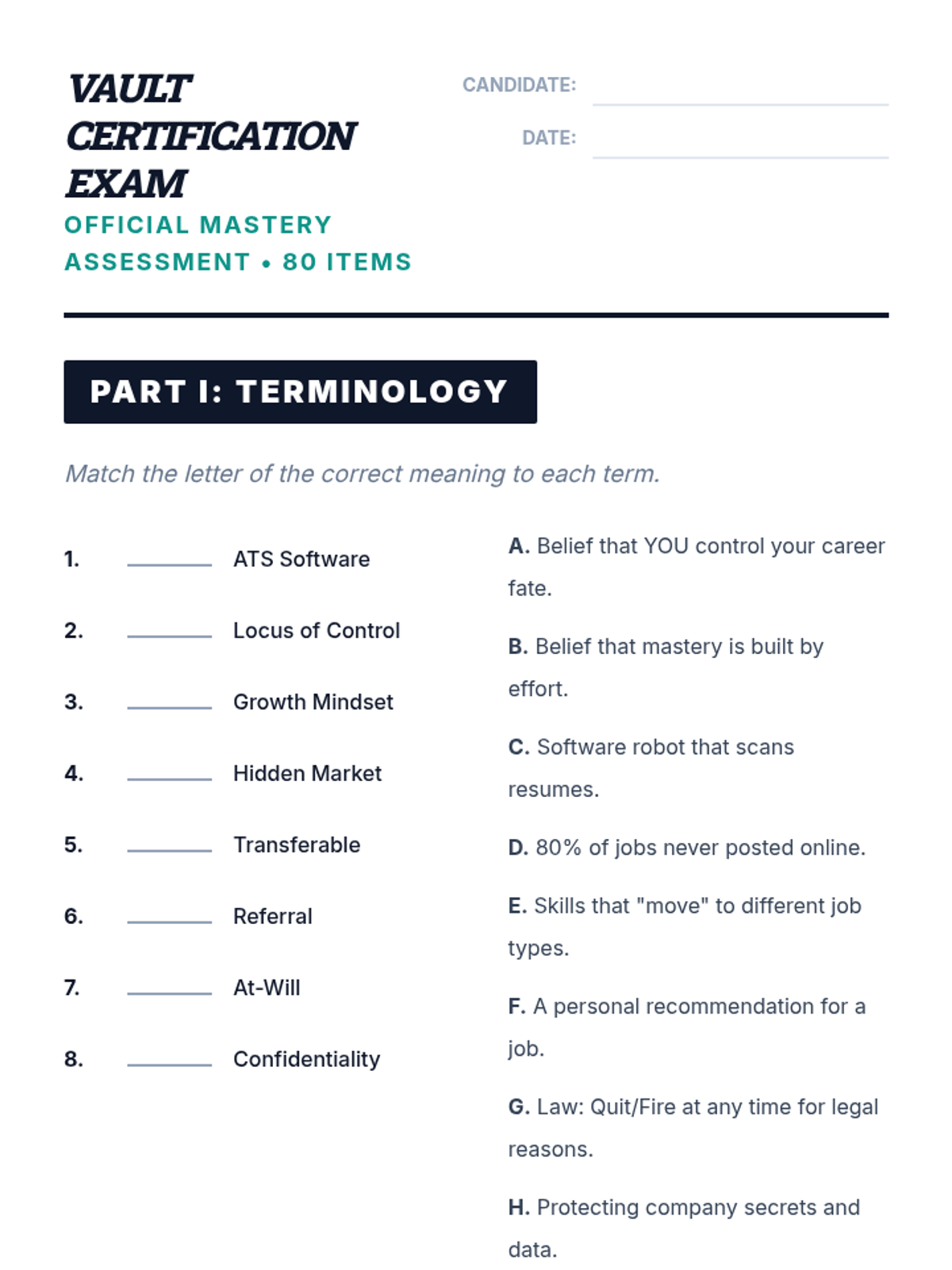
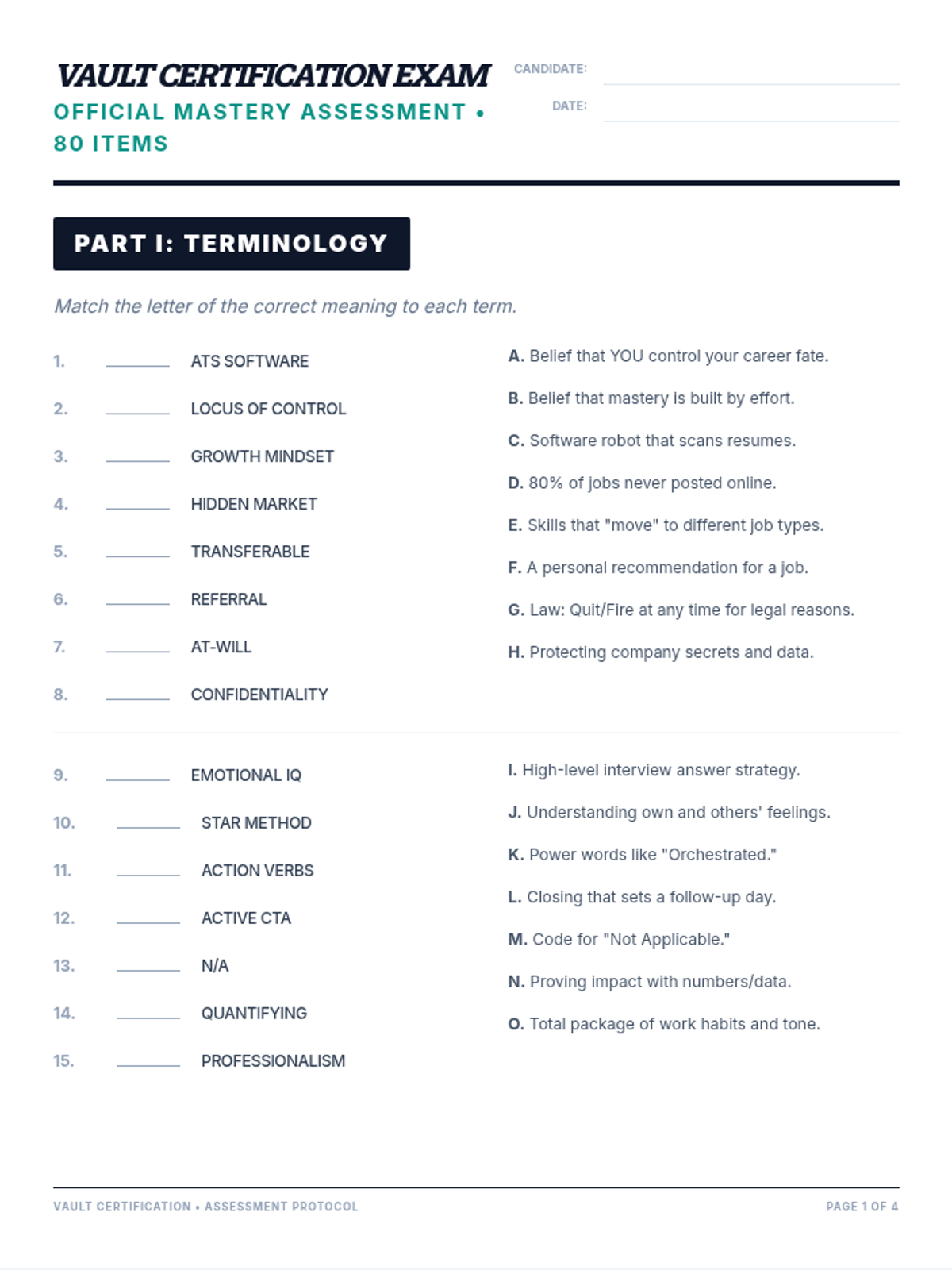
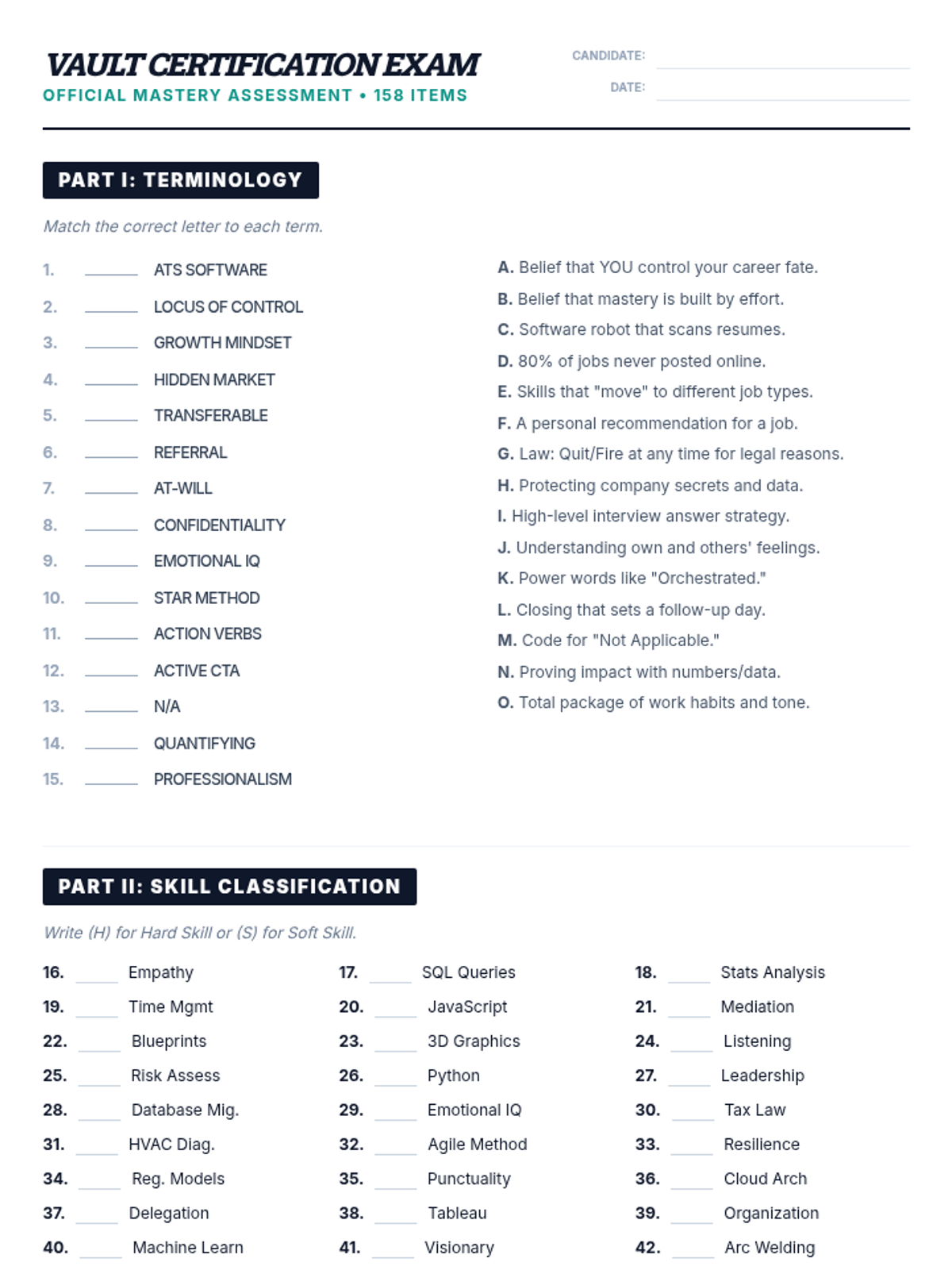
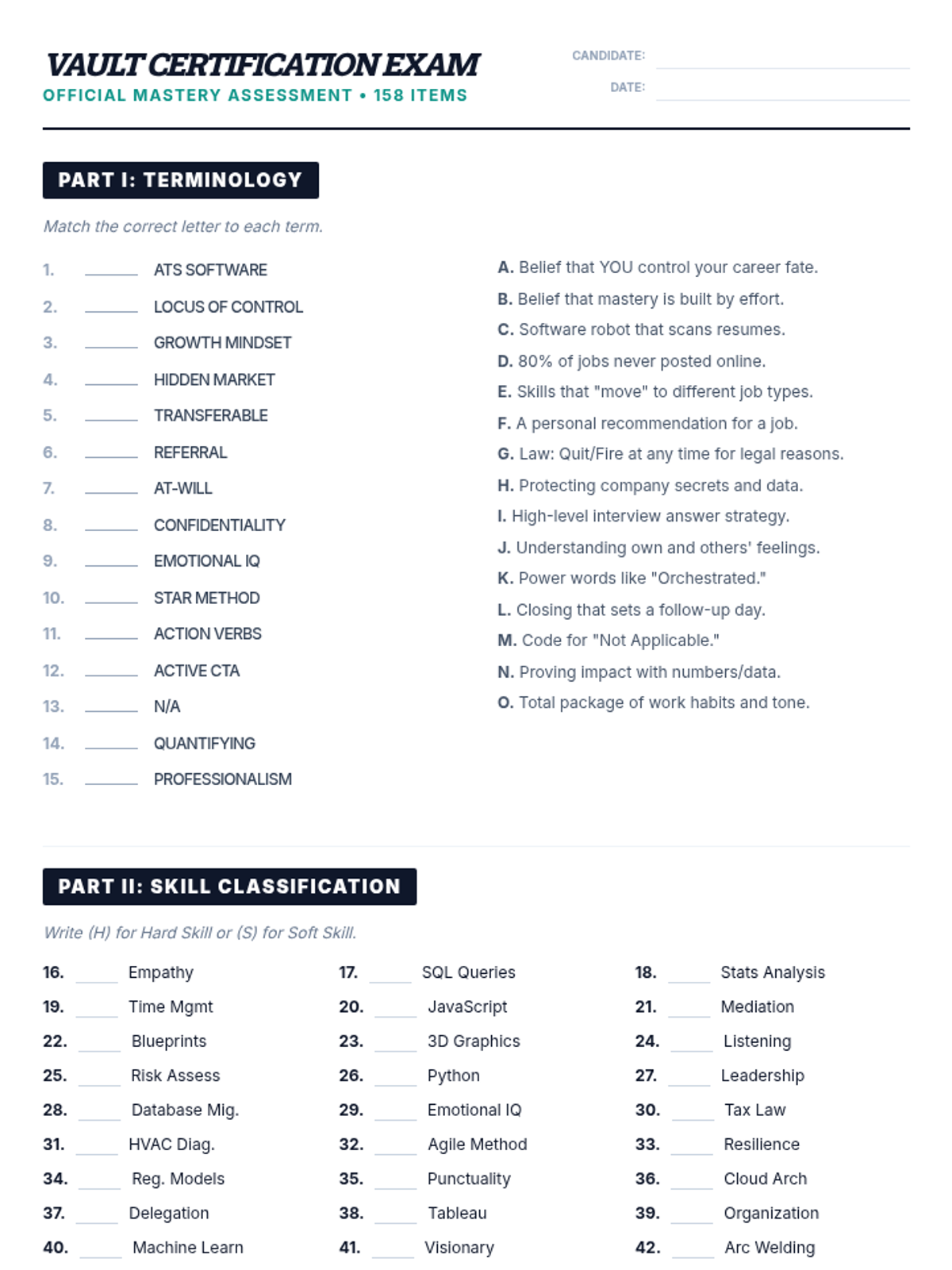
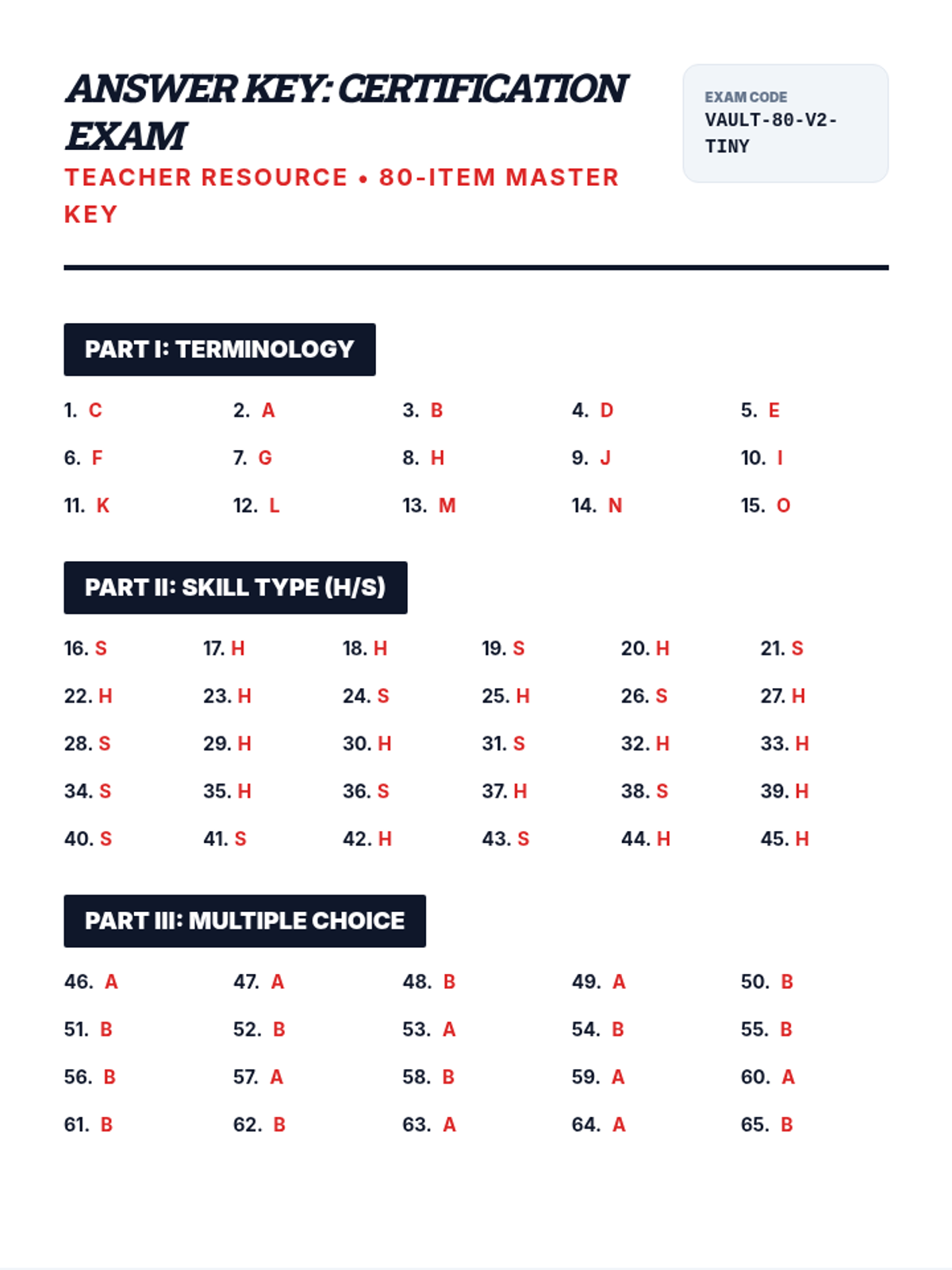
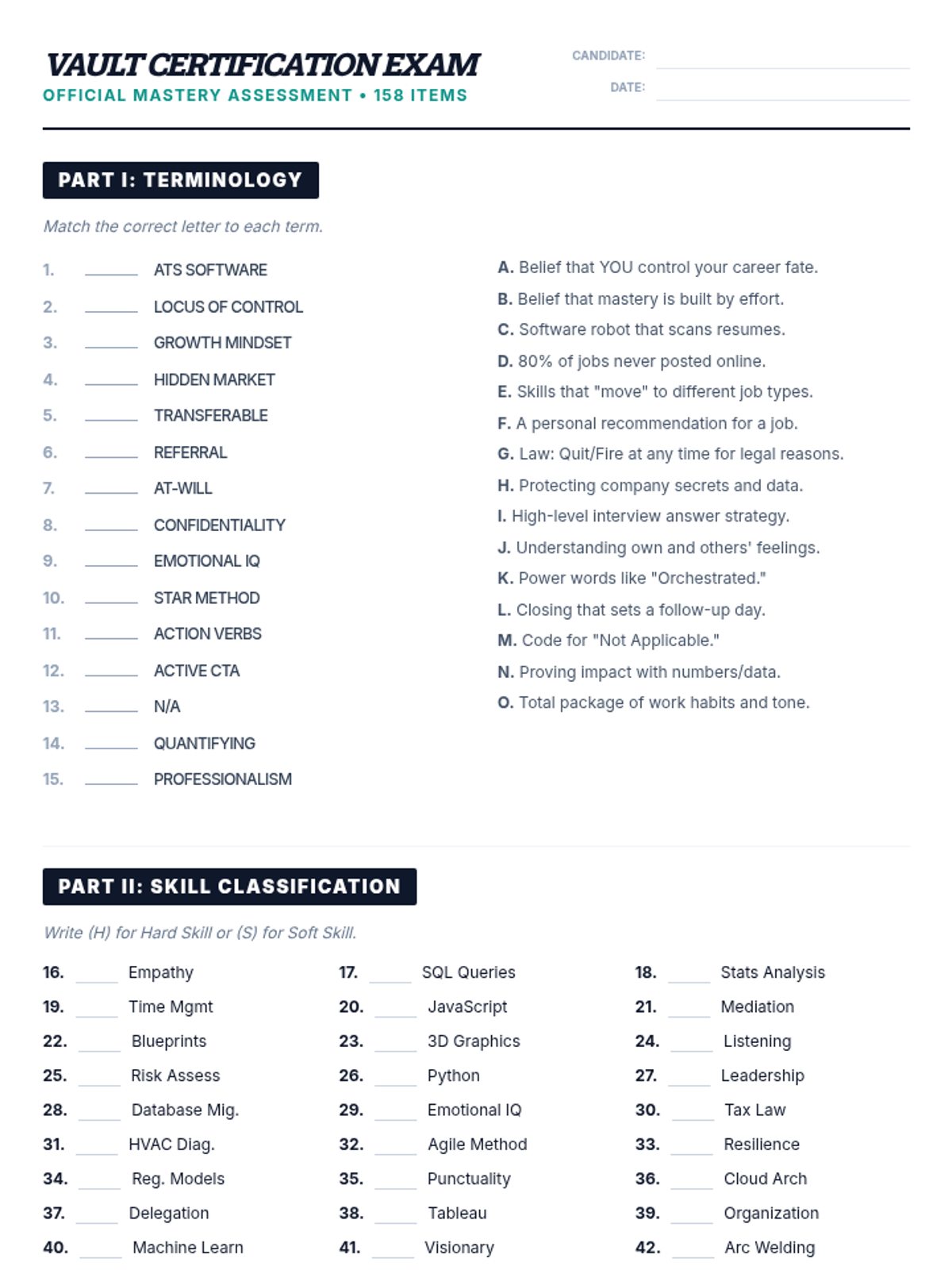
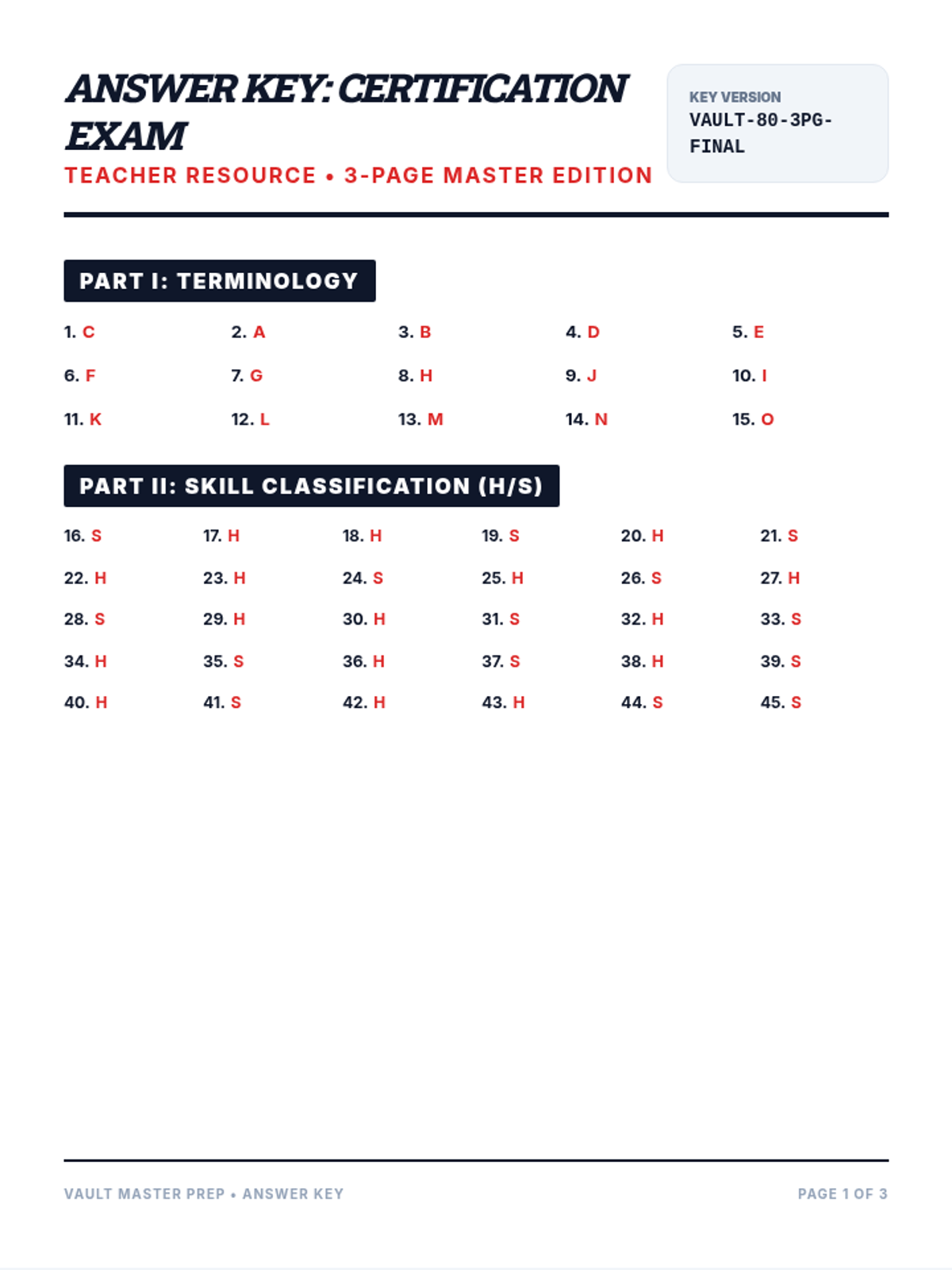
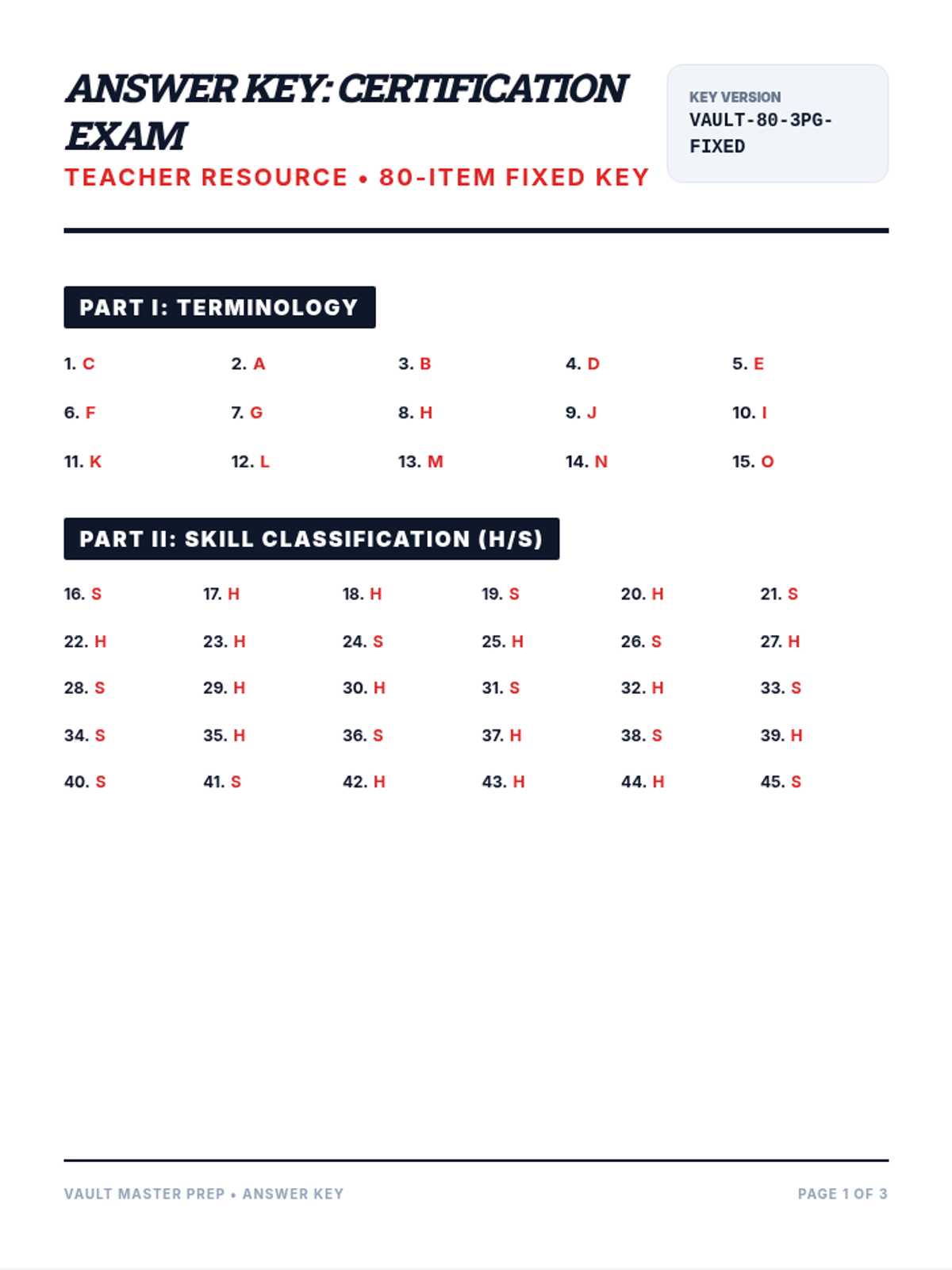
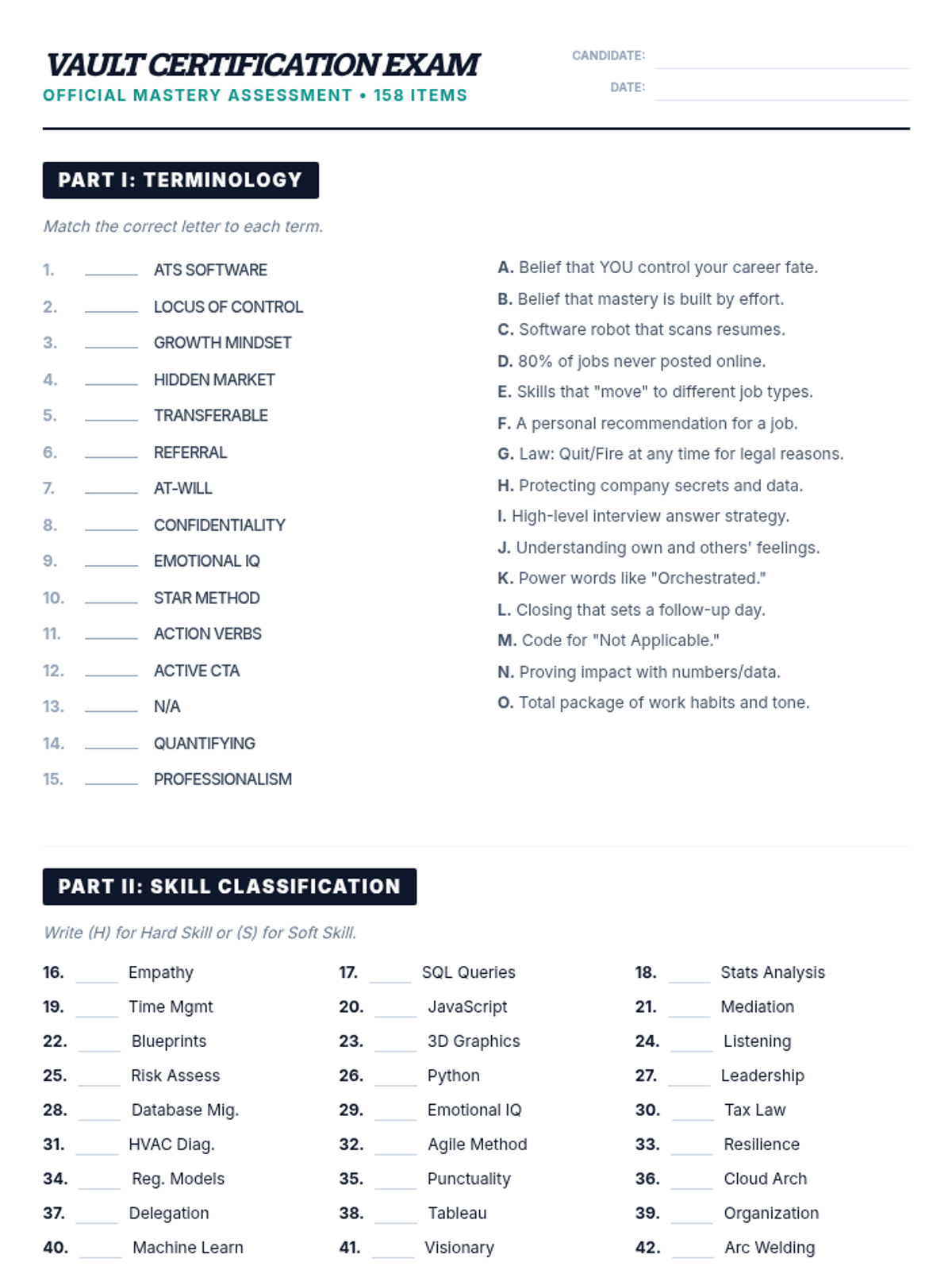
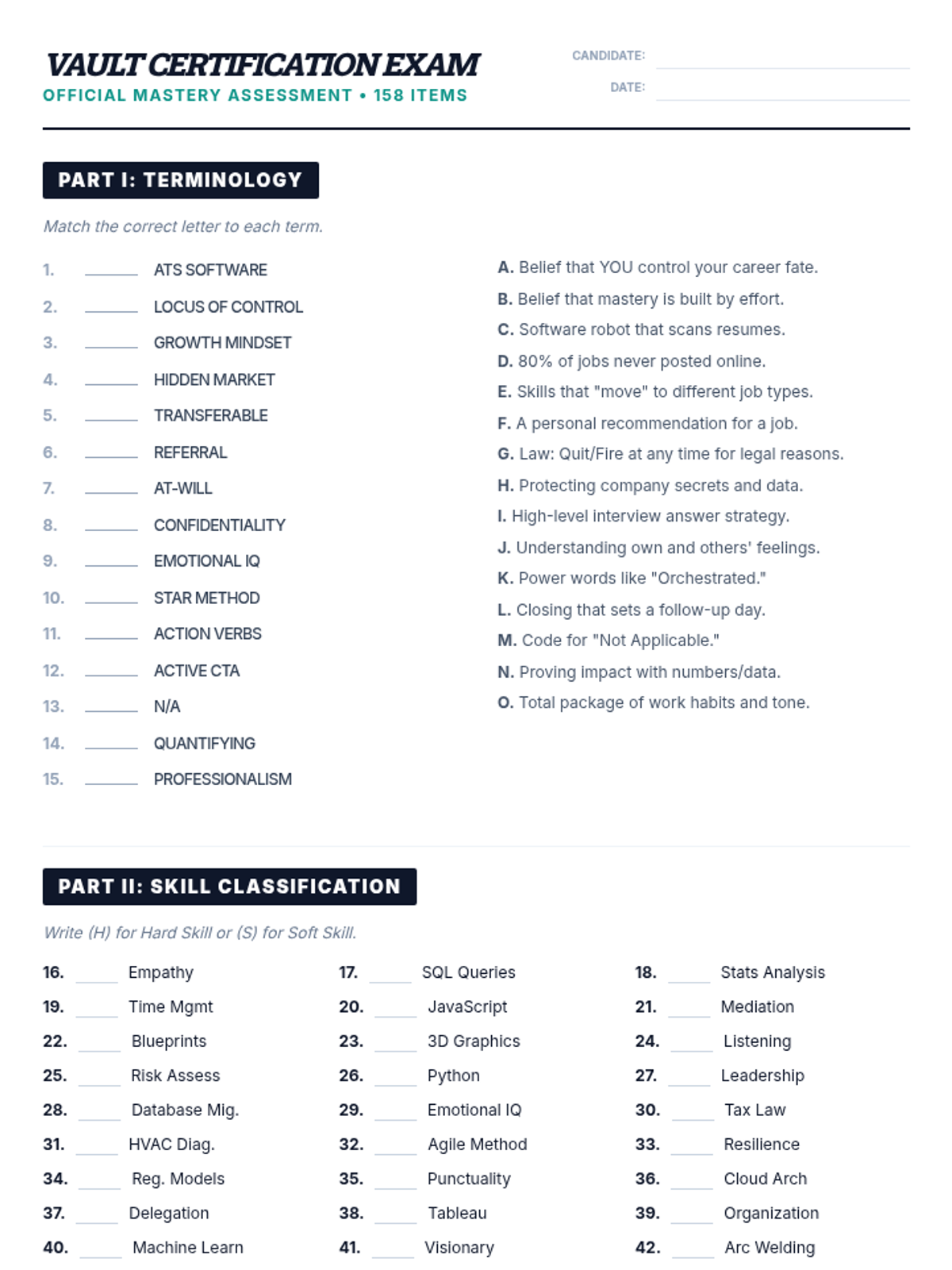
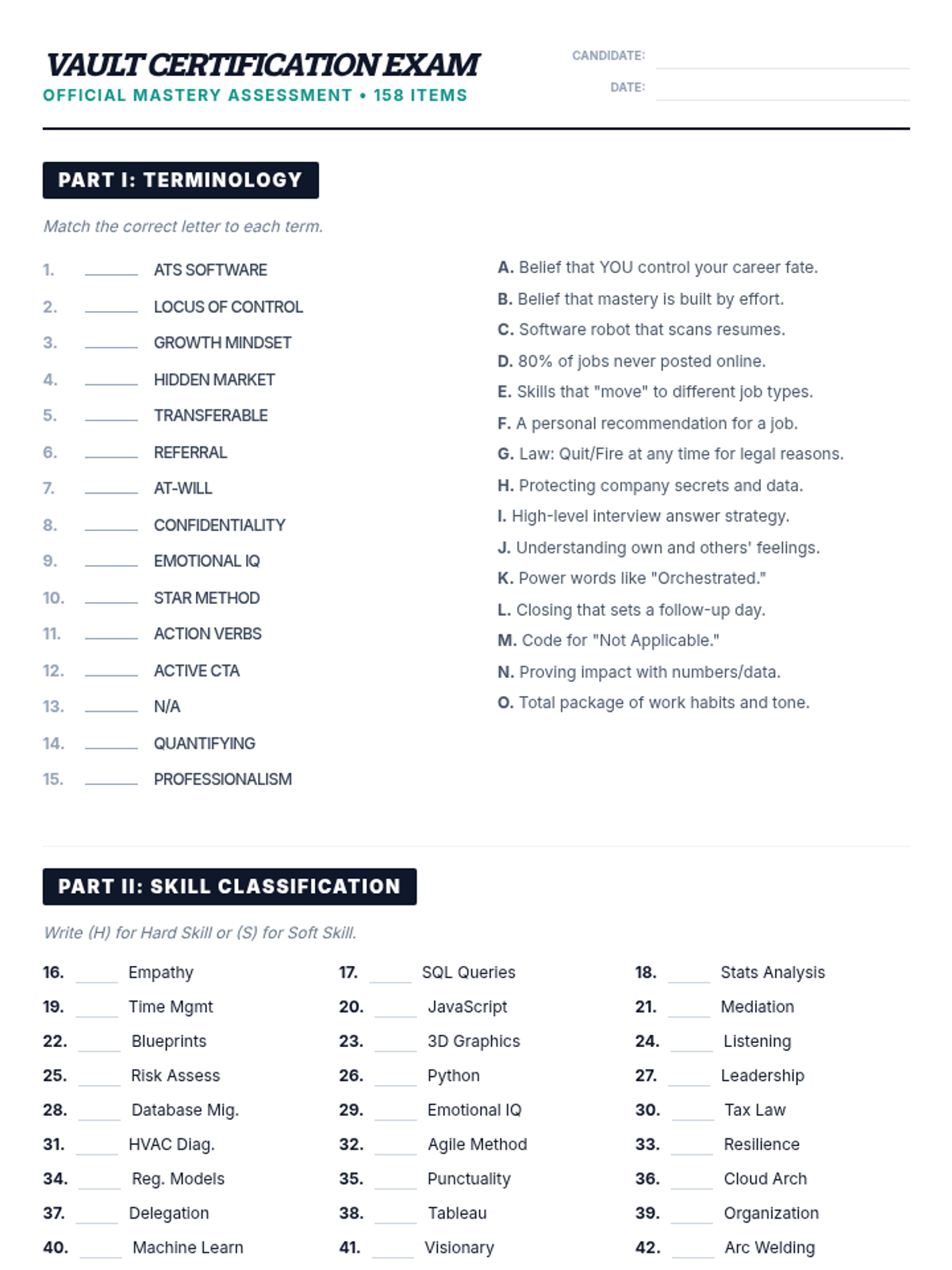
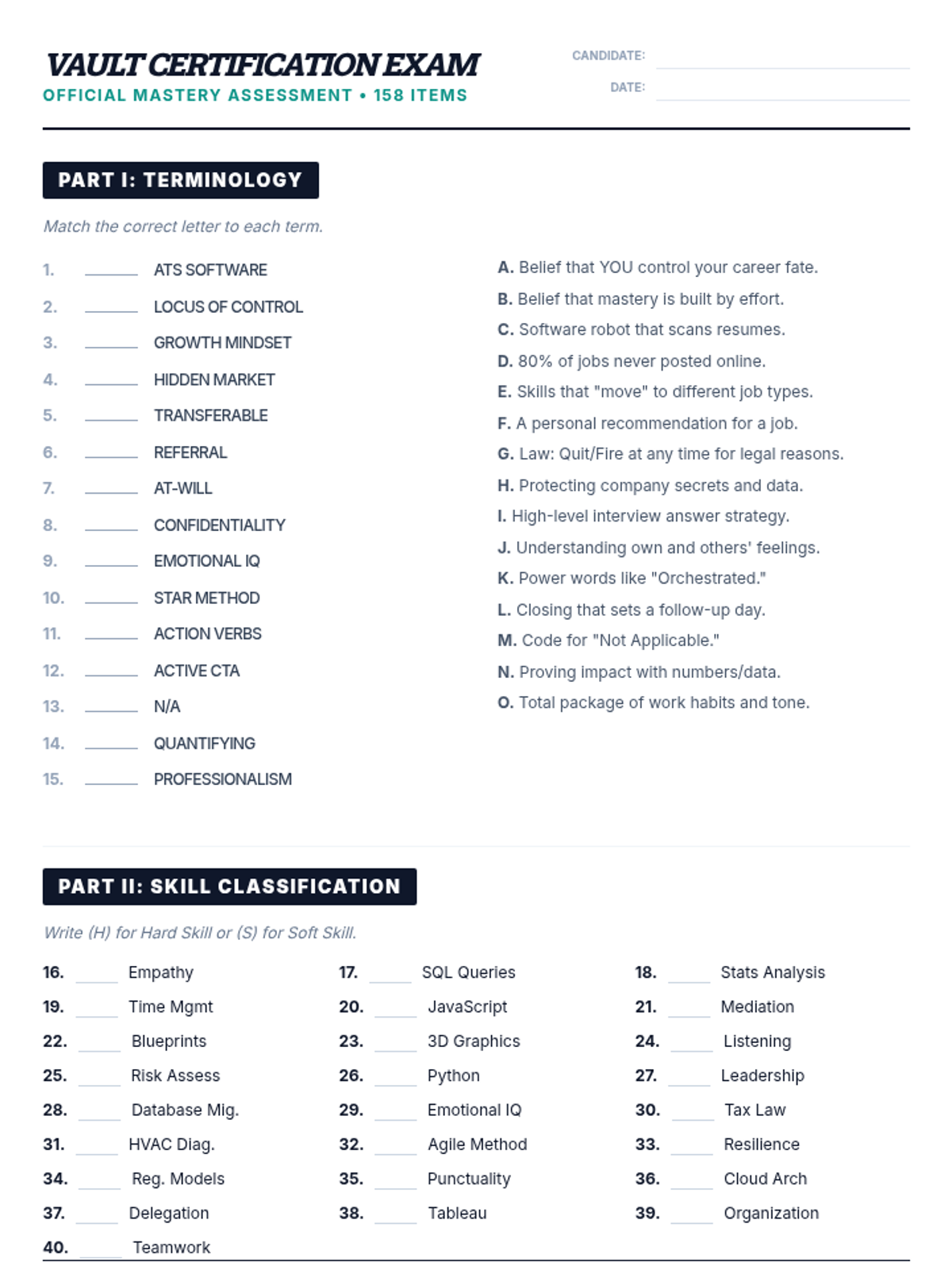
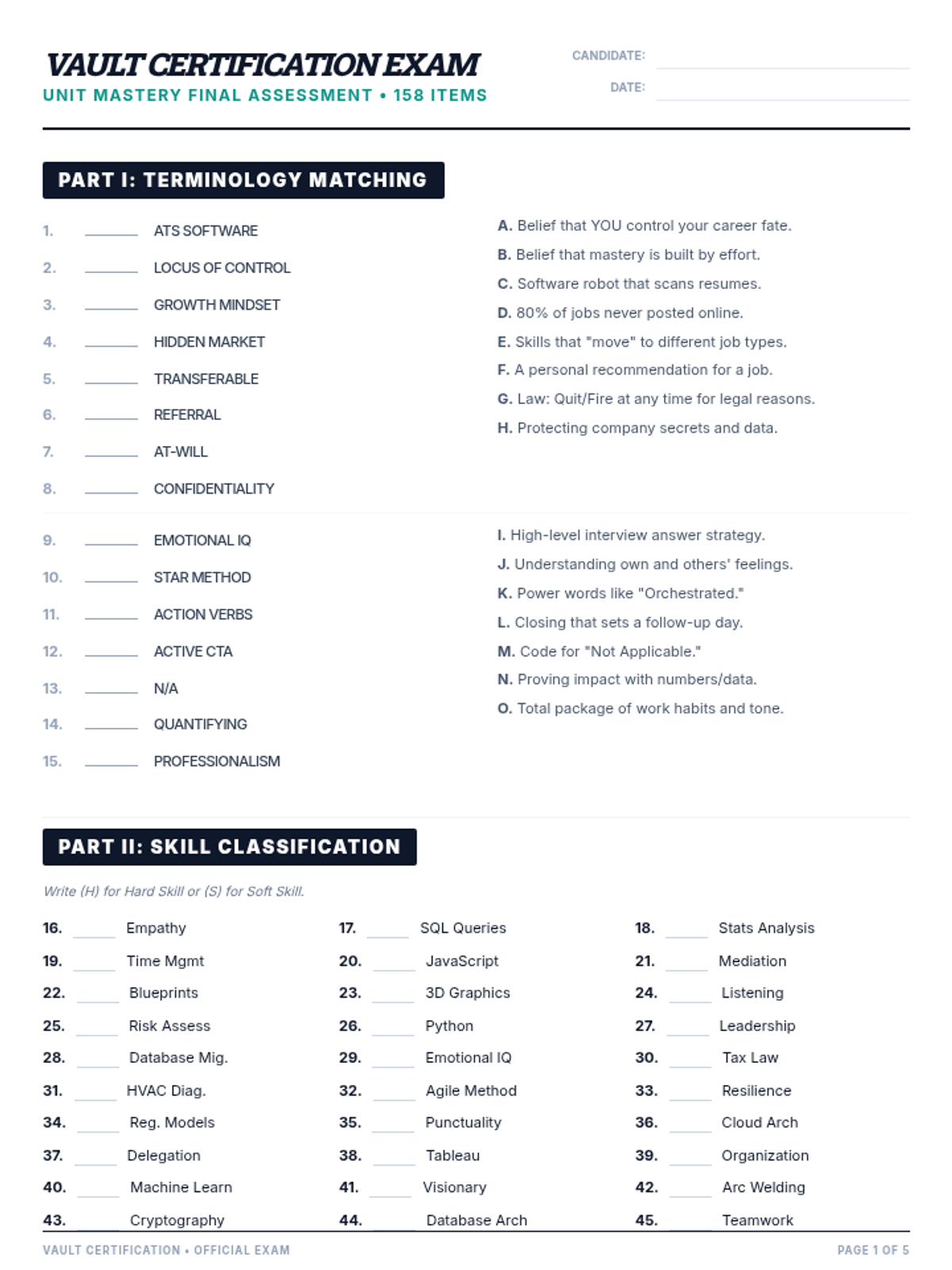
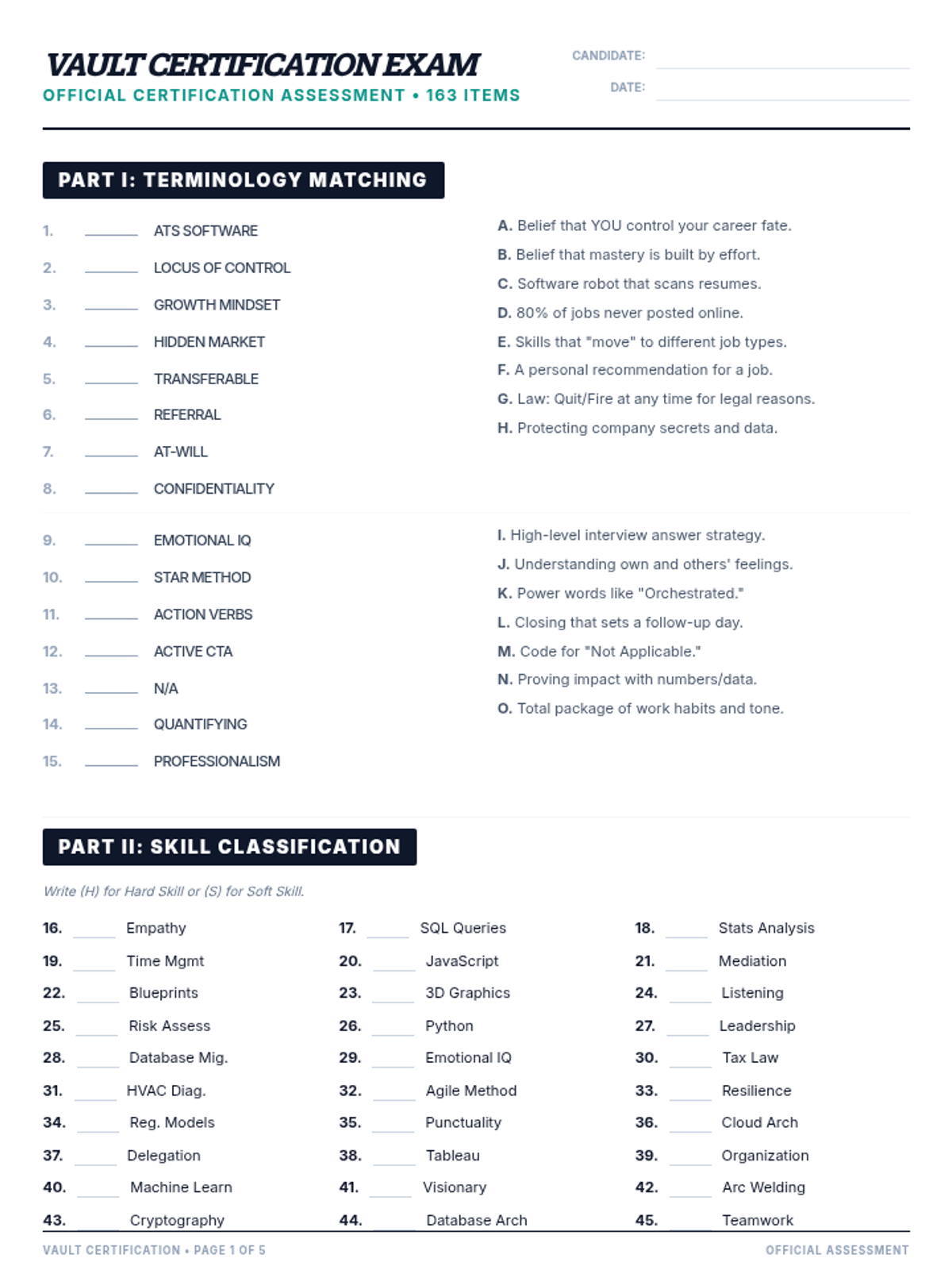
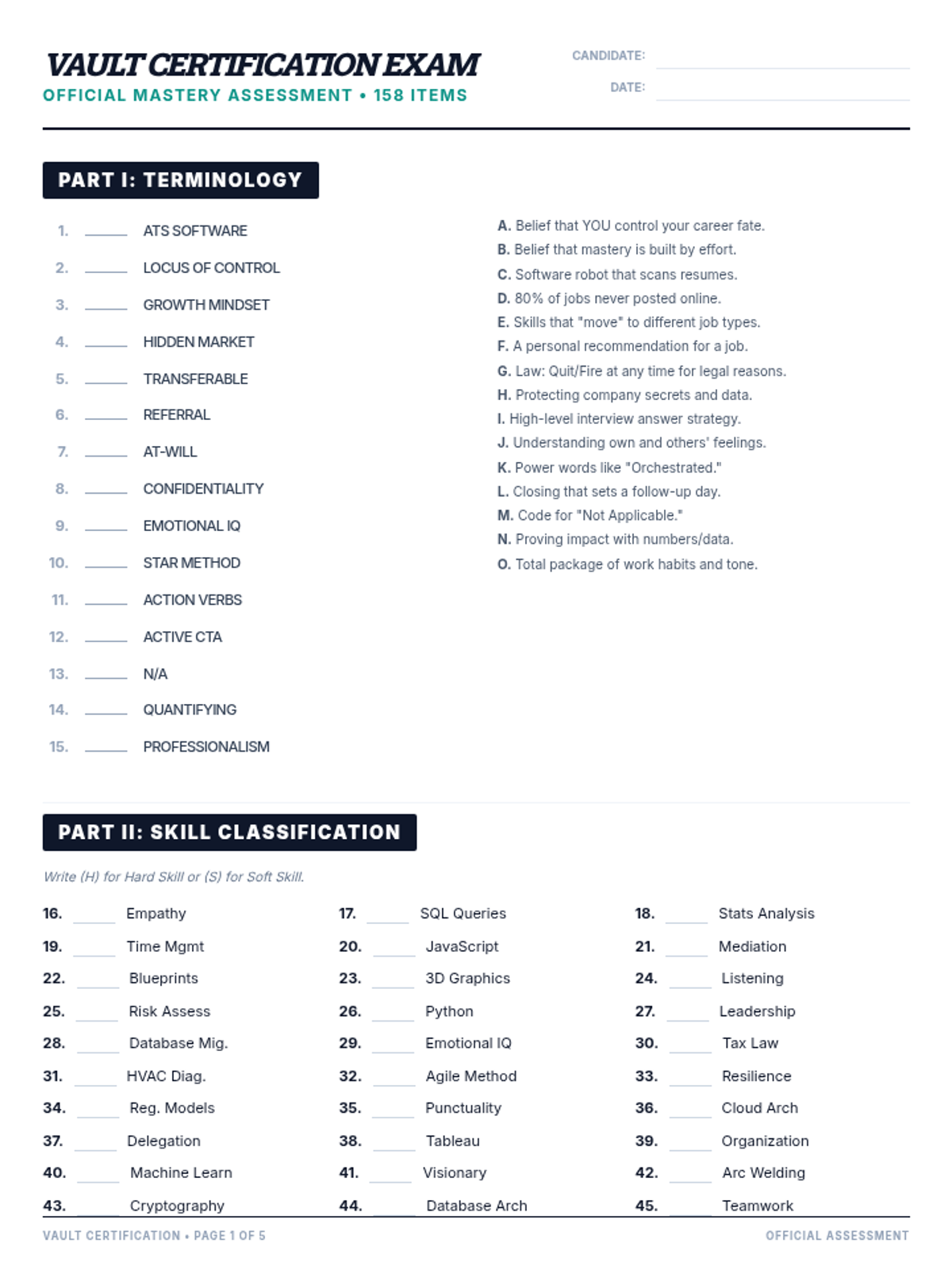
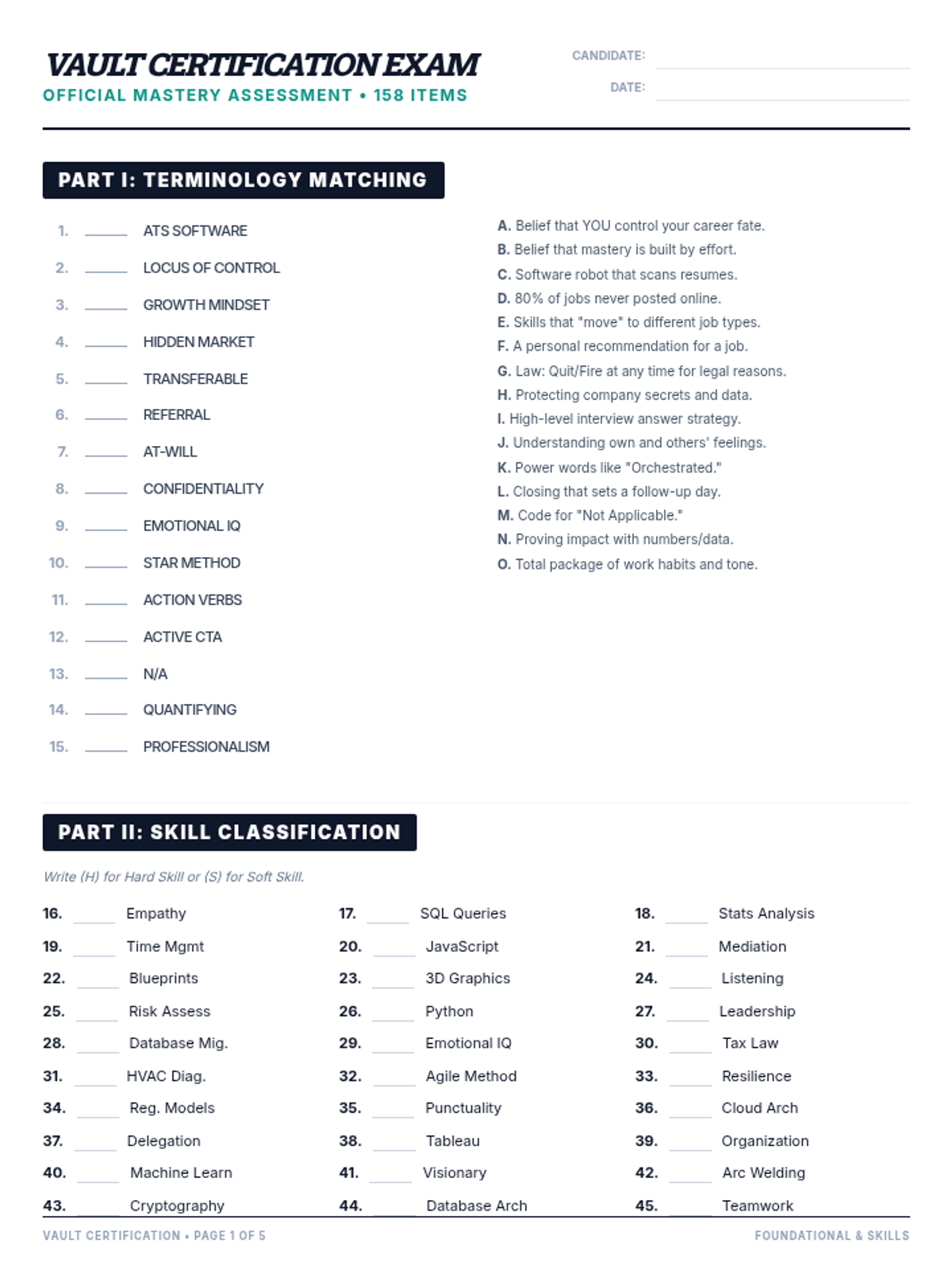
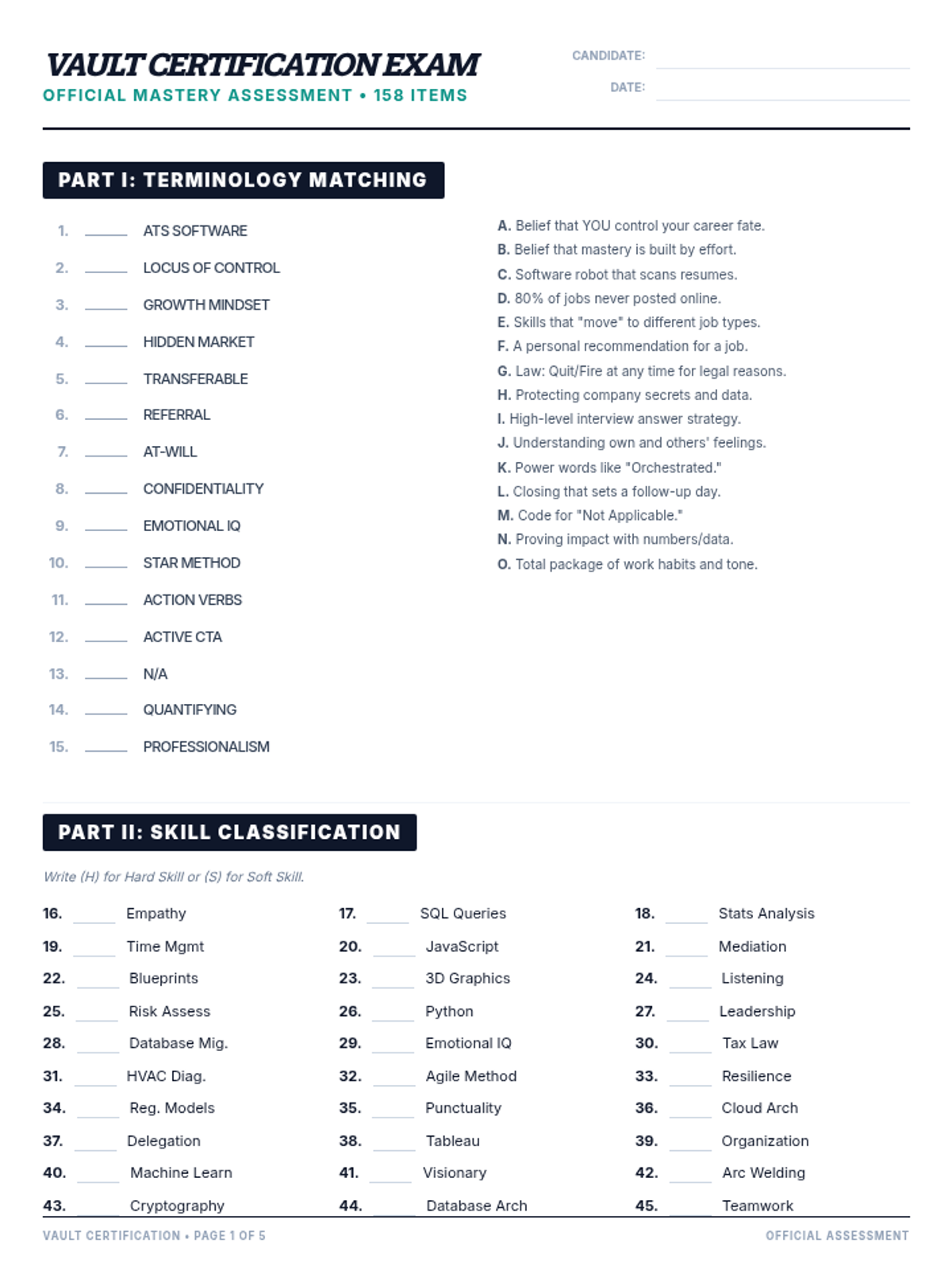
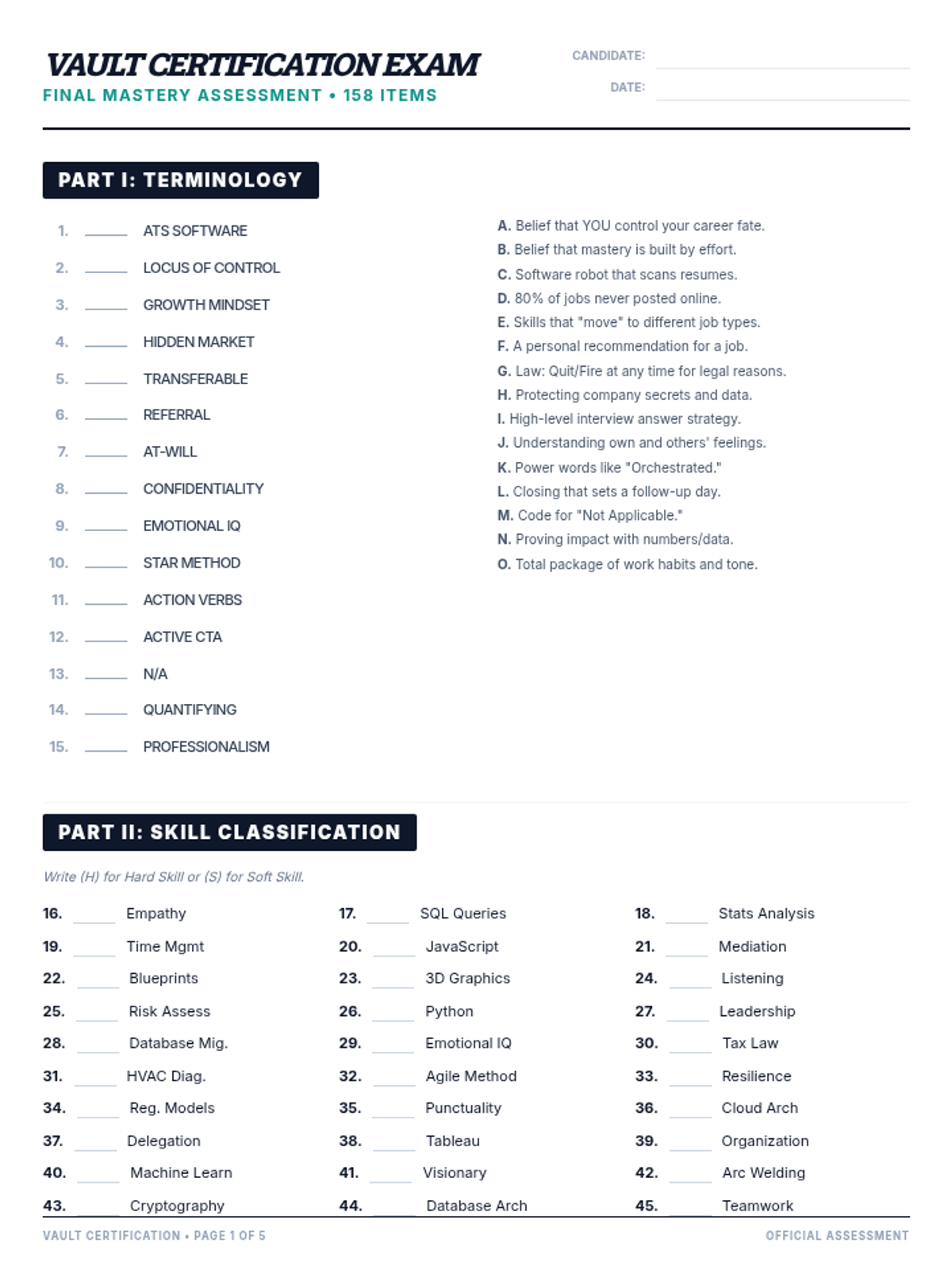
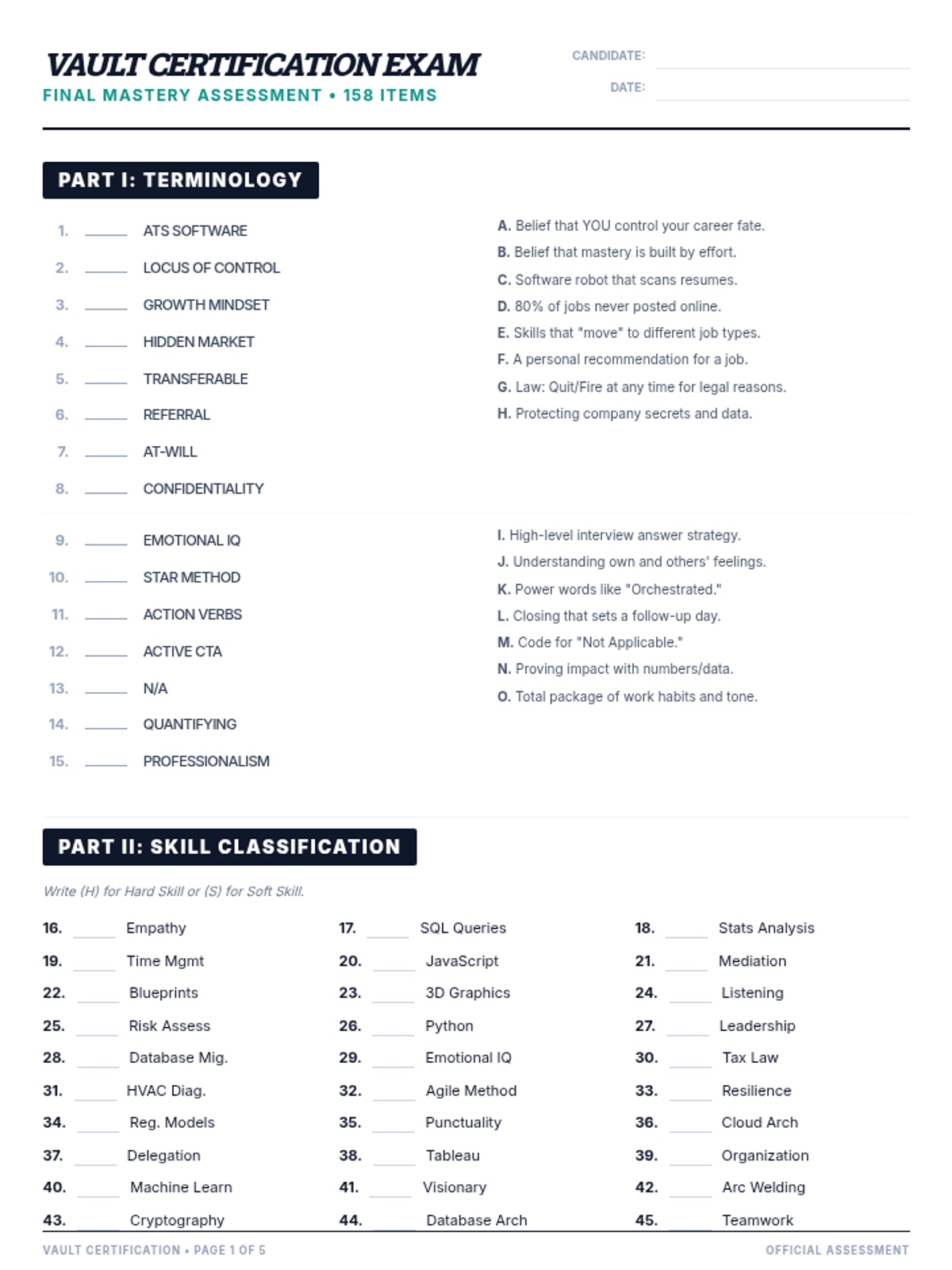
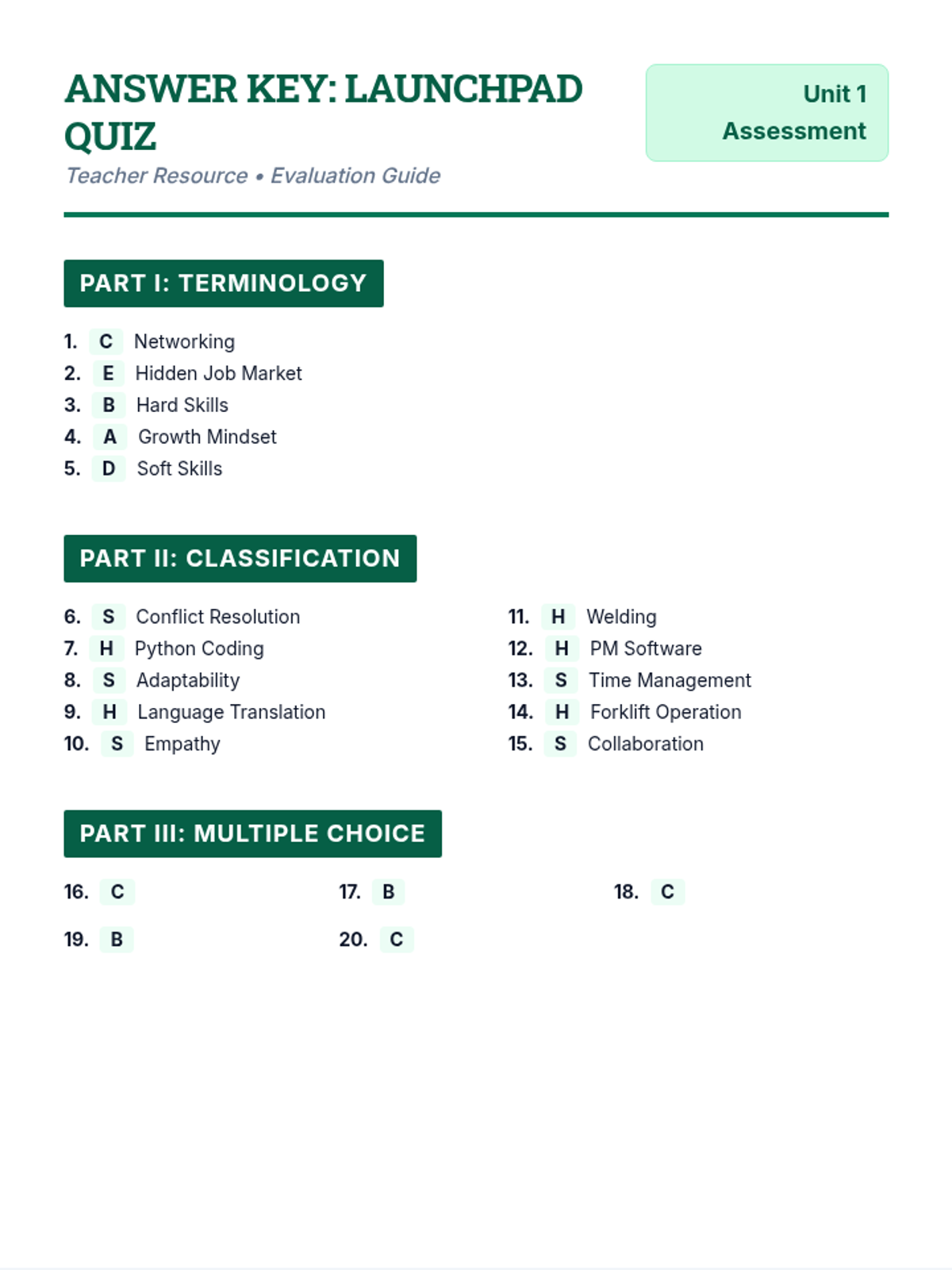
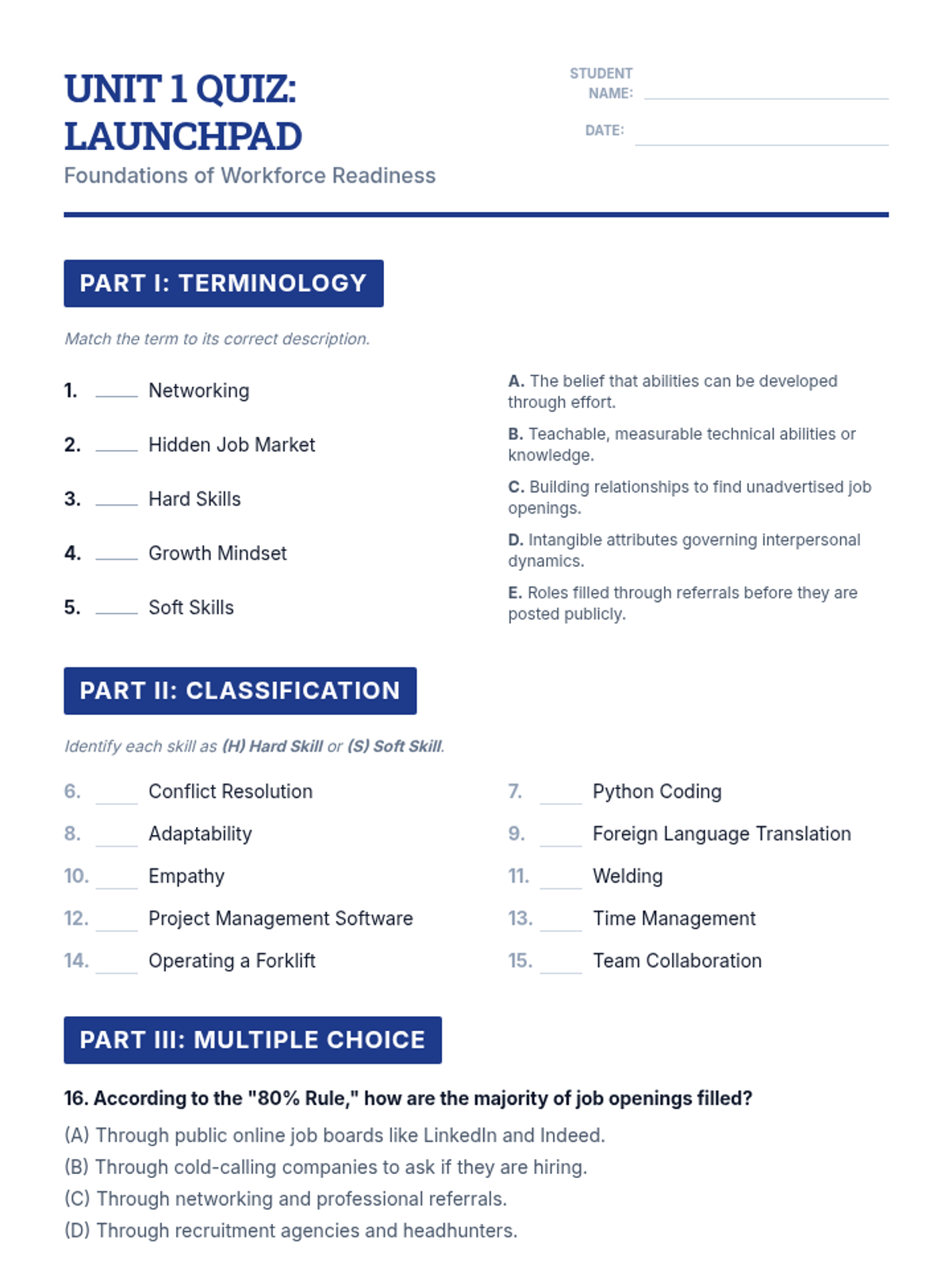
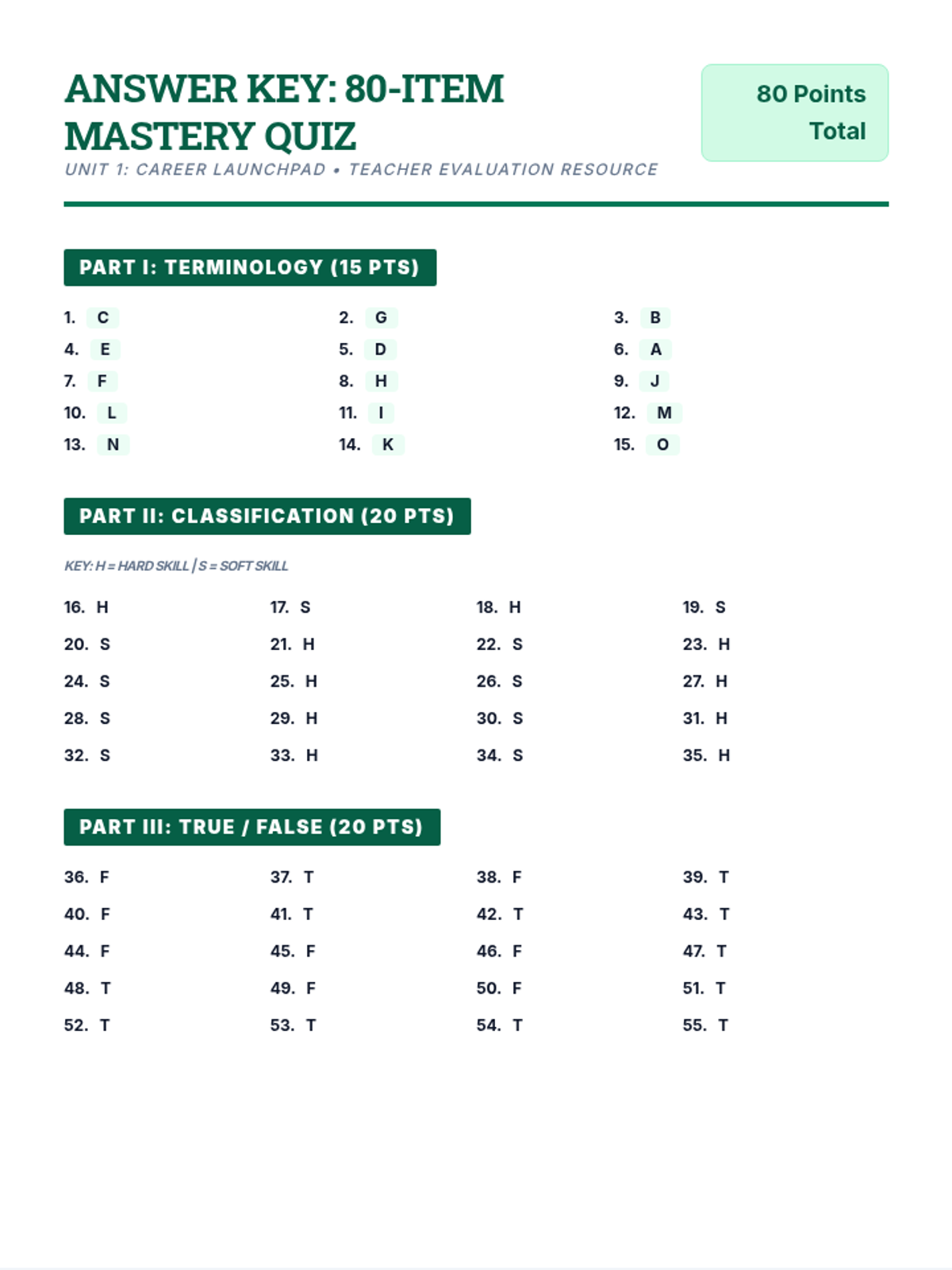
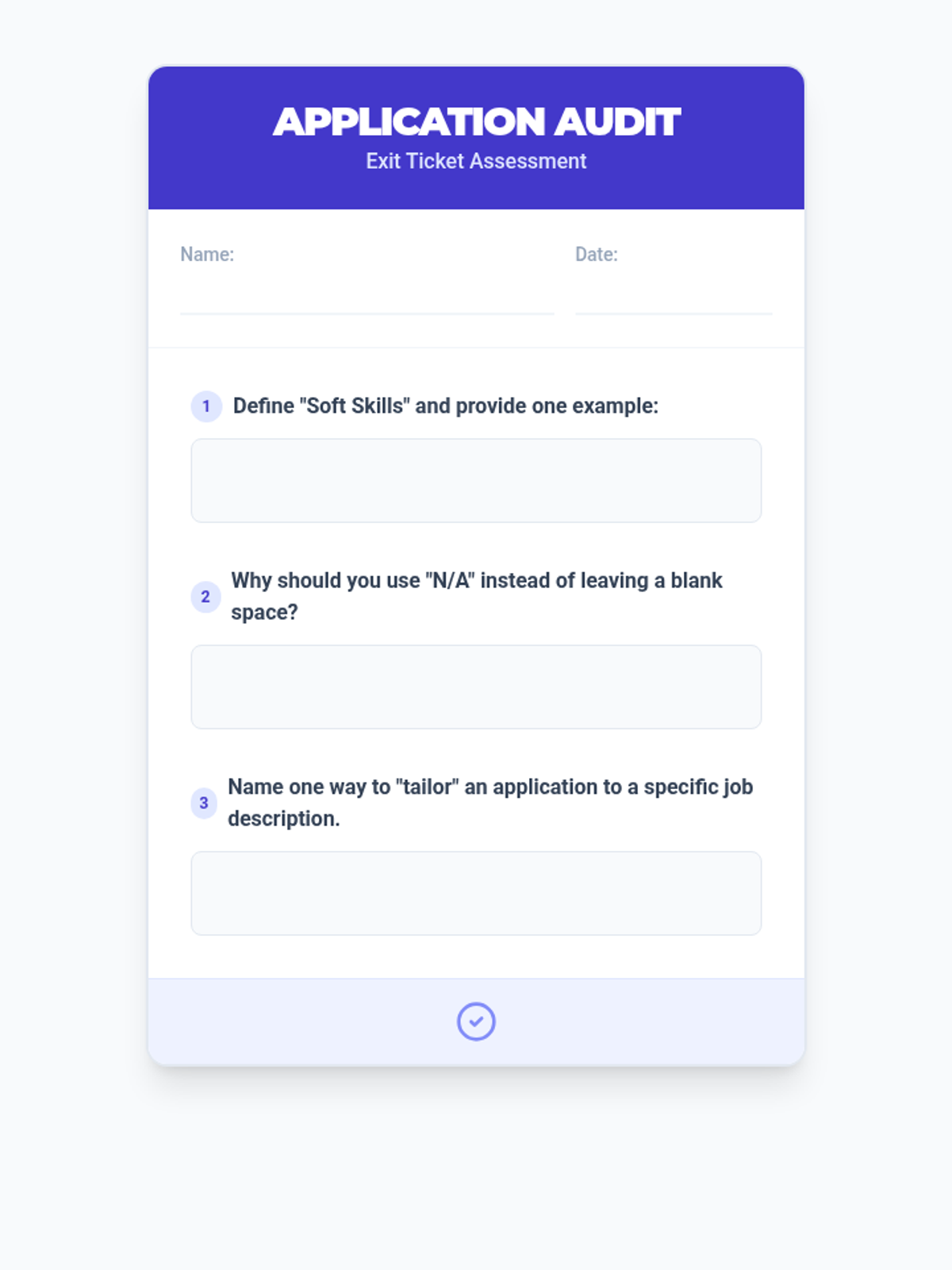
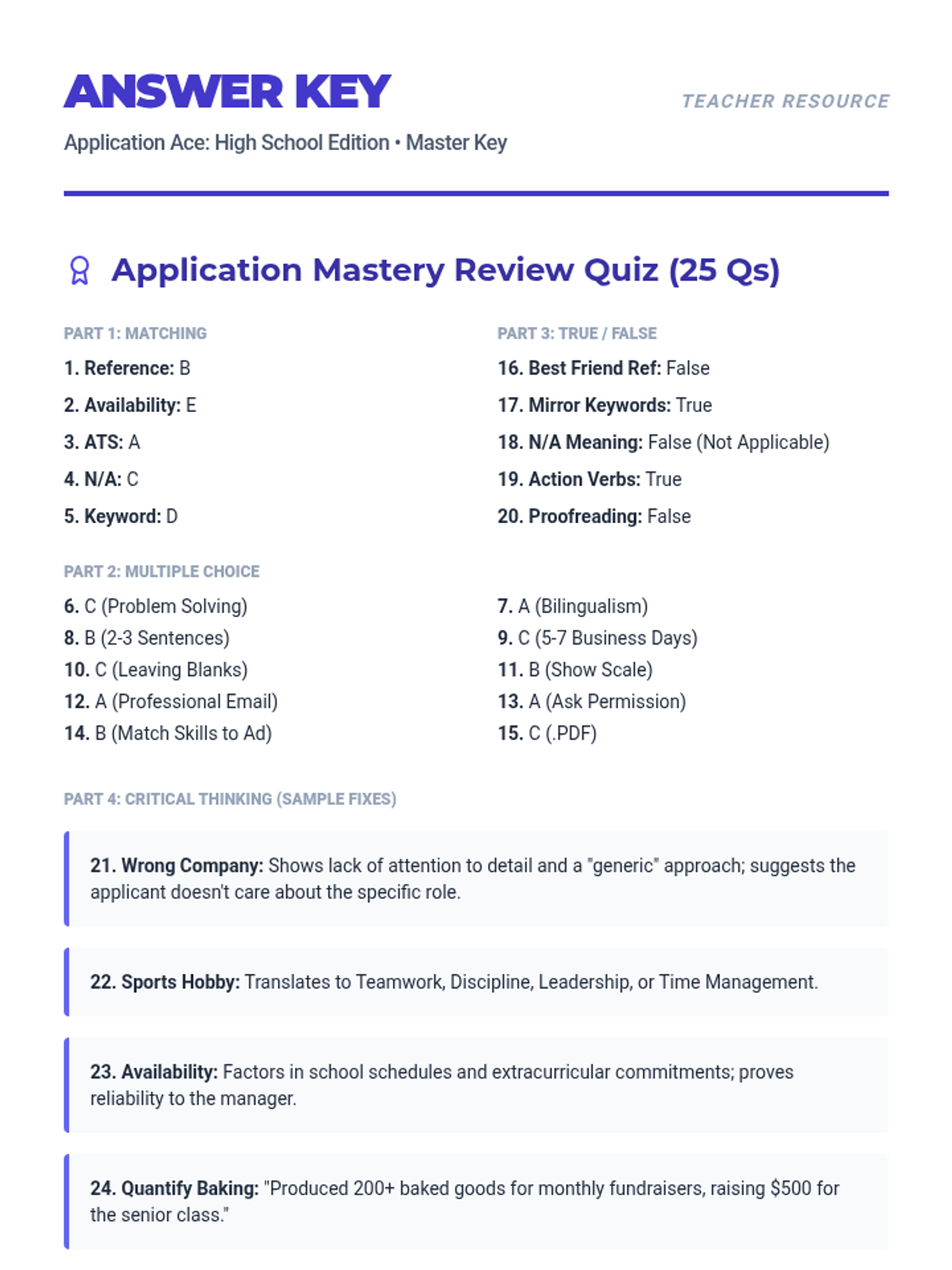
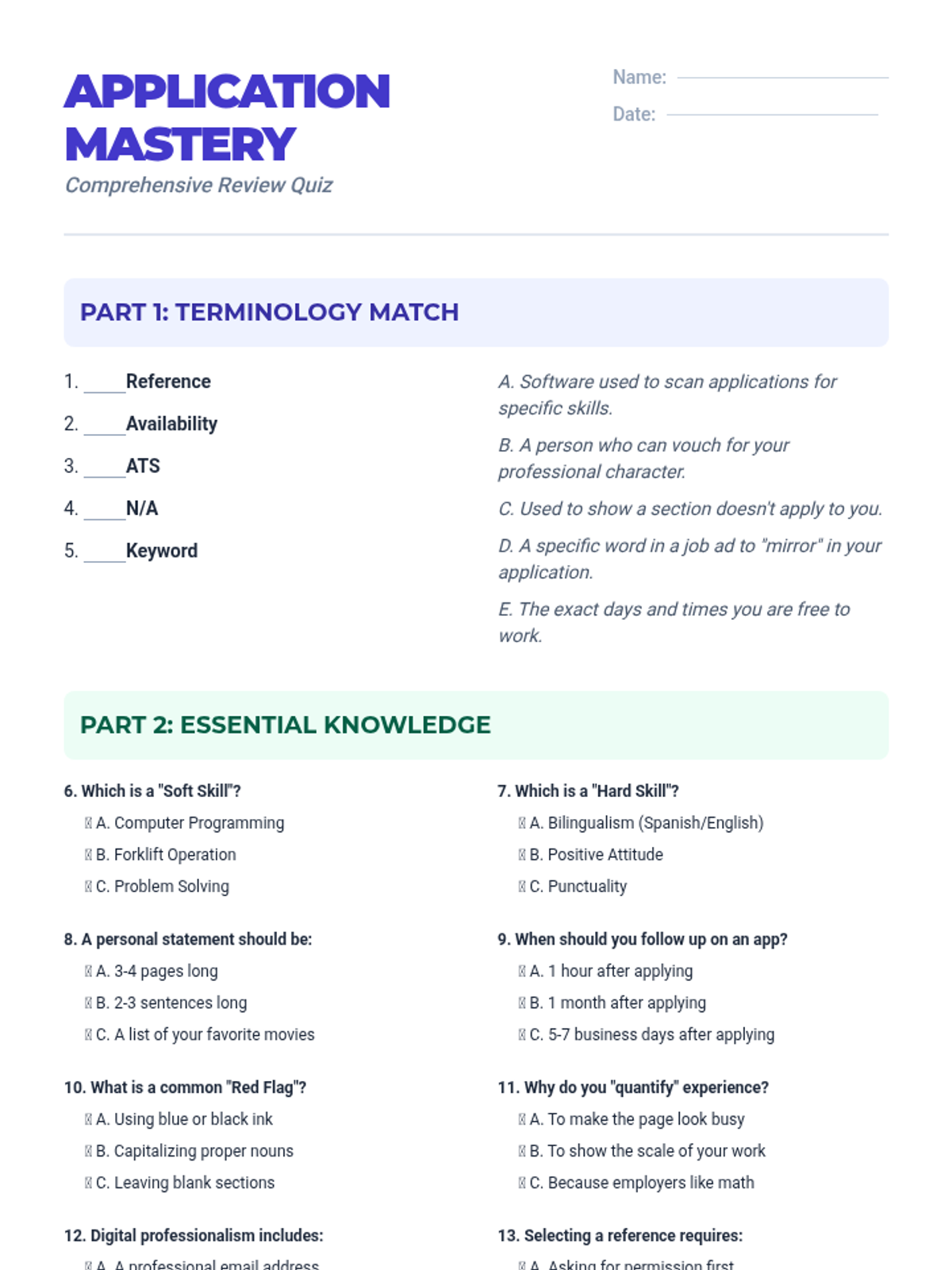
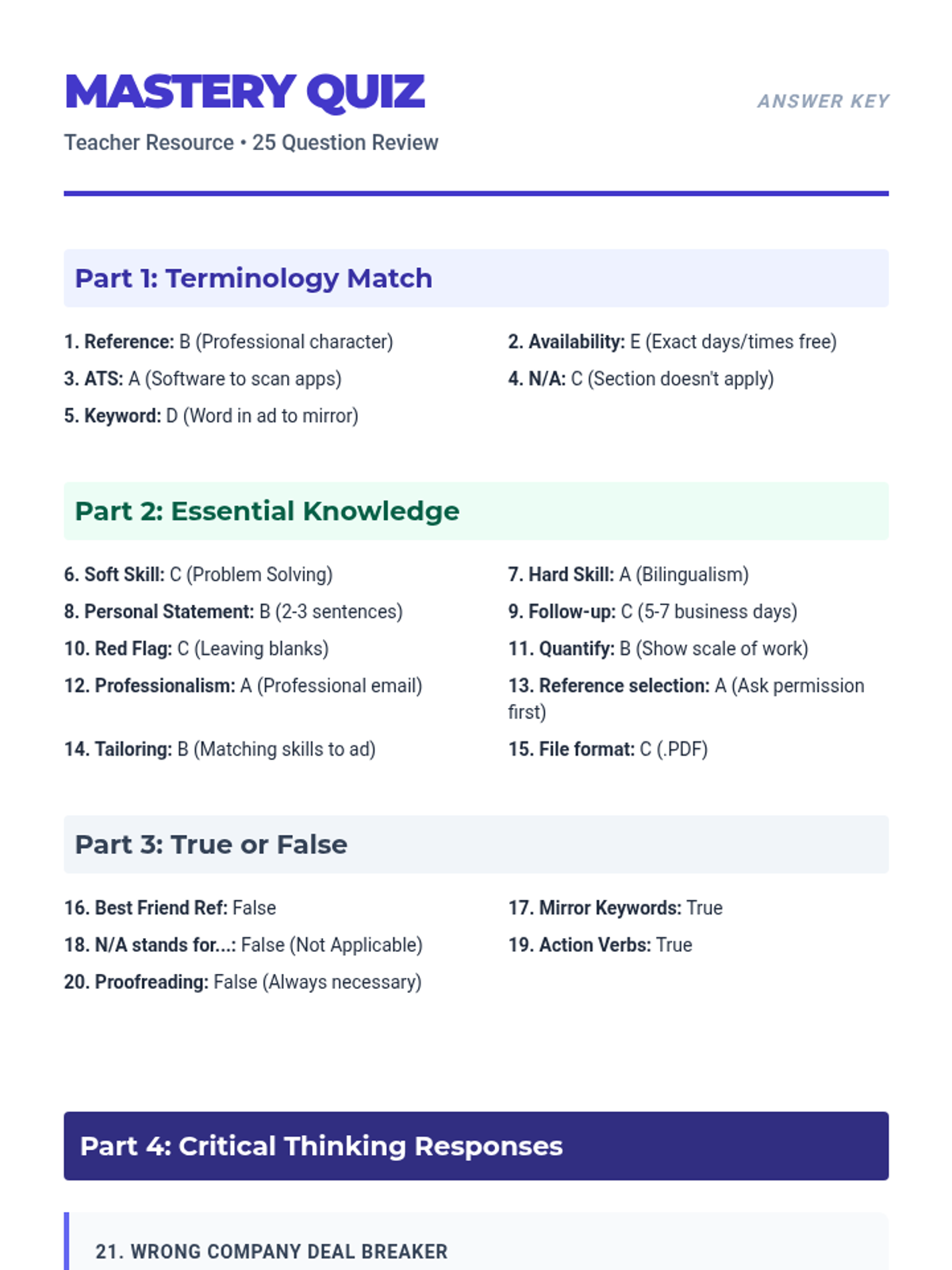
A final assessment module to evaluate student understanding of career readiness concepts and application proficiency.
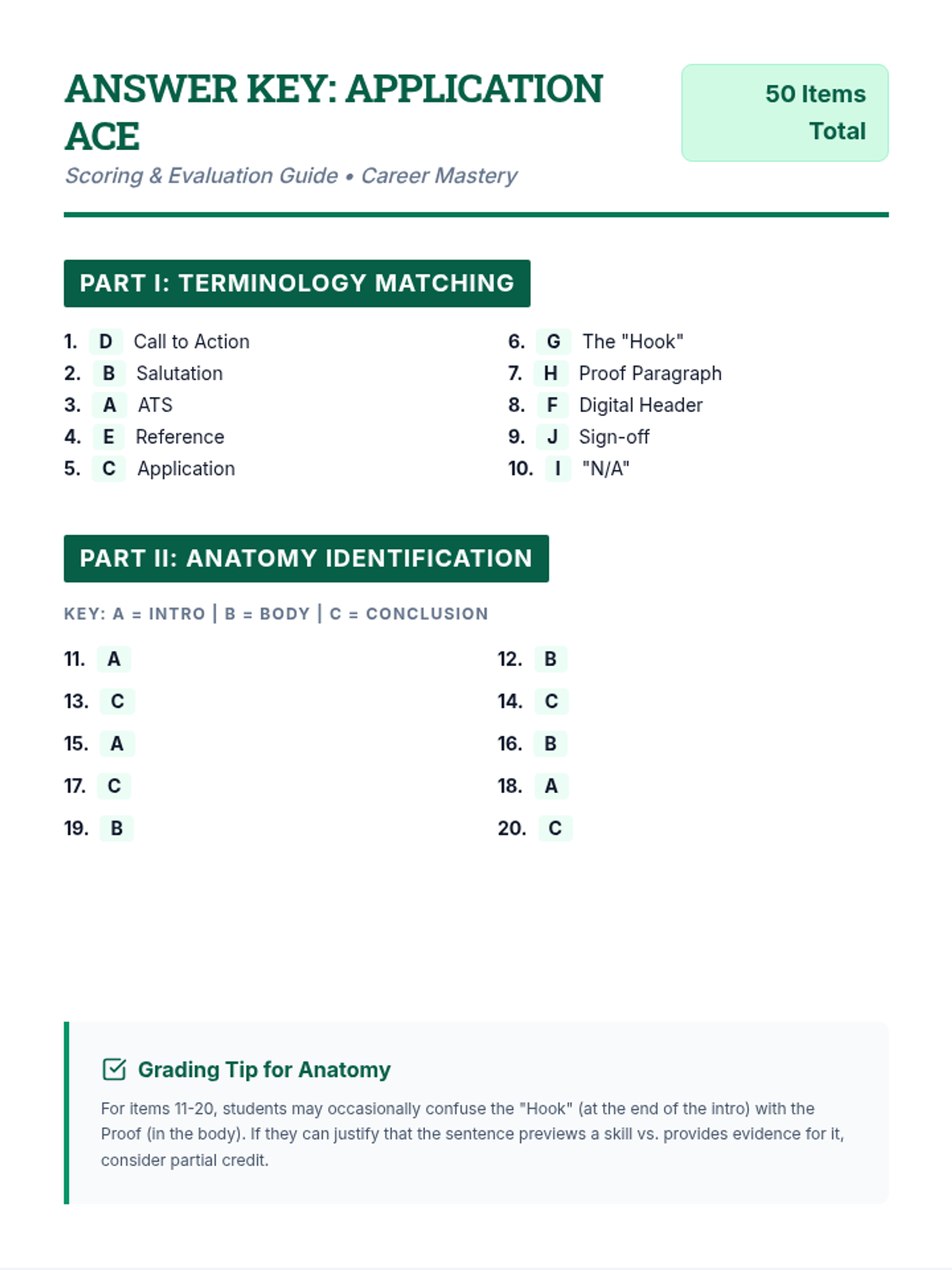
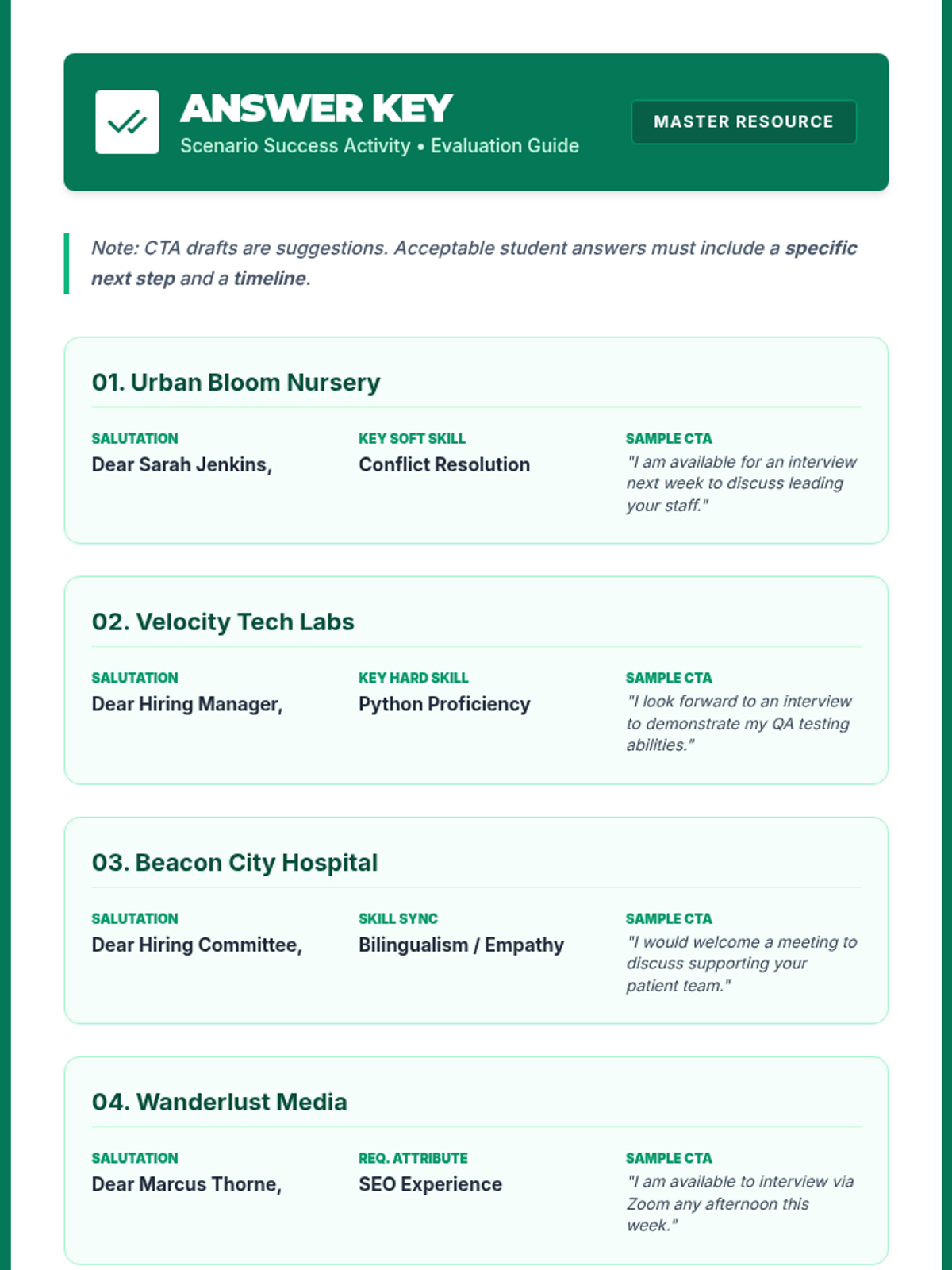
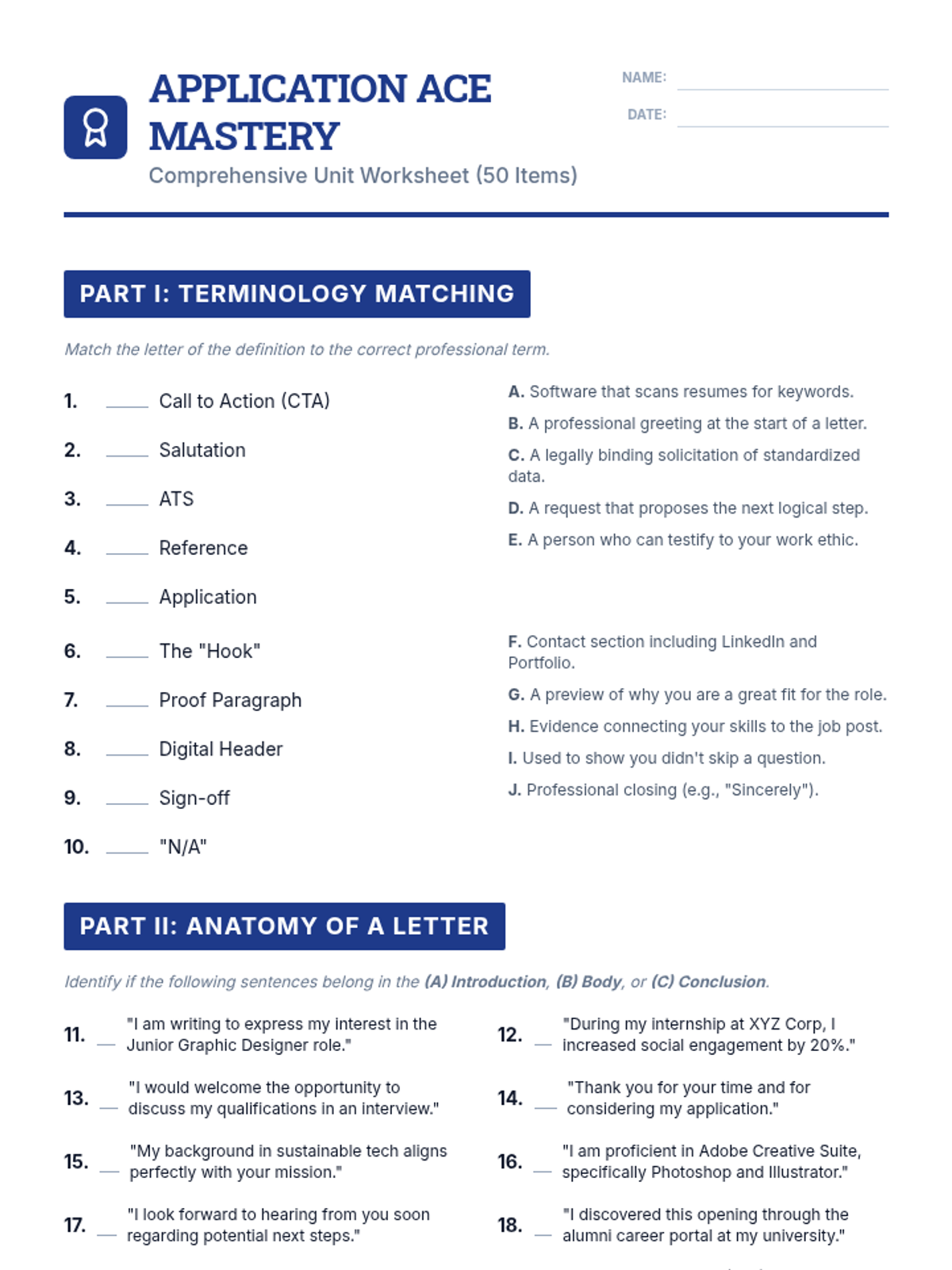
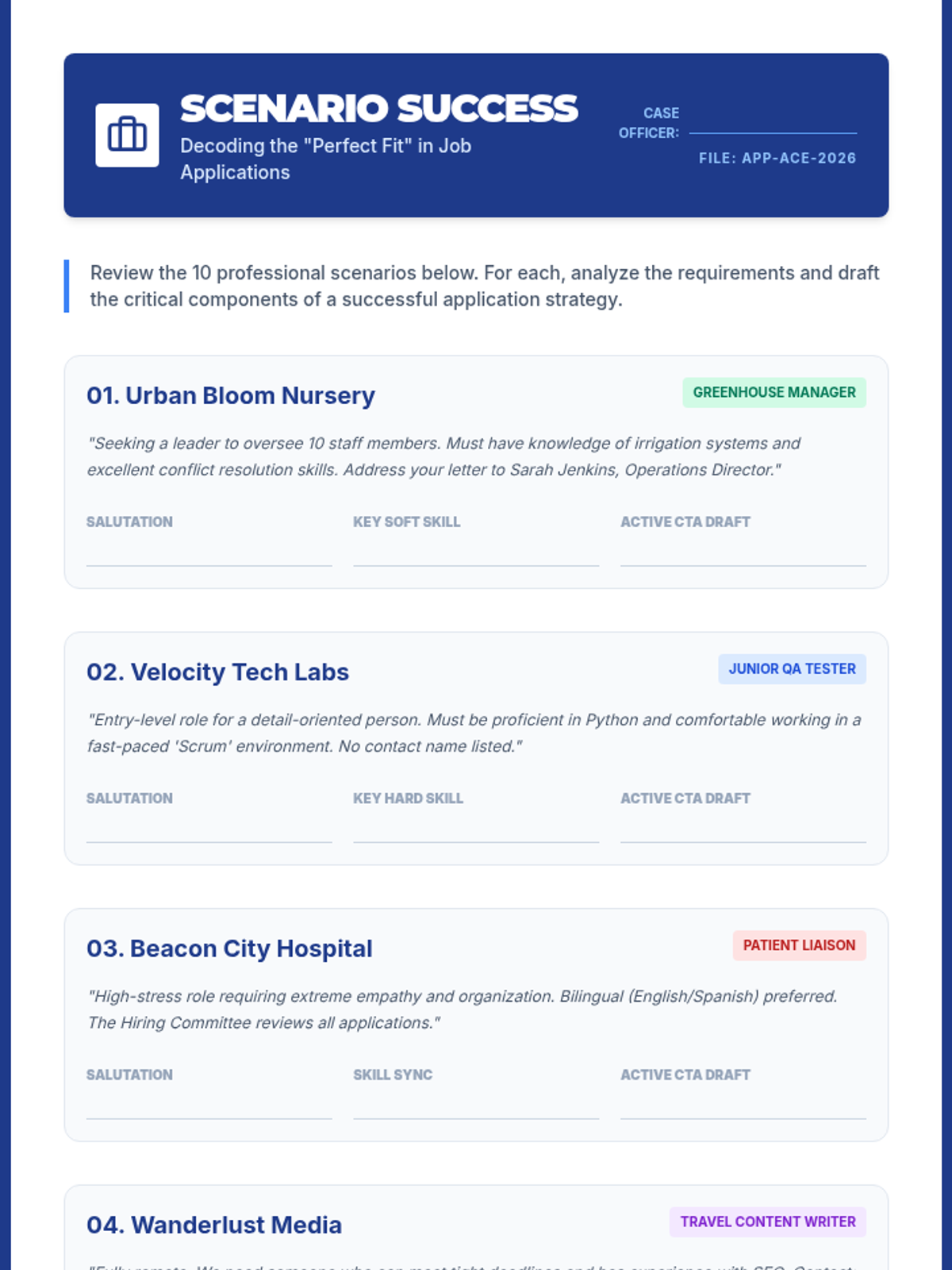
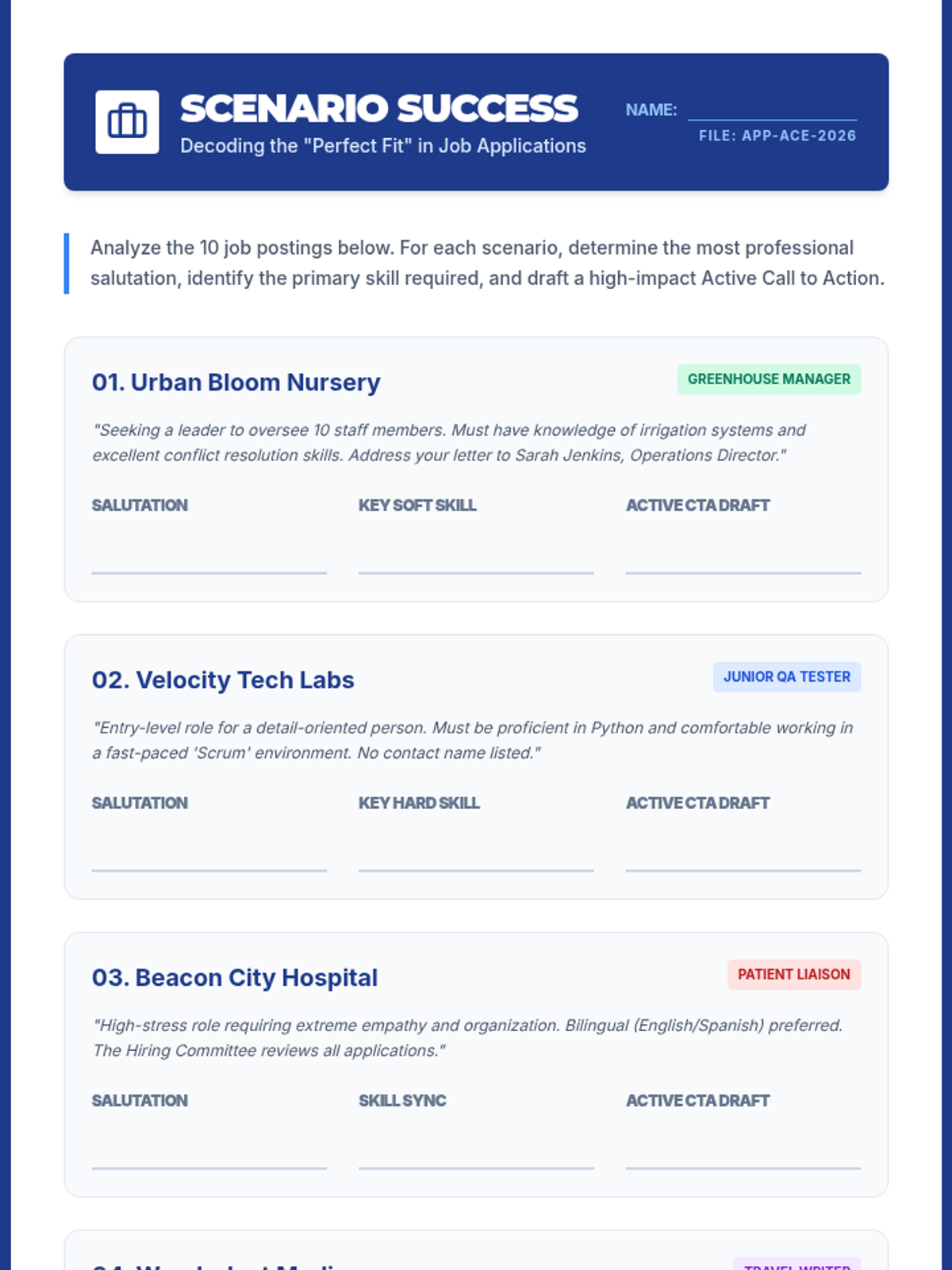
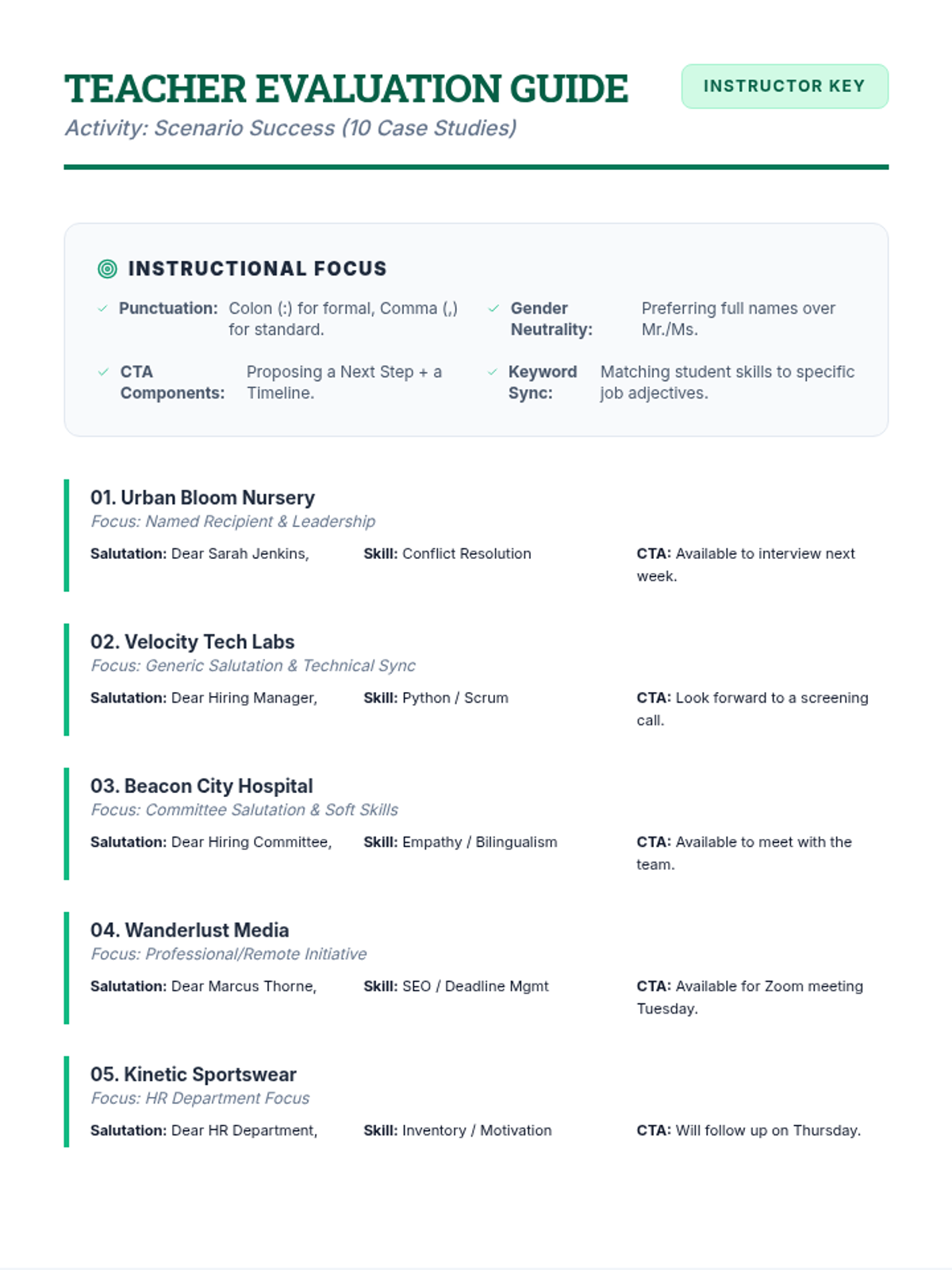
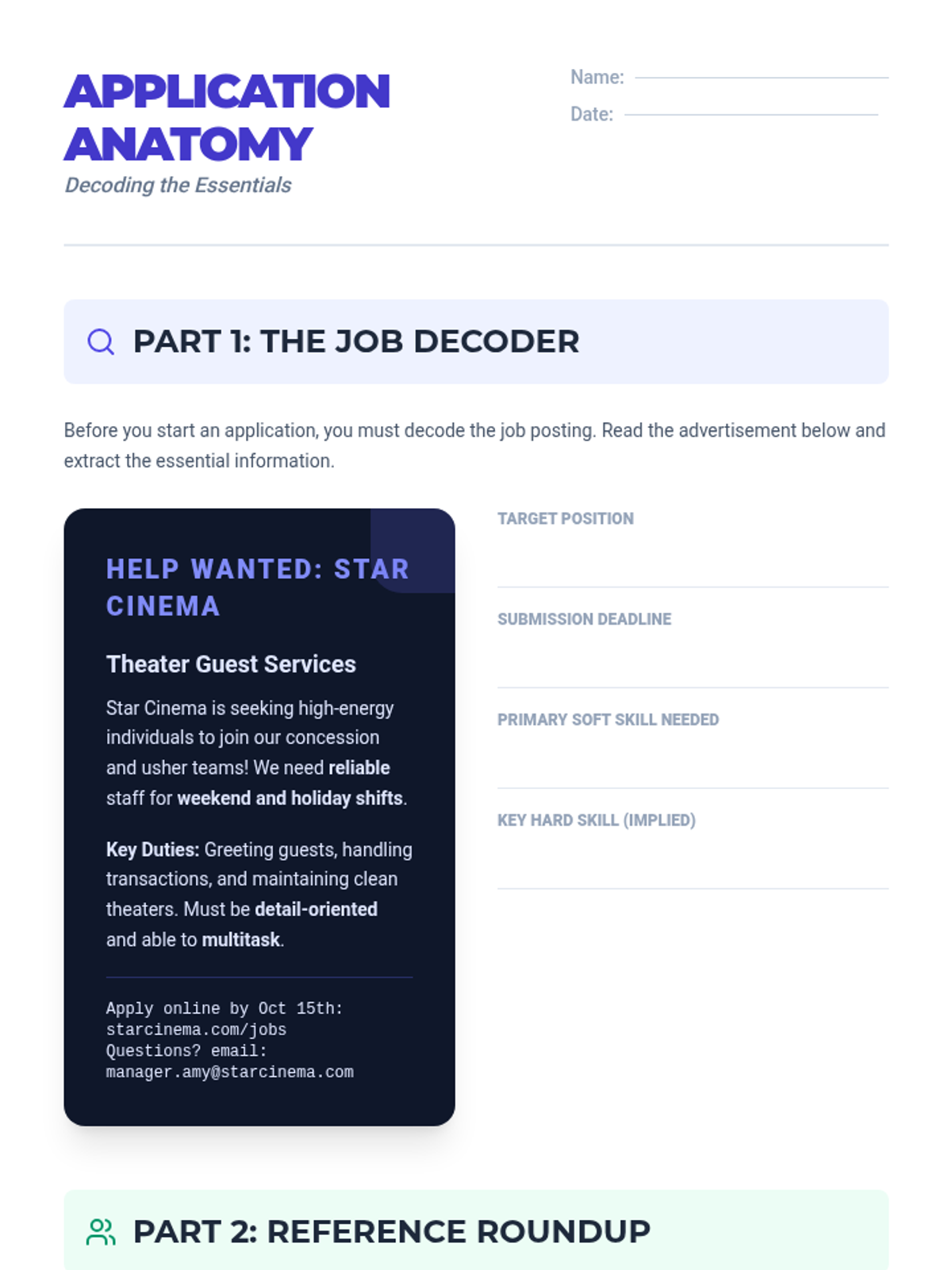
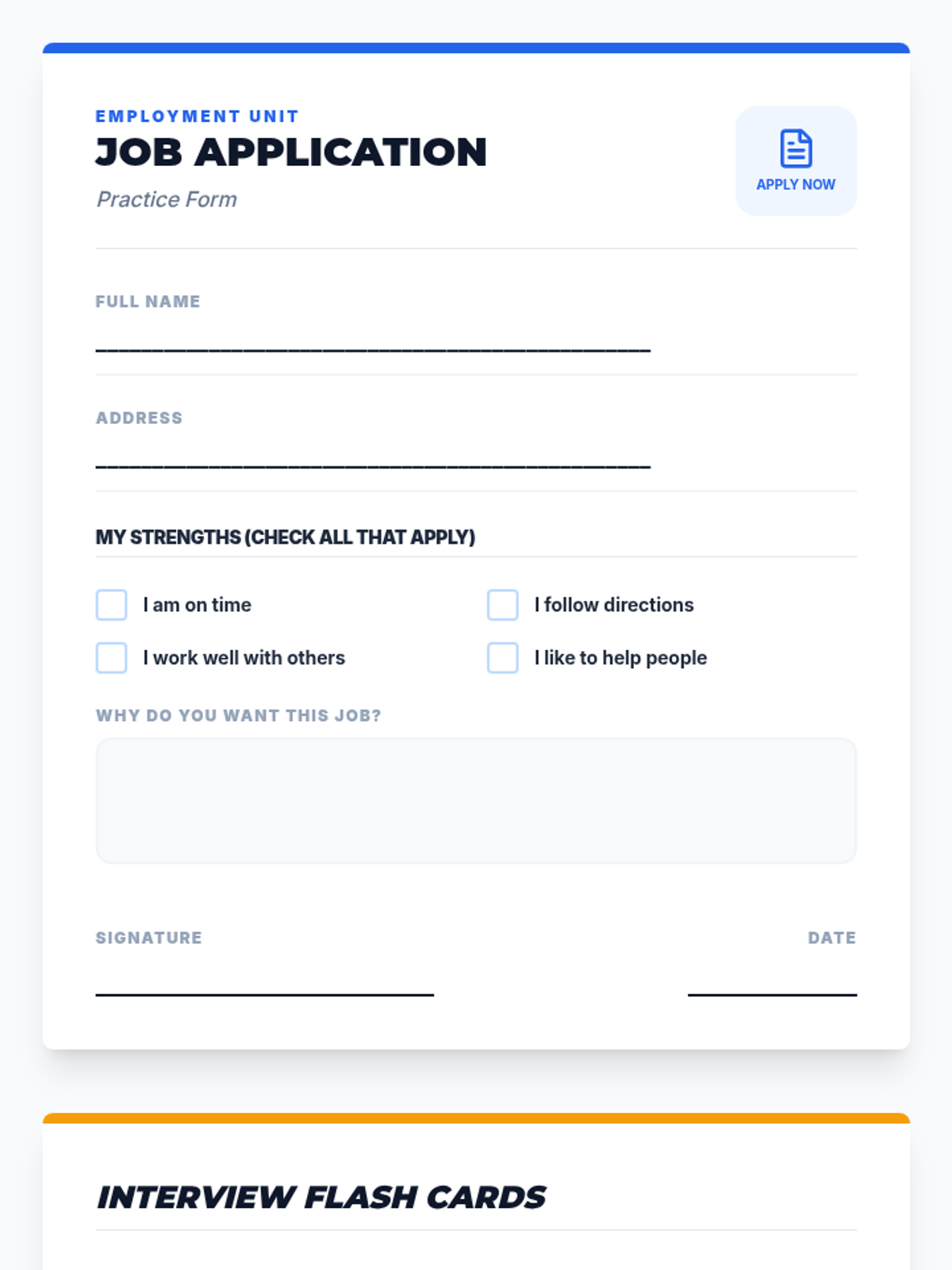
A deep dive into the mechanics of job applications, cover letter construction, and managing professional references.
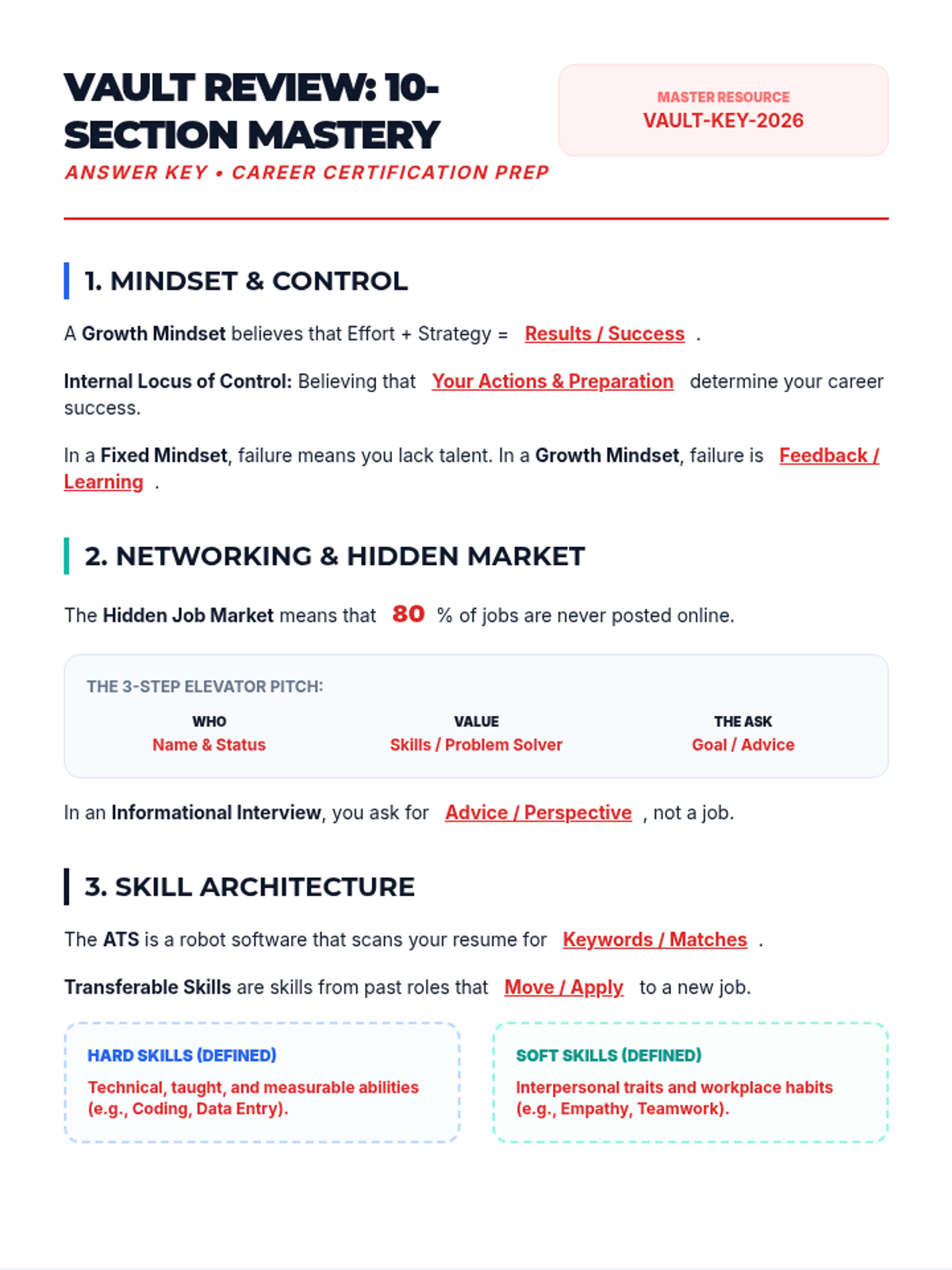
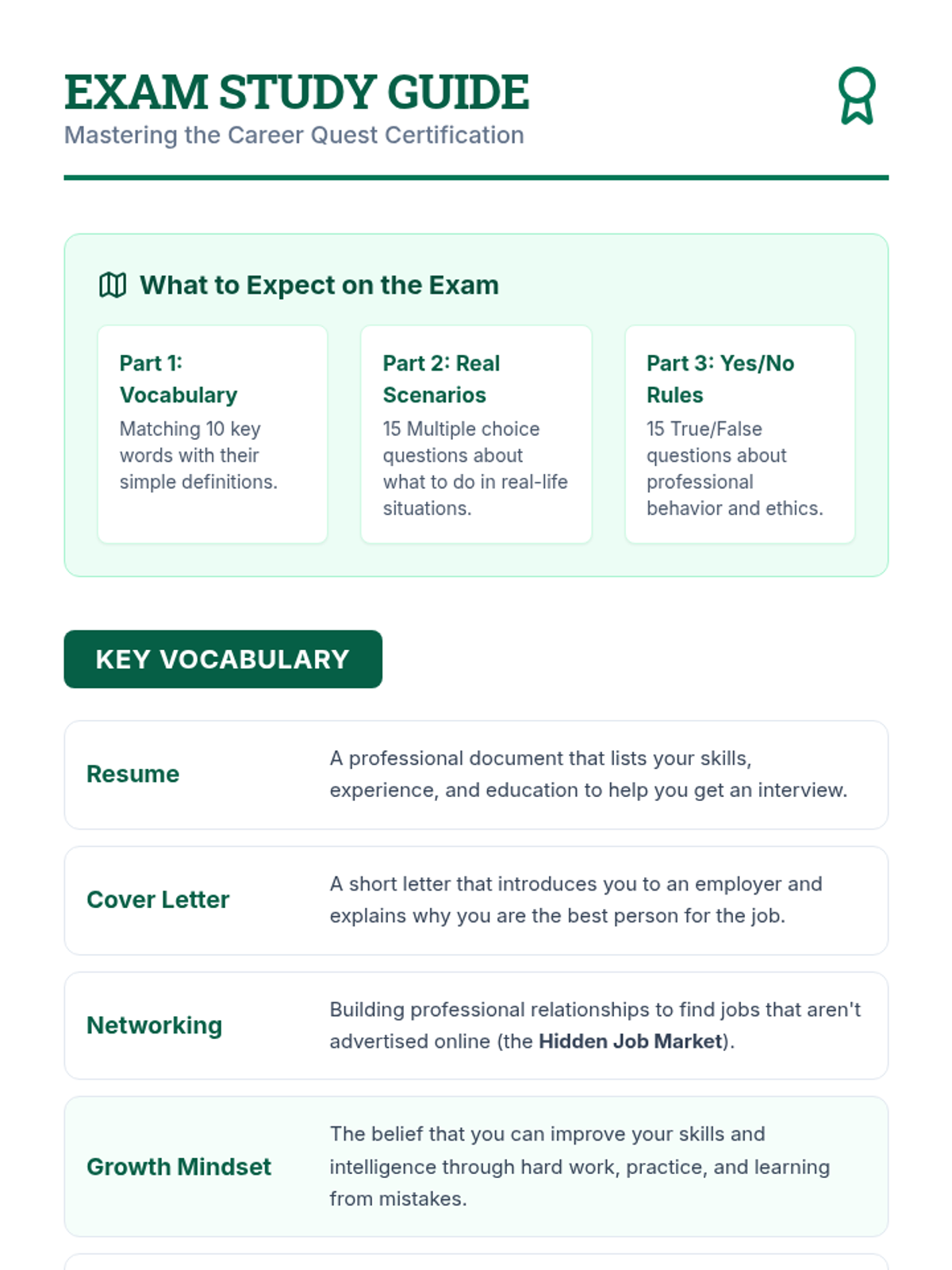
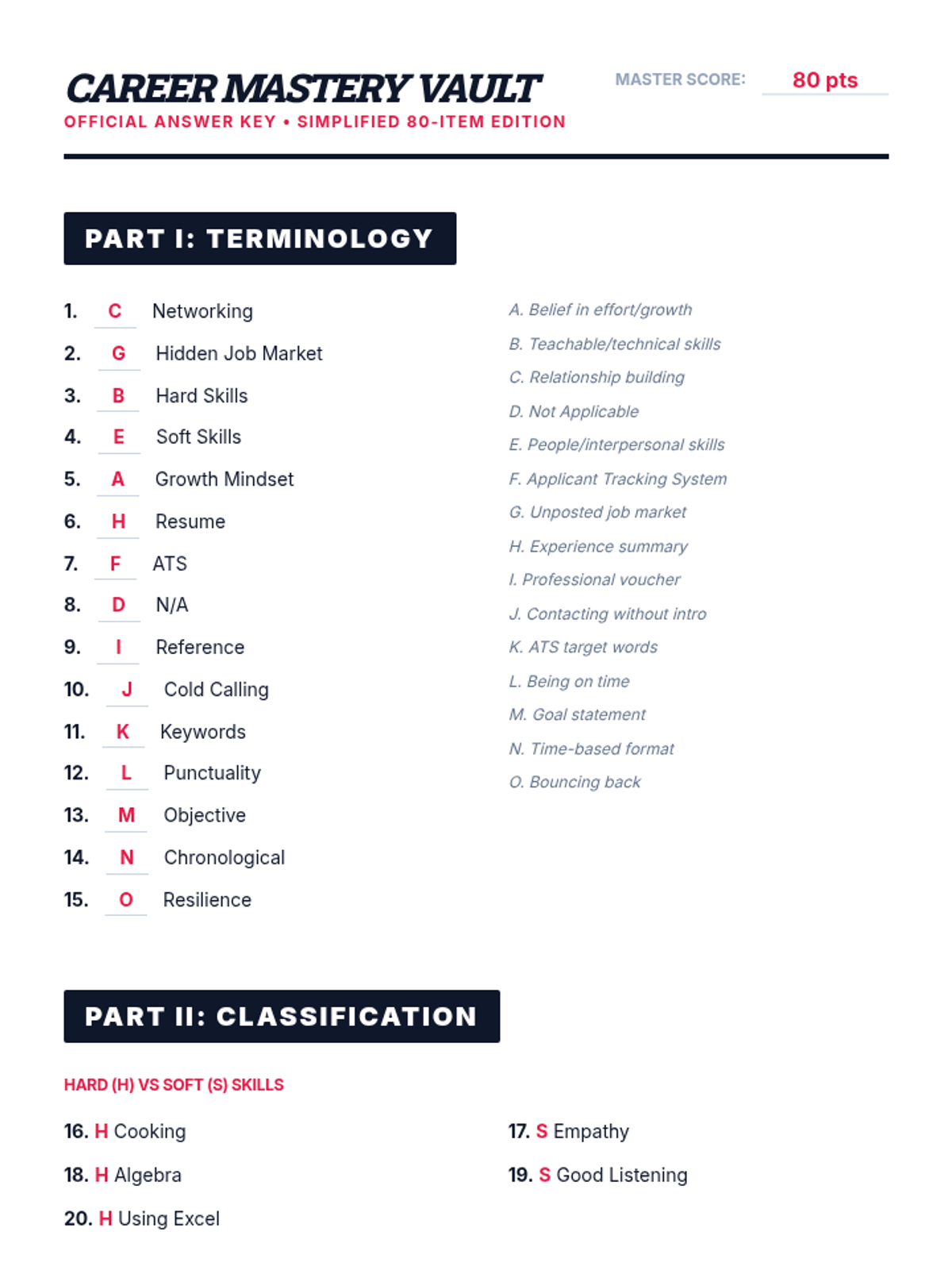
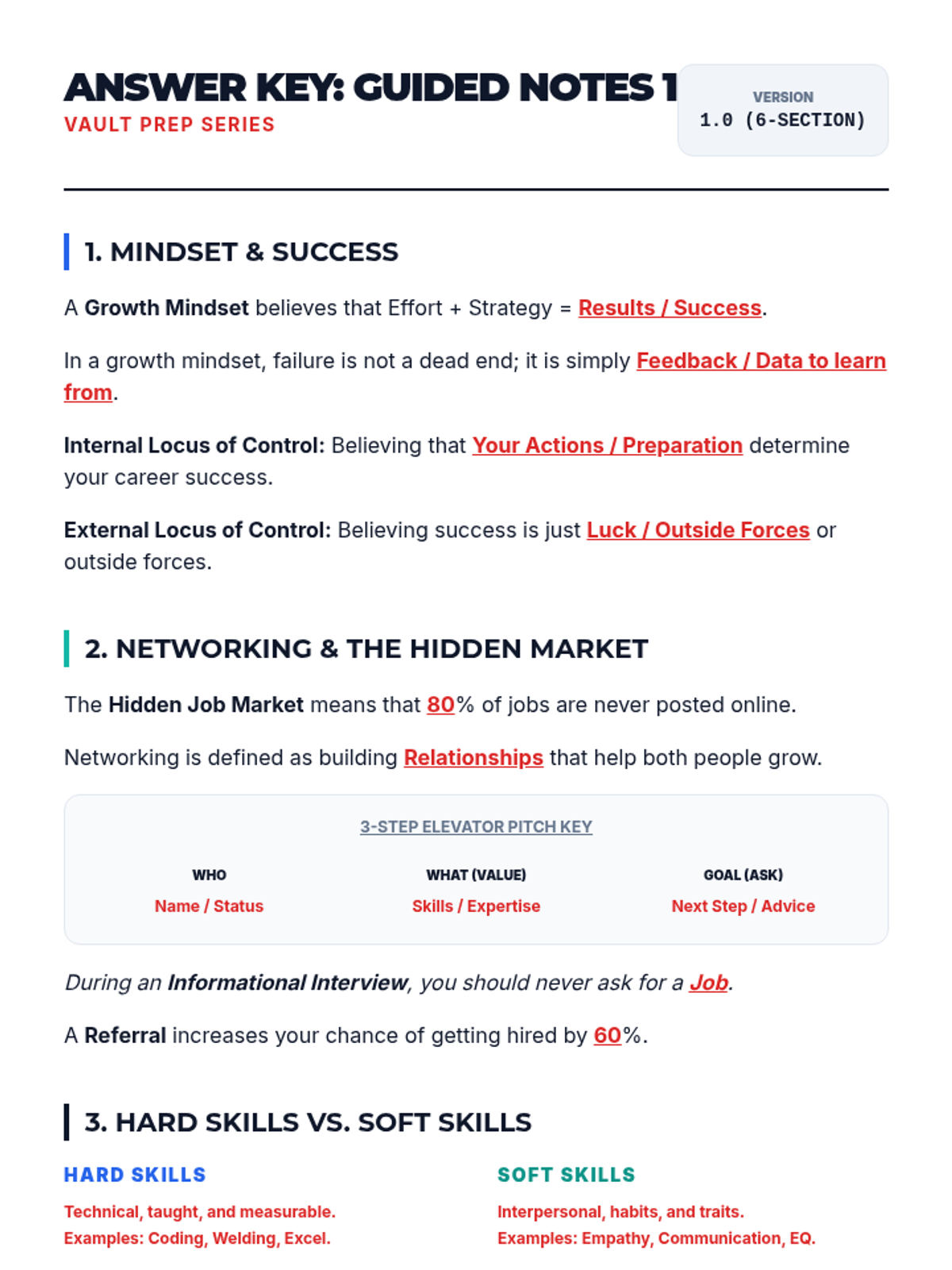
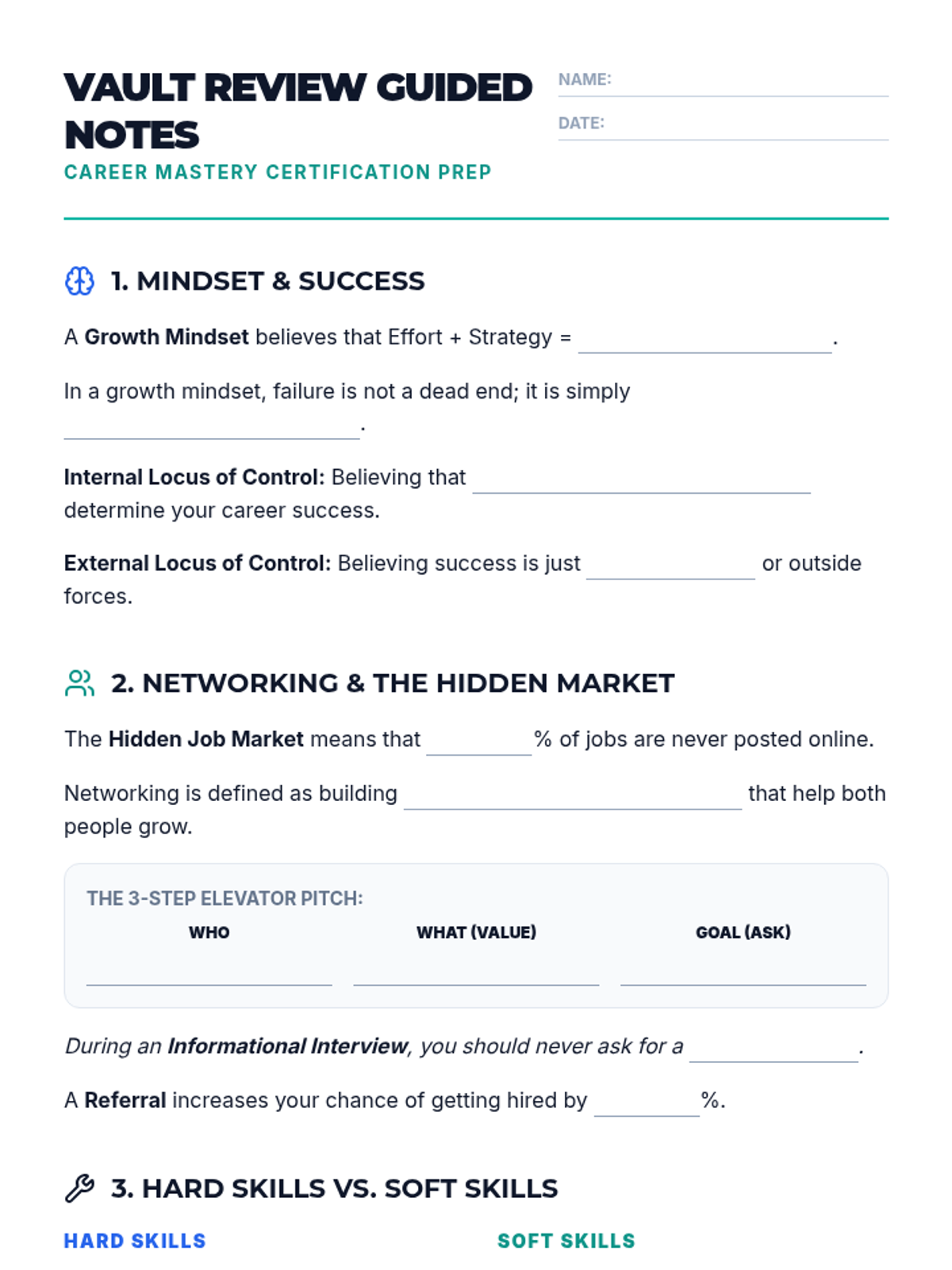
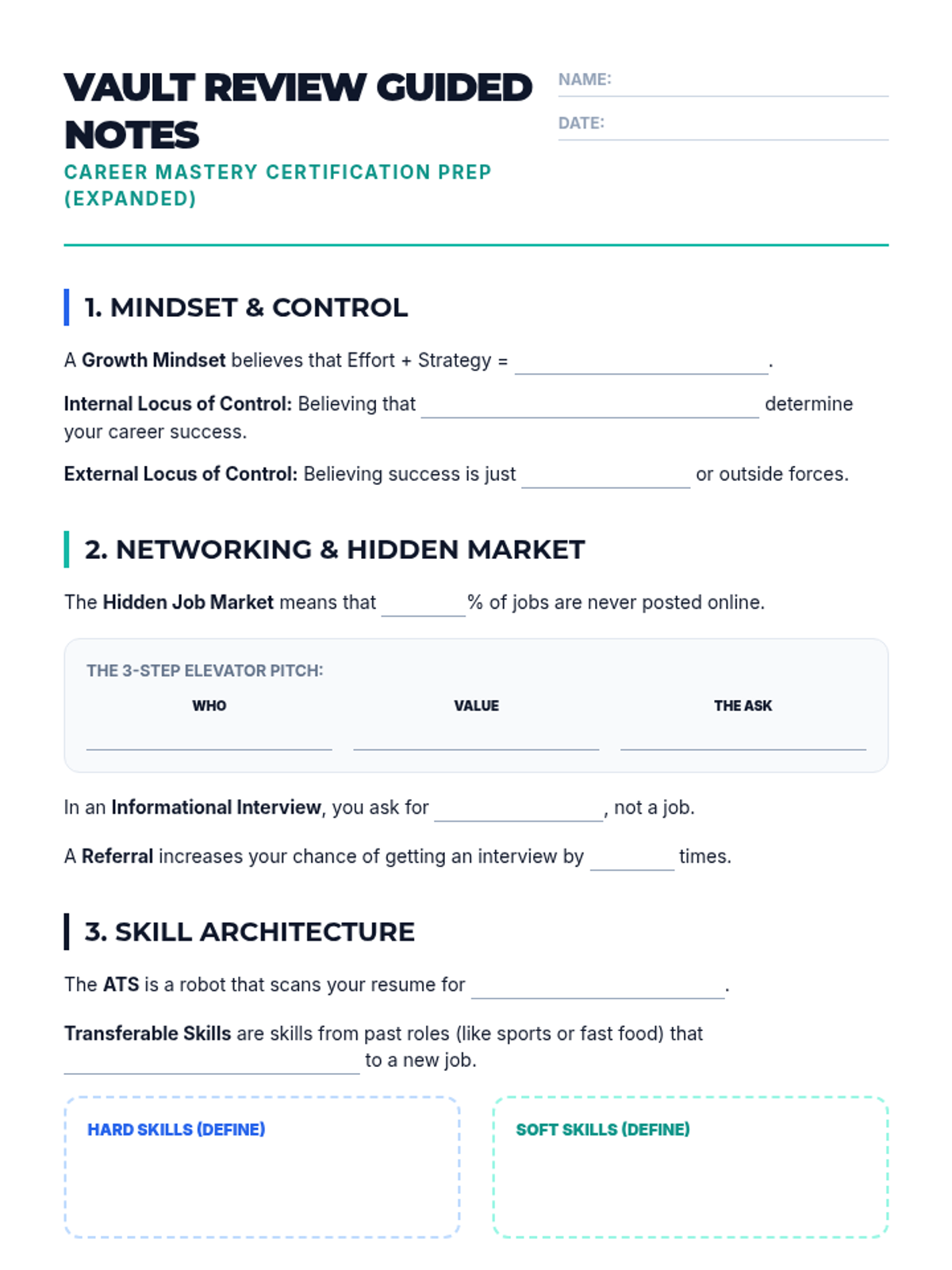
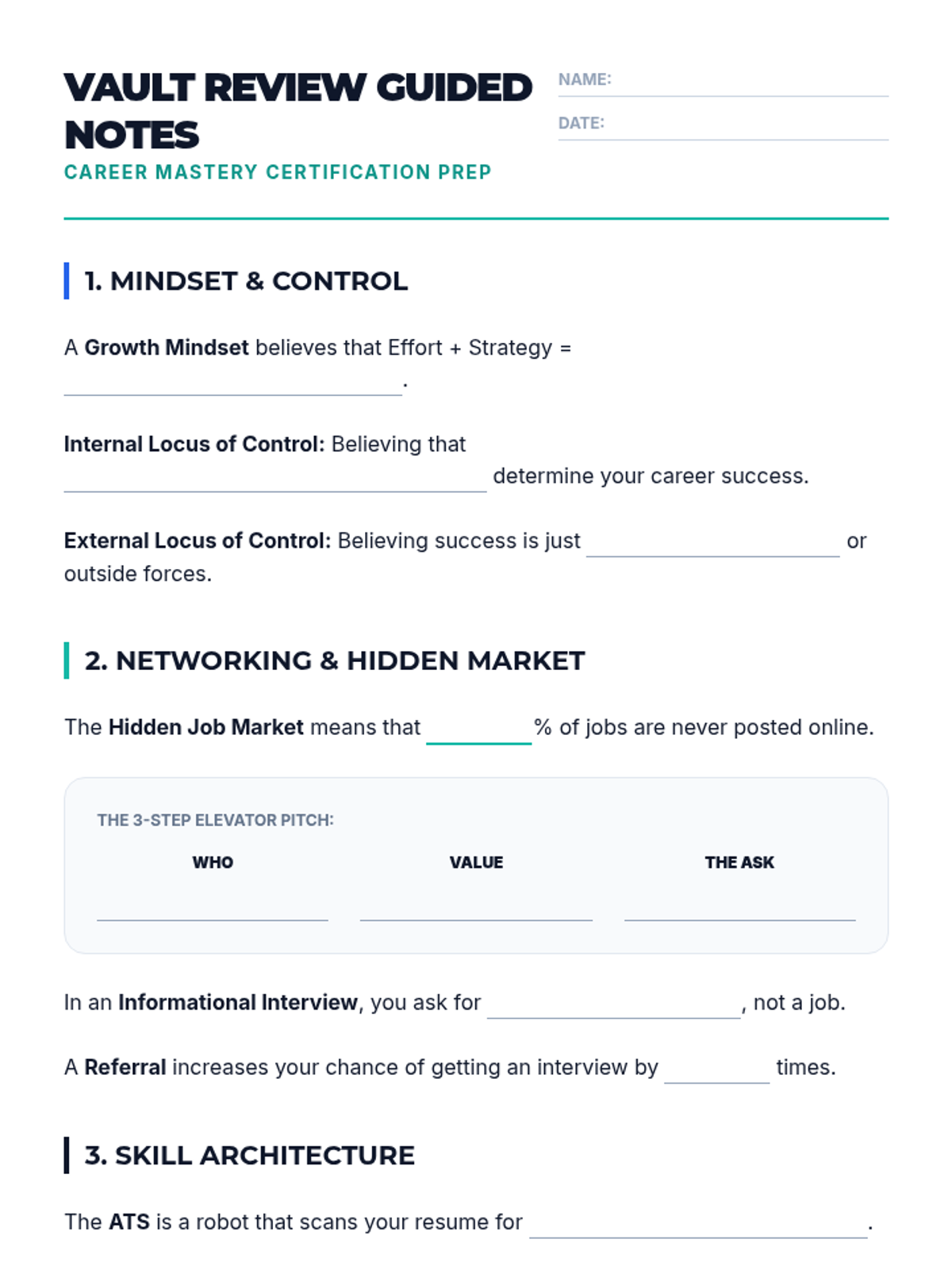
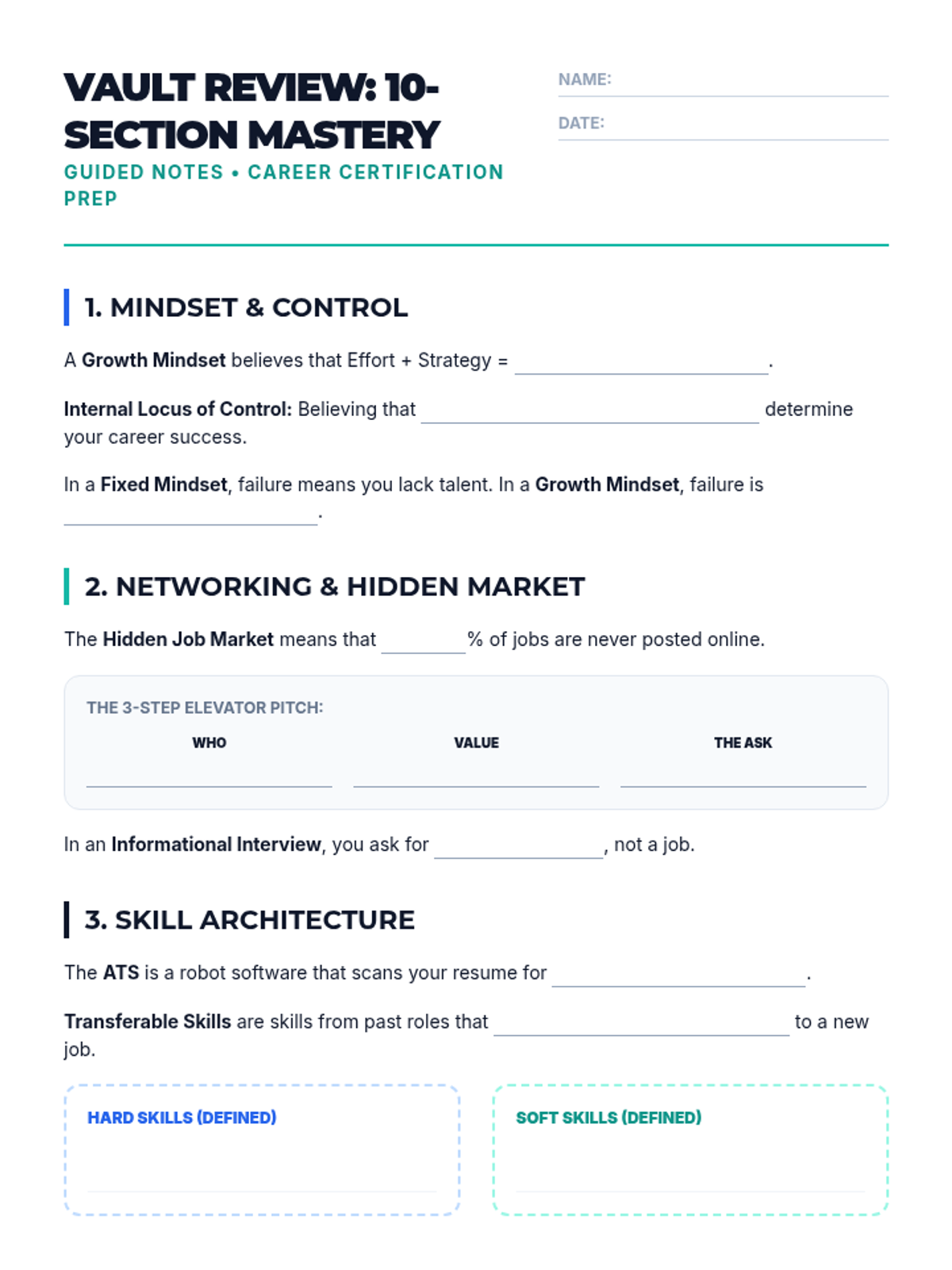
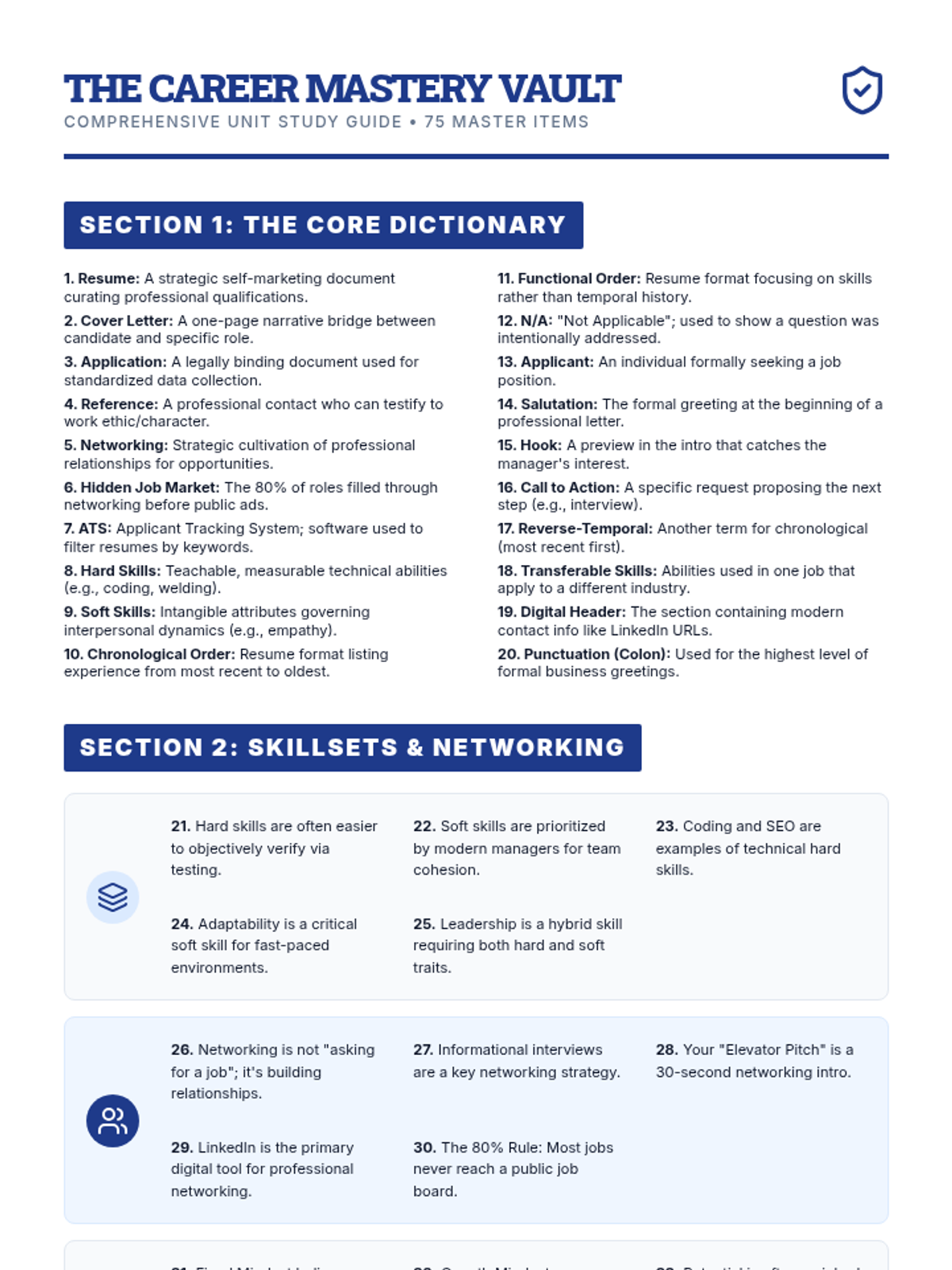
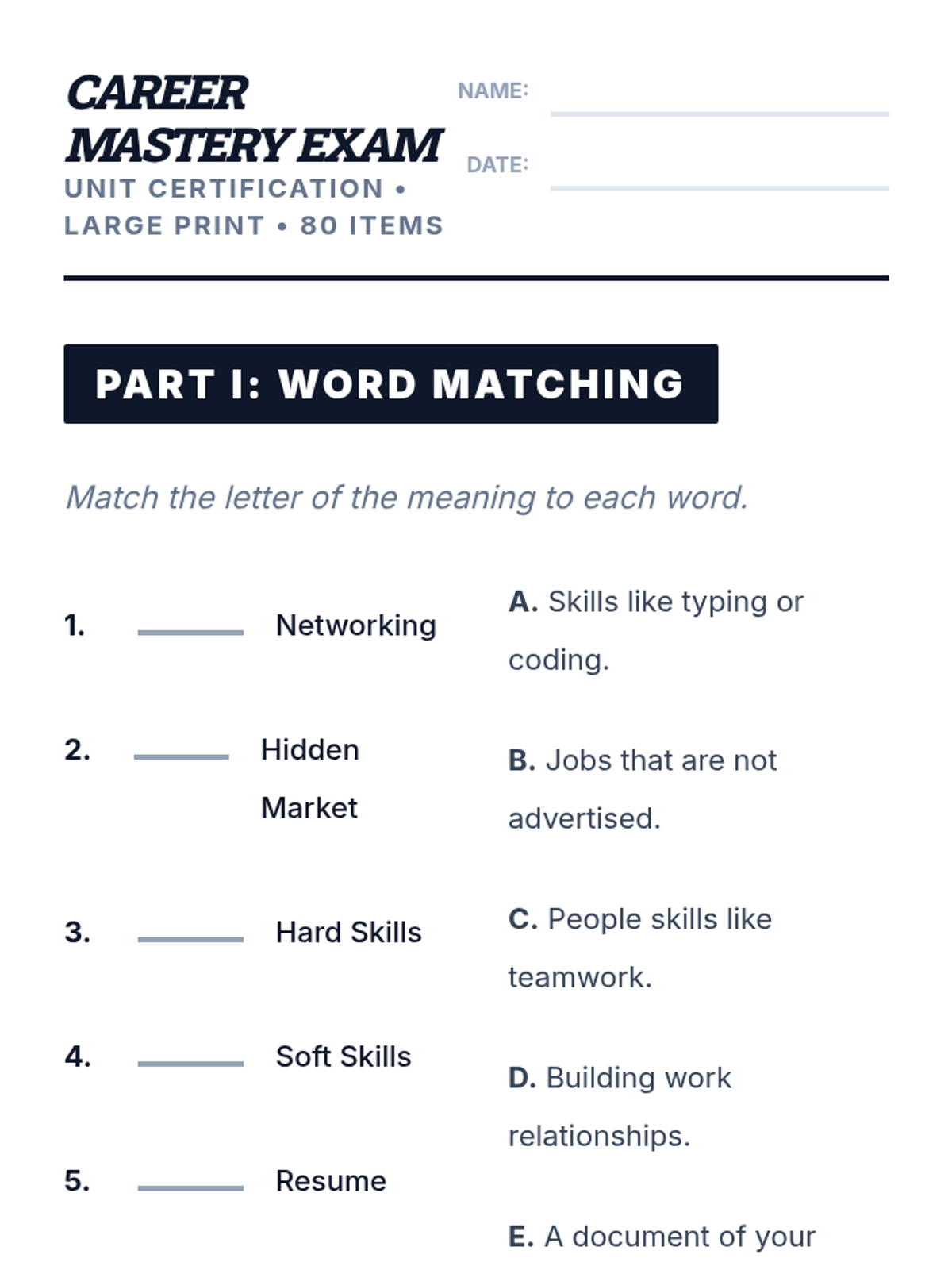
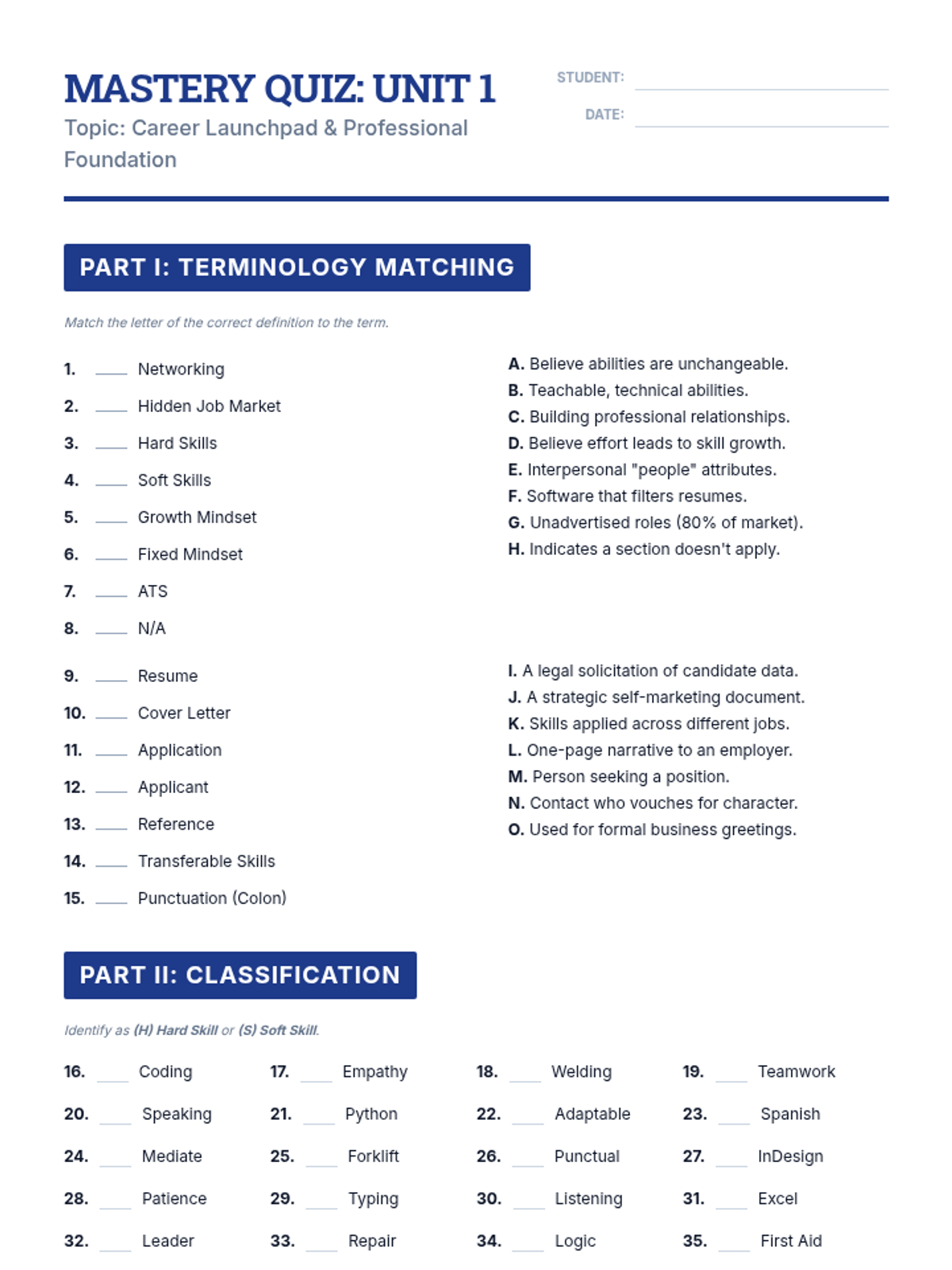
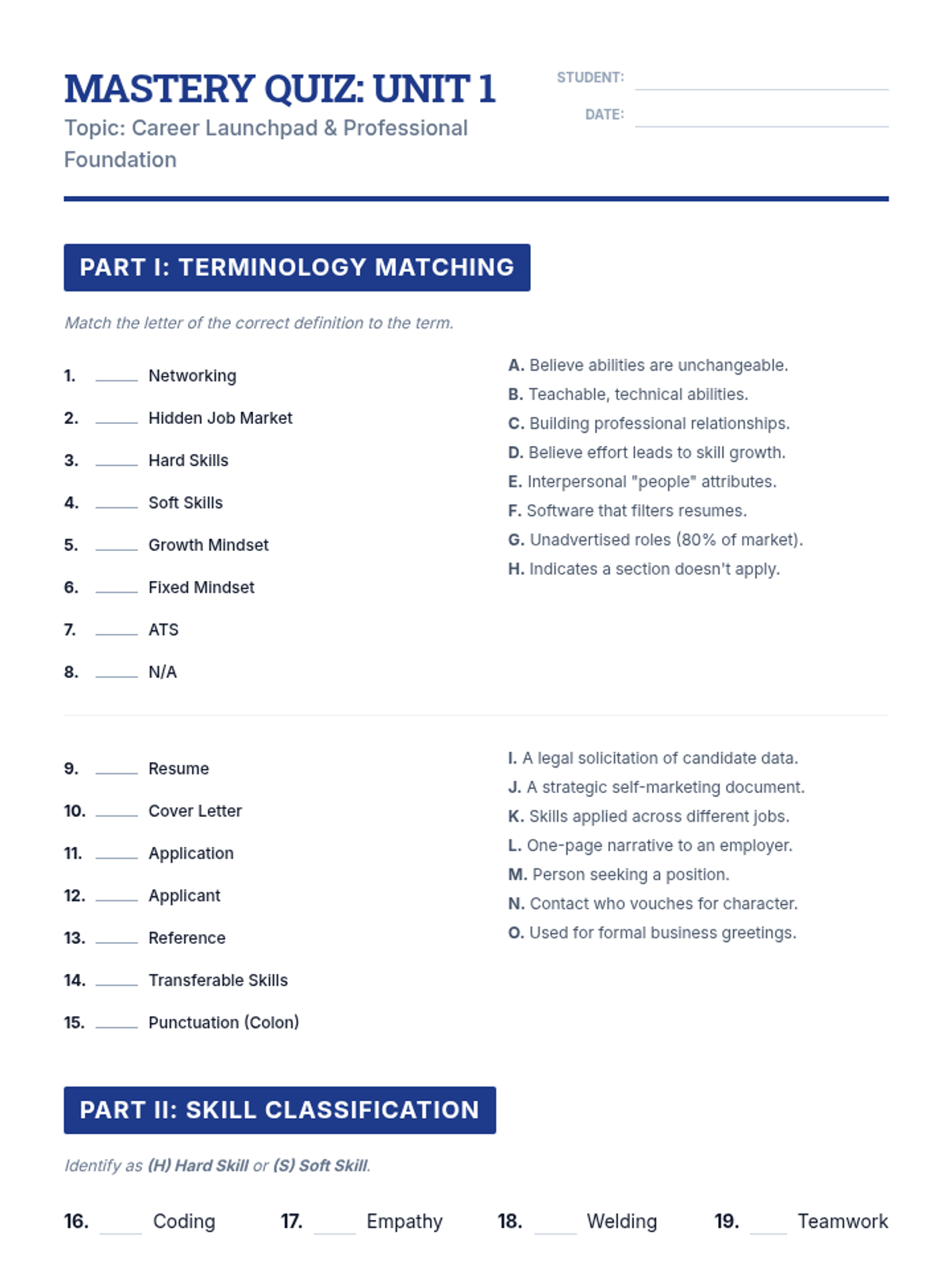
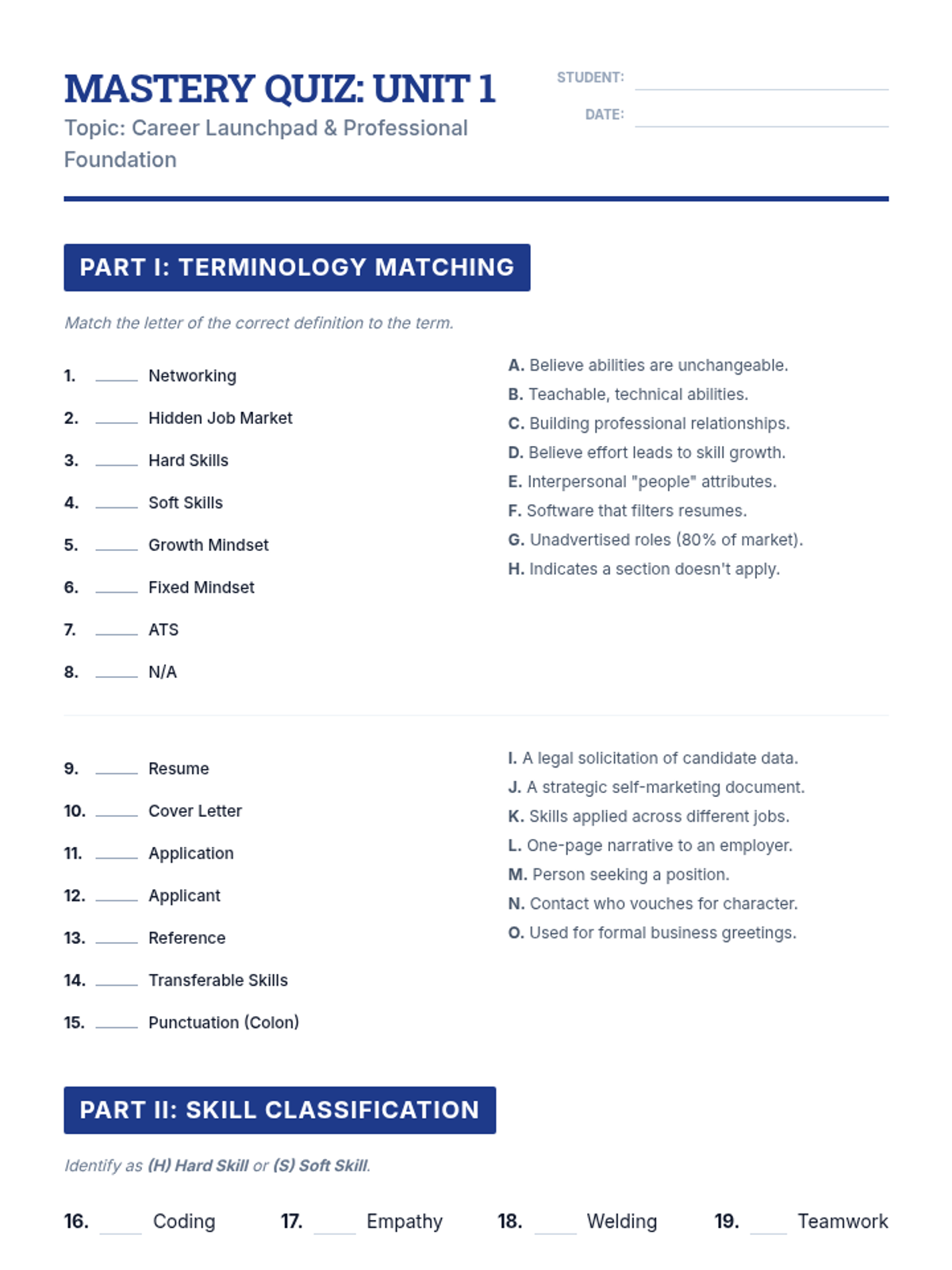
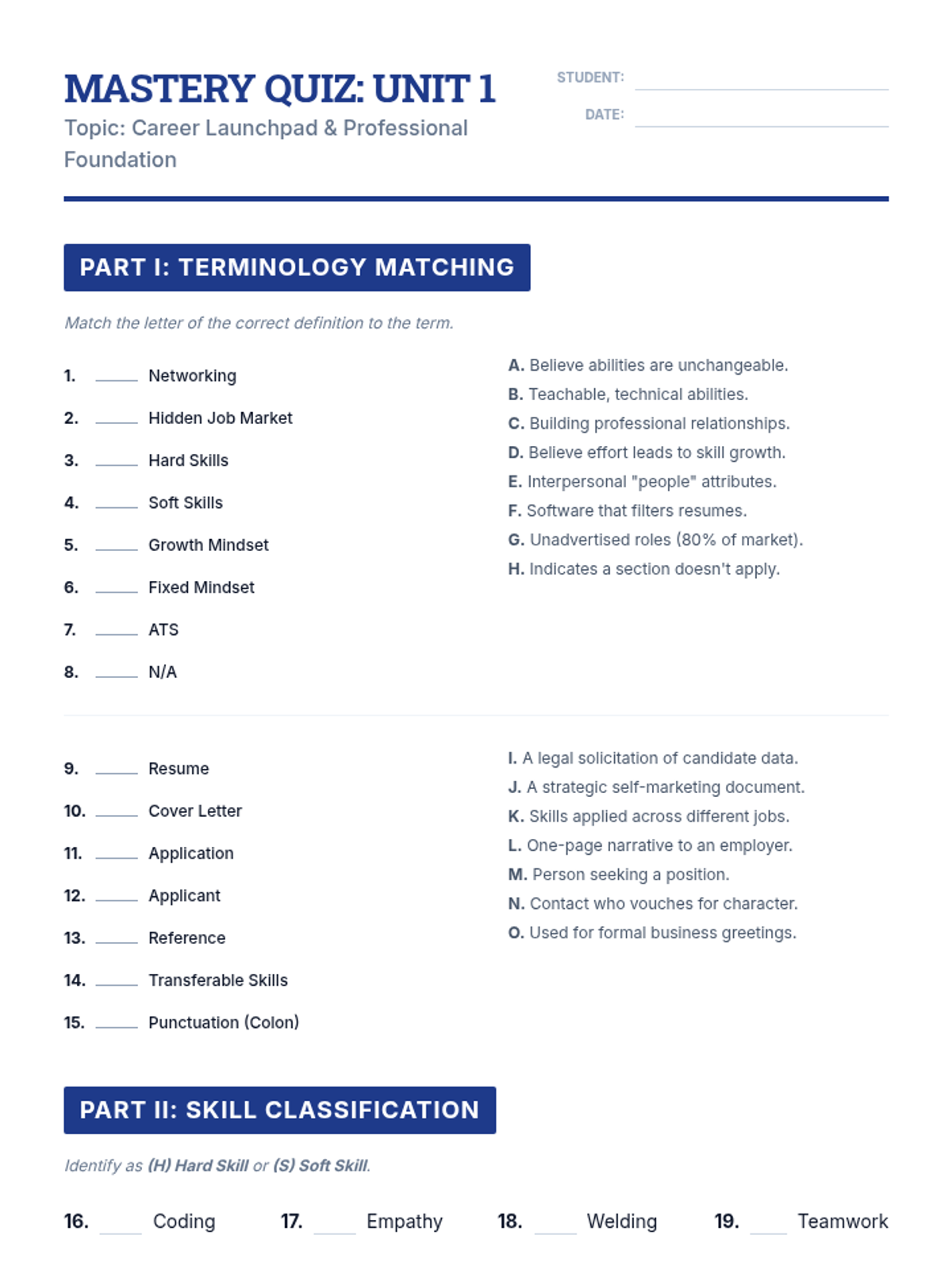
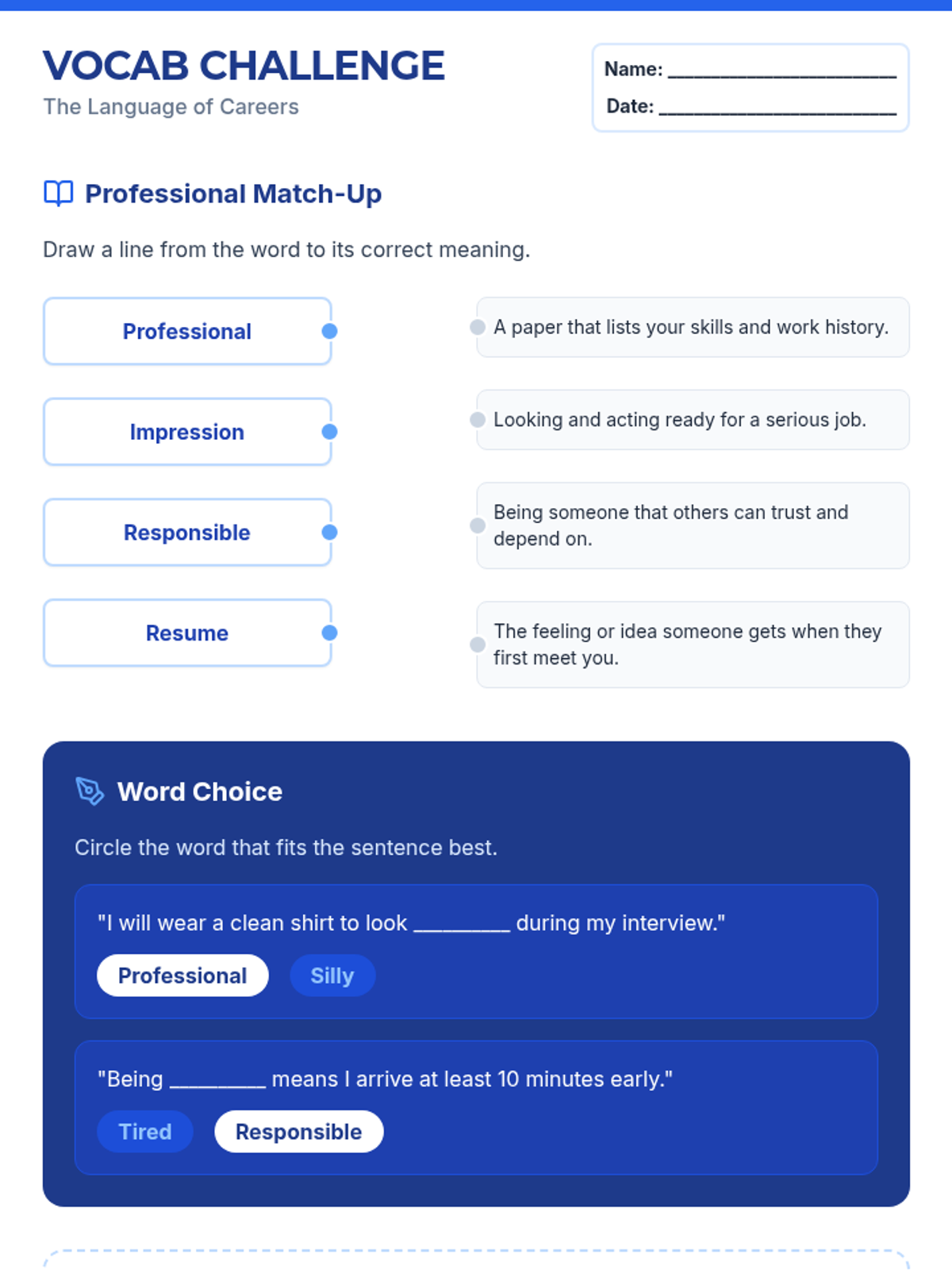
An introductory unit focusing on career terminology, professional mindset, and identifying personal strengths for the workforce.
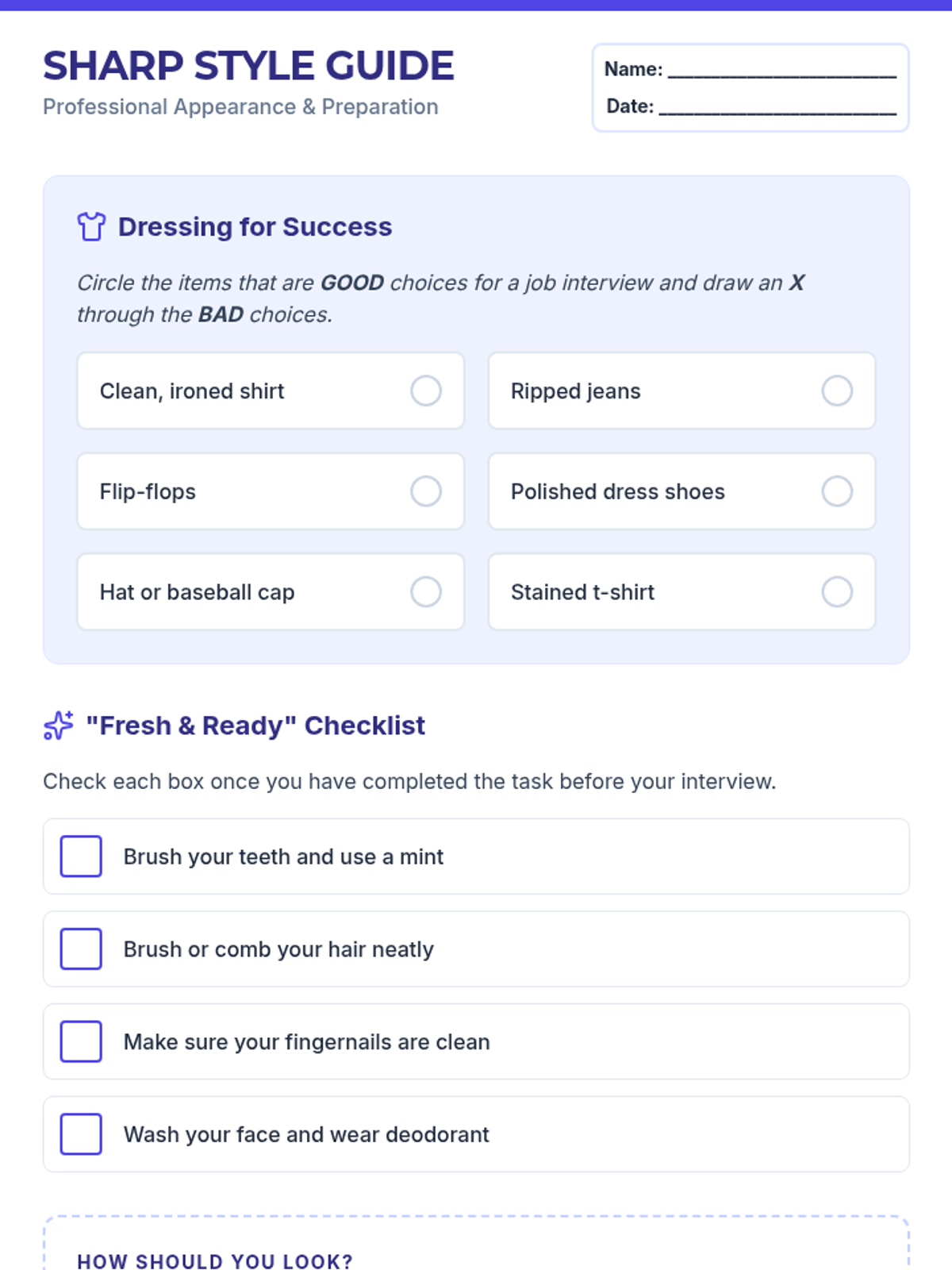
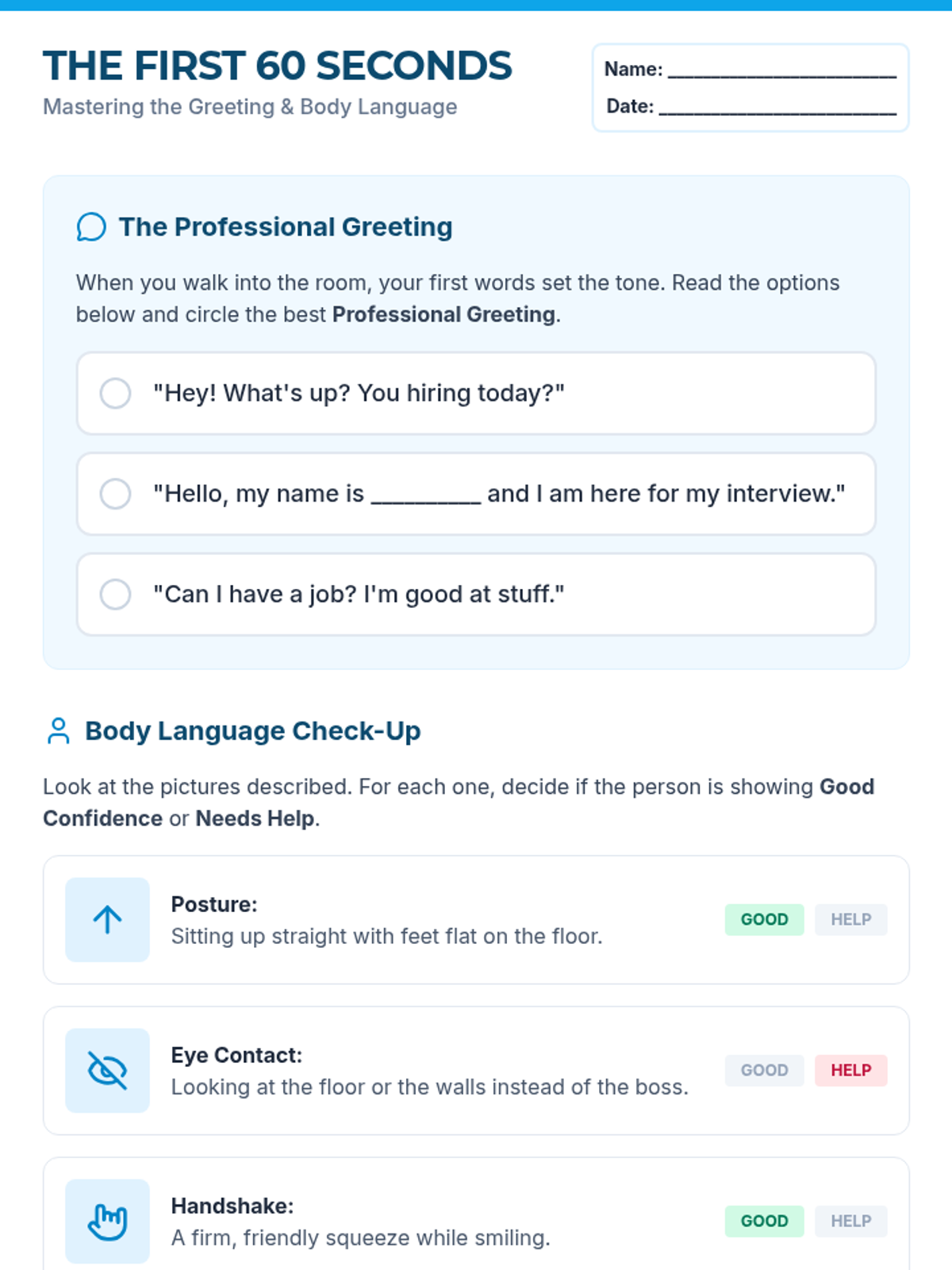
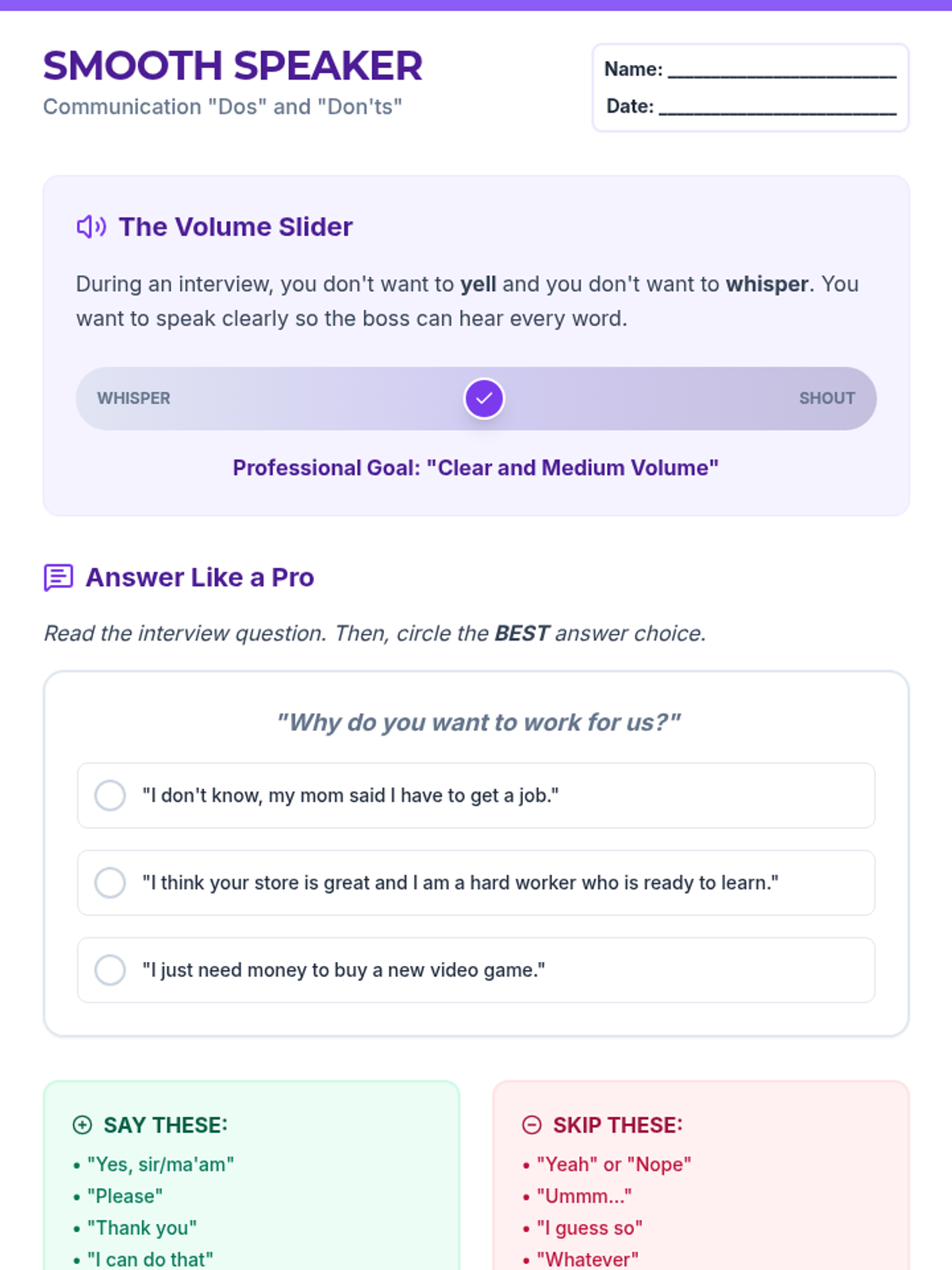
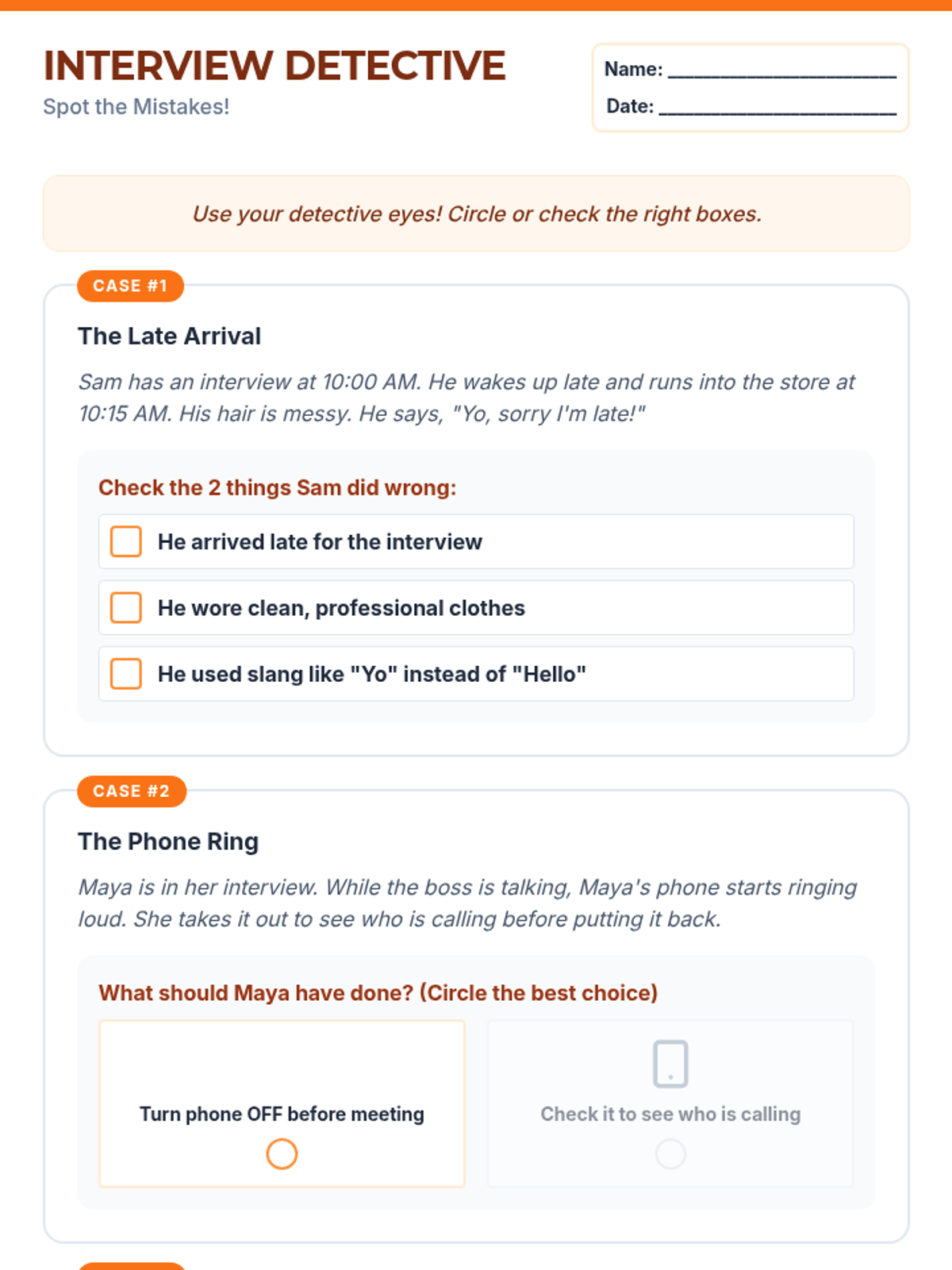
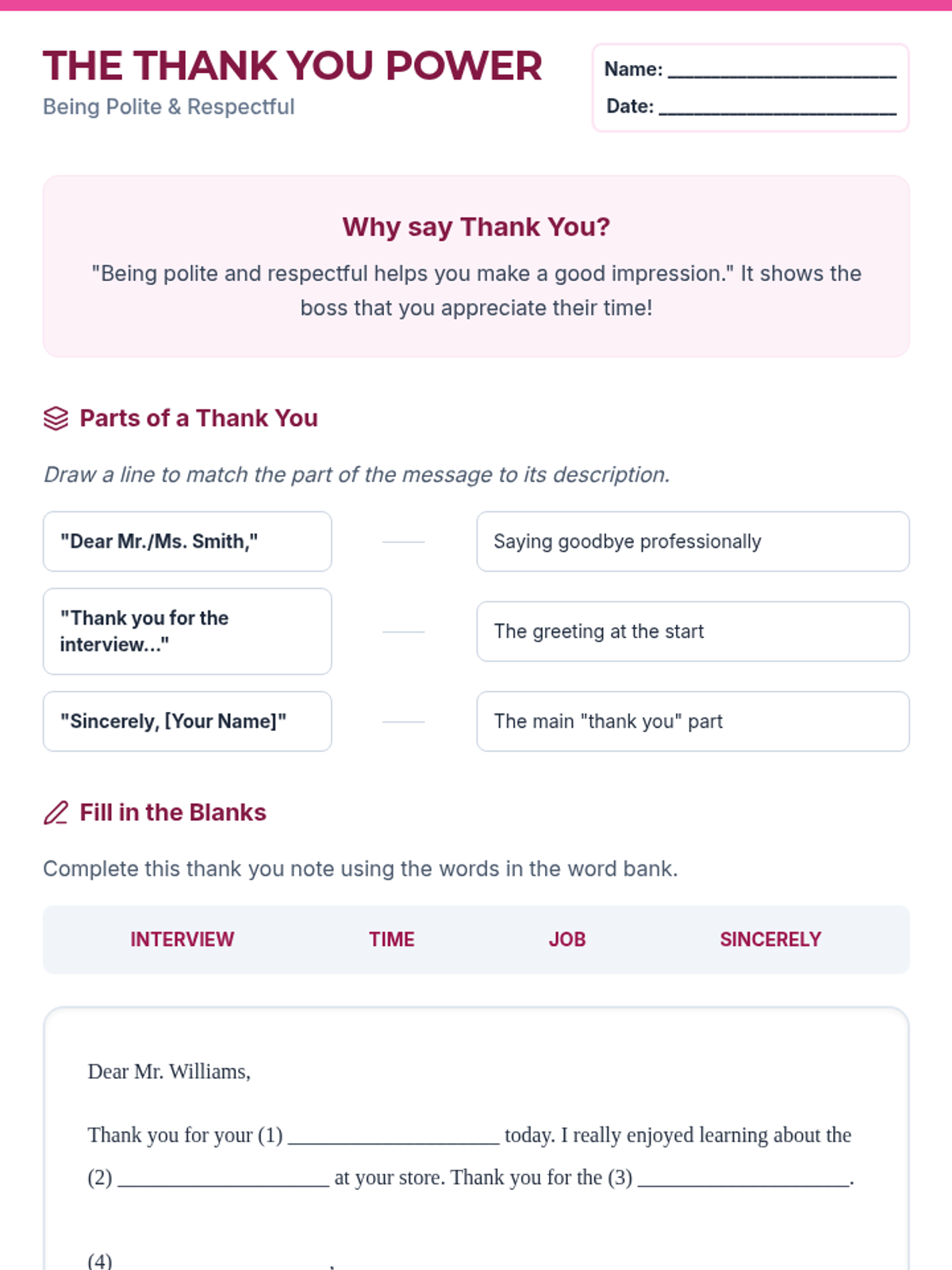
Students will learn how to present their best selves during a job interview by mastering professional hygiene, active listening techniques, and polite communication strategies.
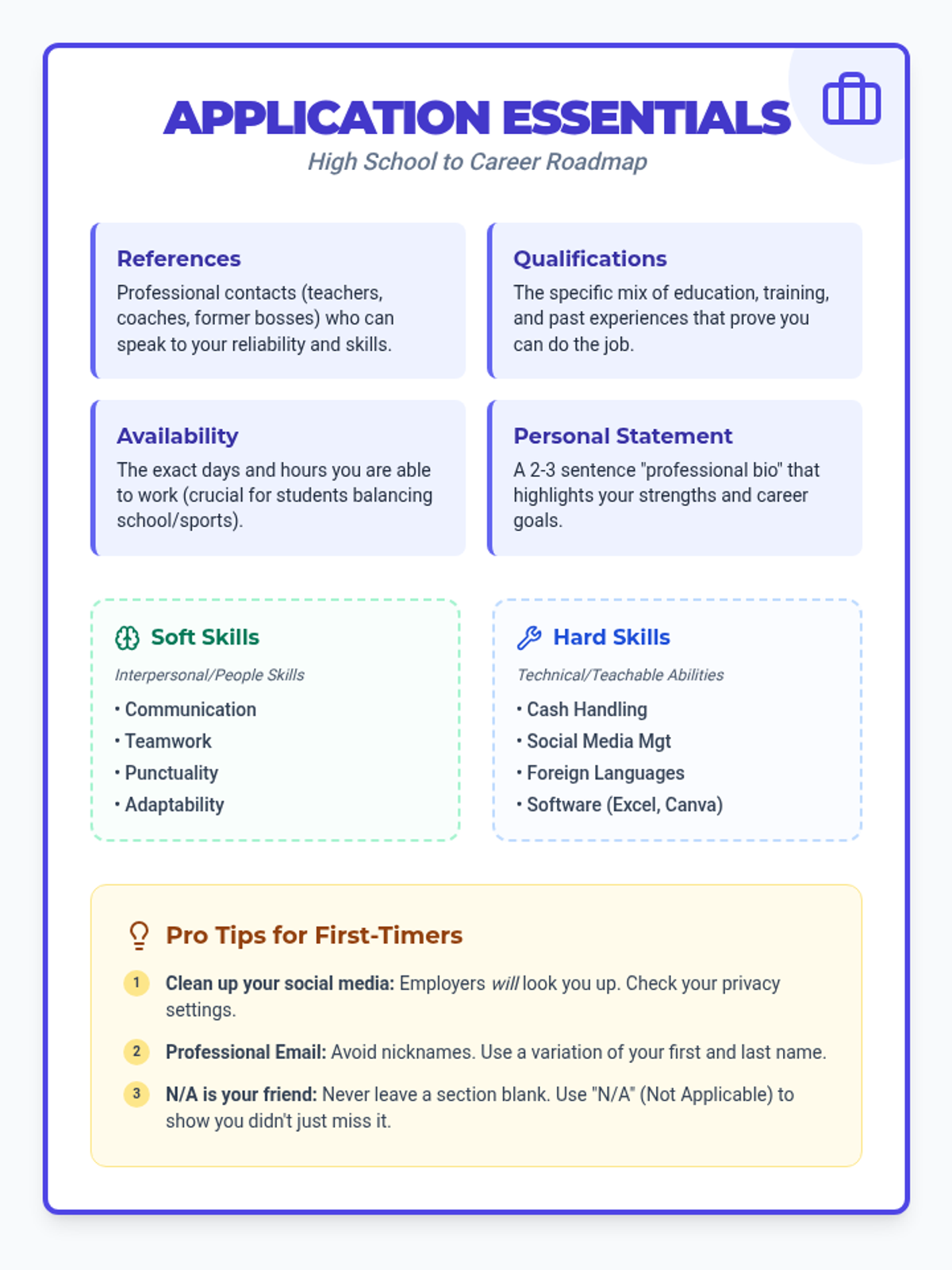
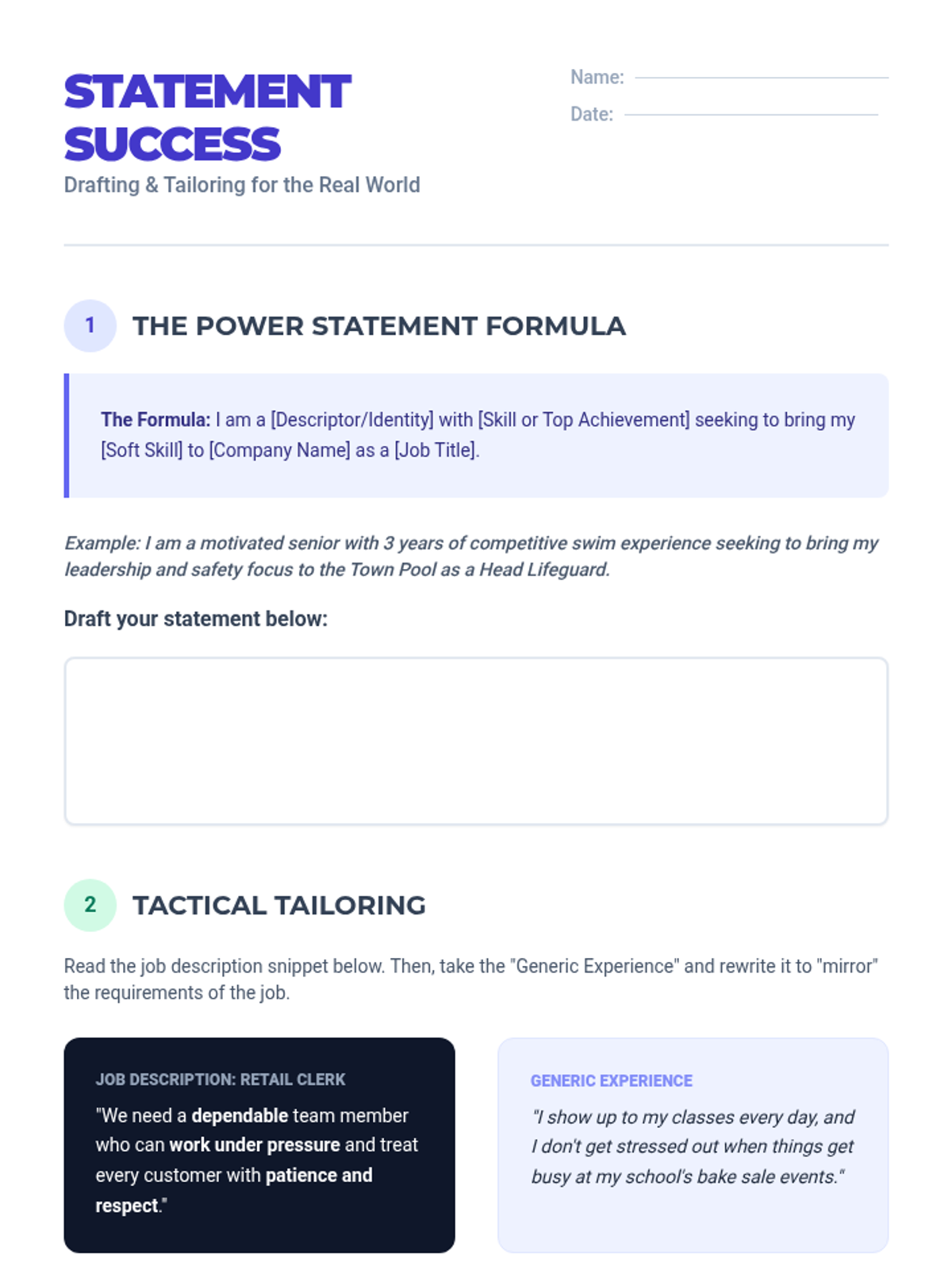
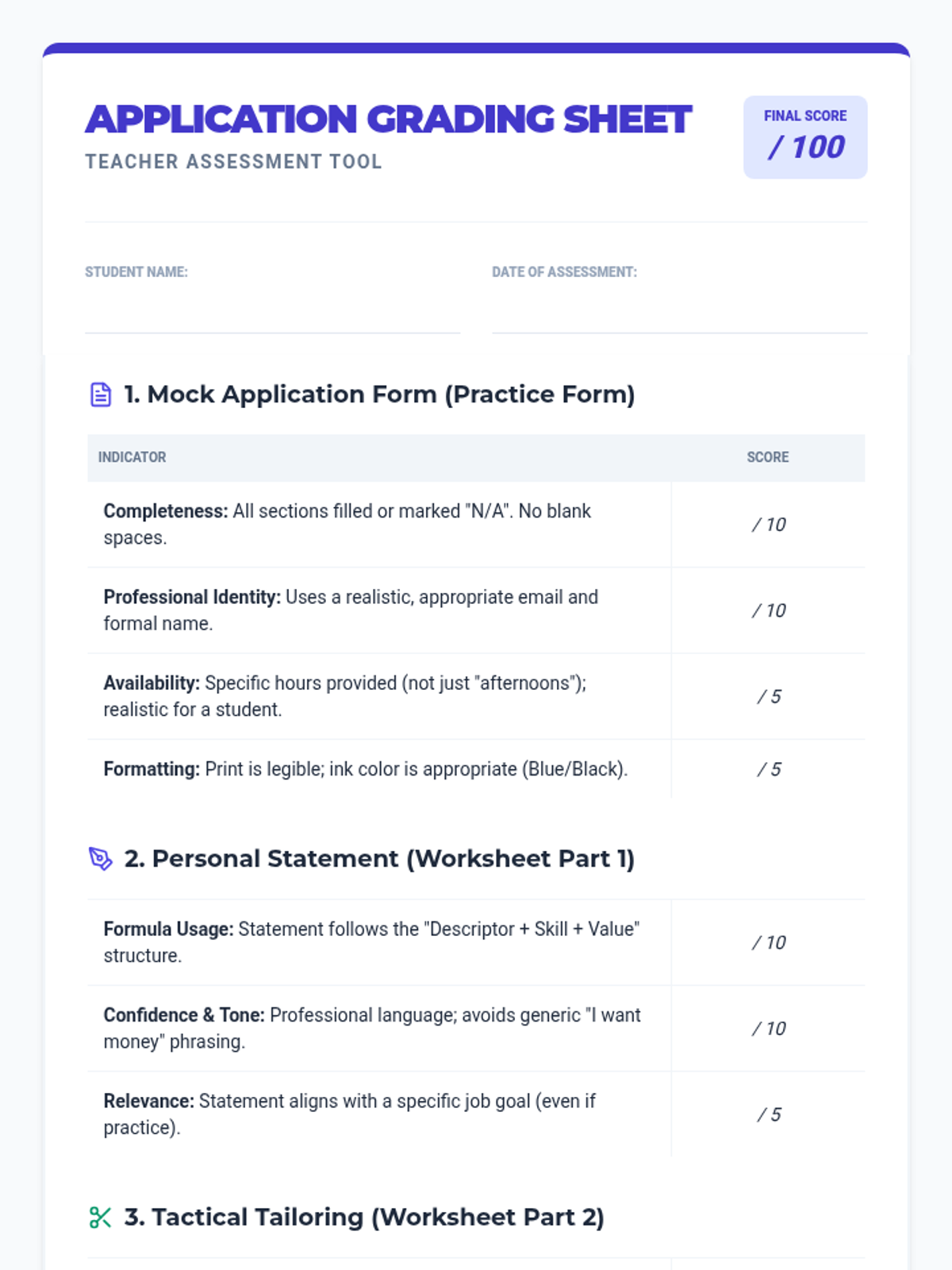
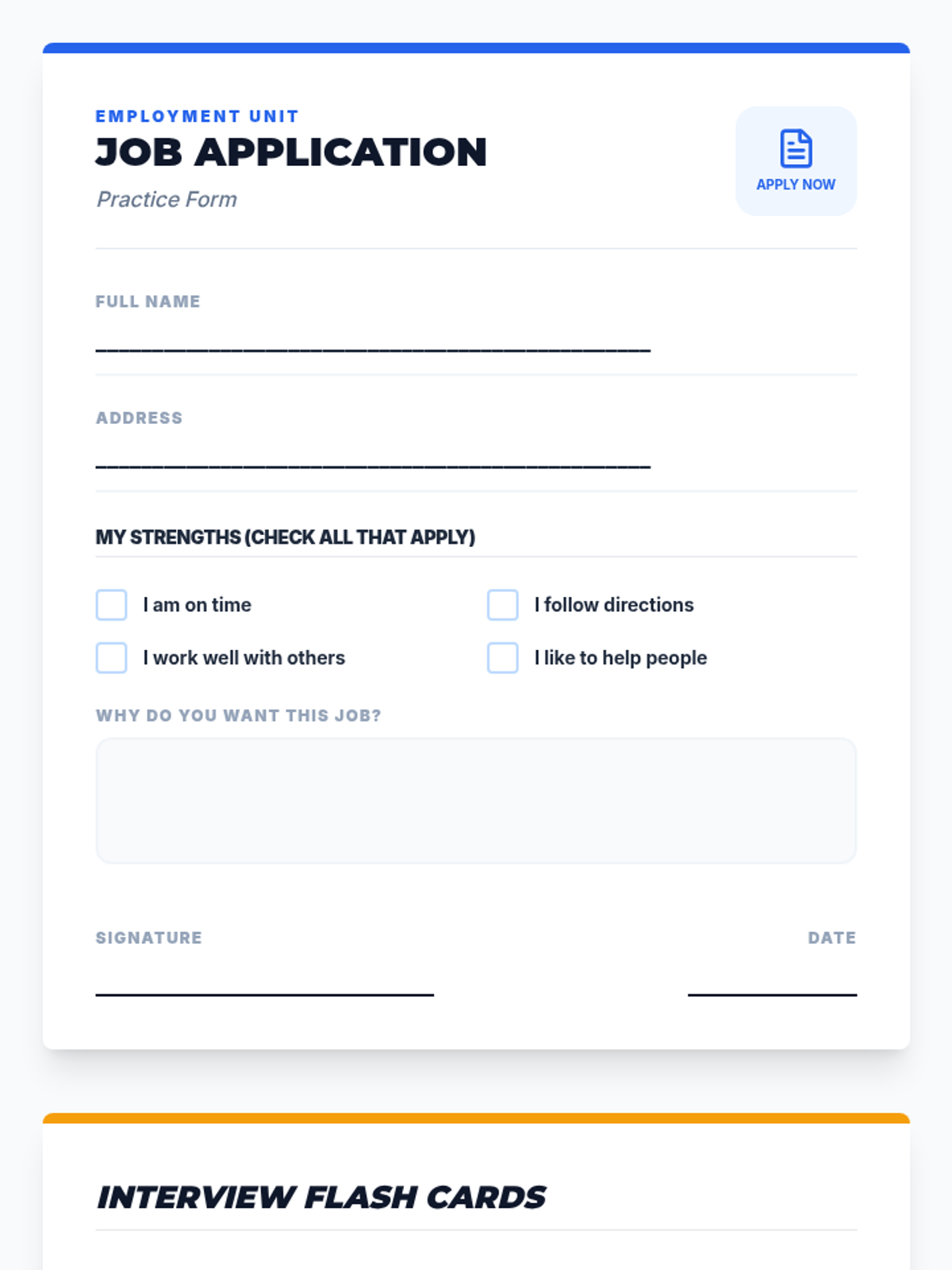
A high-school-focused lesson on navigating the job application process, featuring realistic practice with terminology, professional branding via personal statements, and tactical tailoring for entry-level roles.
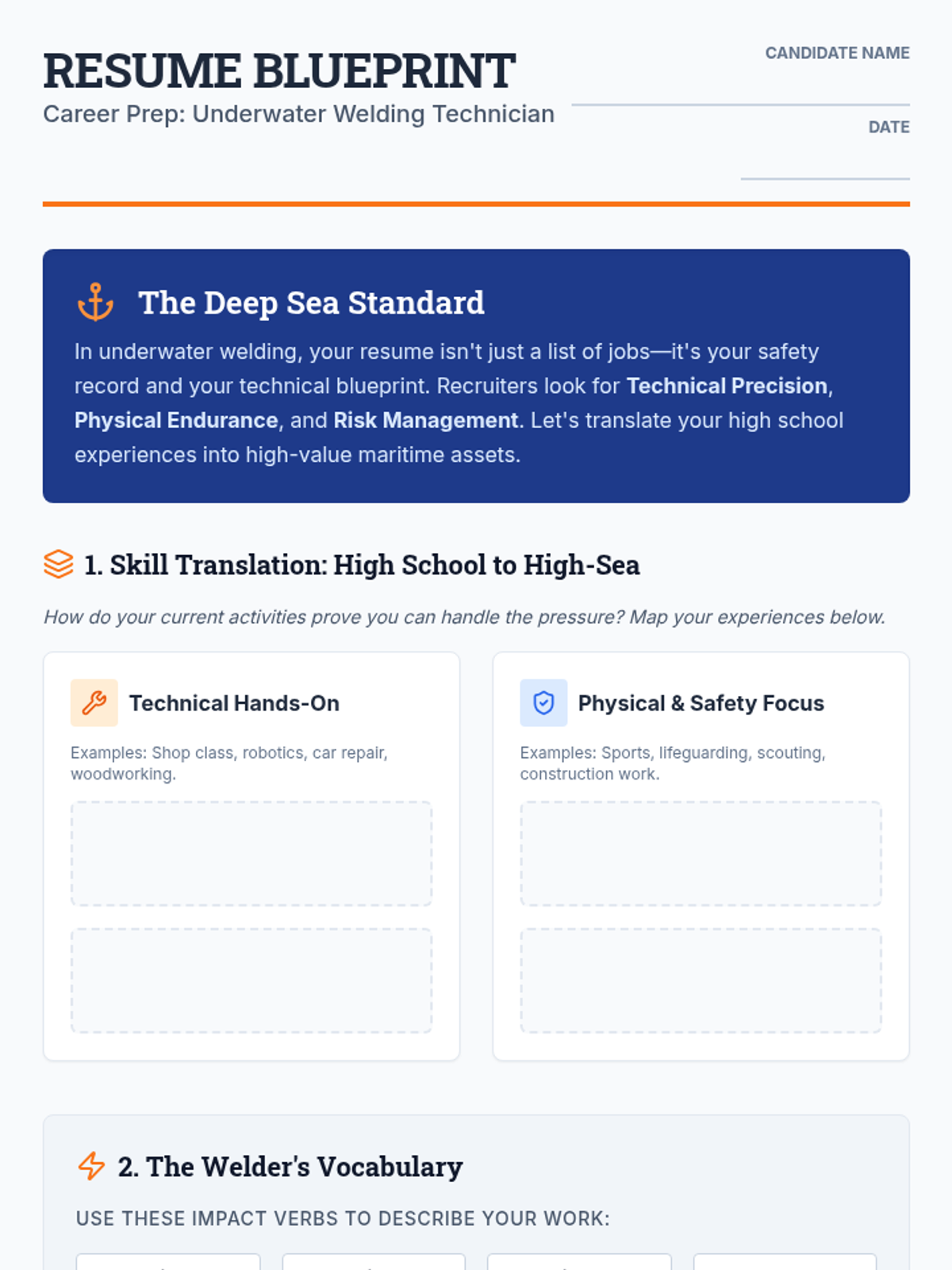
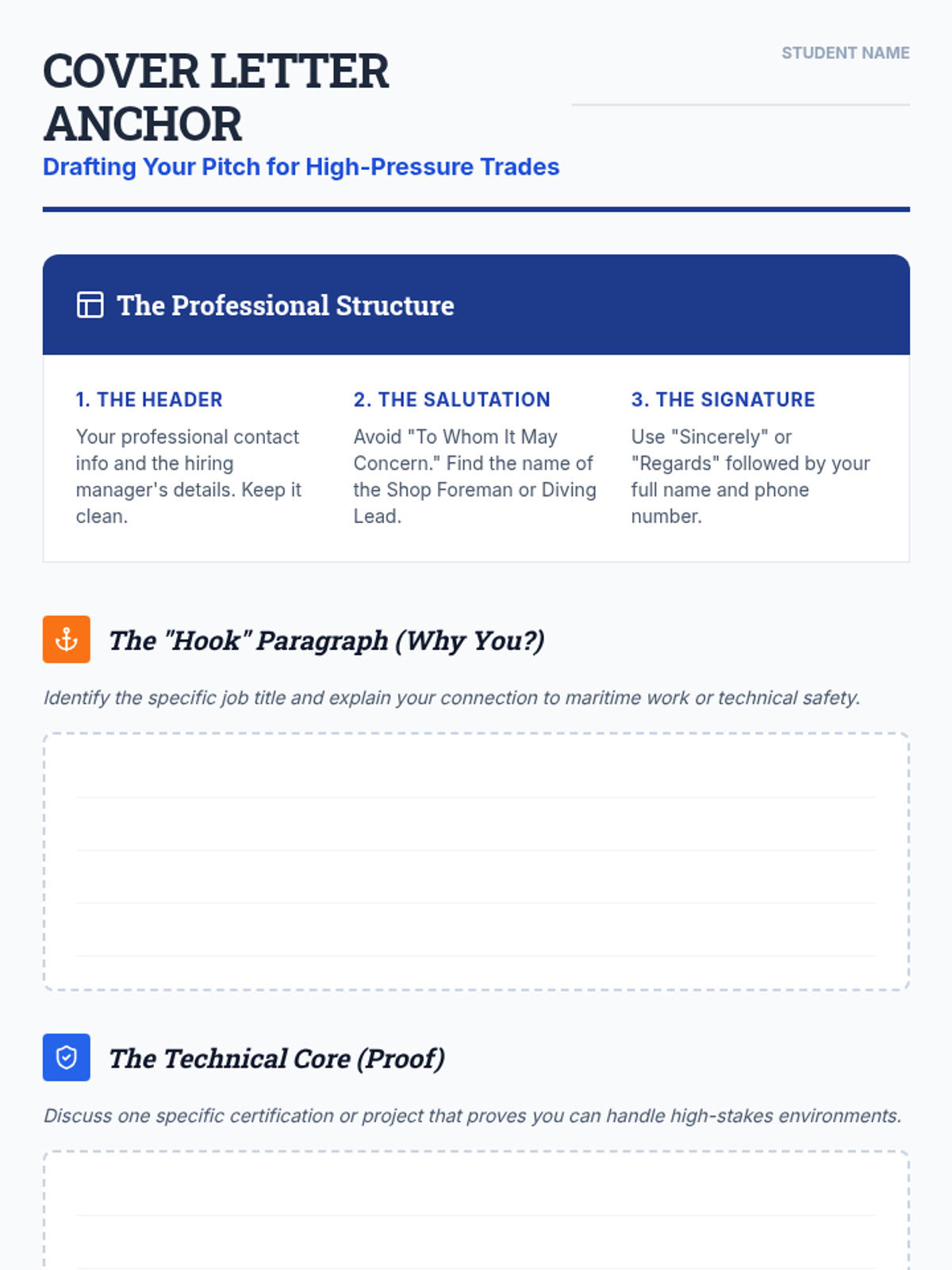
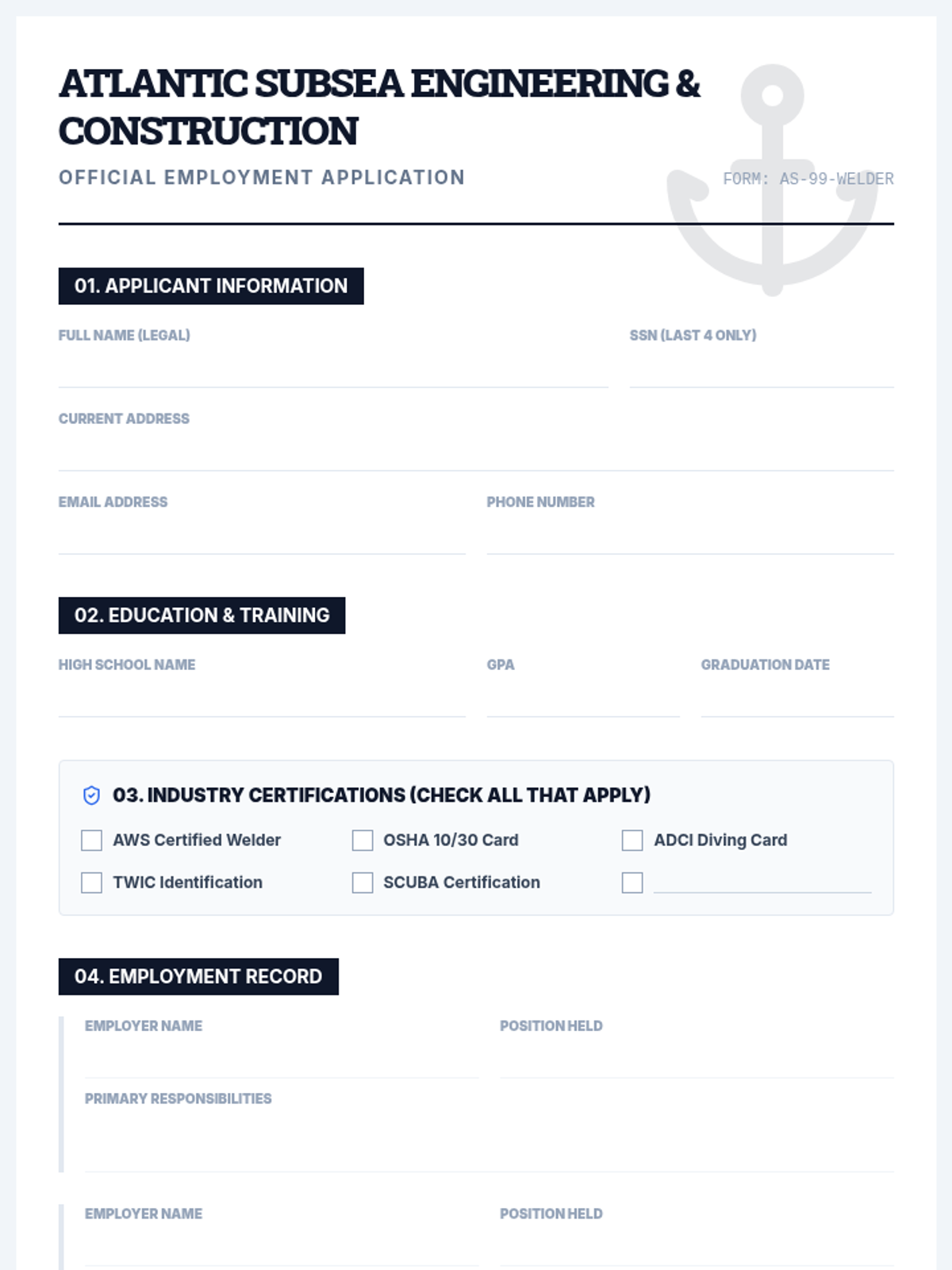
A comprehensive lesson on preparing for a career in underwater welding, focusing on the technical resume and professional cover letter requirements for high-risk industrial maritime roles.
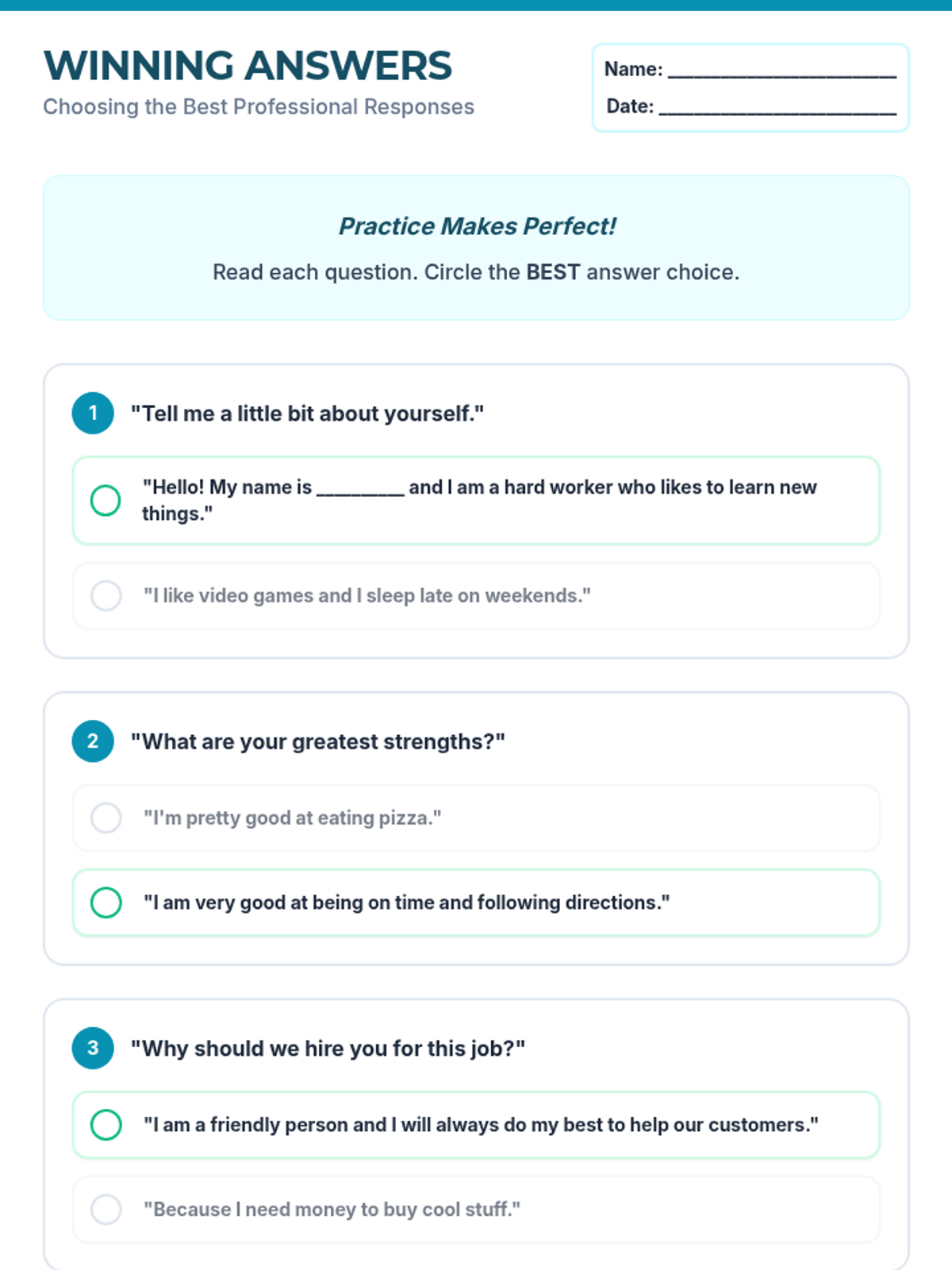
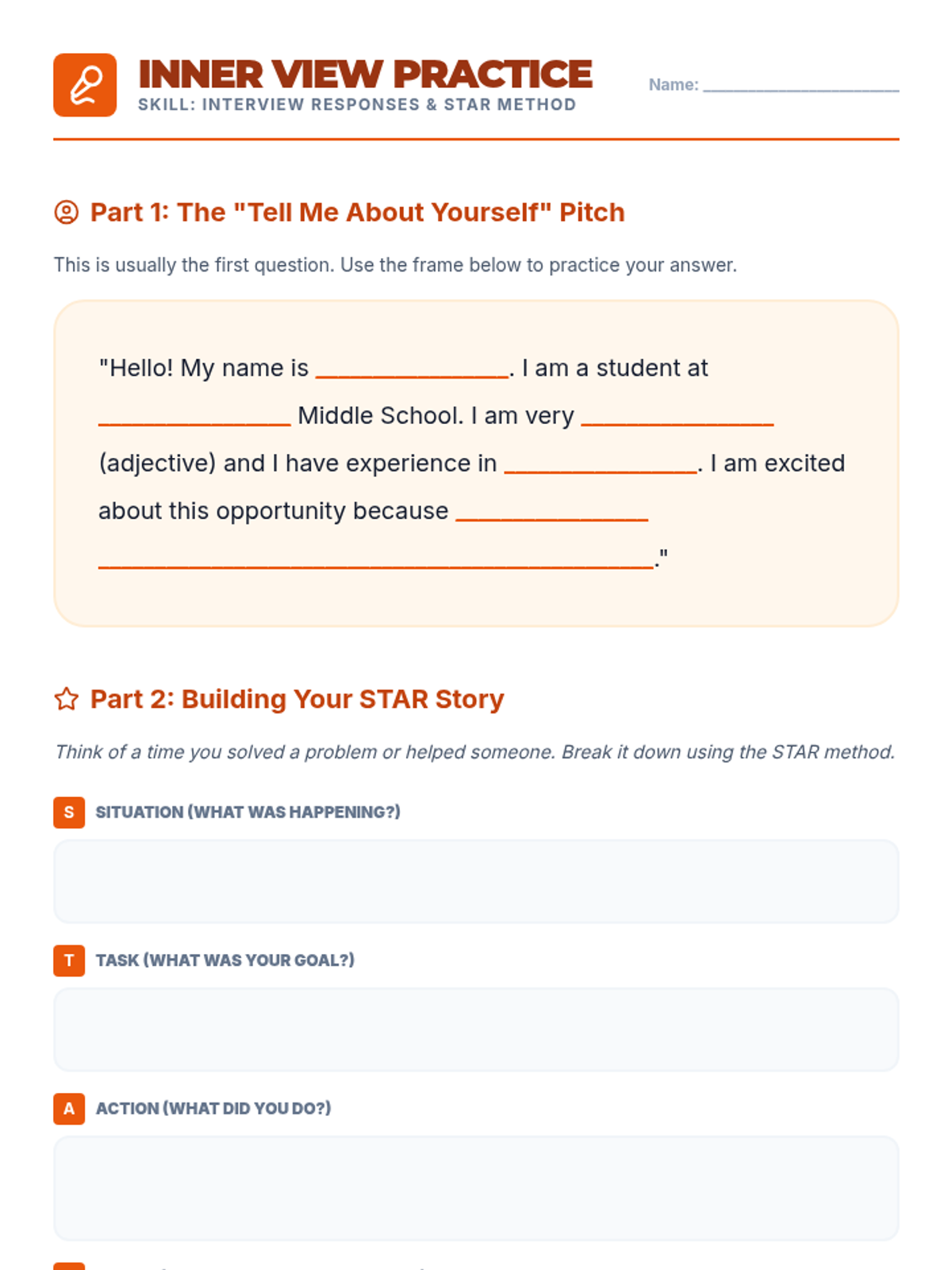
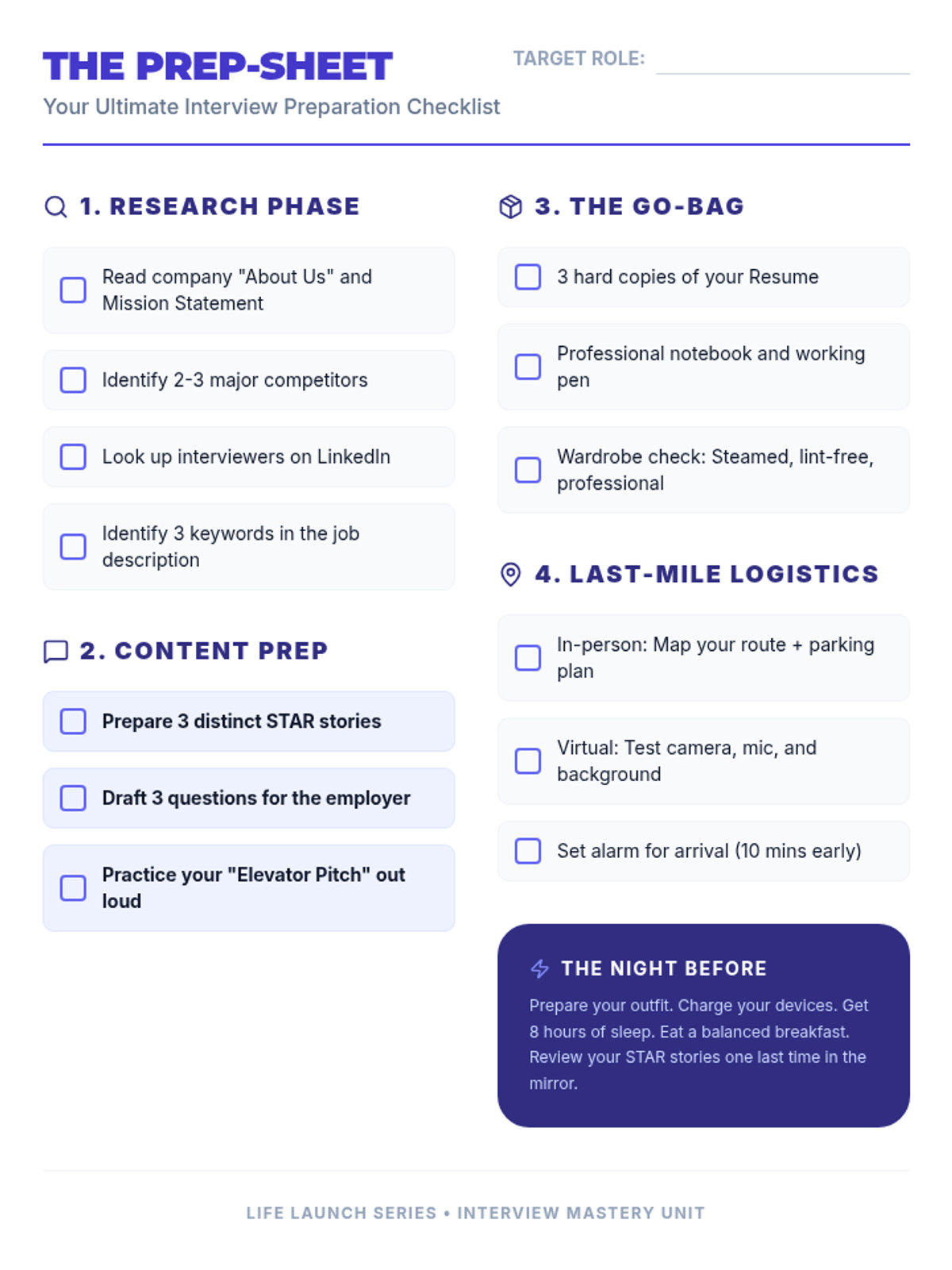
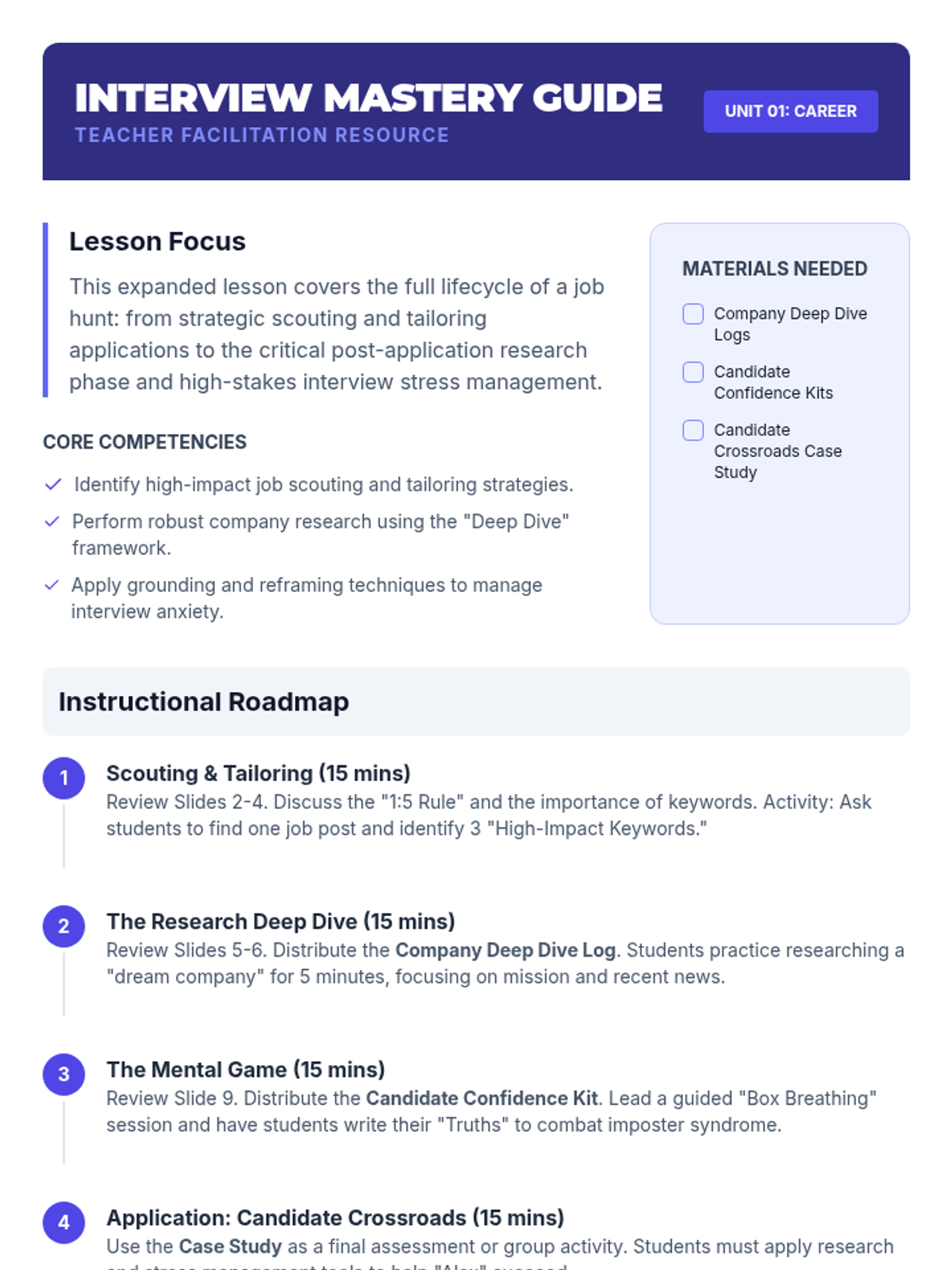
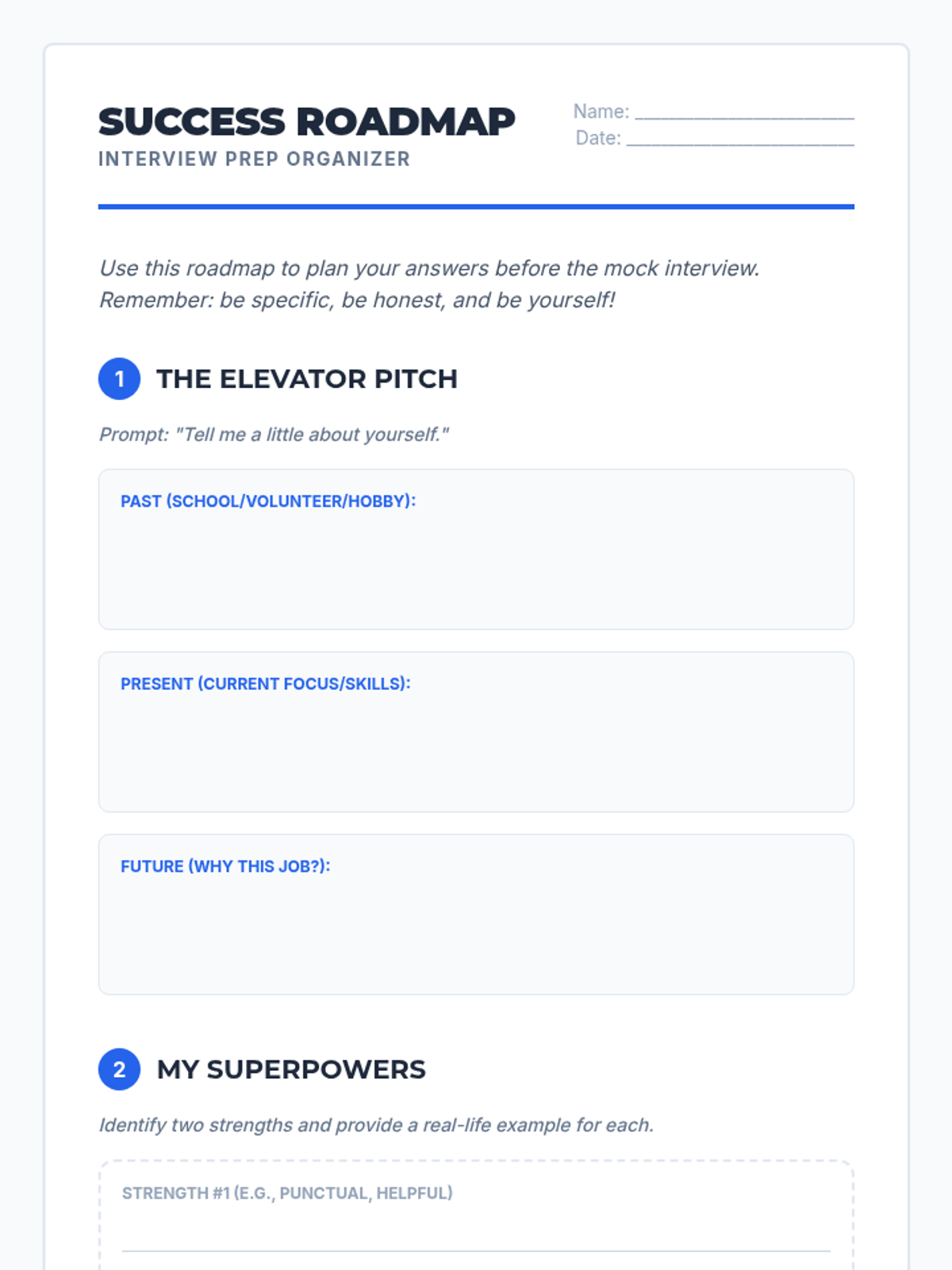
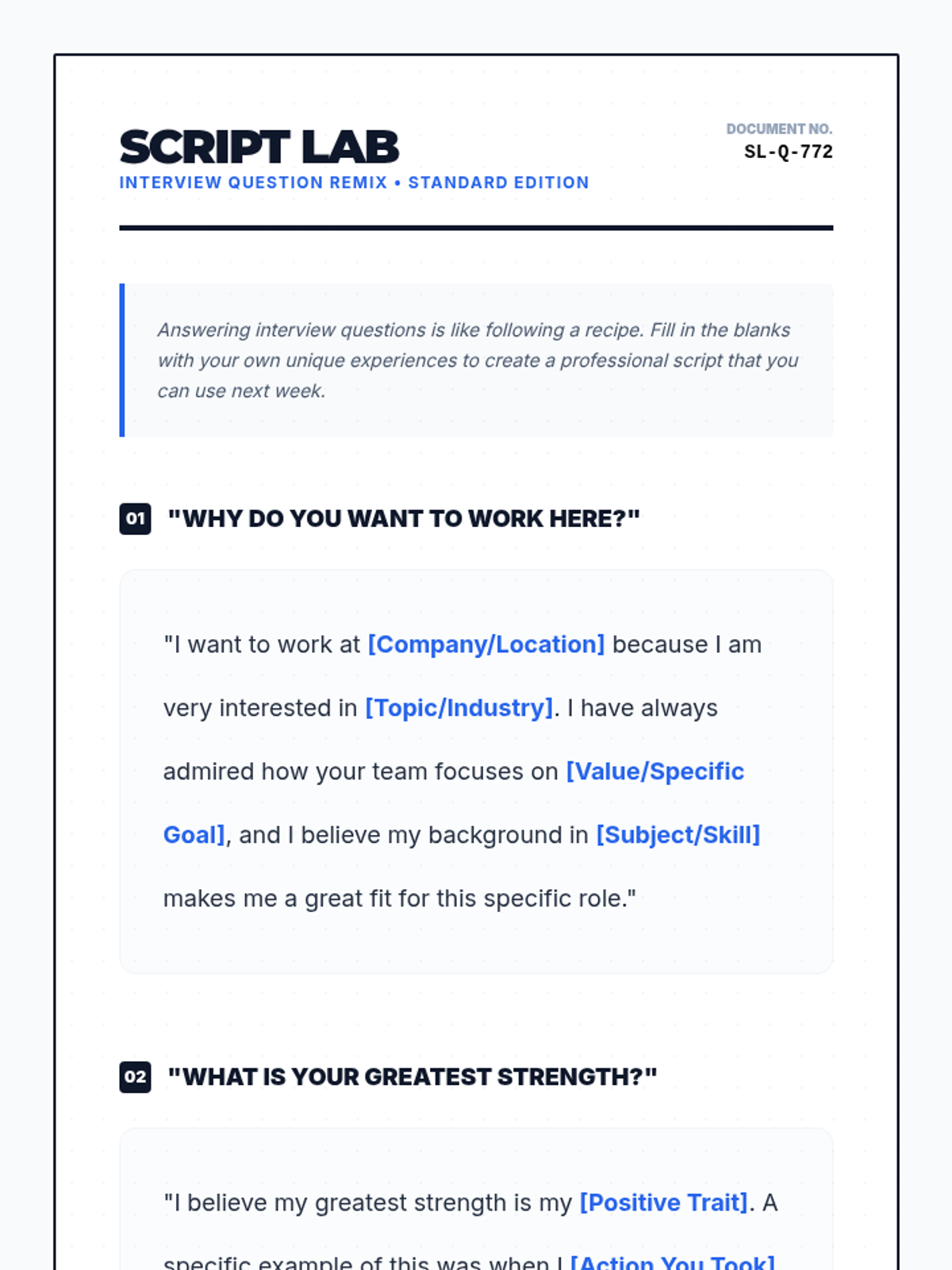
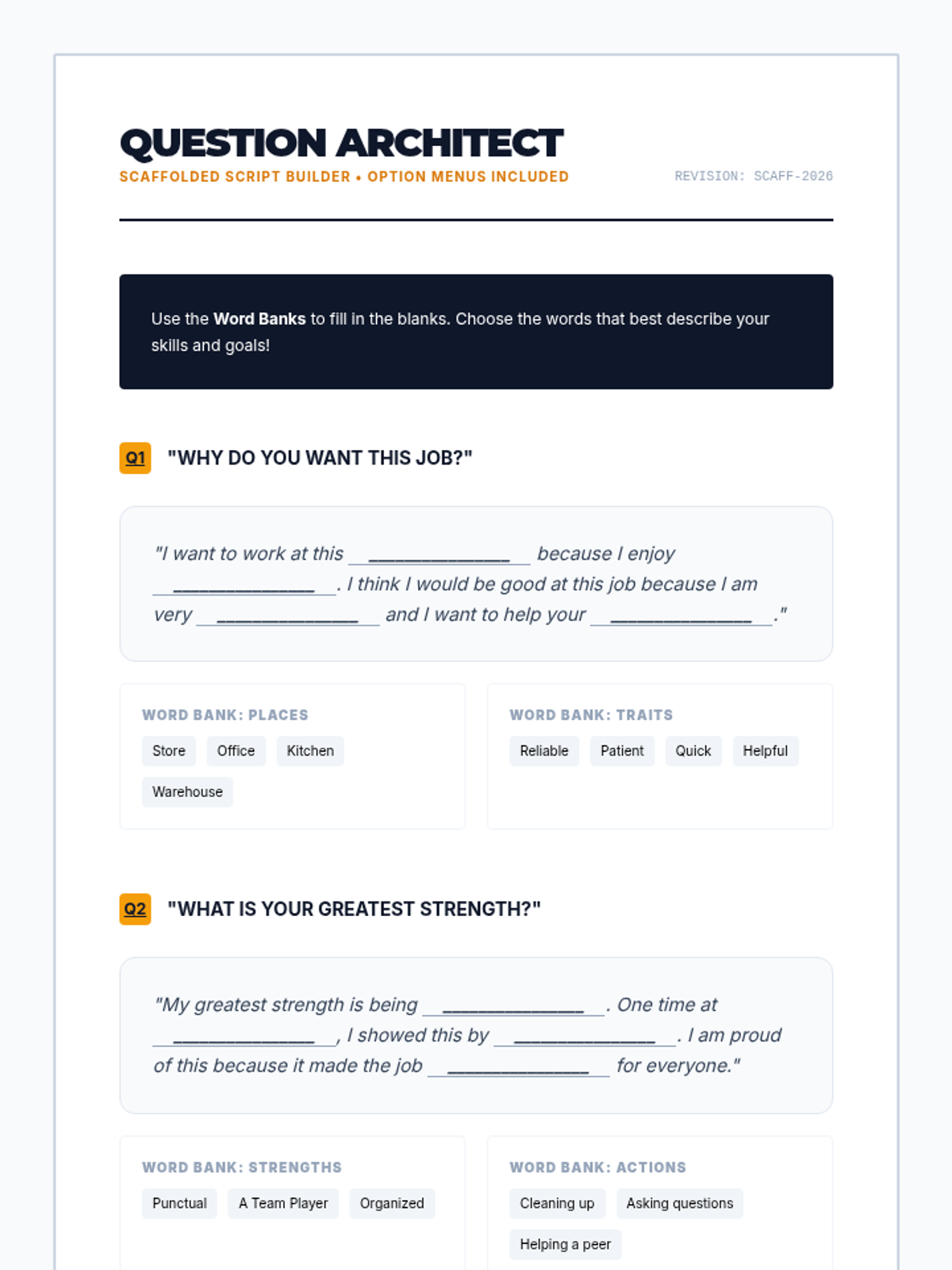
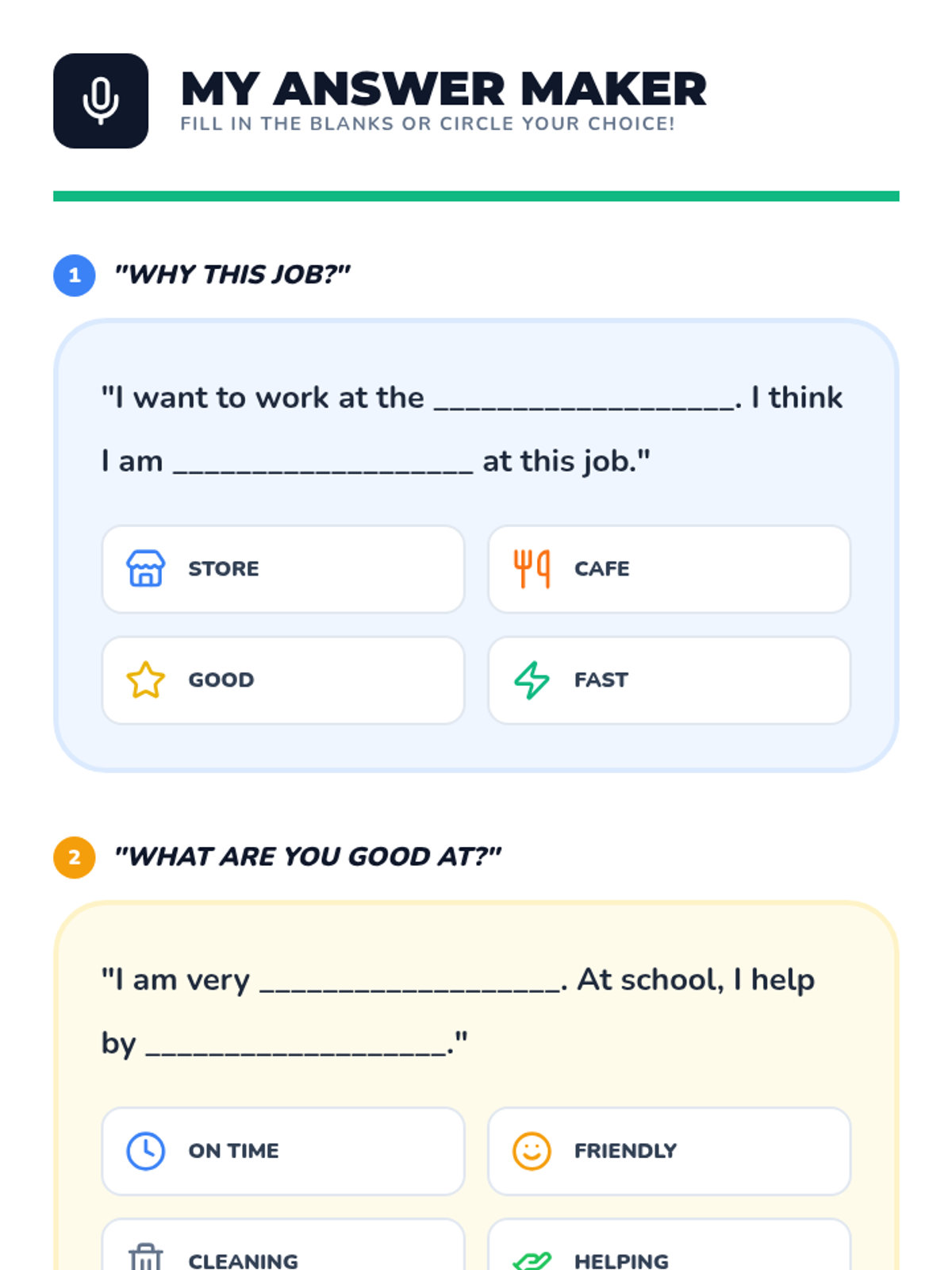
Develops interview skills through research-based preparation and practicing responses with supportive sentence frames.
Covers the essentials of job applications, tailoring resumes, and writing cover letters specifically for students.
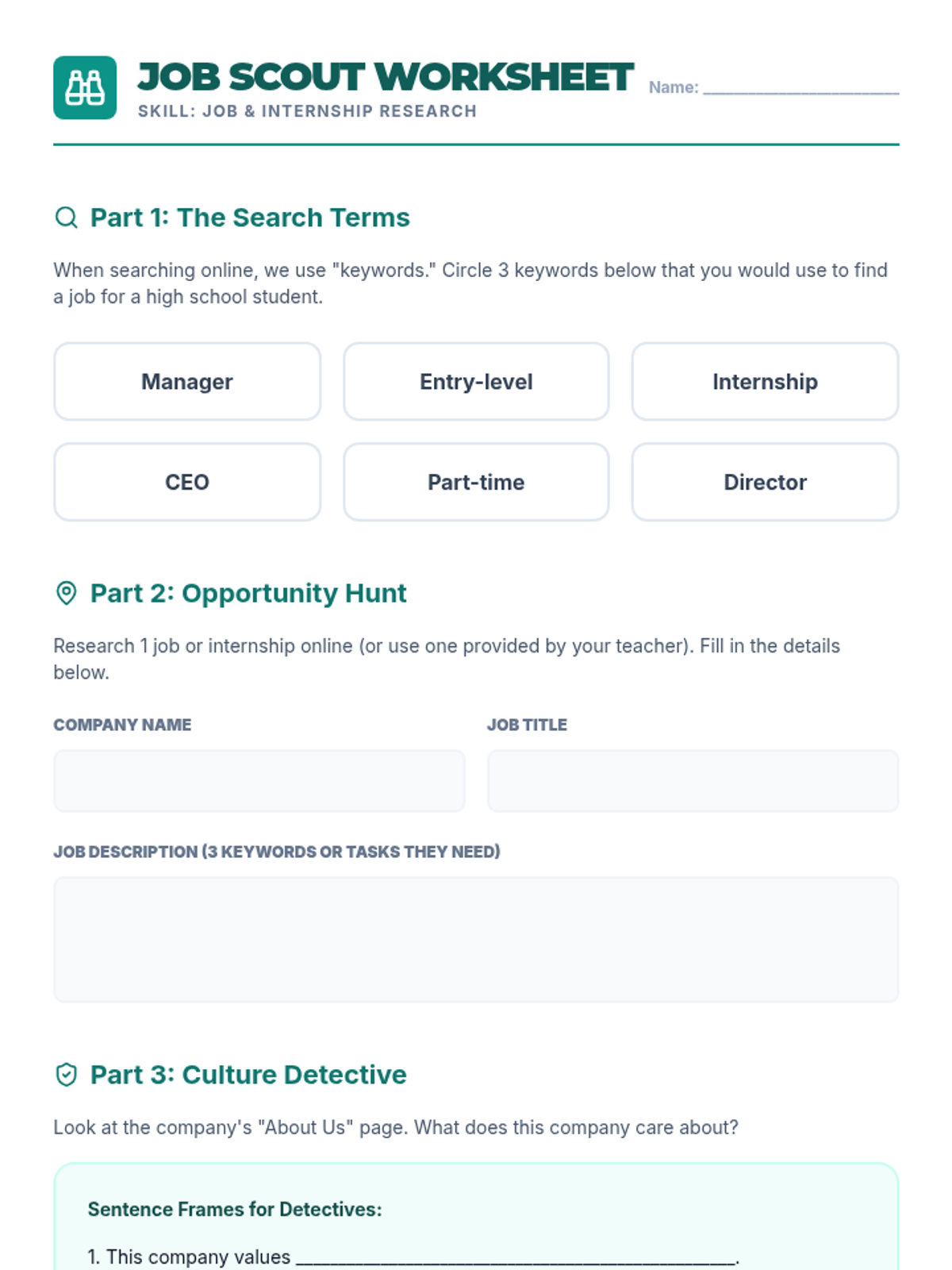
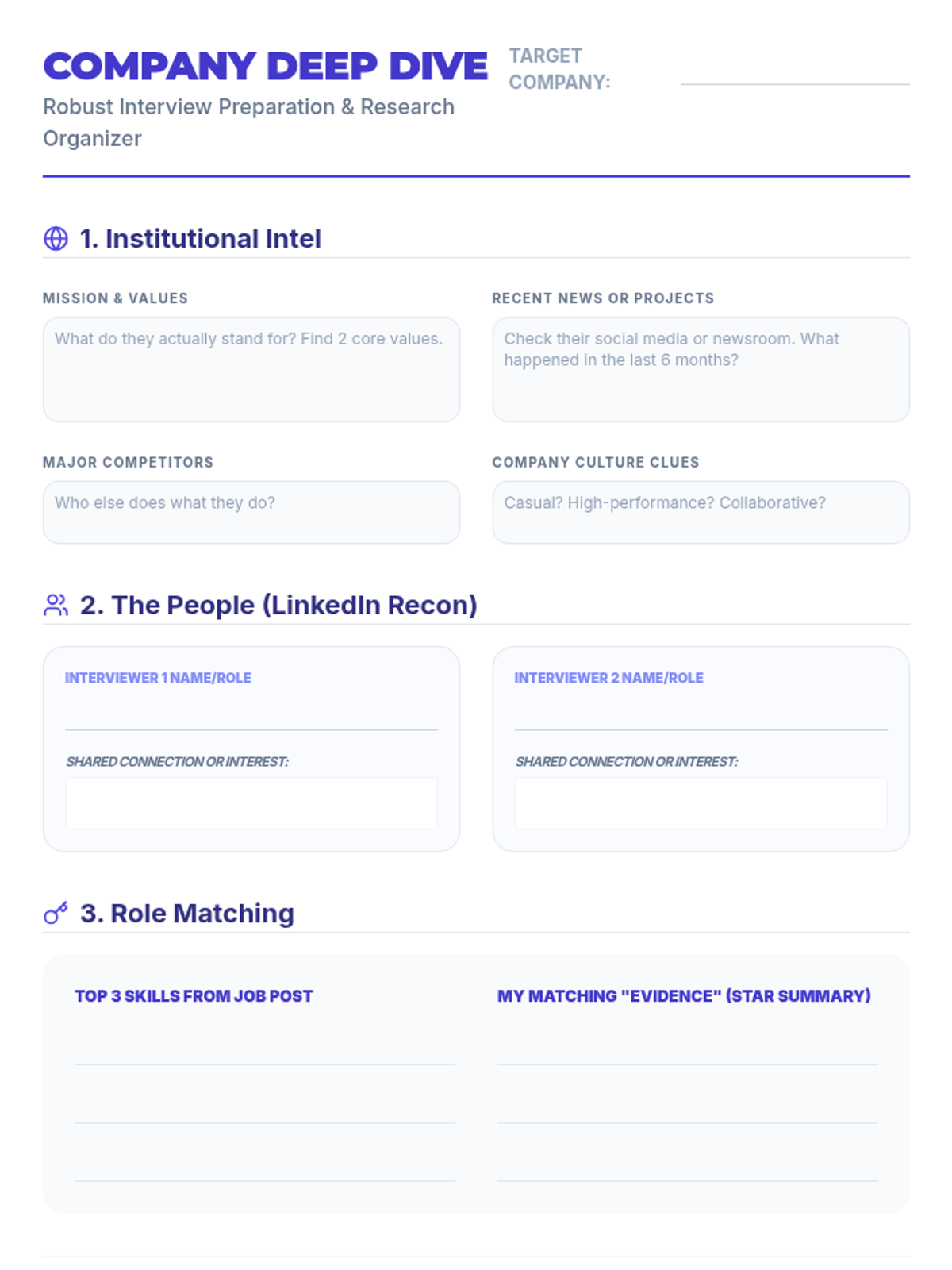
Teaches students how to find job and internship opportunities and research company culture and values.
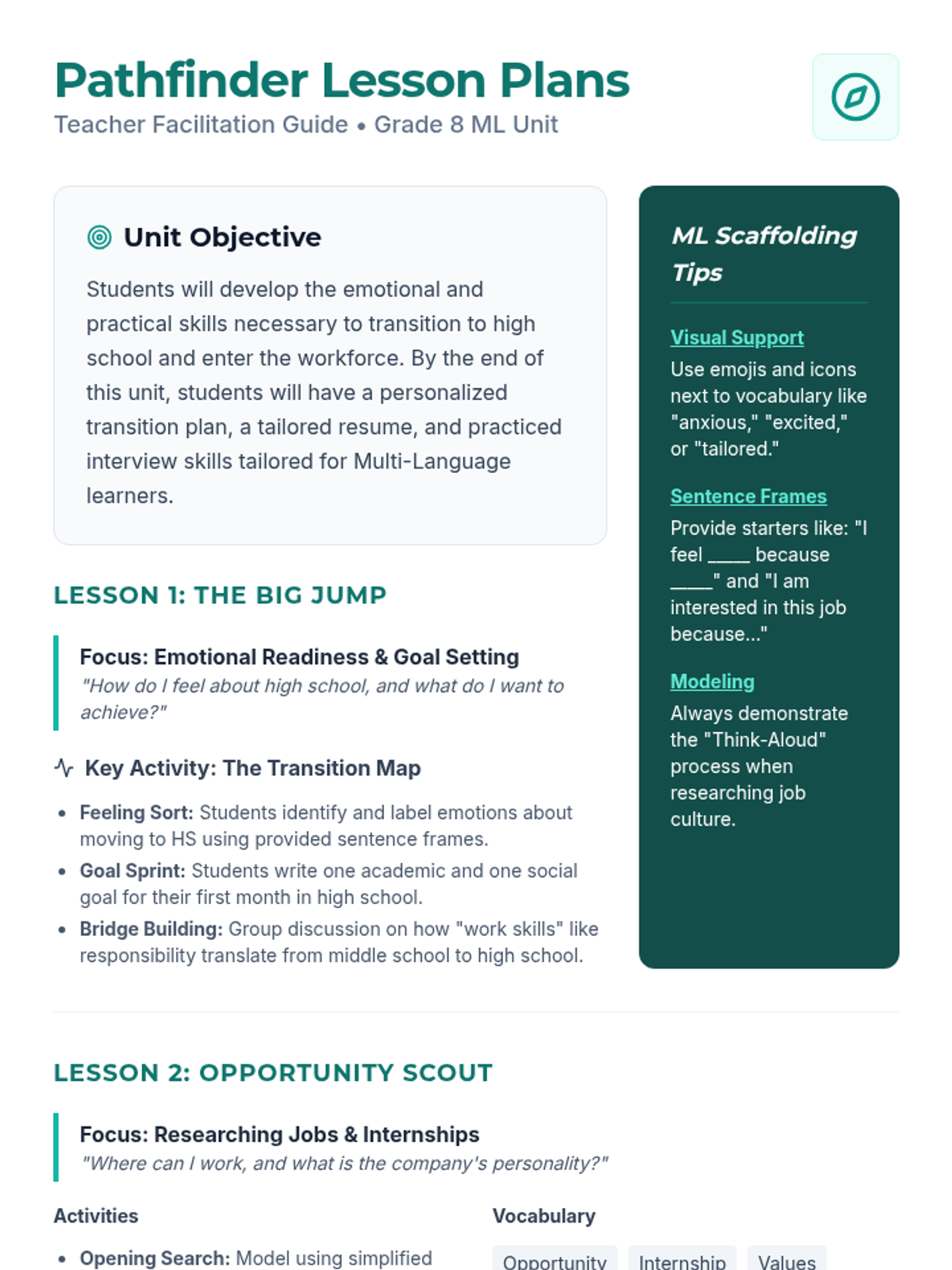
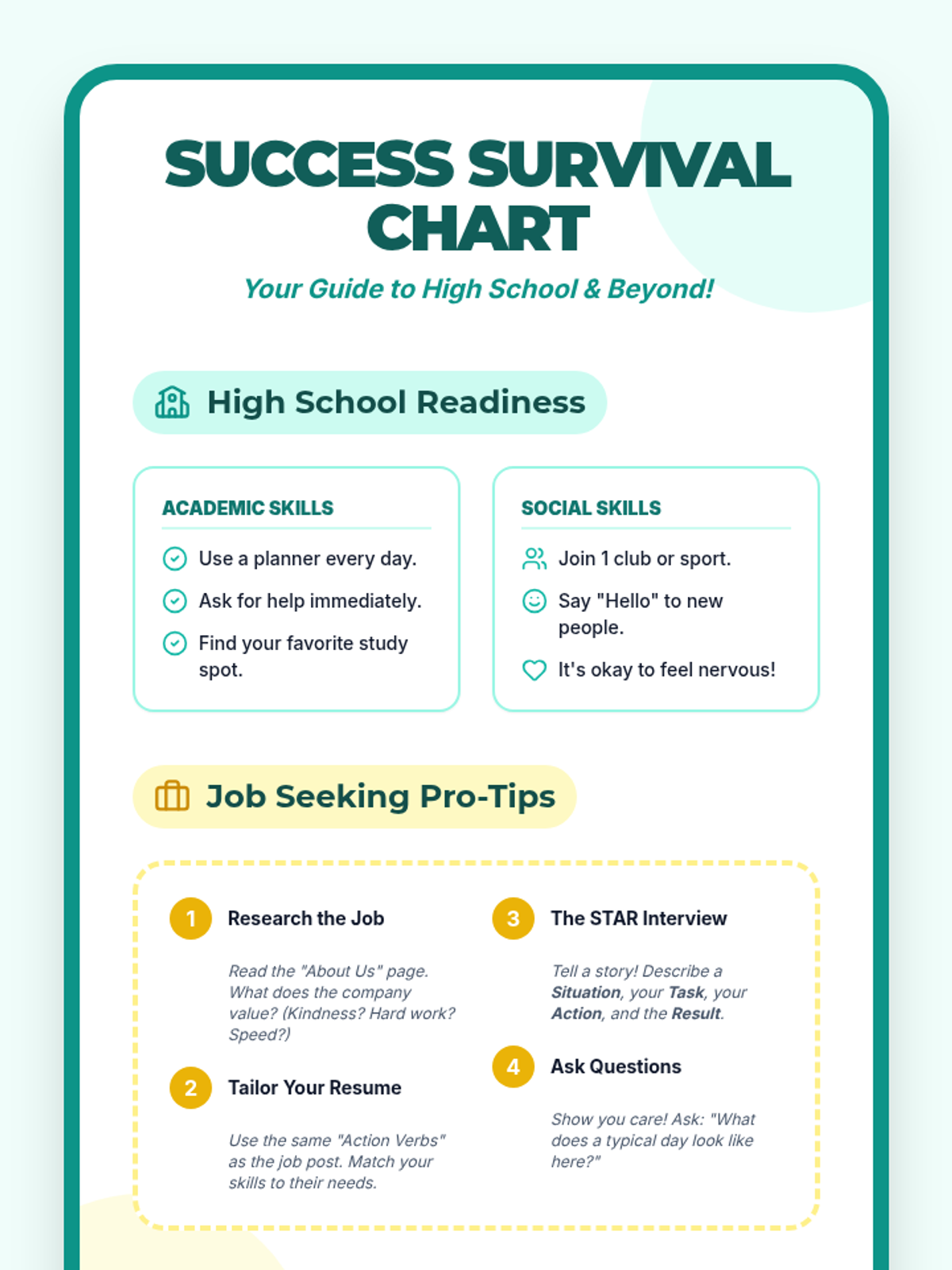
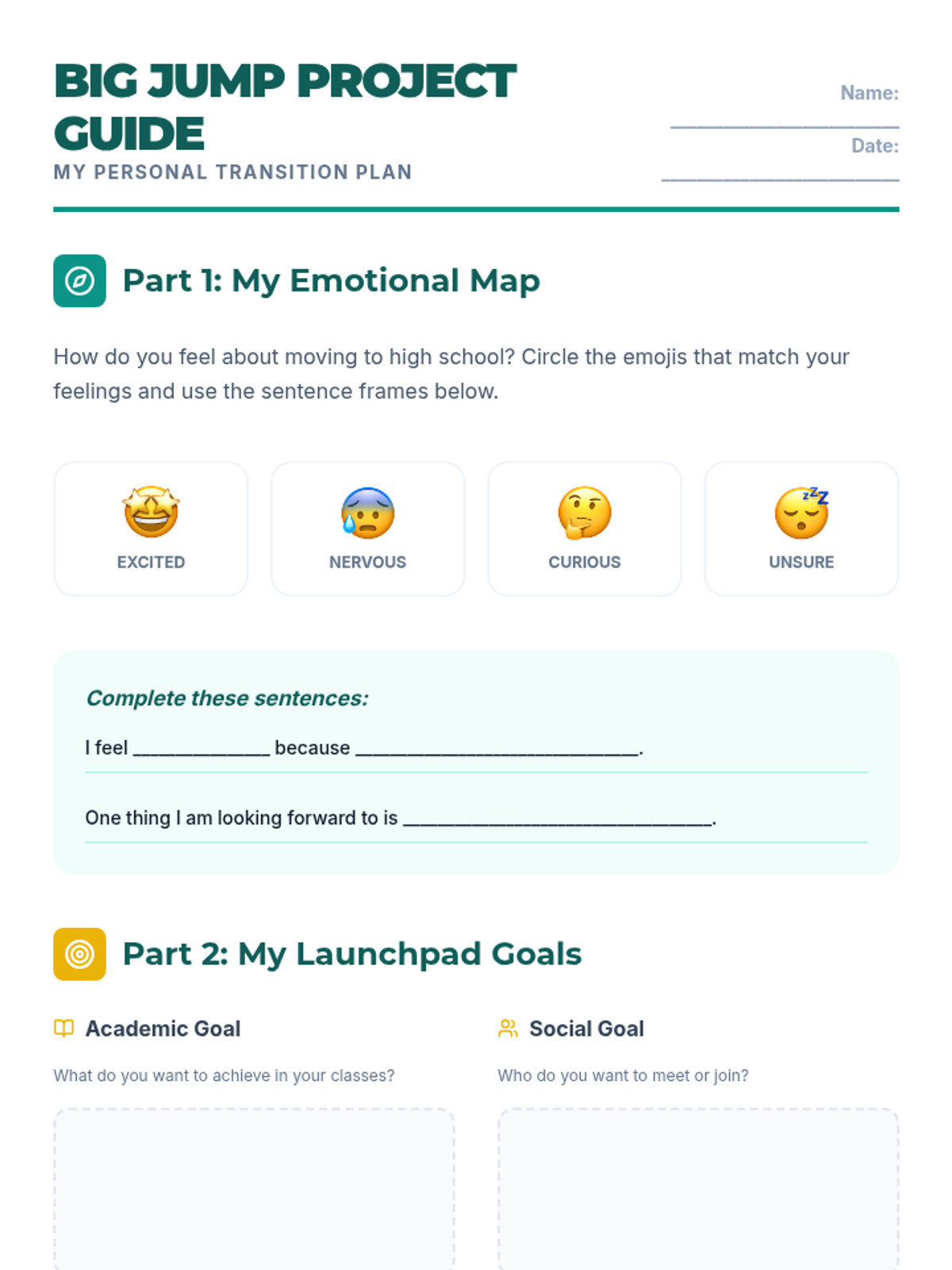
Focuses on the emotional transition from middle school to high school, identifying goals, and understanding the new academic environment.
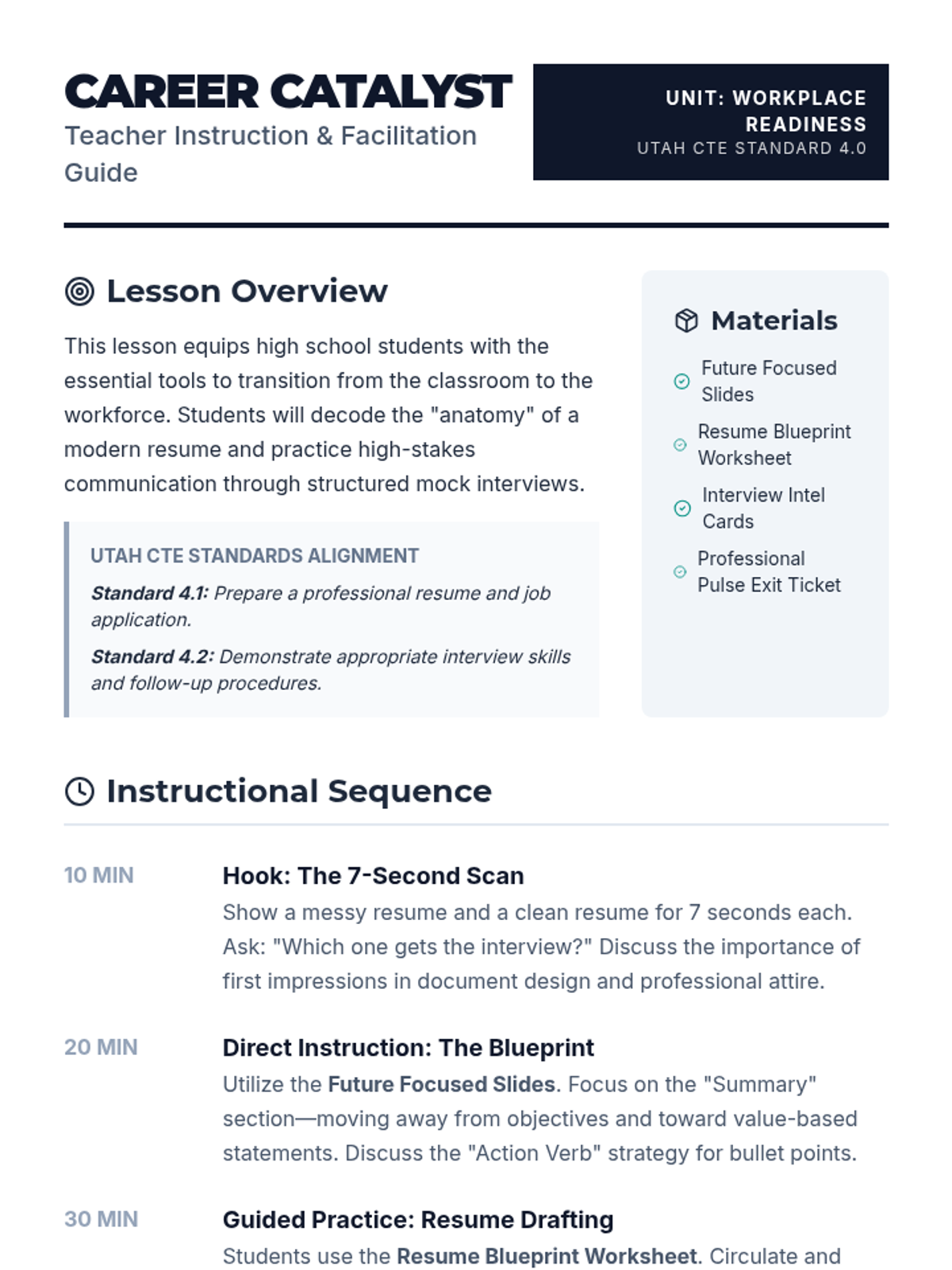
A comprehensive lesson on workplace readiness, focusing on resume construction and interview techniques aligned with Utah CTE standards for high school students.
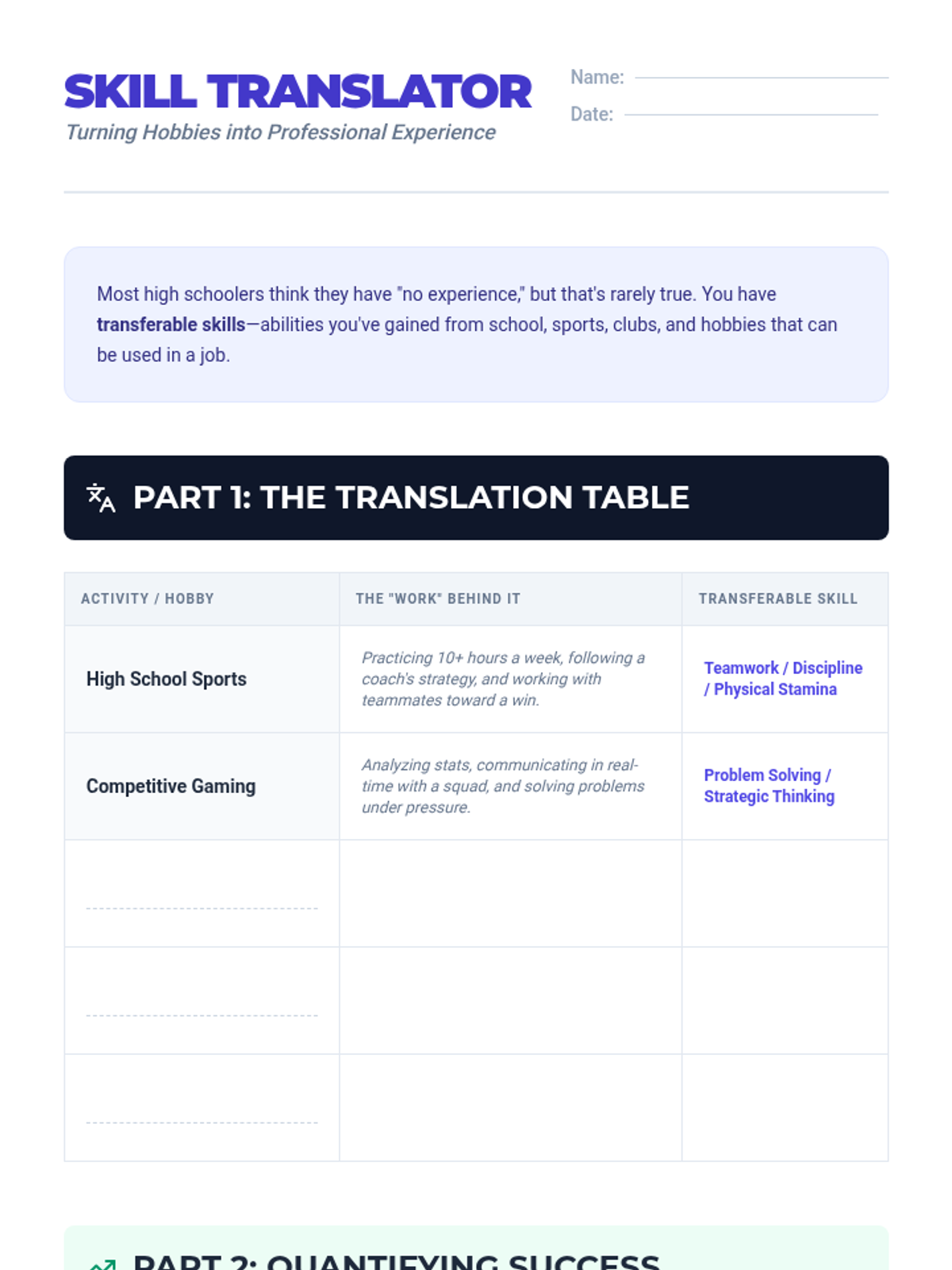
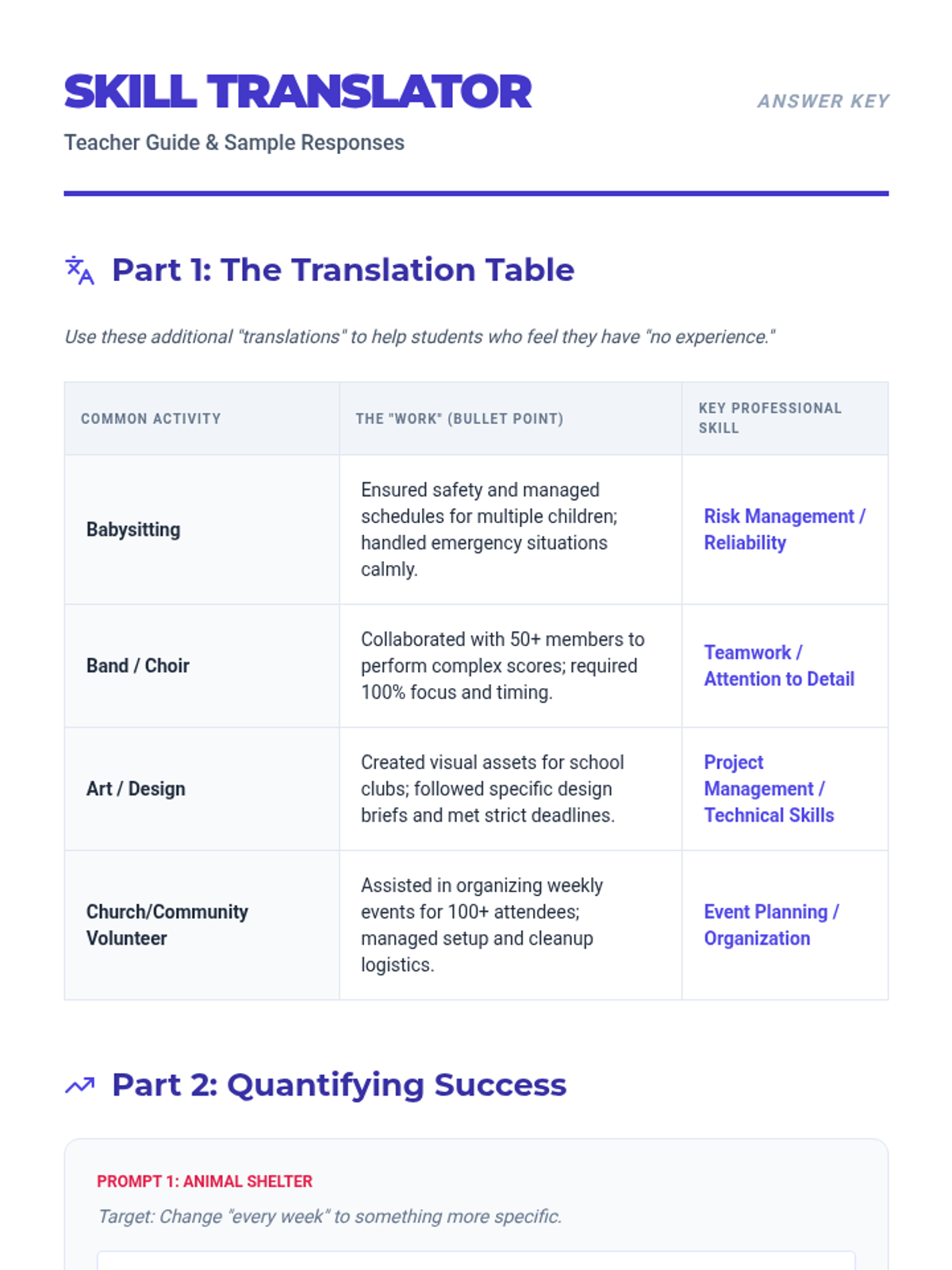
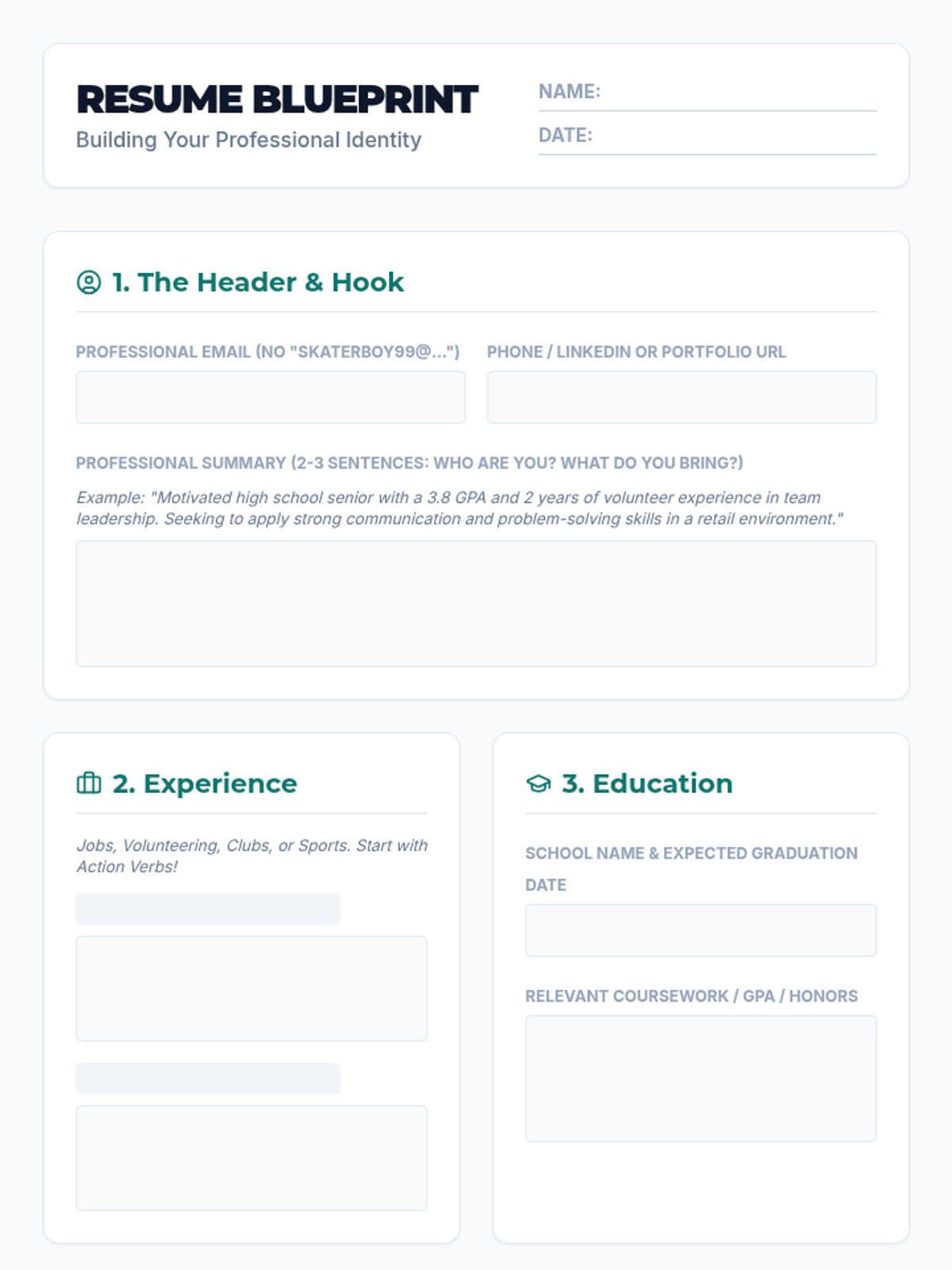
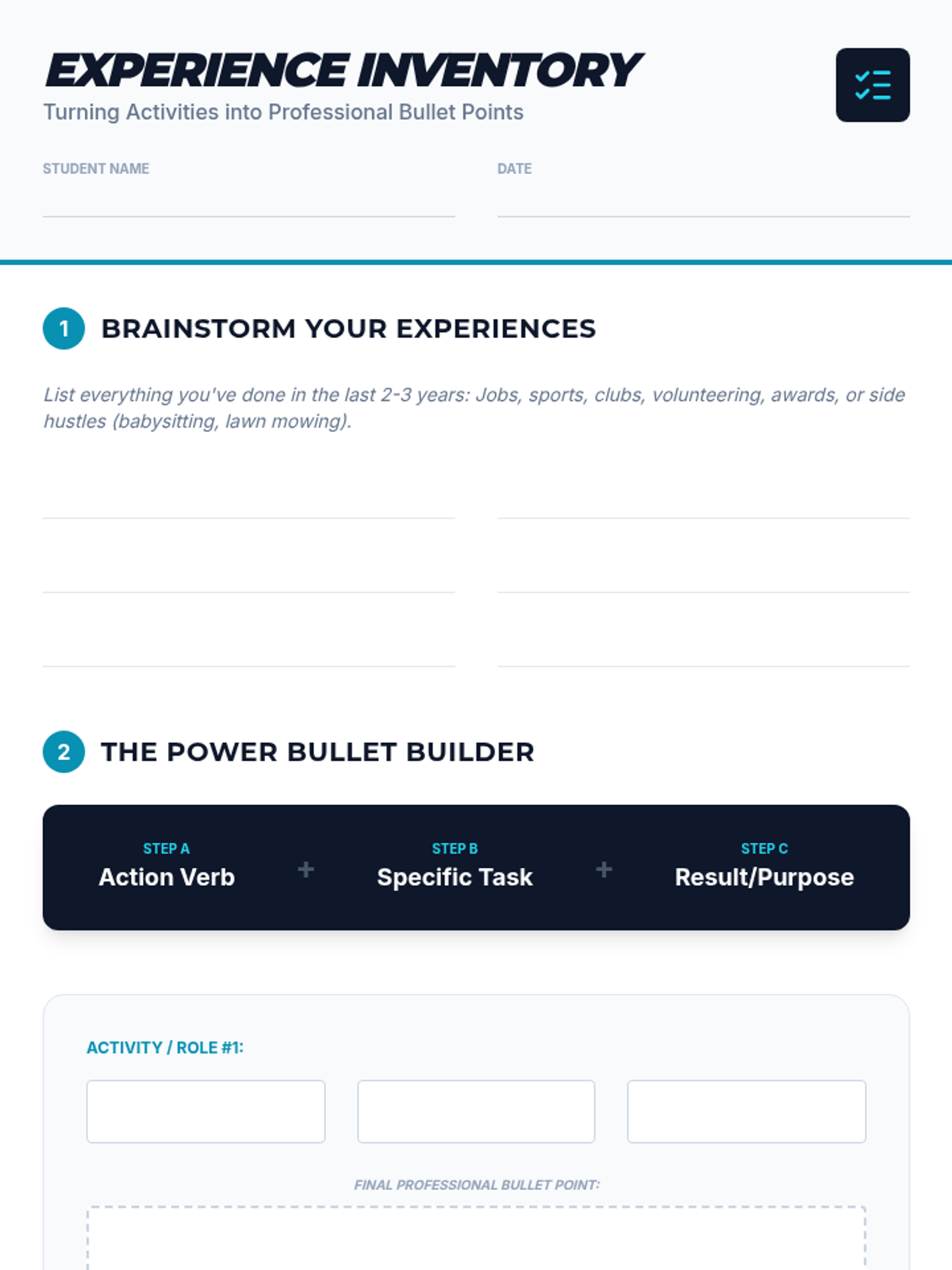
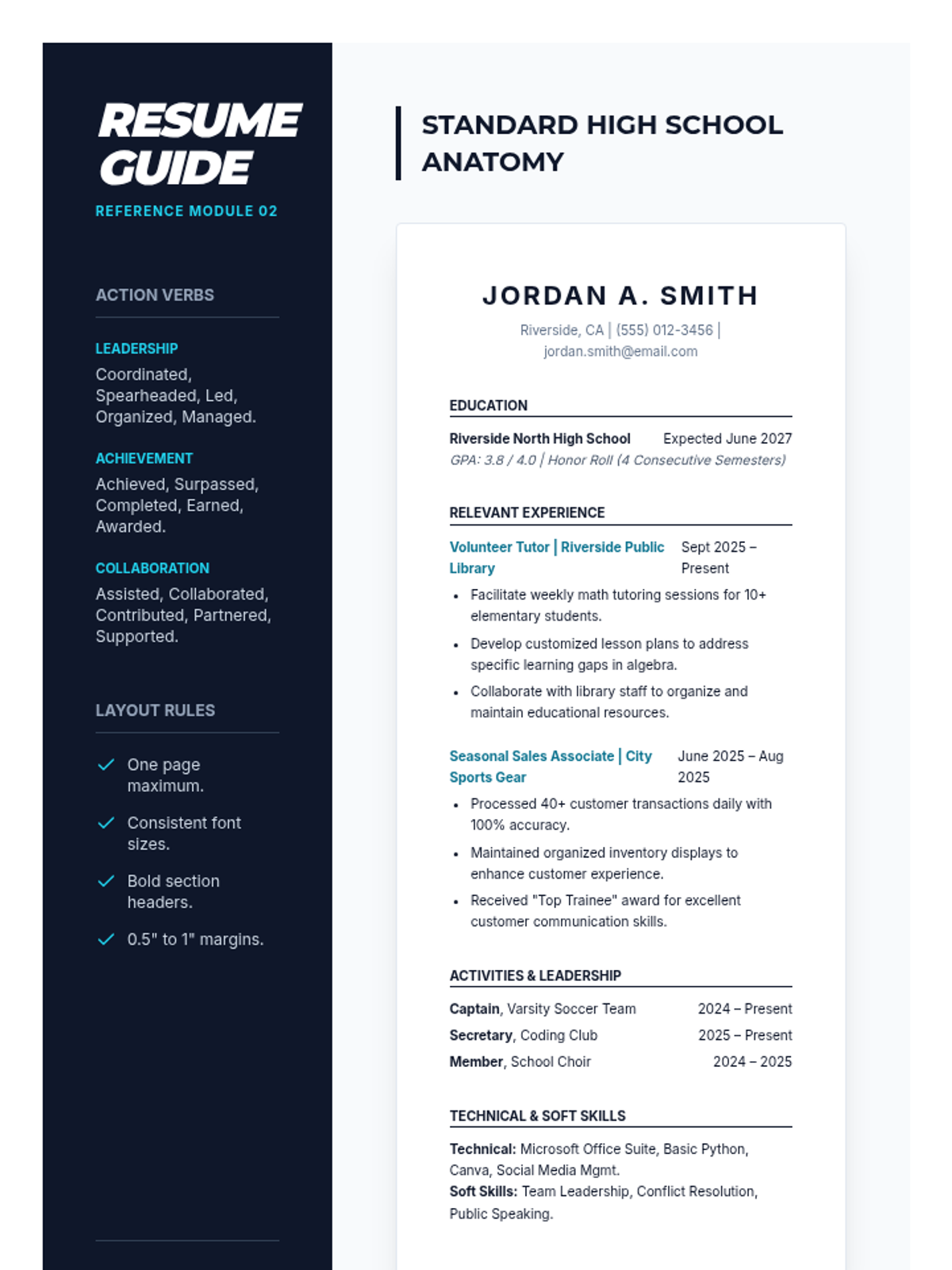
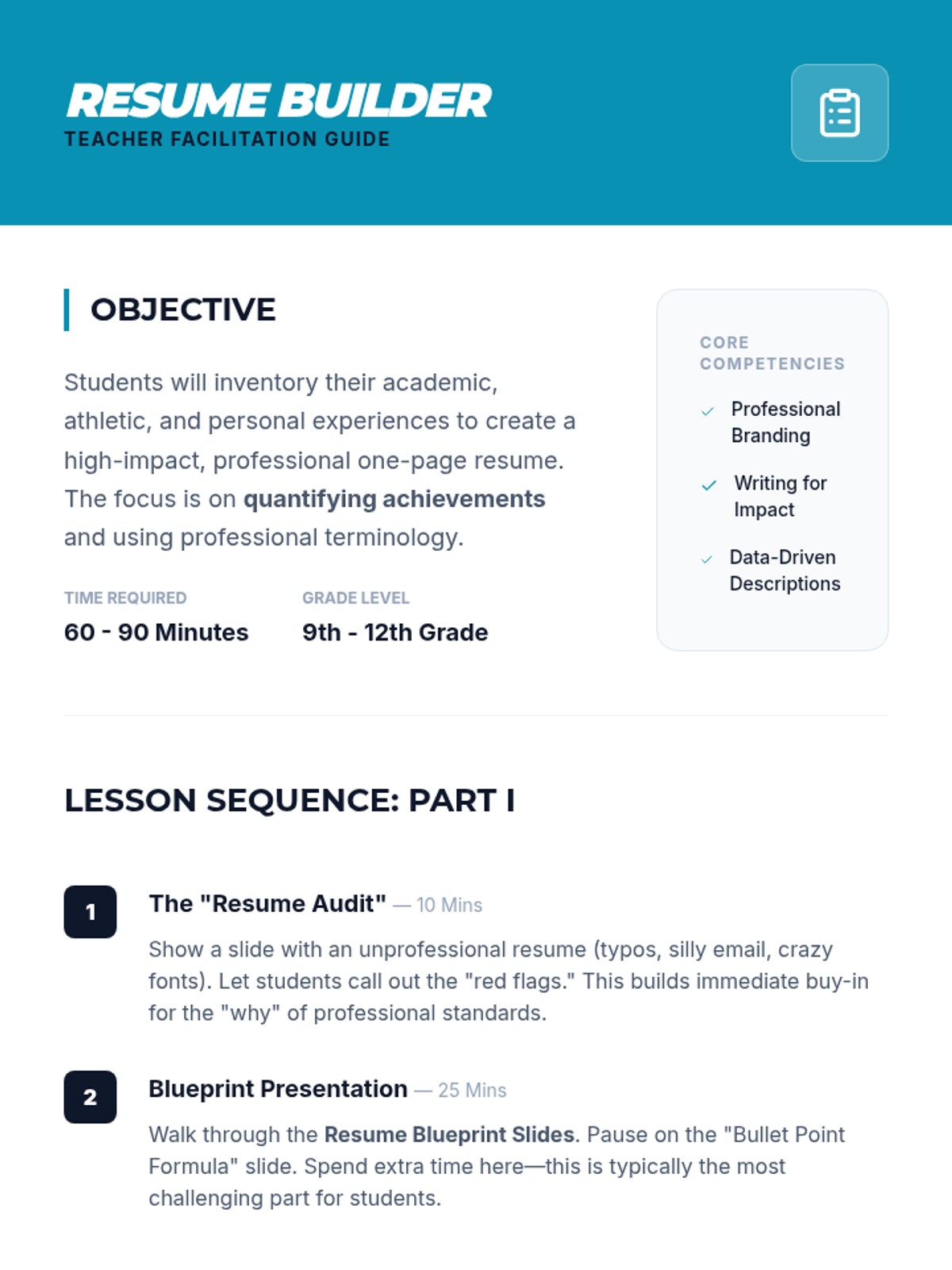
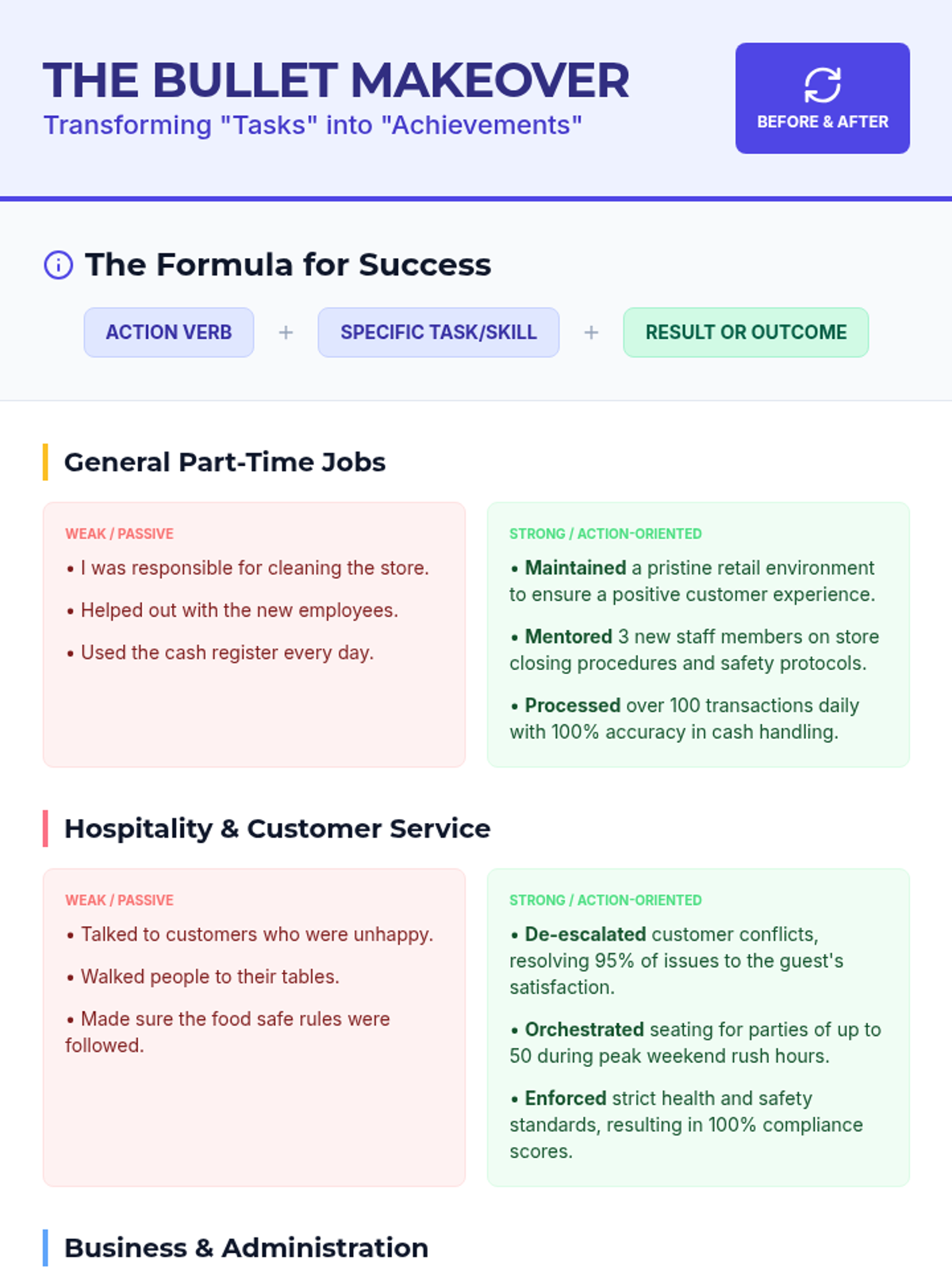
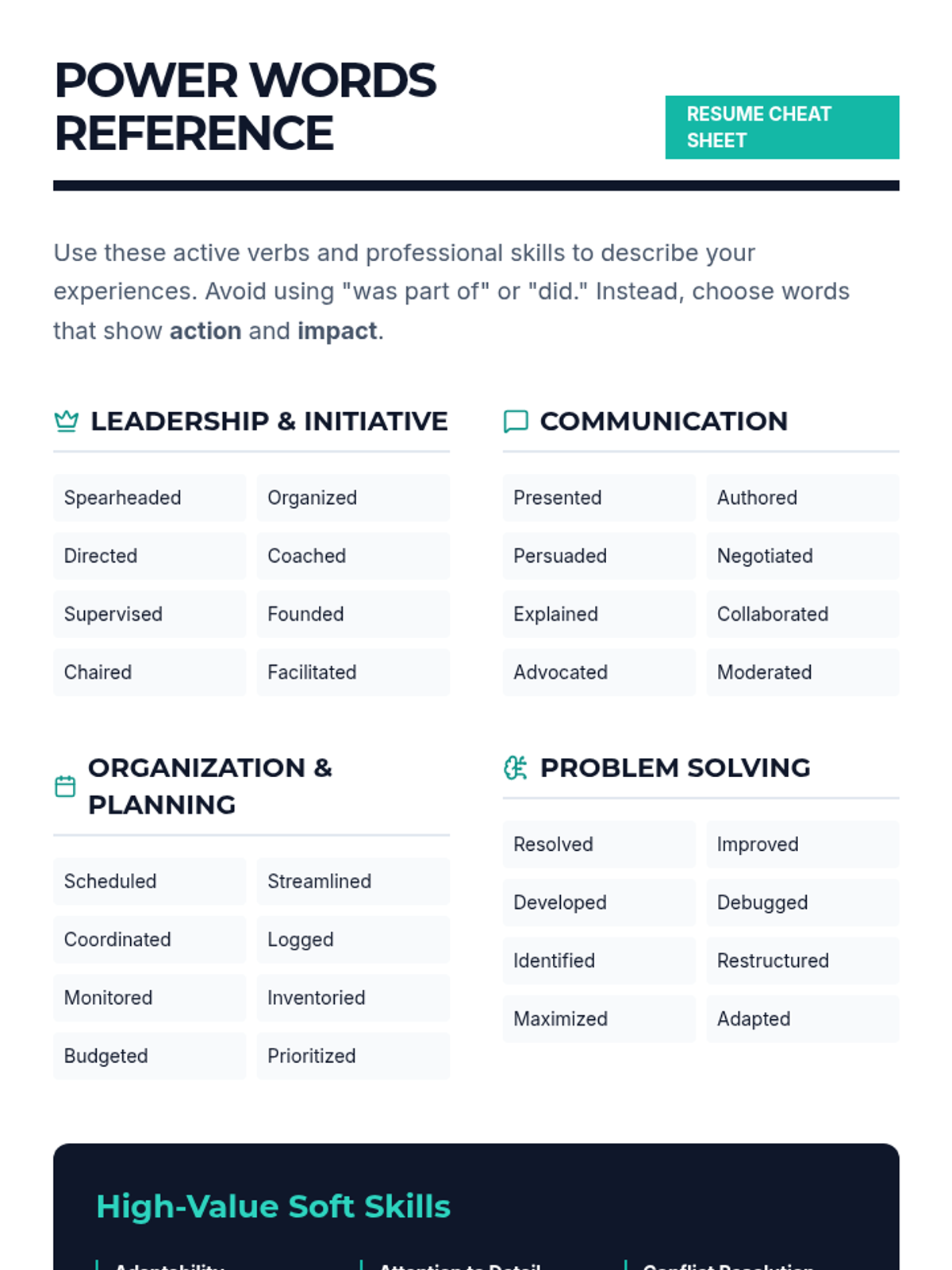
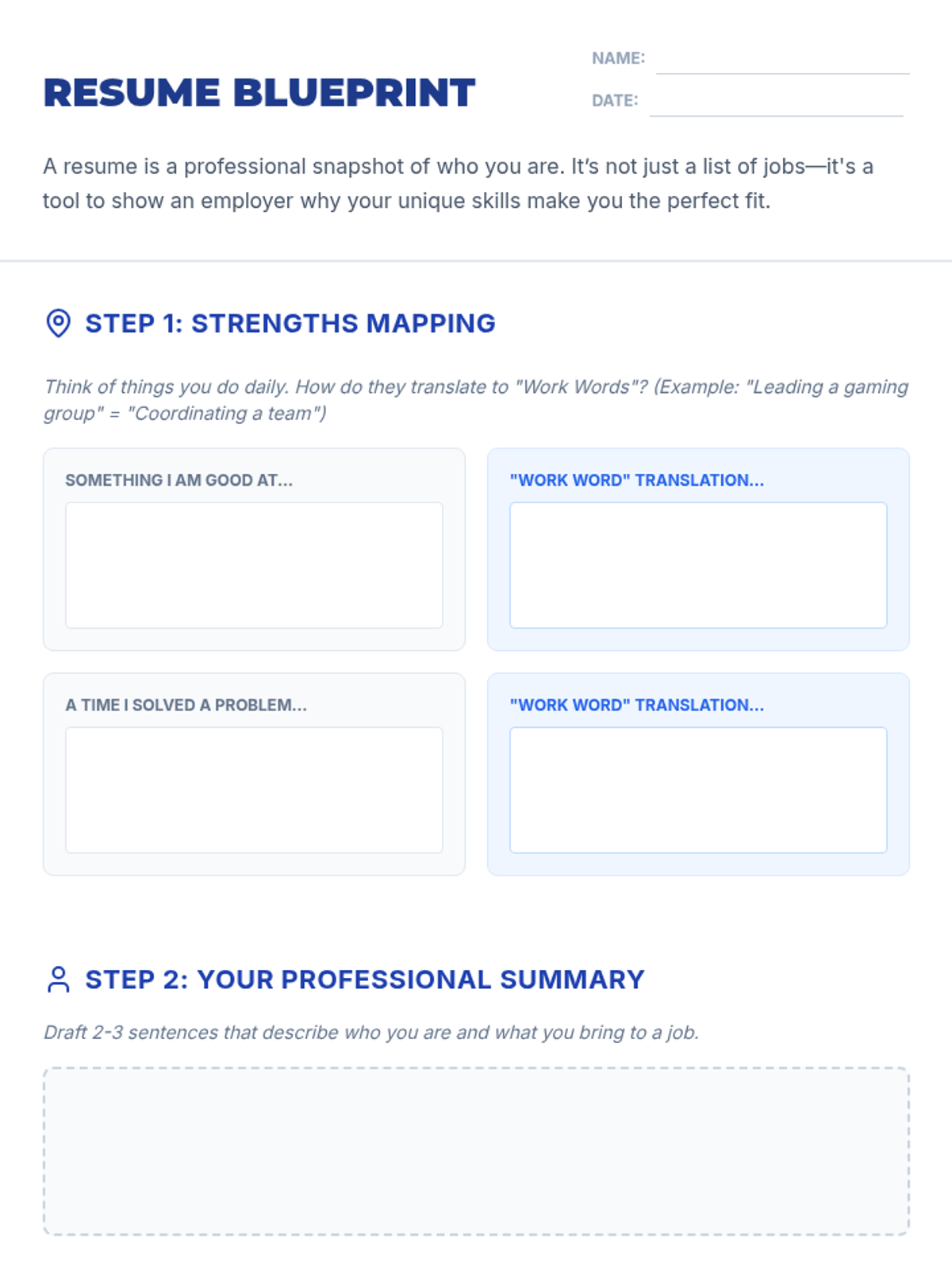
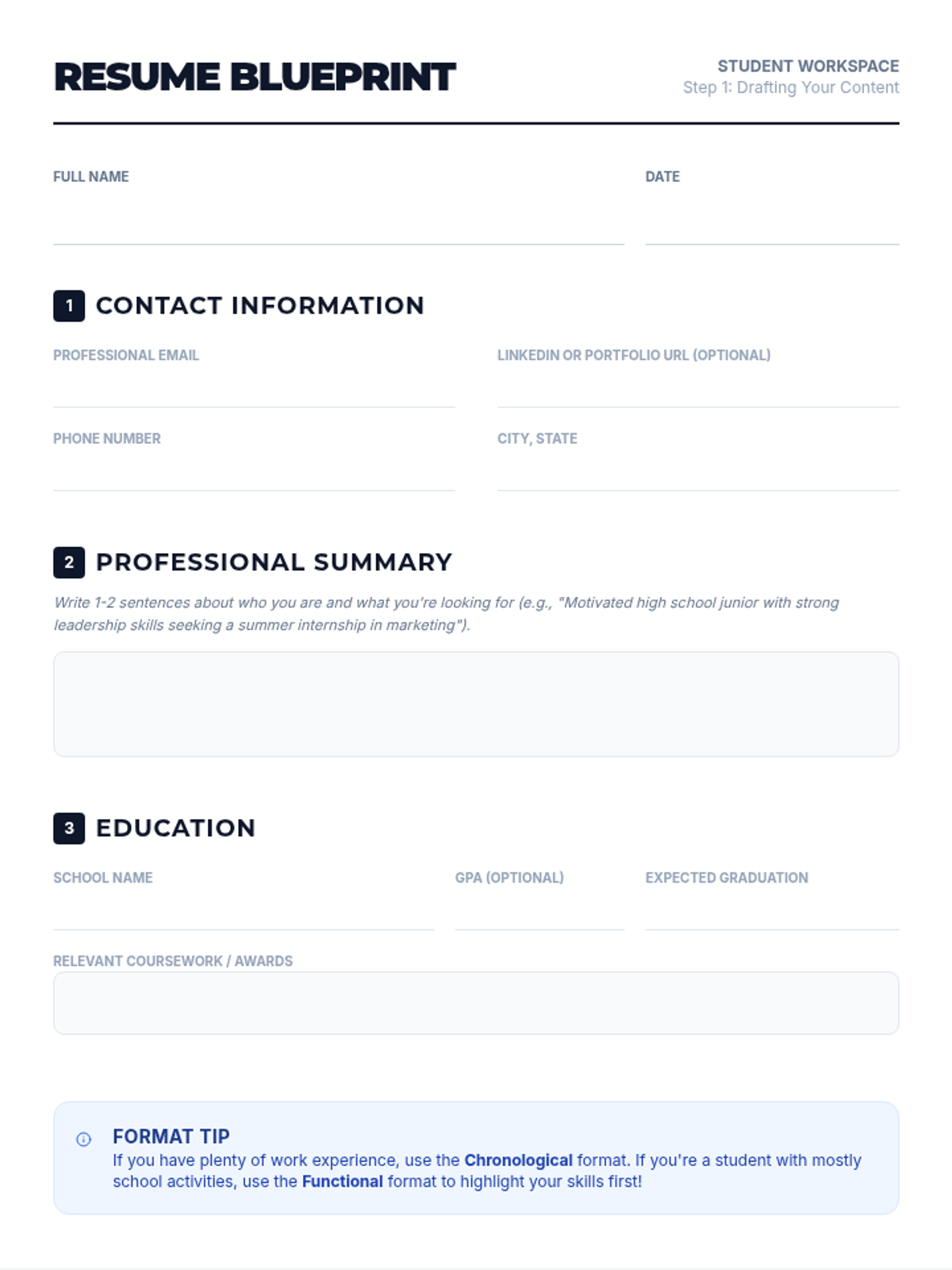
This lesson guides students through the process of building a professional resume from scratch, focusing on translating high school experiences into compelling professional bullet points.
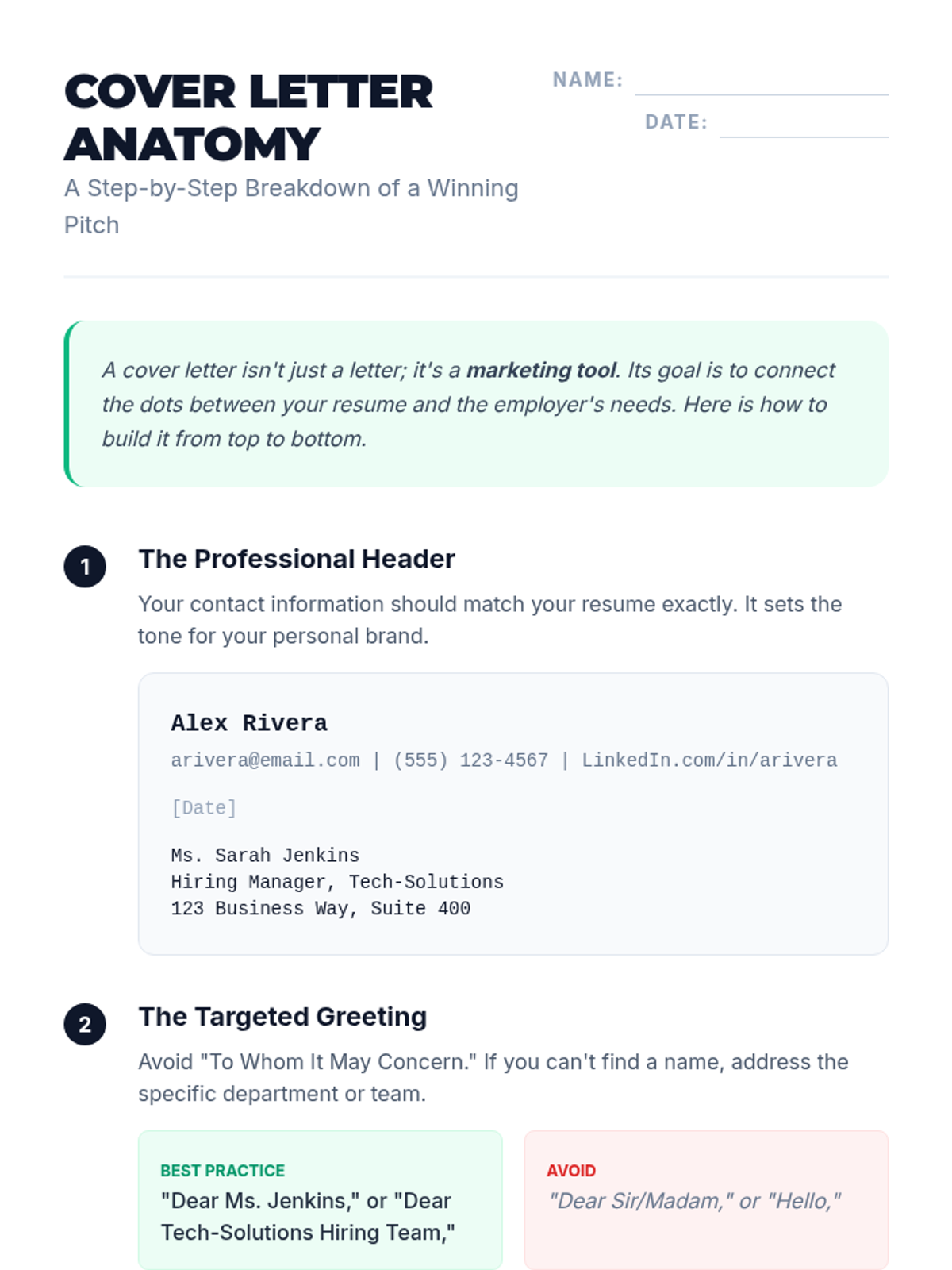
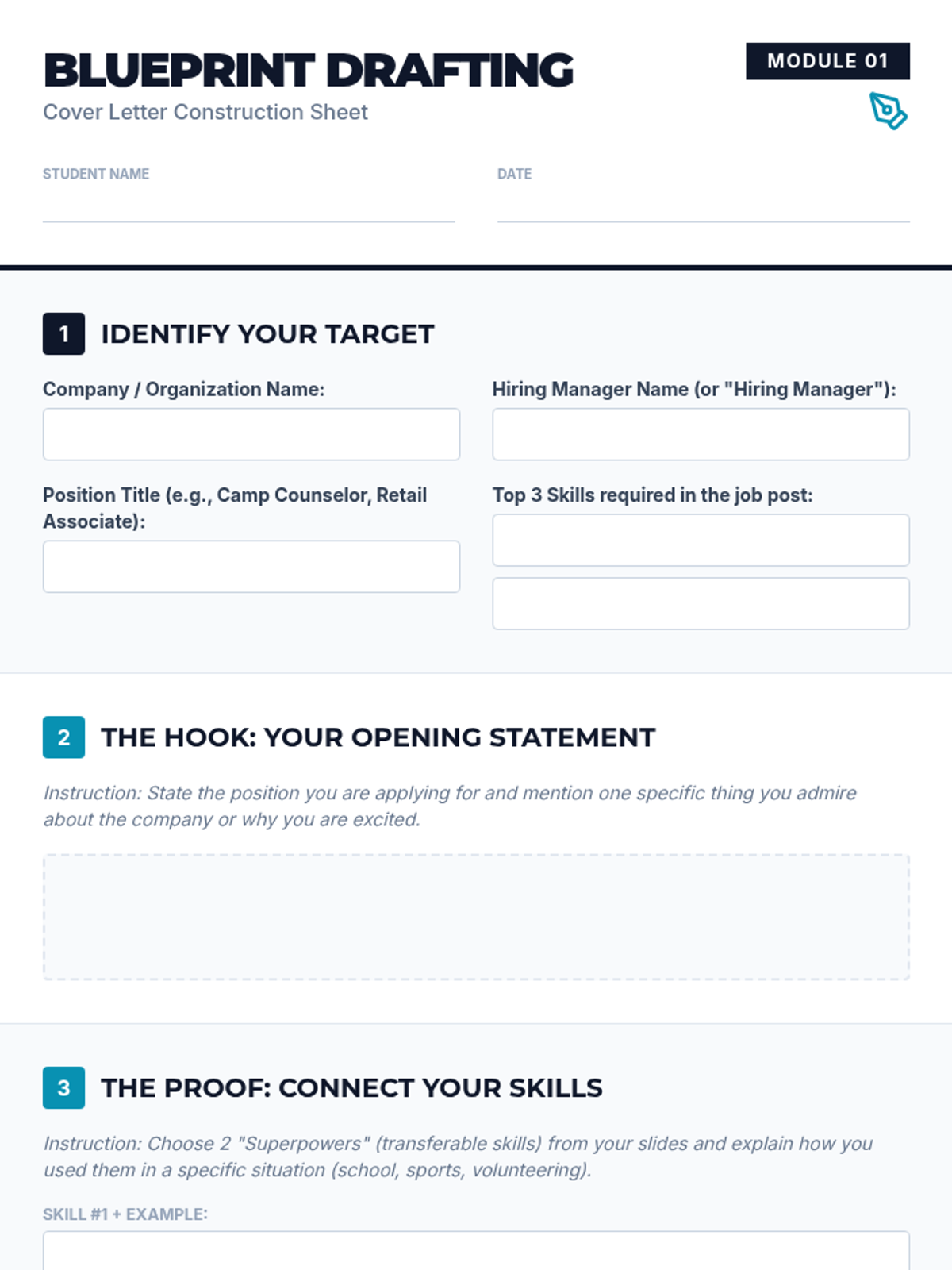
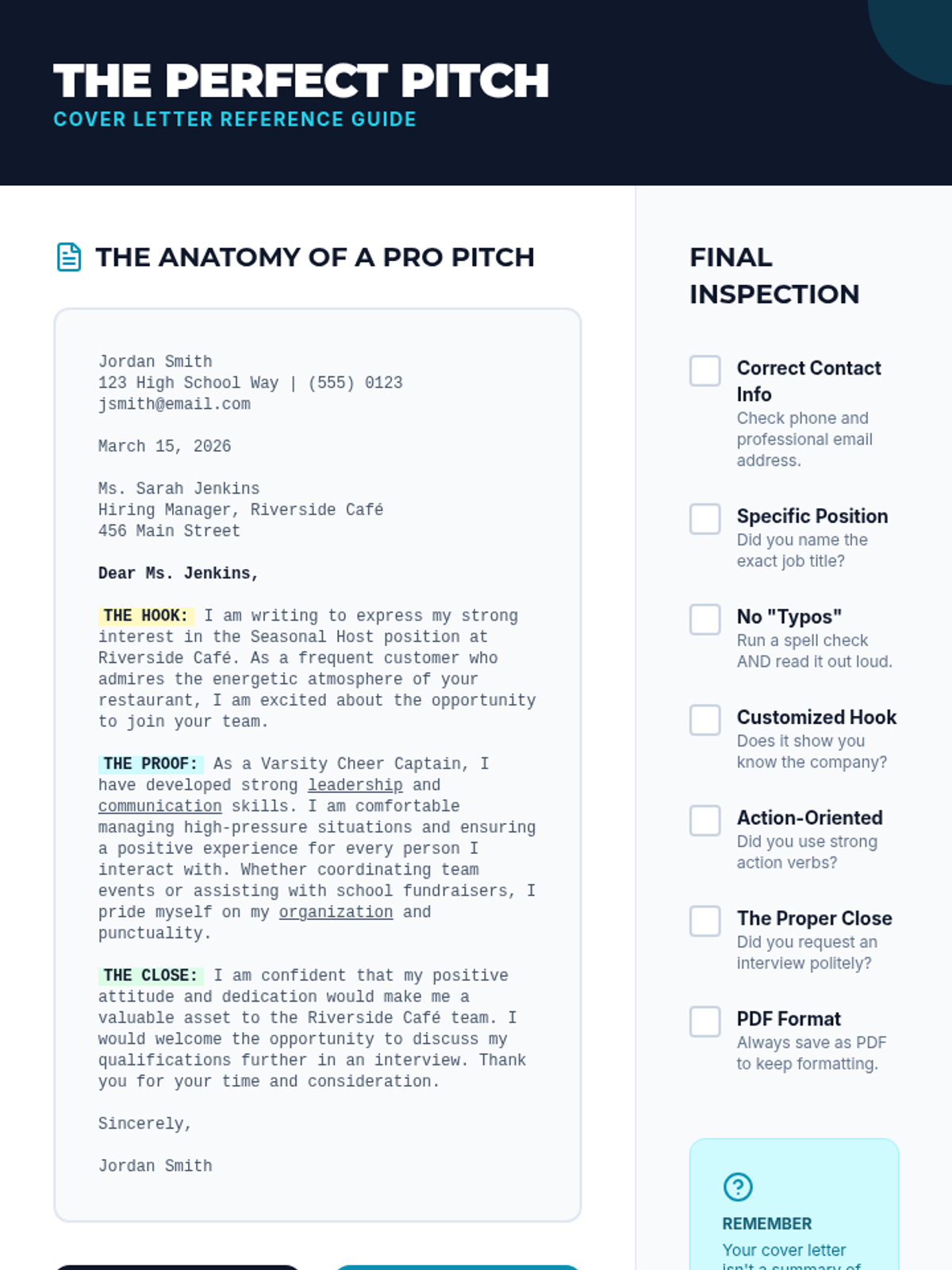
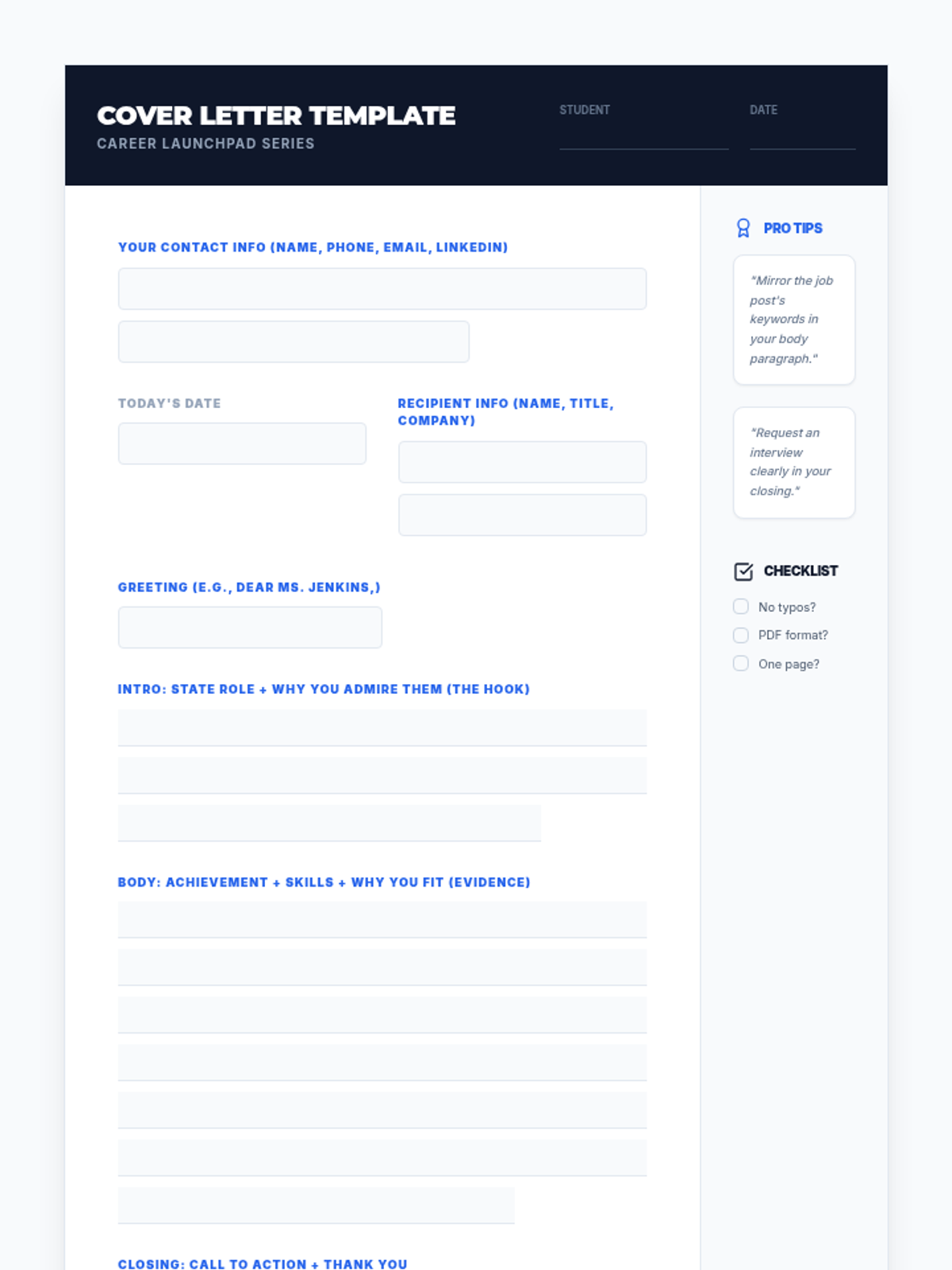
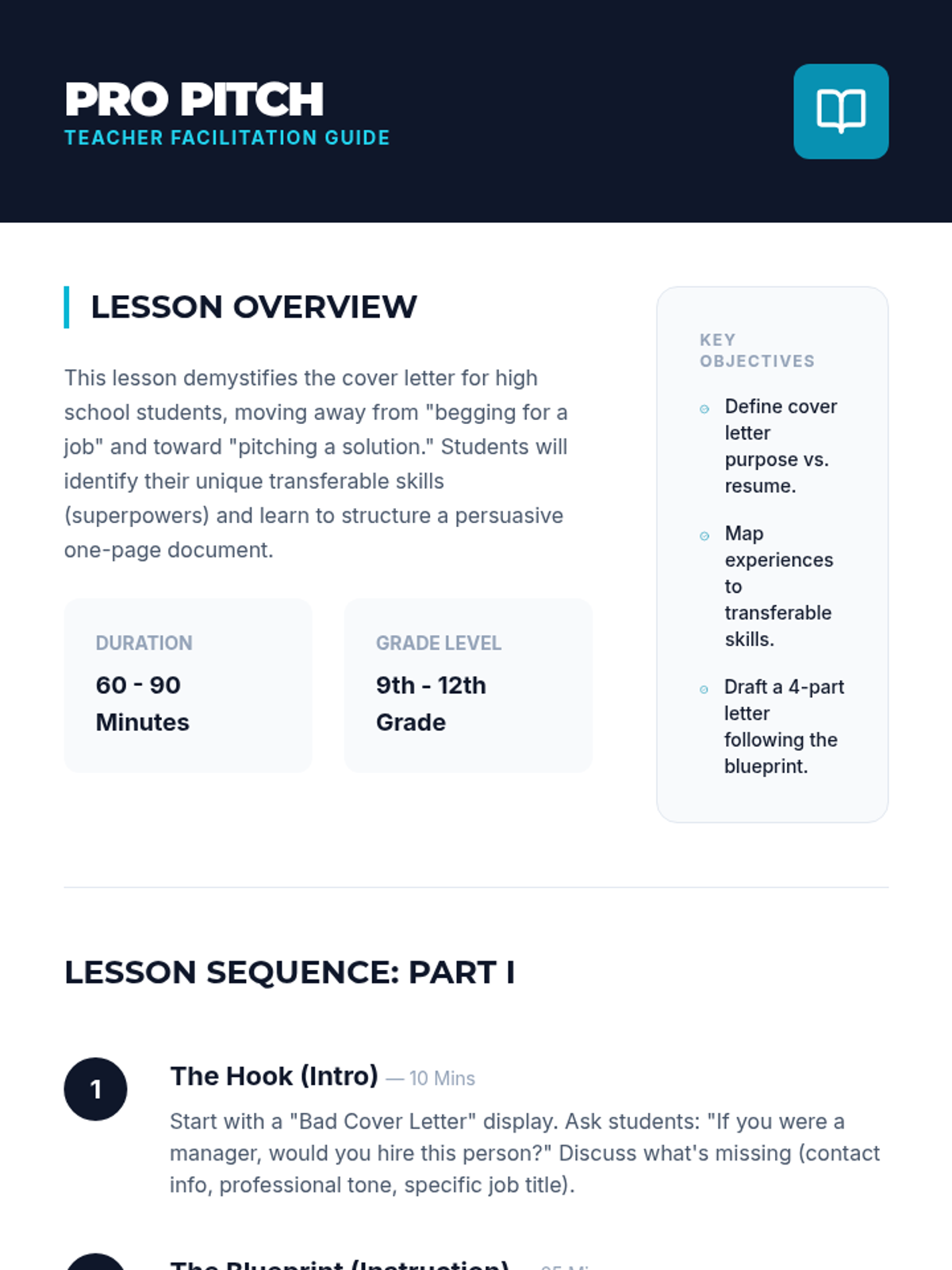
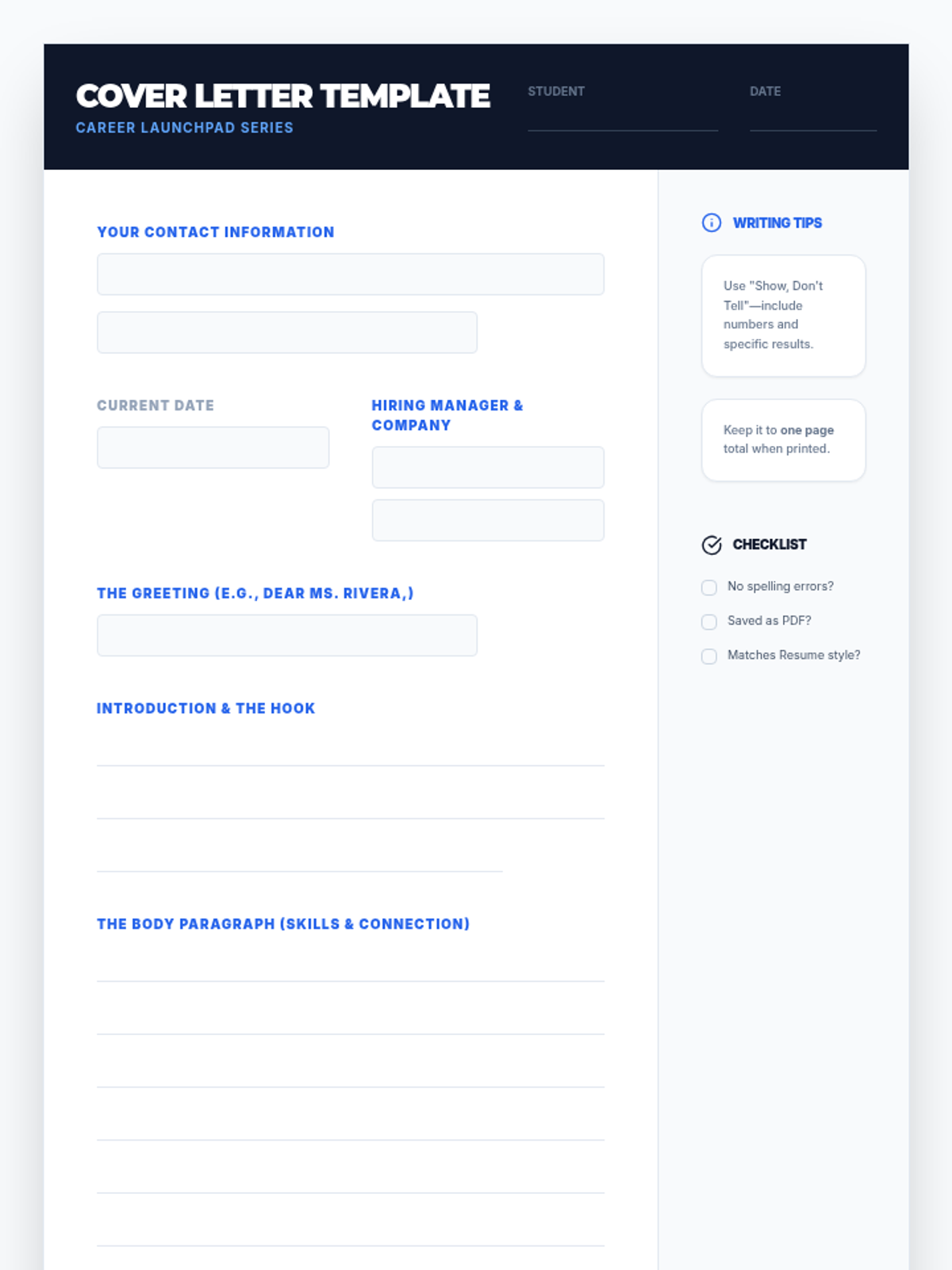
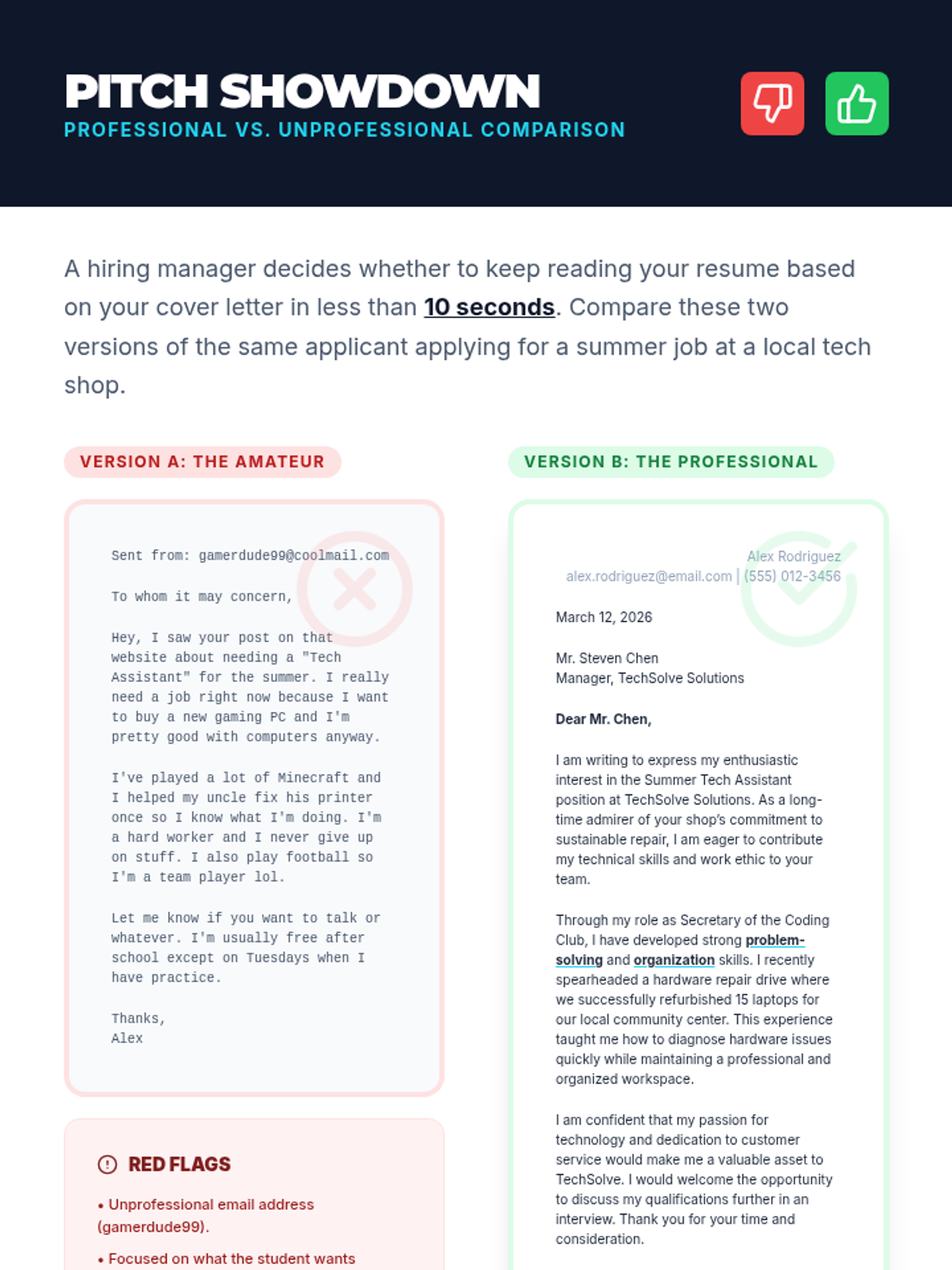
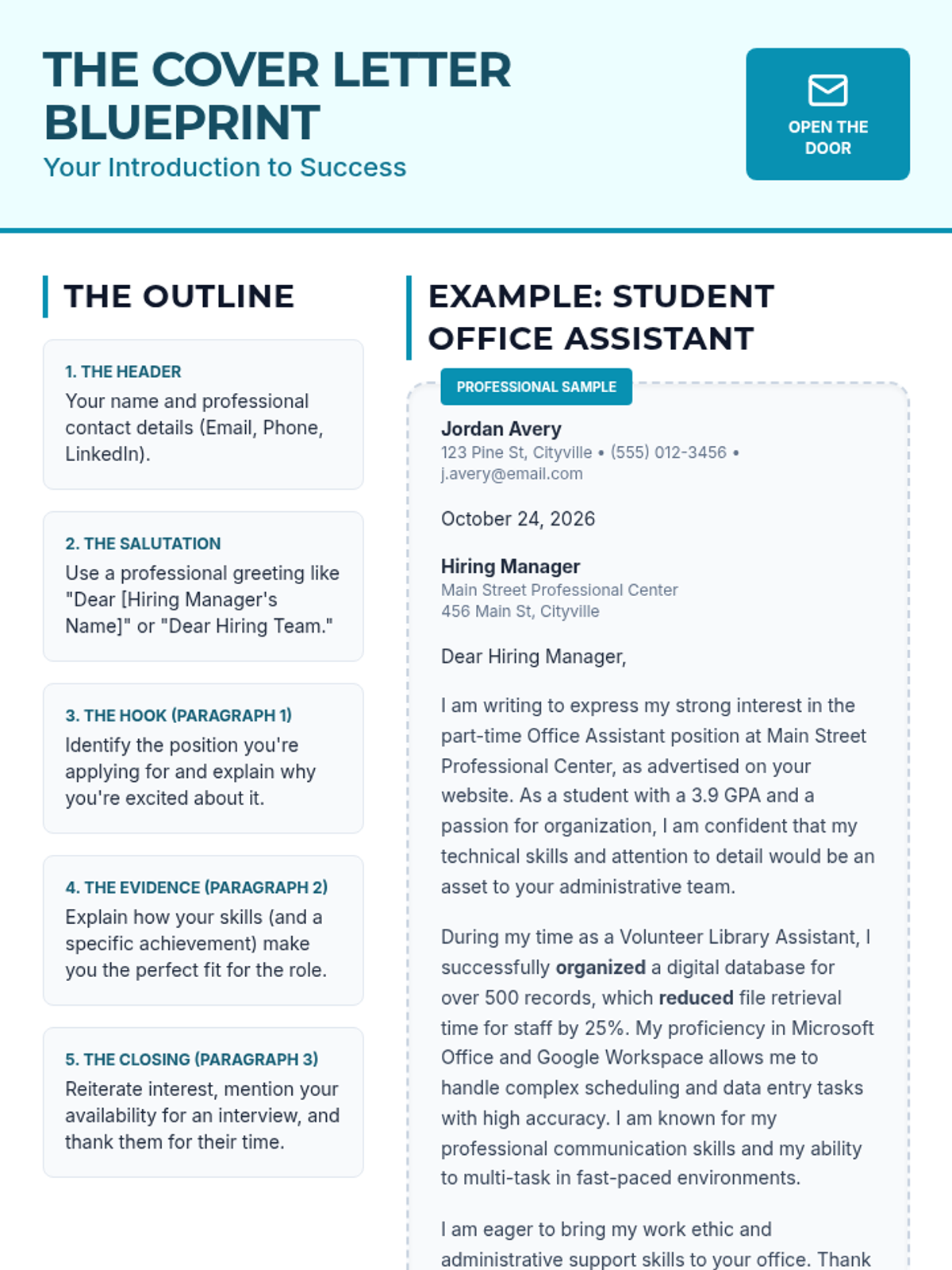
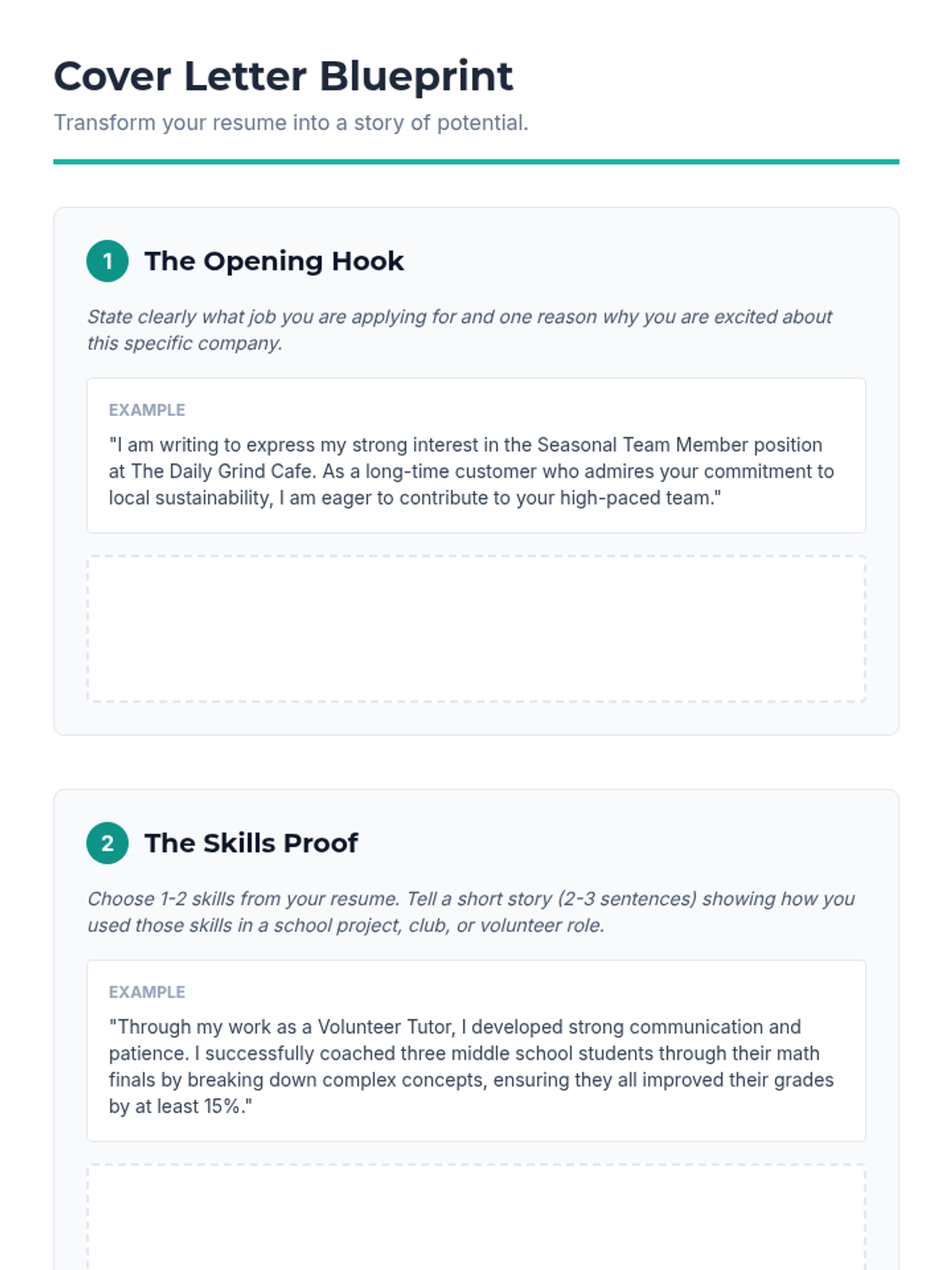
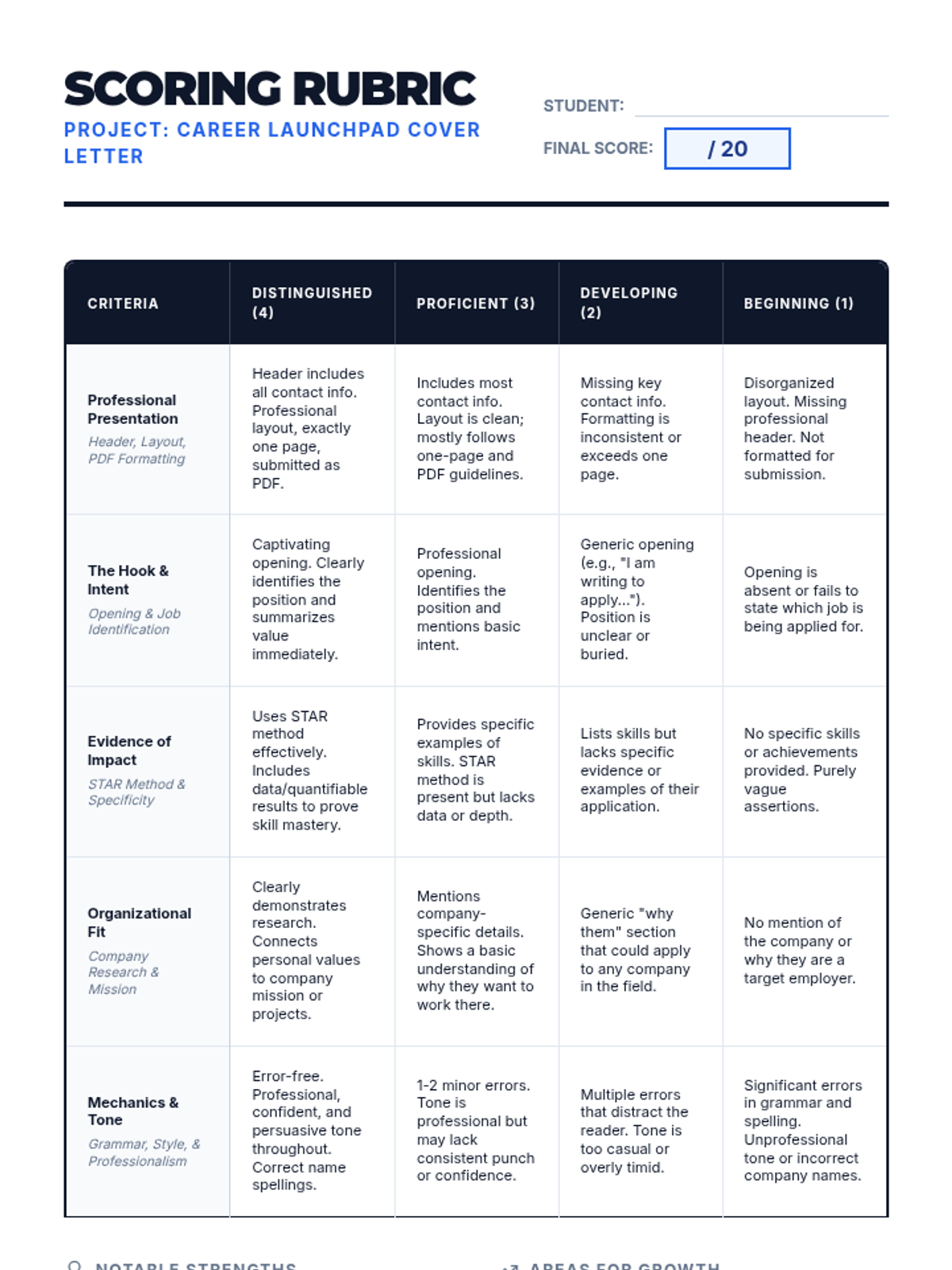
This lesson focuses on the cover letter, teaching students how to articulate their skills and enthusiasm to potential employers or internship coordinators through a structured, persuasive format.
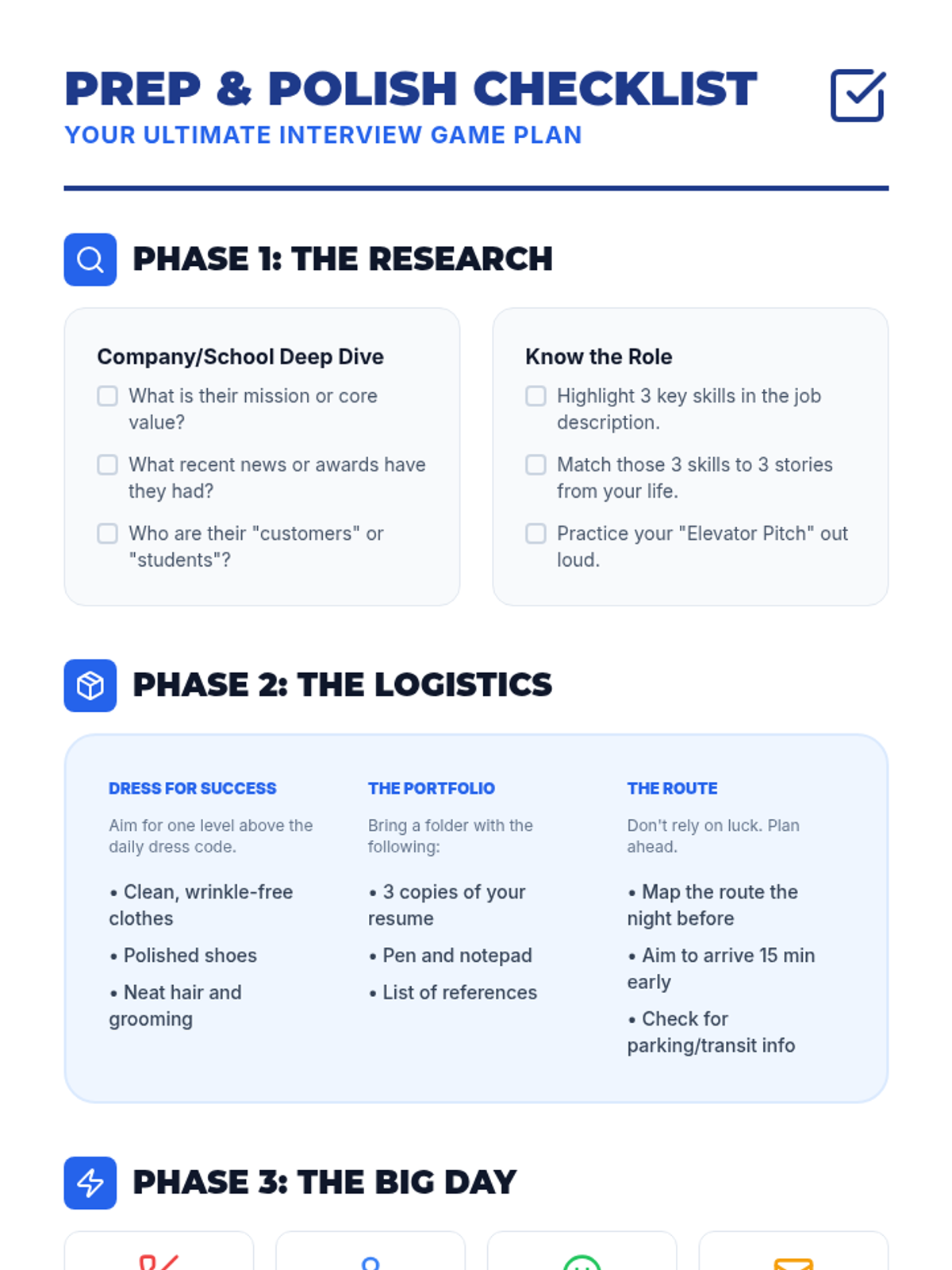
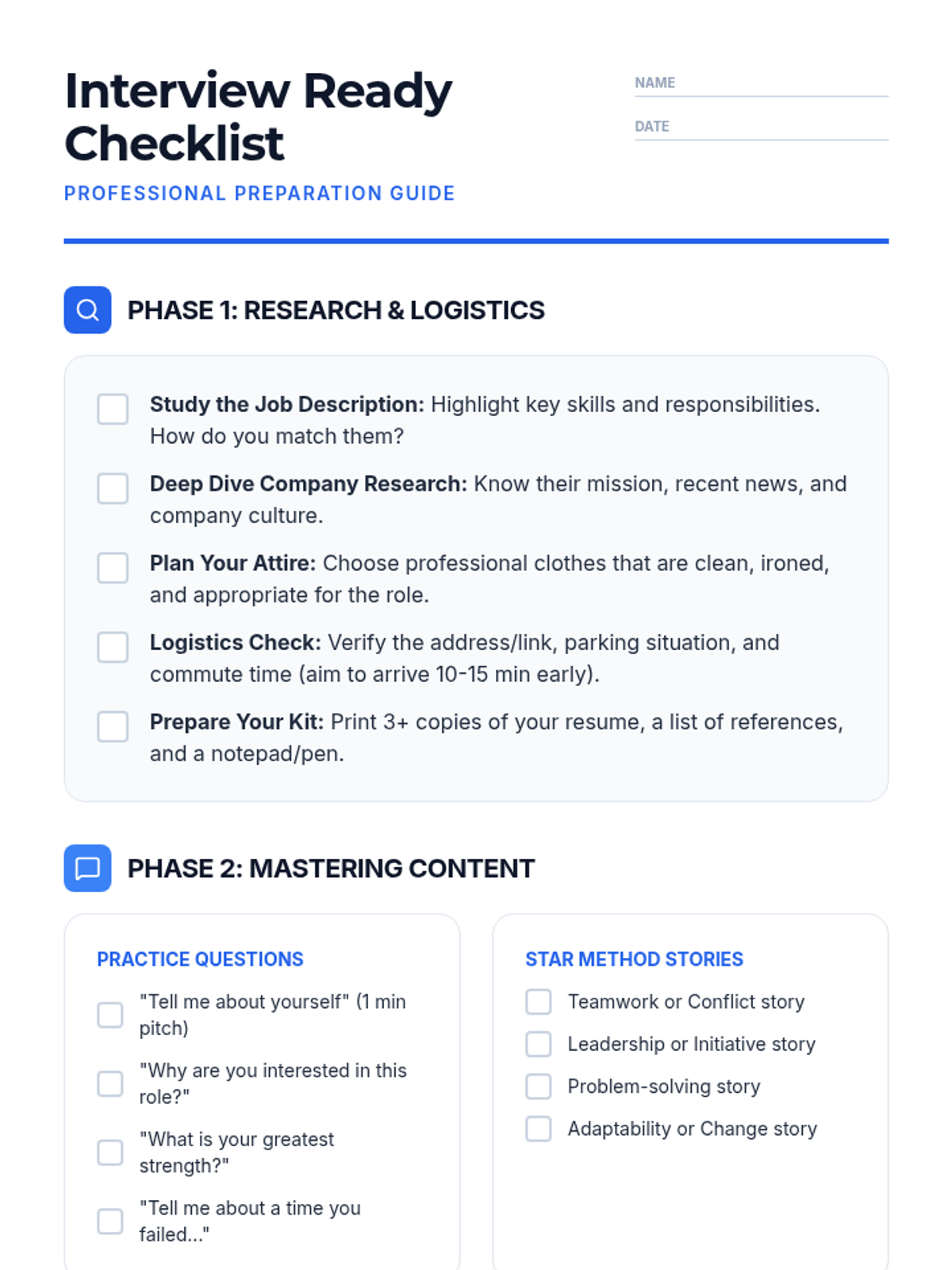
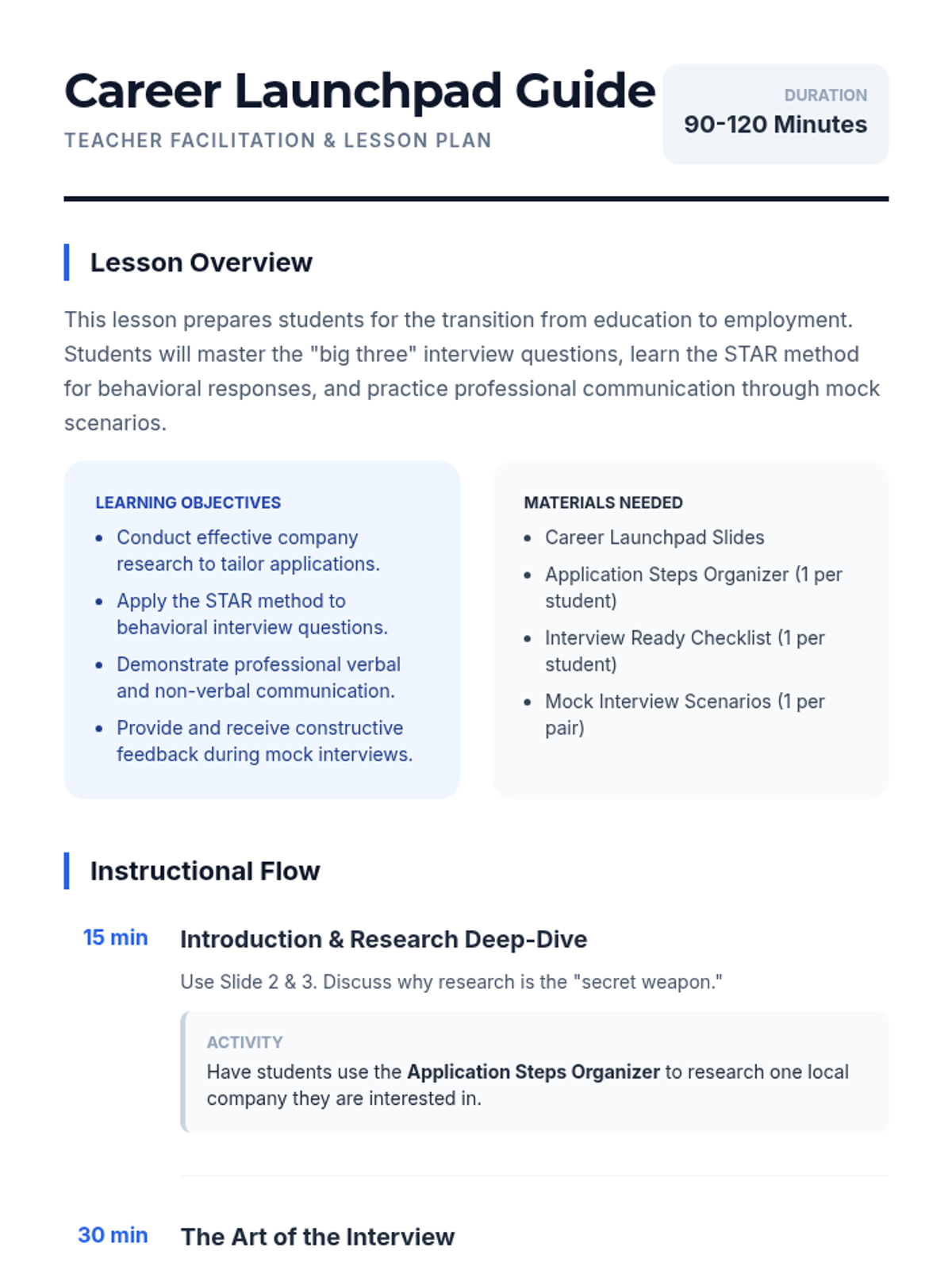
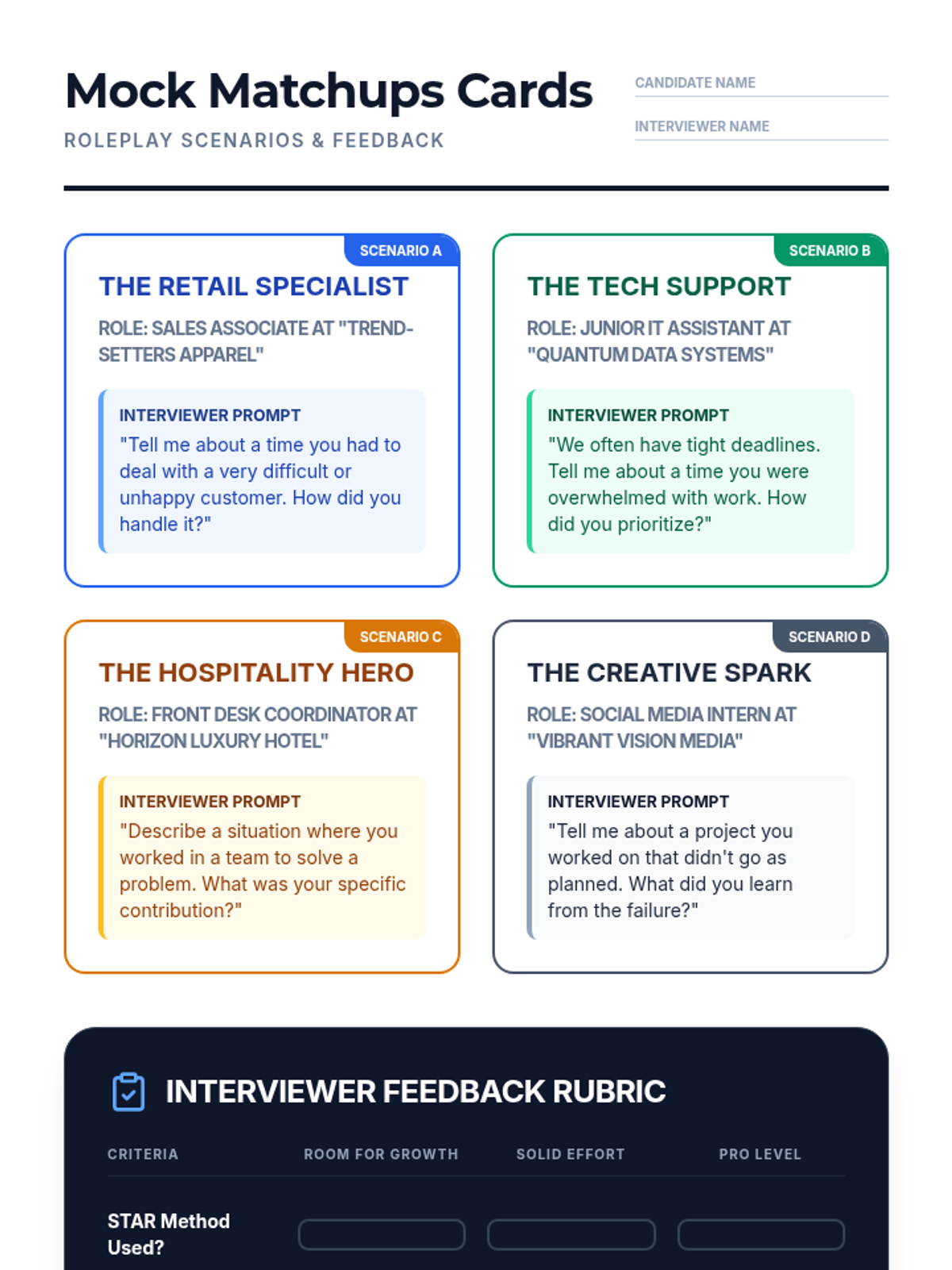
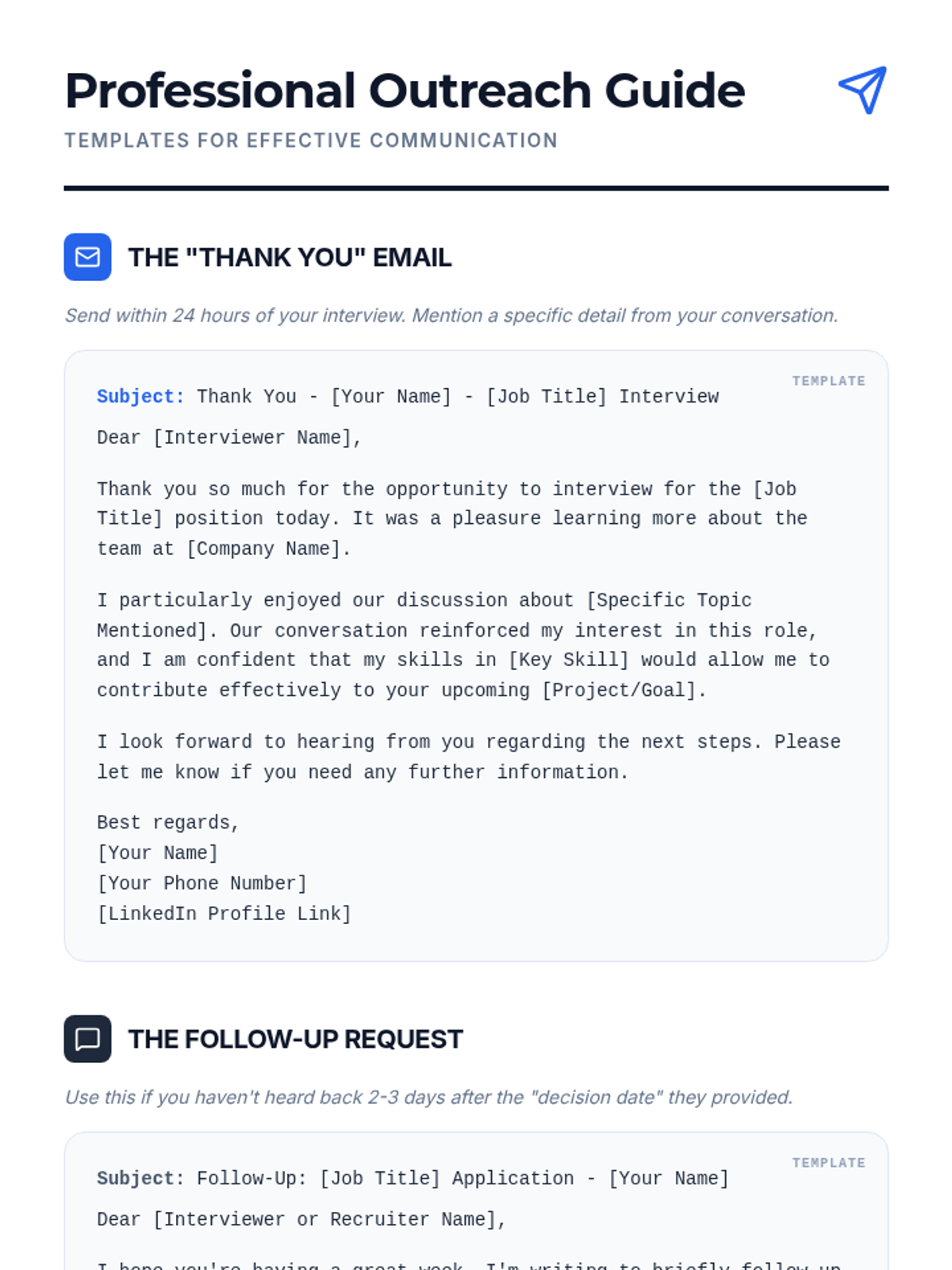
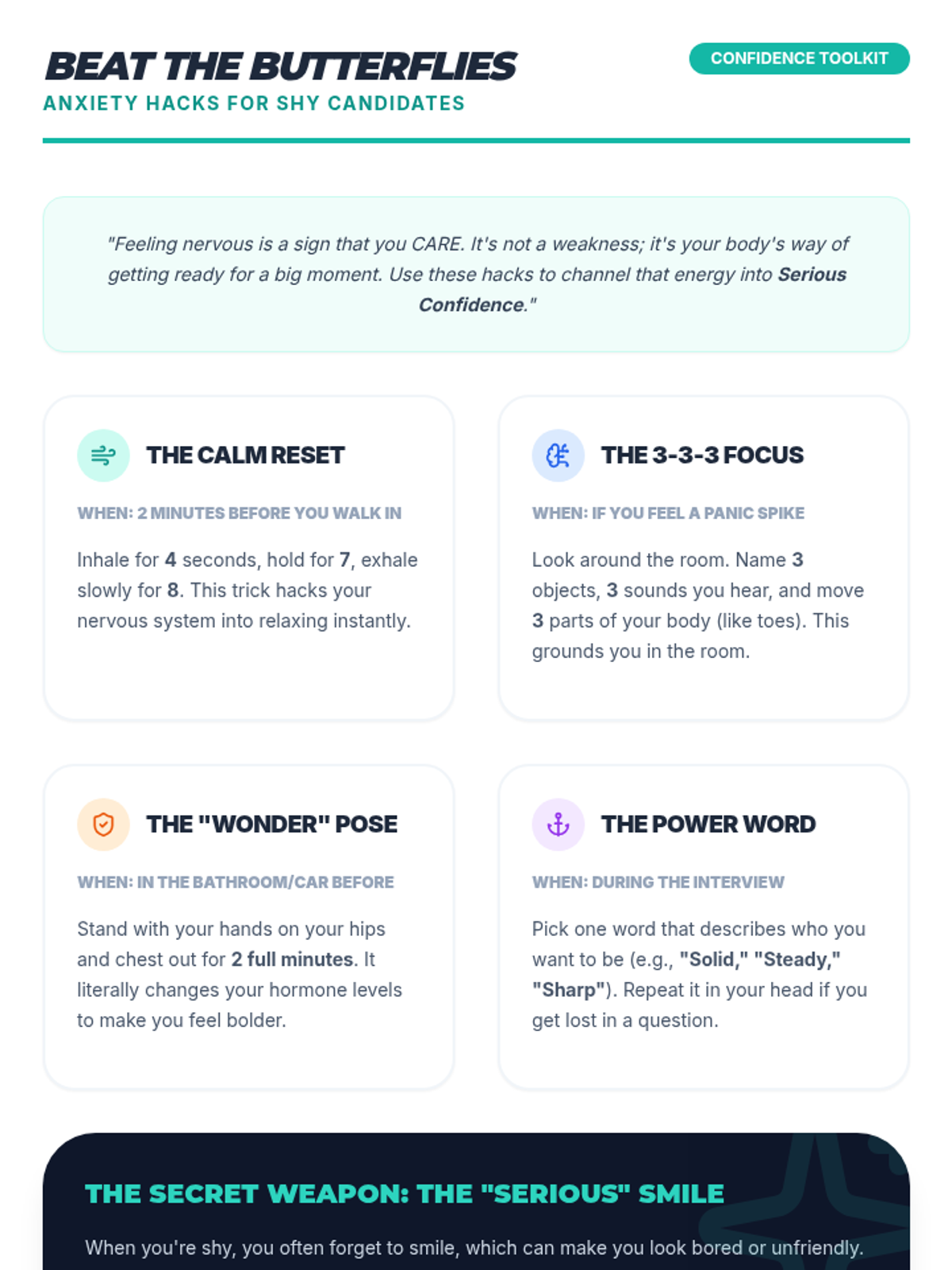
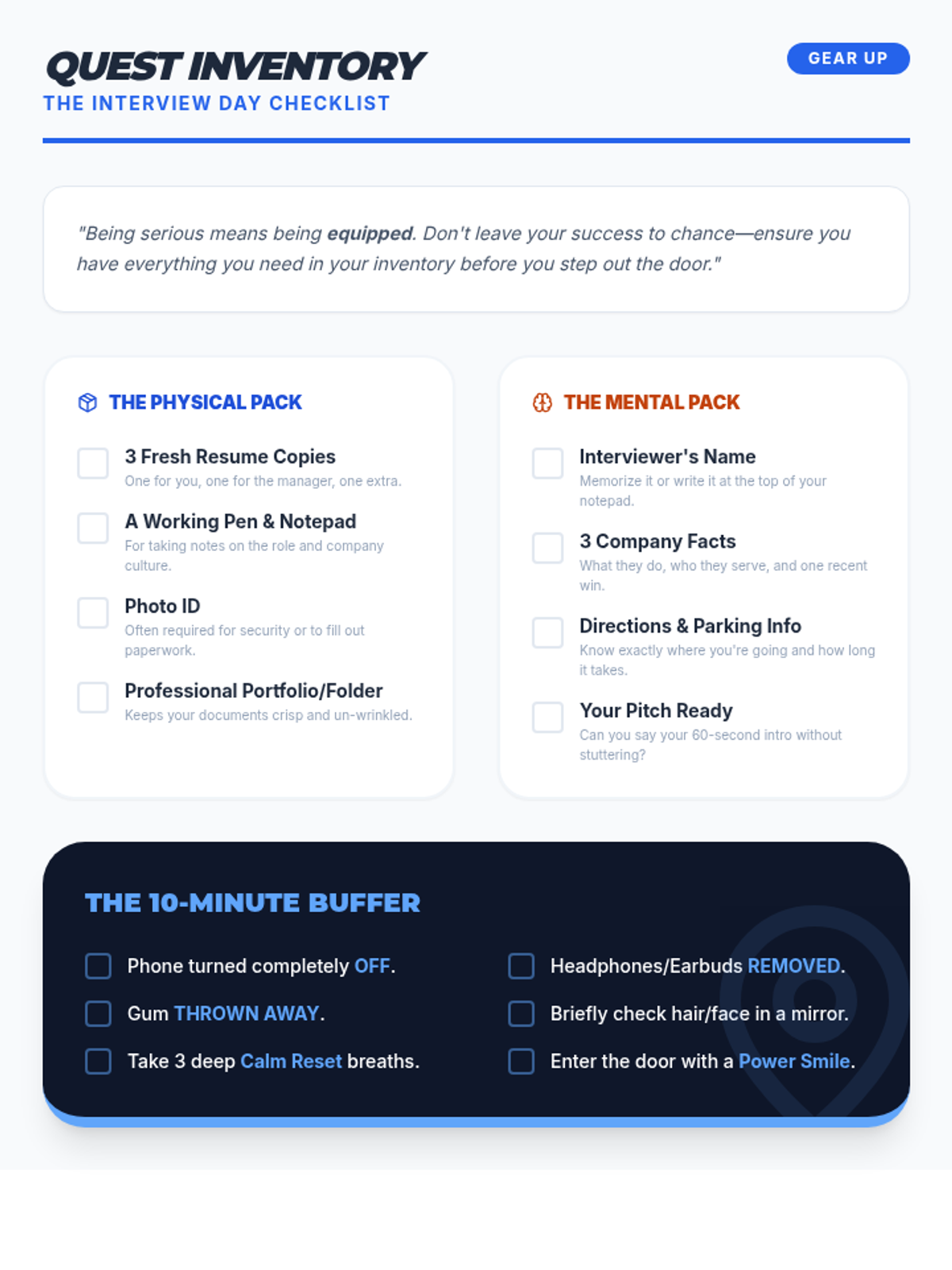
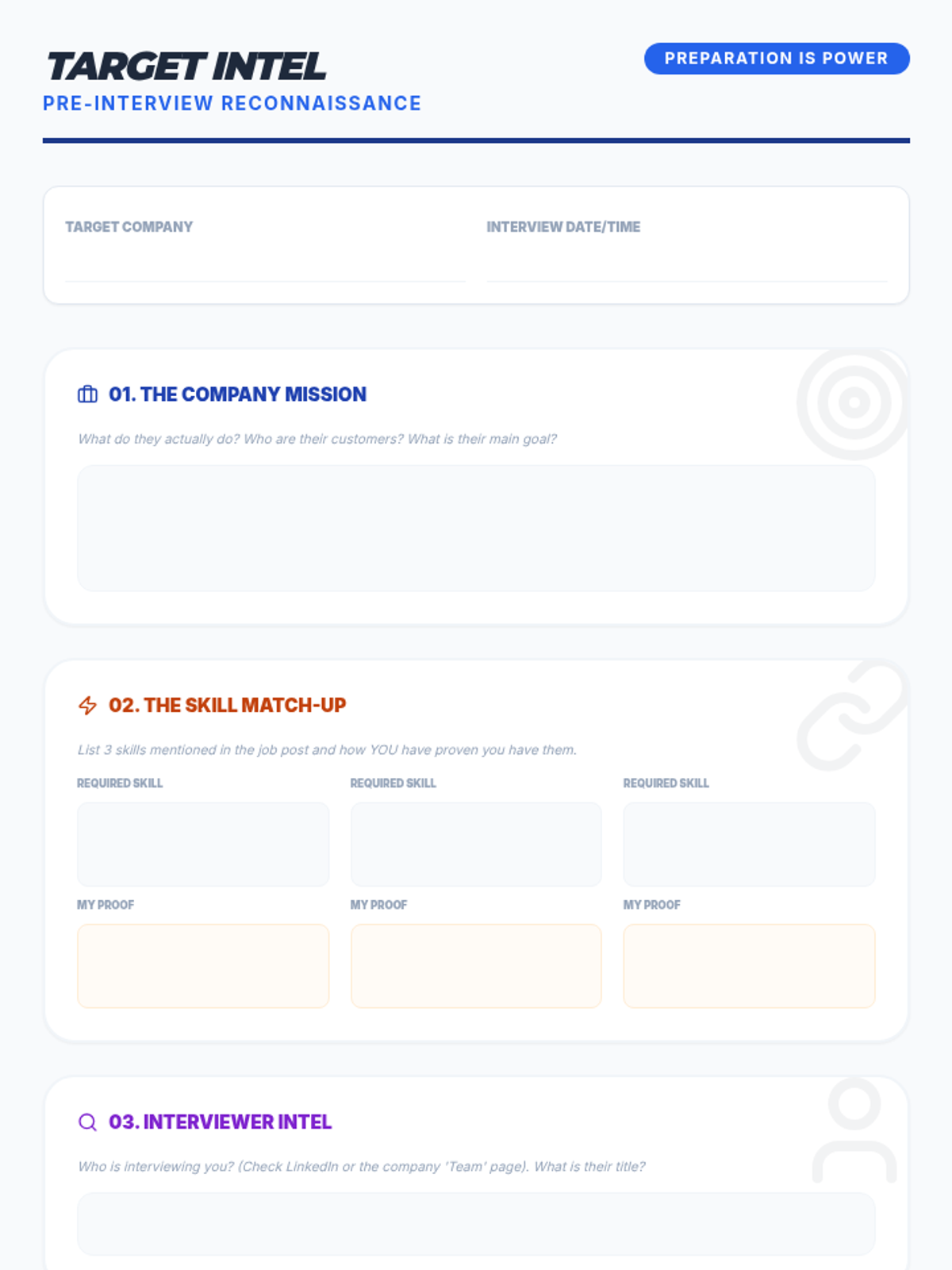
A comprehensive guide to mastering the job application and interview process, focusing on research, professional communication, and mock interview practice.
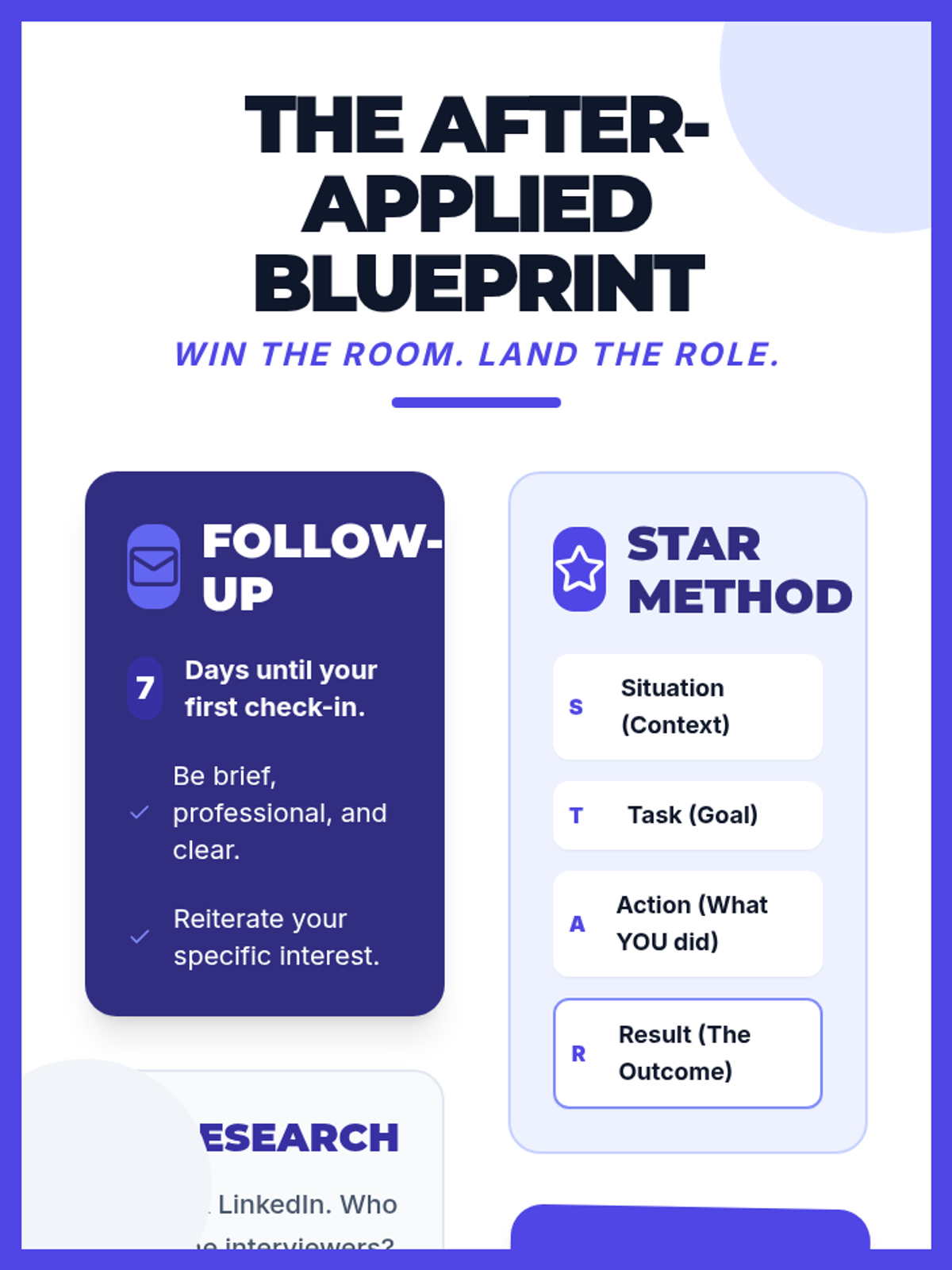
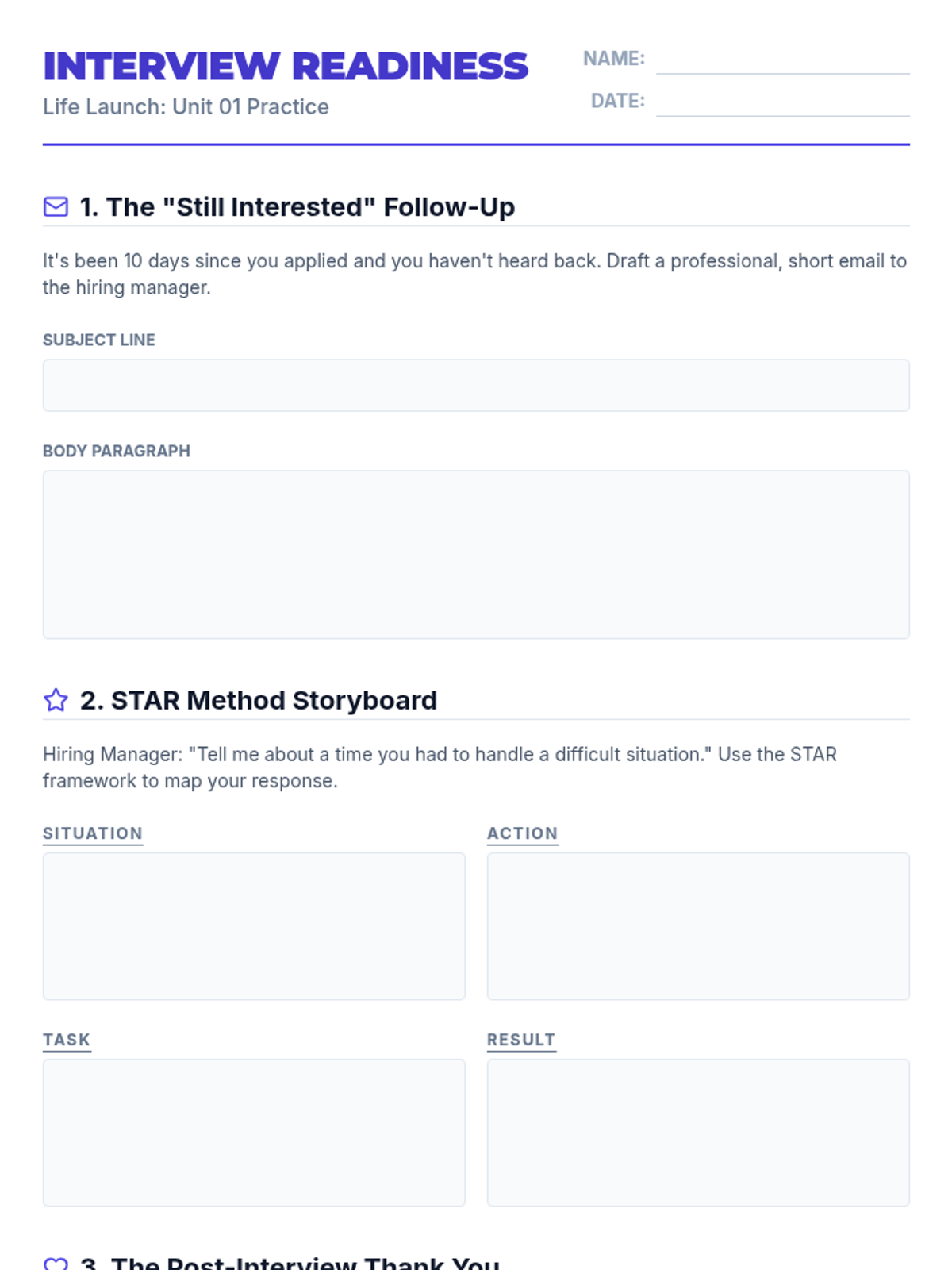
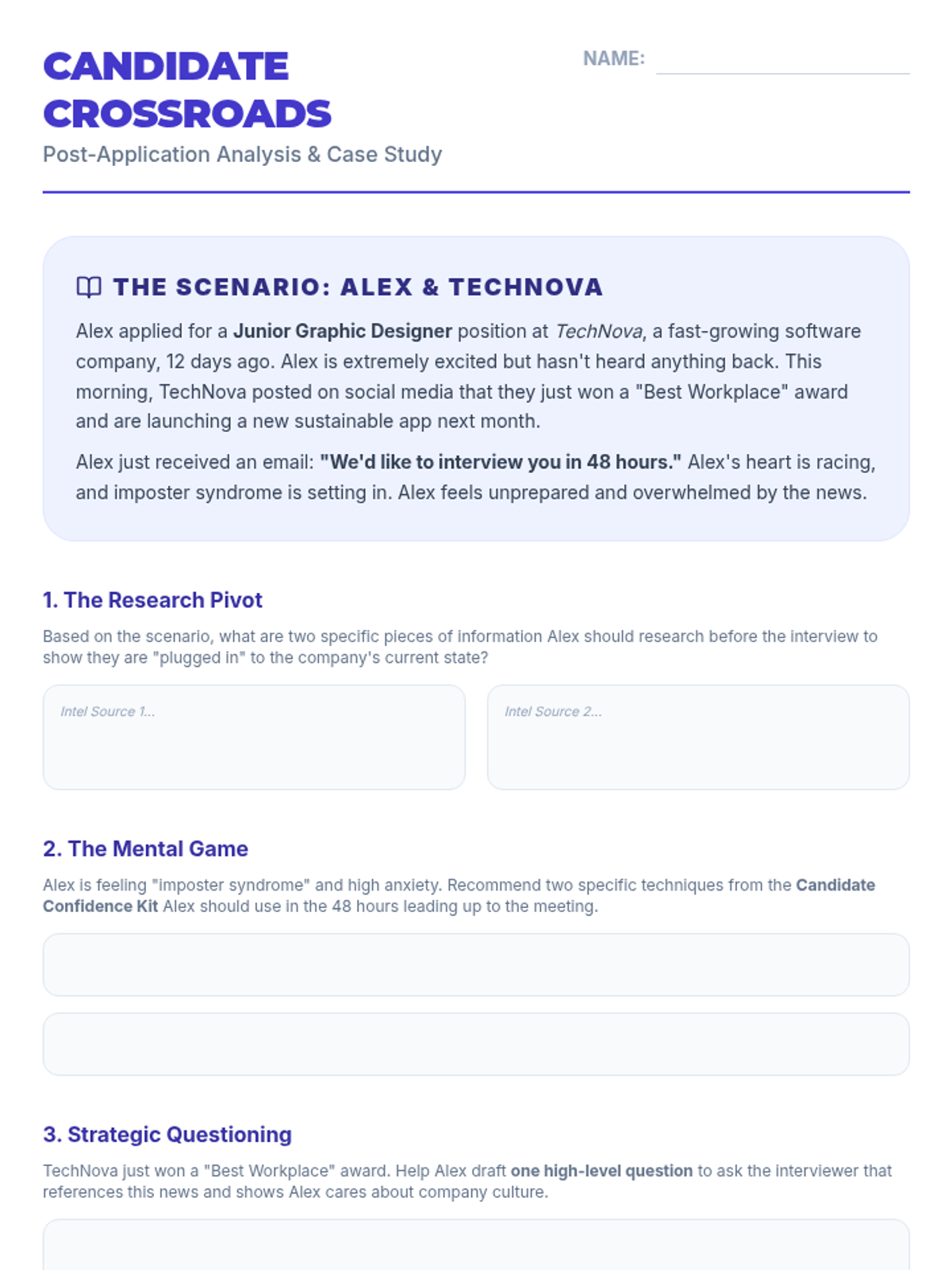
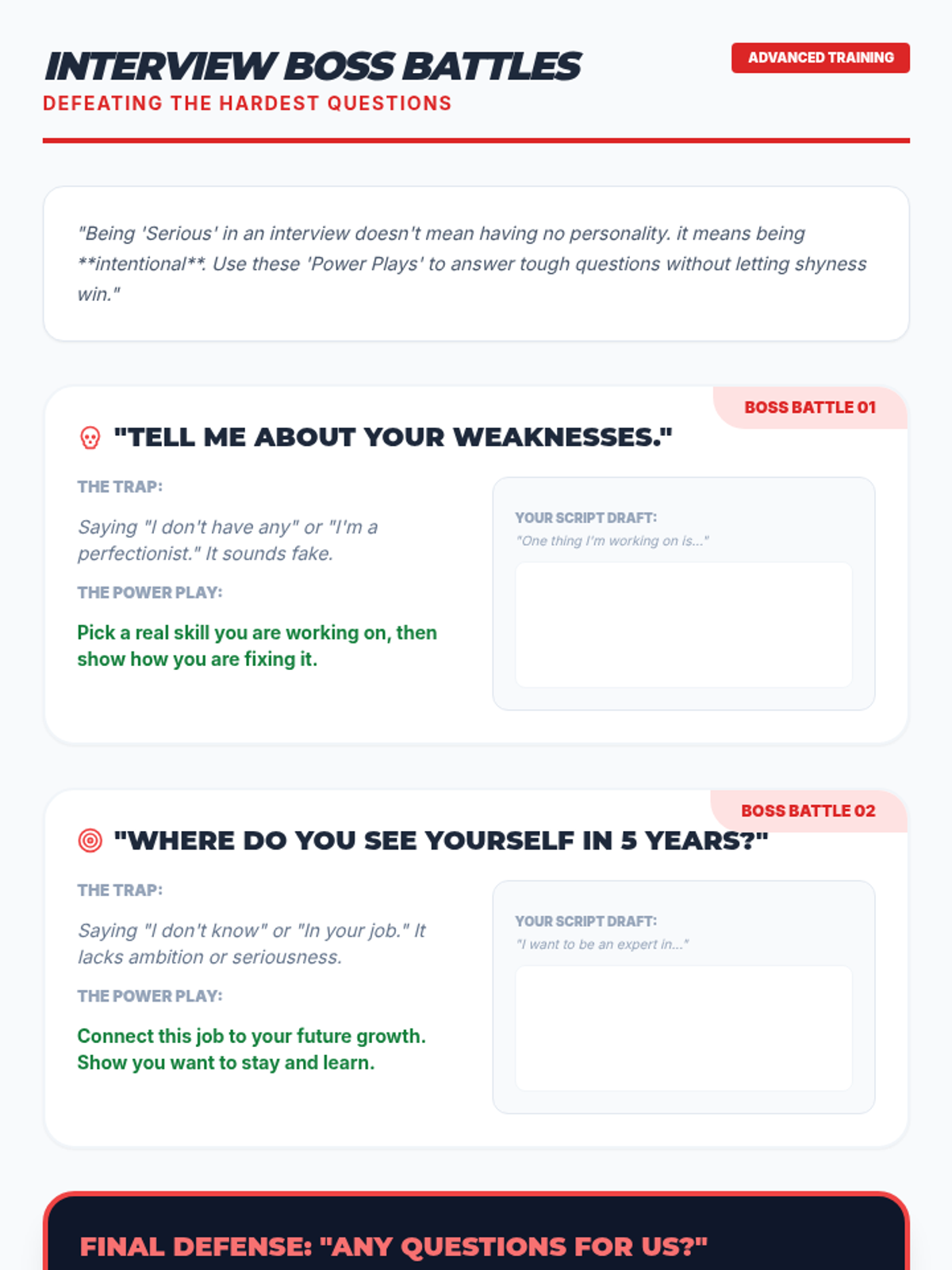
Mastering the critical phase after the job application is submitted. Students learn professional follow-up etiquette, STAR method storytelling, and strategic interview communication.
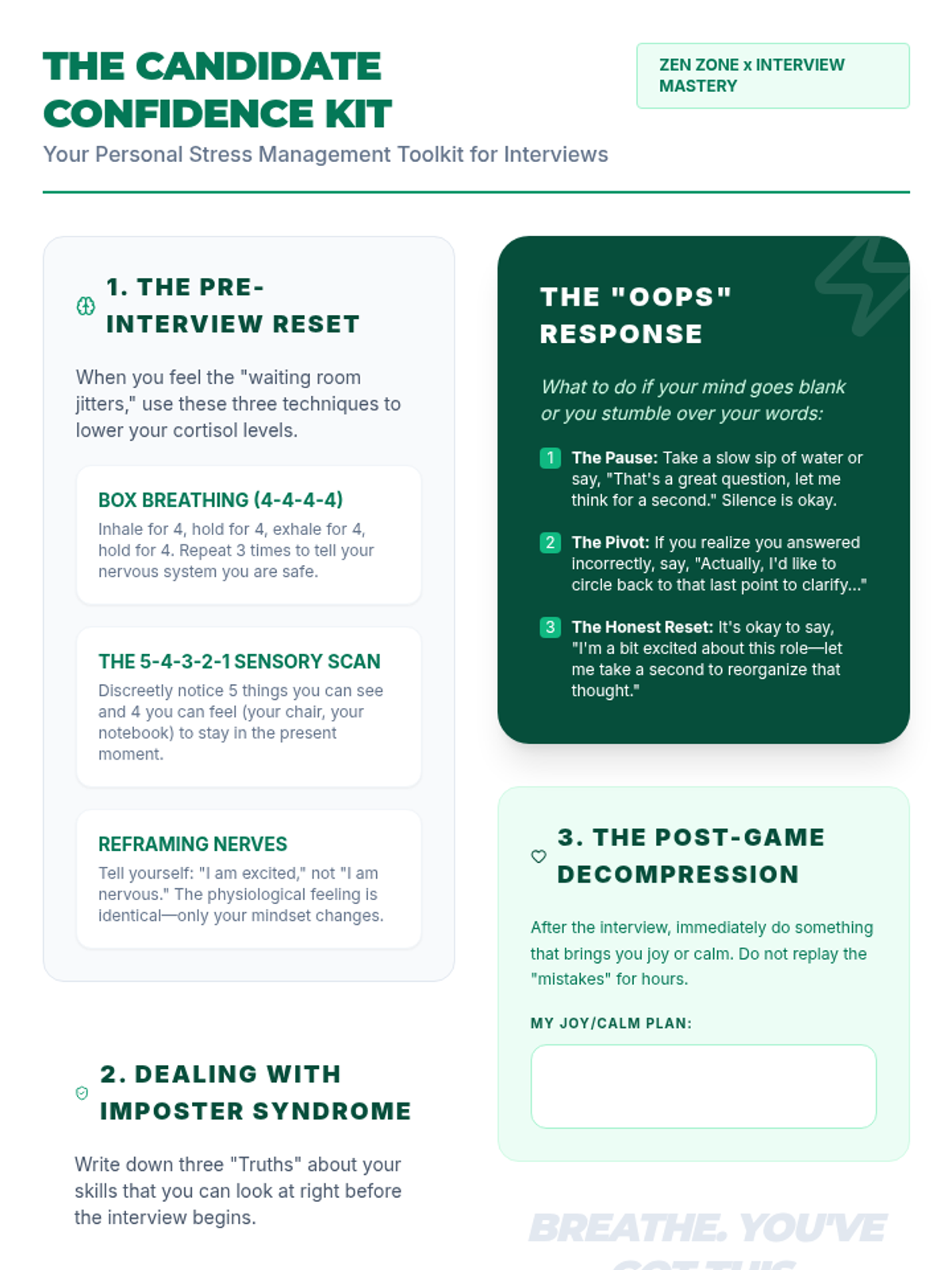
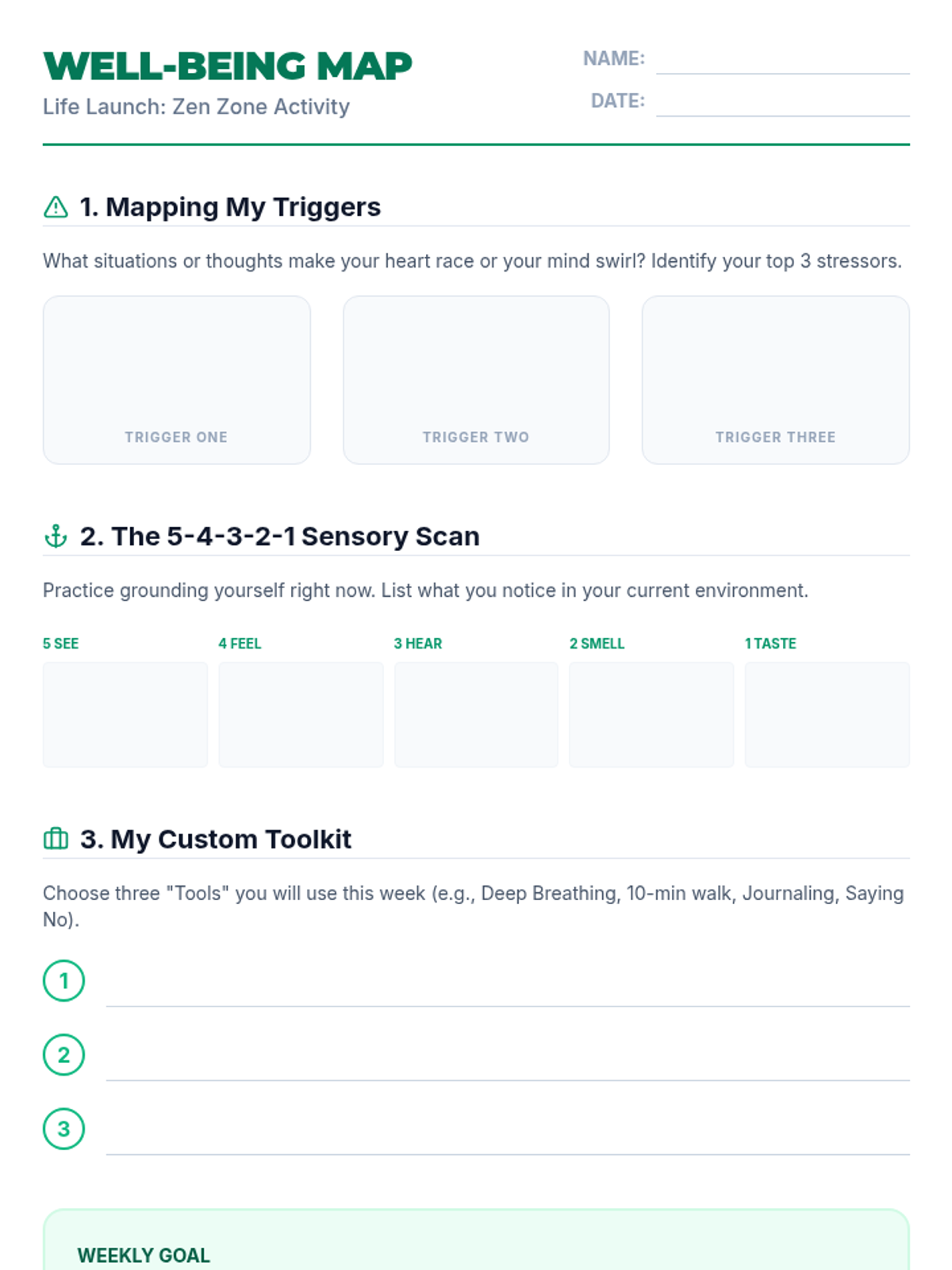
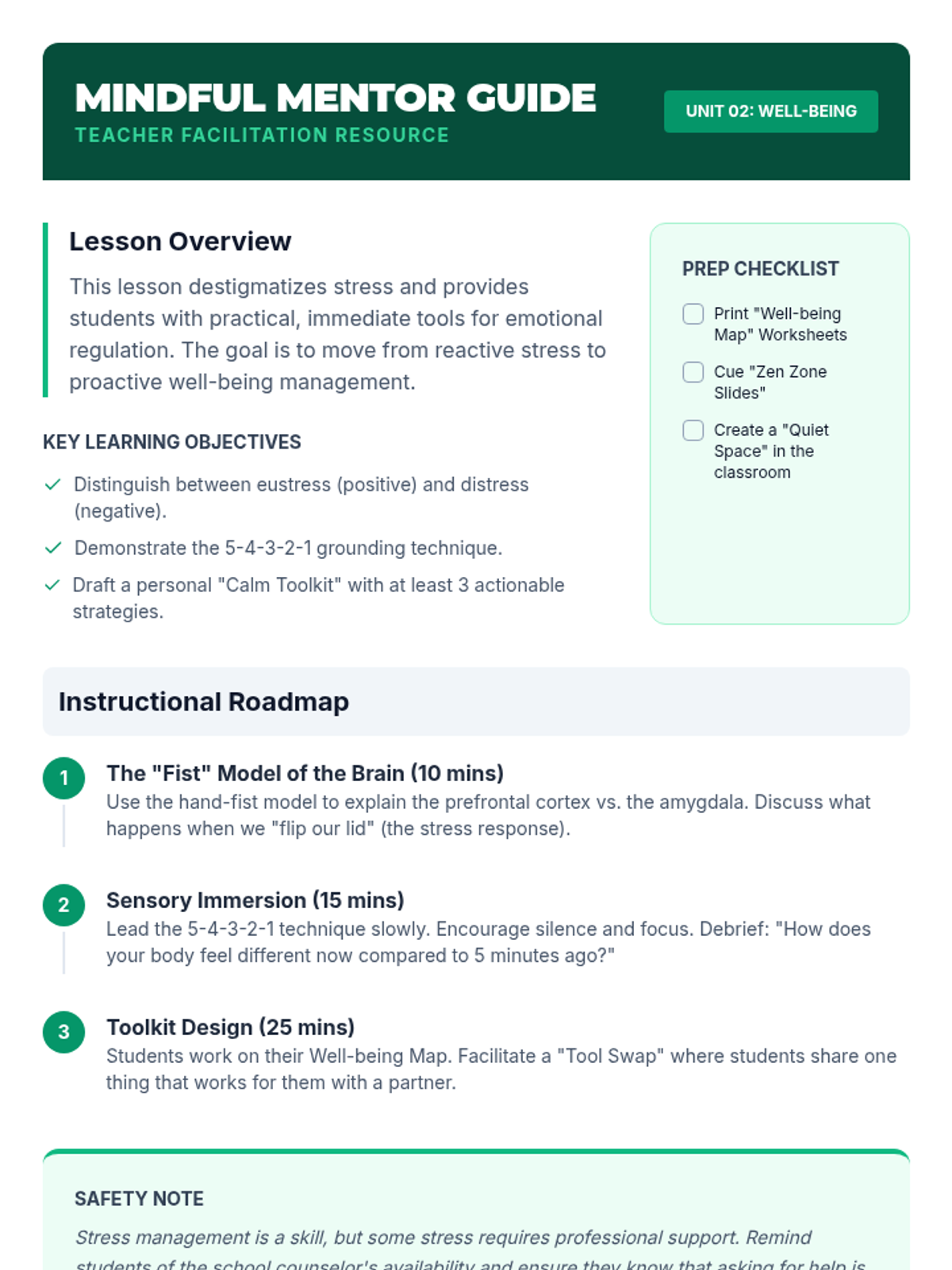
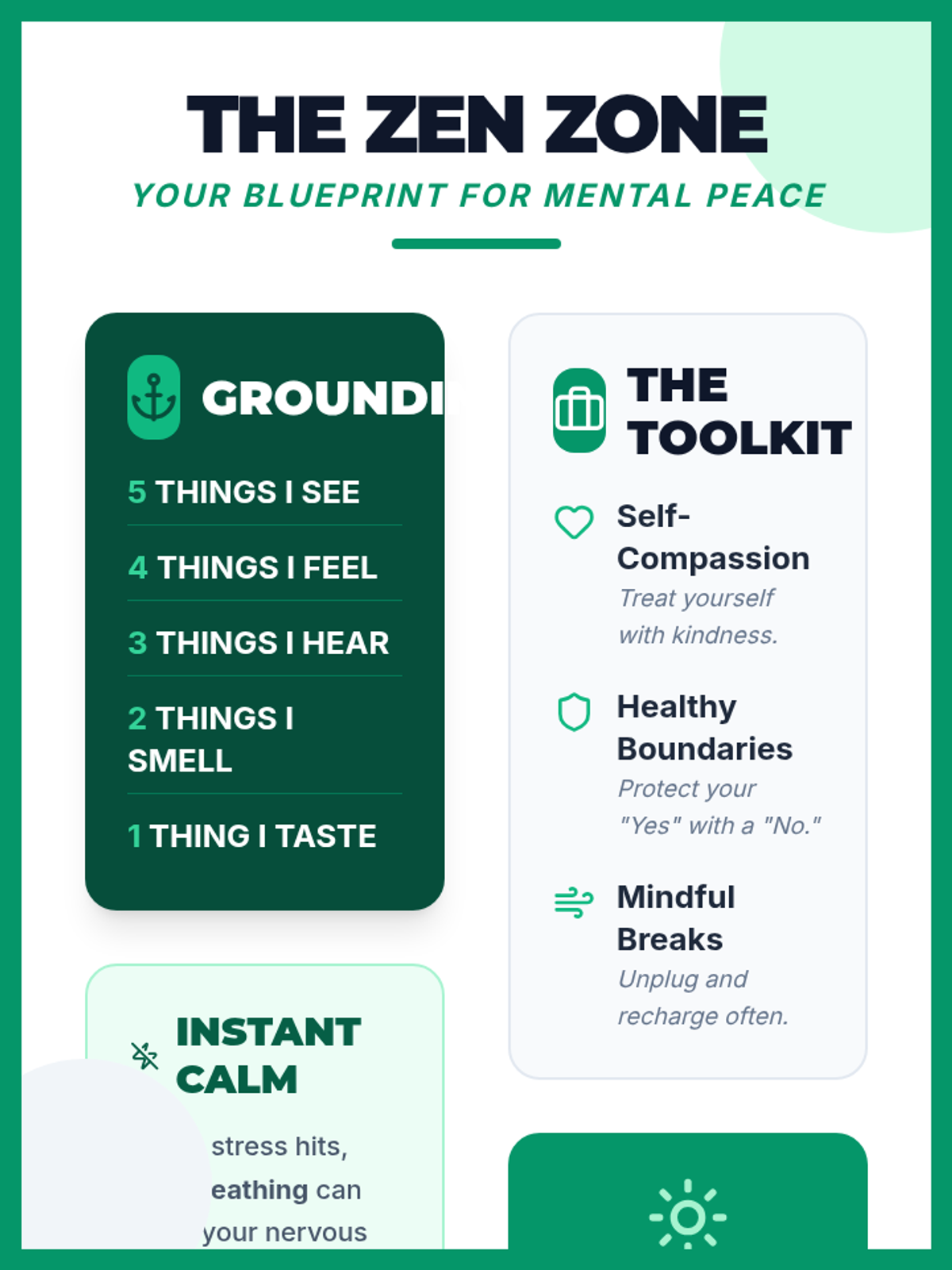
A focused lesson on identifying stress triggers, practicing mindfulness, and building a toolkit of healthy coping mechanisms for mental well-being.
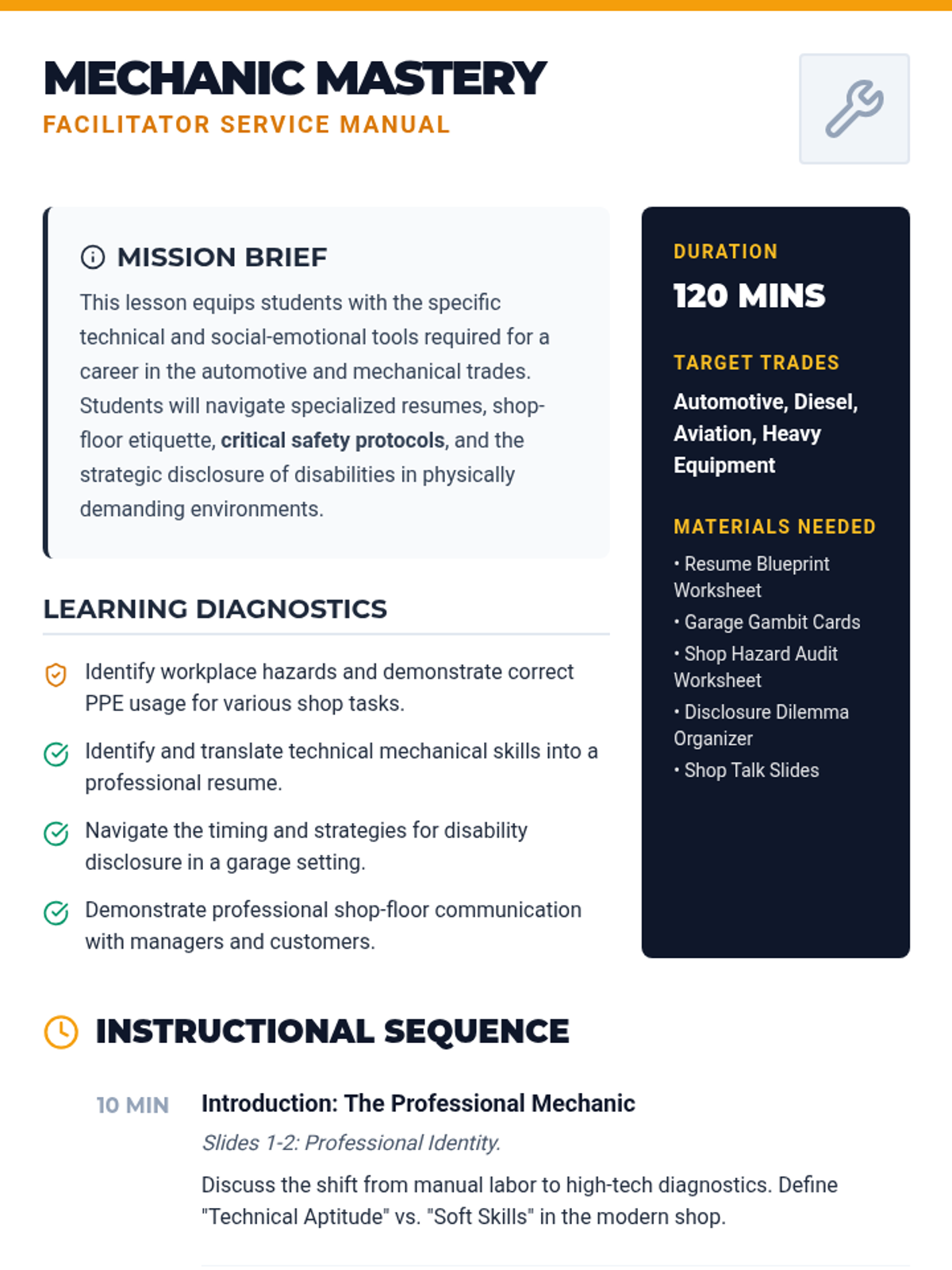
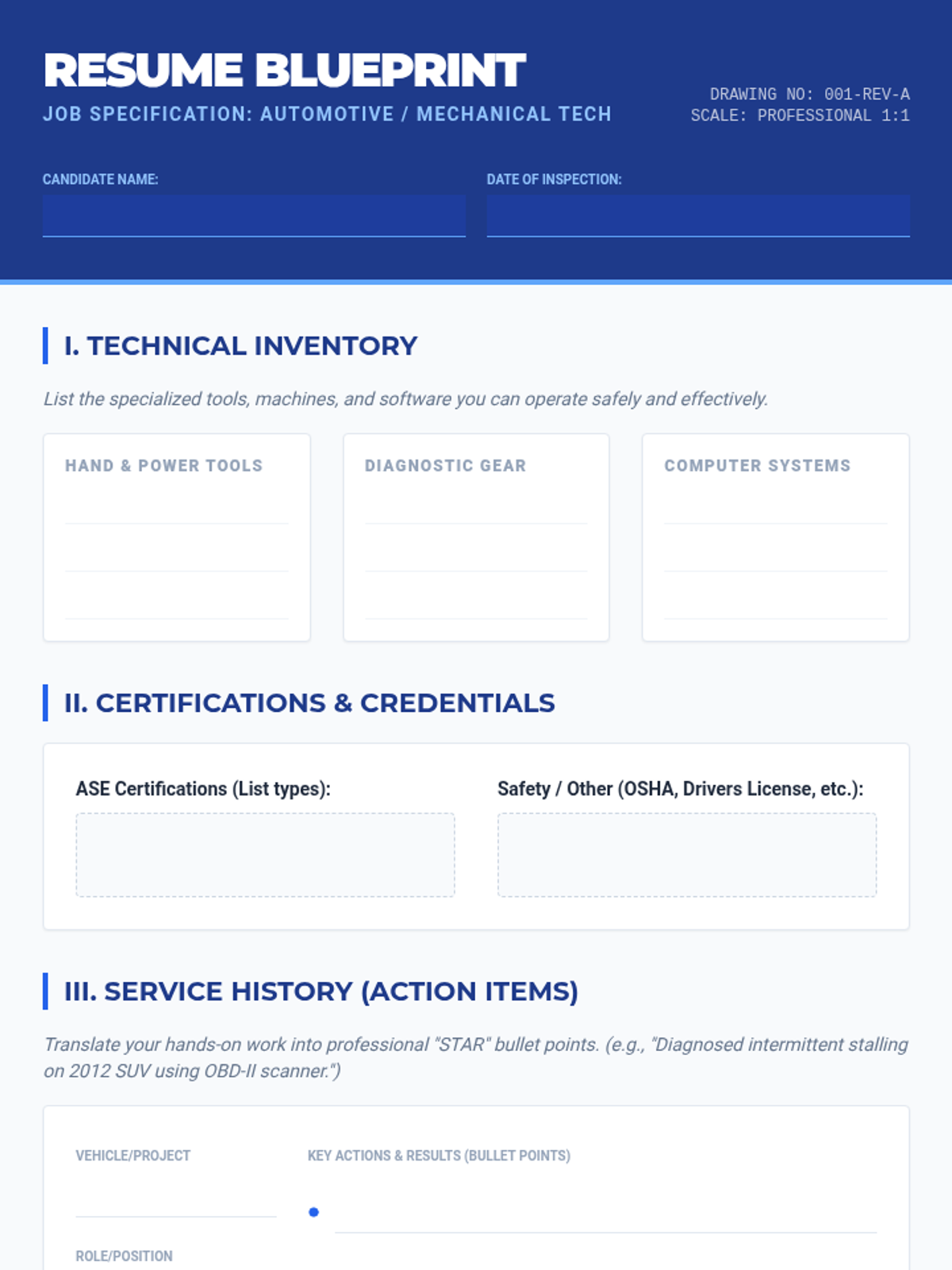
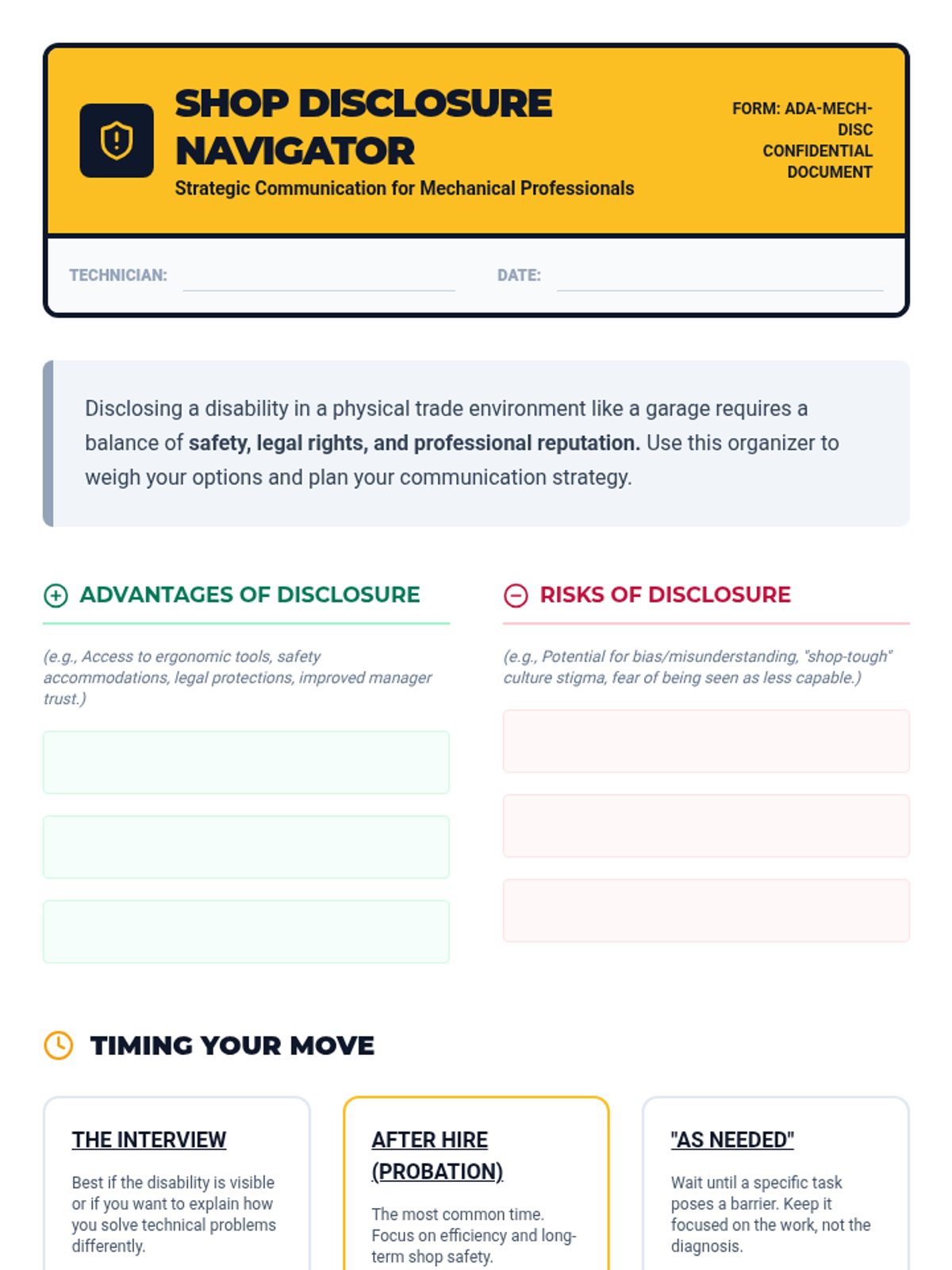
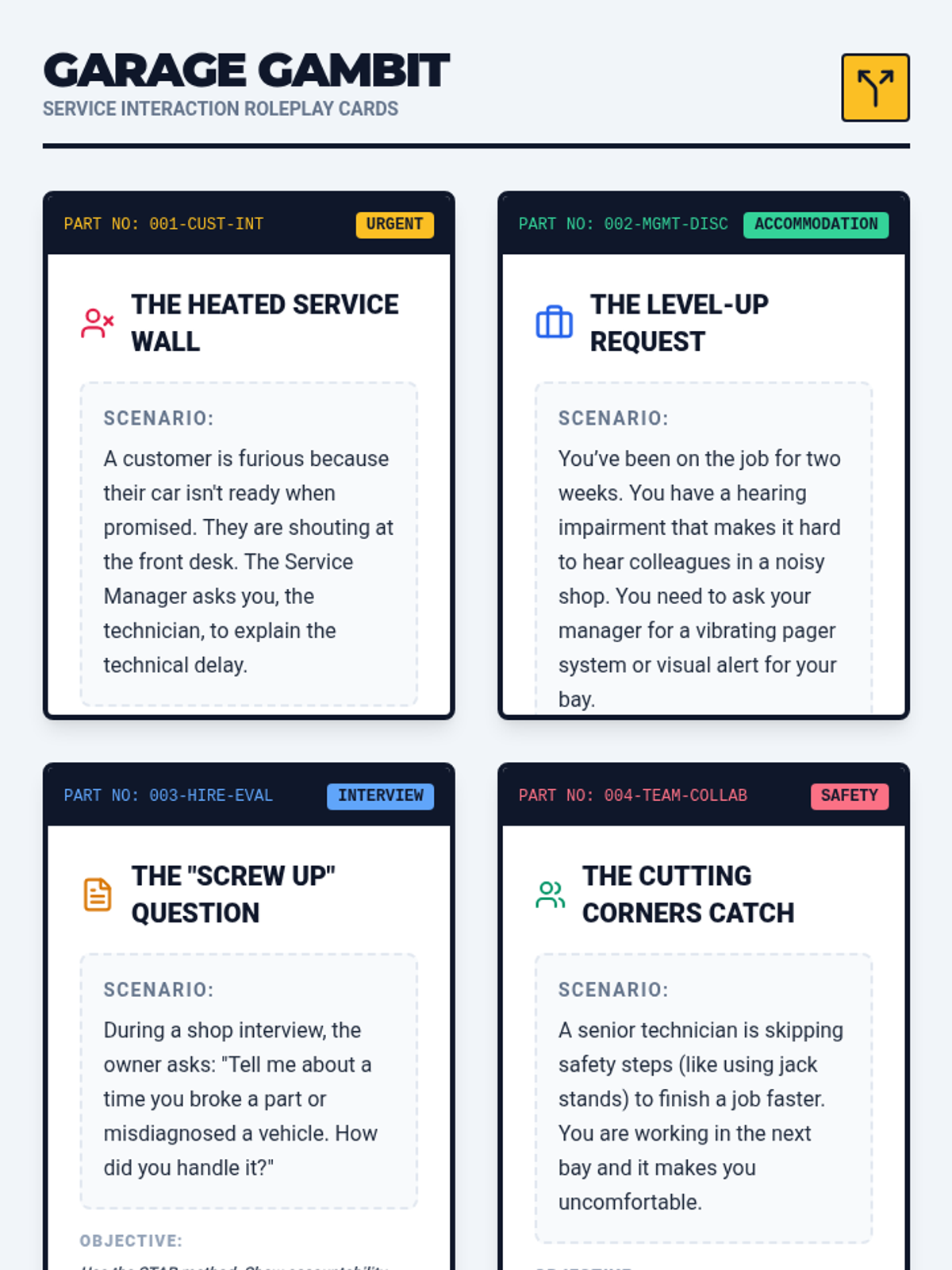
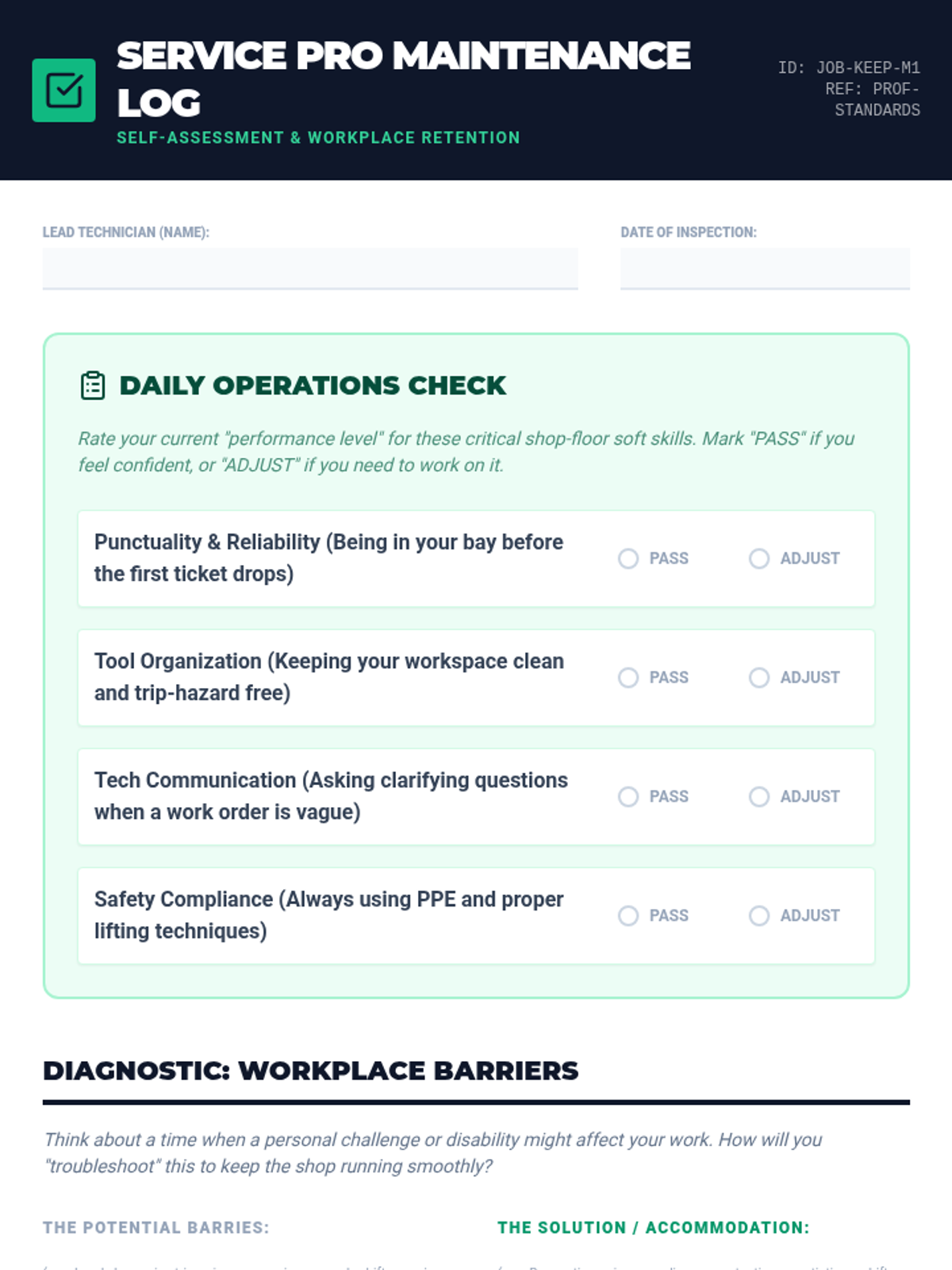
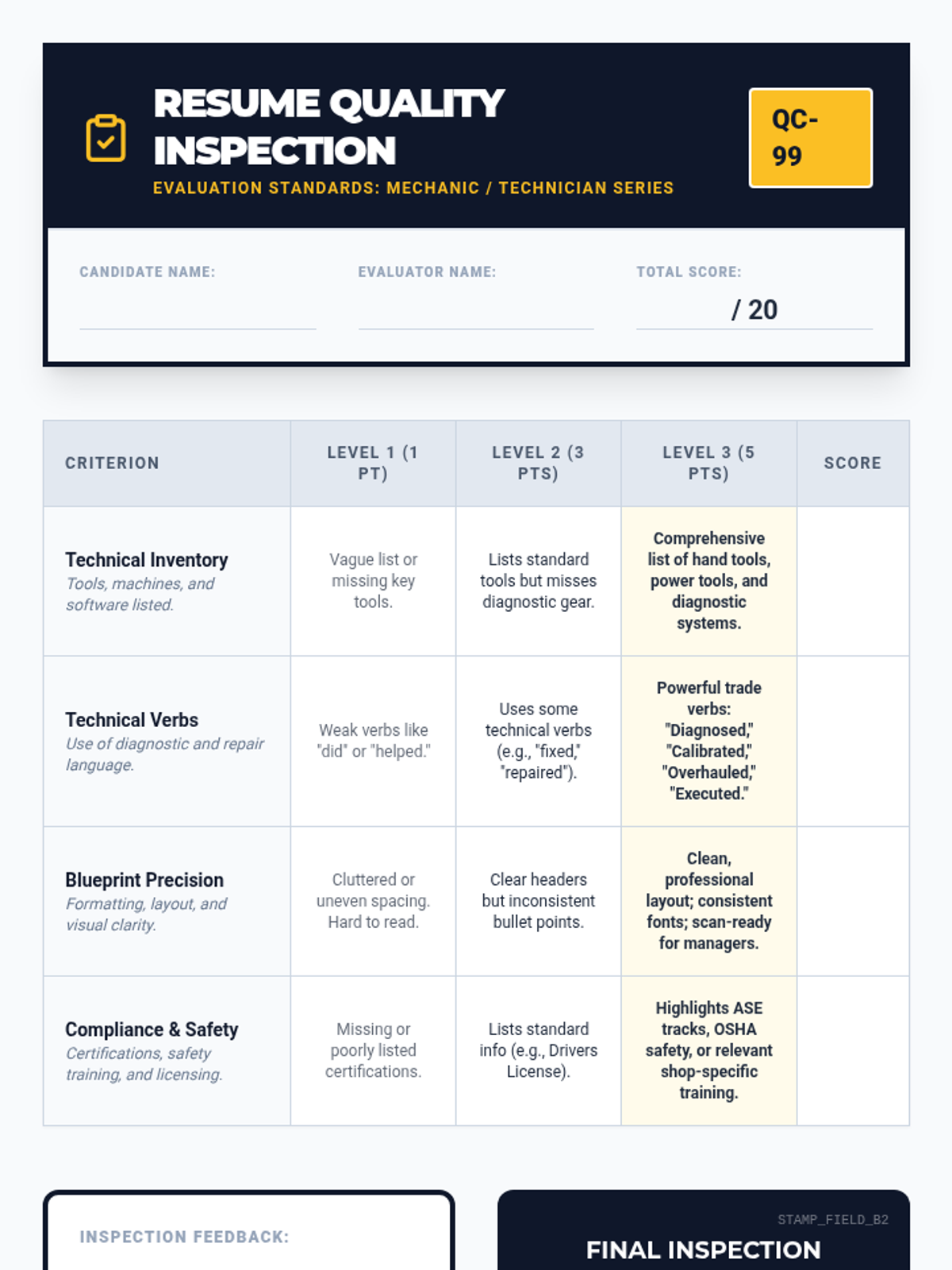
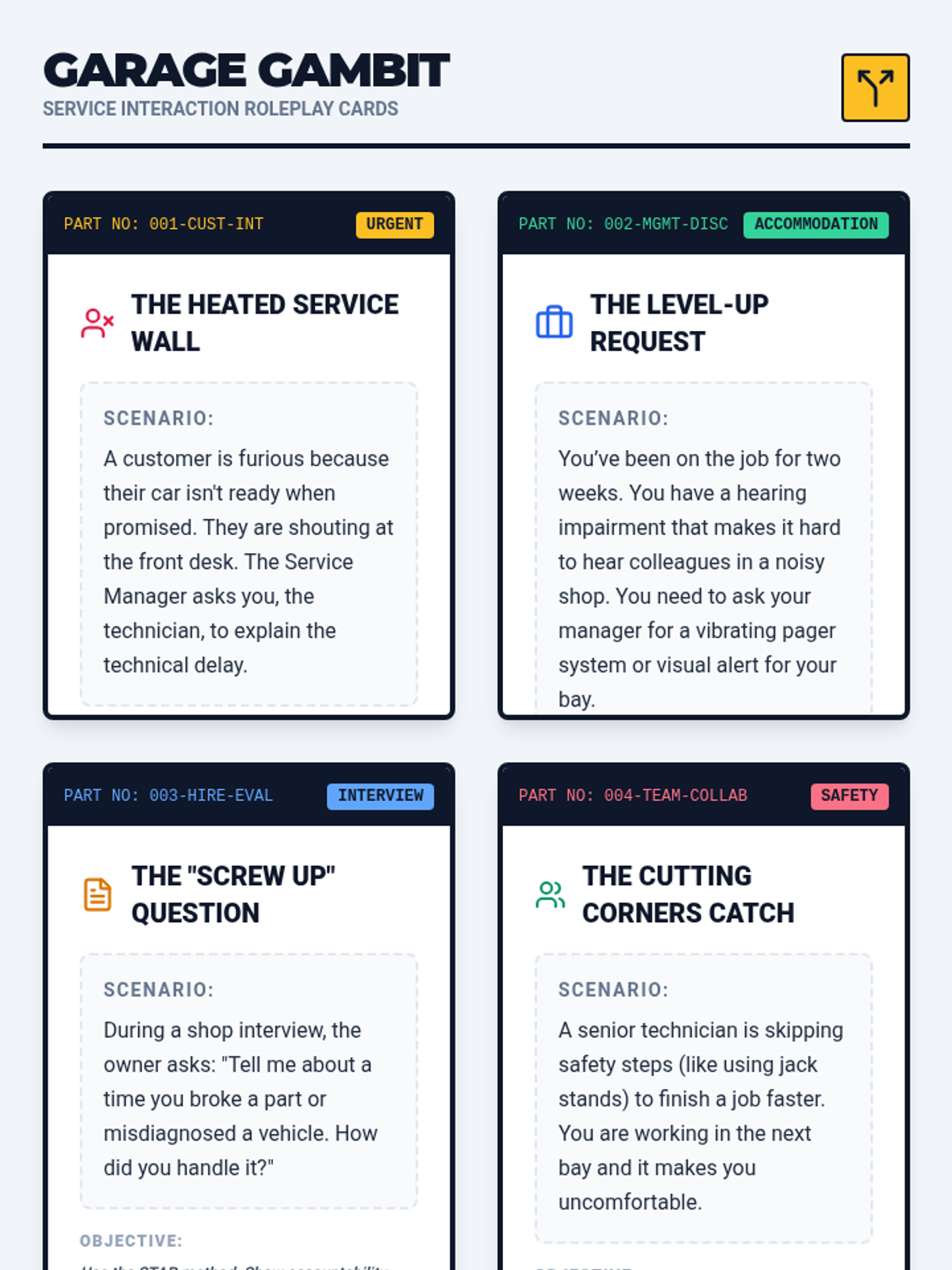
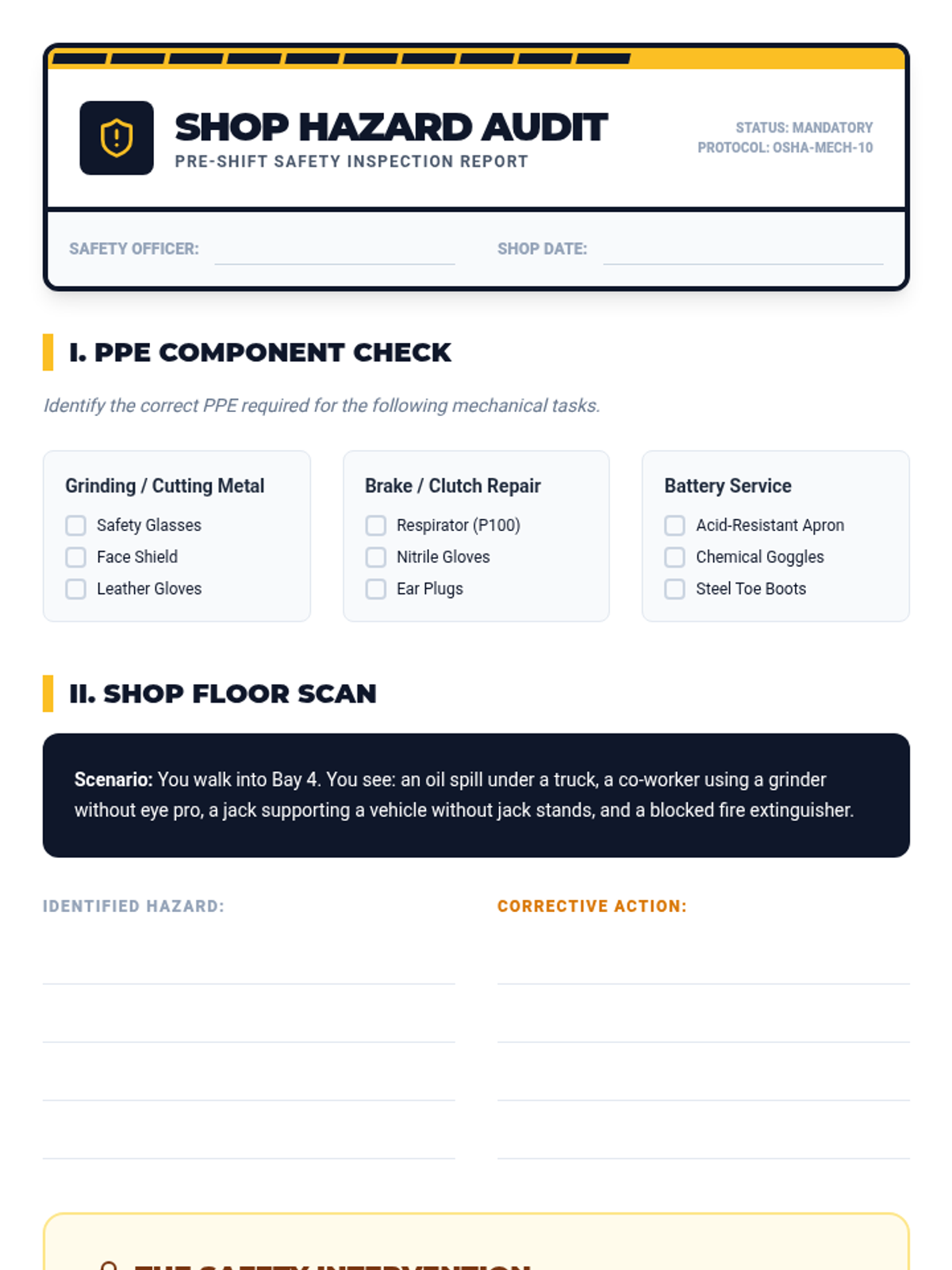
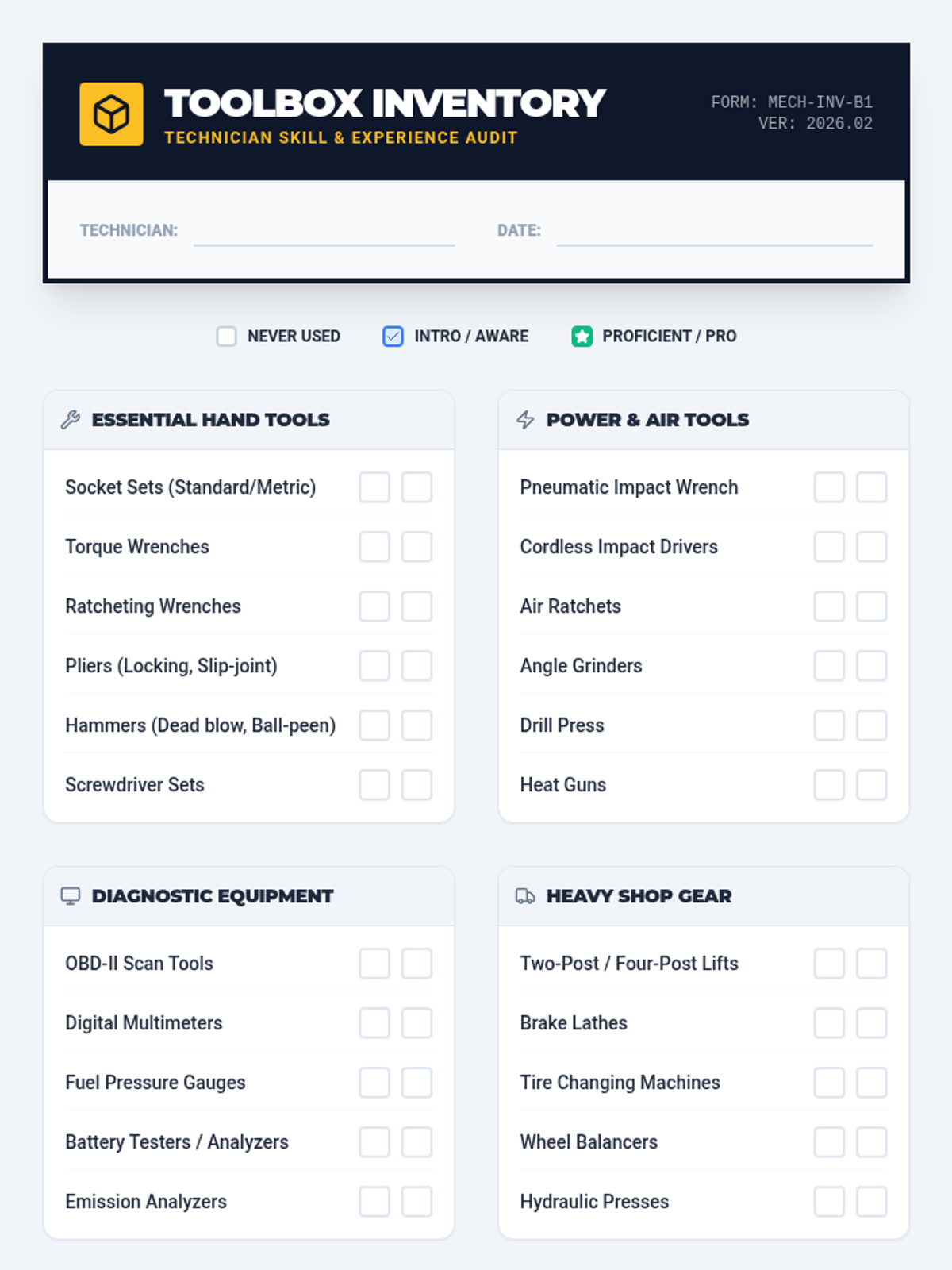
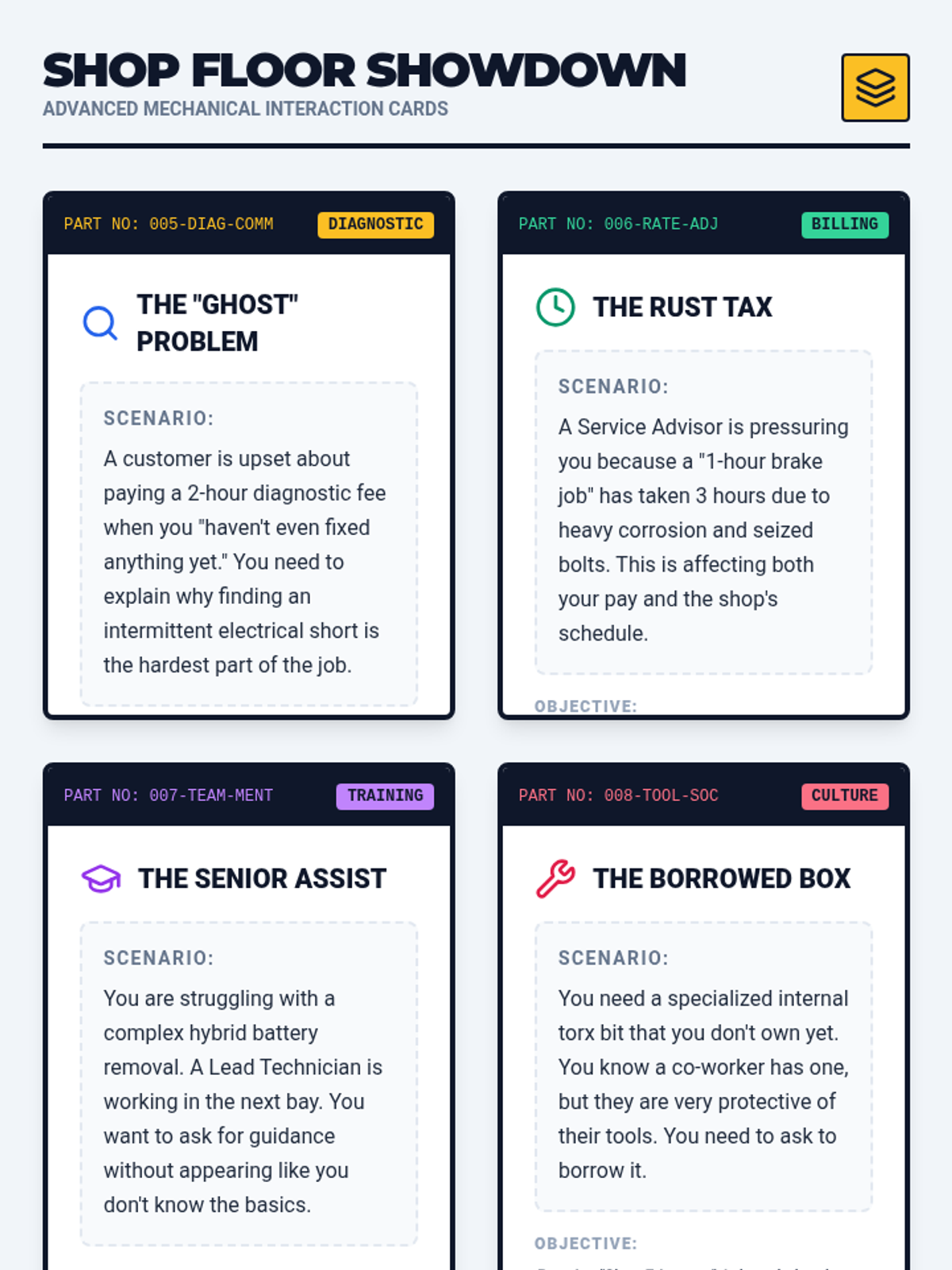
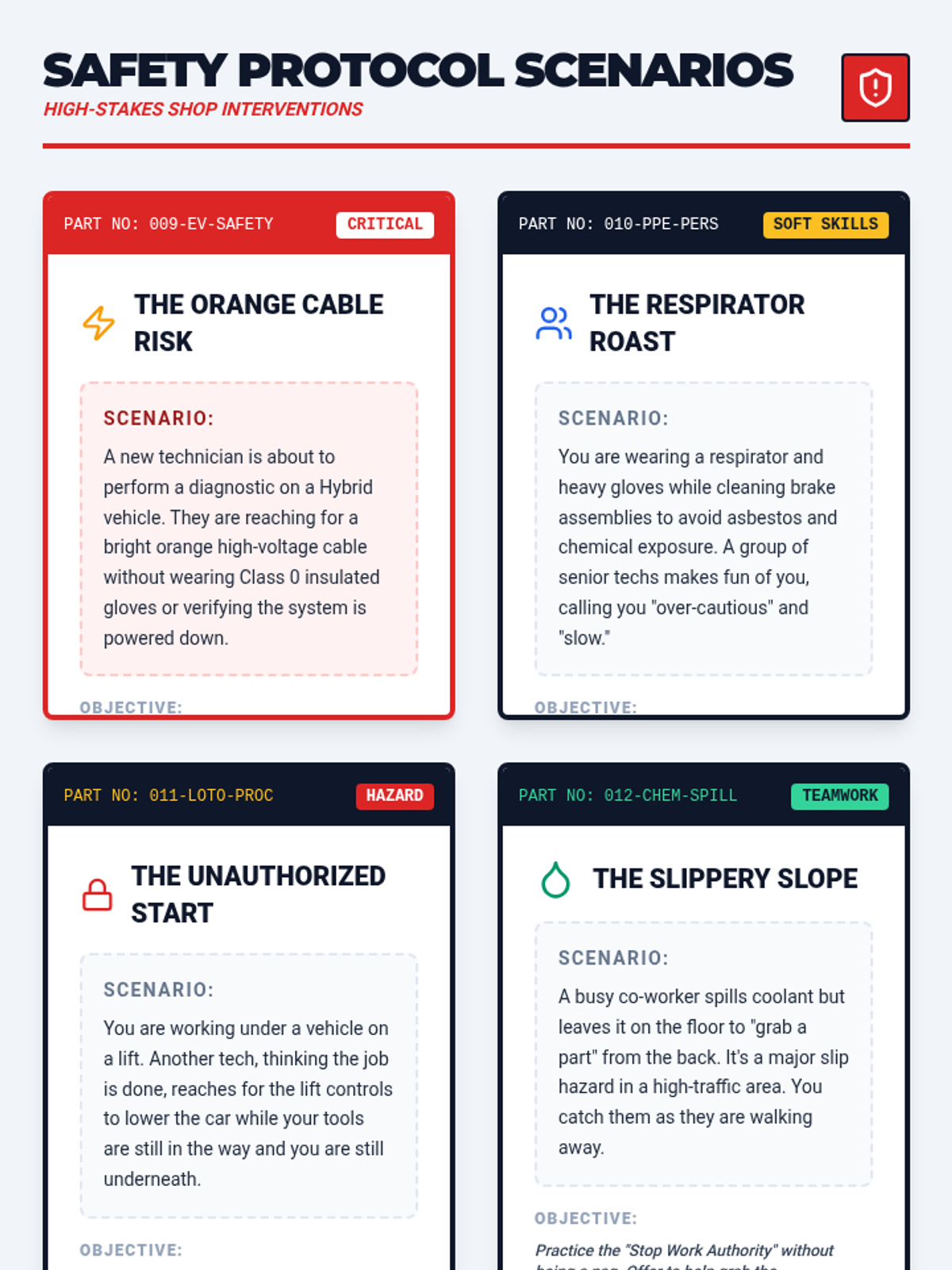
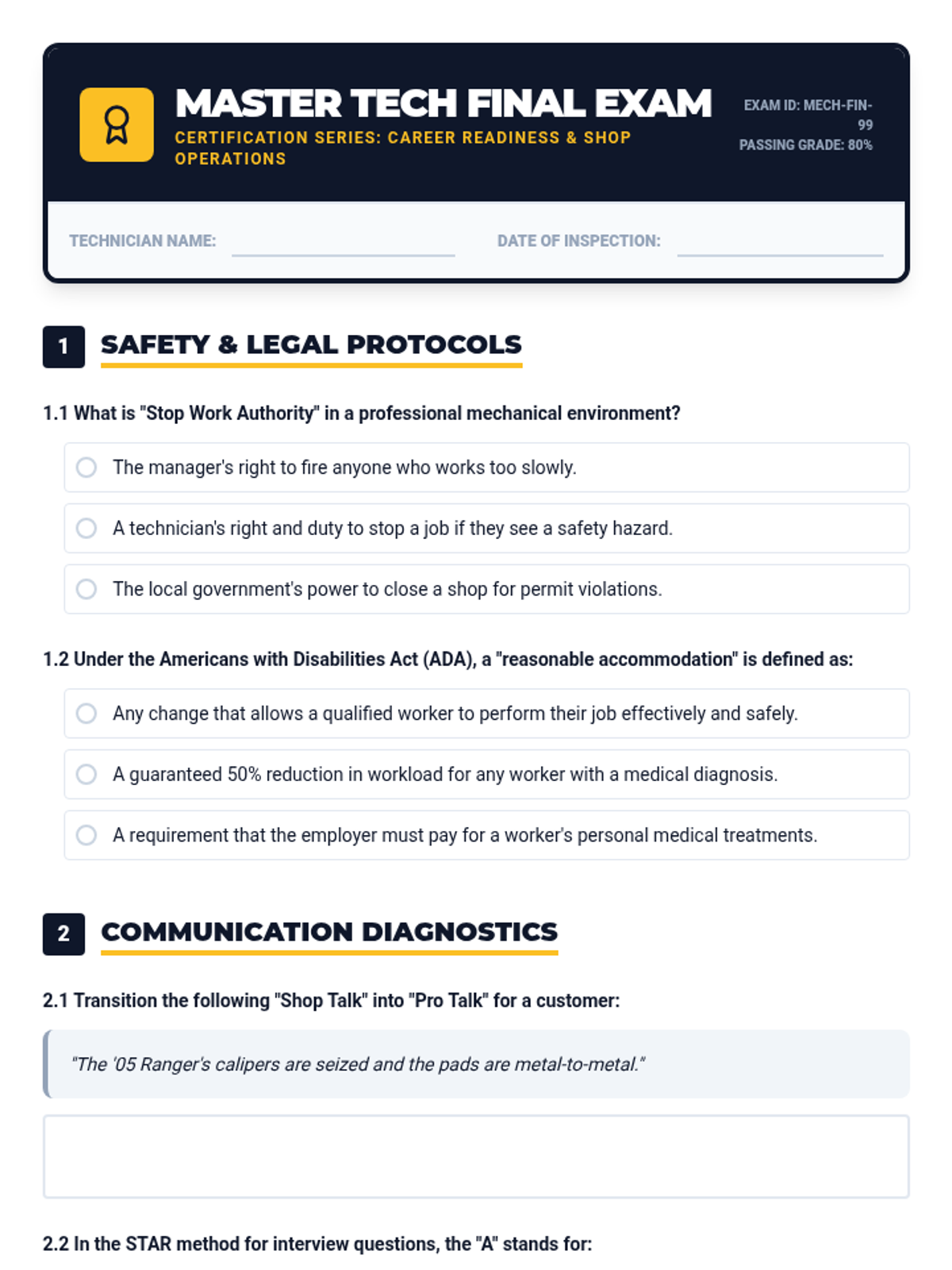
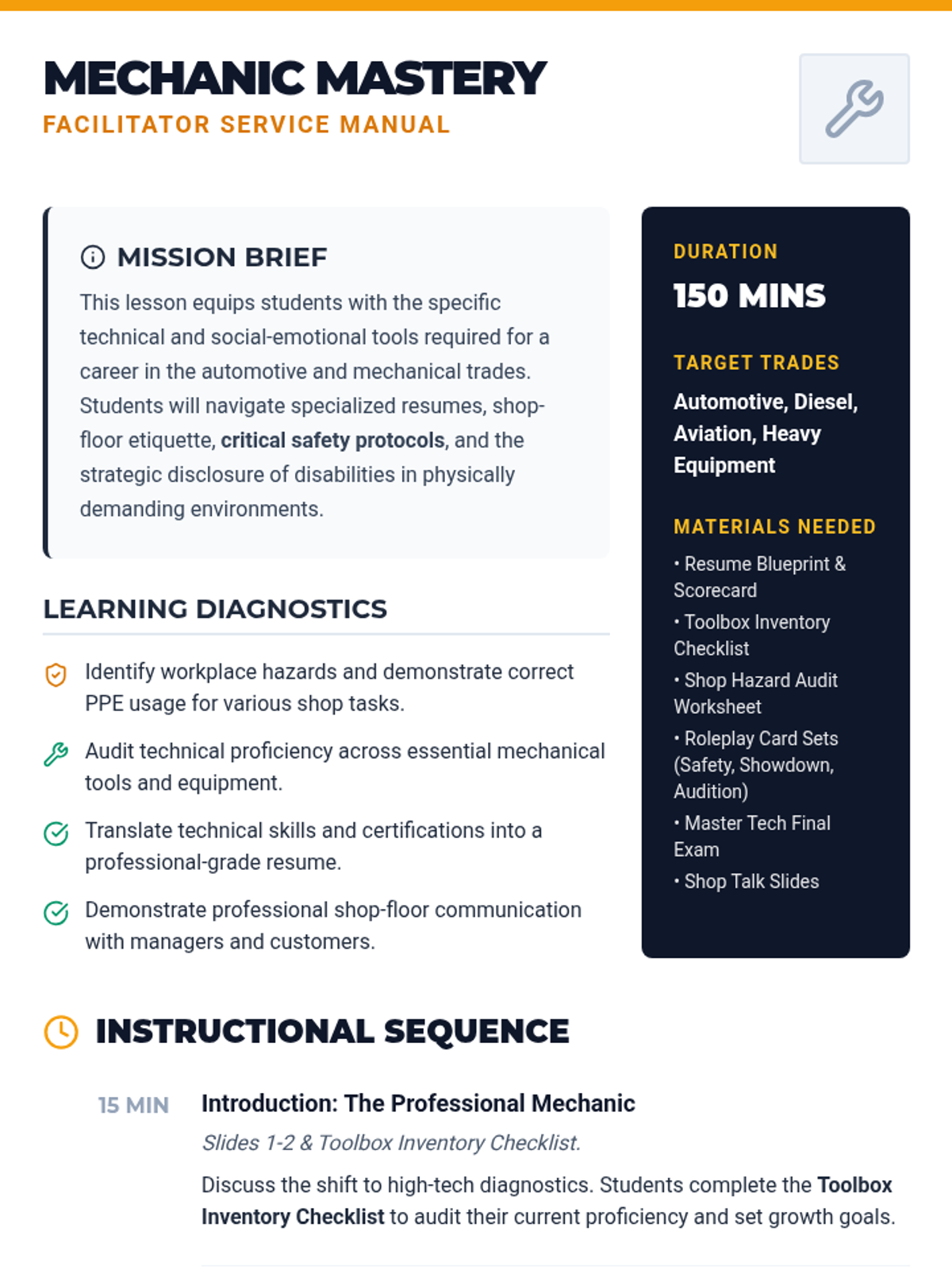
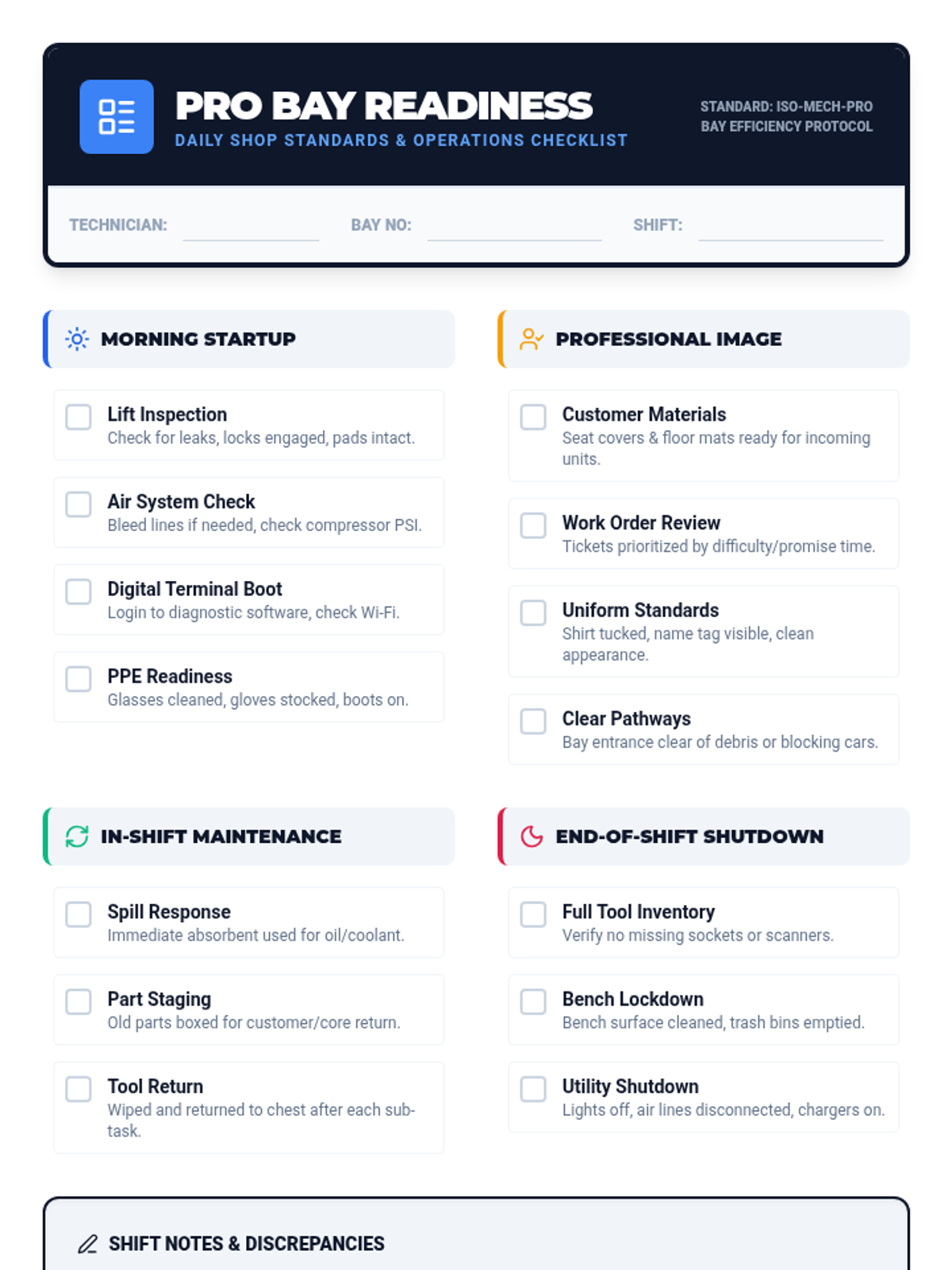
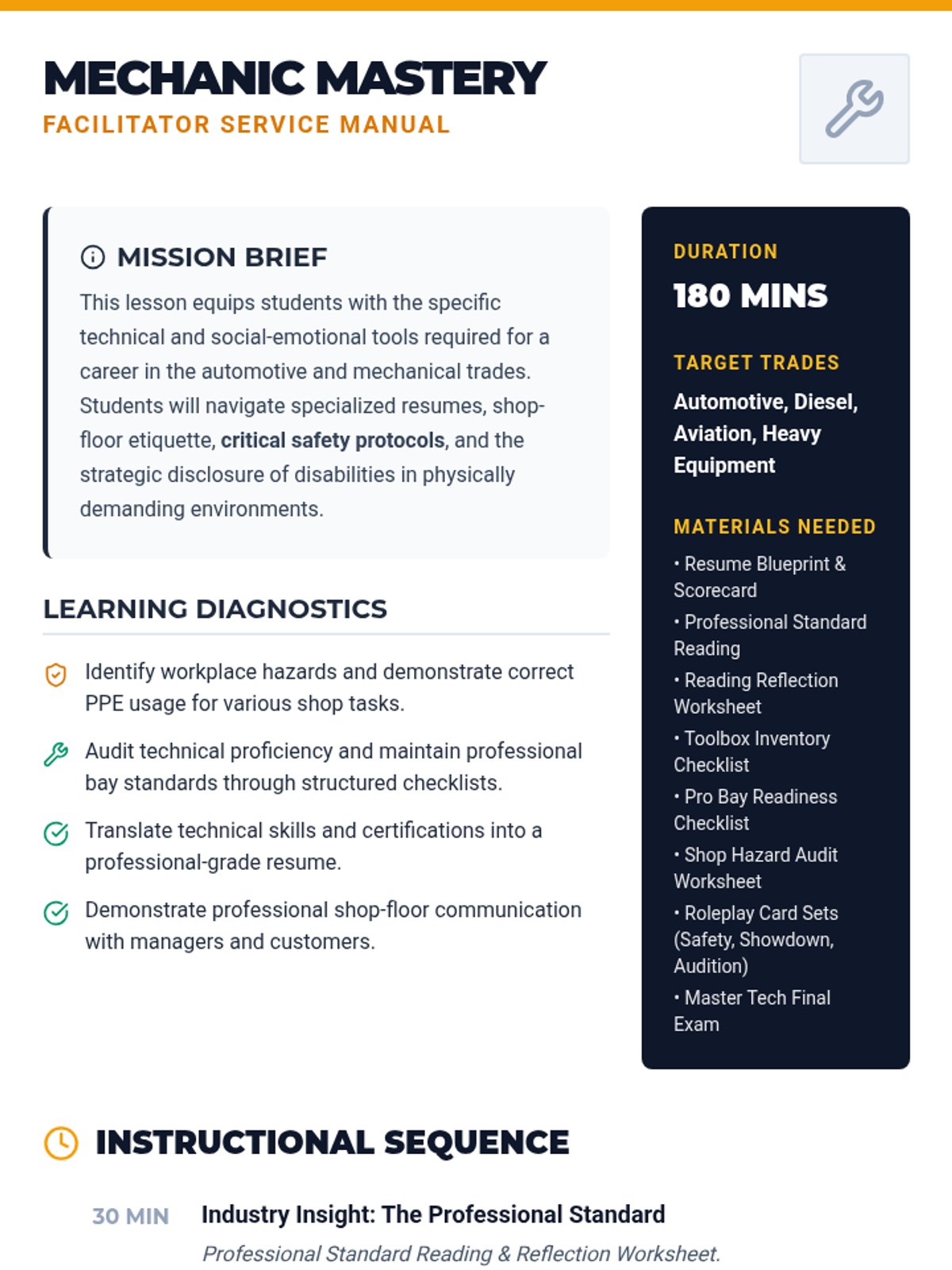
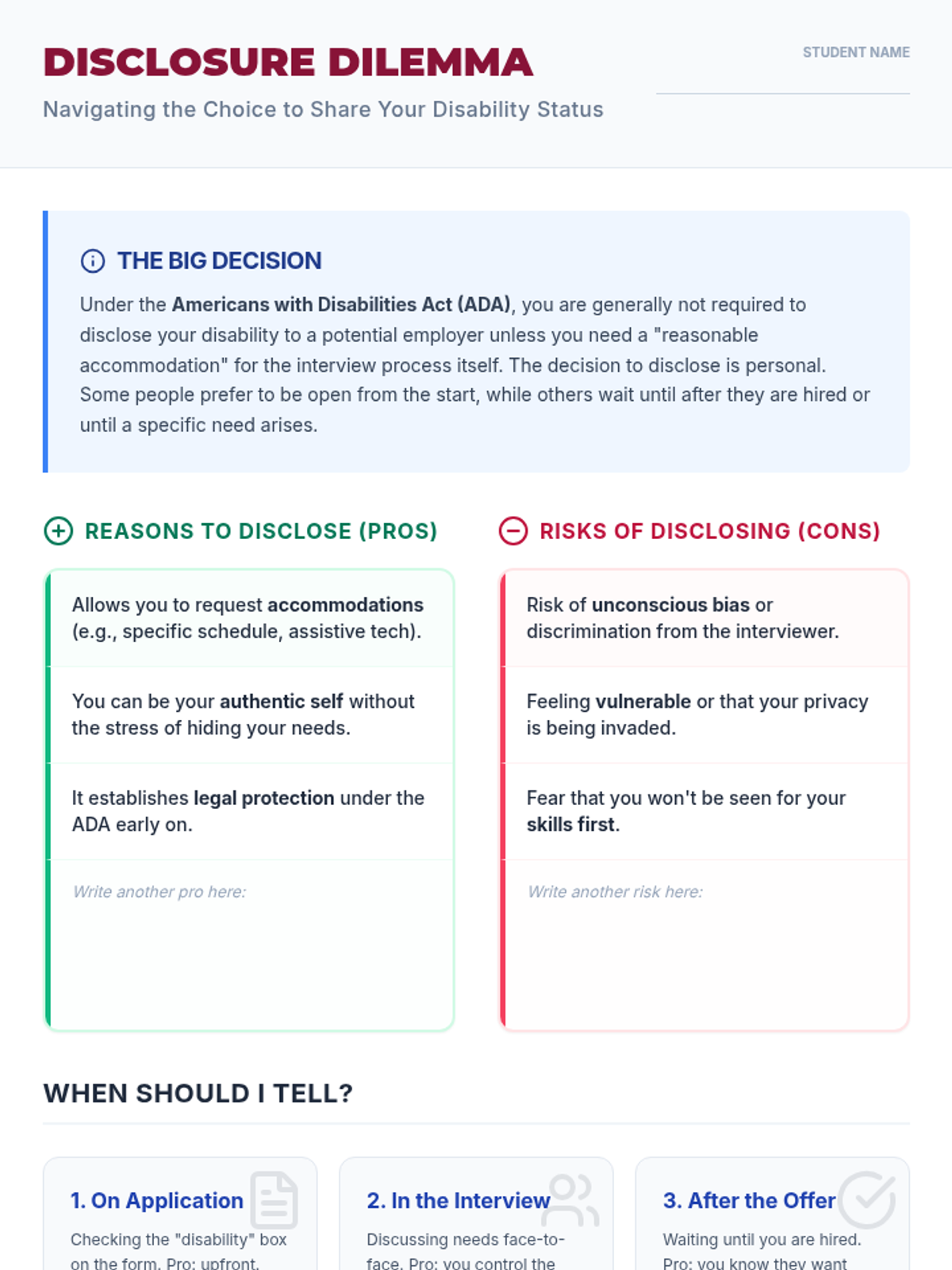
A specialized career preparation lesson focused on entering the automotive and mechanical trades, covering technical resumes, shop-floor communication, and navigating disability disclosure in a physical work environment.
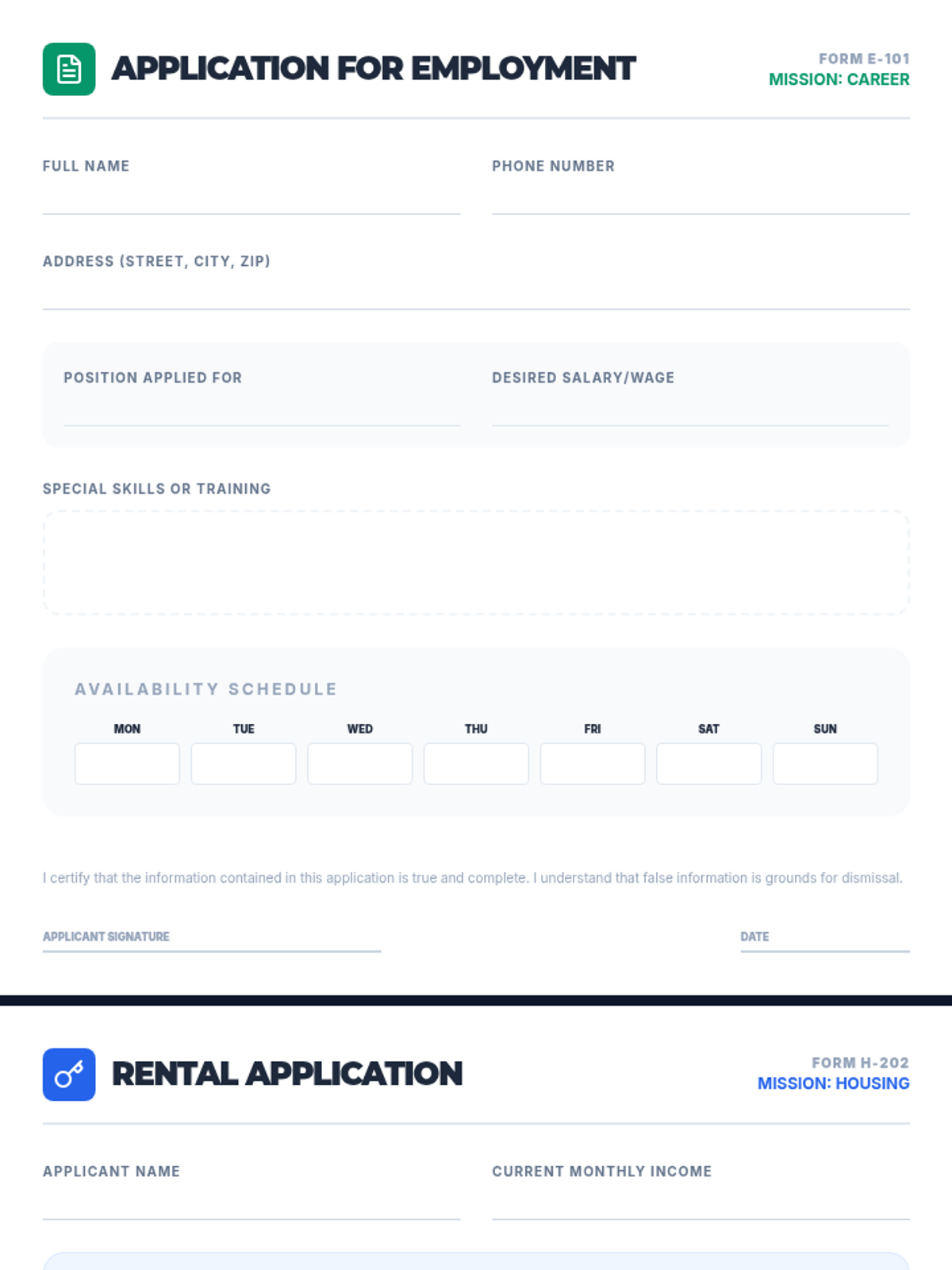
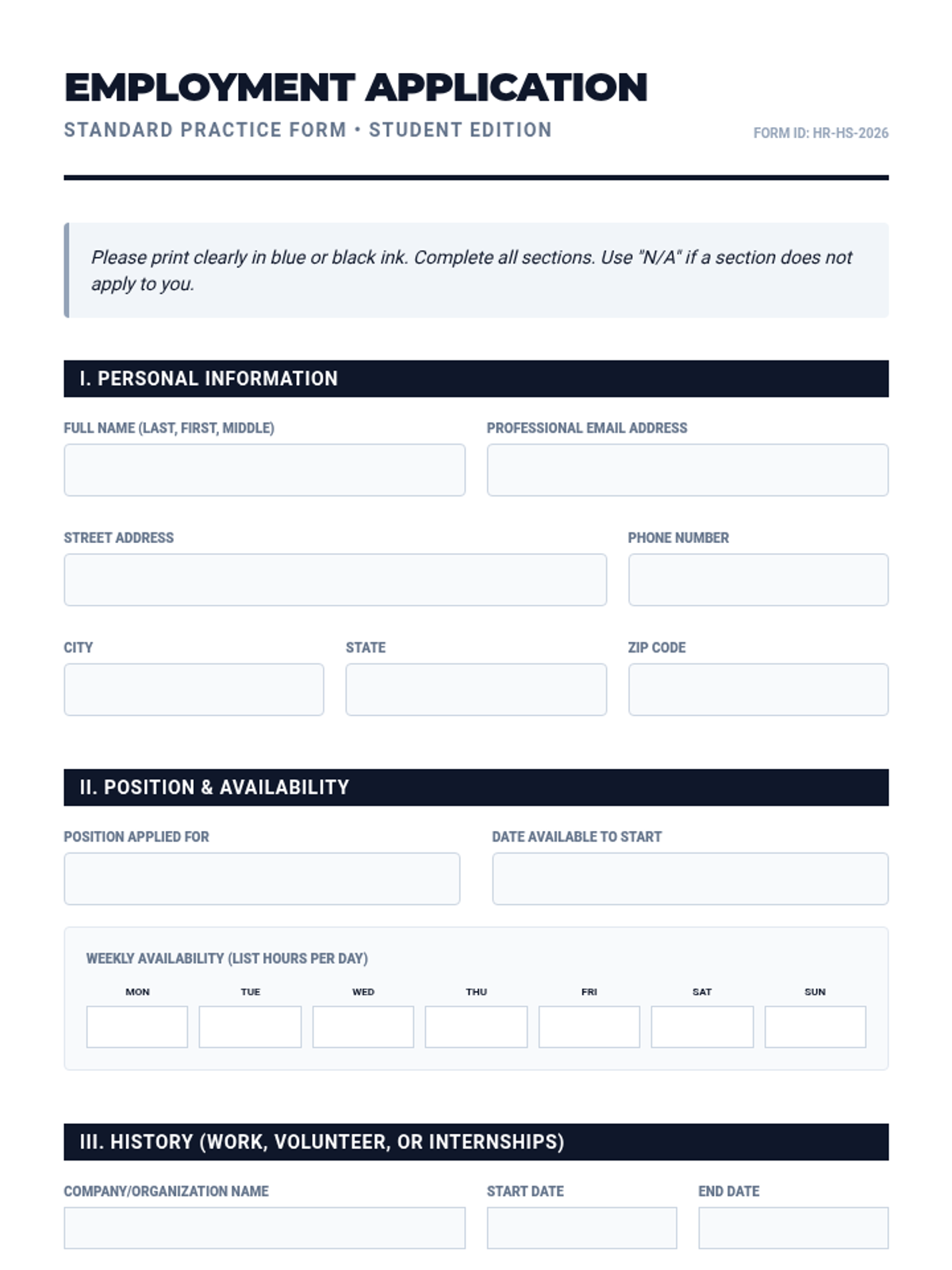
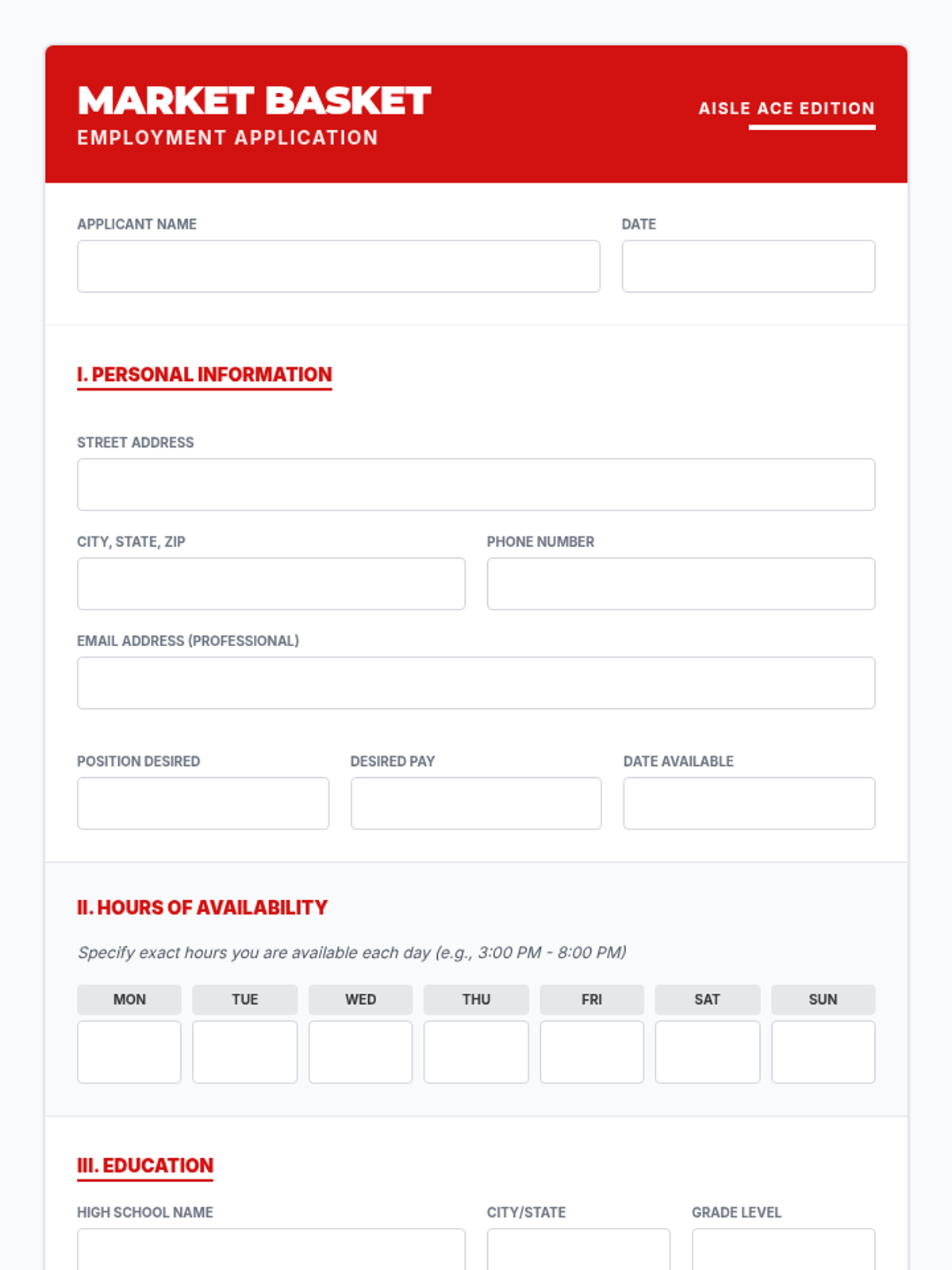
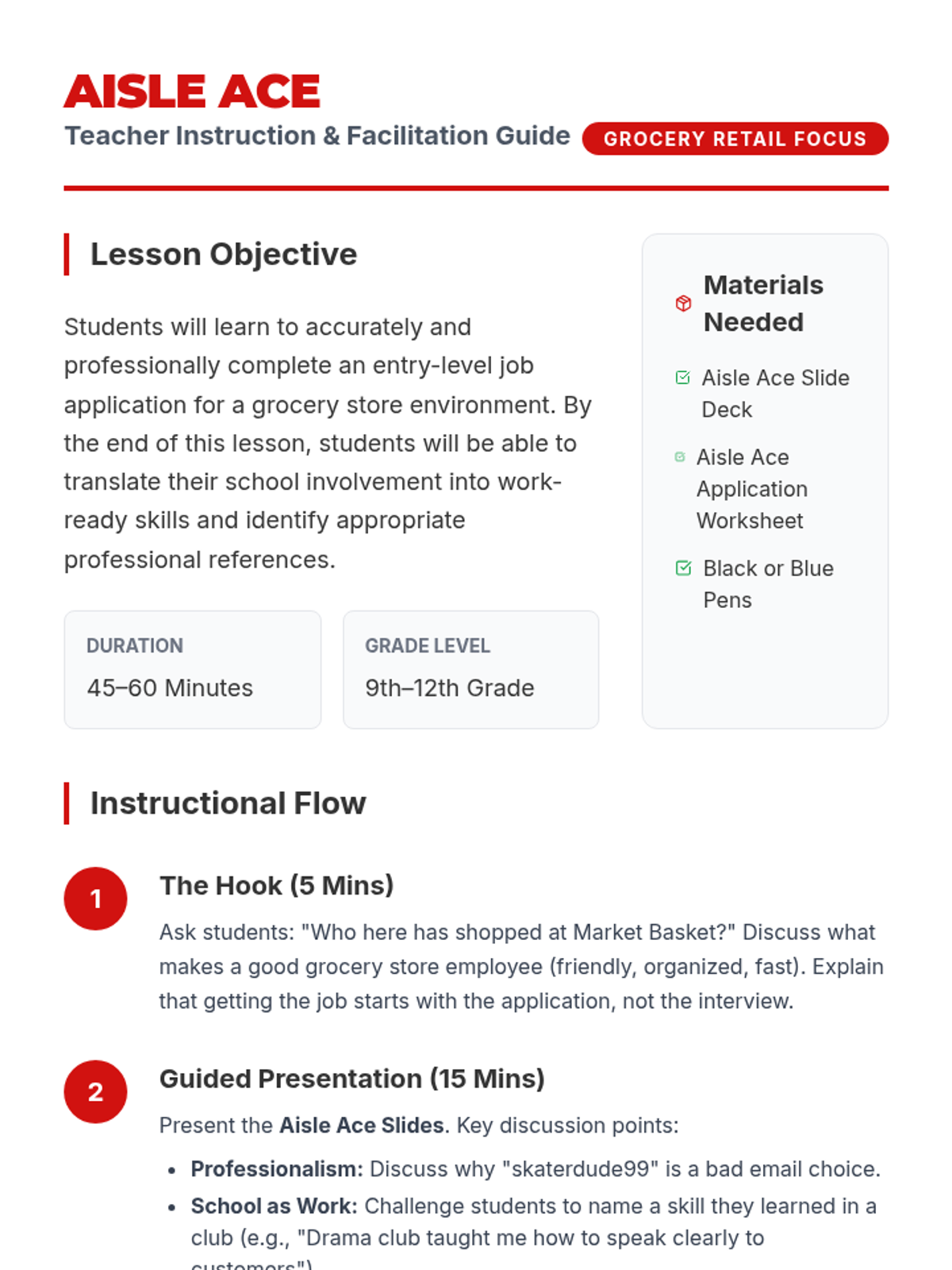
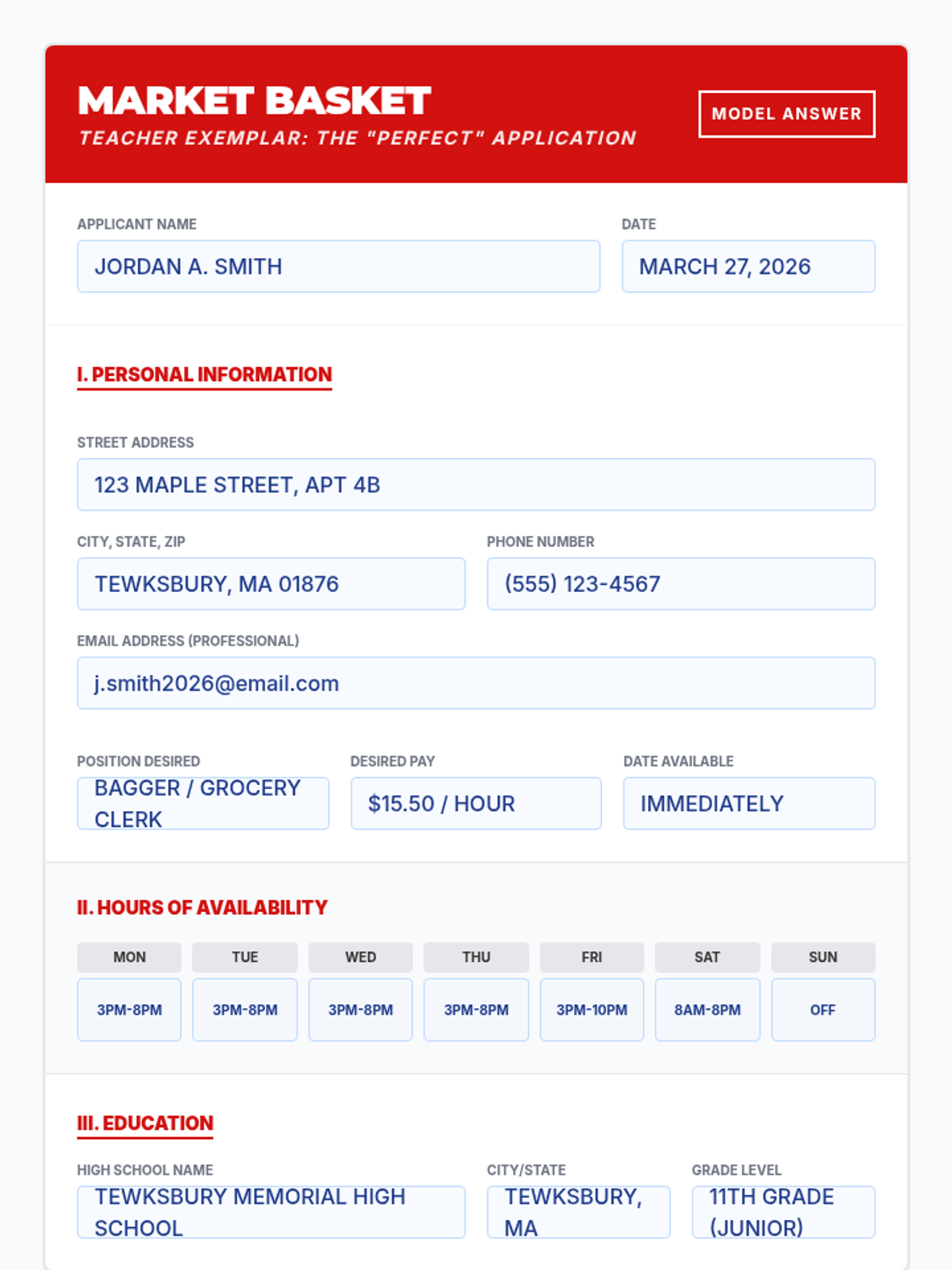
A comprehensive lesson teaching high school students how to accurately and professionally complete an entry-level job application, specifically tailored for a grocery store environment like Market Basket. Students will learn to translate school activities into relevant experience and select professional references.
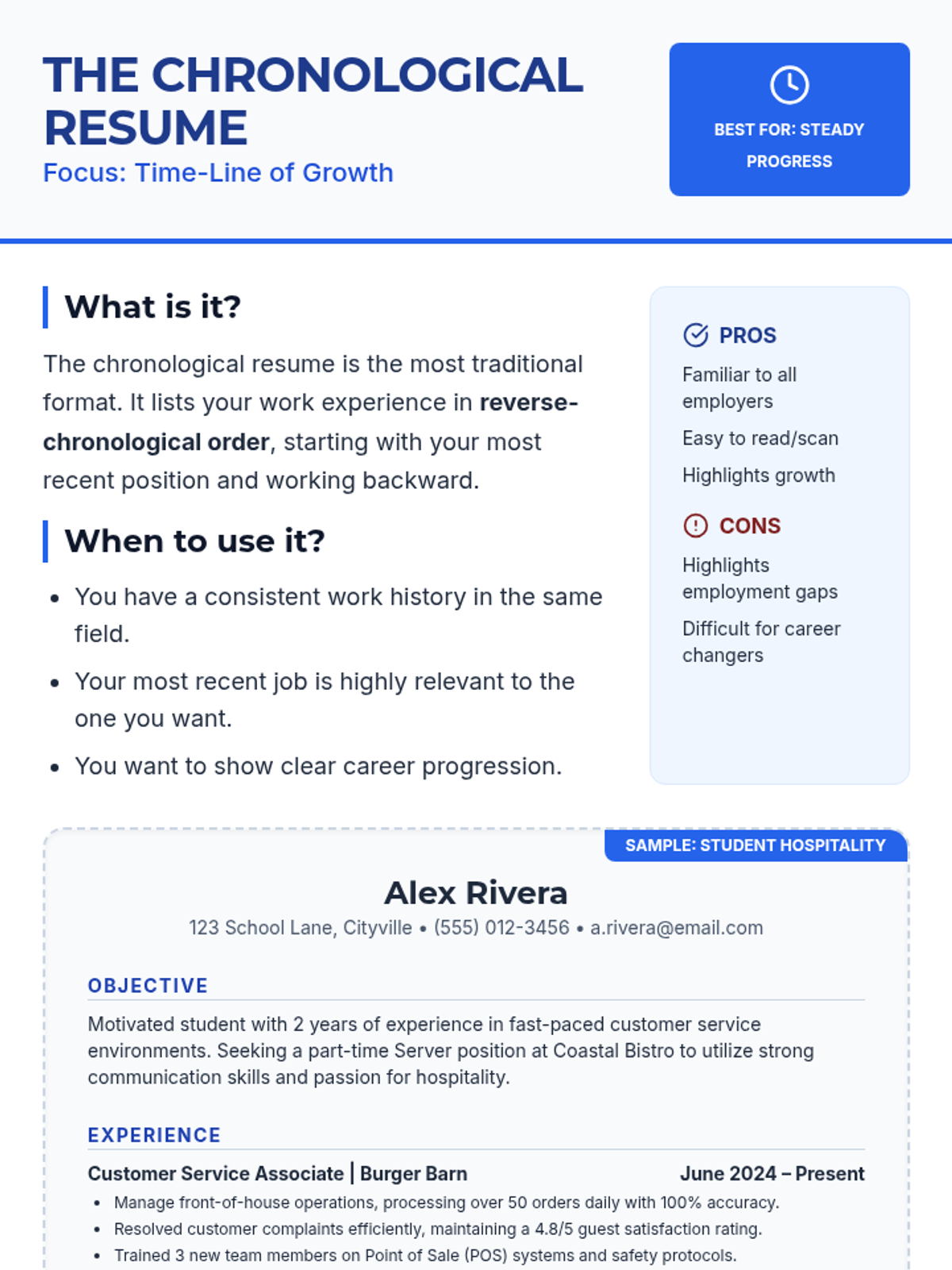
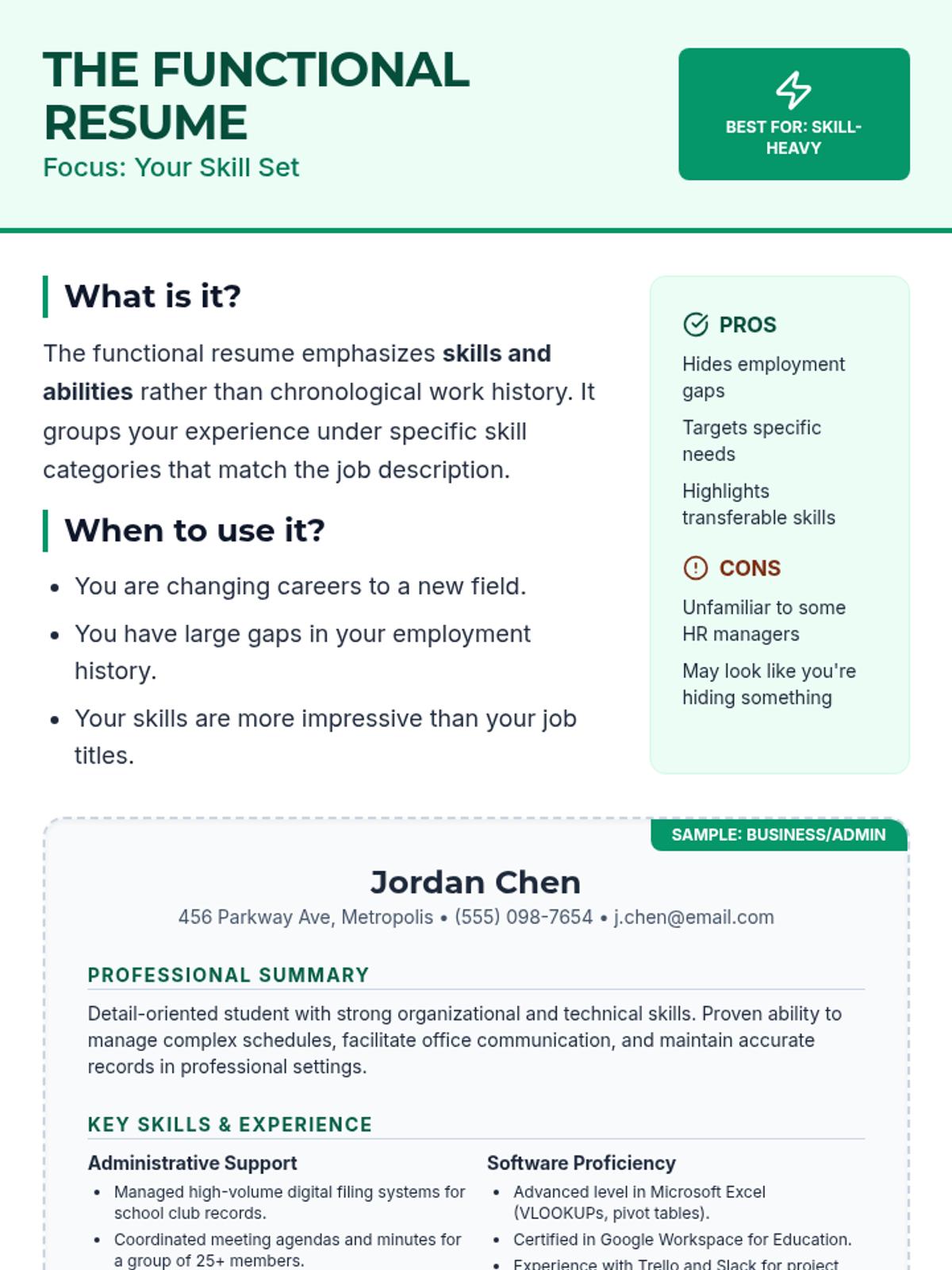
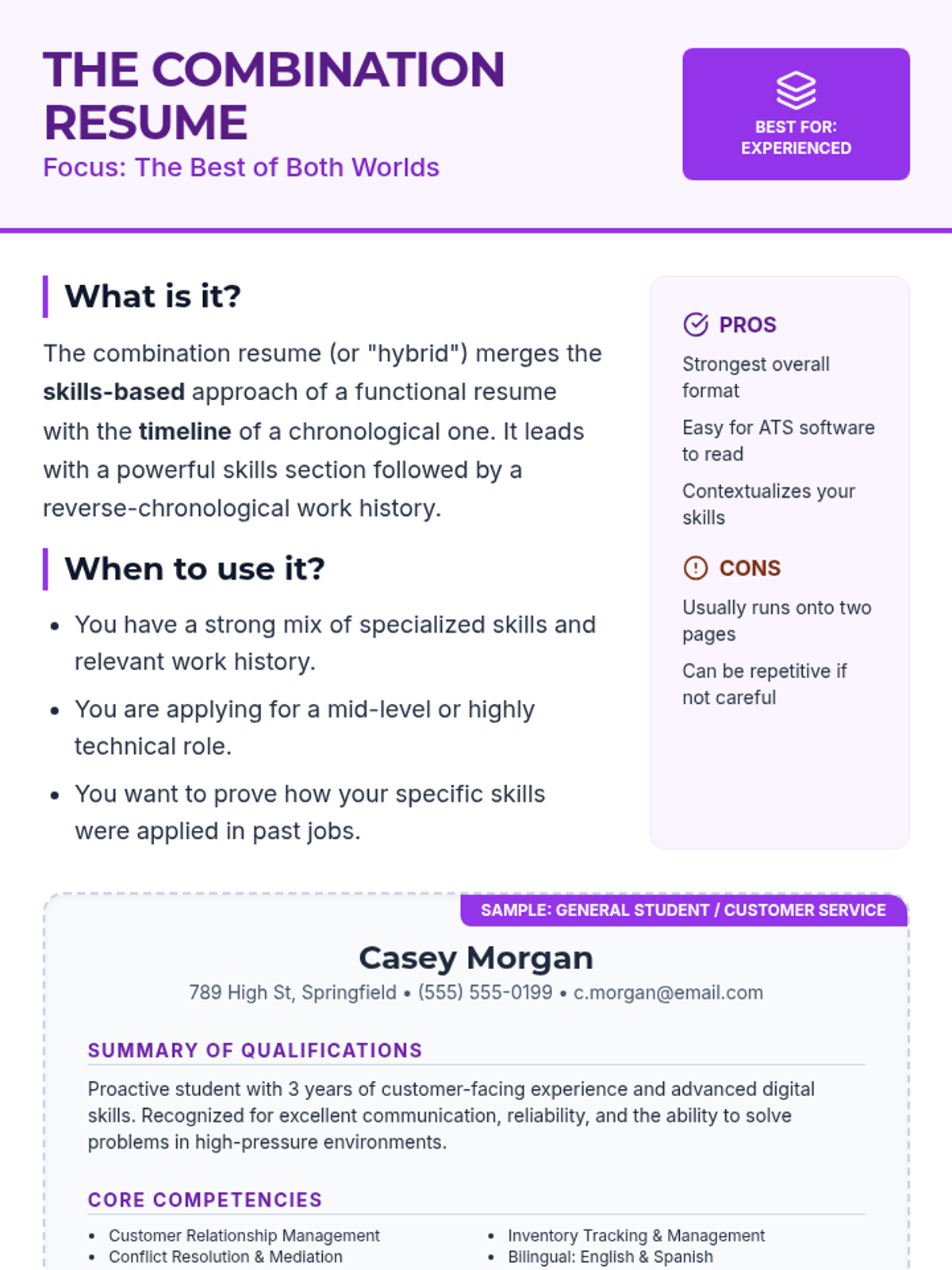
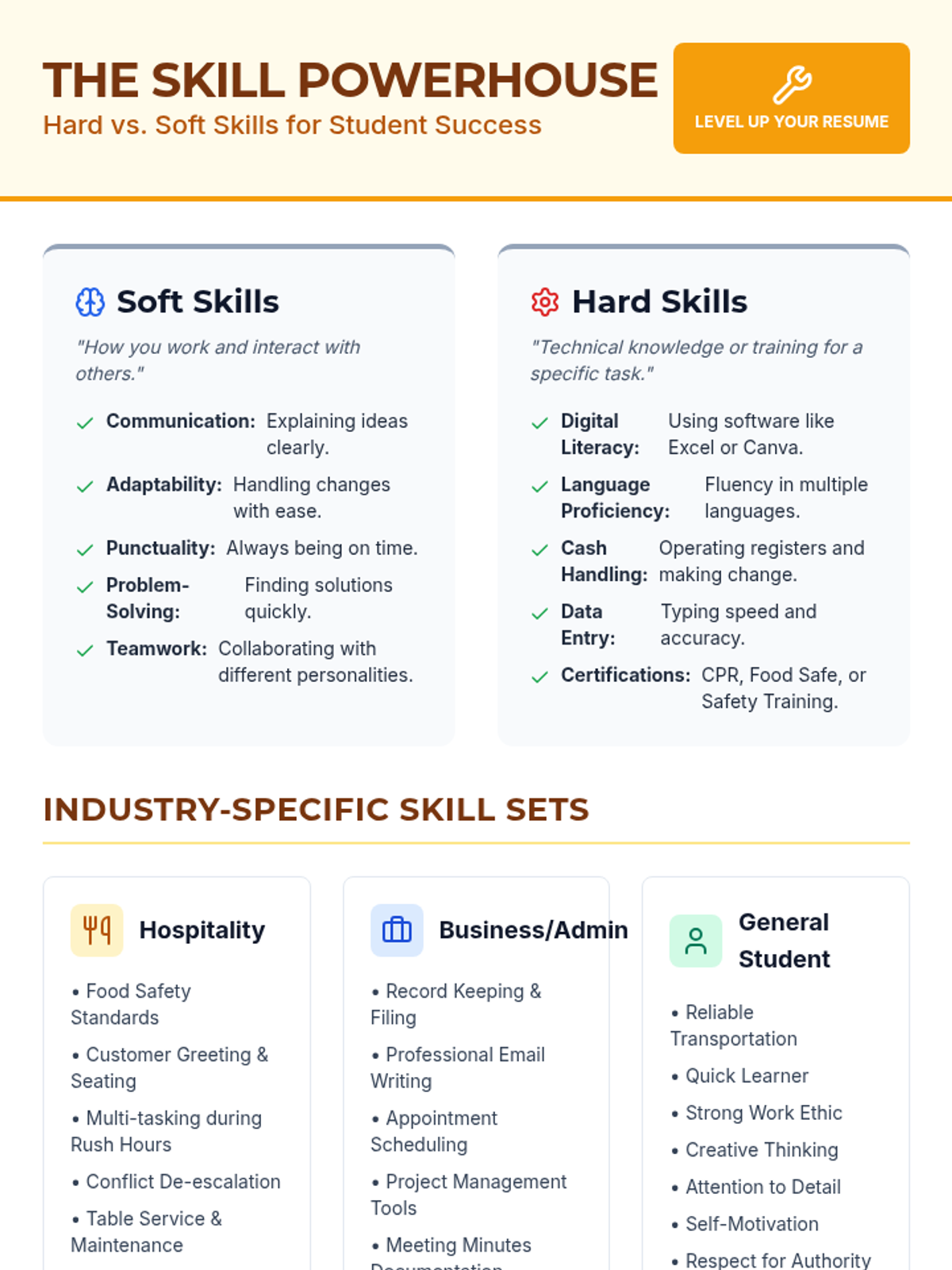
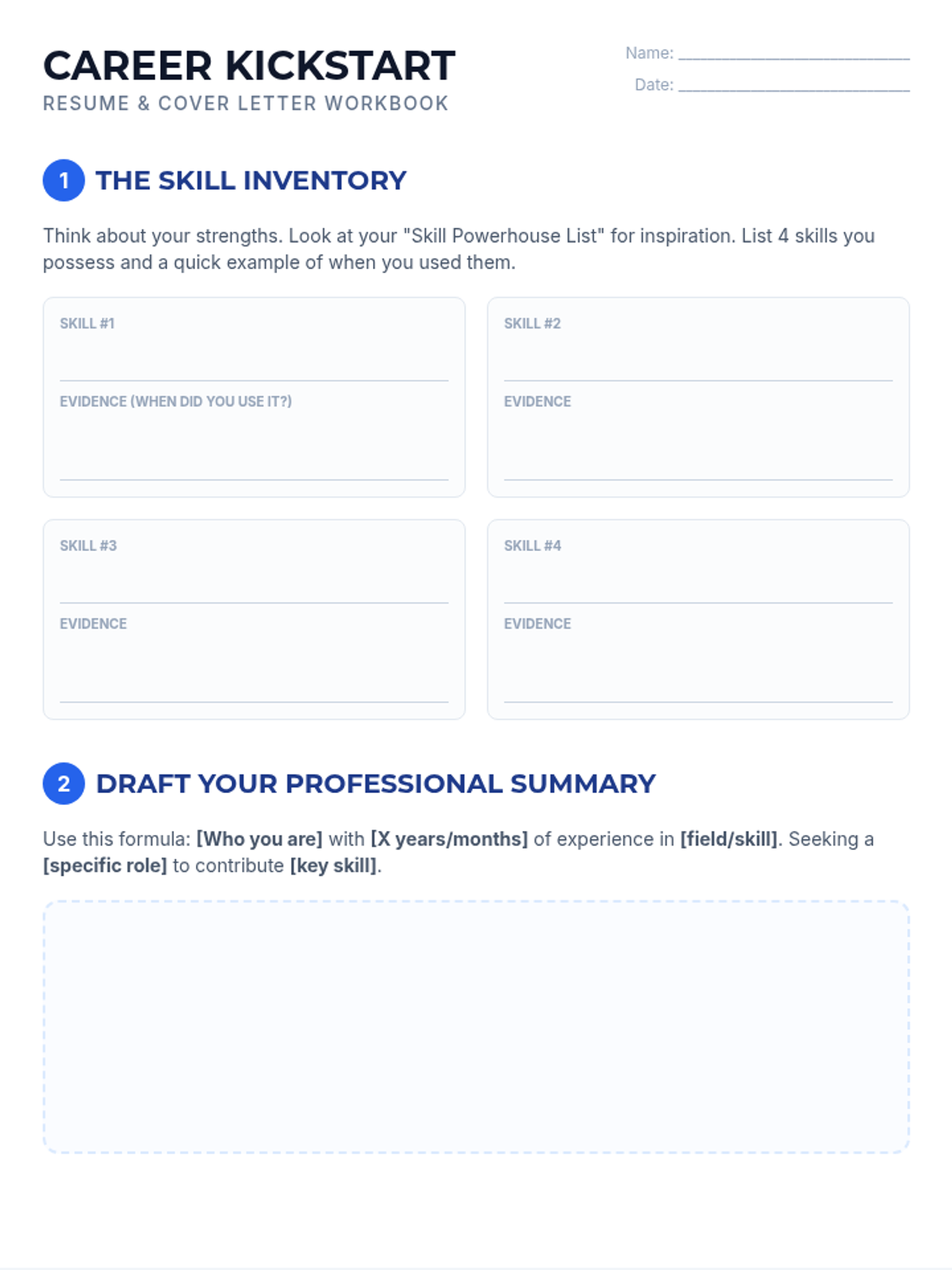
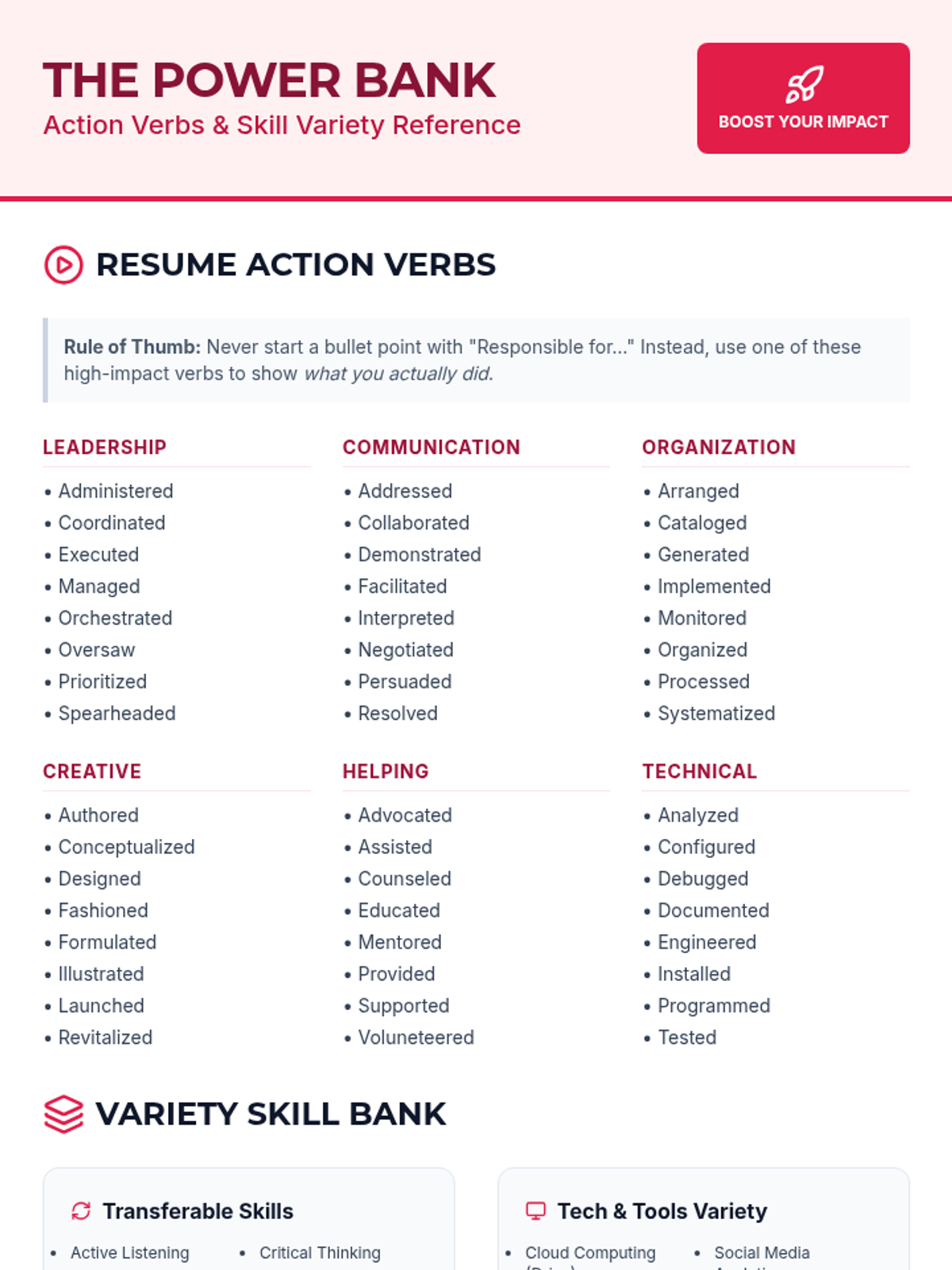
A comprehensive guide to resume writing for students and entry-level professionals, covering different resume formats, skill identification, and document templates.
A comprehensive introduction to essential employment skills, including professional communication, job applications, interview etiquette, and workplace safety. This lesson prepares students for the transition into a professional environment through interactive discussion and practical problem-solving.
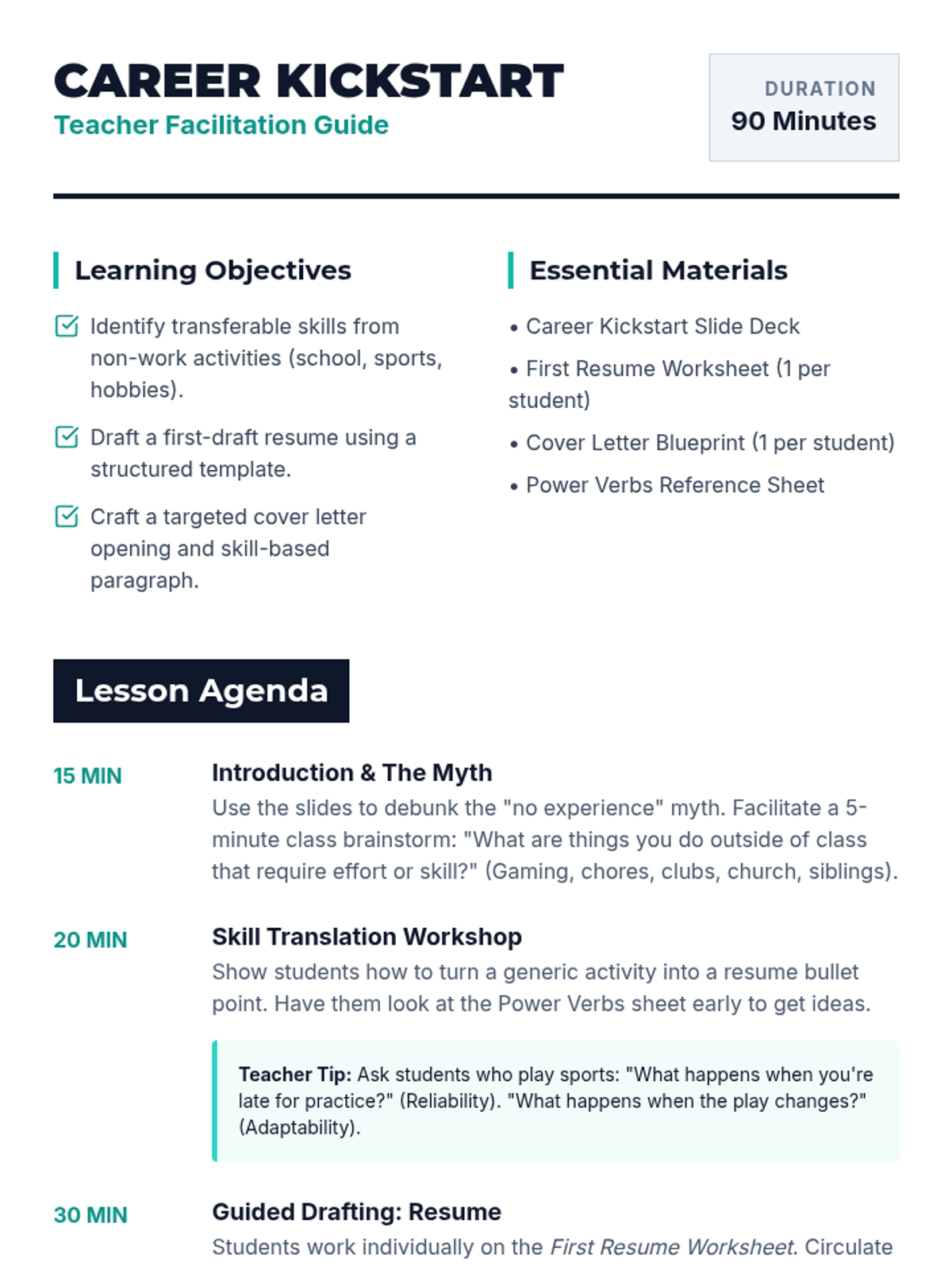
A comprehensive lesson designed for students with little to no formal work experience, focusing on translating school projects, volunteer work, and hobbies into professional resumes and cover letters.
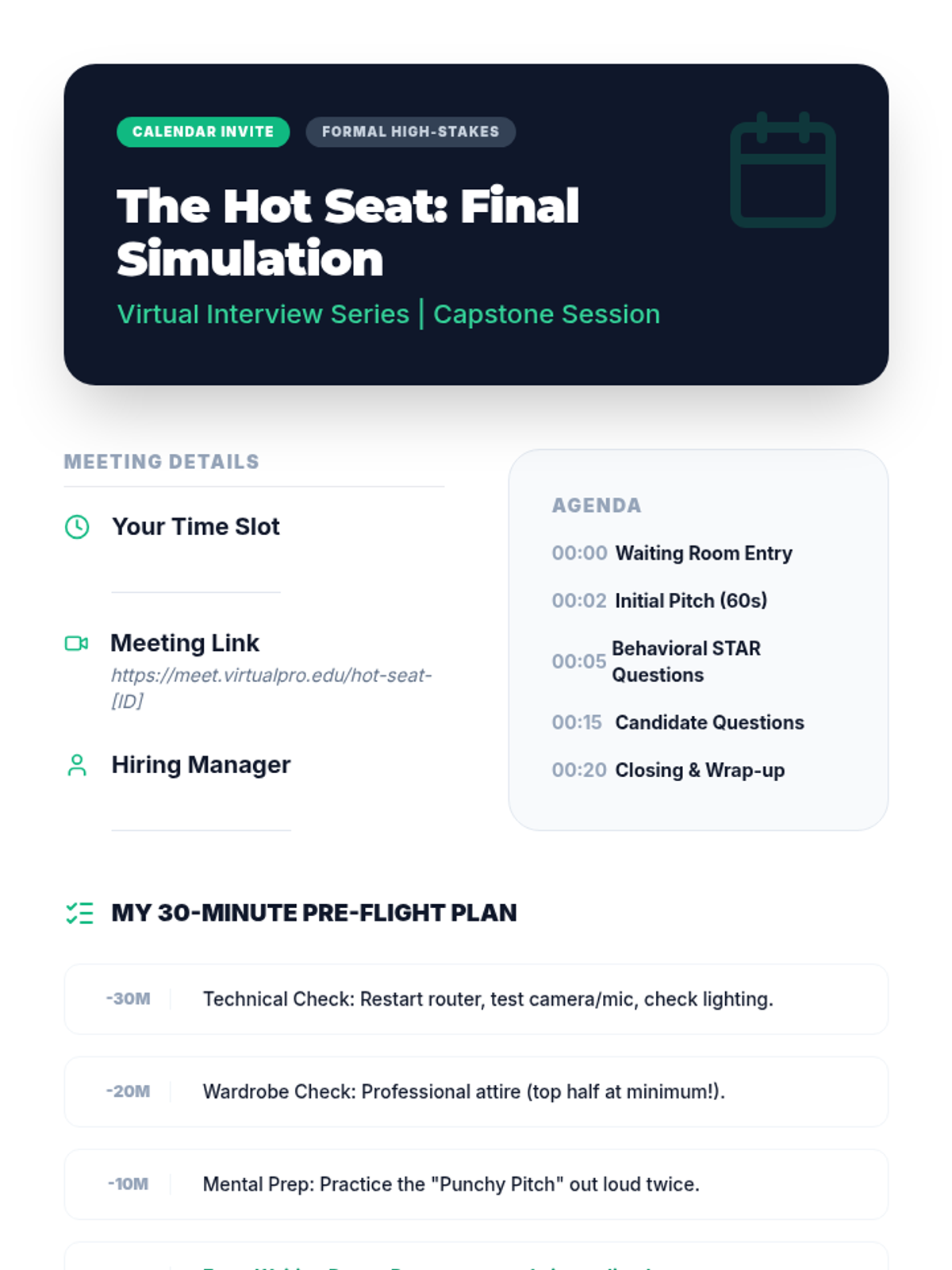
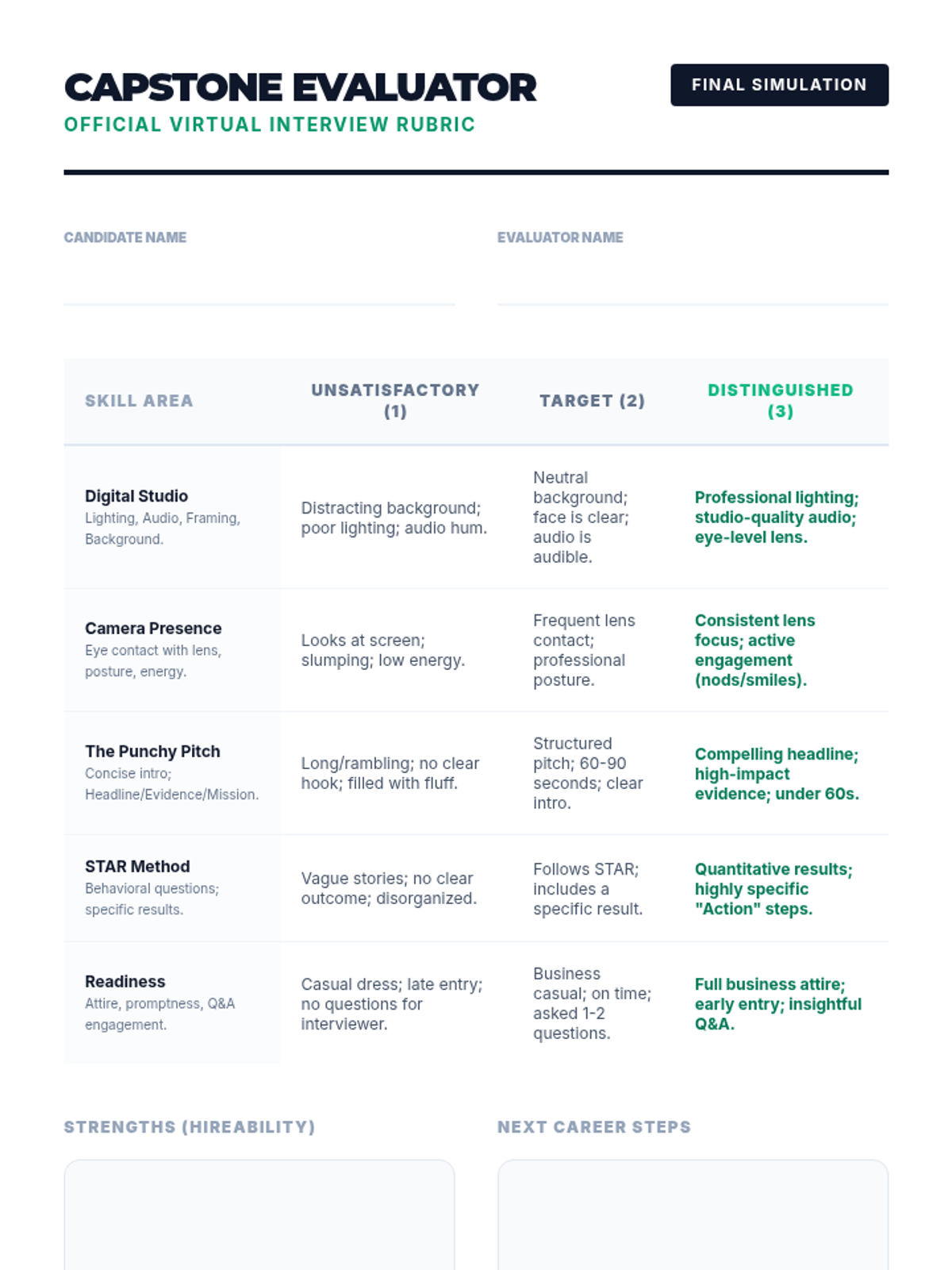
Students dress professionally and treat this lesson as a real high-stakes interview. They undergo a full formal interview simulation with a teacher or community volunteer, graded on the complete virtual skillset.
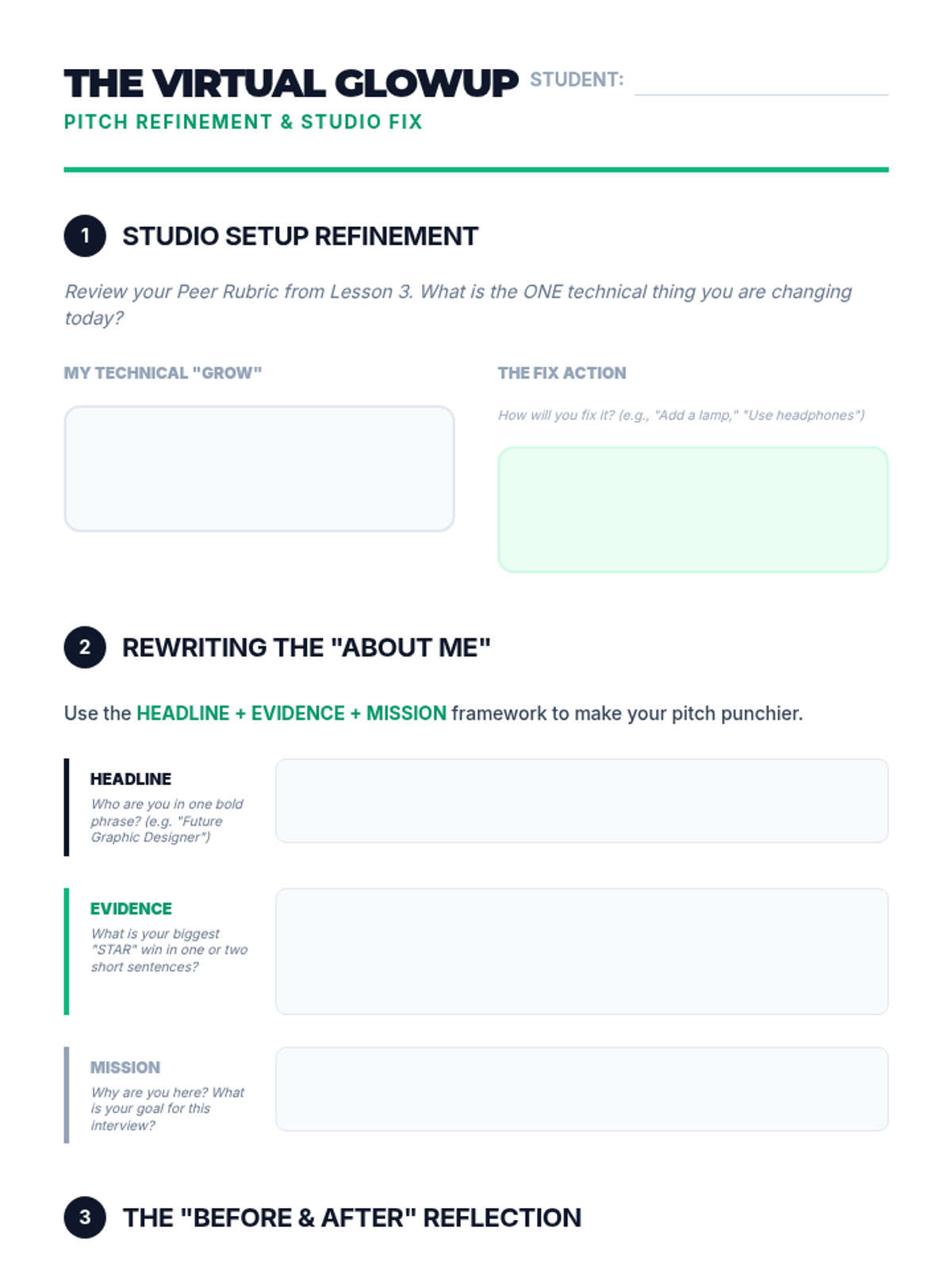
Based on feedback, students refine their answers and adjust their technical setups. They participate in a workshop to polish their 'elevator pitch' specifically for a virtual format (shorter, punchier sentences).
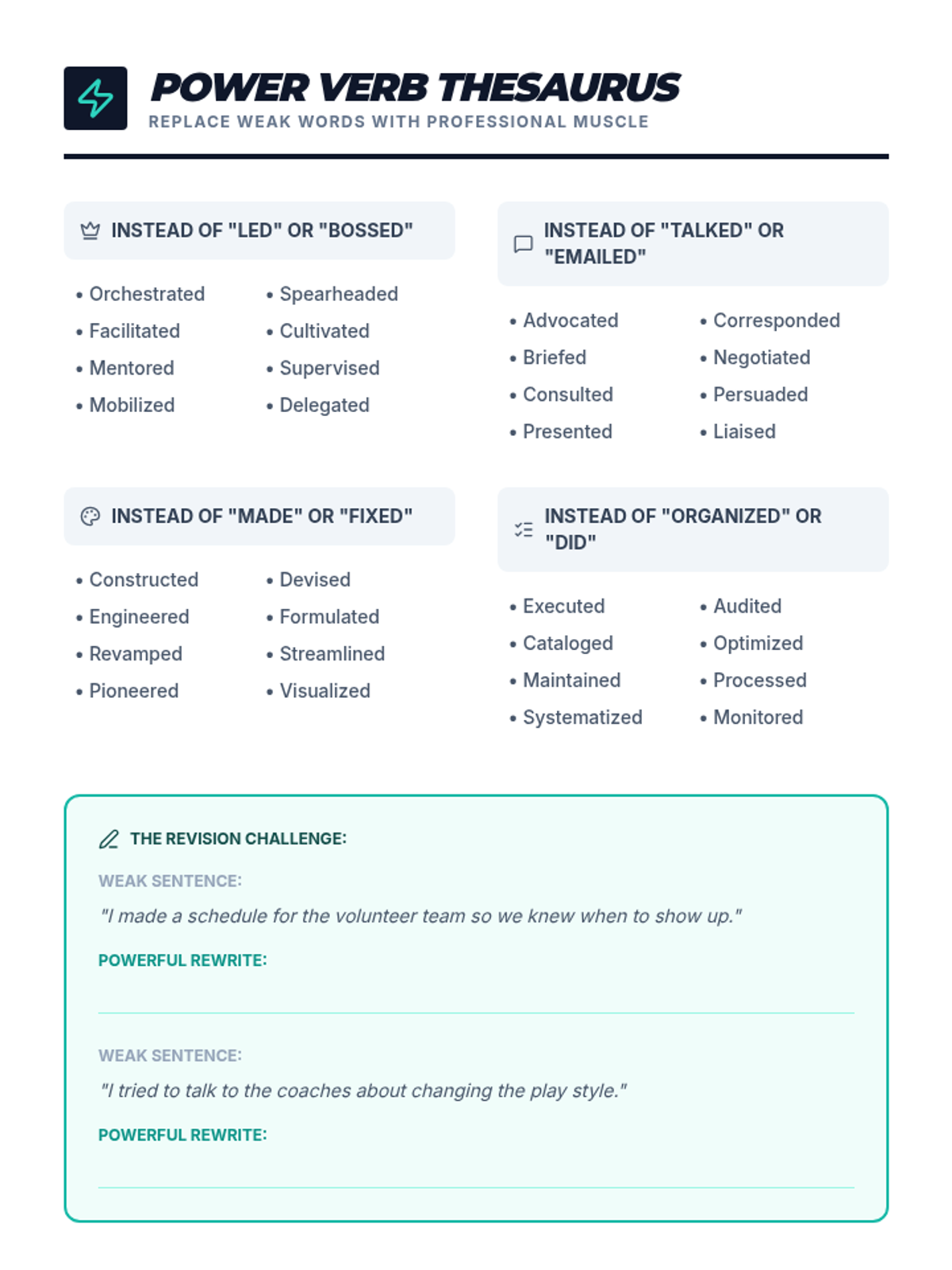
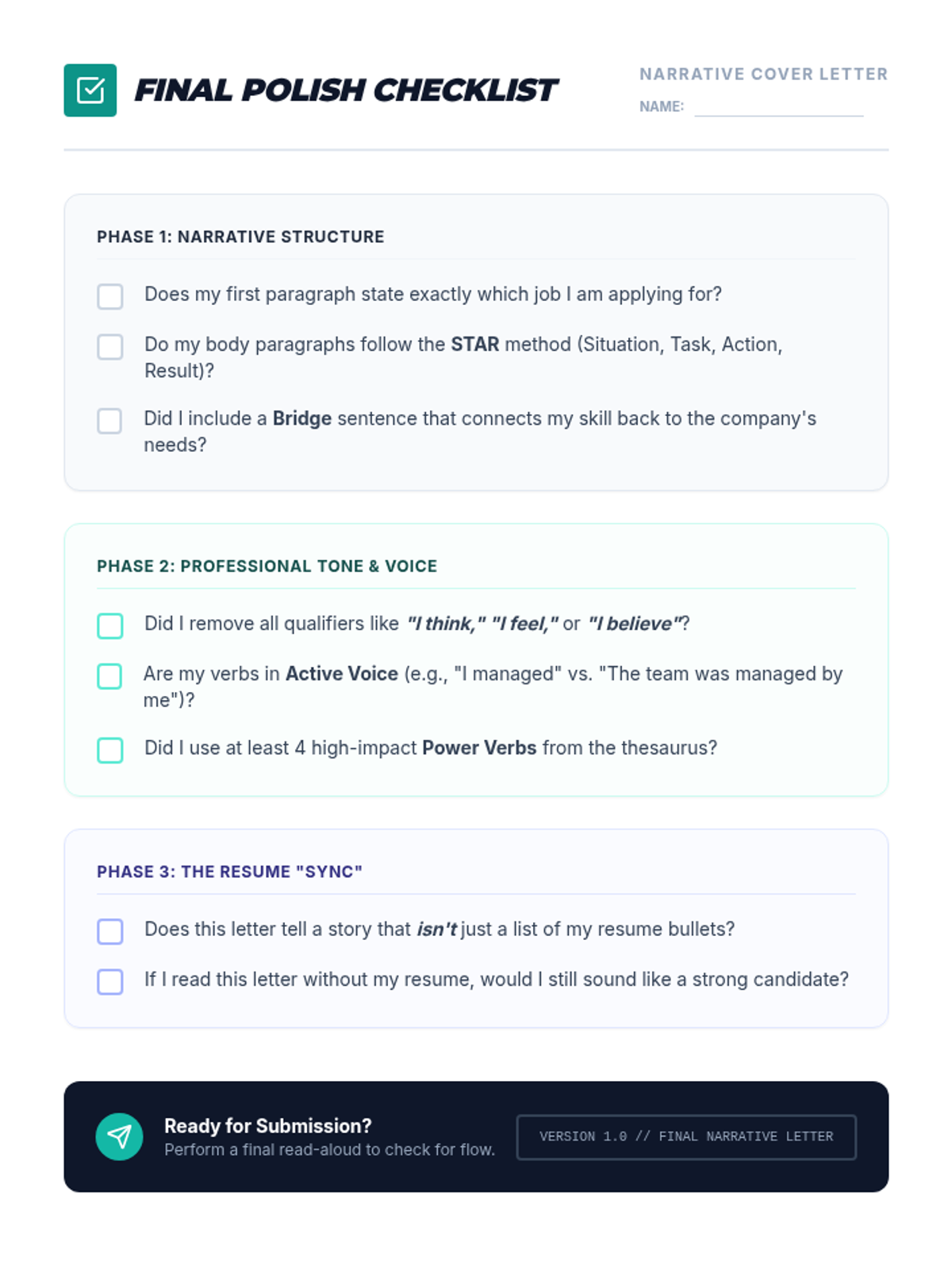
The final lesson refines the draft by focusing on professional yet authentic voice. Students edit for confidence, removing passive voice and qualifiers like 'I think' or 'I feel.'
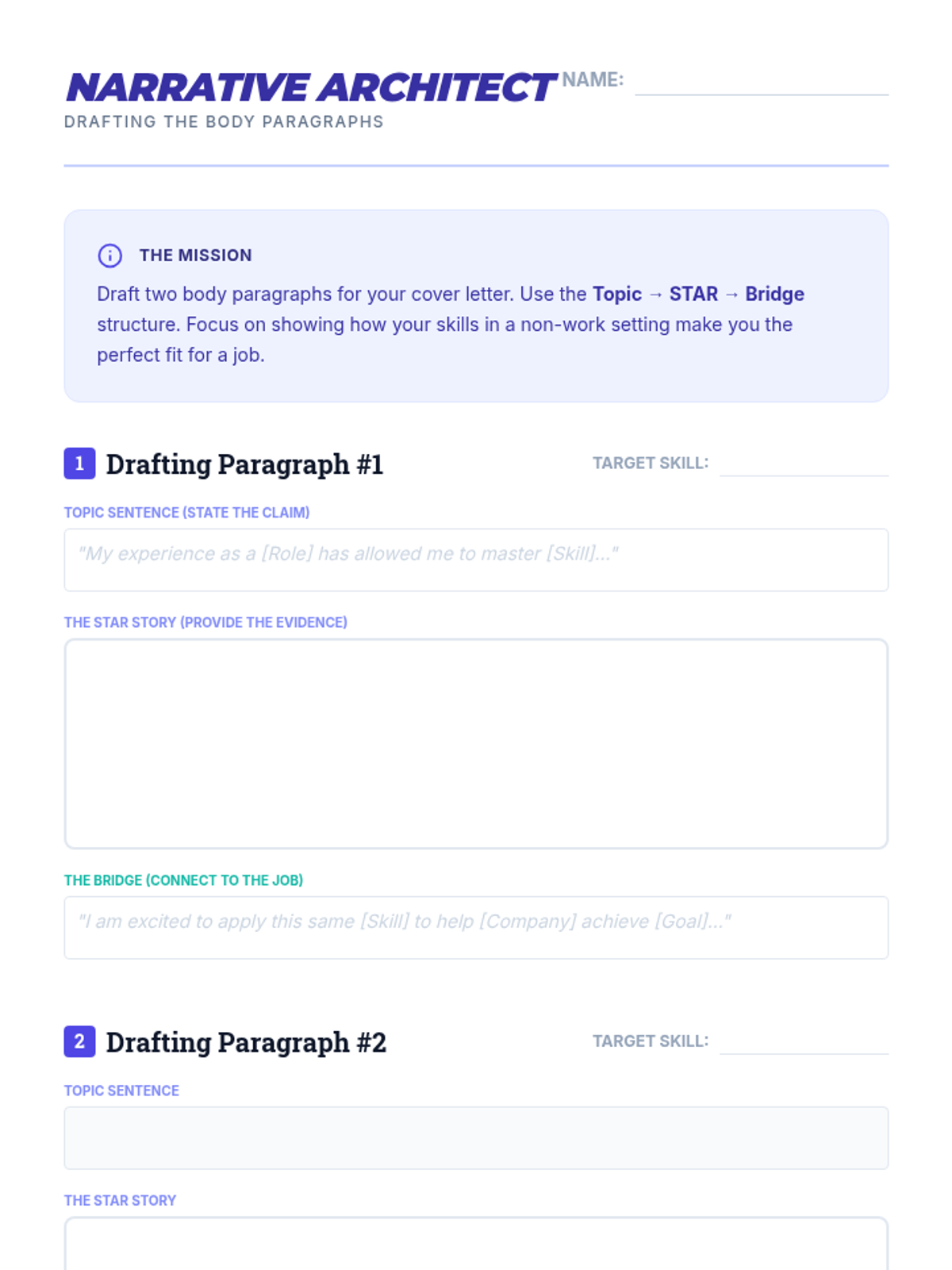
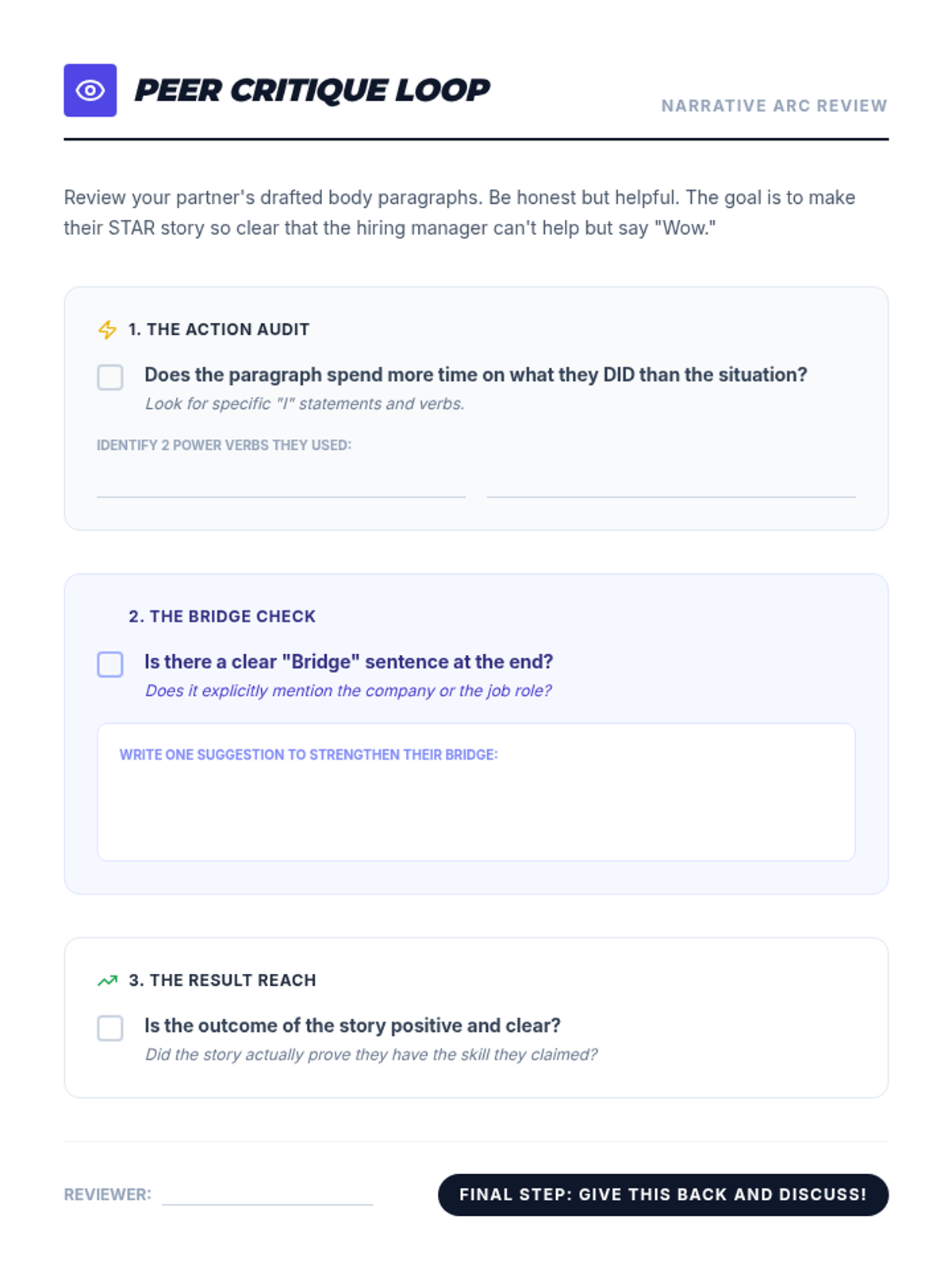
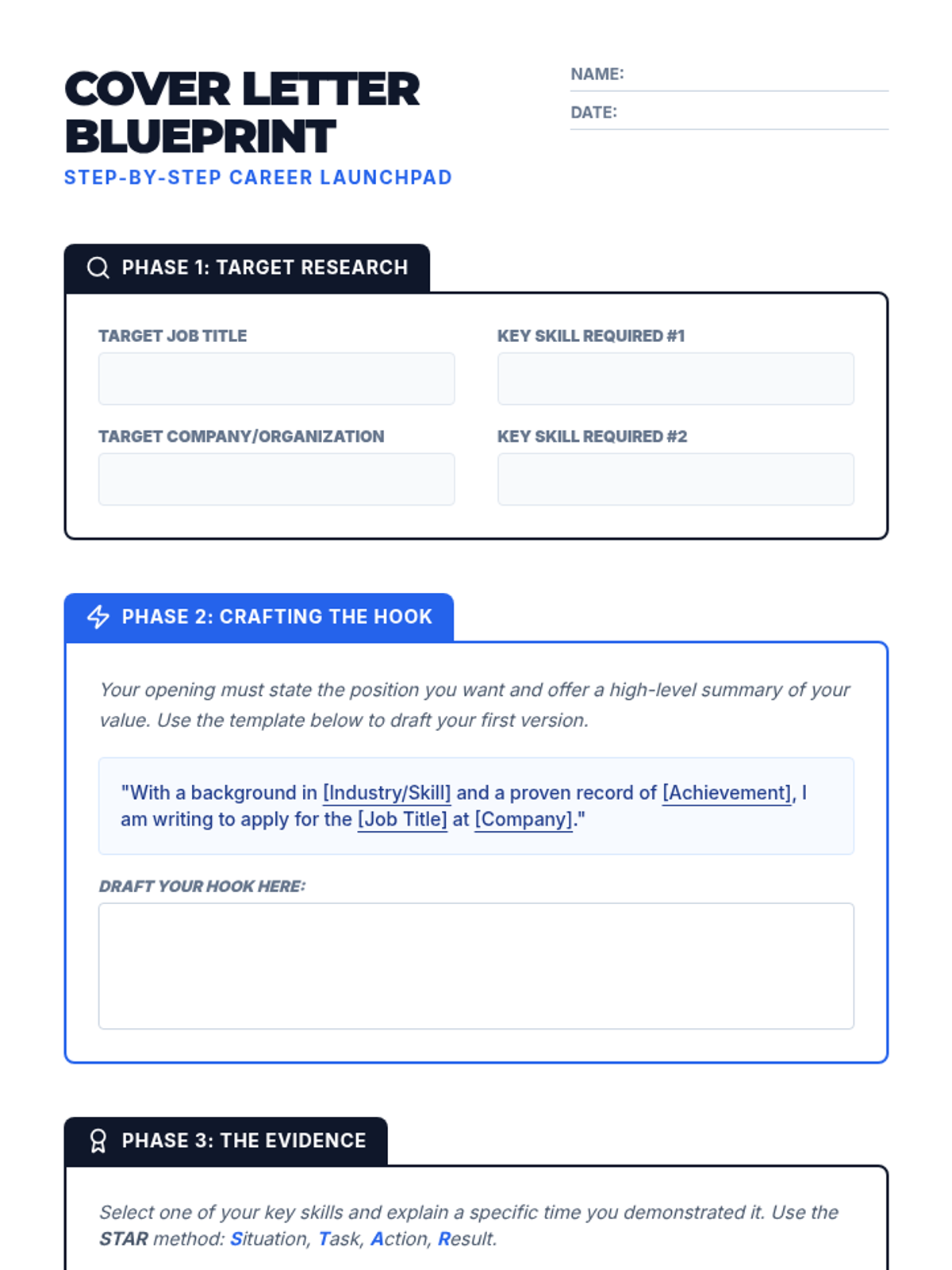
Students select two key transferable skills and draft full body paragraphs using the STAR method. They focus on connecting their personal story back to the potential employer's needs.
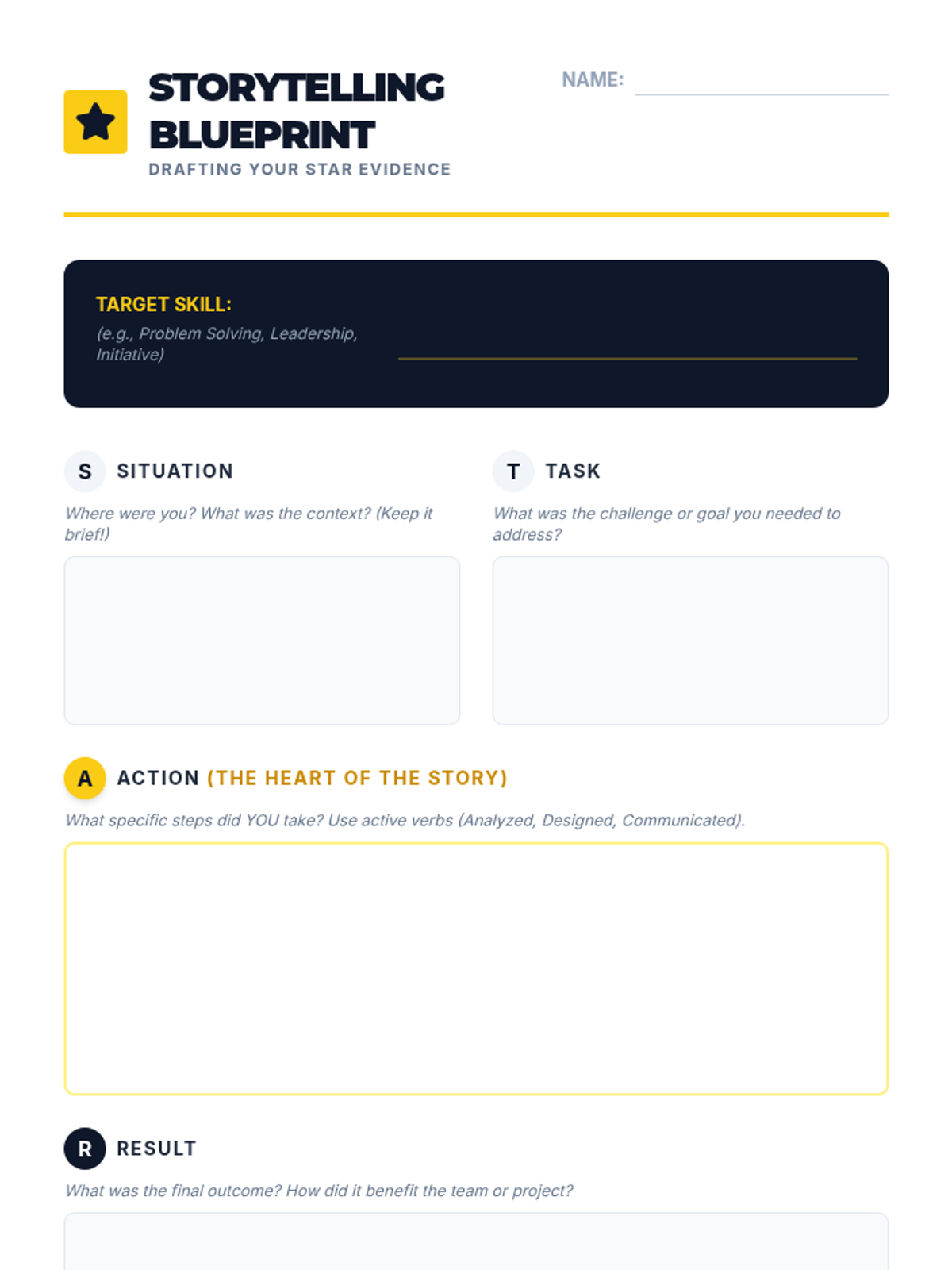
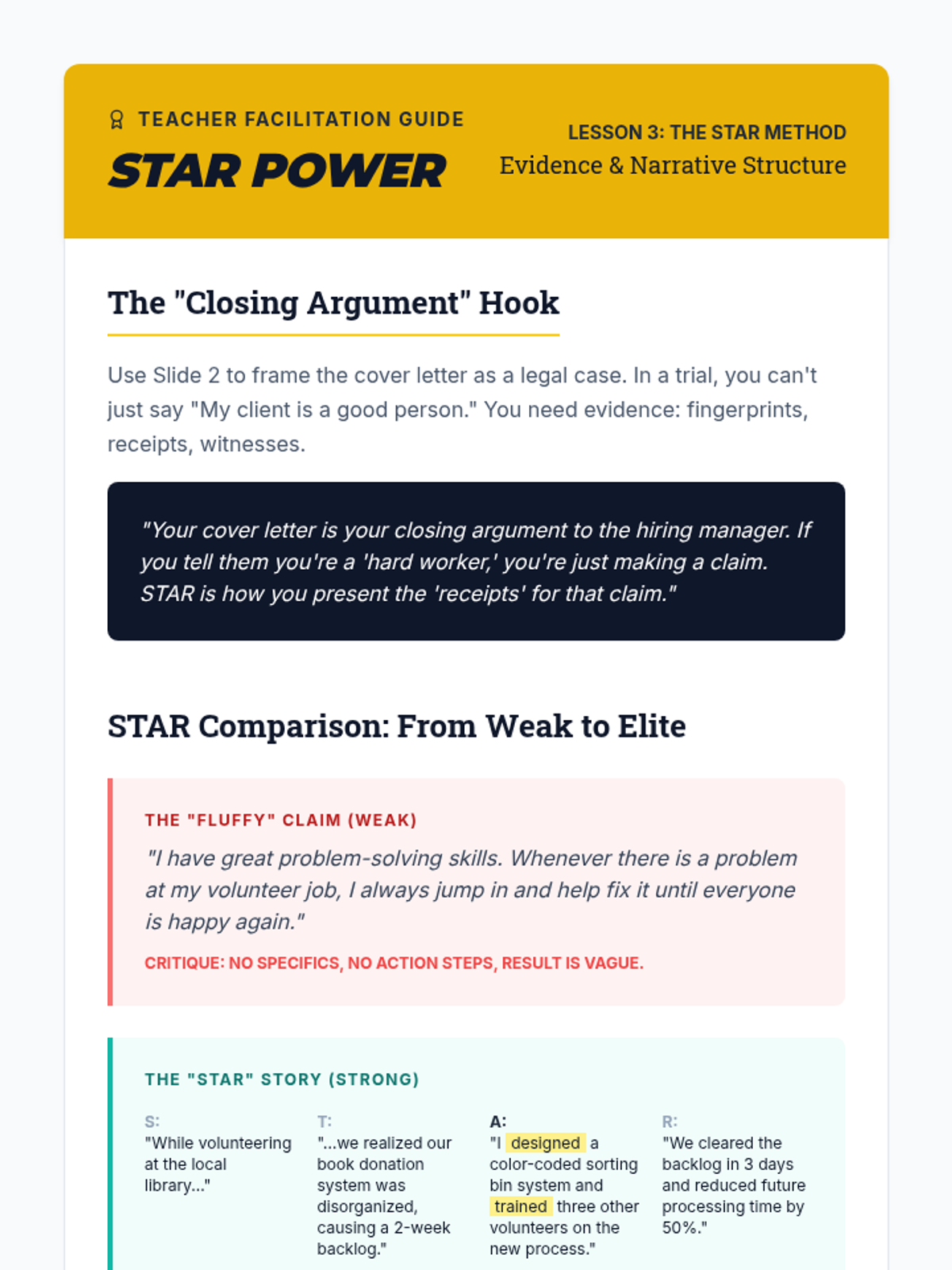
This lesson introduces the STAR method (Situation, Task, Action, Result) as a framework for writing body paragraphs. Students practice expanding a single skill into a short, evidence-based story.
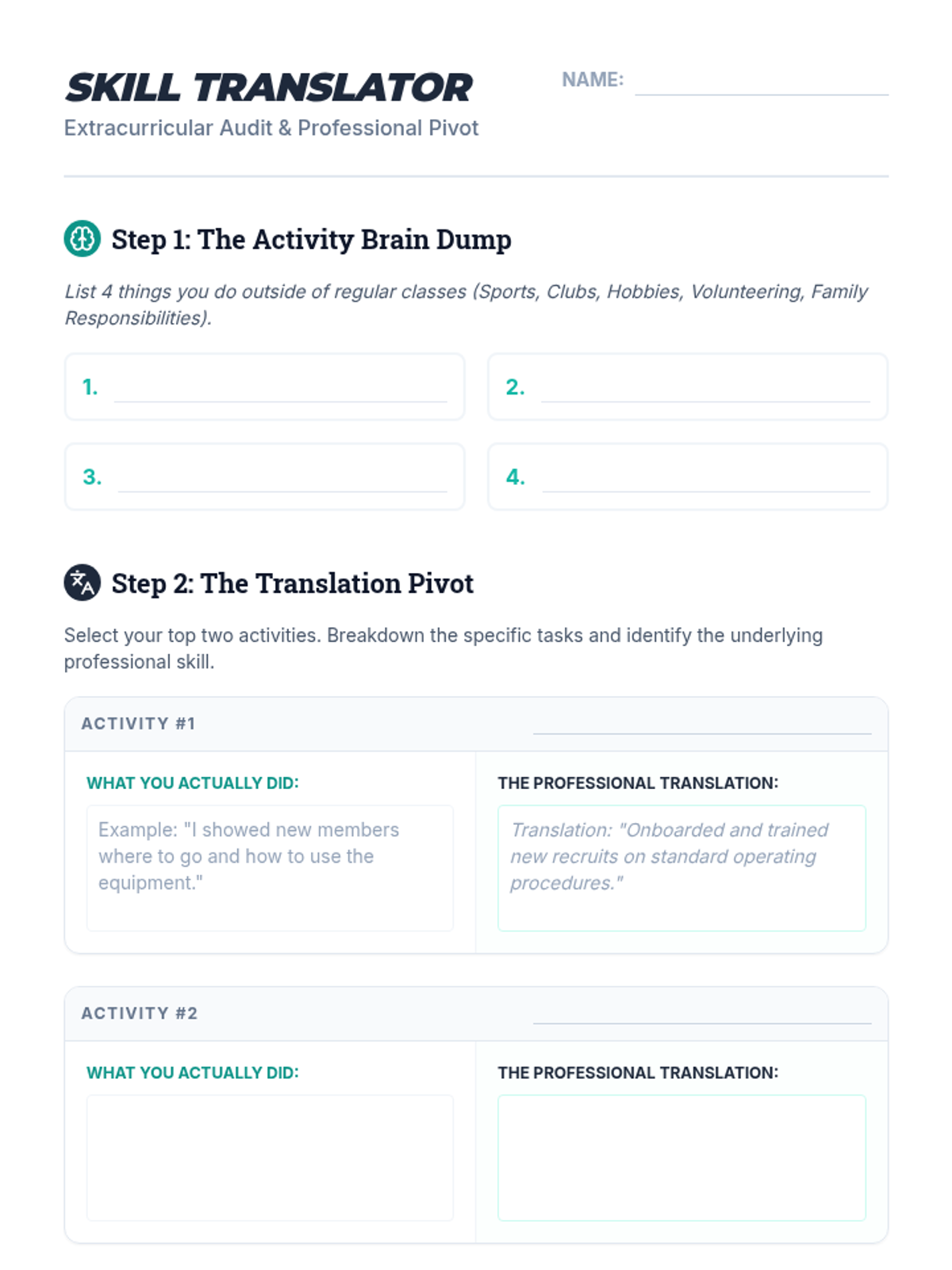
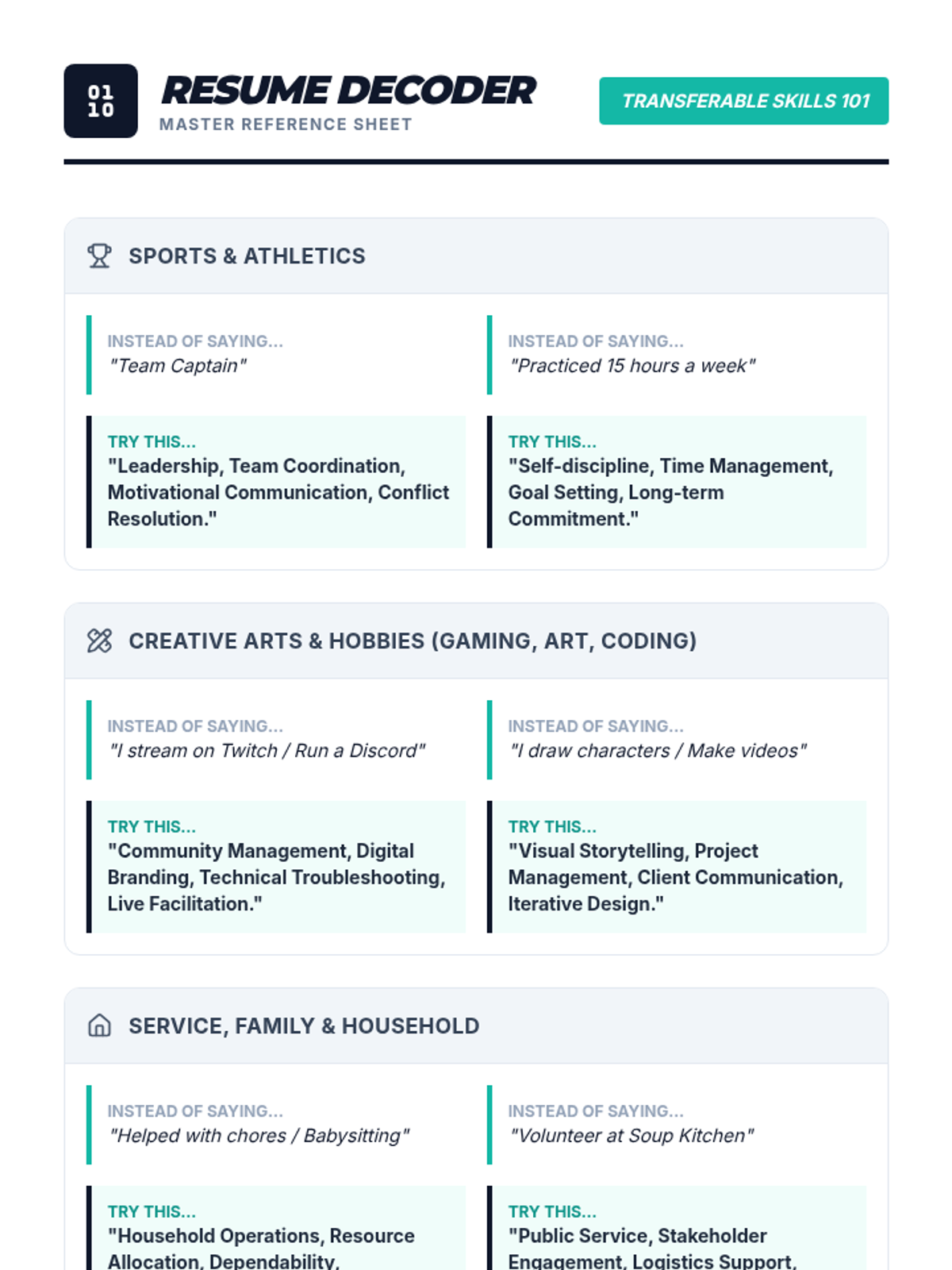
Students conduct a personal audit of their soft skills gained through extracurriculars, hobbies, and school projects. They learn to translate terms like 'captain of the team' into 'leadership' and 'conflict resolution.'
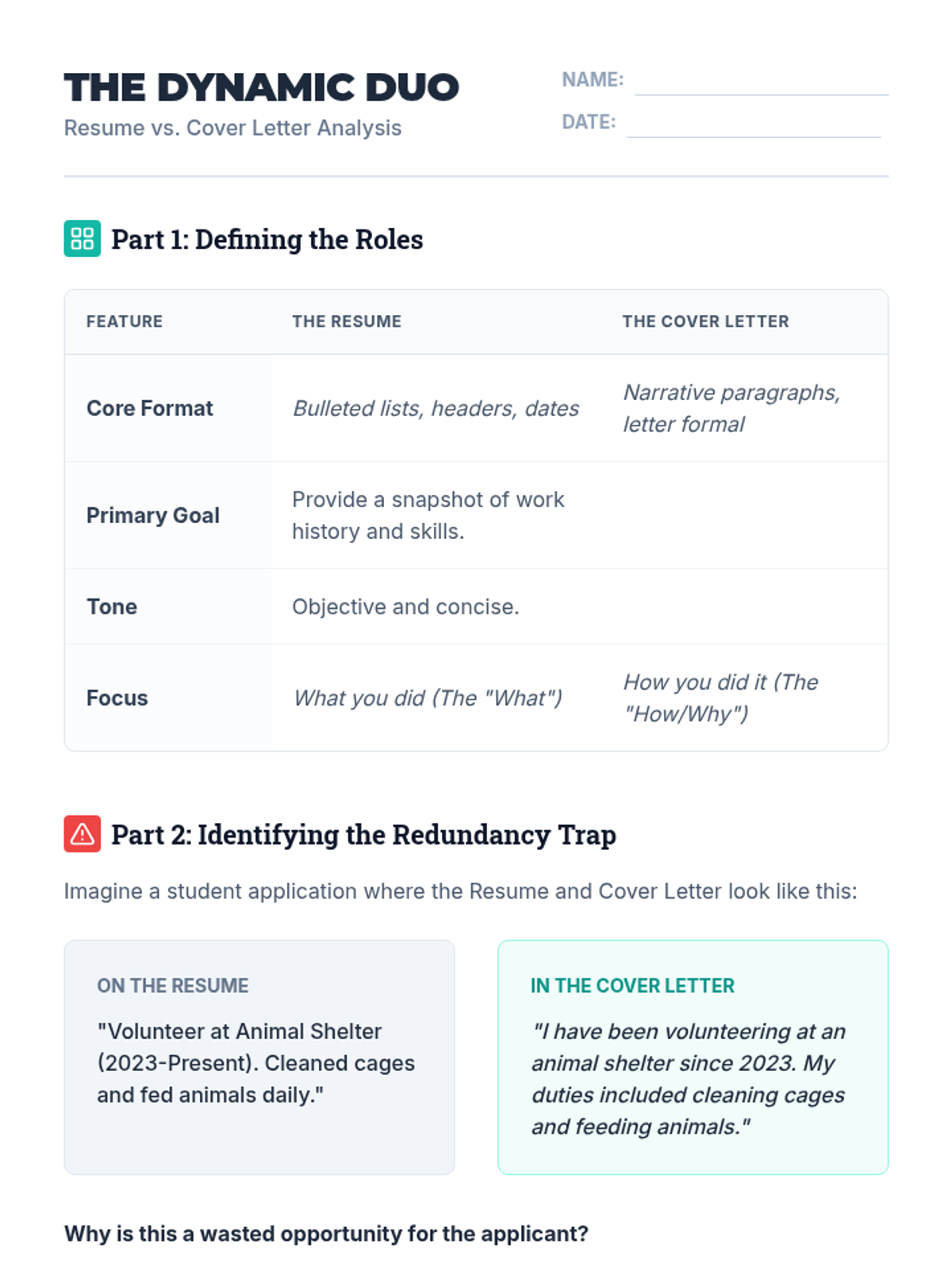
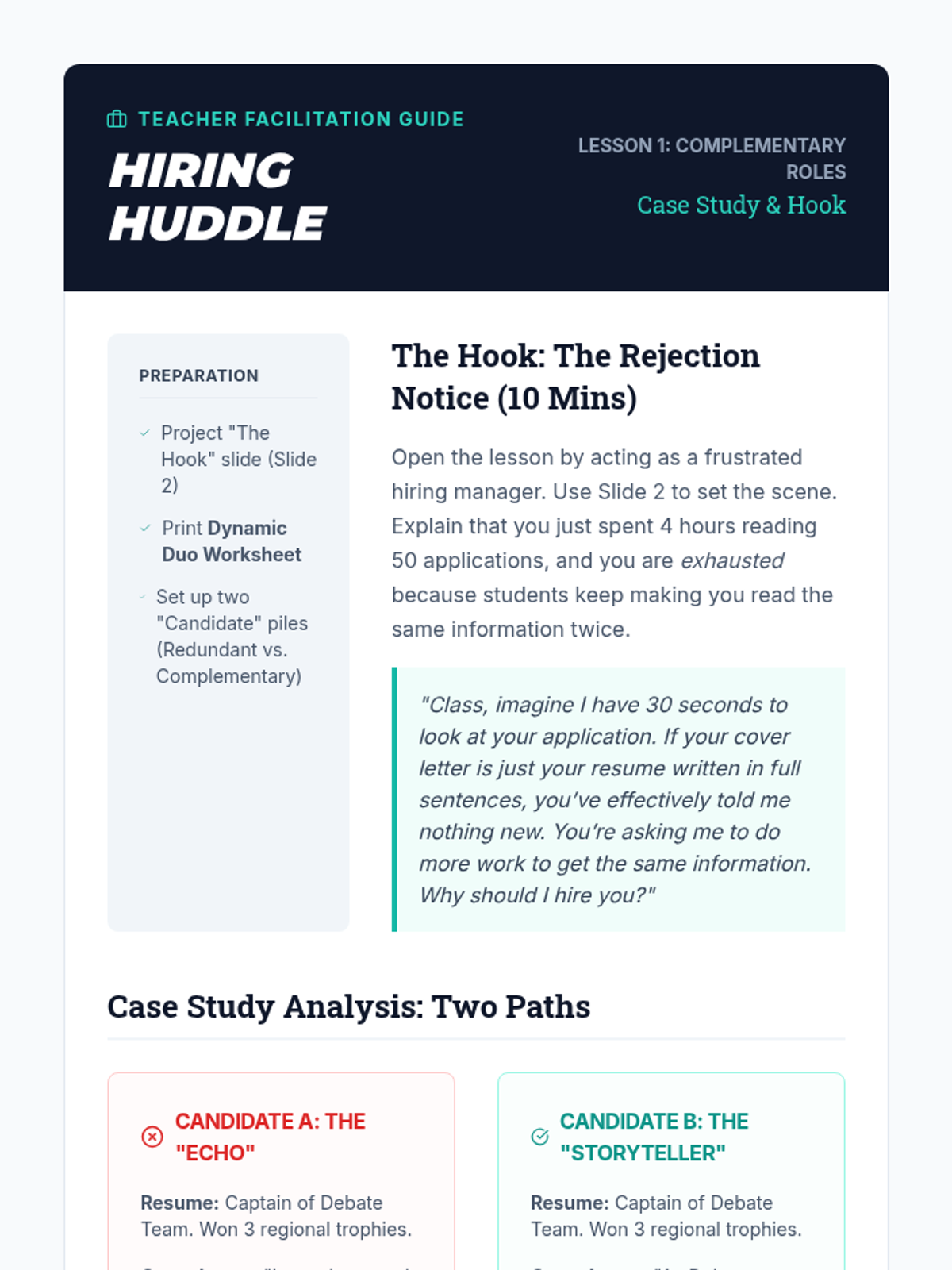
Students explore the distinct difference between the factual list of a resume and the narrative nature of a cover letter. They analyze sample application packages to see how the two documents work together without being redundant.
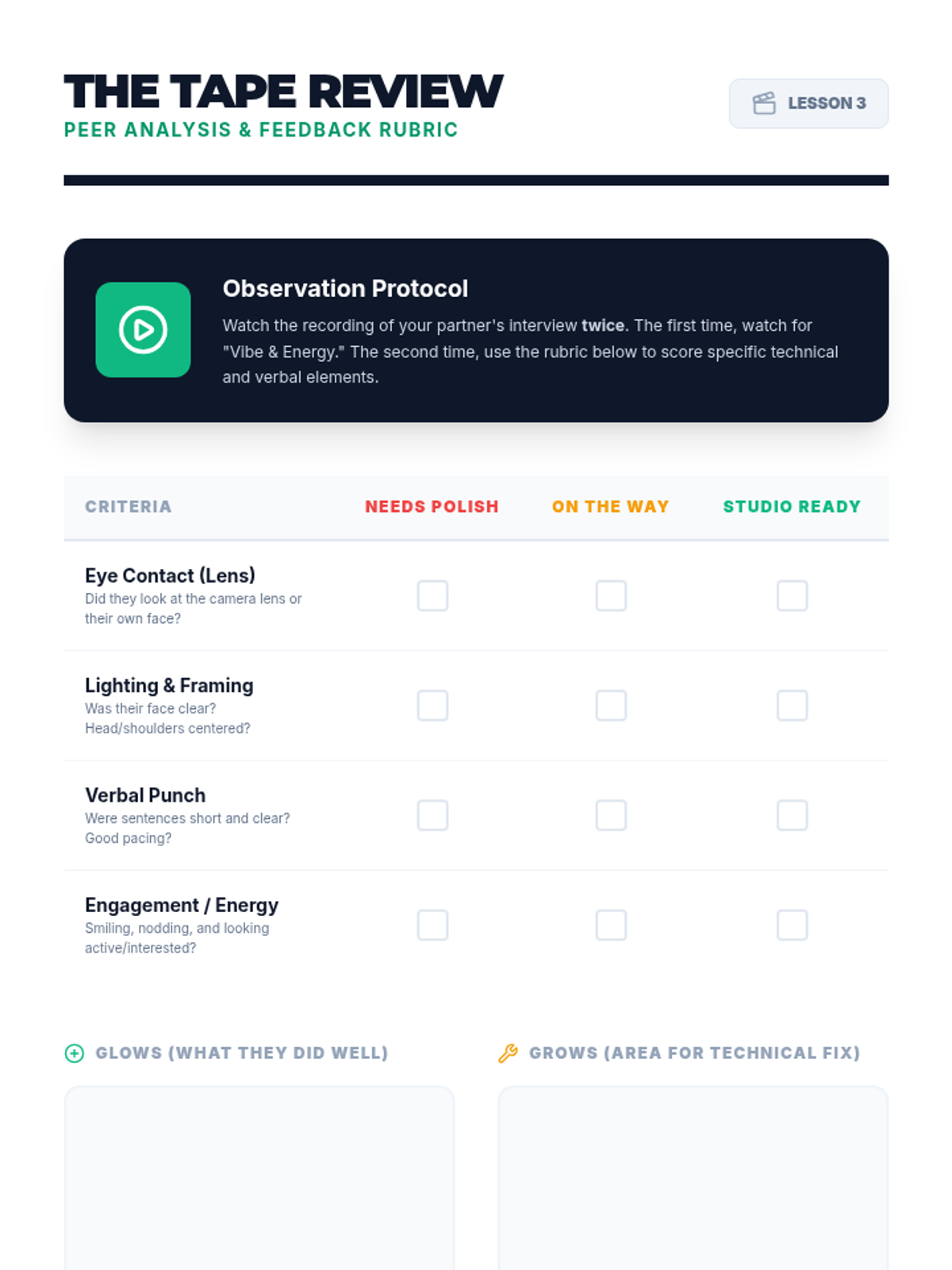
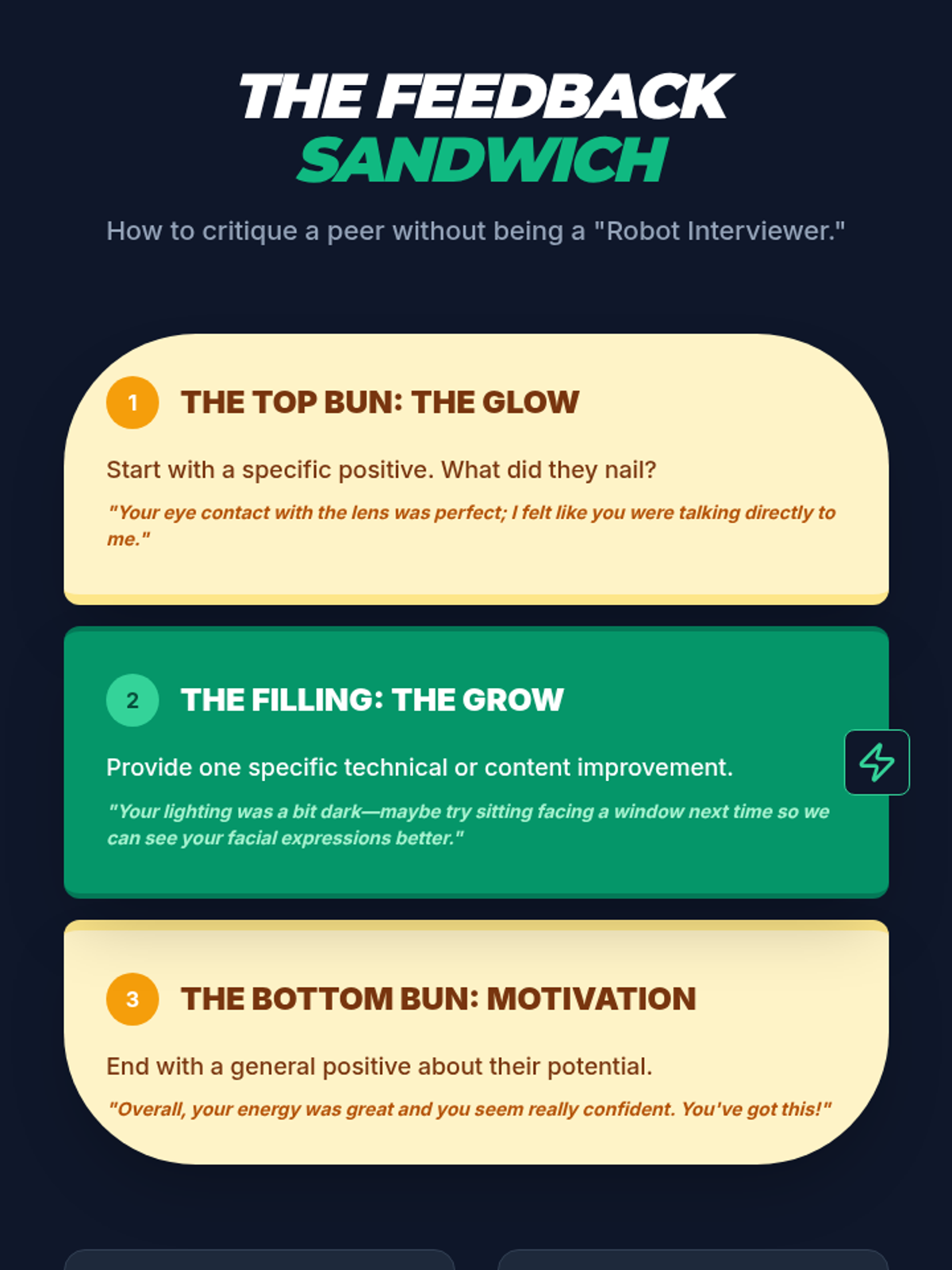
Pairs review the recordings of their interviews together using a structured rubric covering lighting, eye contact, audio, and content. They provide constructive feedback to one another.
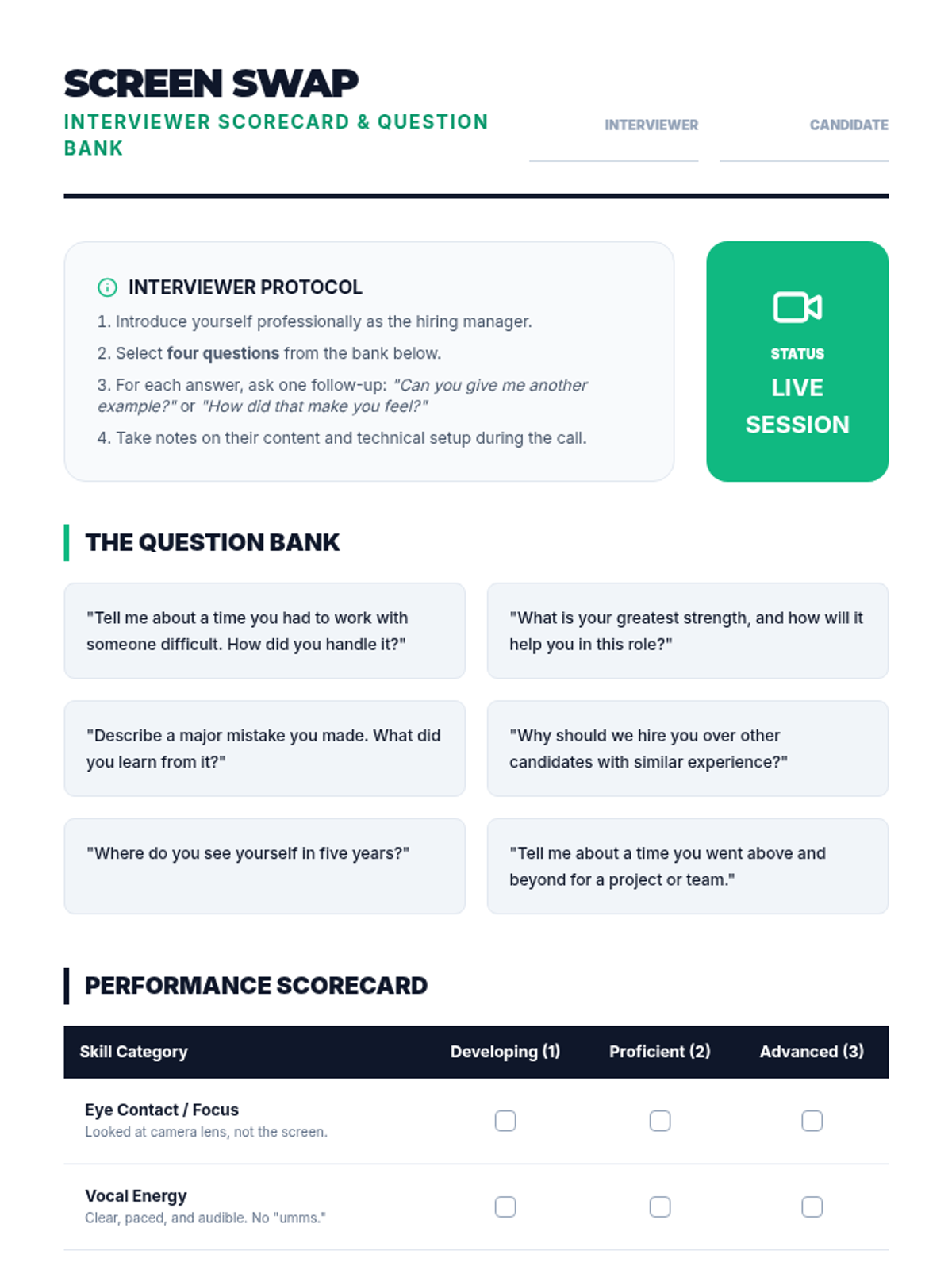
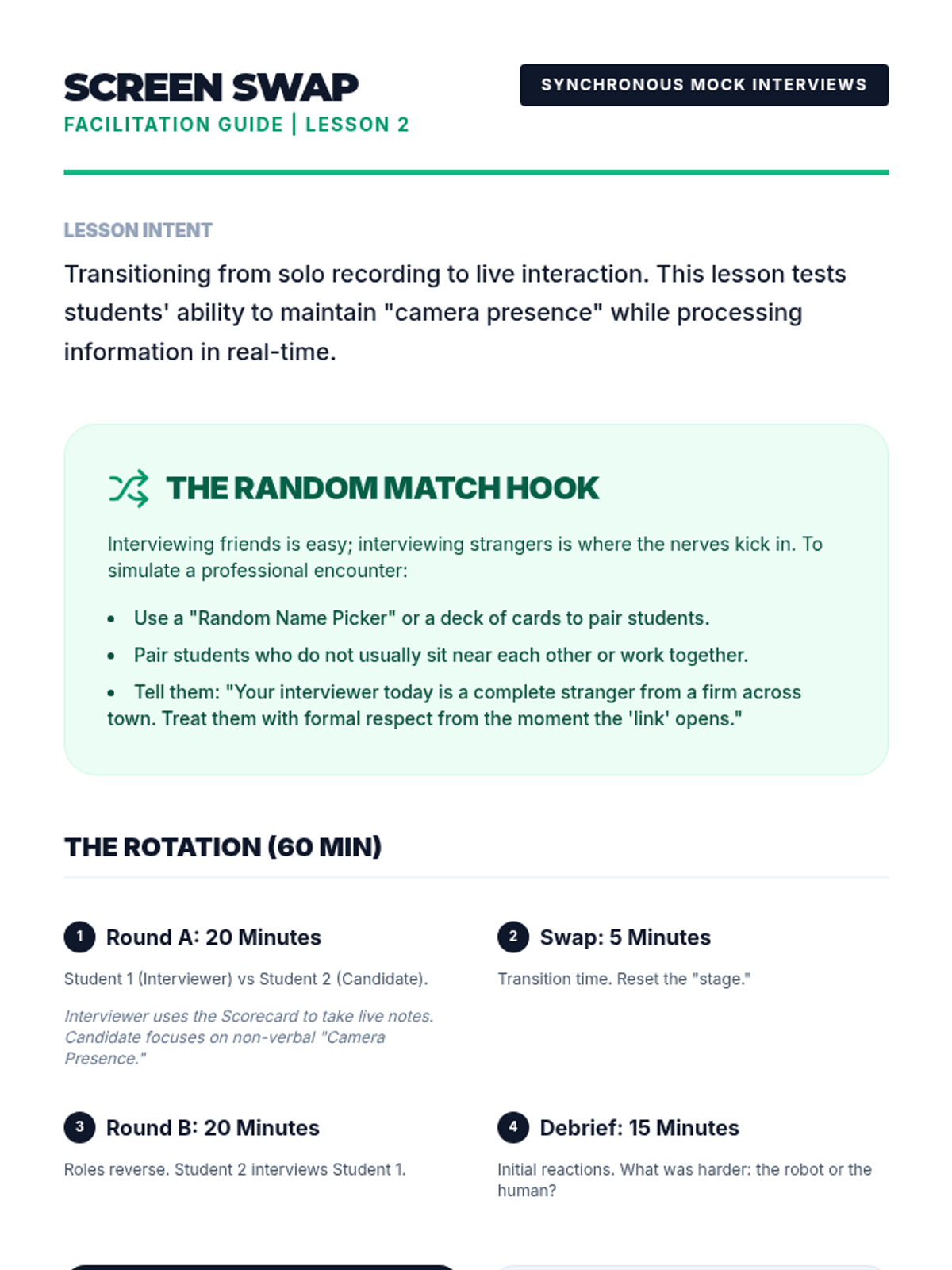
Students are paired up to conduct live mock interviews using a provided question bank. They focus on applying the setup and body language skills learned in previous sequences.
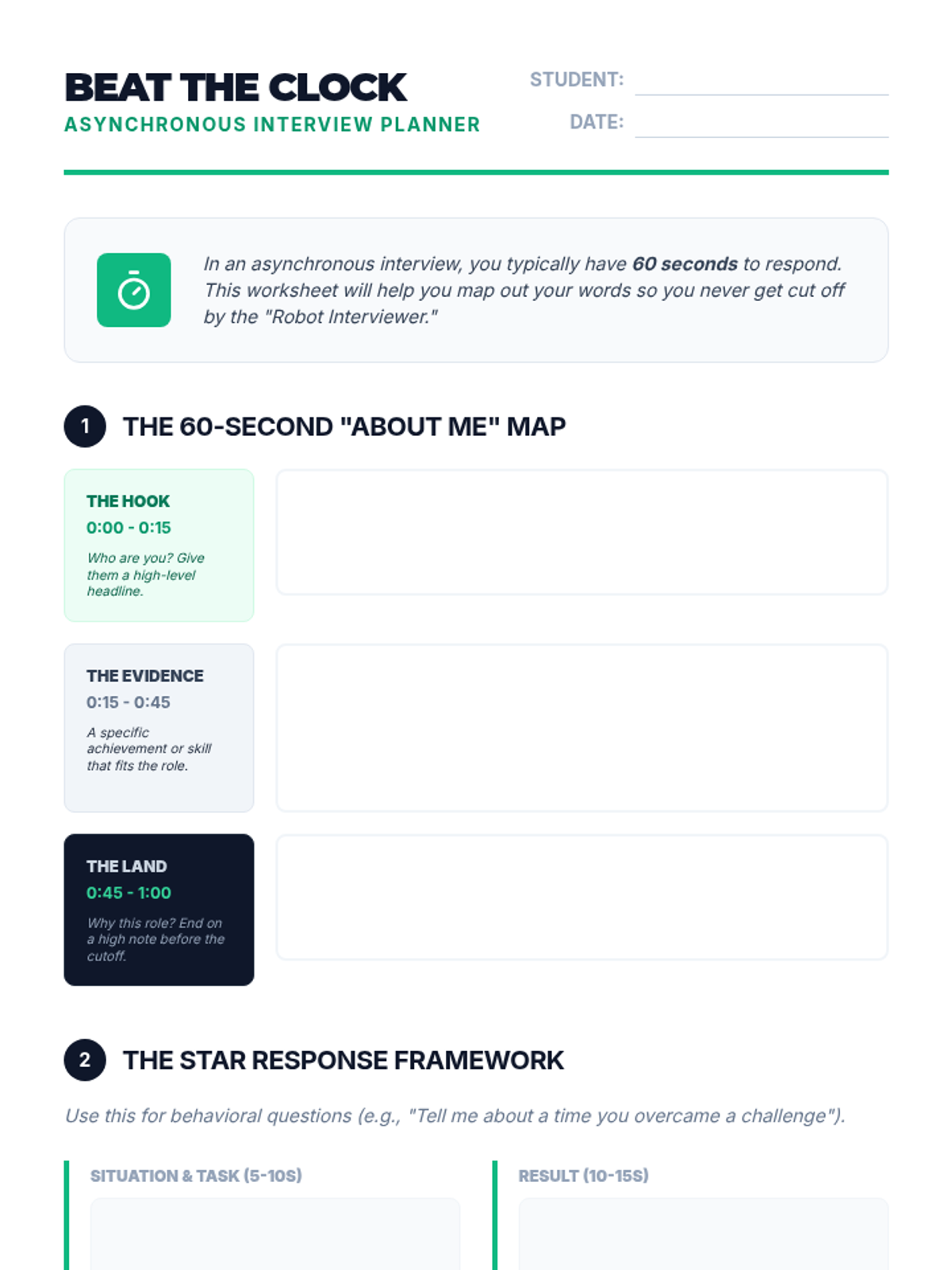
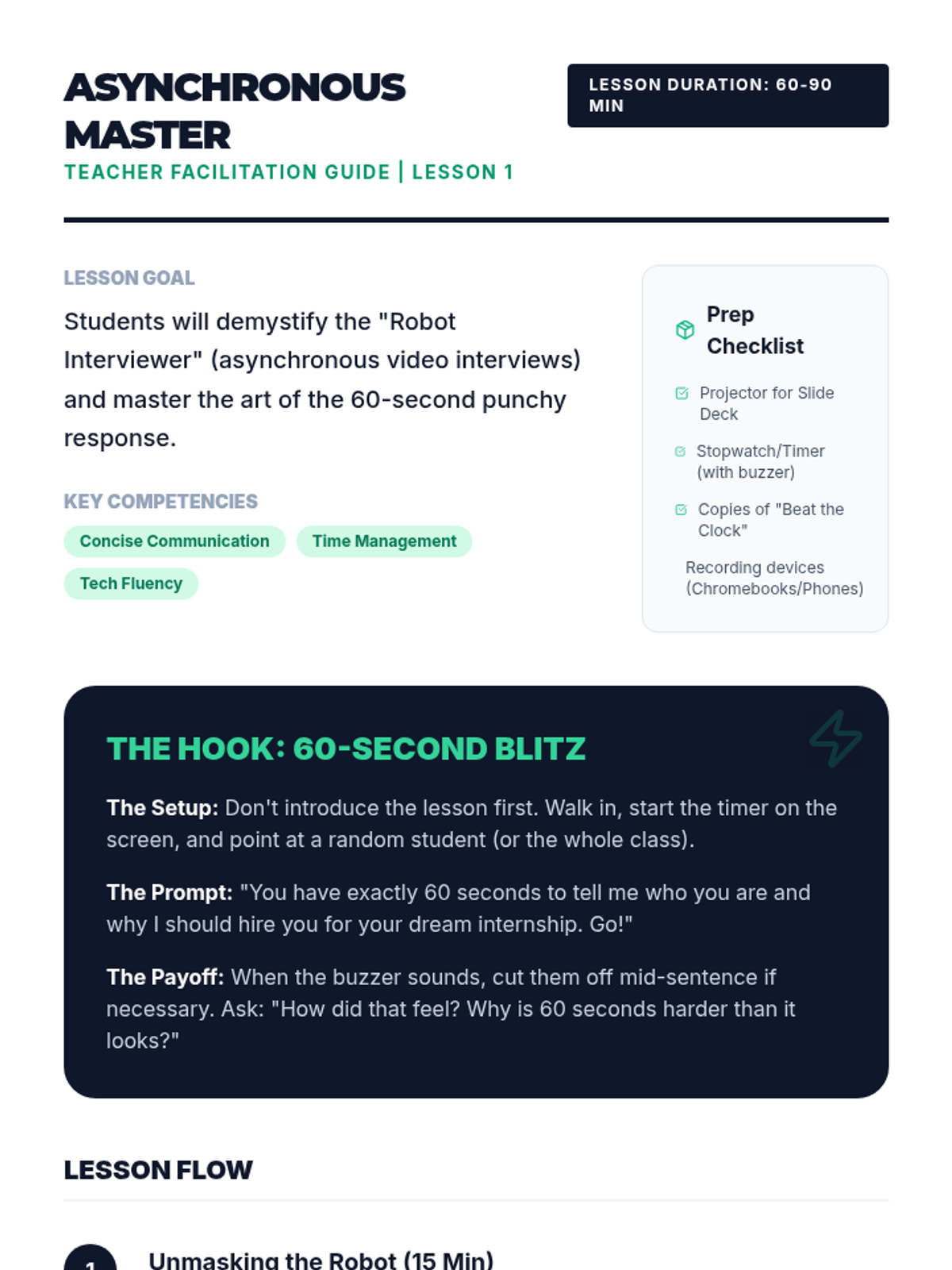
Students explore the world of asynchronous (one-way) interviews, practicing concise communication and time management under pressure.
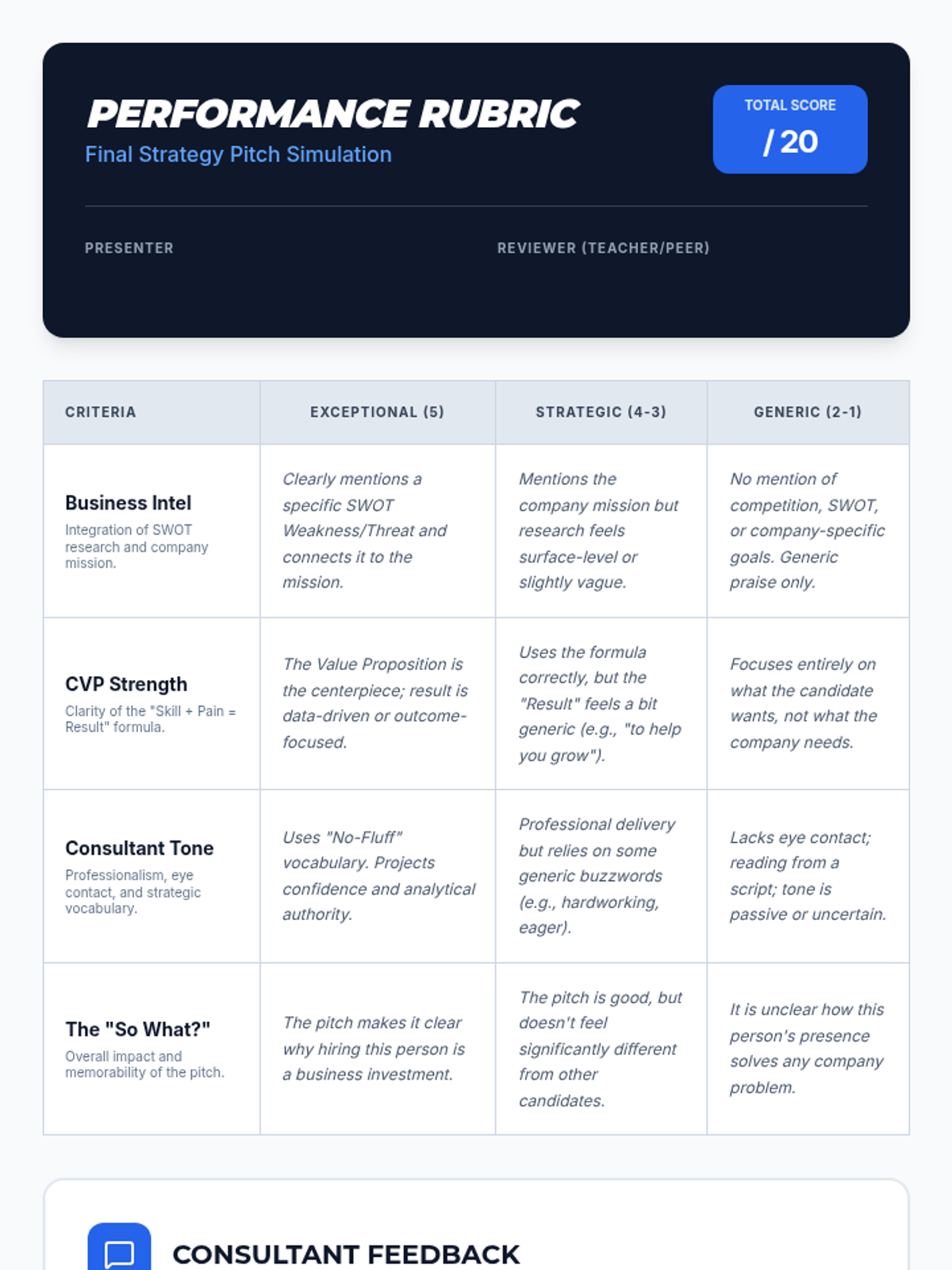
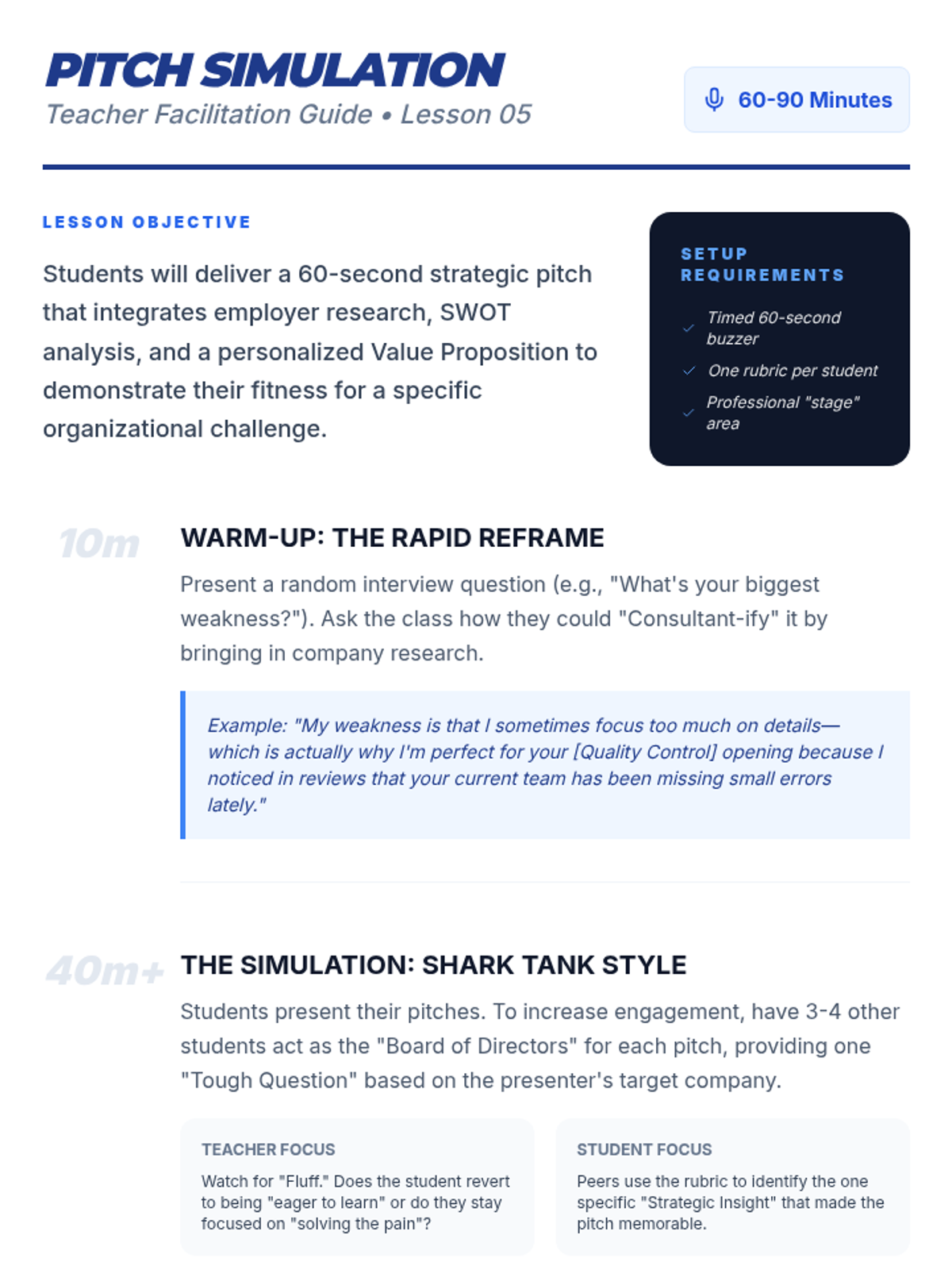
In the final simulation, students present a brief strategy pitch that demonstrates their deep understanding of the employer's business. They practice transforming standard interview questions into opportunities to showcase their strategic fit.
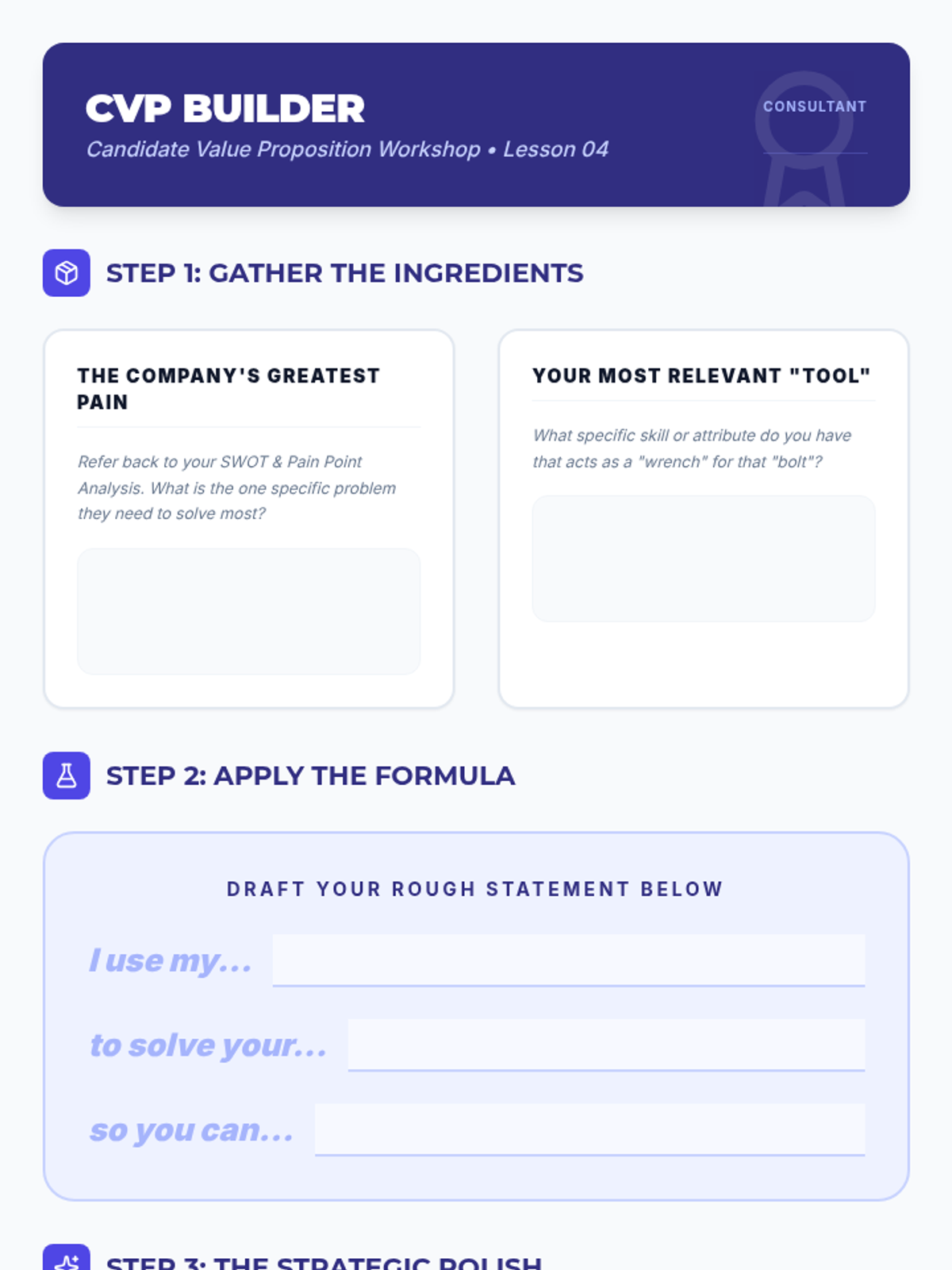
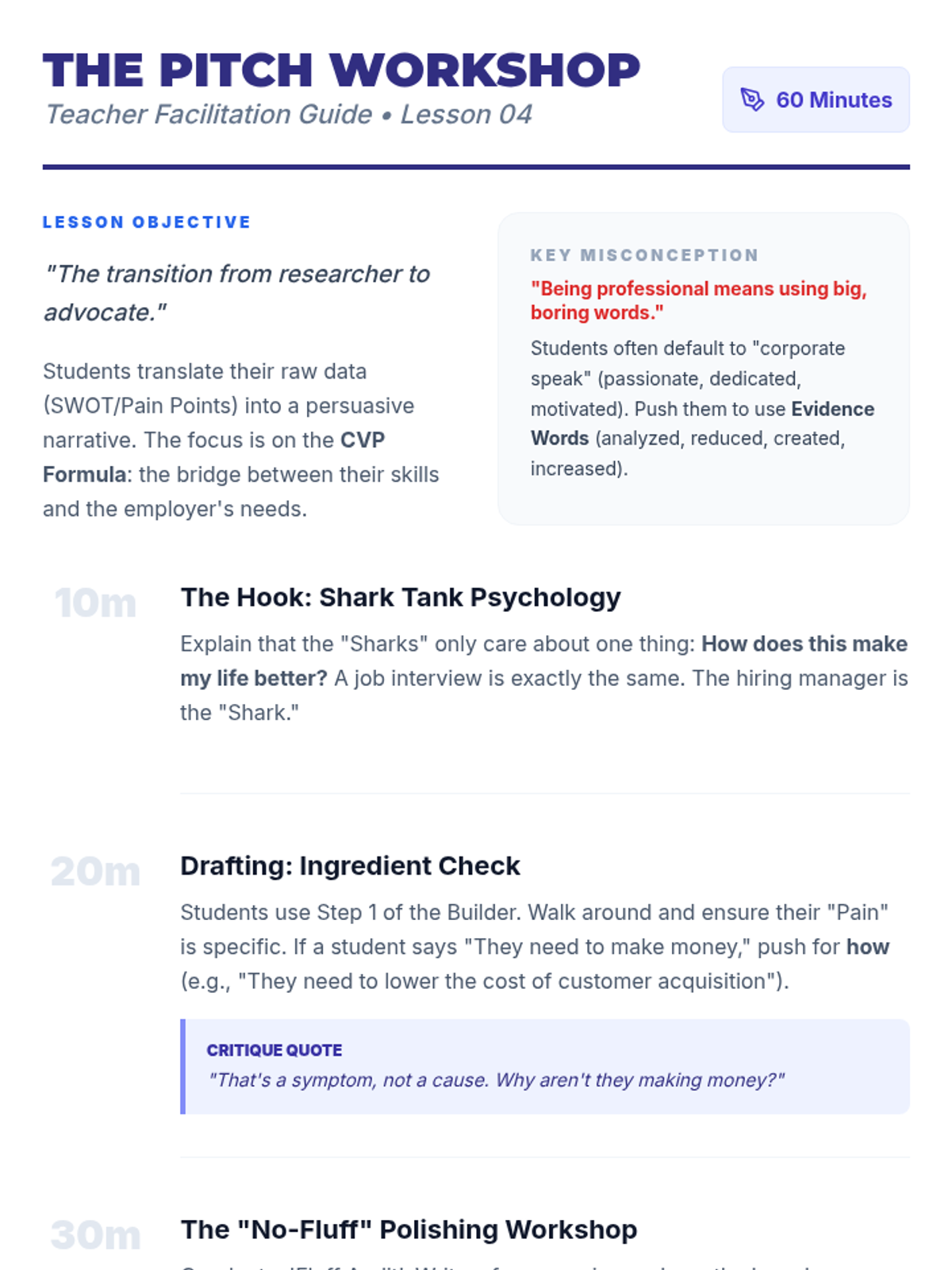
Using their research, students craft a personalized Candidate Value Proposition. This statement articulates how their specific skills and attributes directly address the company's needs and help mitigate its weaknesses.
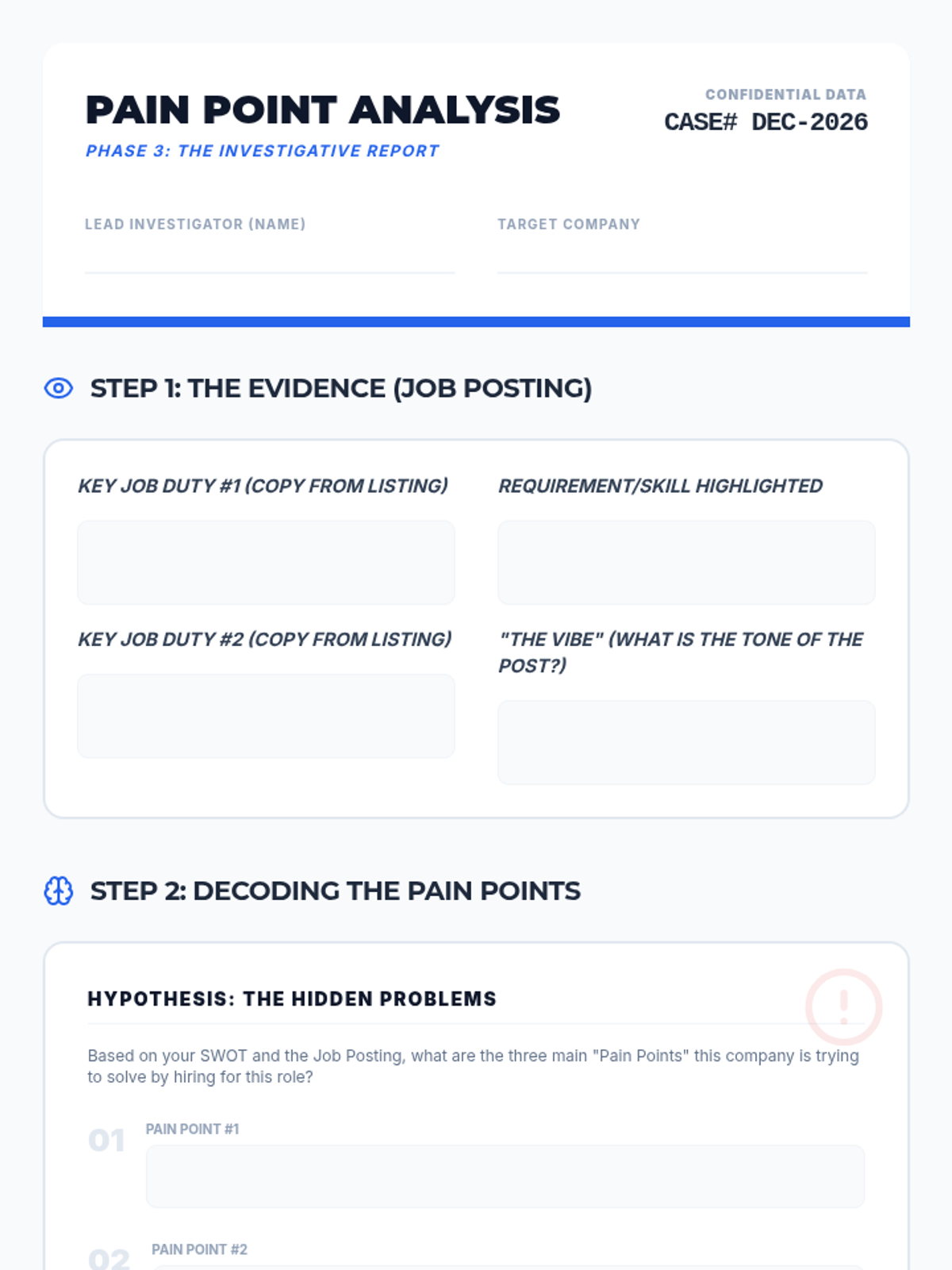
Students investigate the specific 'pain points' or business challenges a company faces to understand why a role exists. They connect entry-level tasks to high-level strategic goals to identify the true value a new hire provides.
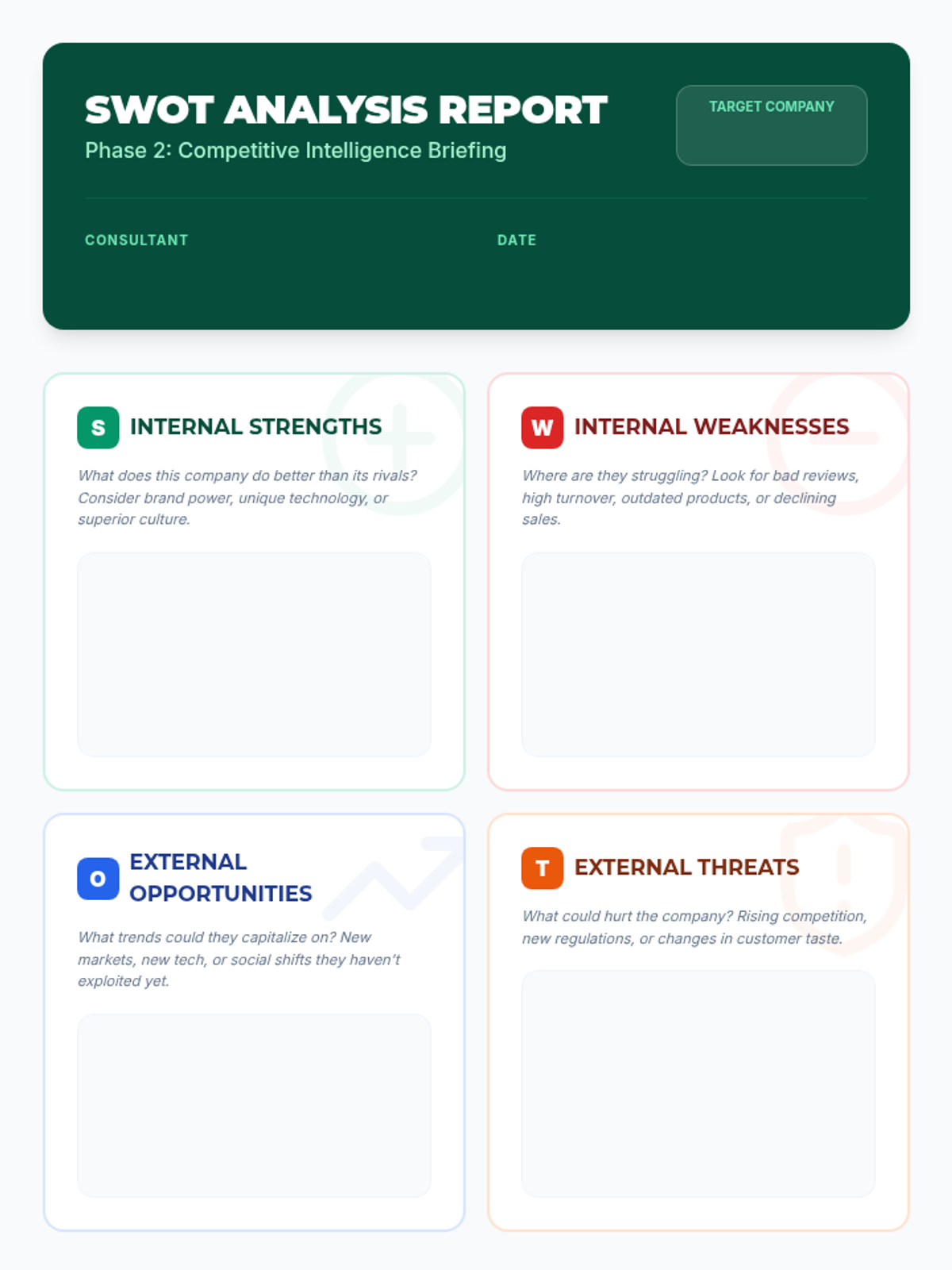
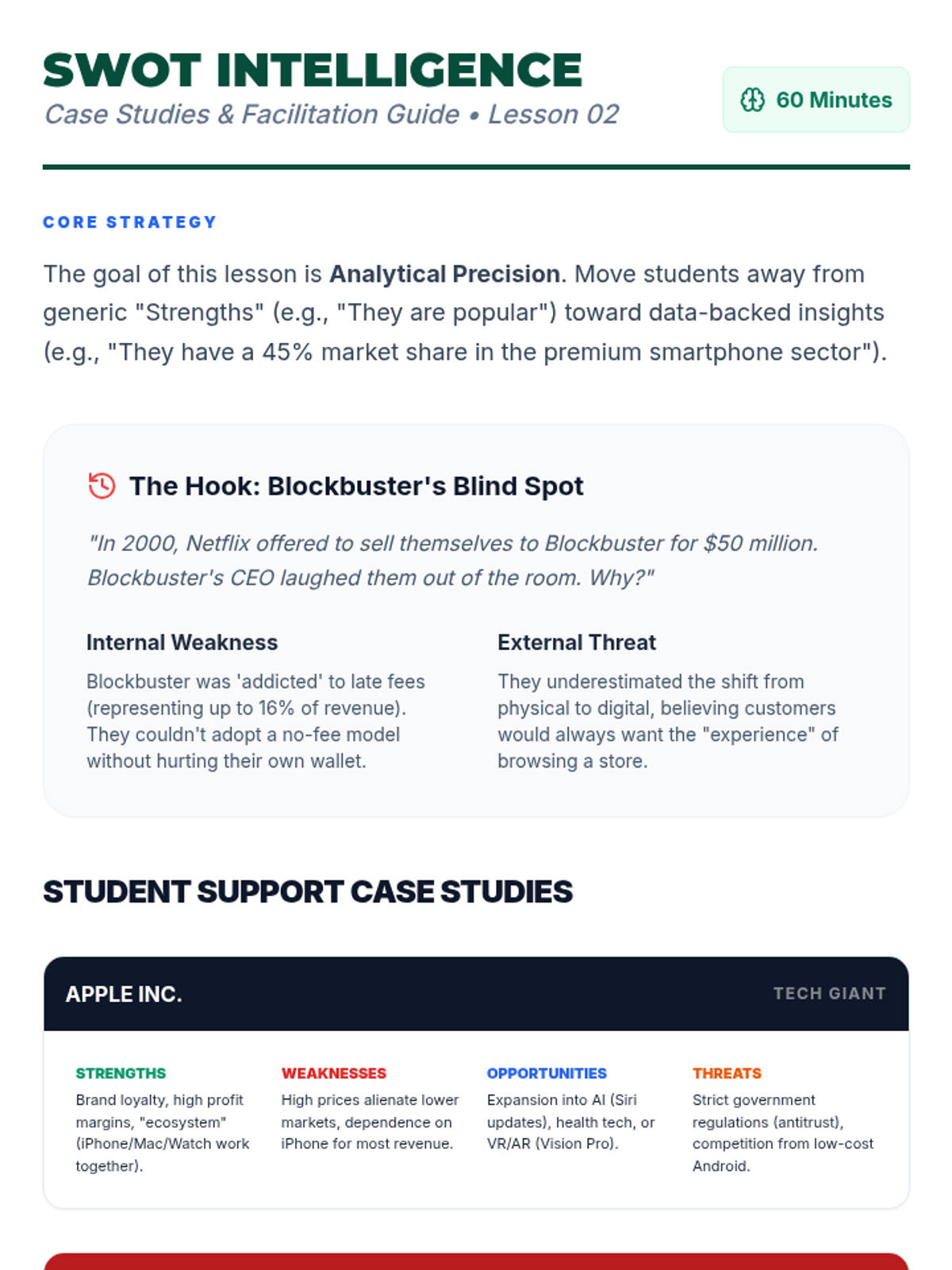
Learners perform a structured SWOT analysis on their chosen target company, evaluating internal strengths and weaknesses alongside external opportunities and threats. This provides a clear picture of the company's competitive standing and market pressures.
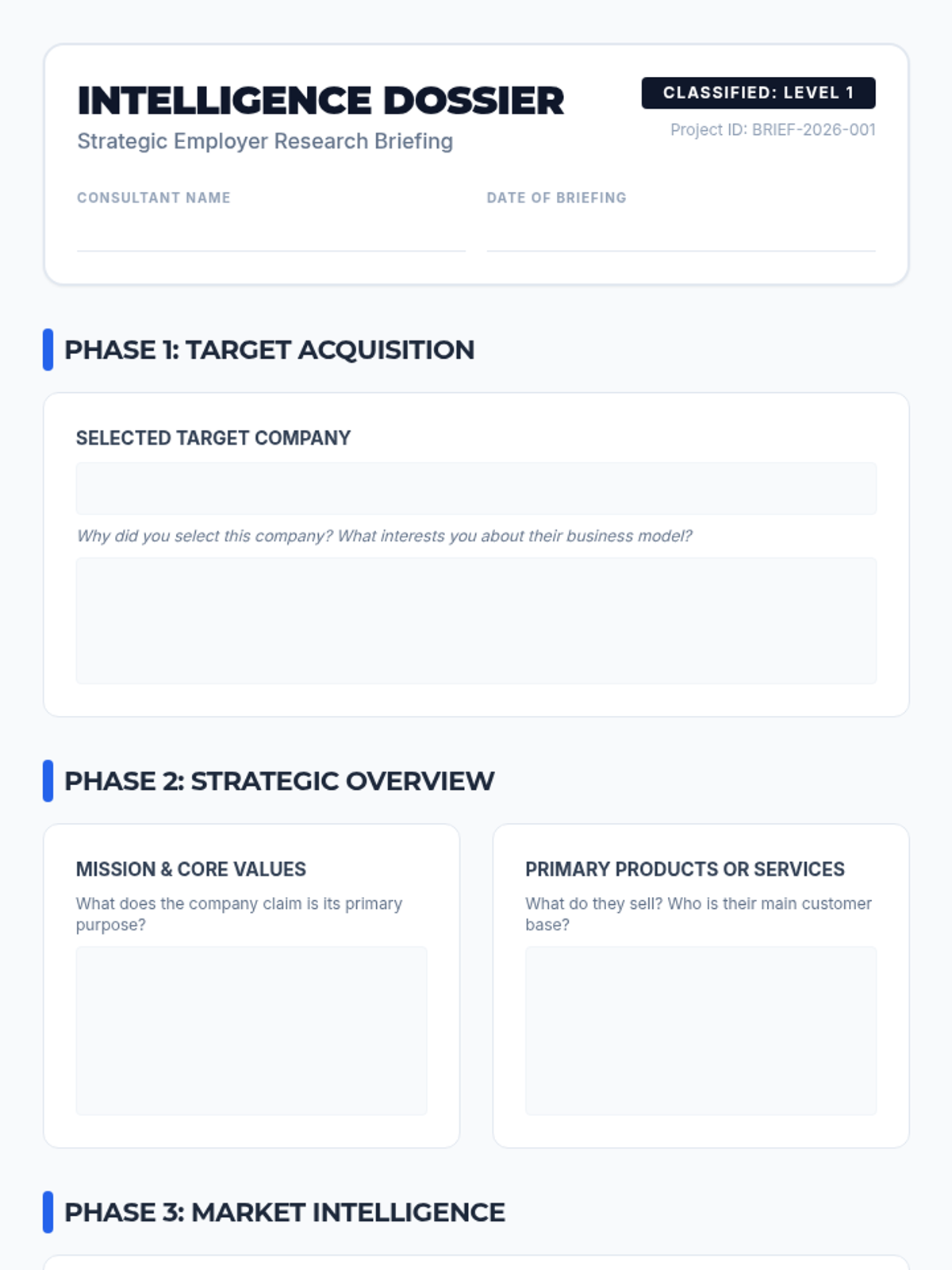
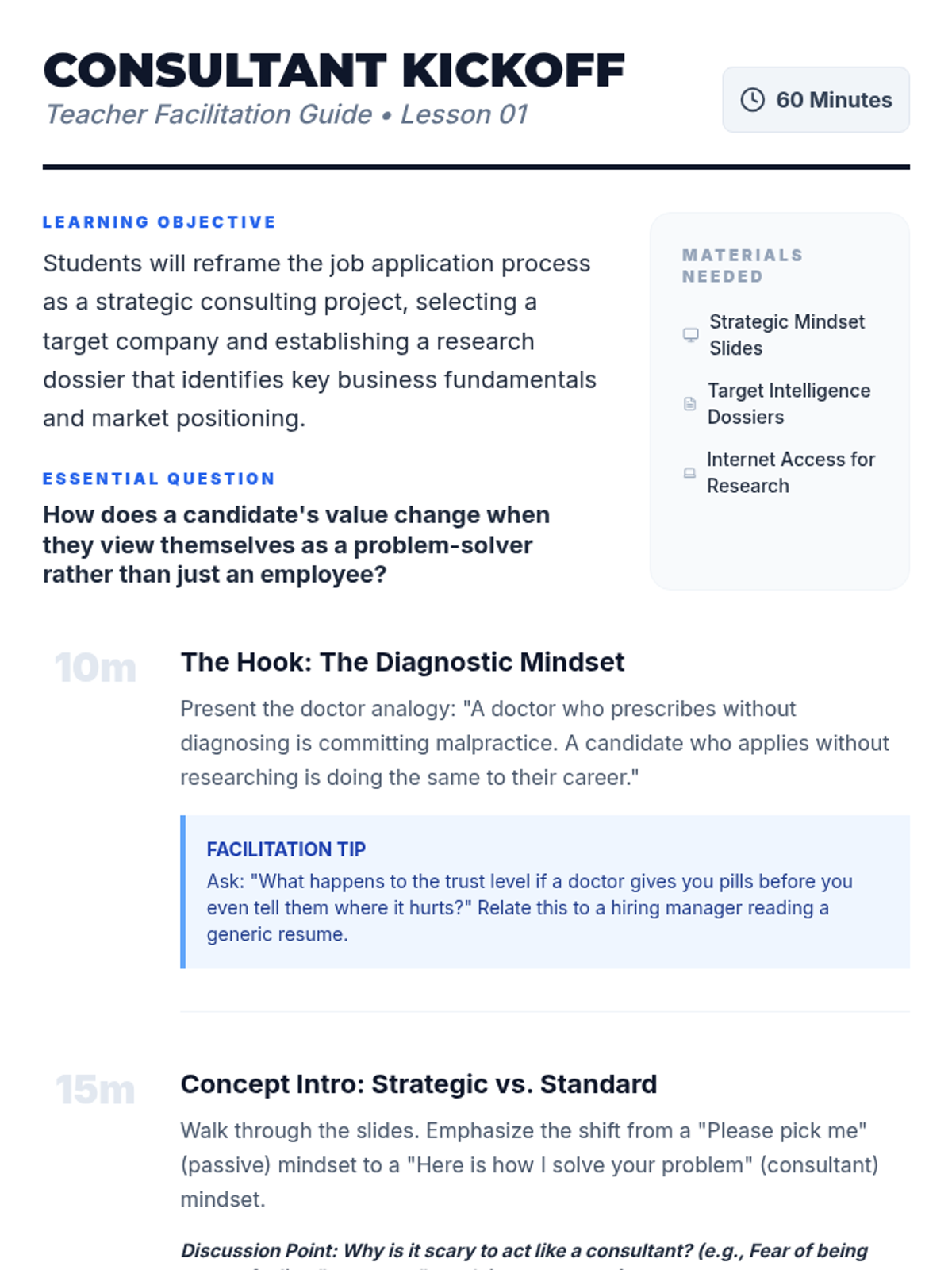
Students transition from passive job seekers to proactive consultants by selecting a target company and establishing a research dossier. They explore the idea that a job application is a strategic business proposal aimed at solving an employer's problems.
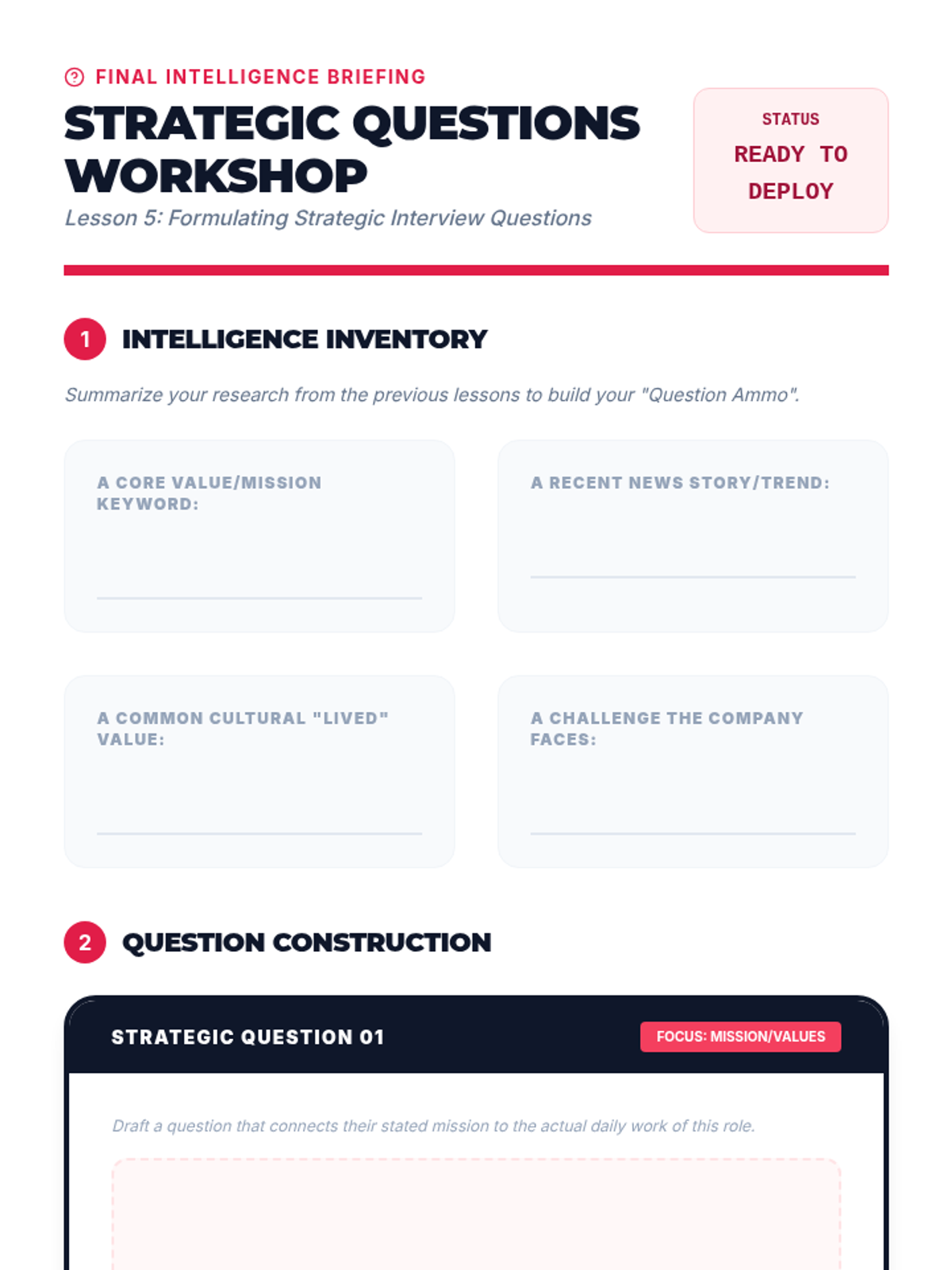
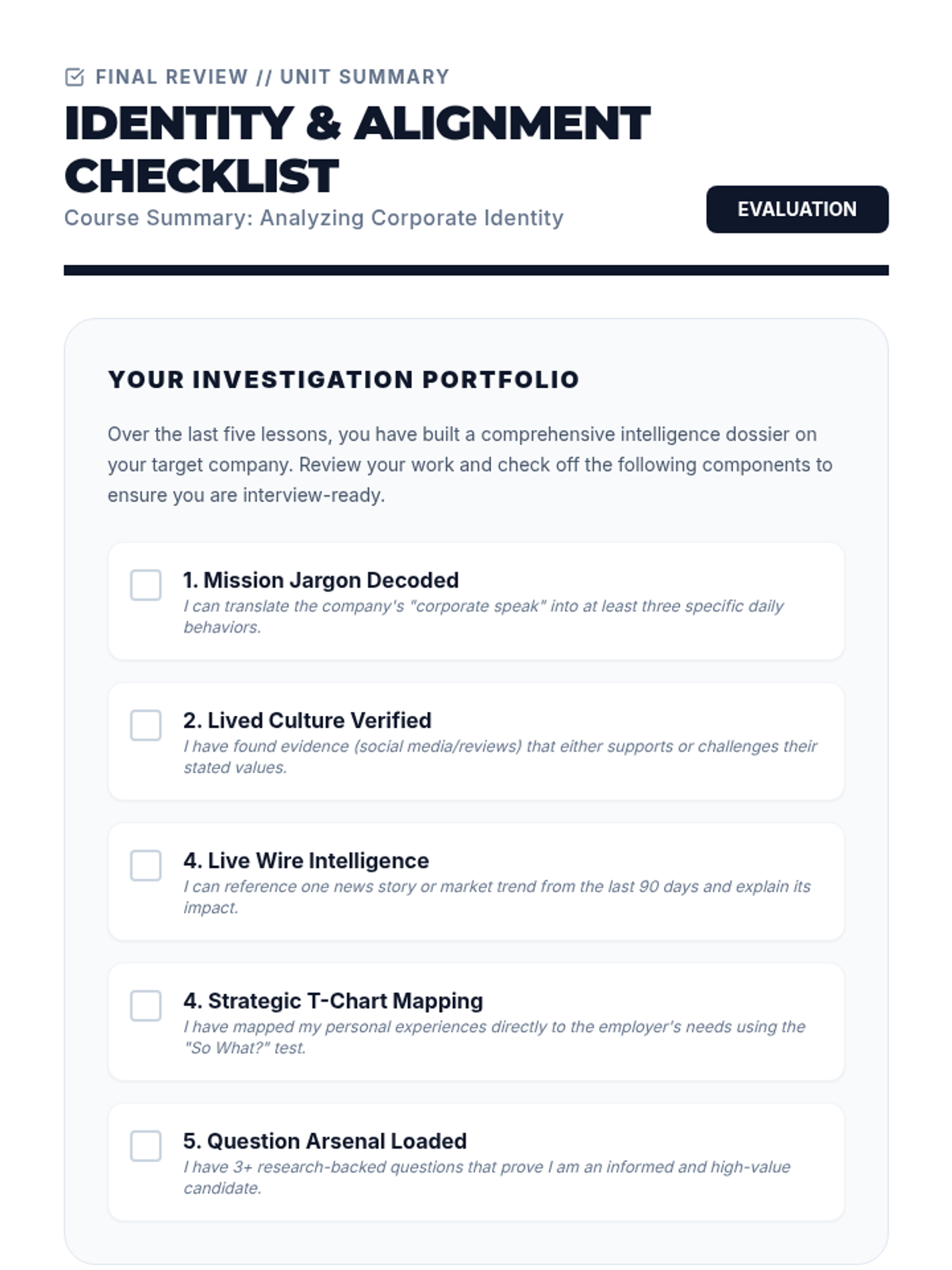
The final lesson focuses on using research to generate high-impact interview questions that demonstrate industry knowledge and cultural fit.
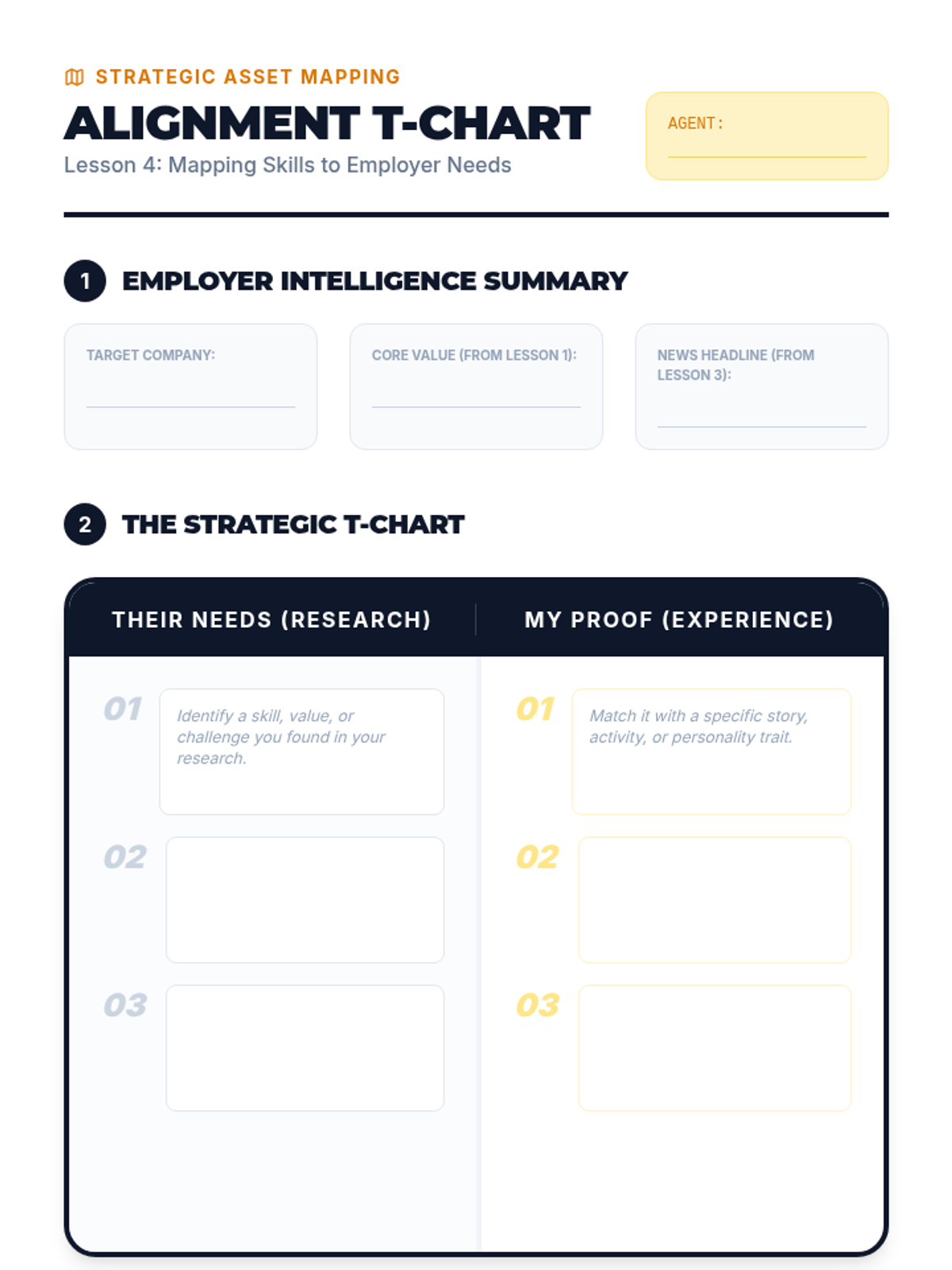
A hands-on workshop where students use T-Charts to align their personal experiences with specific employer requirements discovered during their research.
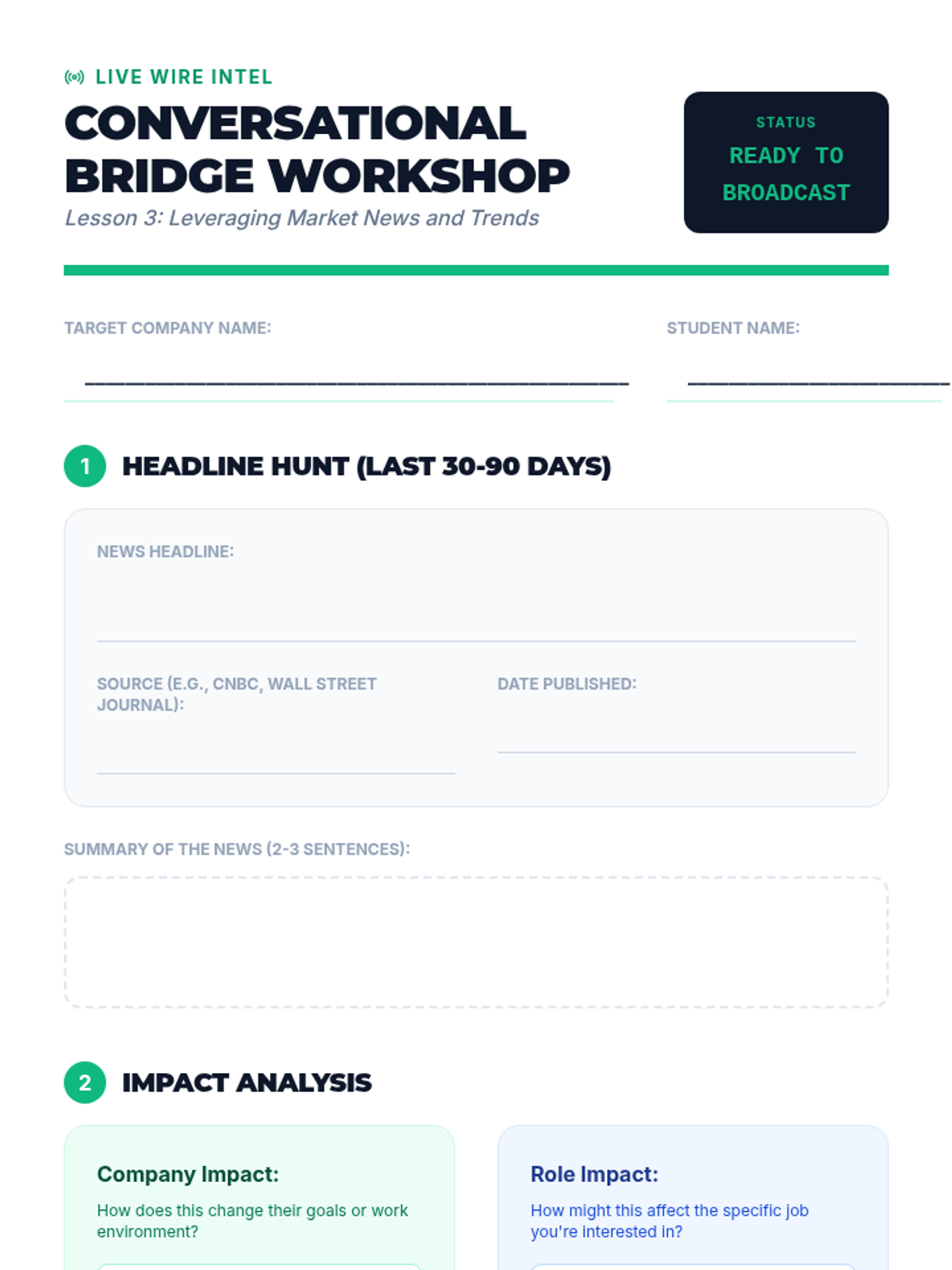
Students learn to use news aggregators and press releases to find recent developments and practice building conversational bridges for interview settings.
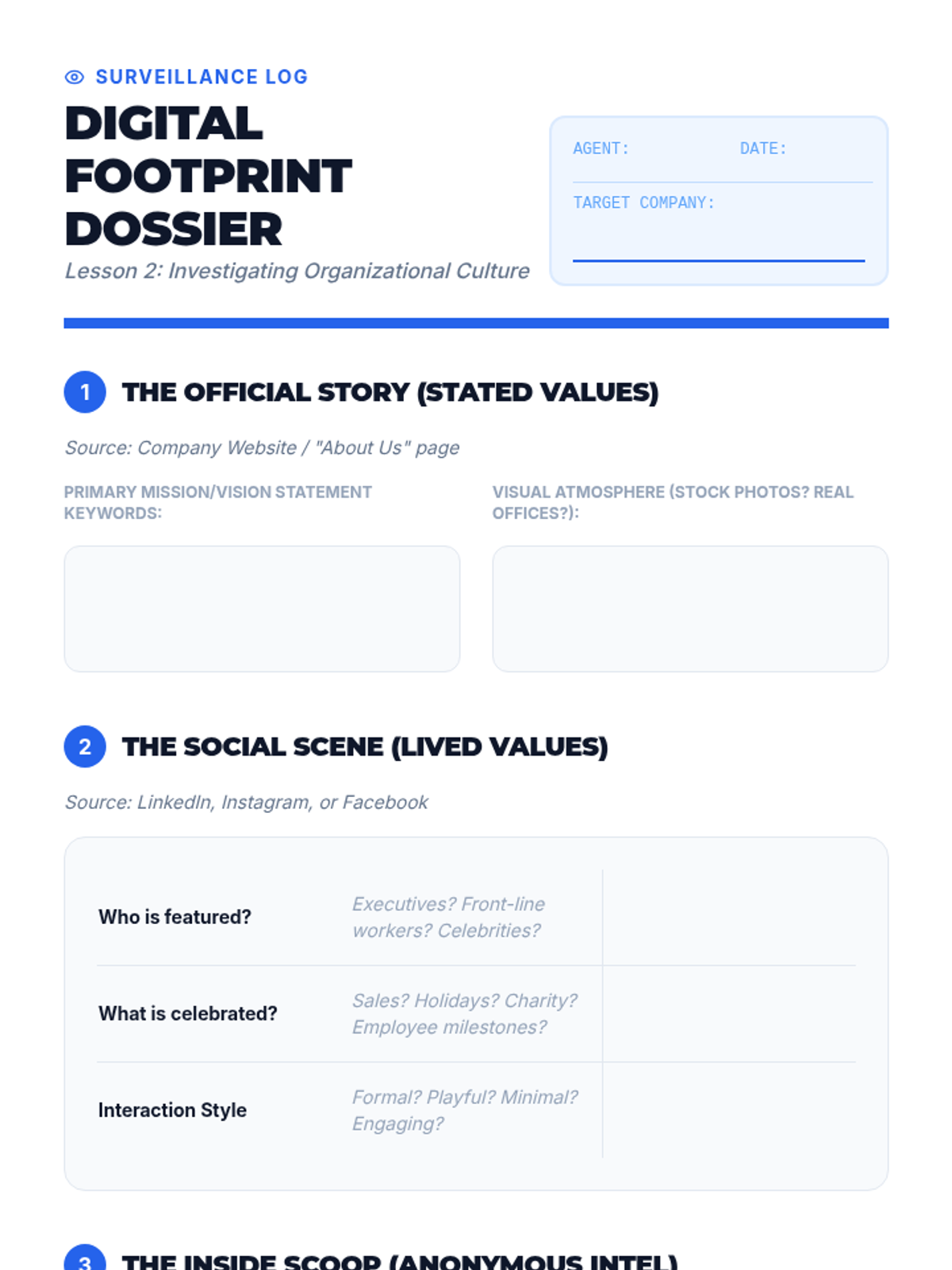
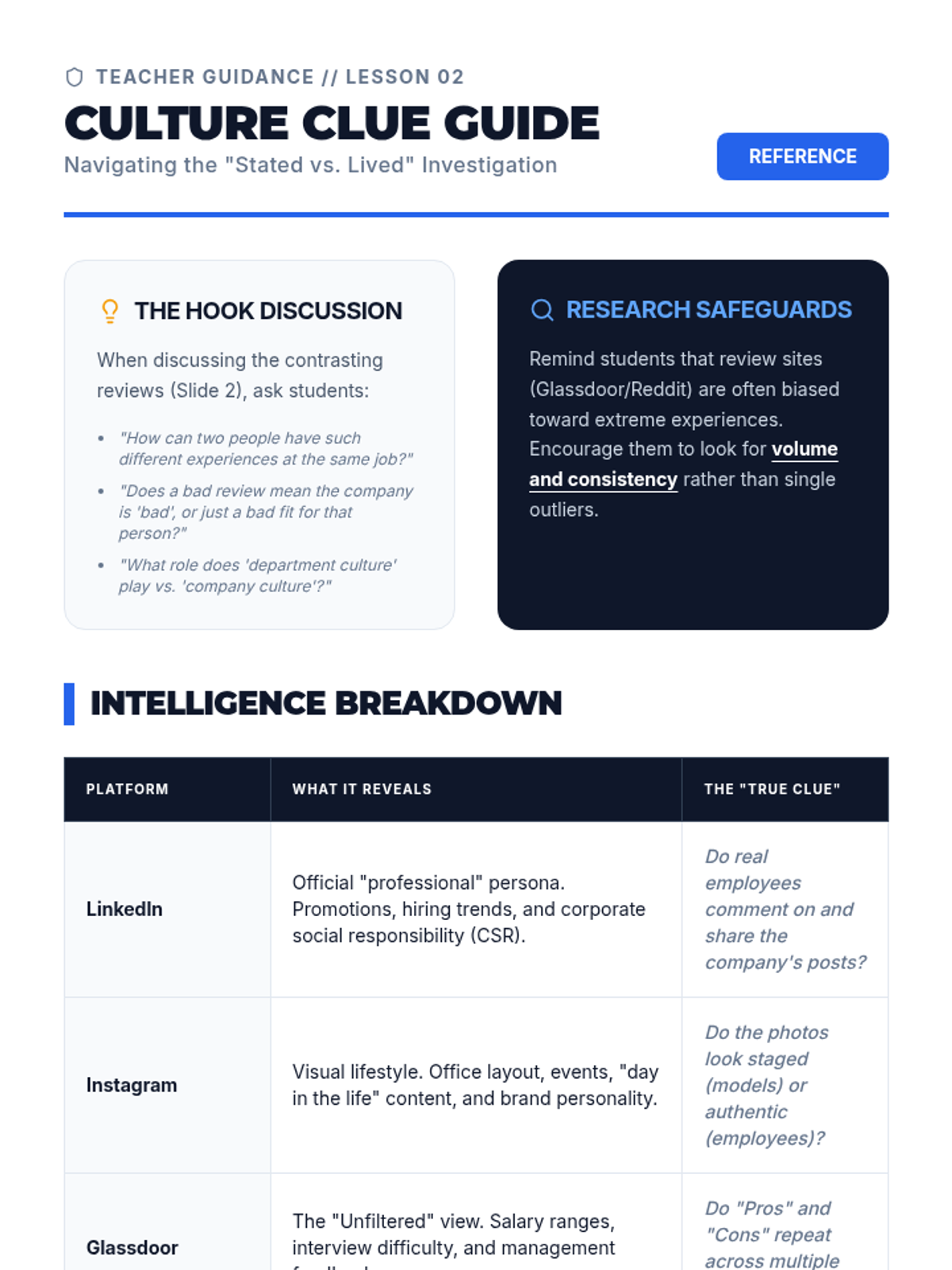
Learners investigate how to infer company culture by analyzing official content alongside third-party reviews and social media presence, distinguishing between stated and lived values.
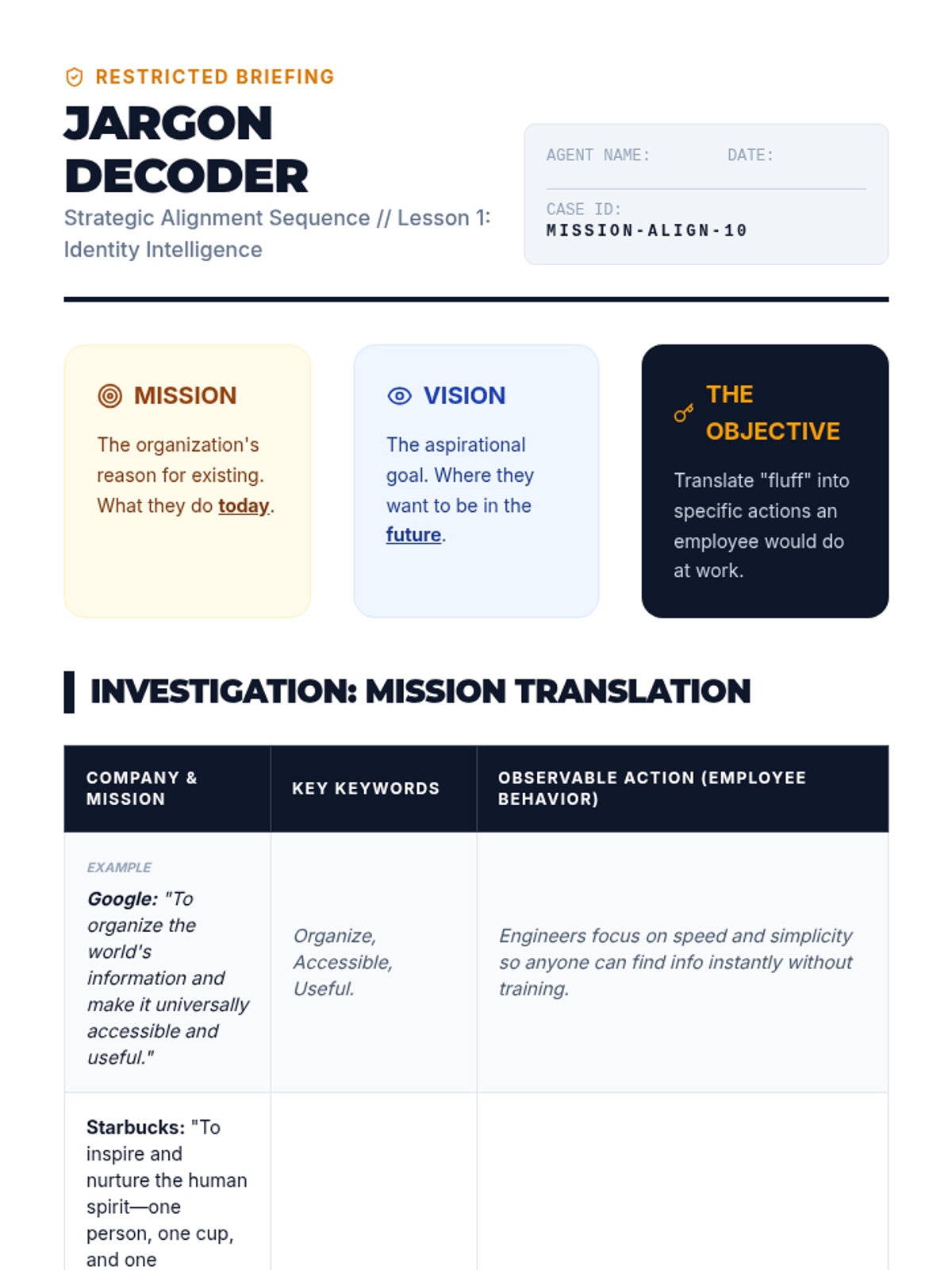
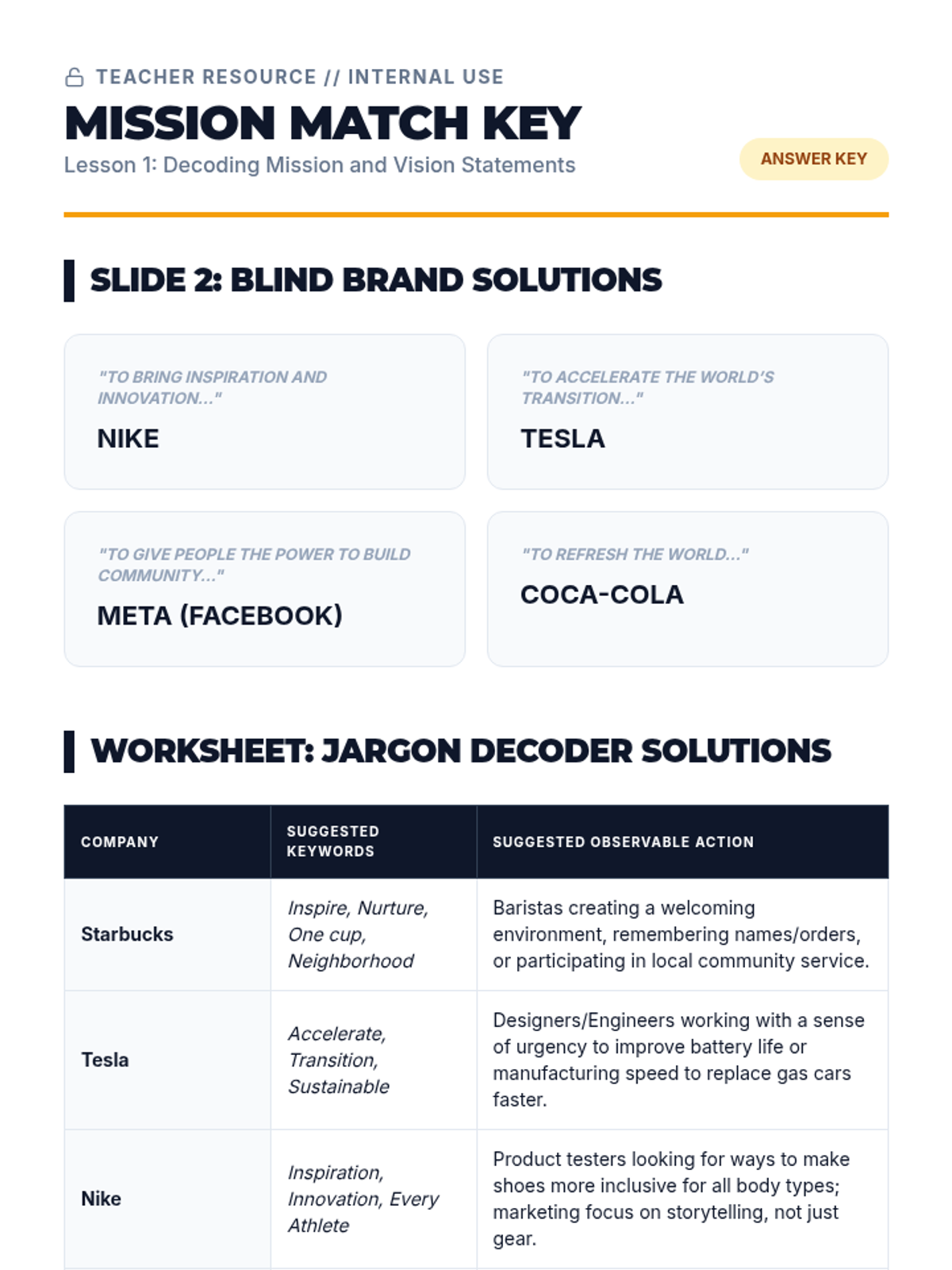
Students analyze the mission and vision statements of major companies to identify key priorities and translate corporate jargon into observable employee behaviors.
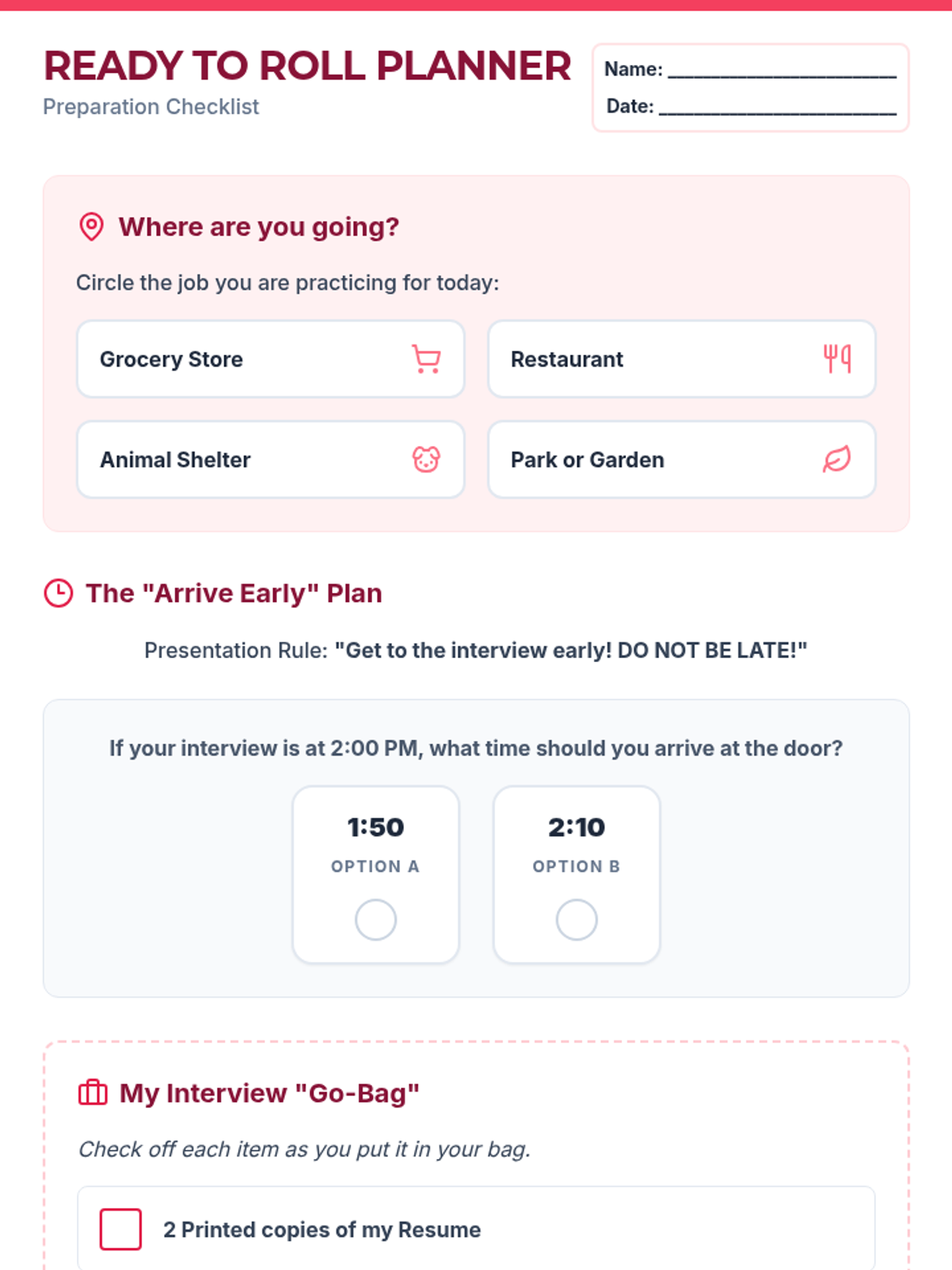
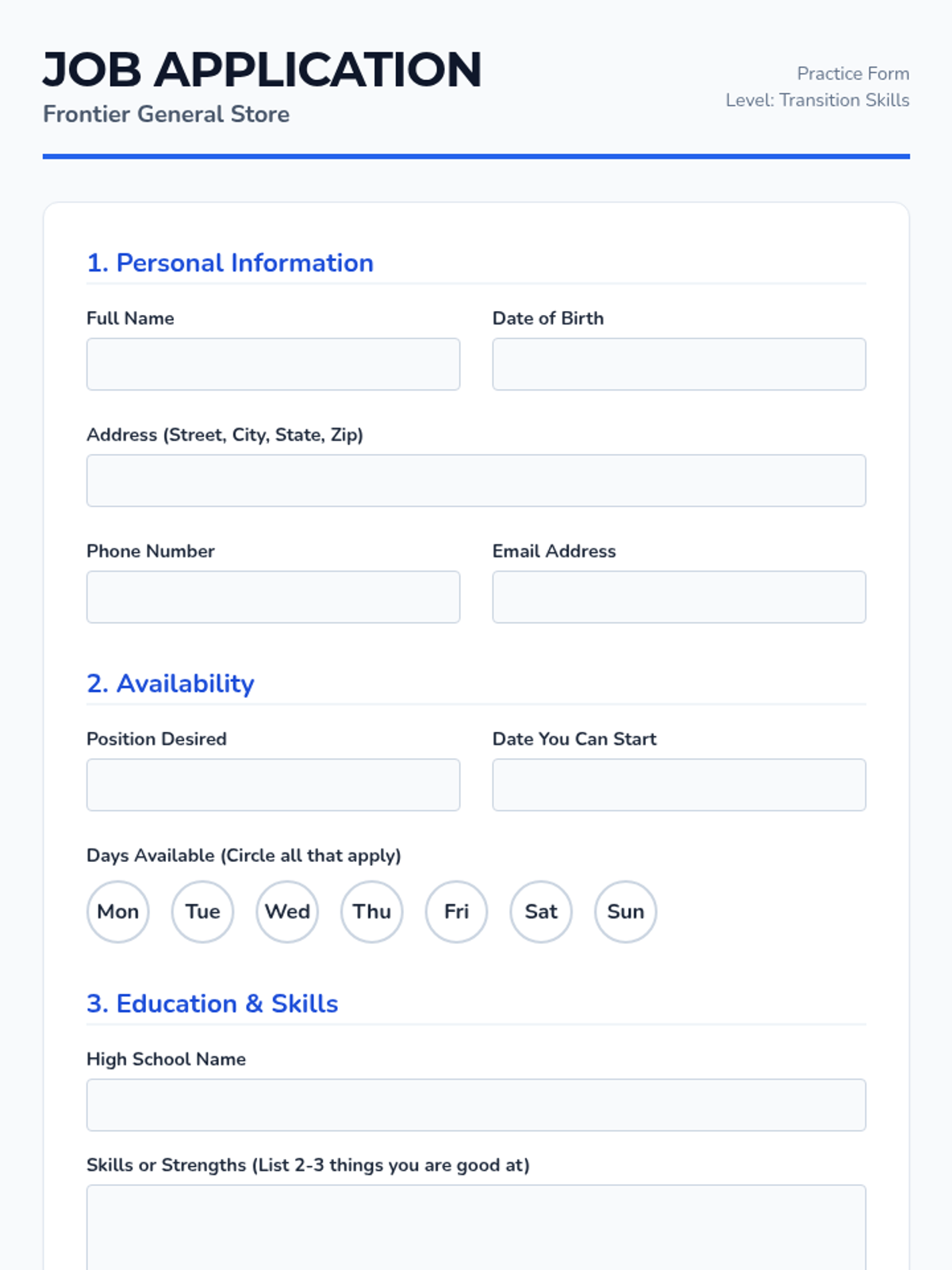
Building essential job-seeking skills, including application completion, interview preparation, and understanding job roles.
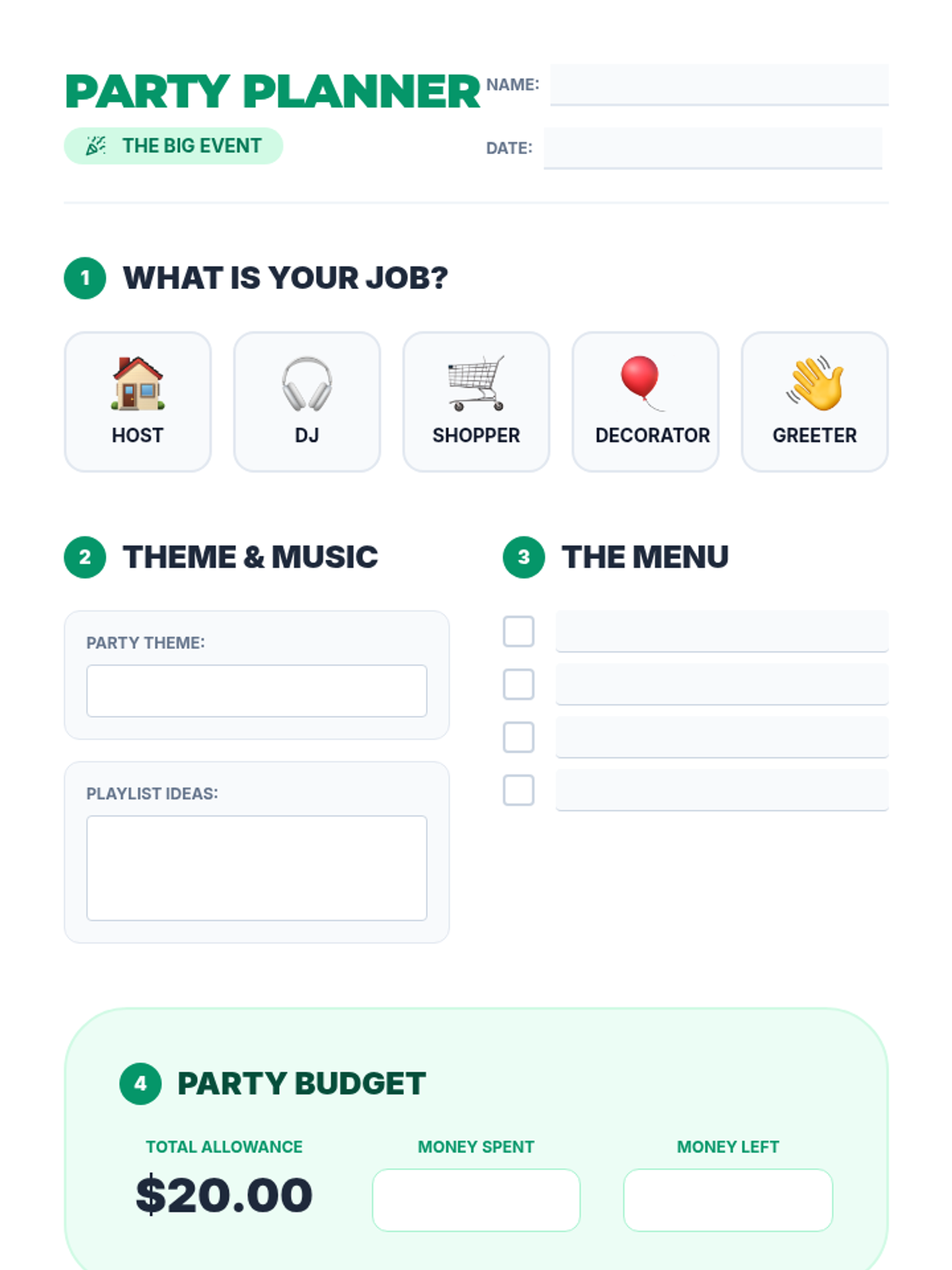
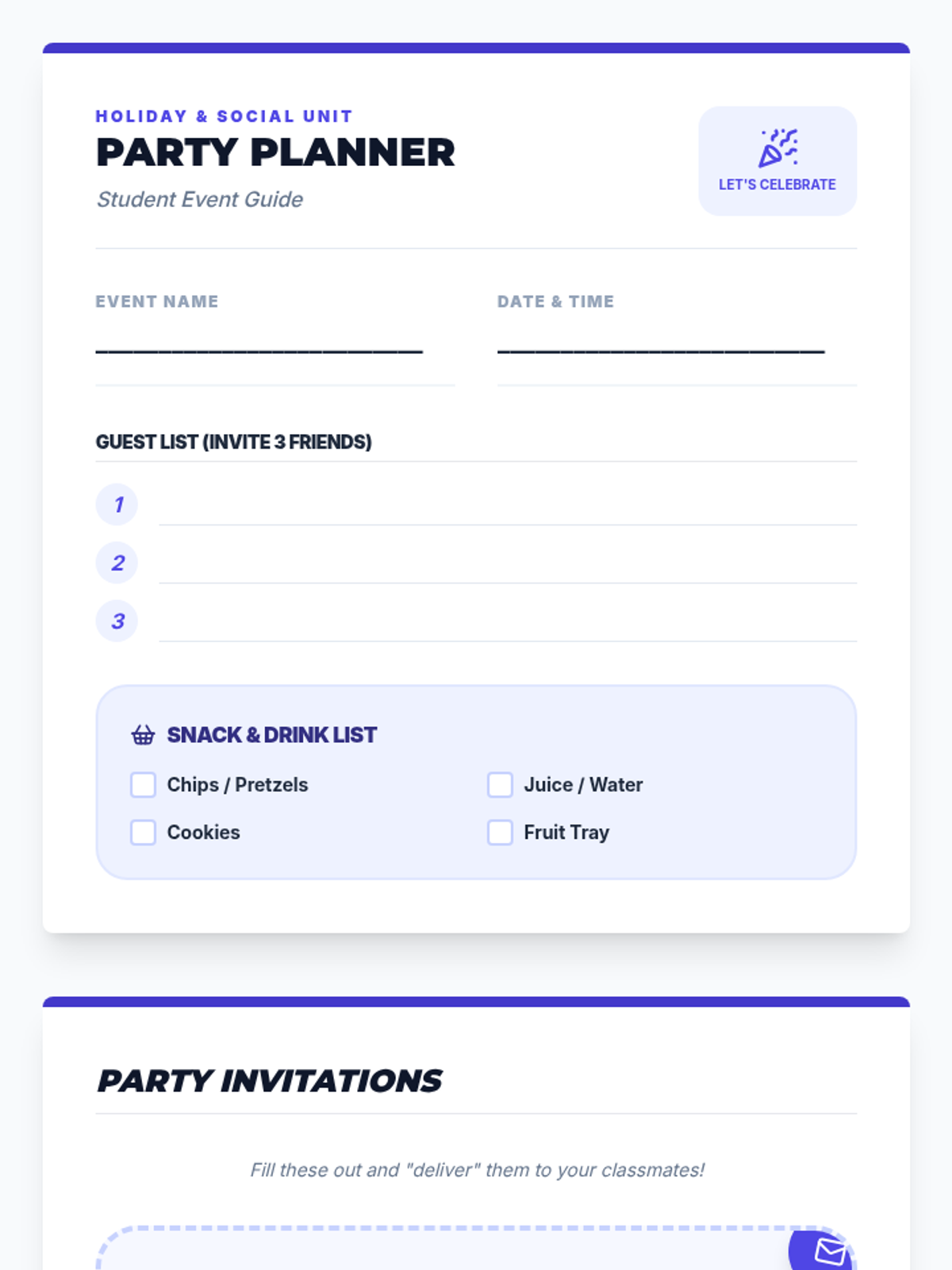
Planning social gatherings, managing invitations, and practicing etiquette for holiday and community events.
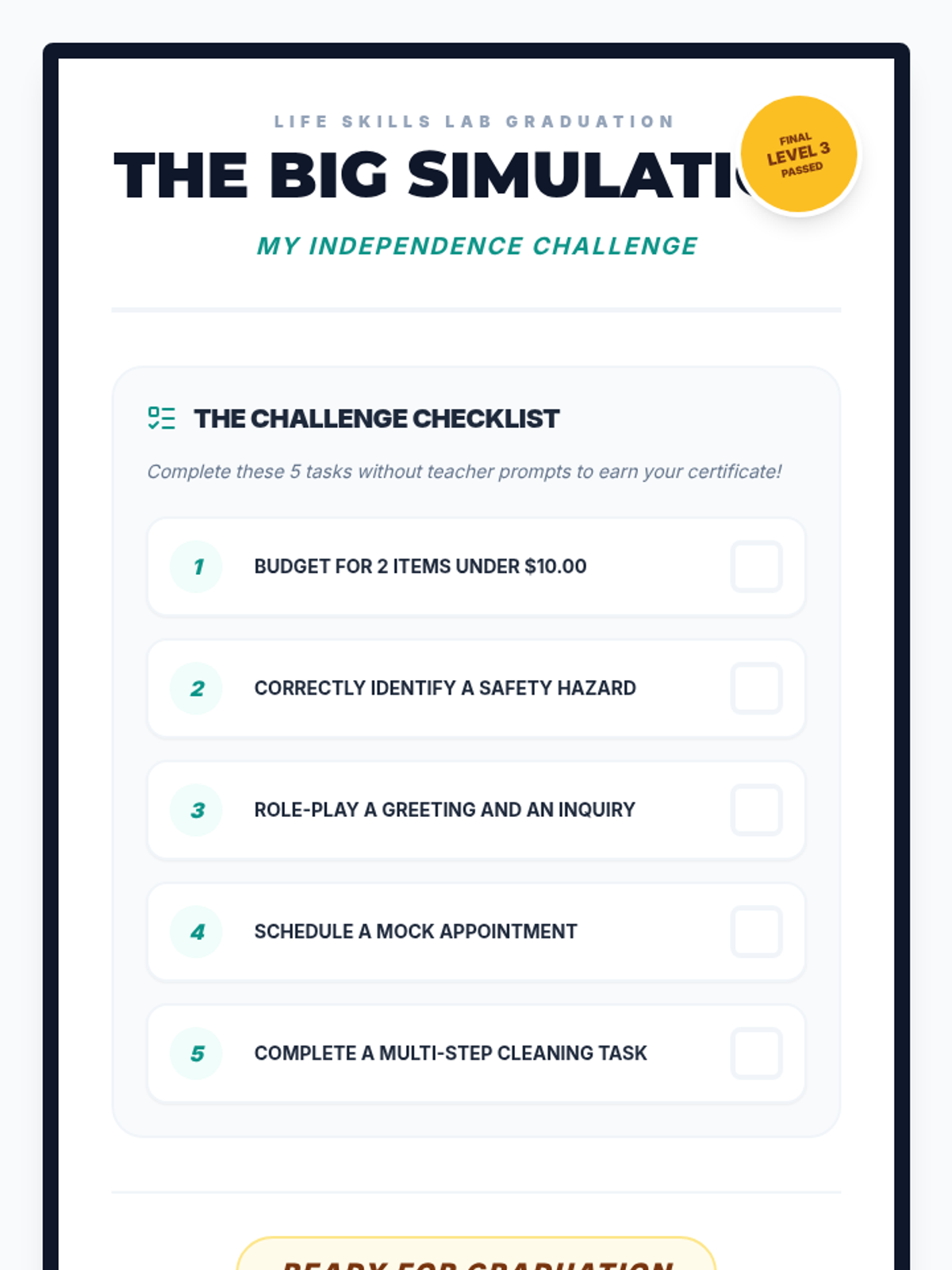
The capstone unit of the program, where students apply all learned skills in complex, multi-step simulations of independent adult life.
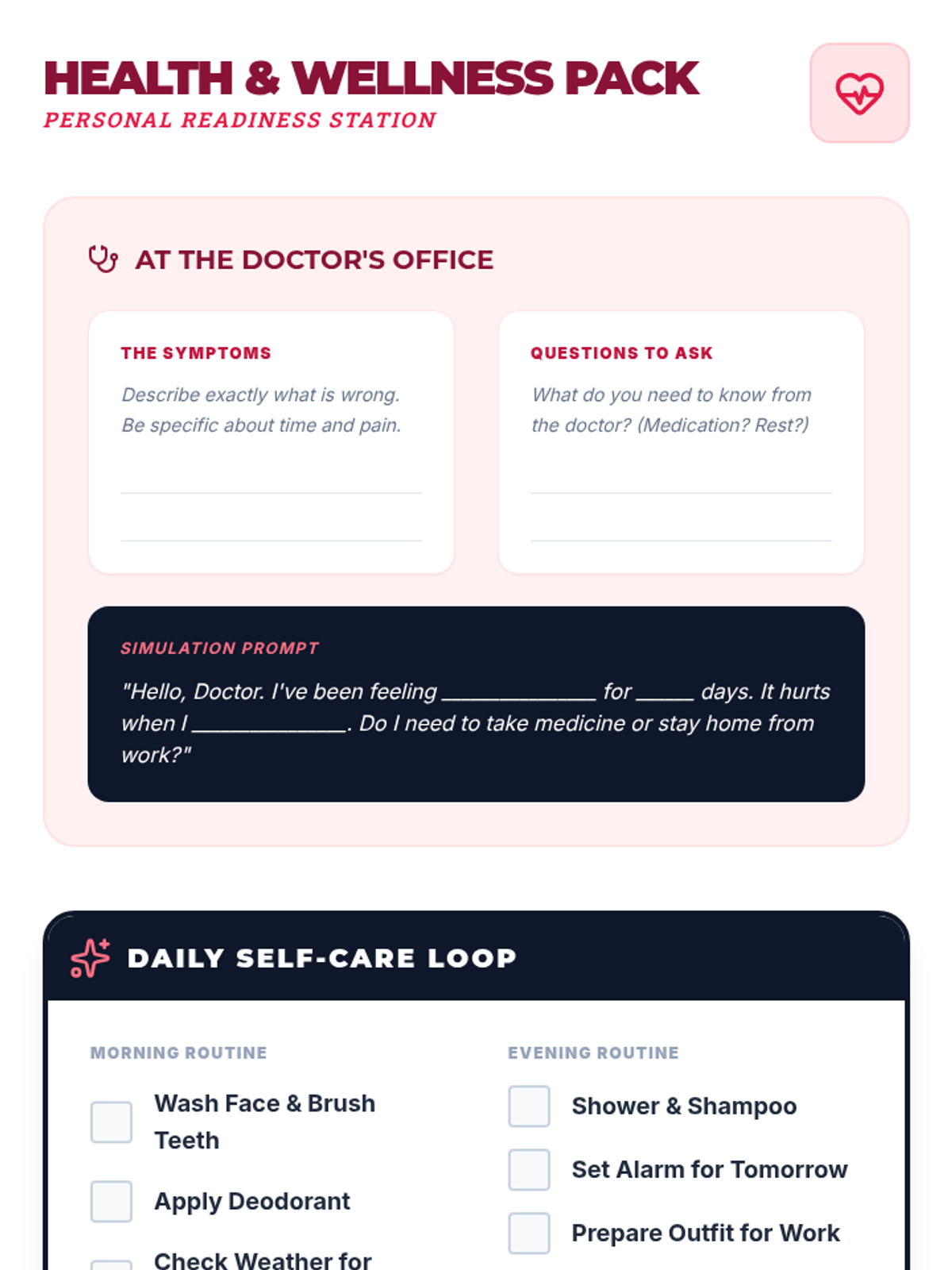
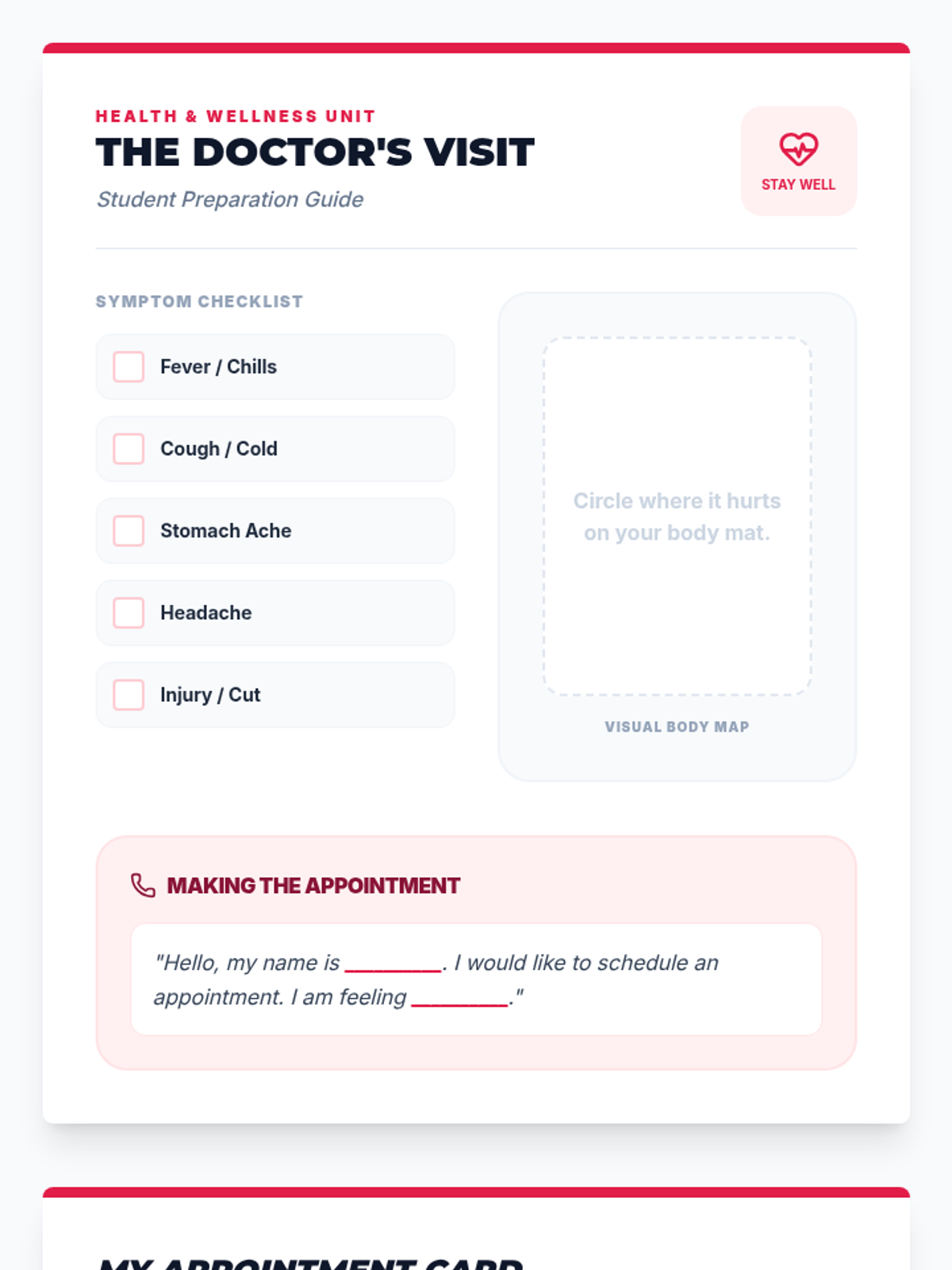
Navigating healthcare settings, identifying body parts and symptoms, and practicing social scripts for making and attending medical appointments.
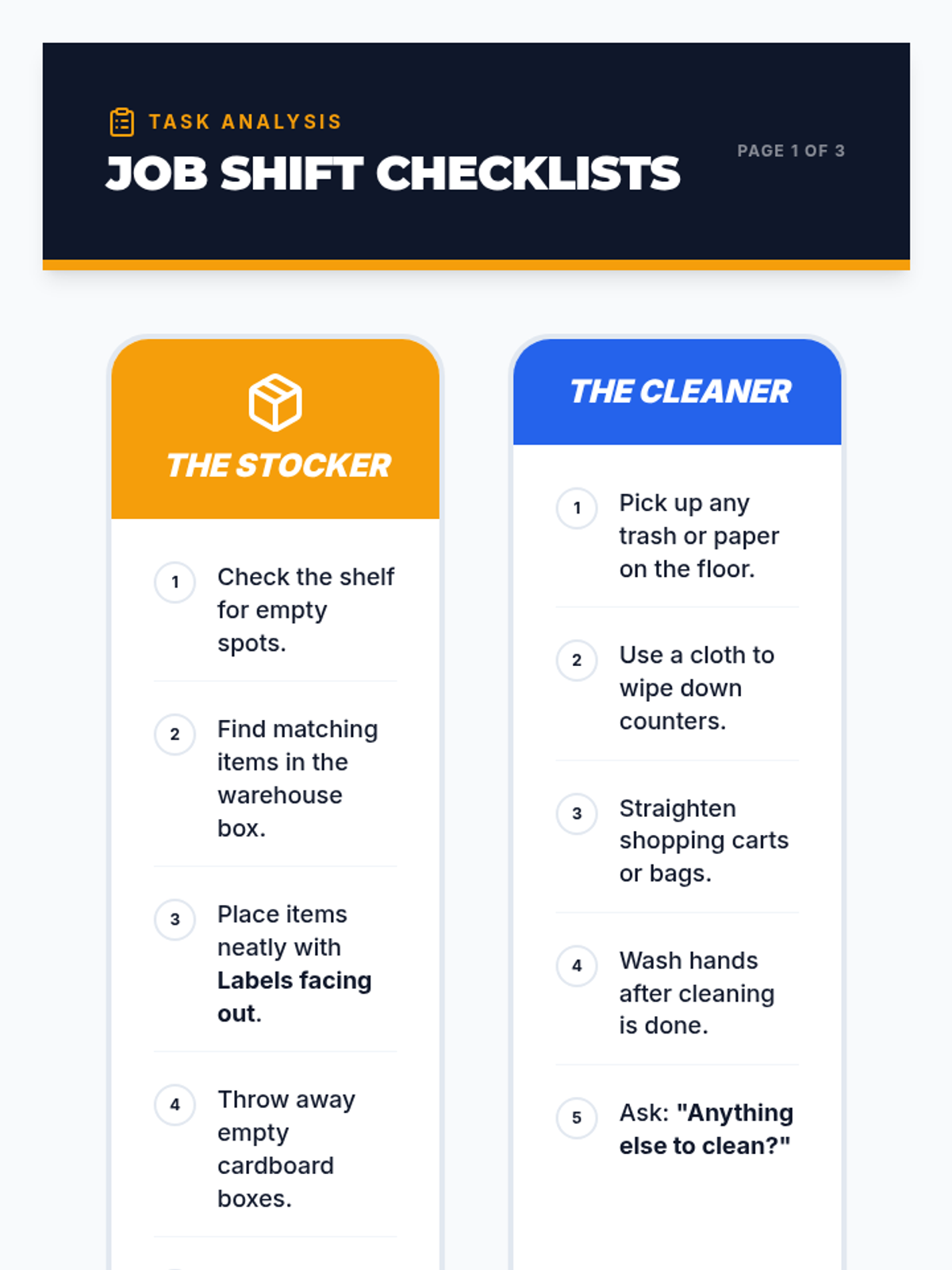
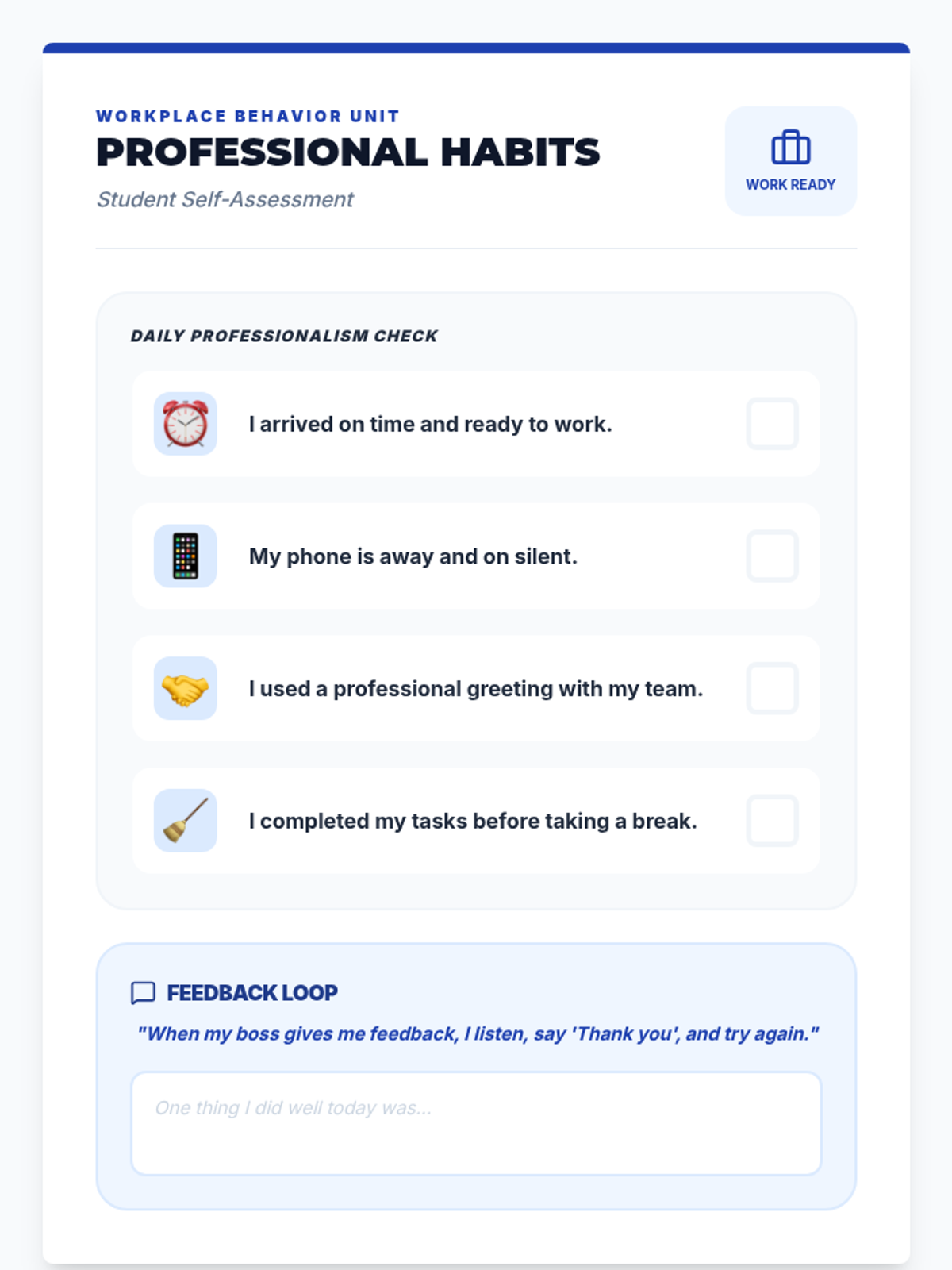
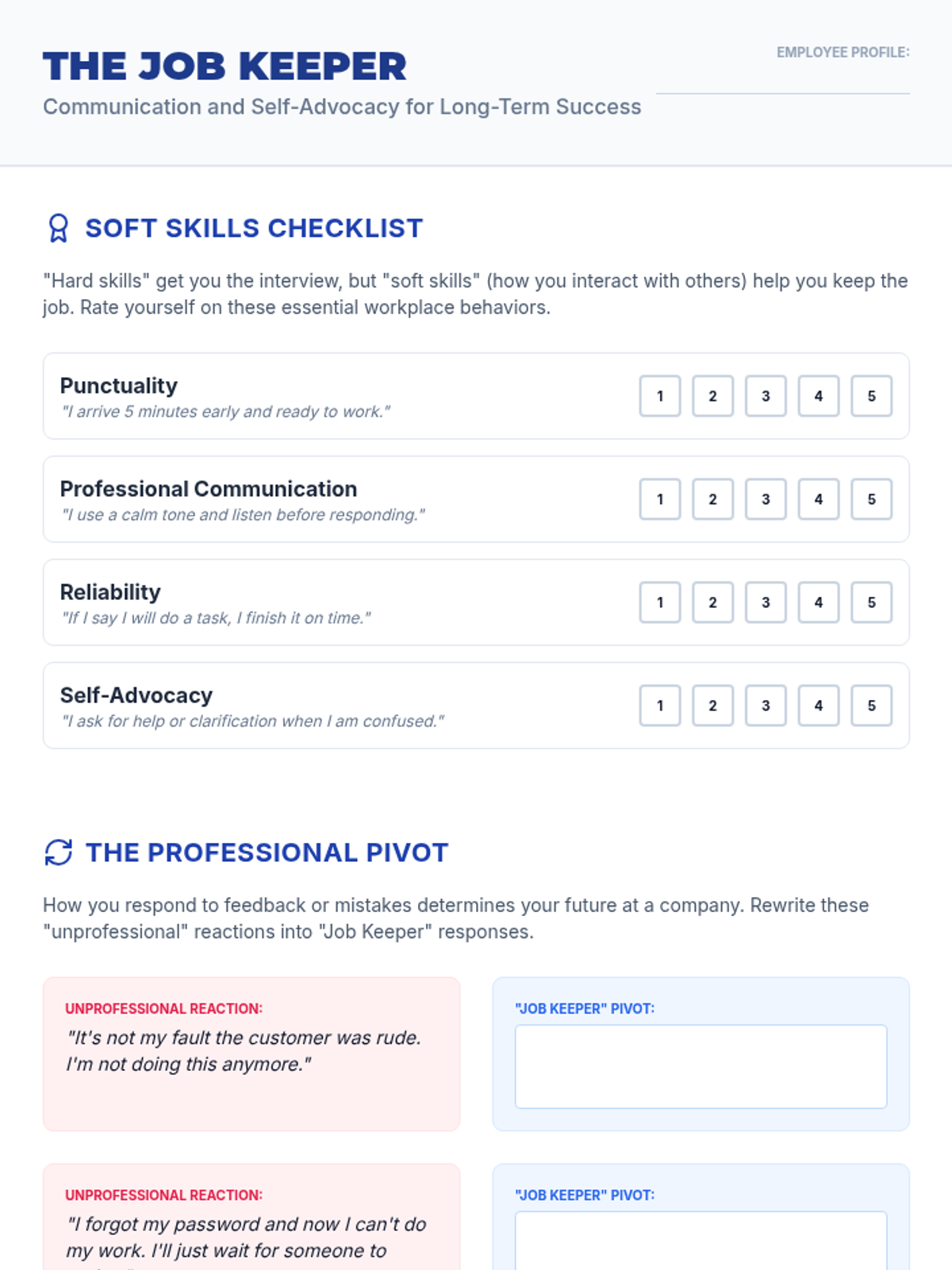
Building professional habits, understanding workplace social cues, and practicing teamwork in a job setting.
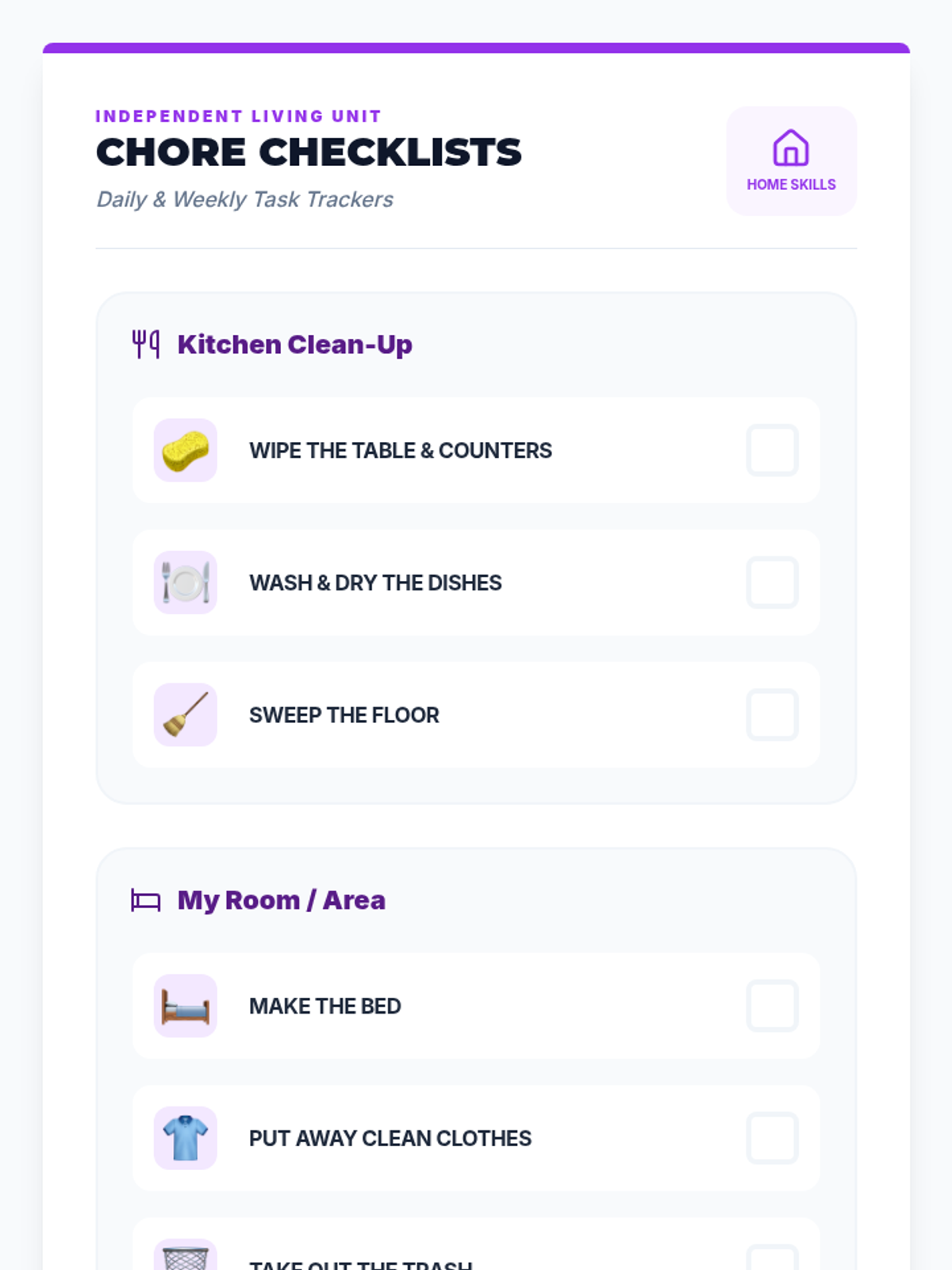
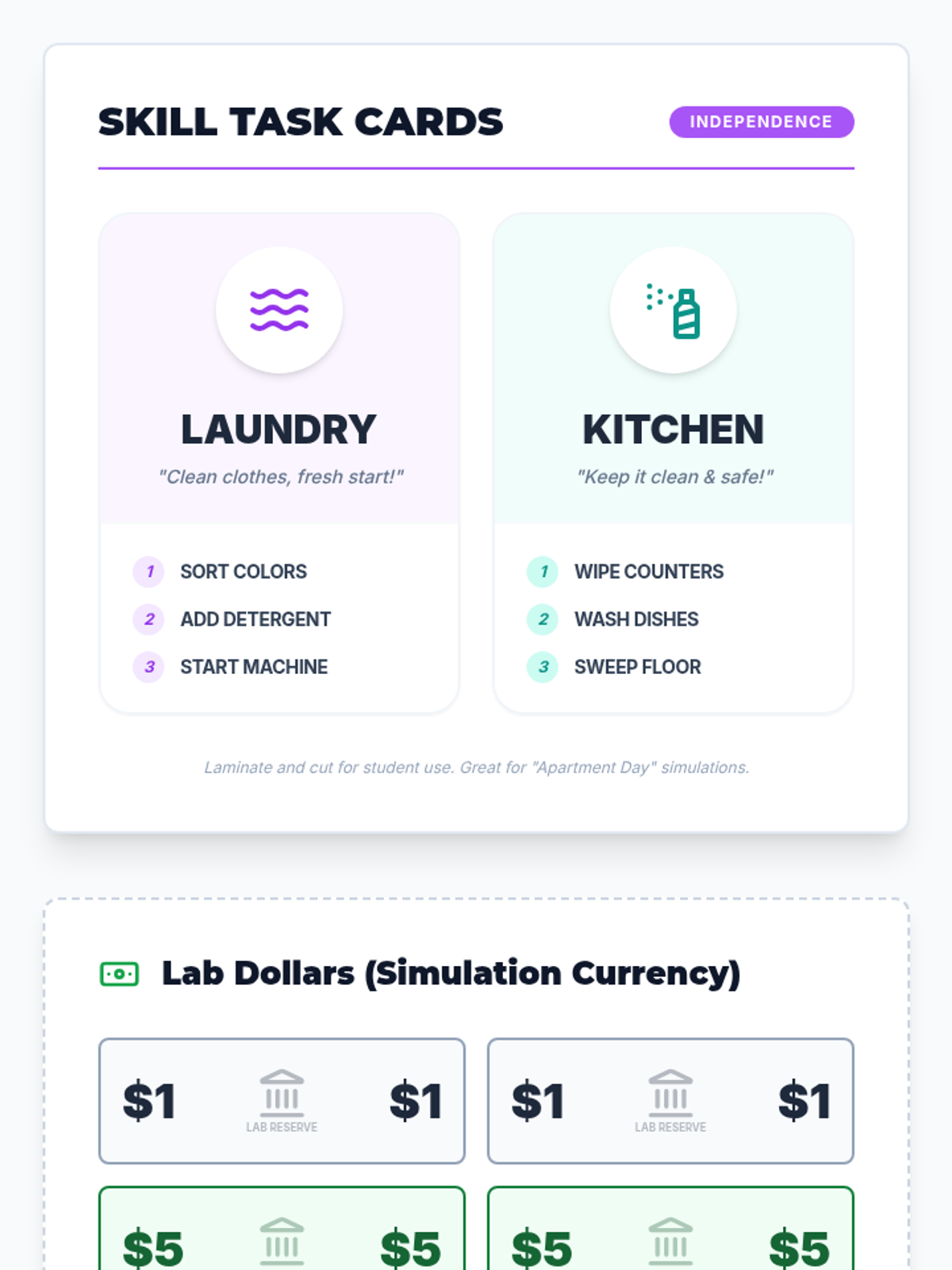
Essential skills for maintaining a household, including chores, laundry, and daily organization.
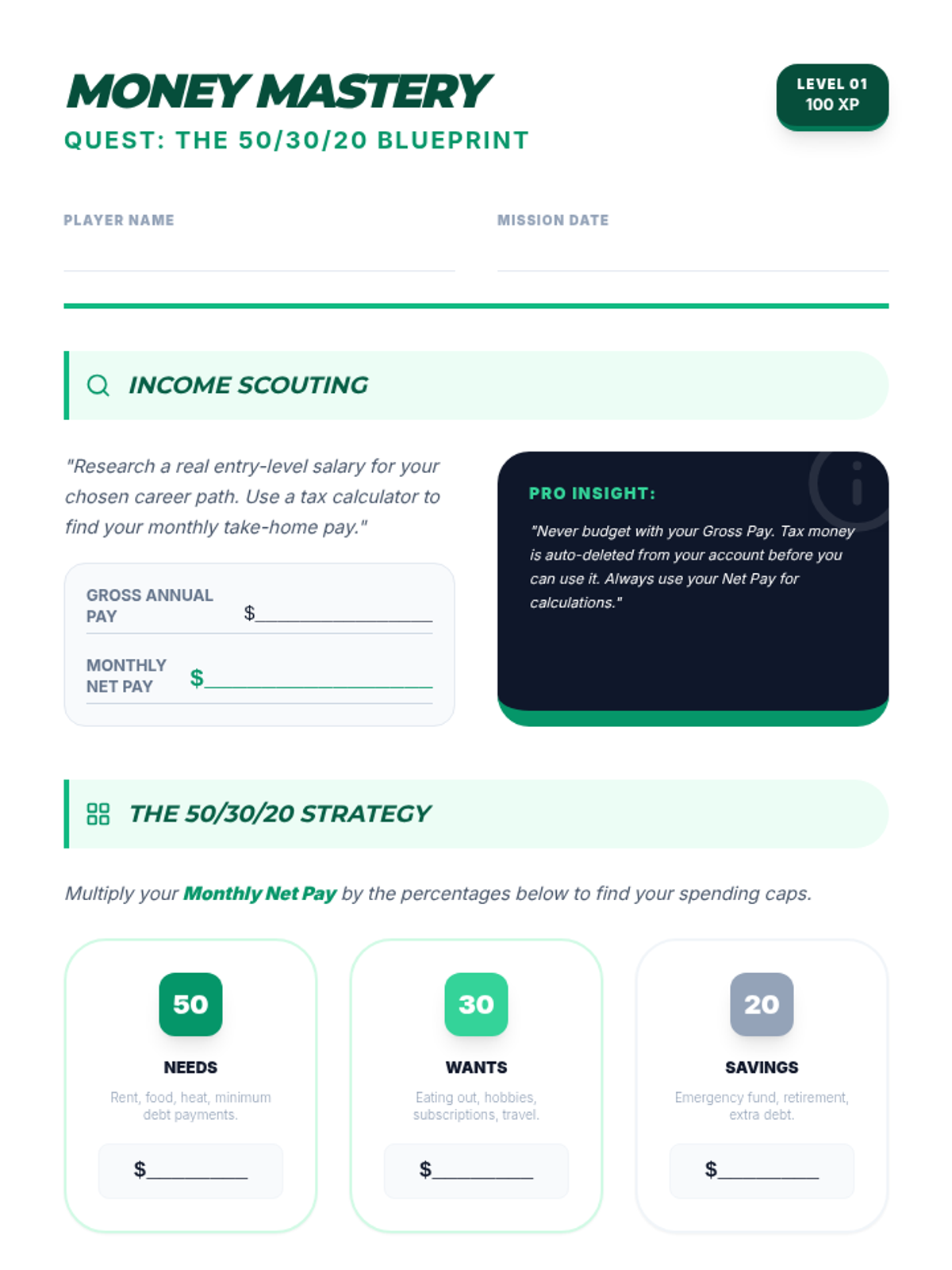
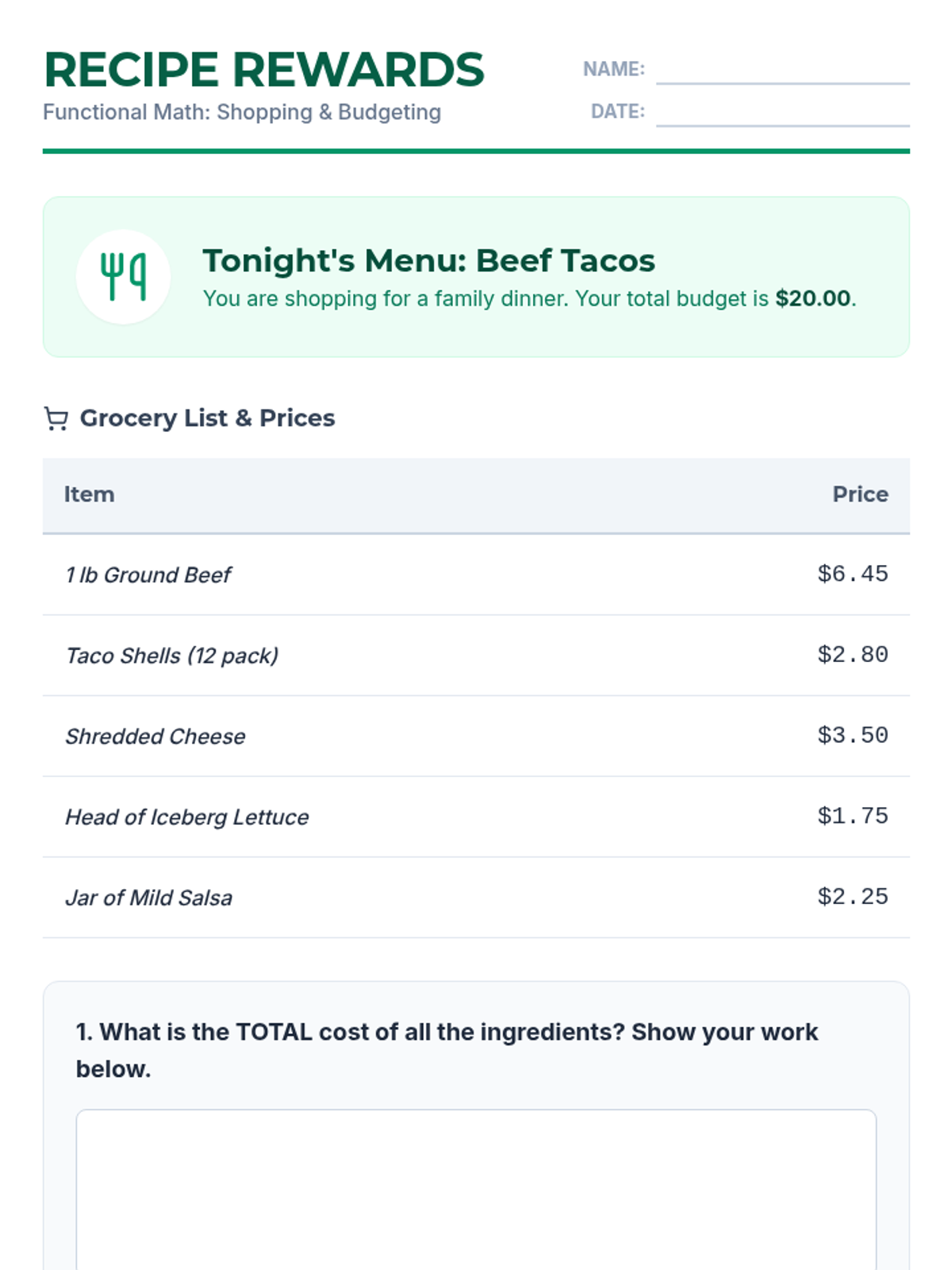
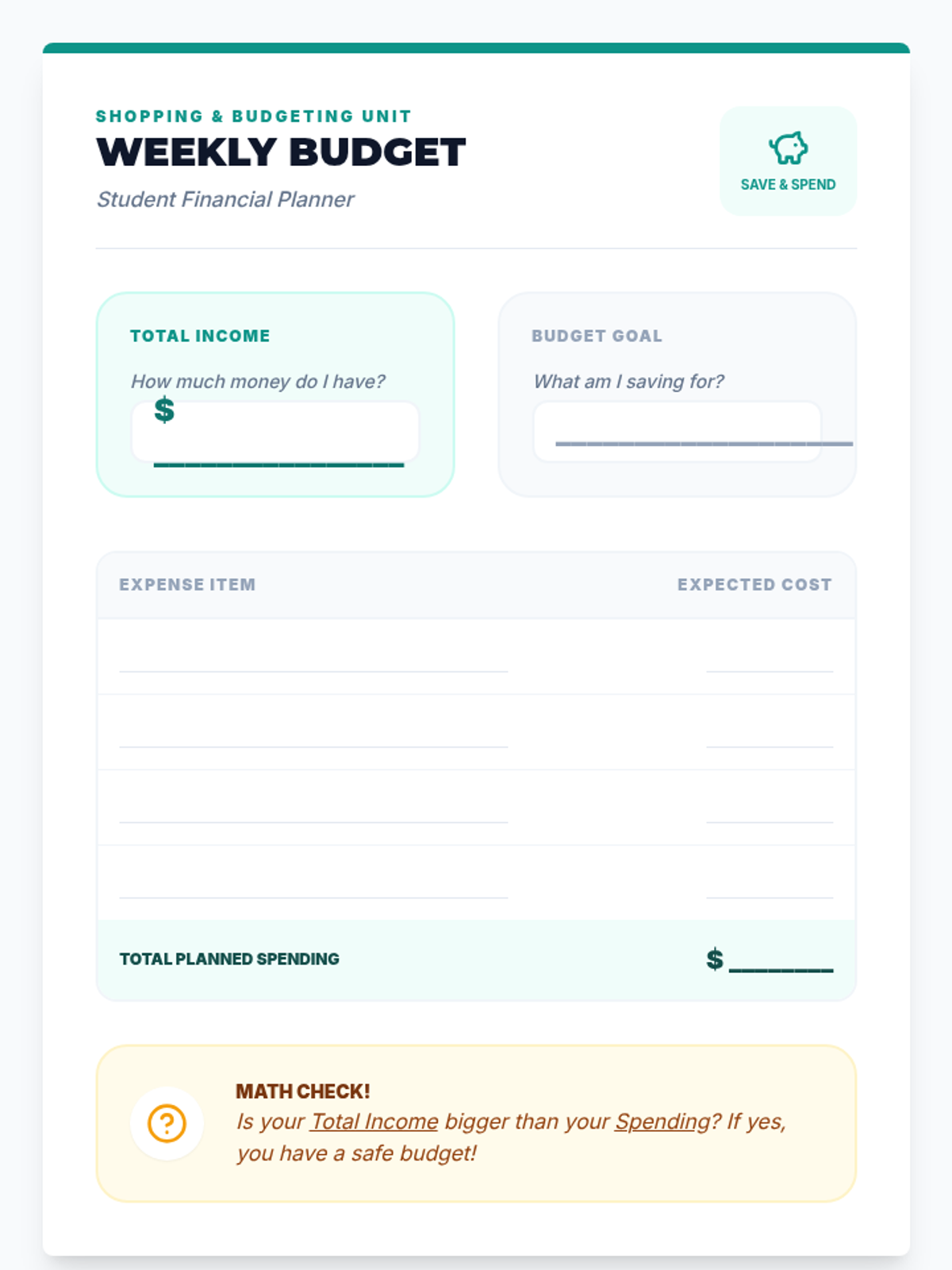
Practical application of money skills through budgeting, price comparison, and navigating a shopping environment.
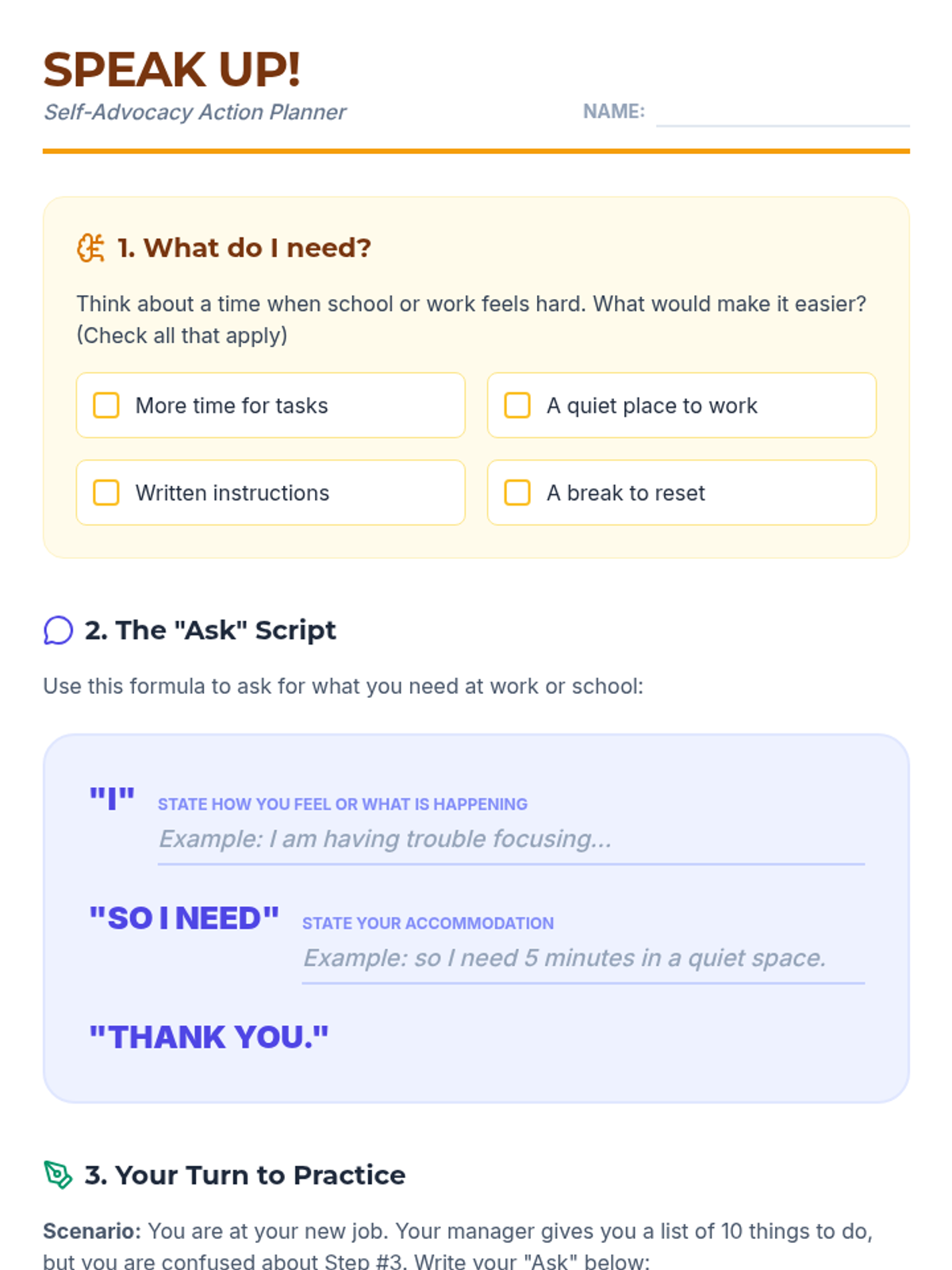
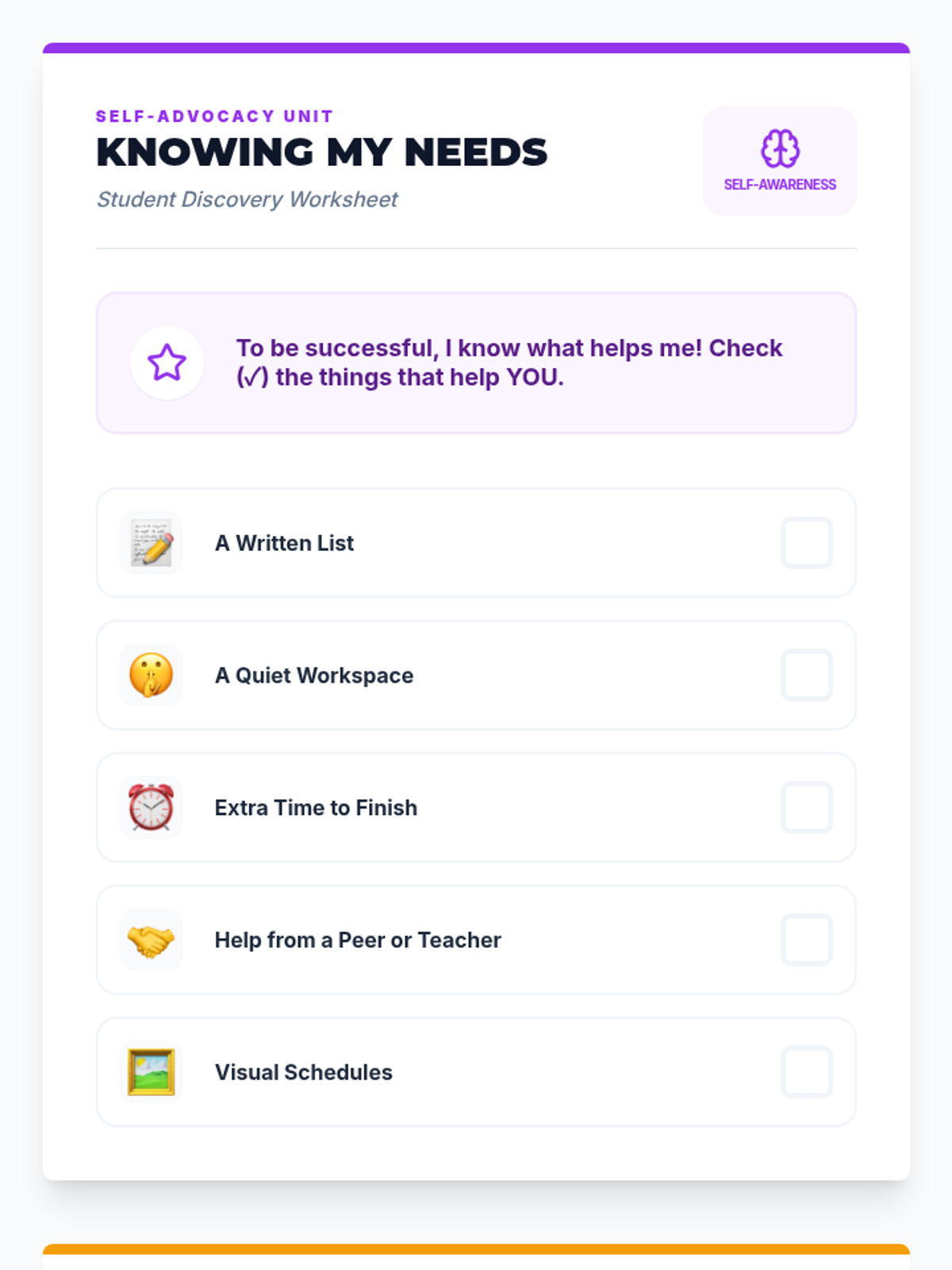
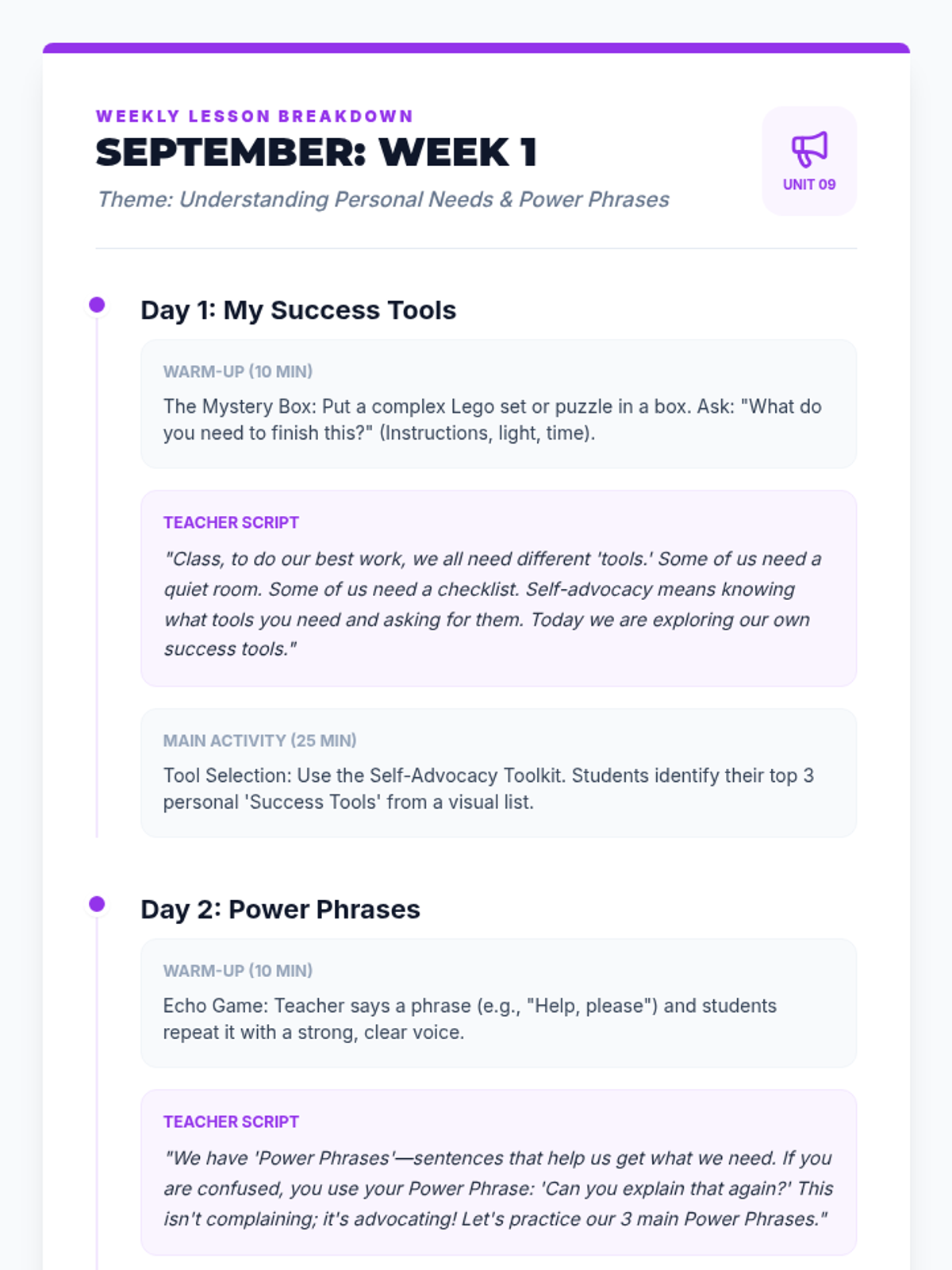
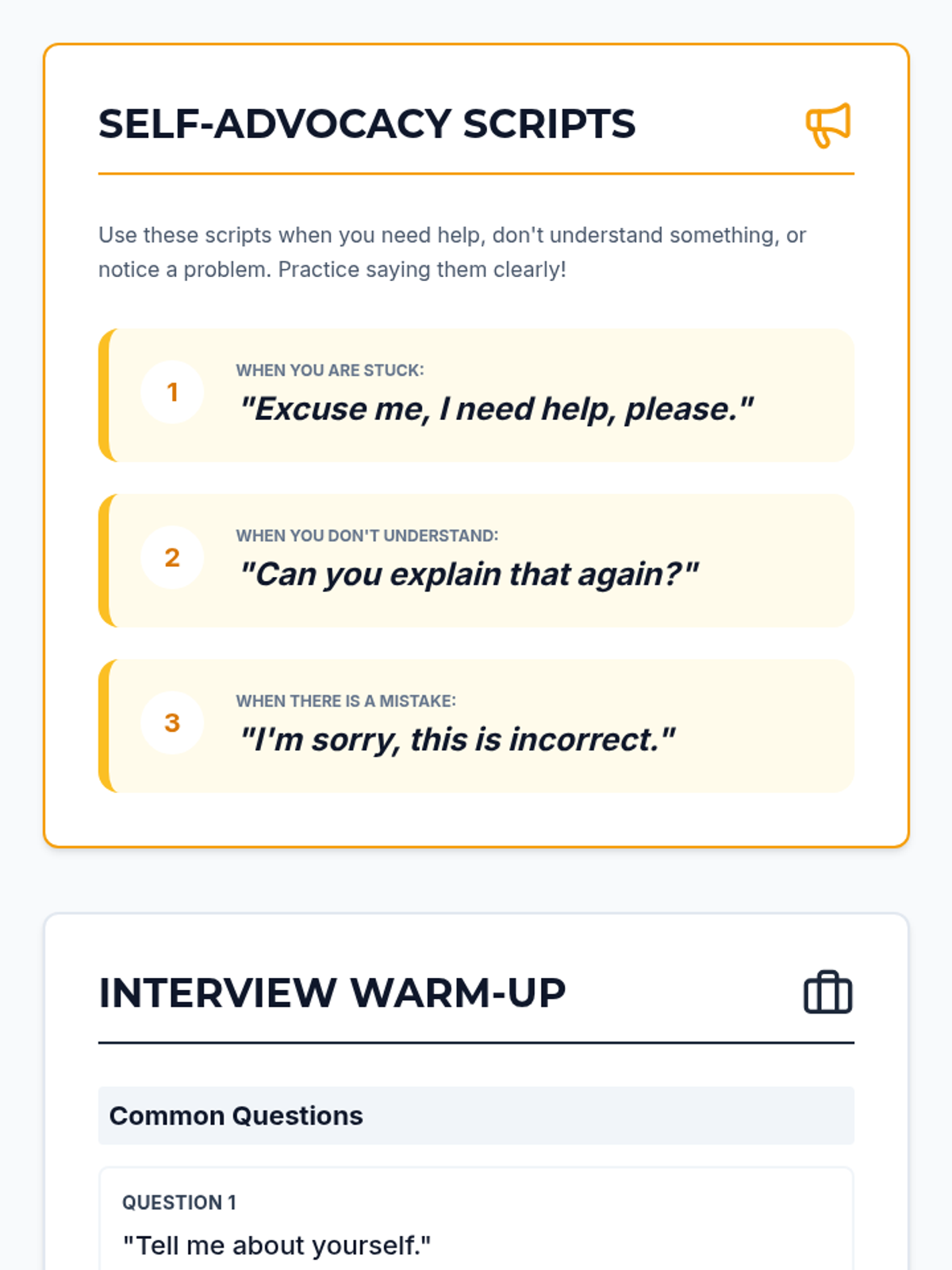
Empowering students to speak up for their needs, understand their rights, and communicate effectively in various personal and community situations.
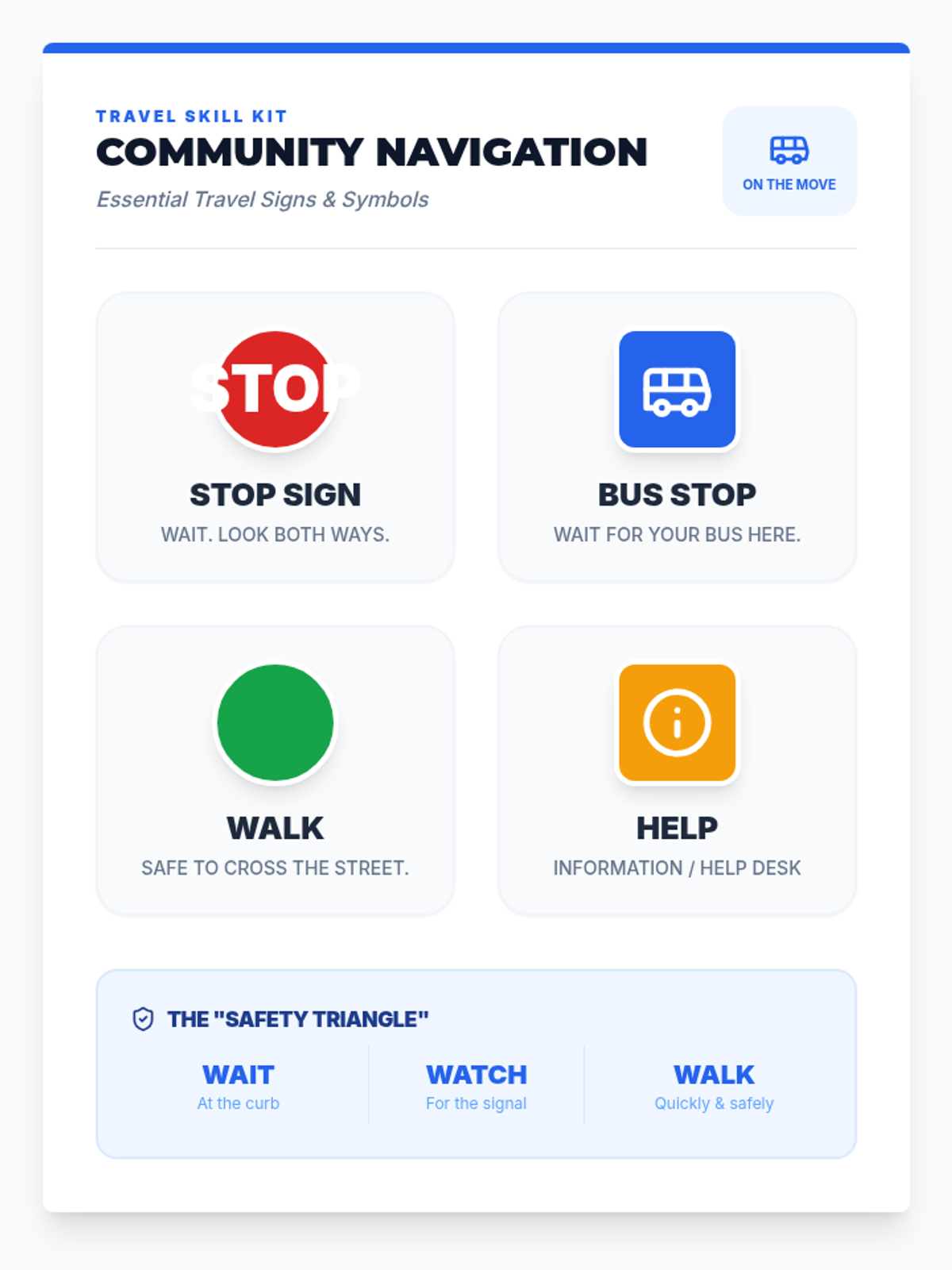
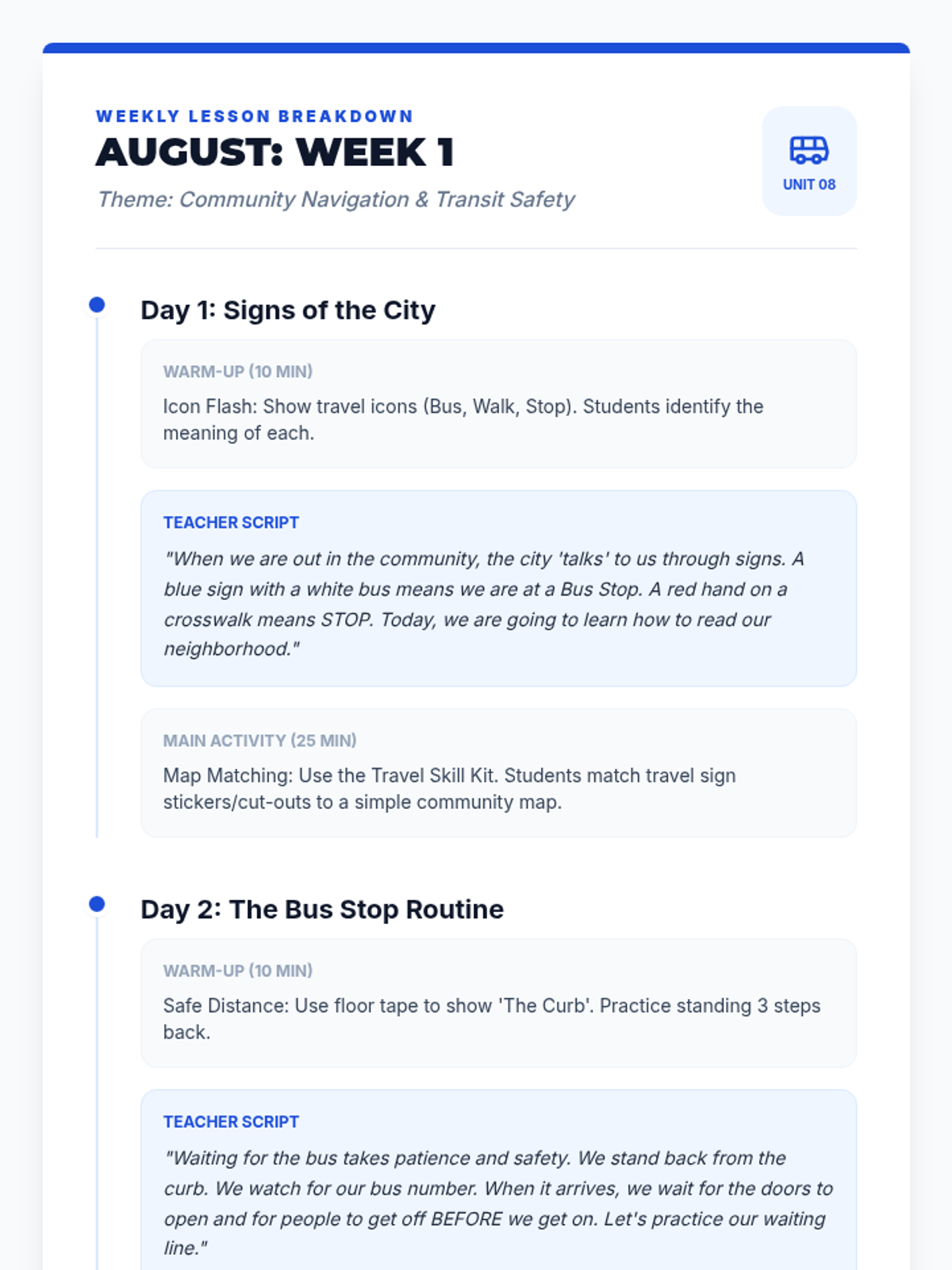
Navigating the community using public transportation, reading schedules, and practicing safety and social etiquette while traveling.
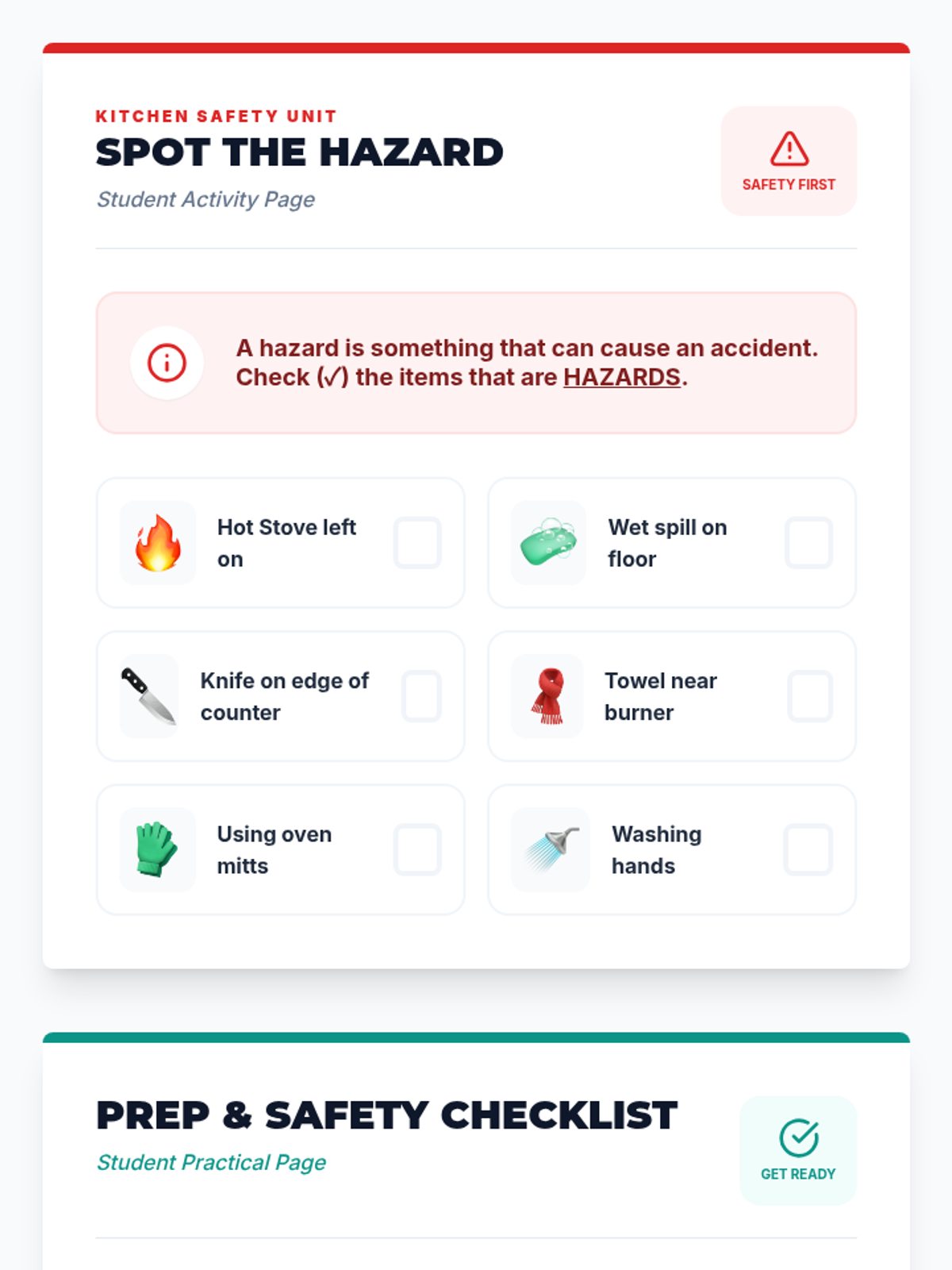
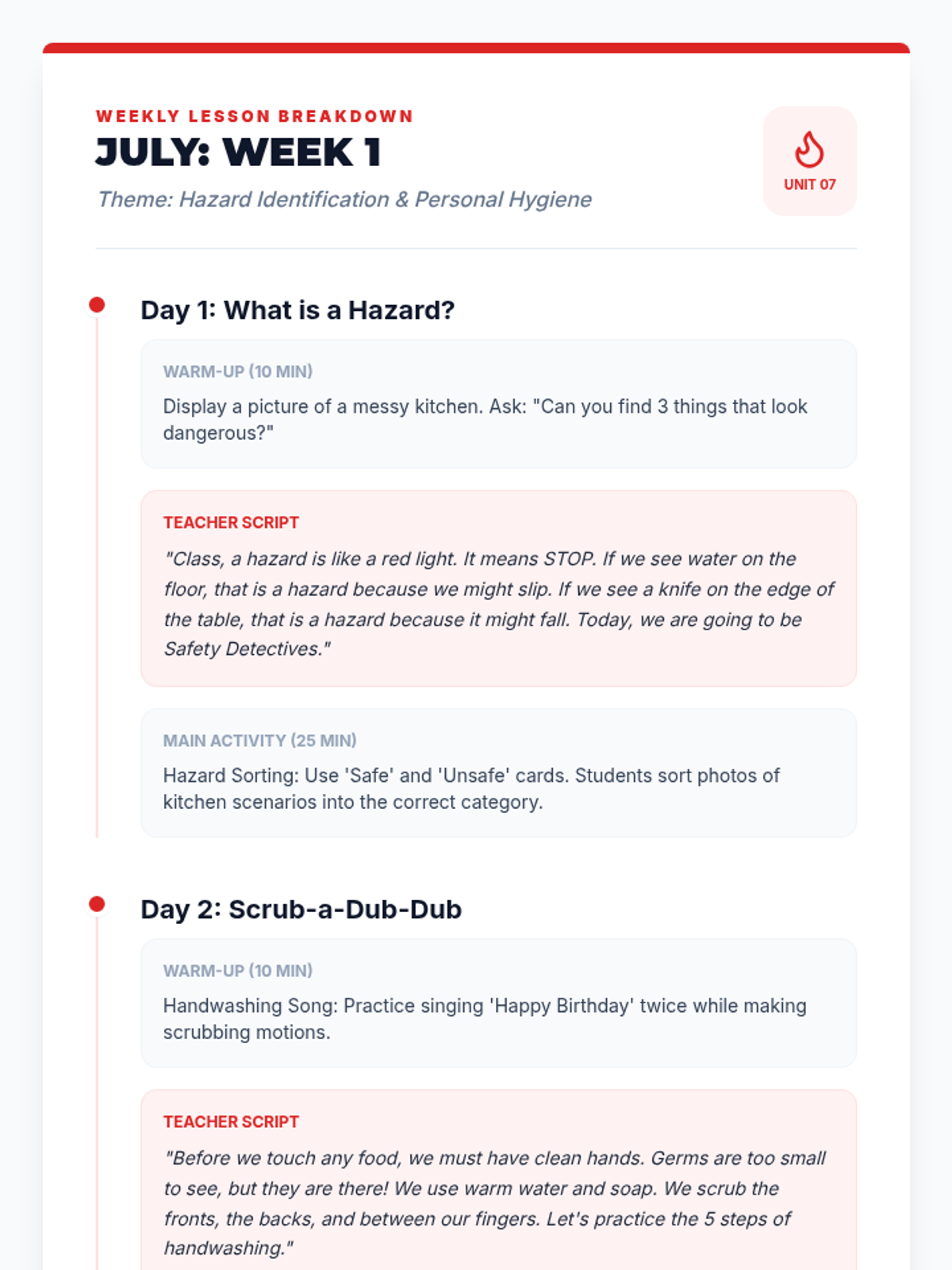
Essential knowledge for identifying hazards, handling tools safely, and maintaining a hygienic cooking environment through visual checklists and simulations.
Building essential social cues, conversational scripts, and self-advocacy skills for various community and professional settings.
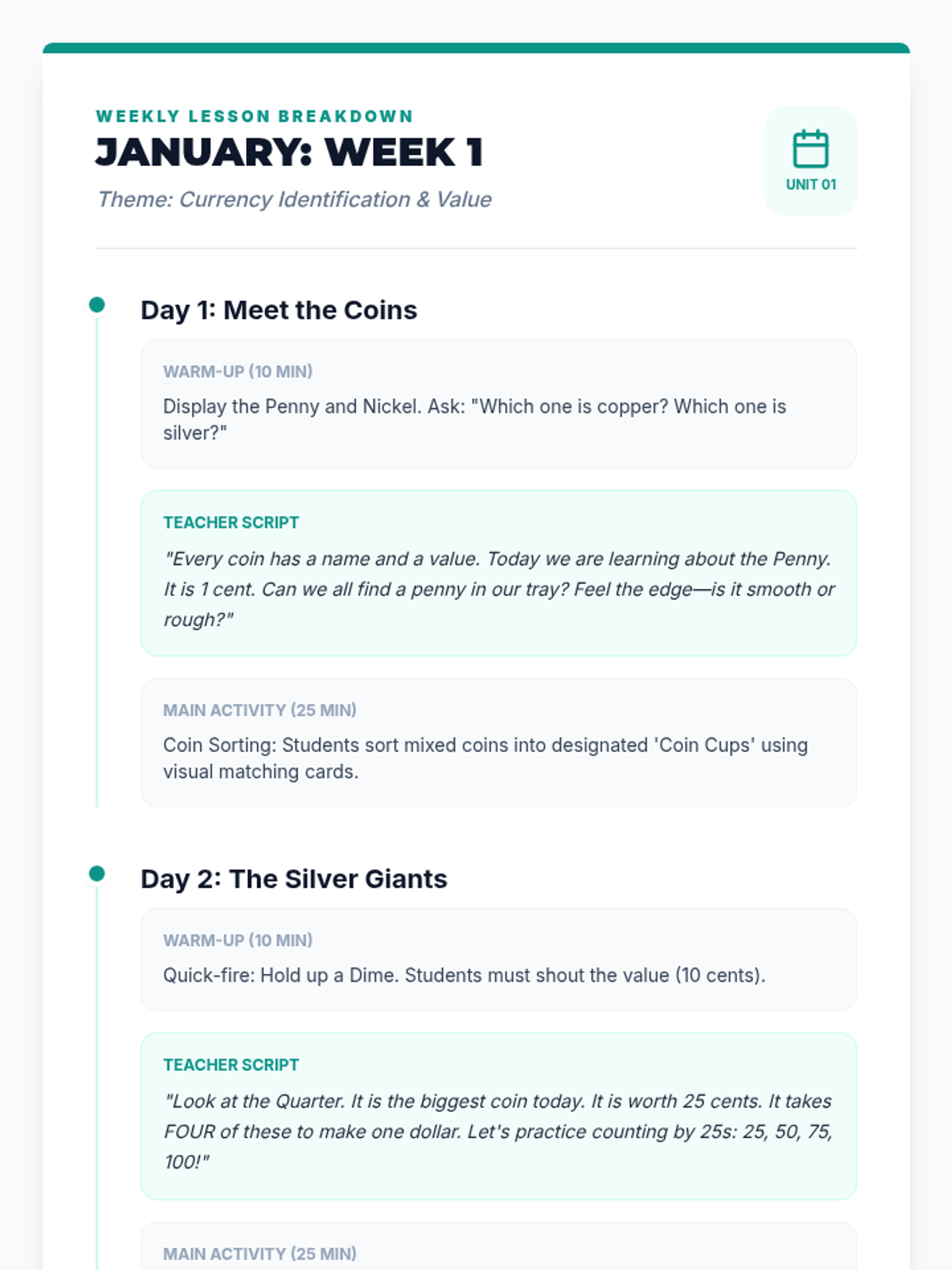
A deep dive into identifying currency, understanding value, and managing basic transactions through visual supports and hands-on practice.
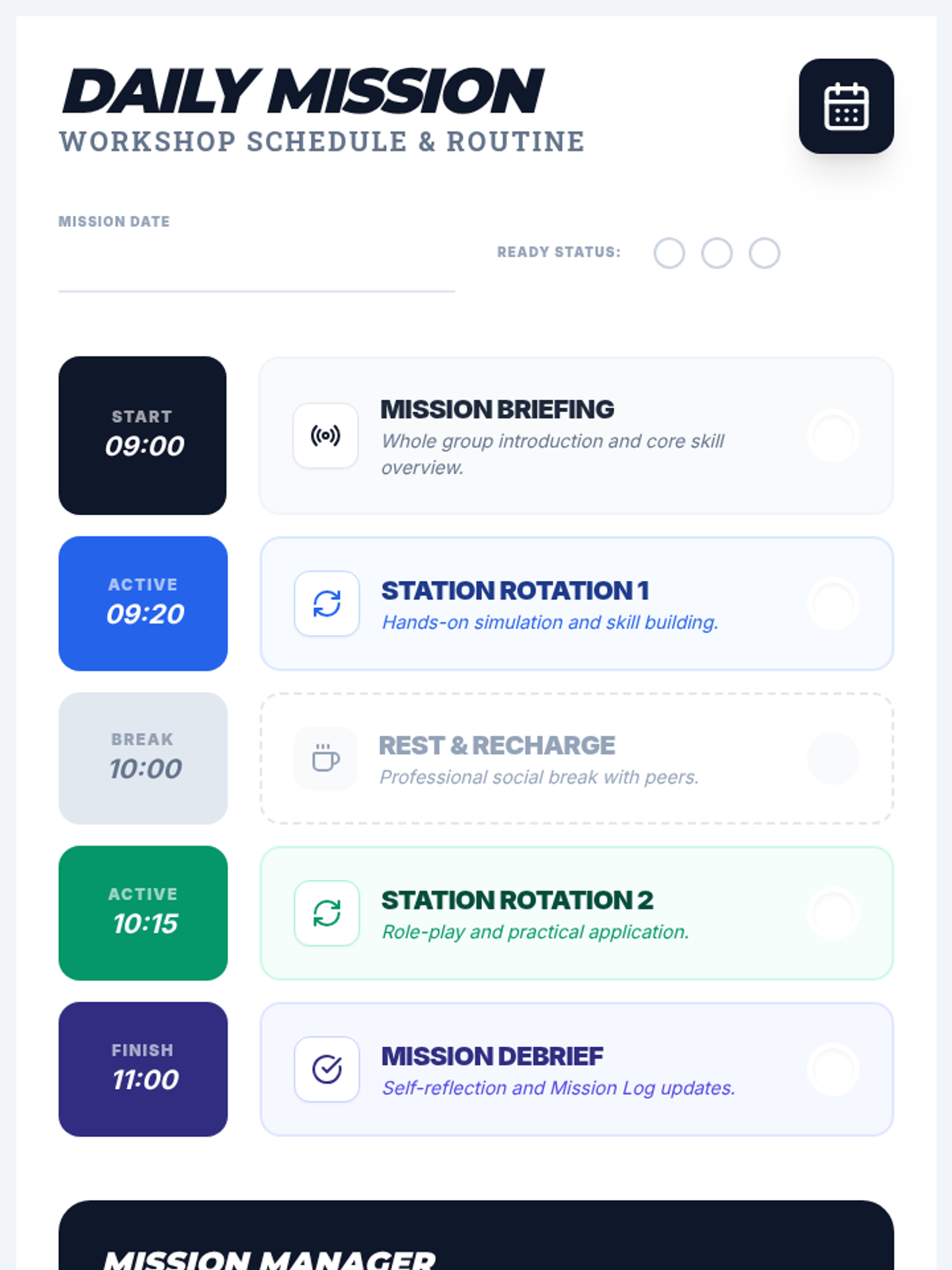
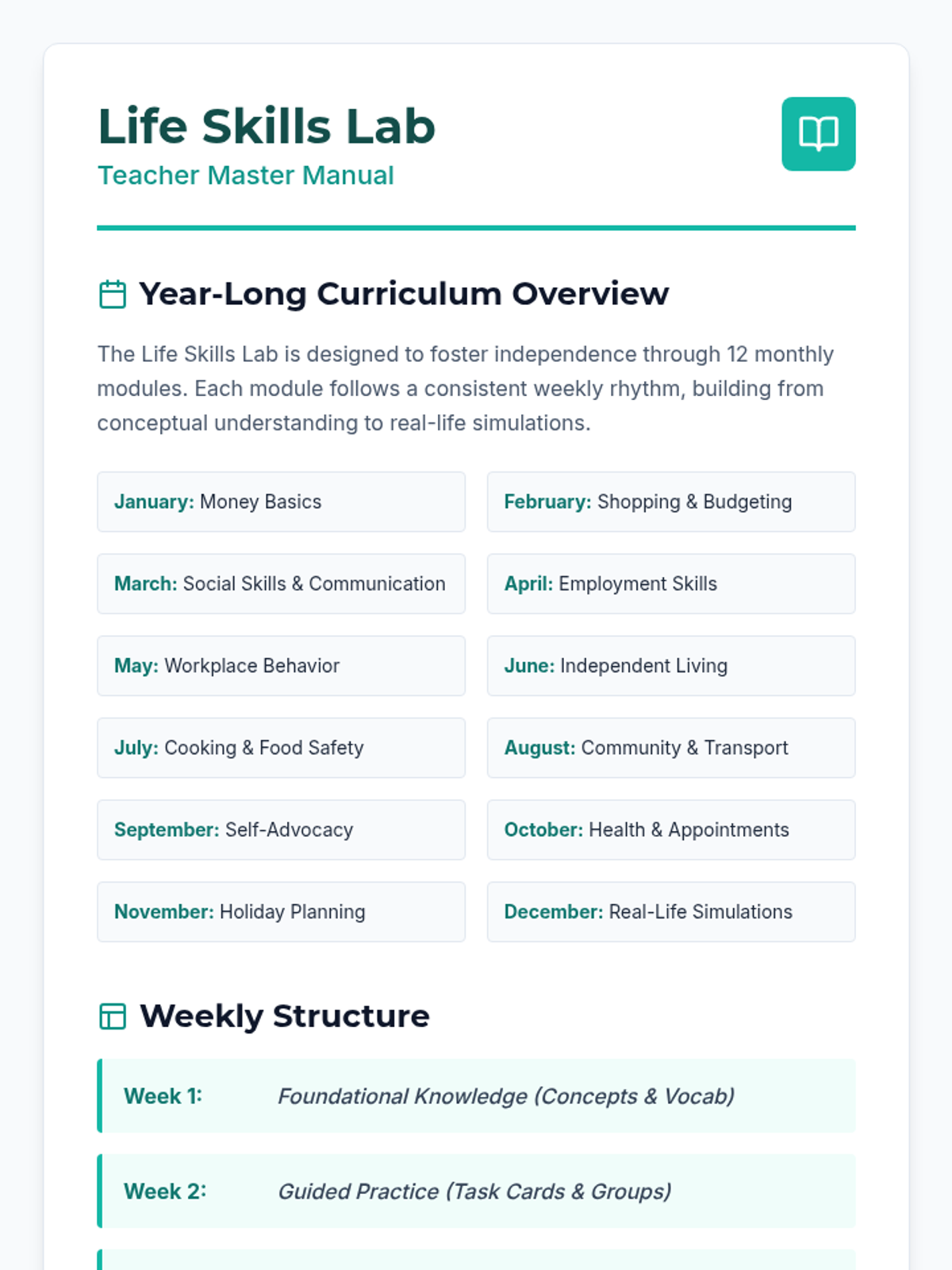
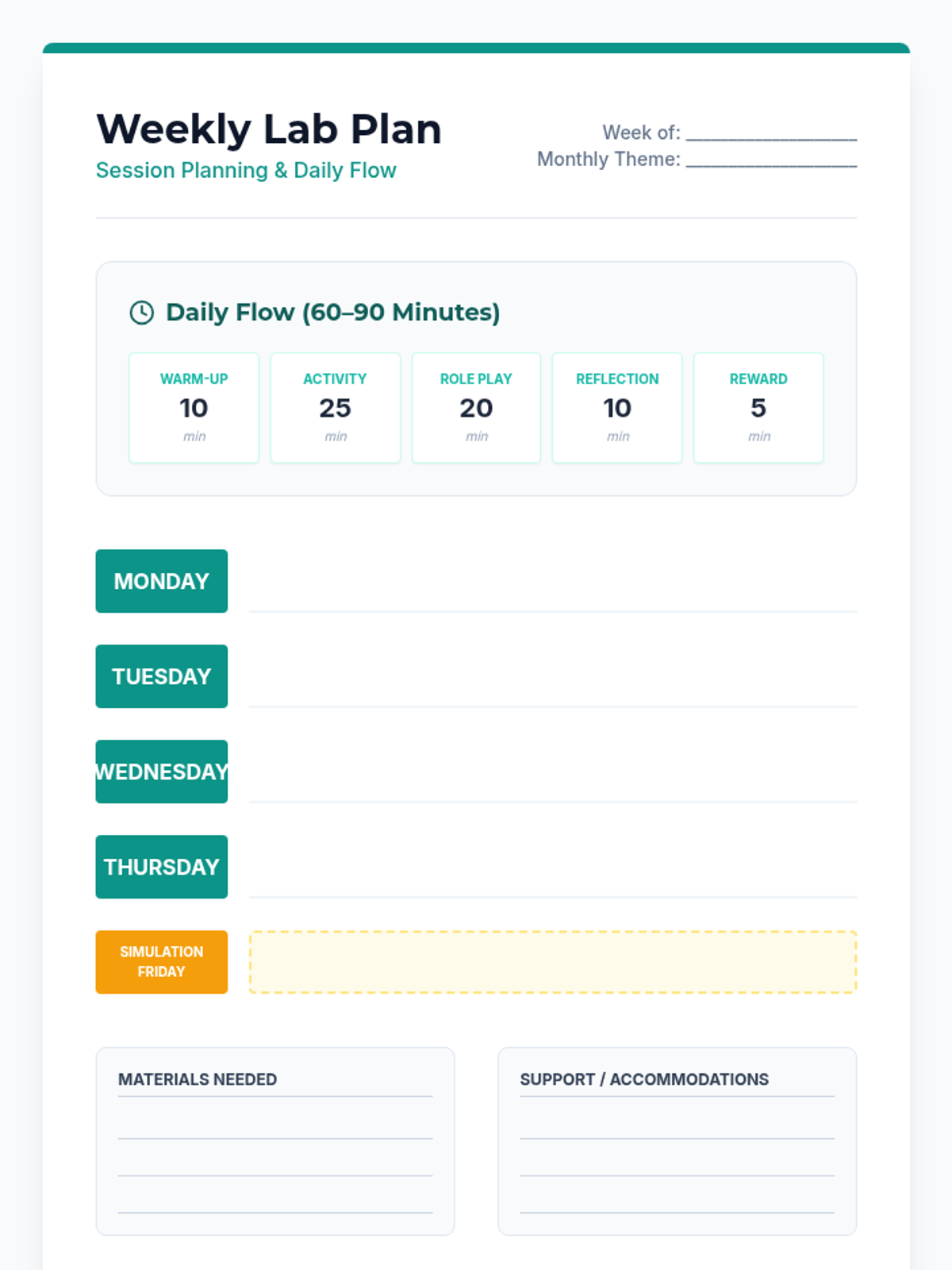
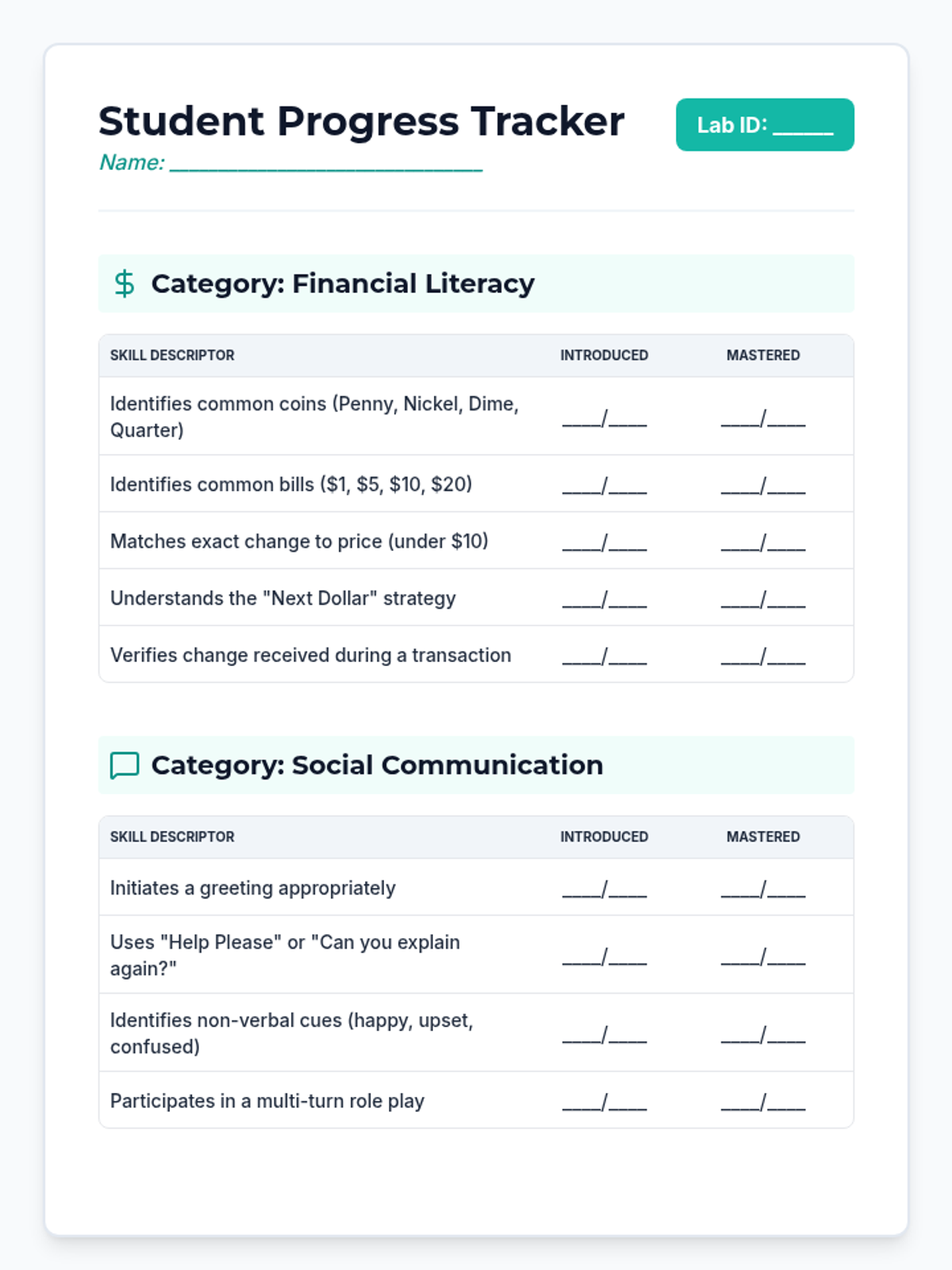
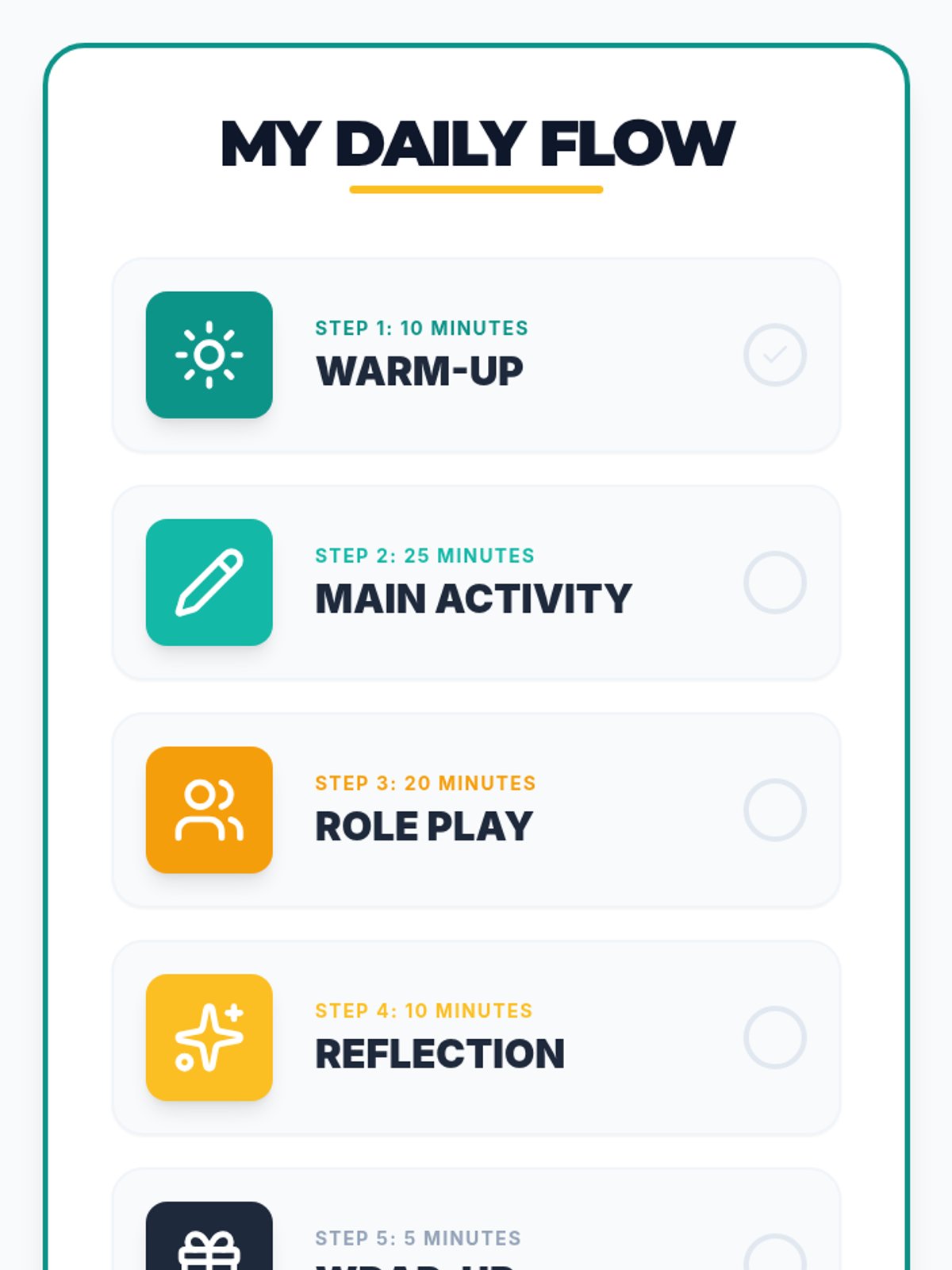
Essential templates, tracking sheets, and the overall framework for the Life Skills program to ensure consistent daily structure and progress monitoring.
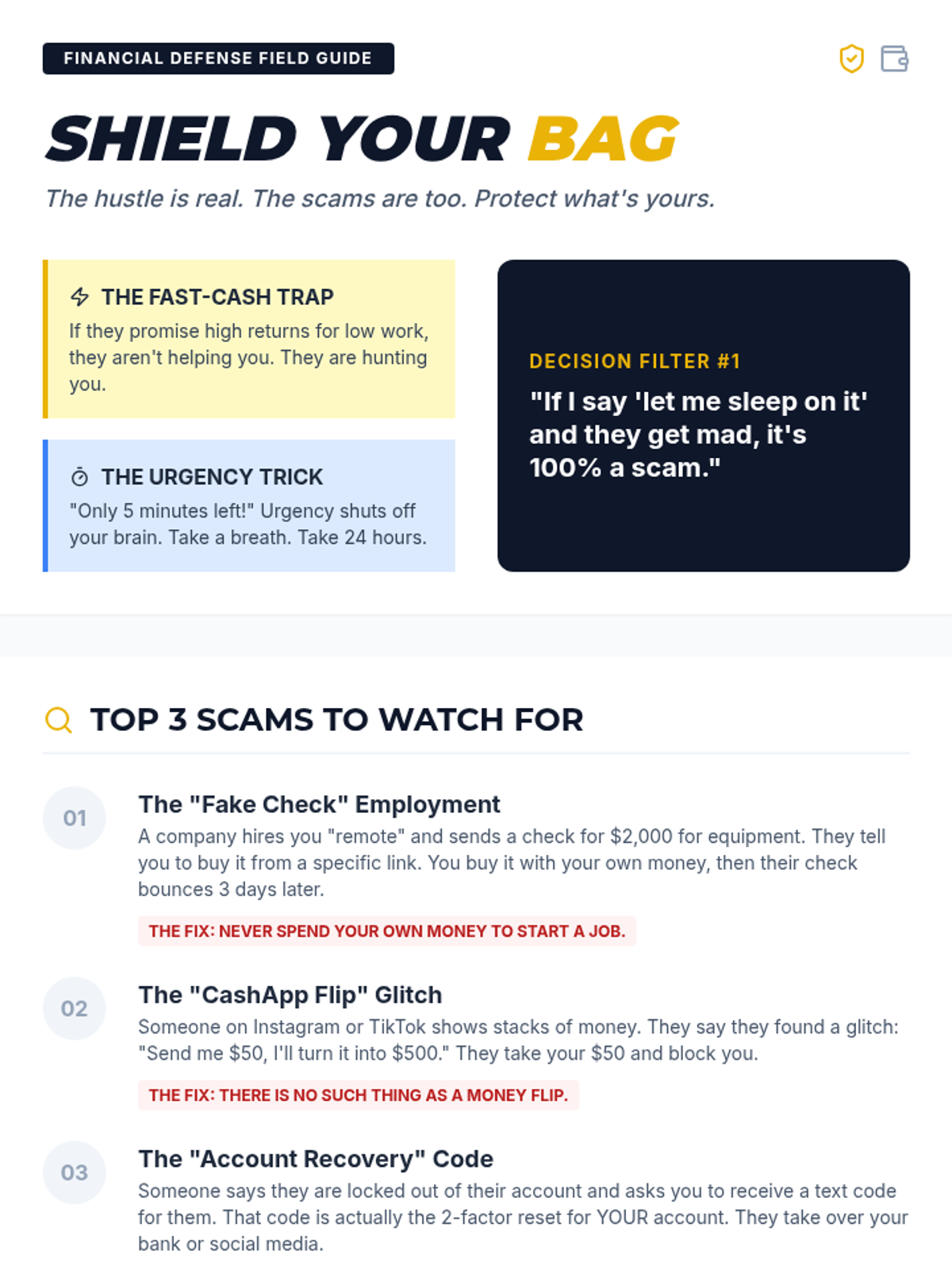
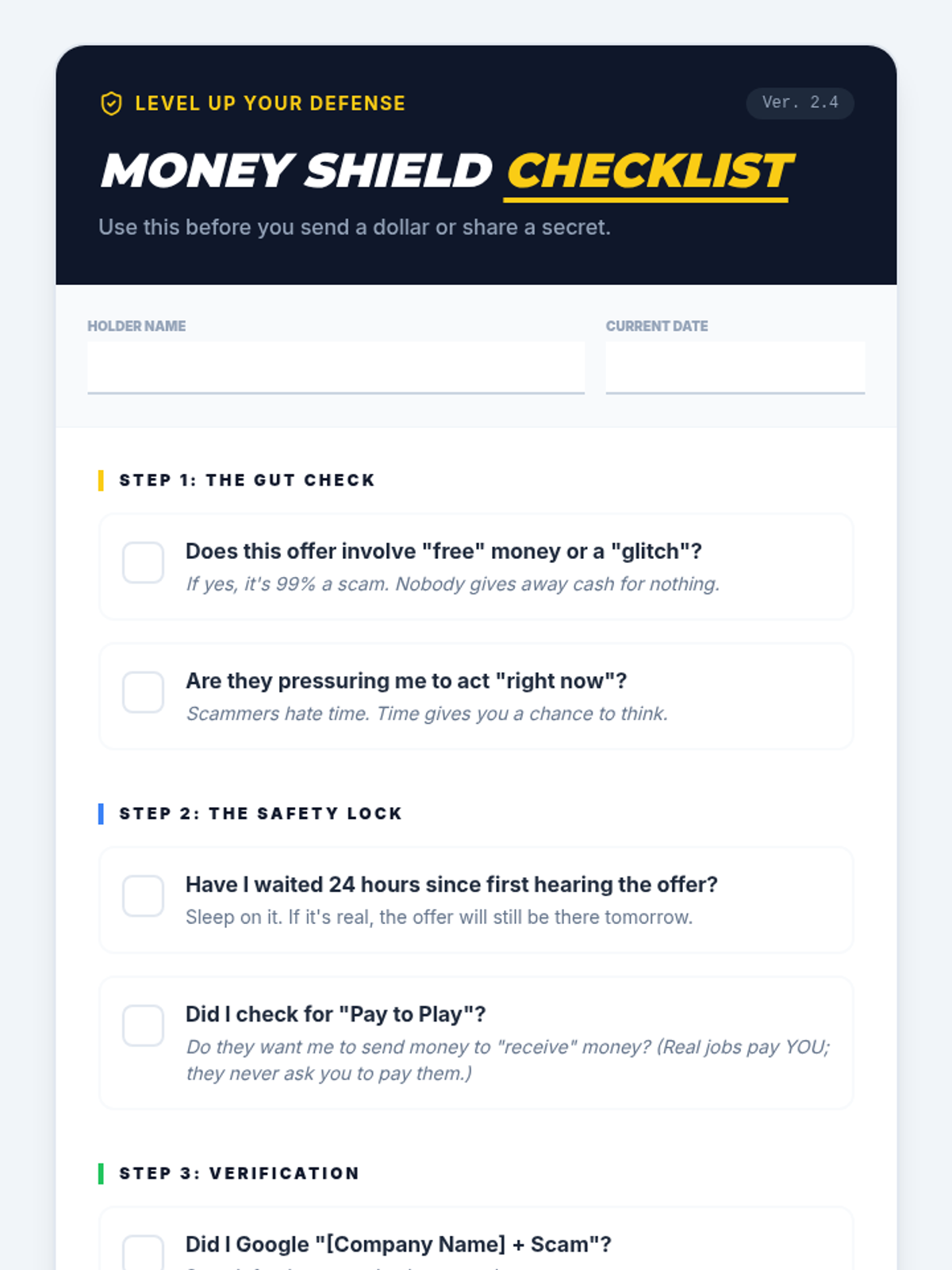
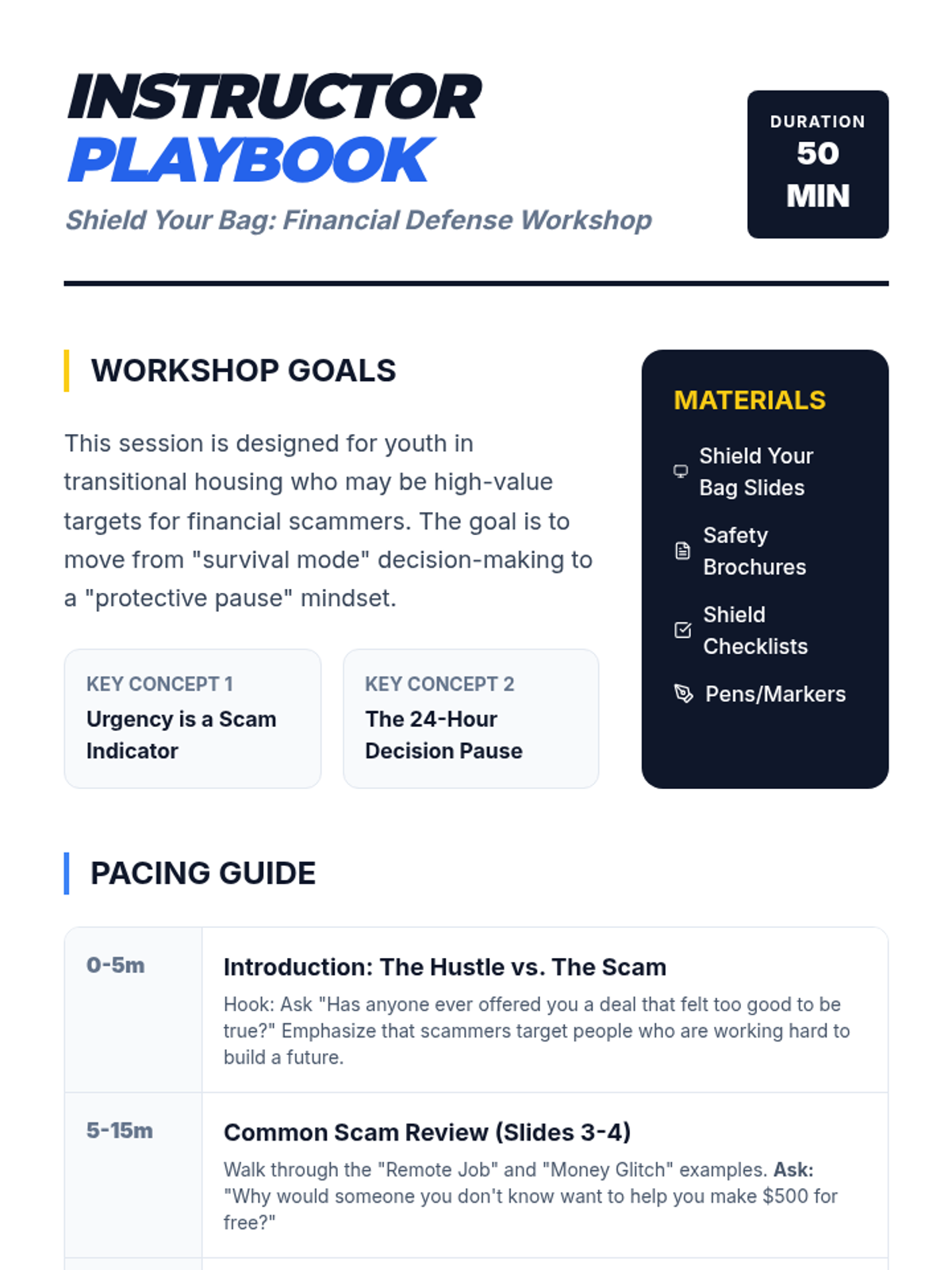
A 50-minute financial safety workshop designed for homeless teens, focusing on identifying predatory scams, evaluating 'too good to be true' offers, and implementing a 24-hour decision pause.
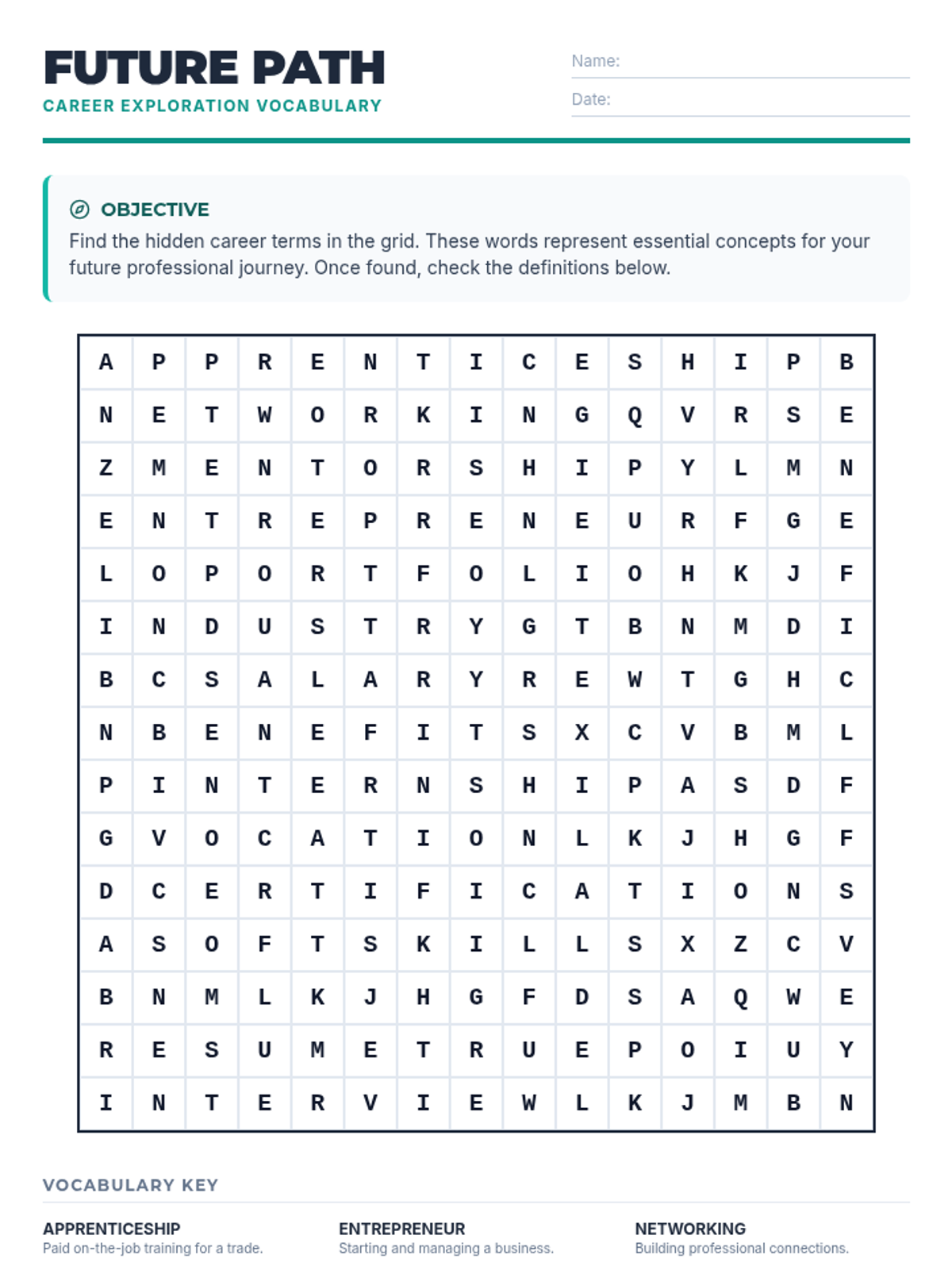
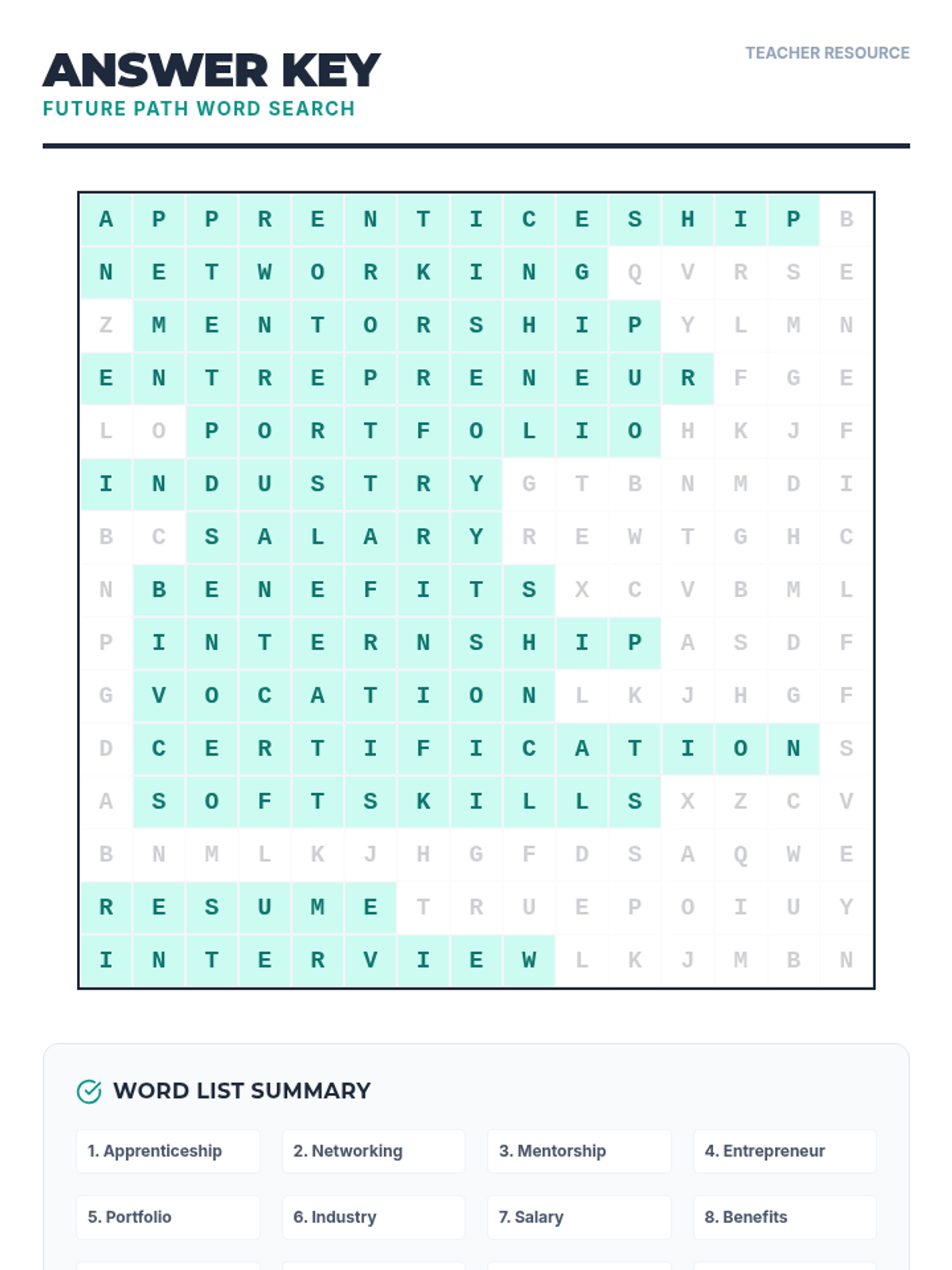
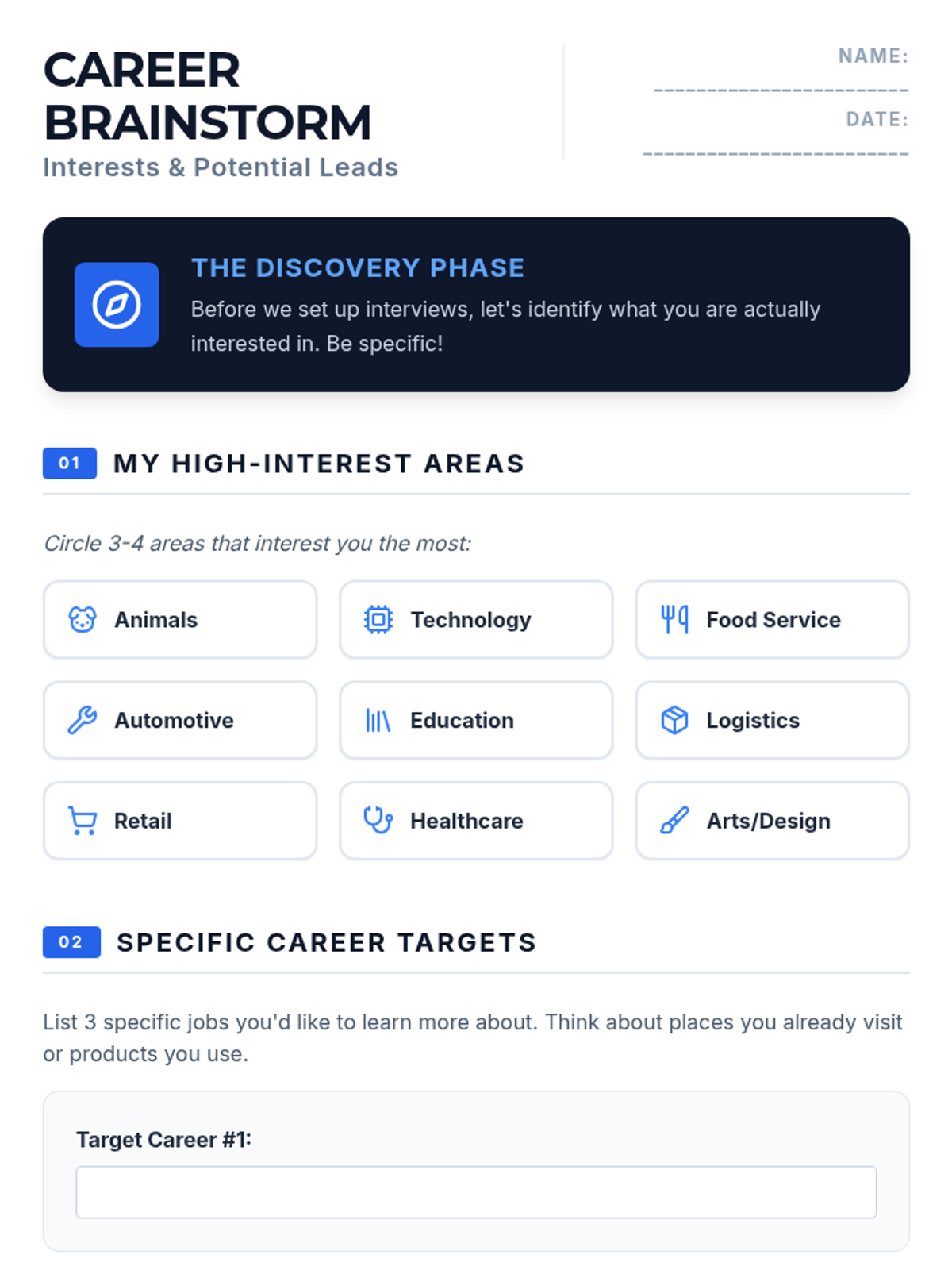
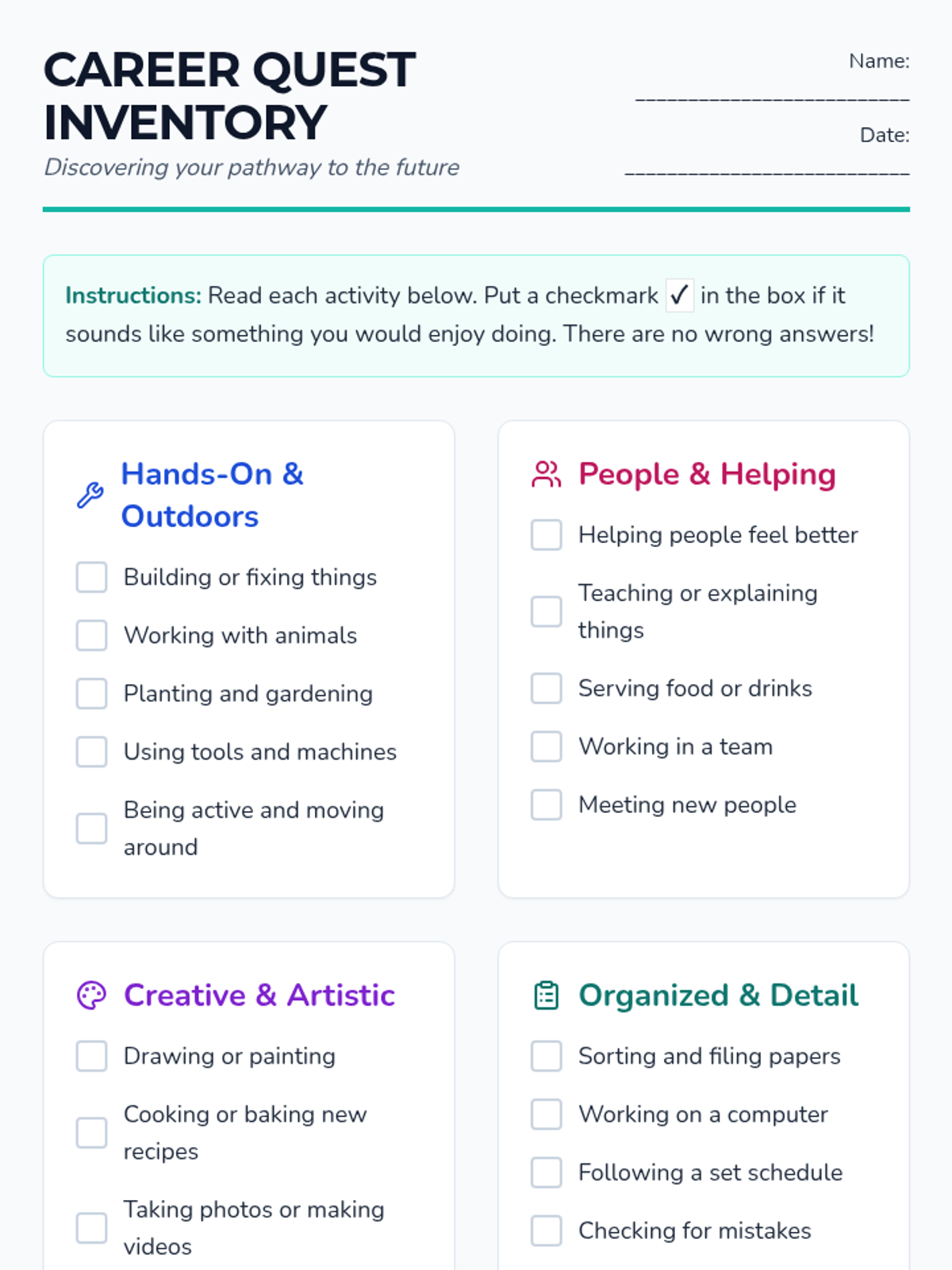
A lesson focused on exploring career pathways, professional terminology, and the skills needed for the modern workforce. Students will identify key concepts related to career planning and preparation.
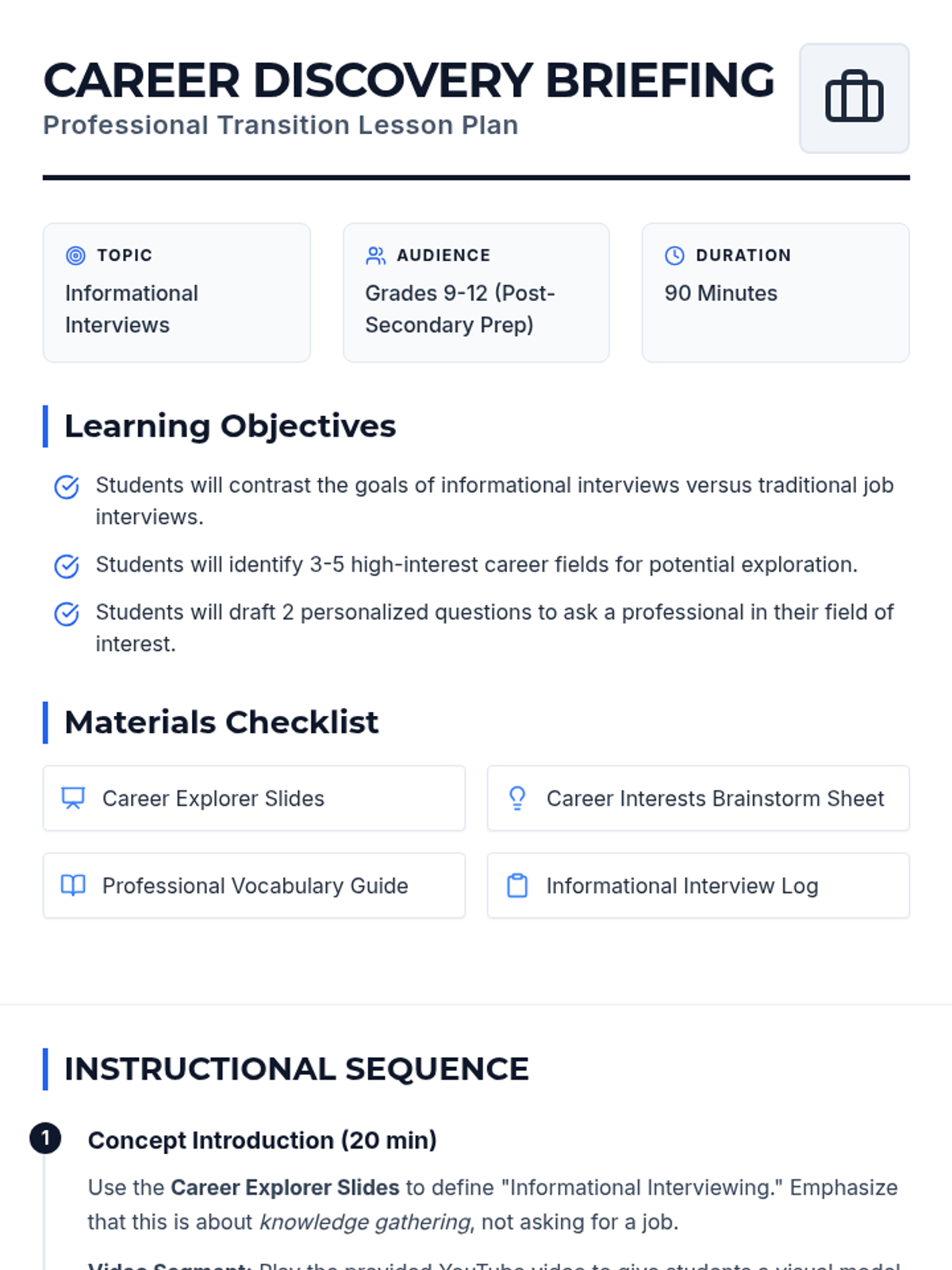
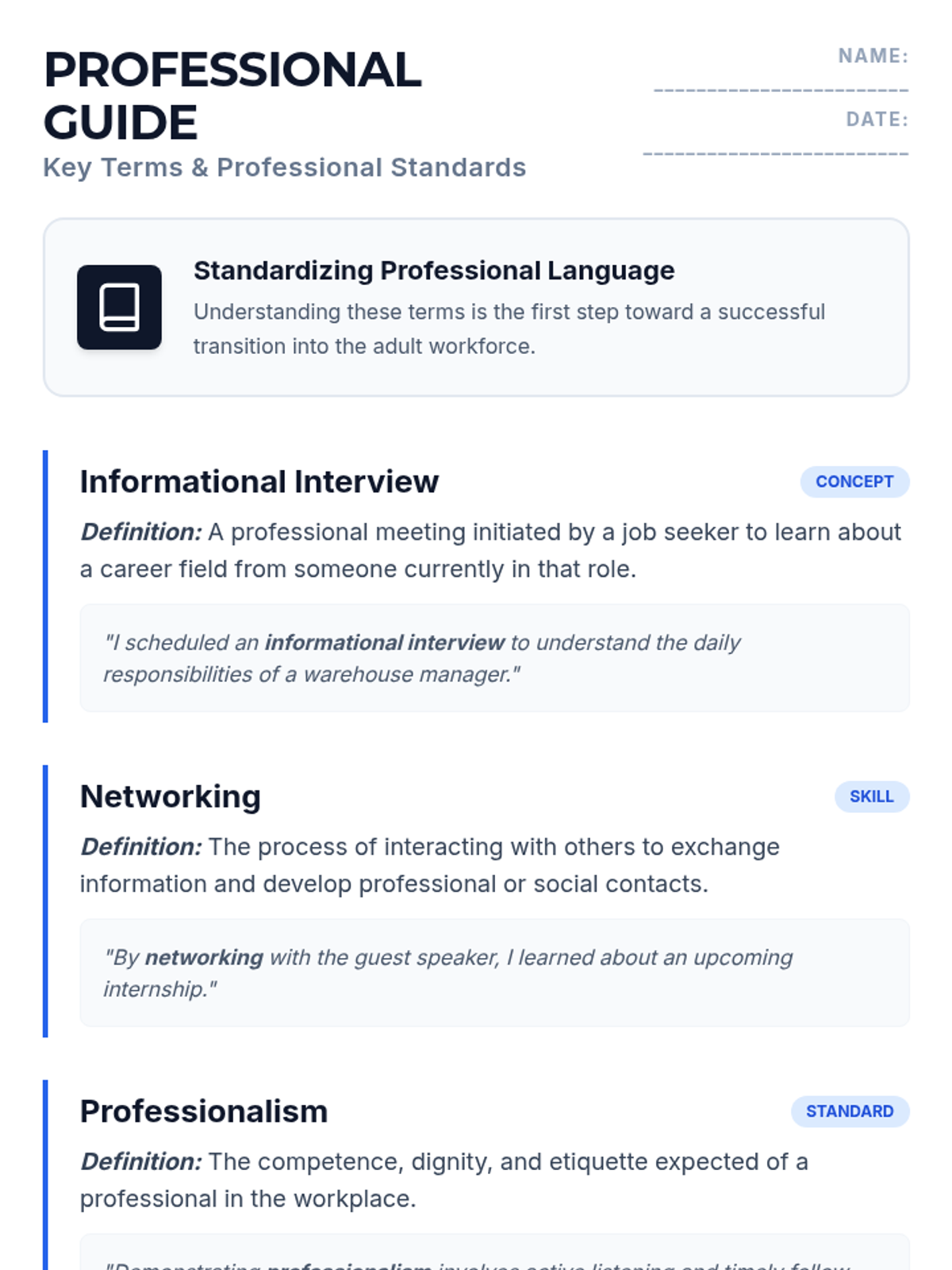
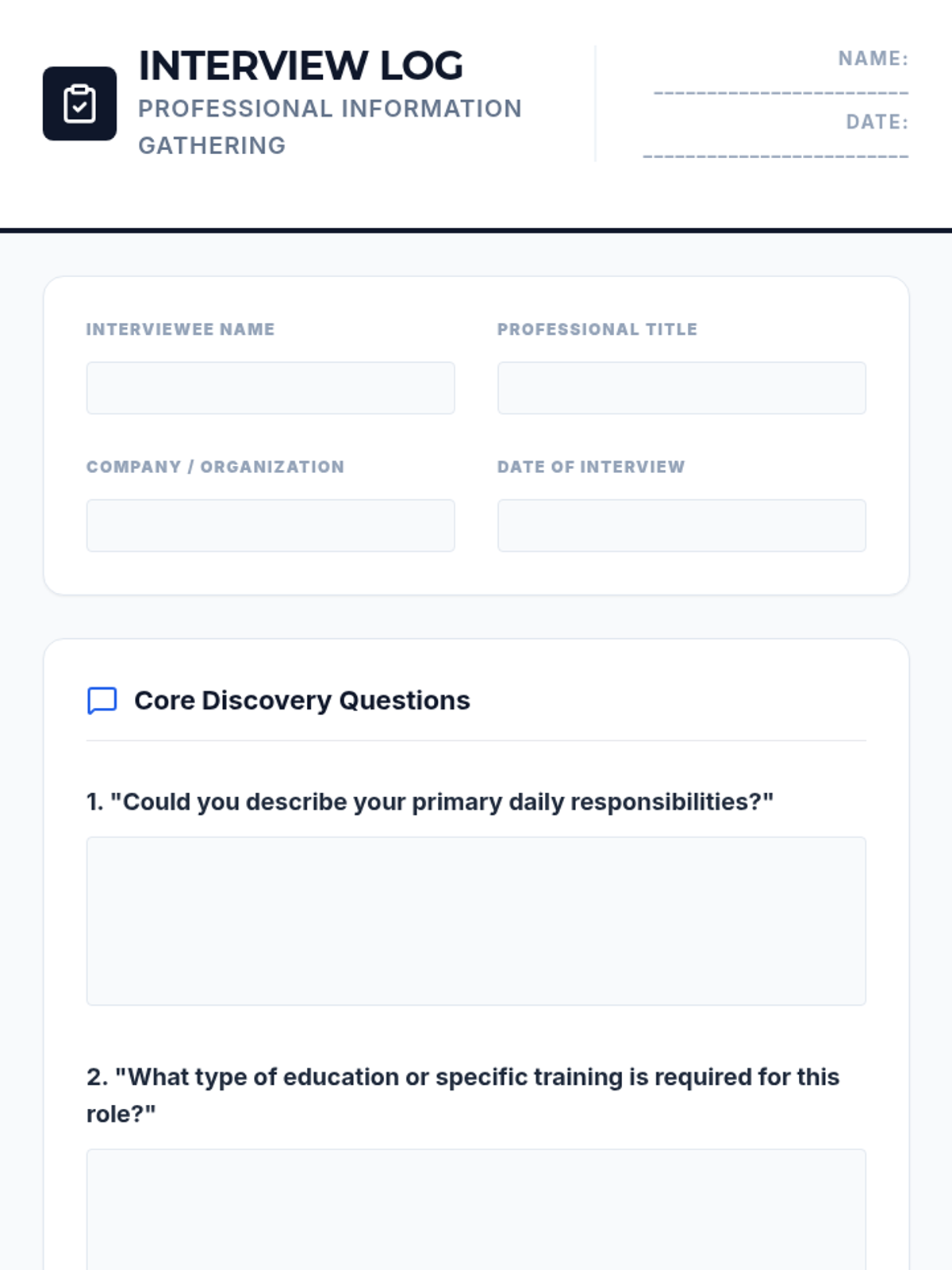
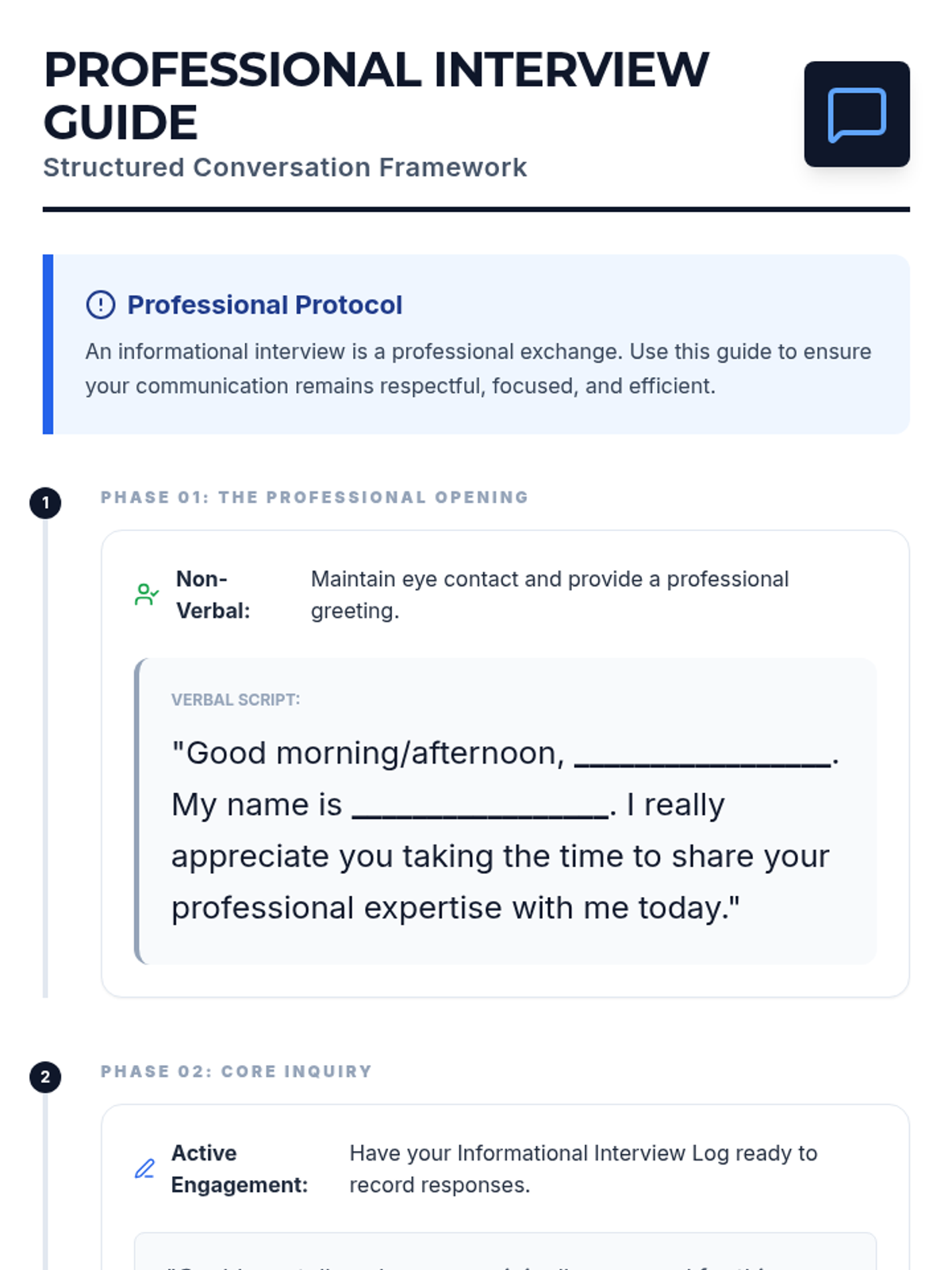
A lesson introducing students with IDD to informational interviews, focusing on curiosity, career exploration, and building professional connections.
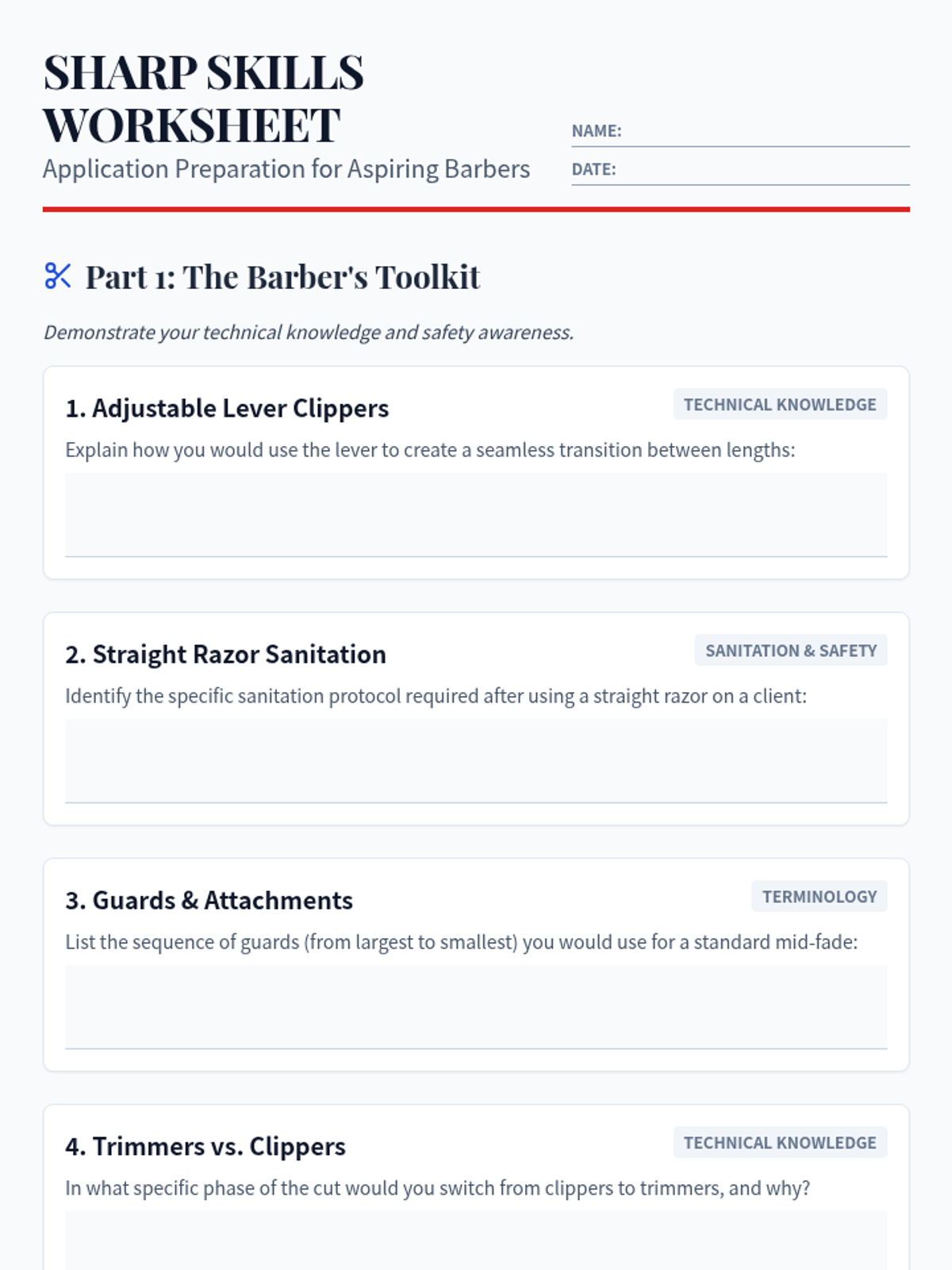
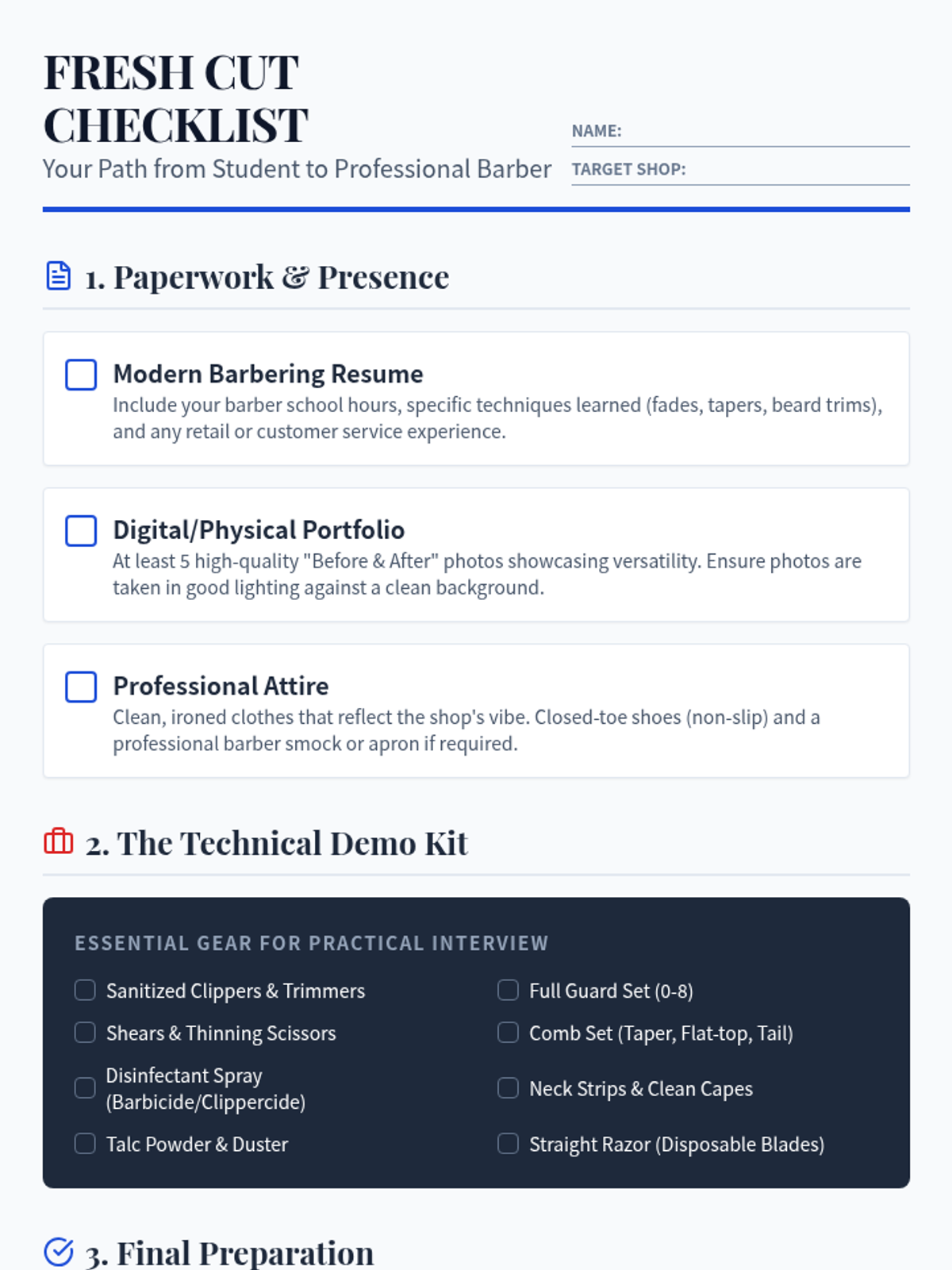
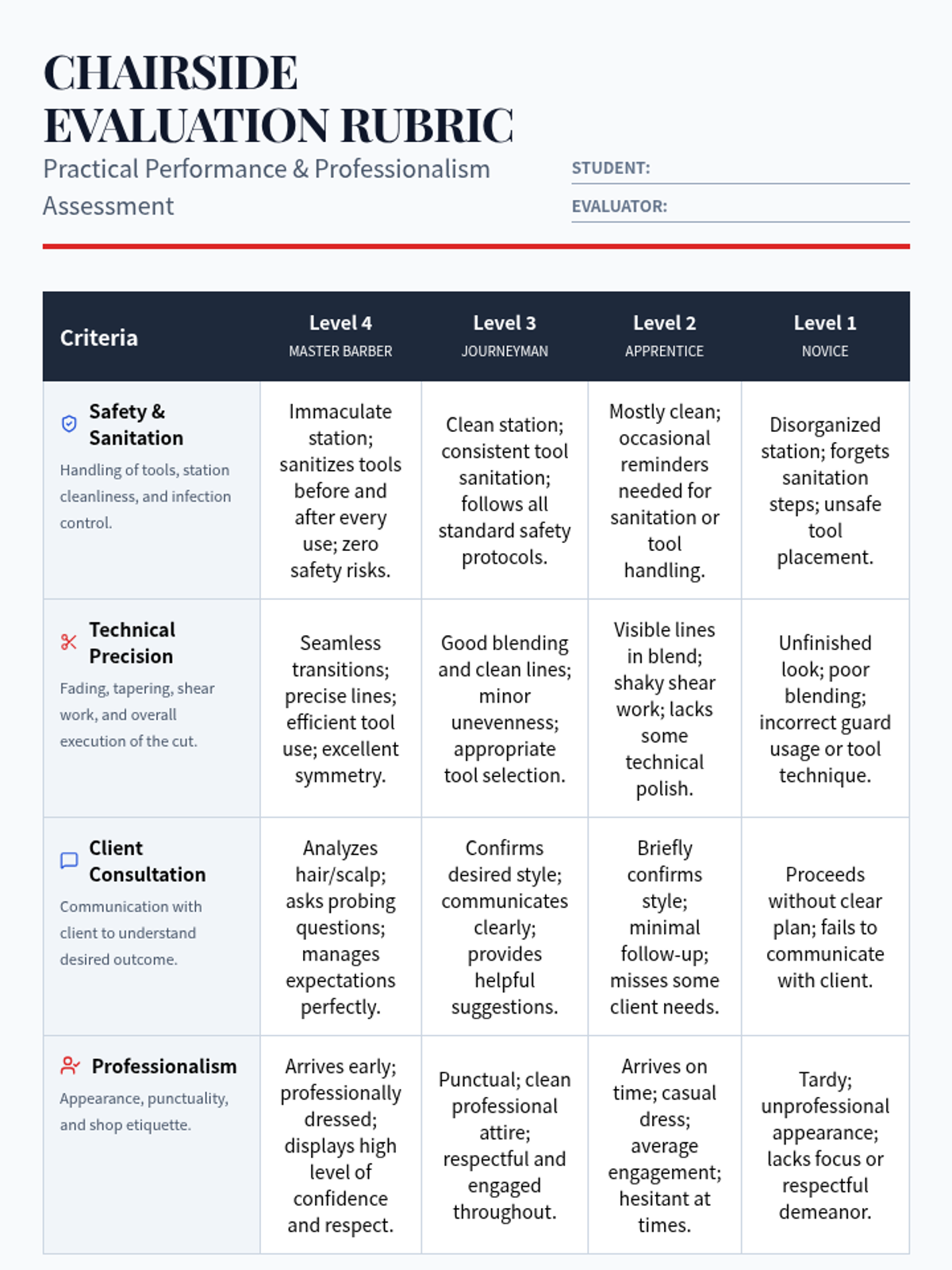
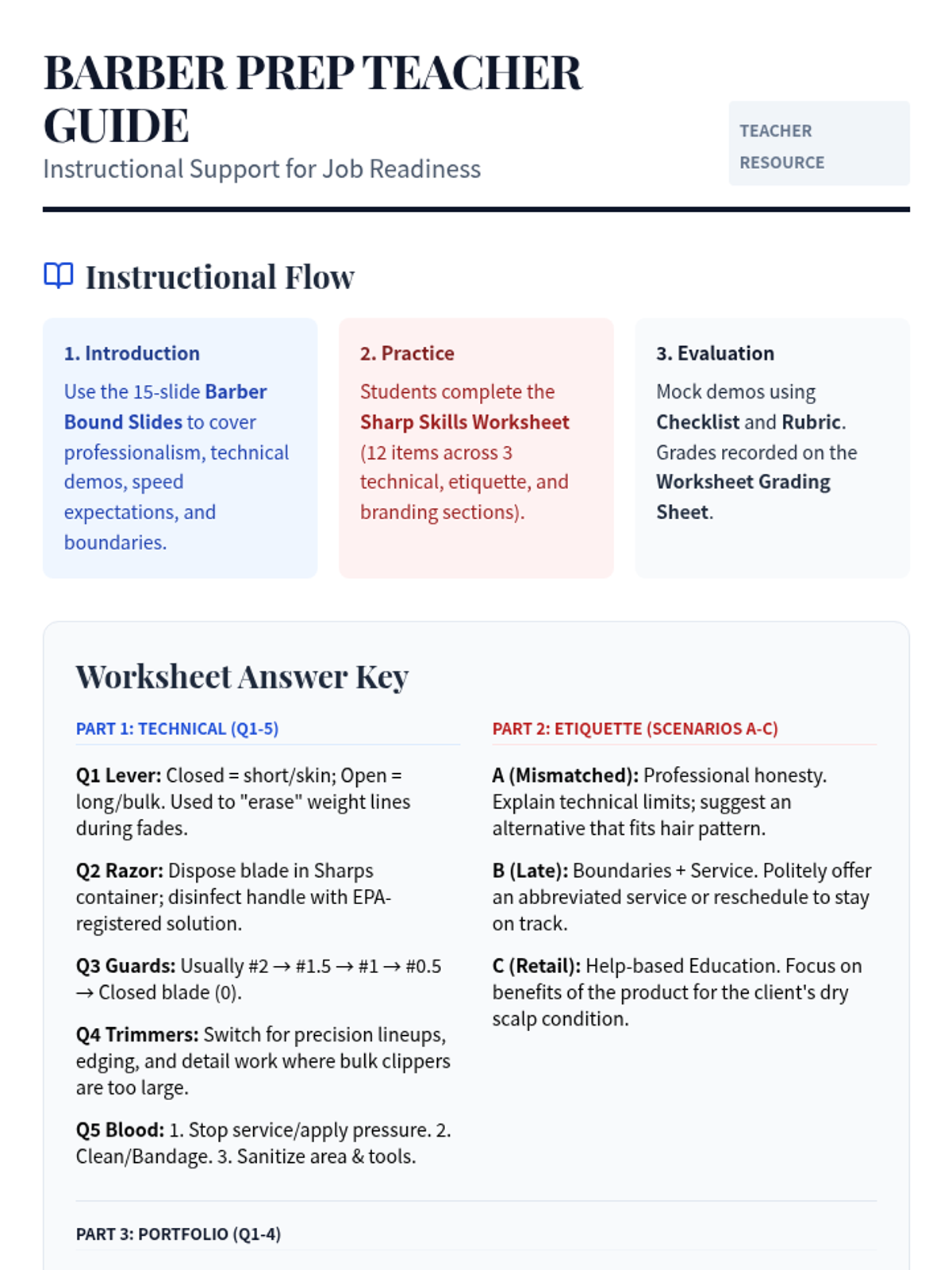
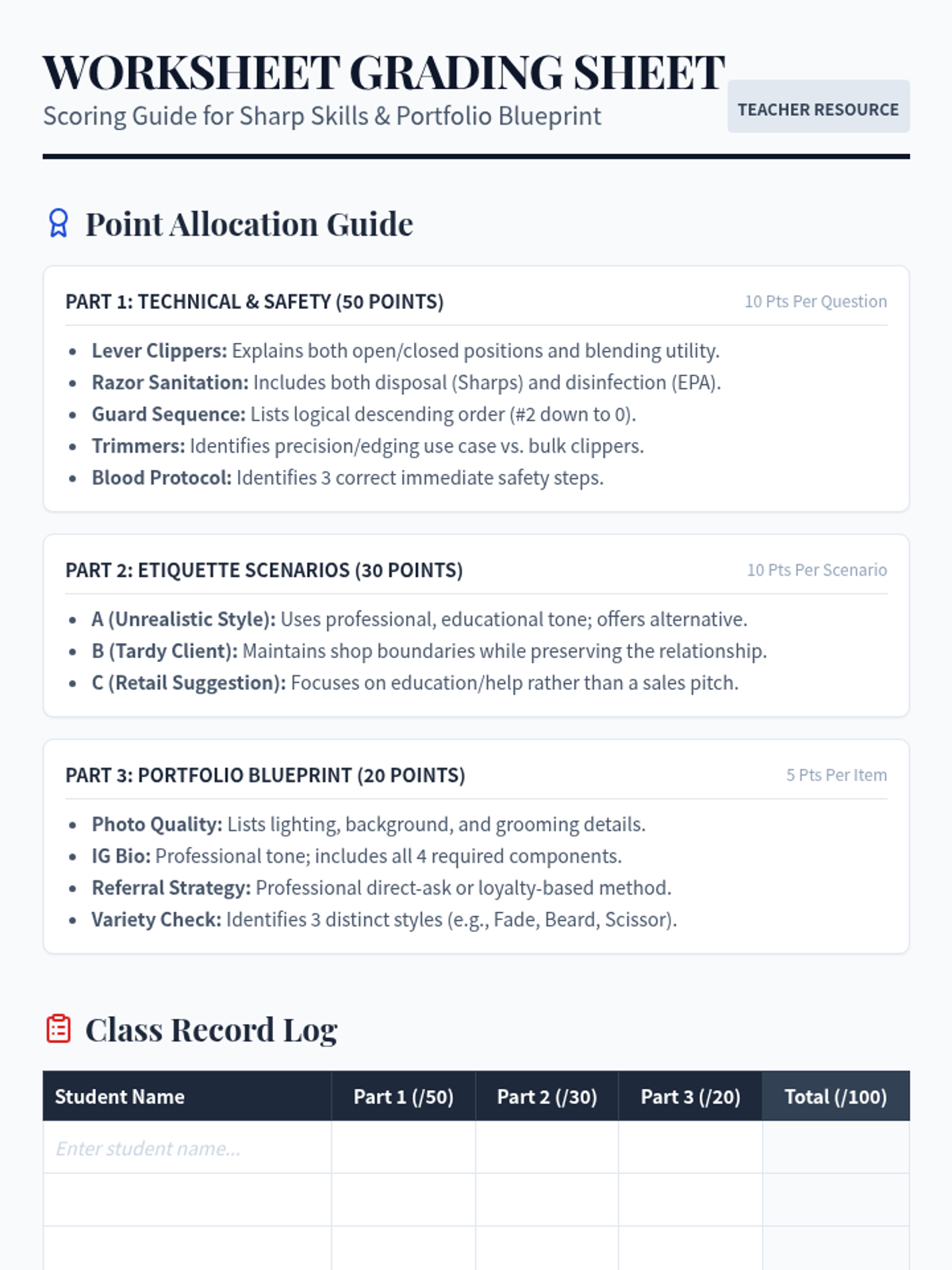
A comprehensive set of tools to help high school students prepare for their first job application in the barbering industry, focusing on technical knowledge, professional etiquette, and portfolio building.
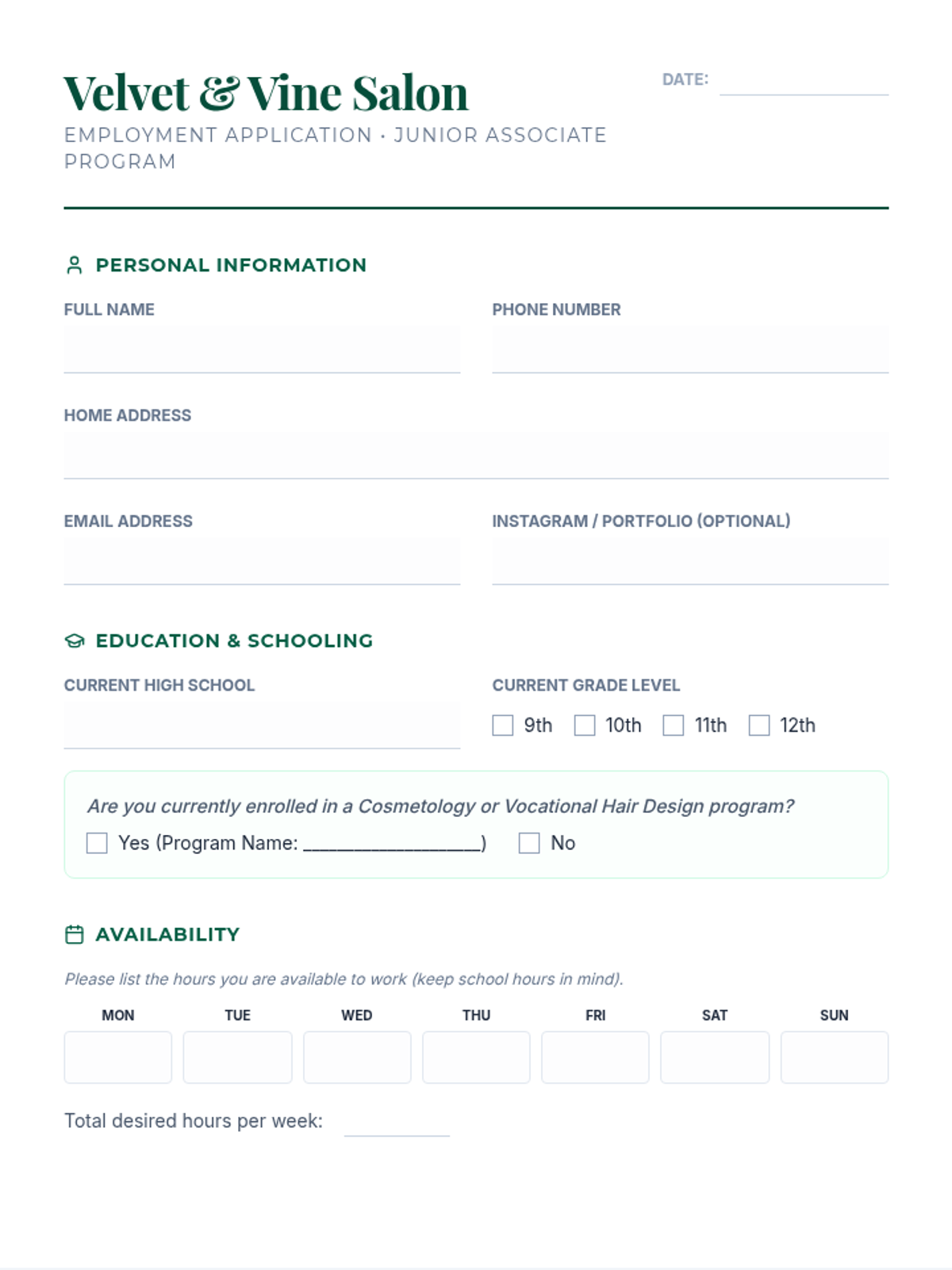
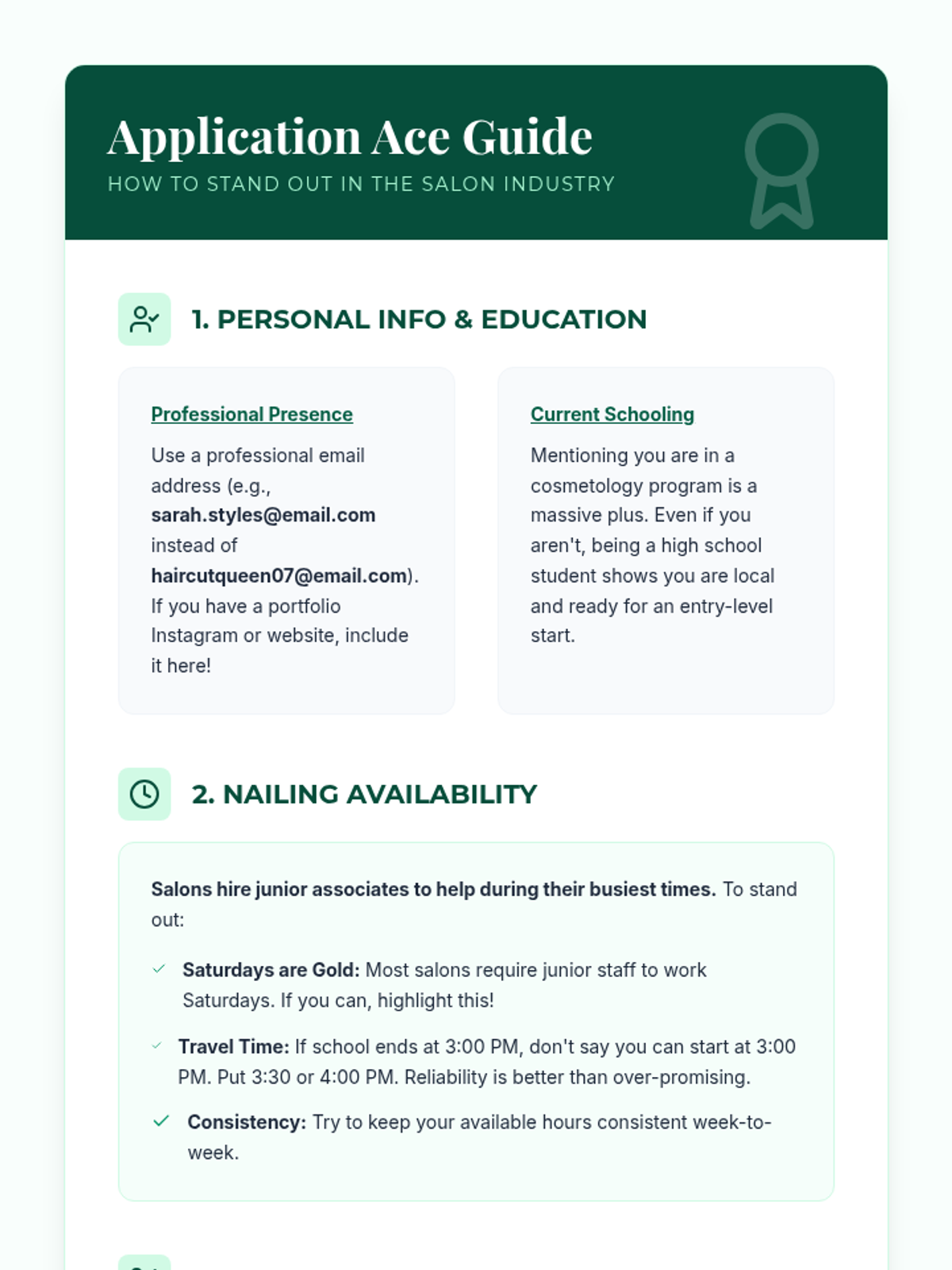
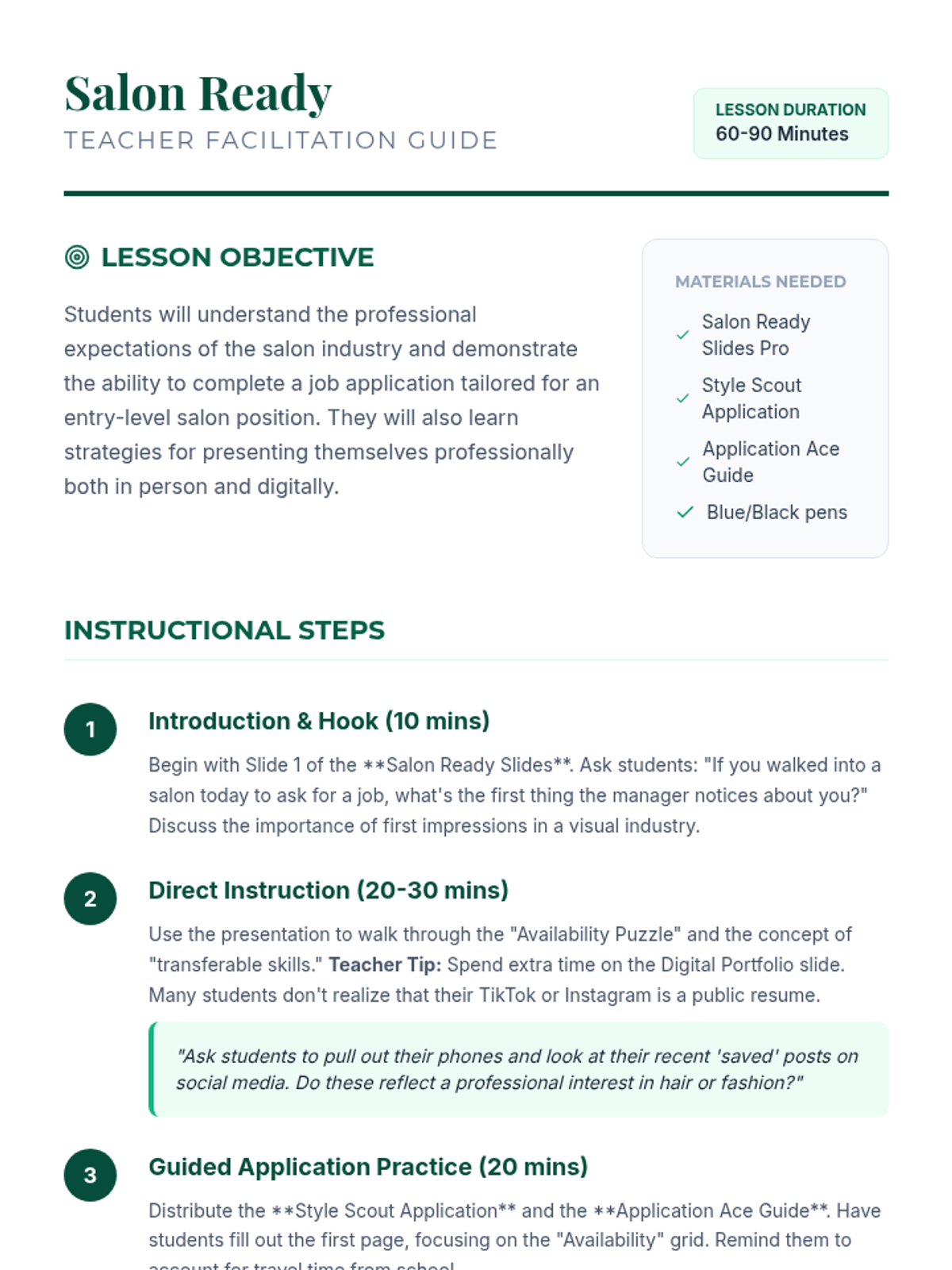
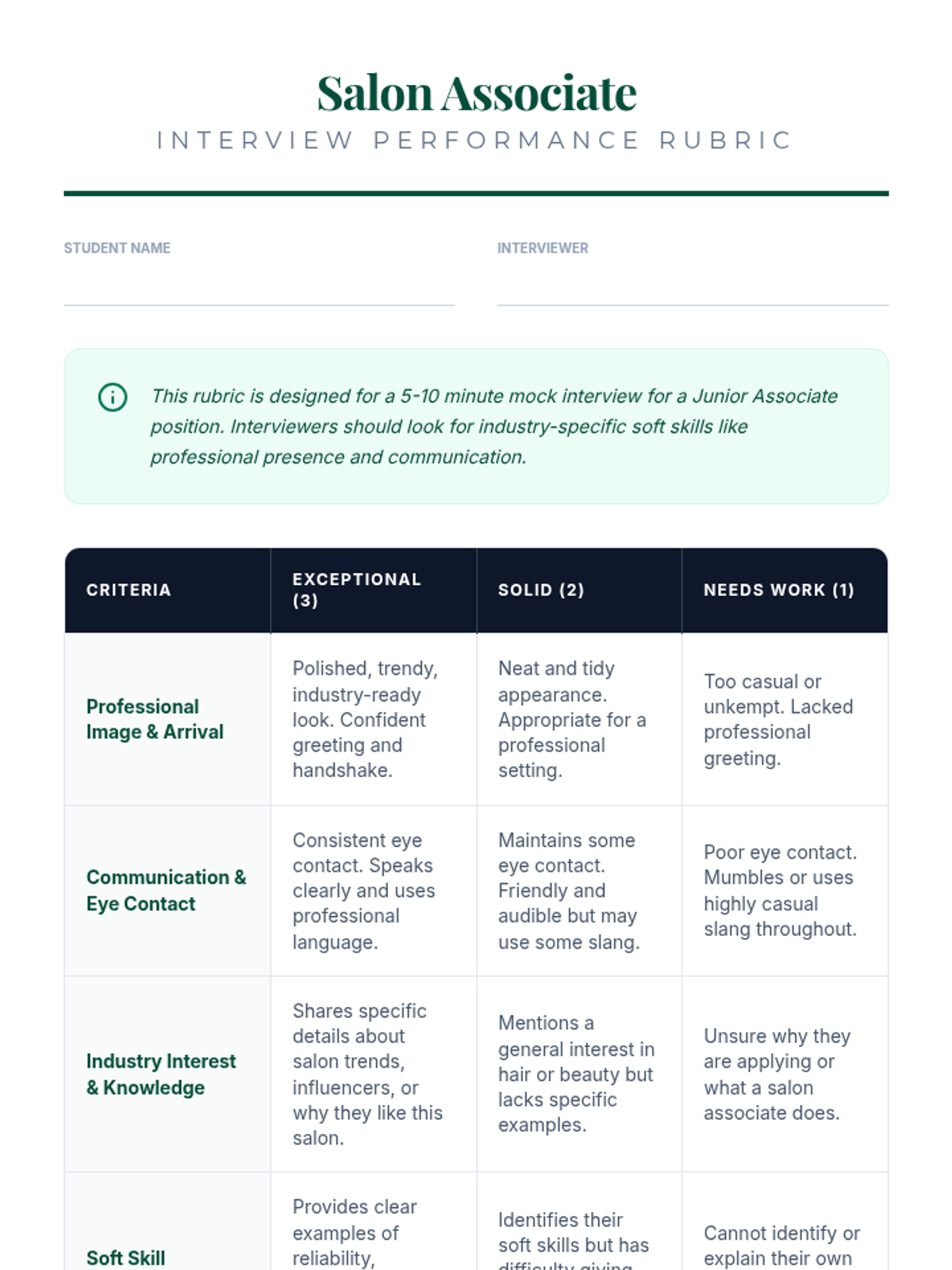
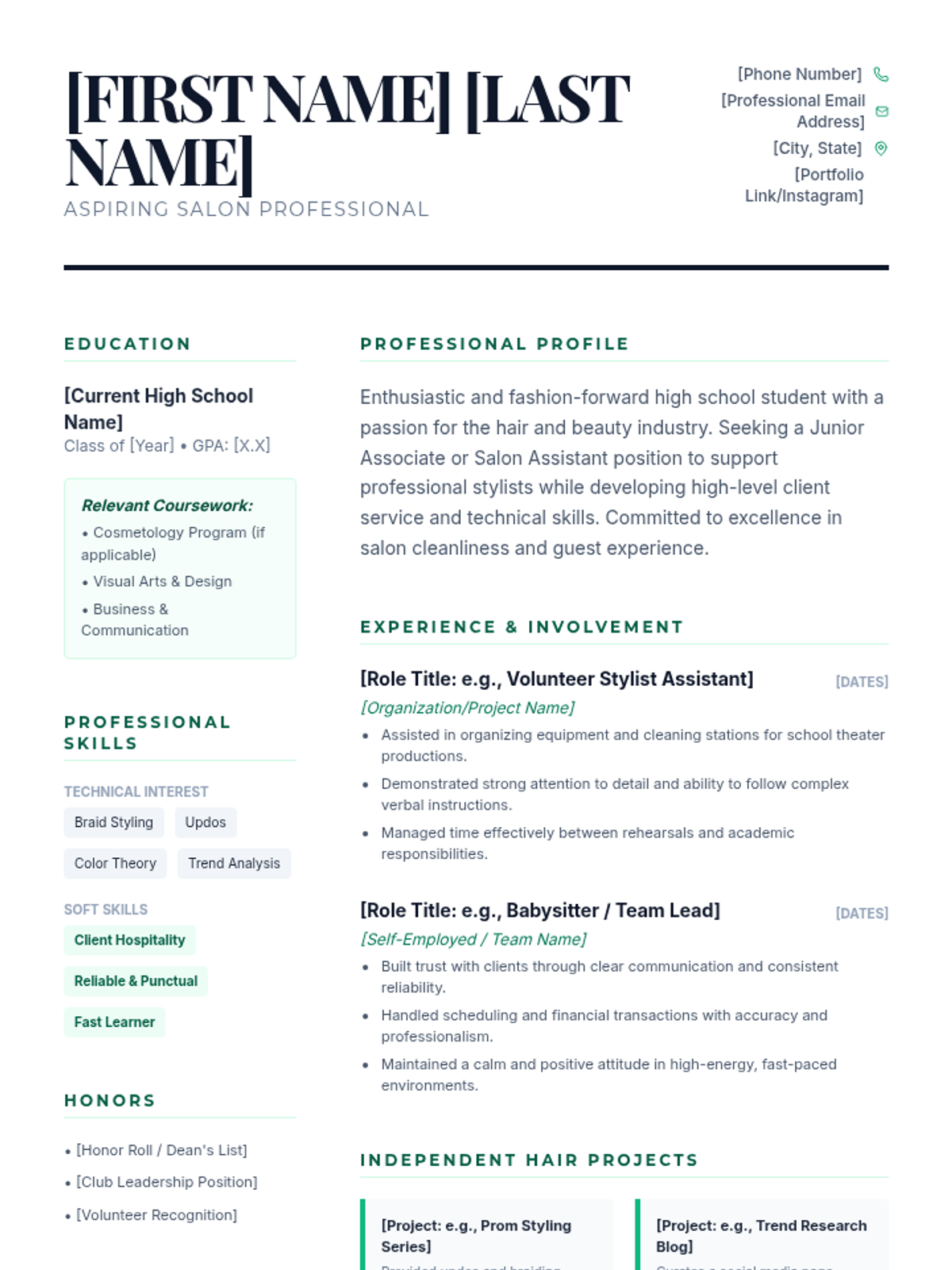
This lesson guides high school students through the process of applying for an entry-level position at a hair salon, focusing on professional presentation and industry-specific expectations.
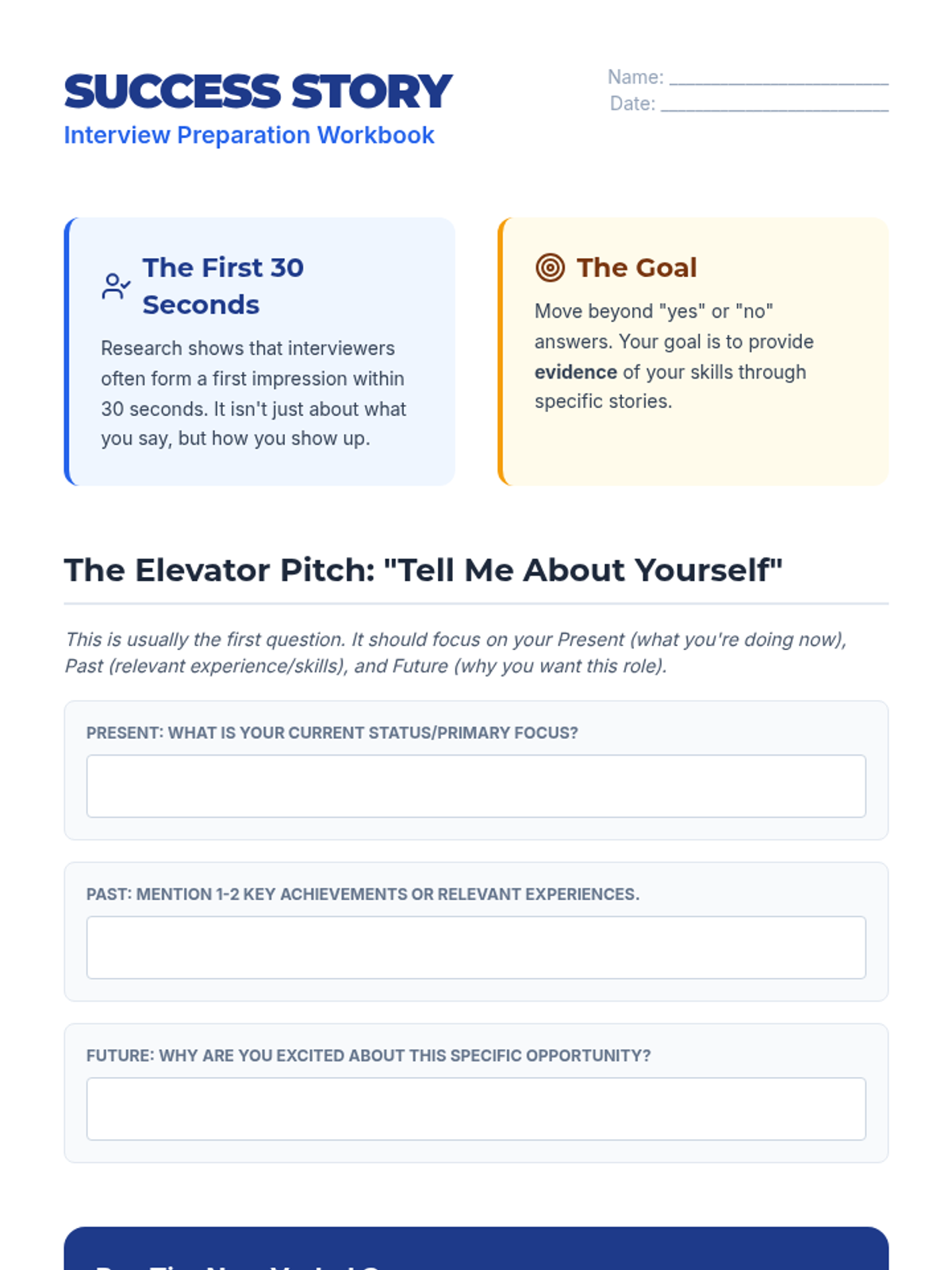
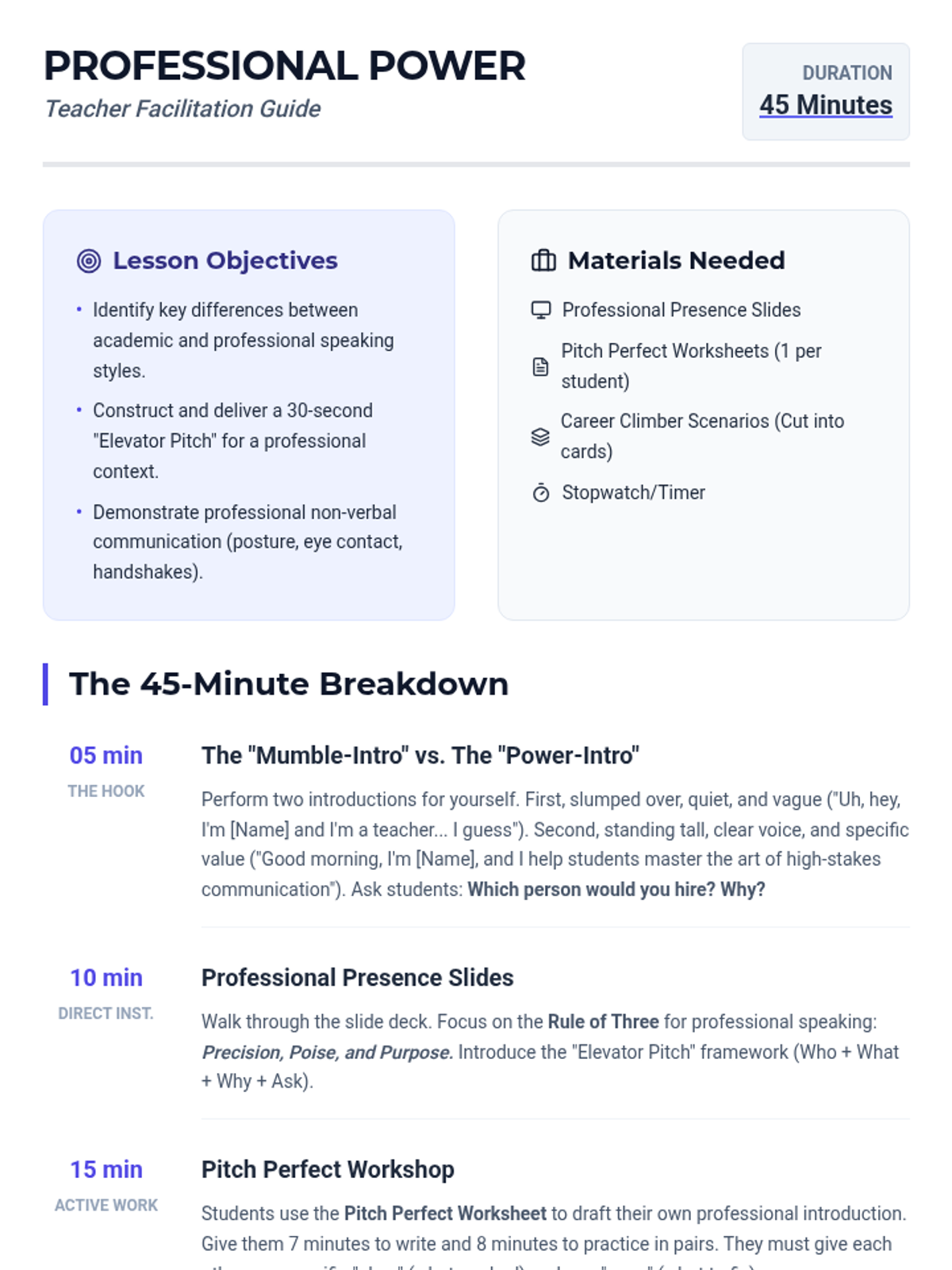
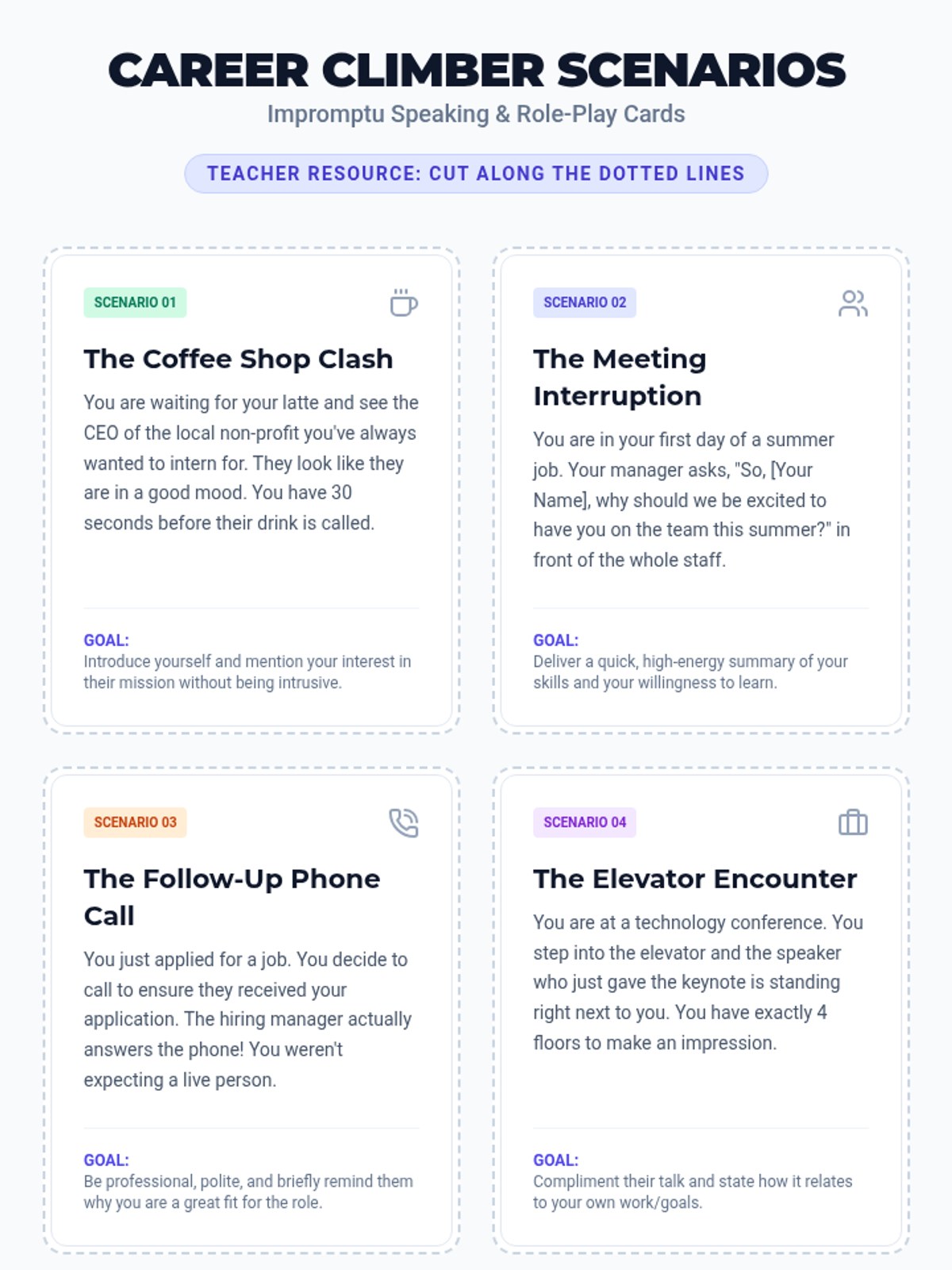
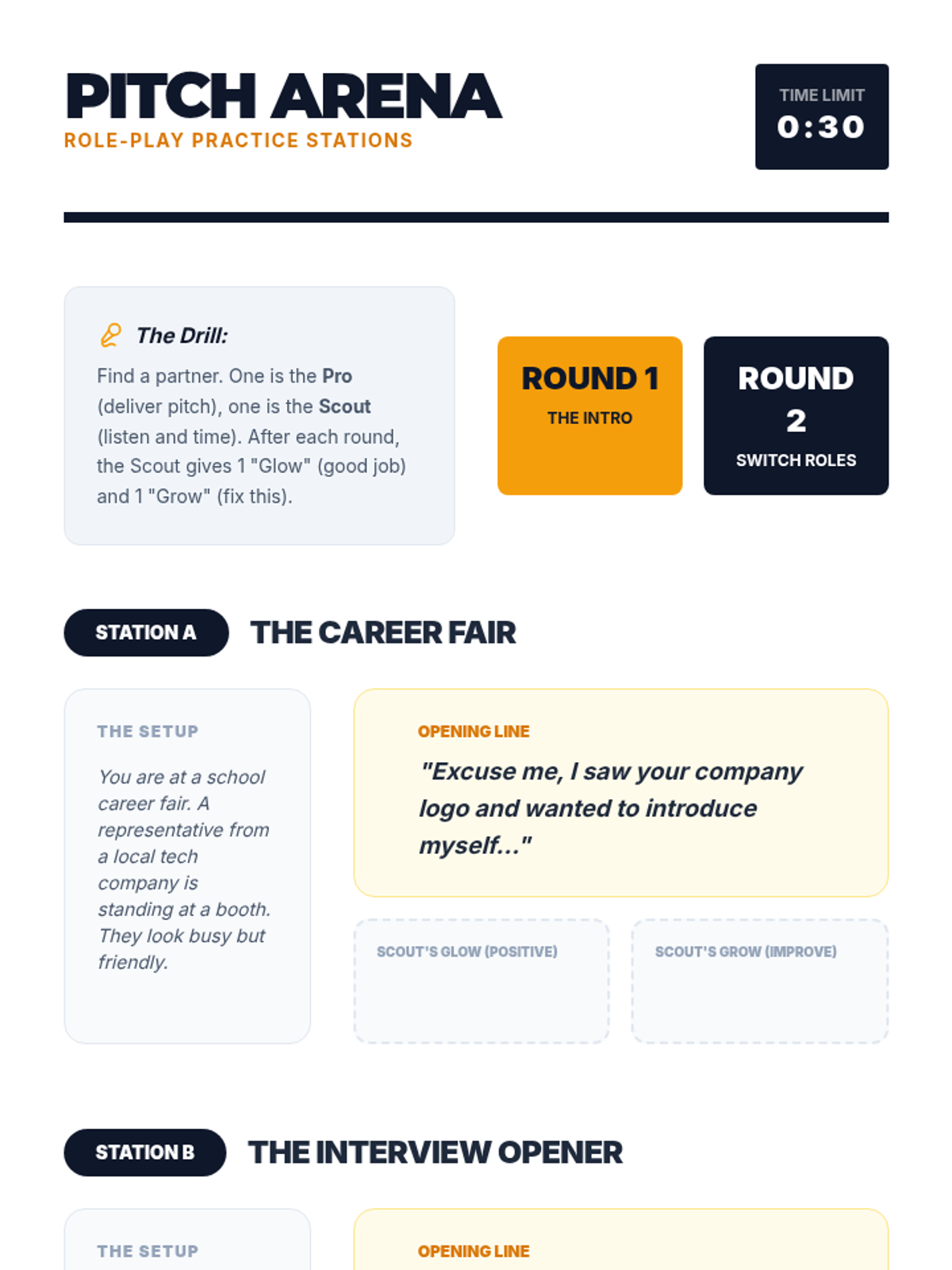
A 45-minute lesson focusing on adapting public speaking skills for professional environments, including elevator pitches and professional presence.
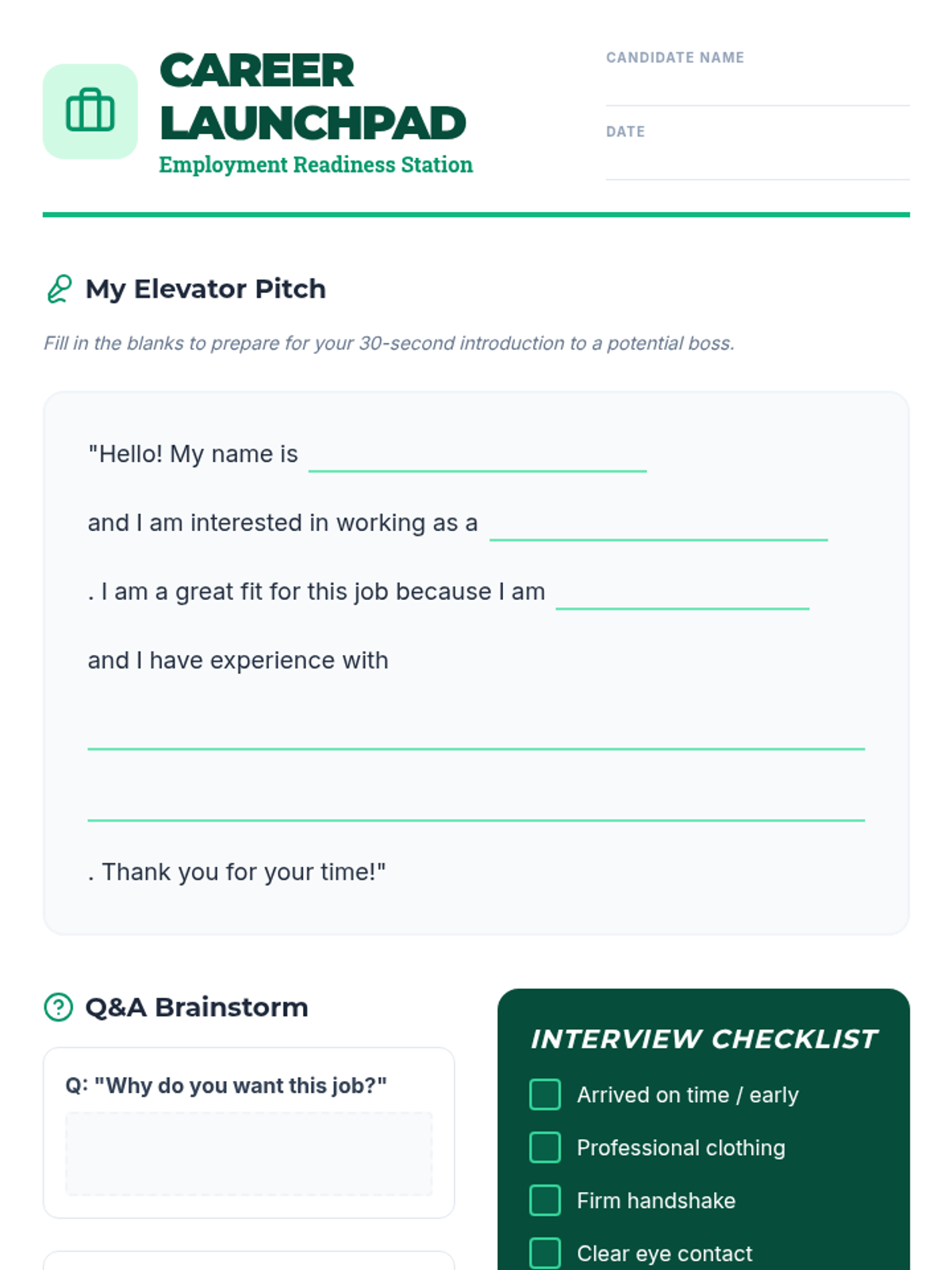
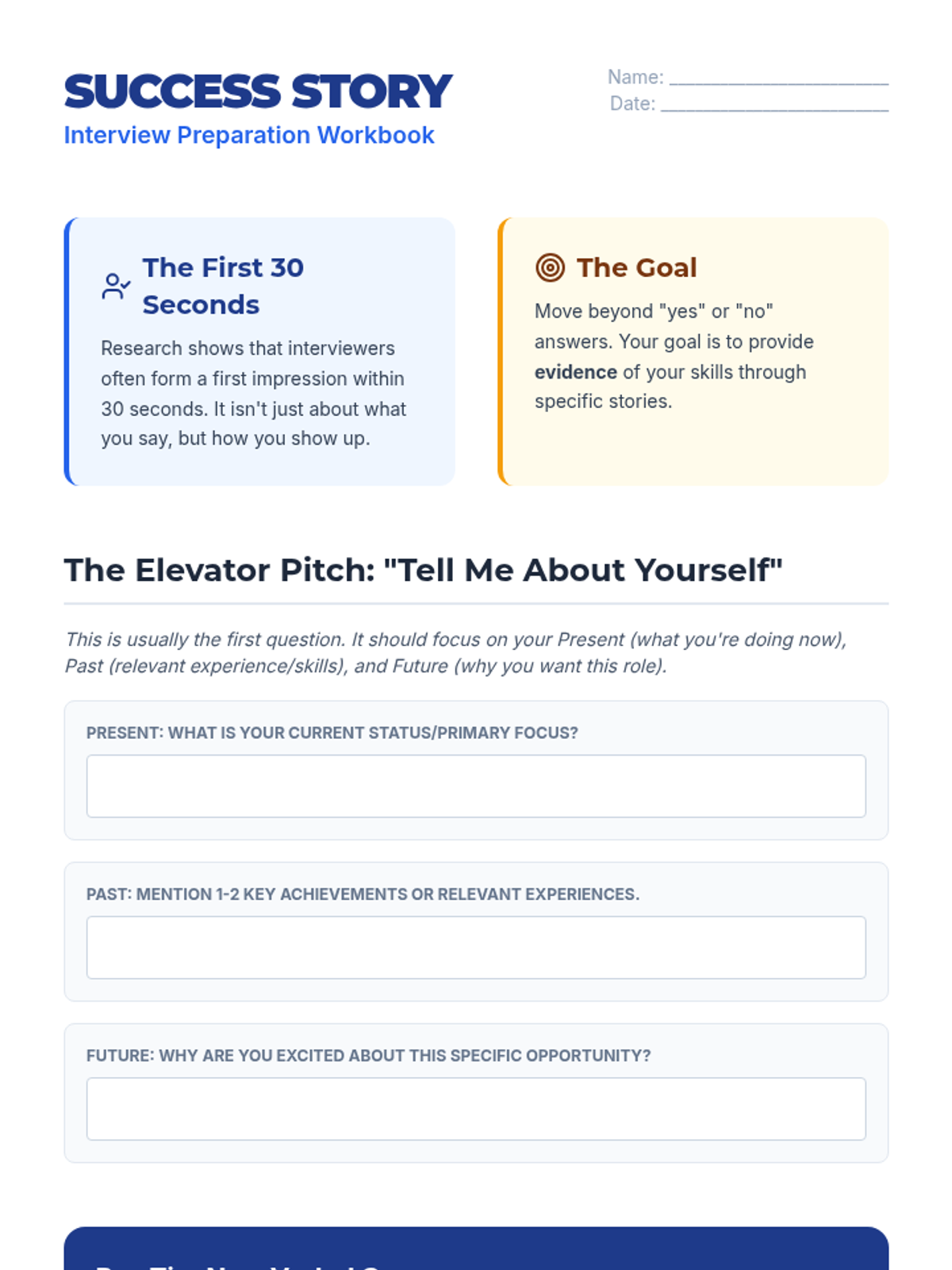
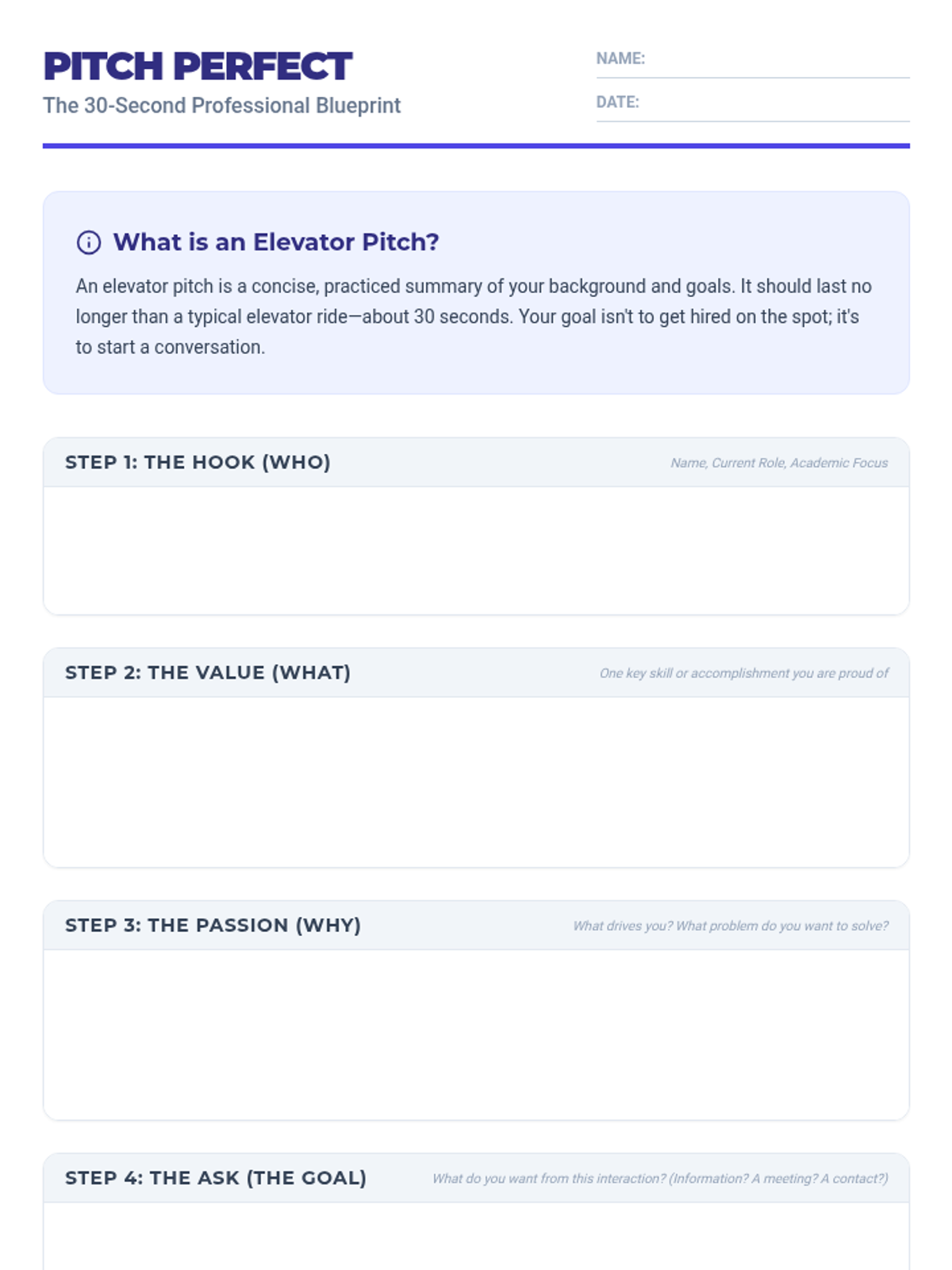
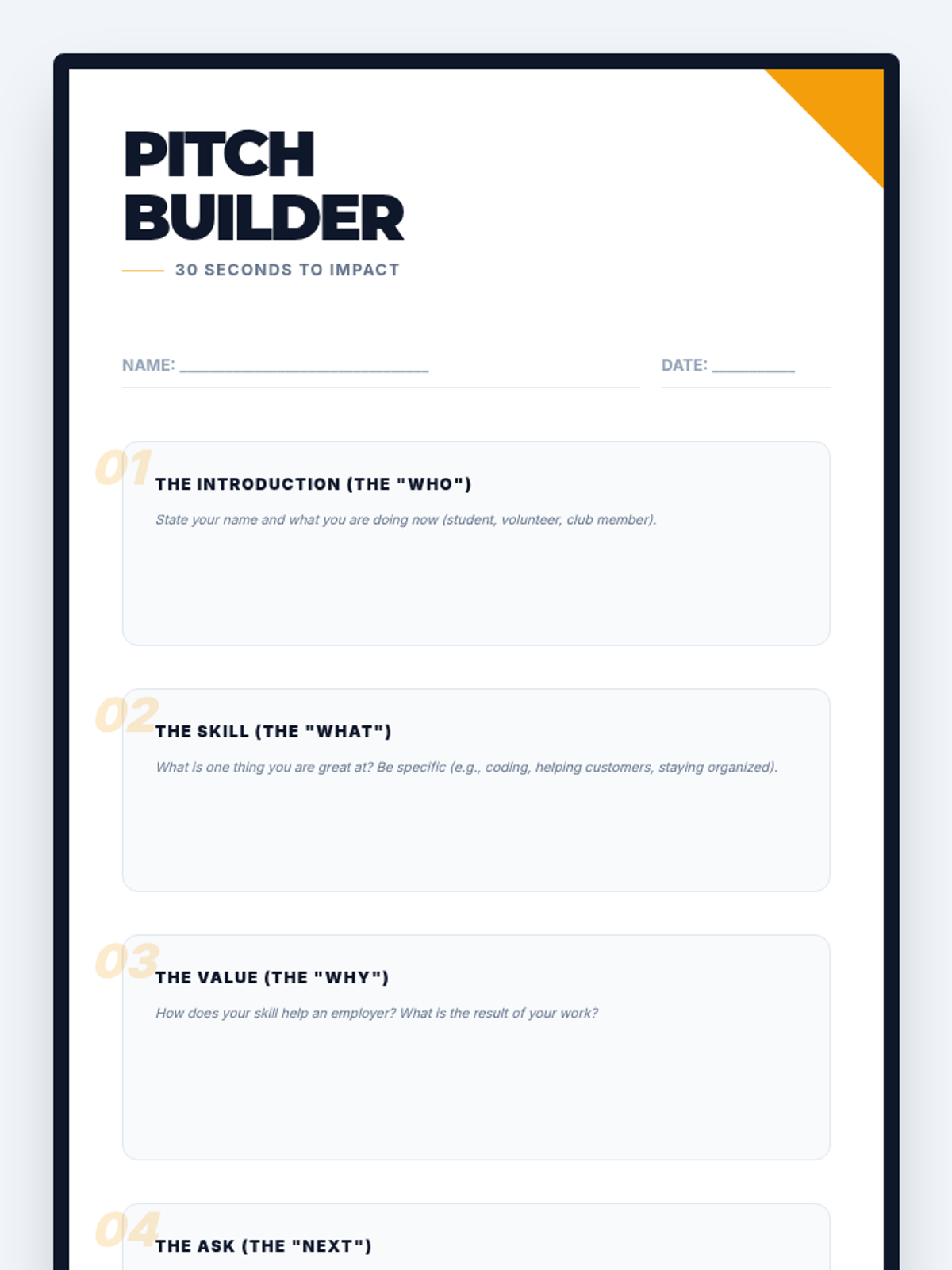
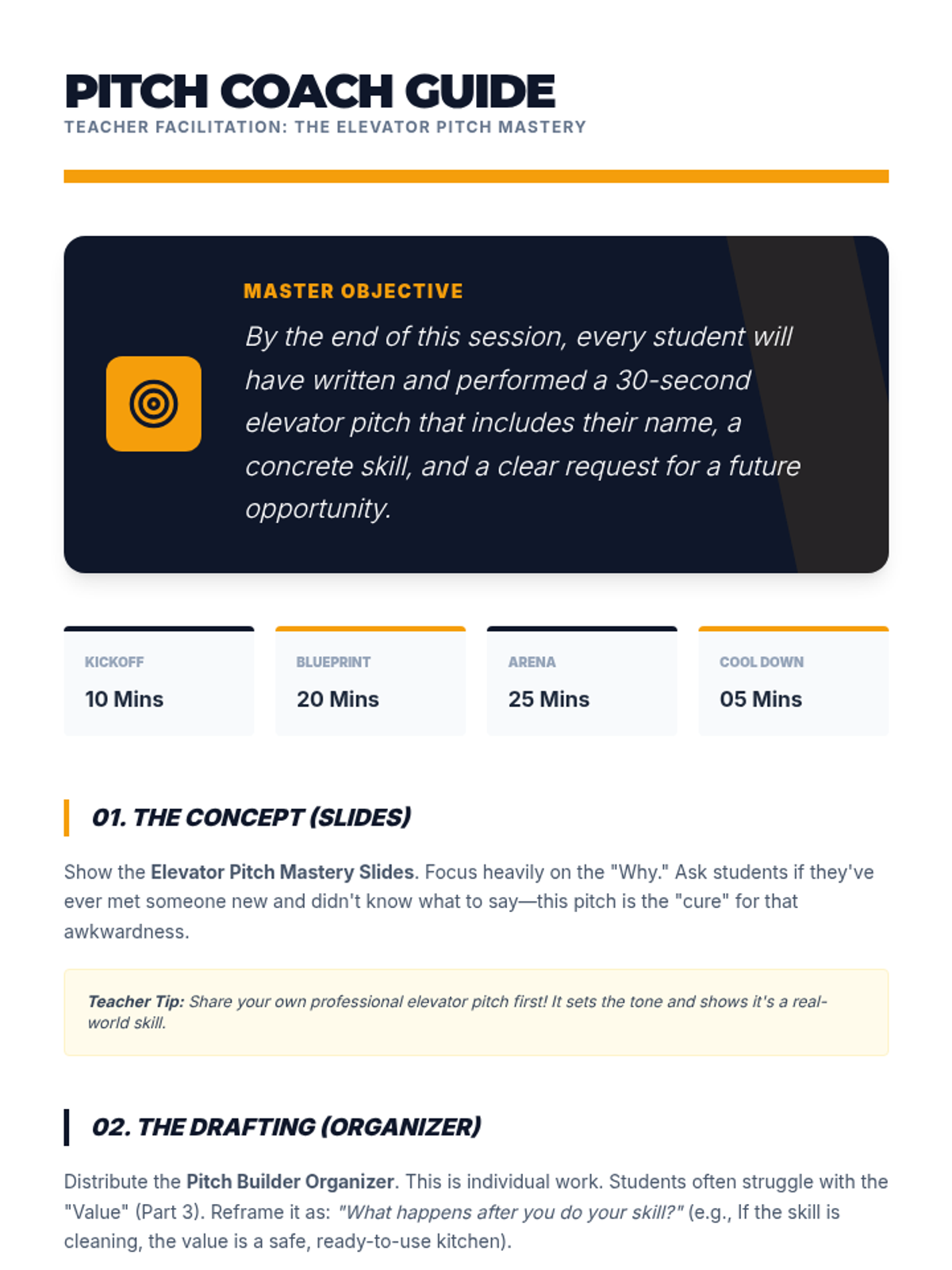
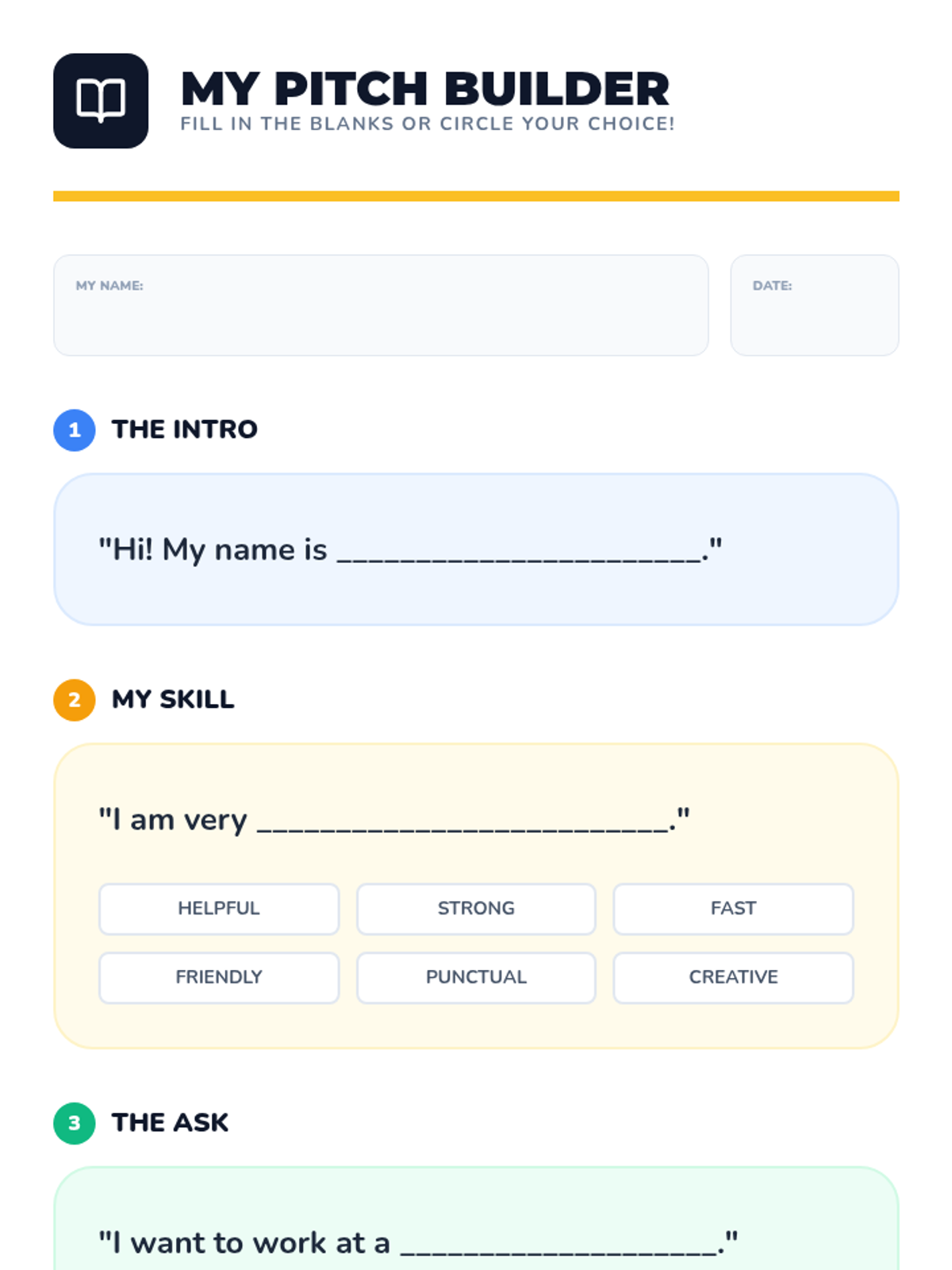
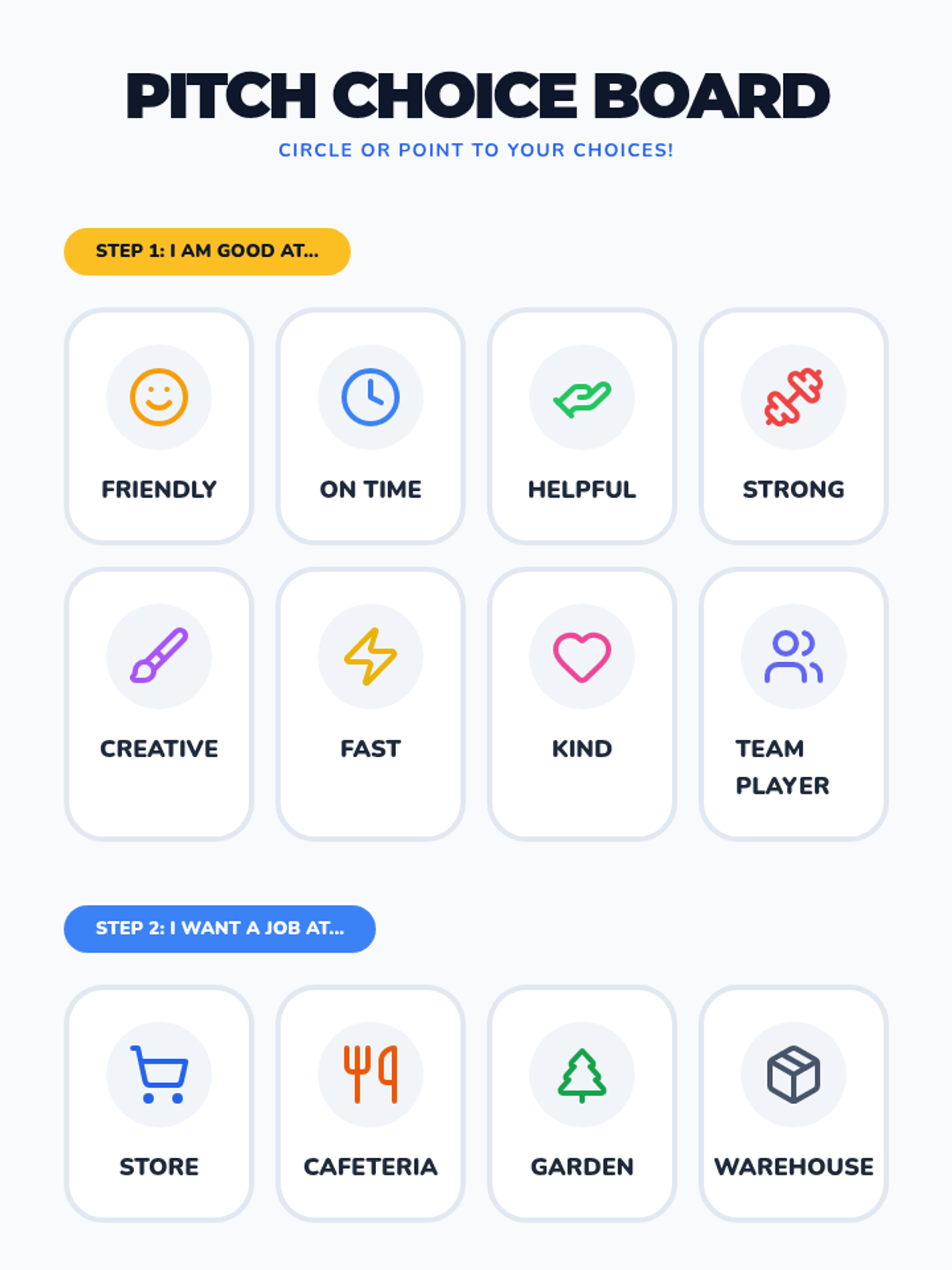
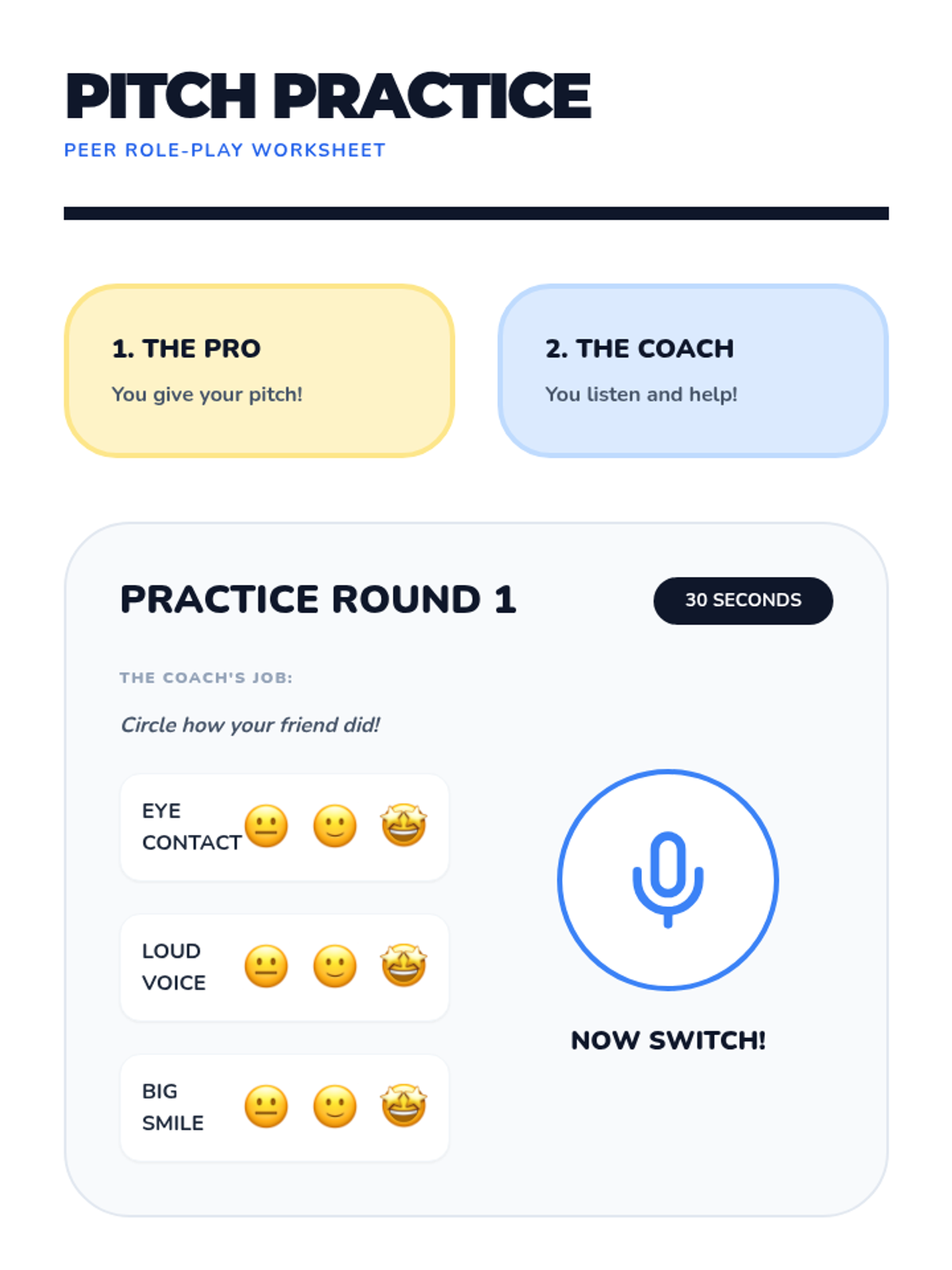
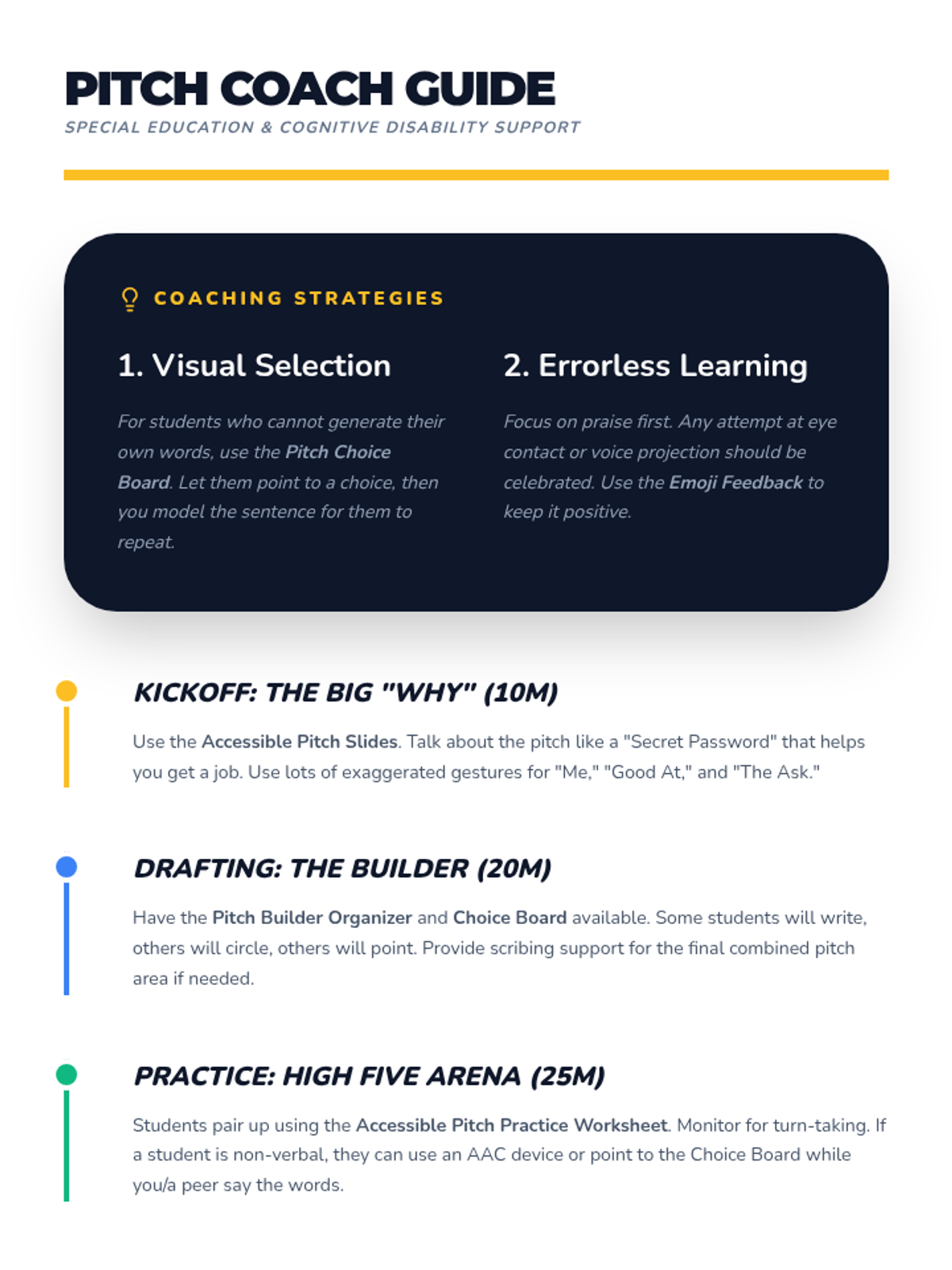
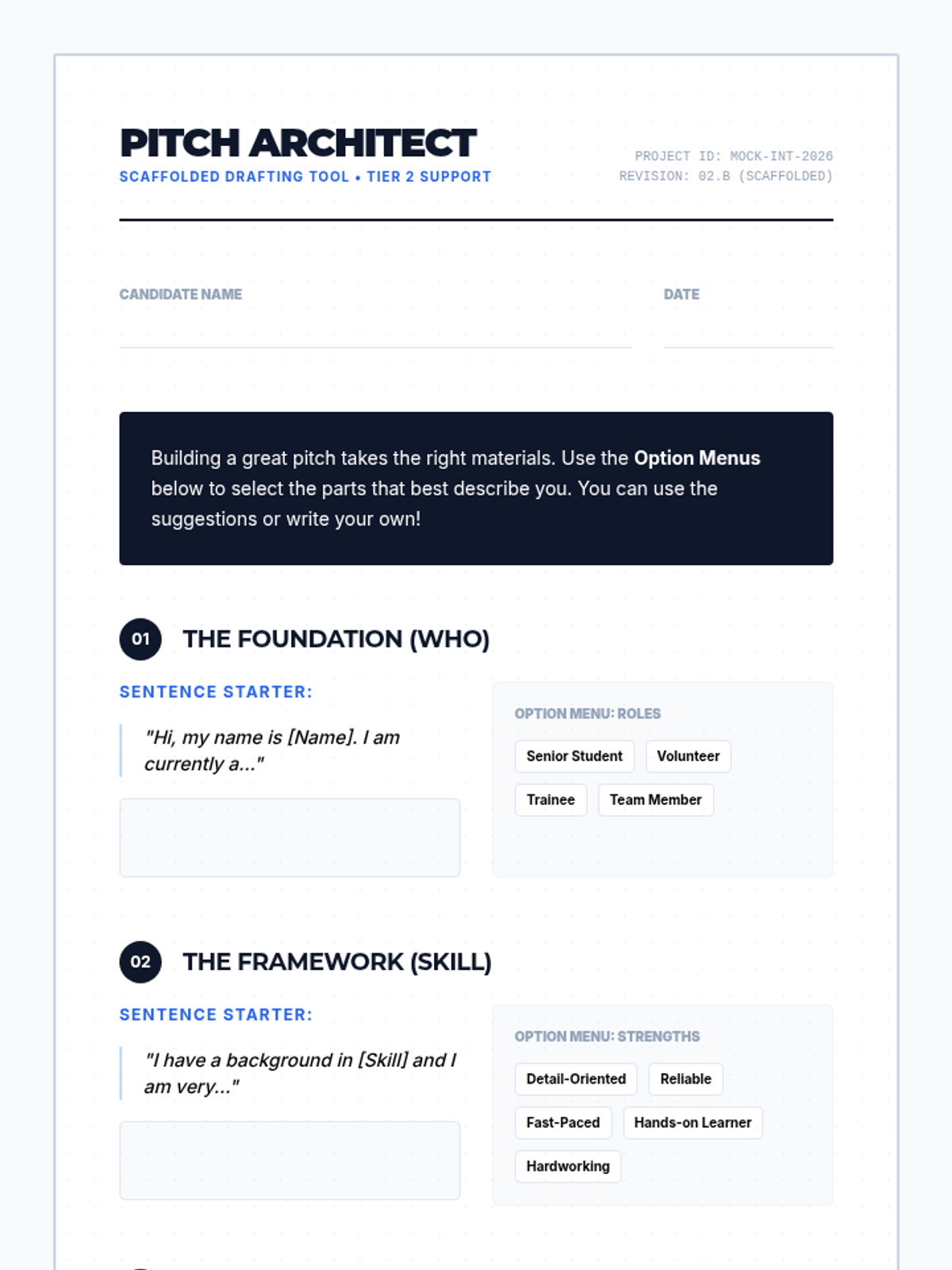
A specialized lesson focused on mastering the elevator pitch. Students learn to craft a concise, compelling introduction that highlights their skills, goals, and unique value for professional networking and interviews.
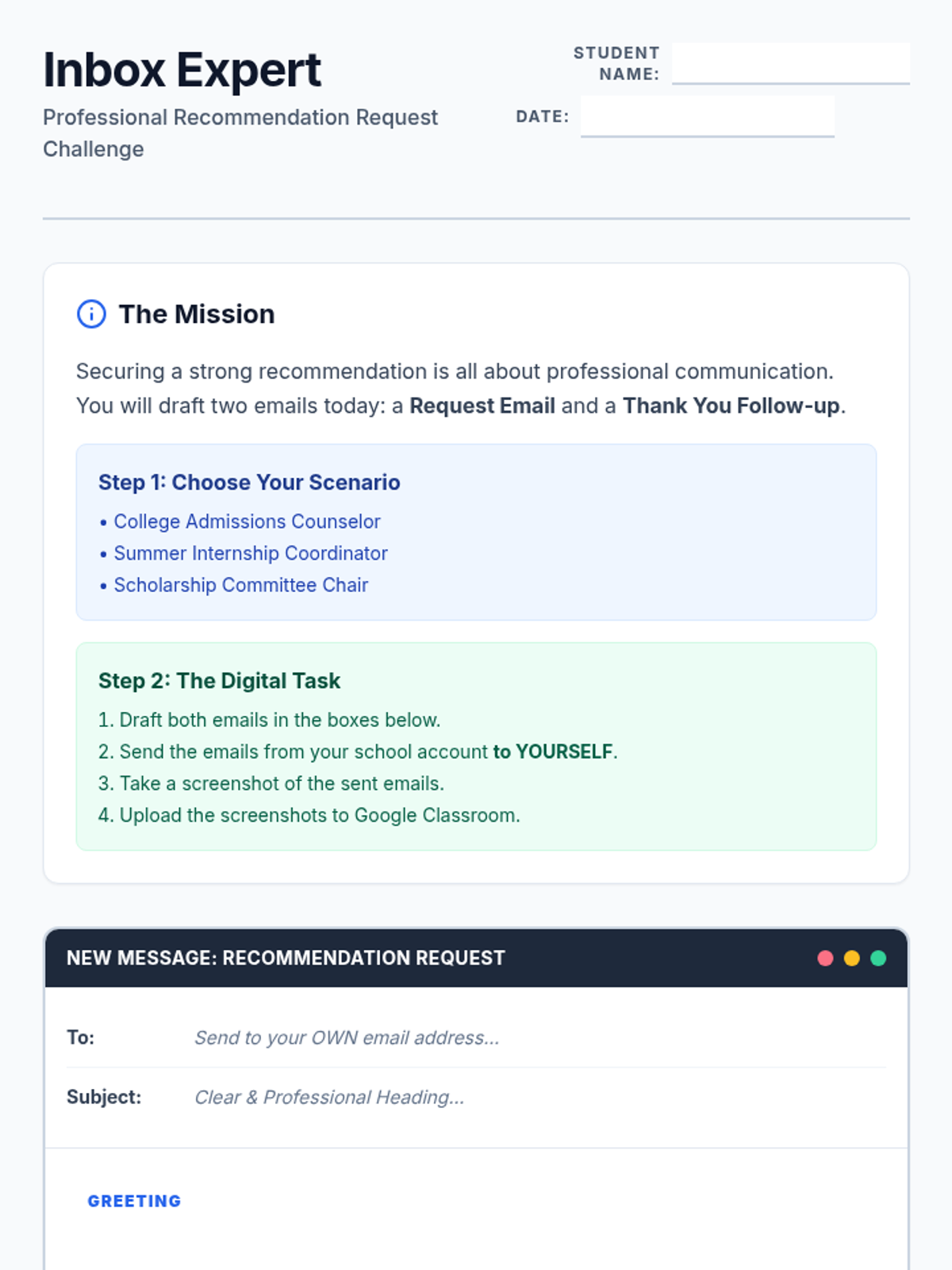
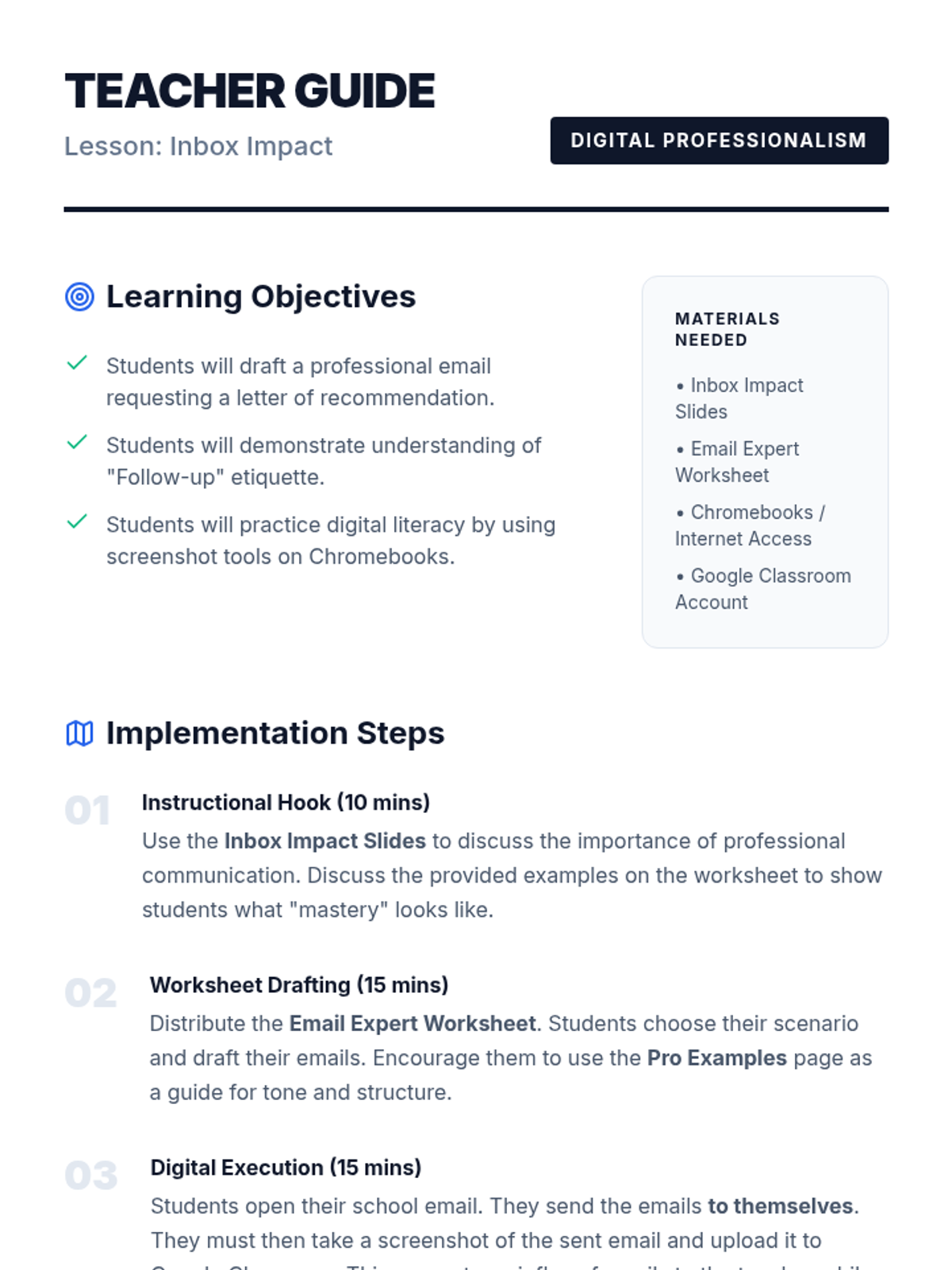
A lesson on drafting and sending professional emails to request letters of recommendation for college, internships, or scholarships. Students learn proper email etiquette, structure, and follow-up procedures.
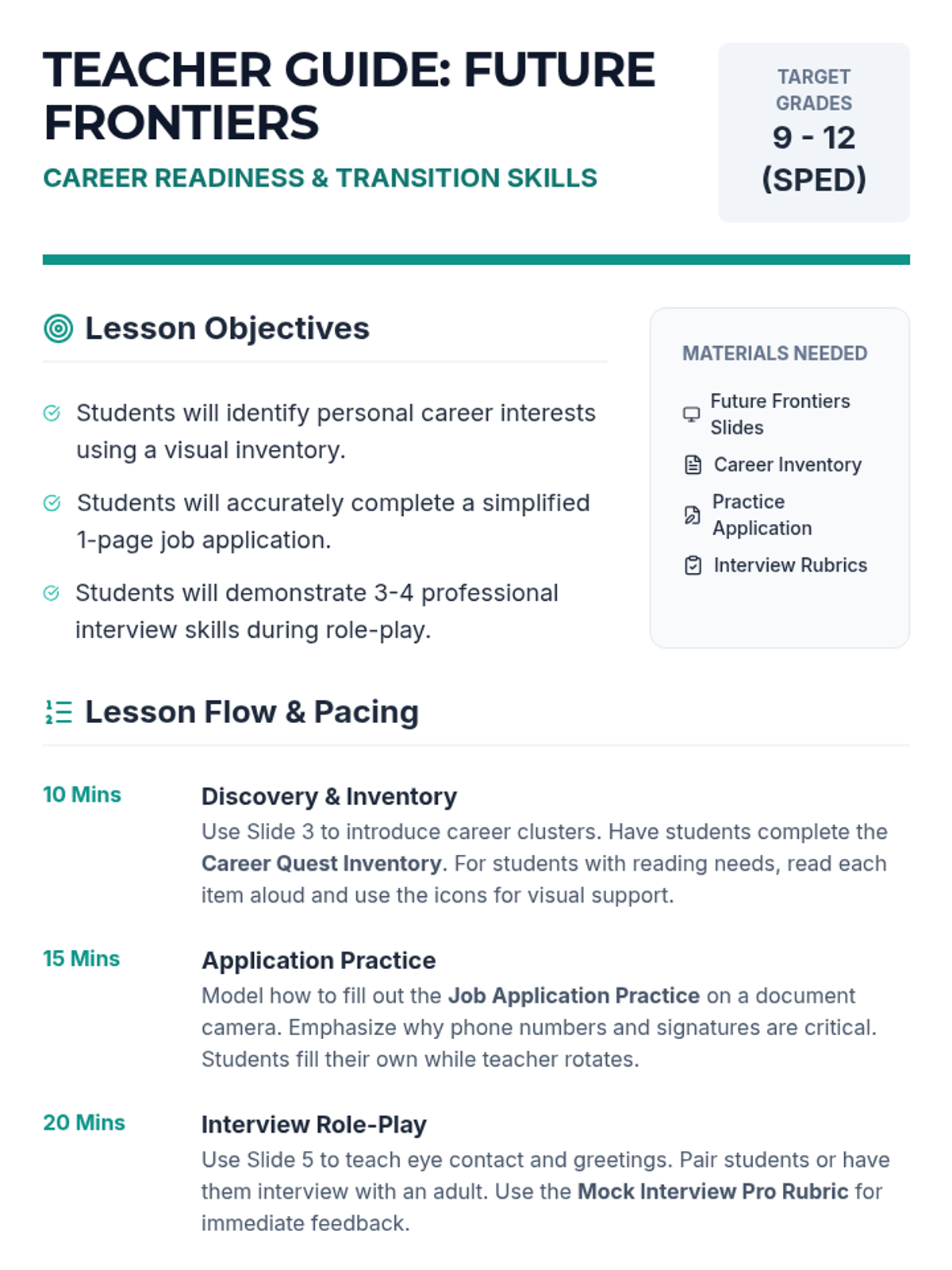
A comprehensive transition skills lesson focusing on career discovery, job application proficiency, and interview preparation for high school students with diverse learning needs.
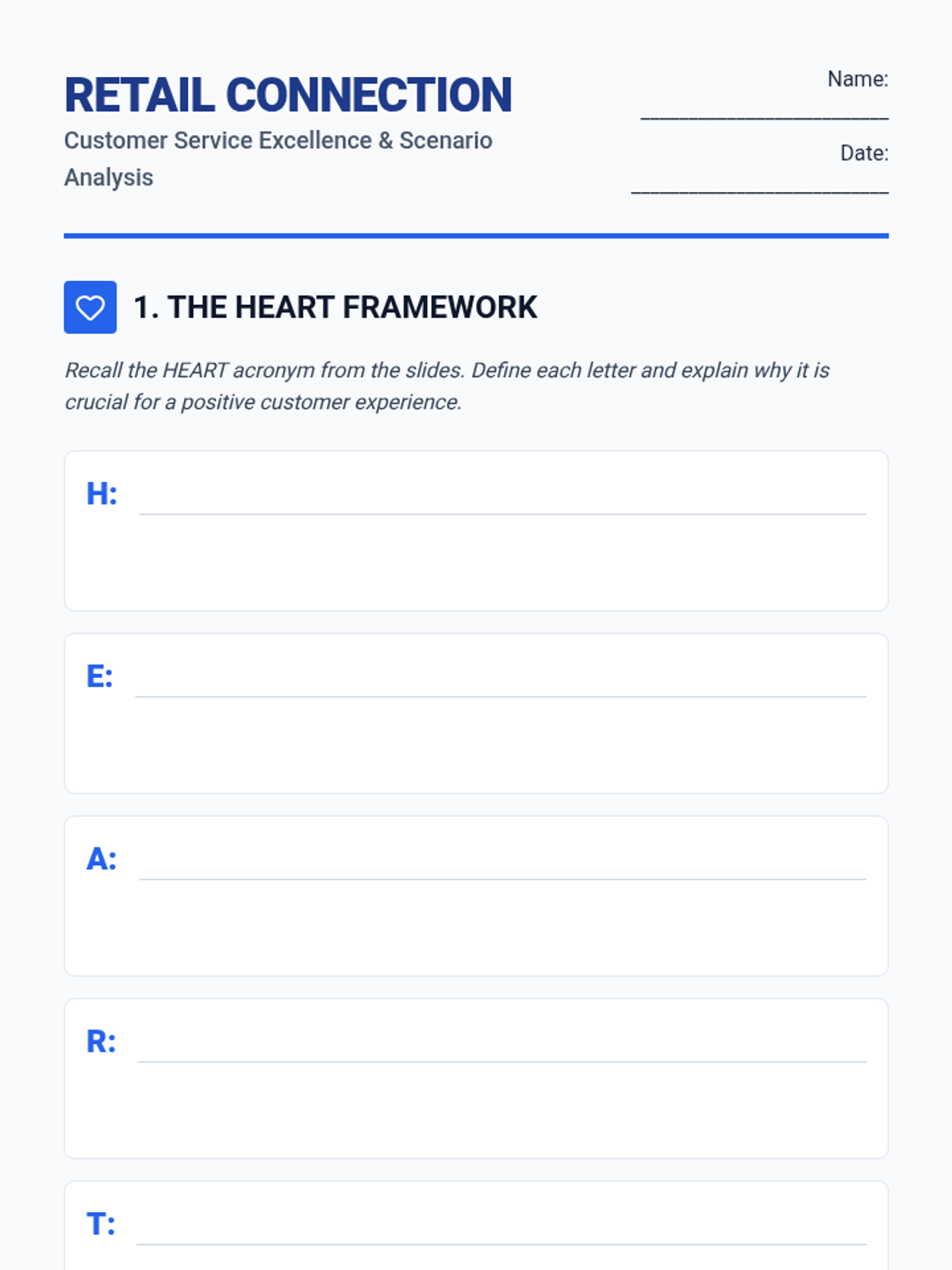
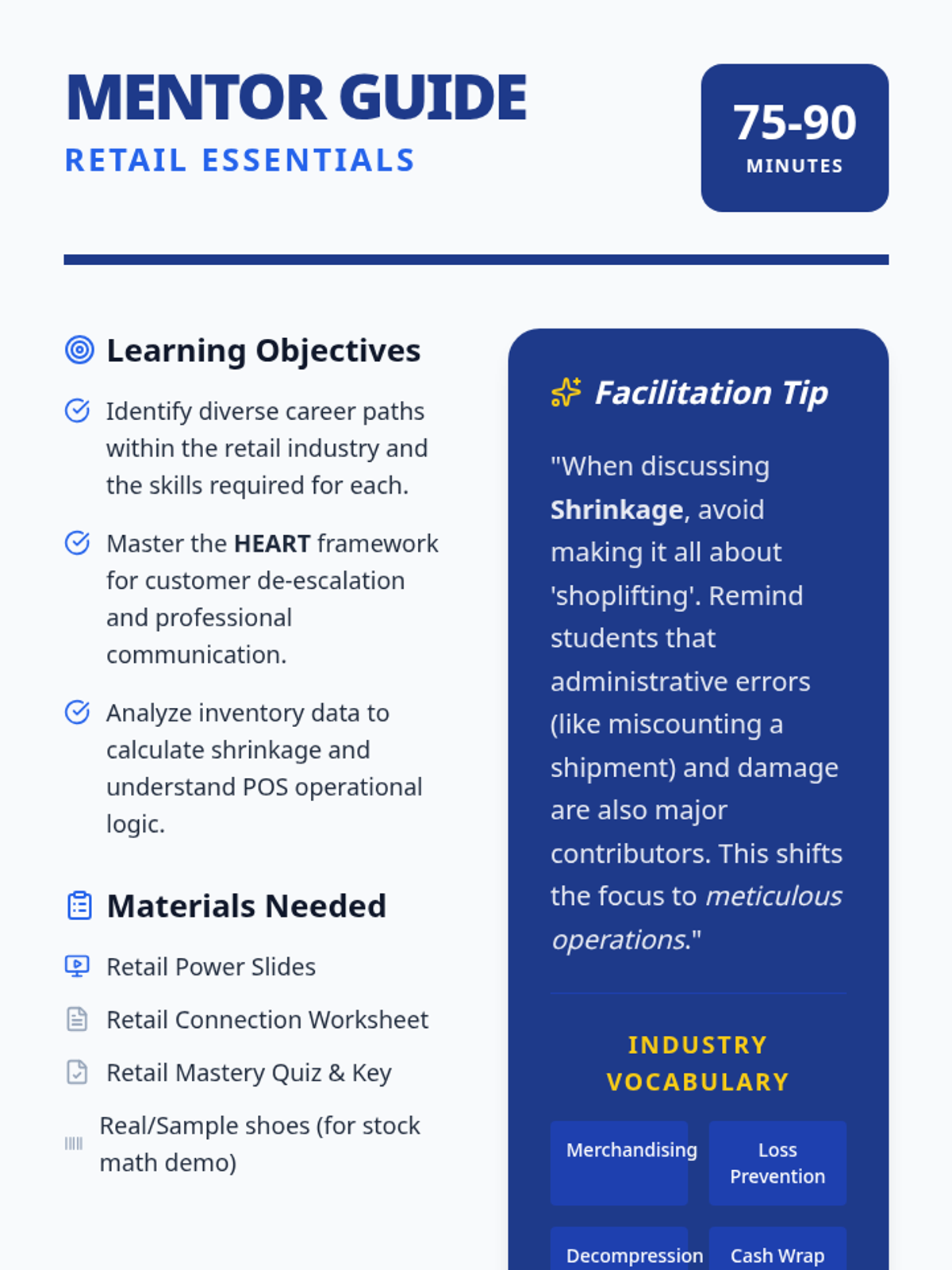
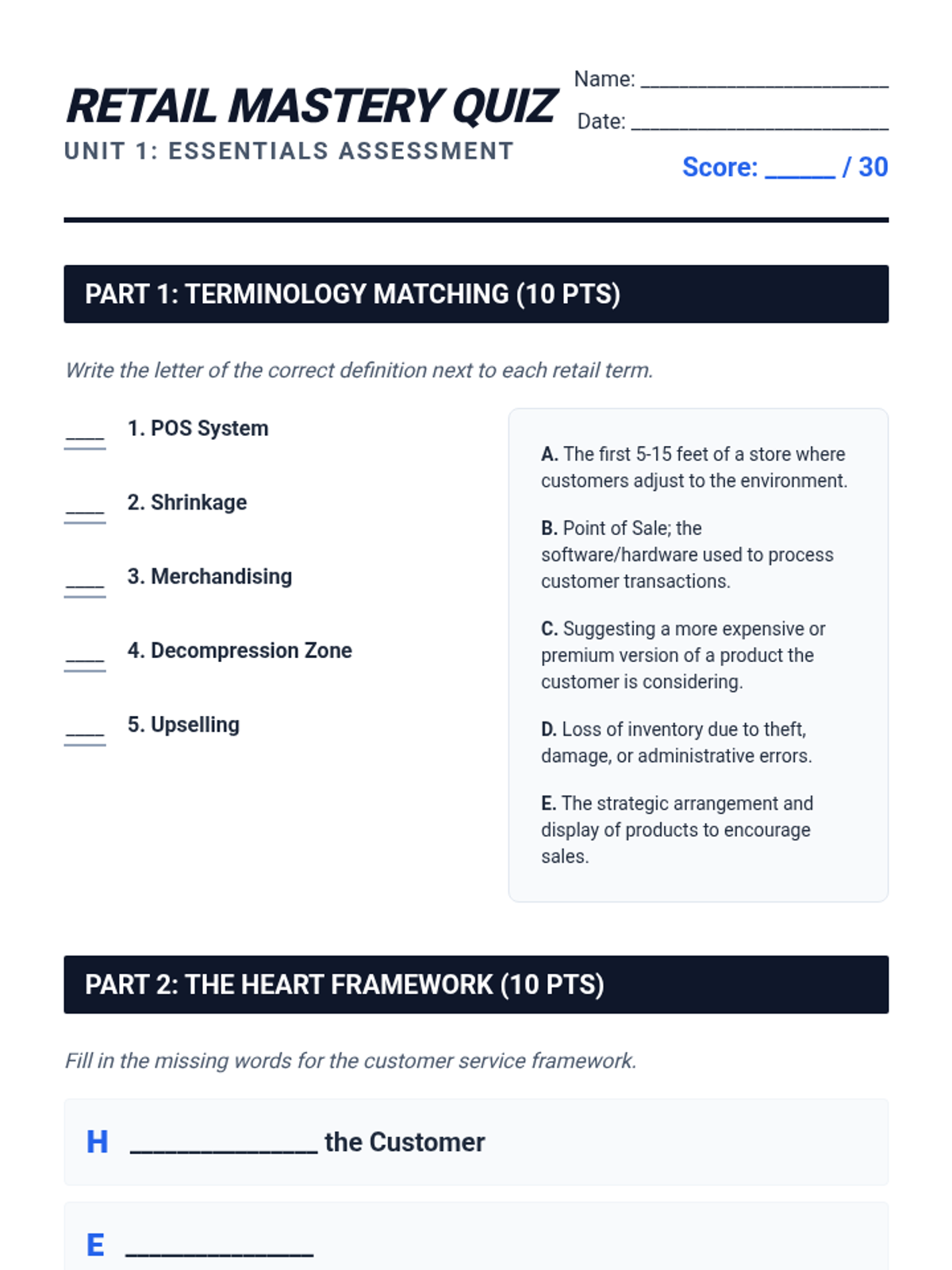
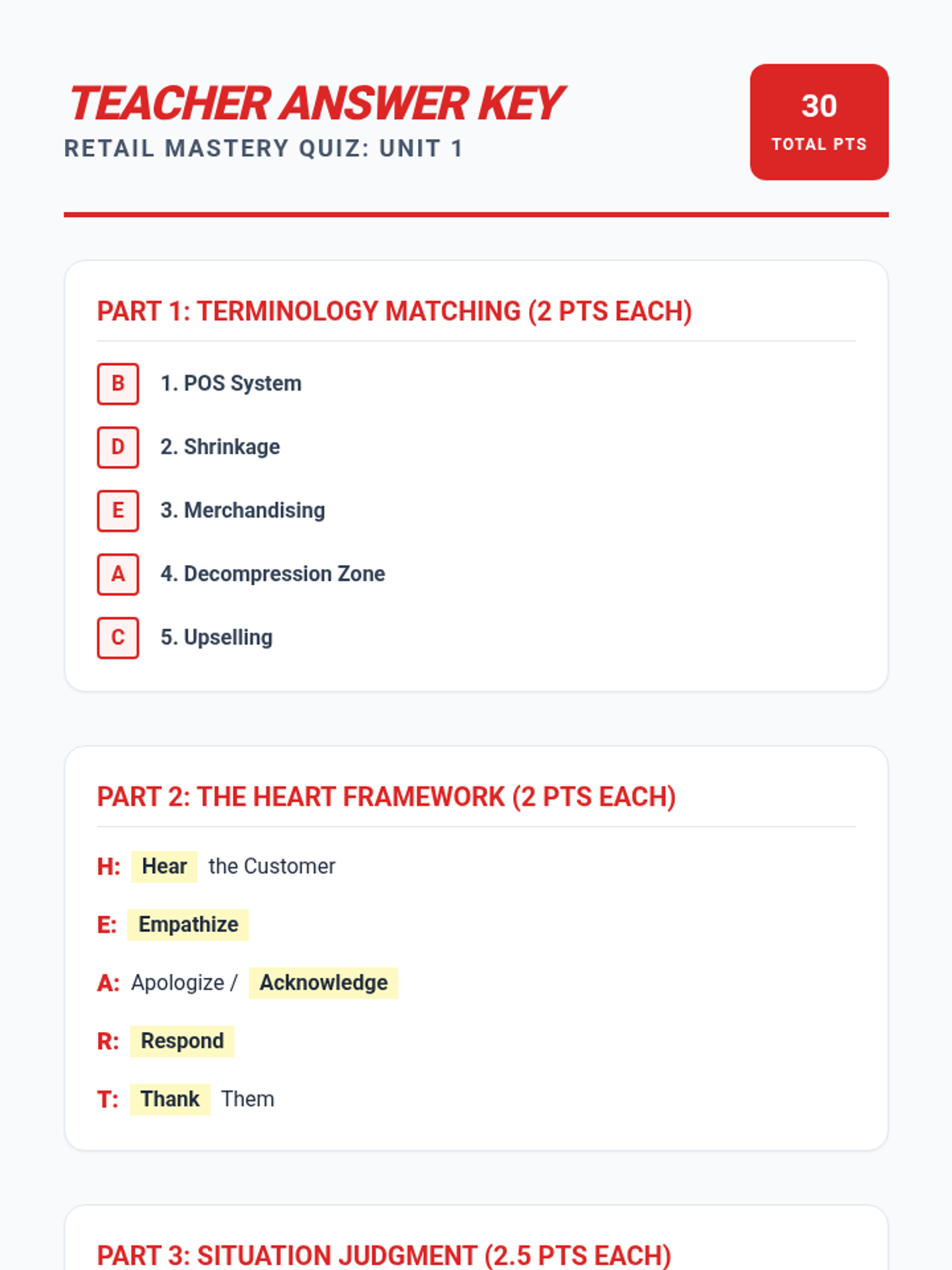
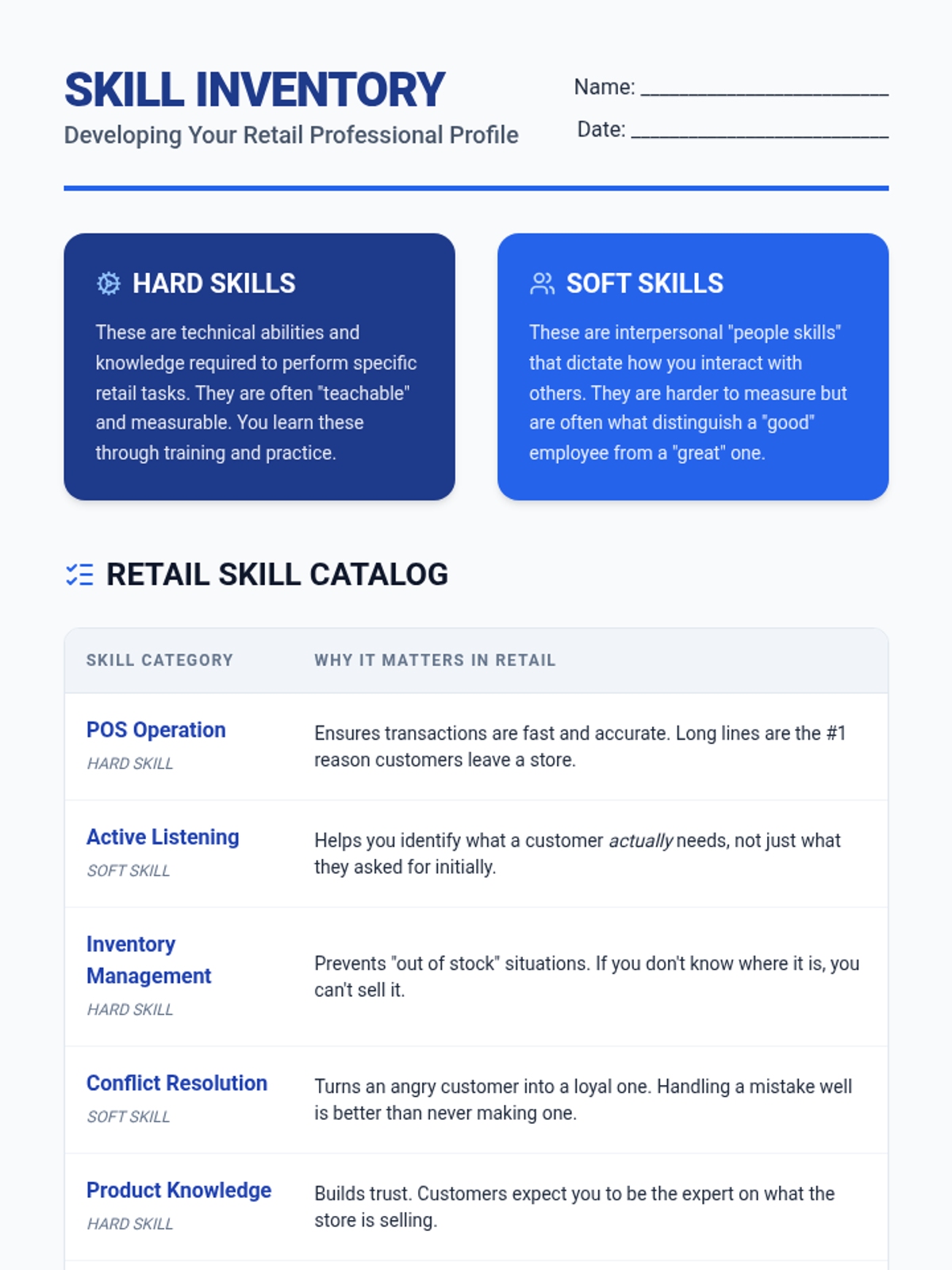
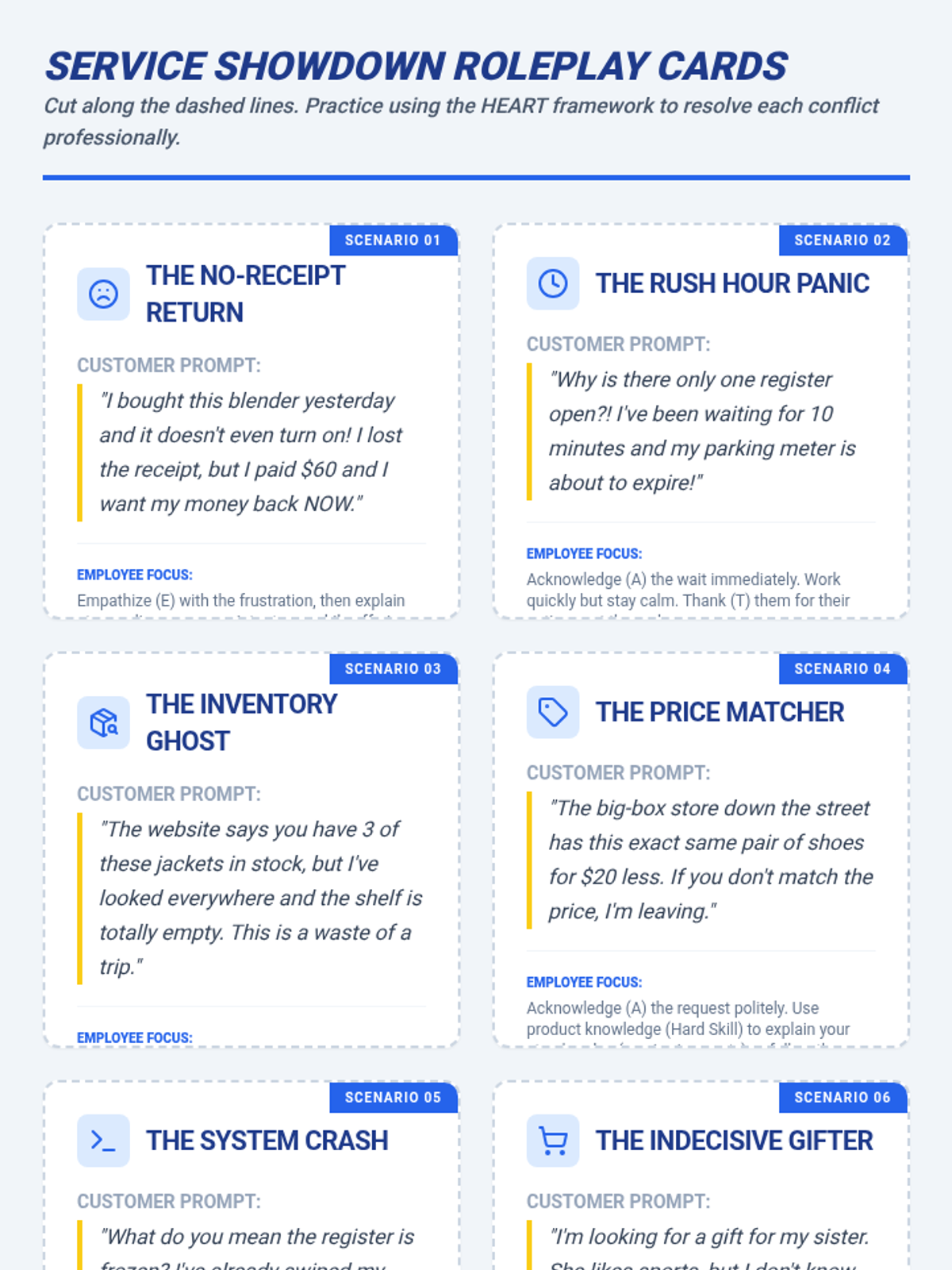
An introduction to the foundational skills of the retail industry, covering customer service techniques, cash handling, inventory management, and the professional communication required for successful sales.
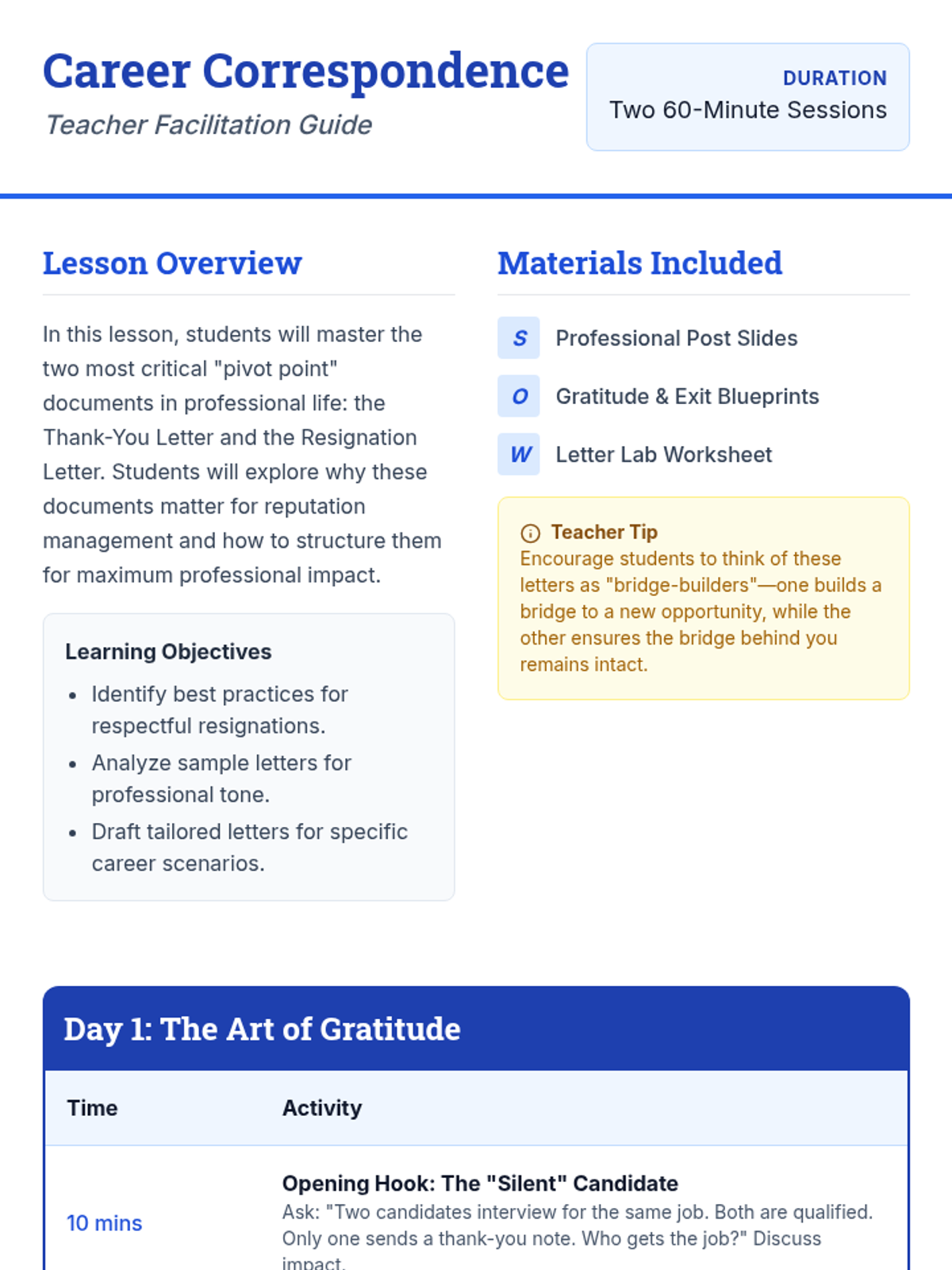
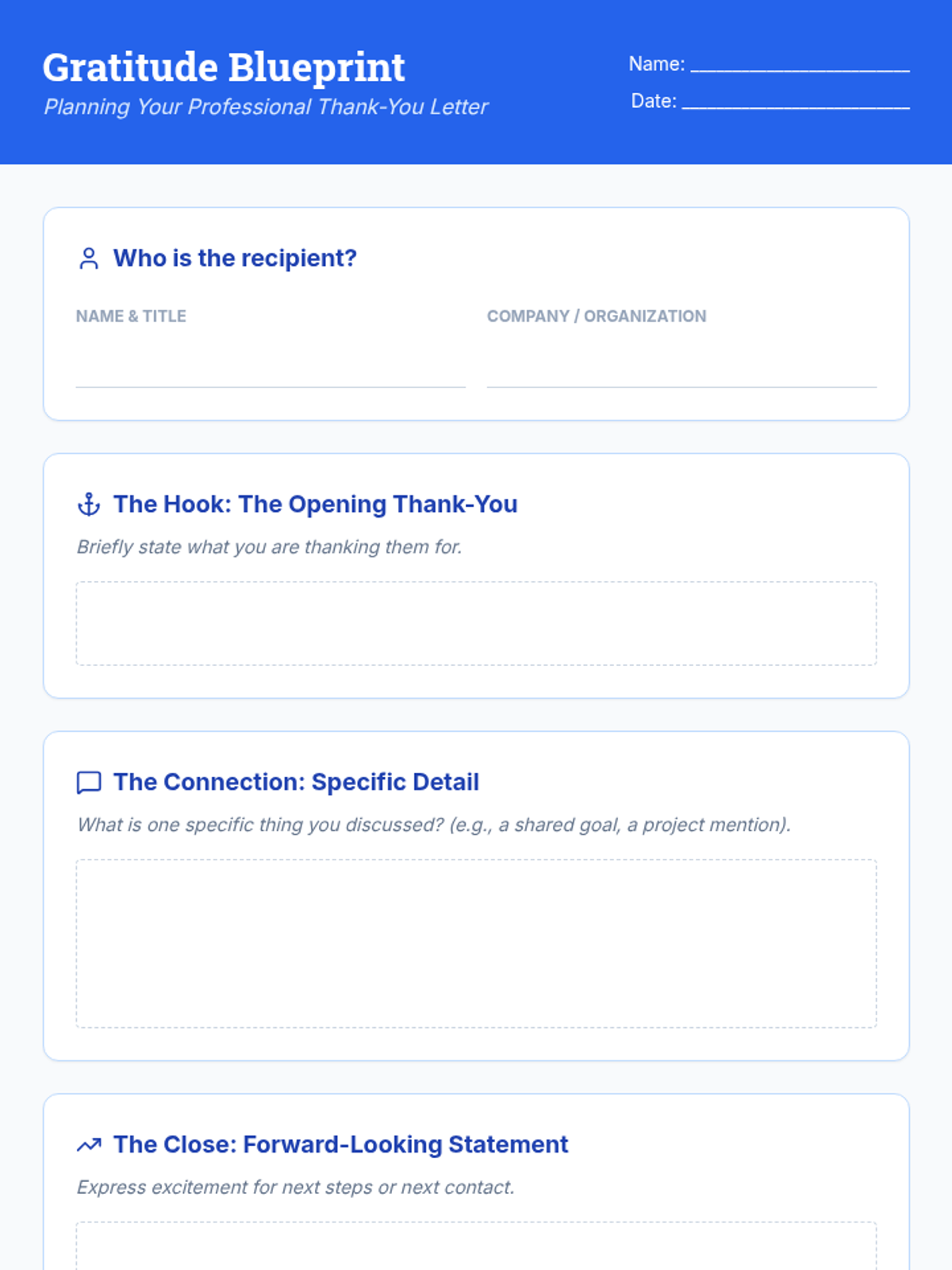
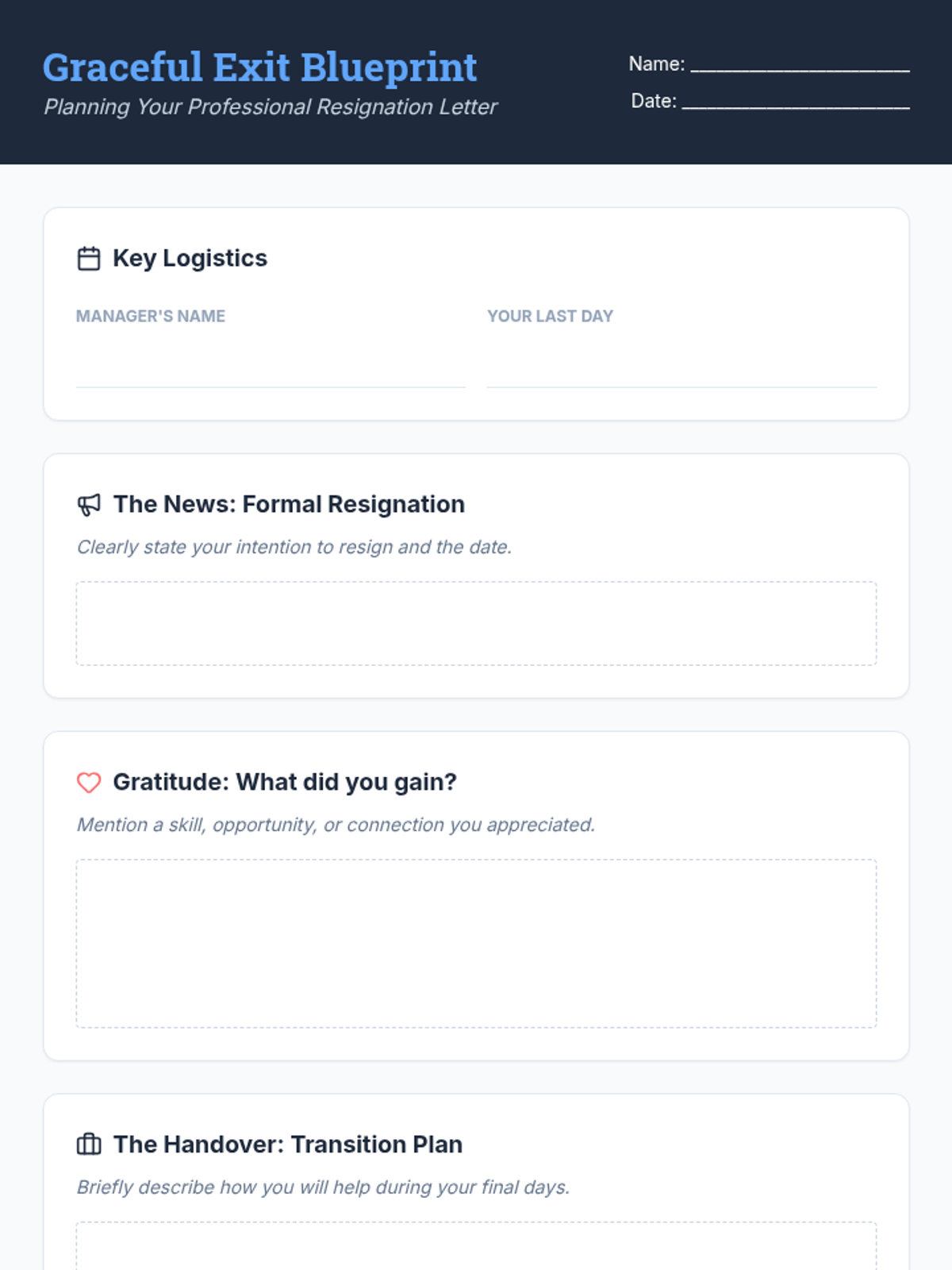
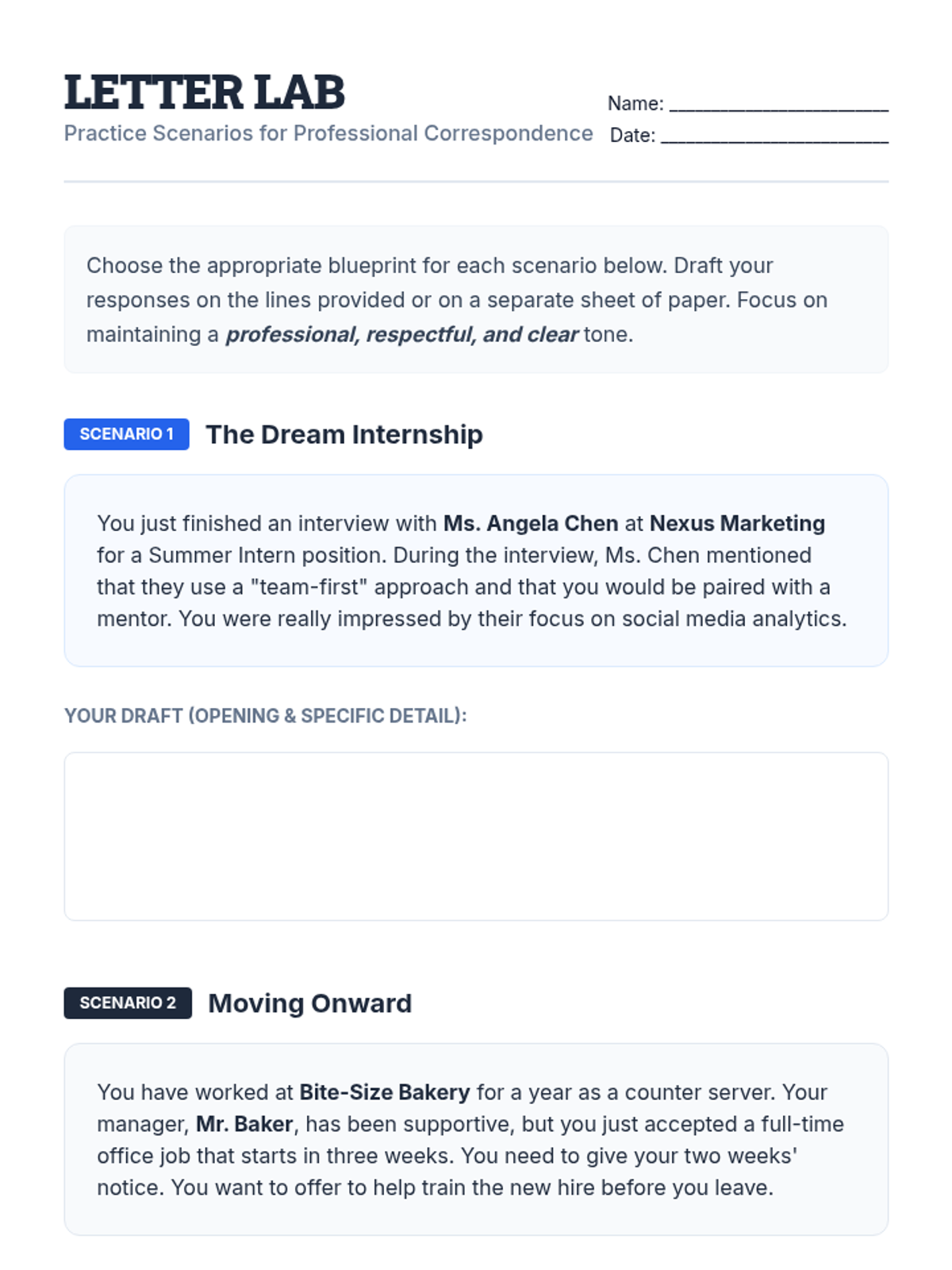
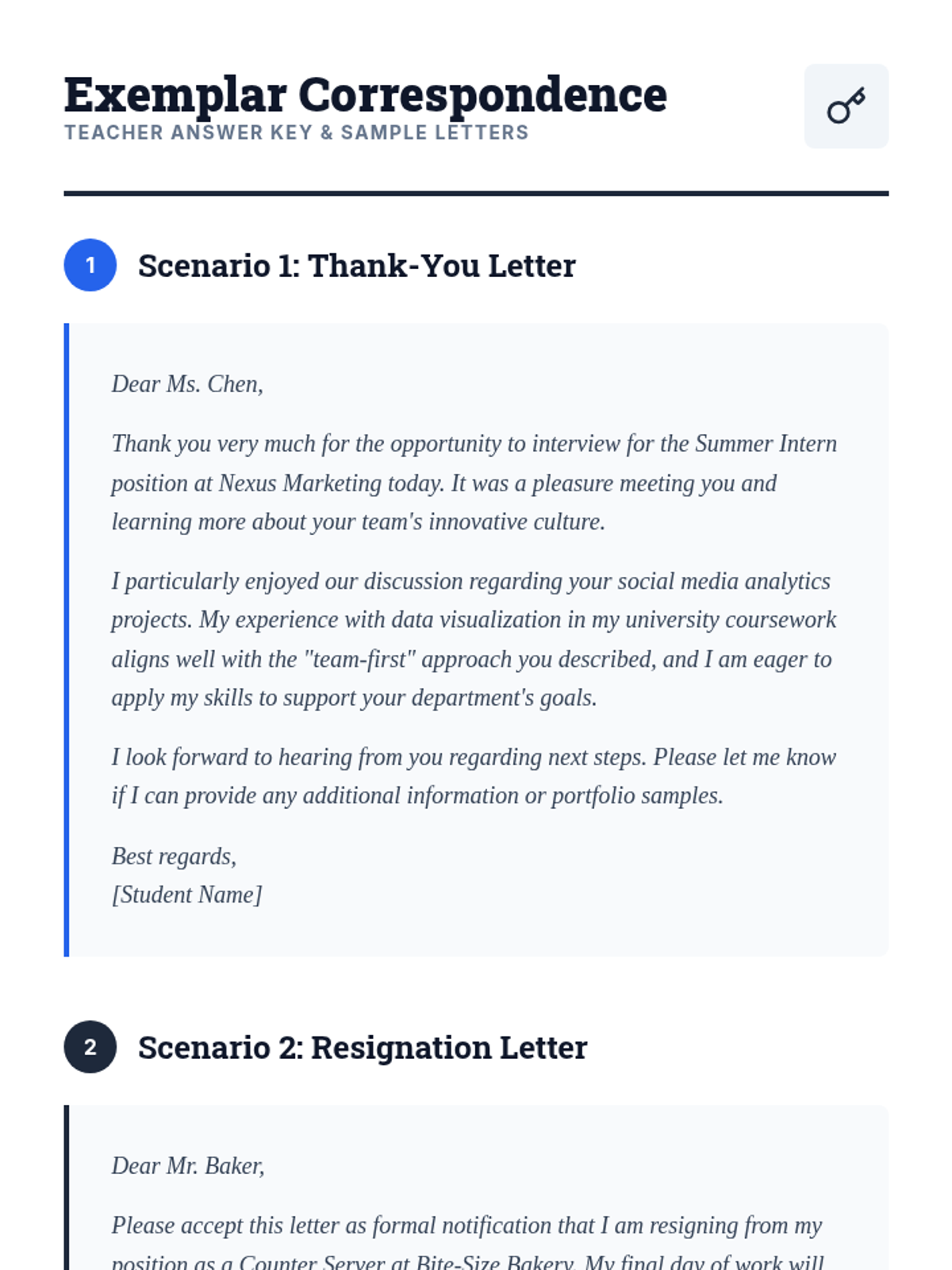
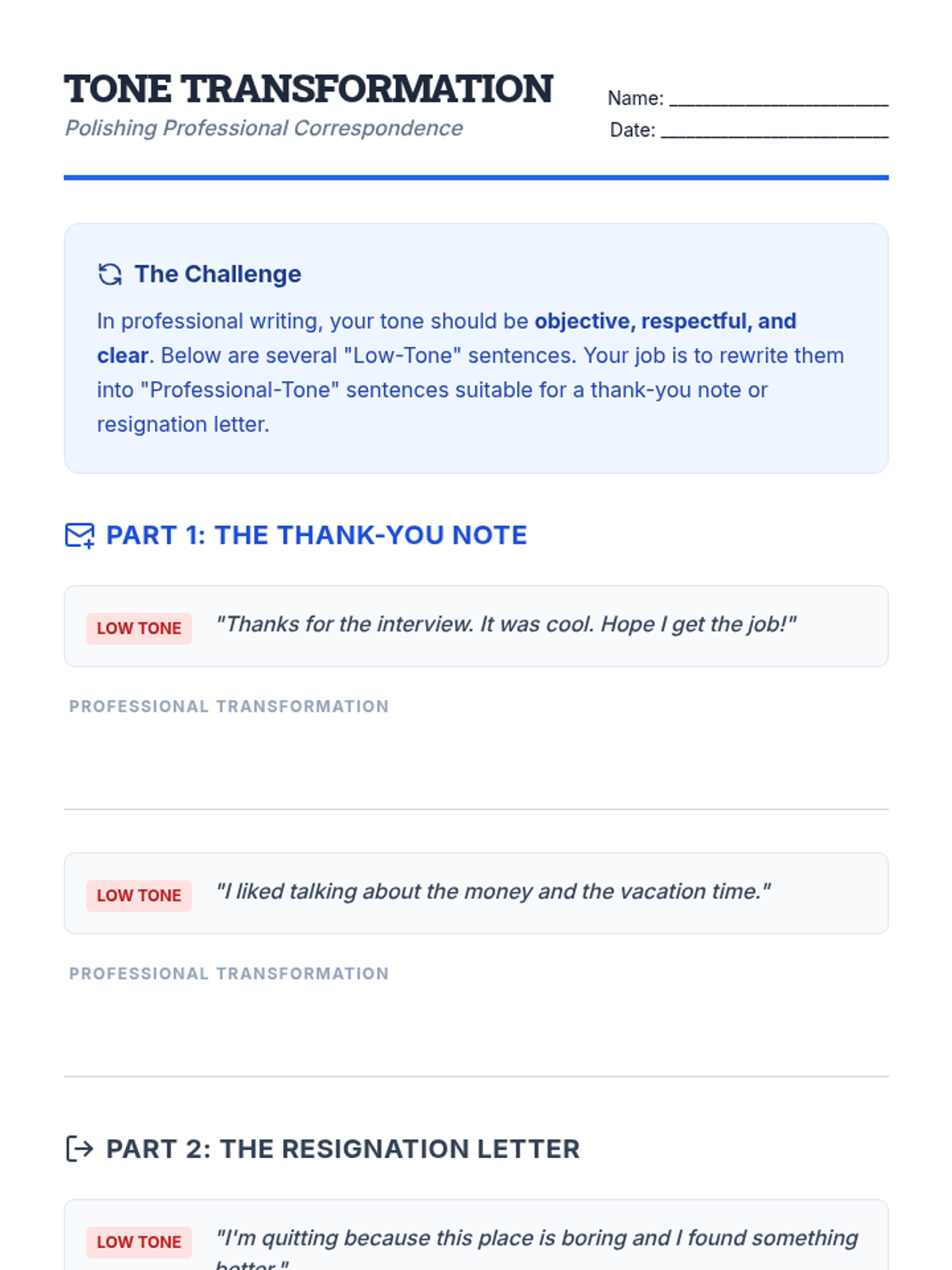
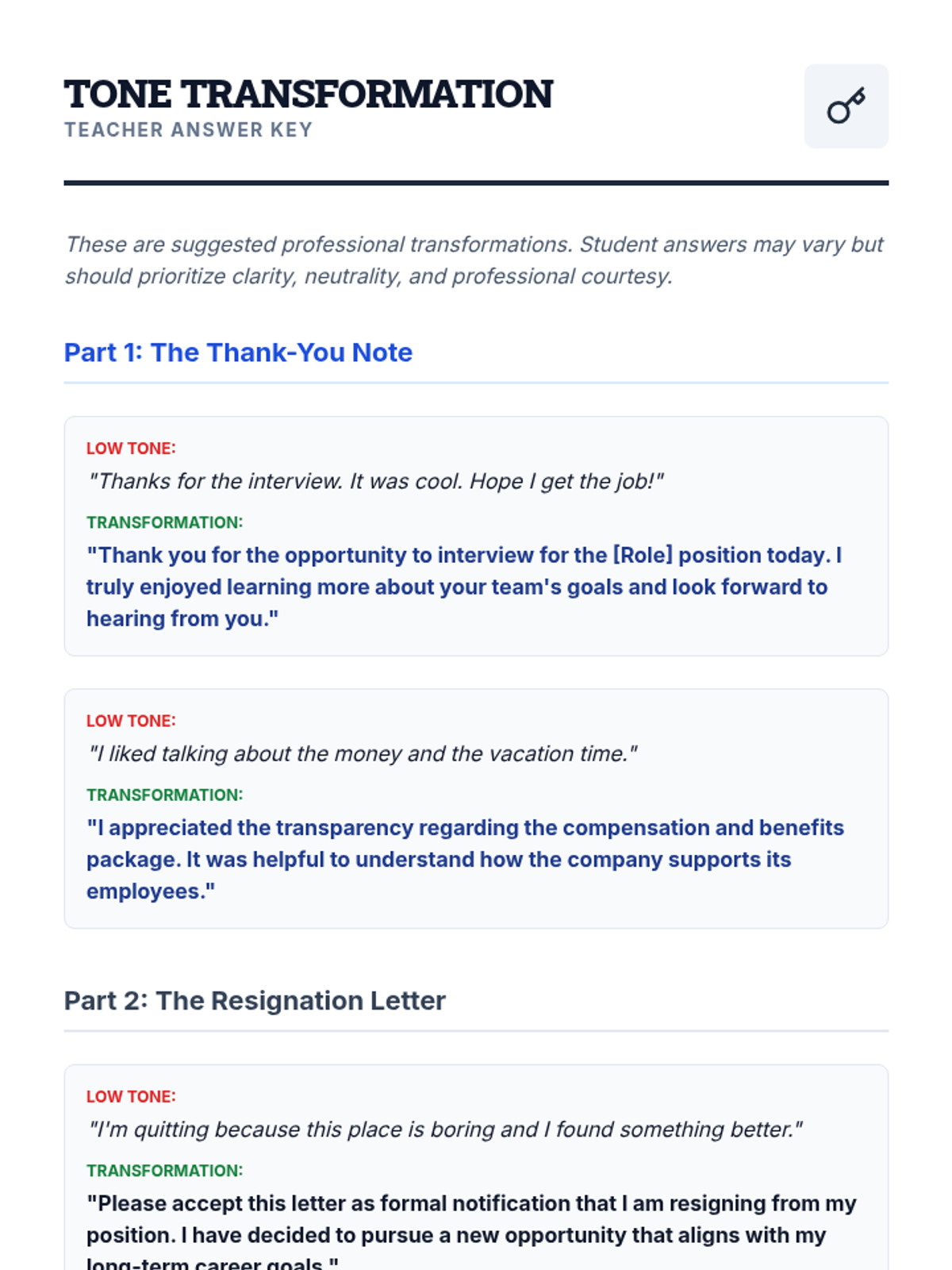
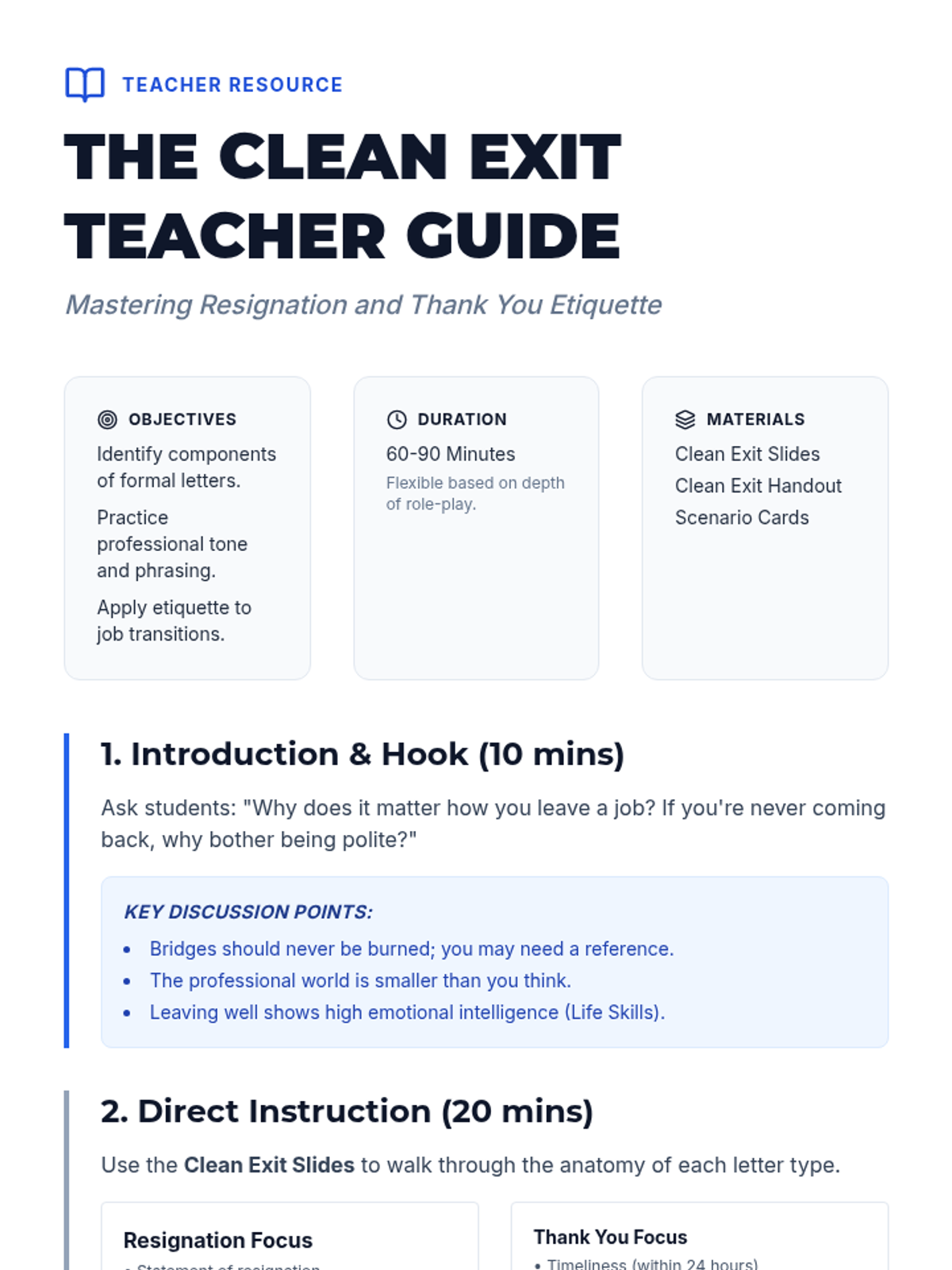
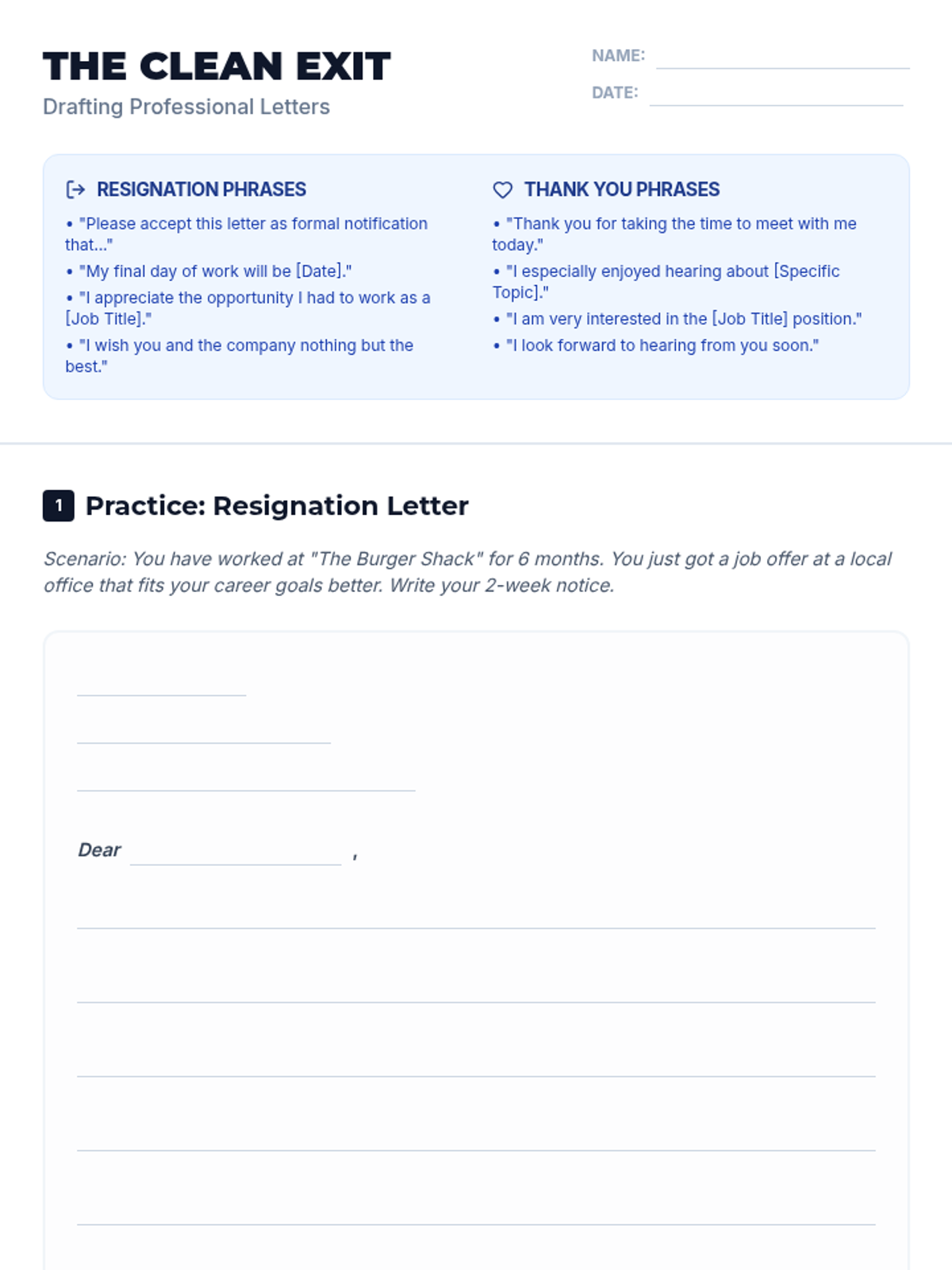
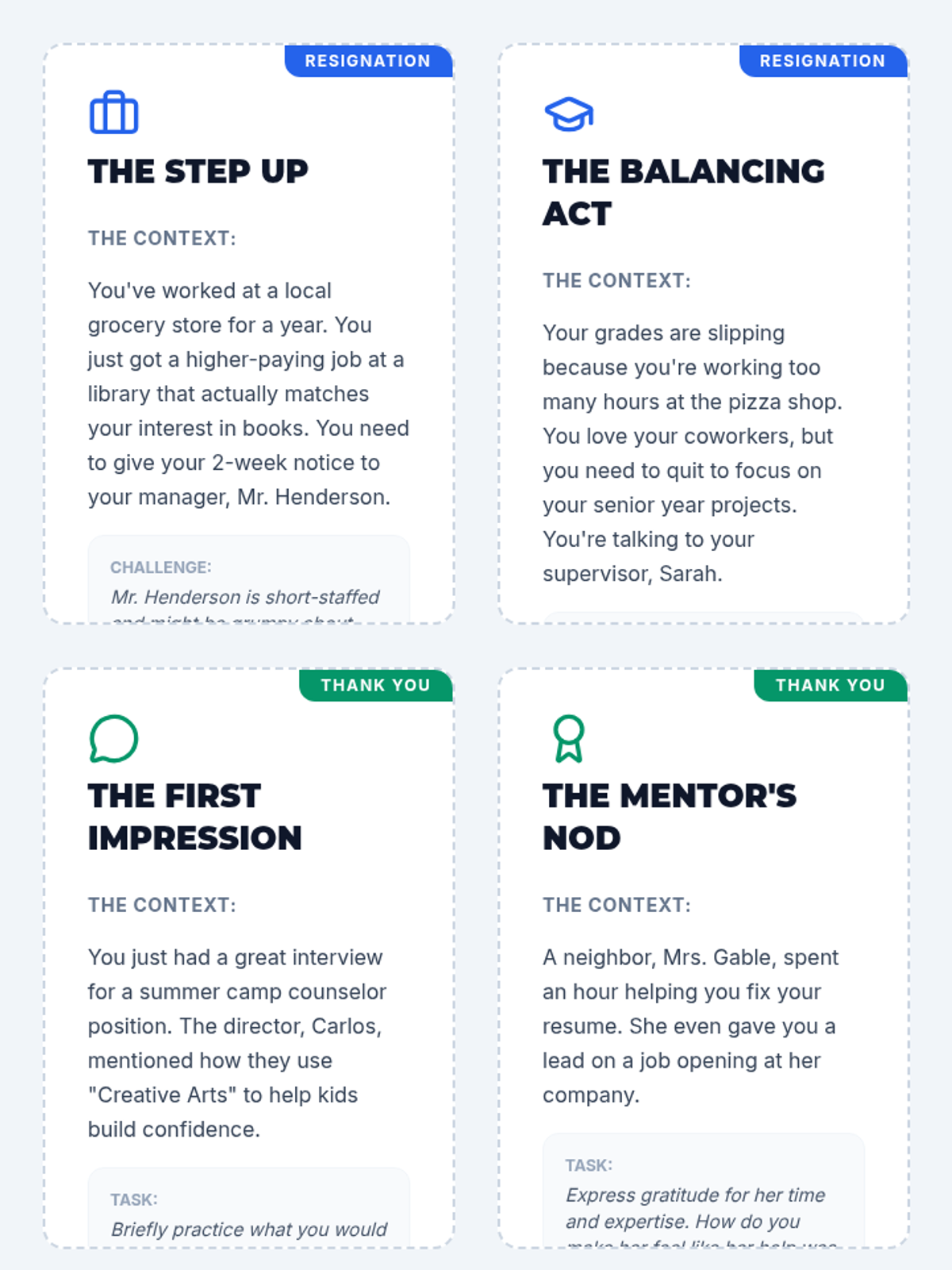
A two-day lesson covering the professional art of writing thank-you and resignation letters, focusing on etiquette, structure, and professional tone.
A lesson focused on teaching high school students how to professionally resign from a job and express gratitude through formal letters. Students will learn about structure, tone, and etiquette.
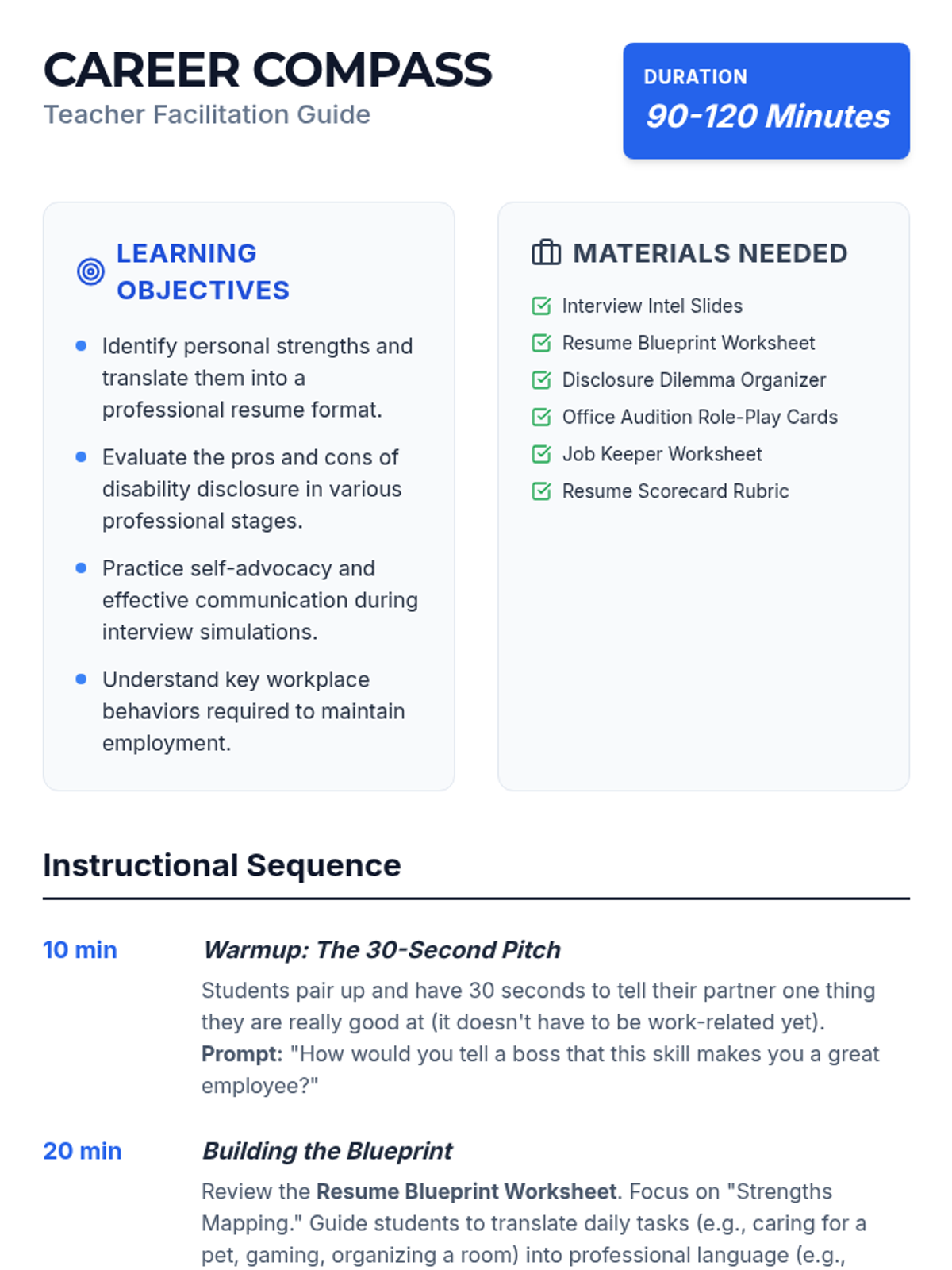
A comprehensive lesson on navigating the employment process, from resume building and interviewing to the nuances of disability disclosure and workplace communication.
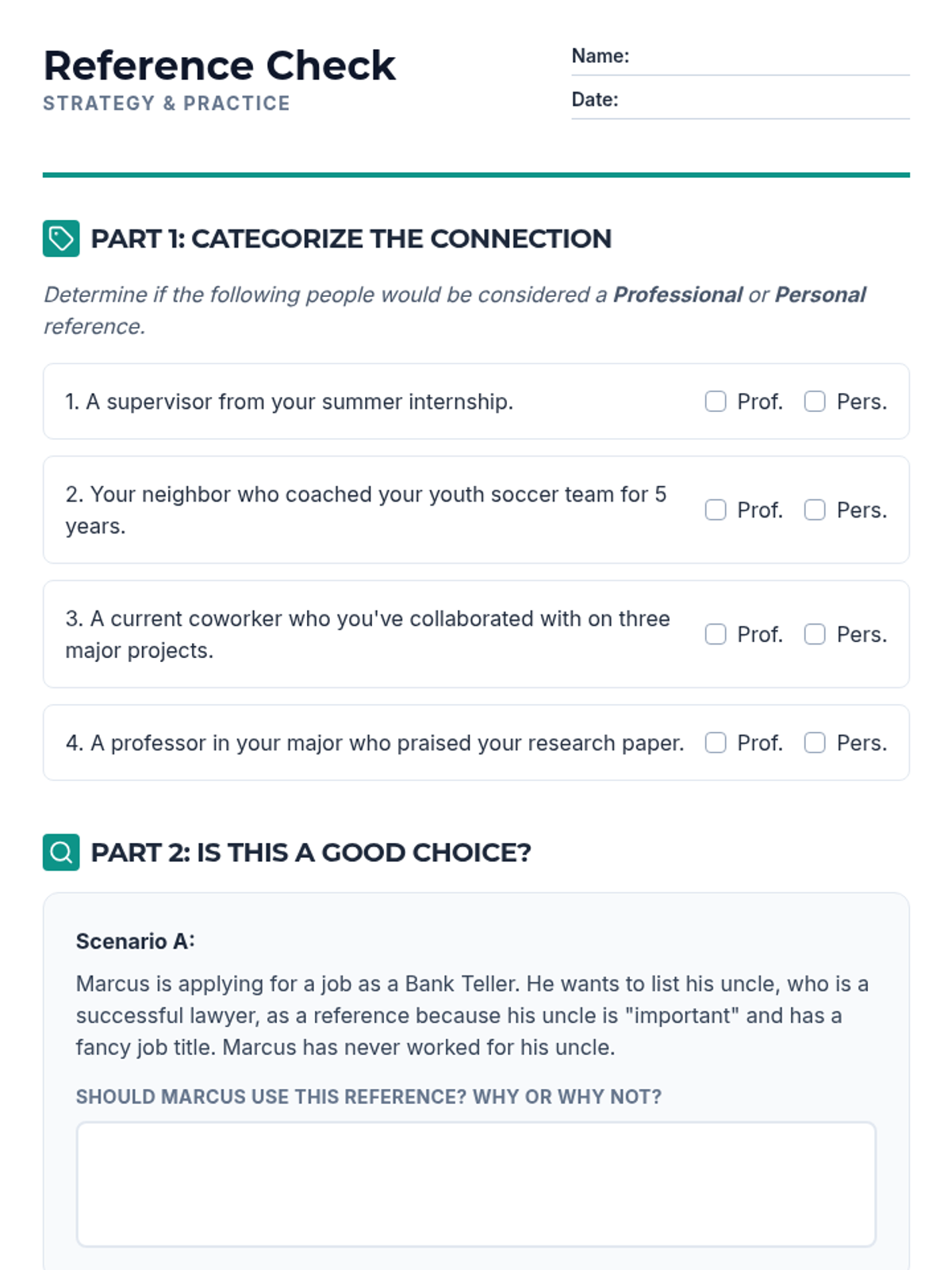
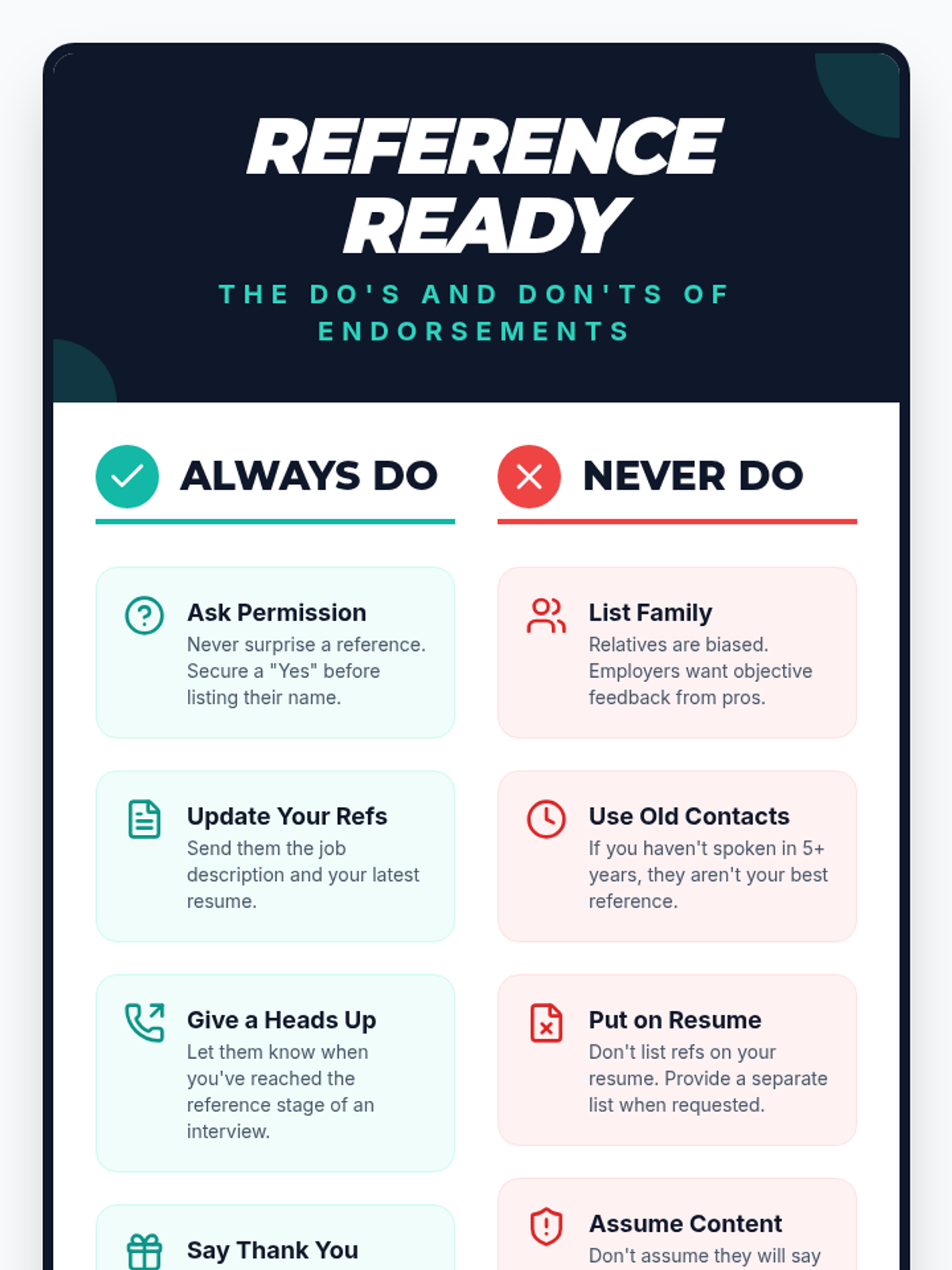
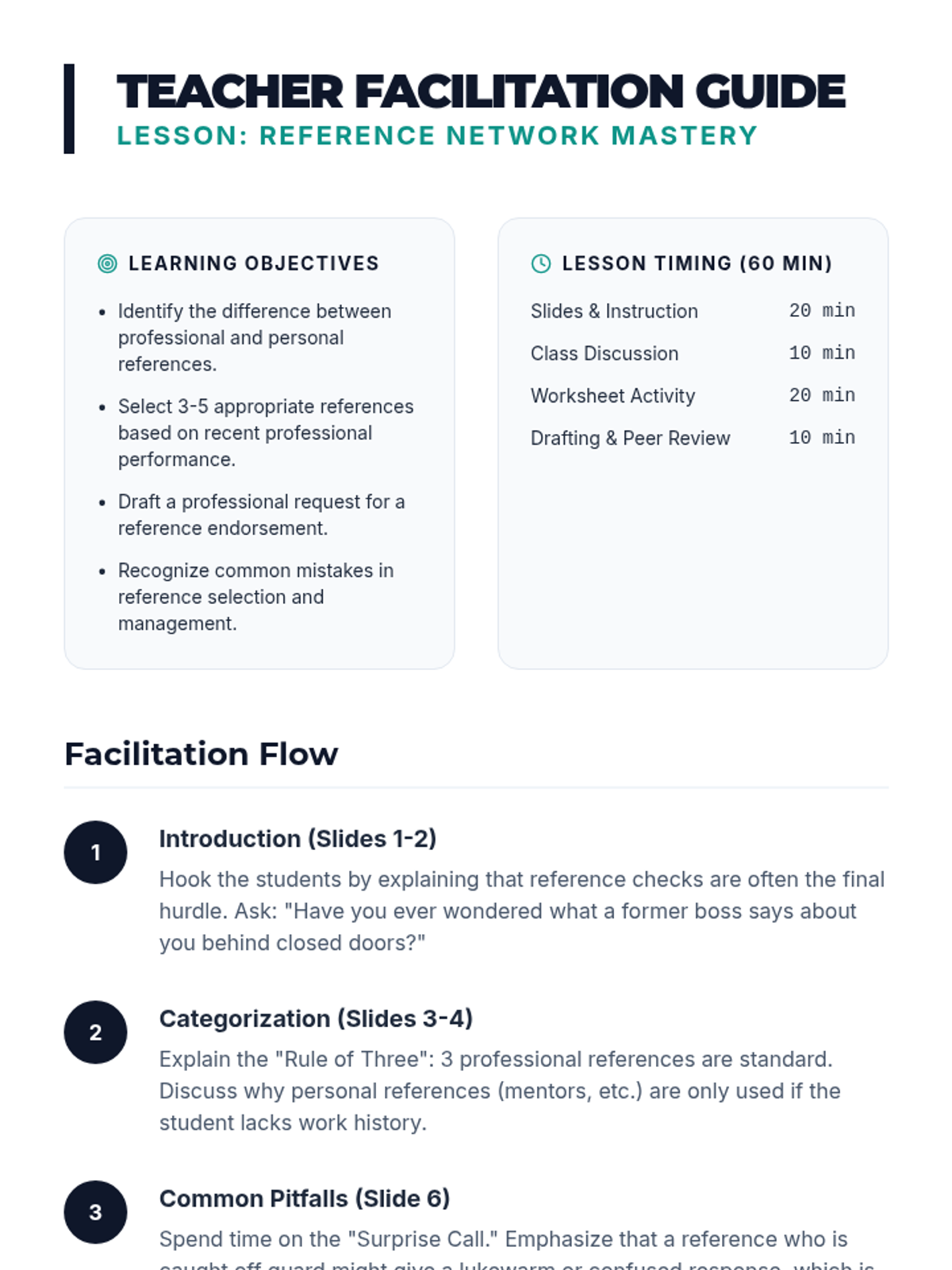
This lesson teaches students how to strategically select, prepare, and manage professional references to enhance their job applications and avoid common networking pitfalls.
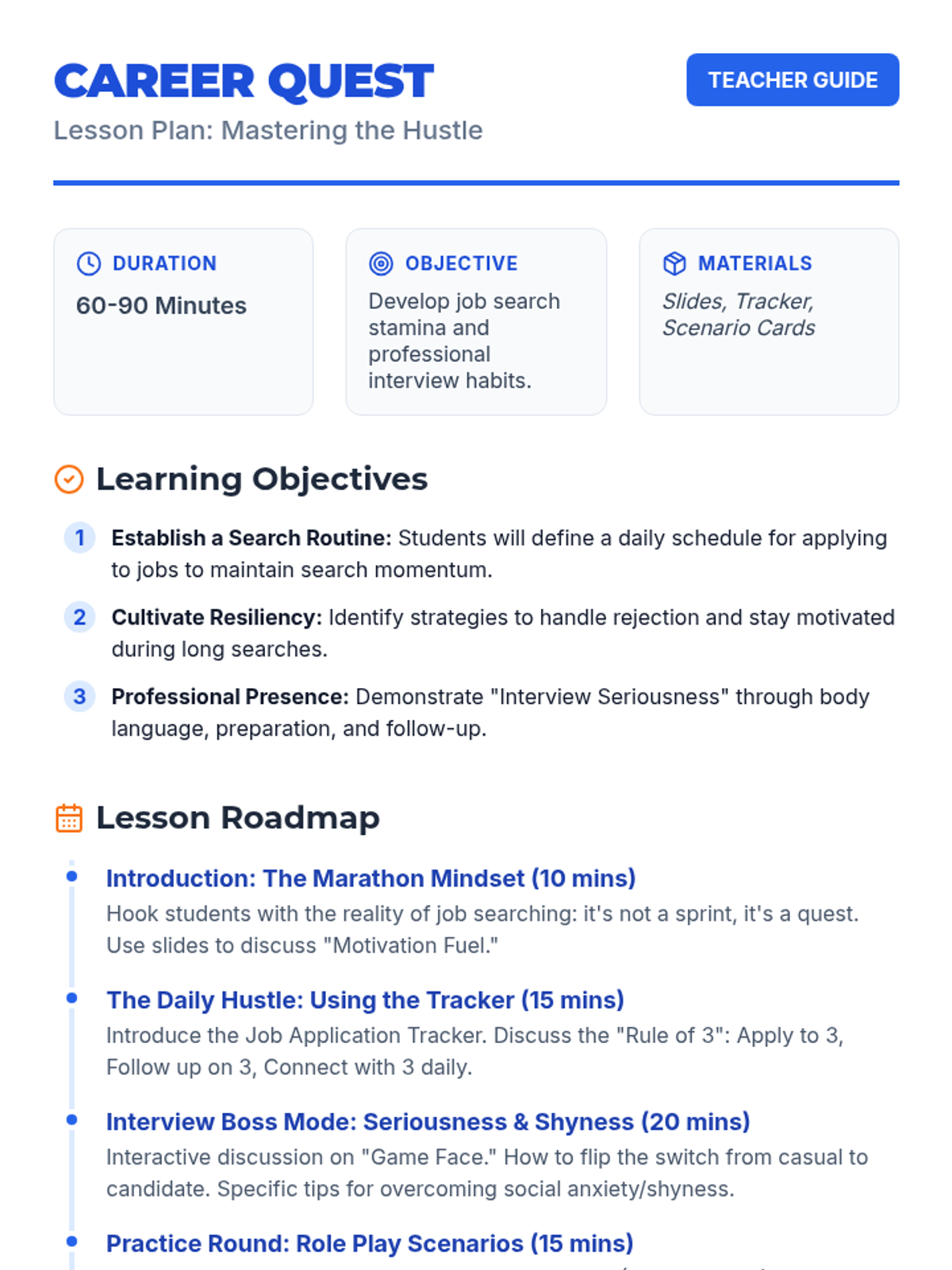
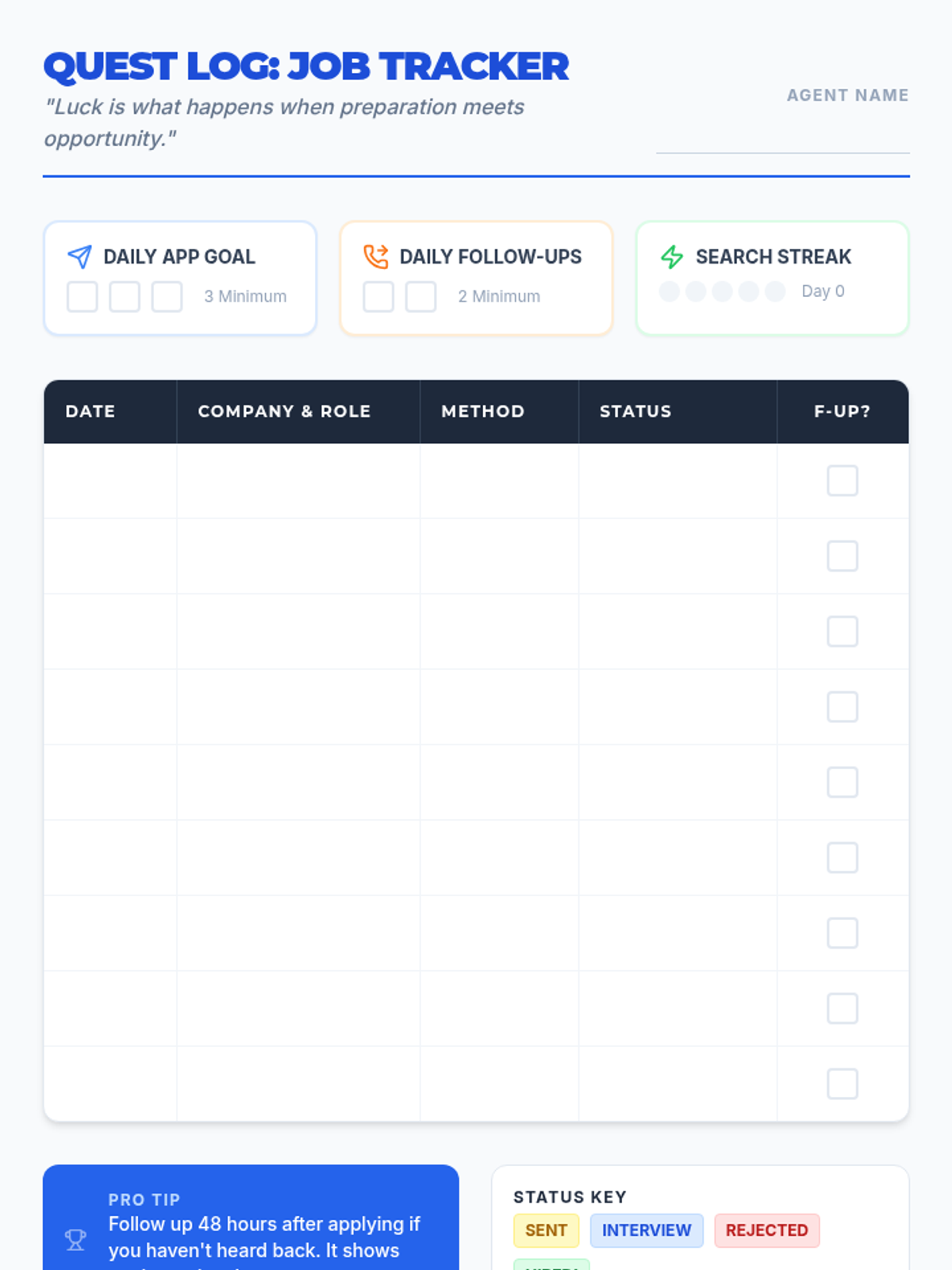
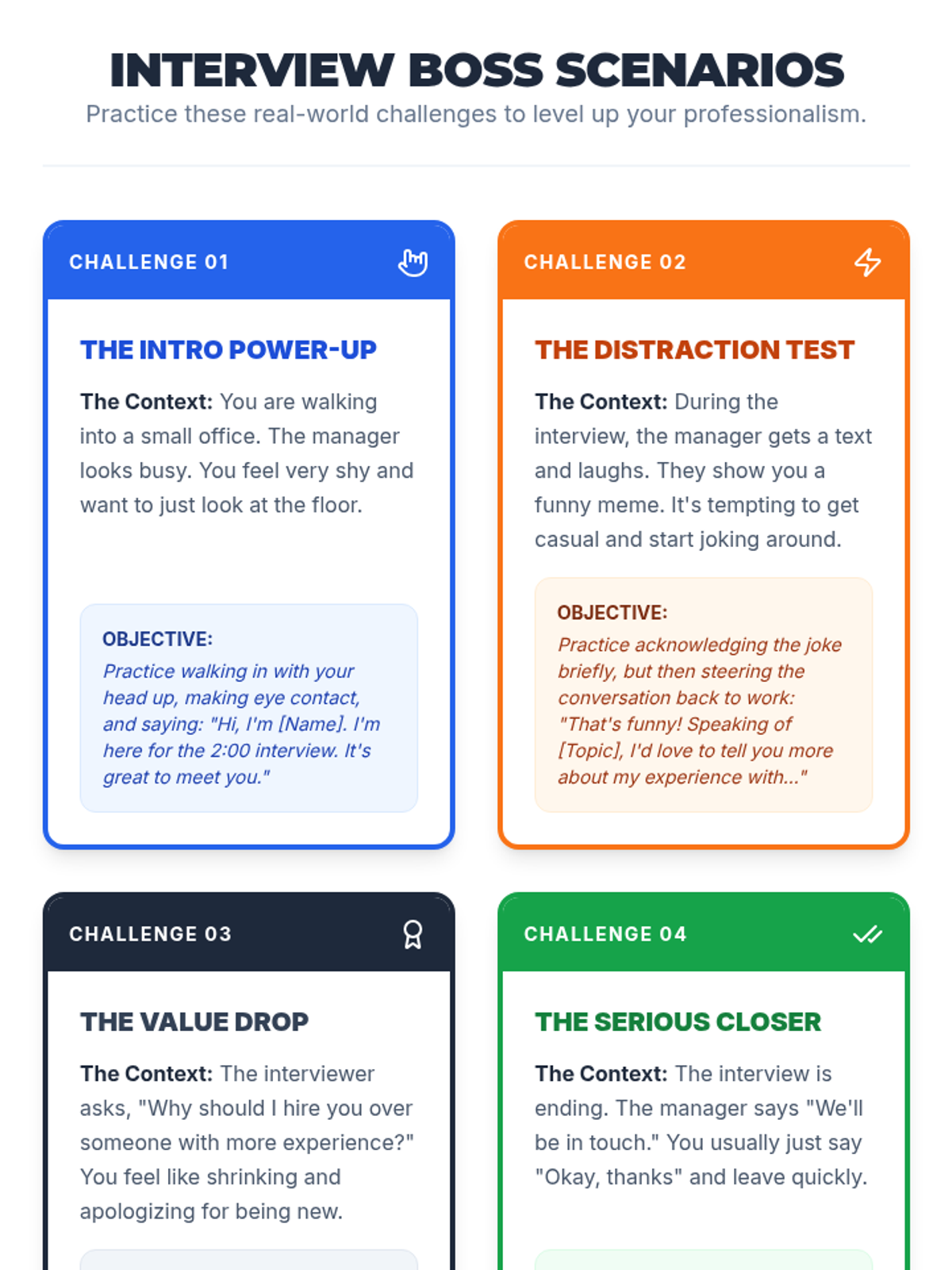
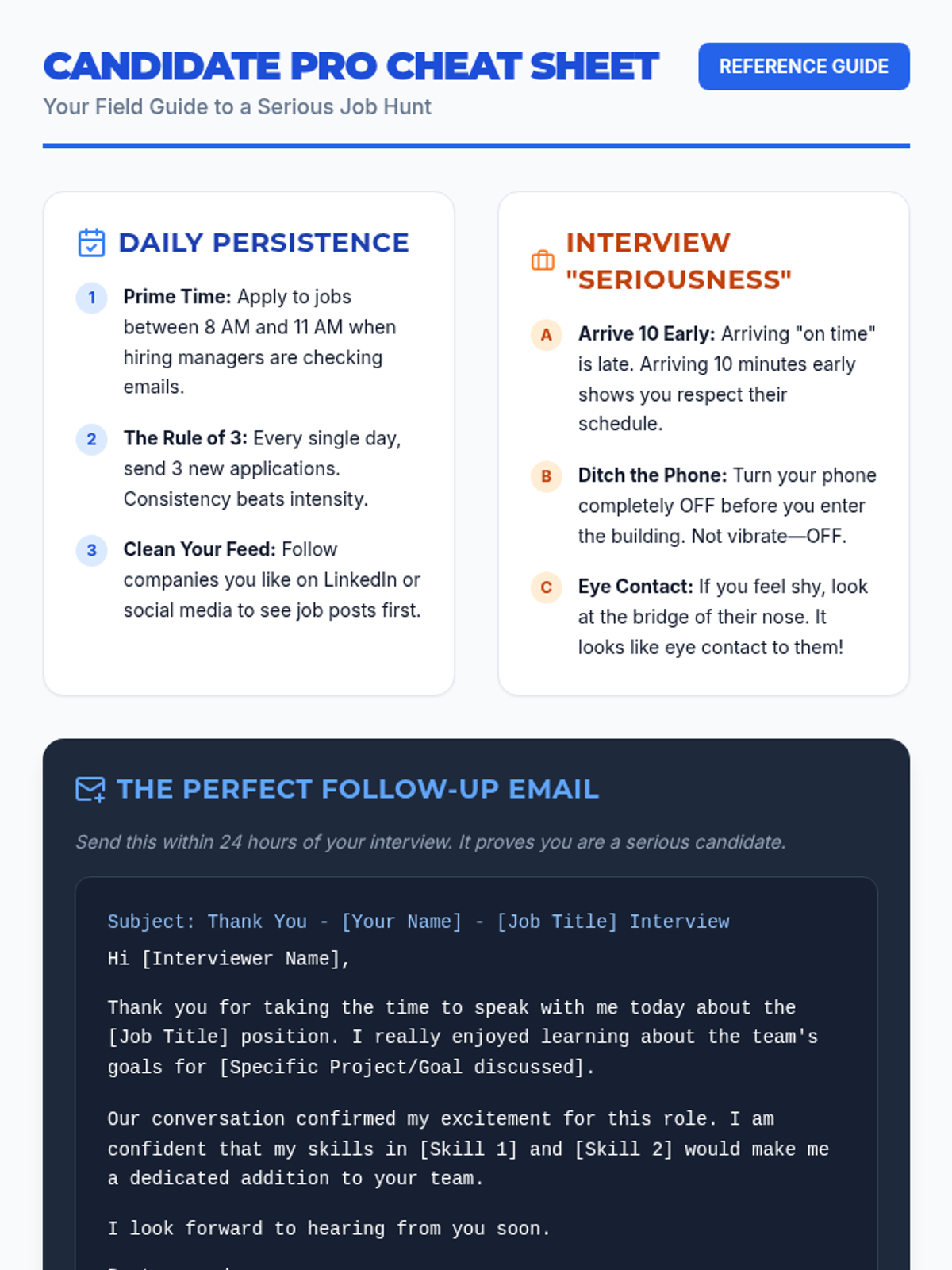
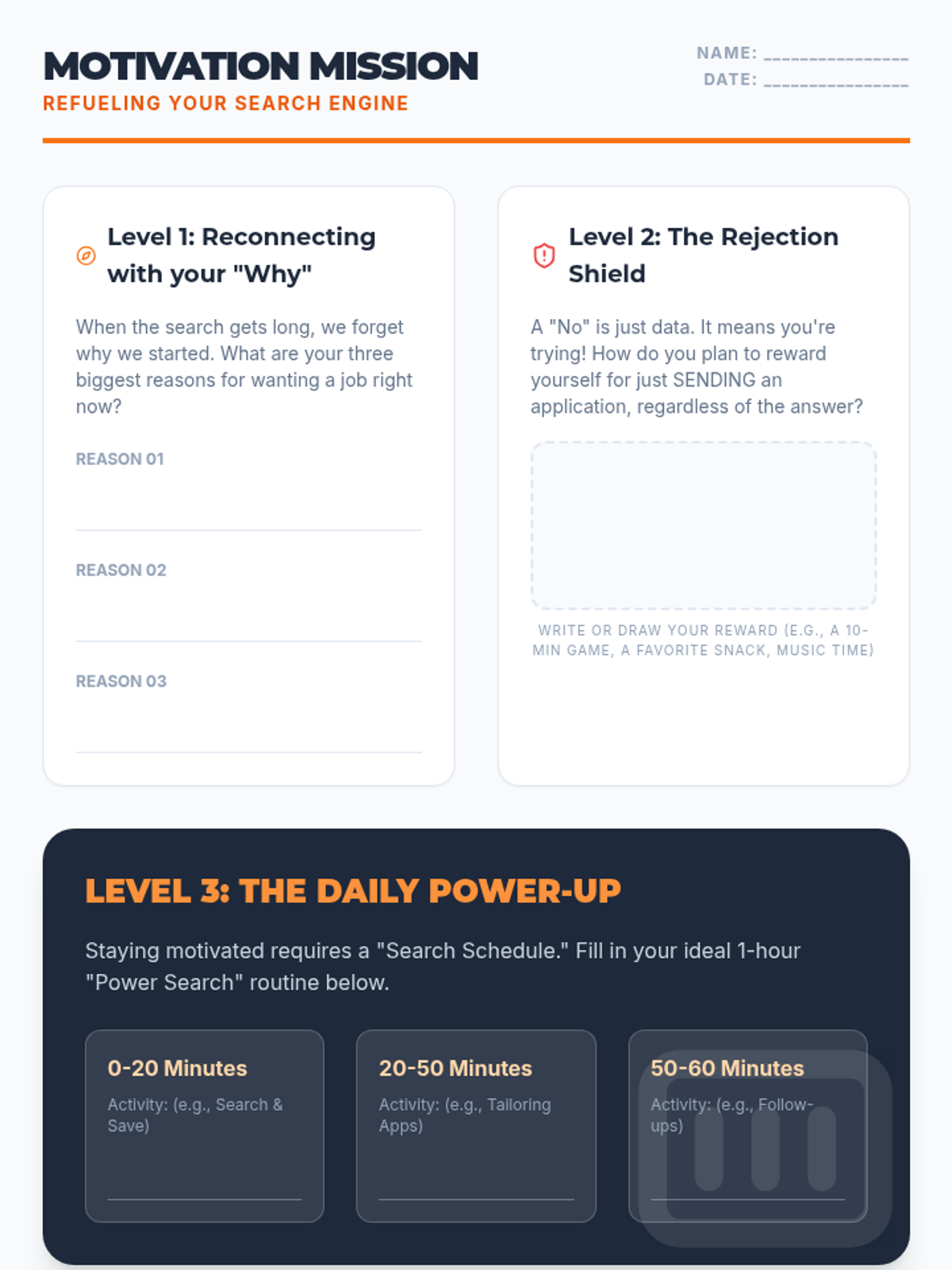
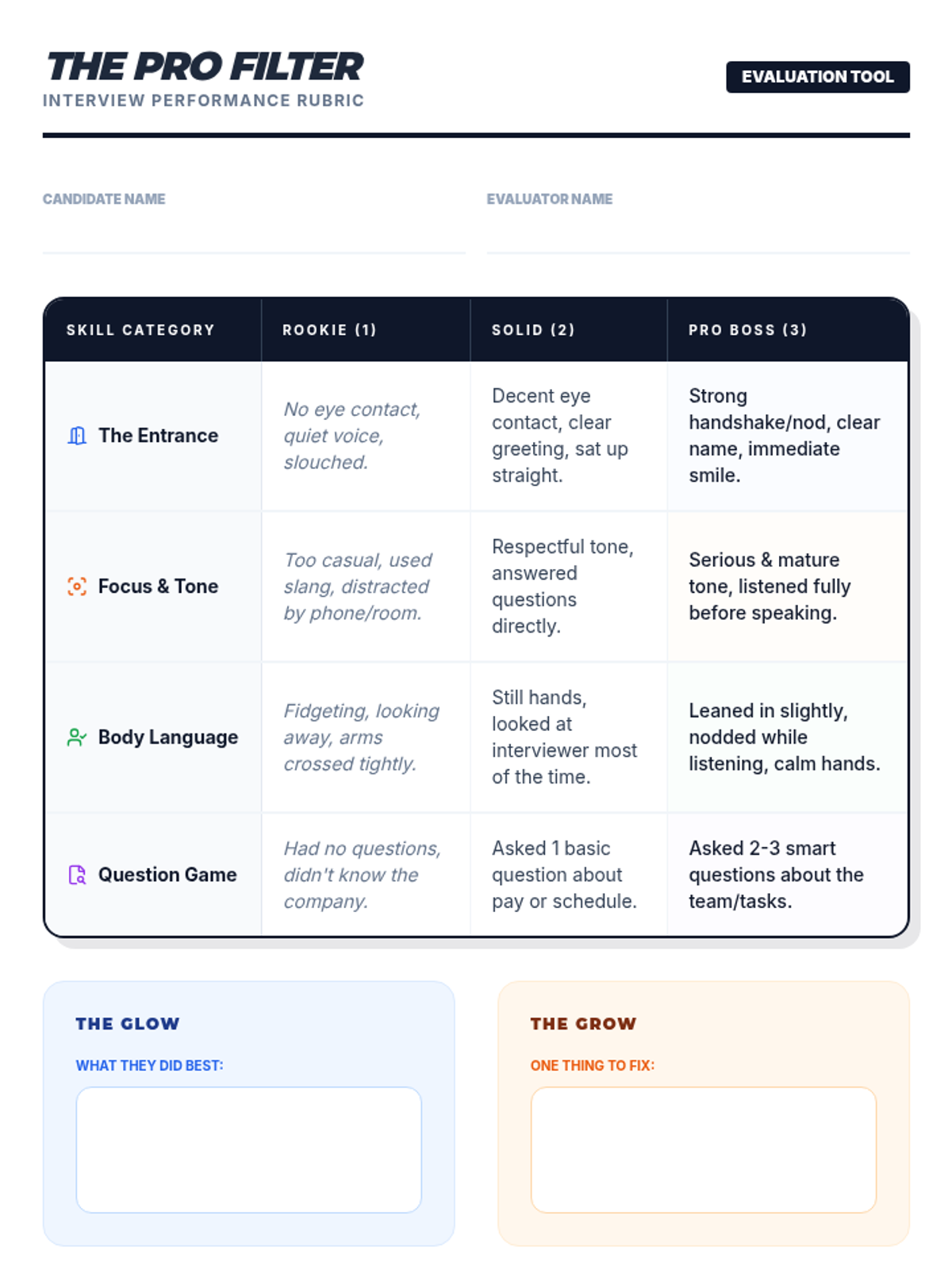
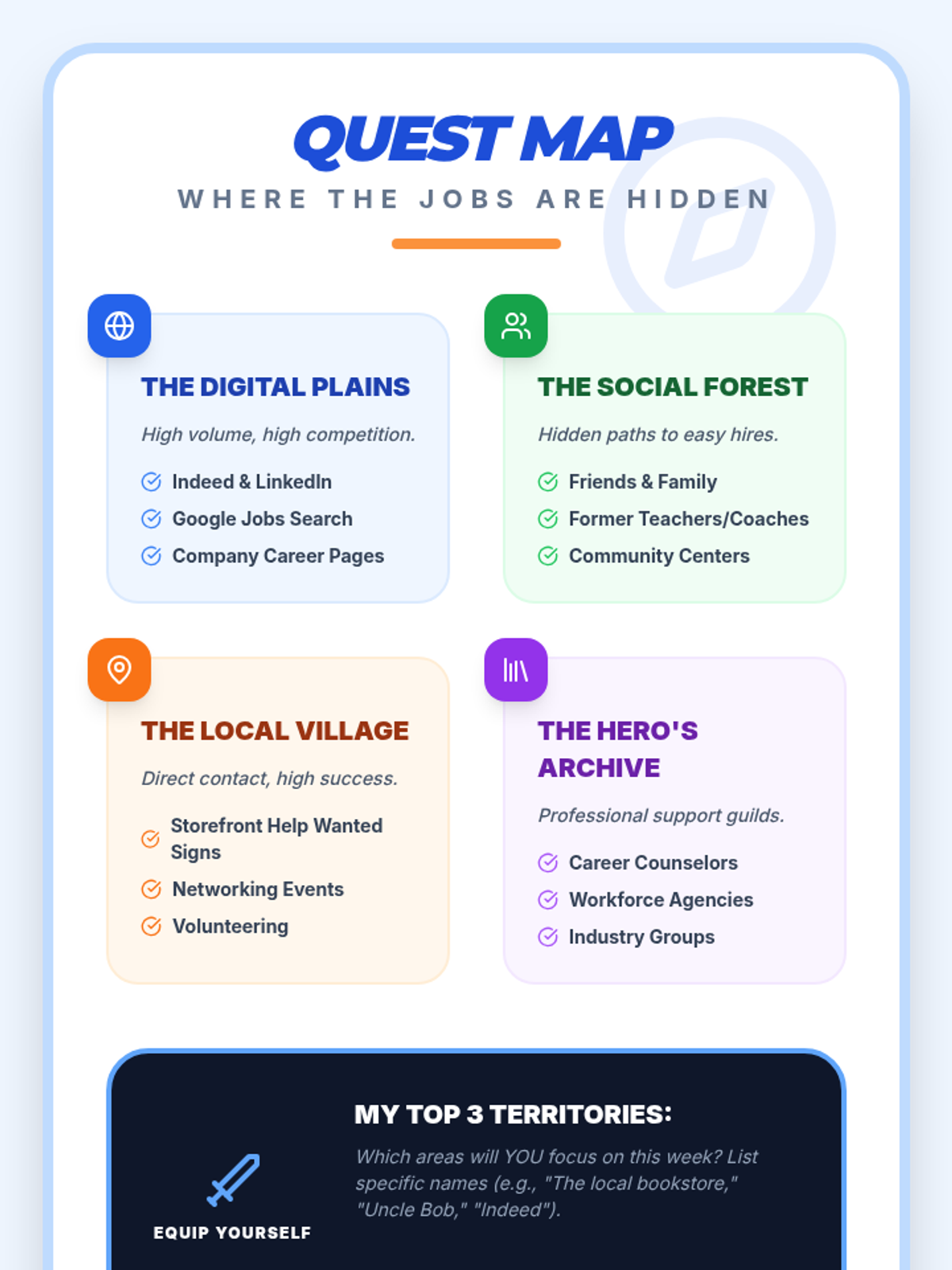
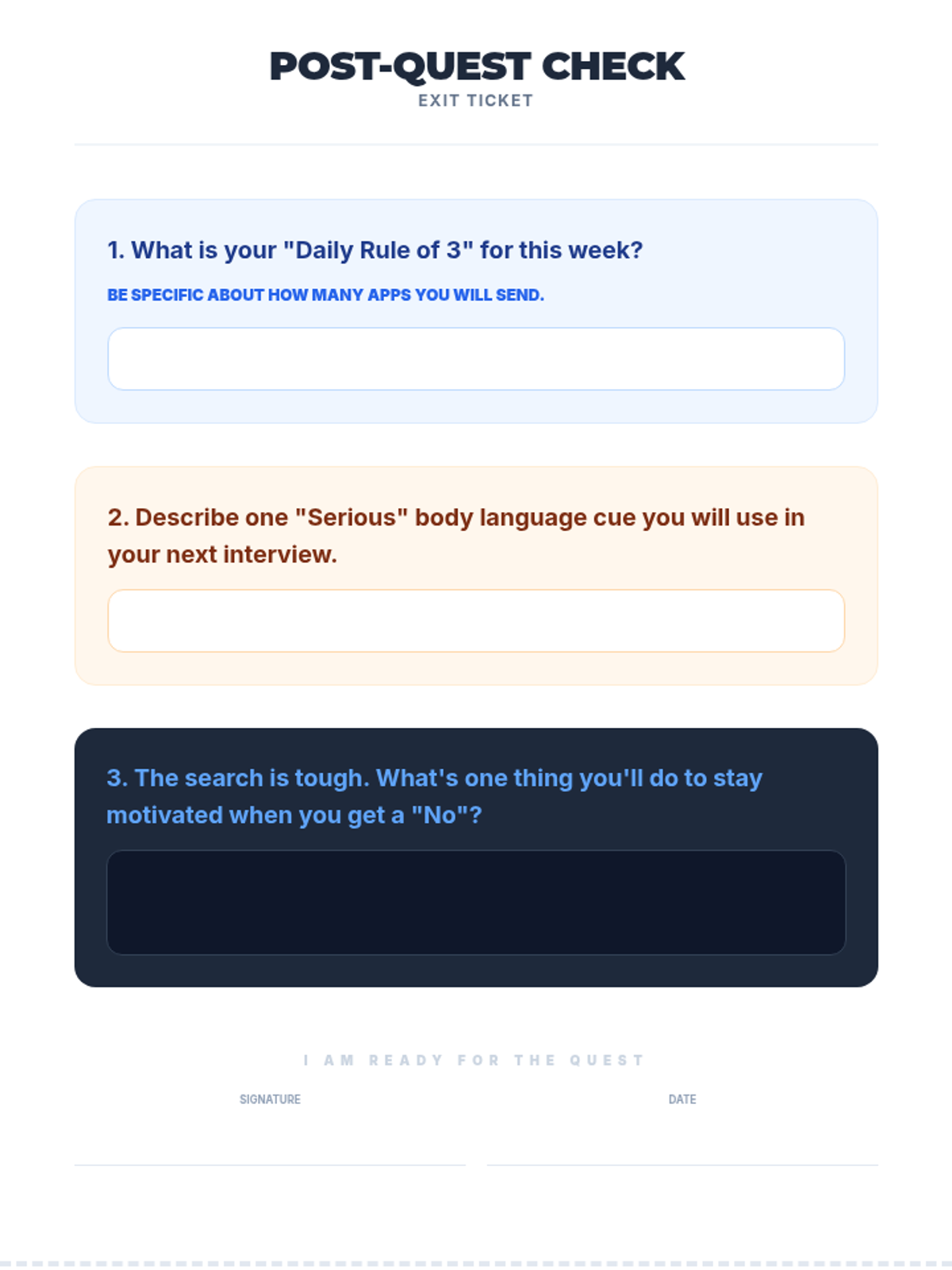
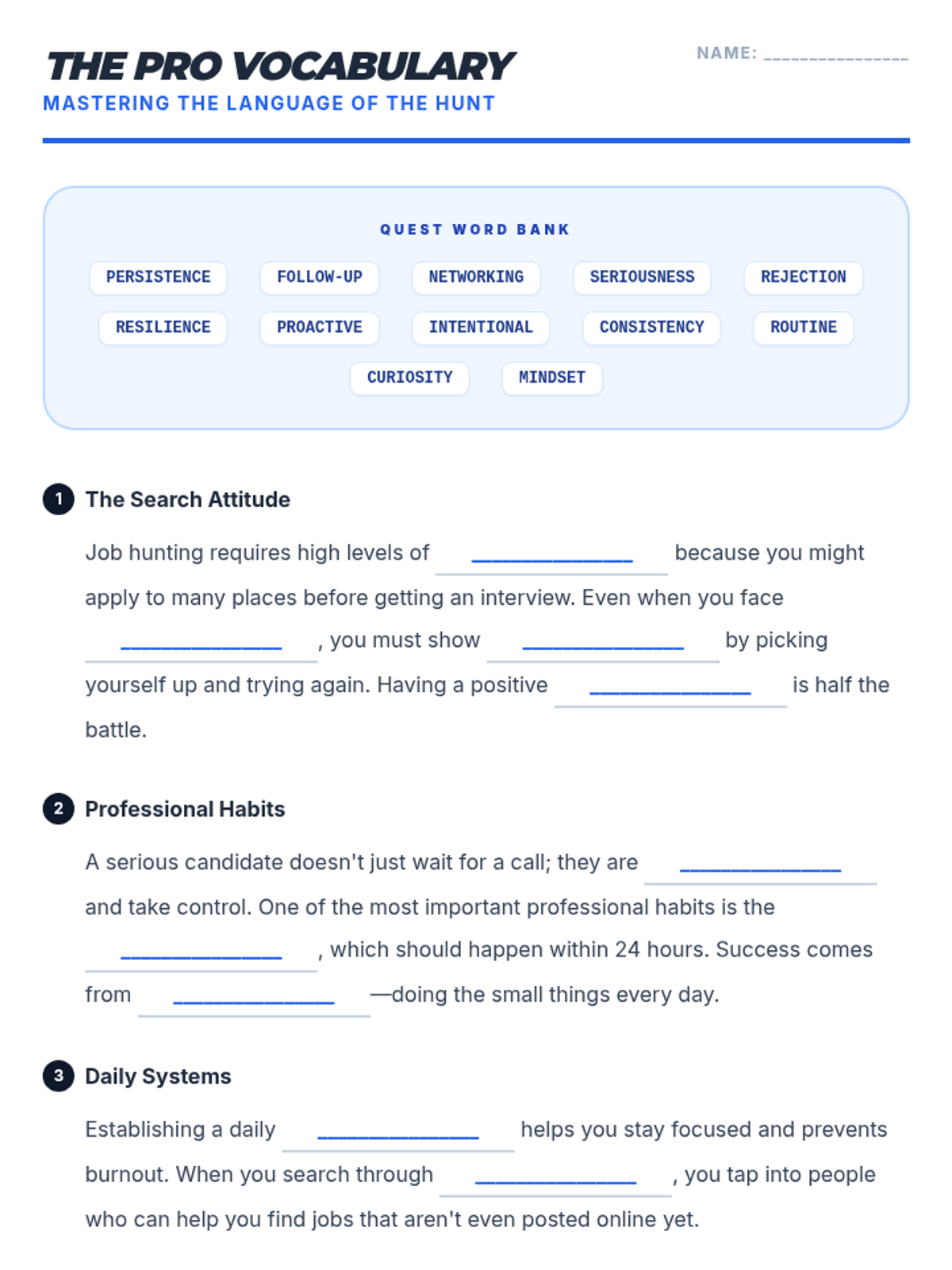
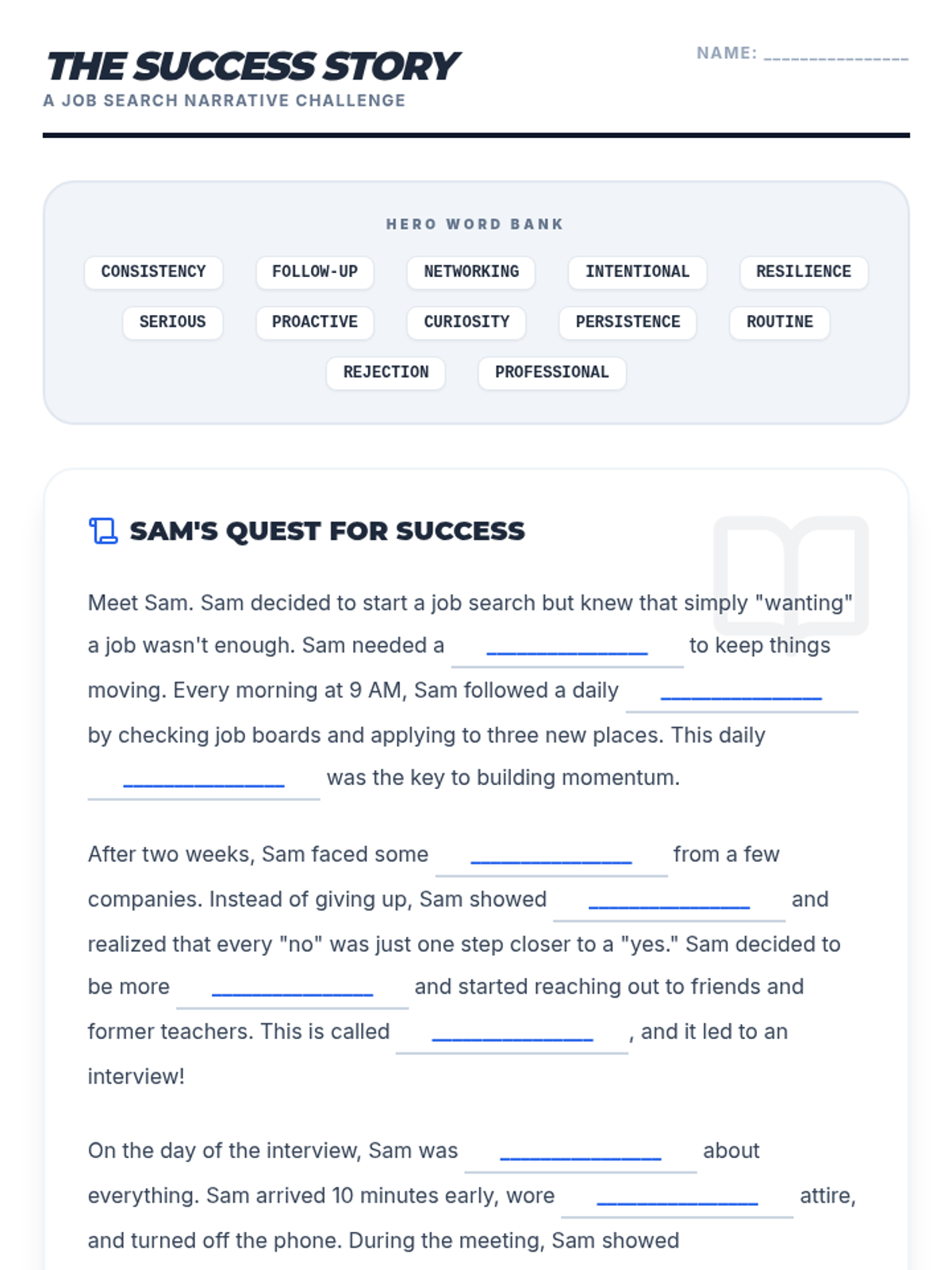
A comprehensive lesson designed to equip students with the mindset and tools for a persistent, professional job search, focusing on motivation, daily habits, and interview readiness.
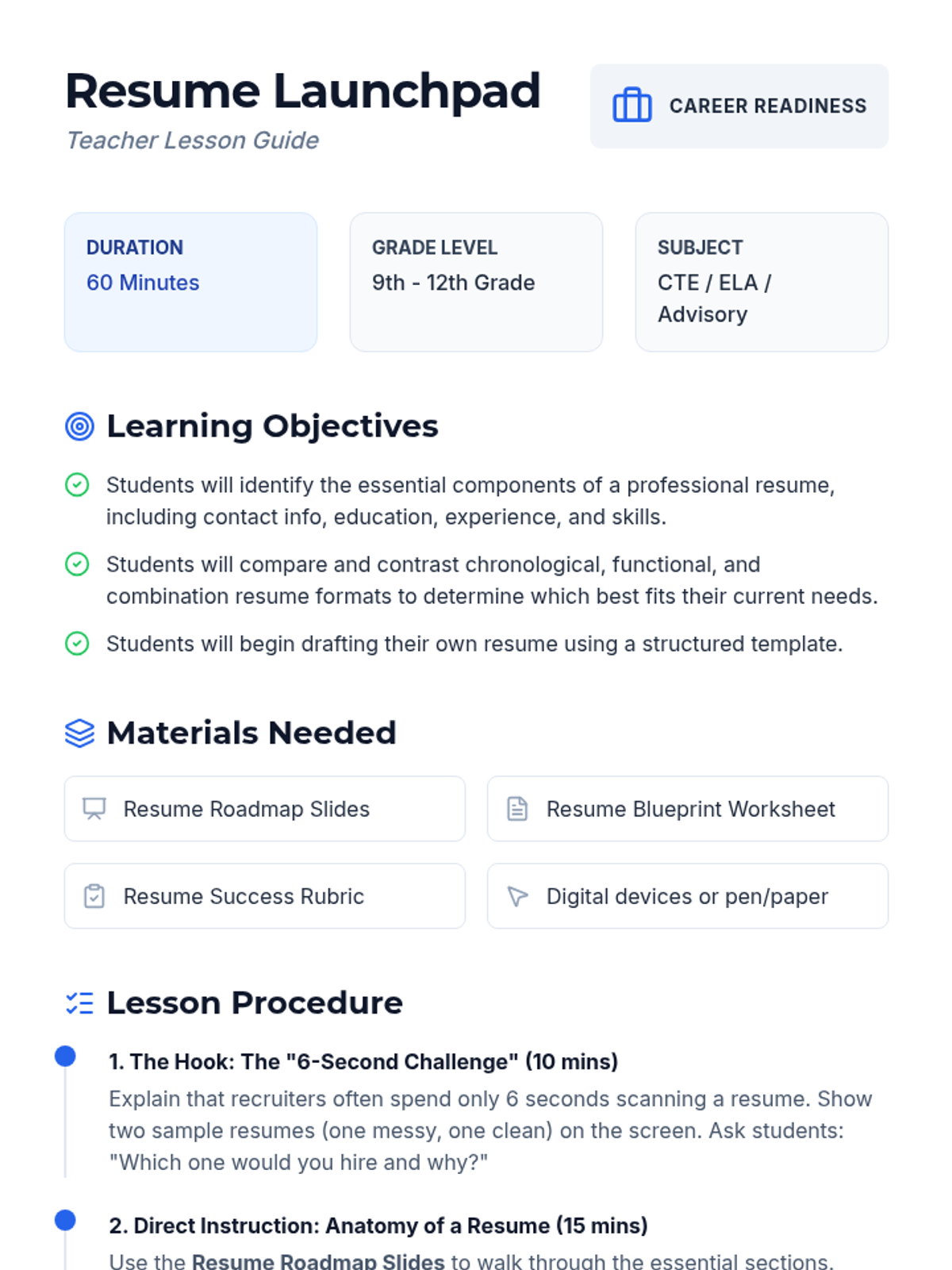
A comprehensive lesson designed to help students understand the purpose of a resume, explore various formatting styles, and craft their own professional profile for future opportunities.
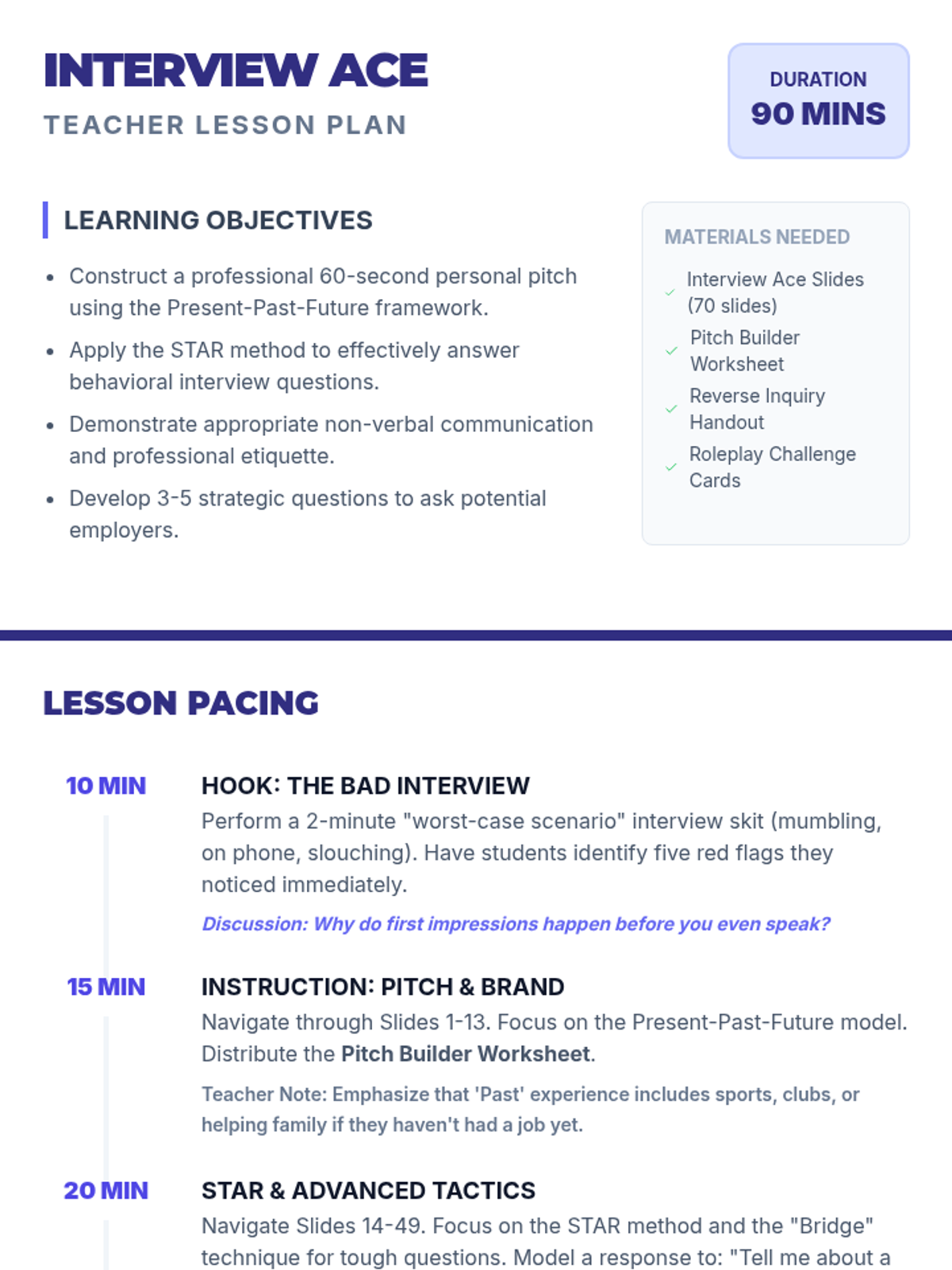
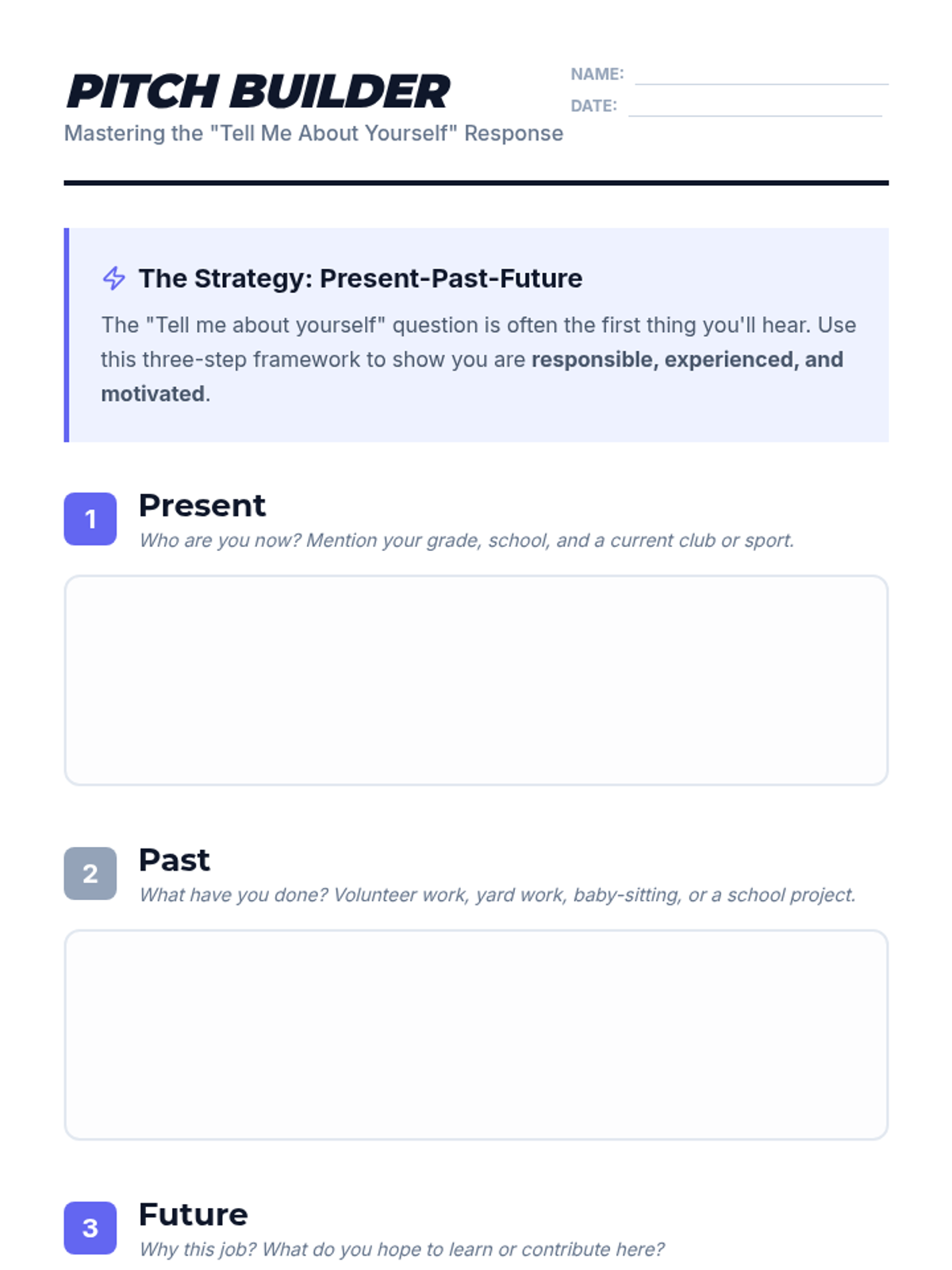
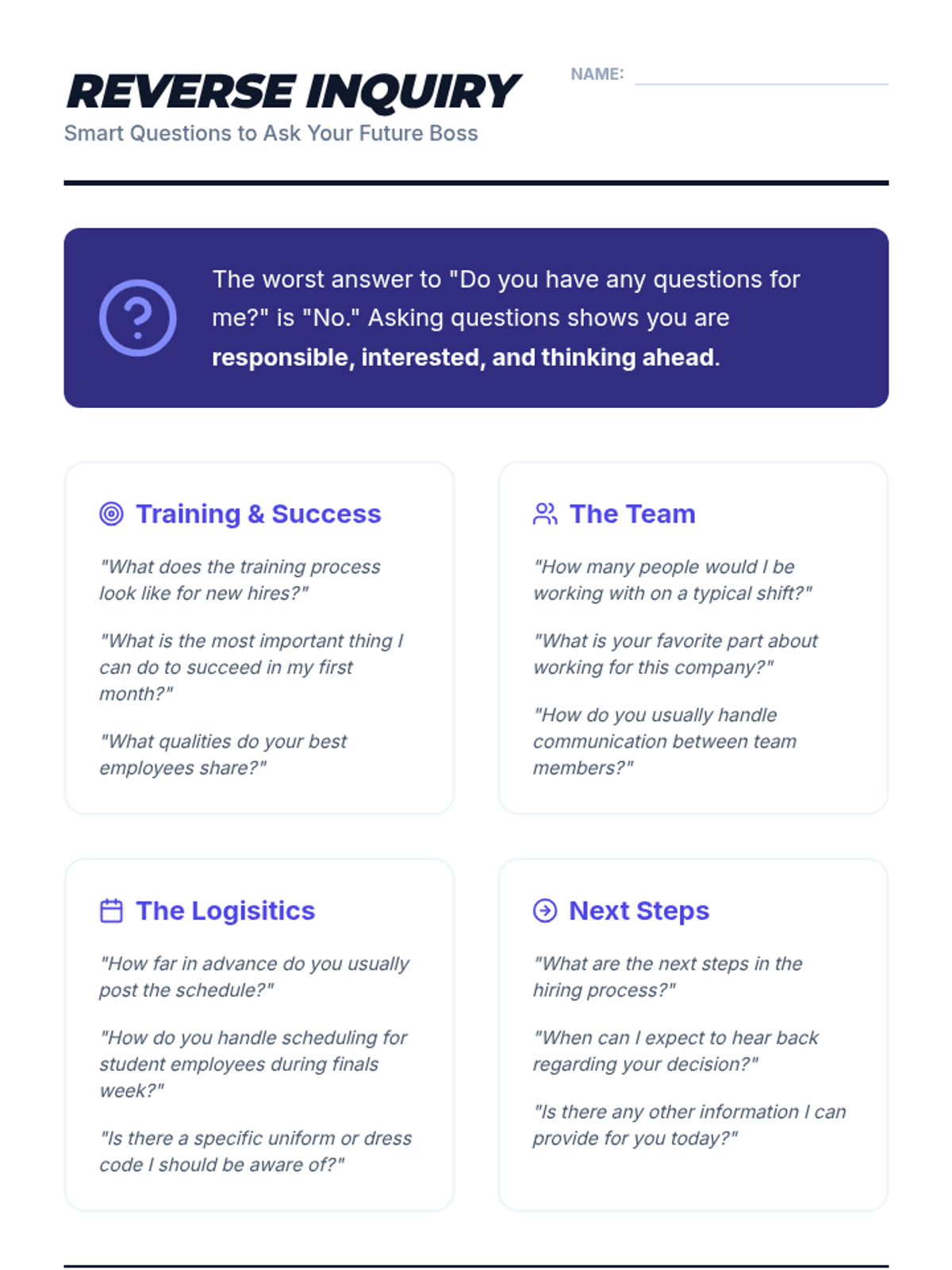
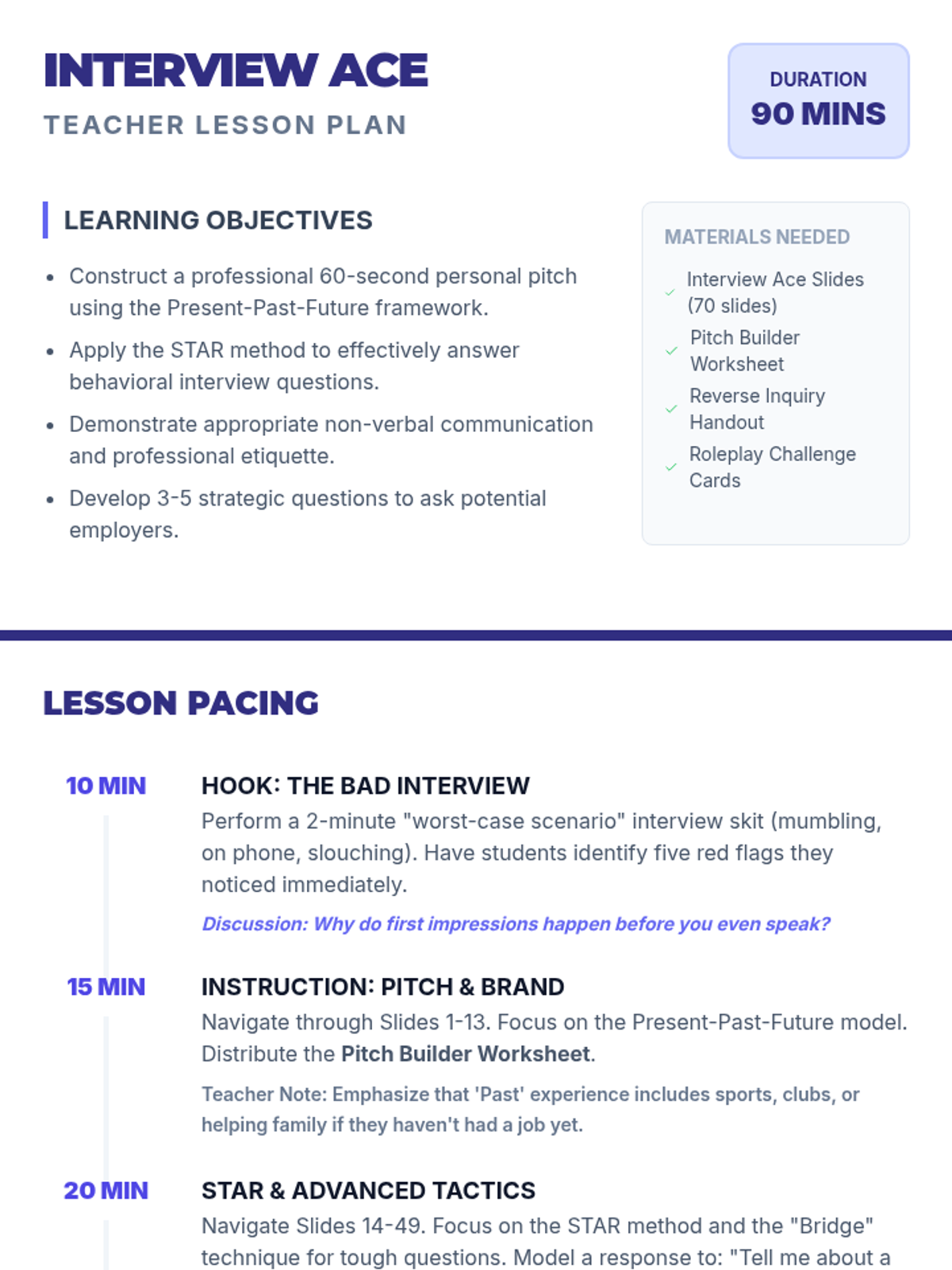
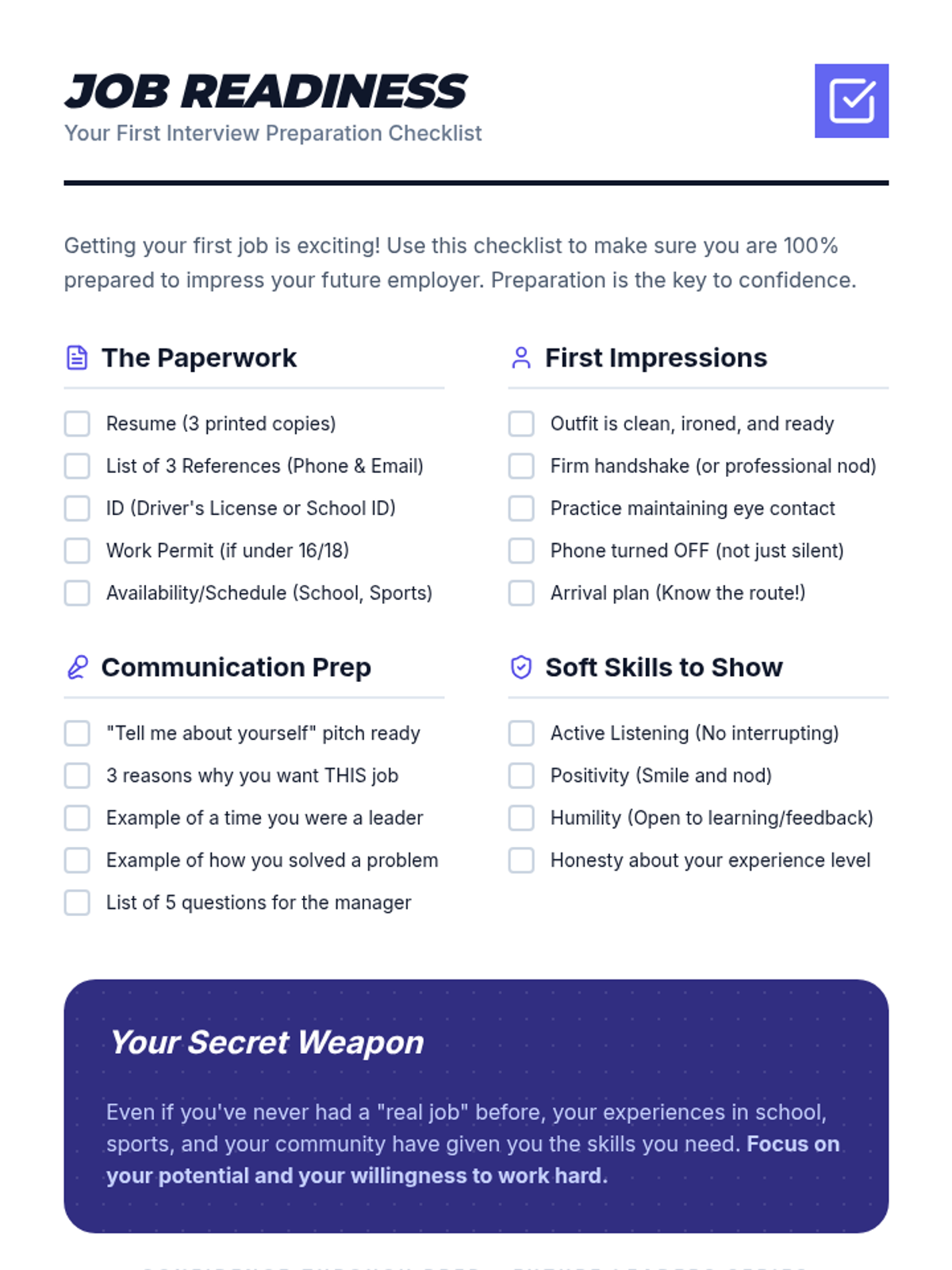
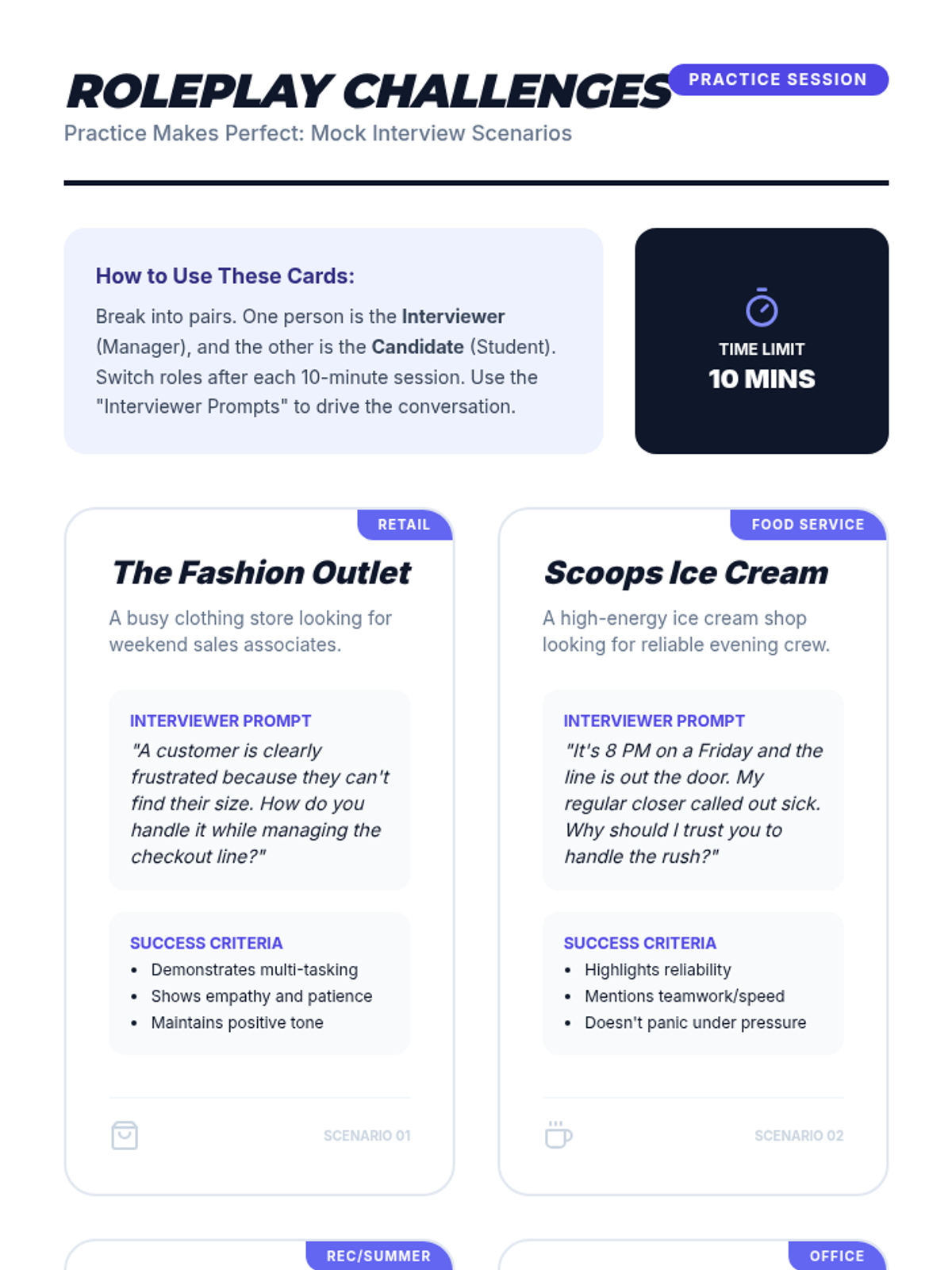
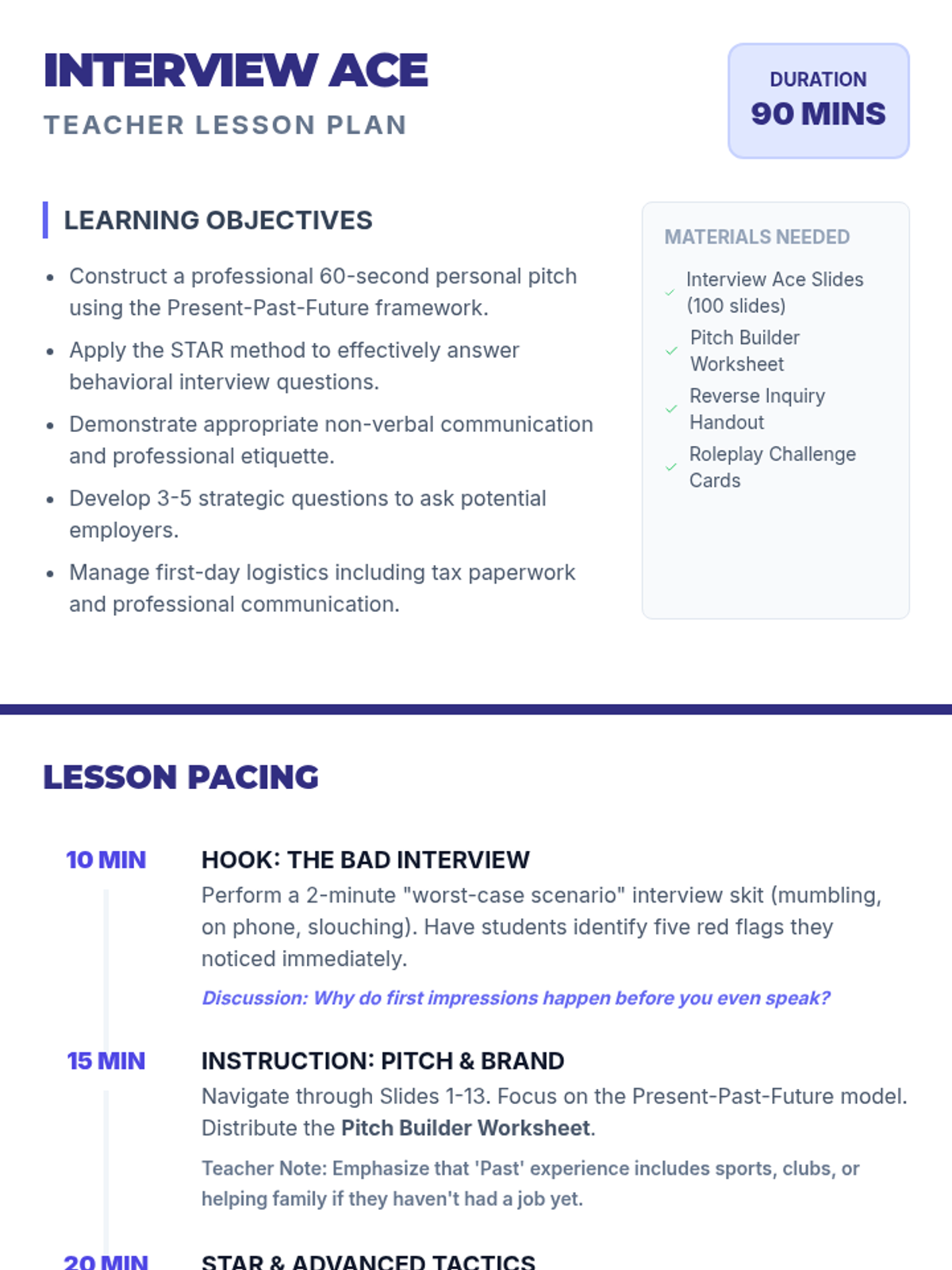
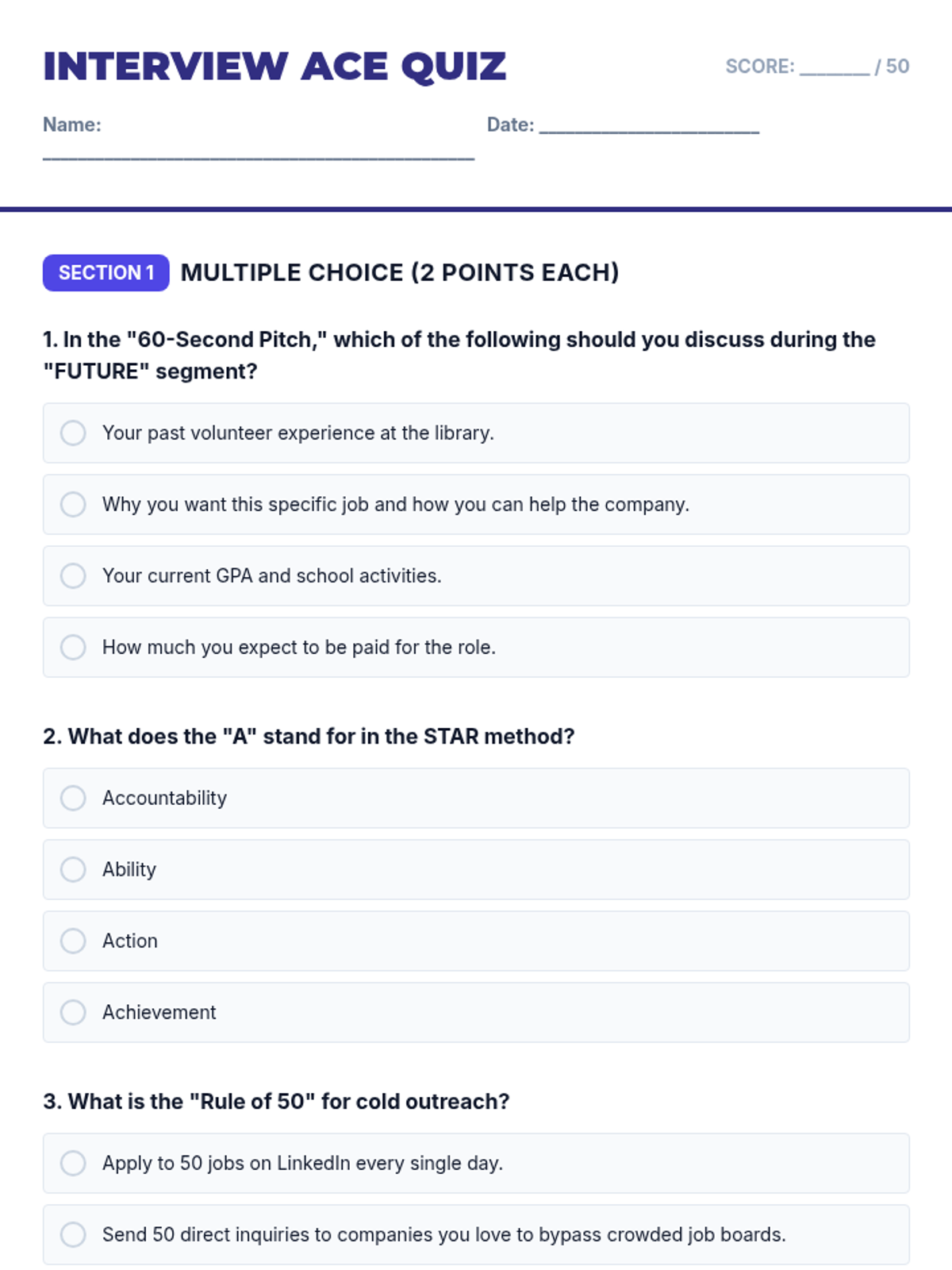
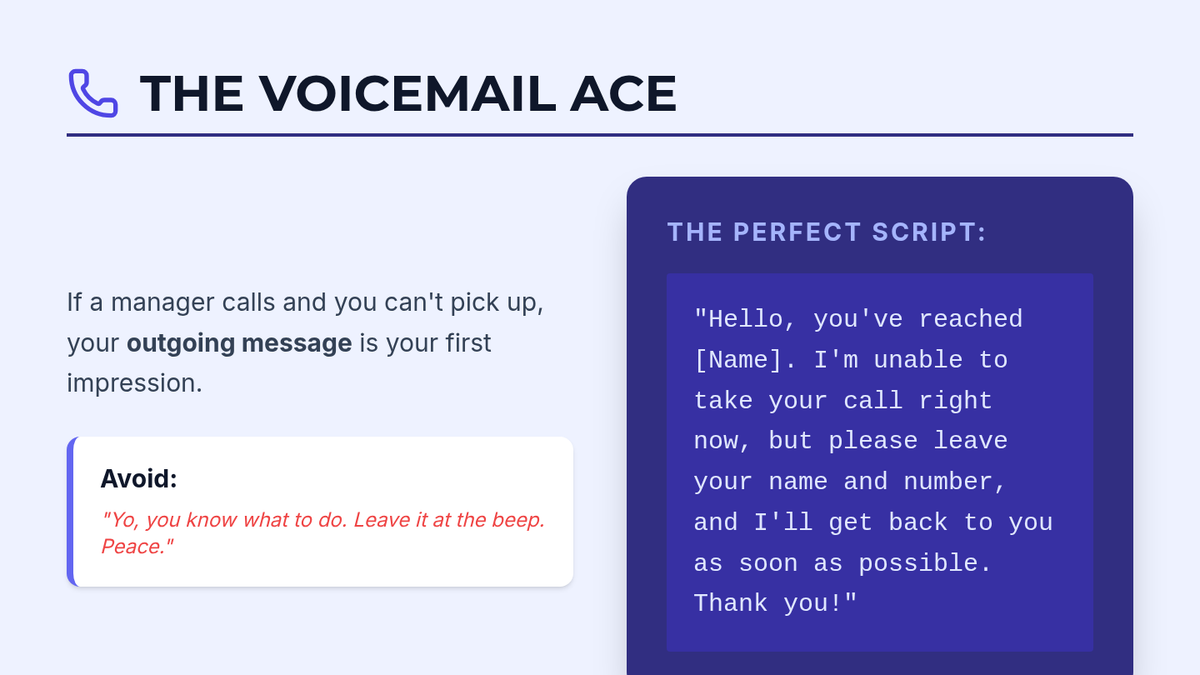
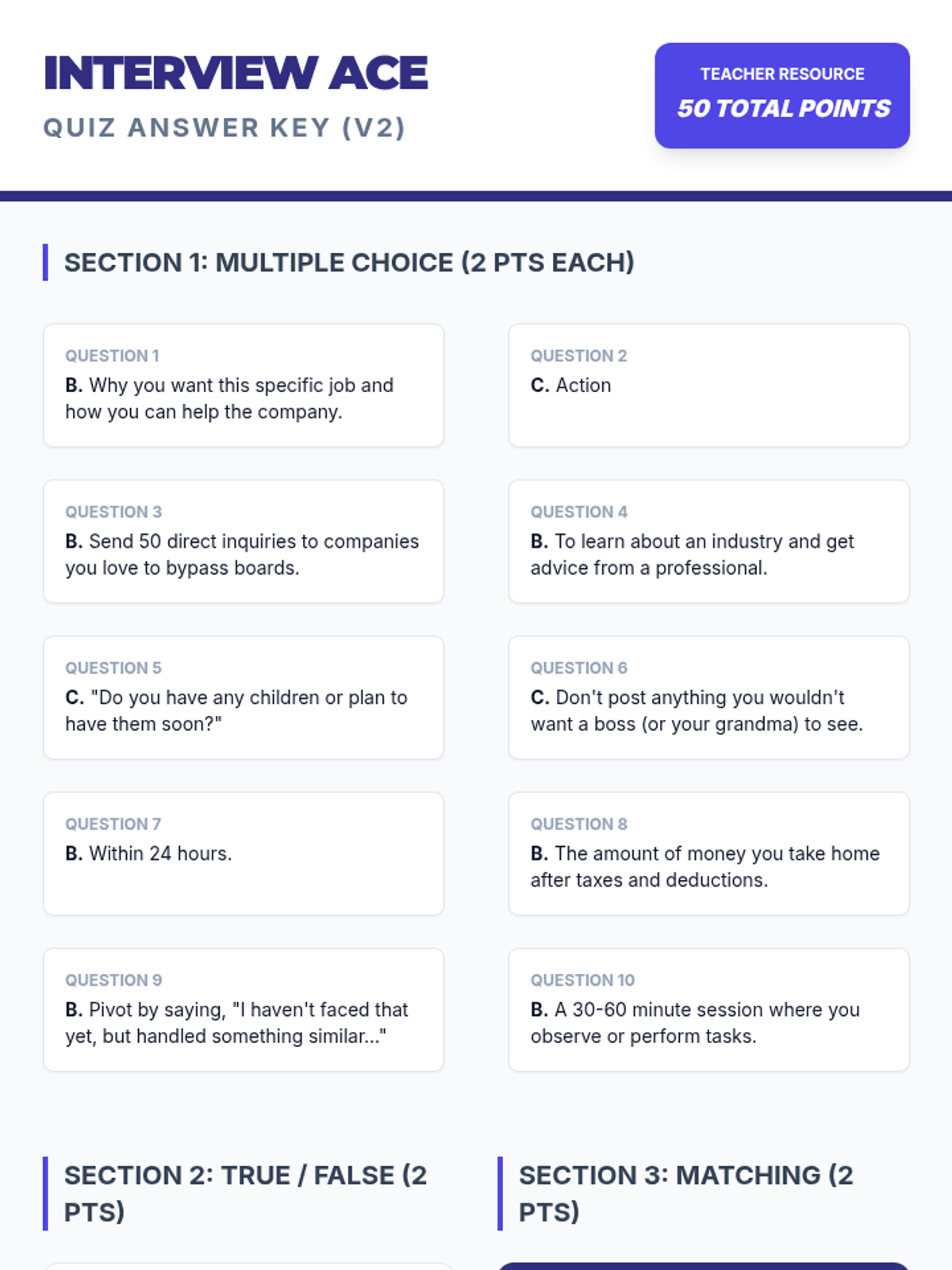
A comprehensive lesson for high school students on mastering their first job interviews, focusing on personal branding, soft skills, and professional inquiry.
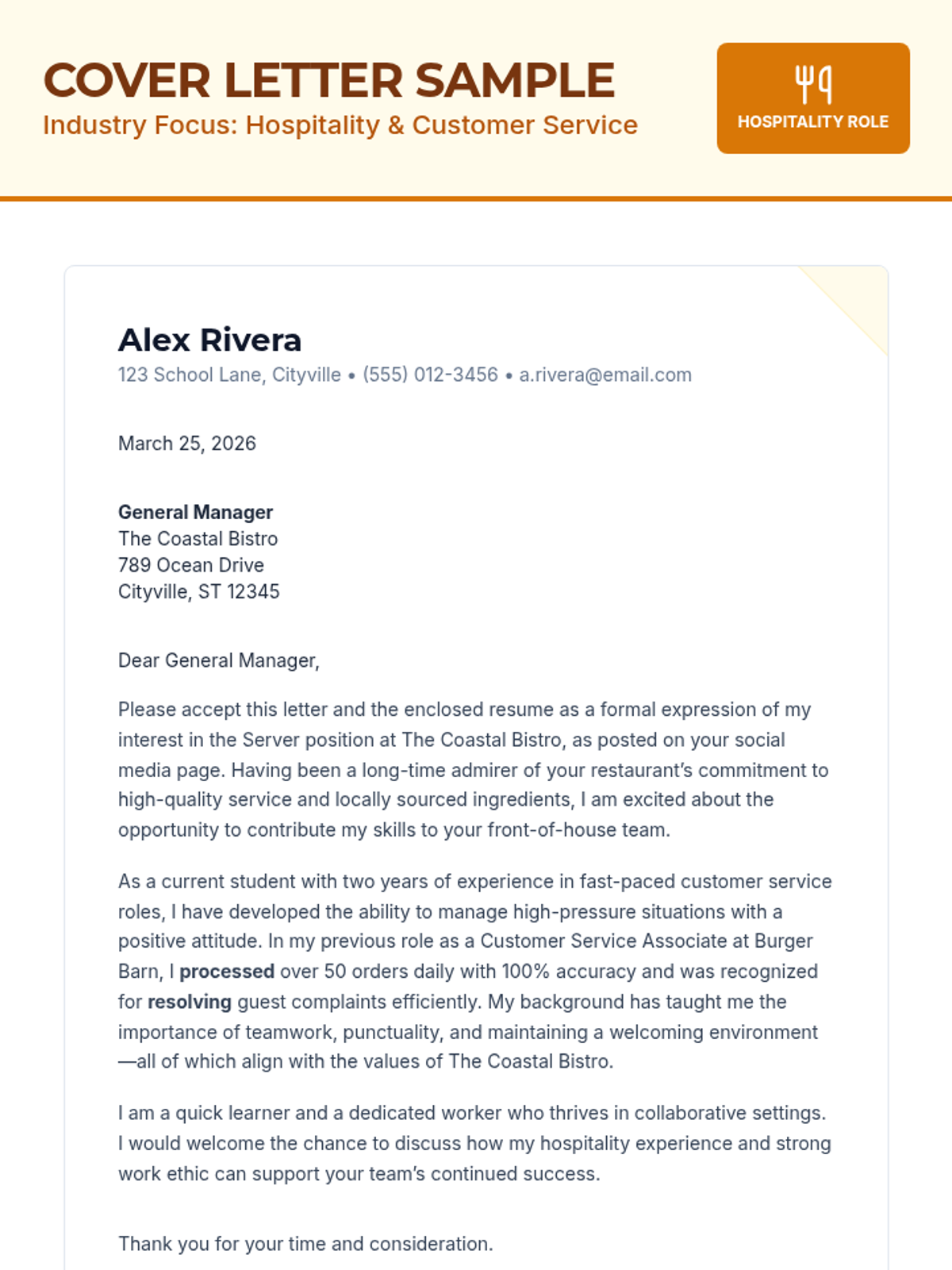
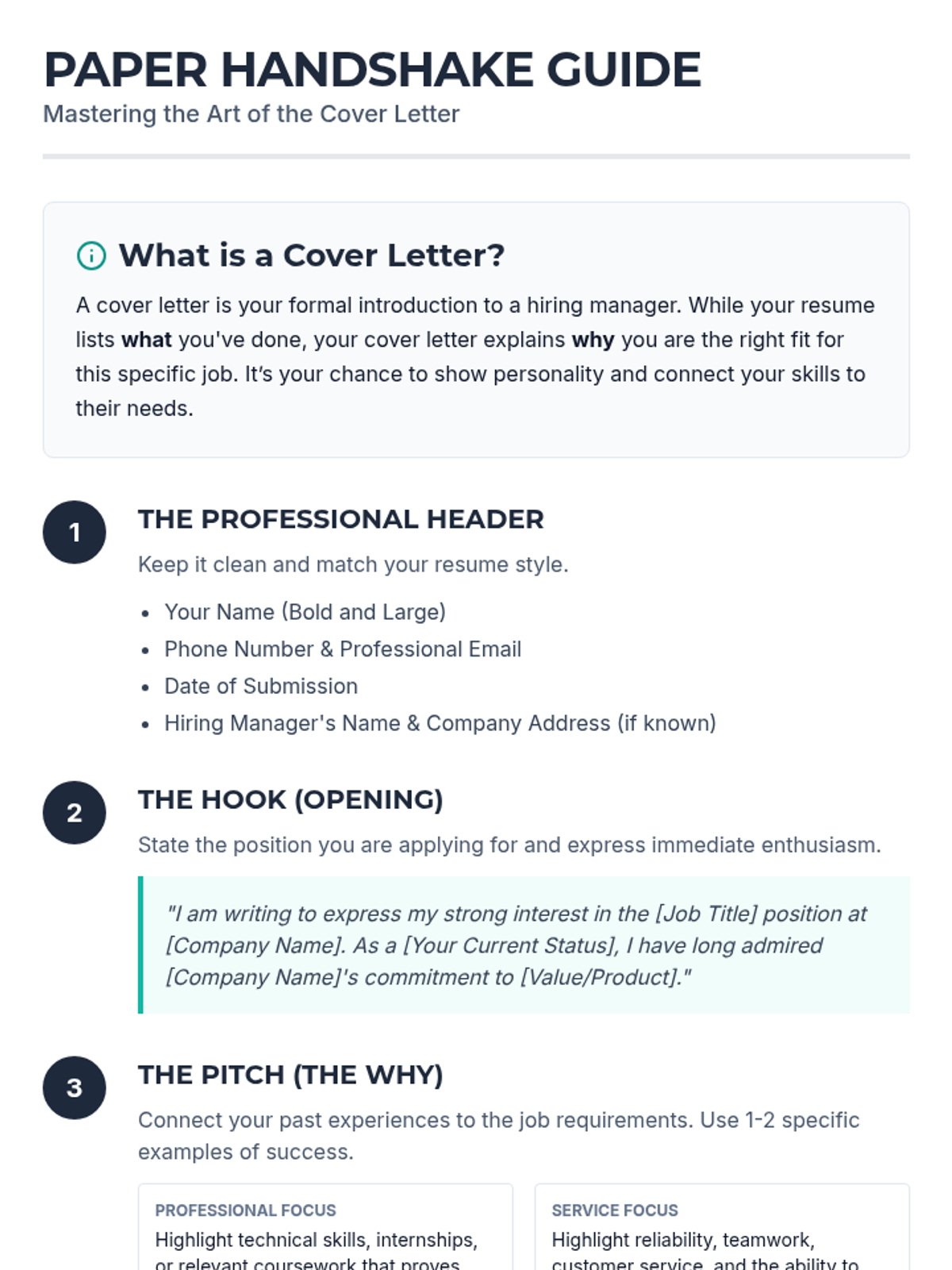
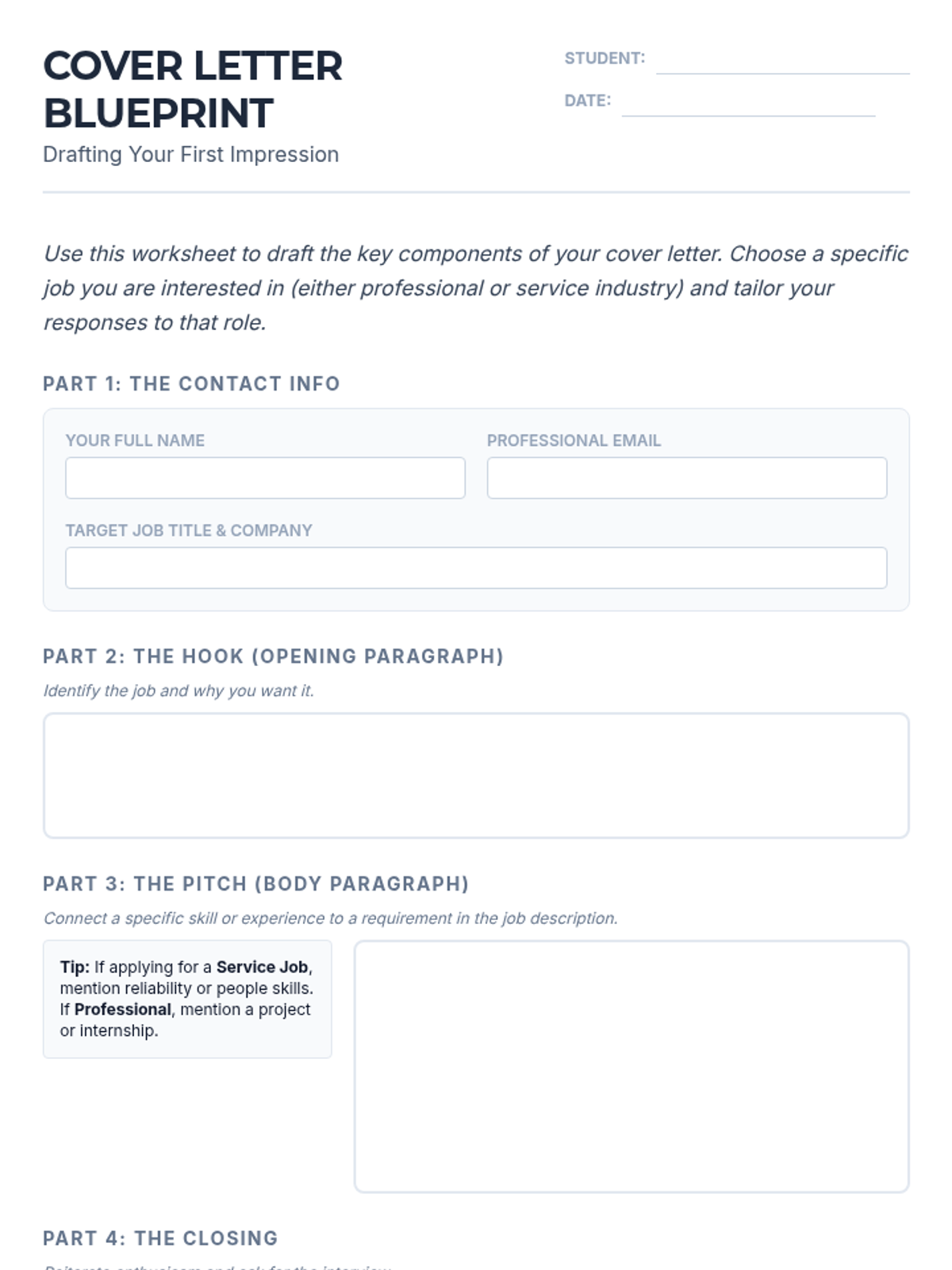
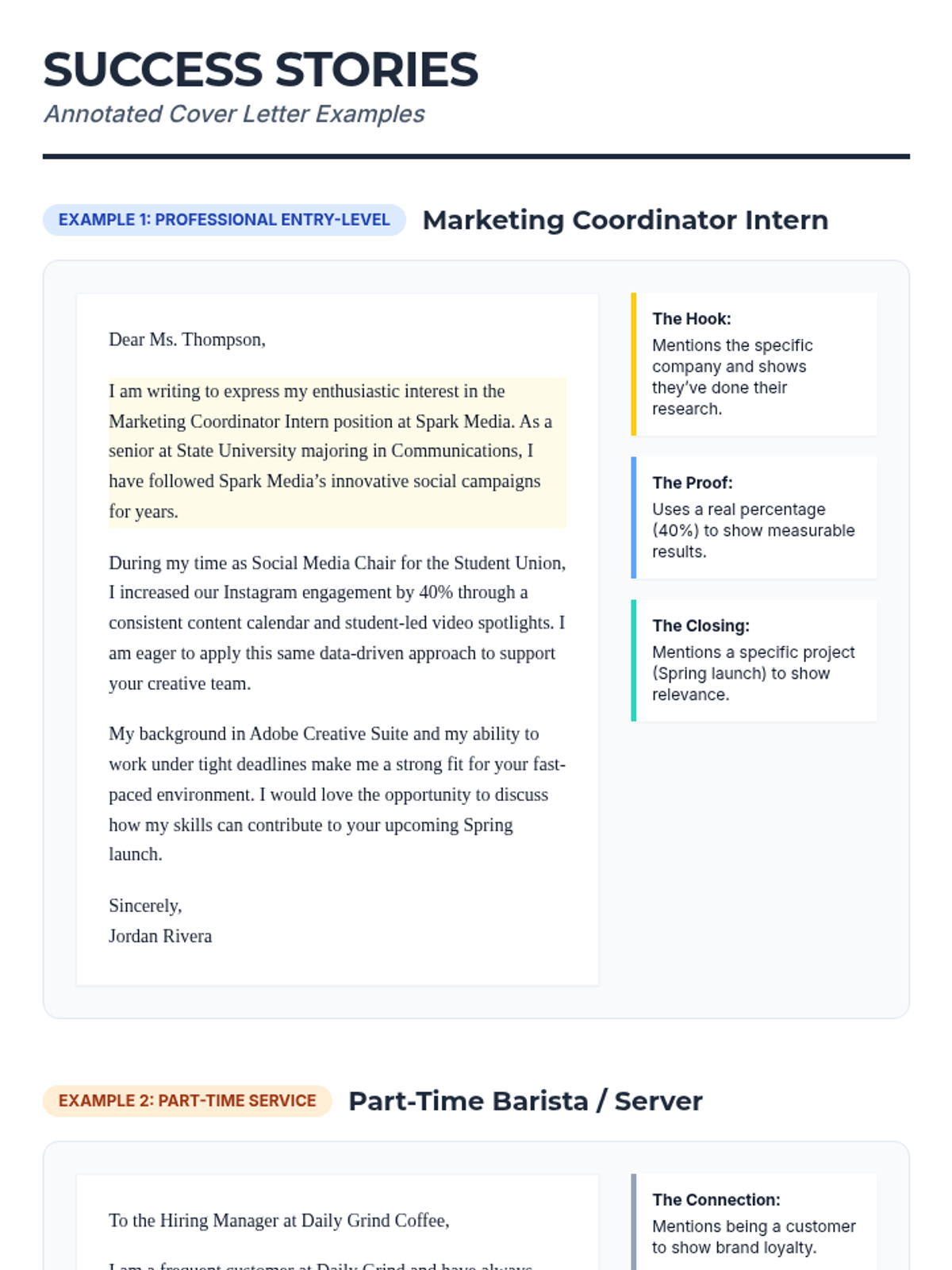
A comprehensive guide and set of tools for students to master the art of writing effective cover letters for both professional entry-level roles and service industry positions.
Students will research a dream career and draft a professional cover letter using a guided, step-by-step approach. The lesson covers the structural components of a cover letter and professional tone.
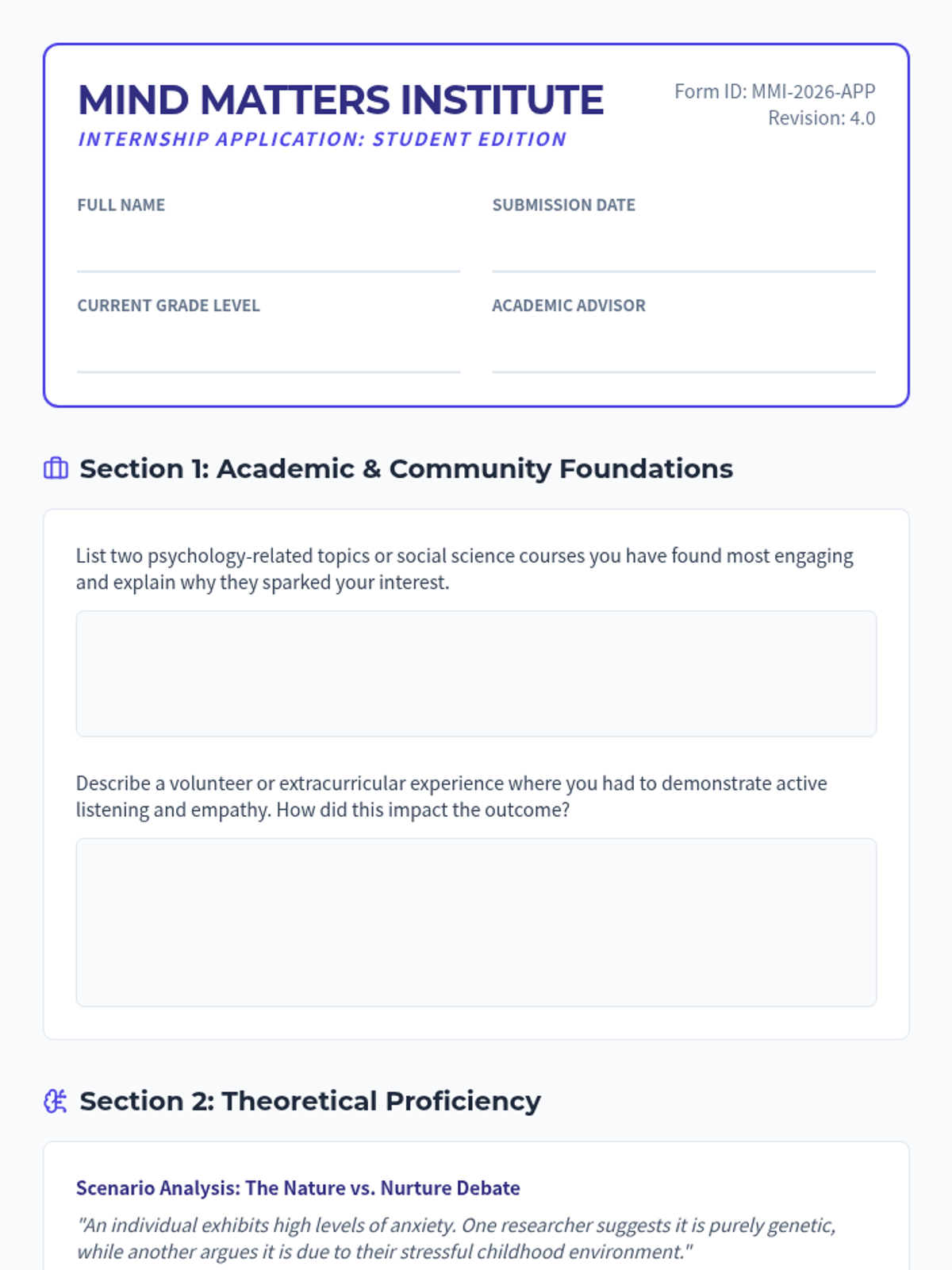
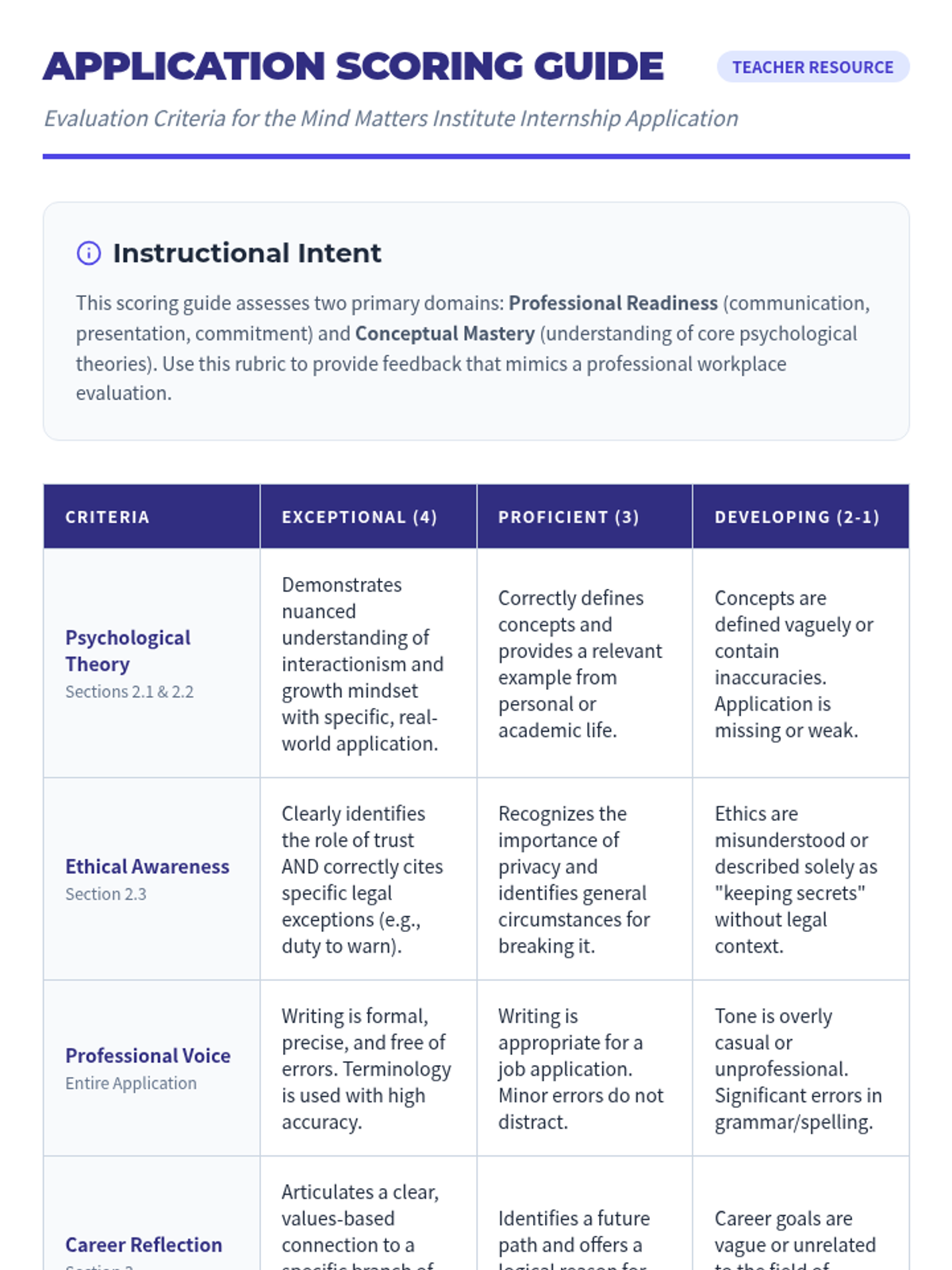
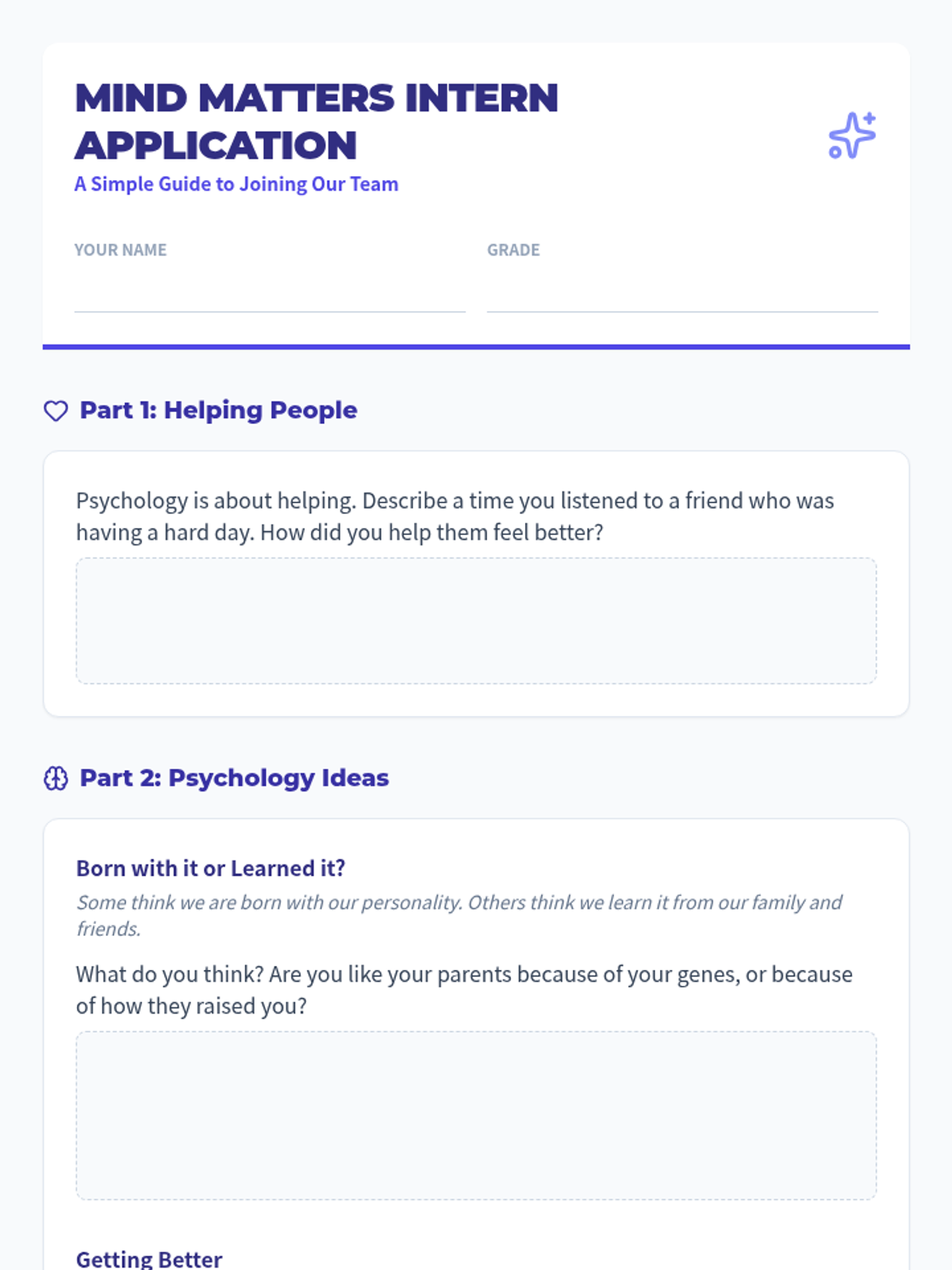
A comprehensive lesson designed to help high school students navigate the job application process for a psychology internship while demonstrating their subject-matter knowledge.
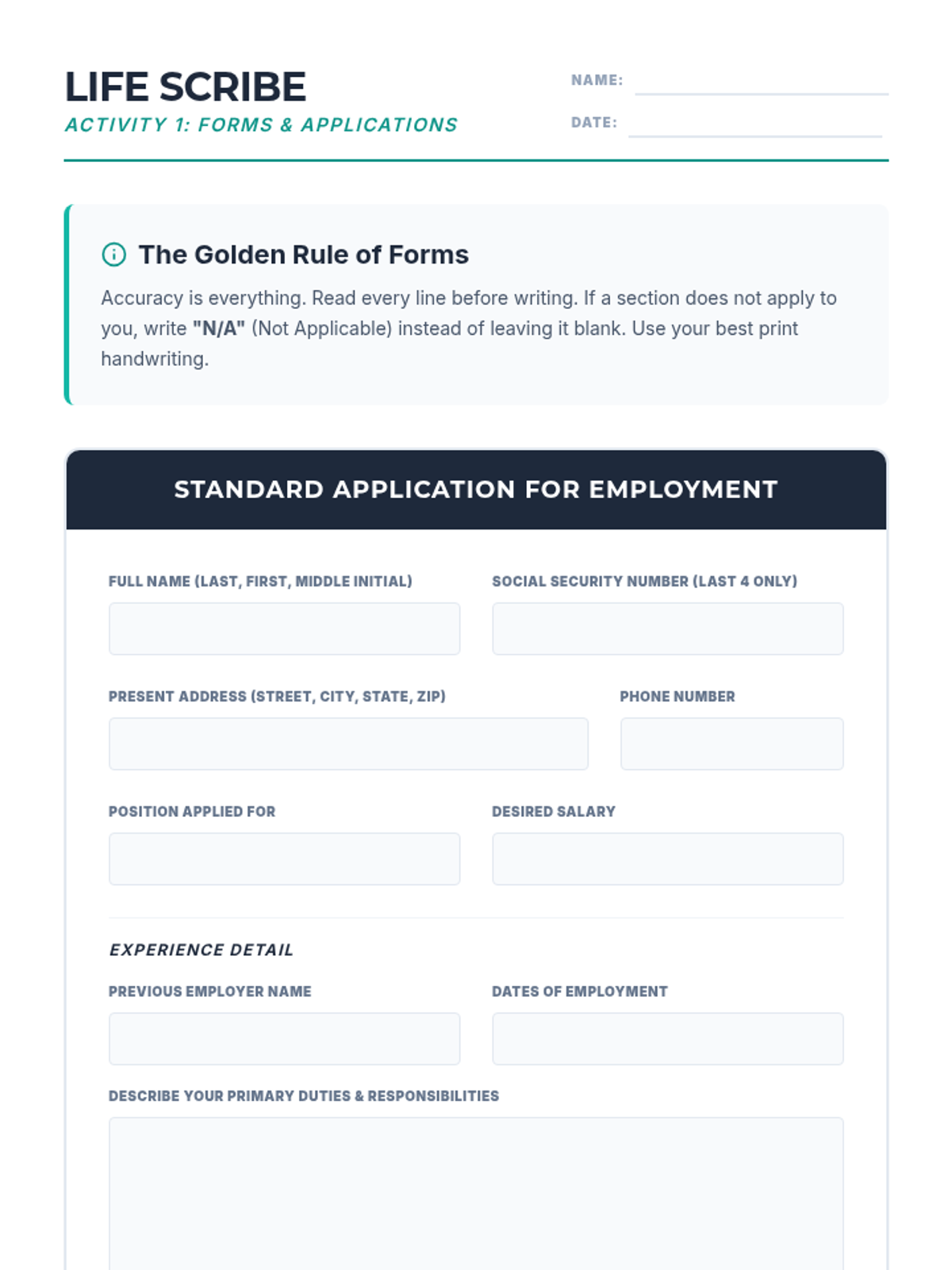
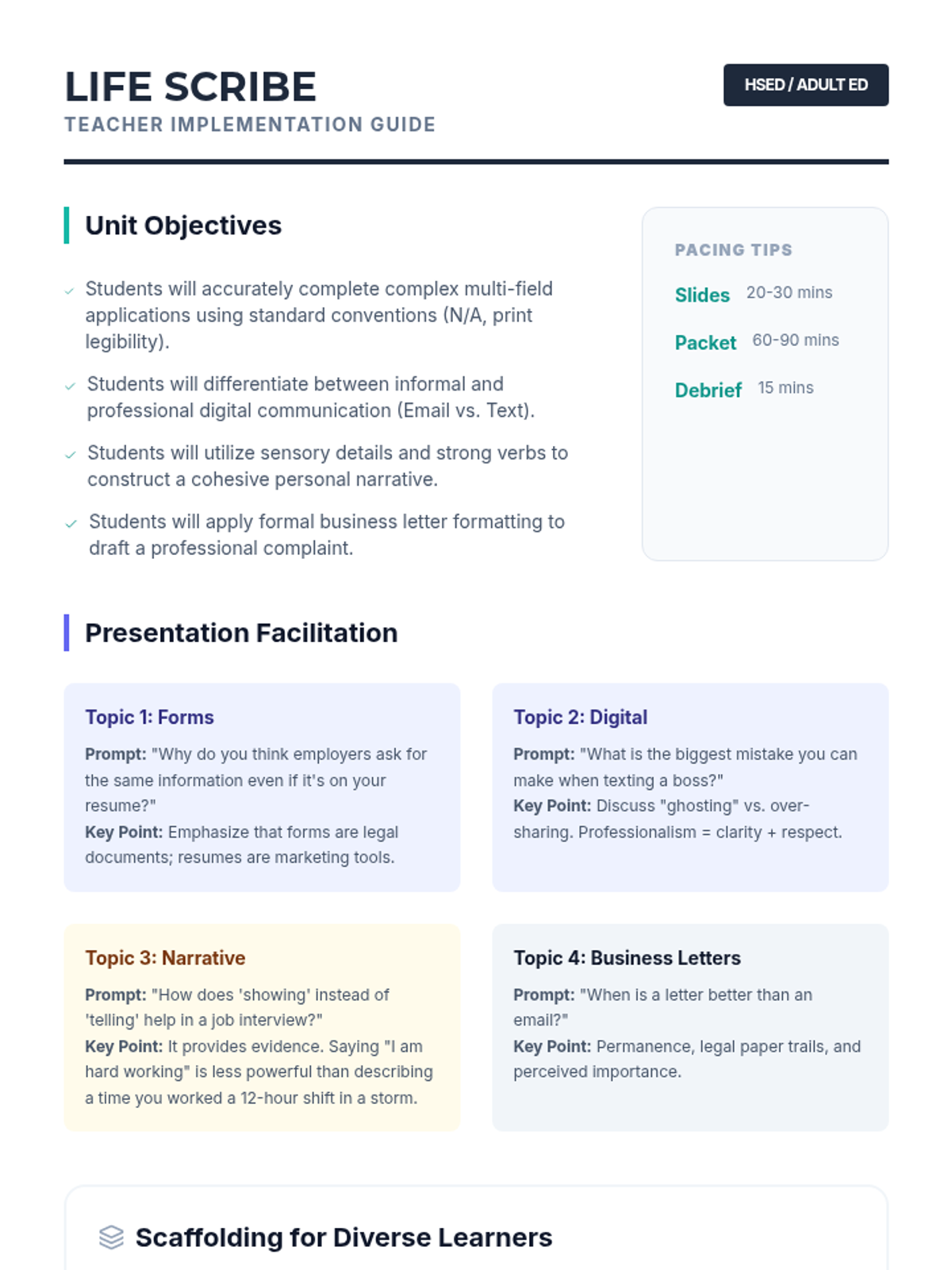
A comprehensive unit designed for HSED students to master practical, real-world writing tasks including official forms, professional digital communication, personal narratives, and business correspondence.