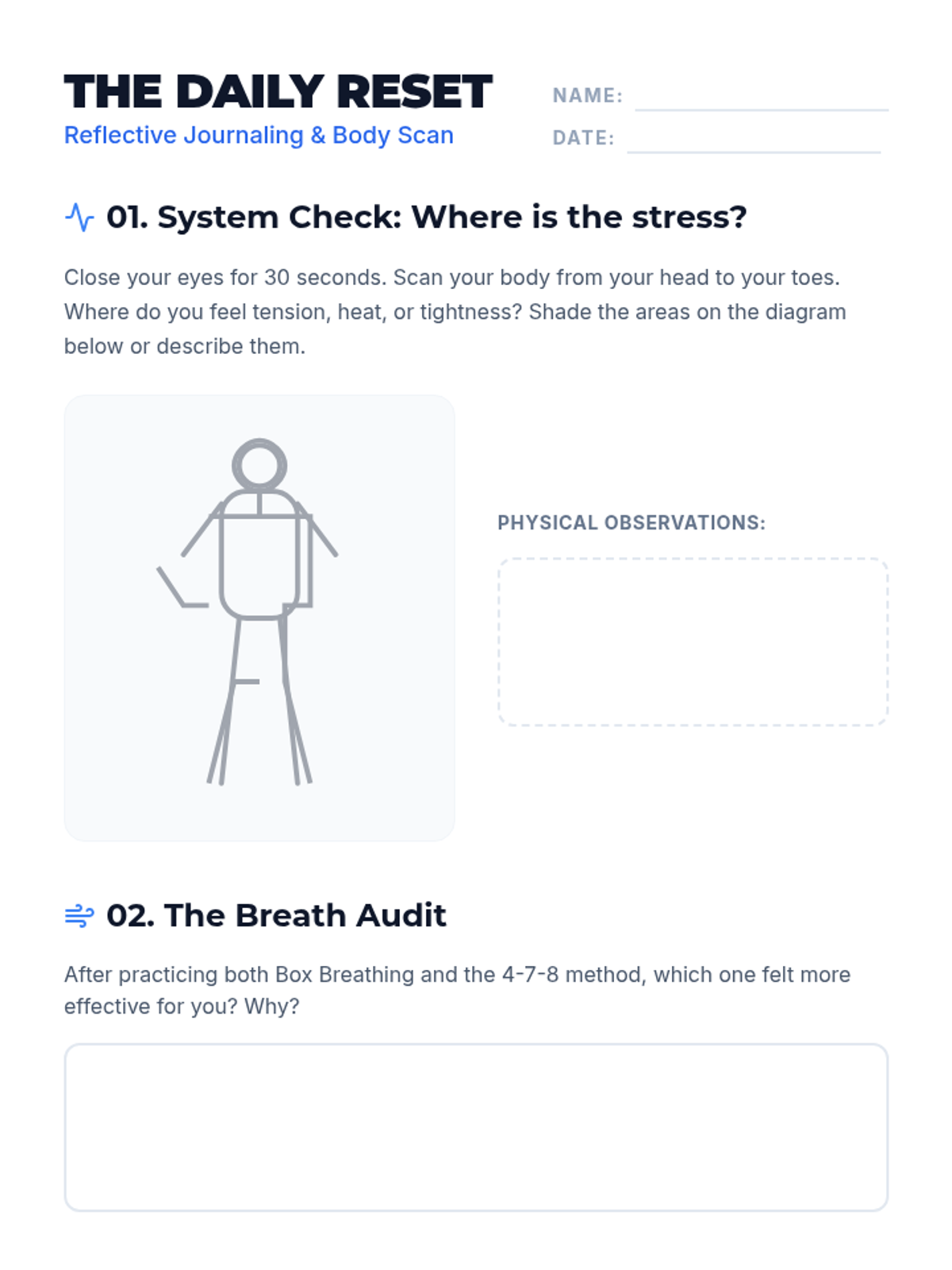
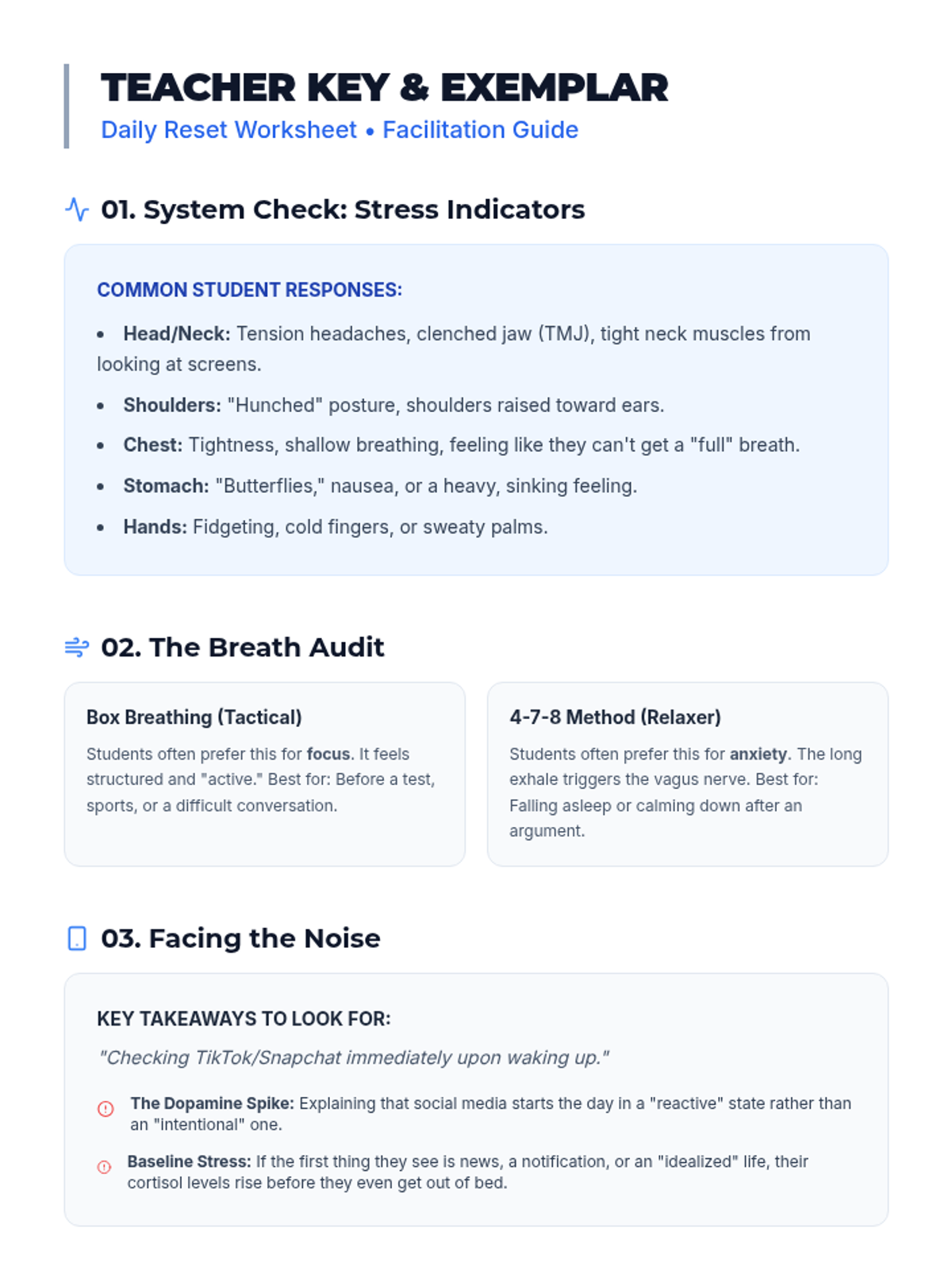
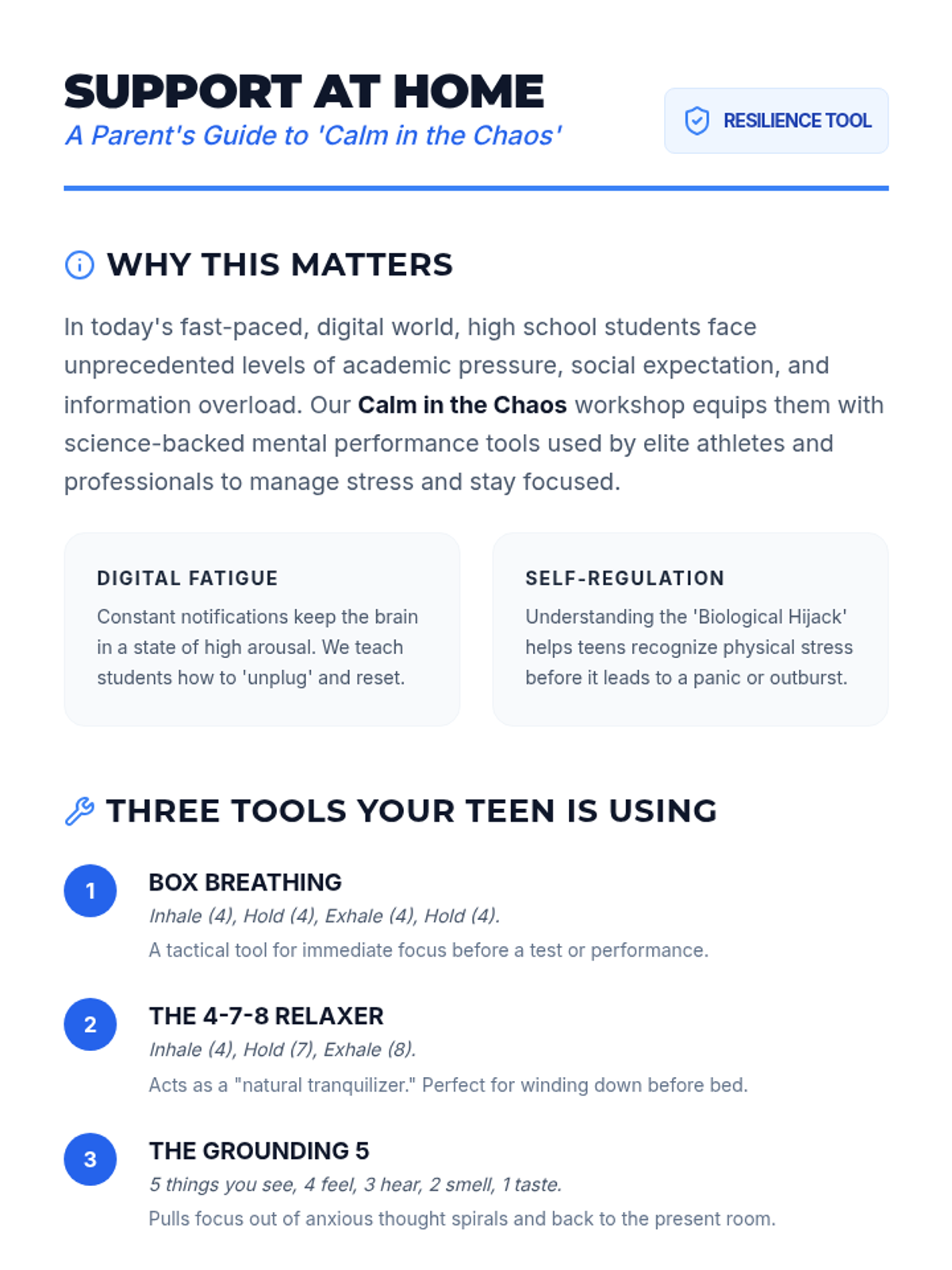
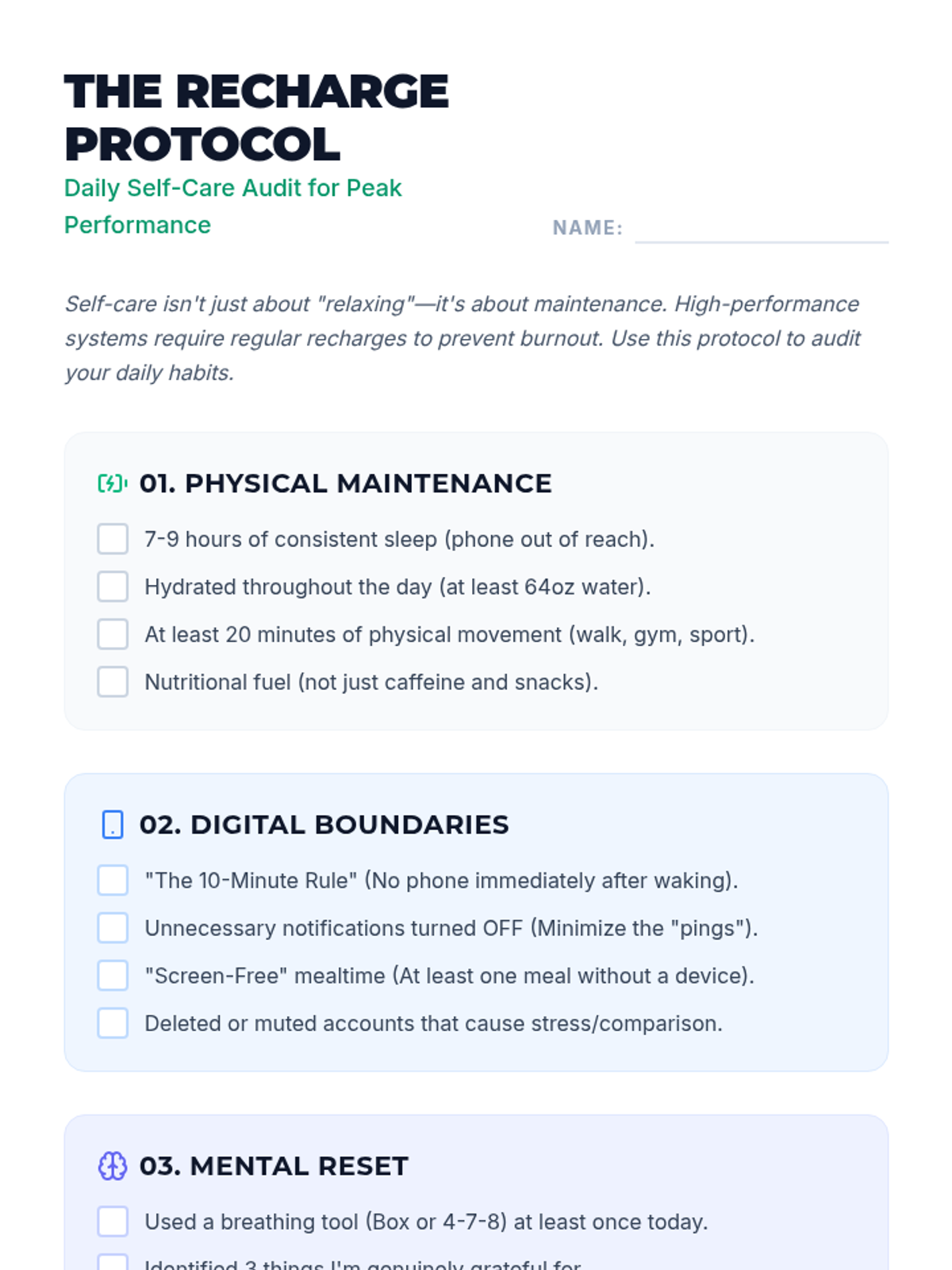
Mindful breathing and body scan meditation techniques integrated with daily self-care routines. Develops strategies for balancing life demands and advocating for personal wellness needs.
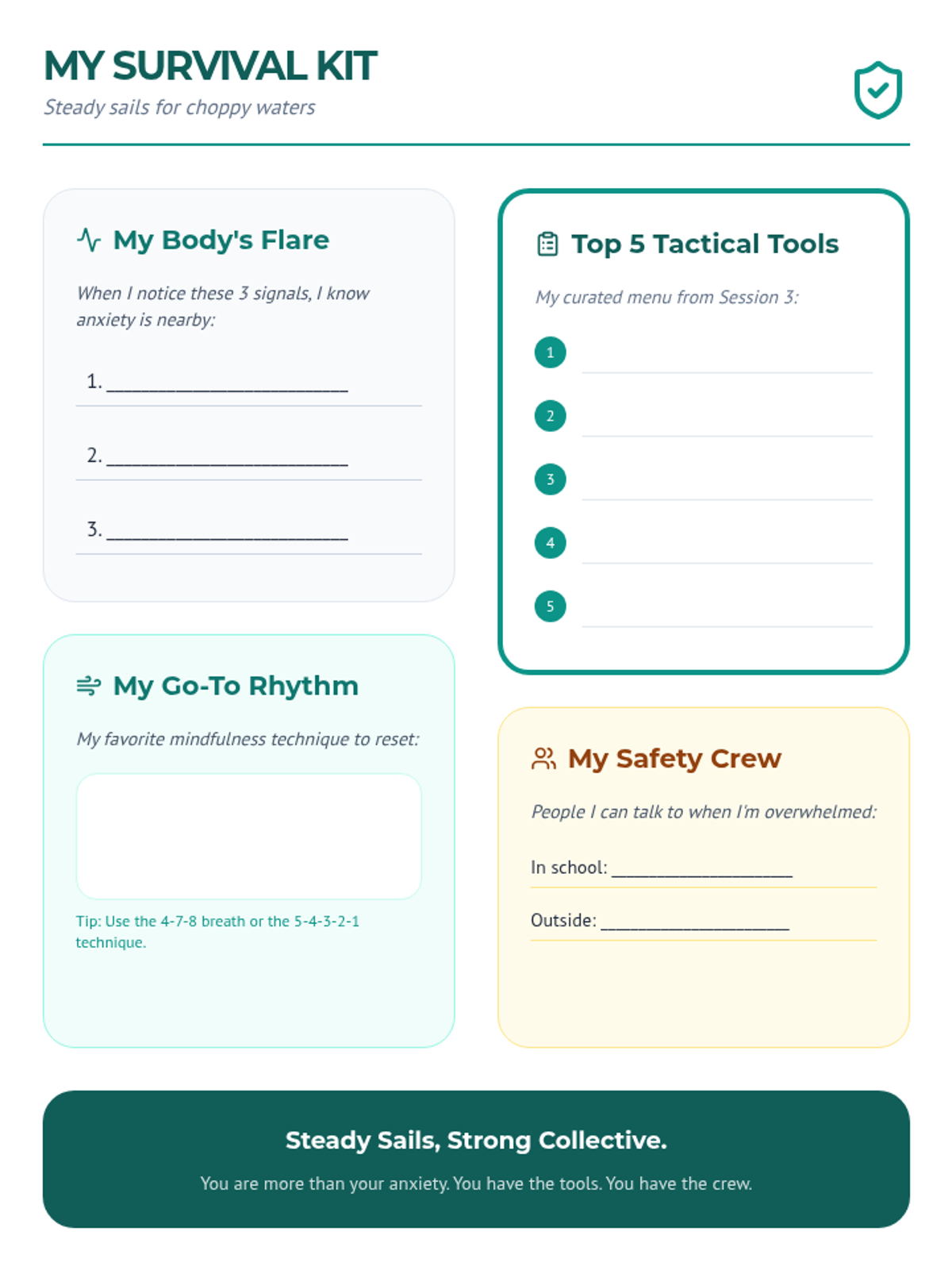
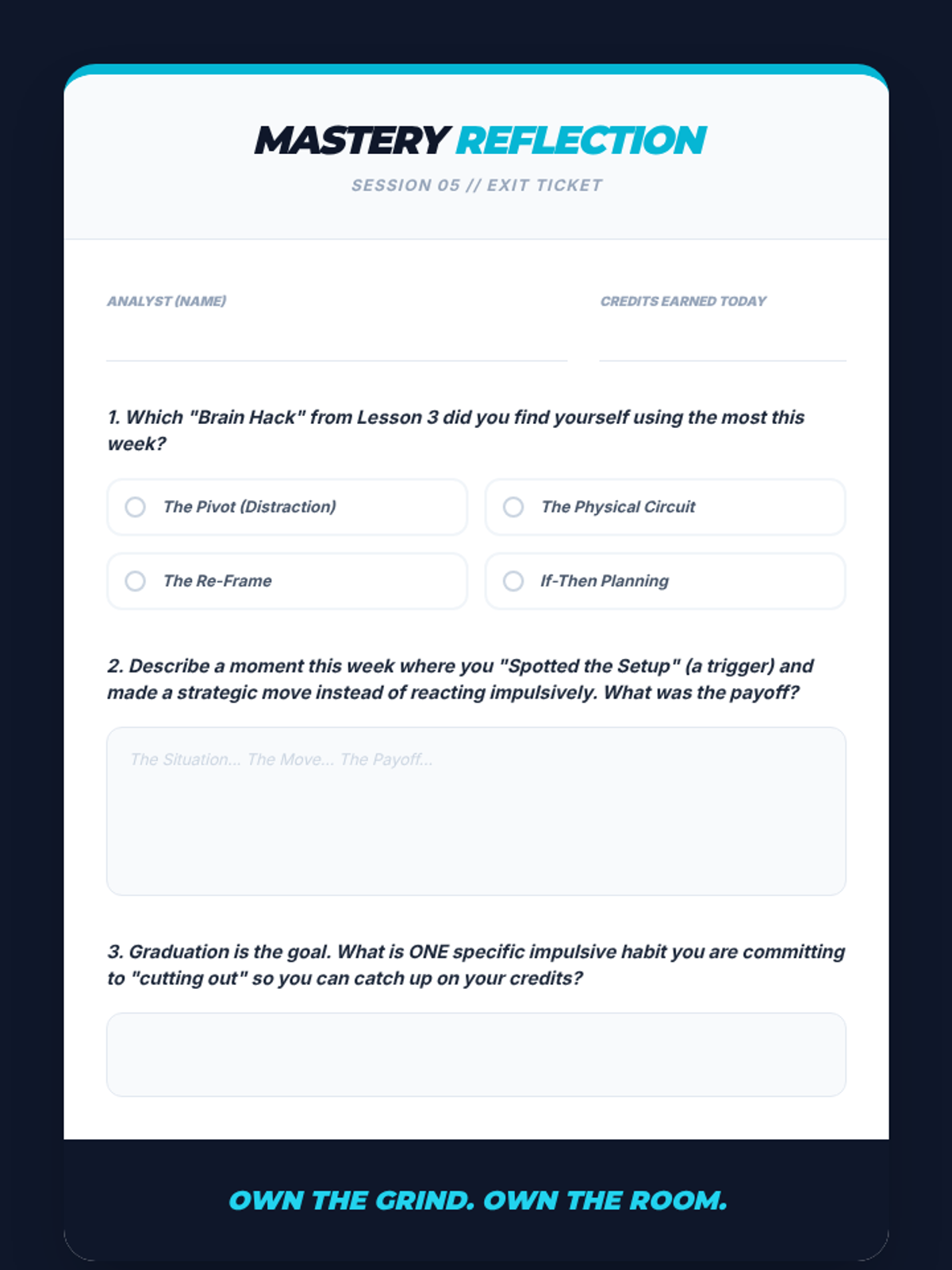
The final session focuses on long-term maintenance and 'relapse prevention.' Students will create a take-home survival kit and celebrate their growth within the collective.
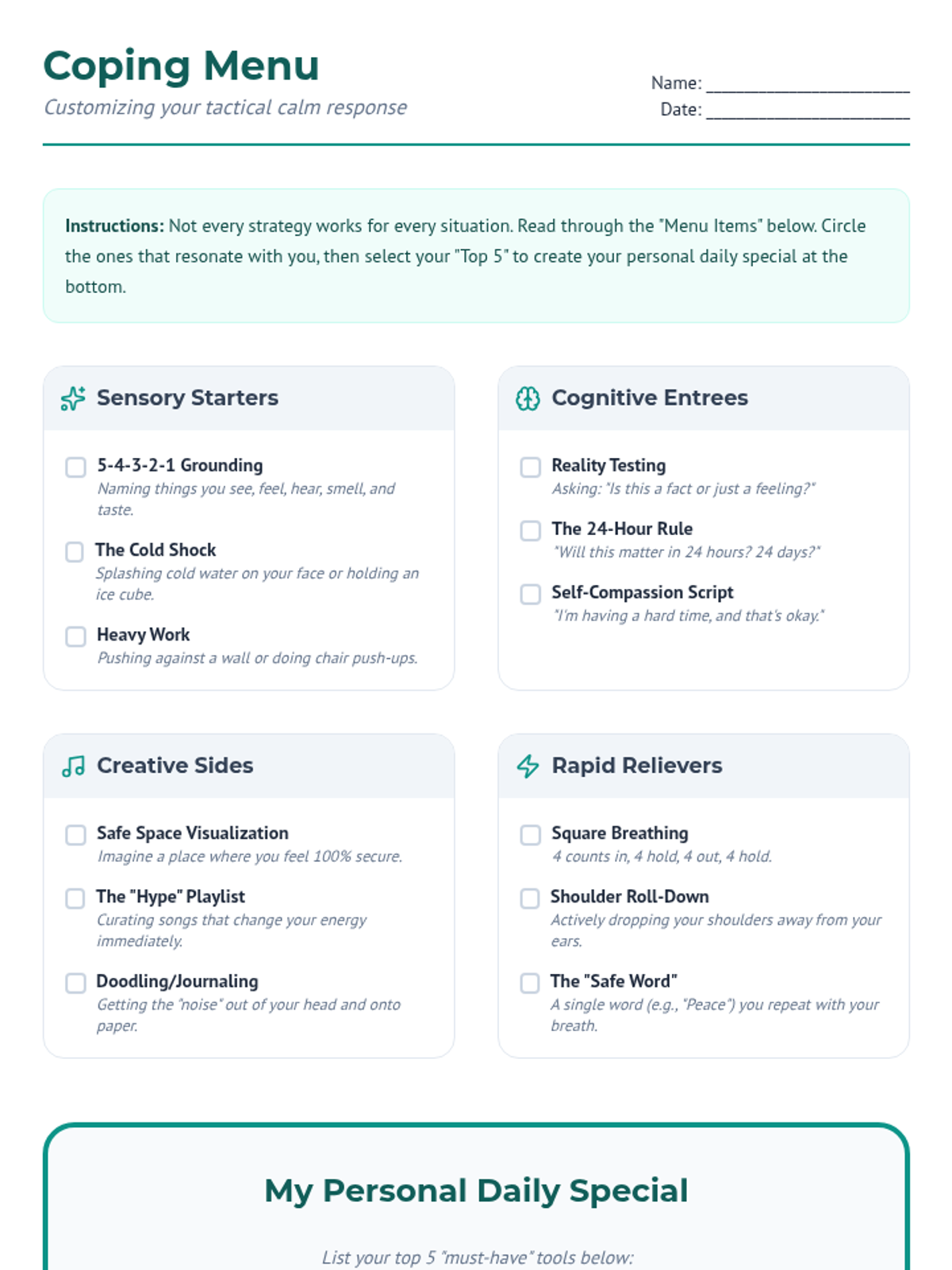
Students will explore a variety of sensory and cognitive coping strategies. They will evaluate which techniques work best for them and begin building their personal 'Coping Menu'.
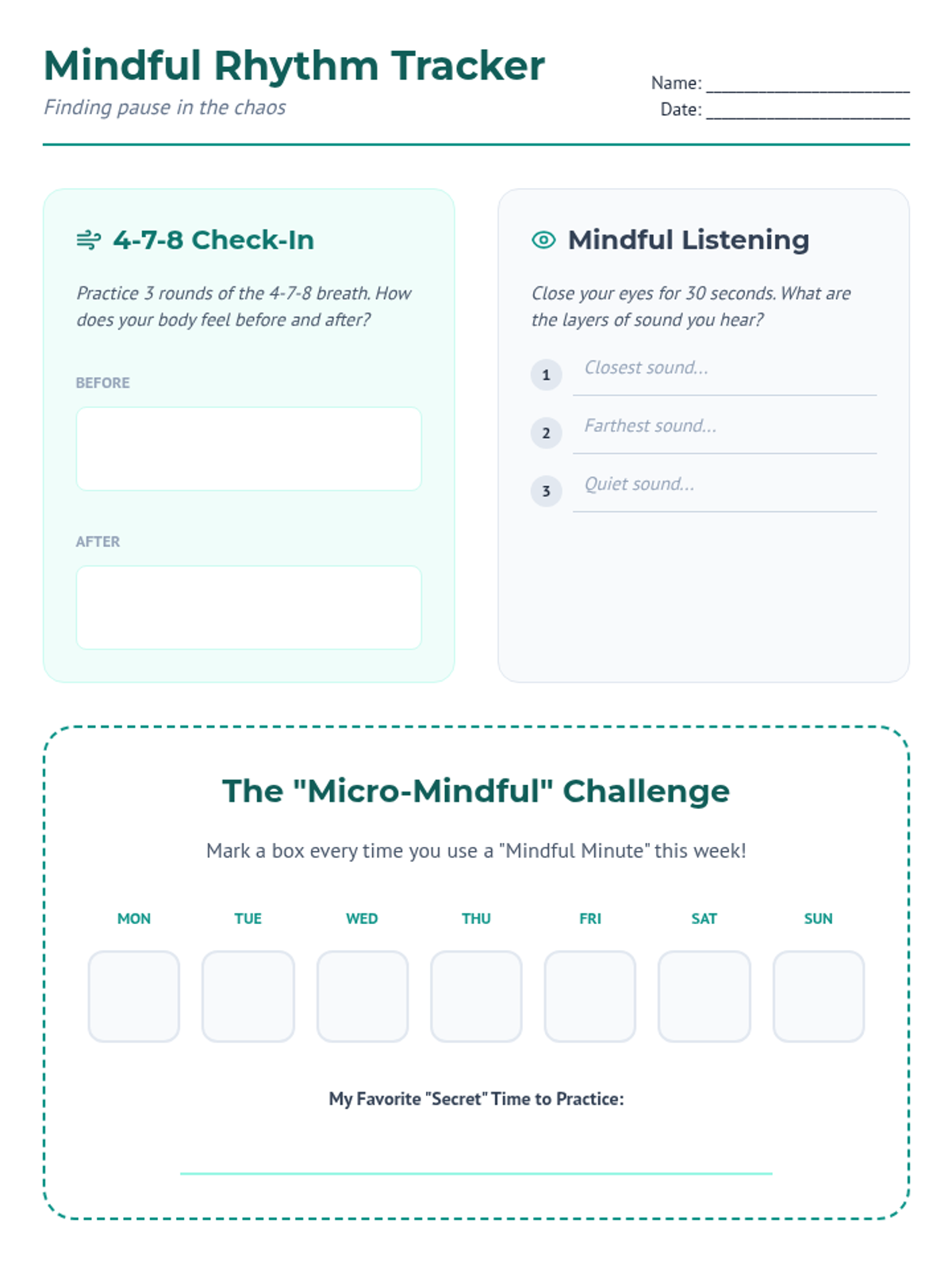
This session introduces mindfulness as a tool for presence. Students will practice breathwork and a body scan, discussing how to integrate these small moments into a busy high school schedule.
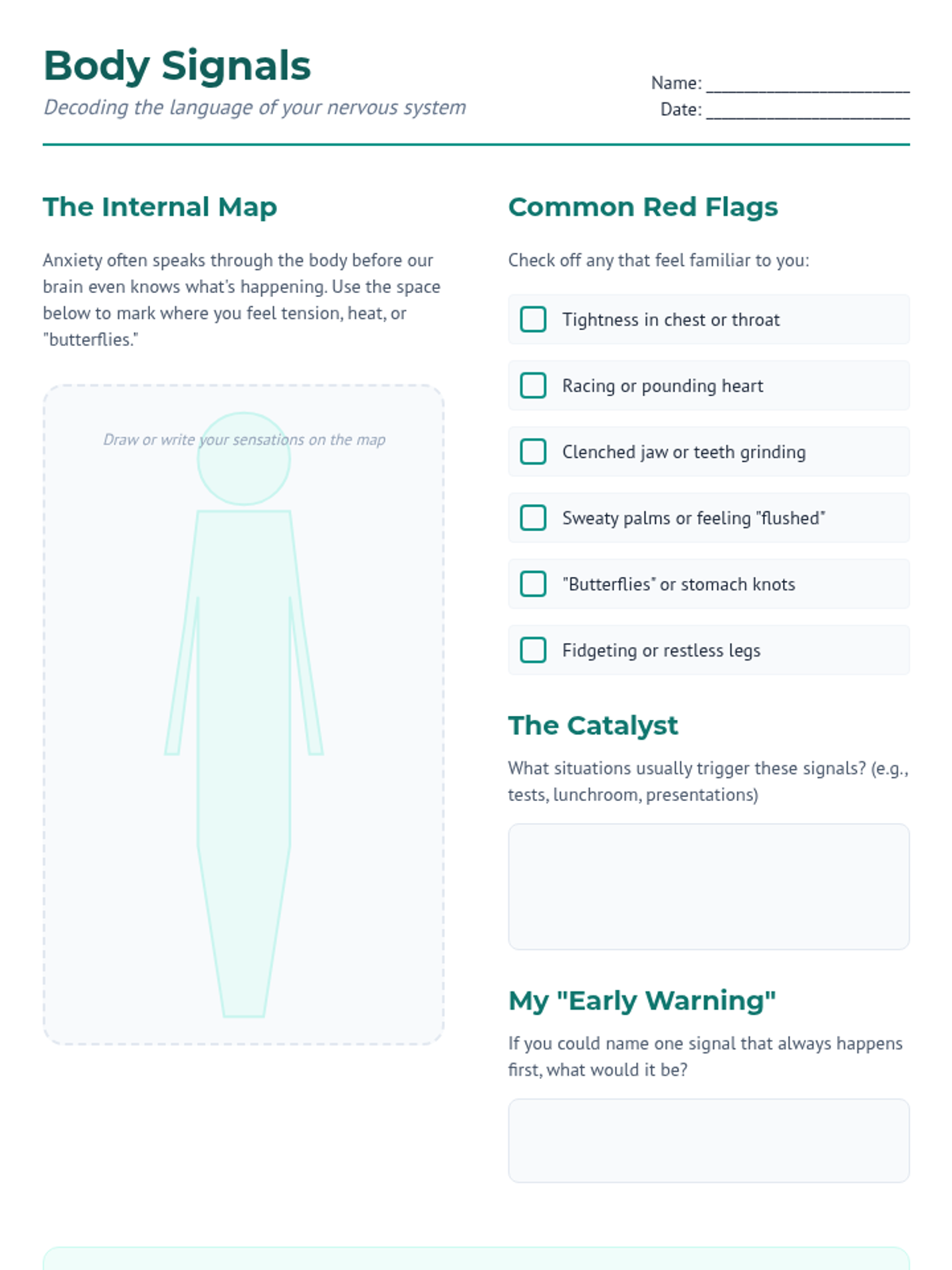
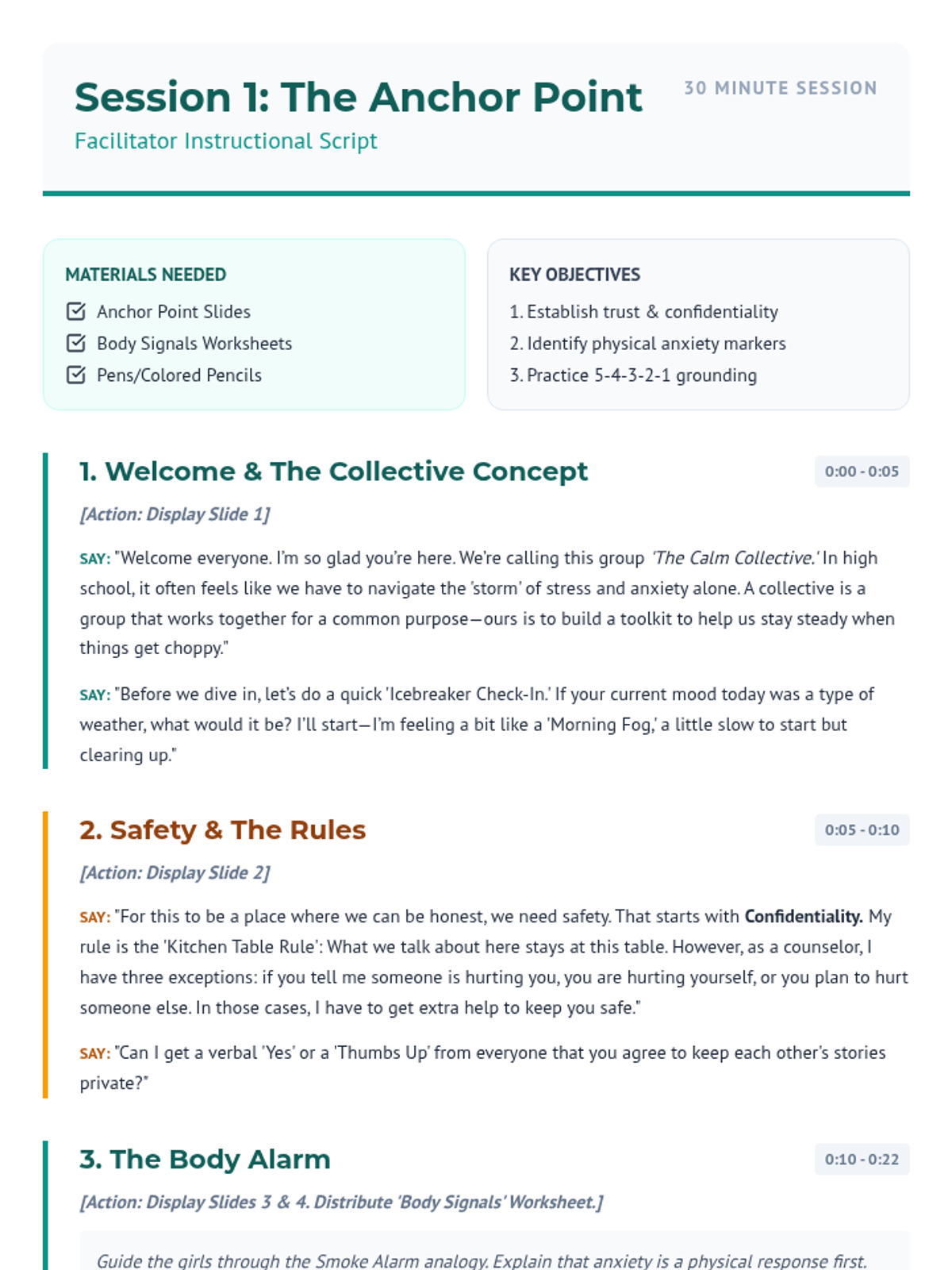
The first session focuses on establishing the group's foundation, including ethical guidelines, confidentiality, and the basic 'Anchor' grounding technique. Students will identify how anxiety physically manifests in their bodies.
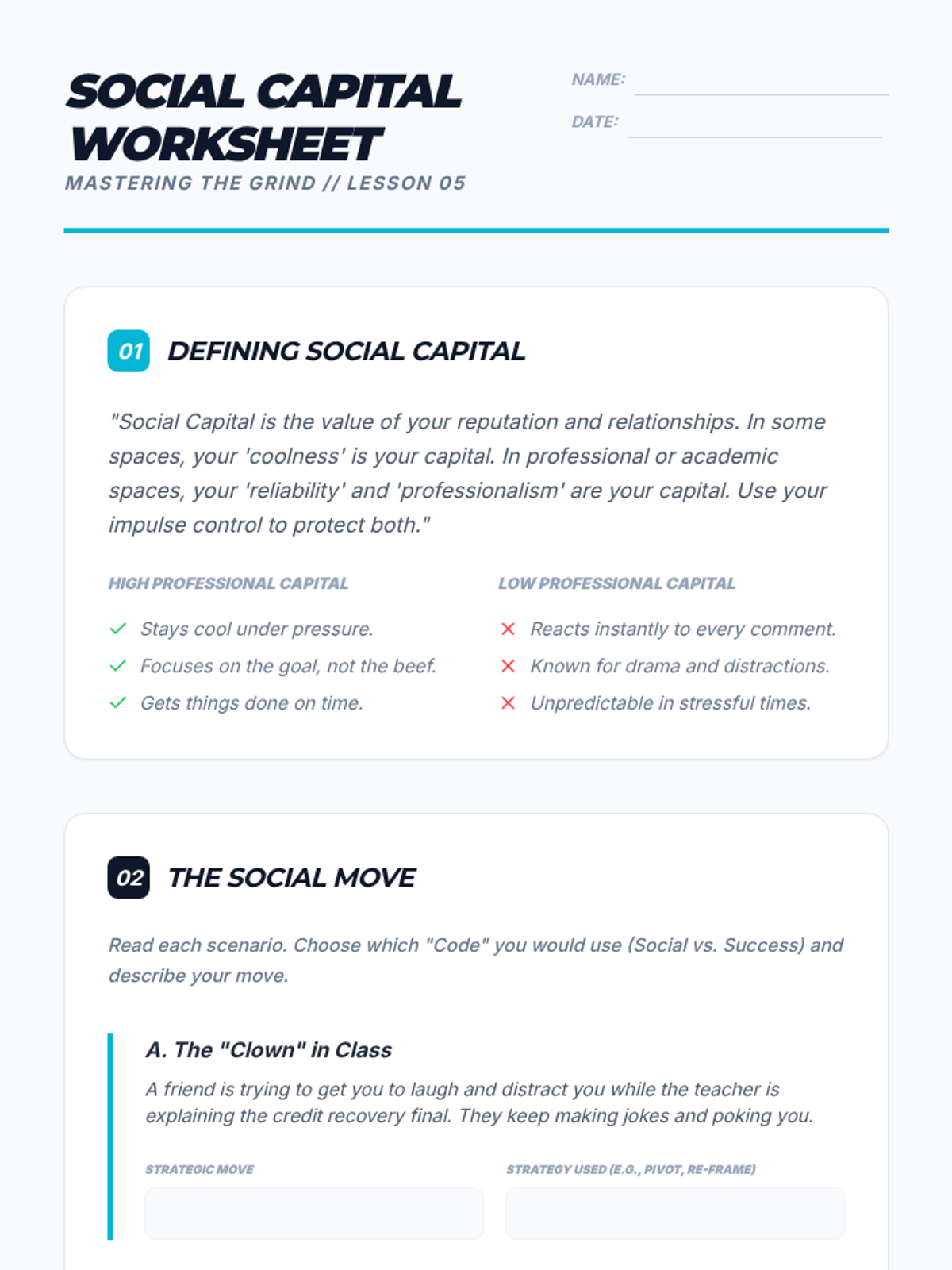
Focuses on social intelligence and 'code-switching' as tools for success. Students practice navigating conflict with peers and authority figures to protect their progress and 'own the room' professionally.
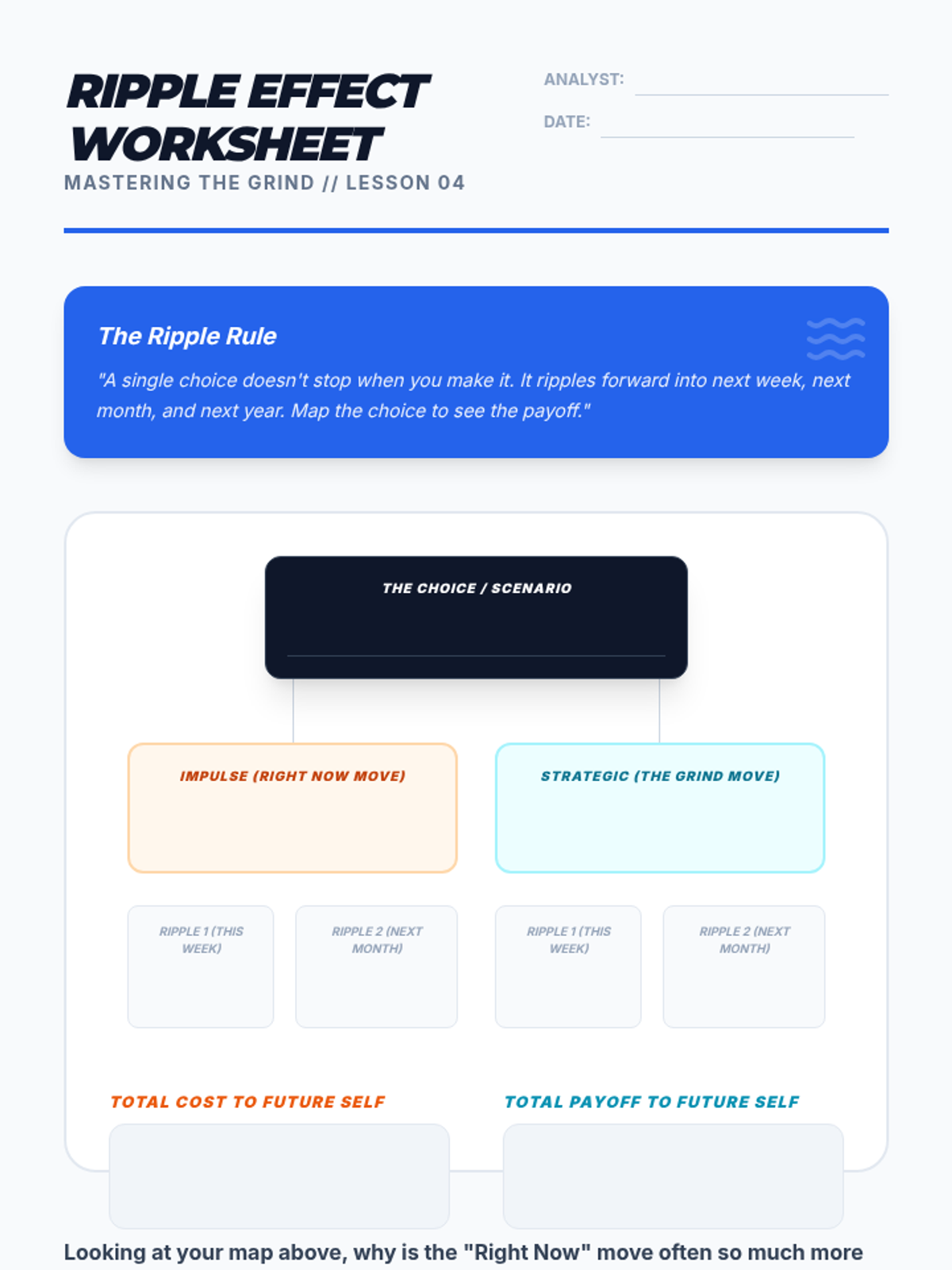
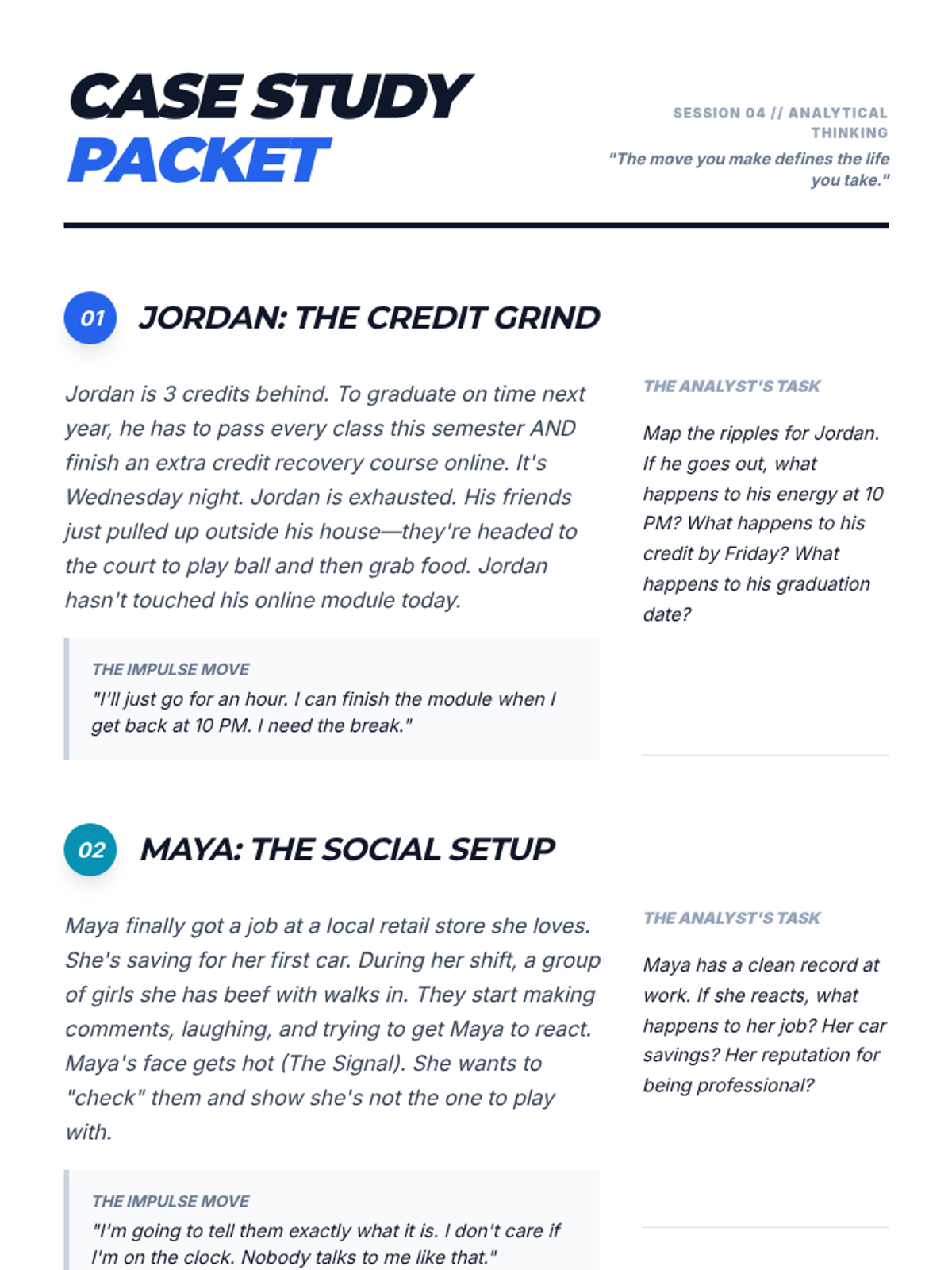
Visualizes the 'Ripple Effect' of choices on graduation timelines and future earnings. Students analyze case studies of peers navigating high-stakes decisions to understand the compounding nature of consistency.
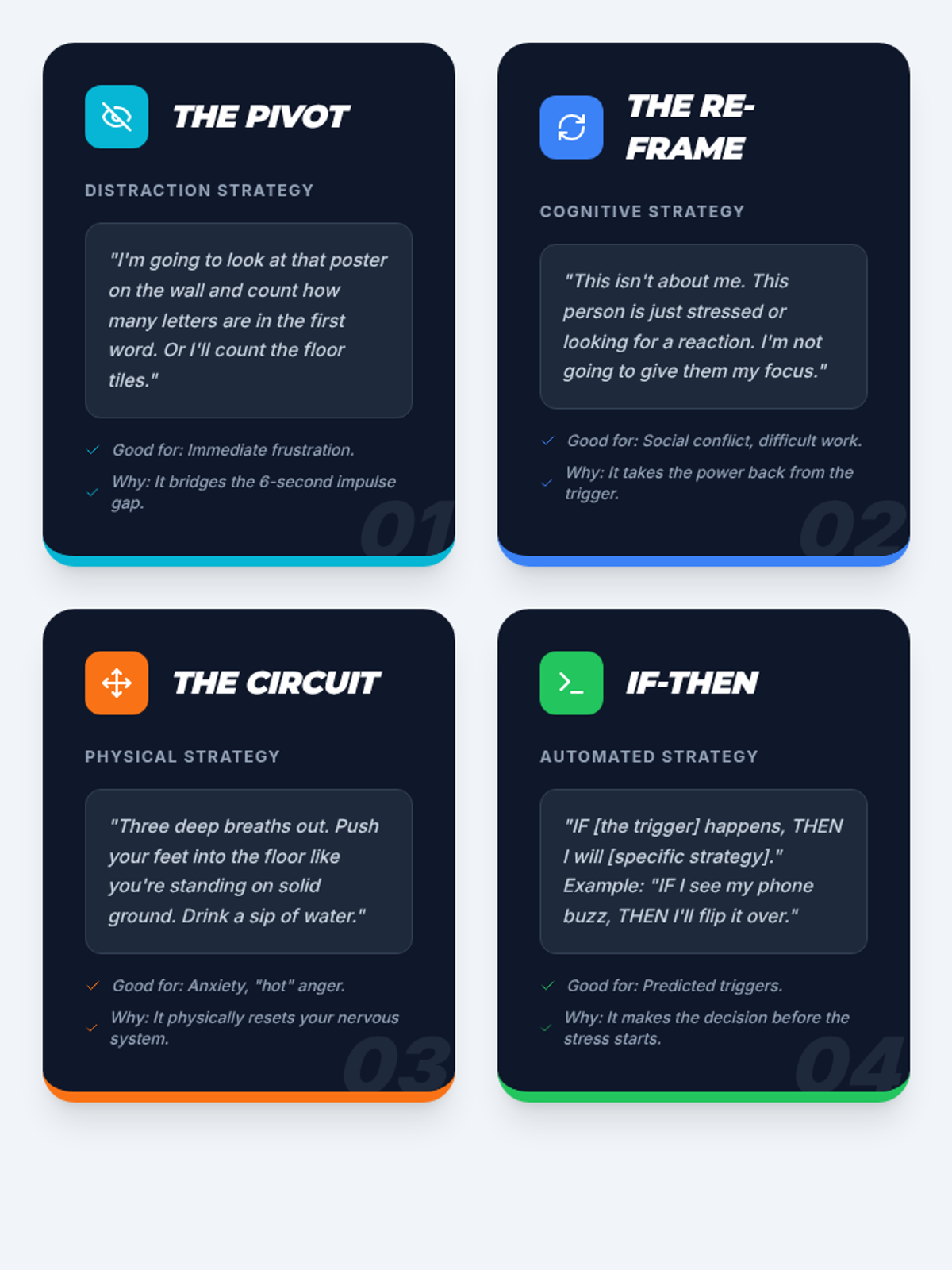
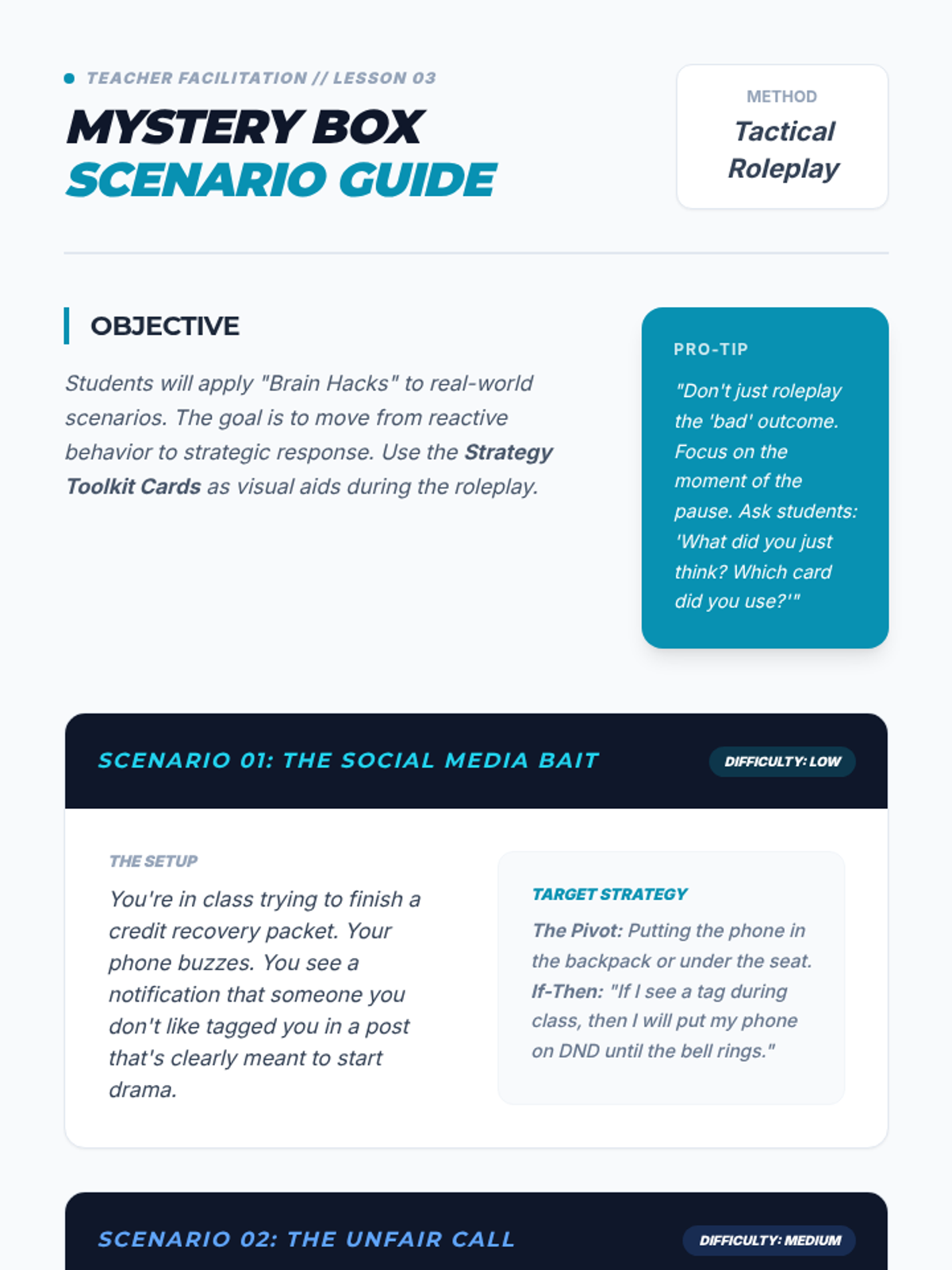
Equips students with high-level cognitive strategies to override impulsive reactions. Focuses on 'reframing' stressful situations and using 'if-then' planning to maintain composure under pressure.
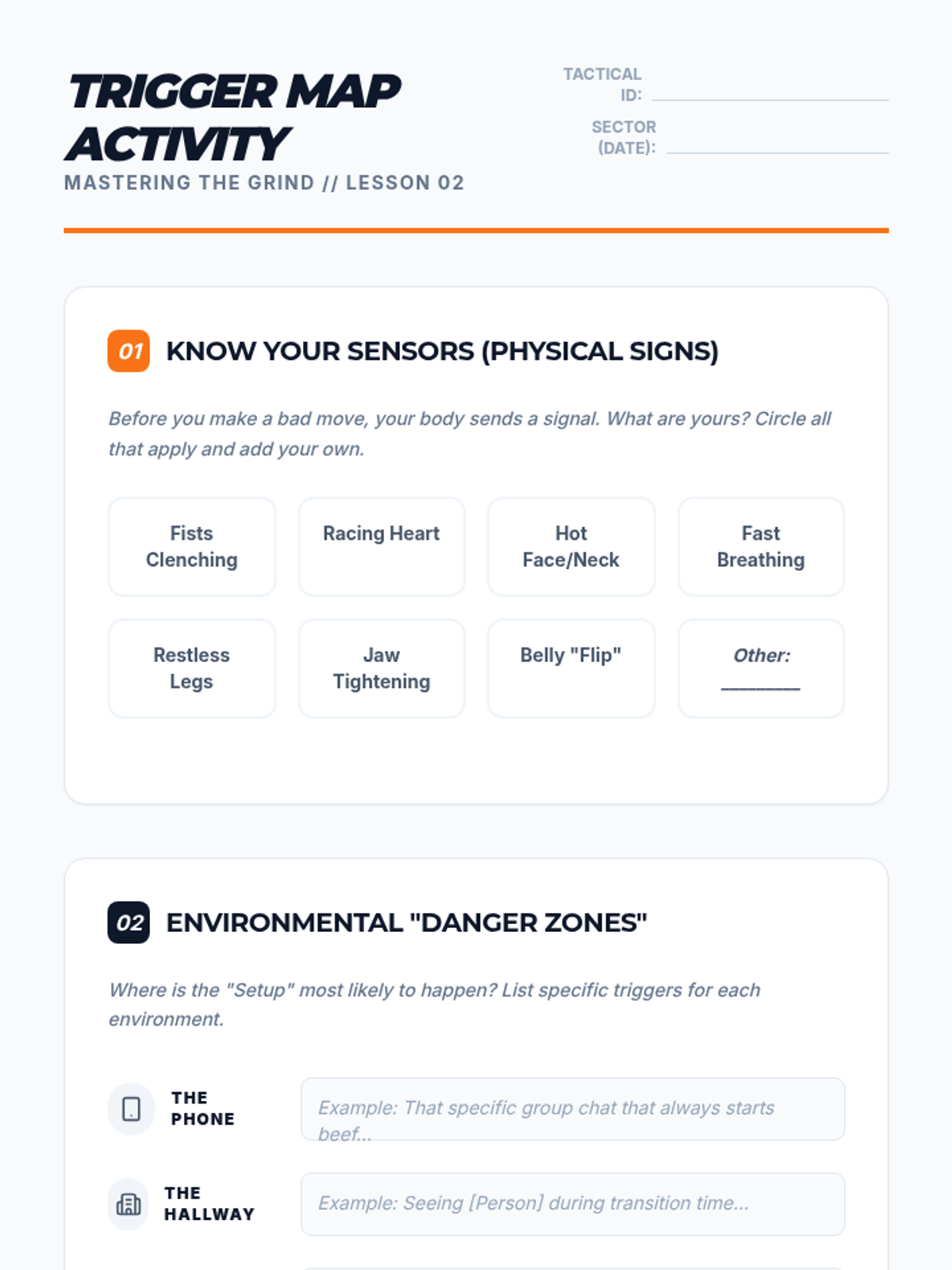
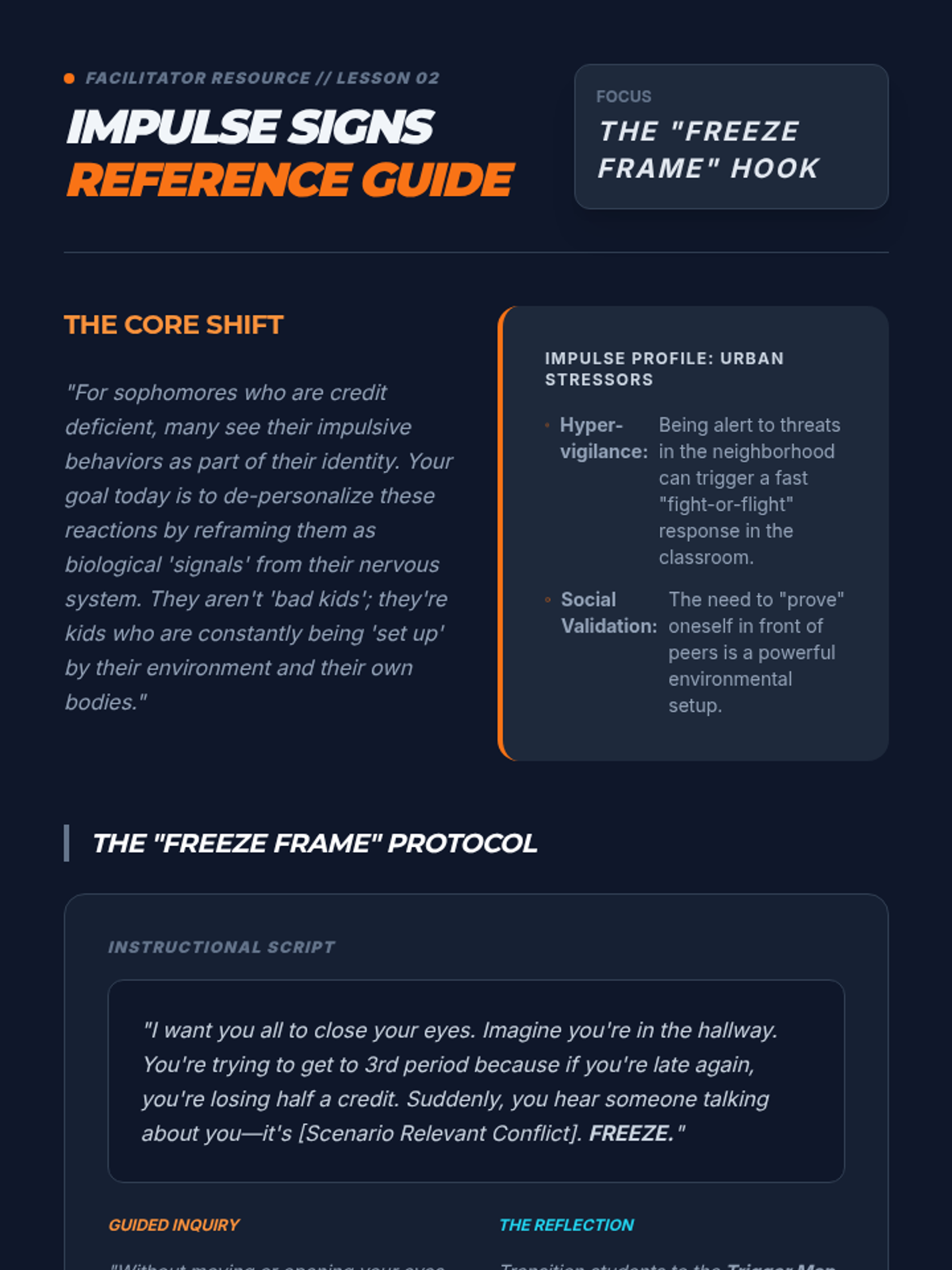
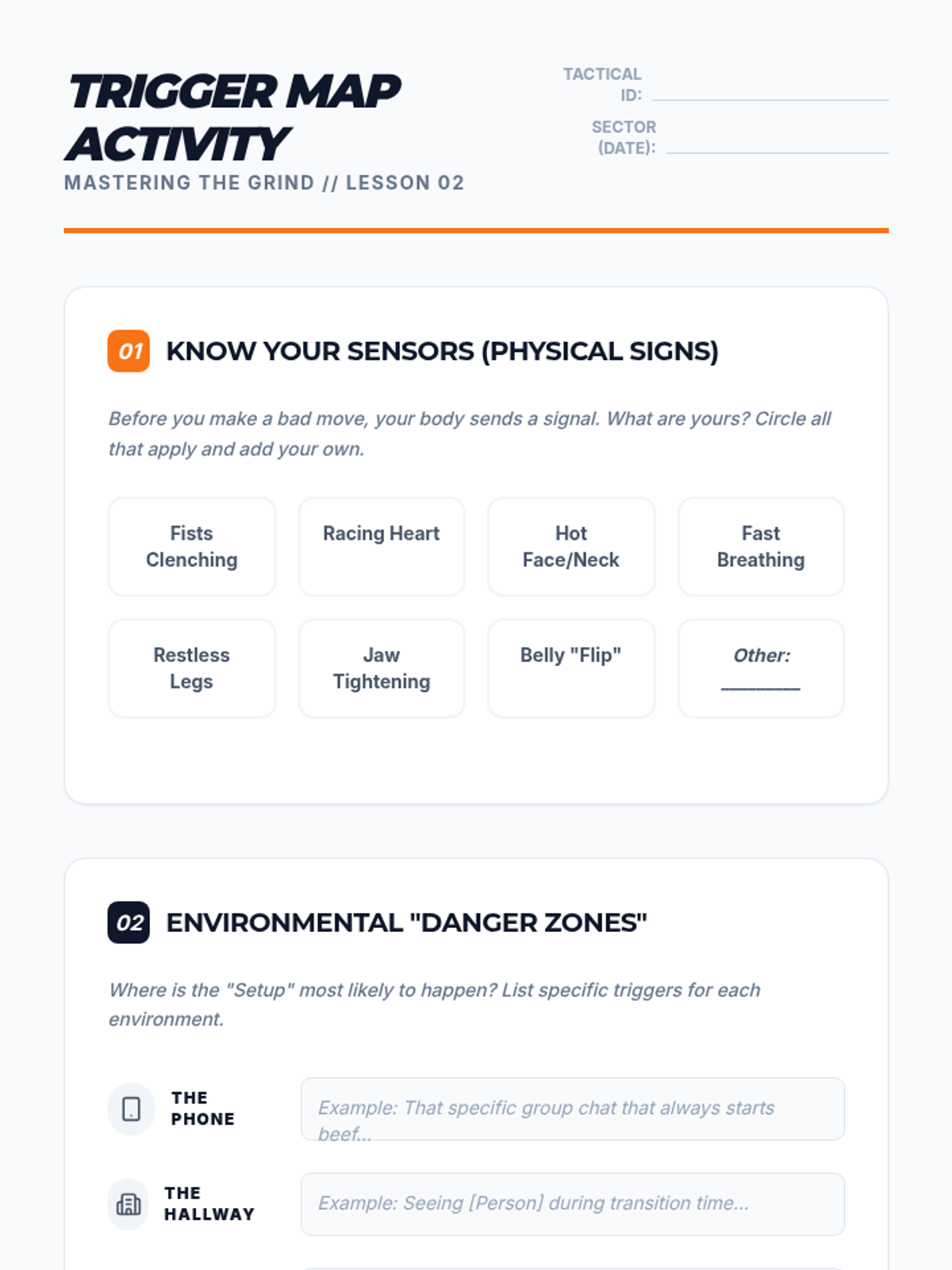
Students identify internal and environmental 'setups'—triggers that lead to self-sabotage. They create tactical maps of their daily routines to anticipate and bypass distractions in an urban school environment.
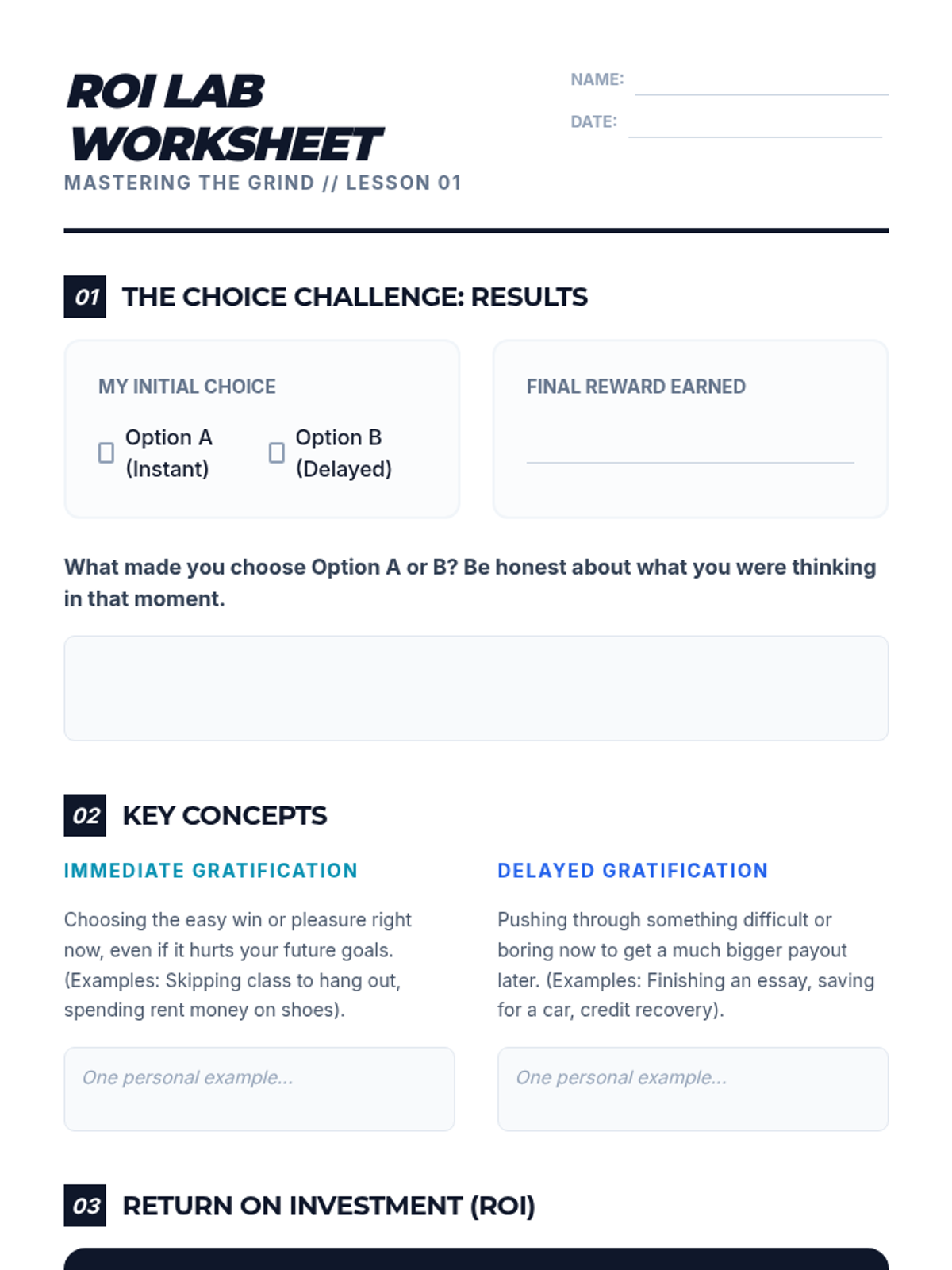
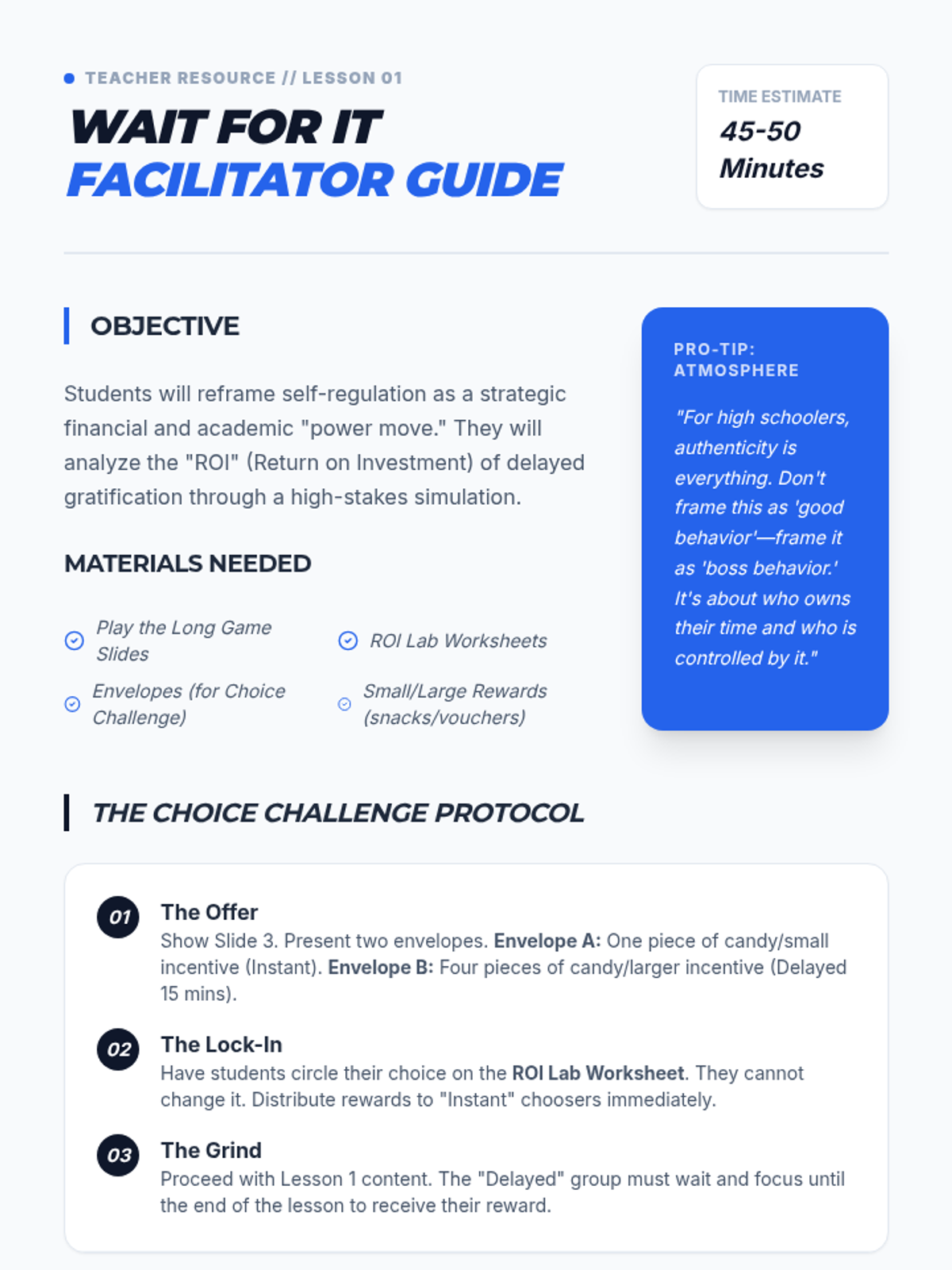
Reframes delayed gratification as a strategic investment. Students analyze the 'ROI' of their time and credits, participating in a simulation that mirrors real-world economic and academic trade-offs.
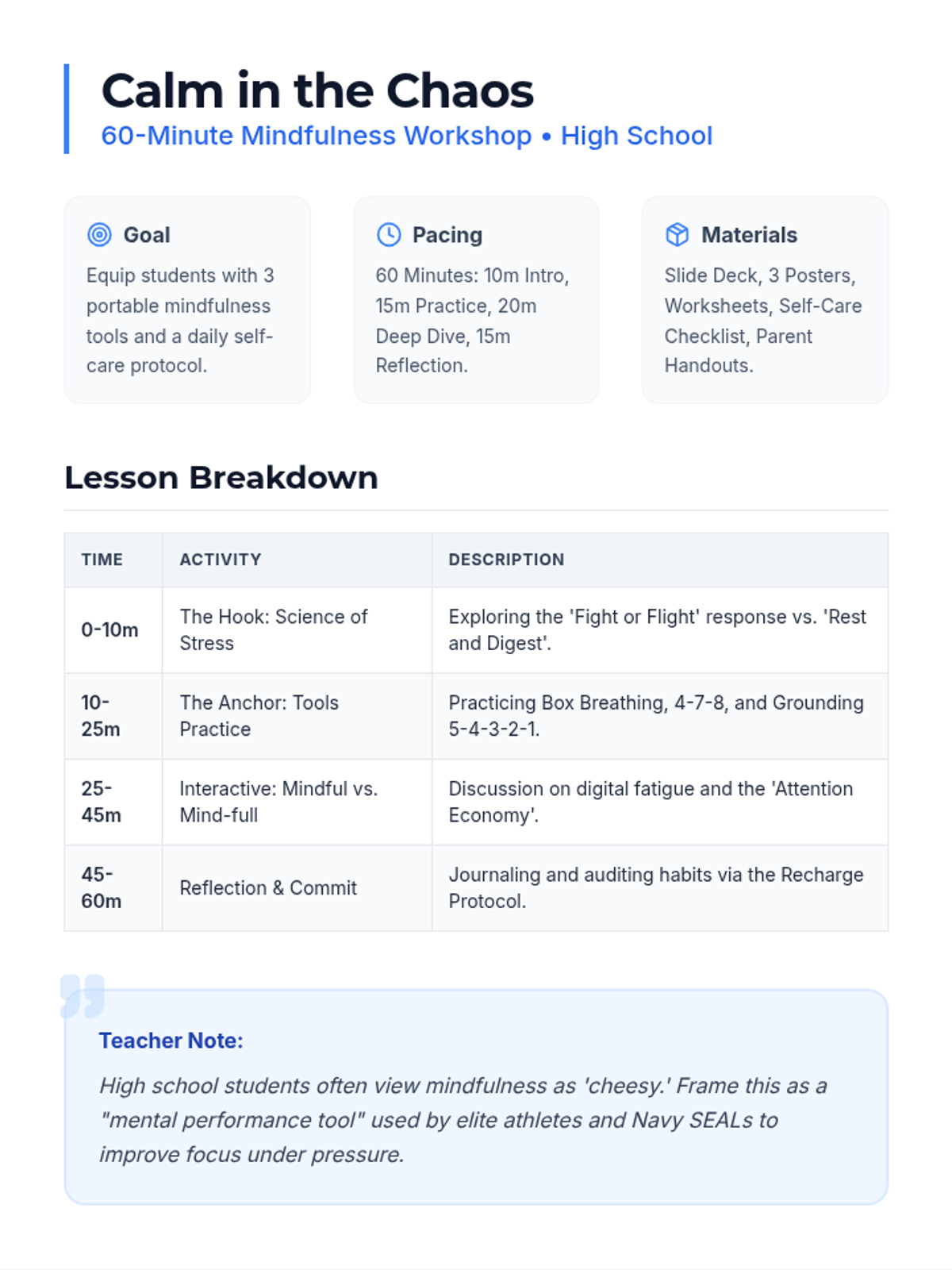
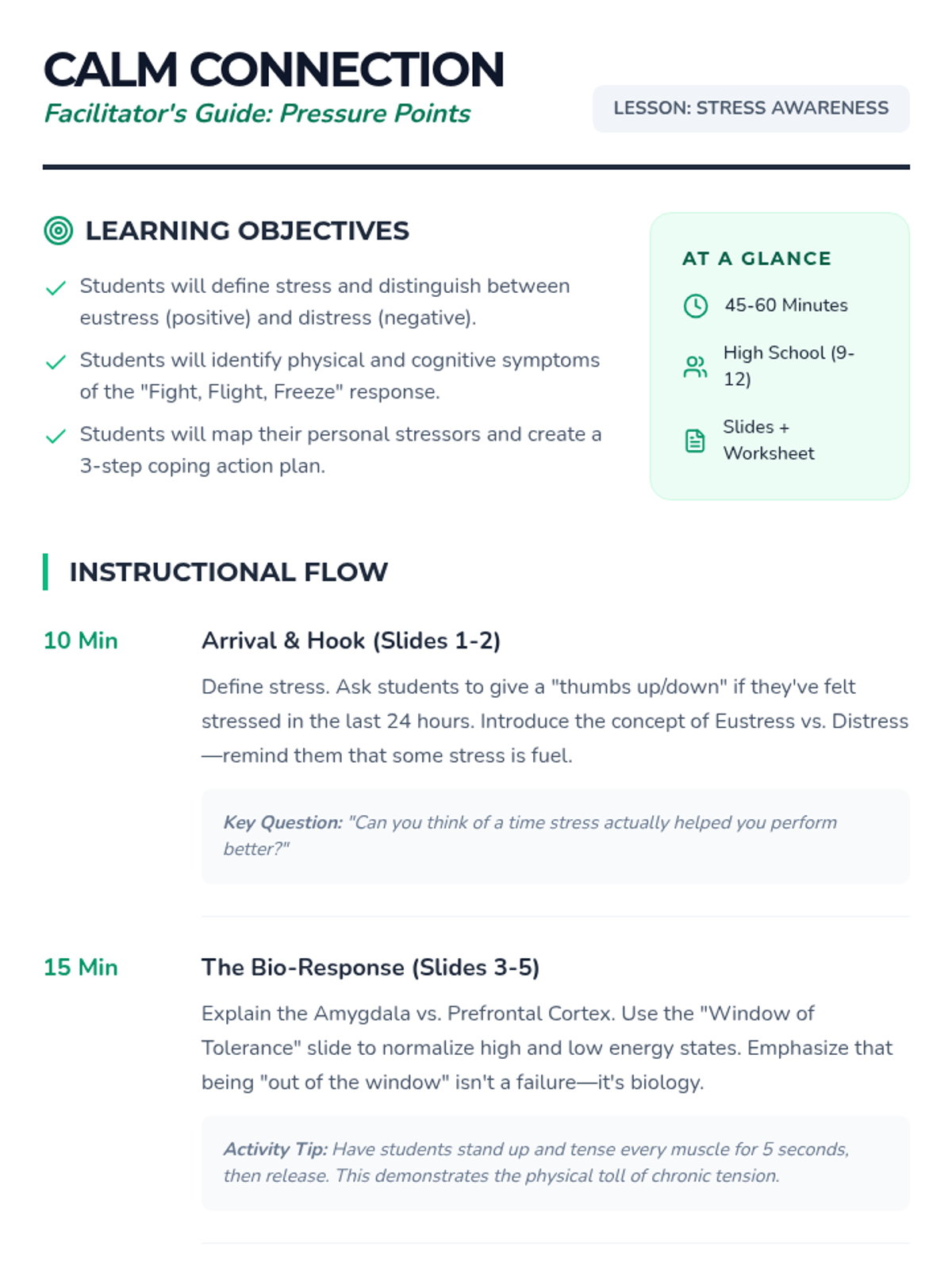
A comprehensive 60-minute lesson designed for high schoolers to understand the science of stress and practice immediate mindfulness techniques for emotional regulation.
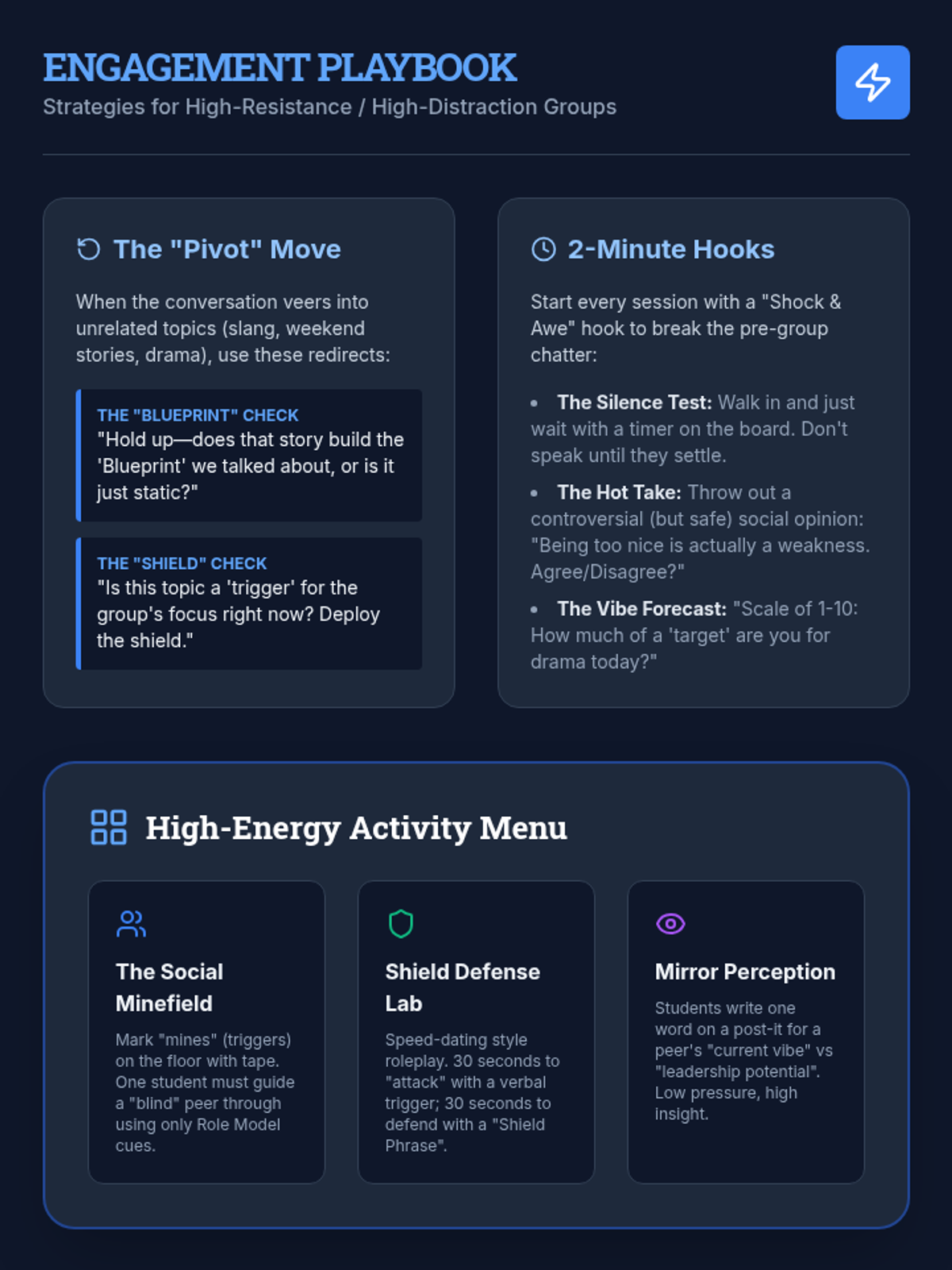
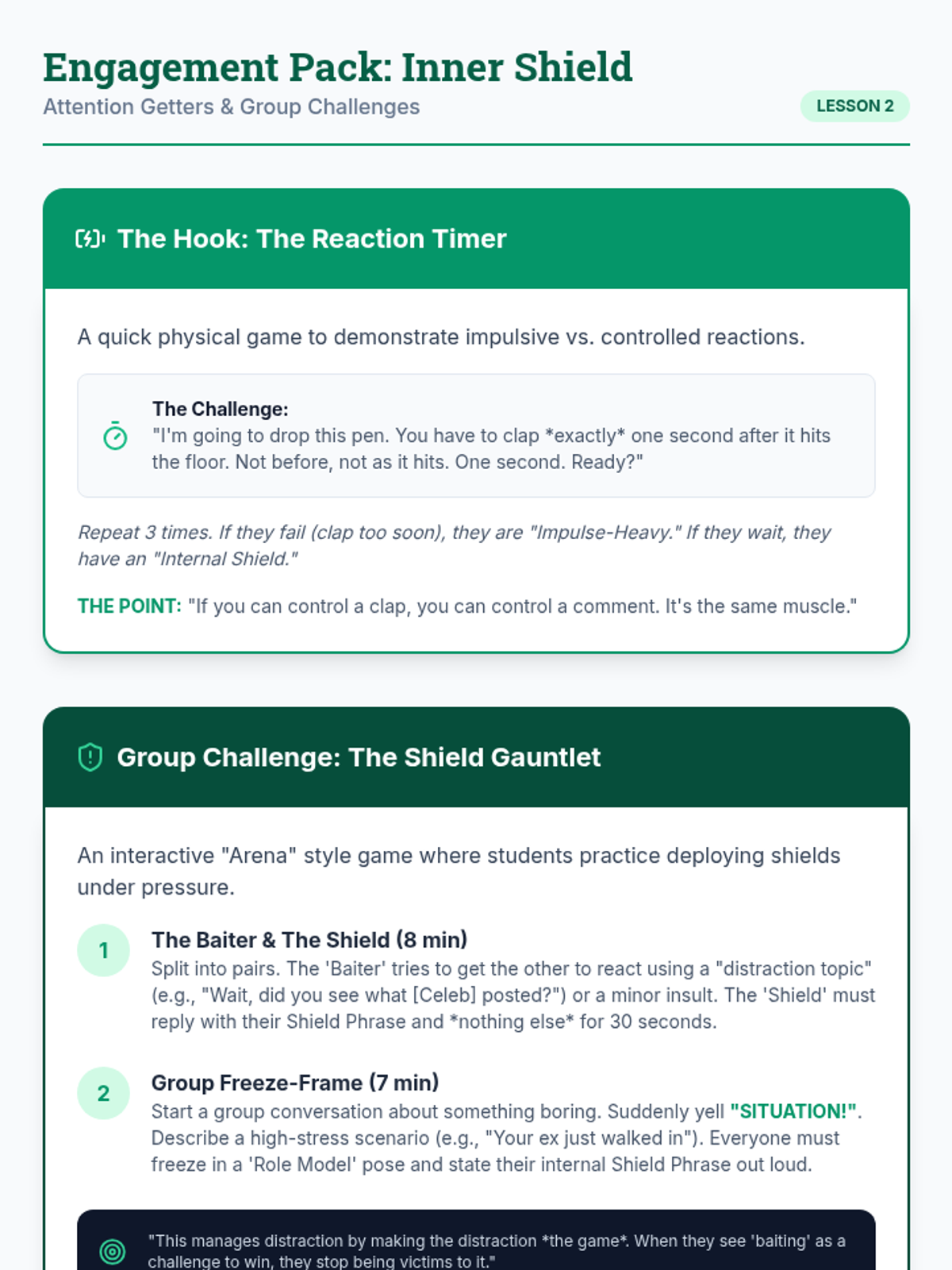
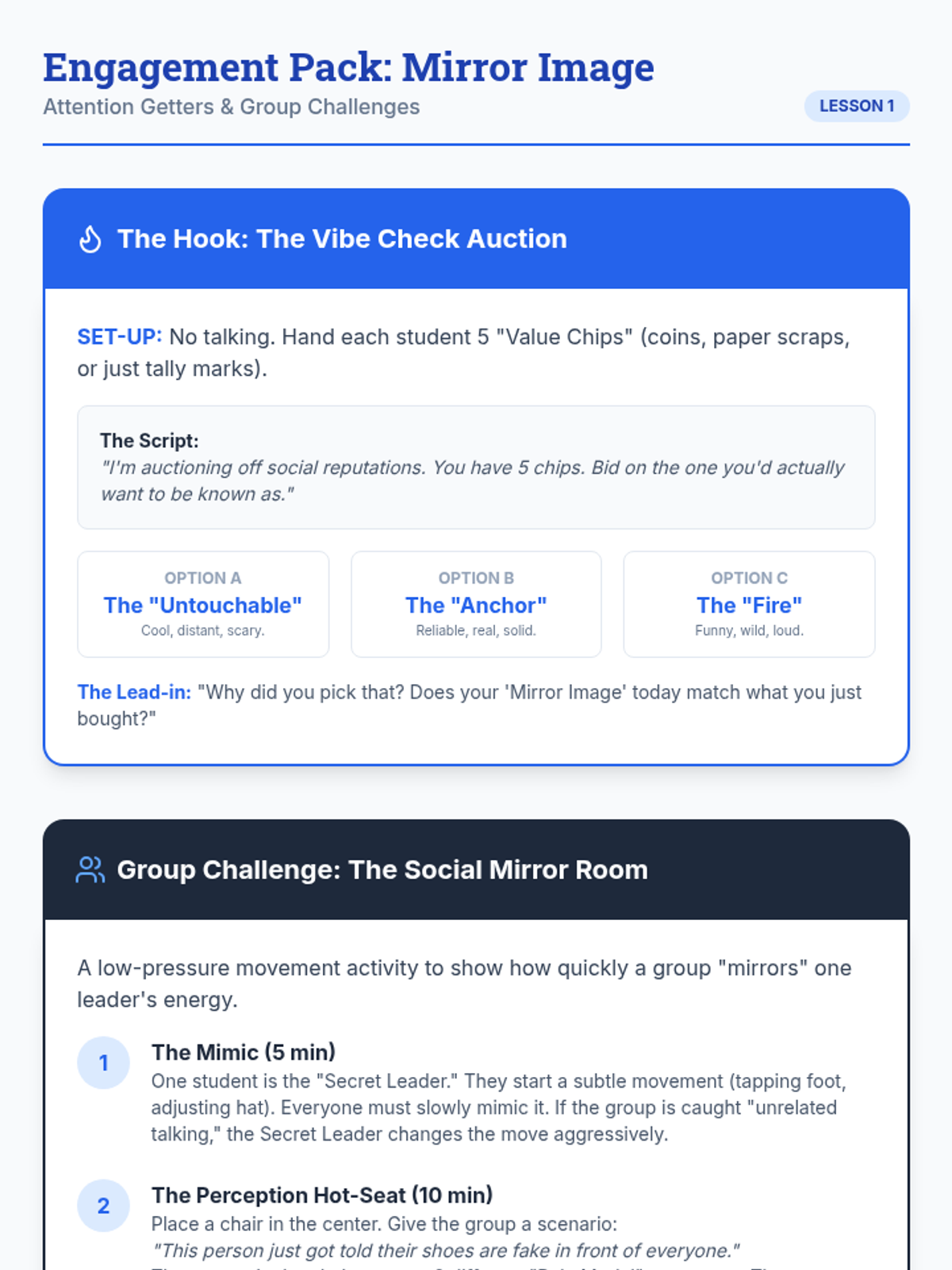
General engagement tactics and group management strategies for the Social Architects program.
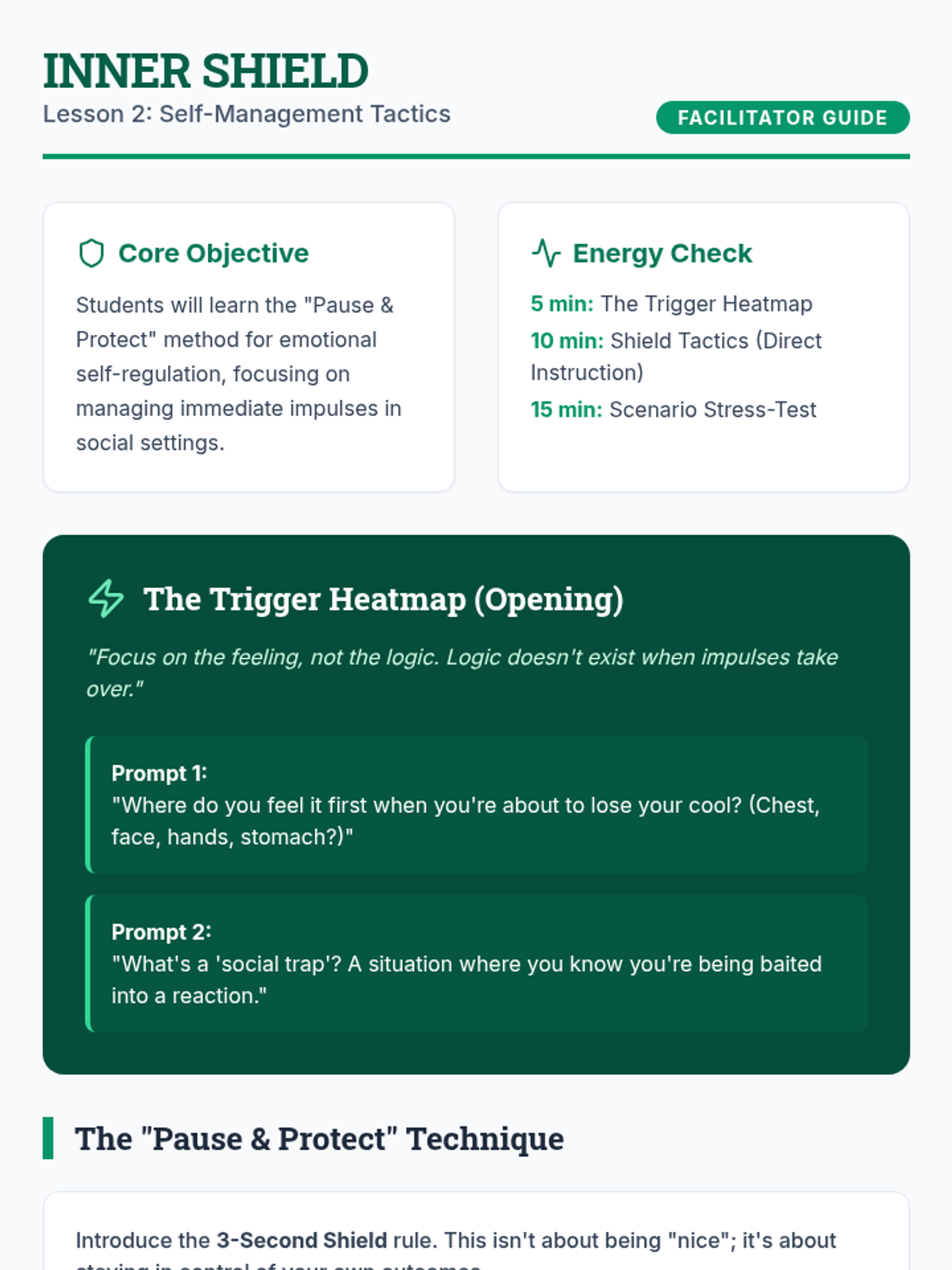
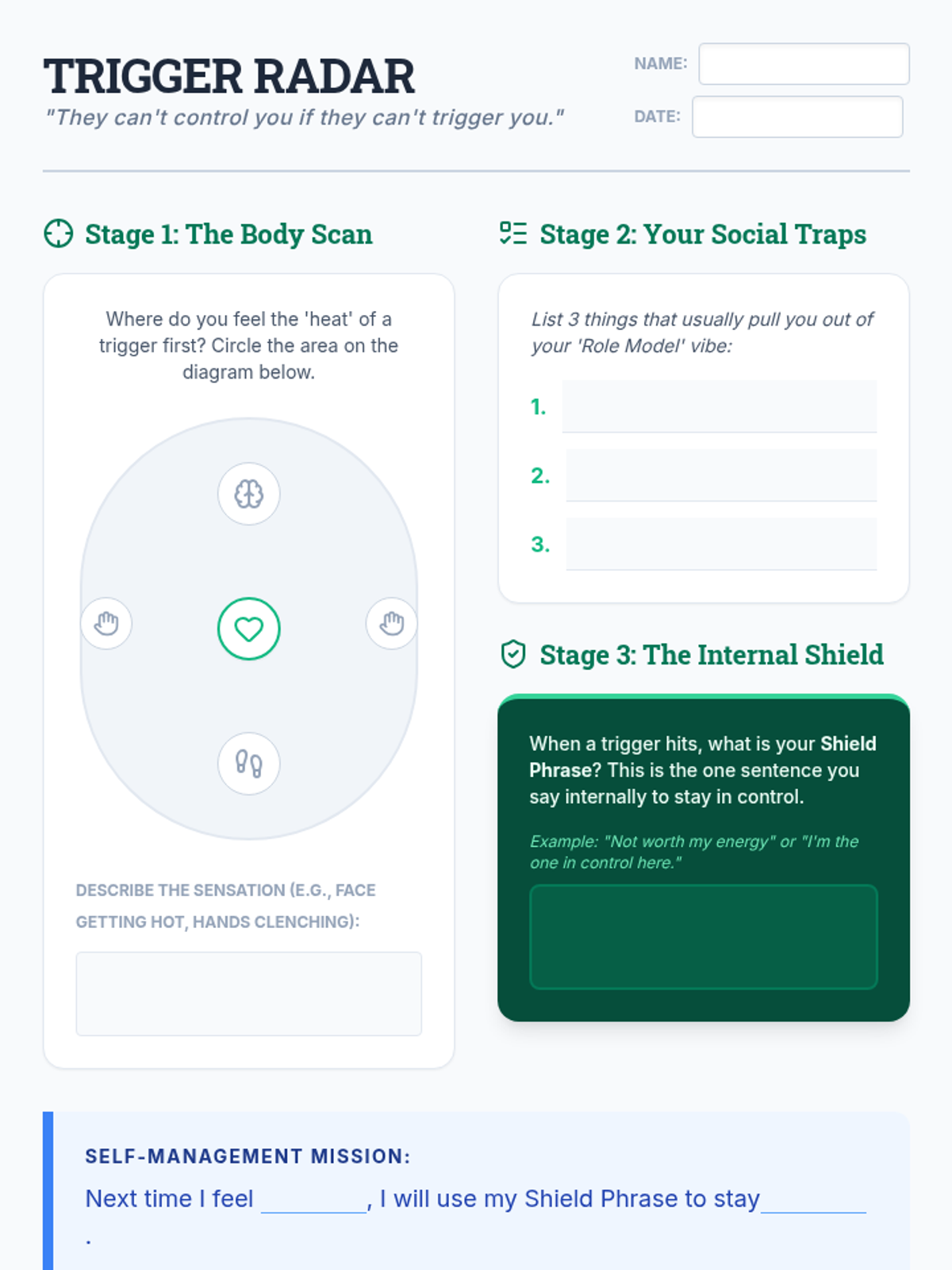
Focuses on self-management techniques, impulse control, and emotional regulation strategies tailored for high-stakes social situations.
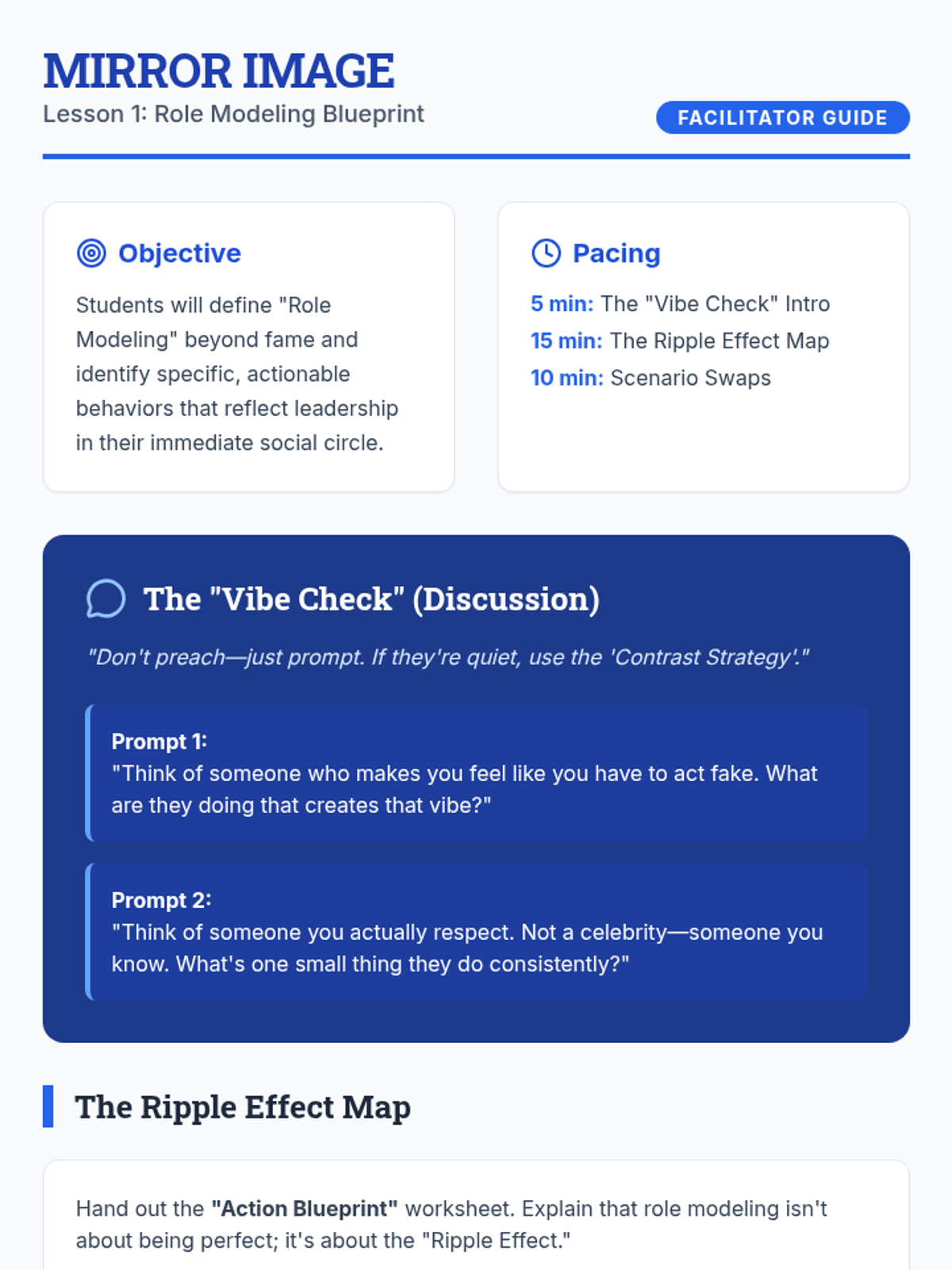
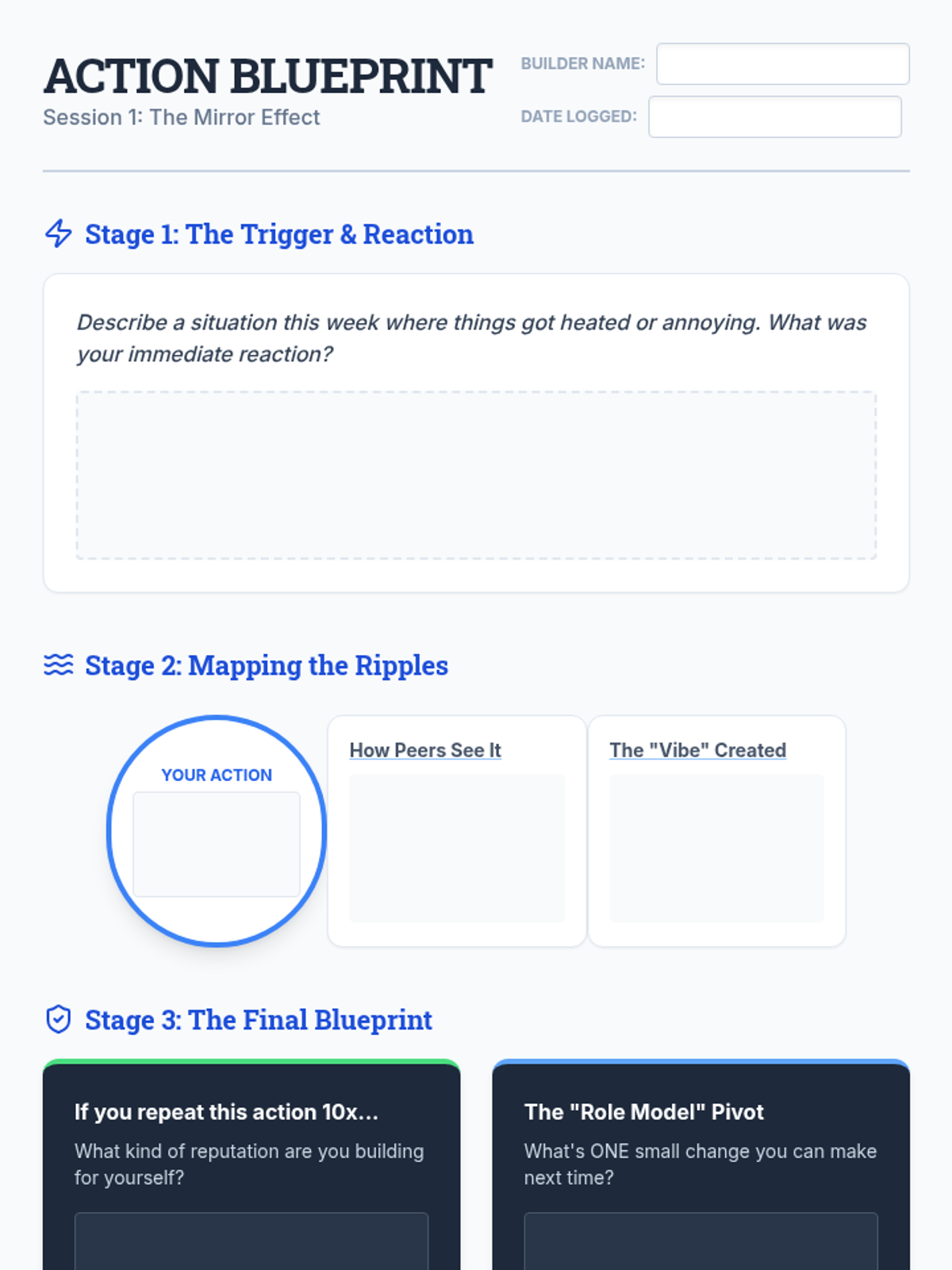
Focuses on the concept of role modeling by identifying personal values and how outward actions influence group dynamics and peer perception.
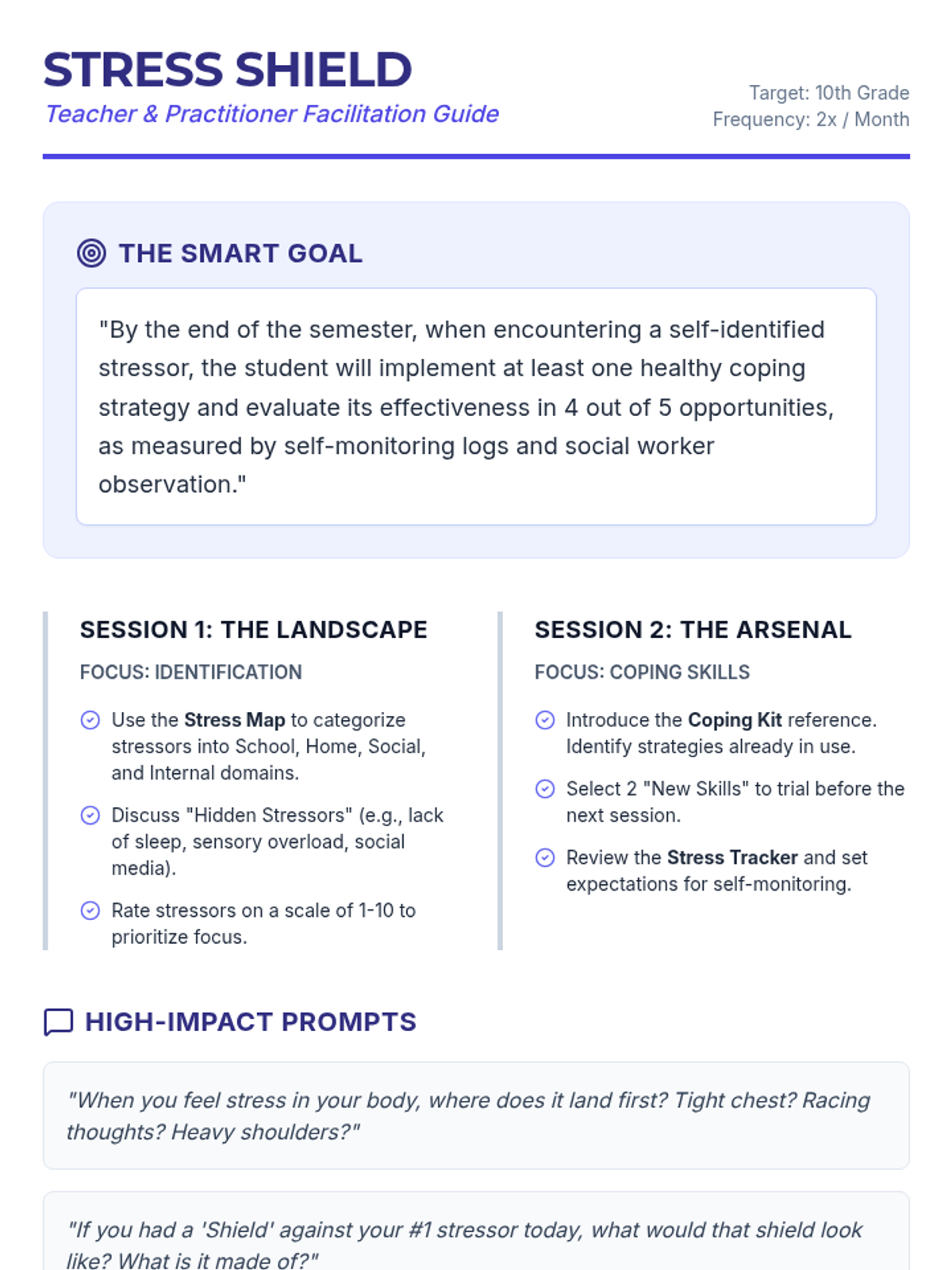
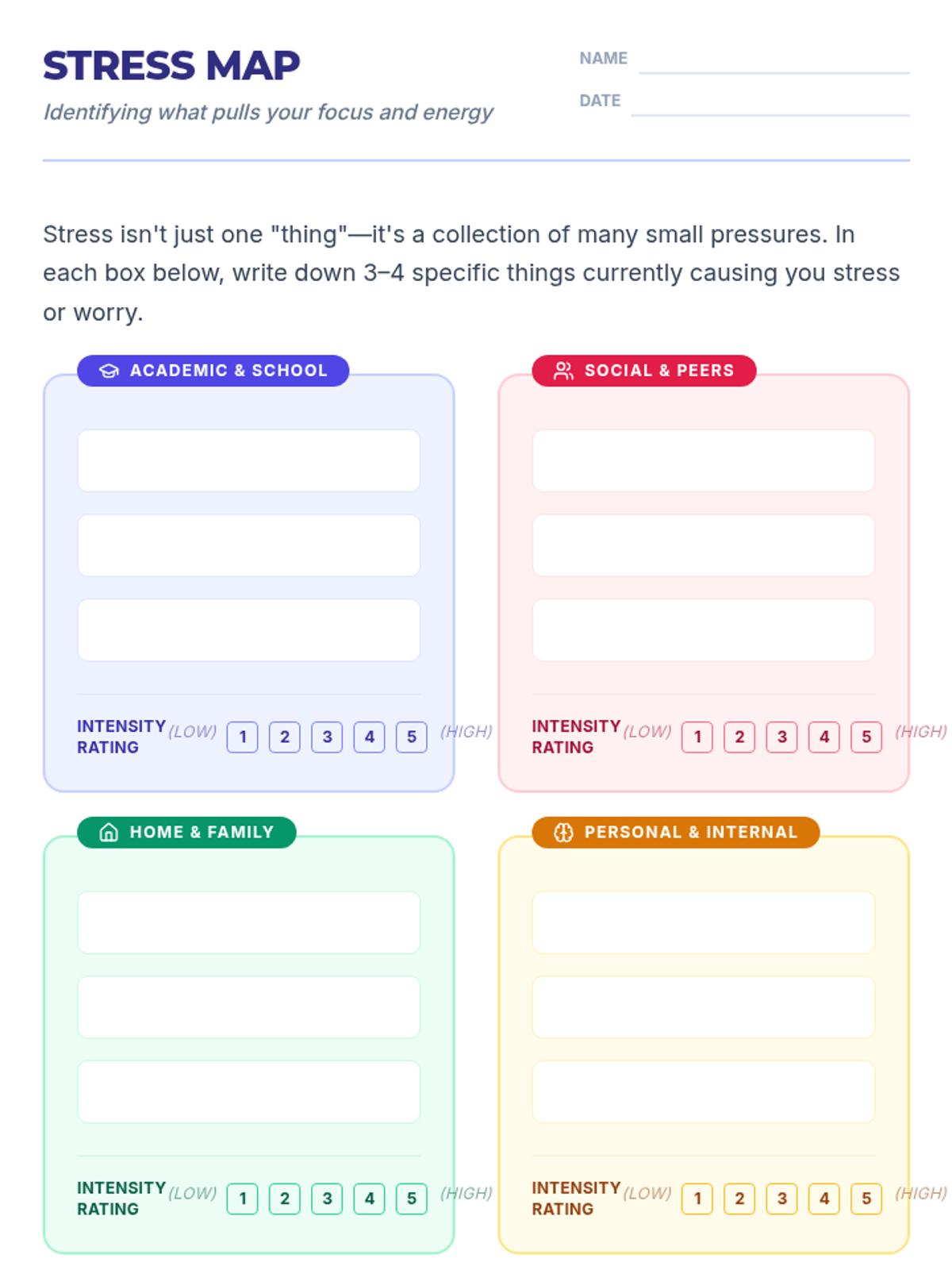
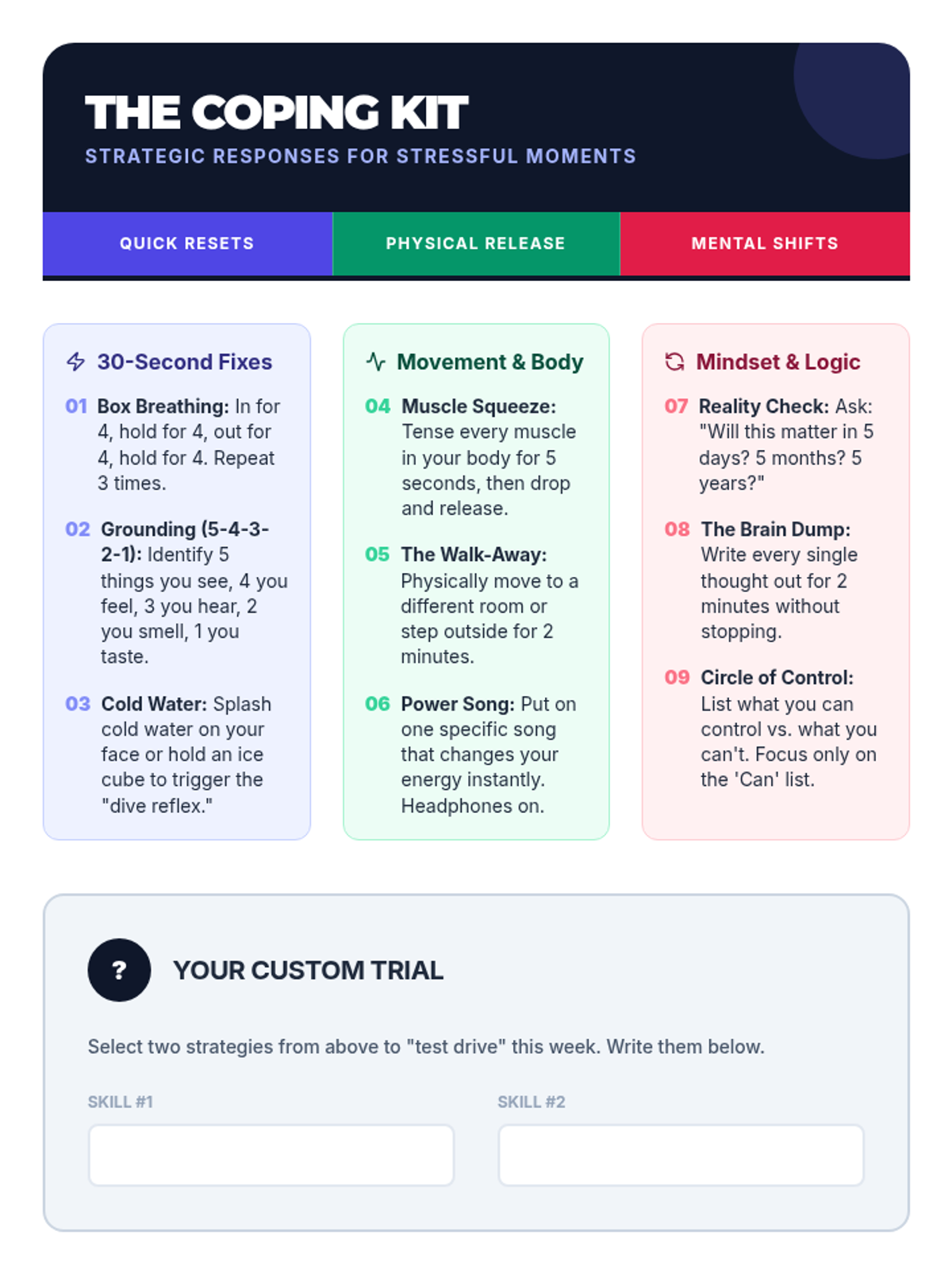
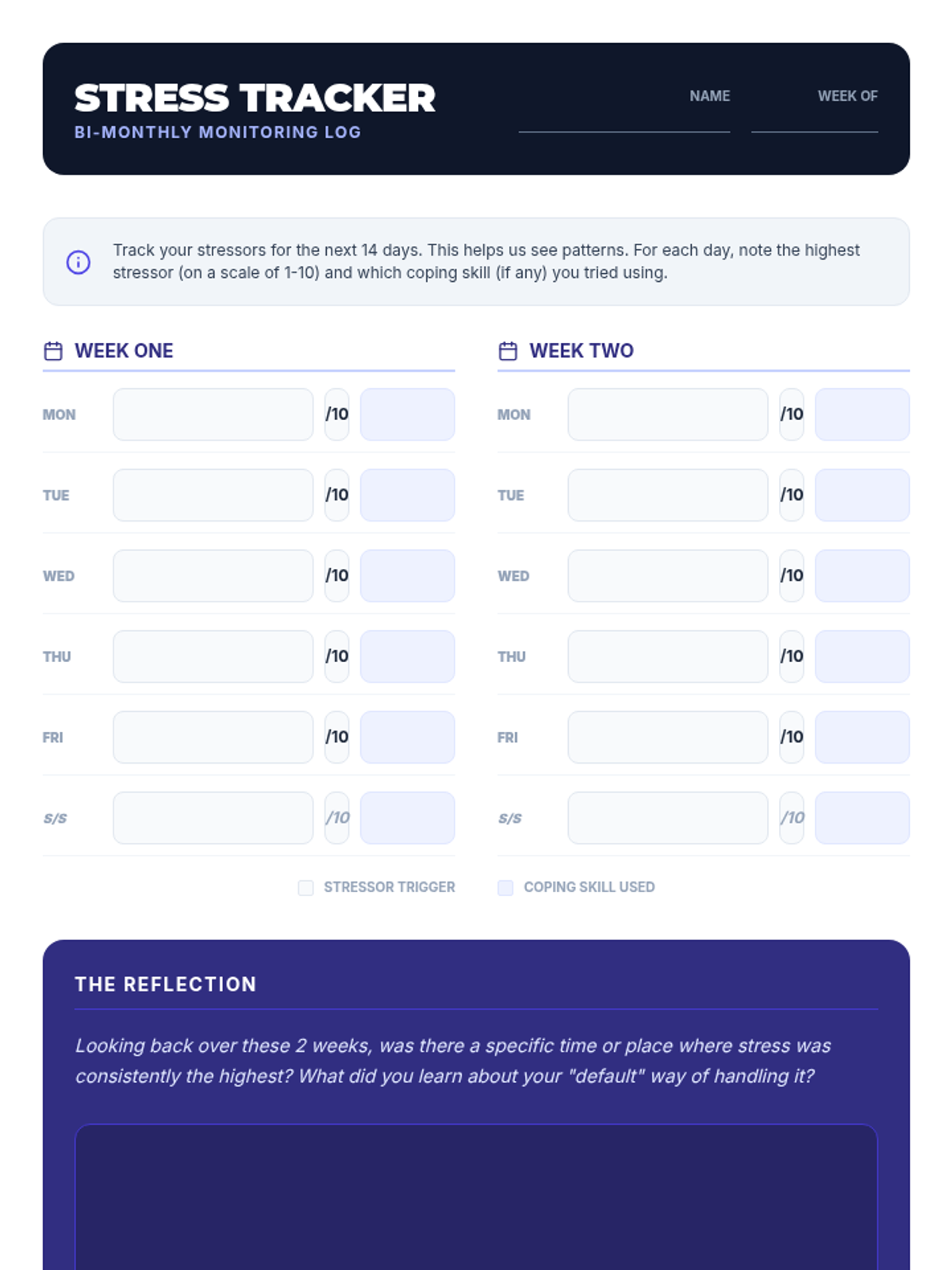
A set of materials designed for bi-monthly social work sessions with a 10th-grade student, focusing on identifying stressors and building a personalized coping skill toolkit.
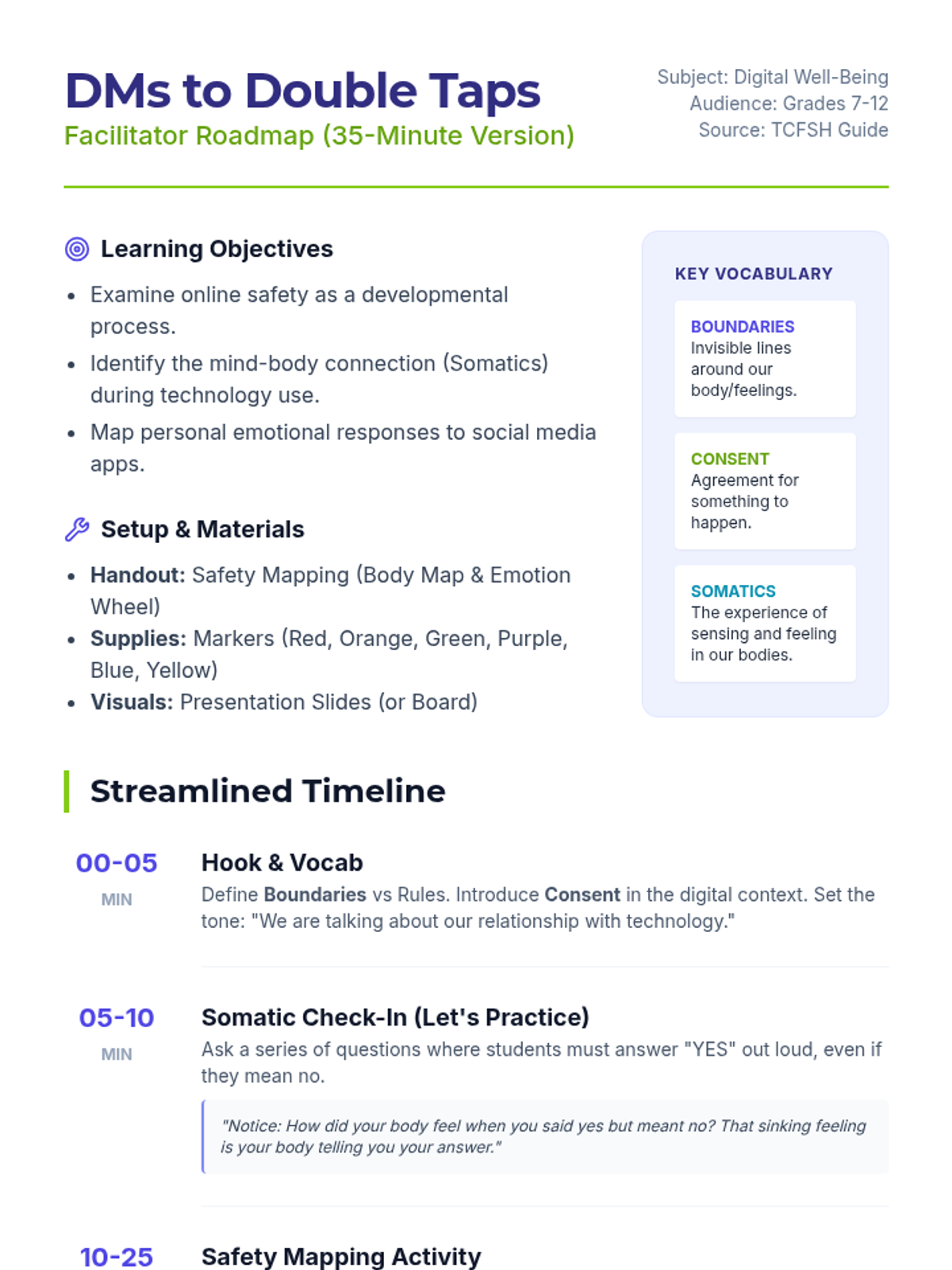
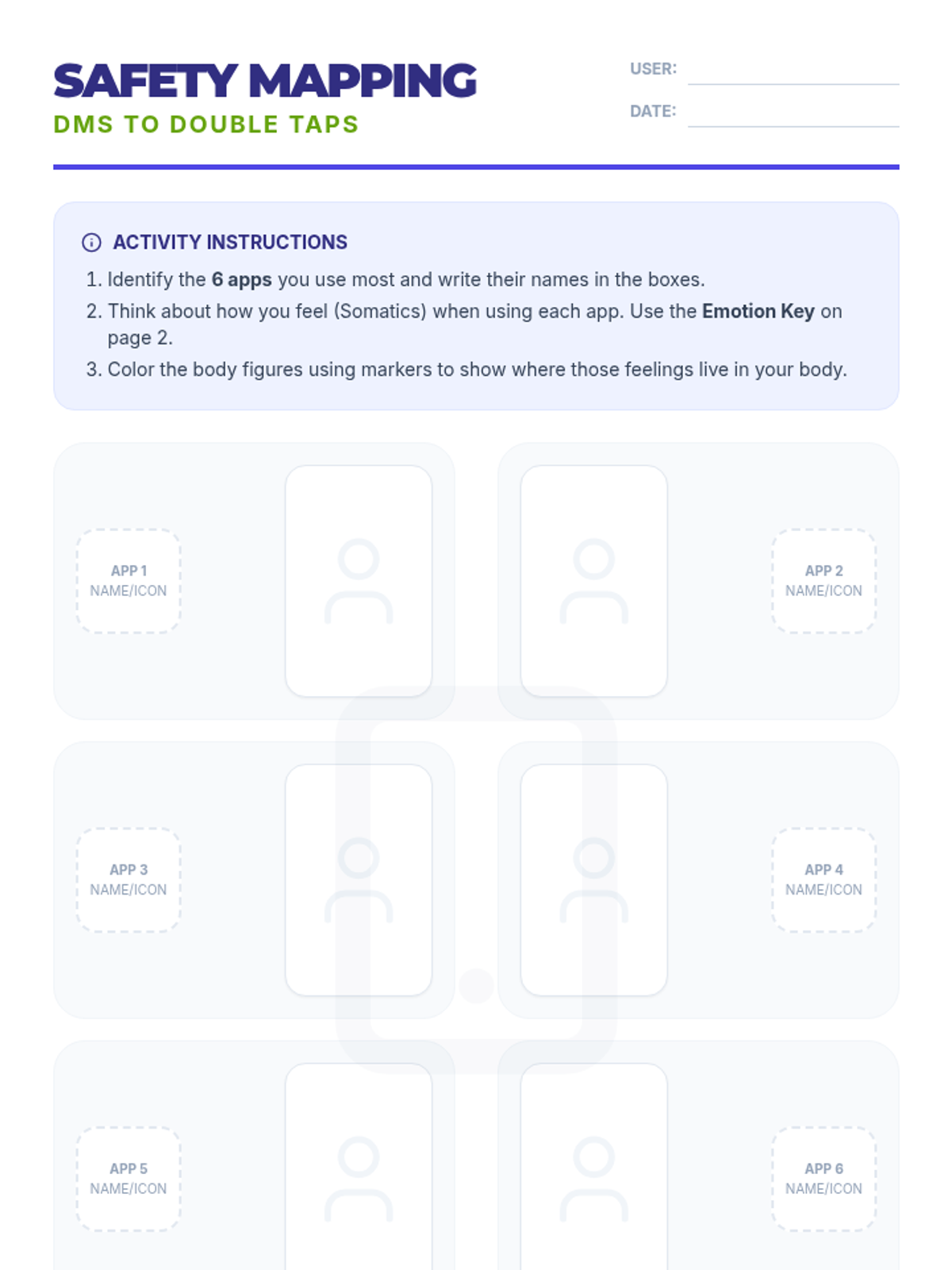
A 35-minute interactive session exploring the mind-body connection with social media. Students use somatic mapping to identify emotional triggers in their most-used apps and learn strategies for digital safety based on the TCFSH 'DMs to Double Taps' guide.
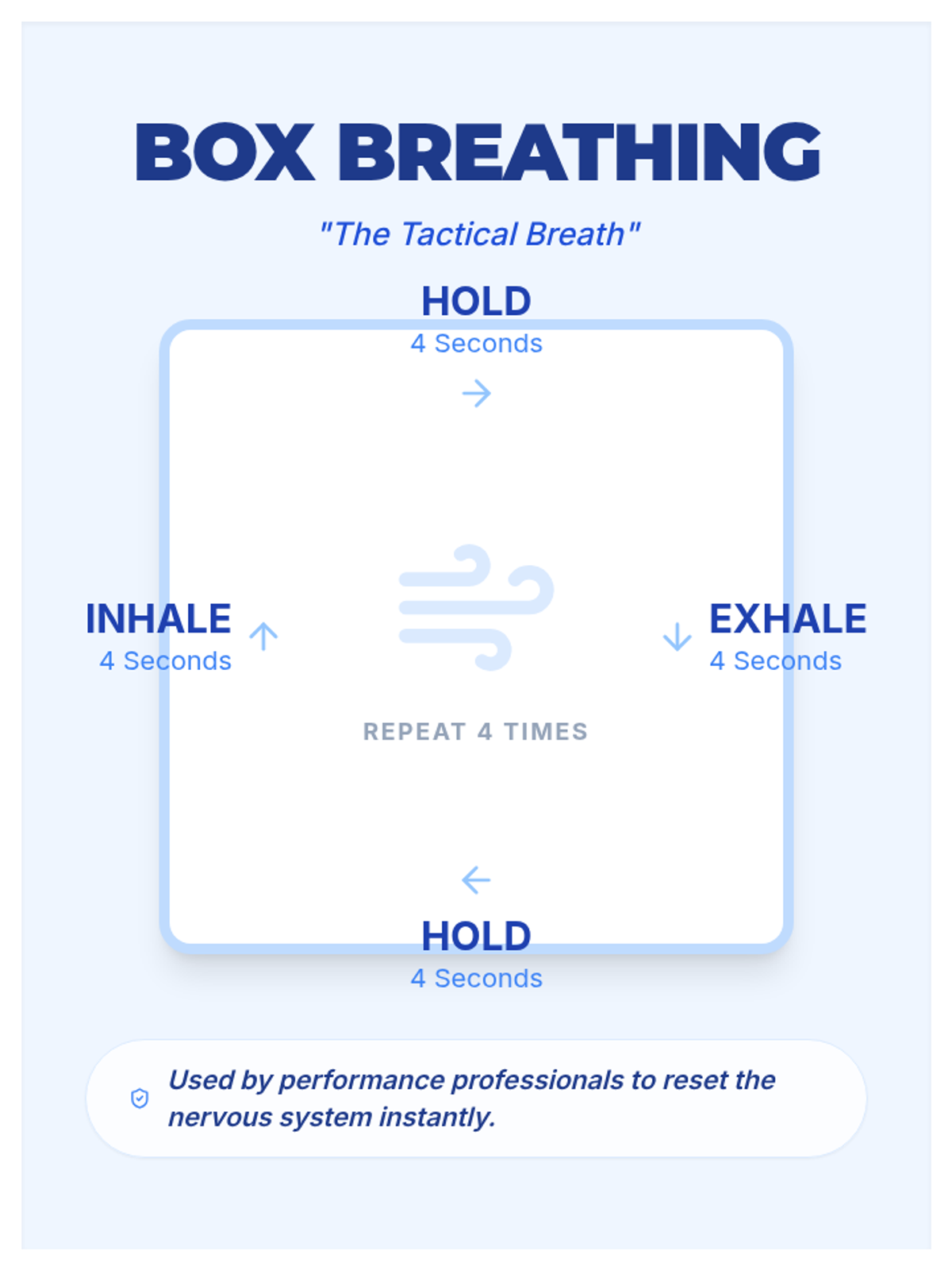
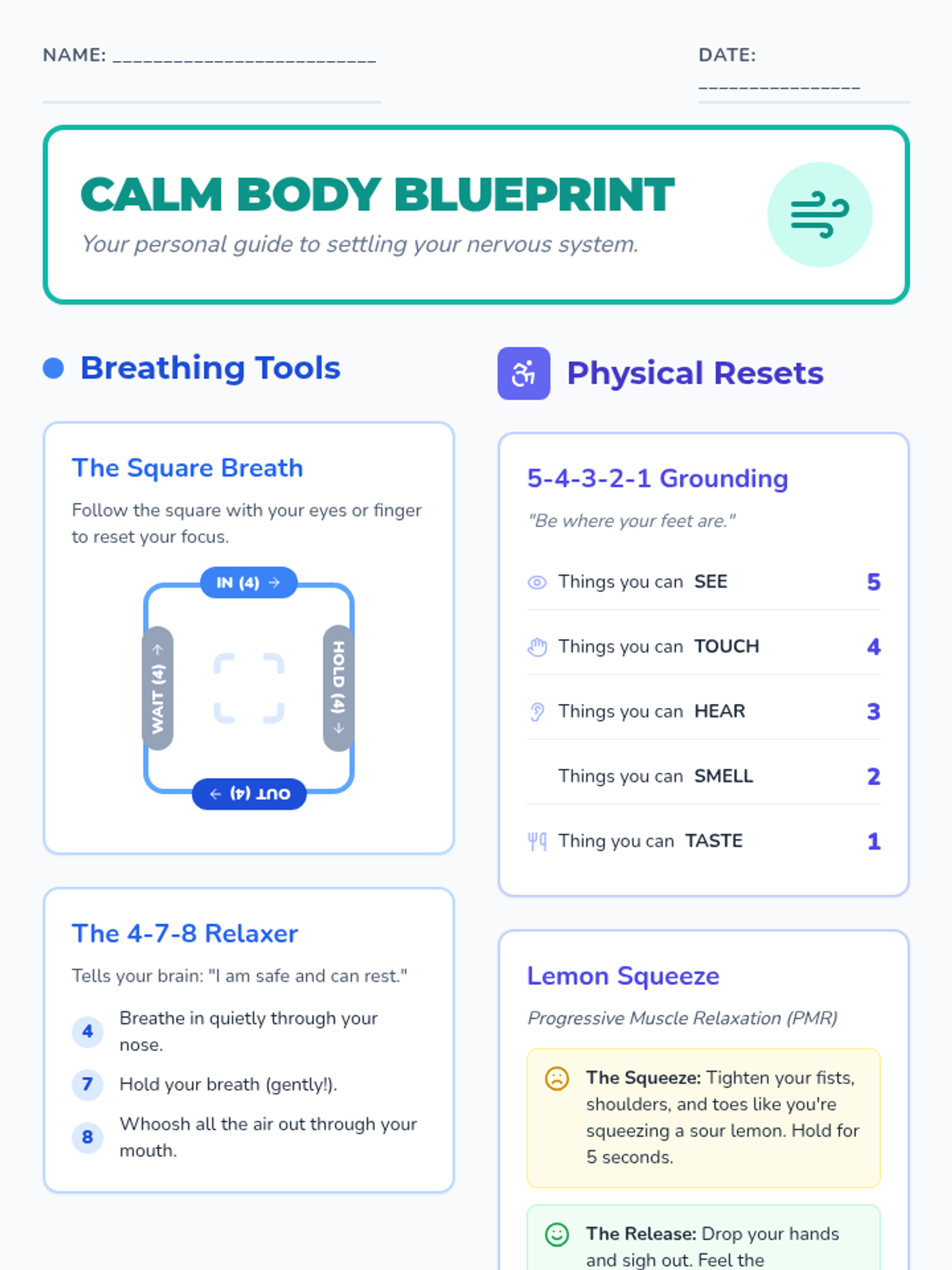
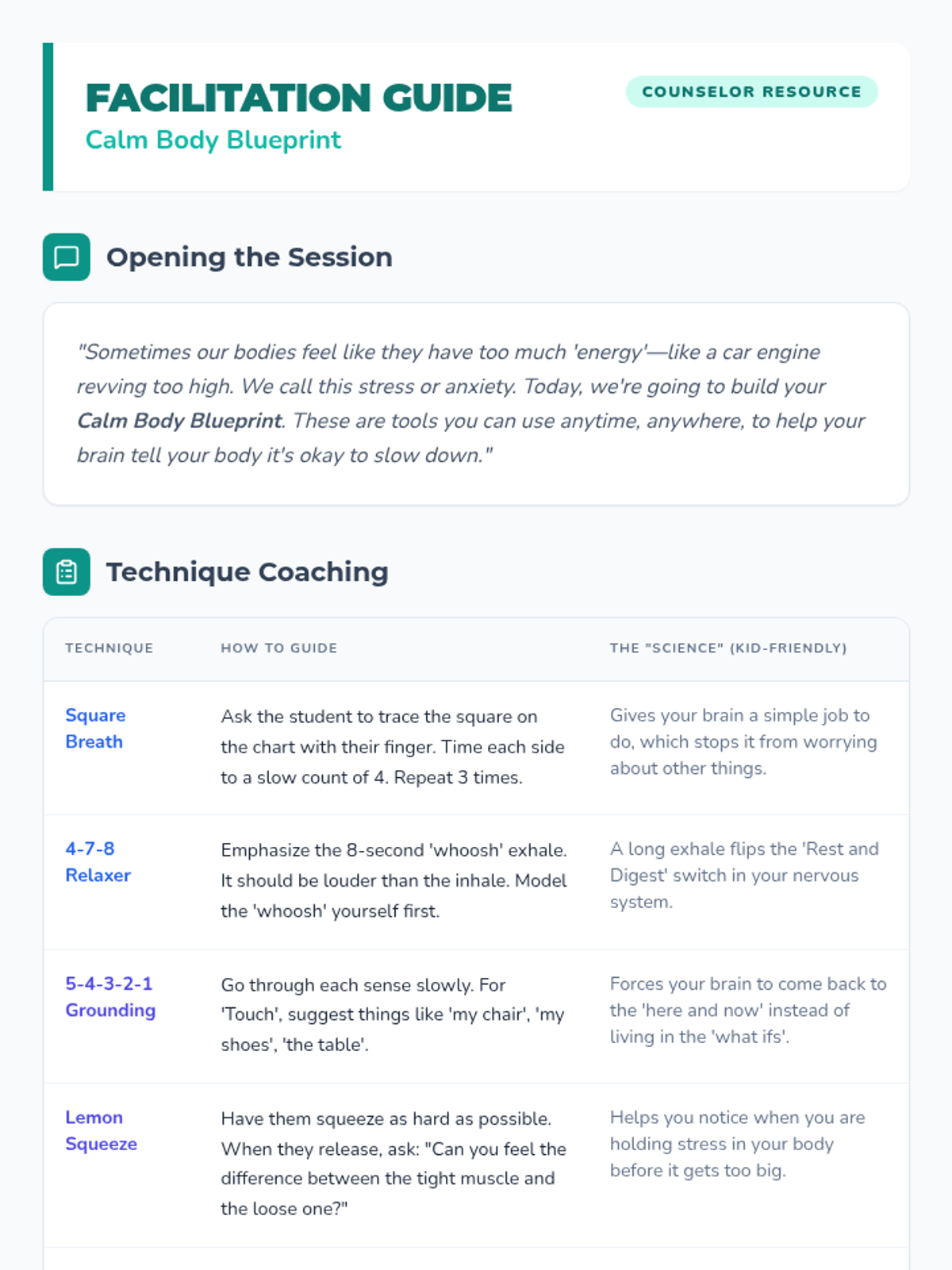
A lesson on physical and breathing techniques for stress management, designed for individual counseling sessions. It includes an anchor chart for the student and a facilitation guide for the counselor.
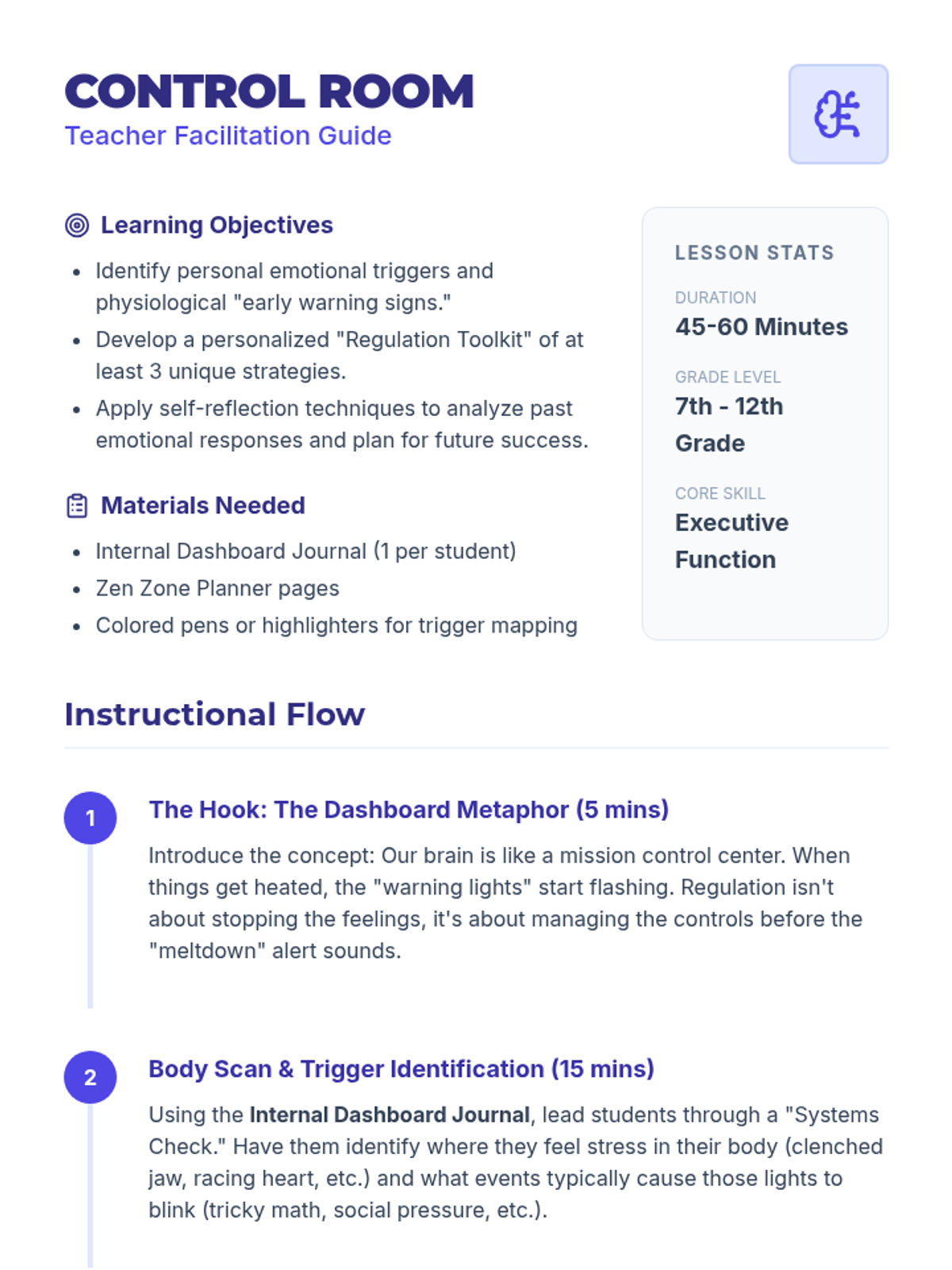
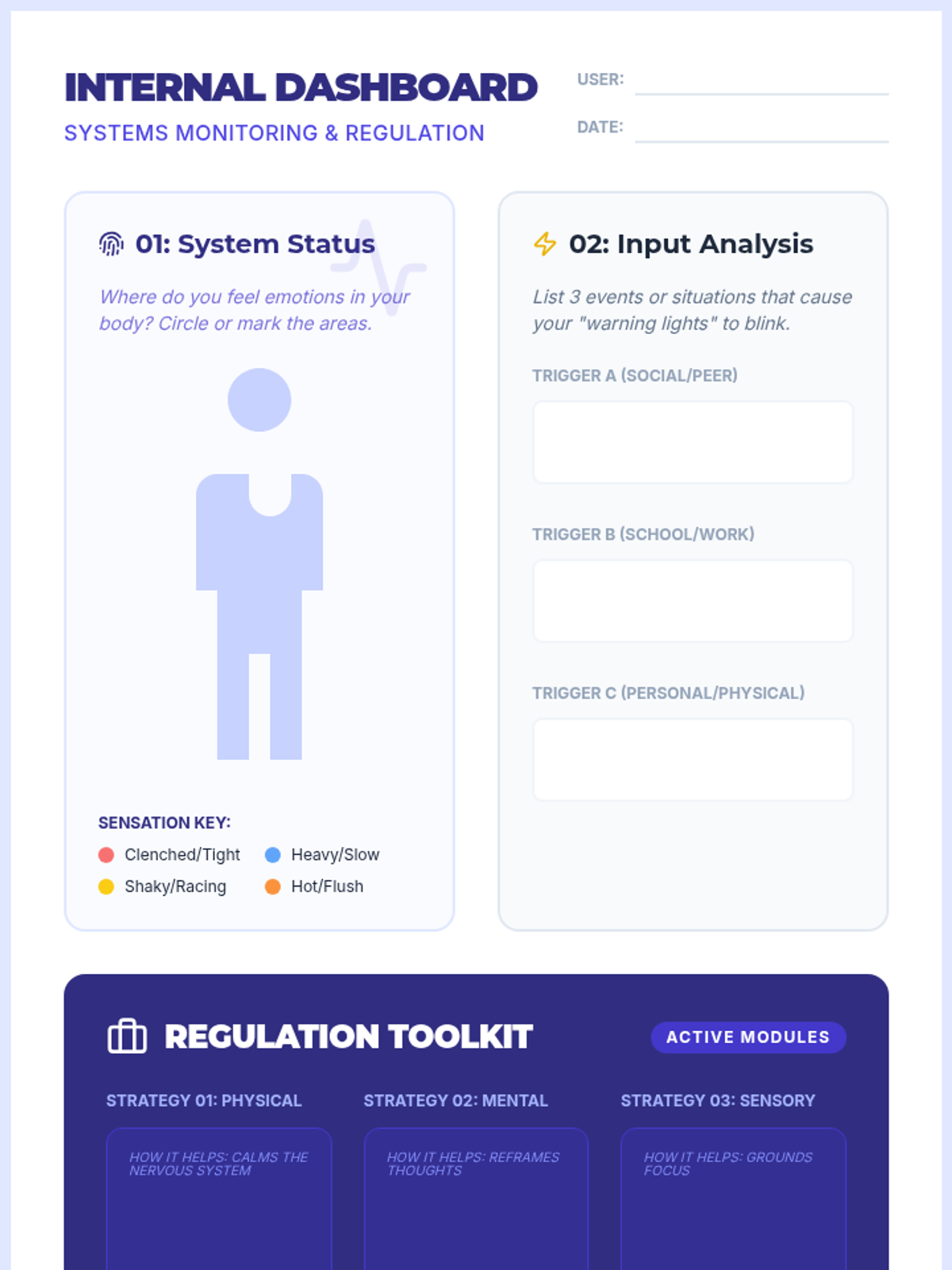
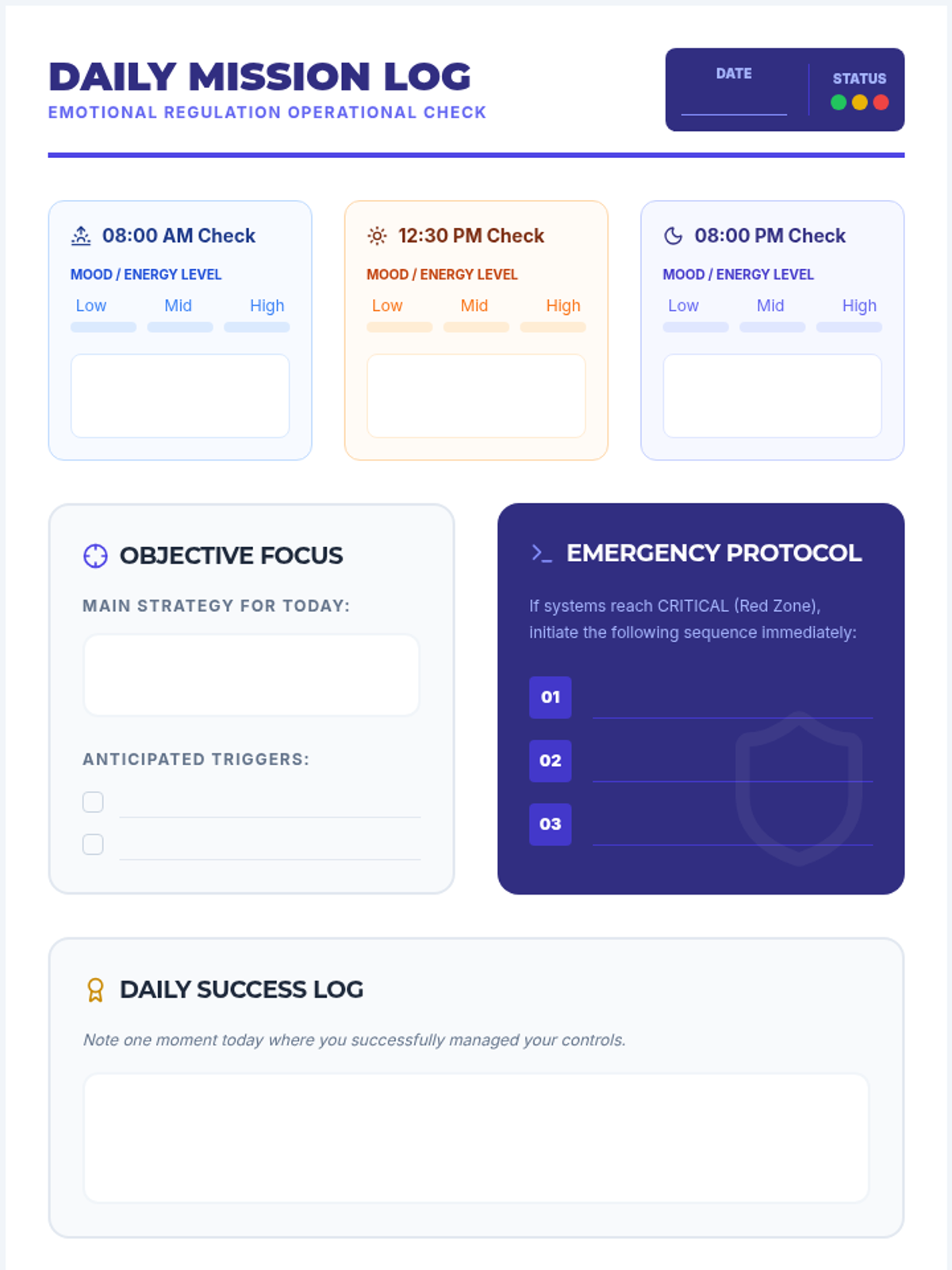
A comprehensive lesson designed to help teens understand their emotional triggers, recognize physical warning signs, and build a personalized toolkit of regulation strategies through guided reflection and daily planning.
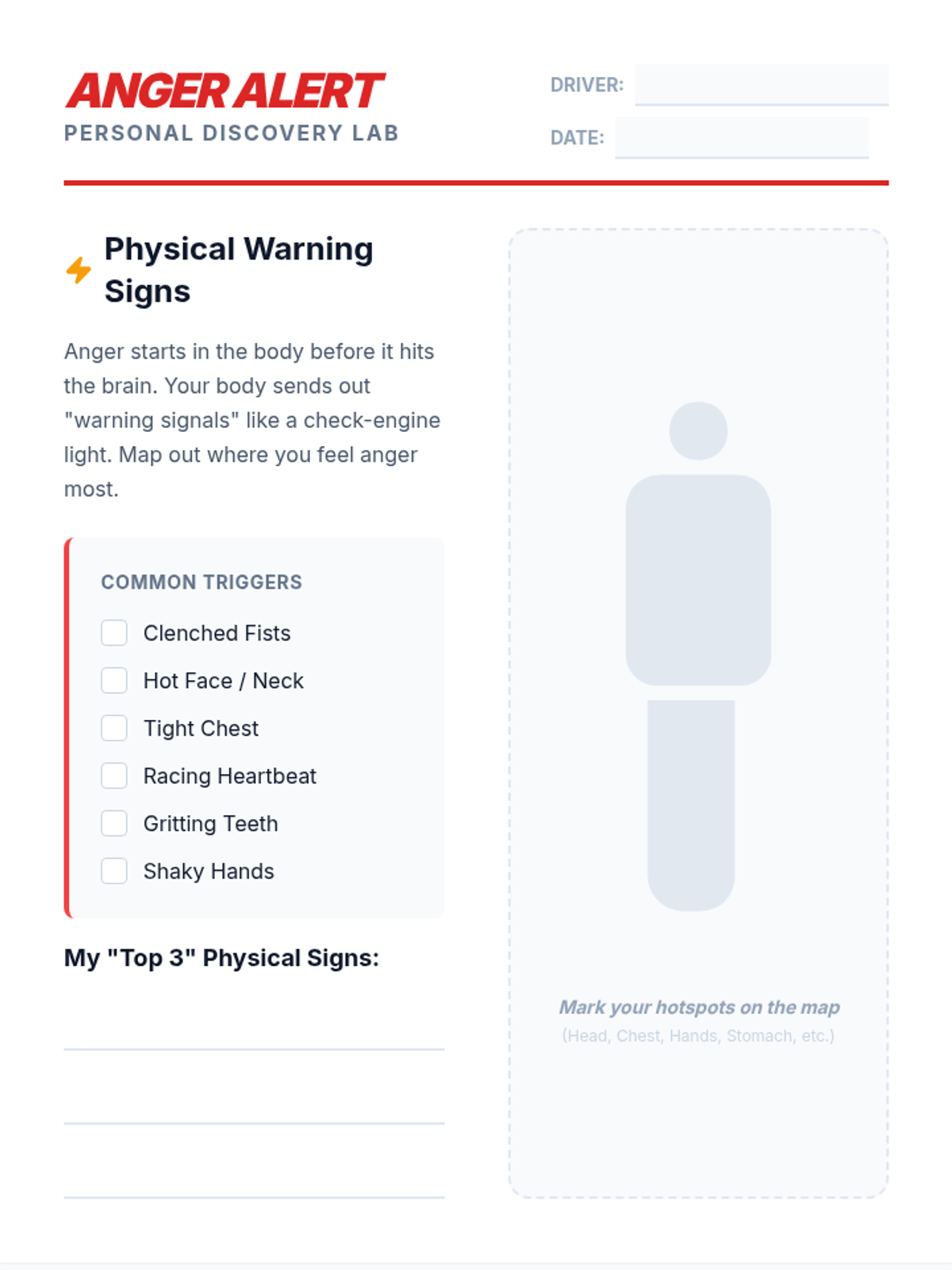
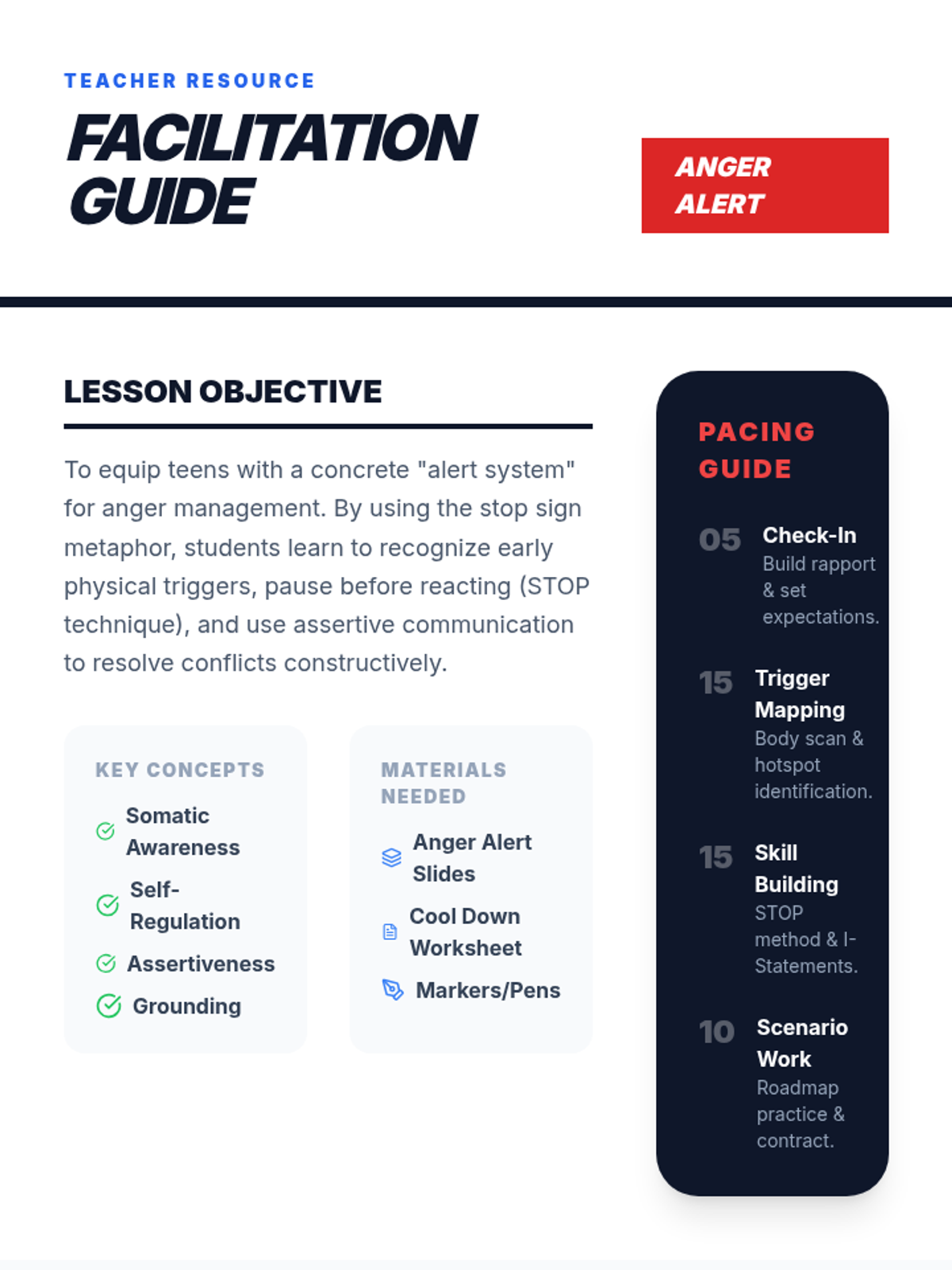
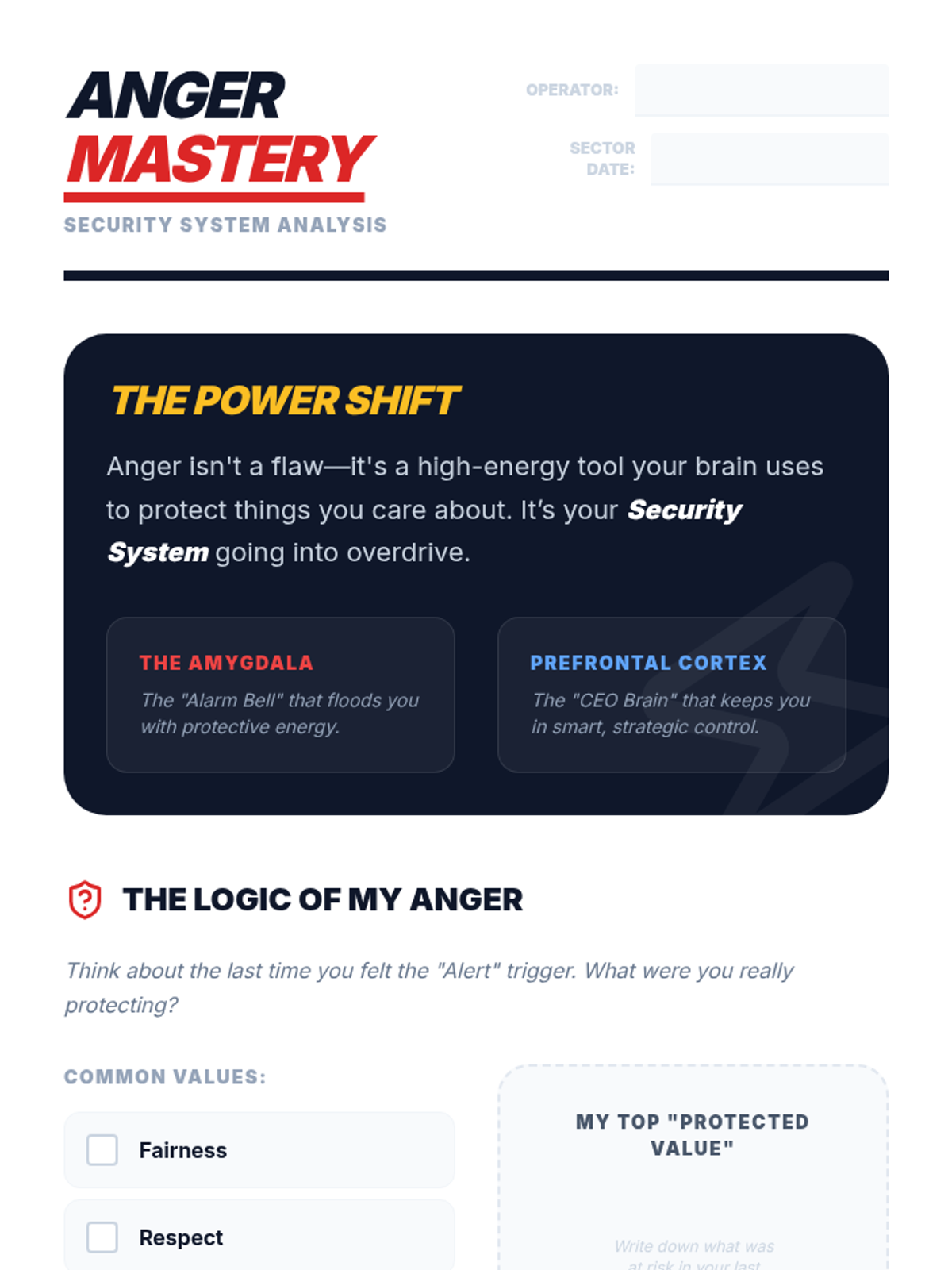
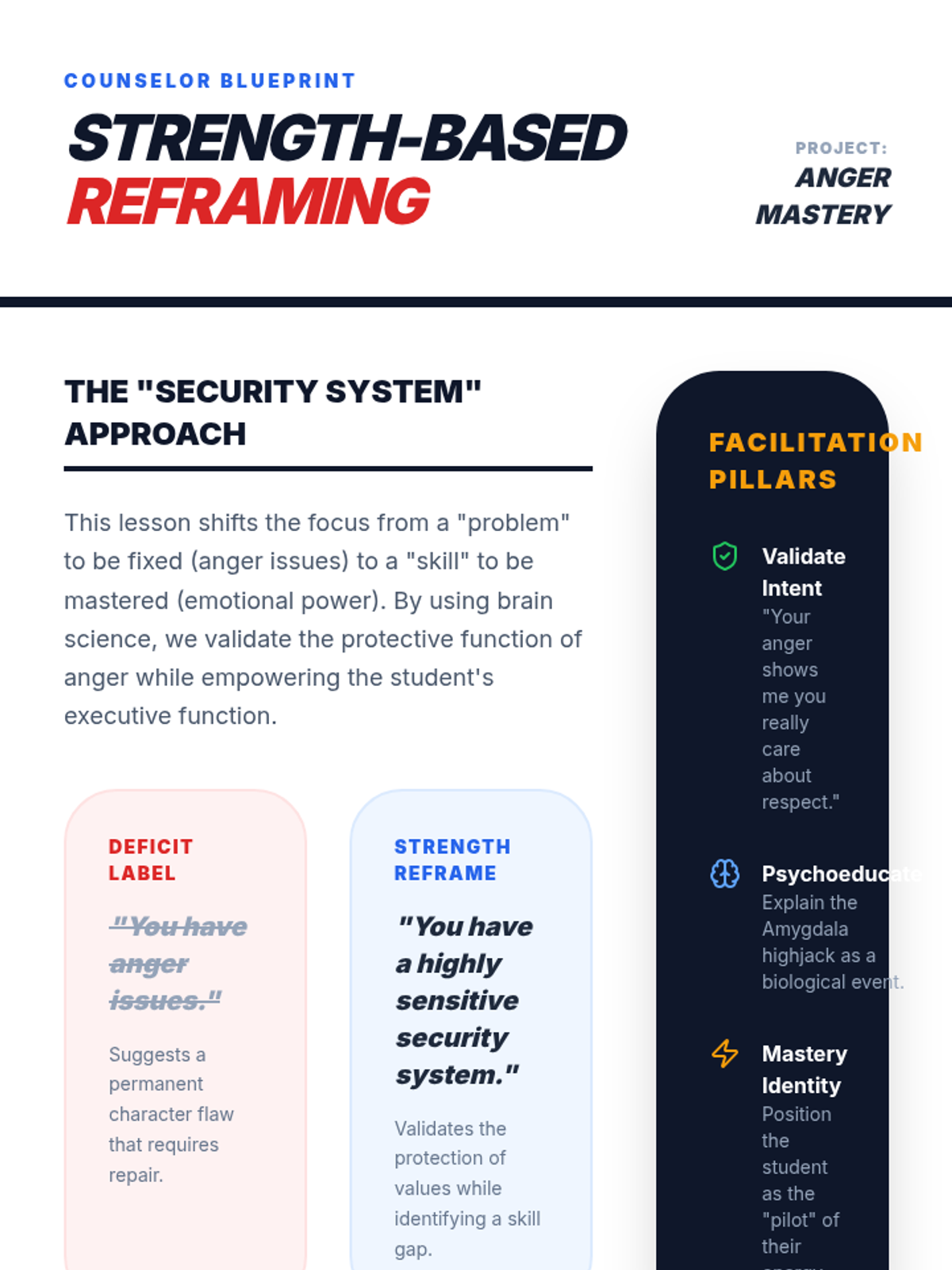
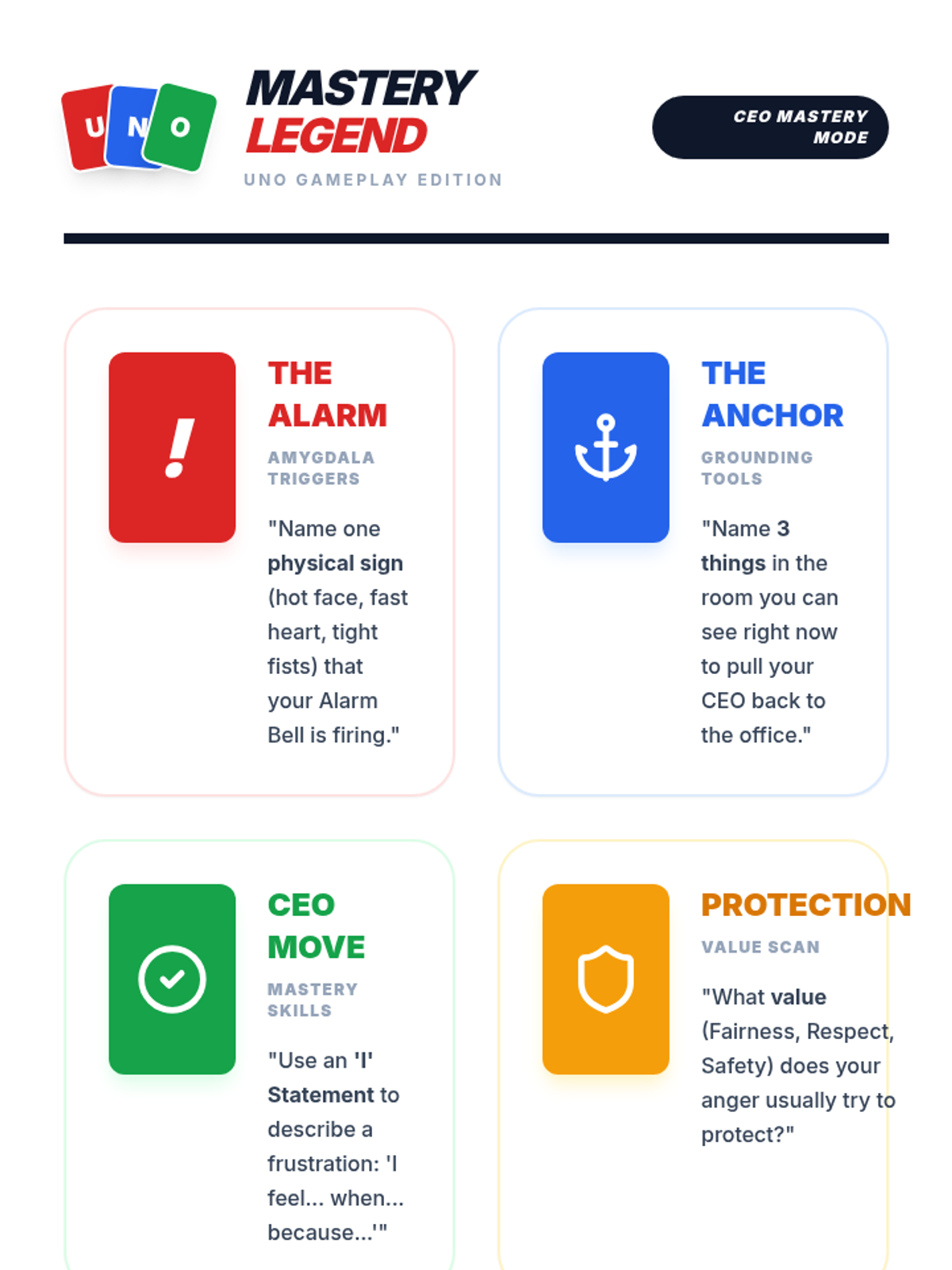
A targeted individual counseling lesson for teens focusing on the 'Stop Sign' approach to anger management. Students learn to recognize physical triggers and apply assertive communication and grounding techniques.
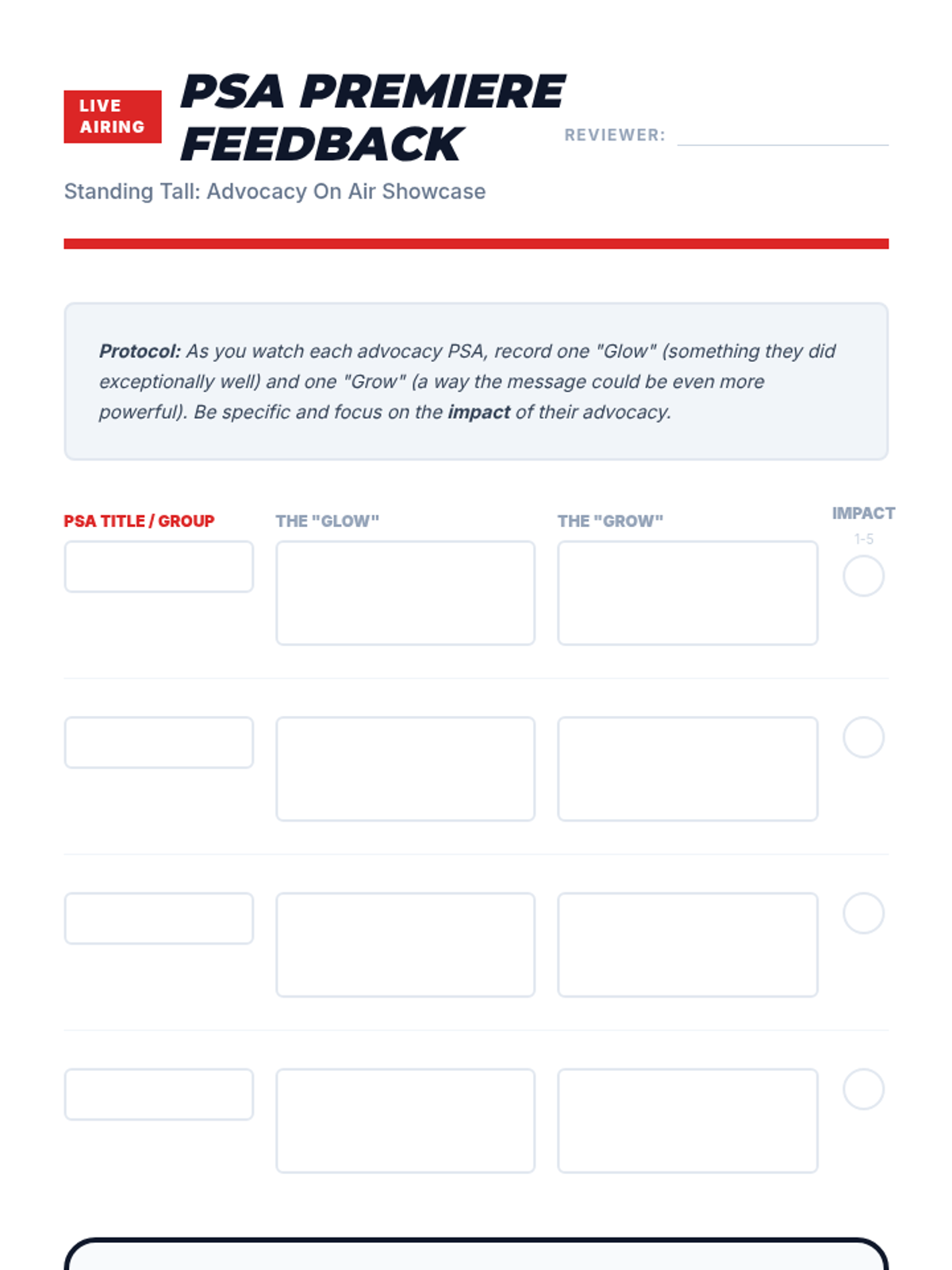
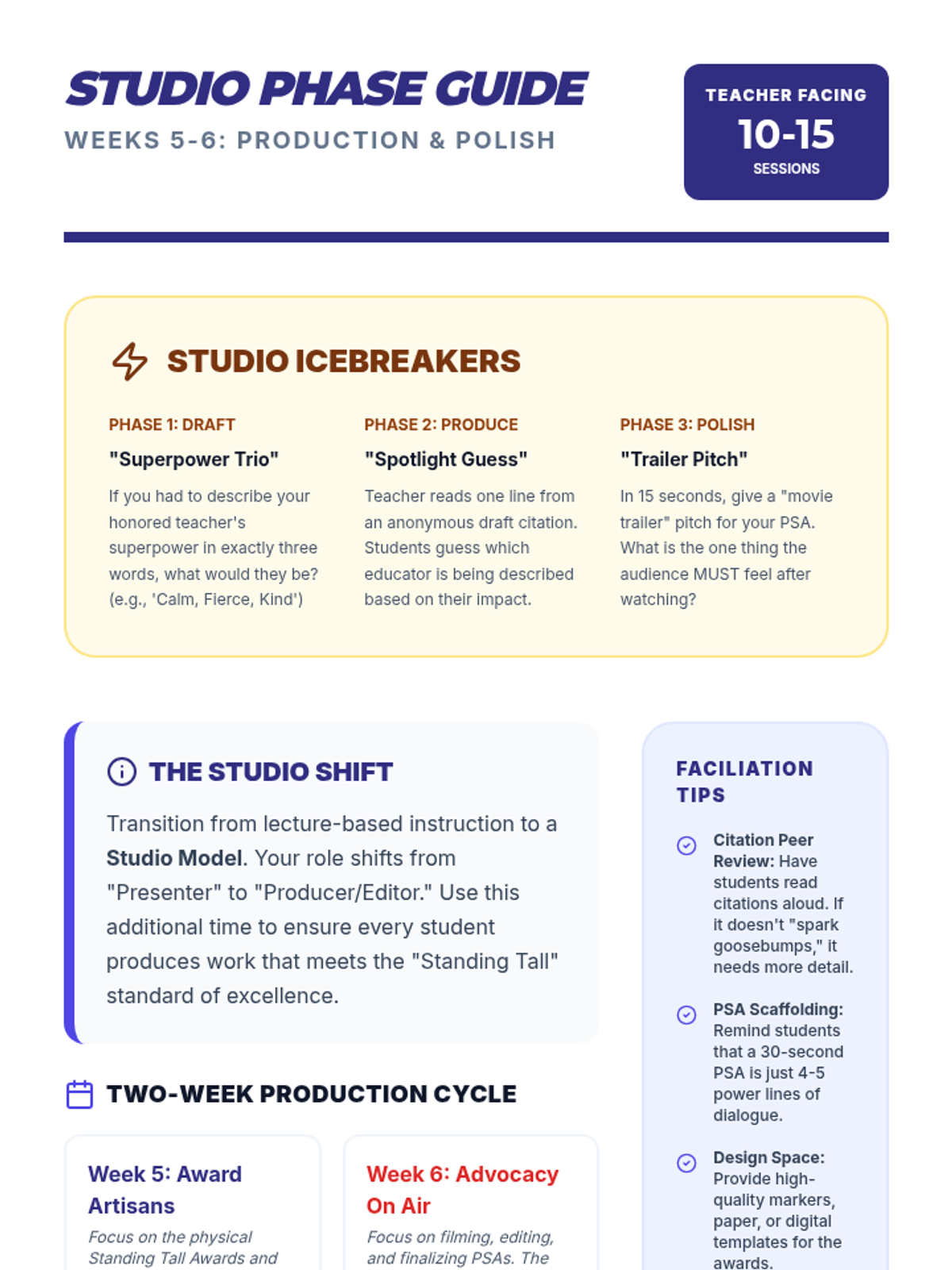
The culminating week of the sequence where students finalize, edit, and present their advocacy PSAs to the class or community.
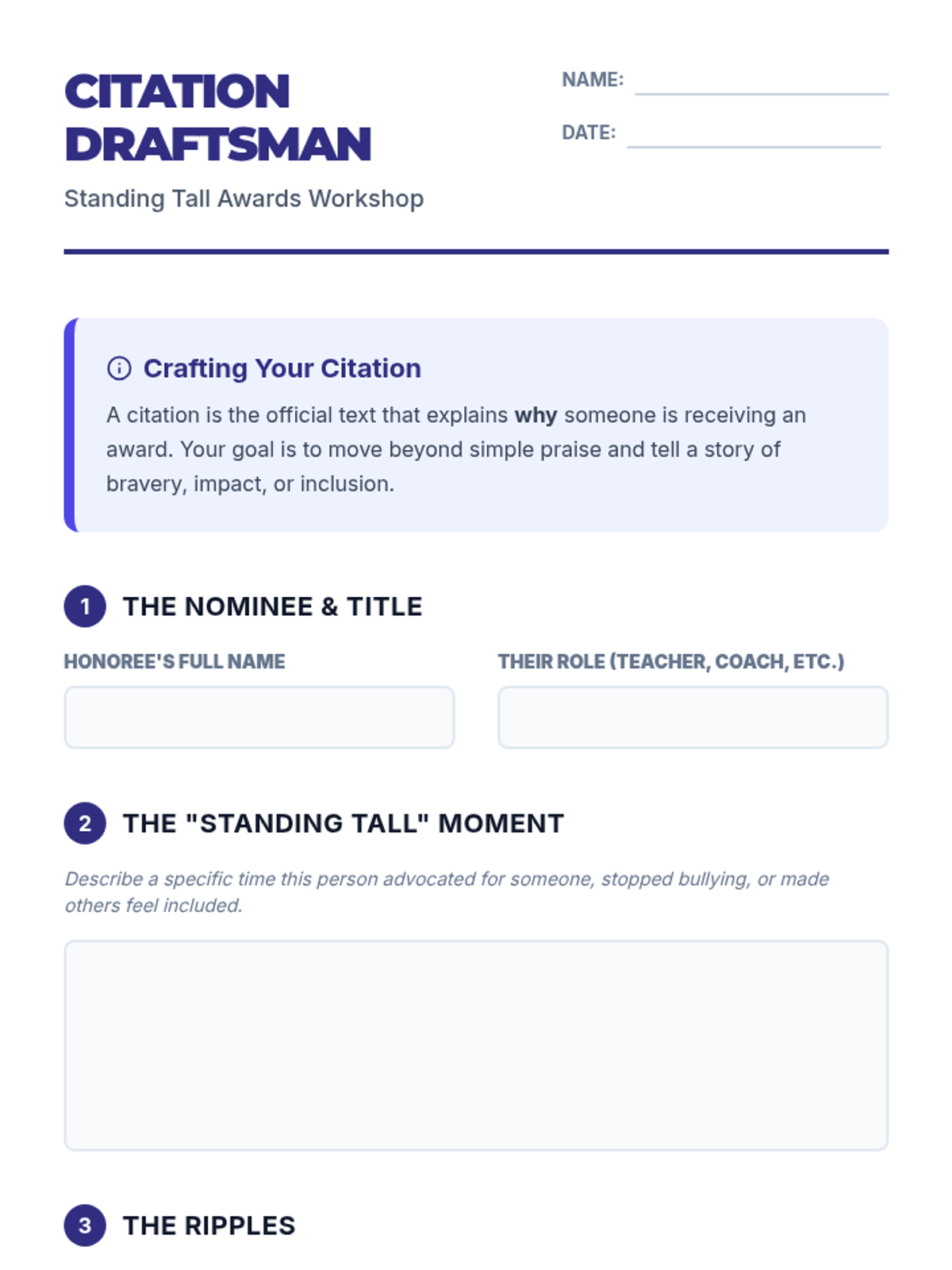
A dedicated production week focused on crafting the physical or digital awards for nominated female educators, emphasizing high-quality citations and intentional design.
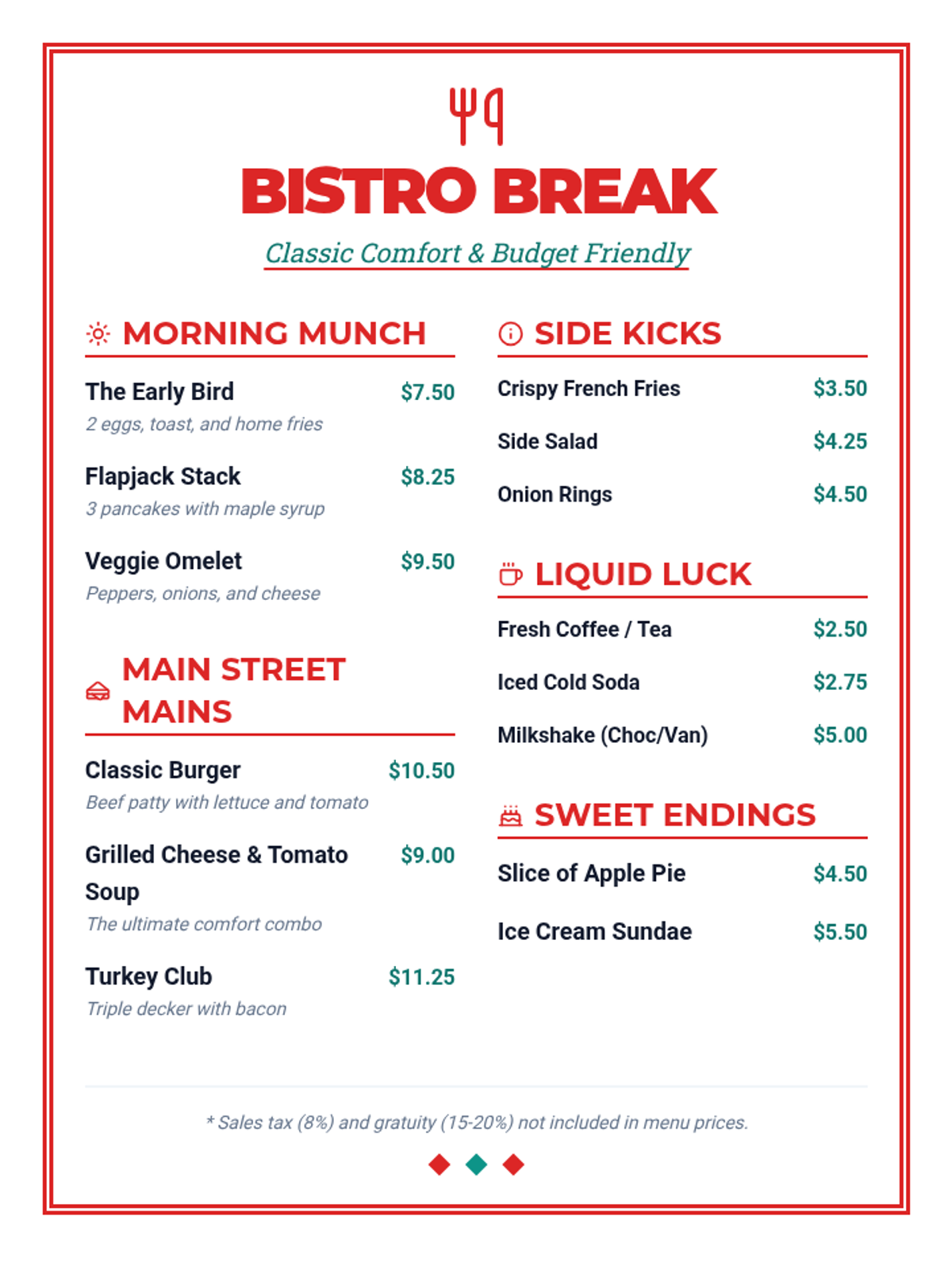
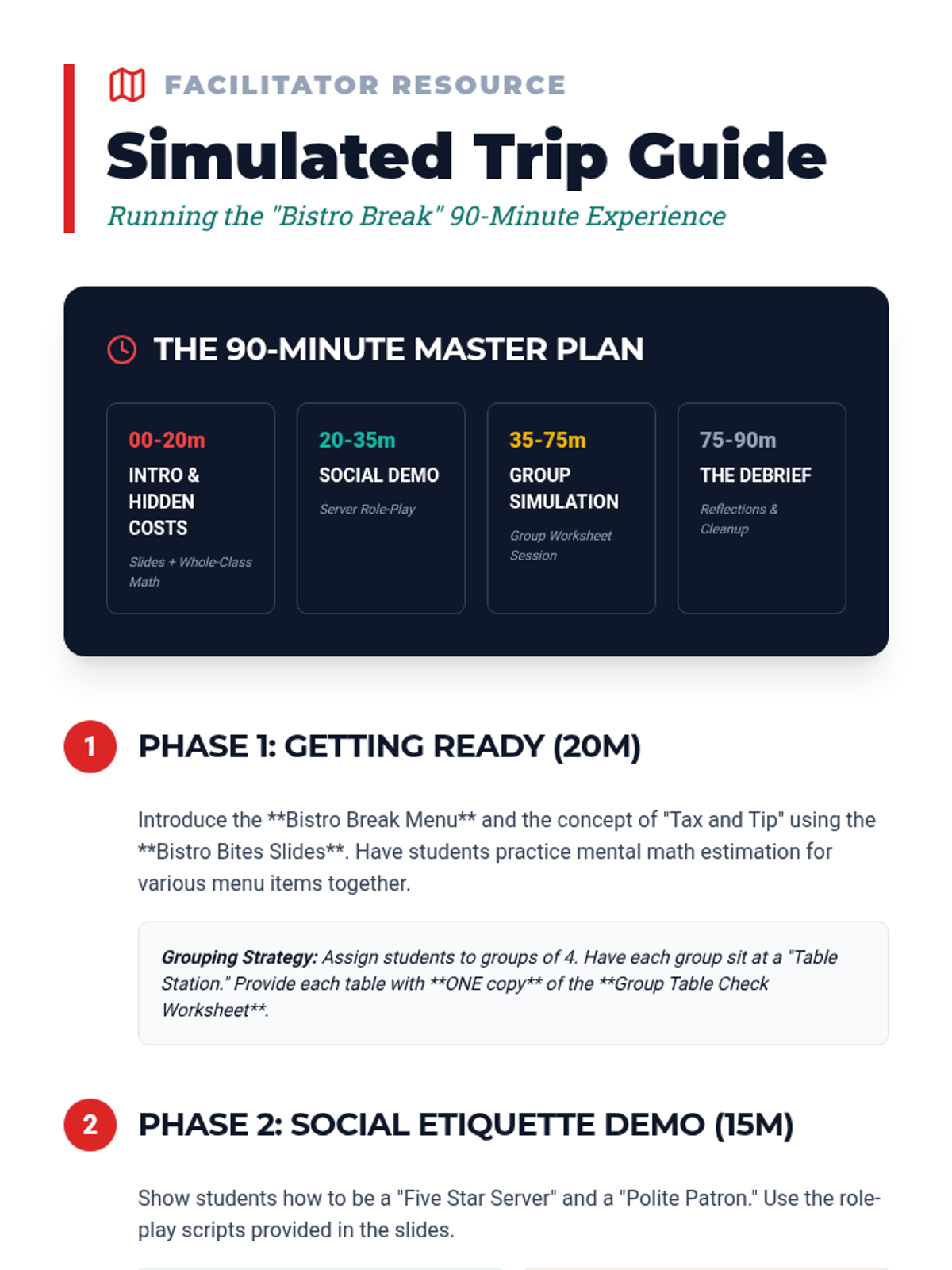
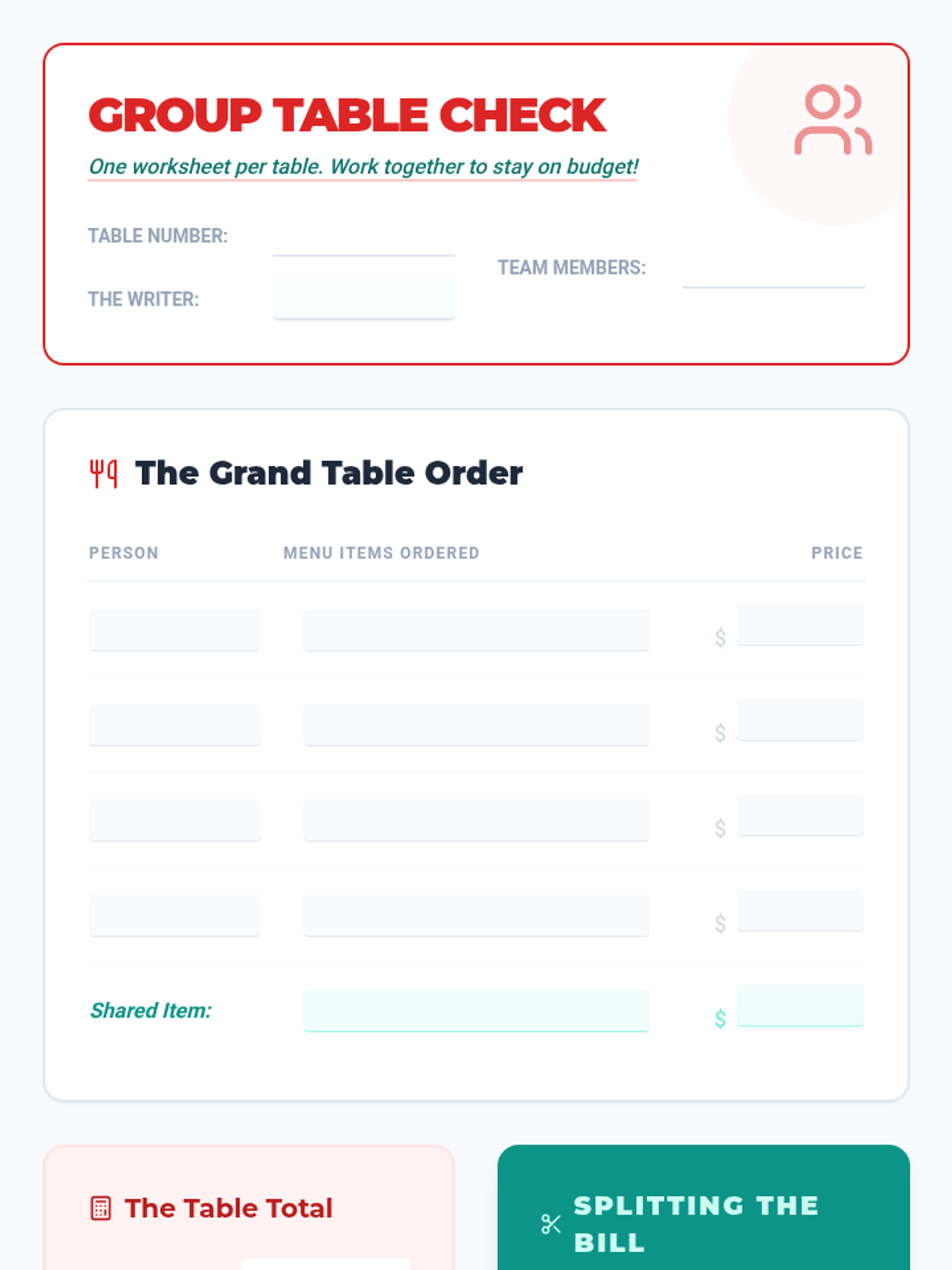
A functional skills lesson focused on navigating a restaurant experience on a budget, covering menu reading, budget planning, social etiquette, and group check splitting.
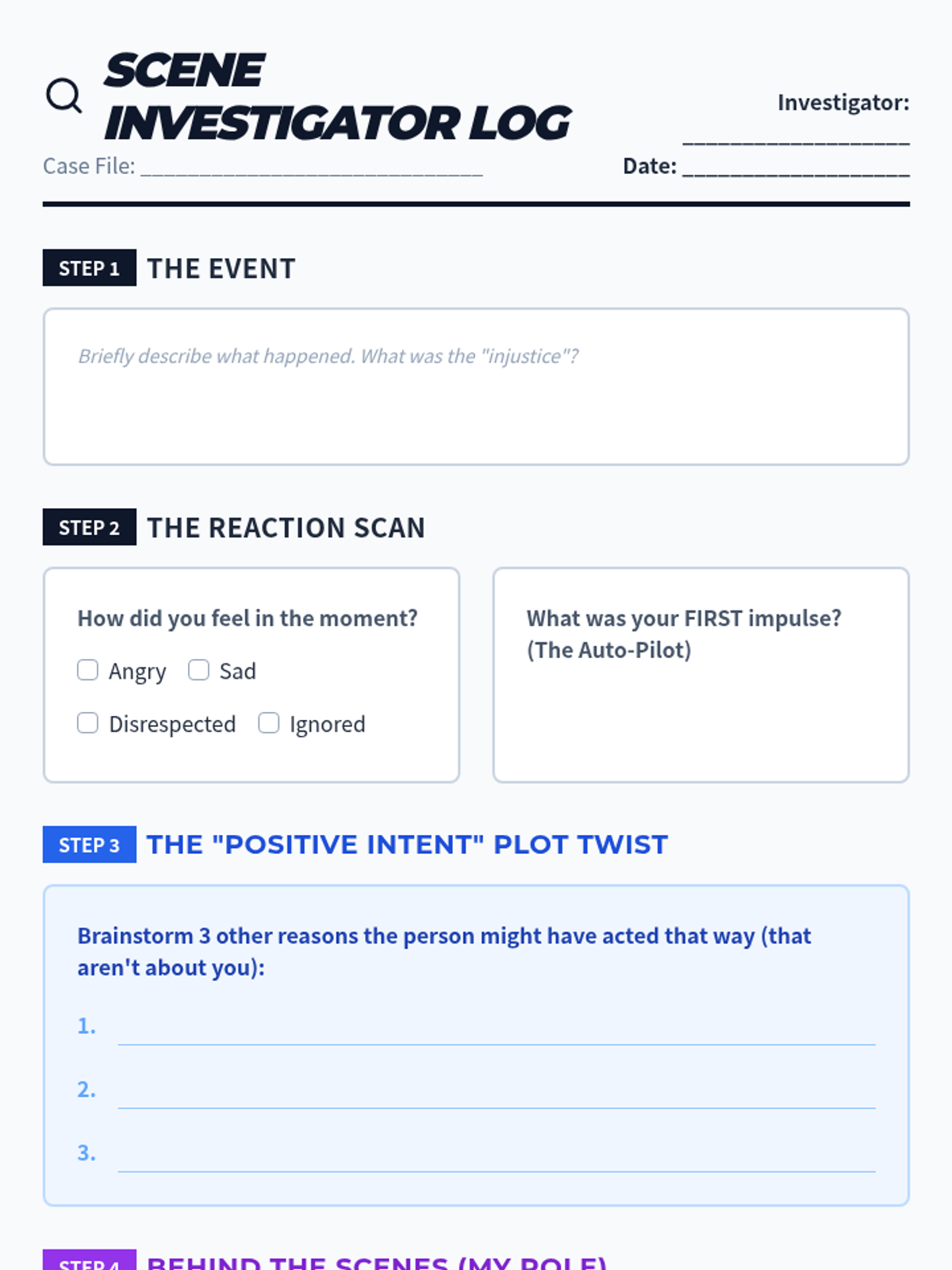
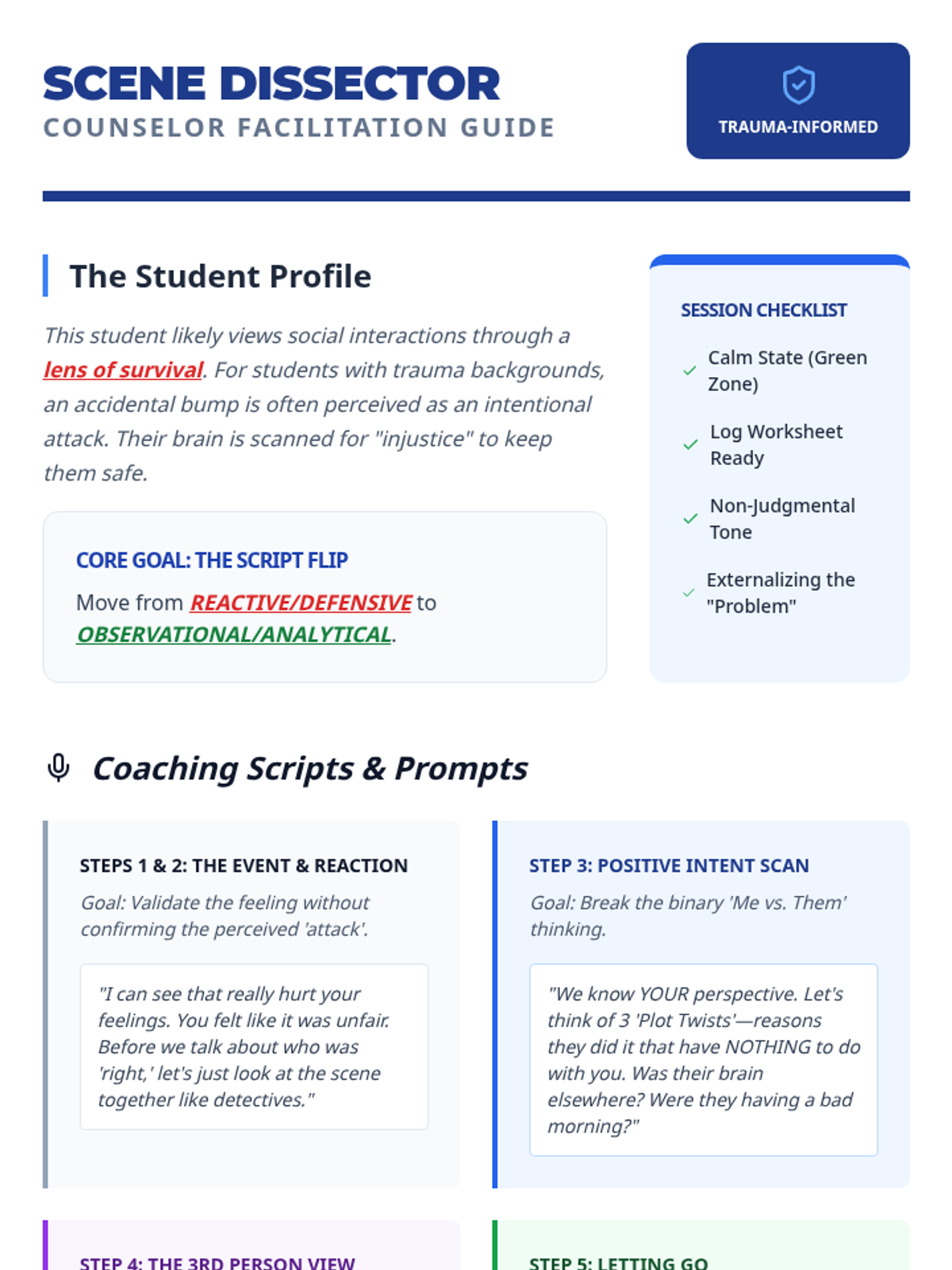
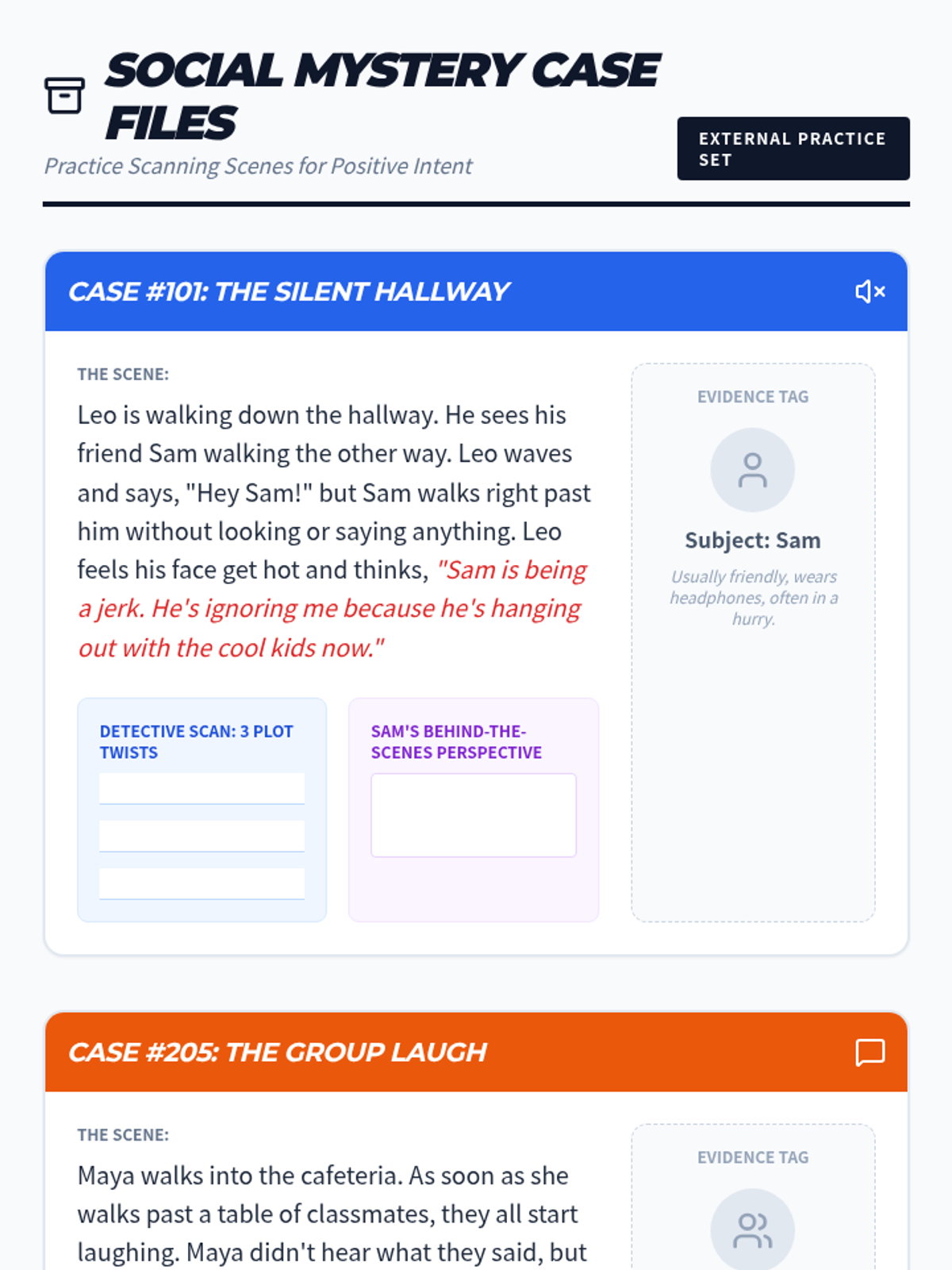
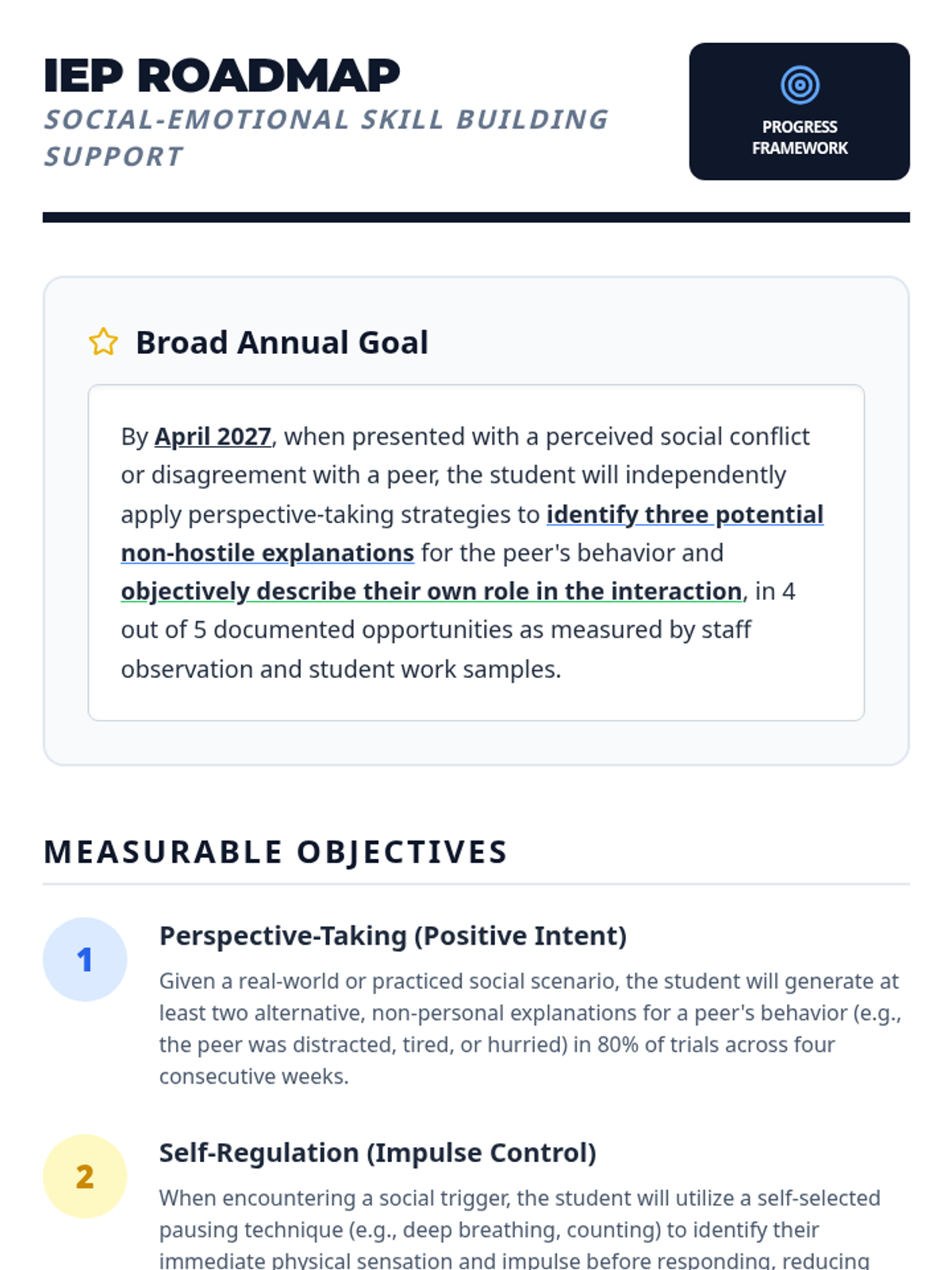
A social-emotional learning lesson designed for students with trauma backgrounds and impulse control challenges. It focuses on 'Scene Scanning'—assuming positive intent and dissecting social interactions through a detective-style lens to improve perspective-taking and reduce reactivity.
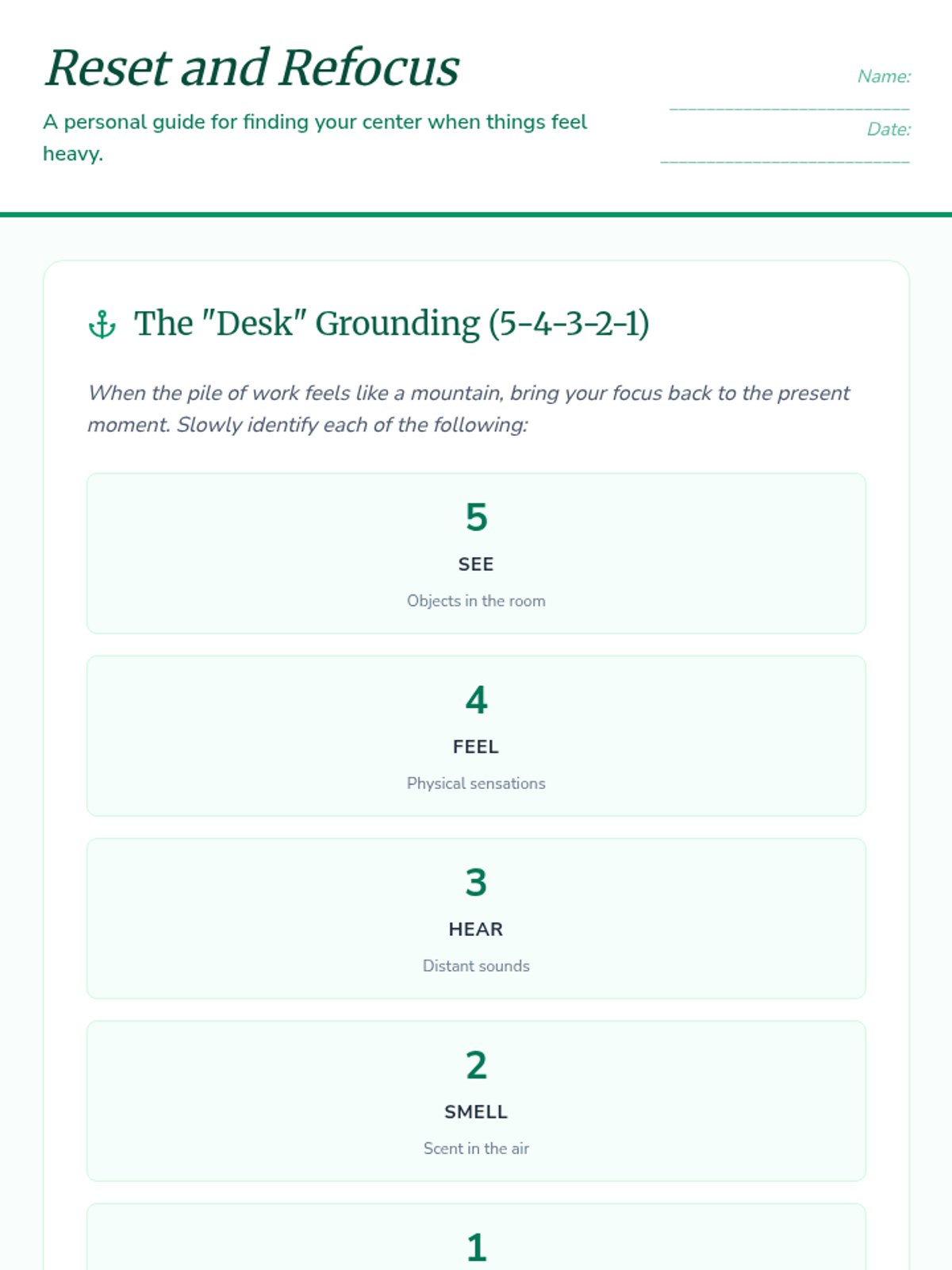
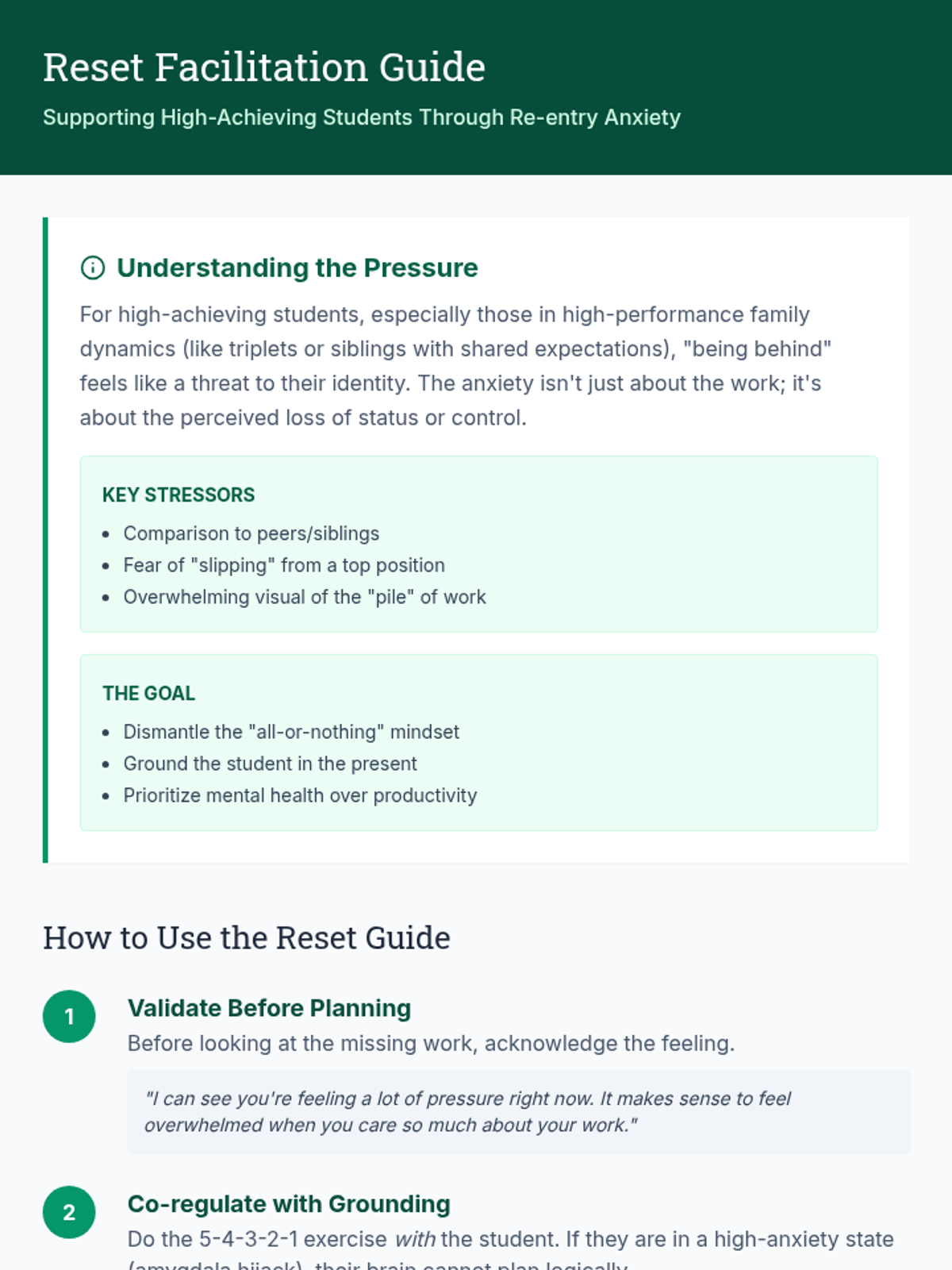
A collection of resources designed to help high-achieving students manage academic anxiety and re-entry stress through mindfulness and grounding.
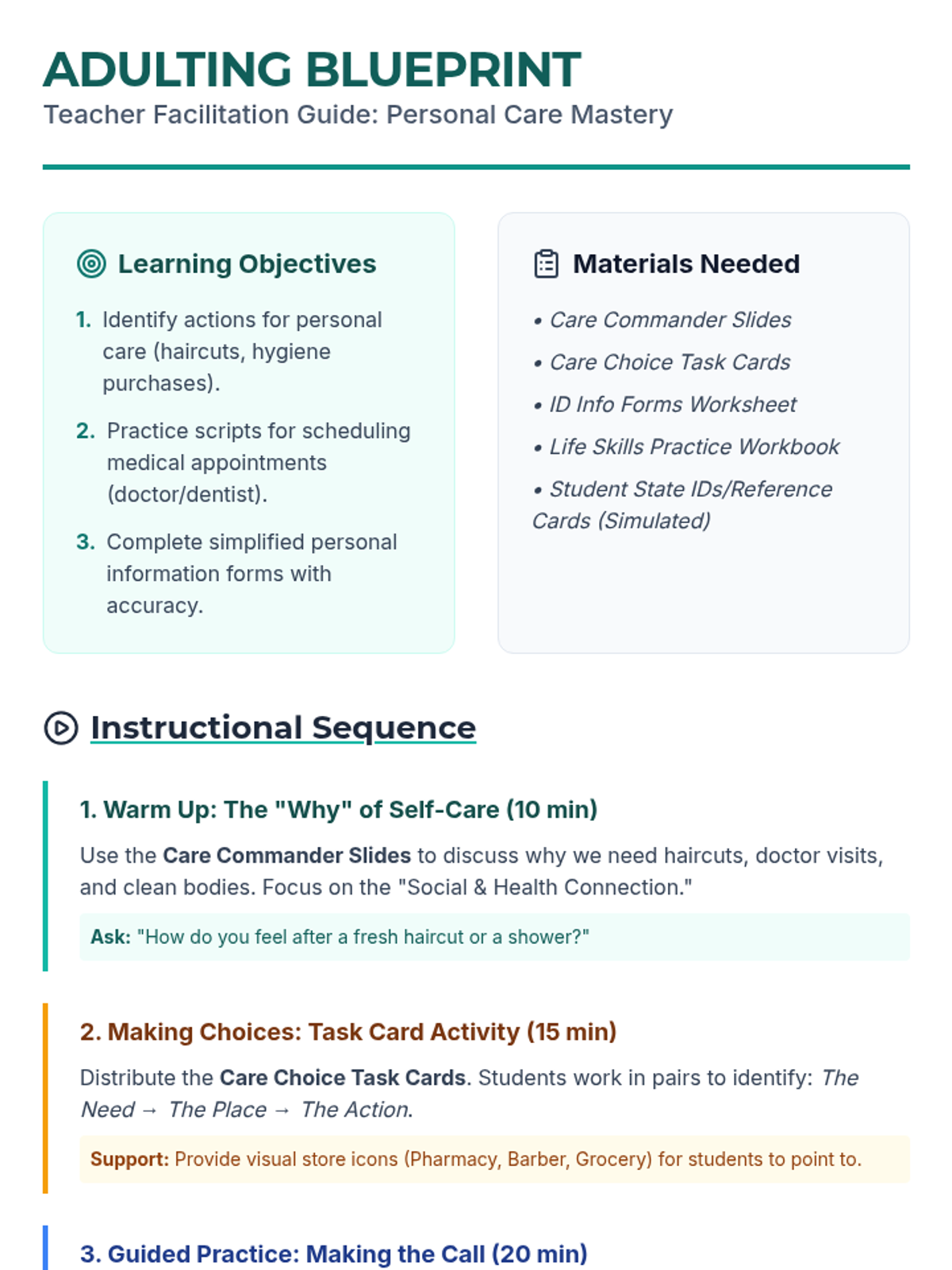
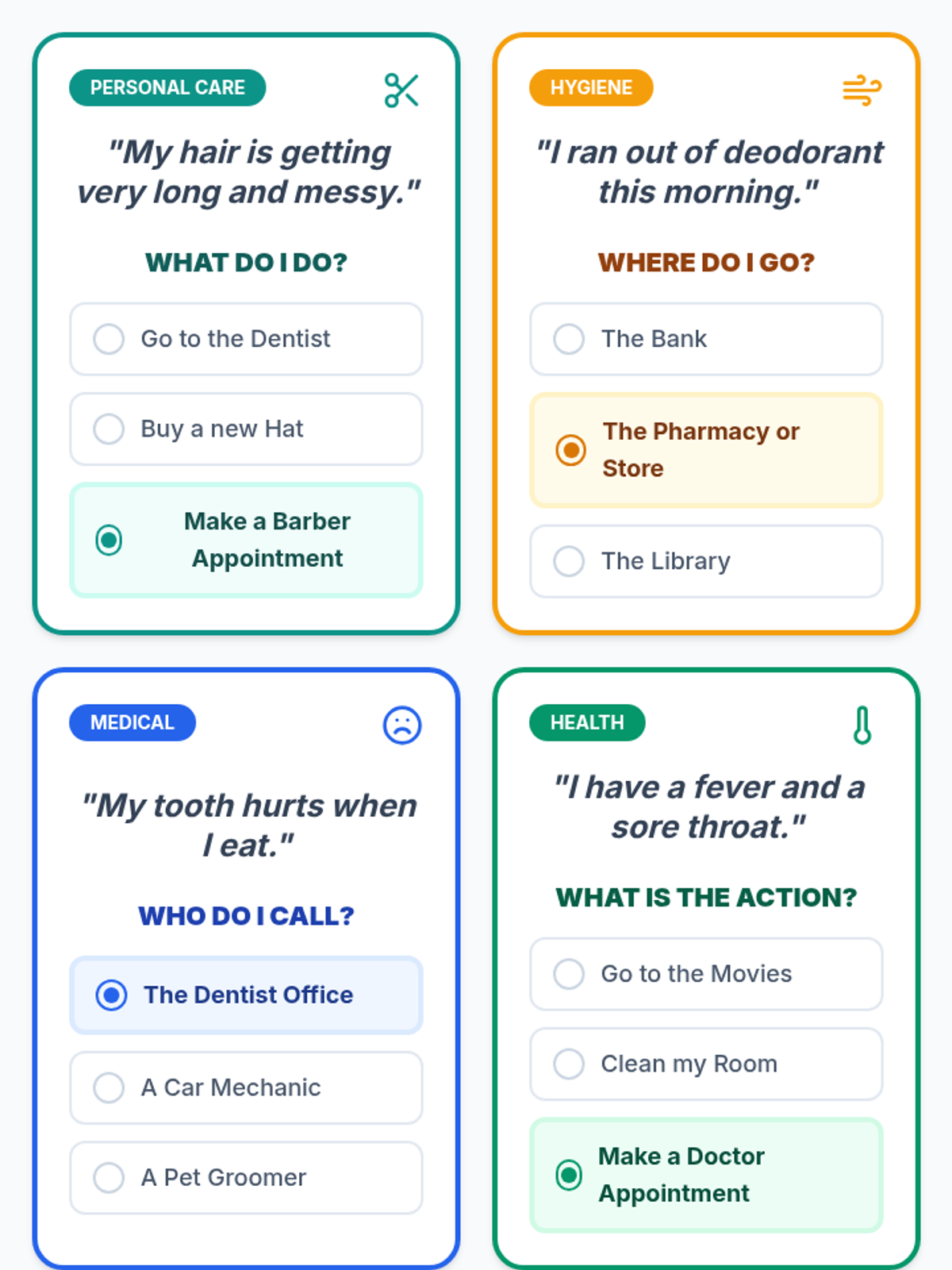
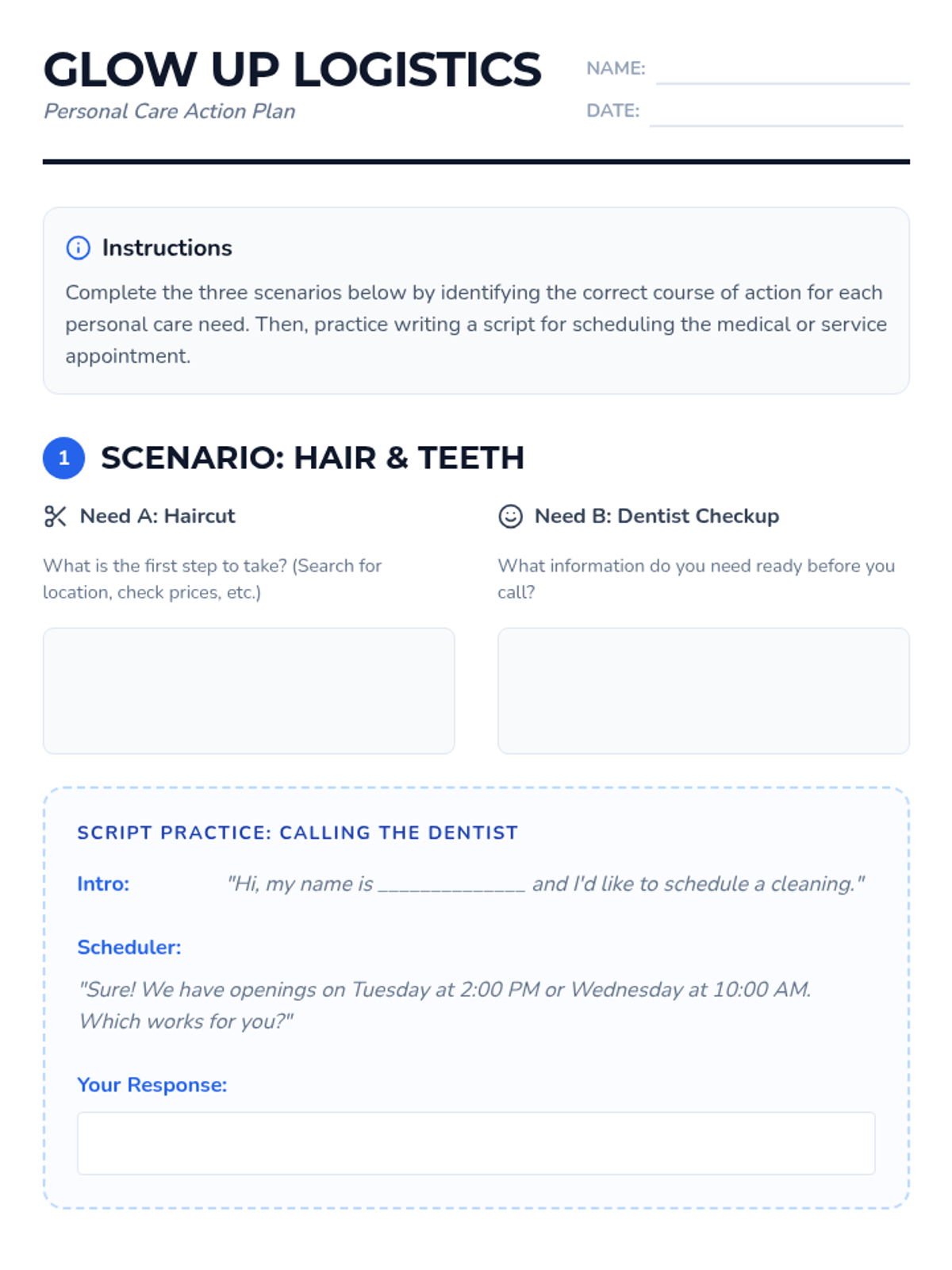
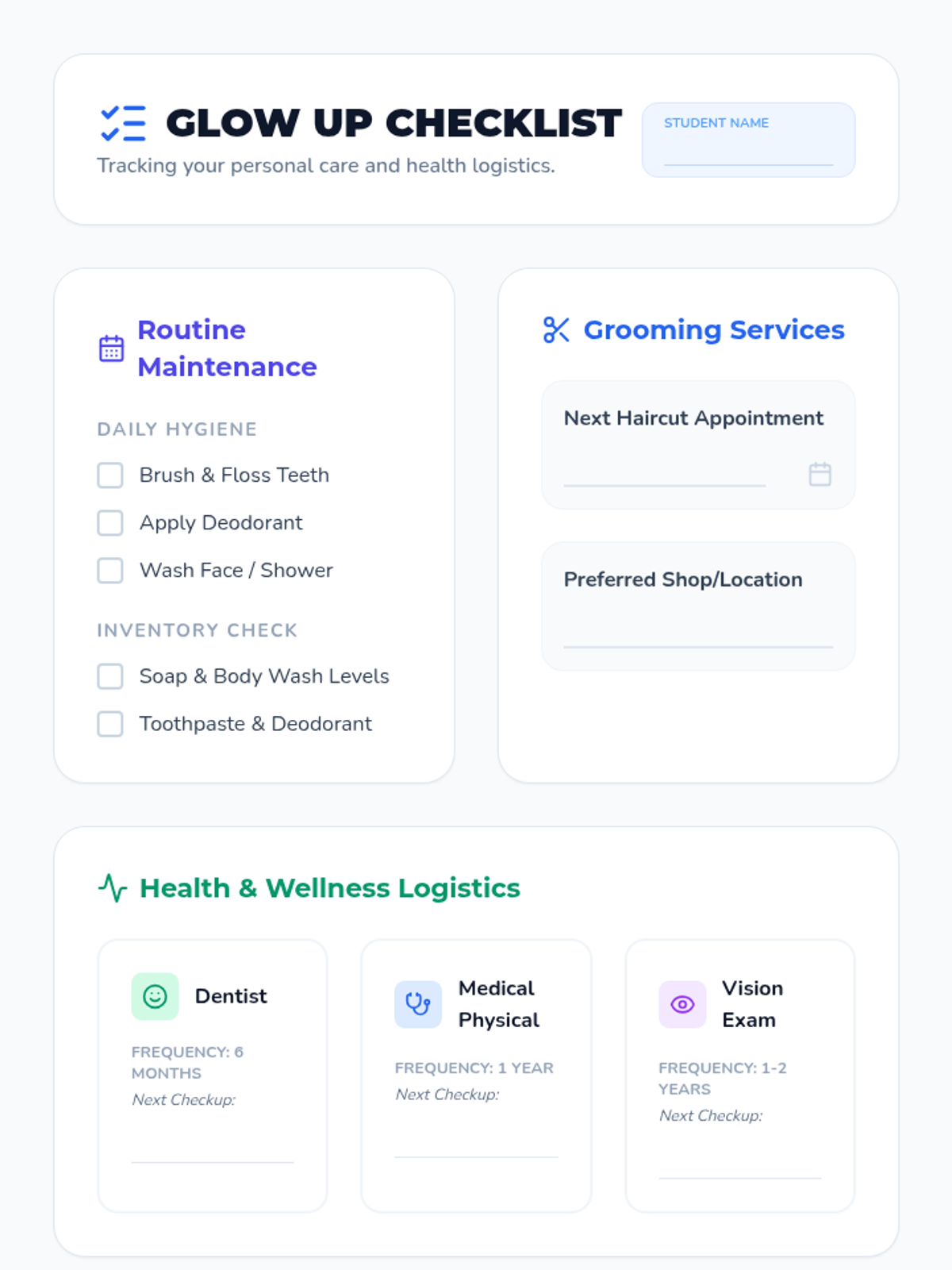
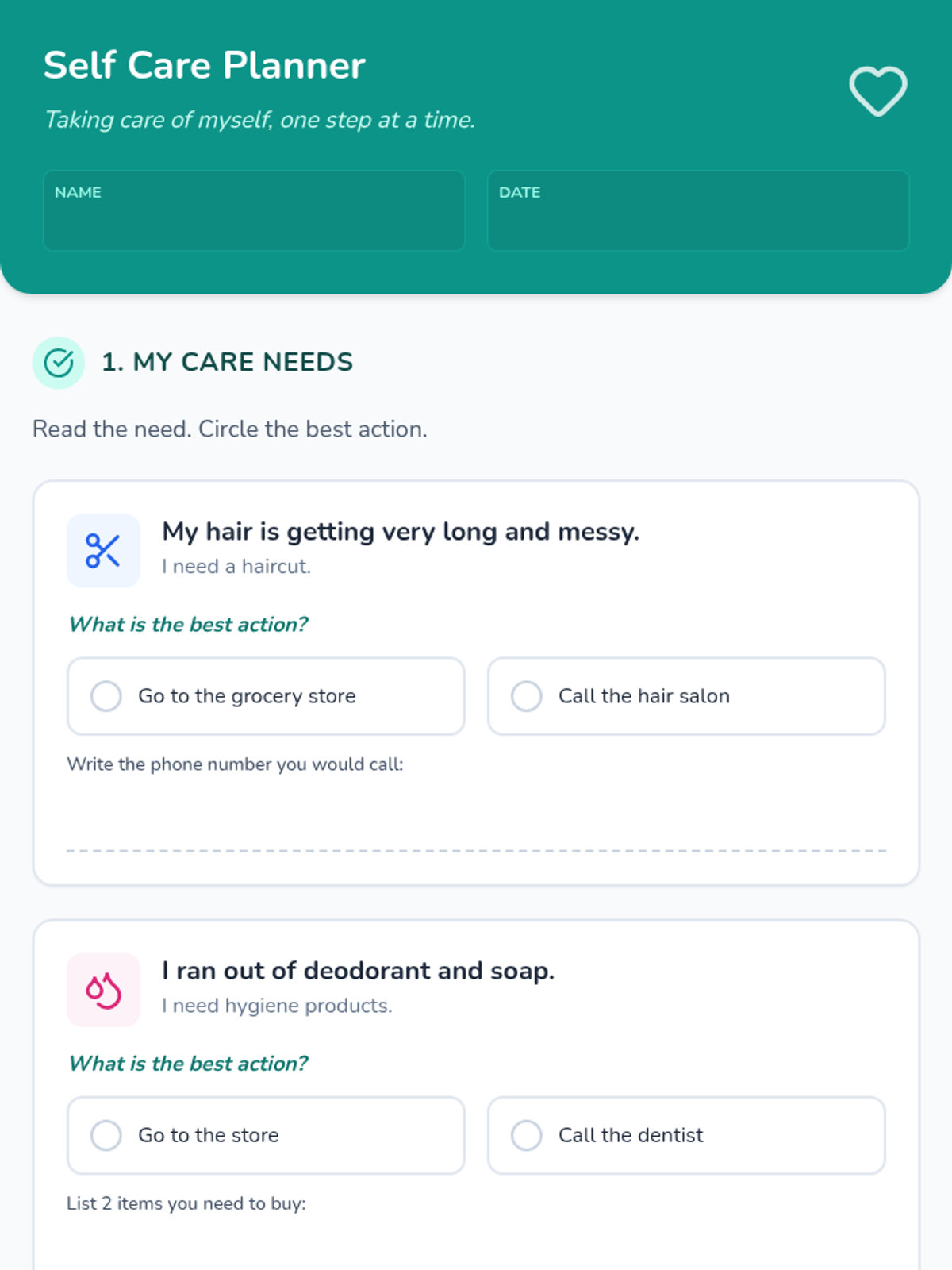
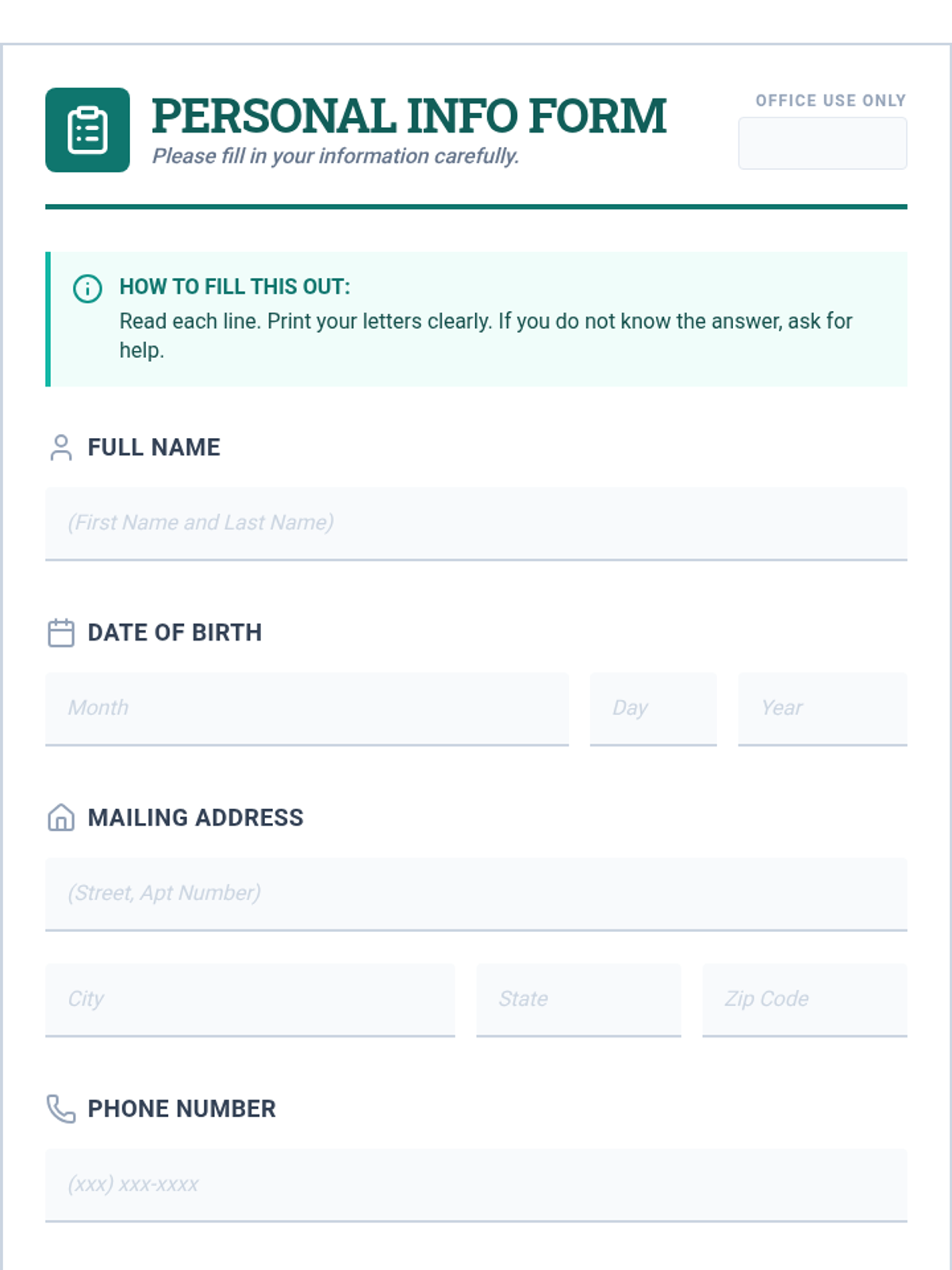
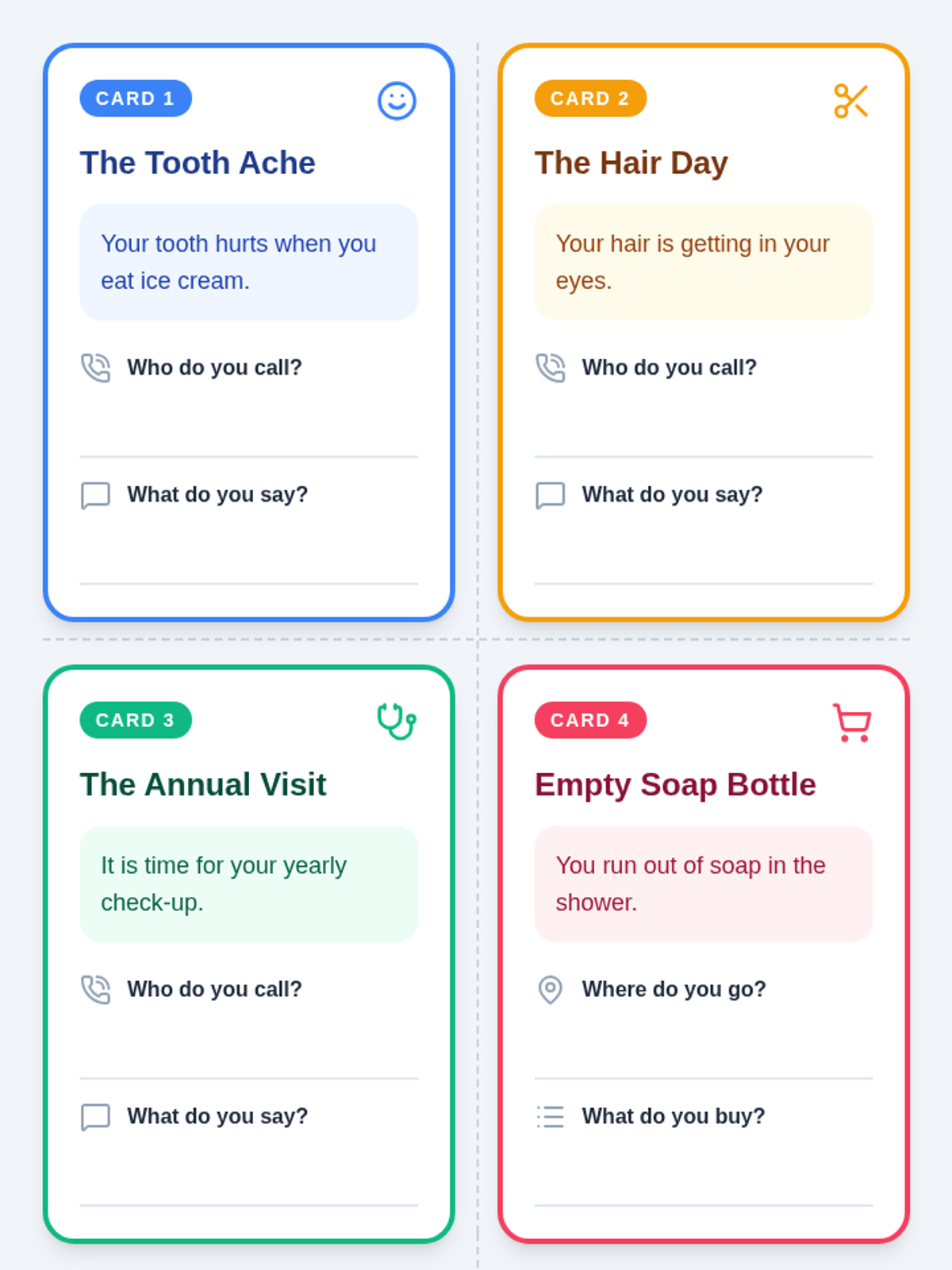
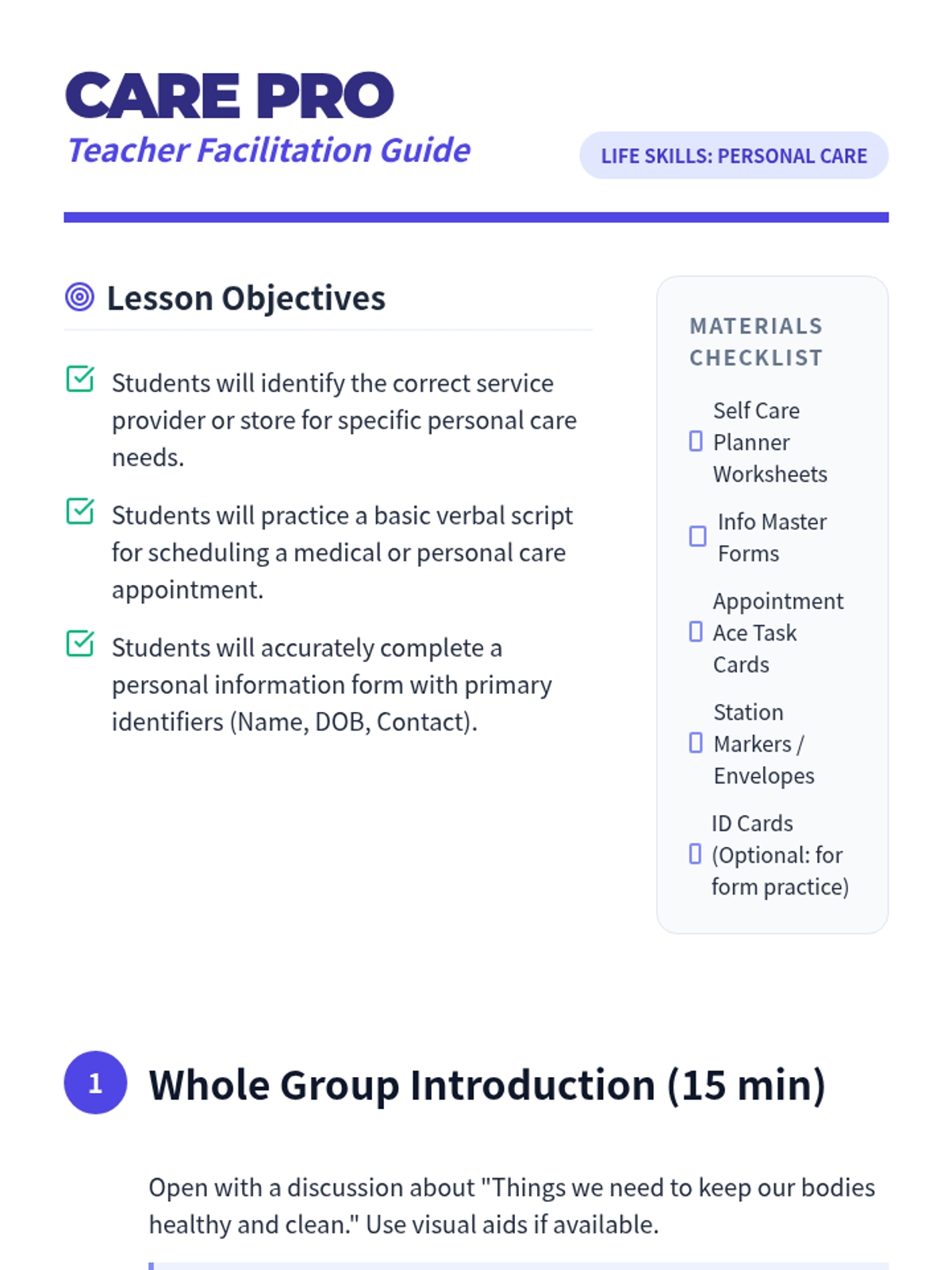
A comprehensive lesson on personal care management, including scheduling appointments, selecting hygiene products, and completing personal information forms for high school students requiring high support.
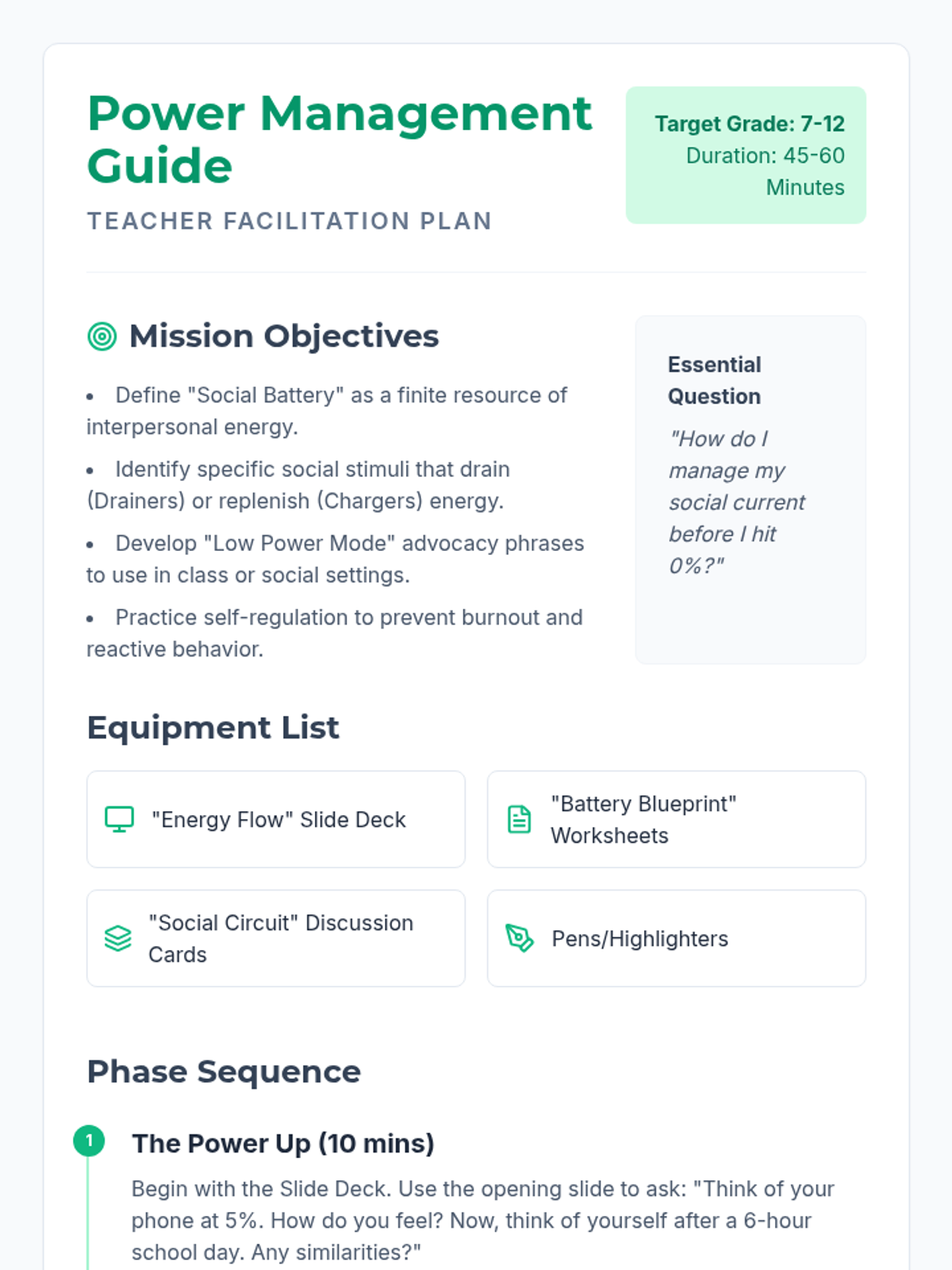
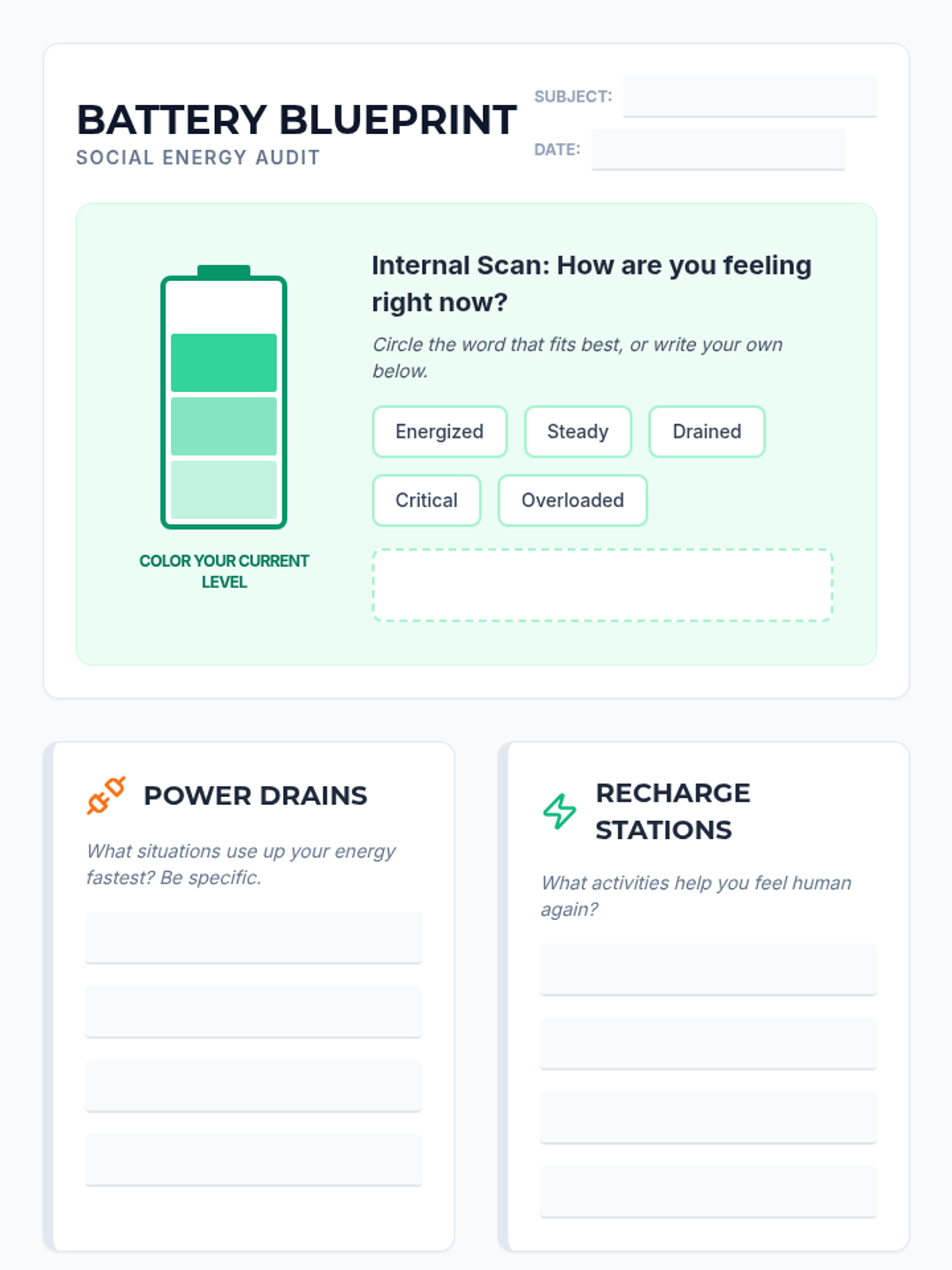
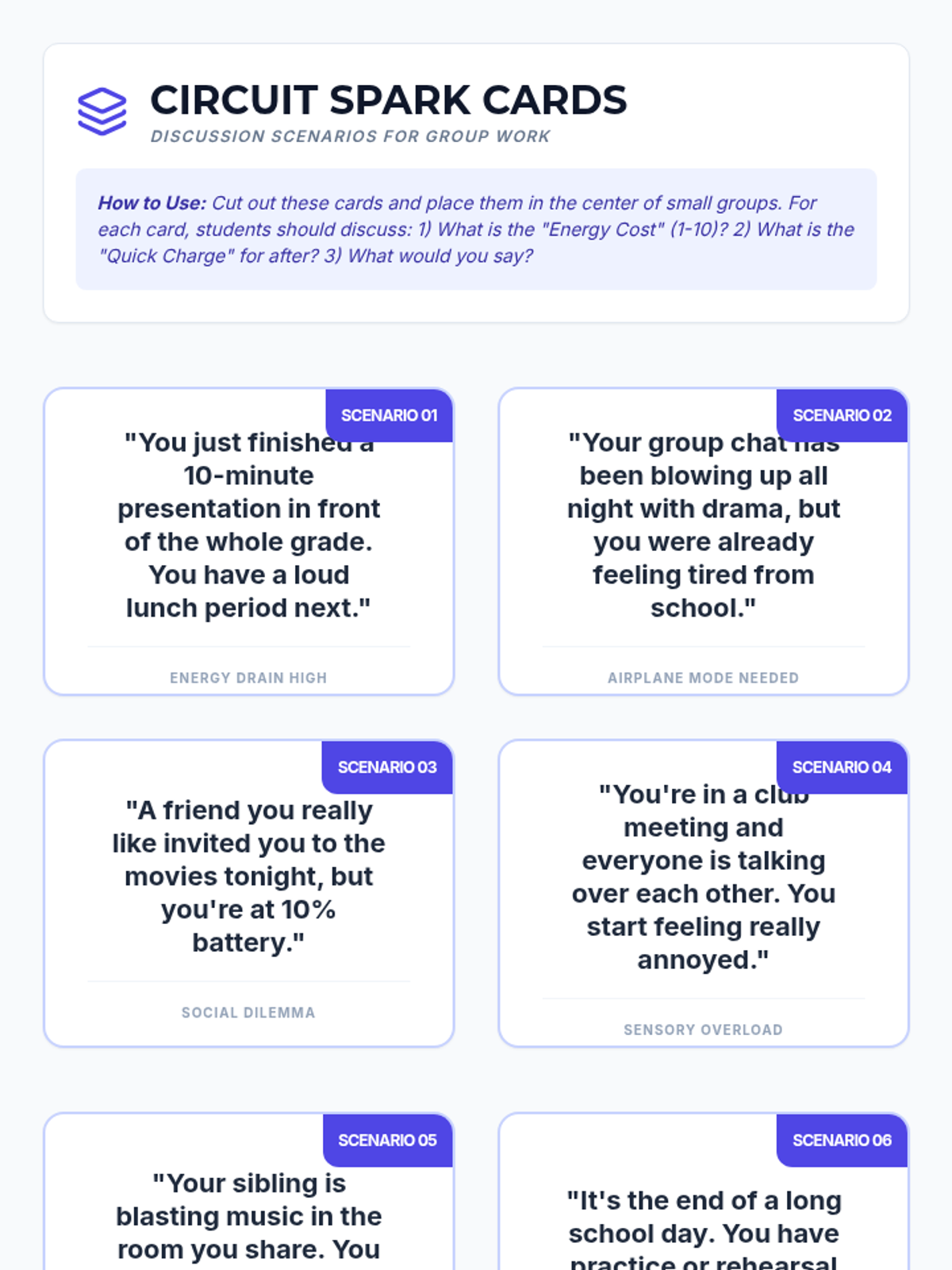
A comprehensive lesson for teens to visualize their social energy as a battery, identifying personal 'drainers' and 'chargers' to develop self-regulation and burnout prevention strategies.
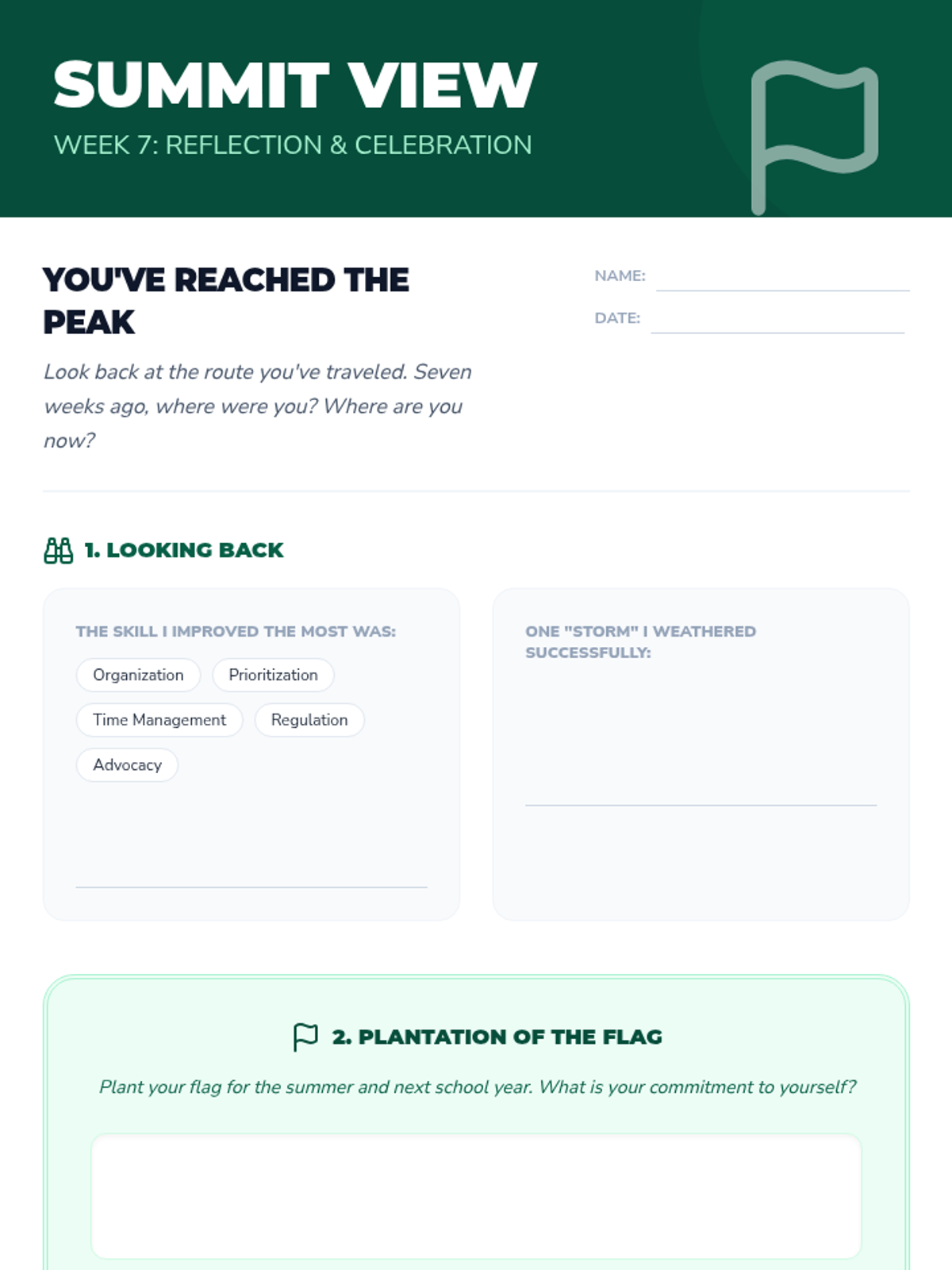
Reviewing accomplishments, celebrating growth, and planning for continued success beyond the program.
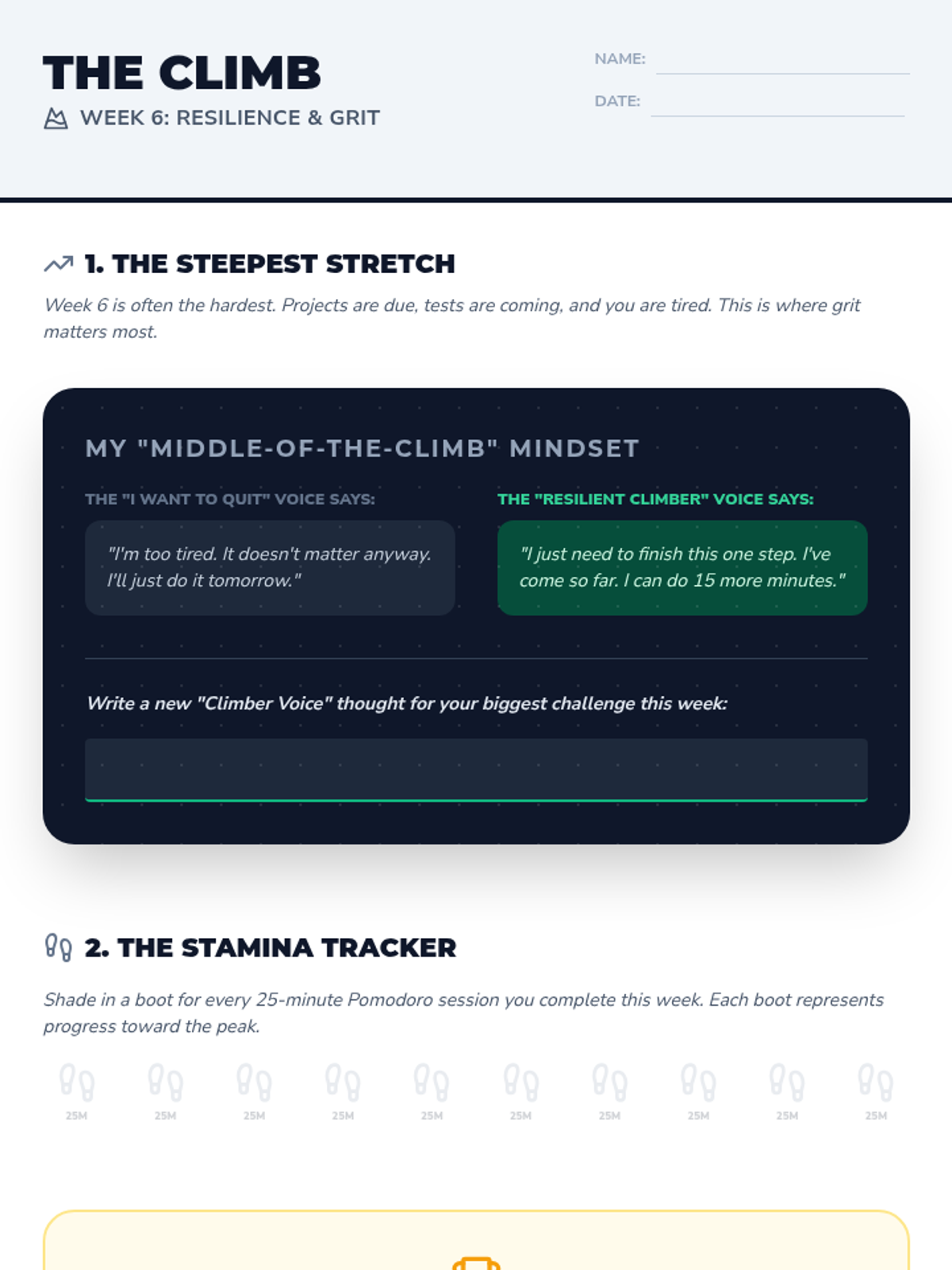
Developing mental resilience and grit to push through the most demanding academic period of the term.
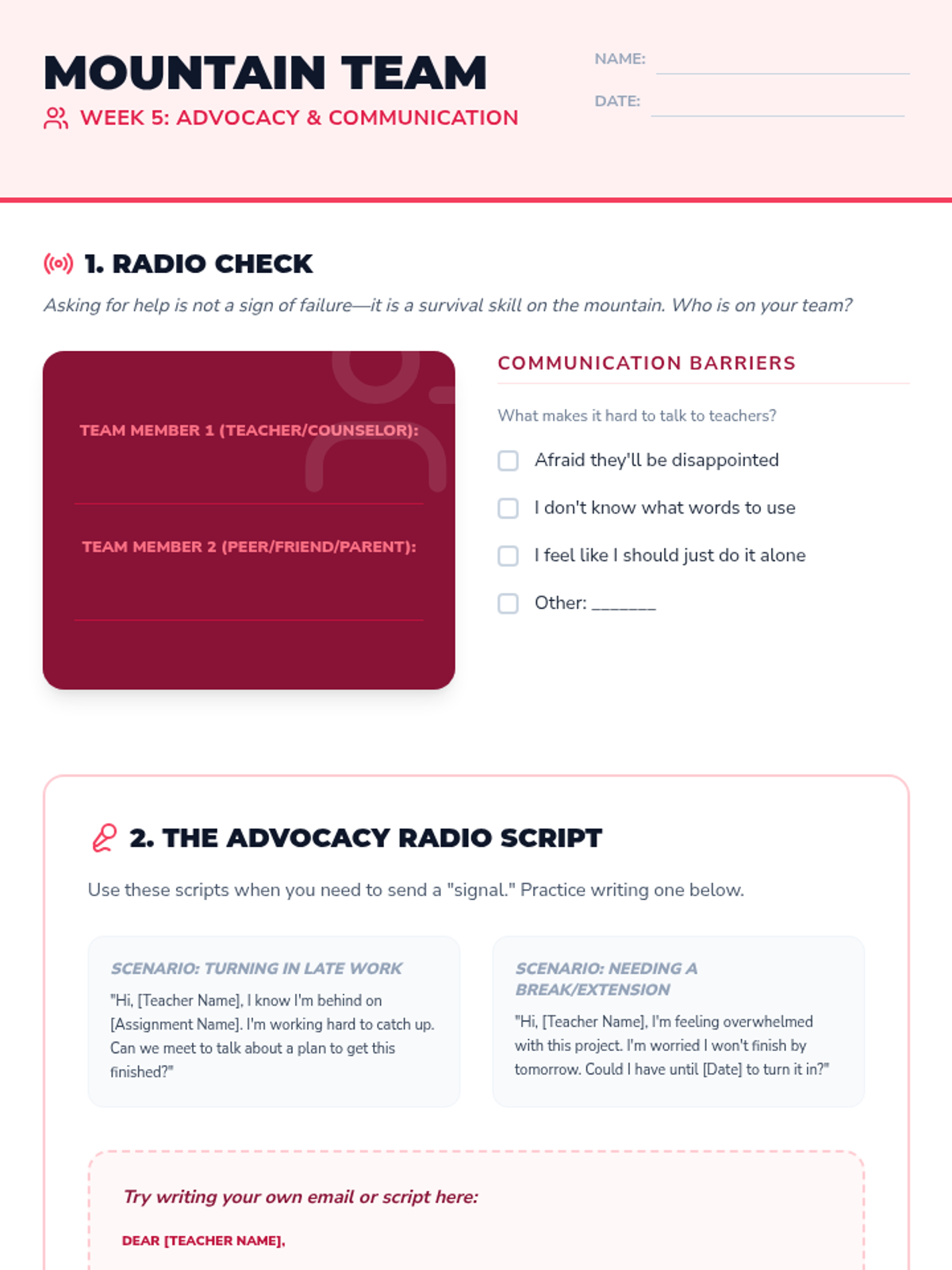
Focuses on building effective communication with teachers and peers to advocate for needs and seek support.
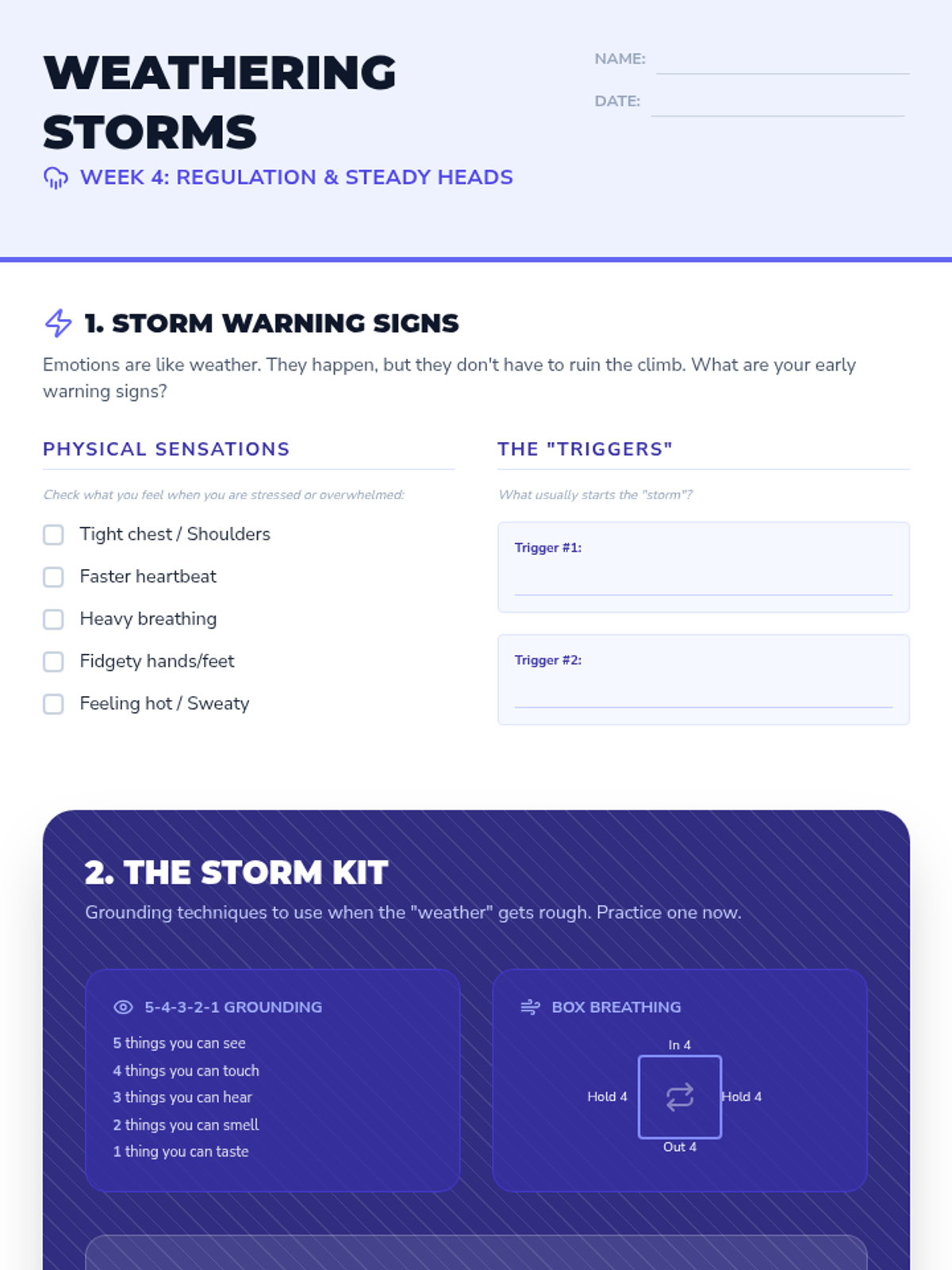
Identification of emotional triggers and the development of a 'toolbox' of regulation strategies for when things get difficult.
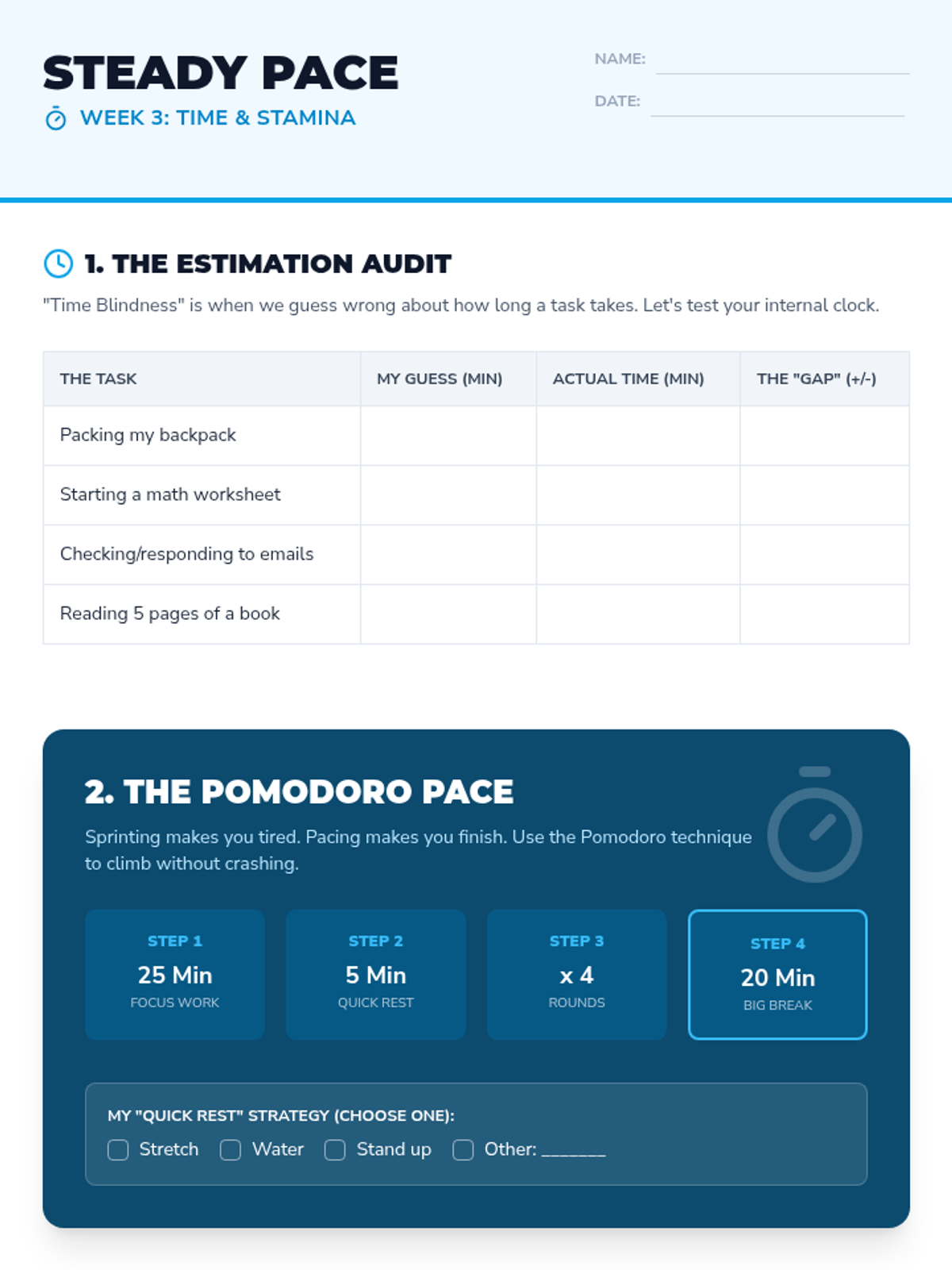
Teaching students how to estimate time for tasks and build a sustainable weekly schedule.
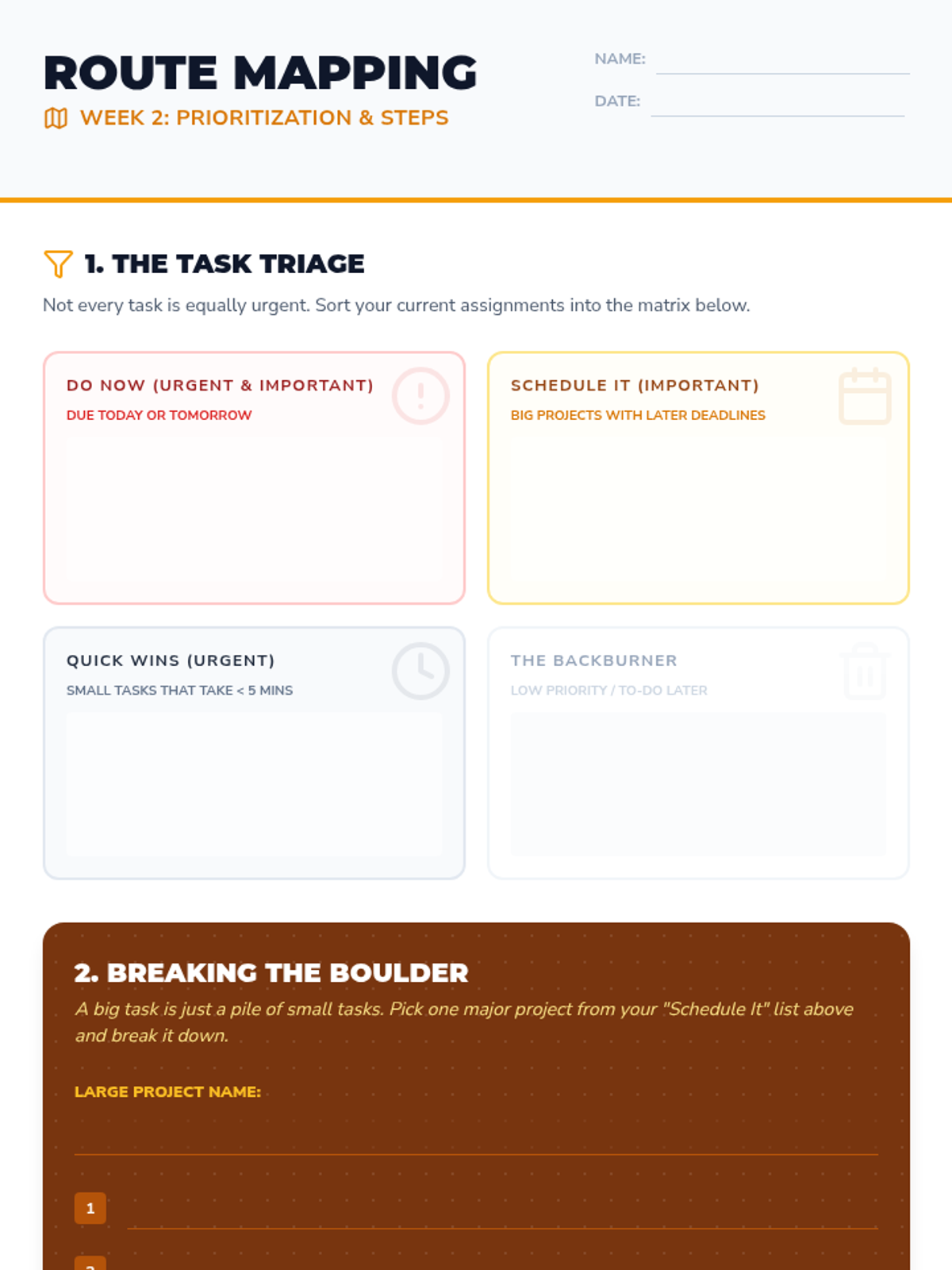
Focuses on breaking down large tasks into smaller, manageable steps and prioritizing work based on deadlines and importance.
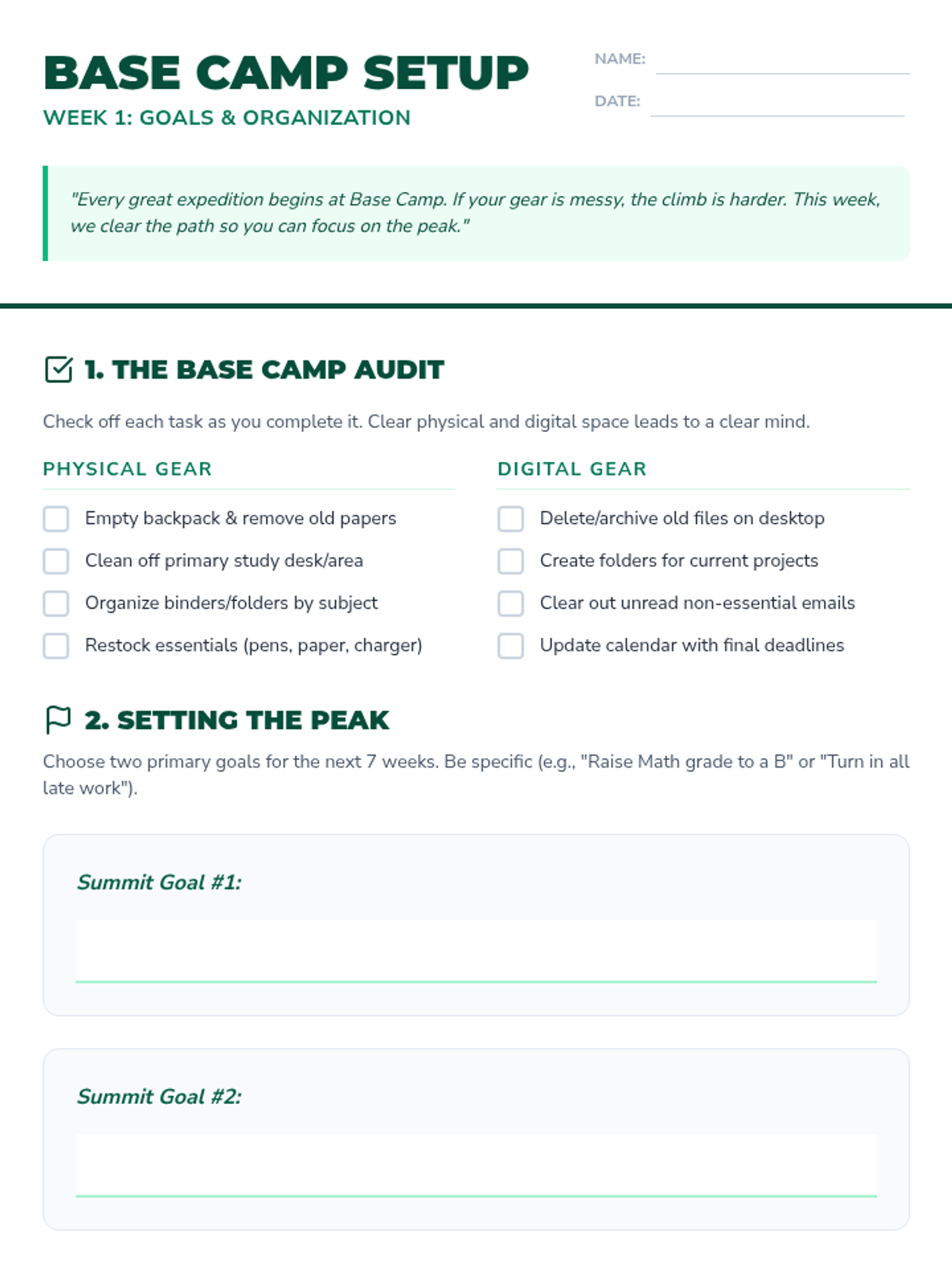
Students will organize their physical workspace, digital files, and set primary academic goals for the final 7 weeks.
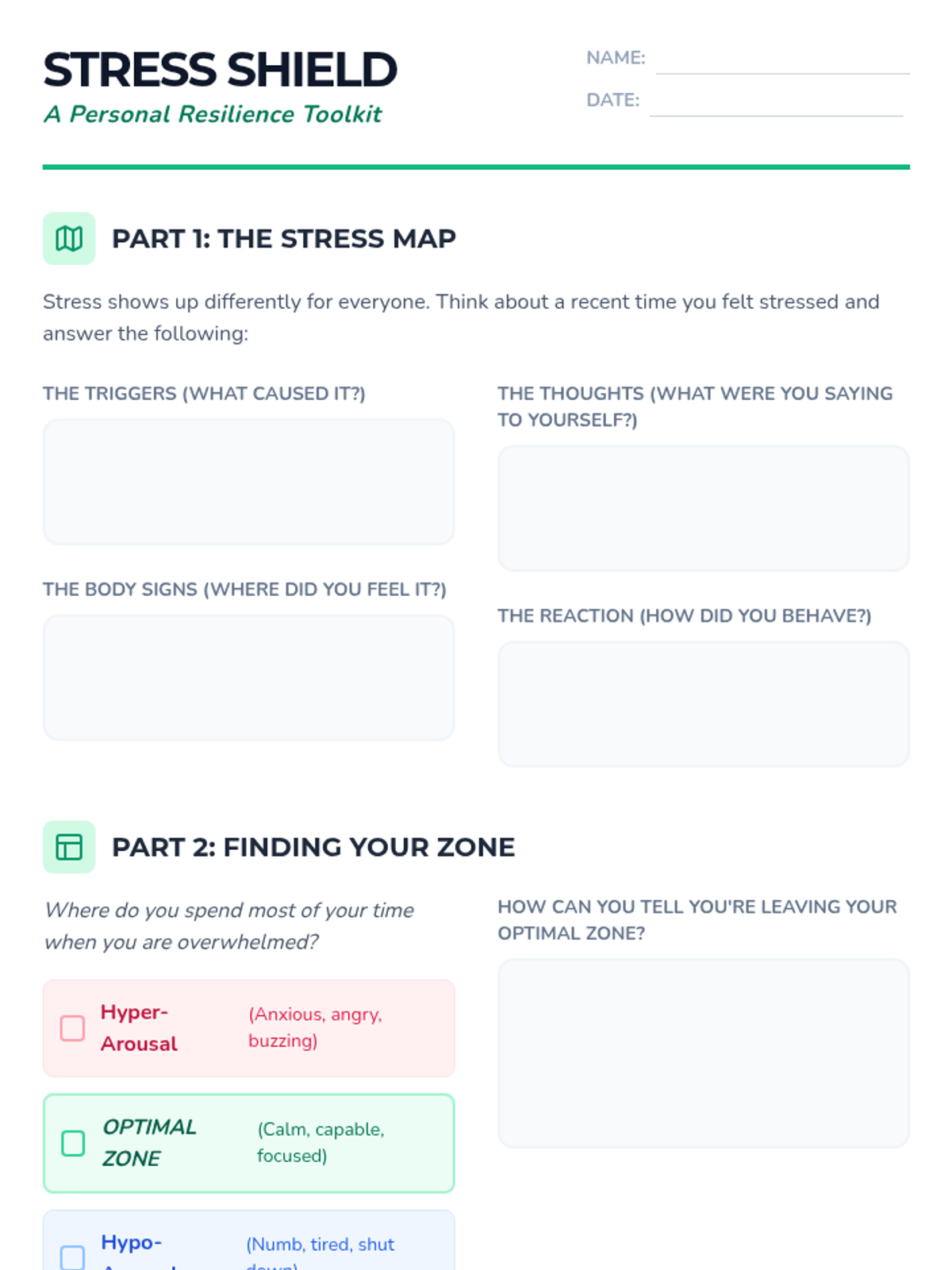
A comprehensive lesson on understanding stress, identifying personal triggers, and developing healthy coping mechanisms for high school students.
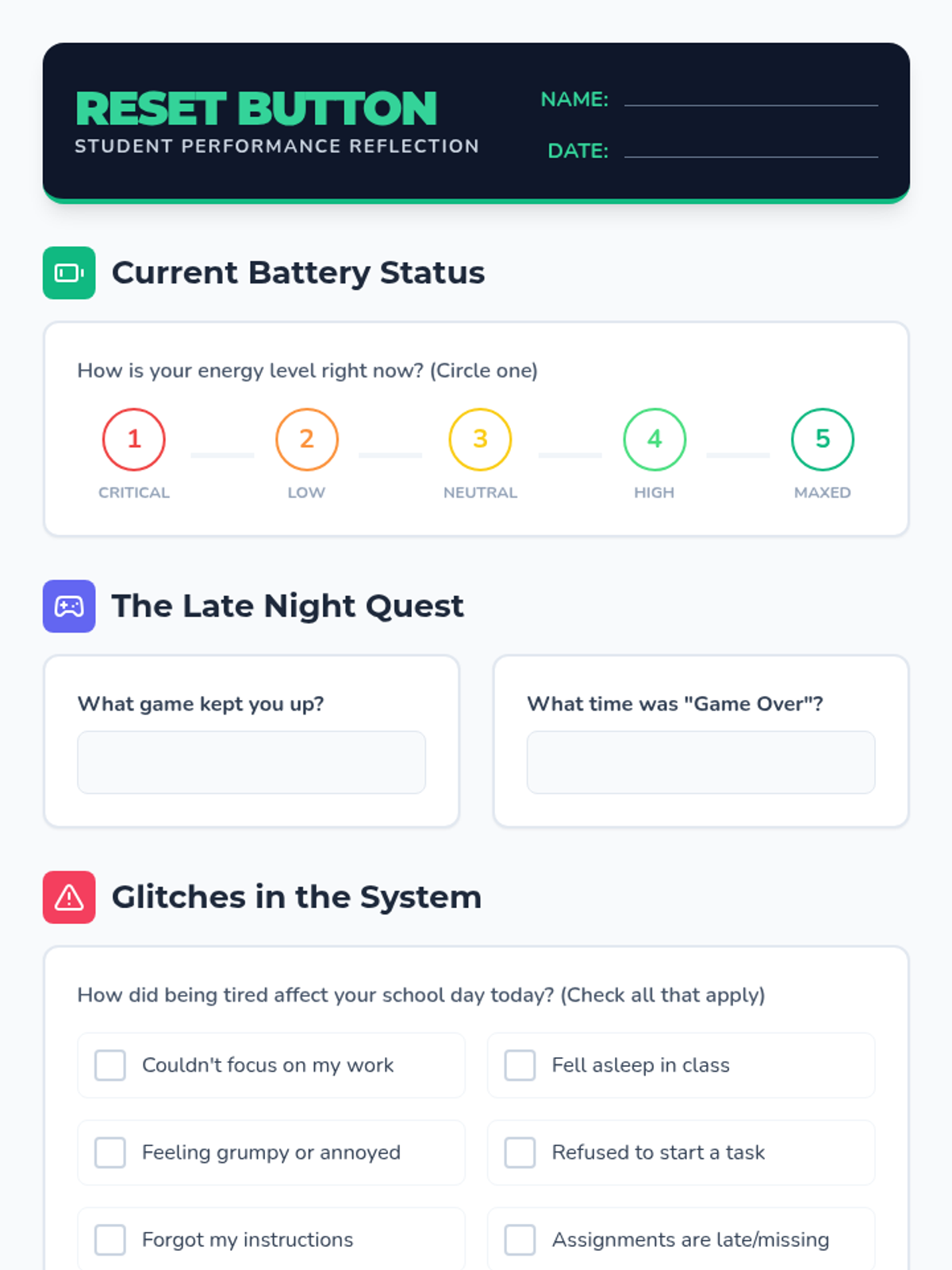
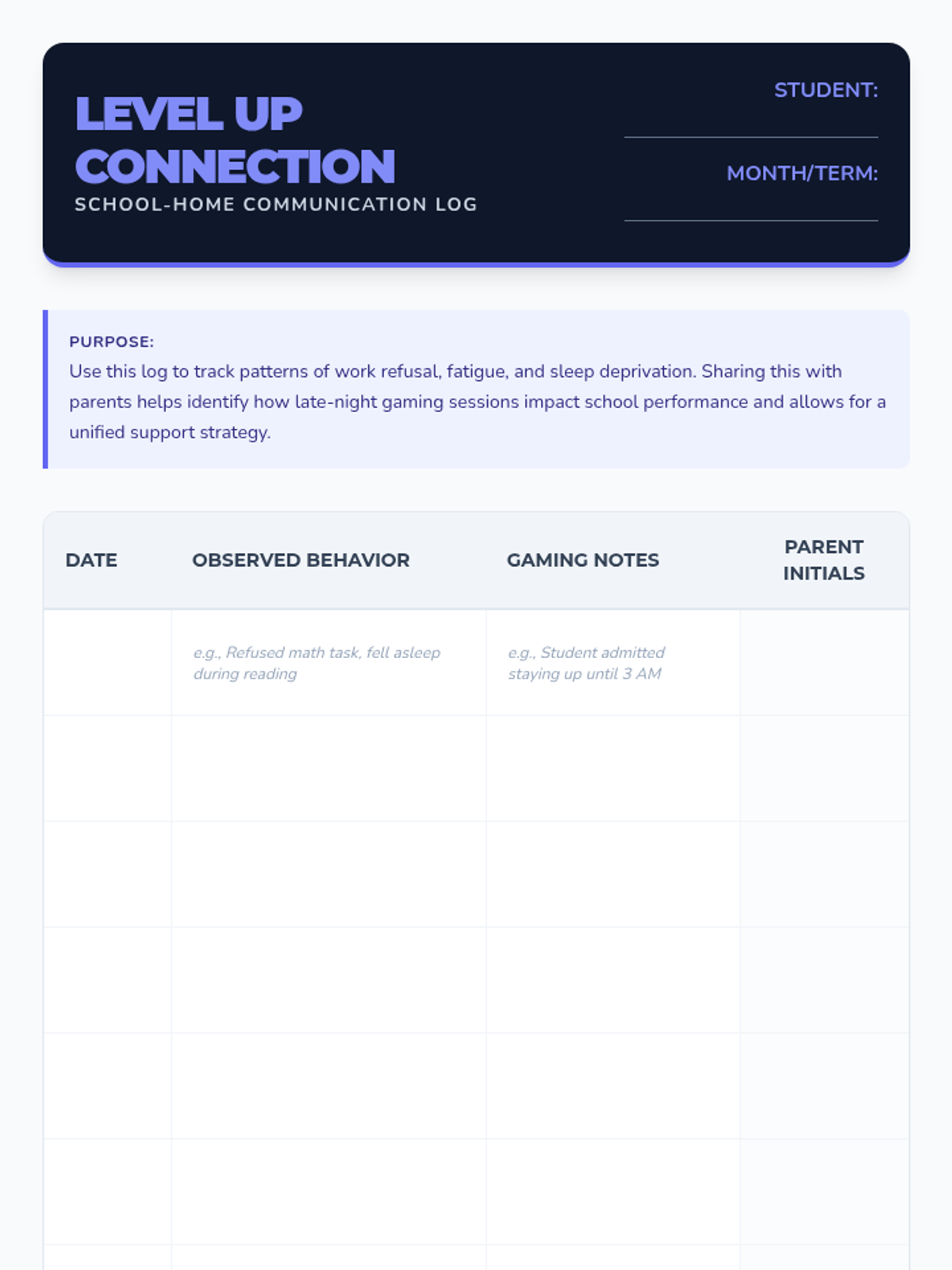
A set of resources designed to help students reflect on how late-night gaming affects their school performance and to facilitate clear communication between teachers and parents regarding sleep-related work refusal.
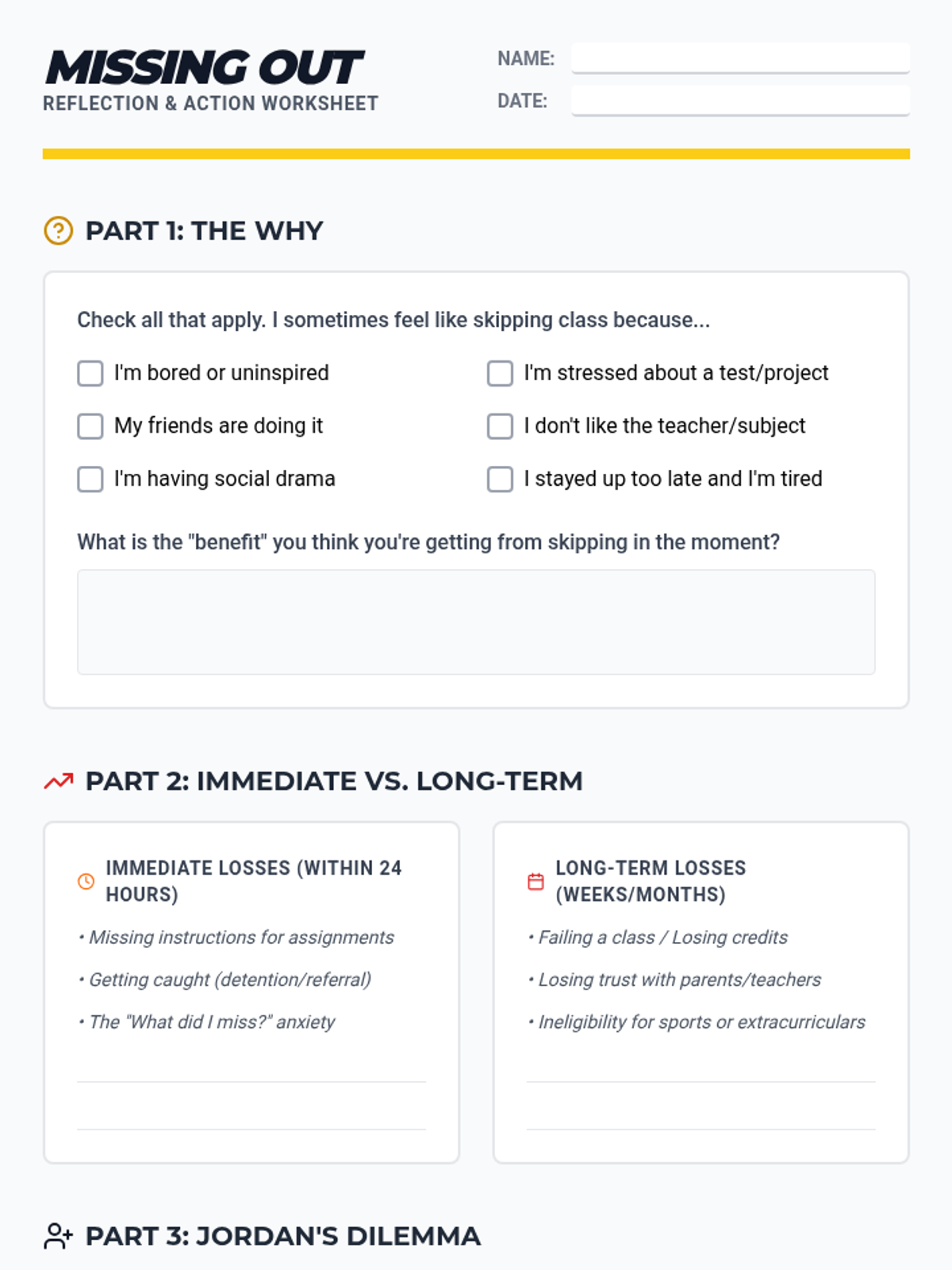
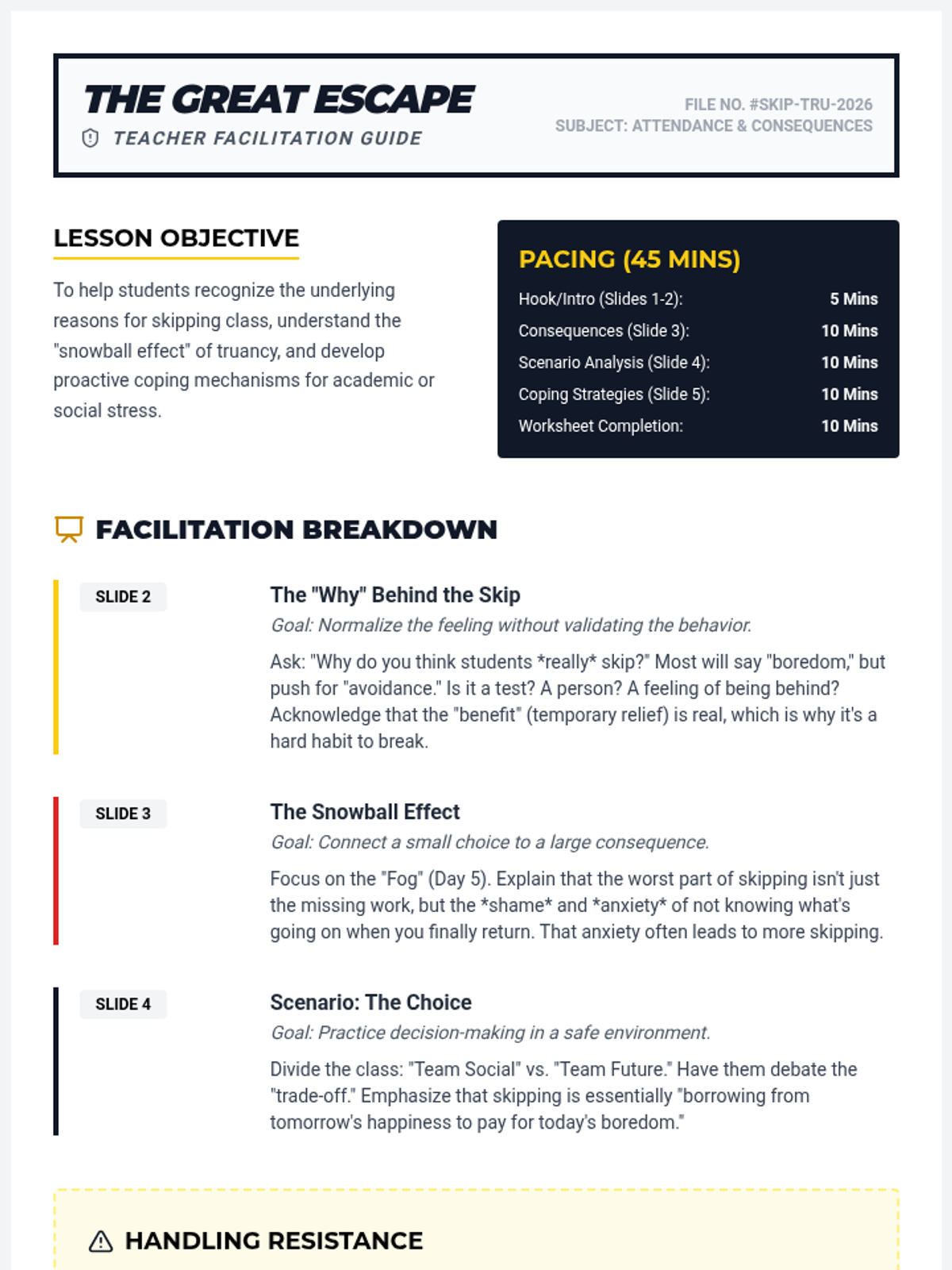
An engaging discussion-based lesson exploring the reasons students skip class, the immediate and long-term consequences, and healthier ways to handle school-related stress.
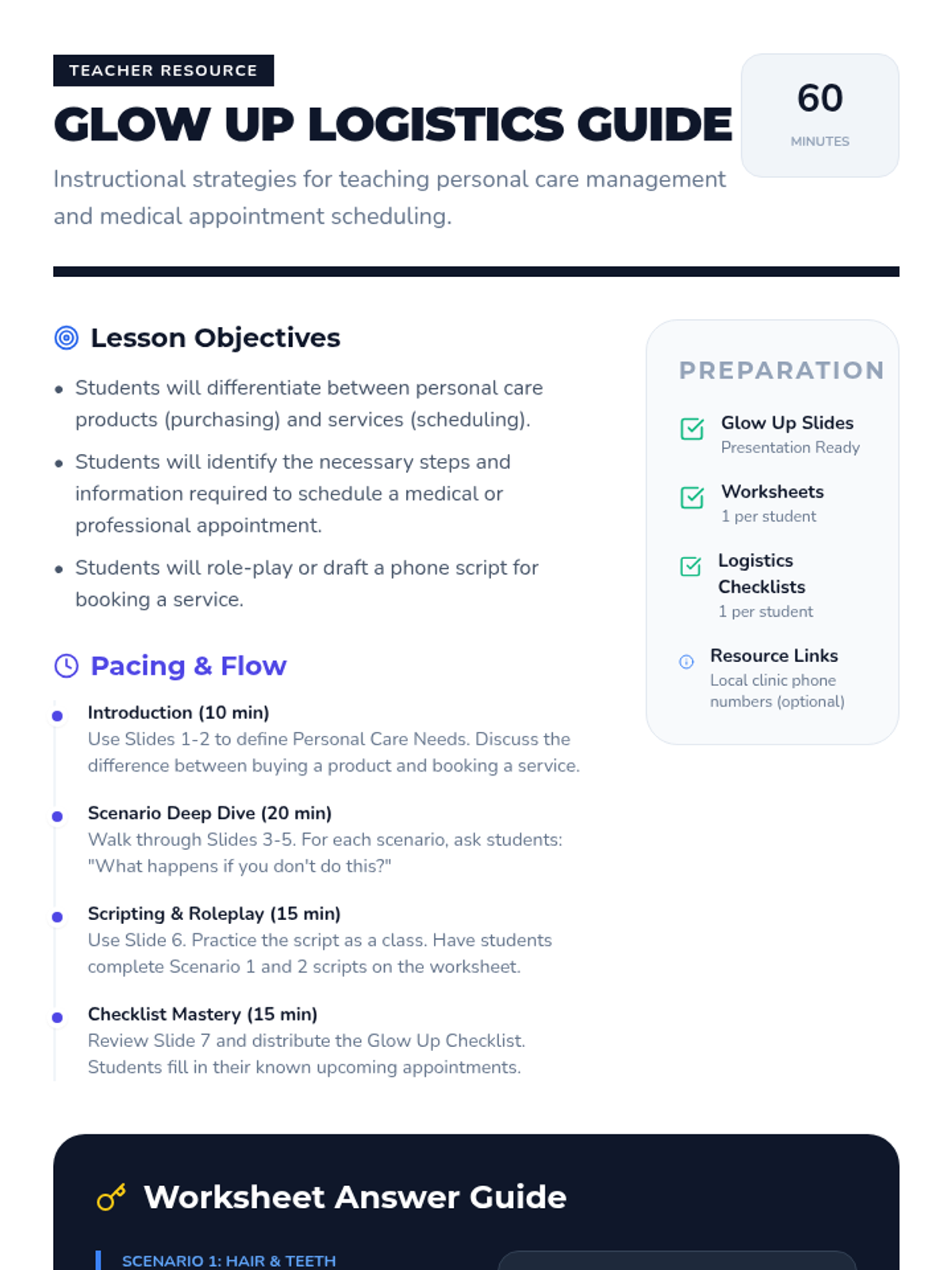
A practical lesson focused on the logistics of personal care, teaching students how to identify necessary actions for hygiene and grooming, and the specific steps to schedule medical appointments.
A practical life skills lesson focused on managing personal care needs, scheduling medical appointments, and completing essential personal information forms. Designed for Level 2 learners with simplified text and visual supports.
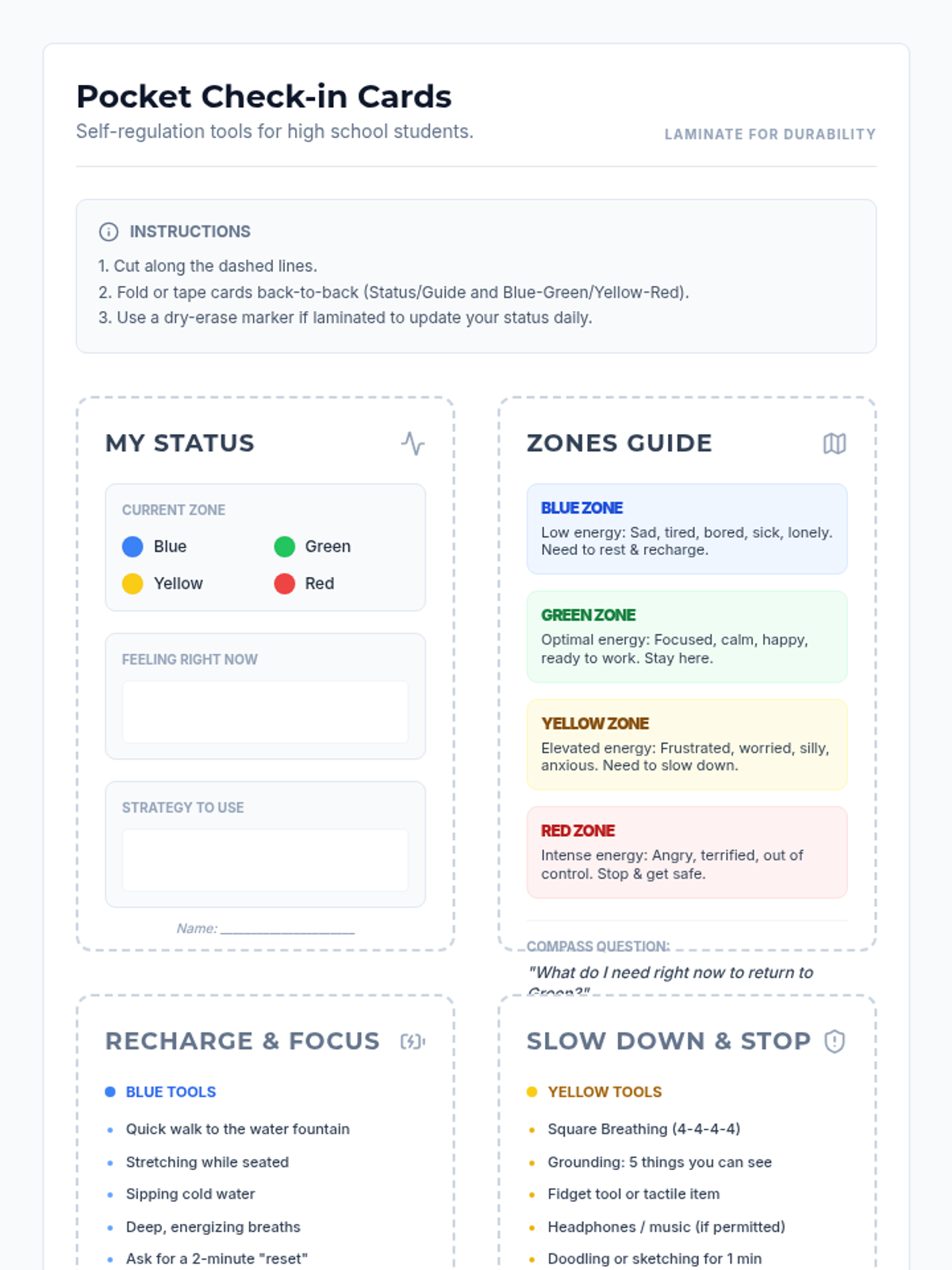
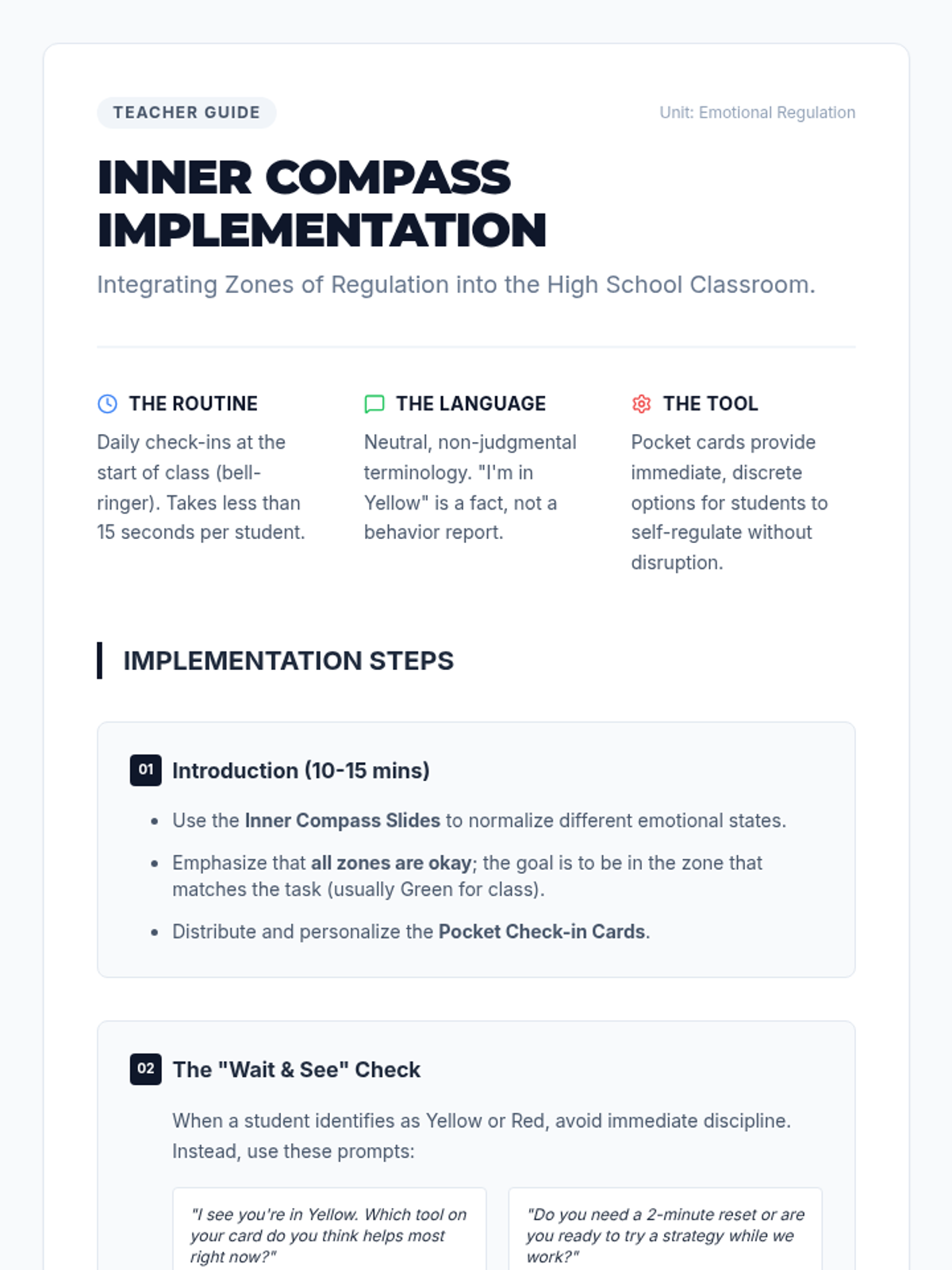
A set of emotional regulation tools designed specifically for high schoolers using the Zones of Regulation framework to support self-awareness and self-management.
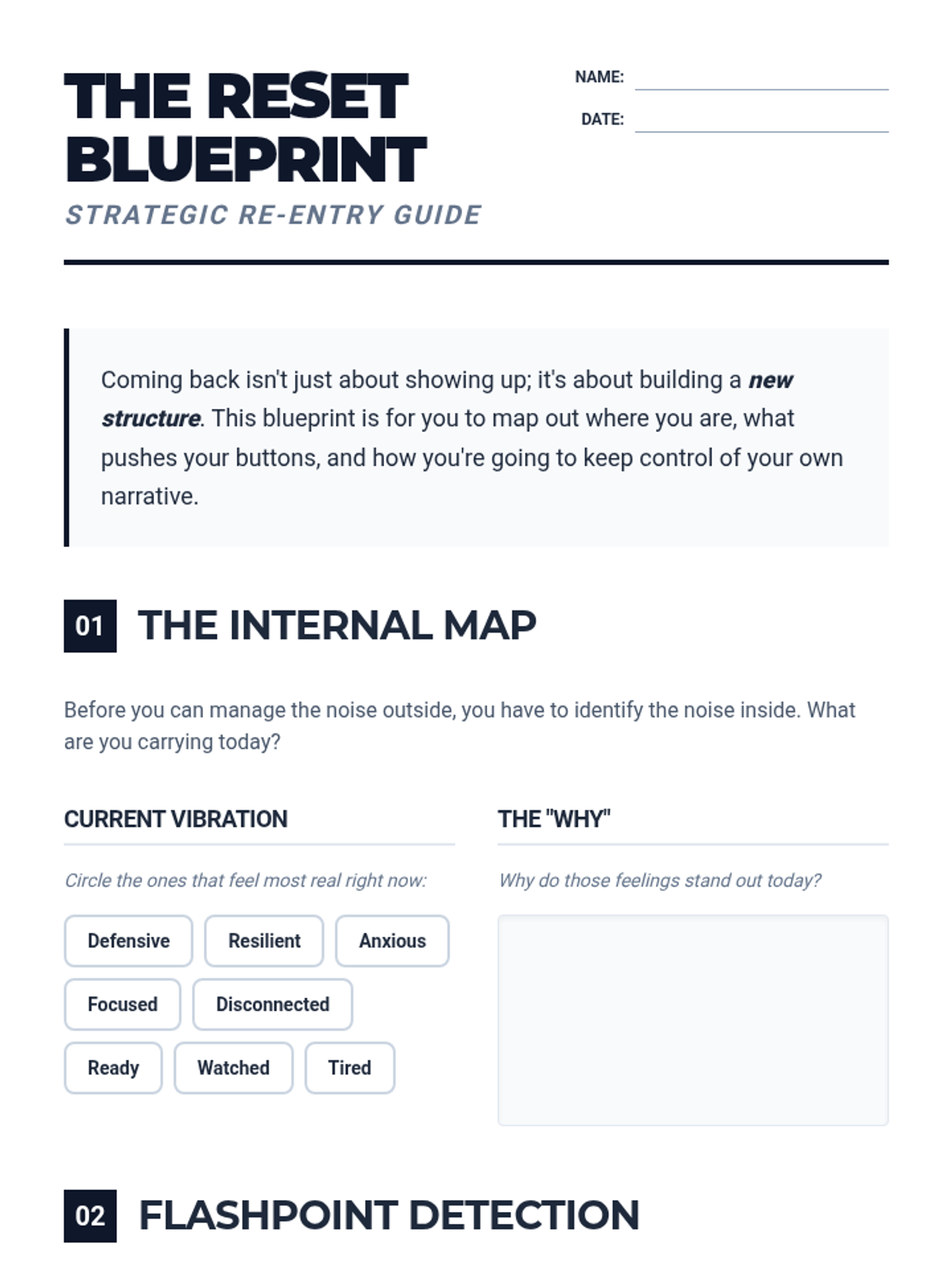
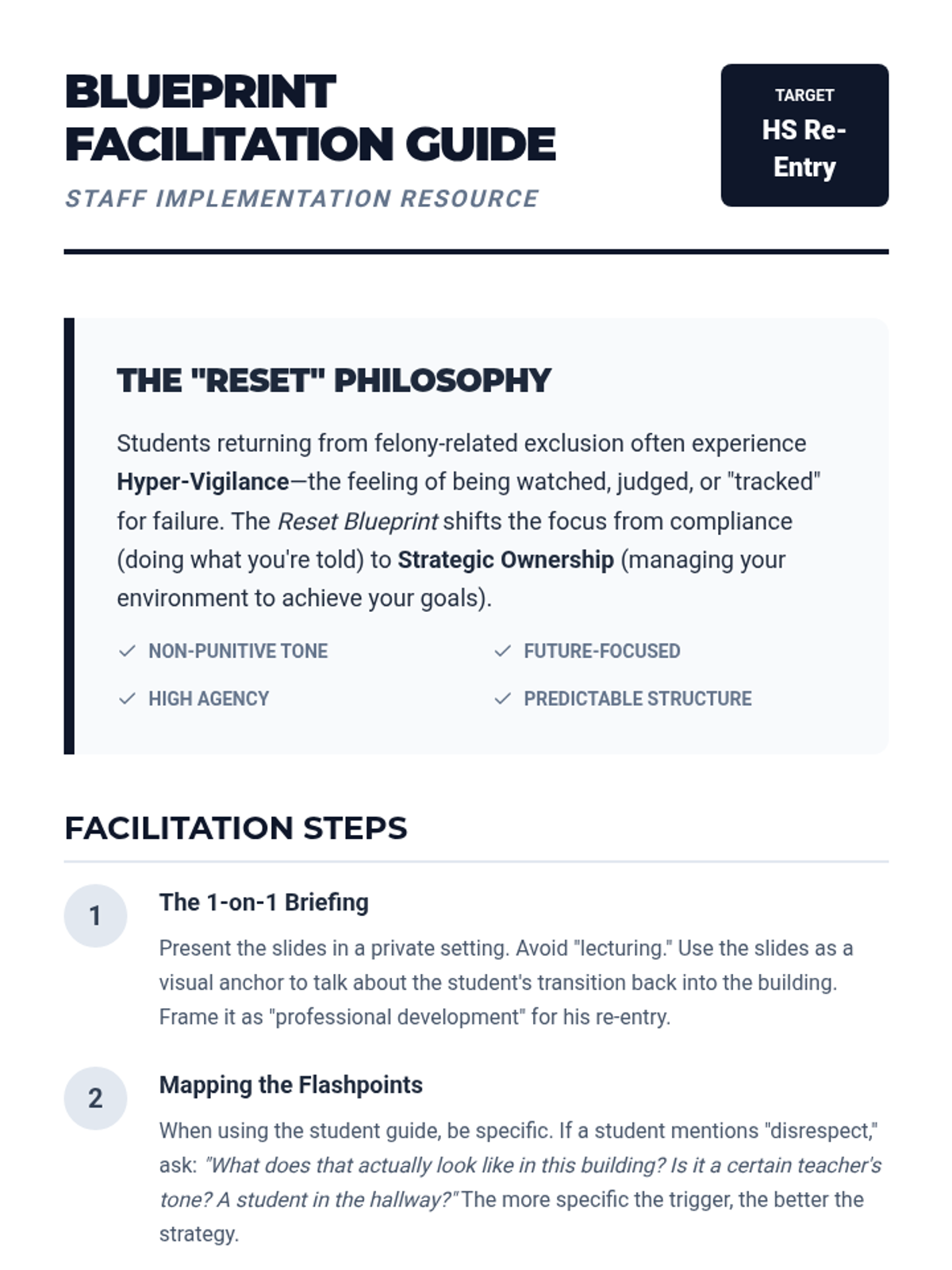
A comprehensive re-entry guide for high school students returning after exclusion, focusing on emotional literacy and managing impulsive triggers through a 'strategic blueprint' lens.
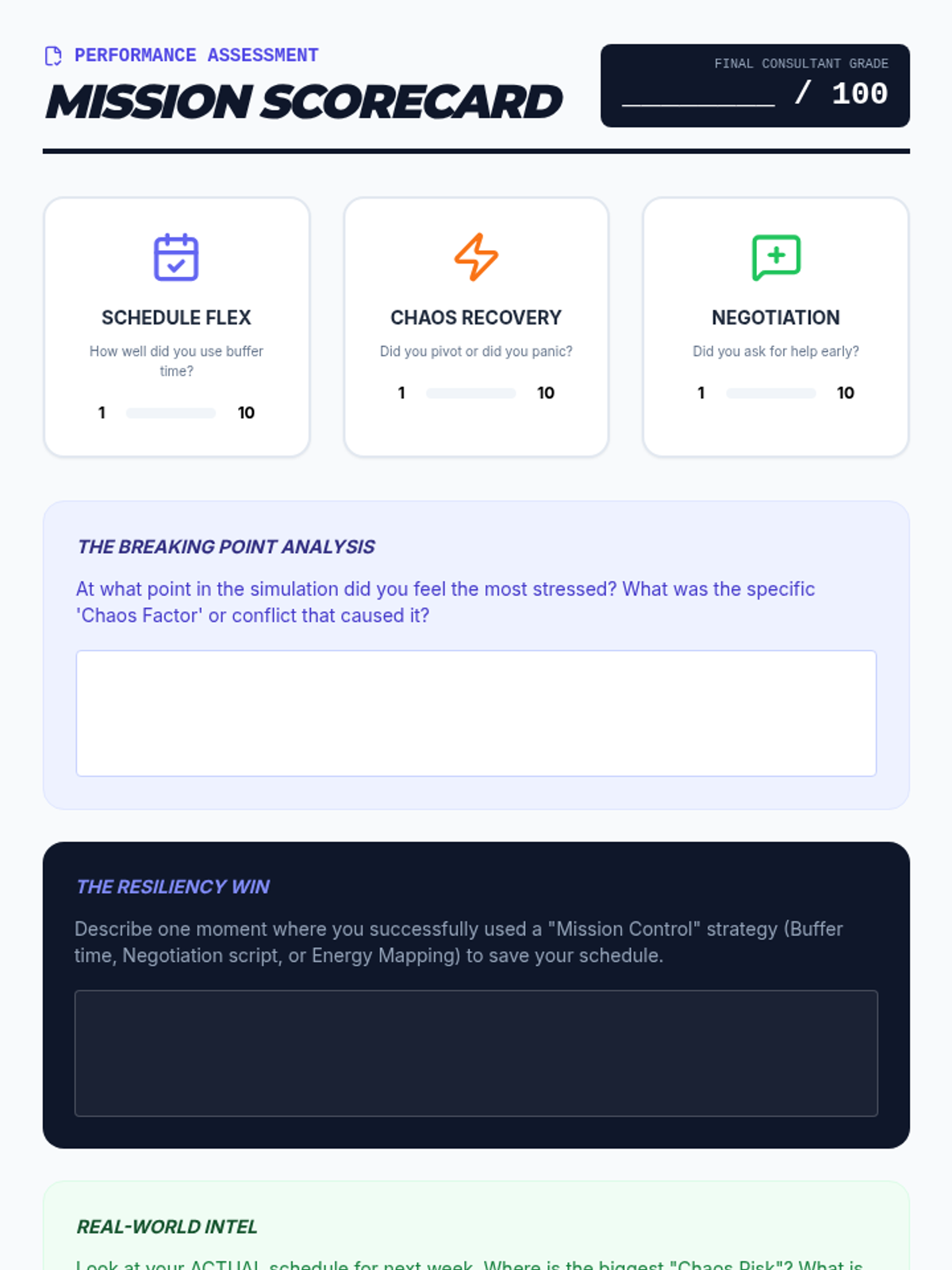
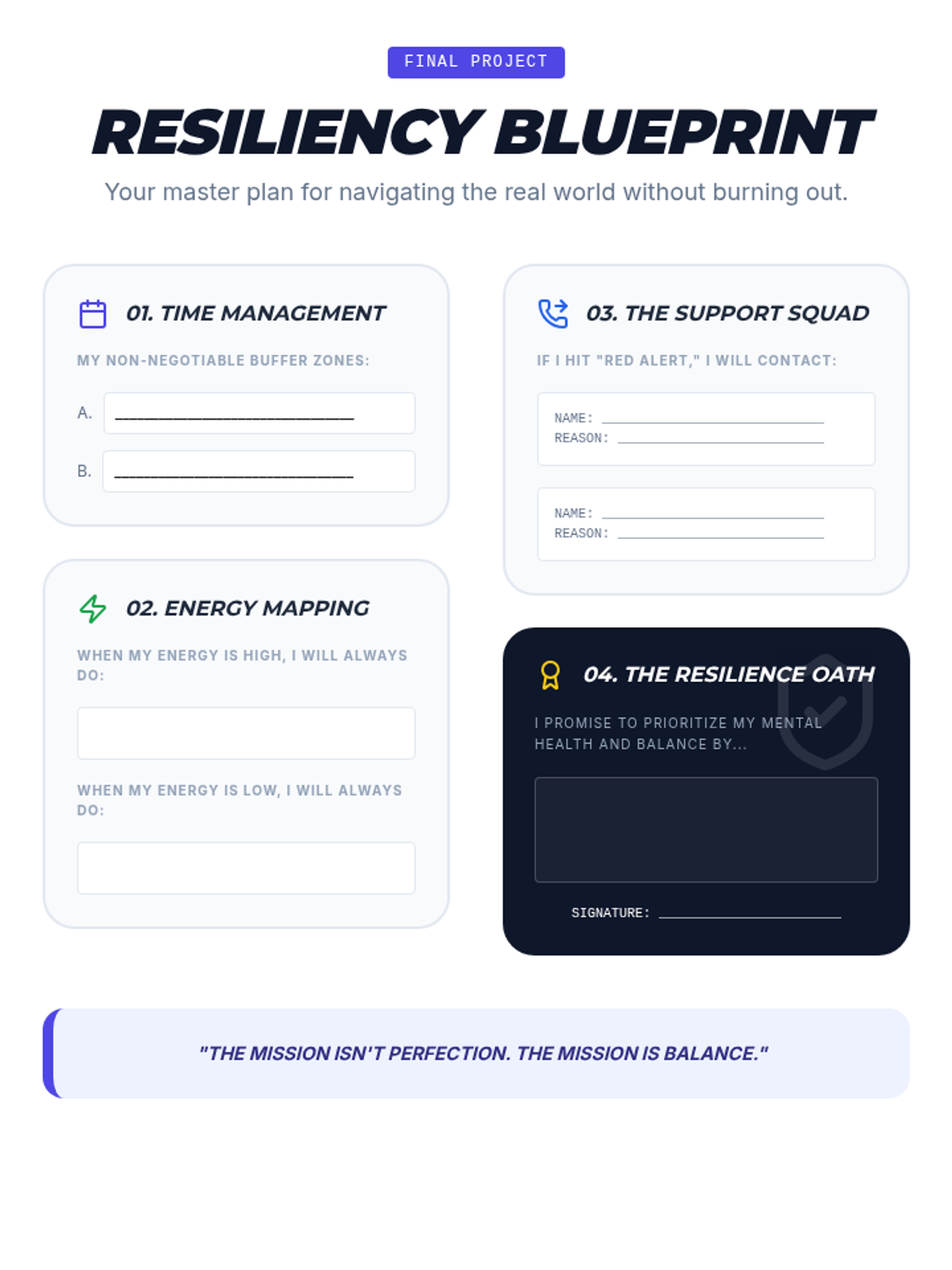
A final reflection on the simulation where students analyze their performance, identify breaking points, and create a long-term strategy for real-world balance.
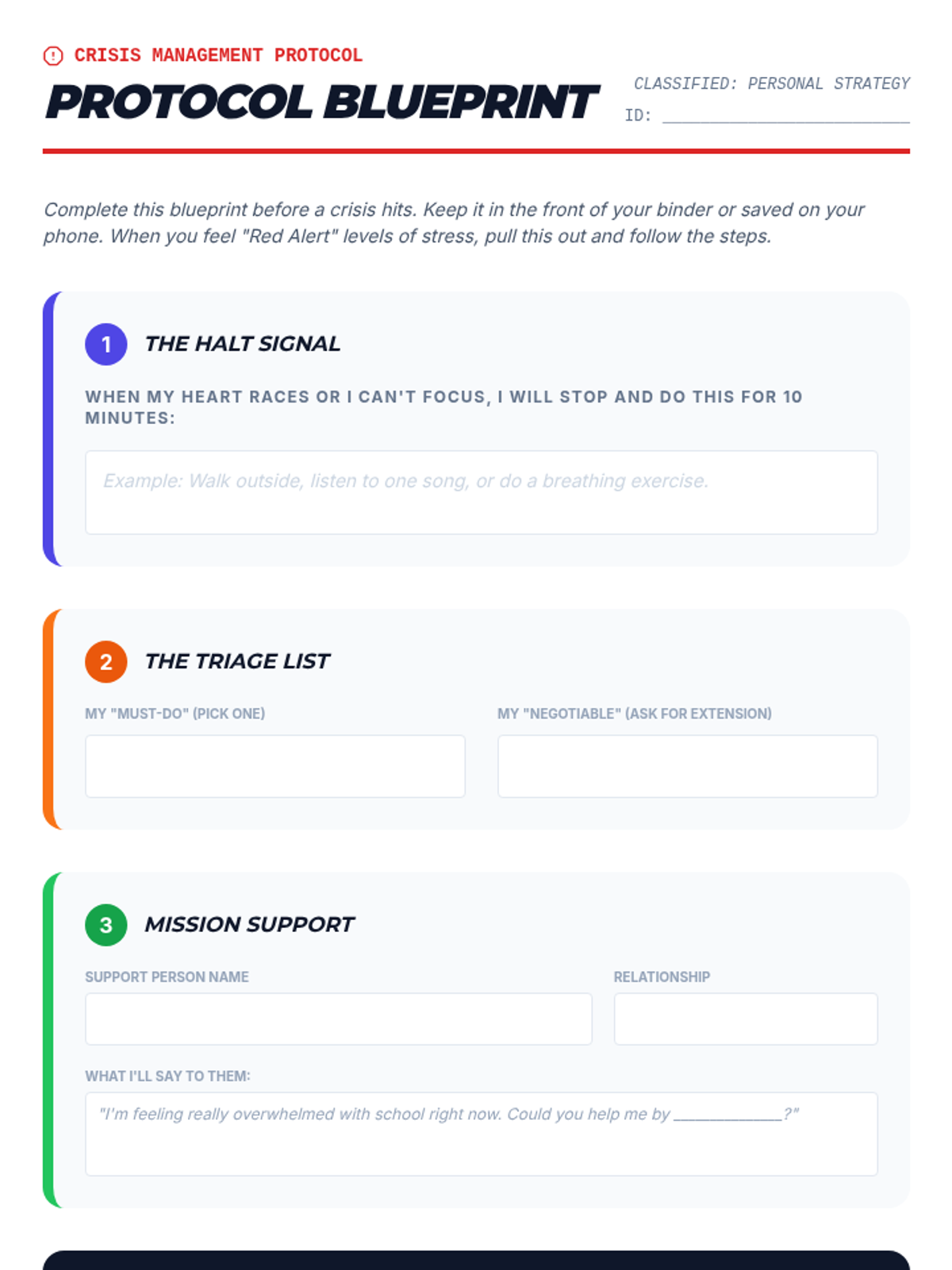
Students create a personal 'Emergency Protocol' for overwhelming situations, learning how to prioritize tasks to drop and identifying support systems for recovery.
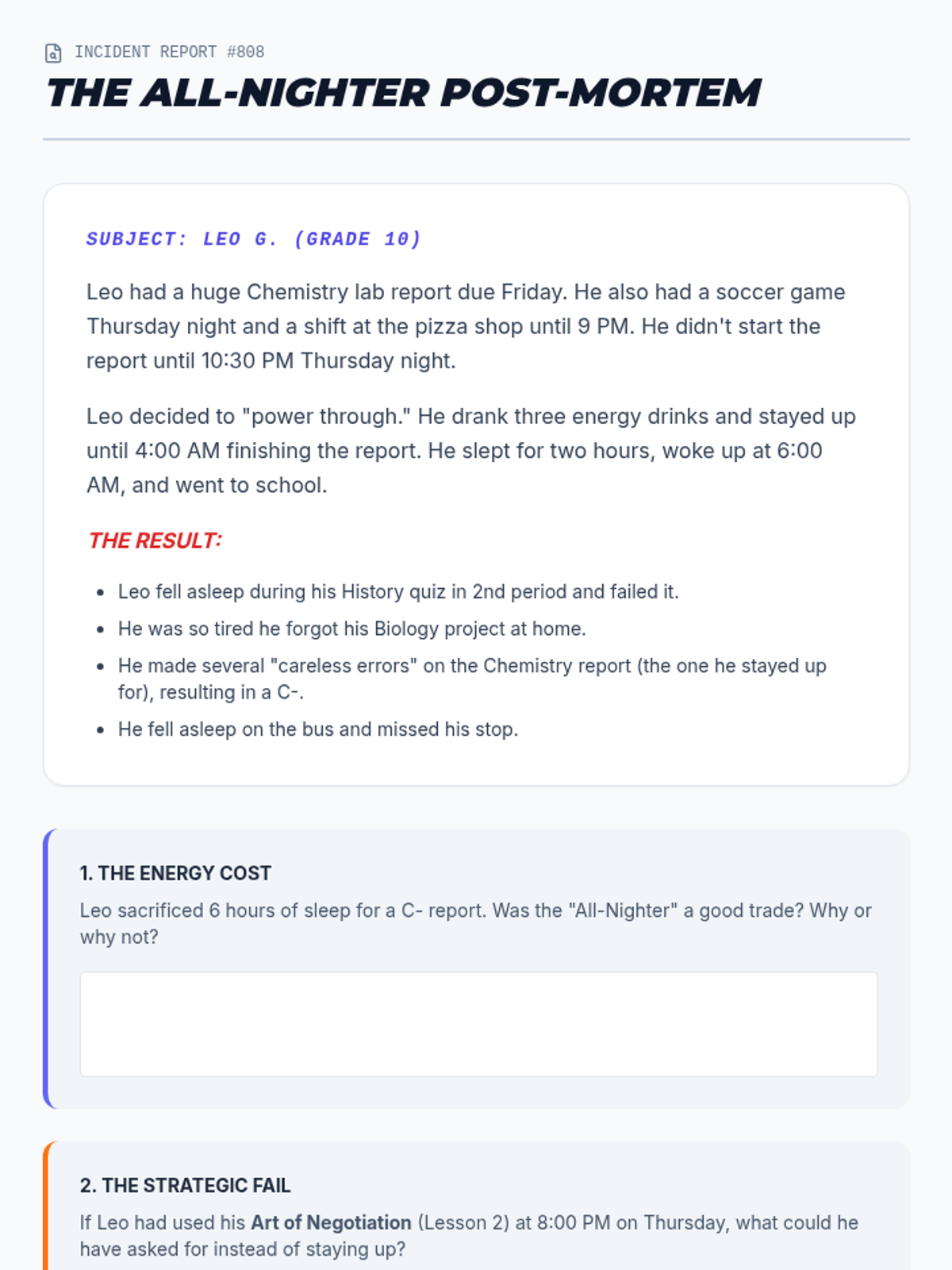
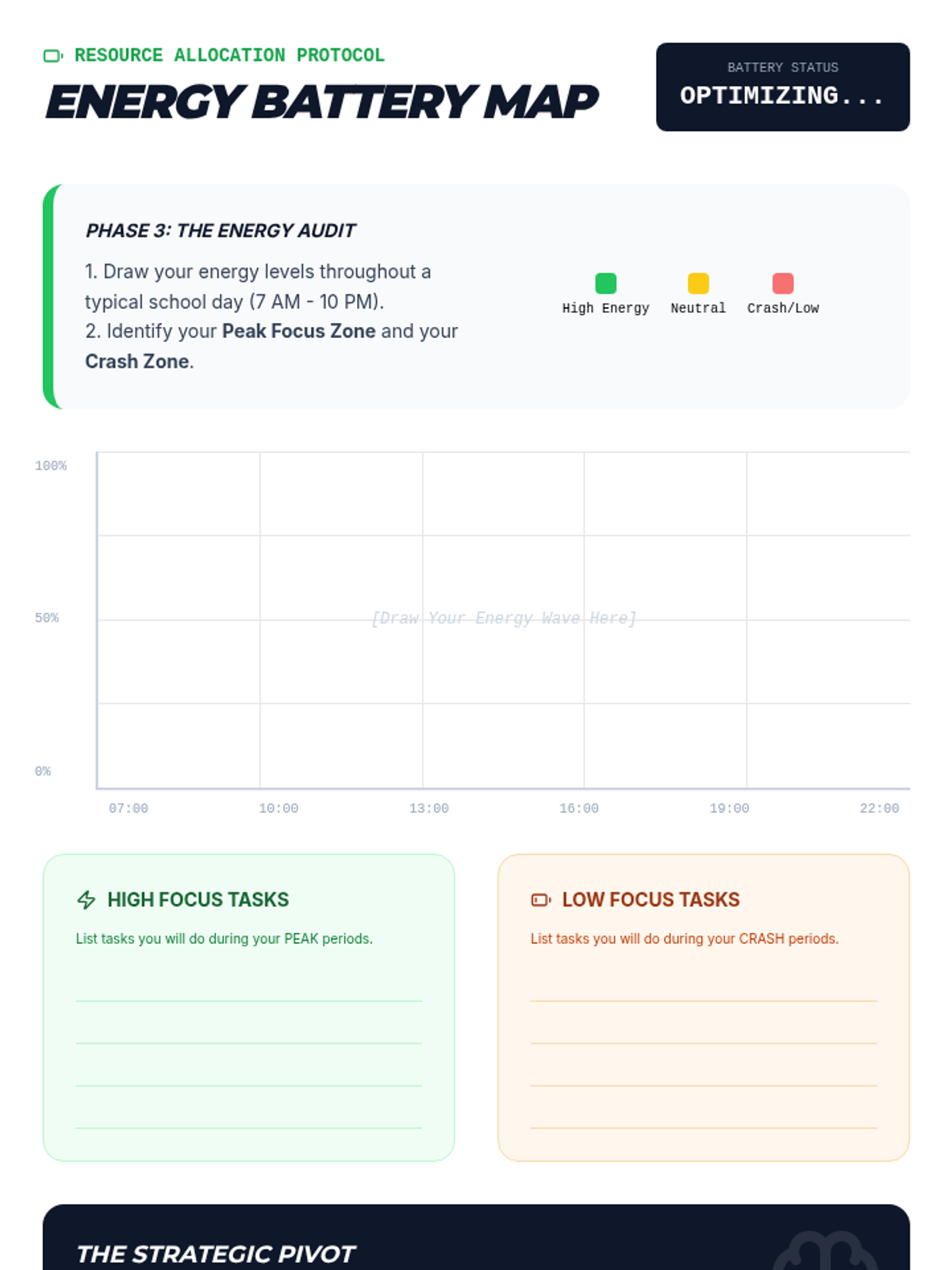
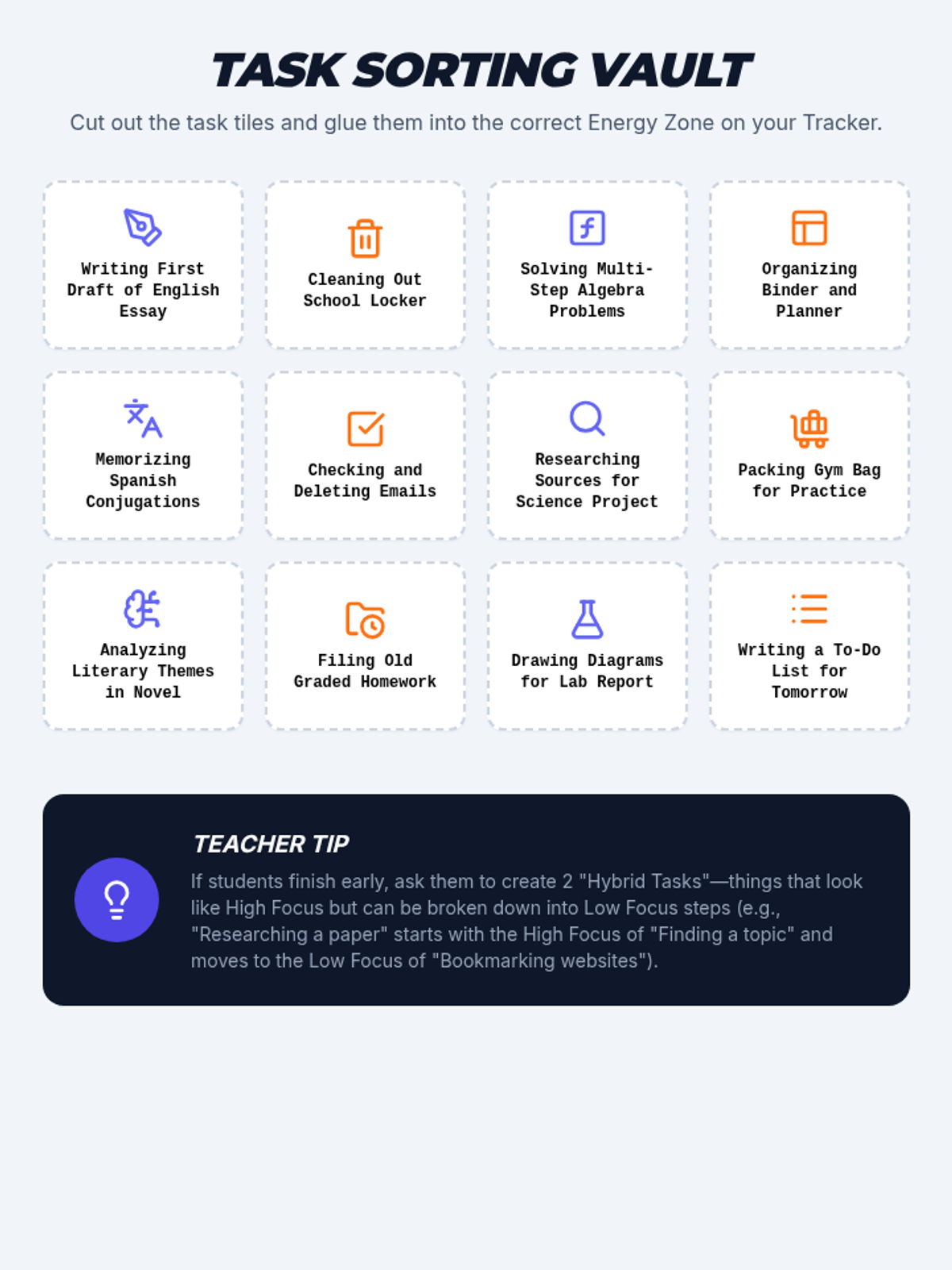
Students analyze their personal energy cycles to match high-demand tasks with high-energy periods, moving beyond simple time management to strategic resource allocation.
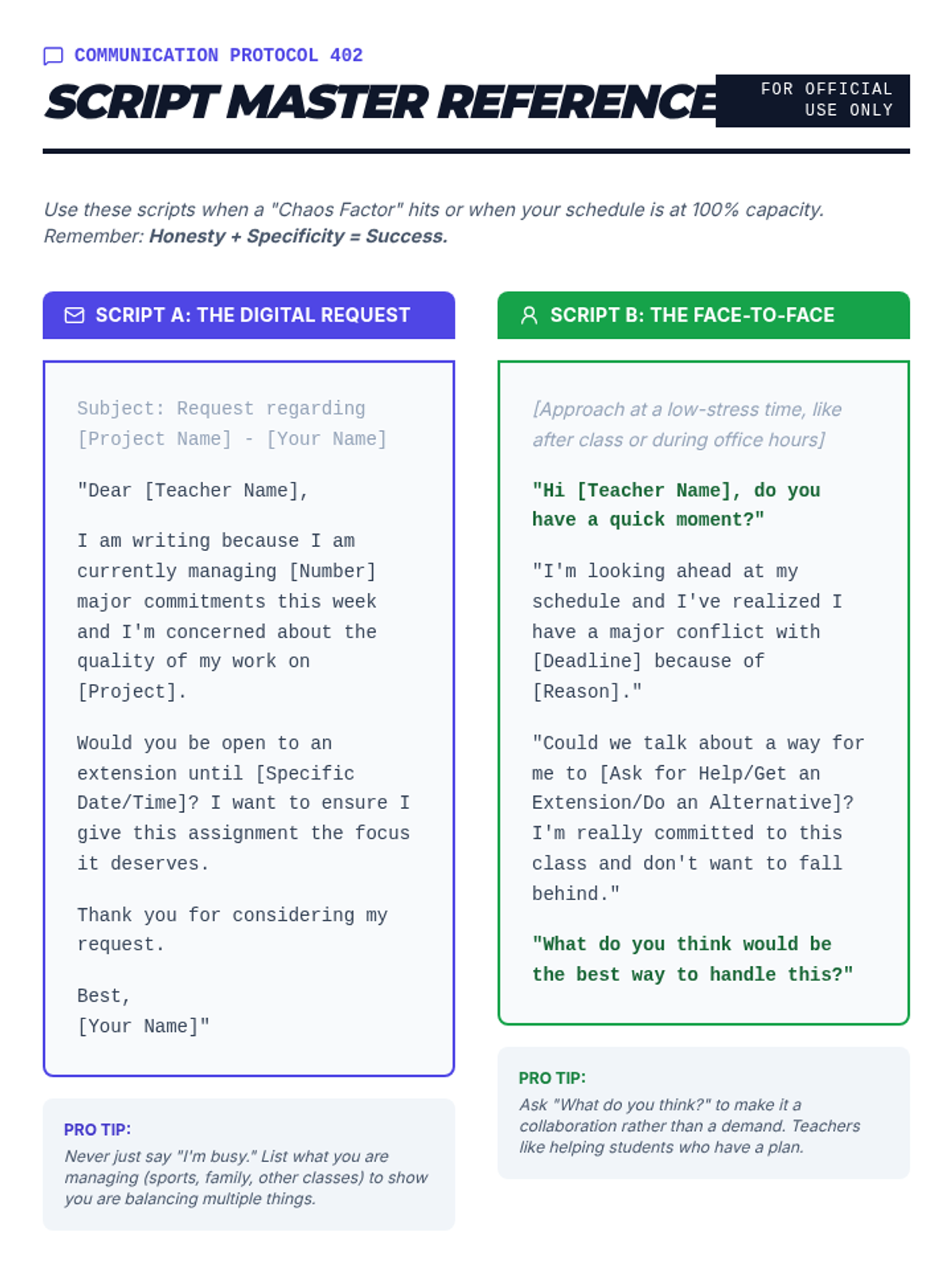
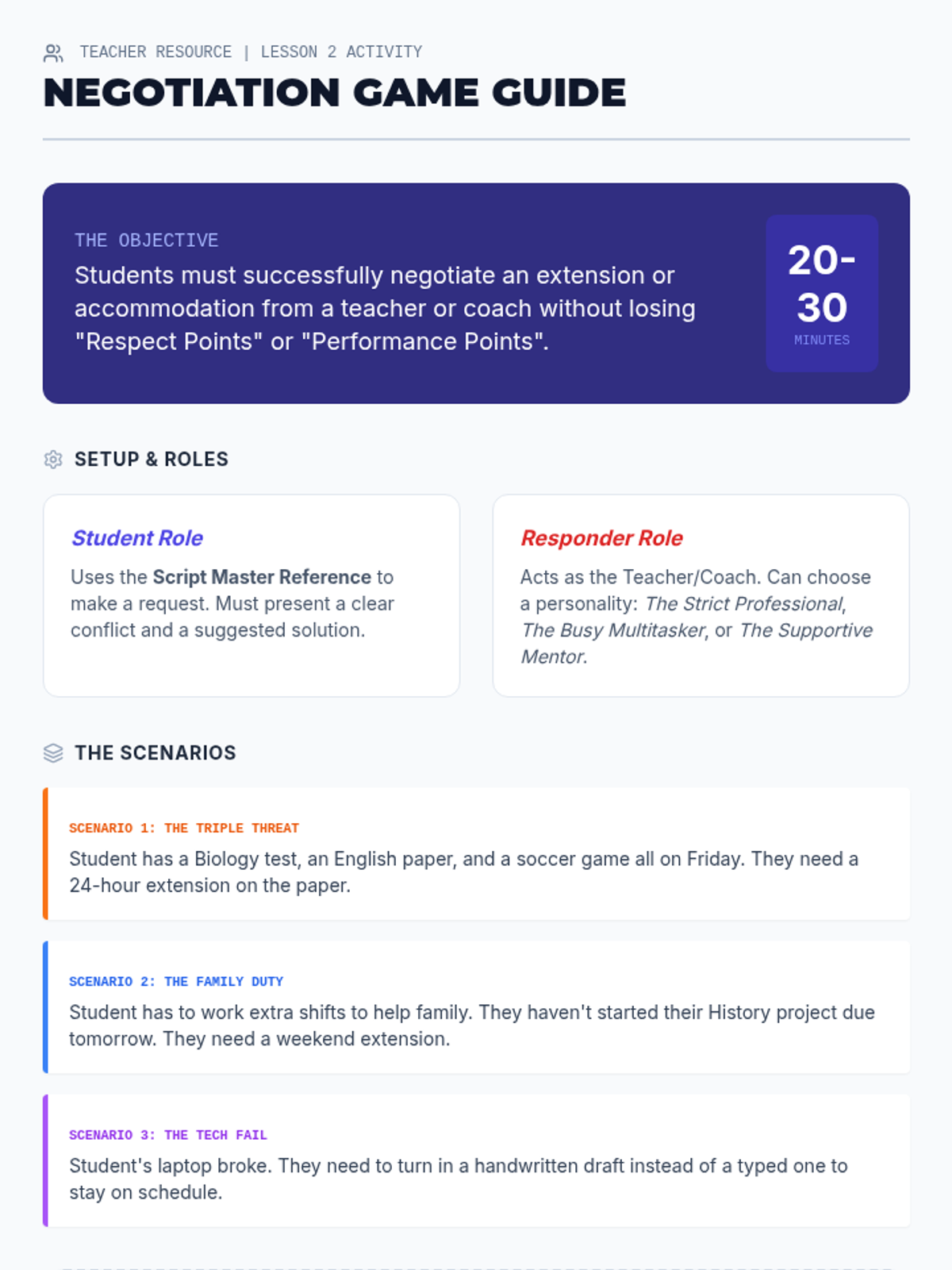
Focuses on professional communication and the distinction between hard and soft deadlines. Students practice scripts to negotiate extensions and help before a crisis occurs.
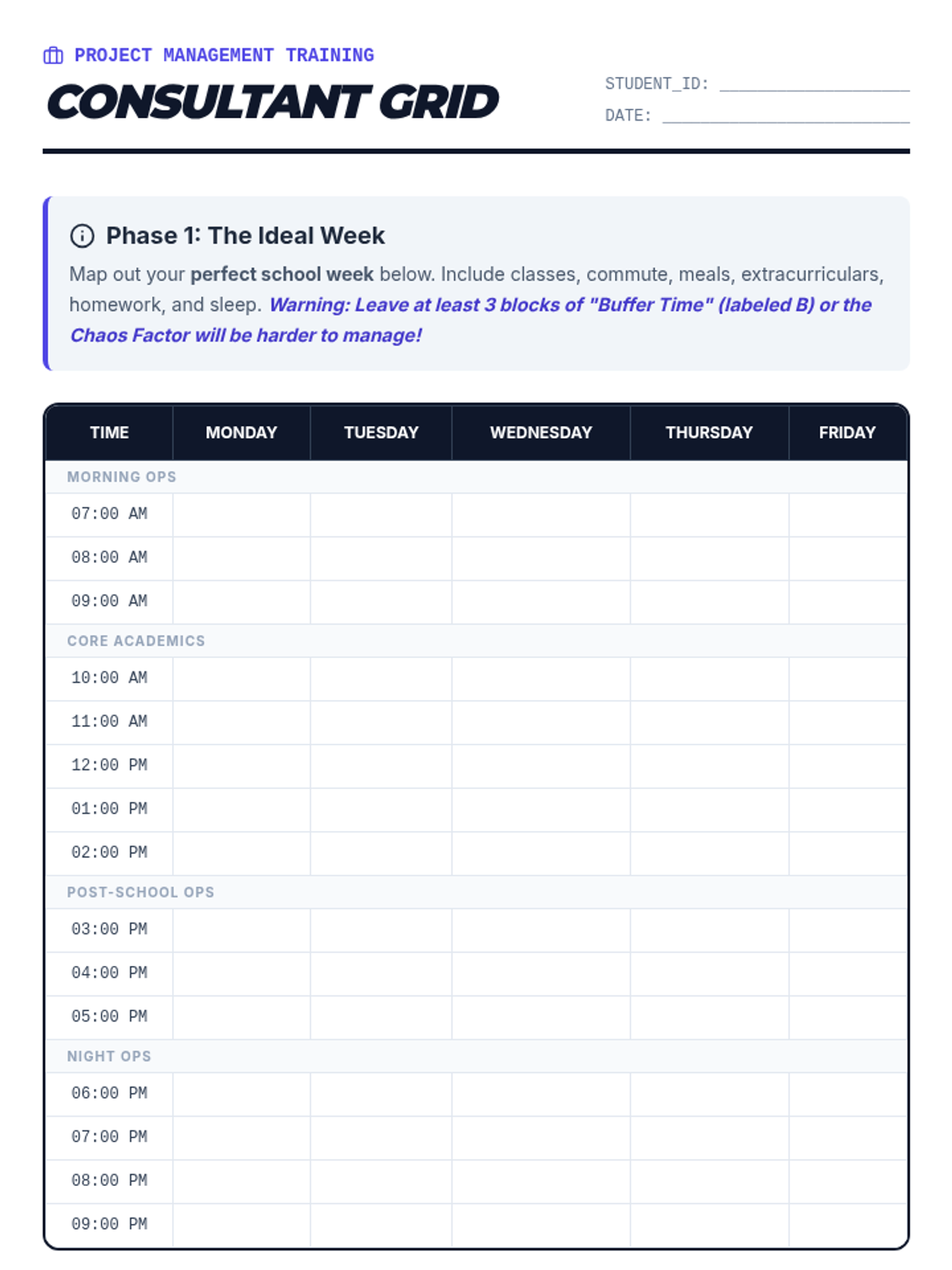
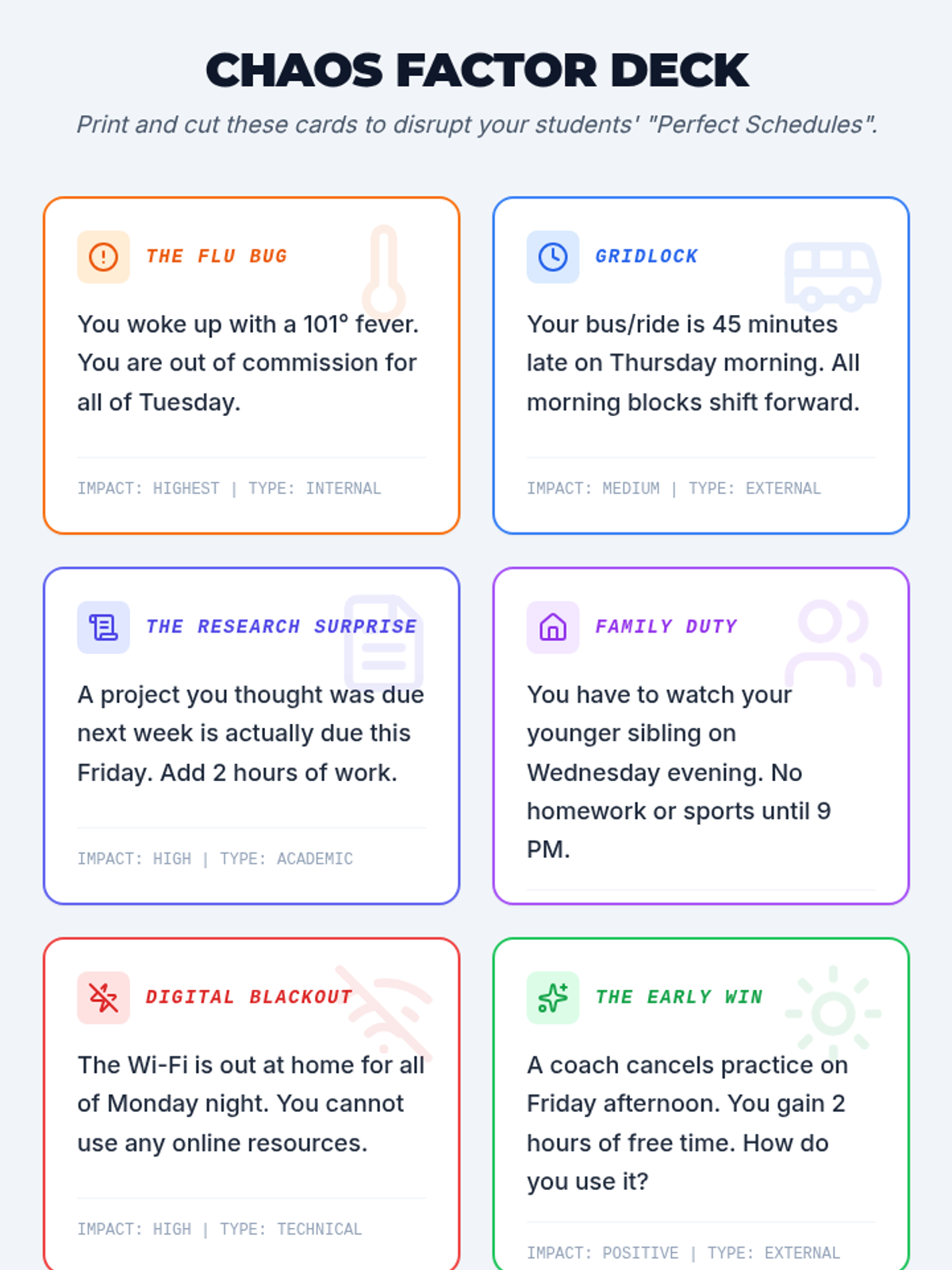
Students design an ideal weekly schedule and are immediately introduced to the 'Chaos Factor'—unpredictable life events that disrupt plans. They identify the need for buffer time and flexible scheduling.
Focuses on the concept of opportunity cost through role-playing scenarios, teaching students to analyze the value of what is given up when making choices.
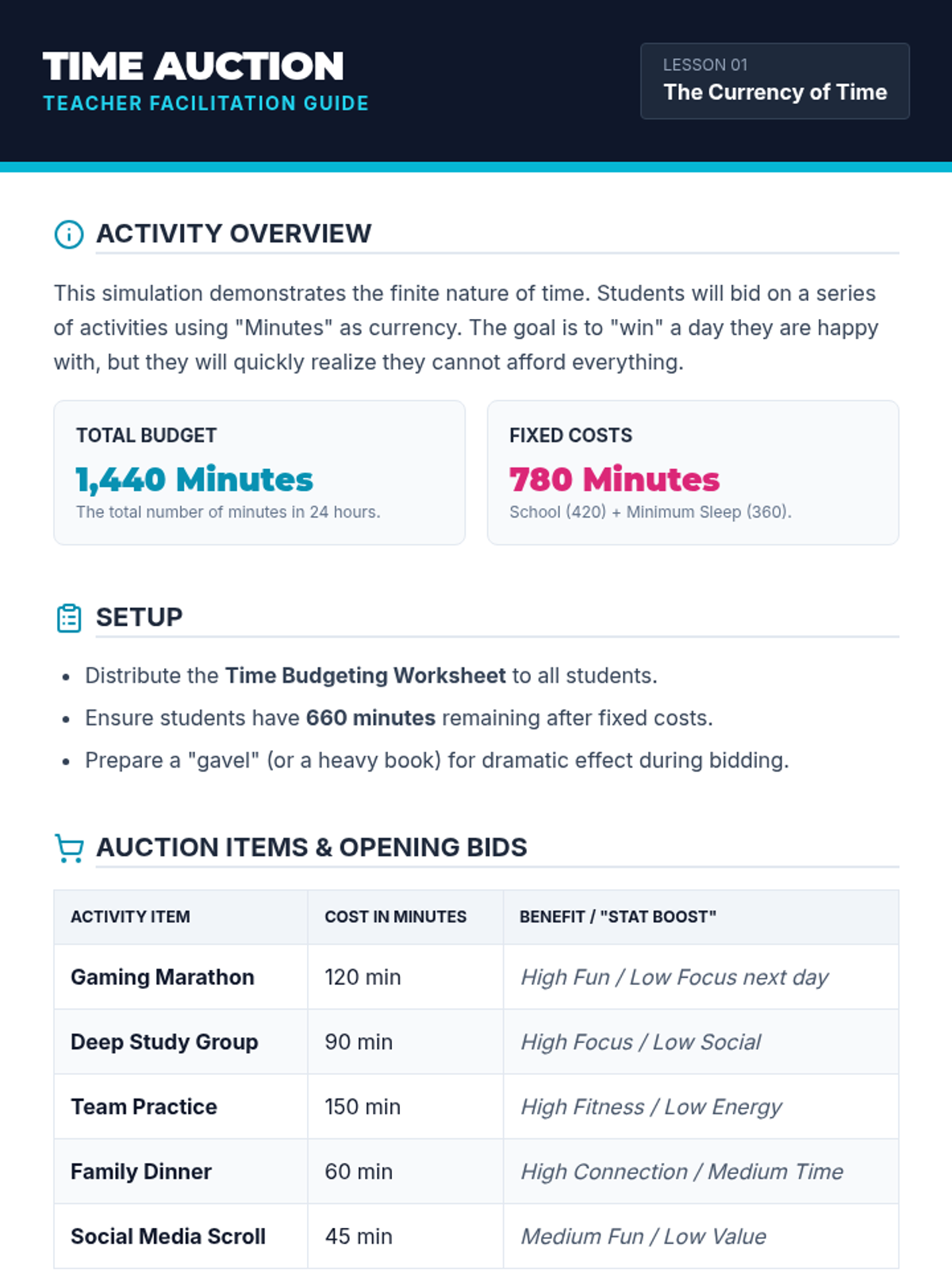
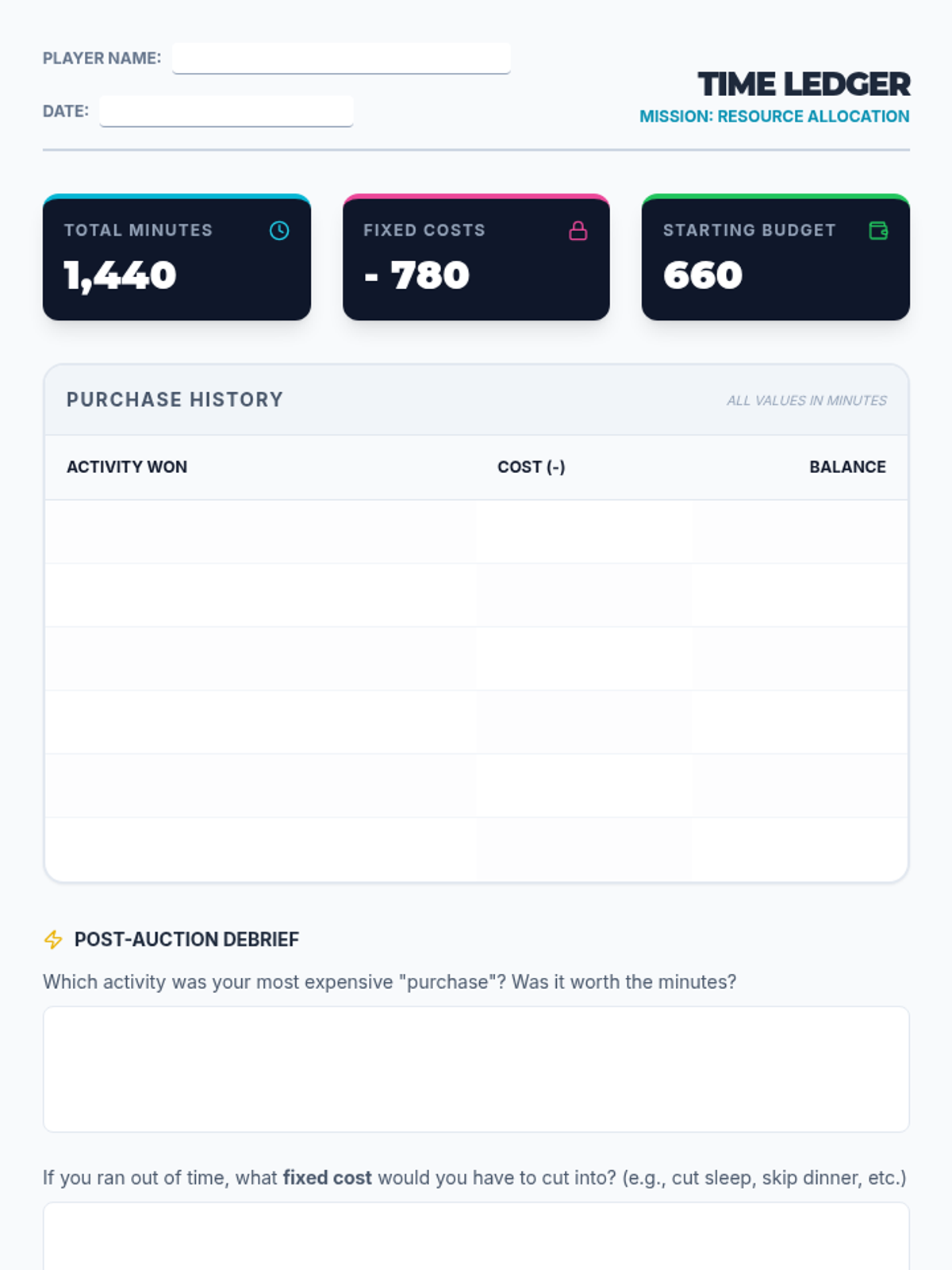
Introduces time as a finite currency through a game economy where students 'buy' activities, establishing the foundational constraint of resource management.
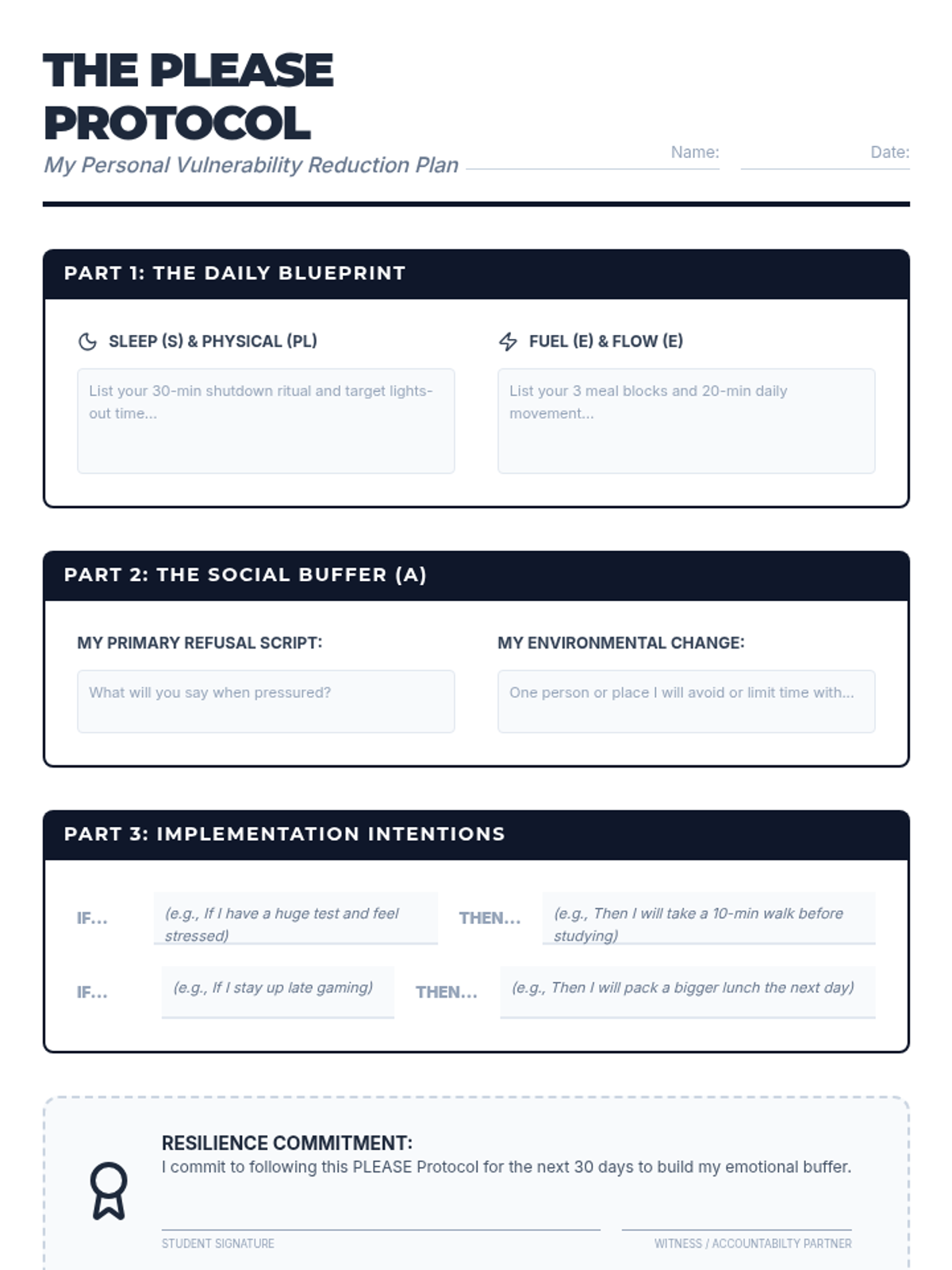
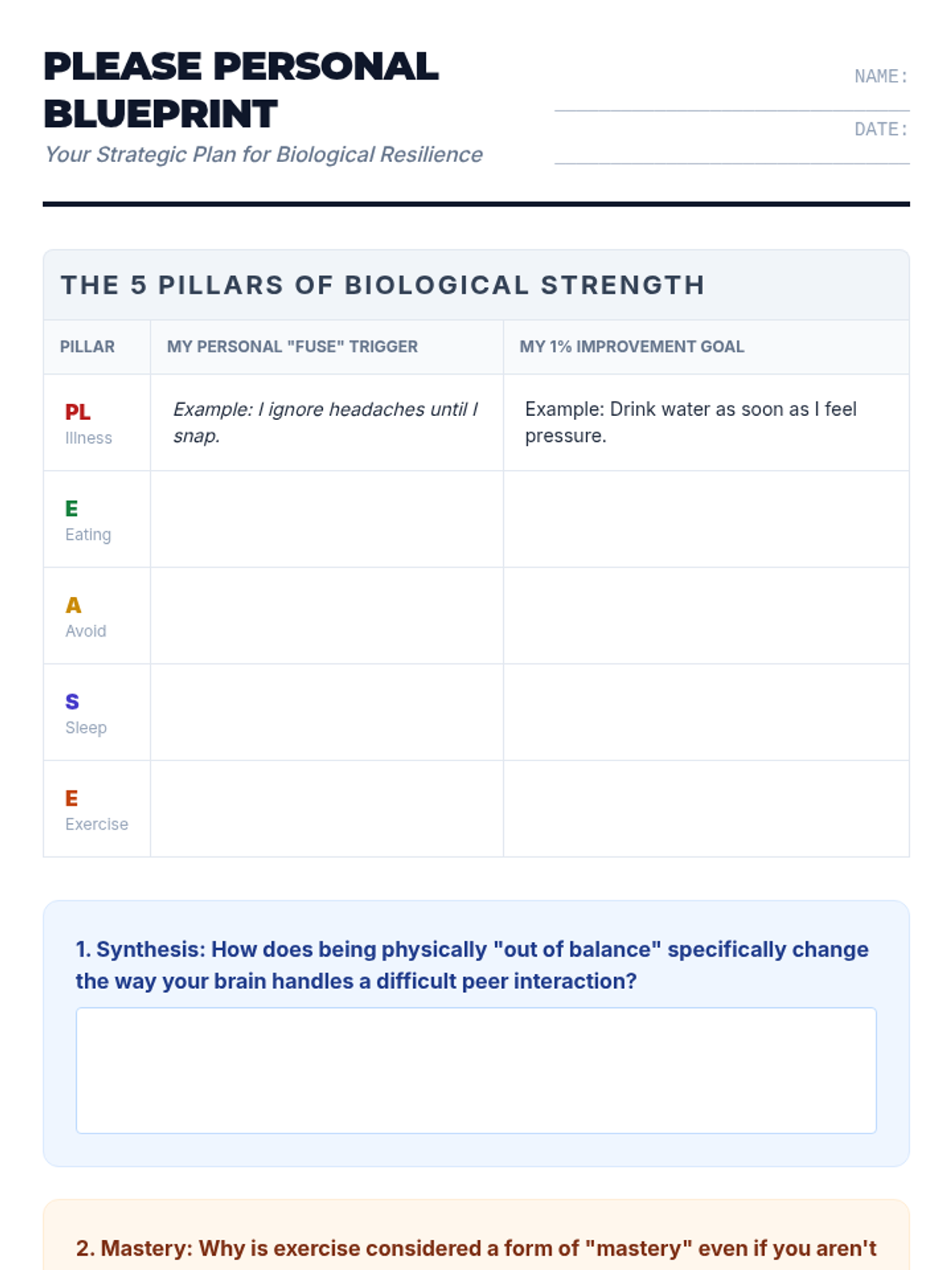
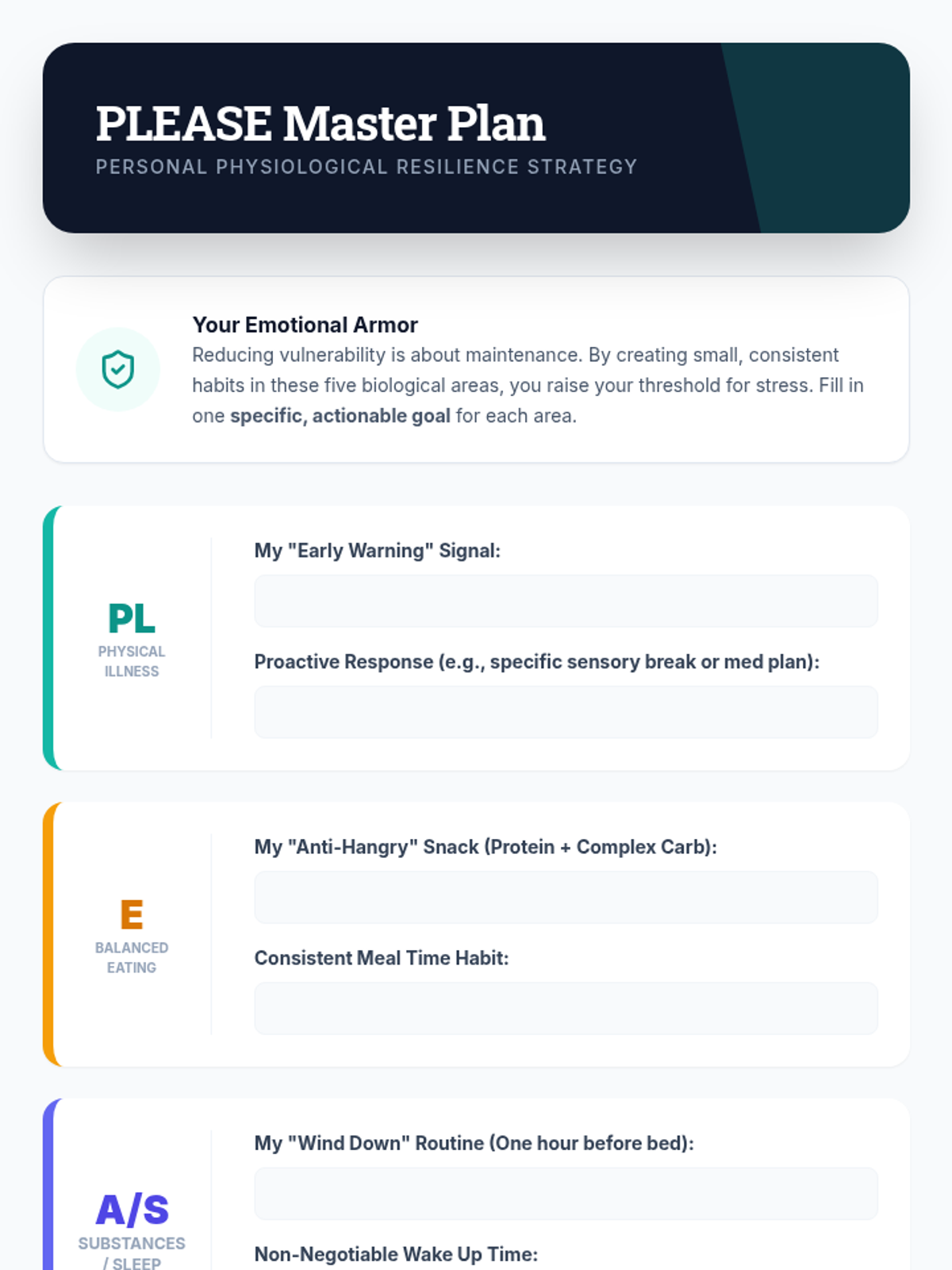
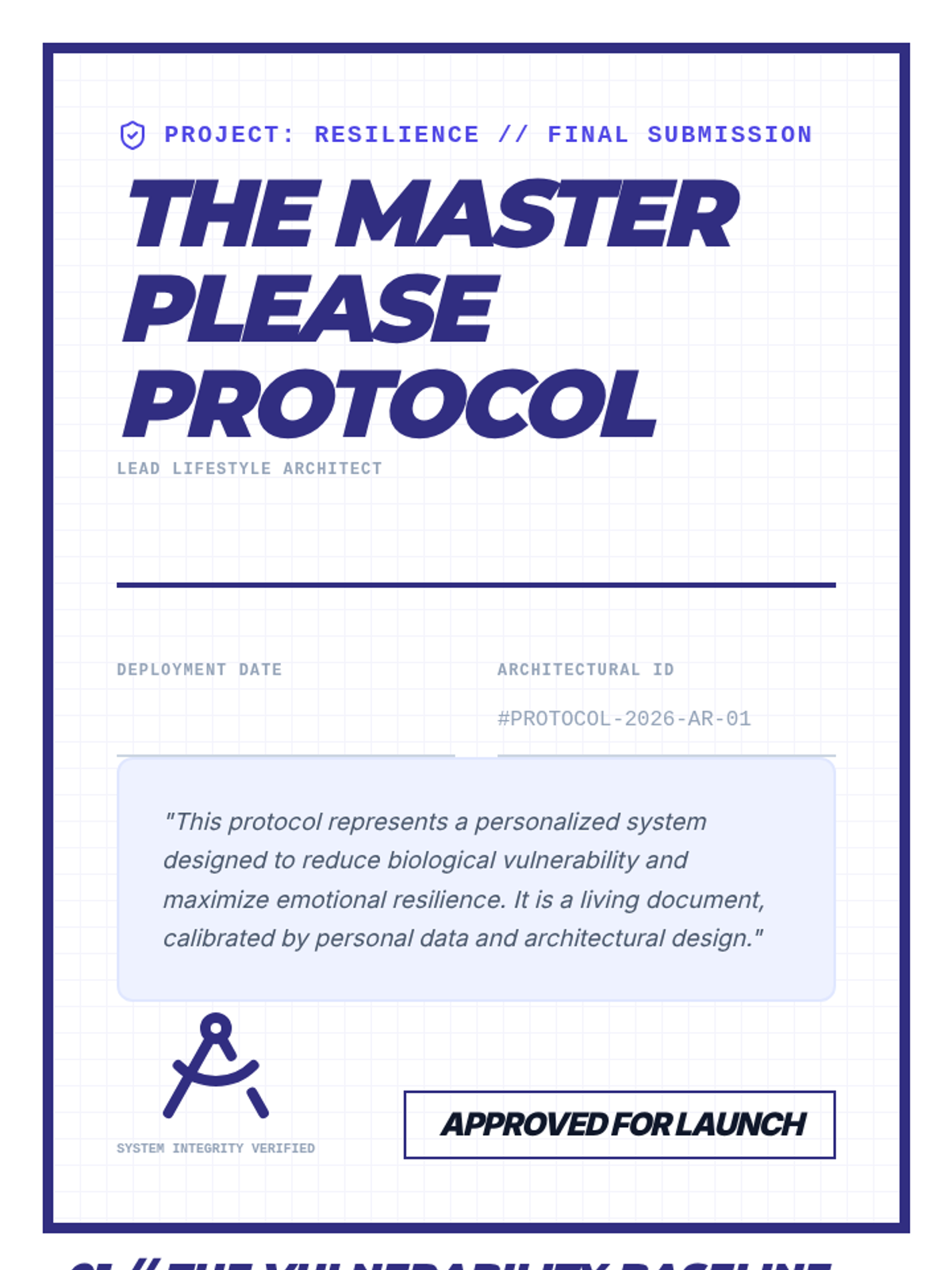
Students synthesize all components into a cohesive 'PLEASE Plan.' They identify potential obstacles for the upcoming month and create 'if-then' contingency plans to maintain their physical and emotional balance.
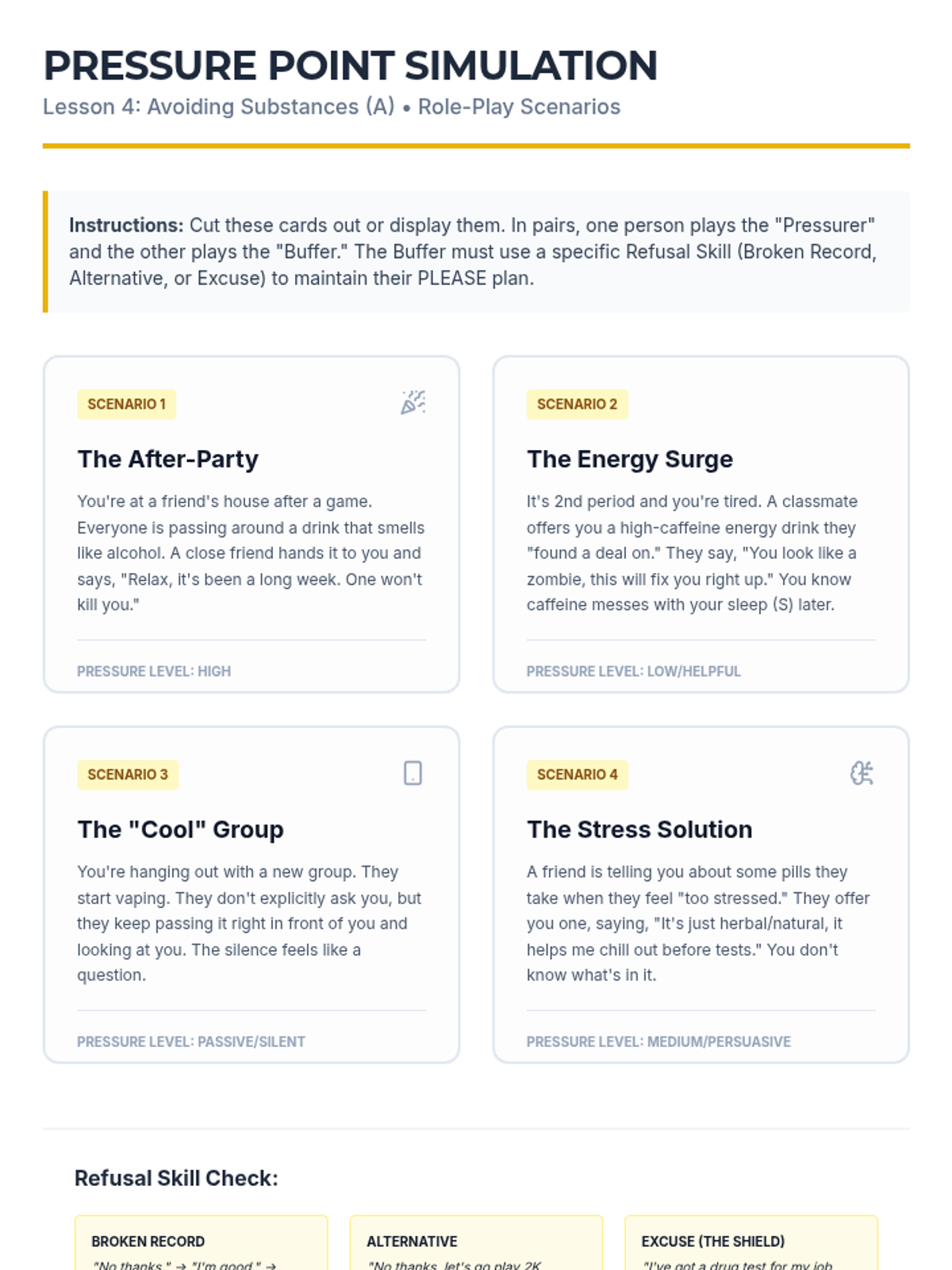
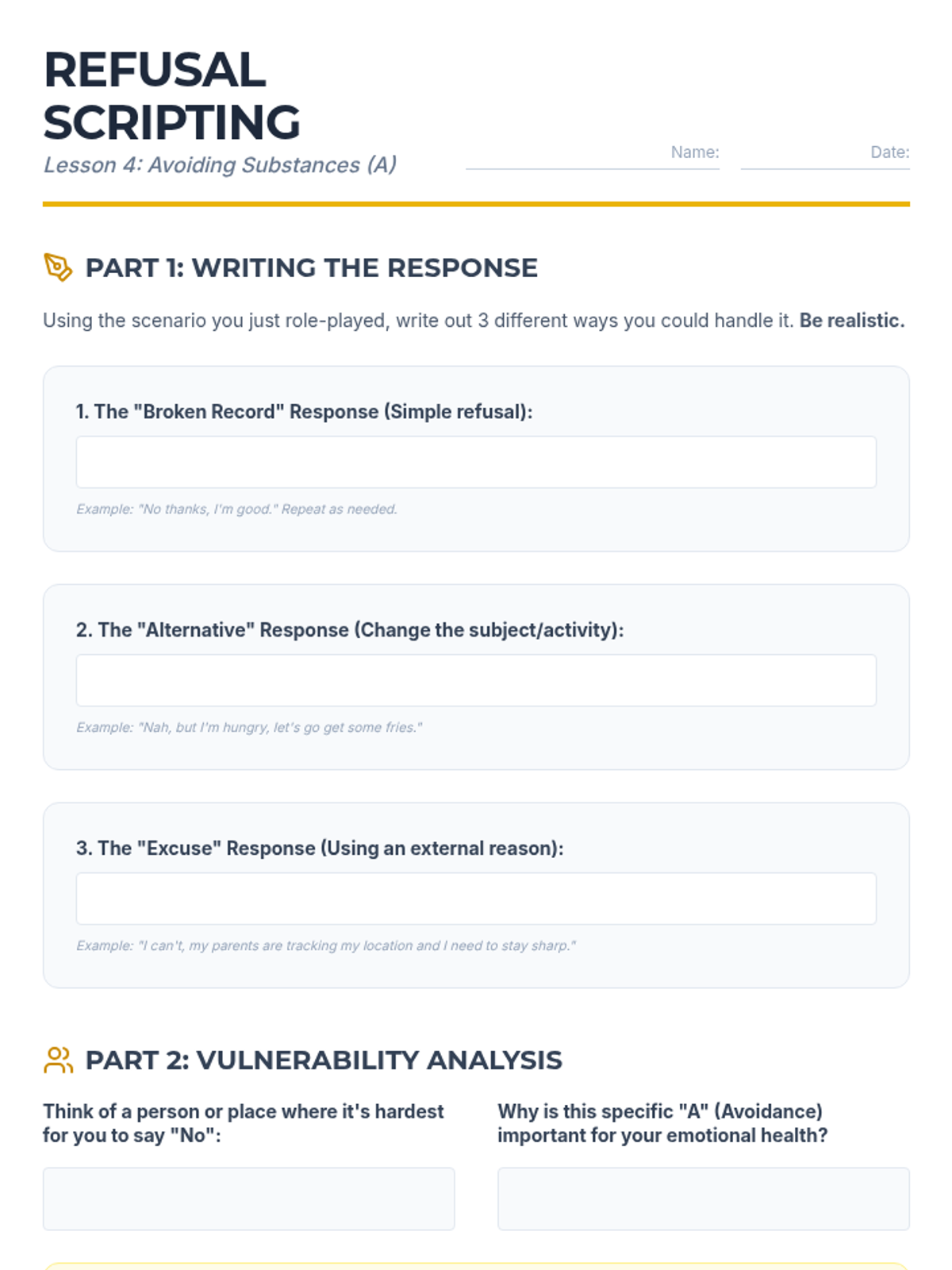
Students engage in role-play scenarios regarding the 'A' (Avoid mood-altering drugs). They practice refusal skills and analyze social situations where peer pressure might compromise their commitment to emotional stability.
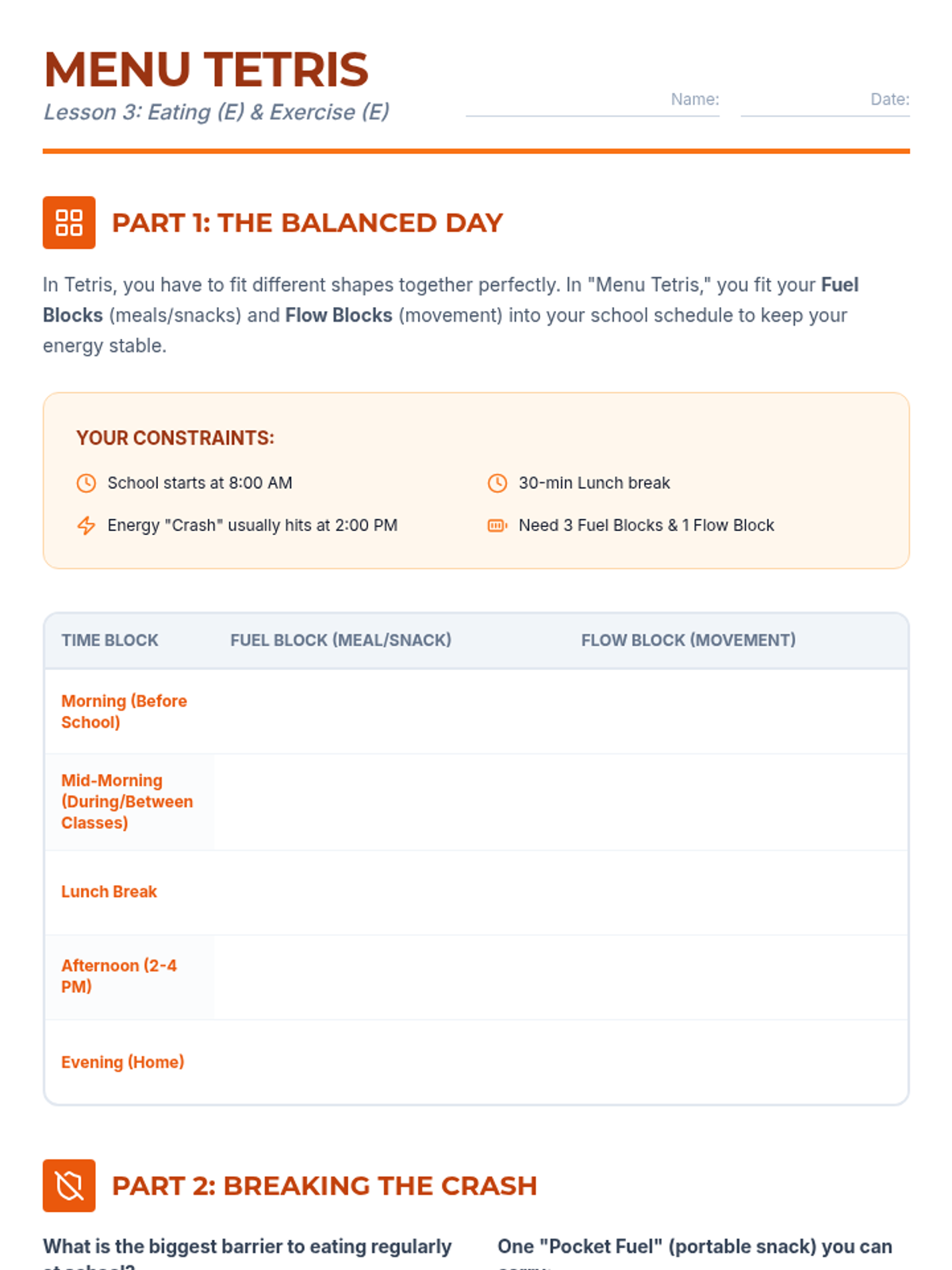
Addressing 'E' (Eating) and 'E' (Exercise), students plan simple, accessible nutrition and movement goals. The focus is on consistency over intensity, helping students find small habits that stabilize energy levels throughout the school day.
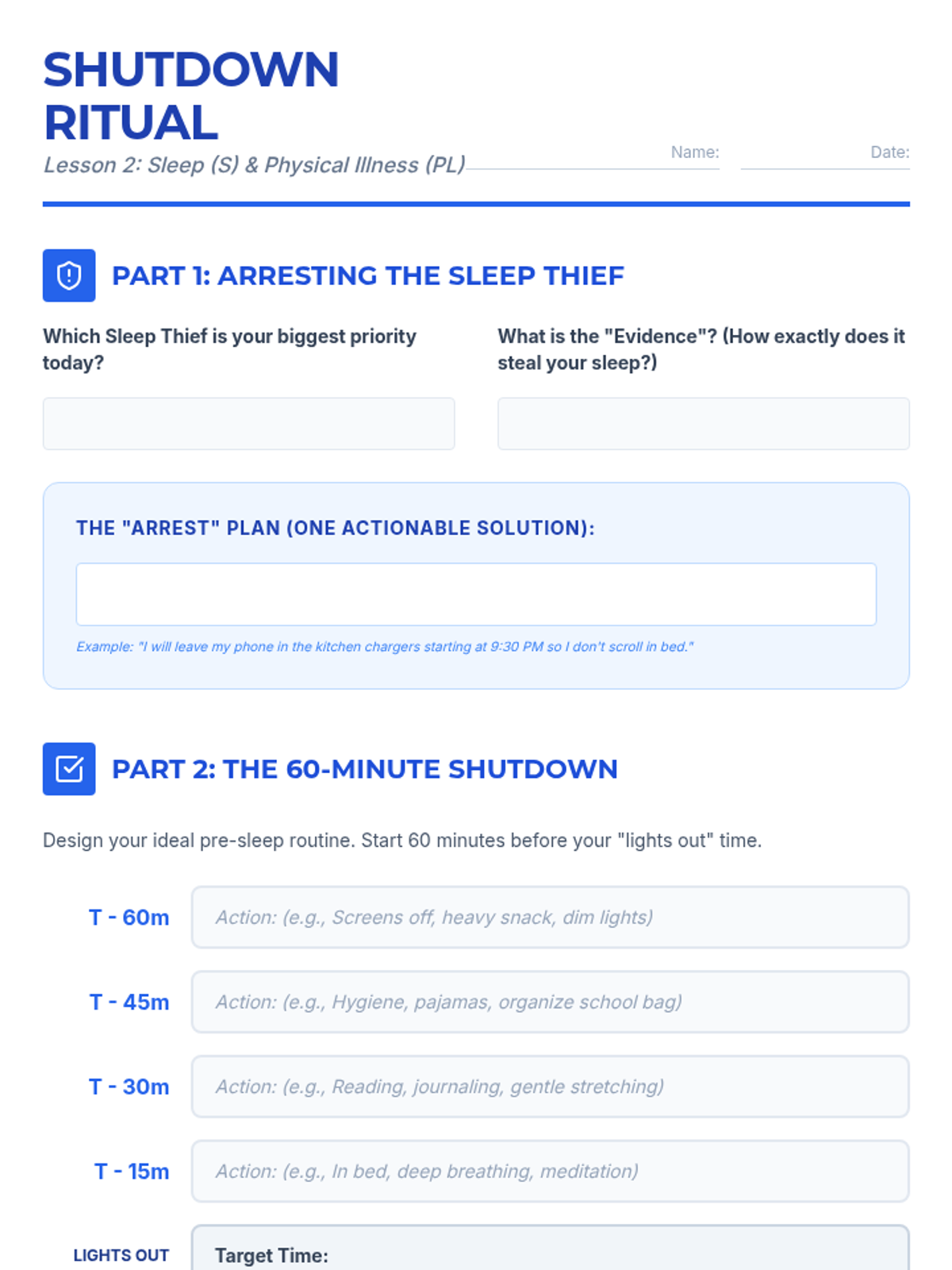
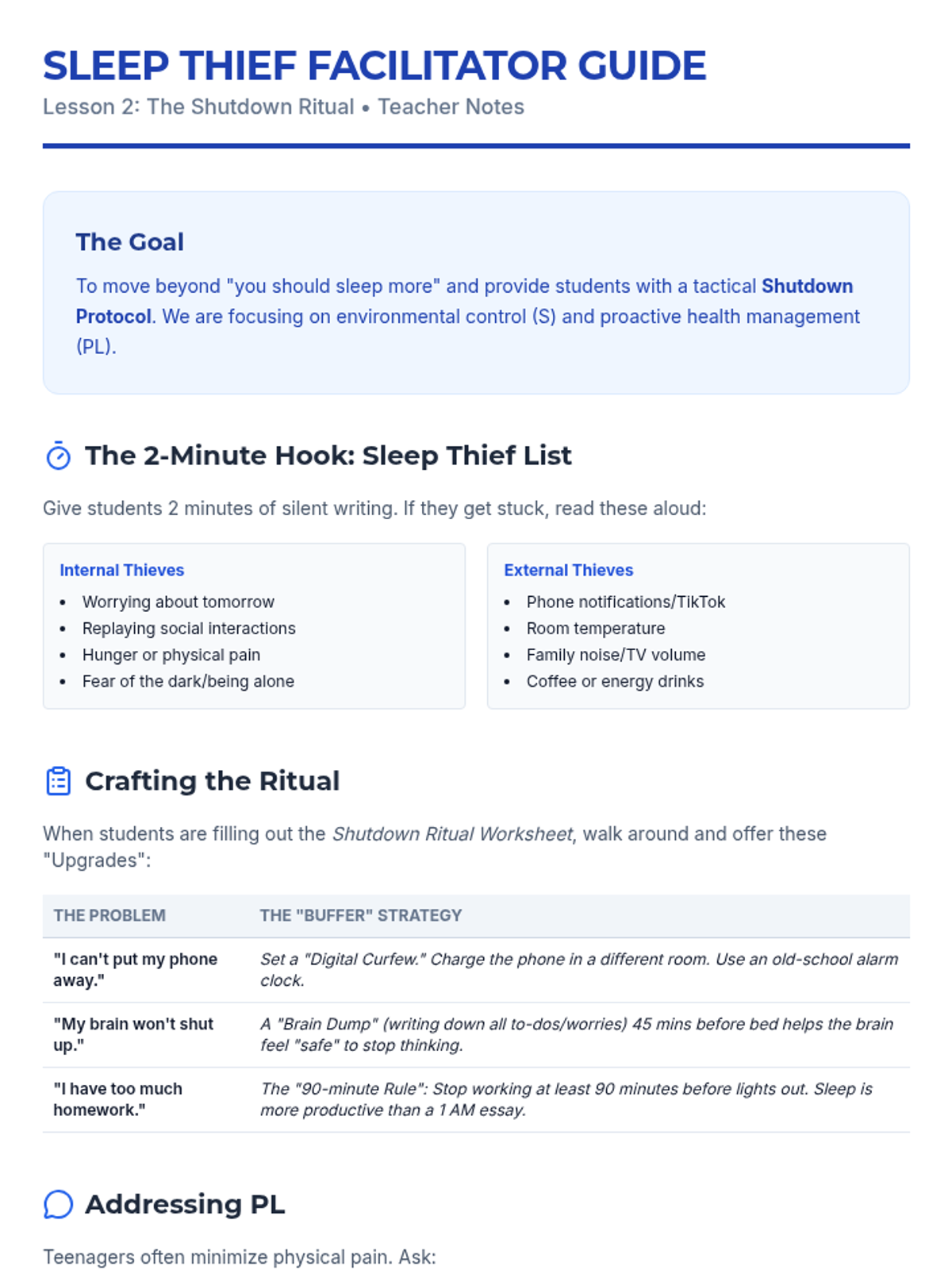
Focusing on the 'S' and 'PL', students workshop a pre-sleep routine and a protocol for managing physical discomfort. They create a 'shutdown ritual' checklist to ensure quality rest and recovery.
Focuses on the final 'E' (Exercise). Students differentiate between fitness and mood regulation through movement, release of endorphins, and building mastery. The sequence concludes with a synthesis of the PLEASE framework.
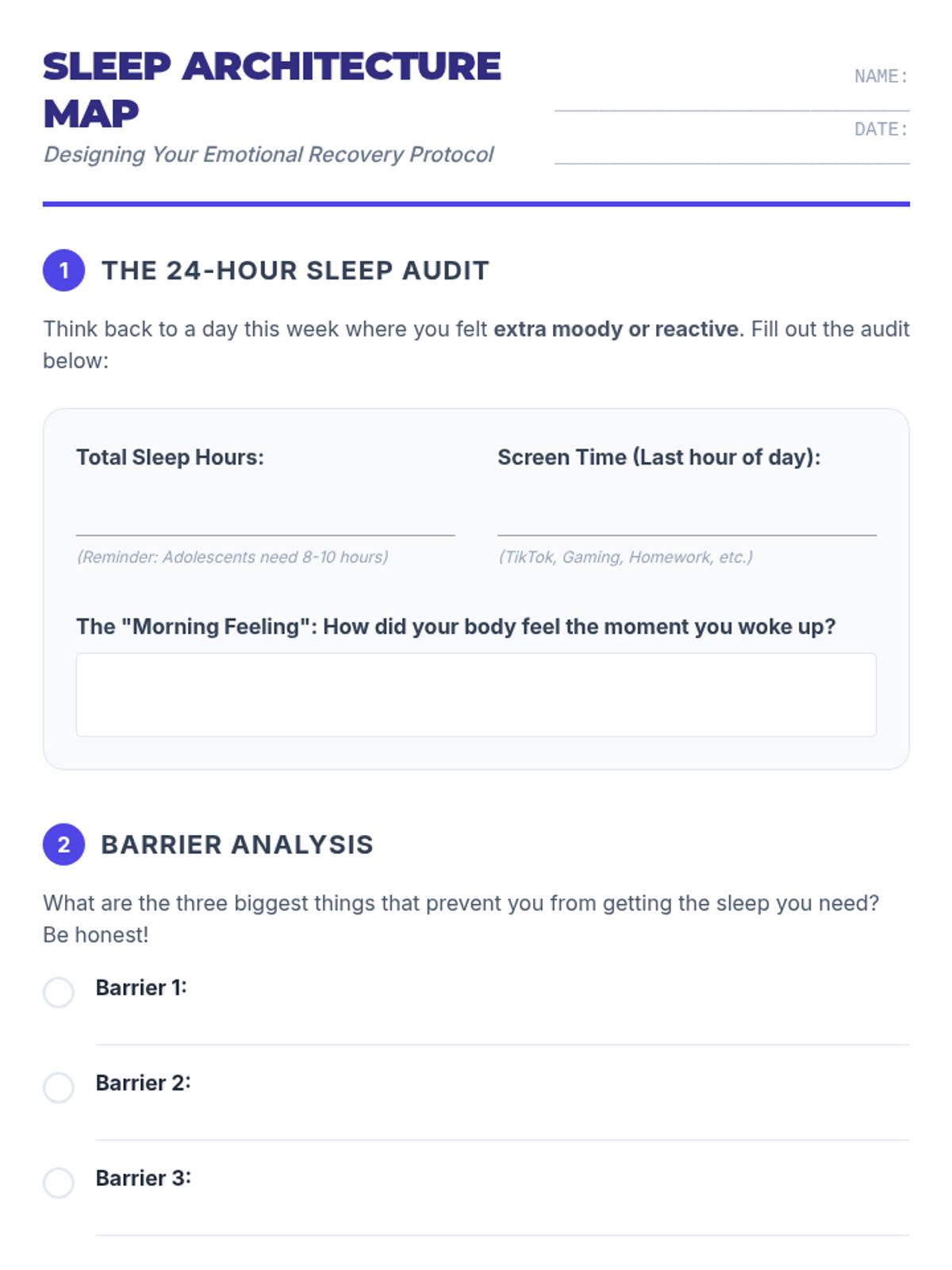
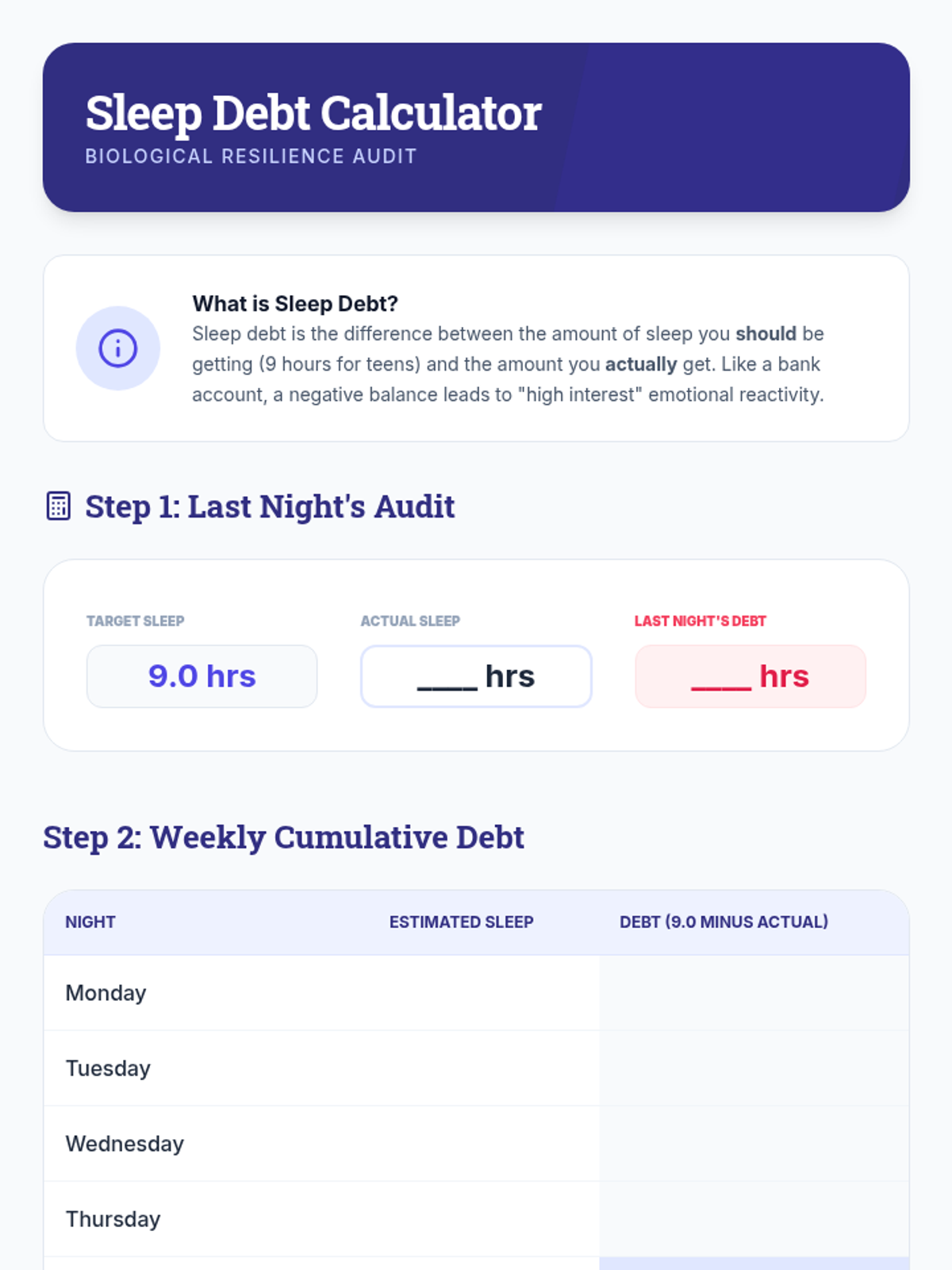
Examines the neurological necessity of sleep for impulse control and emotional processing. Students evaluate sleep disruptors and create a 'Sleep Architecture' map for better hygiene.
Explores the link between blood sugar, hydration, and substances on mood stability. Students distinguish between eating for aesthetics and eating for emotional homeostasis.
Students explore movement as a tool for stress metabolism and synthesize the entire PLEASE model into a personal emotional health strategy.
This lesson covers the impact of sleep deprivation and substances on the brain, specifically how they affect the amygdala and emotional processing.
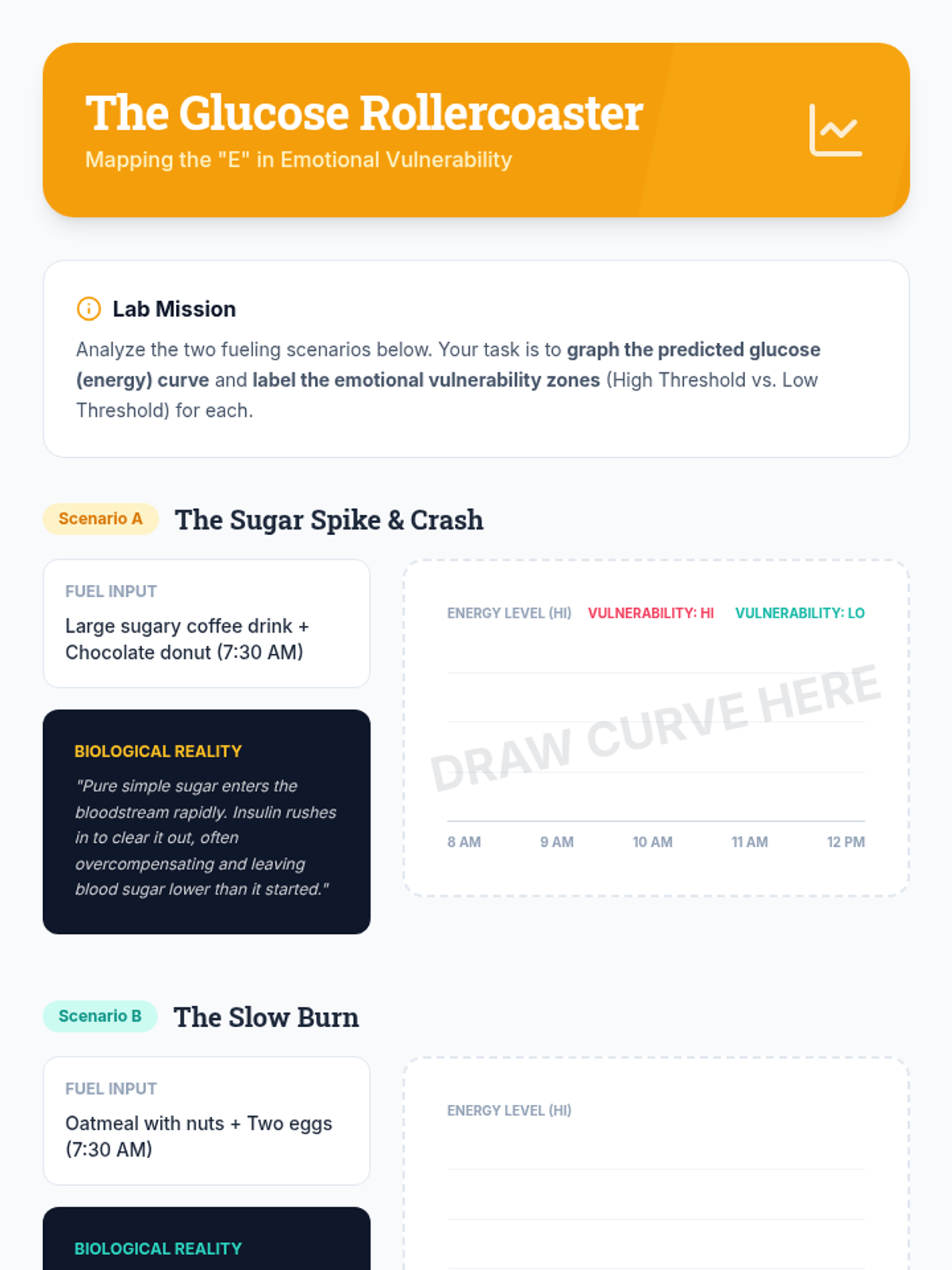
Students investigate how blood sugar and nutrition affect mood stability, using data to understand the link between balanced eating and emotional regulation.
Students synthesize their research and audits into a final personalized PLEASE Protocol with 'if-then' contingency plans for future stressors.
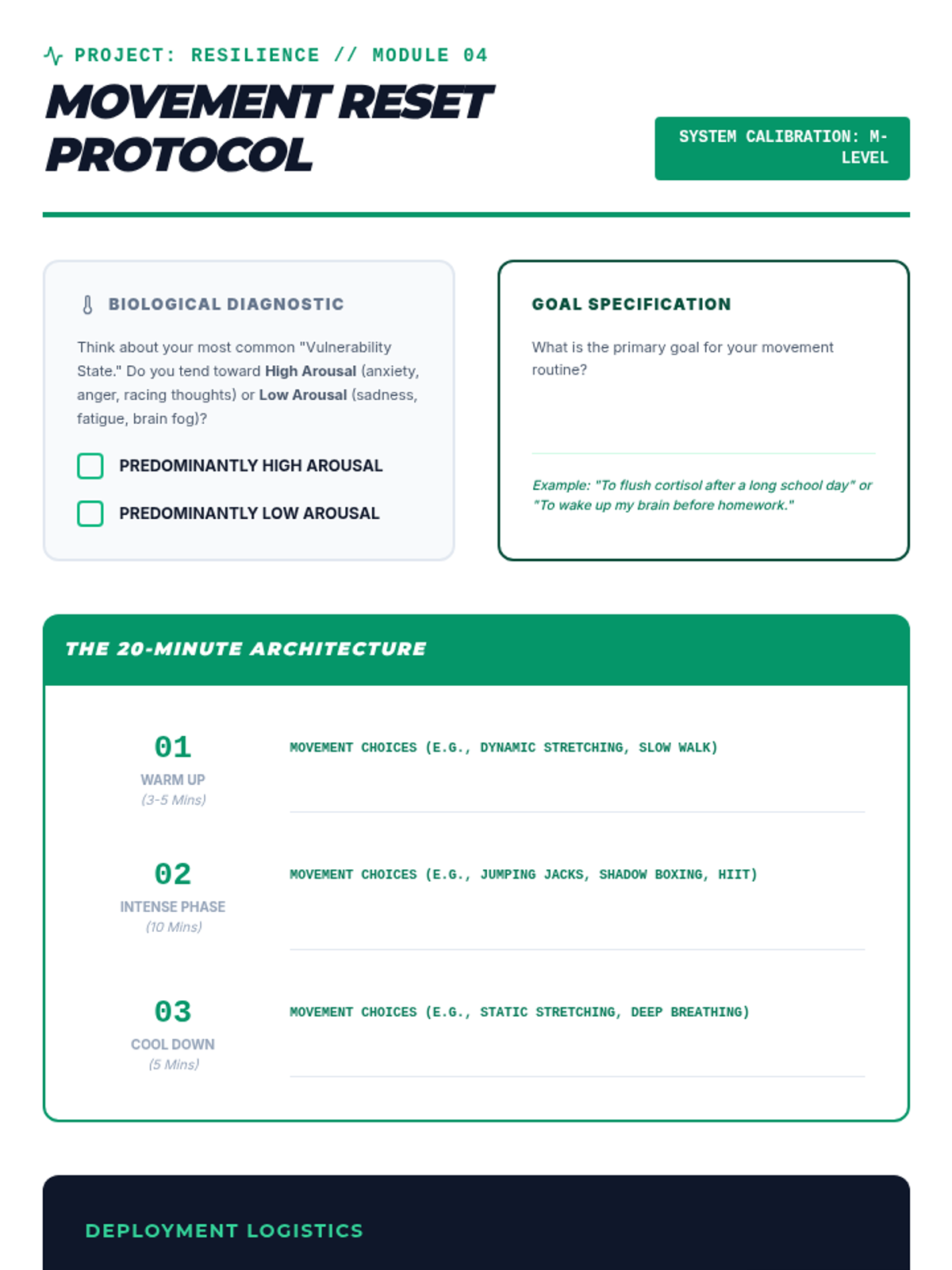
Students design a personalized '20-minute reset' movement routine focused on emotional regulation rather than competition.
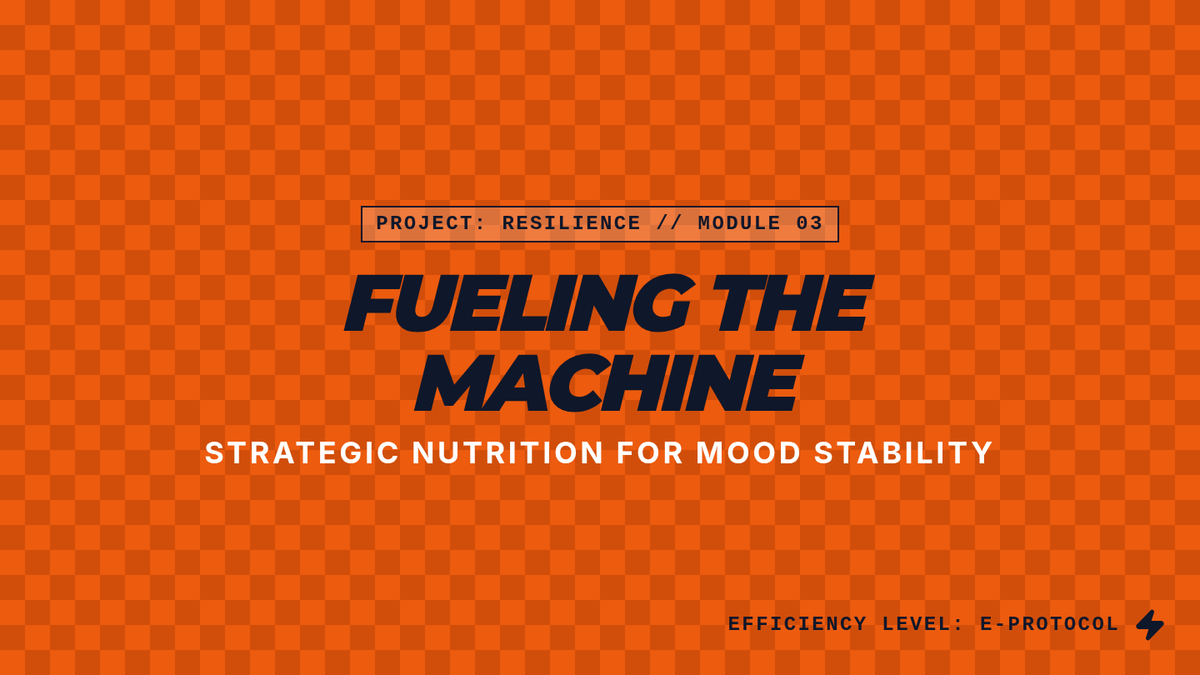
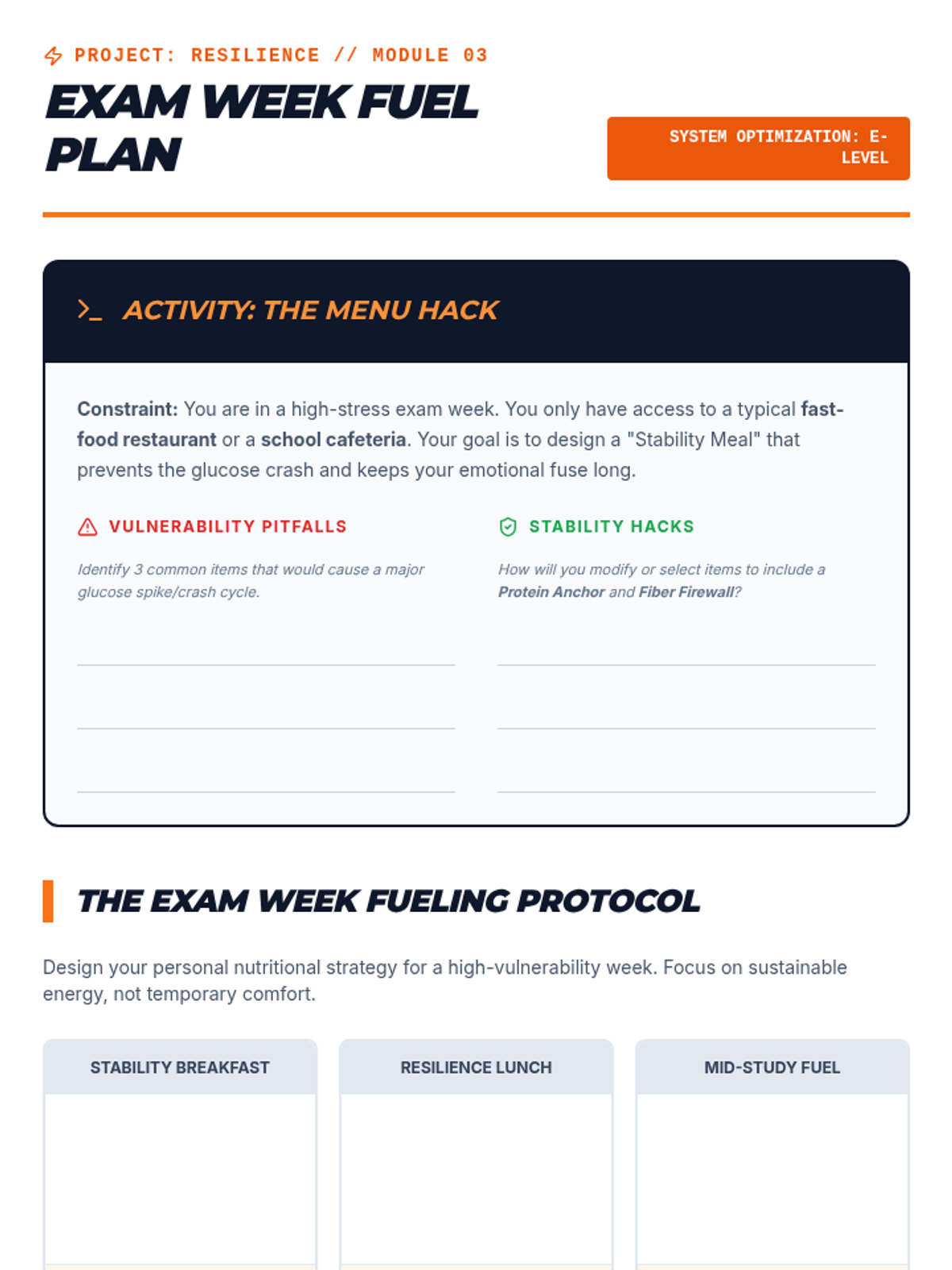
Students explore the relationship between nutrition and mood stability, hacking menus to create energy-stable meal plans for high-stress periods.
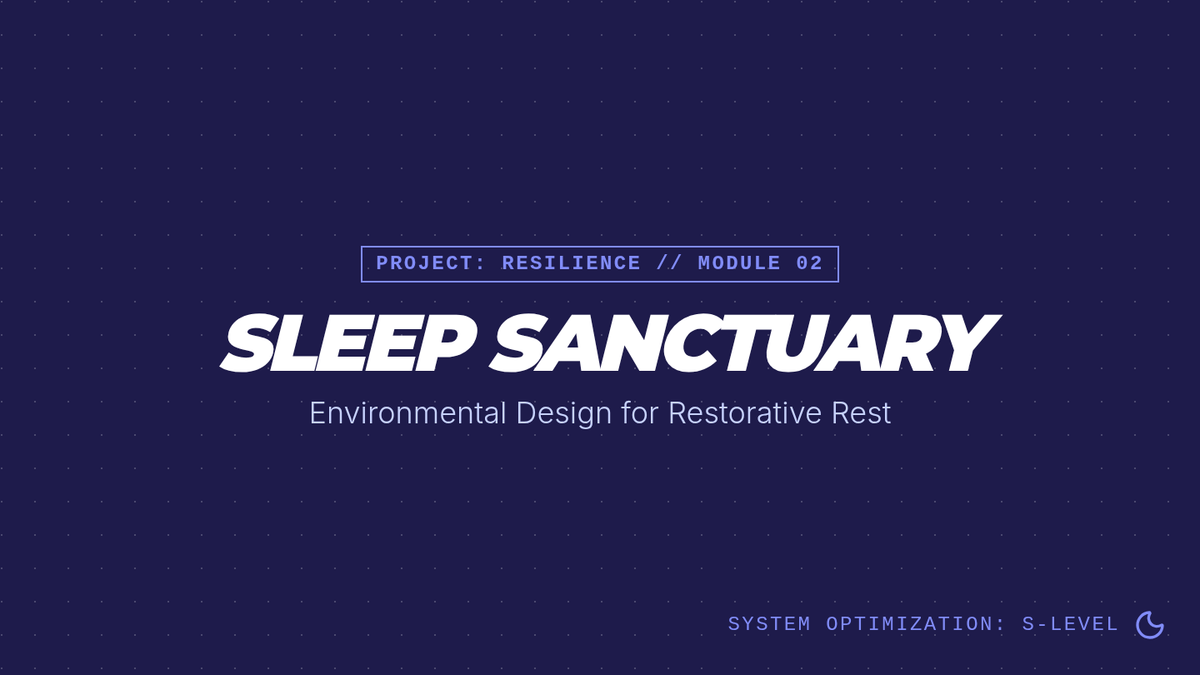
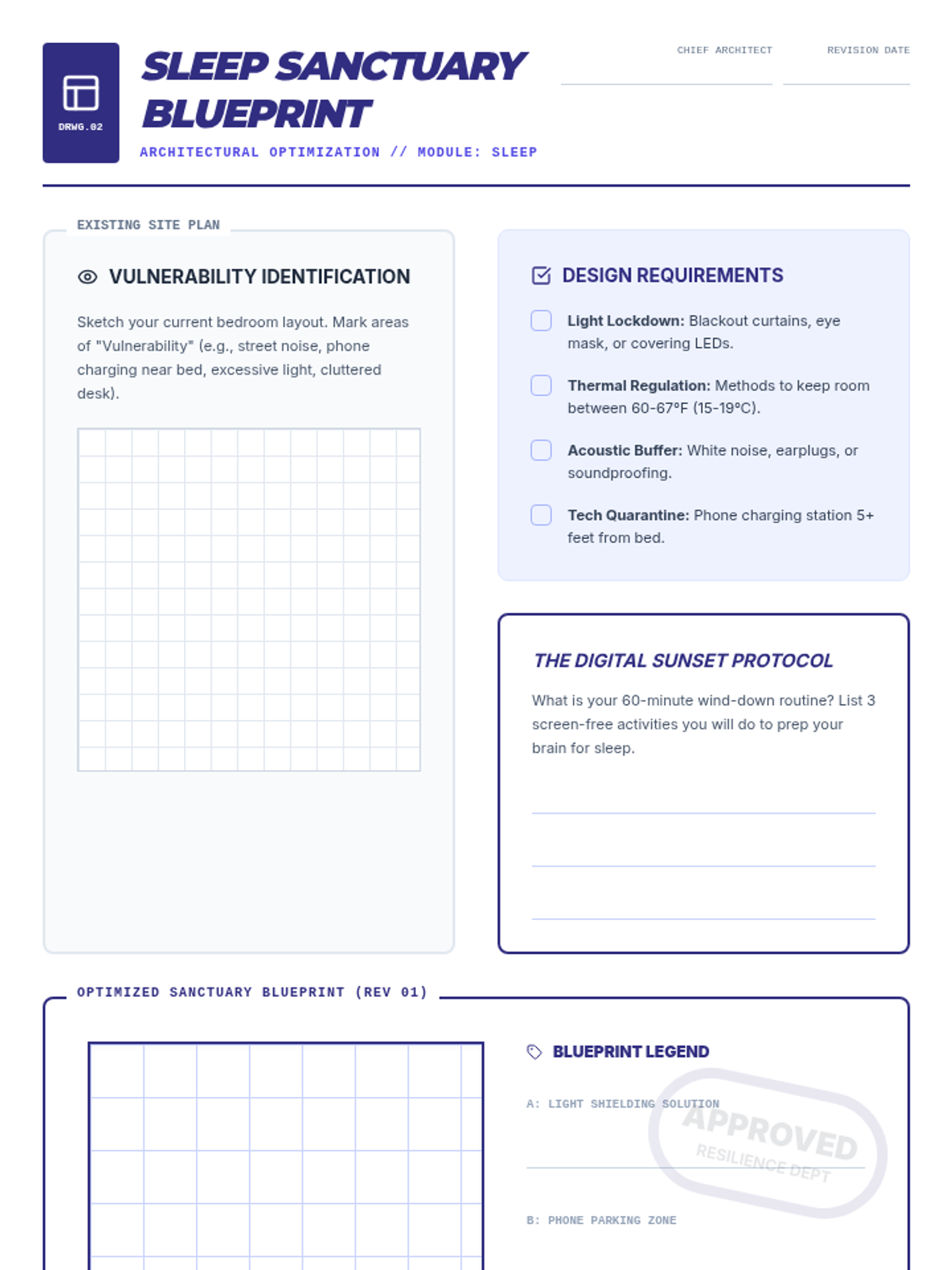
Students analyze their sleep environments and routines to design an optimized 'Sleep Sanctuary' that protects the adolescent need for restorative rest.
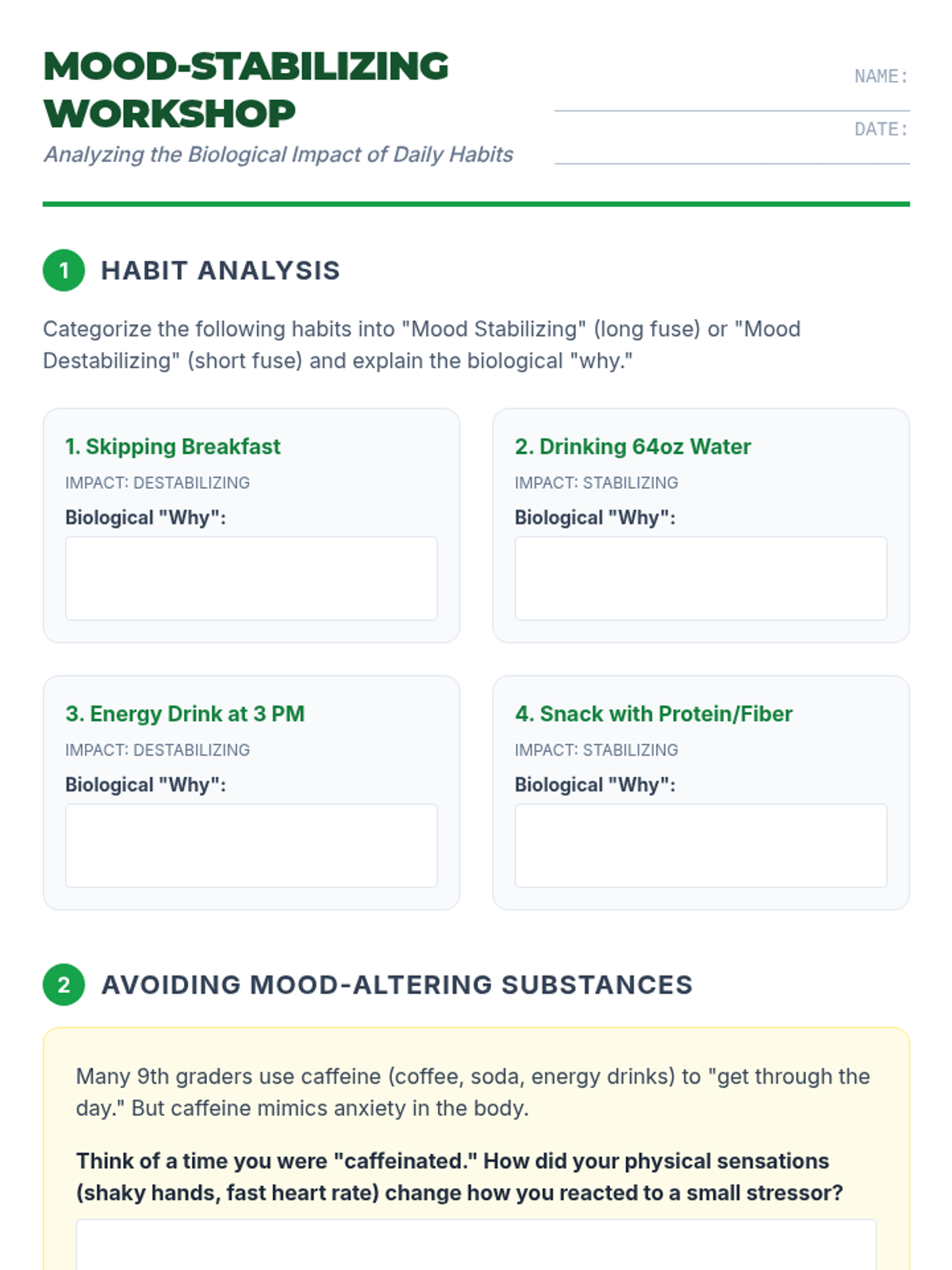
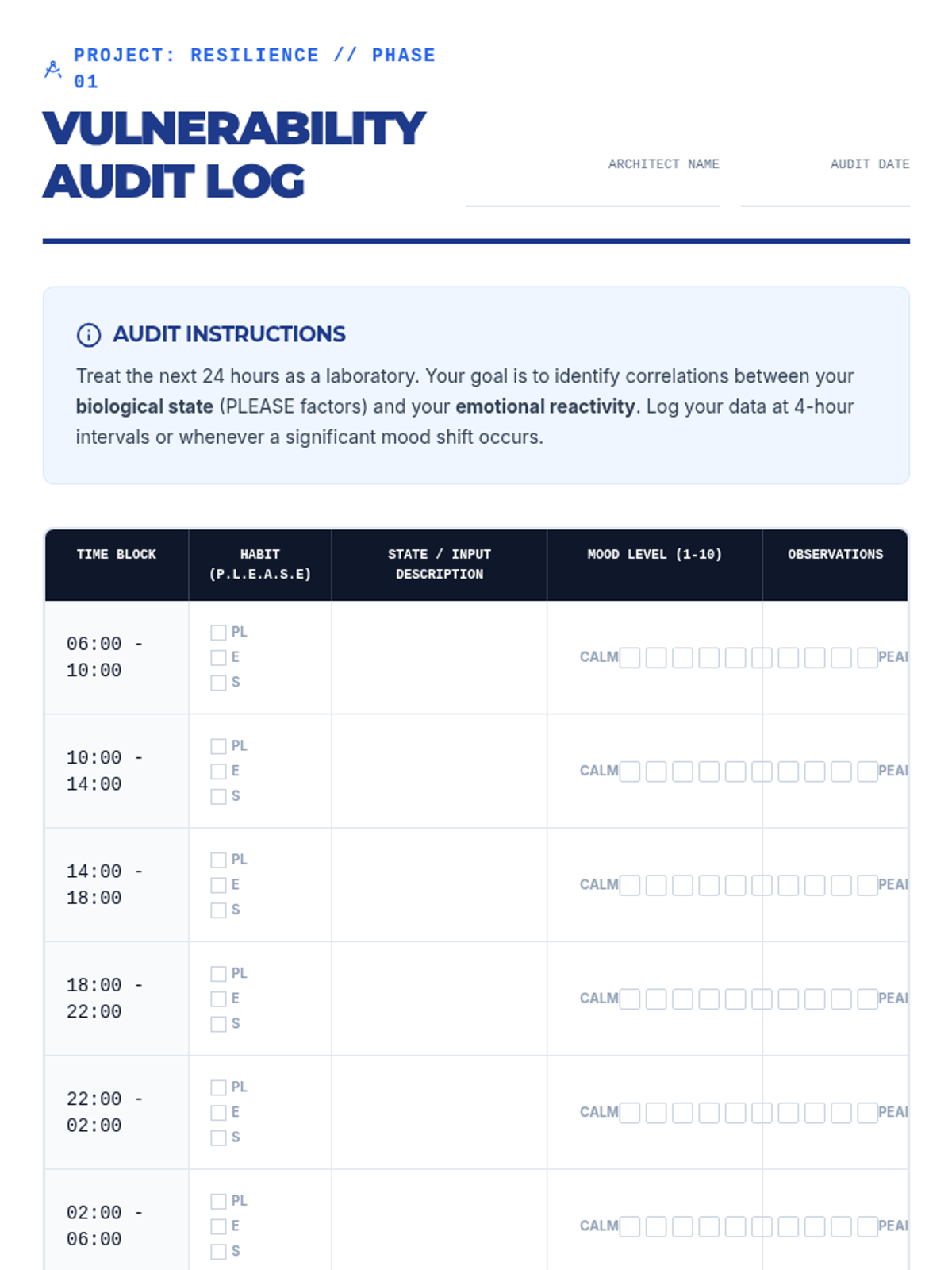
Students conduct a personal lifestyle inventory and analyze the connection between biological neglect and emotional volatility through the 'Emotion Detective' challenge.
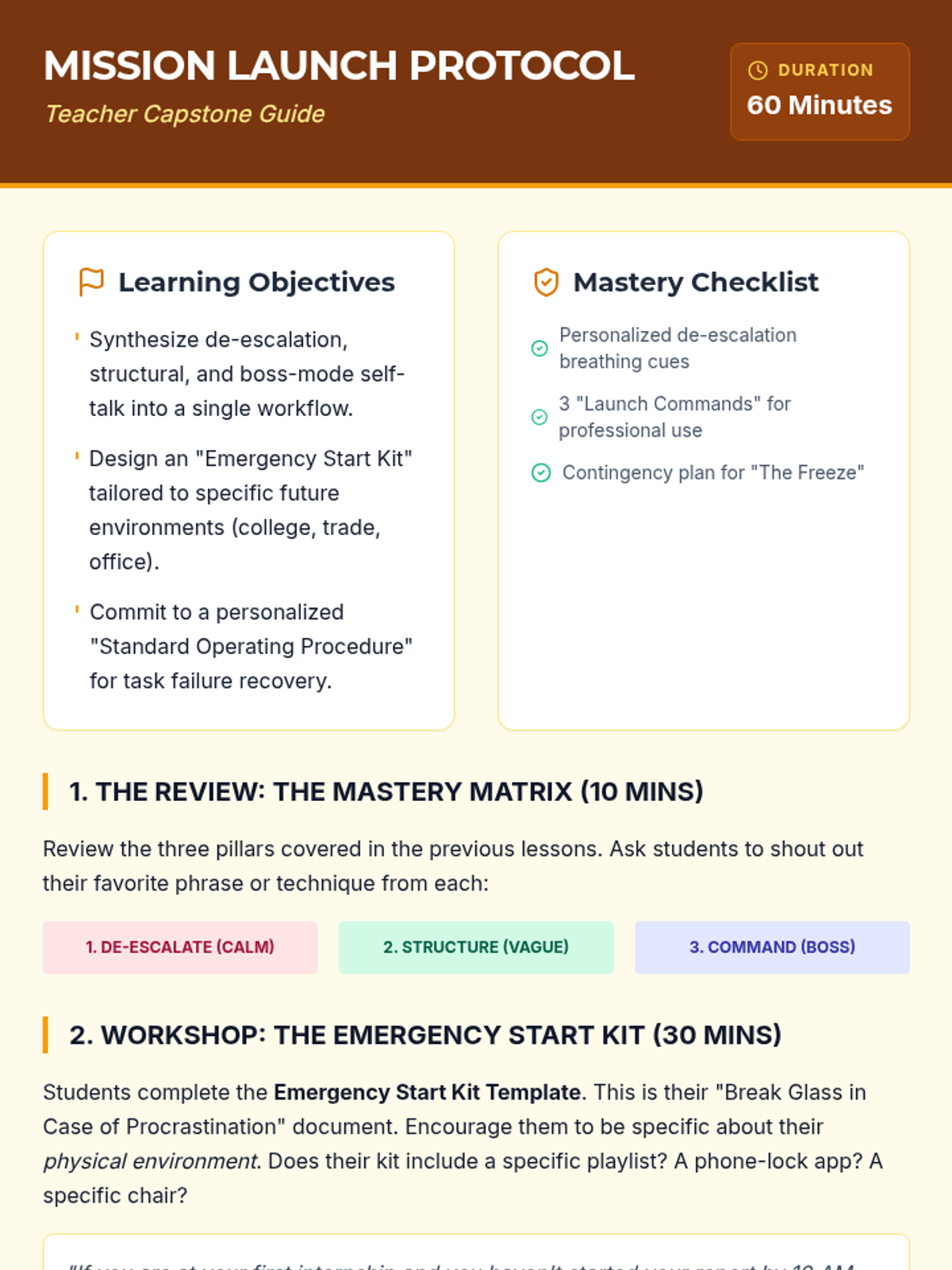
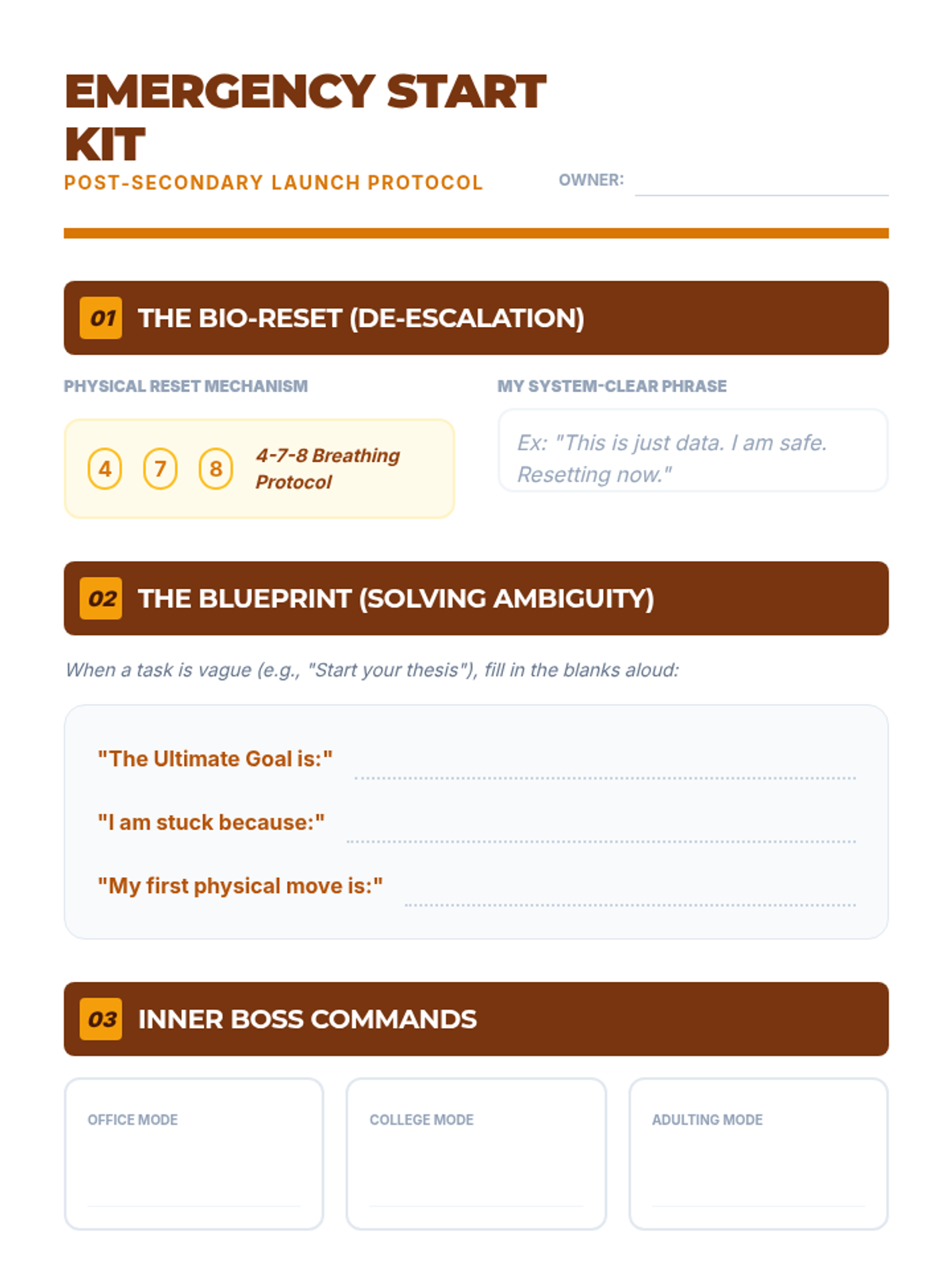
Students create a personalized 'Emergency Start Kit' and initiation protocol for their future post-secondary environments.
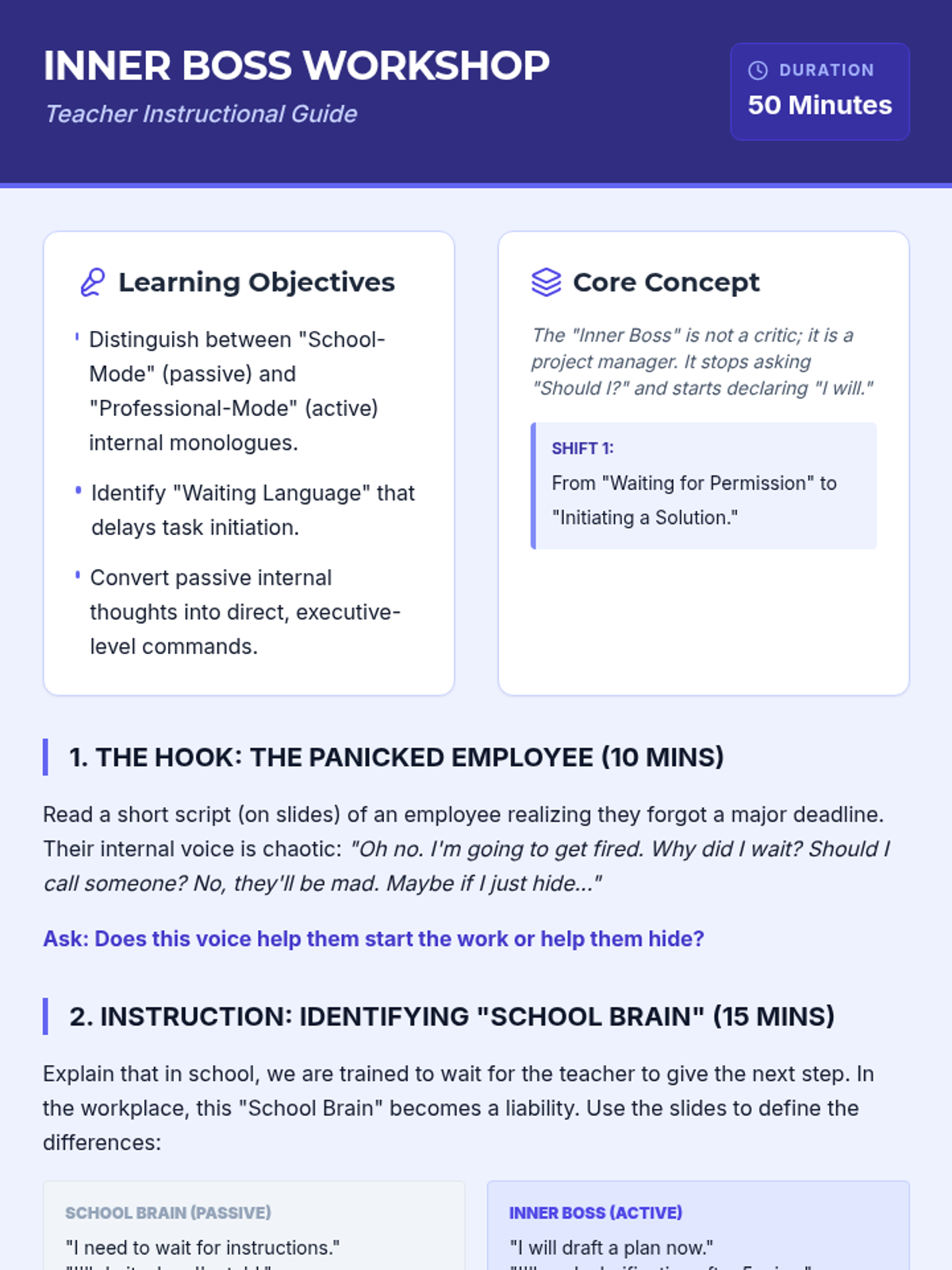
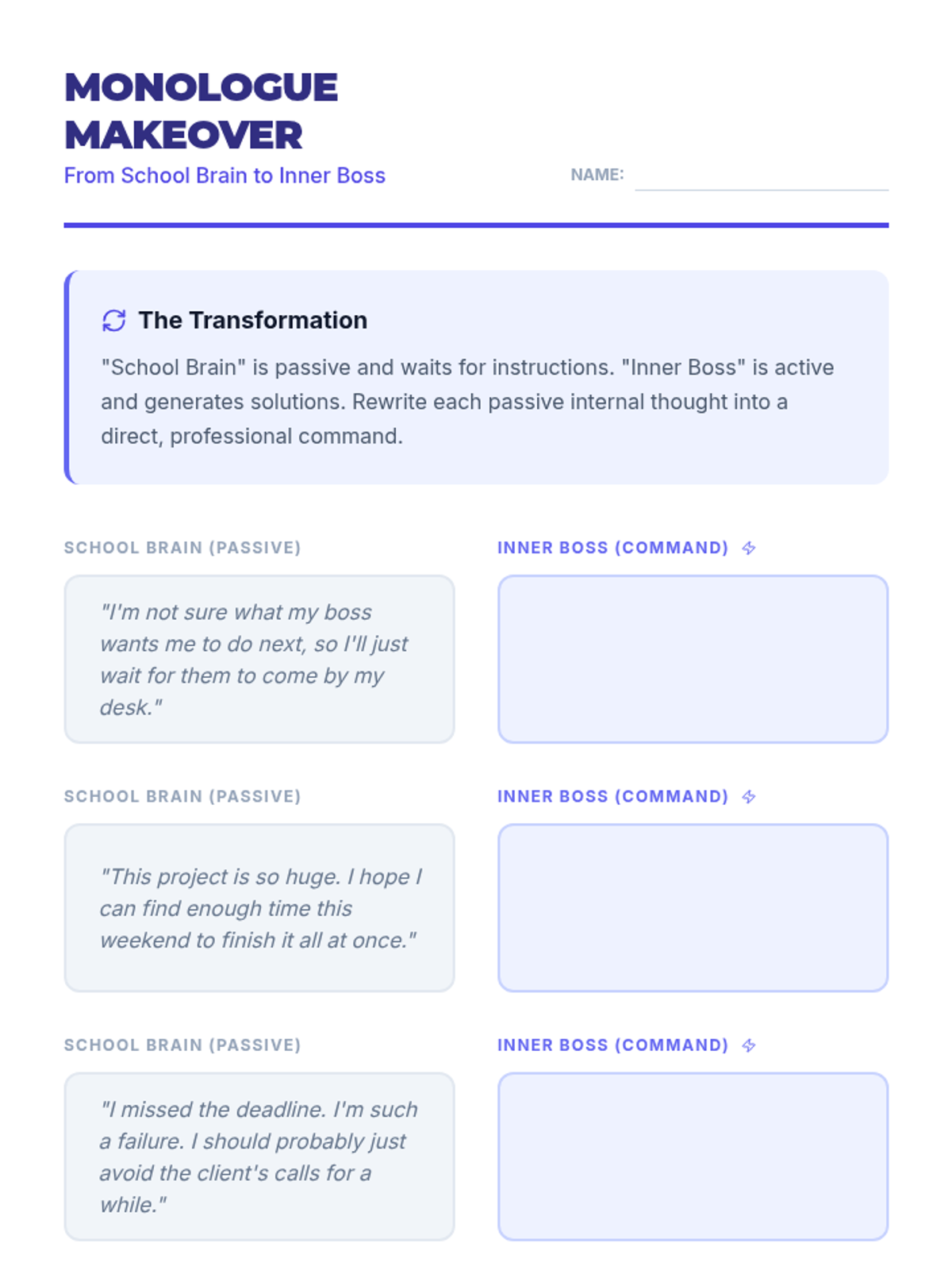
Students transform passive 'school-mode' thoughts into active 'professional-mode' internal commands.
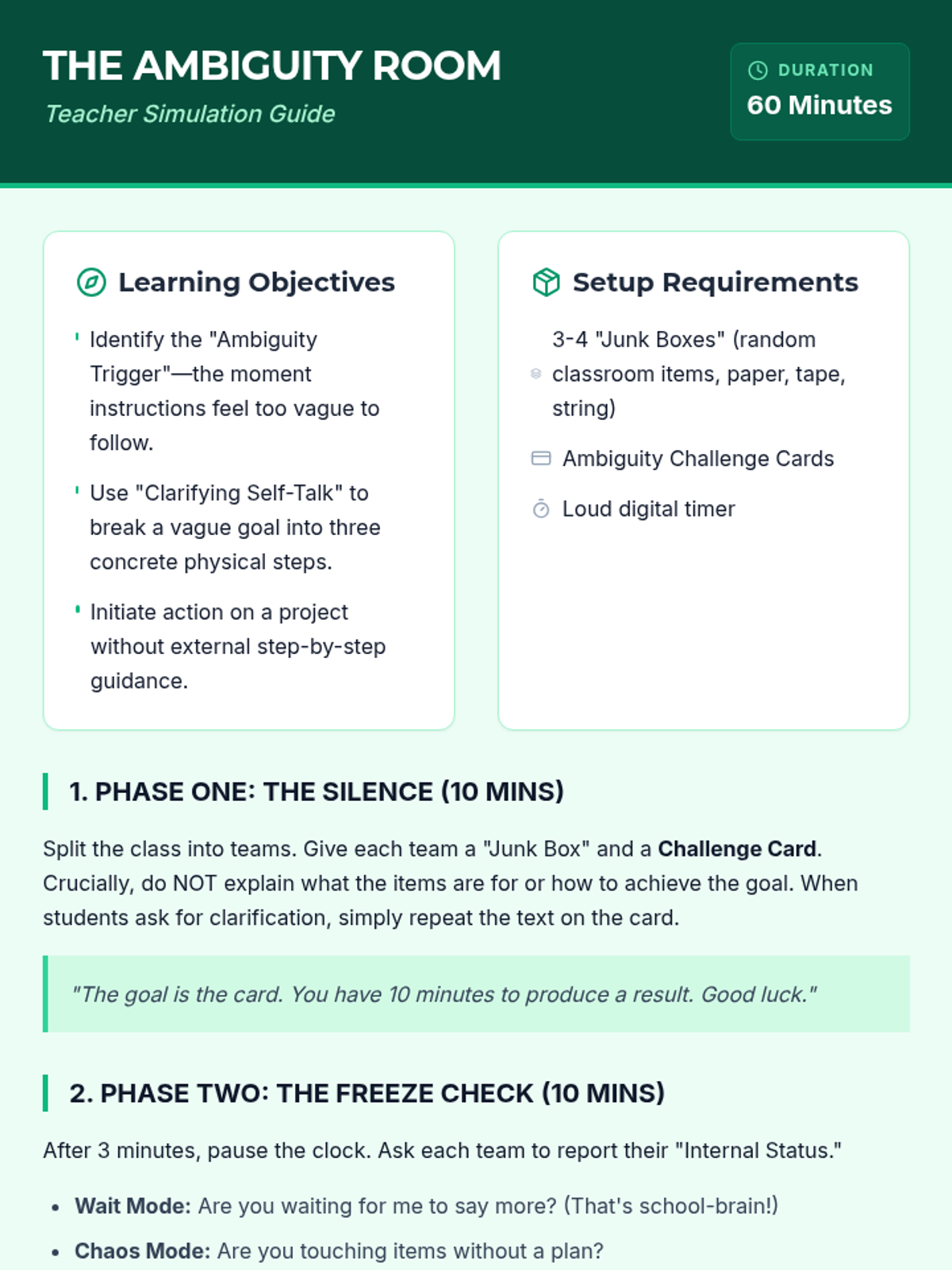
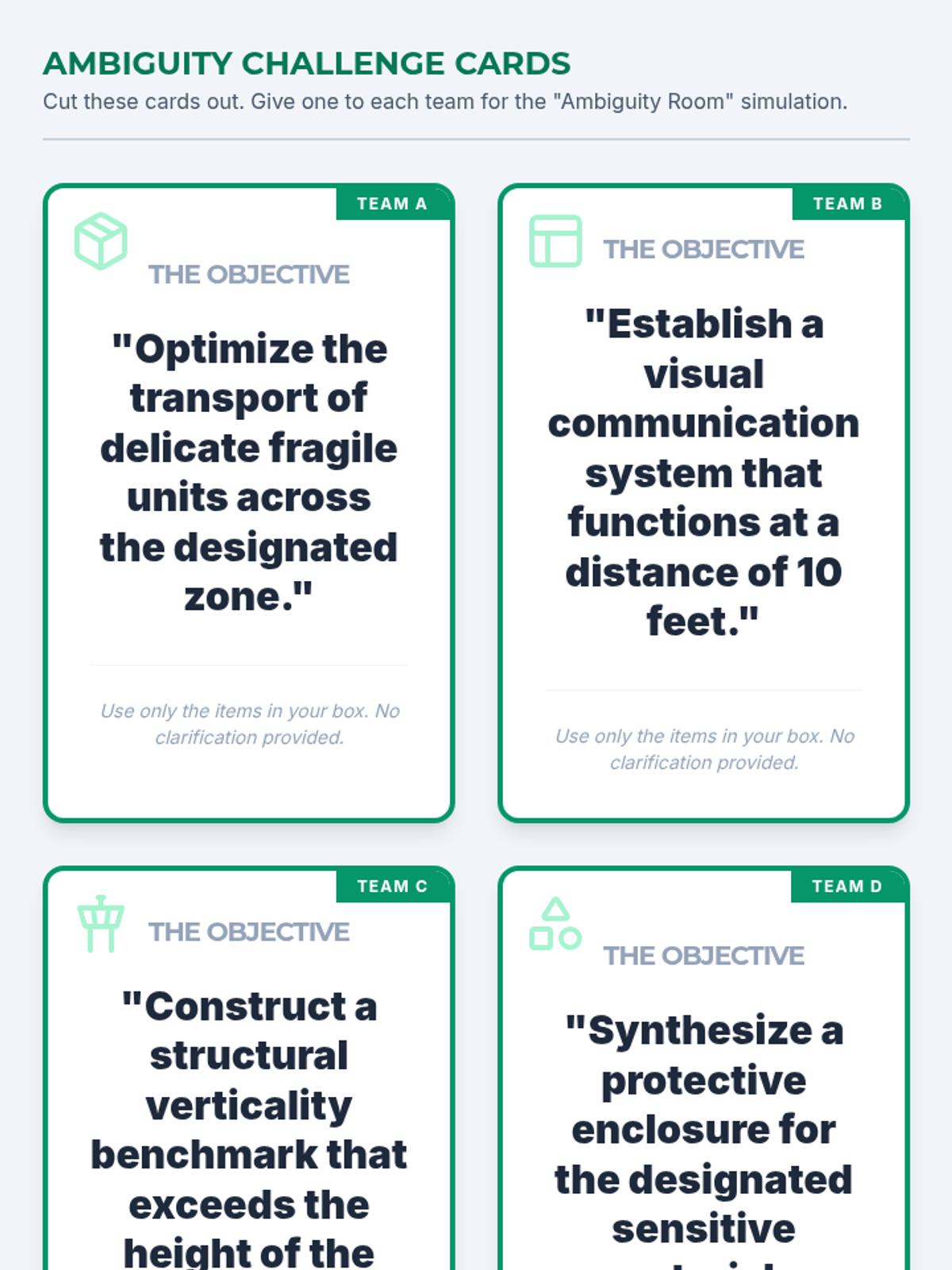
Students navigate simulated 'ambiguous' tasks, using self-talk to create structure and initiate action without external guidance.
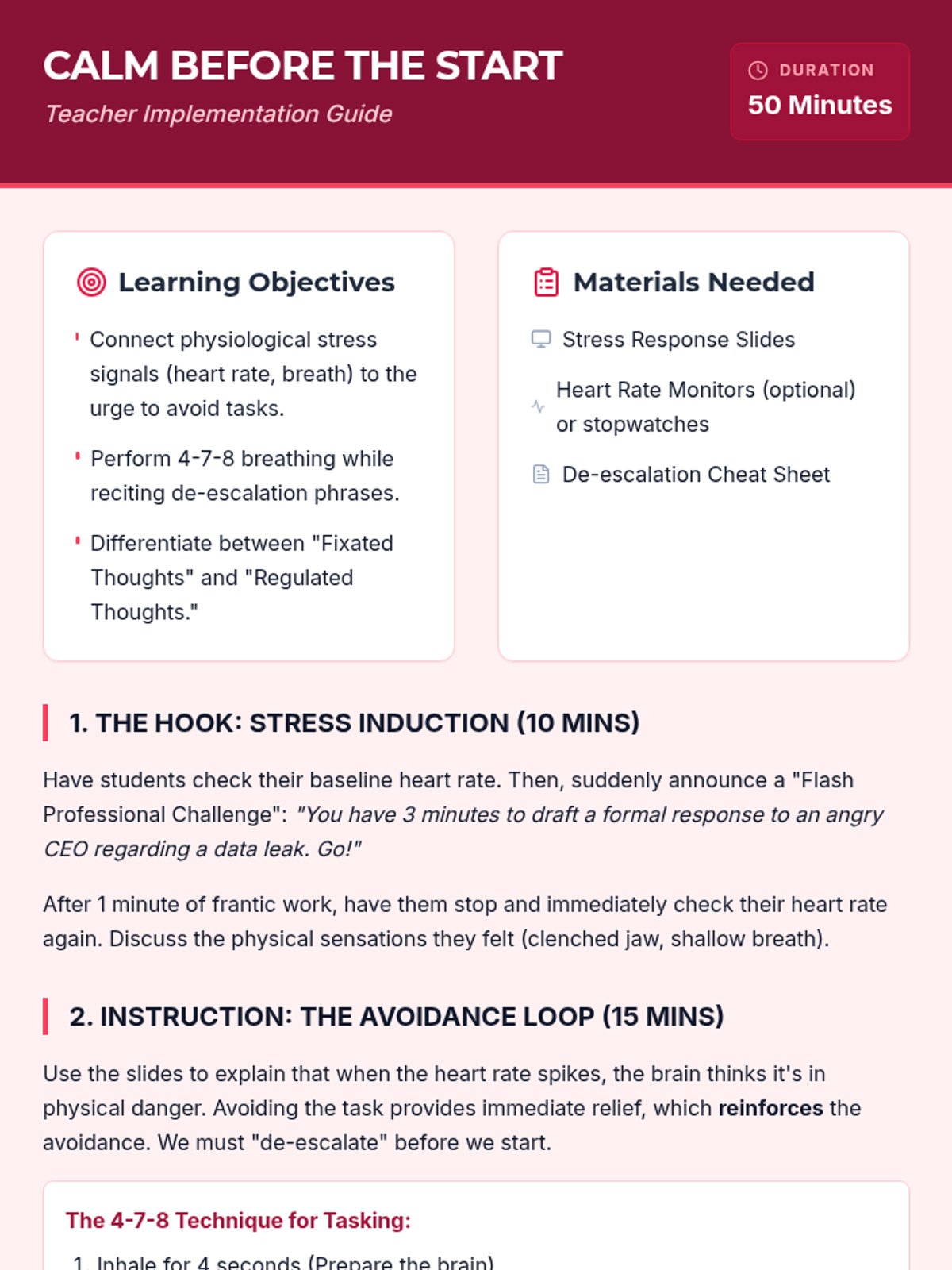
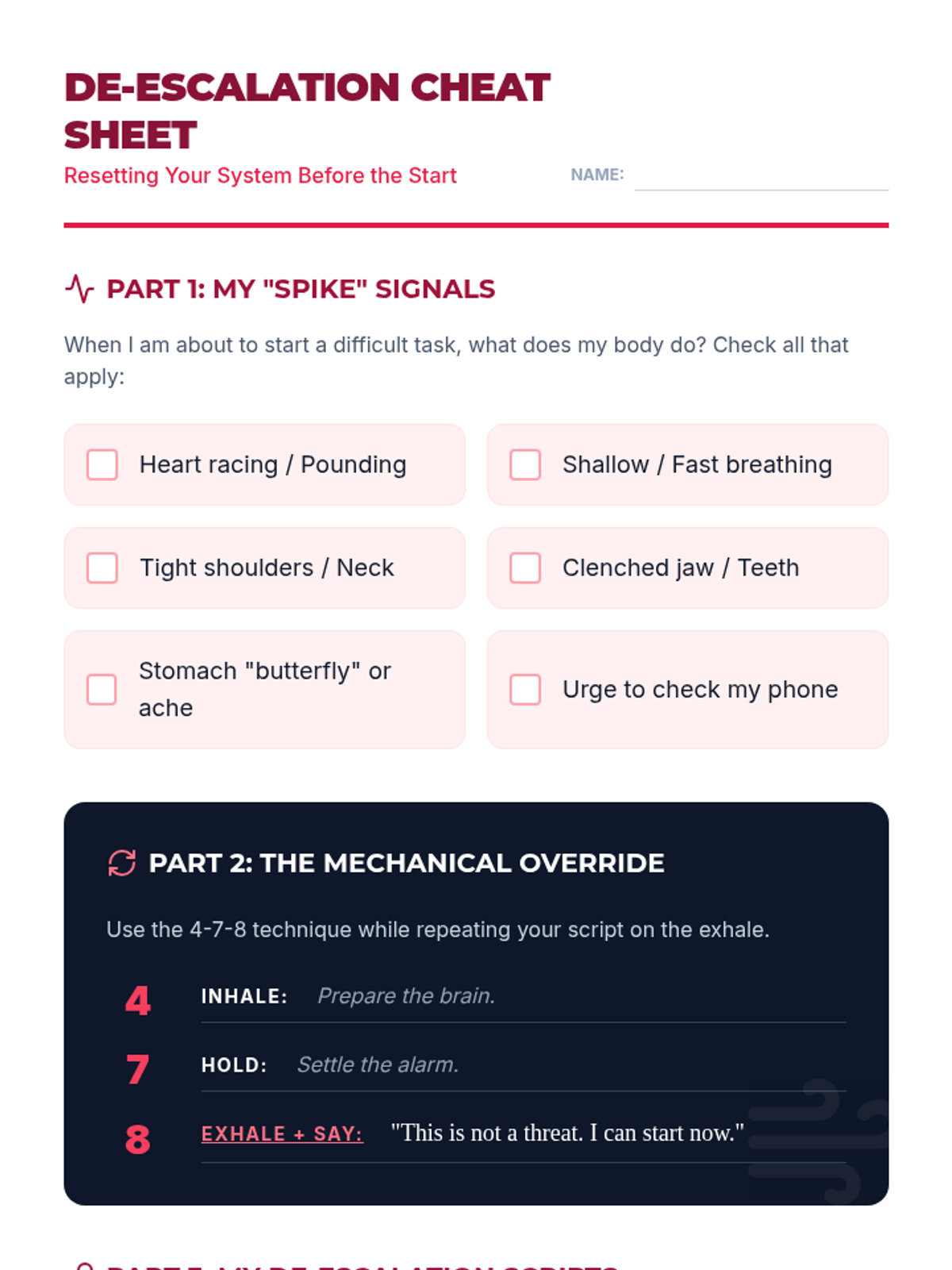
Students learn the connection between stress and avoidance, practicing verbal de-escalation techniques to lower physiological arousal before starting tasks.
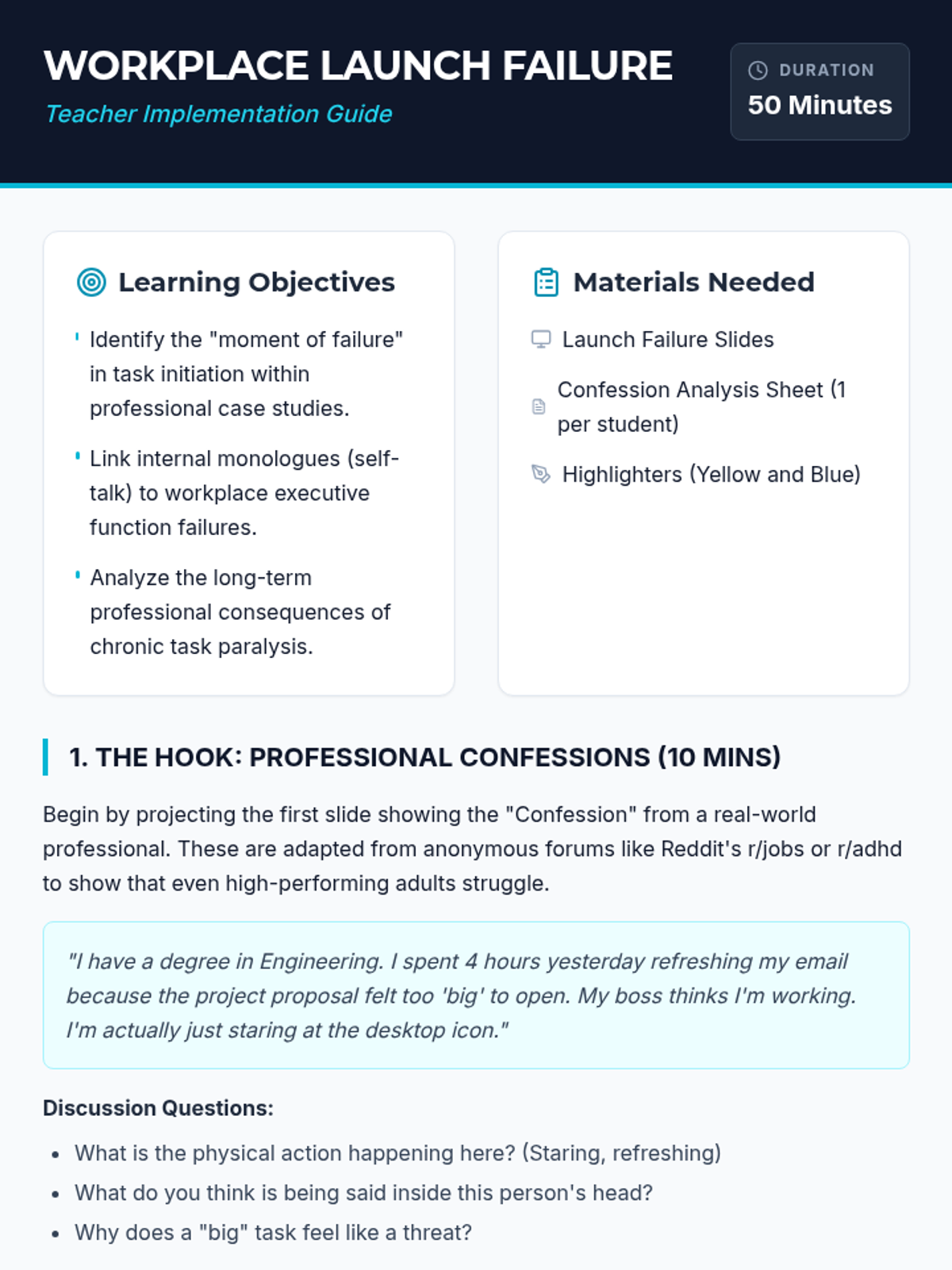
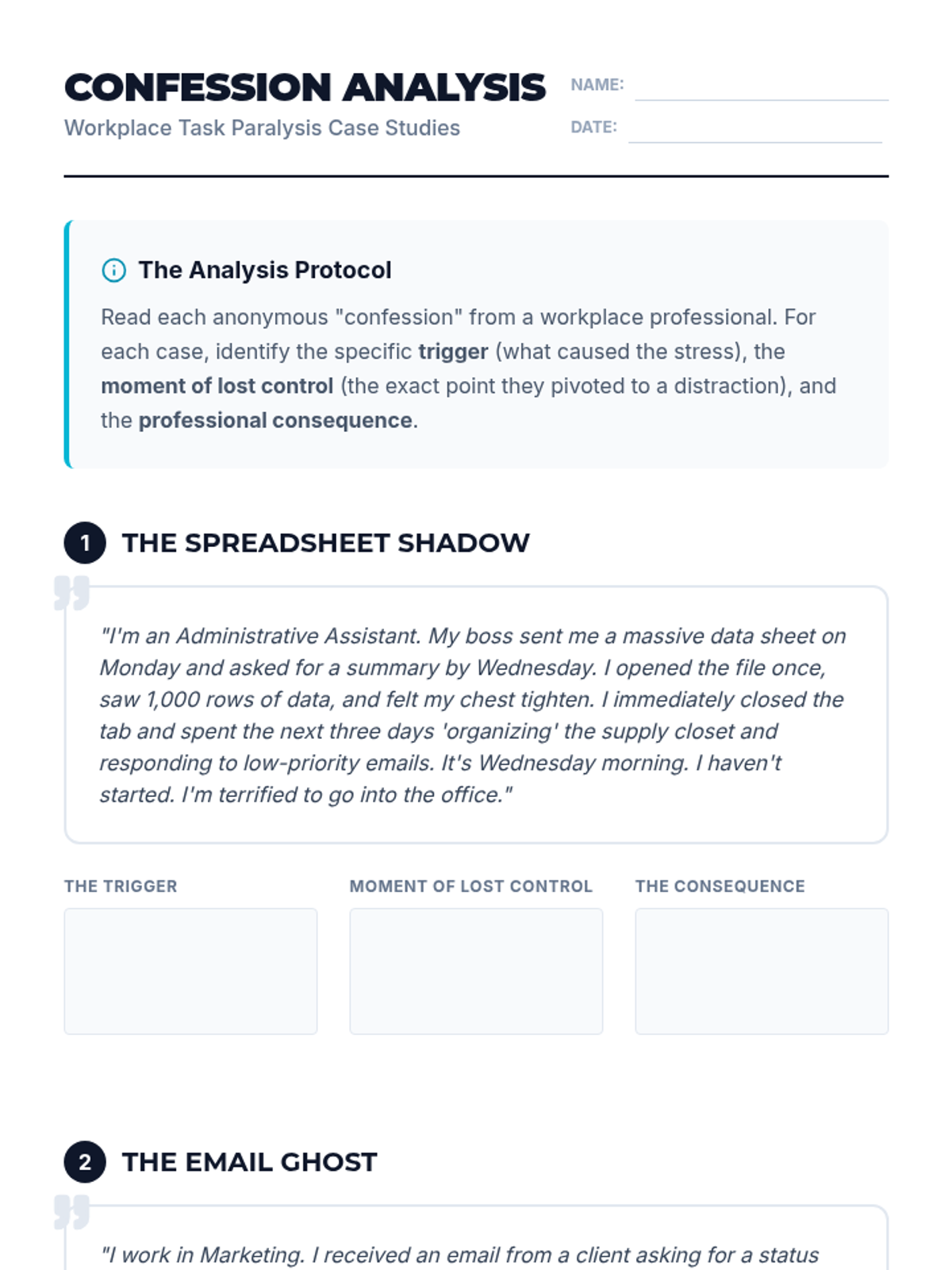
Students analyze workplace case studies to understand the internal monologues that lead to task paralysis and missed deadlines.
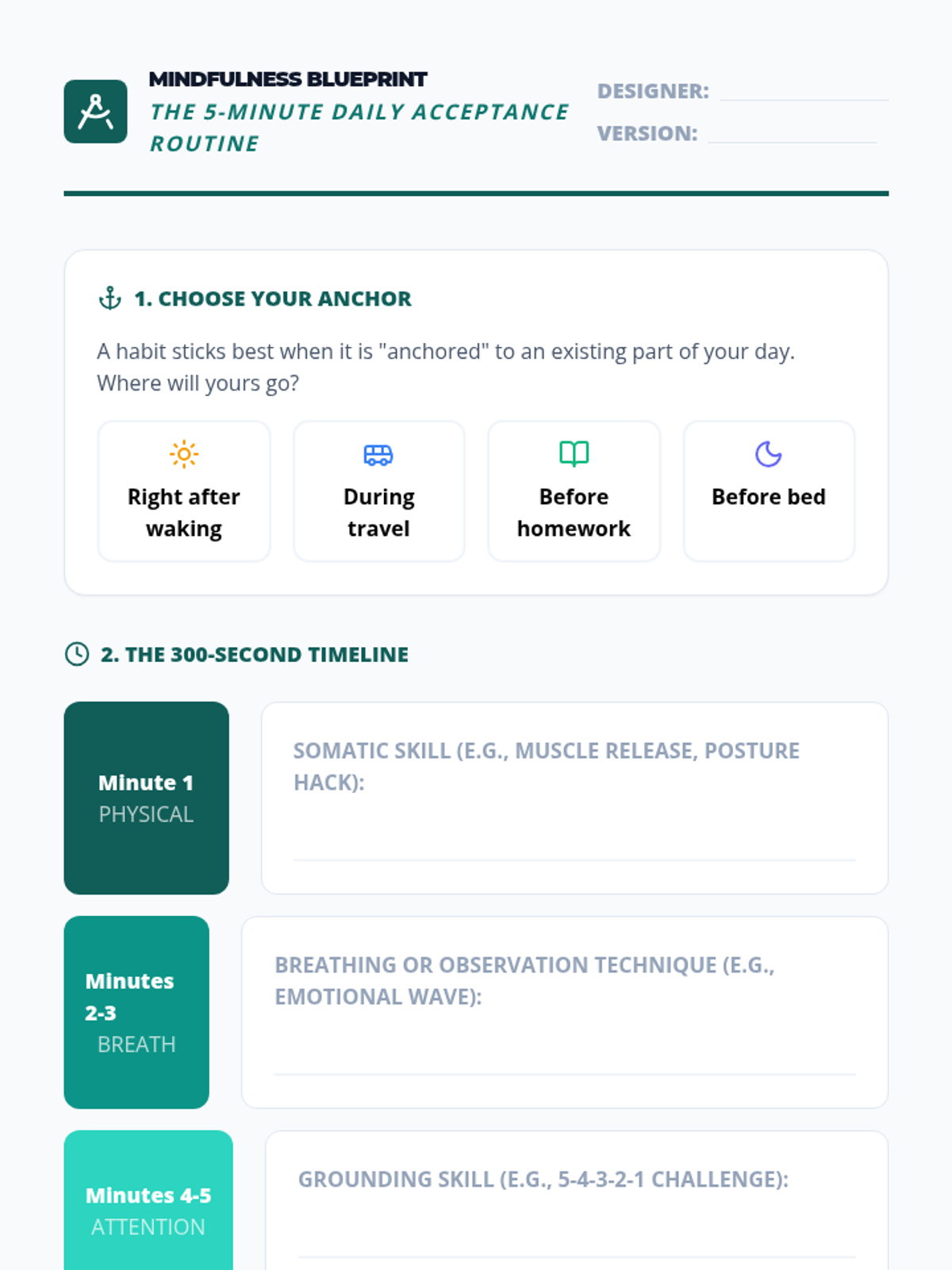
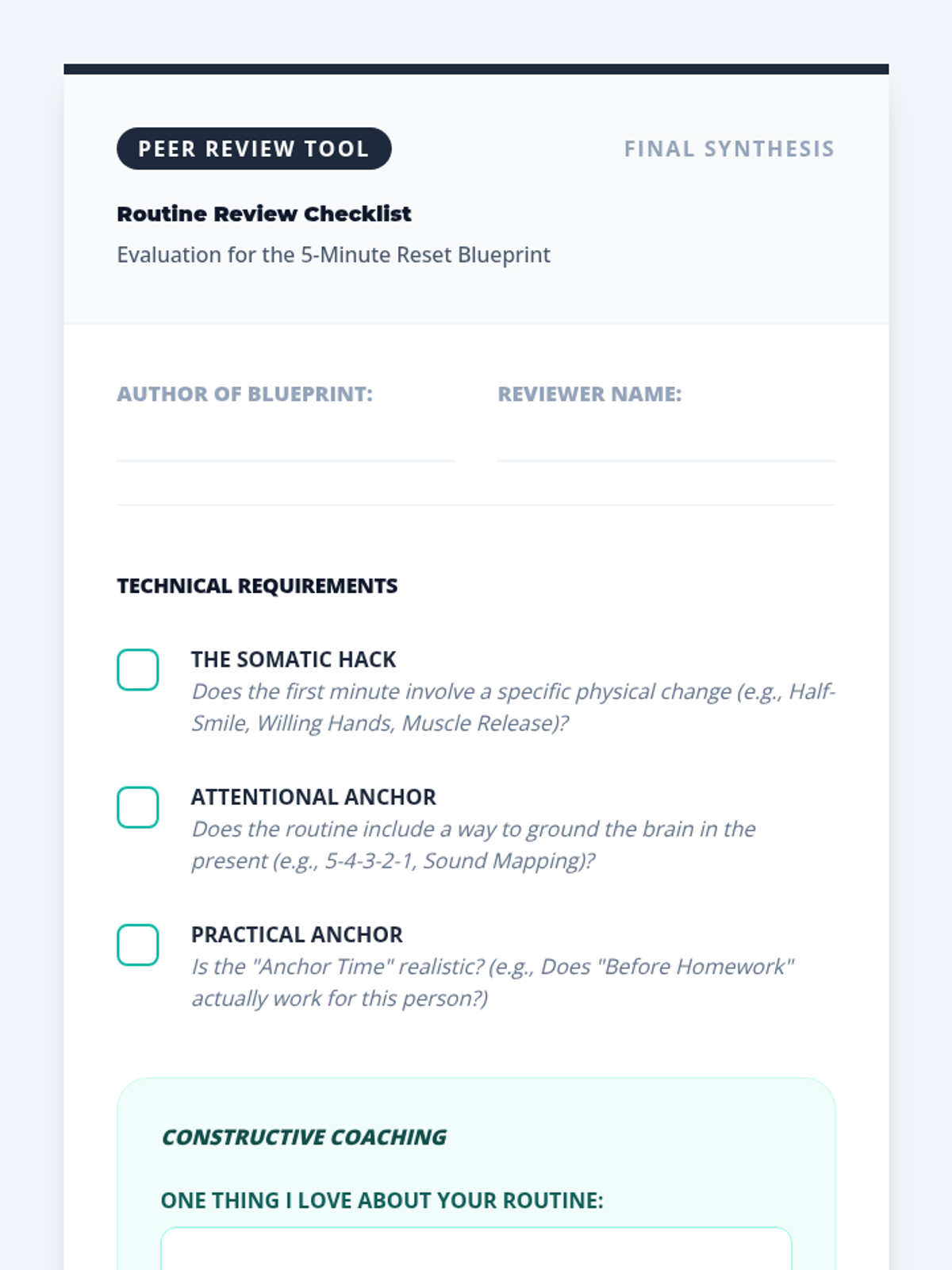
Students synthesize their learning into a personalized 5-minute daily routine that includes both physical and mental components of mindfulness and acceptance.
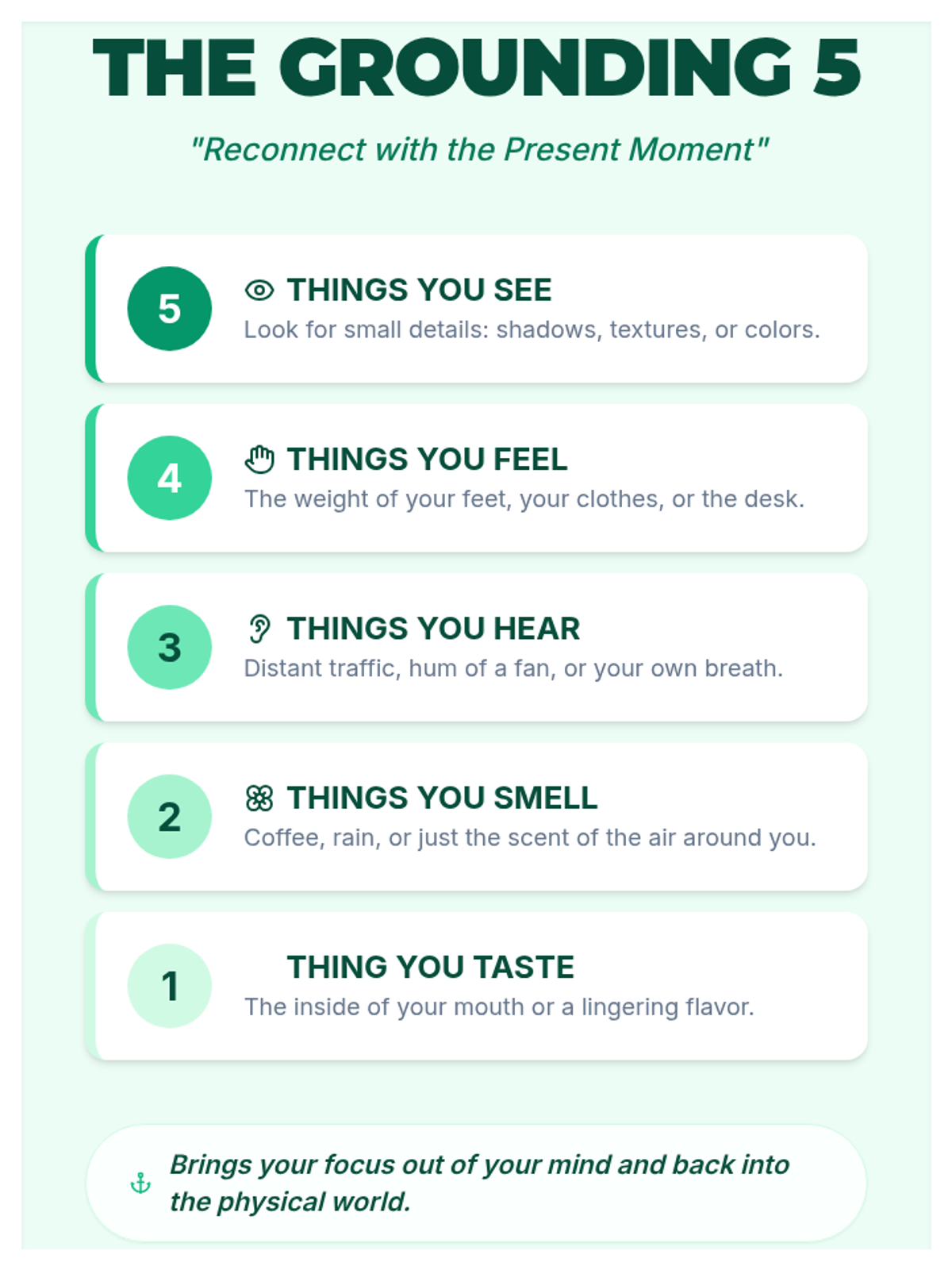
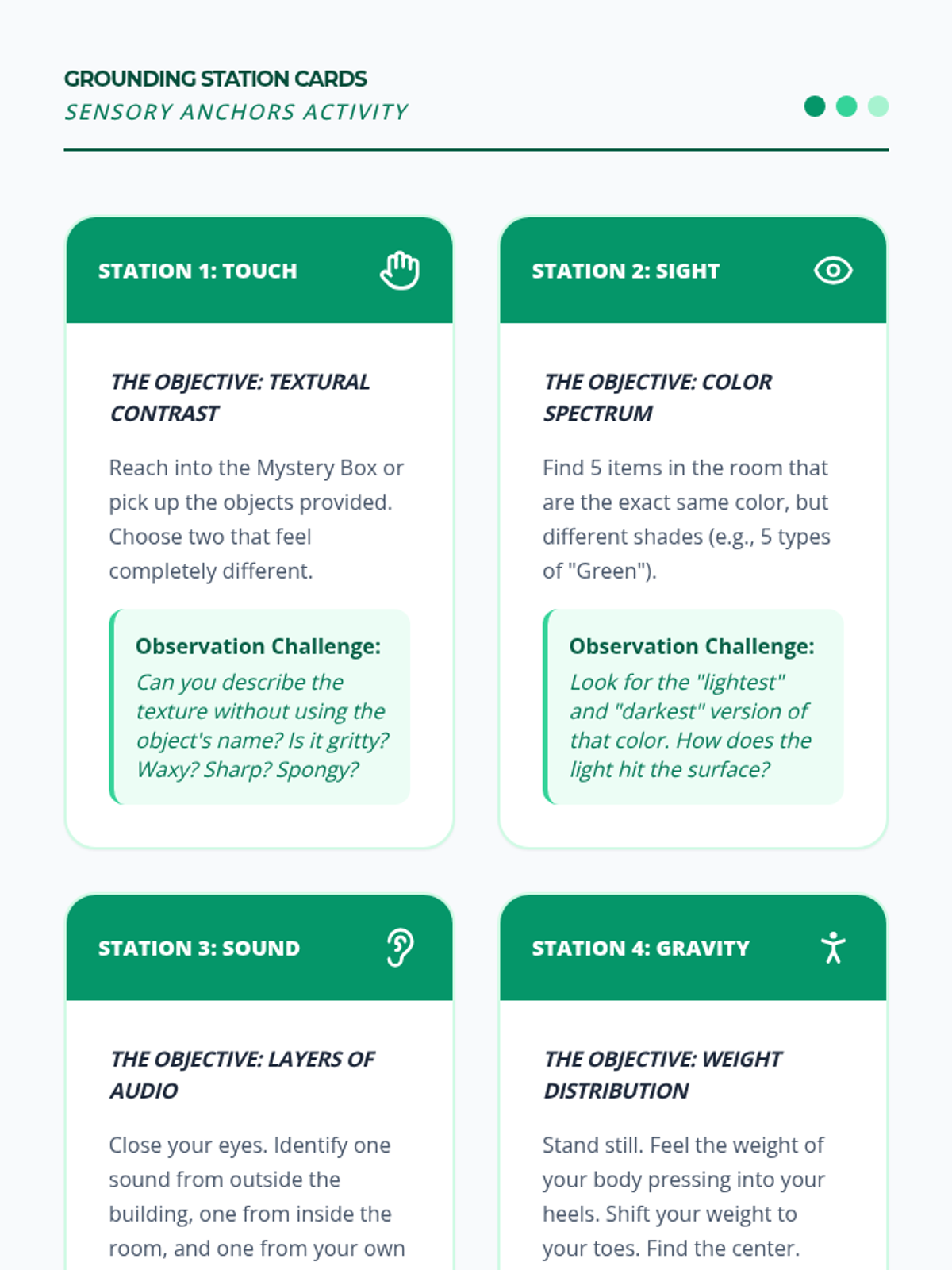
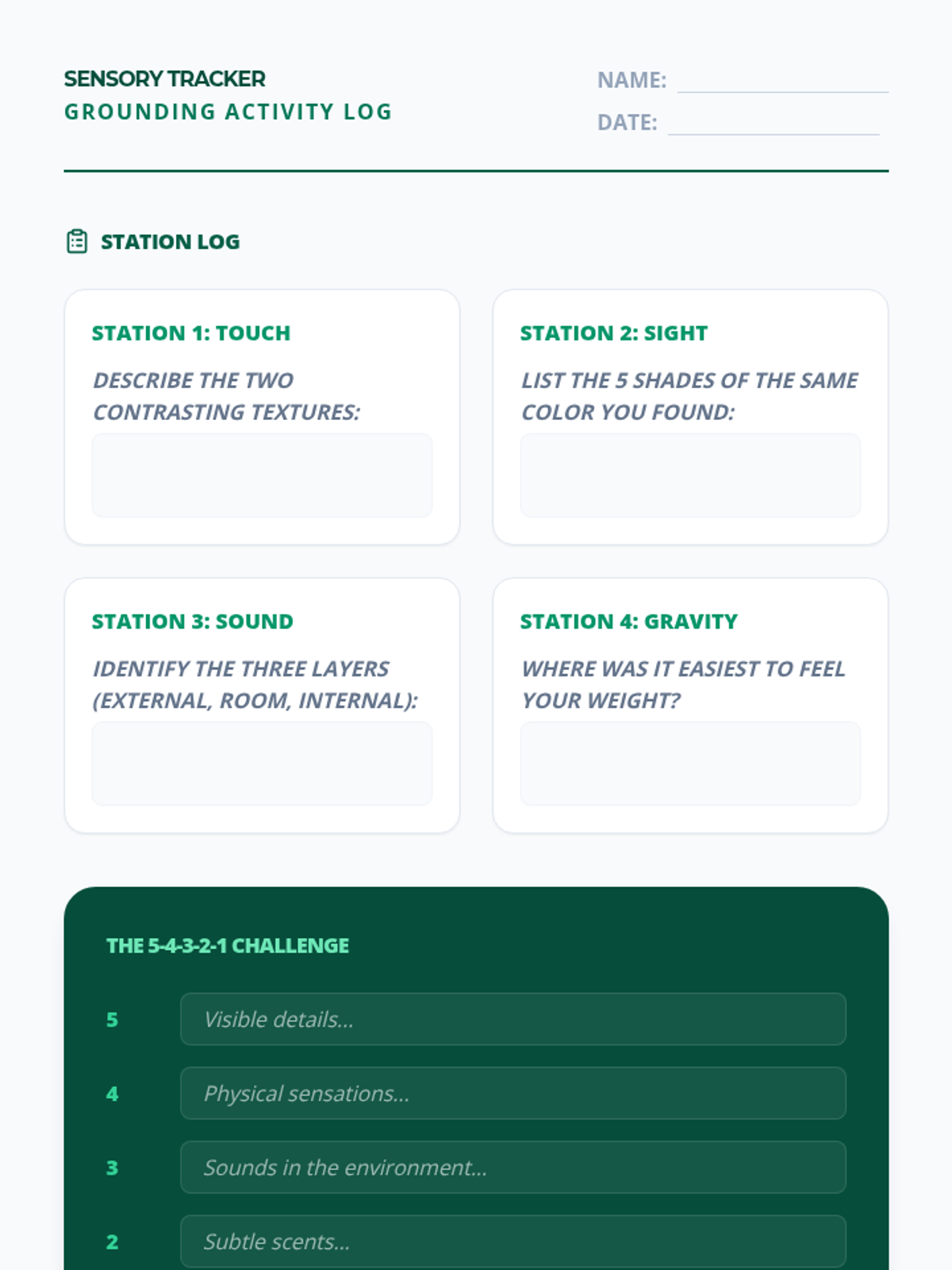
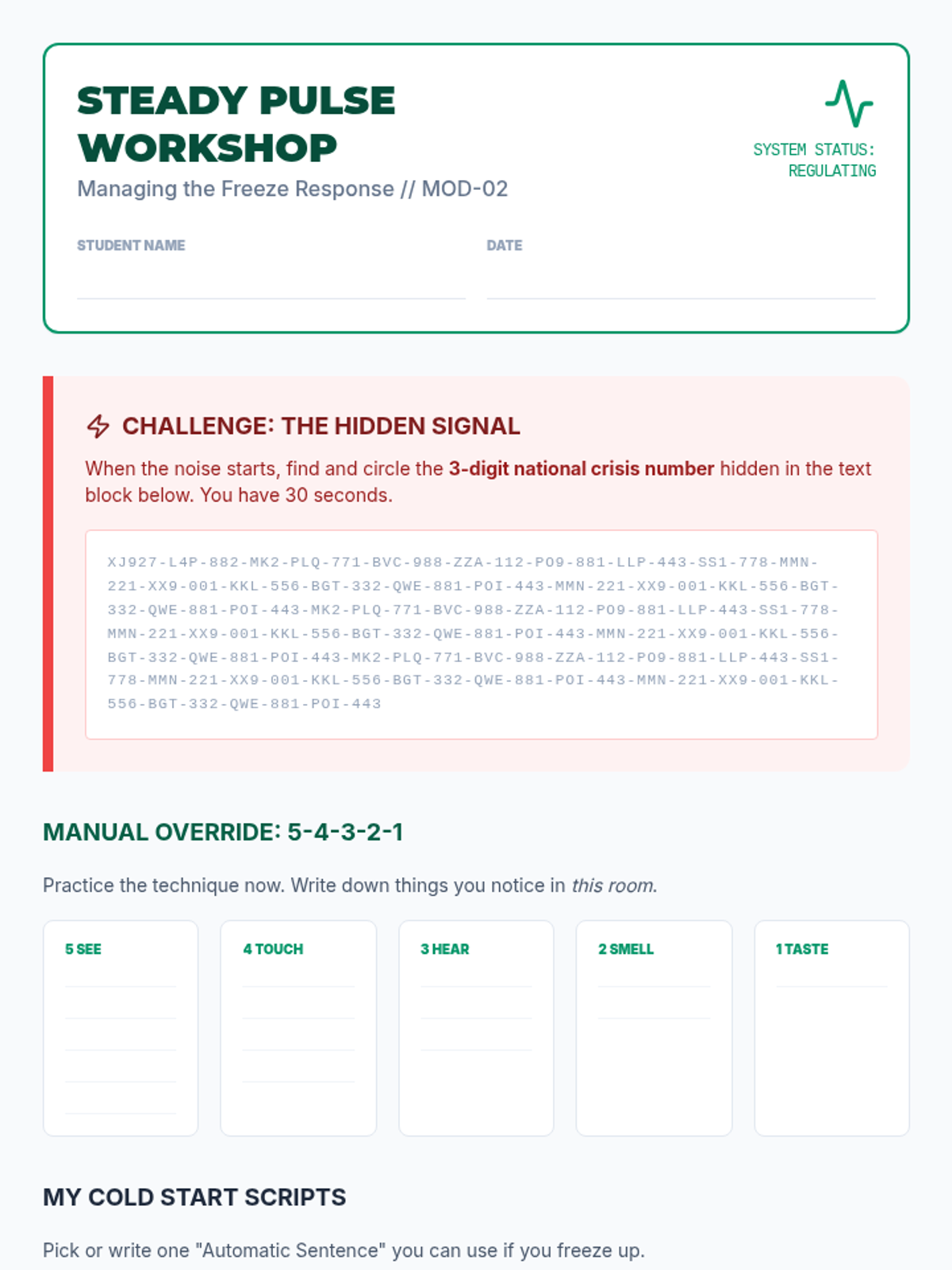
Using the 5-4-3-2-1 technique and sensory stations to anchor students in the present moment and move away from ruminative thoughts.
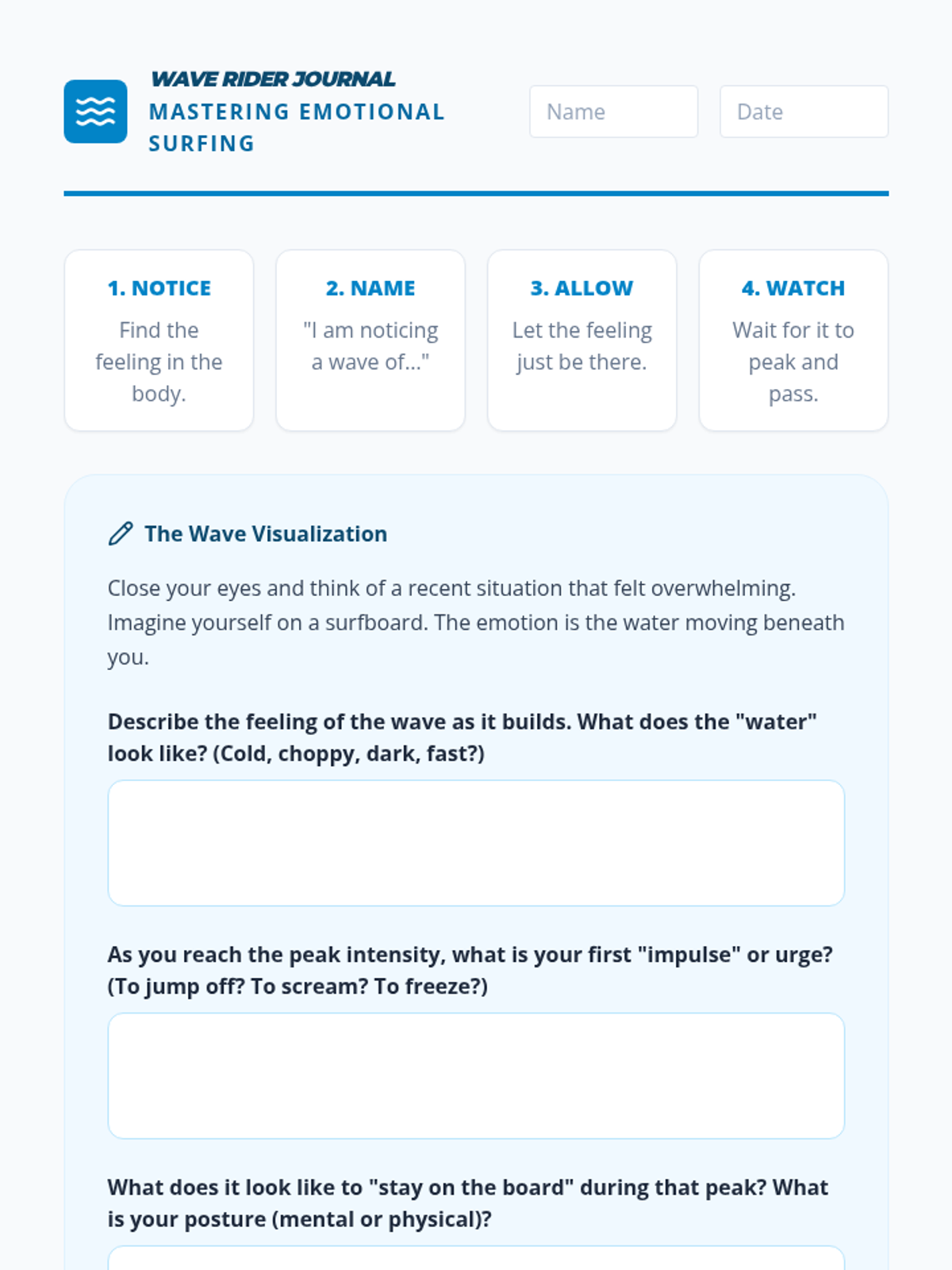
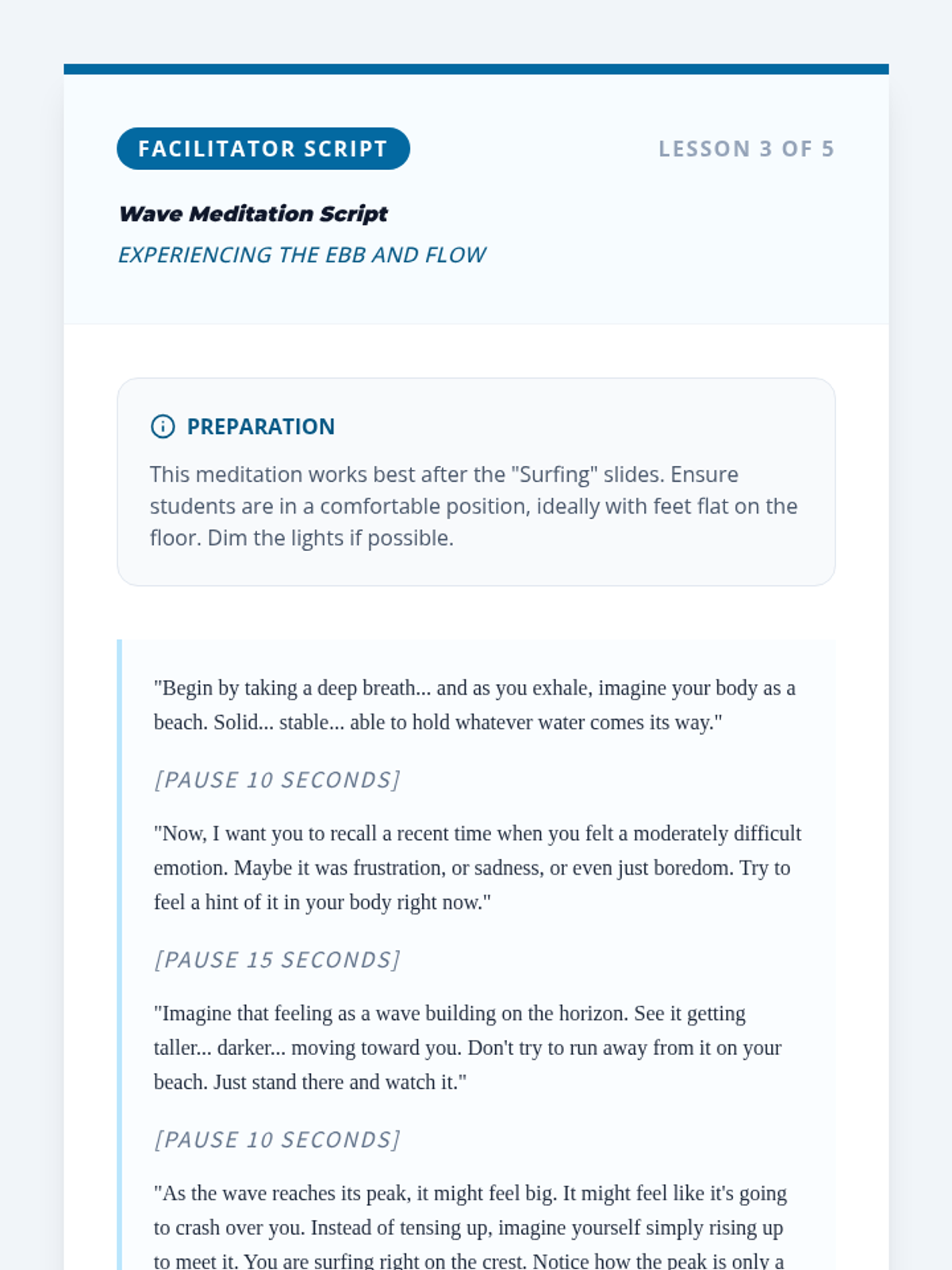
Students learn to observe emotions as waves, practicing the skill of 'riding the wave' rather than fighting or being overwhelmed by intense feelings.
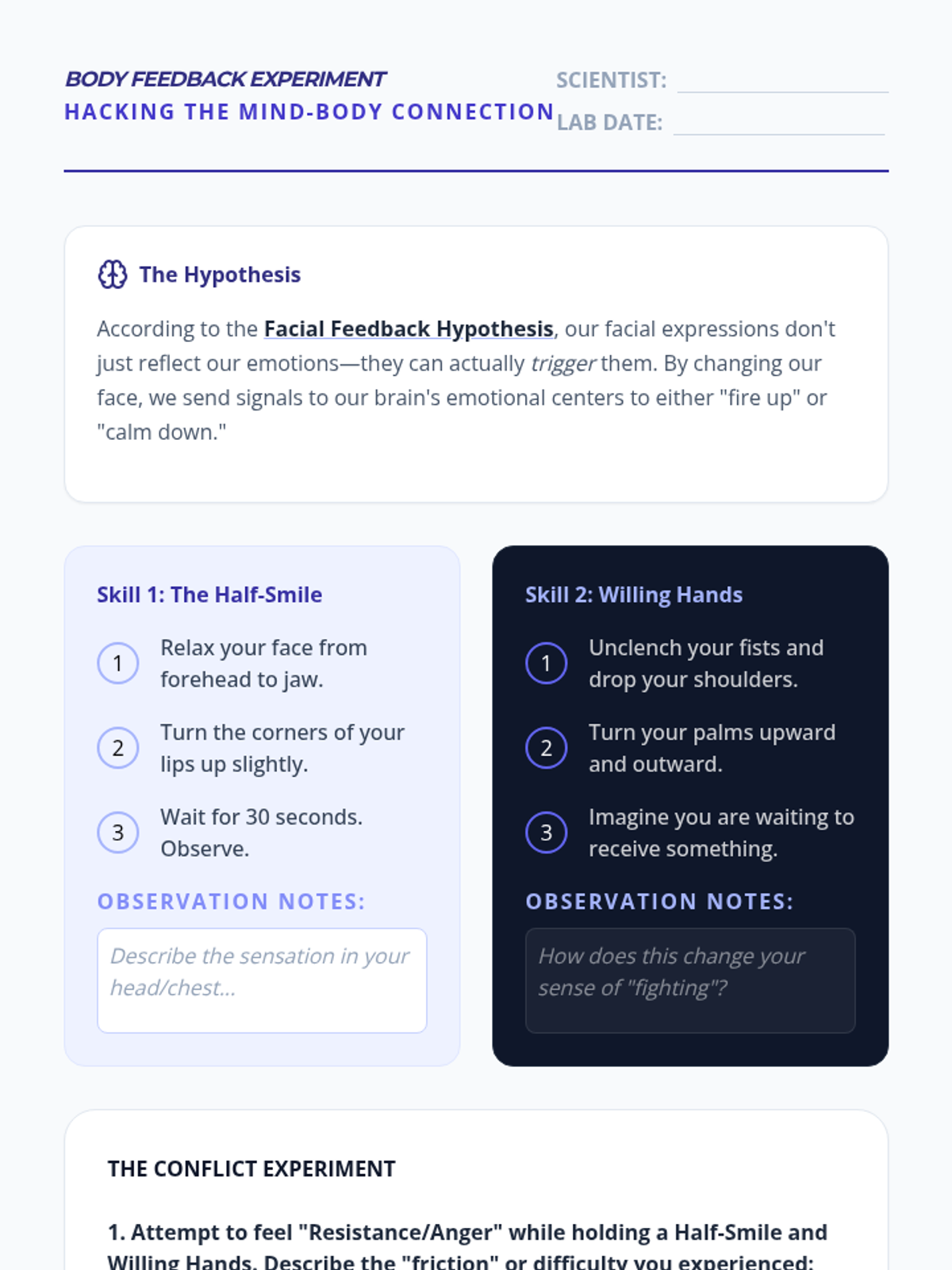
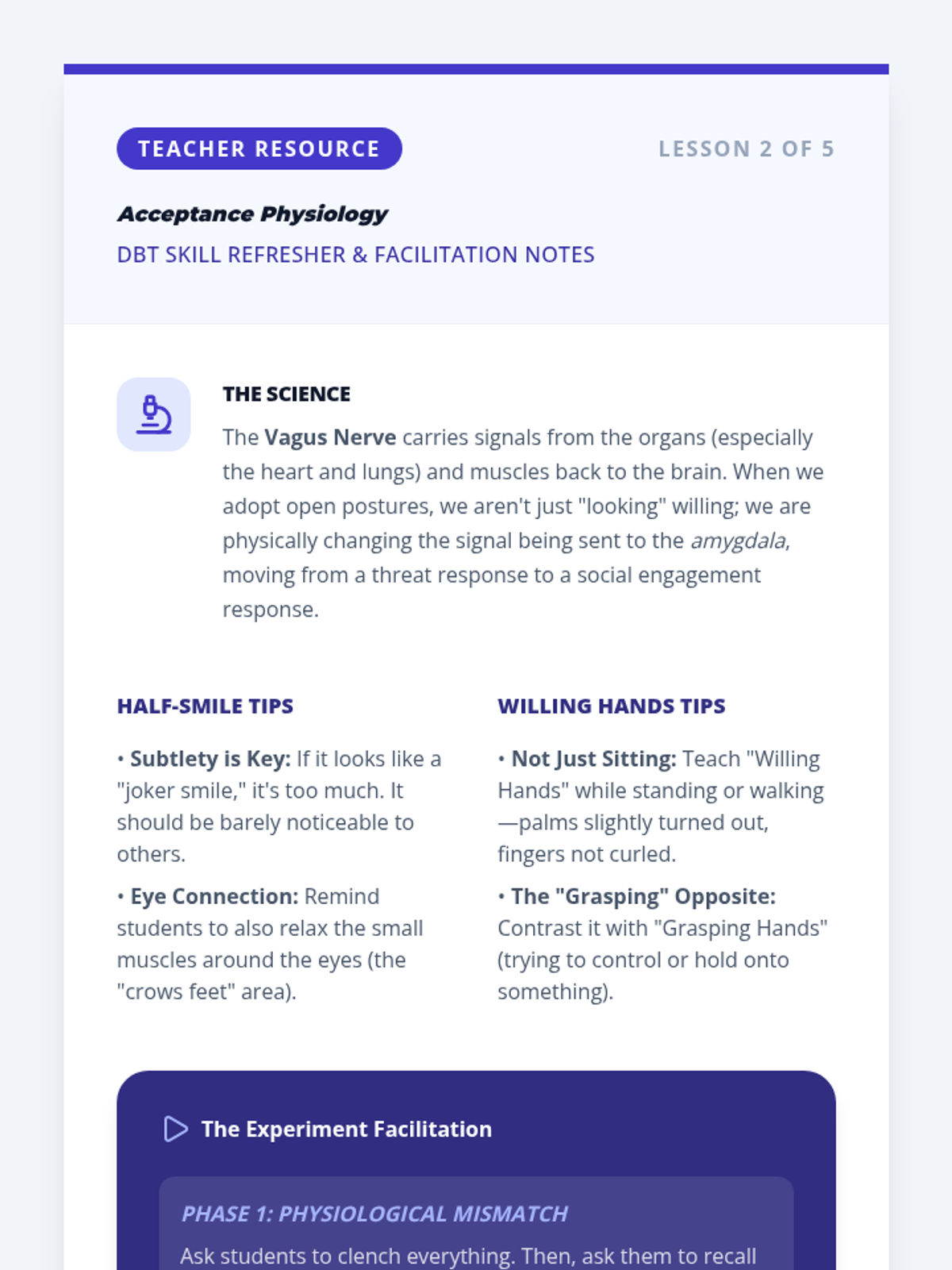
Introduction to DBT skills 'Half-Smile' and 'Willing Hands' to explore how facial and body posture can influence emotional states and facilitate acceptance.
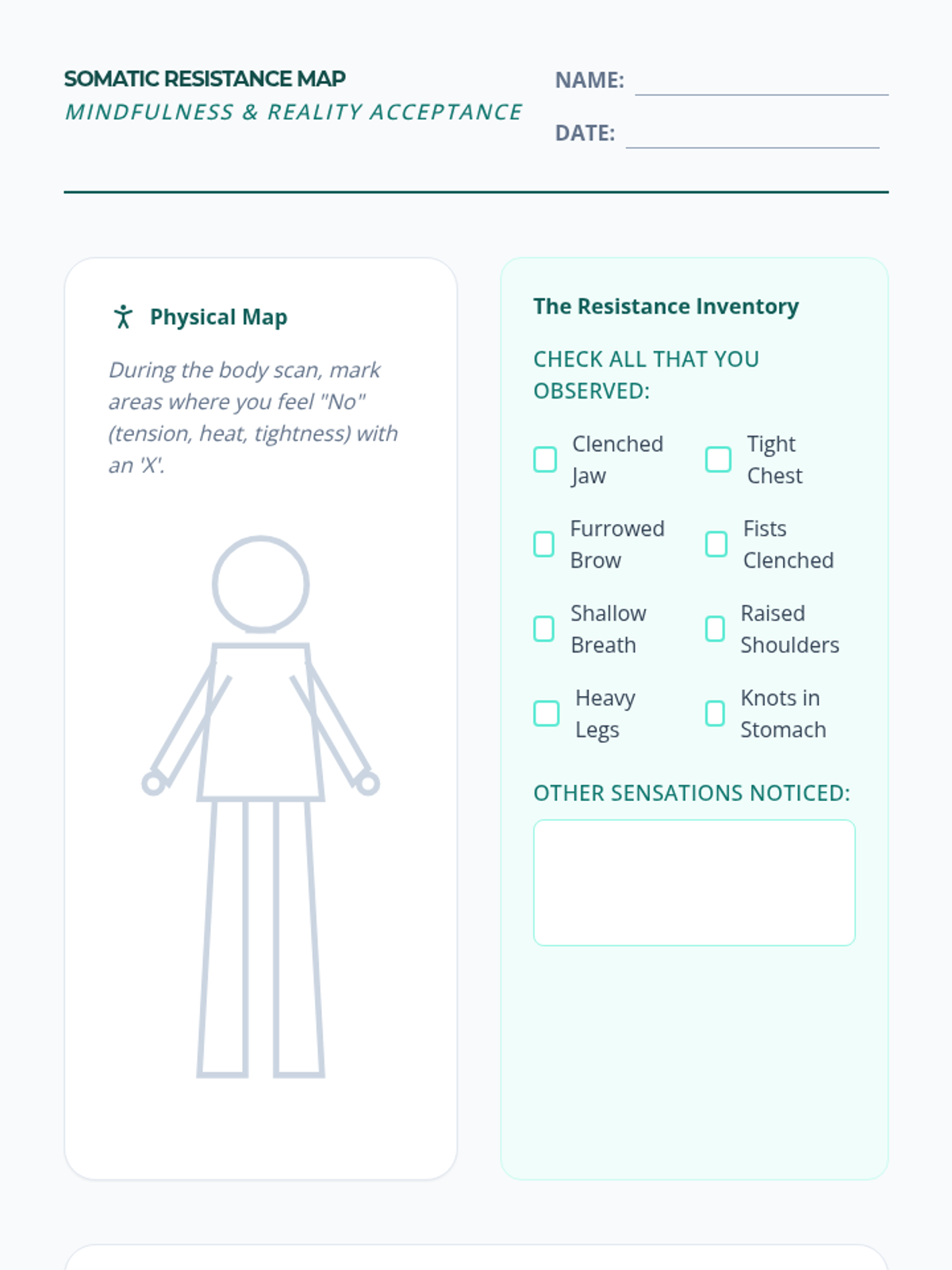
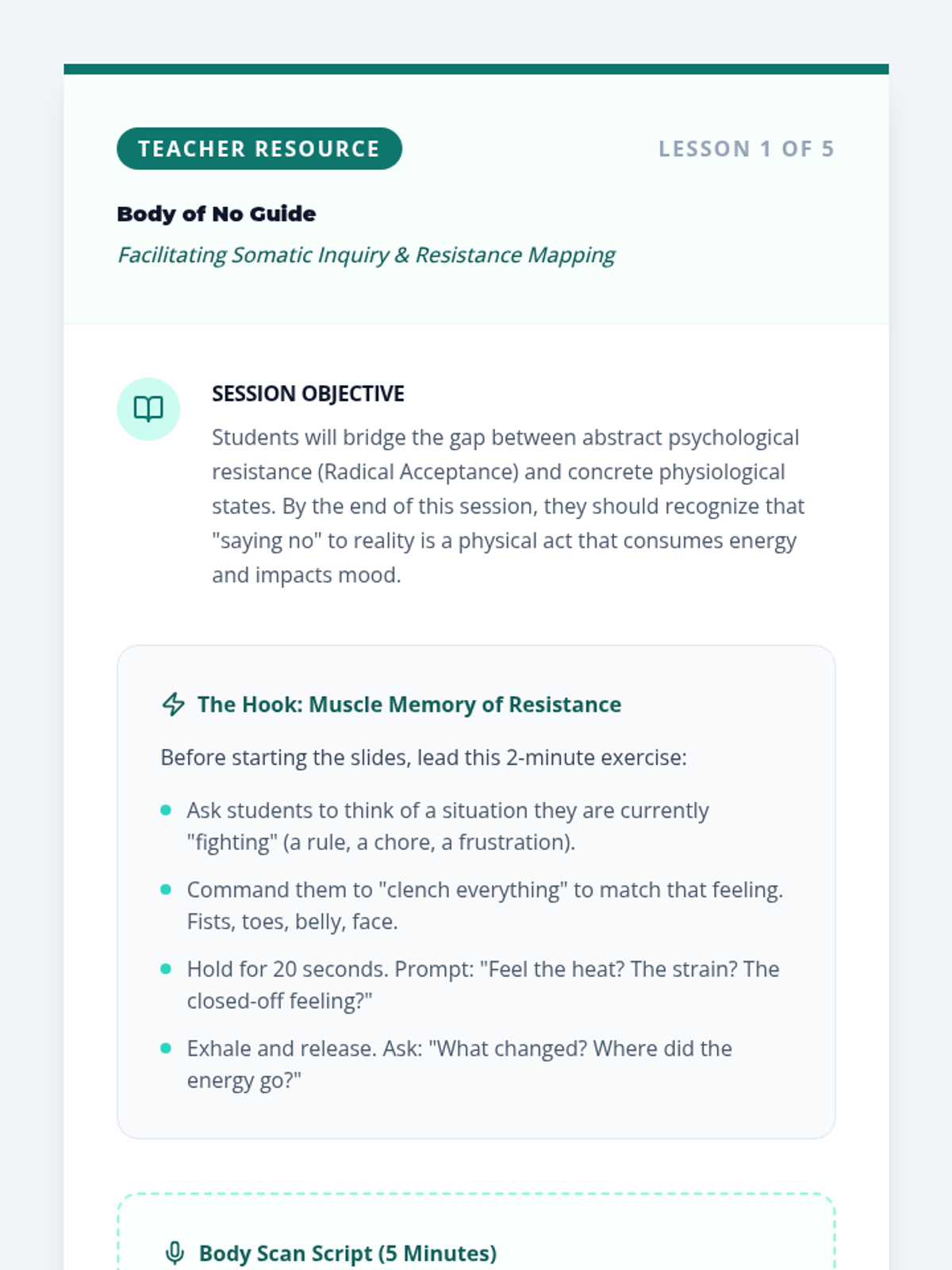
Students identify where they hold 'no' in their bodies through guided body scans and inquiry, mapping their physical stress responses to understand the physical component of psychological resistance.
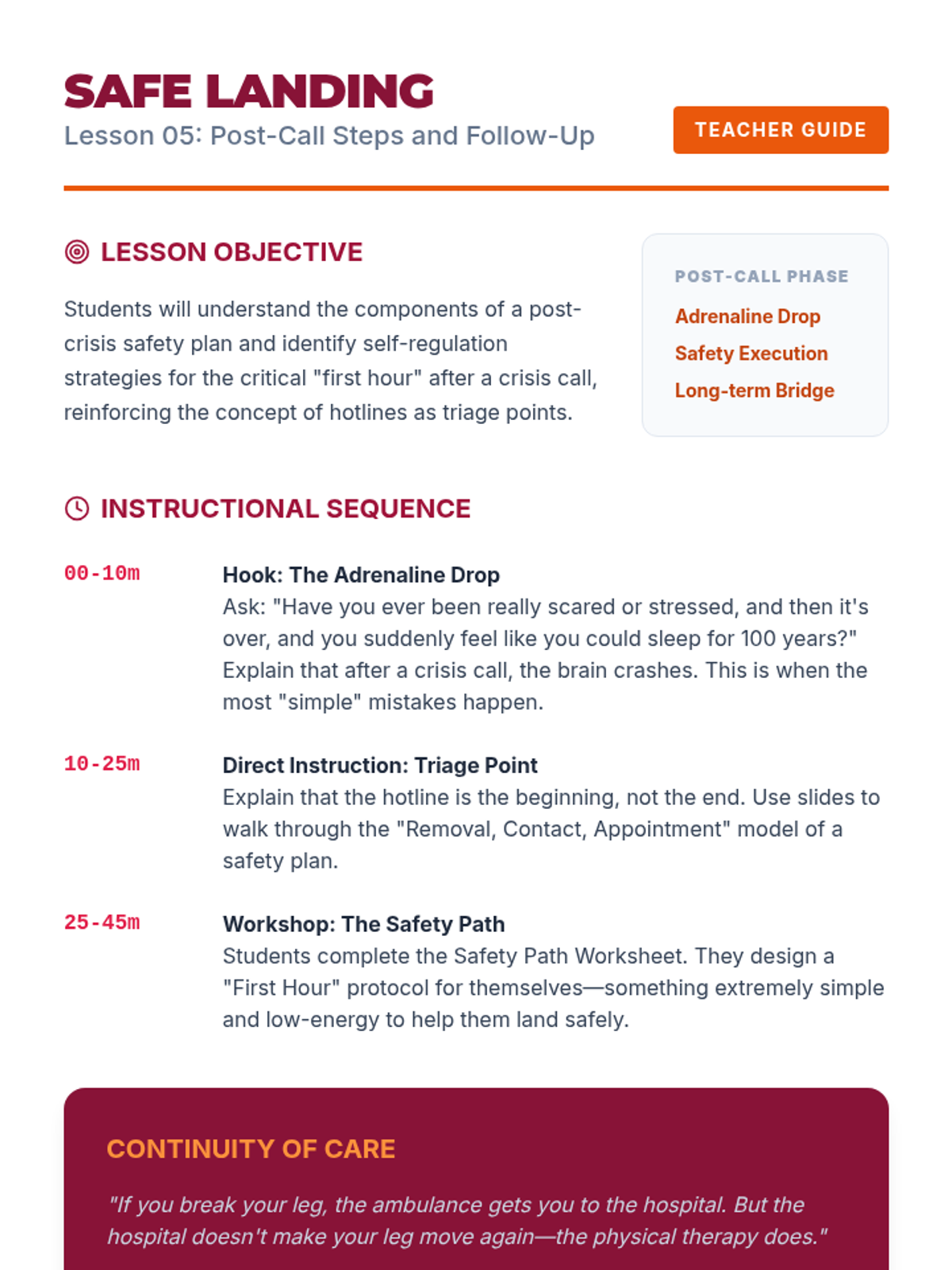
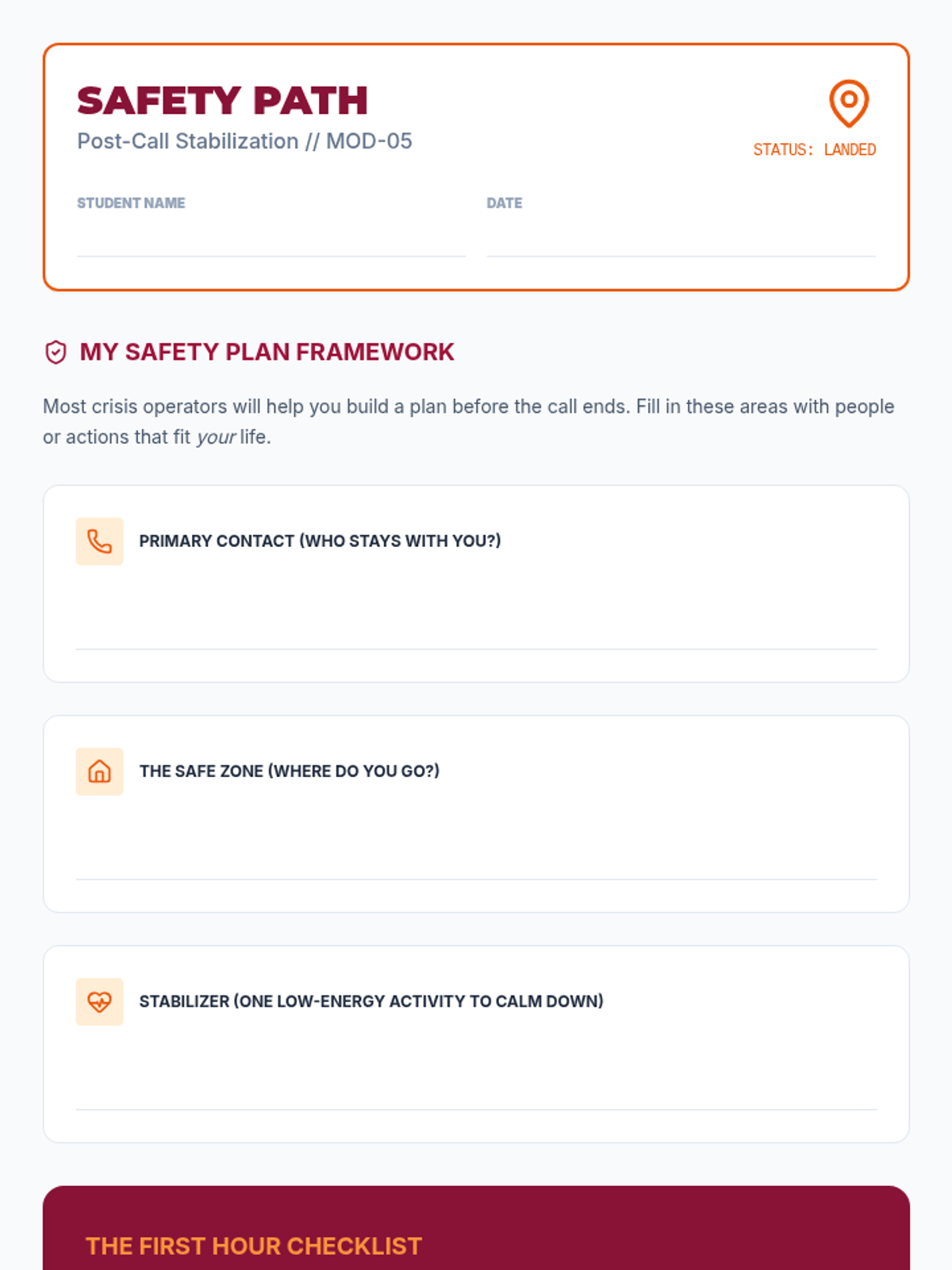
The sequence concludes with what happens after the hang-up. Students discuss the importance of following safety plans generated during the call and how to seek ongoing support, reinforcing that the hotline is a triage point, not the final cure.
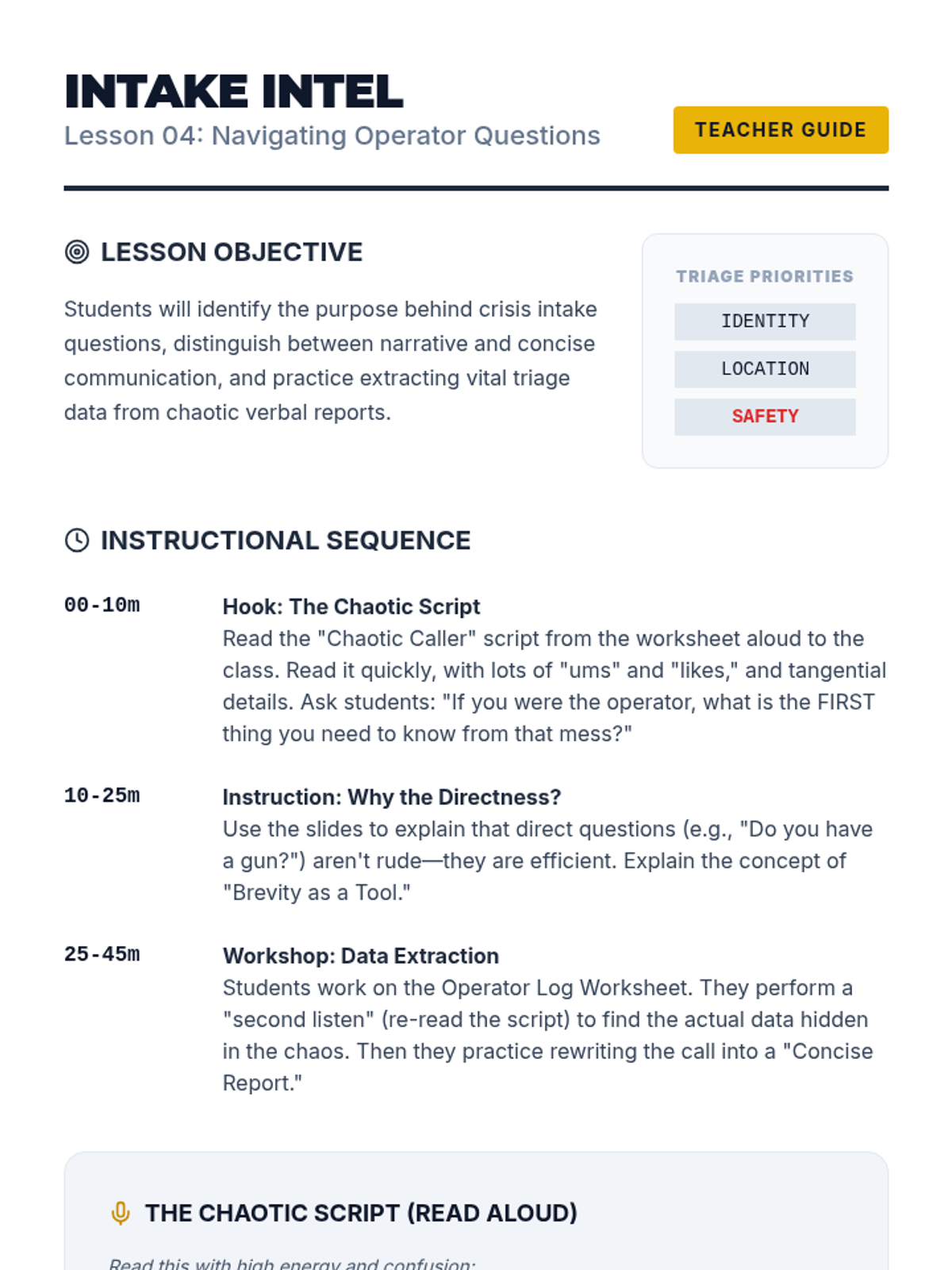
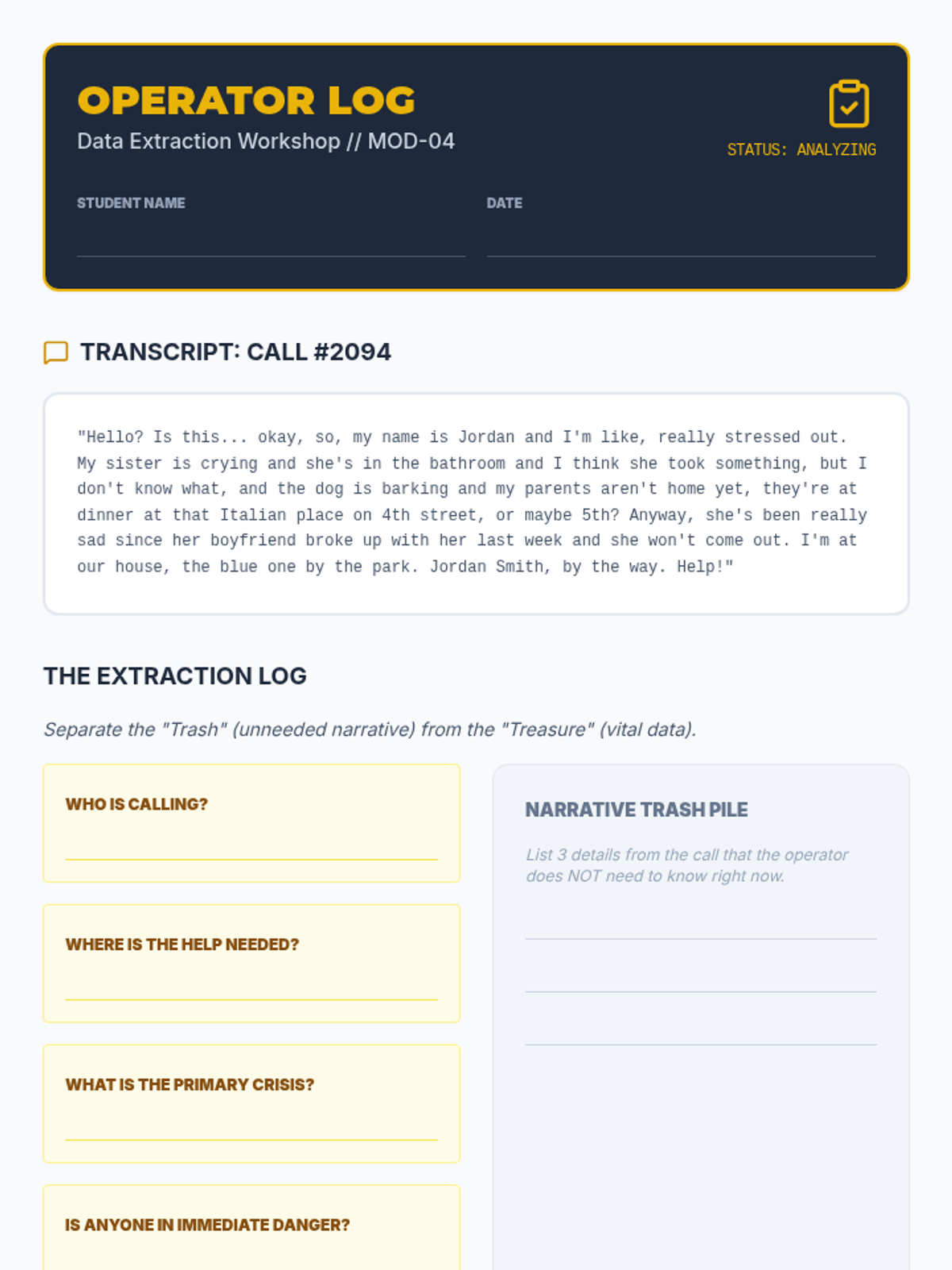
Students review standard intake questionnaires to demystify the probing questions operators ask. They practice listening for key terms and providing concise answers through a 'third-party' analysis where they critique a fictional dialogue.
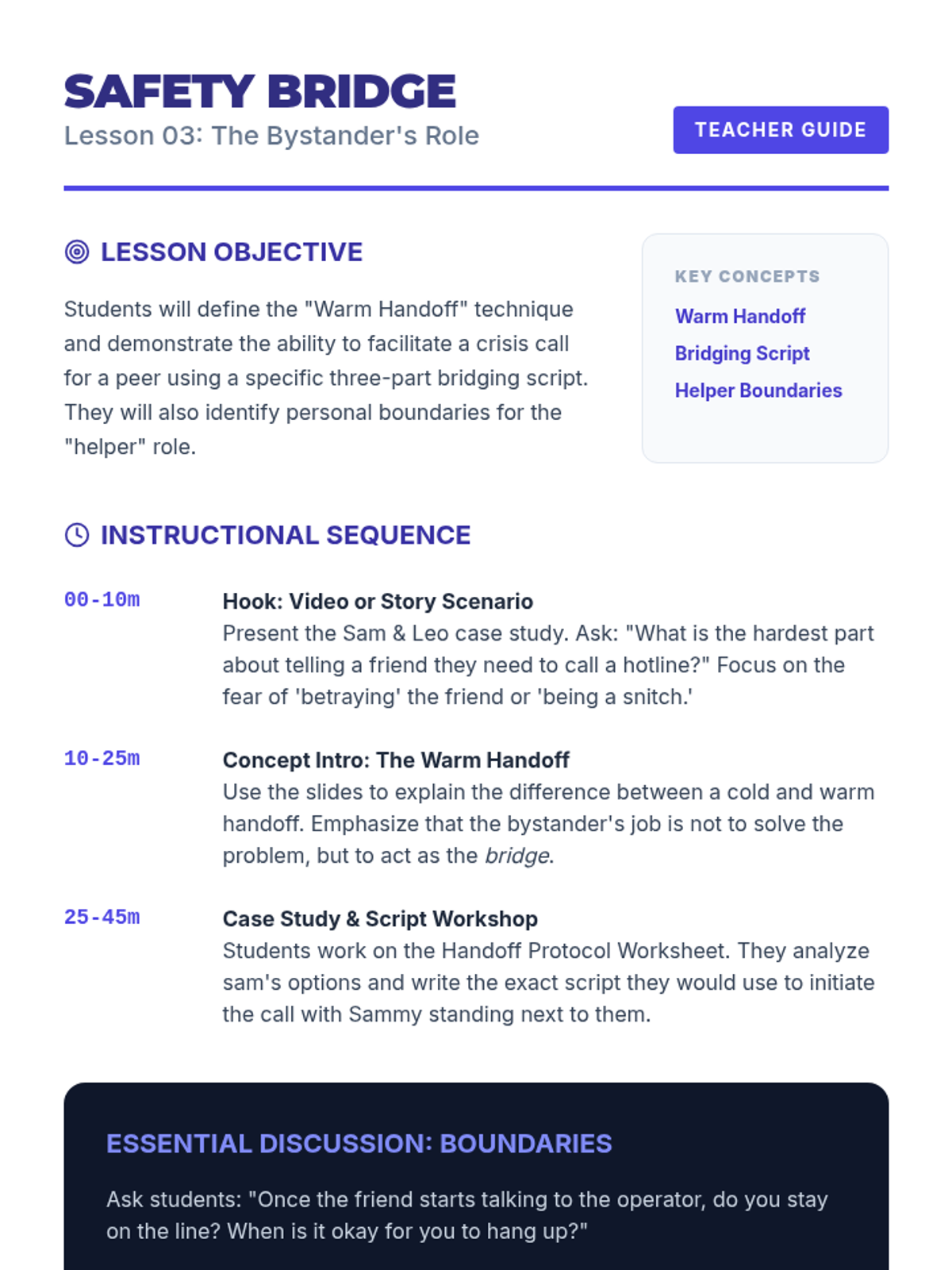
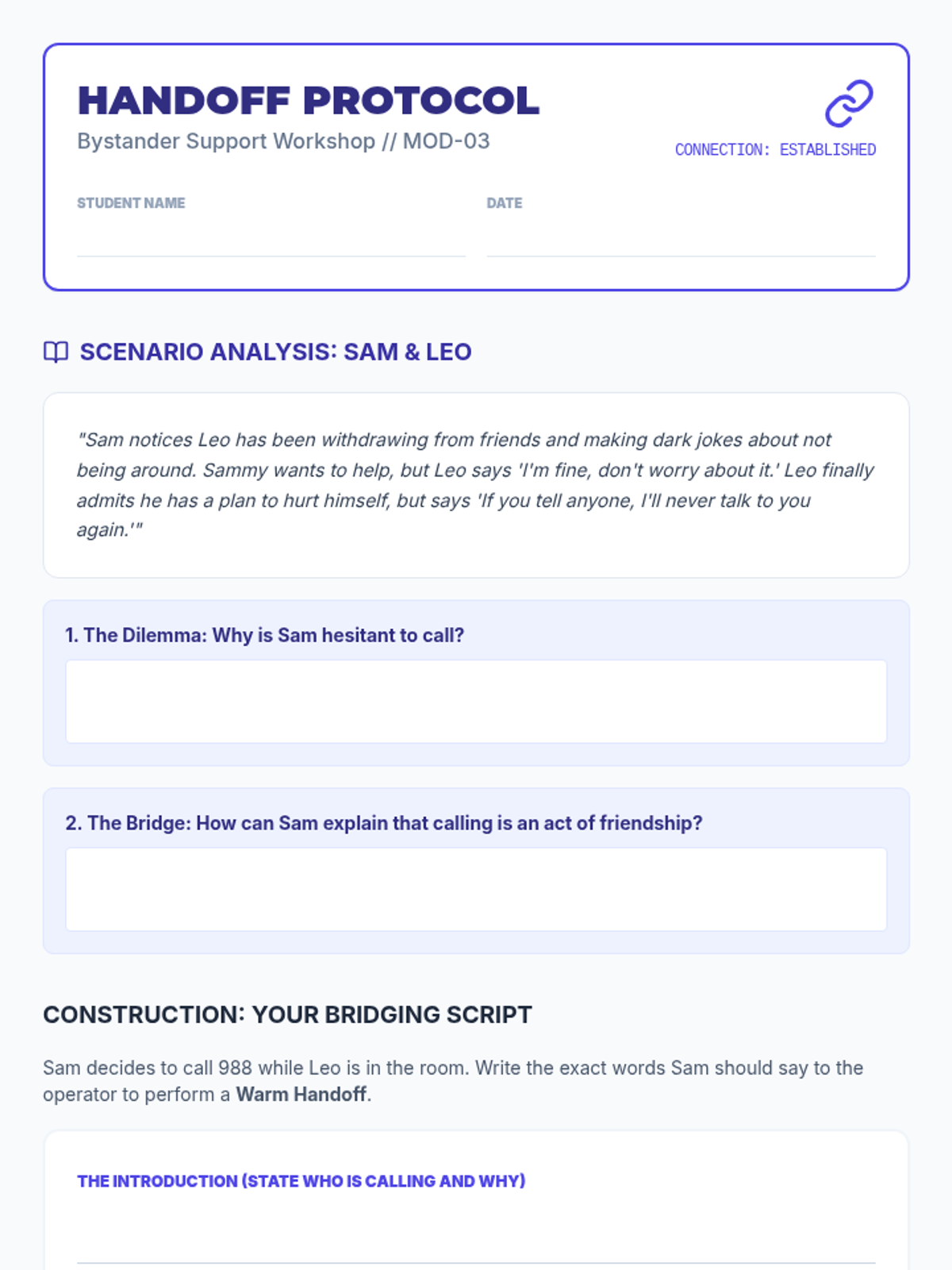
Students learn how to support a friend by making the call with them or for them. The lesson focuses on the concept of a 'warm handoff'—staying on the line until the professional takes over—and the specific language to use to bridge the gap.
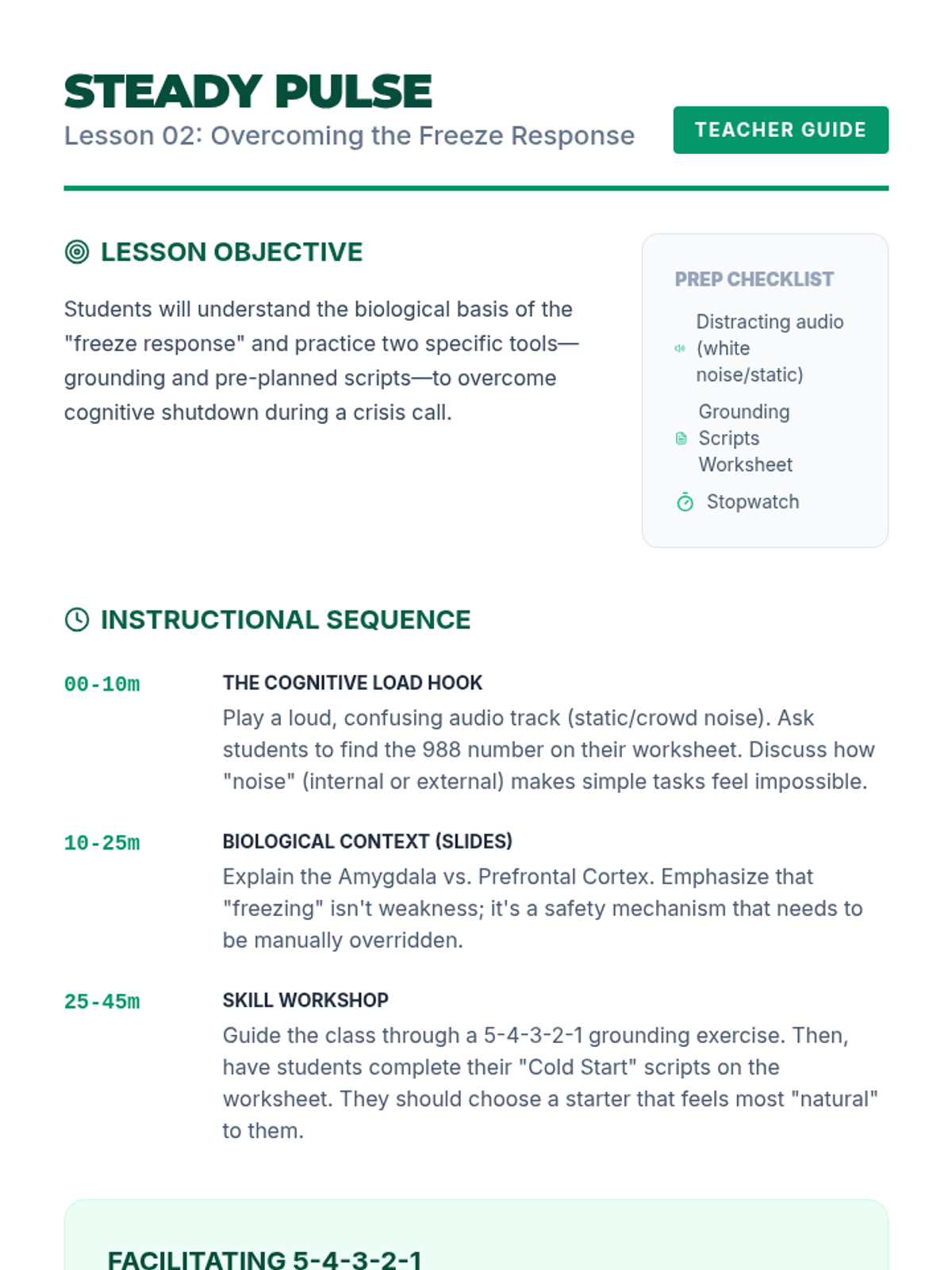
This lesson addresses the physiological stress response that makes speaking difficult during a crisis. Students learn grounding techniques and simple pre-planned scripts (sentence starters) to initiate a call when they are overwhelmed.
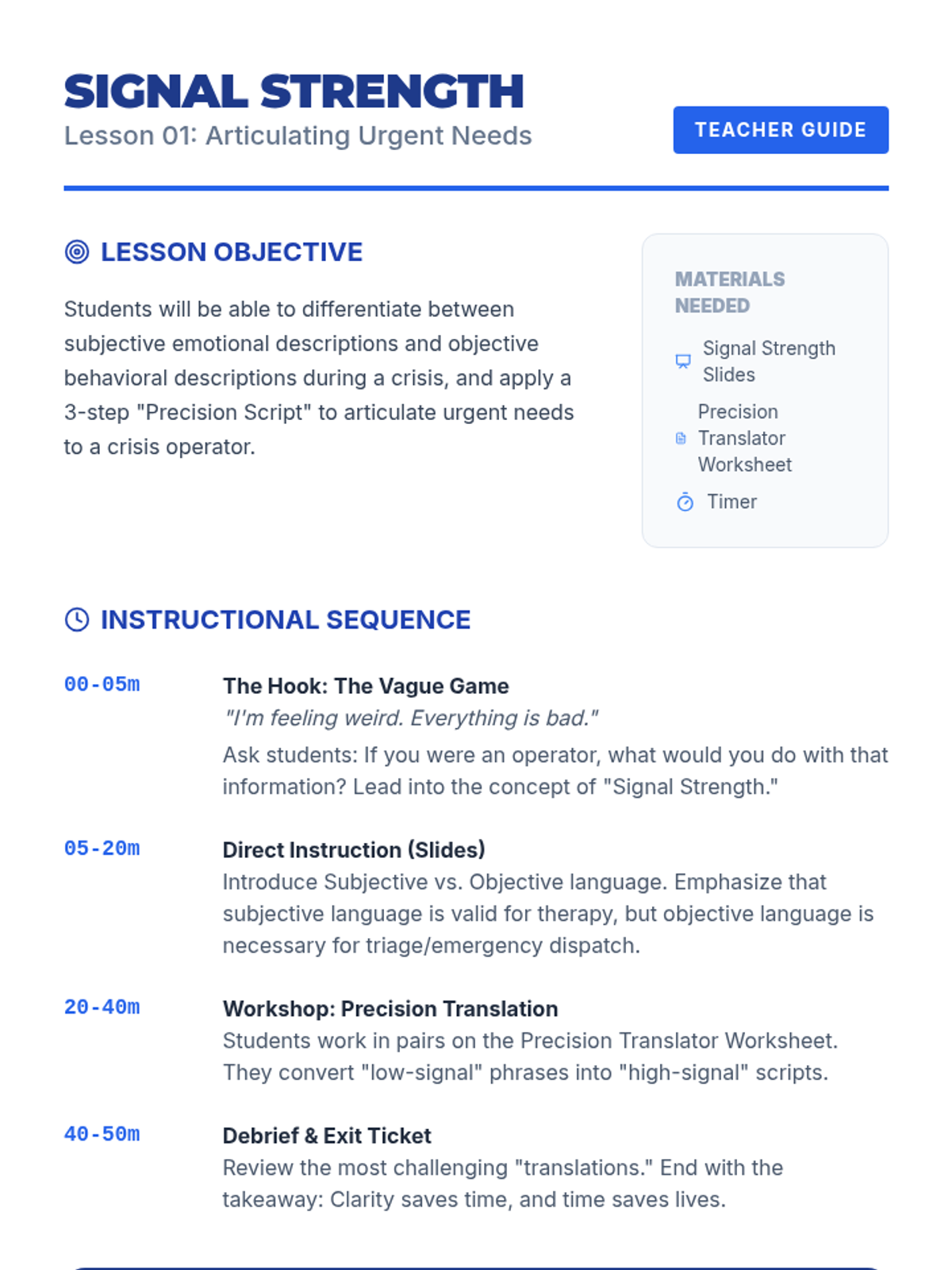
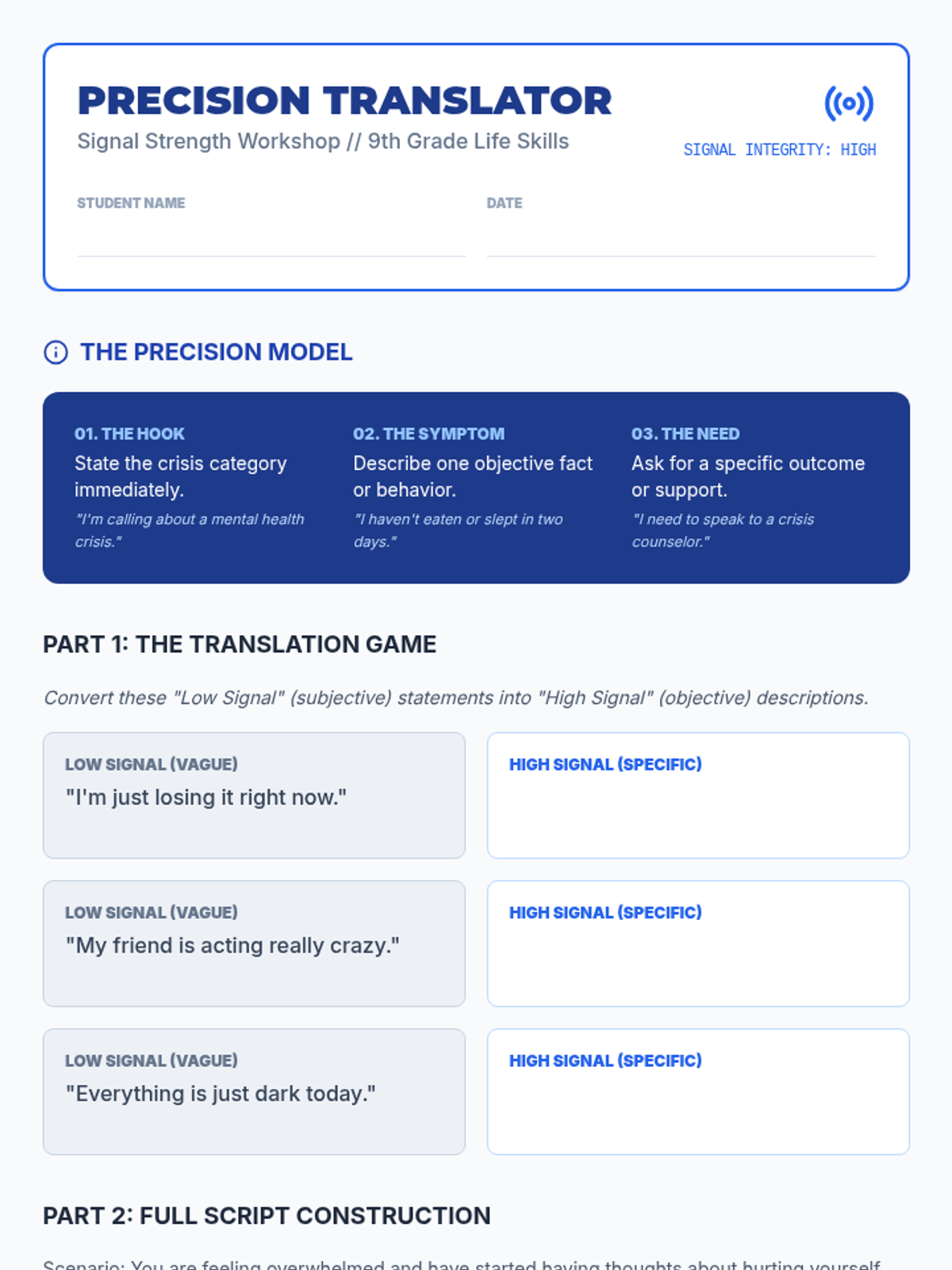
Students learn to translate vague feelings of distress into objective language that helps operators assess risk quickly. They practice using 'I statements' and specific behavioral descriptions through script-writing exercises.
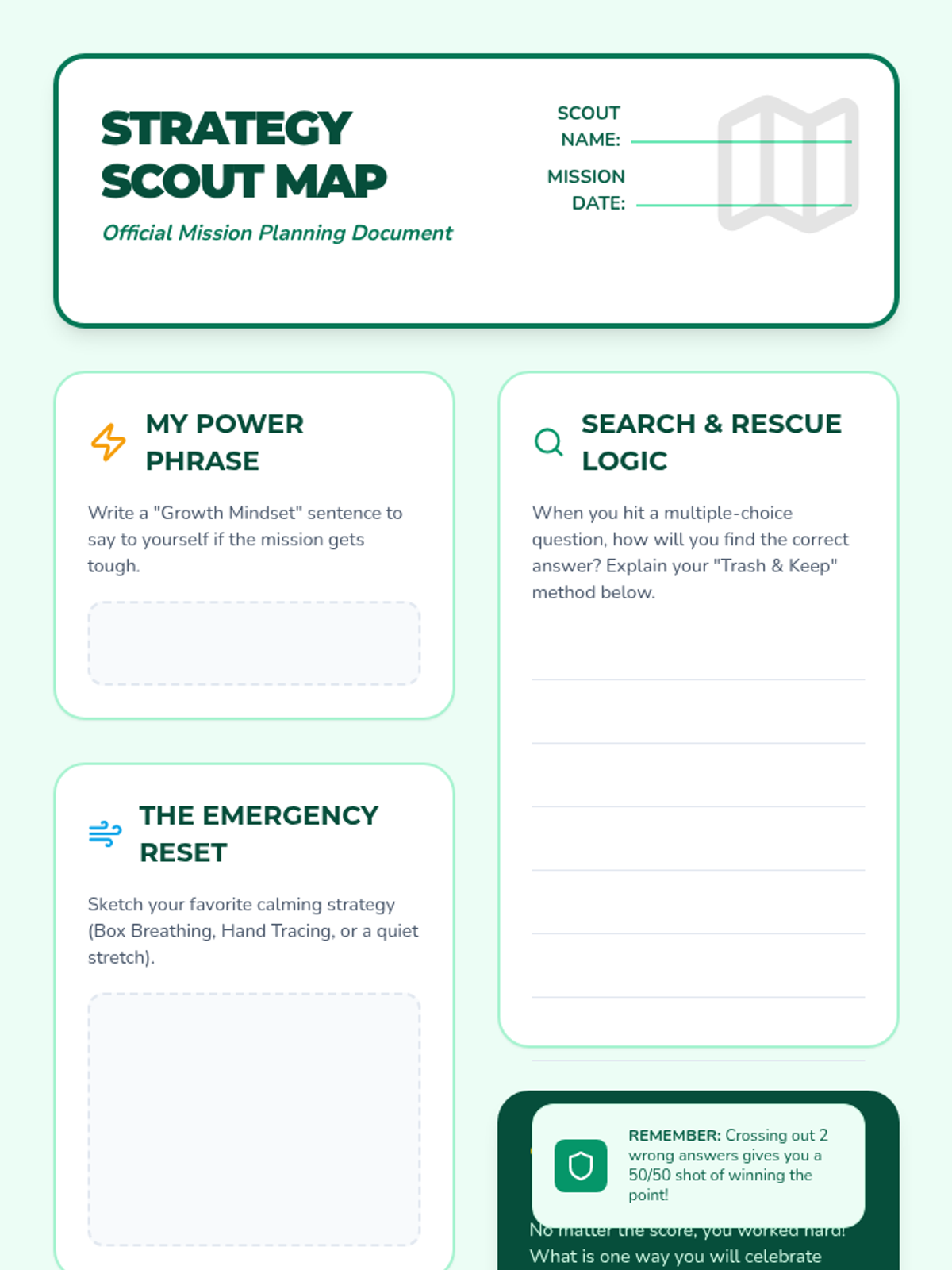
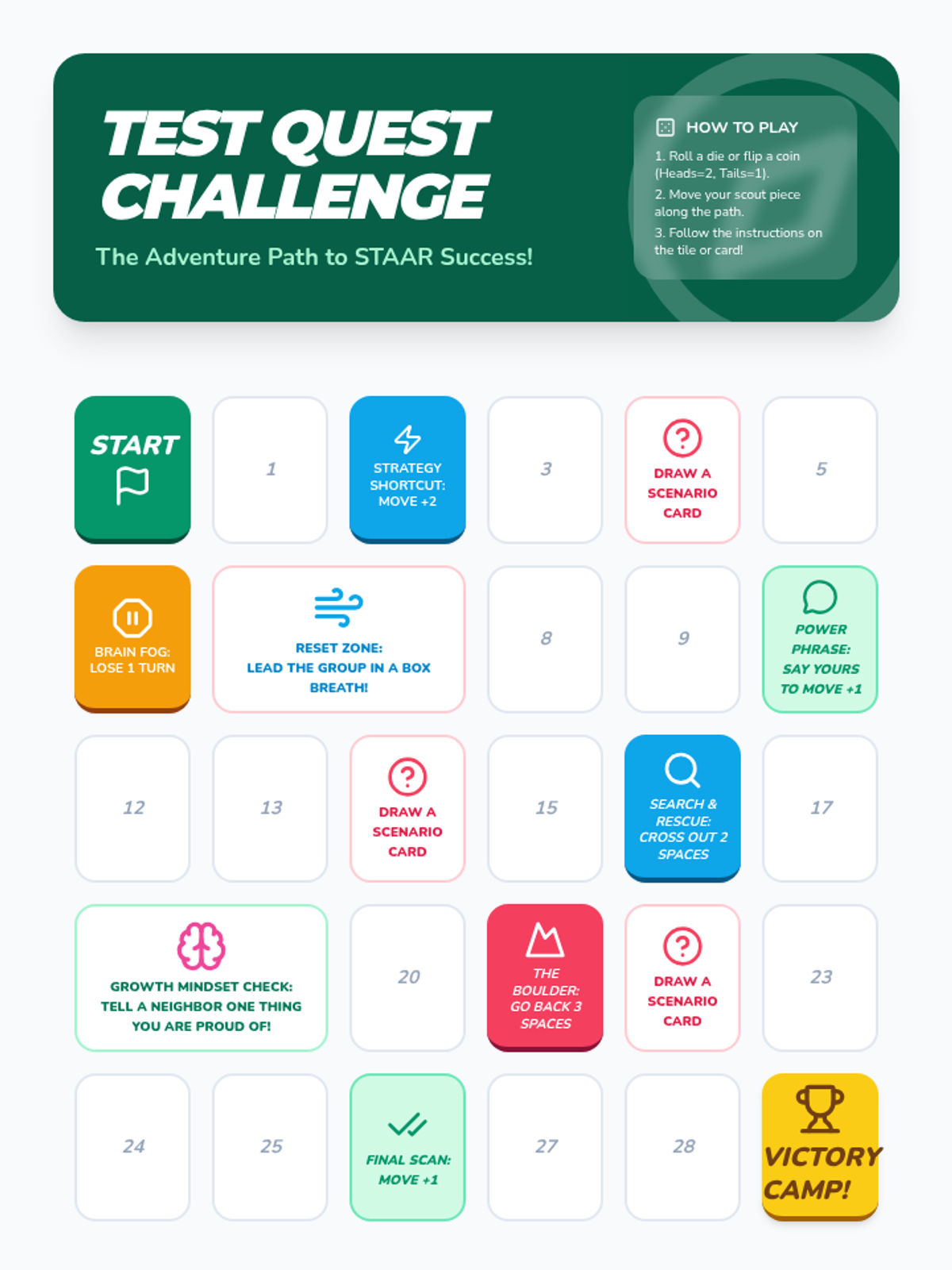
A comprehensive lesson designed to equip students with social-emotional strategies and practical techniques for tackling the STAAR test with confidence and focus.
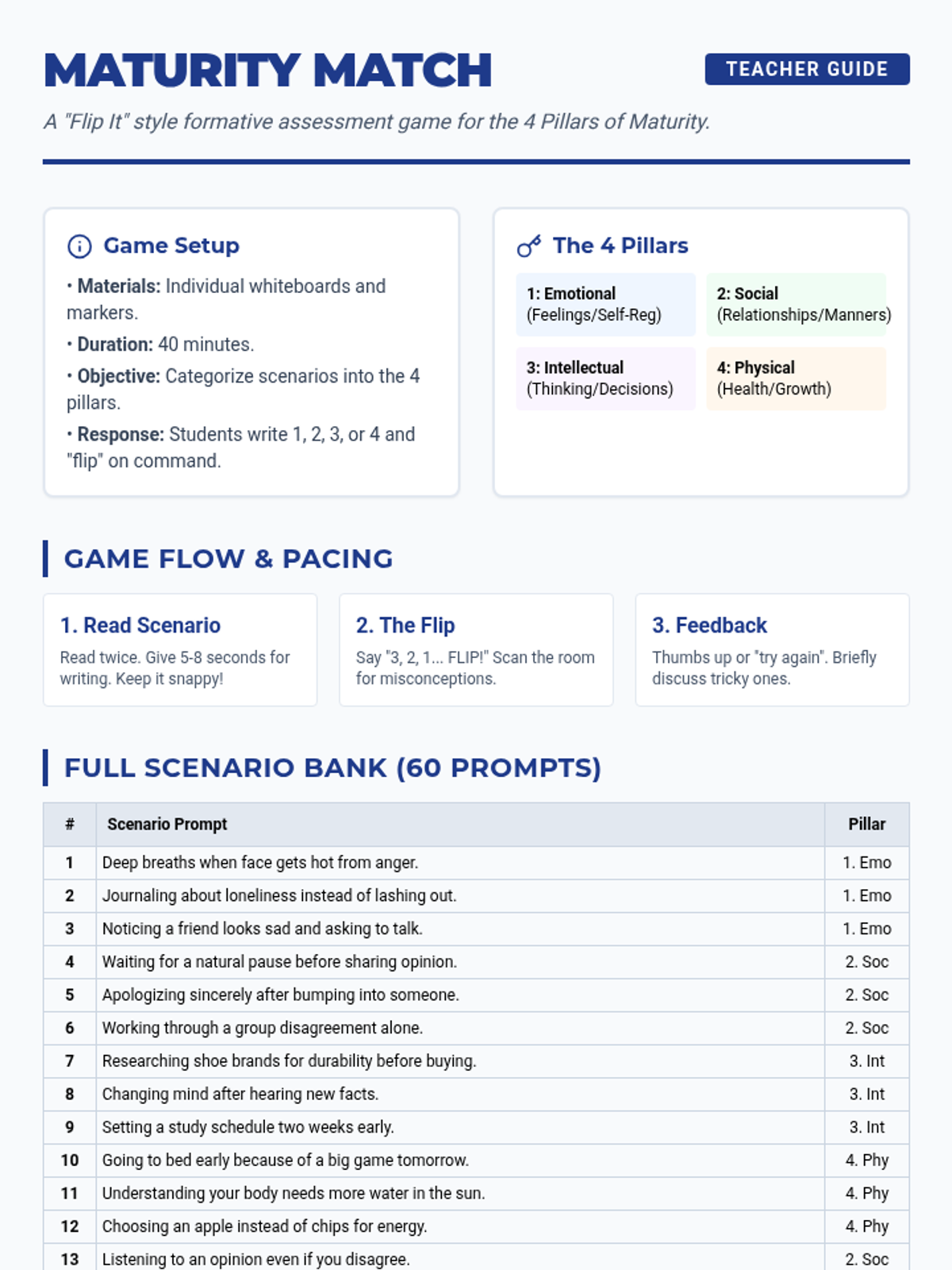
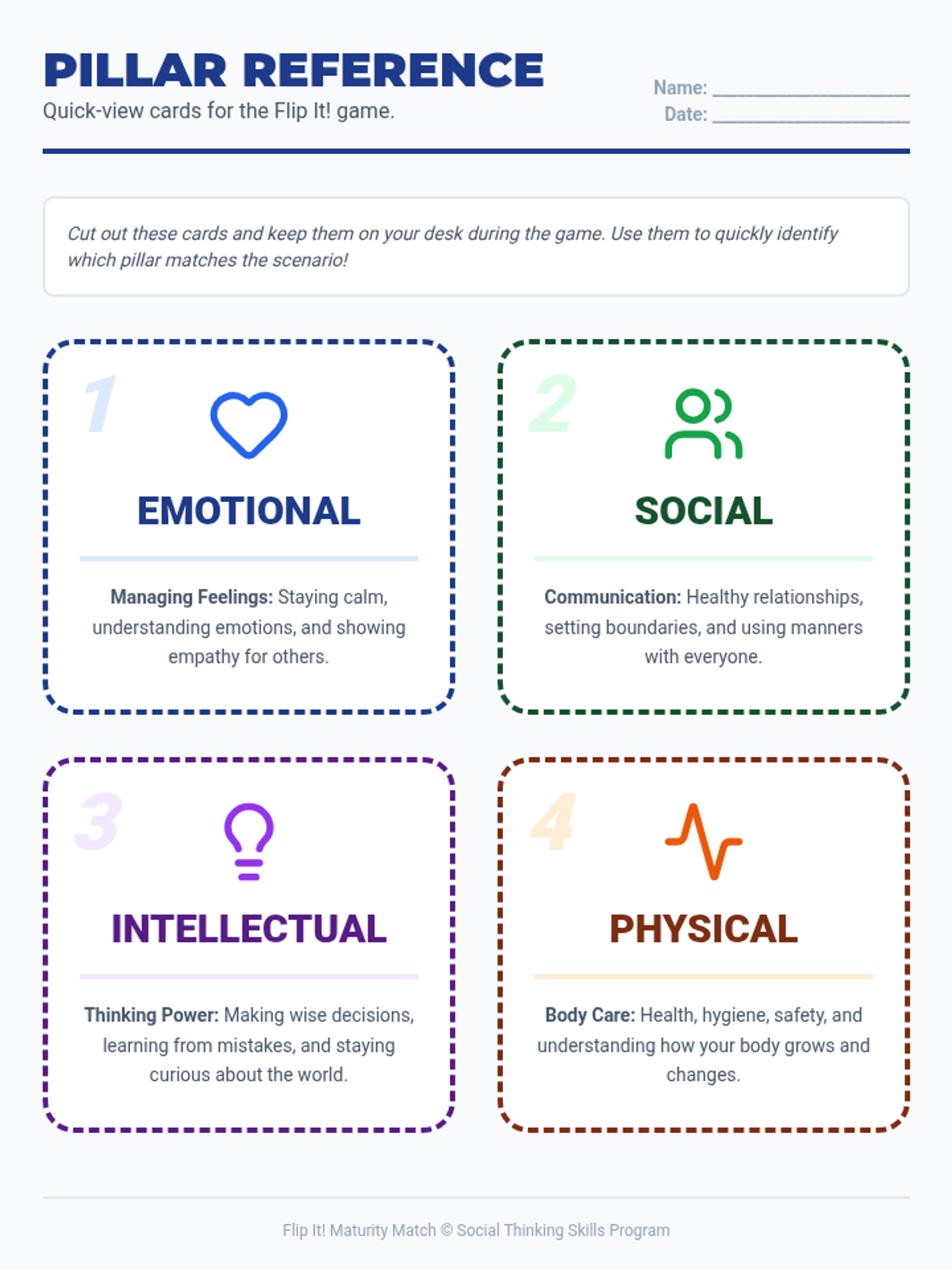
A fast-paced formative assessment game where students identify the four pillars of maturity through real-world scenarios. Includes a visual slide deck, a bank of 60 scenarios for the teacher, and reference cards for students.