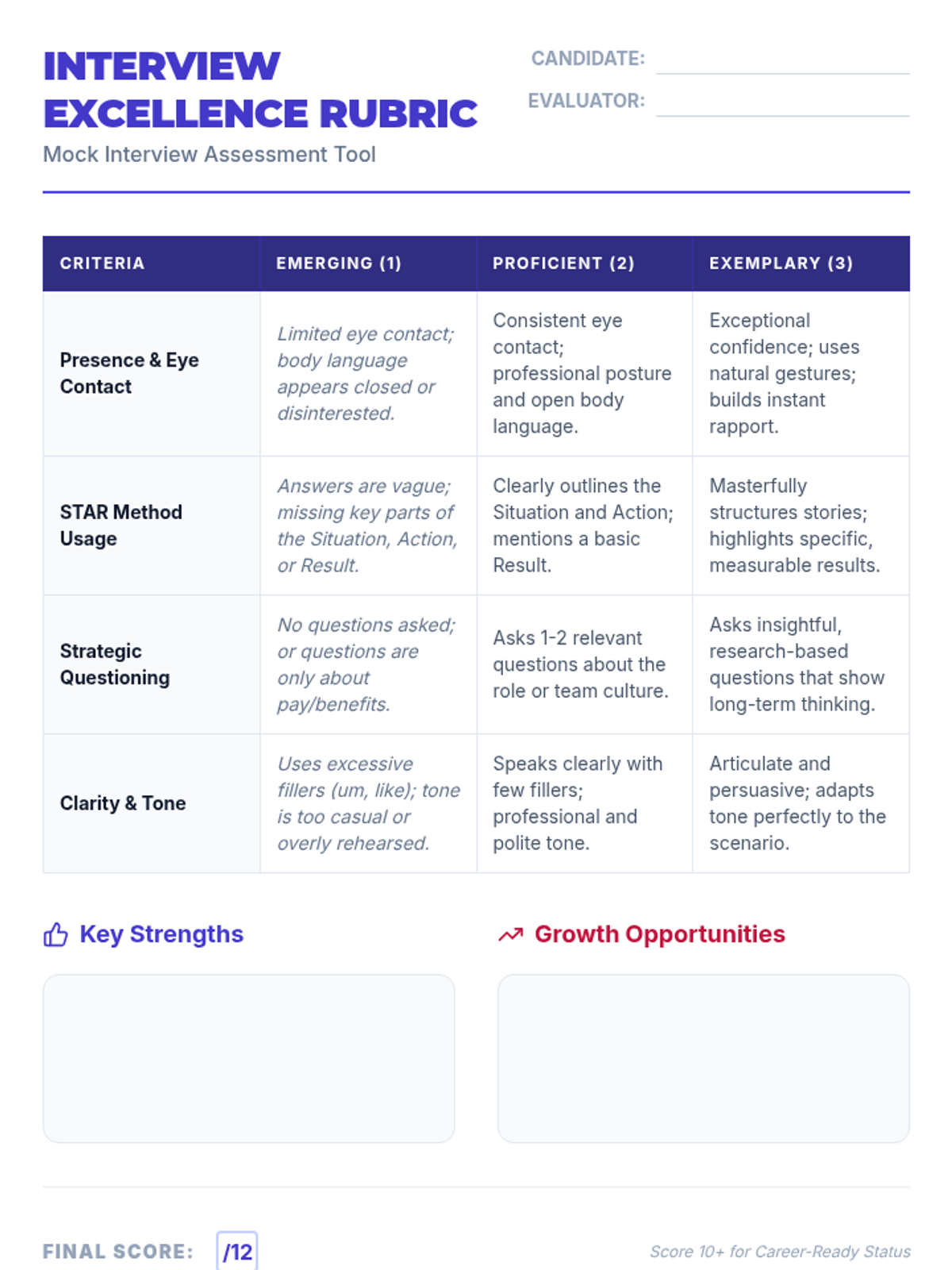
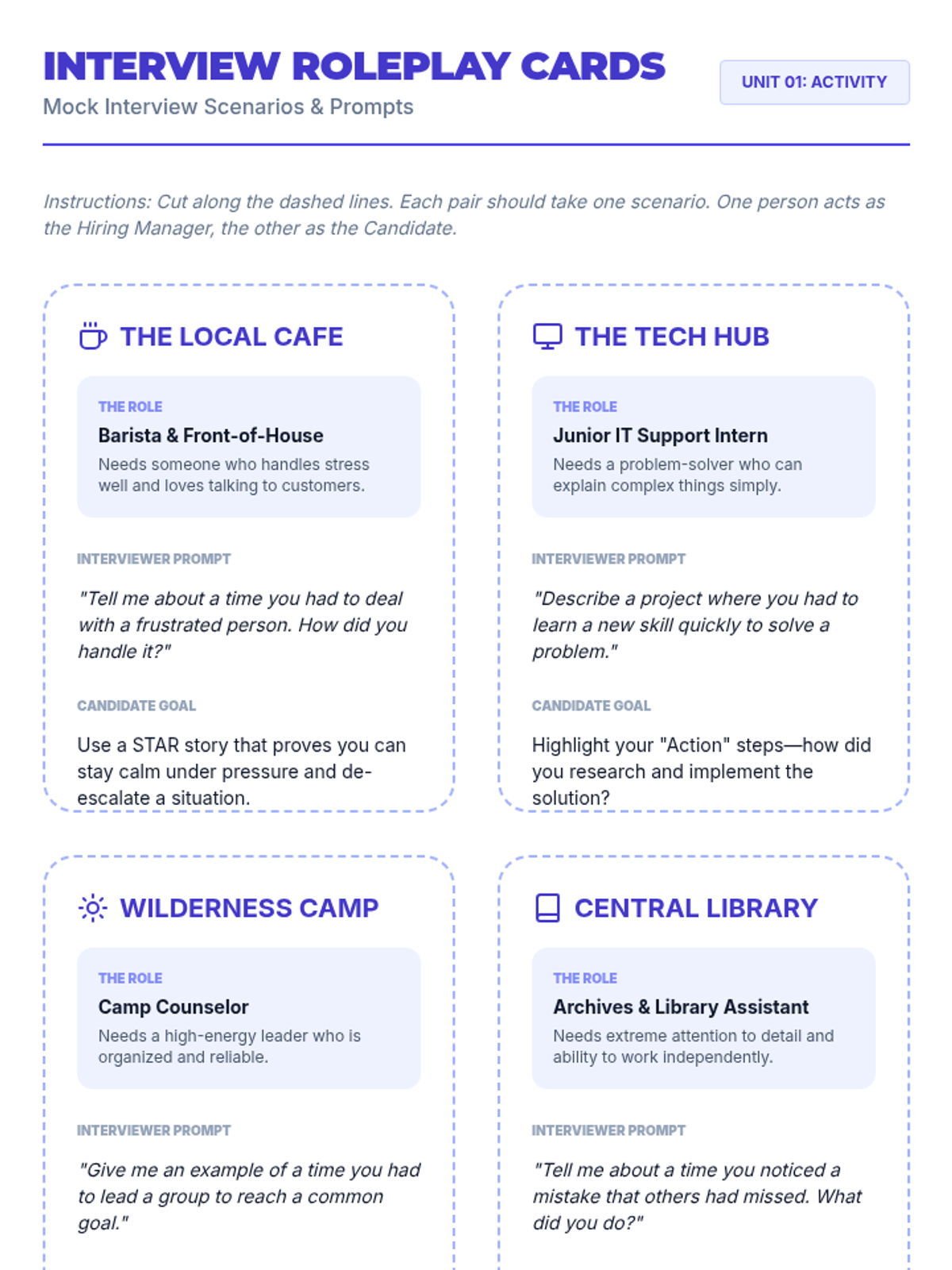
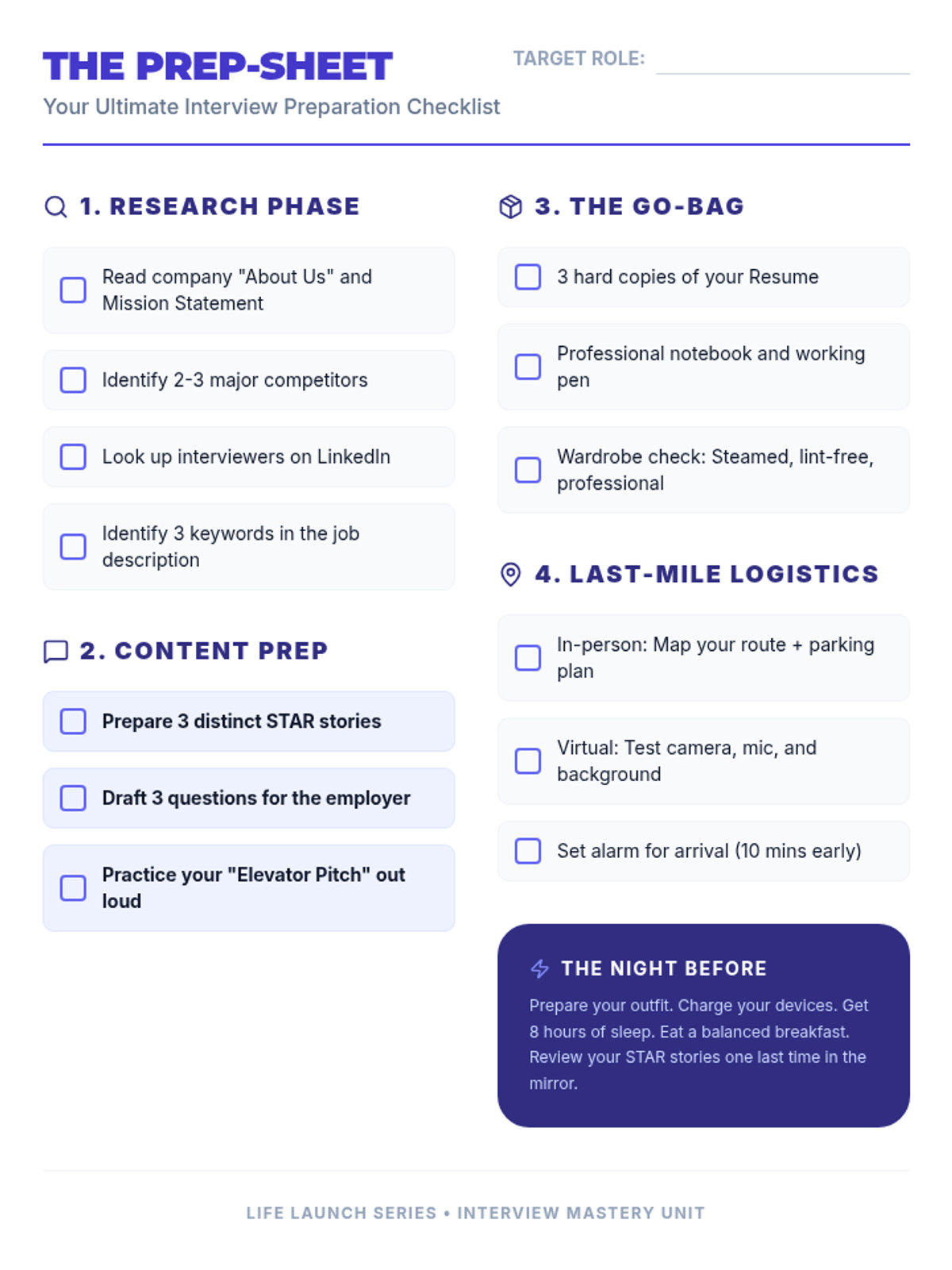
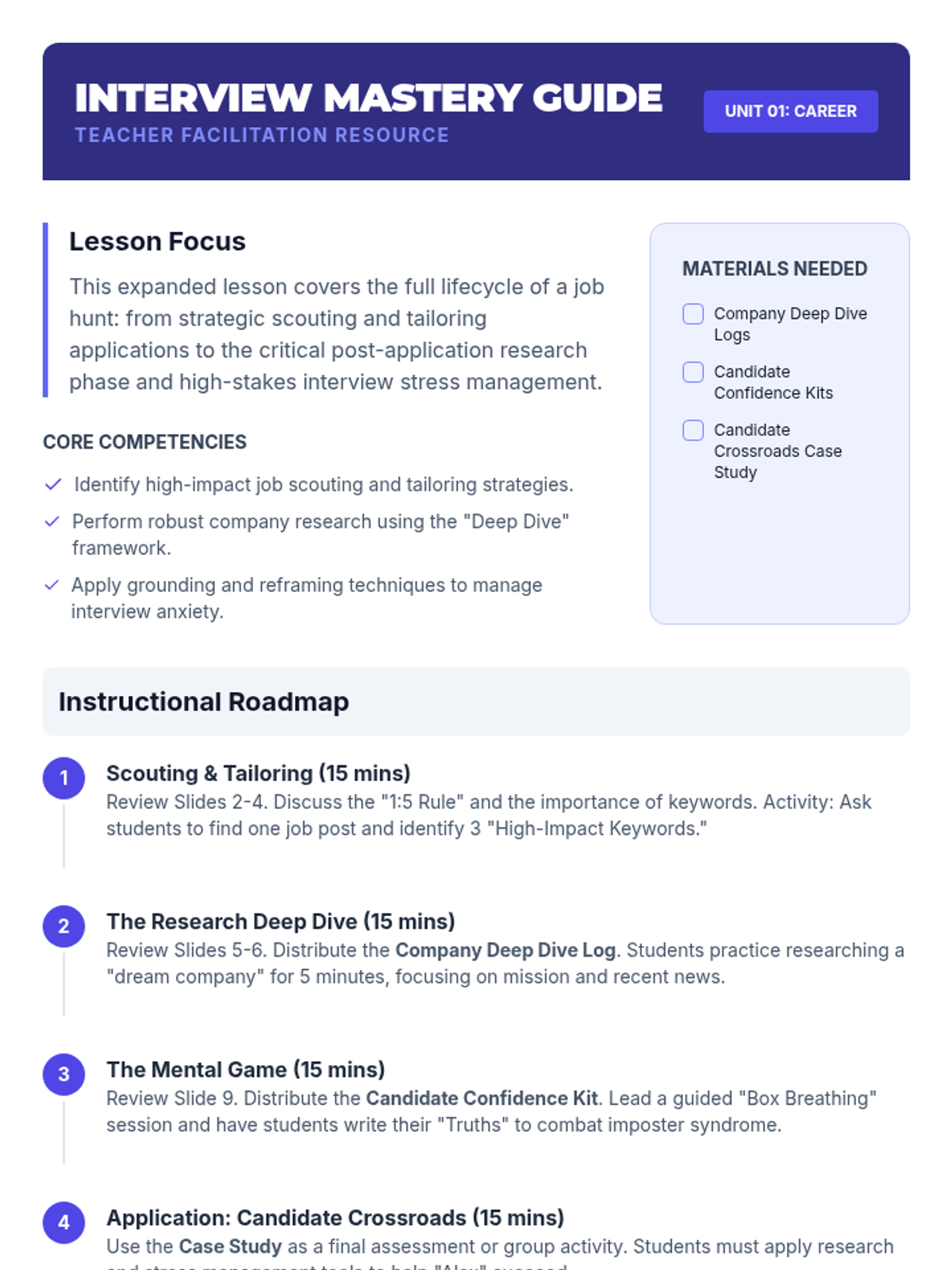
Employer research strategies and behavioral response techniques using the STAR method. Develops virtual interview etiquette, professional presence, and effective follow-up communication.
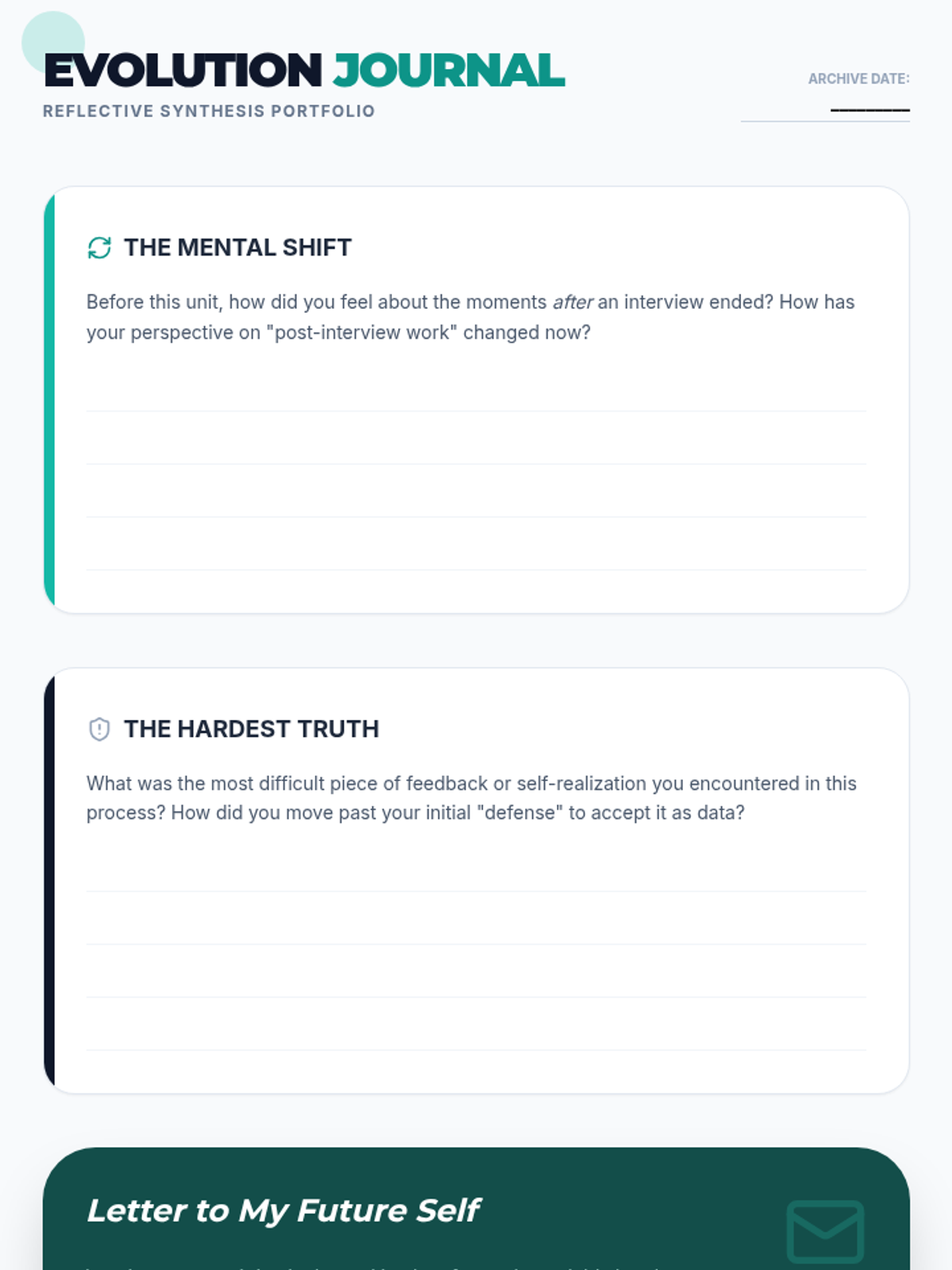
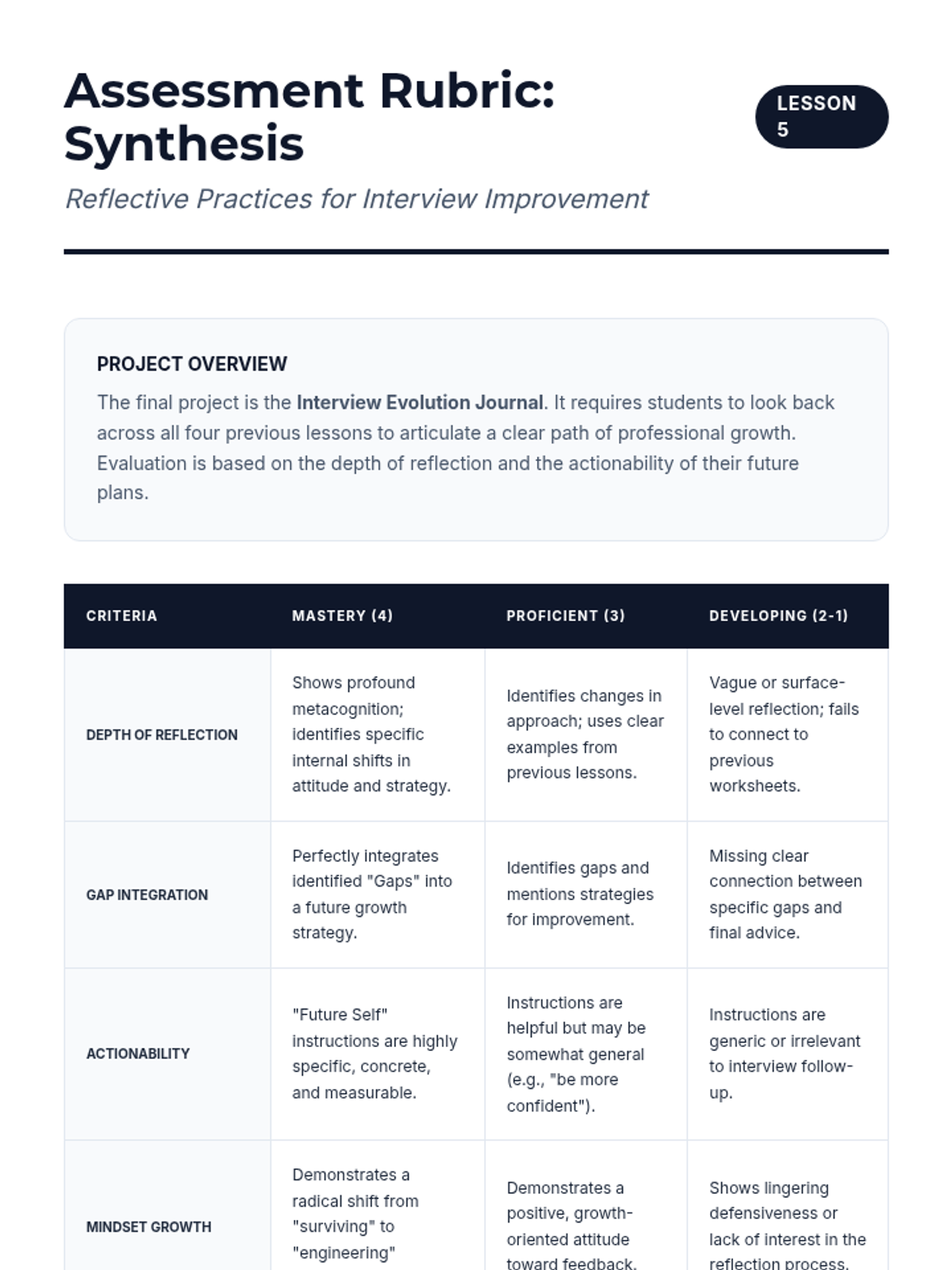
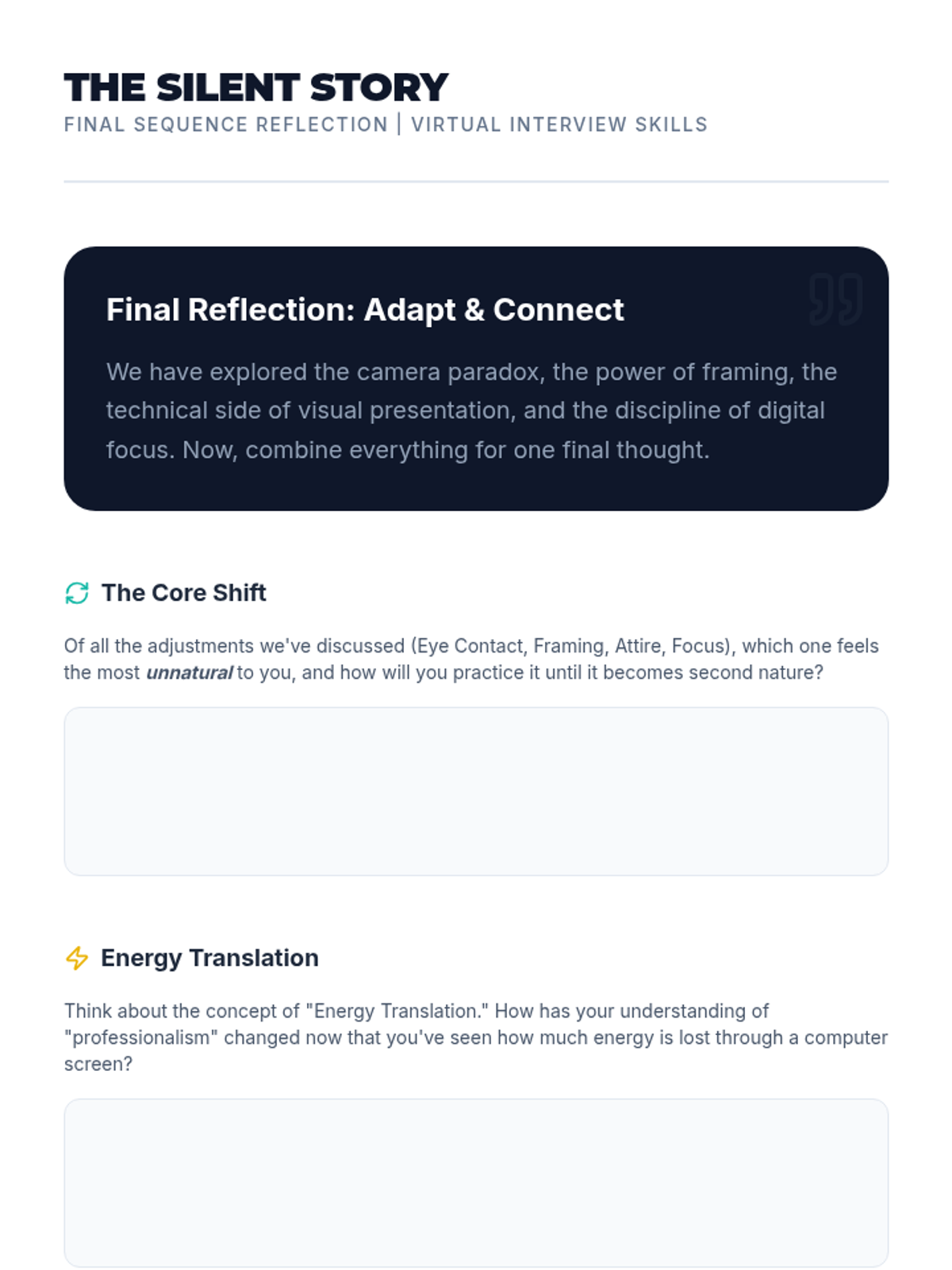
Students synthesize their reflections and growth plans into a final self-assessment. They reflect on how their interview approach has evolved through the inquiry and reflection process.
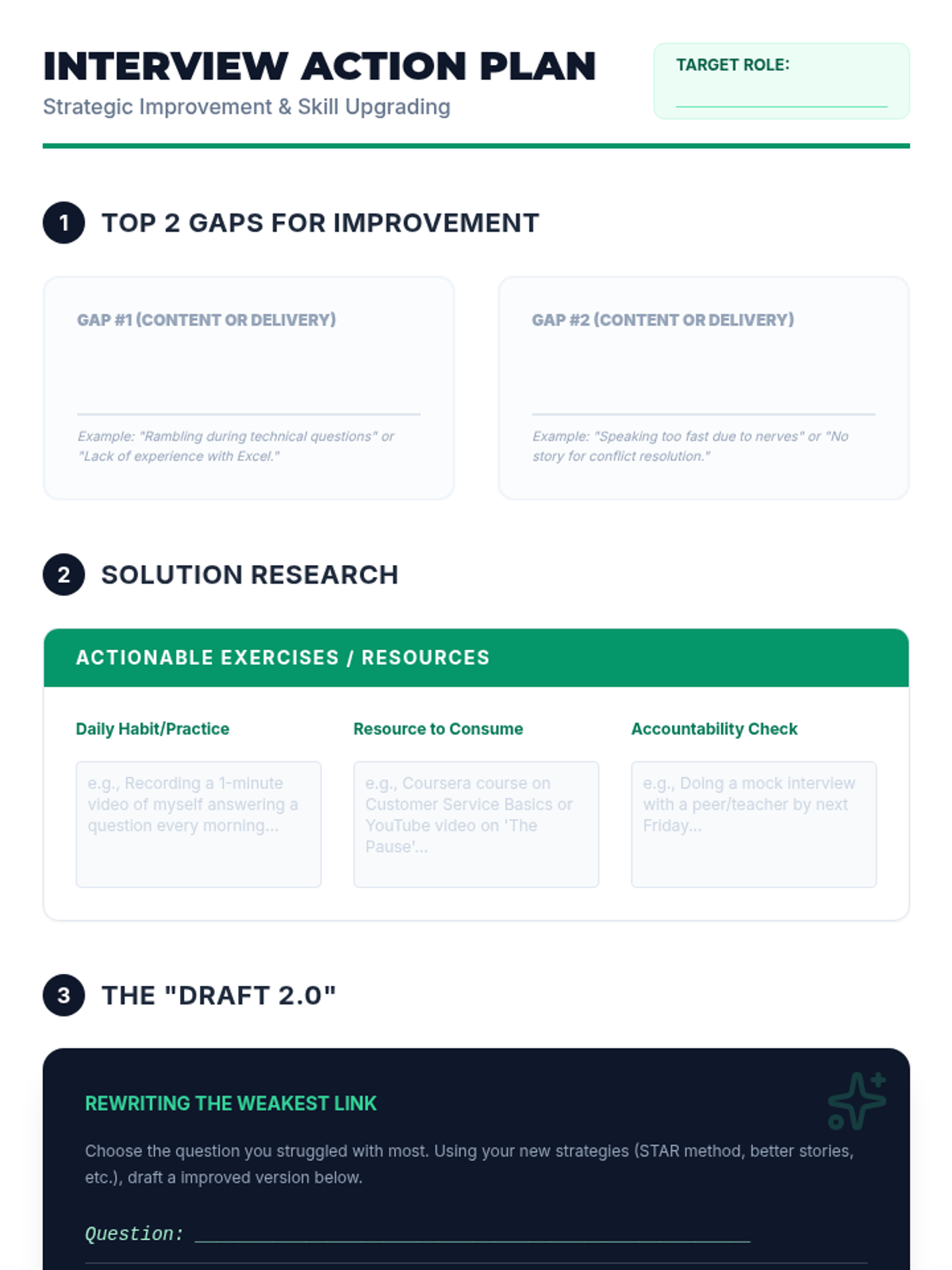
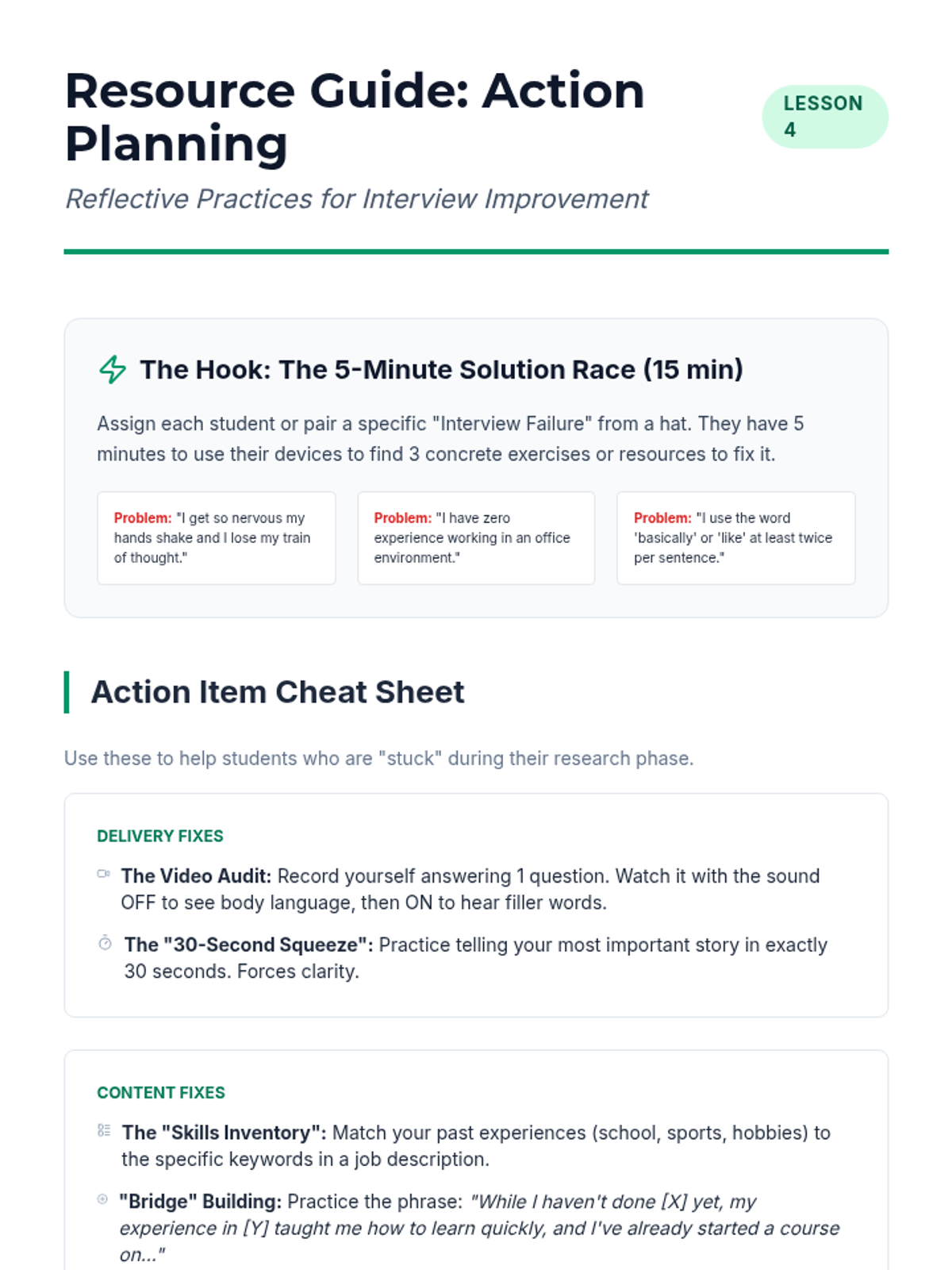
Students turn identified weaknesses into actionable growth strategies. They research specific methods to improve their interview skills and create a strategic plan for their next opportunity.
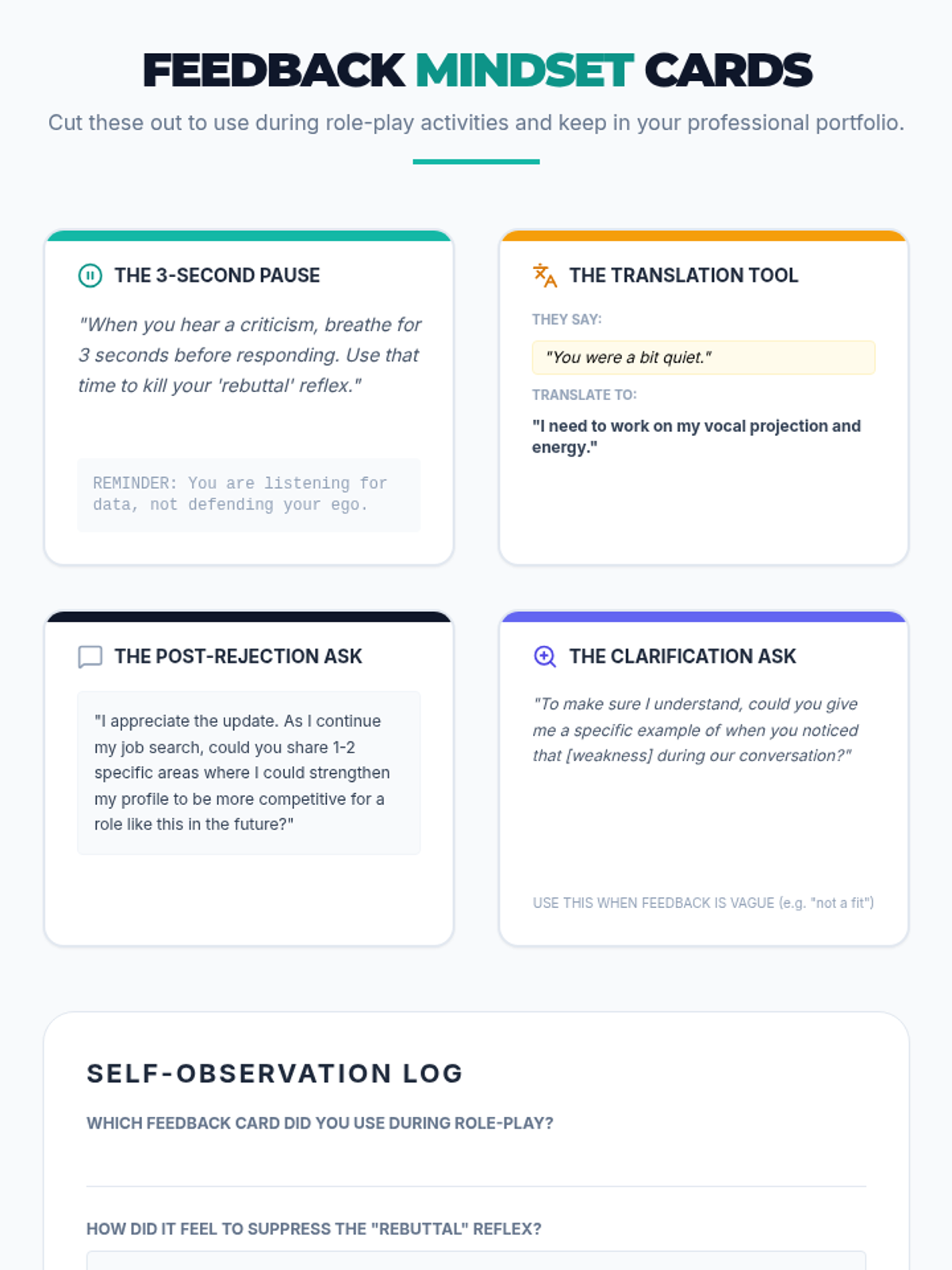
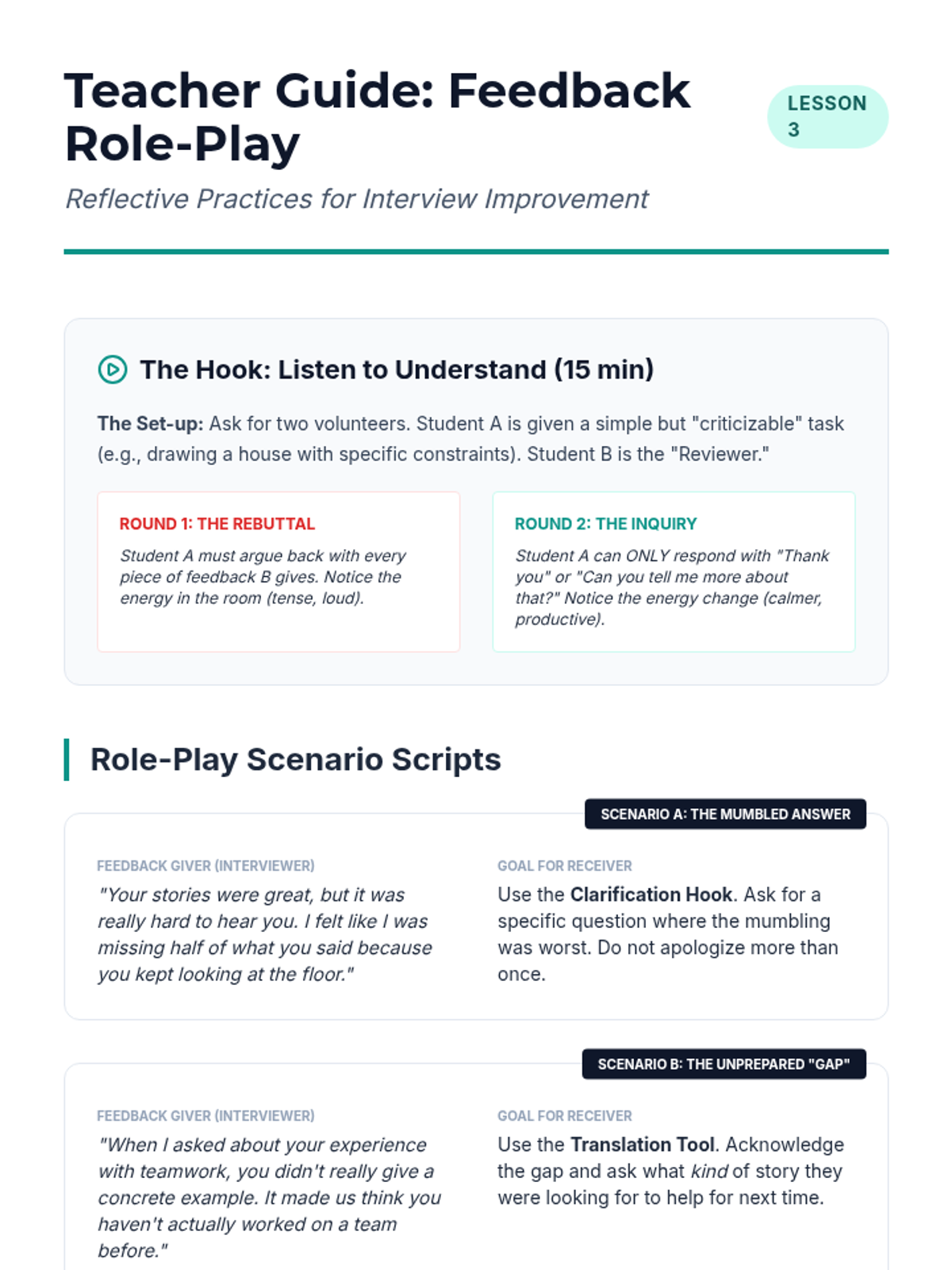
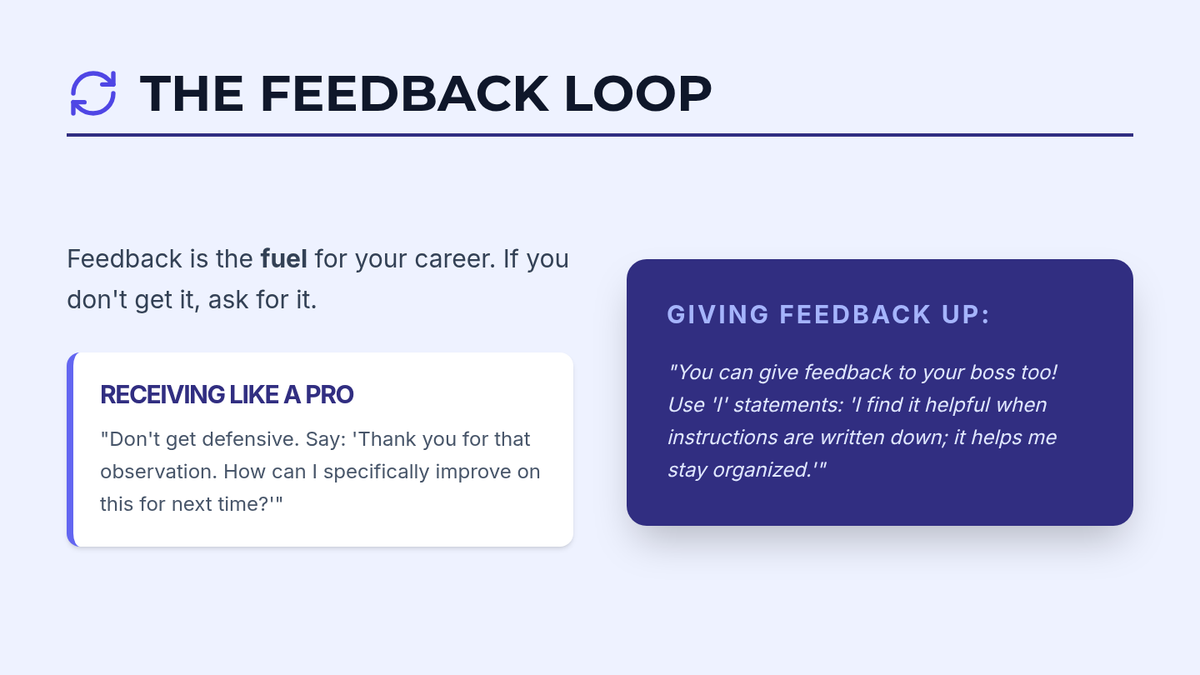
Students explore the art of requesting and receiving professional feedback. The focus is on developing a growth mindset and learning to listen for understanding rather than defensiveness.
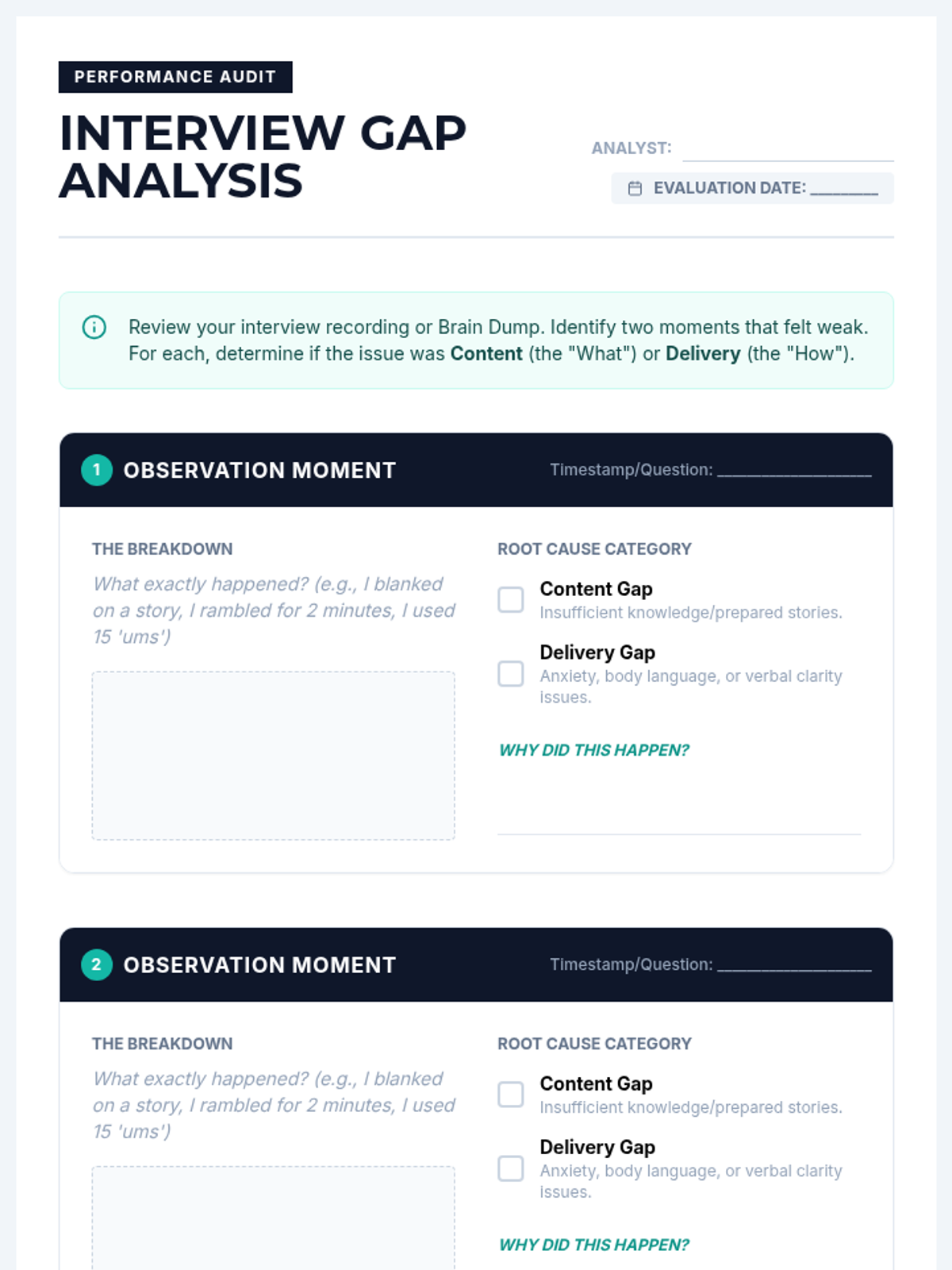
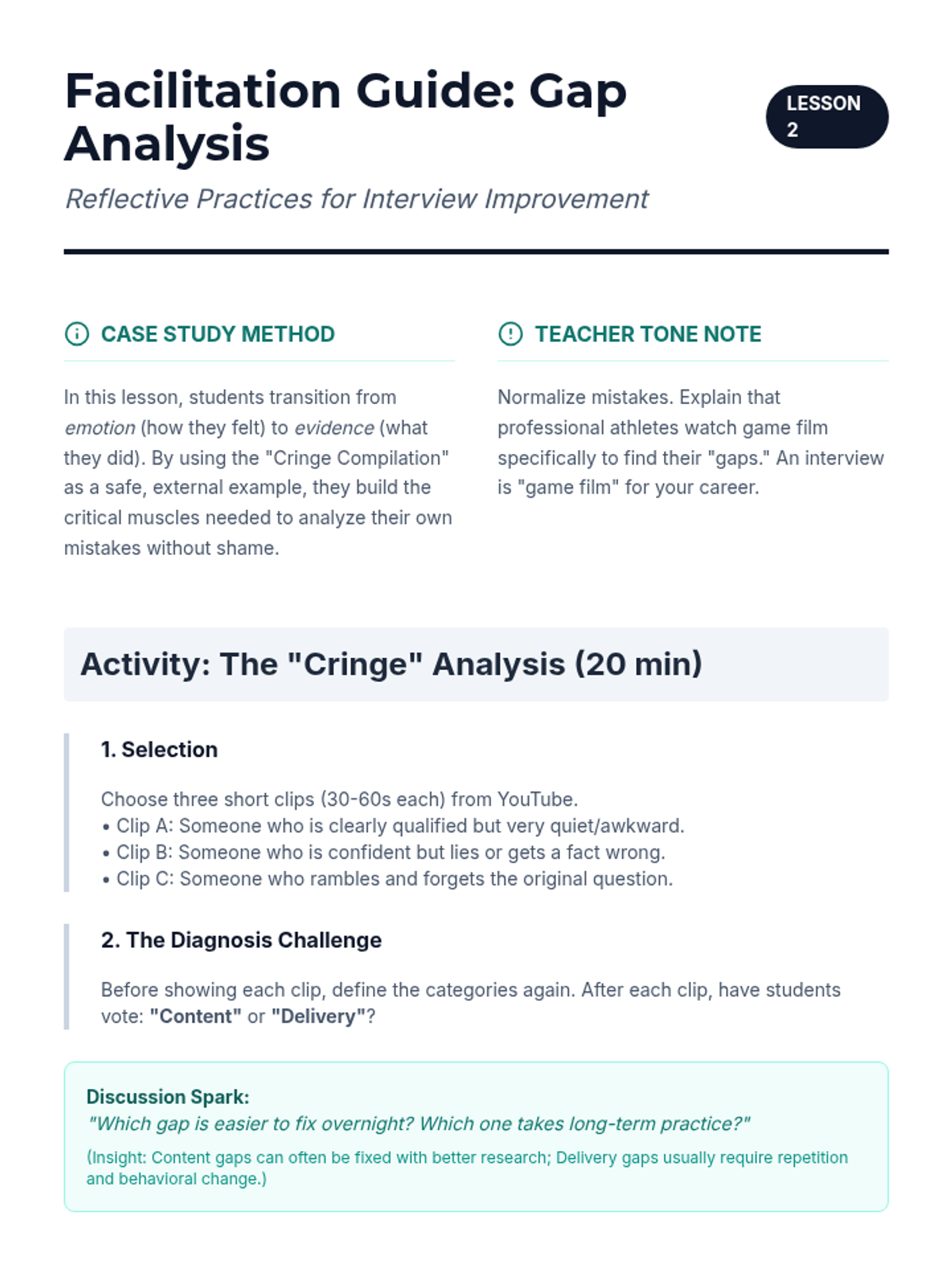
Students analyze mock interview performances to identify specific weaknesses in content and communication. They learn to categorize performance gaps to better target their improvement efforts.
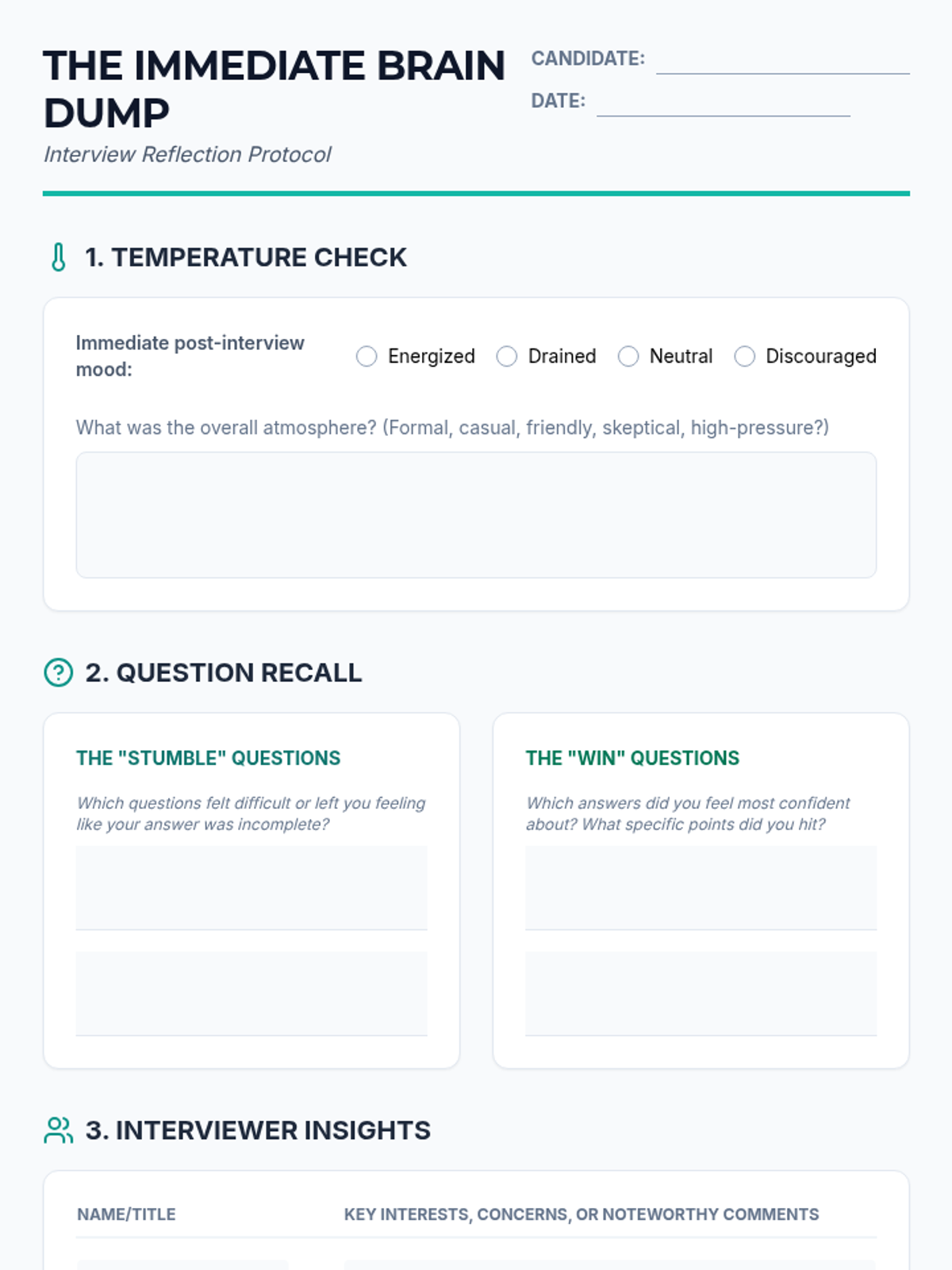
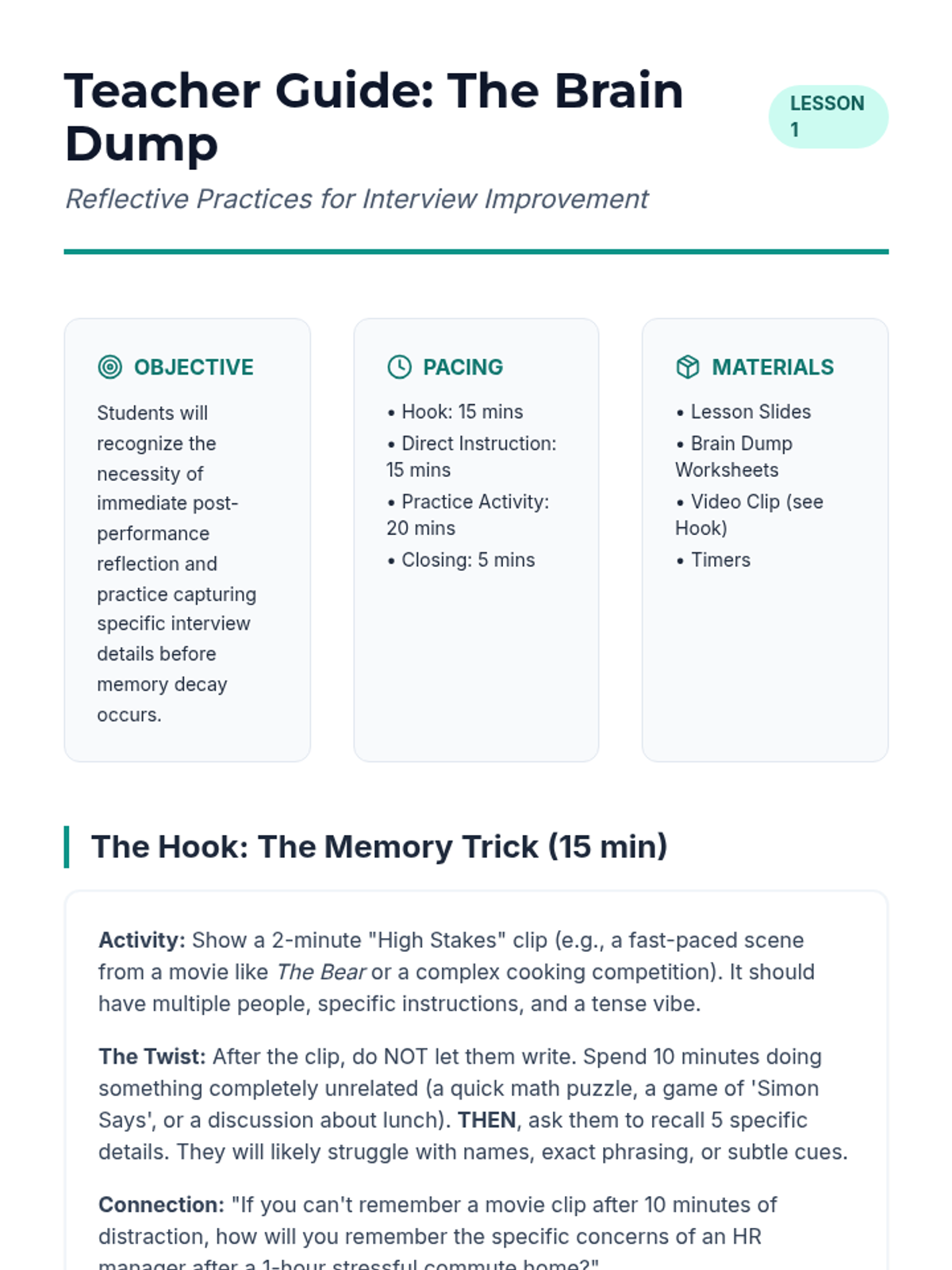
Students learn the technique of recording their thoughts immediately after an interview to capture critical details before they fade. They practice using a structured reflection template to identify tough questions and the overall atmosphere of the interaction.
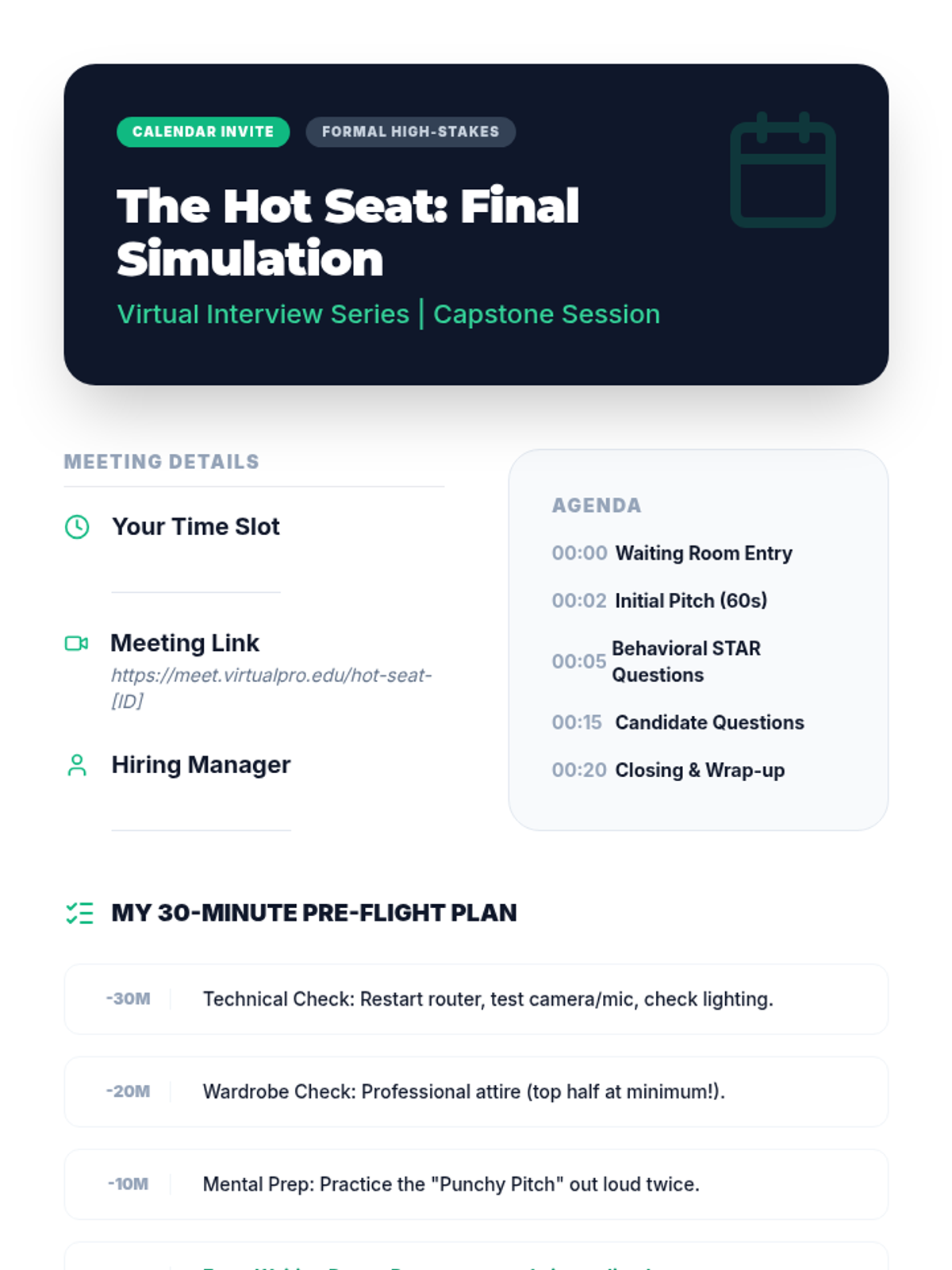
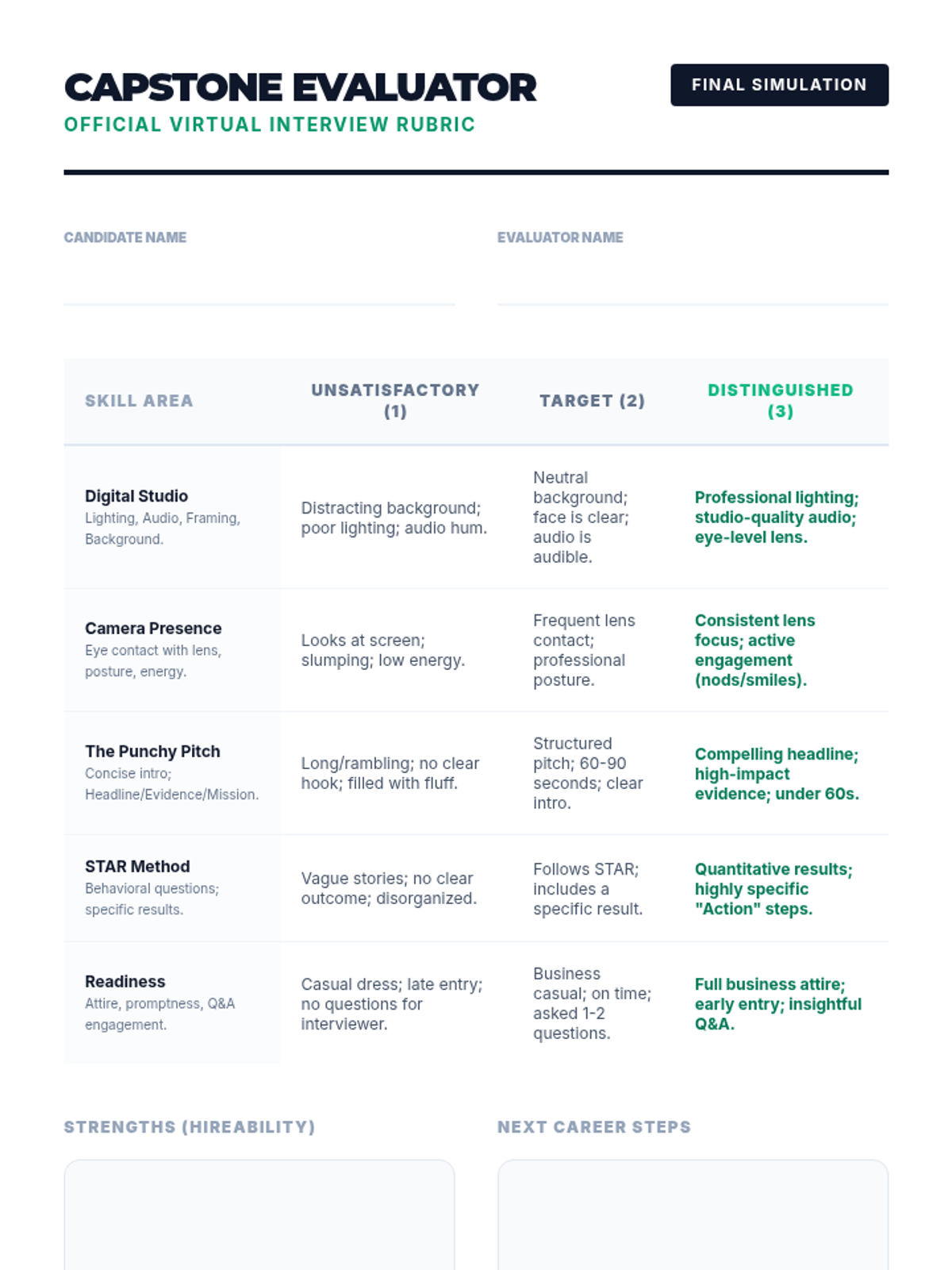
Students dress professionally and treat this lesson as a real high-stakes interview. They undergo a full formal interview simulation with a teacher or community volunteer, graded on the complete virtual skillset.
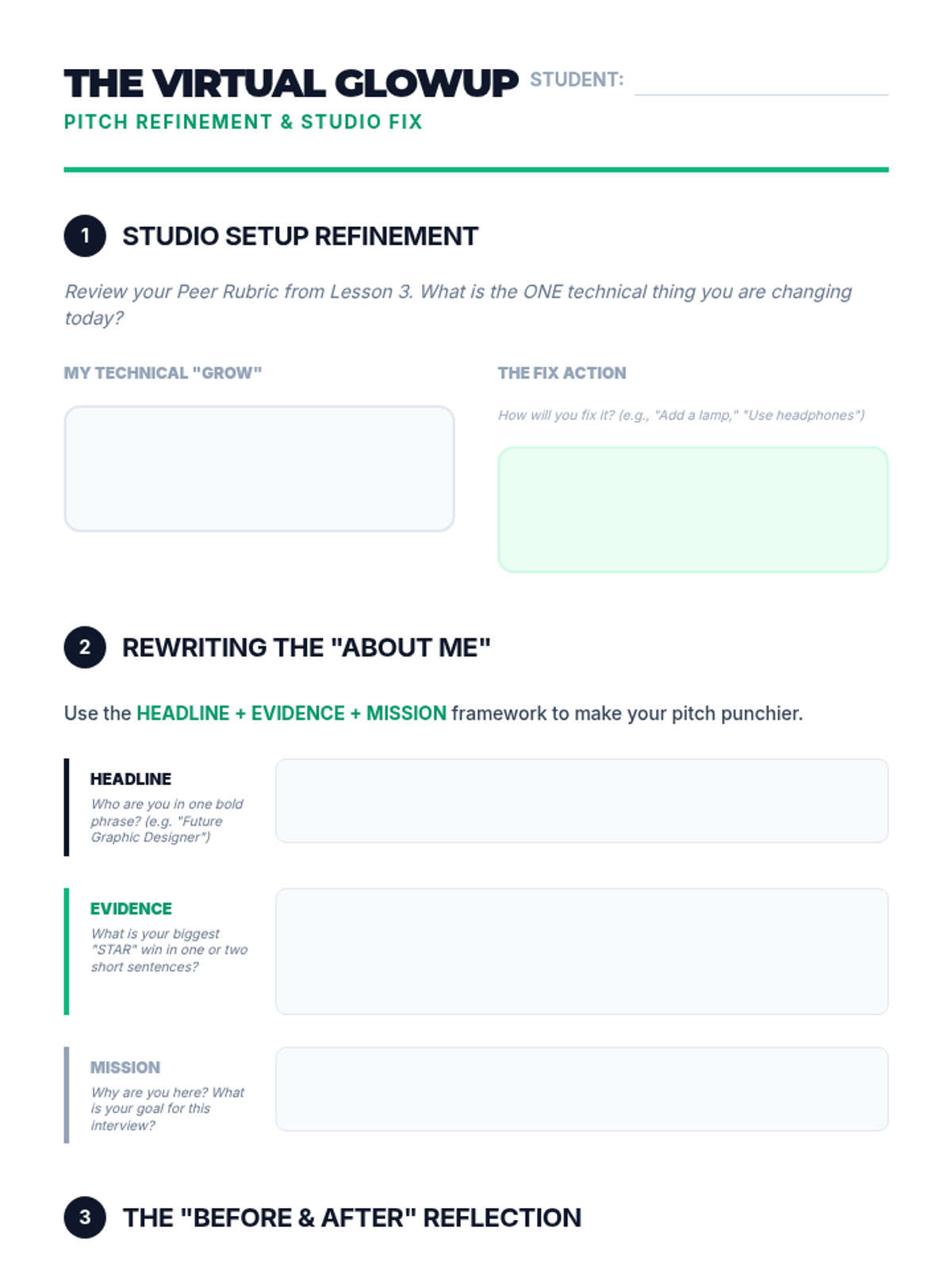
Based on feedback, students refine their answers and adjust their technical setups. They participate in a workshop to polish their 'elevator pitch' specifically for a virtual format (shorter, punchier sentences).
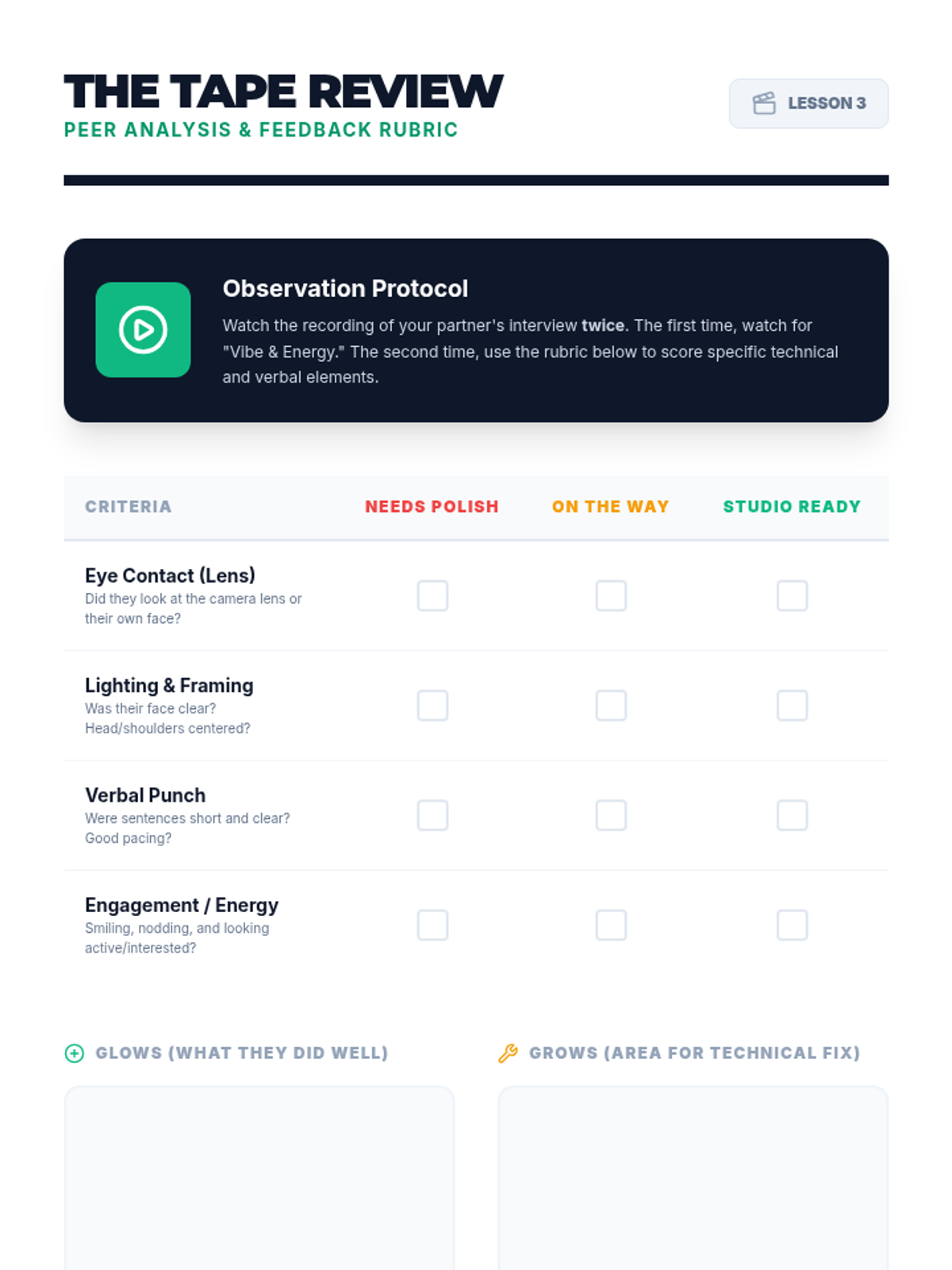
Pairs review the recordings of their interviews together using a structured rubric covering lighting, eye contact, audio, and content. They provide constructive feedback to one another.
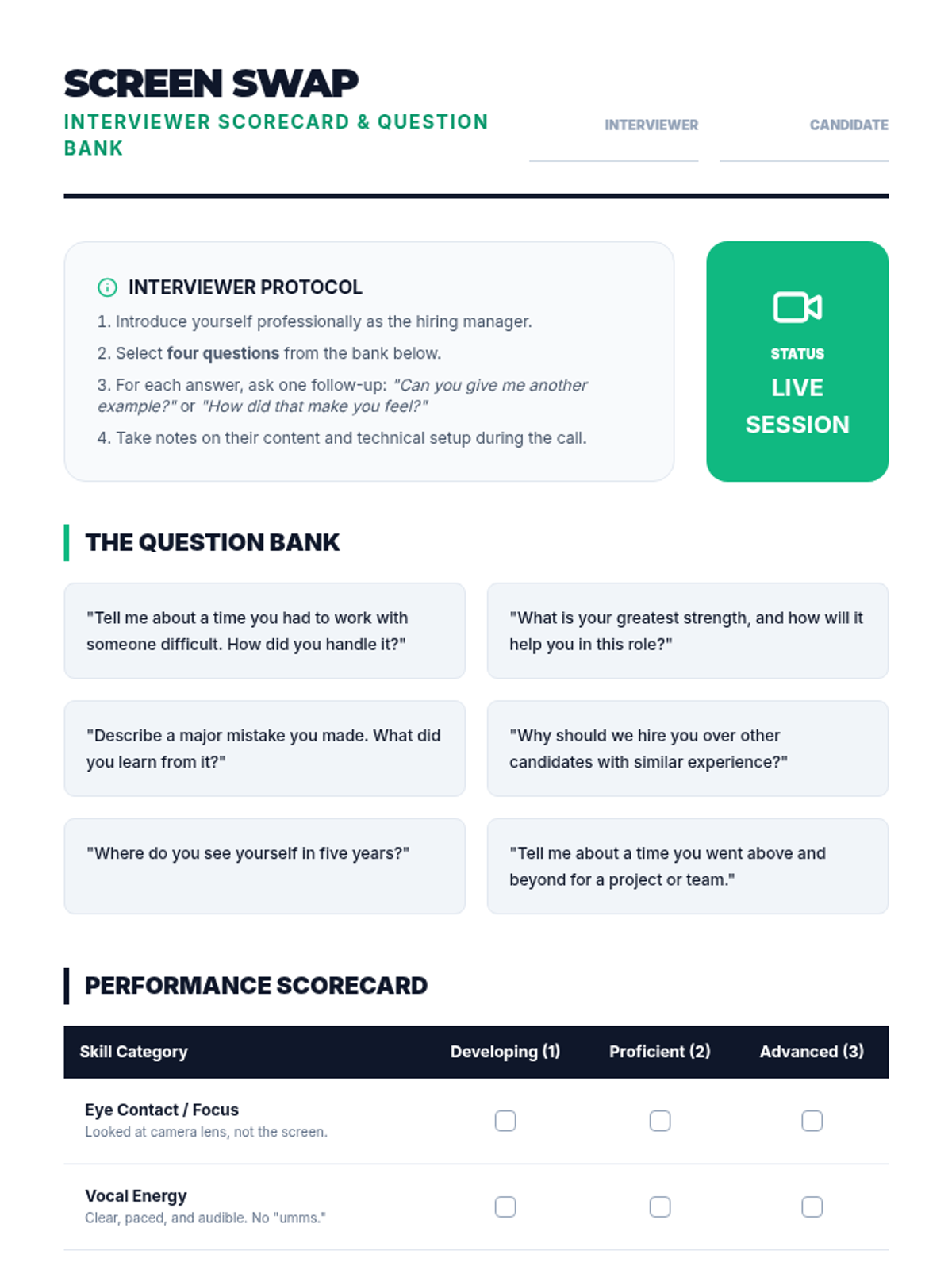
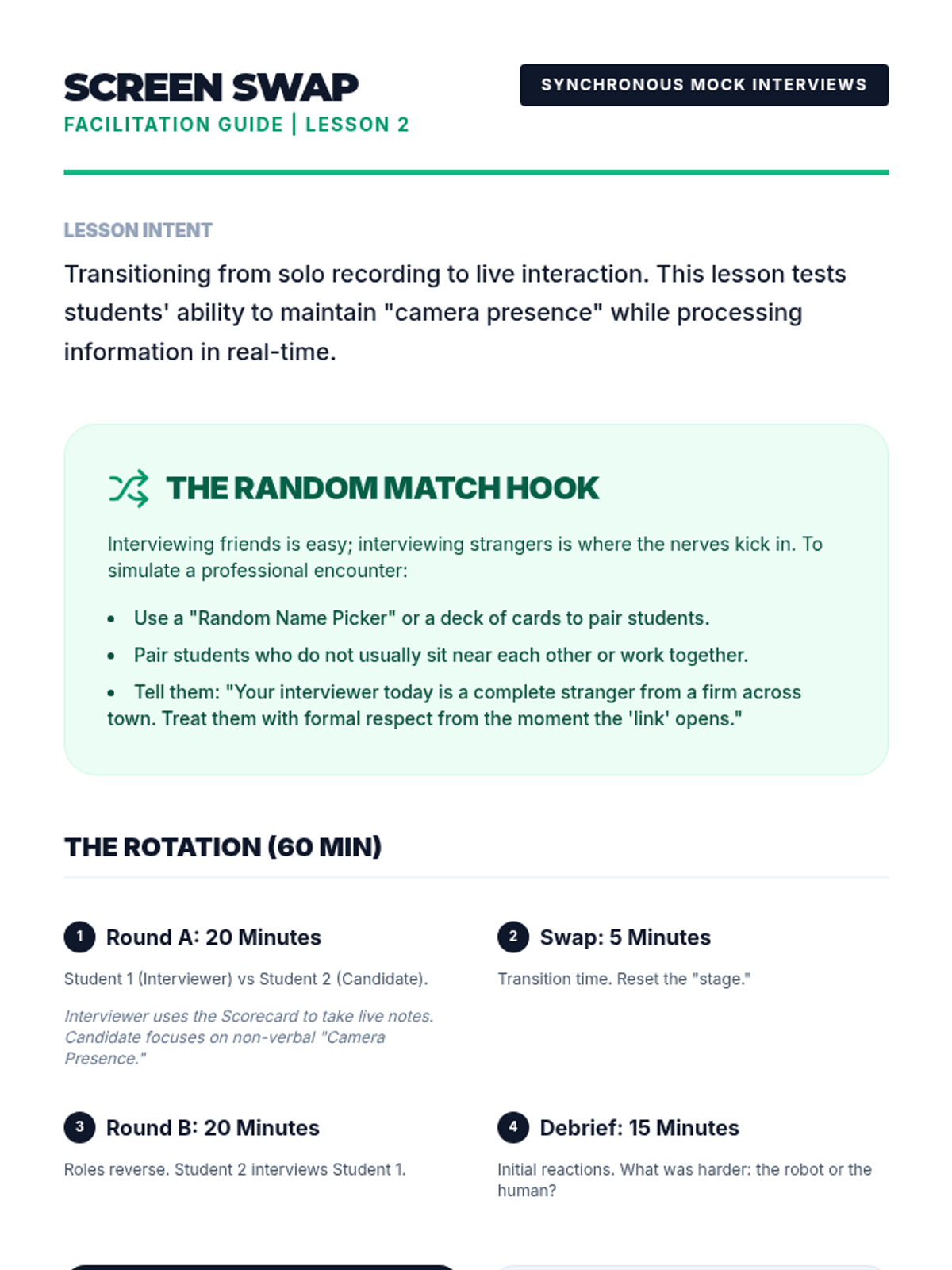
Students are paired up to conduct live mock interviews using a provided question bank. They focus on applying the setup and body language skills learned in previous sequences.
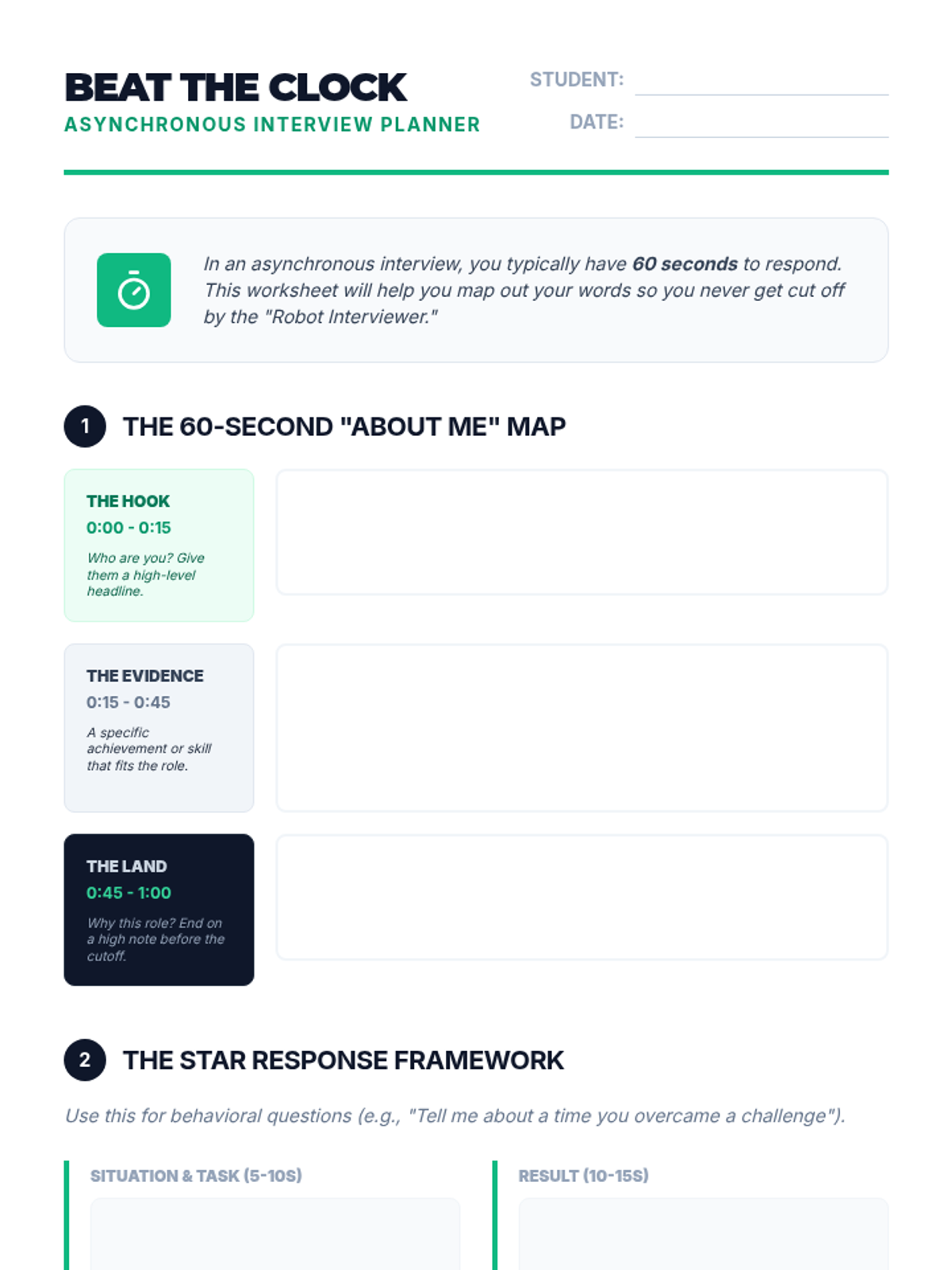
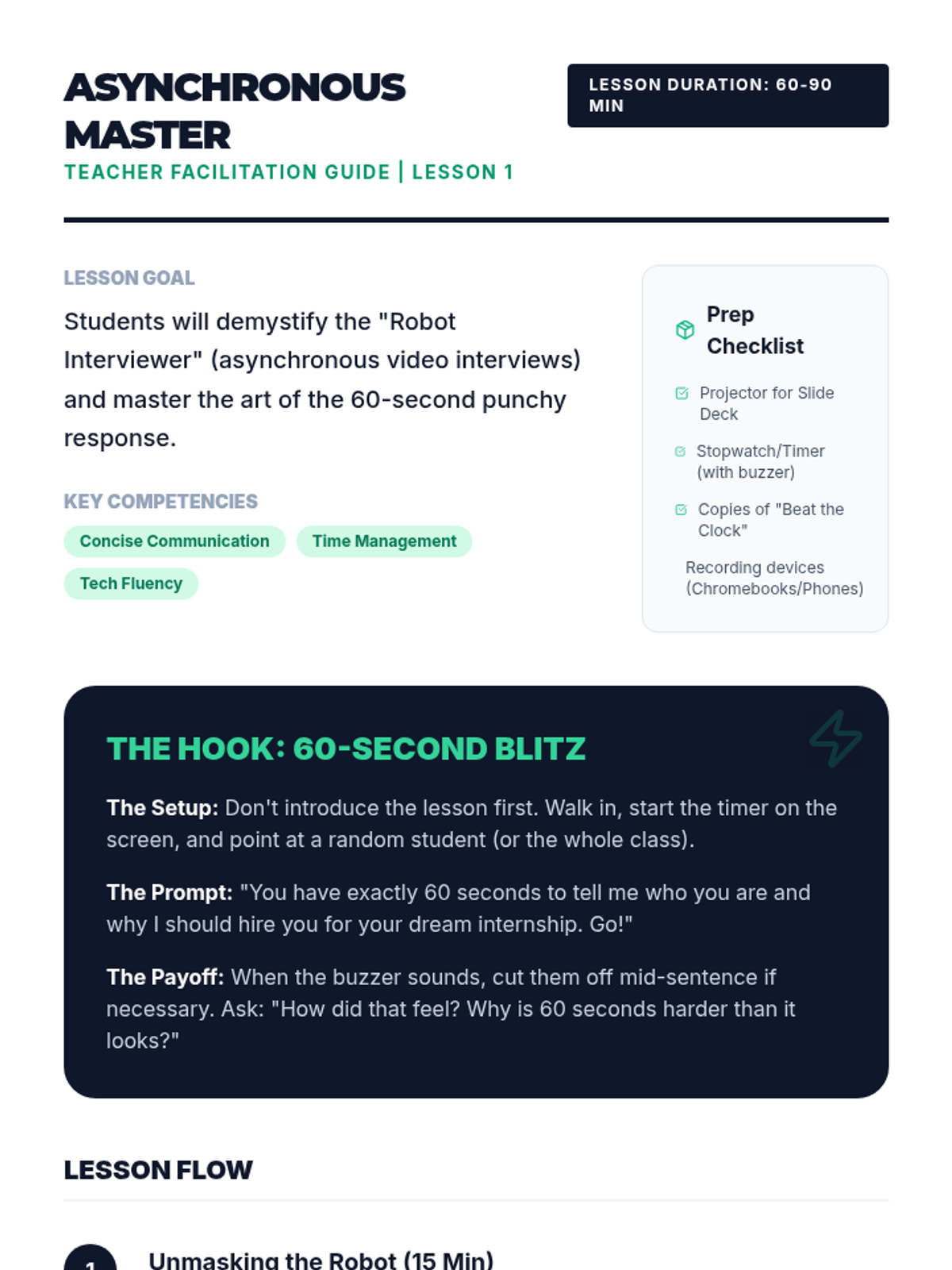
Students explore the world of asynchronous (one-way) interviews, practicing concise communication and time management under pressure.
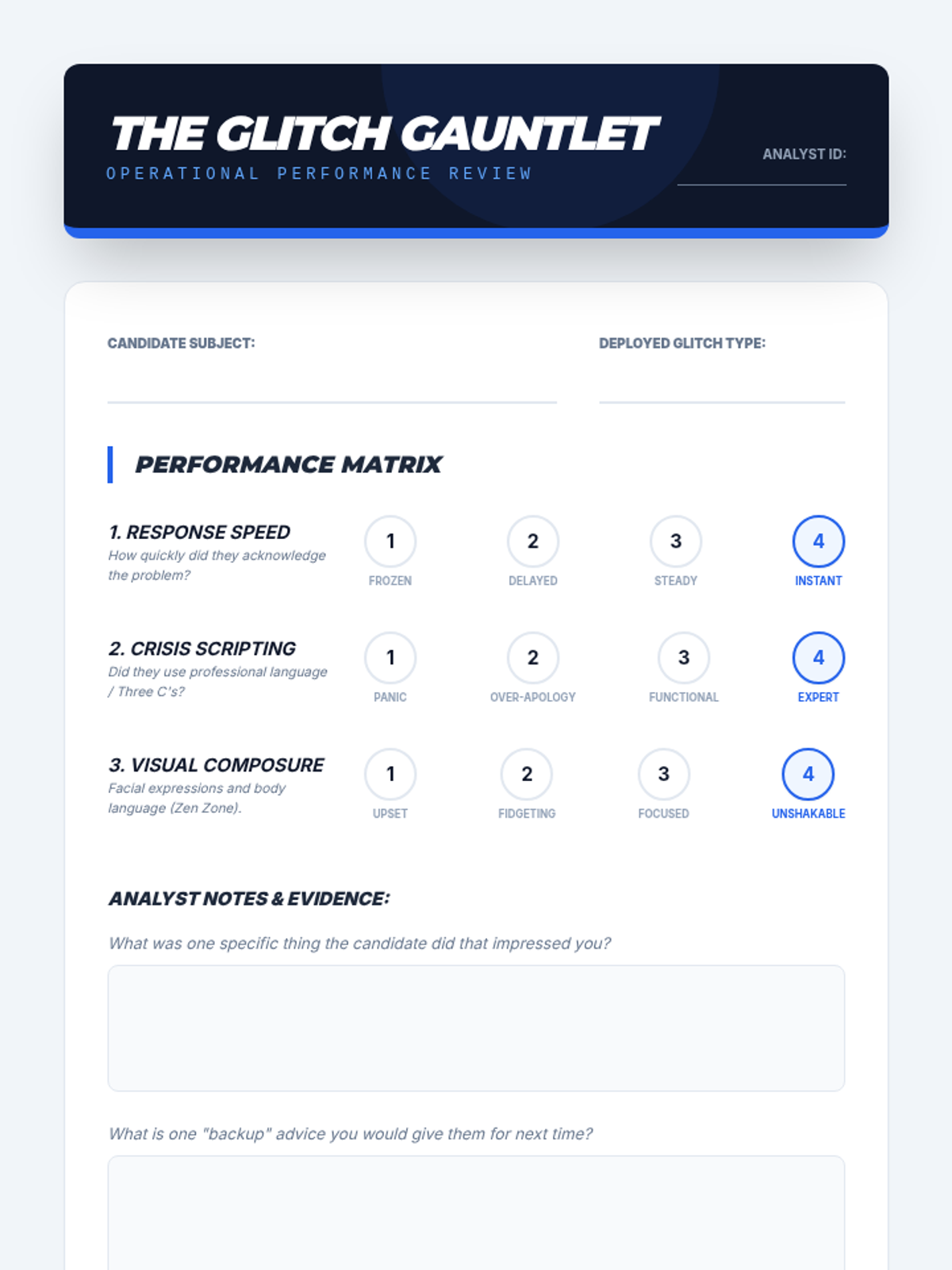
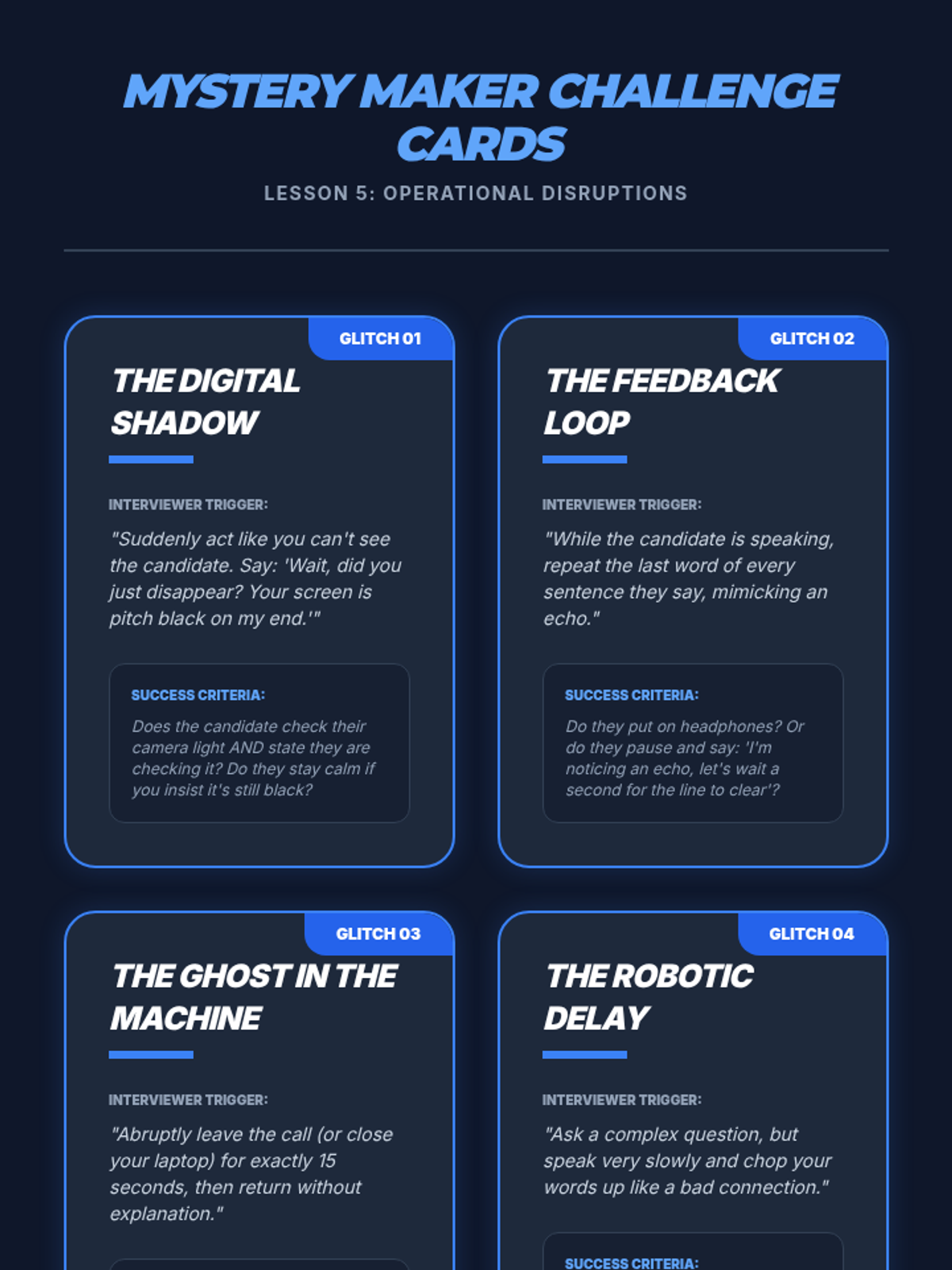
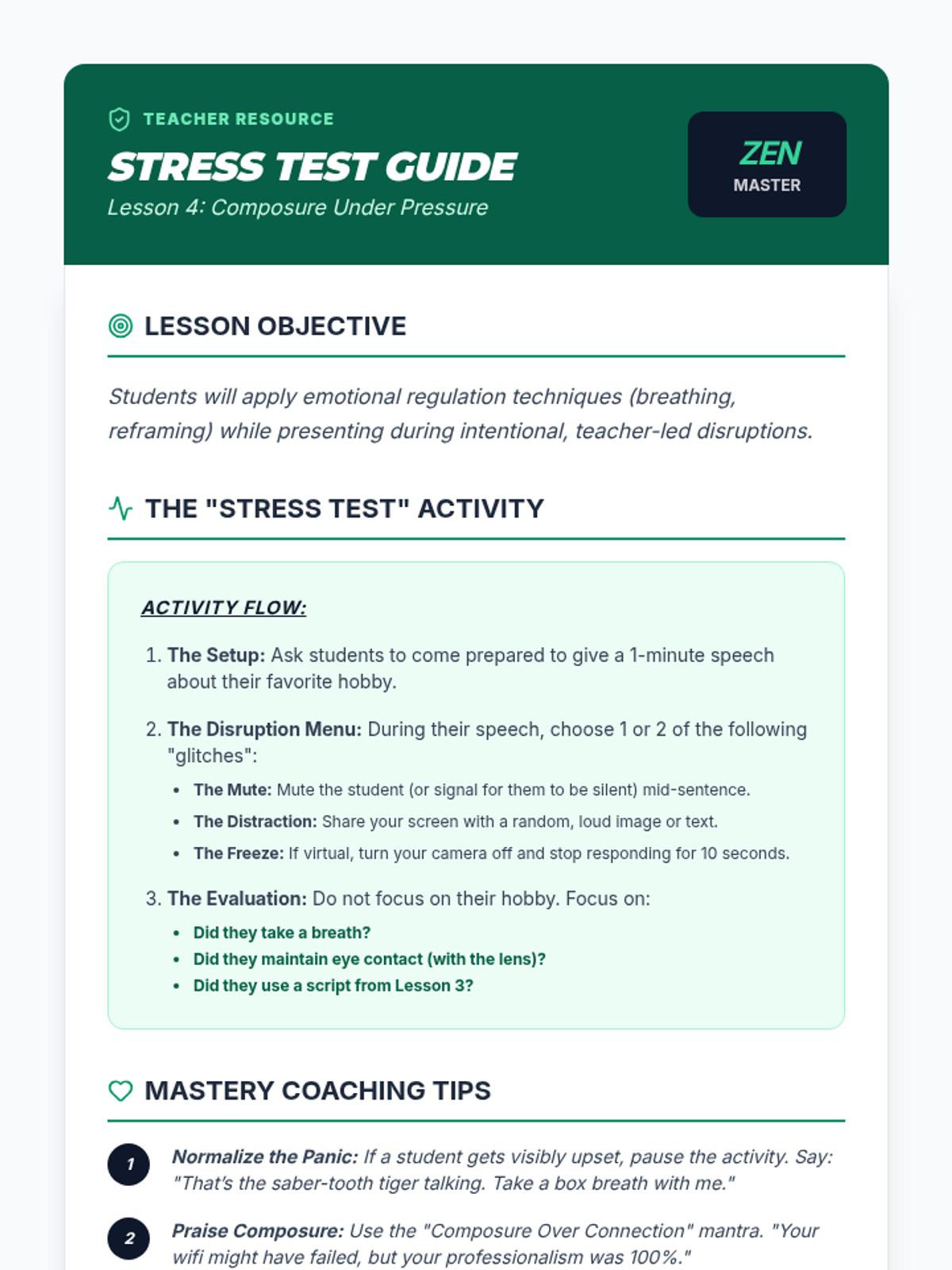
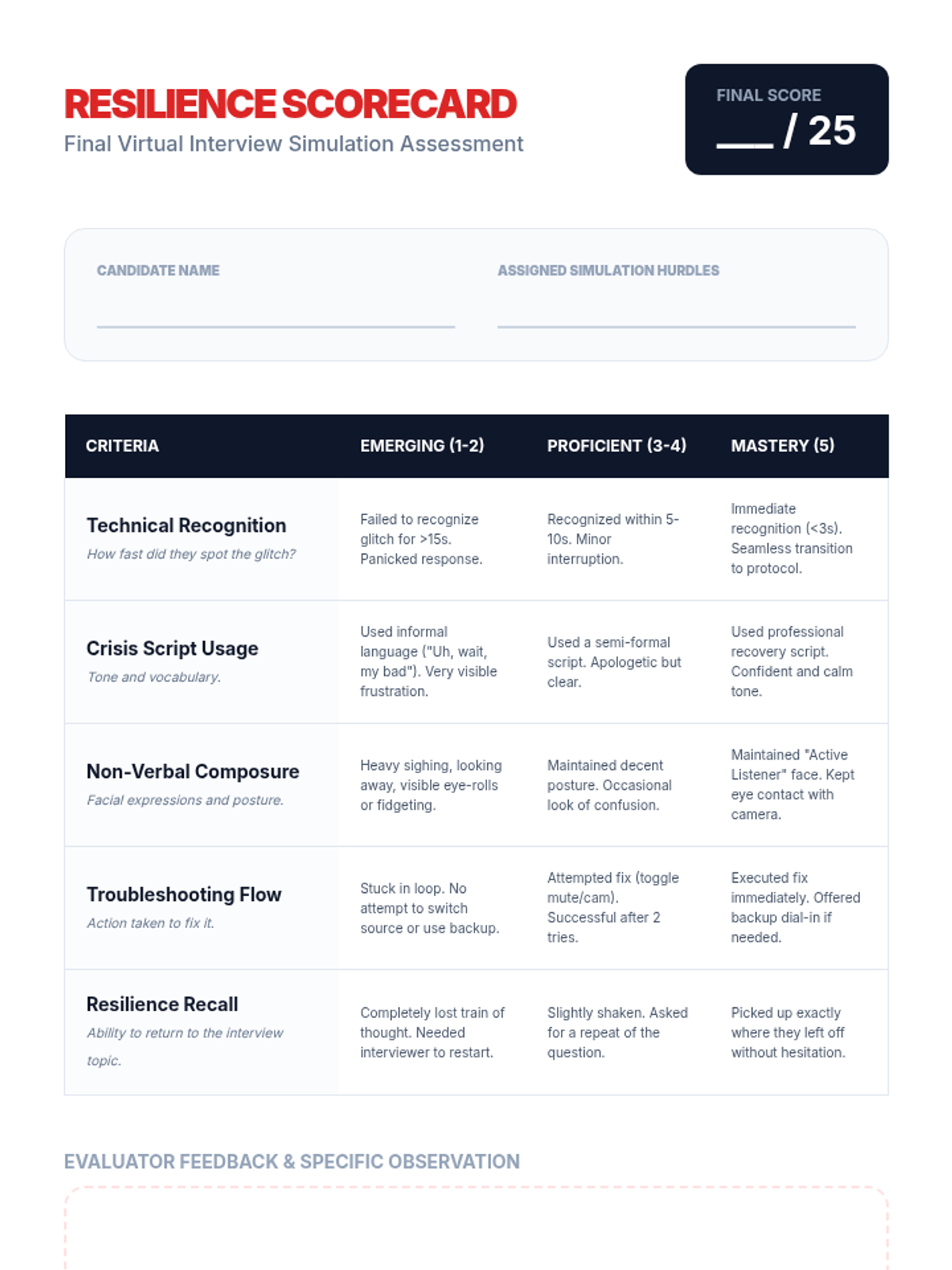
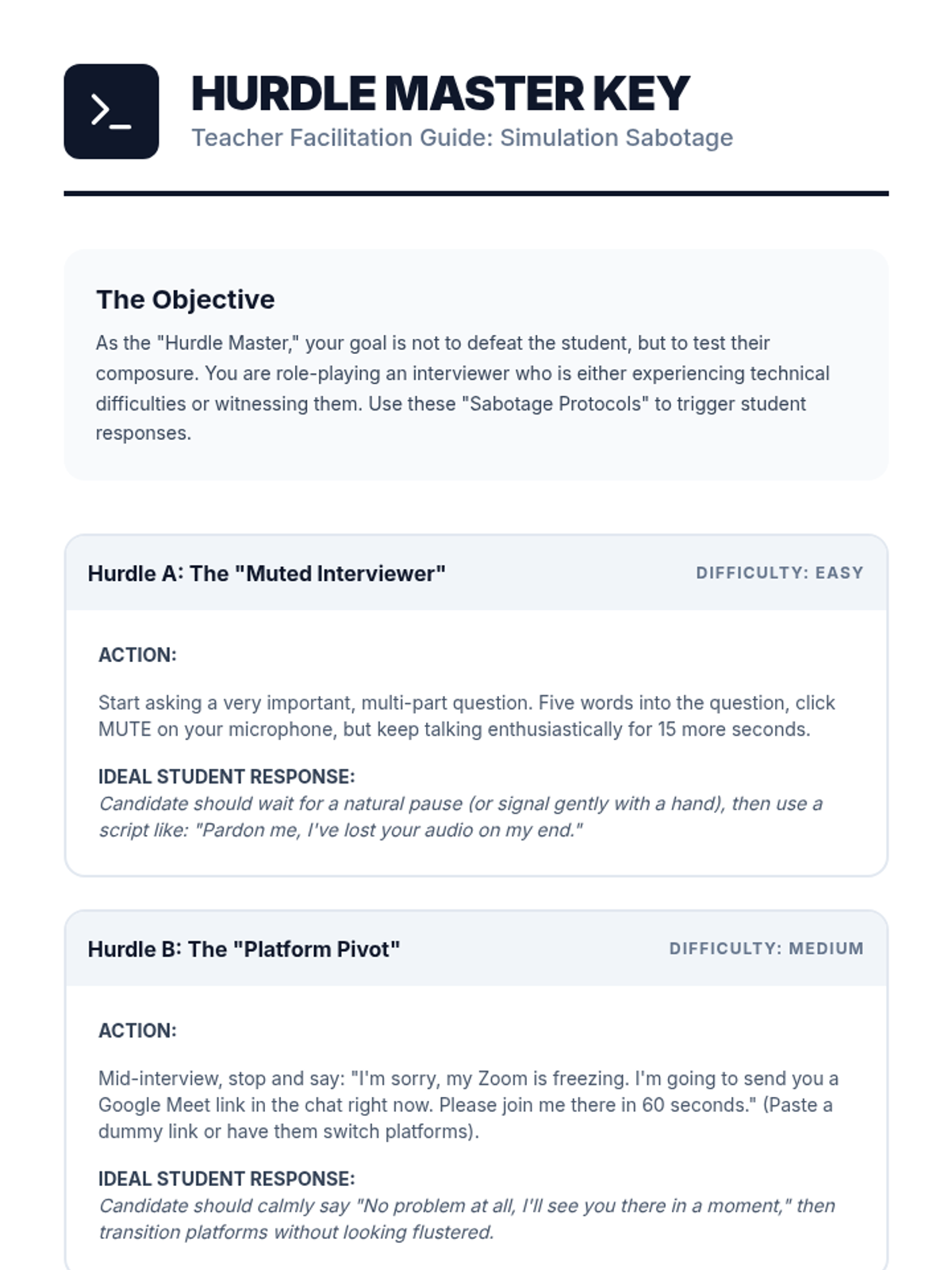
A high-stakes mastery lab where students navigate intentional technical failures during mock interviews to demonstrate troubleshooting and composure.
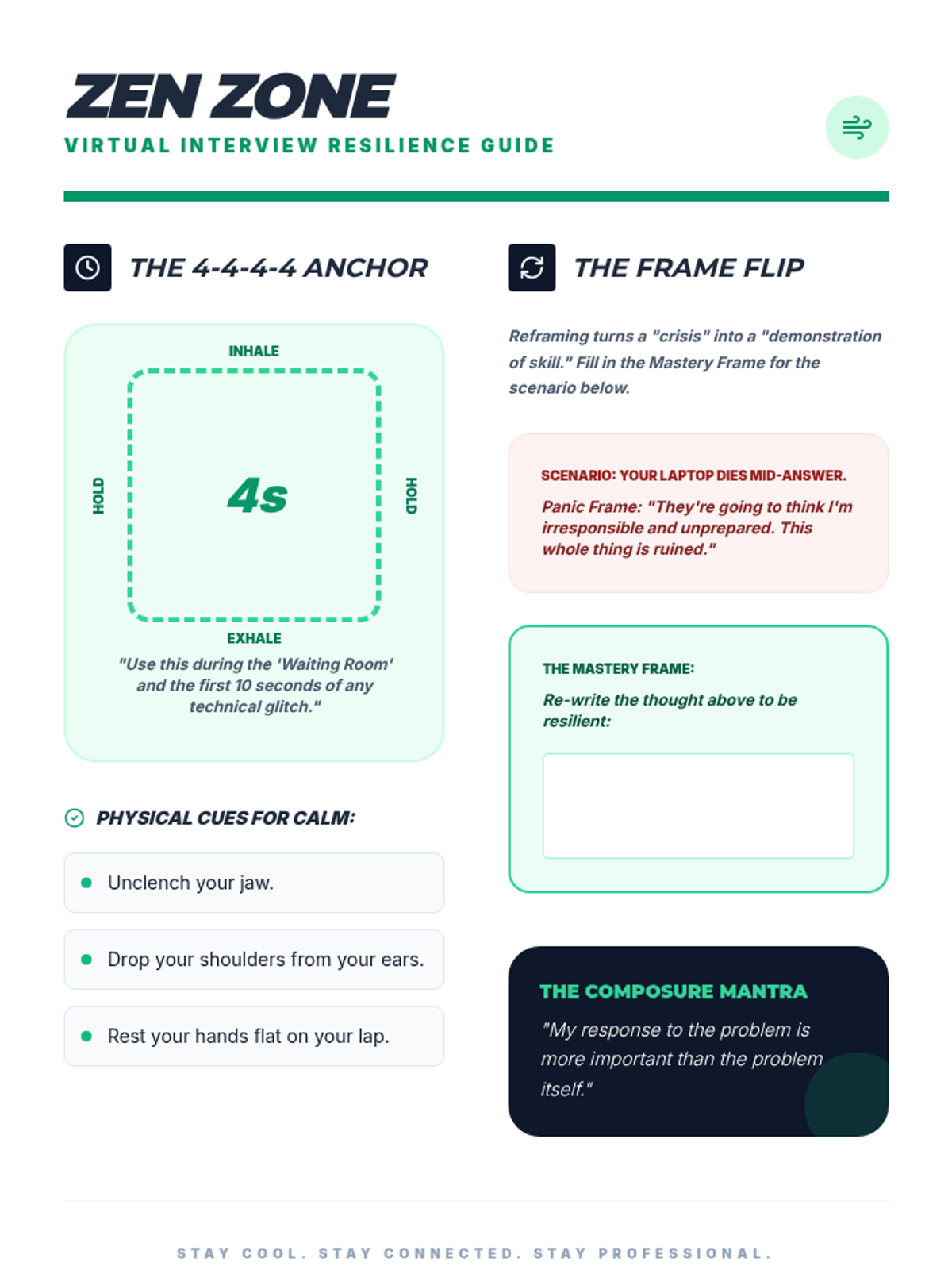
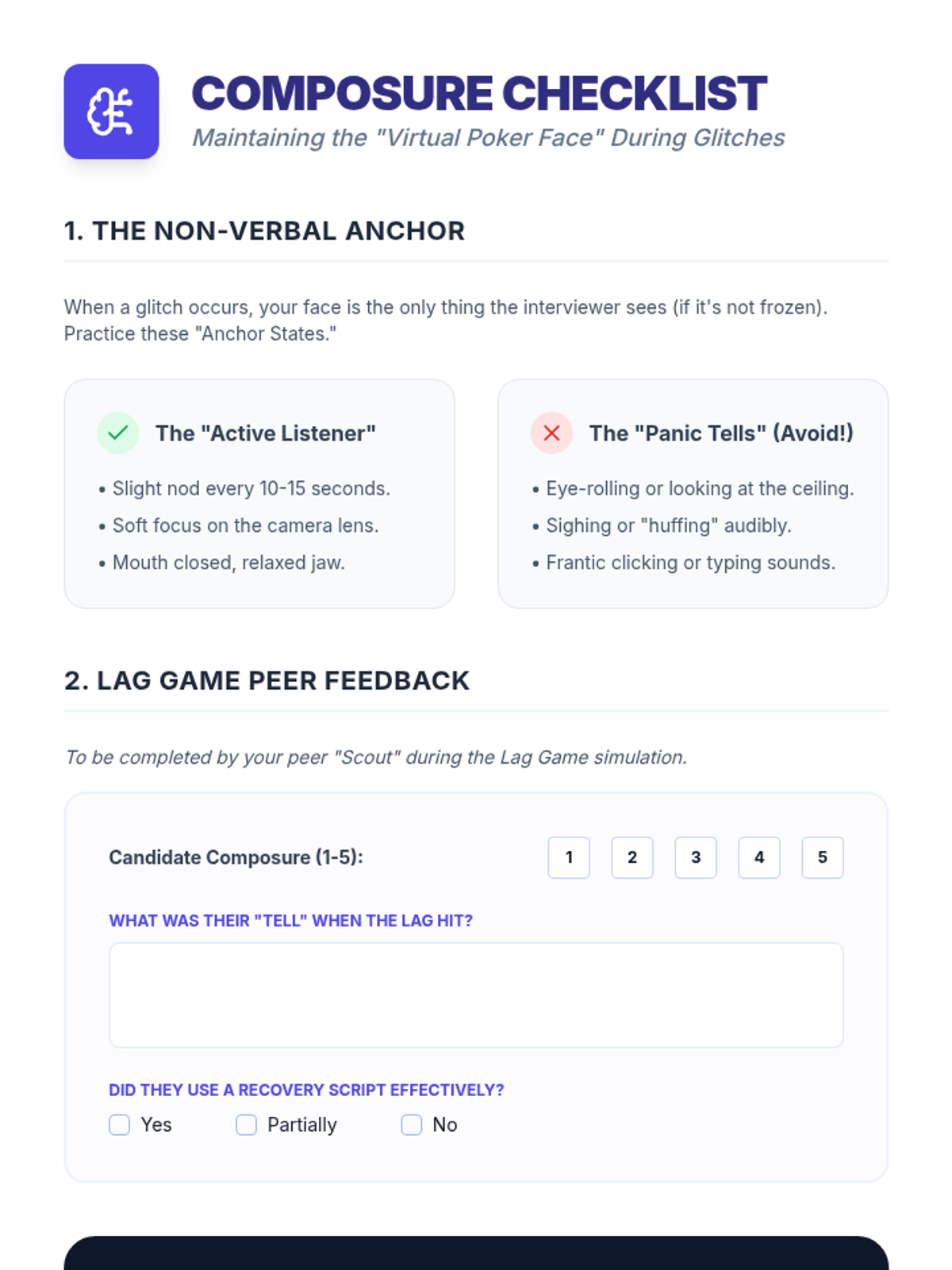
This lesson focuses on emotional regulation techniques and mindset shifts to stay calm when technology fails mid-flow.
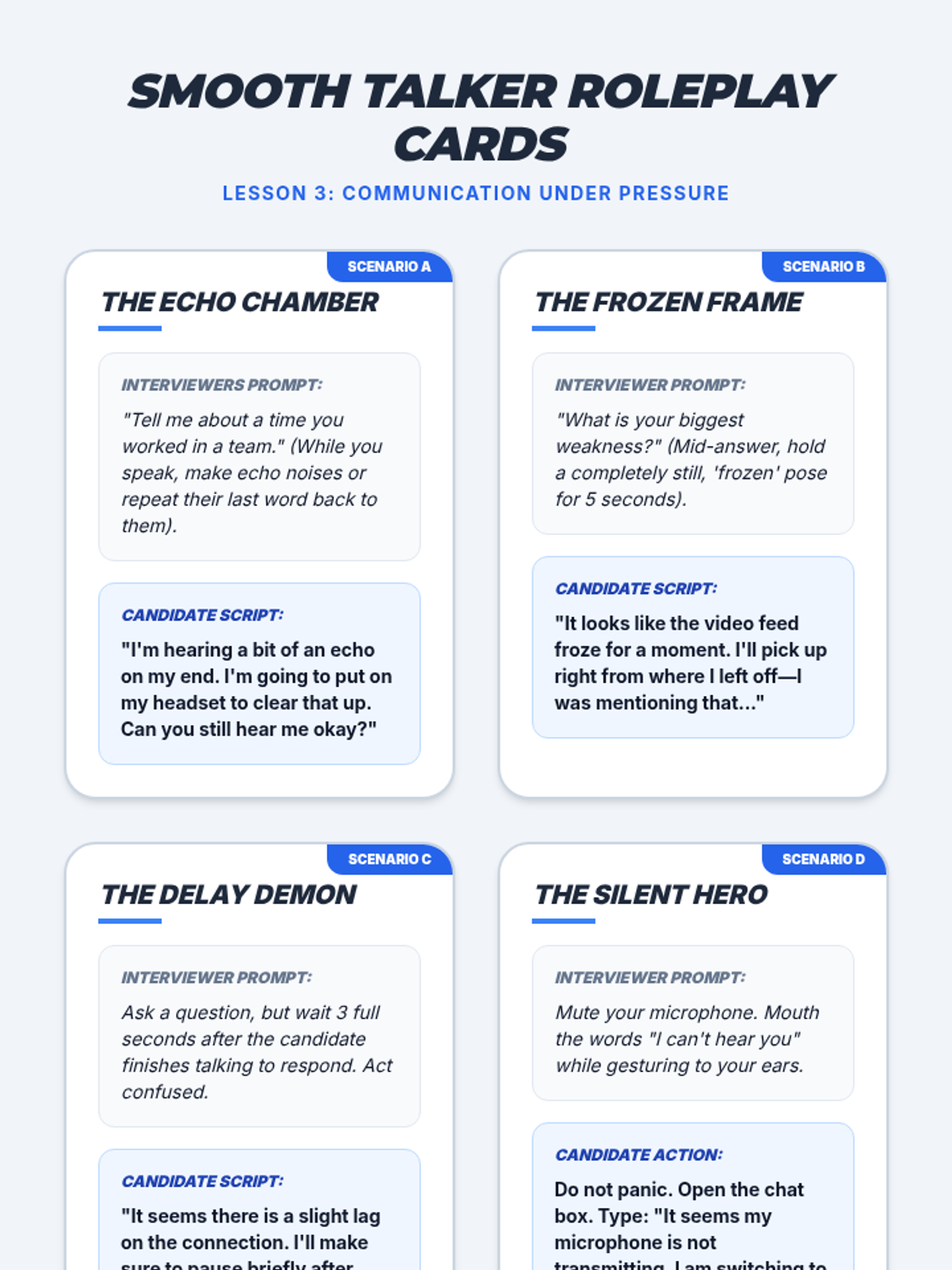
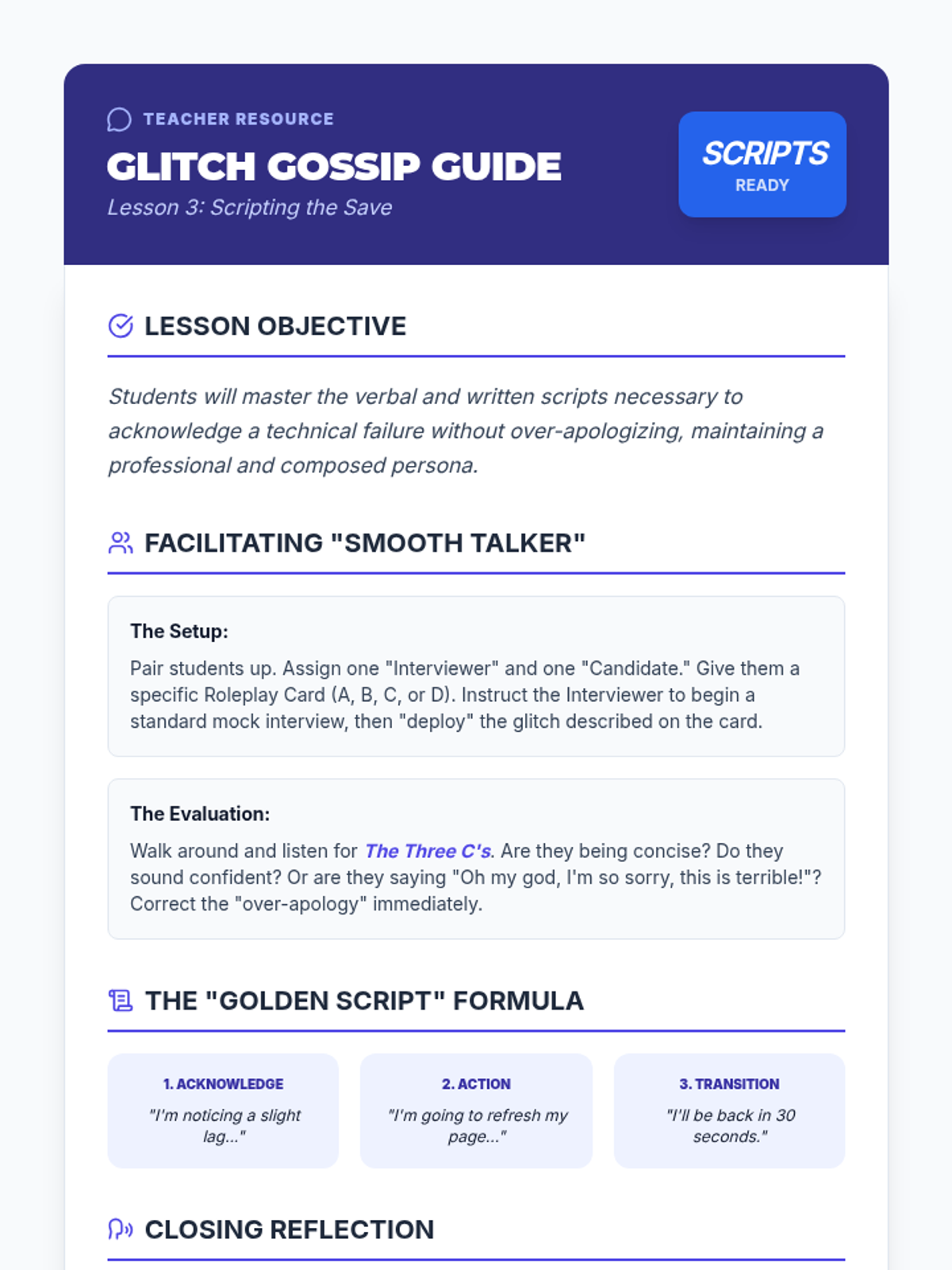
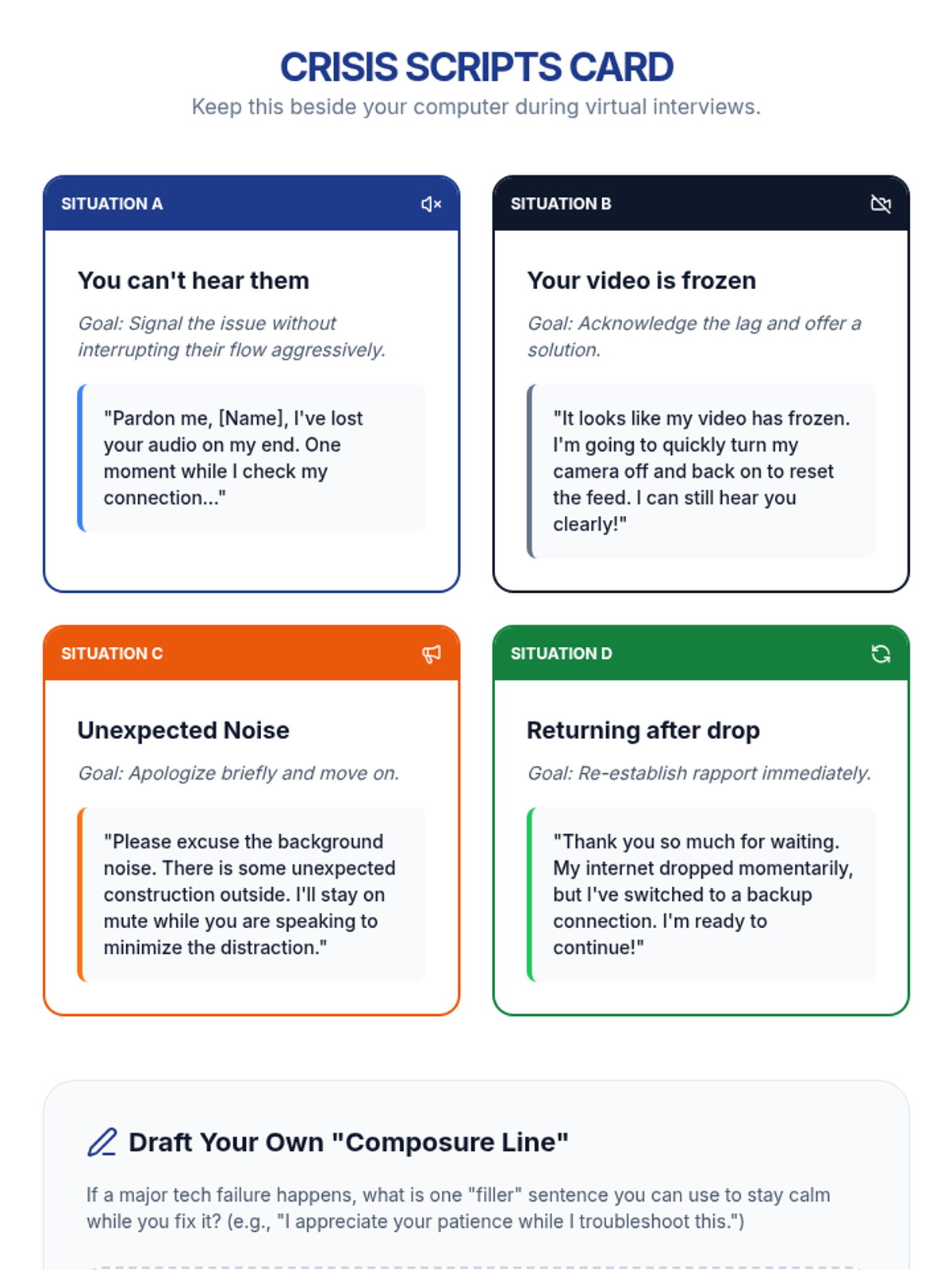
Students learn and practice specific verbal scripts to professionally communicate technical issues during an interview without panicking.
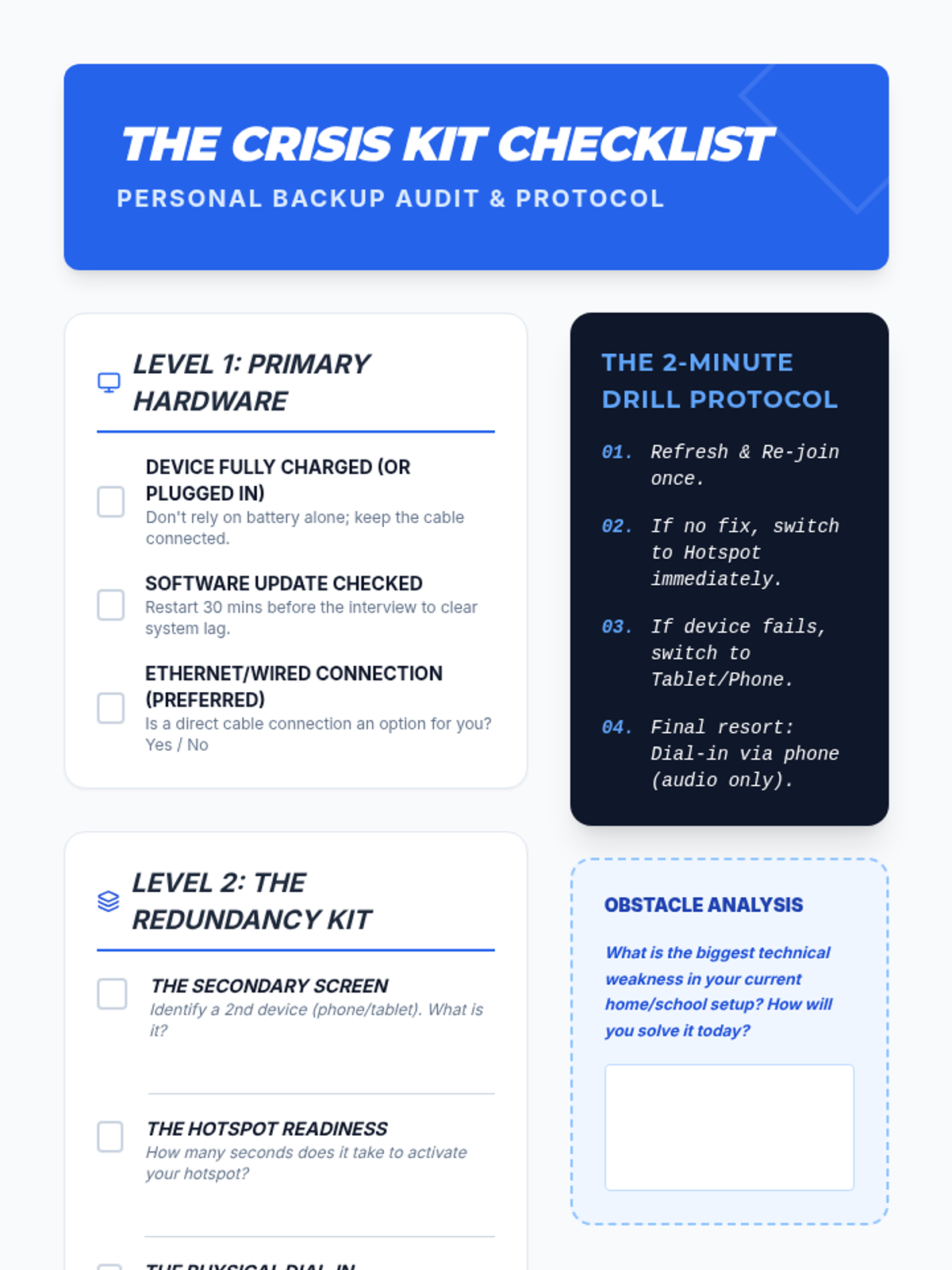
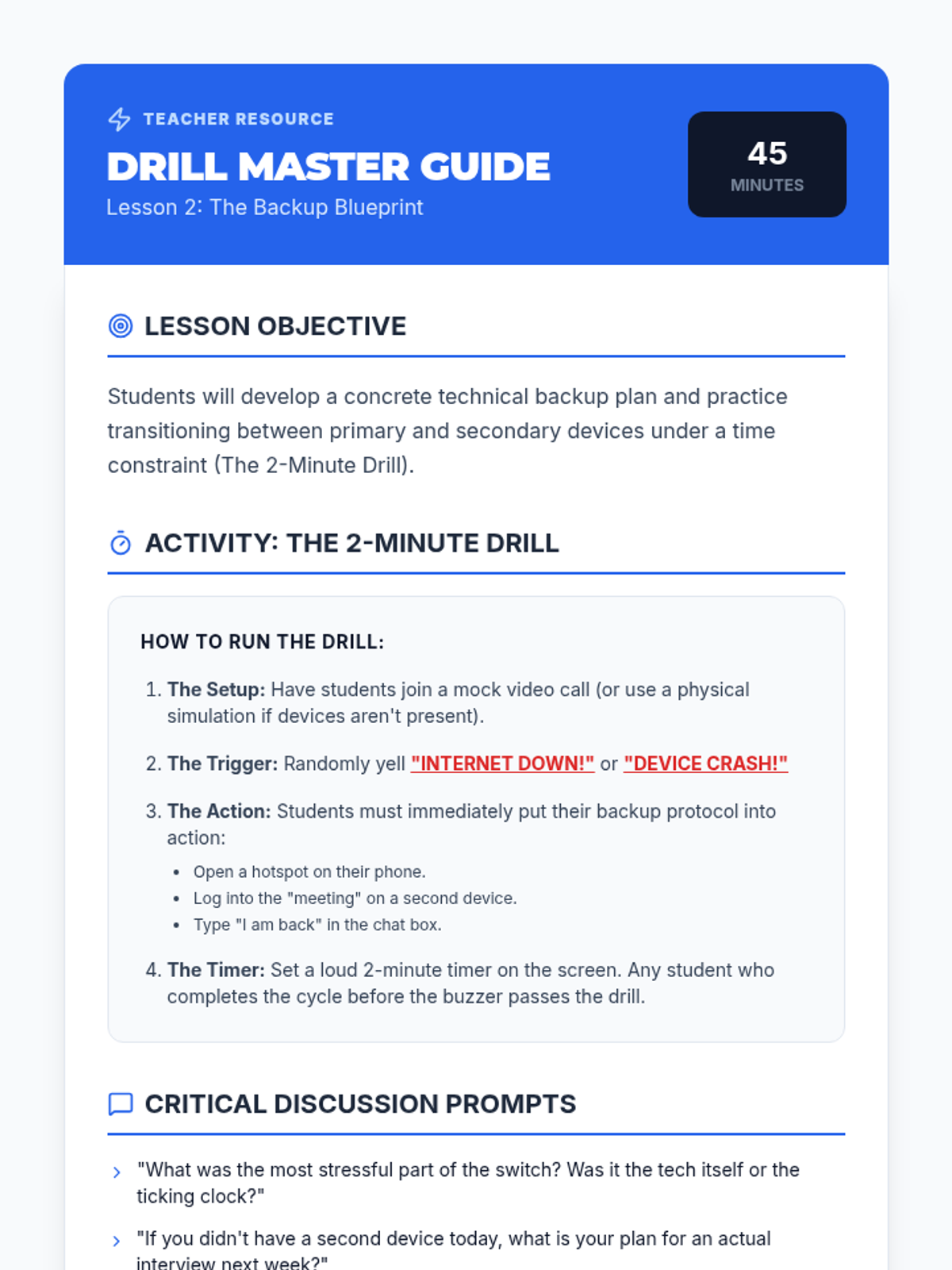
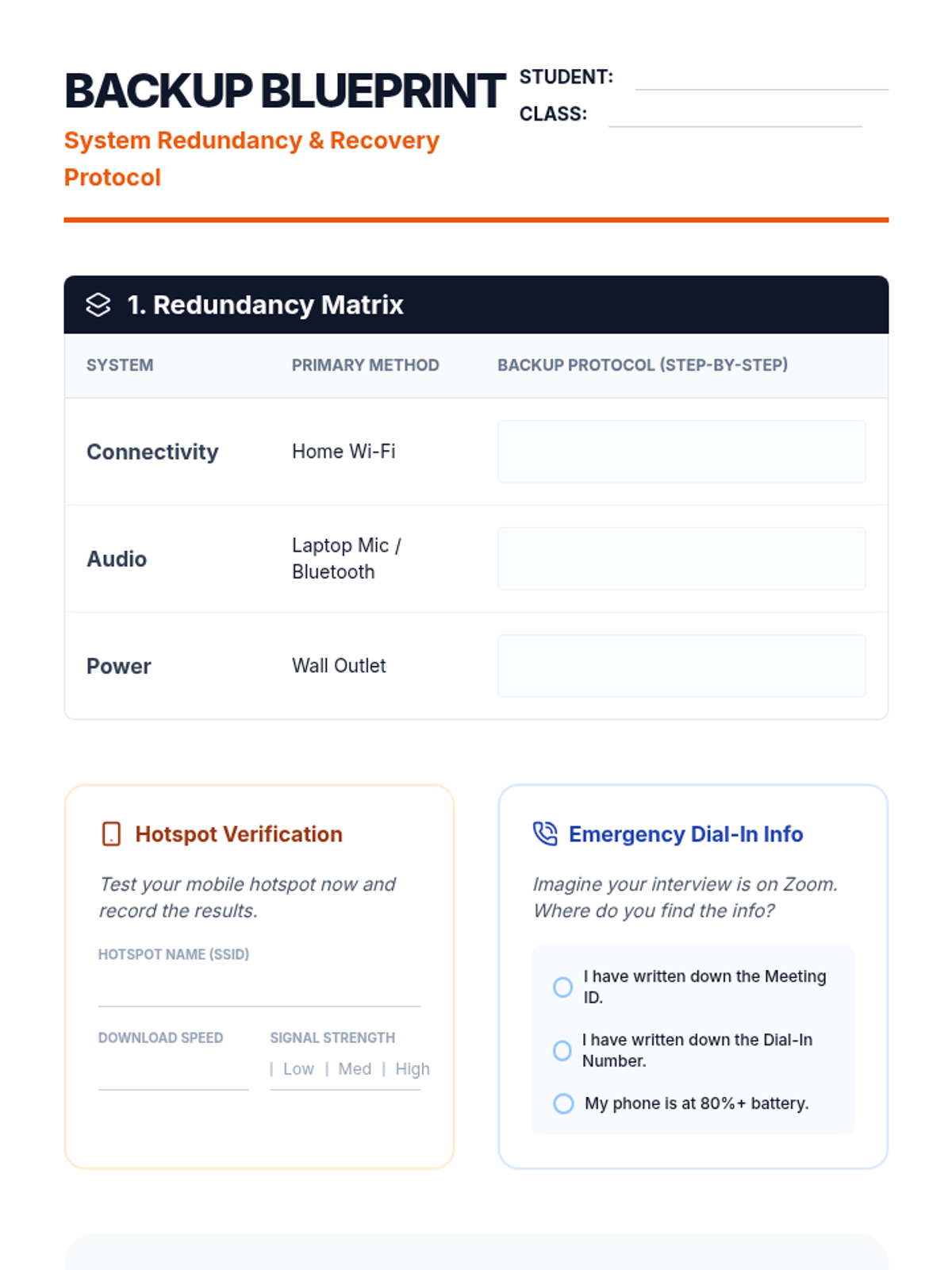
Learners develop a personal 'Crisis Kit' and backup protocol, including secondary devices and hotspot readiness.
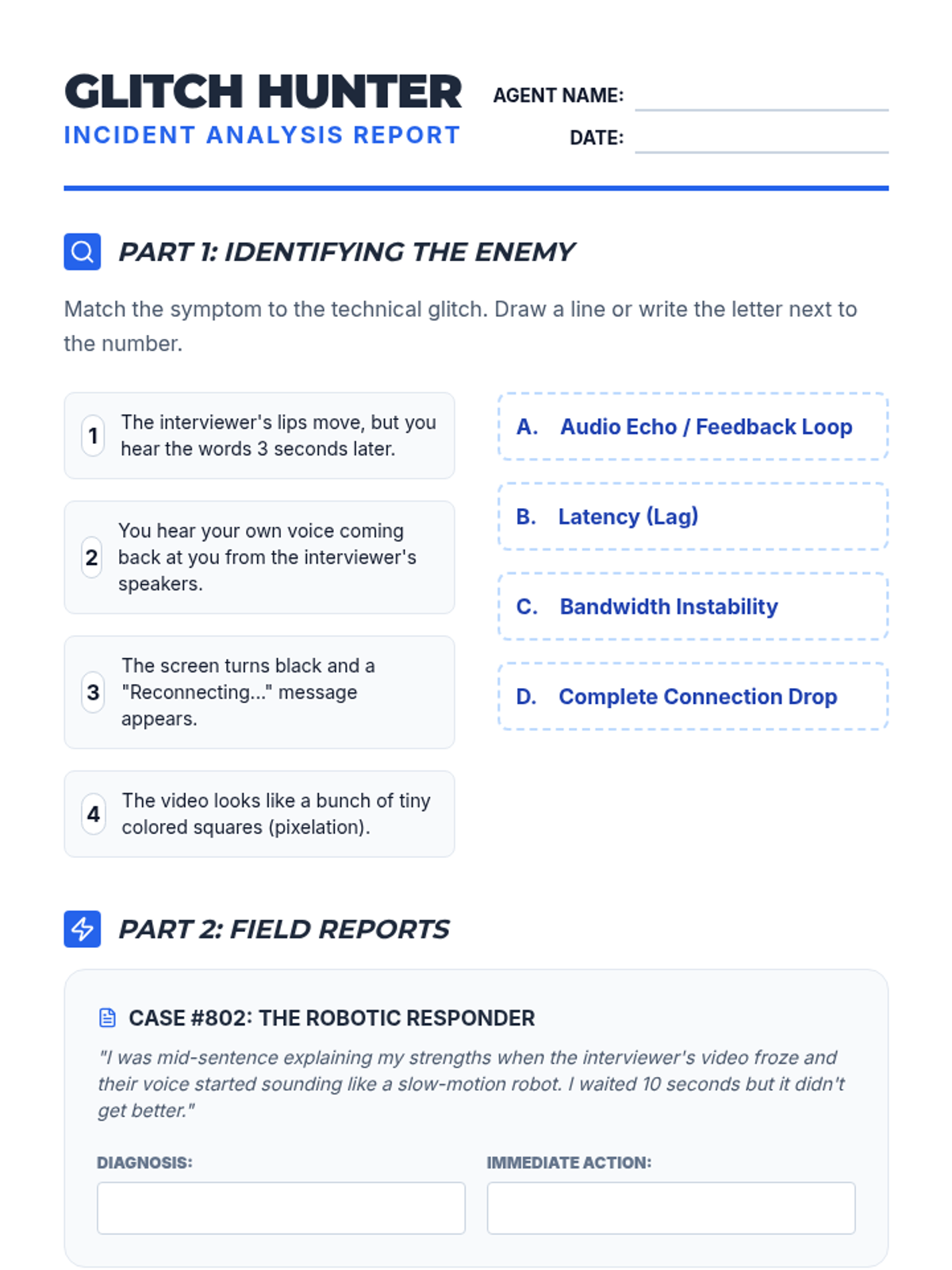
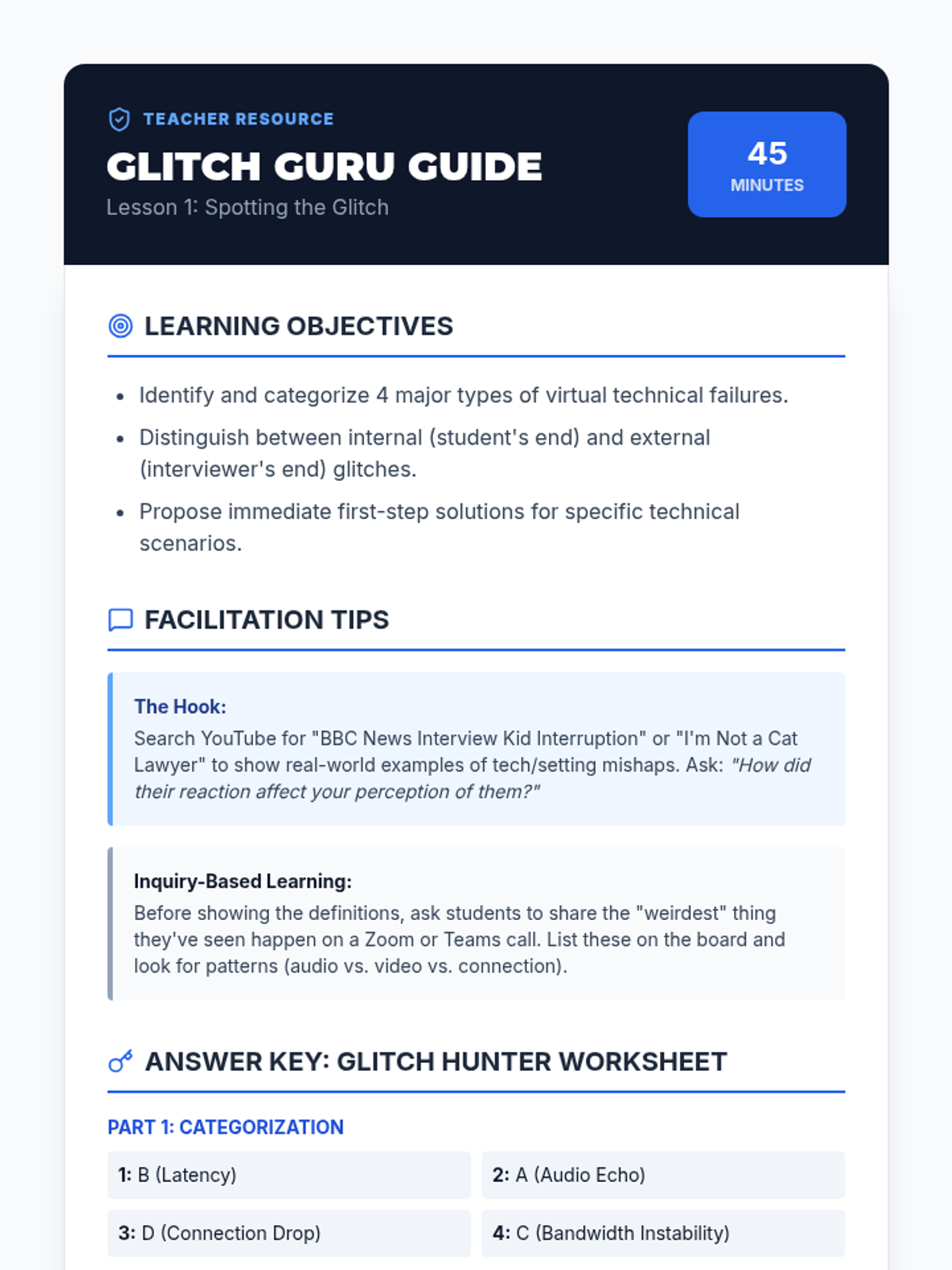
Students categorize common virtual interview issues such as lag, echo, and freezing, and learn primary troubleshooting steps for each.
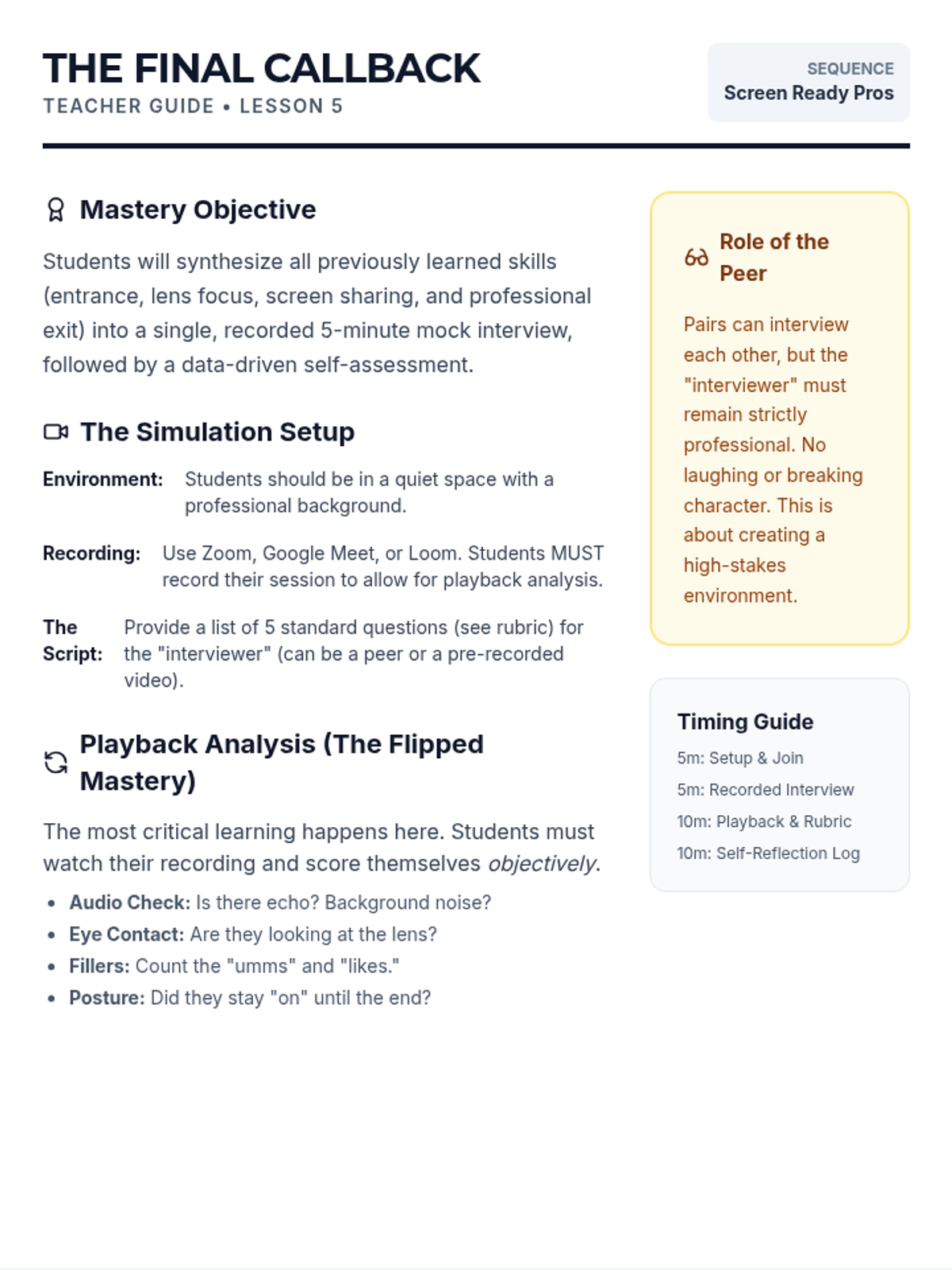
A culminating mock interview where students record, playback, and self-assess their performance using a rubric.
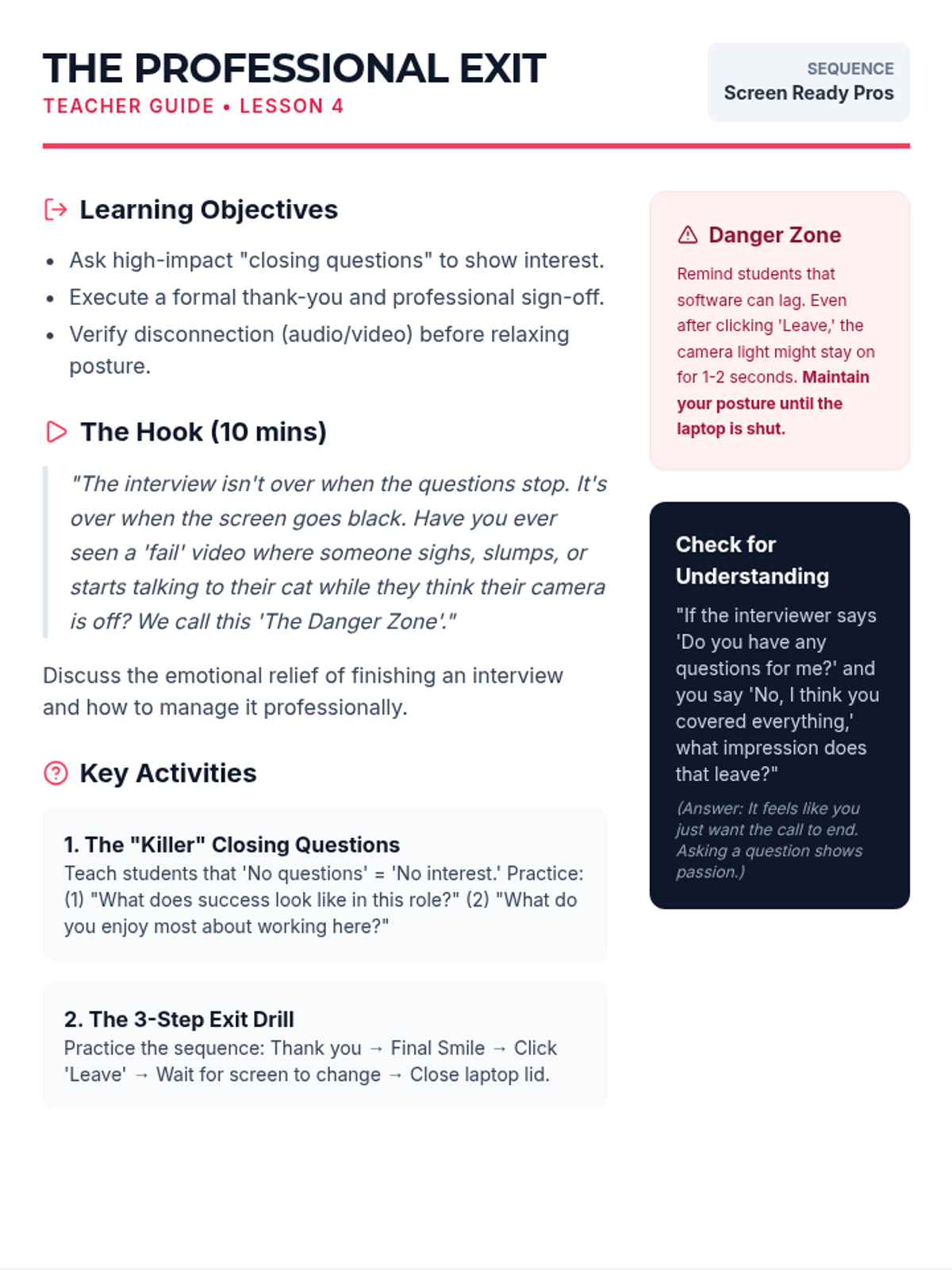
Mastering the formal conclusion of an interview, including final questions, thank-you etiquette, and the "camera-off" confirmation.
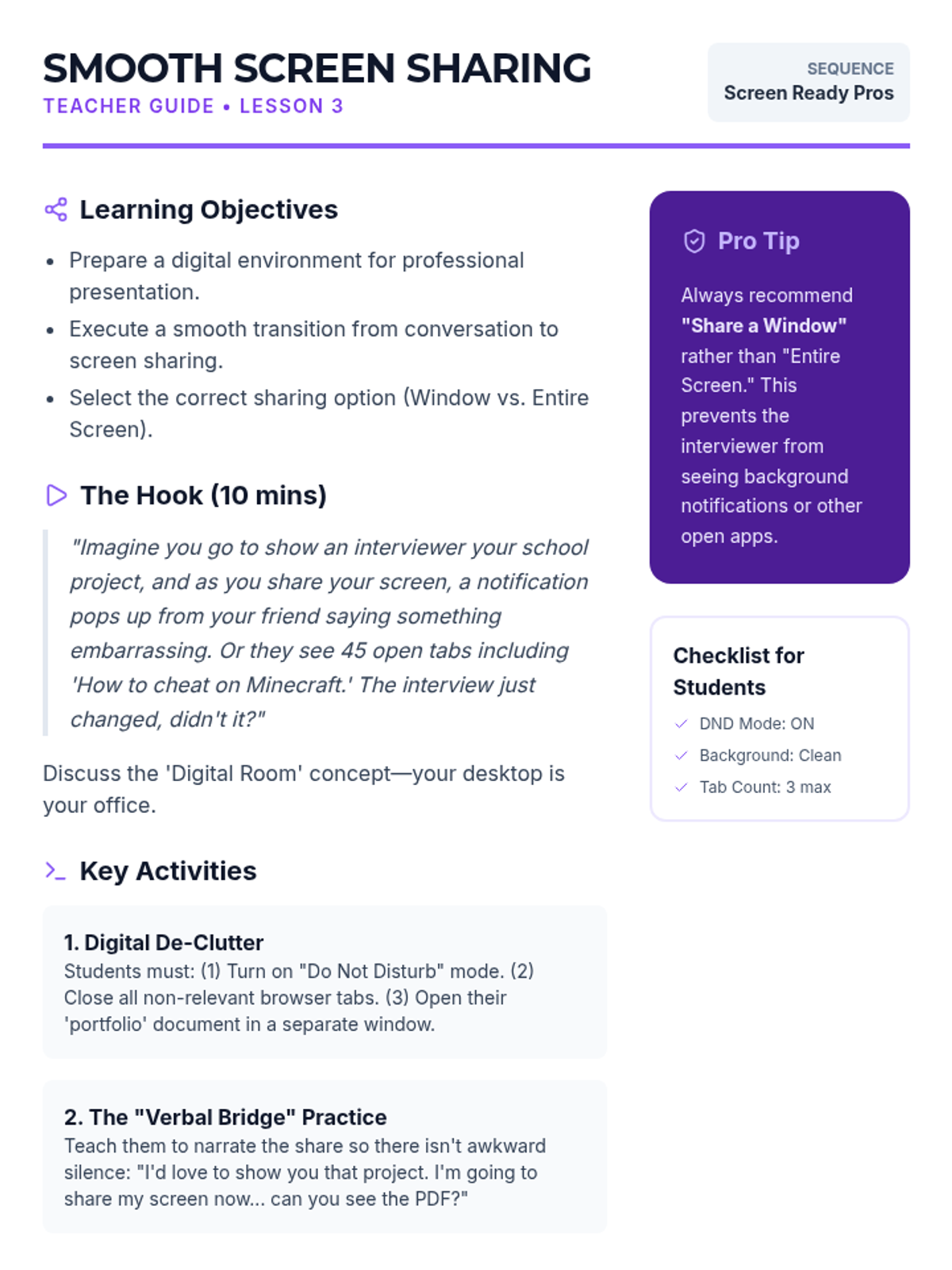
Teaches technical proficiency in screen sharing, managing digital environments, and presenting portfolios professionally.
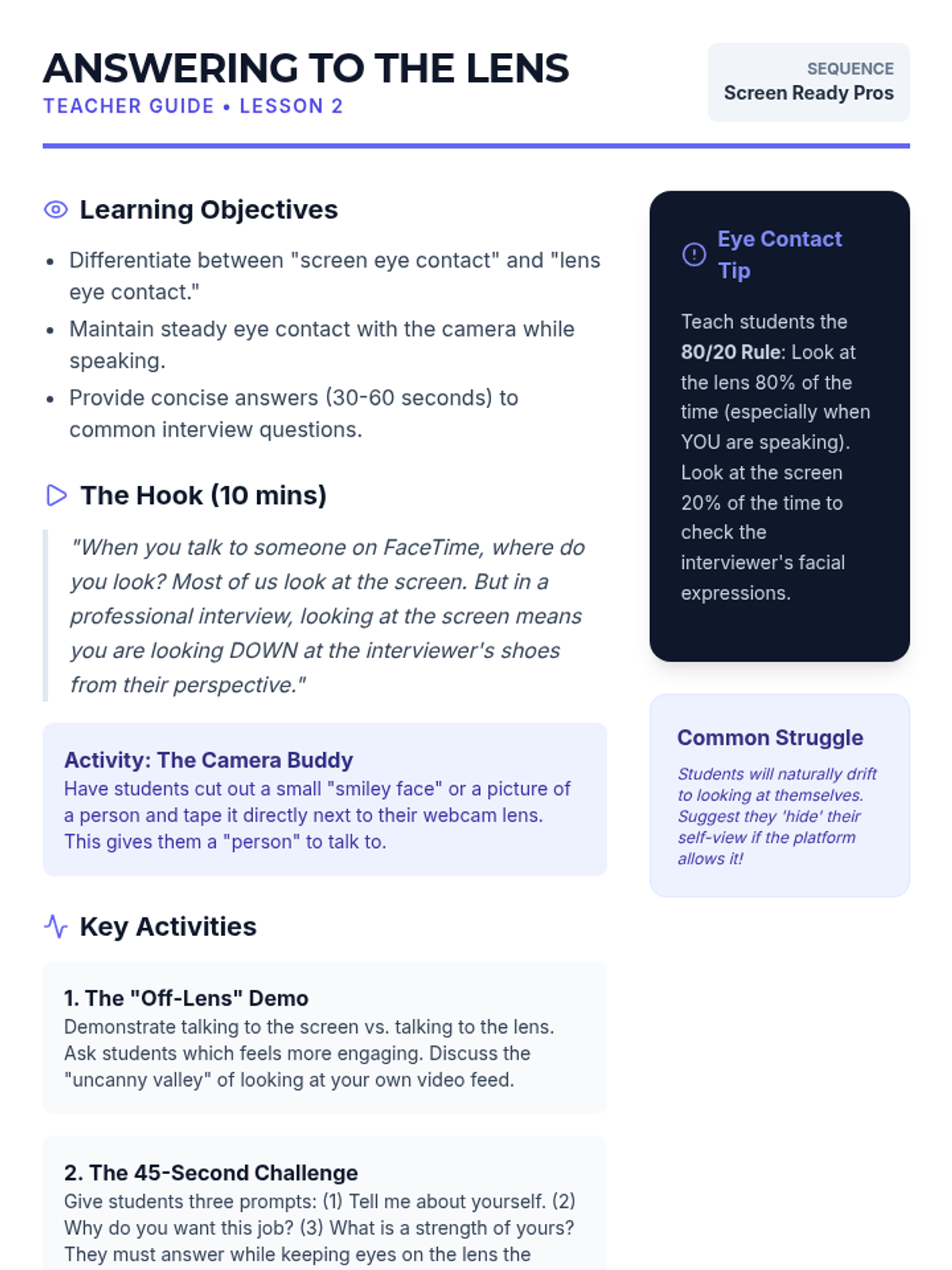
Covers the technique of looking at the camera lens rather than the screen to maintain eye contact and delivering focused answers.
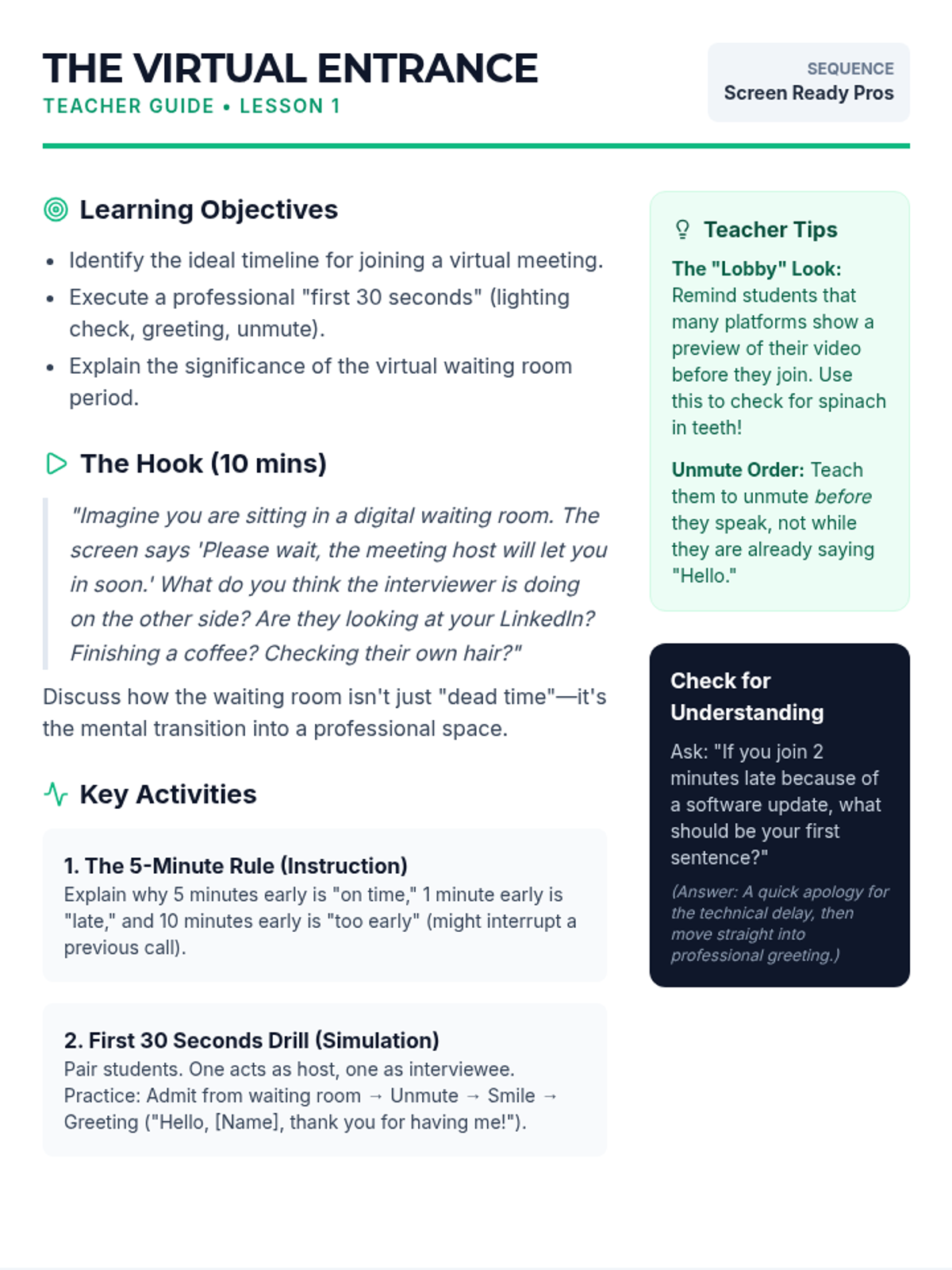
Focuses on the etiquette of joining calls, managing waiting rooms, and the first 30 seconds of a virtual connection.
Master the transition from student to professional. This lesson covers workplace etiquette and the application process through engaging puzzles and reflective self-assessments.
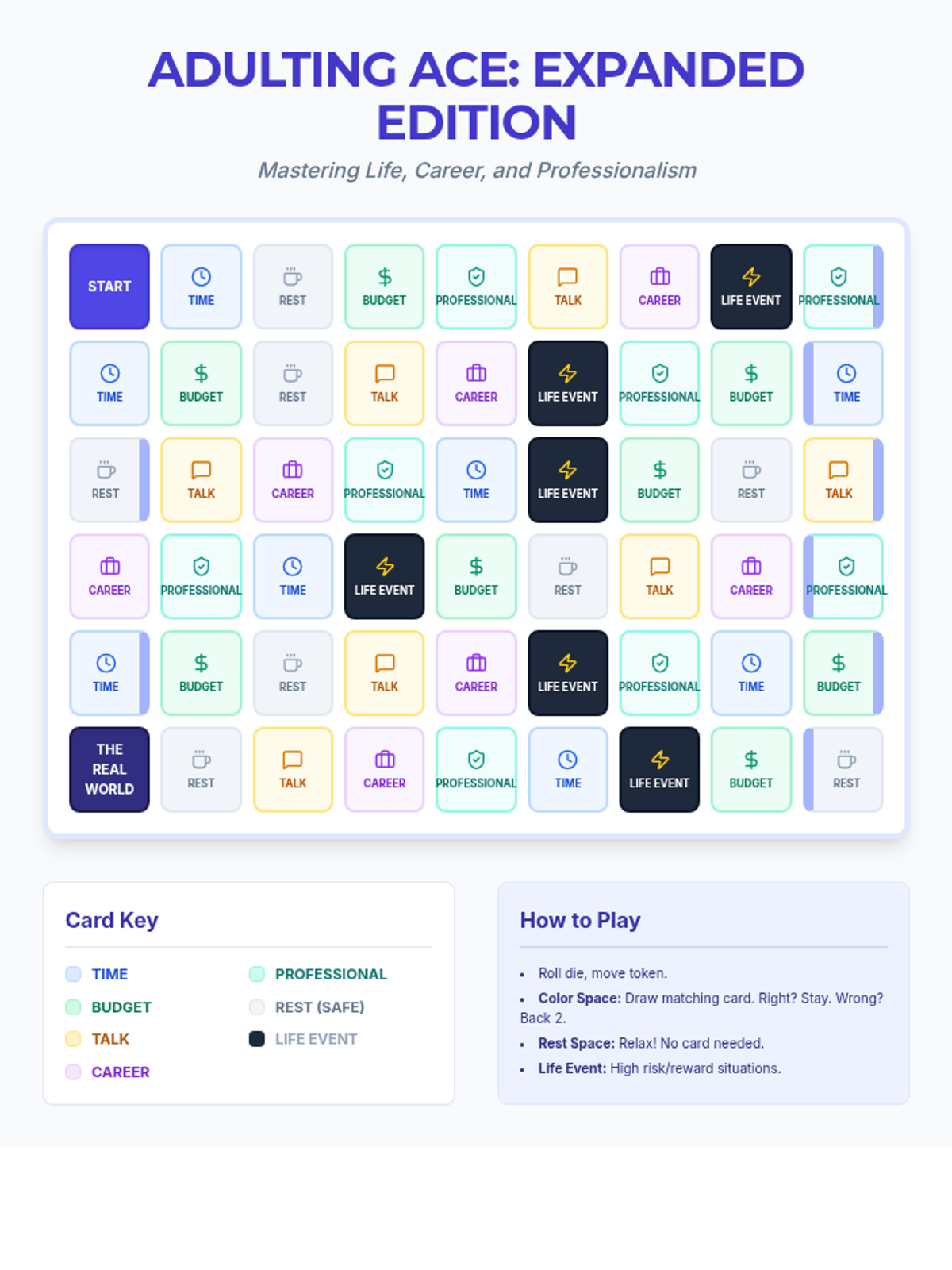
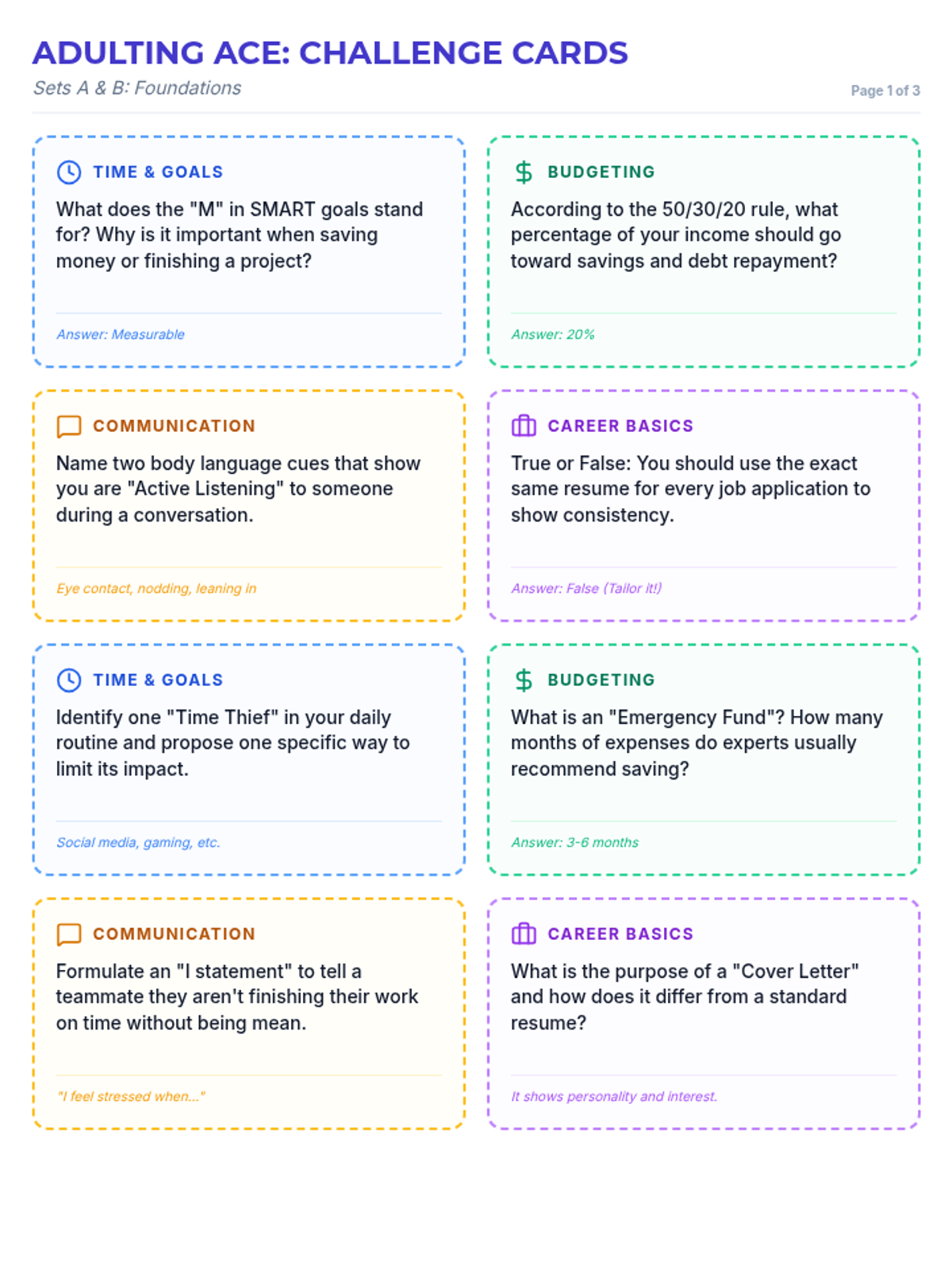
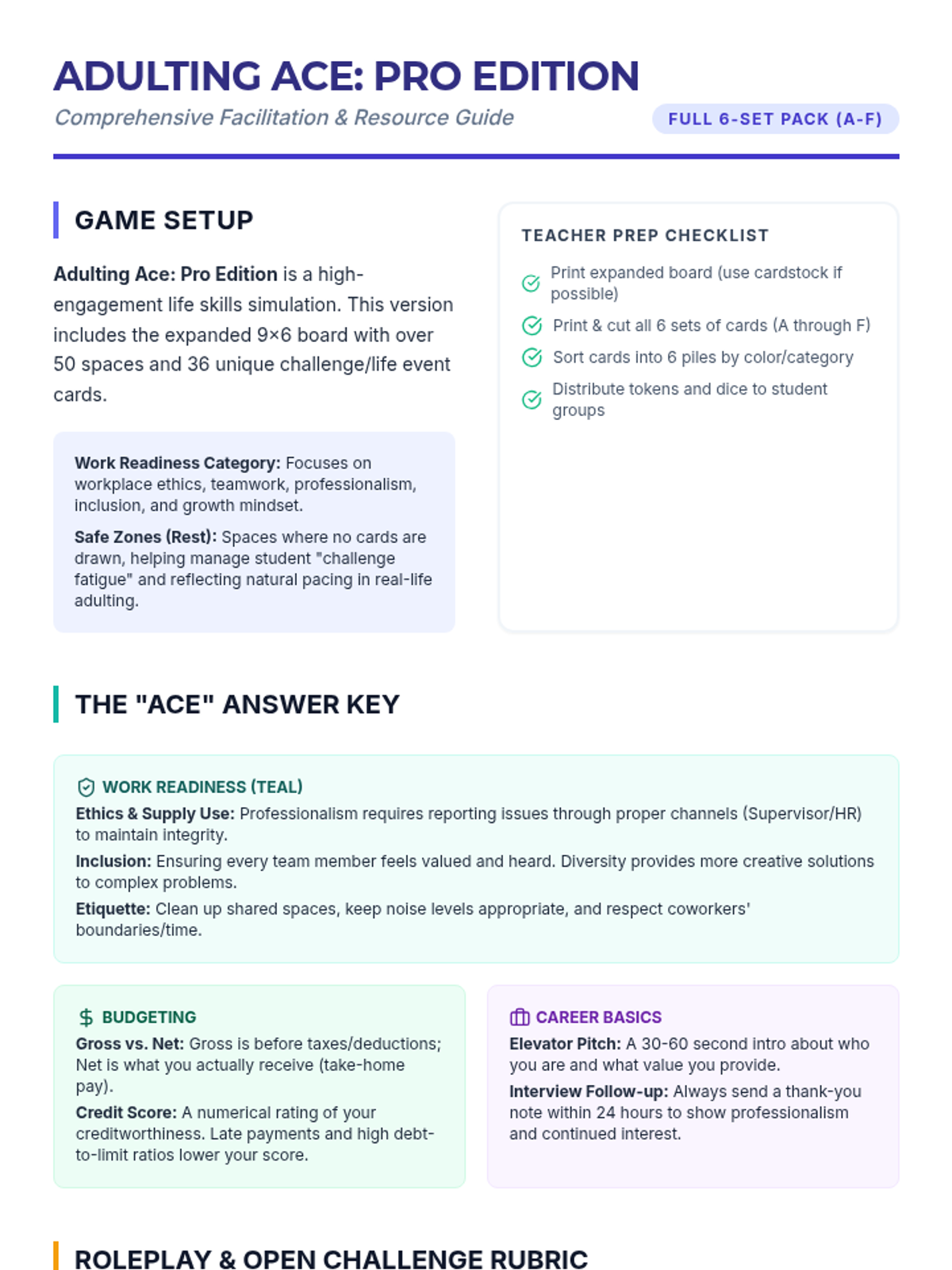
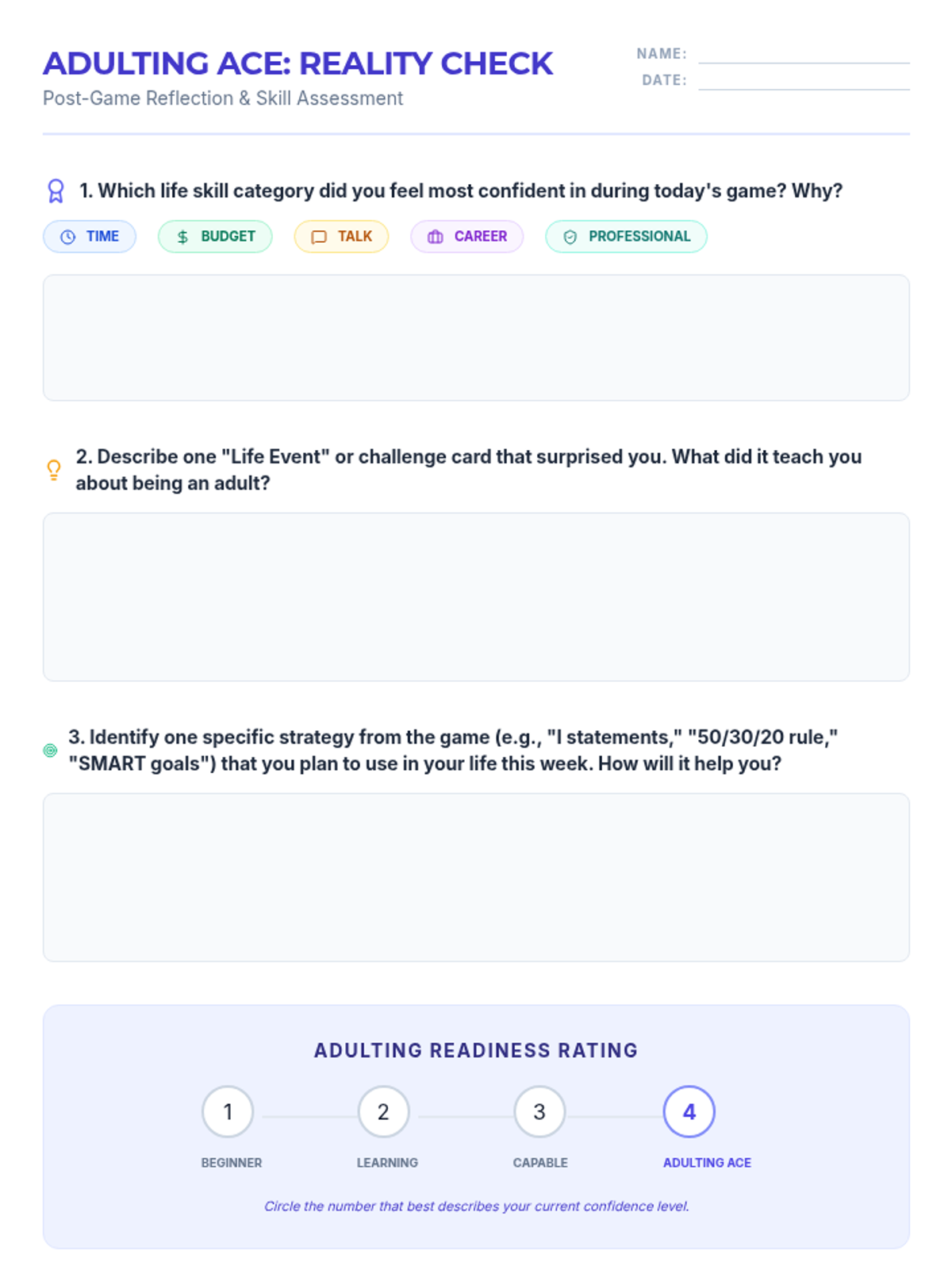
An interactive board game experience covering essential life skills including financial literacy, time management, communication, and career readiness.
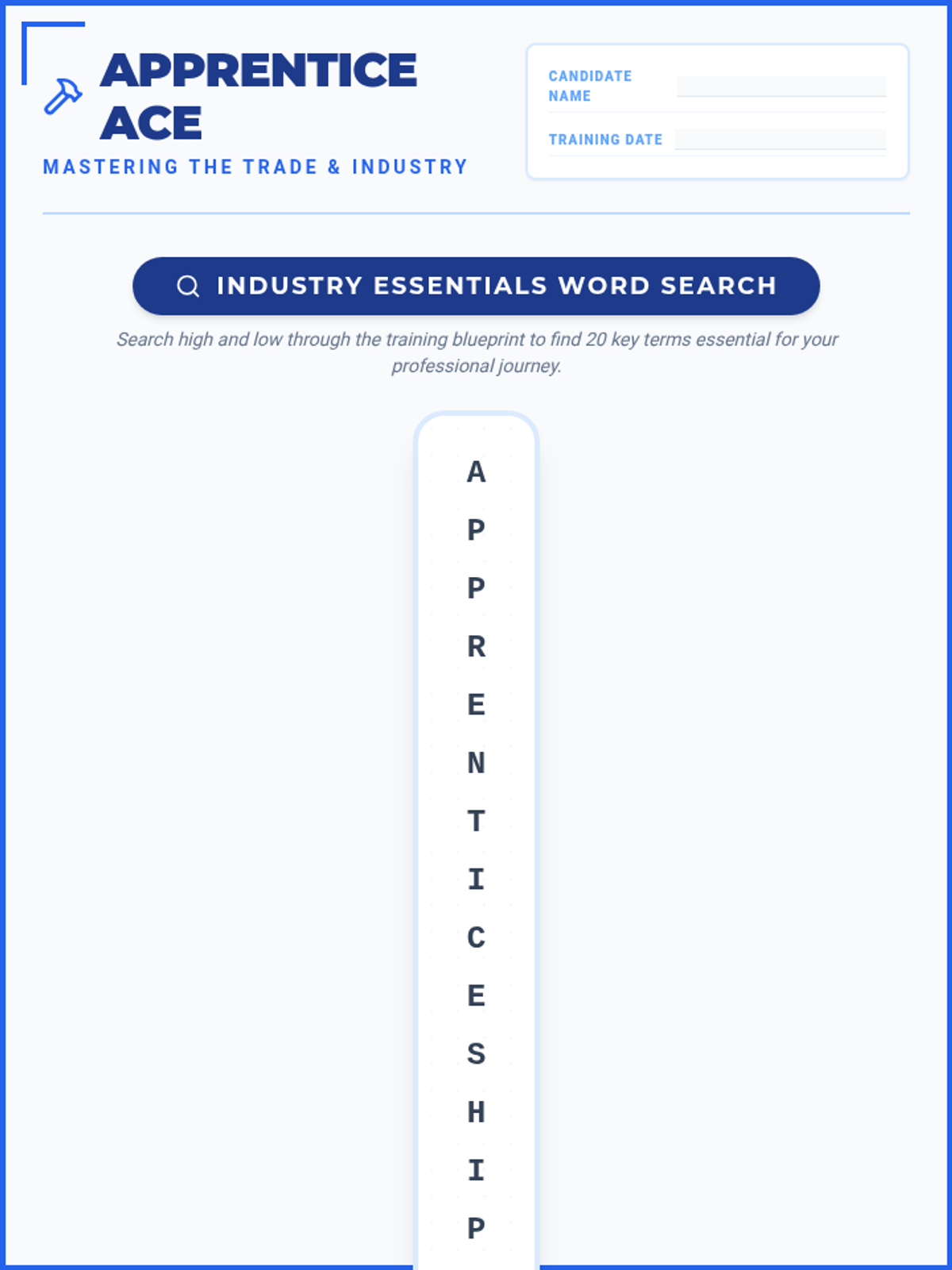
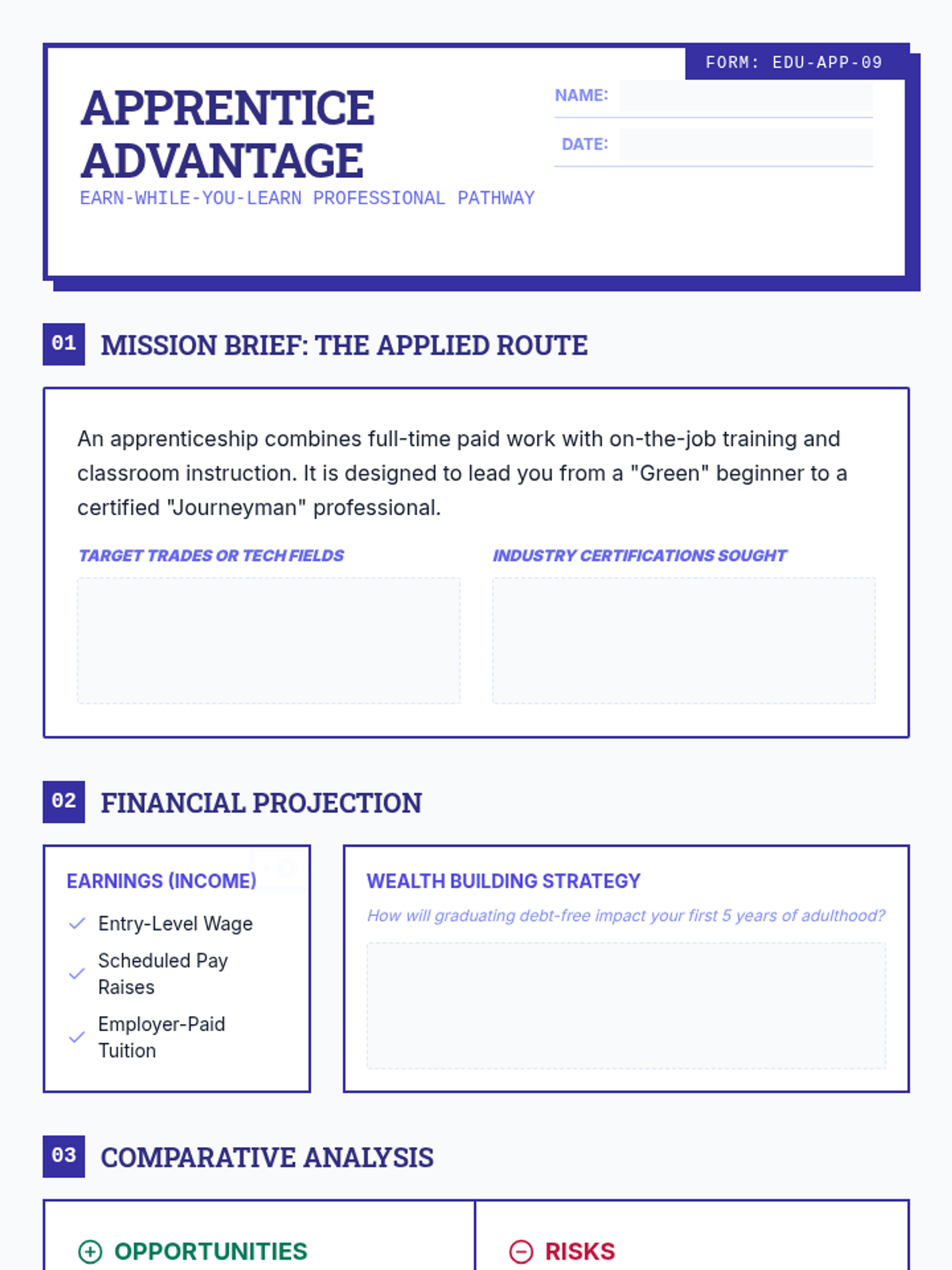
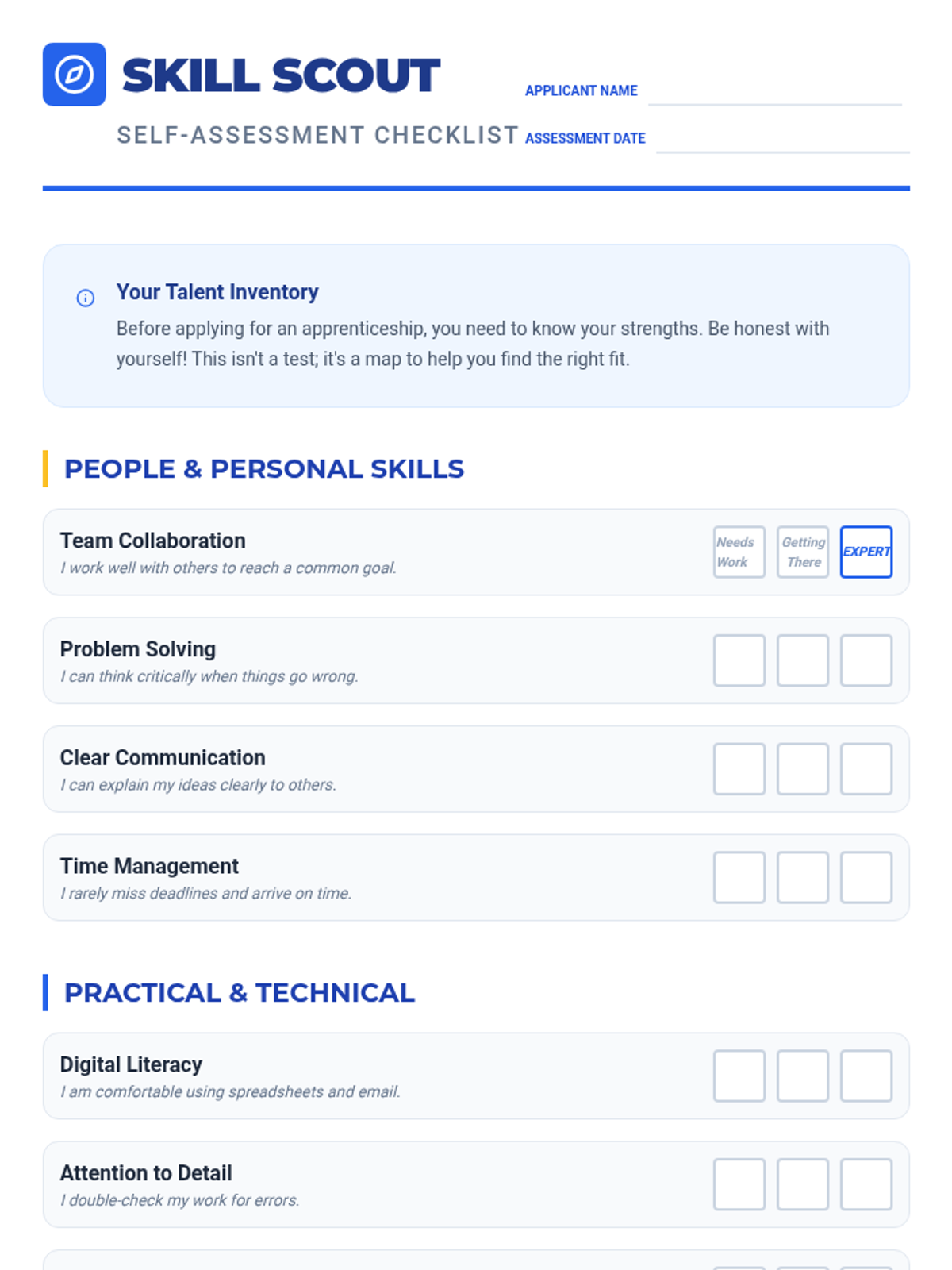
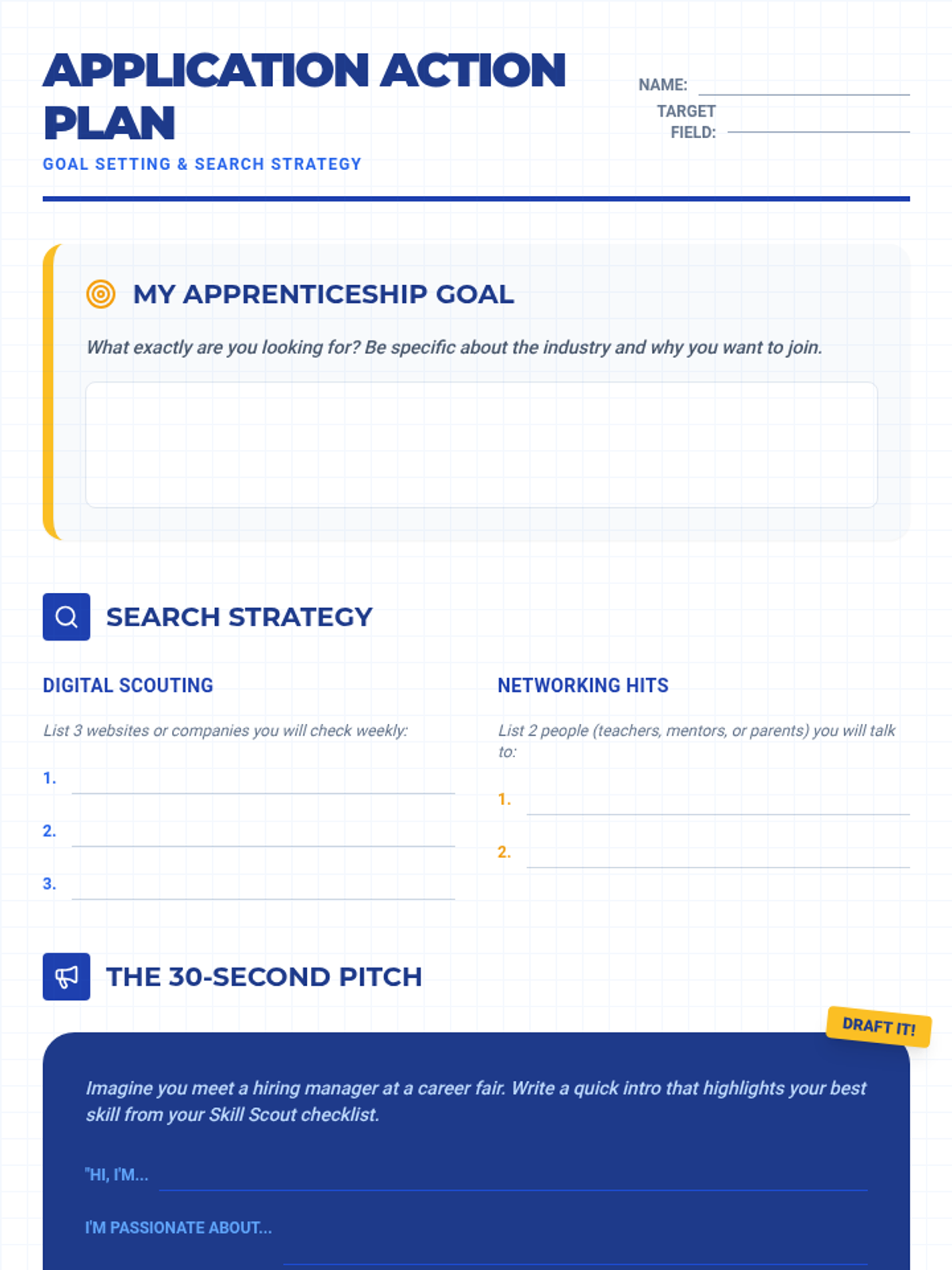
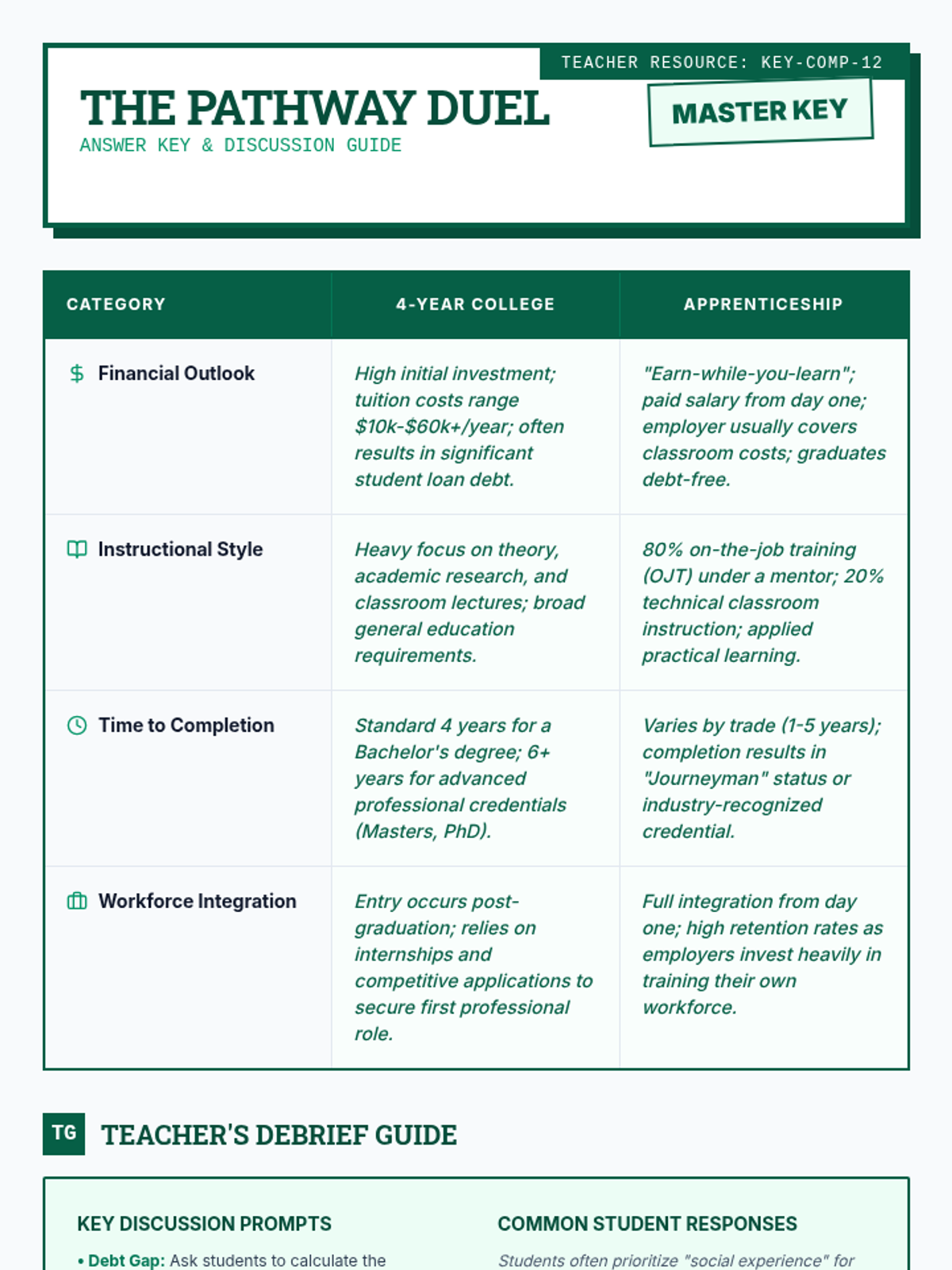
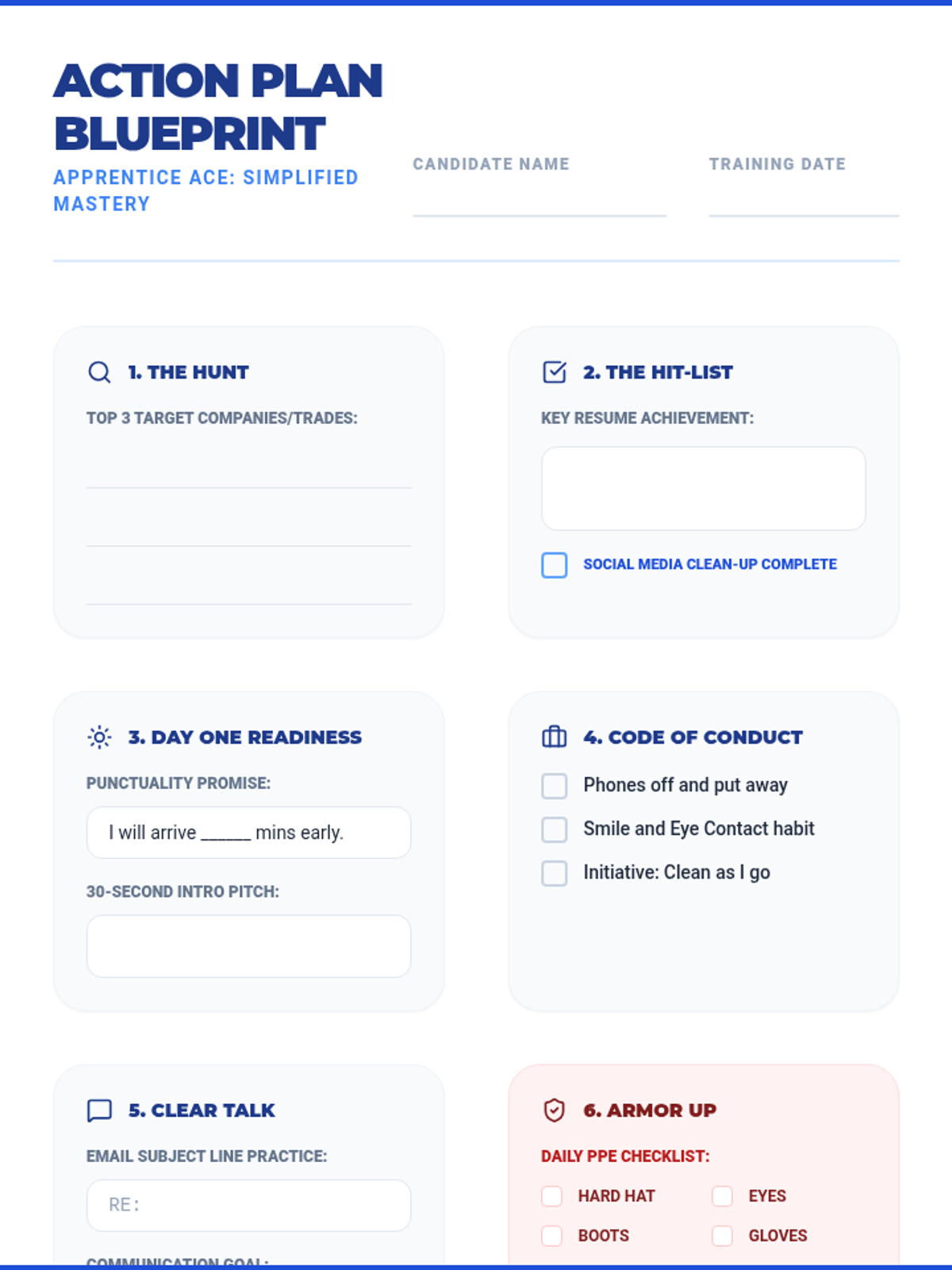
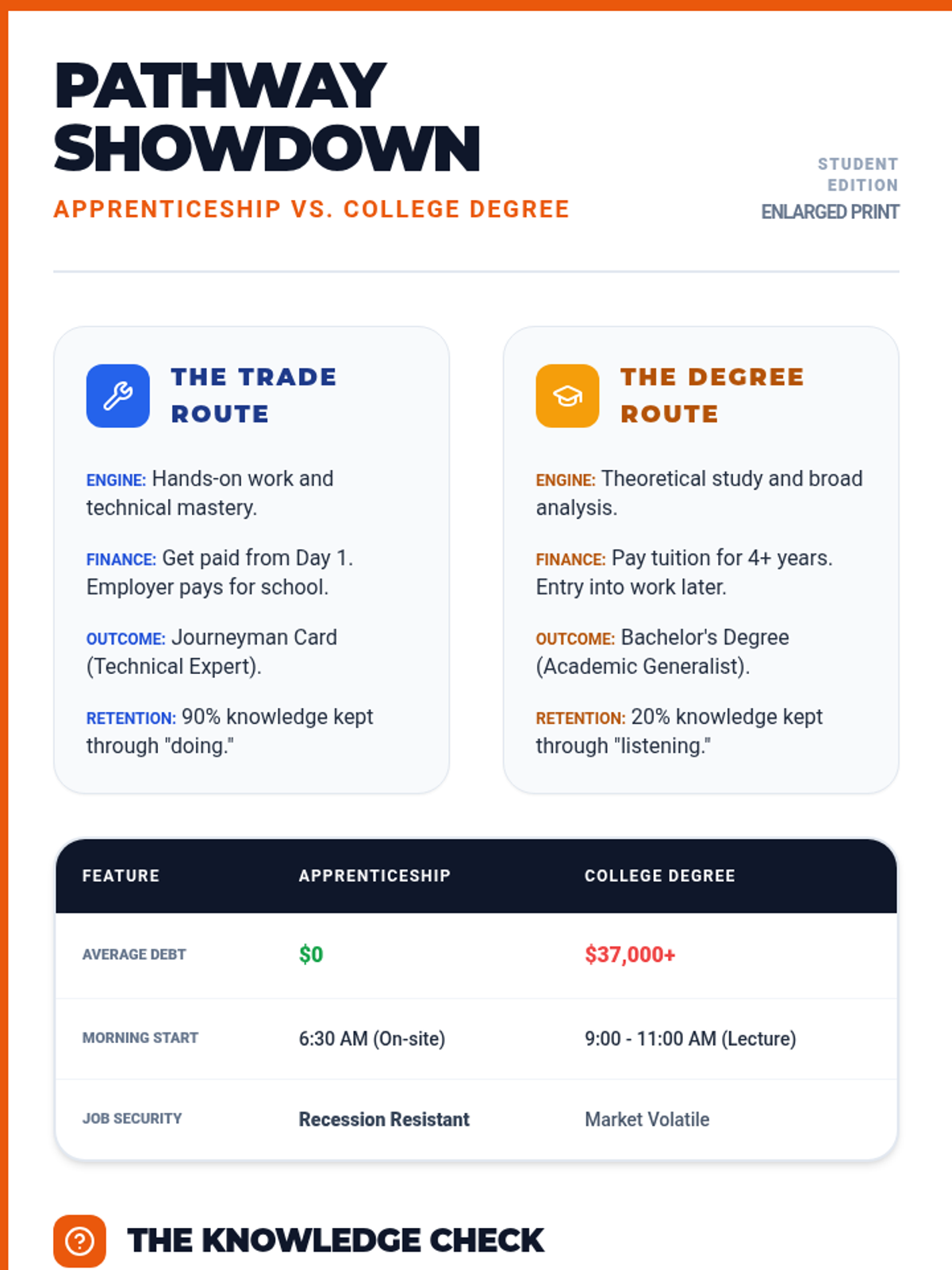
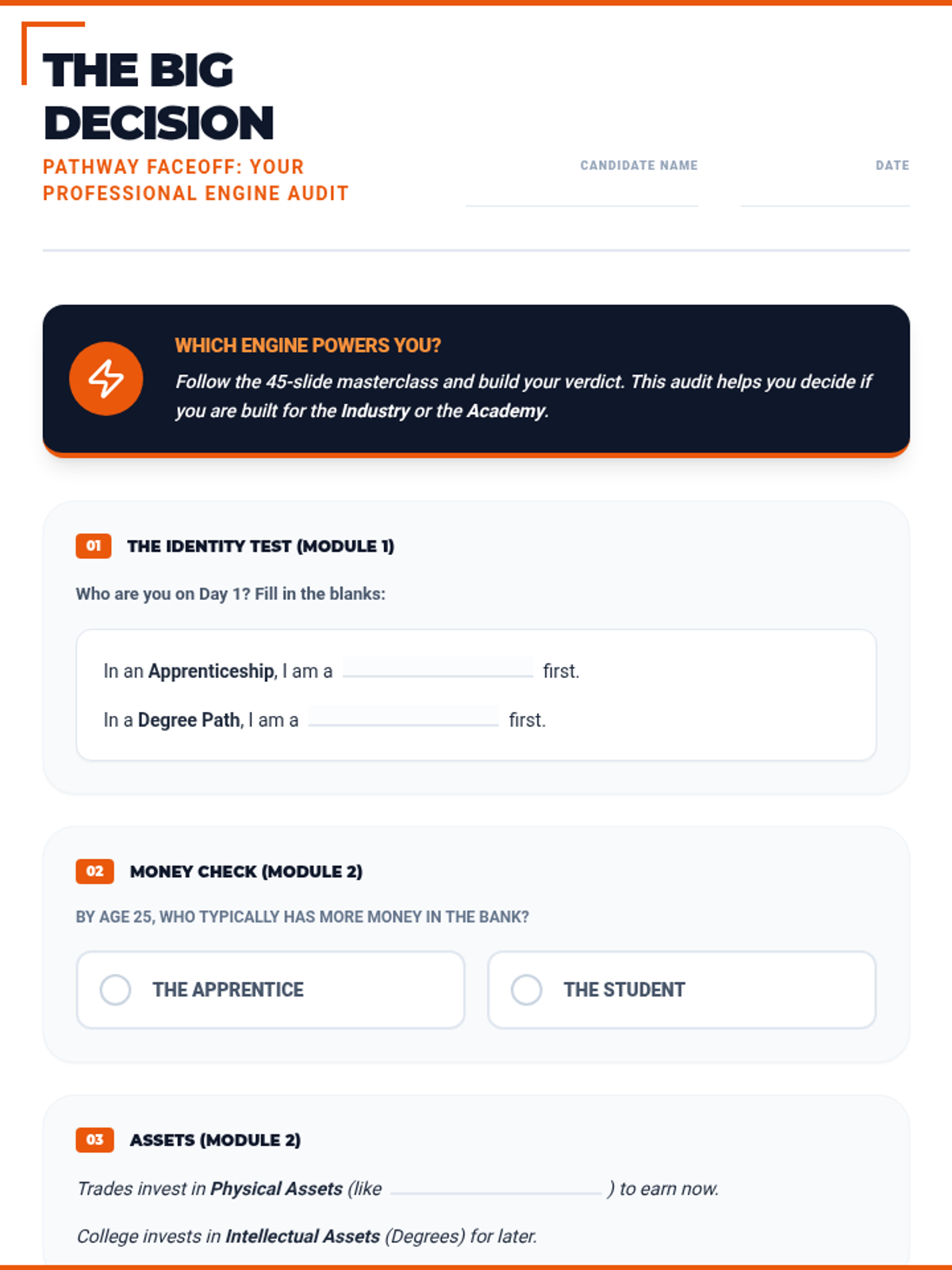
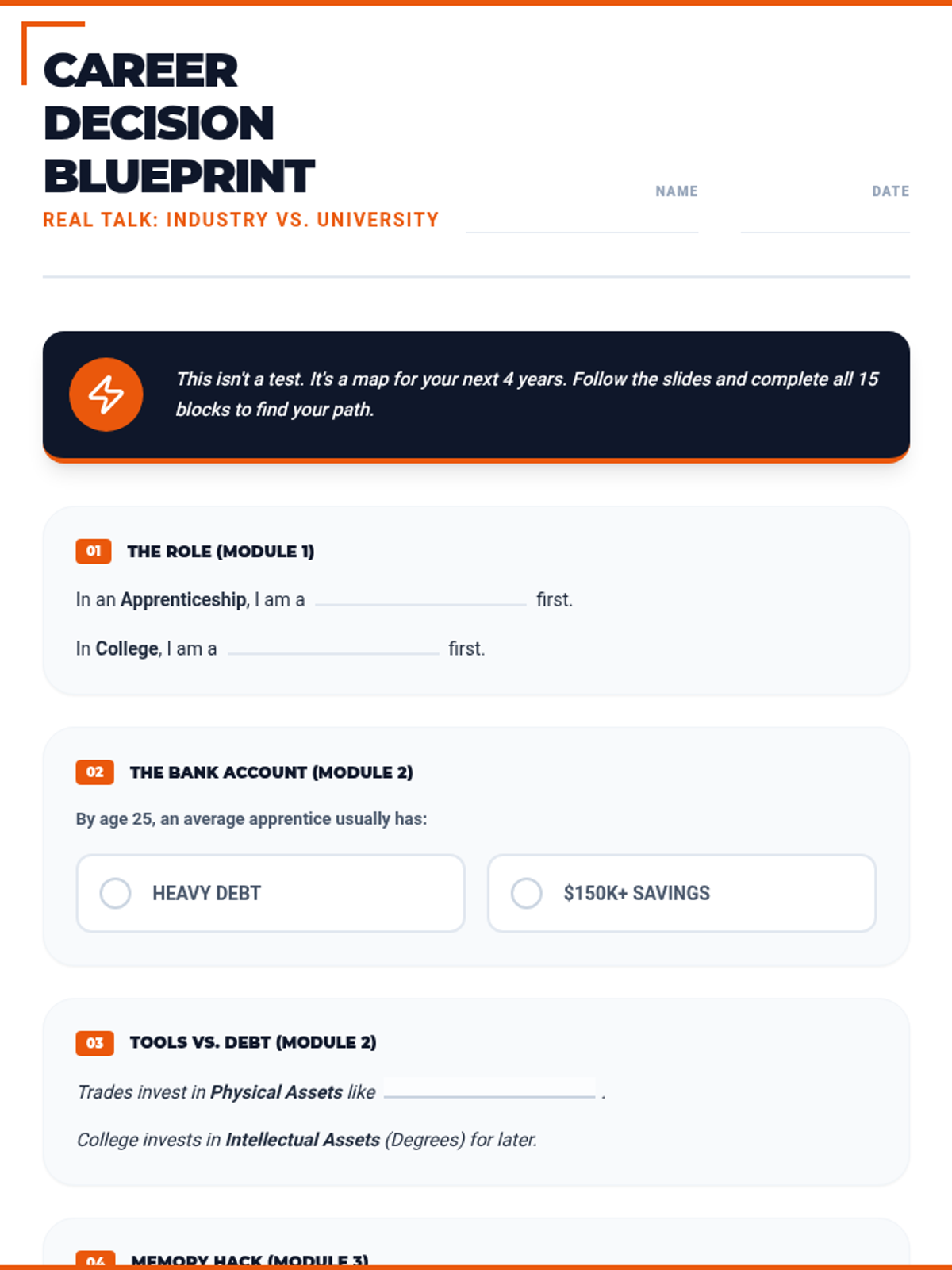
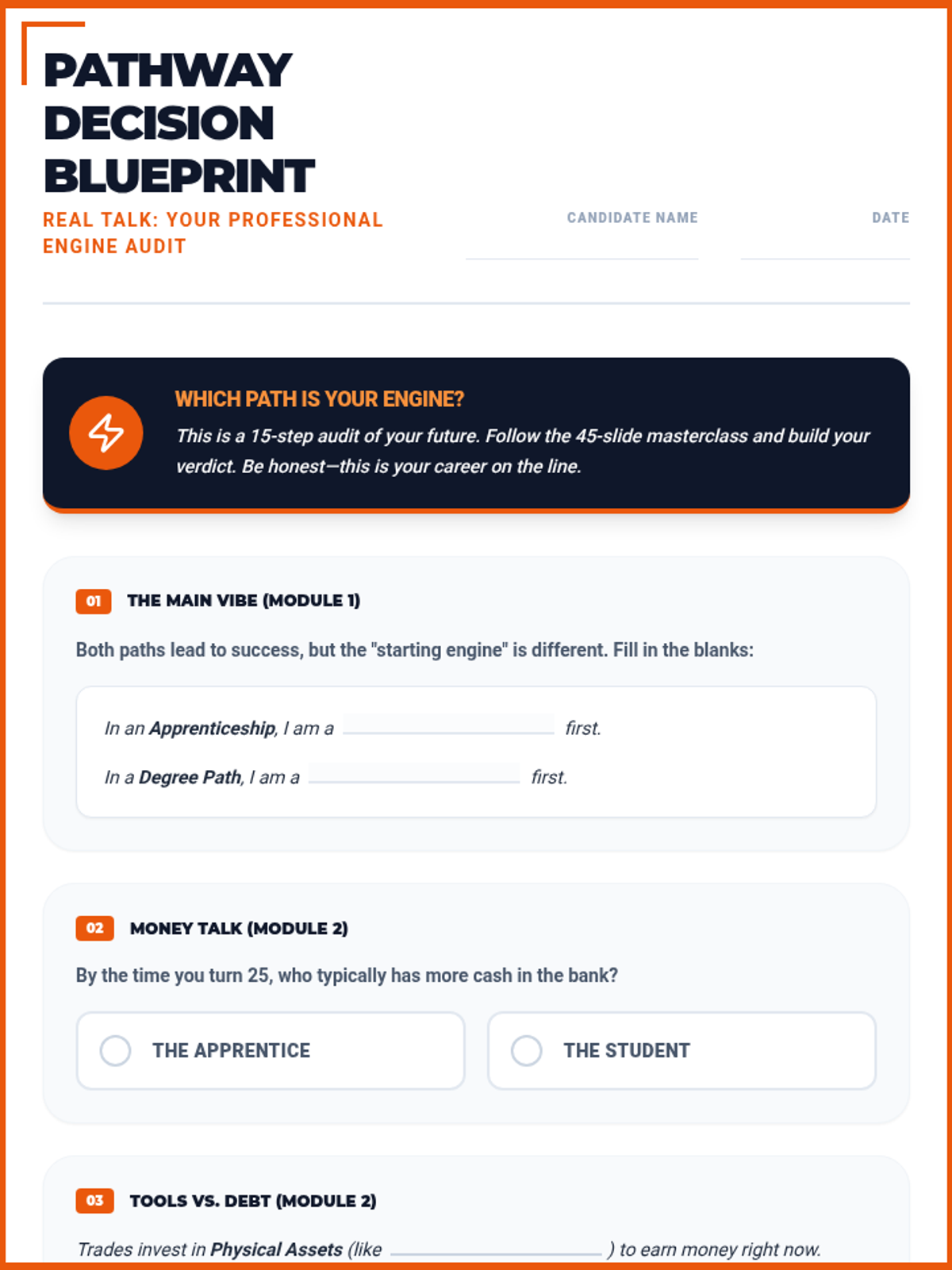
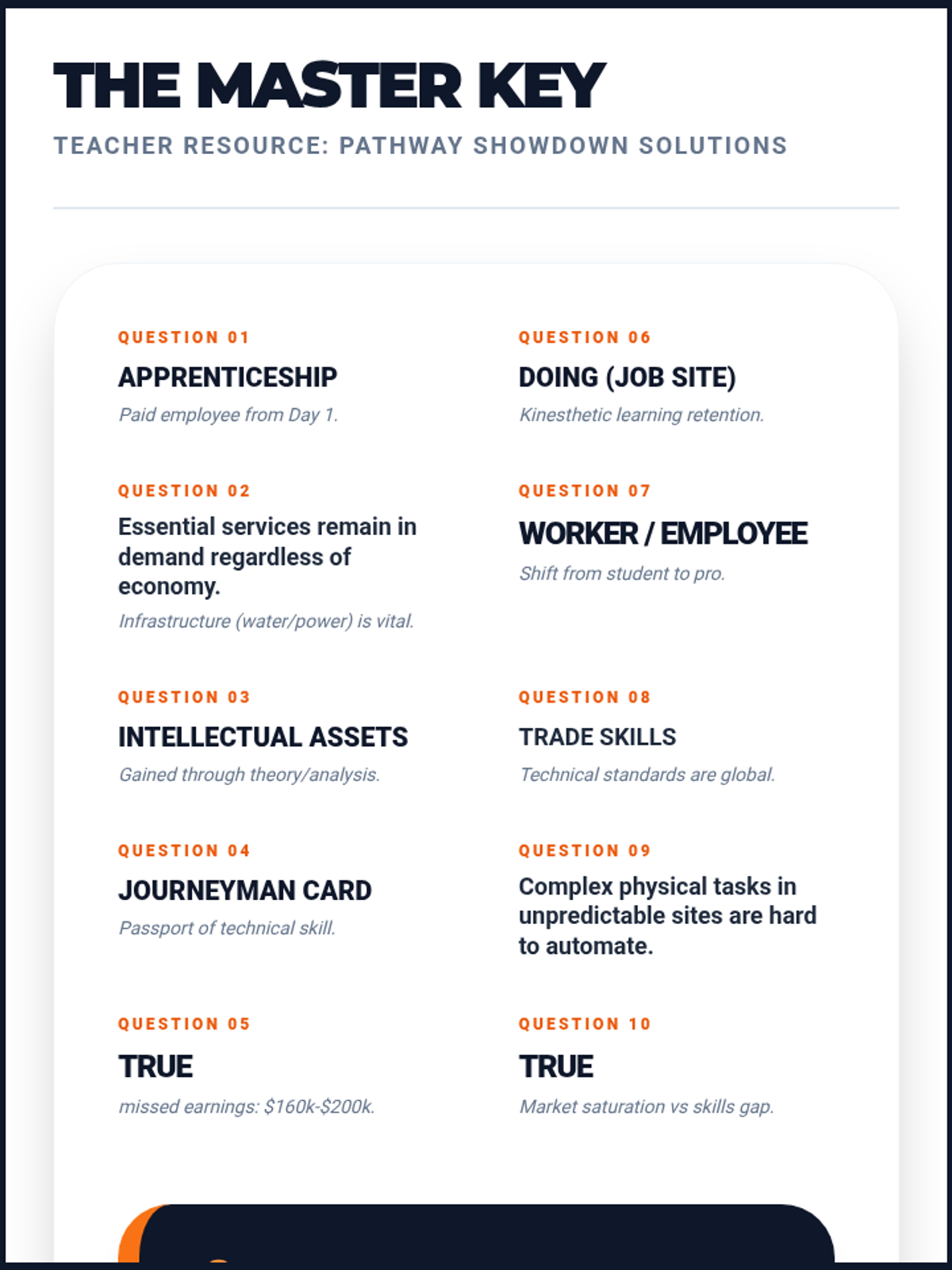
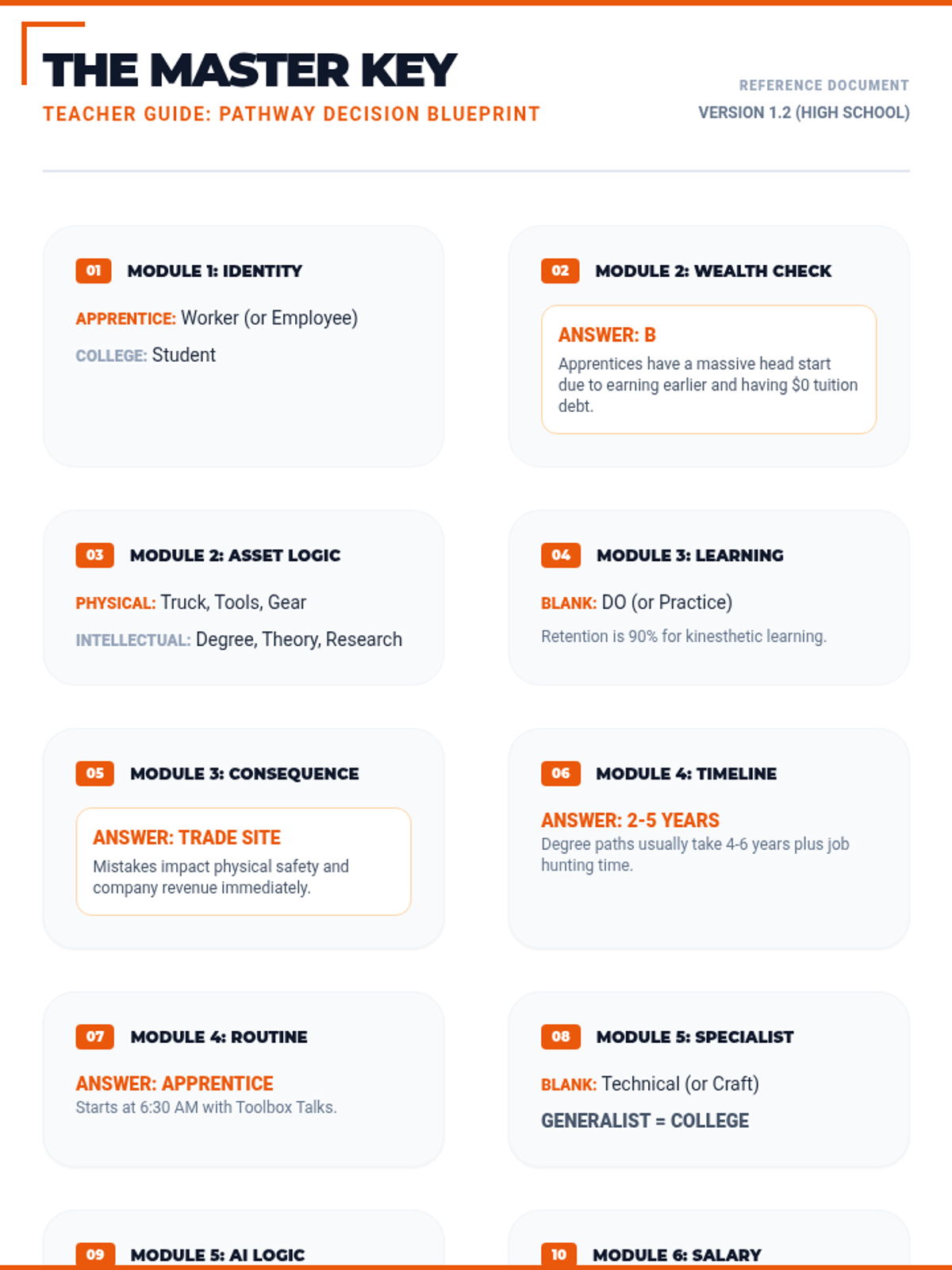
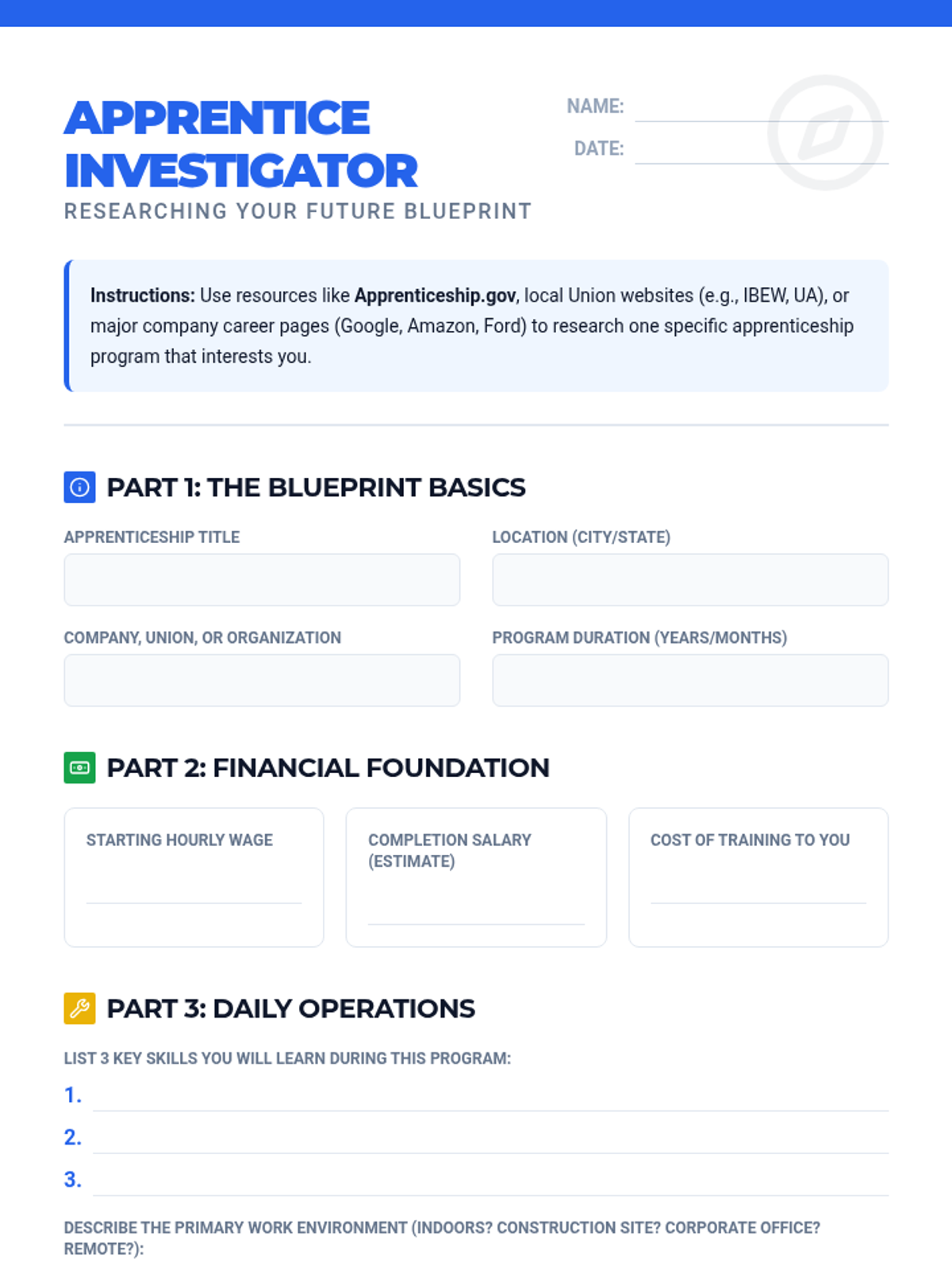
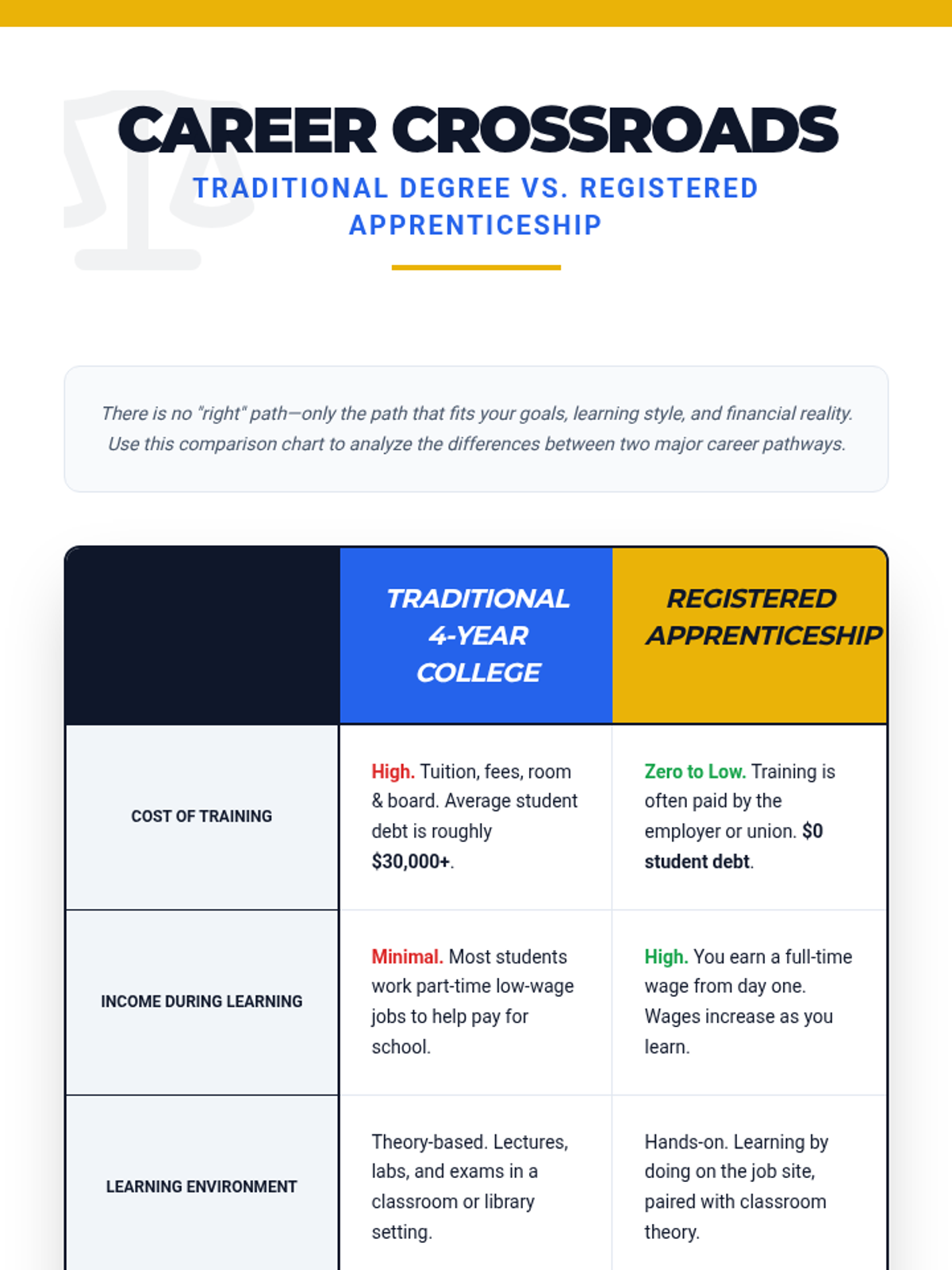
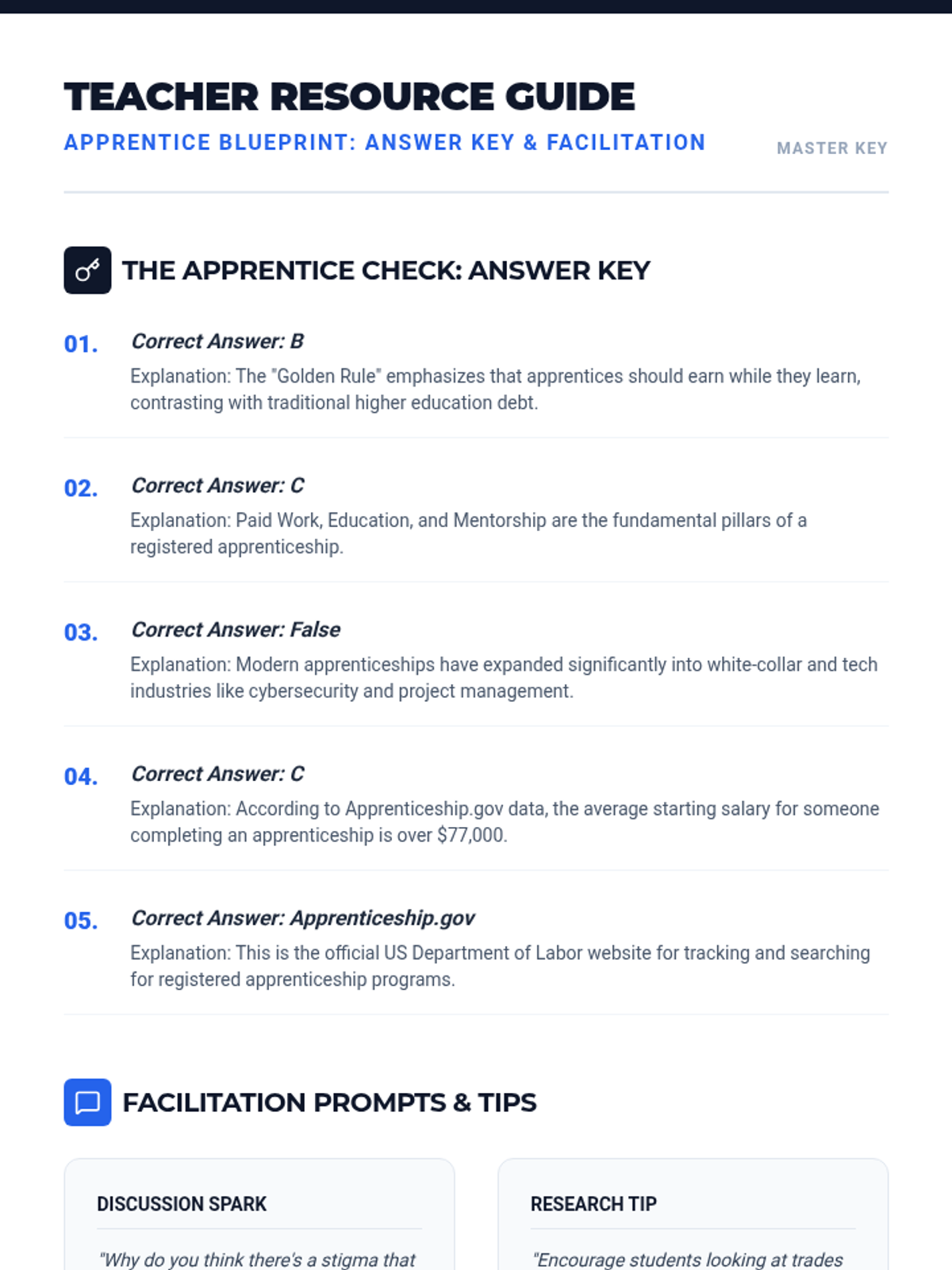
A comprehensive guide to understanding, finding, and securing apprenticeships in trades, business, and high-growth industries. This lesson covers the definition, benefits, and practical steps to starting a career through an apprenticeship.
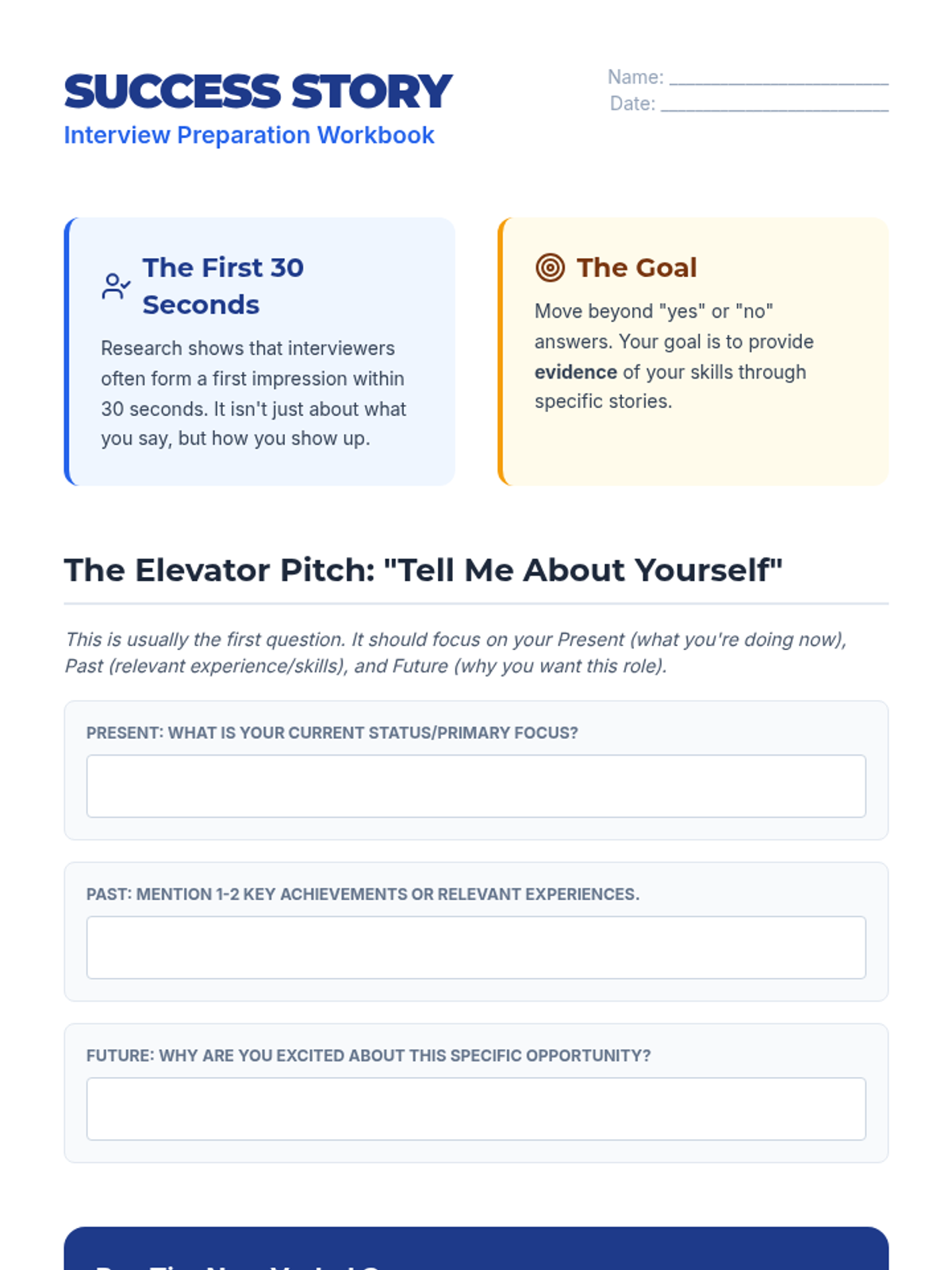
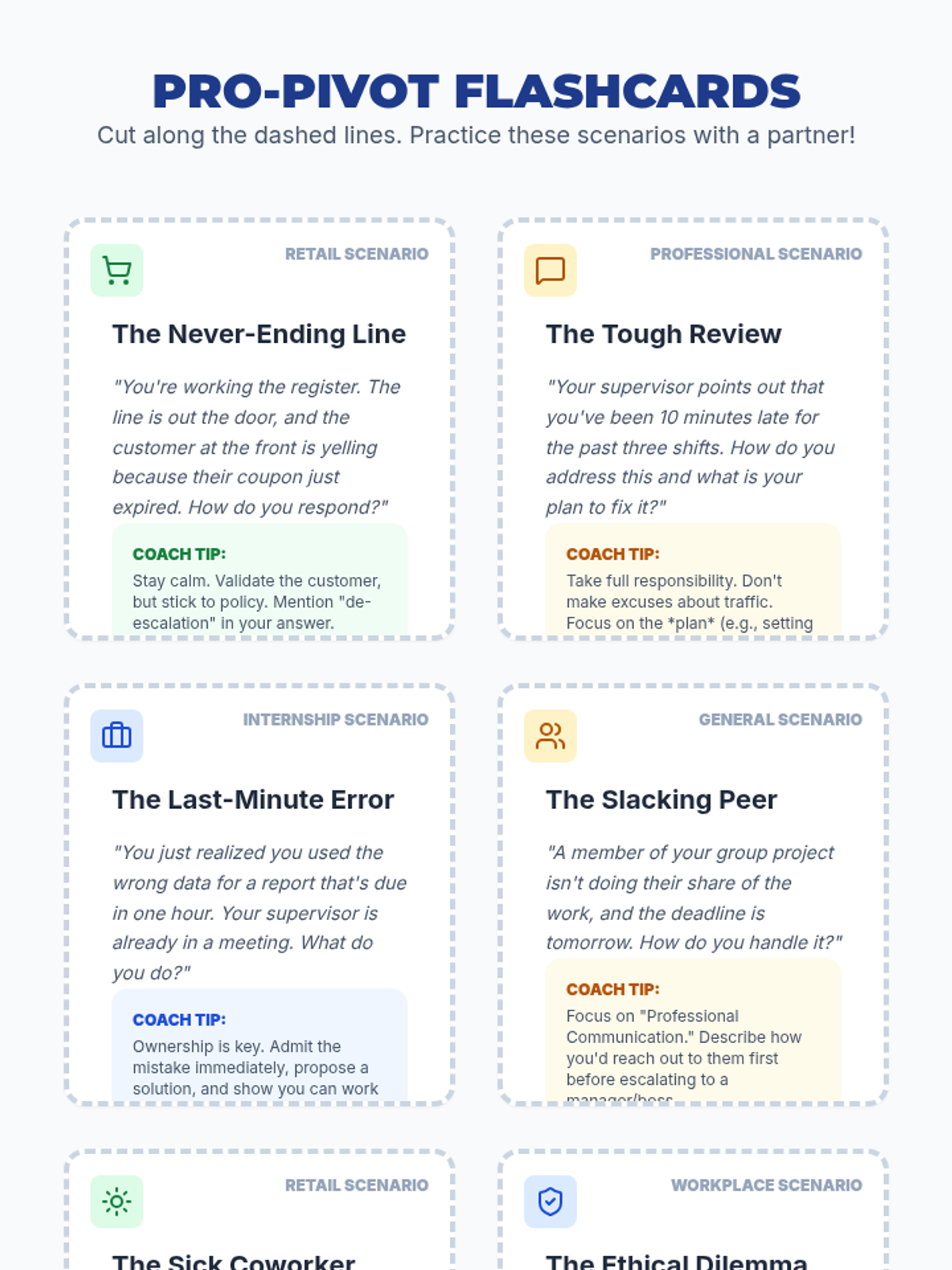
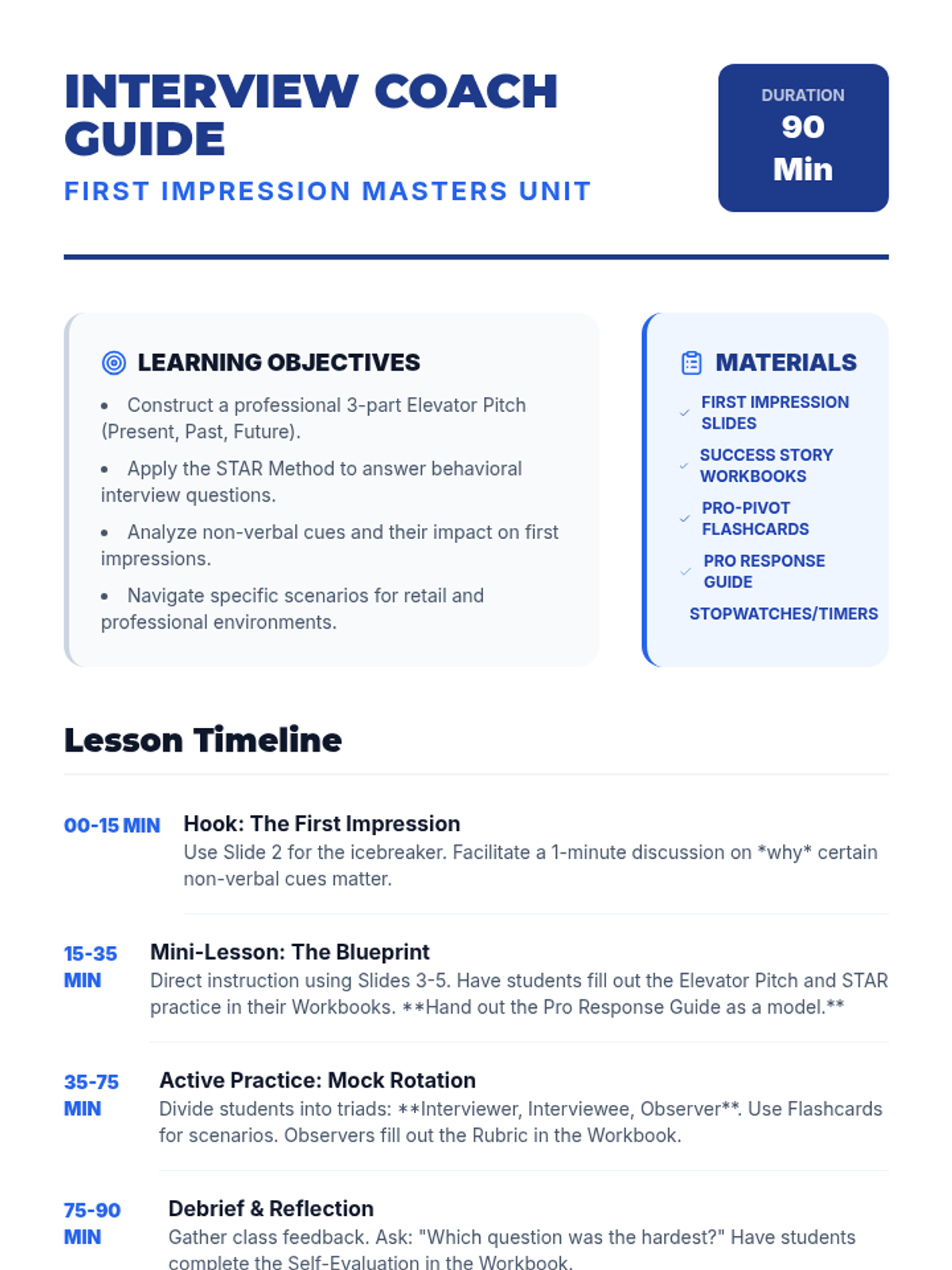
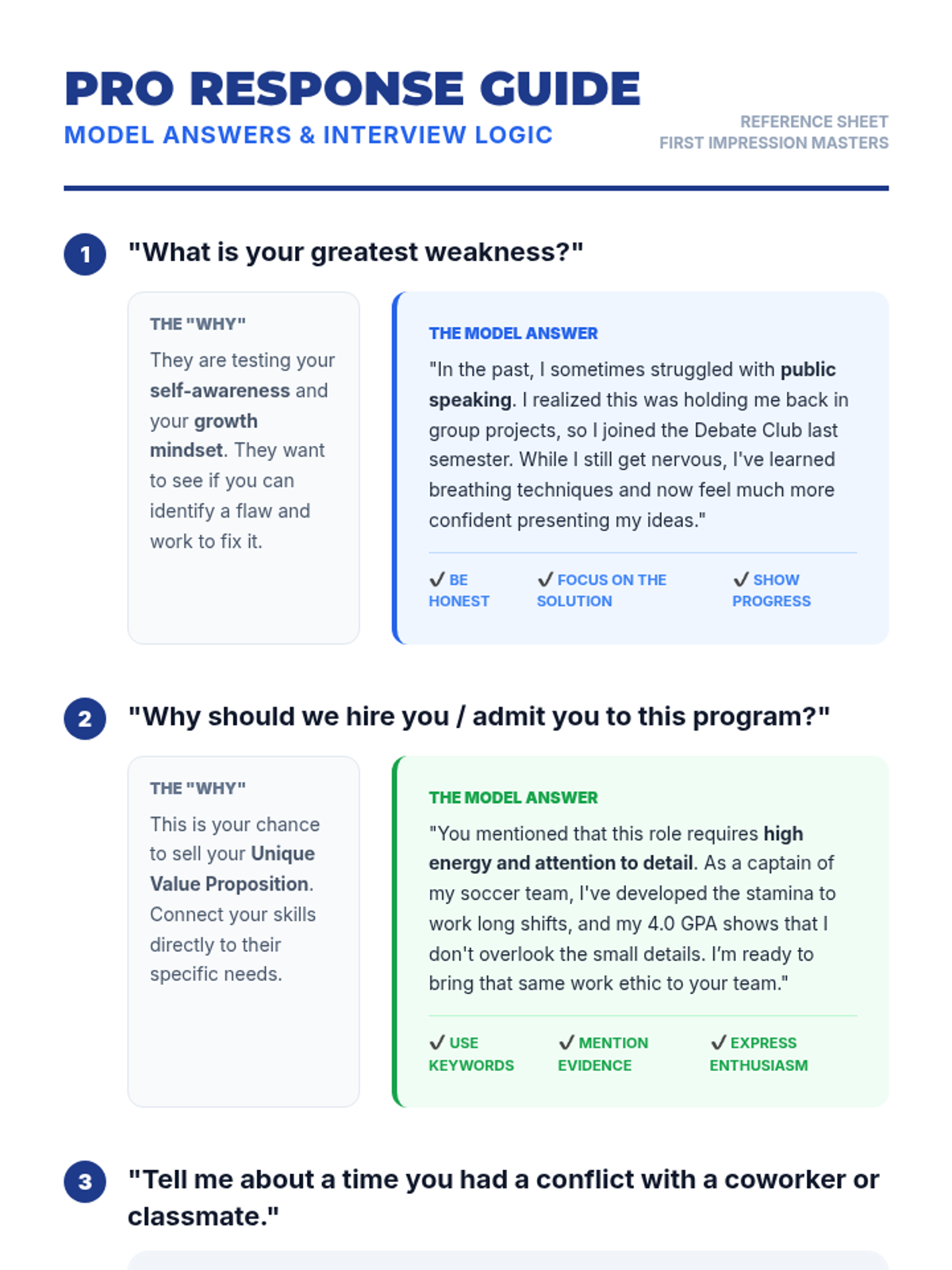
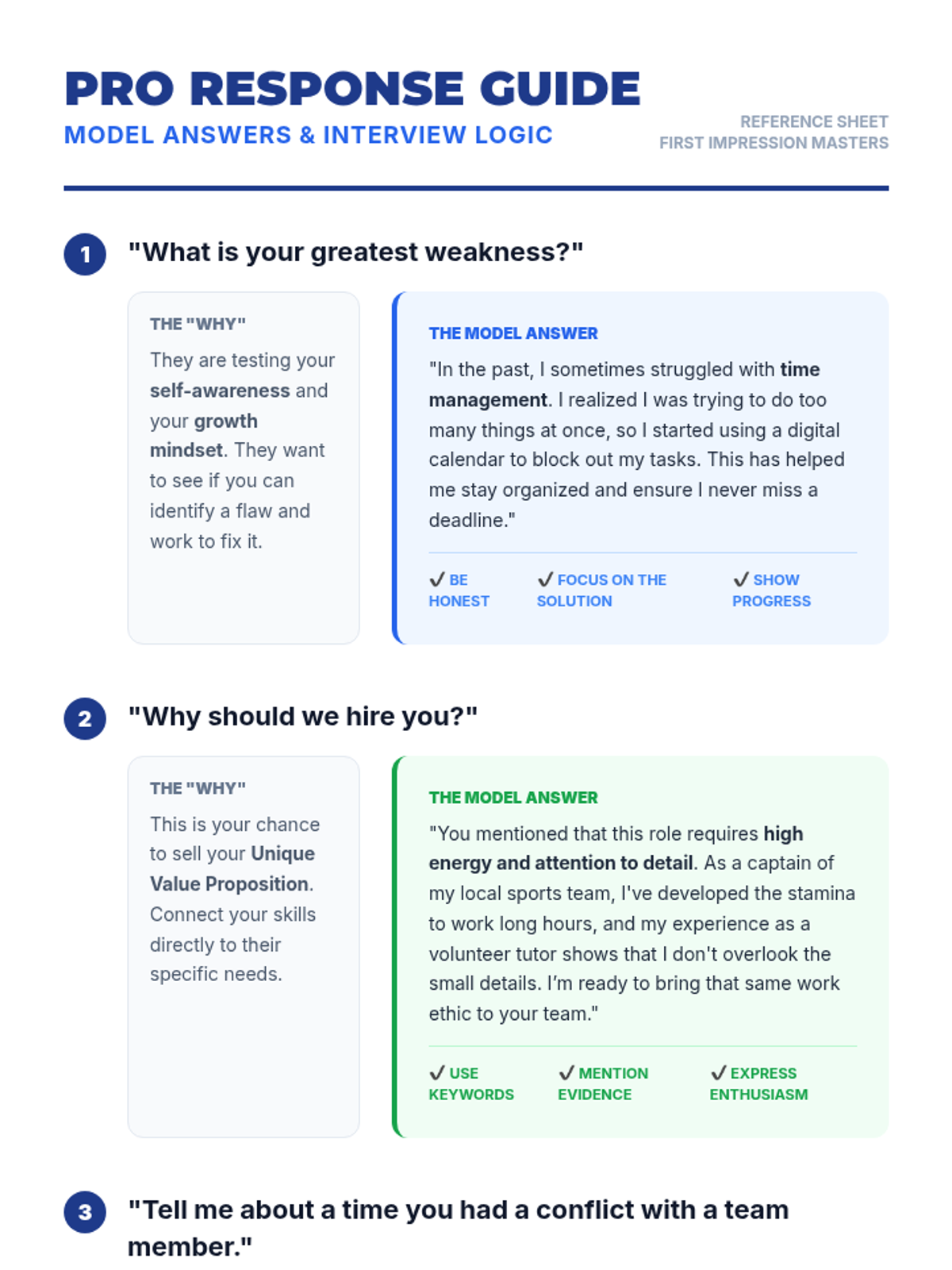
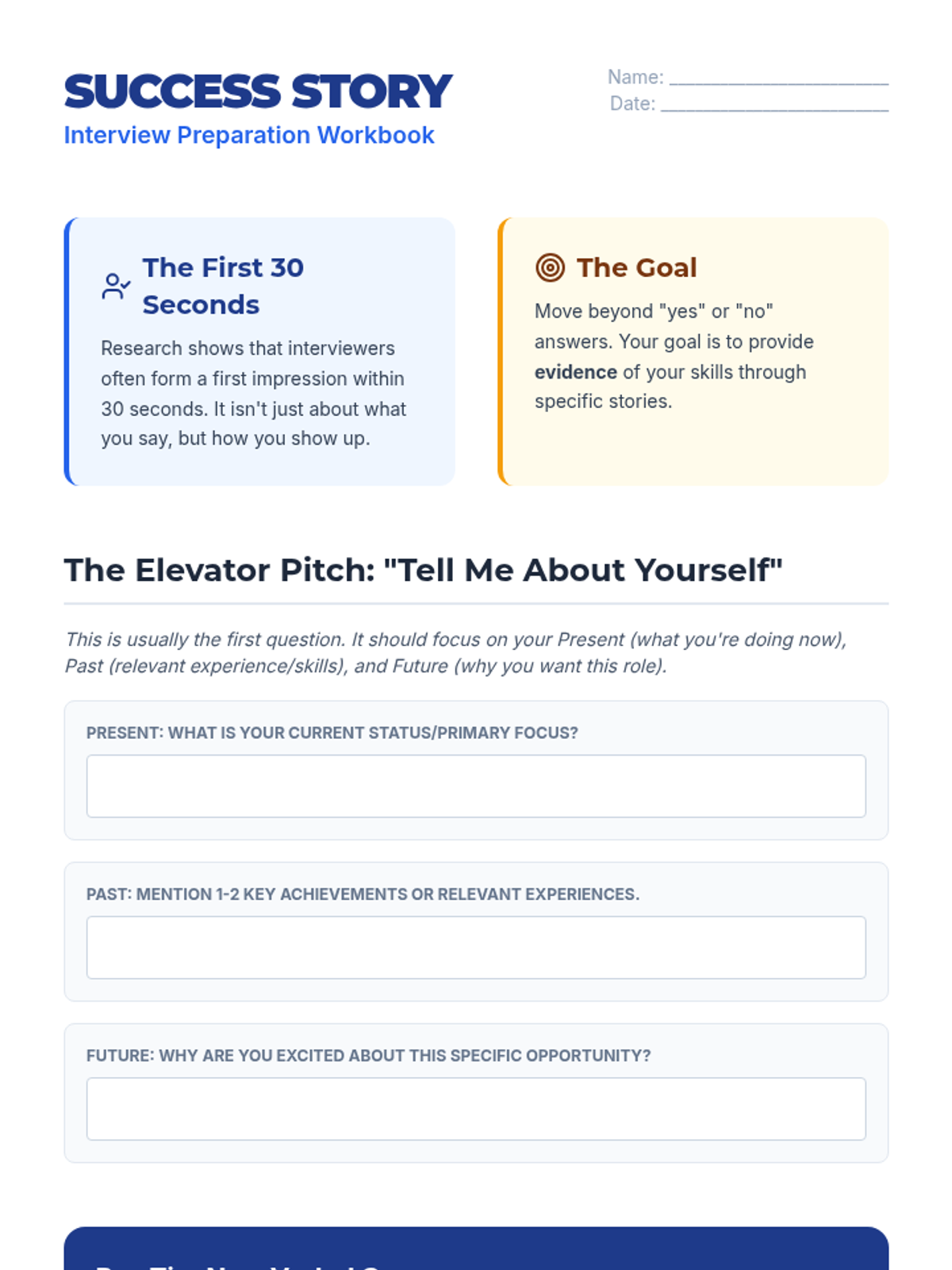
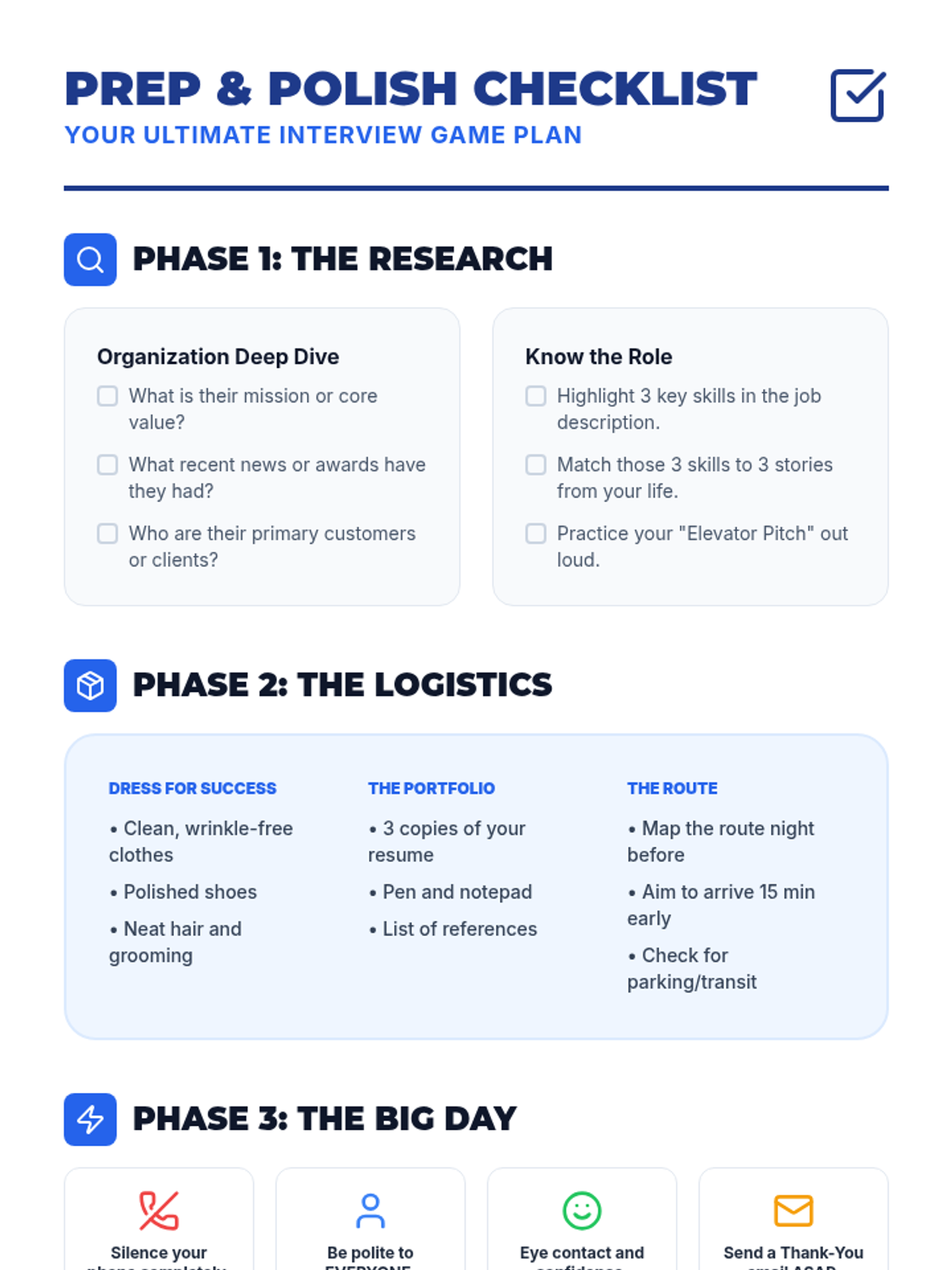
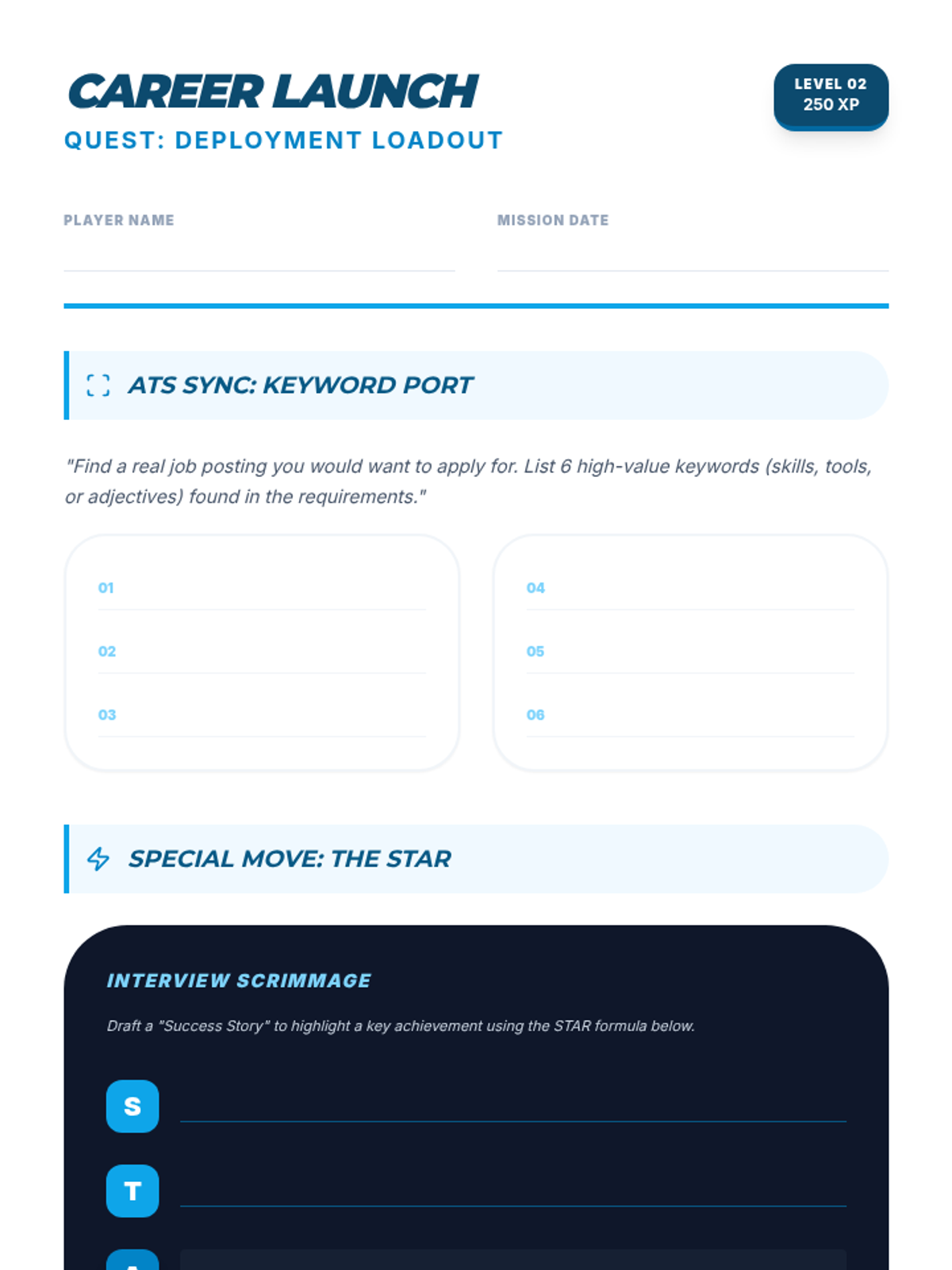
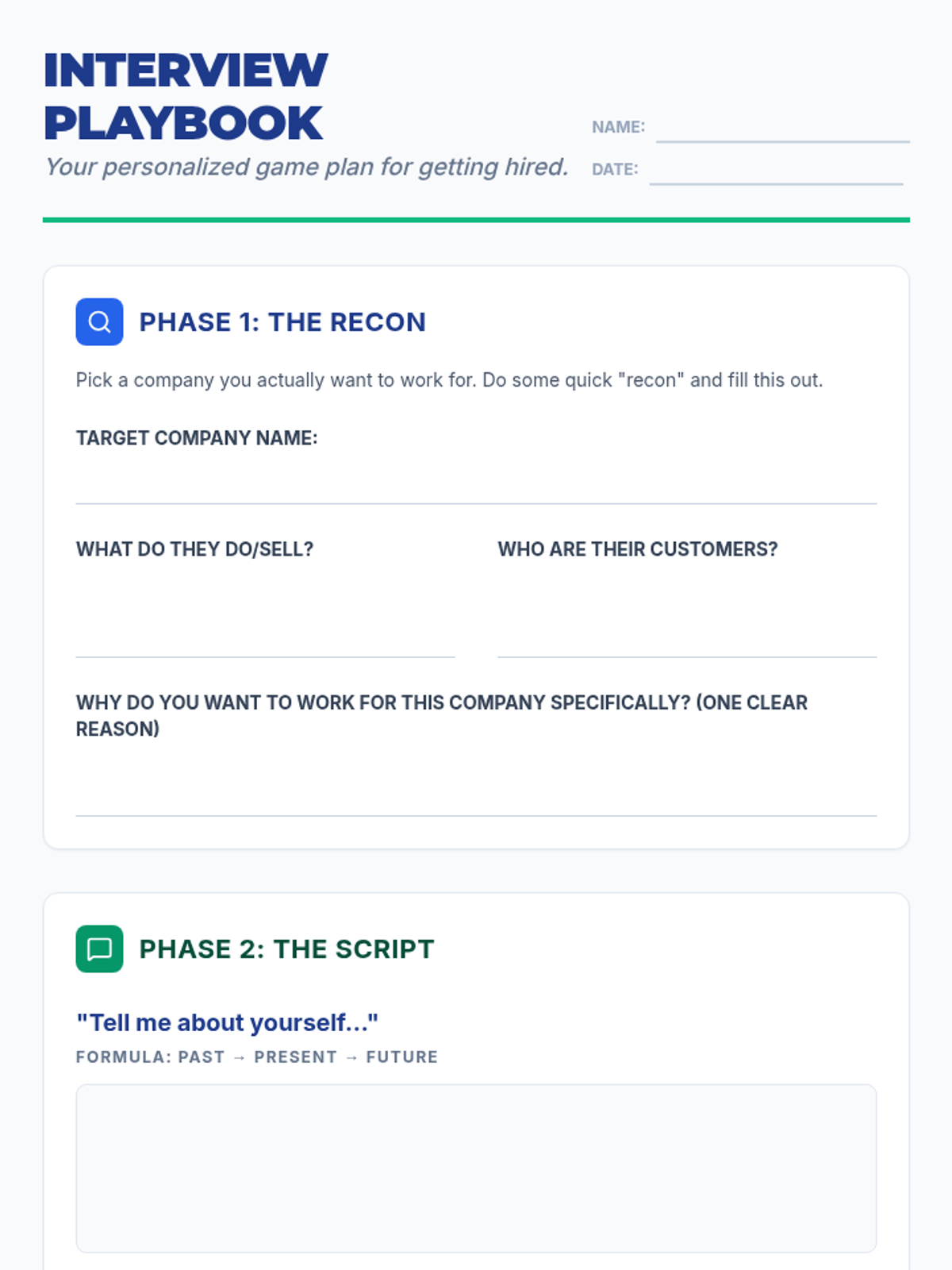
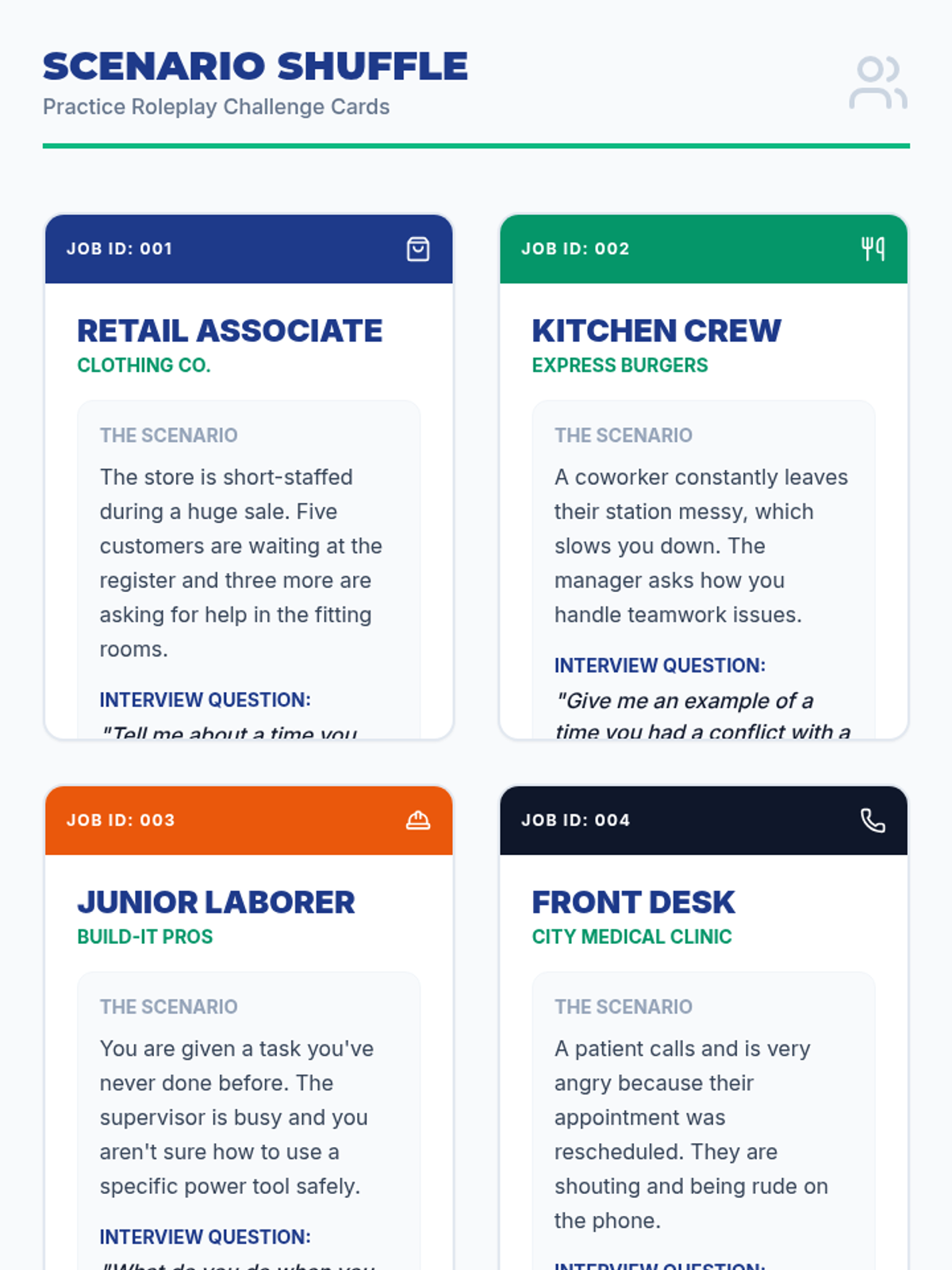
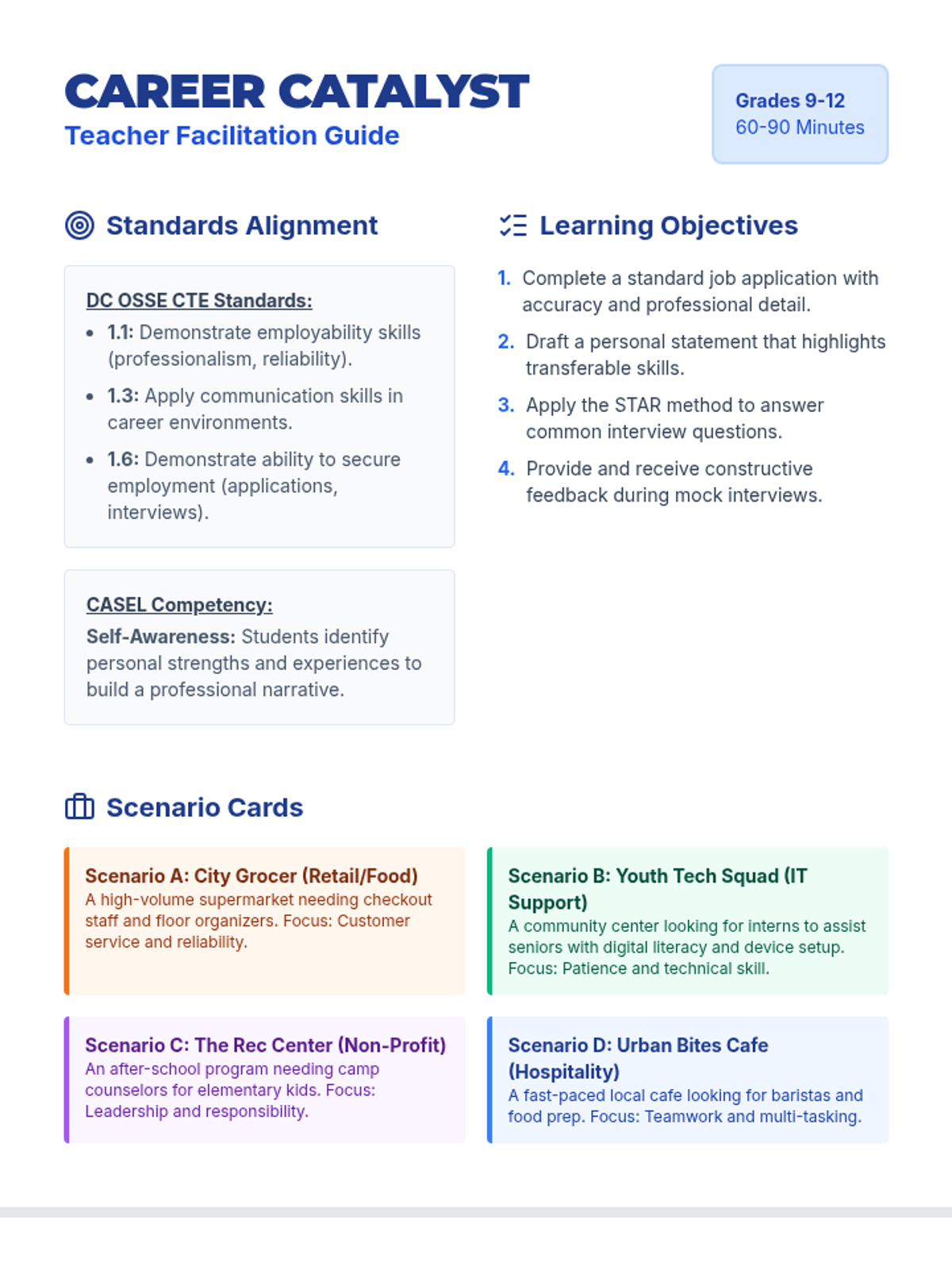
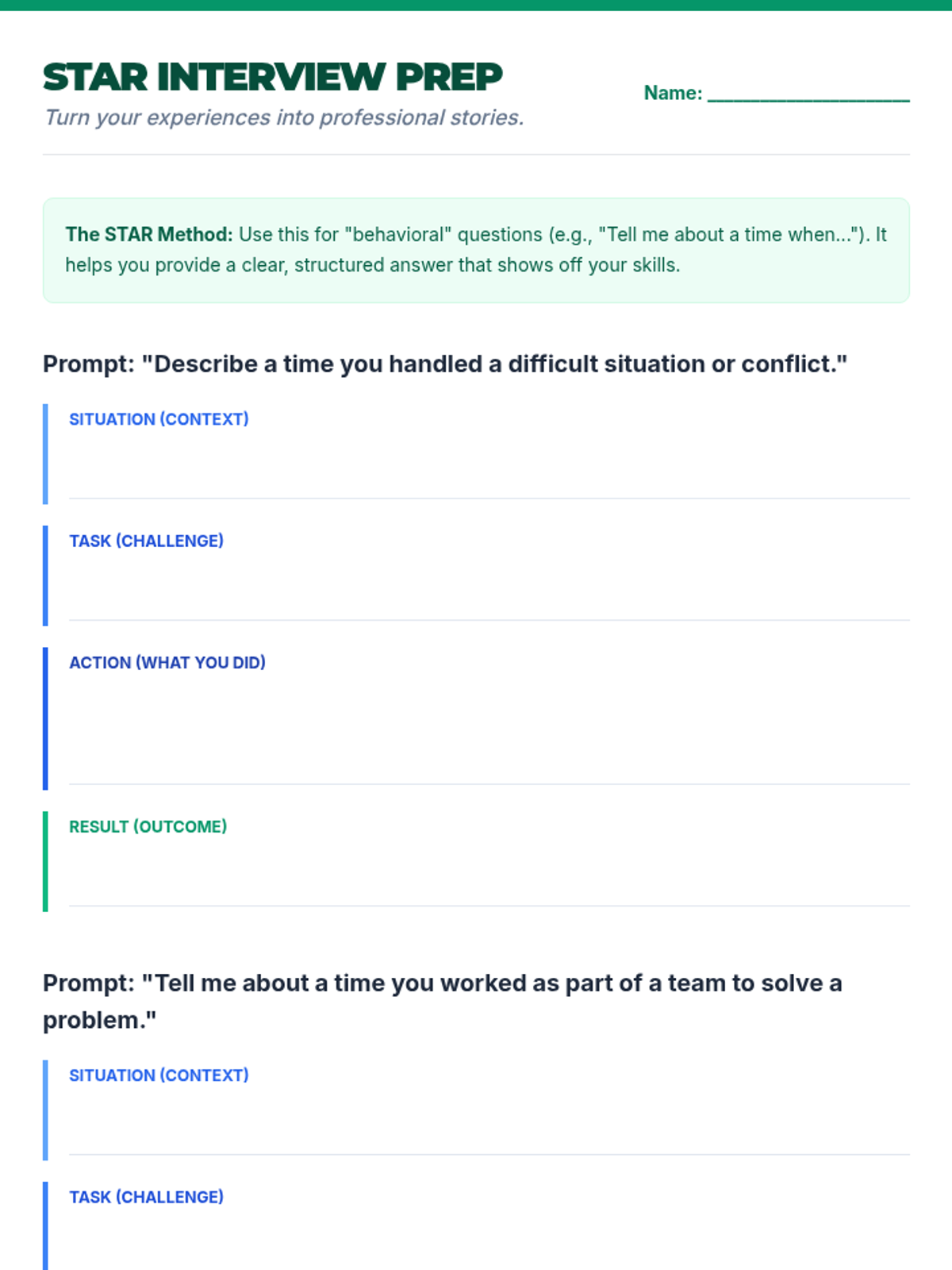
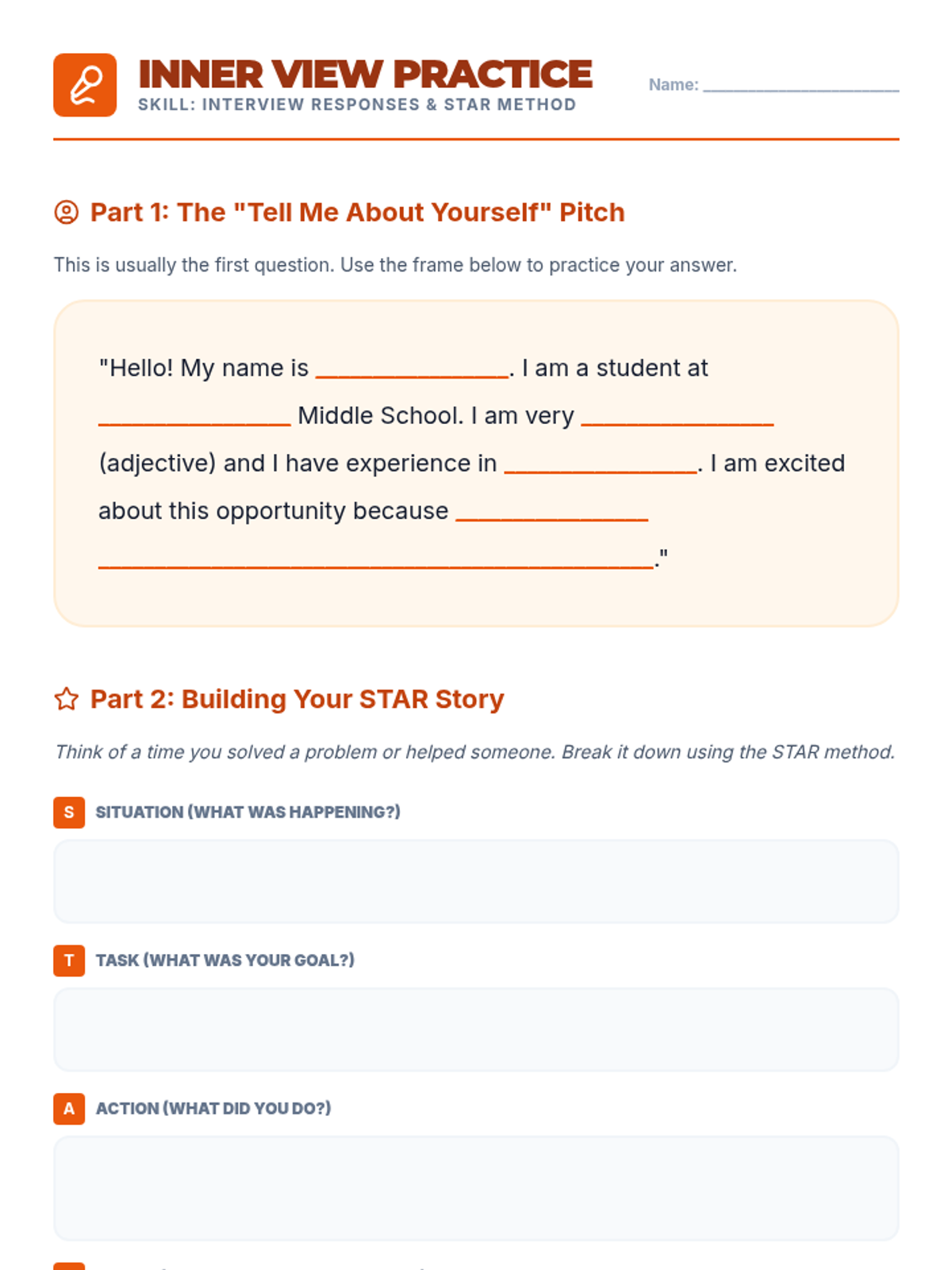
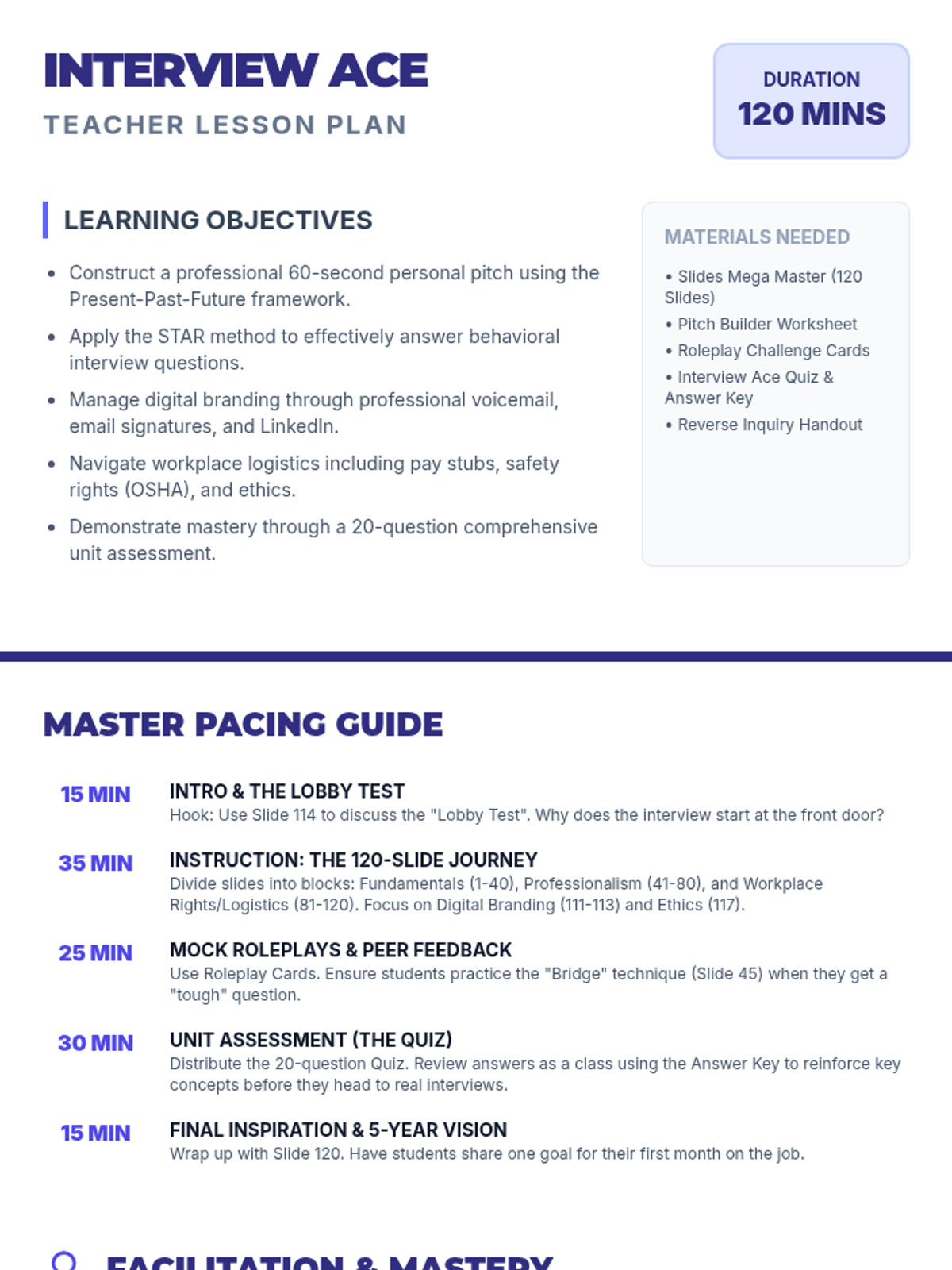
A comprehensive guide to mastering entry-level and academic interviews through the STAR method, practical scenarios, and self-reflection. Students will build a portfolio of stories to demonstrate their skills to future employers and admissions officers.
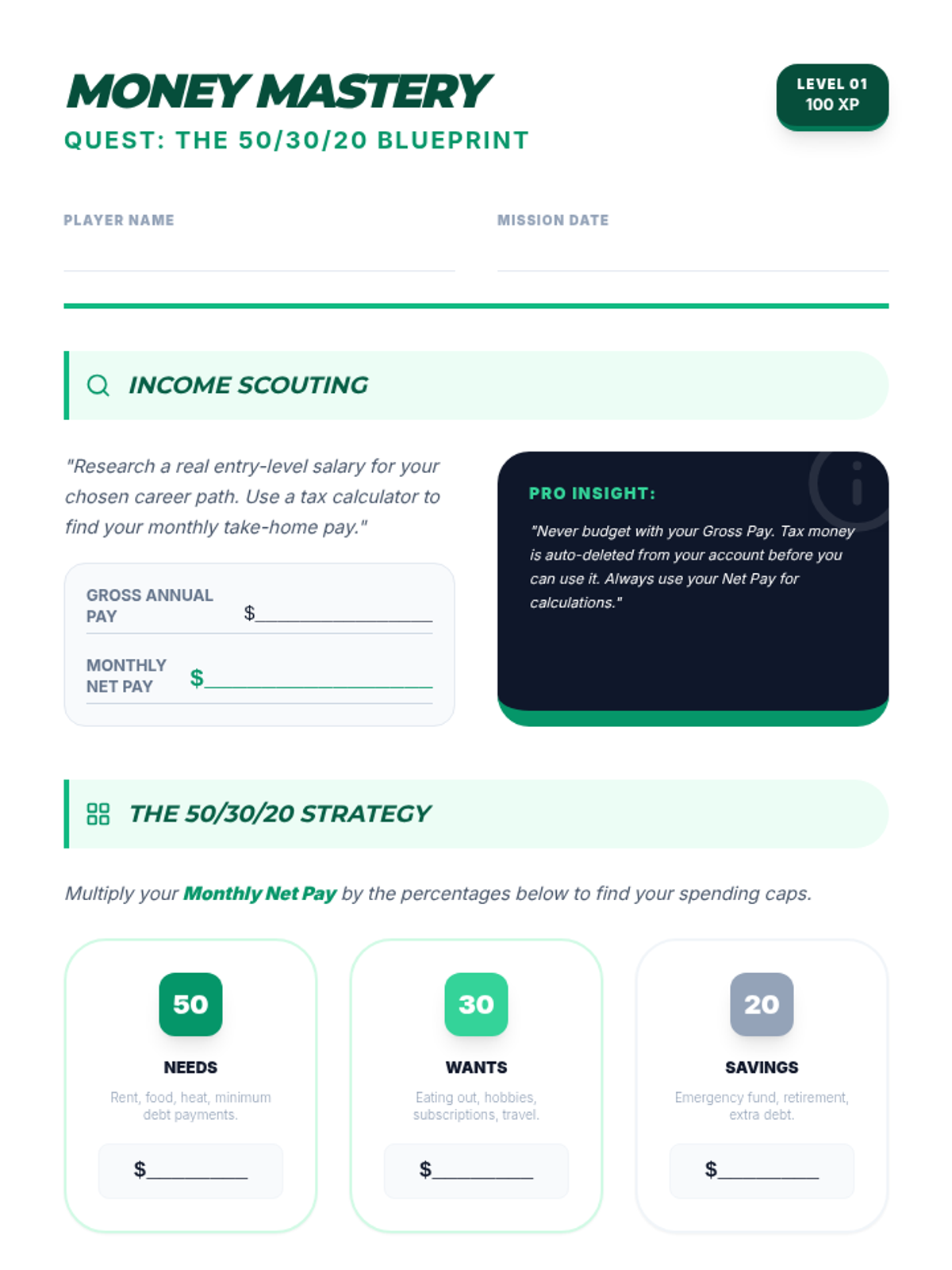
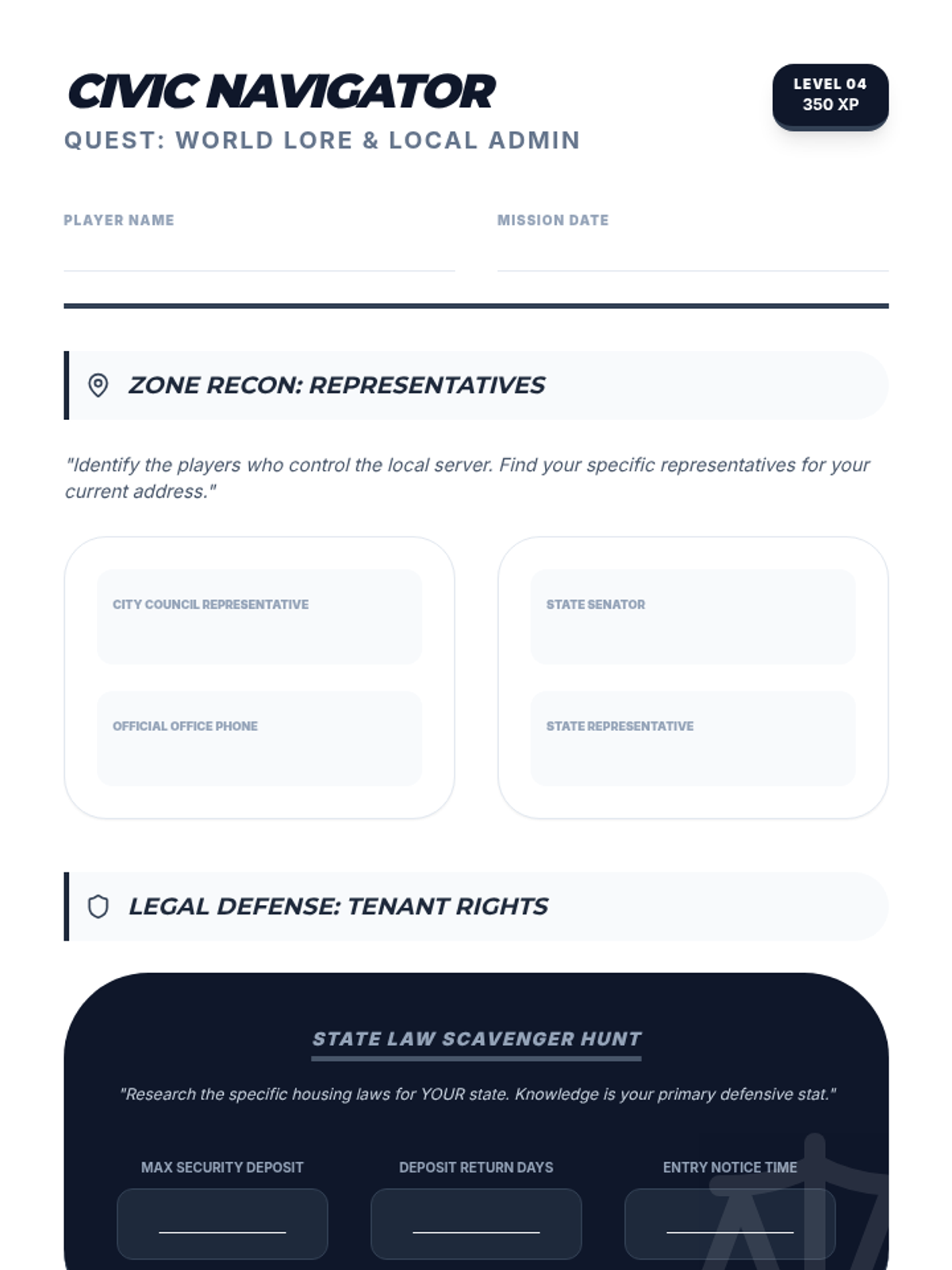
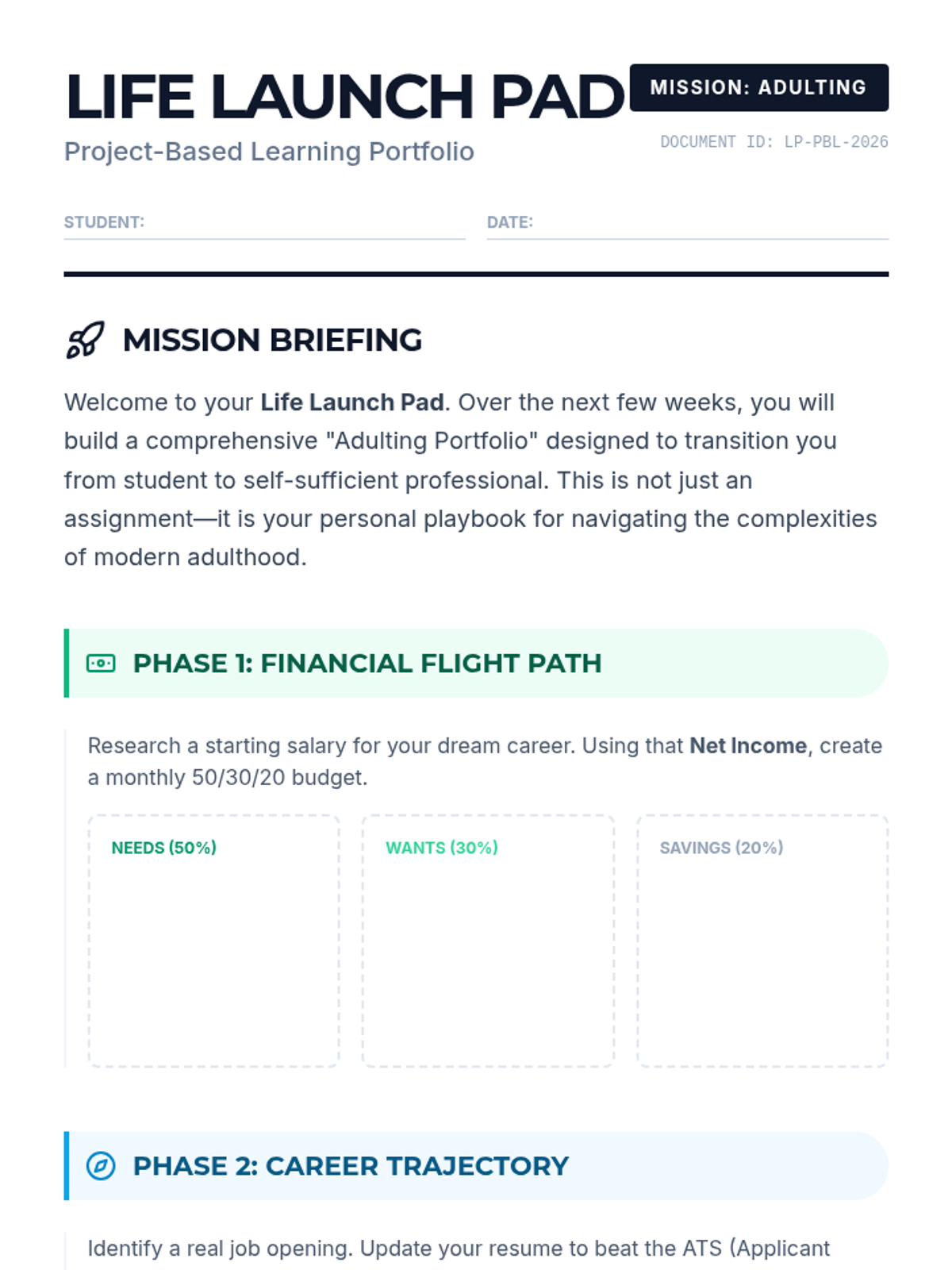
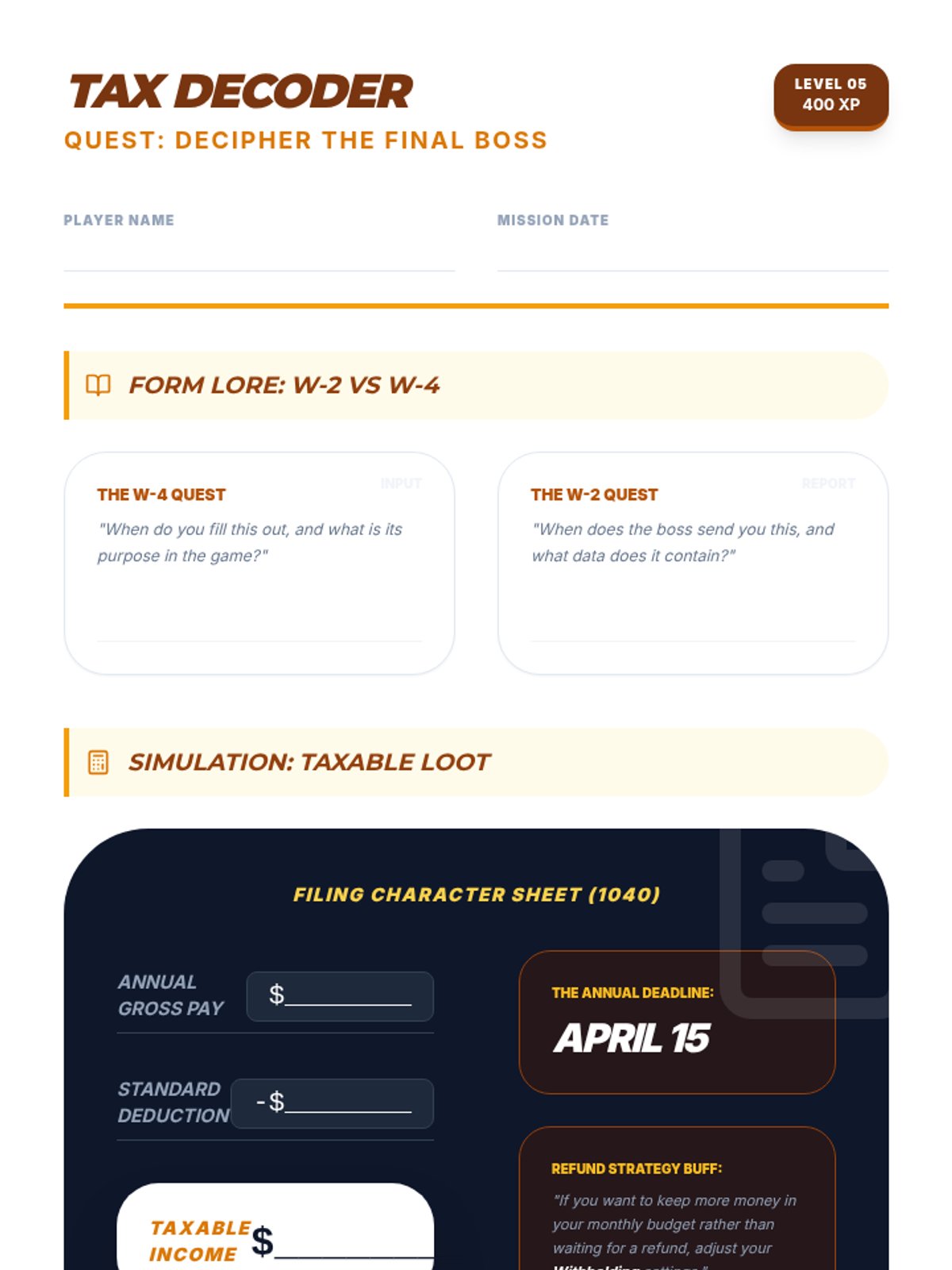
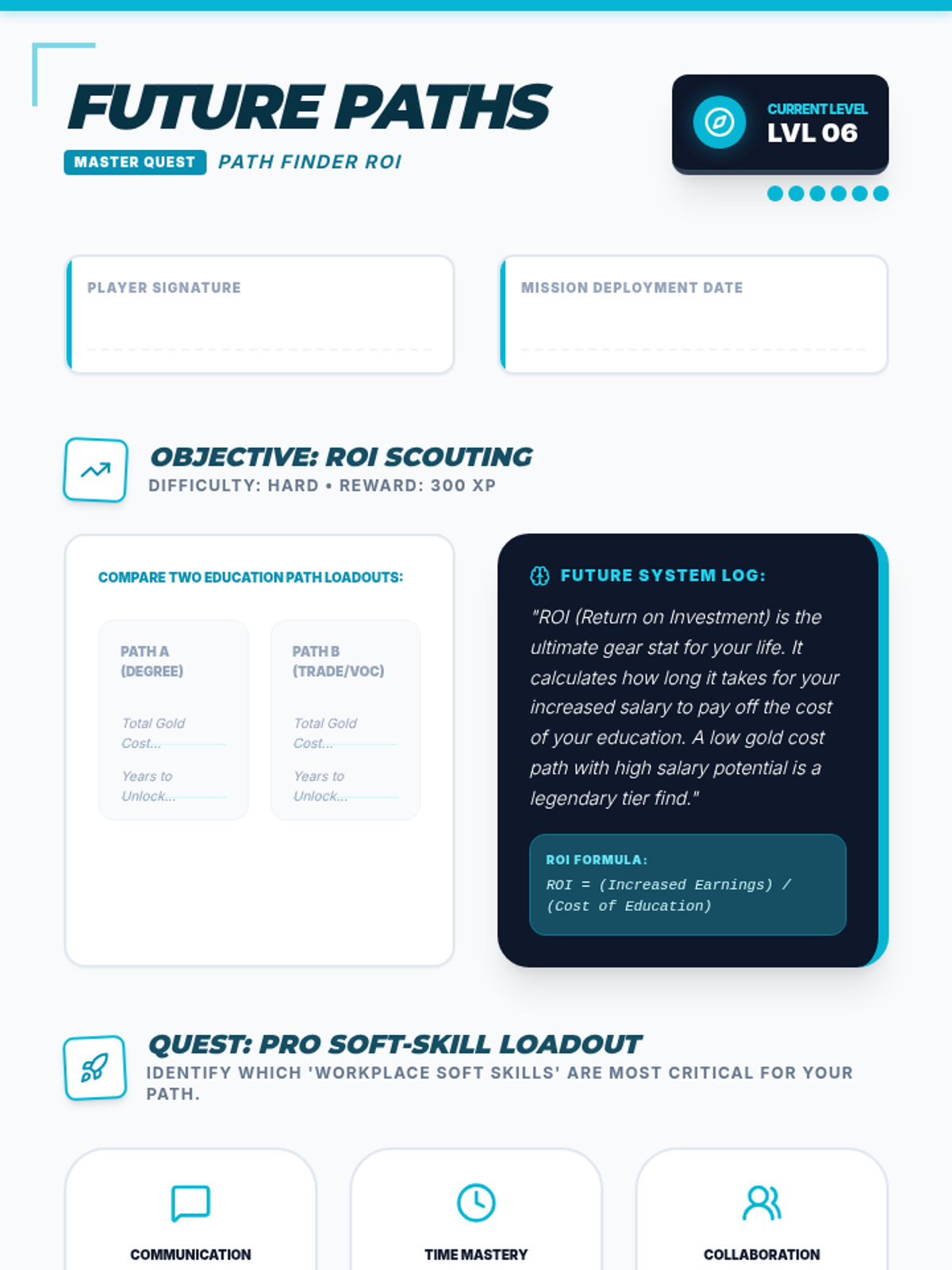
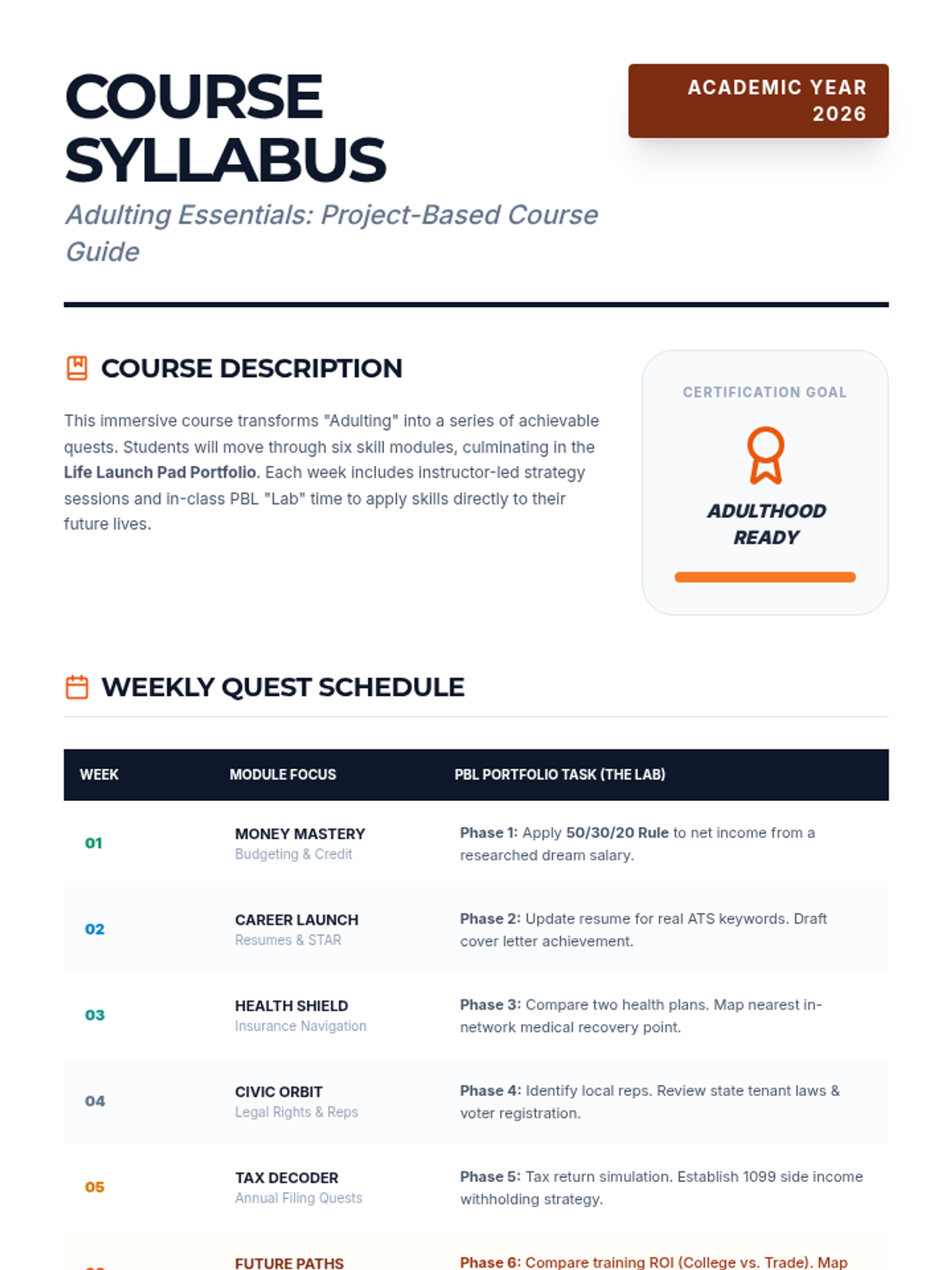
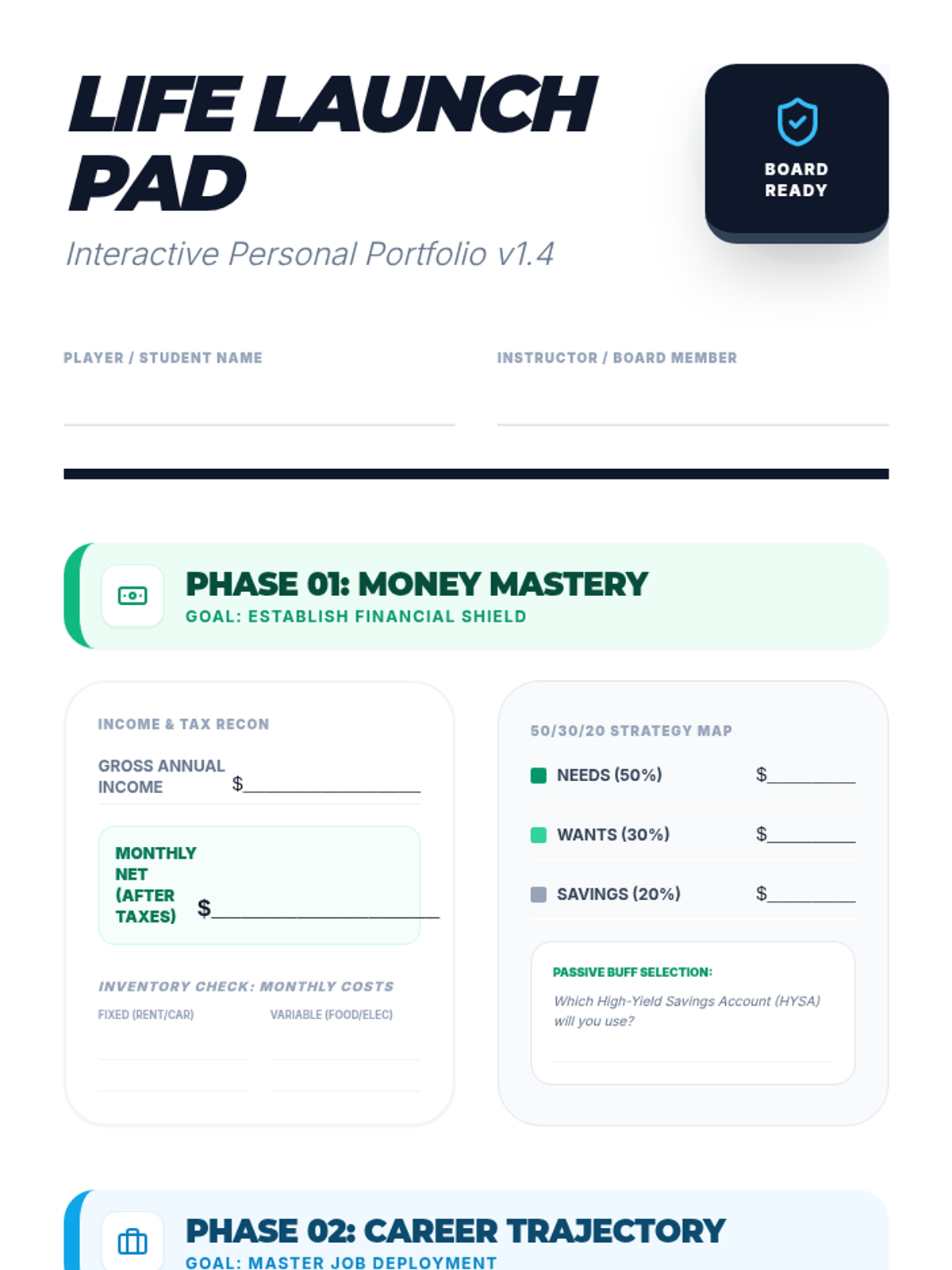
A comprehensive guide to essential adulting skills covering financial literacy, career development, health navigation, and civic responsibilities.
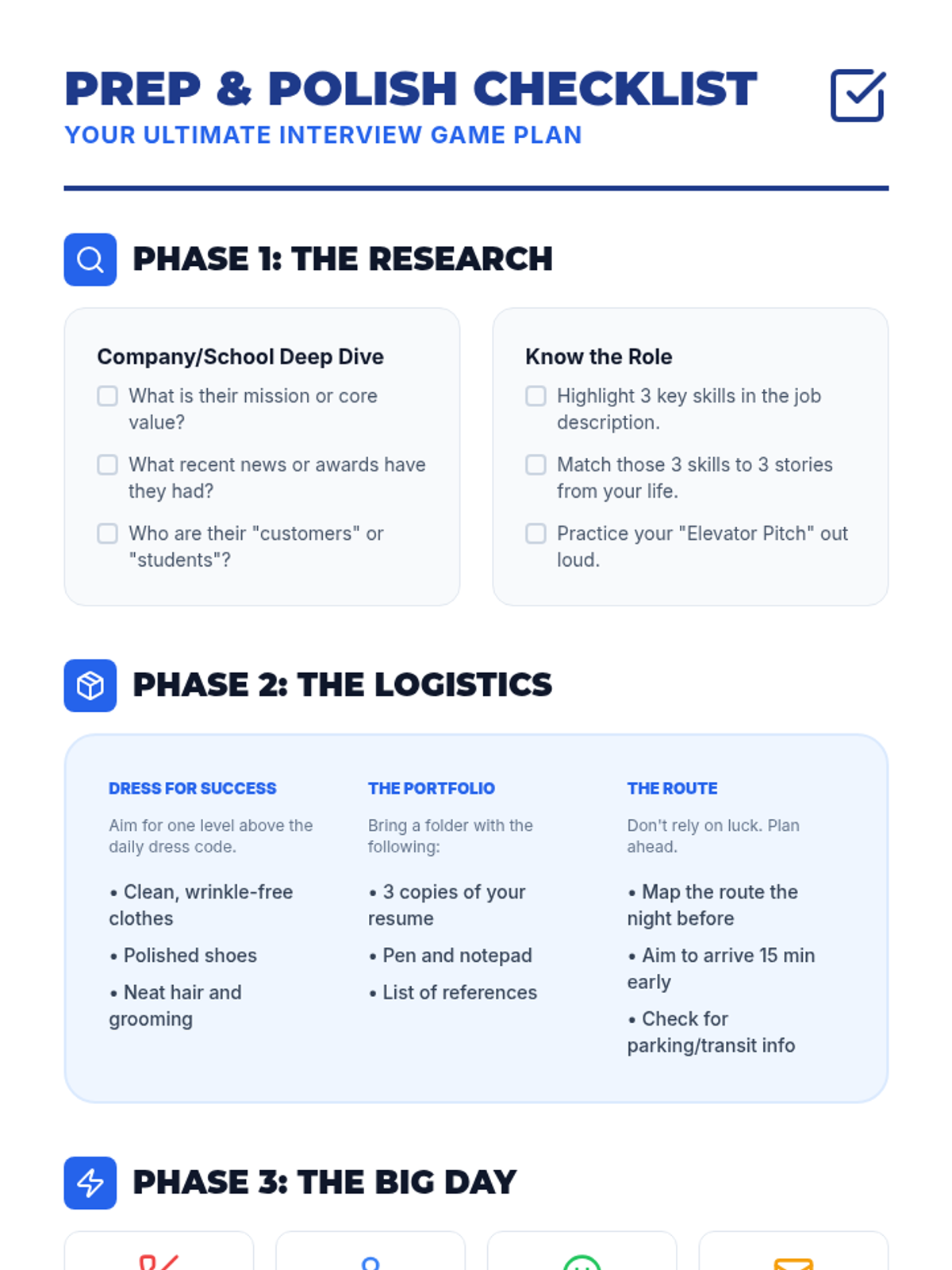
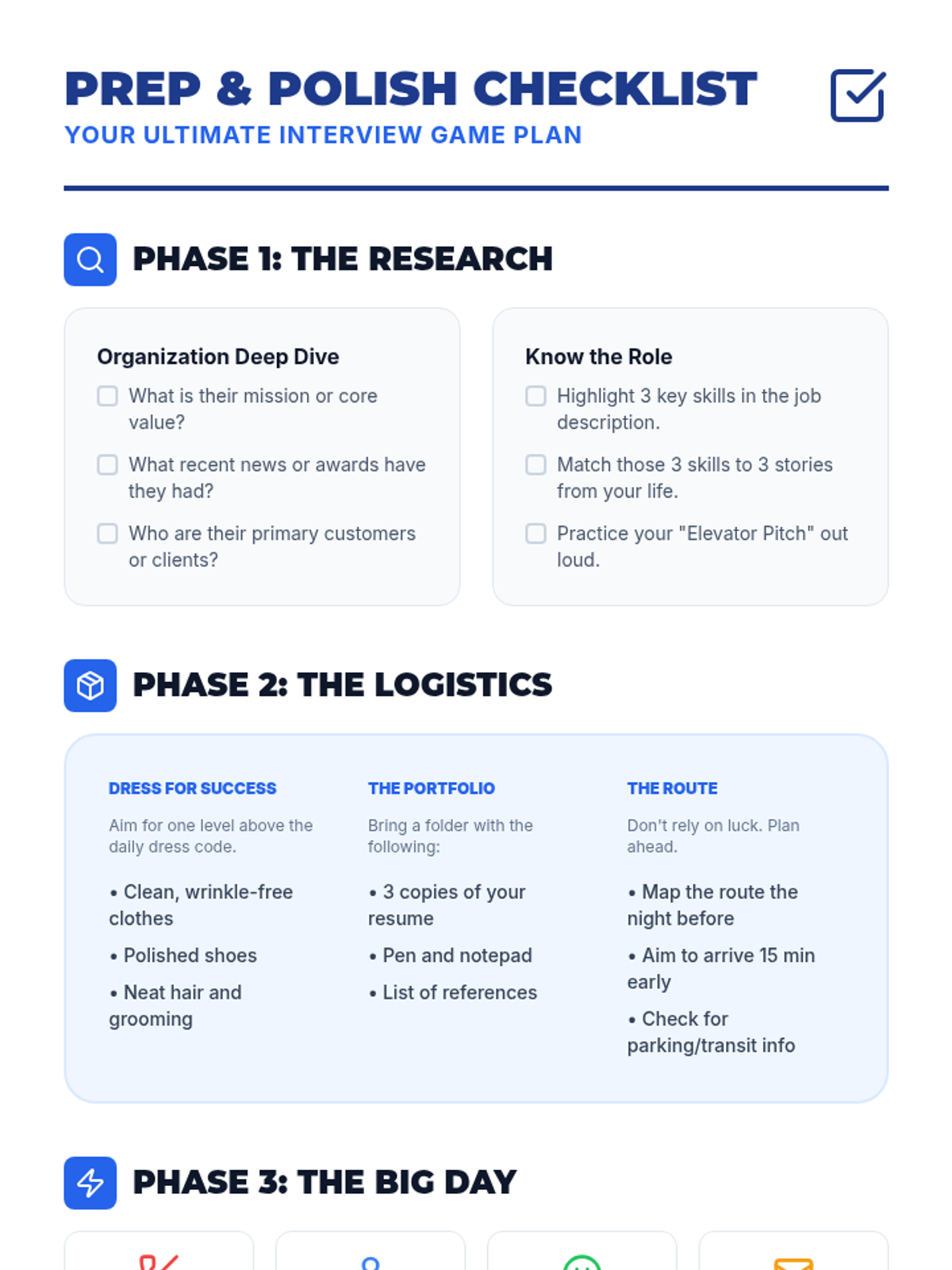
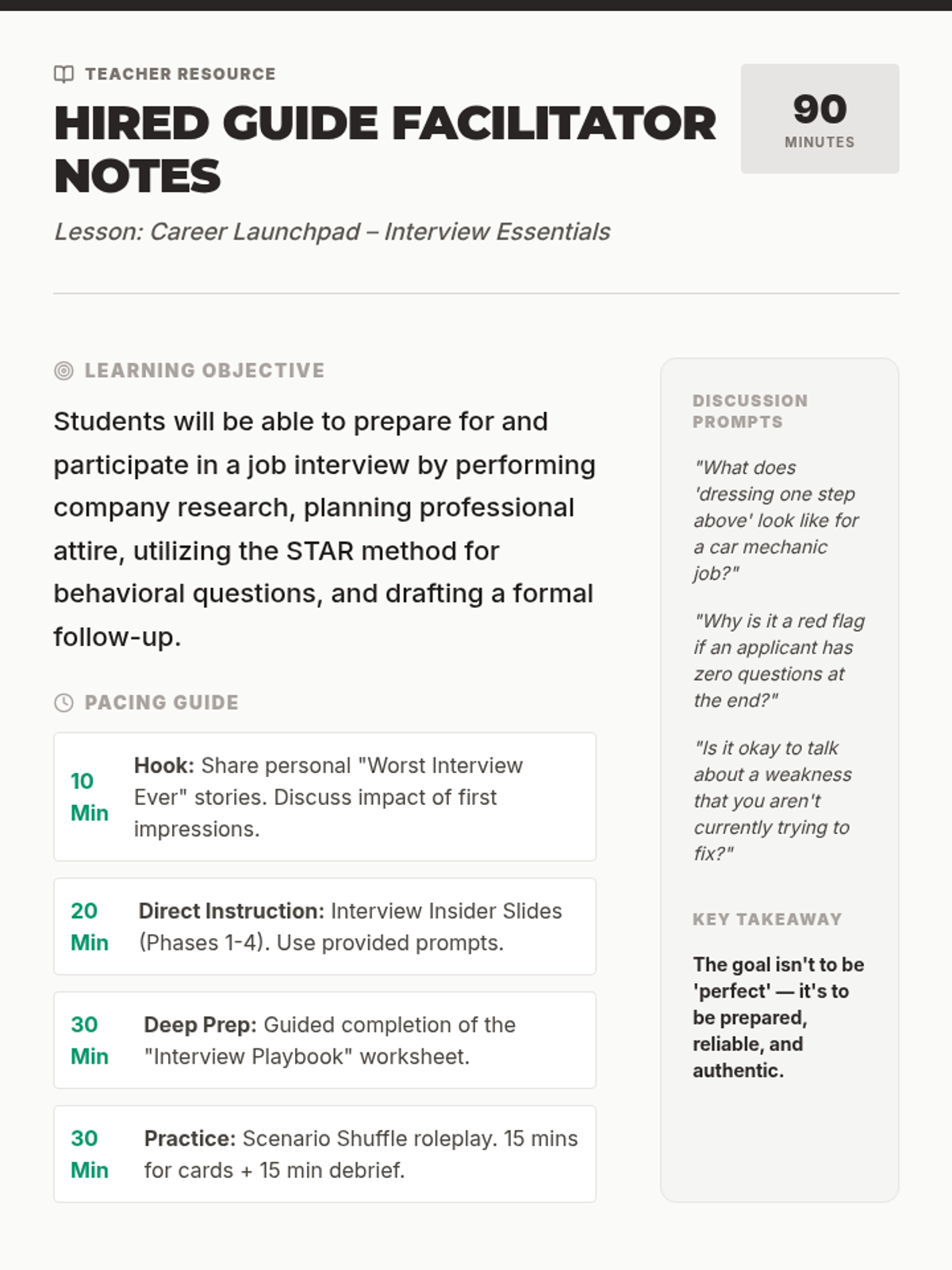
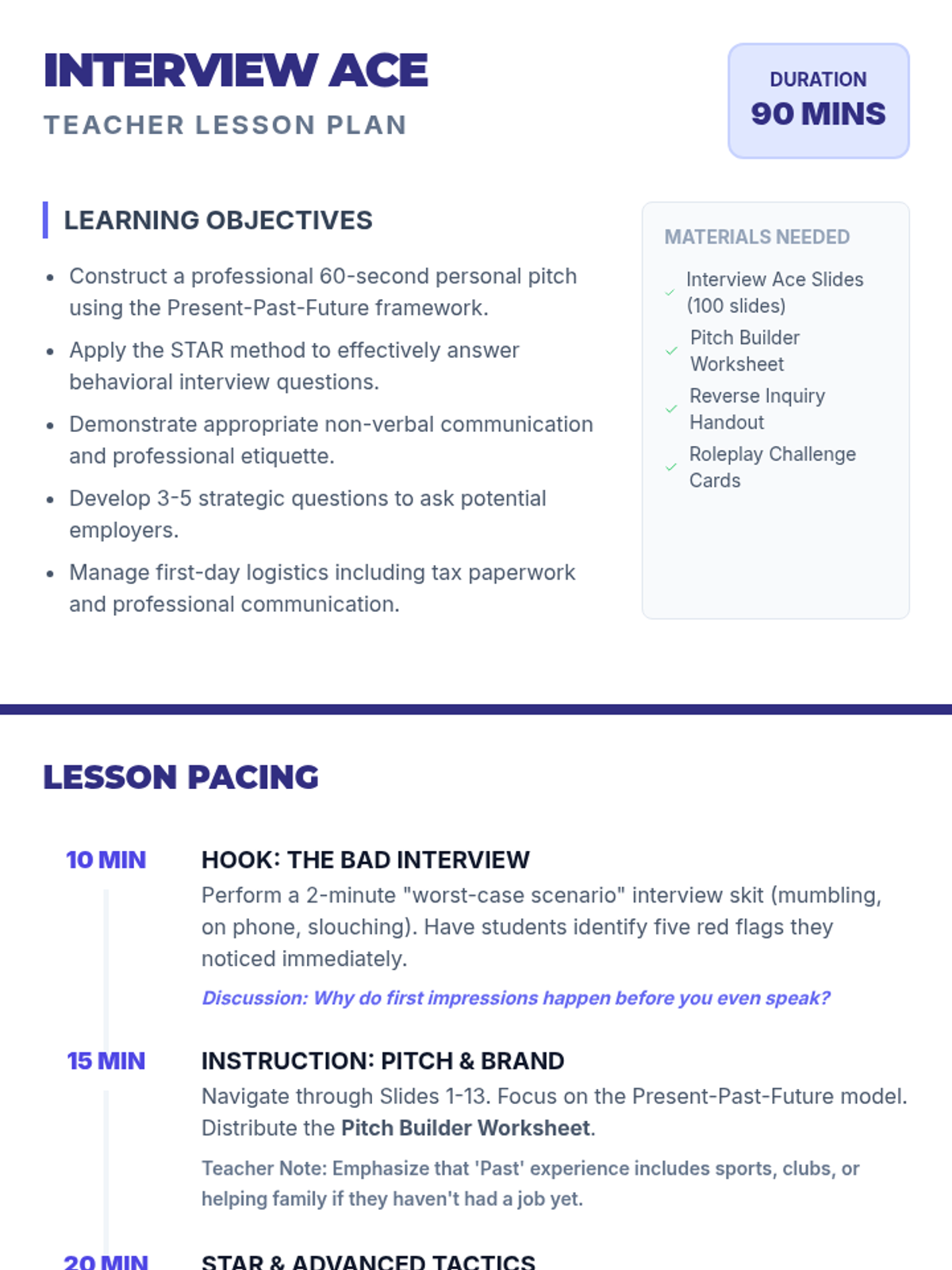
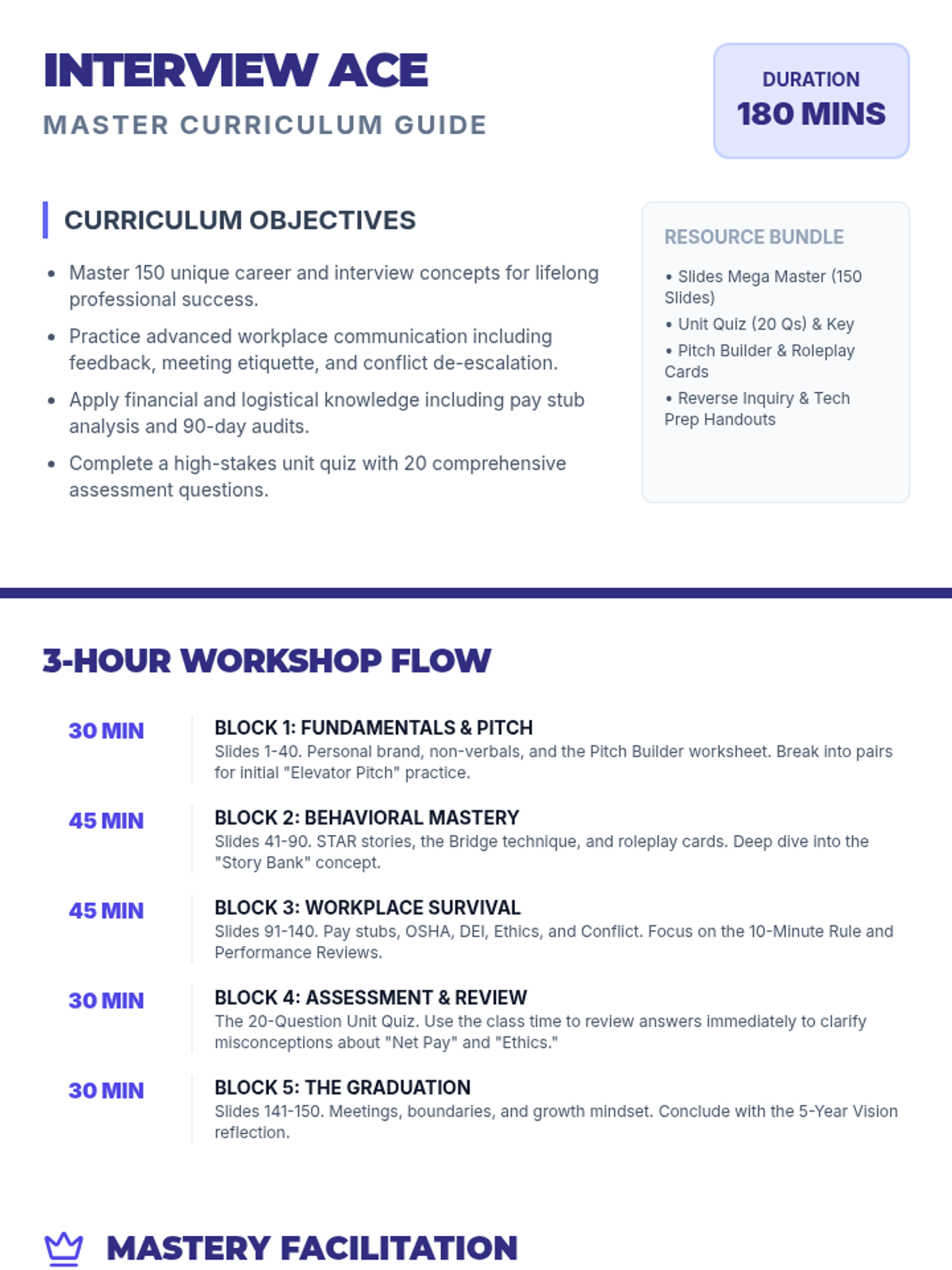
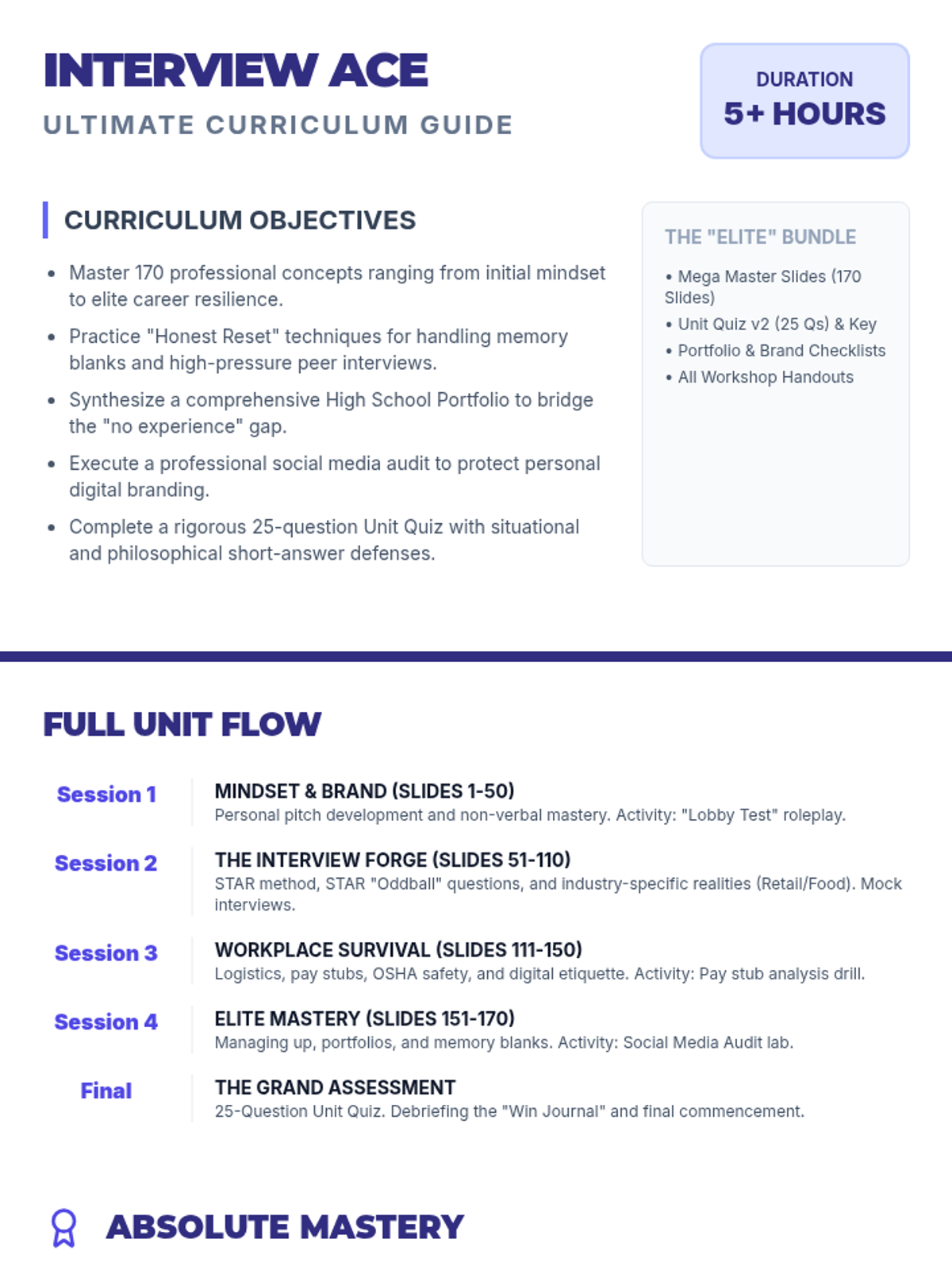
A comprehensive lesson designed for alternative education students to master the art of the job interview, covering everything from initial research to the final follow-up.
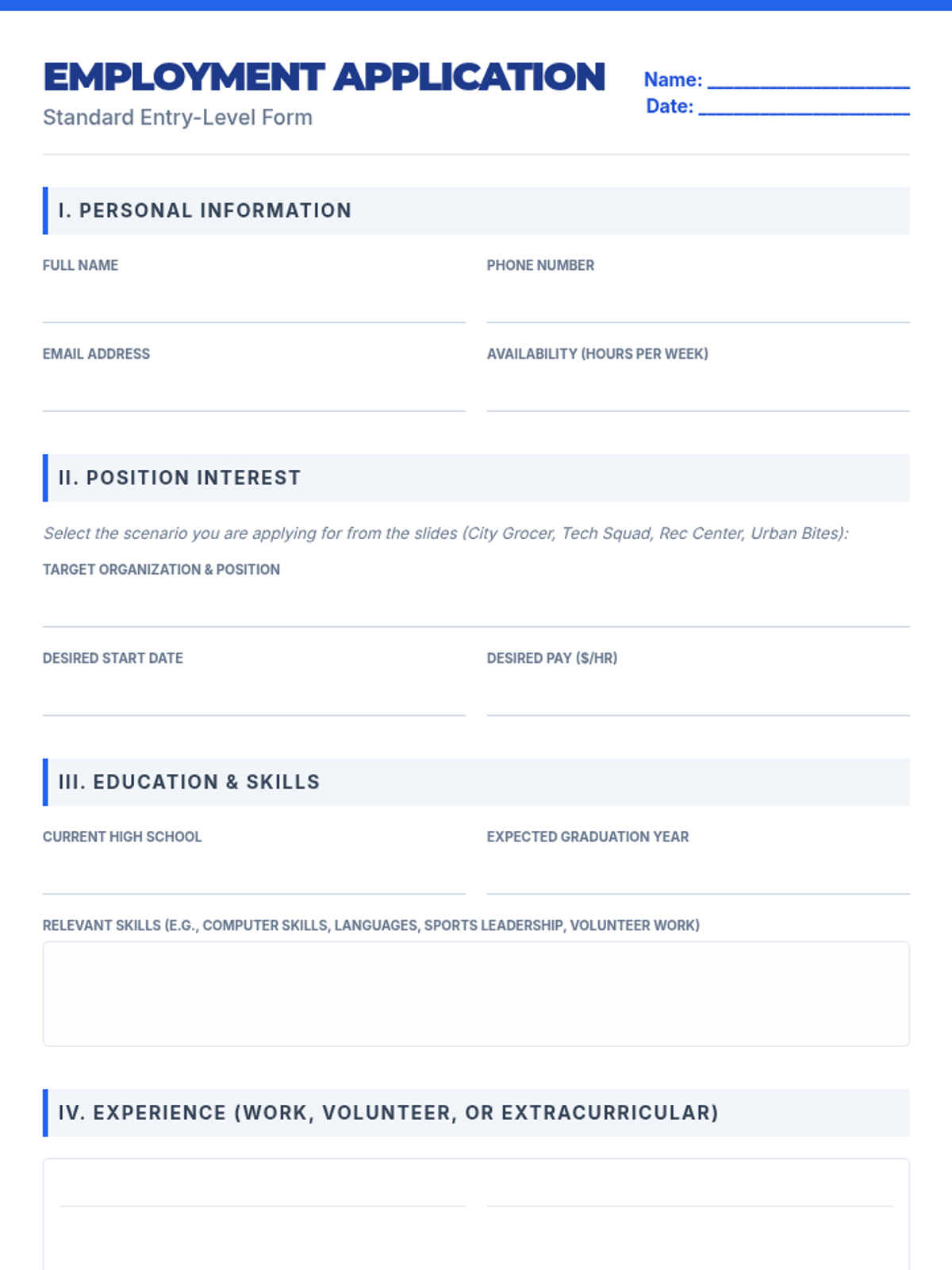
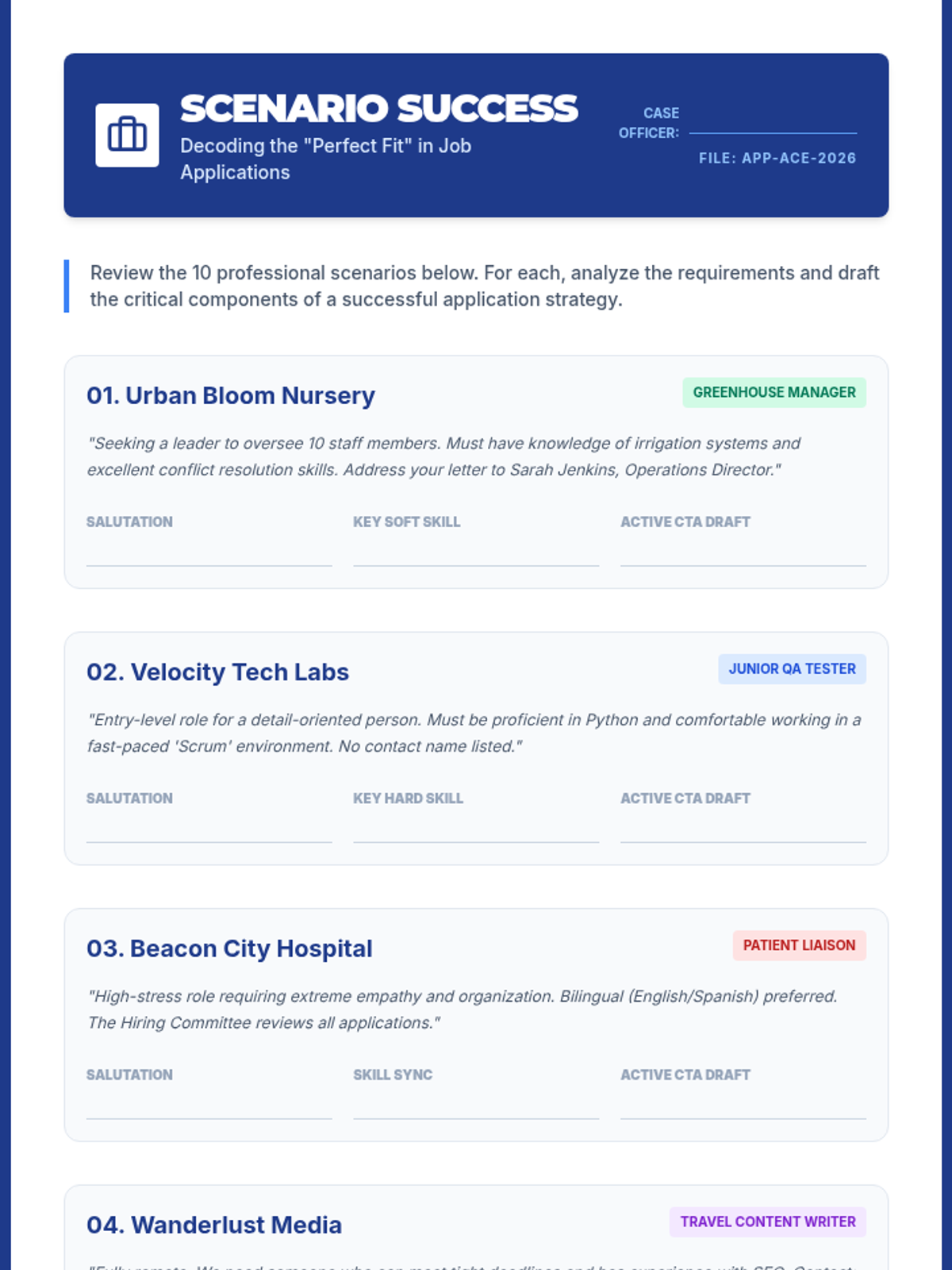
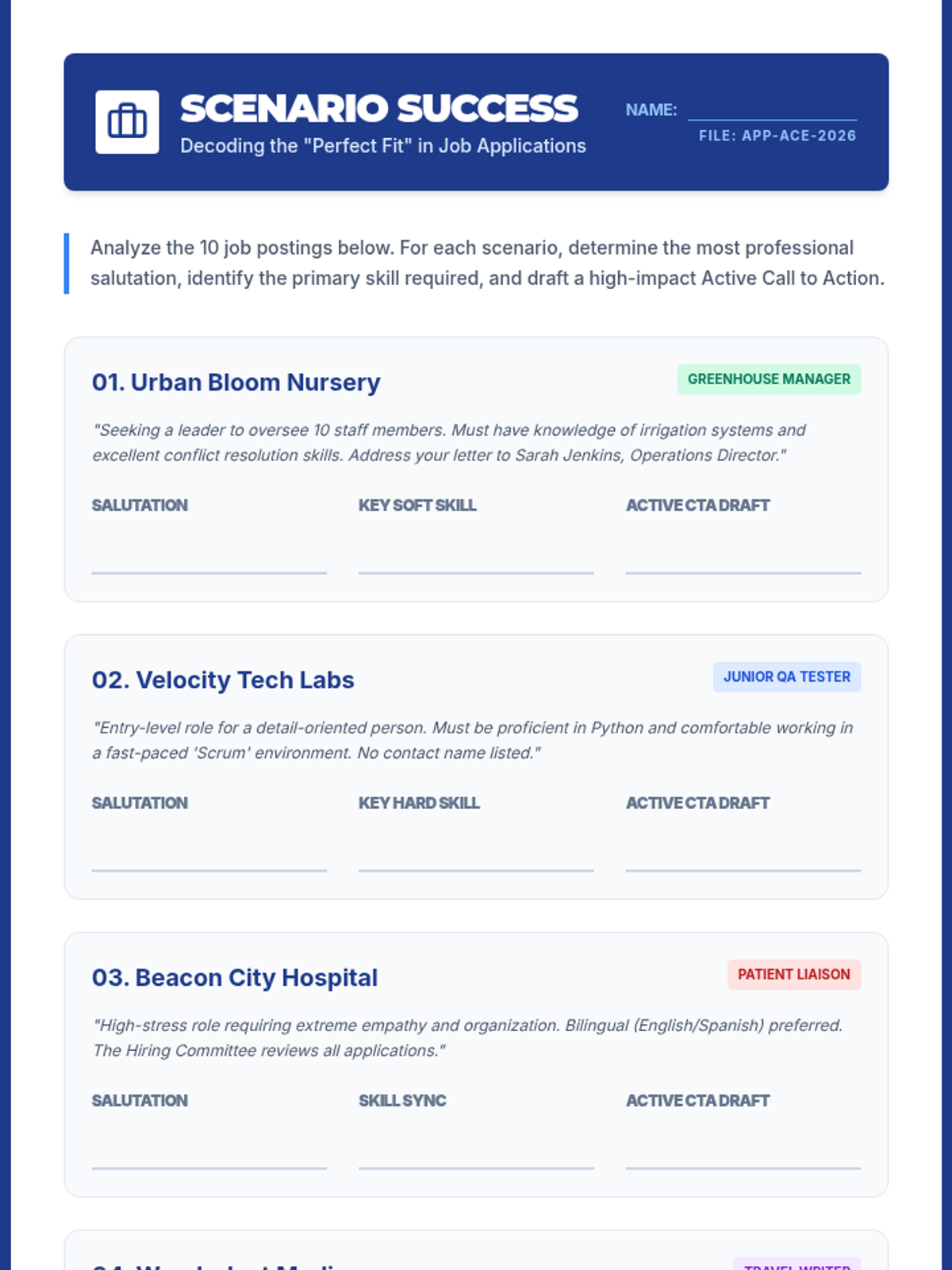
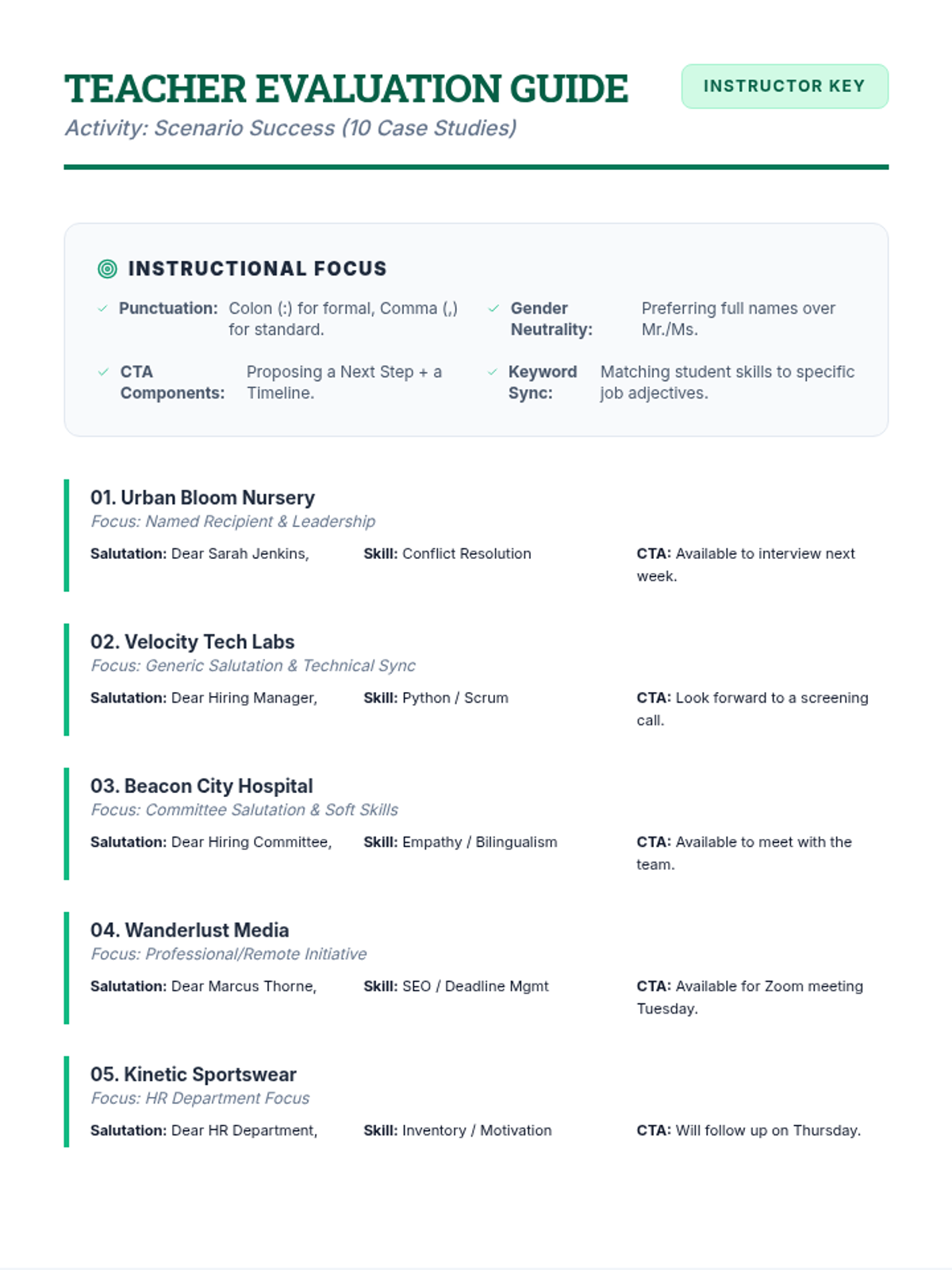
A comprehensive lesson on job readiness, covering job applications, personal statements, and the STAR method for interviews, specifically designed for urban high school students entering the workforce.
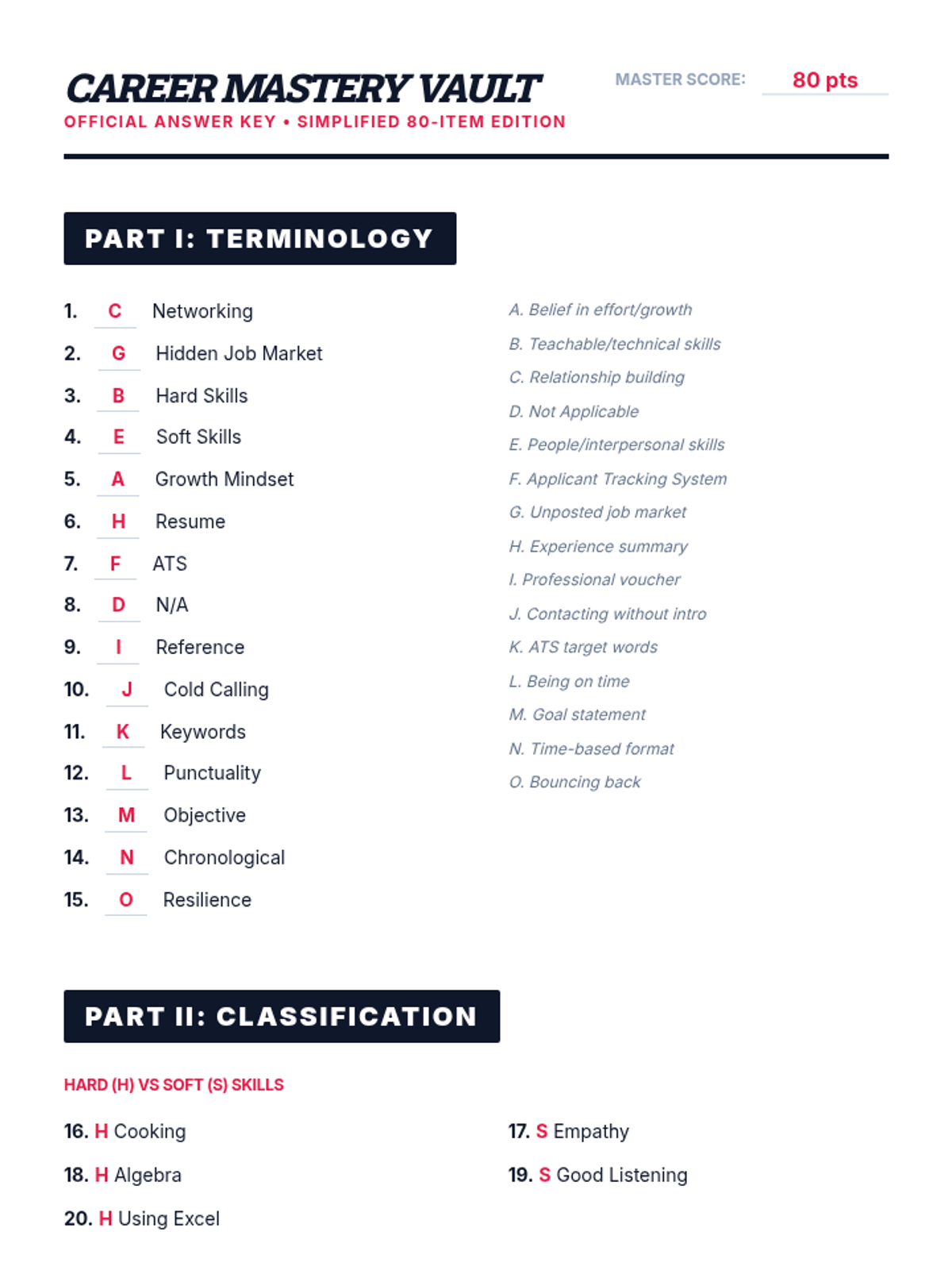
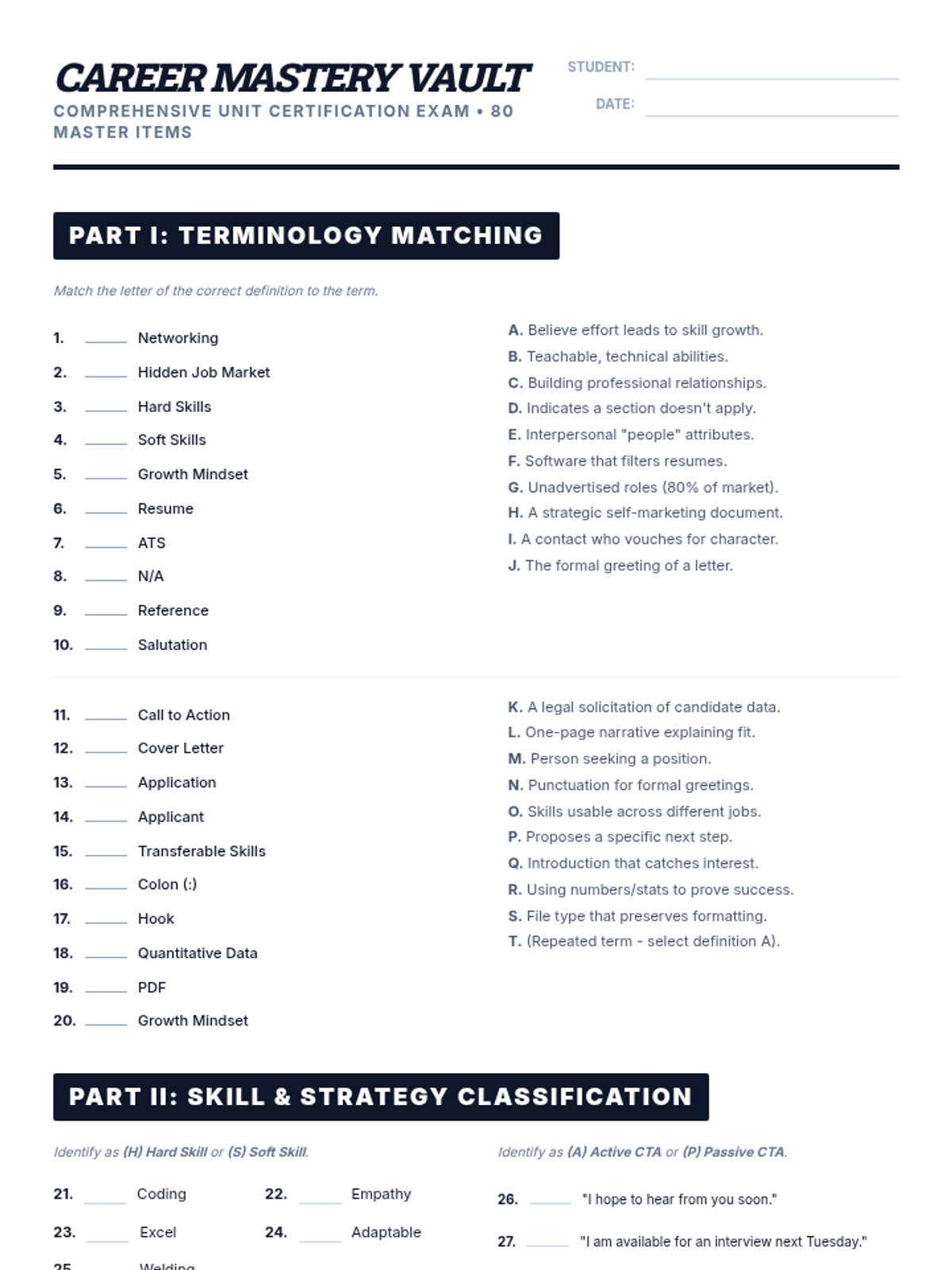
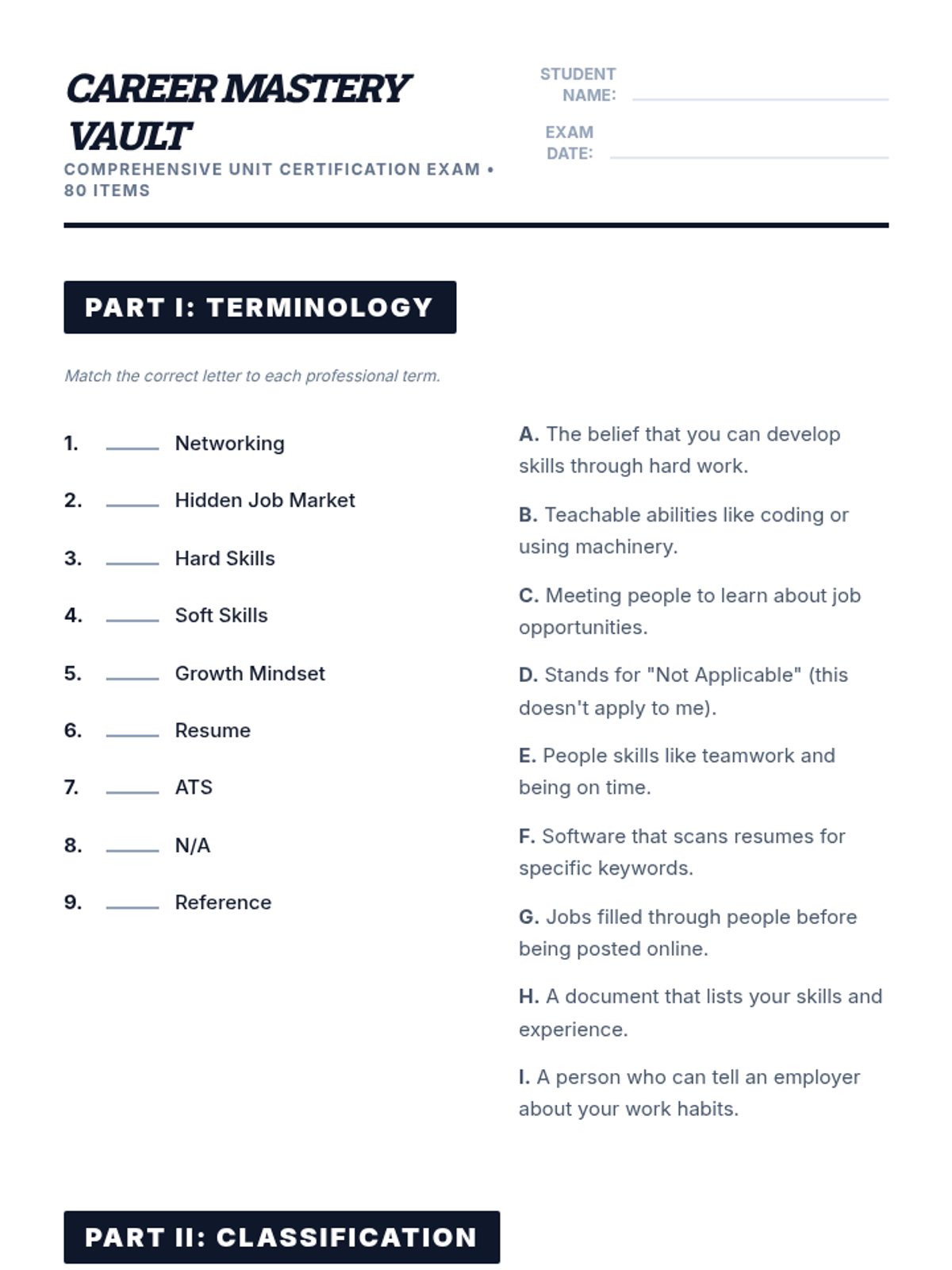
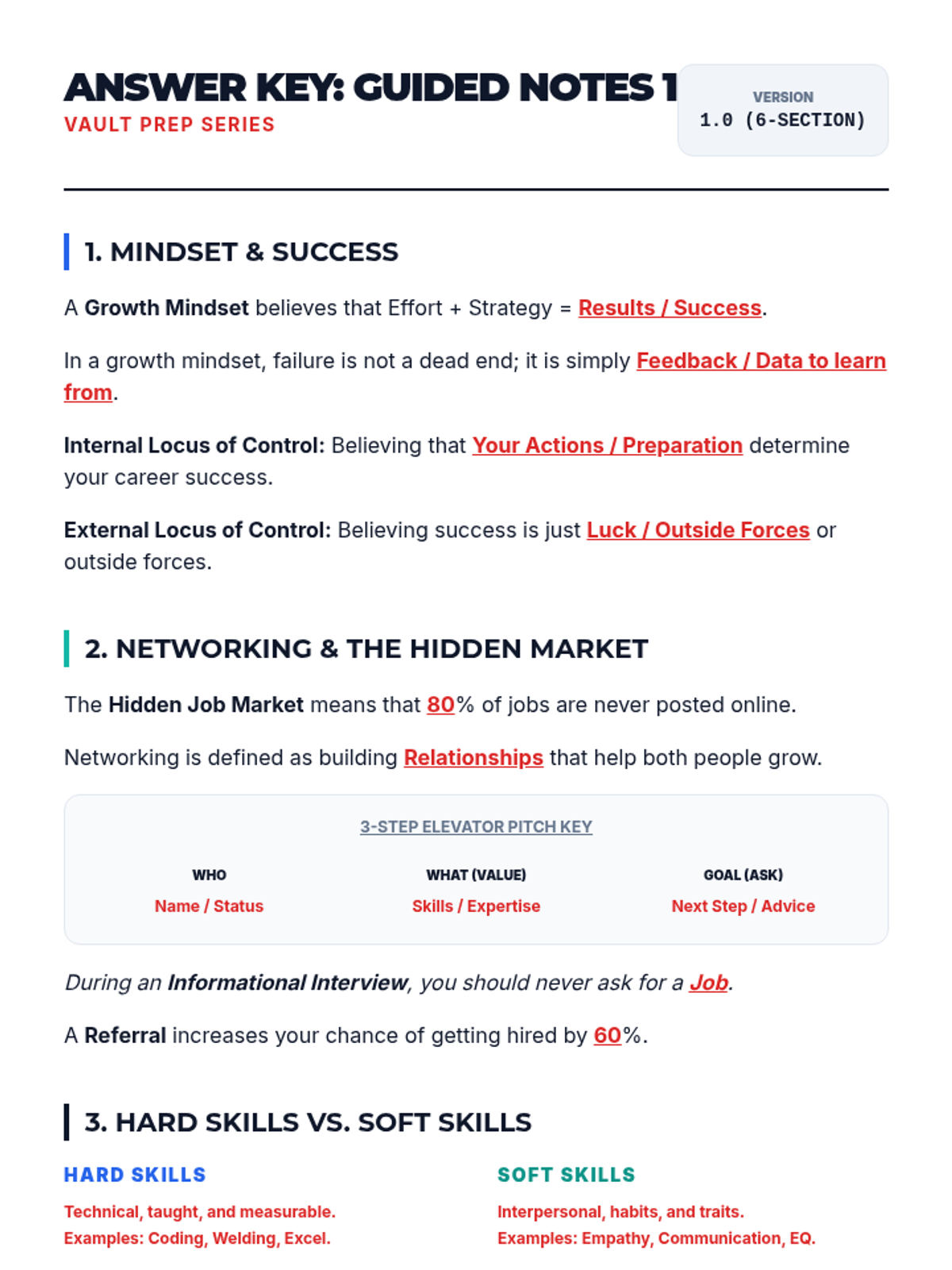
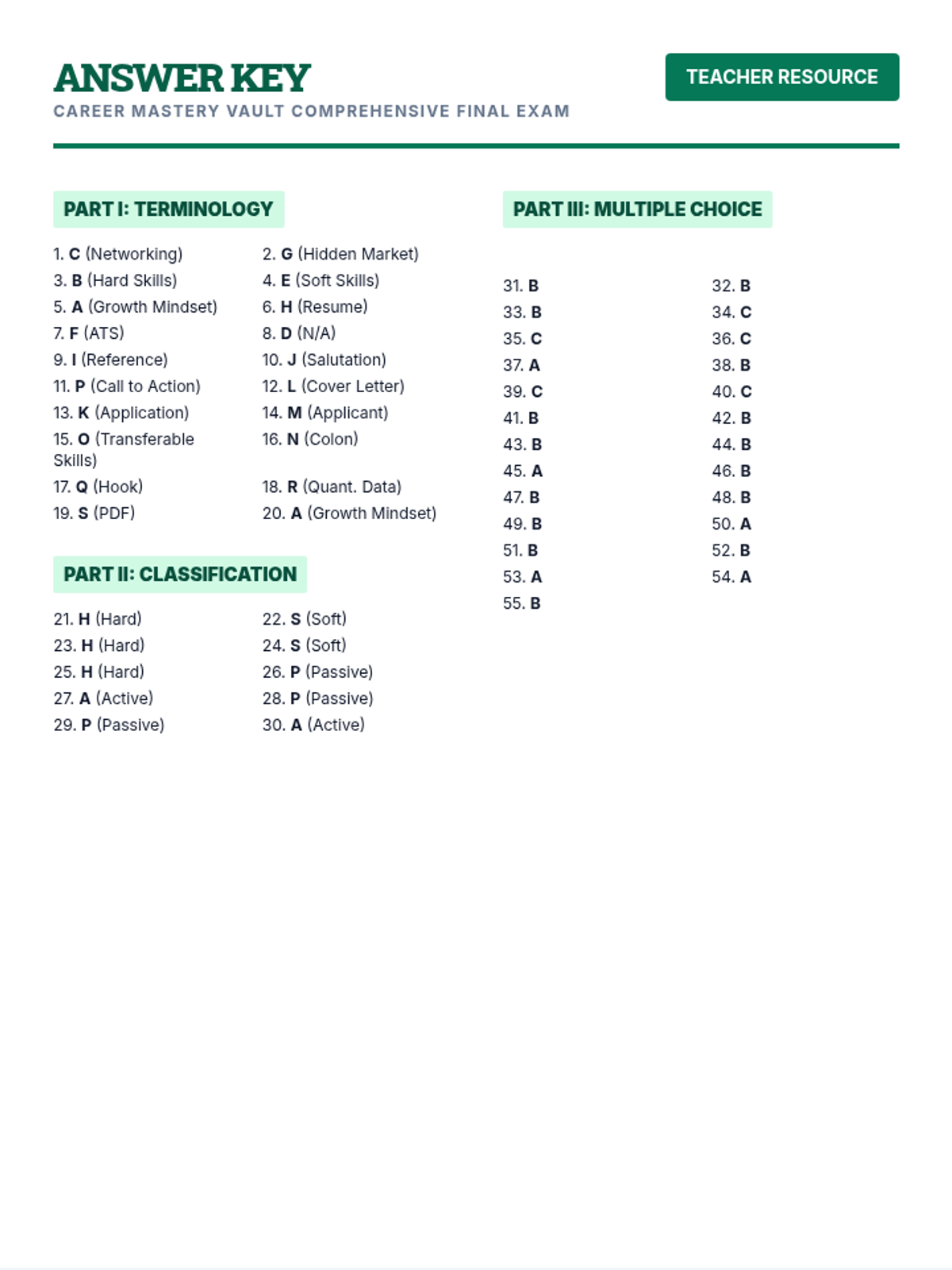
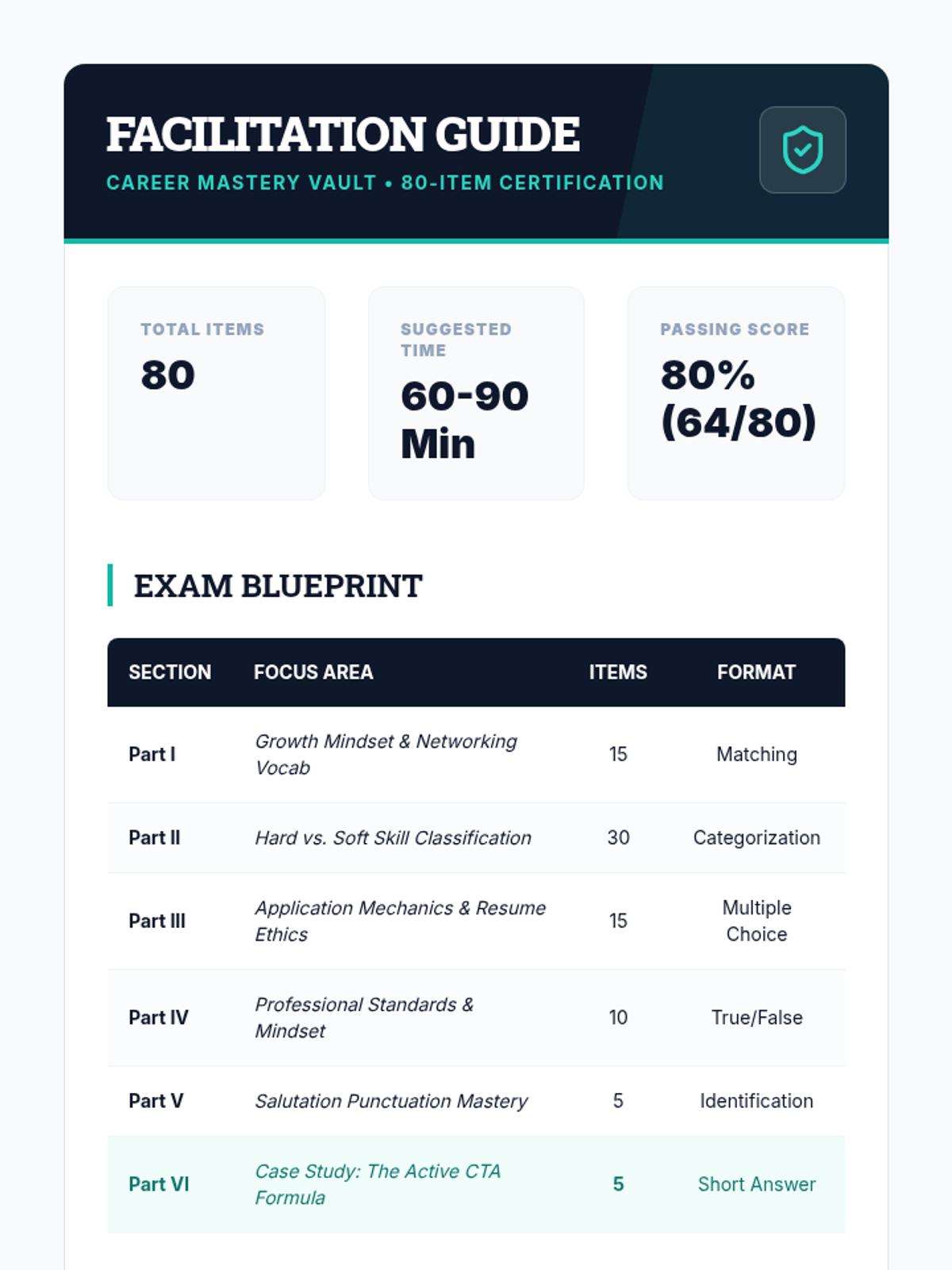
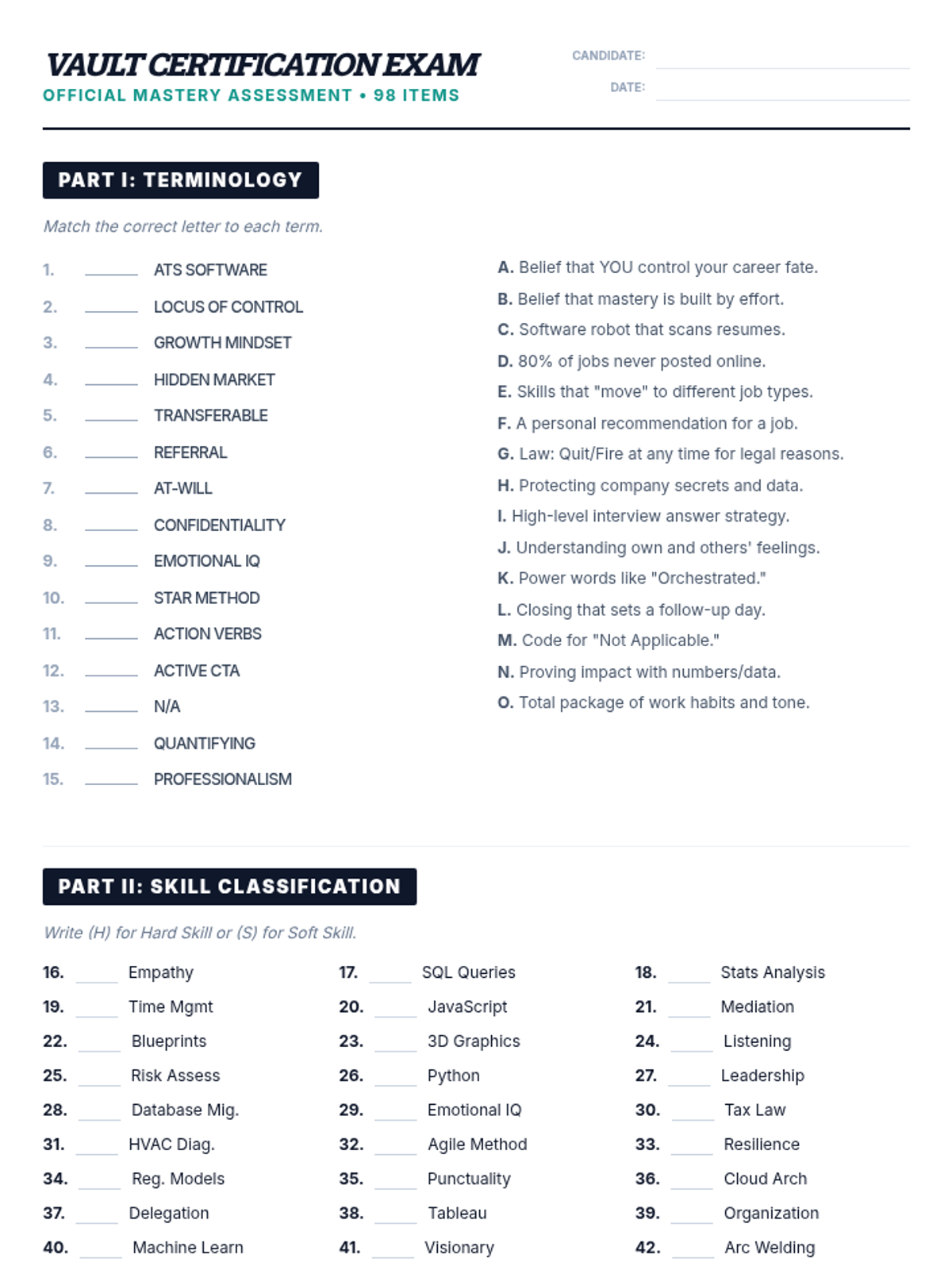
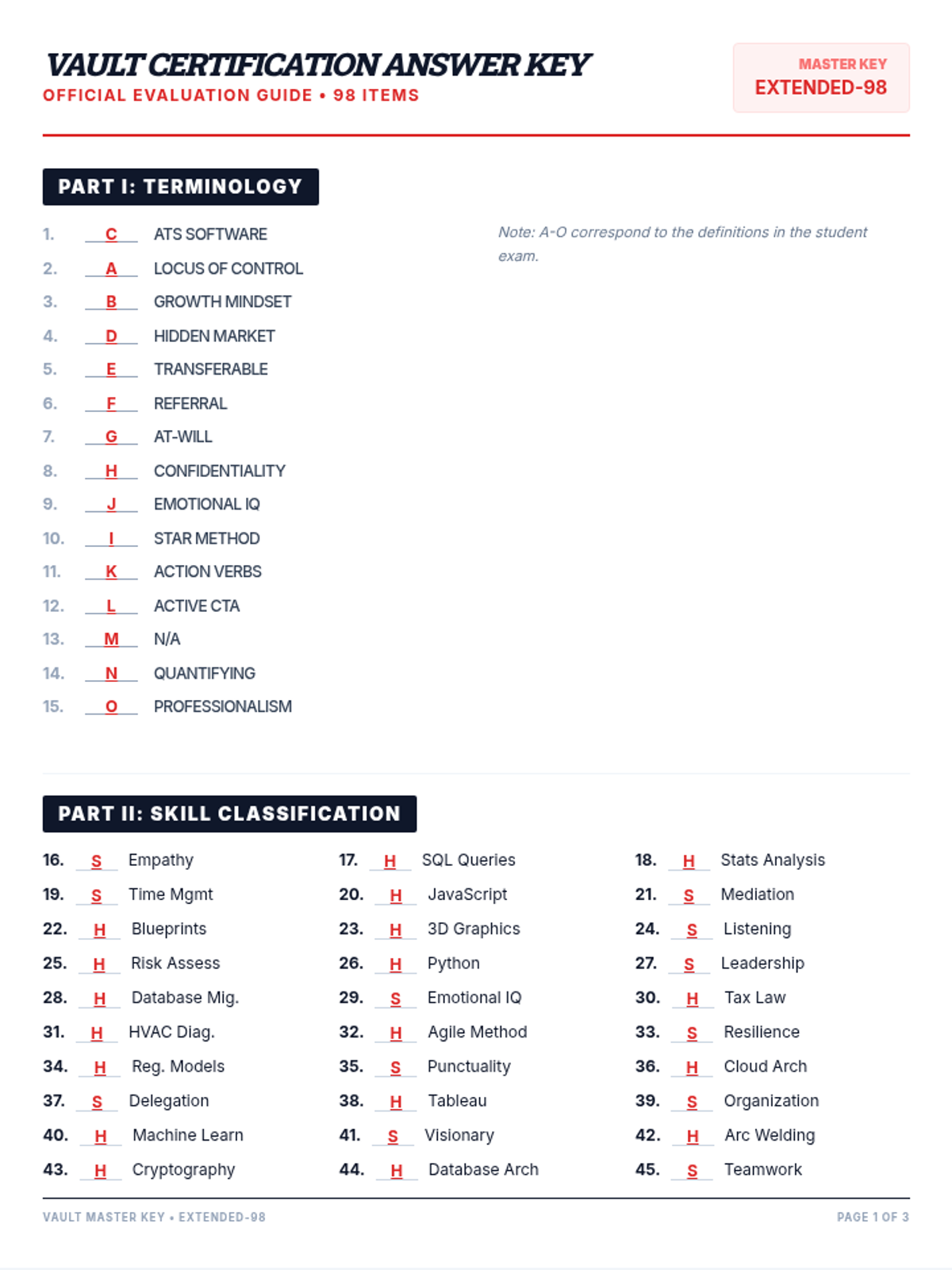
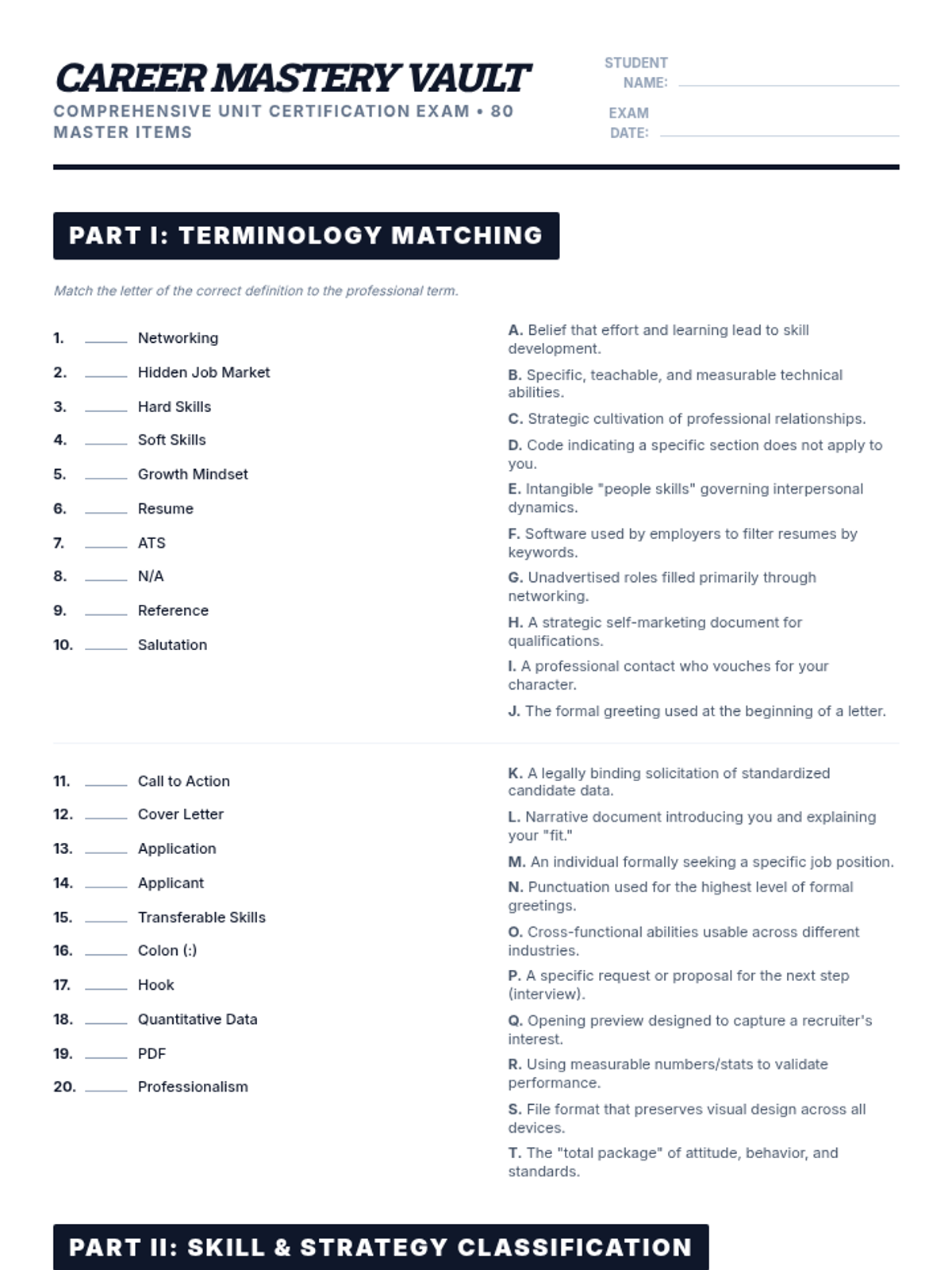
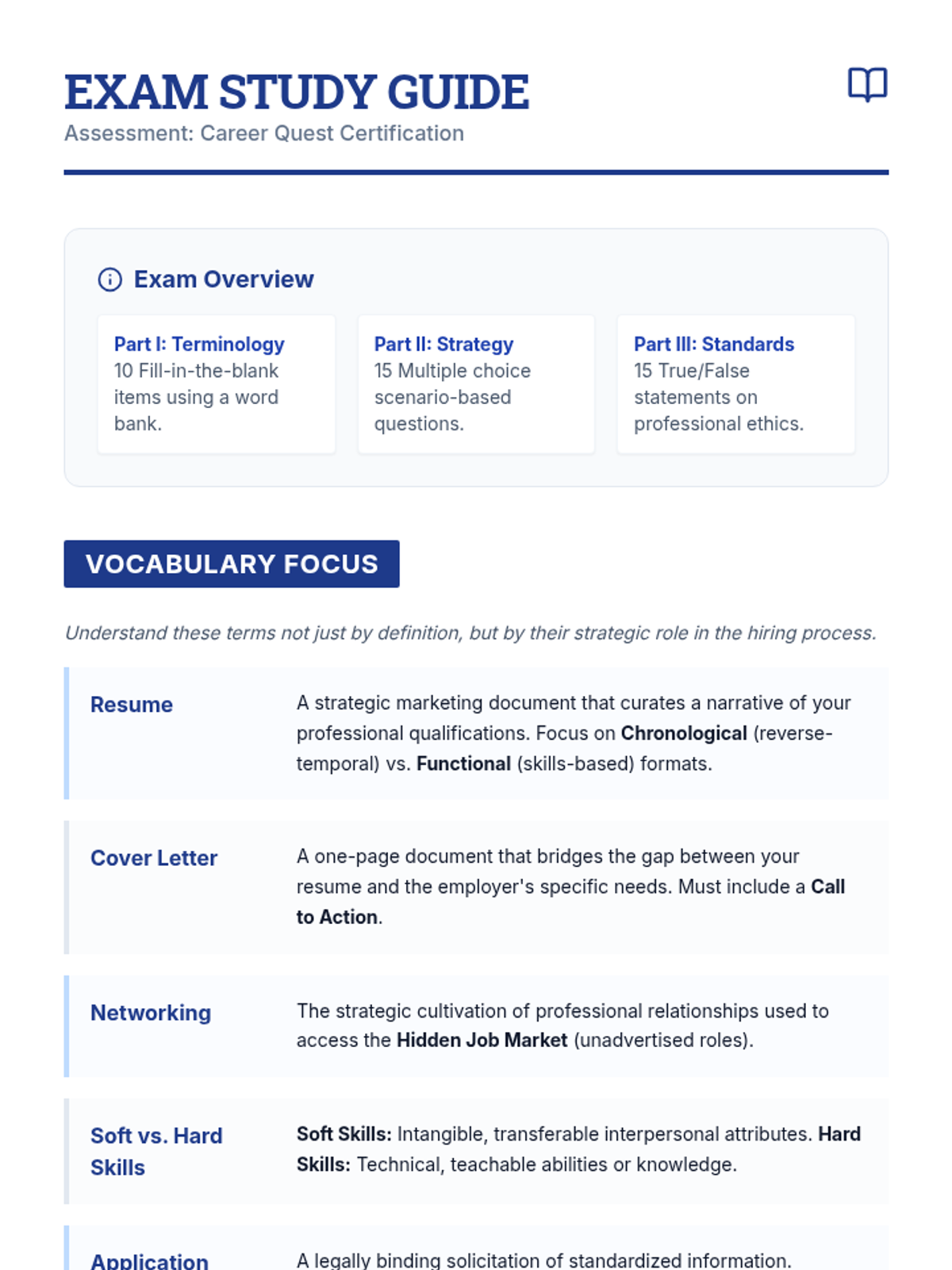
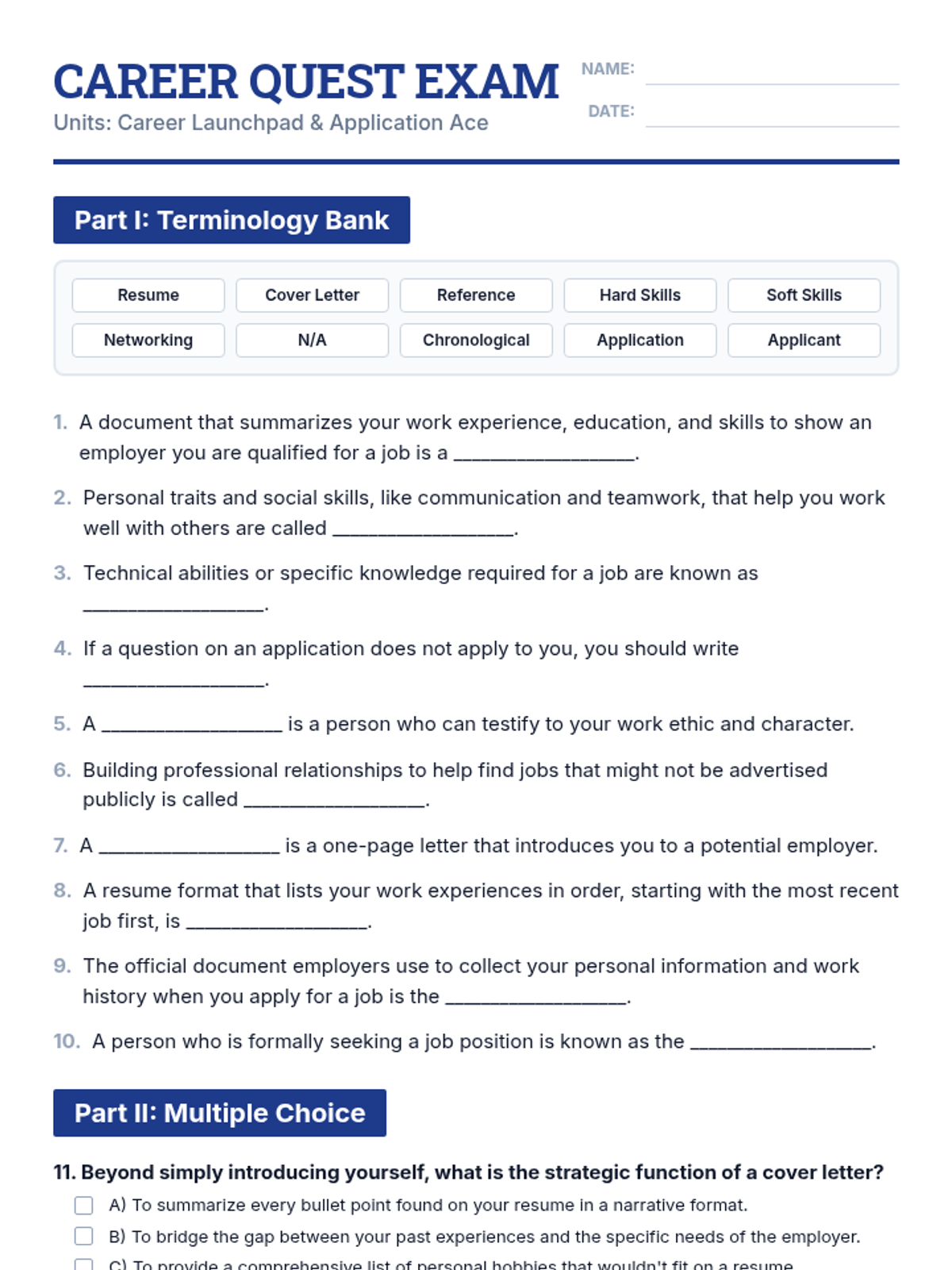
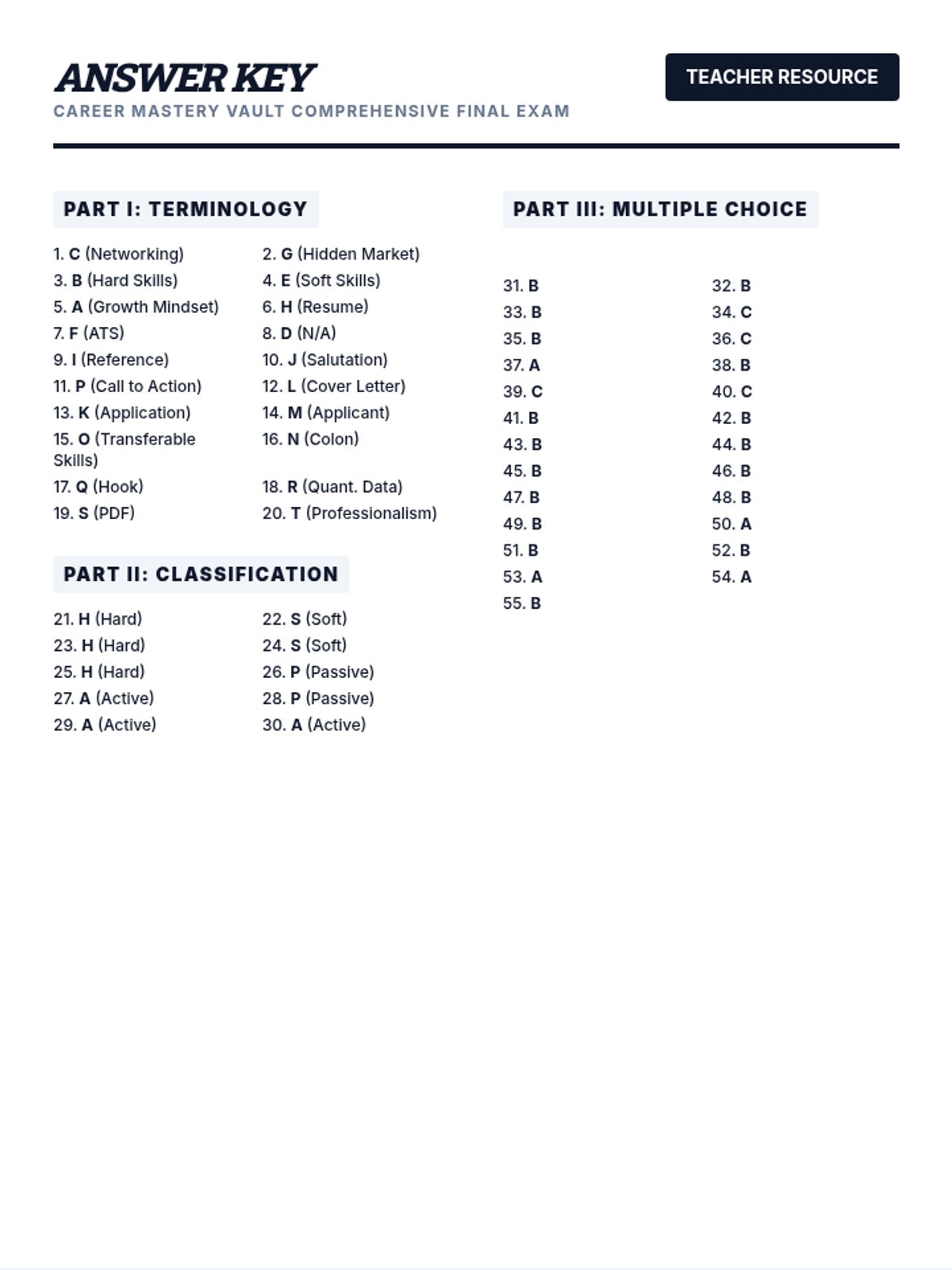
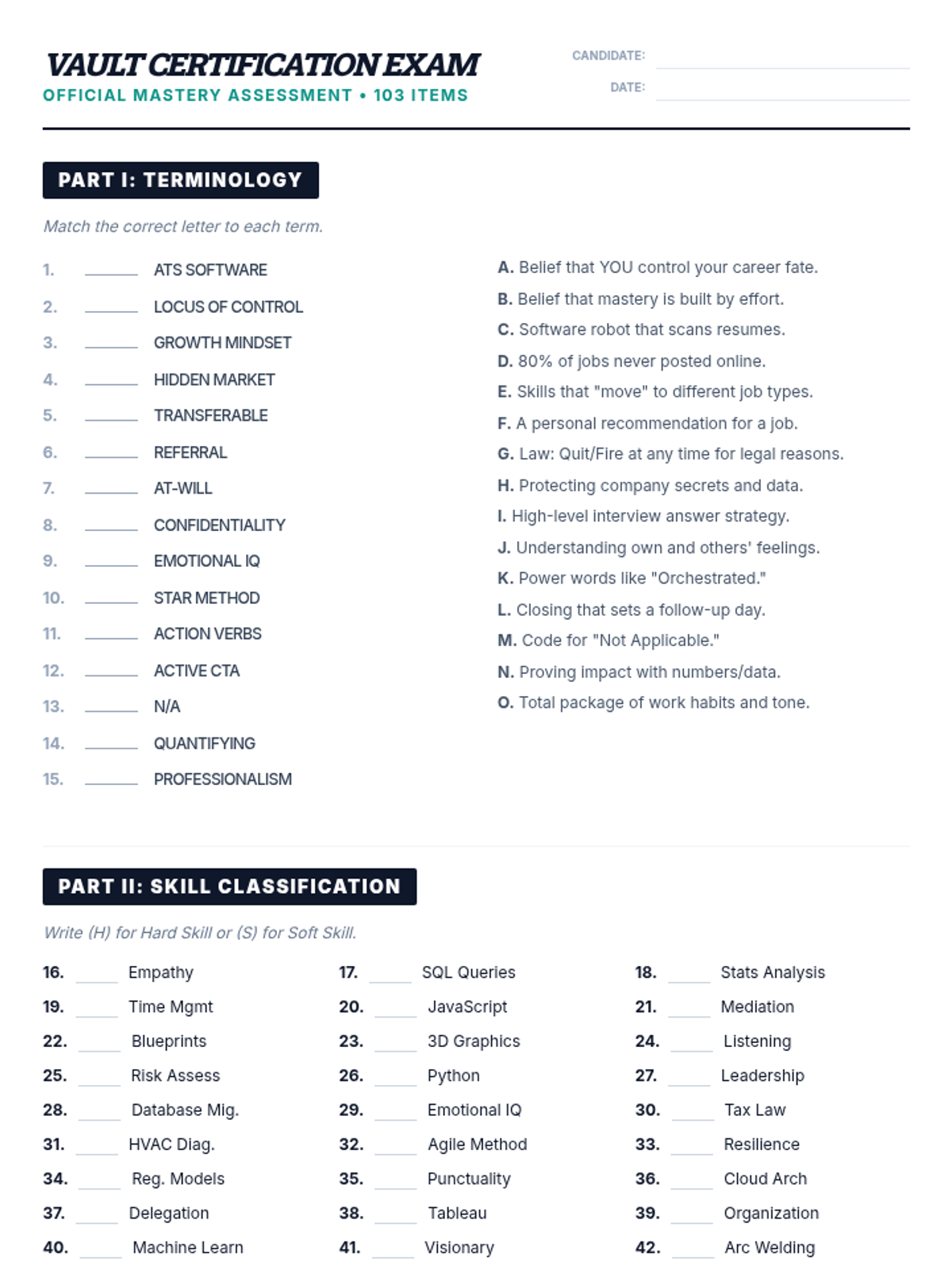
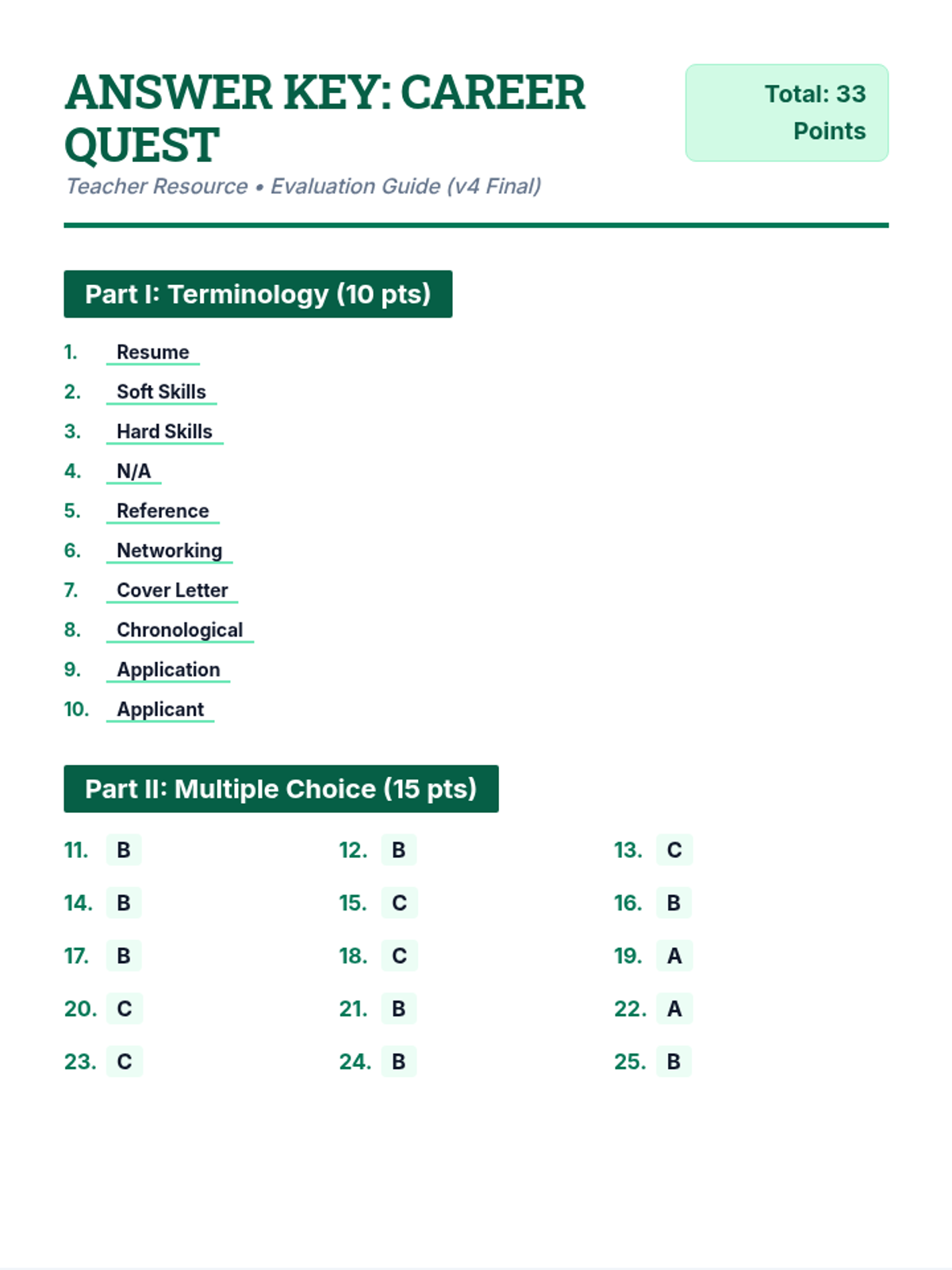
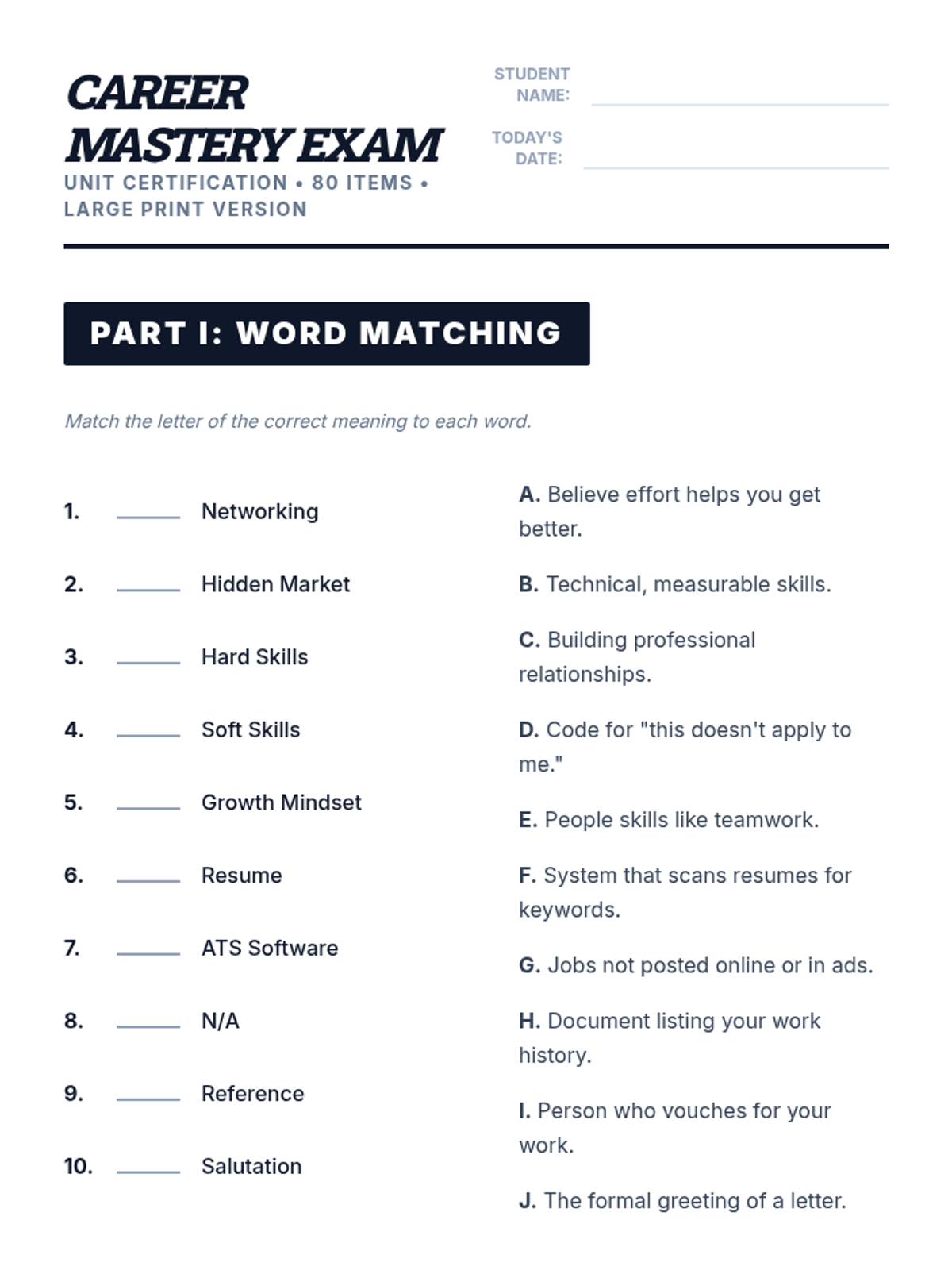
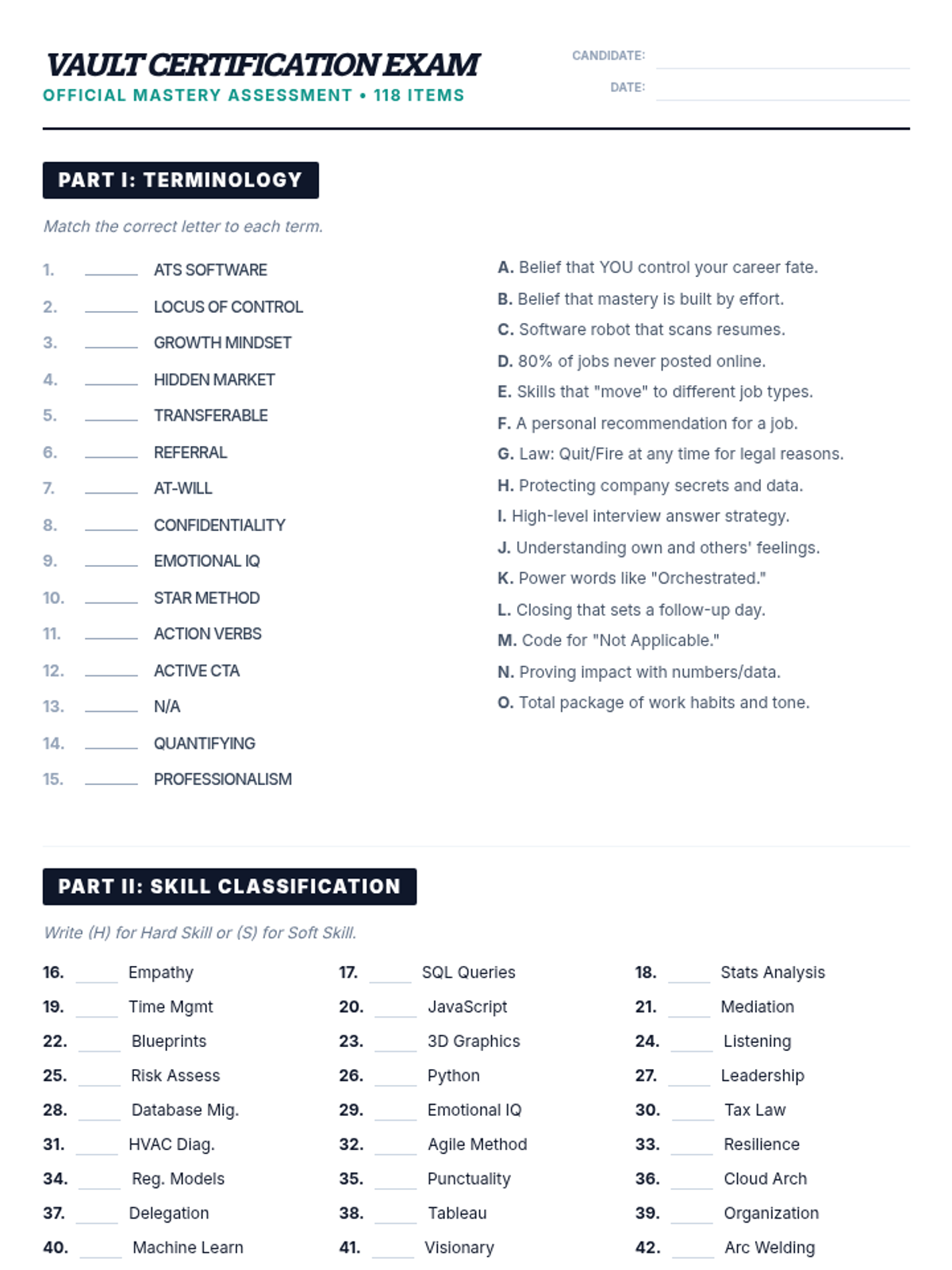
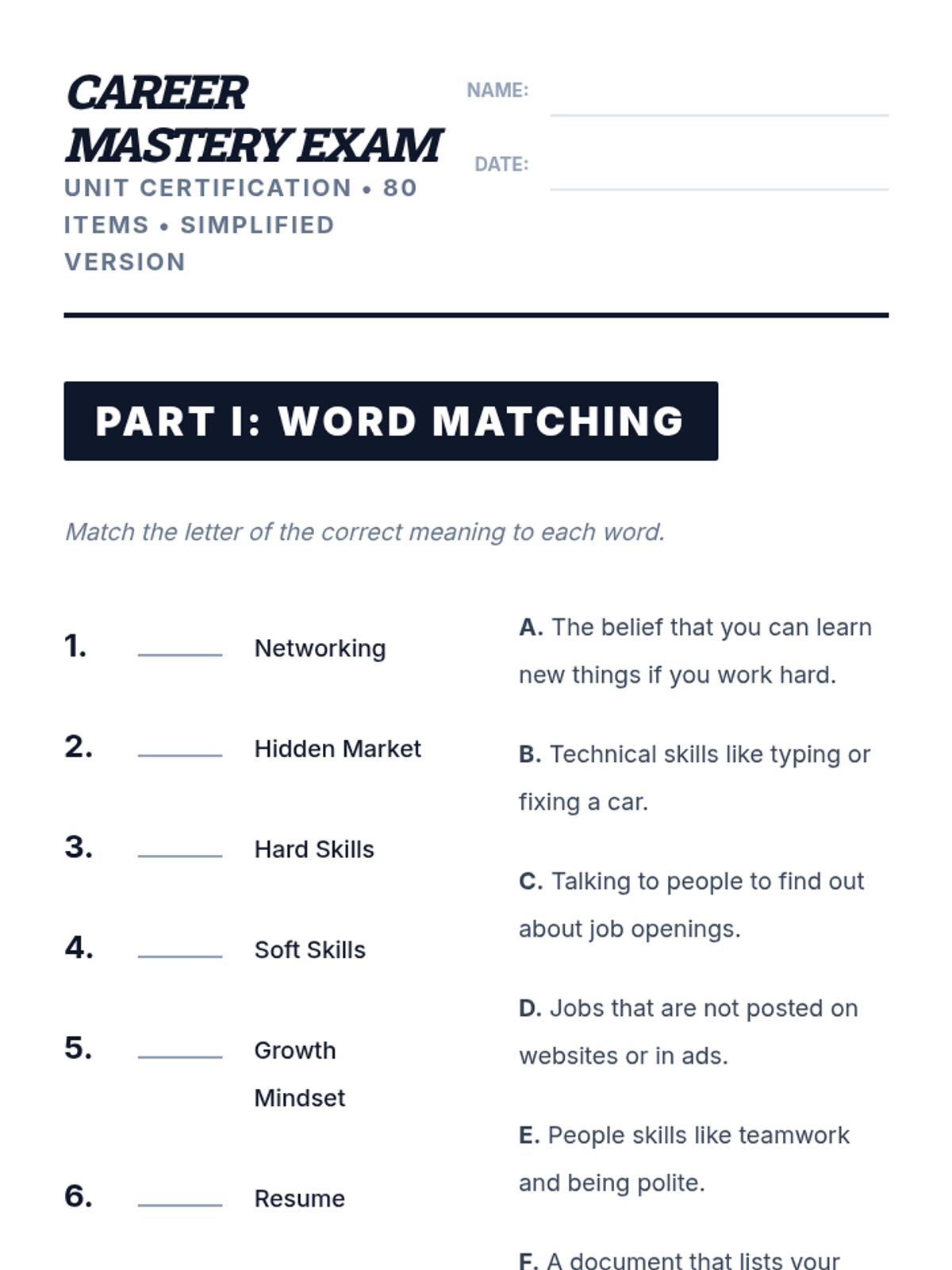
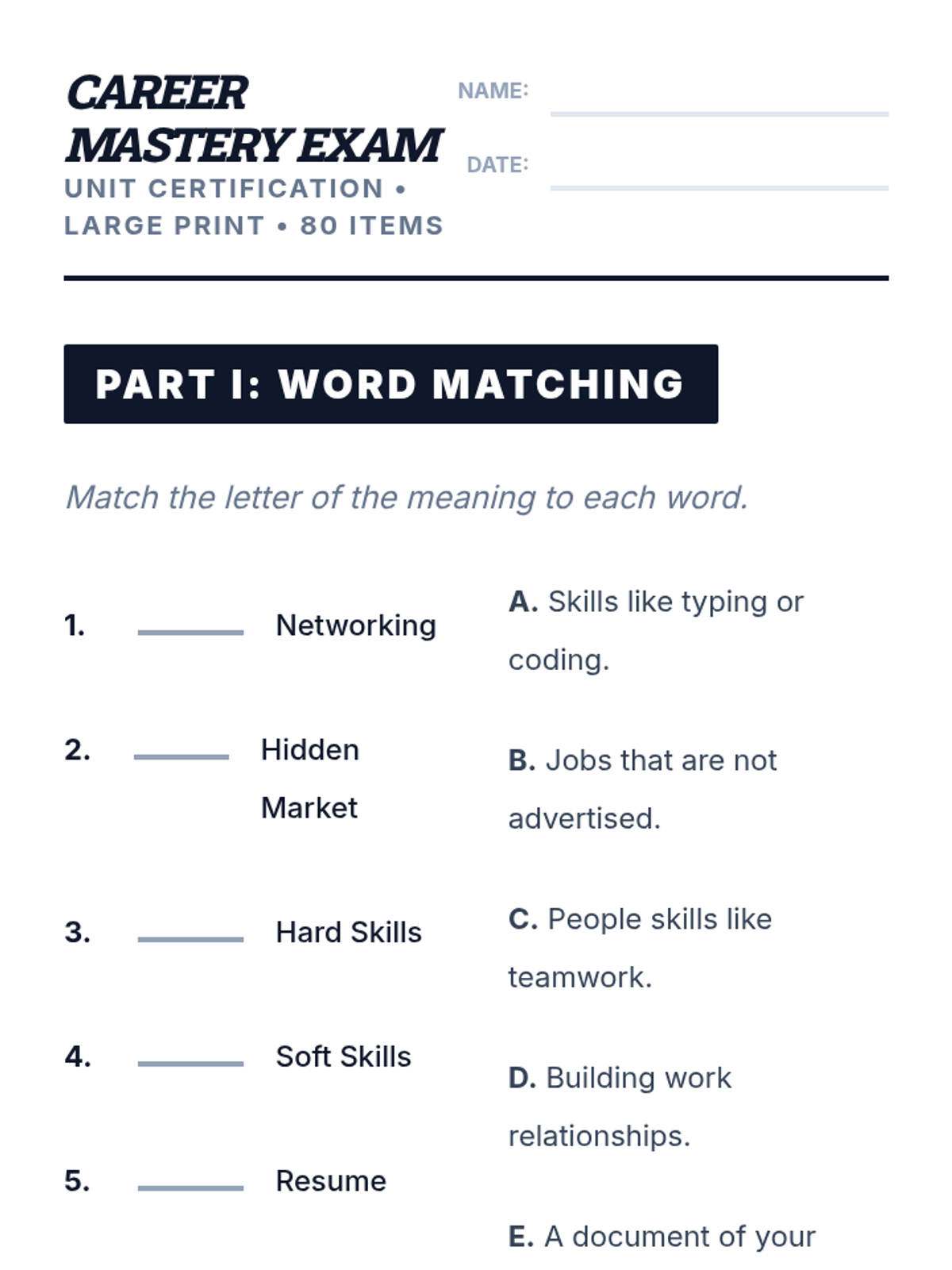
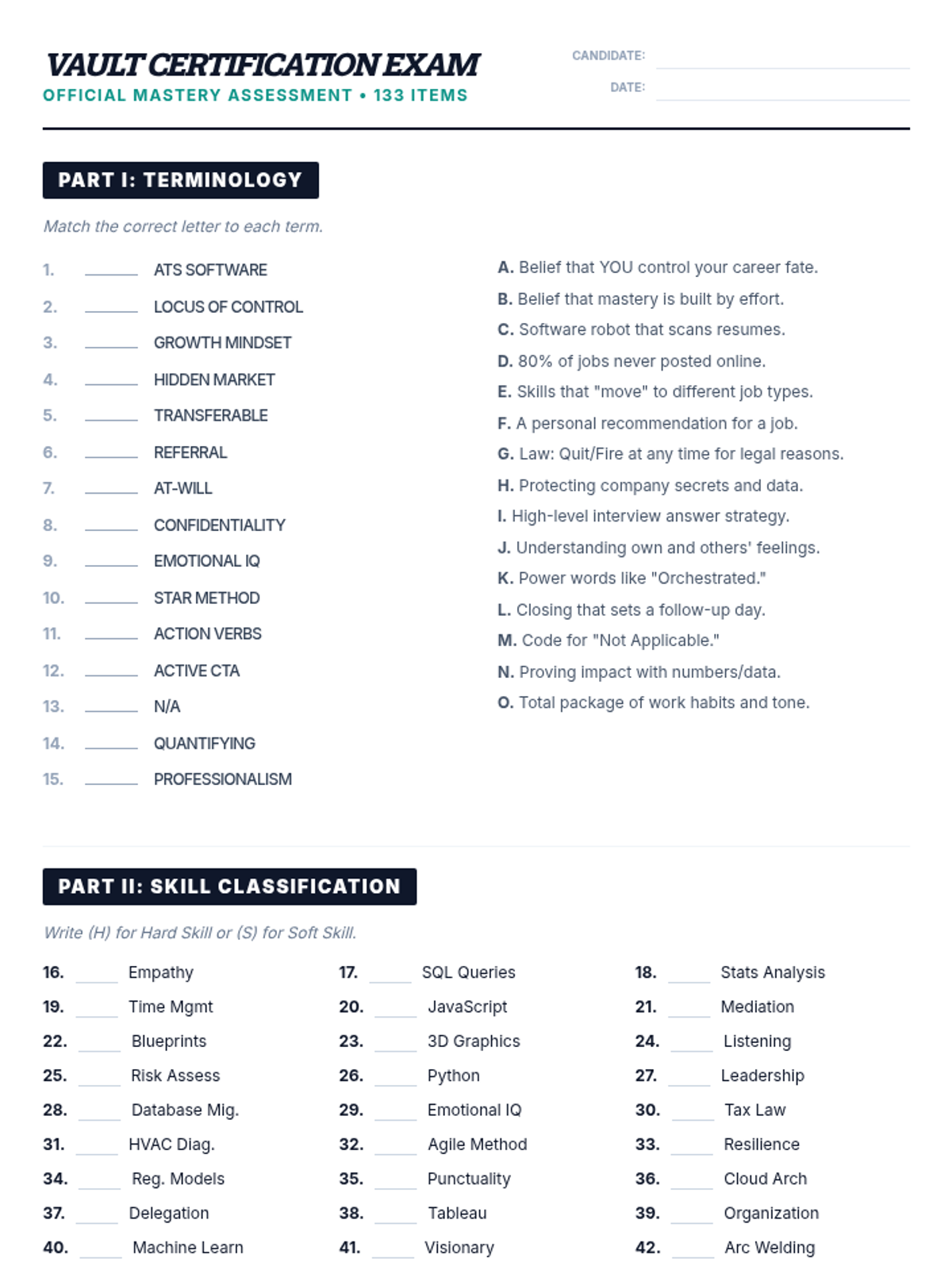
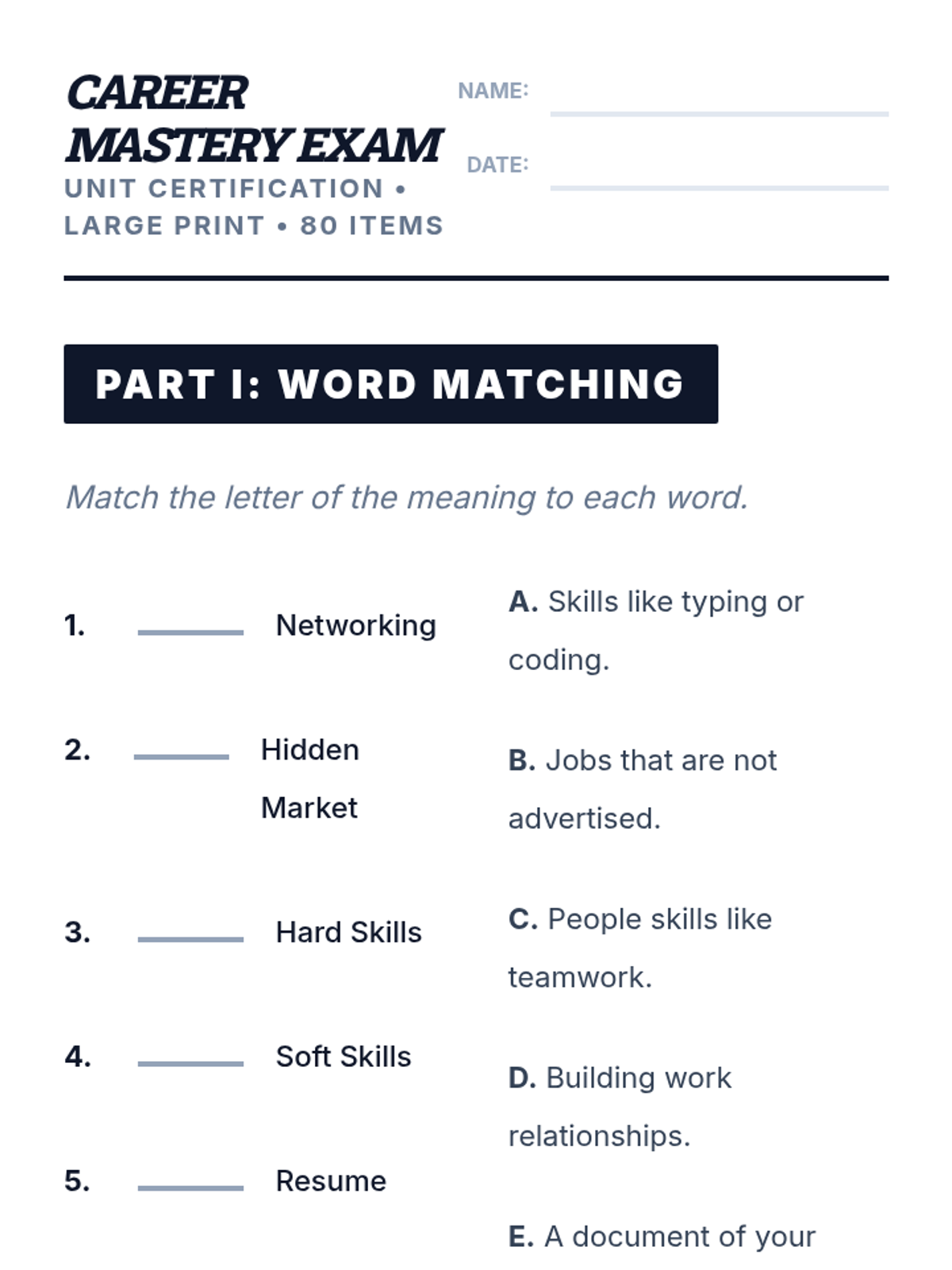
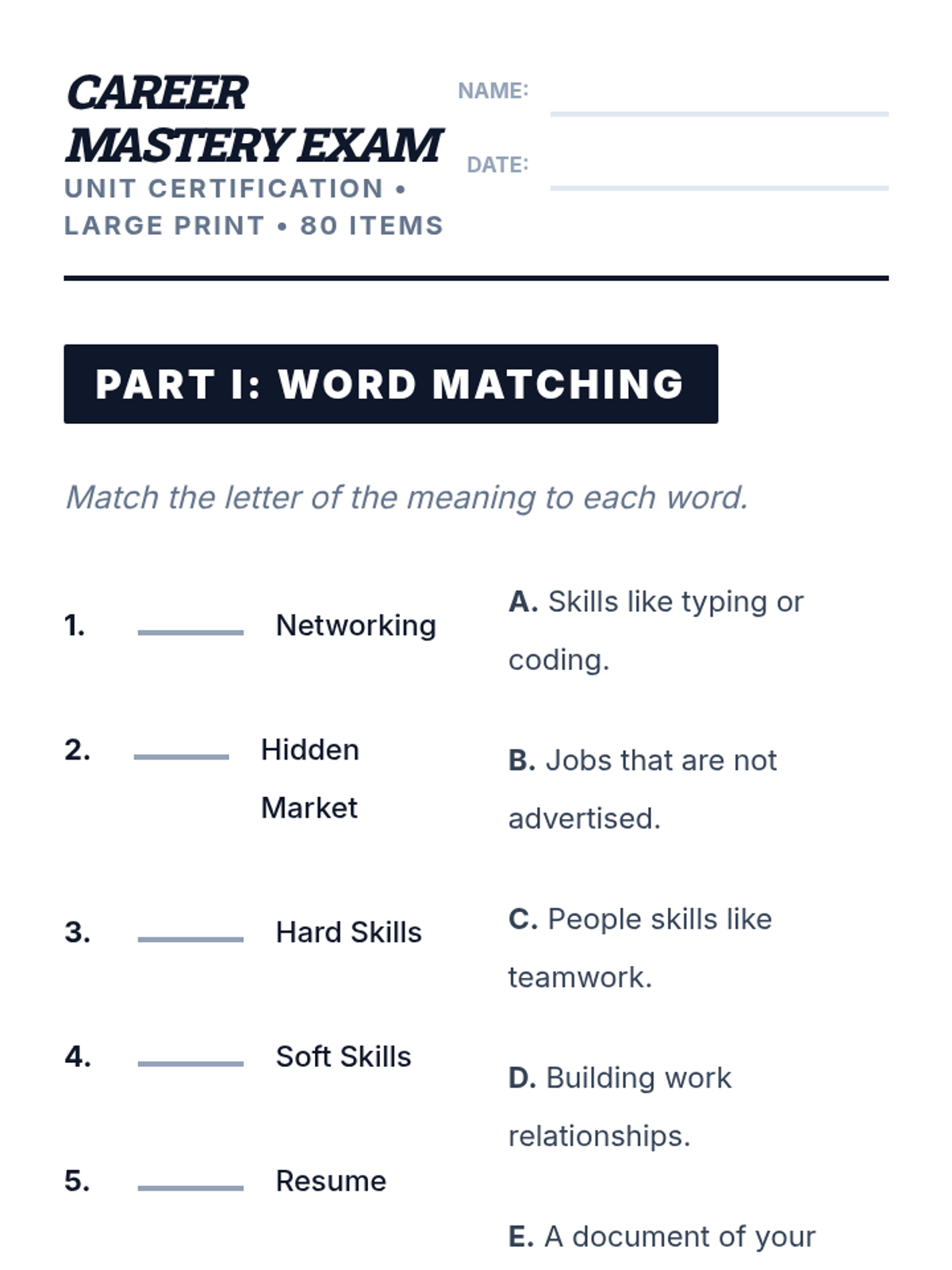
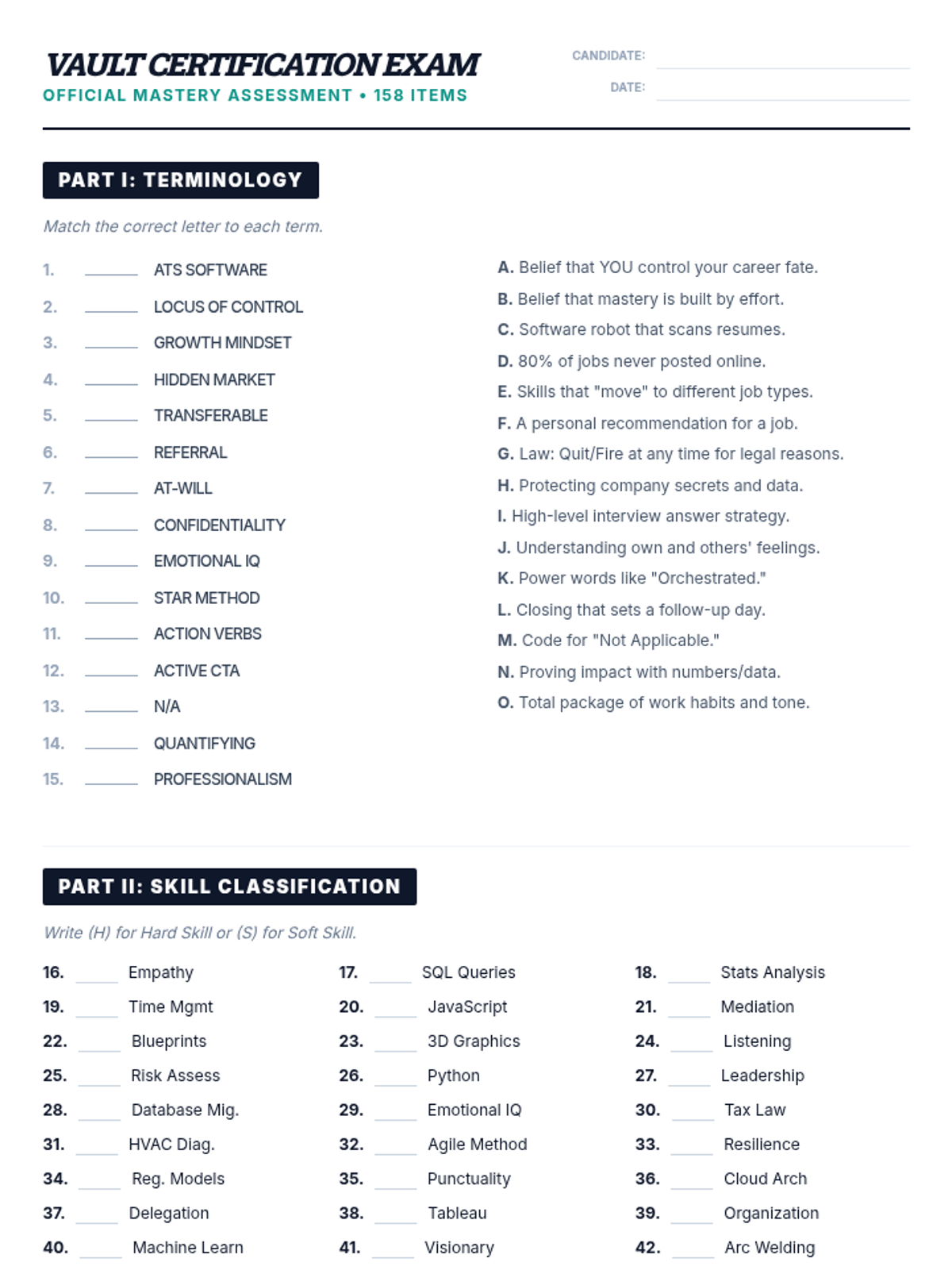
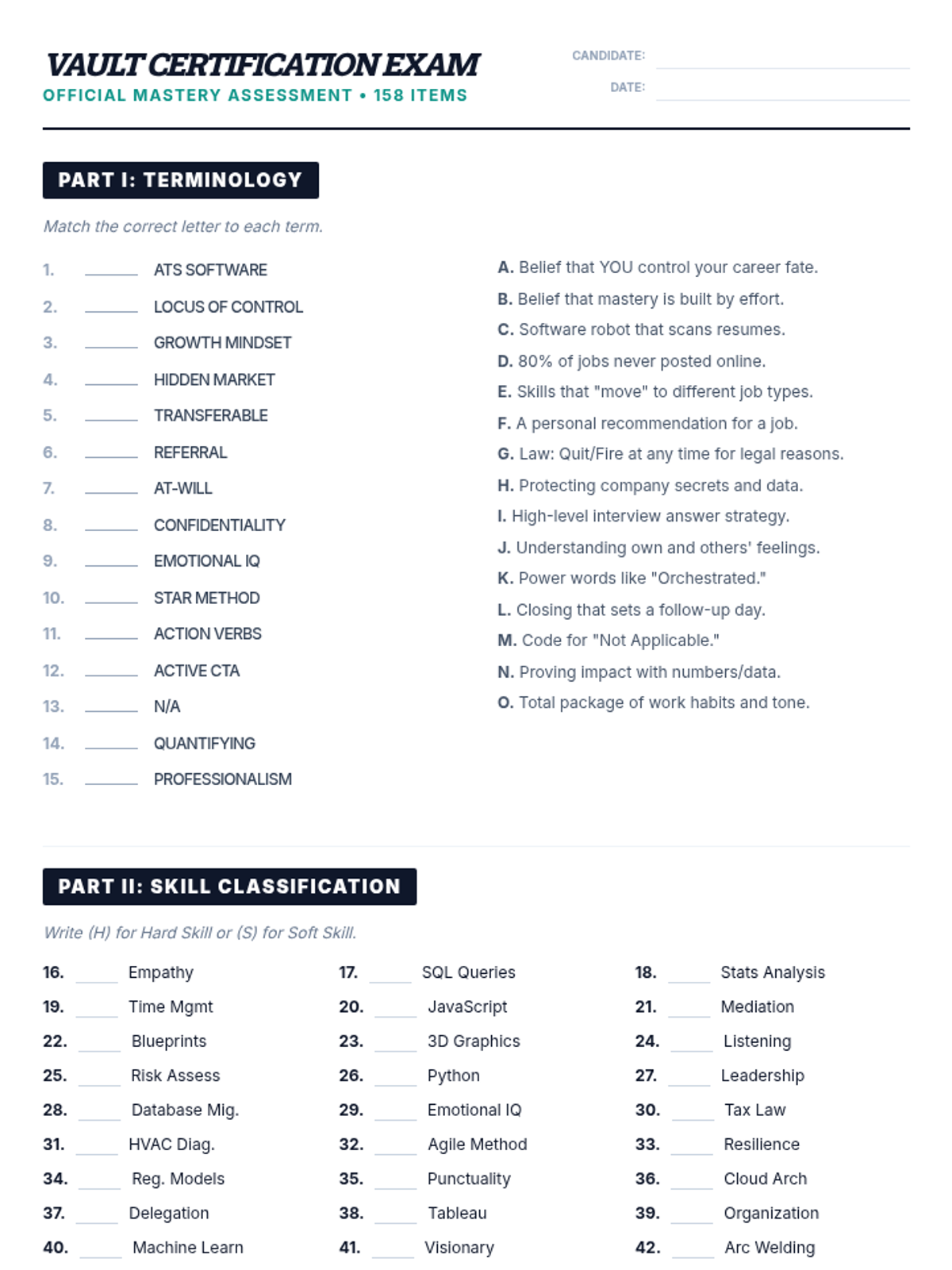
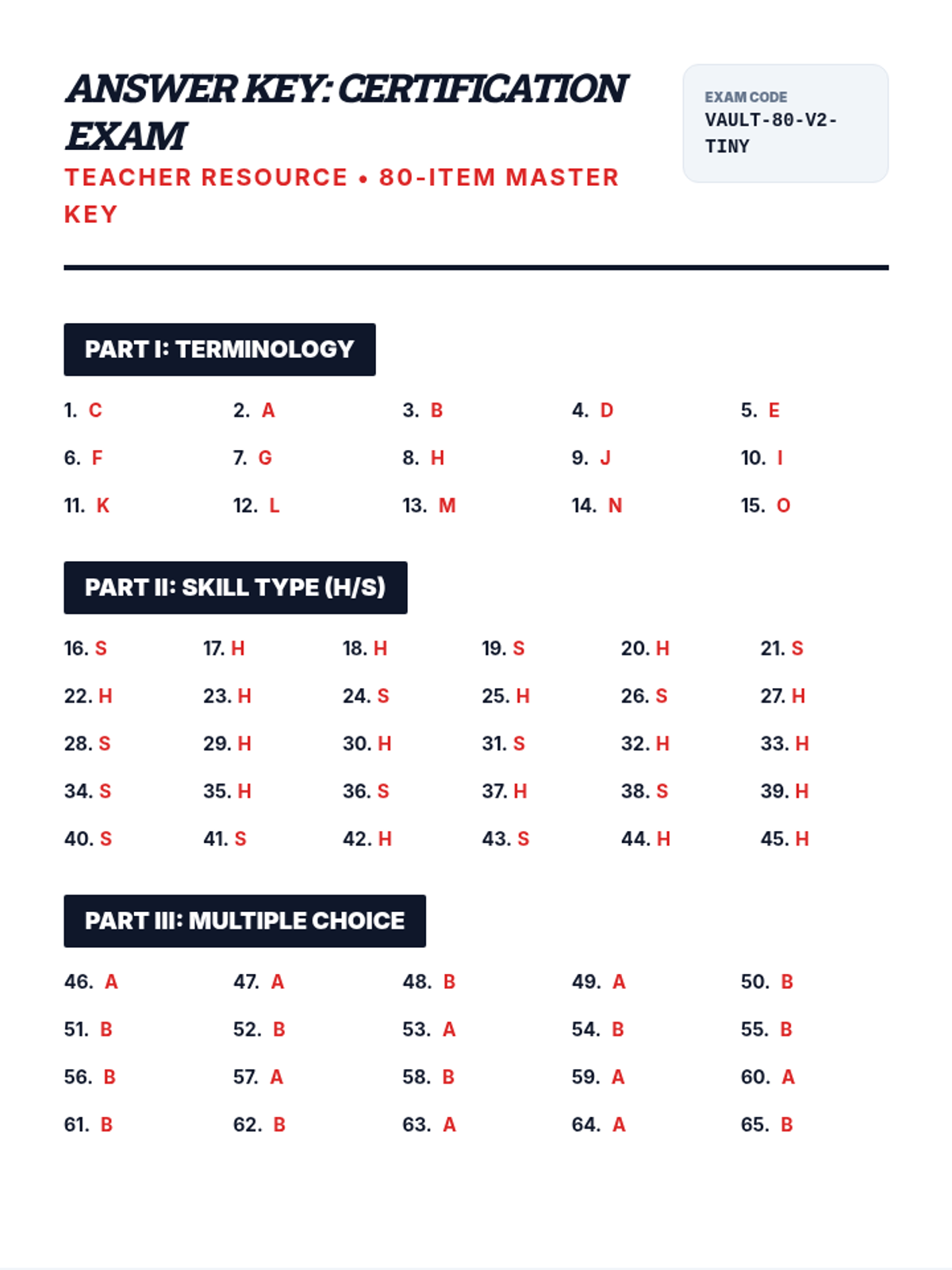
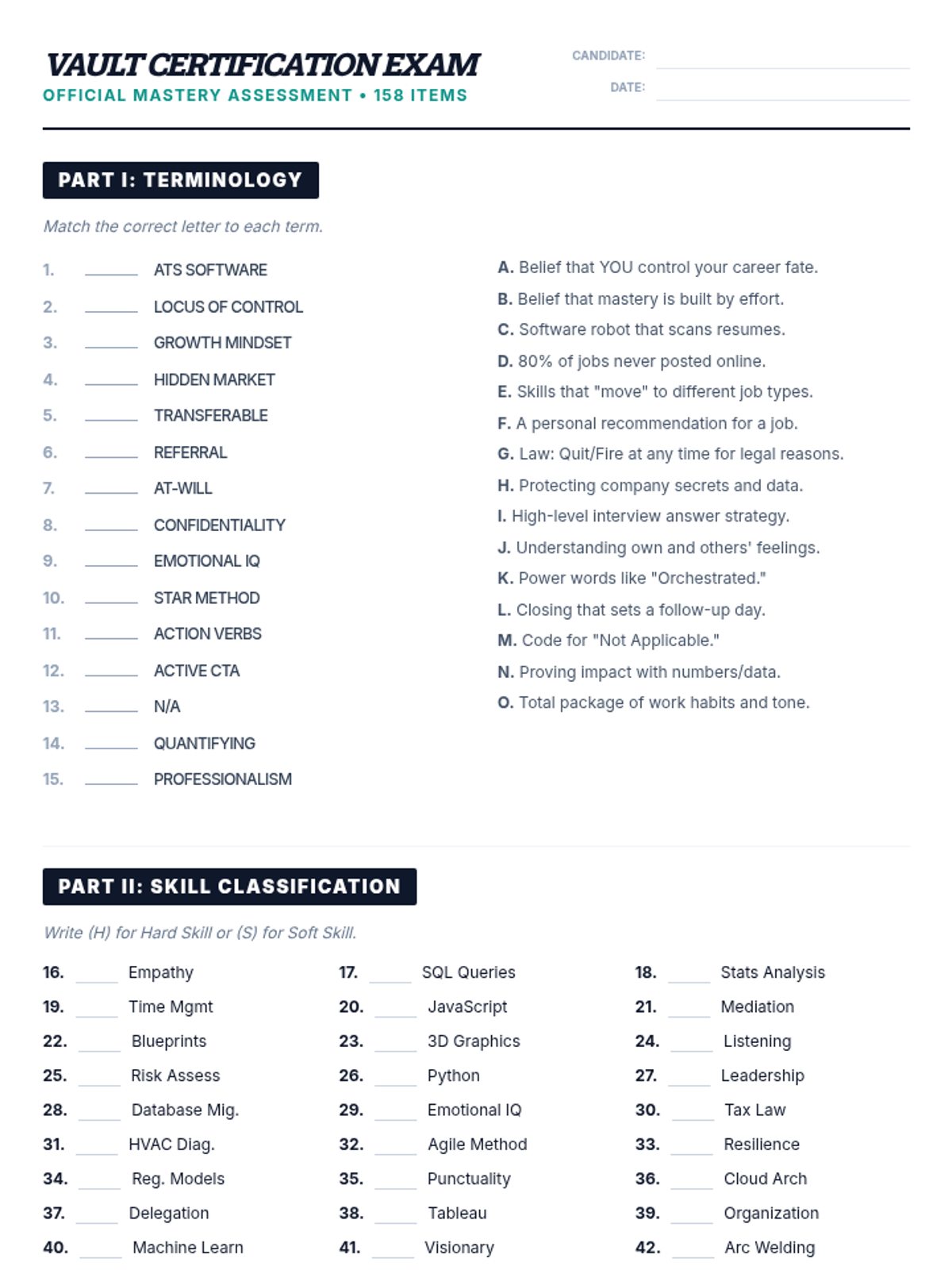
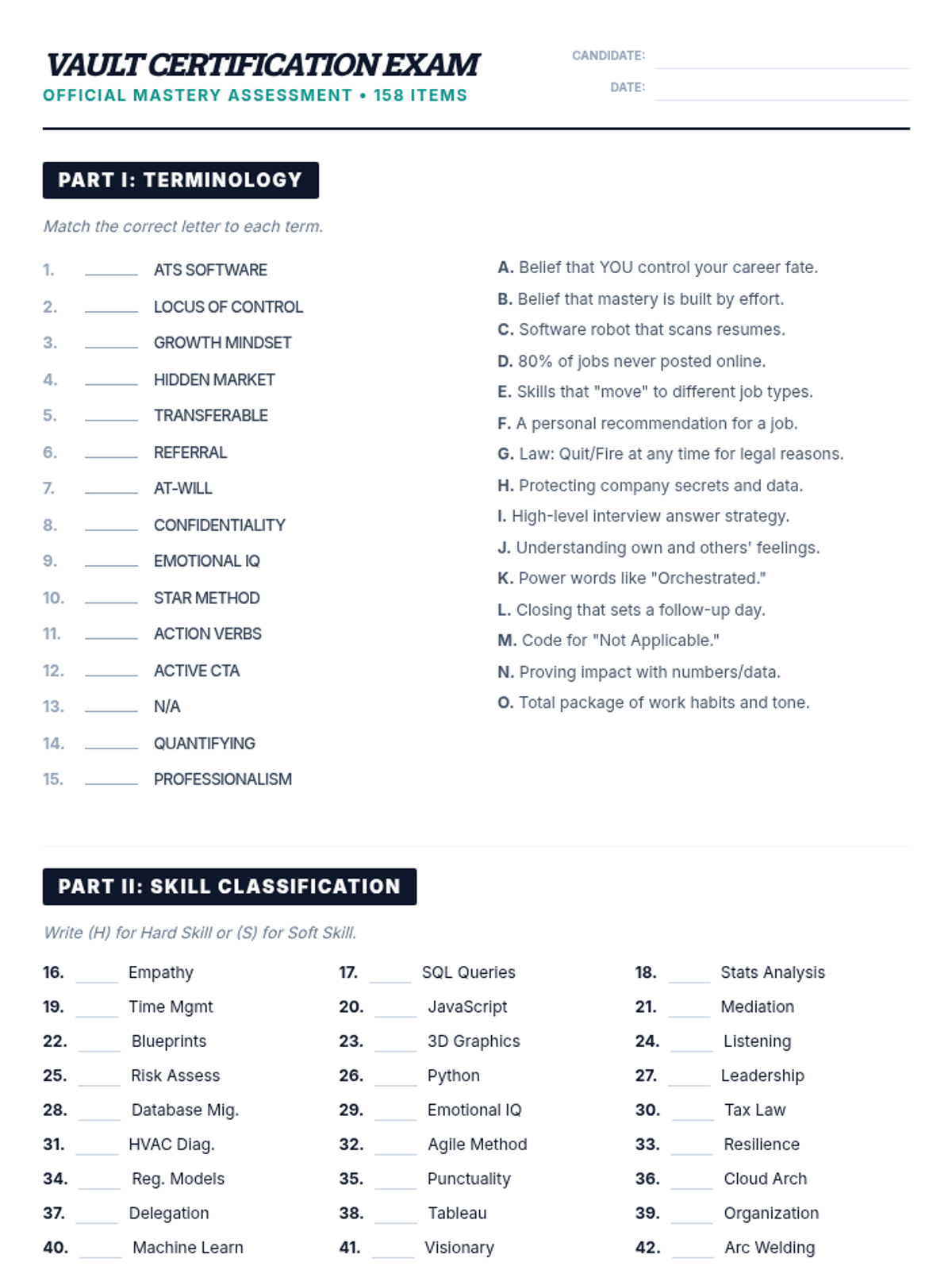
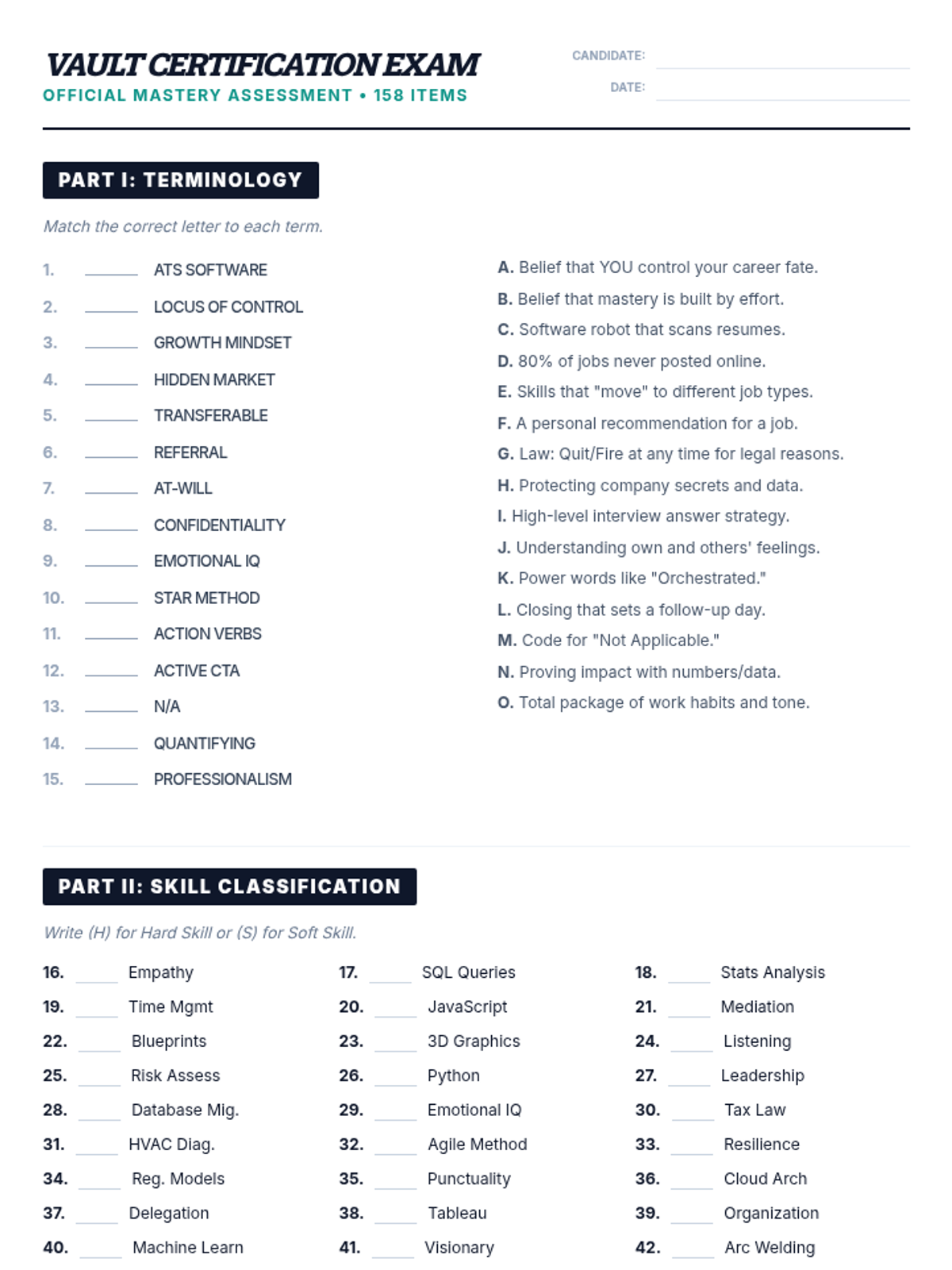
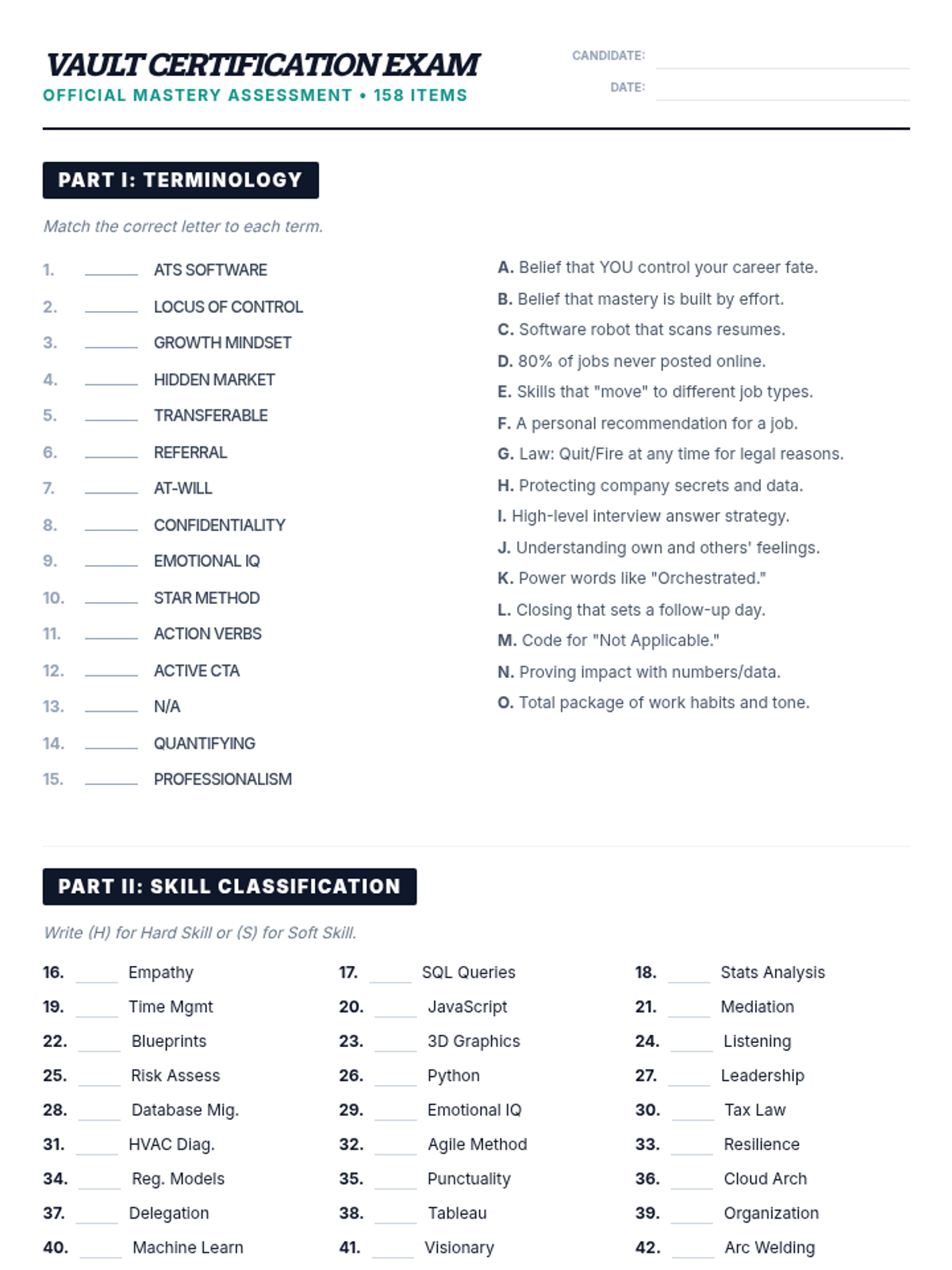
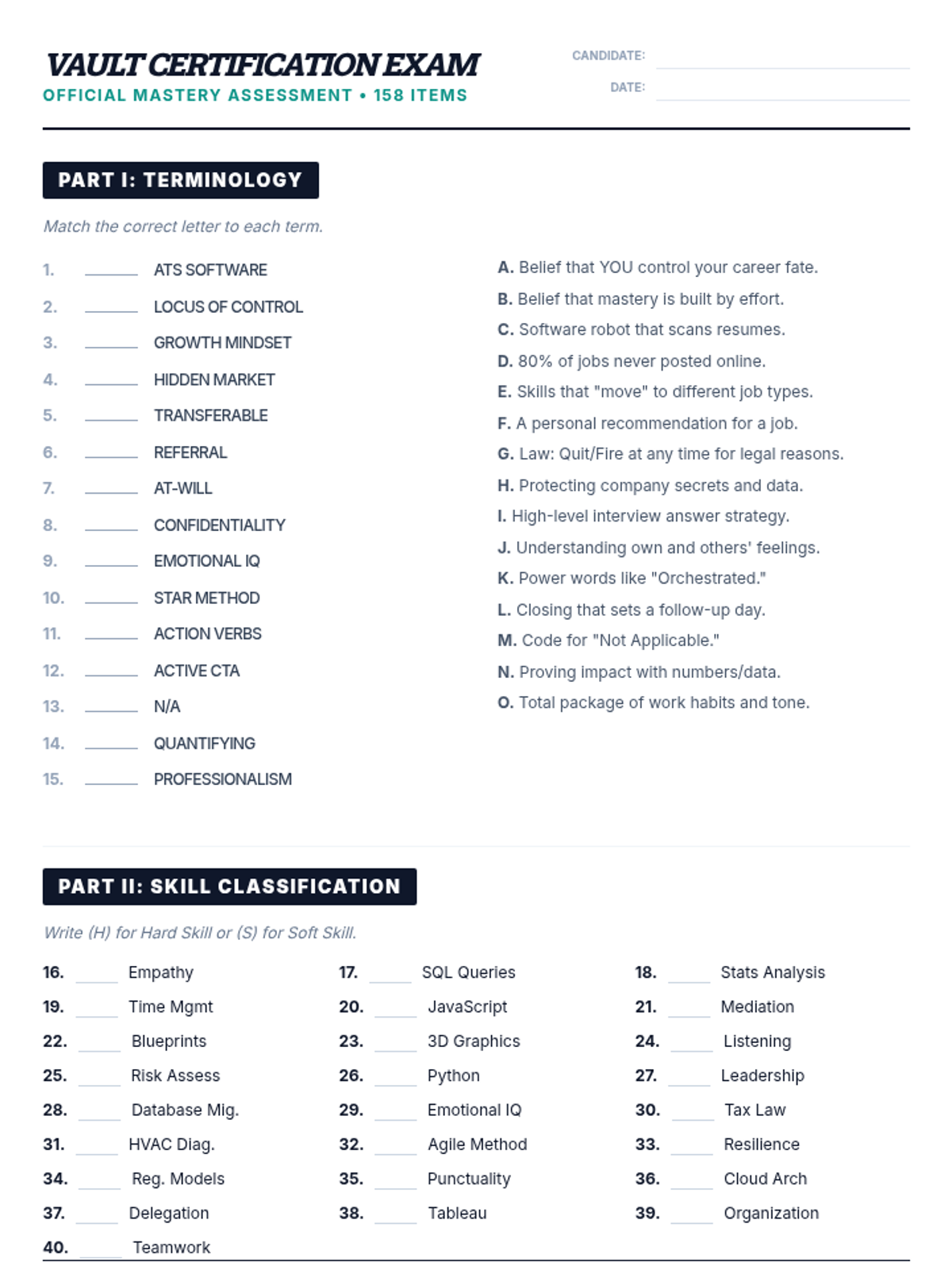
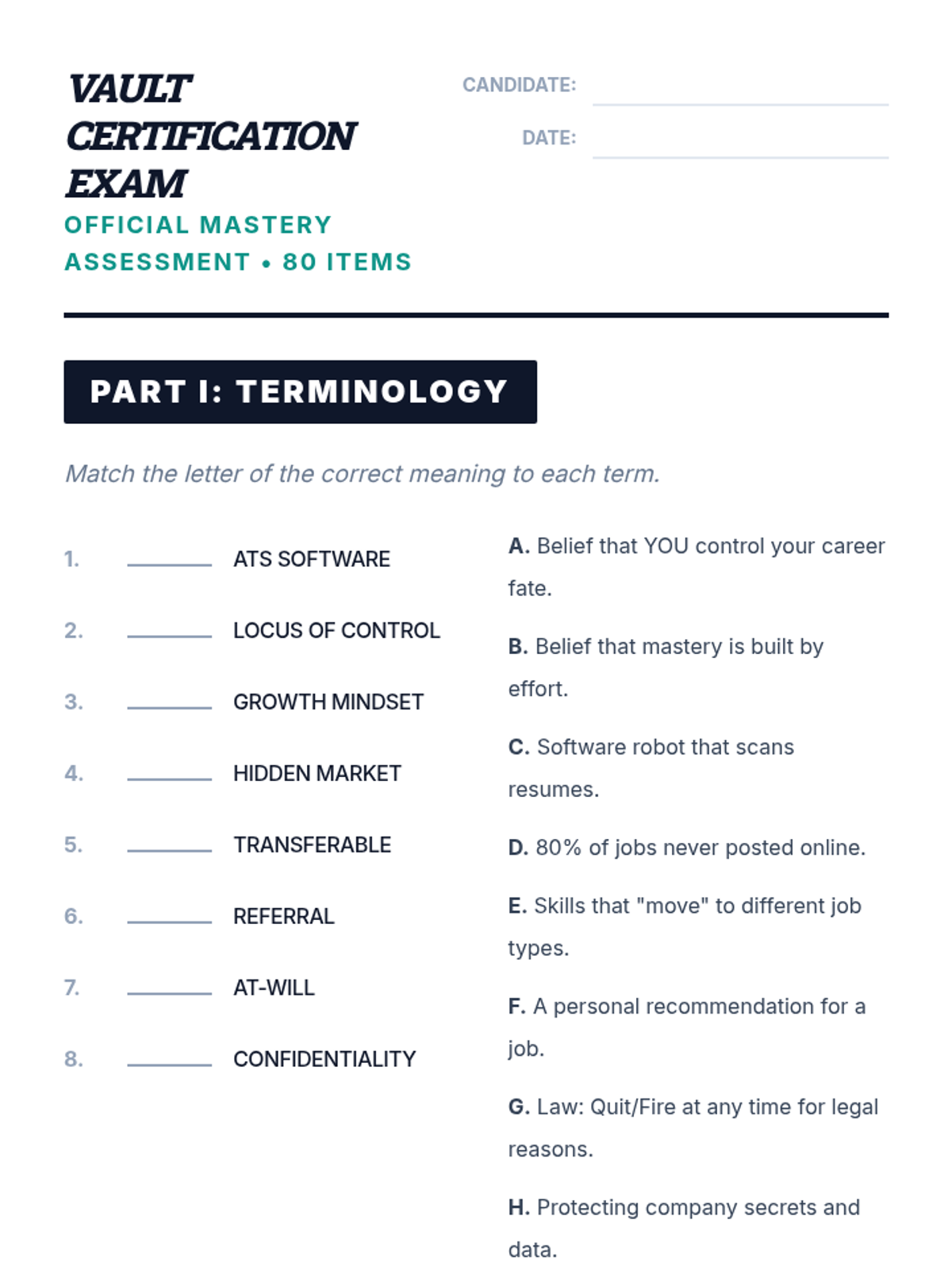
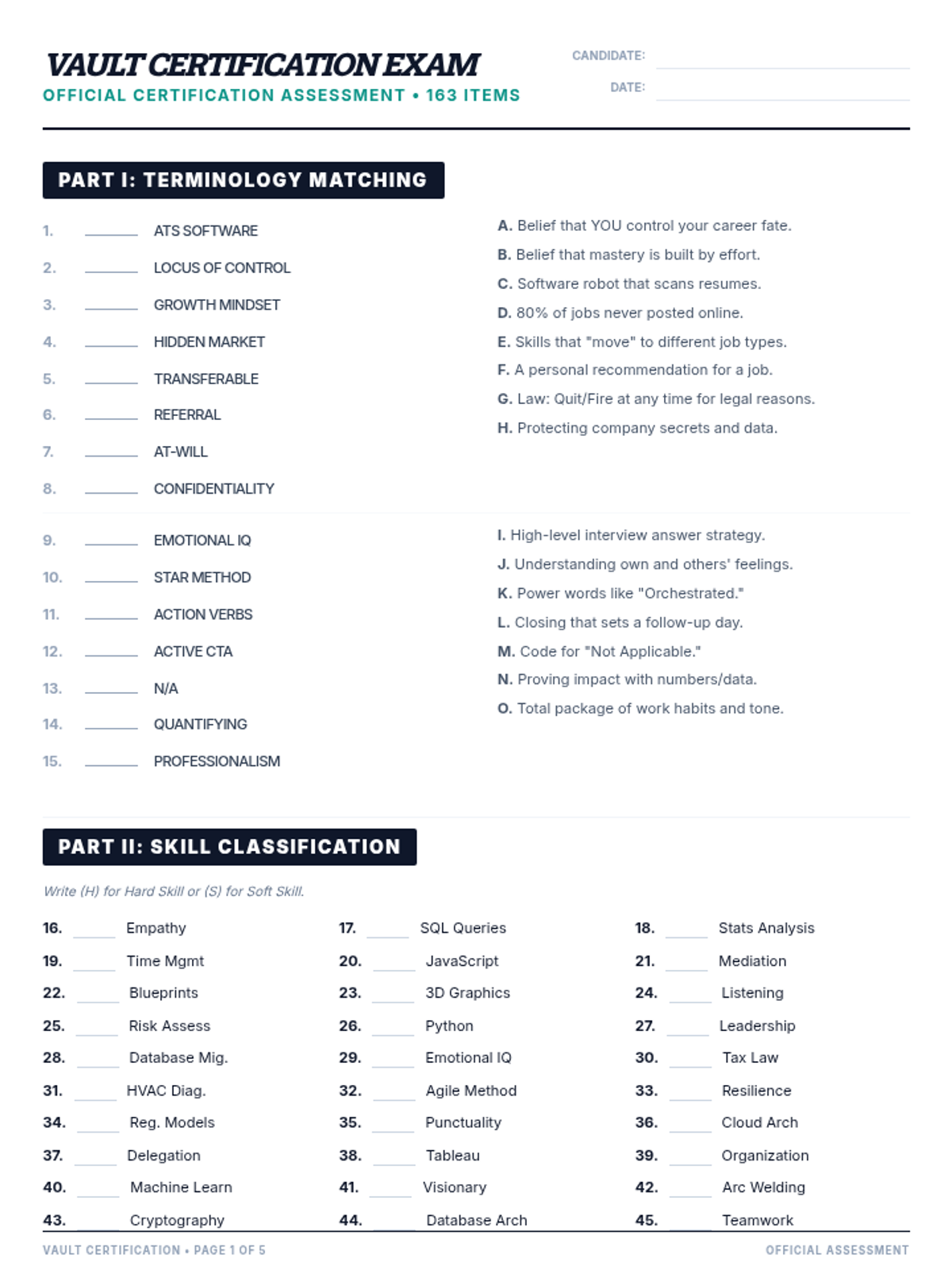
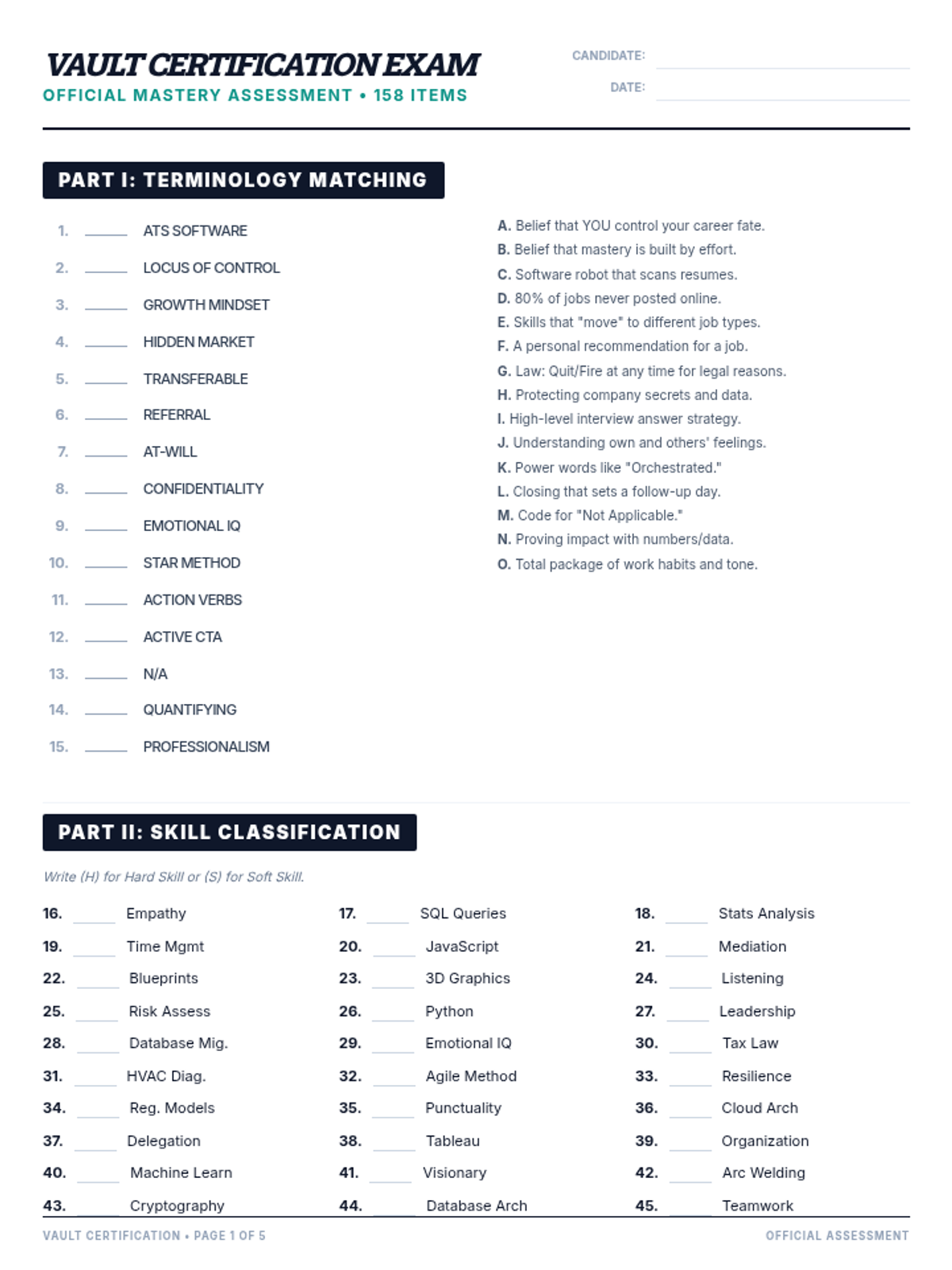
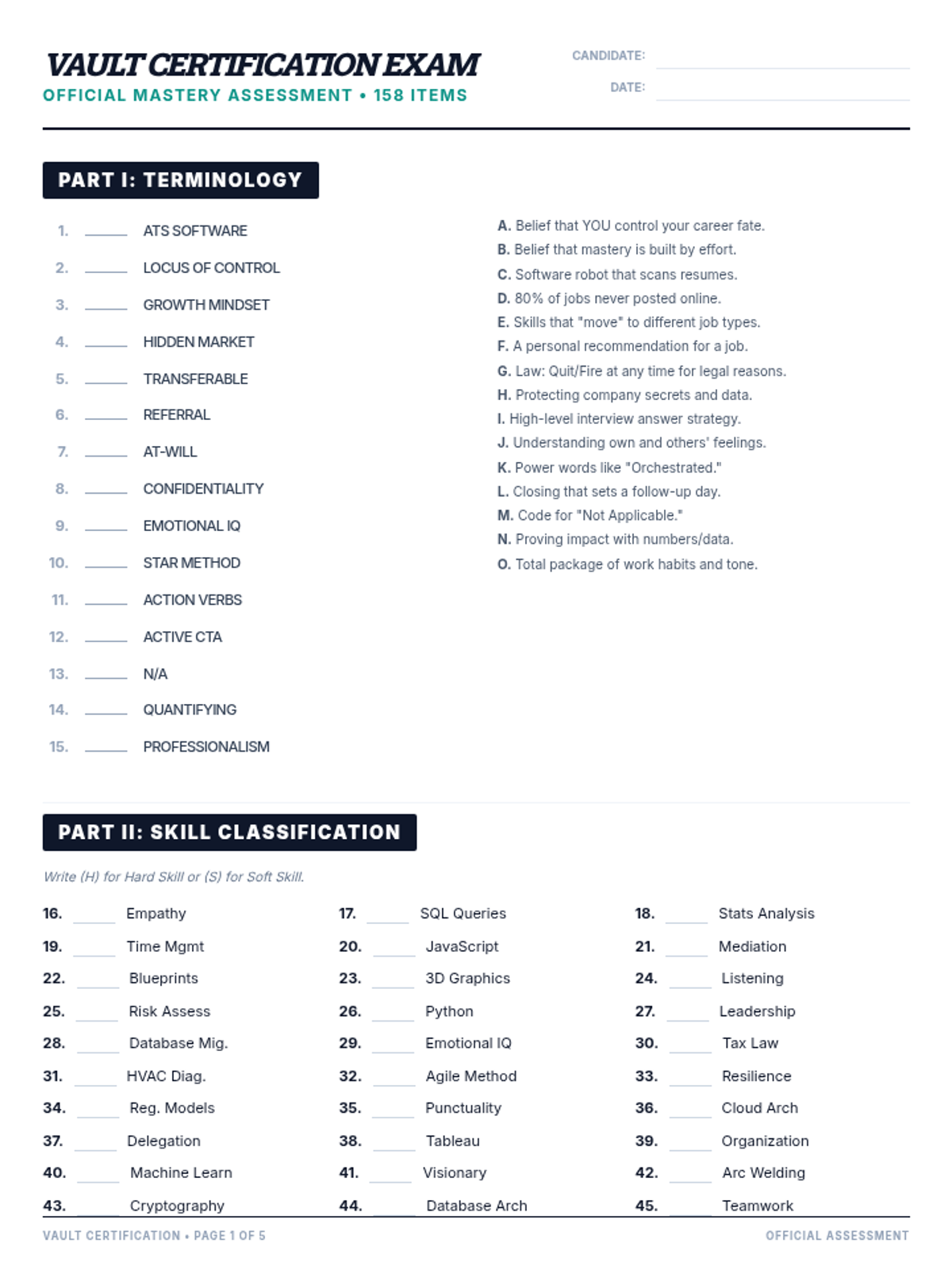
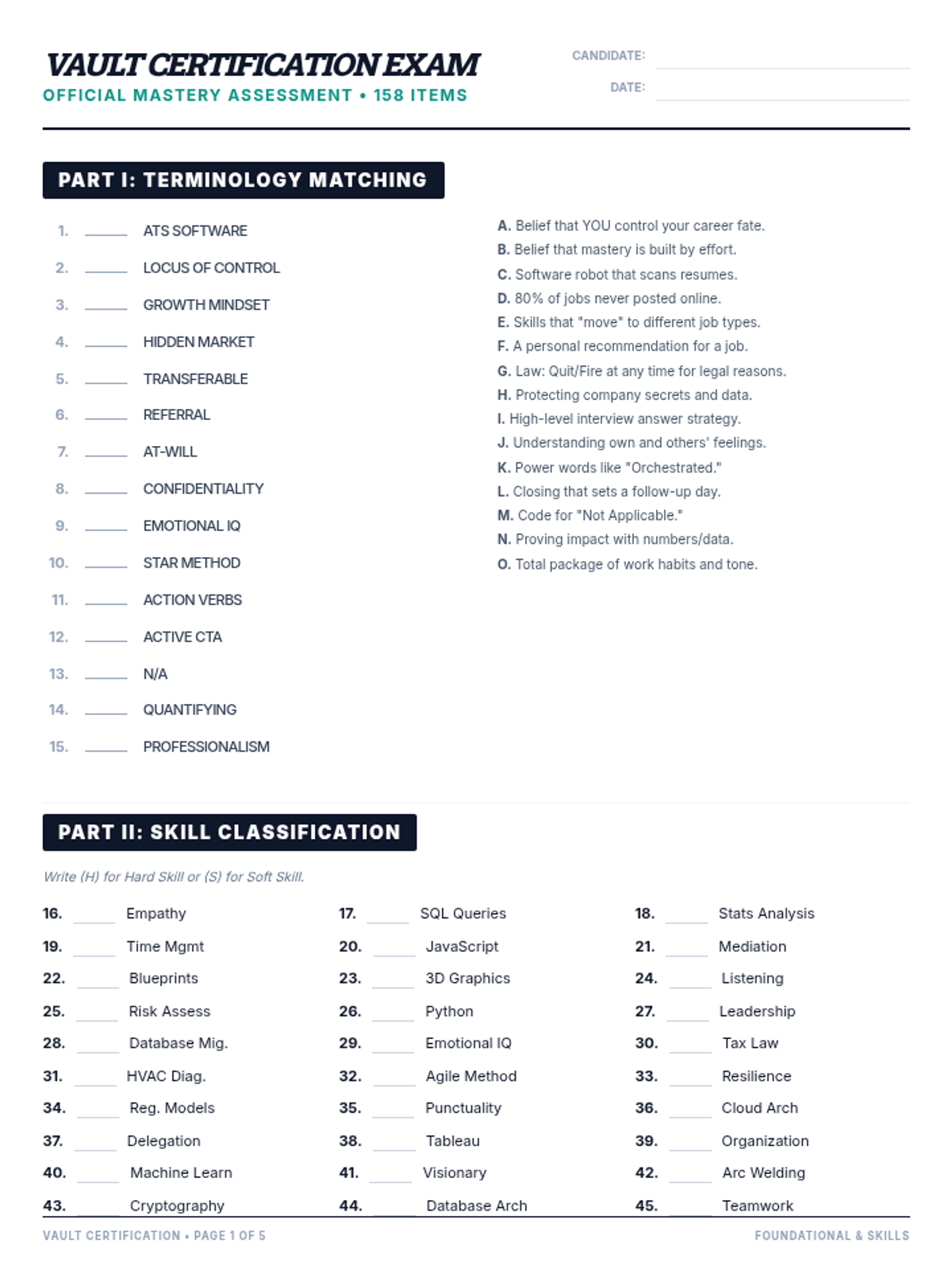
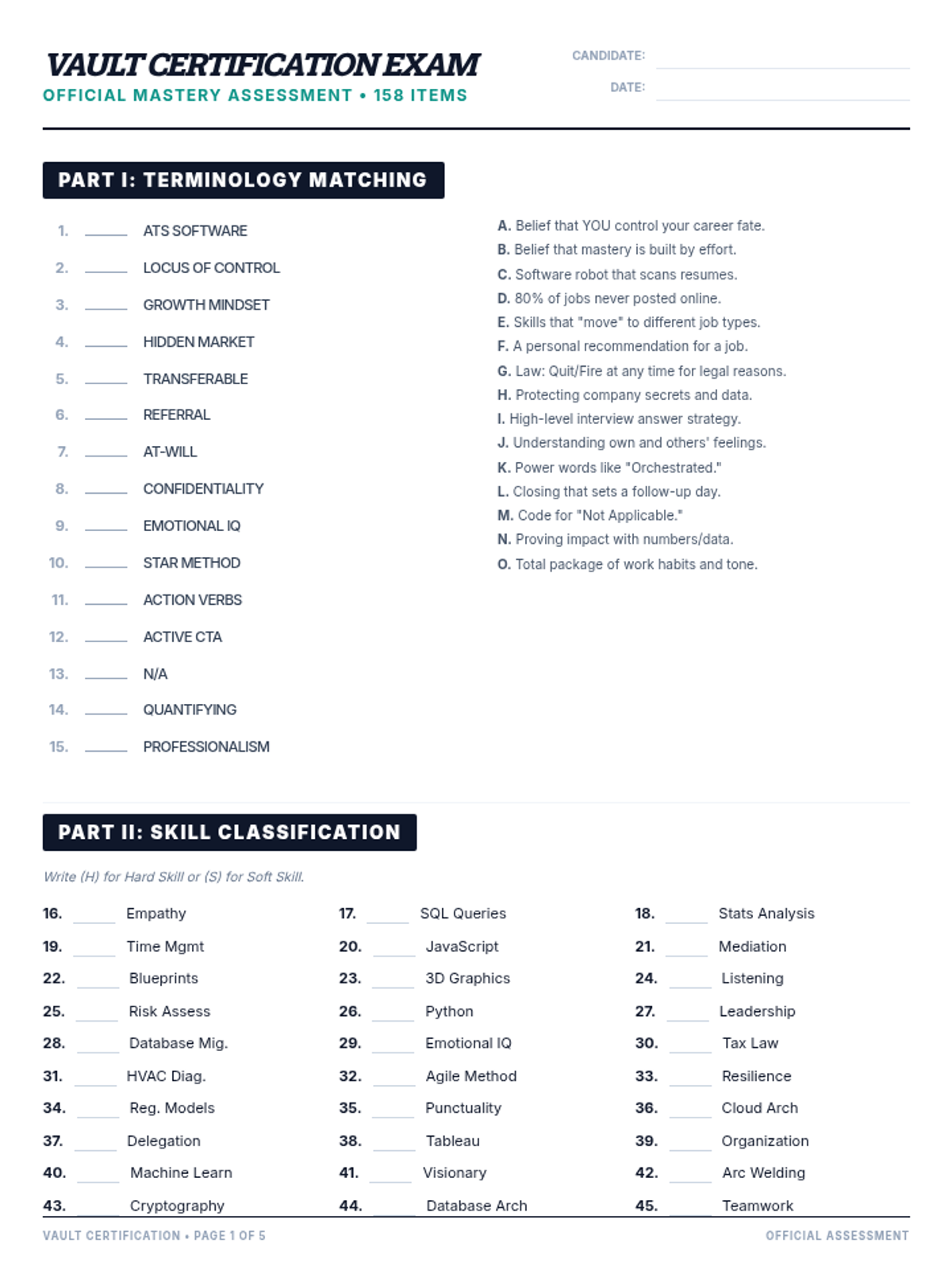
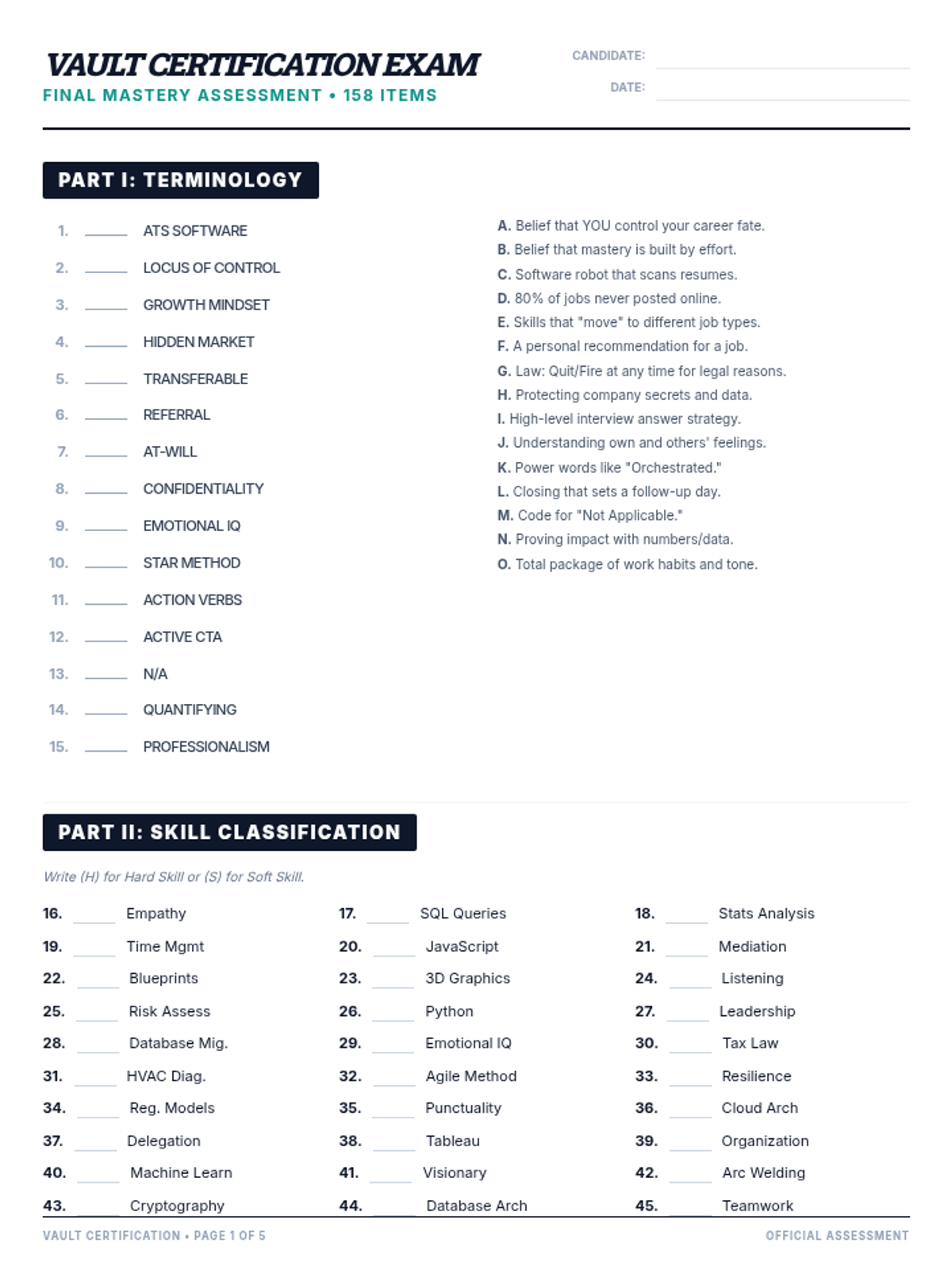
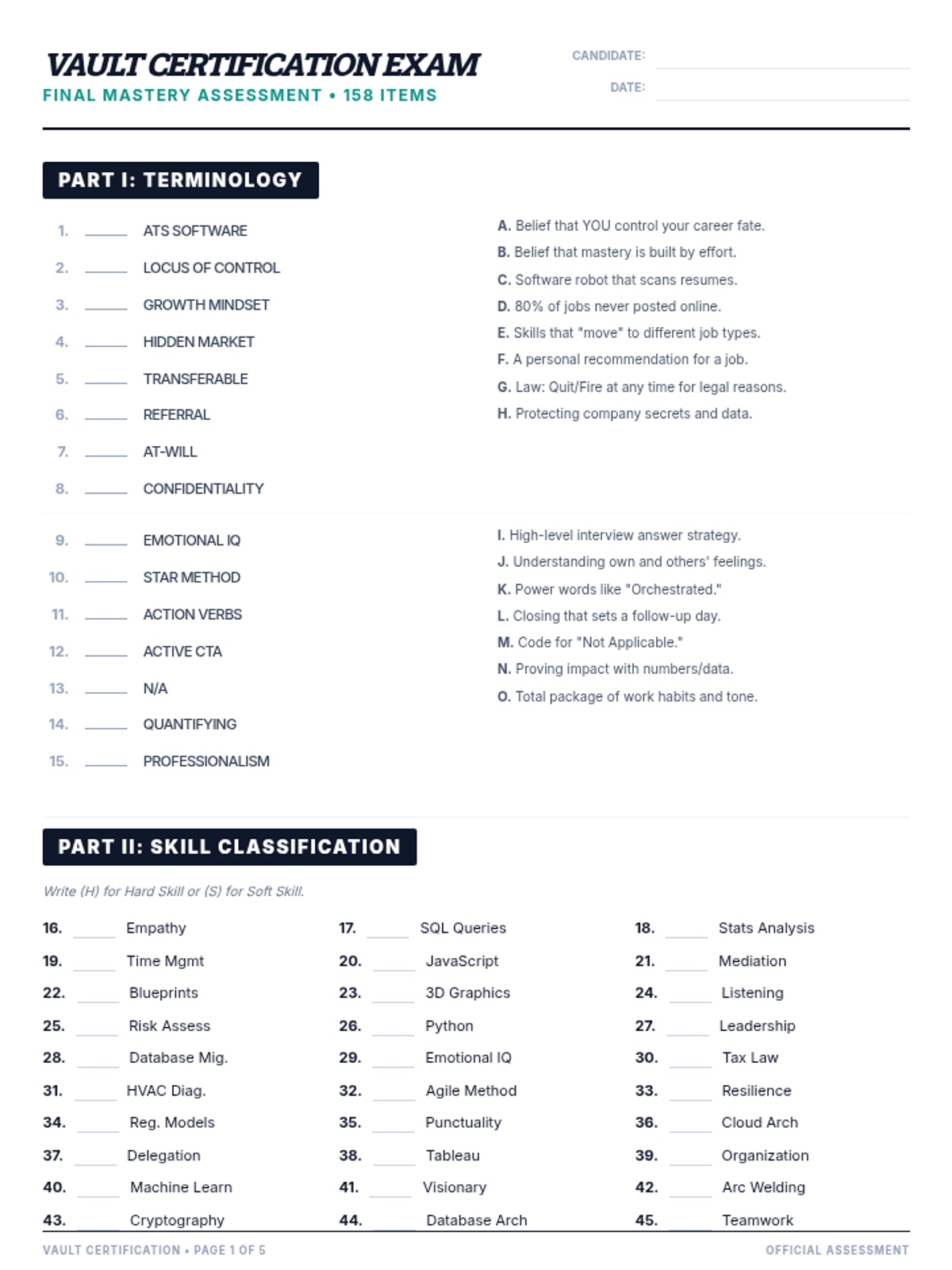
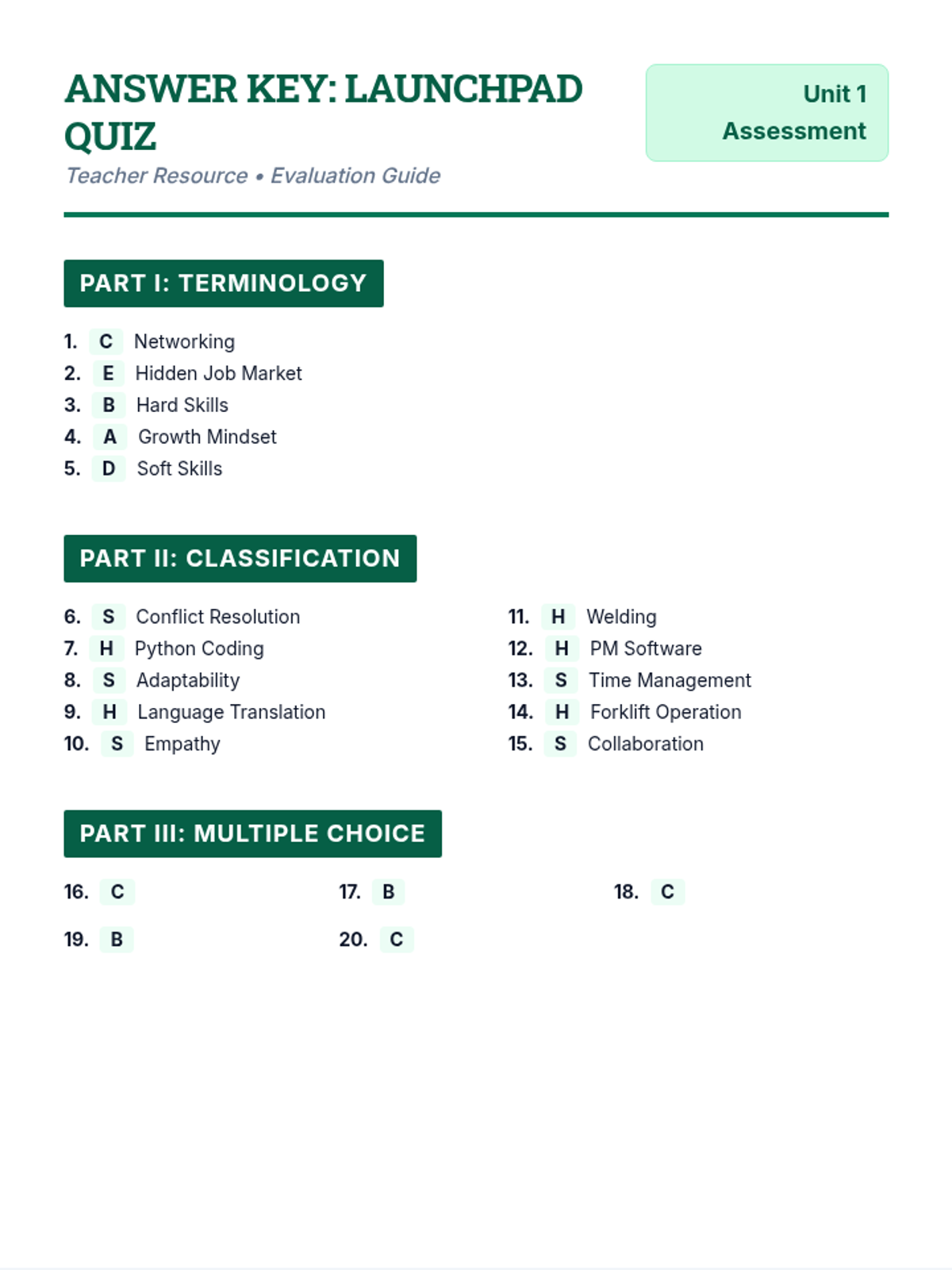
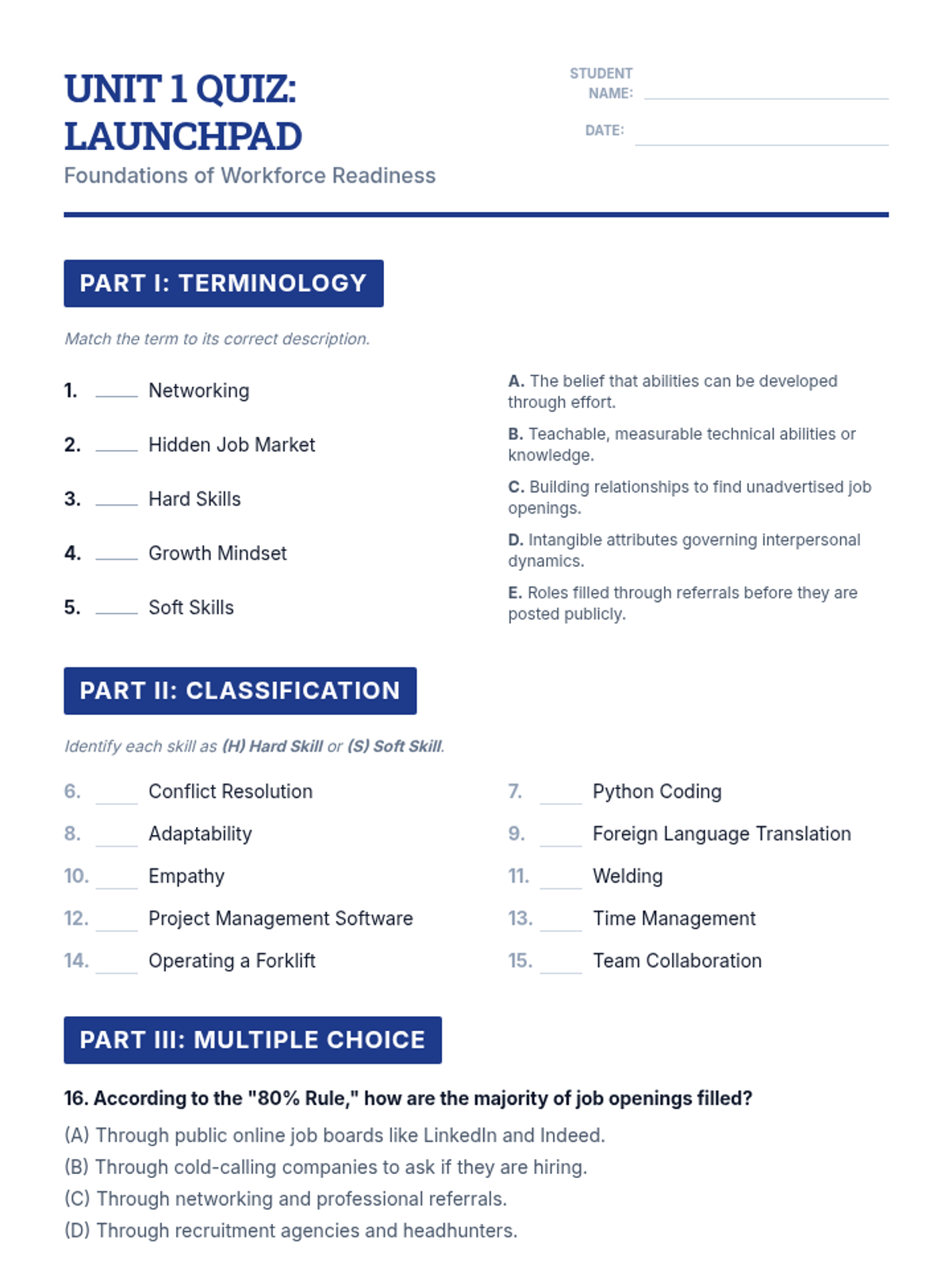
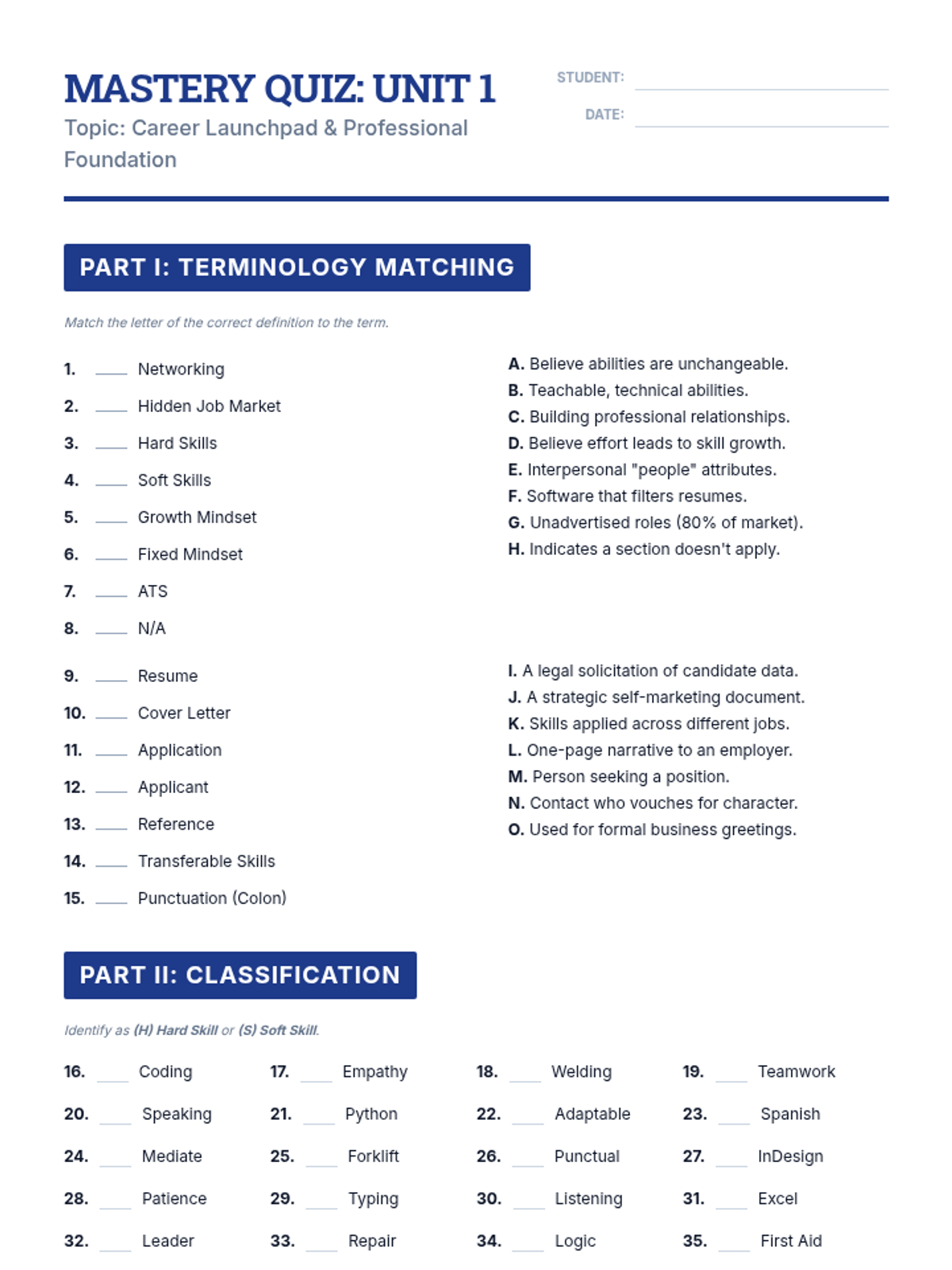
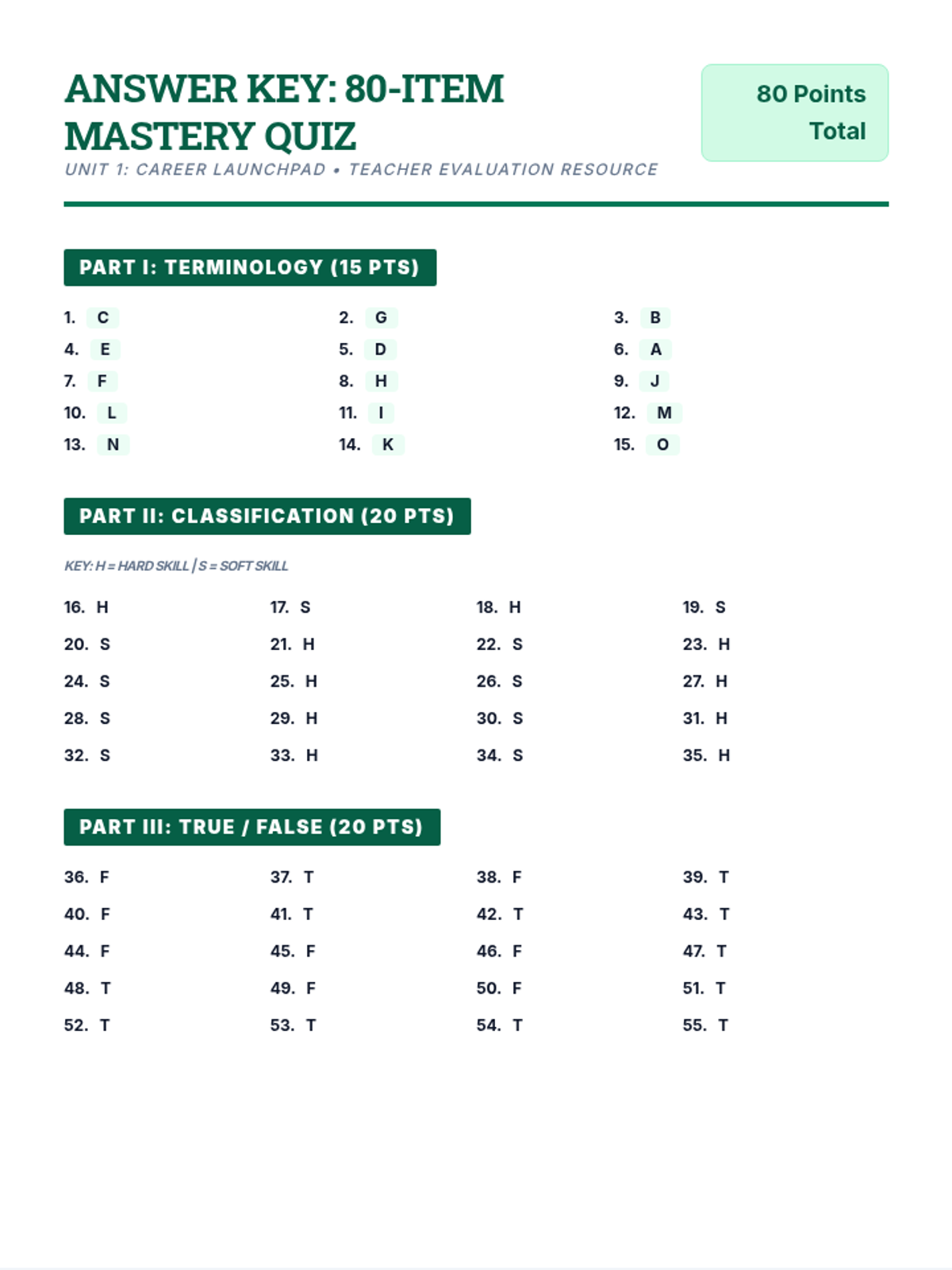
A final assessment module to evaluate student understanding of career readiness concepts and application proficiency.
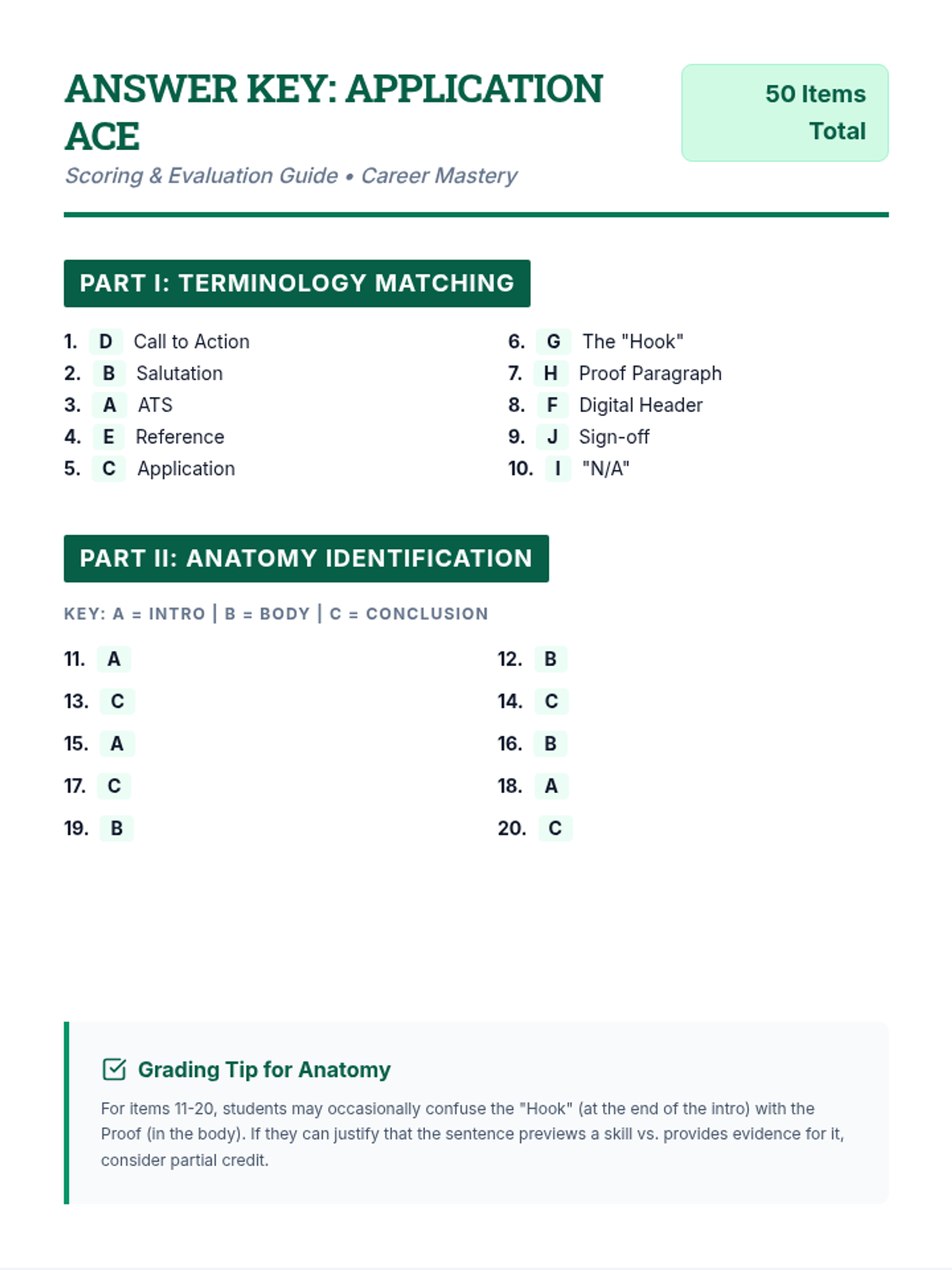
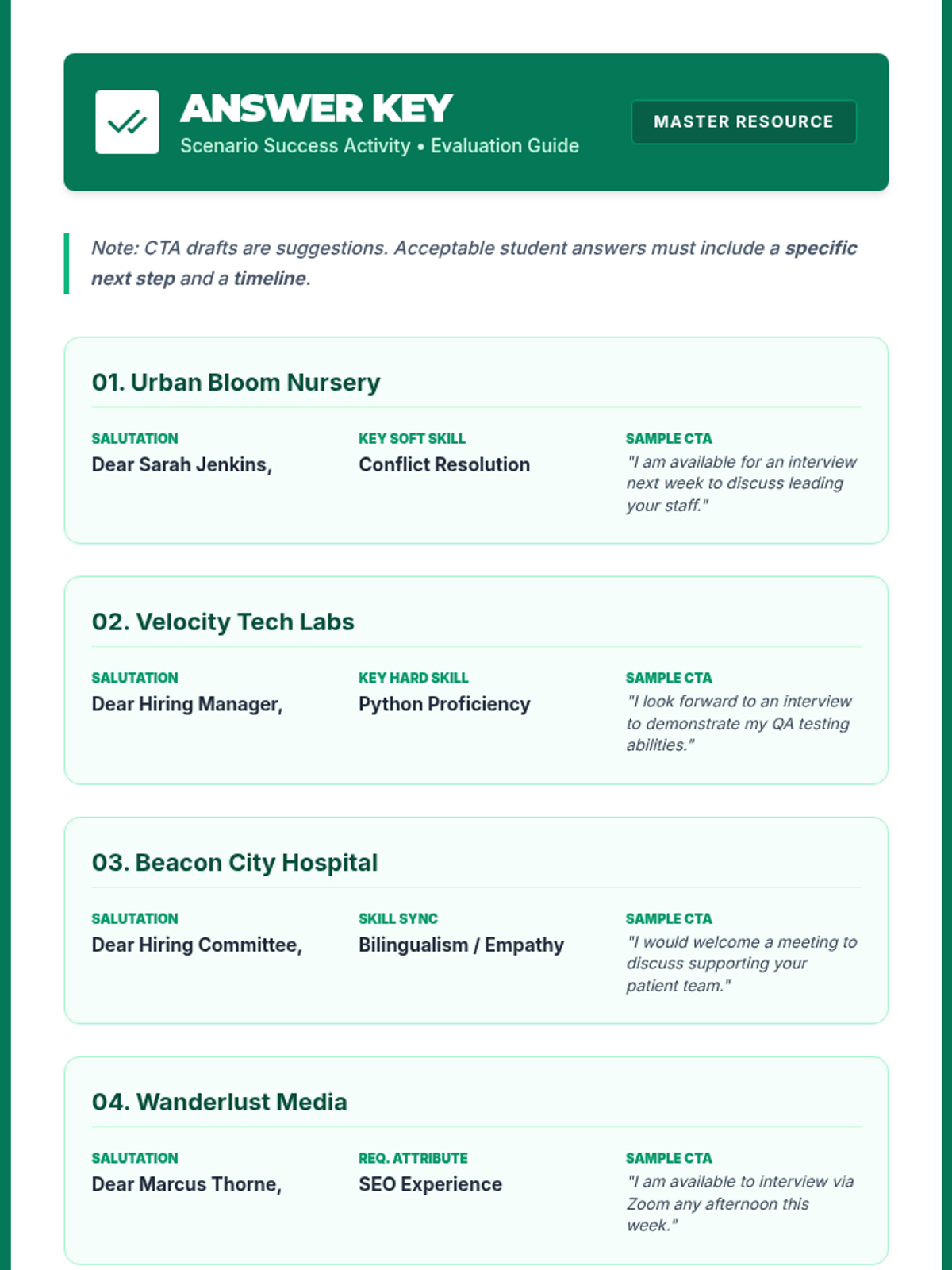
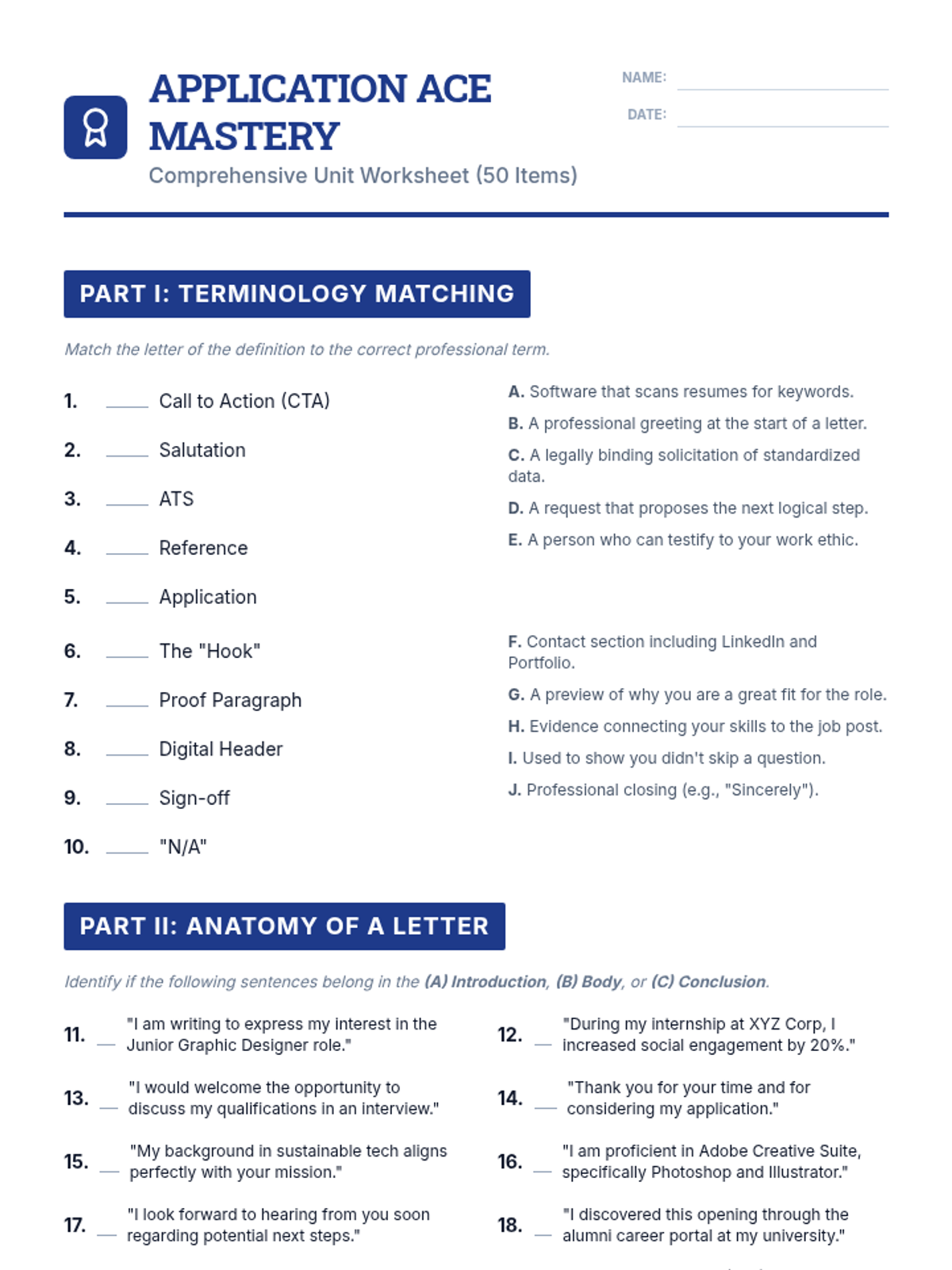
A deep dive into the mechanics of job applications, cover letter construction, and managing professional references.
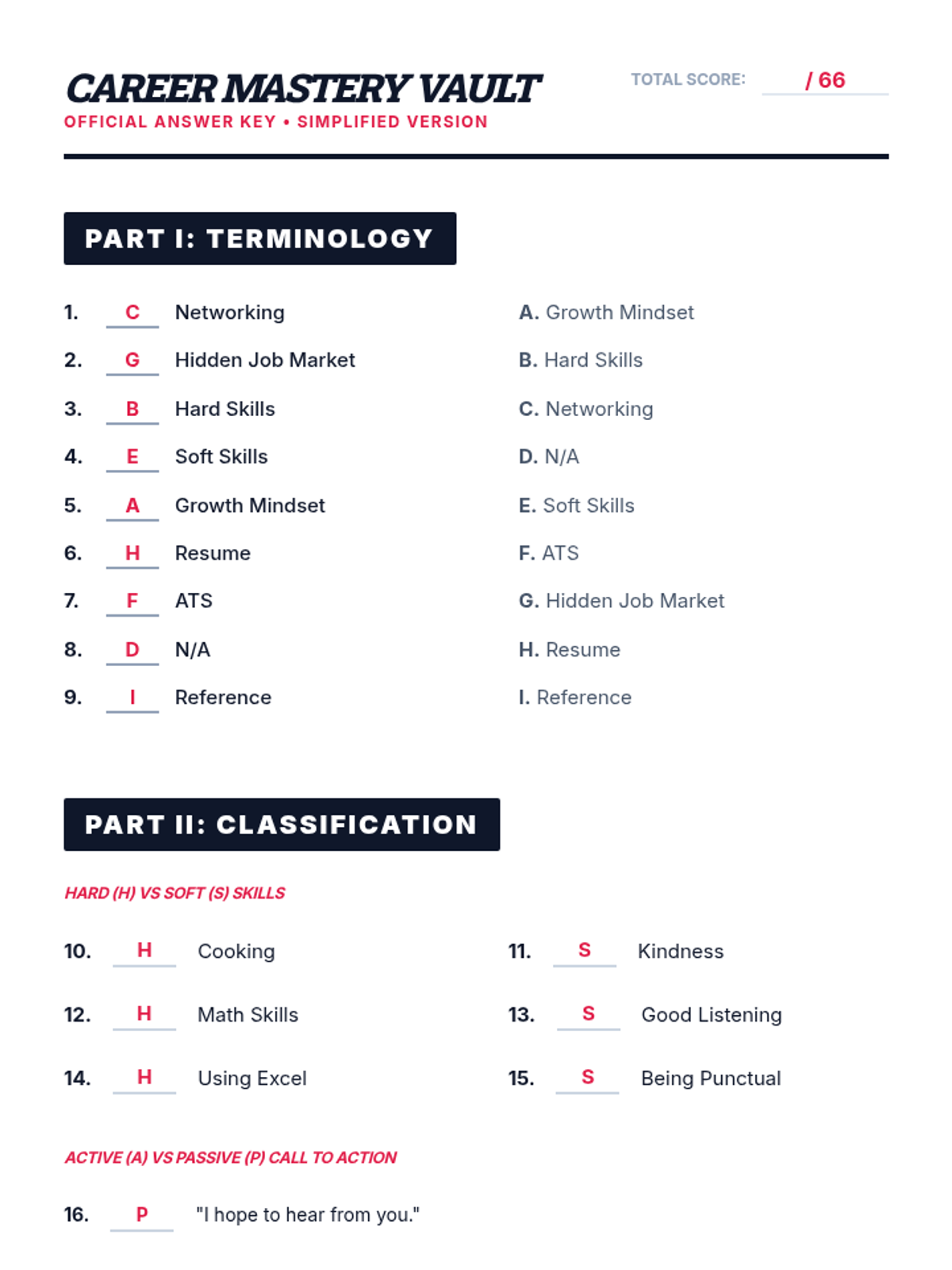
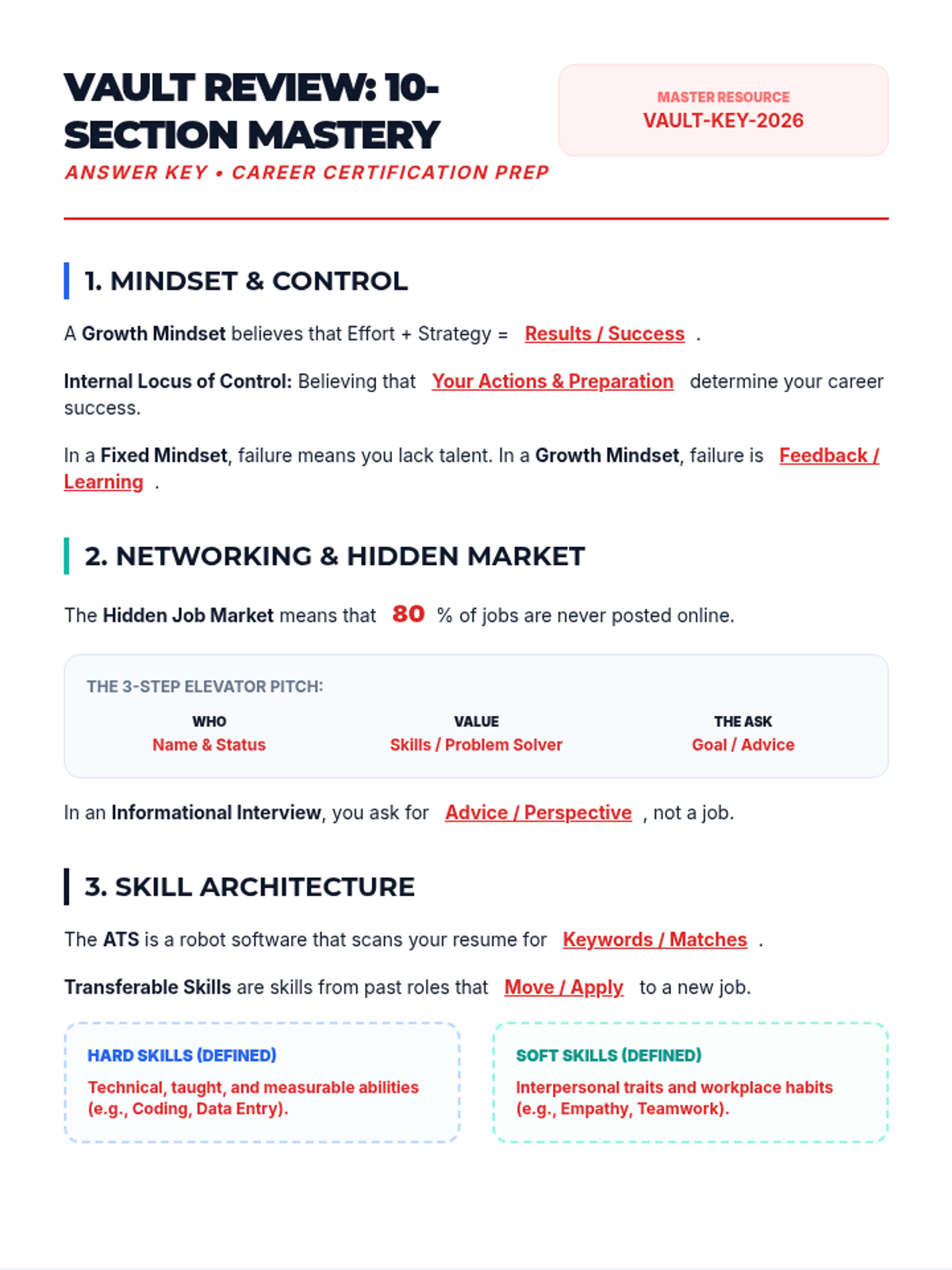
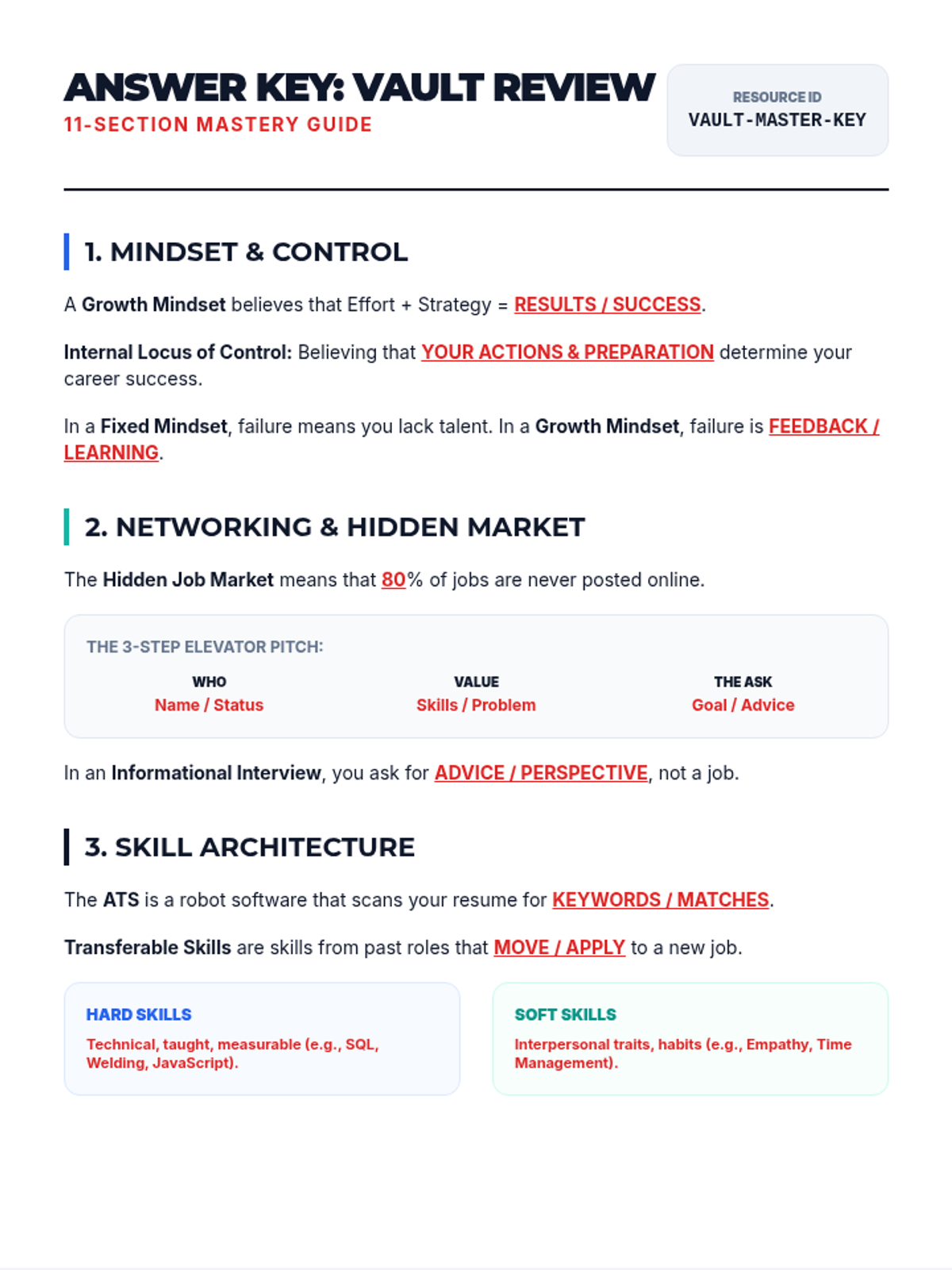
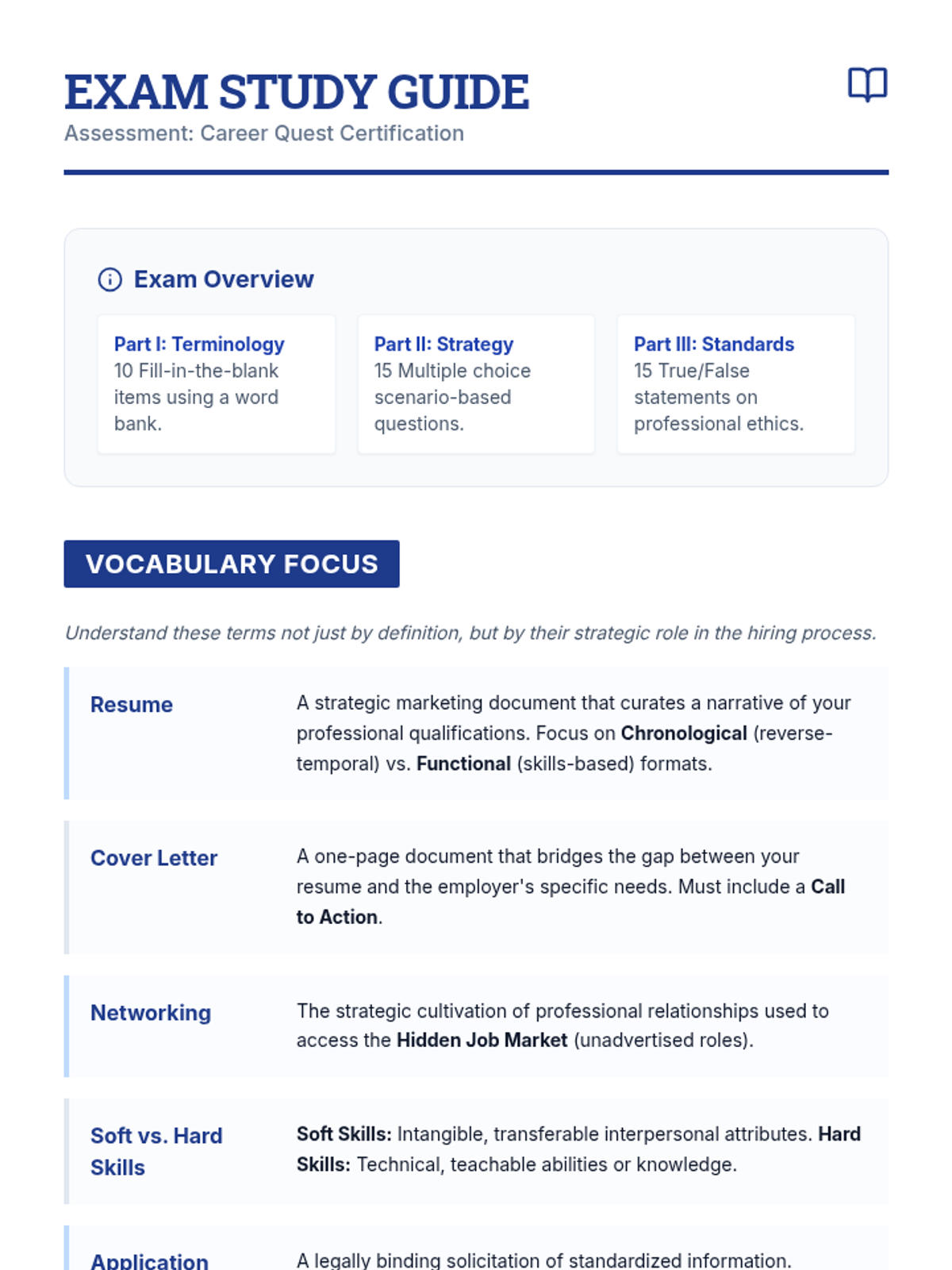
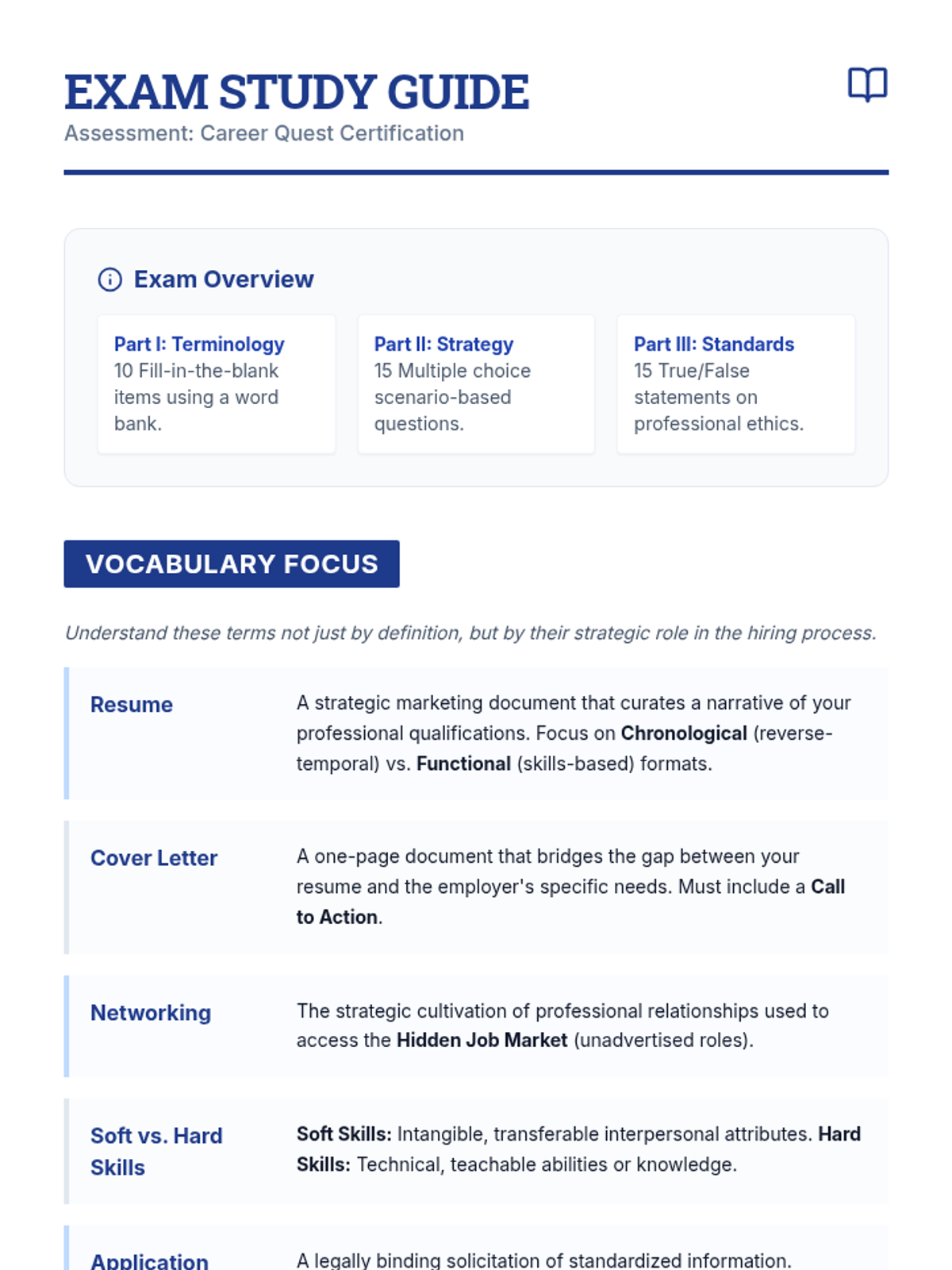
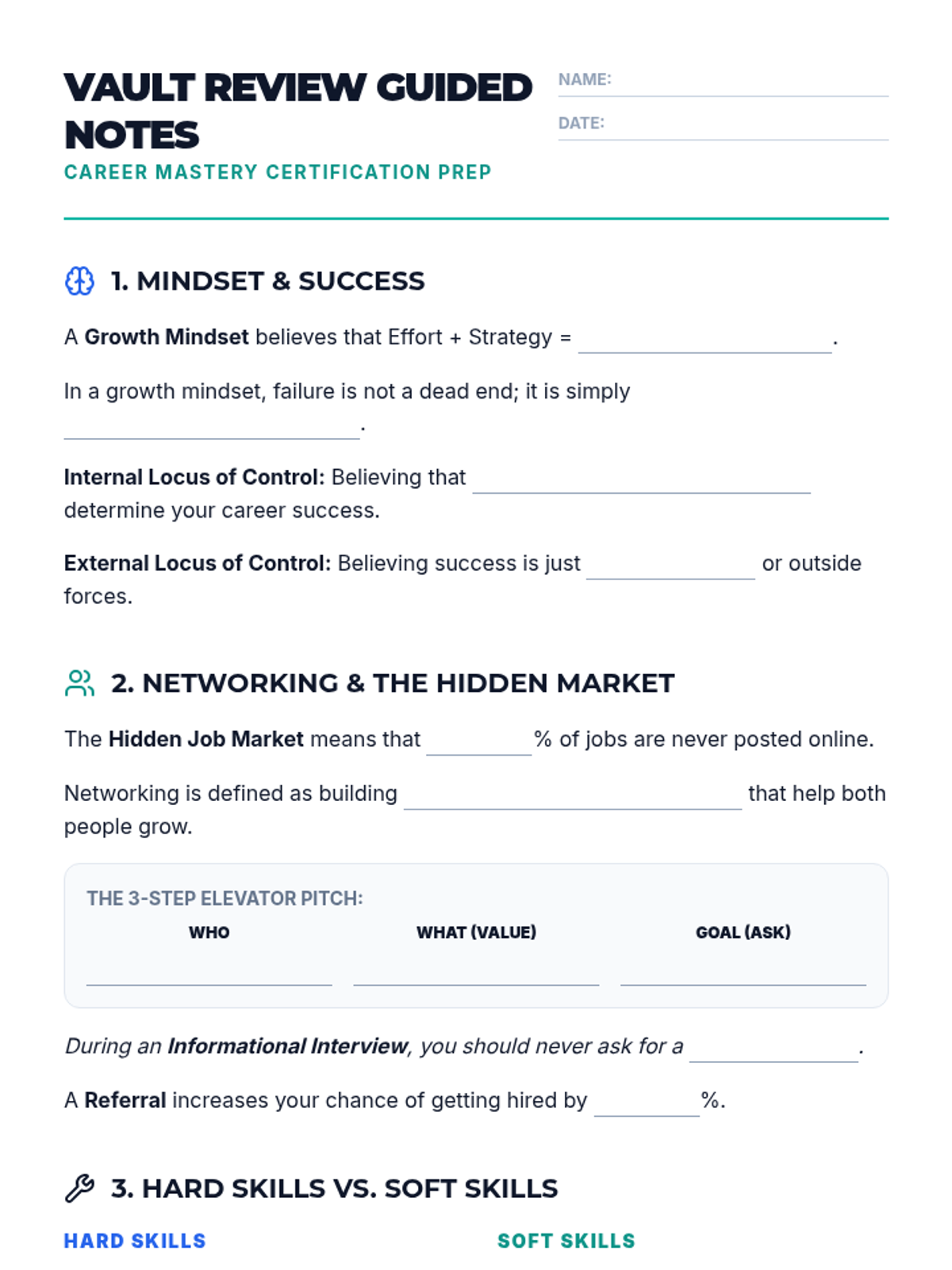
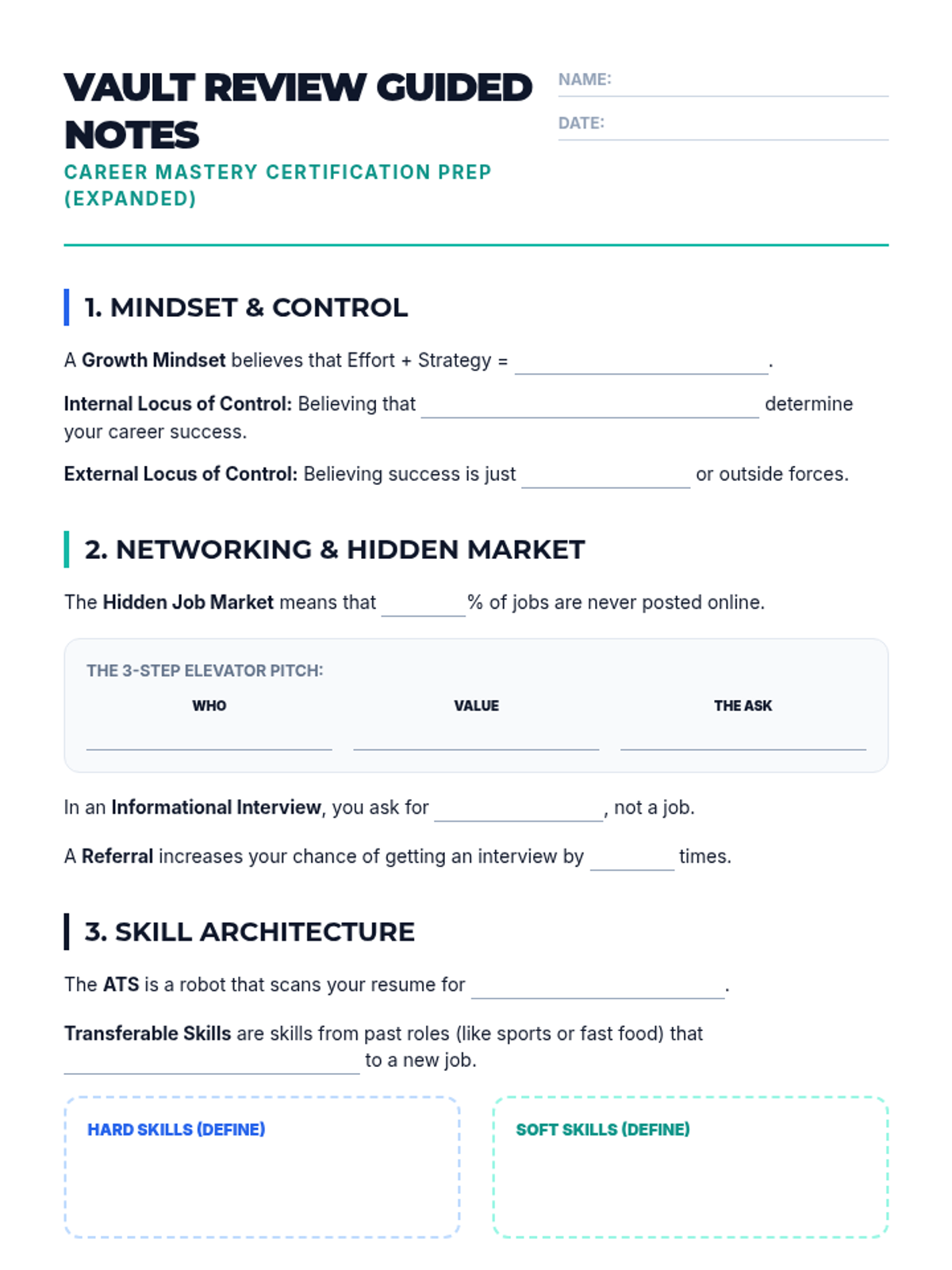
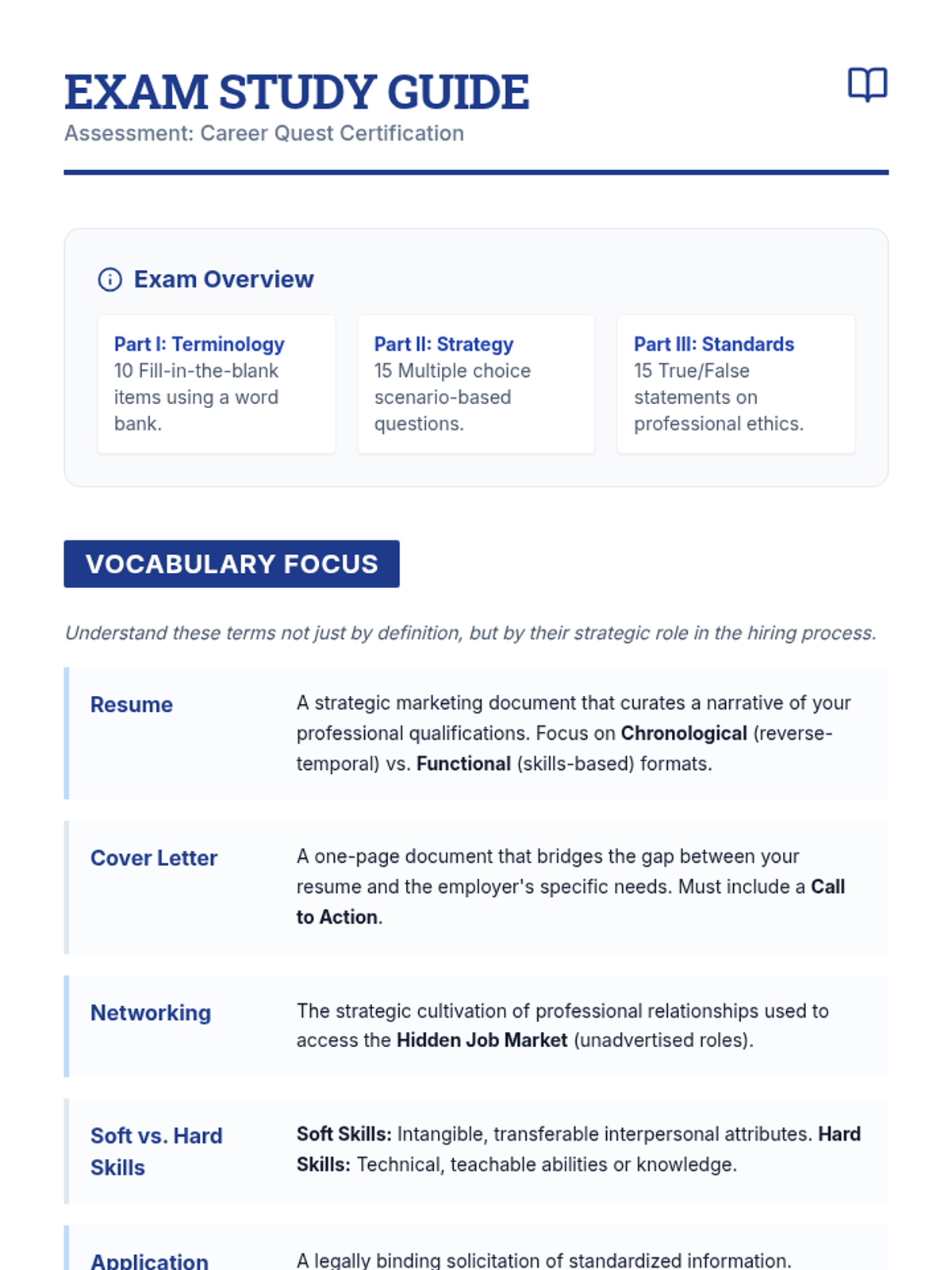
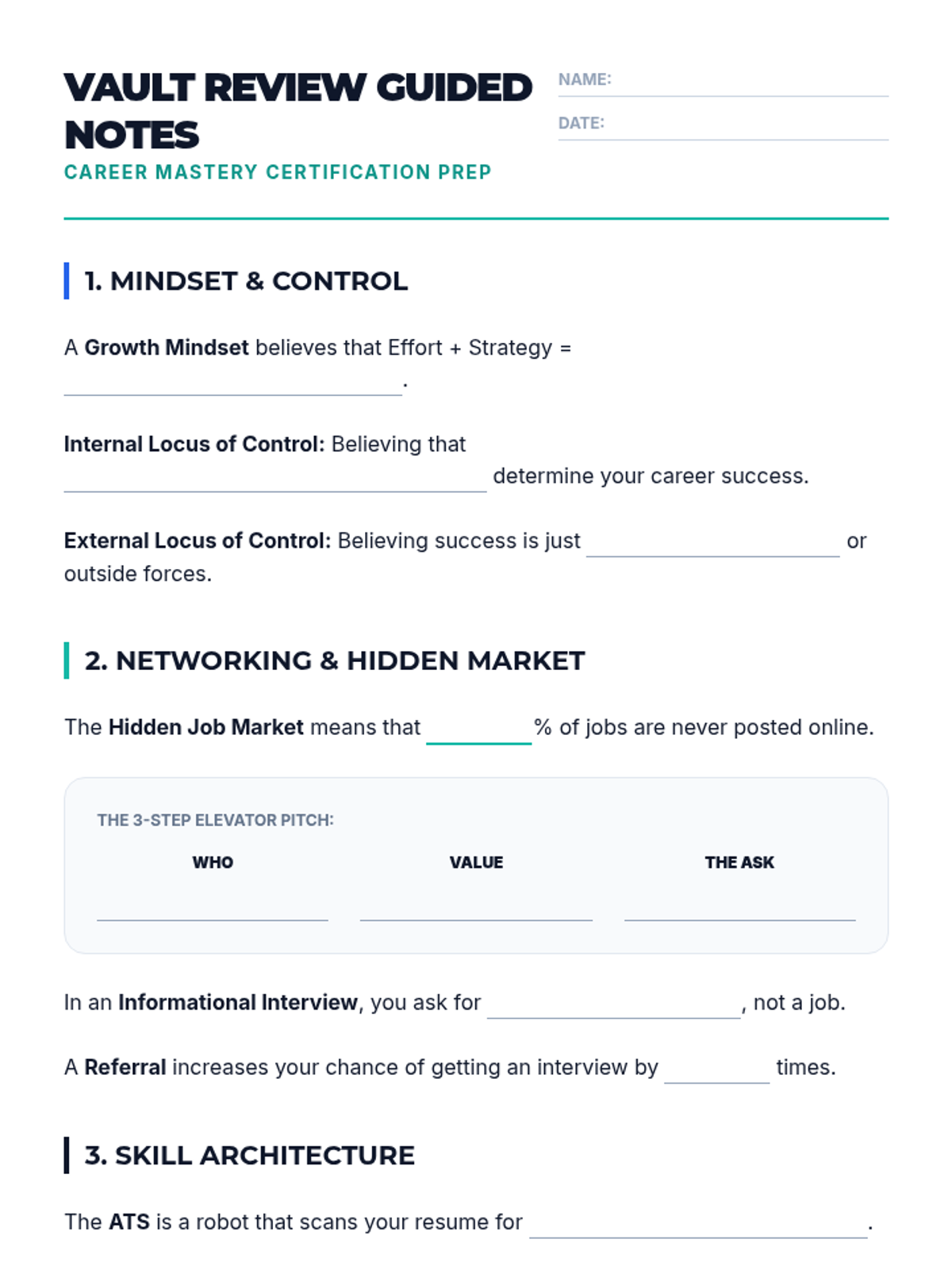
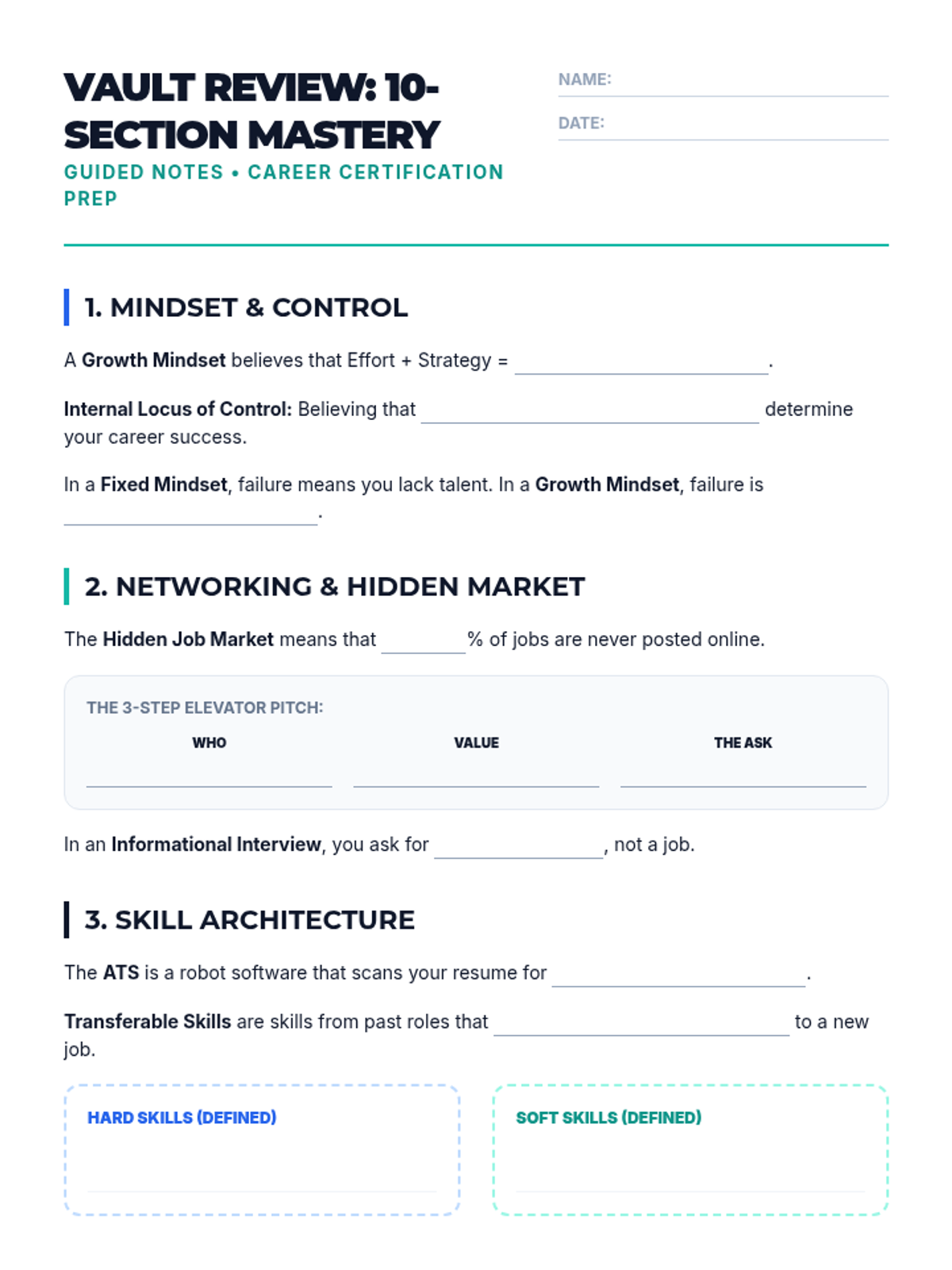
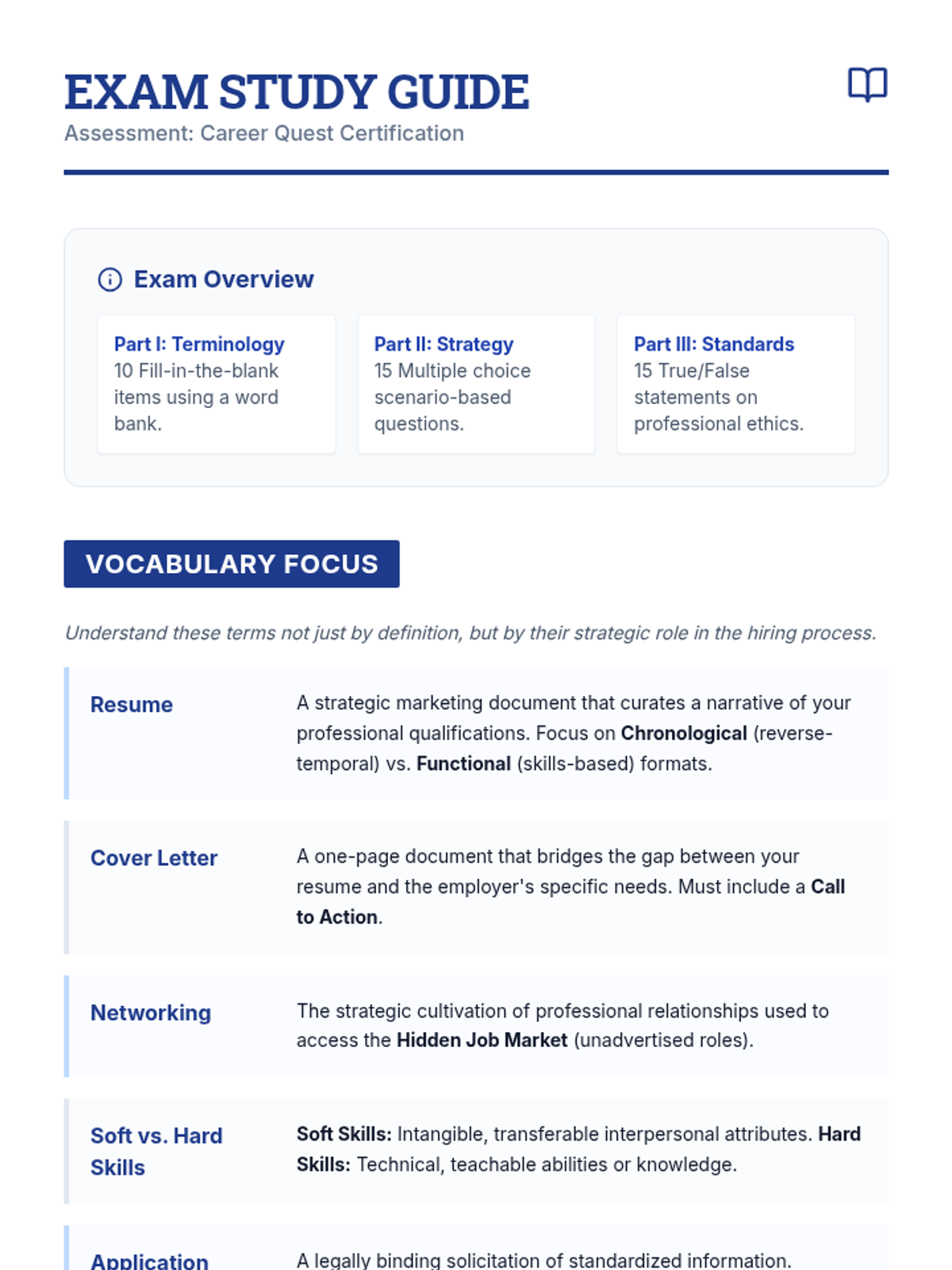
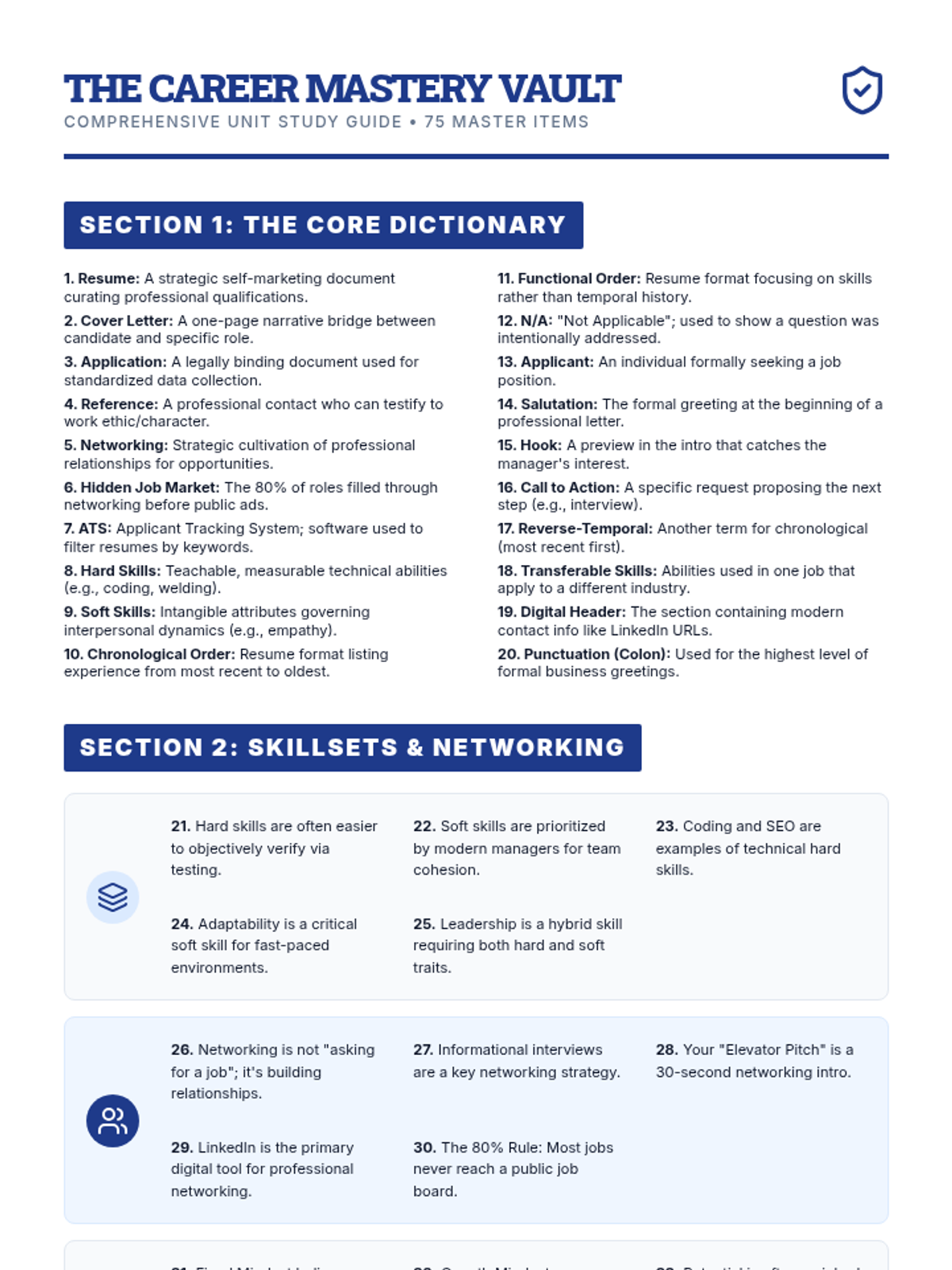
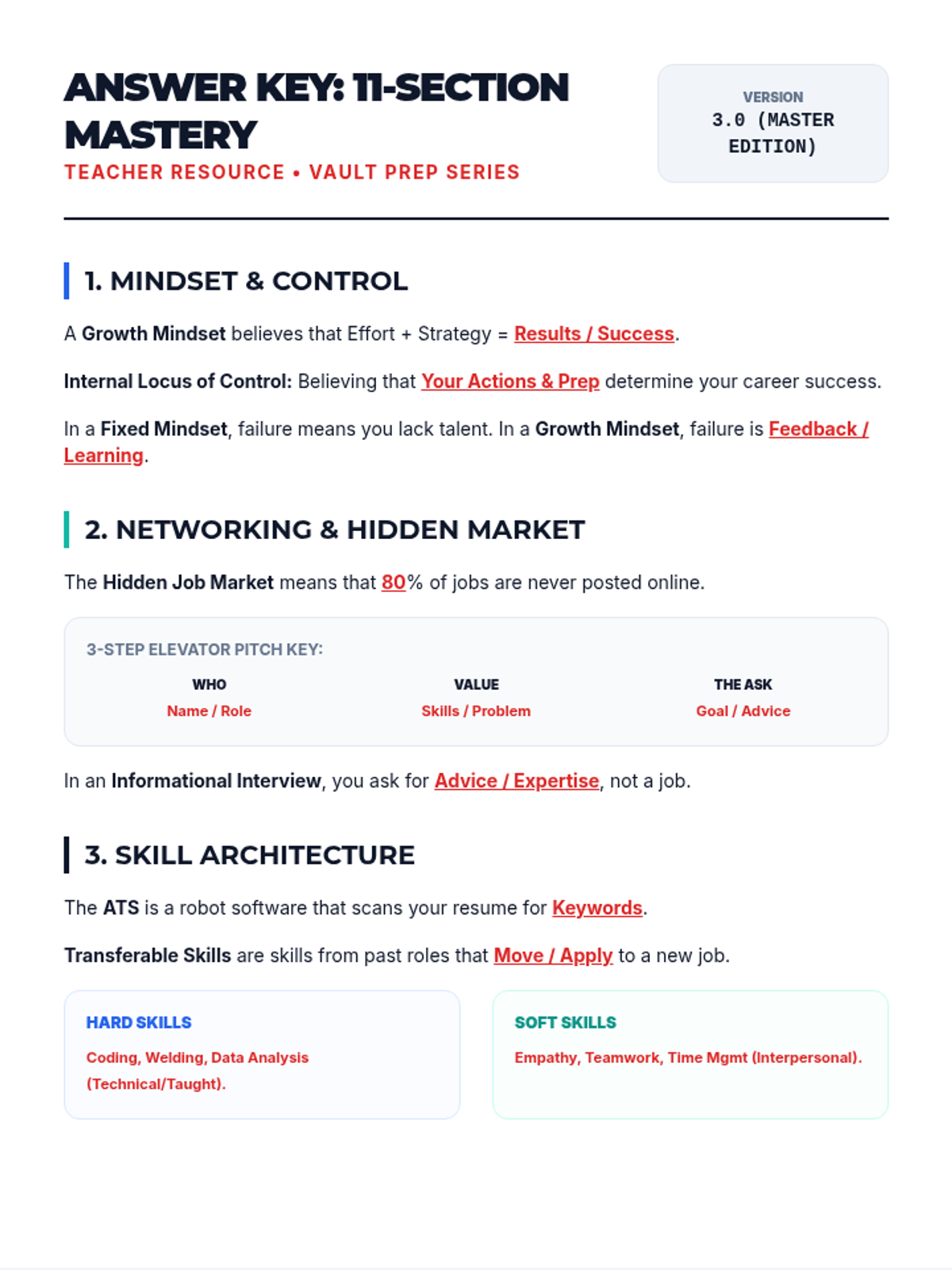
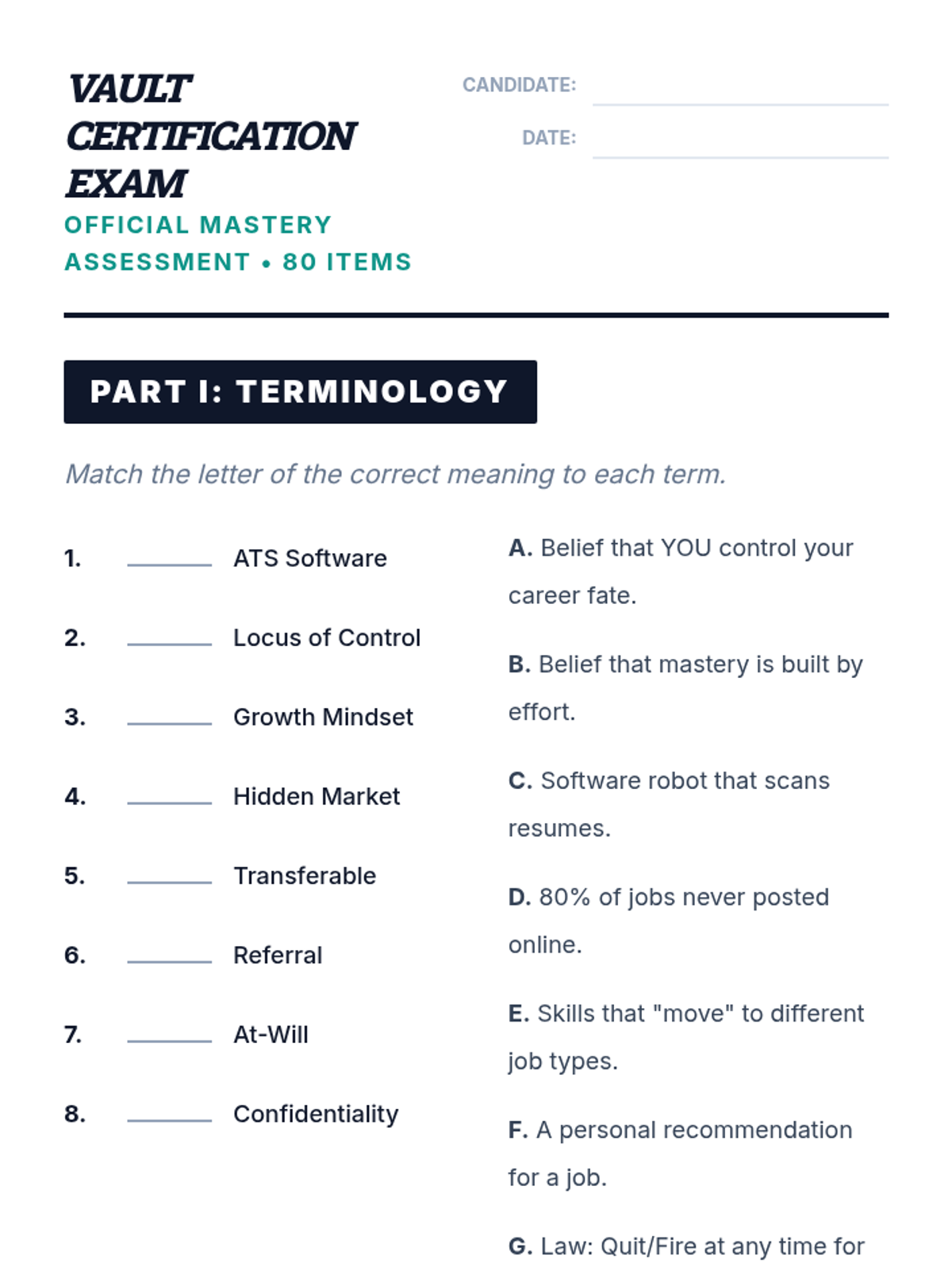
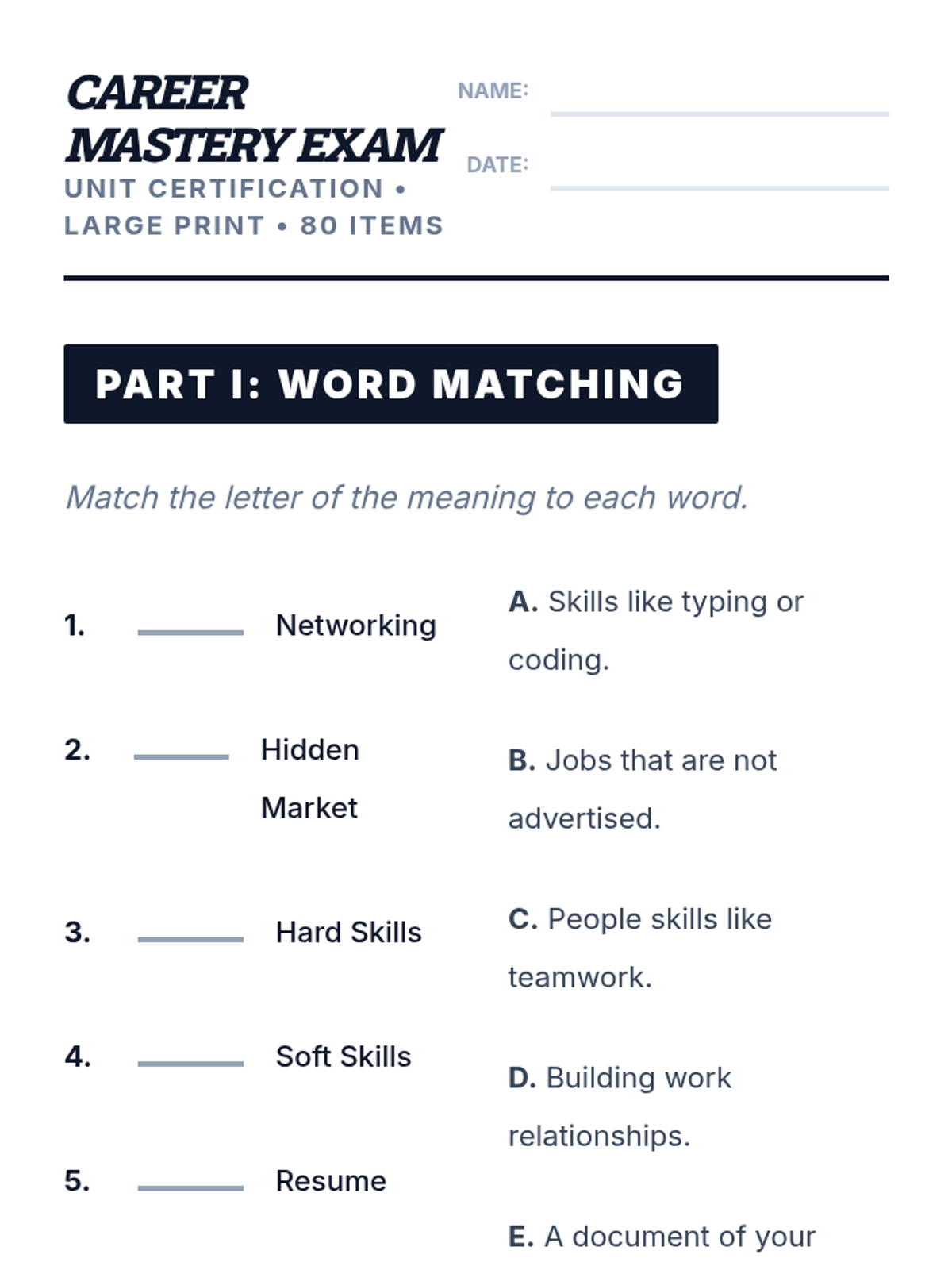
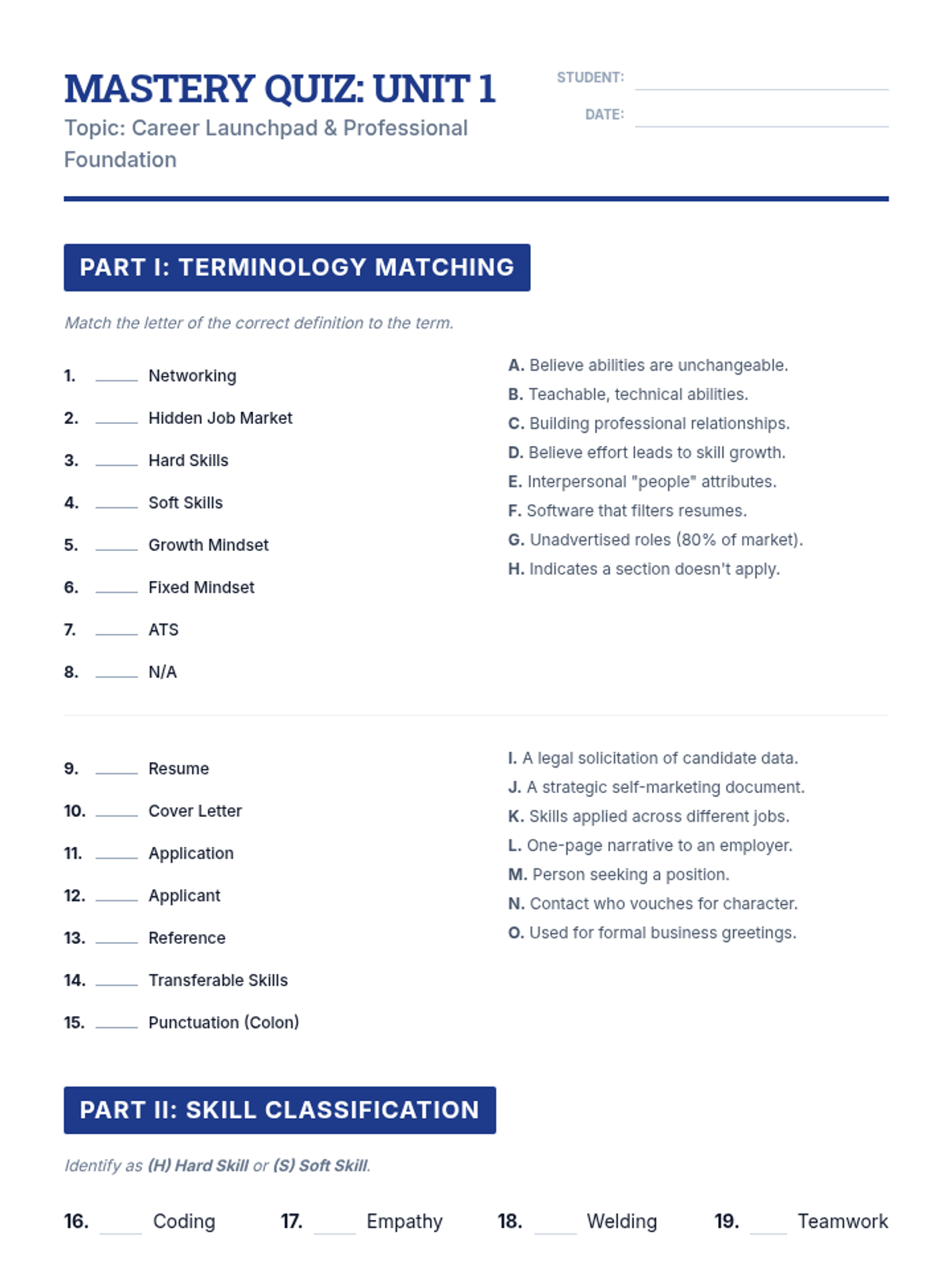
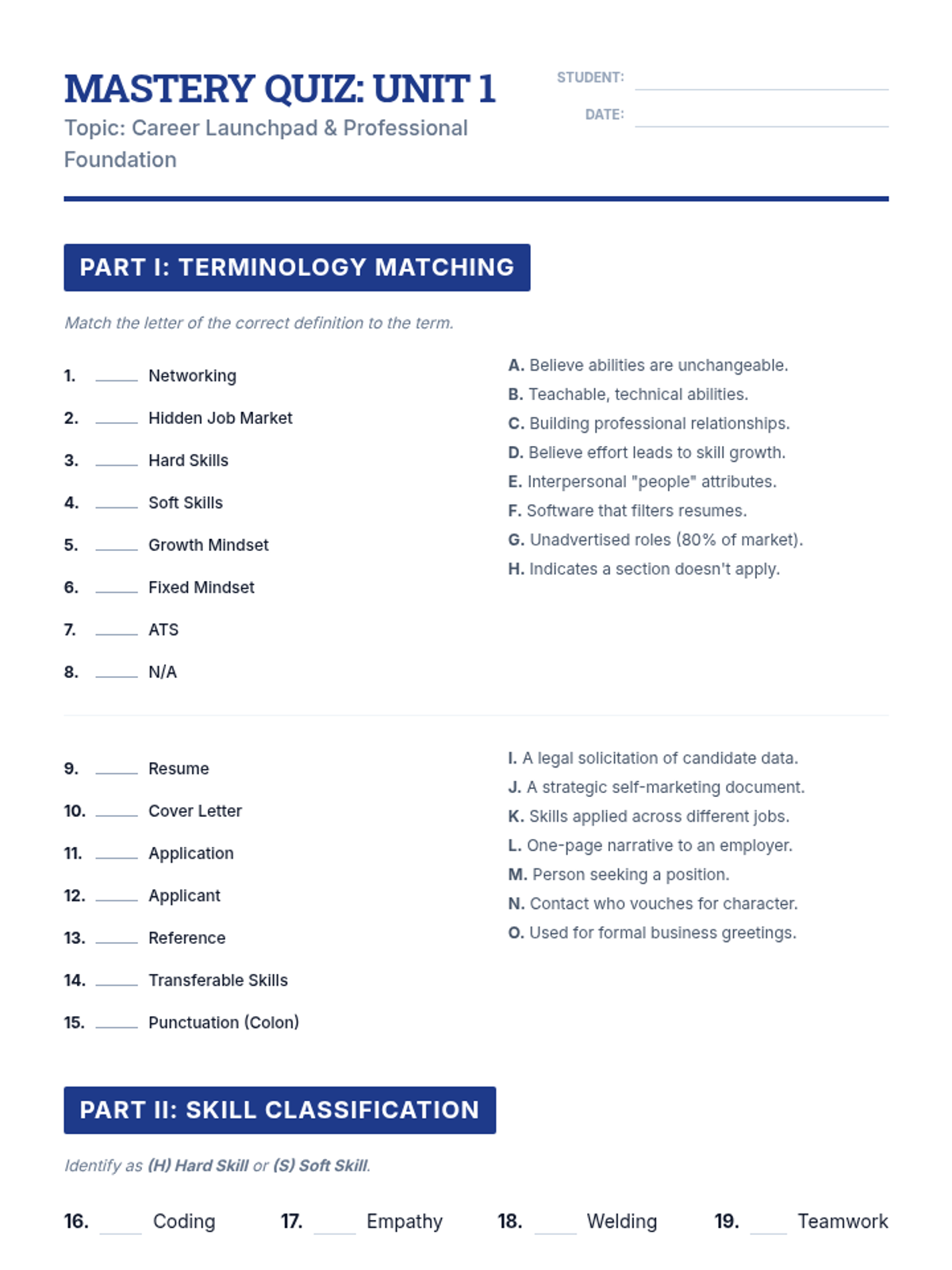
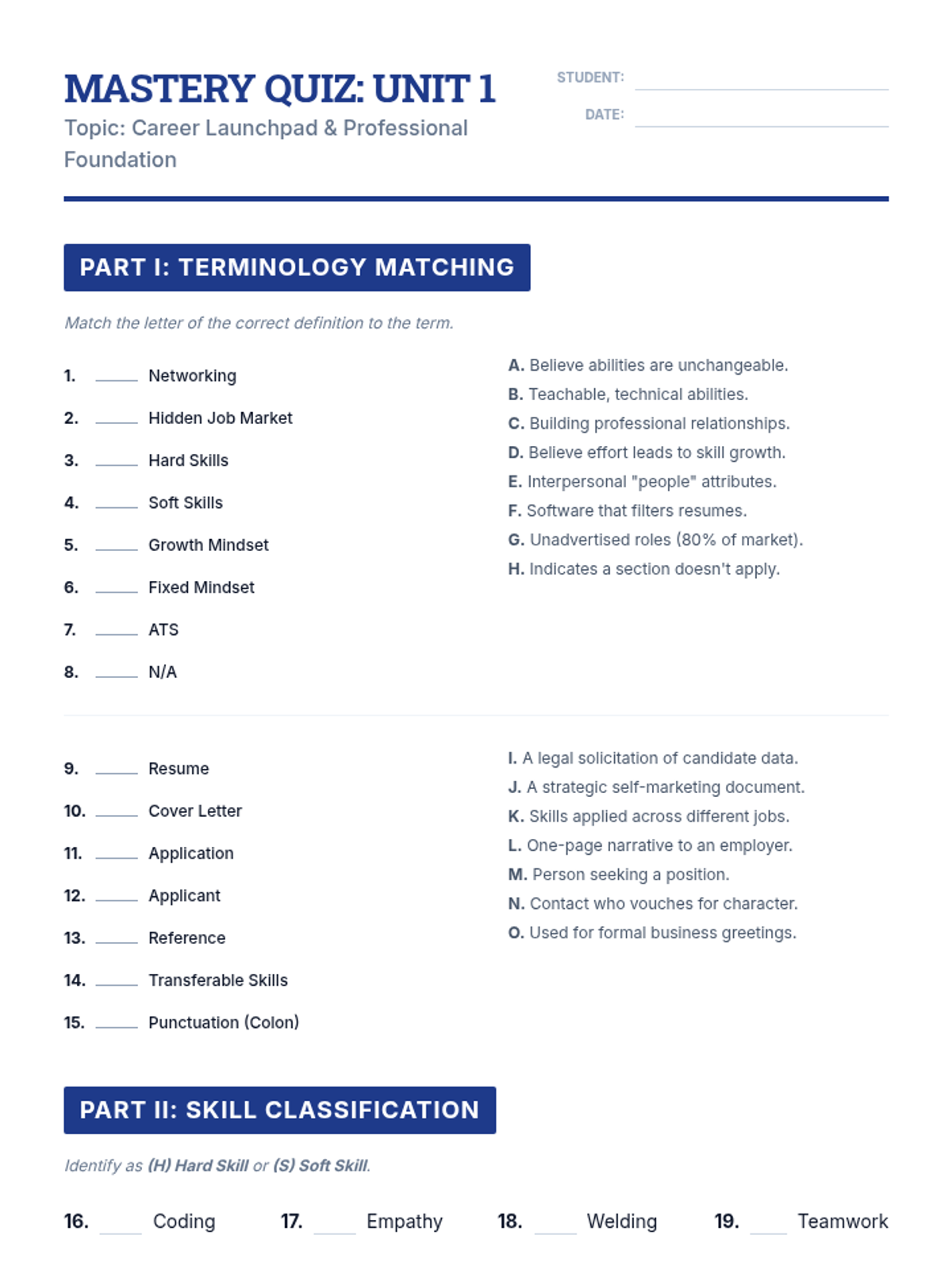
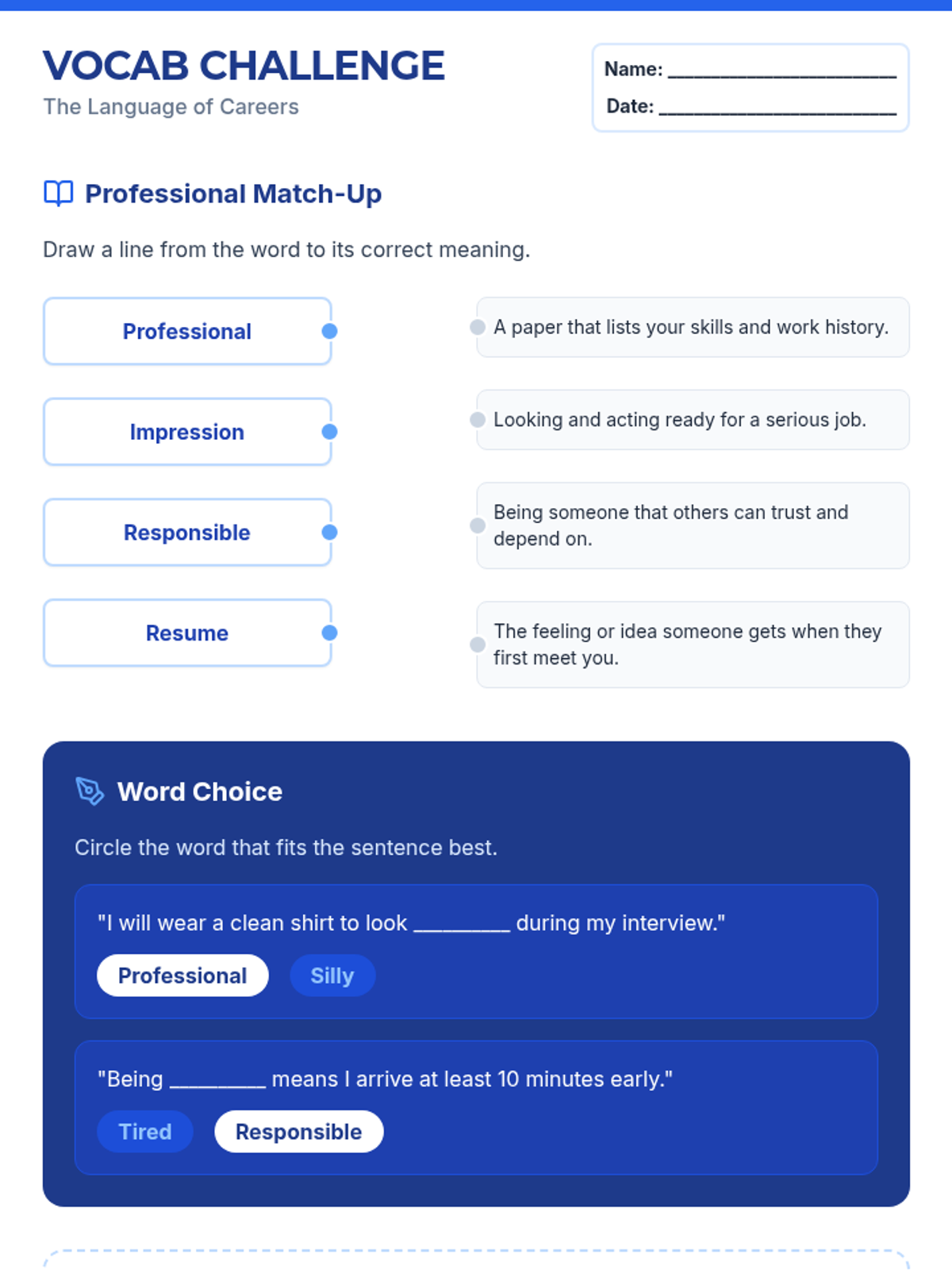
An introductory unit focusing on career terminology, professional mindset, and identifying personal strengths for the workforce.
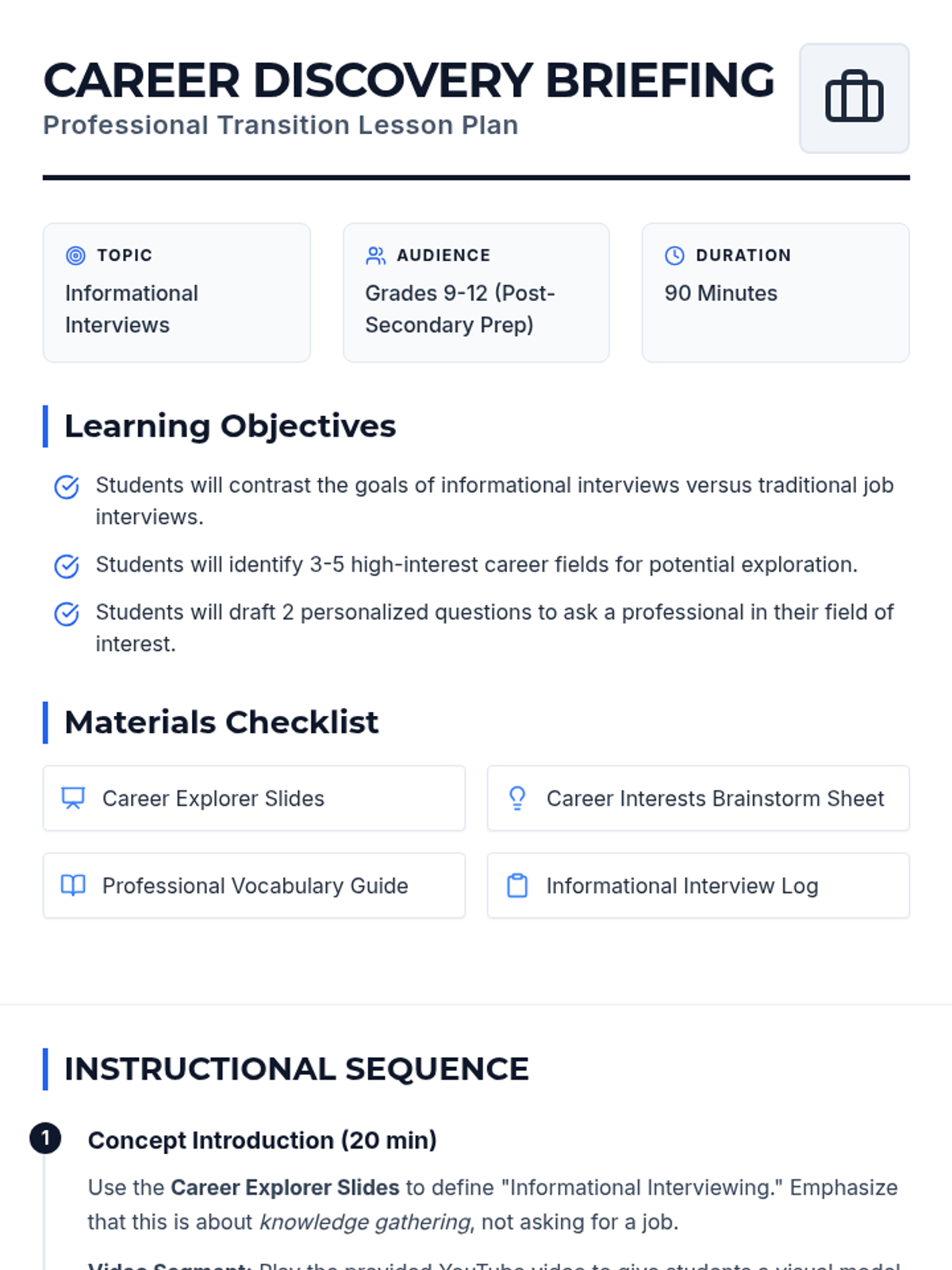
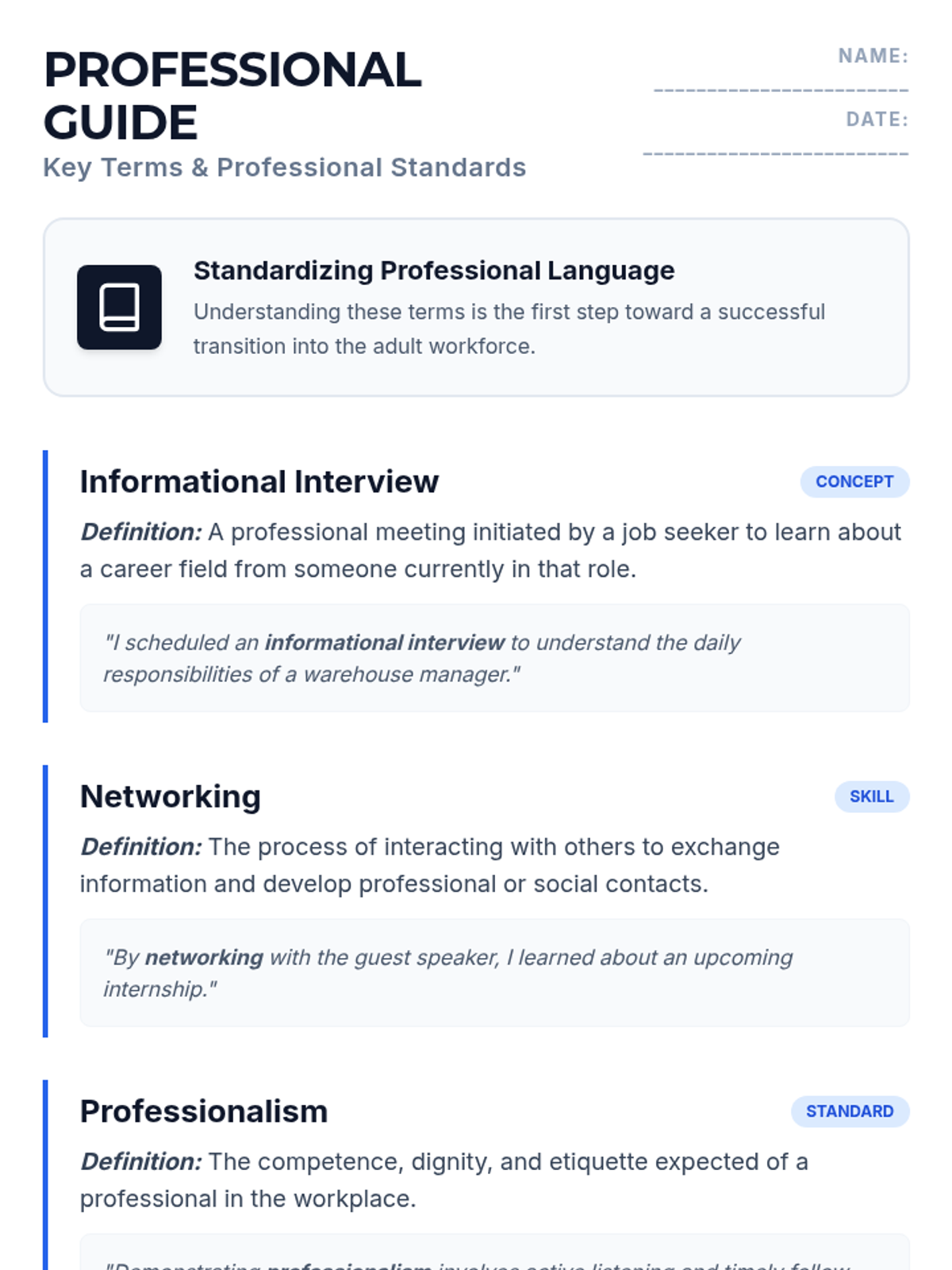
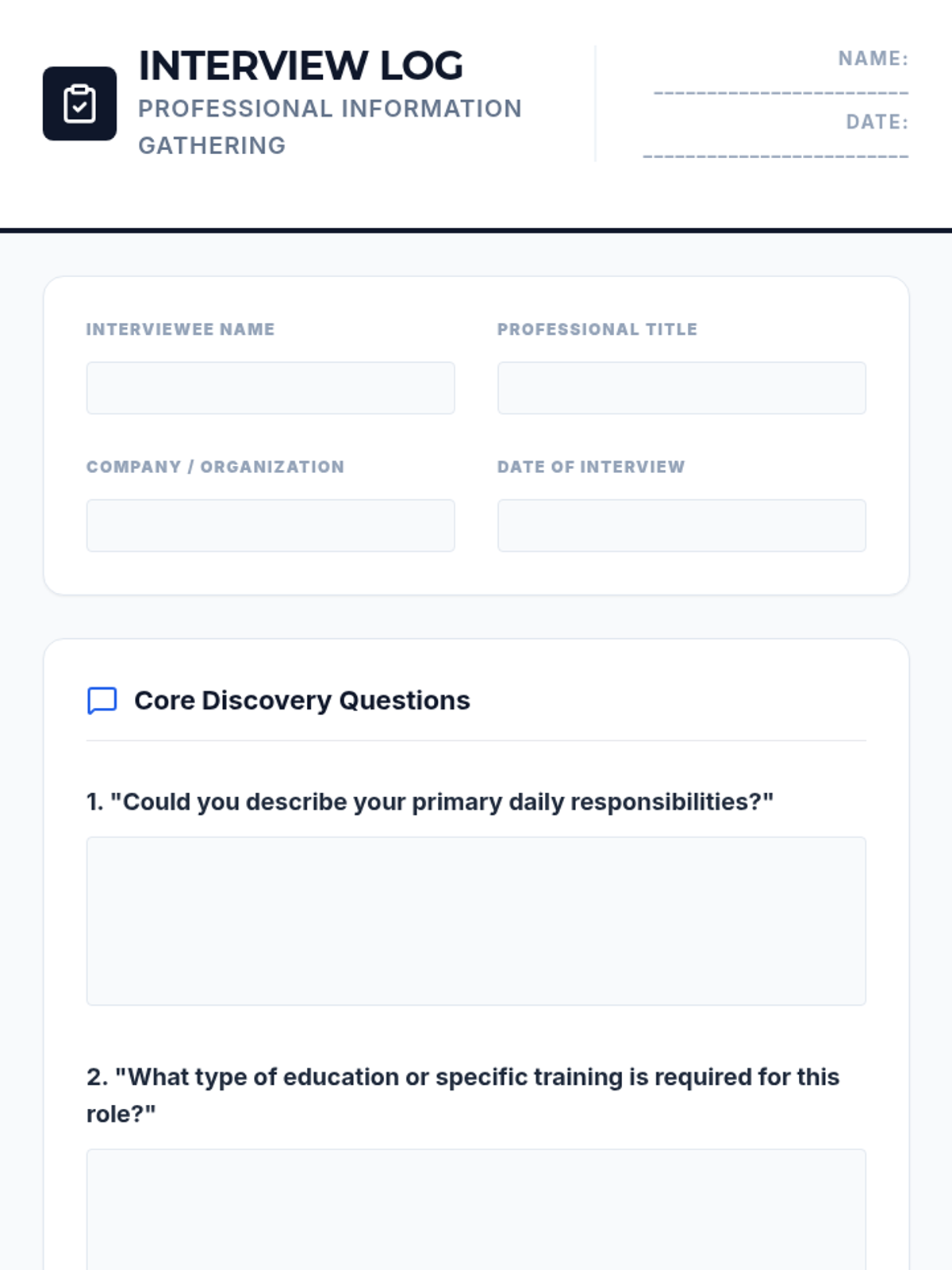
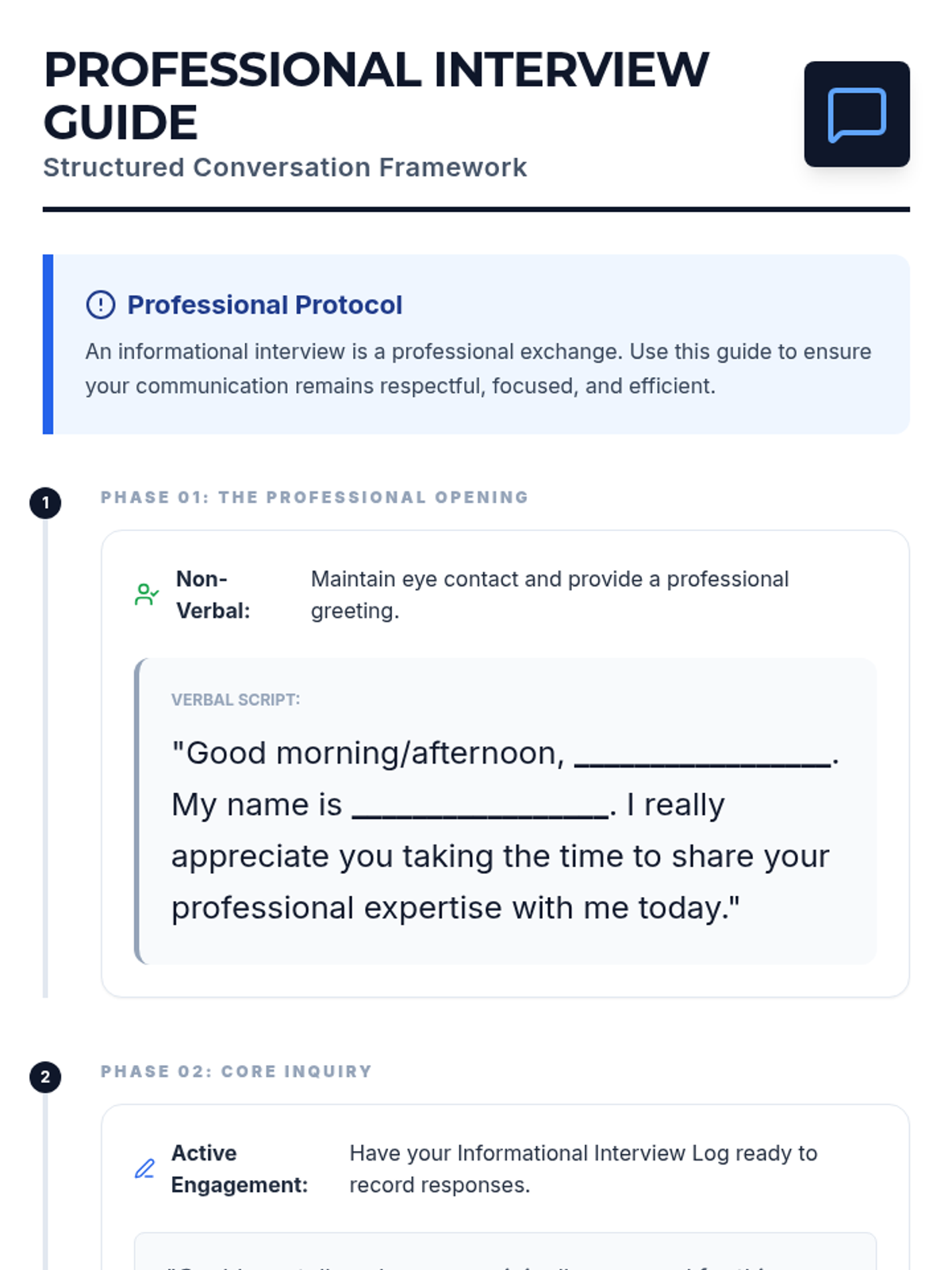
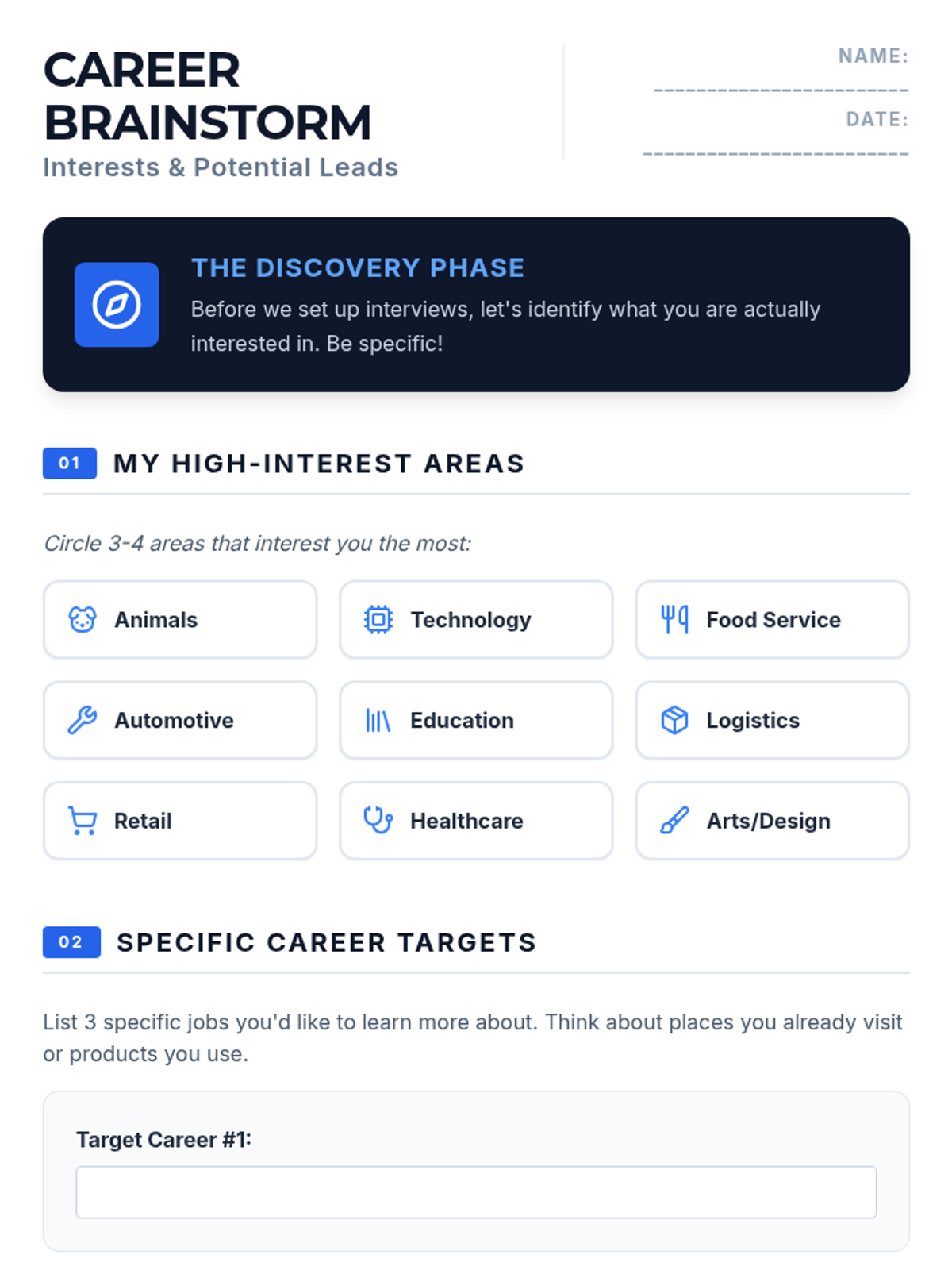
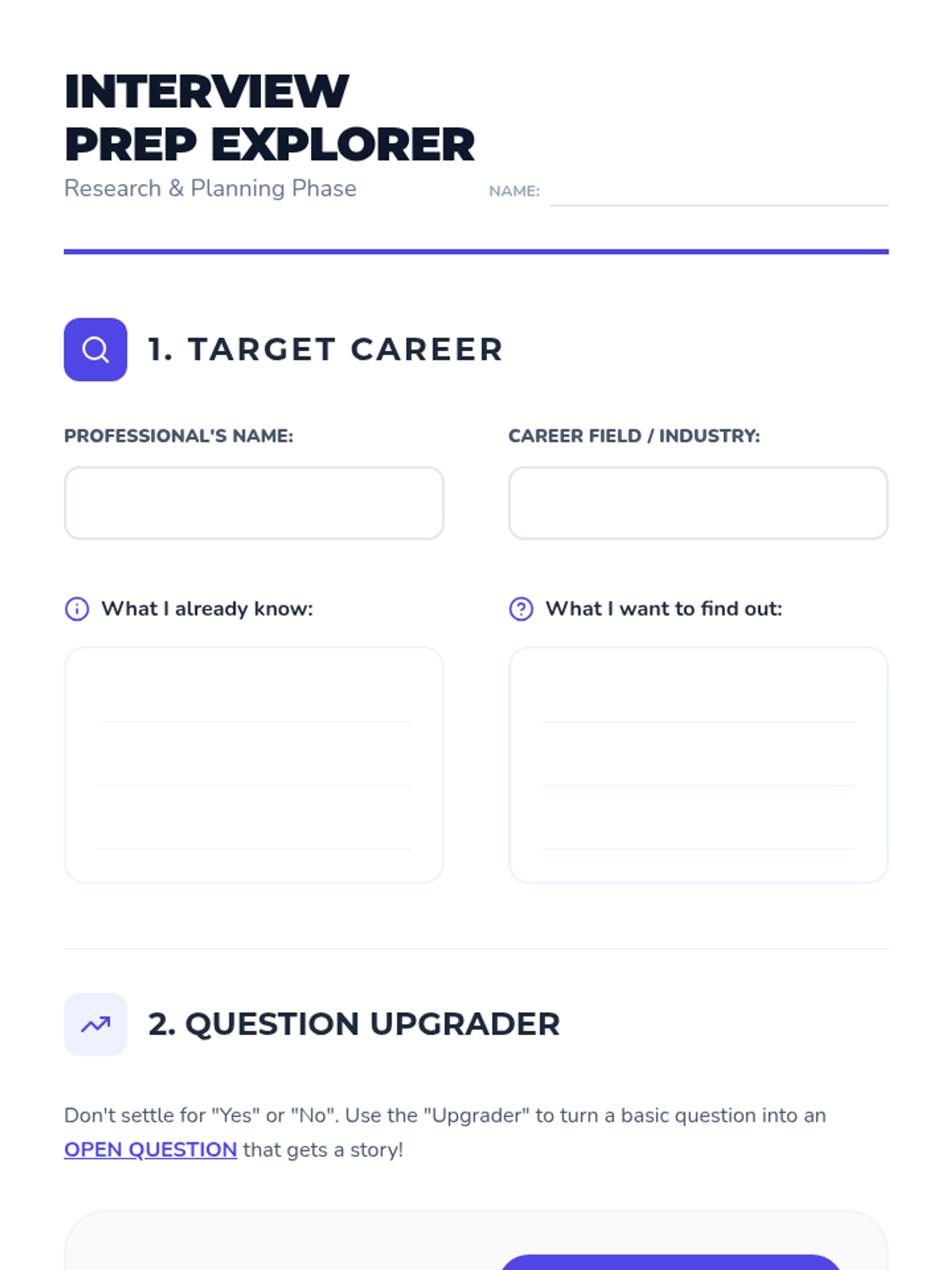
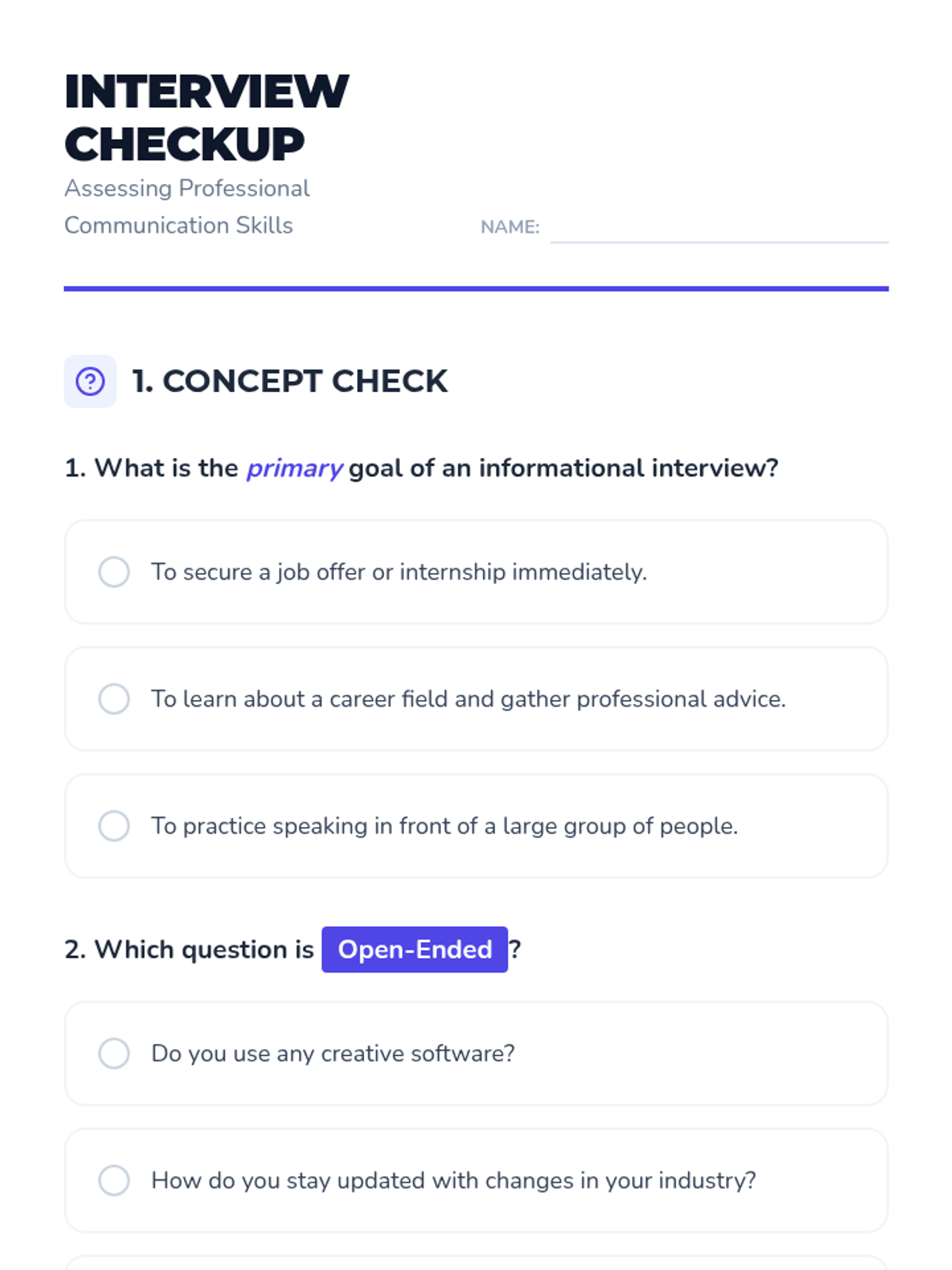
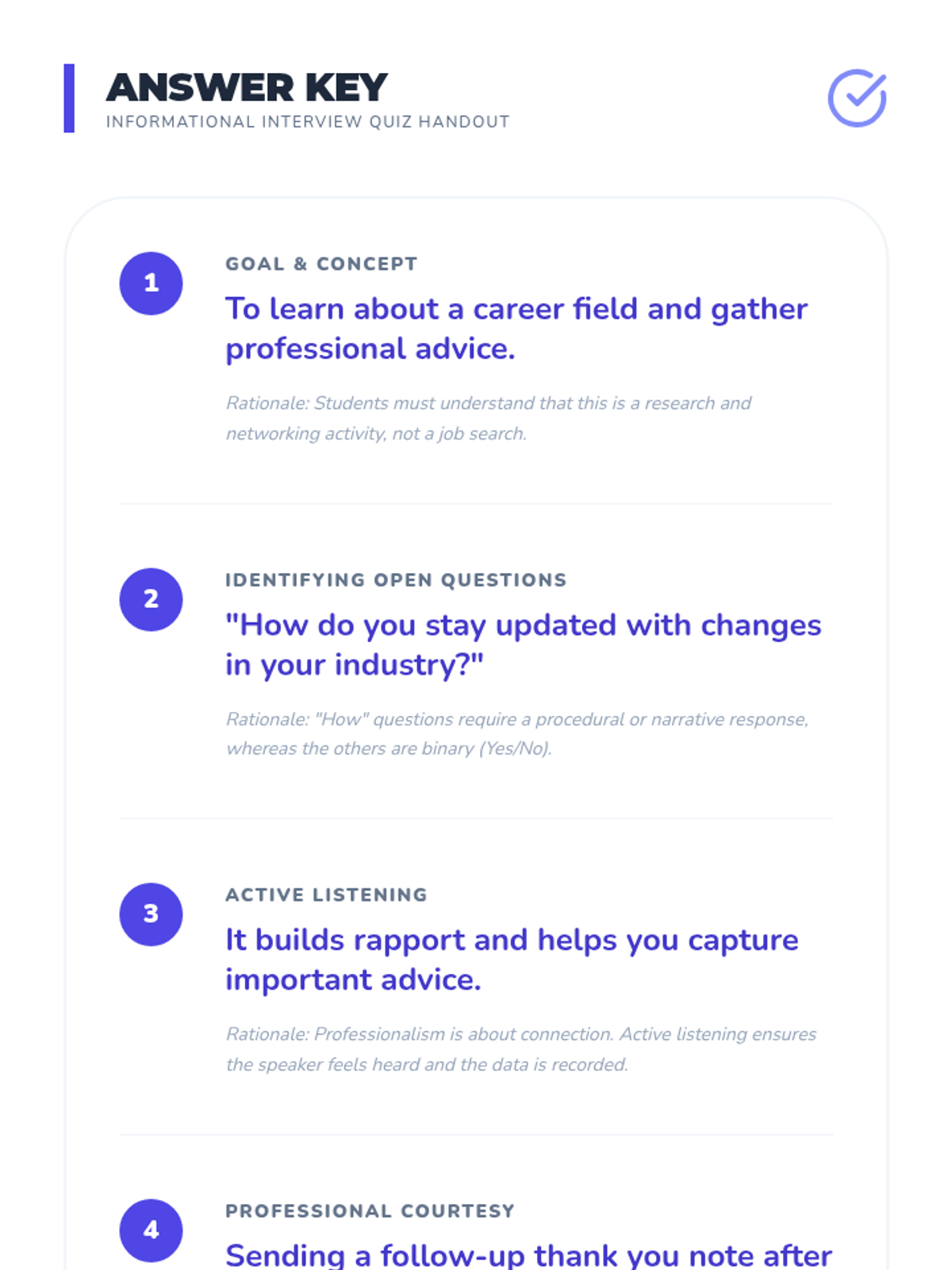
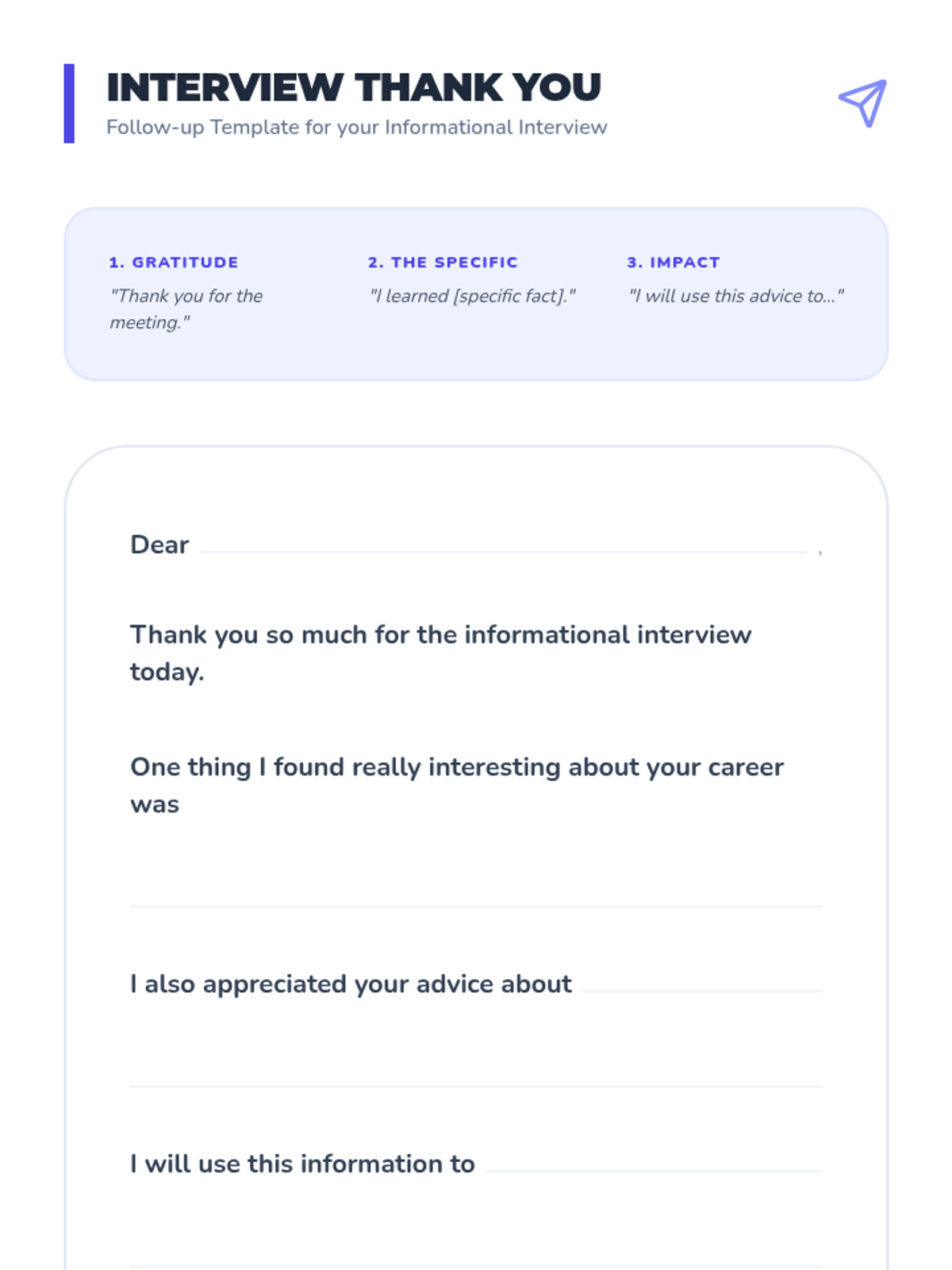
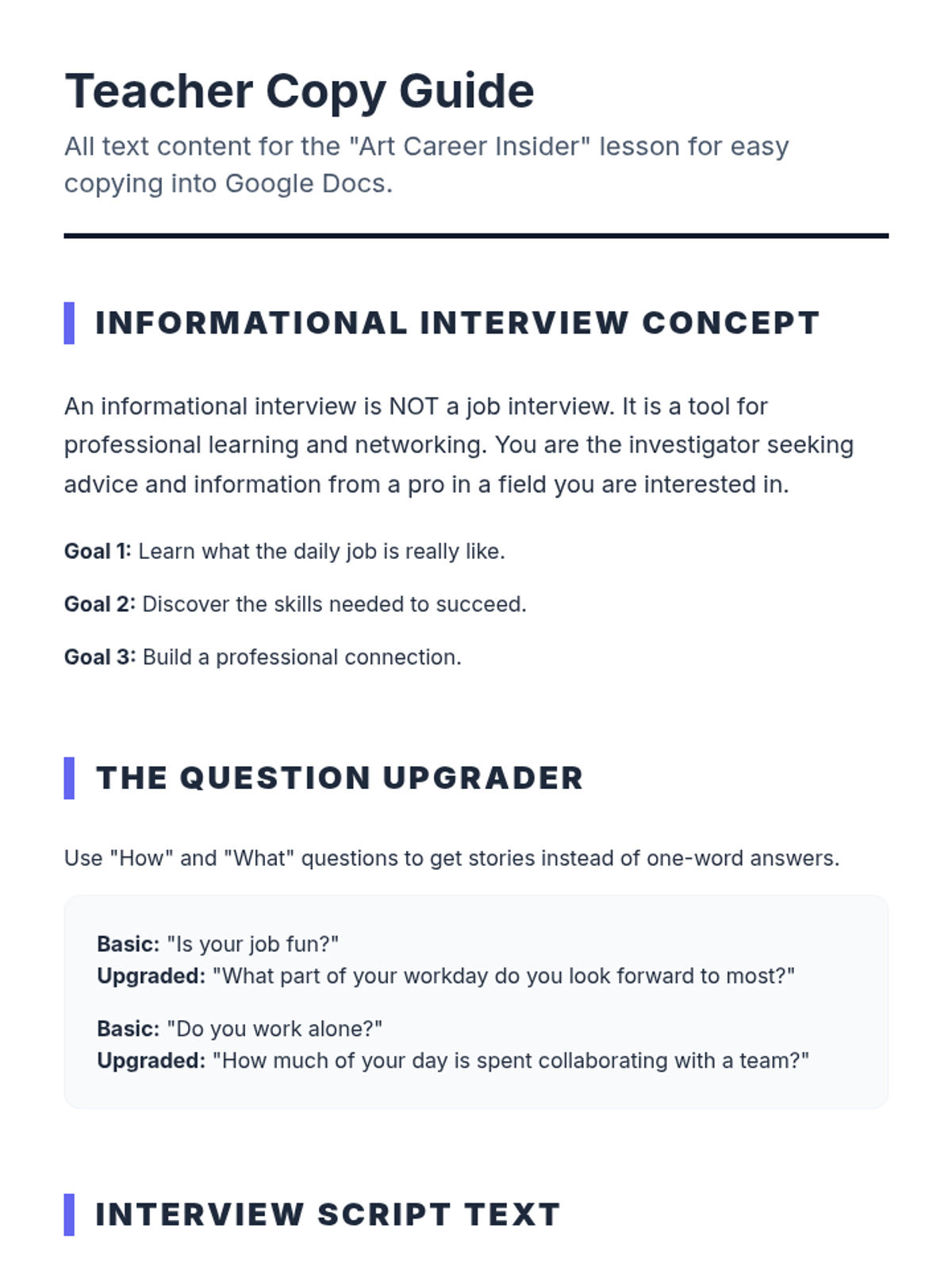
A lesson introducing students with IDD to informational interviews, focusing on curiosity, career exploration, and building professional connections.
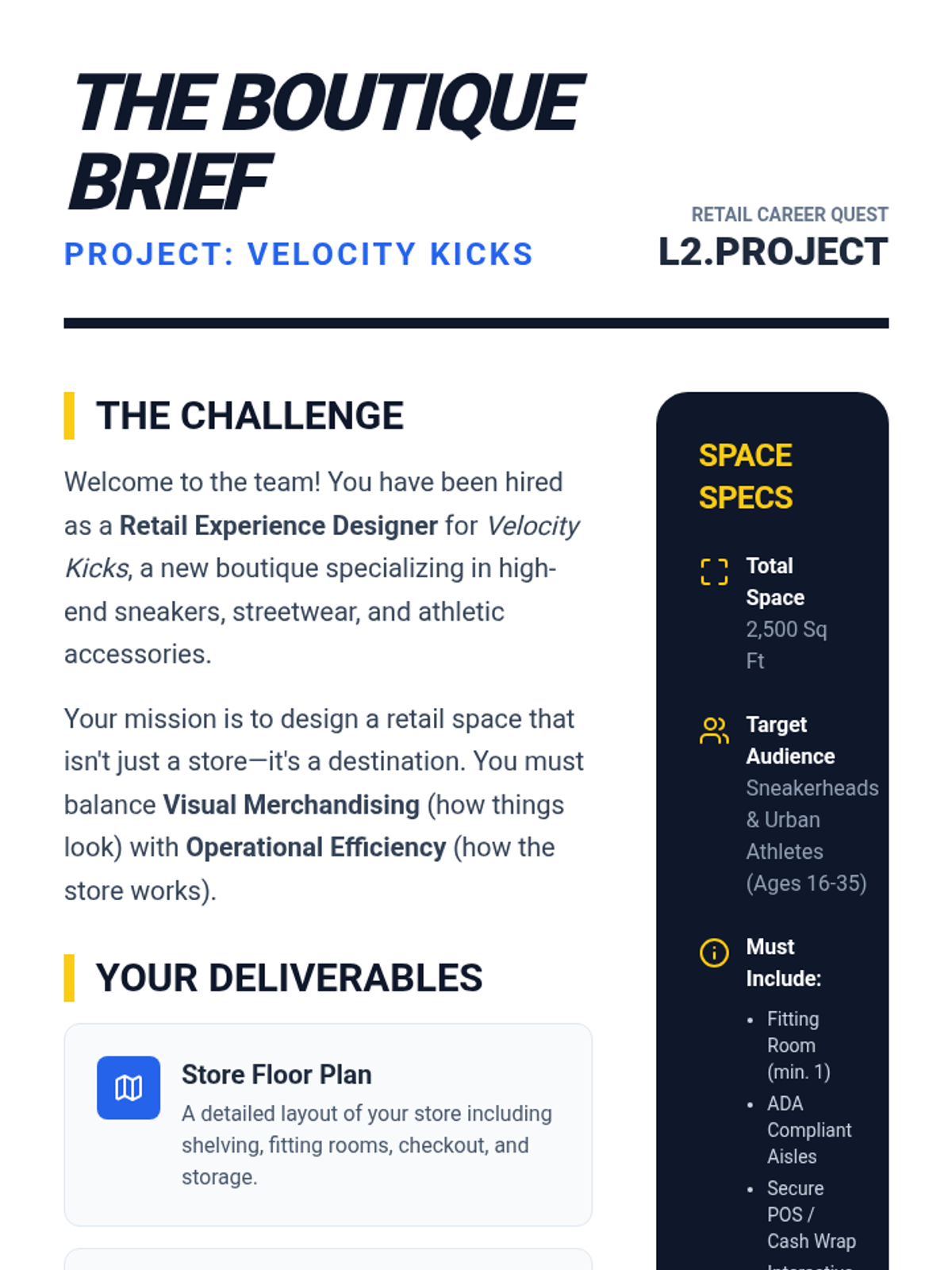
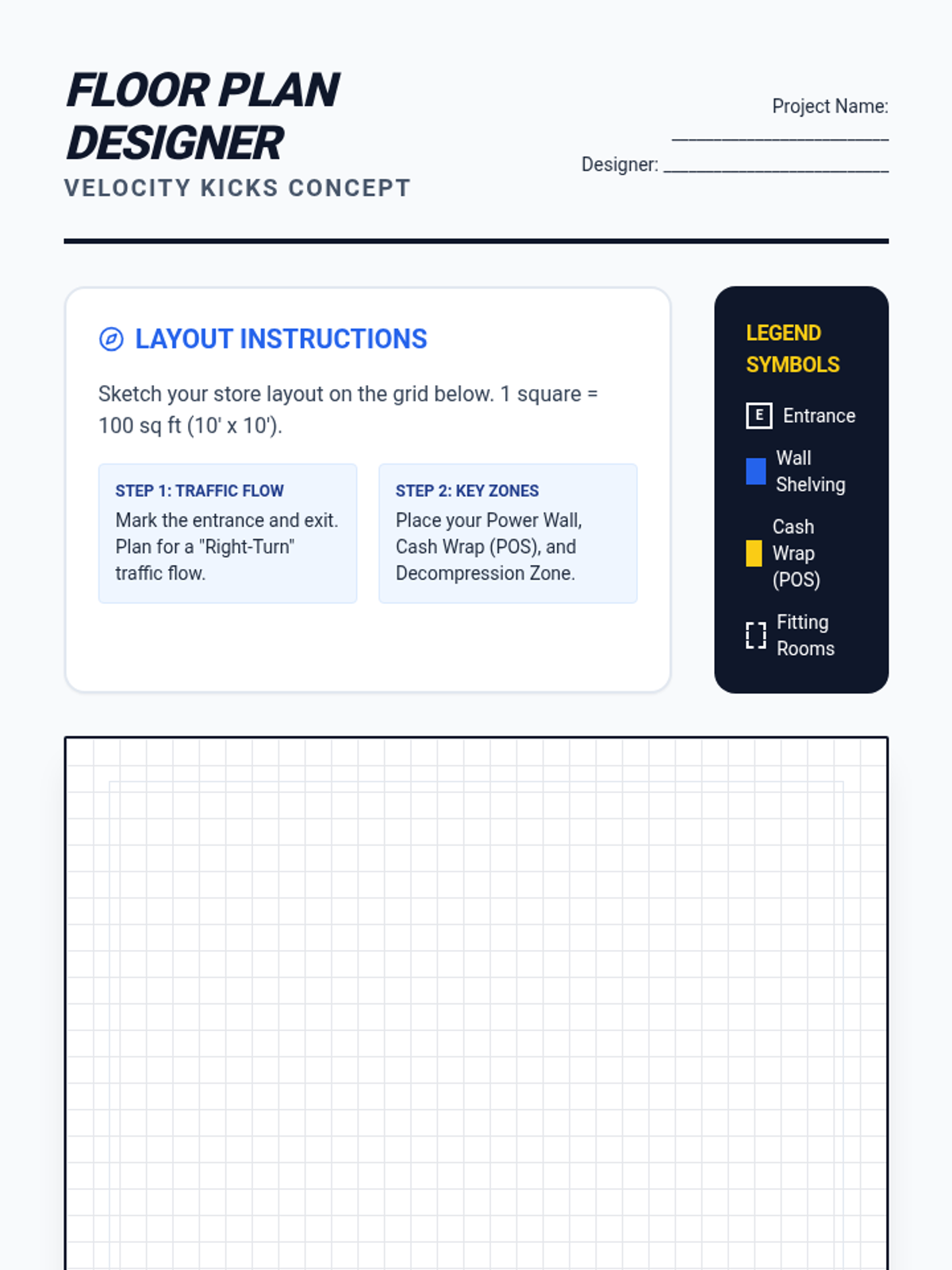
A practical project where students apply their knowledge to design a retail store, including product selection, floor layout, visual merchandising, and a promotional plan.
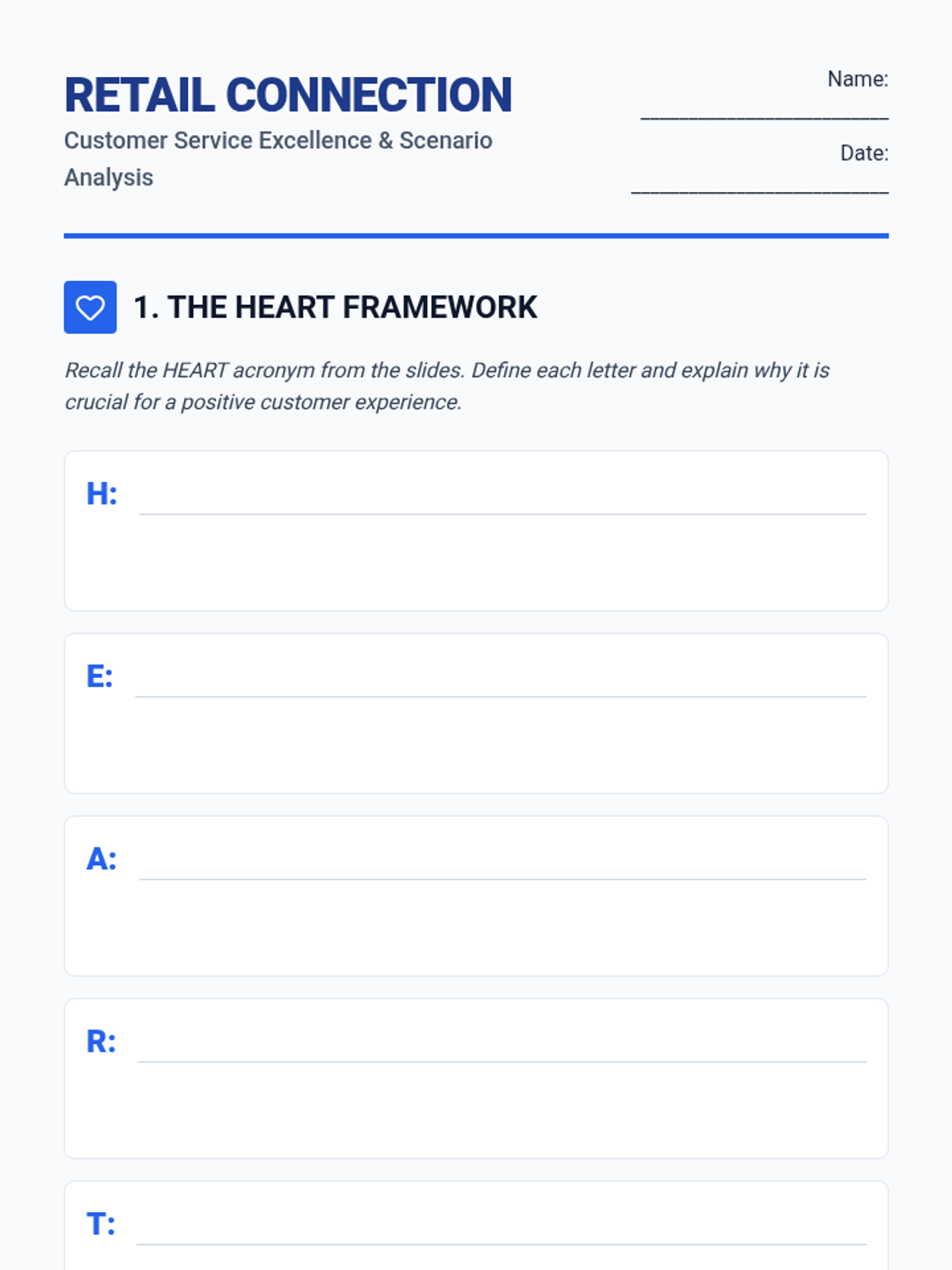
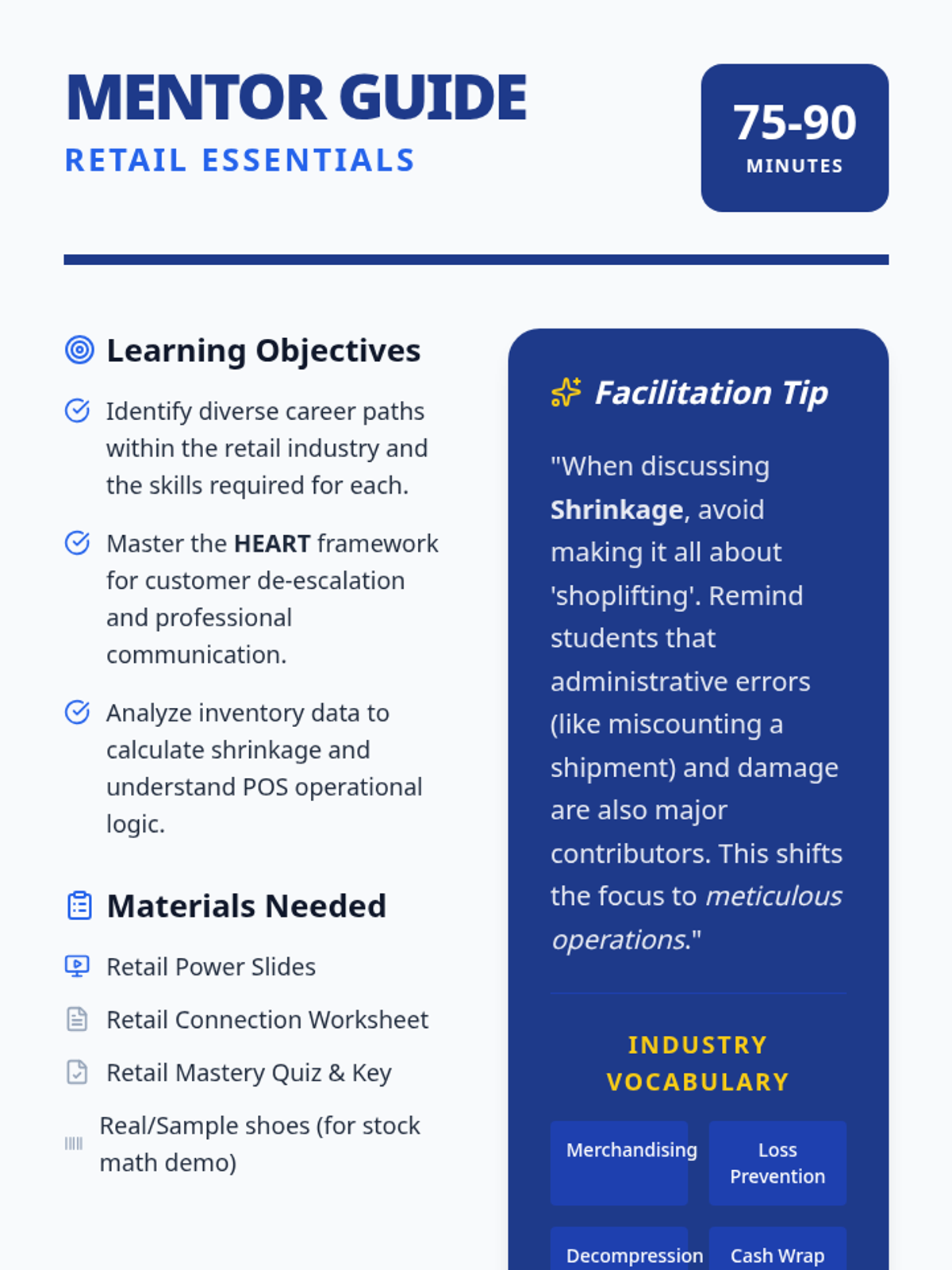
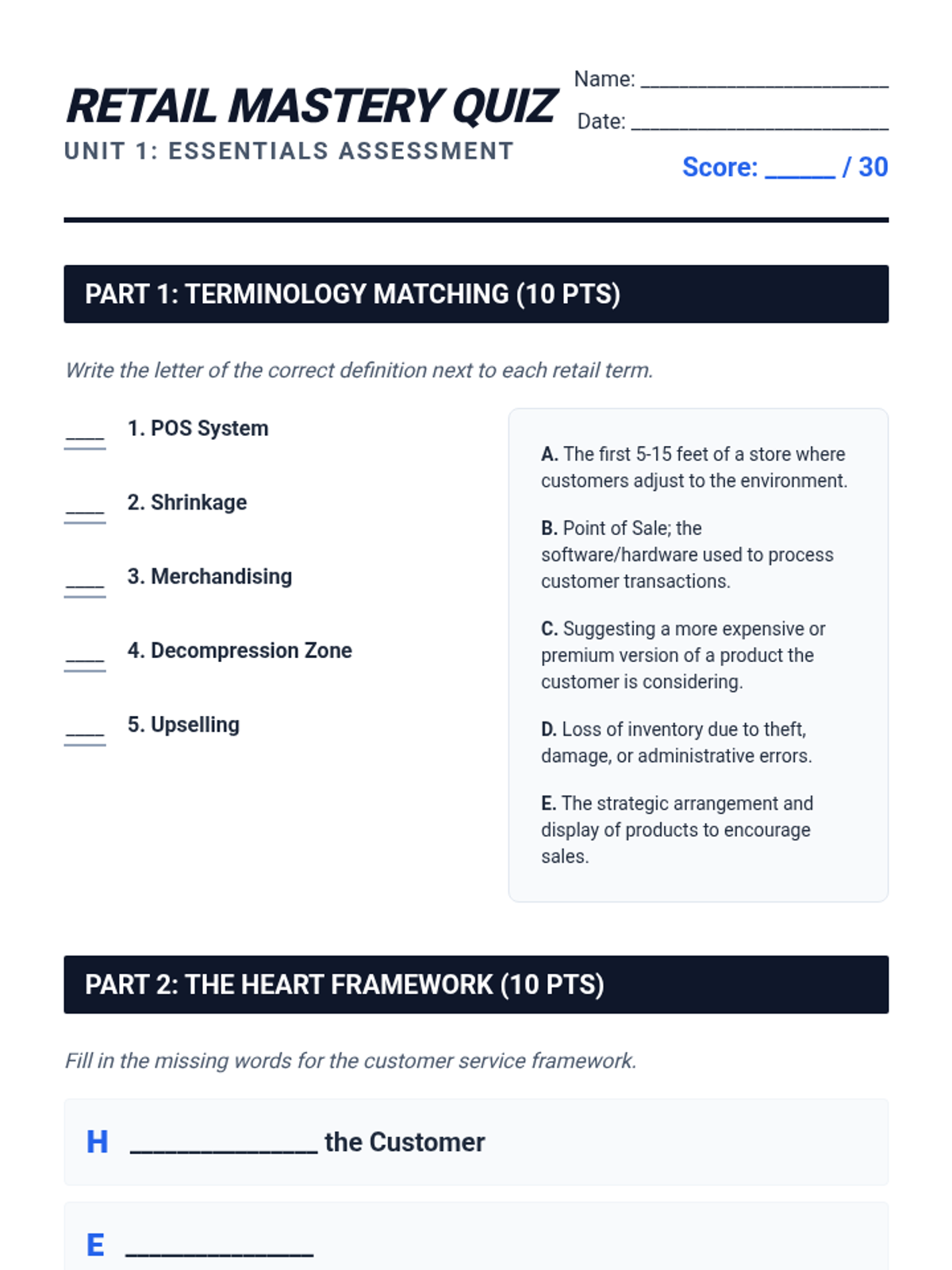
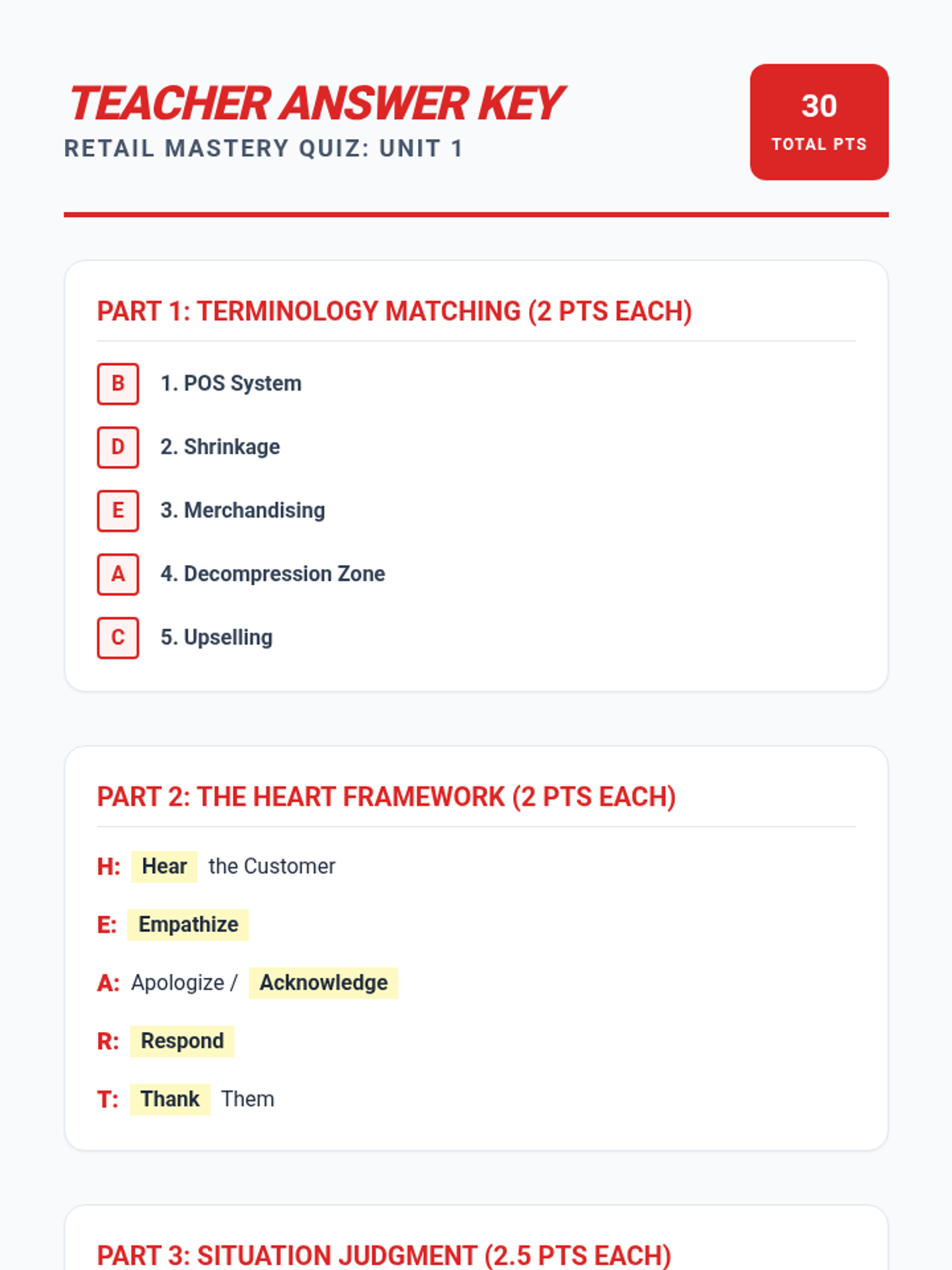
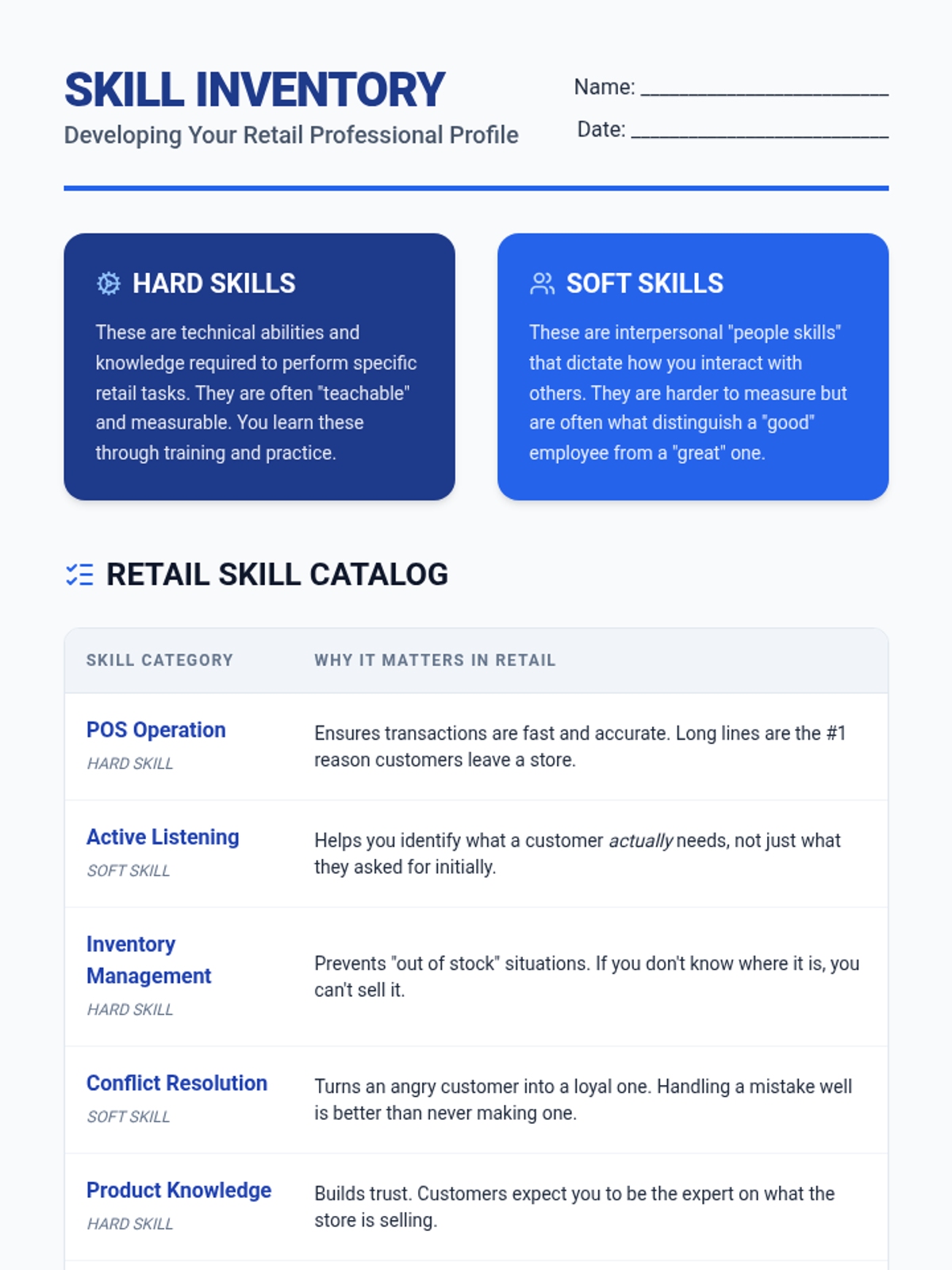
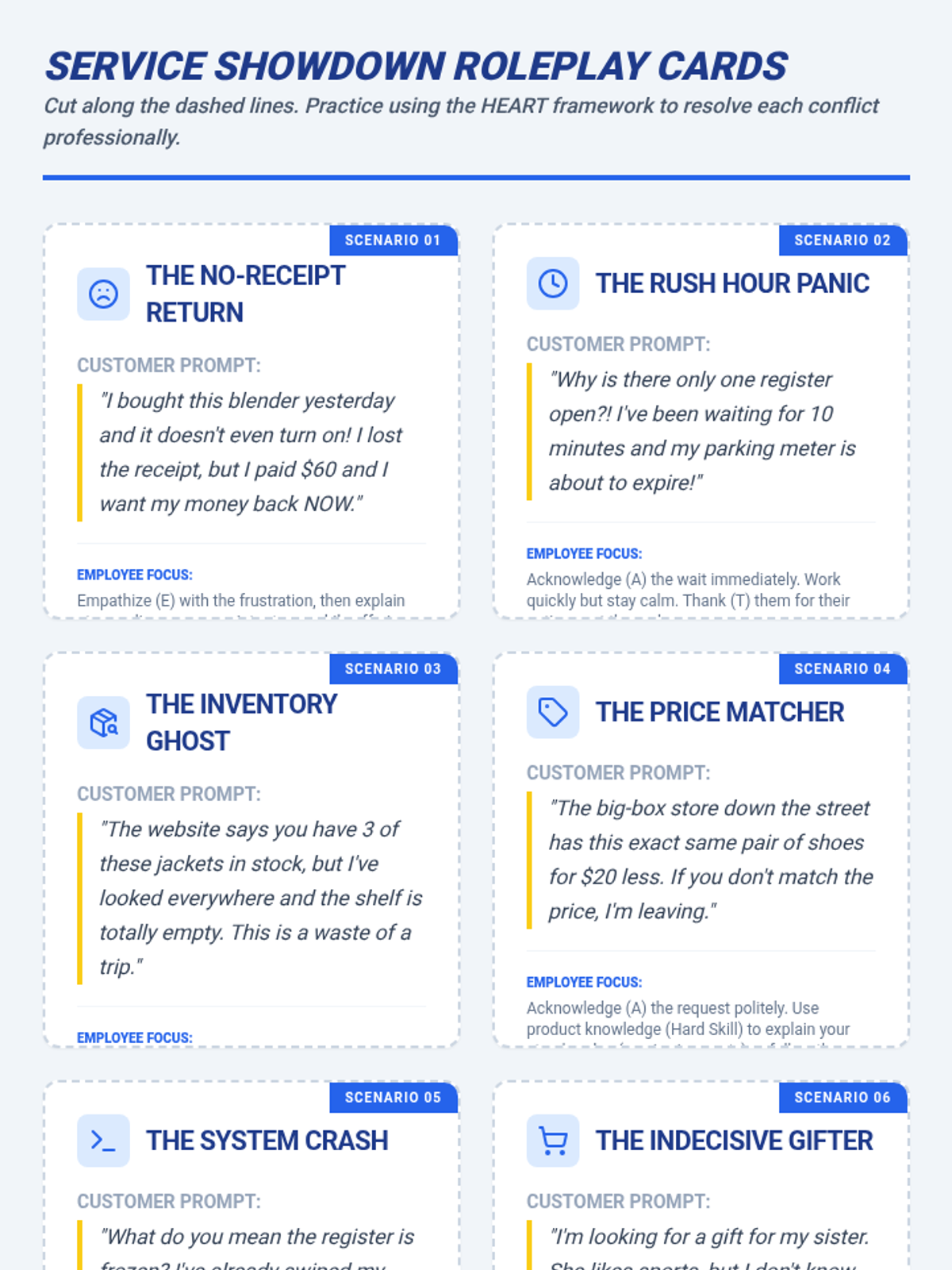
An introduction to the foundational skills of the retail industry, covering customer service techniques, cash handling, inventory management, and the professional communication required for successful sales.
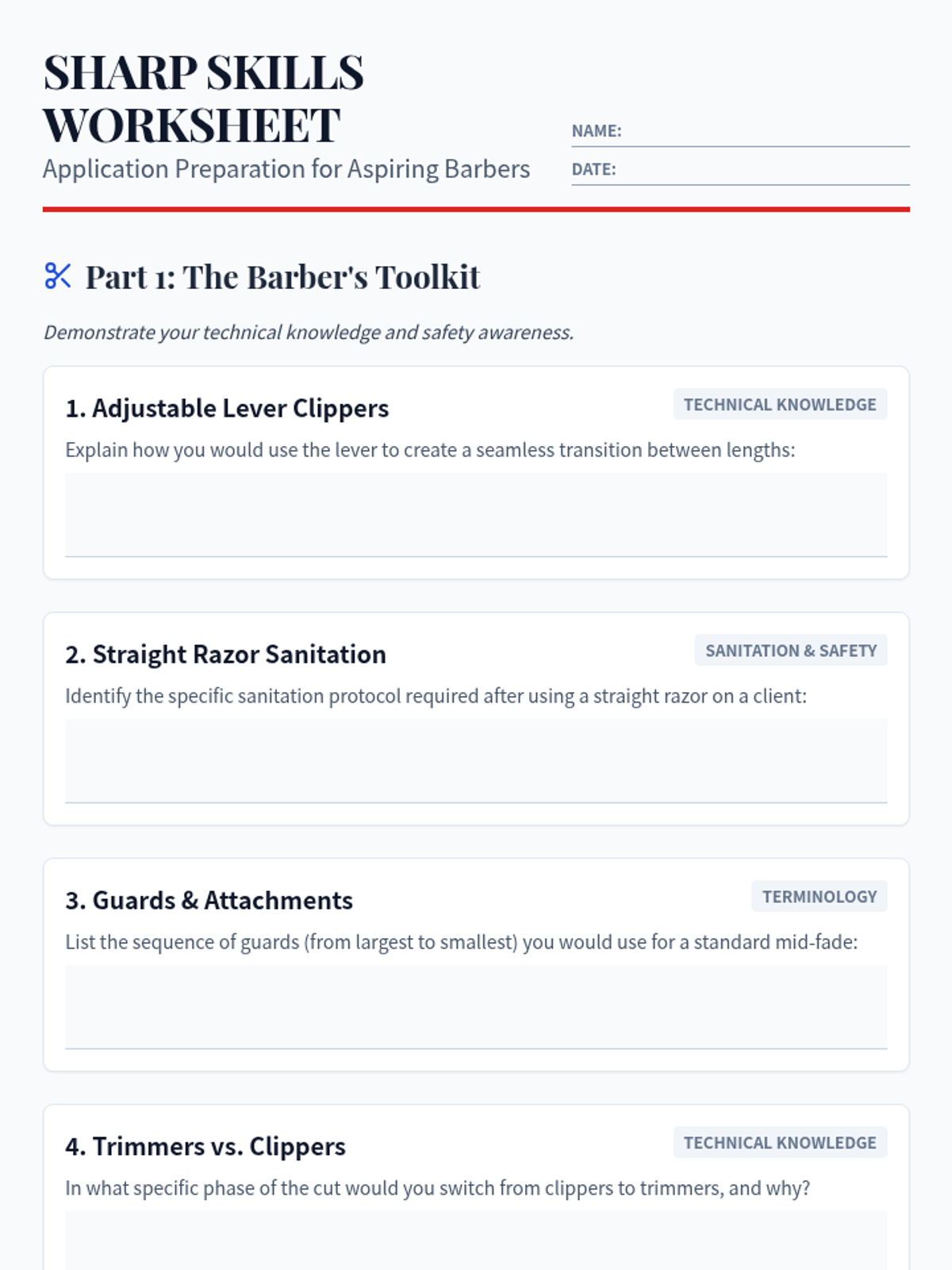
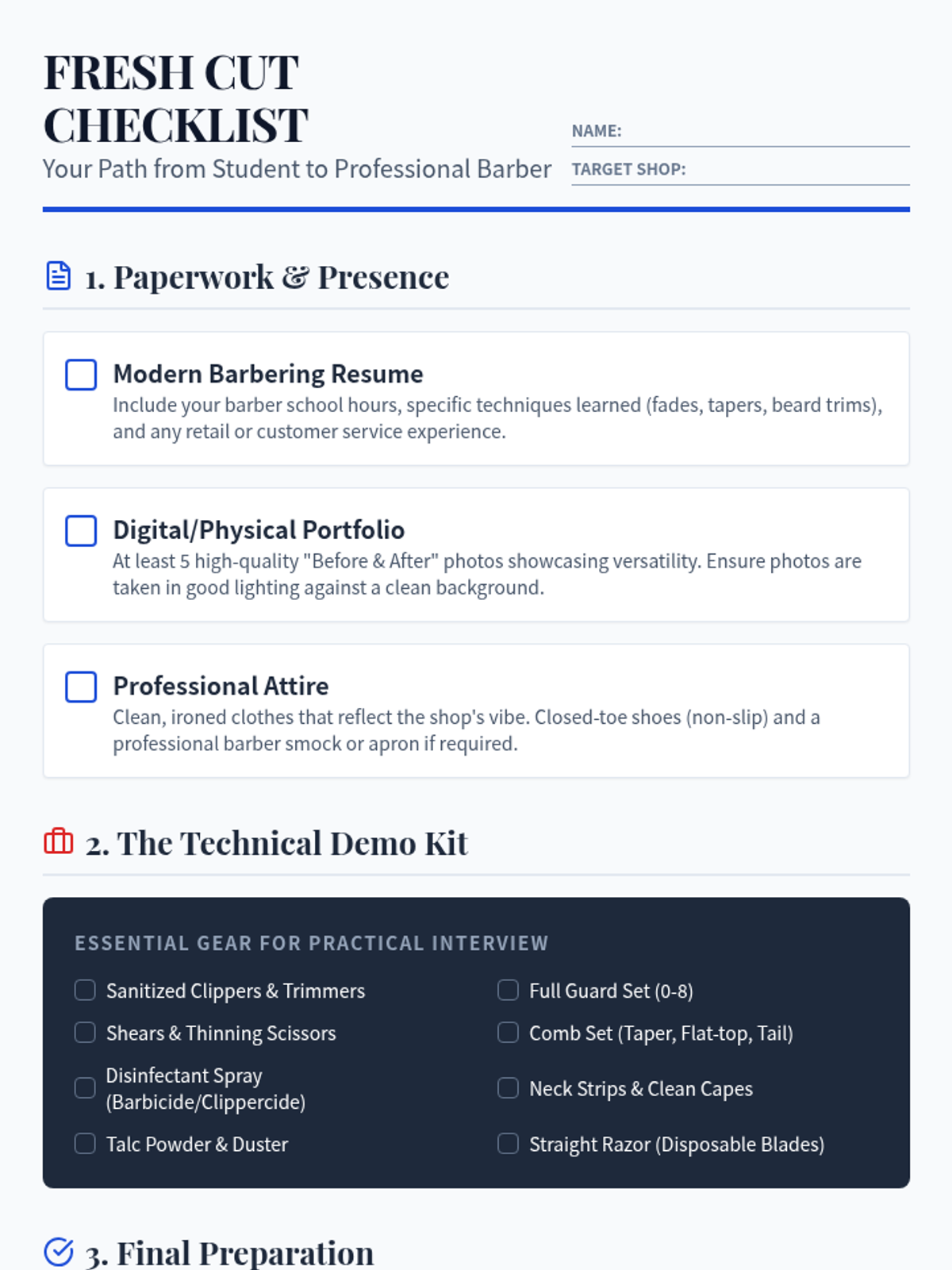
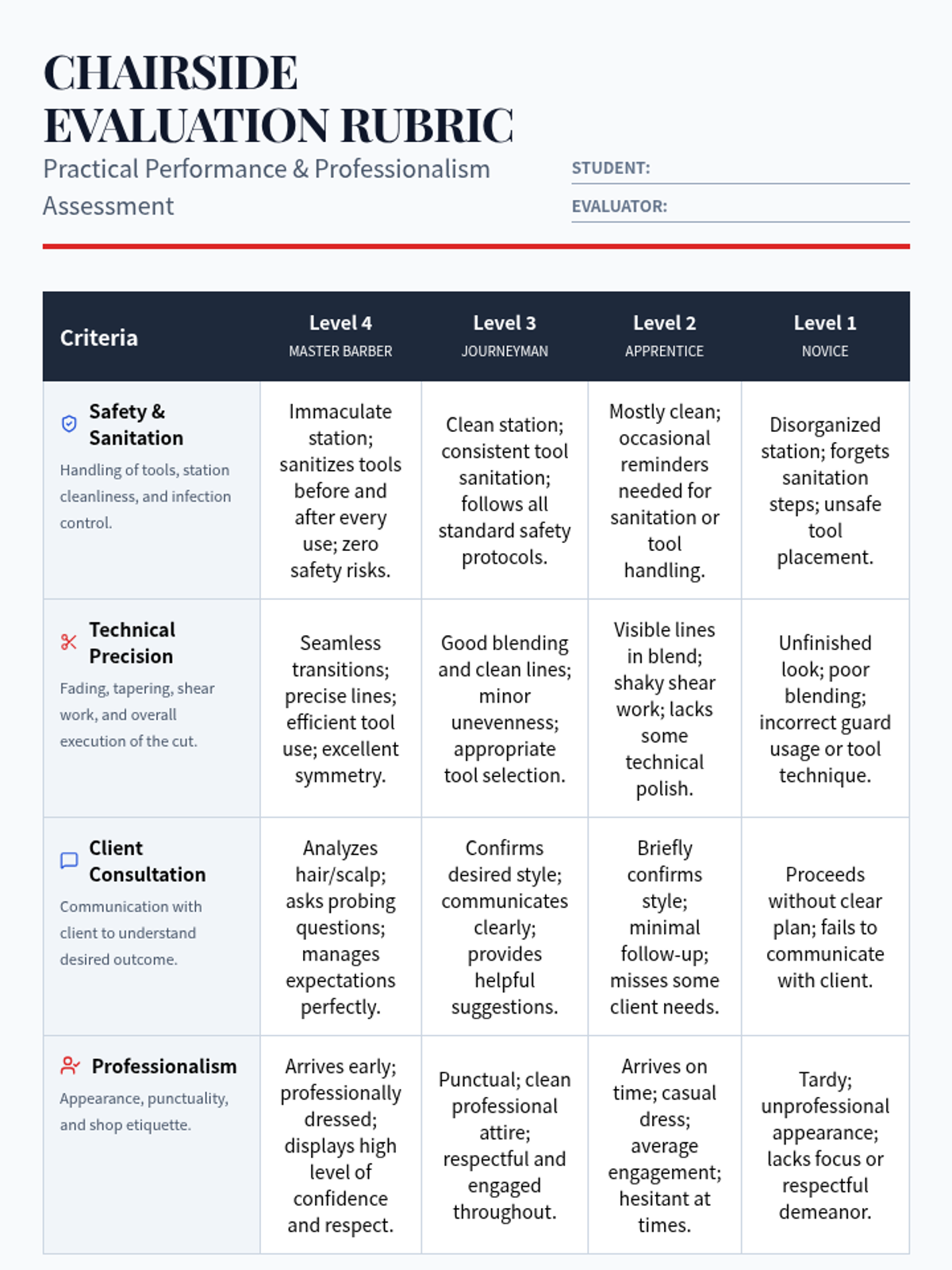
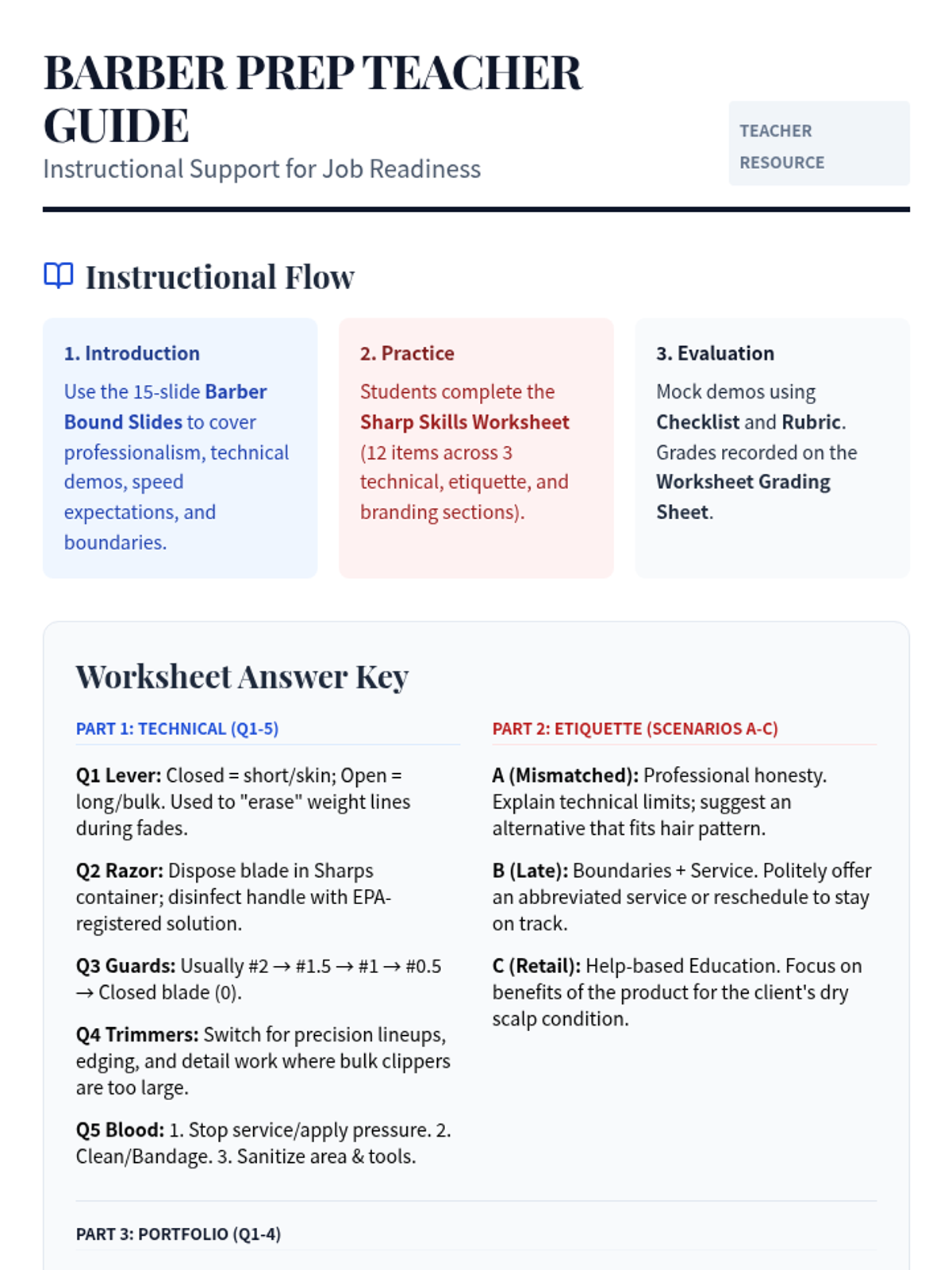
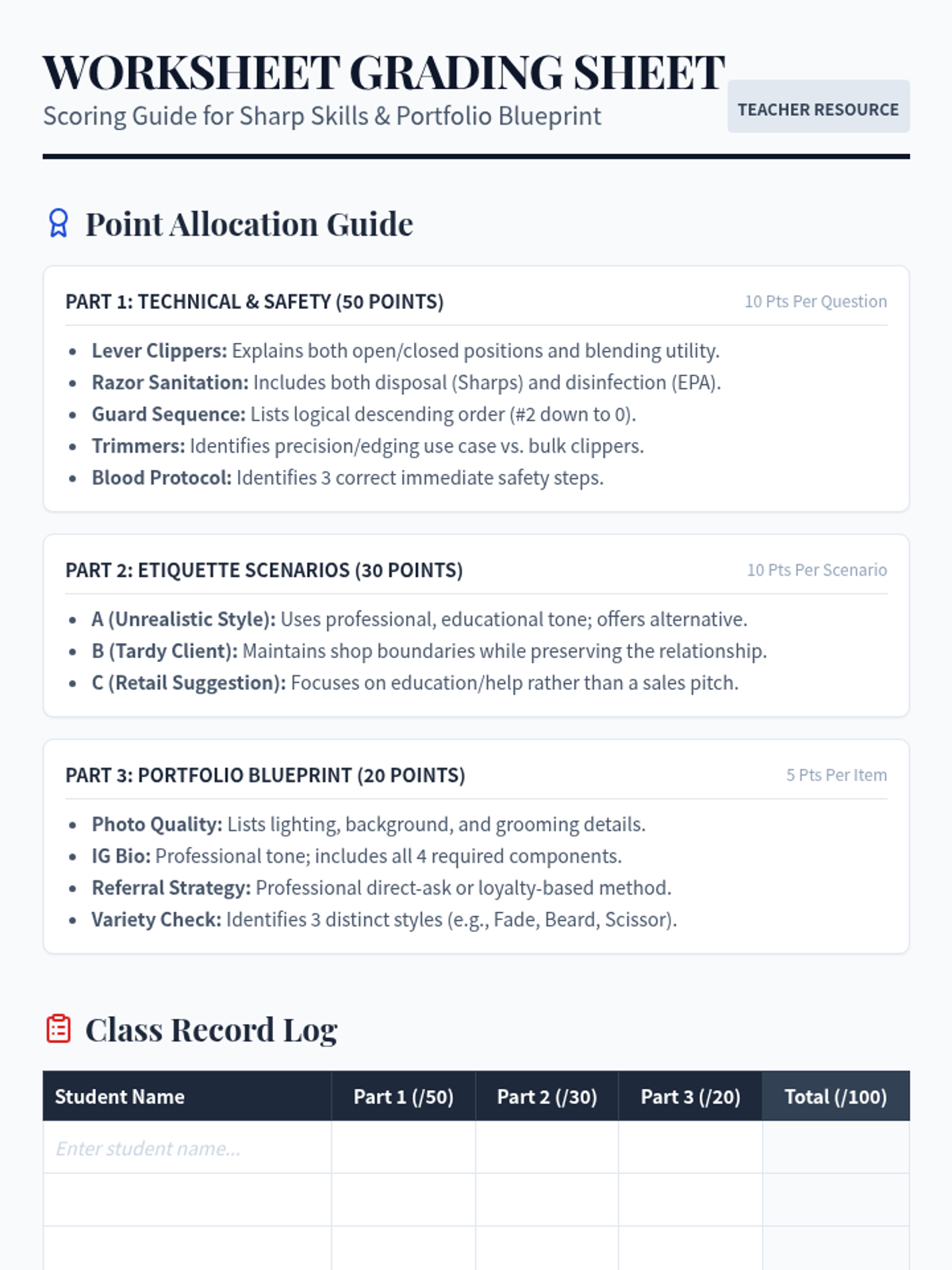
A comprehensive set of tools to help high school students prepare for their first job application in the barbering industry, focusing on technical knowledge, professional etiquette, and portfolio building.
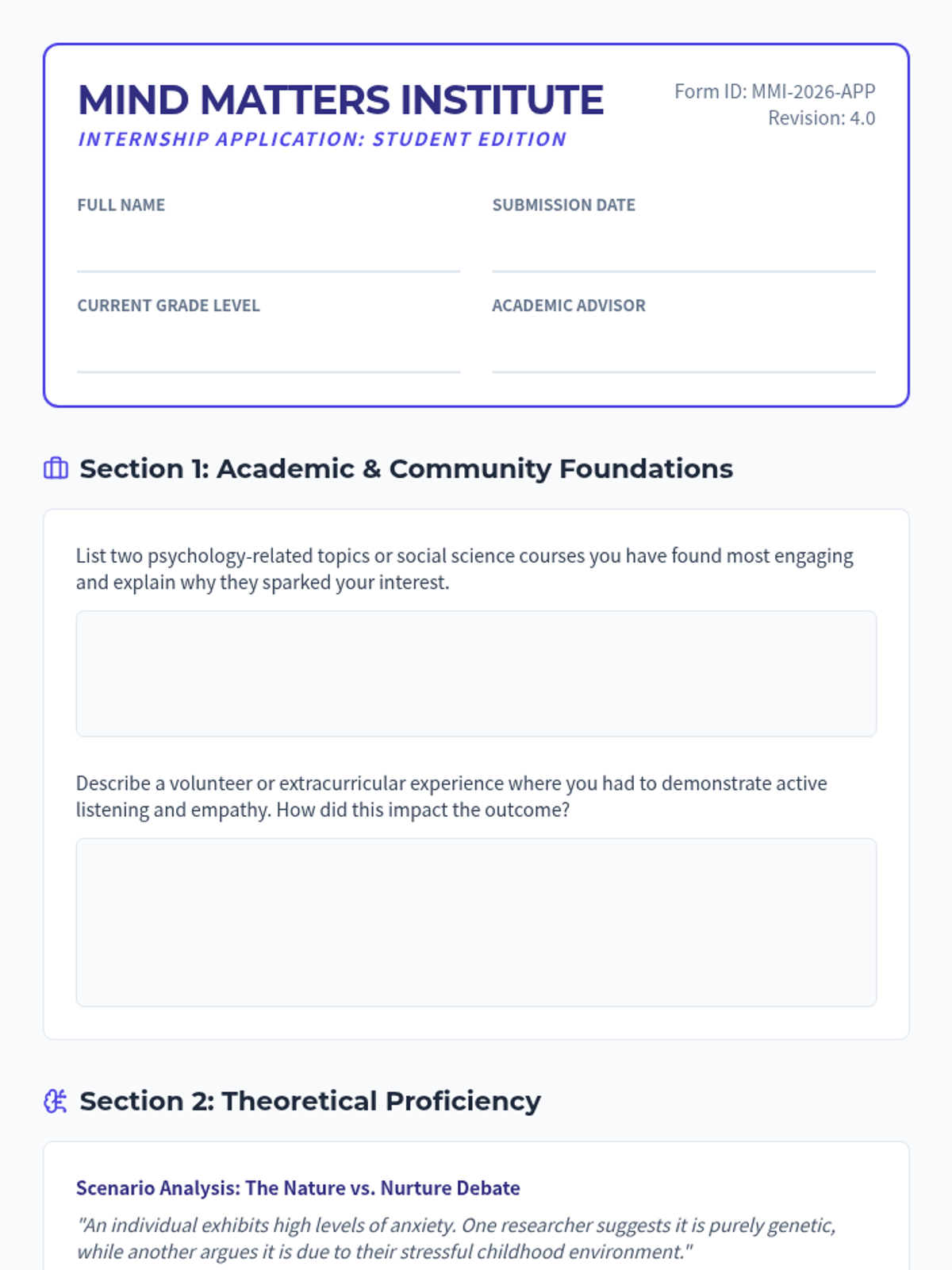
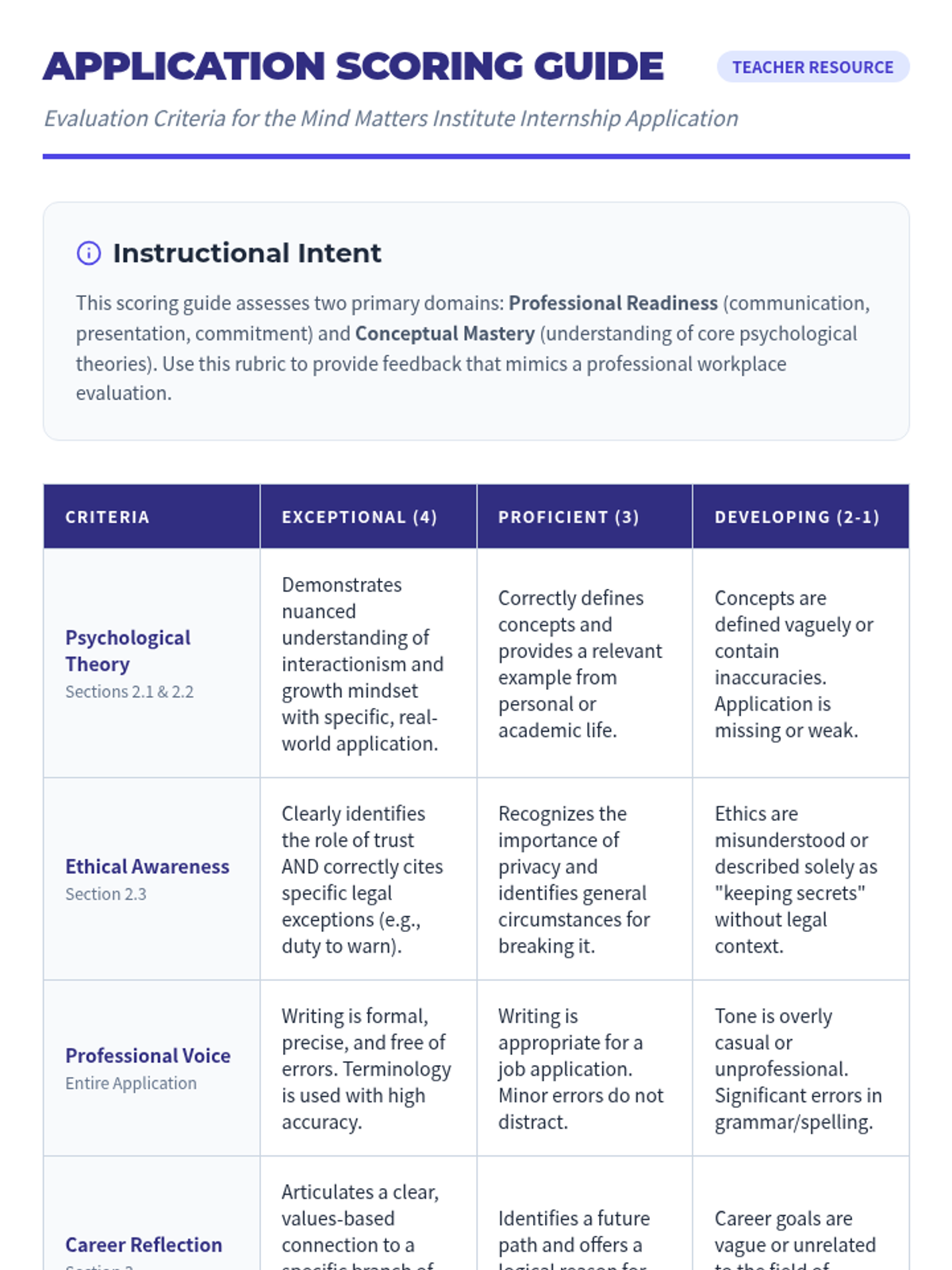
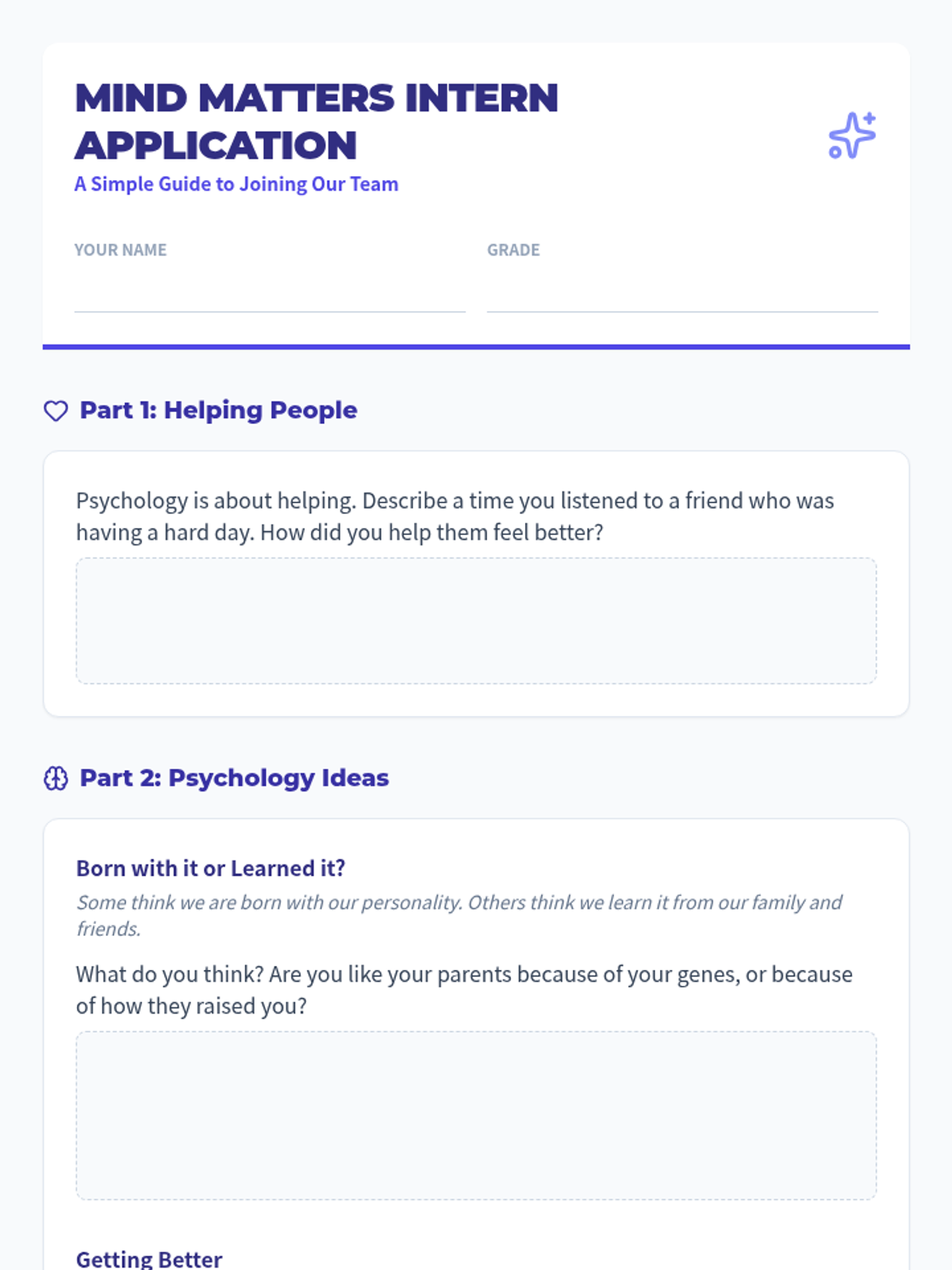
A comprehensive lesson designed to help high school students navigate the job application process for a psychology internship while demonstrating their subject-matter knowledge.
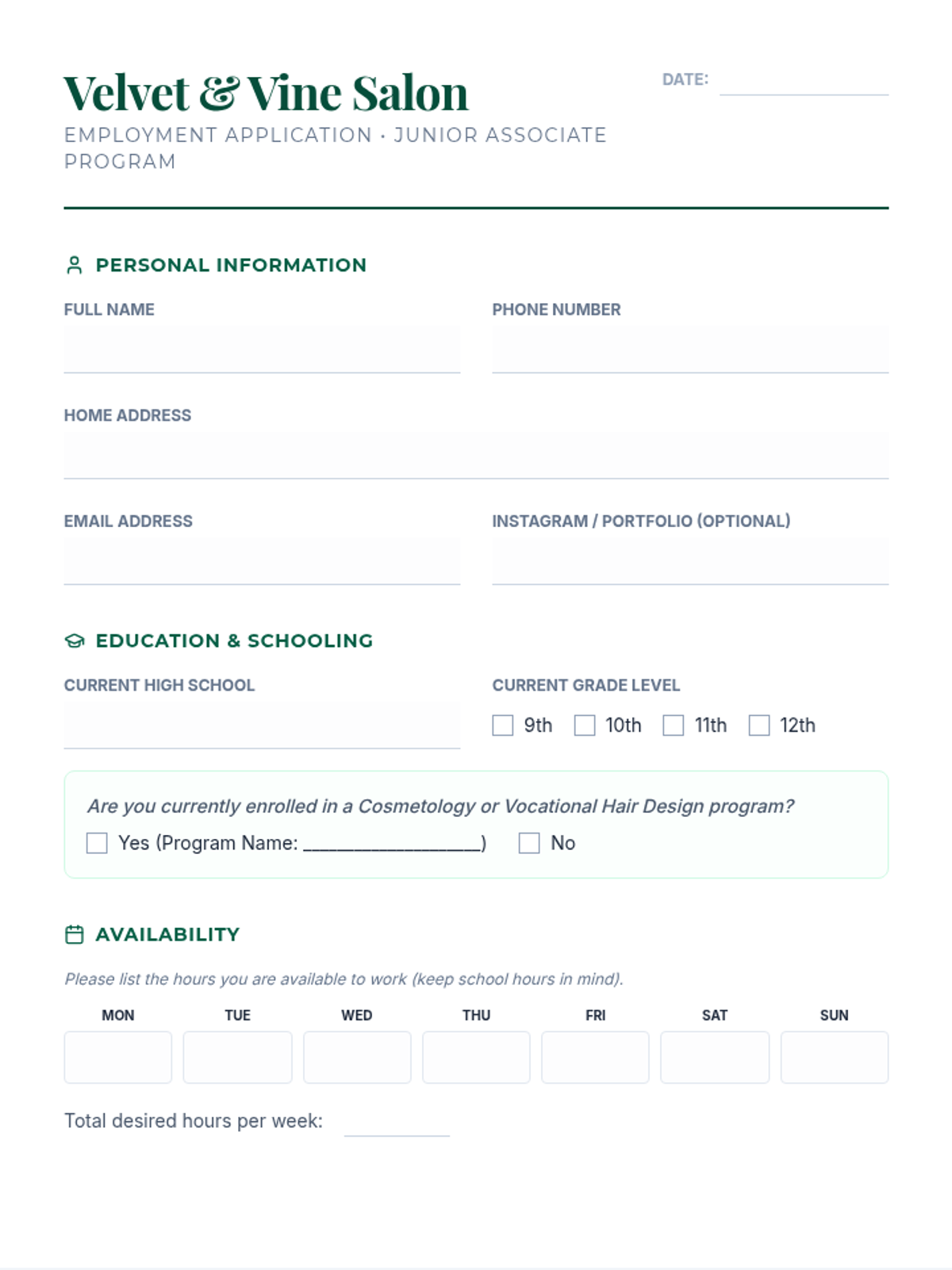
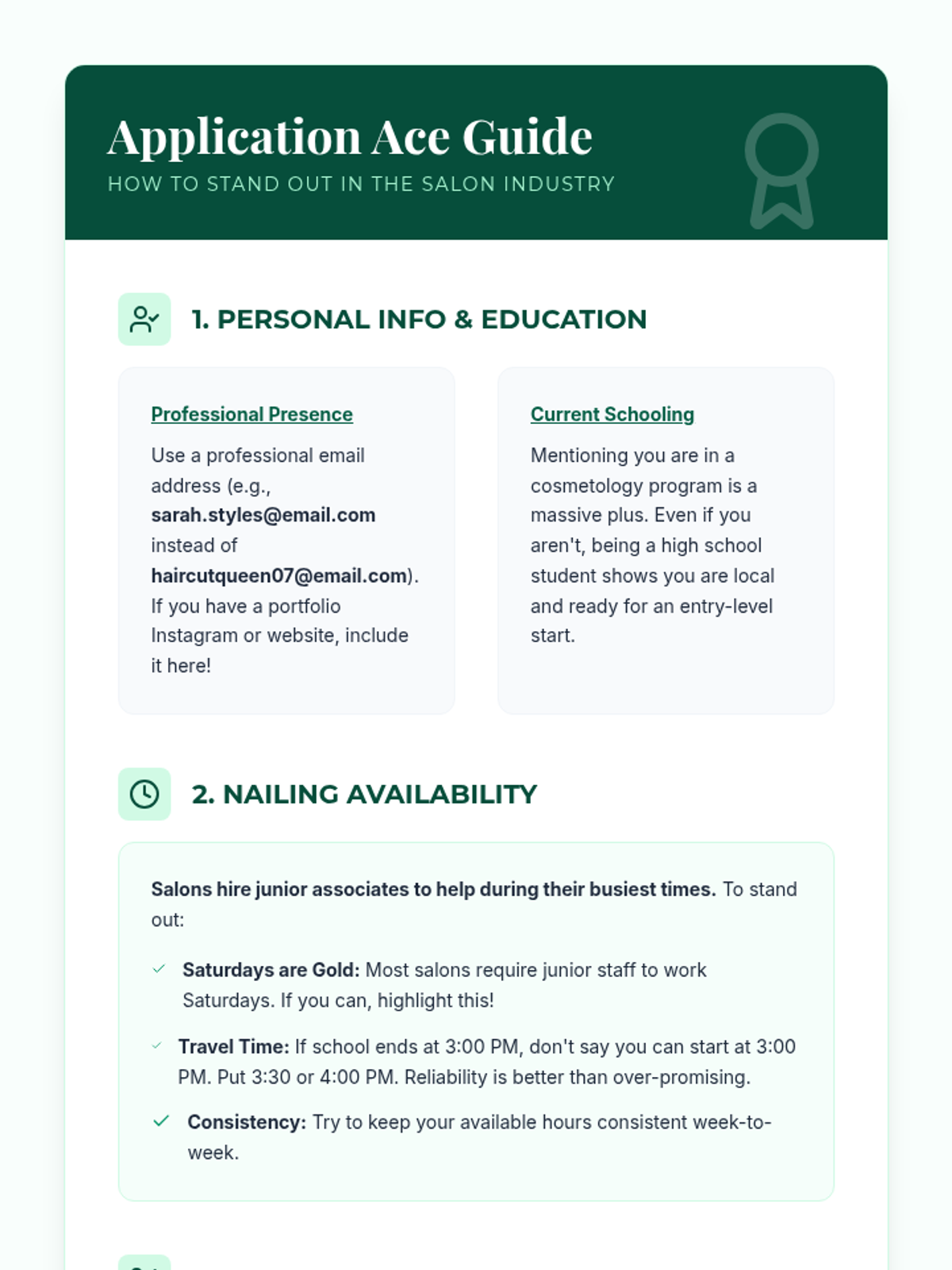
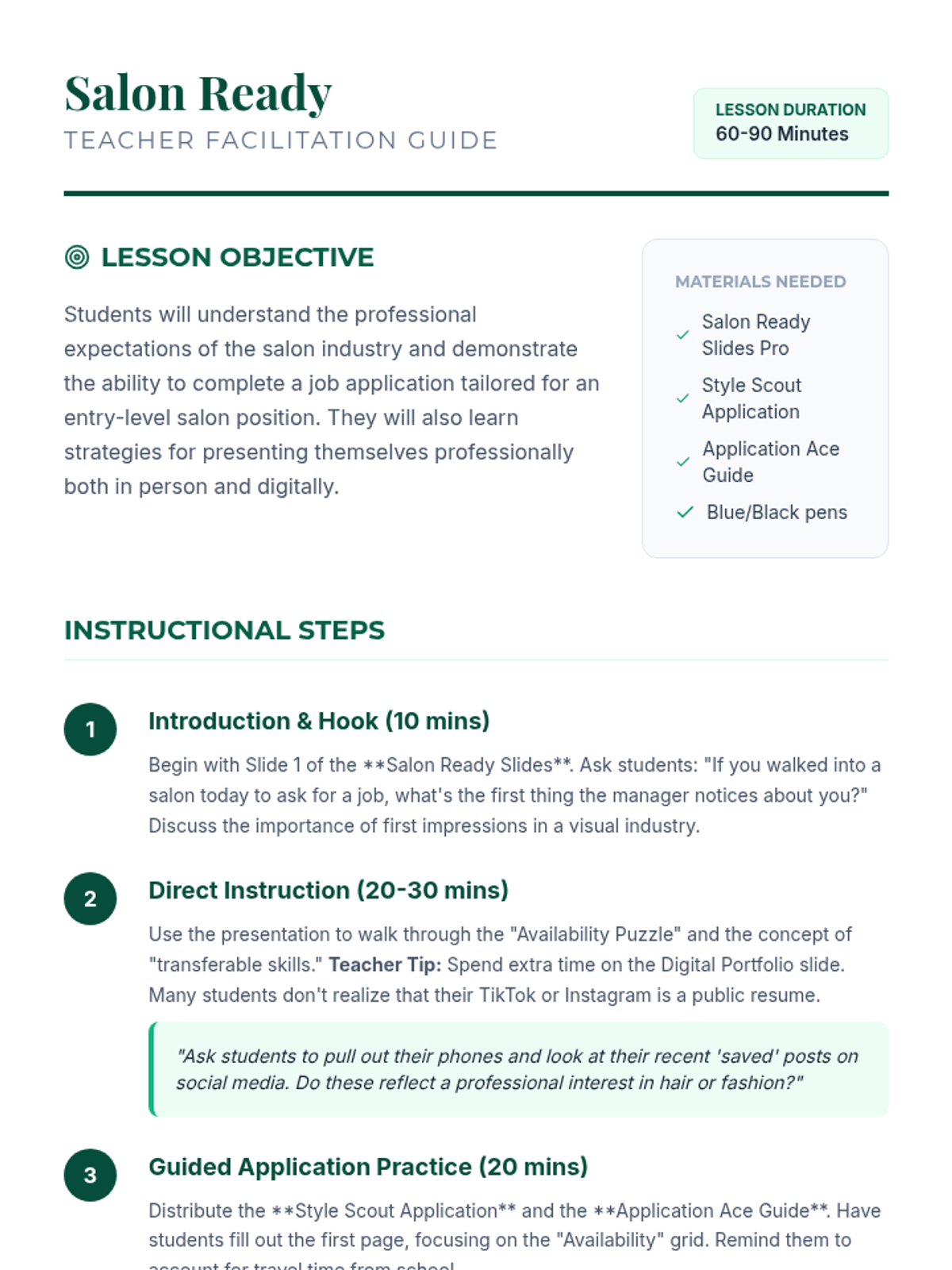
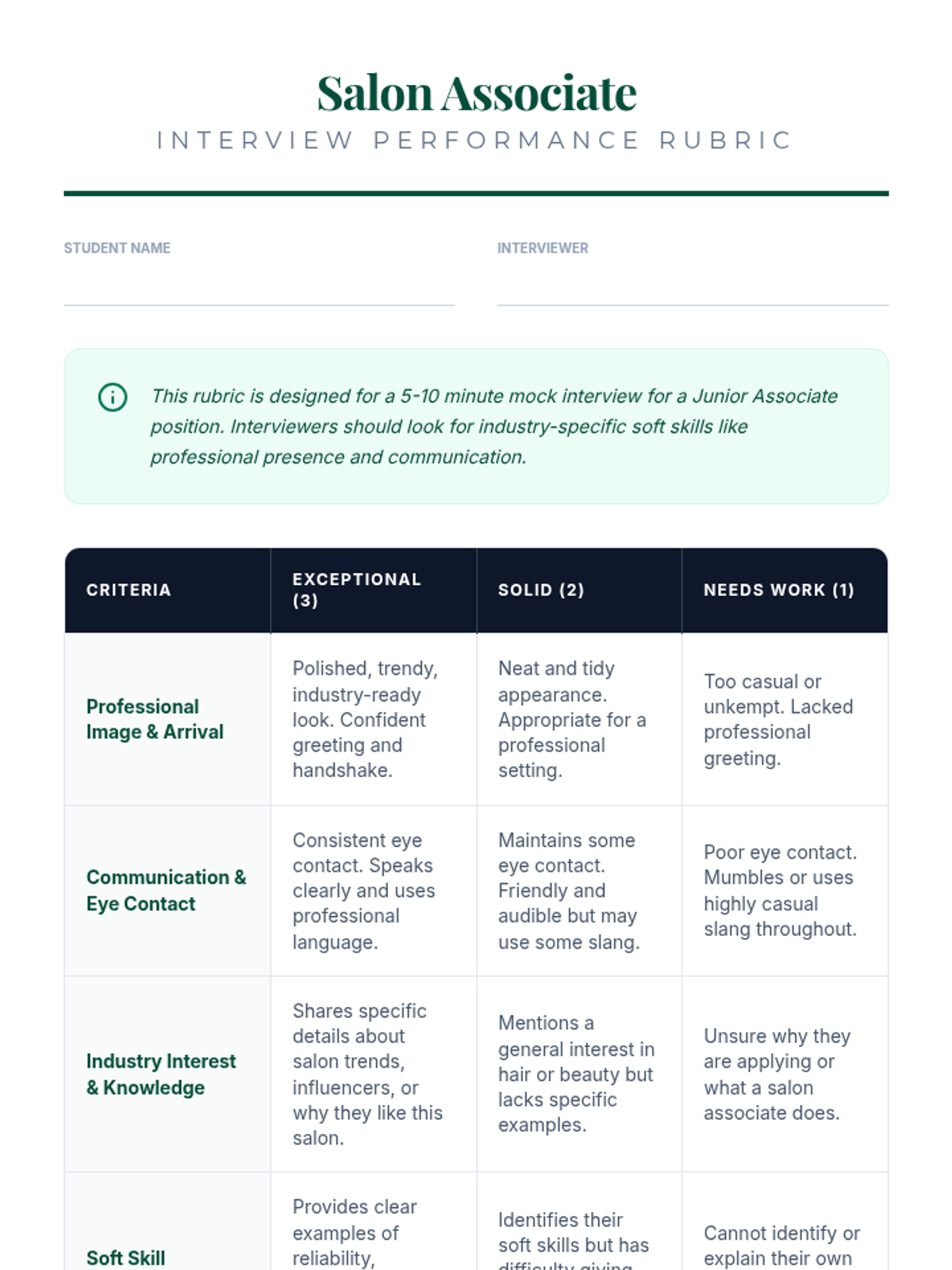
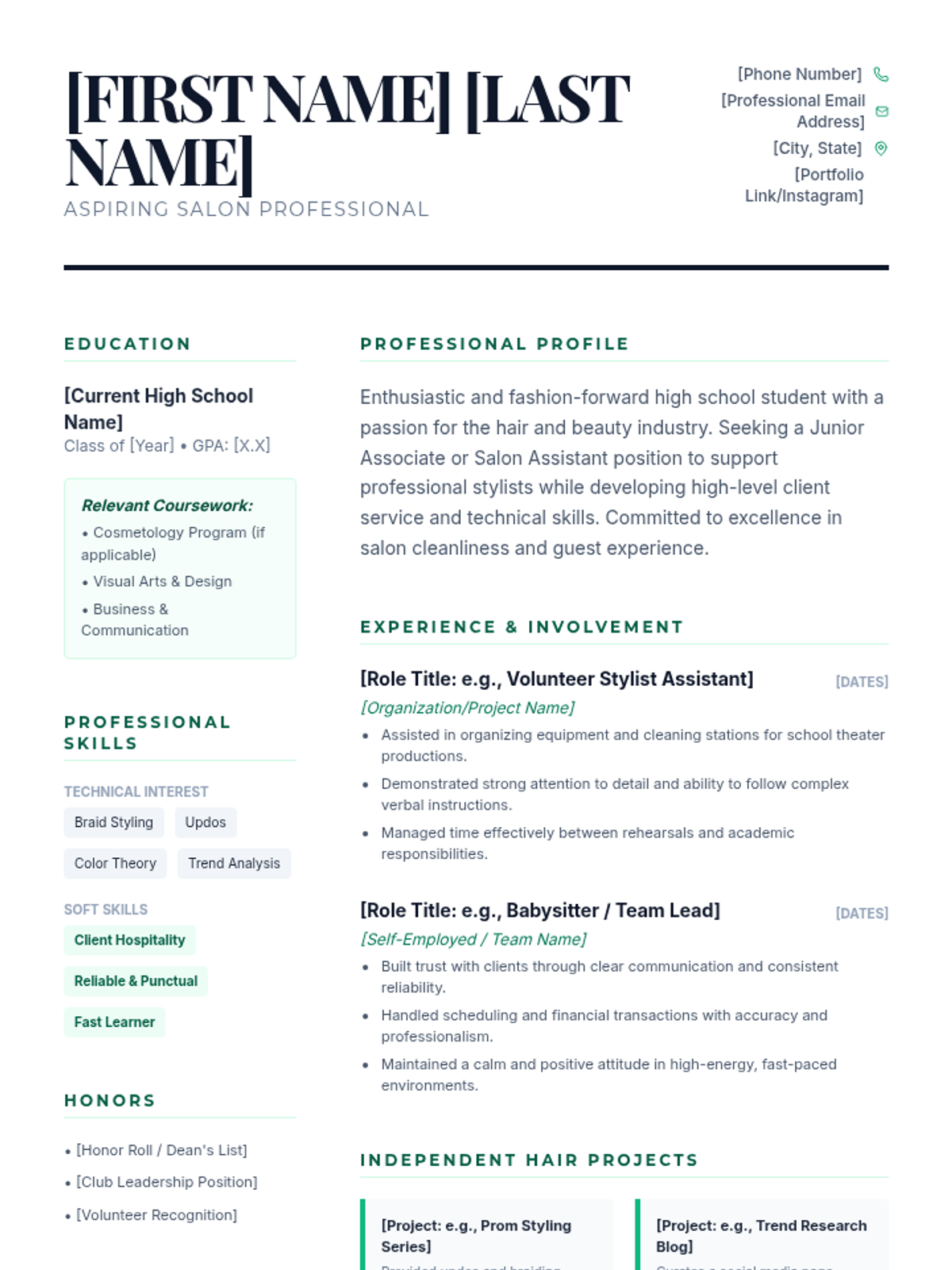
This lesson guides high school students through the process of applying for an entry-level position at a hair salon, focusing on professional presentation and industry-specific expectations.
Develops interview skills through research-based preparation and practicing responses with supportive sentence frames.
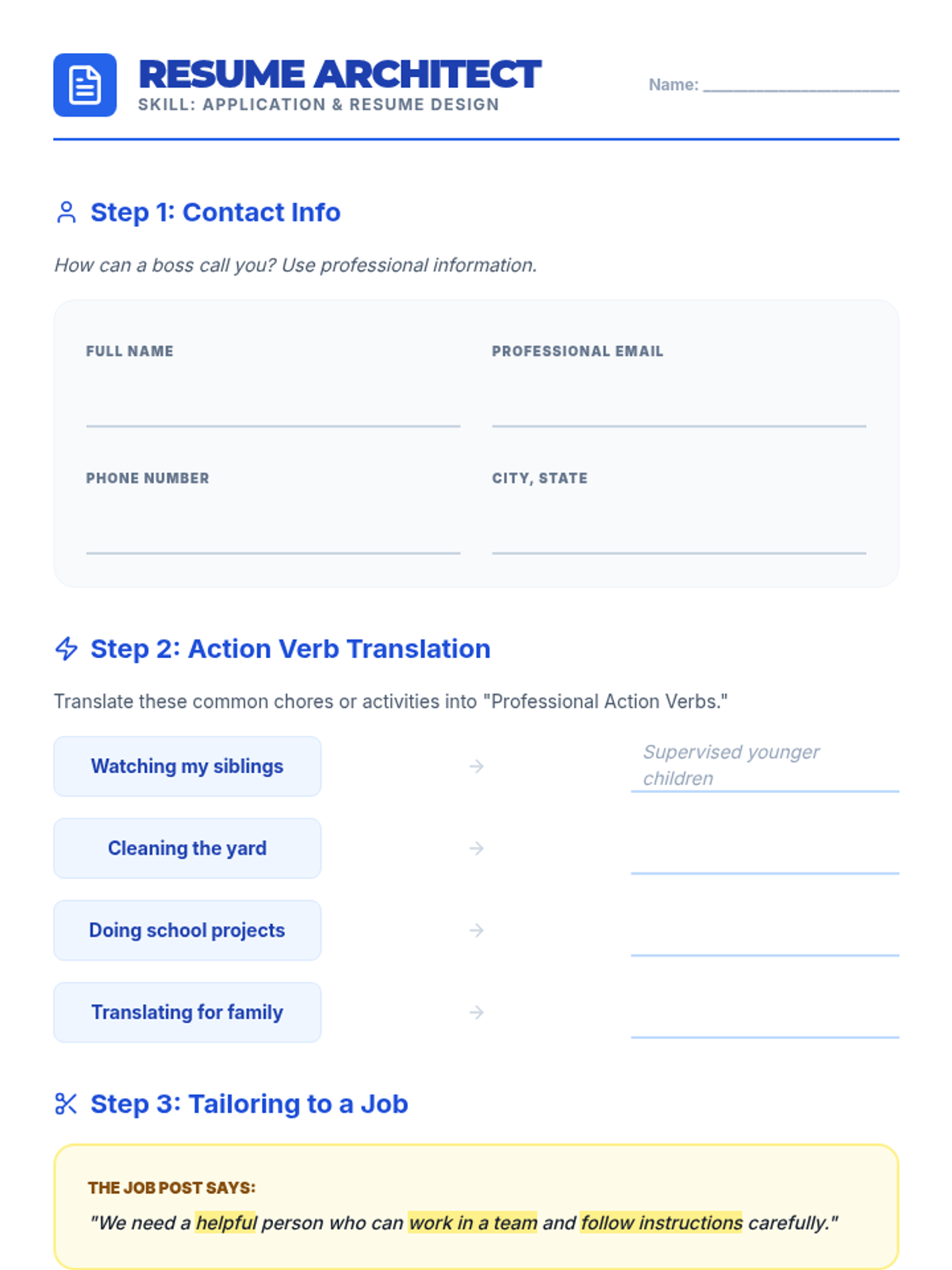
Covers the essentials of job applications, tailoring resumes, and writing cover letters specifically for students.
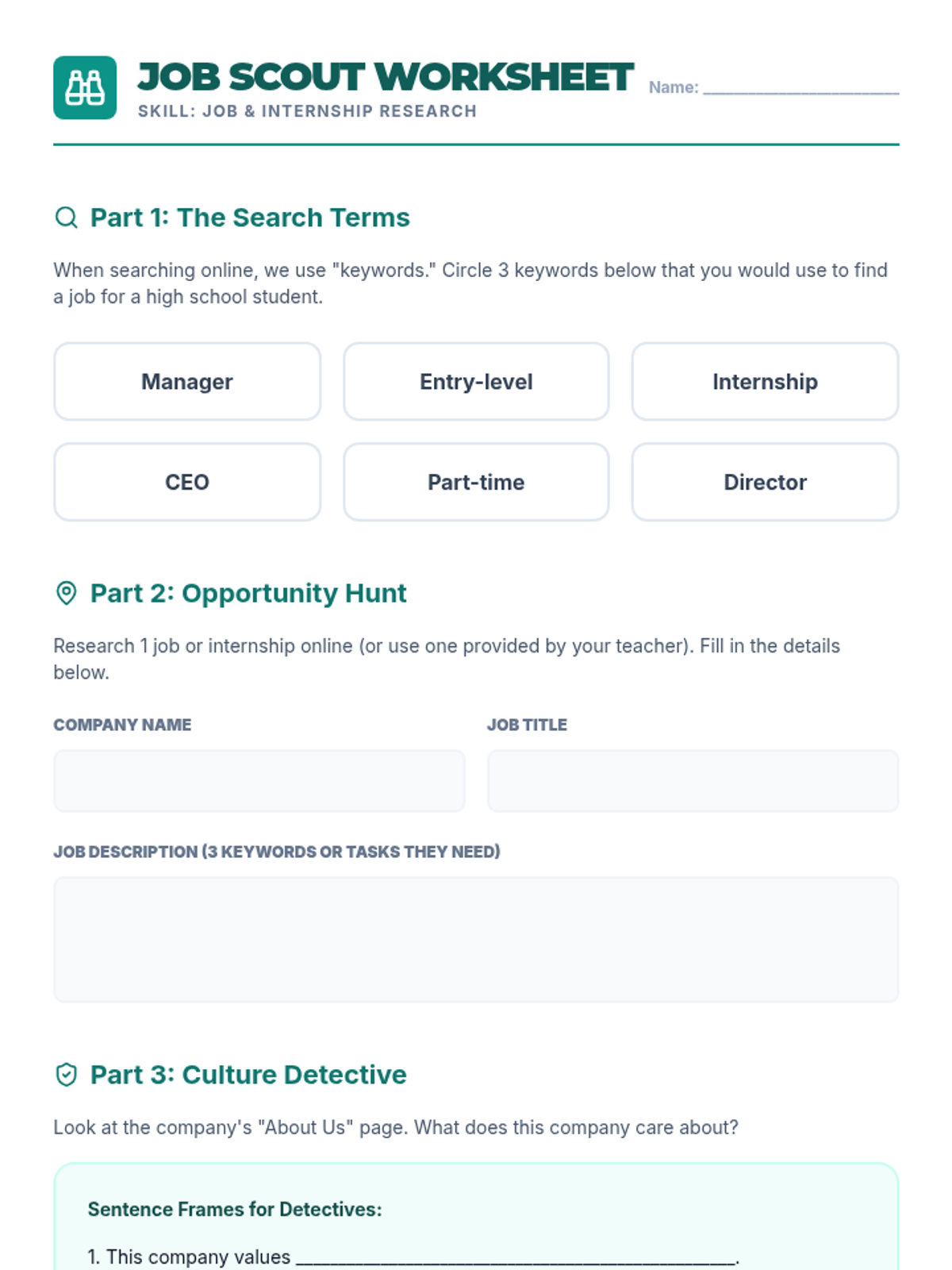
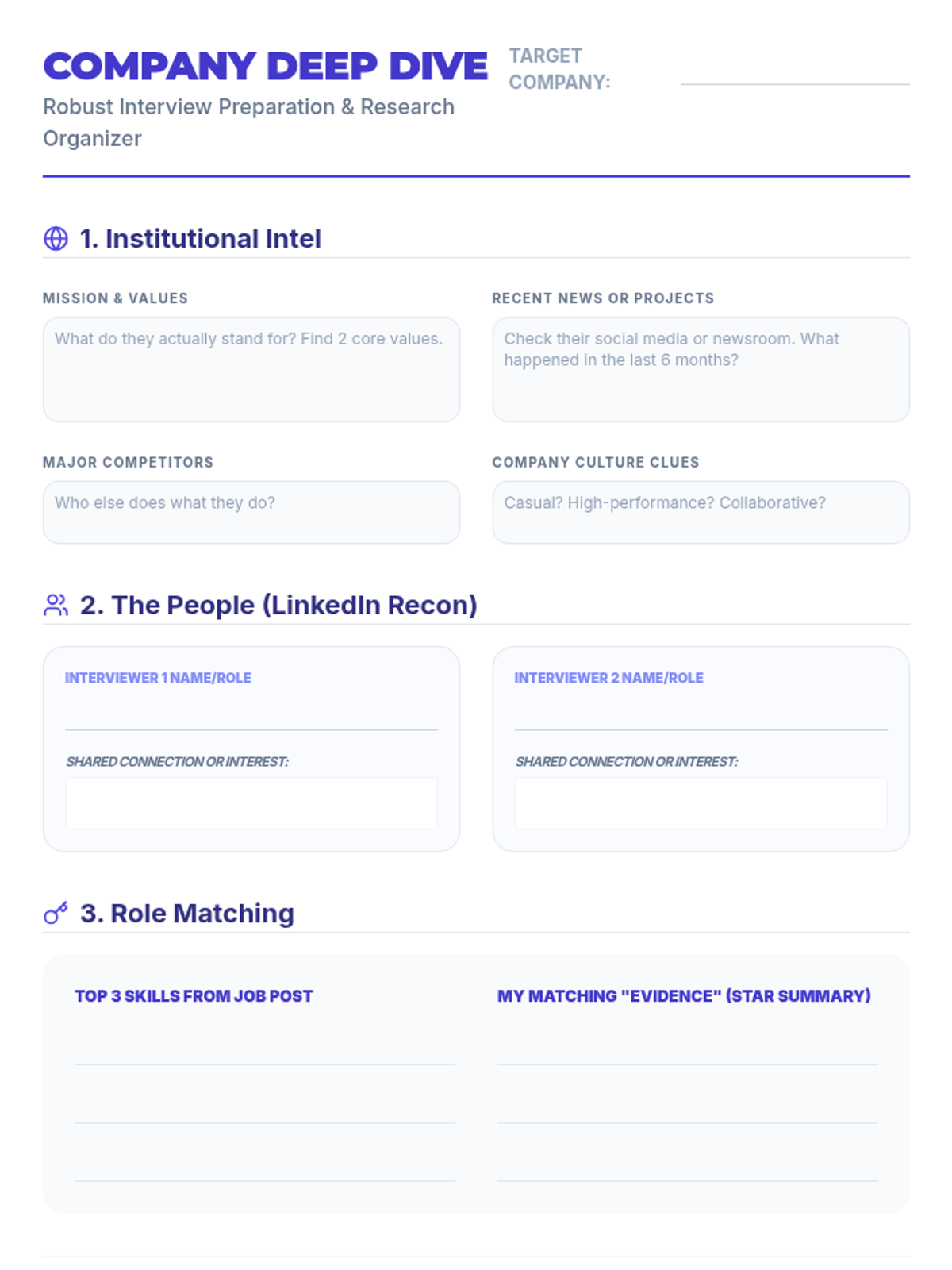
Teaches students how to find job and internship opportunities and research company culture and values.
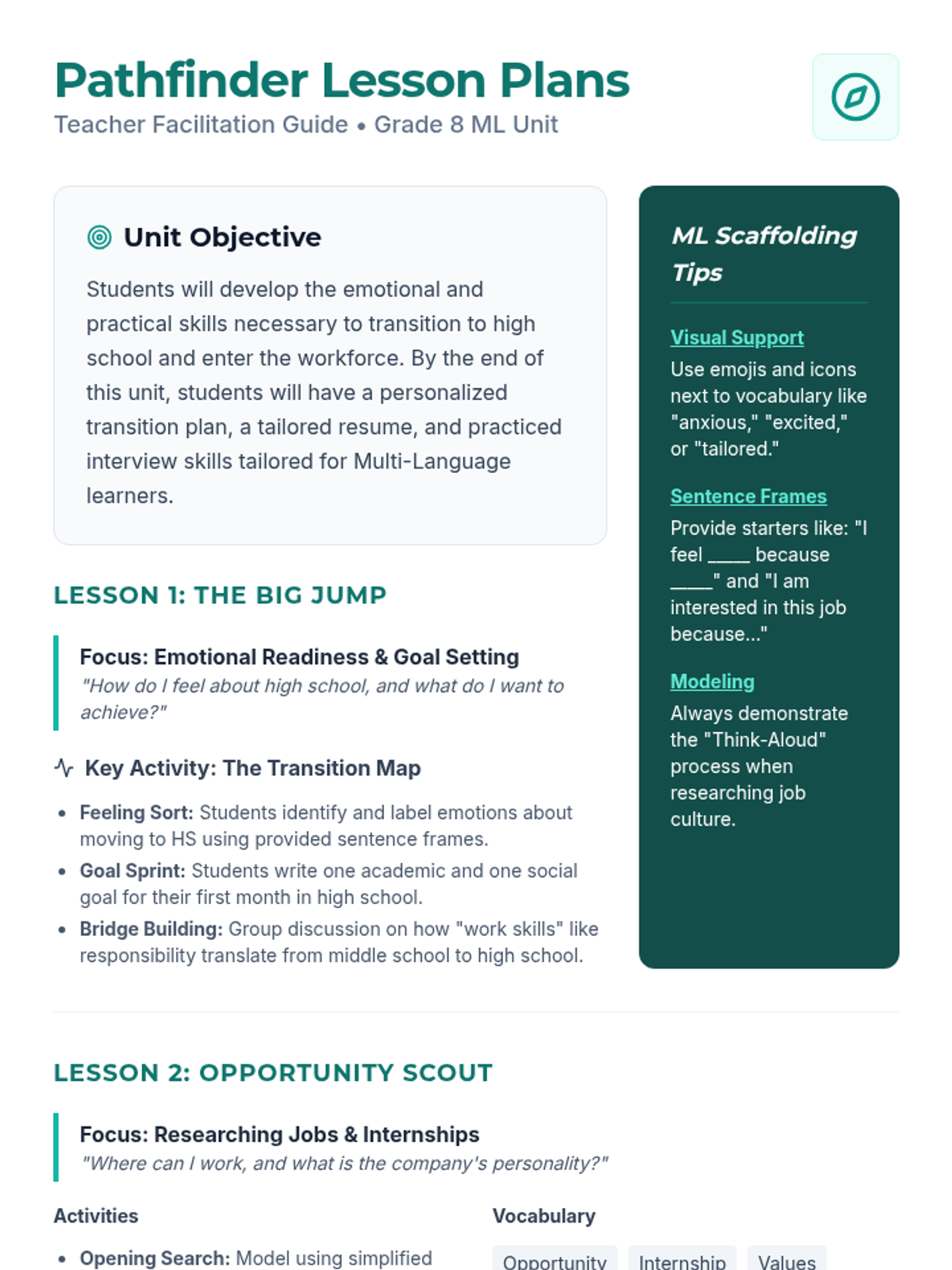
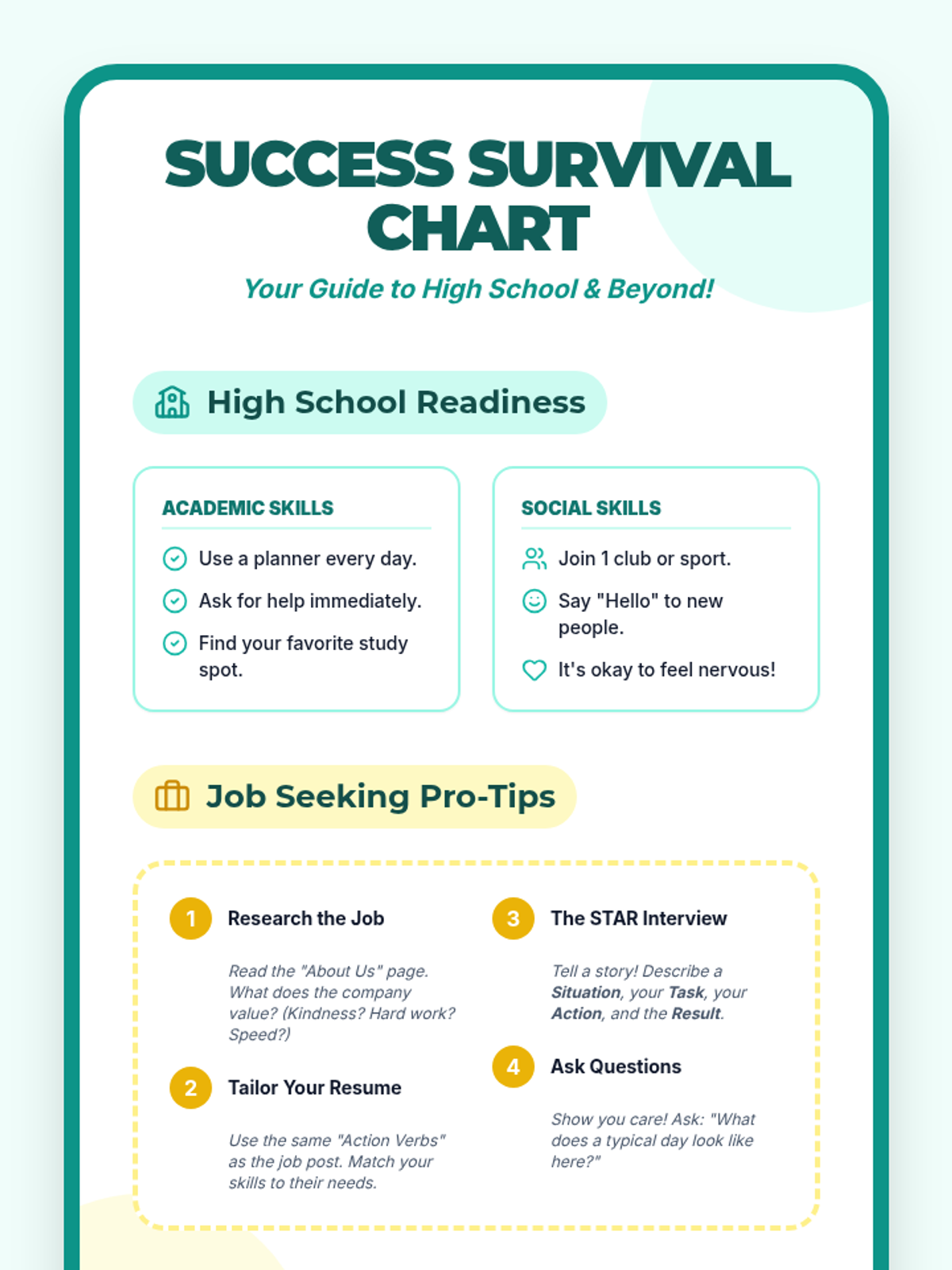
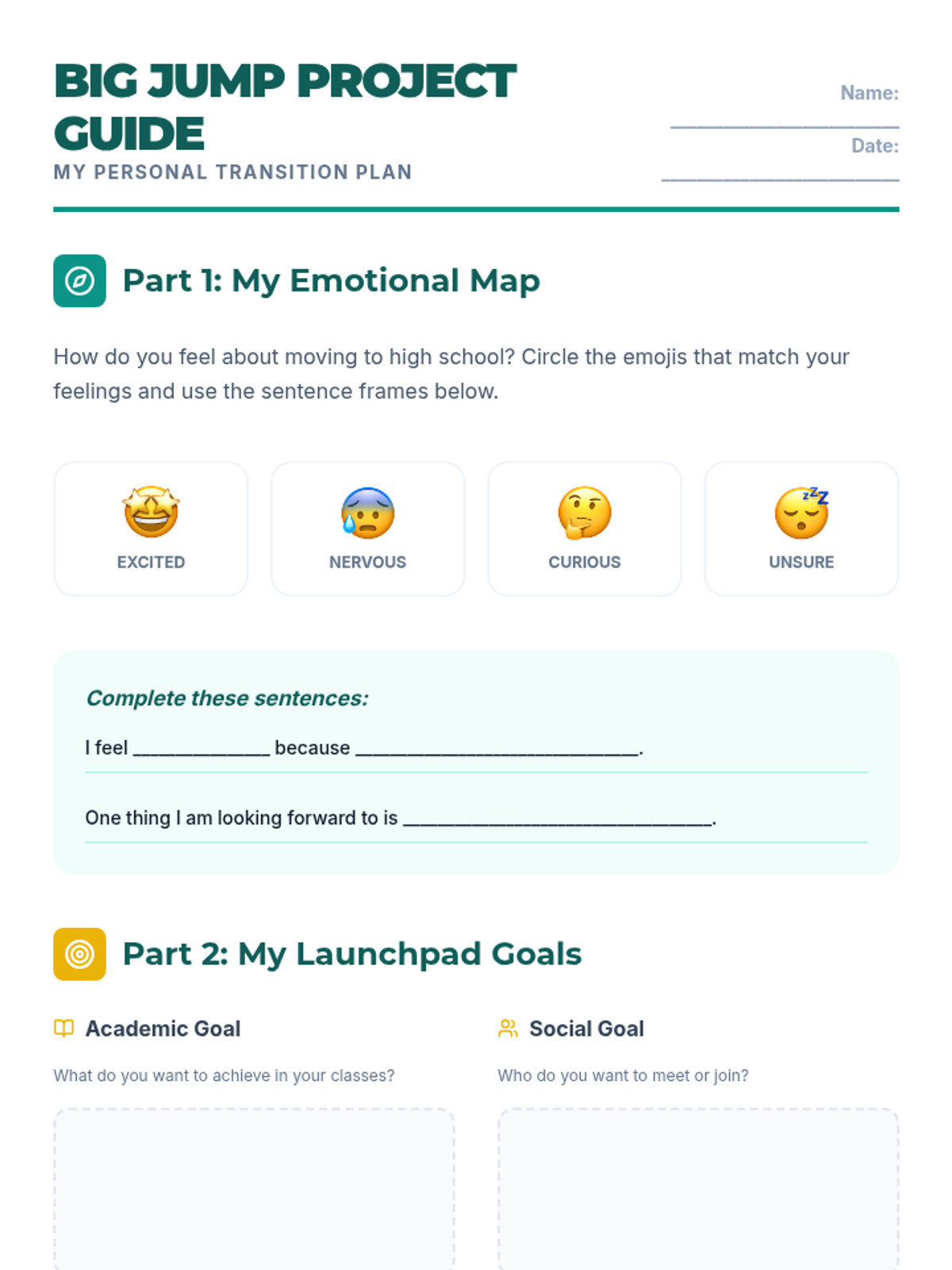
Focuses on the emotional transition from middle school to high school, identifying goals, and understanding the new academic environment.
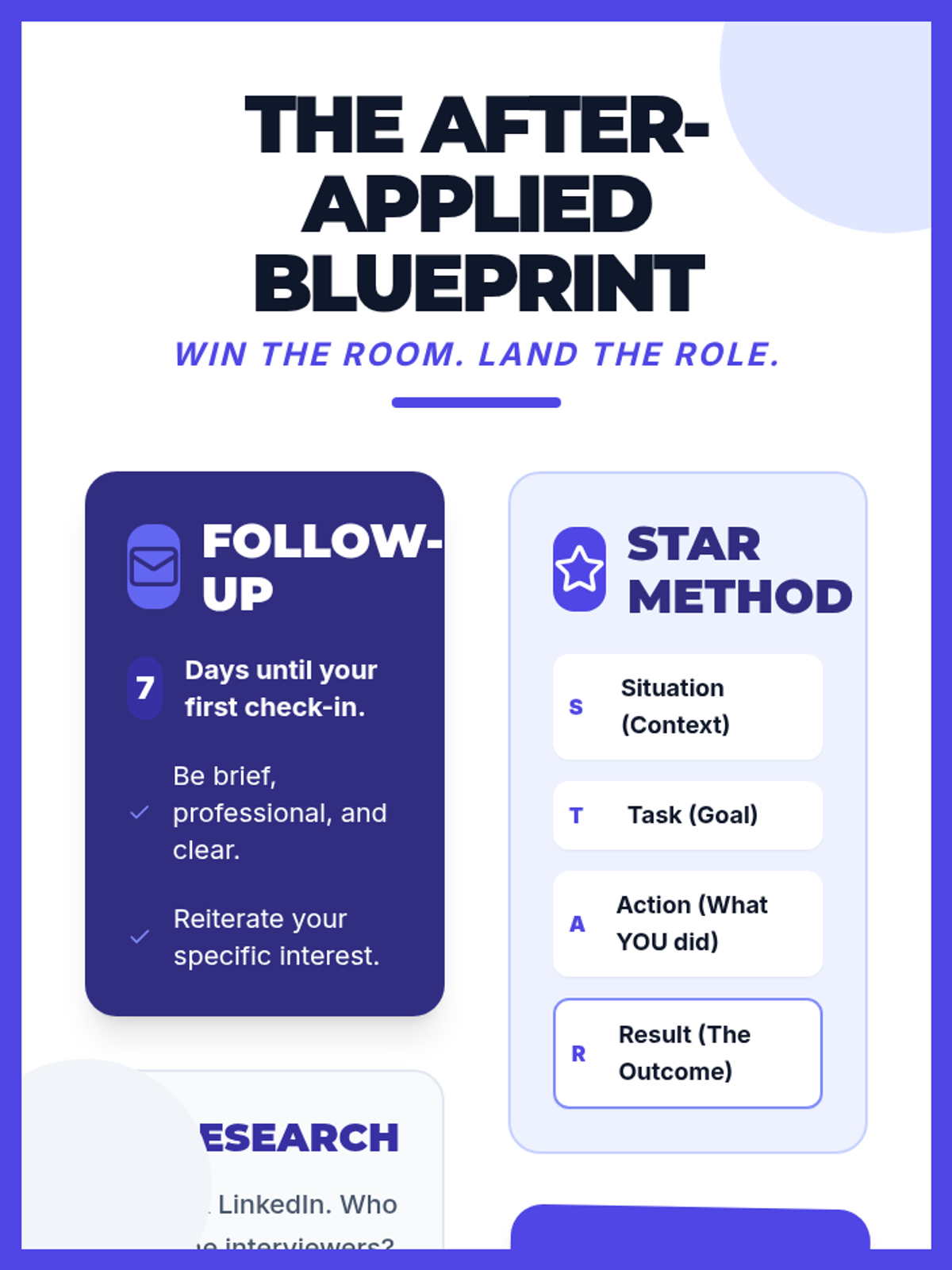
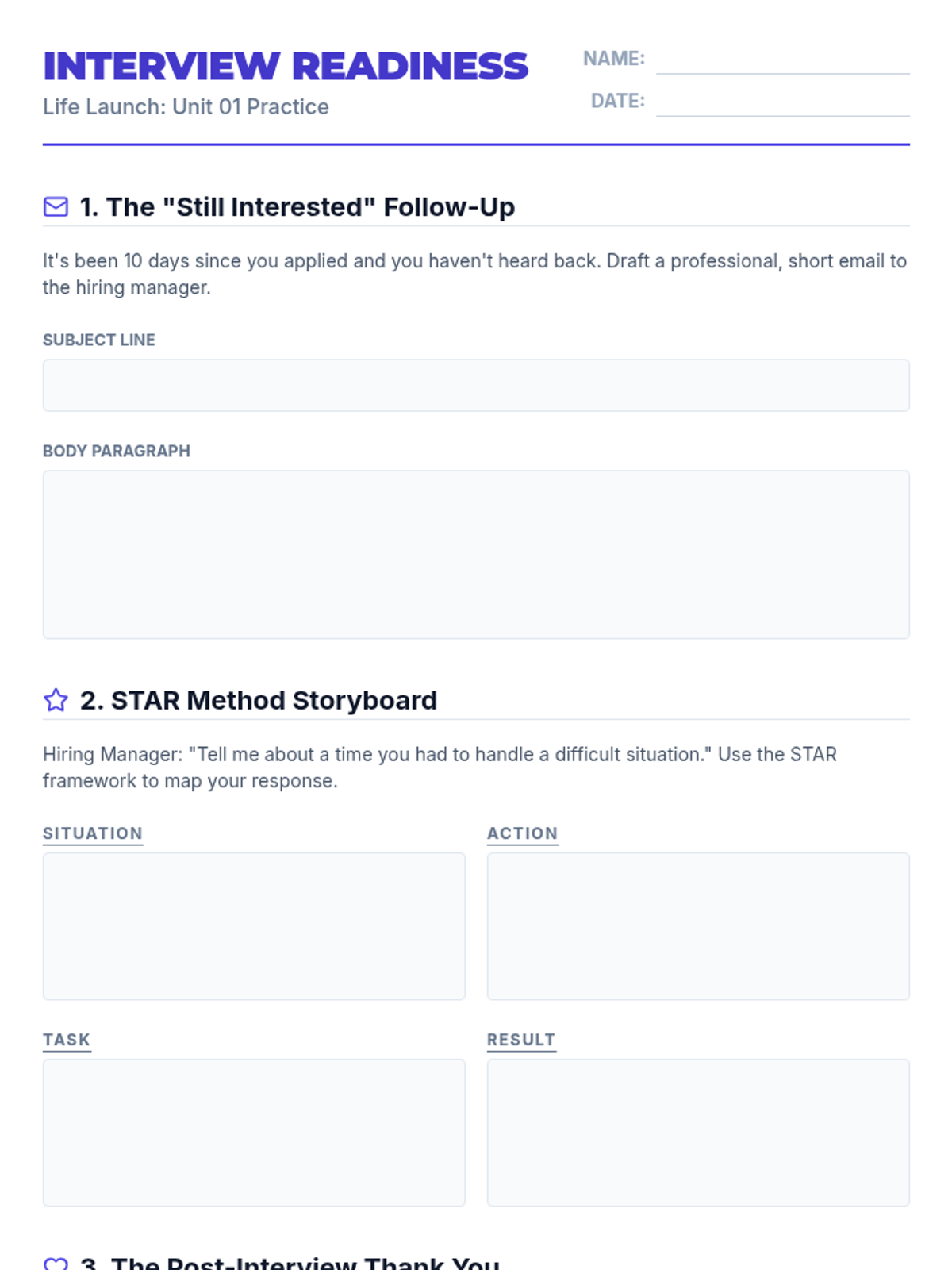
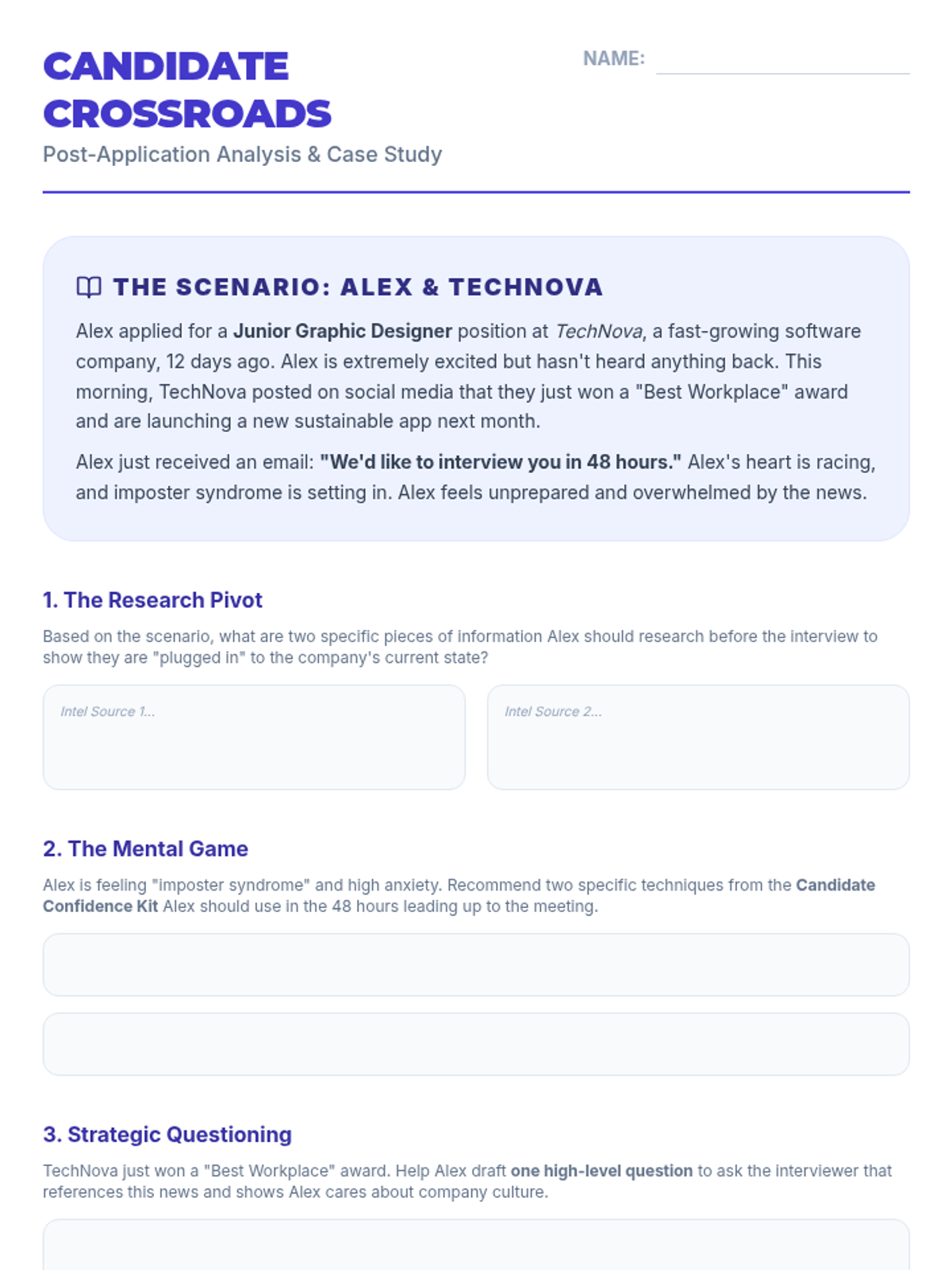
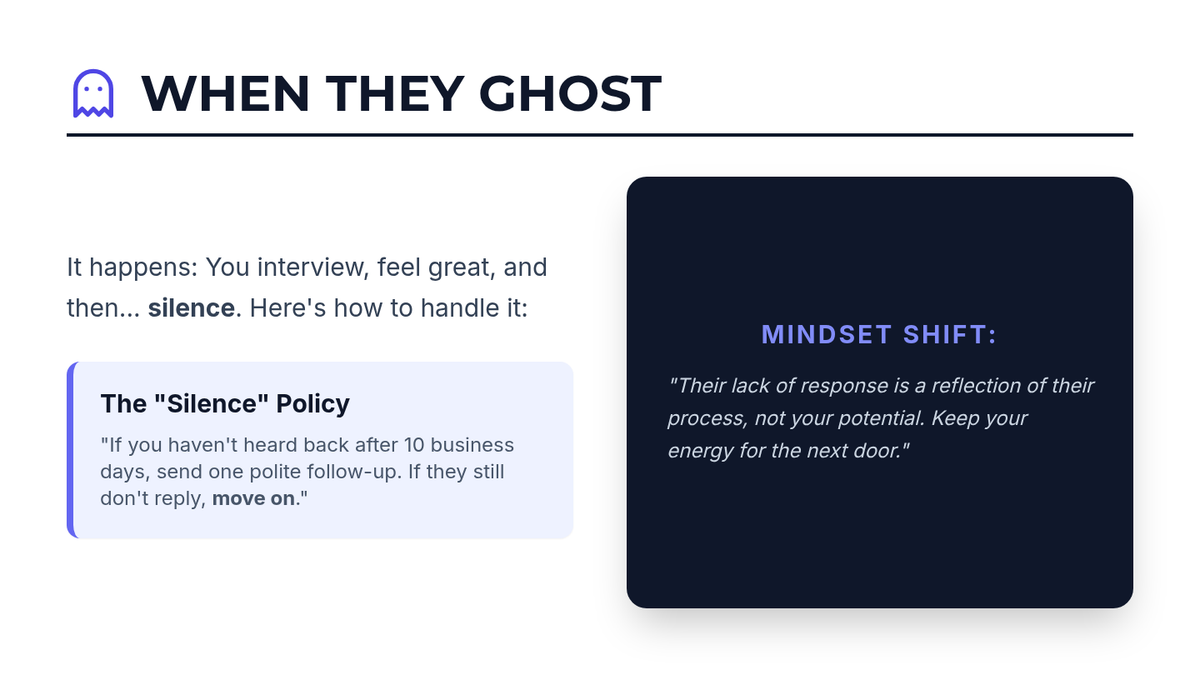
Mastering the critical phase after the job application is submitted. Students learn professional follow-up etiquette, STAR method storytelling, and strategic interview communication.
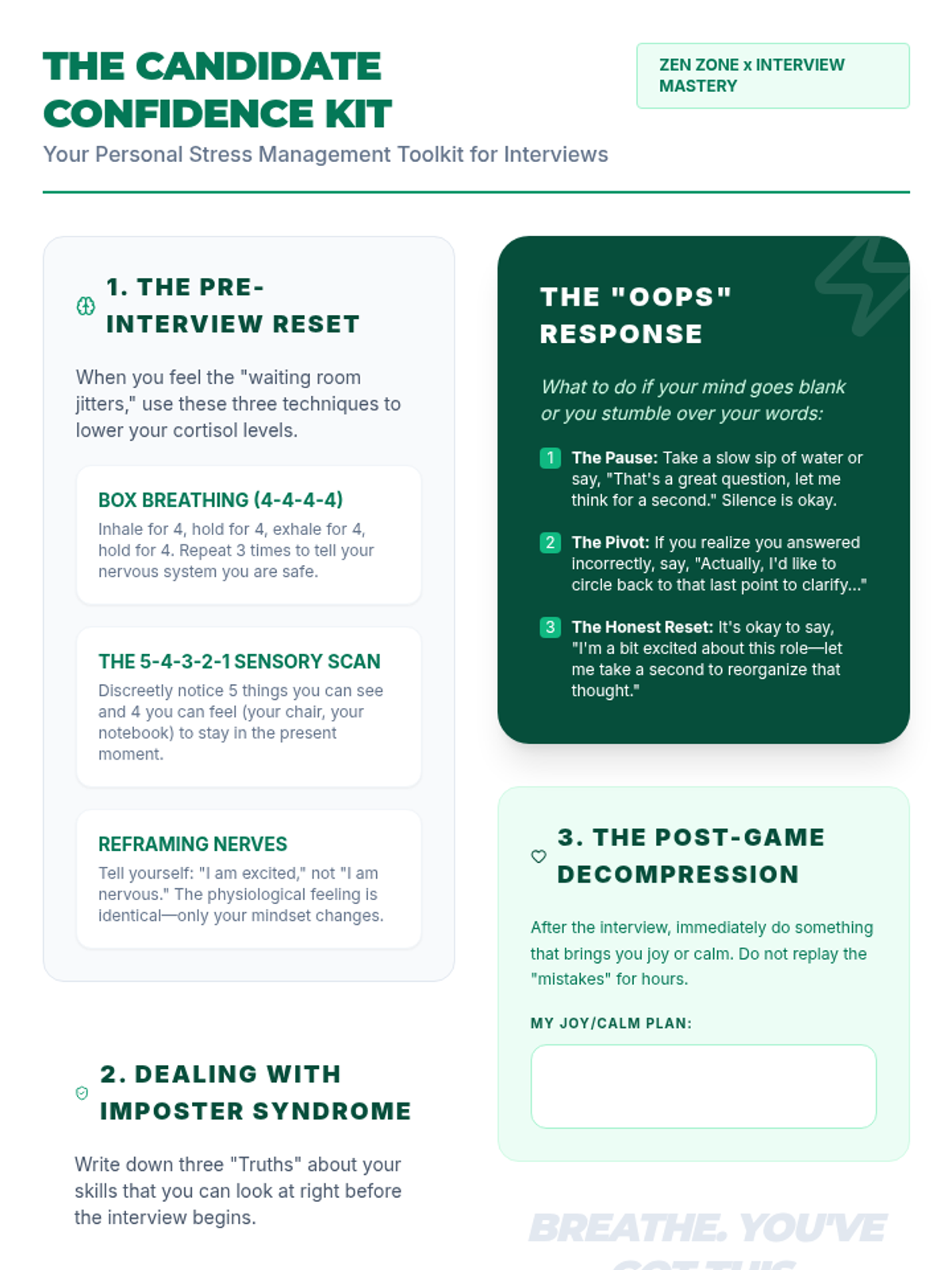
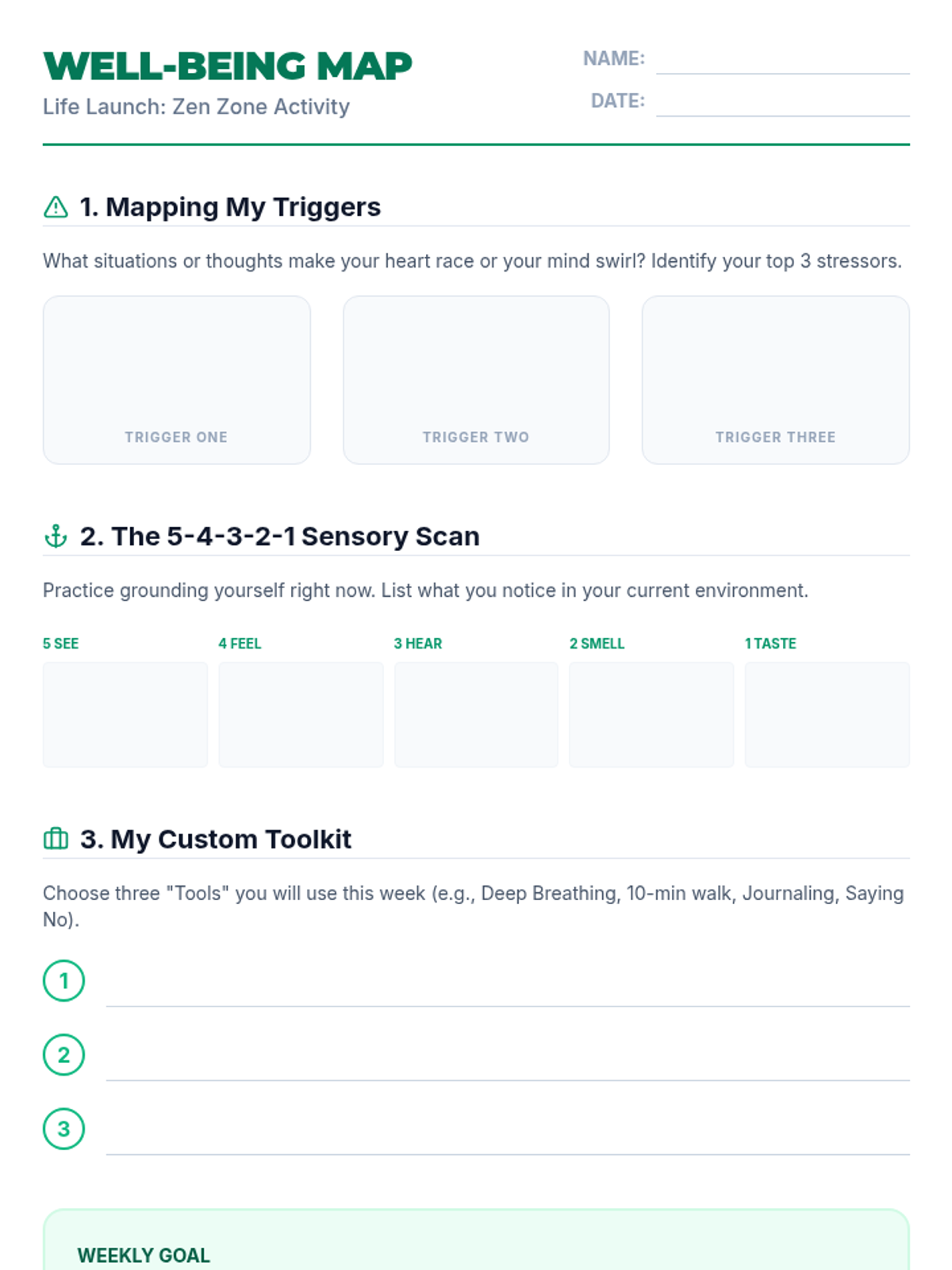
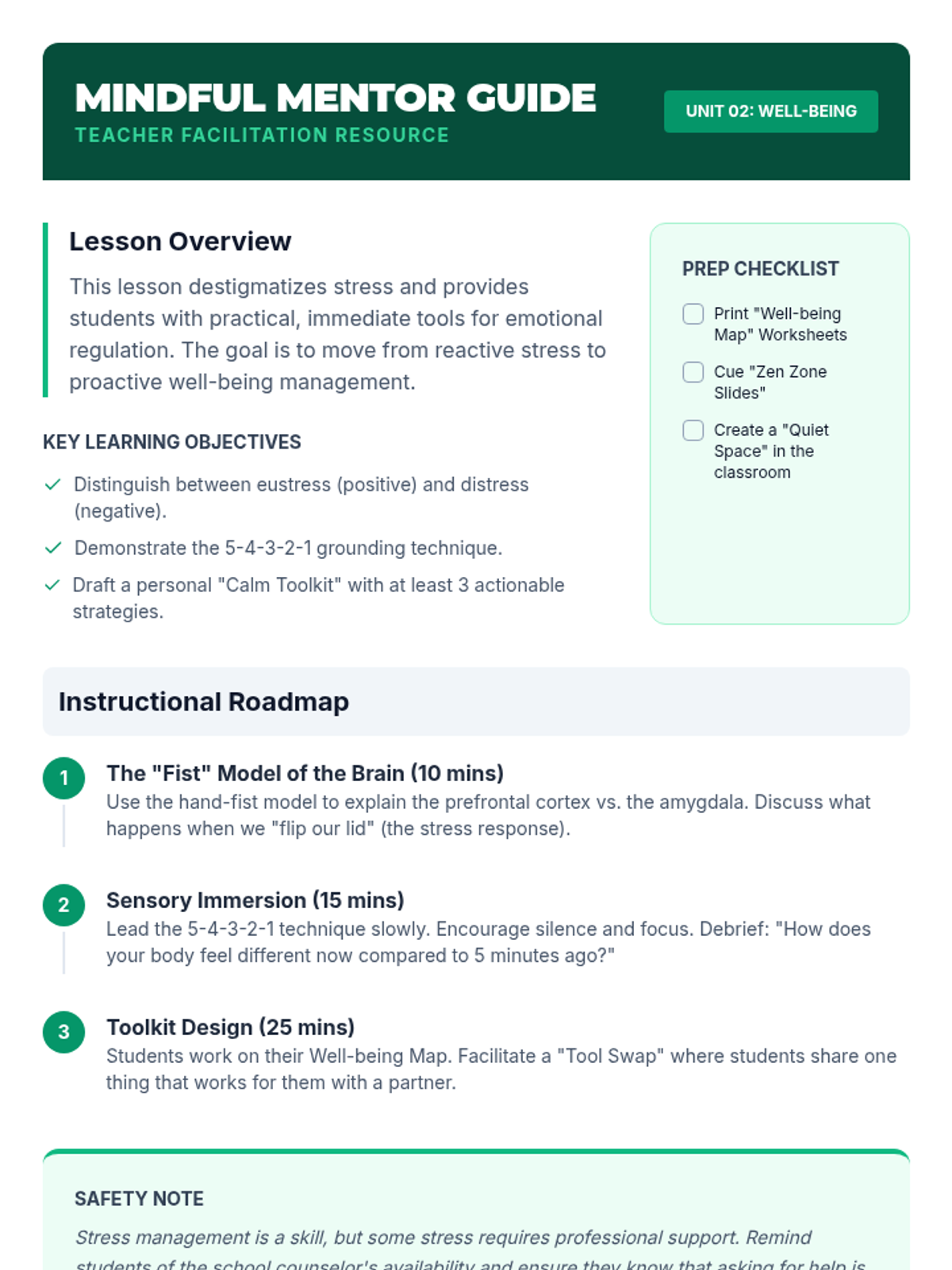
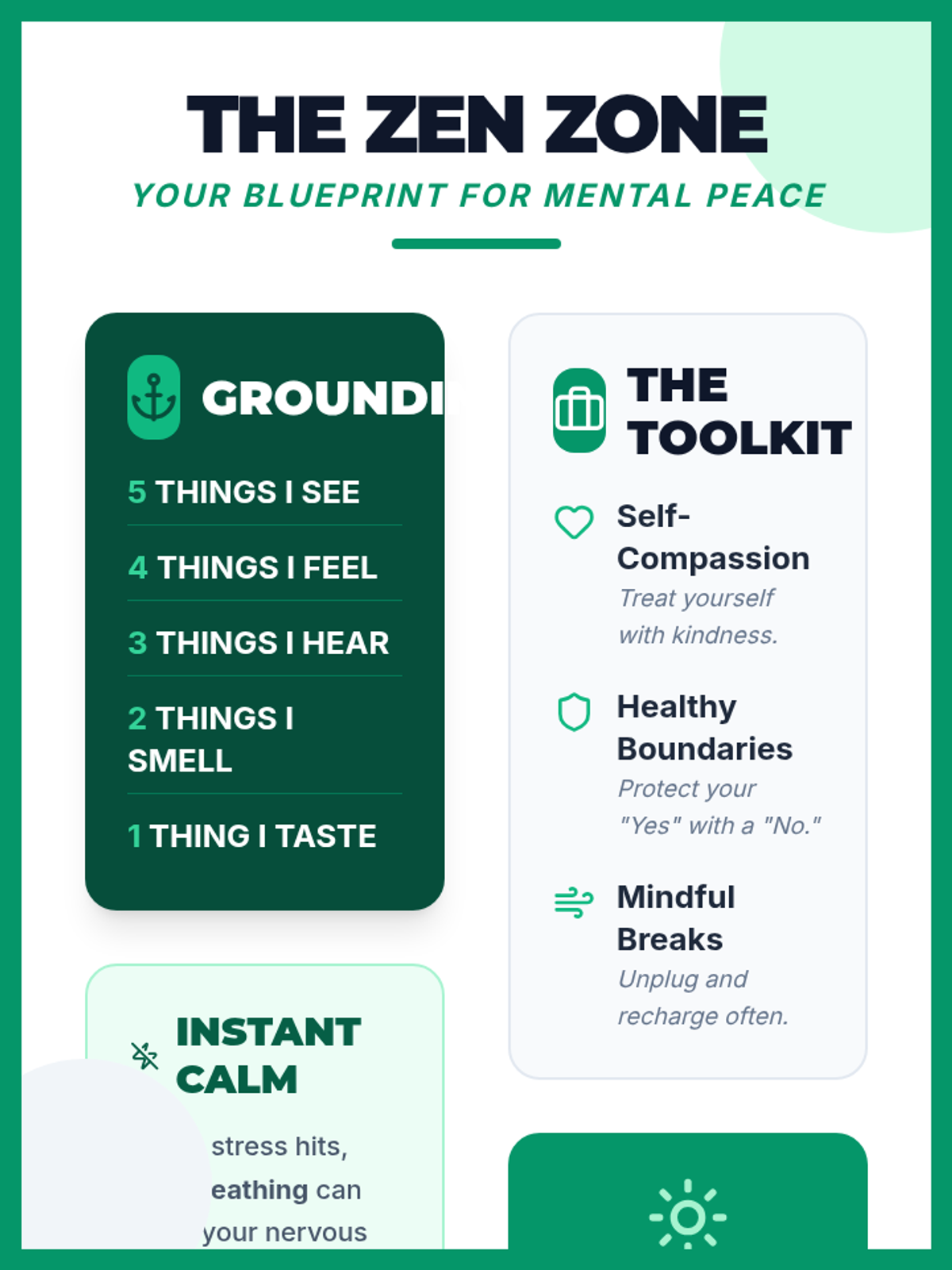
A focused lesson on identifying stress triggers, practicing mindfulness, and building a toolkit of healthy coping mechanisms for mental well-being.
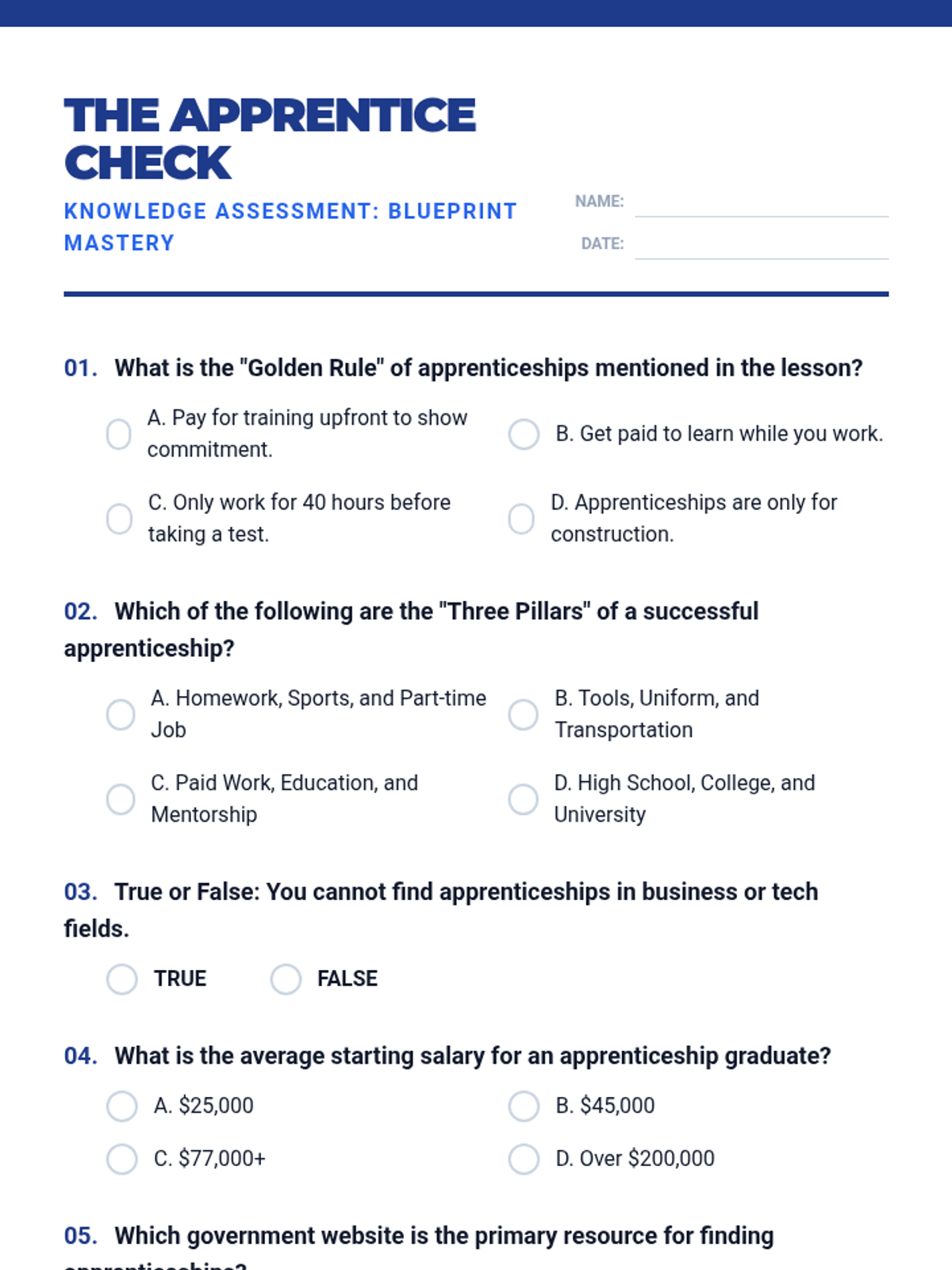
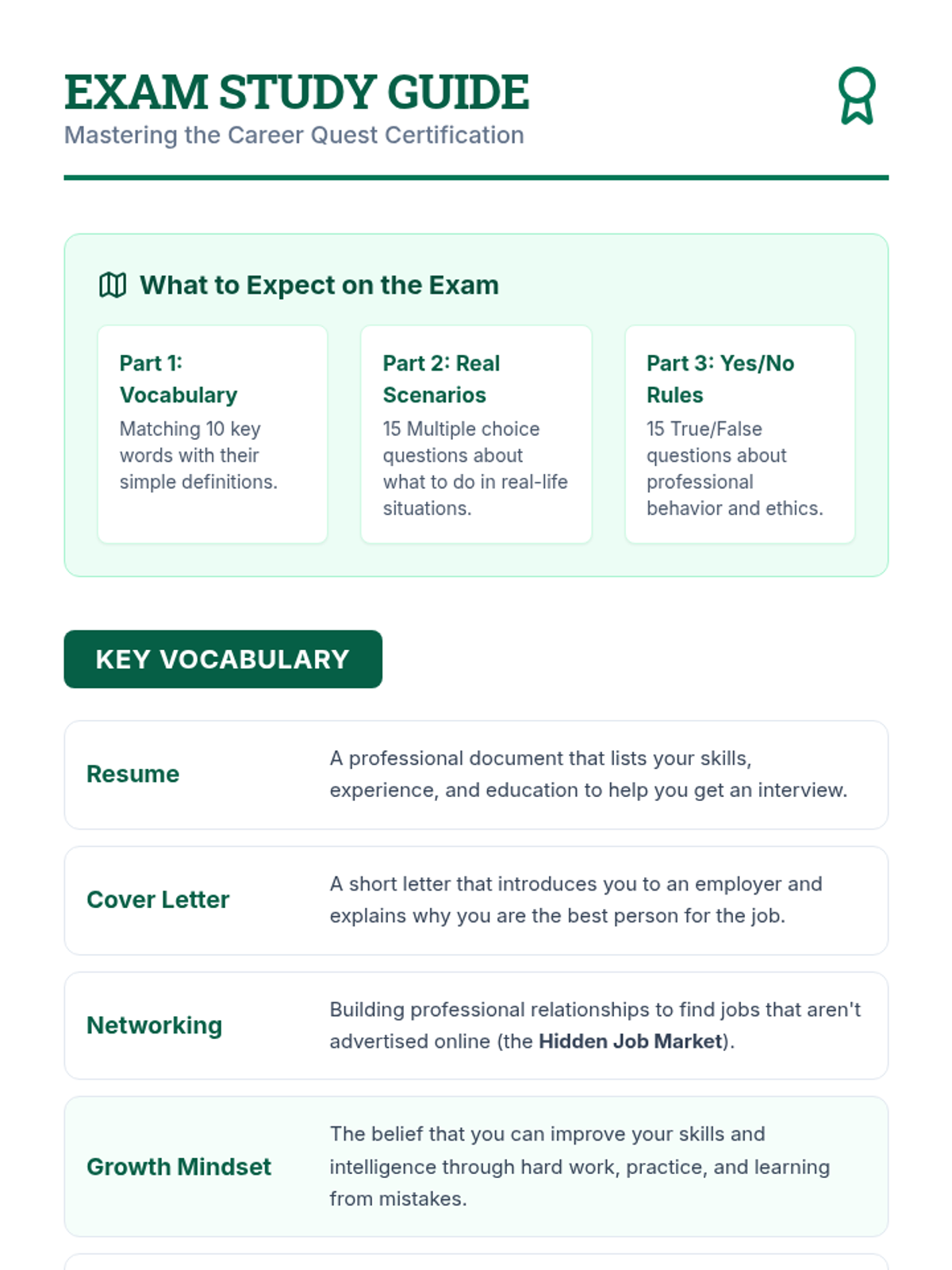
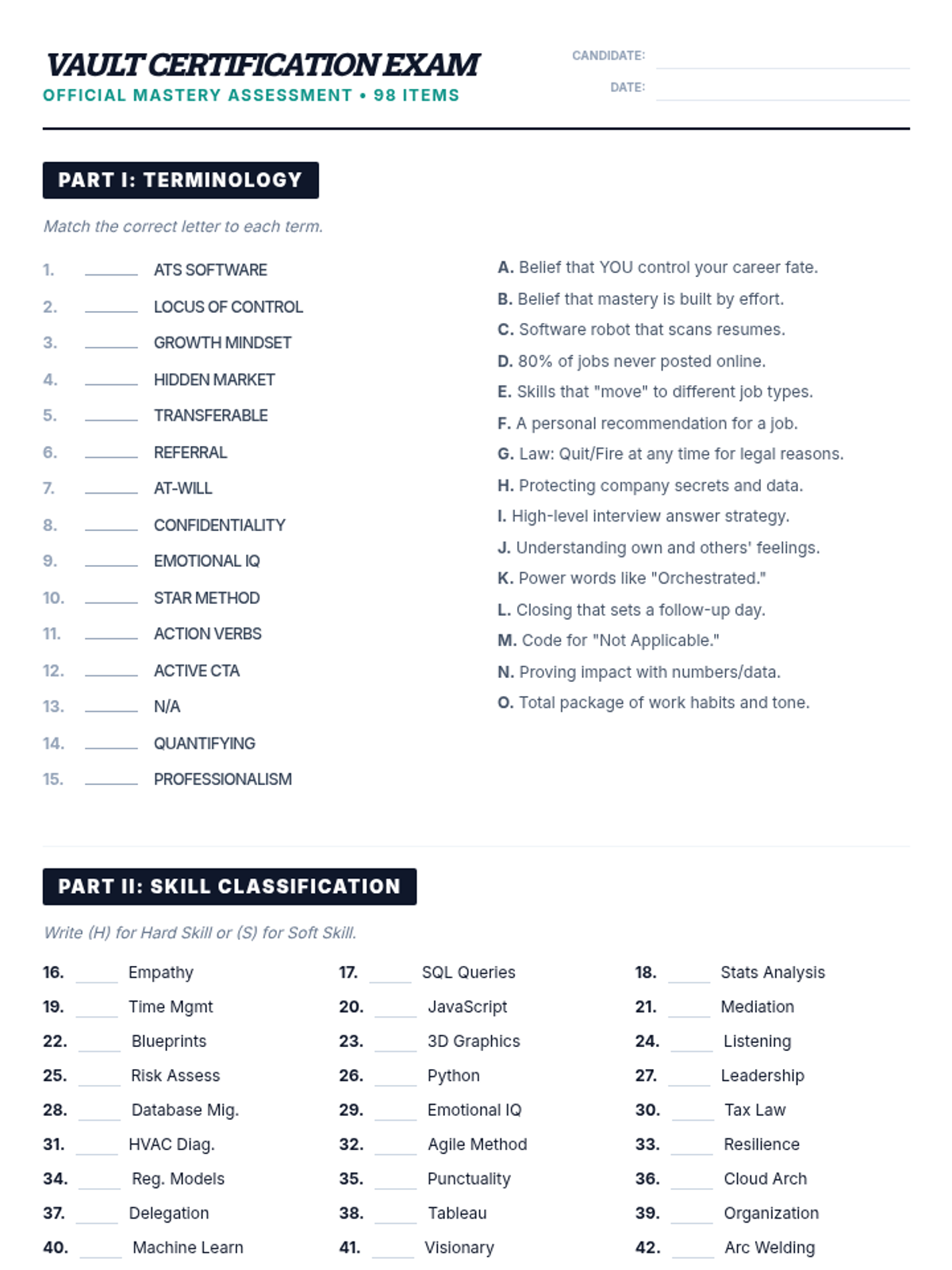
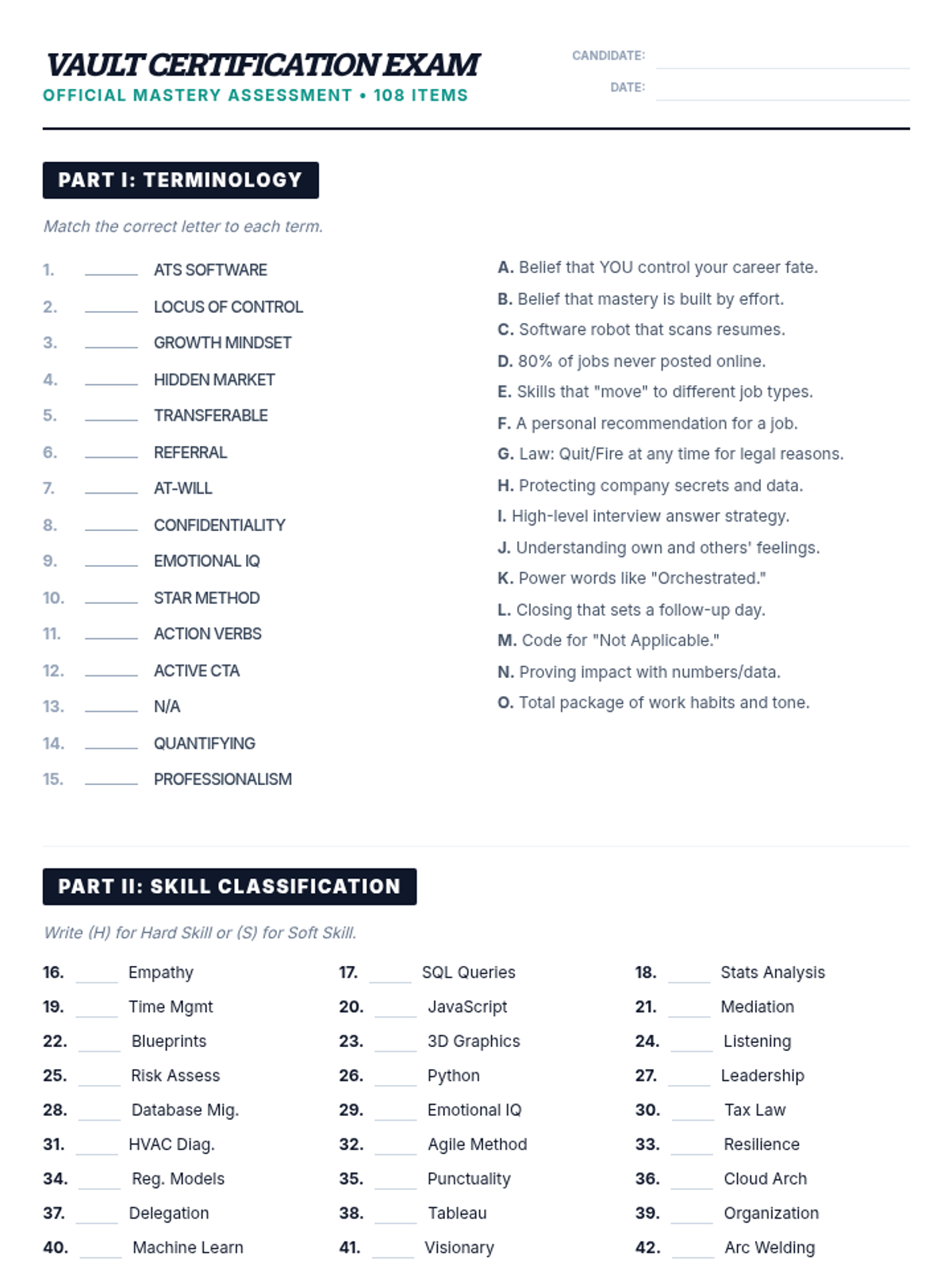
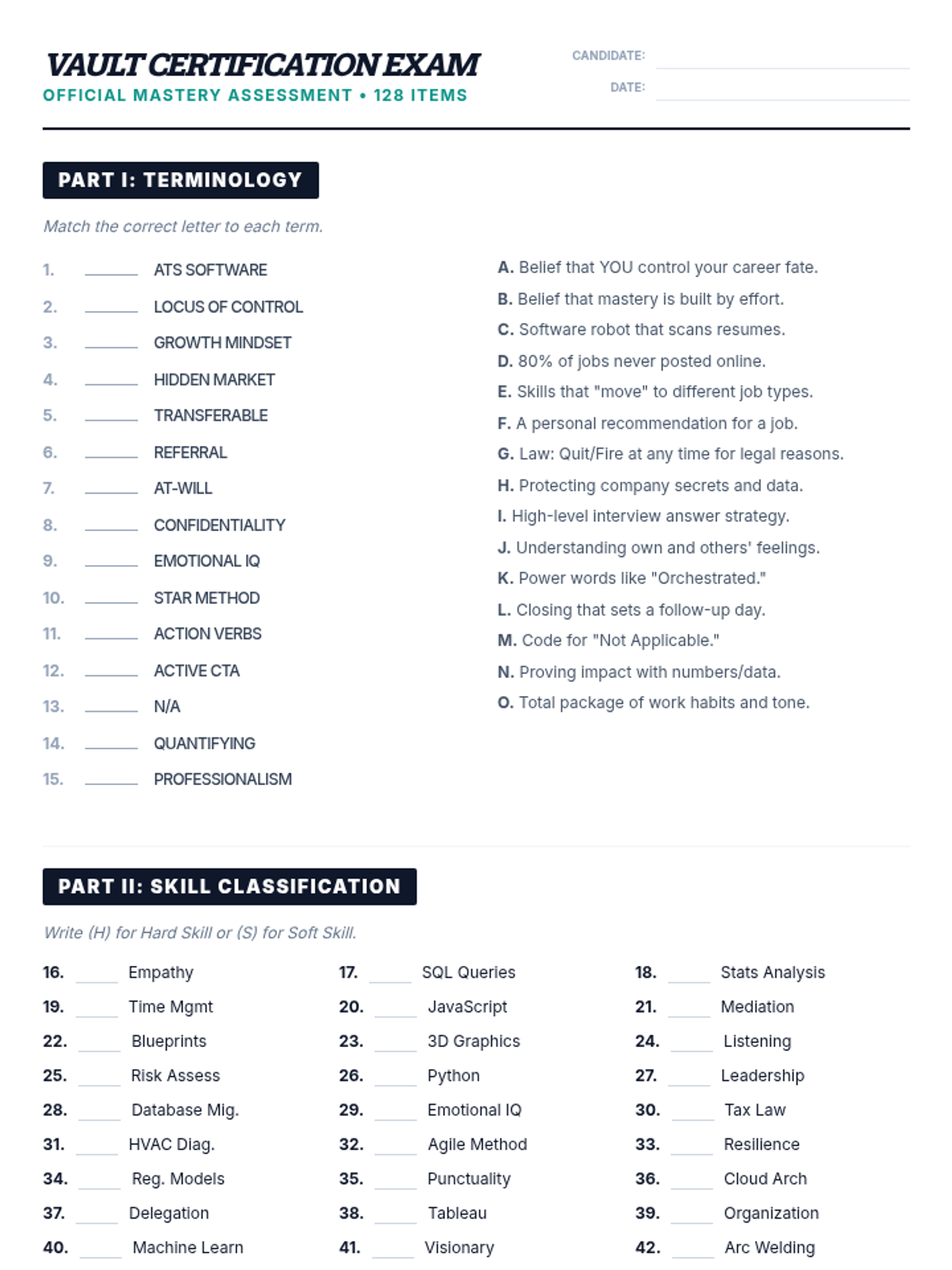
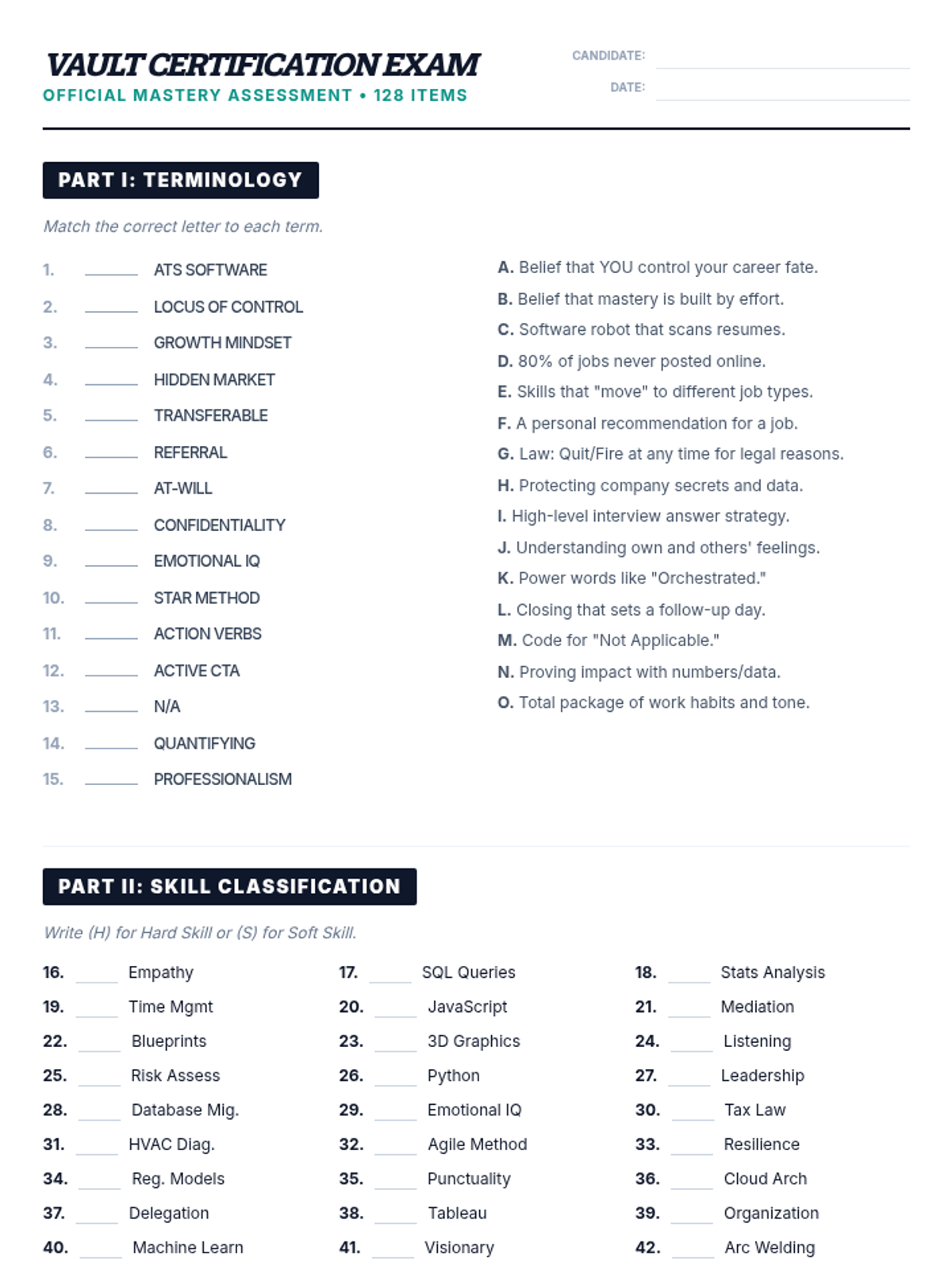
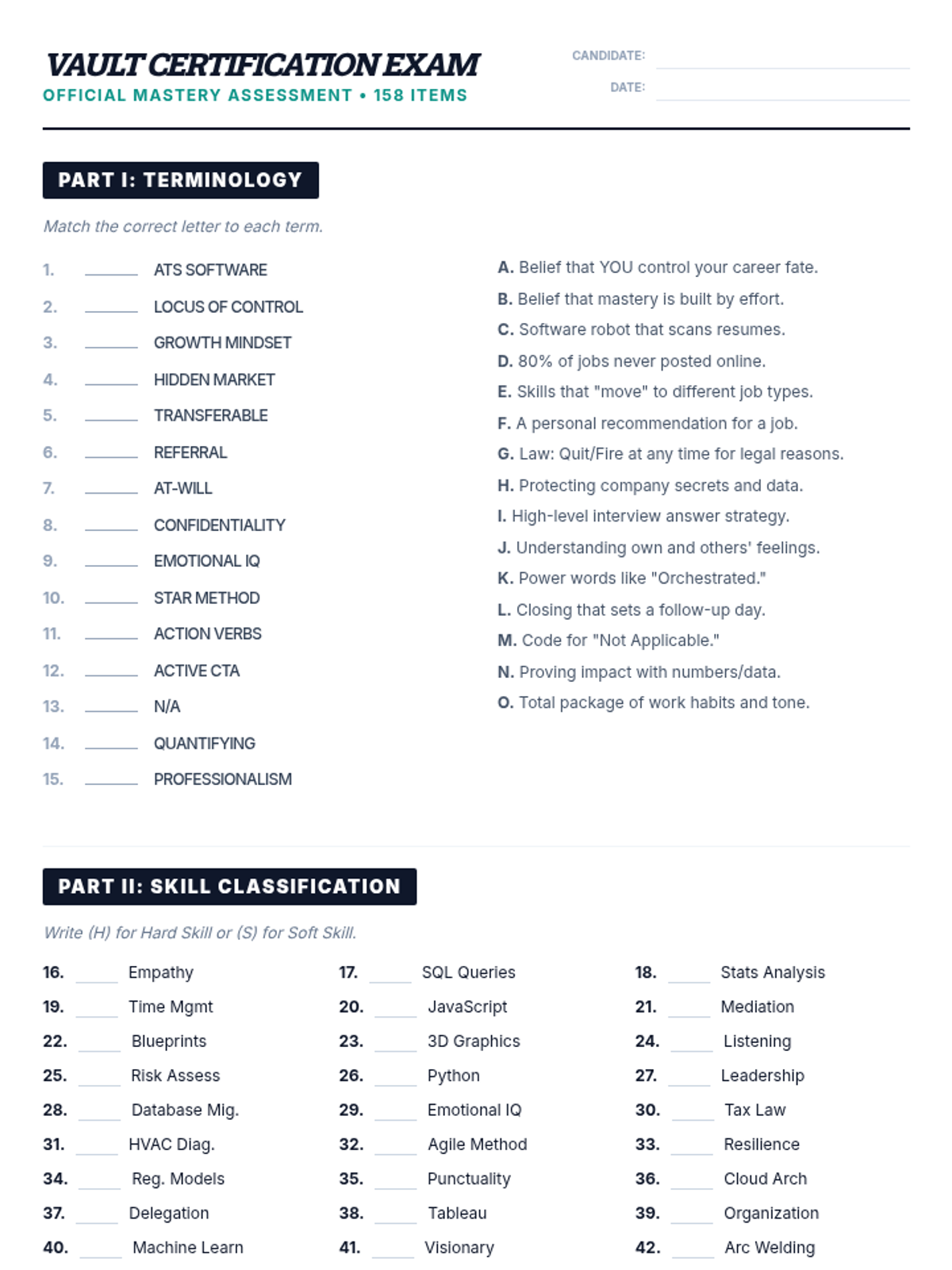
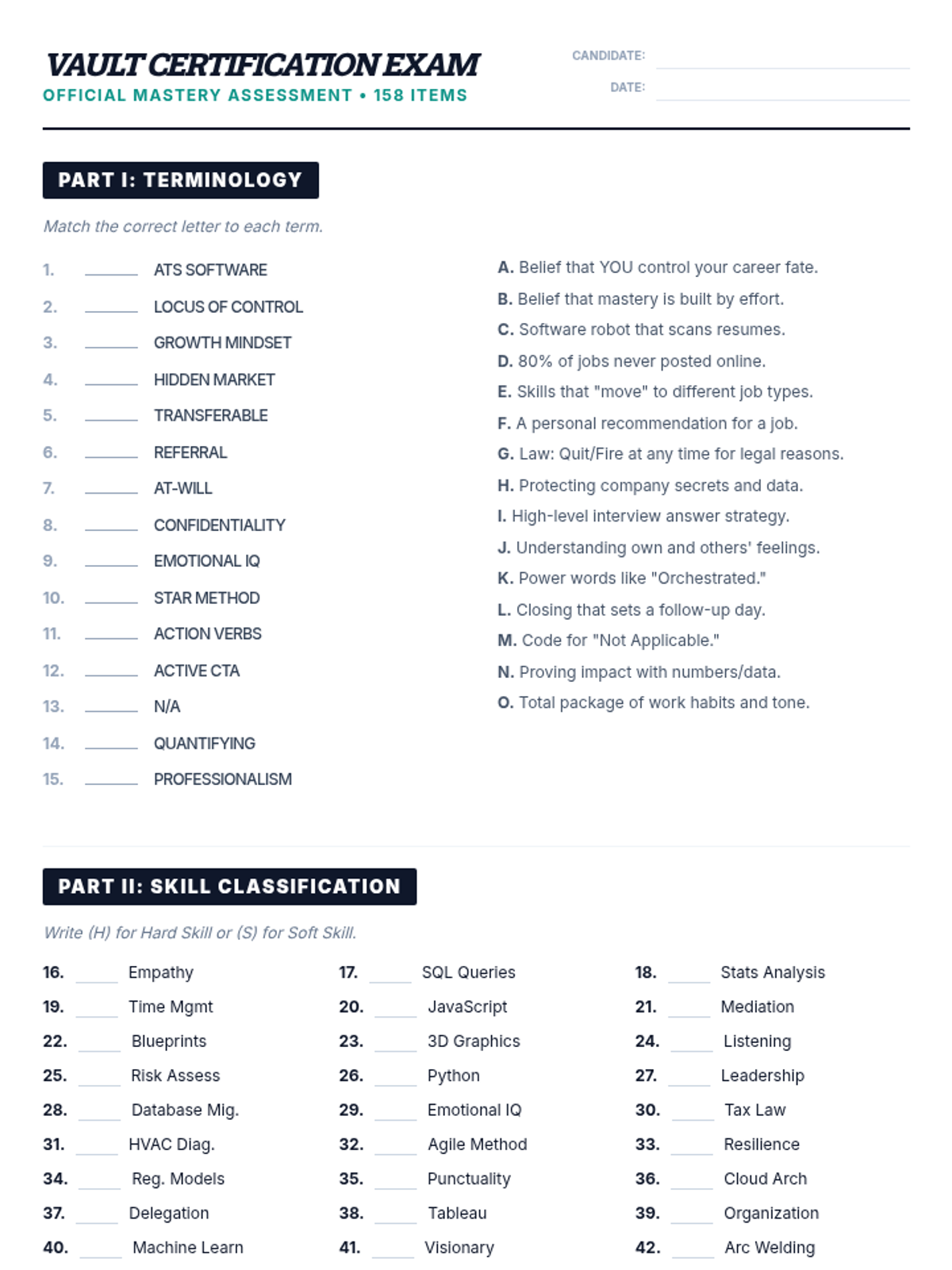
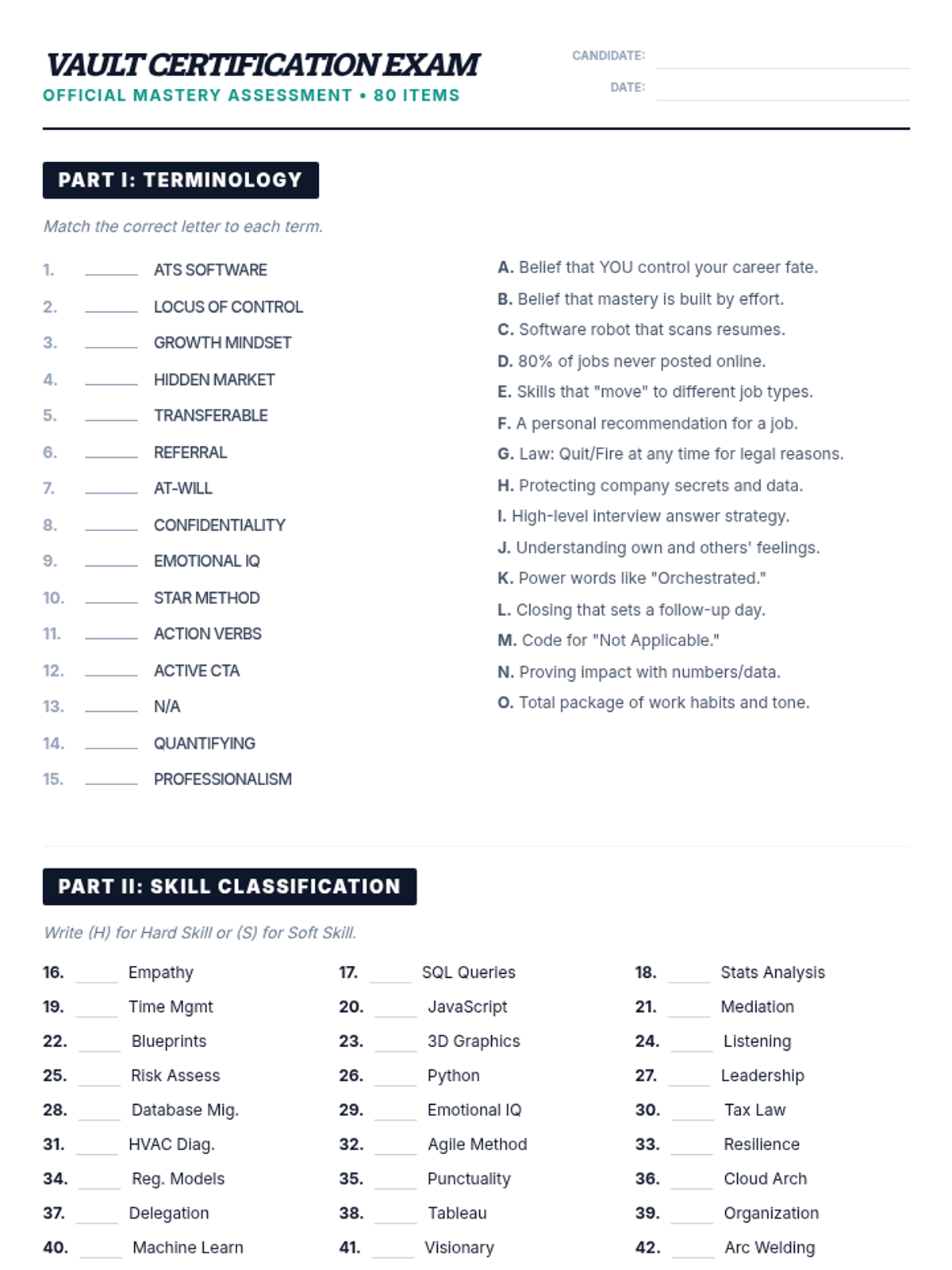
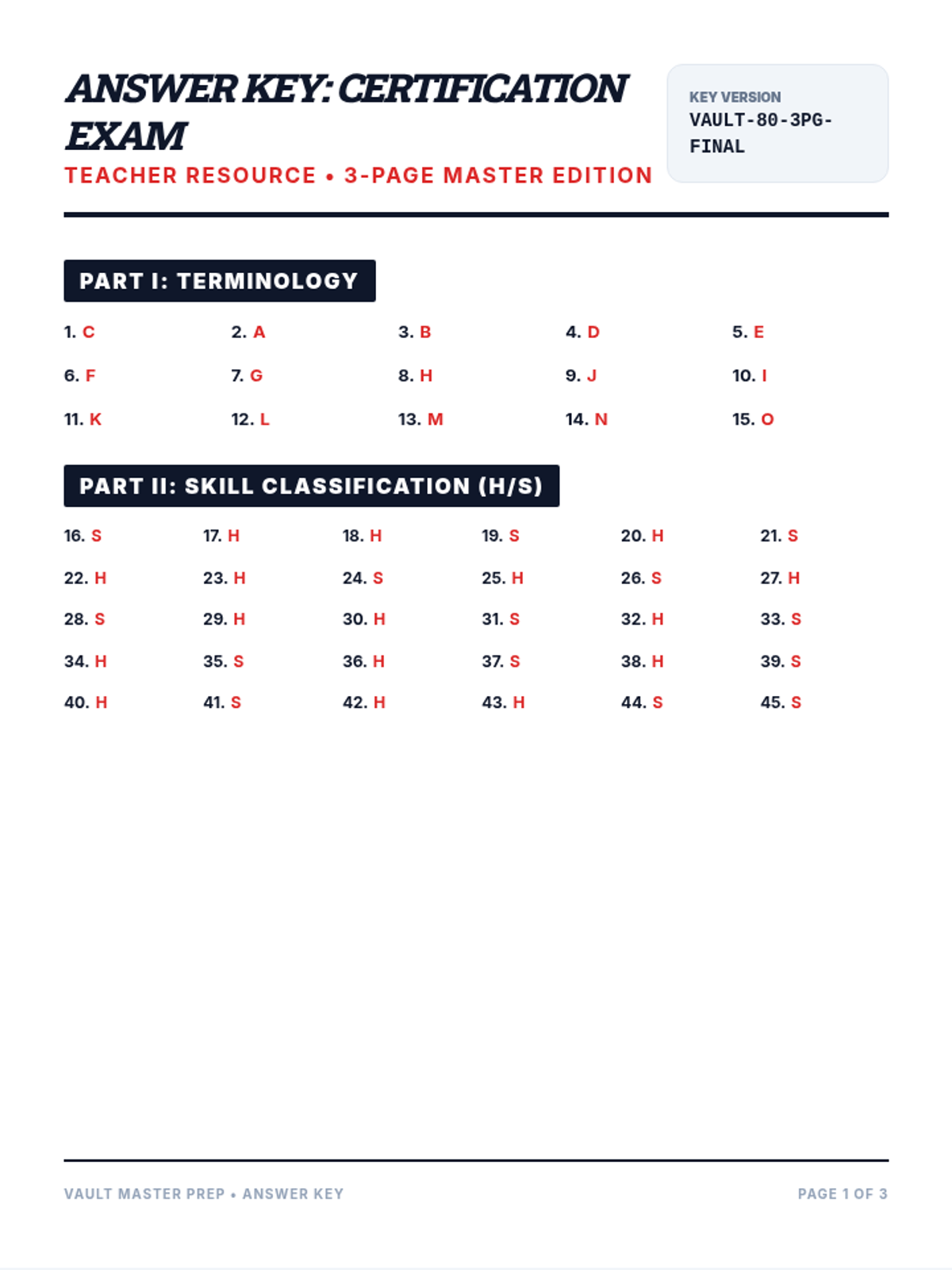
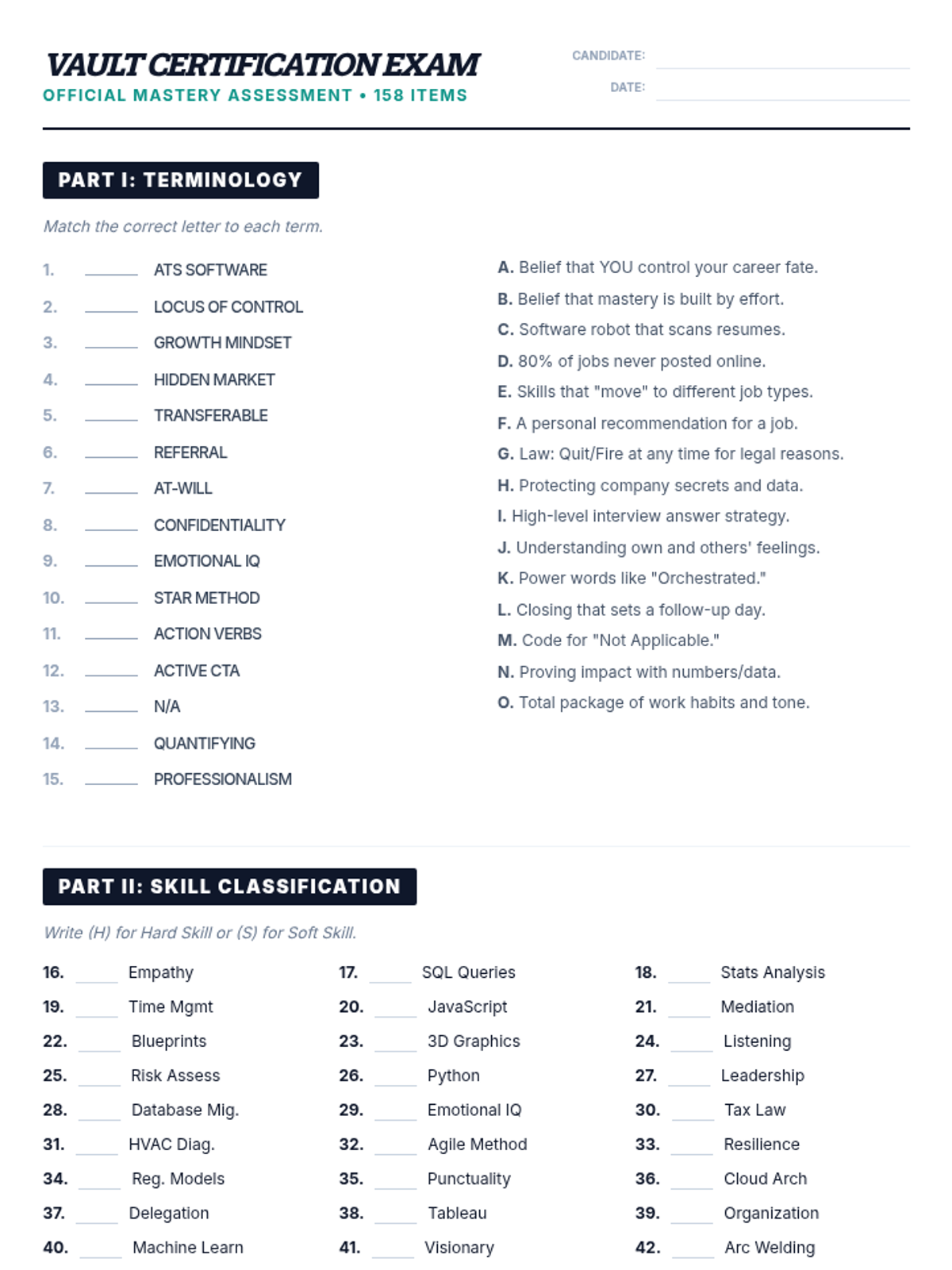
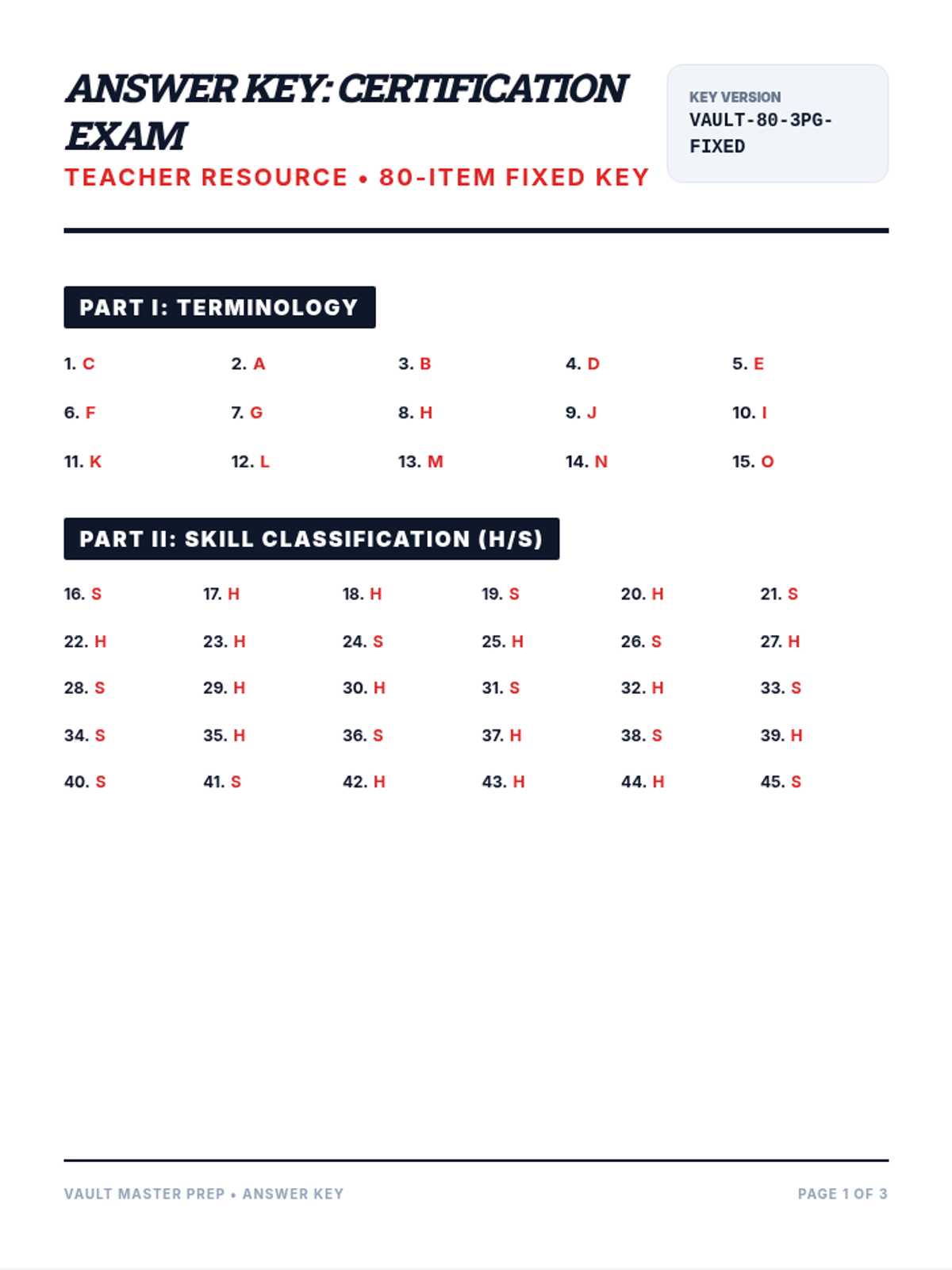
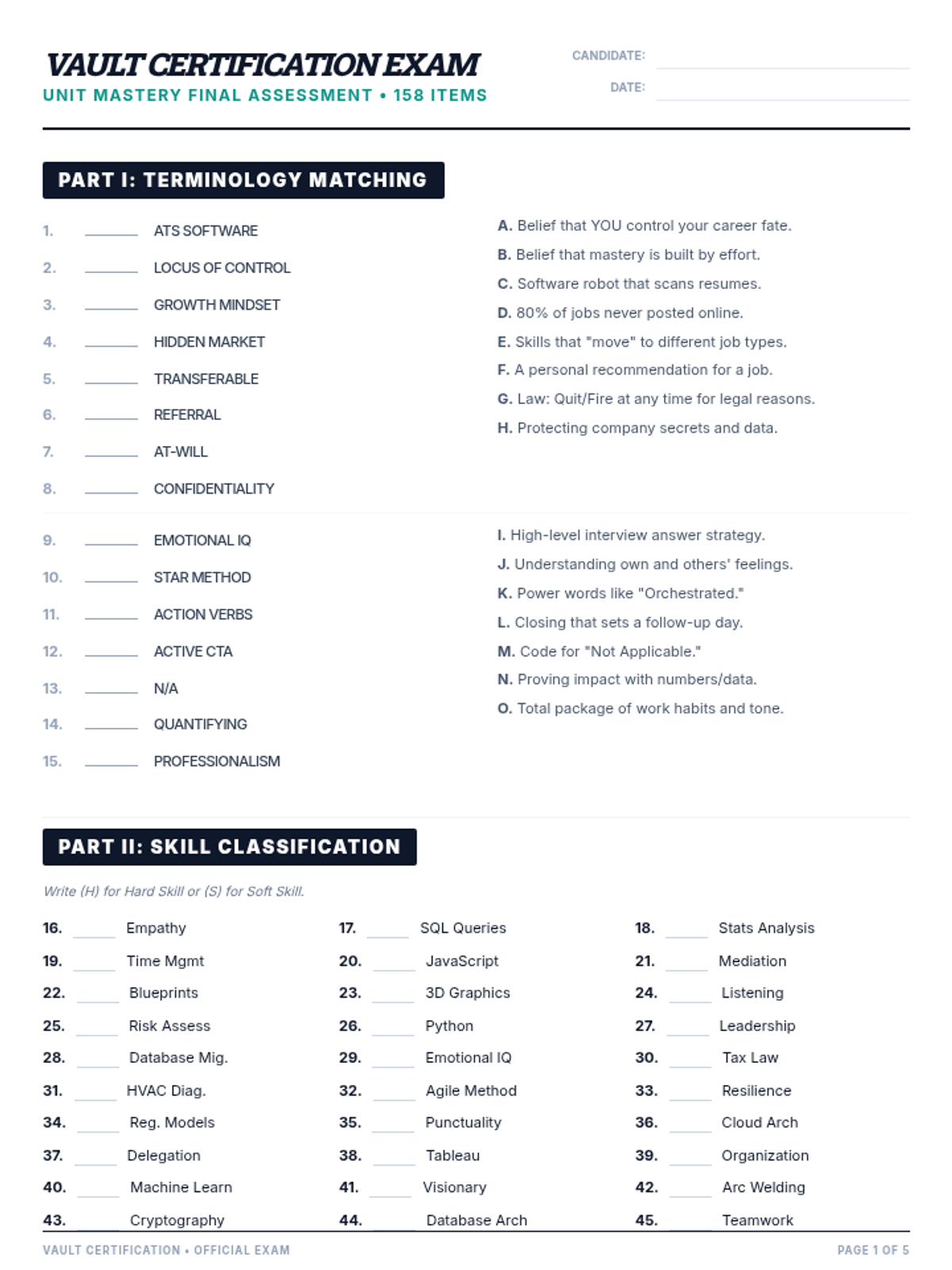
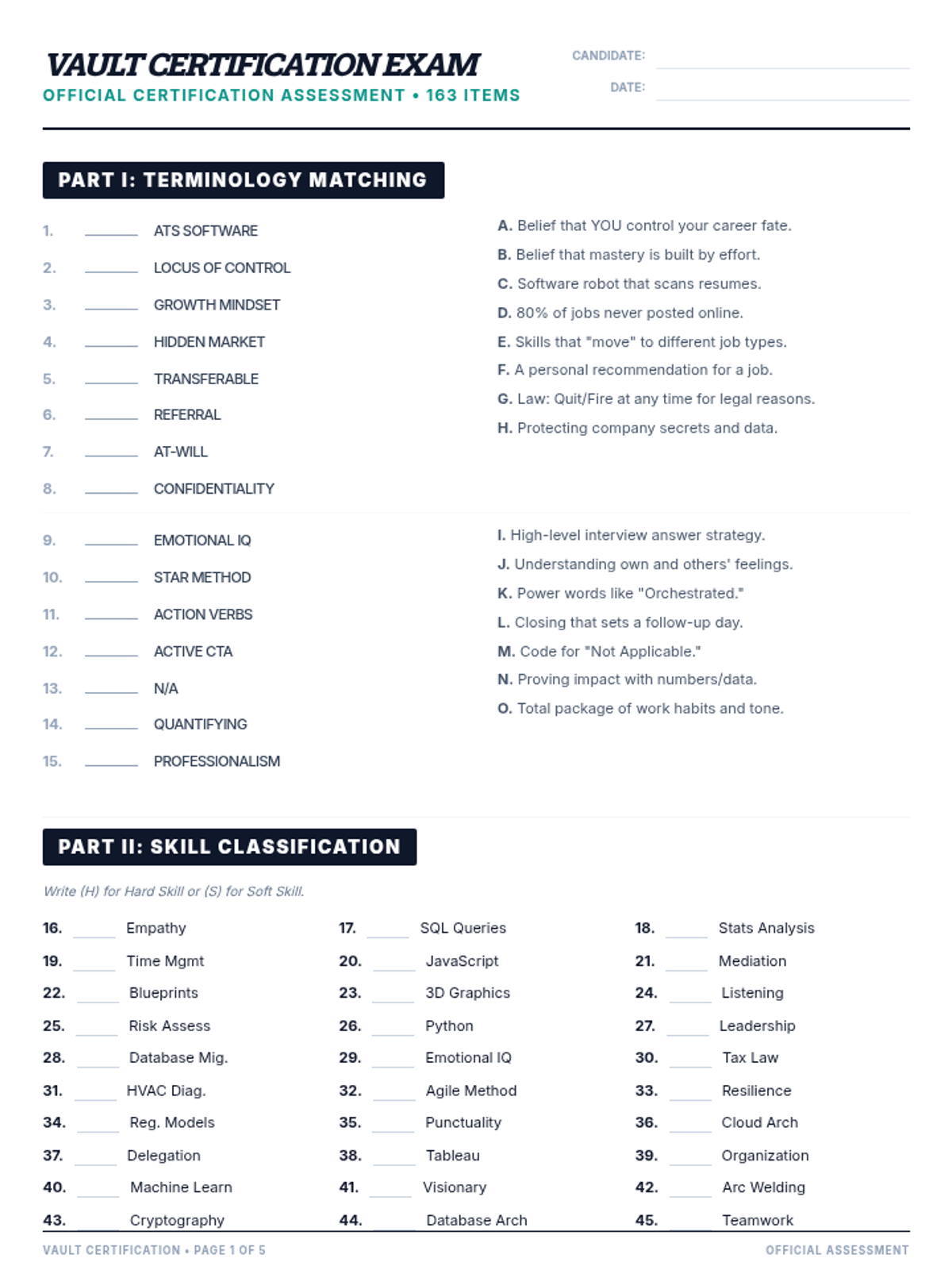
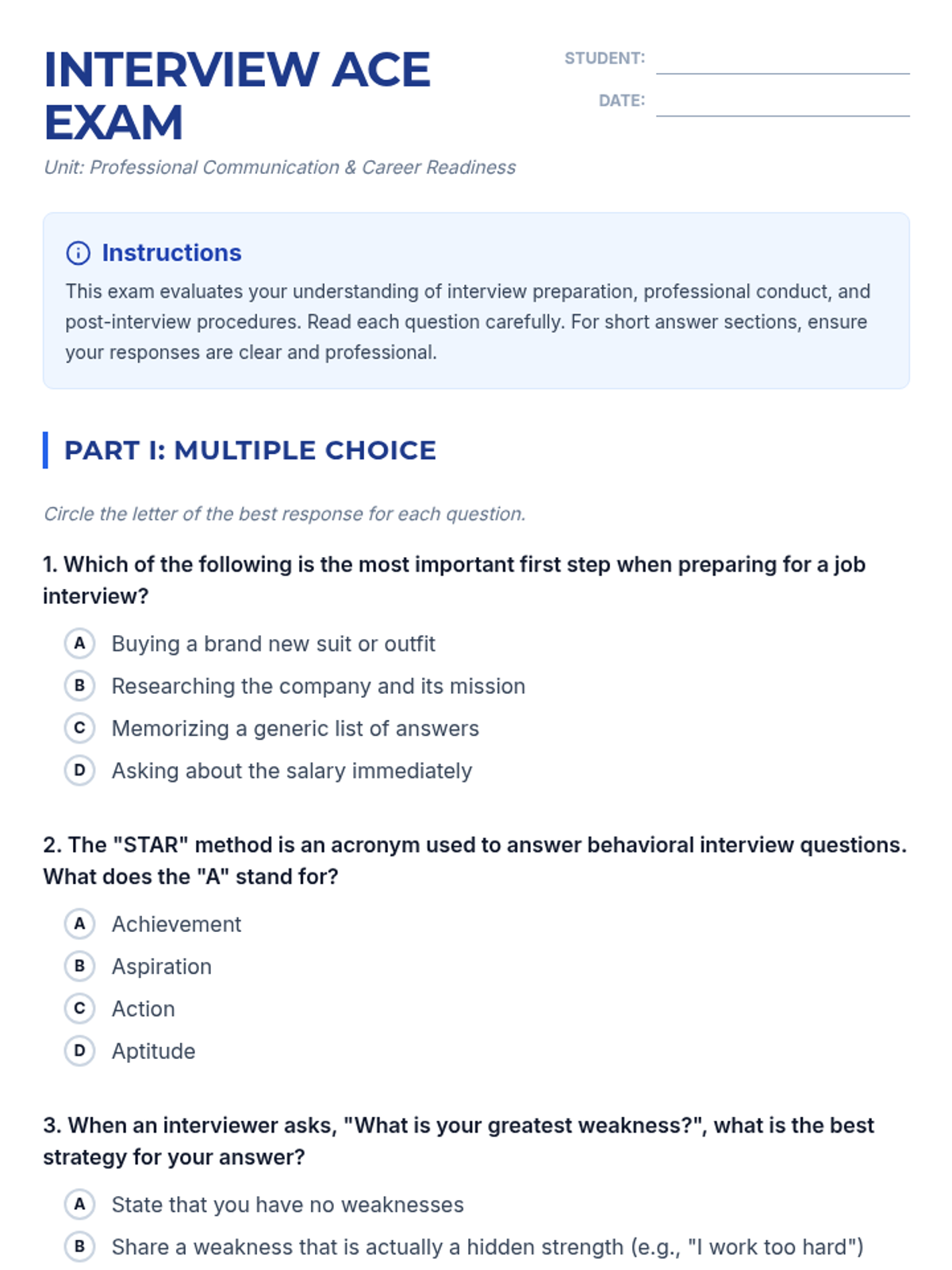
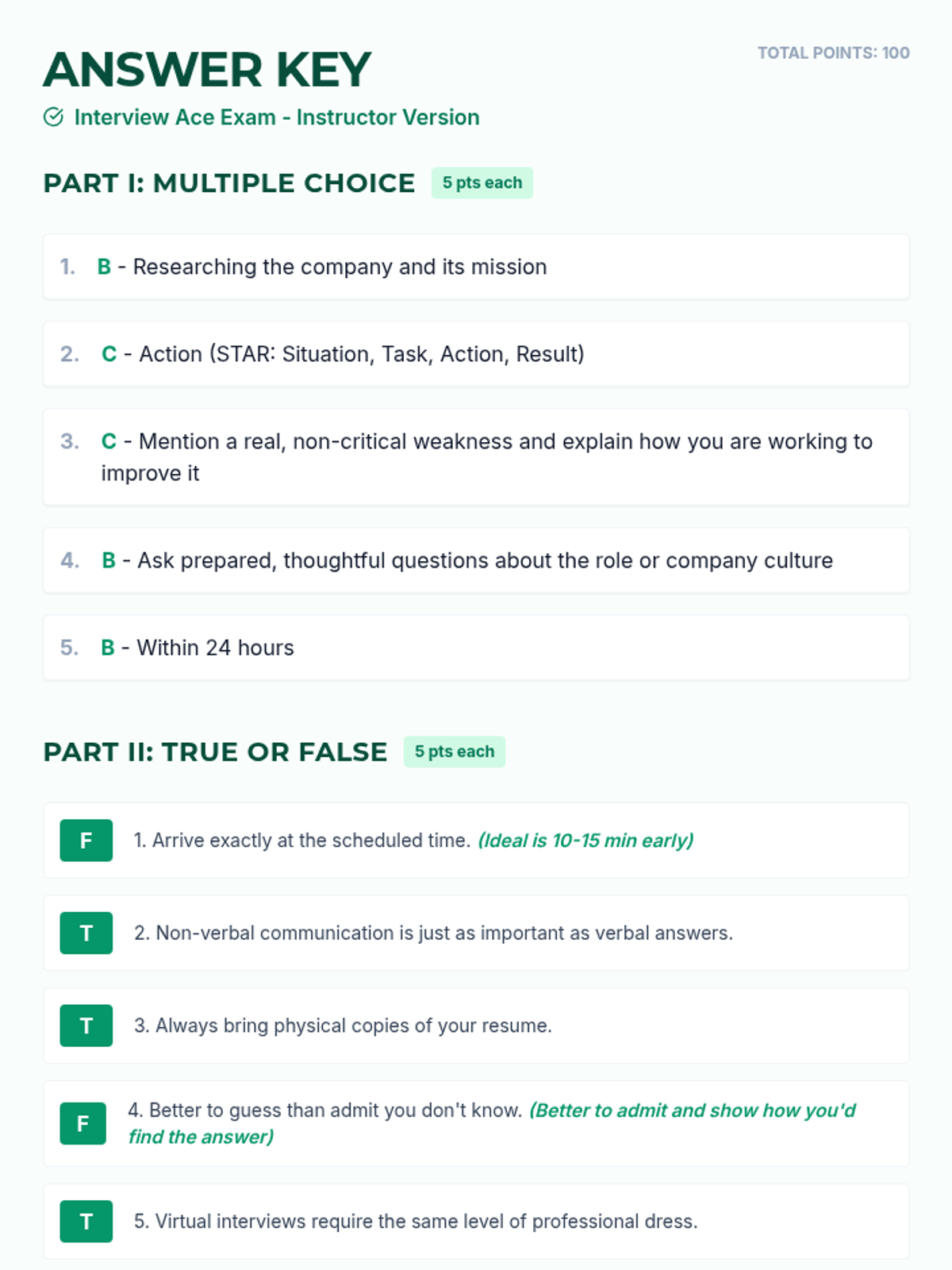
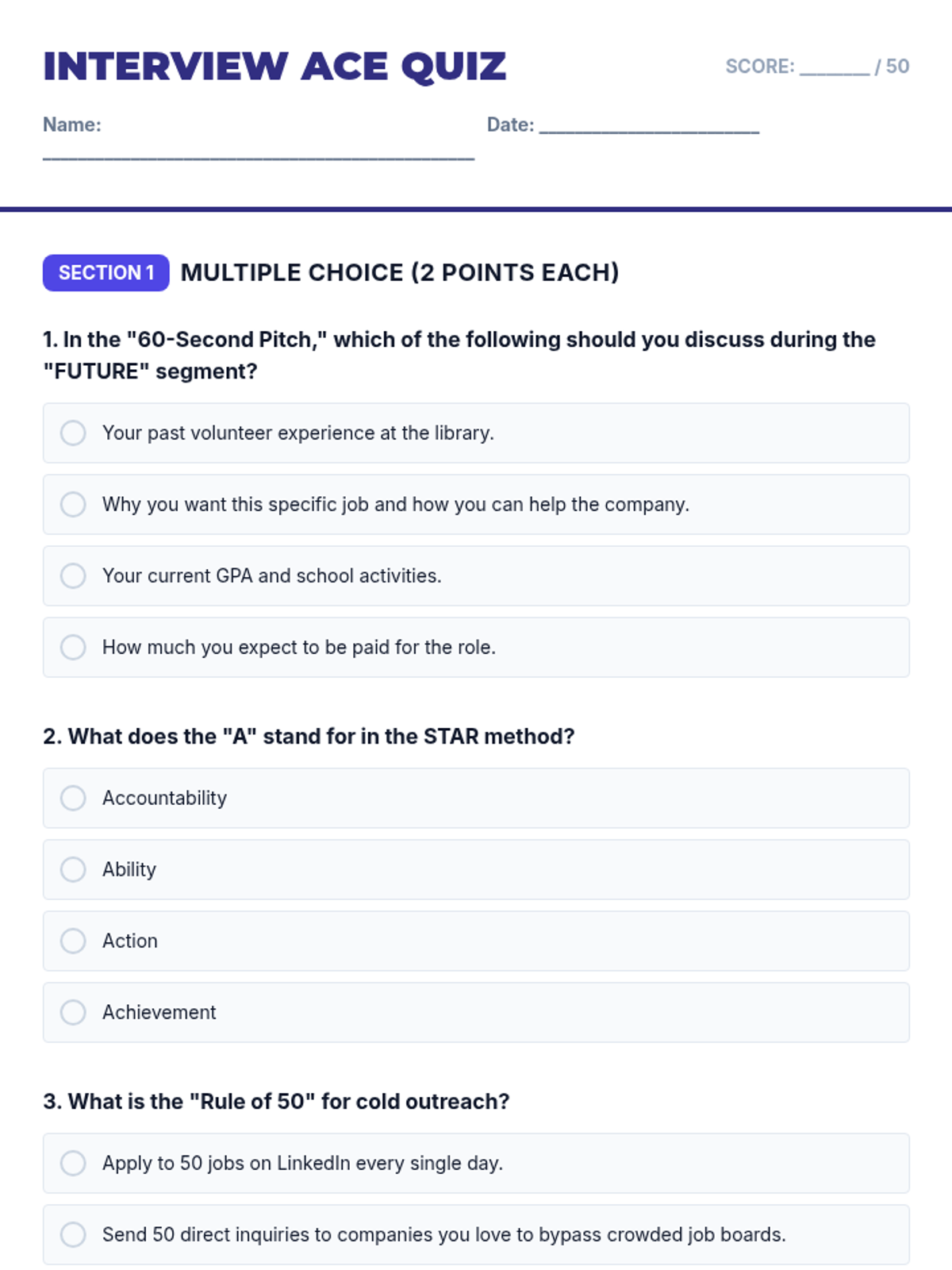
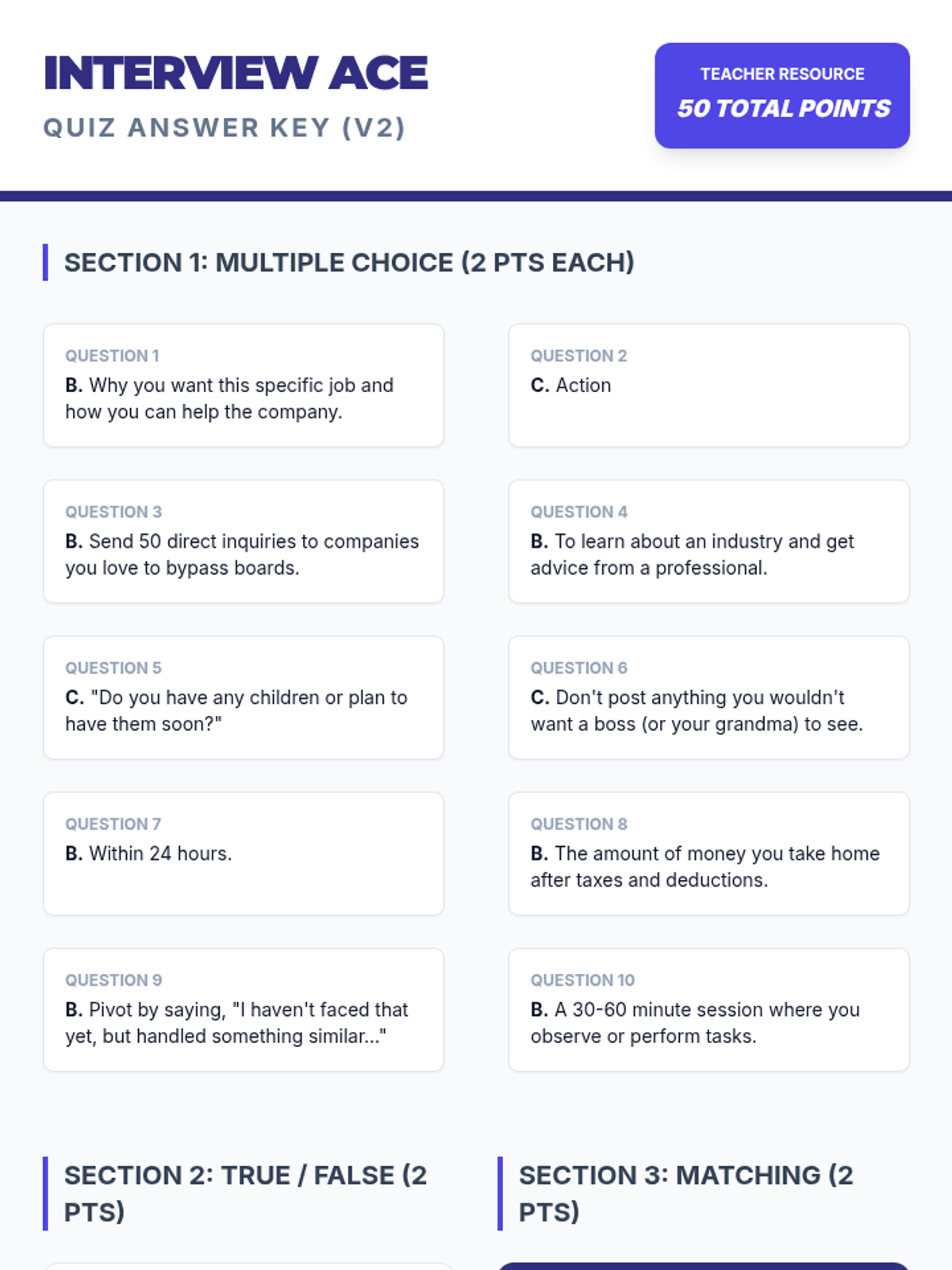
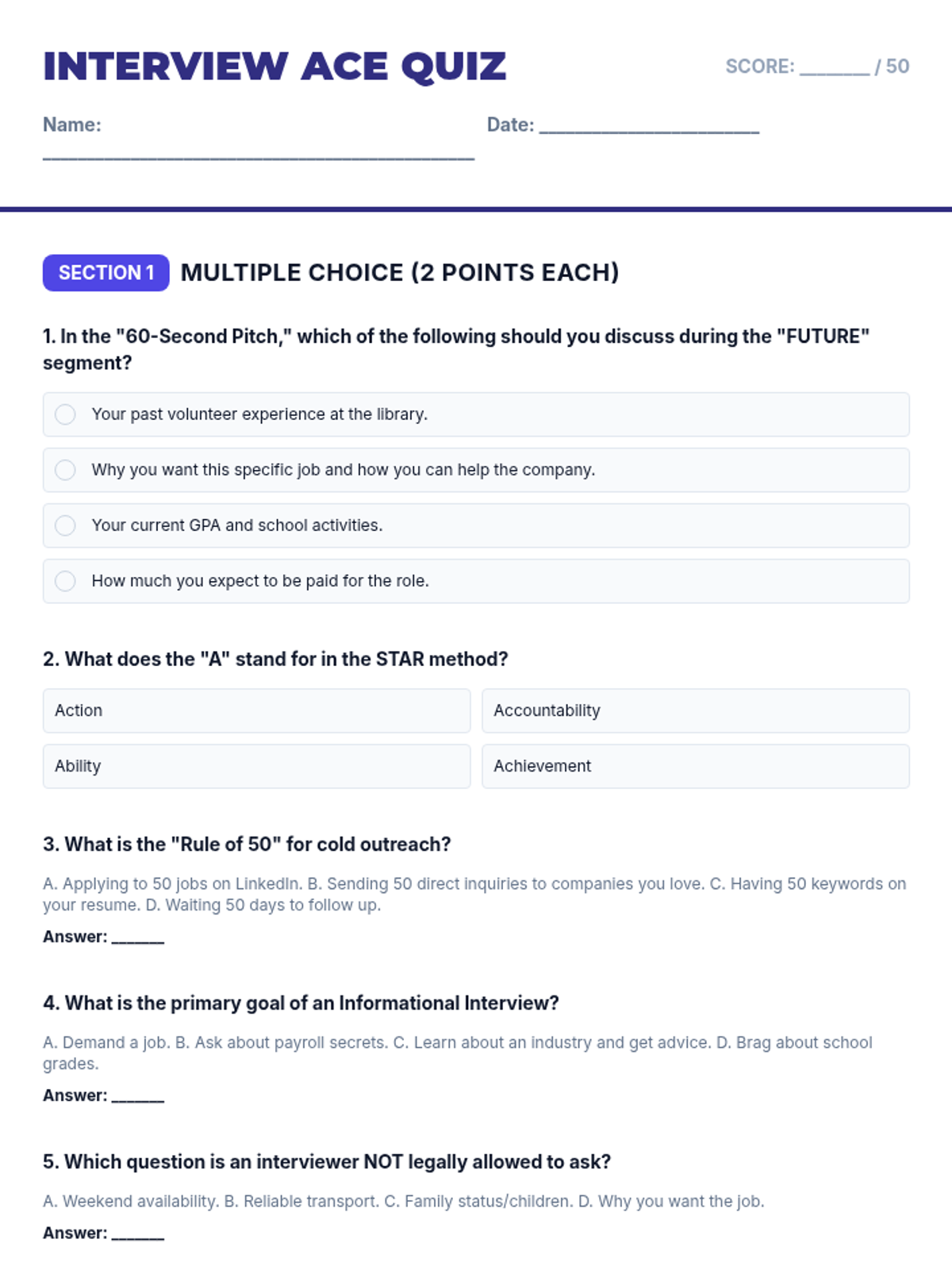
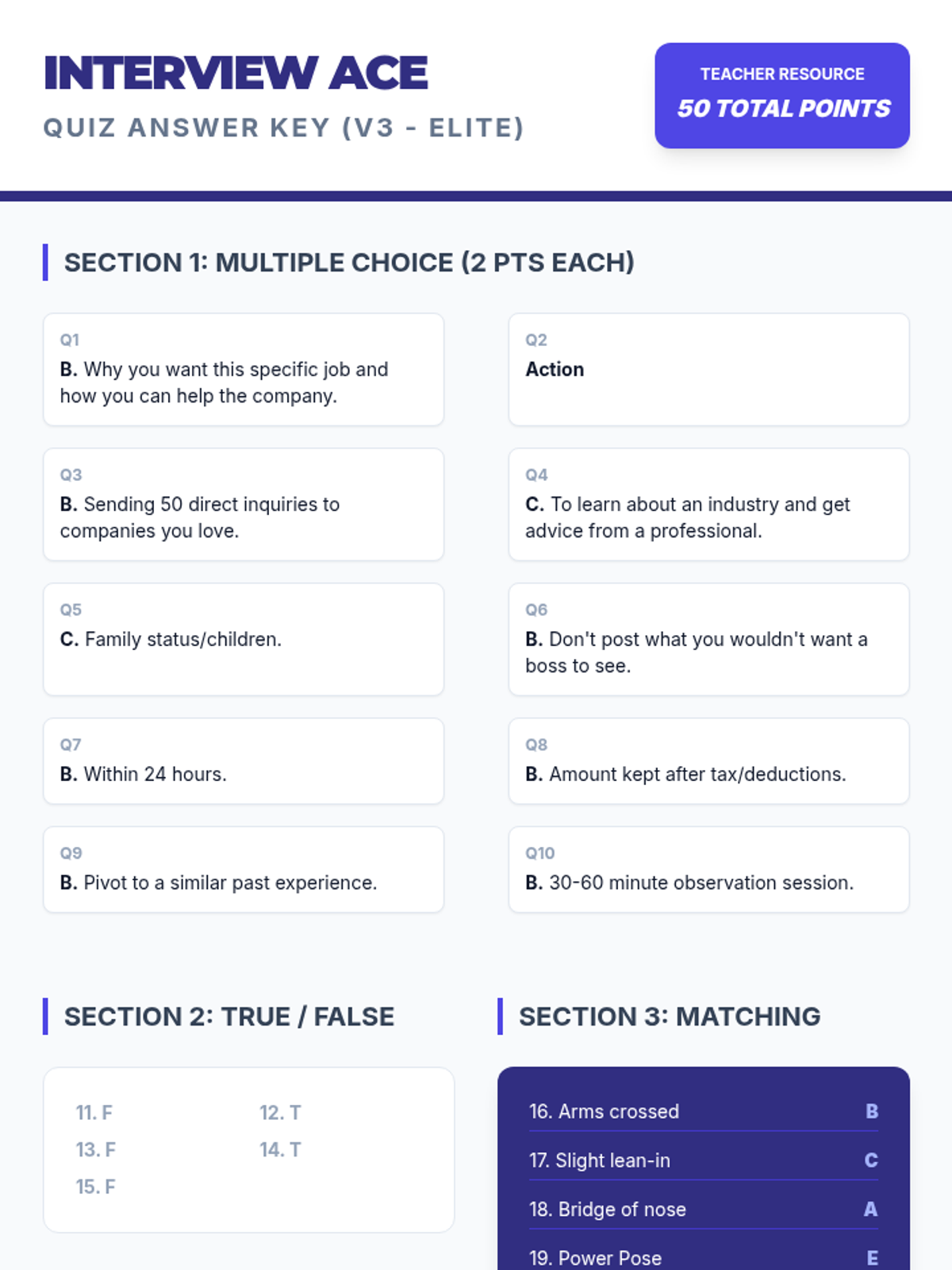
A comprehensive assessment covering job interview preparation, execution, and follow-up techniques to evaluate student readiness for the professional world.
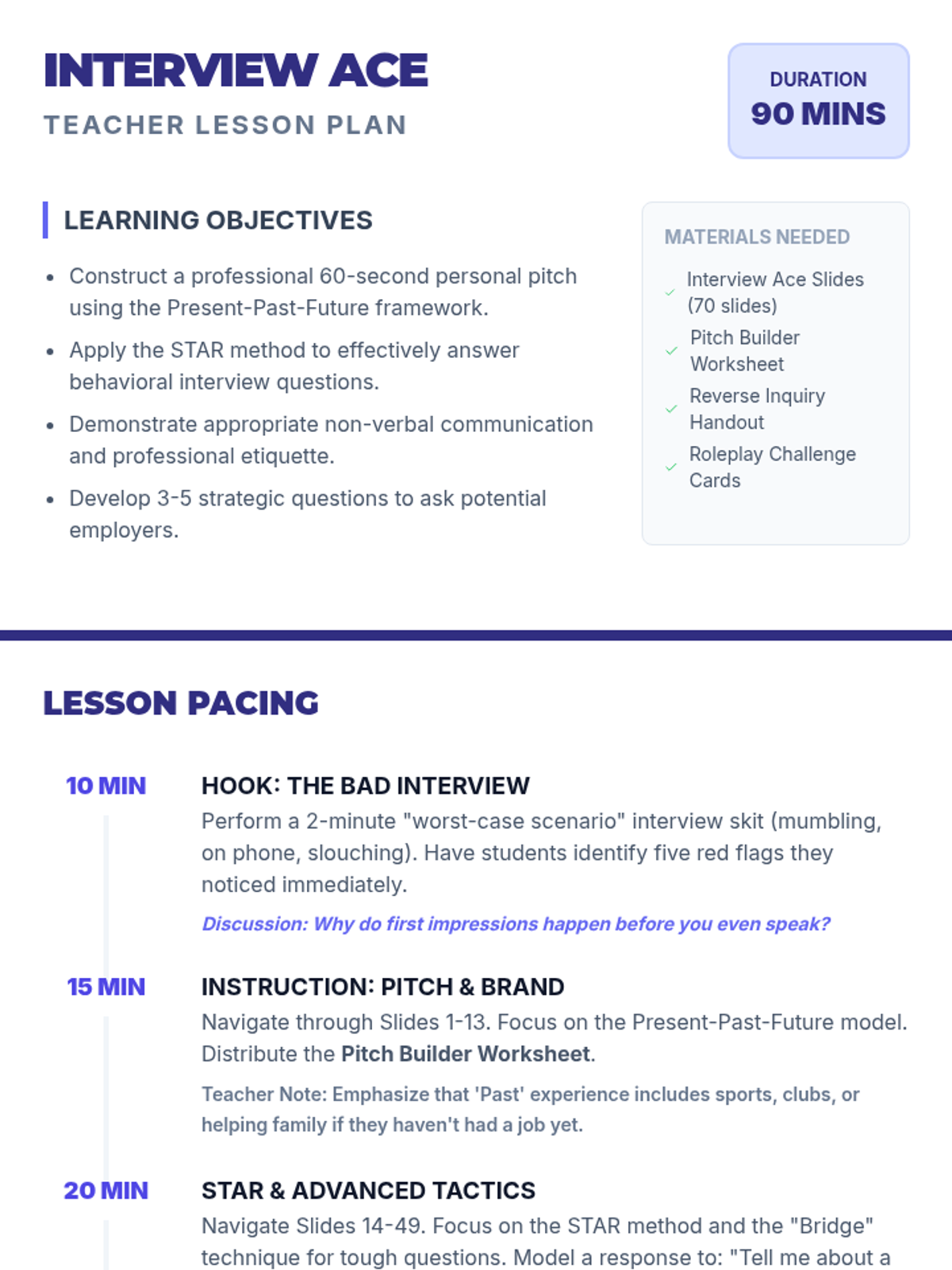
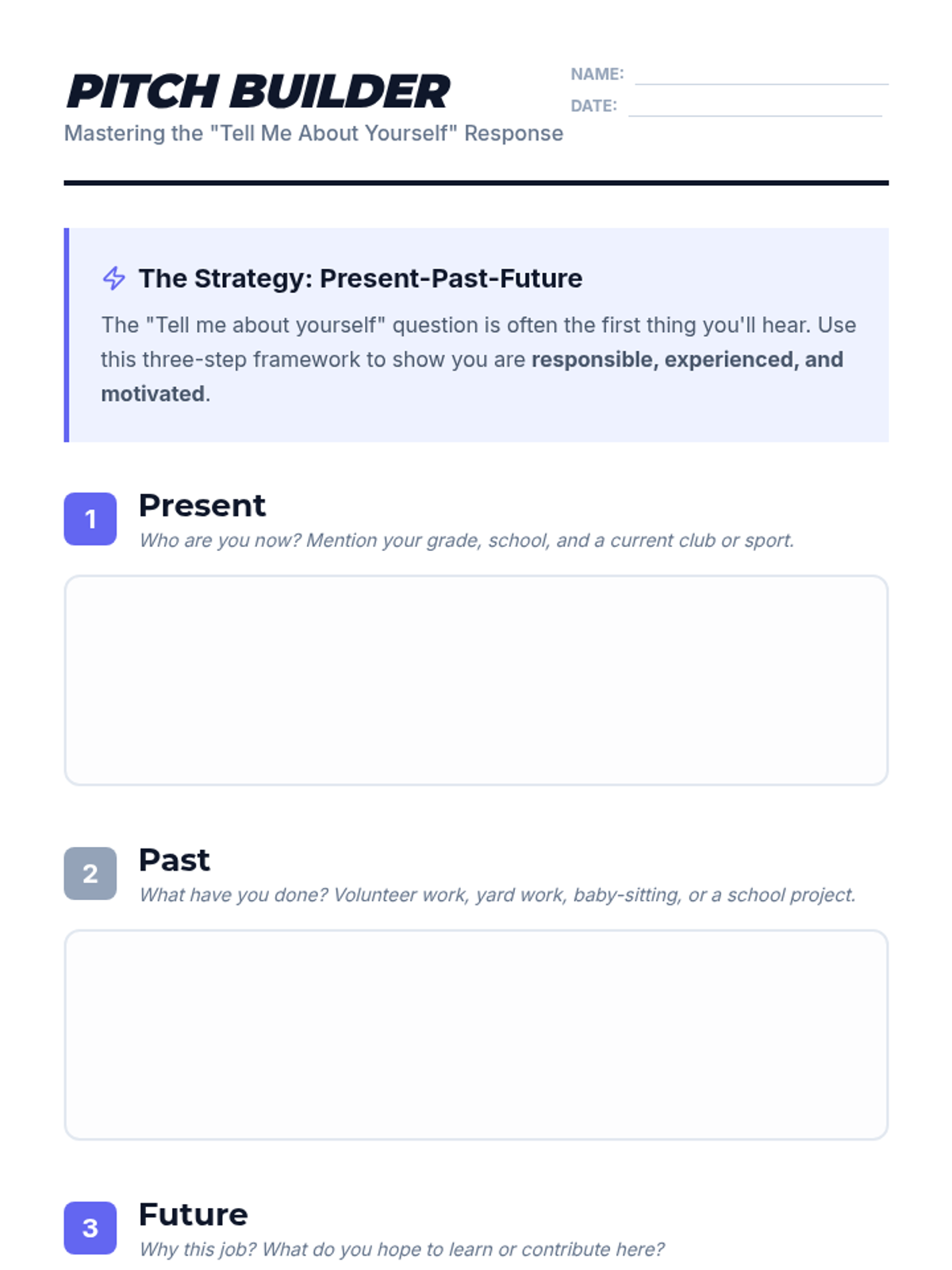
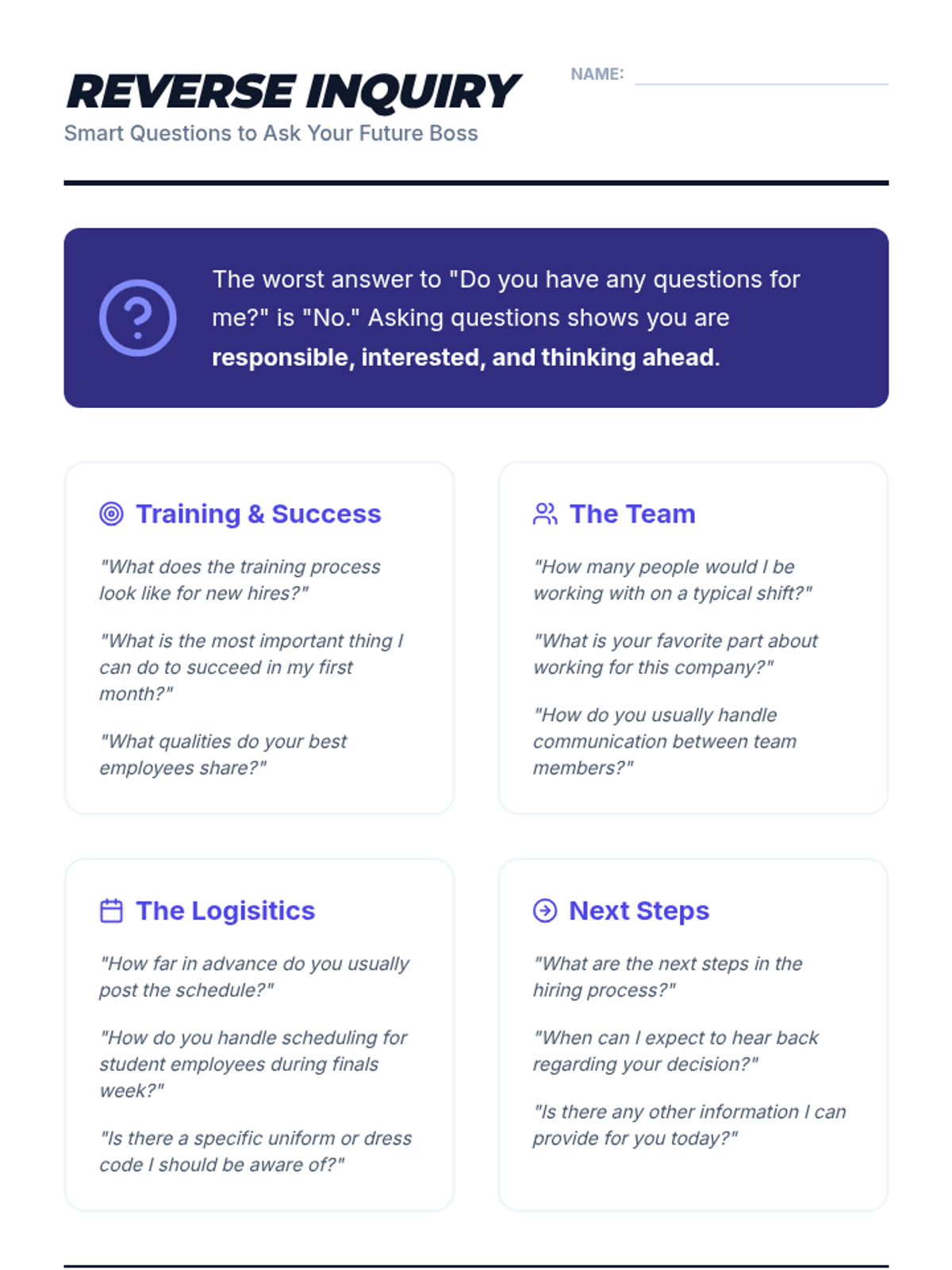
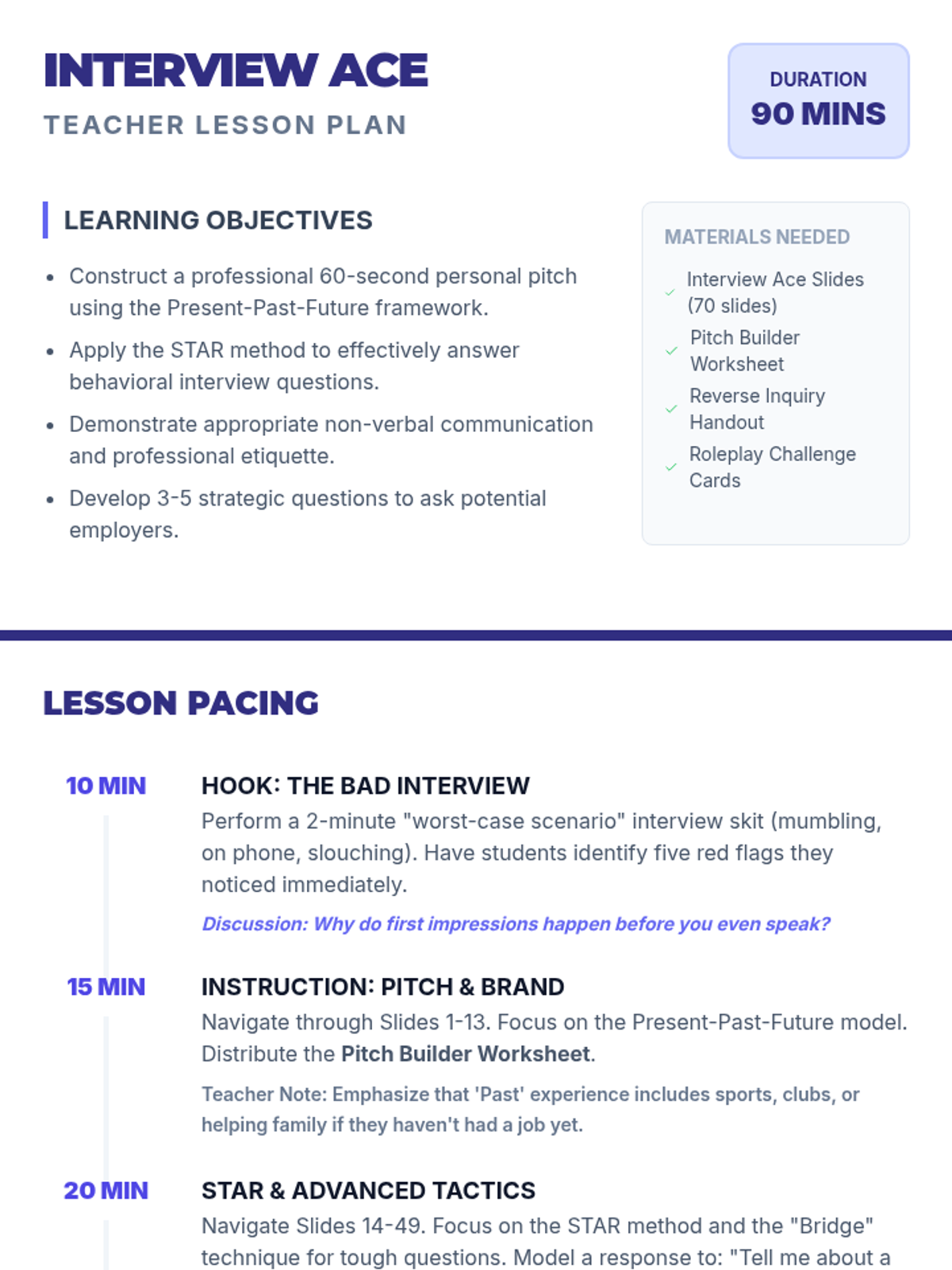
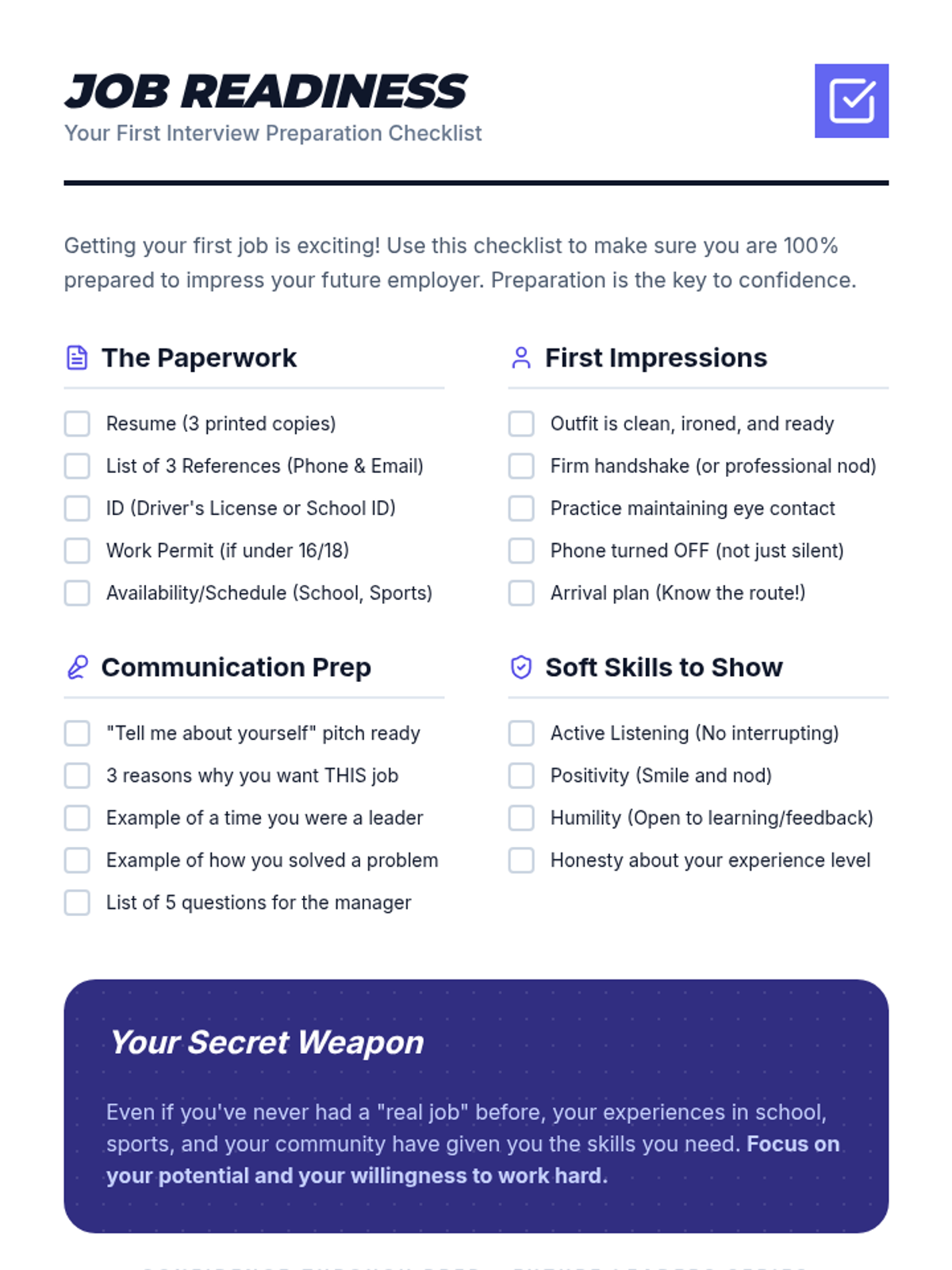
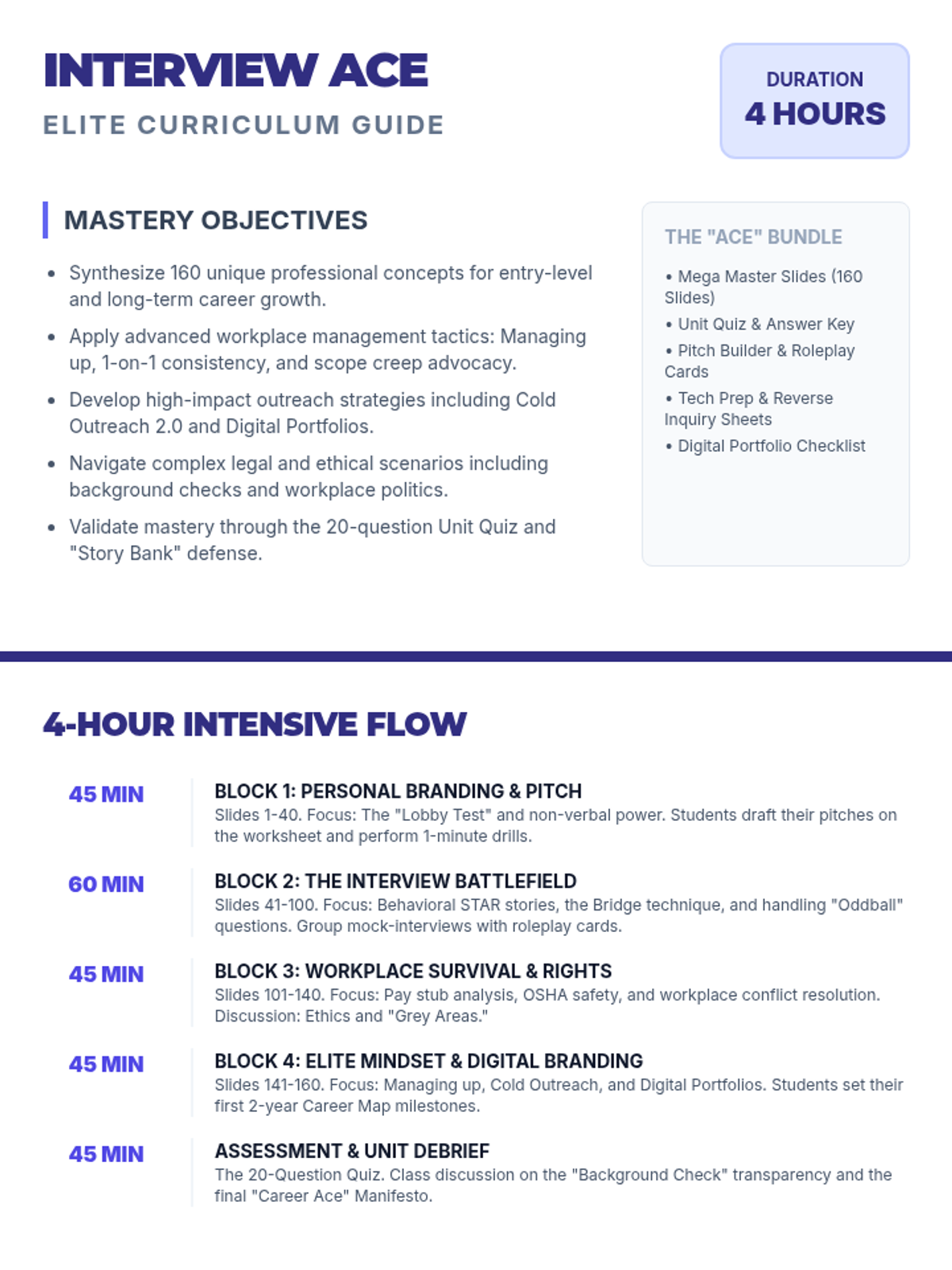
A comprehensive lesson for high school students on mastering their first job interviews, focusing on personal branding, soft skills, and professional inquiry.
A culminating mock interview simulation where students must navigate unpredictable technical hurdles while remaining calm and professional.
Students practice communicating through lag and freezing video, focusing on patience, clarification, and maintaining a professional presence despite digital delays.
This lesson focuses on technical redundancy, teaching students how to set up mobile hotspots and use phone-in backups to stay connected when Wi-Fi fails.
Students learn specific professional protocols and scripts for responding to audio or video loss, practicing how to signal issues without losing their cool.
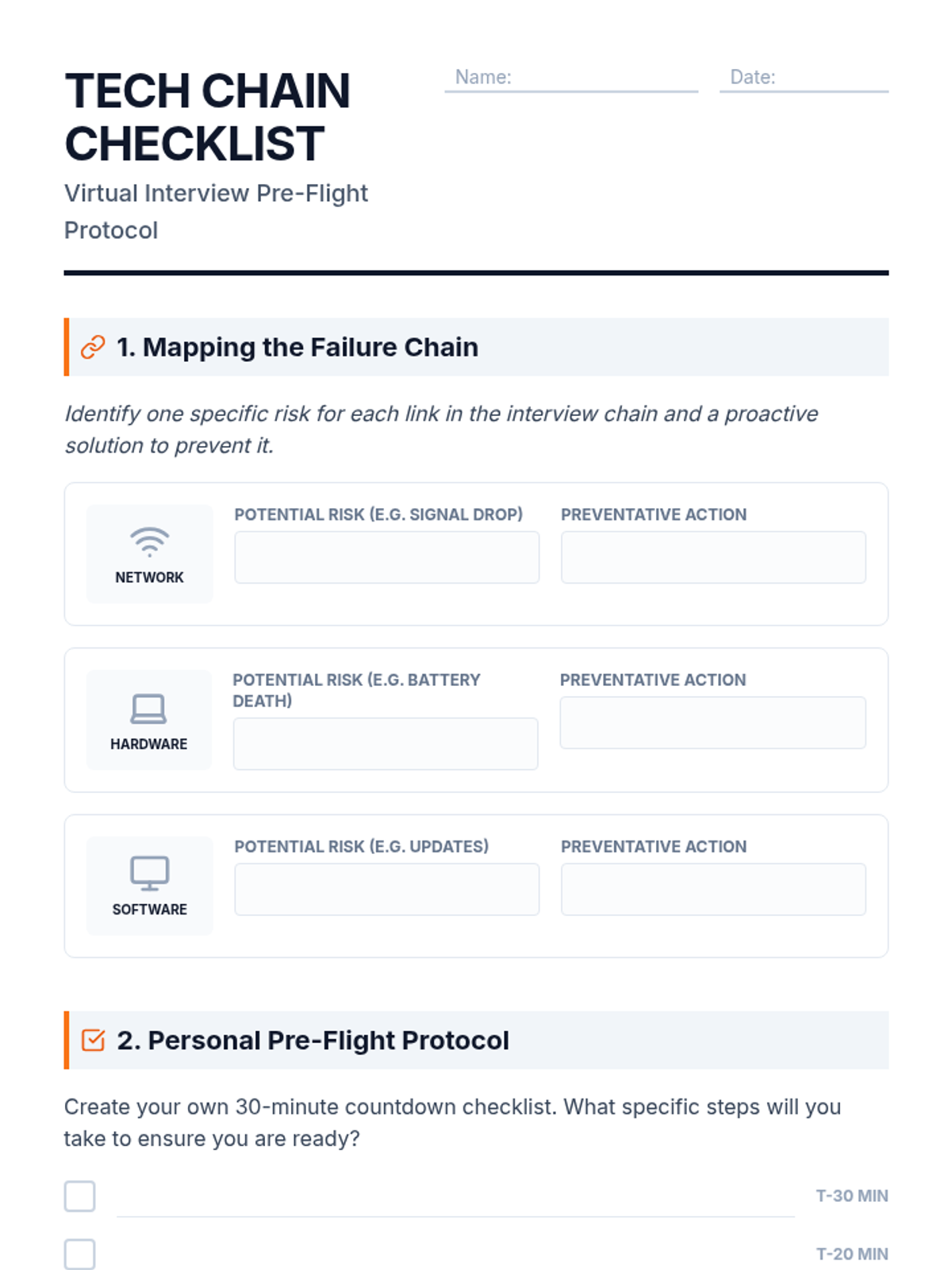
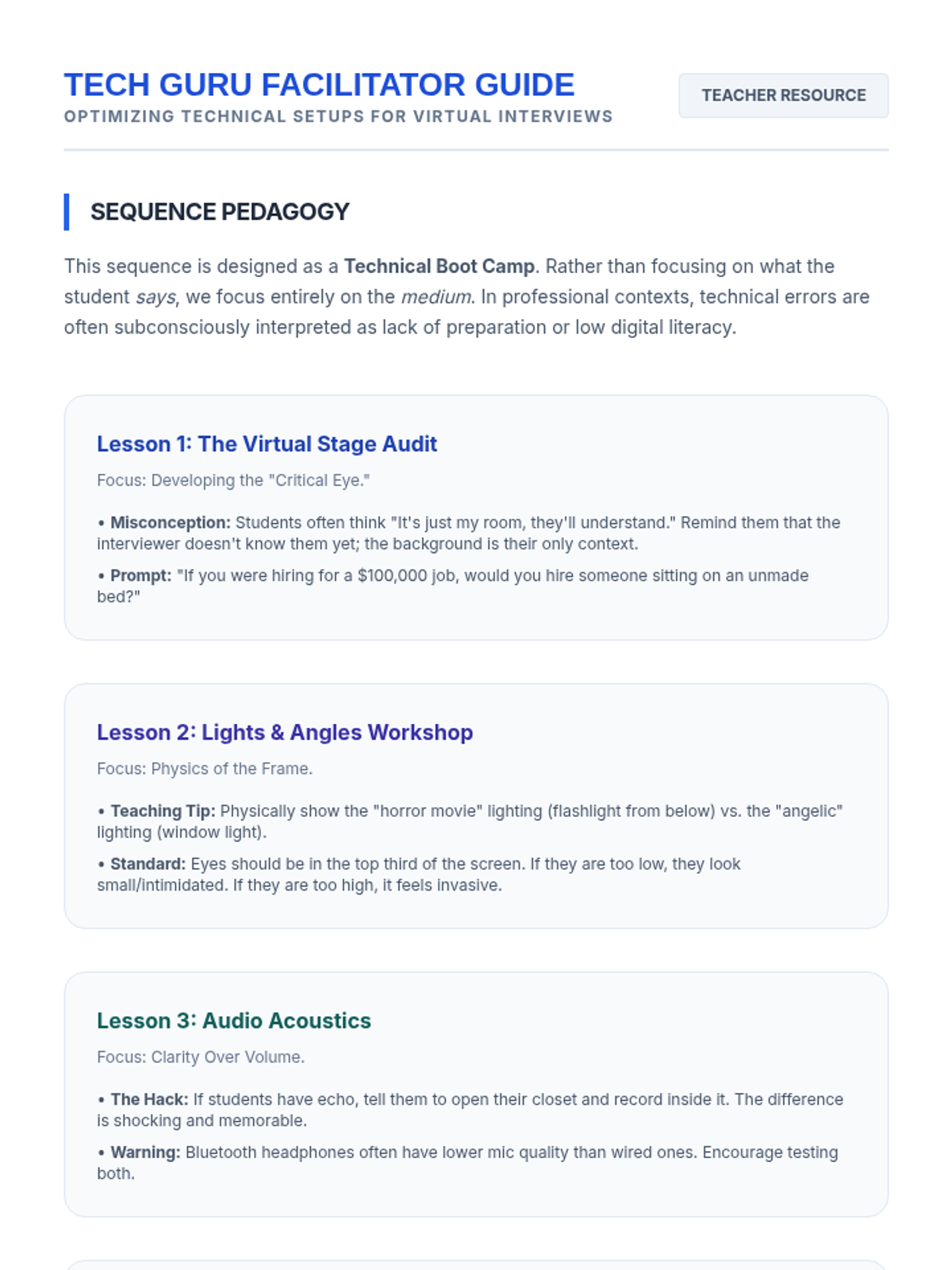
Students map out the hardware and software required for a video call and develop a 'pre-flight' checklist to minimize technical risks before a high-stakes interview.
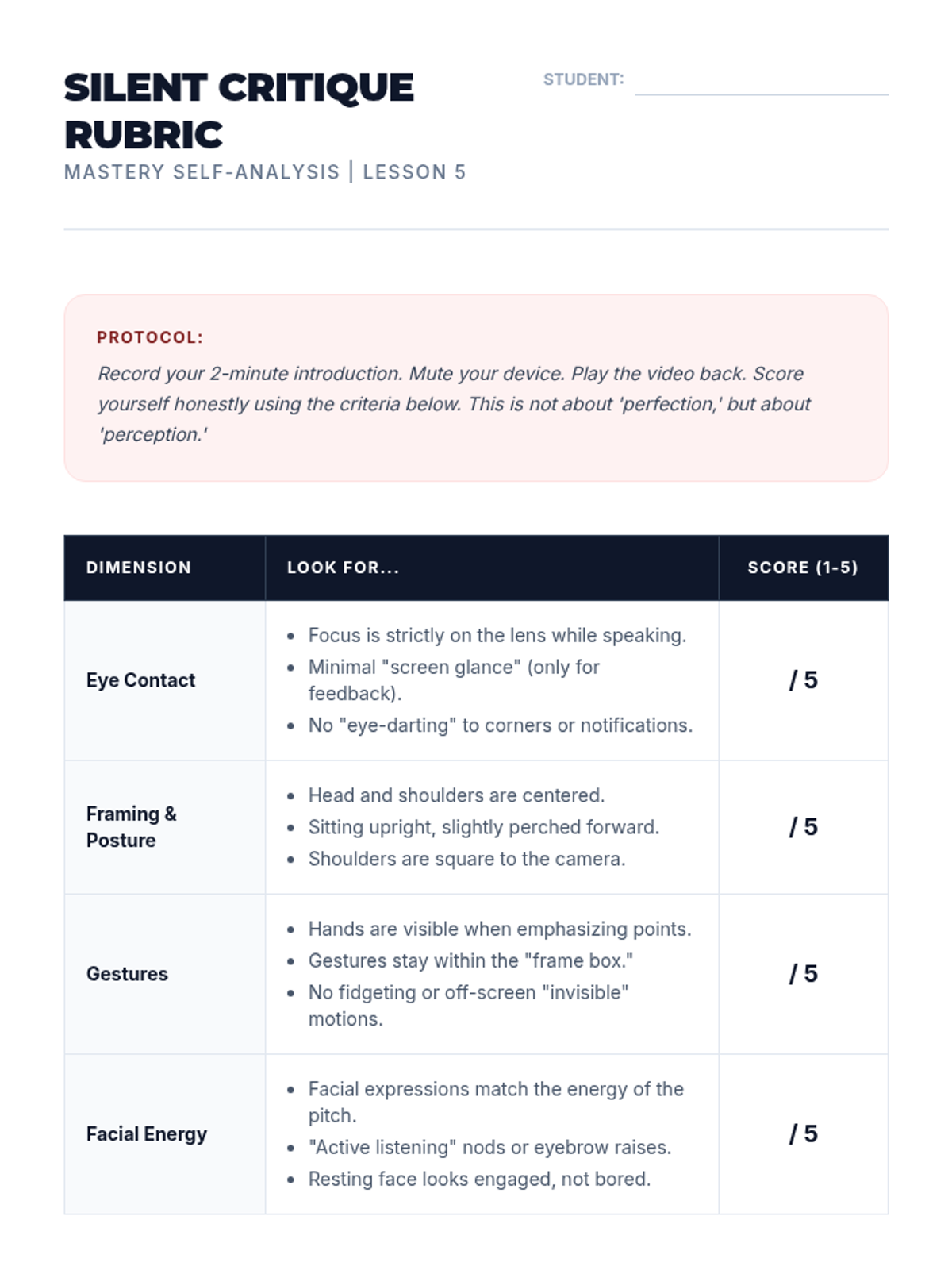
Students record a 2-minute introduction, then watch it back with the sound off to analyze only their non-verbal cues. They write a reflection on their eye contact, posture, and facial engagement.
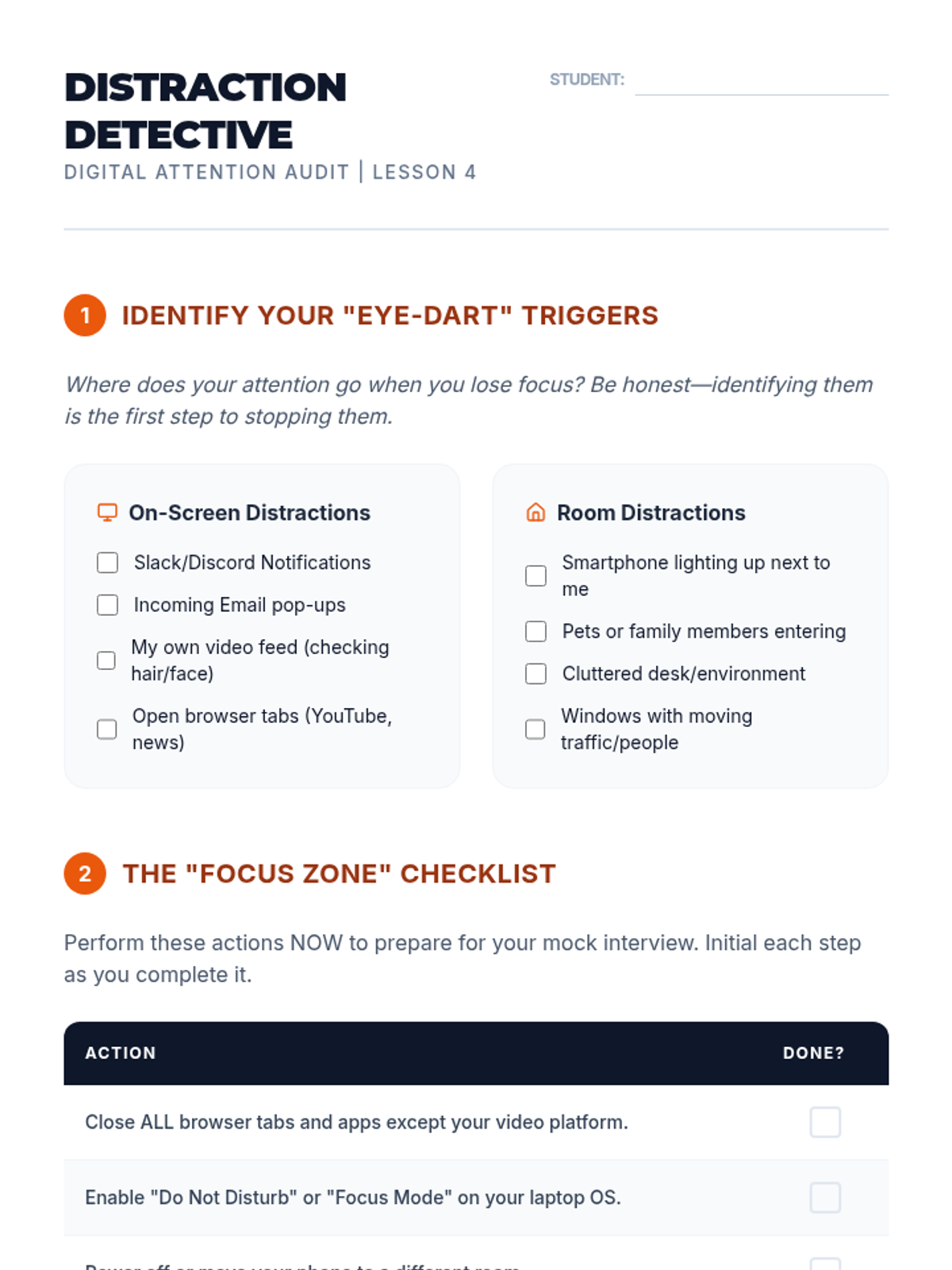
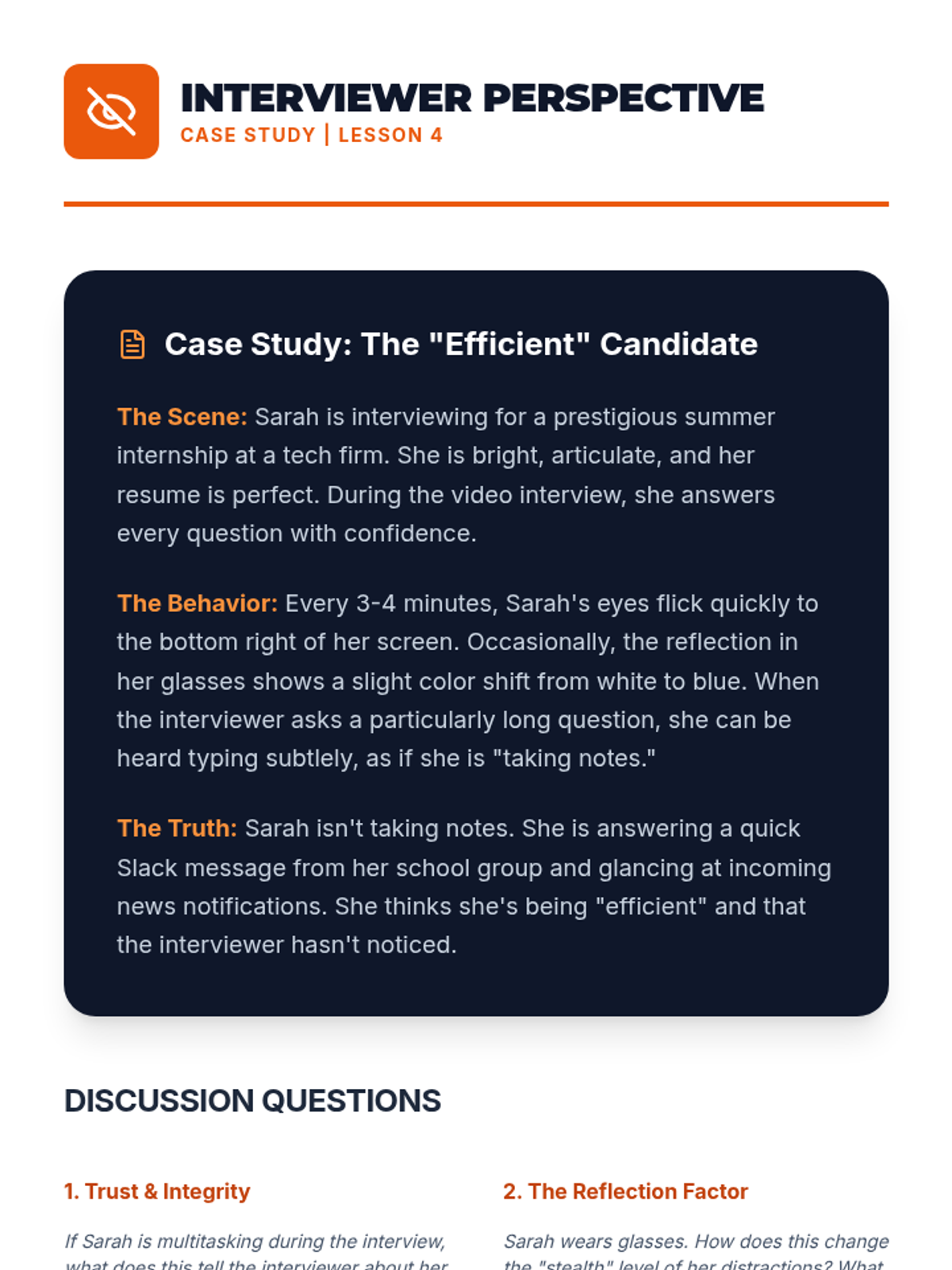
Students discuss the psychology of digital distractions and practice maintaining focus during long video sessions. They learn to disable notifications and avoid multi-tasking, which is easily spotted by interviewers.
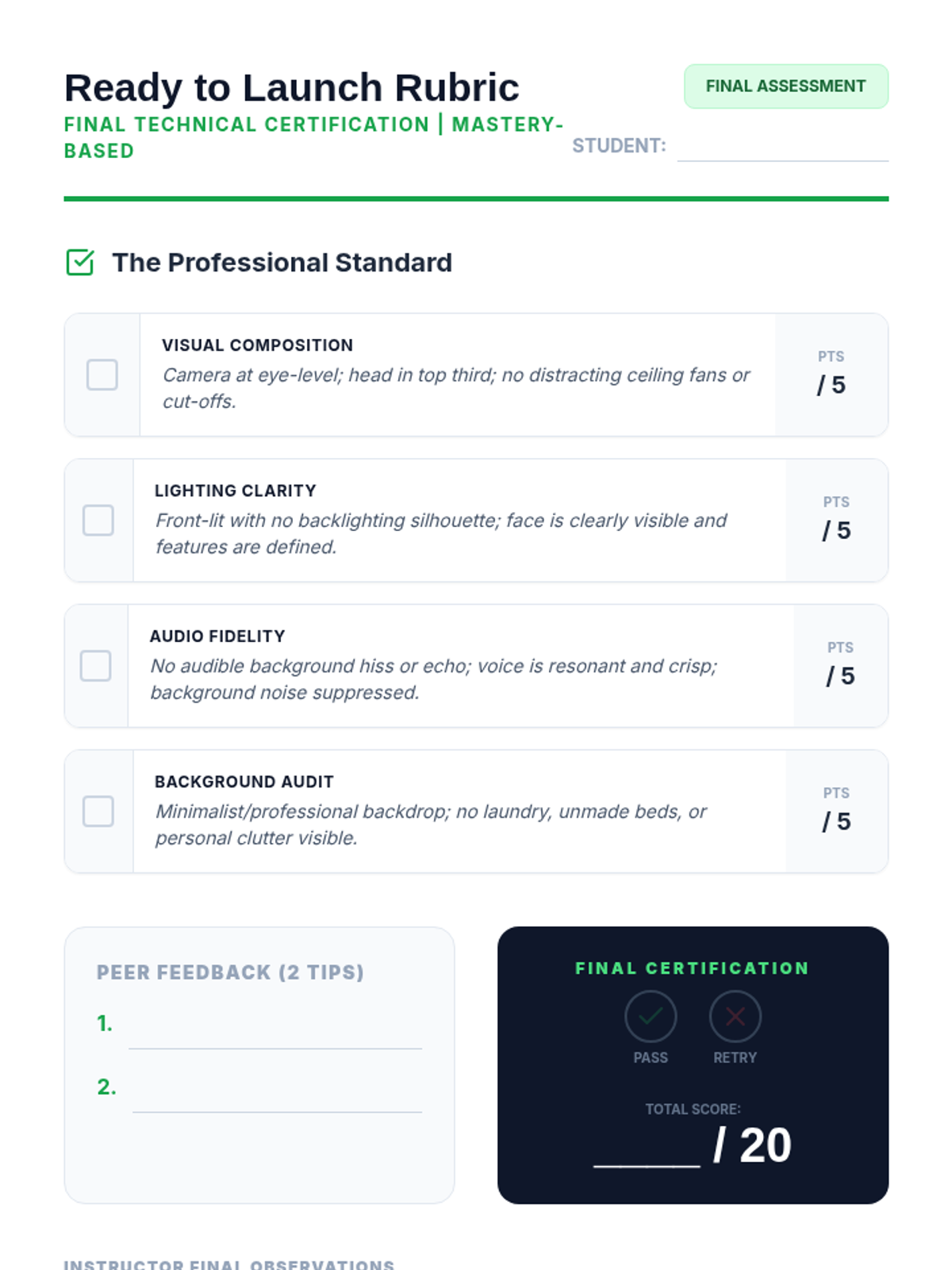
Students undergo a final technical review of their optimized interview stations, presenting their setup for peer and teacher feedback.
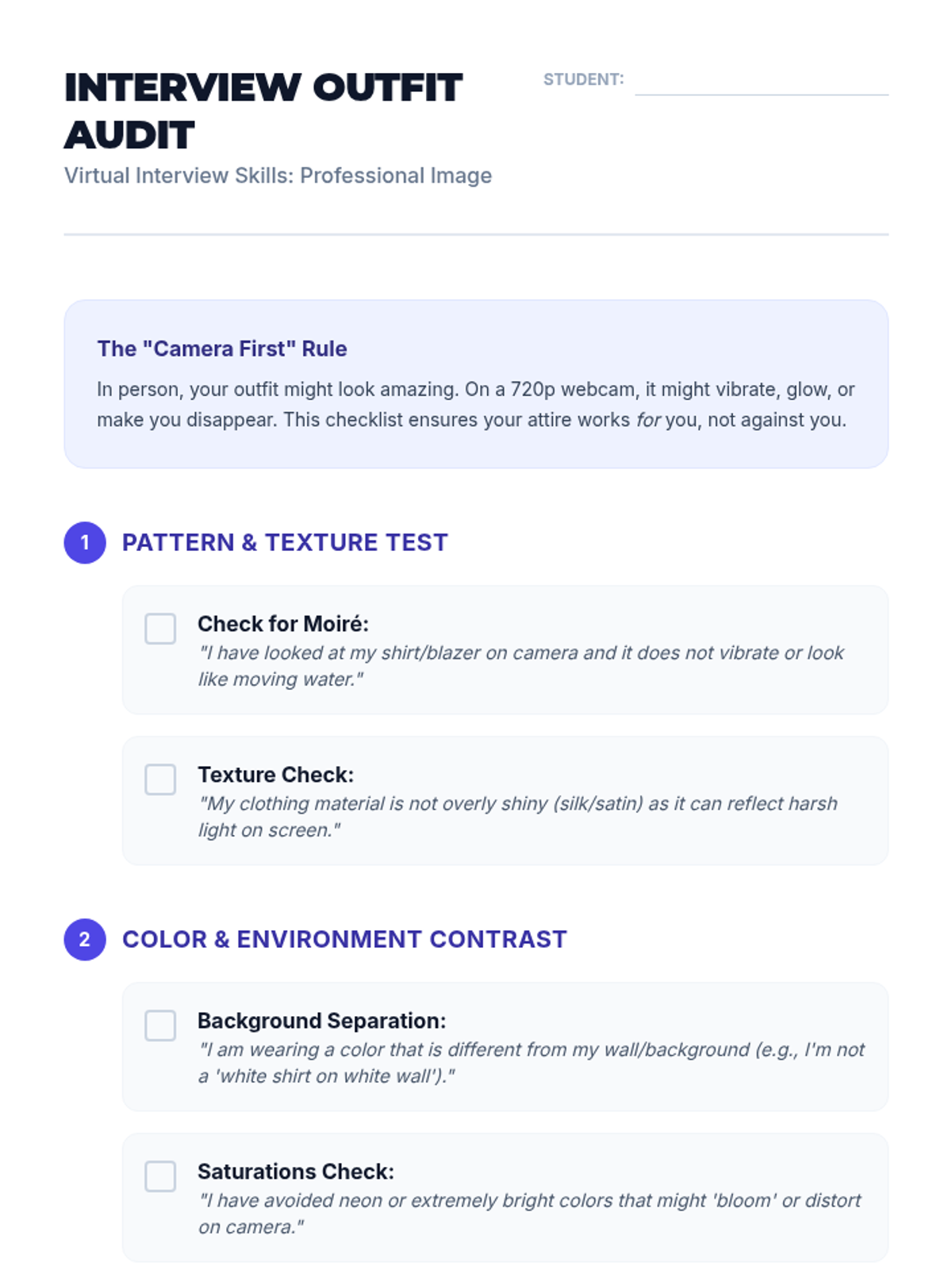
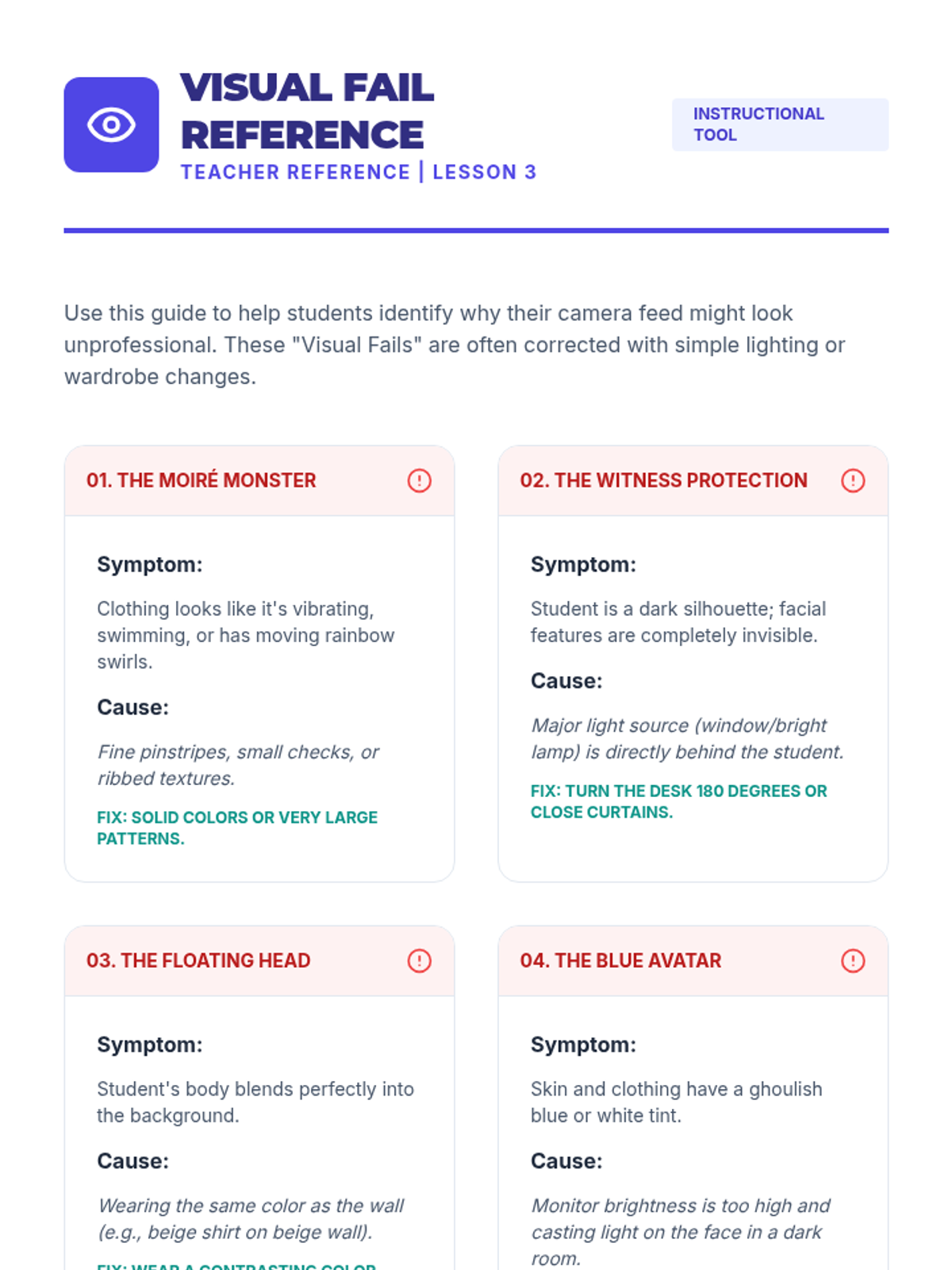
Students learn guidelines for on-camera clothing, avoiding patterns that cause moiré effects or colors that blend into backgrounds. They select an interview outfit and test how it appears on camera under their lighting setup.
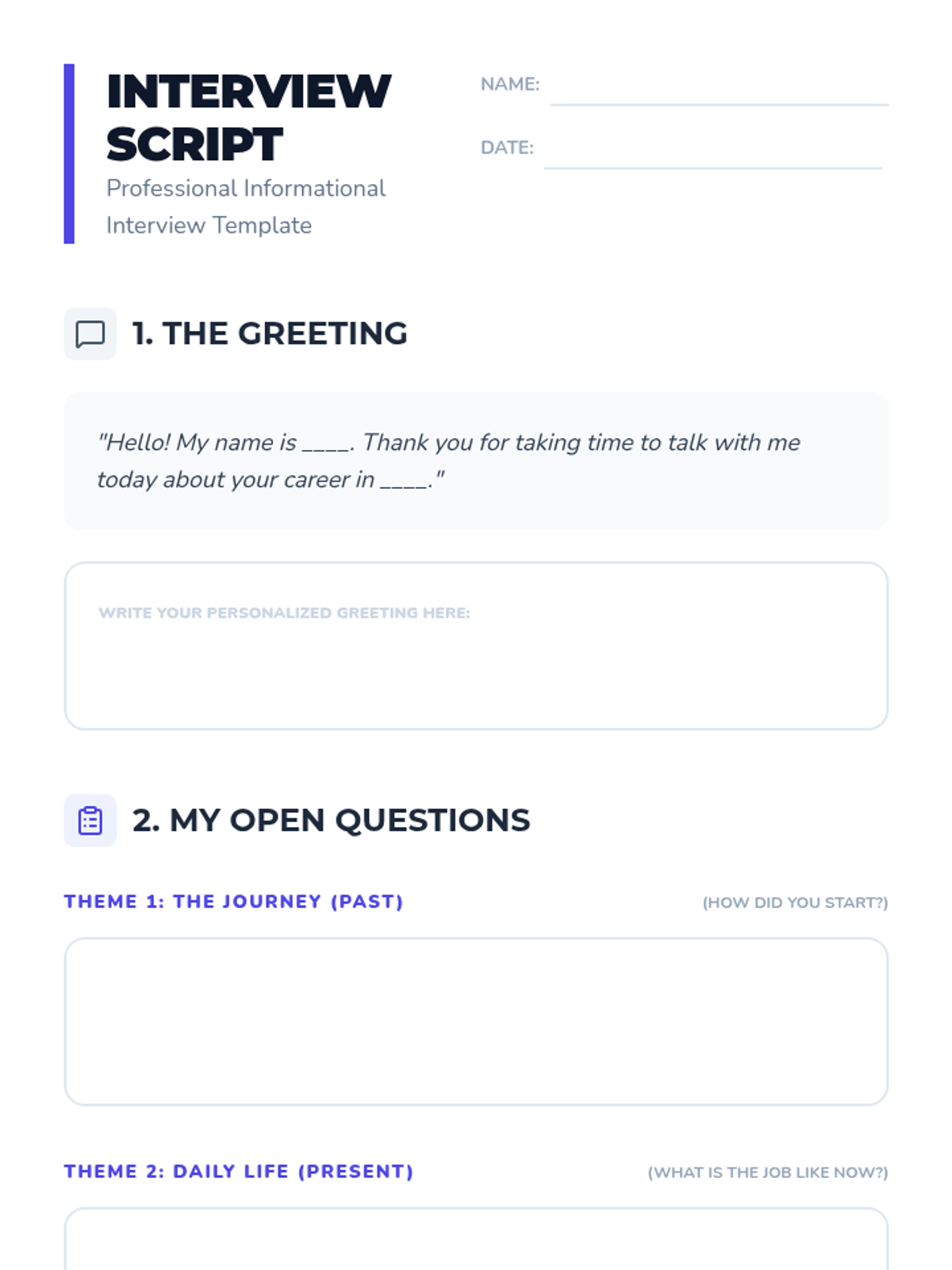
A lesson focused on functional communication skills for conducting informational interviews with creative professionals, specifically animators and tattoo artists. Students learn to draft open-ended questions and structure a professional conversation.
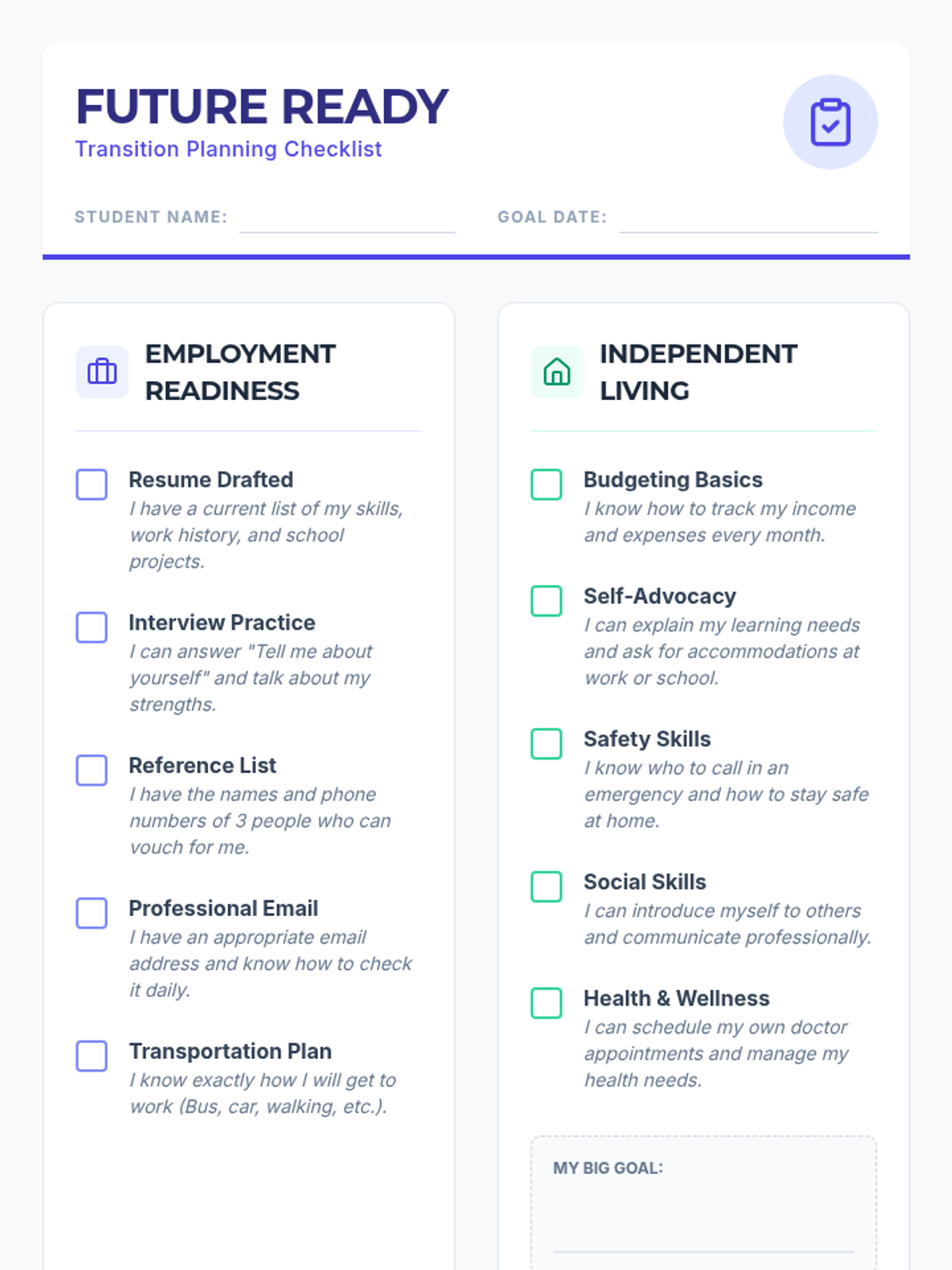
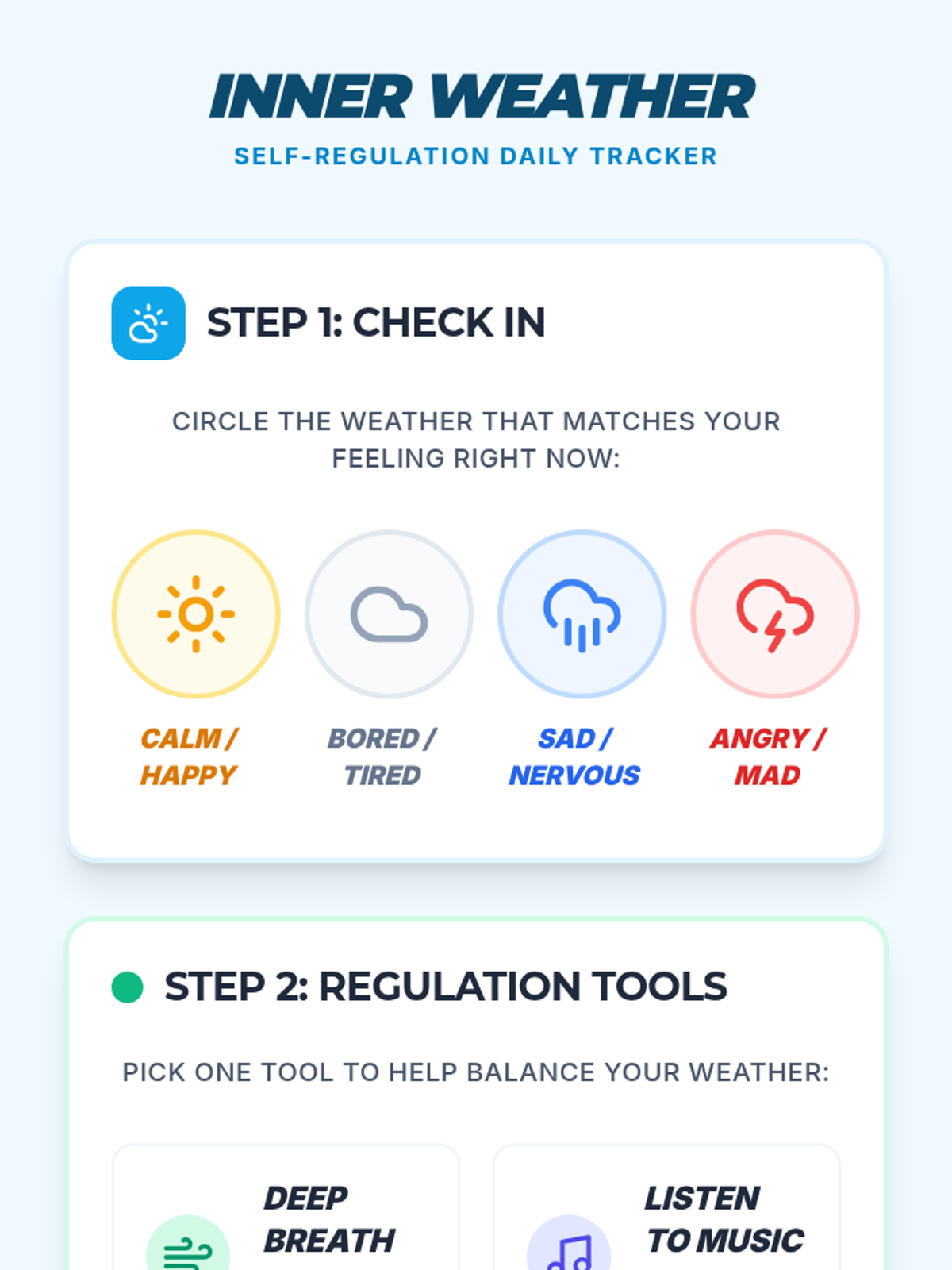
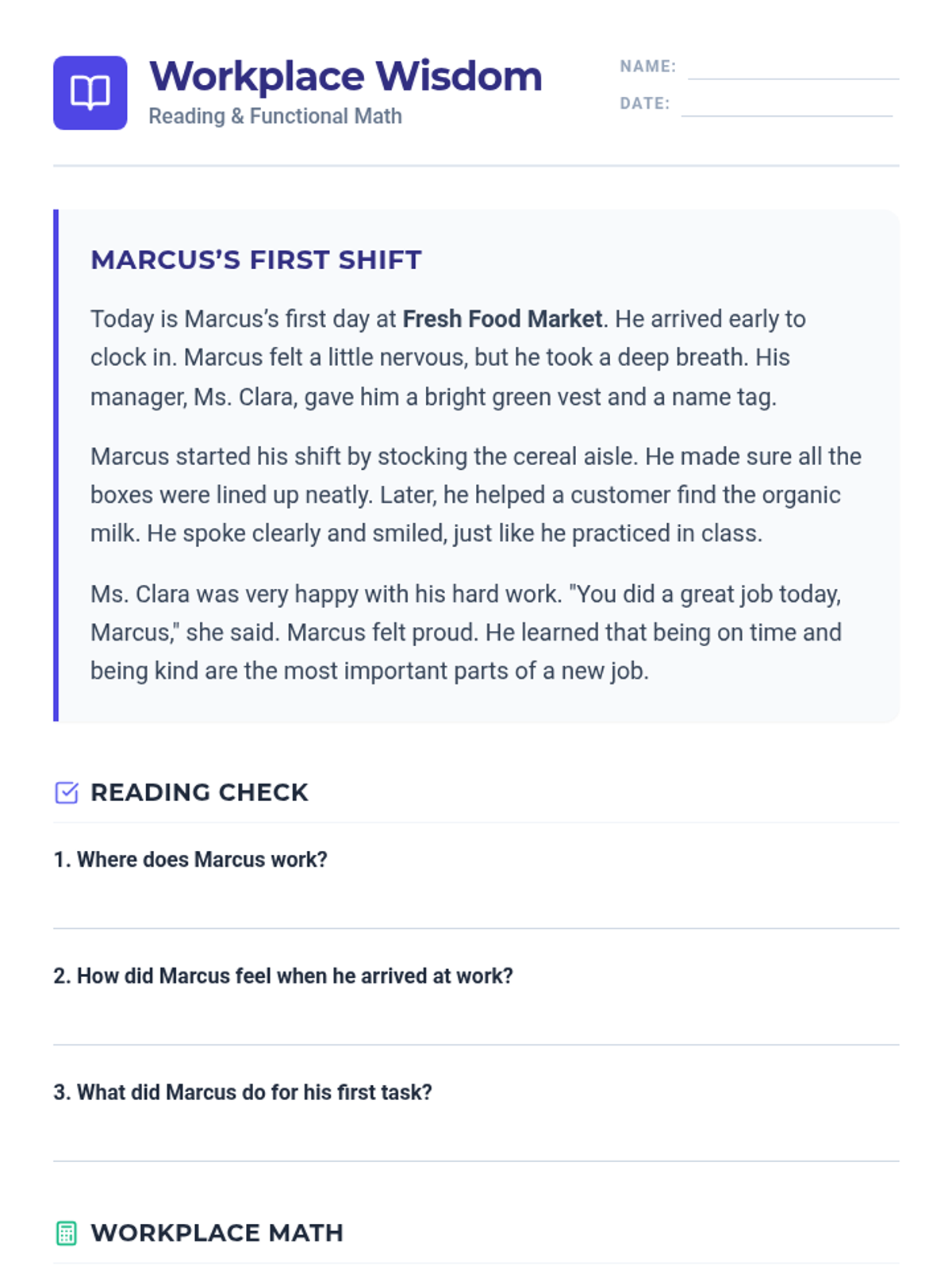
A collection of functional life skills resources designed for high school students transitioning to independence, focusing on budgeting, self-regulation, vocational readiness, and literacy.
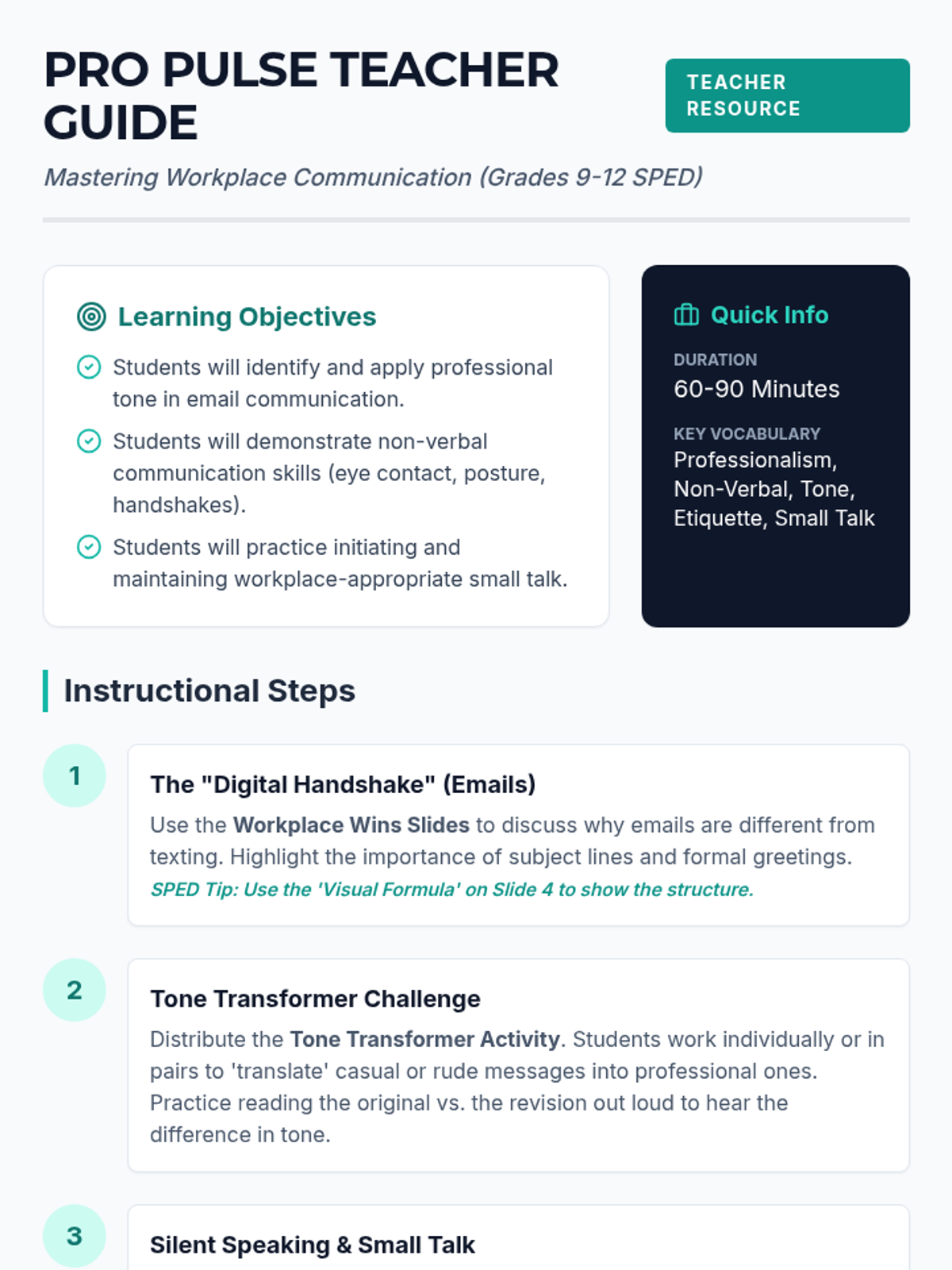
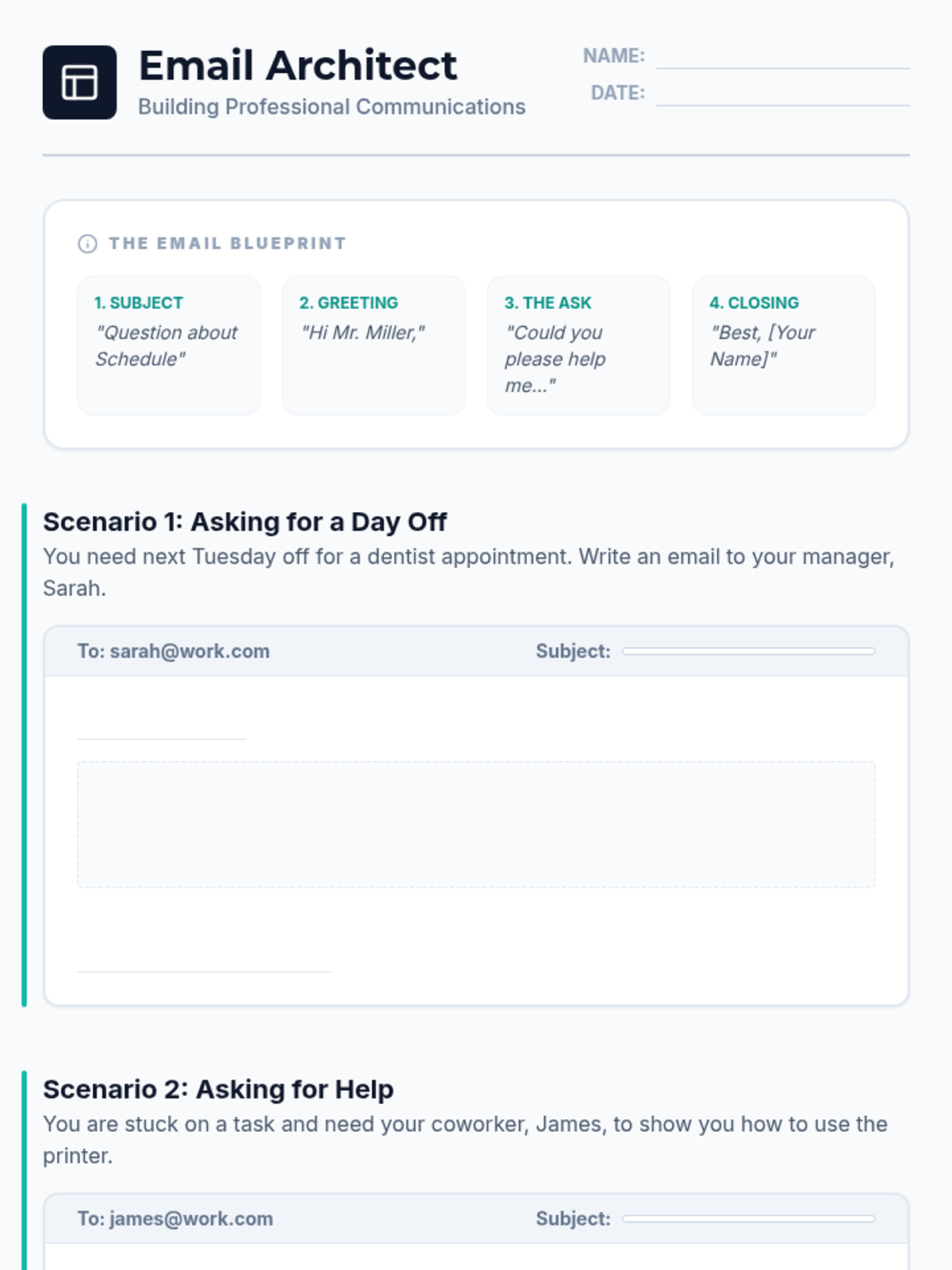
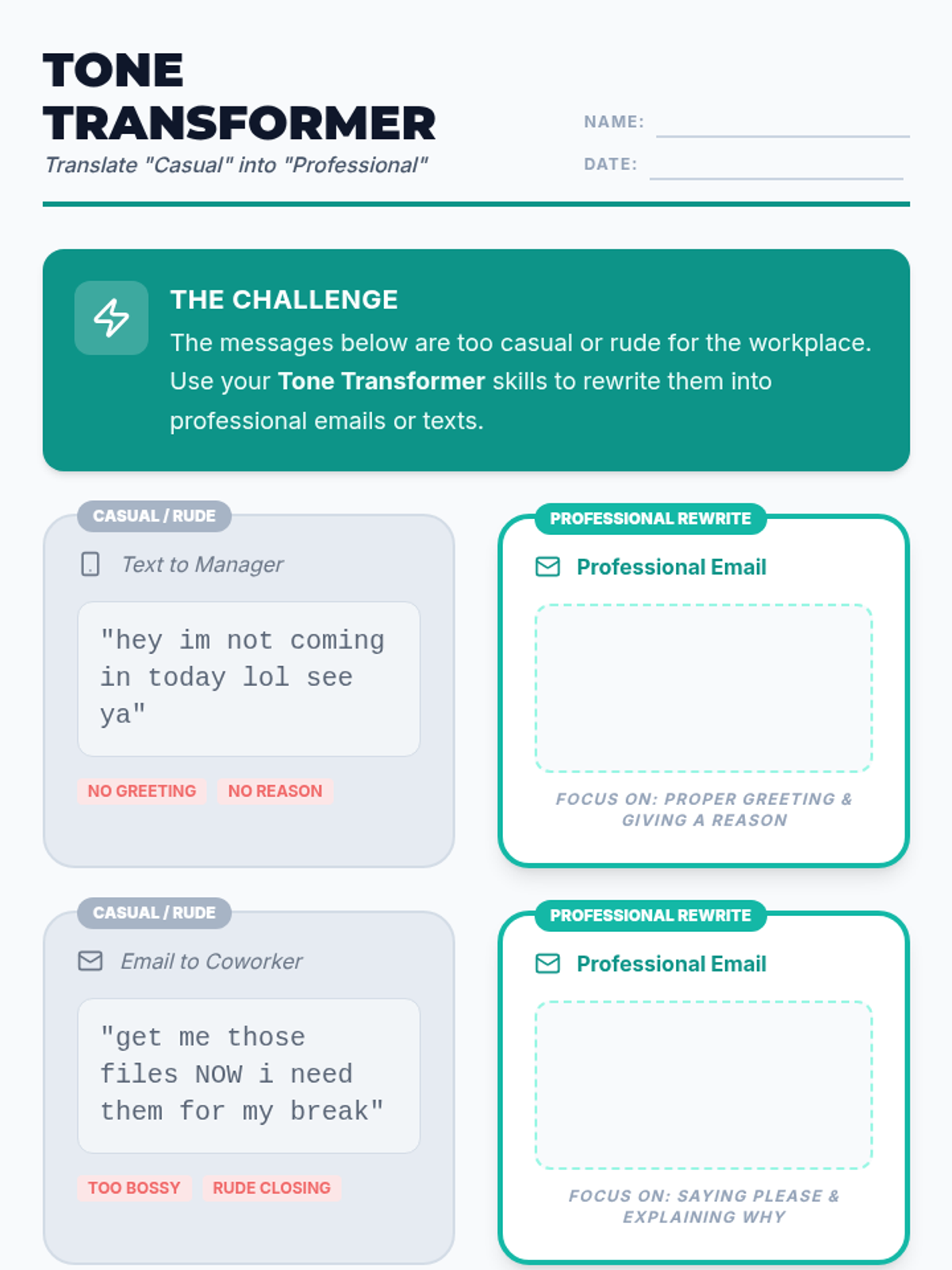
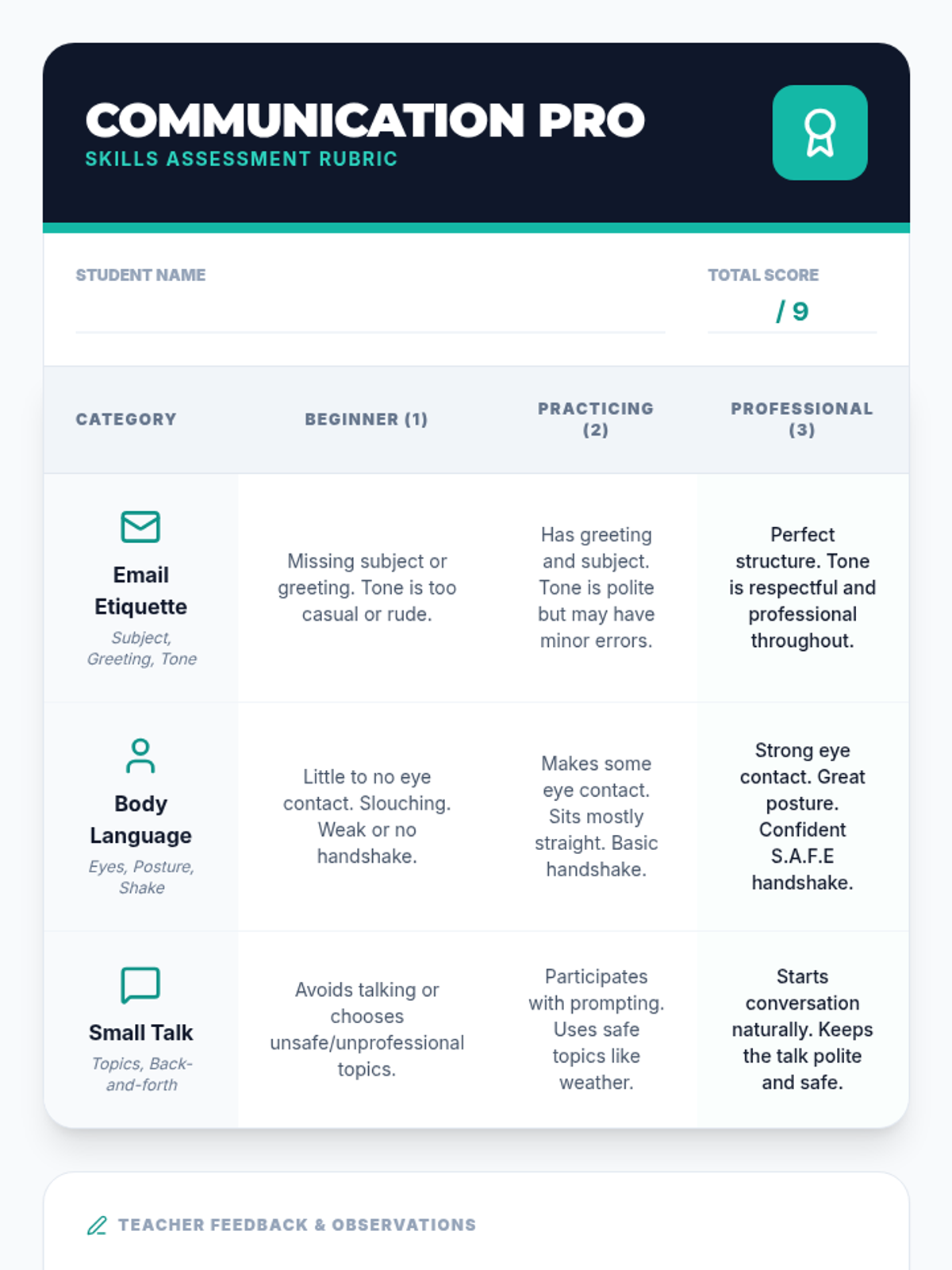
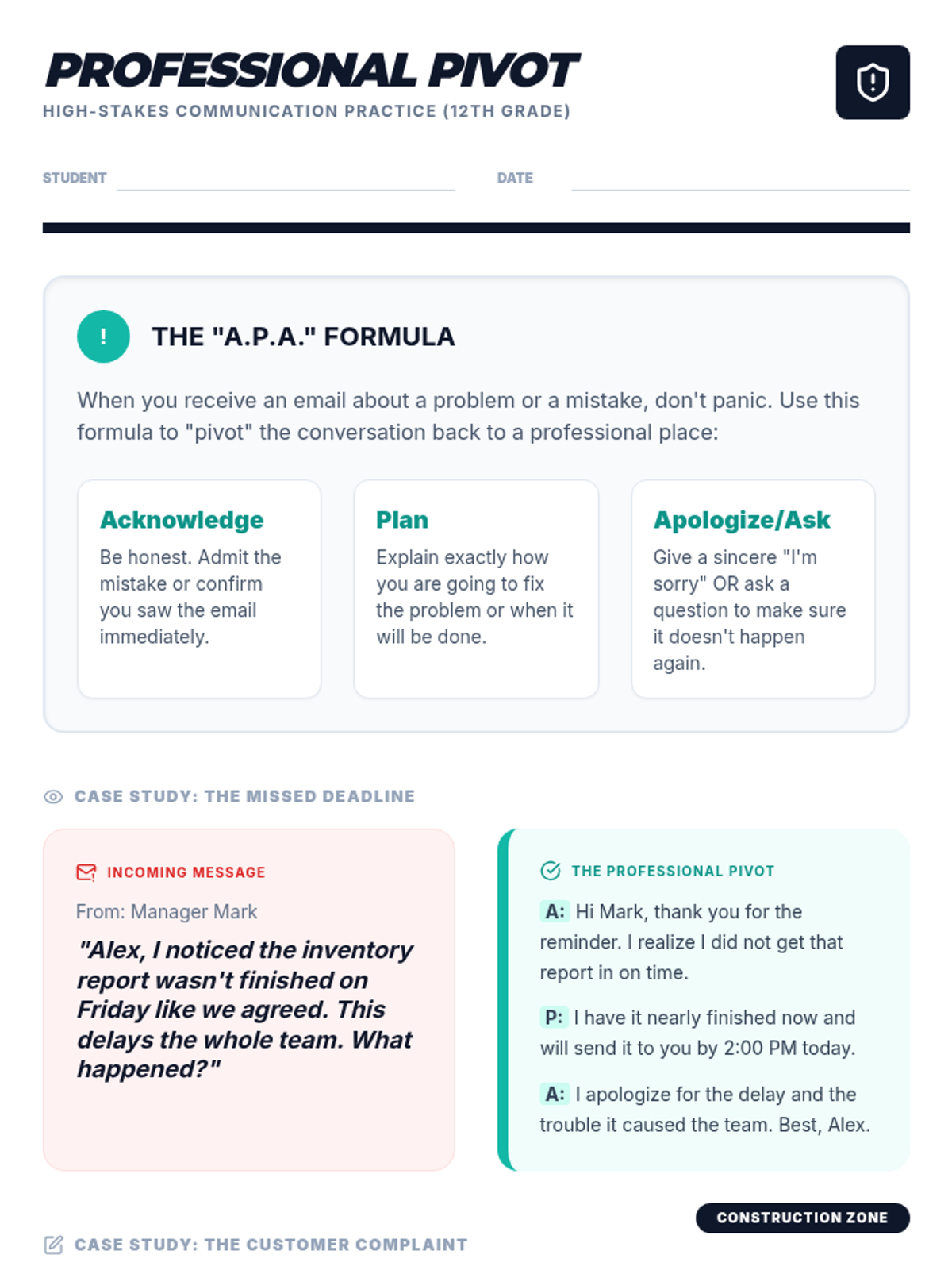
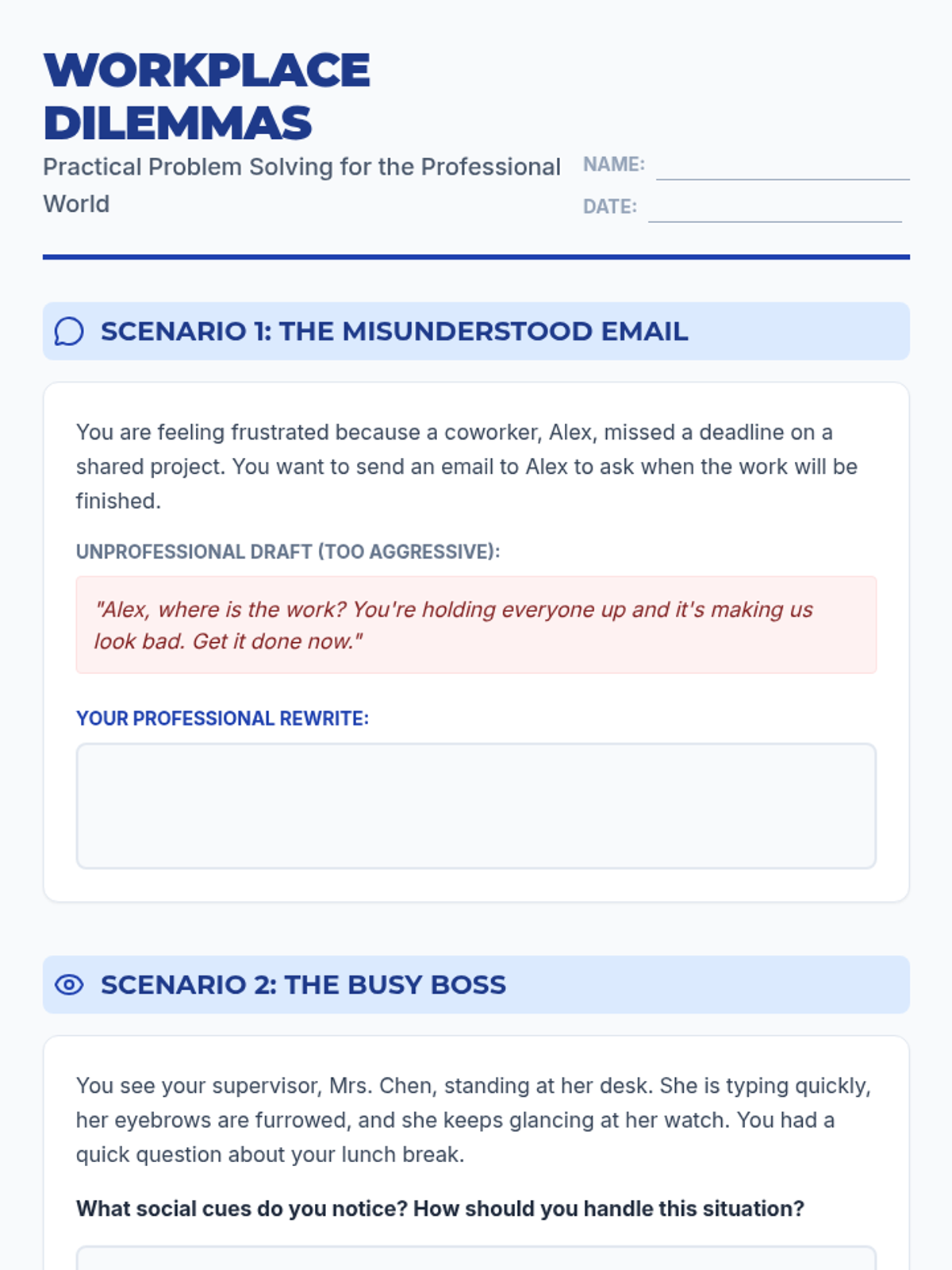
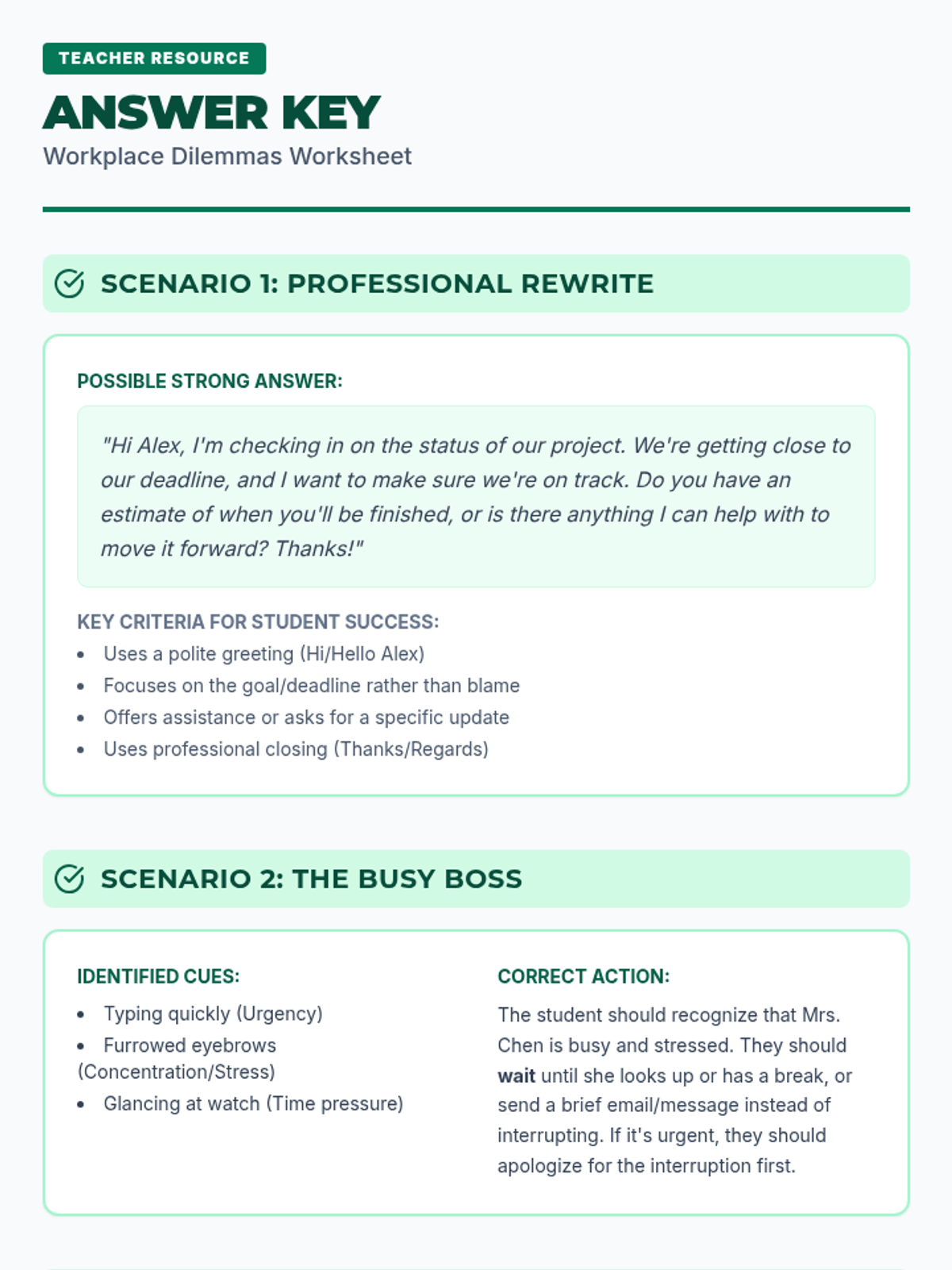
A comprehensive lesson for high school SPED students focusing on professional email etiquette, interview body language, and workplace small talk through hands-on practice.
A comprehensive introduction to essential employment skills, including professional communication, job applications, interview etiquette, and workplace safety. This lesson prepares students for the transition into a professional environment through interactive discussion and practical problem-solving.
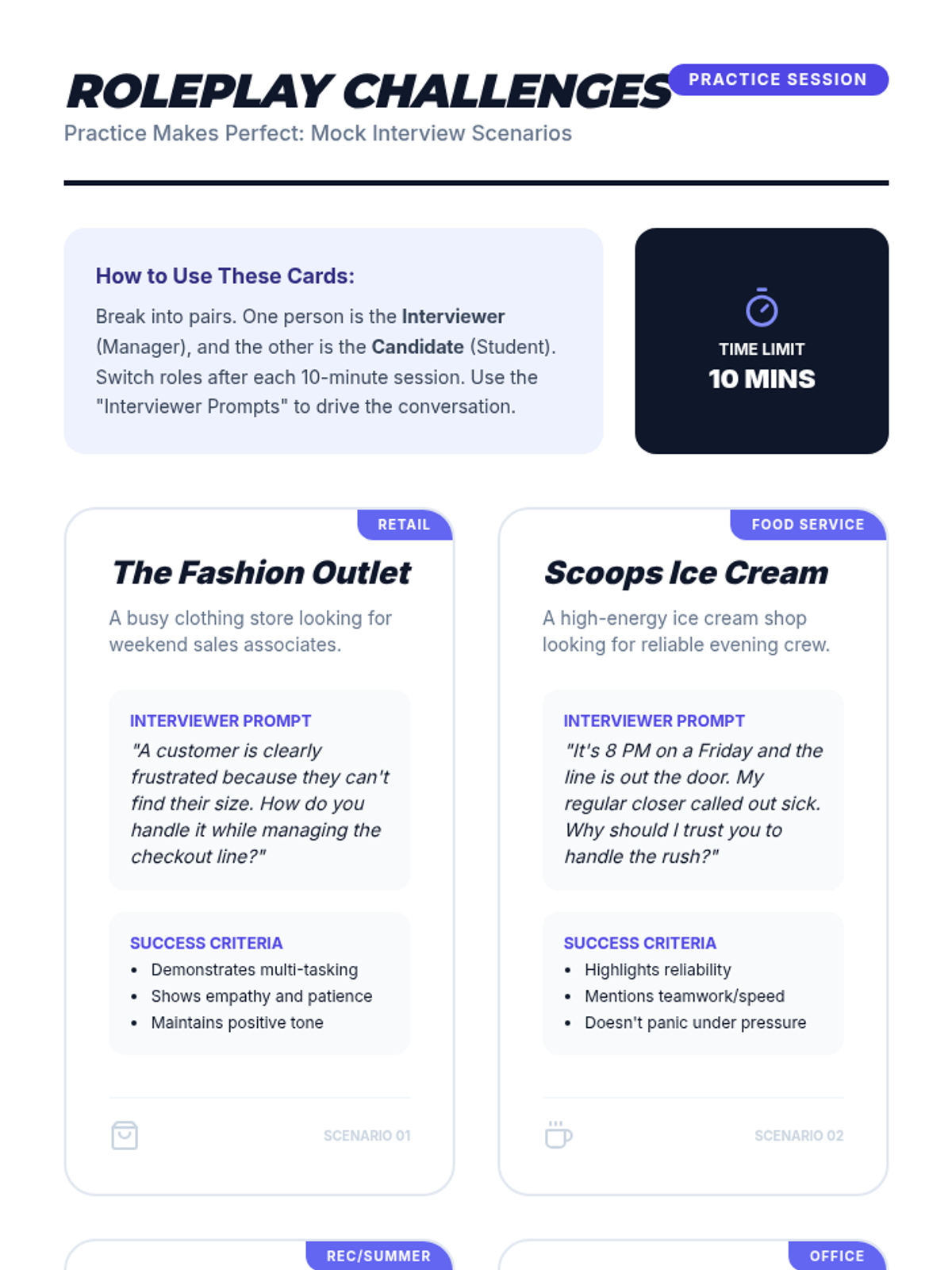
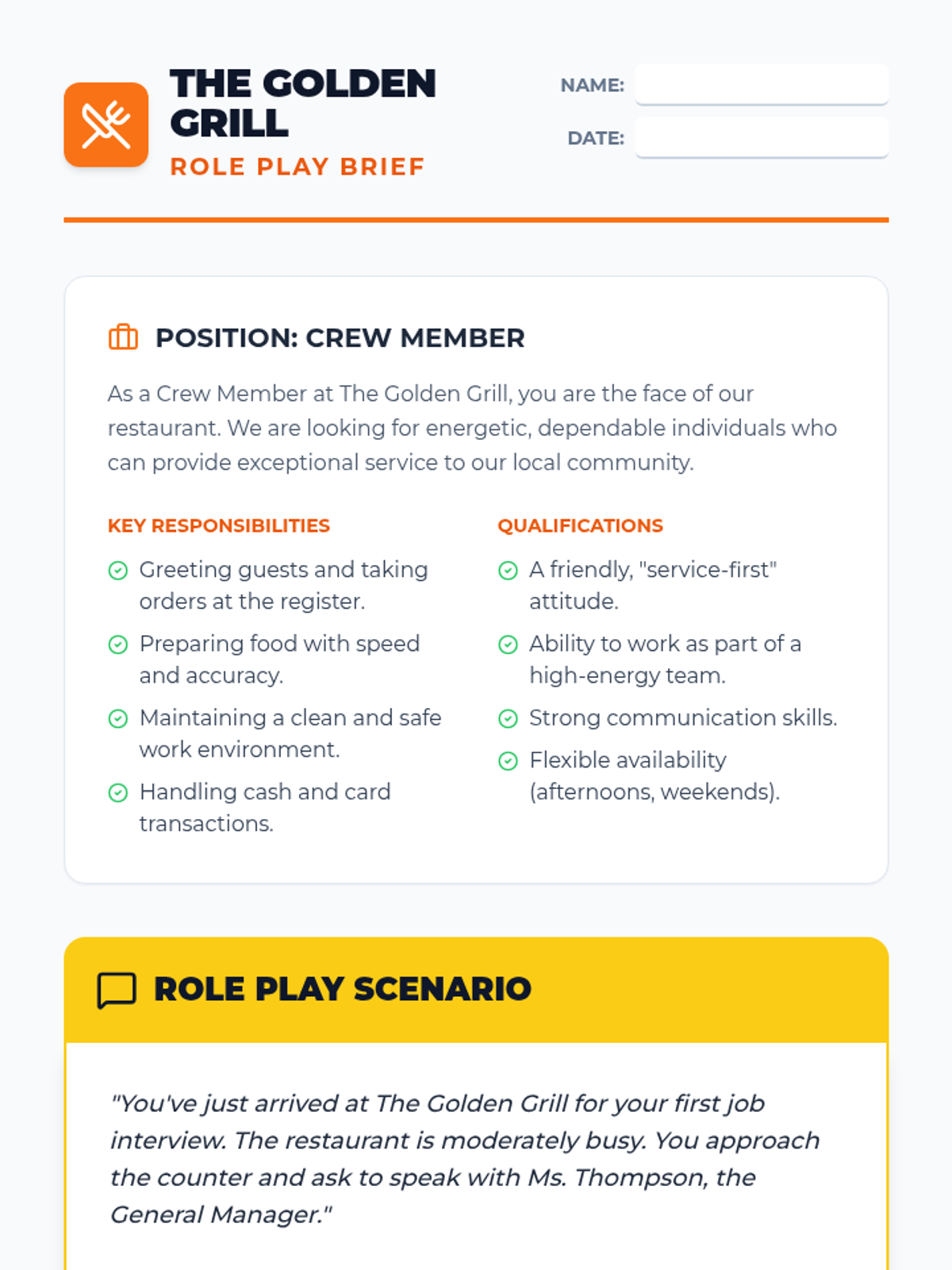
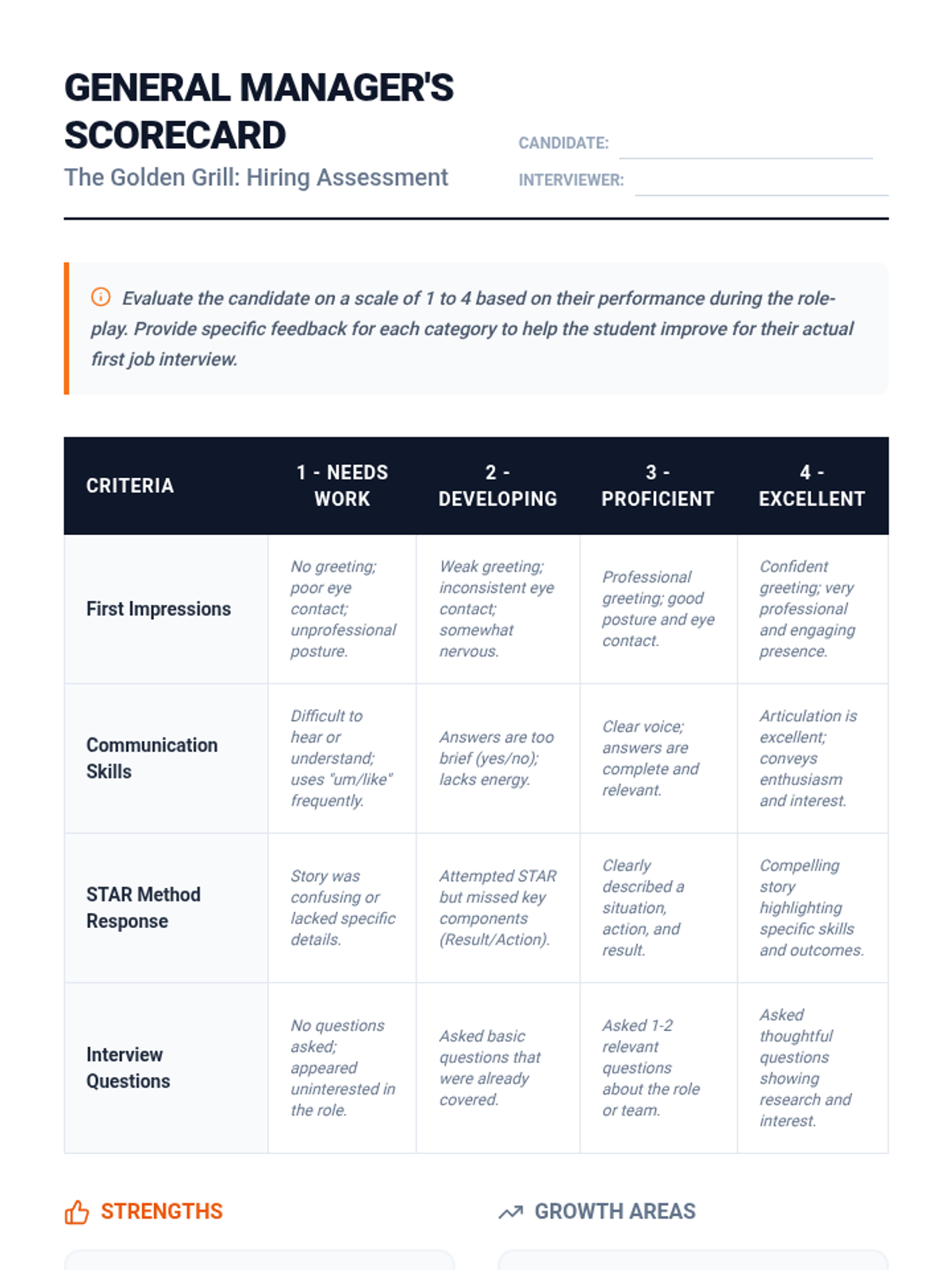
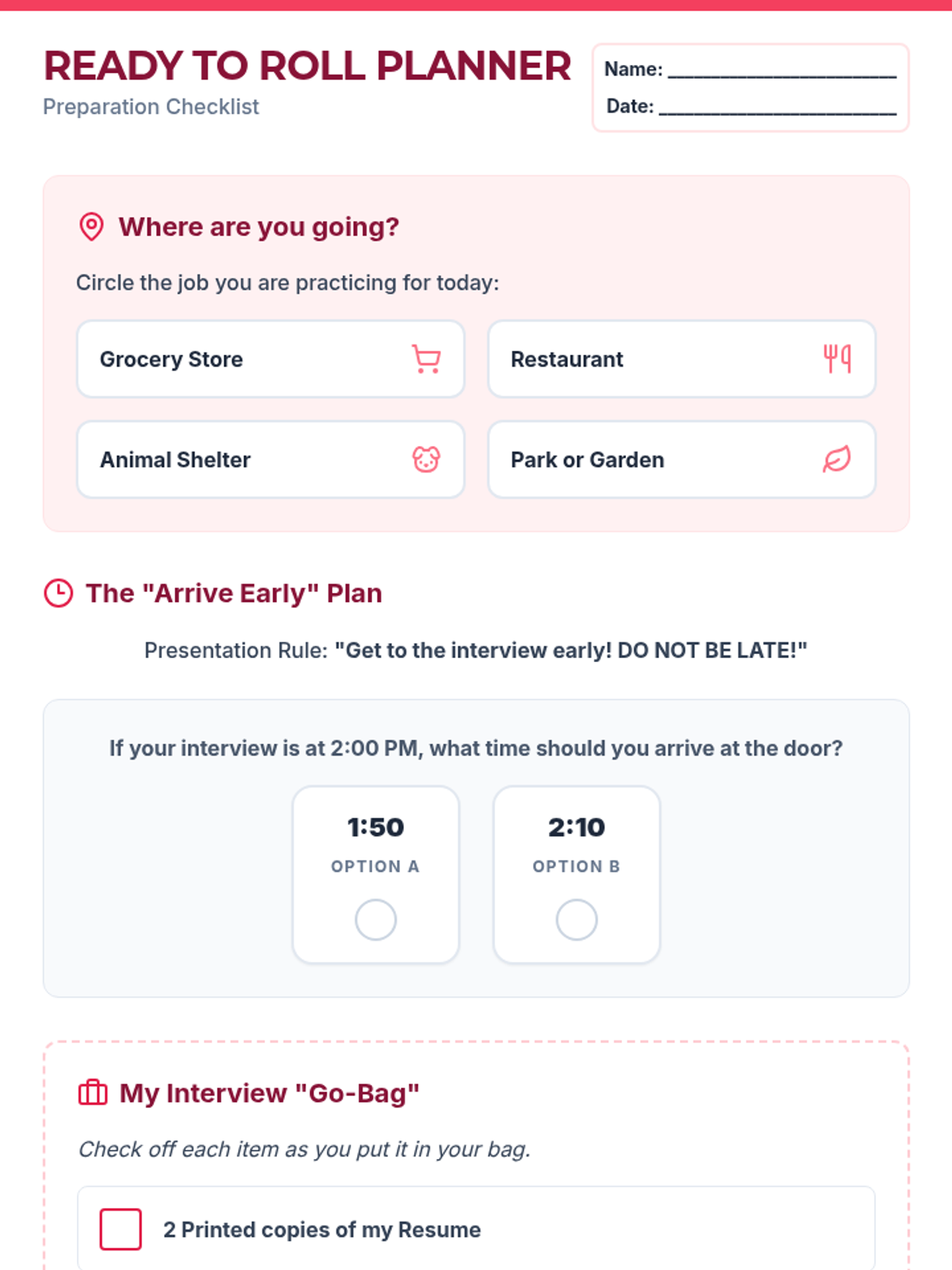
A comprehensive lesson designed to prepare 10th graders for their first job interview in the fast-food industry through instruction, reference materials, and immersive role-play.
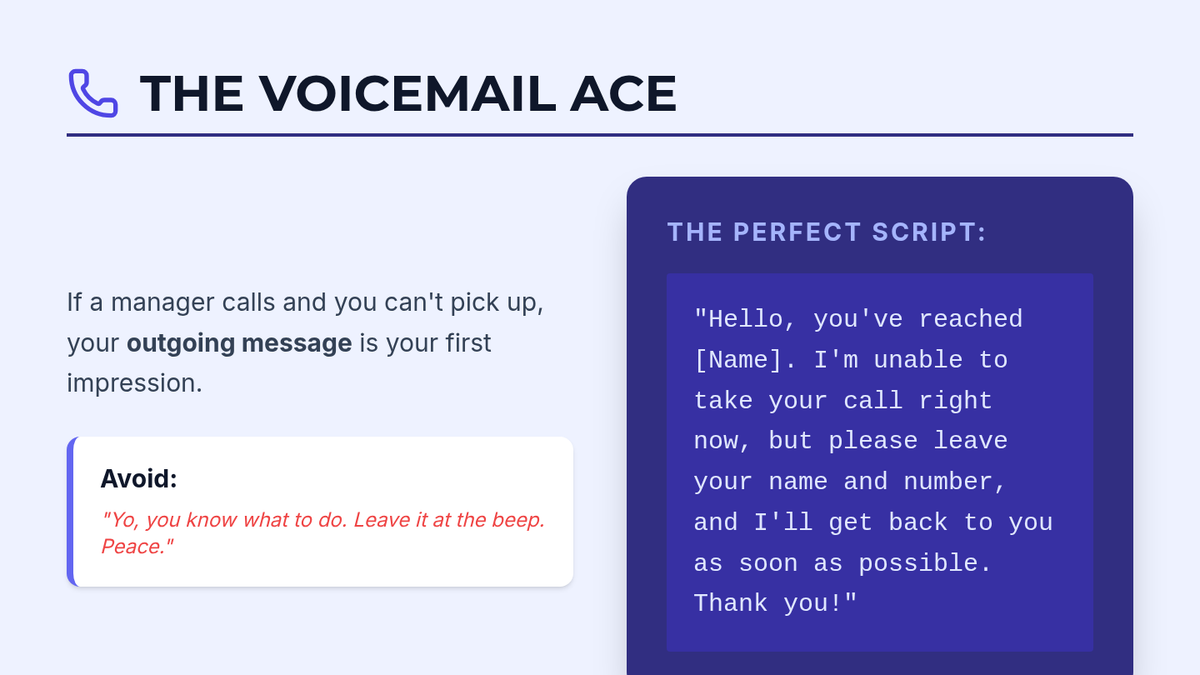
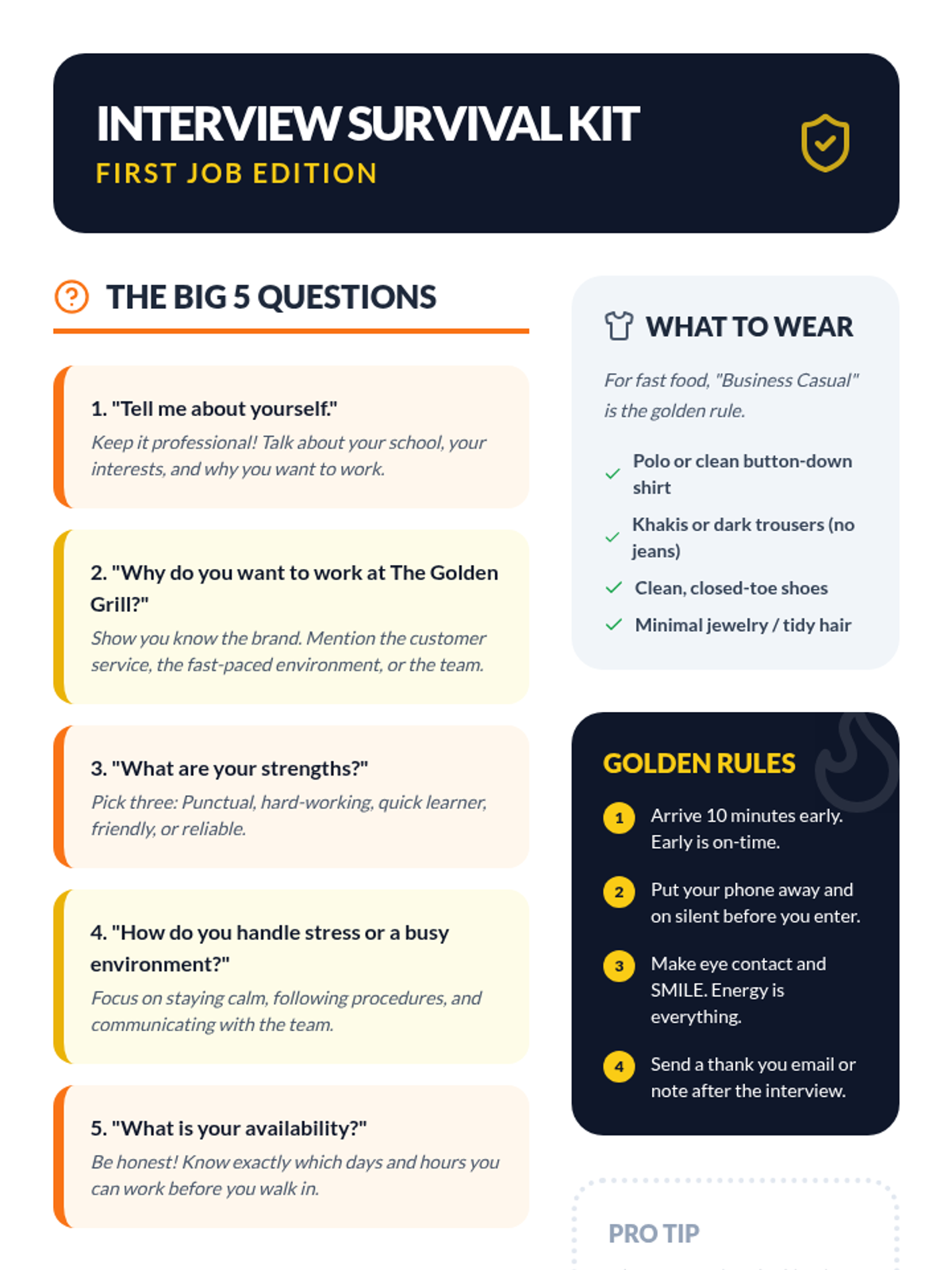
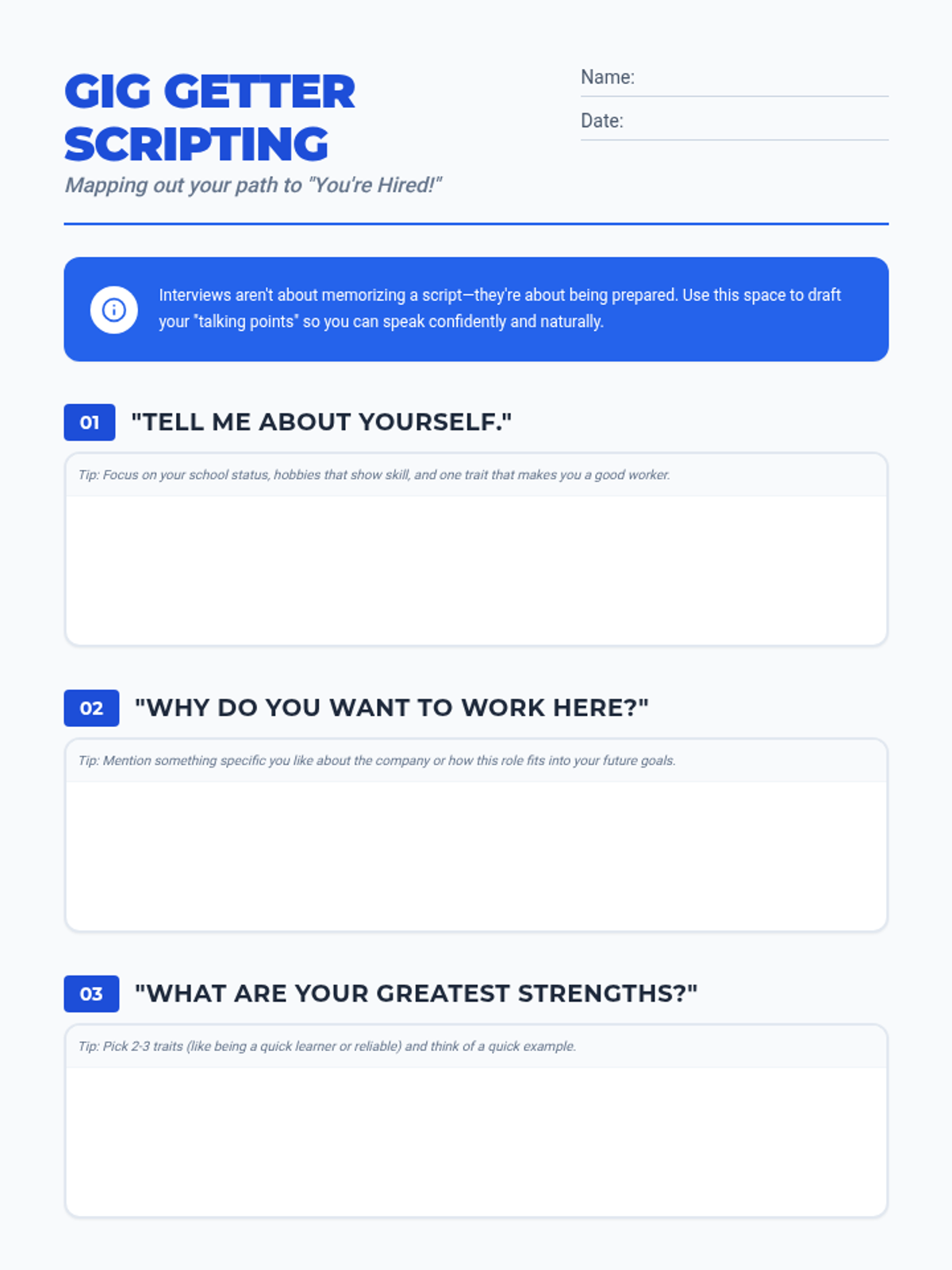
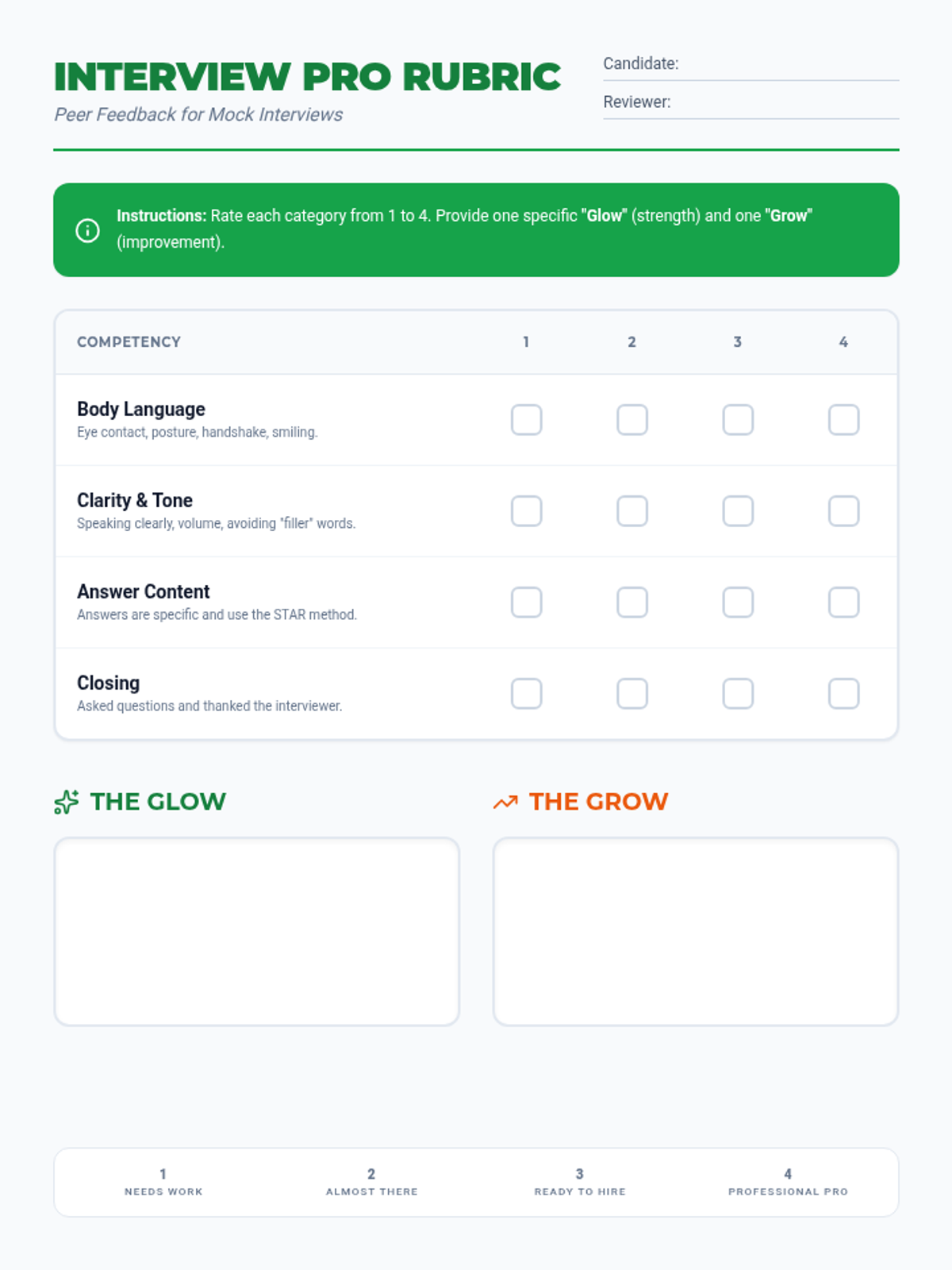
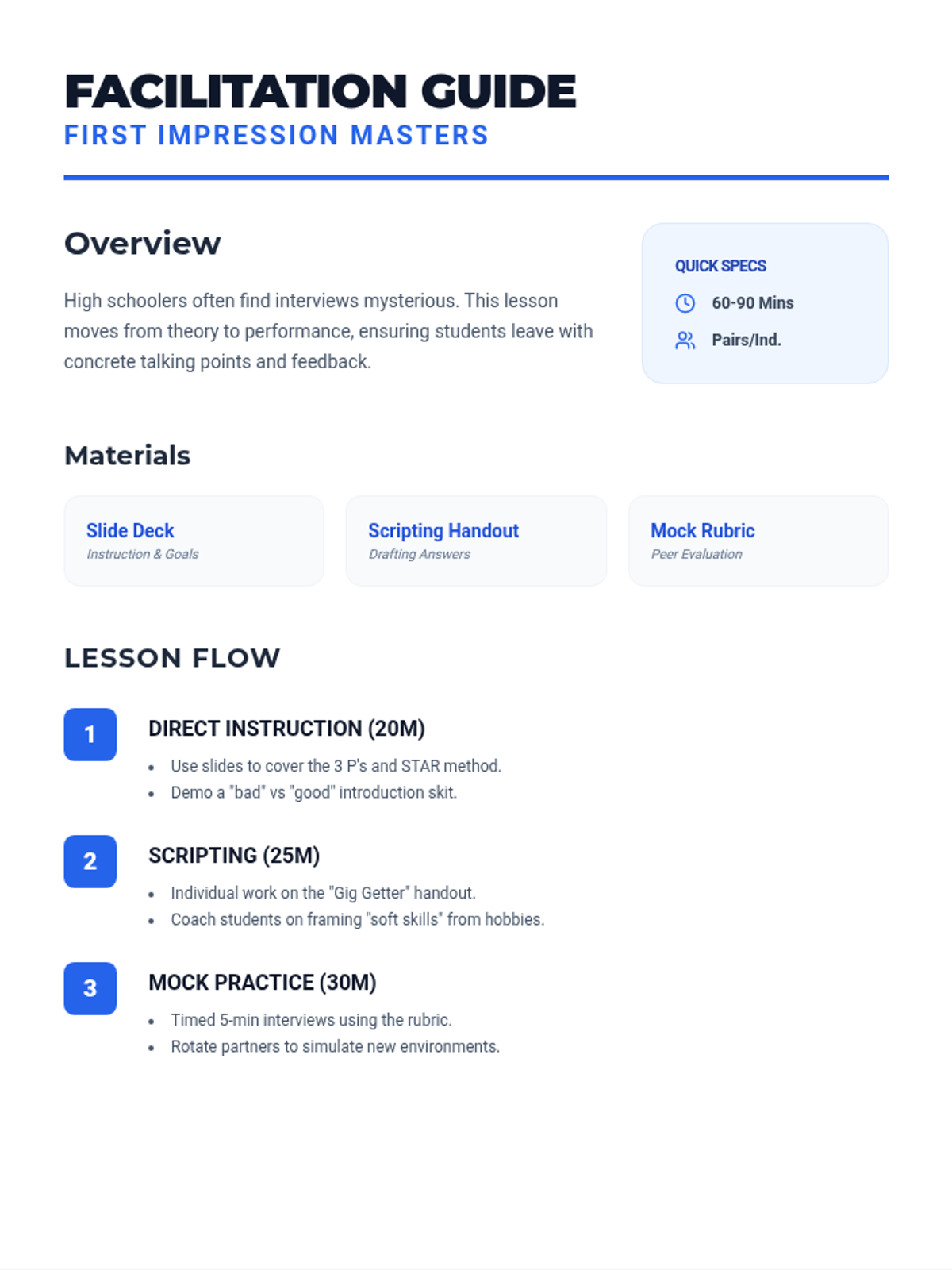
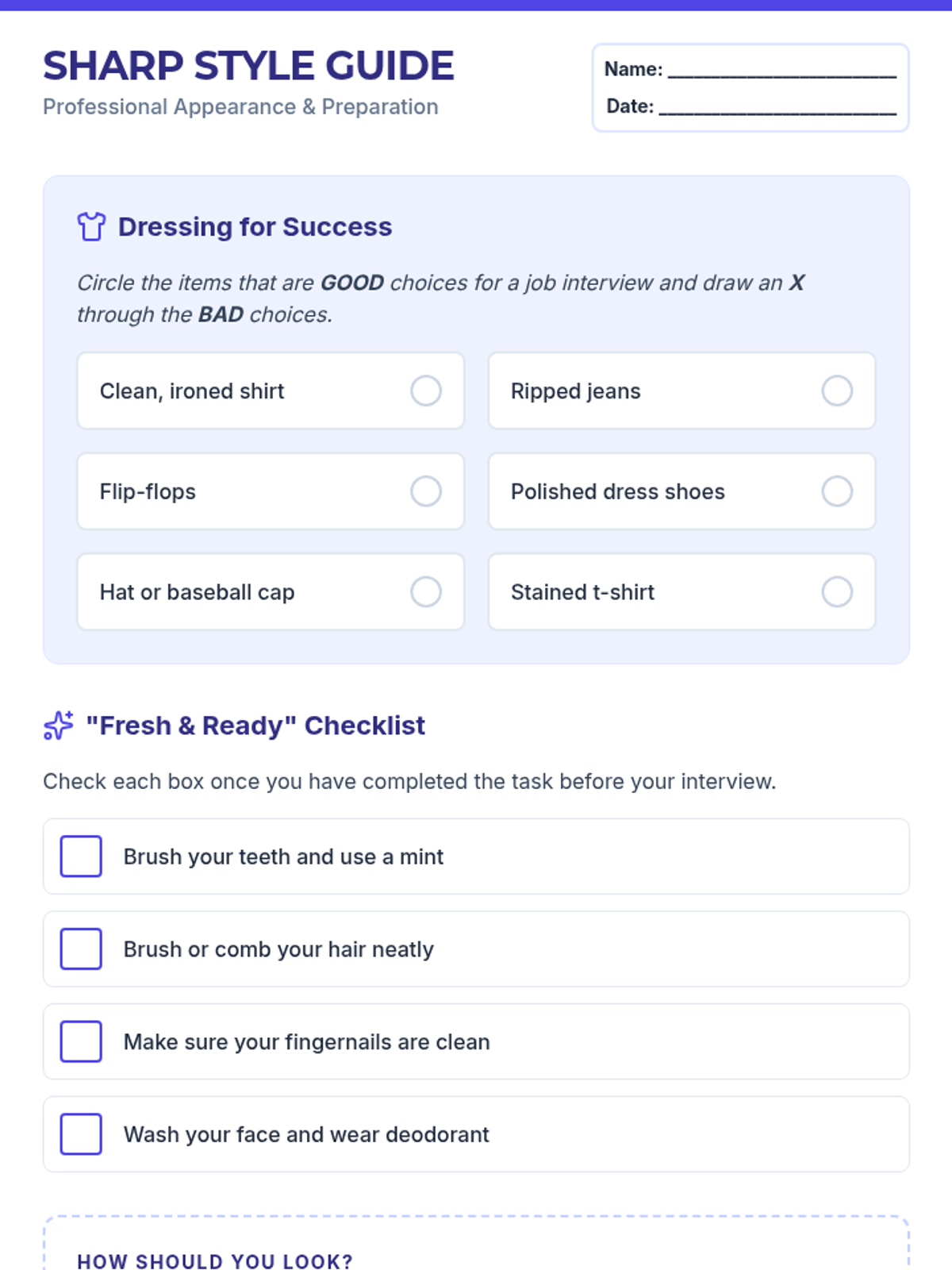
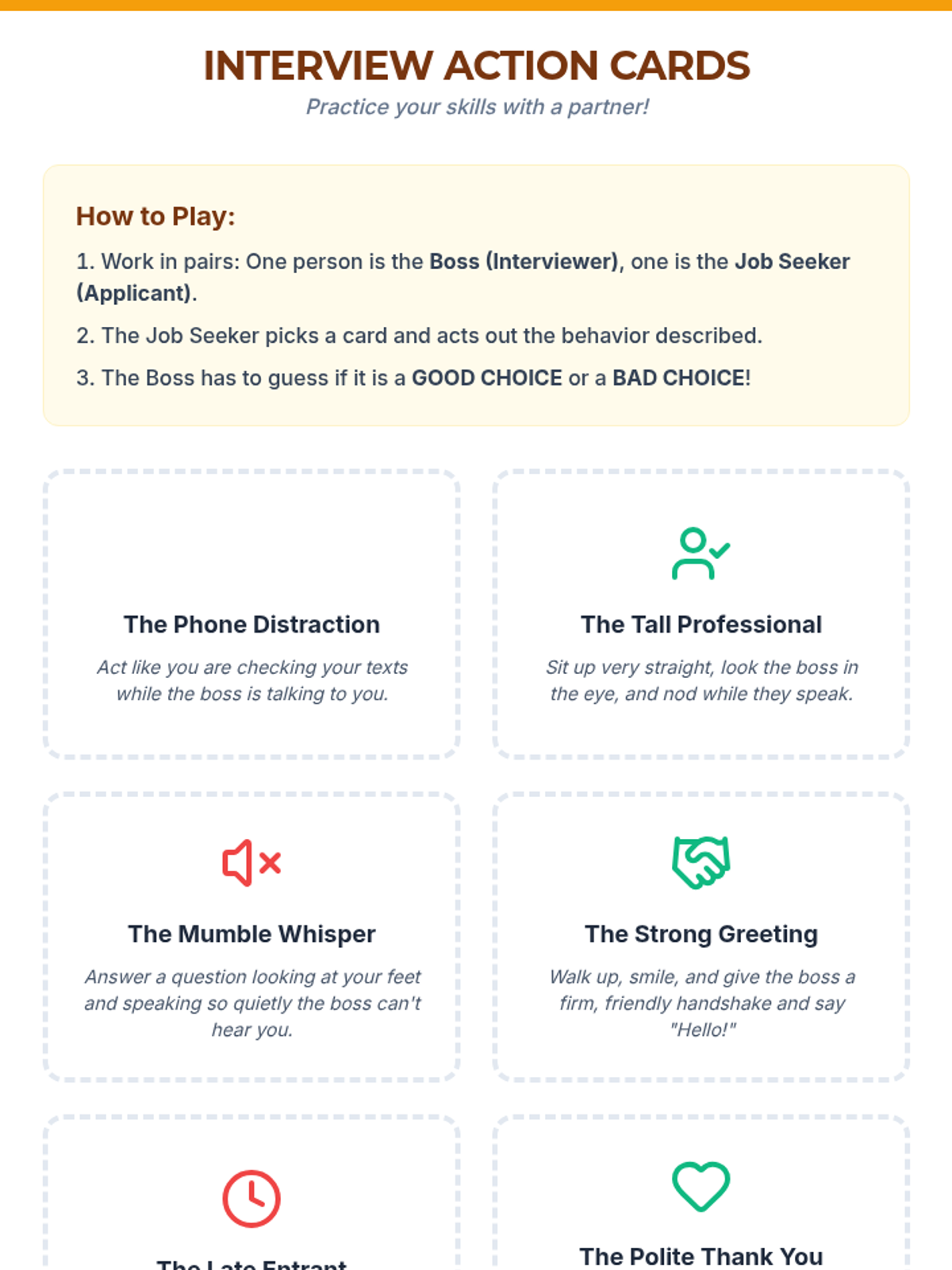
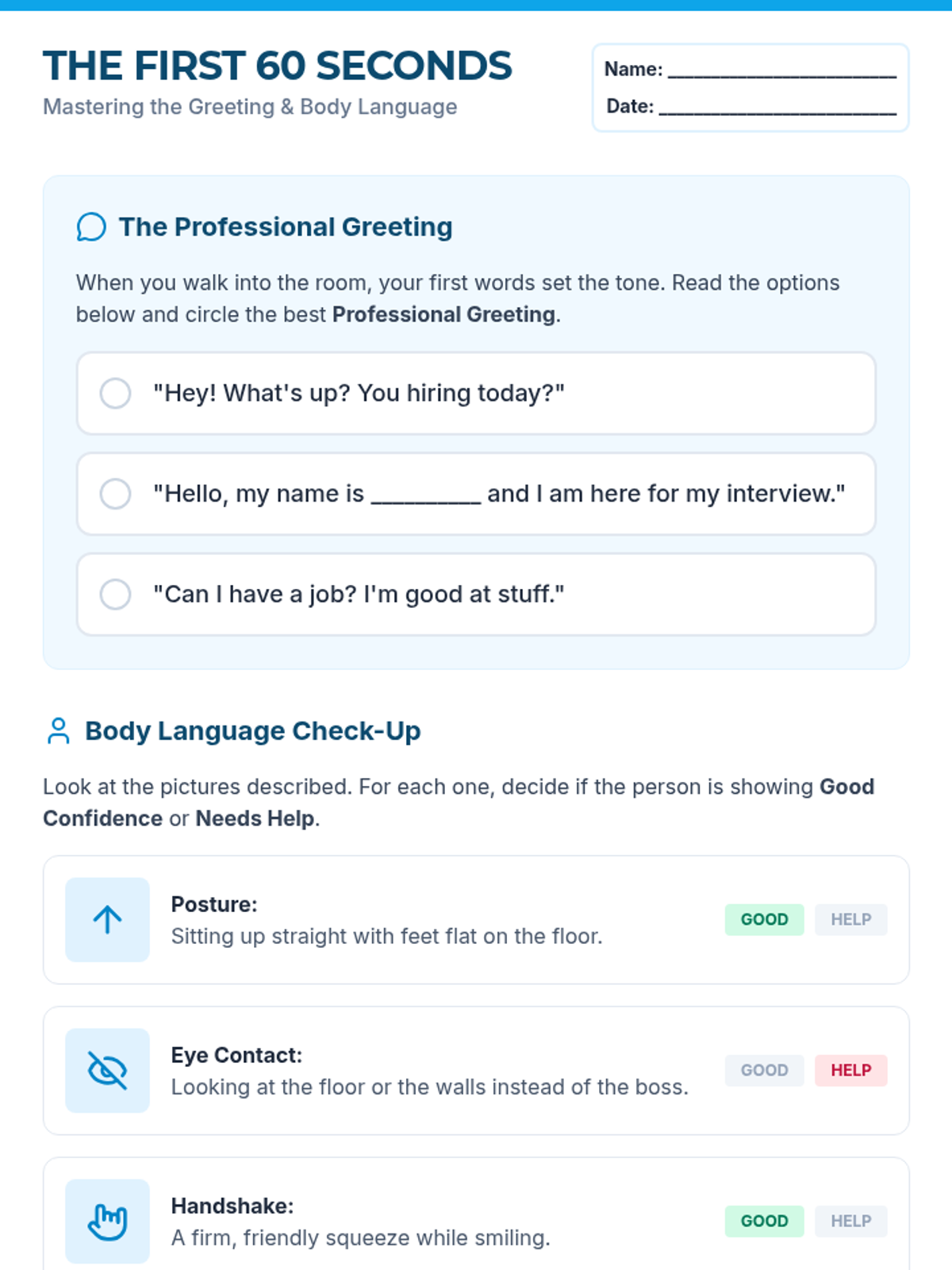
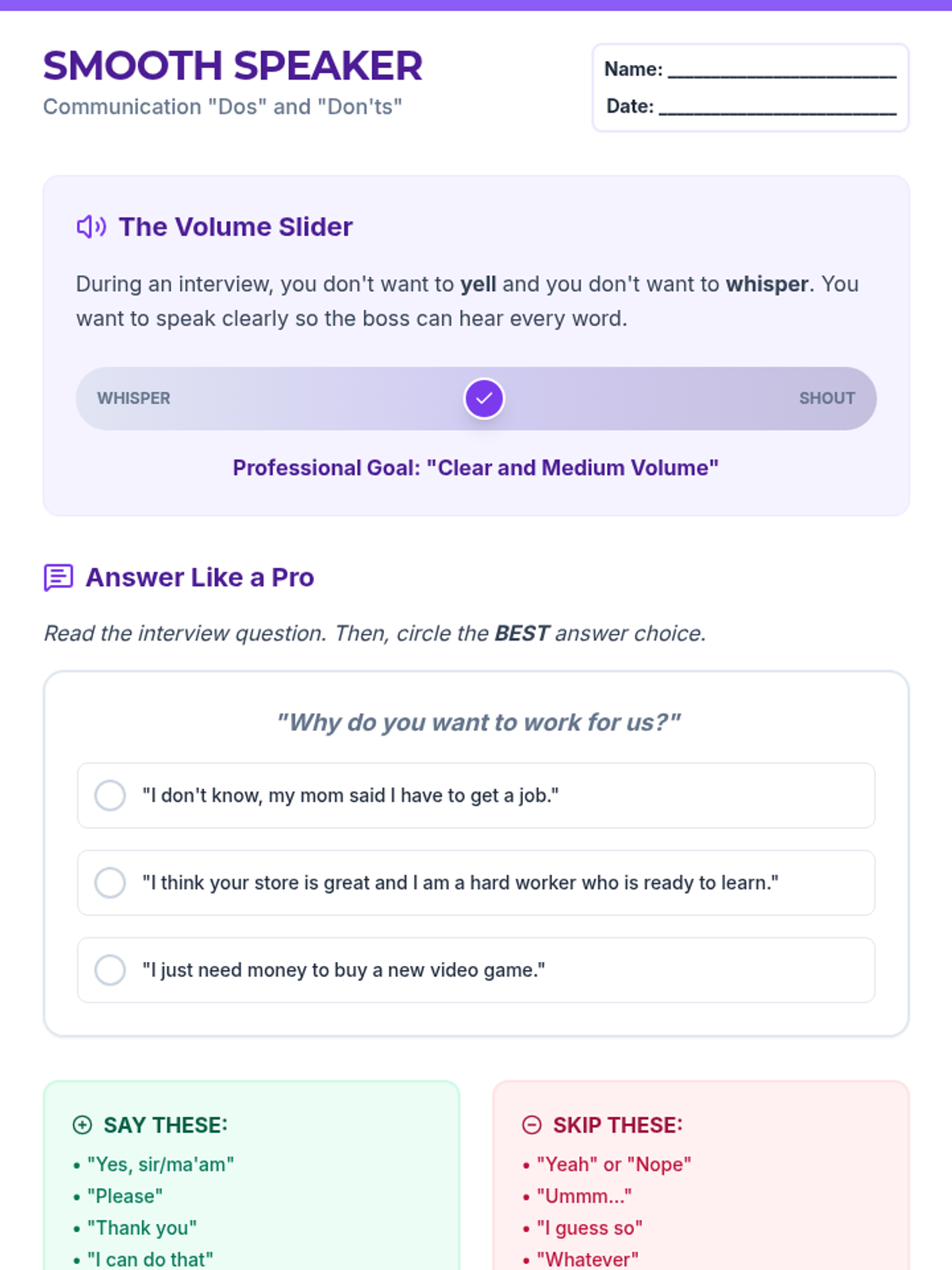
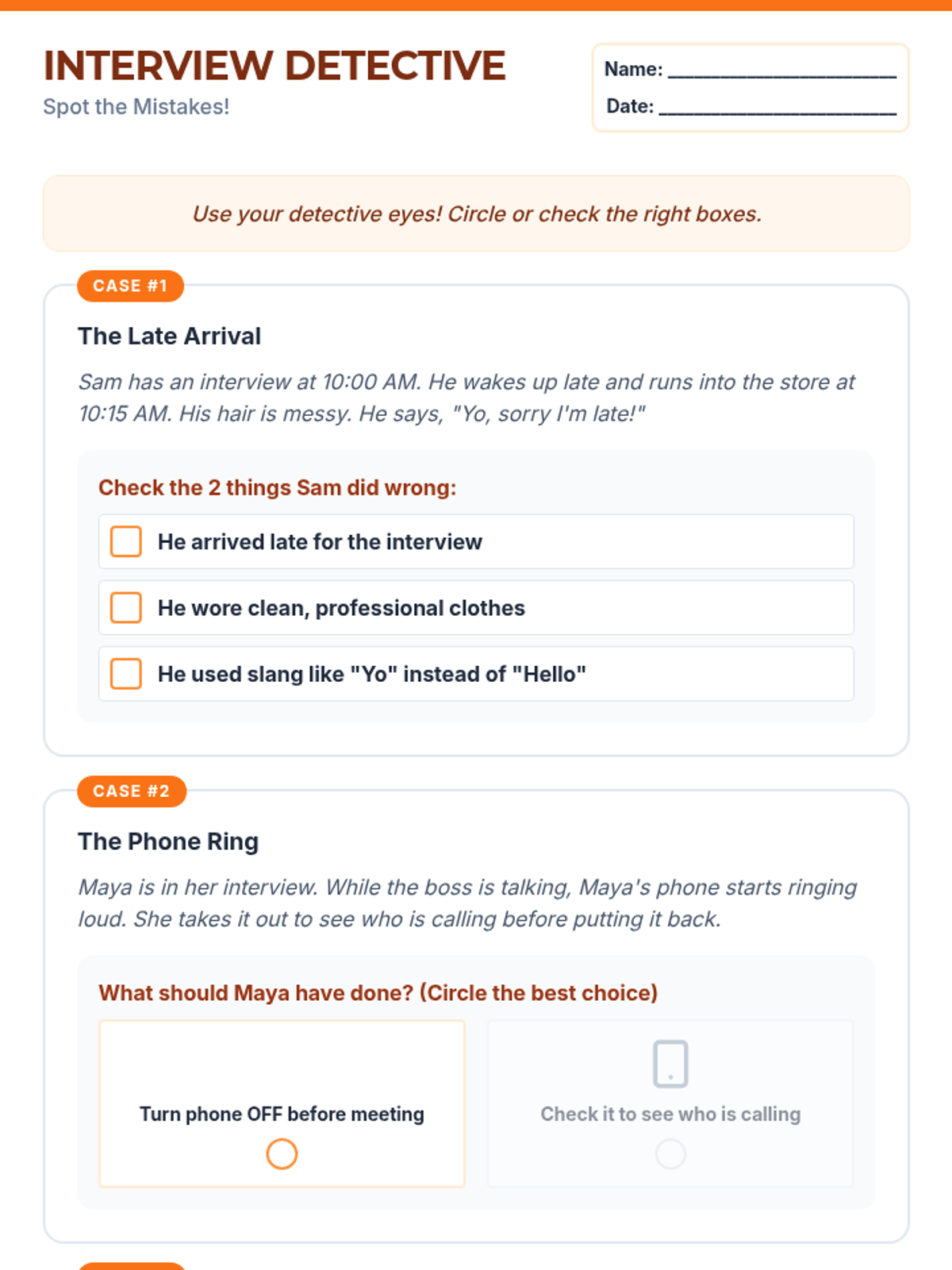
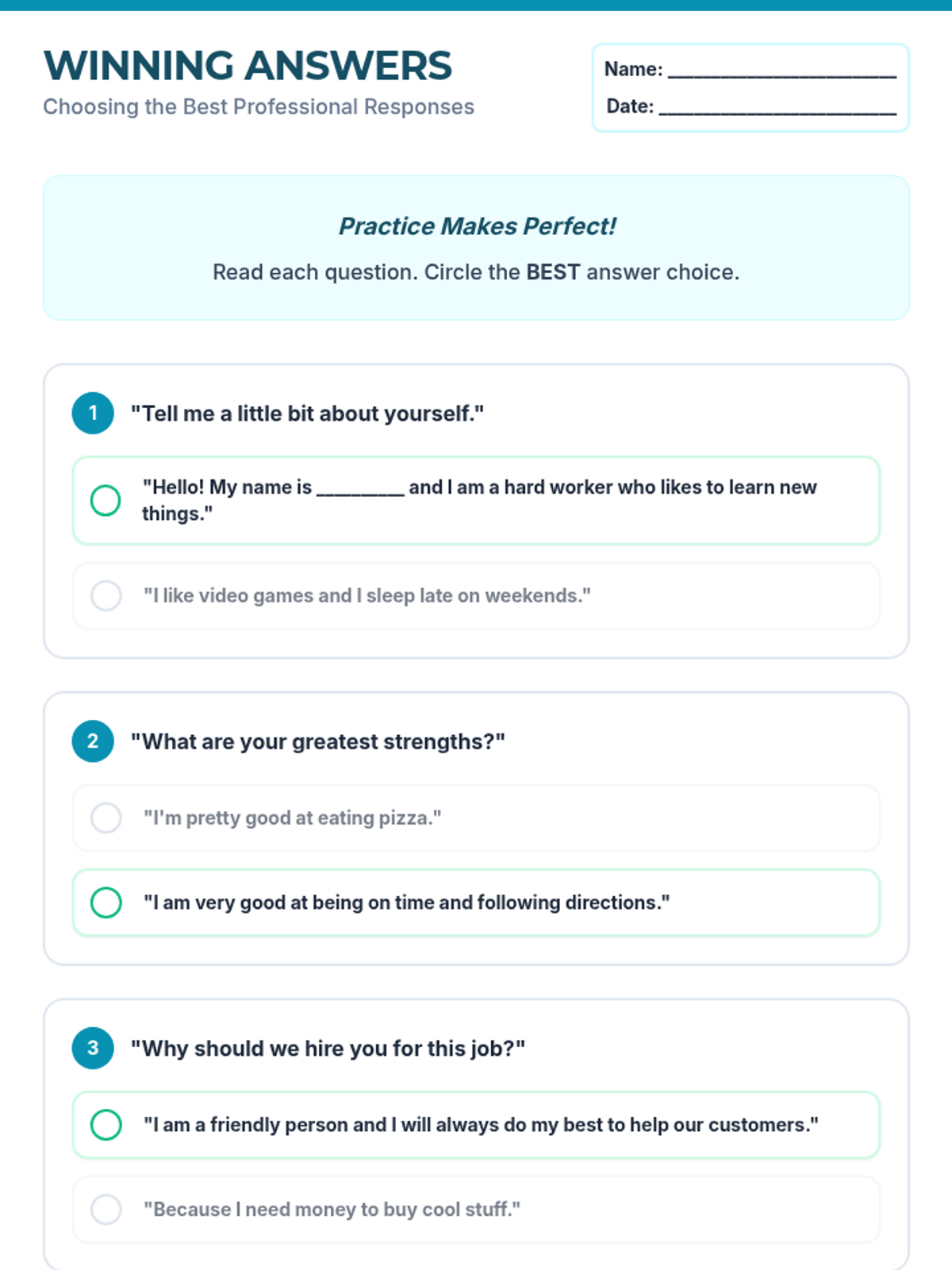
A comprehensive guide for high schoolers to master their first job interviews. Includes scripting practice for common questions and visual guides for professional presentation.
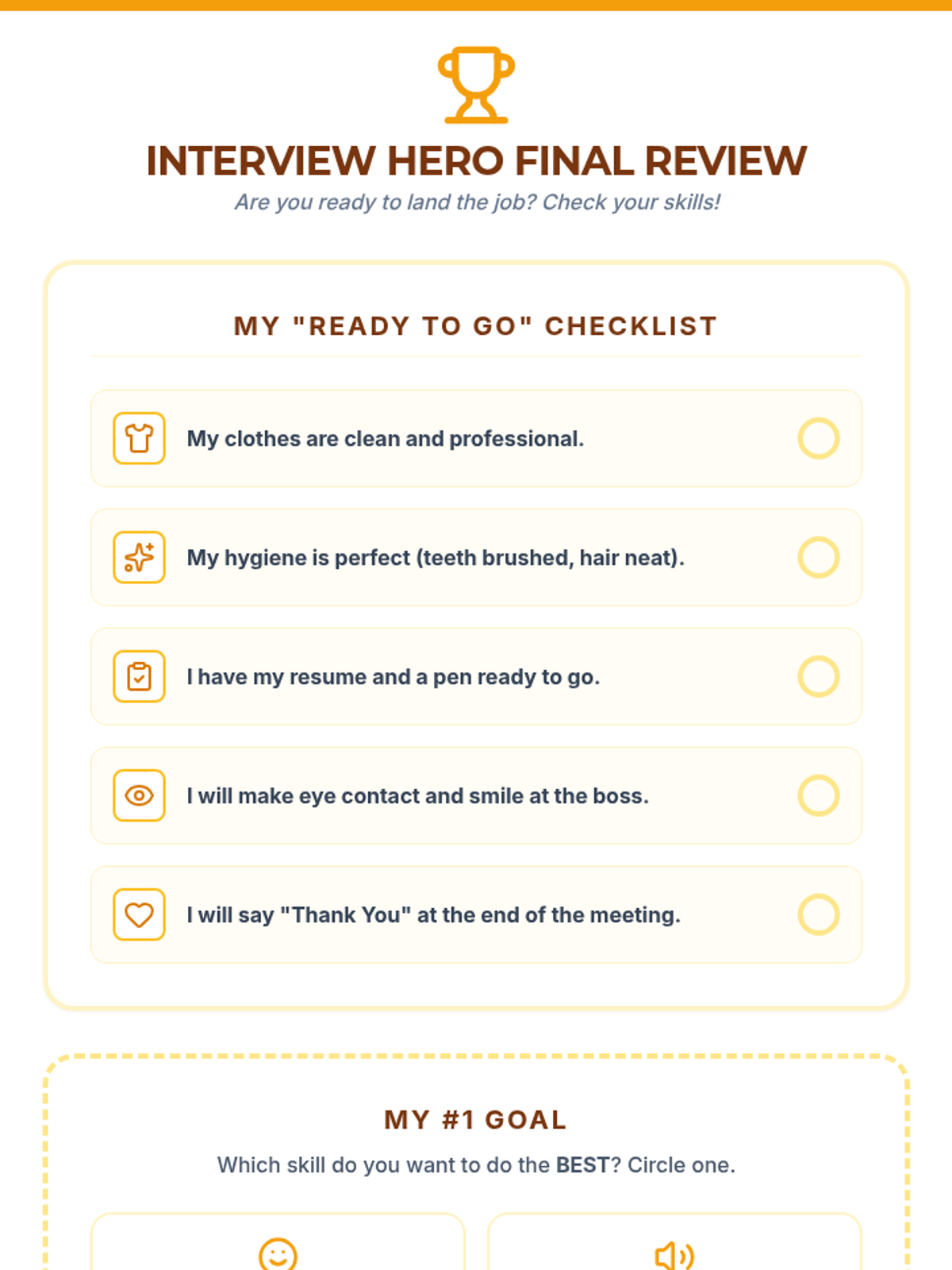
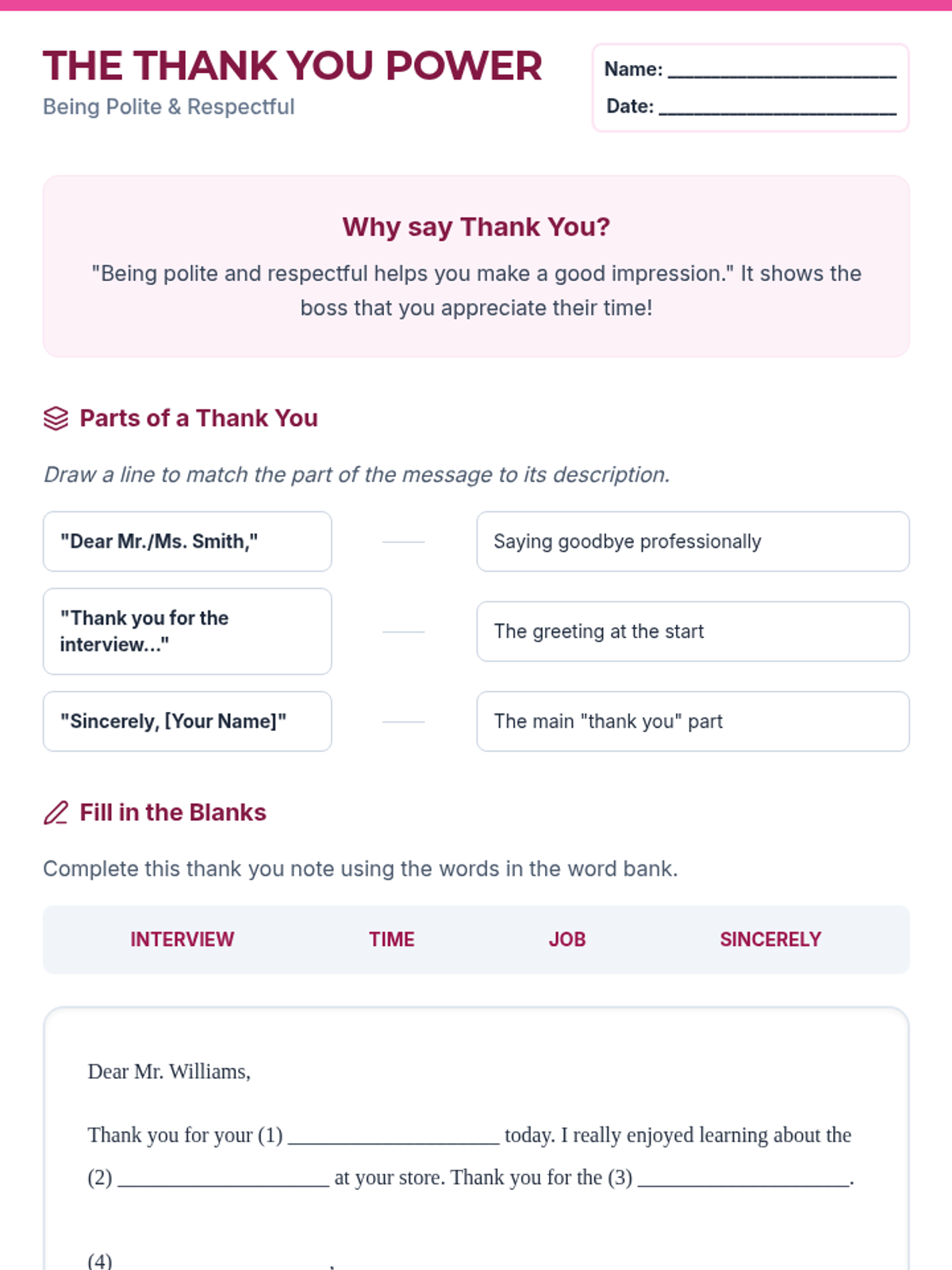
Students will learn how to present their best selves during a job interview by mastering professional hygiene, active listening techniques, and polite communication strategies.
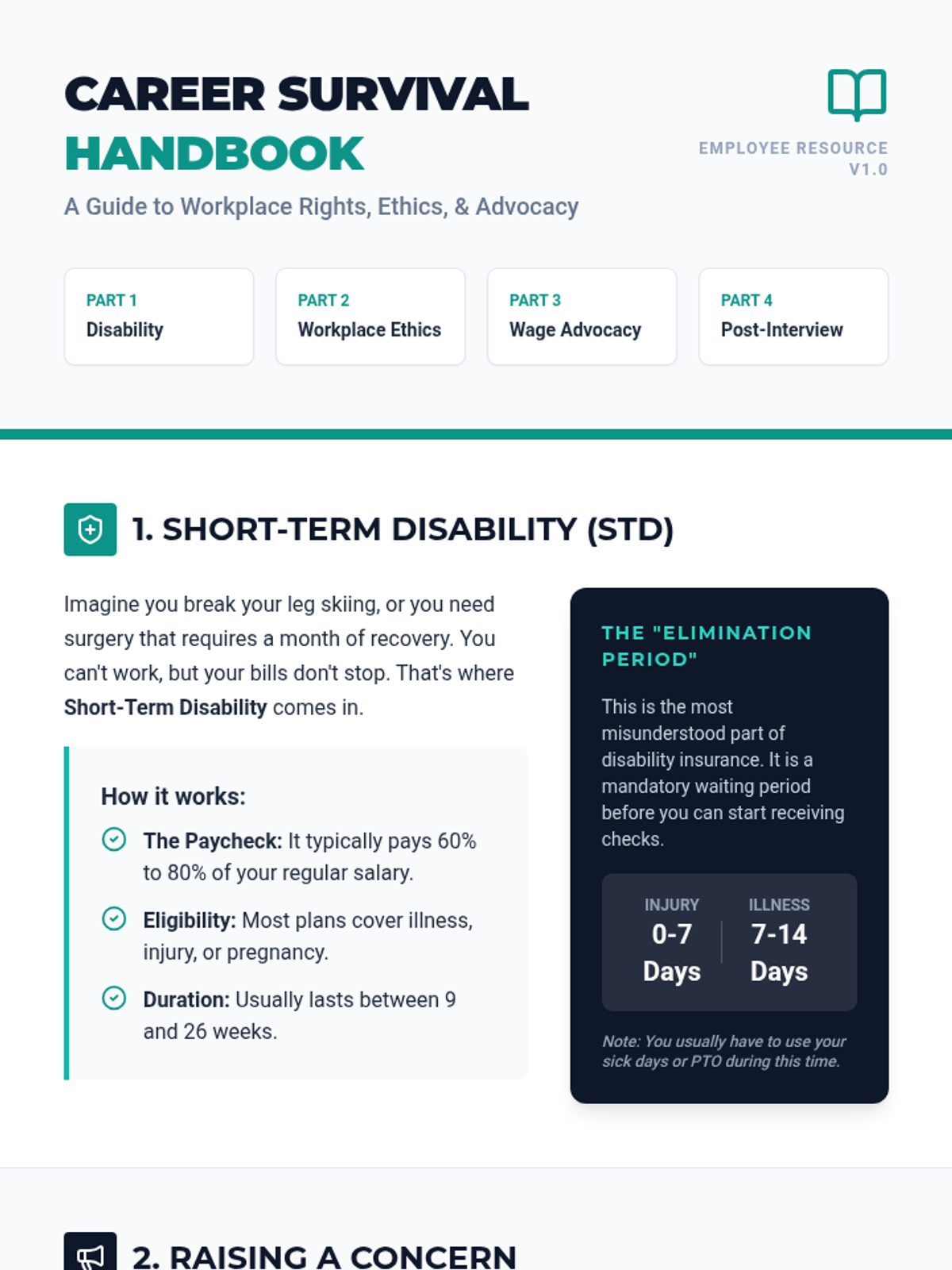
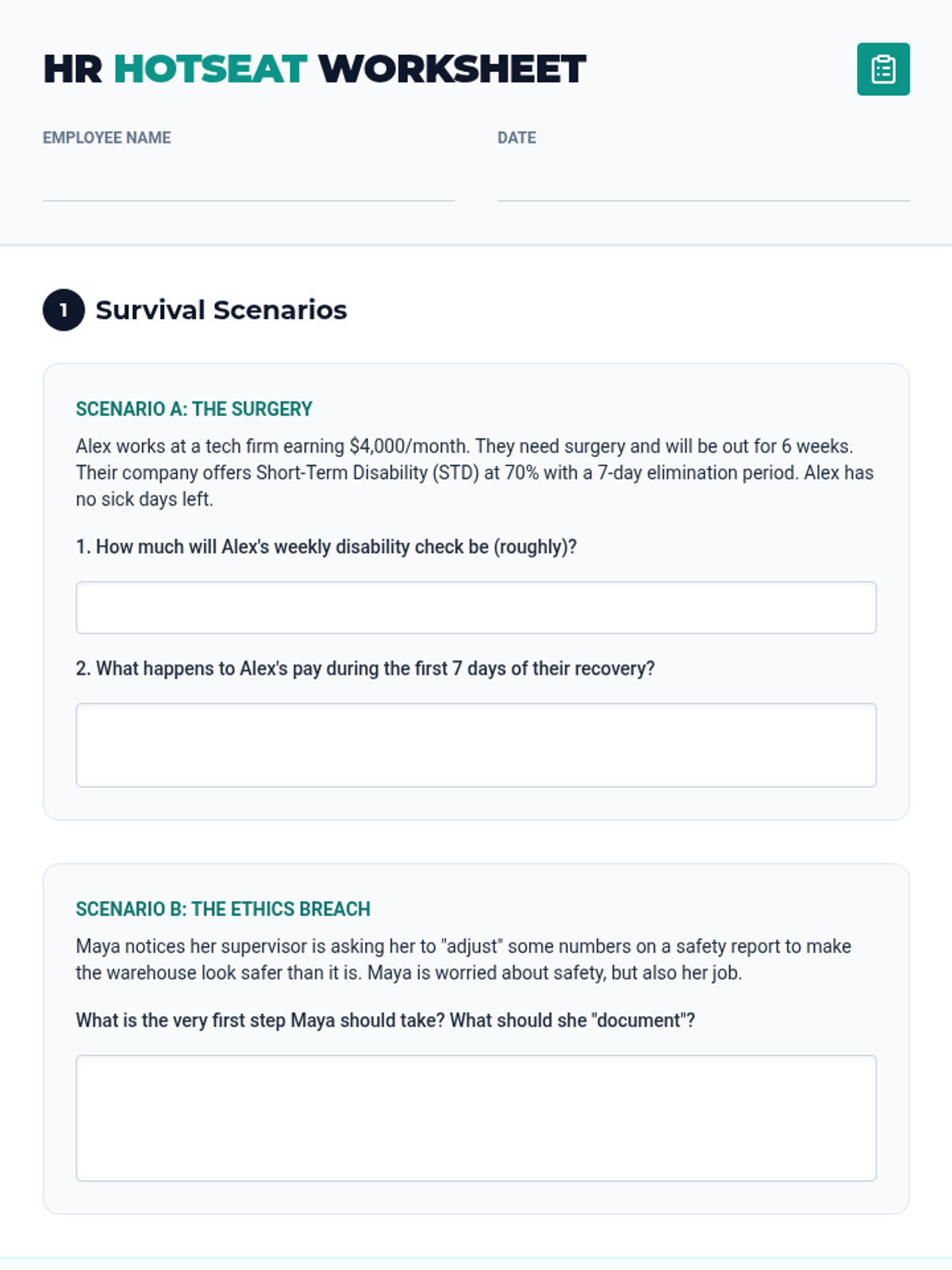
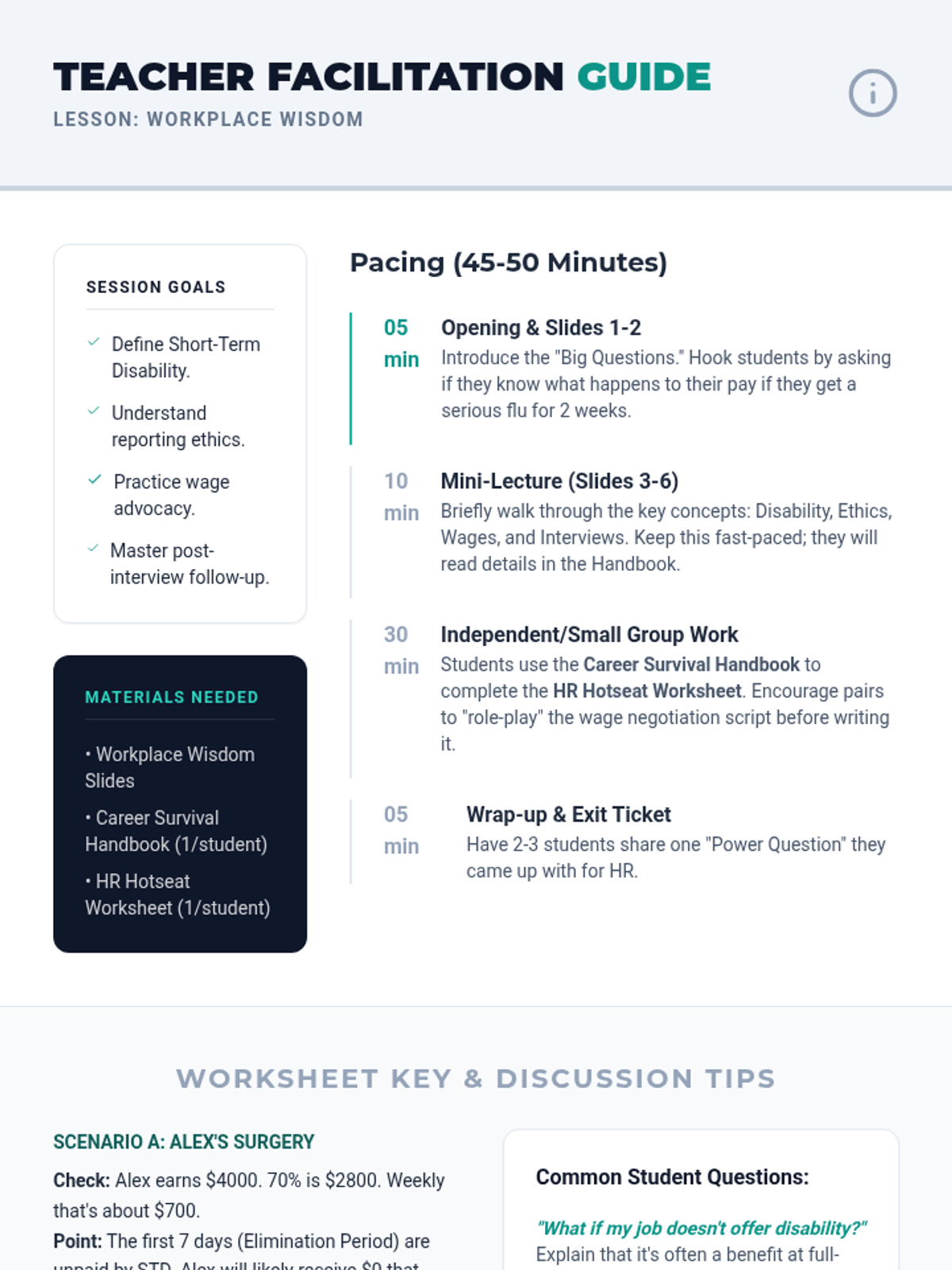
A comprehensive lesson on workplace rights, ethics, and self-advocacy, covering disability benefits, wage negotiation, and professional communication.
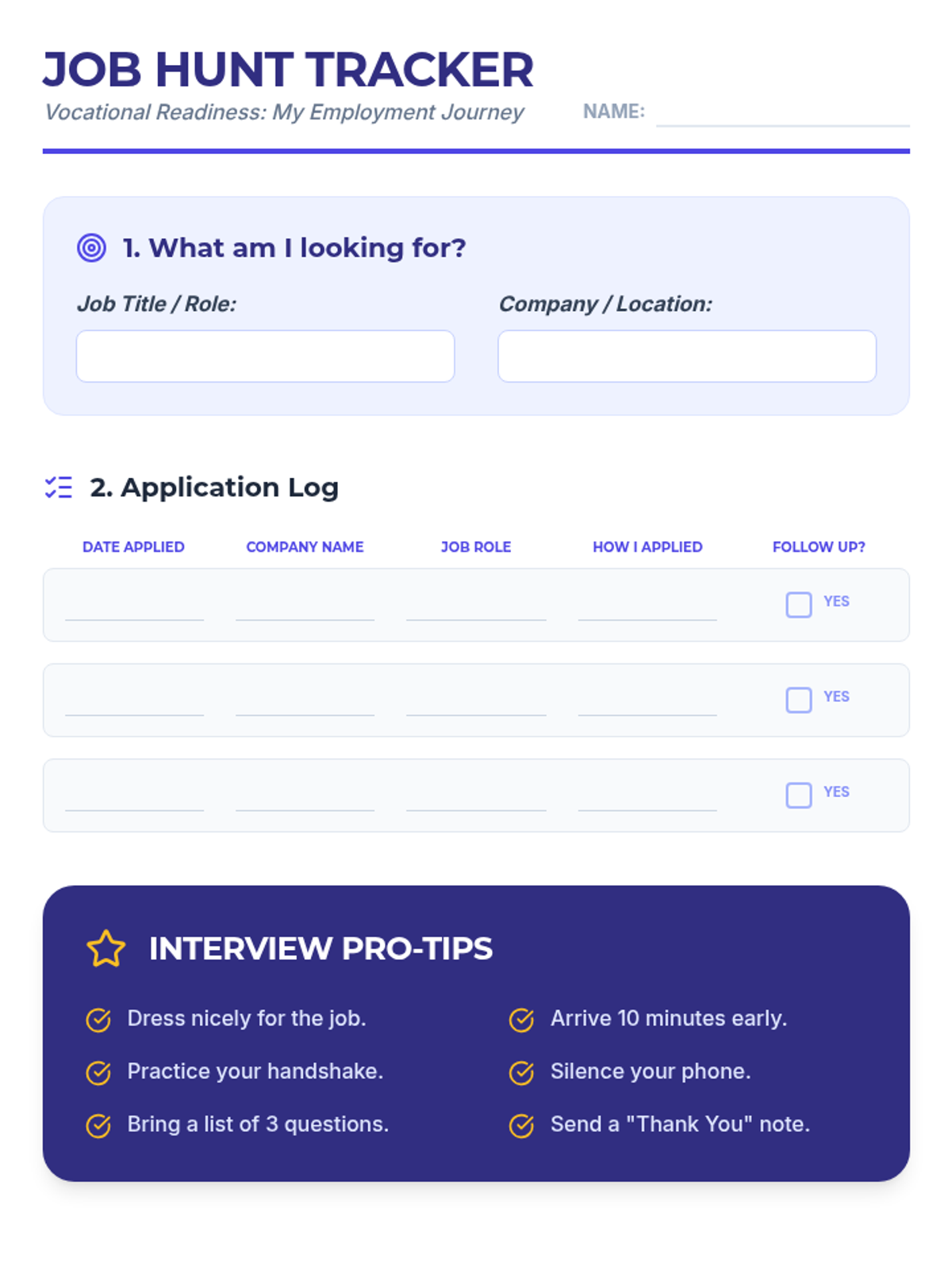
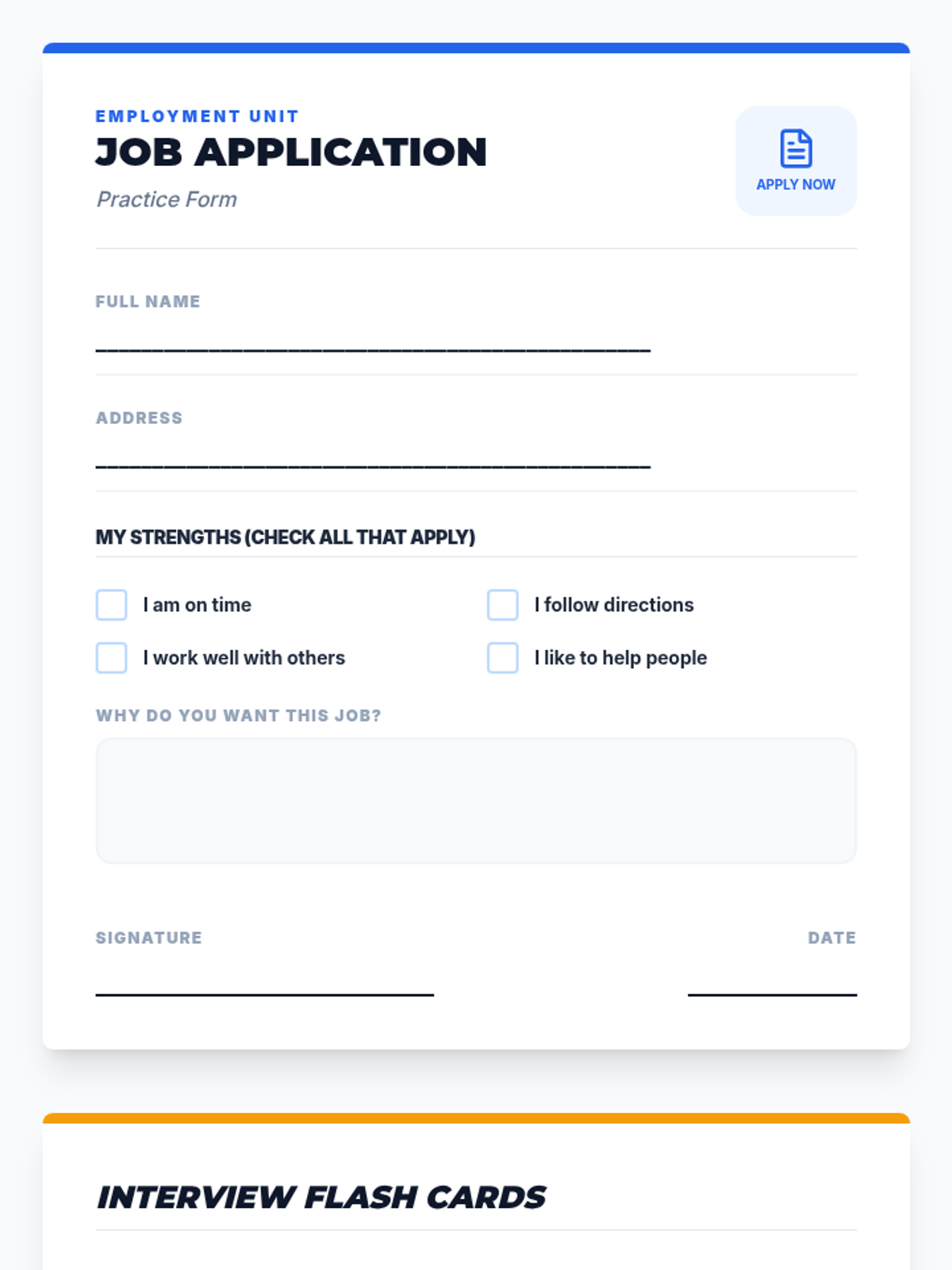
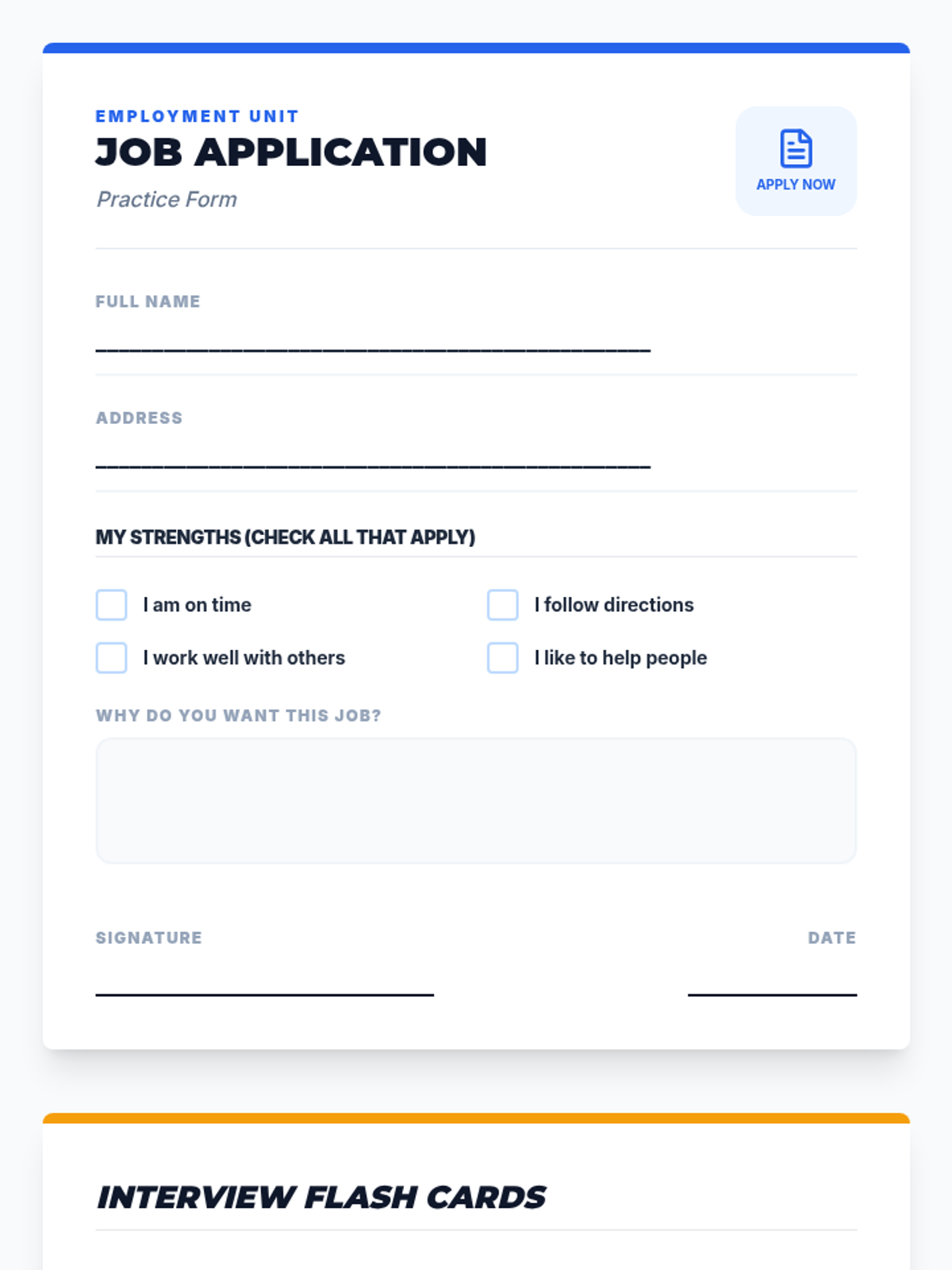
Building essential job-seeking skills, including application completion, interview preparation, and understanding job roles.
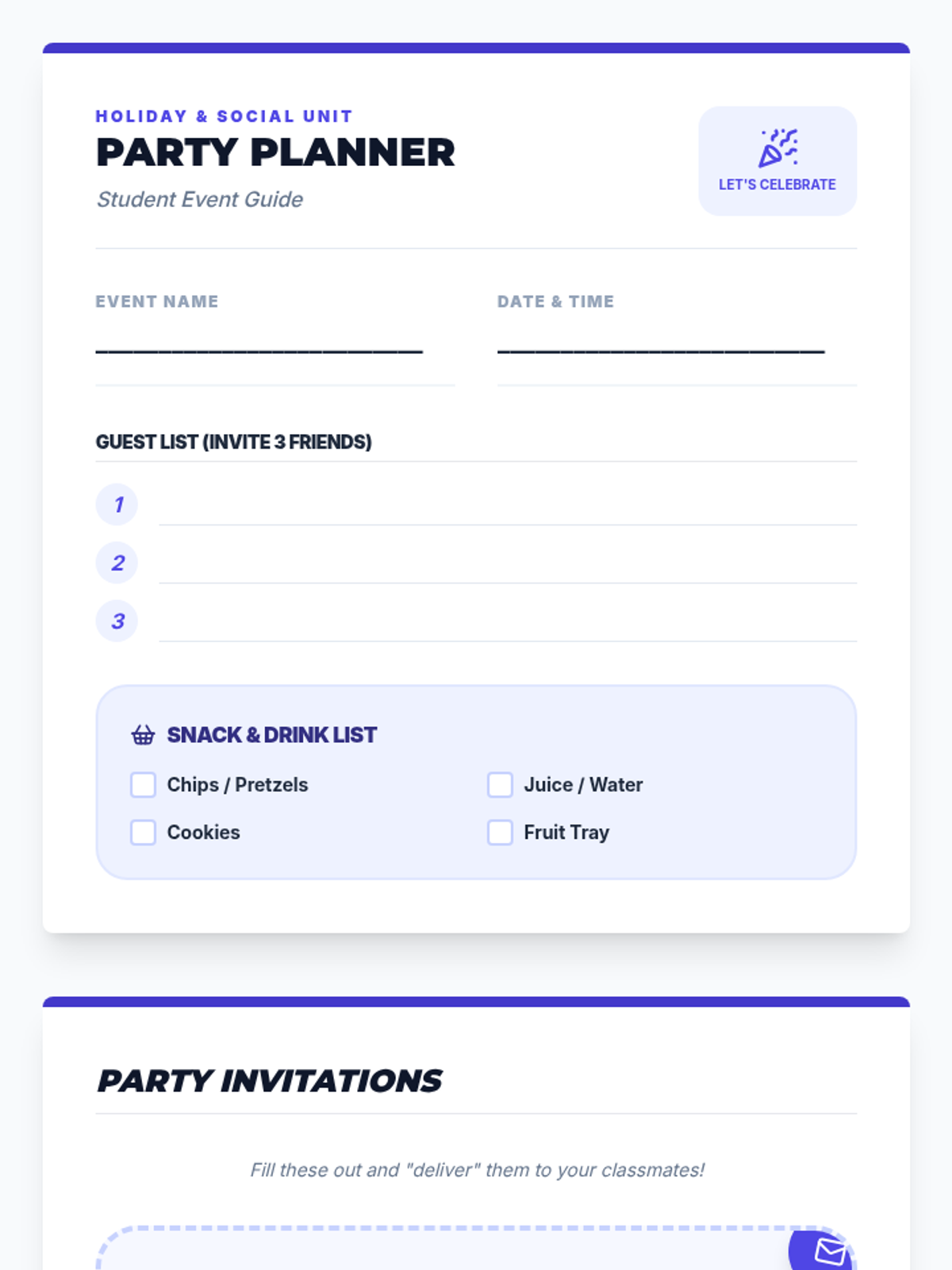
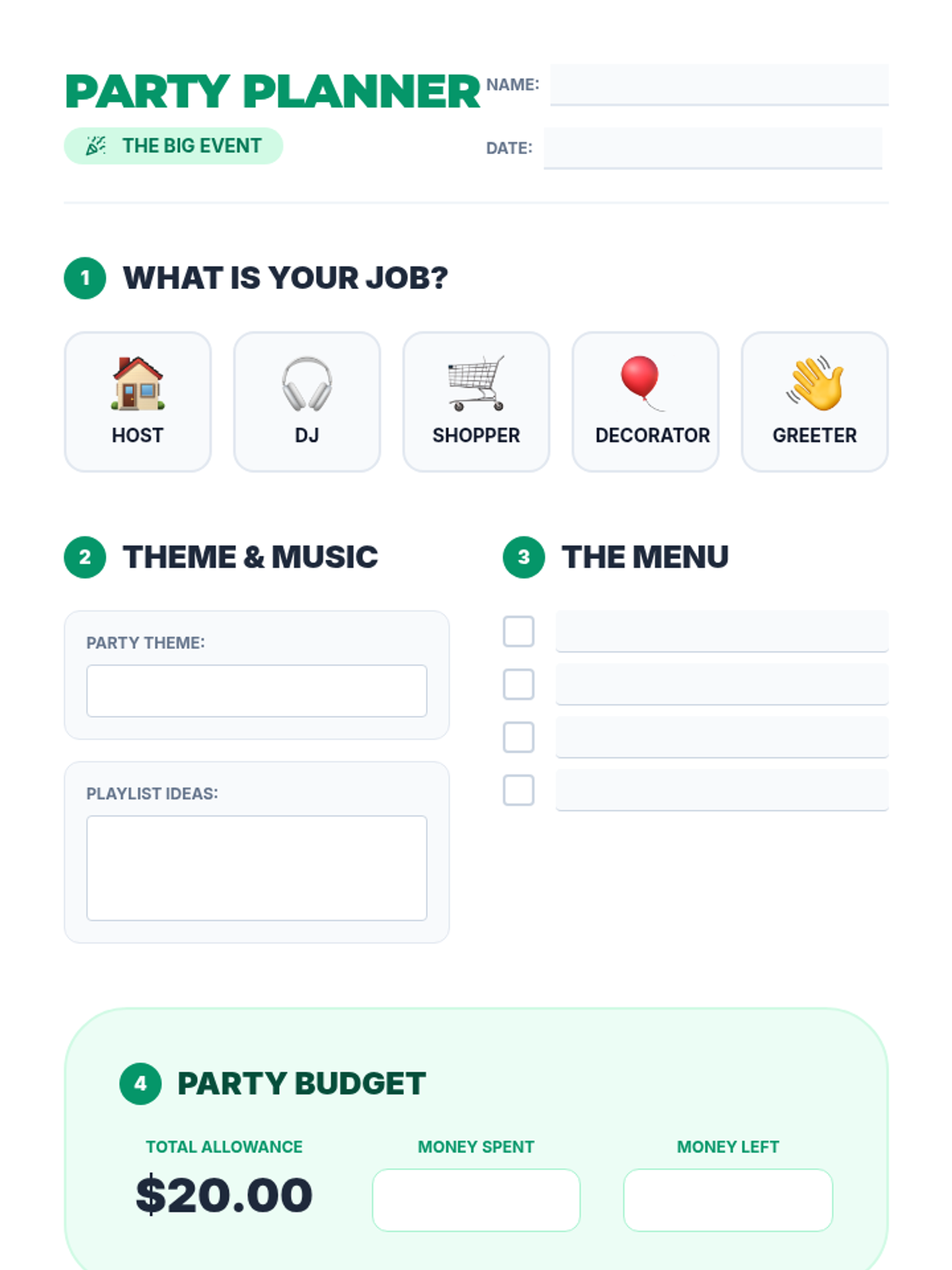
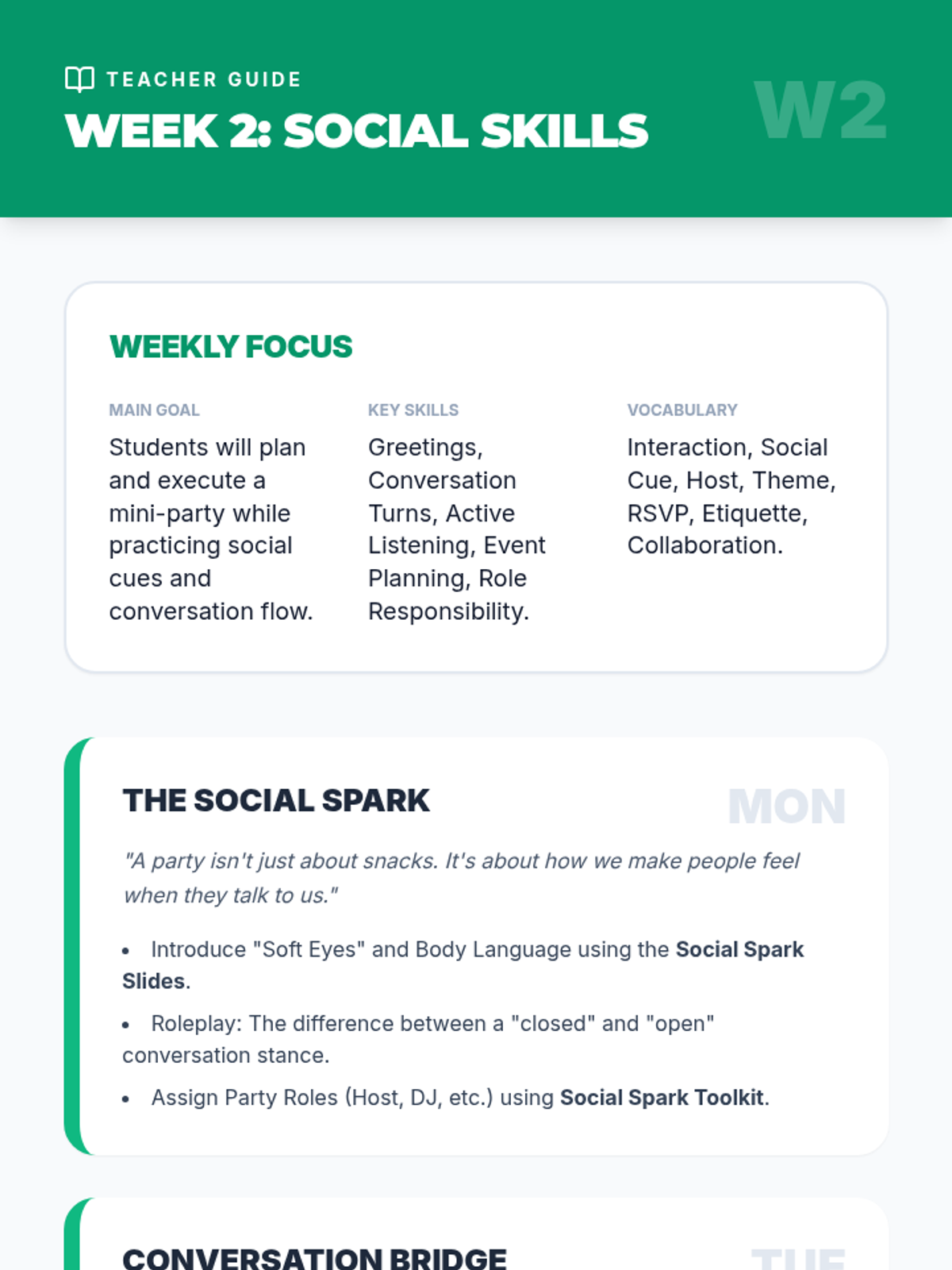
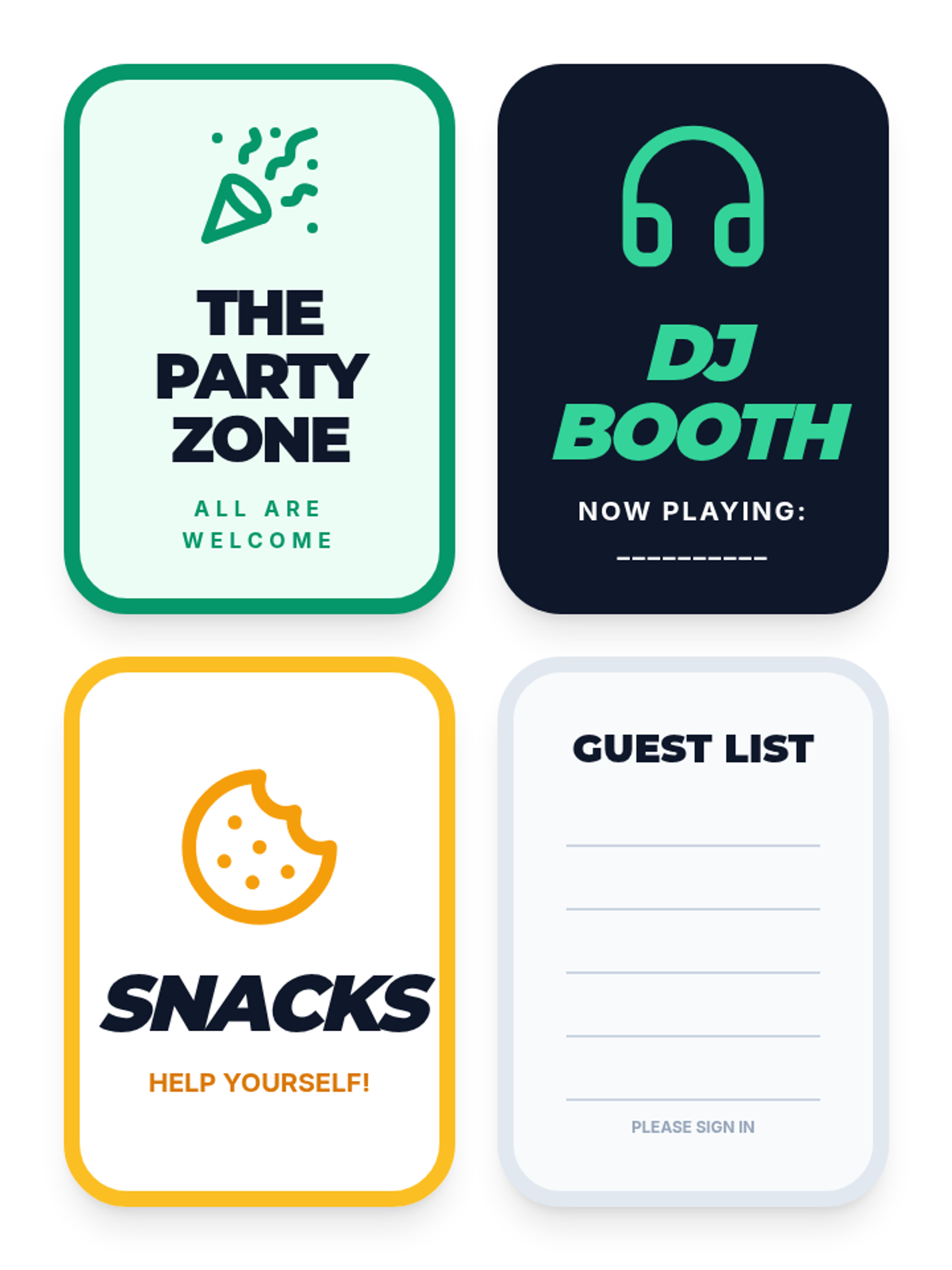
Planning social gatherings, managing invitations, and practicing etiquette for holiday and community events.
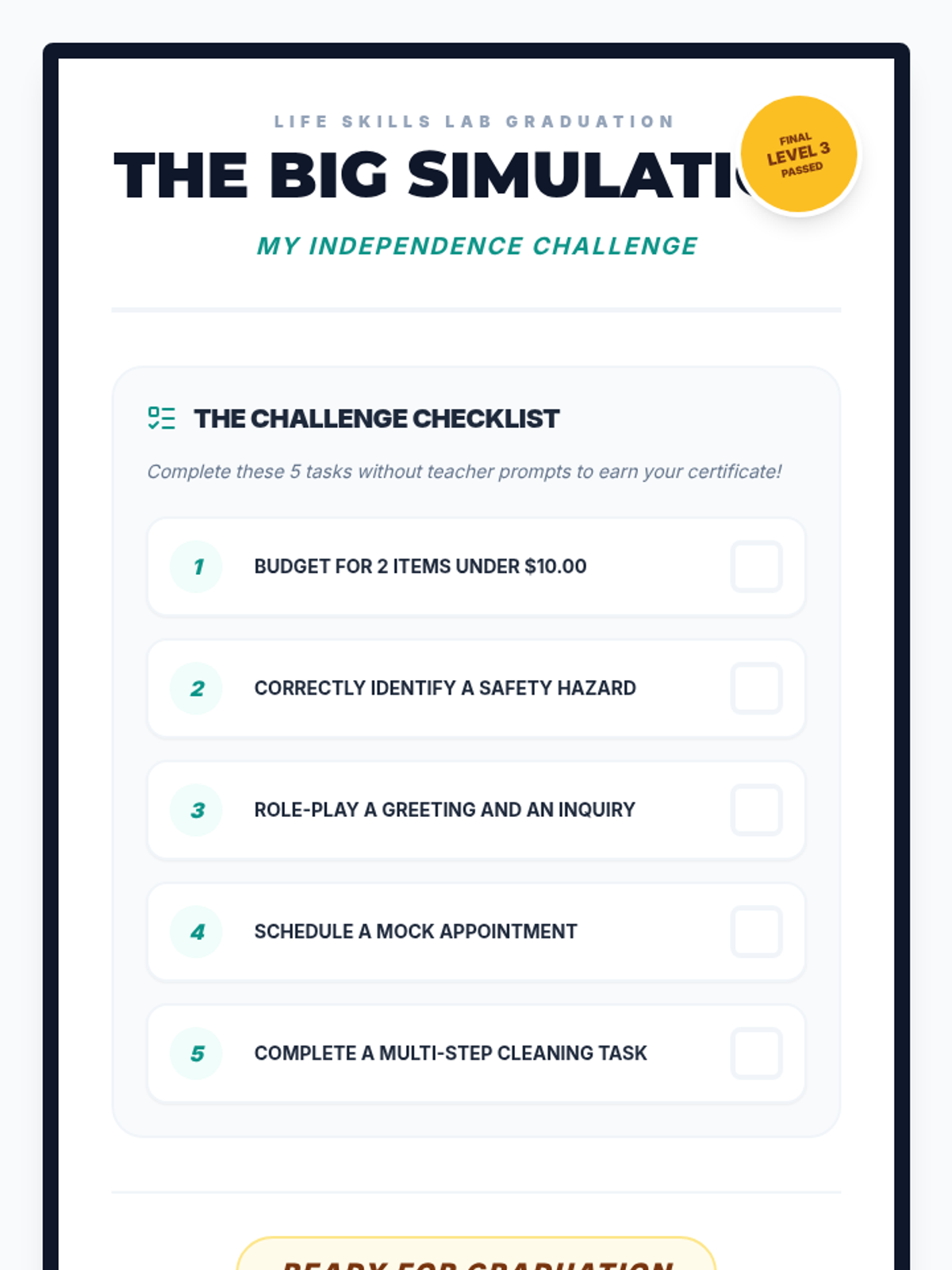
The capstone unit of the program, where students apply all learned skills in complex, multi-step simulations of independent adult life.
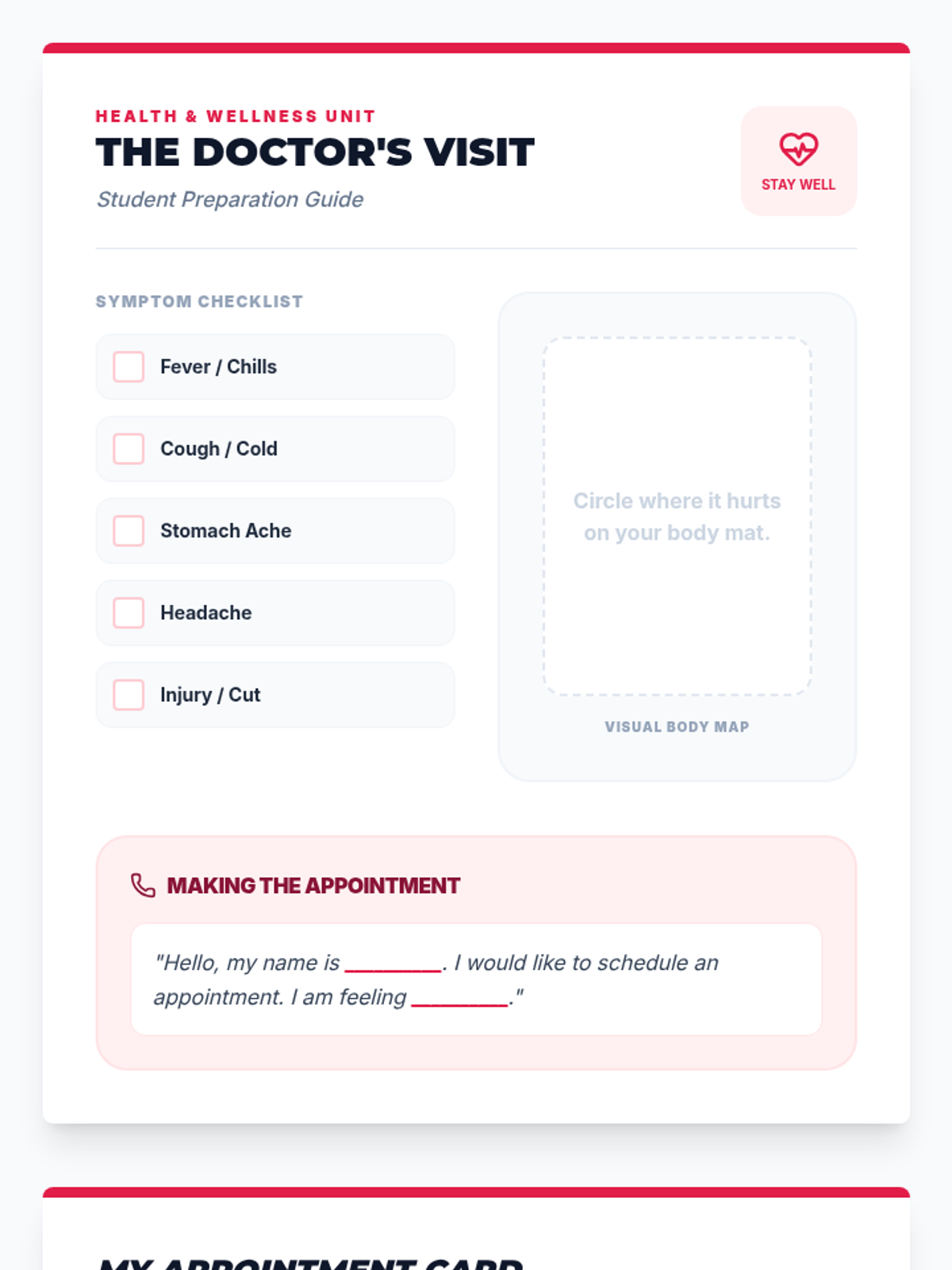
Navigating healthcare settings, identifying body parts and symptoms, and practicing social scripts for making and attending medical appointments.
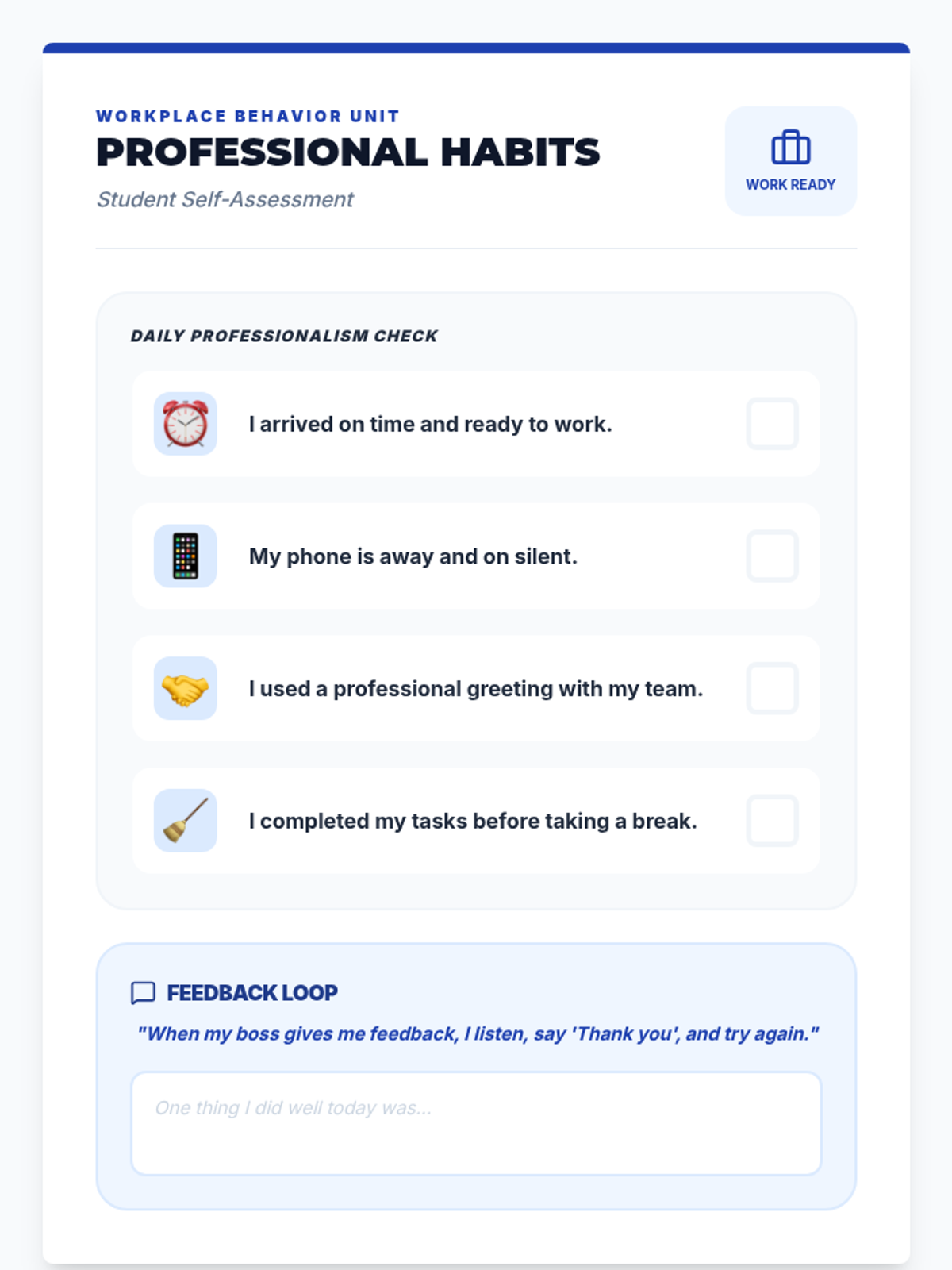
Building professional habits, understanding workplace social cues, and practicing teamwork in a job setting.
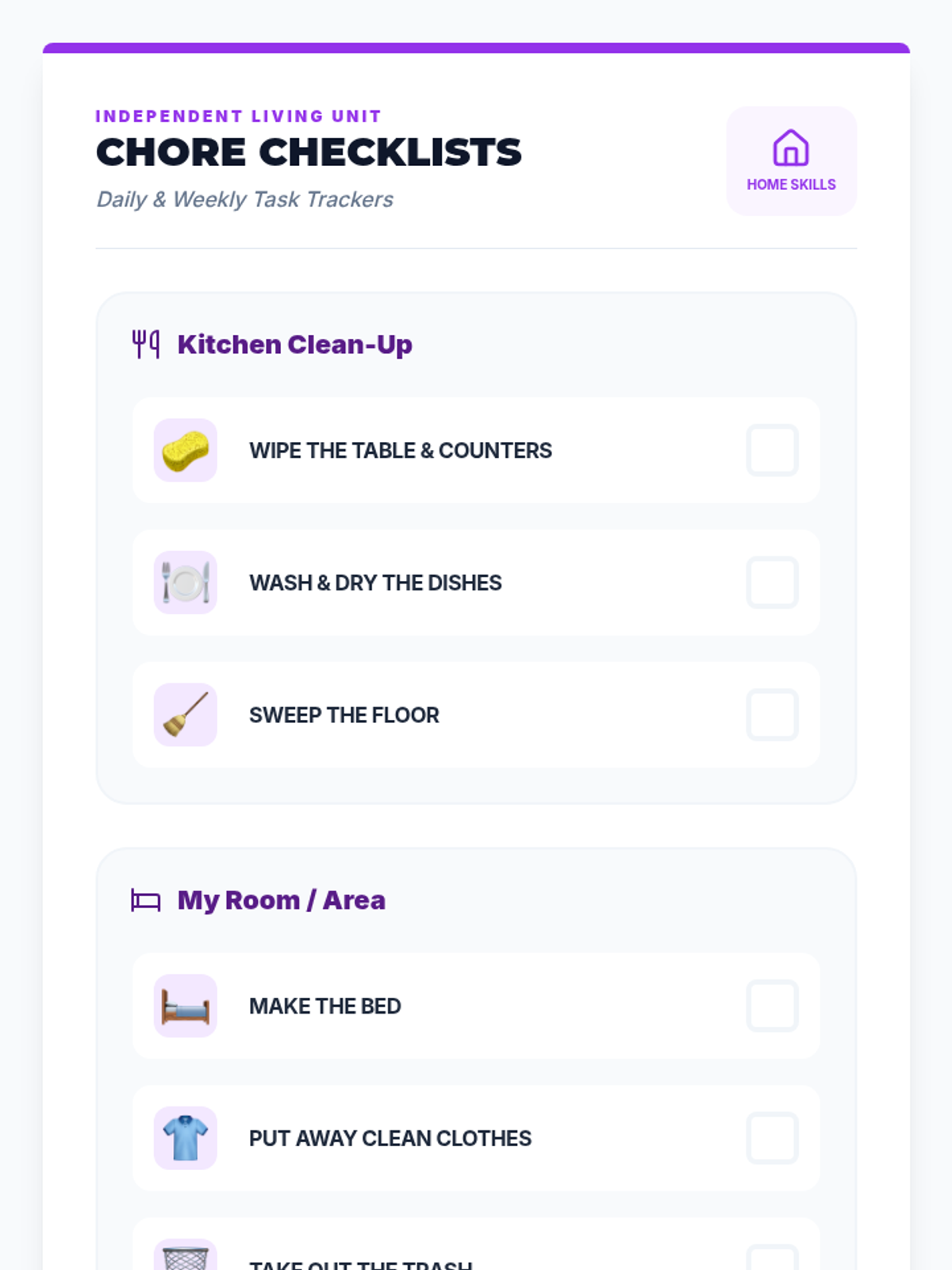
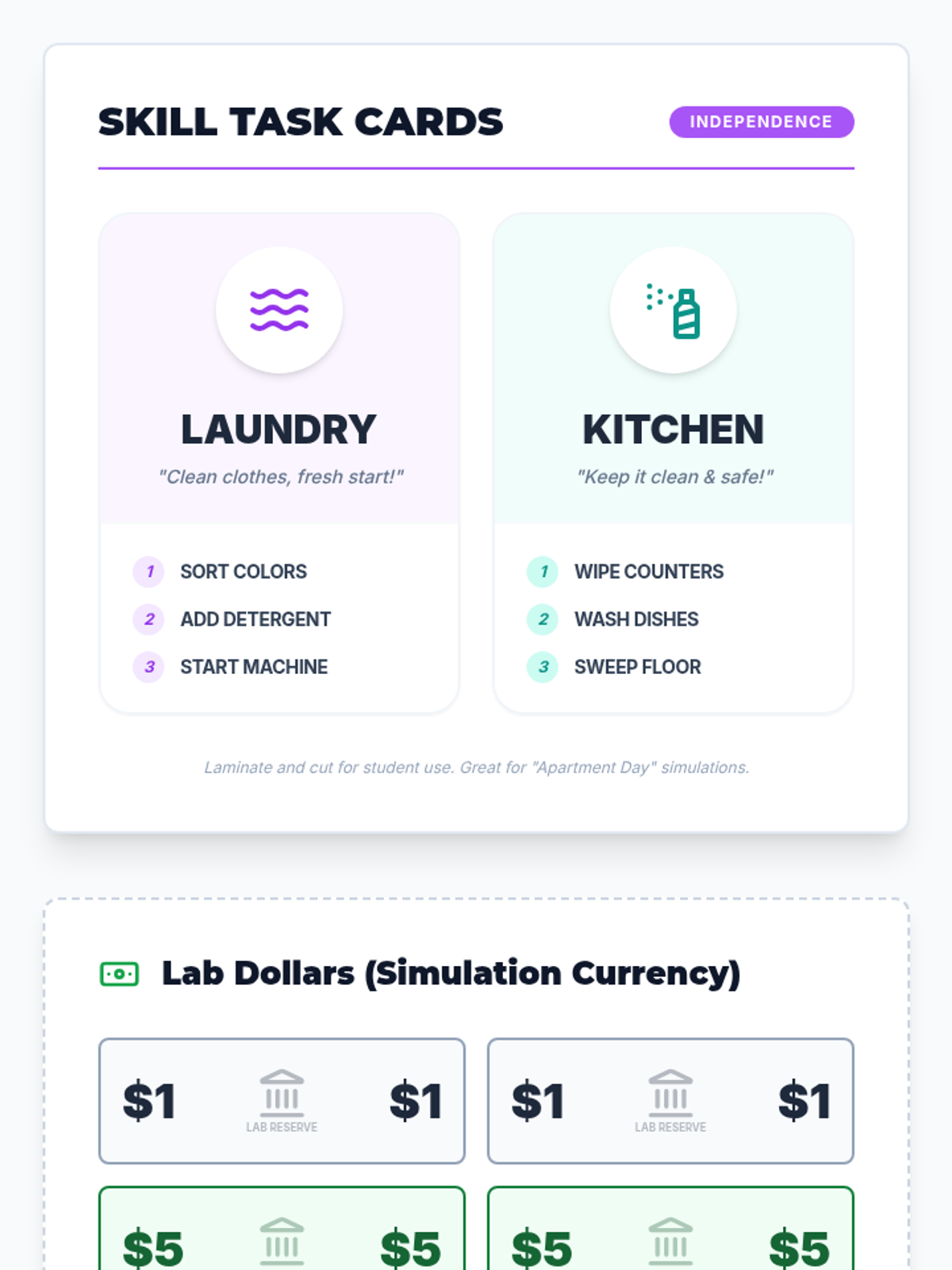
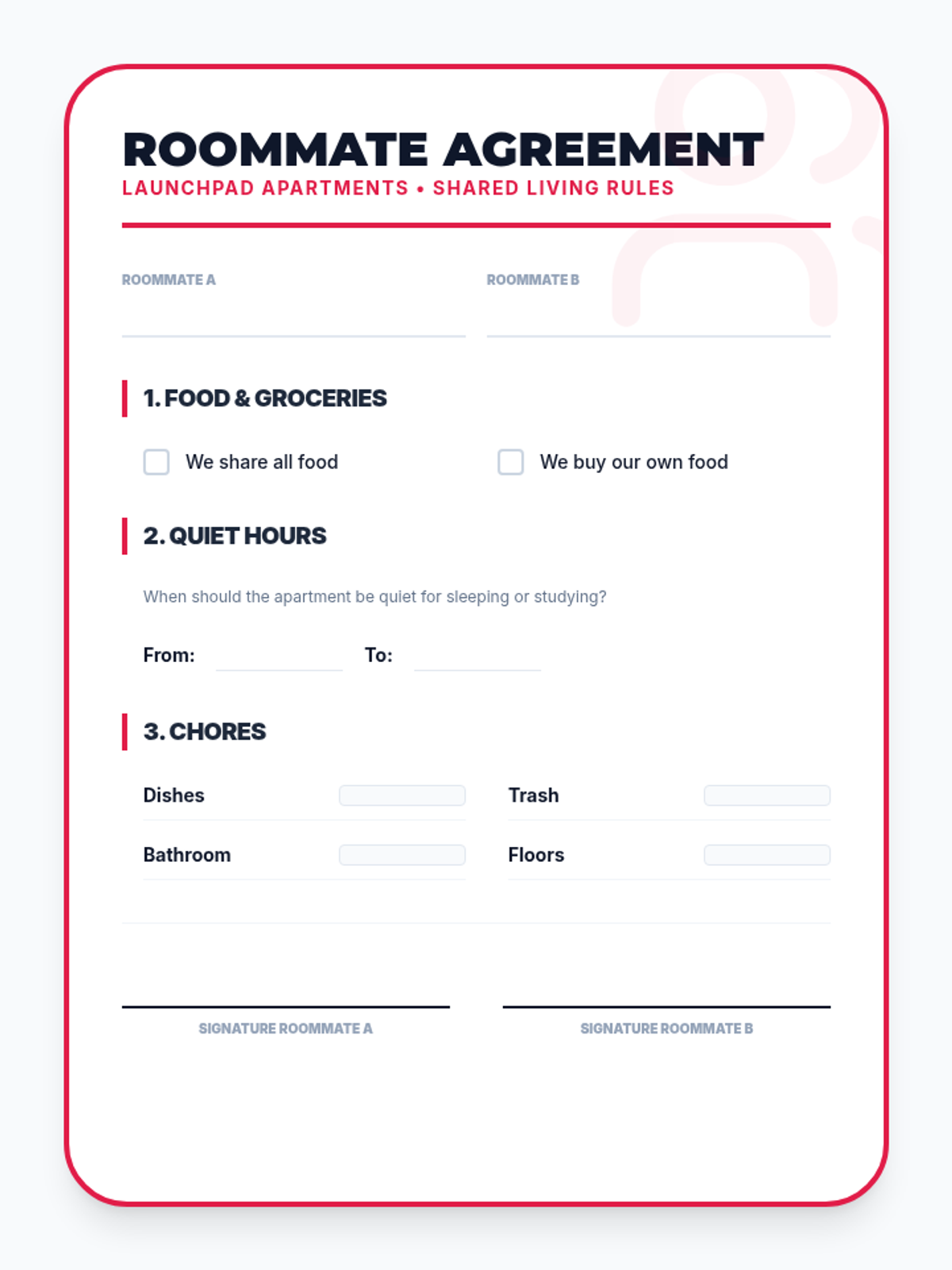
Essential skills for maintaining a household, including chores, laundry, and daily organization.
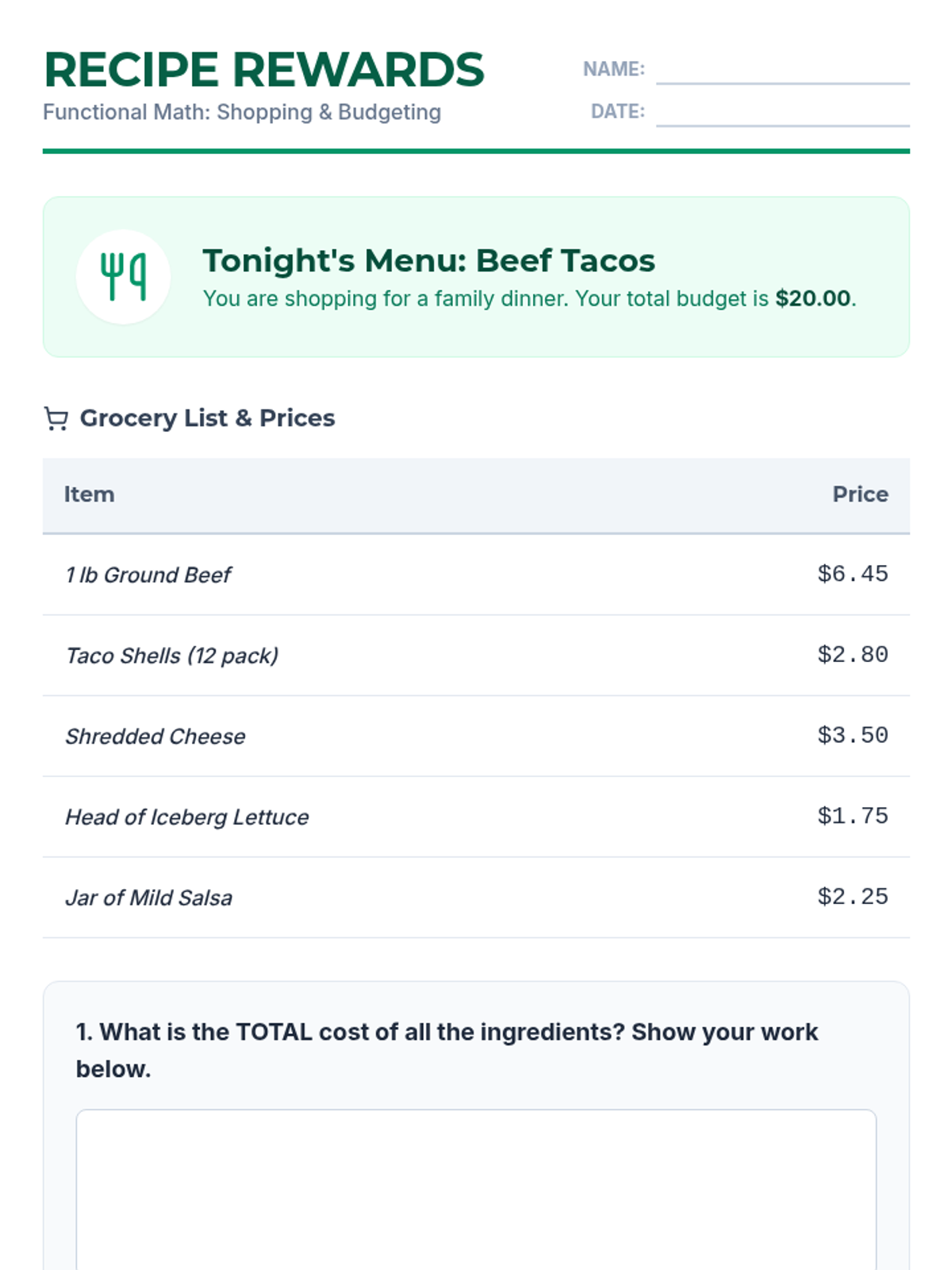
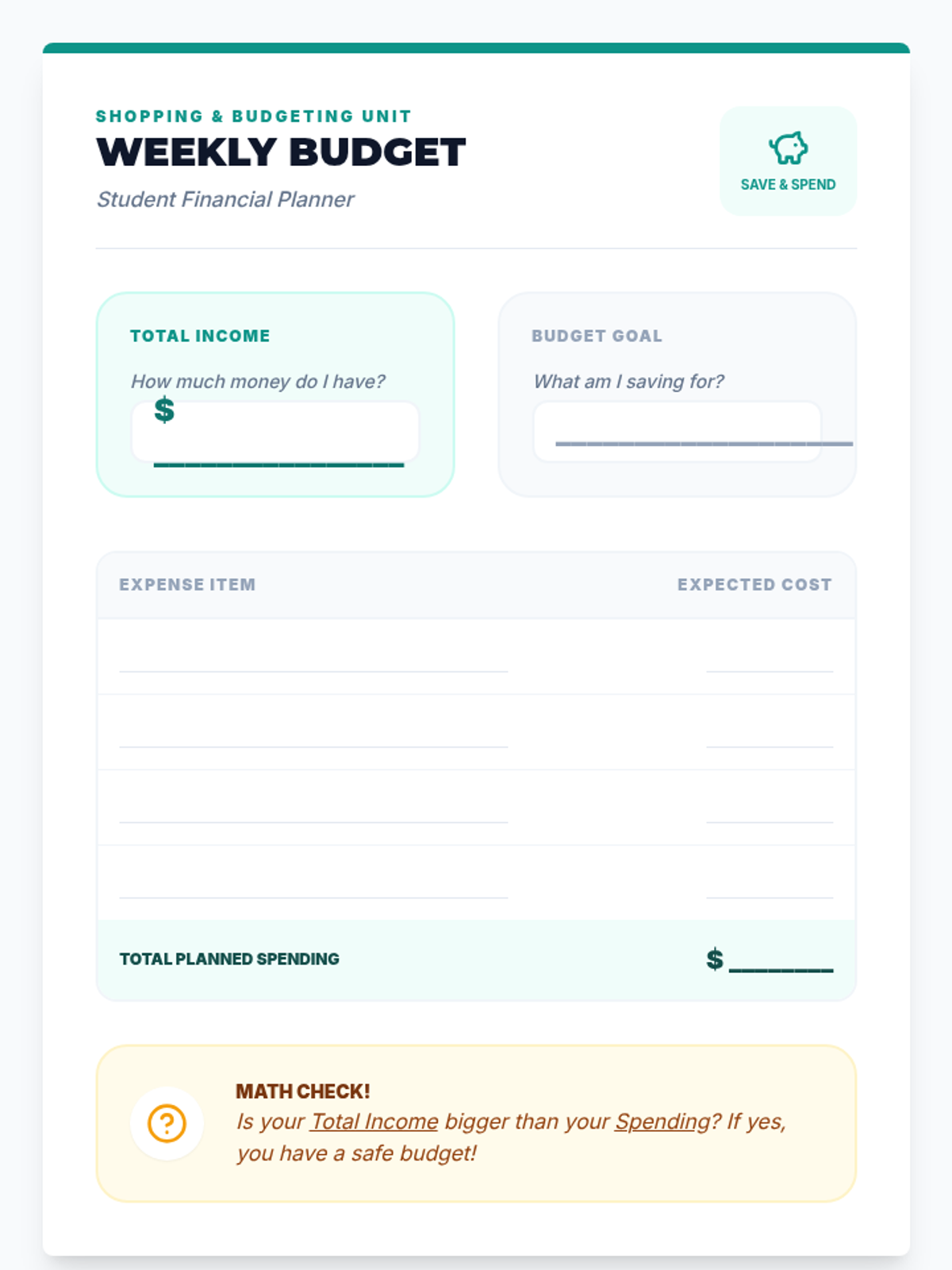
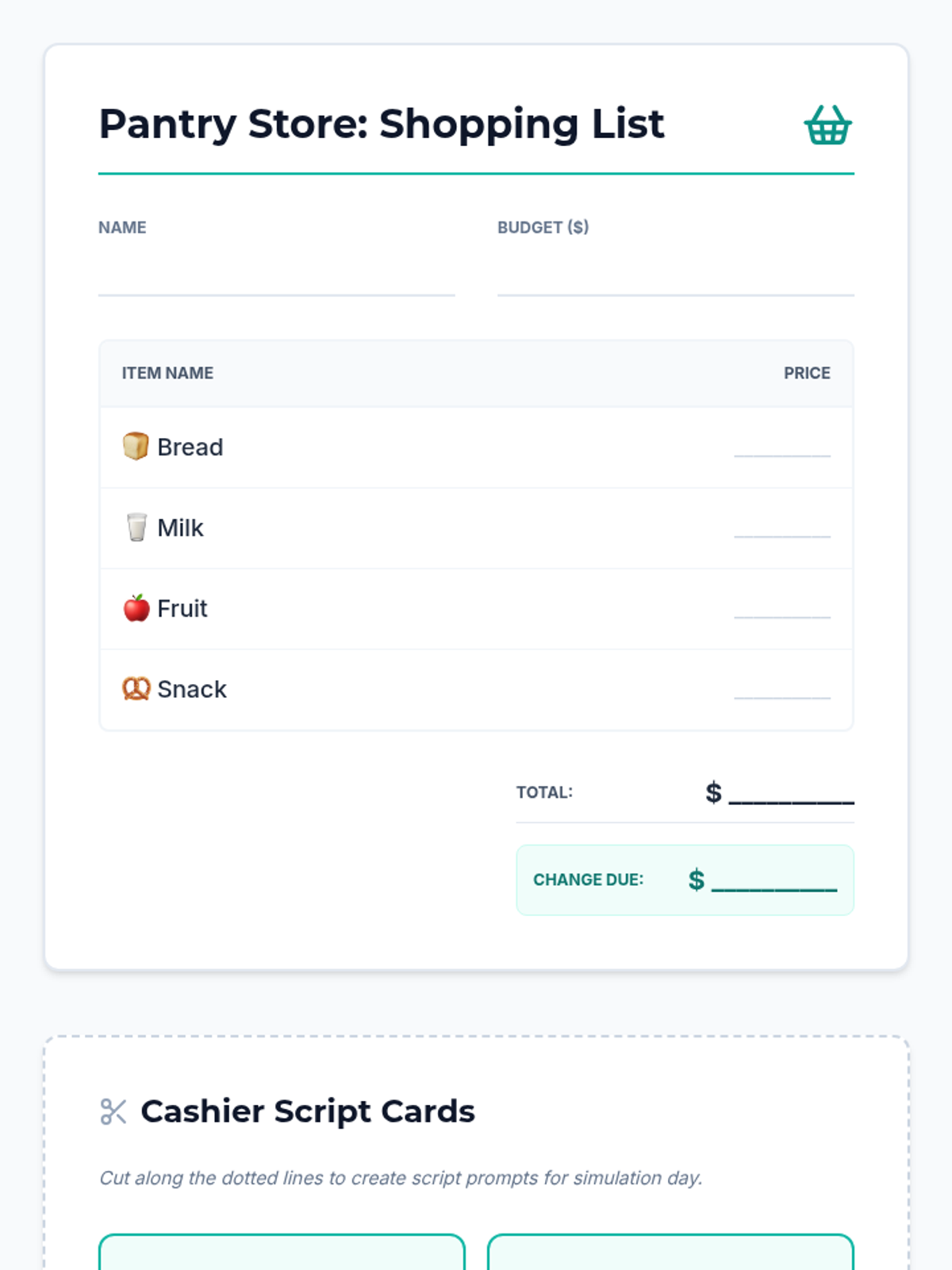
Practical application of money skills through budgeting, price comparison, and navigating a shopping environment.
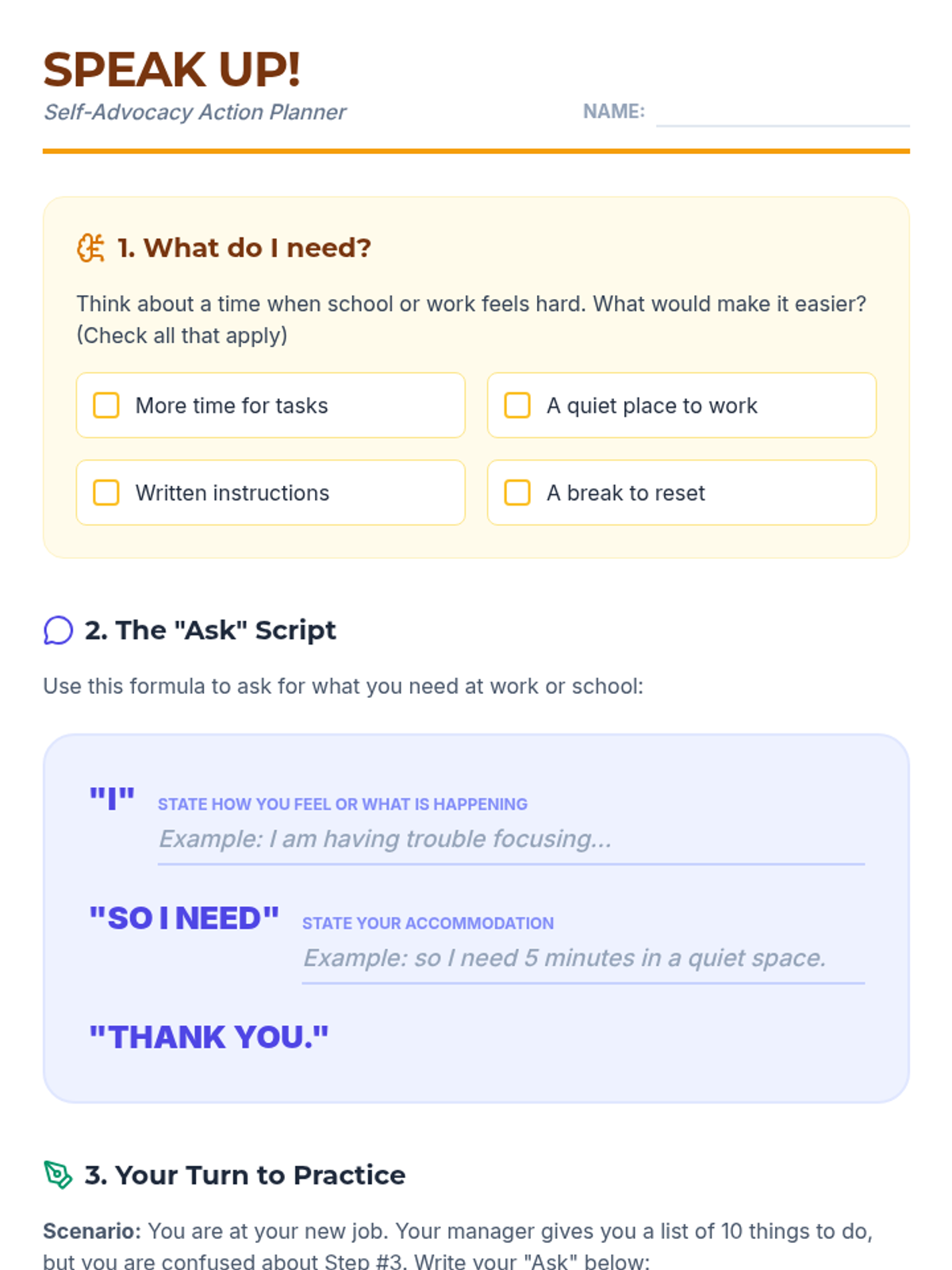
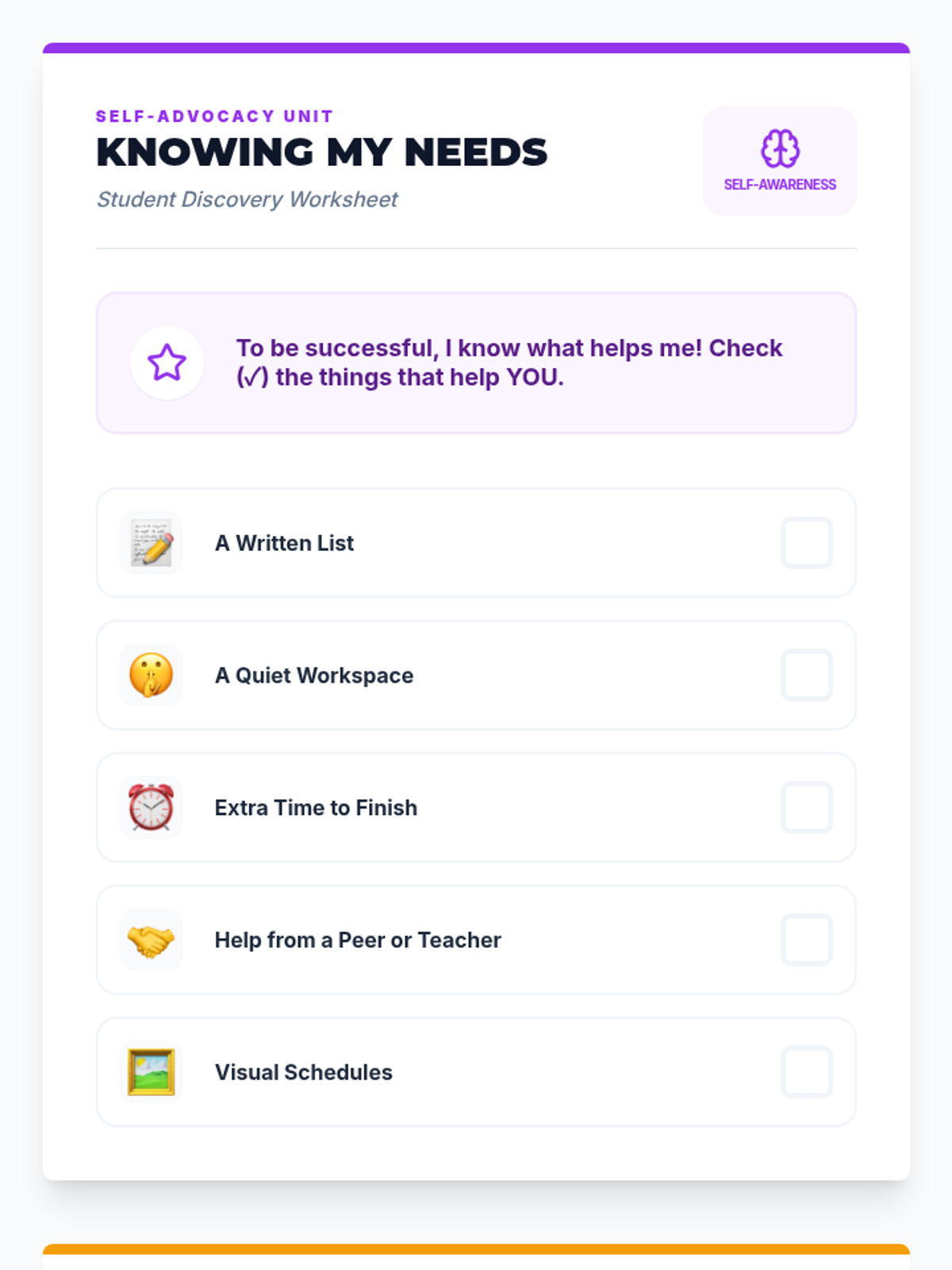
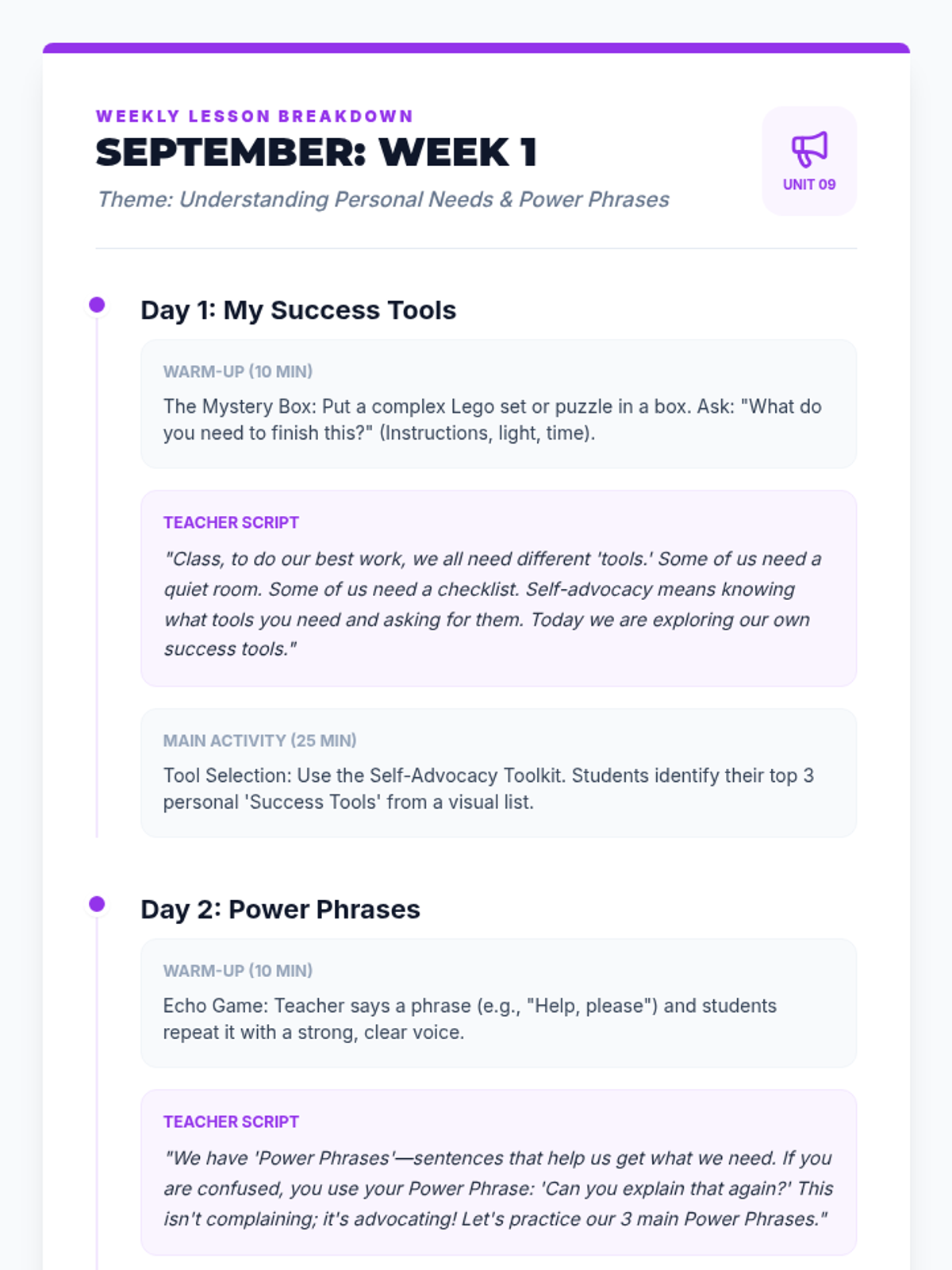
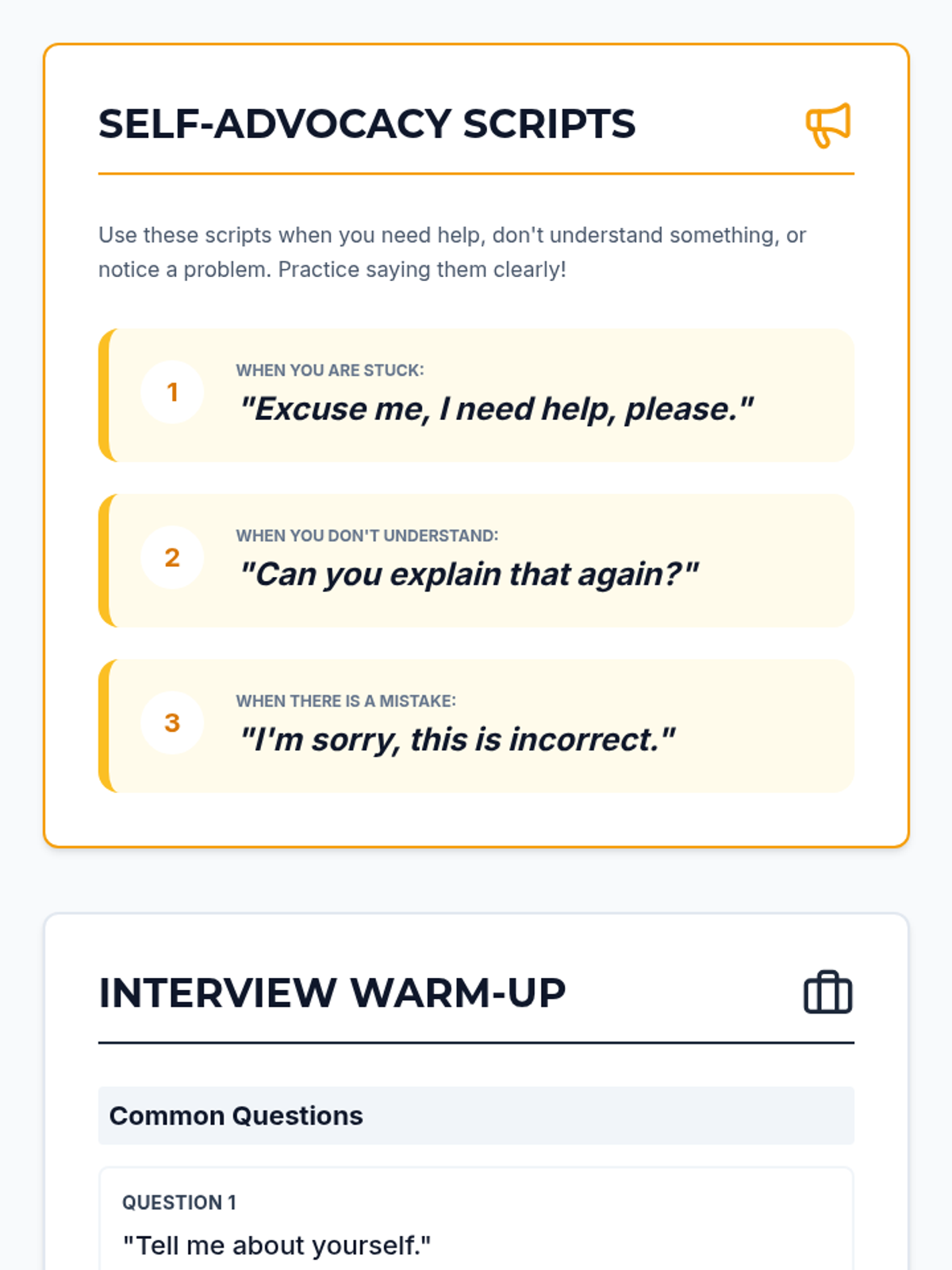
Empowering students to speak up for their needs, understand their rights, and communicate effectively in various personal and community situations.
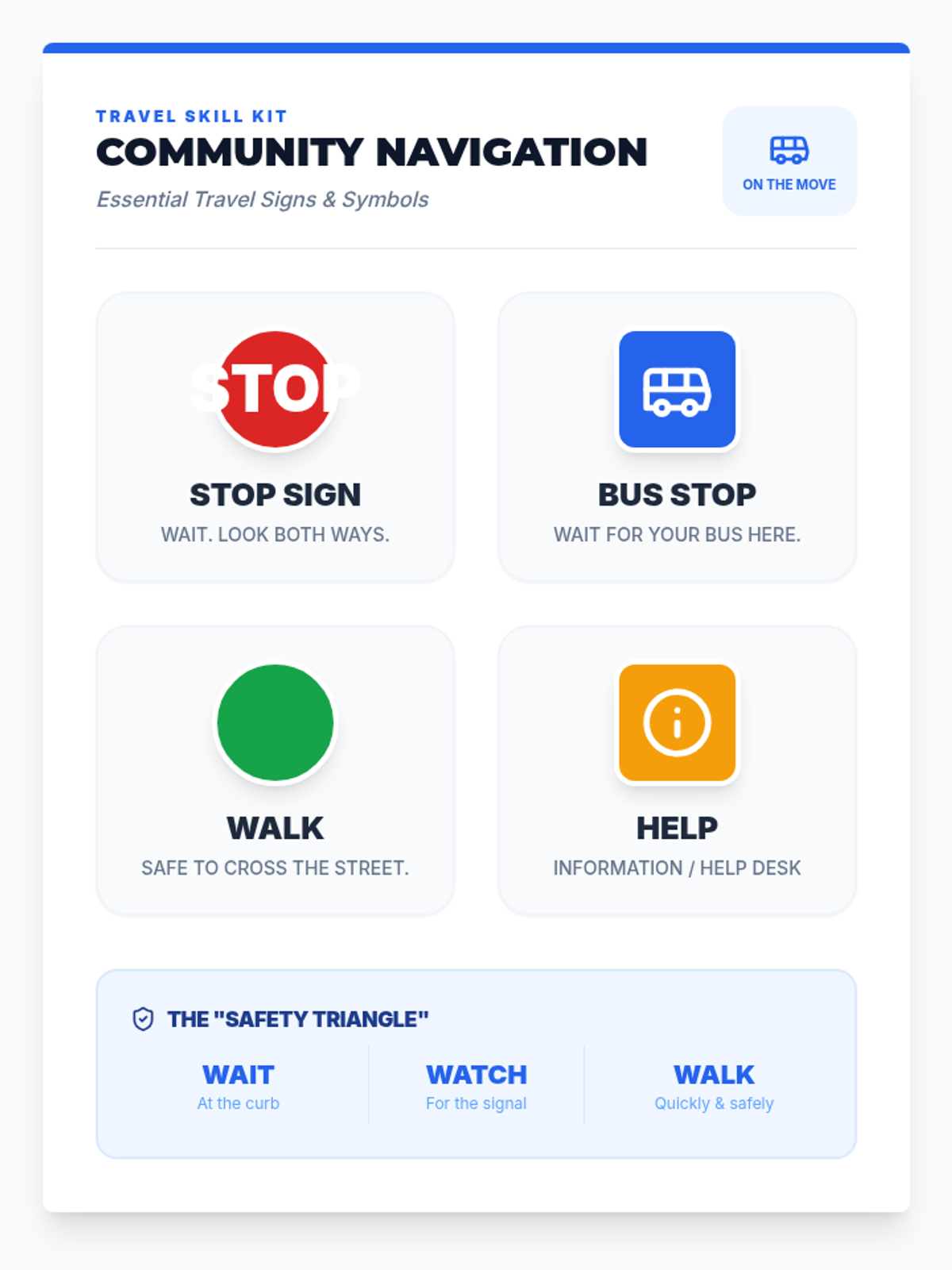
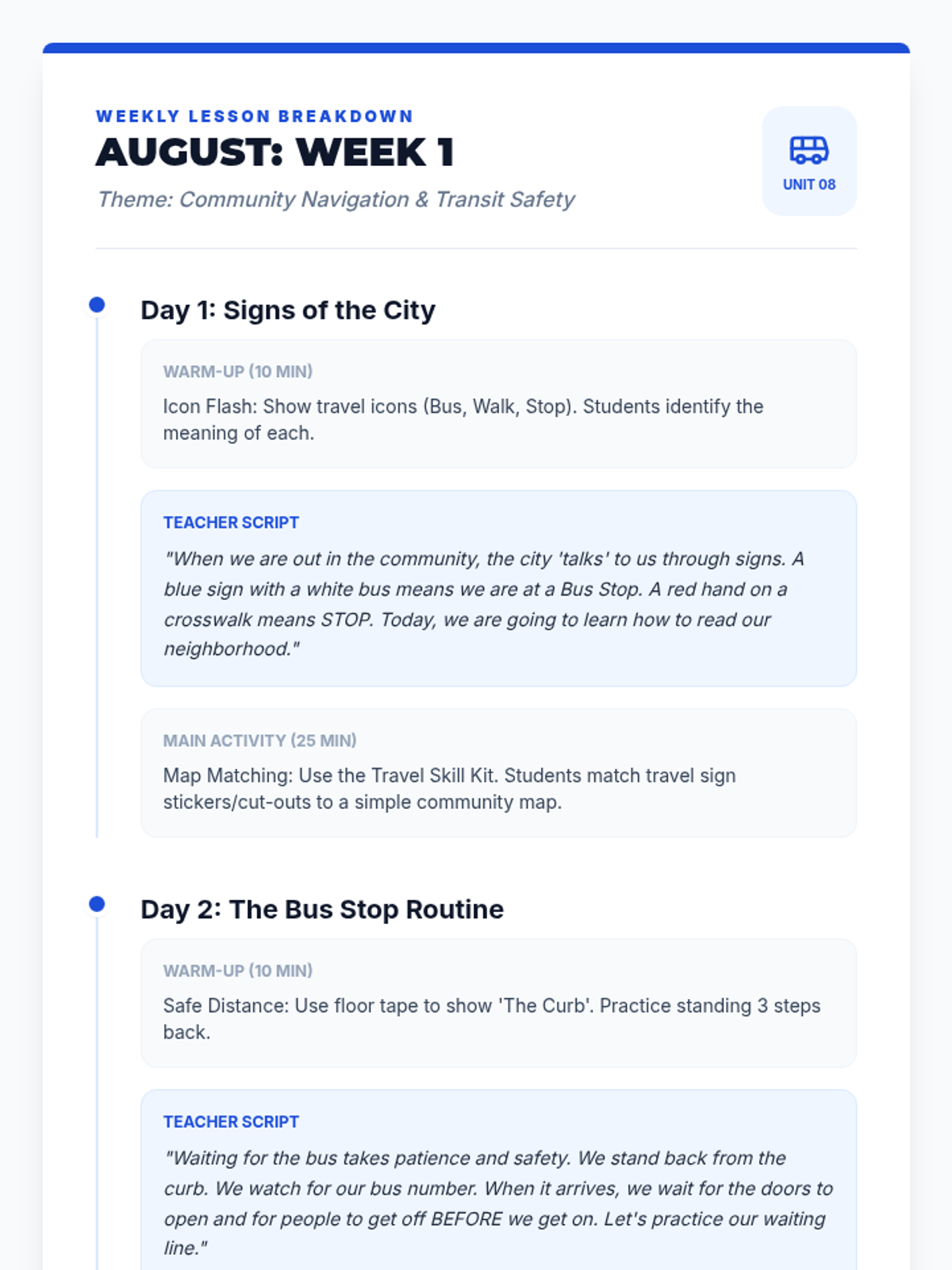
Navigating the community using public transportation, reading schedules, and practicing safety and social etiquette while traveling.
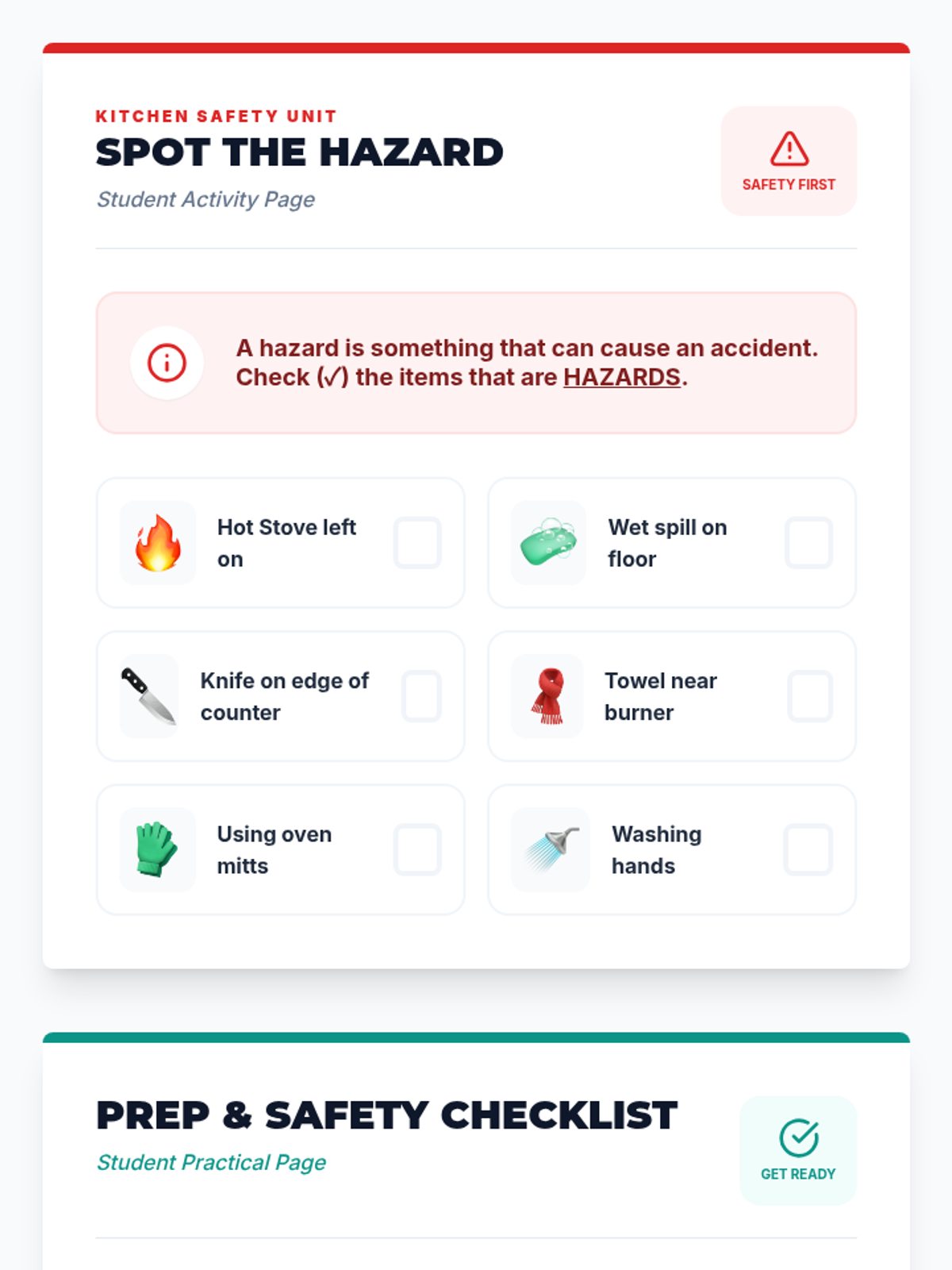
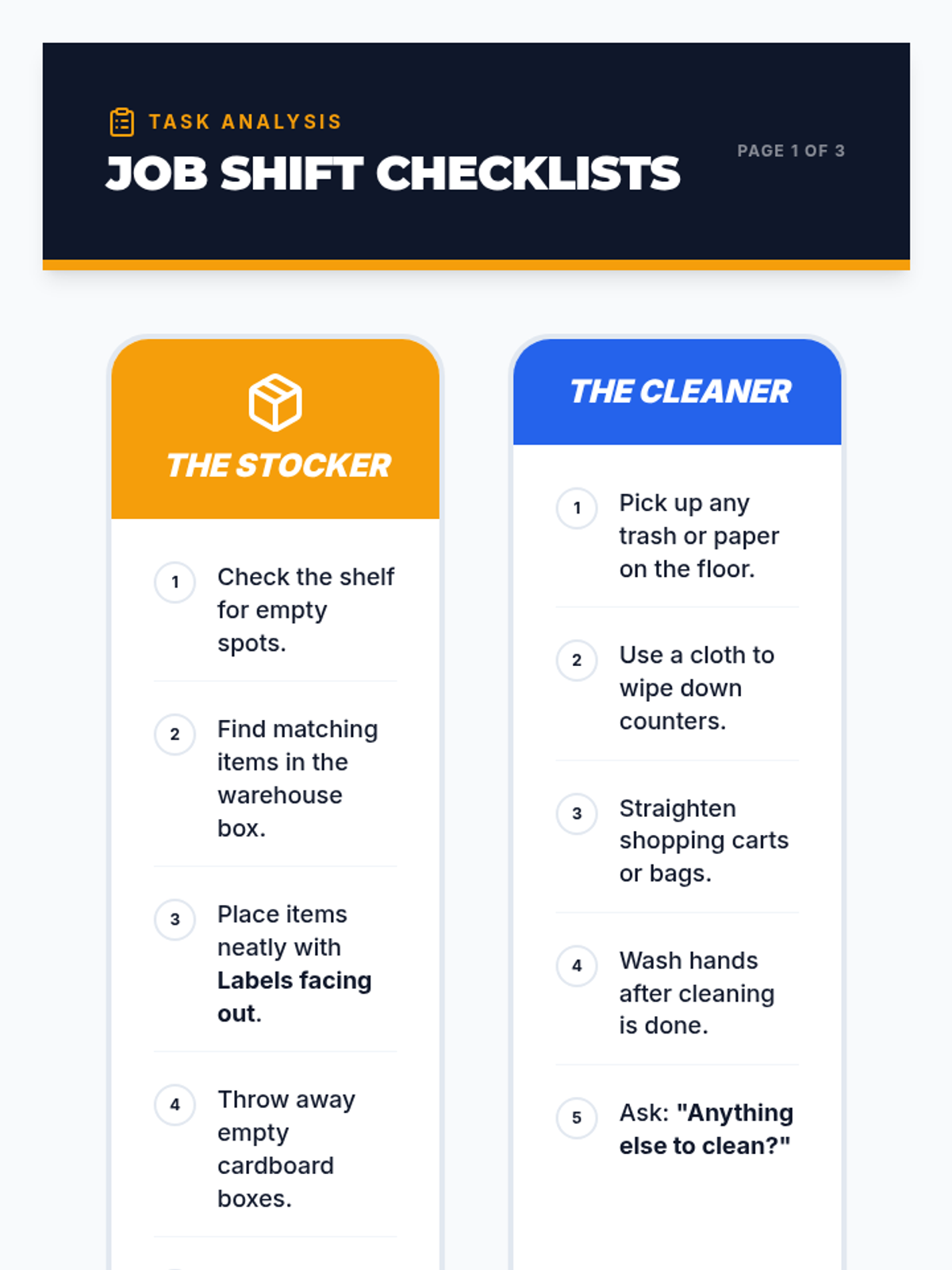
Essential knowledge for identifying hazards, handling tools safely, and maintaining a hygienic cooking environment through visual checklists and simulations.
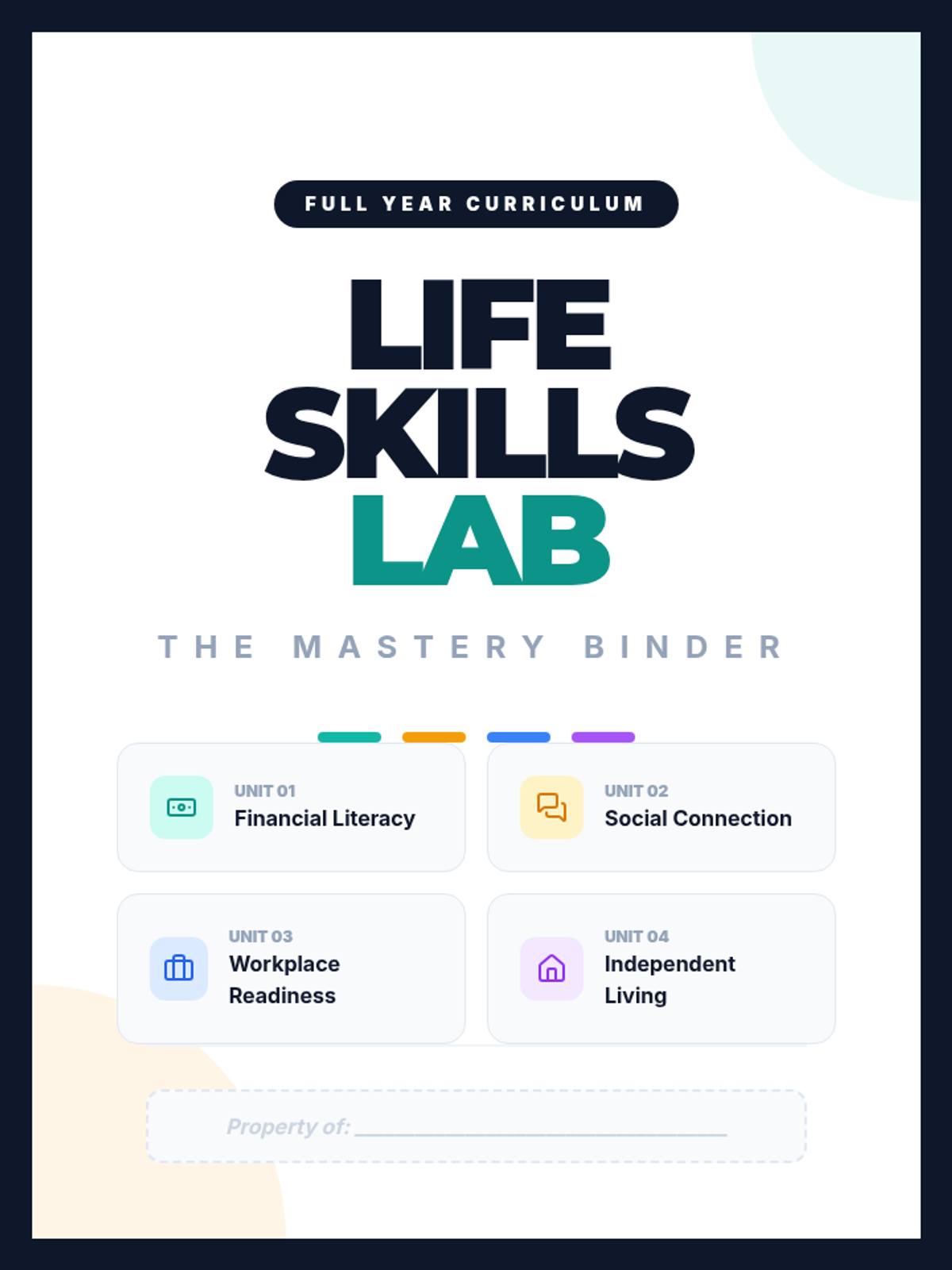
Foundational materials for the Life Skills Launchpad, including binder covers, dividers, and sequence-wide tracking systems.
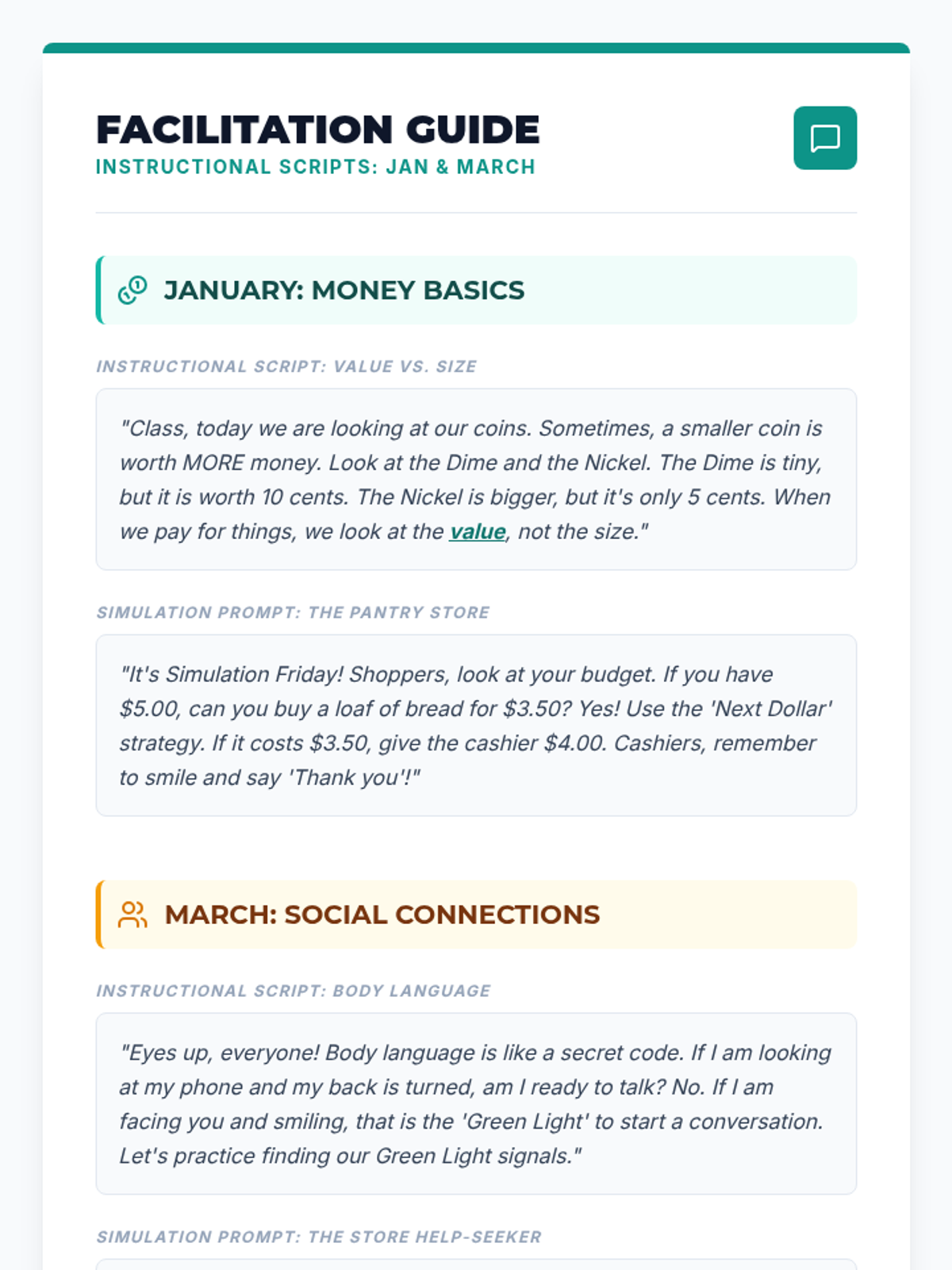
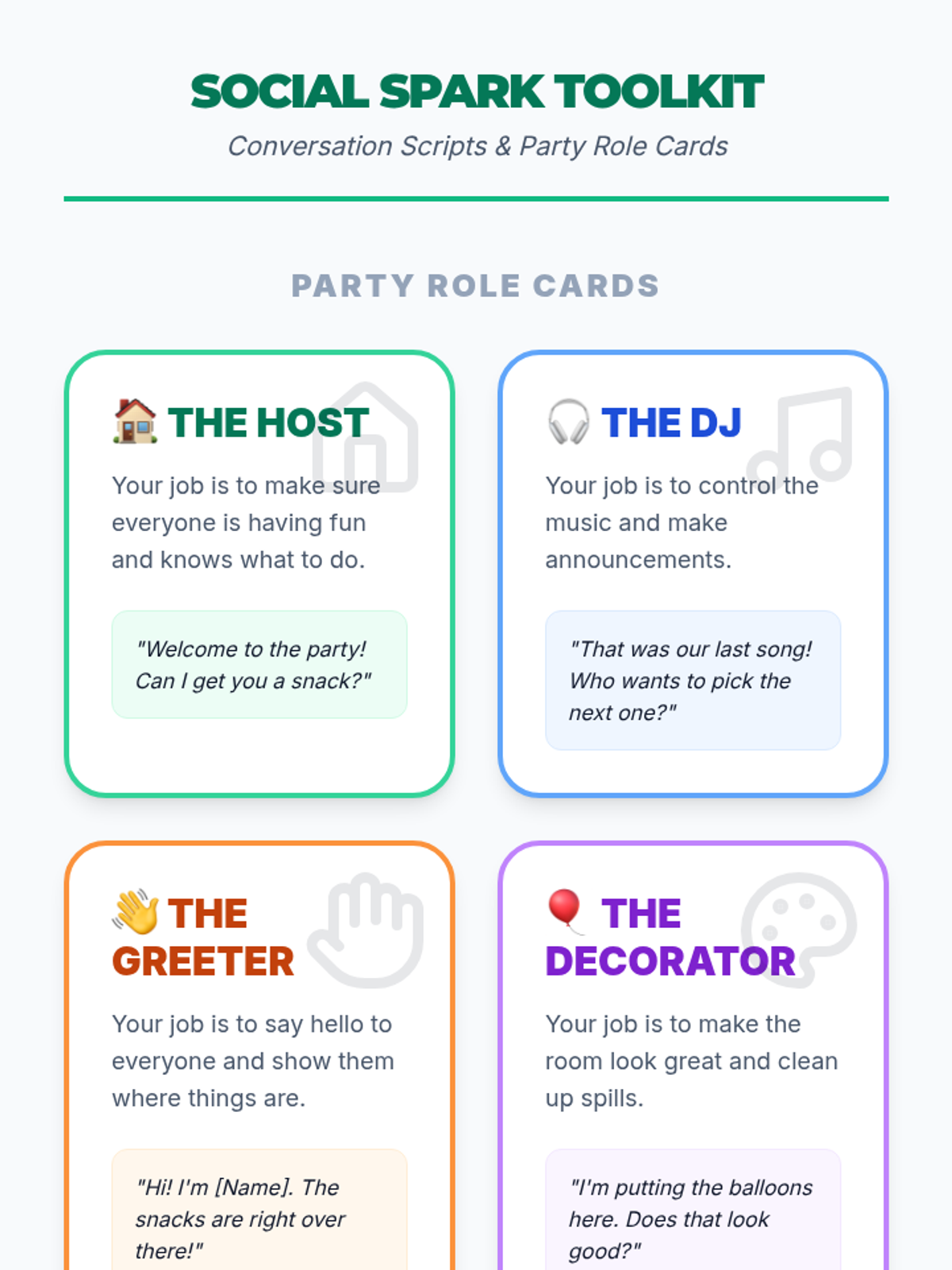
Building essential social cues, conversational scripts, and self-advocacy skills for various community and professional settings.
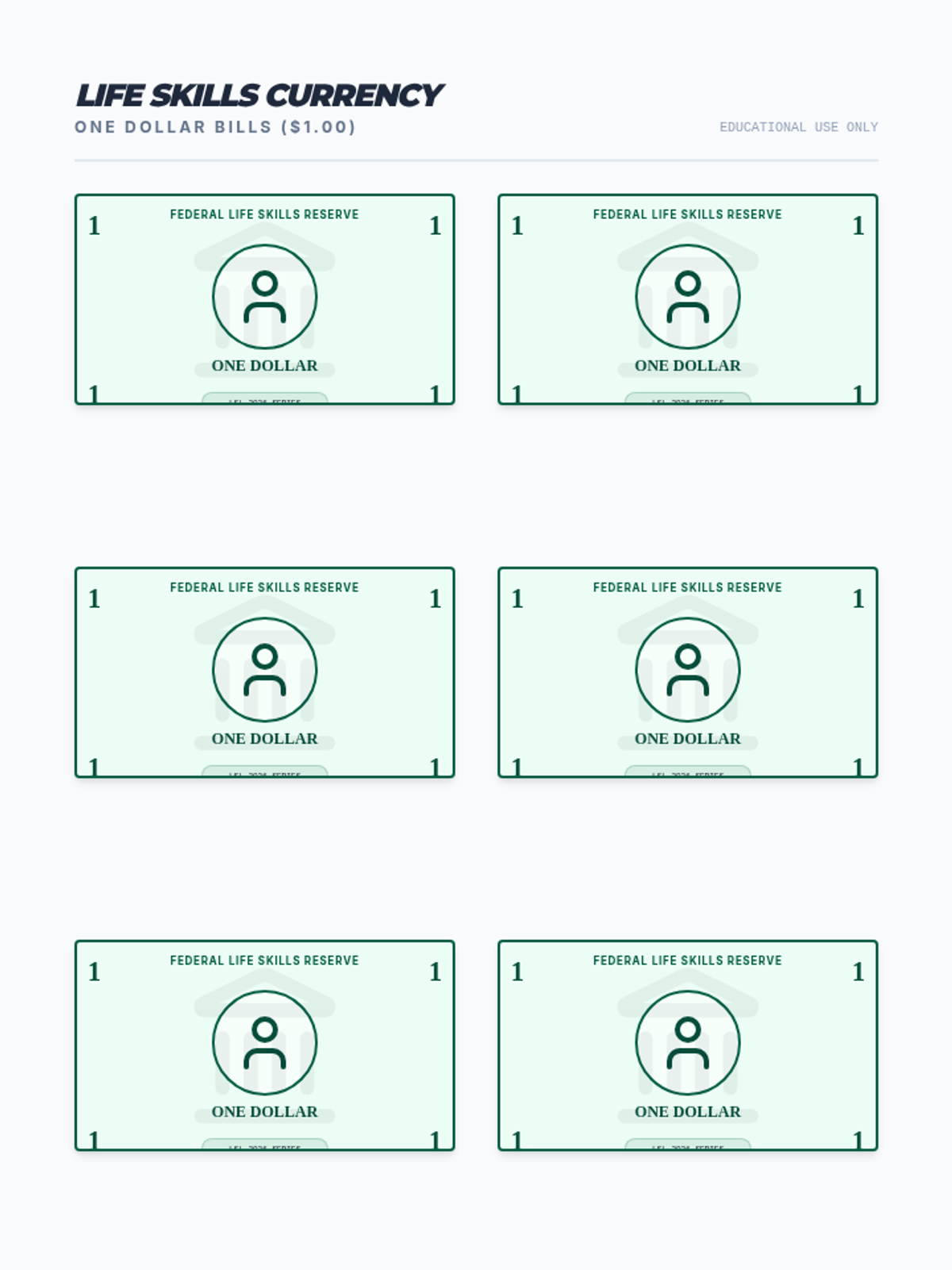
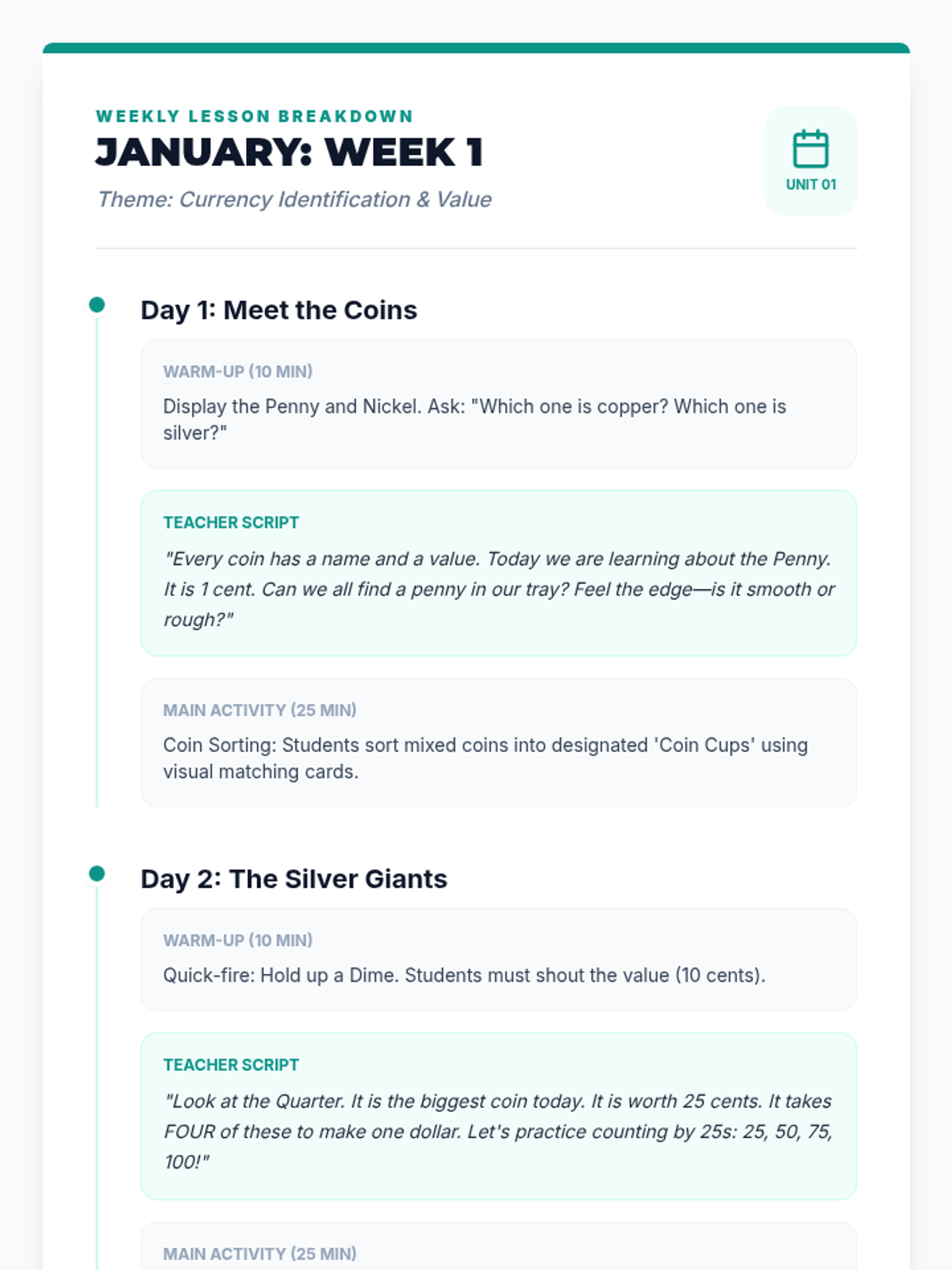
A deep dive into identifying currency, understanding value, and managing basic transactions through visual supports and hands-on practice.
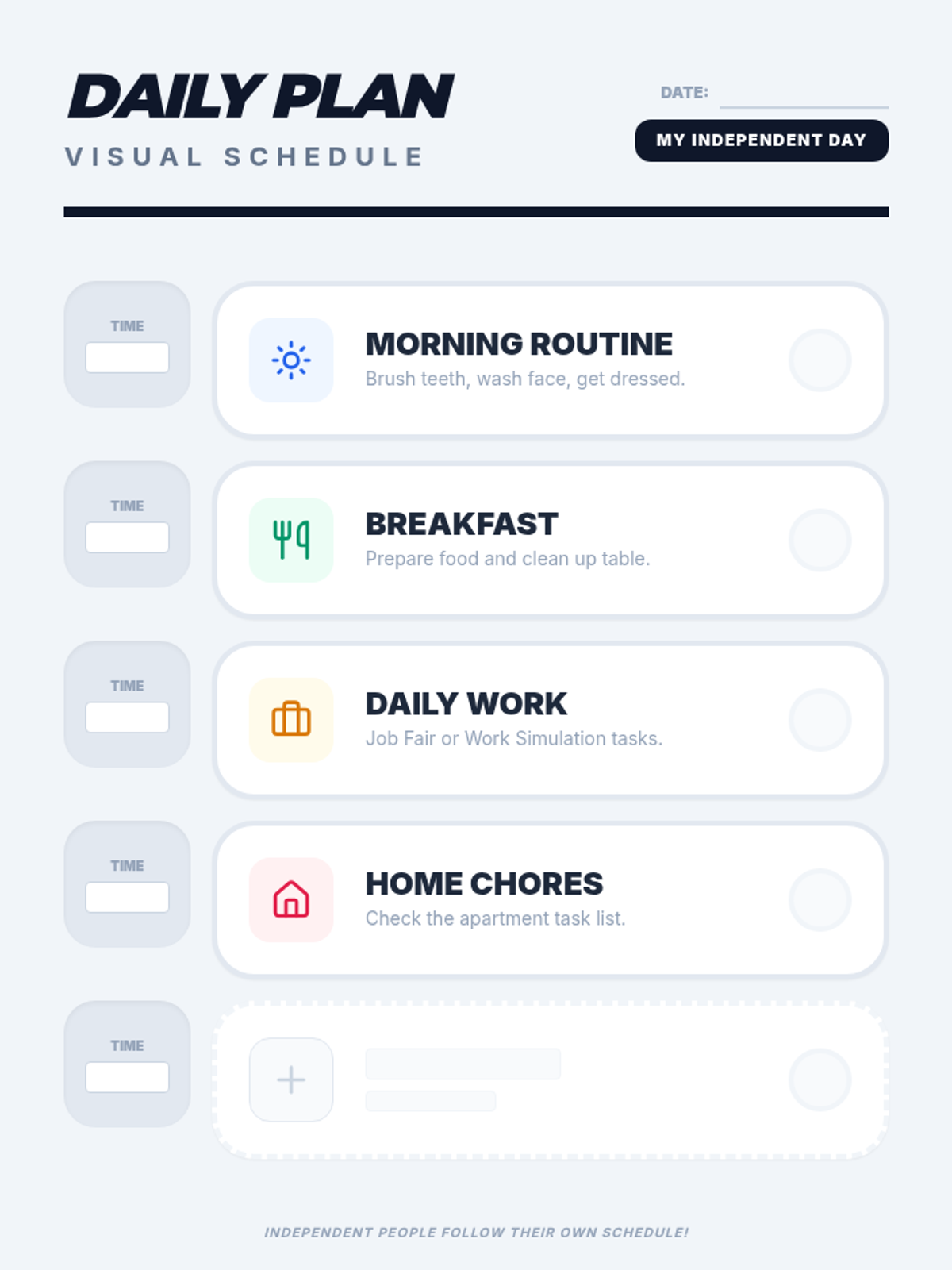
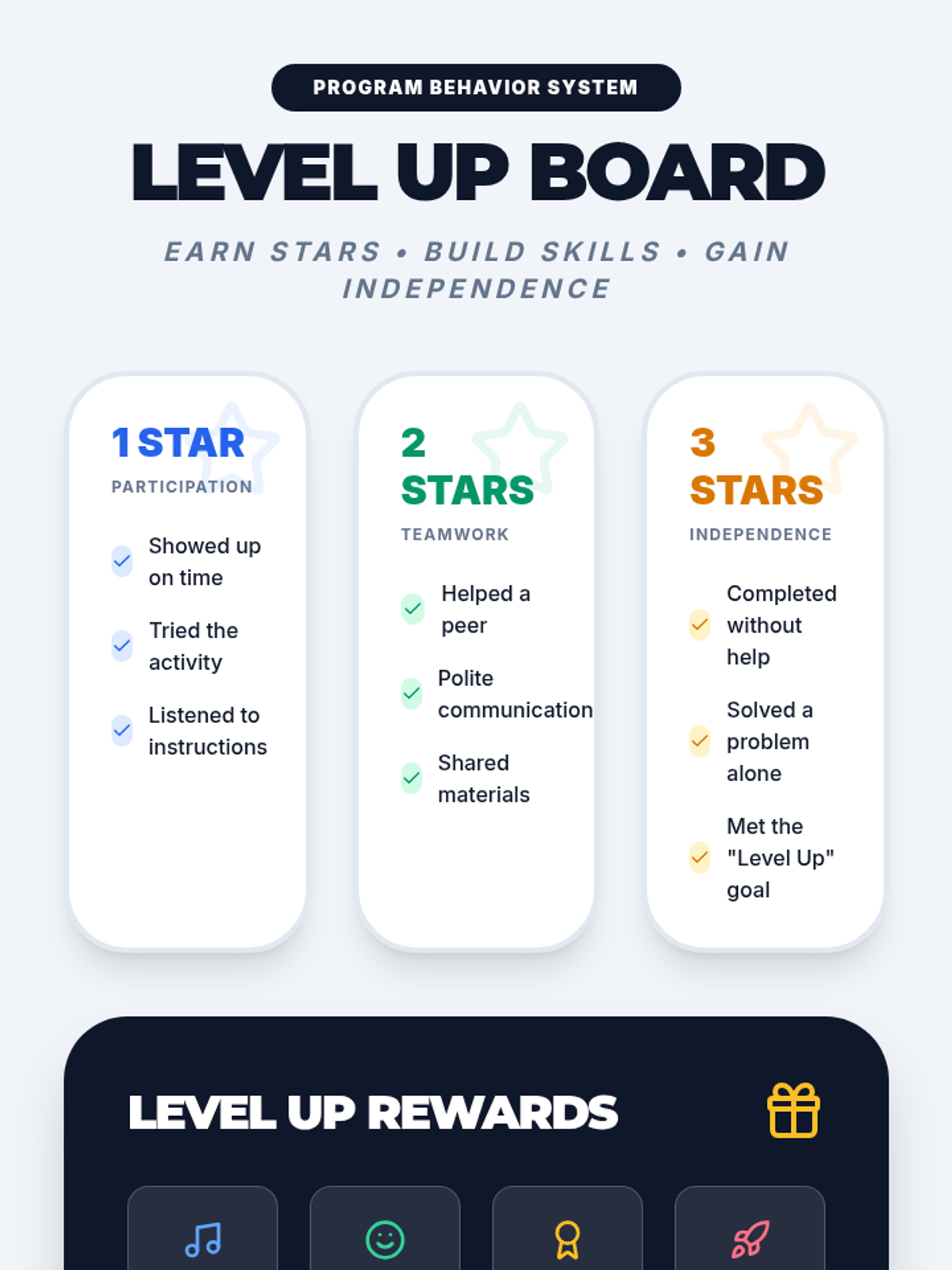
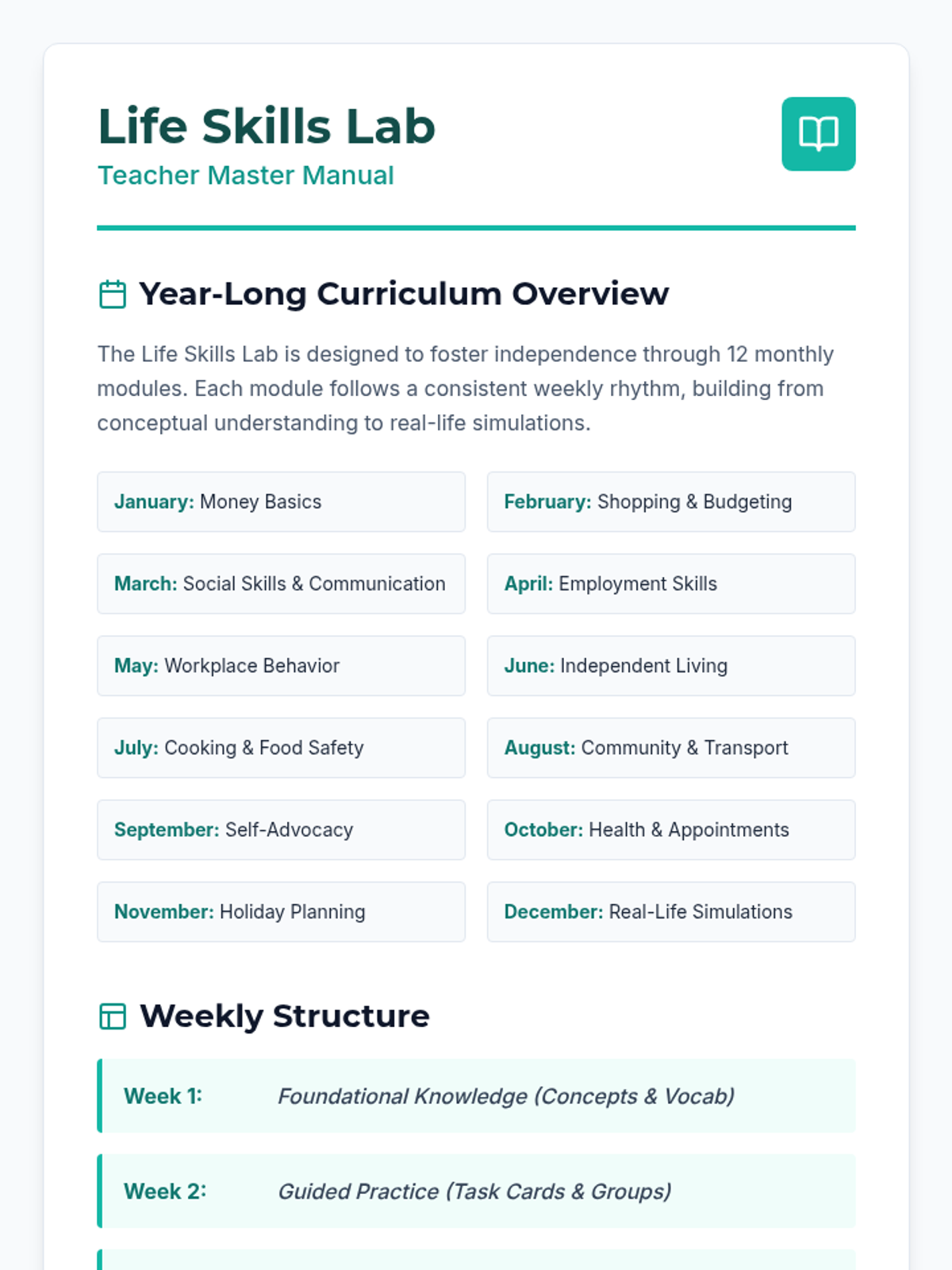
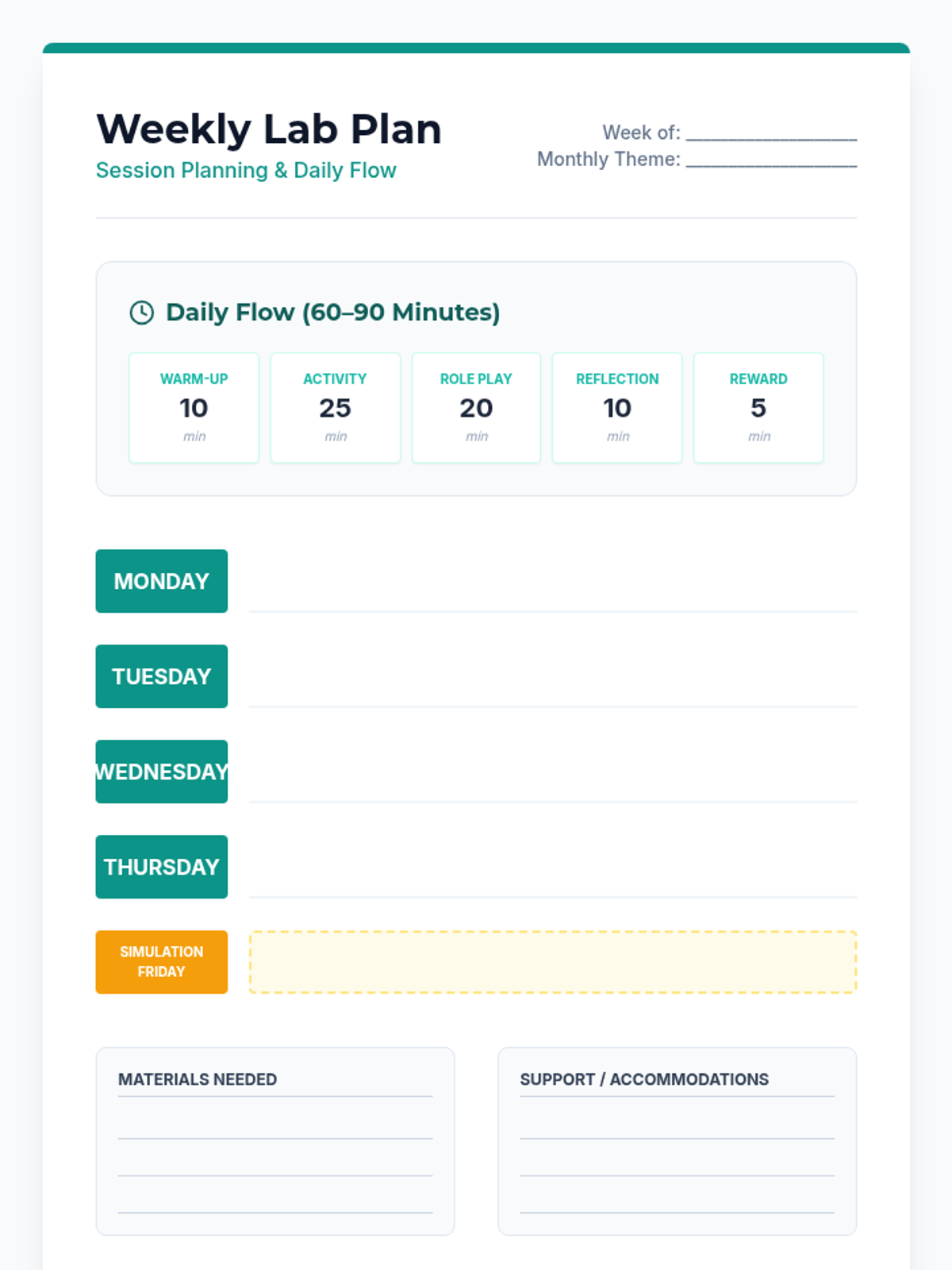
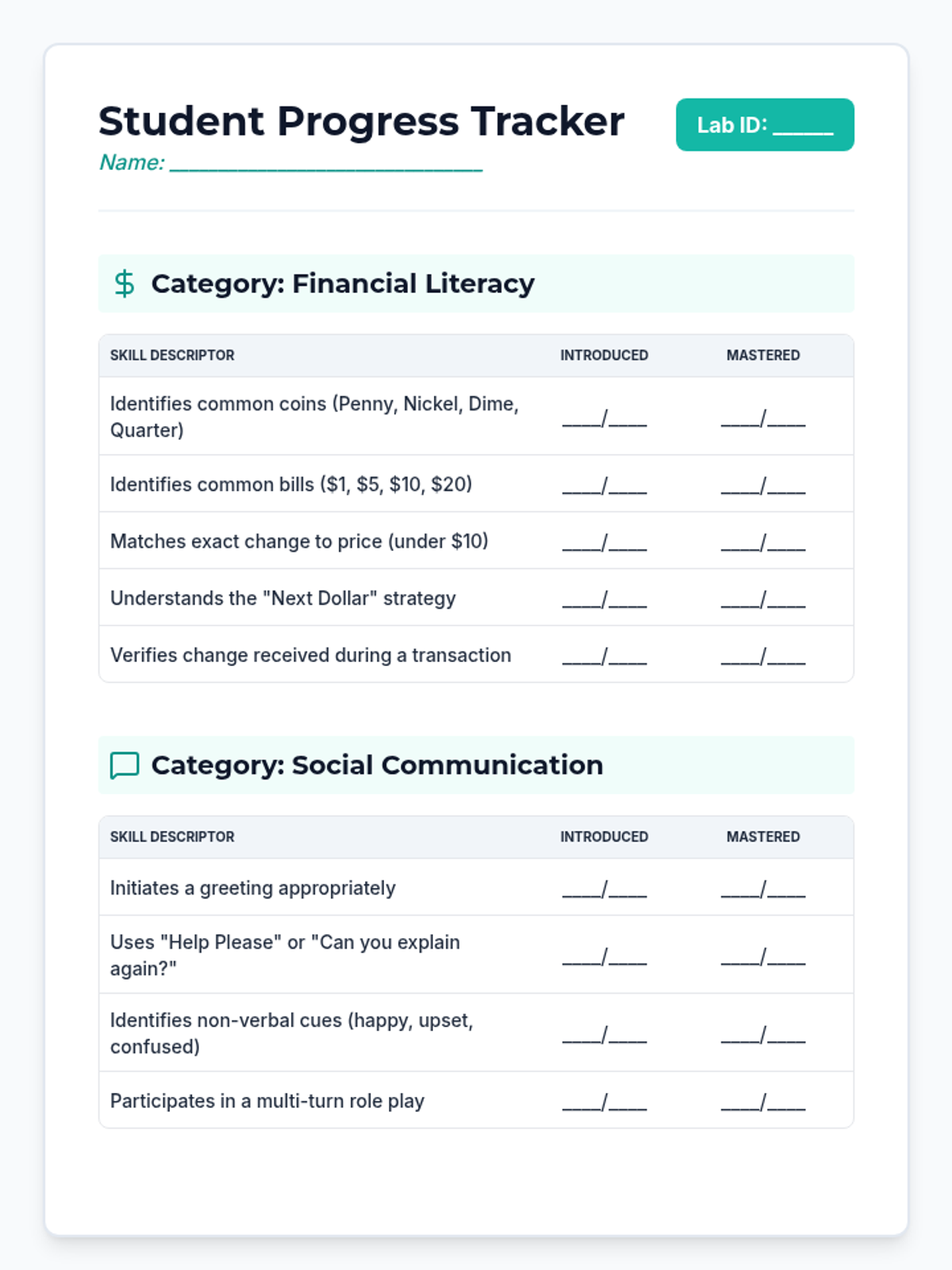
Essential templates, tracking sheets, and the overall framework for the Life Skills program to ensure consistent daily structure and progress monitoring.
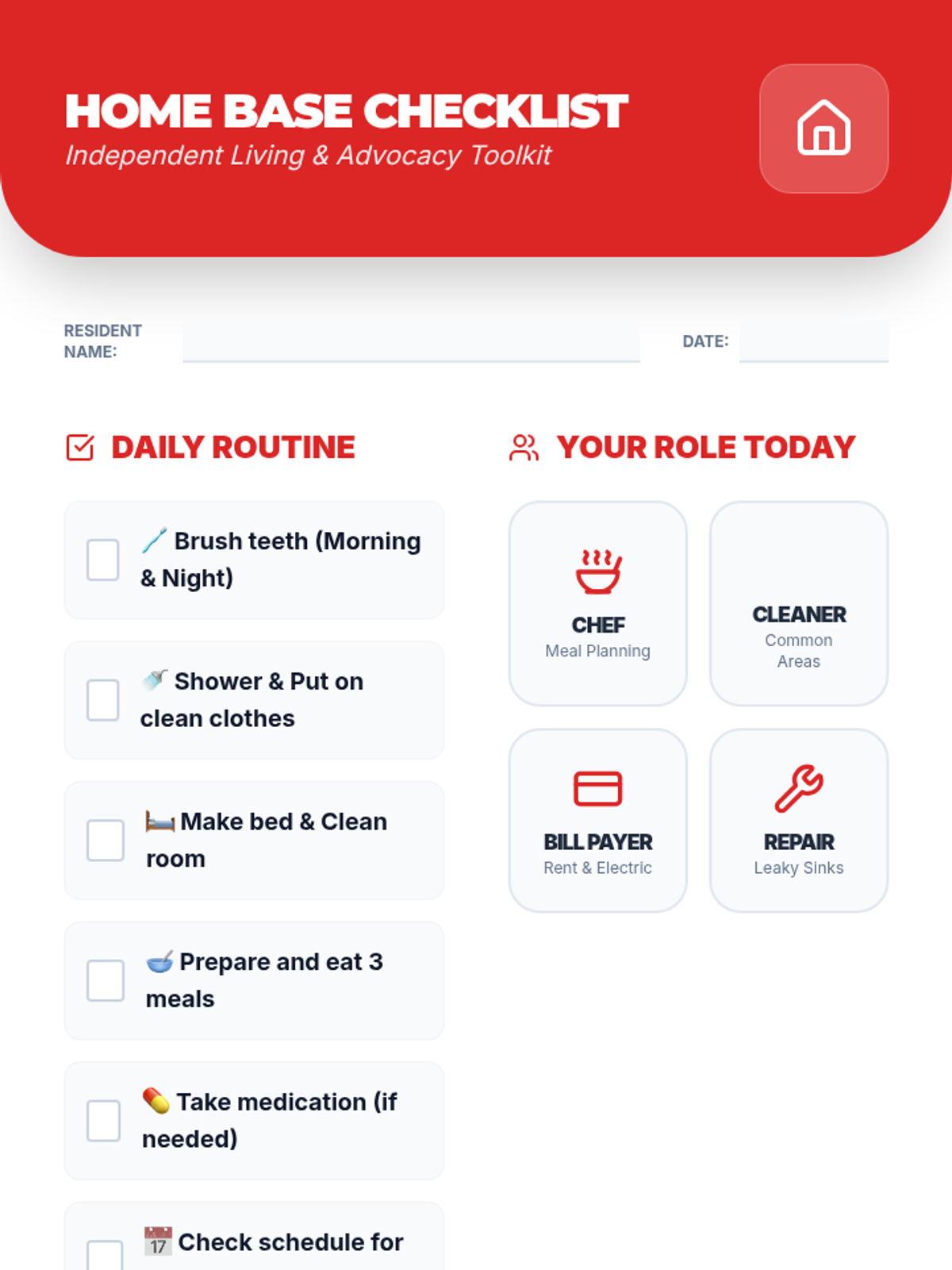
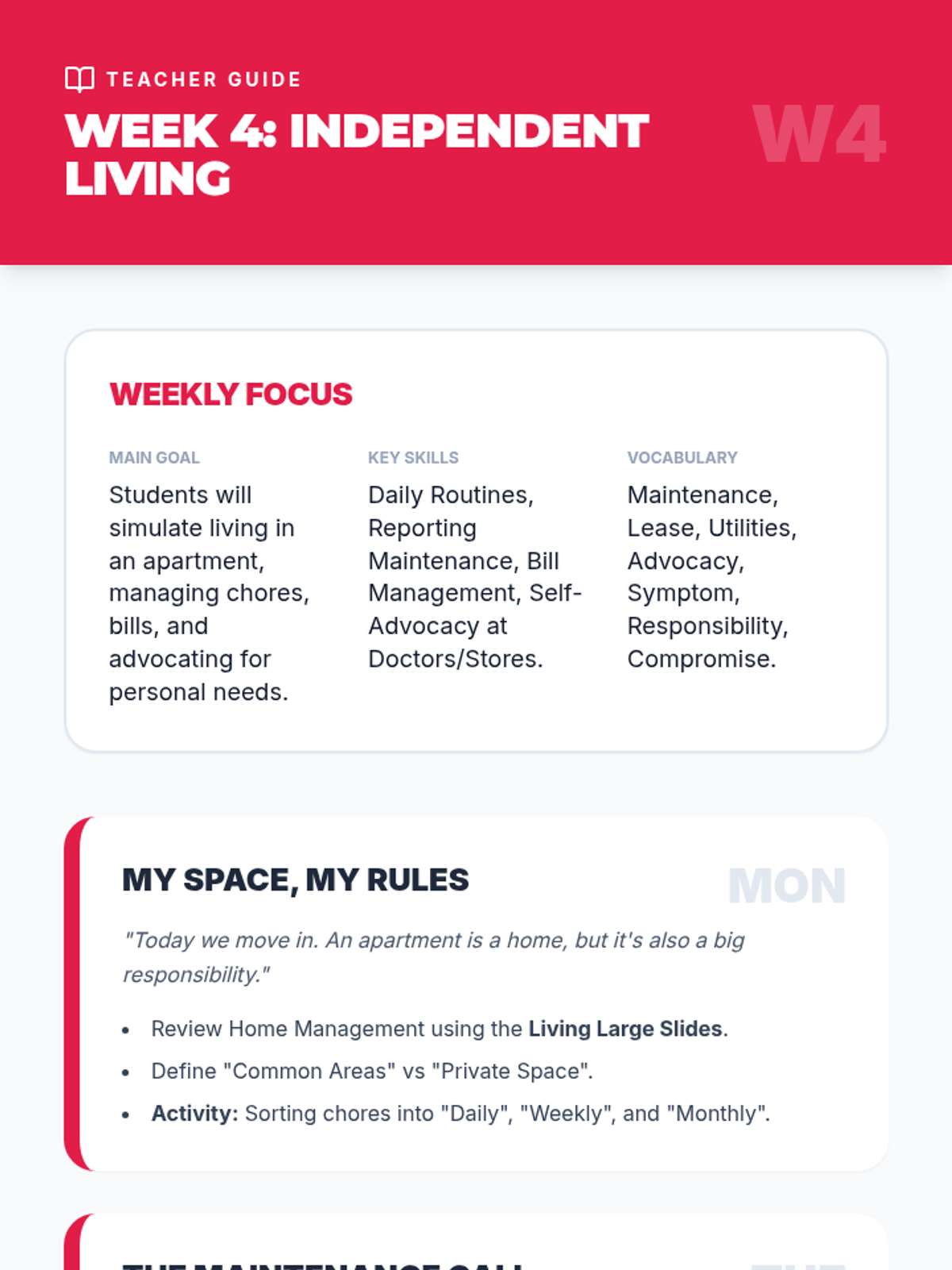
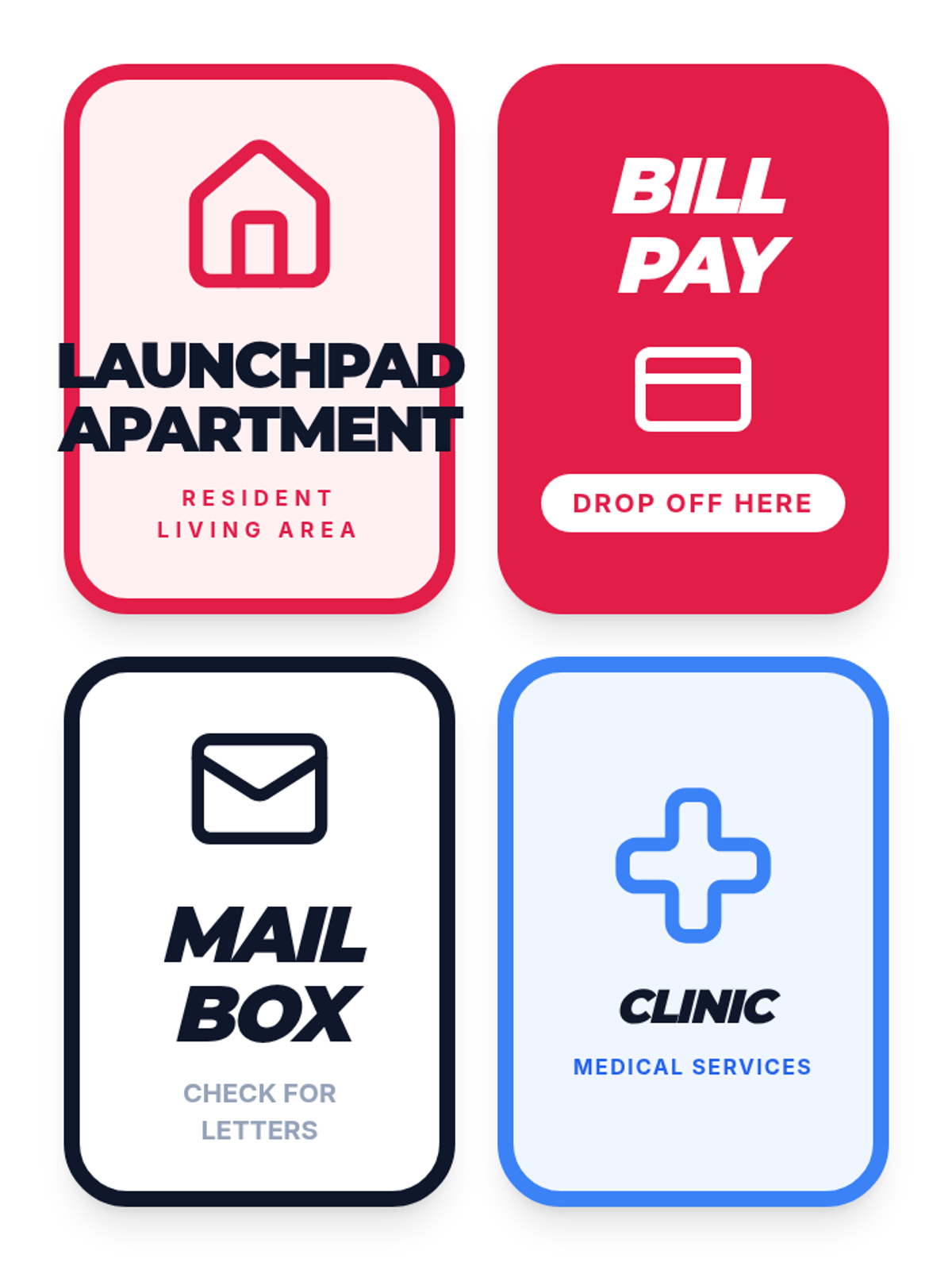
Practicing the core skills of independent living, including home maintenance, personal advocacy, and daily scheduling.
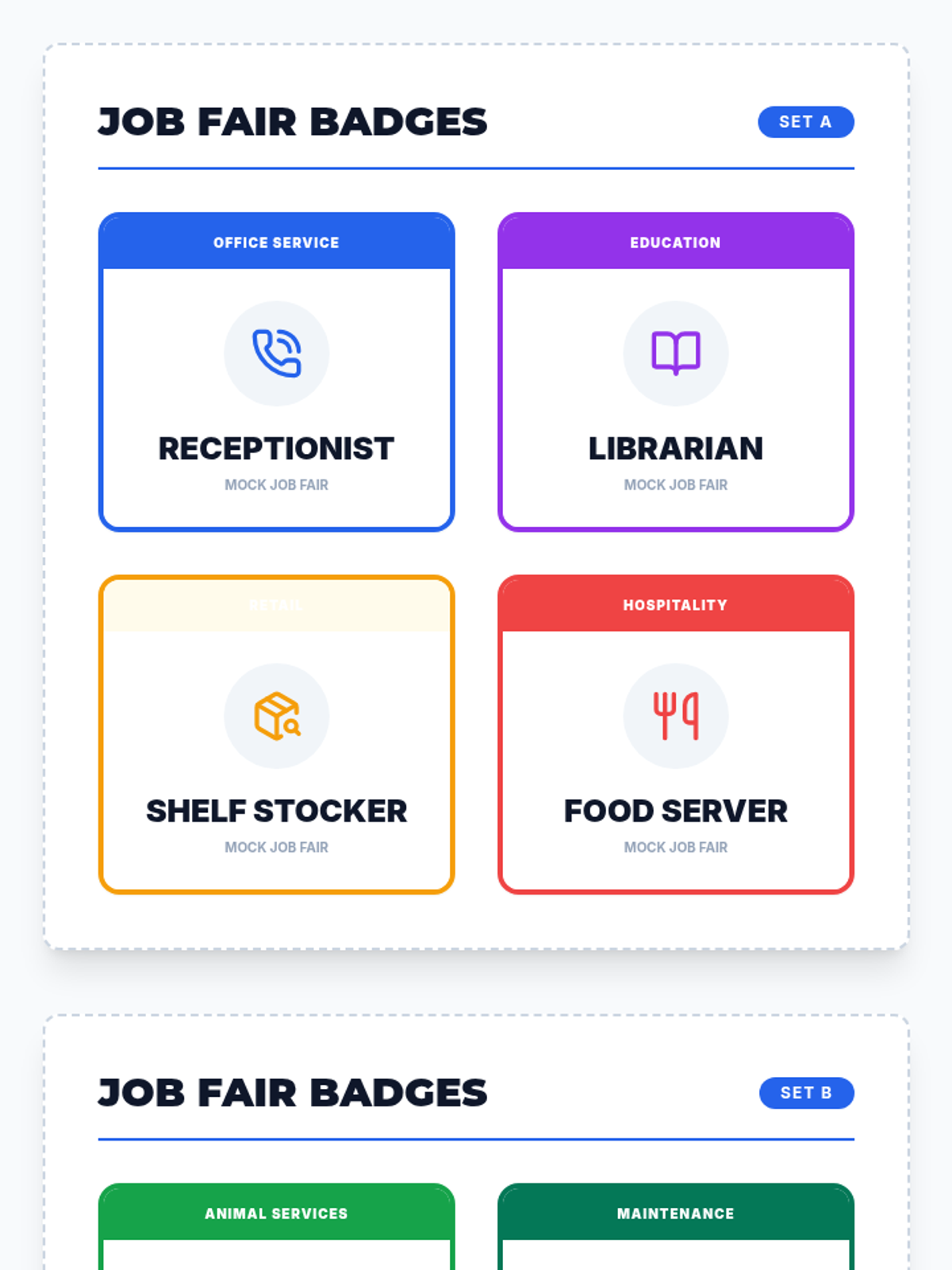
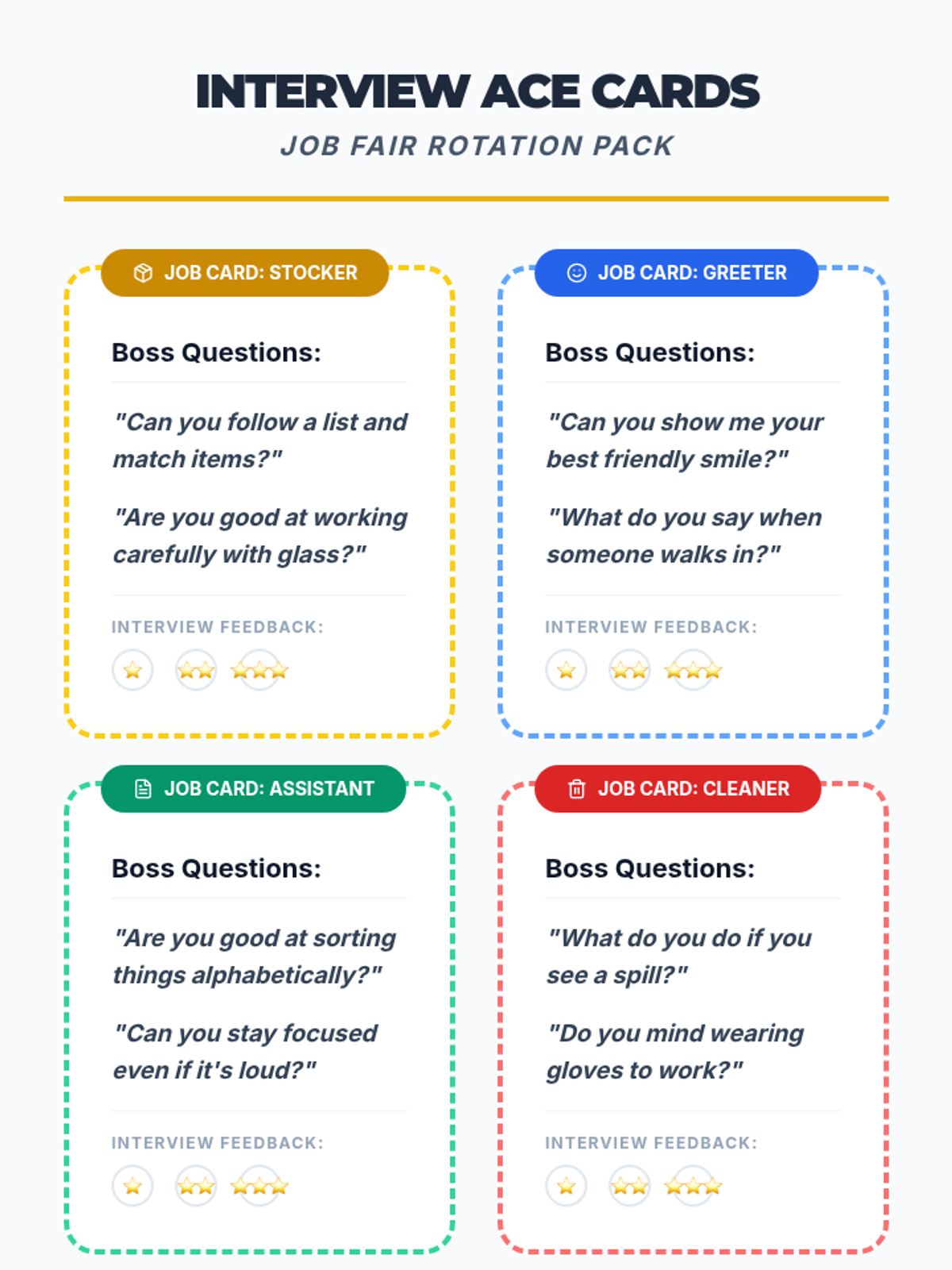
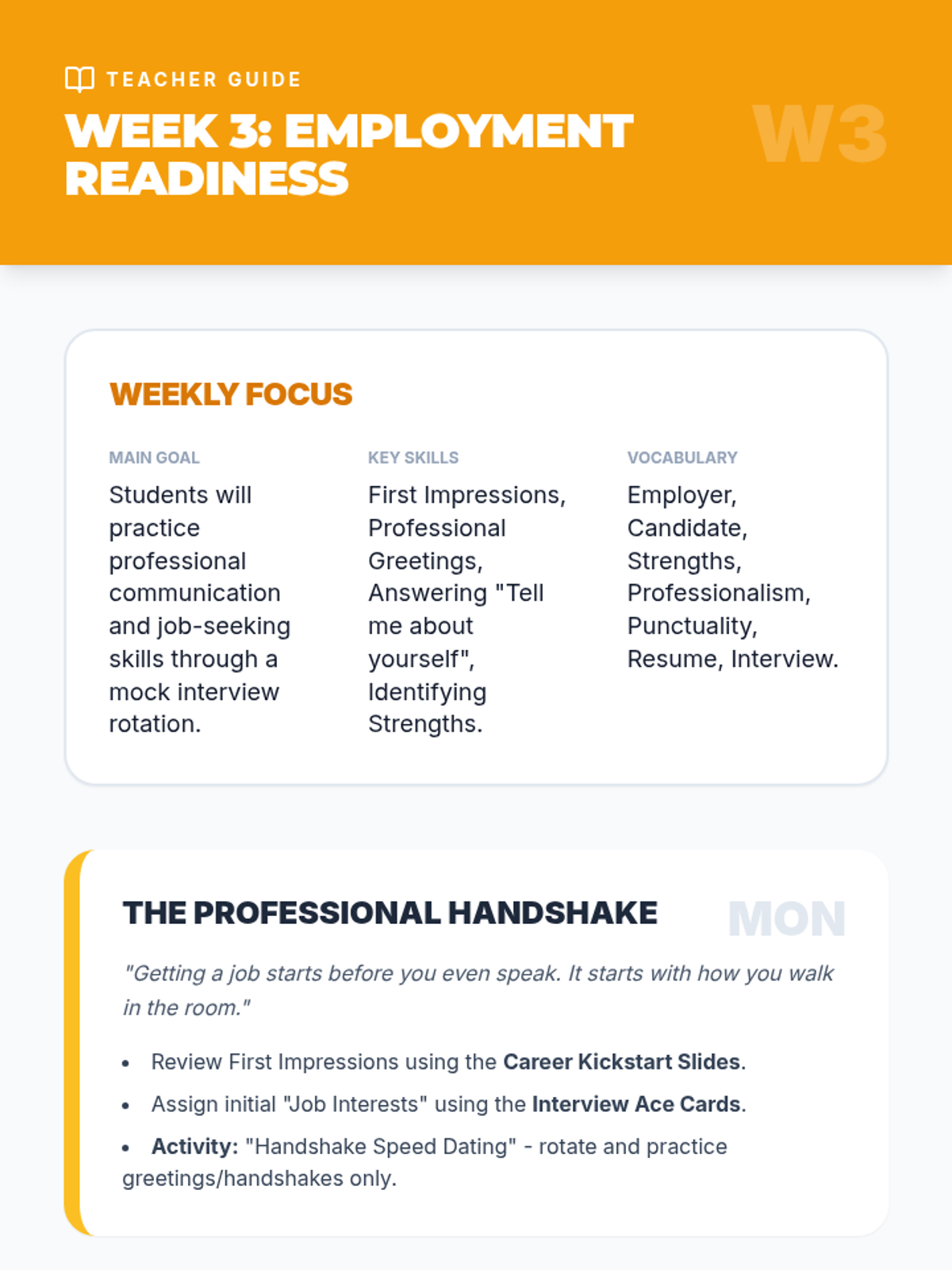
Preparing for the workforce with mock interviews, professional communication practice, and on-the-job simulations.
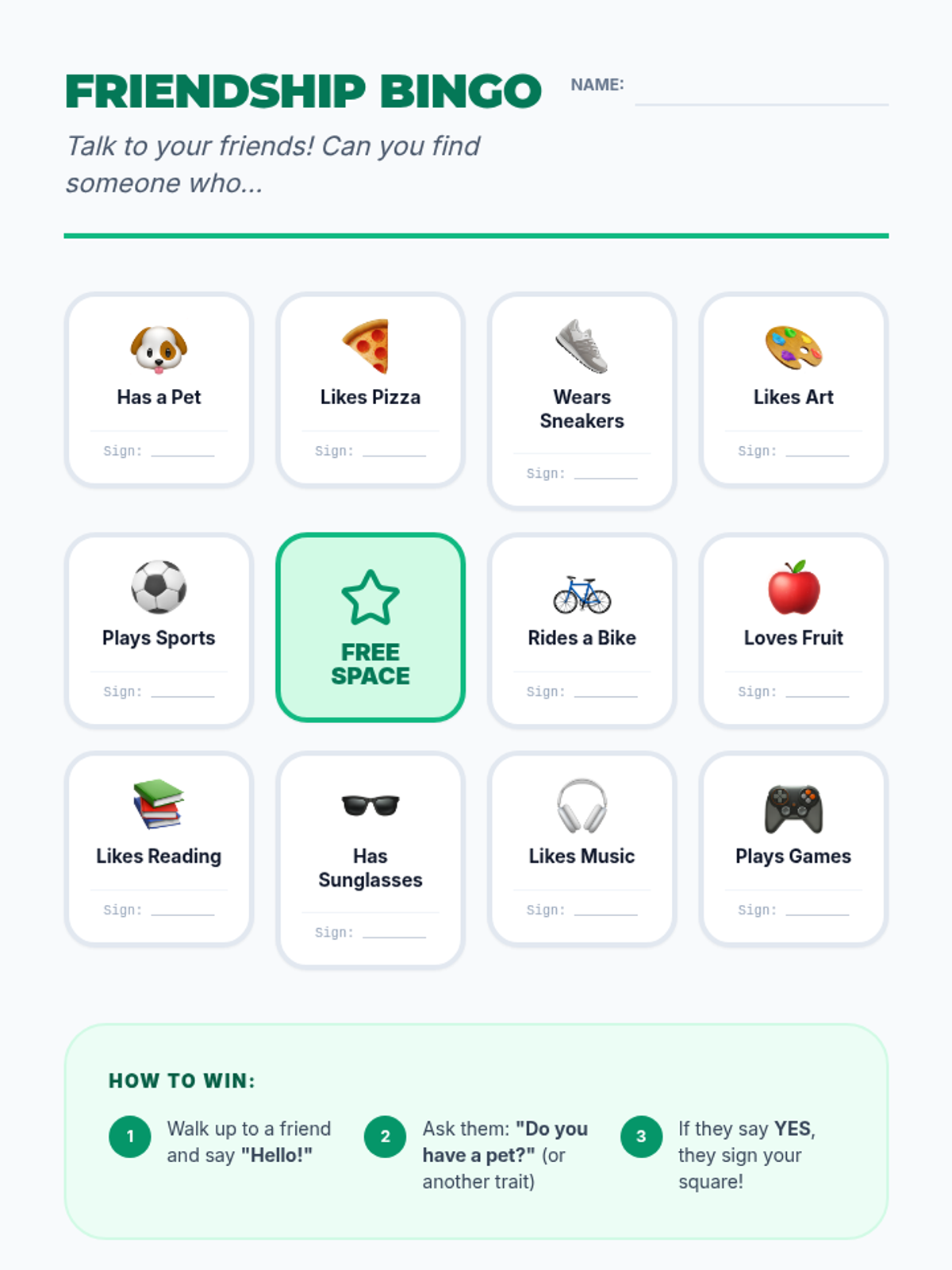
Developing social-emotional awareness through event planning, role-play conversations, and meaningful peer interactions.