Resume construction, cover letter drafting, and networking techniques for modern job markets. Equips learners to analyze job descriptions and tailor applications using achievement-based language.
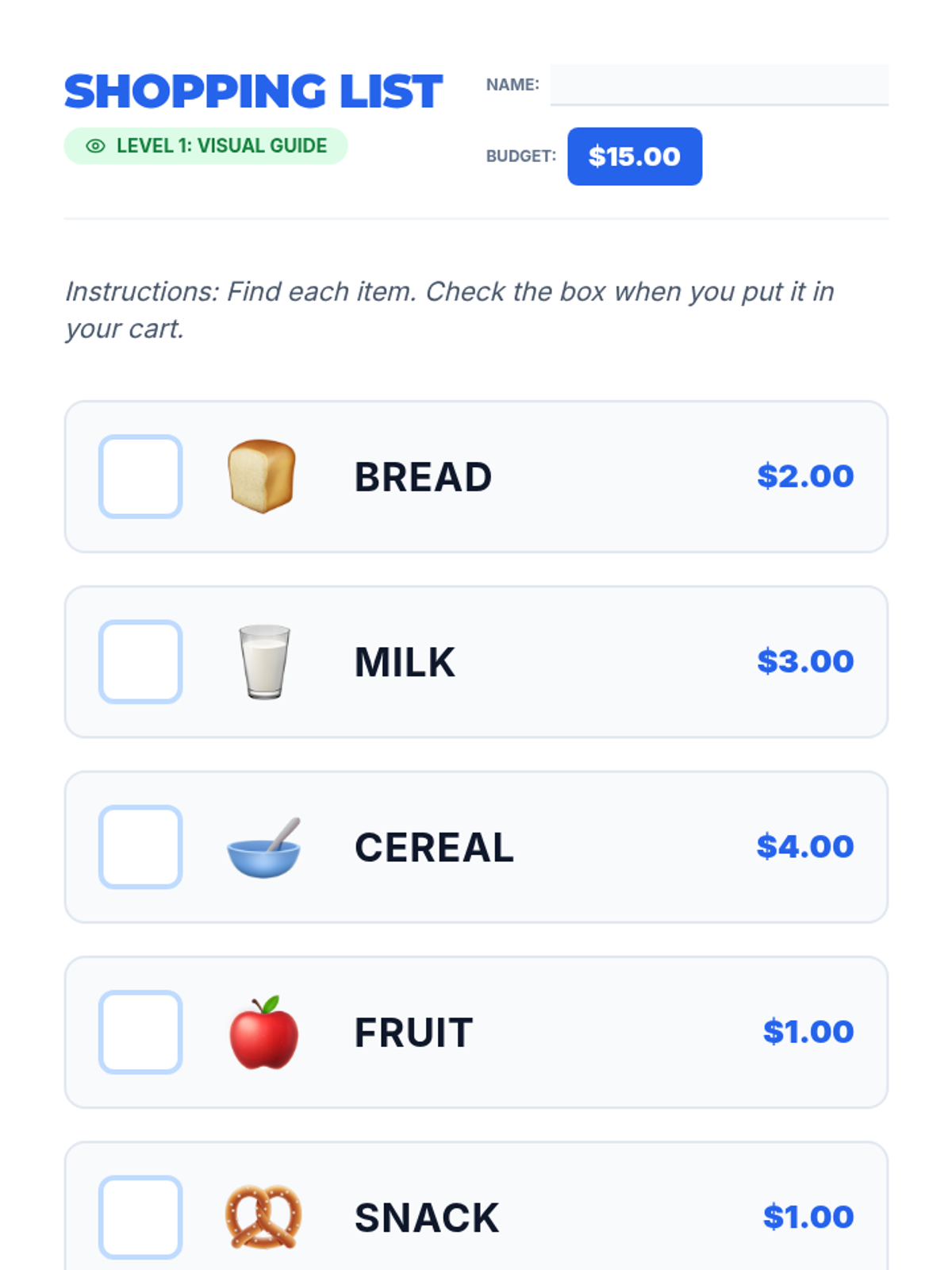
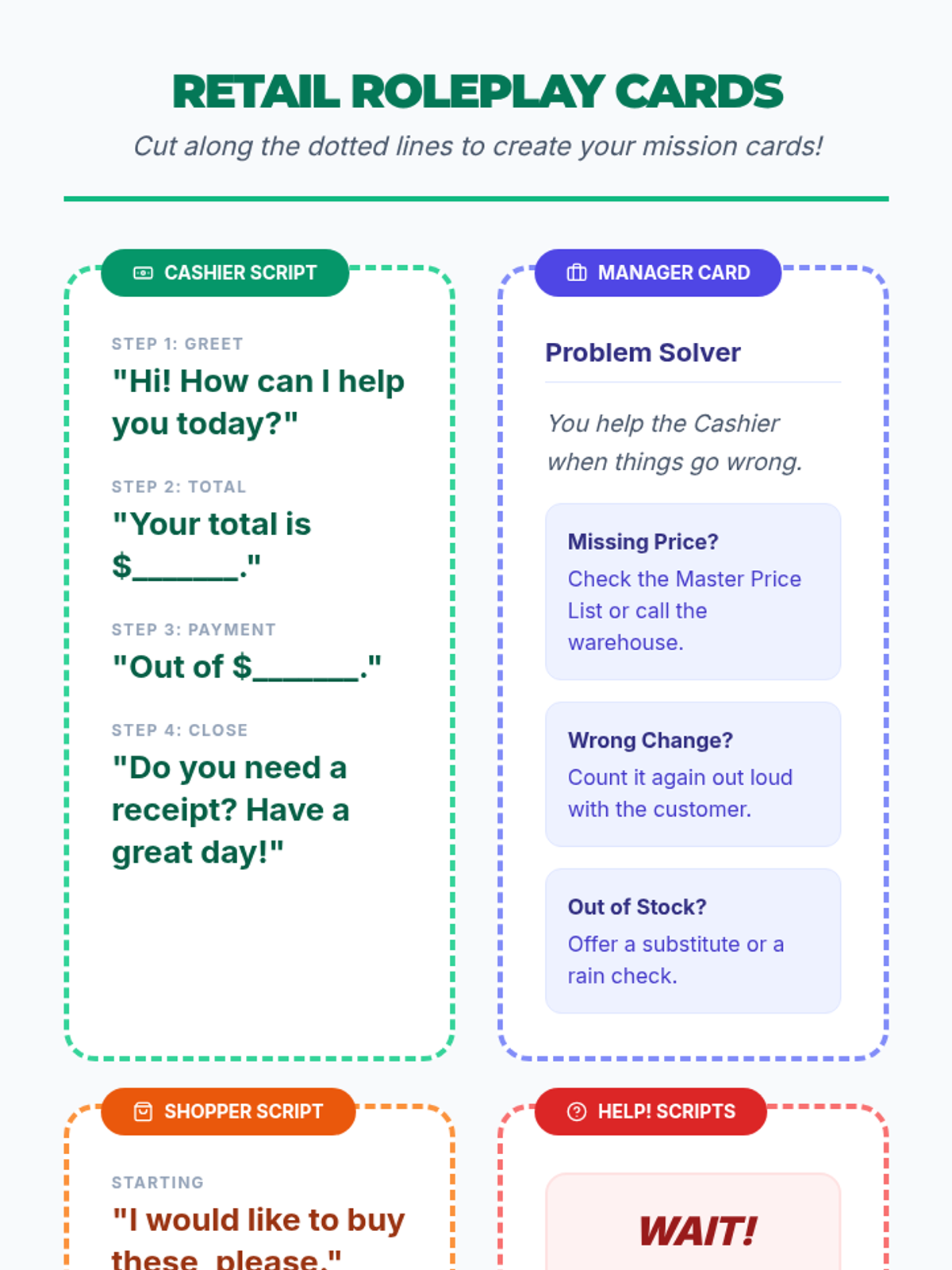
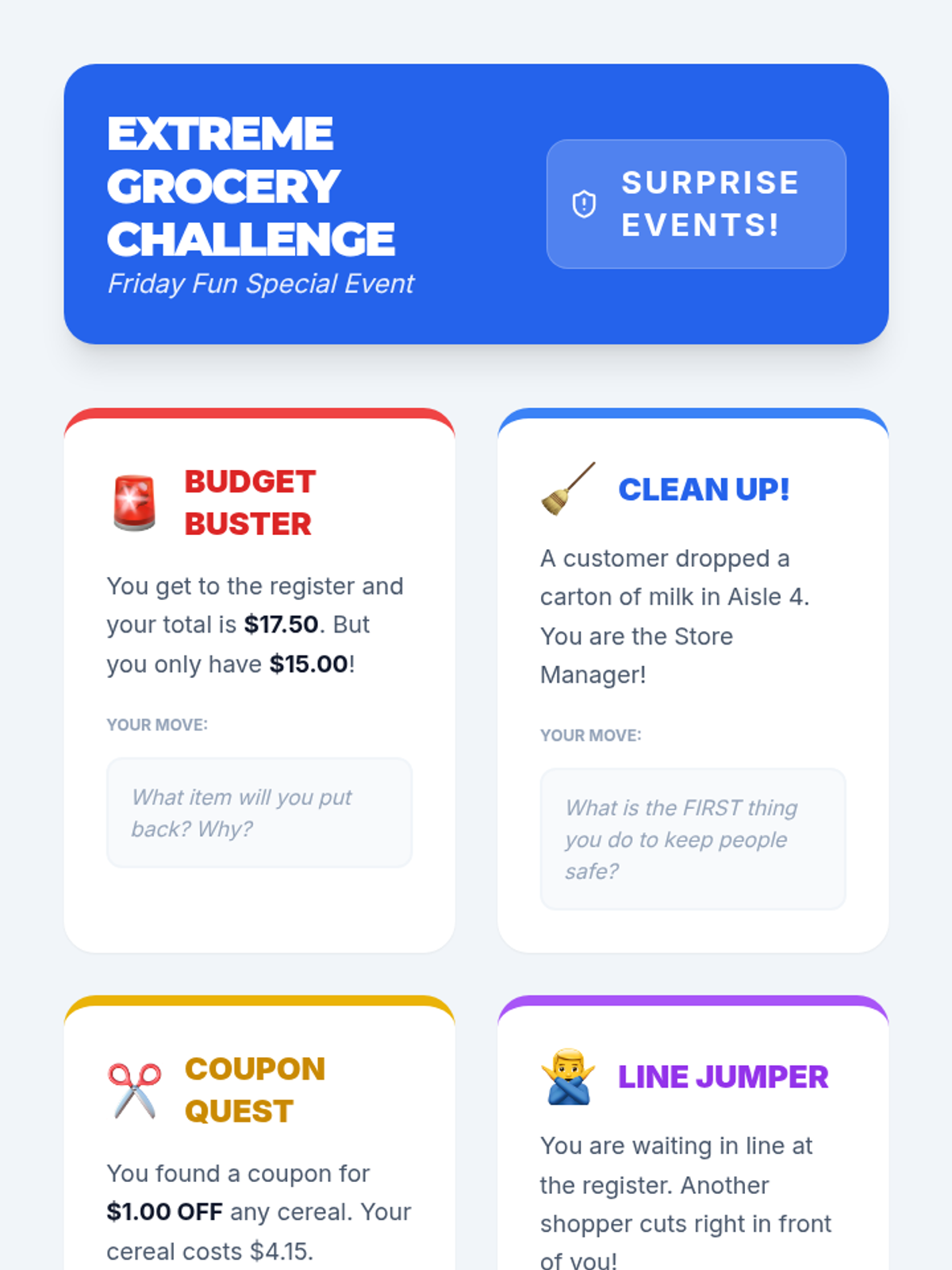
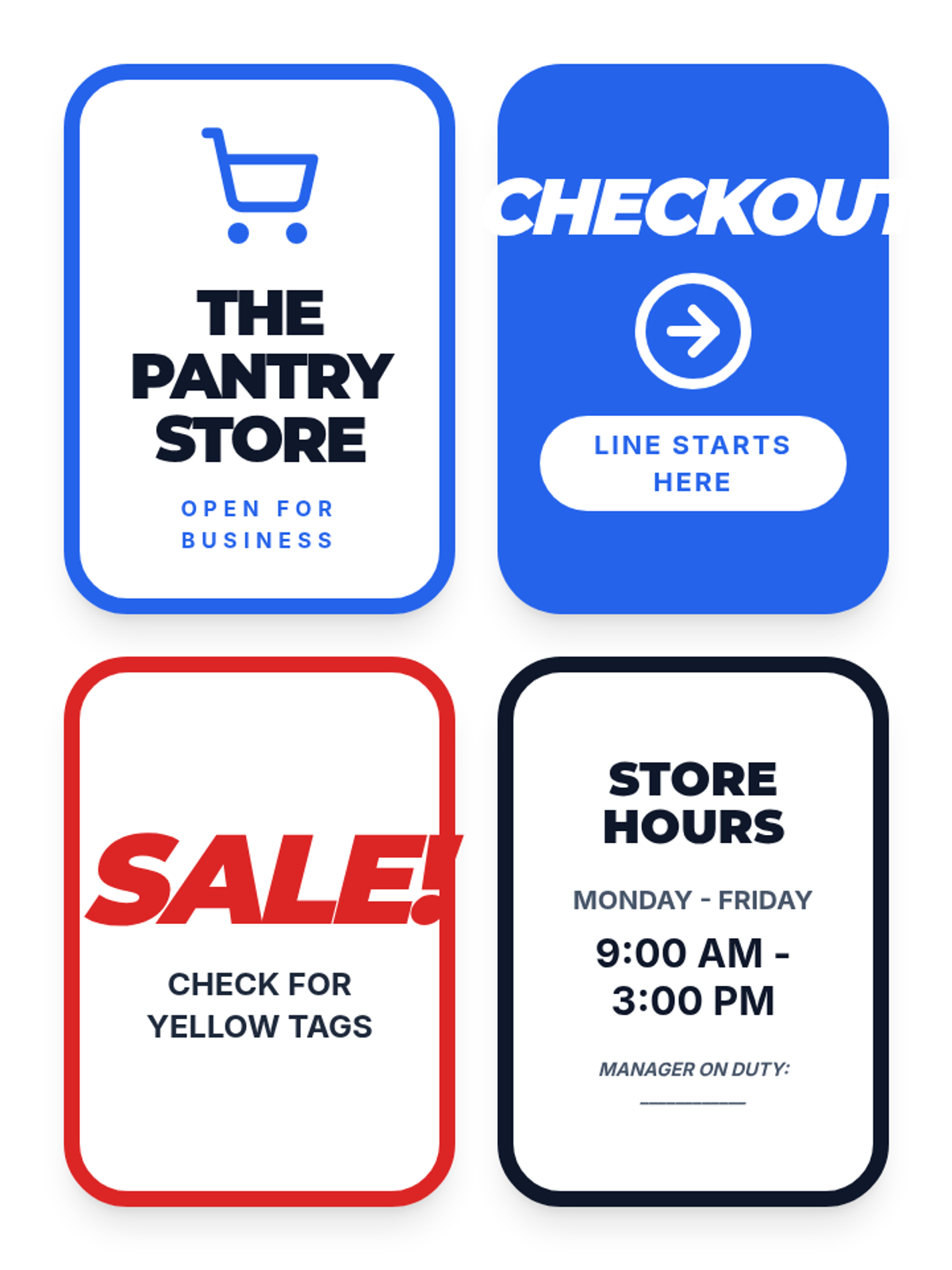
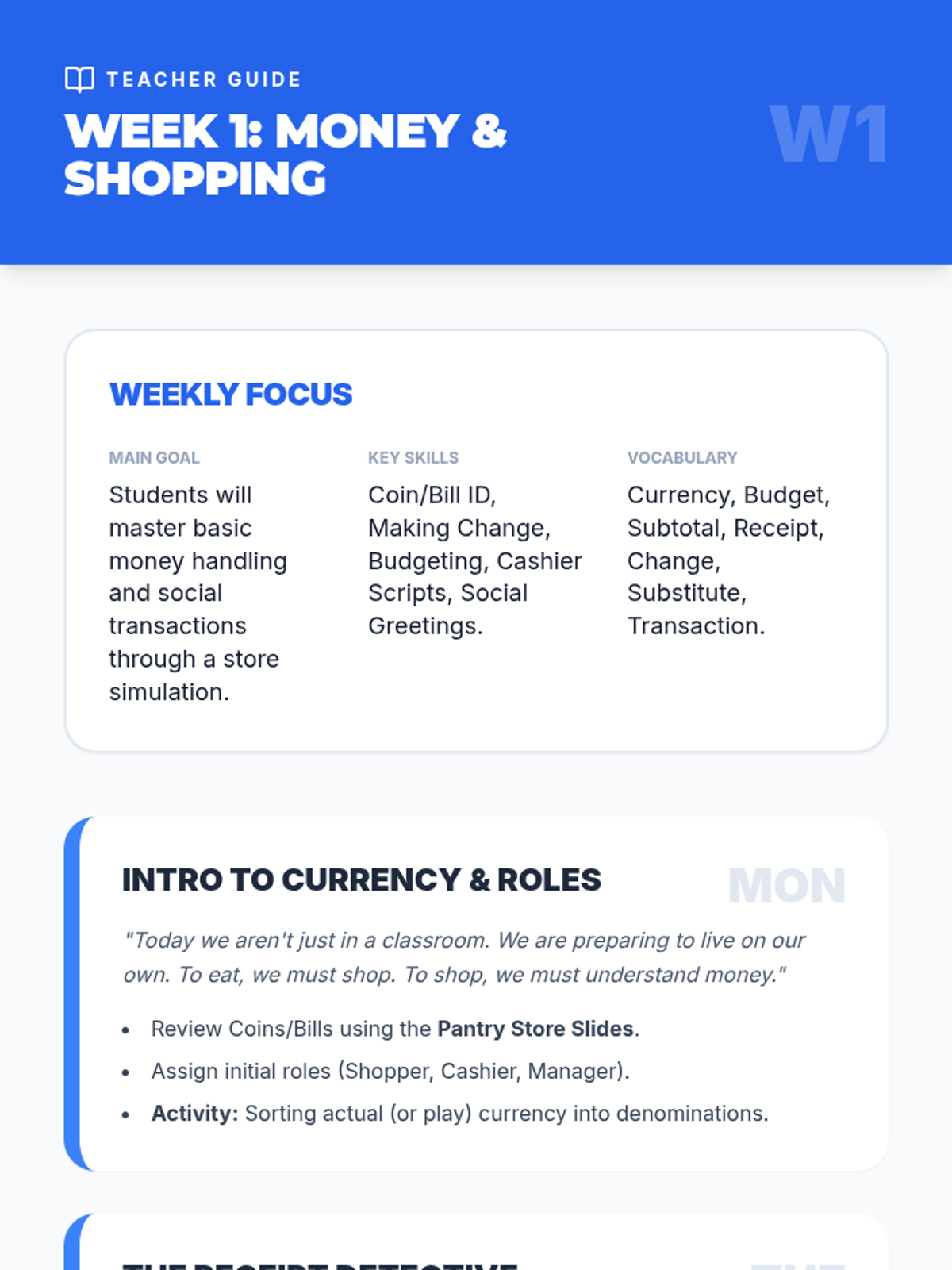
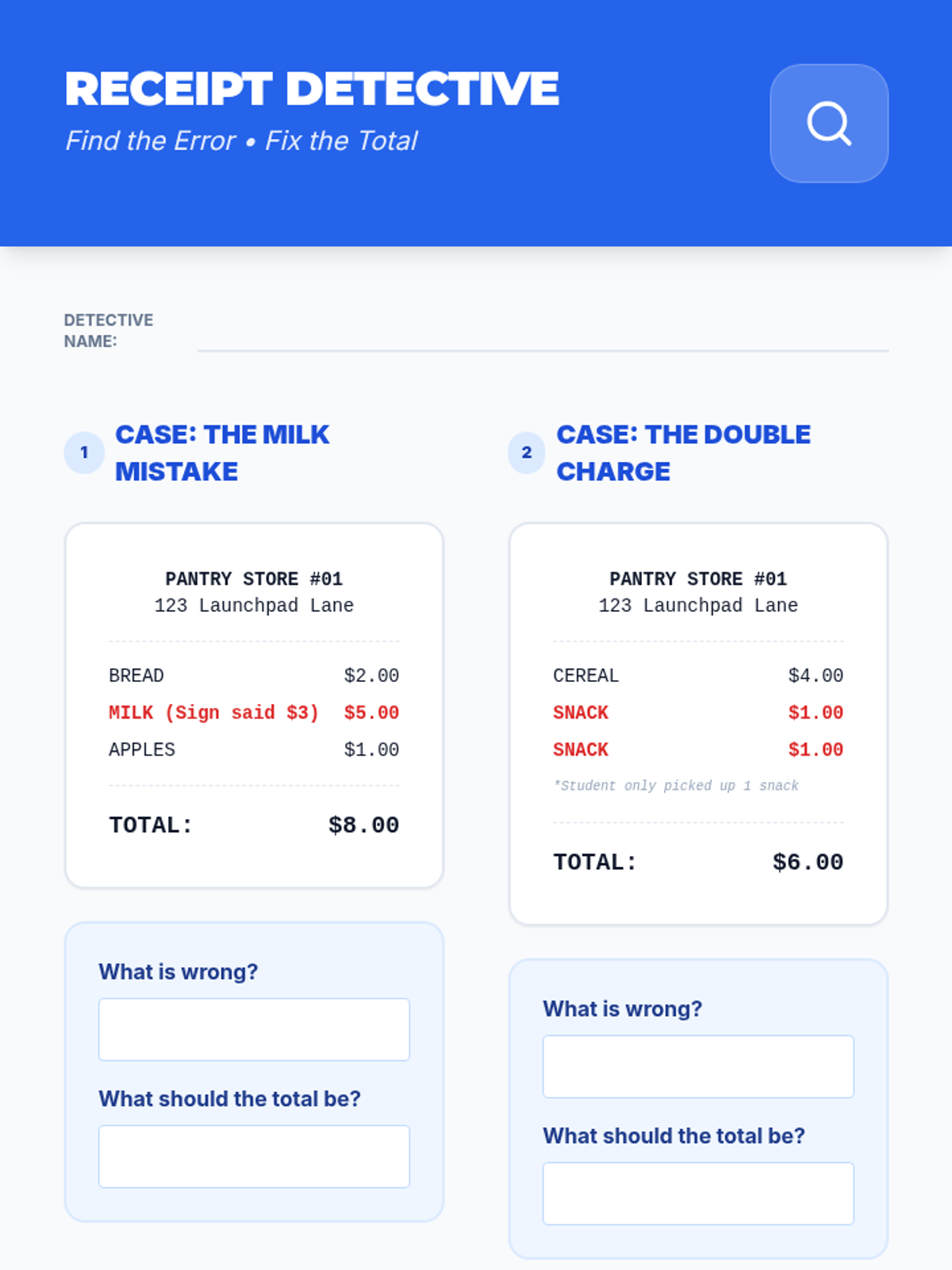
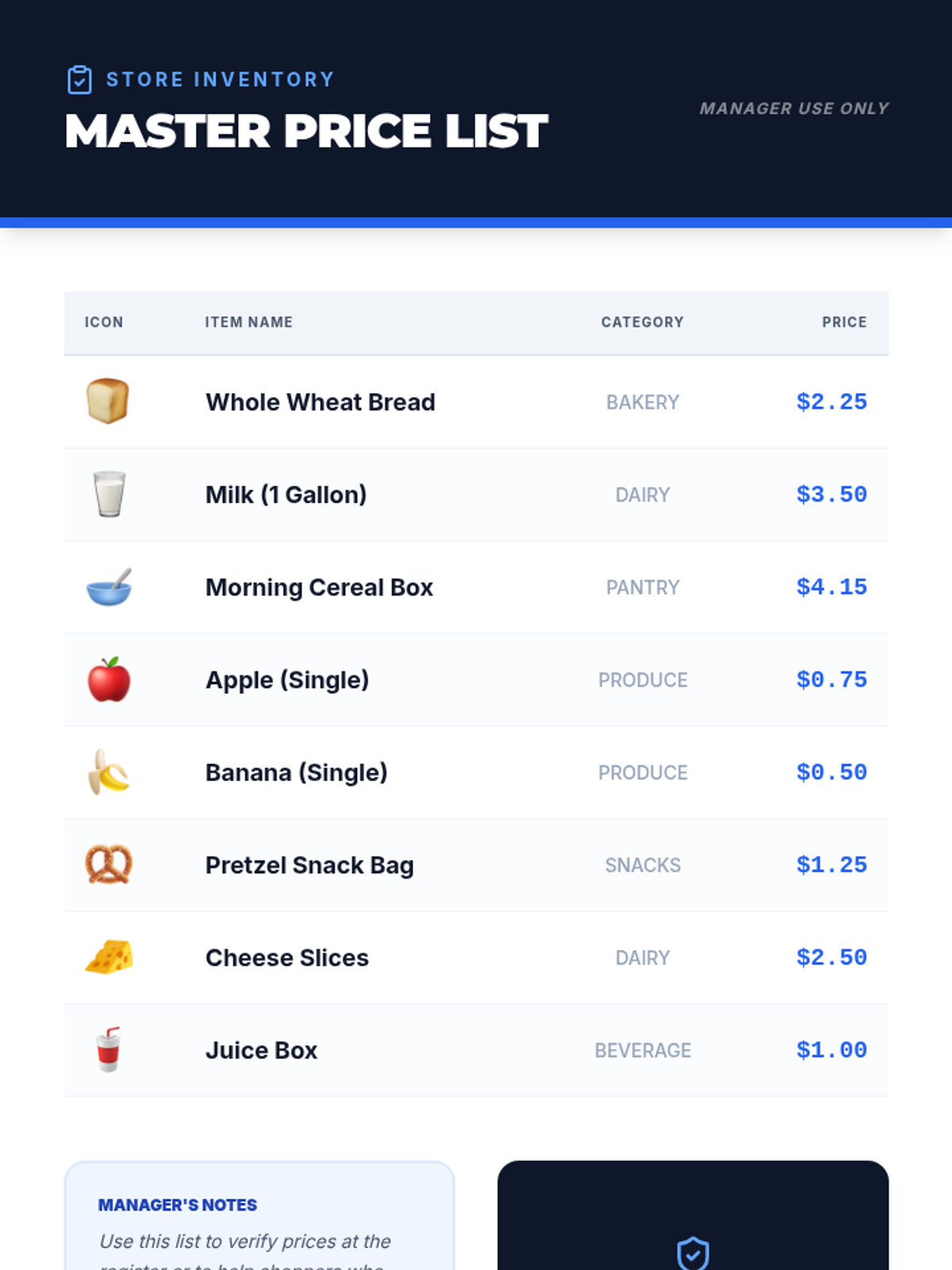
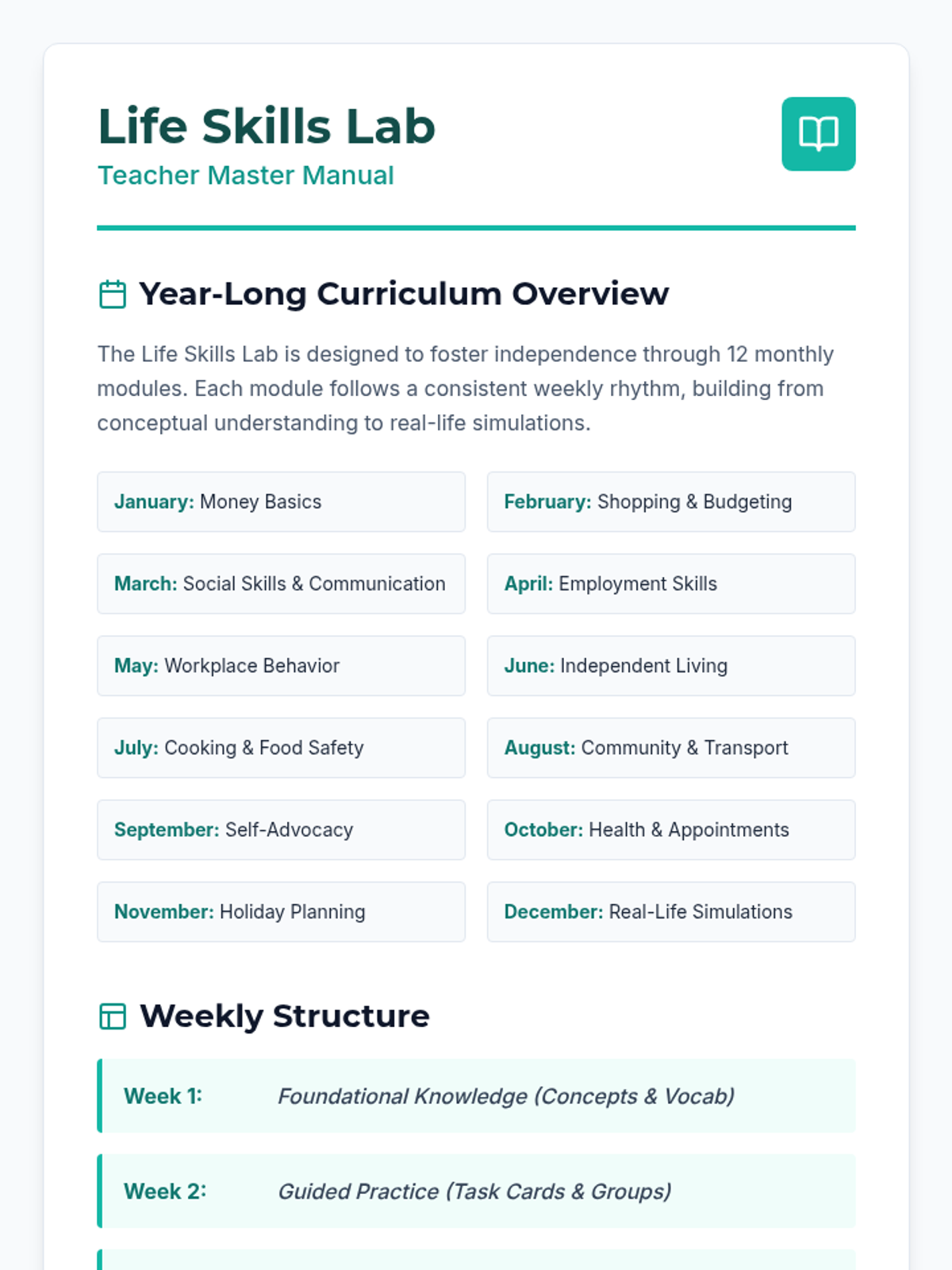
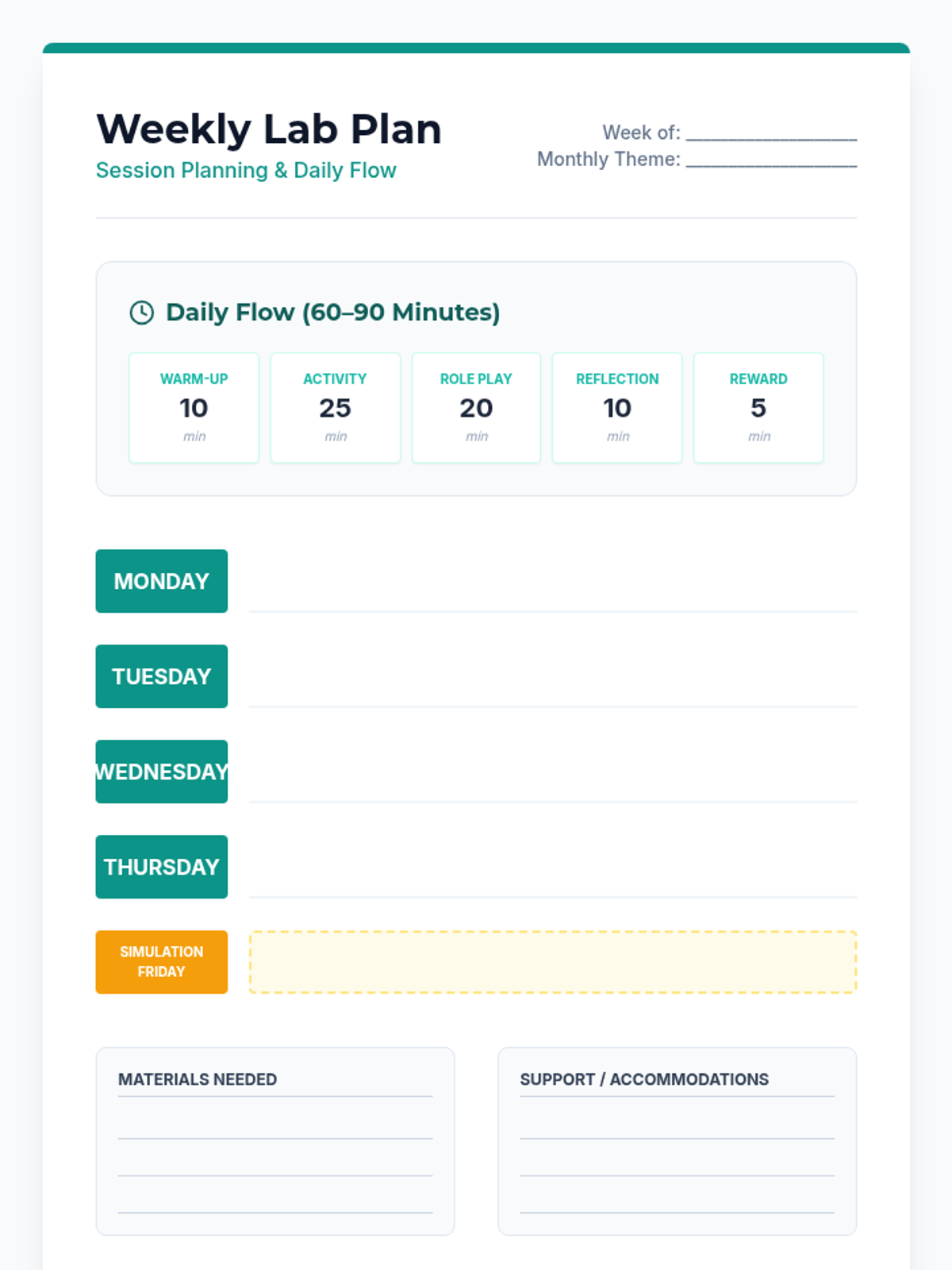
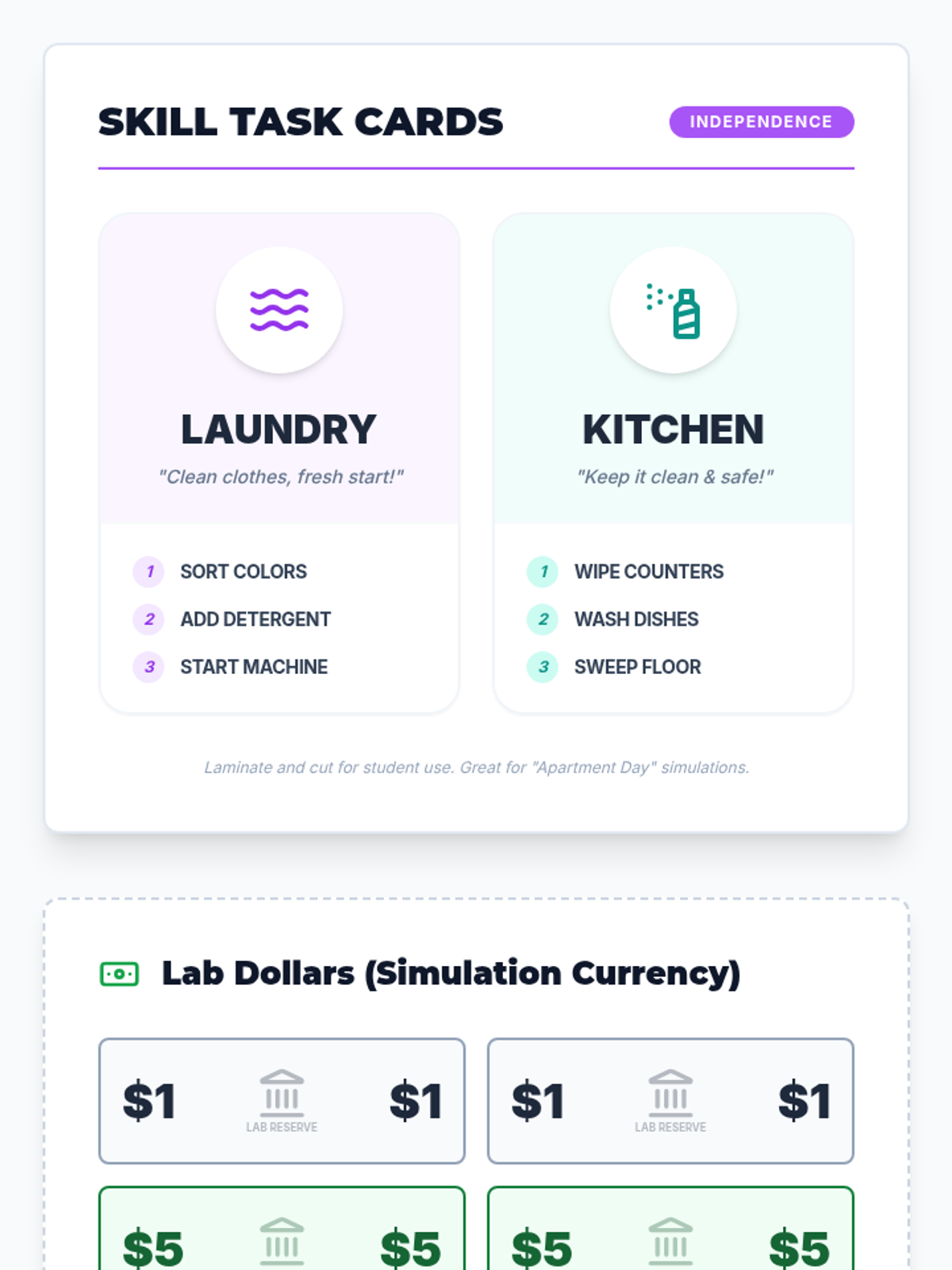
A full-month curriculum focused on developing independence through real-world simulations, role-playing, and practical application of functional life skills.
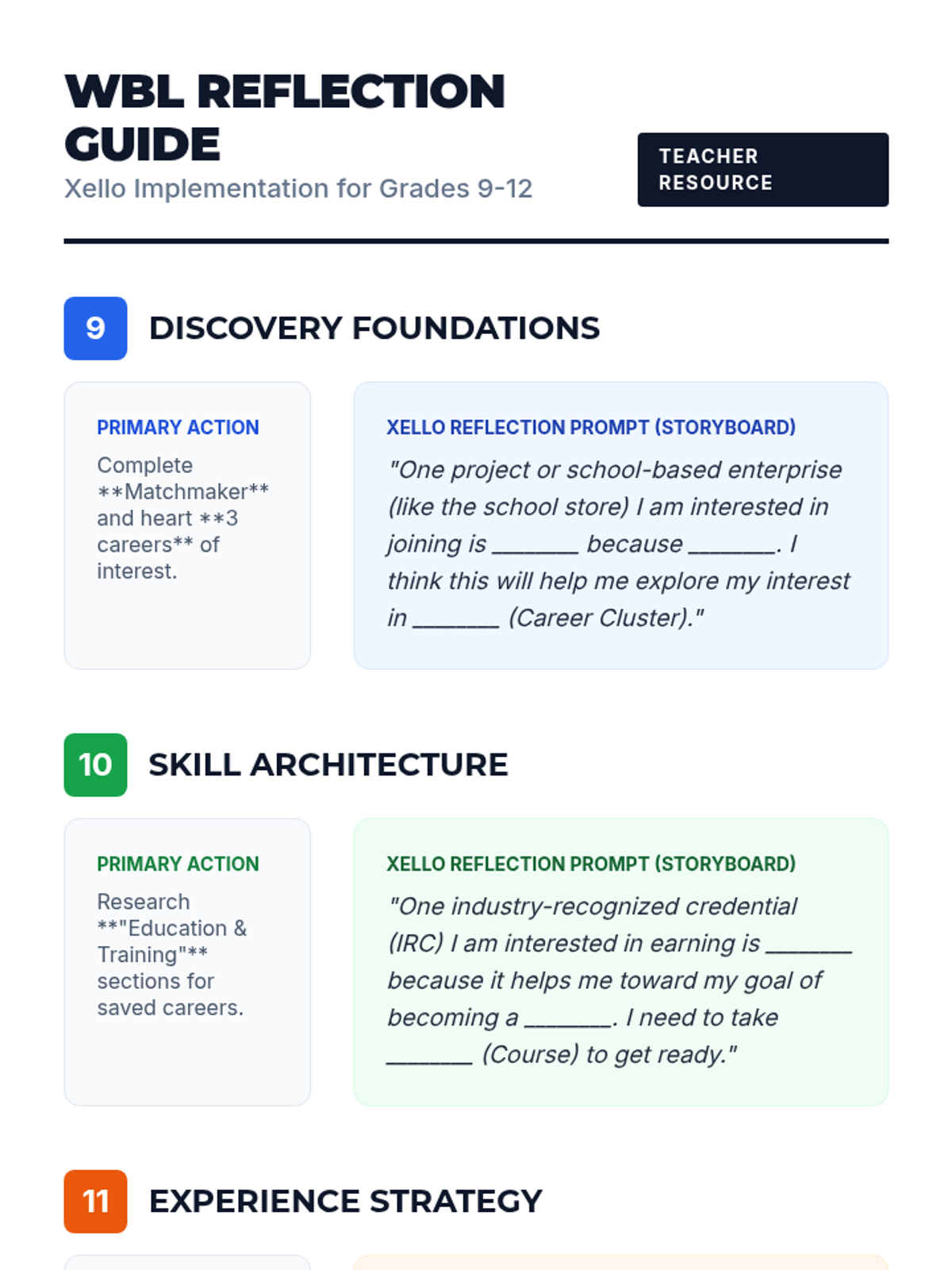
A four-part advisory sequence for grades 9-12 focused on scaffolding Work-Based Learning (WBL) concepts from basic awareness to post-secondary execution. Topics include project-based learning, internships, apprenticeships, and industry credentials.
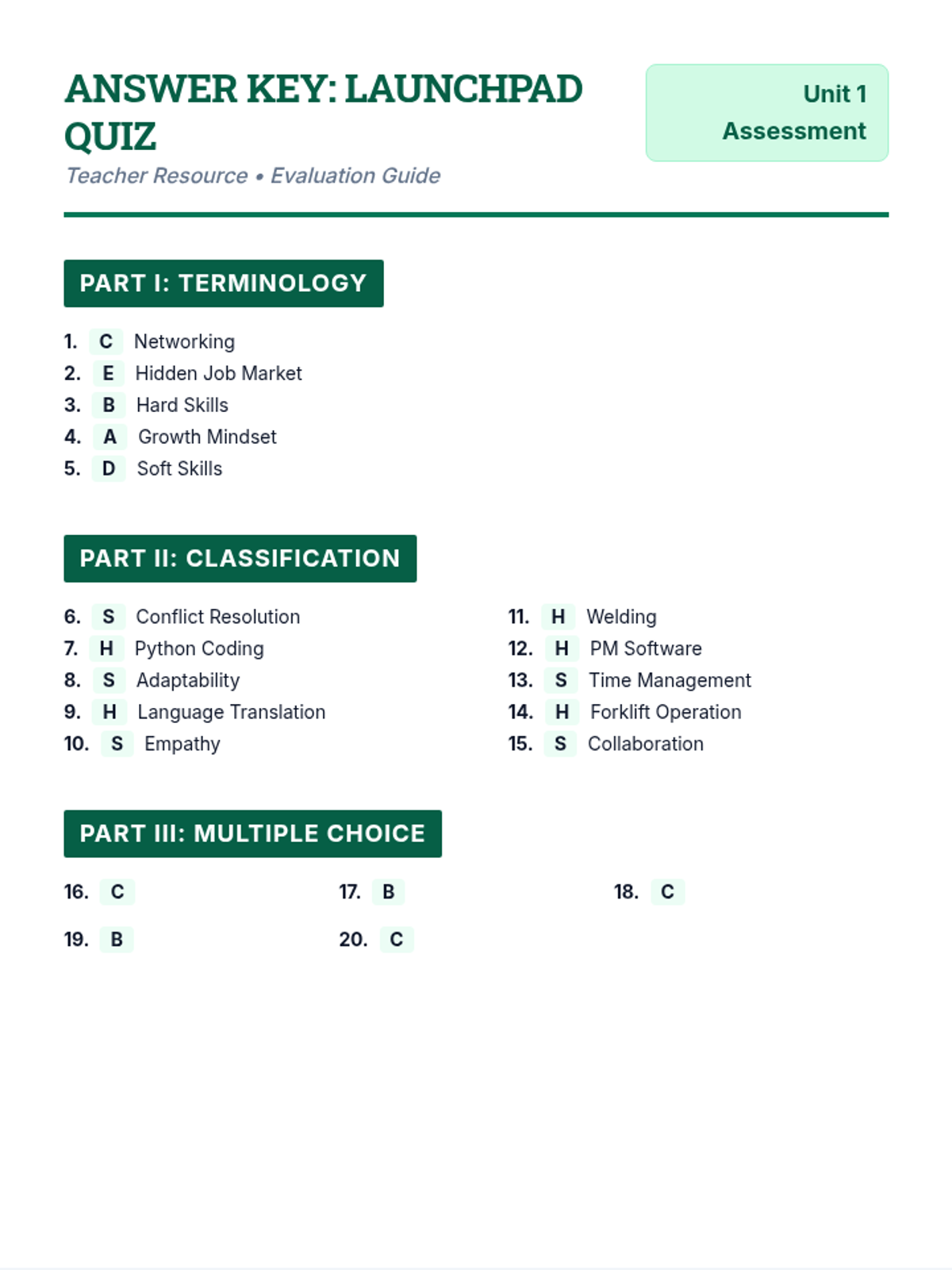
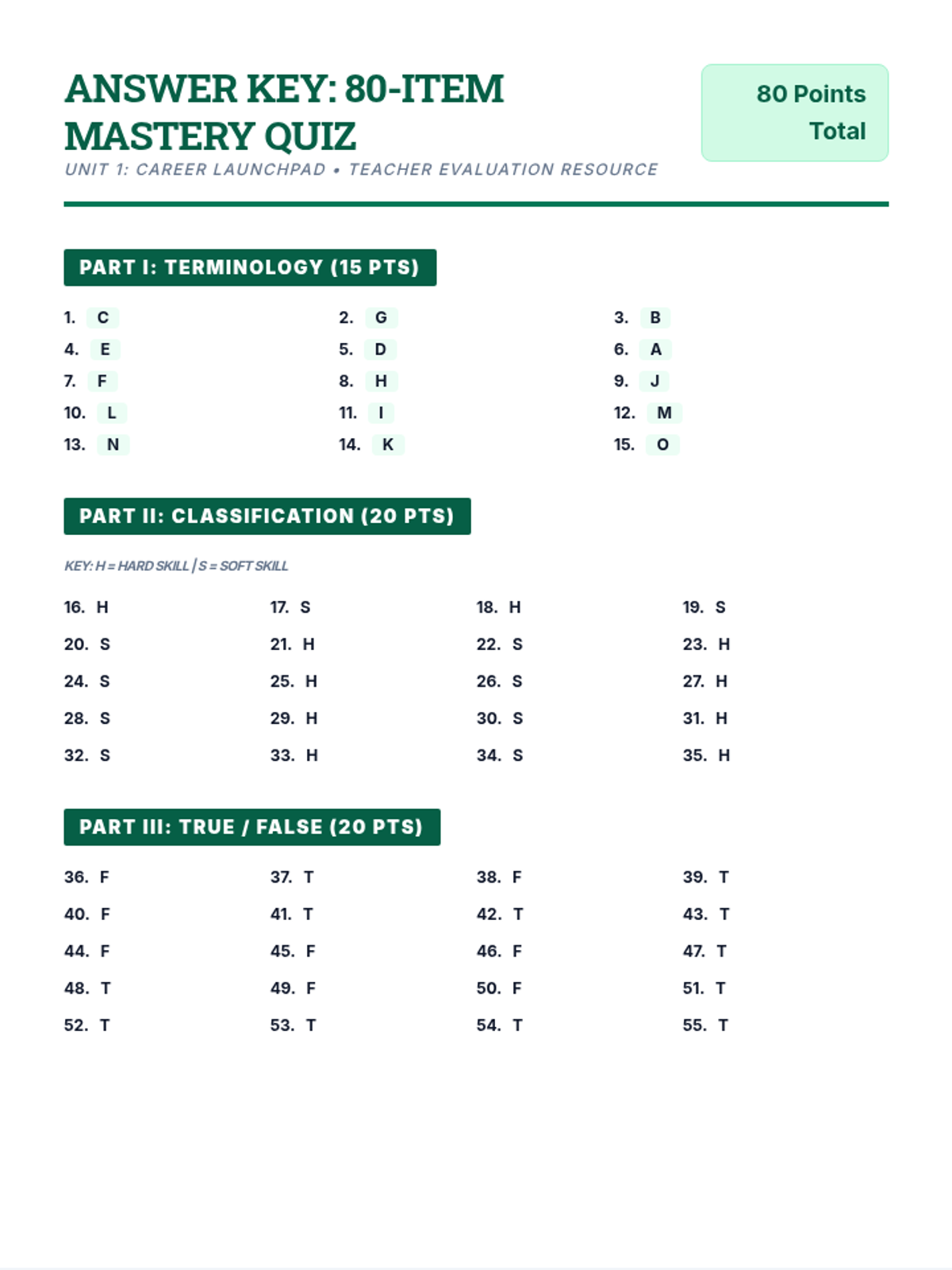
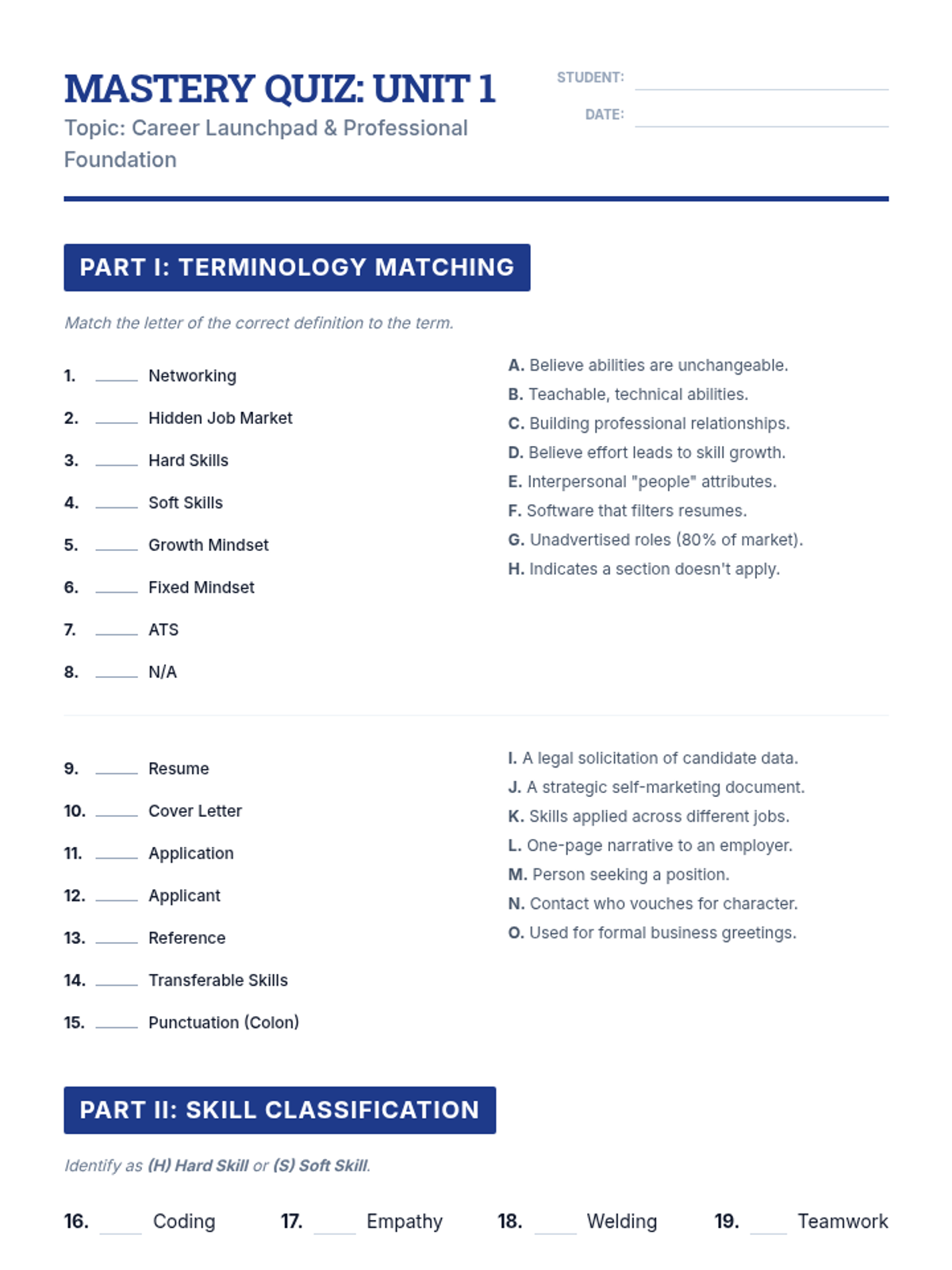
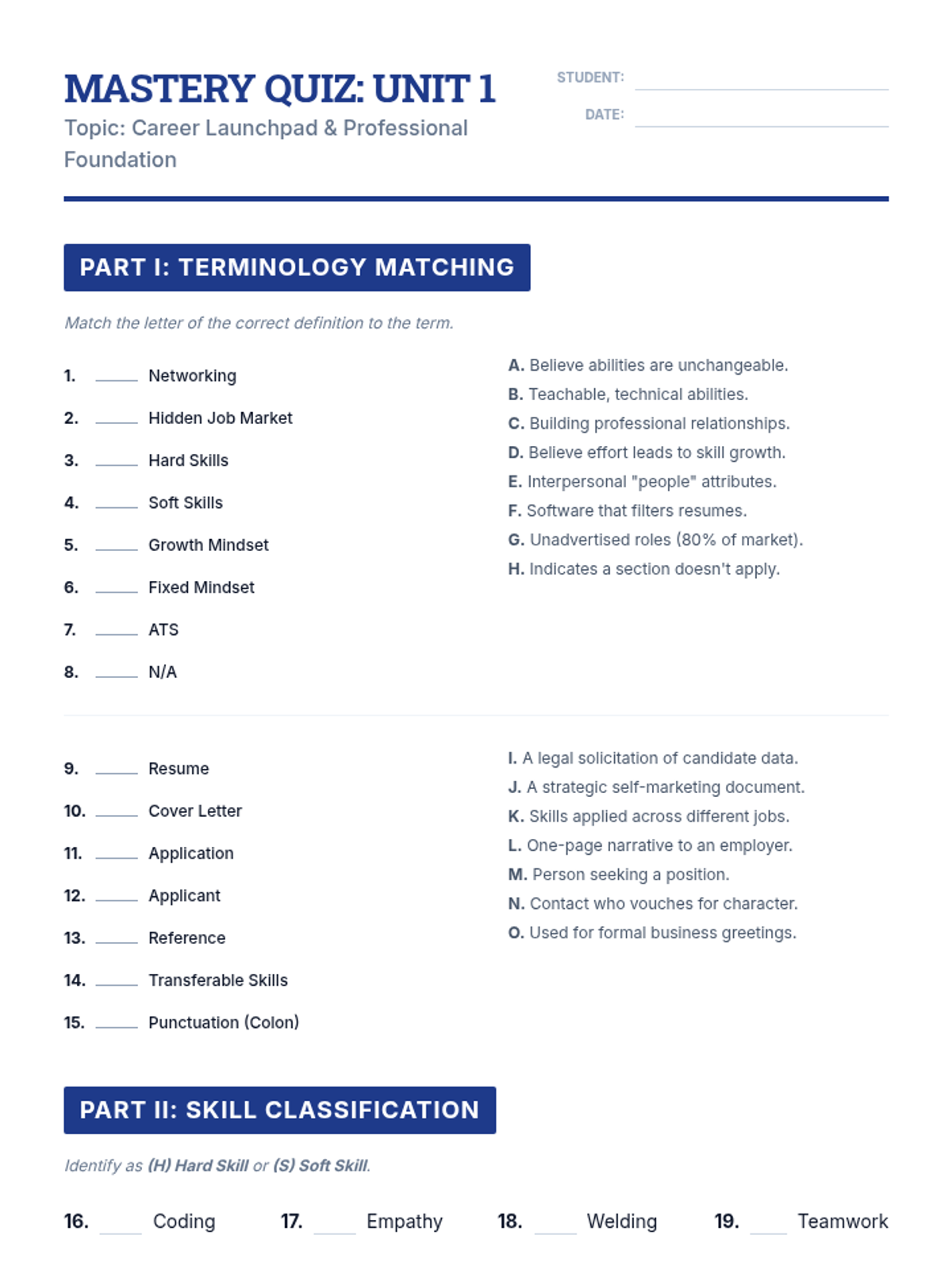
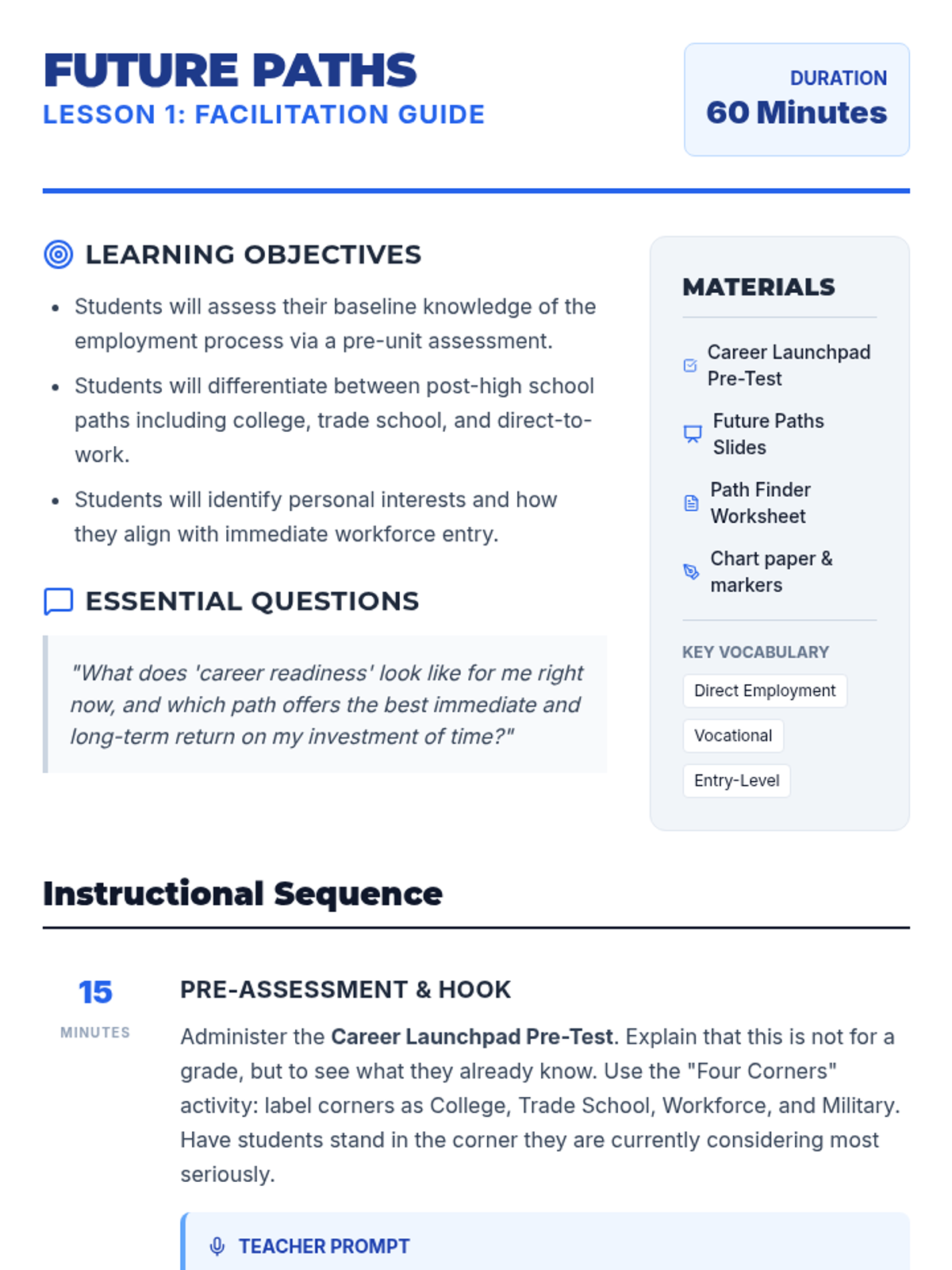
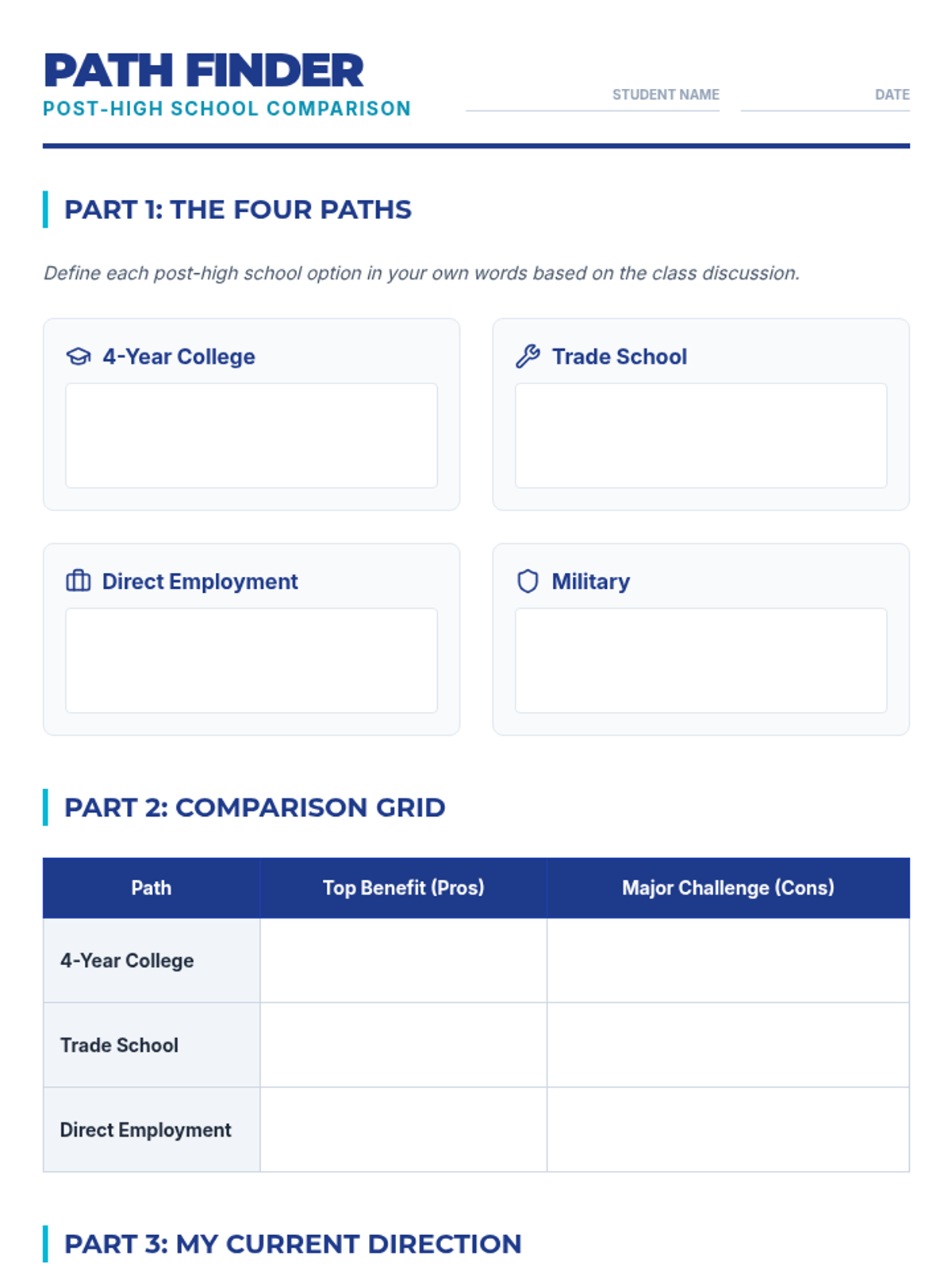
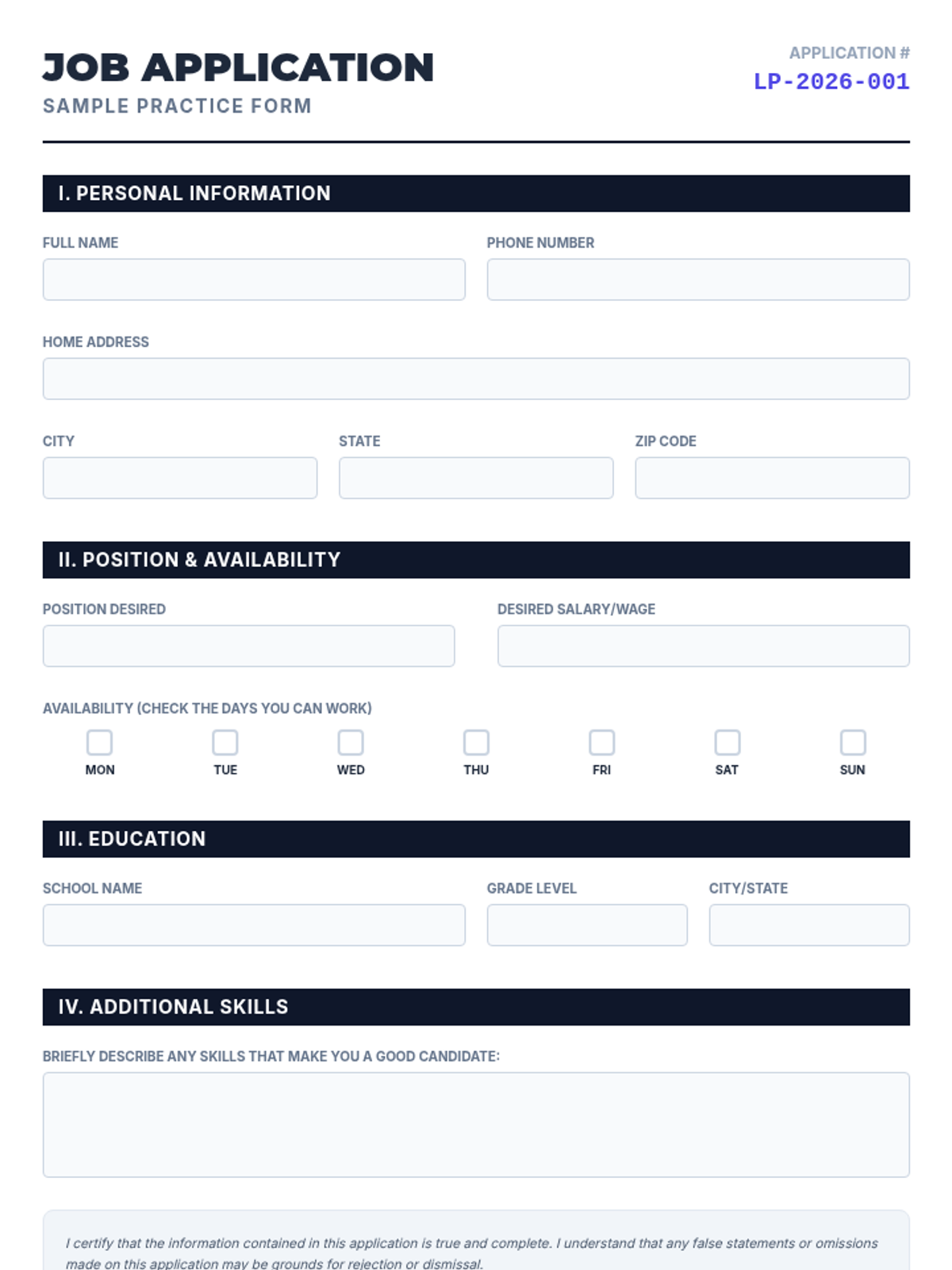
A comprehensive program designed to guide students through the essentials of career exploration, professional document preparation, and the job application process.
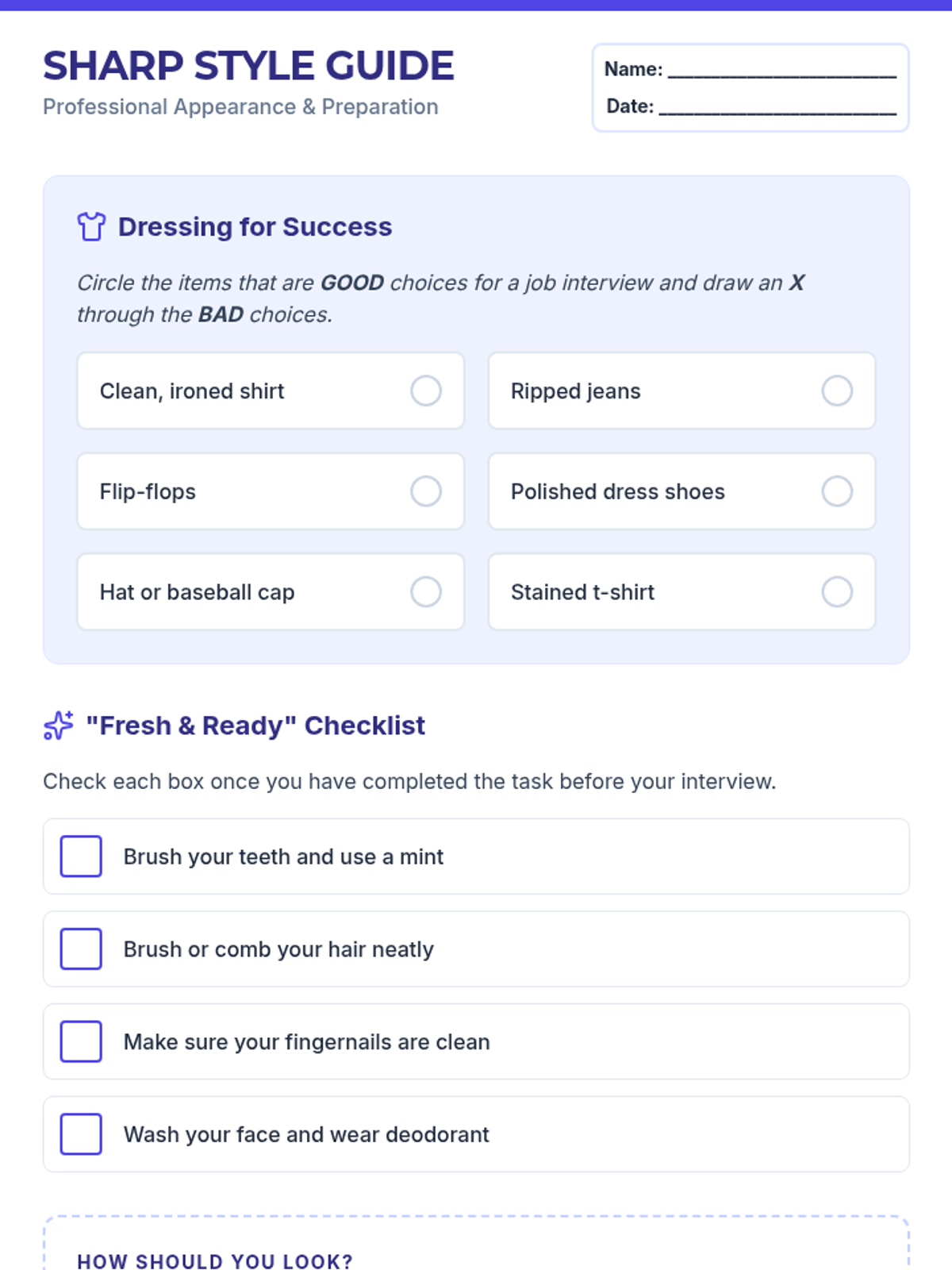
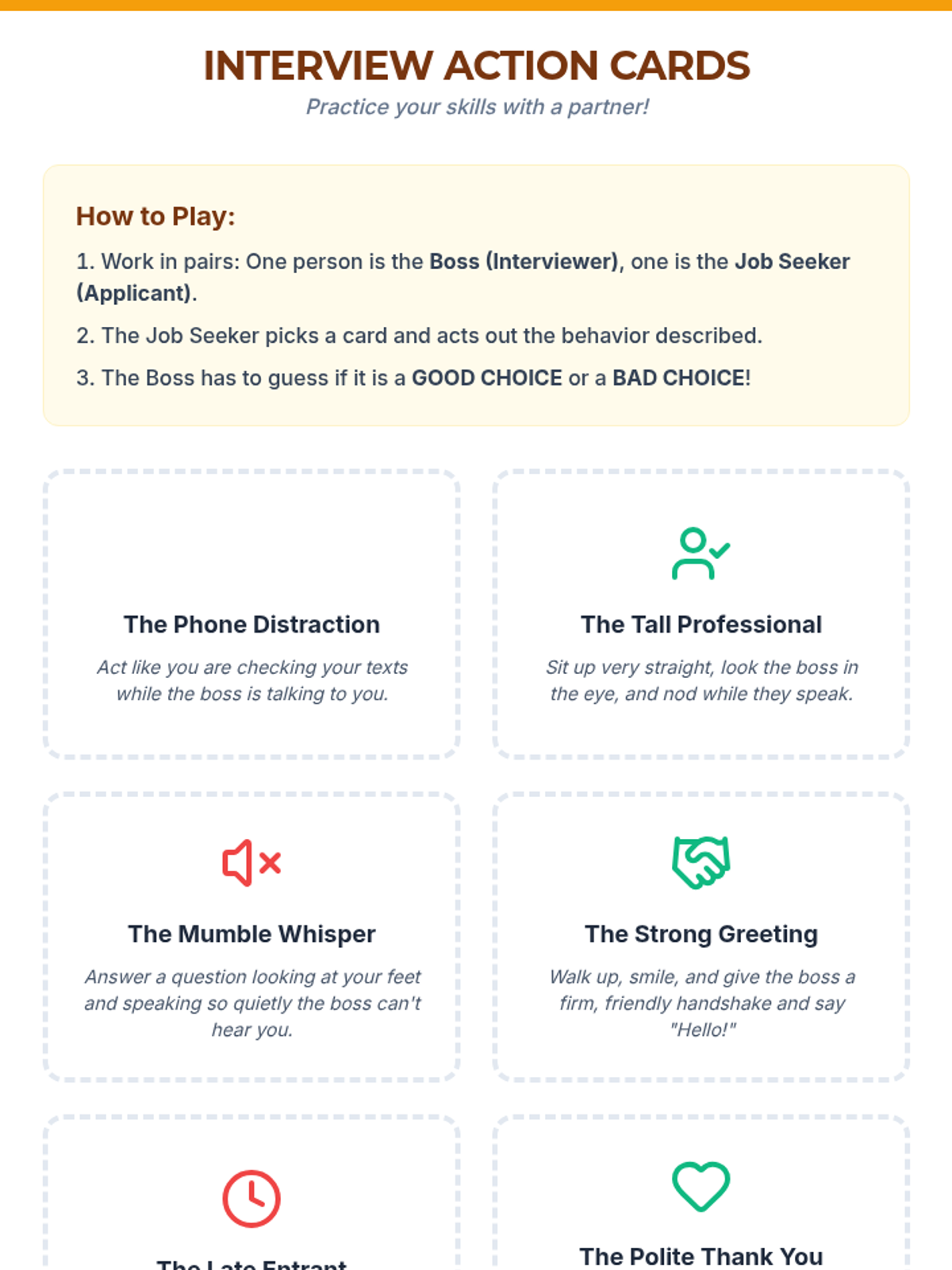
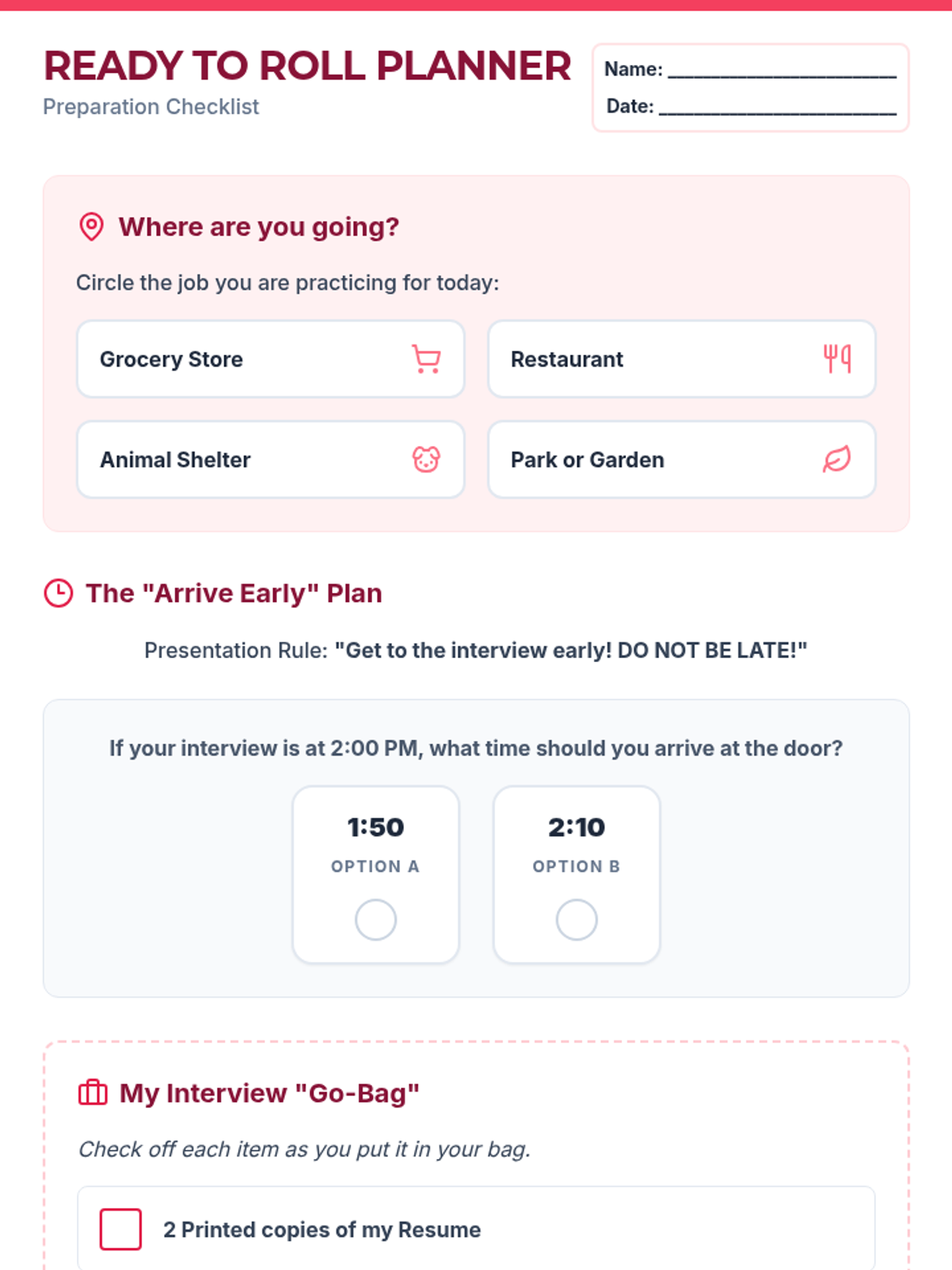
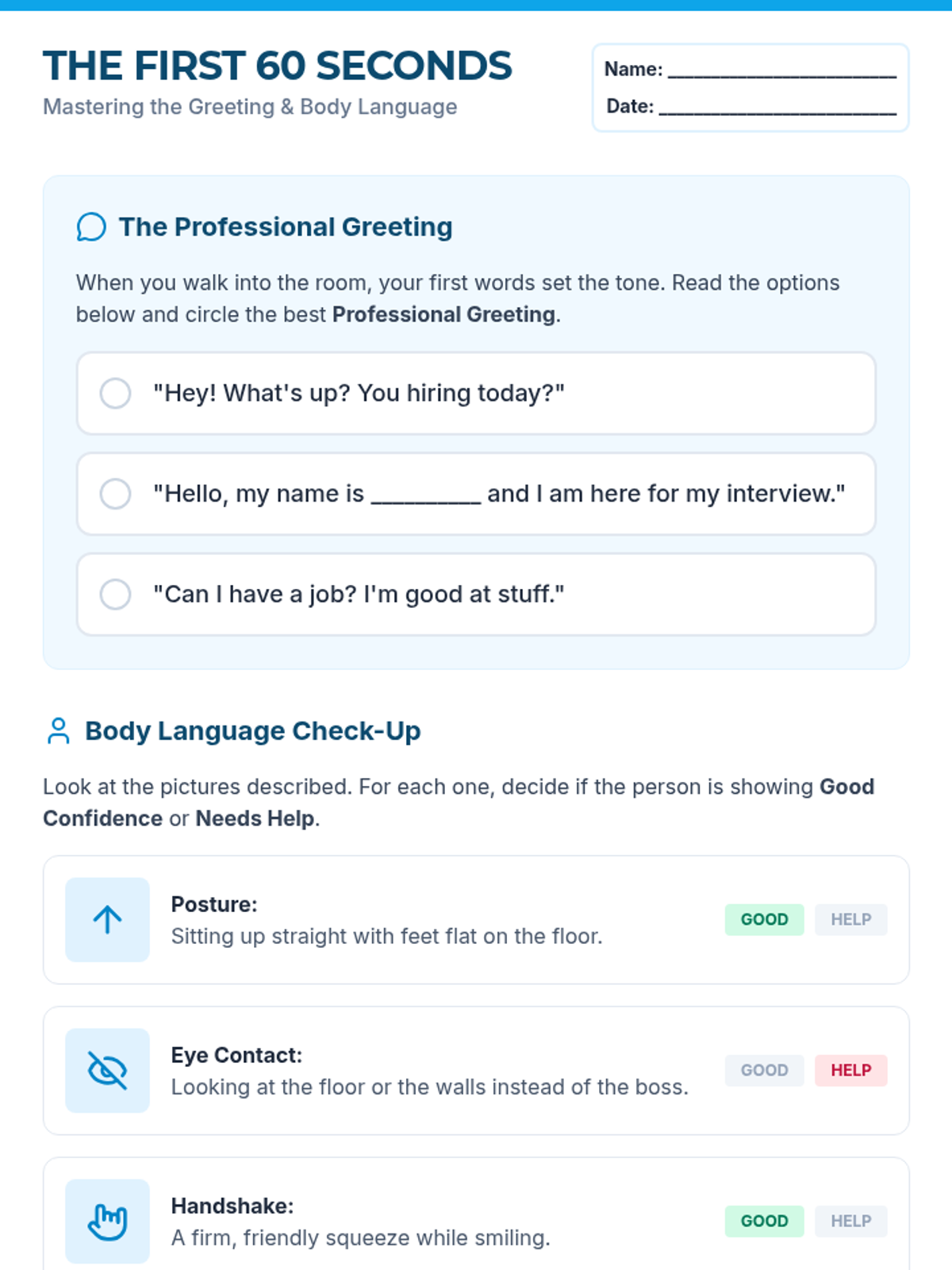
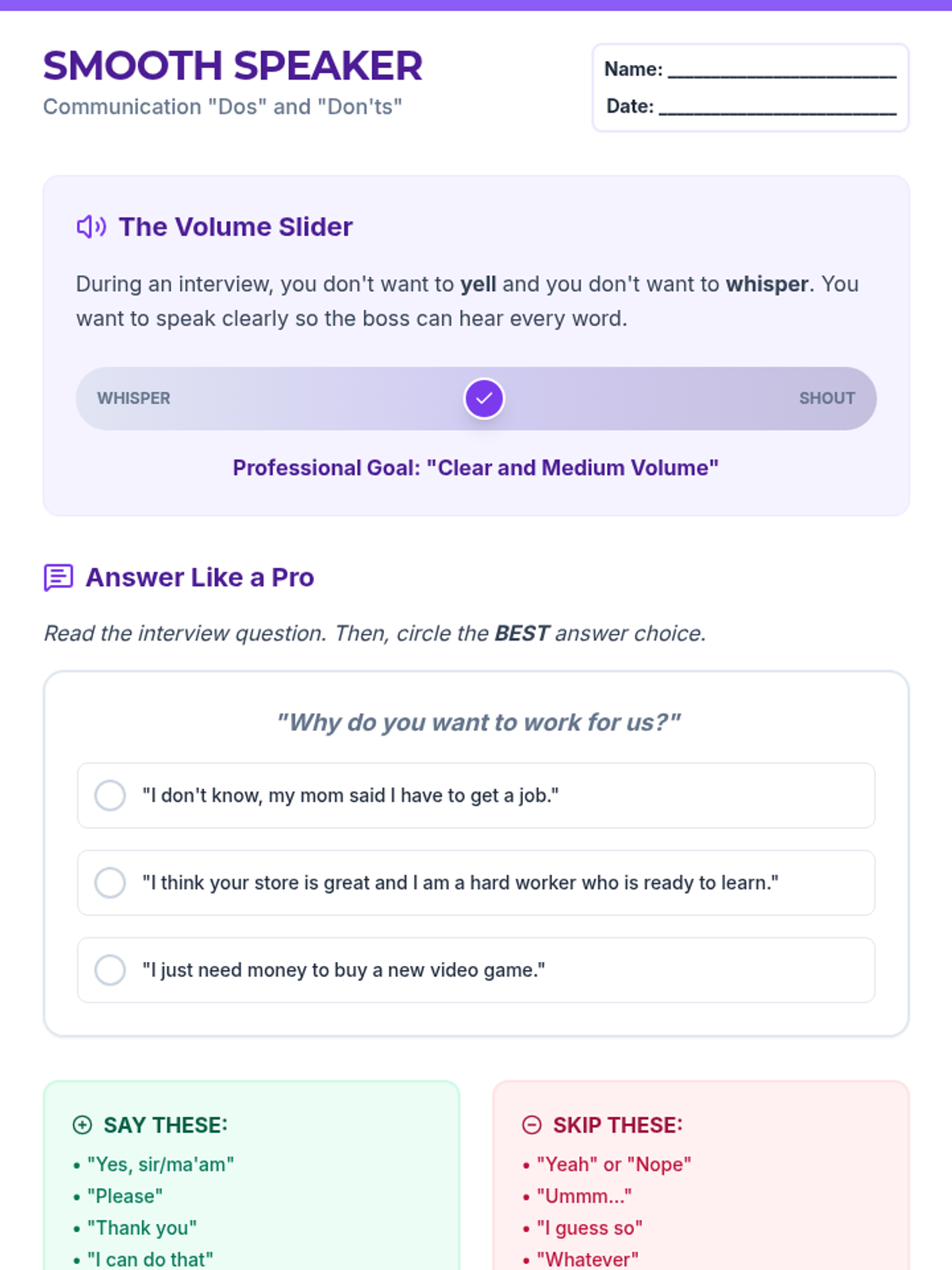
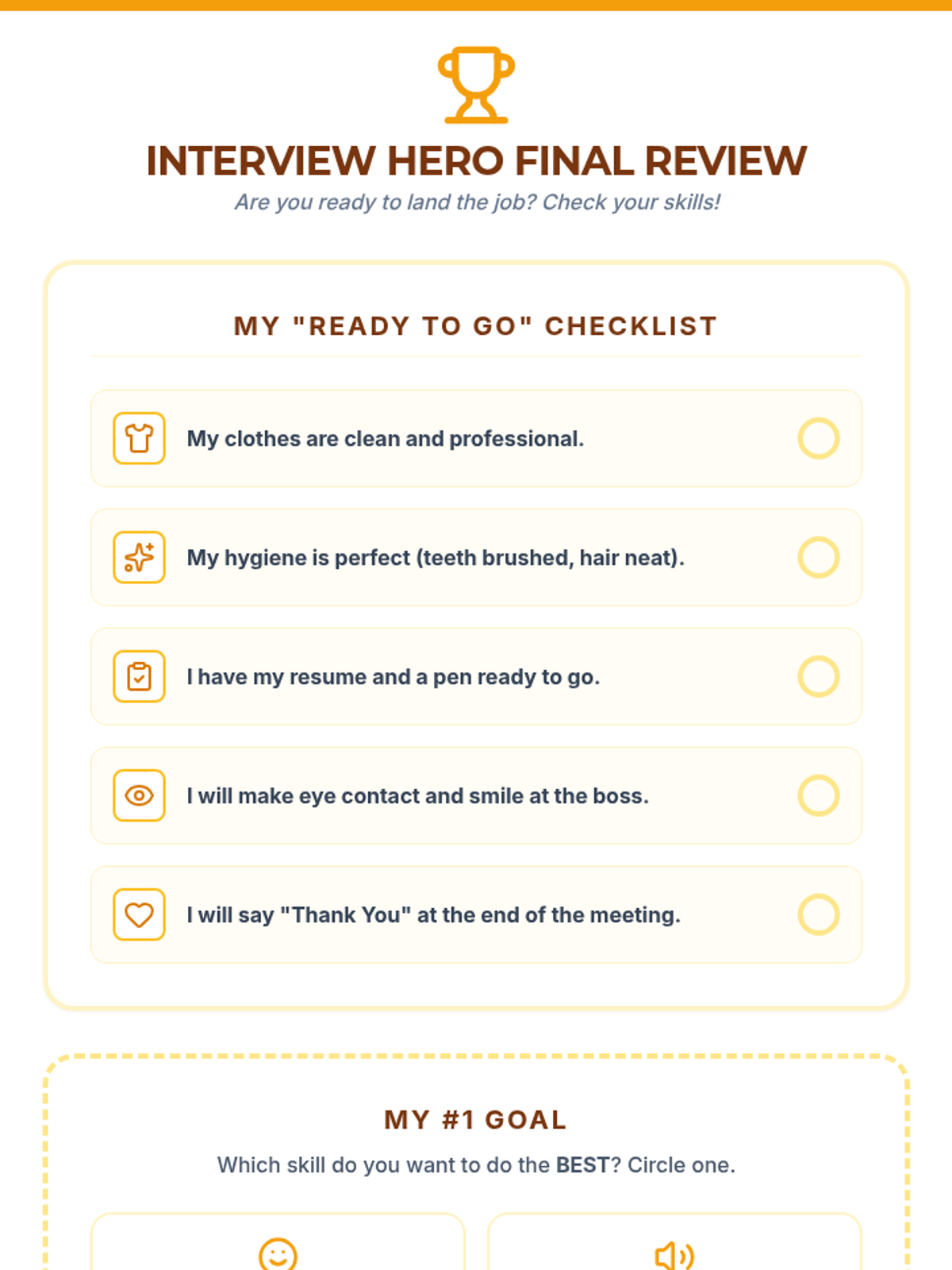
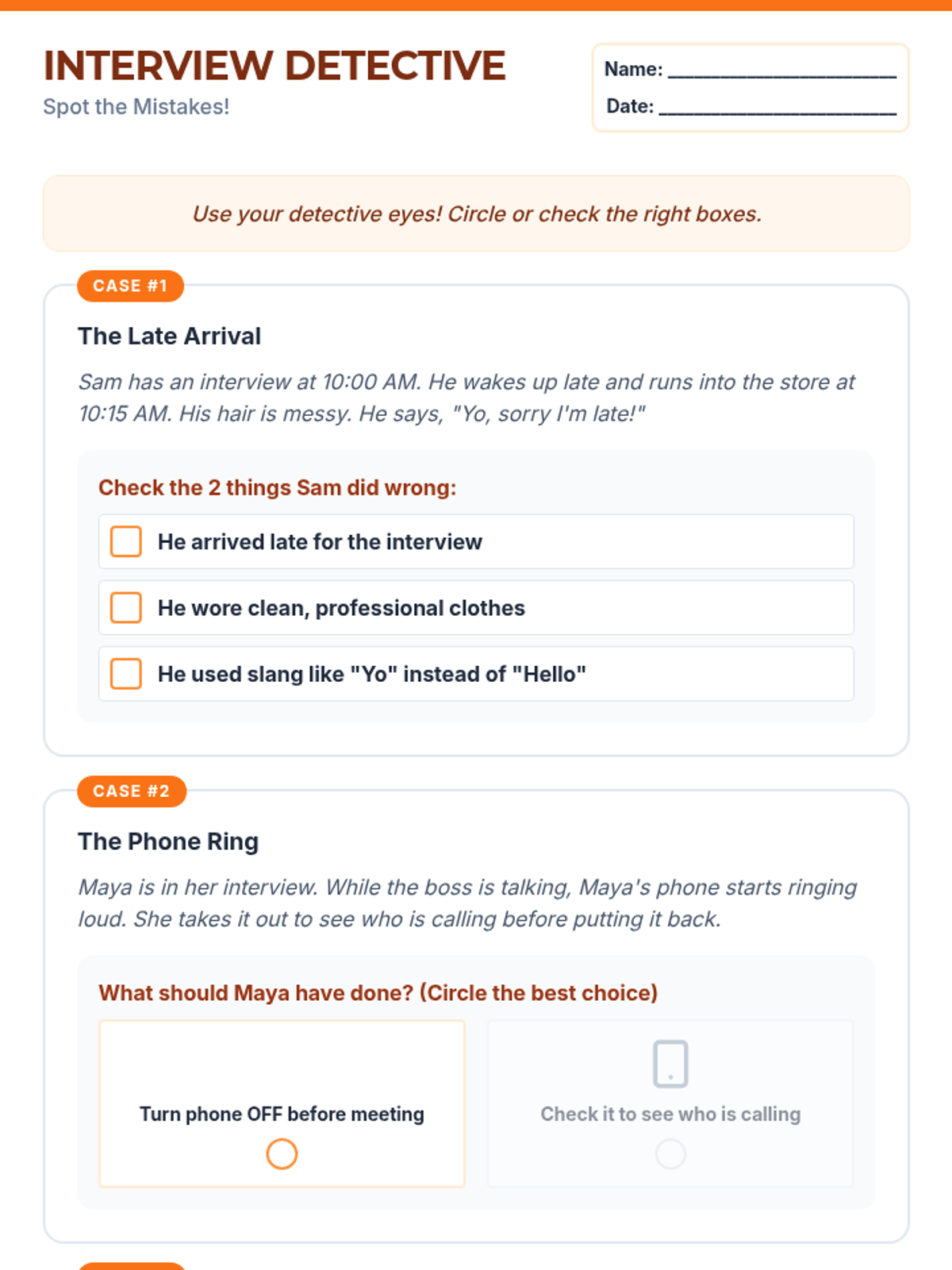
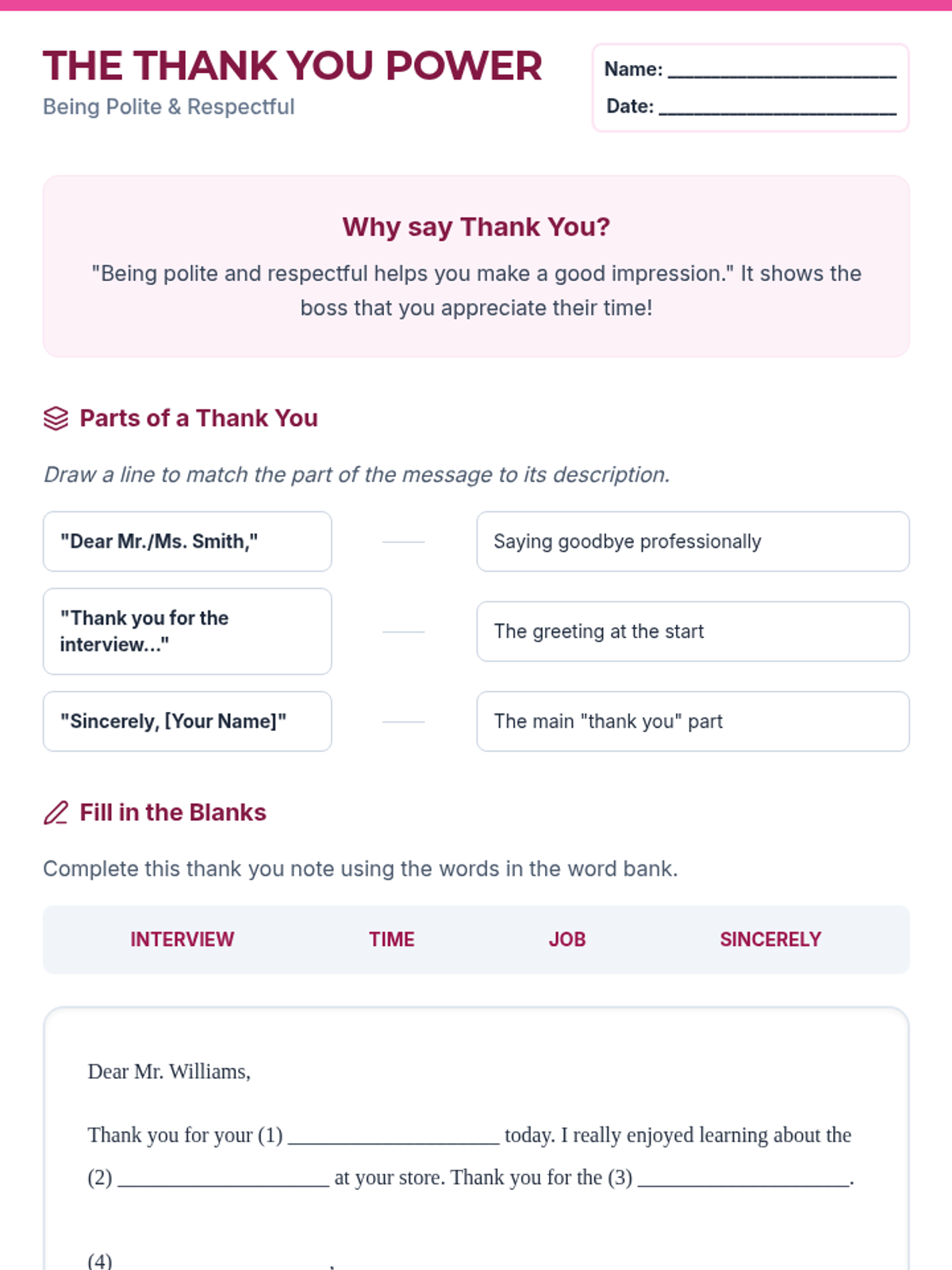
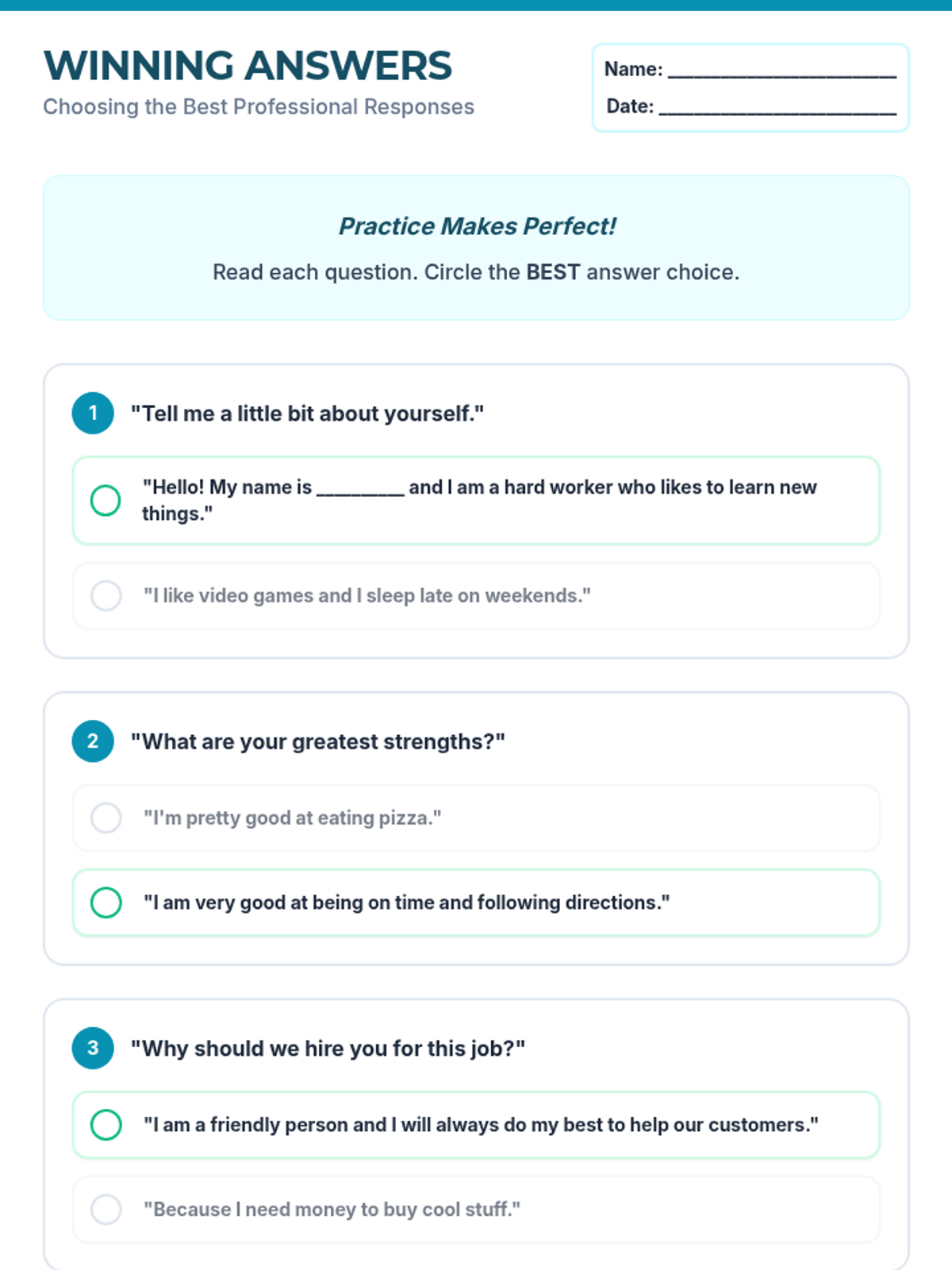
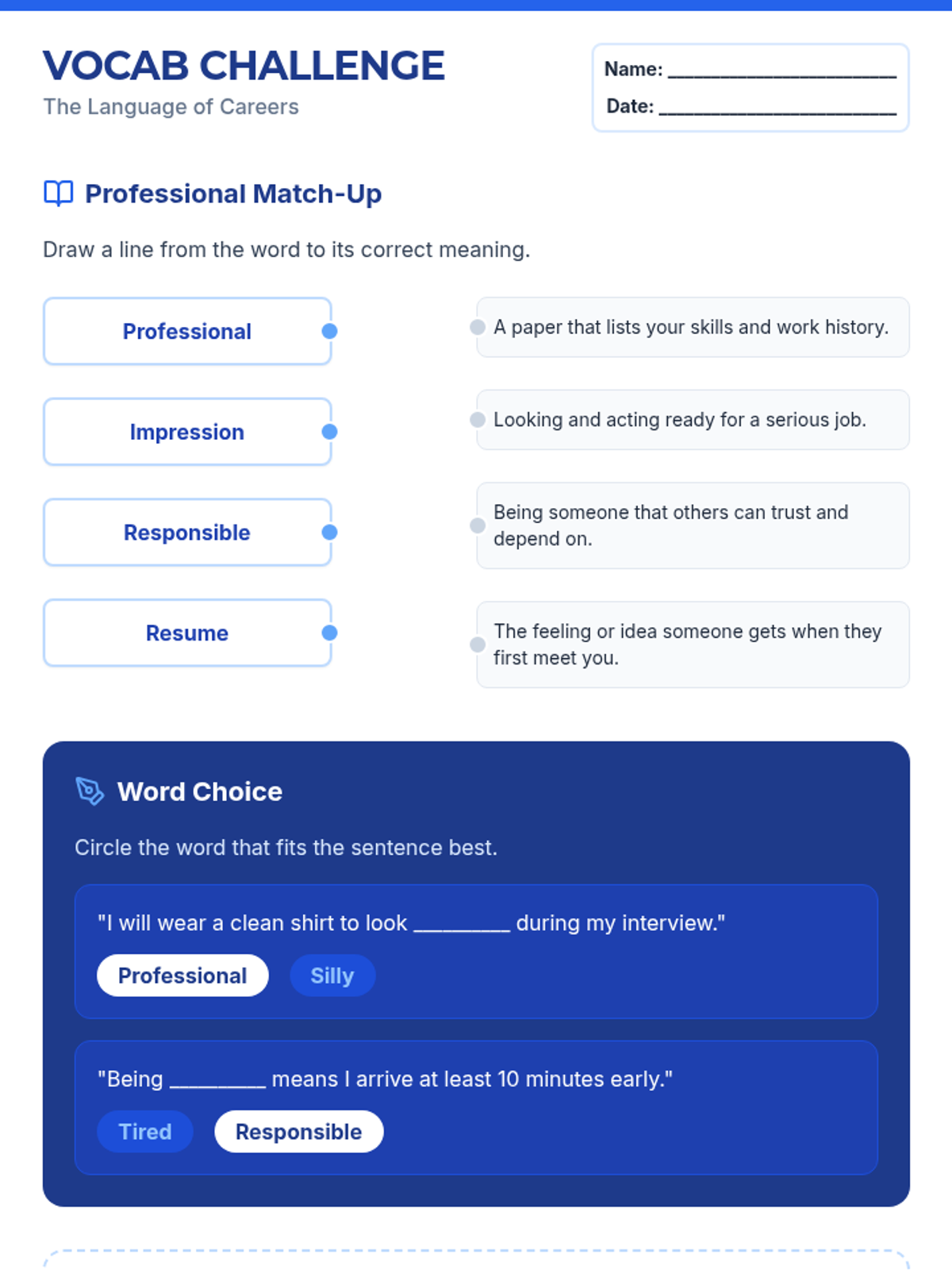
A comprehensive sequence focused on essential job readiness skills, covering everything from professional appearance to effective communication and polite follow-up.
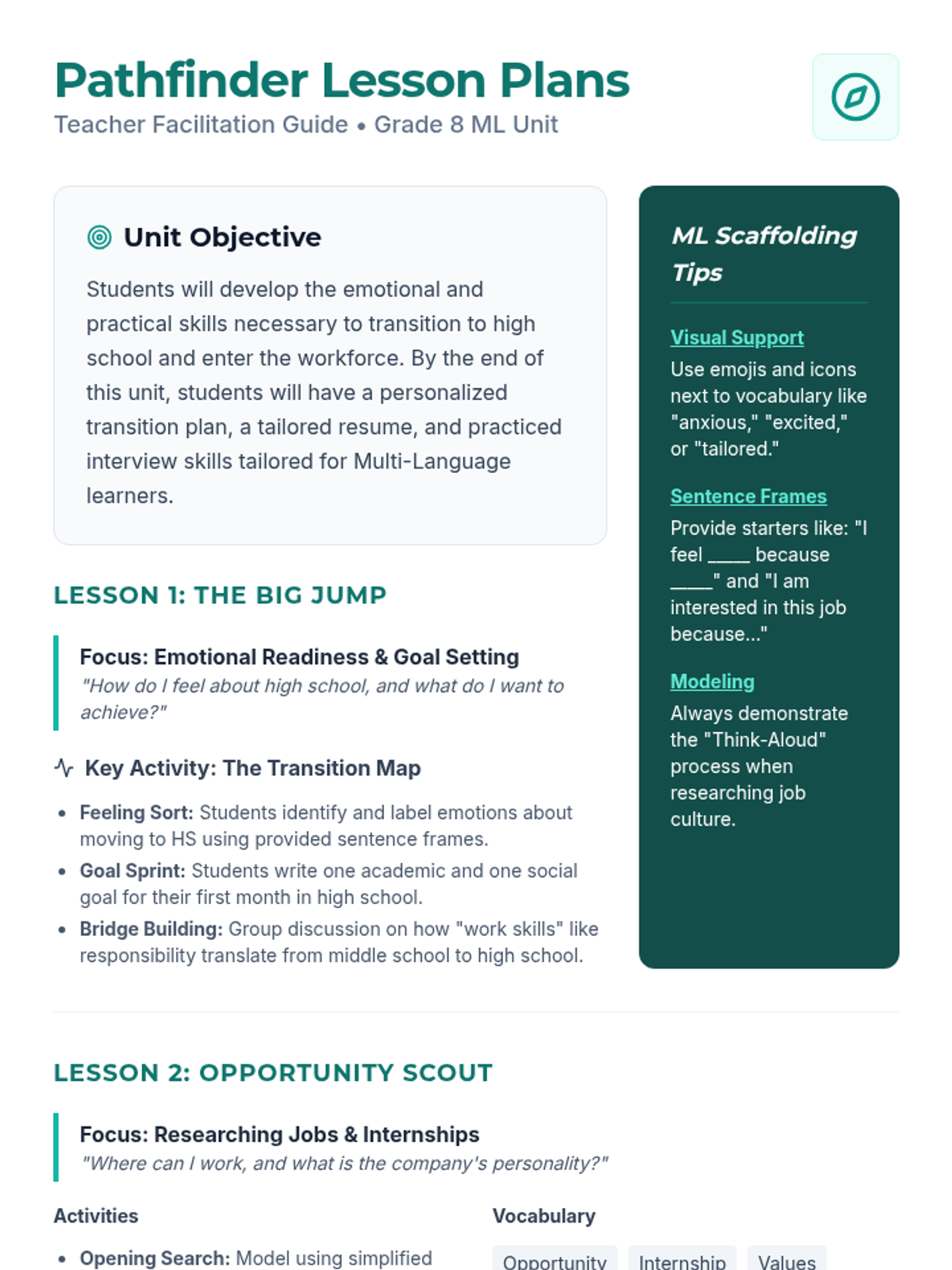
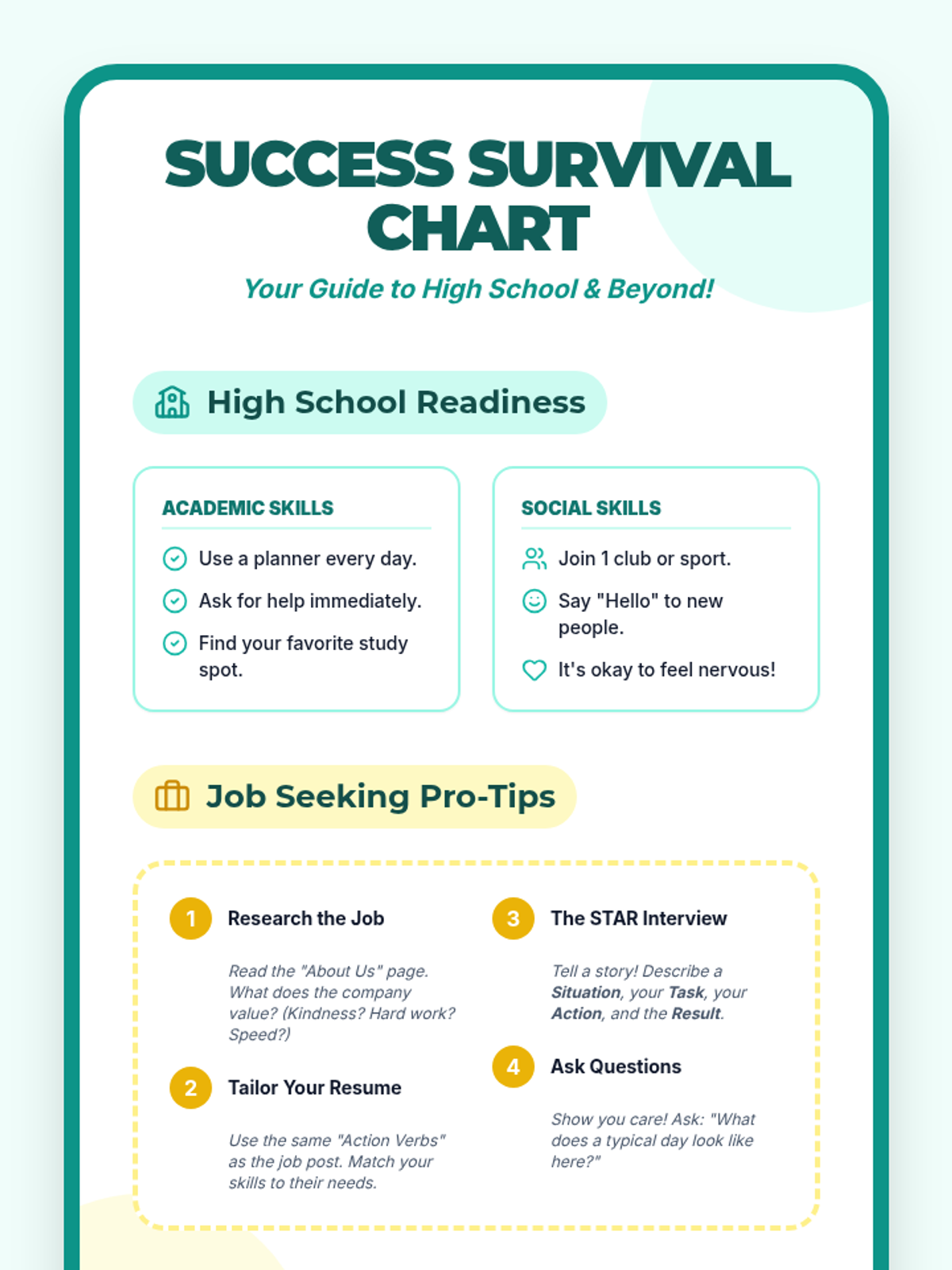
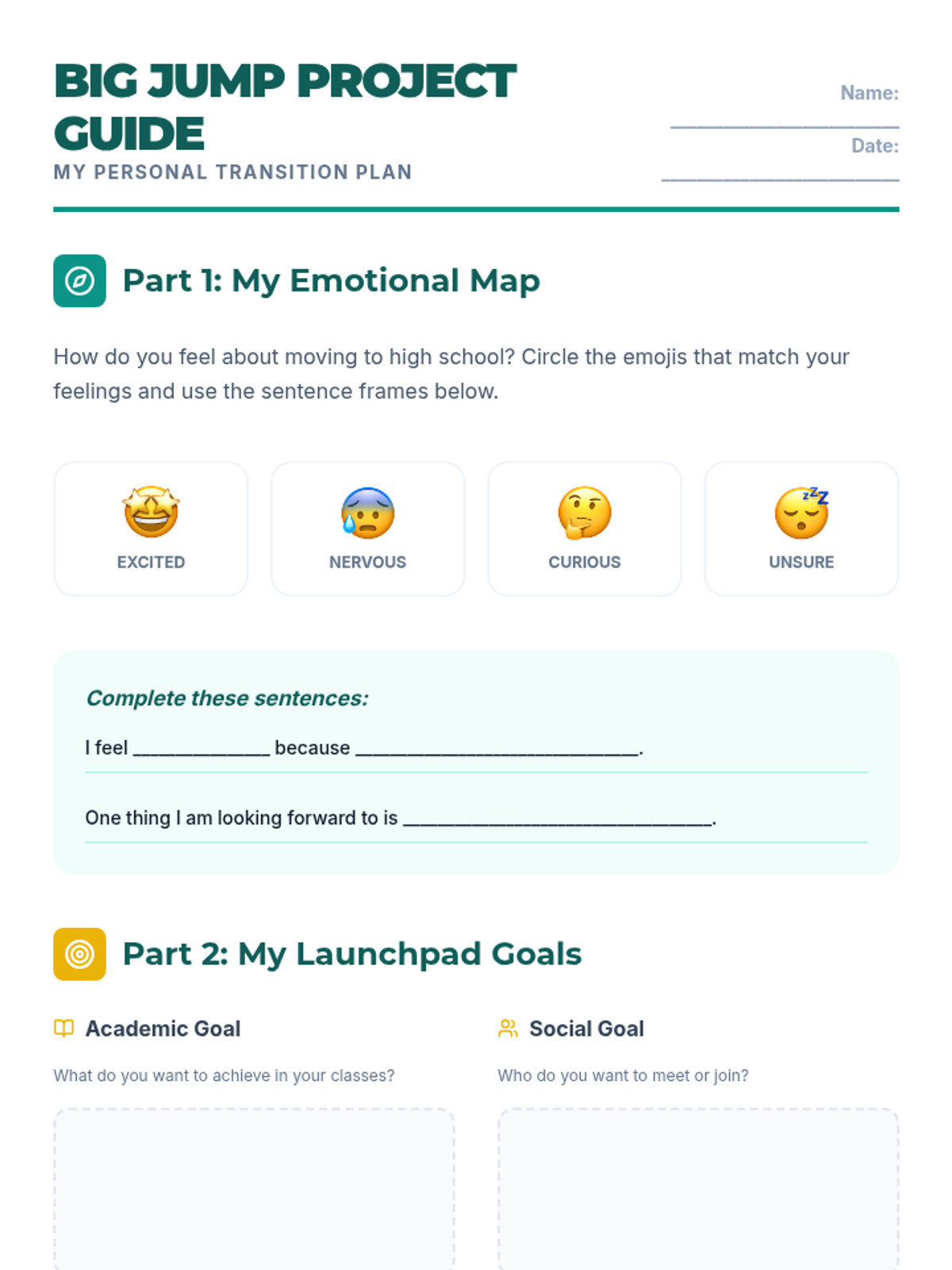
A comprehensive unit designed for 8th-grade Multi-Language learners transitioning to high school, focusing on emotional readiness, job research, application skills, and interview techniques.
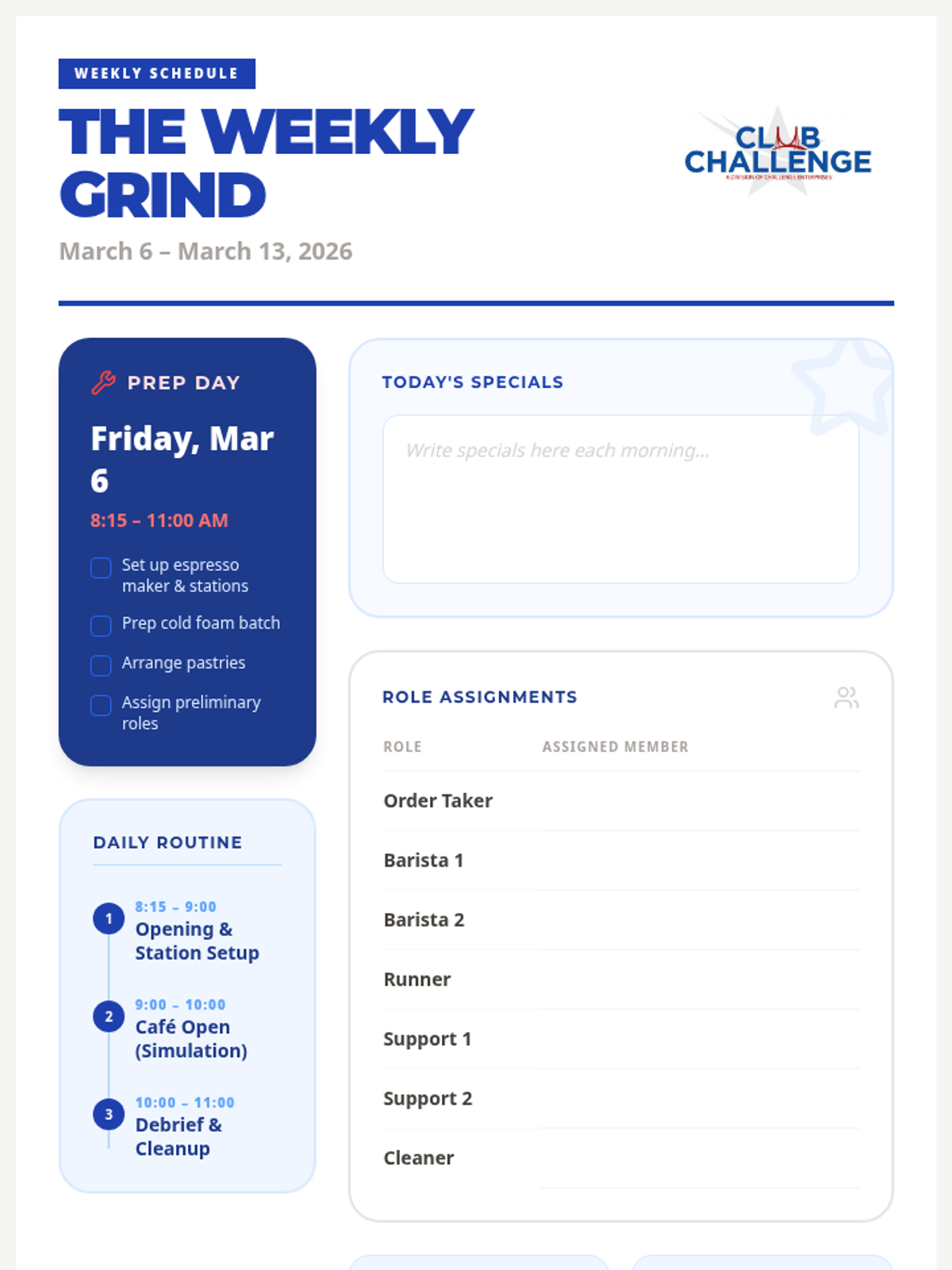
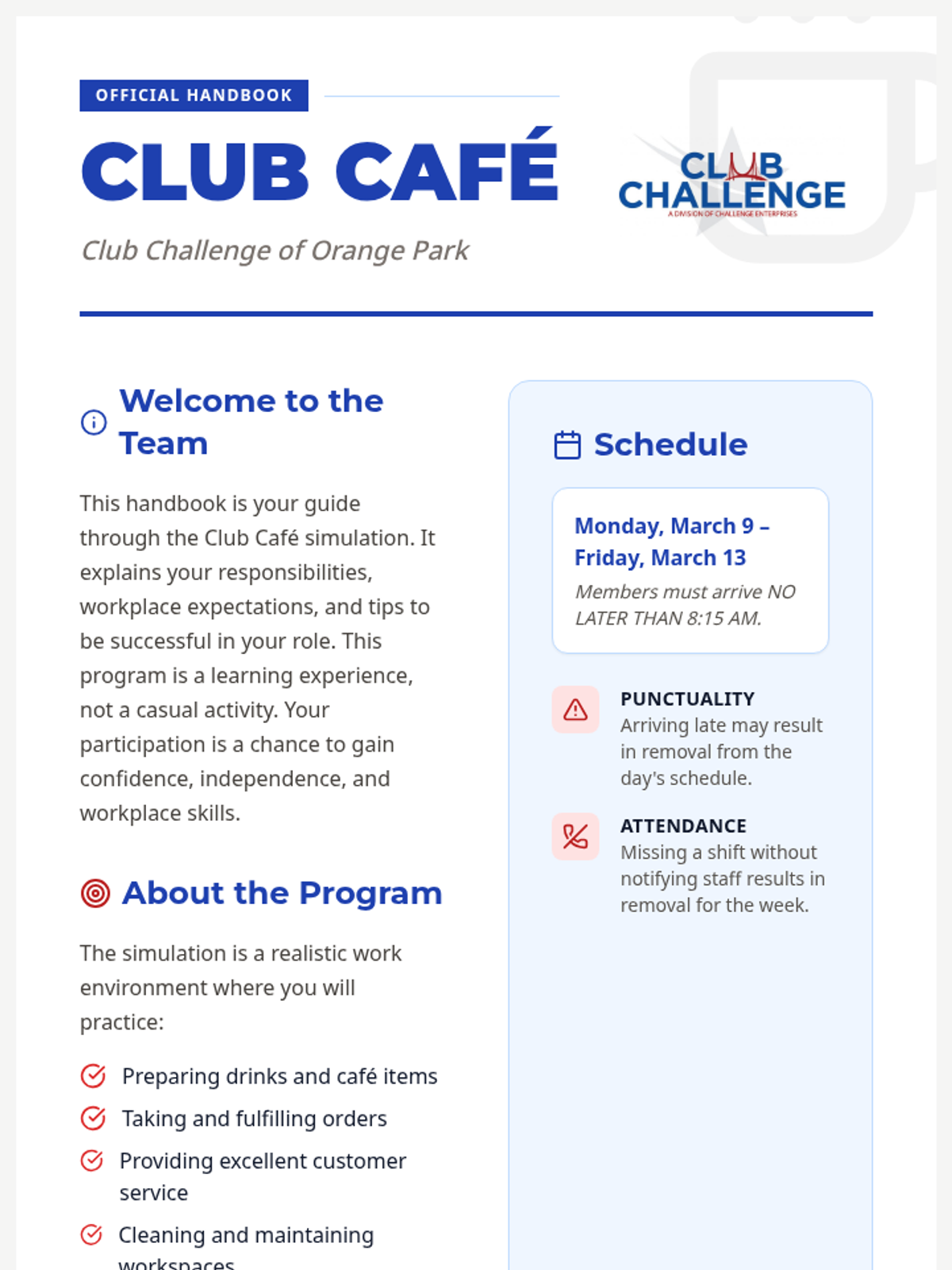
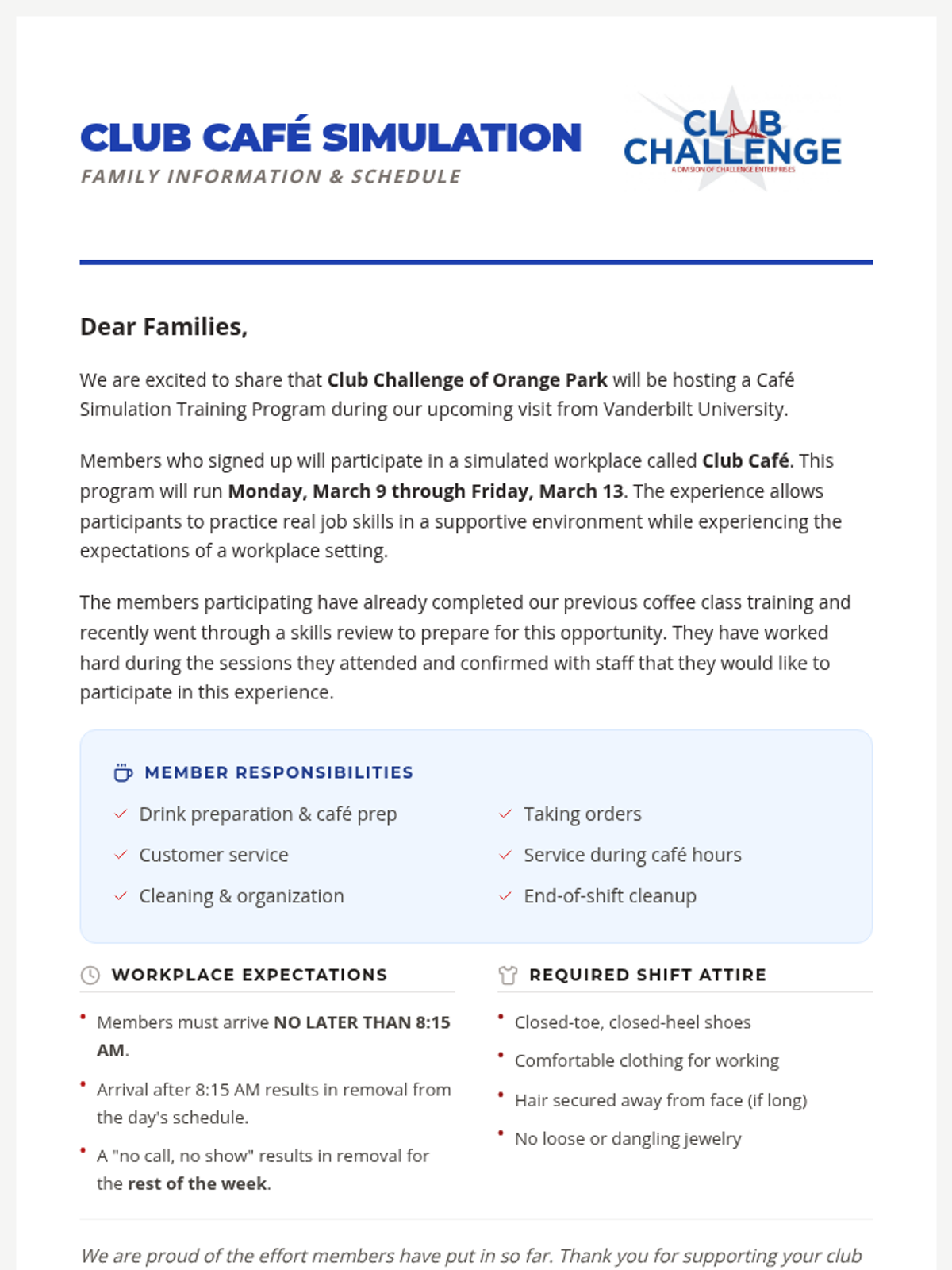
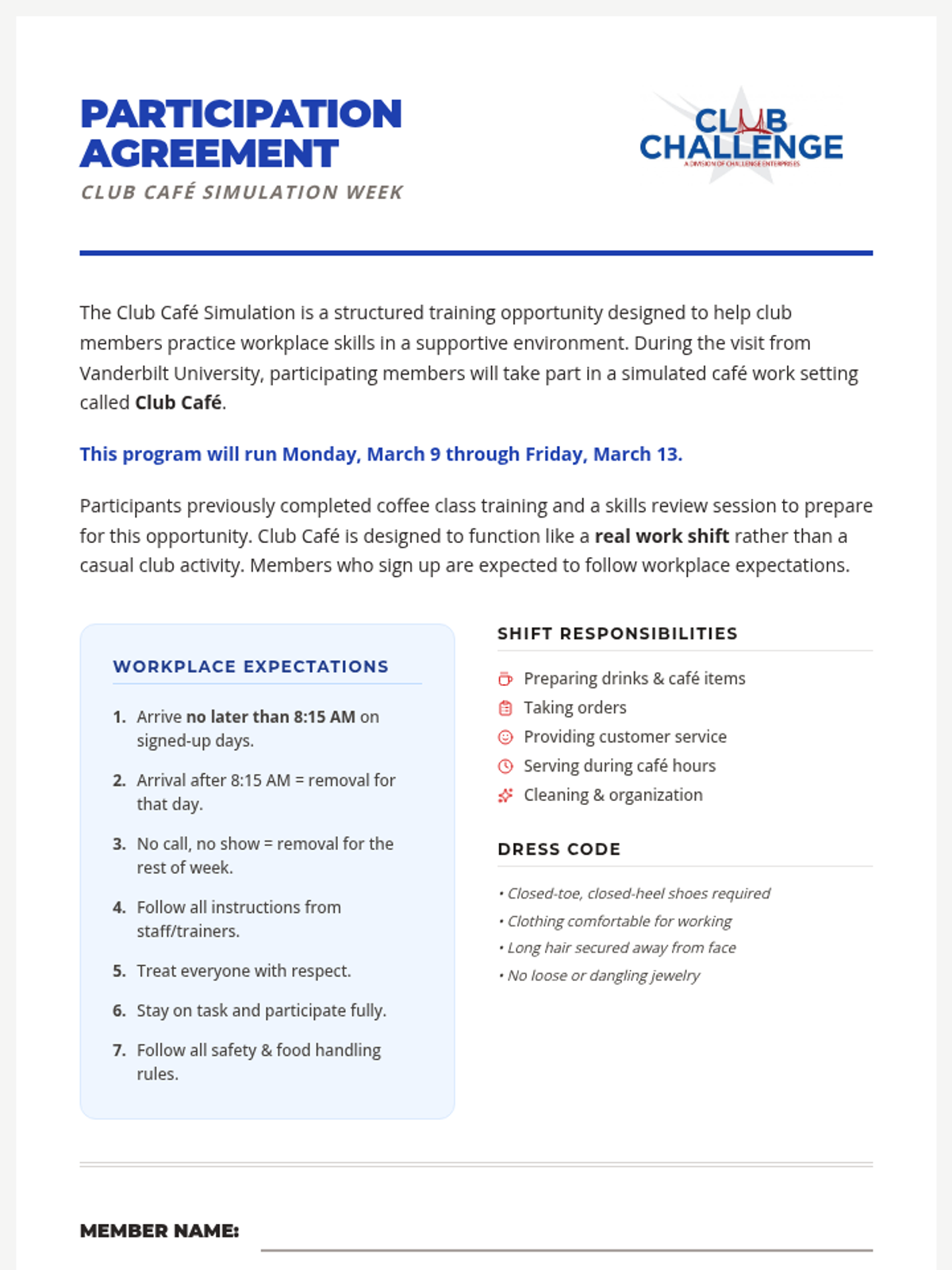
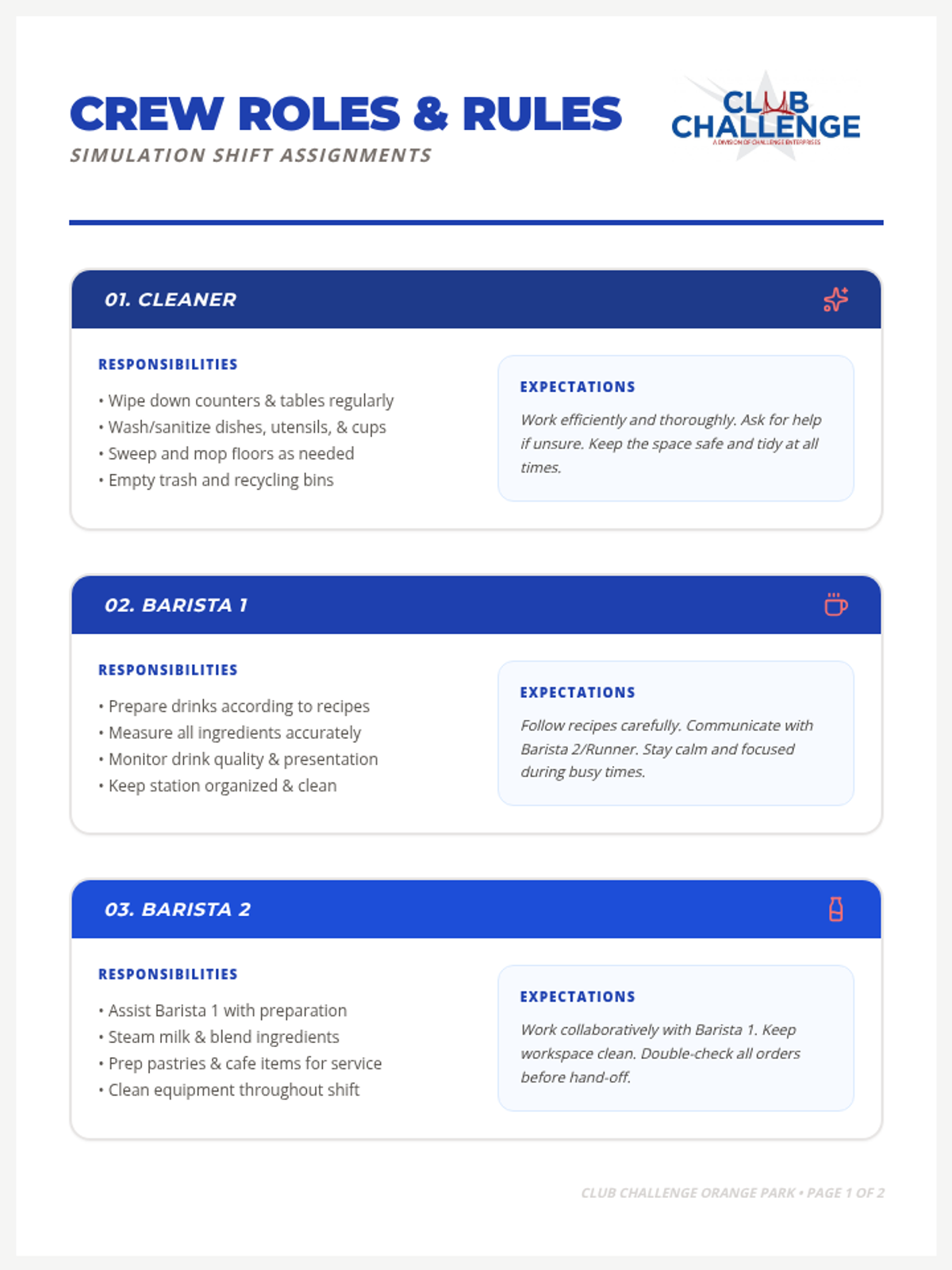
A comprehensive workplace simulation program for Club Challenge of Orange Park, designed to teach vocational skills through a realistic café environment. The sequence includes orientation materials, operational tools for students, and tracking resources for staff.
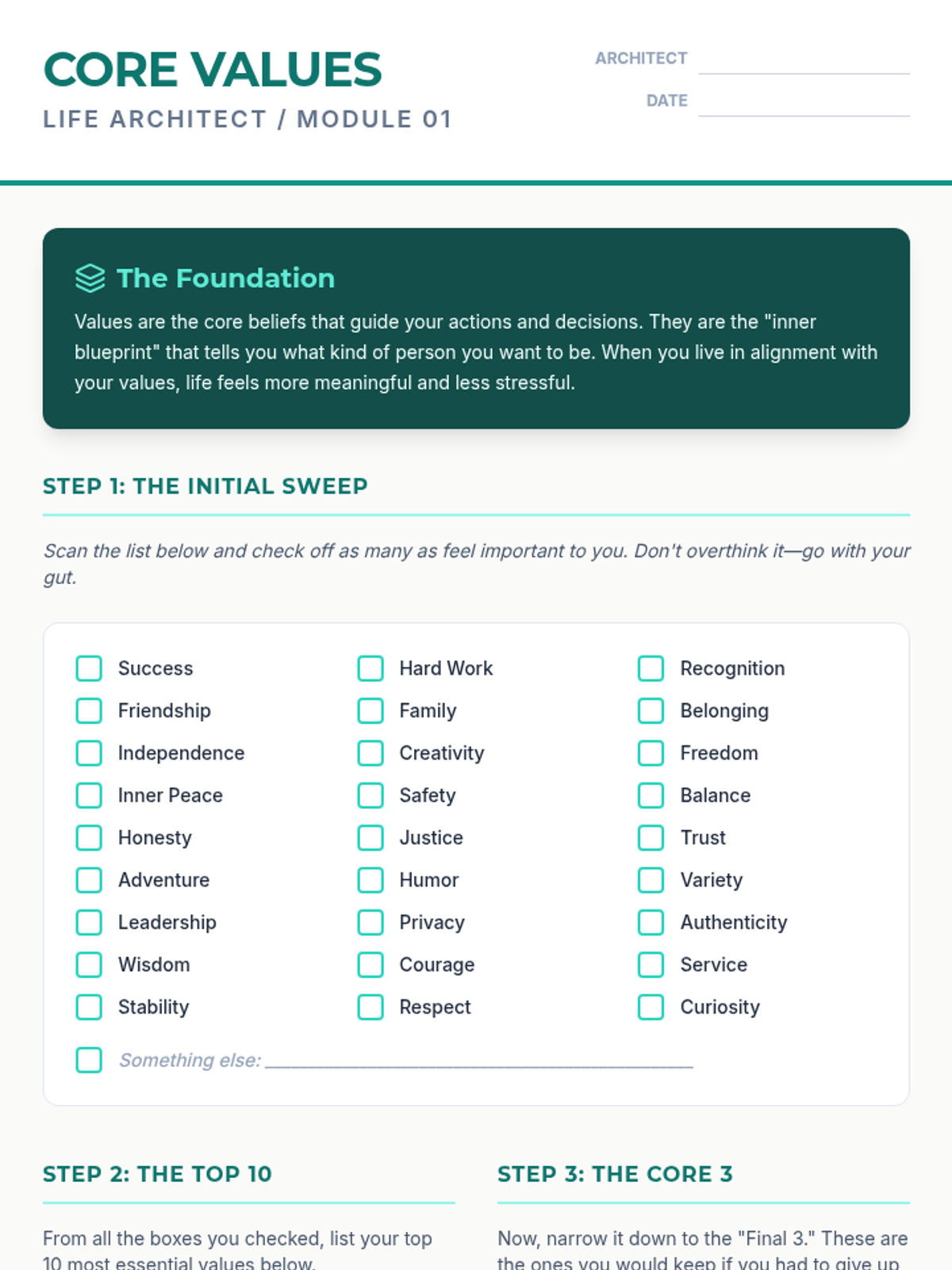
A transition-focused curriculum designed to help students re-entering school build self-advocacy, self-awareness, and independent living skills through a creative 'Life Architect' theme.
A dual-unit program designed to equip students with essential life skills for the post-application phase of job hunting and personal well-being. This sequence focuses on interpersonal communication, interview excellence, and mental health.
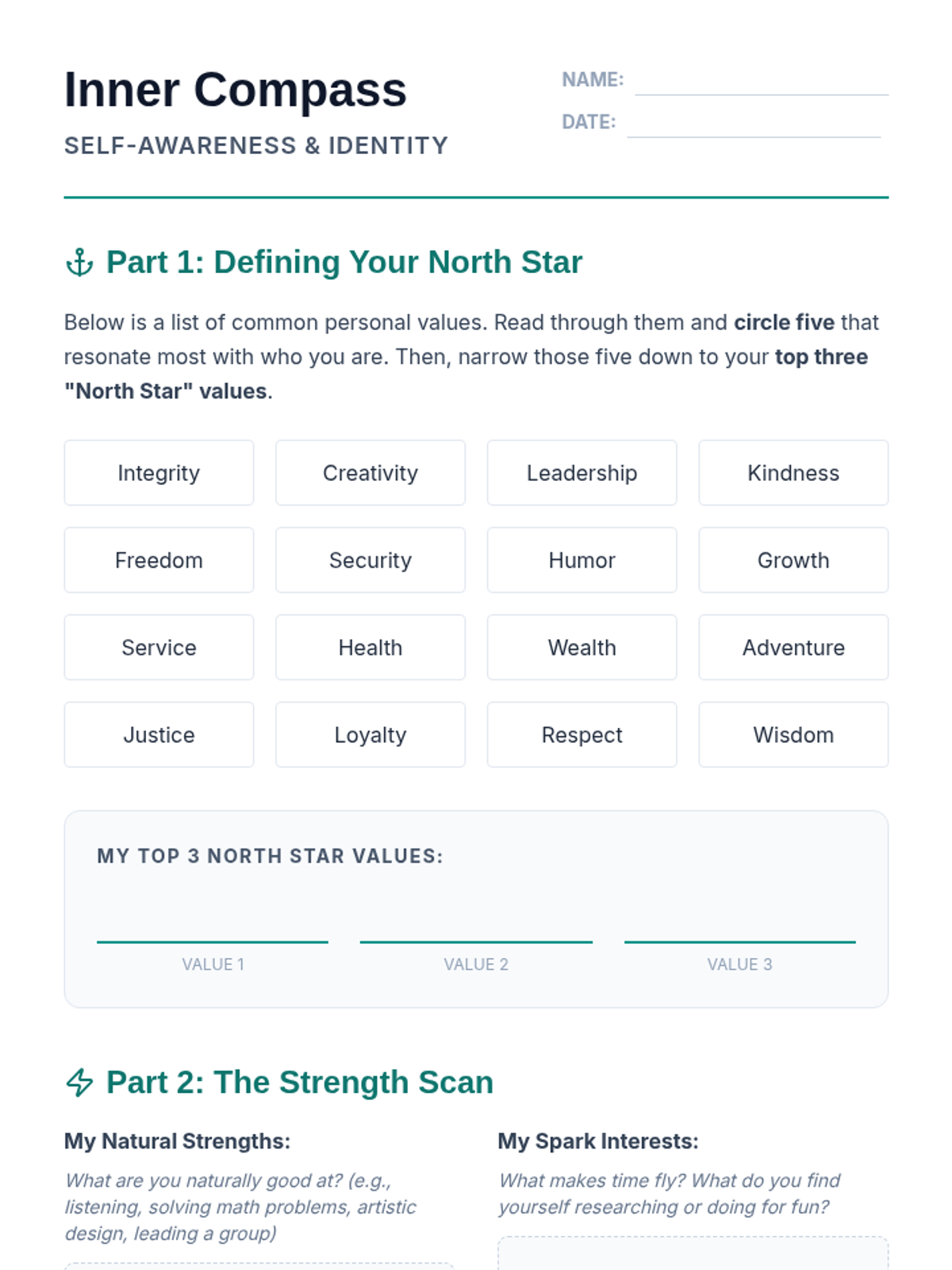
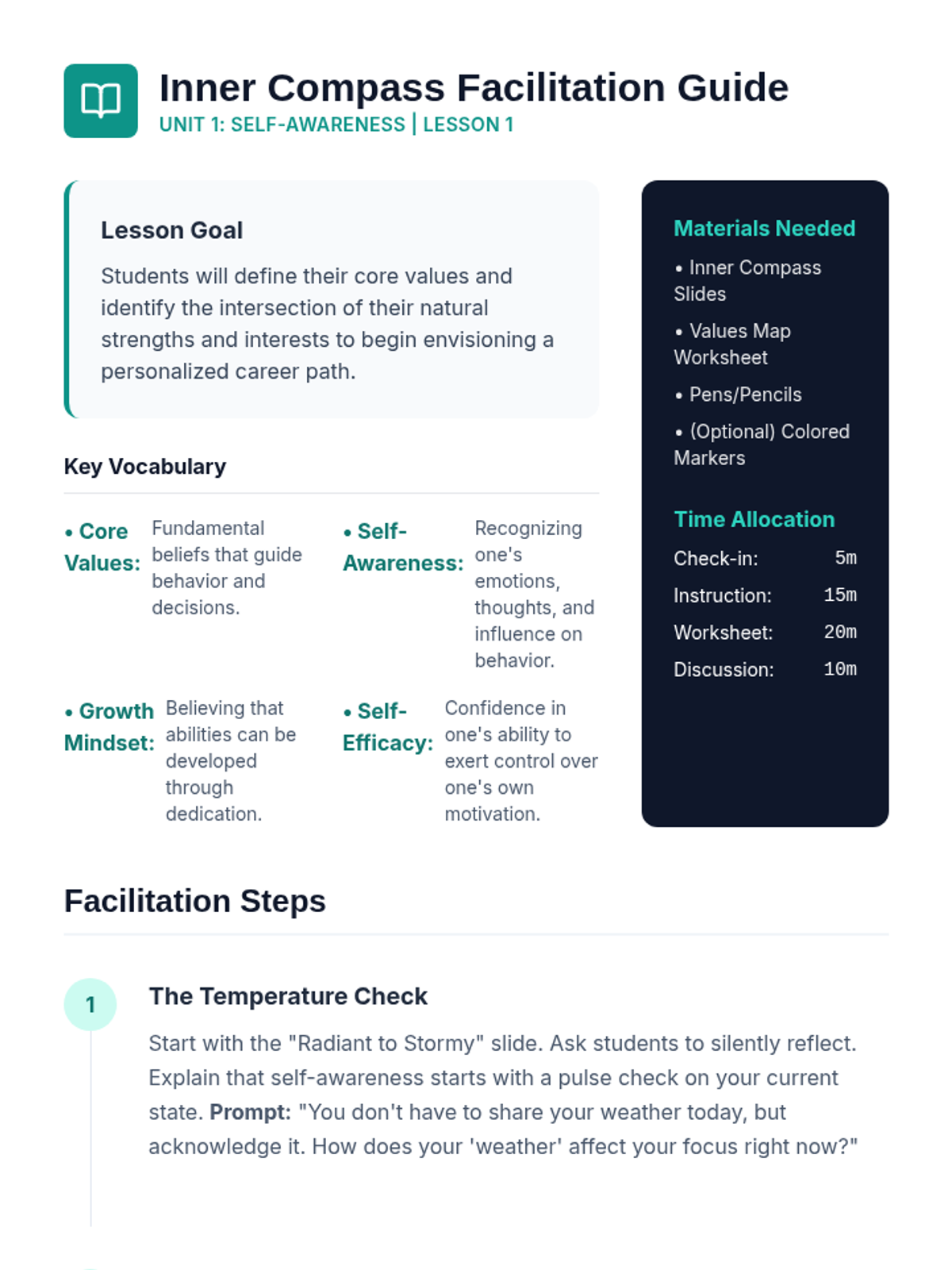
A comprehensive Social-Emotional Learning curriculum for high school students, integrating the five CASEL competencies with practical life skills like career exploration, resume building, and goal setting. This year-long program provides a roadmap for students to develop self-awareness, manage their futures, and build professional relationships.
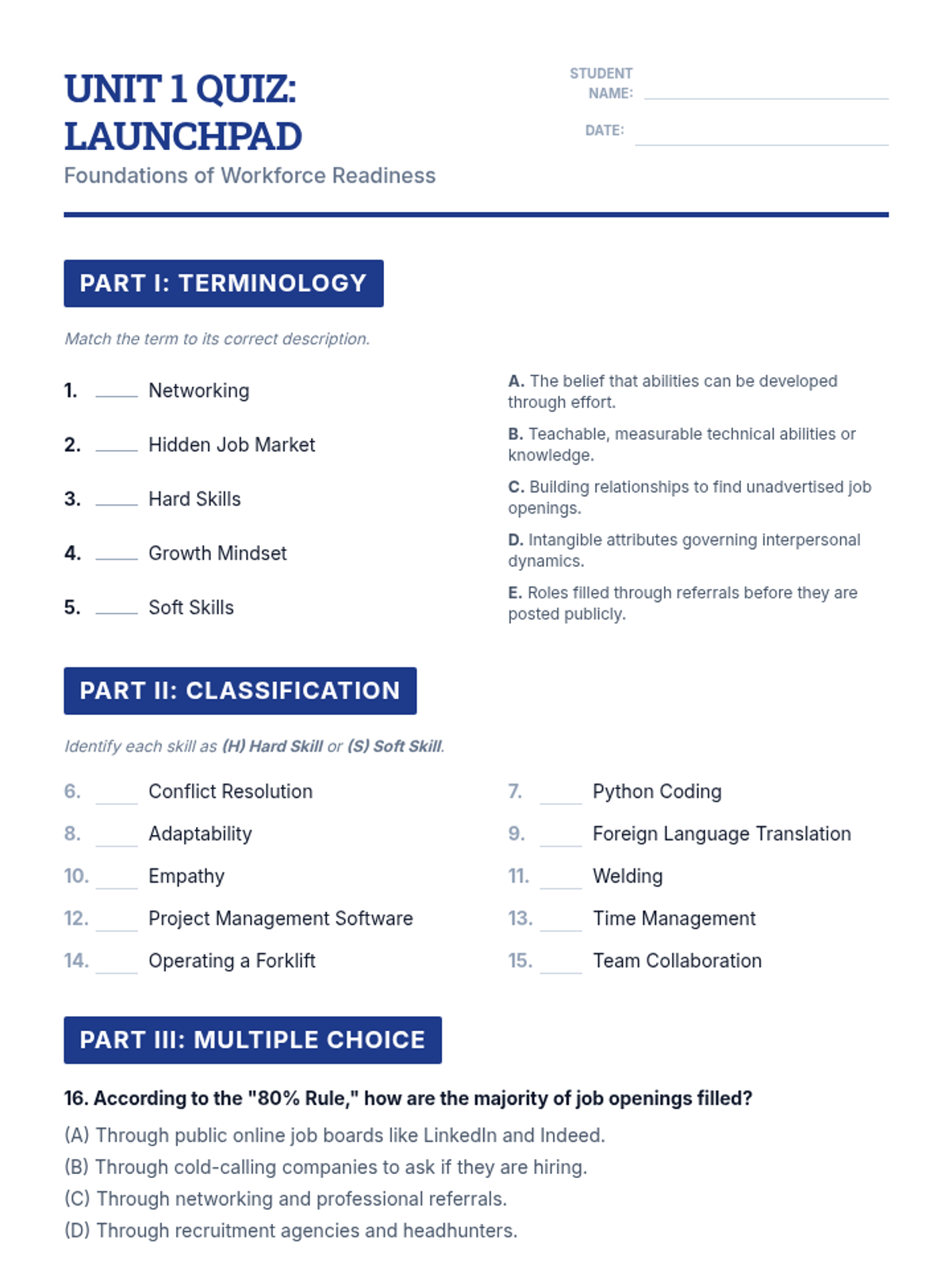
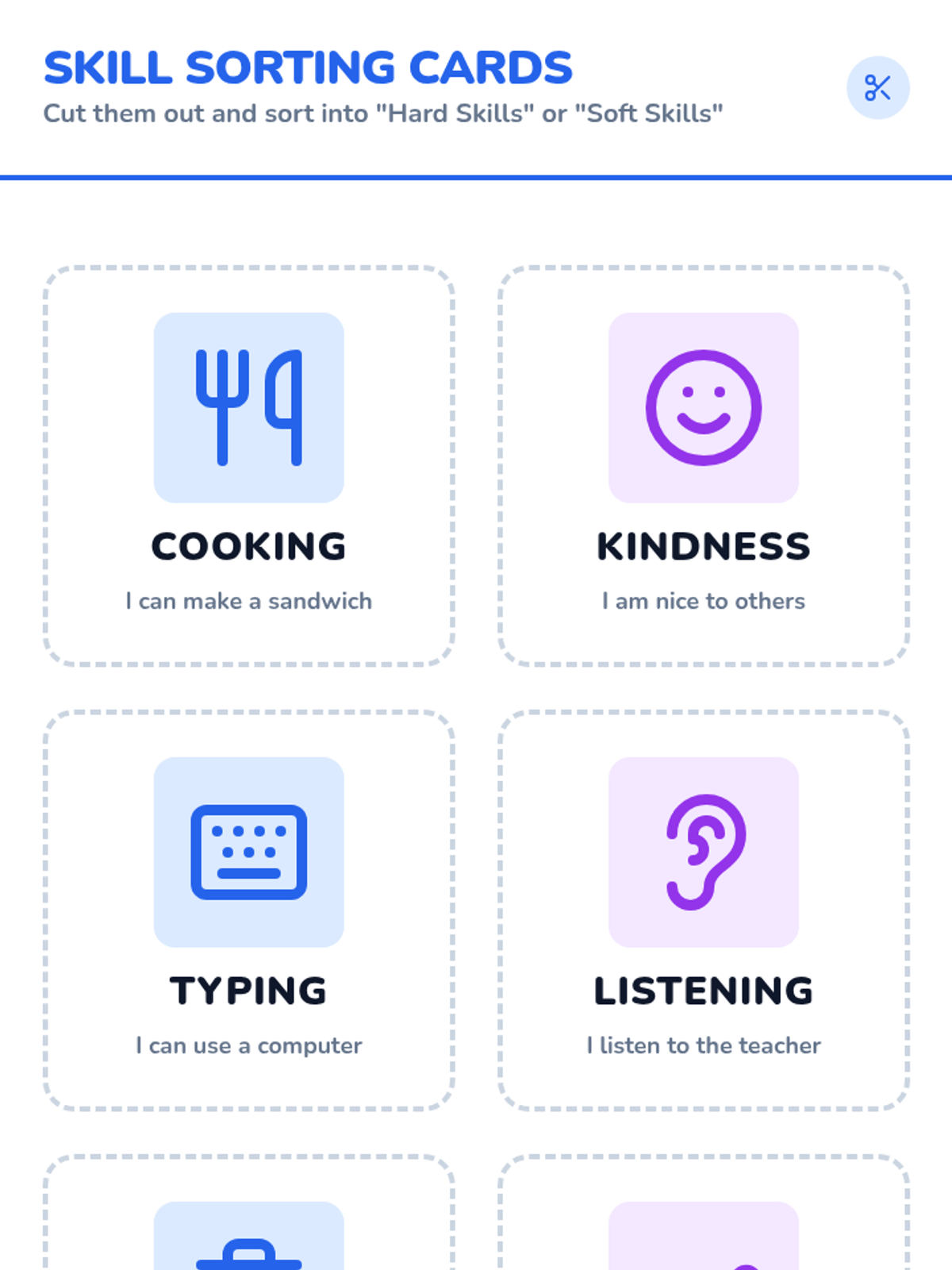
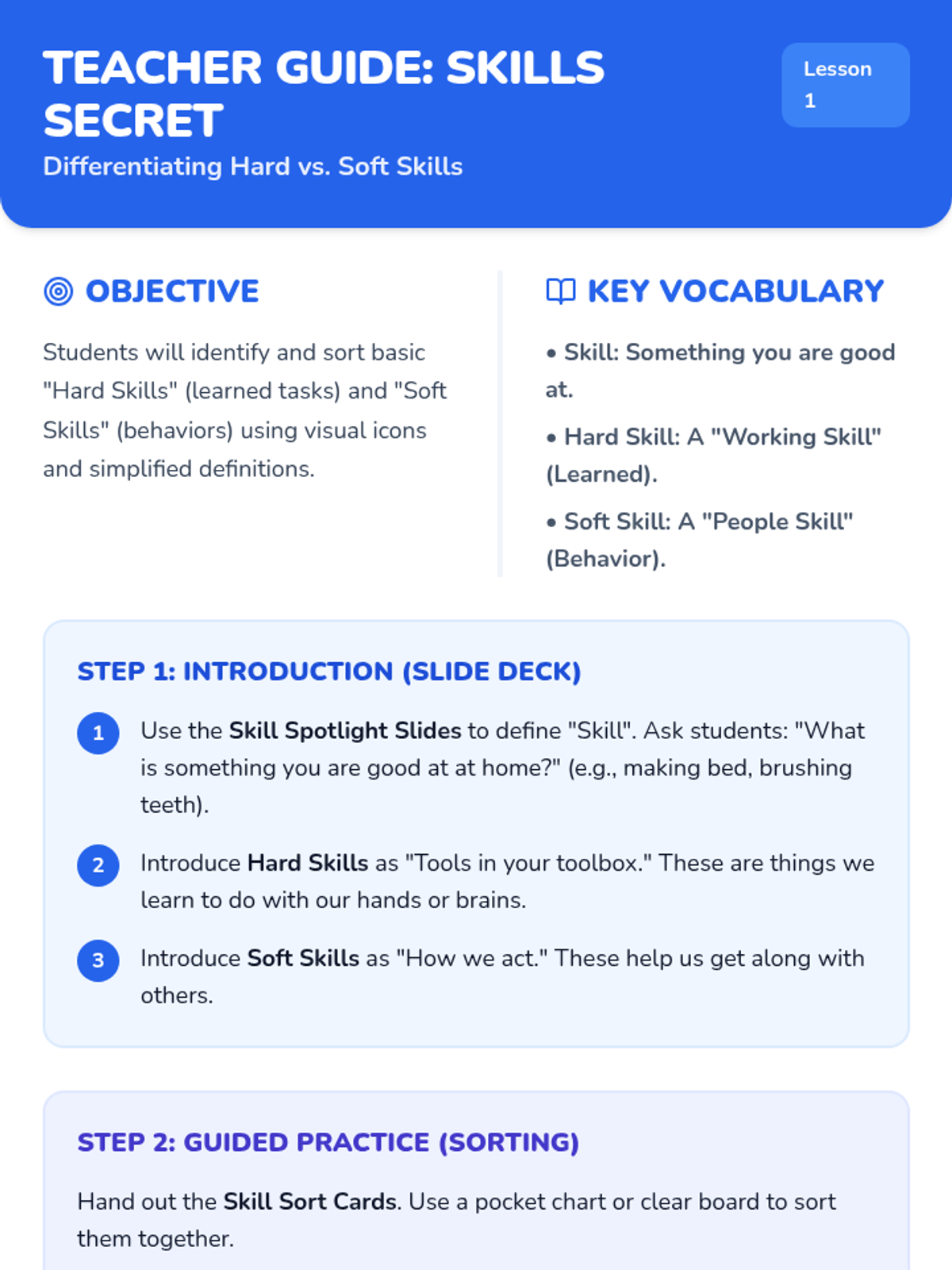
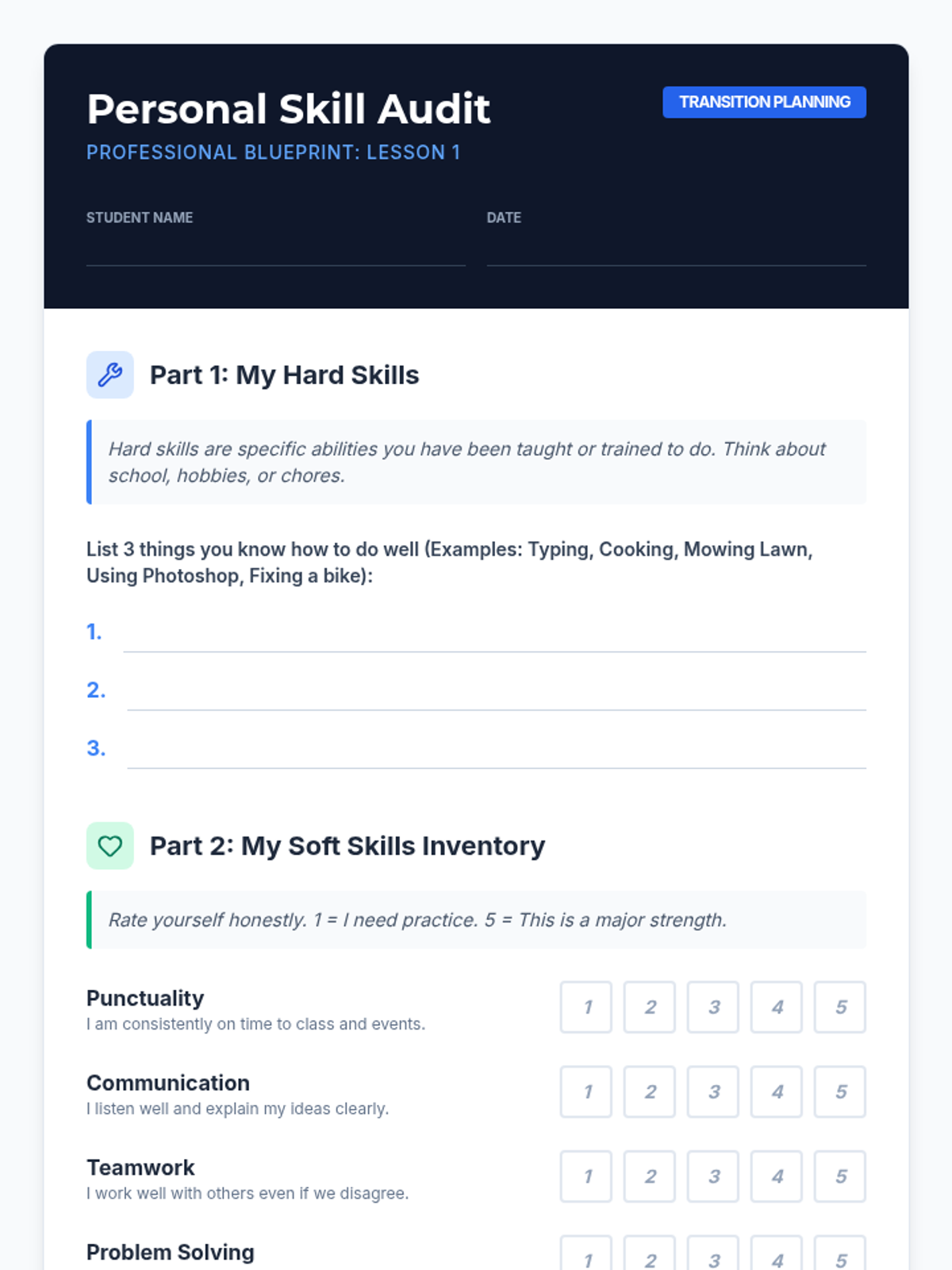
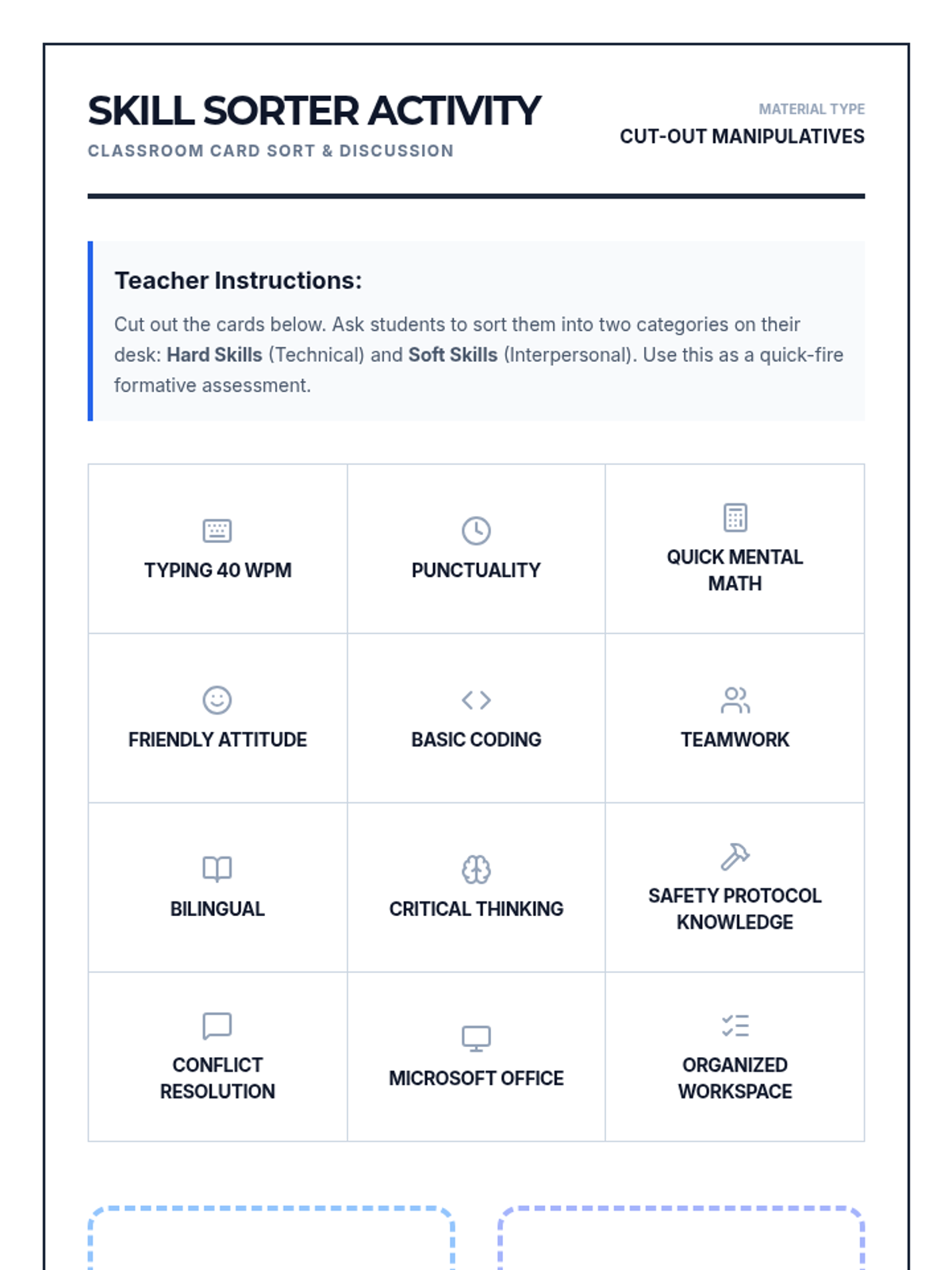
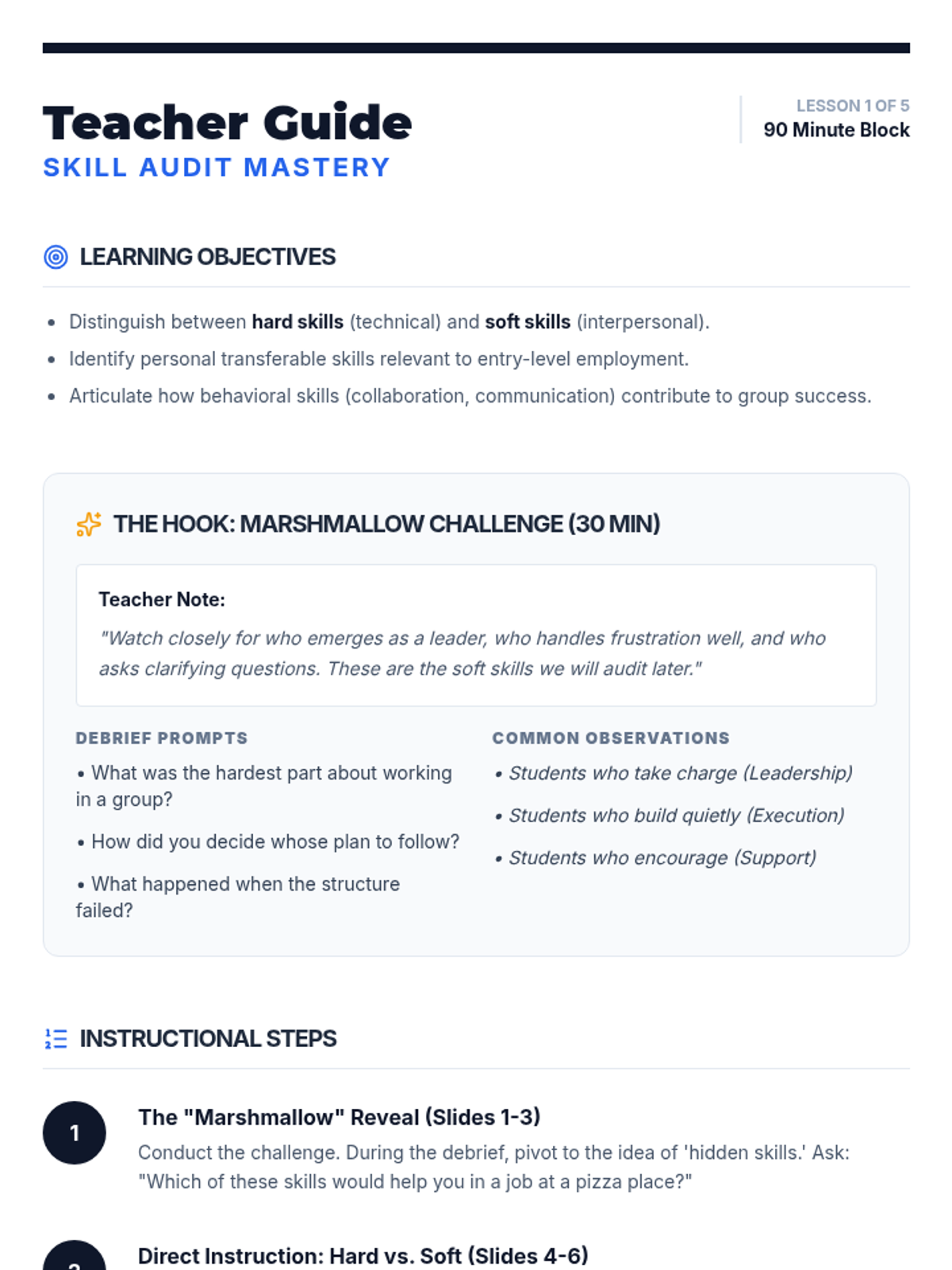
A comprehensive job readiness unit designed for Life Skills students with cognitive disabilities, focusing on hard vs. soft skills, employer expectations, and basic interview etiquette.
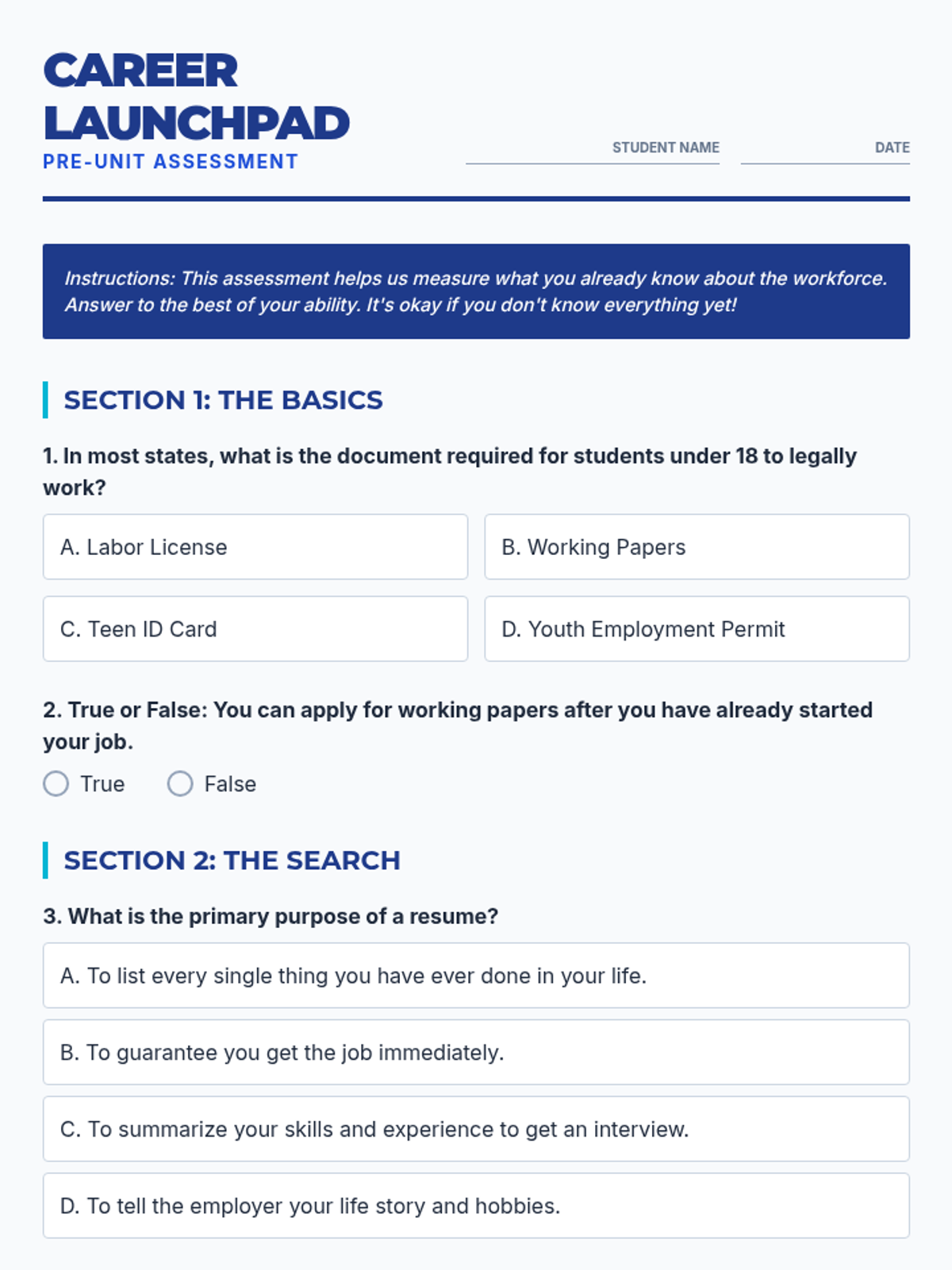
An 8-week comprehensive unit designed to prepare high school students for entering the workforce, covering everything from legal working papers and job applications to interview techniques and long-term career planning.
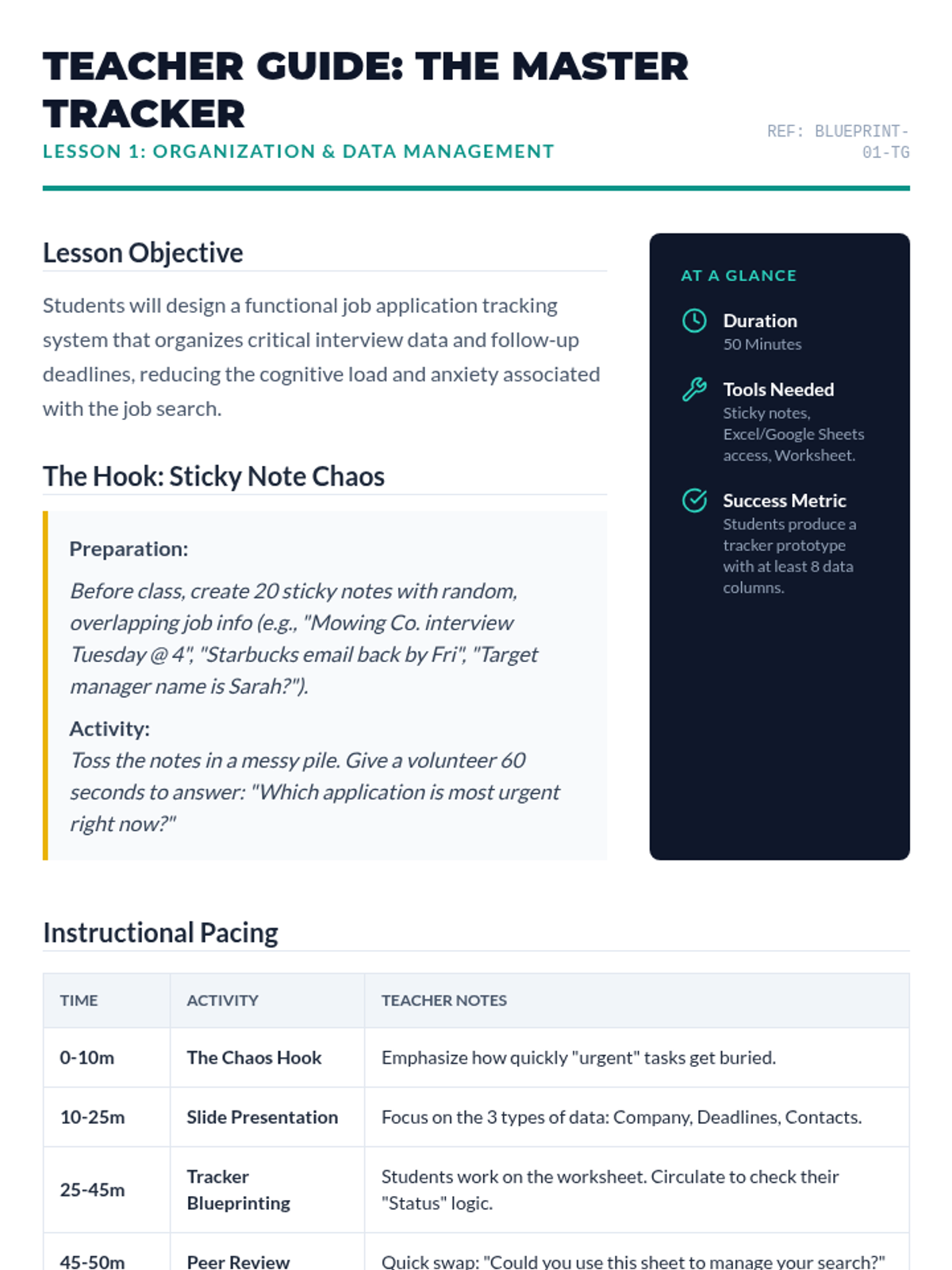
Students build a comprehensive Interview Follow-Up Toolkit, designing reusable systems like trackers, email templates, and reference sheets to manage the job search process with organization and confidence.
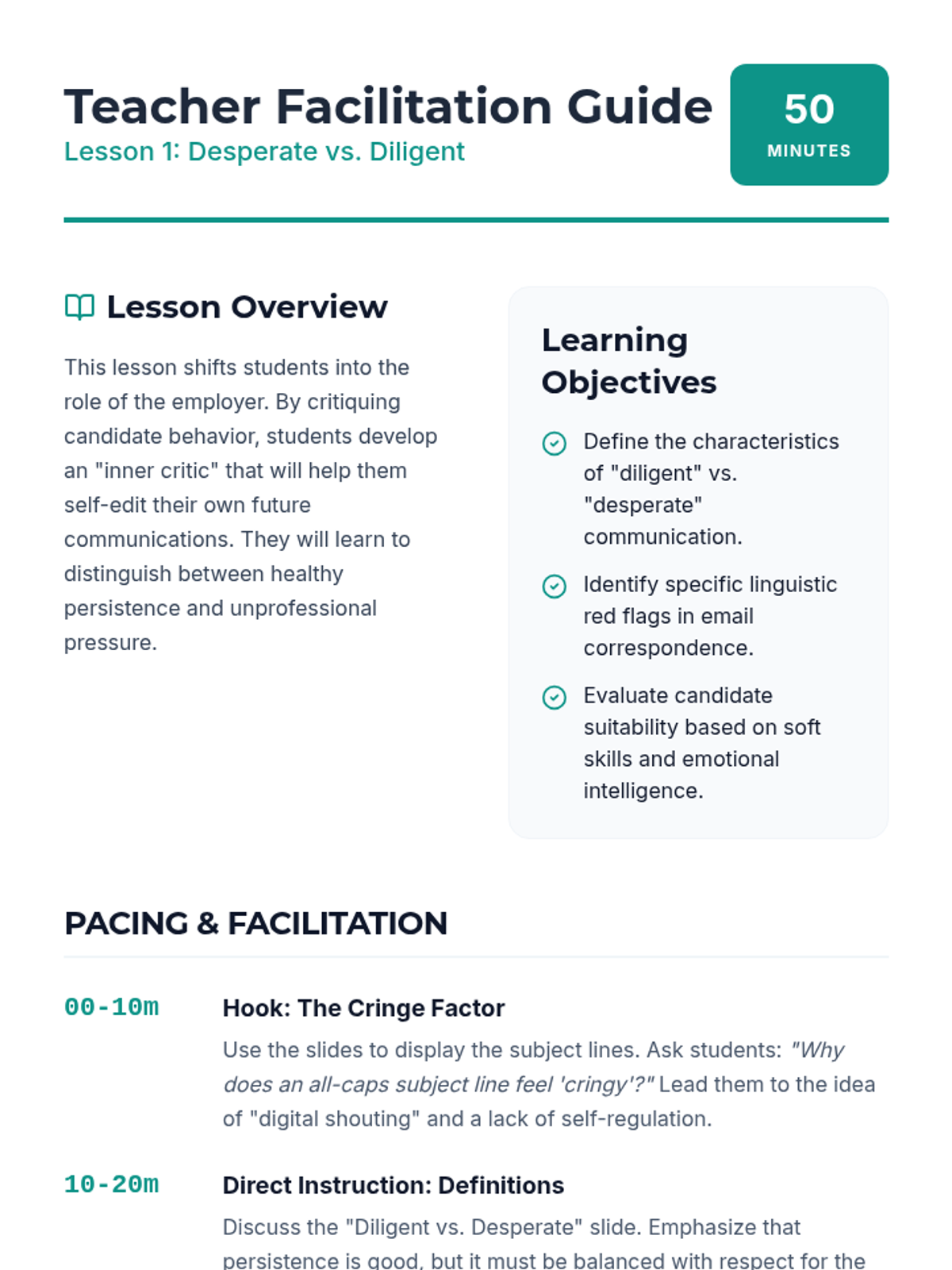
A comprehensive writing workshop for 10th-grade students focusing on the mechanics, tone, and strategic importance of post-interview follow-up communication. Students progress from analyzing standard structures to drafting personalized, professional emails for various interview scenarios.
A practical writing workshop sequence where students master the mechanics of professional follow-up communication after interviews. Students will analyze the structure of formal emails, draft multiple versions of follow-up messages, and refine their professional tone and proofreading skills.
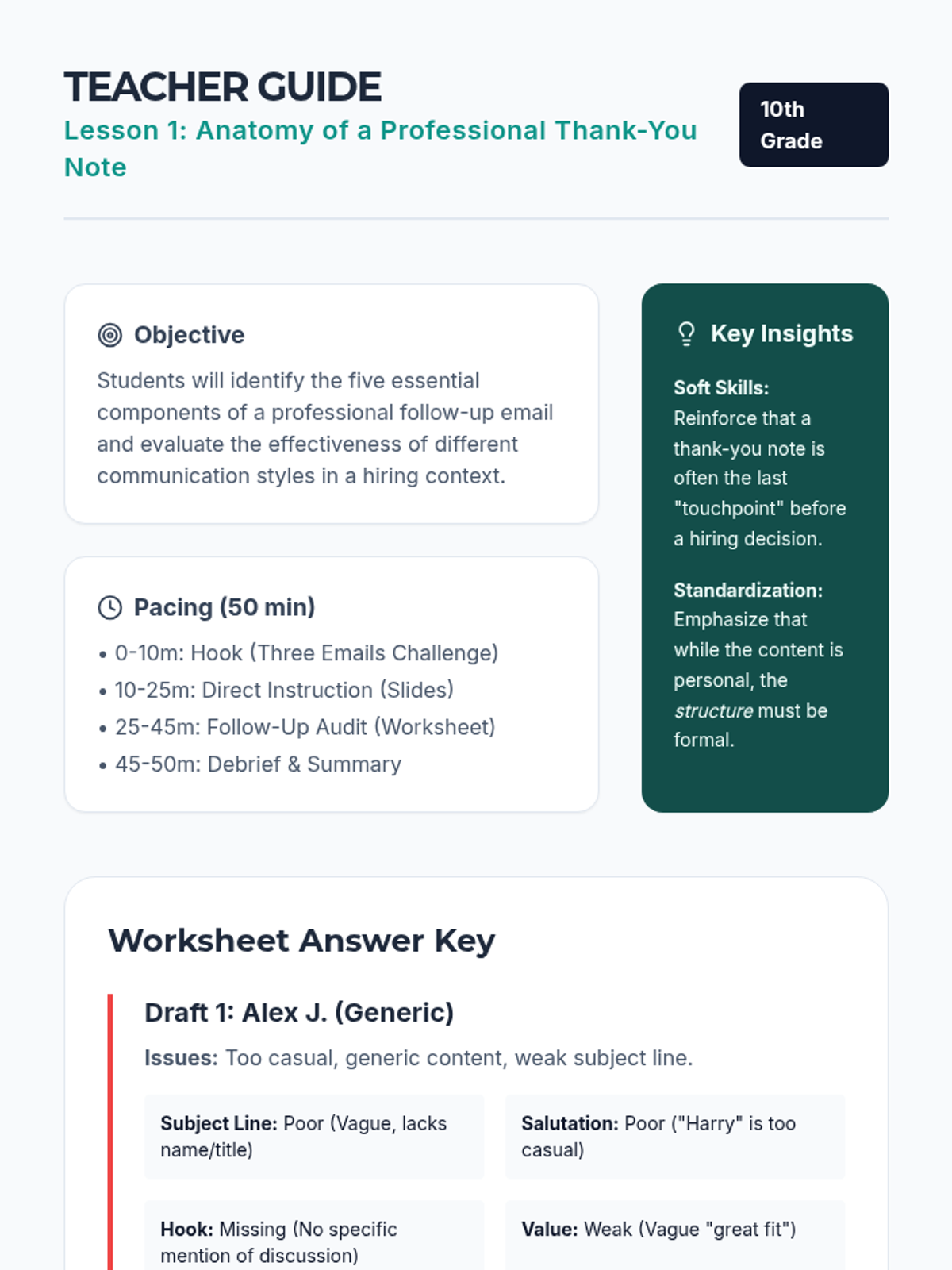
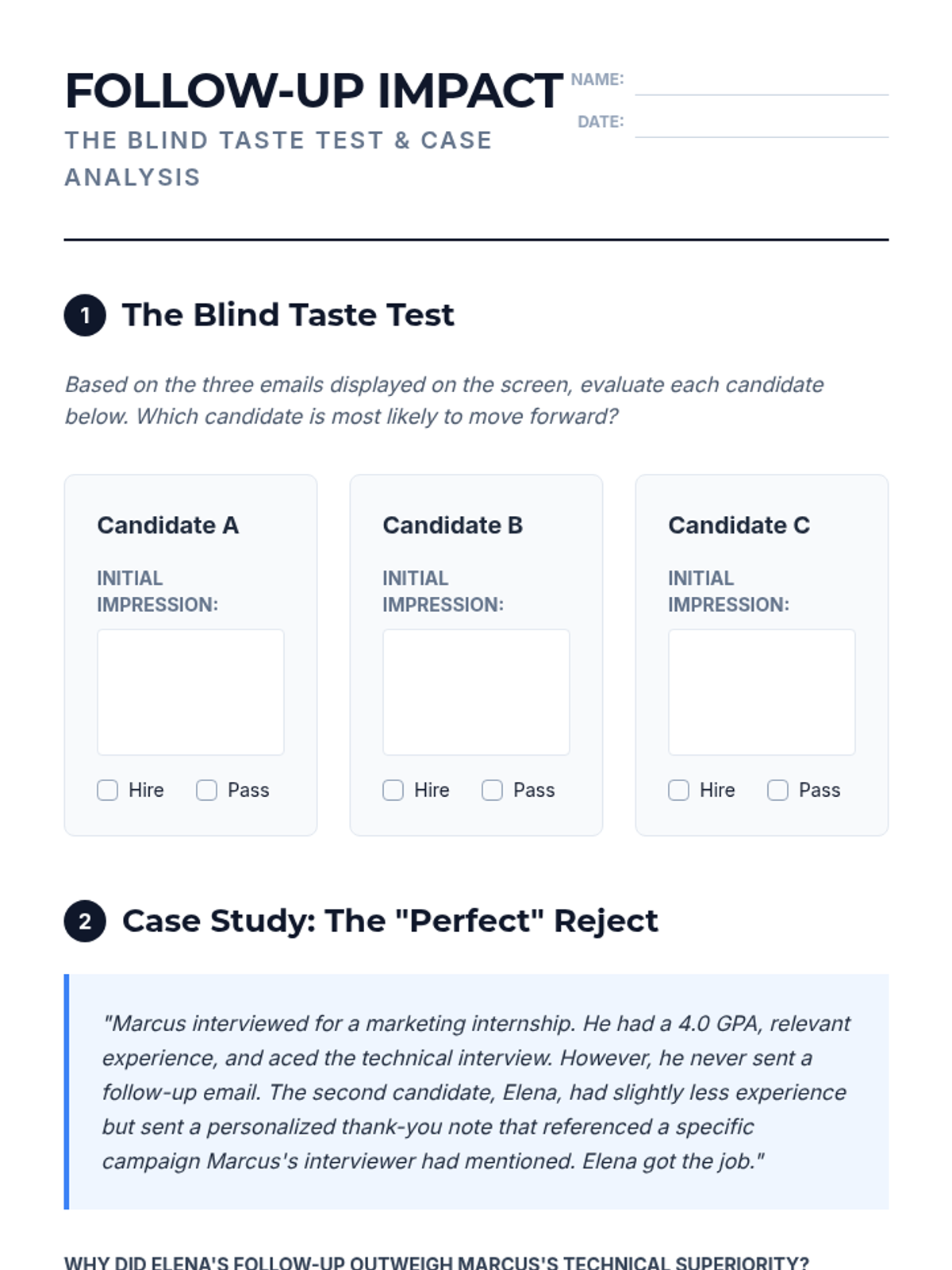
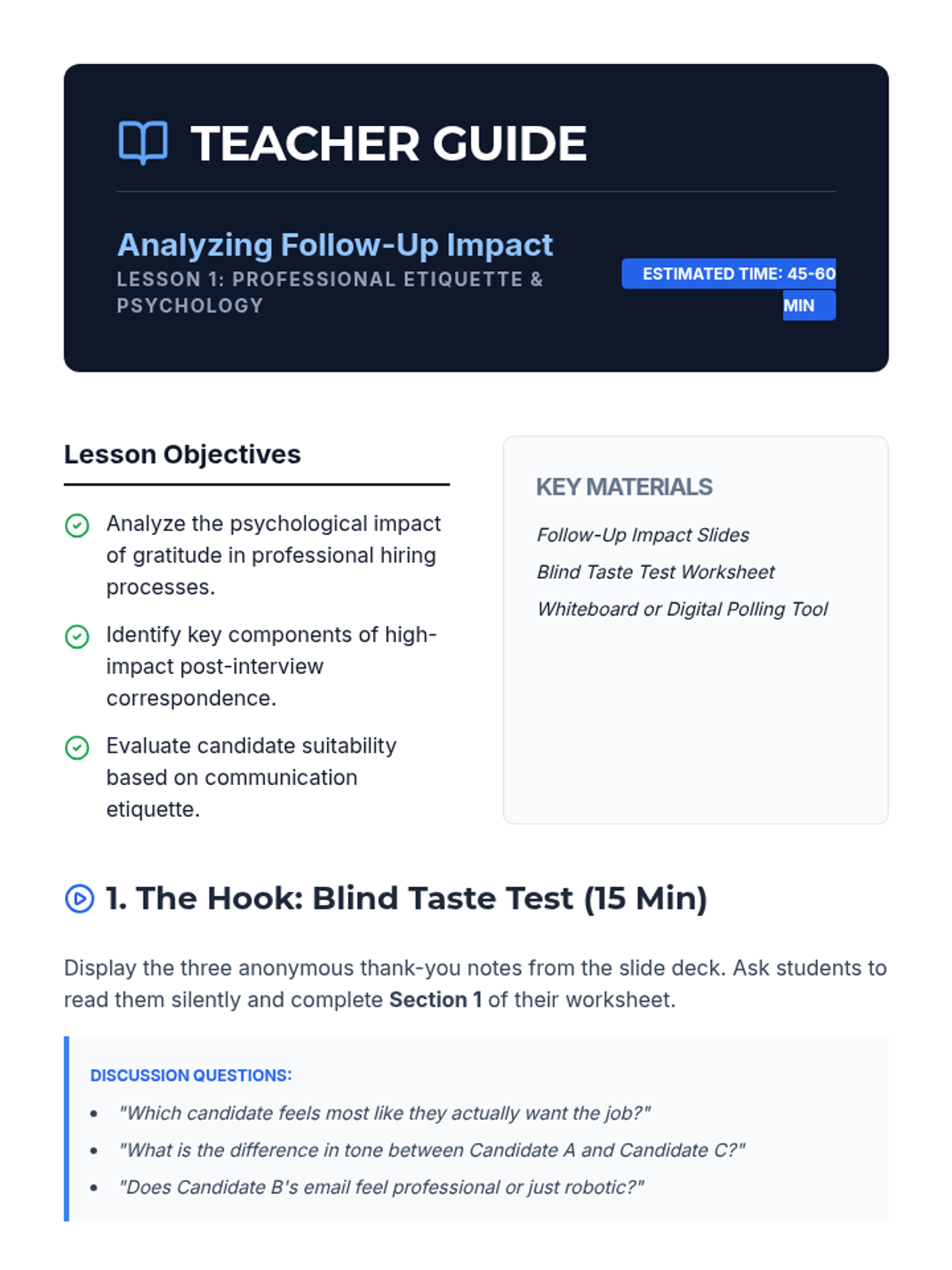
A practical writing workshop sequence where students master post-interview thank-you notes, analyzing their psychological impact and crafting personalized, professional correspondence for various contexts.
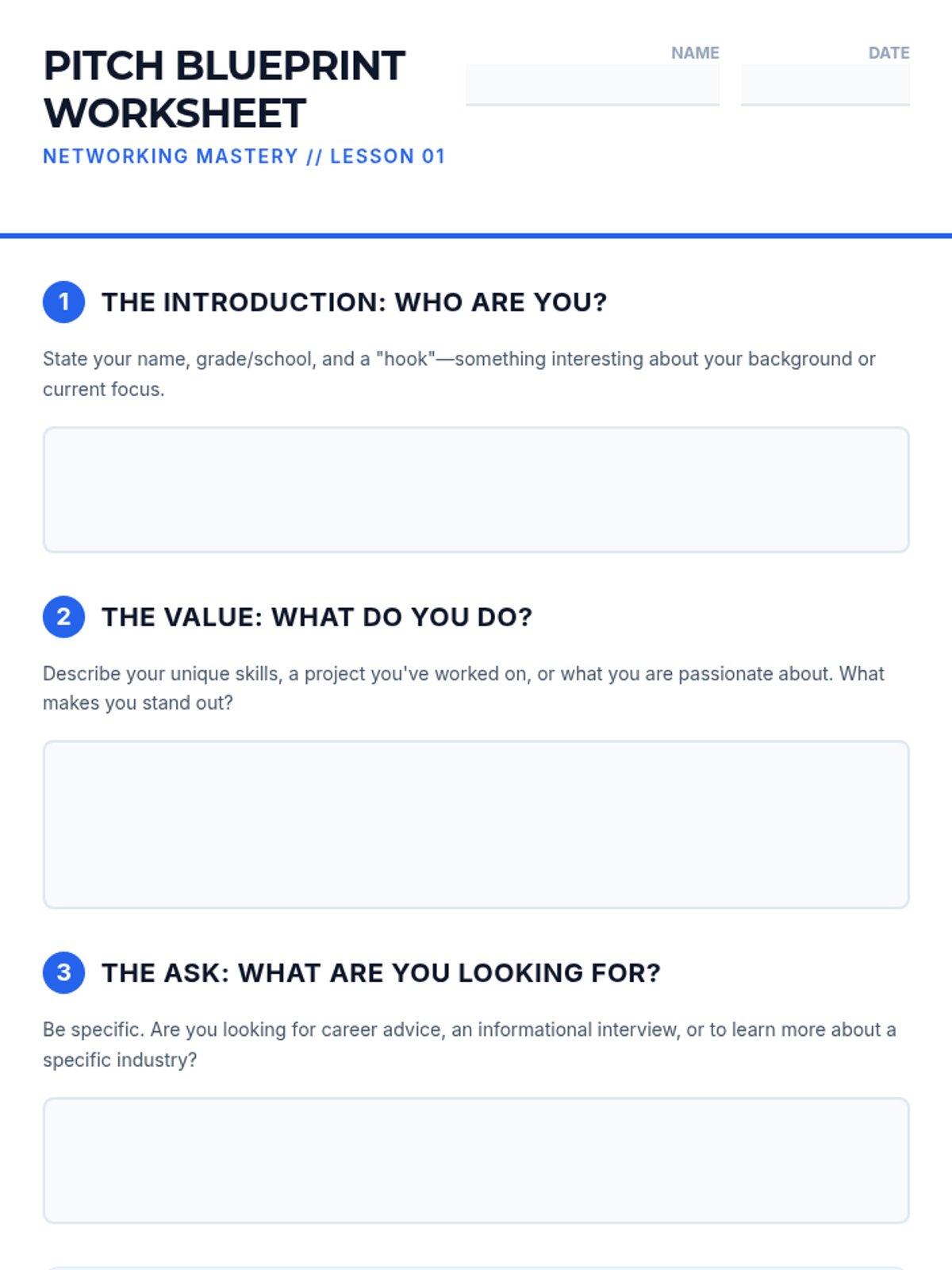
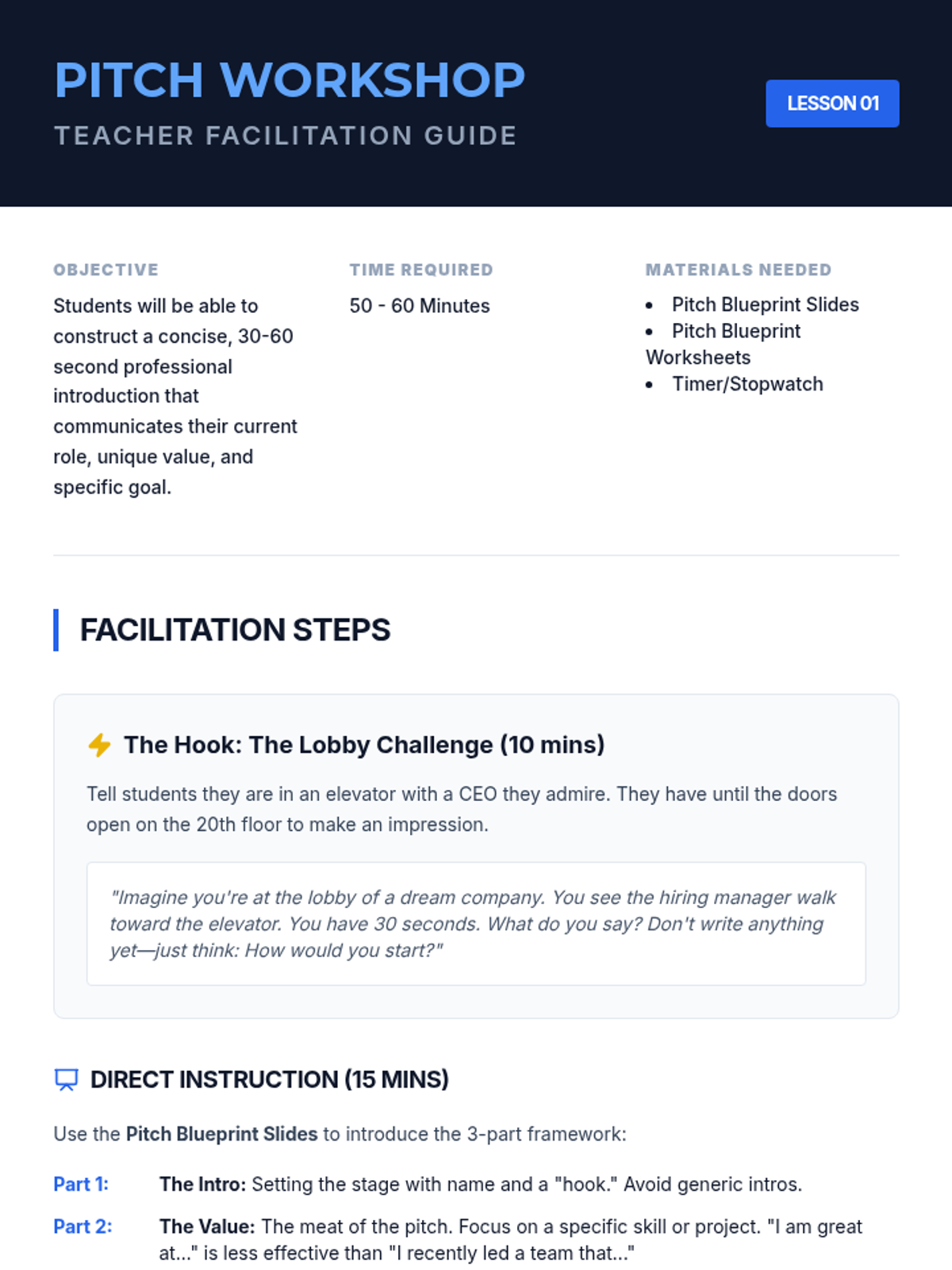
A comprehensive sequence for 10th-grade students focusing on the verbal and interpersonal skills of networking. Students learn to draft elevator pitches, practice non-verbal communication, design informational interview questions, and execute professional follow-ups.
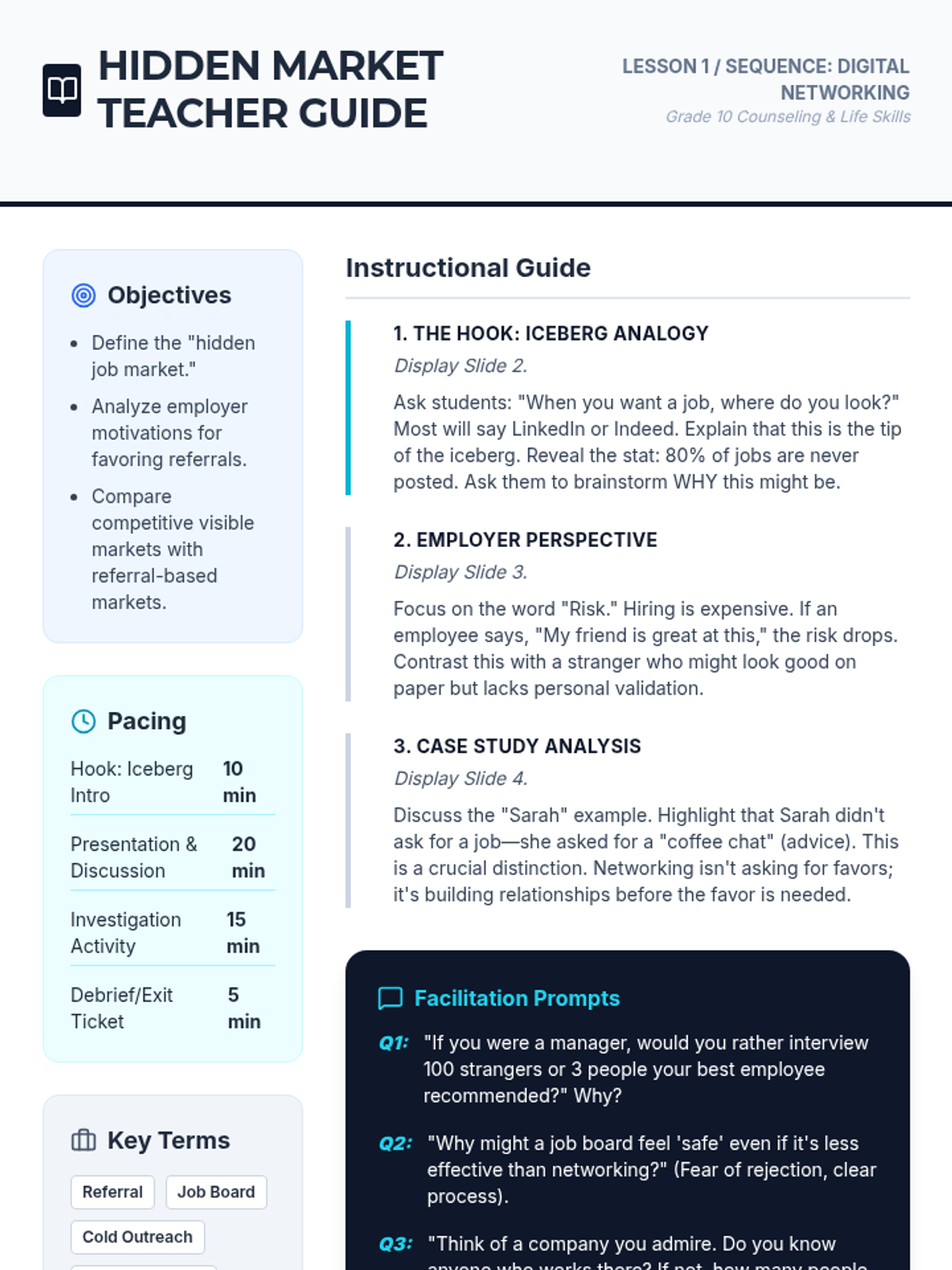
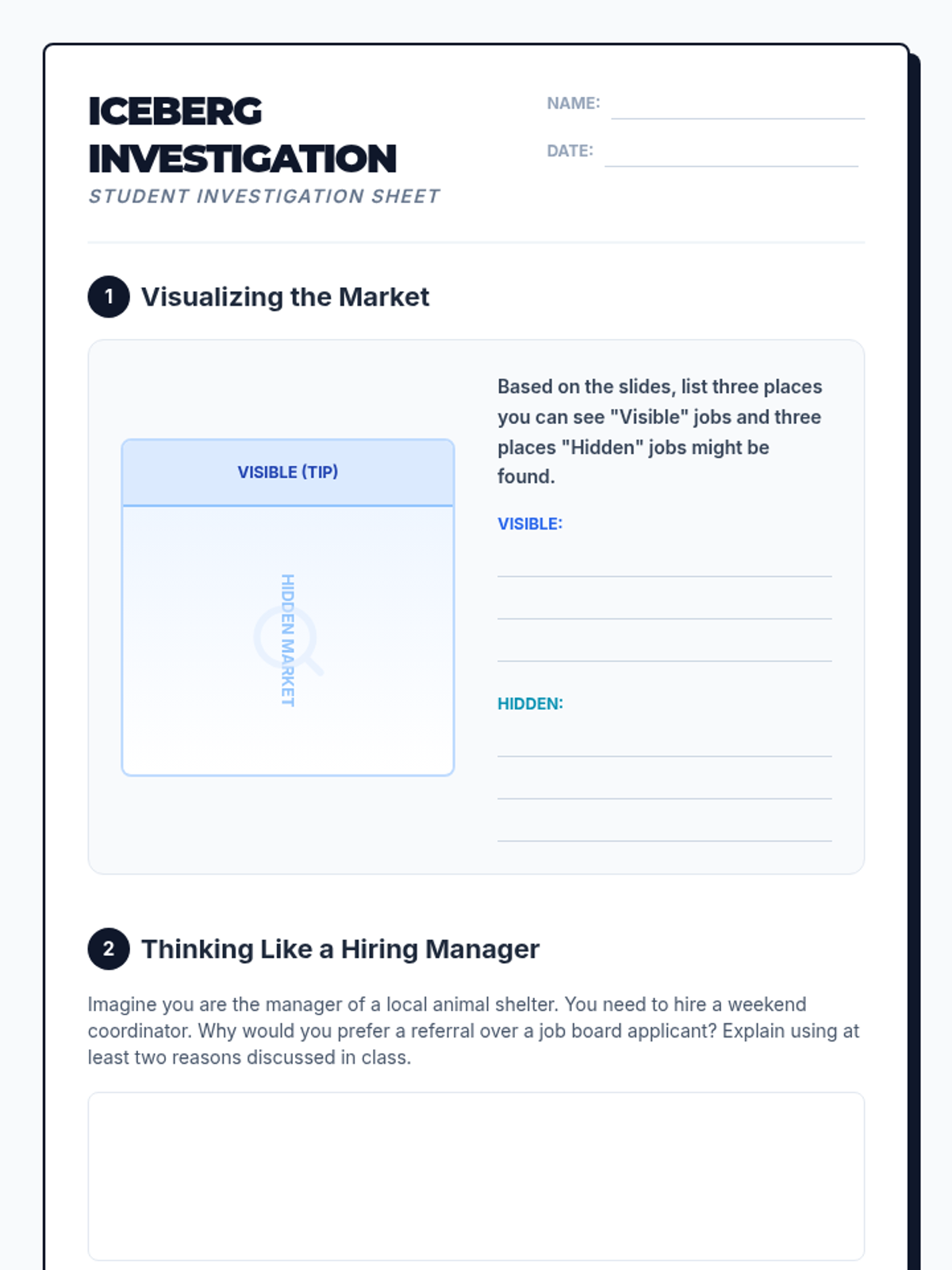
This sequence guides 10th-grade students through the strategic world of the 'hidden job market' and digital networking. Students will map their existing networks, build professional digital profiles, and learn the art of cold outreach and relationship maintenance.
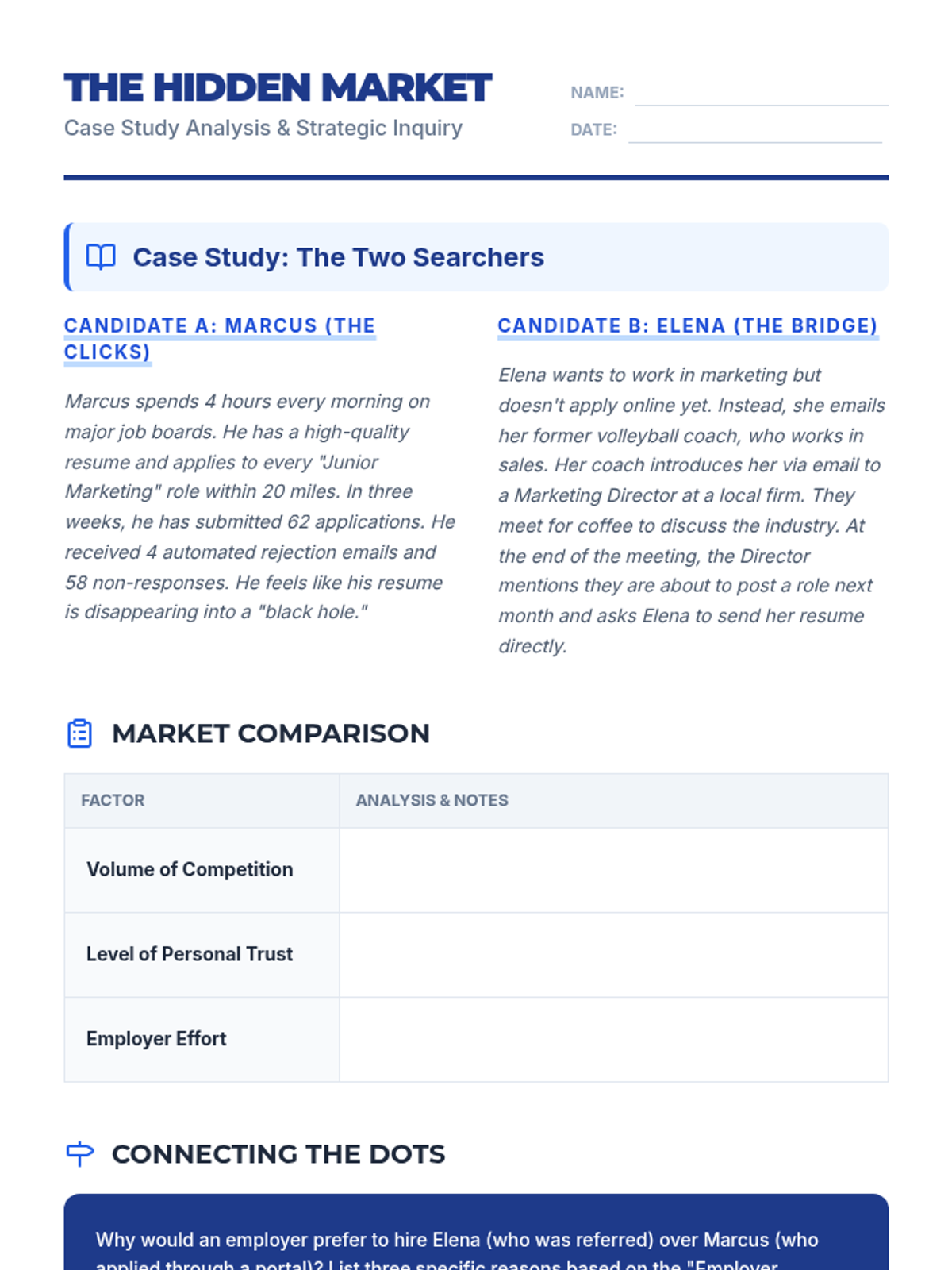
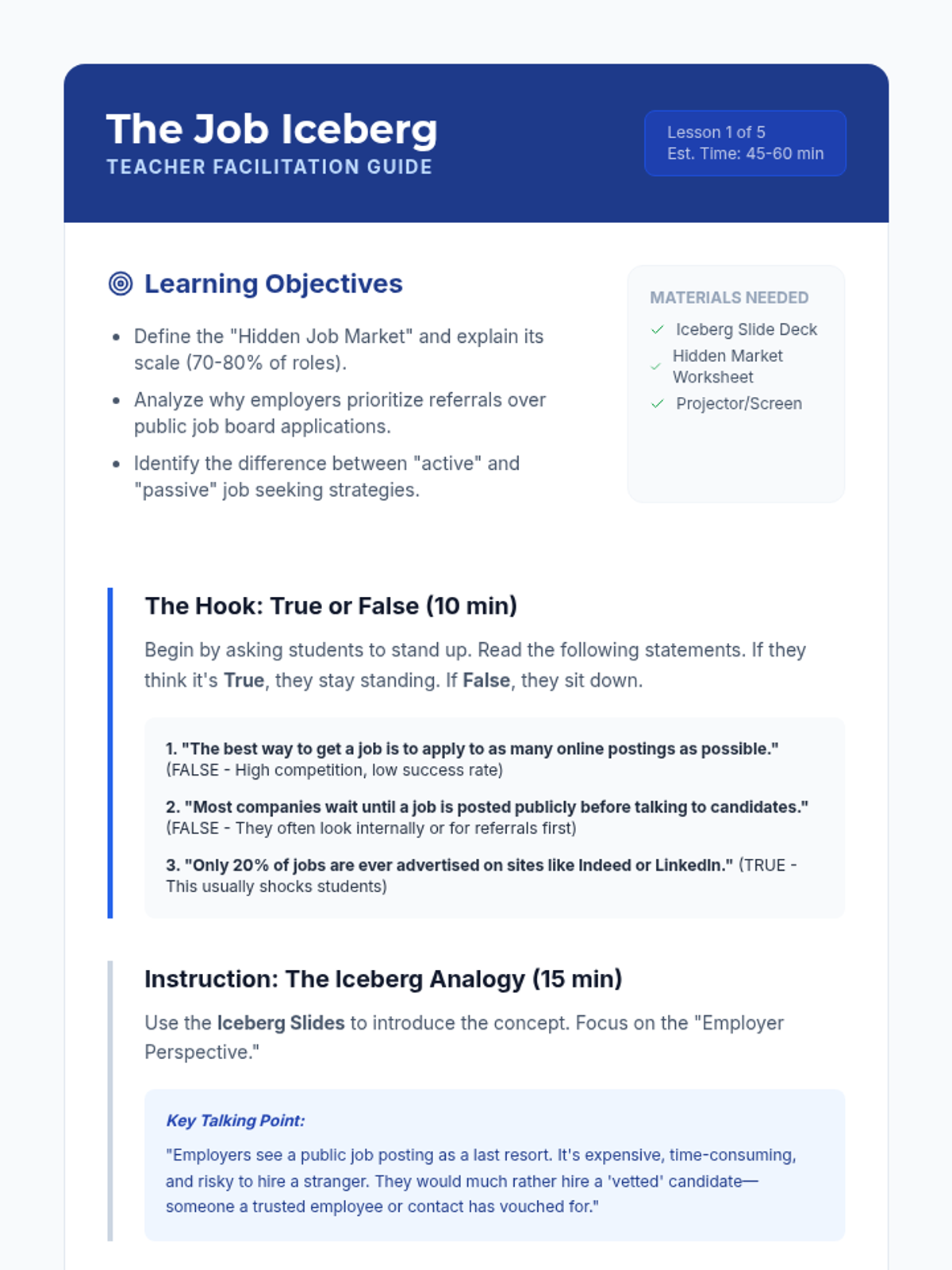
This sequence explores the 'hidden job market' where up to 80% of roles are filled through networking. Students will develop social capital, craft elevator pitches, map their personal connections, and learn the etiquette of informational interviews and professional follow-up.
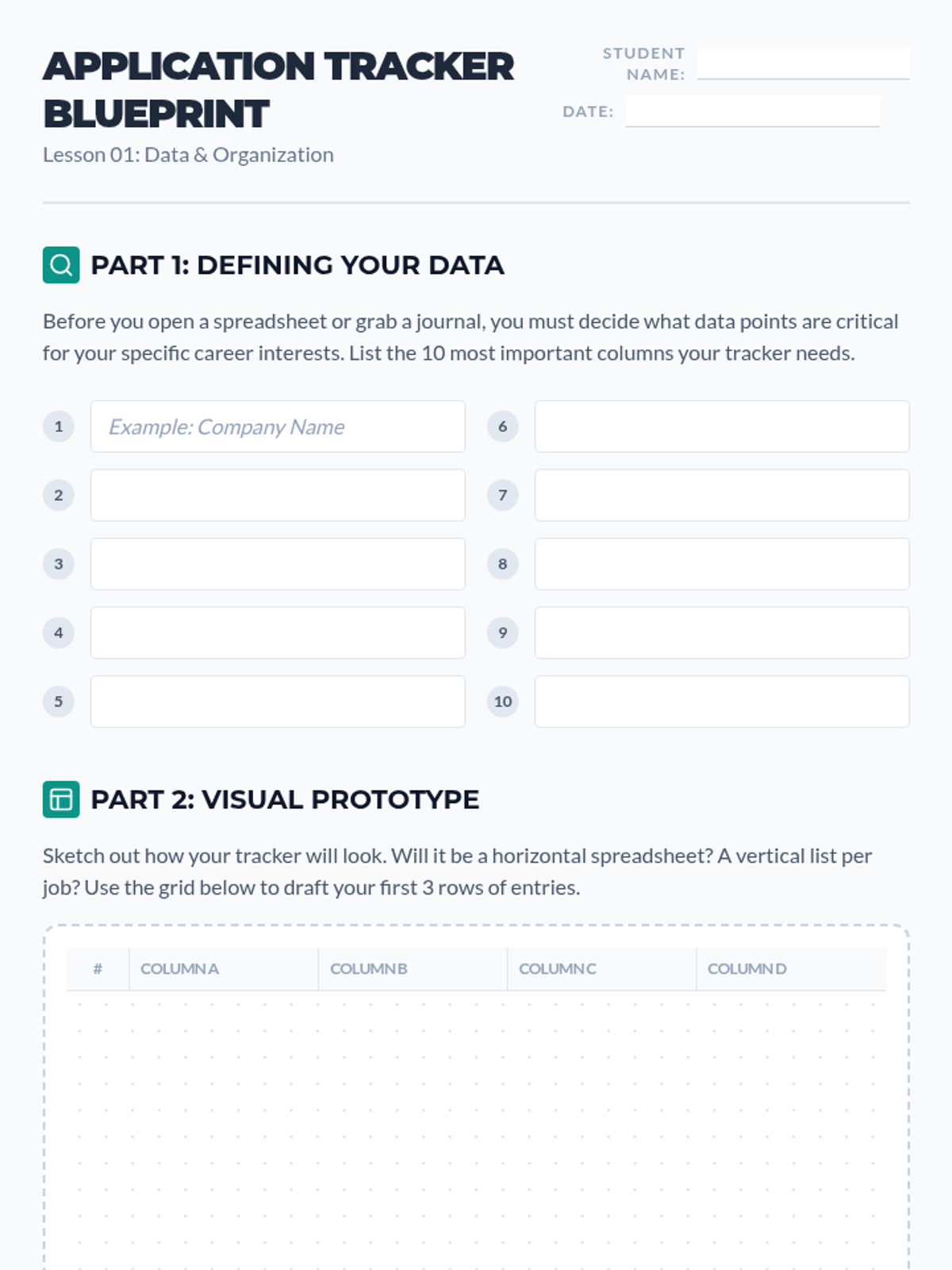
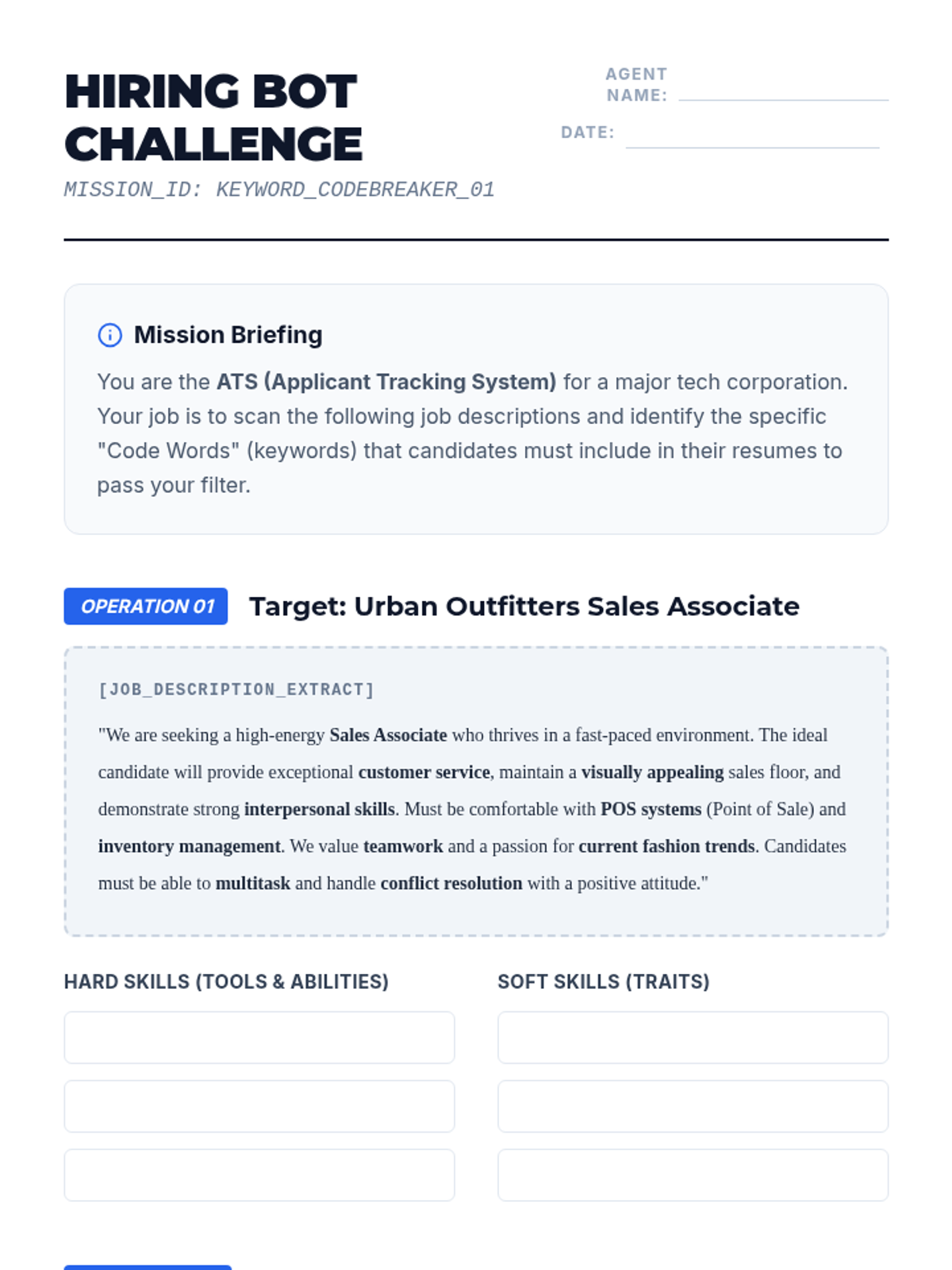
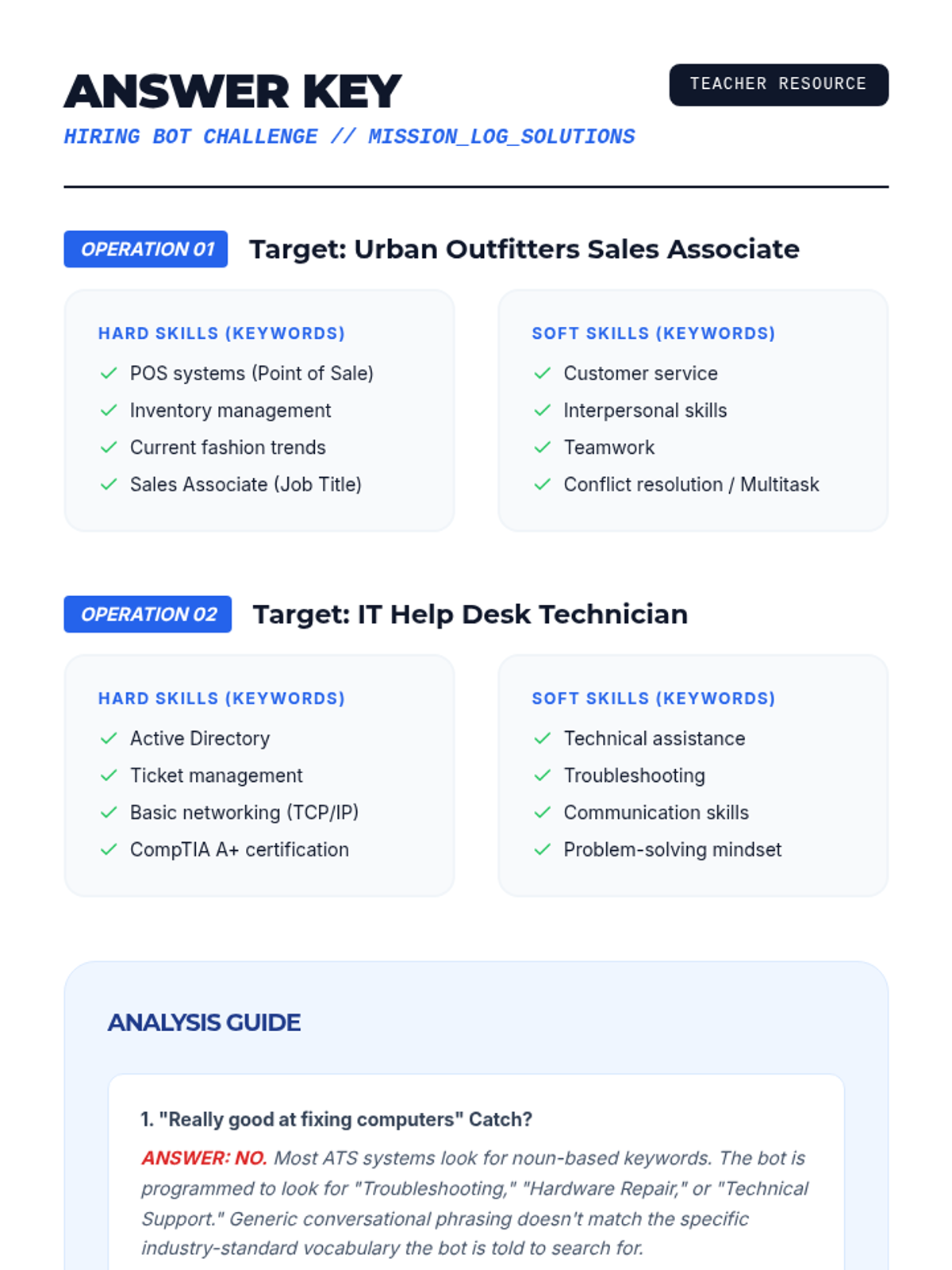
A comprehensive unit for 10th-grade students on navigating the digital job market. Students learn to decode job descriptions for ATS optimization, master job search platforms, build organizational systems for tracking applications, manage their time effectively, and maintain a safe and professional digital footprint.
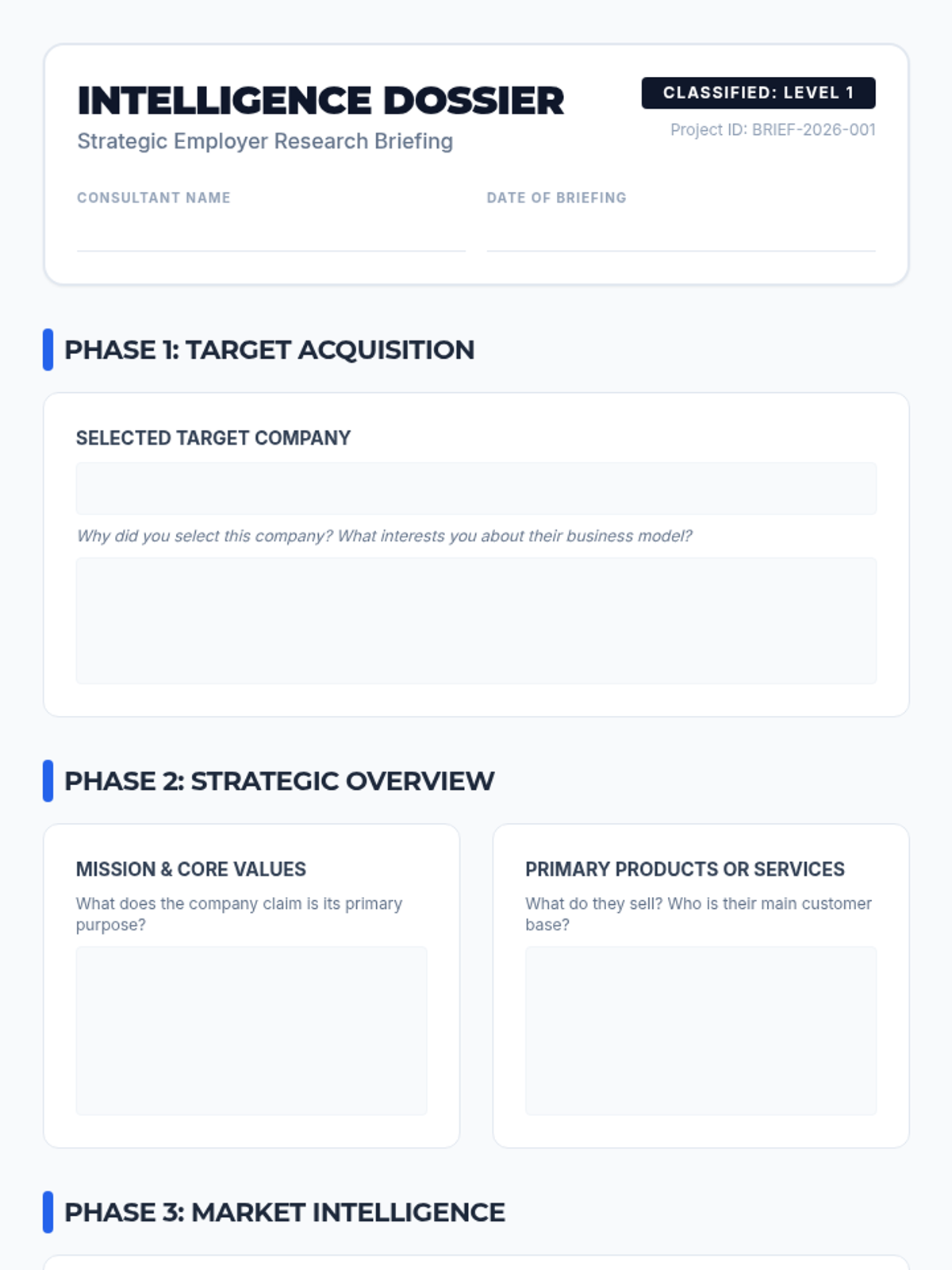
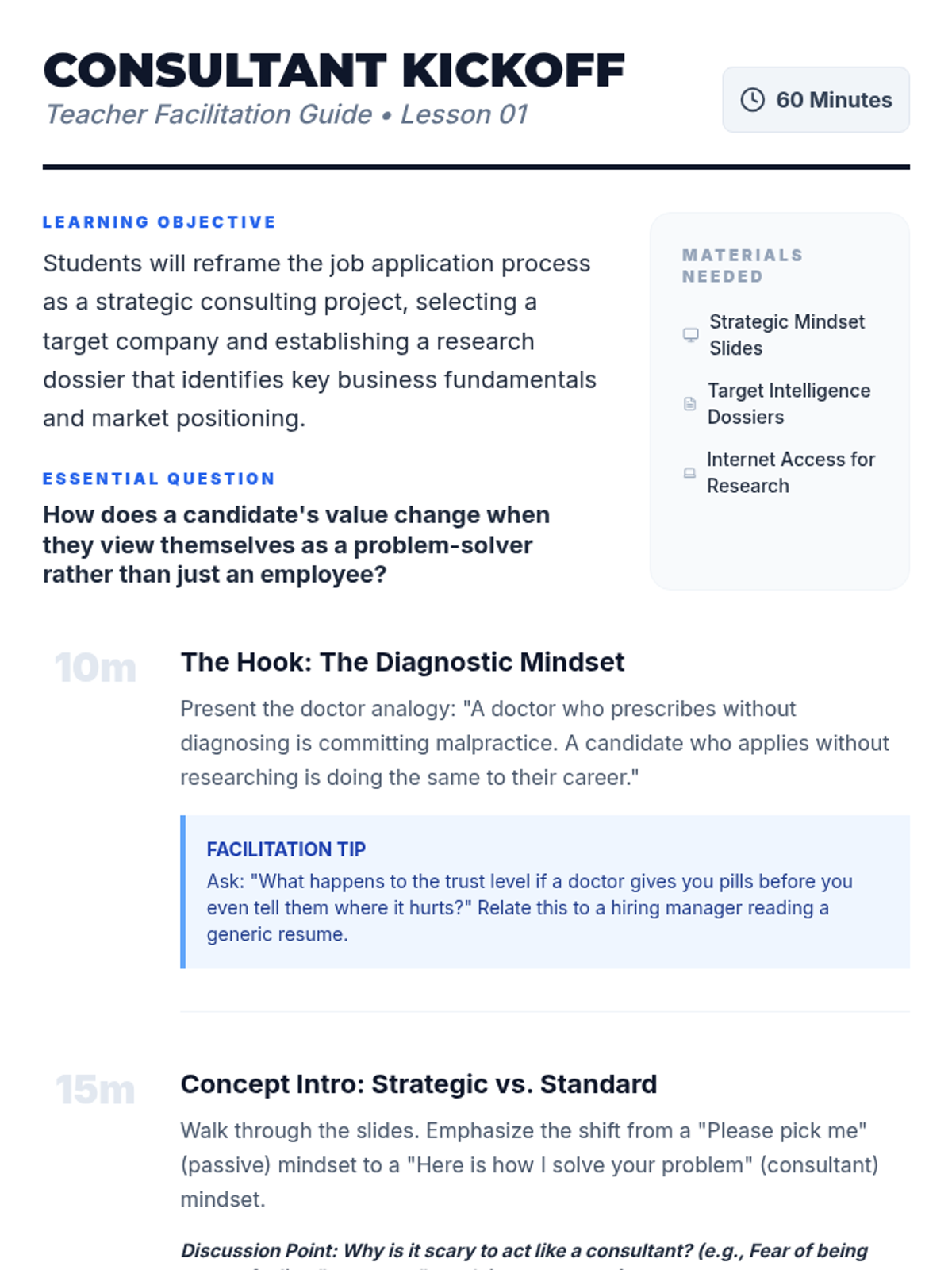
A project-based sequence where 10th-grade students act as business consultants to research target employers. Students conduct SWOT analyses, identify company pain points, and develop a 'Candidate Value Proposition' to position themselves as strategic solutions during the interview process.
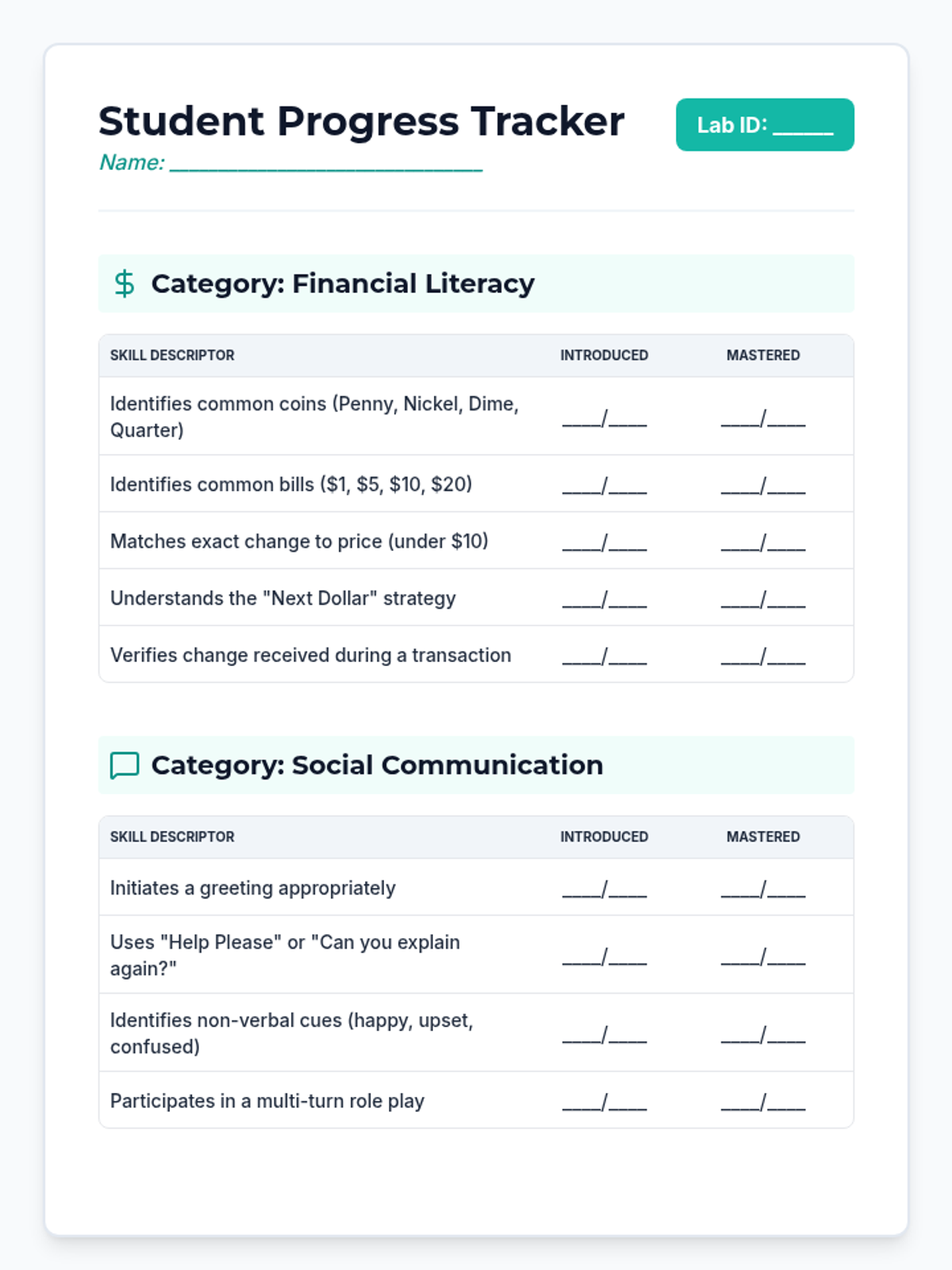
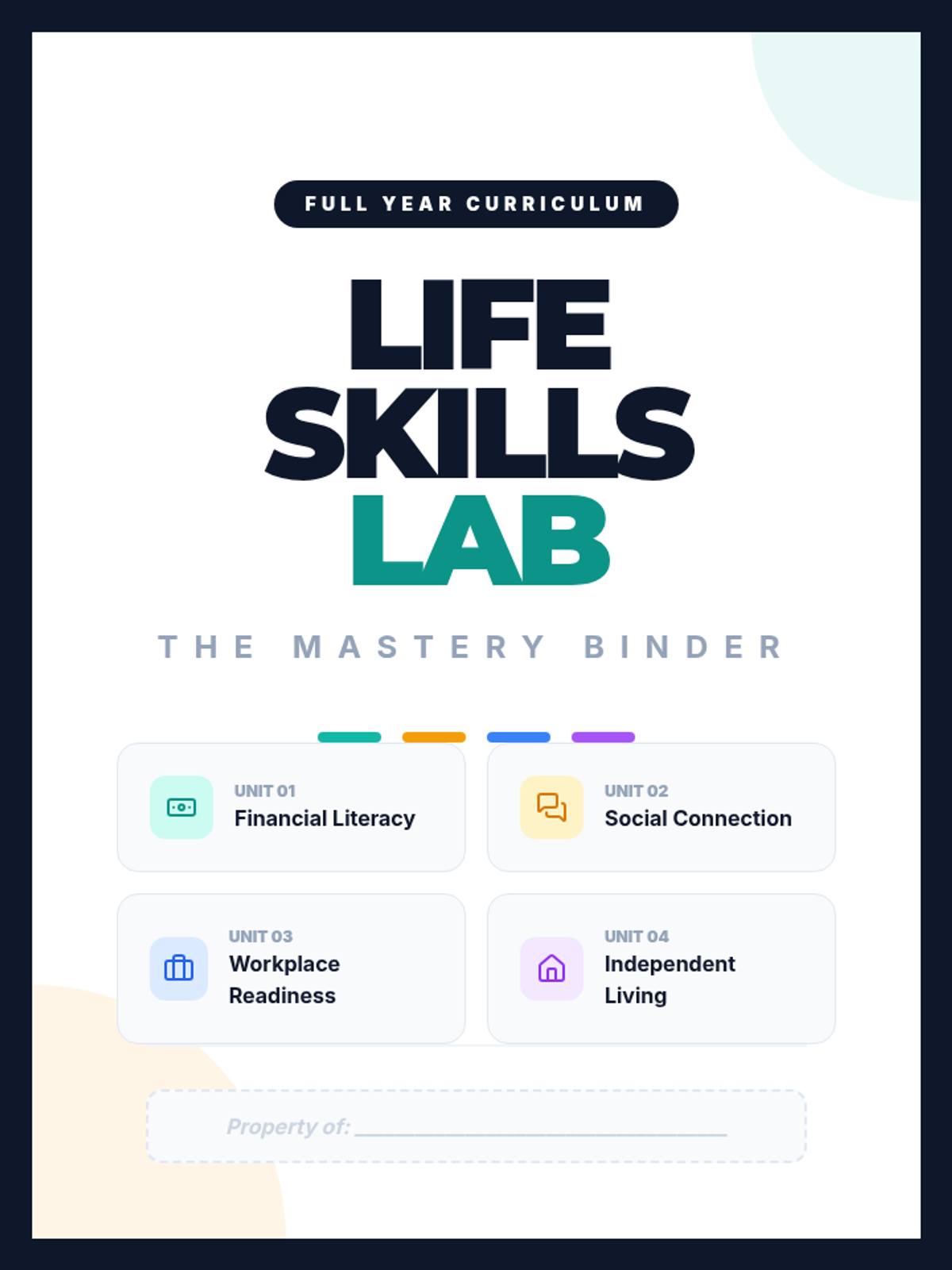
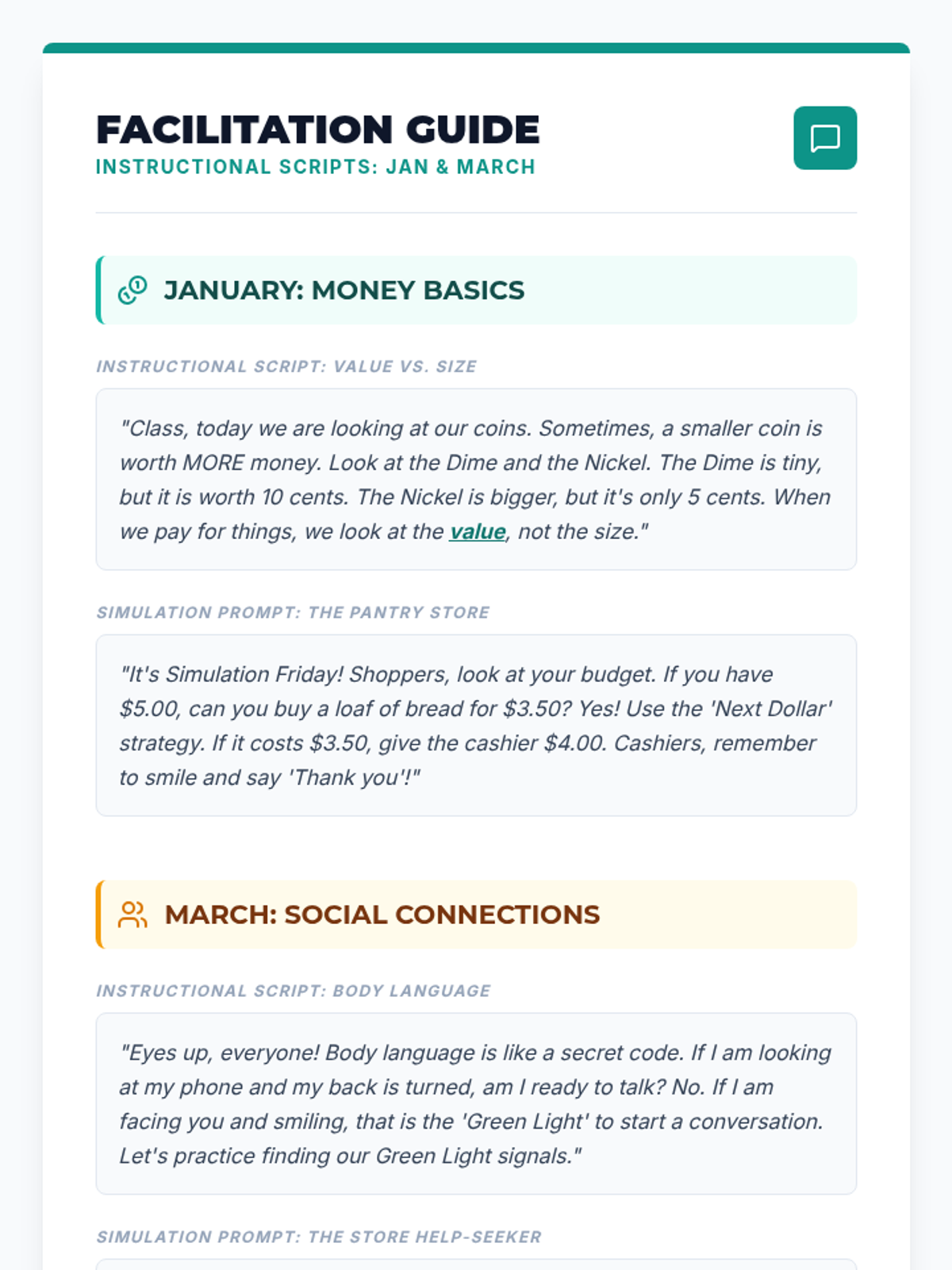
A comprehensive year-long curriculum designed to empower students with essential life skills for independence, focusing on financial literacy, social communication, and real-world simulations.
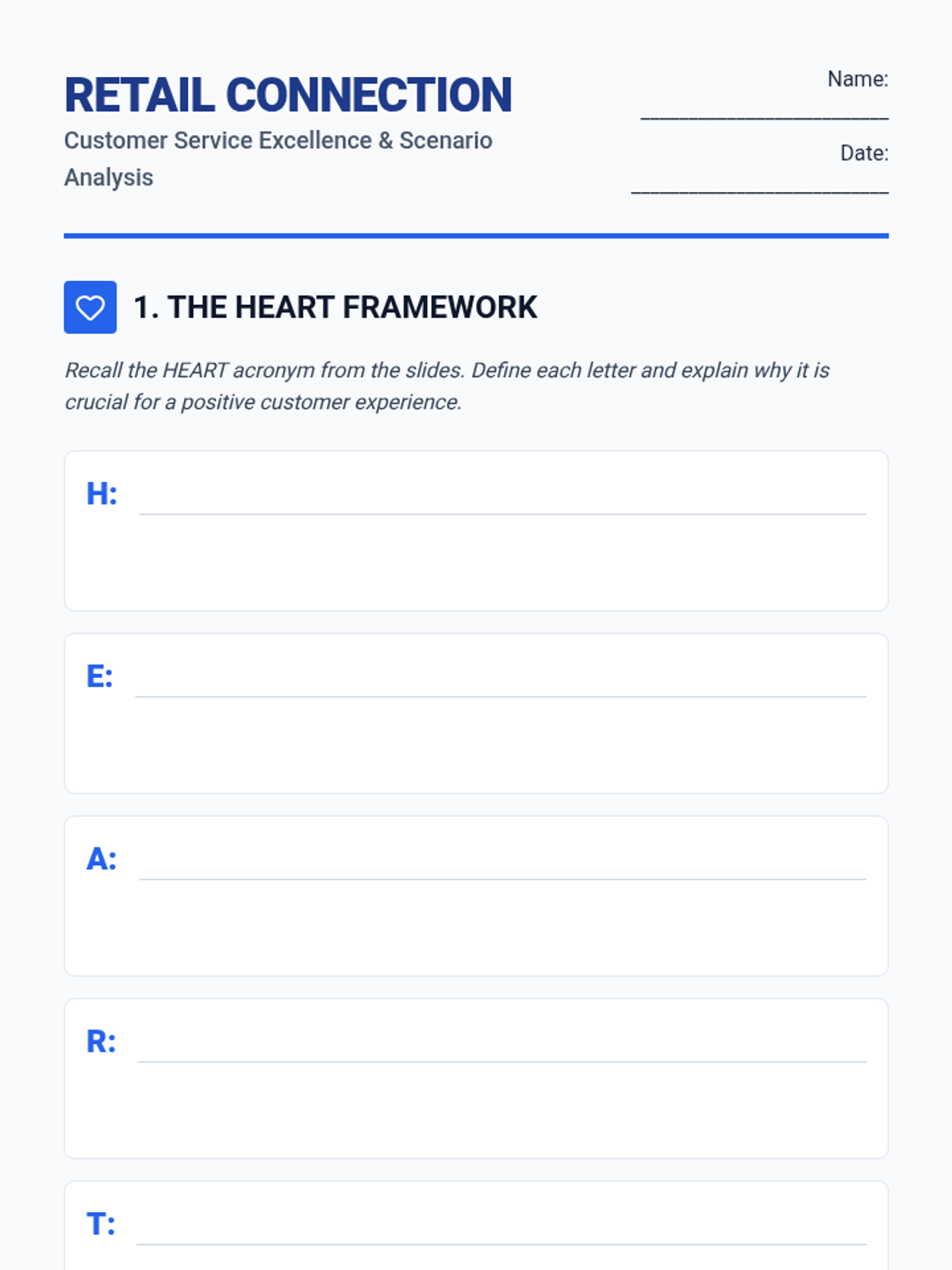
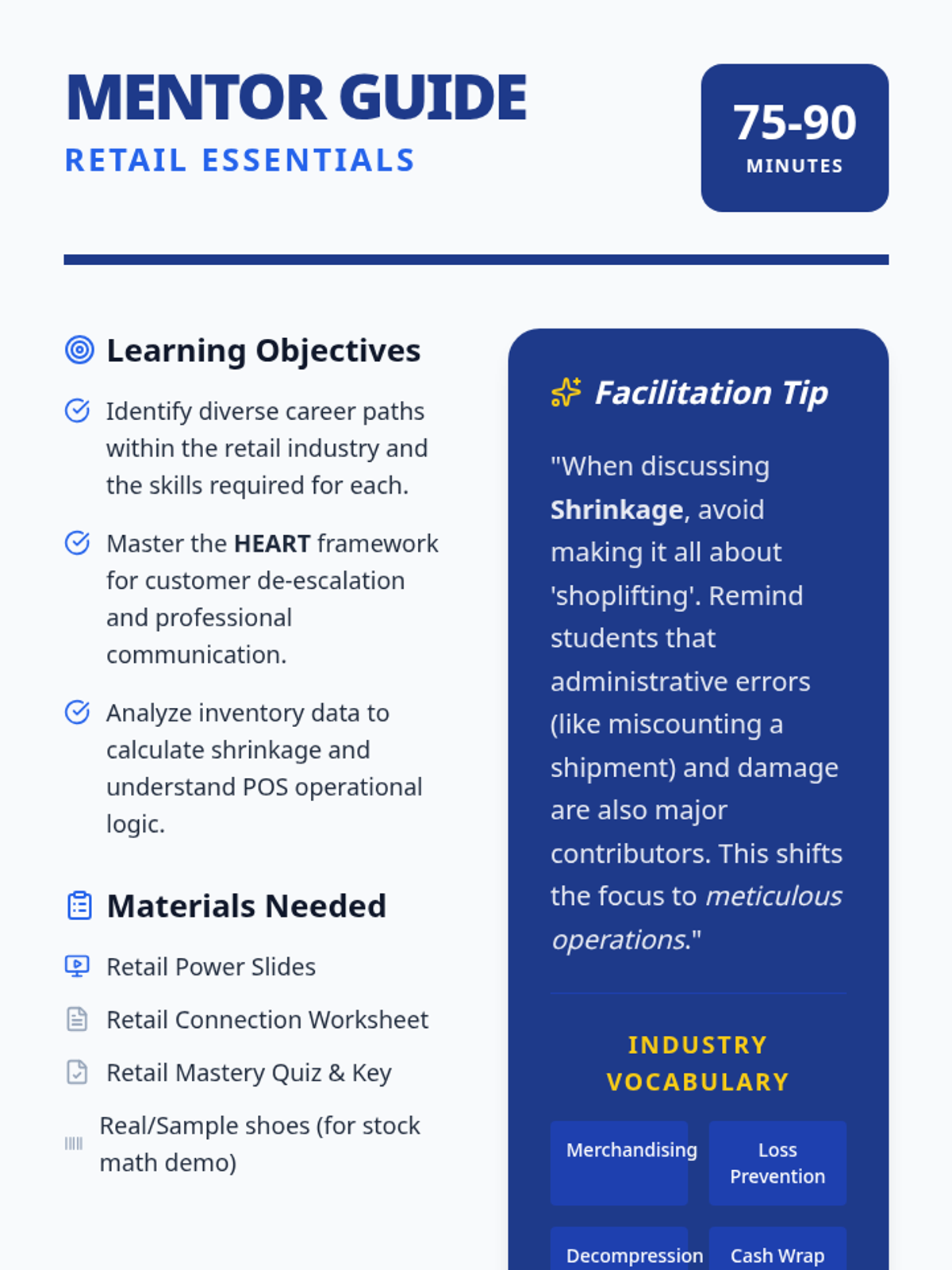
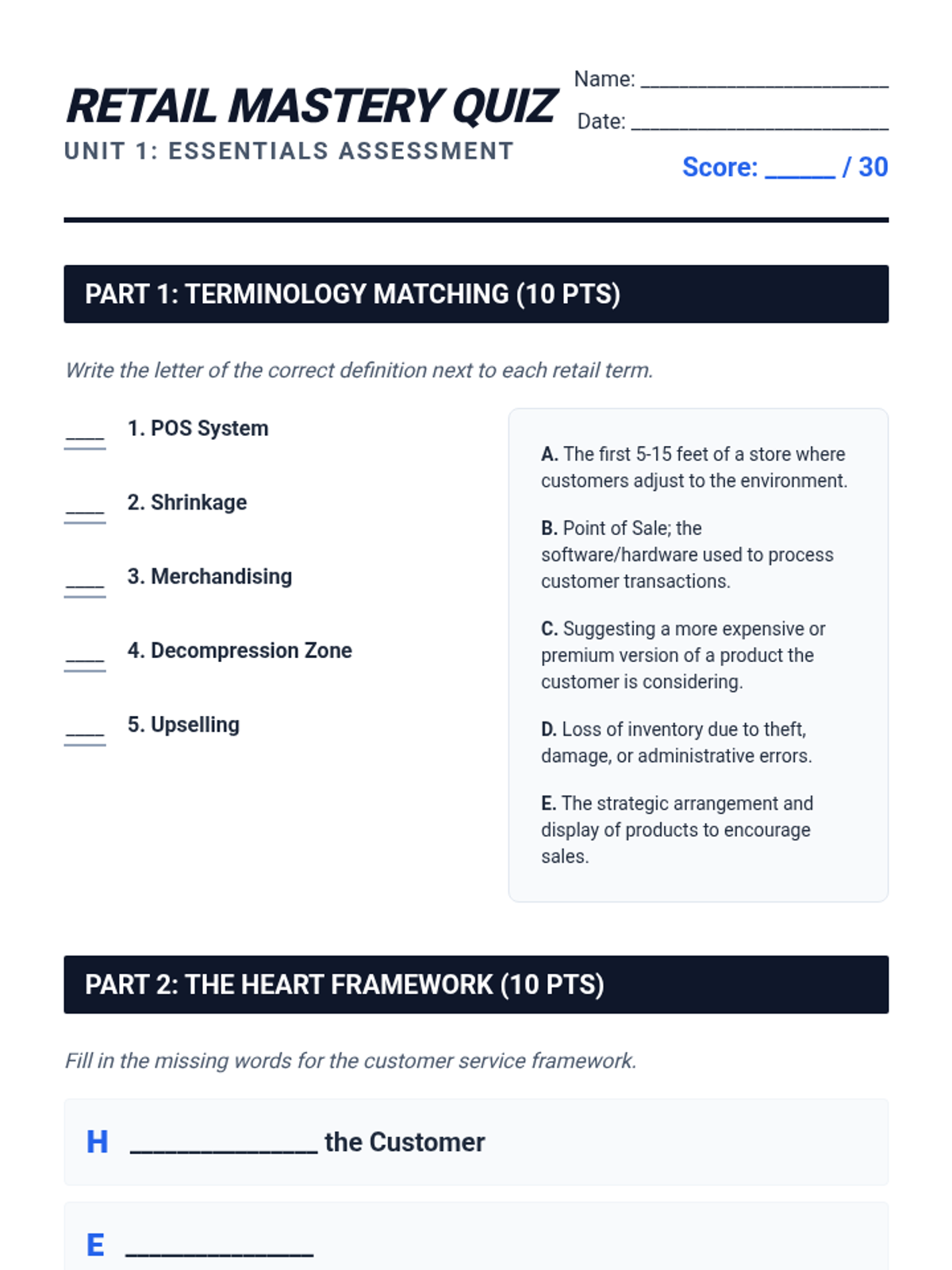
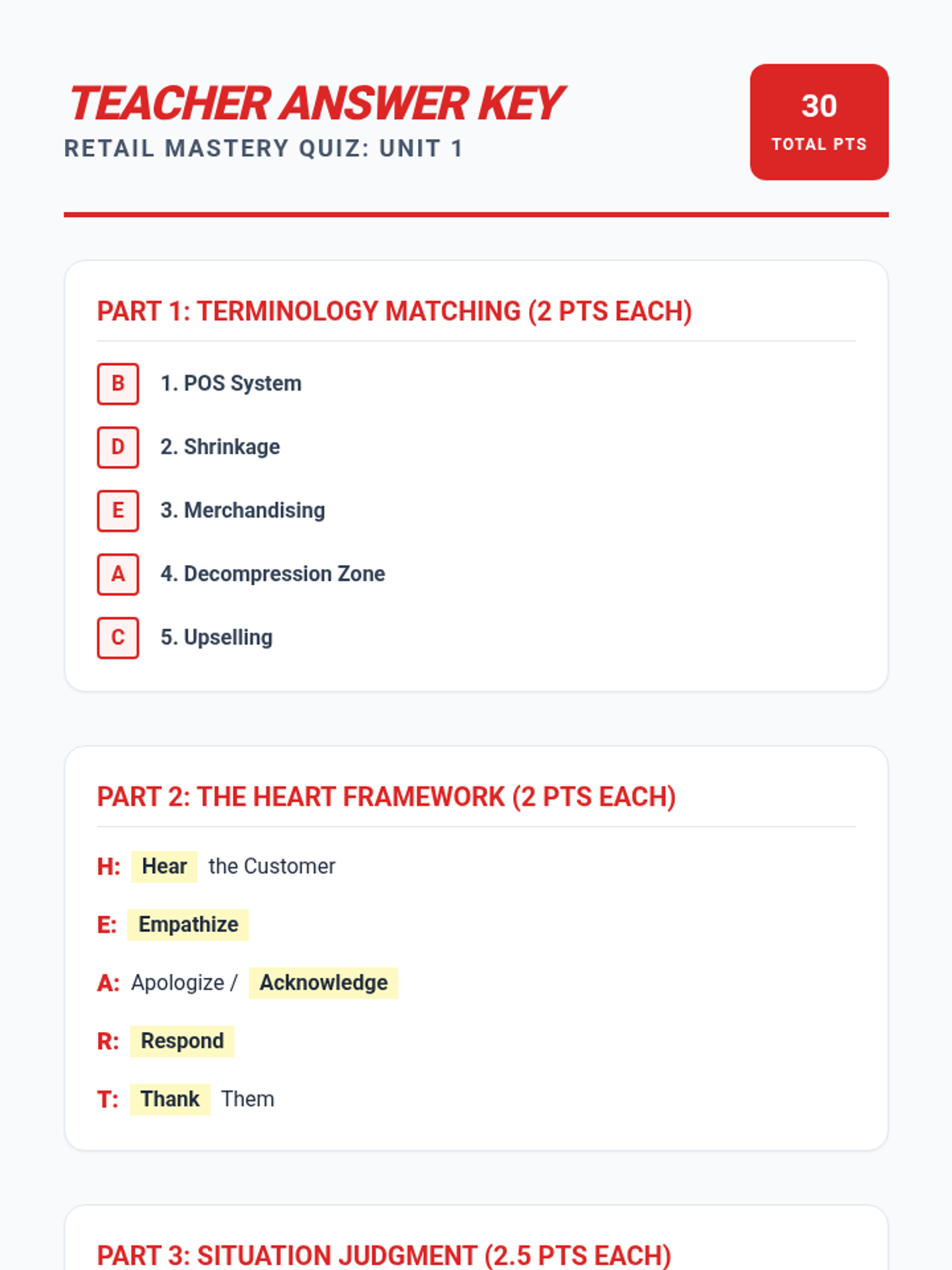
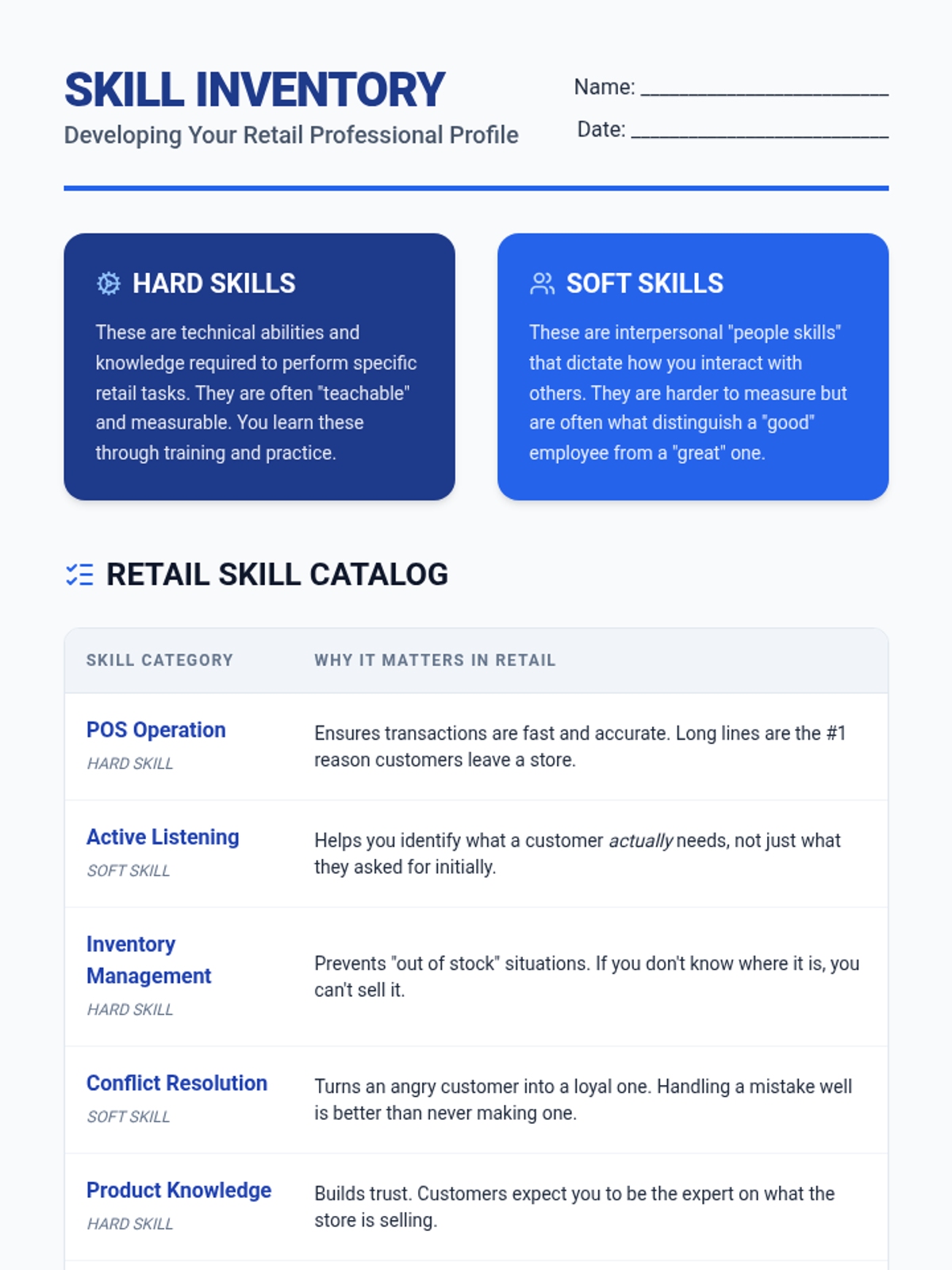
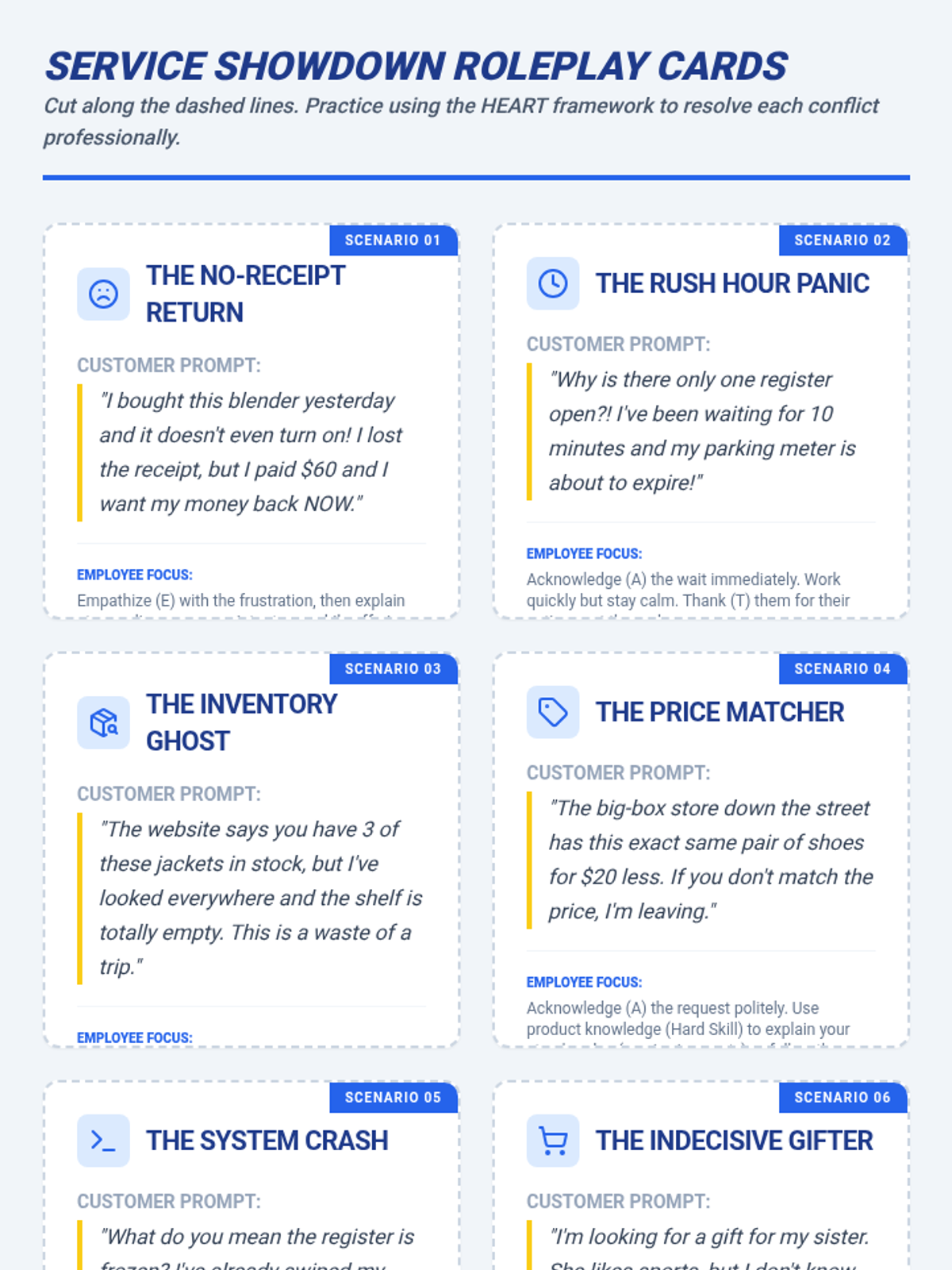
A hands-on career exploration unit focusing on the dynamic world of retail. Students will master customer service excellence, learn retail operations like inventory and POS systems, and design their own retail floor plan and brand strategy.
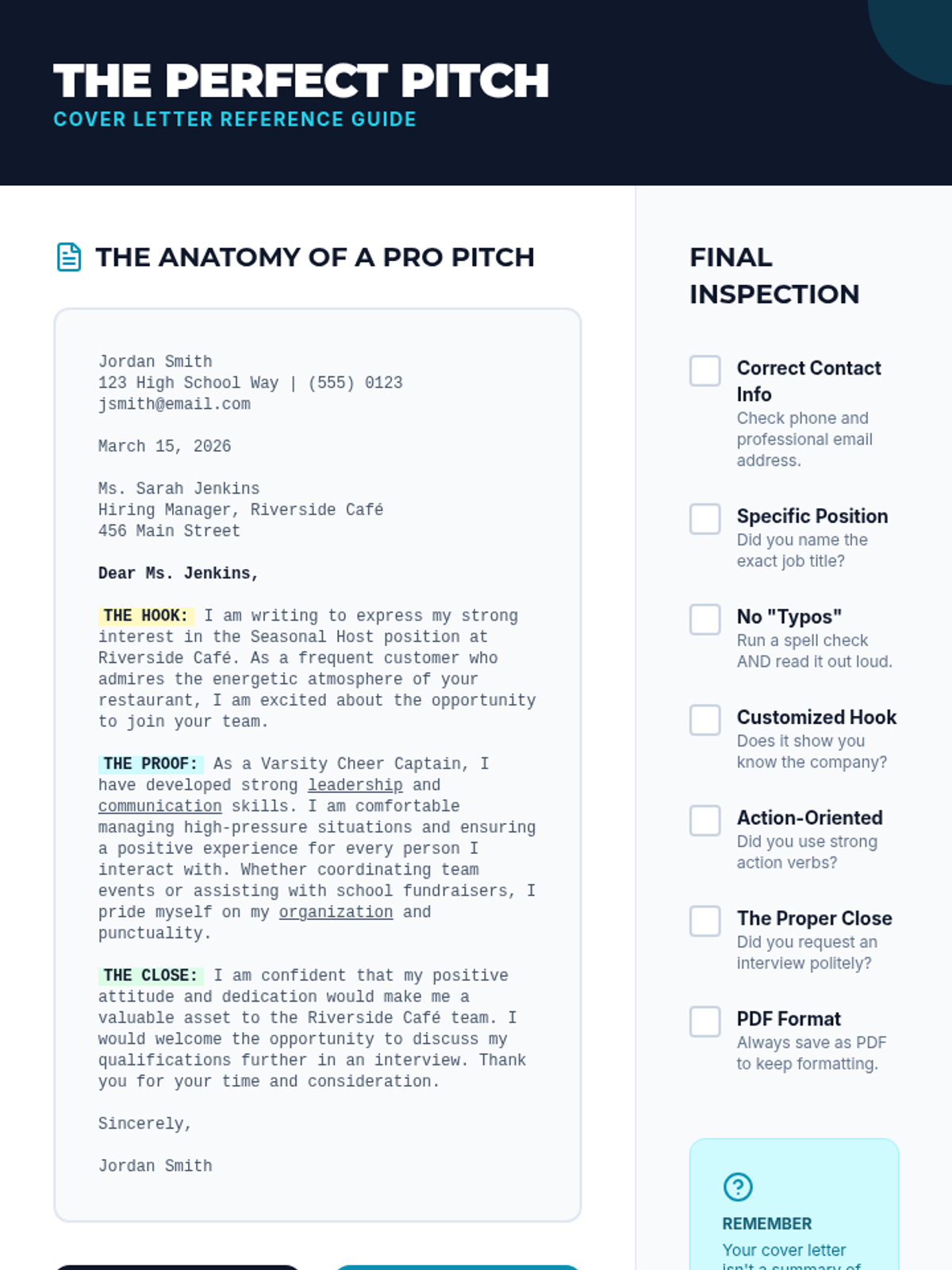
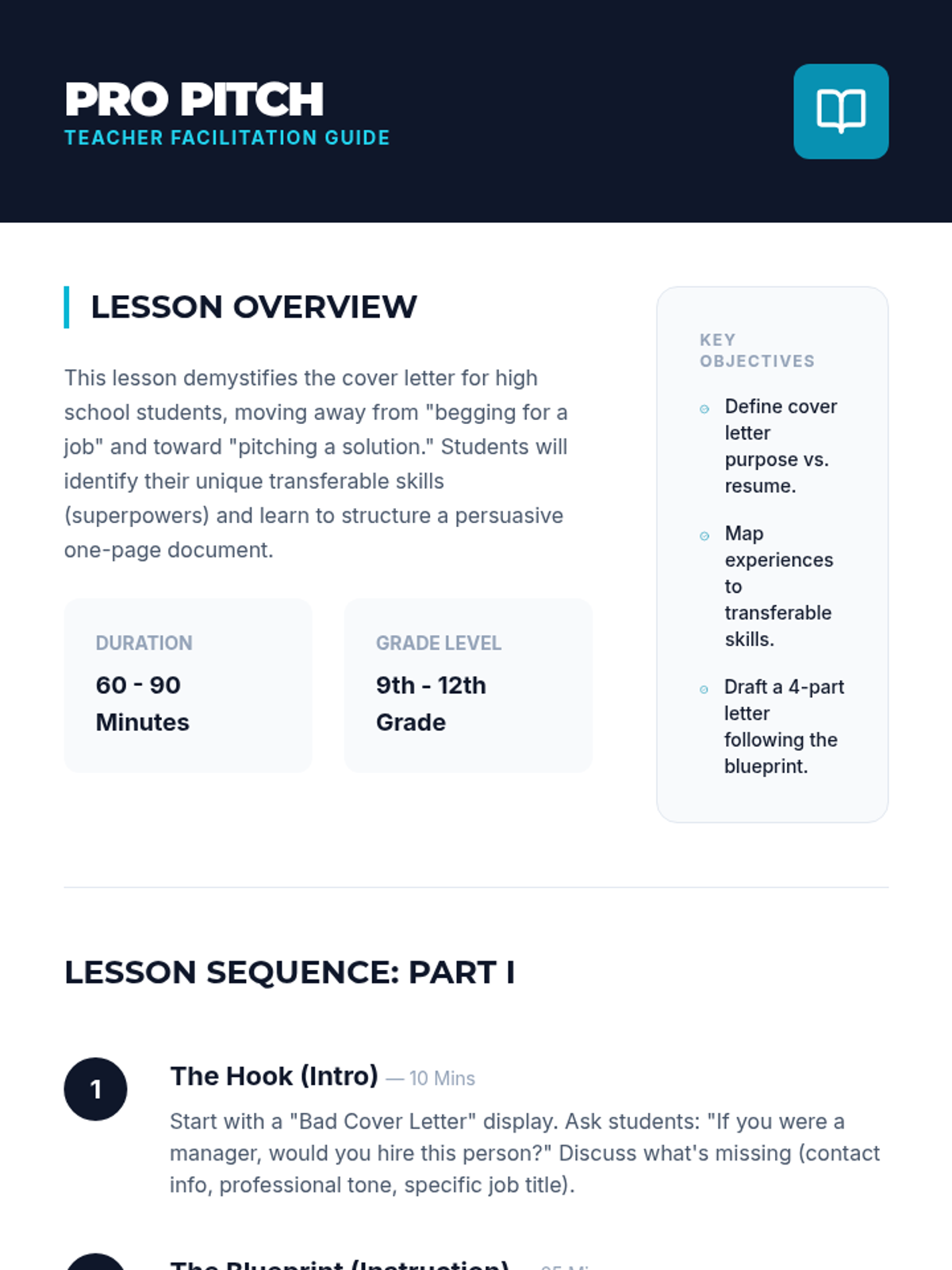
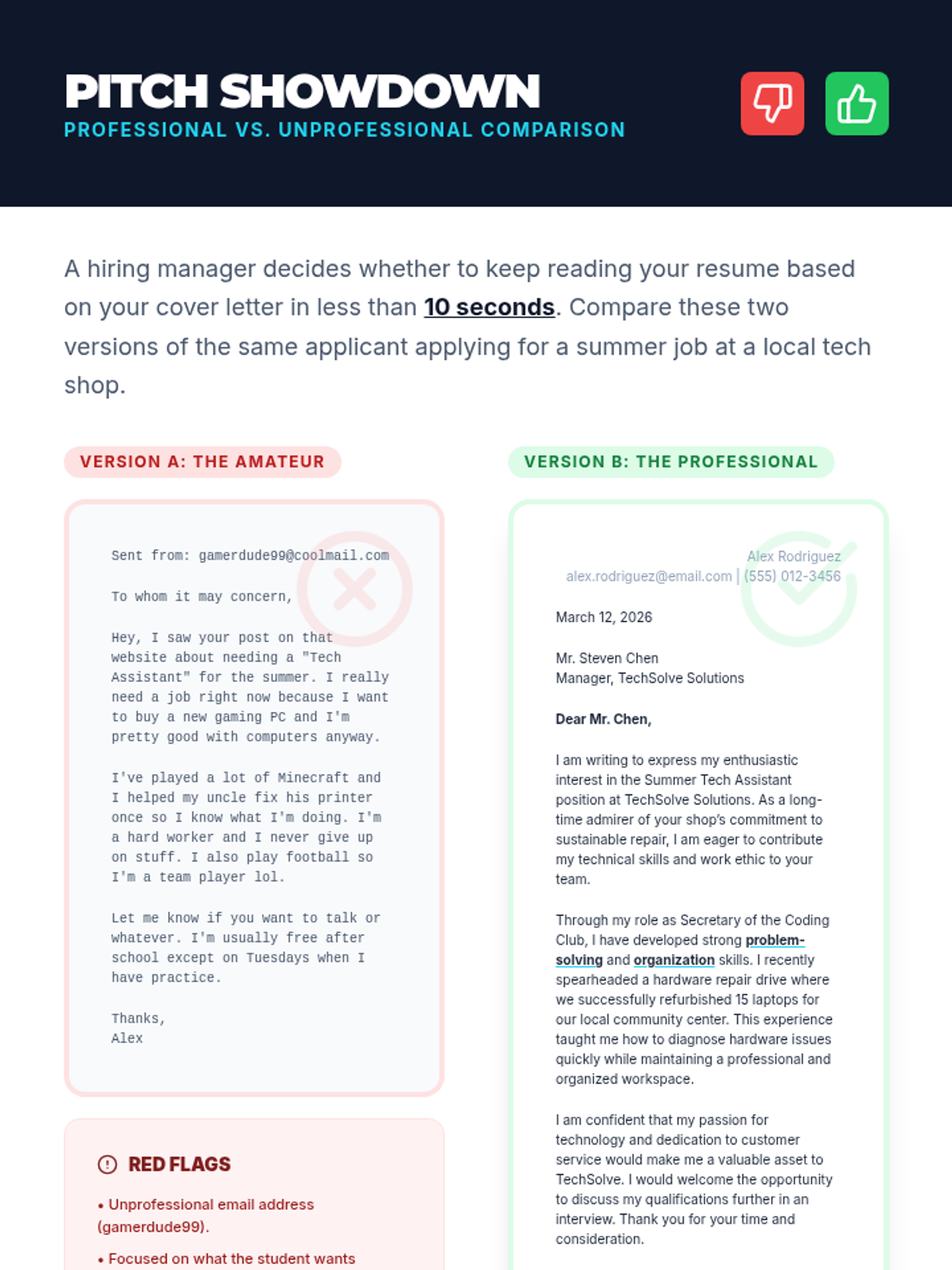
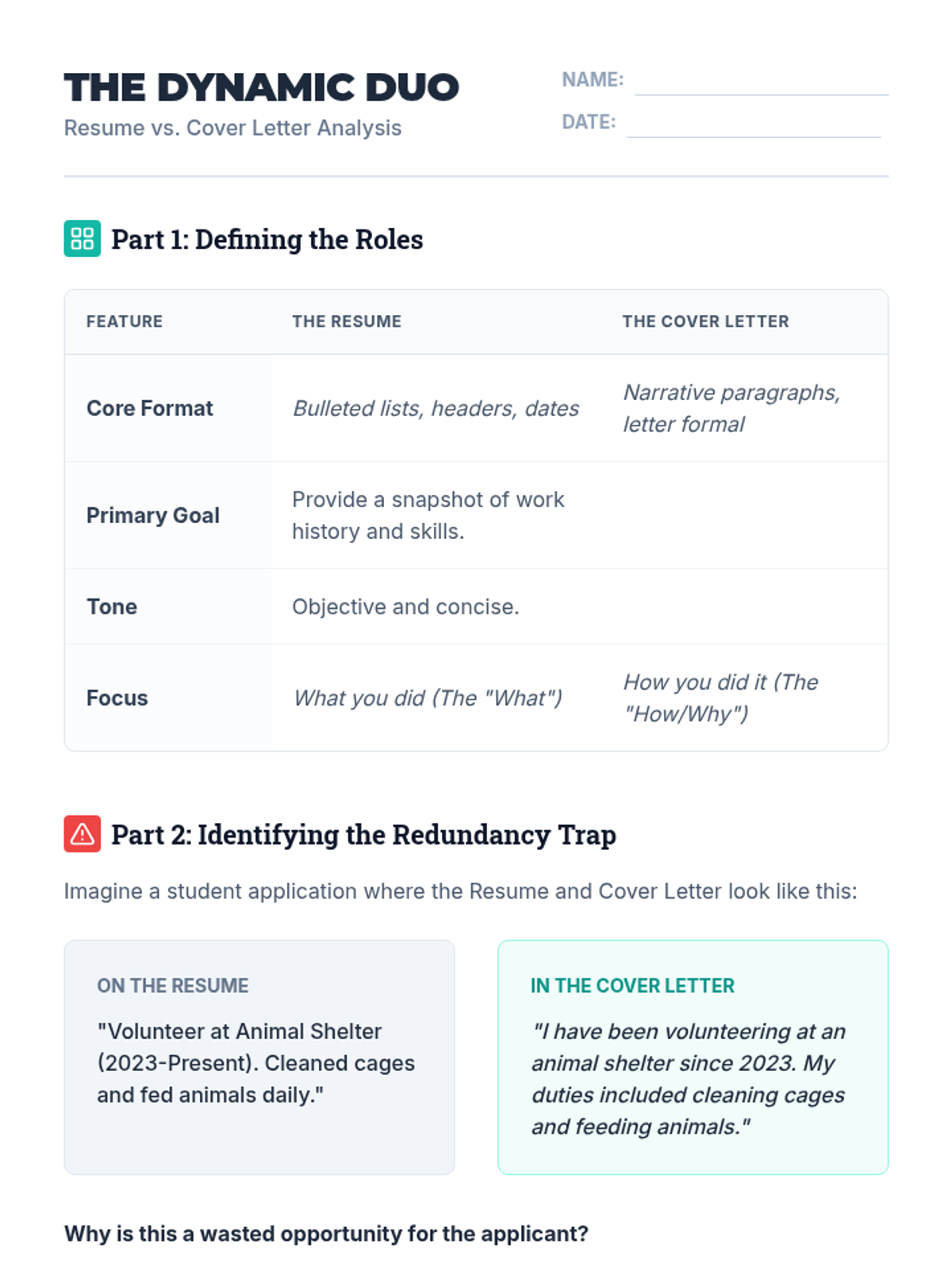
A comprehensive unit designed to help high school students master the art of self-marketing through resumes and cover letters, focusing on professional communication and personal branding.
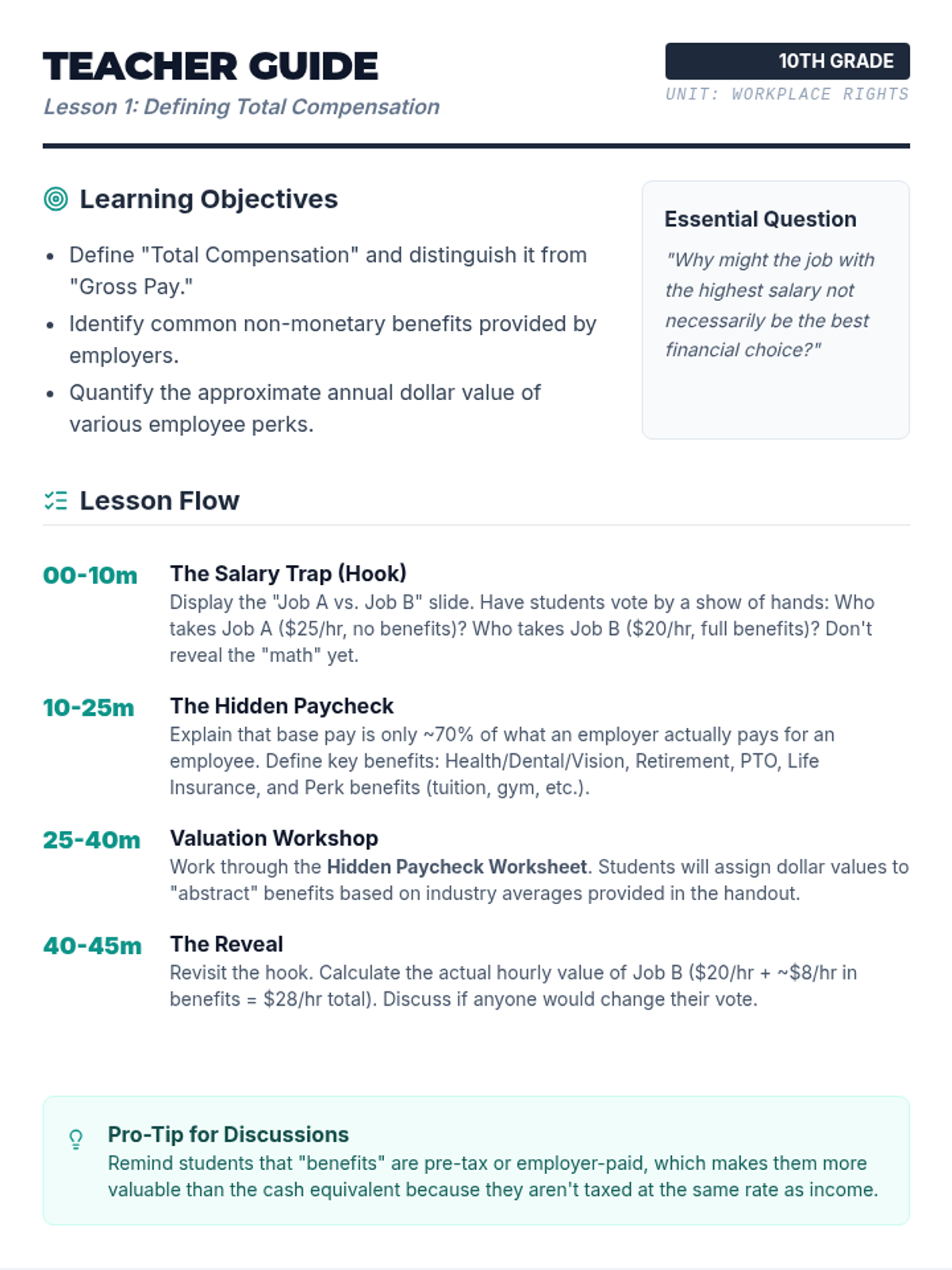
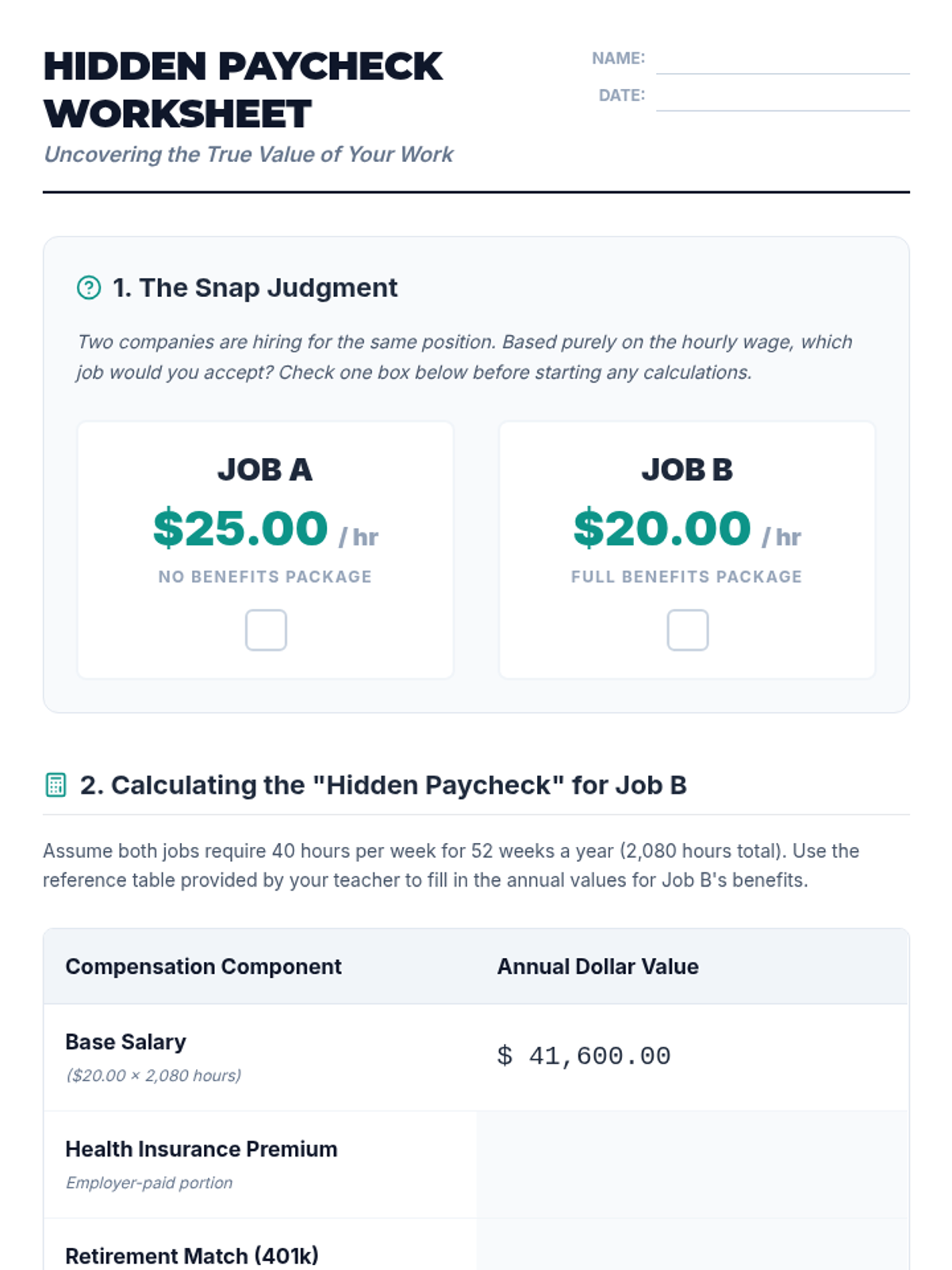
This sequence guides 10th-grade students through the complex world of employee benefits, shifting focus from hourly wages to total compensation. Students learn to value health insurance, retirement matches, and paid leave to make informed career decisions.
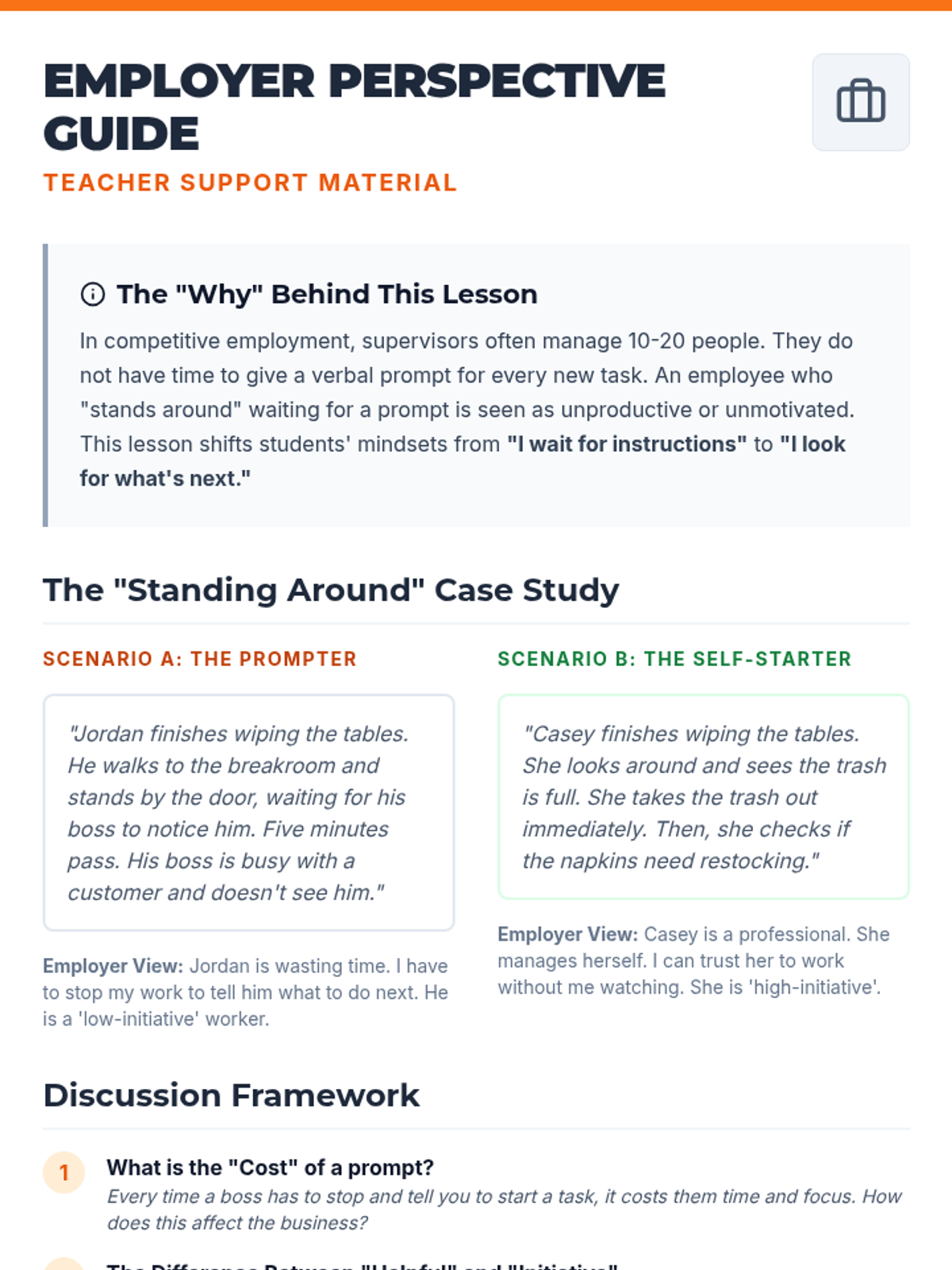
A workplace-readiness sequence for transition-aged students focused on moving from verbal prompting to identifying natural environmental cues for task initiation. Students practice initiative through simulations, role-plays, and environmental analysis to prepare for competitive employment.
A comprehensive sequence for 9th-grade students focusing on the art of tailoring cover letters. Students transition from passive readers to active analysts, learning to decode job descriptions, map their personal skills to employer needs, and adjust their writing tone for different professional audiences.
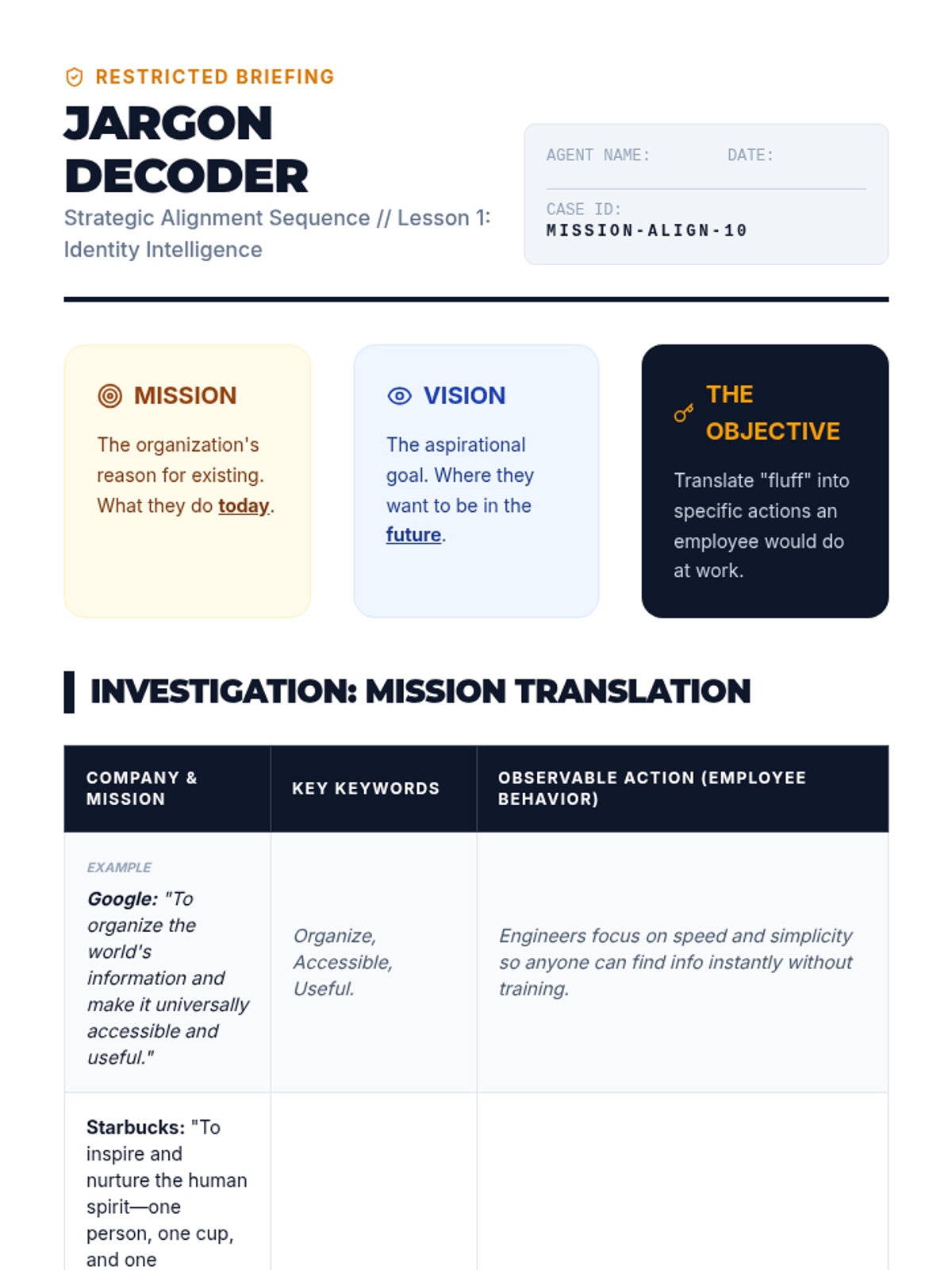
This 5-lesson sequence equips 10th-grade students with the research skills necessary to navigate the modern job market. Students learn to analyze corporate mission statements, investigate organizational culture through social media and reviews, track industry news, and synthesize this data to form strategic interview questions and personal value propositions.
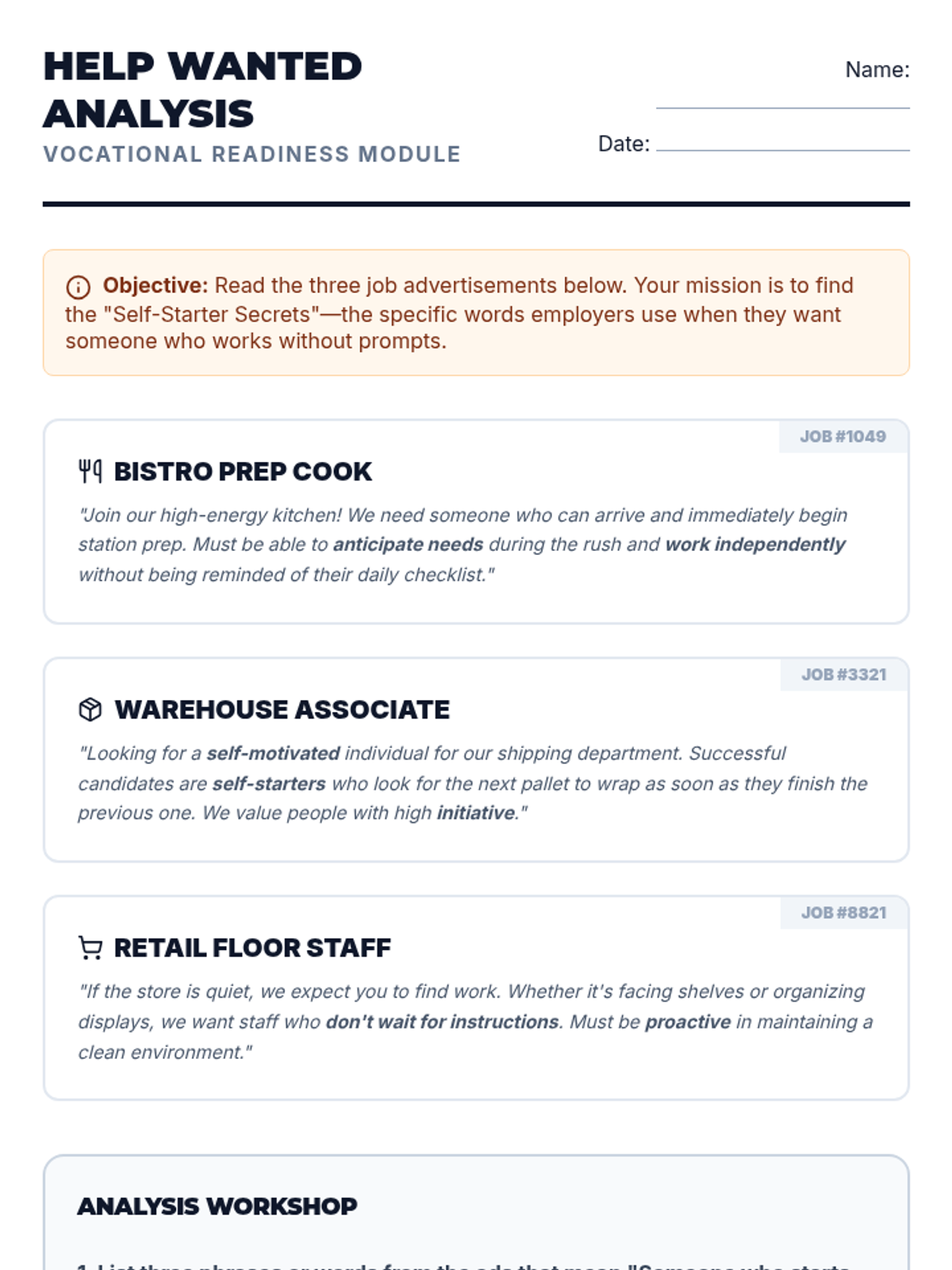
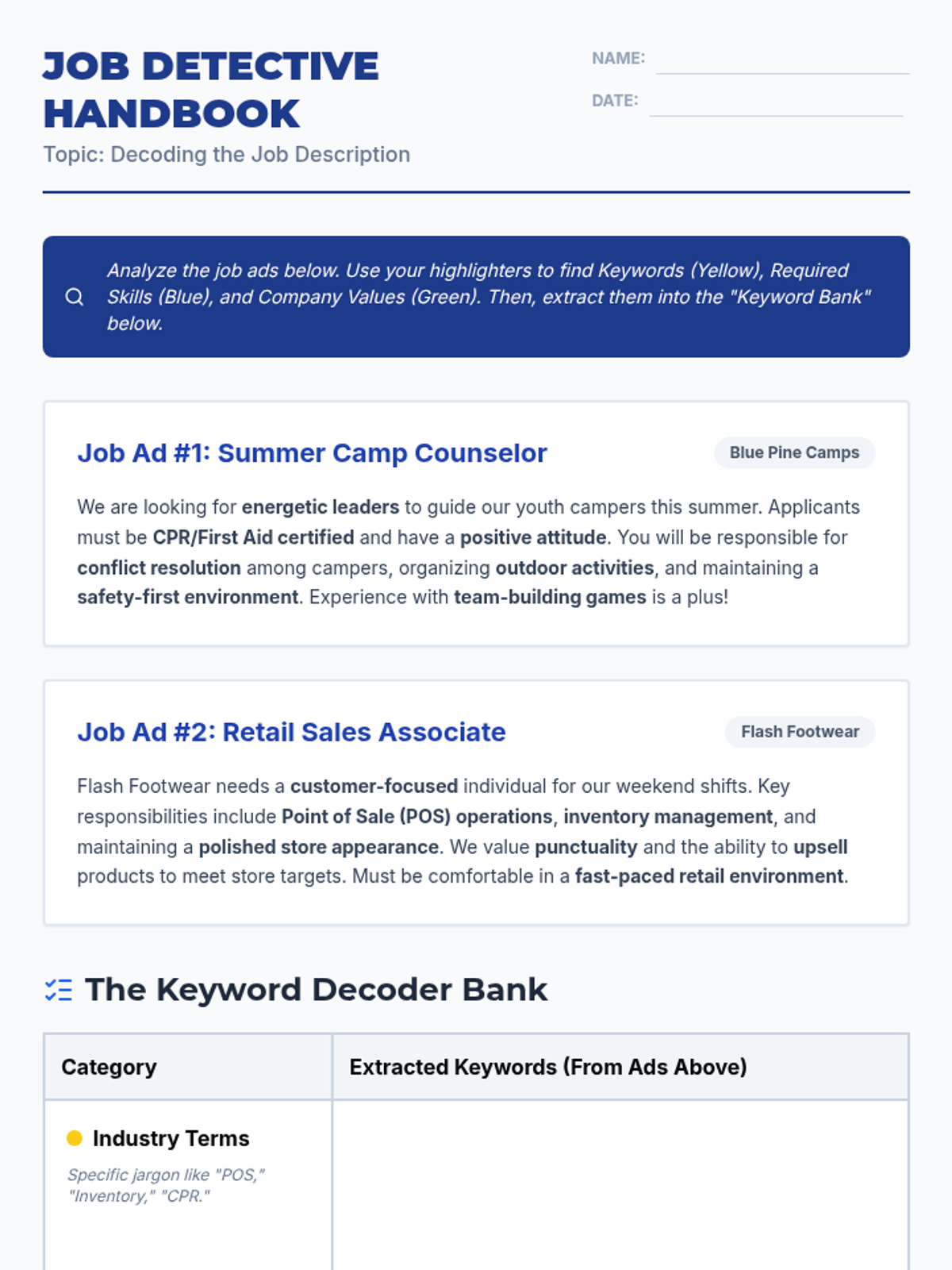
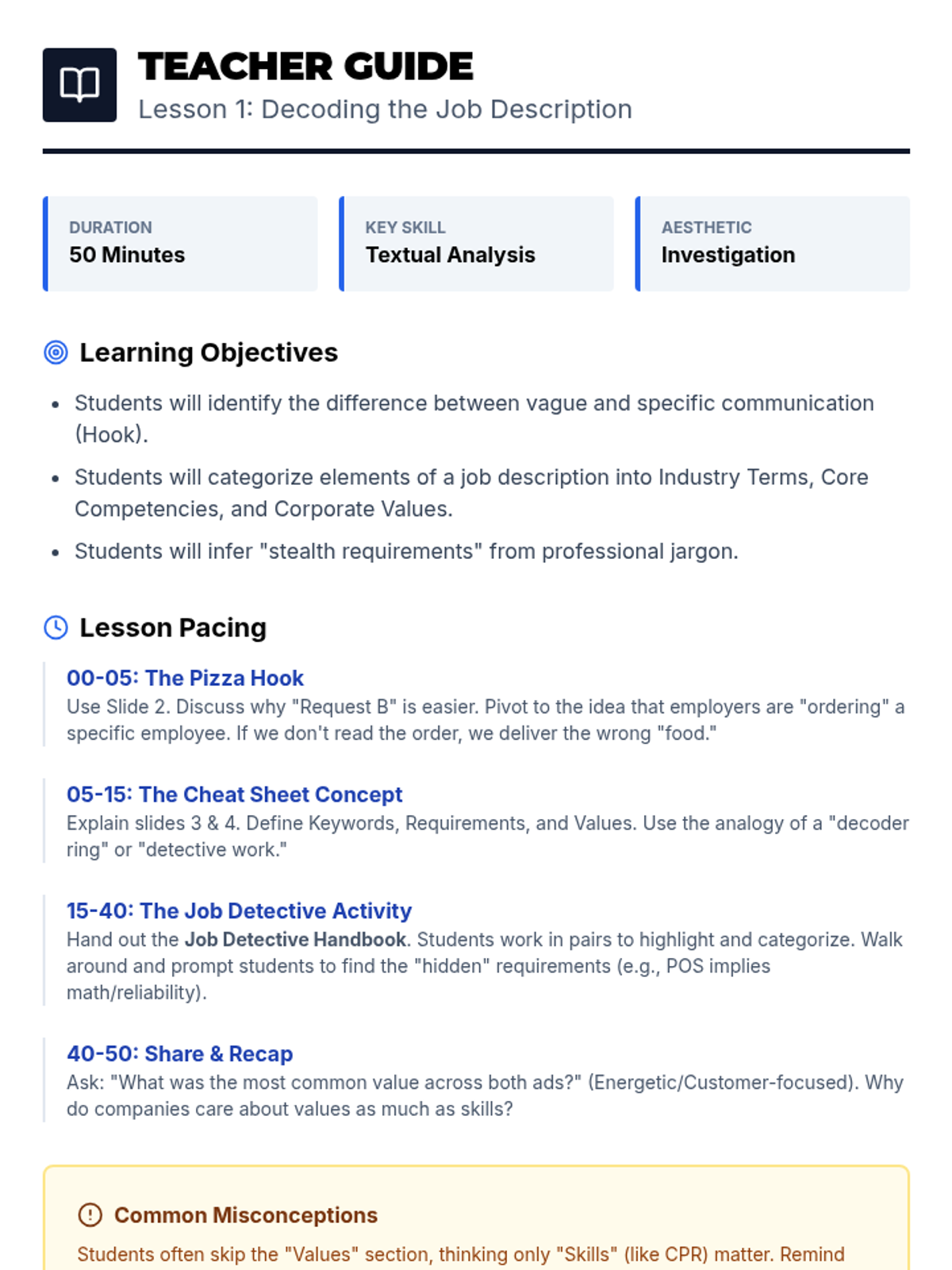
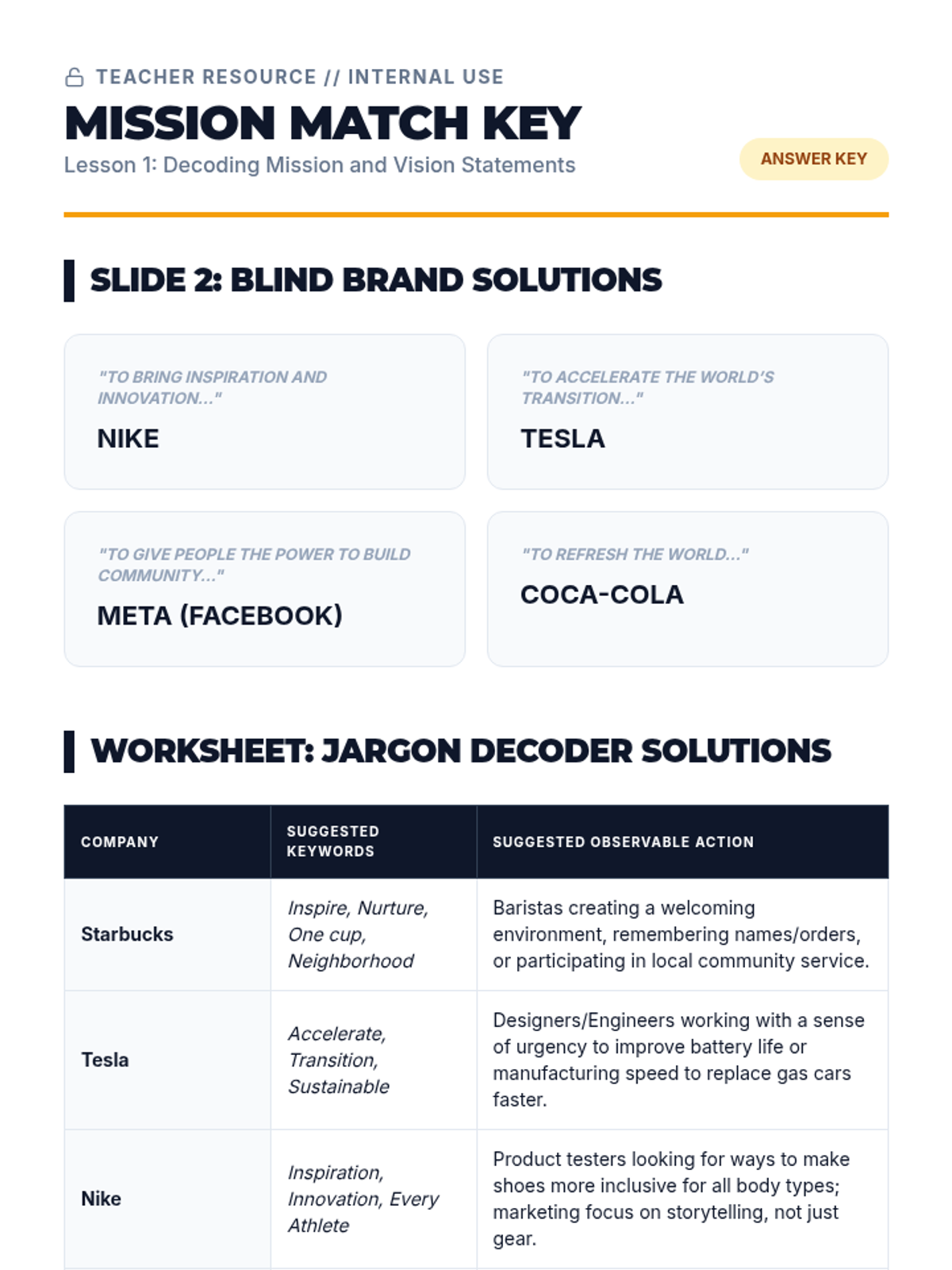
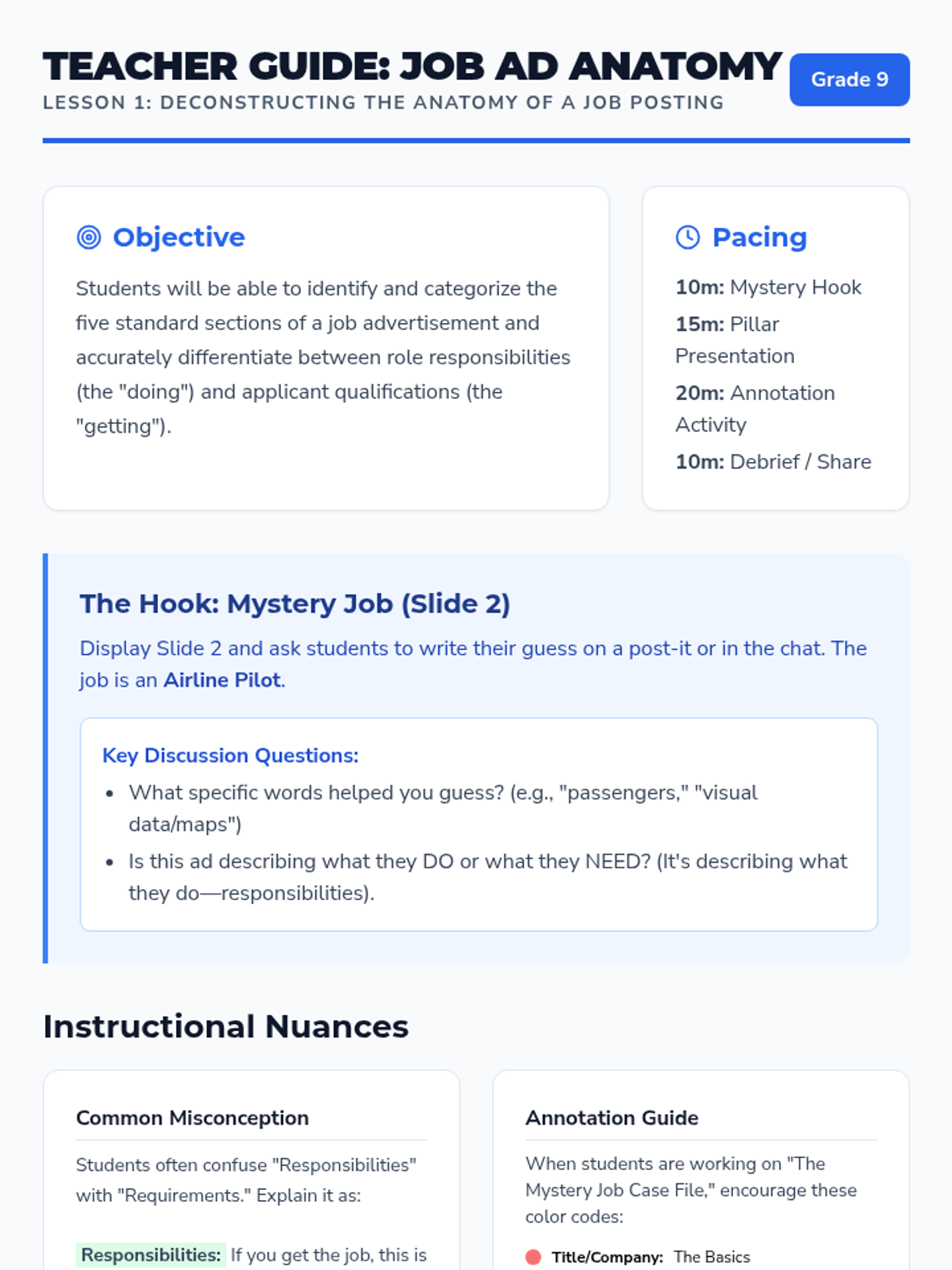
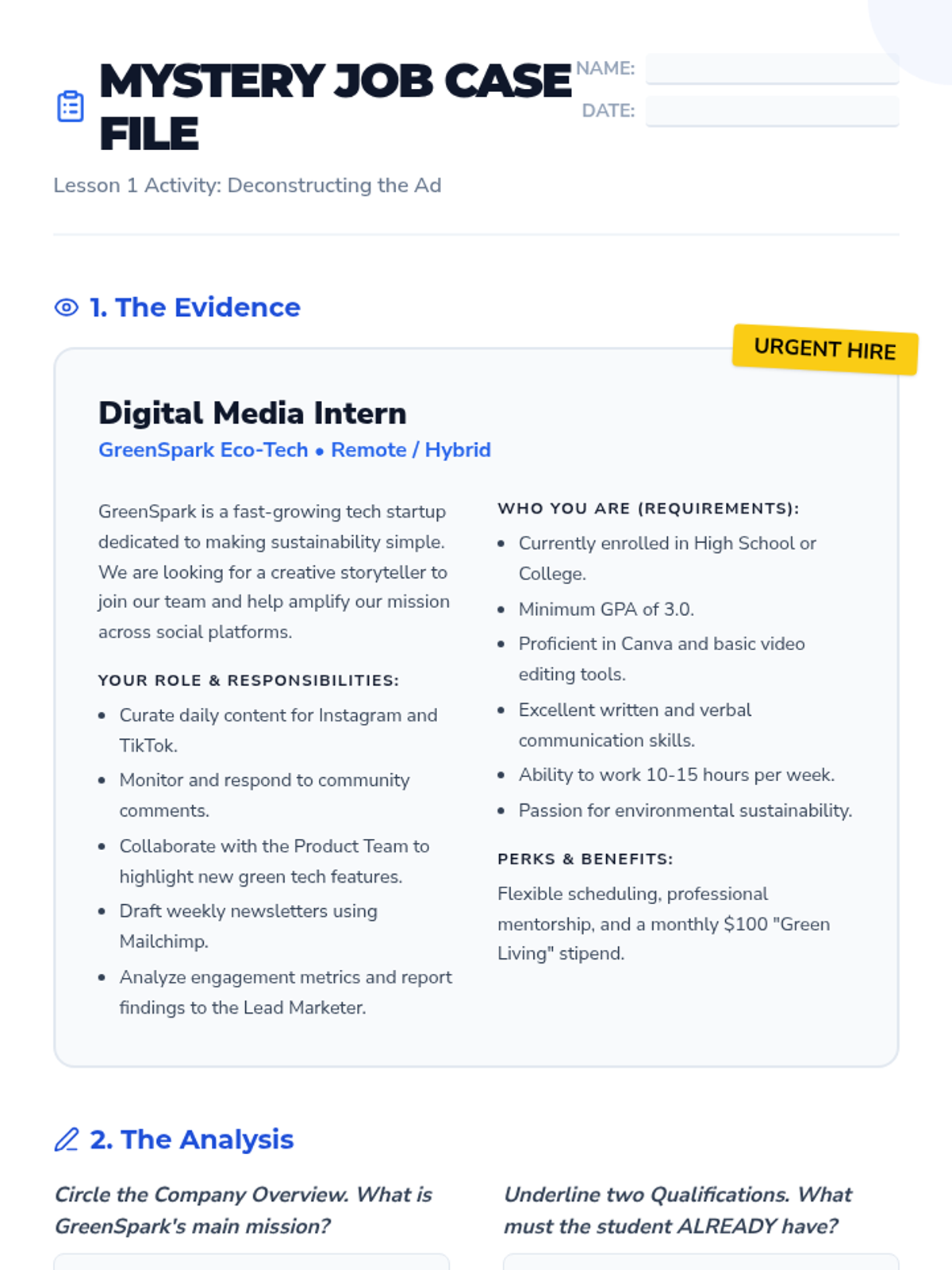
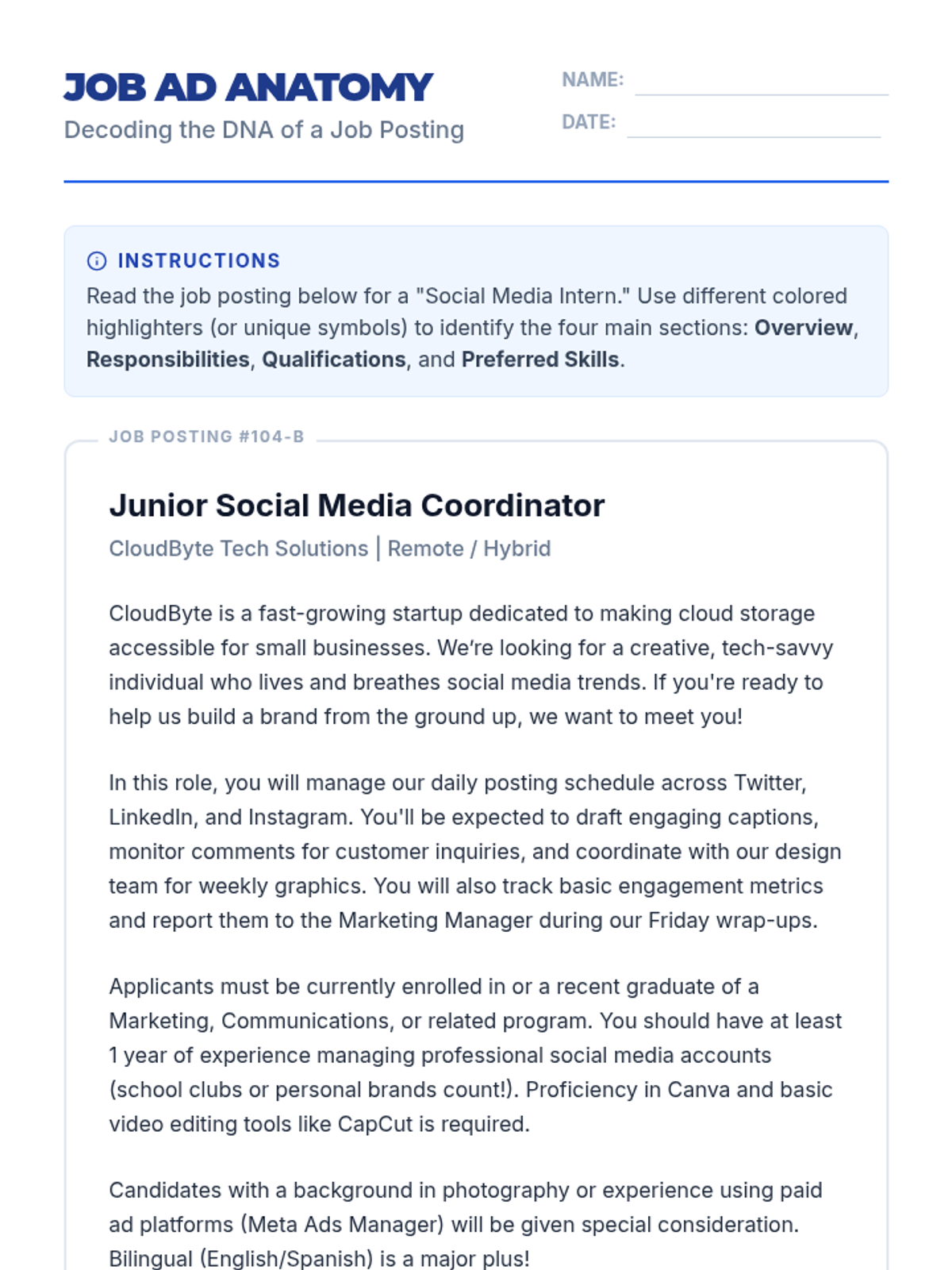
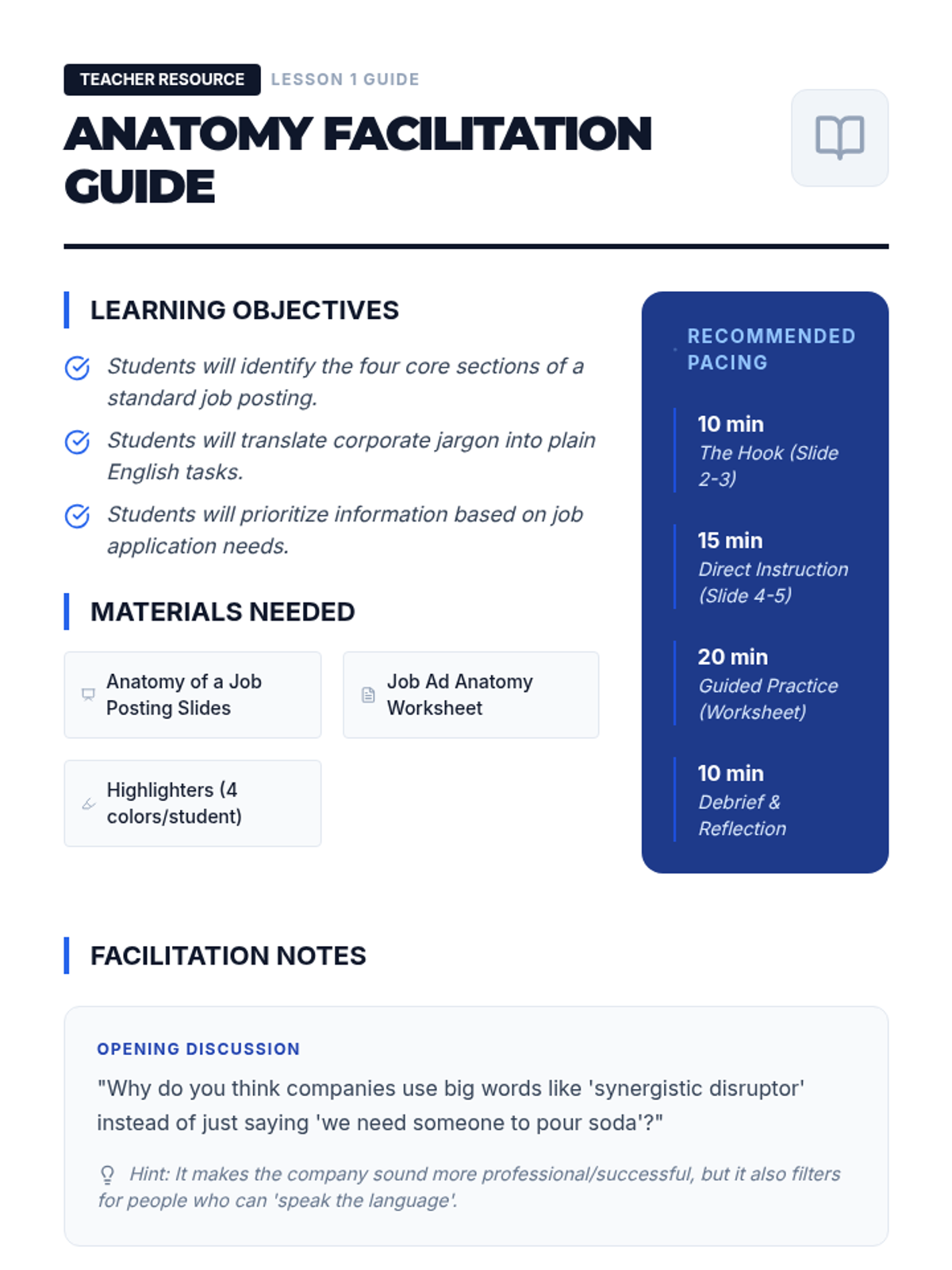
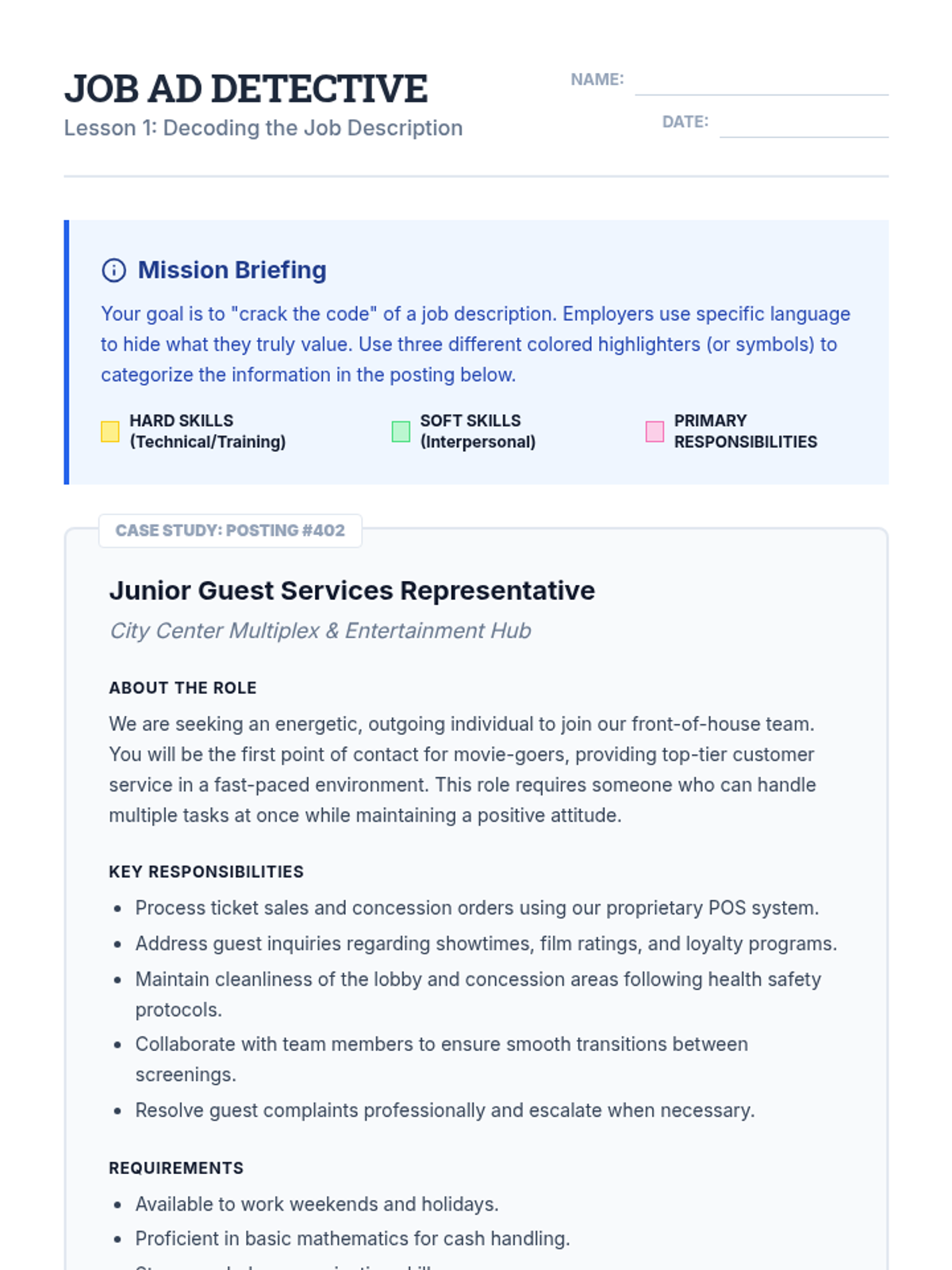
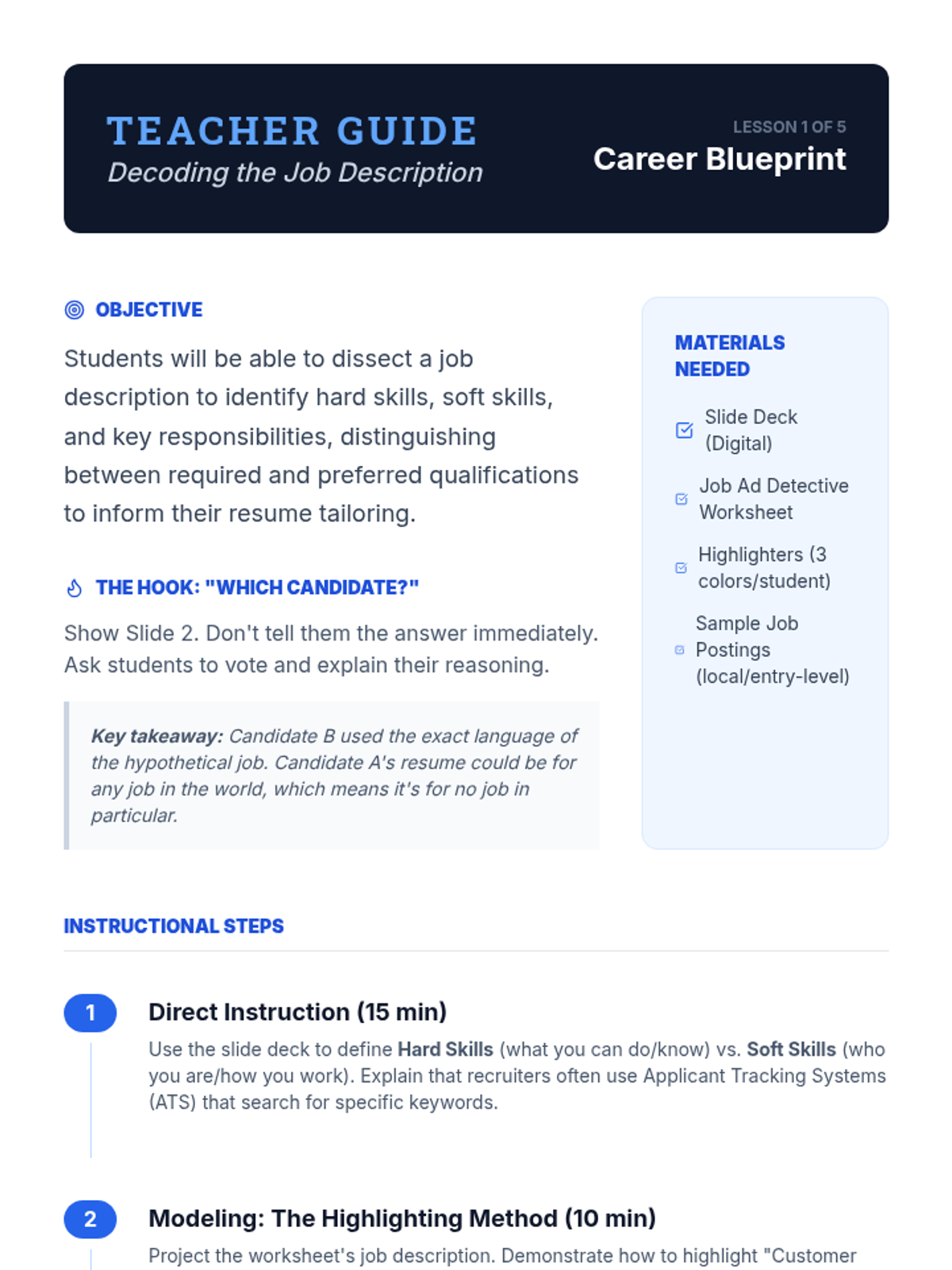
This sequence equips students with the analytical tools to decode complex job postings and accurately identify employer needs. Students learn to navigate the structure of advertisements, distinguish between essential and preferred qualifications, decode industry jargon, and perform personal gap analyses to prepare for their future careers.
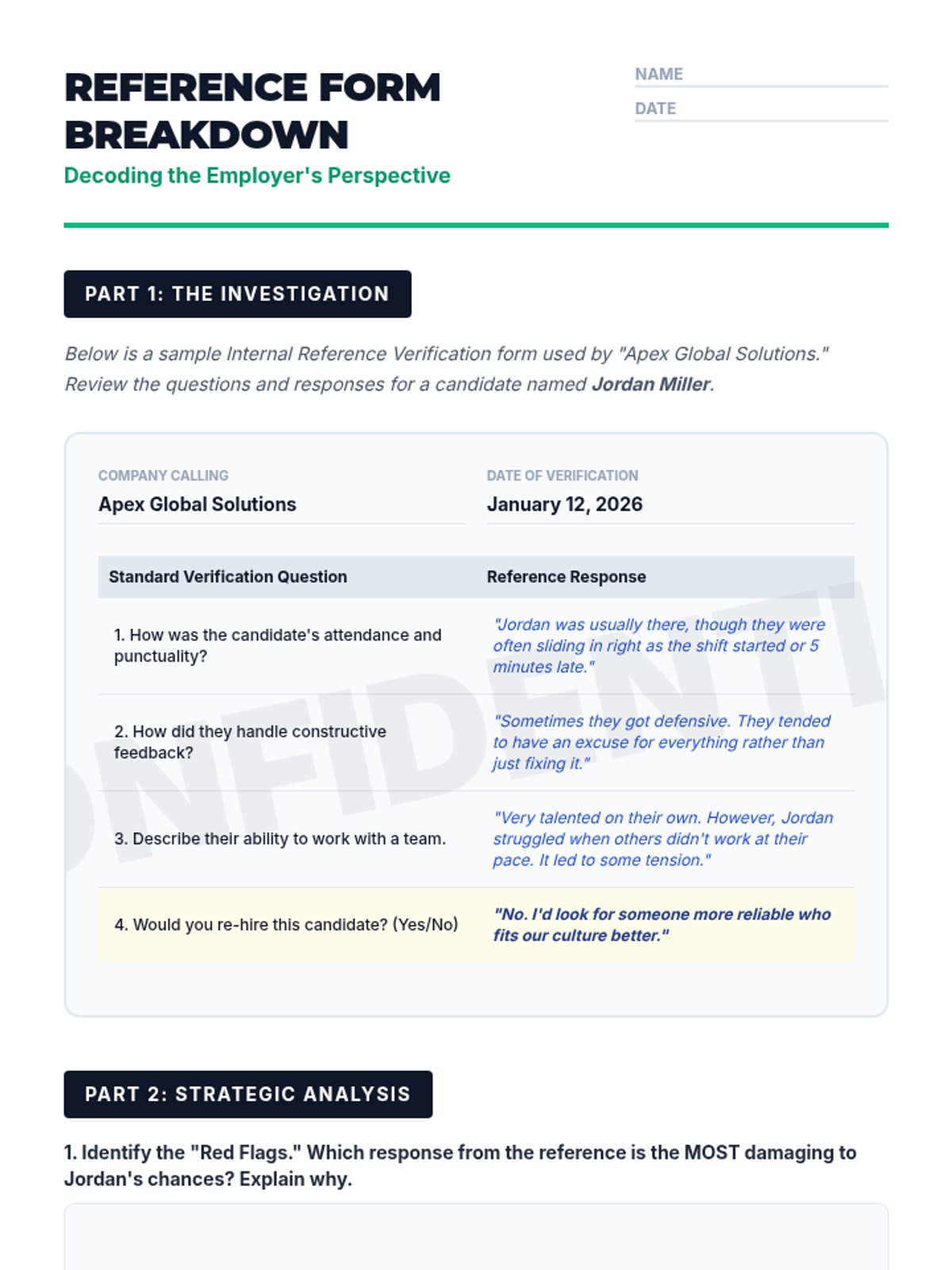
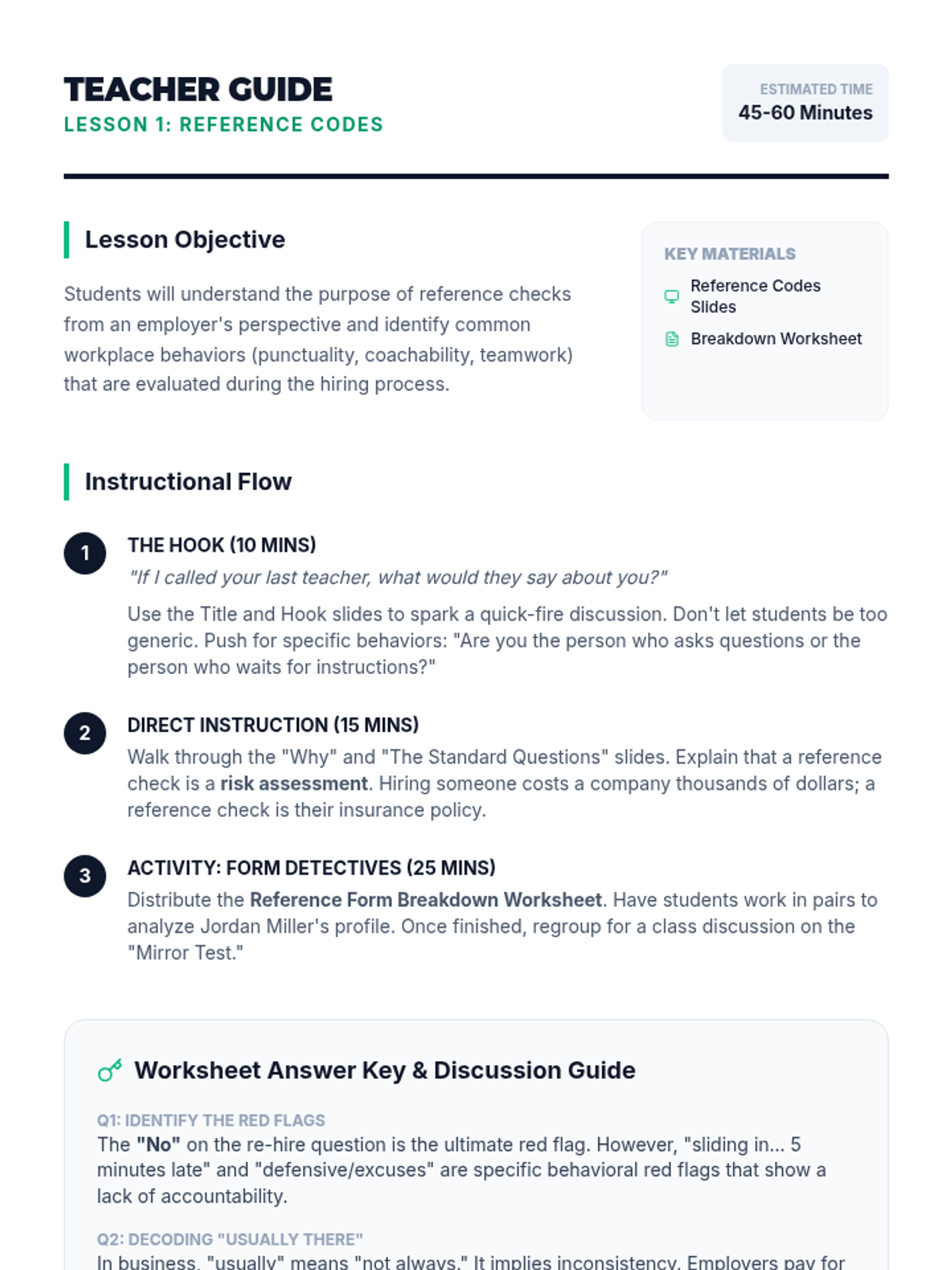
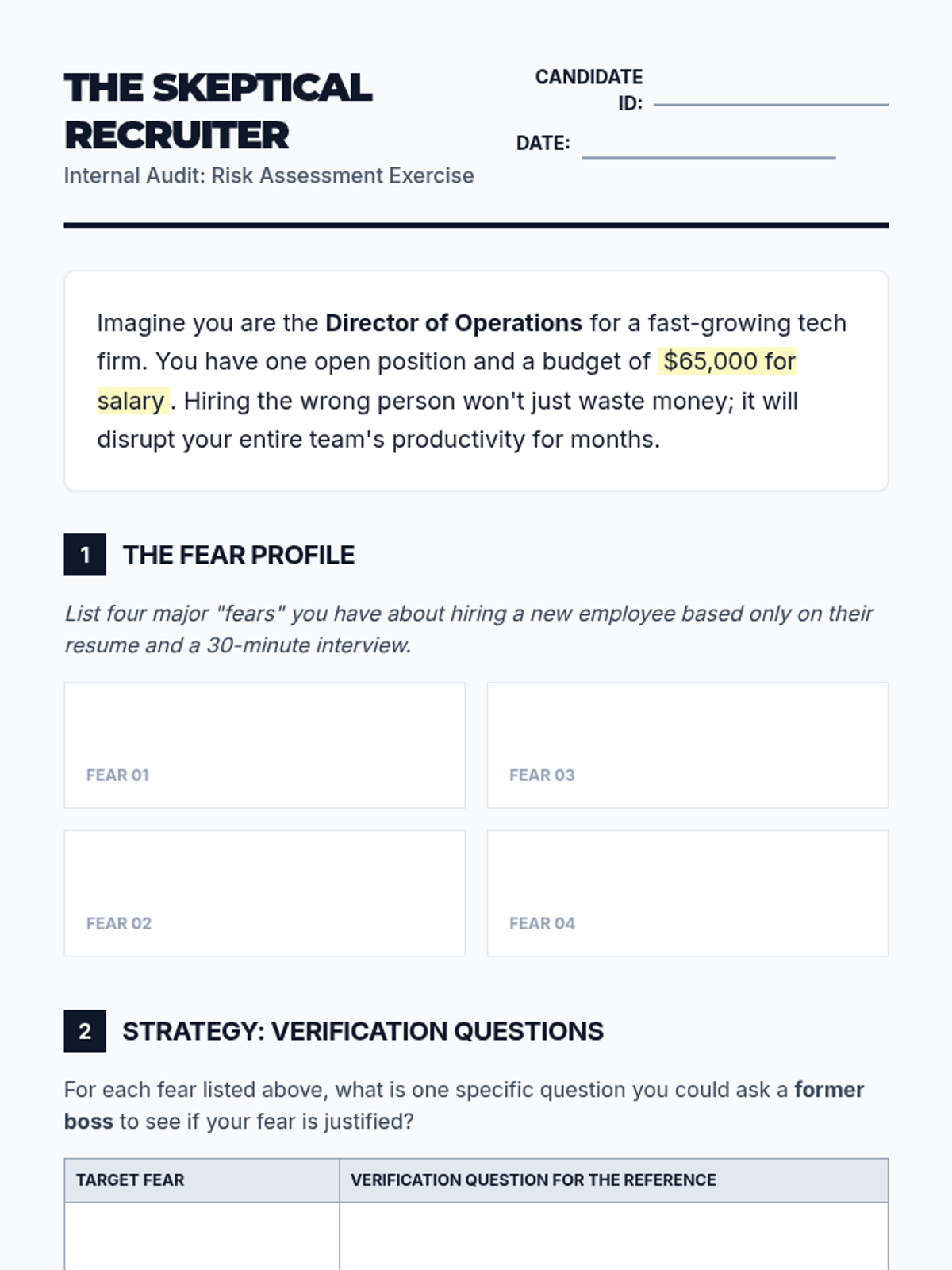
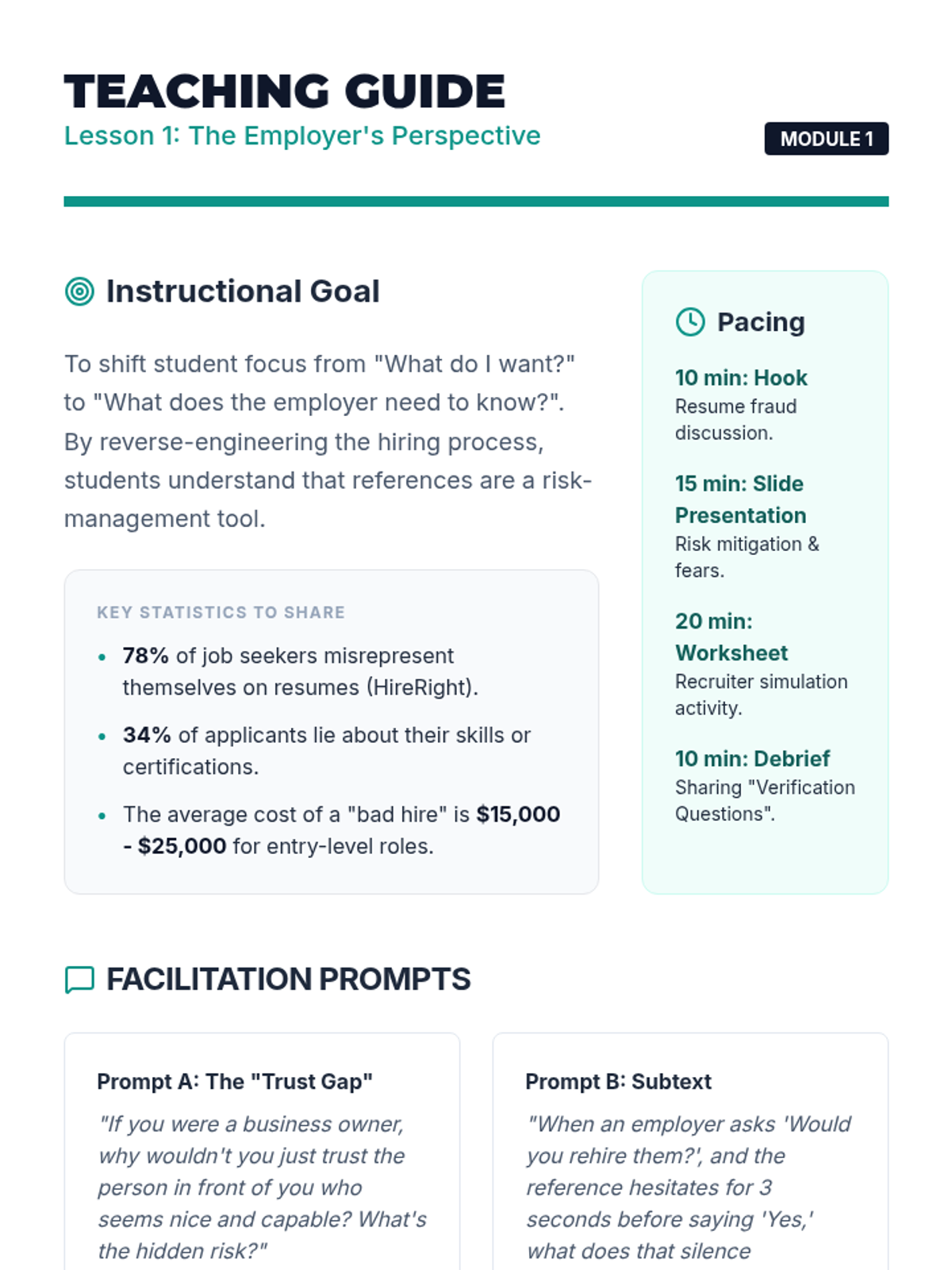
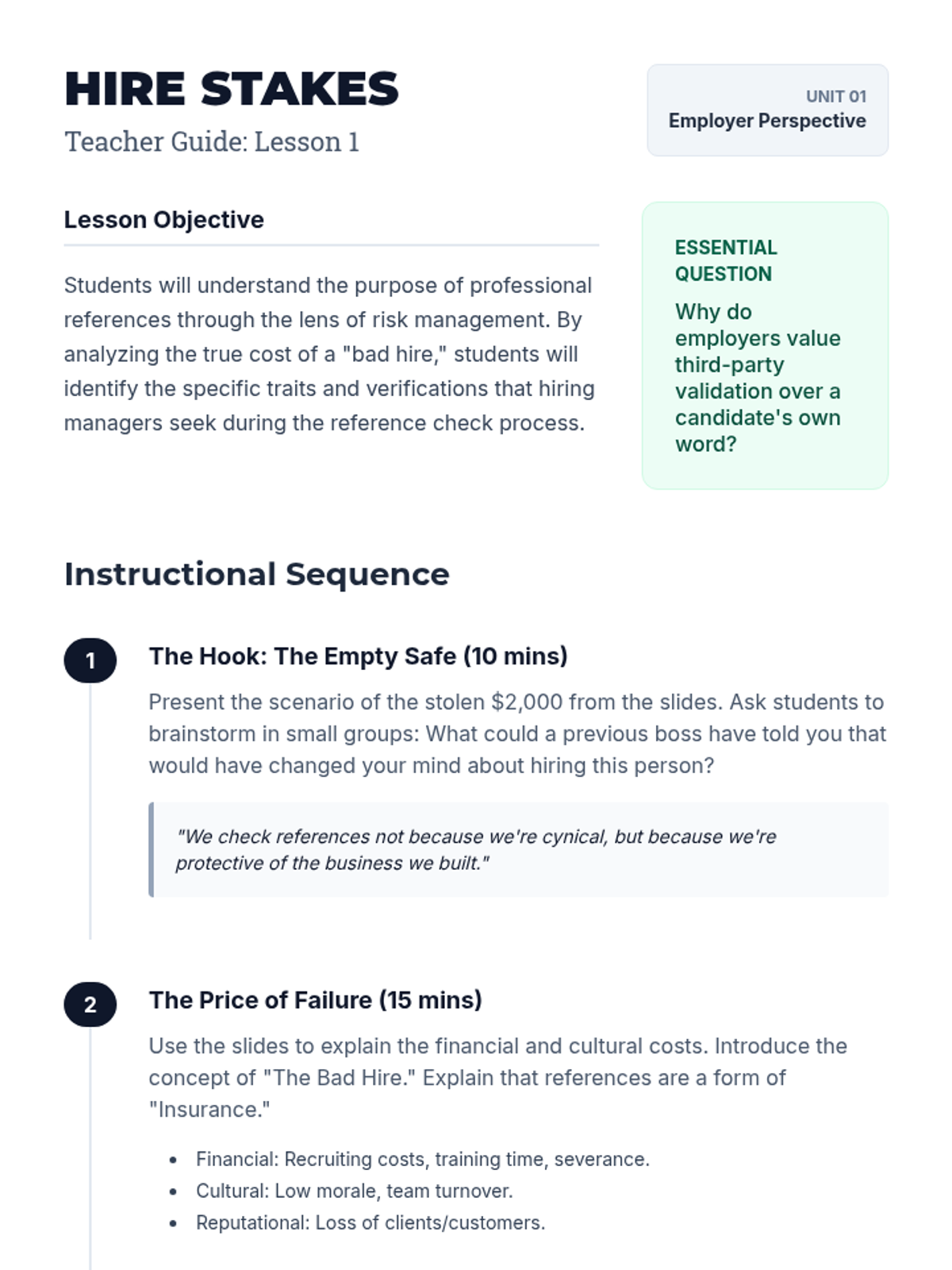
An inquiry-based unit where students act as hiring managers to understand the strategic power of professional references in the job market. Students move from decoding reference forms to strategically selecting references and managing professional reputations.
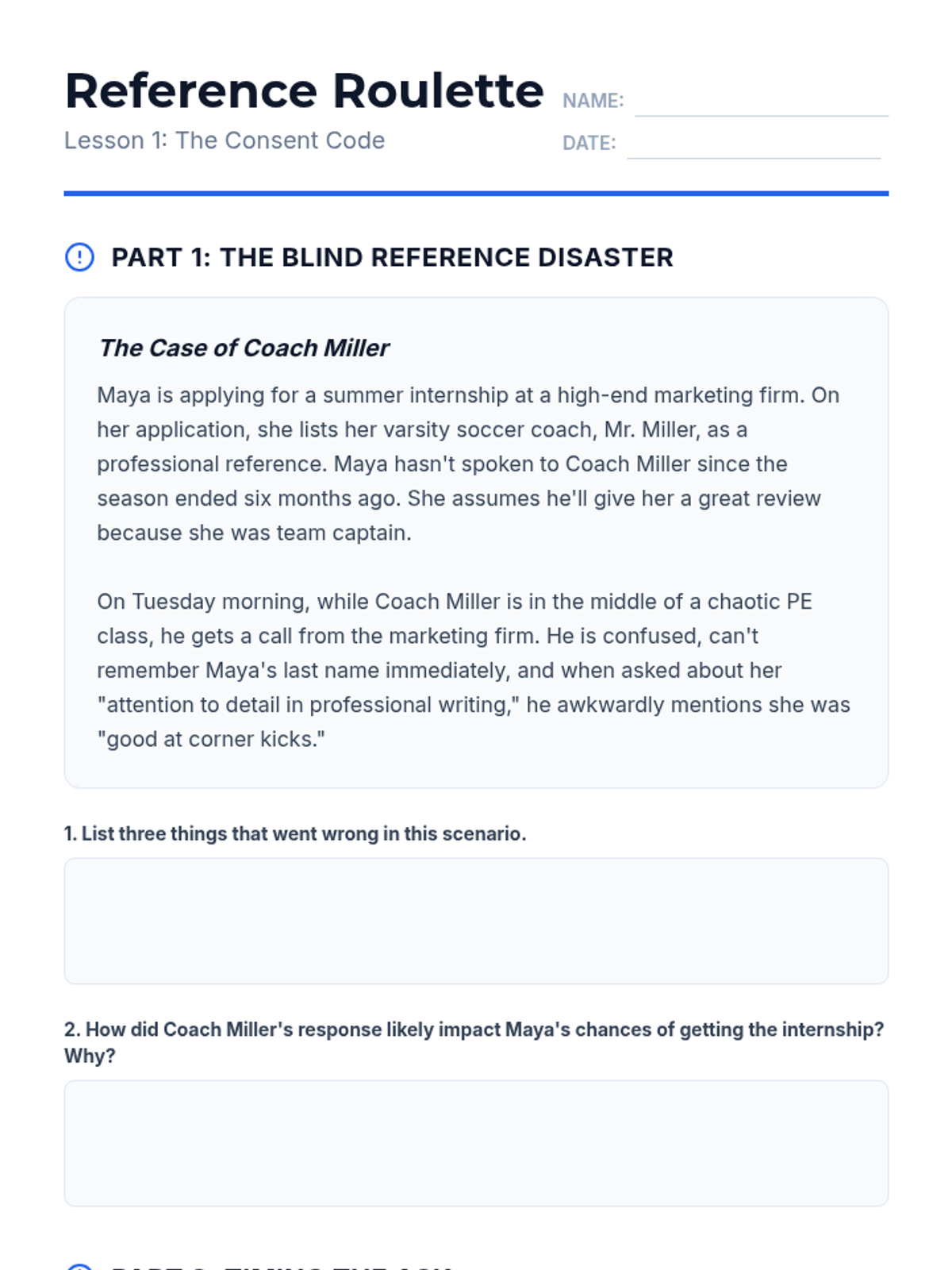
This sequence teaches 10th-grade students the essential interpersonal and professional communication skills required to secure and maintain professional references. Students will move from understanding the importance of consent to drafting emails, practicing verbal requests, and providing references with the necessary tools to advocate for them effectively.
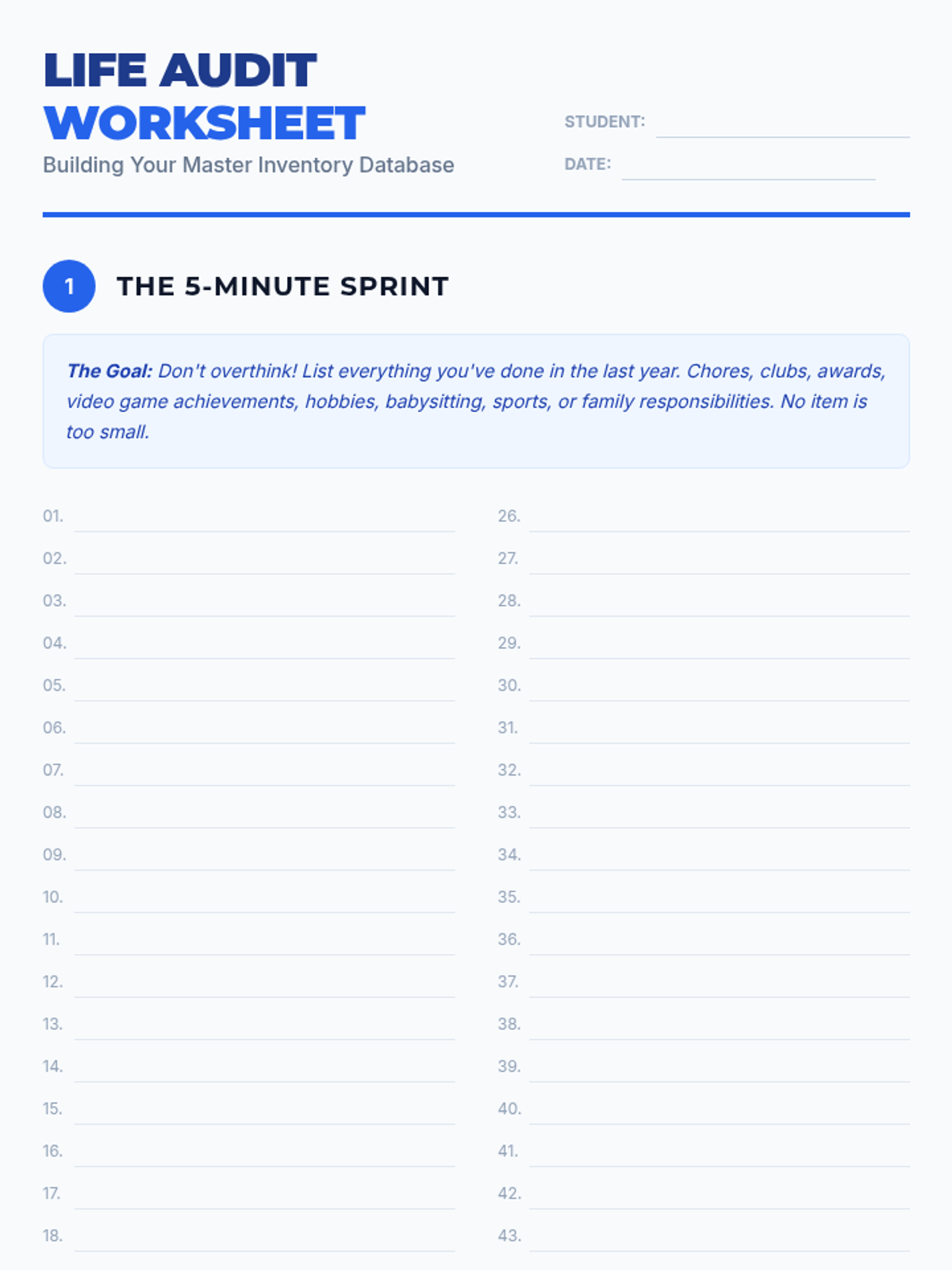
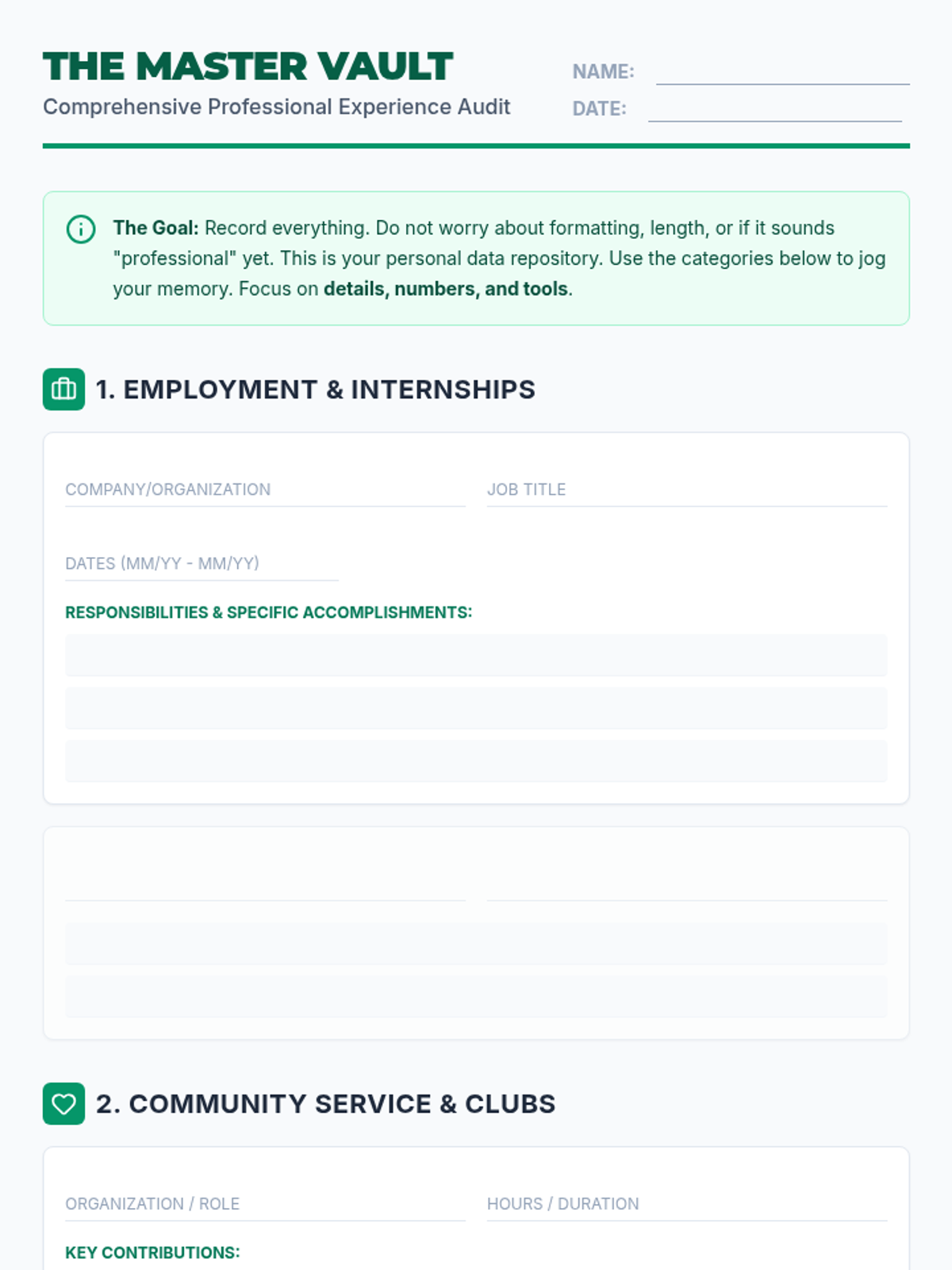
A project-based sequence where 9th-grade students learn the art of resume tailoring. Students move from a 'Life Audit' to creating a Master Inventory, and then learn to curate and reframe their experiences for two distinct job roles.
A sequence focused on deconstructing job postings to understand employer needs. Students learn to identify job structure, extract keywords, decode soft skills, and perform gap analyses to prepare for tailored resume writing.
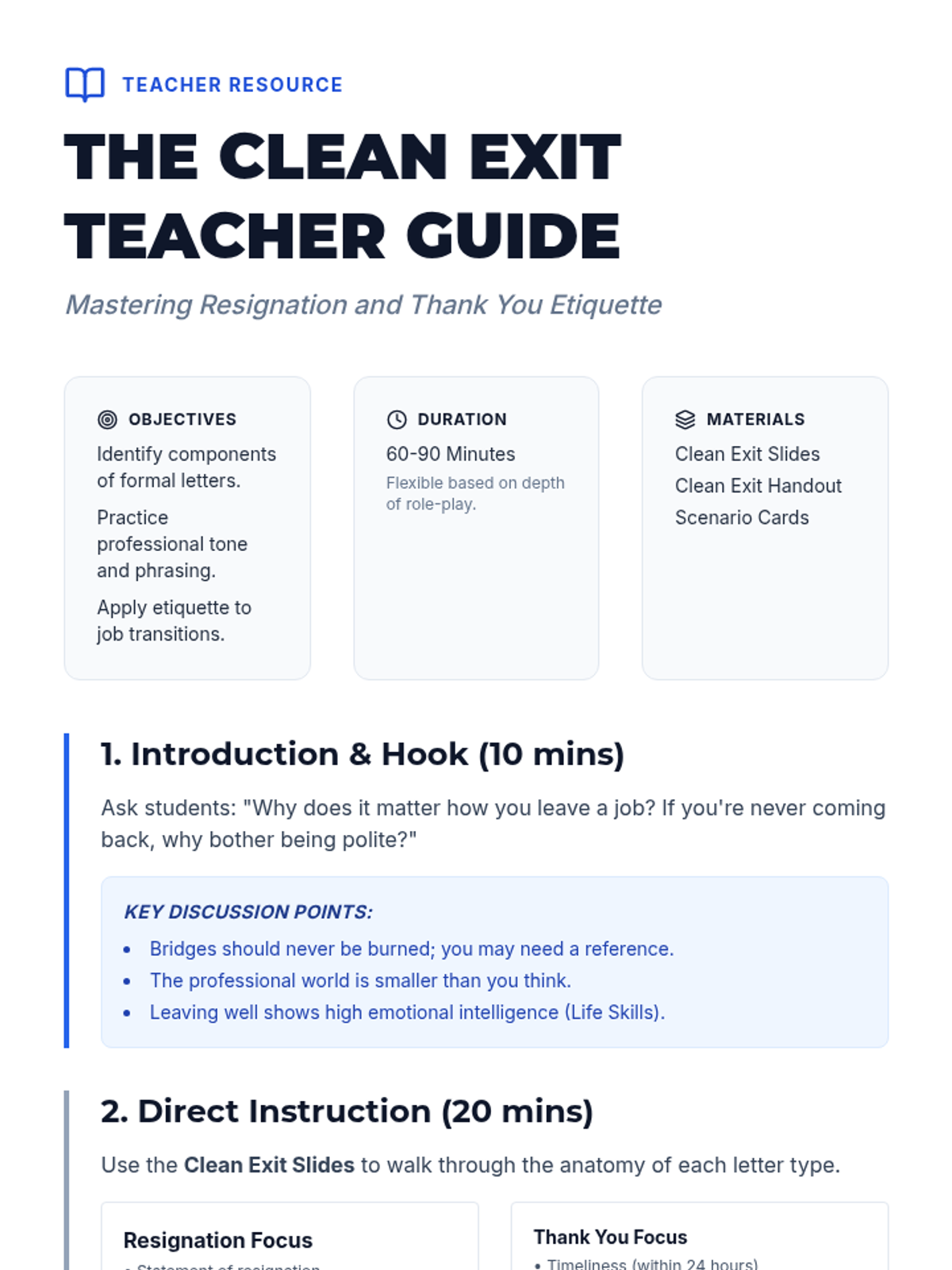
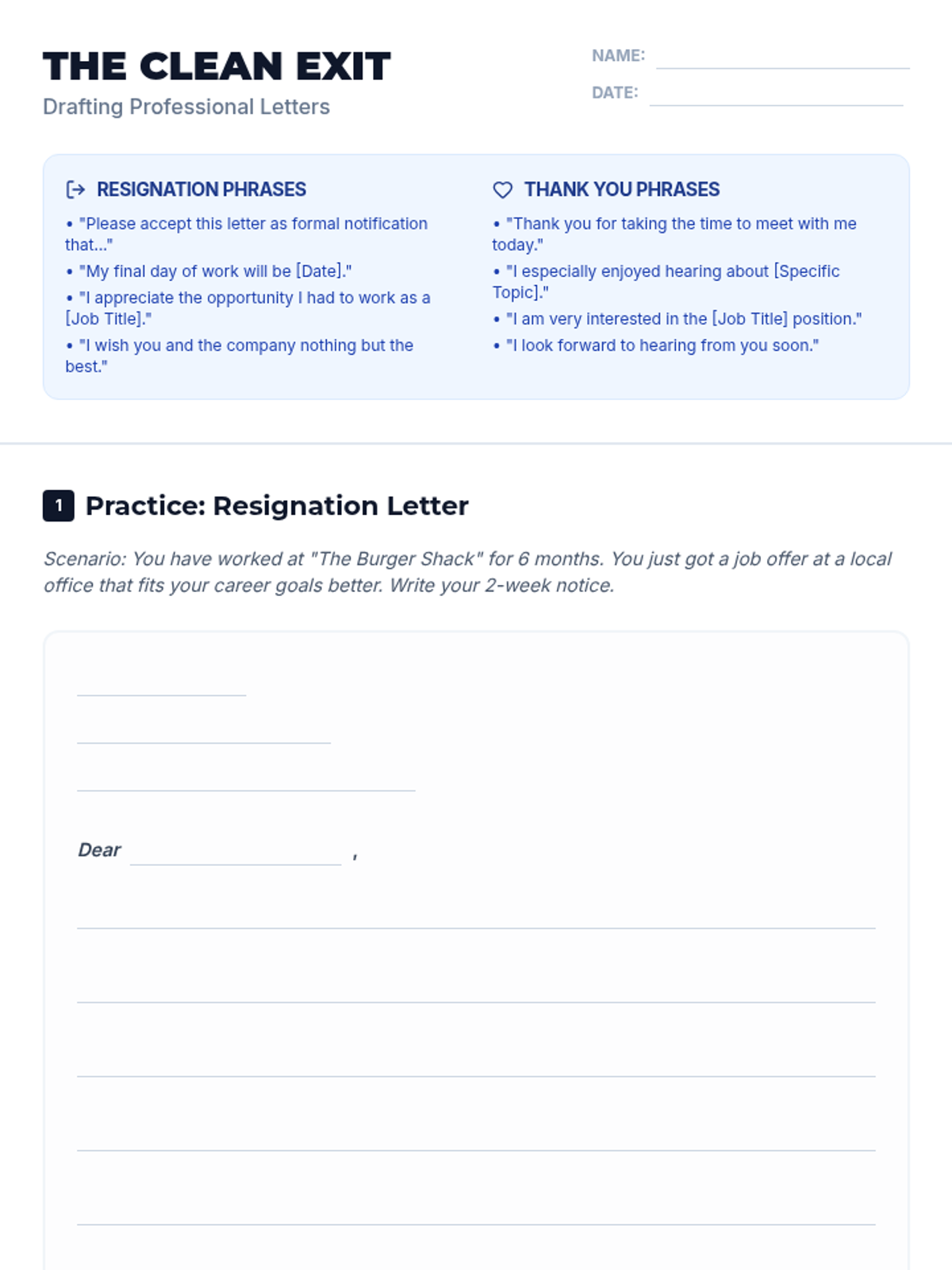
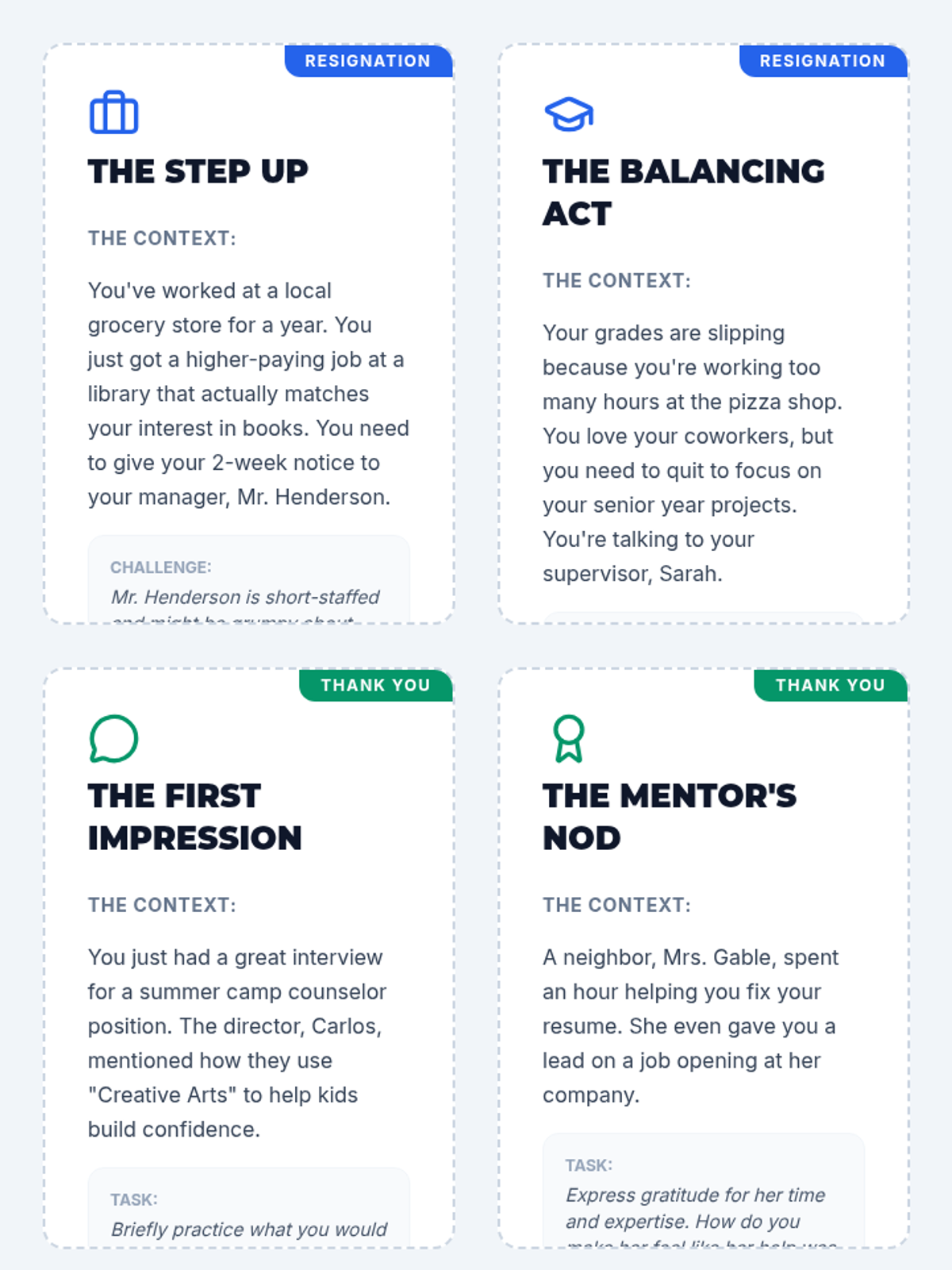
A unit on professional communication skills for high school students, focusing on workplace transitions and networking etiquette.
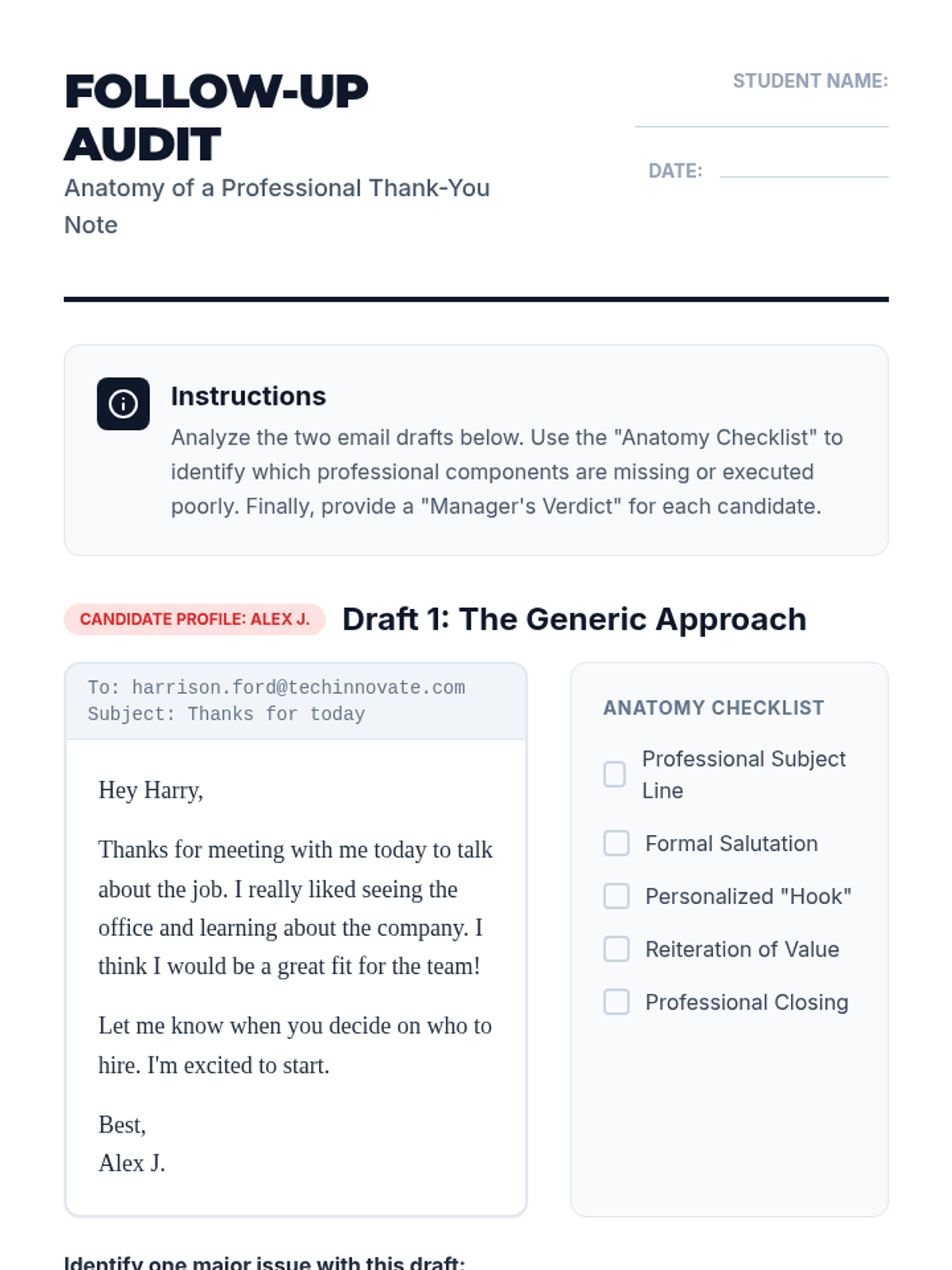
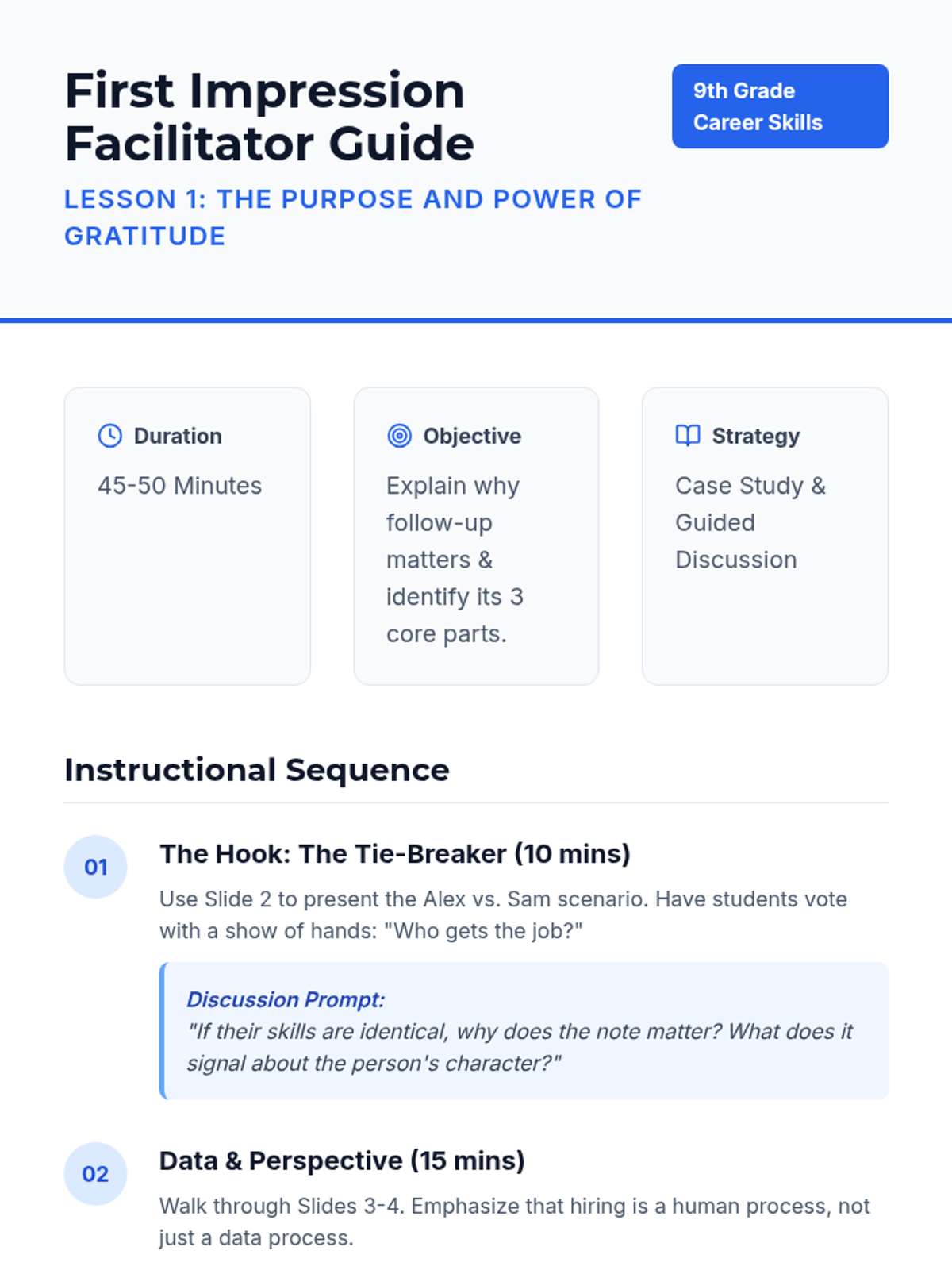
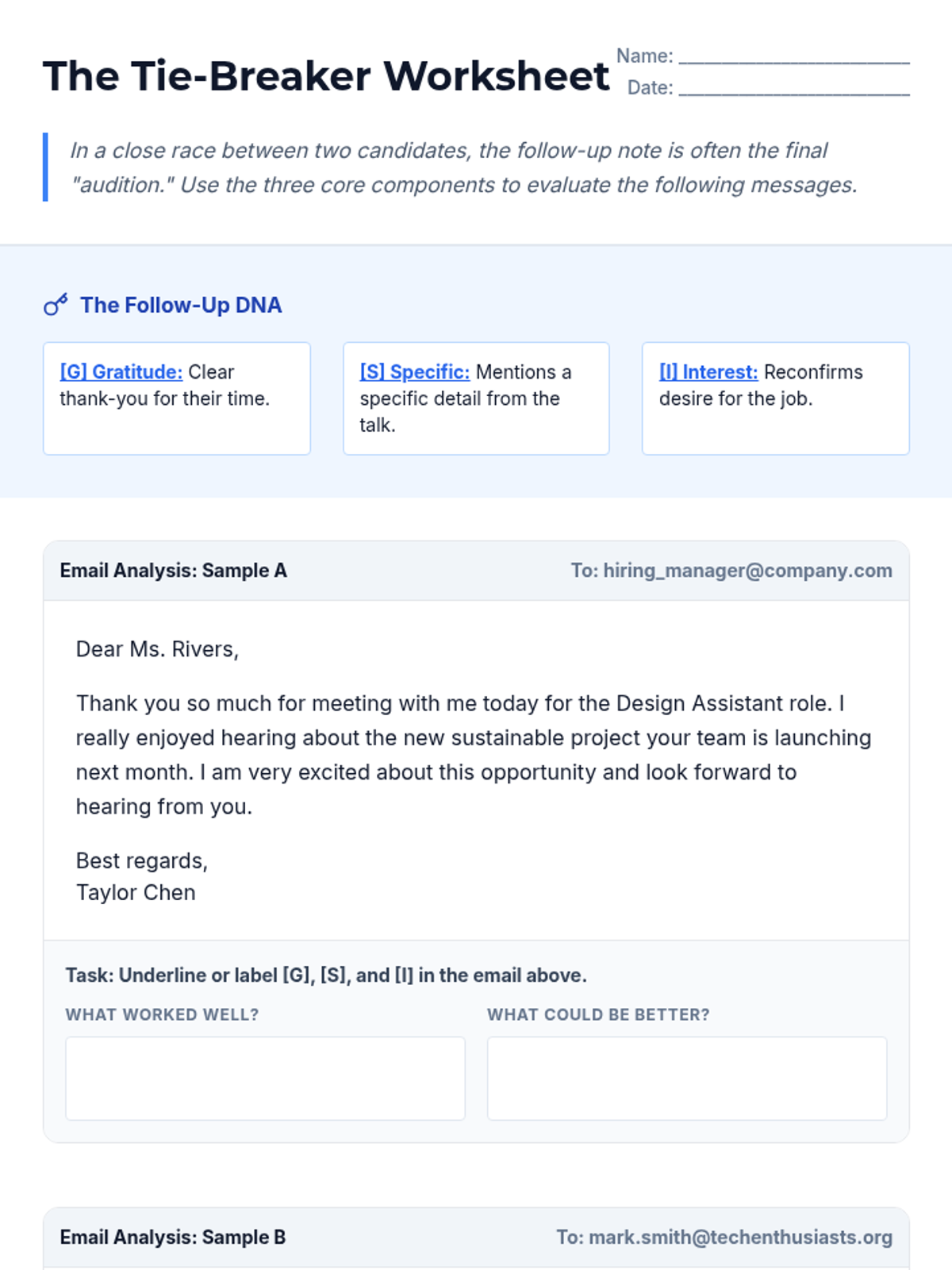
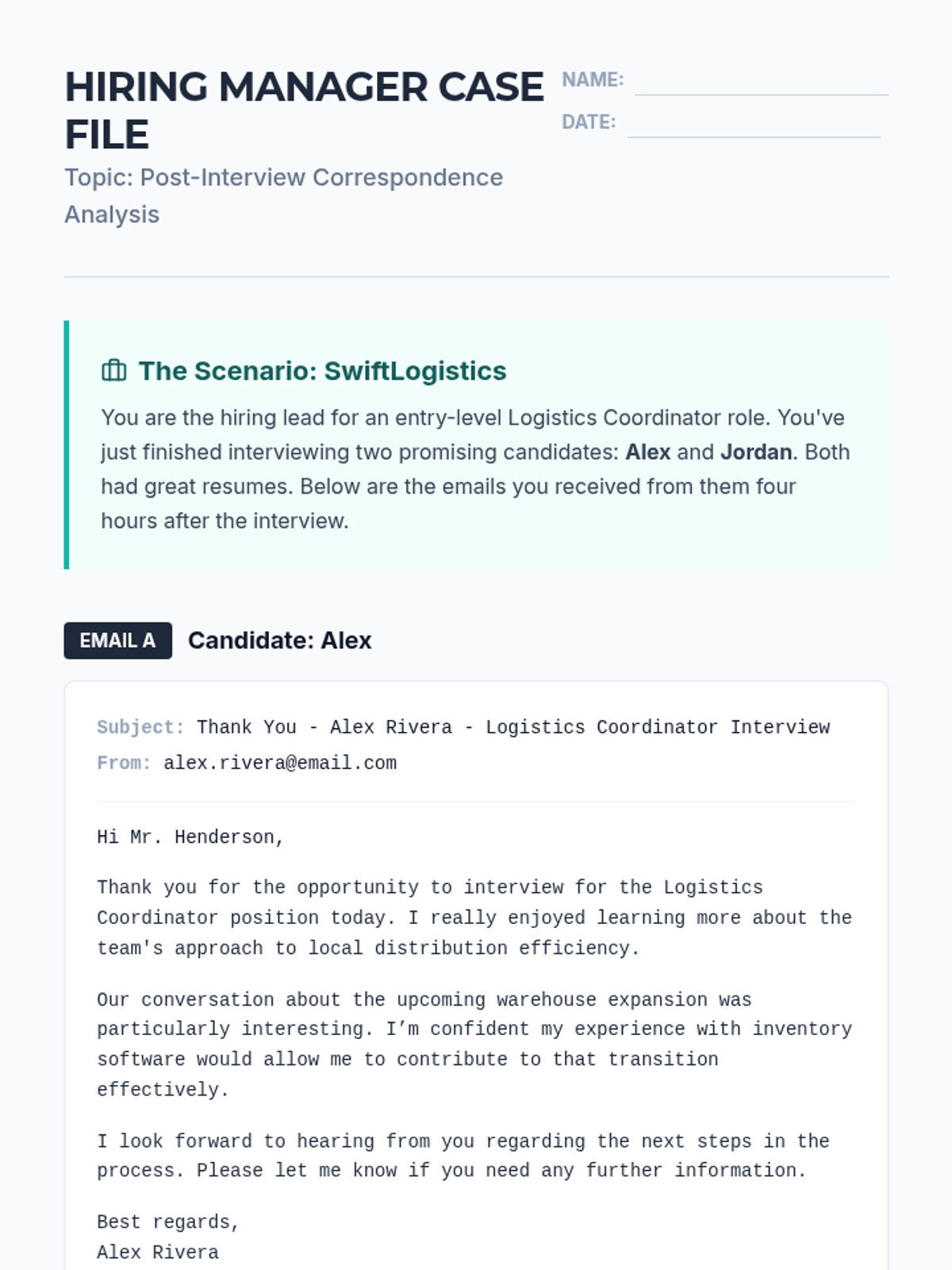
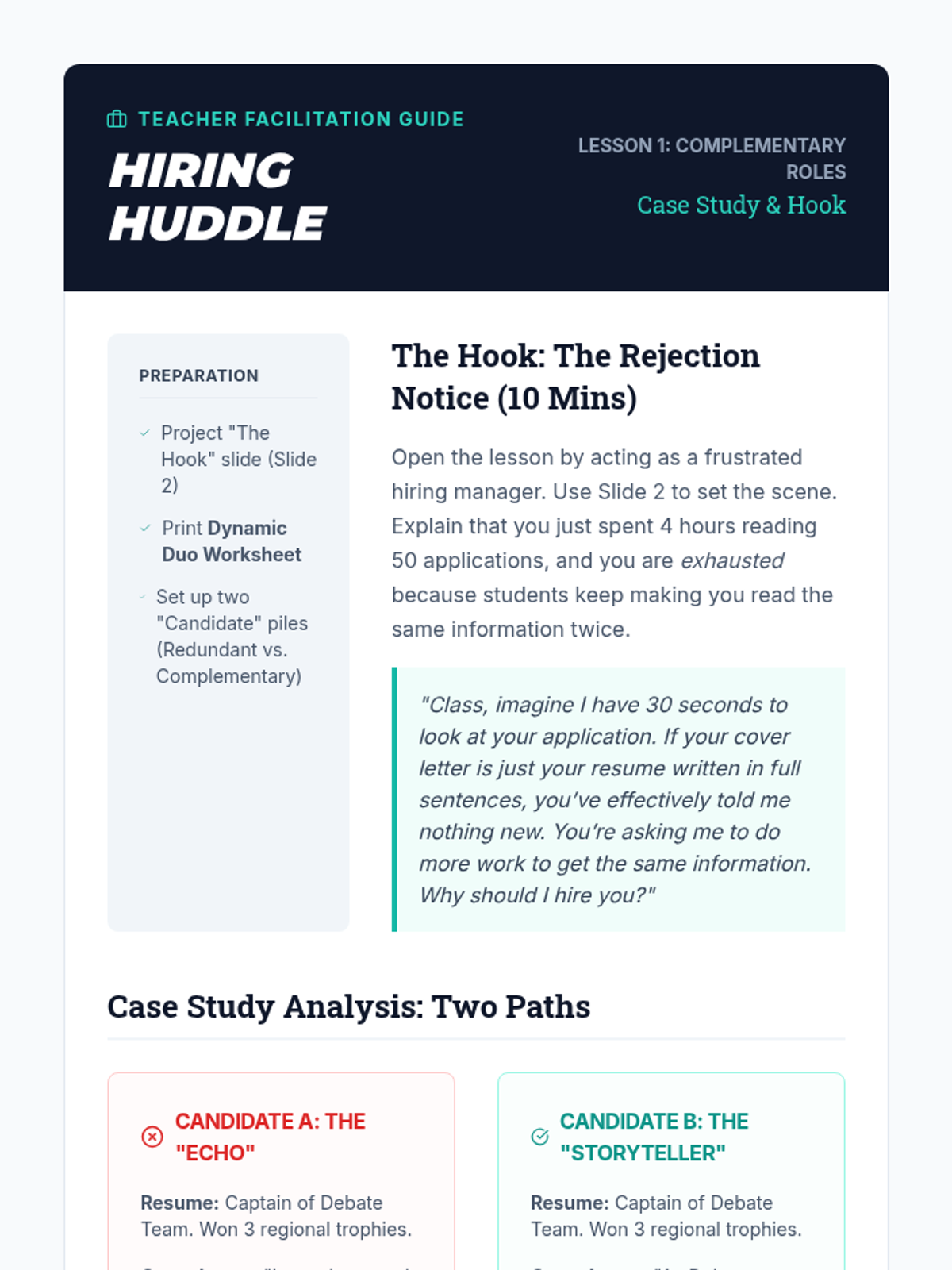
A case-study-driven unit where students act as hiring managers to analyze the nuances of post-interview follow-up communication, focusing on professional tone, attention to detail, and strategic value-adds.
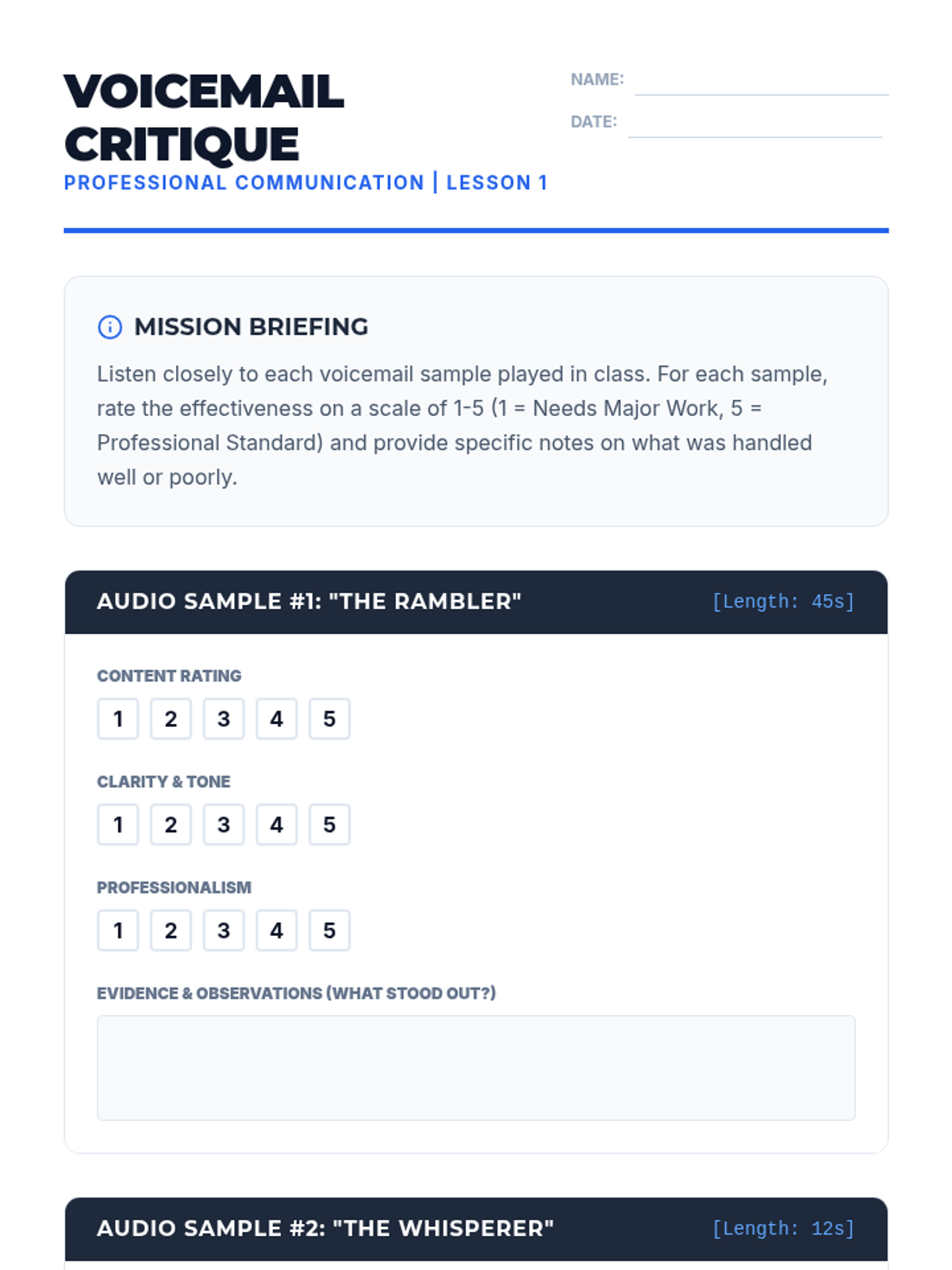
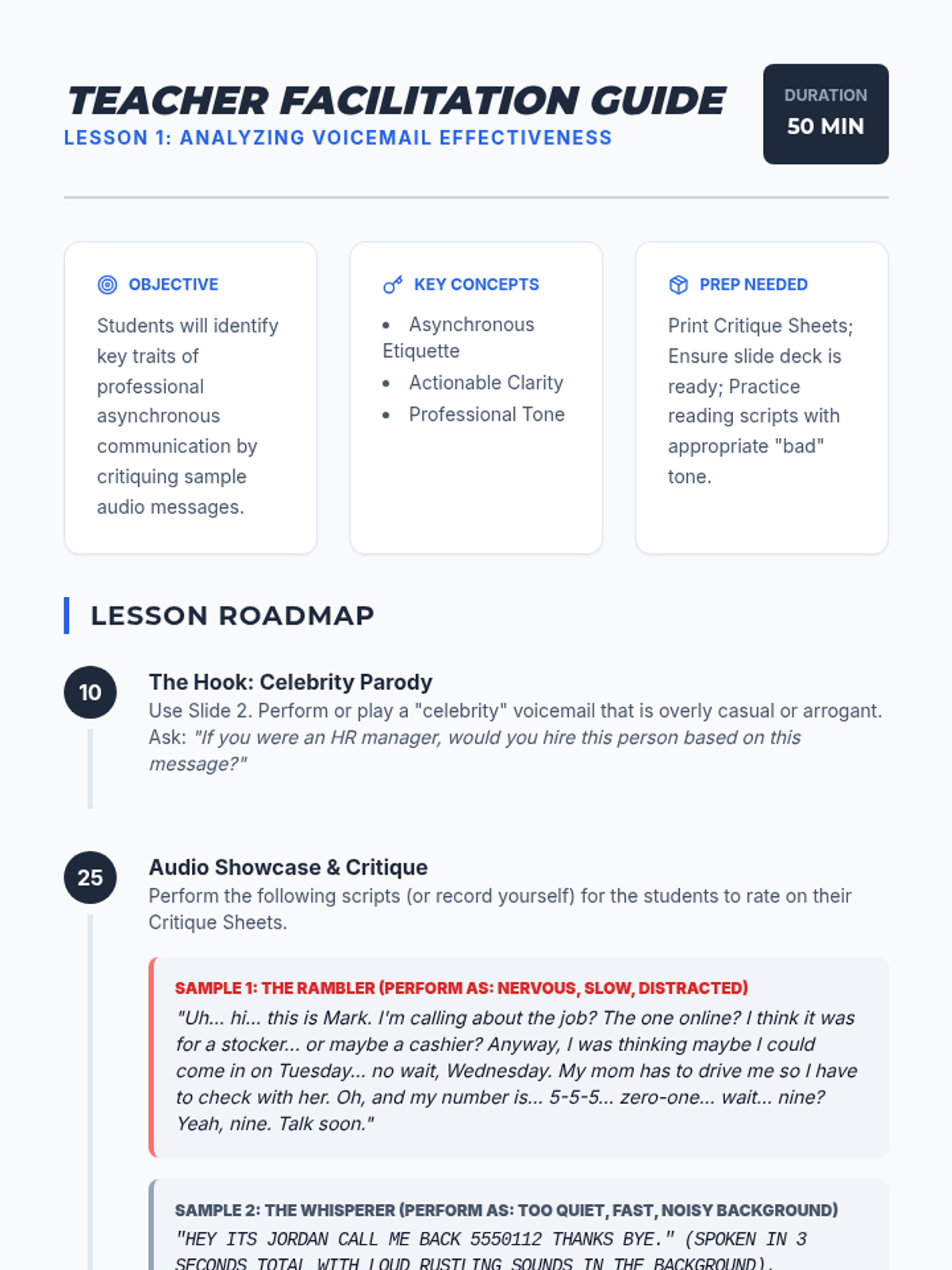
A comprehensive 9th-grade sequence on professional asynchronous communication, focusing on voicemail greetings and messaging. Students analyze, script, record, and practice follow-up protocols to build a professional digital presence.
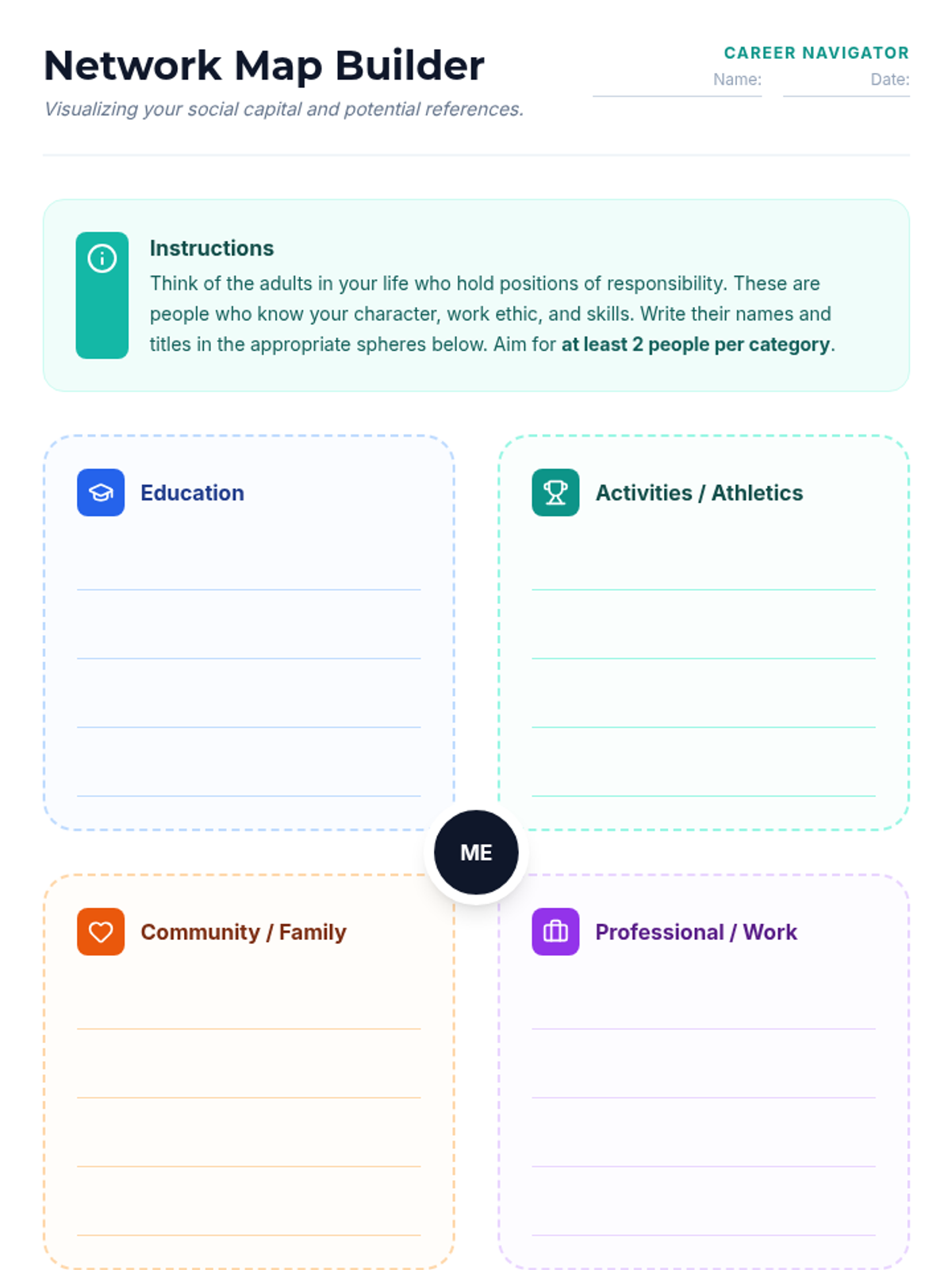
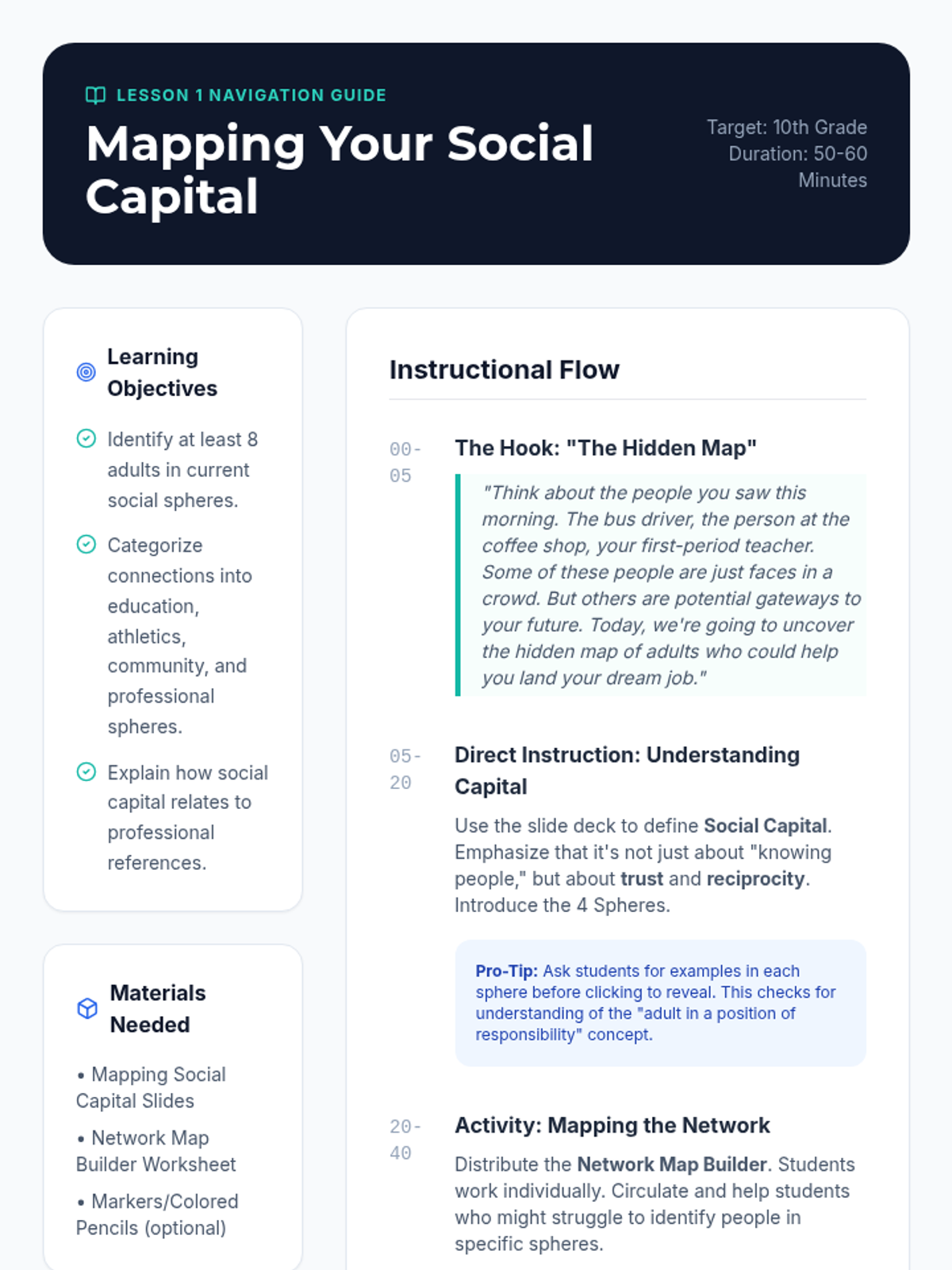
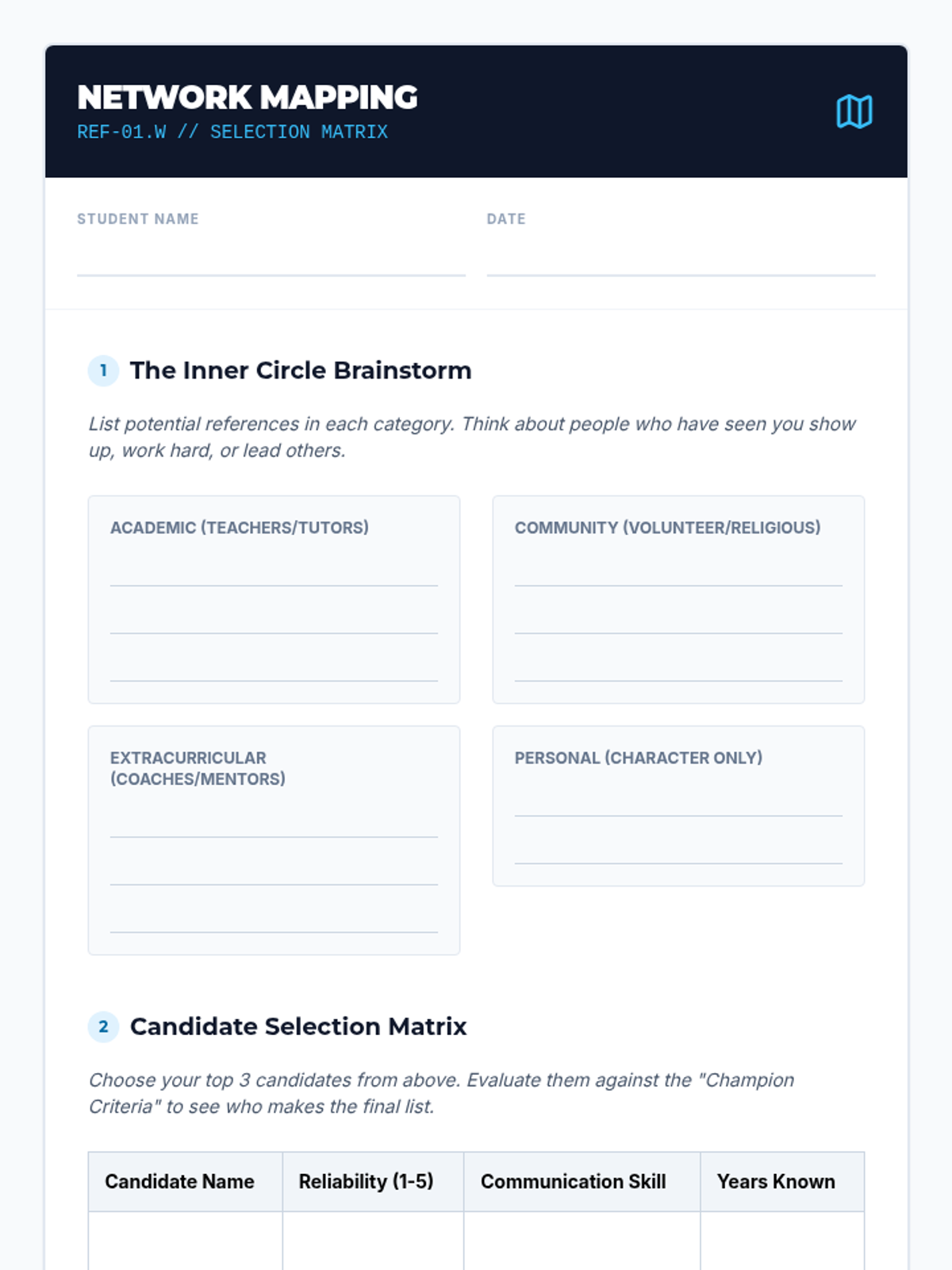
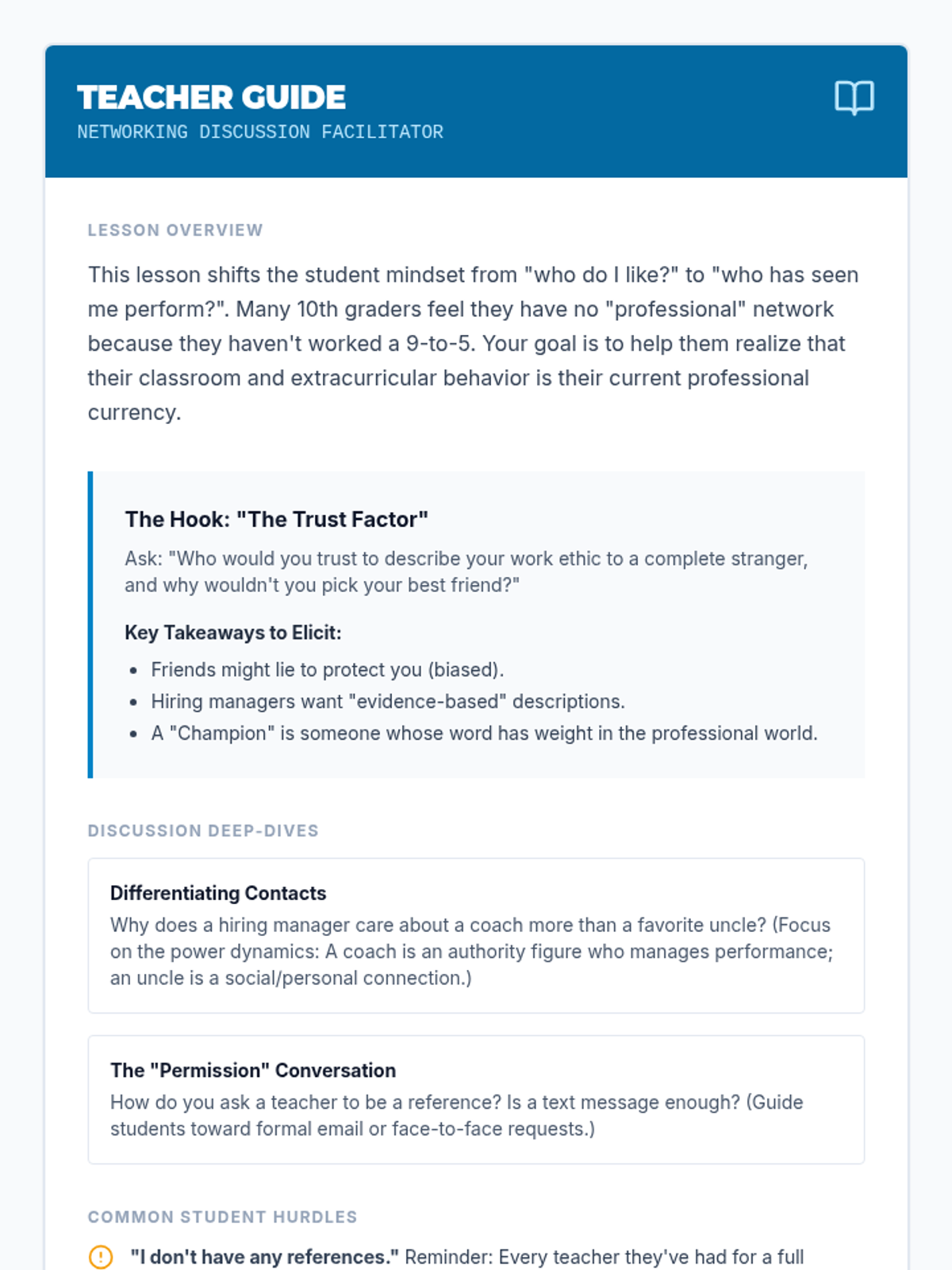
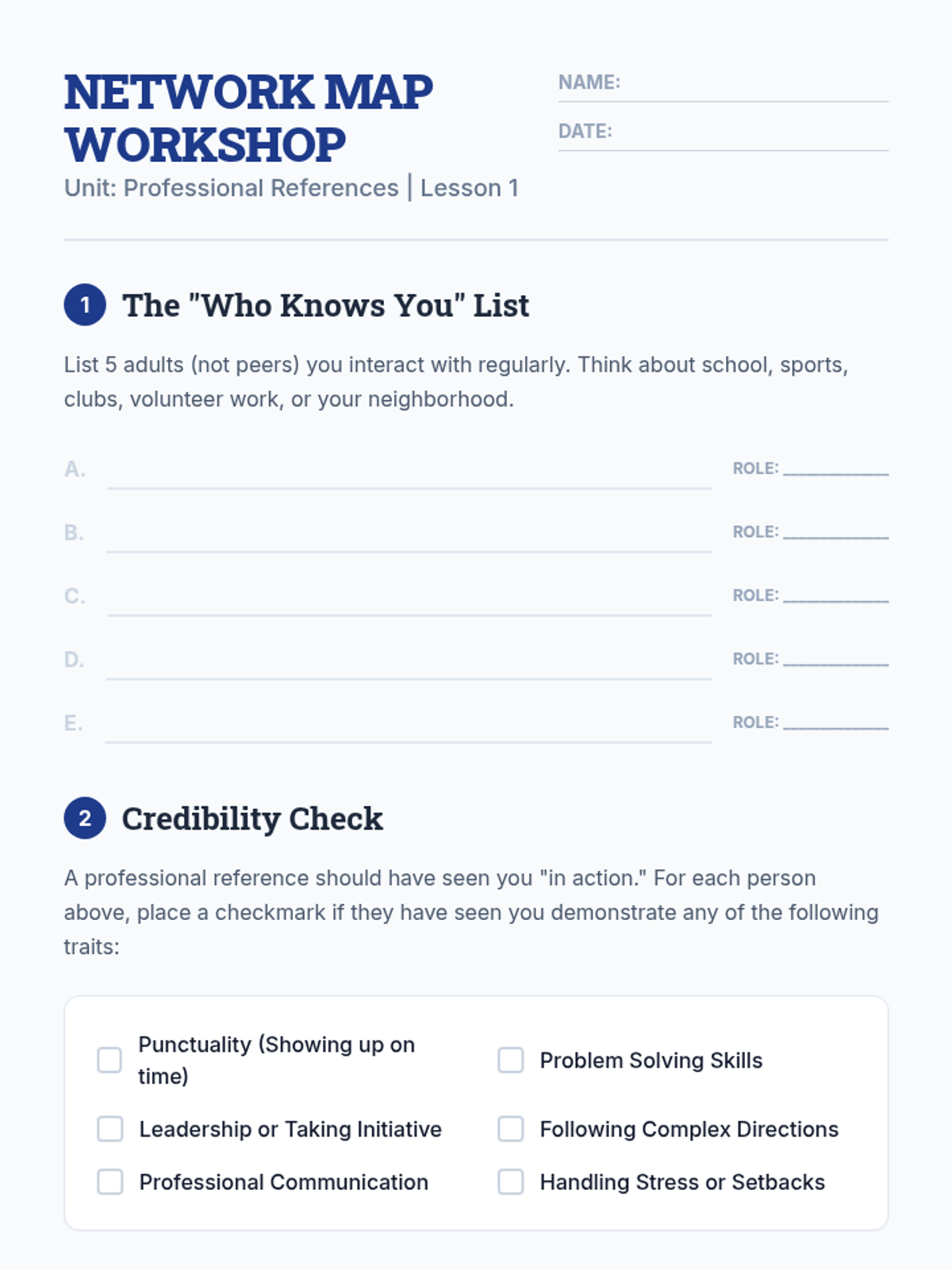
A project-based sequence for 10th graders focused on visualizing and building social capital. Students move from identifying potential references to actively cultivating professional relationships through network mapping, relationship assessment, and communication skills.
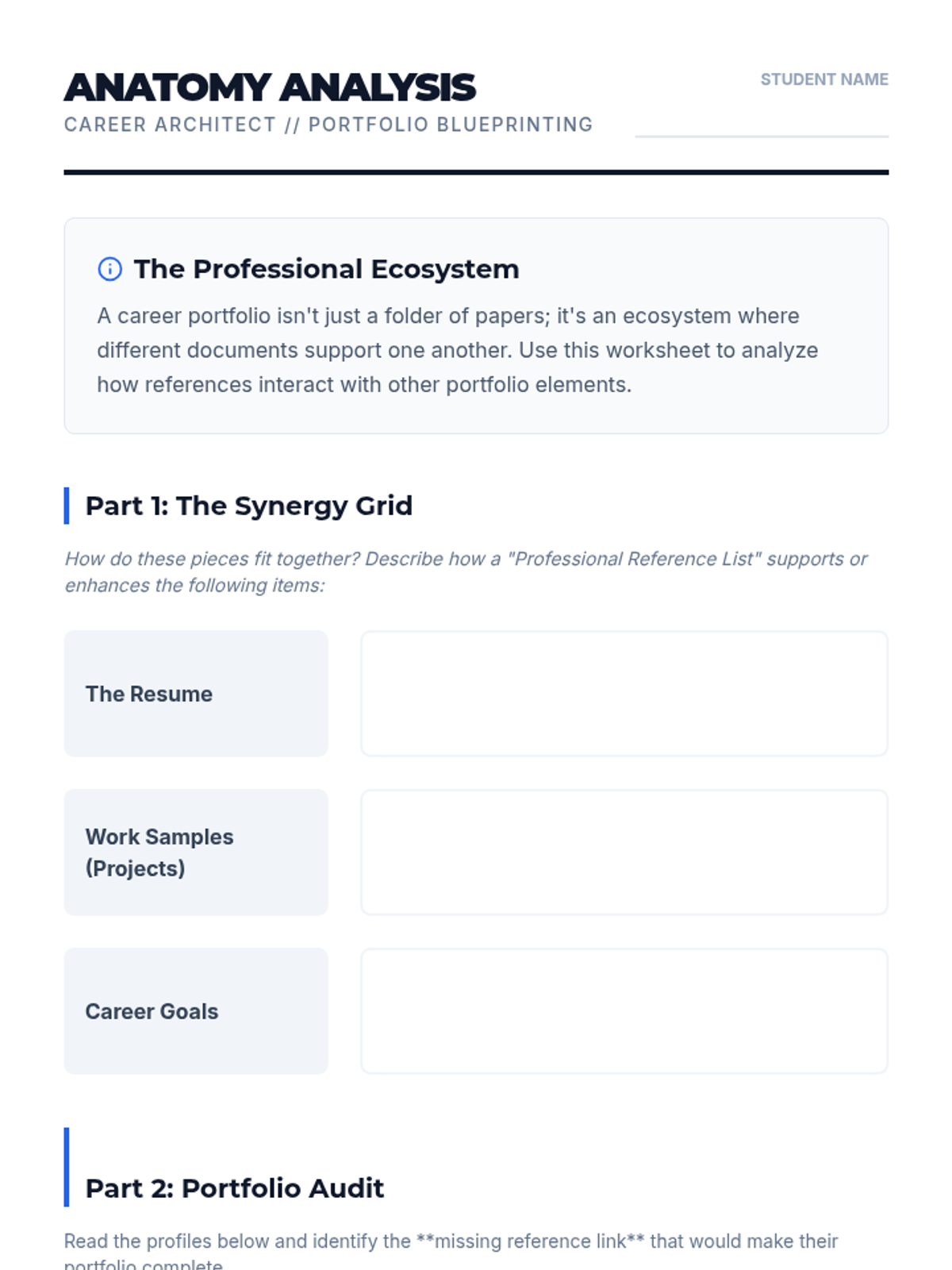
This project-based sequence guides 9th-grade students through the creation of a comprehensive career portfolio, focusing on the integration of professional references and digital endorsements. Students move from understanding the 'anatomy' of a portfolio to requesting formal letters of recommendation and building a mock digital presence.
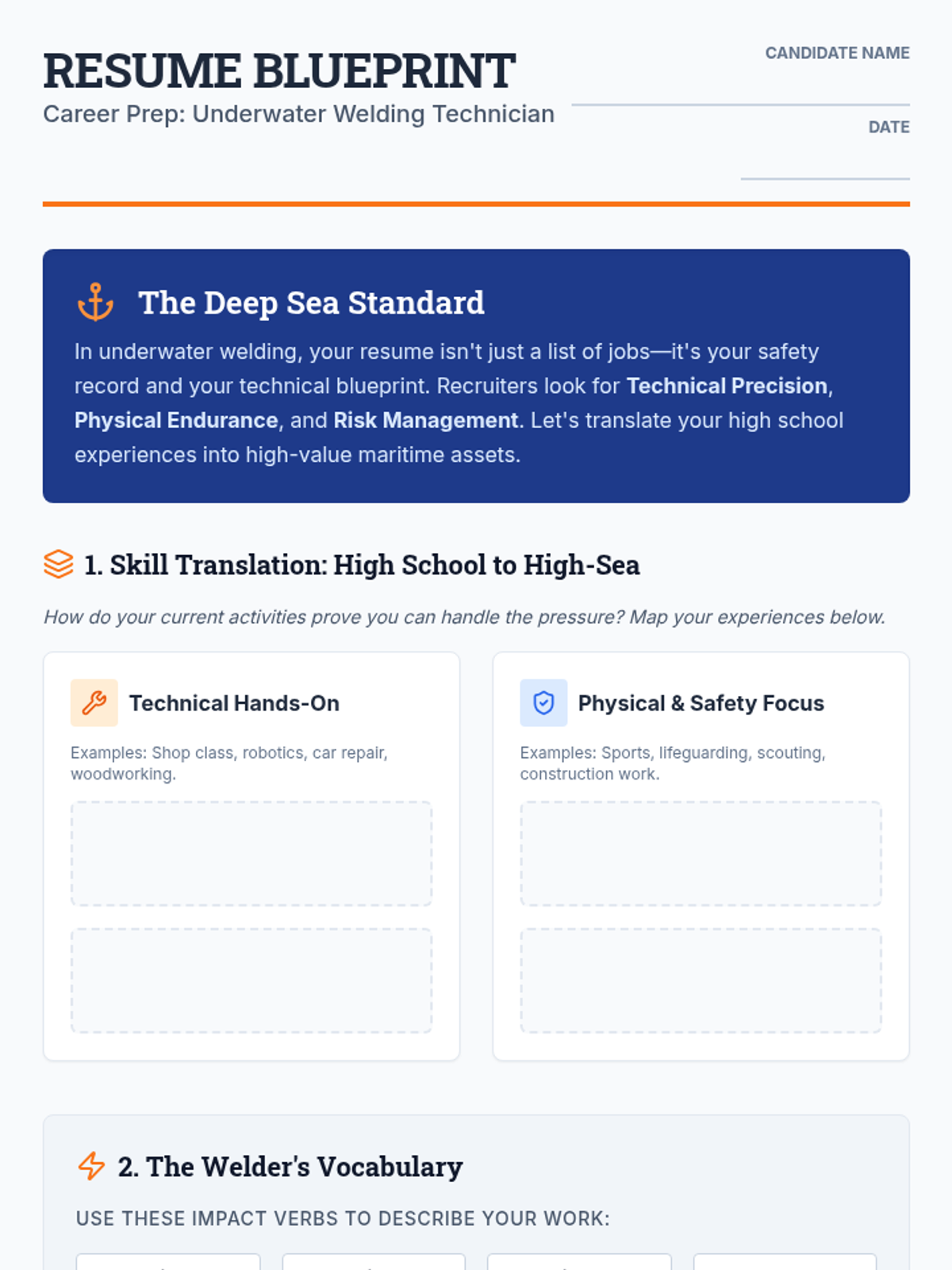
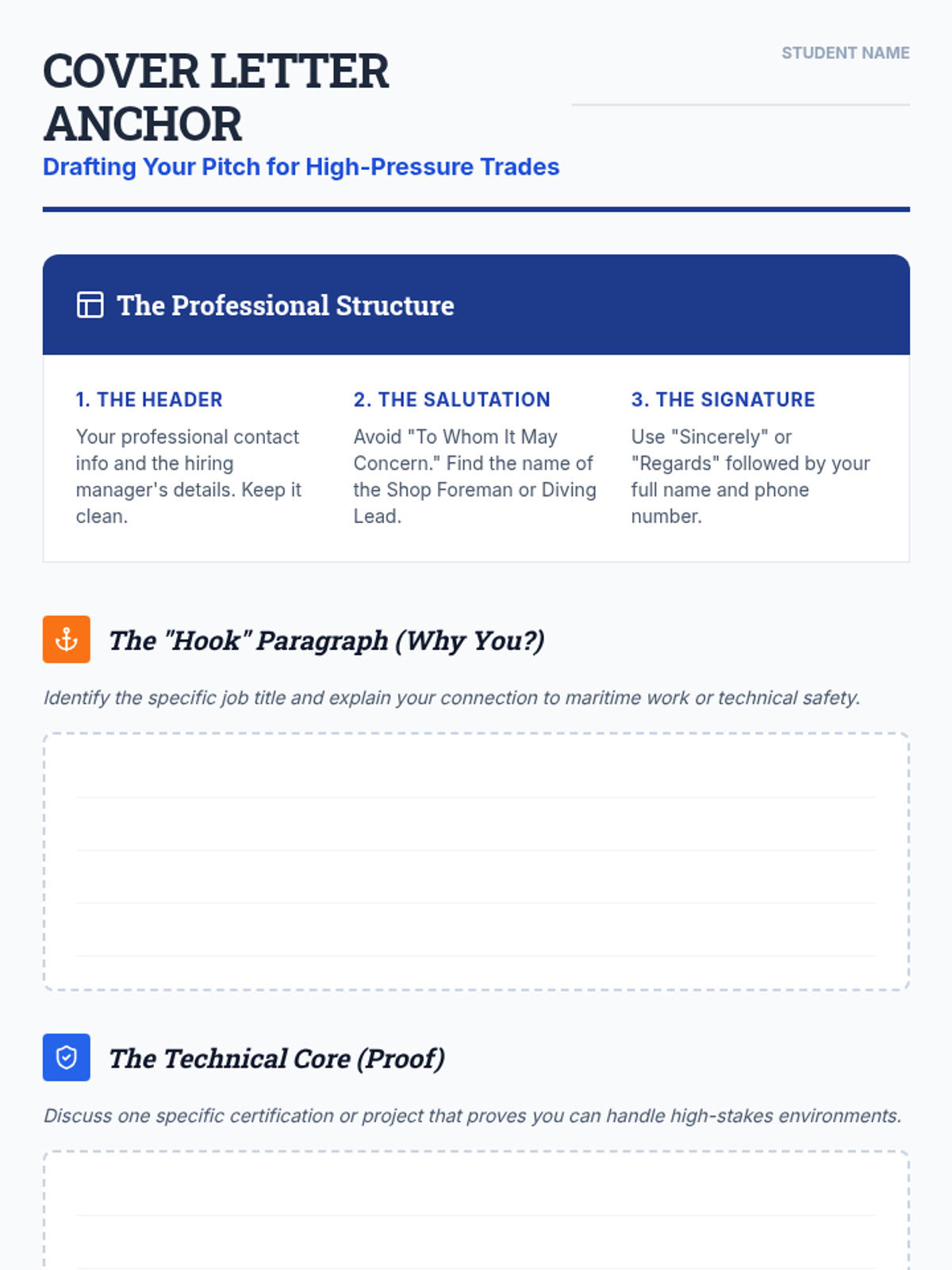
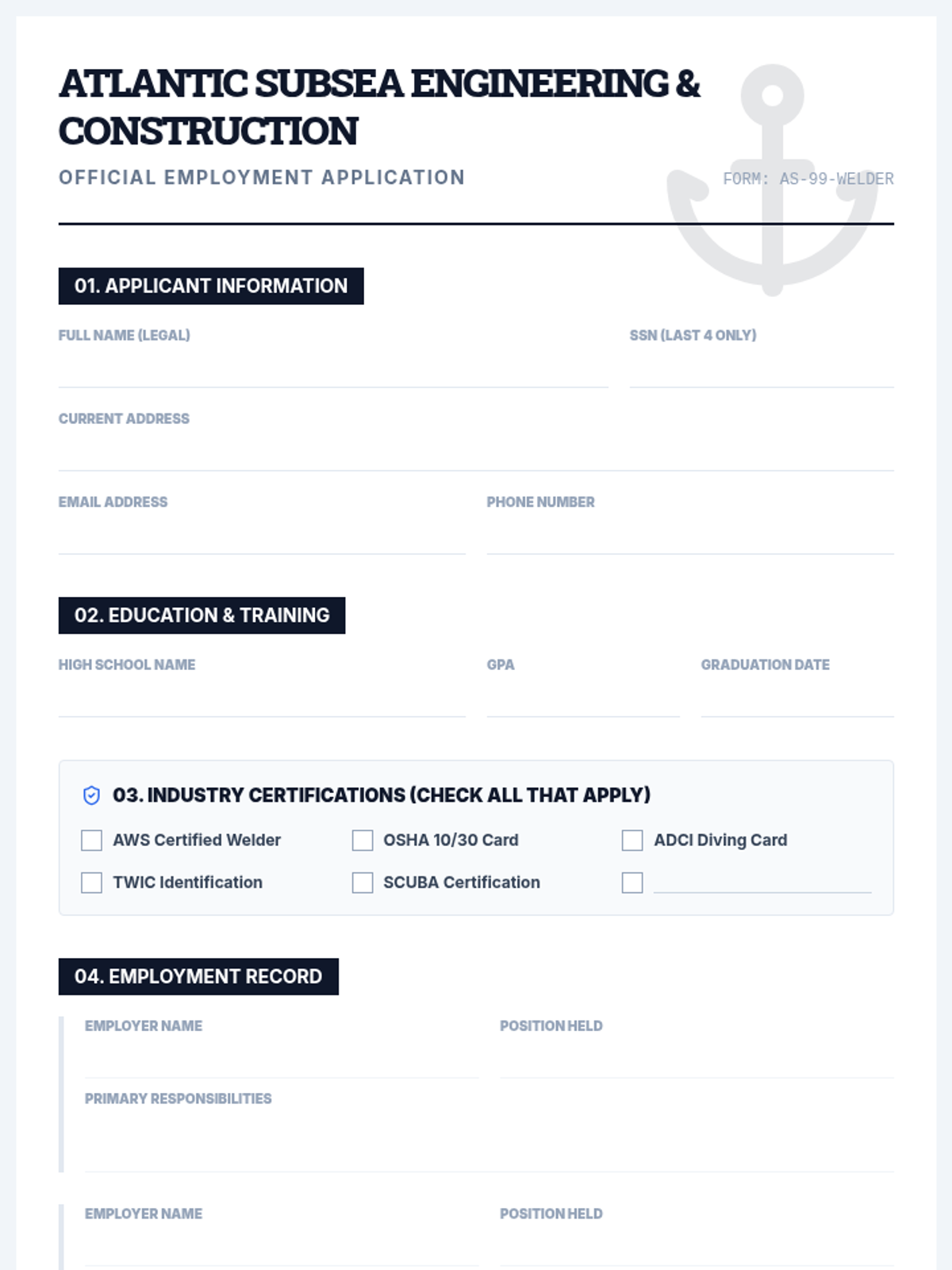
A career preparation series exploring high-skill maritime trades, focusing on professional documentation, safety certifications, and industry-specific job applications.
A 6-week life skills unit designed for high school students with low cognitive abilities, focusing on vocational readiness through visual resumes, on-campus job site visits, and simplified interview practice.
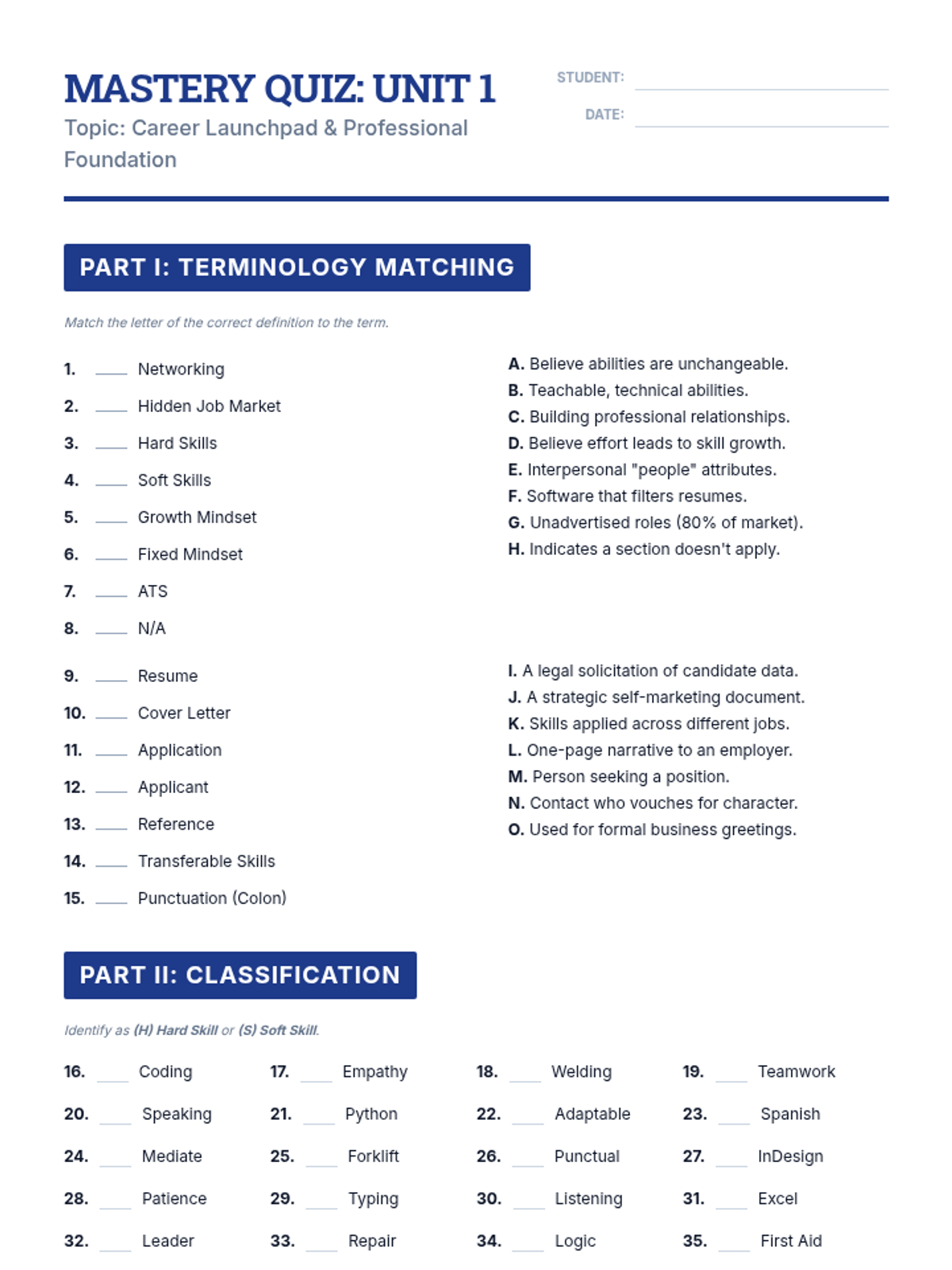
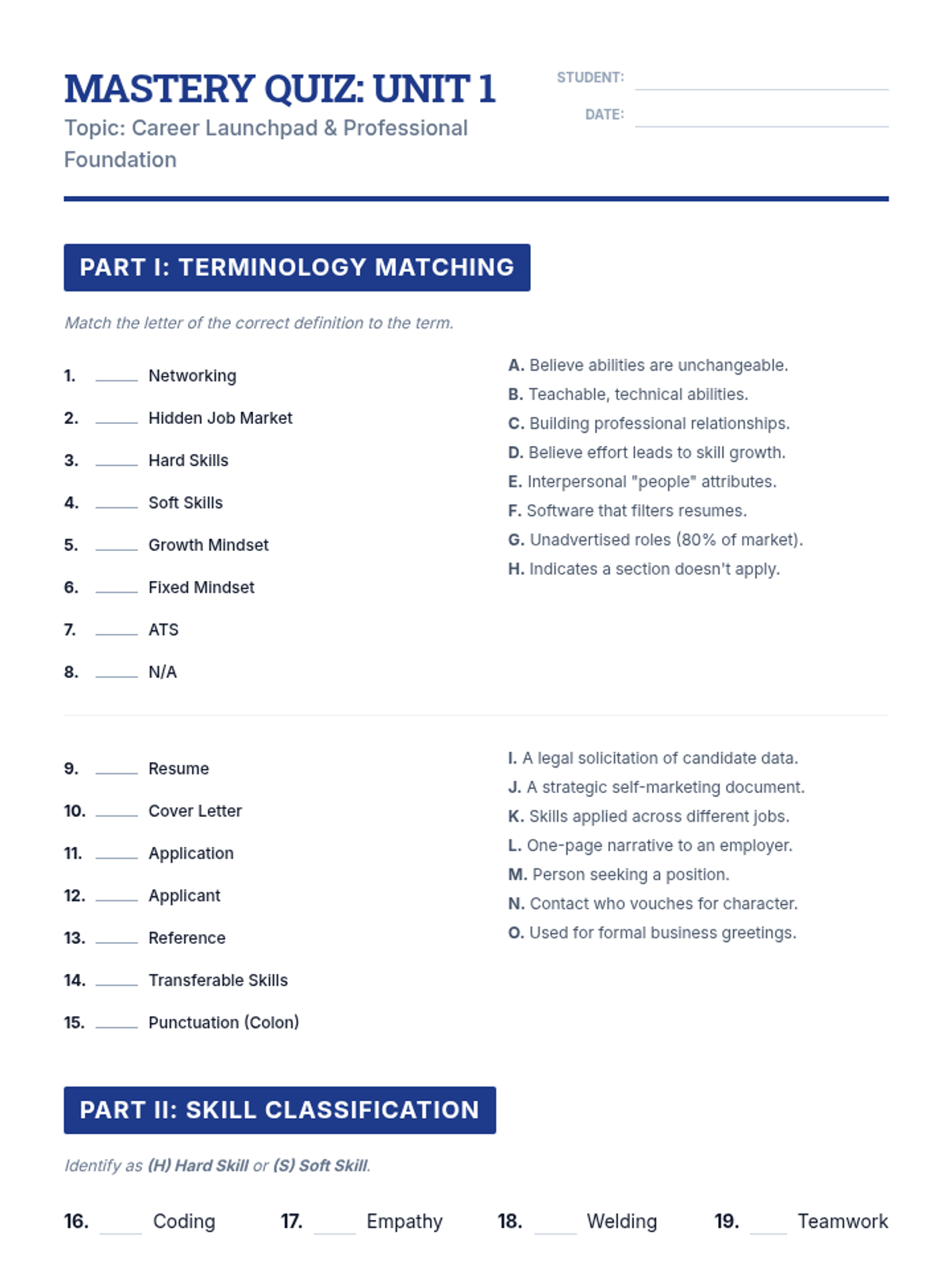
A comprehensive sequence designed for 9th-grade transition students to master the job acquisition cycle. Students progress from identifying soft skills to mastering resumes, applications, and interviews, with a heavy focus on the social 'hidden curriculum' of the workplace.
A project-based unit where 10th-grade students learn to adapt their professional narrative by creating a master resume and tailoring versions for diverse industries. Students explore industry cultures, differentiate between soft and hard skills, and strategically organize content to appeal to specific employers.
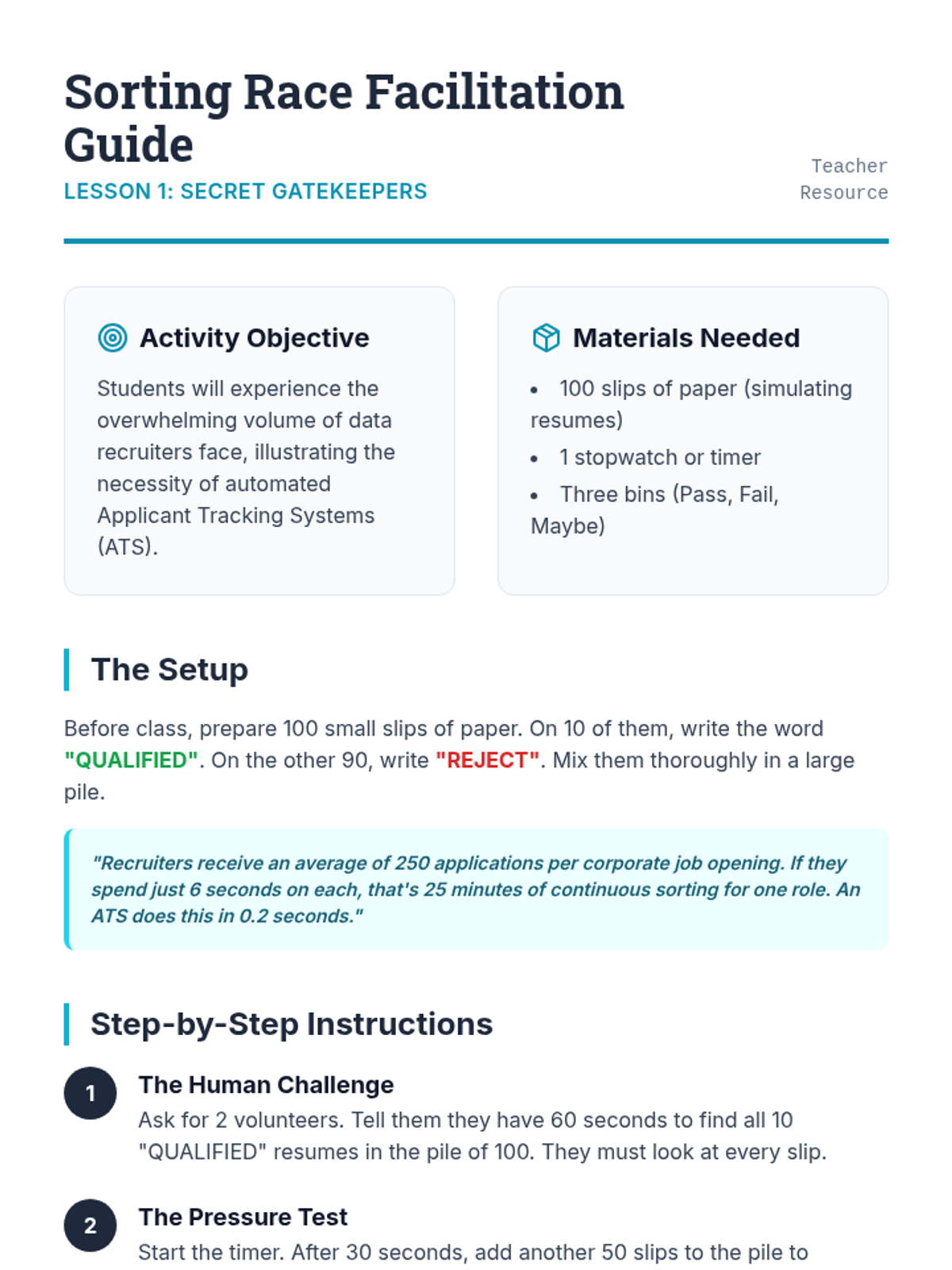
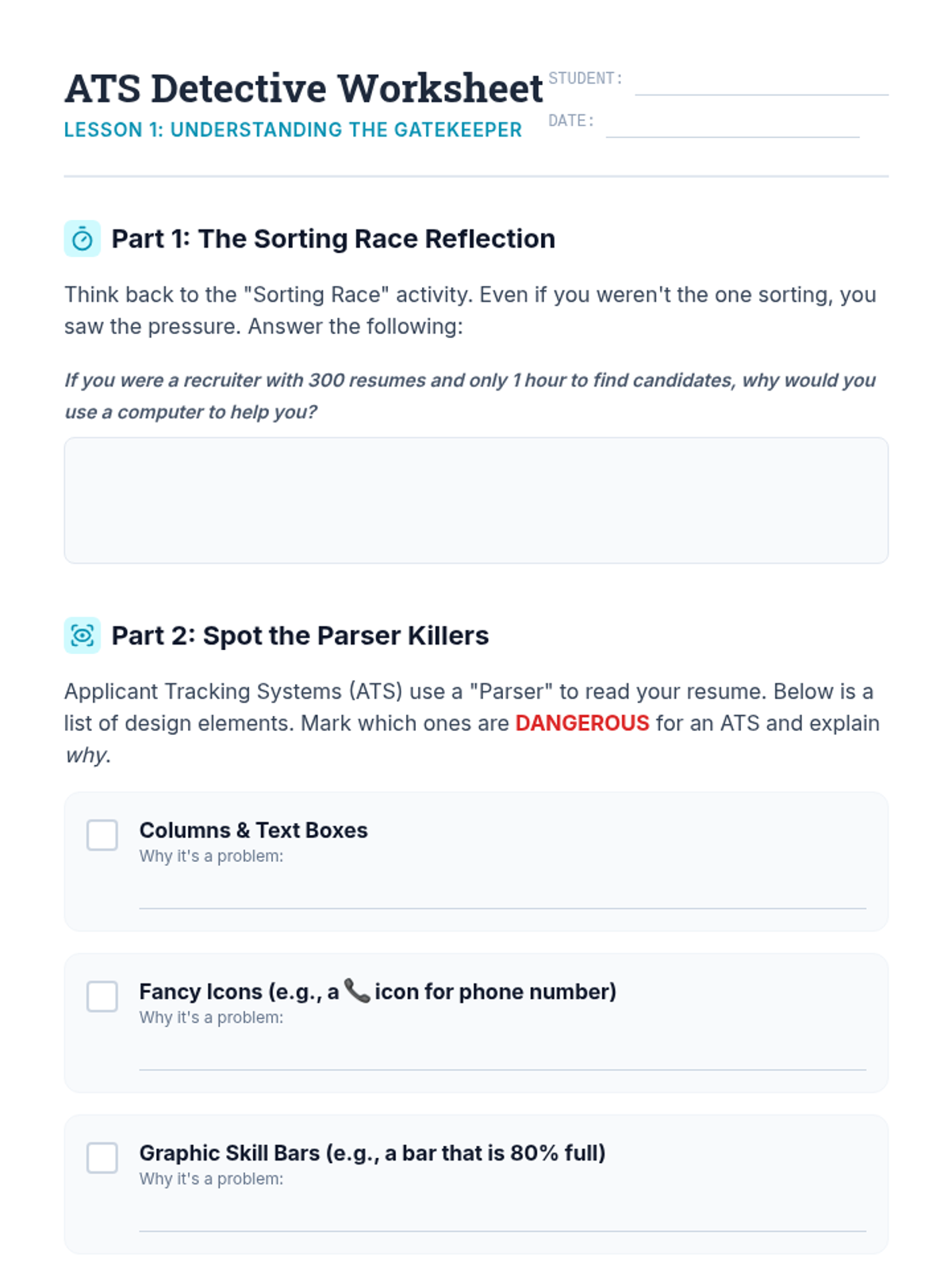
This sequence focuses on the technical aspects of modern job searching, specifically optimizing resumes for Applicant Tracking Systems (ATS). Students explore how digital screening tools filter candidates and learn the specific formatting and keyword strategies required to pass these automated gates. through simulations and technical audits, learners develop a resume structure that is both machine-readable and human-compelling.
This sequence guides students through deconstructing job postings to create aligned resume content. Students learn to identify requirements, translate personal experiences into professional language, and draft high-impact bullet points, culminating in a tailored resume for a specific role.
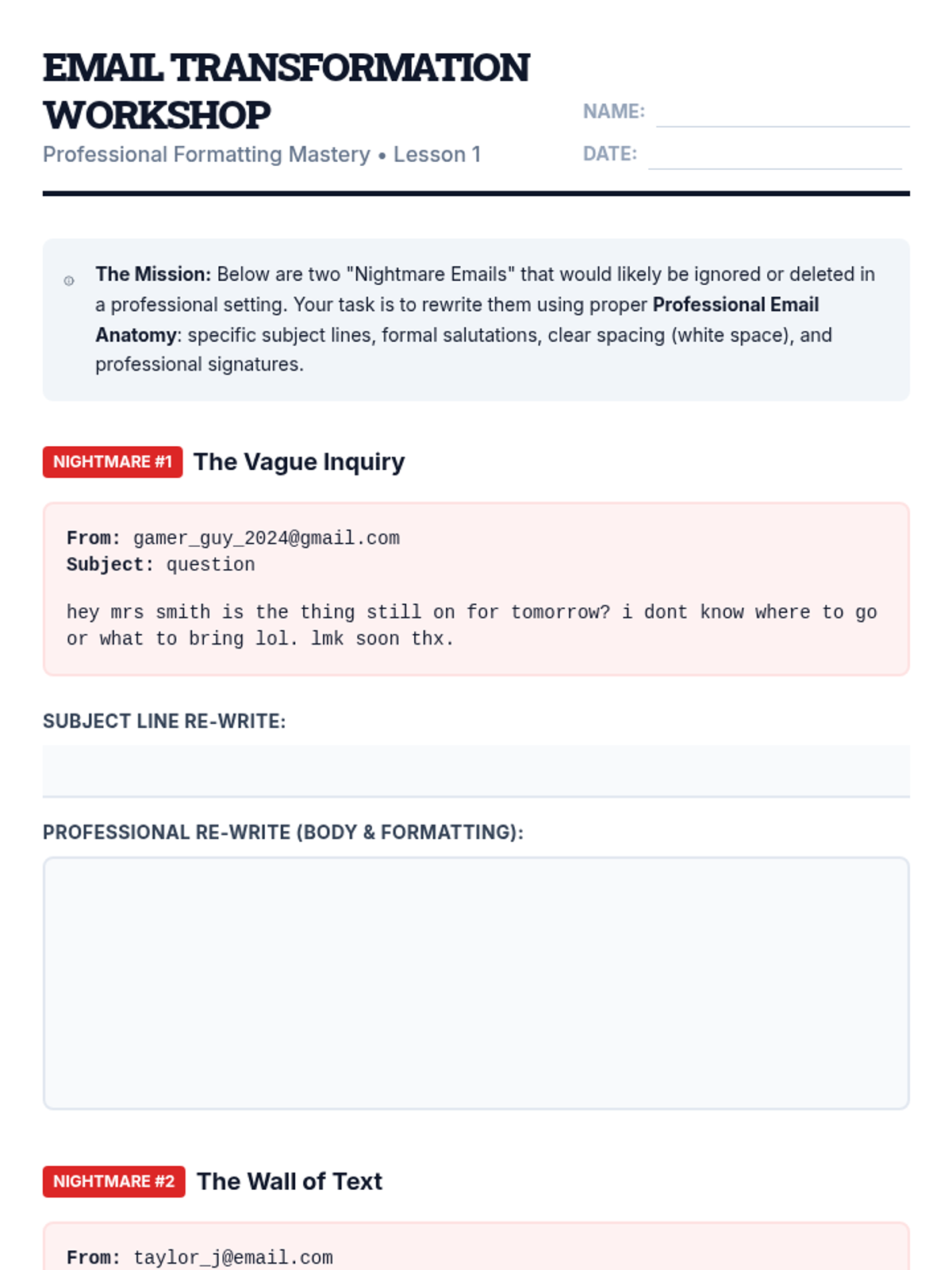
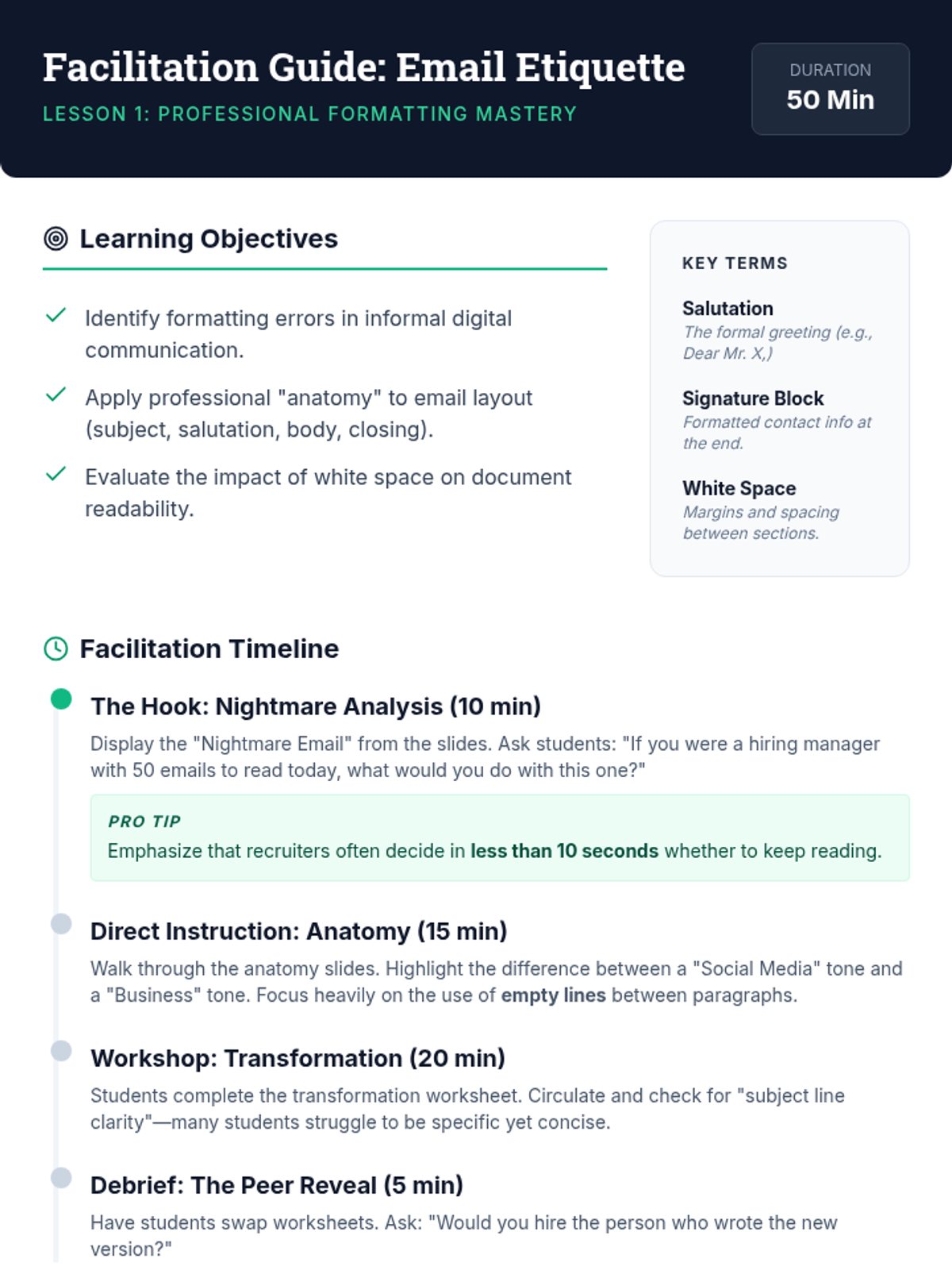
This sequence immerses students in the rigorous demands of professional communication, focusing on how formatting influences credibility. Students analyze poorly formatted business documents to identify failures in communication, then progressively build skills in structuring emails, memos, and resumes.
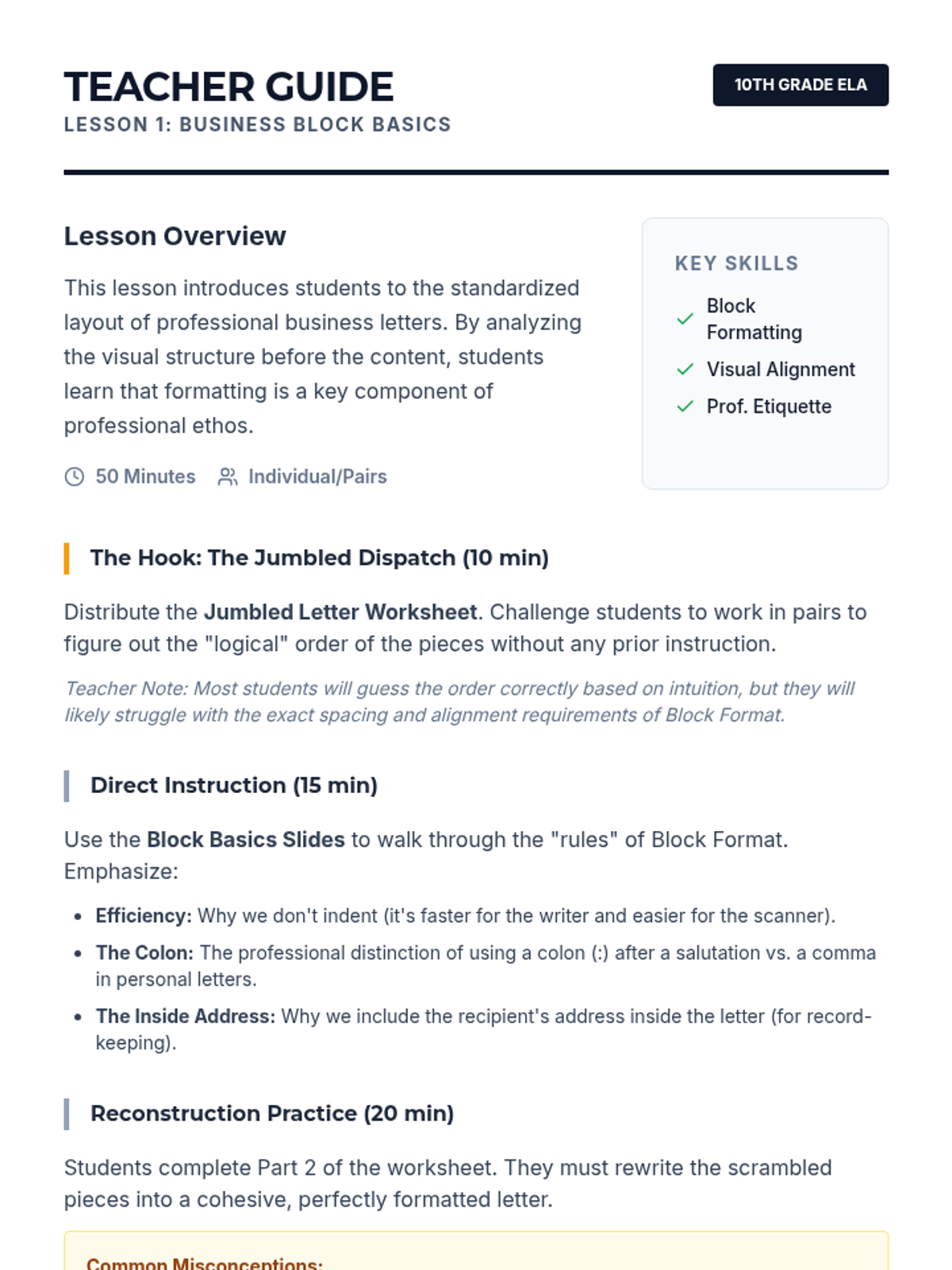
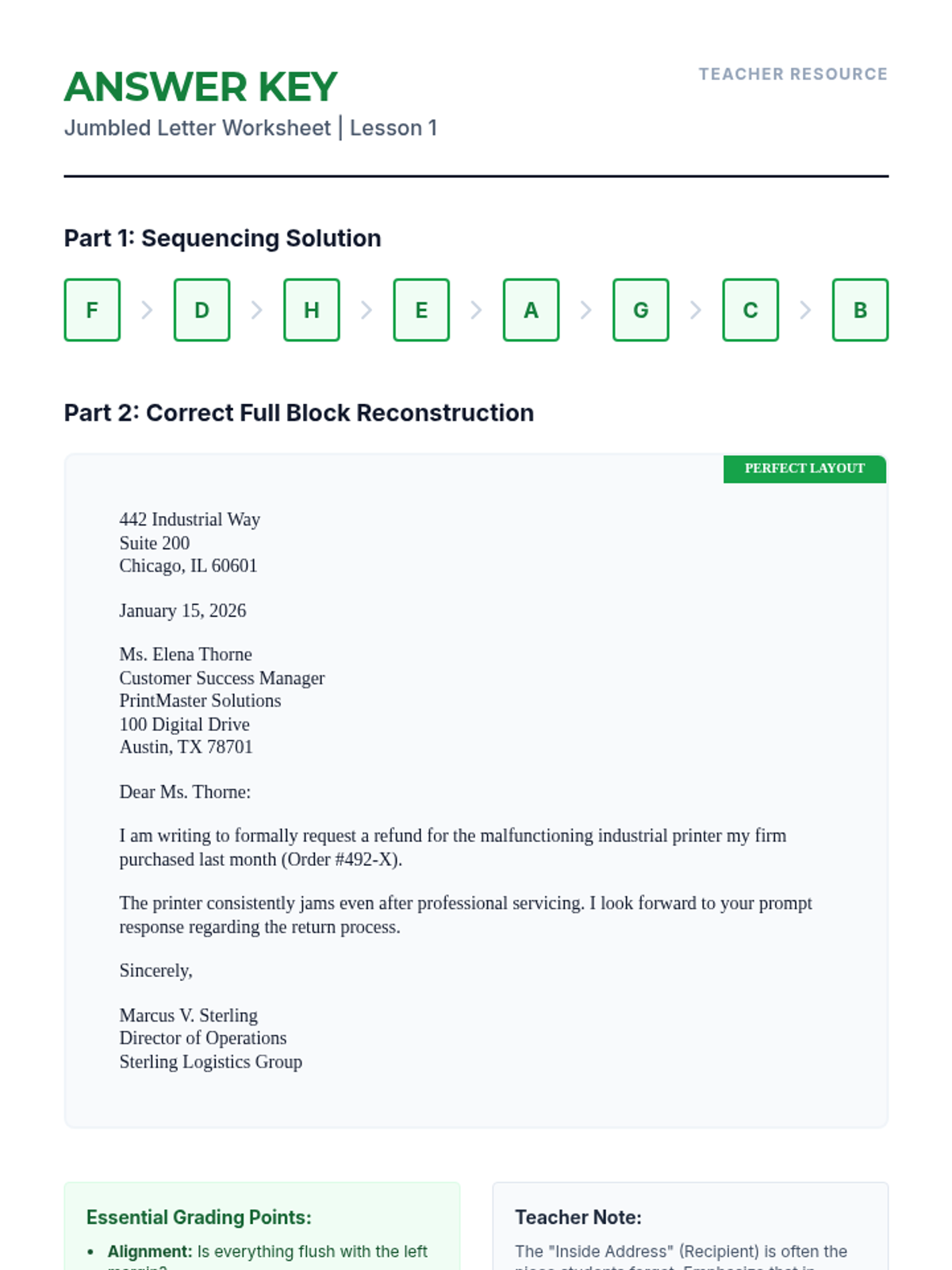
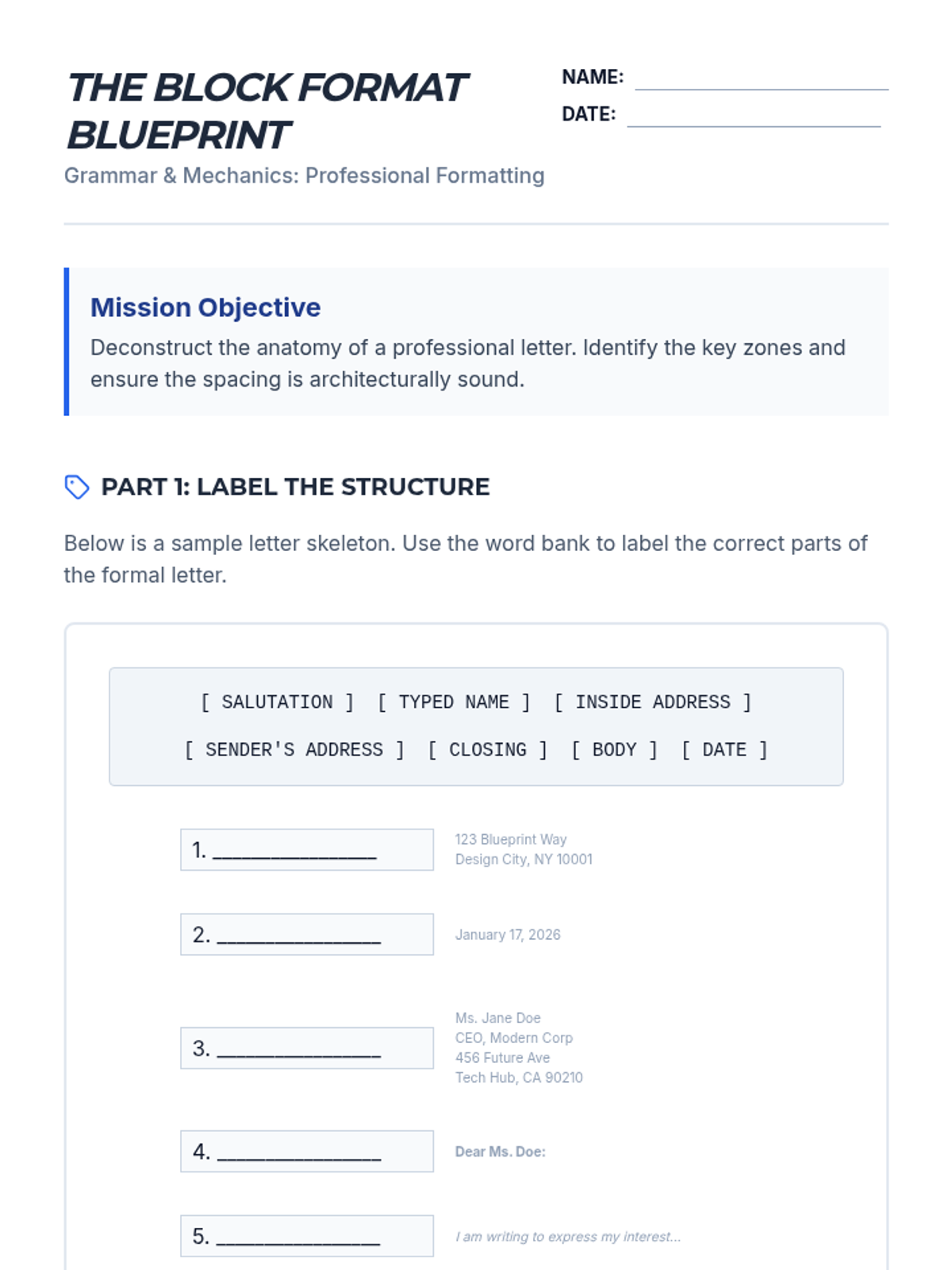
A 10th-grade ELA sequence focusing on professional formatting conventions for business letters, resumes, lists, and emails, culminating in a professional portfolio audit.
Students transition from academic writing to real-world professional communication by exploring document design and layout. The sequence covers business letters, formal emails, resumes, and the mechanics of visual hierarchy and indentation.
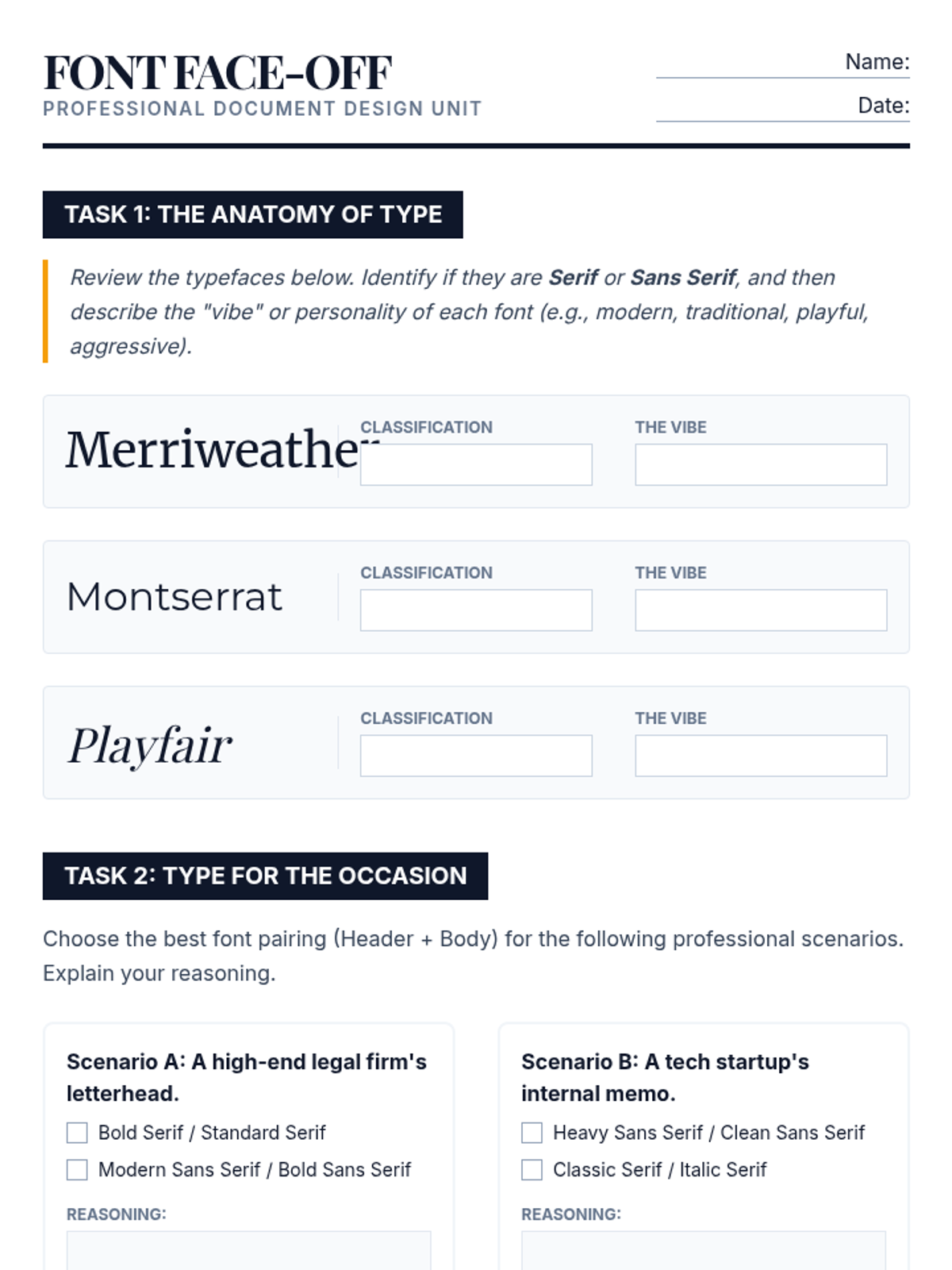
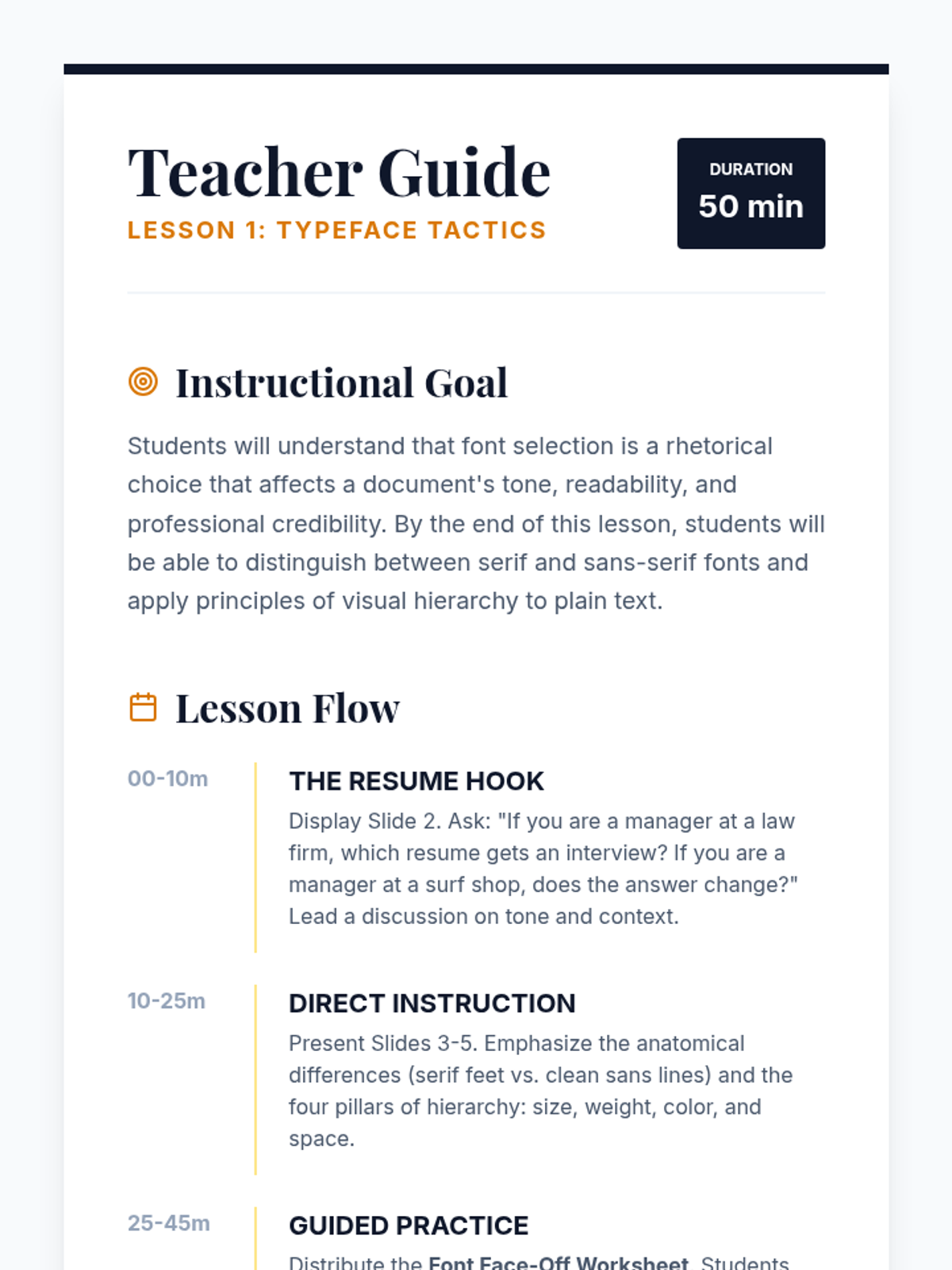
This sequence transitions students from standard essay formatting to the visual demands of professional documents. Students explore how layout, font selection, and spacing influence the readability and credibility of business communications. Through the creation of resumes and formal letters, they apply strict conventions regarding margins, alignment, and hierarchy.
This sequence teaches 10th-grade students how to articulate their transferable skills using the STAR method in cover letters. It focuses on translating extracurricular experiences into professional narratives that complement their resumes.
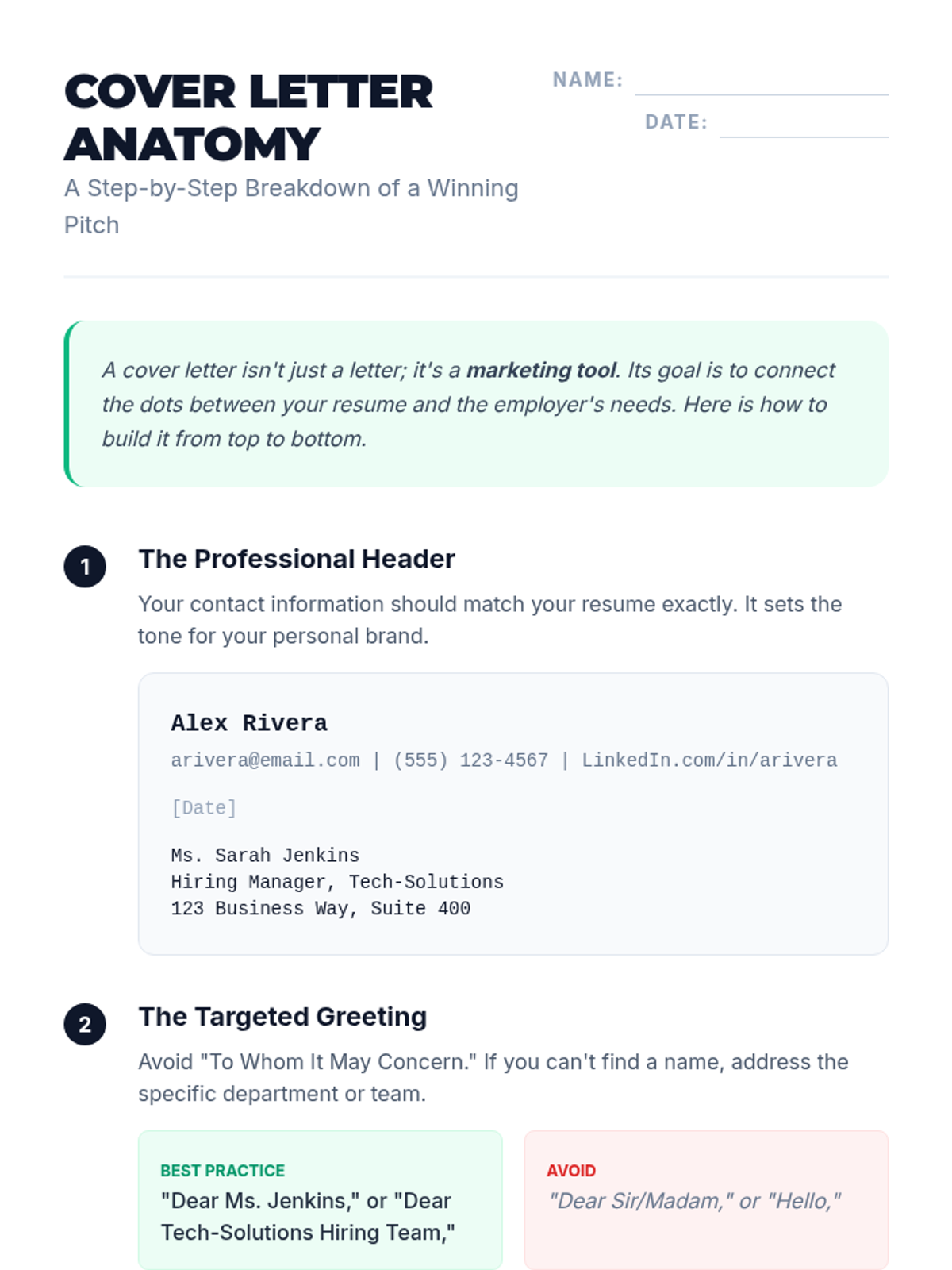
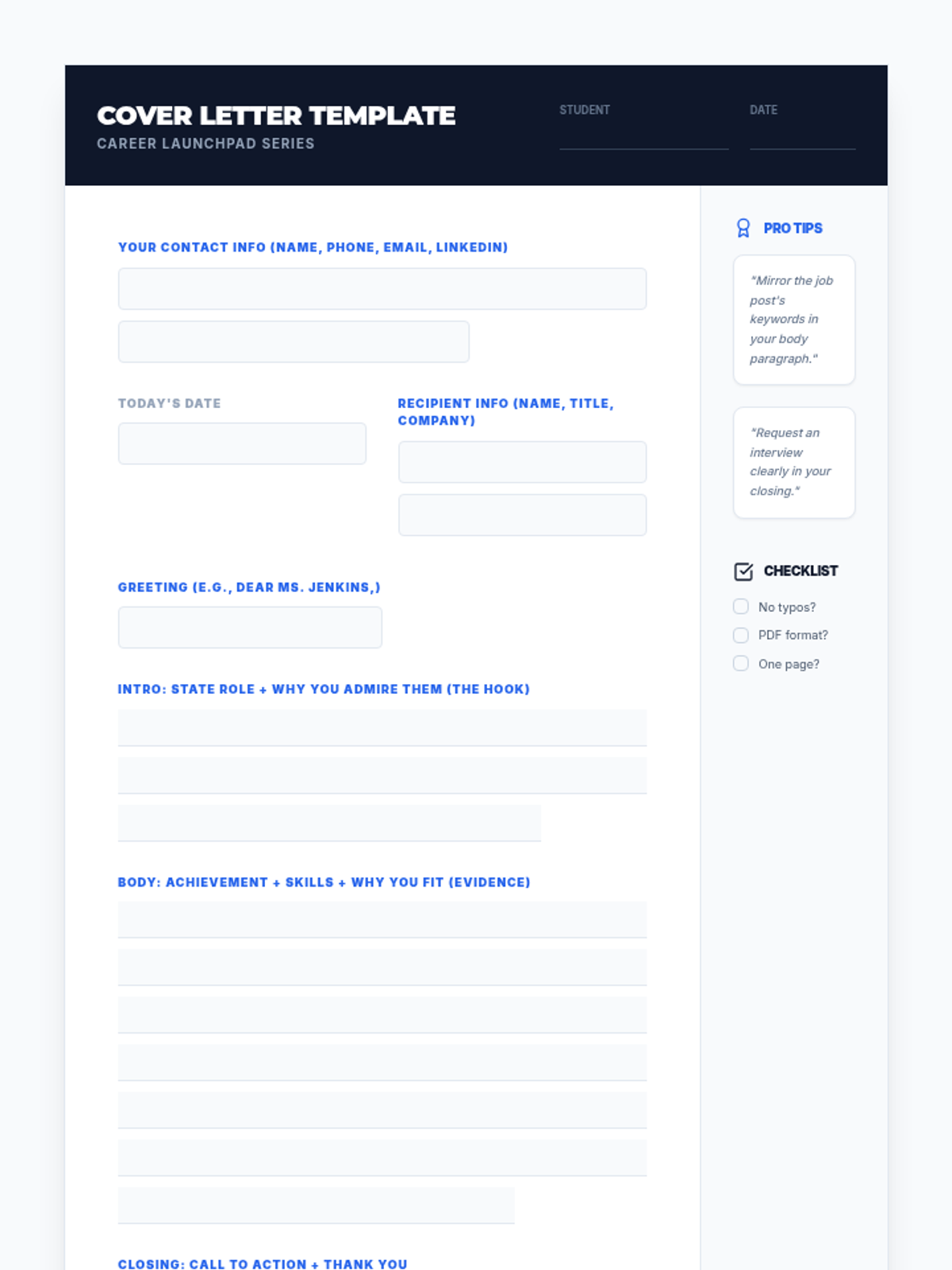
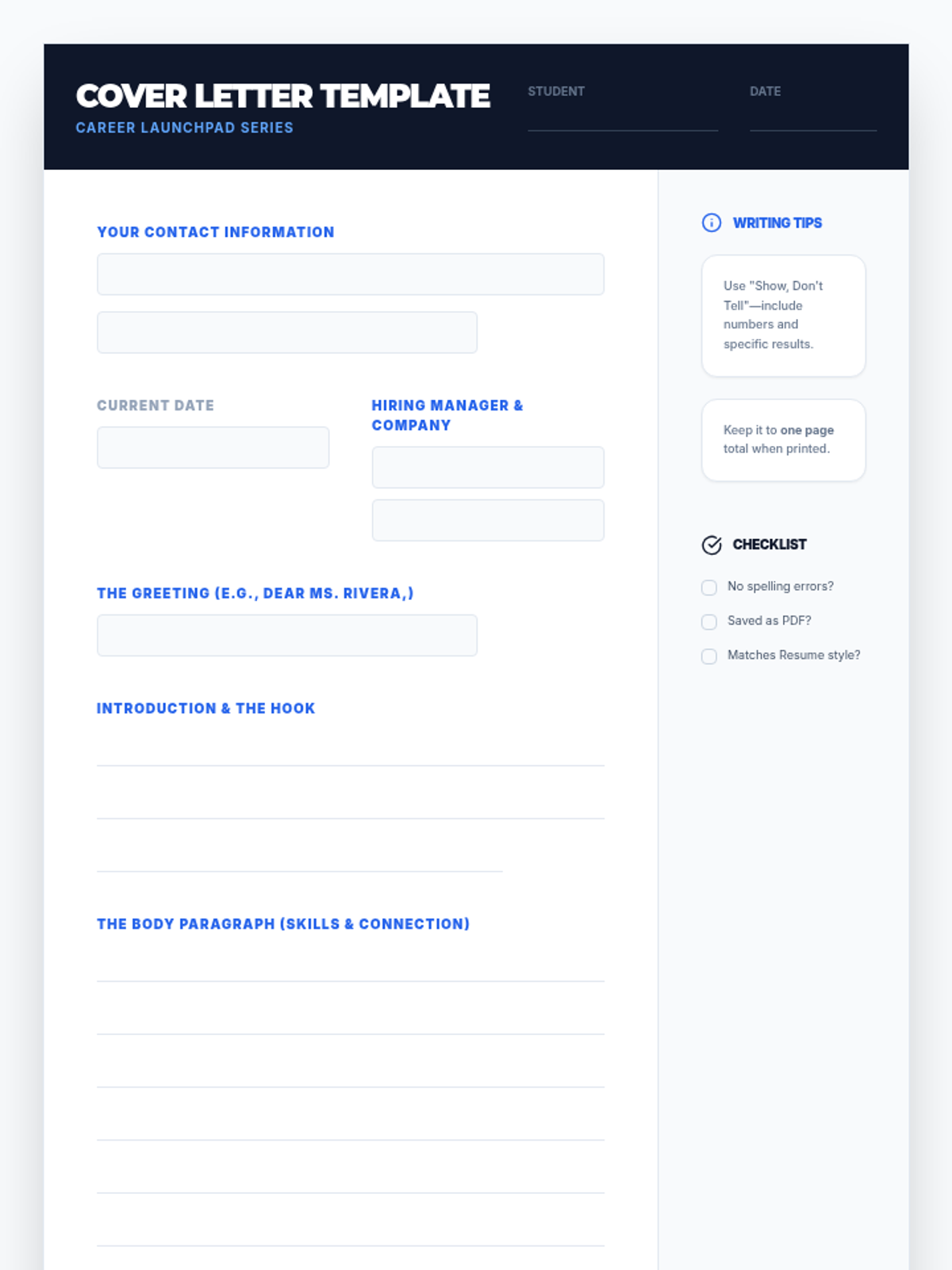
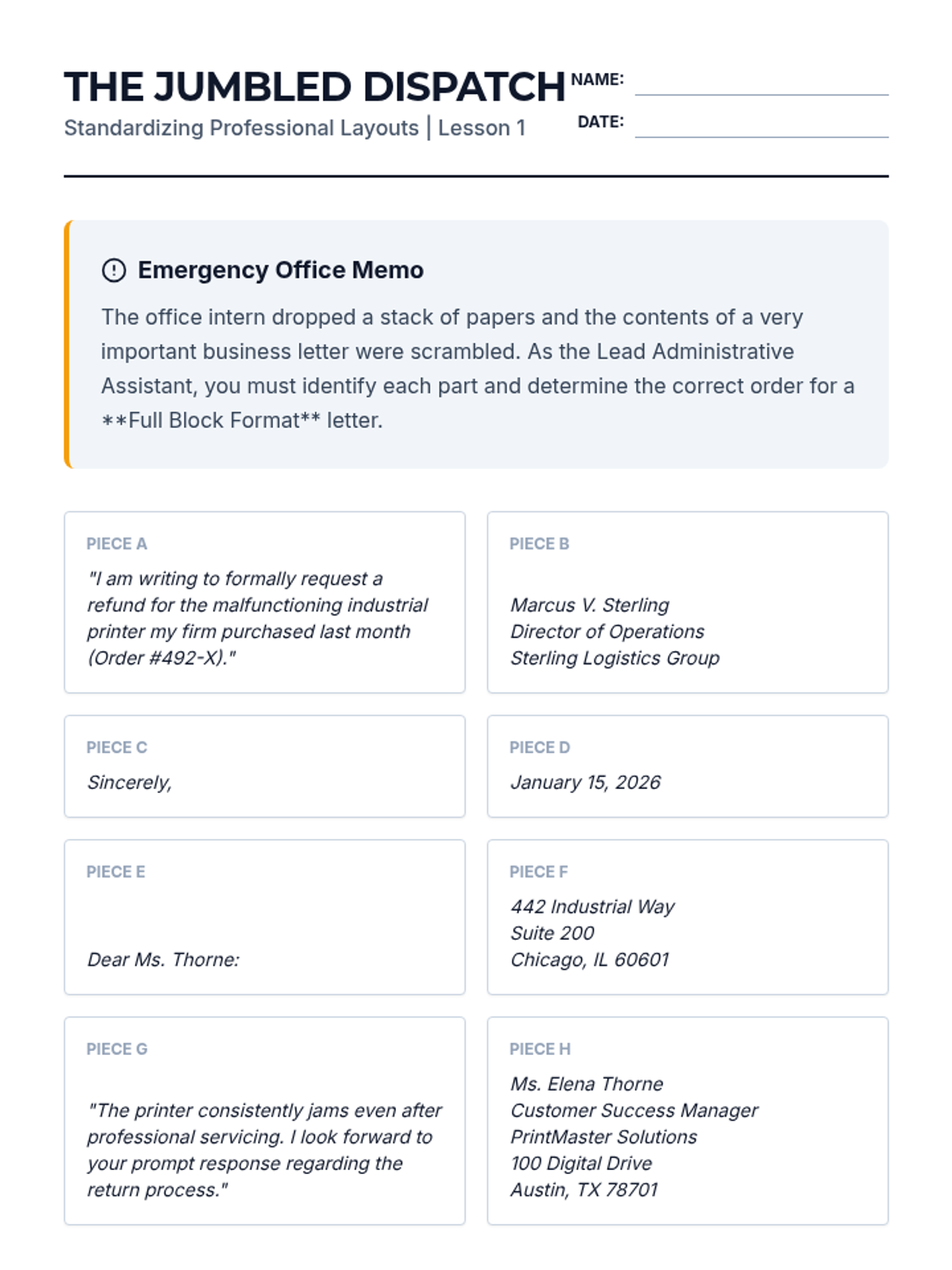
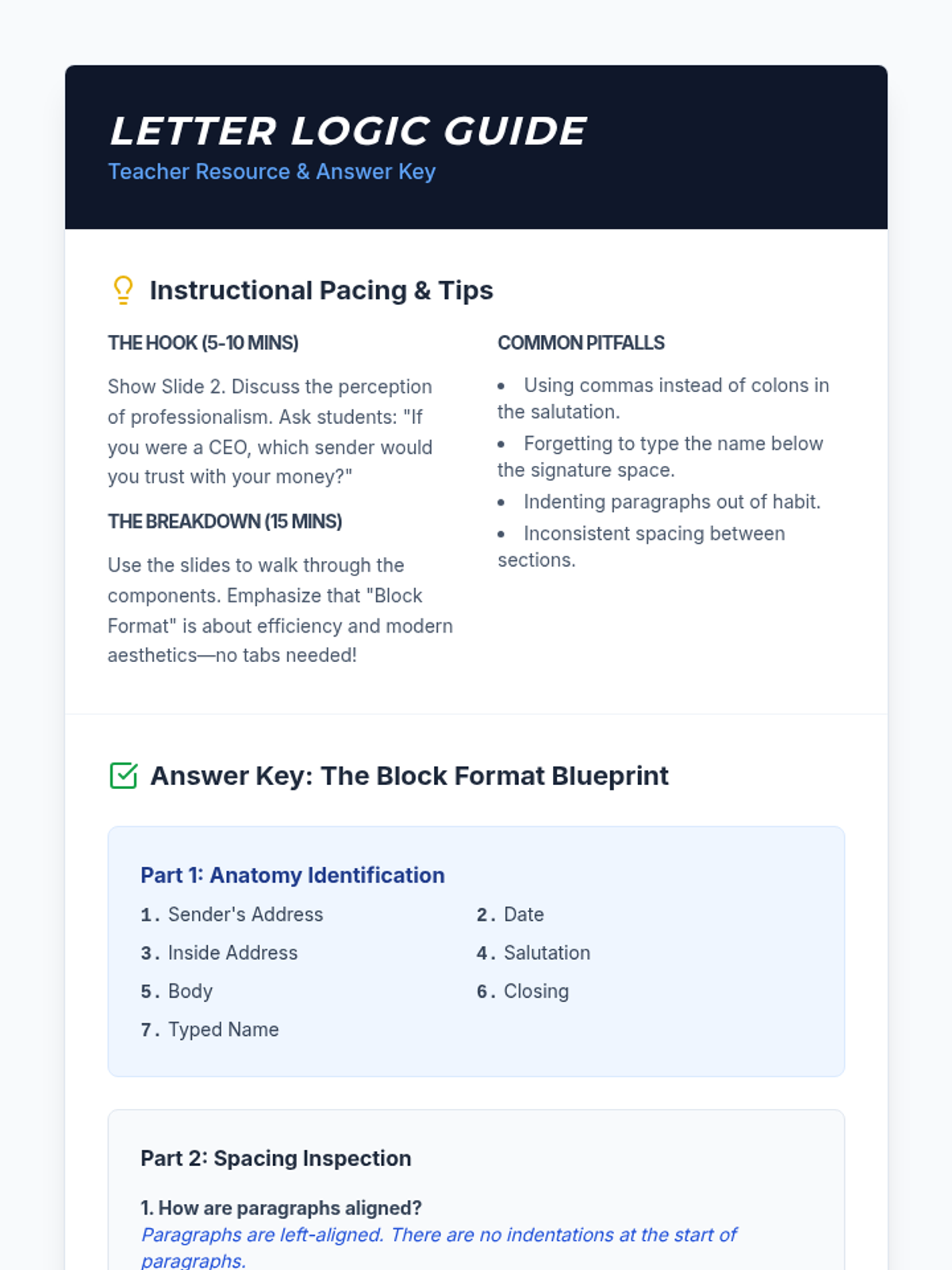
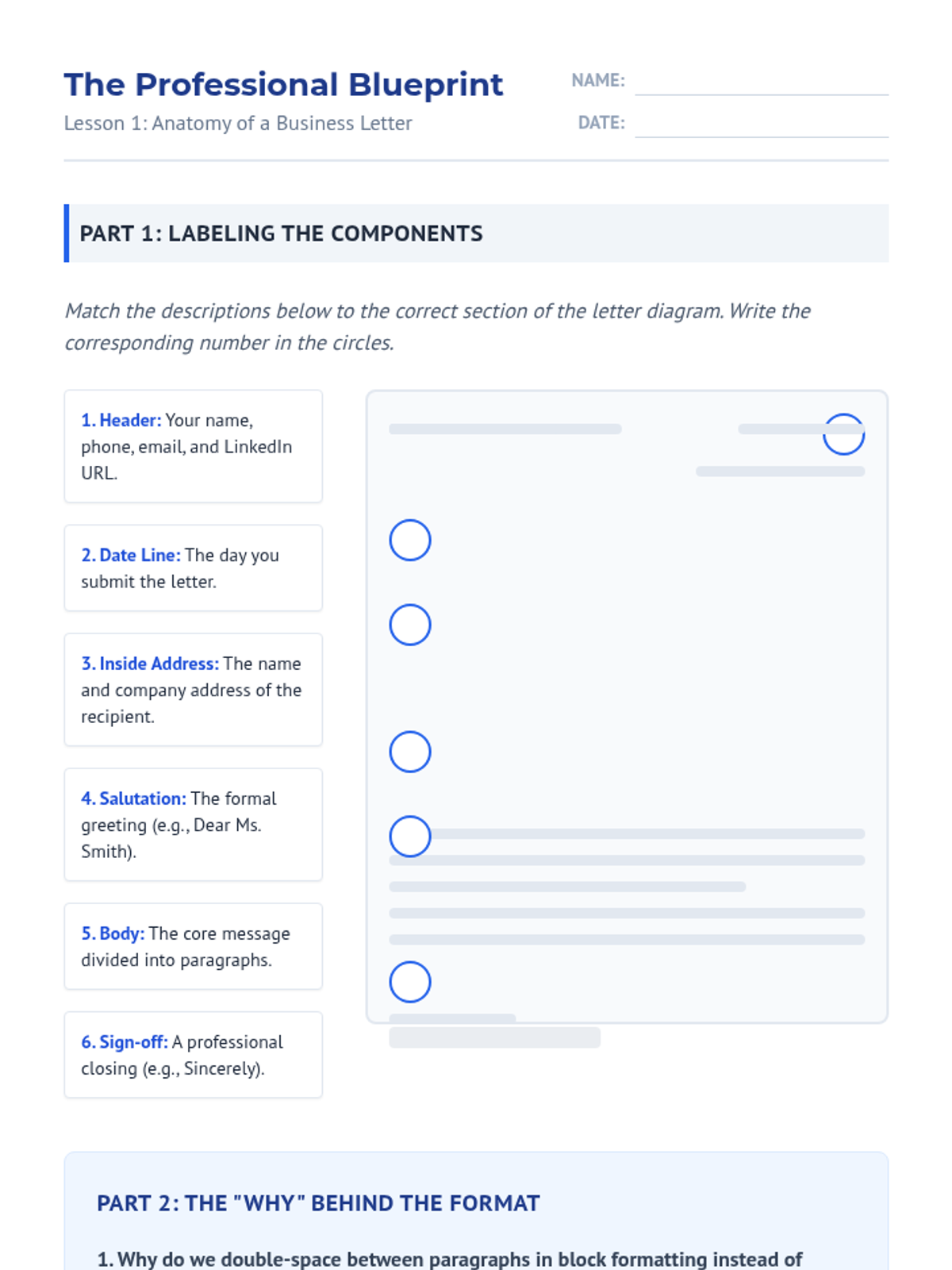
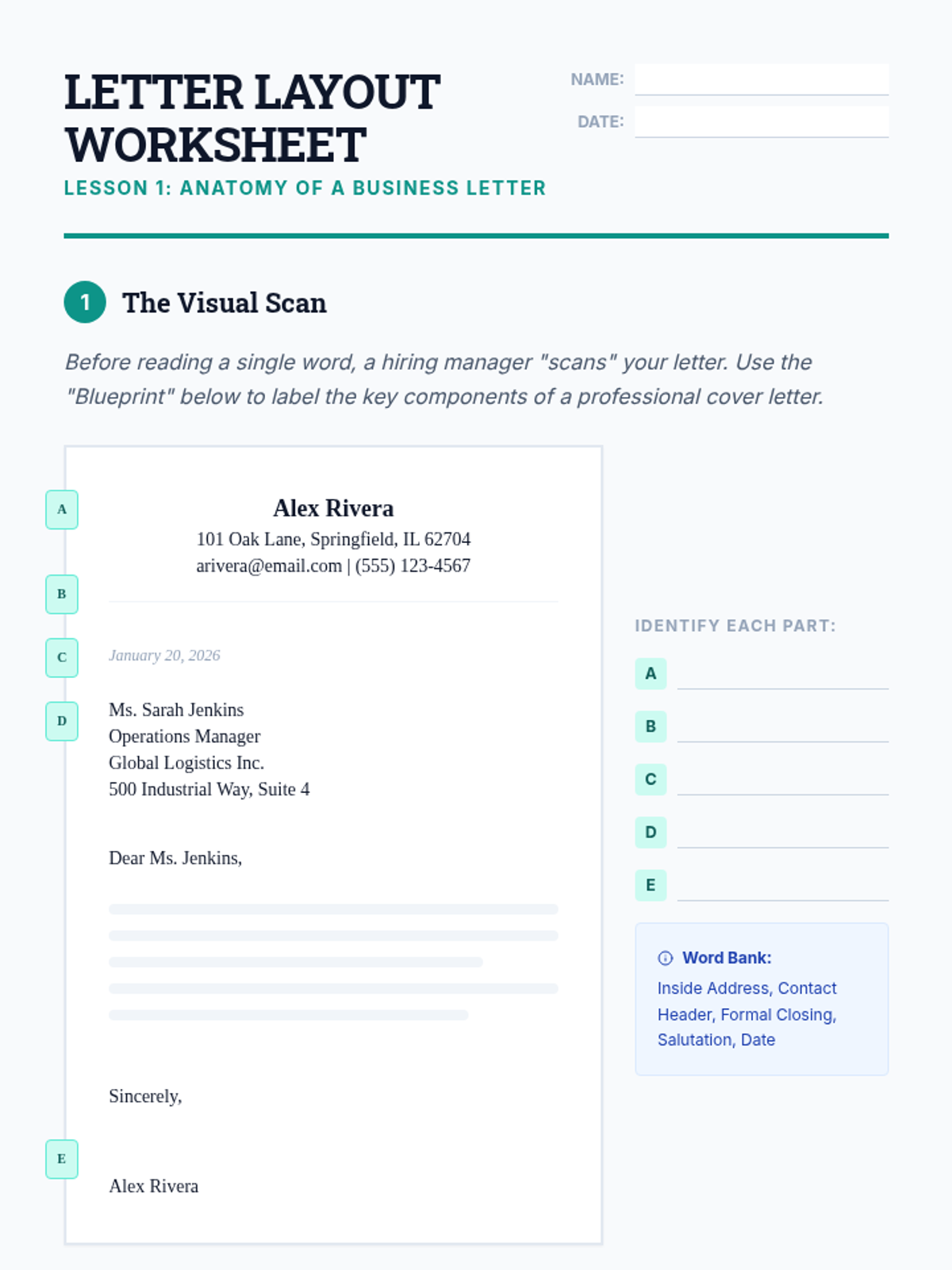
A comprehensive sequence for 10th-grade students on the structural and formatting conventions of professional cover letters. Students progress from understanding basic business letter anatomy to drafting specific sections (header, opening, body, closing) to produce a polished, professional document.
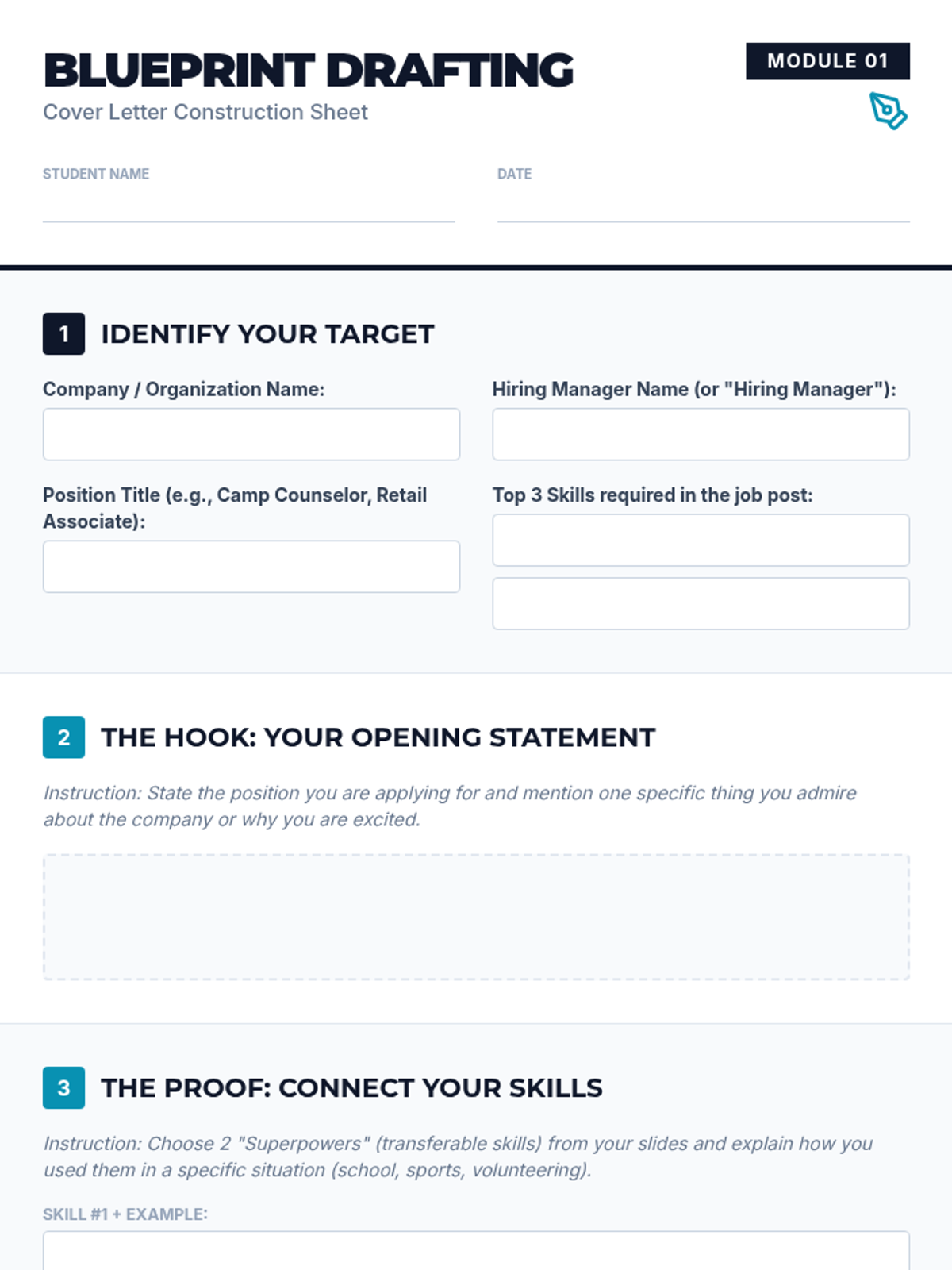
A comprehensive 5-lesson sequence designed to teach 9th-grade students the essential structure, formatting, and persuasive writing techniques required for professional cover letters. Students progress from basic document formatting to crafting compelling body paragraphs and professional closings, culminating in a polished, peer-reviewed draft.
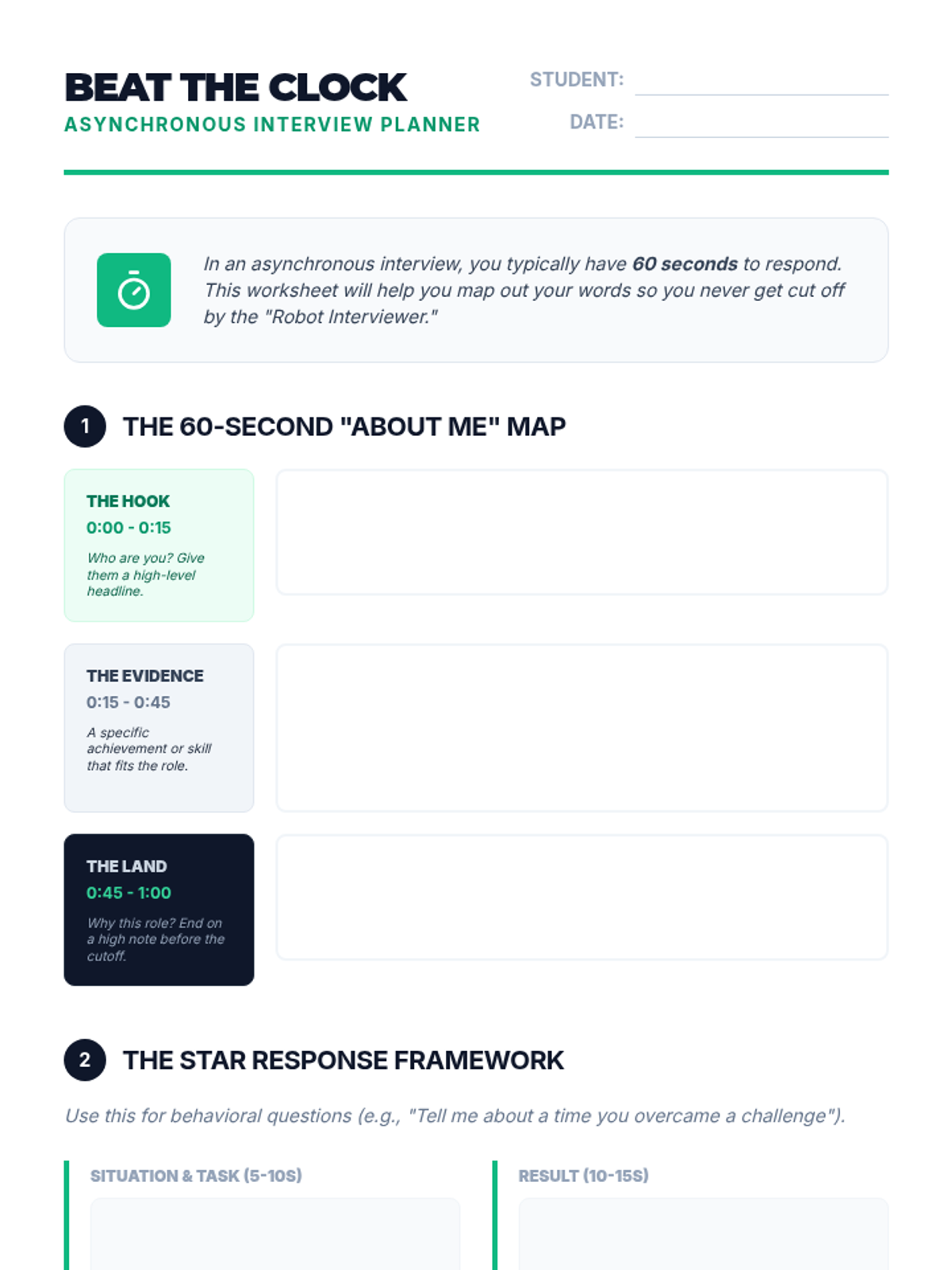
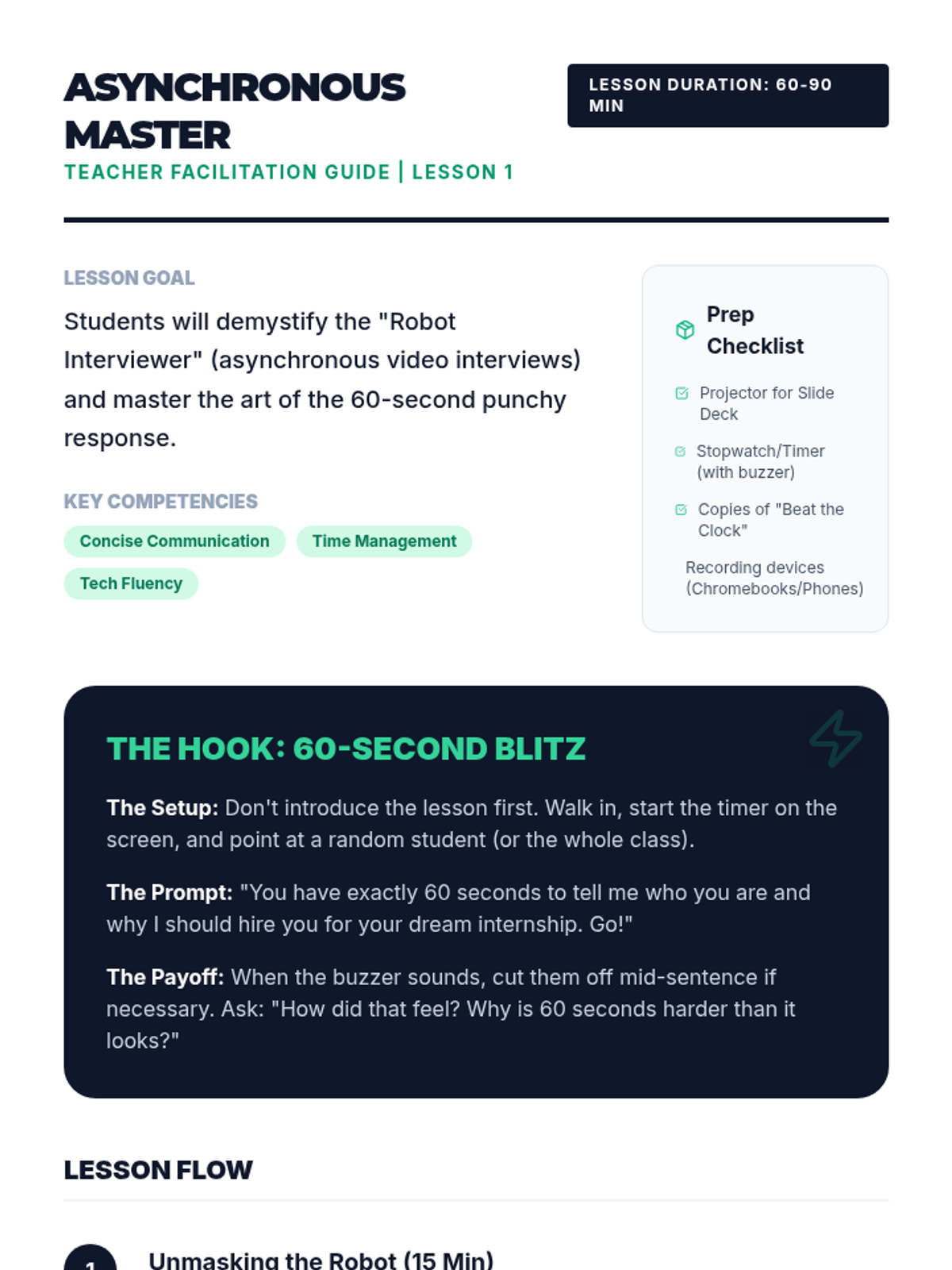
A comprehensive sequence for 10th graders to master virtual interviewing through asynchronous recordings, peer feedback loops, and a high-stakes capstone simulation. Students develop technical setup proficiency, non-verbal communication, and concise verbal pitching.
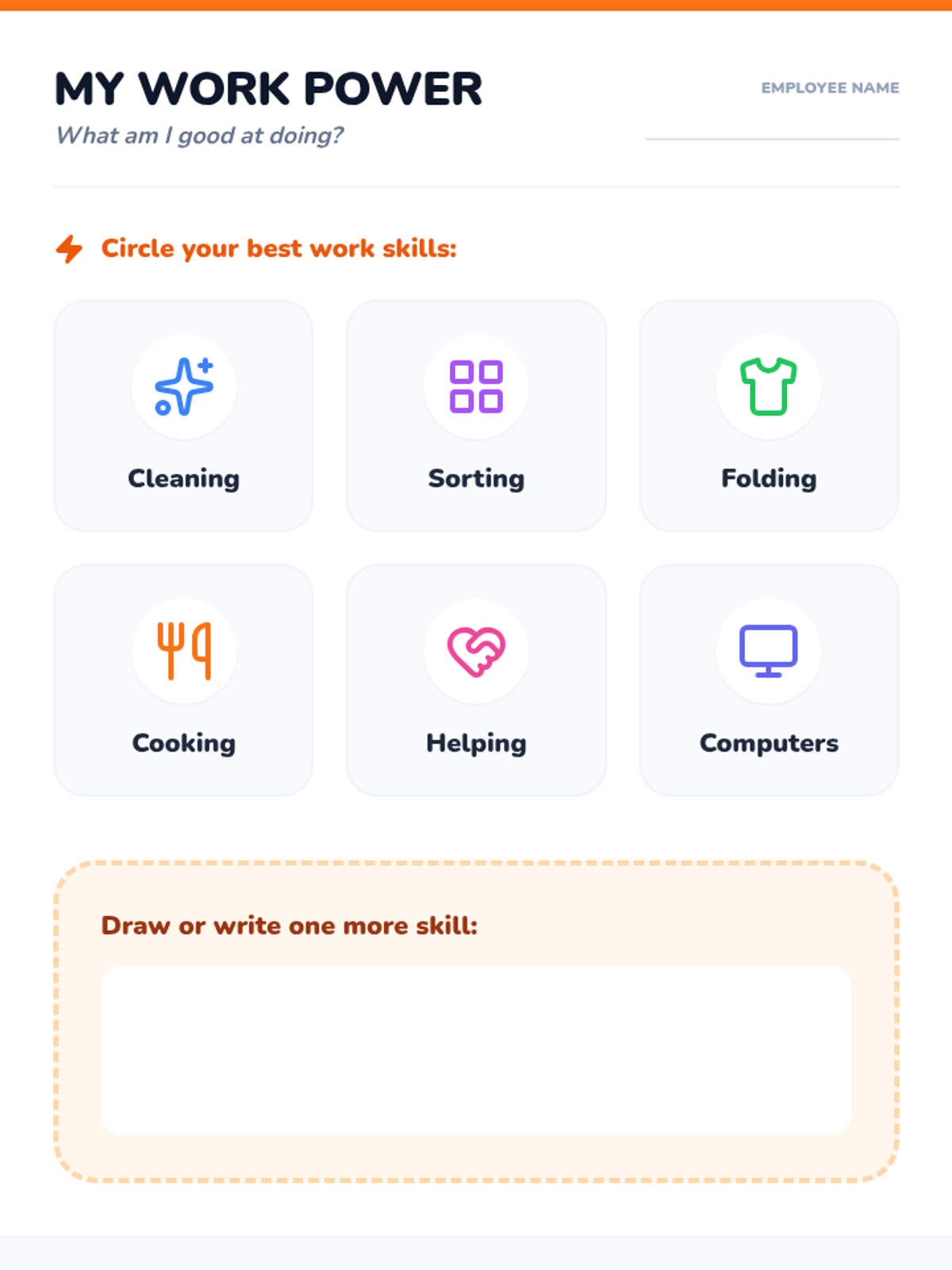
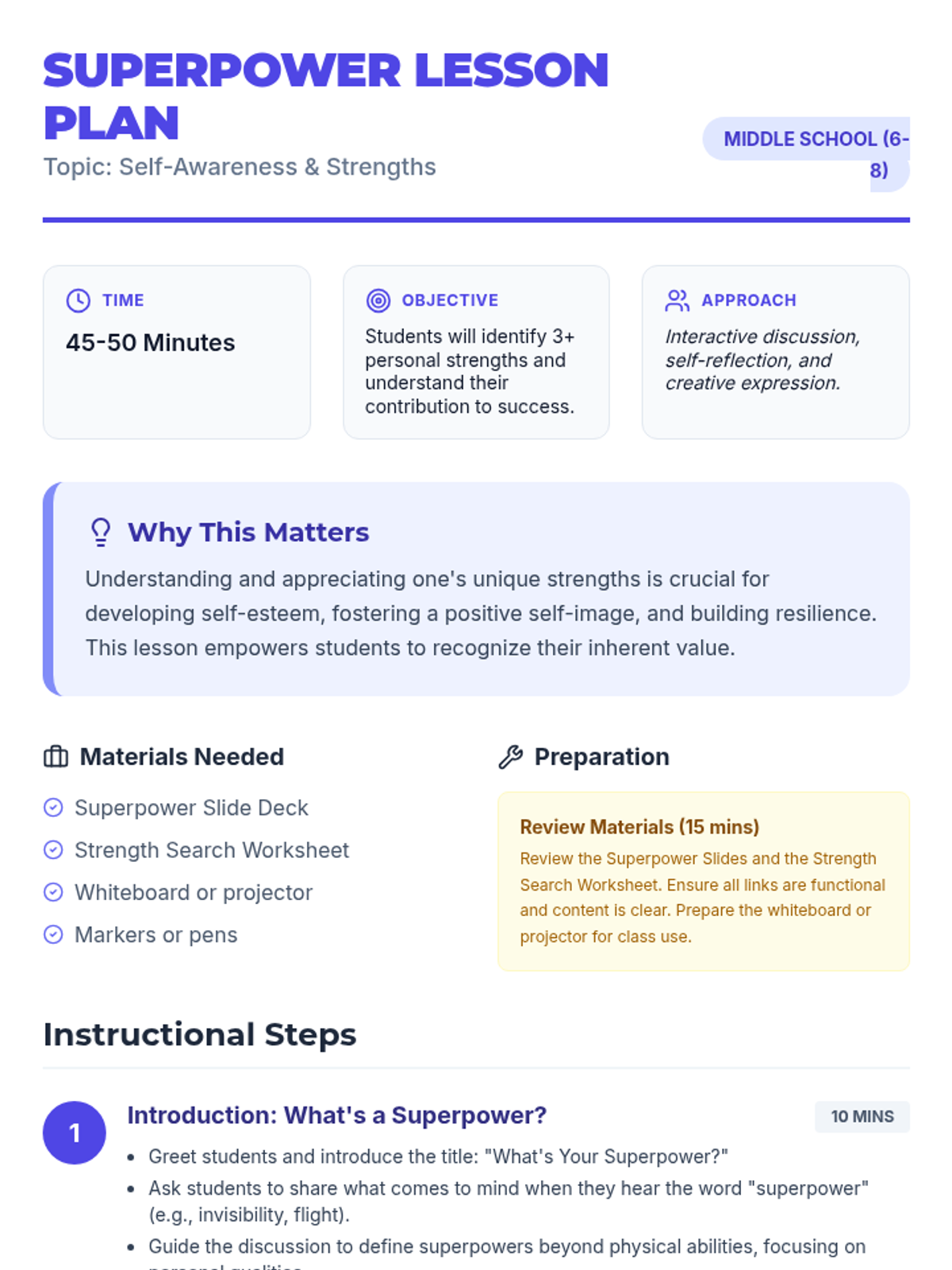
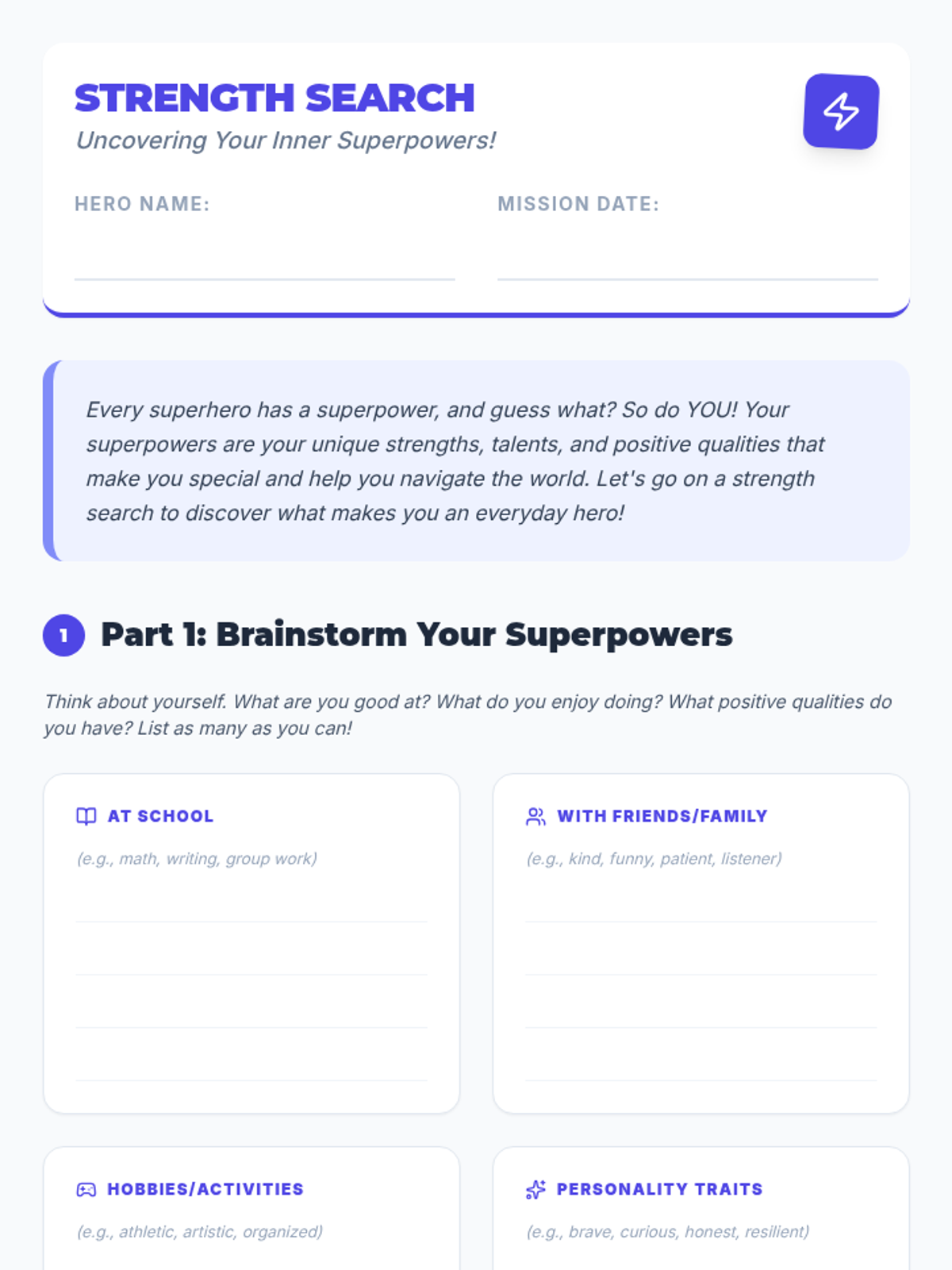
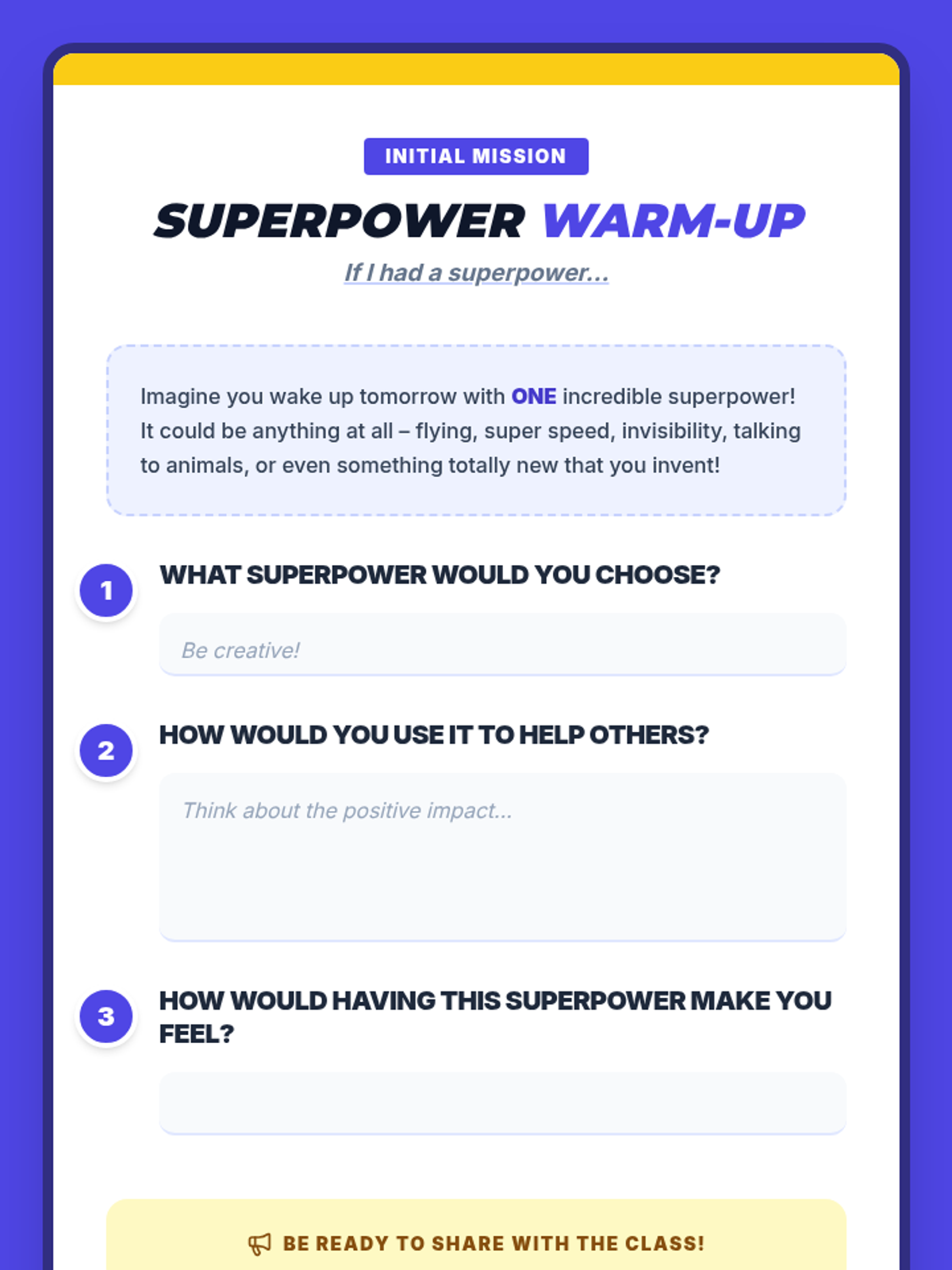
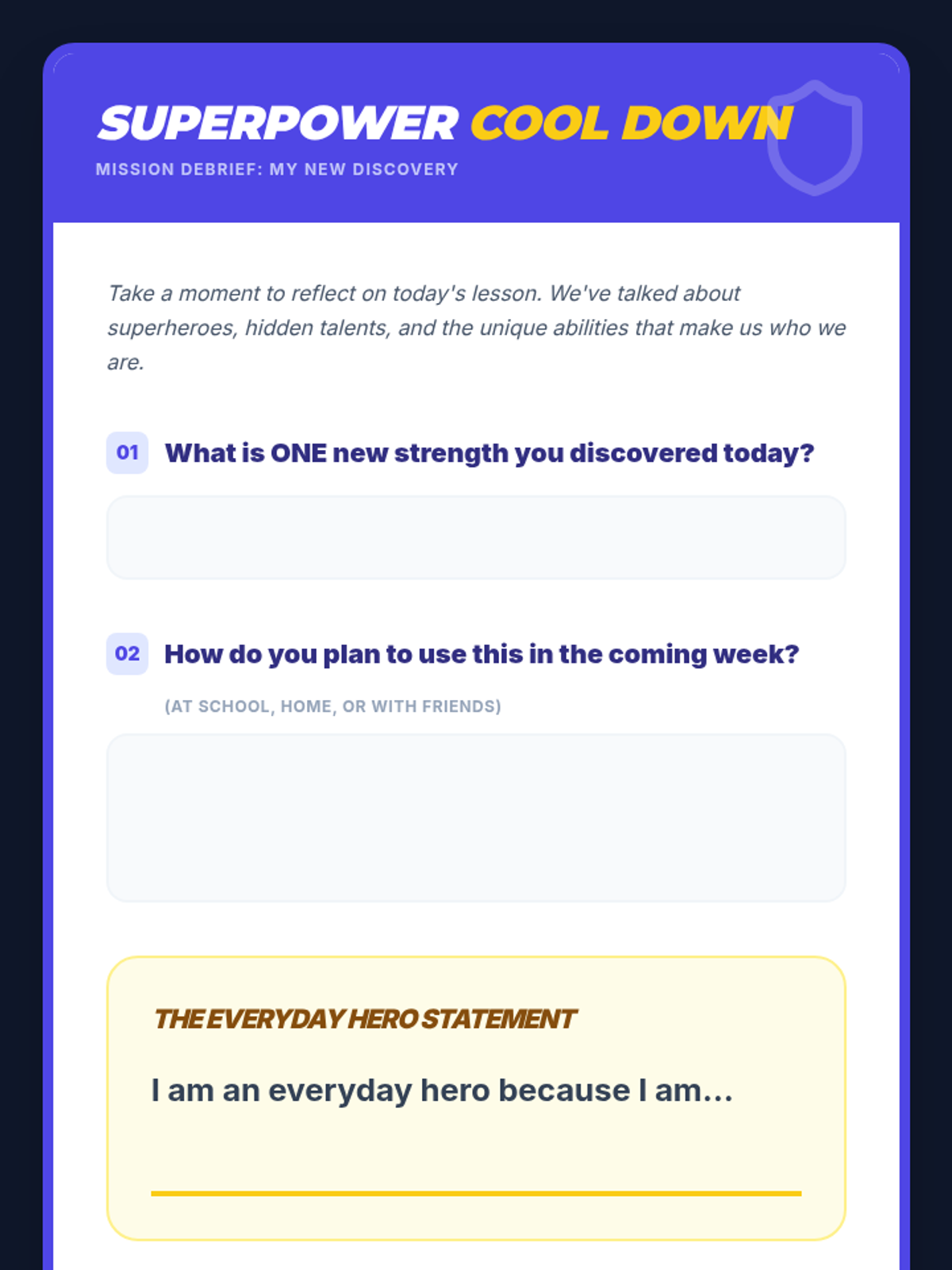
This sequence guides students from self-discovery to professional application. It begins by helping middle schoolers identify their unique 'superpowers' (strengths) and transitions into practical skills for adult learners or older students ready for their first job application.
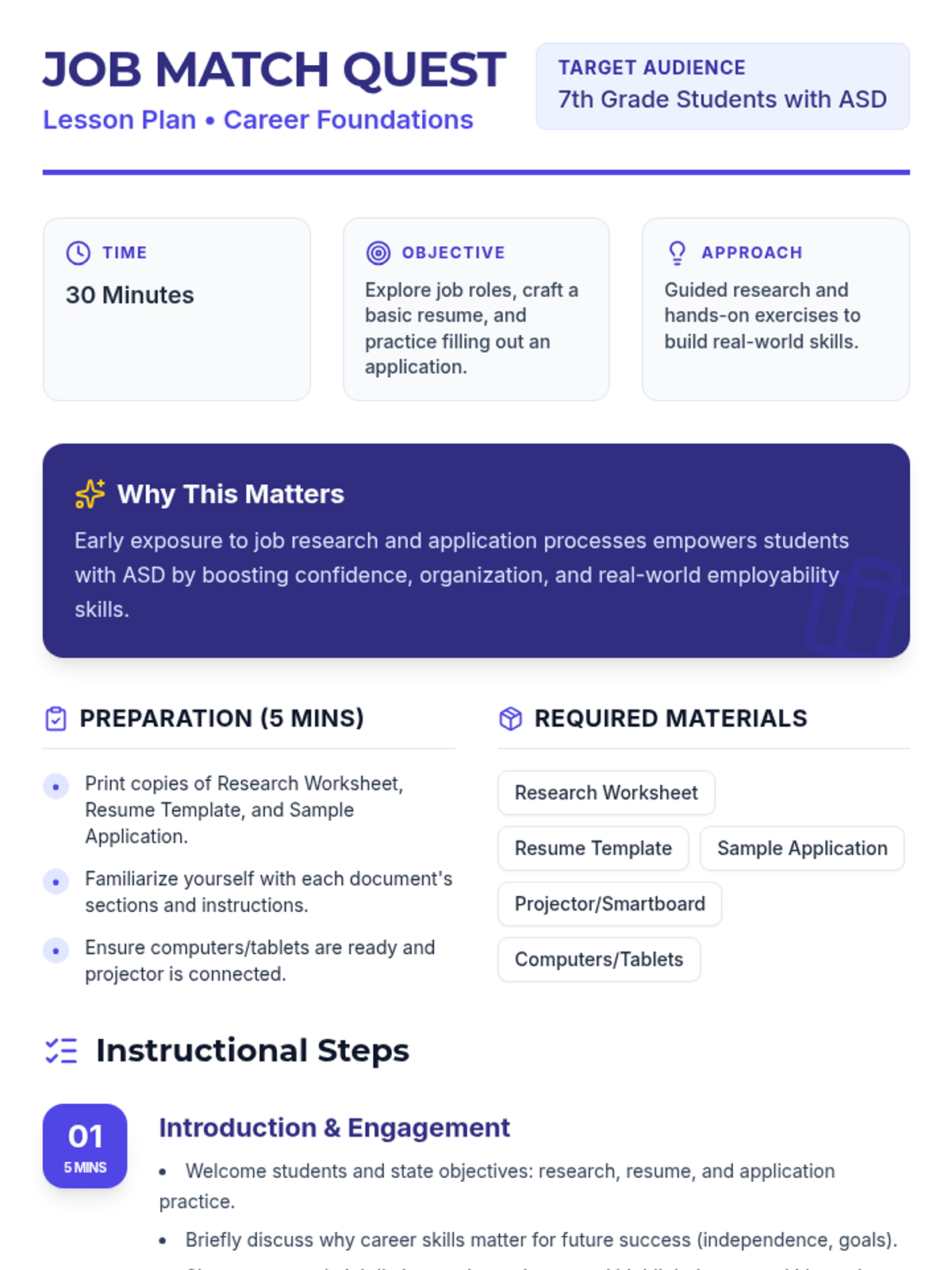
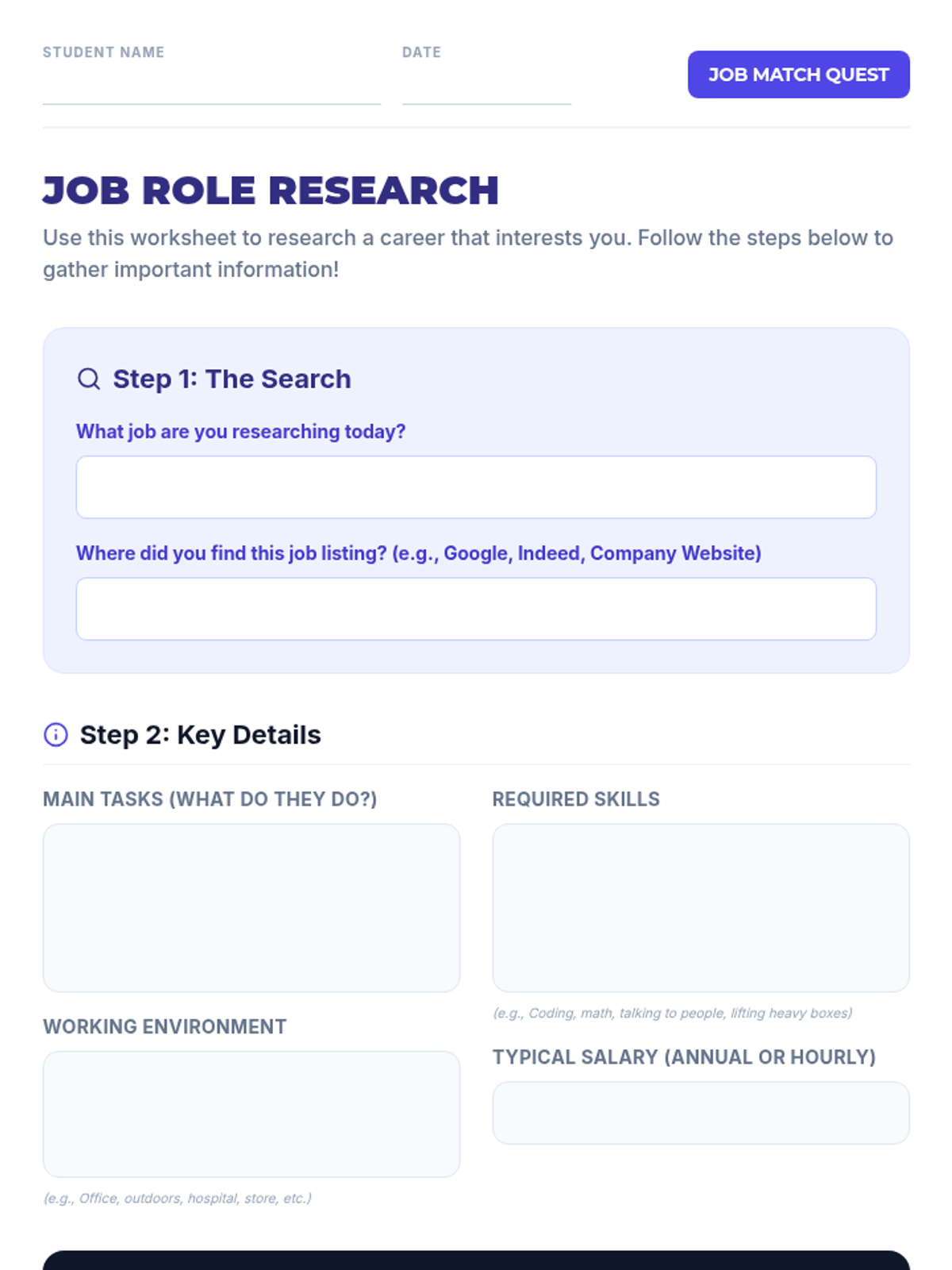
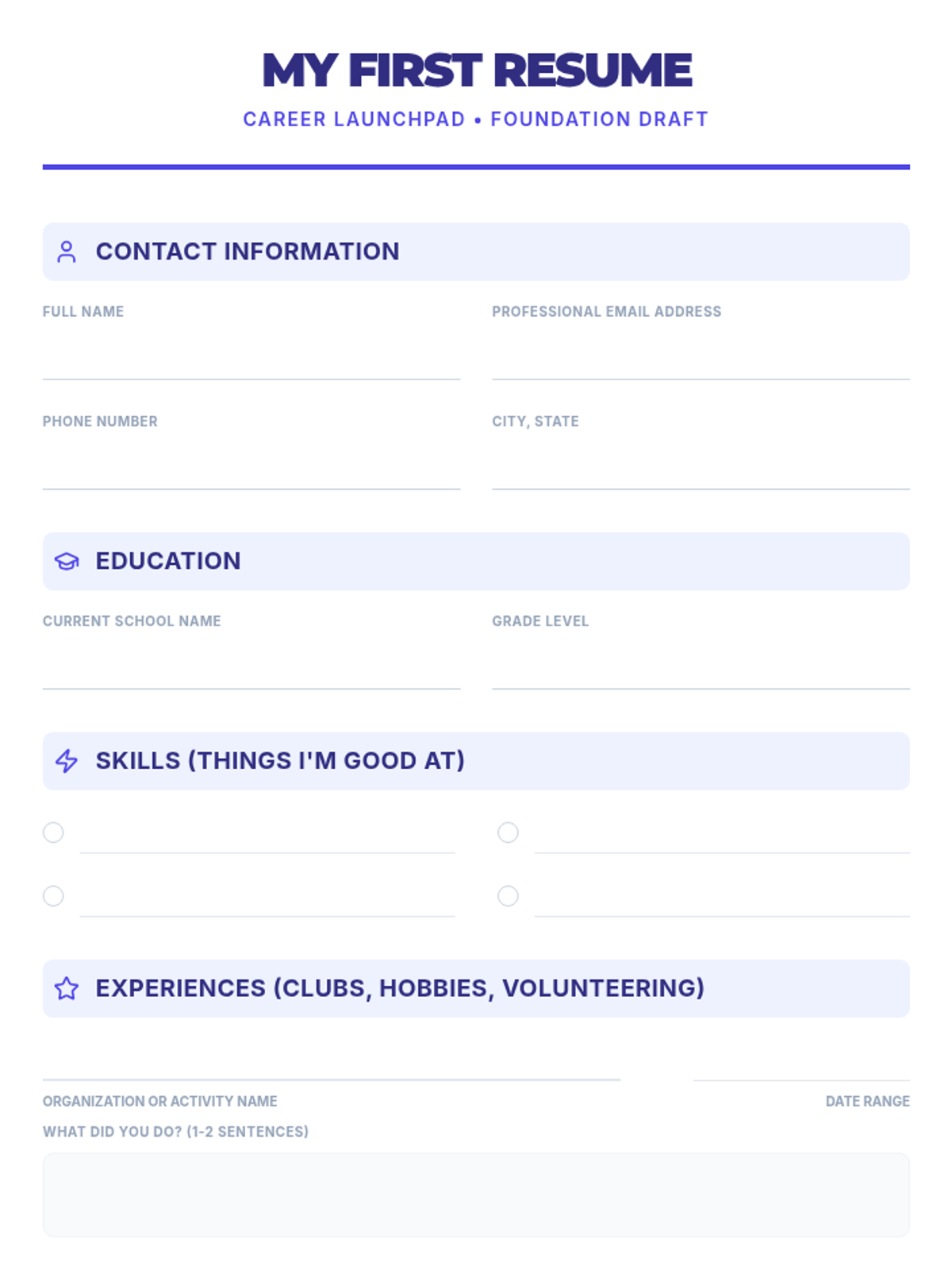
A career-readiness sequence designed for students with ASD, focusing on foundational job research and the advanced application process, including resume building and self-advocacy.
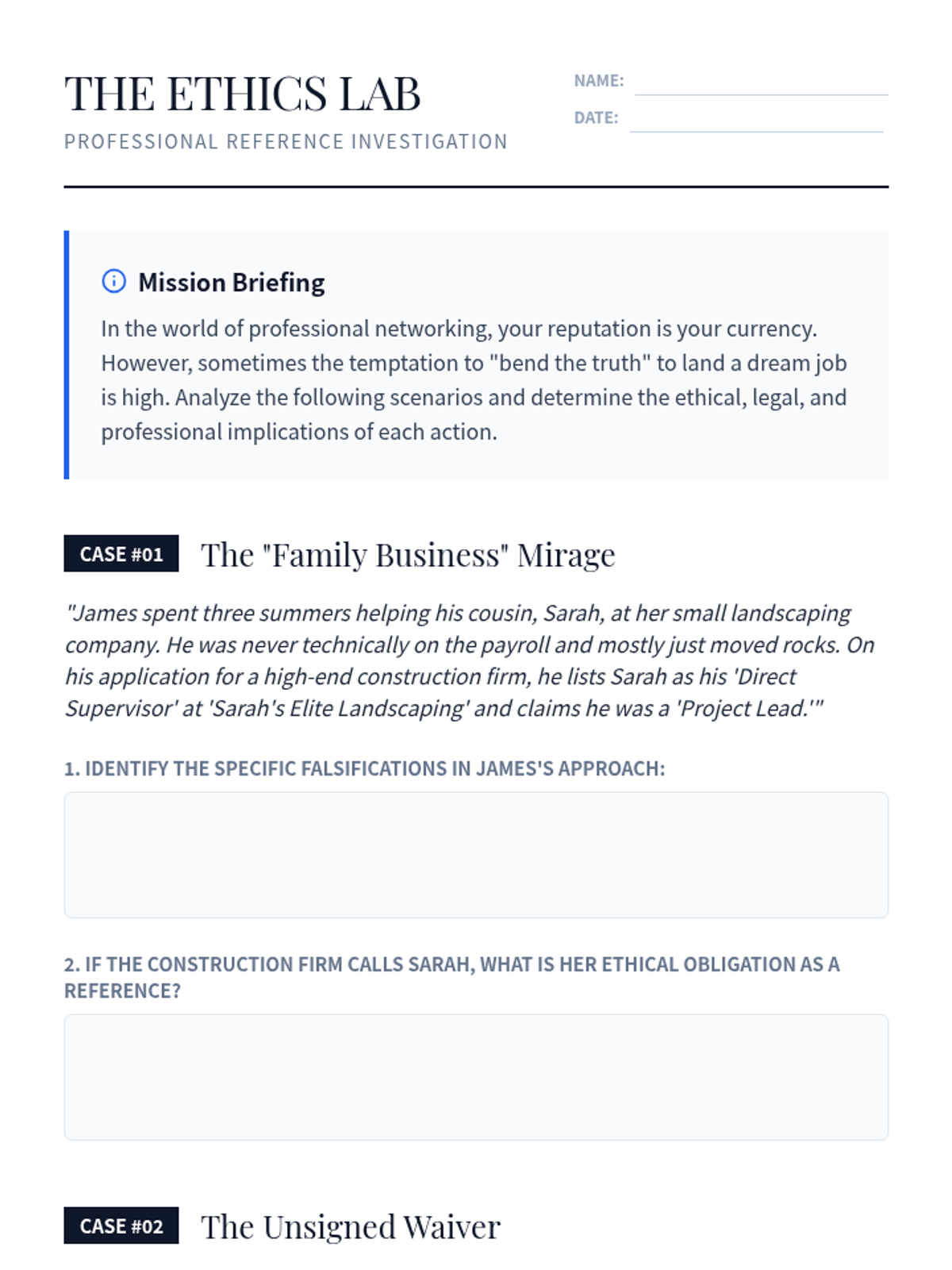
A mastery-based sequence for 10th-grade students focusing on the legal and ethical nuances of professional references. Students explore privacy, defamation, and strategic communication while distinguishing between personal and professional endorsements.
A comprehensive sequence for 10th-grade students on identifying, gathering, formatting, and finalizing a professional reference list for job applications. Students move from brainstorming potential contacts to producing a polished, peer-reviewed document that matches their resume.
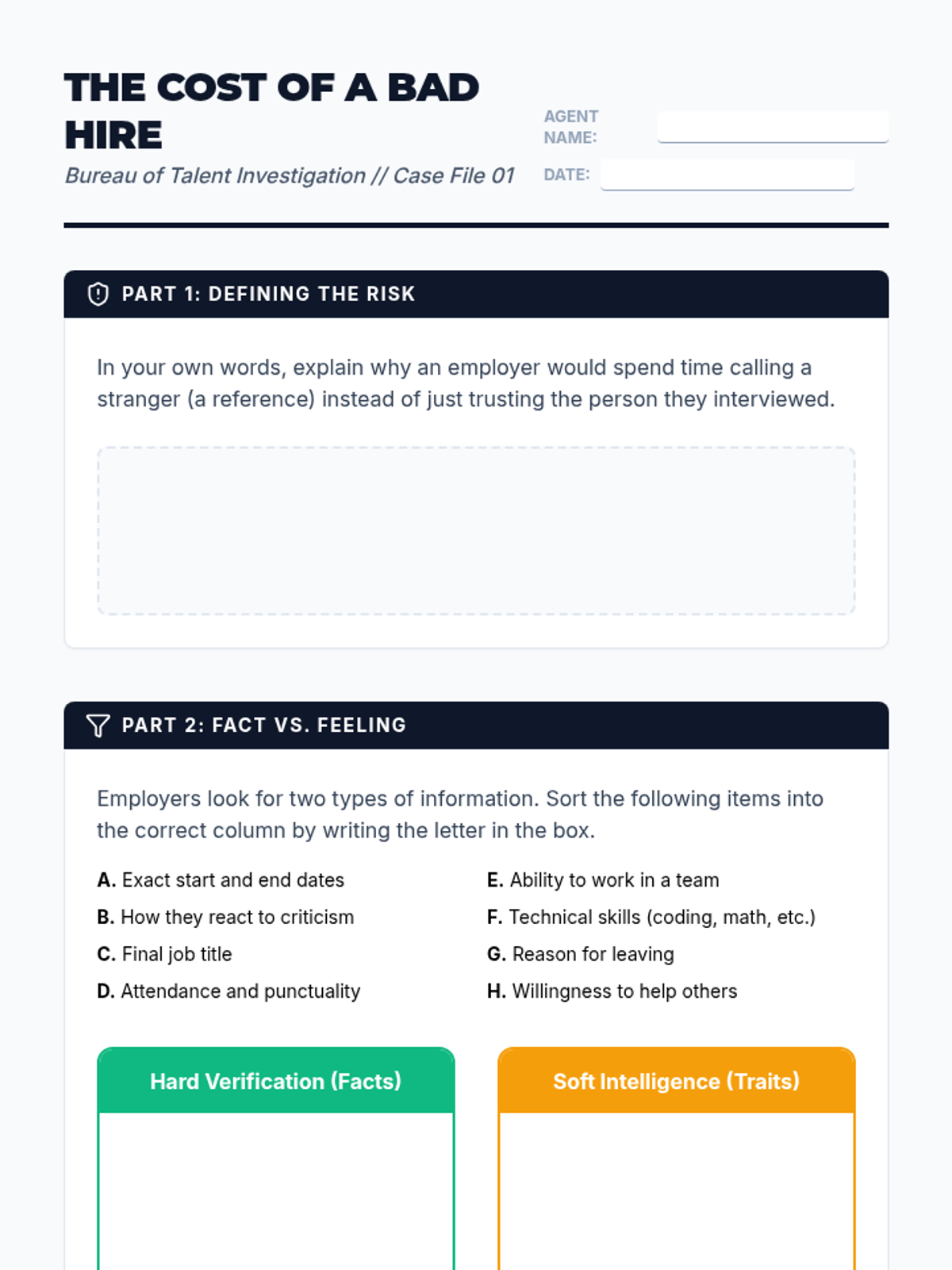
This simulation-heavy sequence places students in the shoes of hiring managers to demystify the background check process. Students learn to reverse-engineer the reference process by identifying employer needs, legal boundaries, and strategic preparation techniques.
A 9th-grade sequence that flips the script on professional references, teaching students to evaluate candidates from an employer's perspective. Students analyze risk, decode reference transcripts, and learn the strategic, legal, and ethical nuances of professional recommendations to better prepare their own future applications.
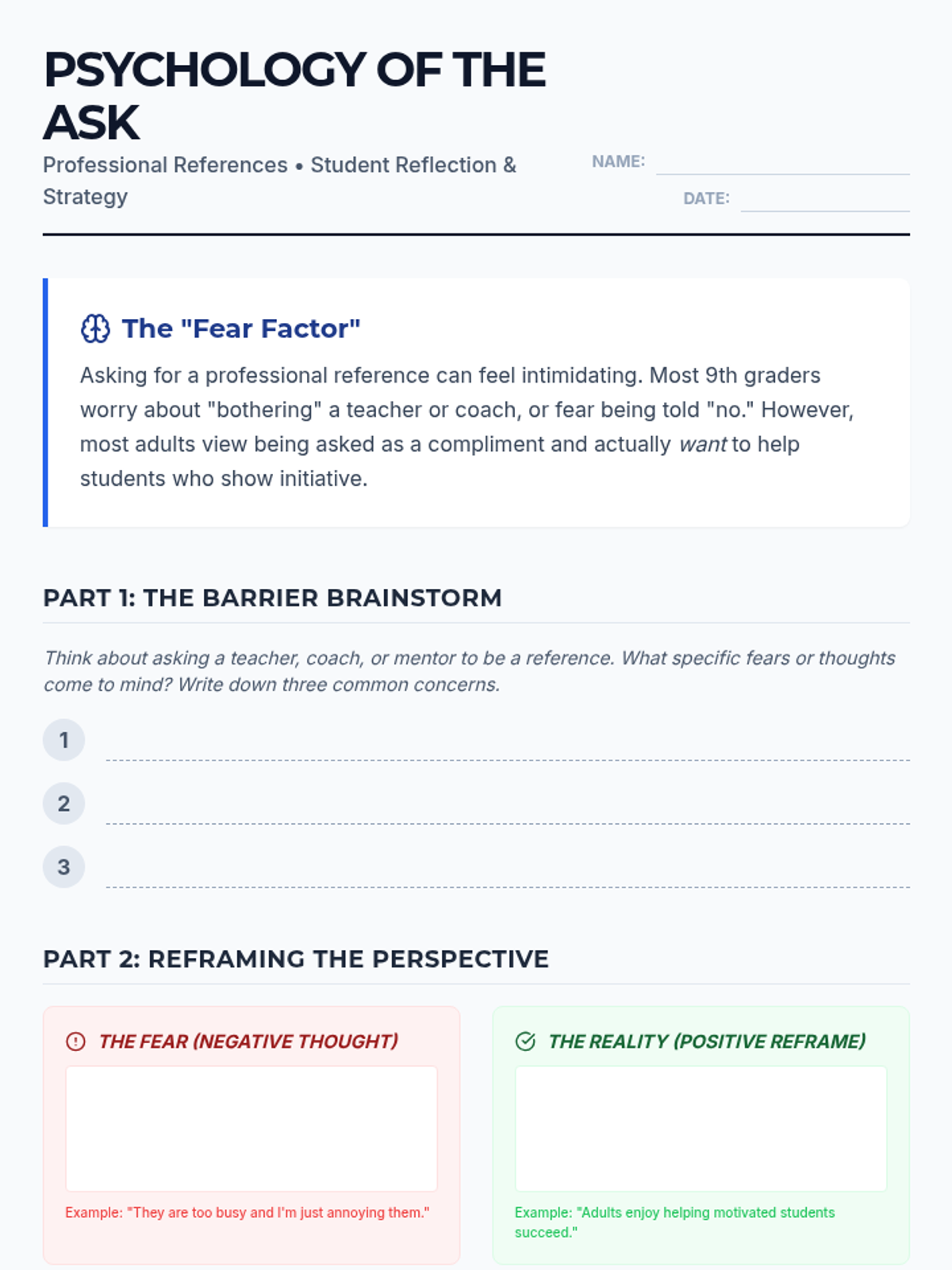
A comprehensive unit for 9th graders focused on the interpersonal communication skills required to secure professional references, addressing anxiety and emphasizing social intelligence.
A comprehensive 5-lesson unit for 9th graders on identifying, requesting, and formatting professional references. Students transition from brainstorming their network to producing a polished reference document and learning long-term relationship maintenance.