Functional behavior assessment, data tracking, and de-escalation strategies for managing classroom conduct. Addresses positive reinforcement, token economies, and individualized behavior contracts to support student self-regulation.
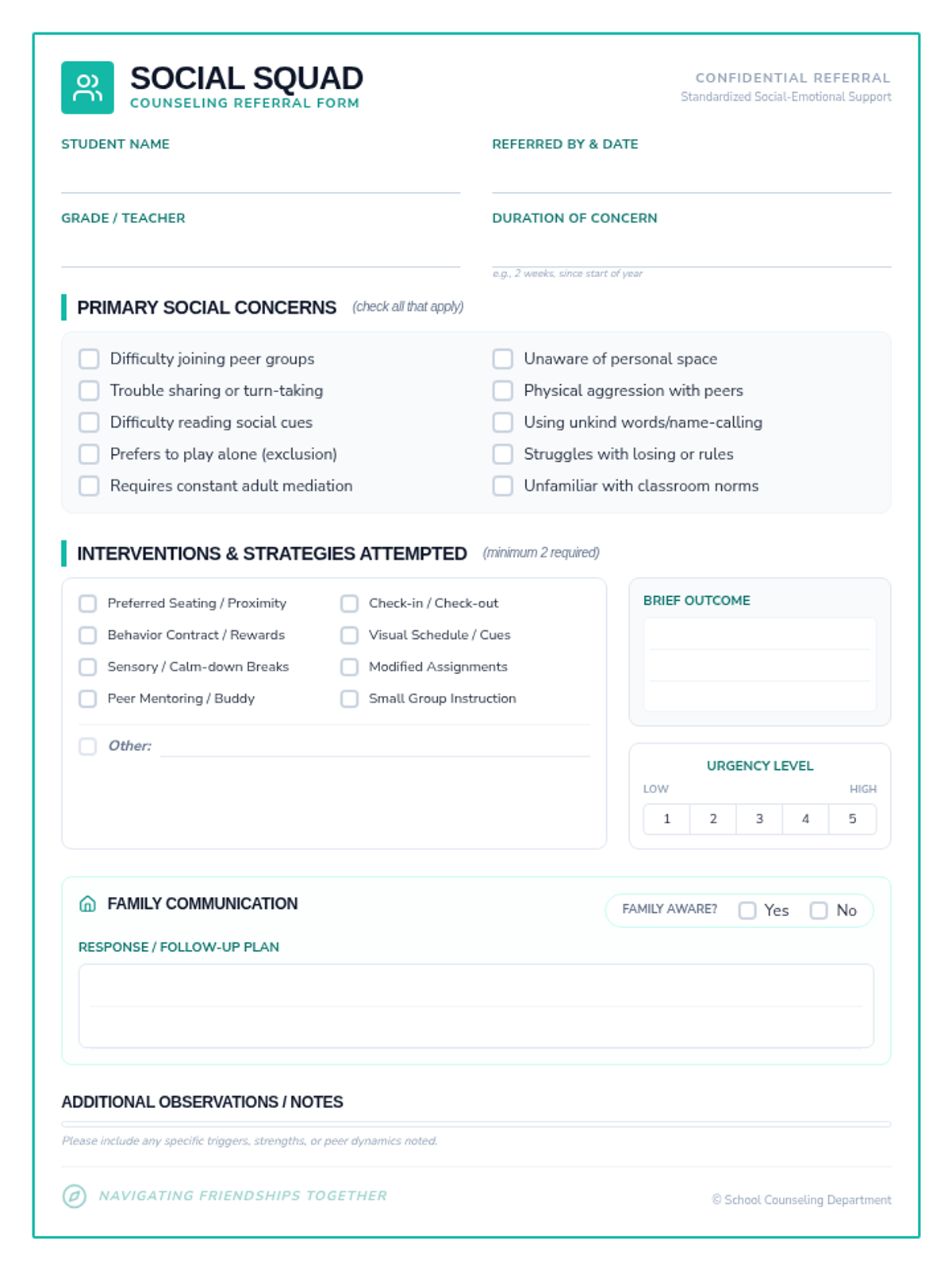
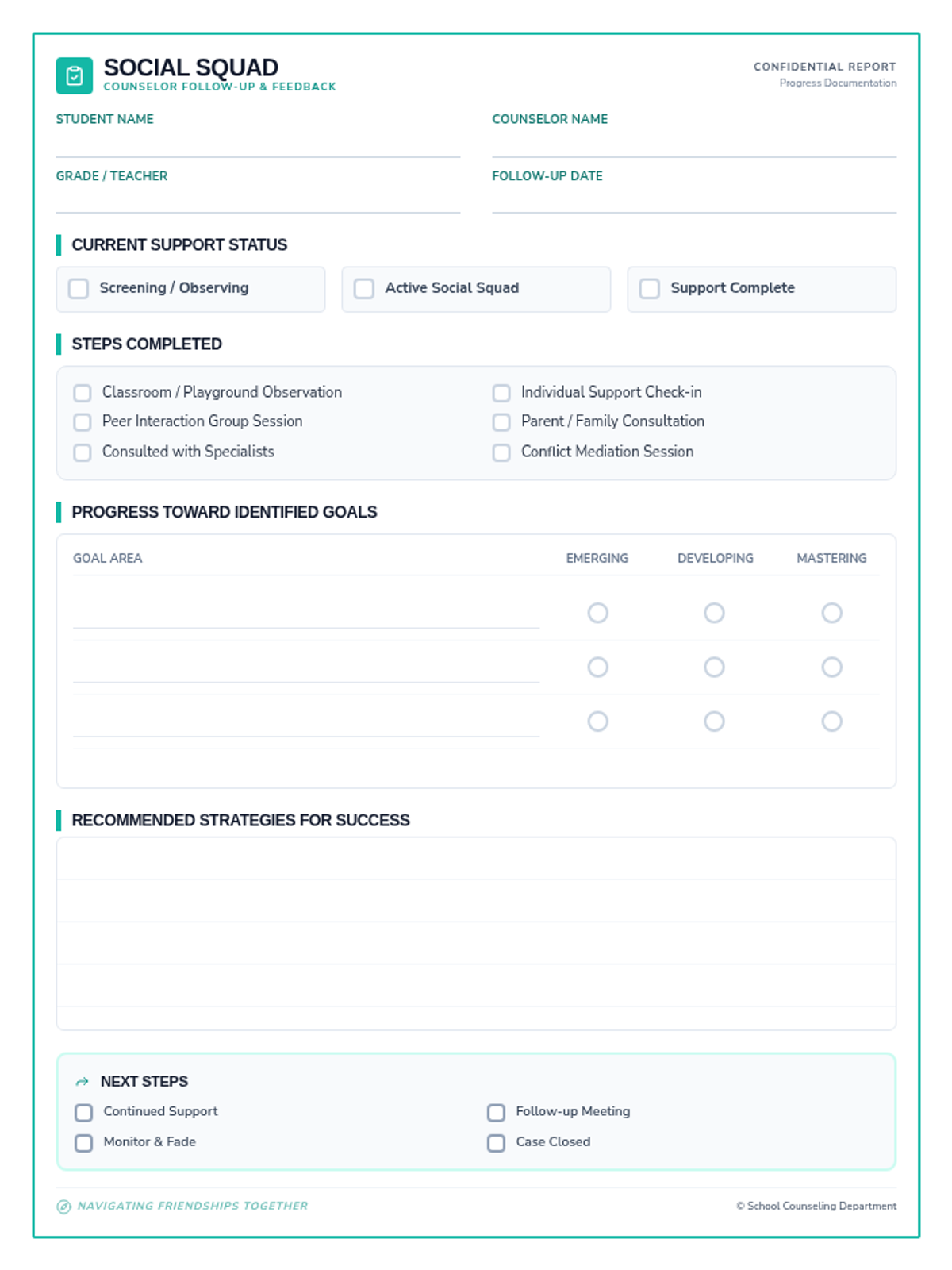
A suite of professional school counseling forms for managing student referrals, tracking progress, and providing feedback to teachers and families.
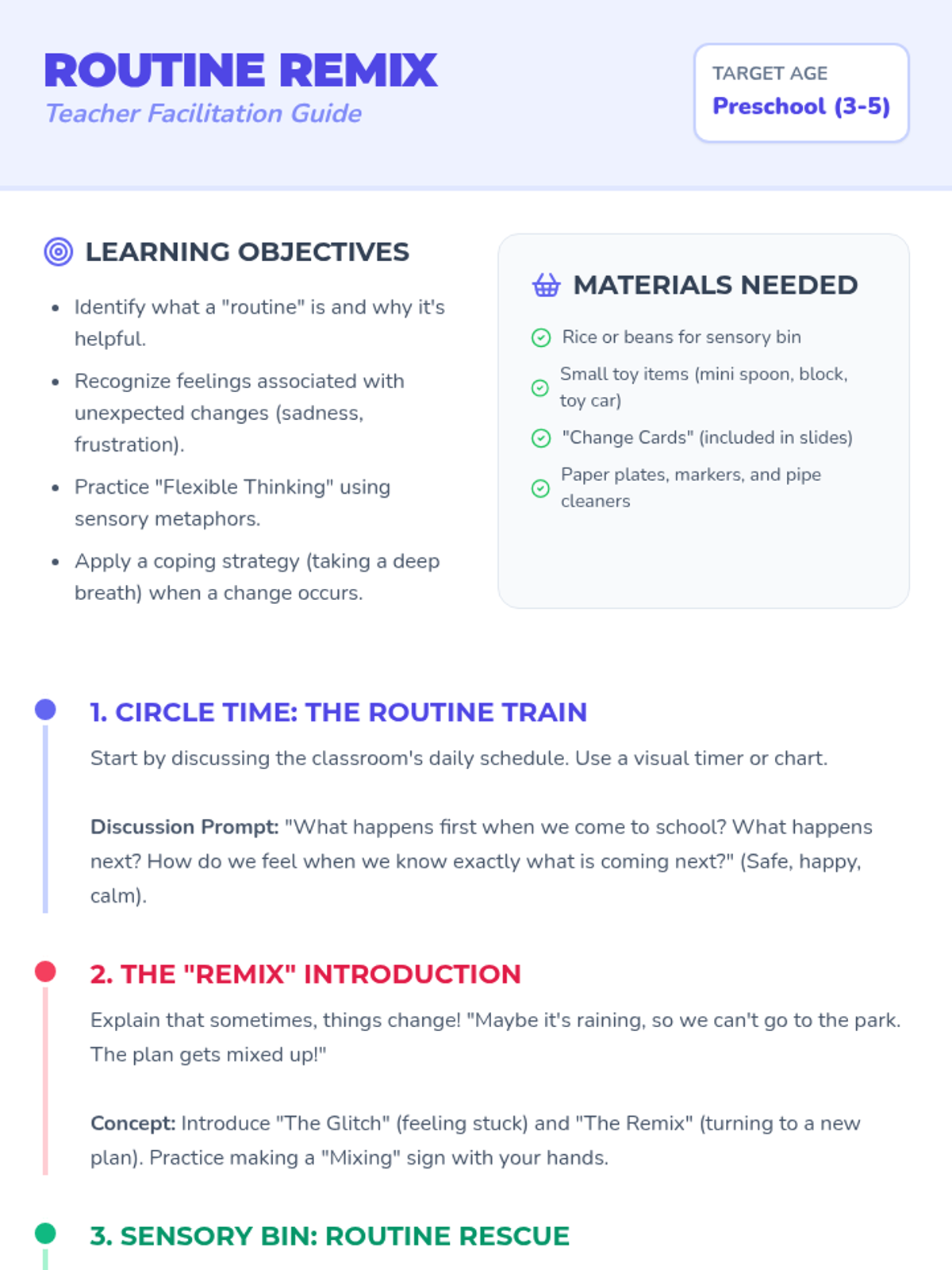
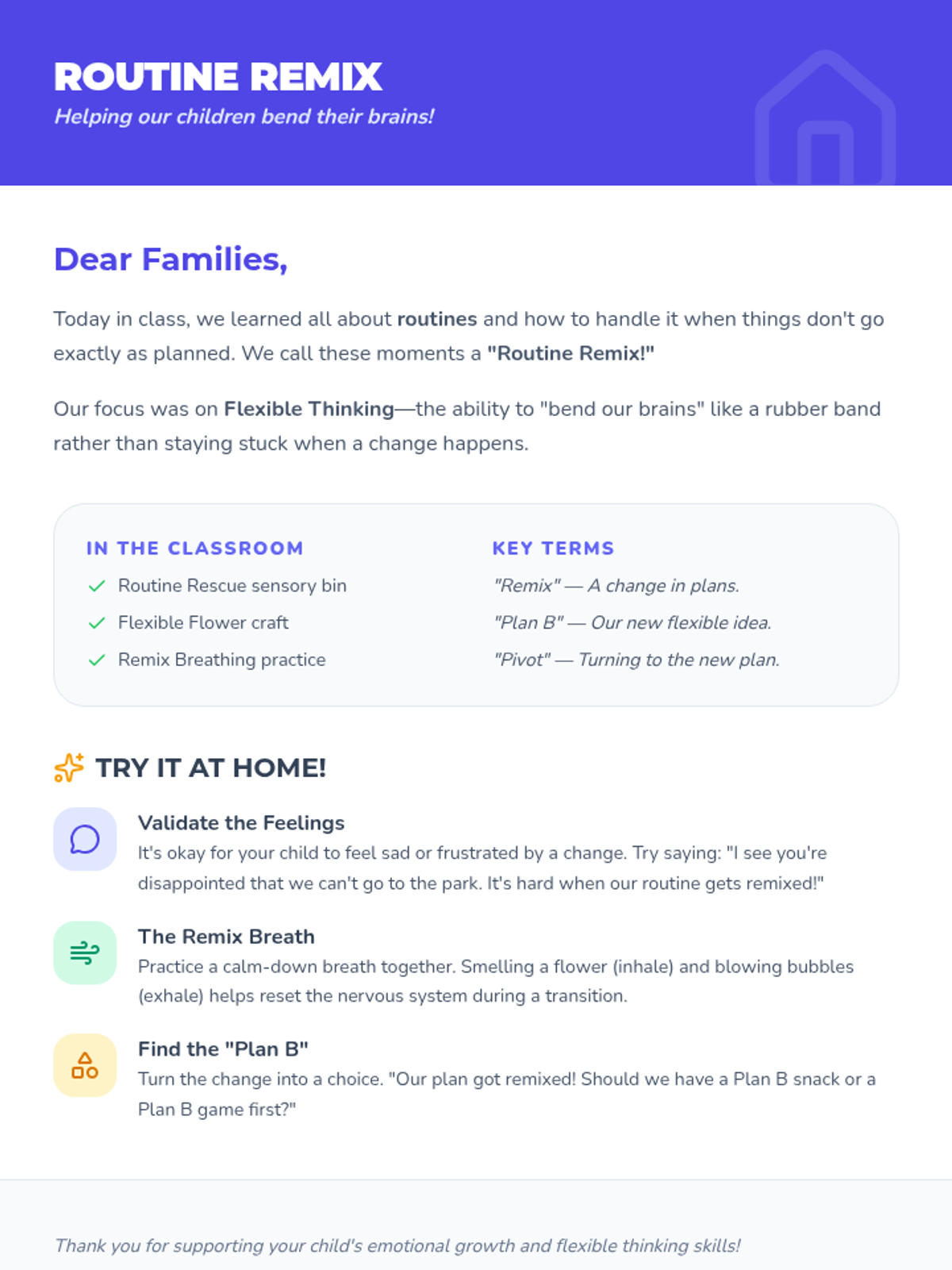
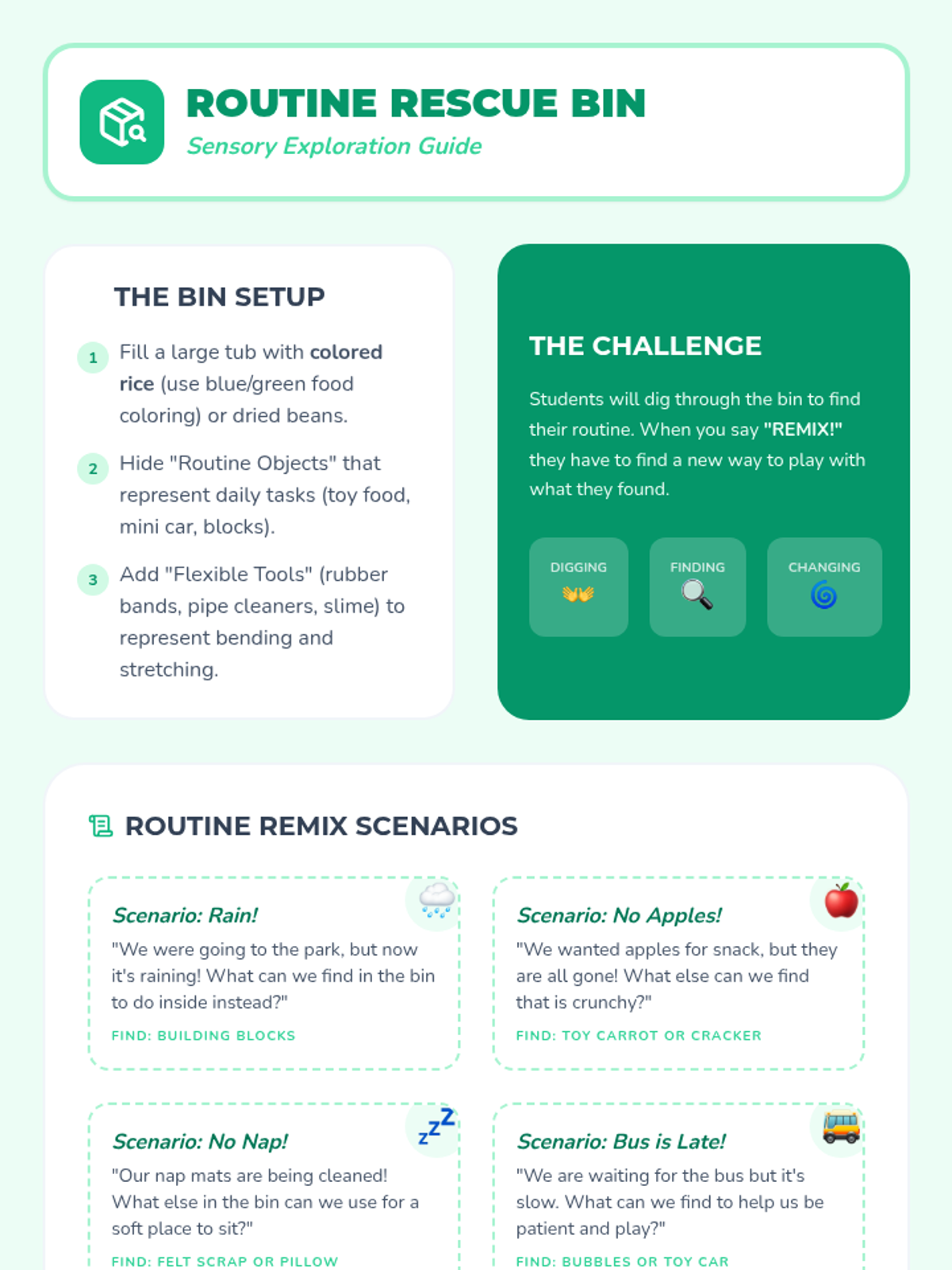
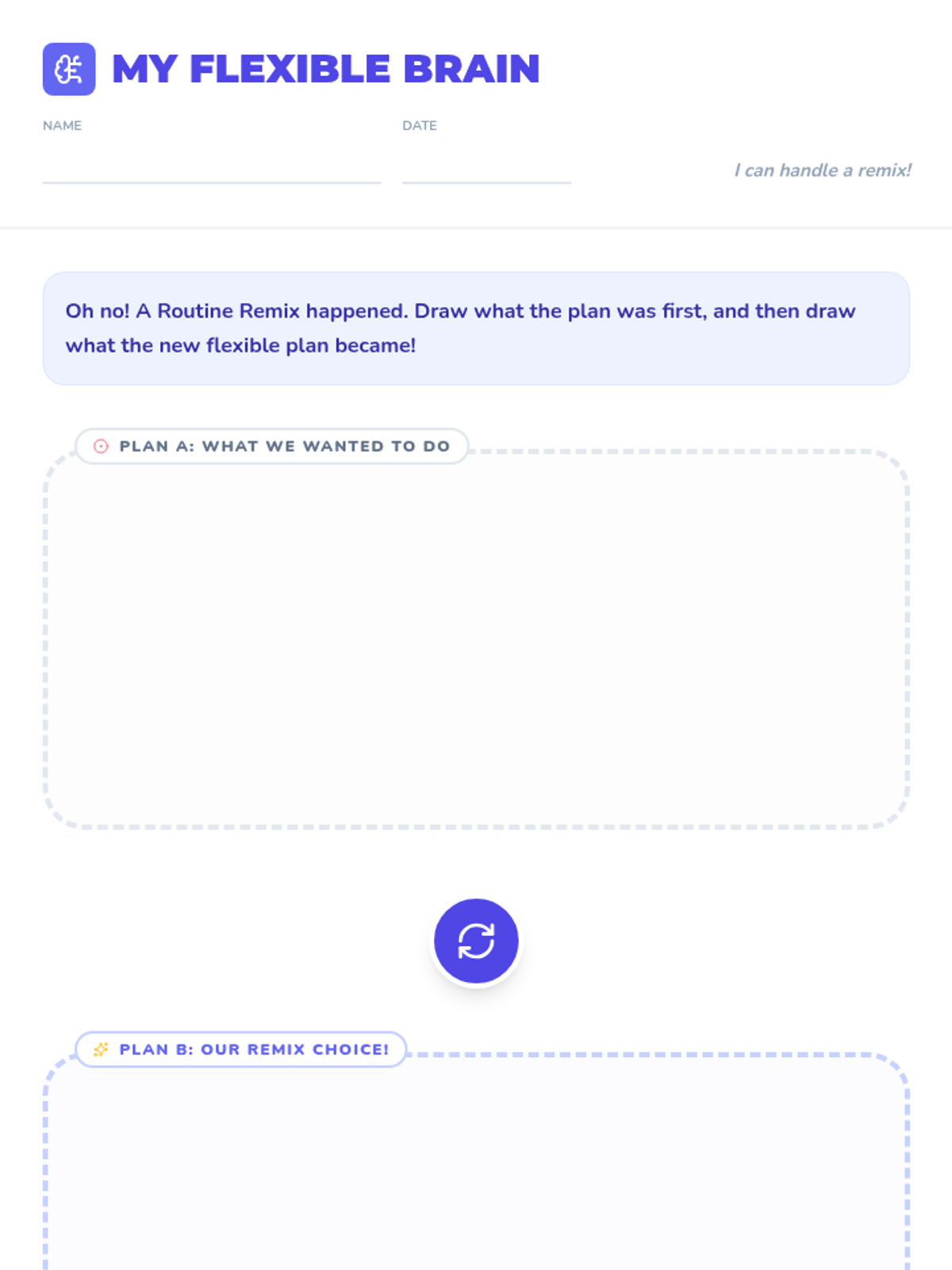
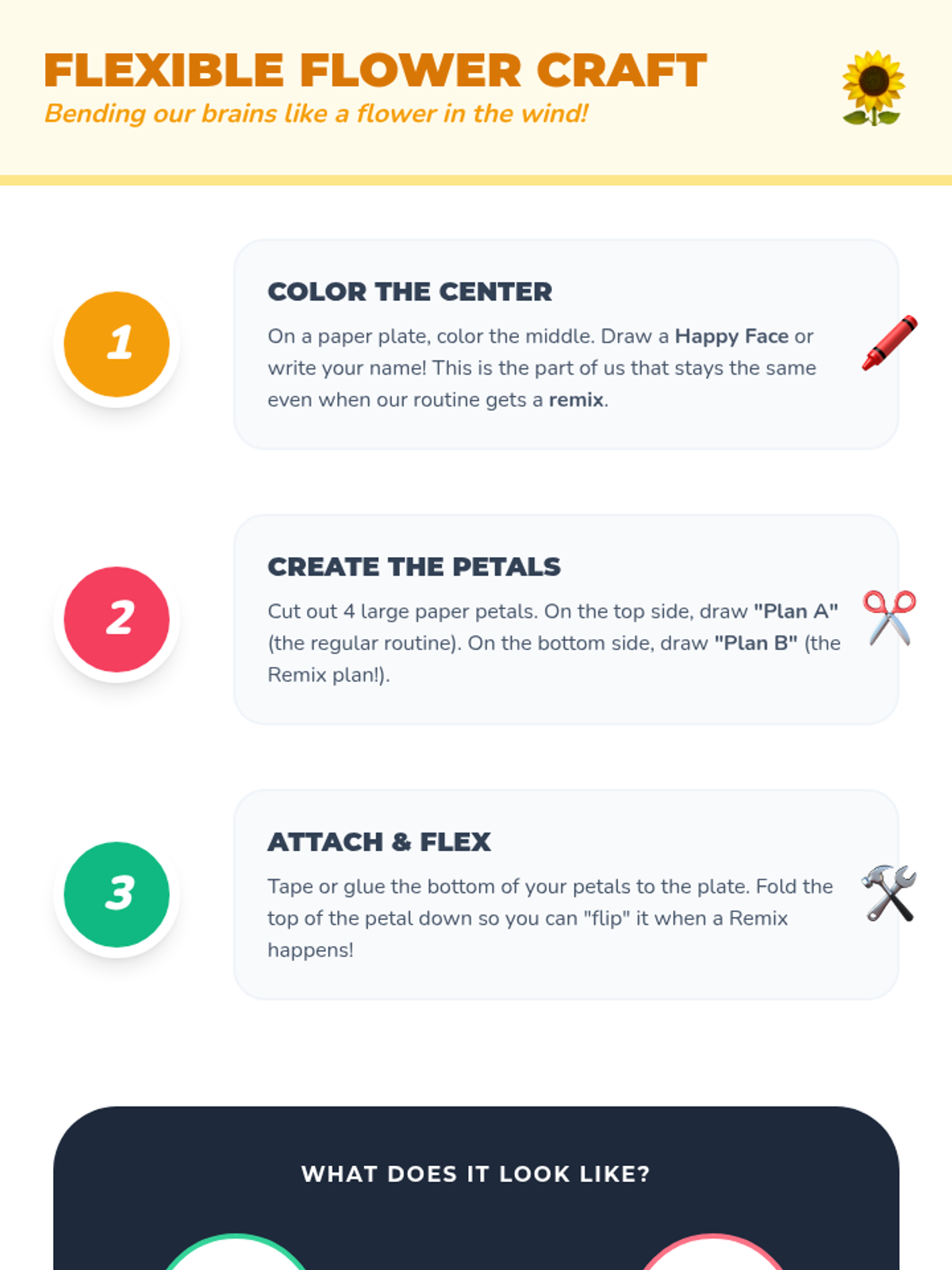
A sensory-focused lesson helping preschoolers navigate changes in their daily routine through a hands-on sensory bin and a 'Flexible Flower' craft. Students learn vocabulary for transitions and practice emotional regulation when plans shift.
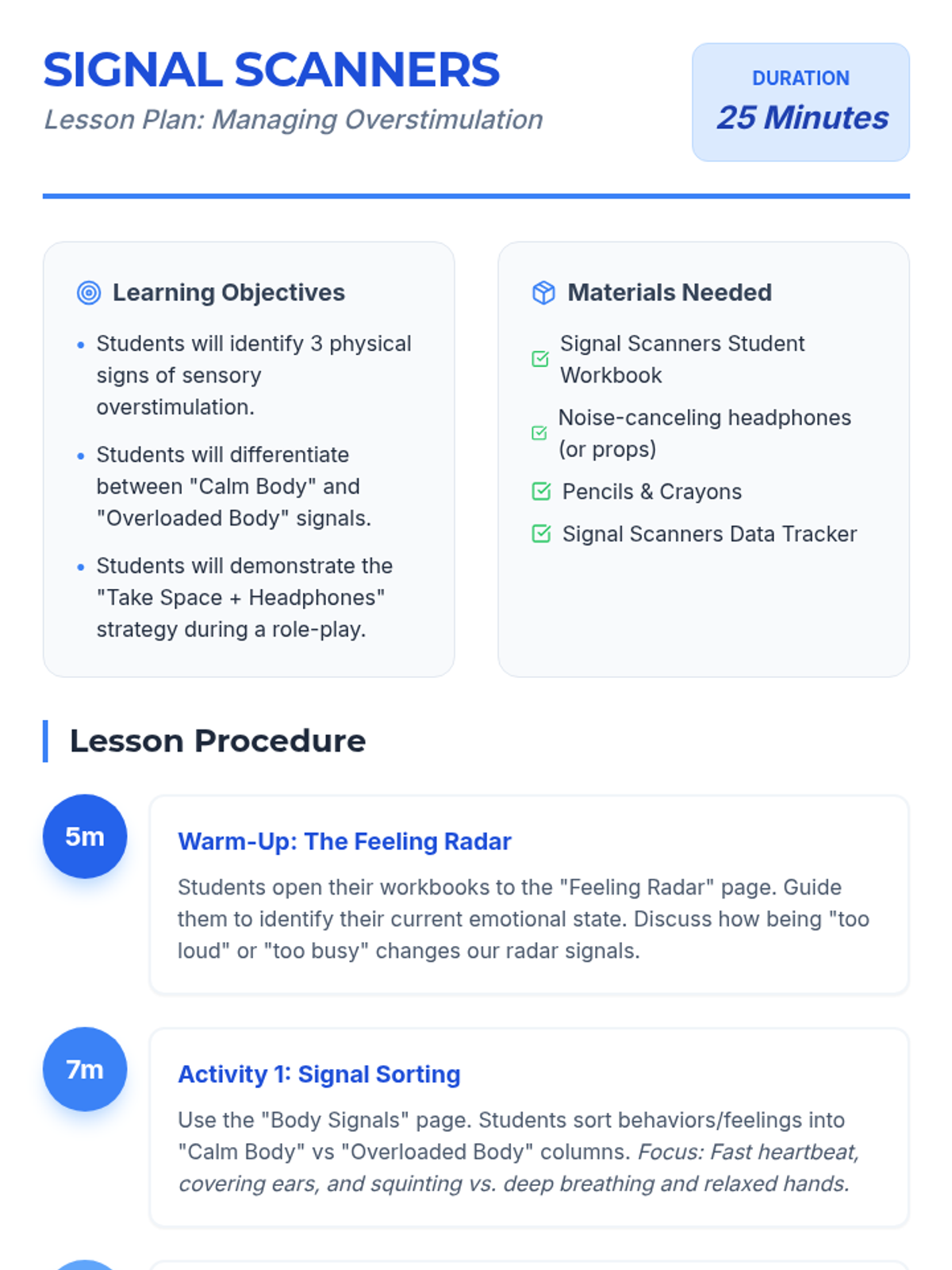
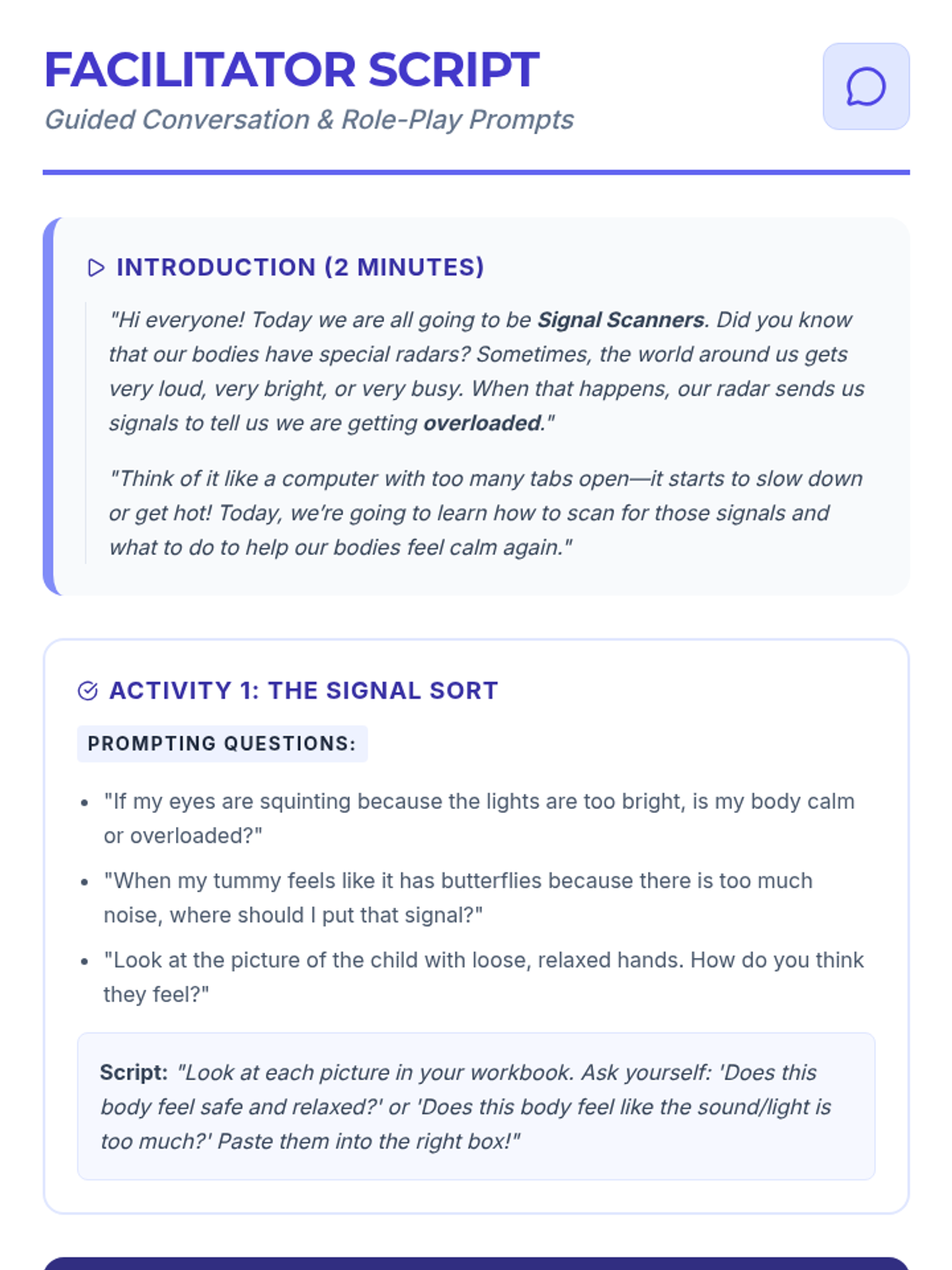
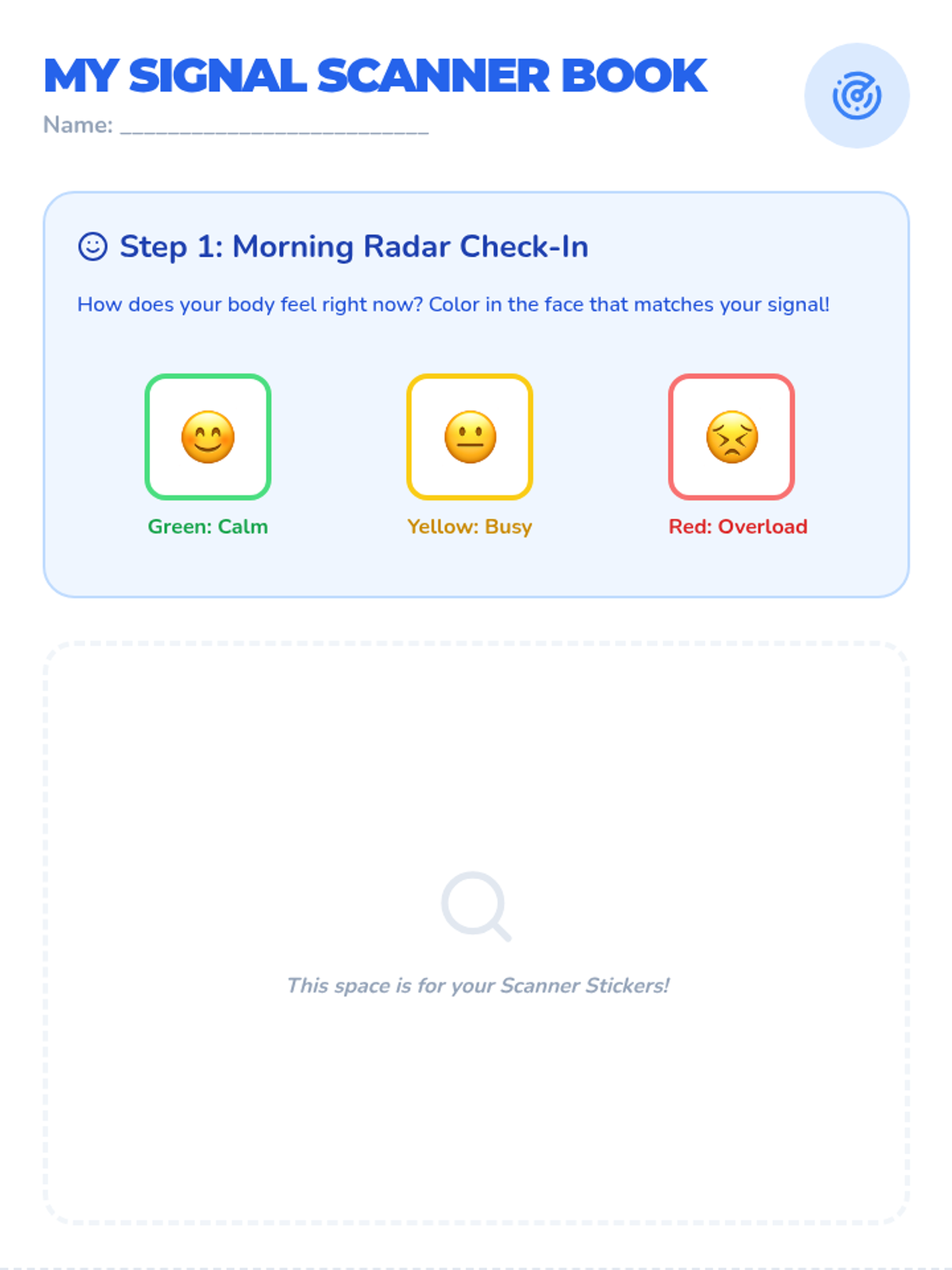
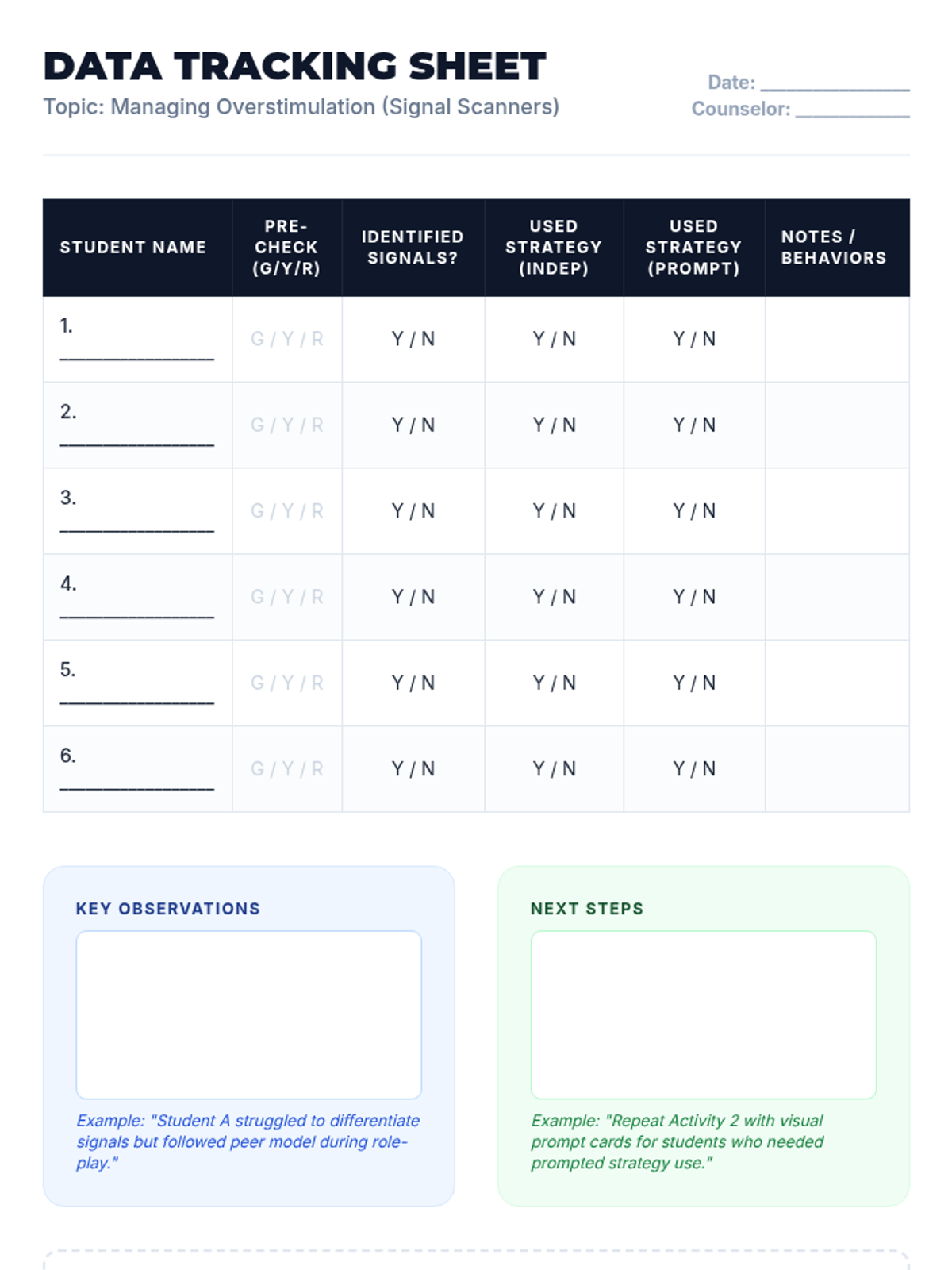
A comprehensive social-emotional learning lesson designed to help students identify sensory overstimulation signals and practice self-regulation strategies like taking space and using headphones.
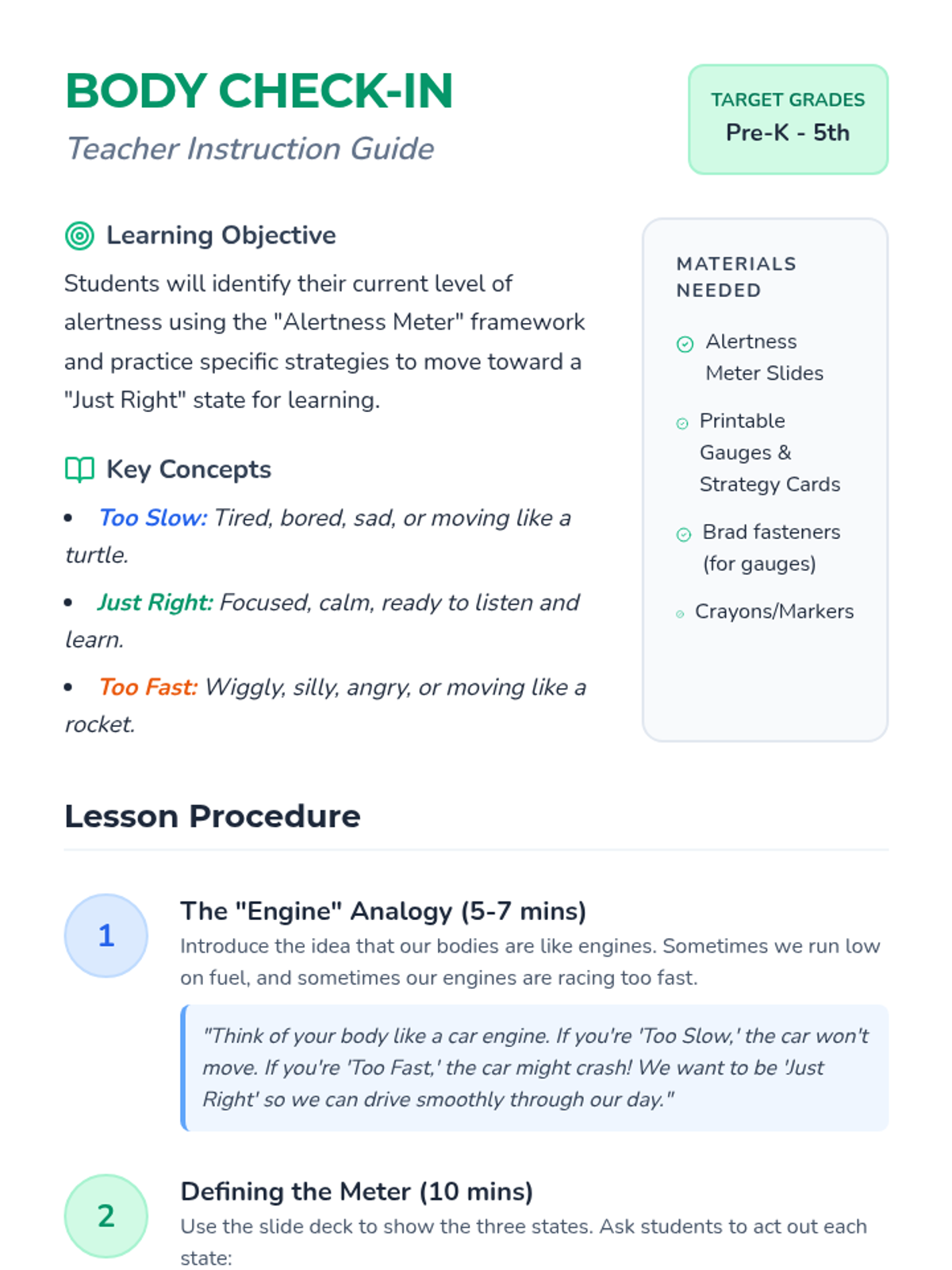
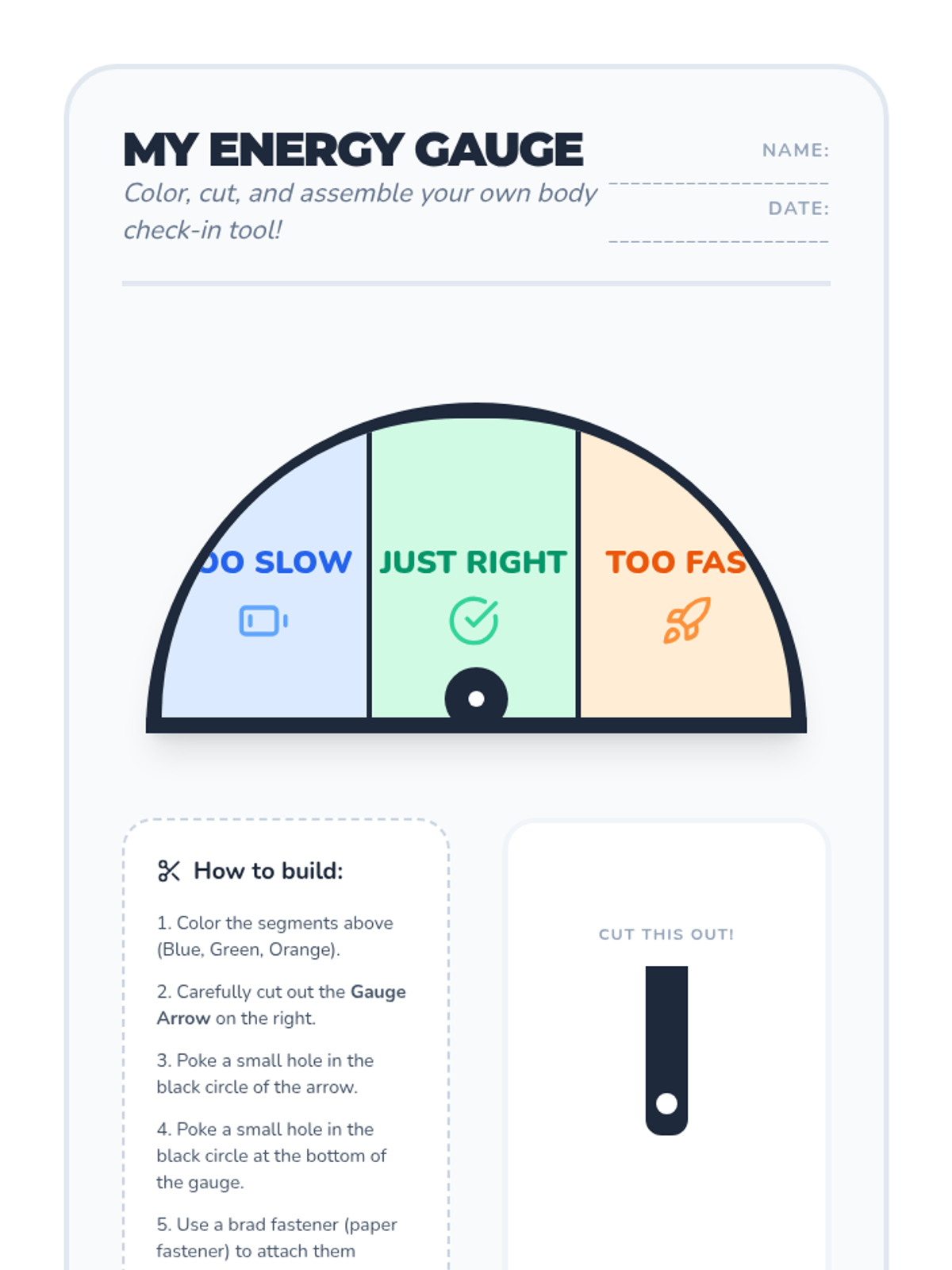
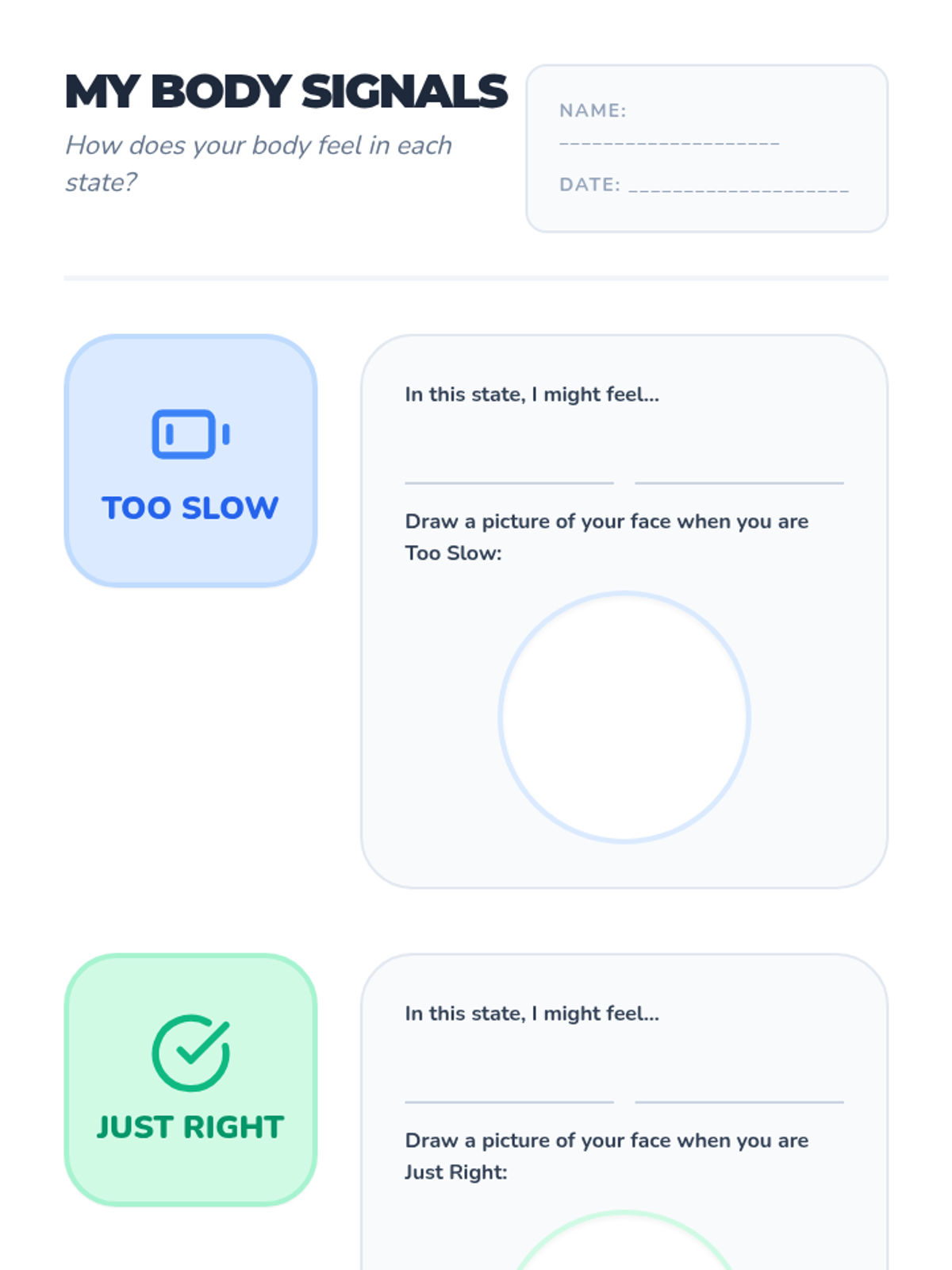
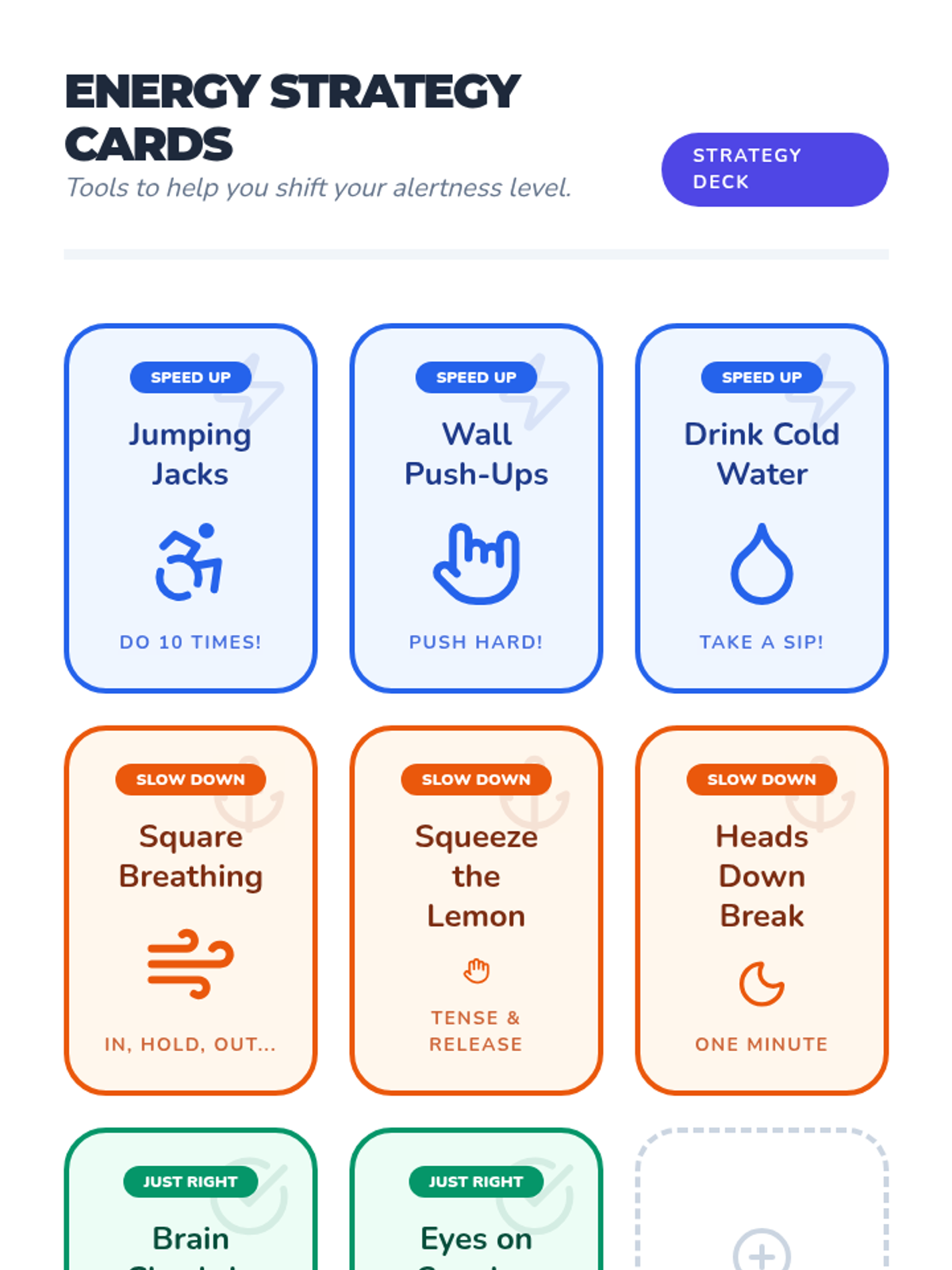
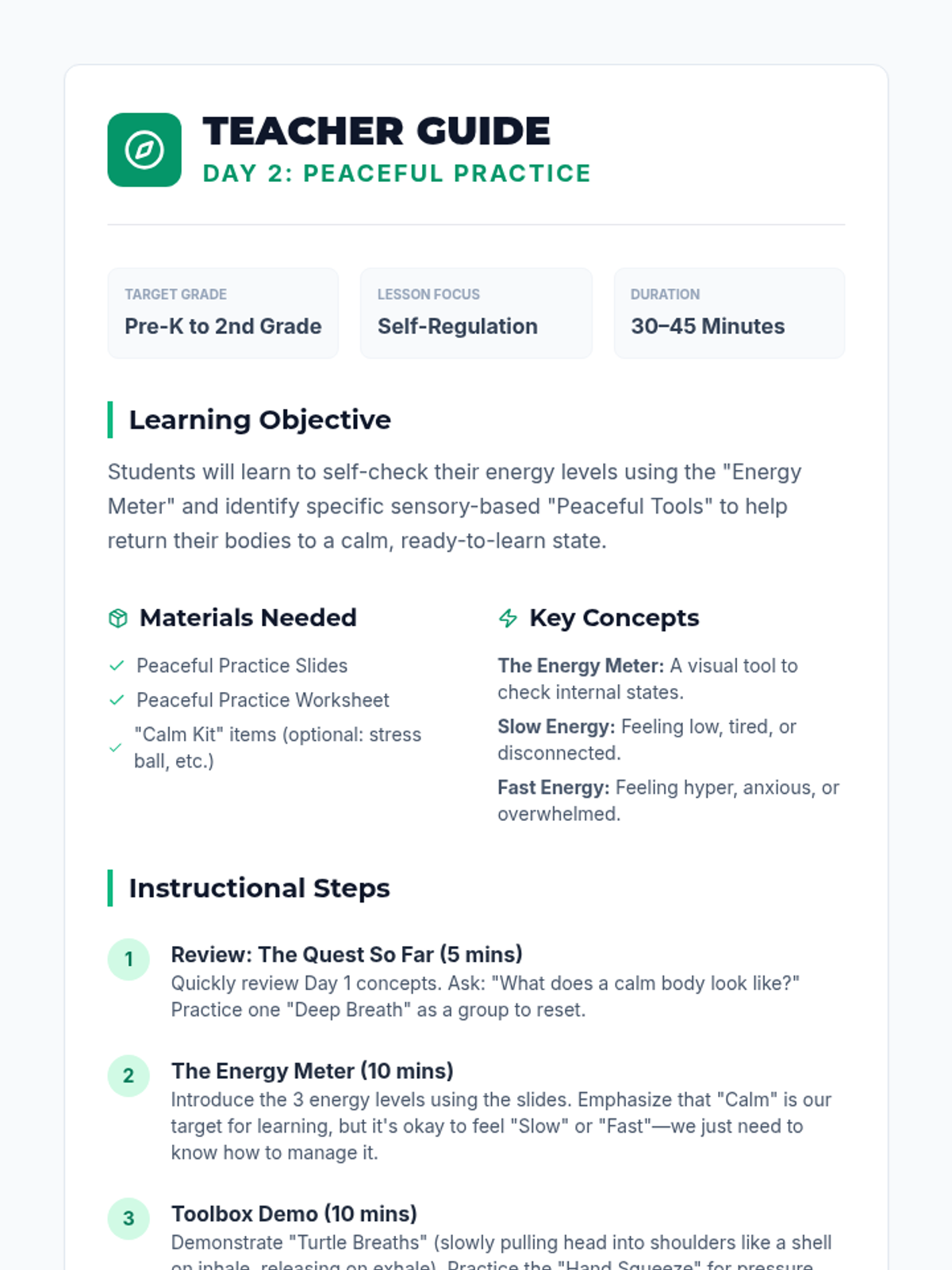
A self-regulation lesson that teaches students to recognize their body's energy levels using a visual 'Alertness Meter.' Students learn to identify when they are 'Too Slow,' 'Just Right,' or 'Too Fast' and discover strategies to find their focus.
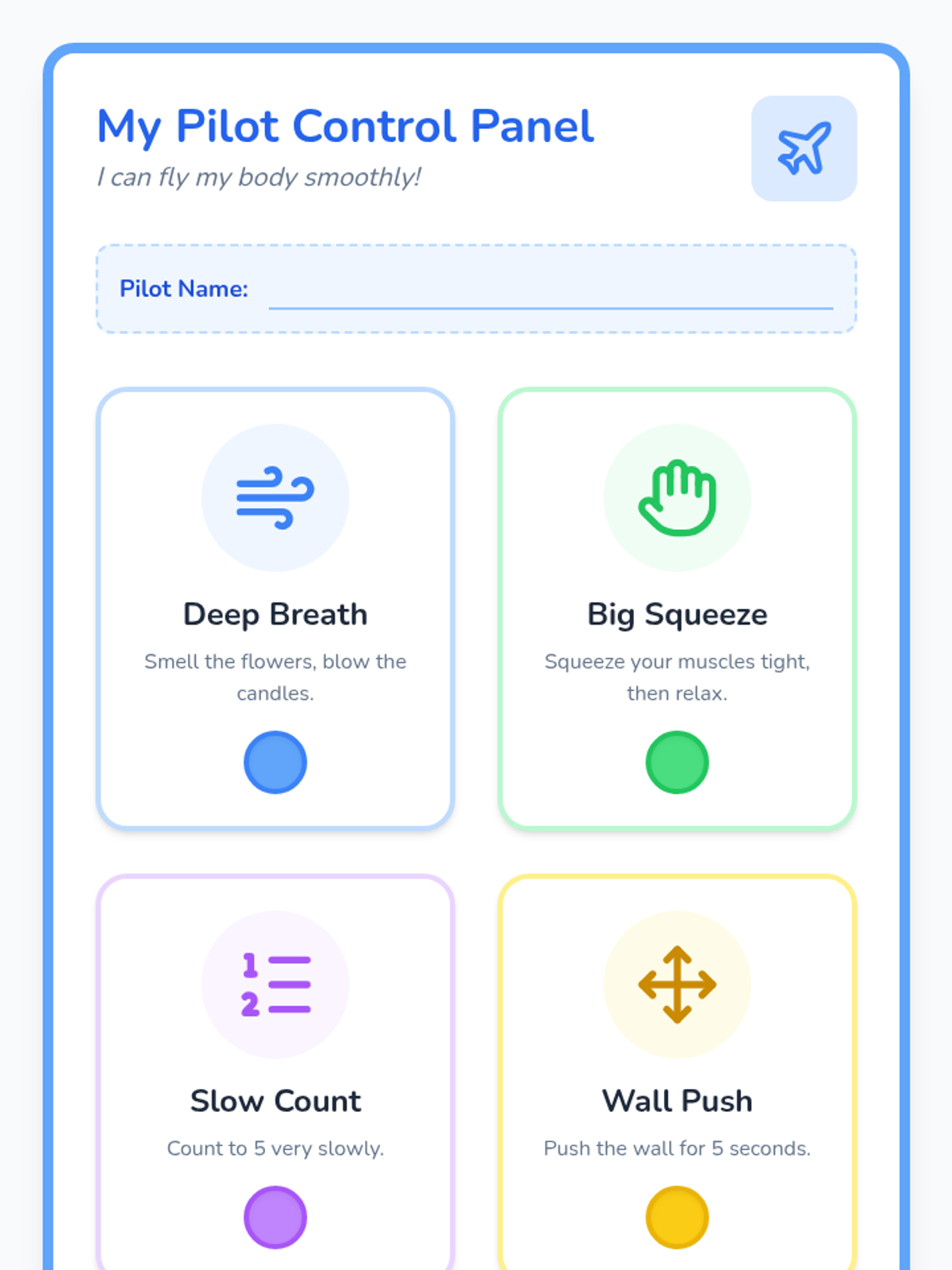
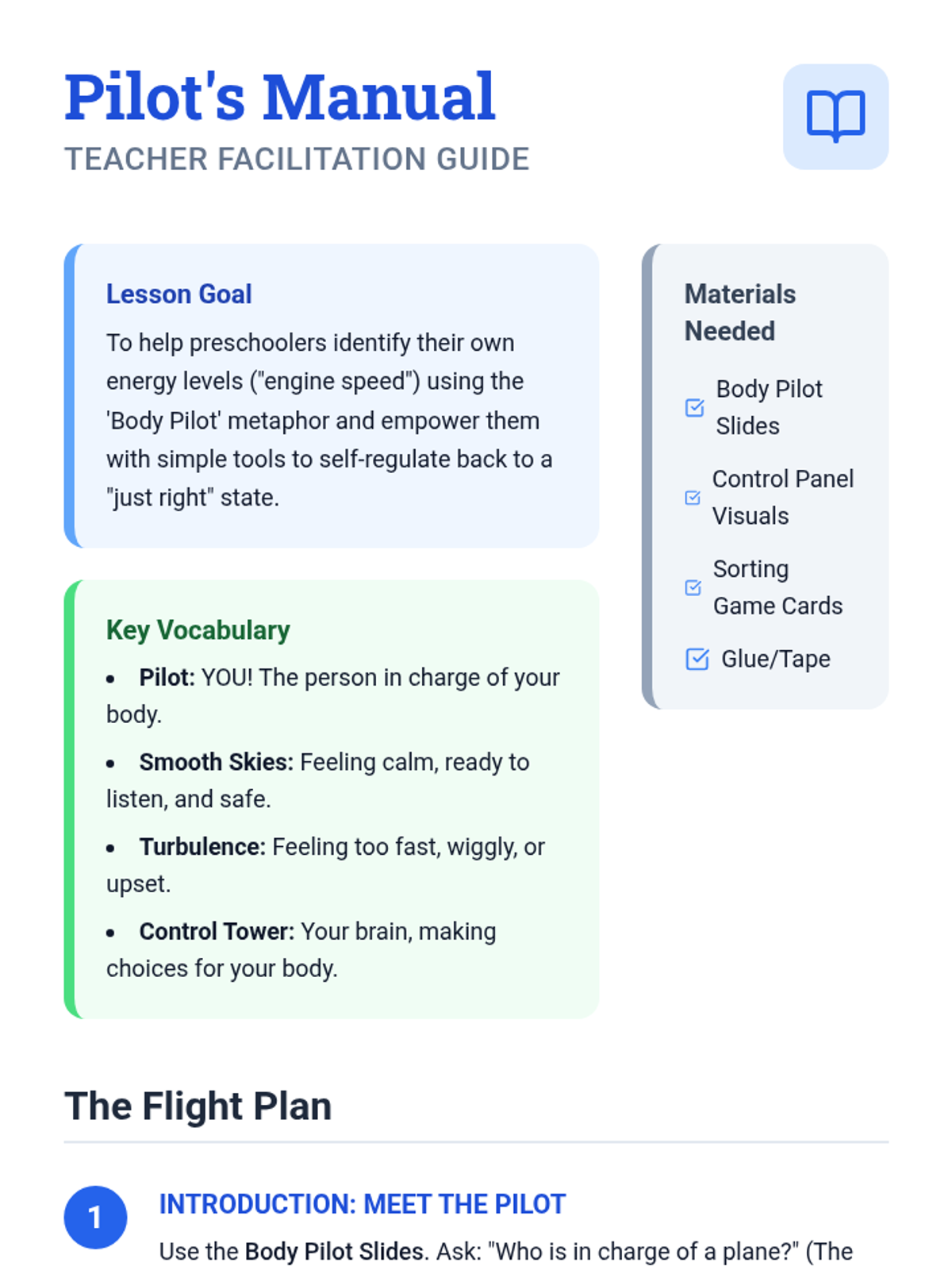
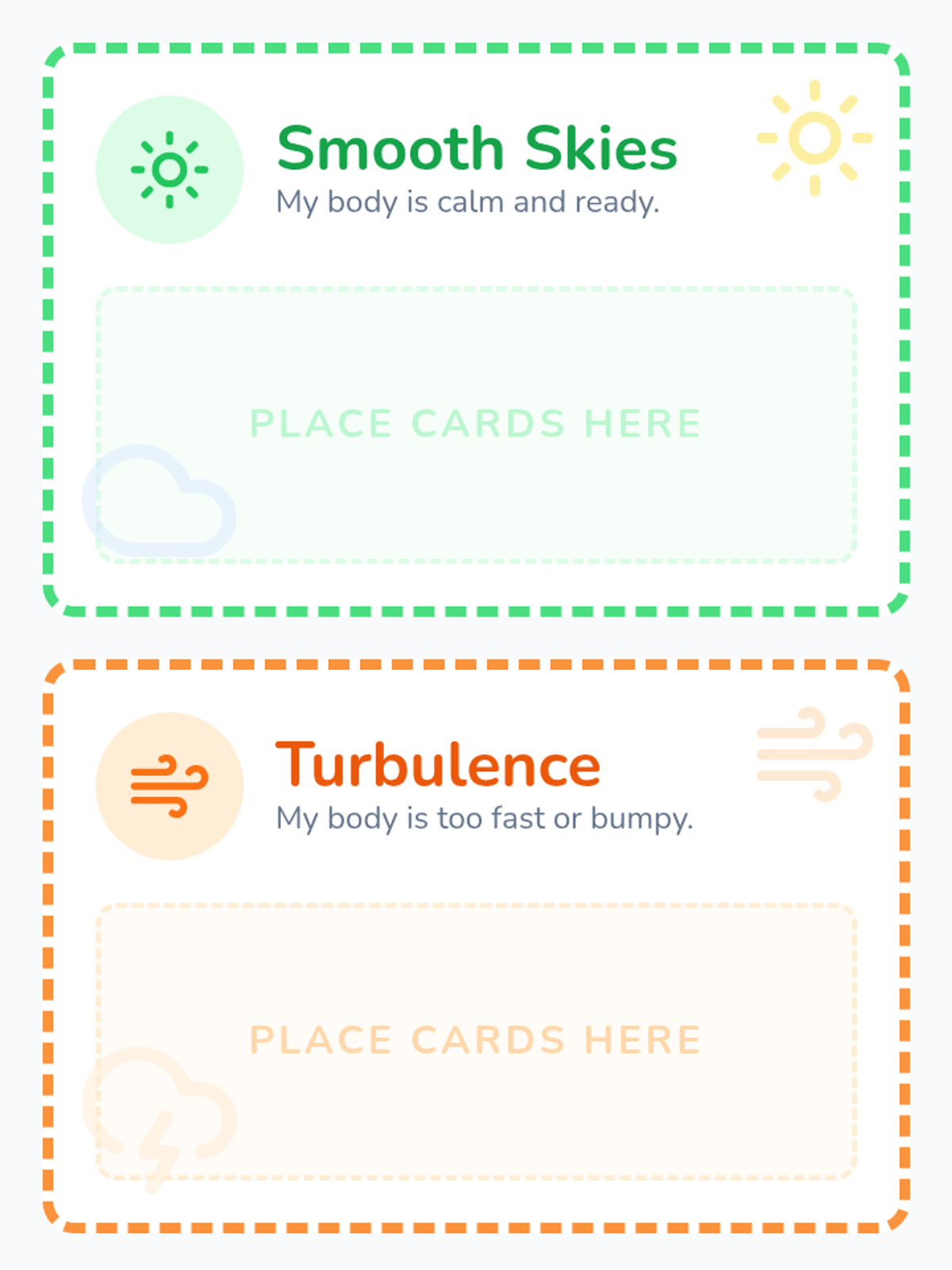
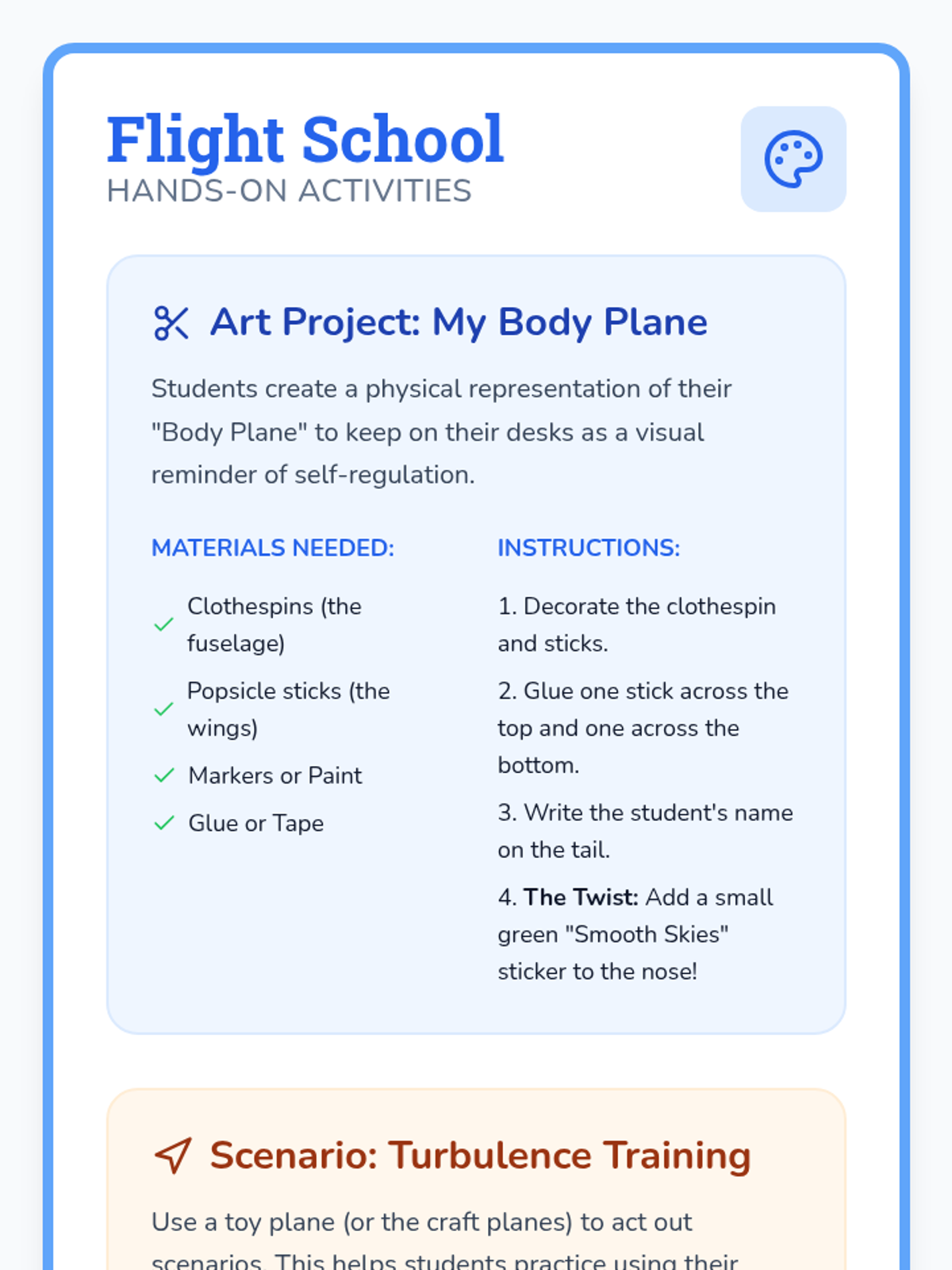
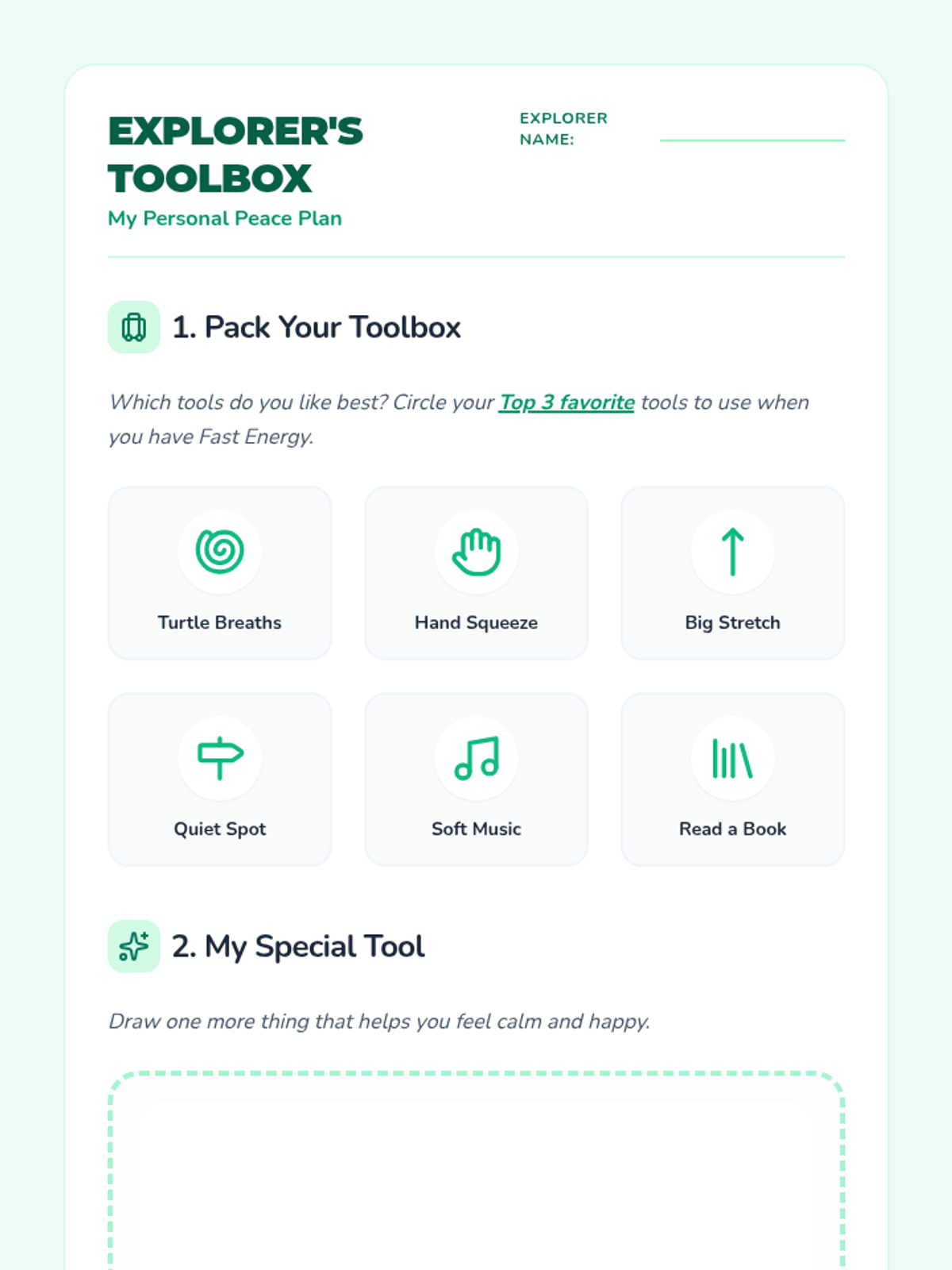
A preschool lesson focused on self-regulation using the 'Body Pilot' metaphor to help children understand and manage their energy levels and emotions.
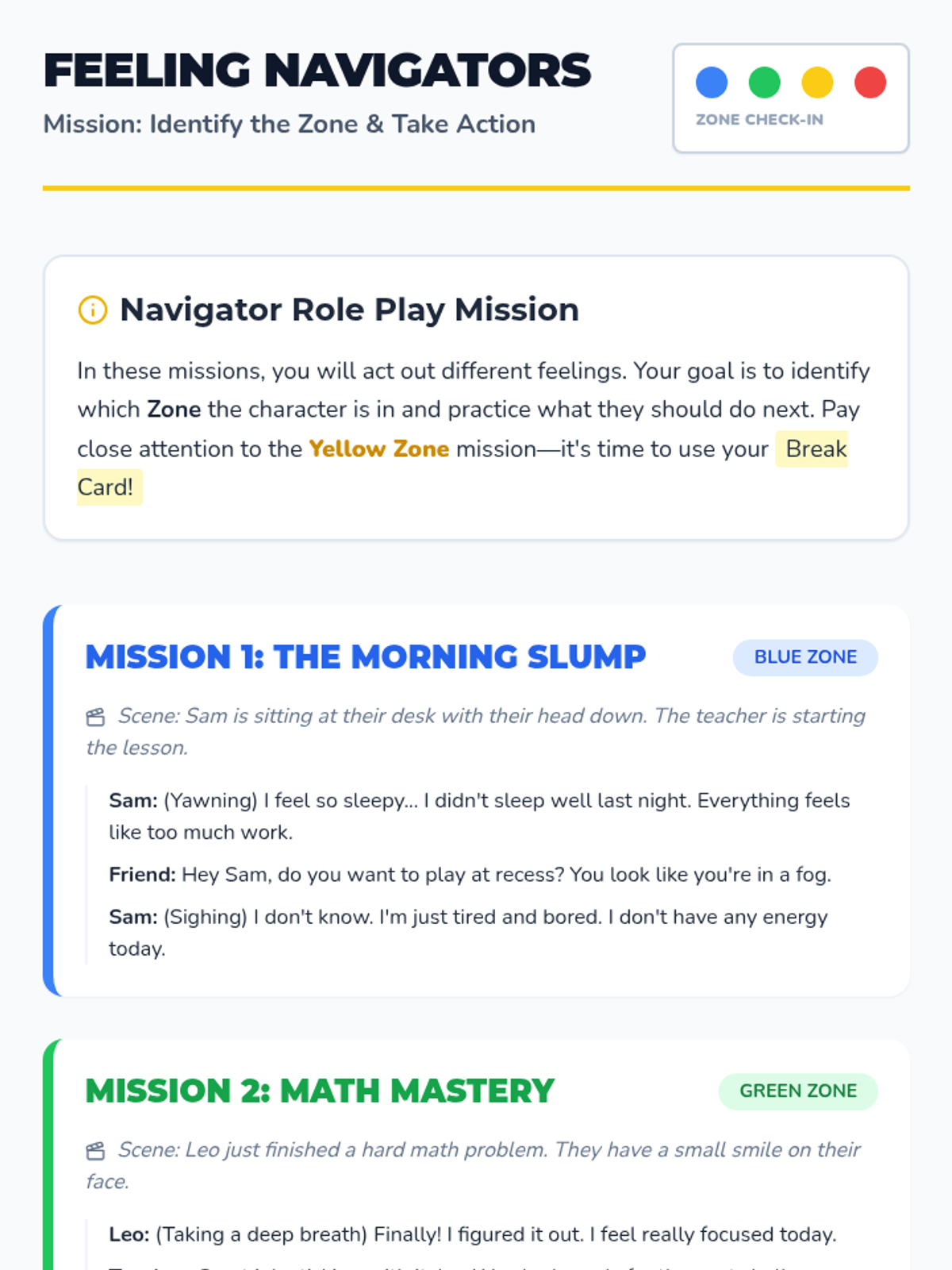
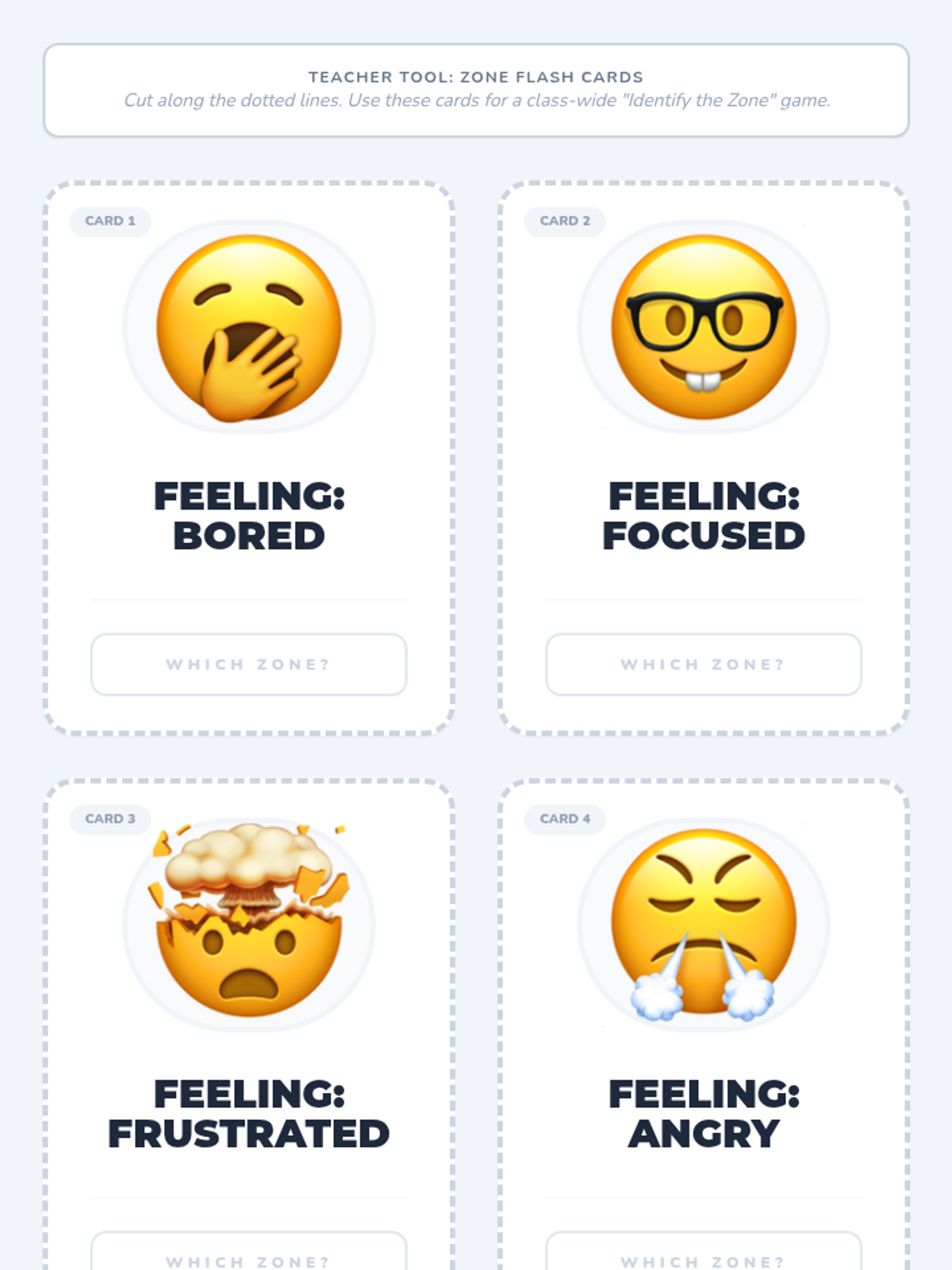
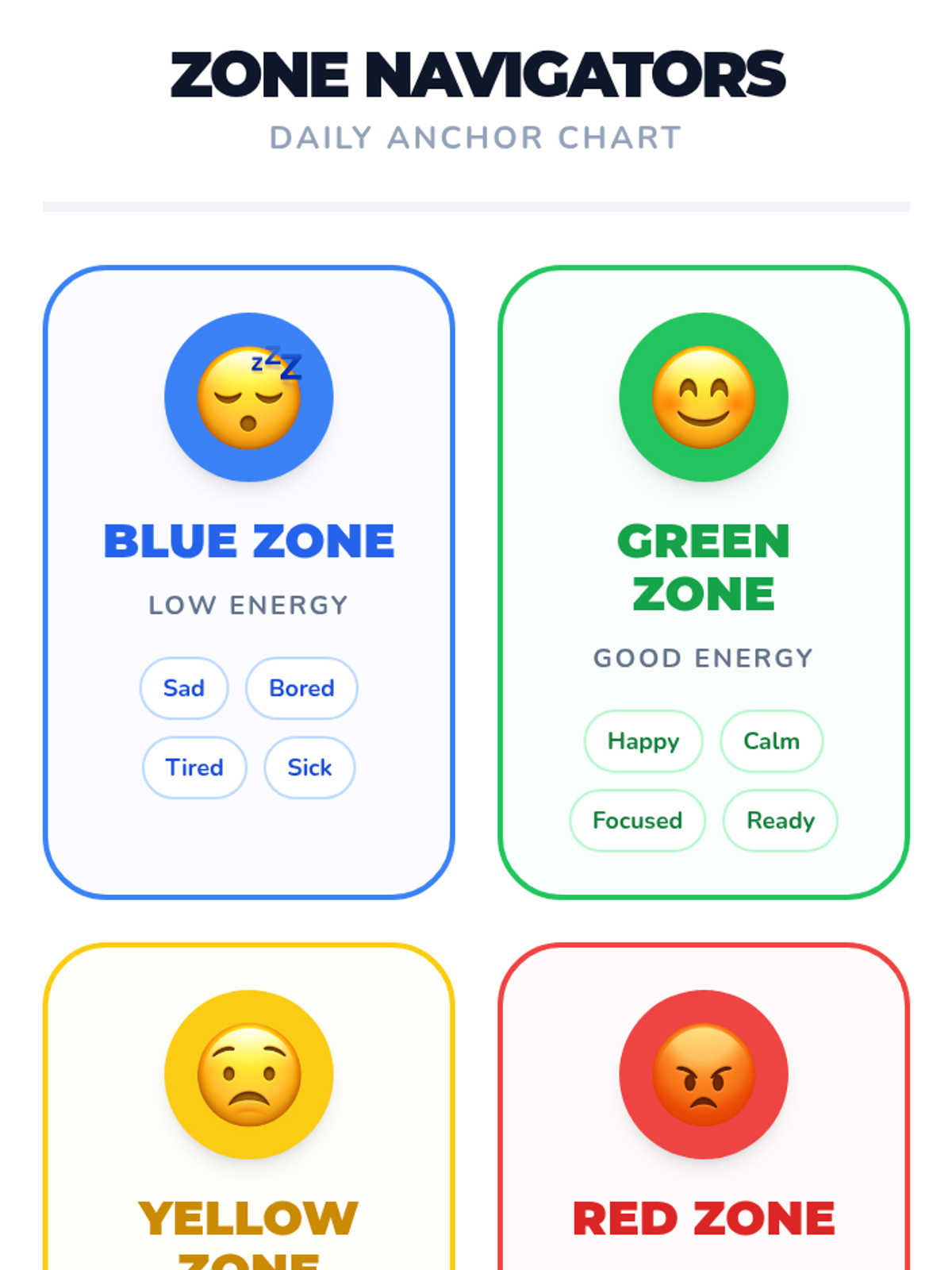
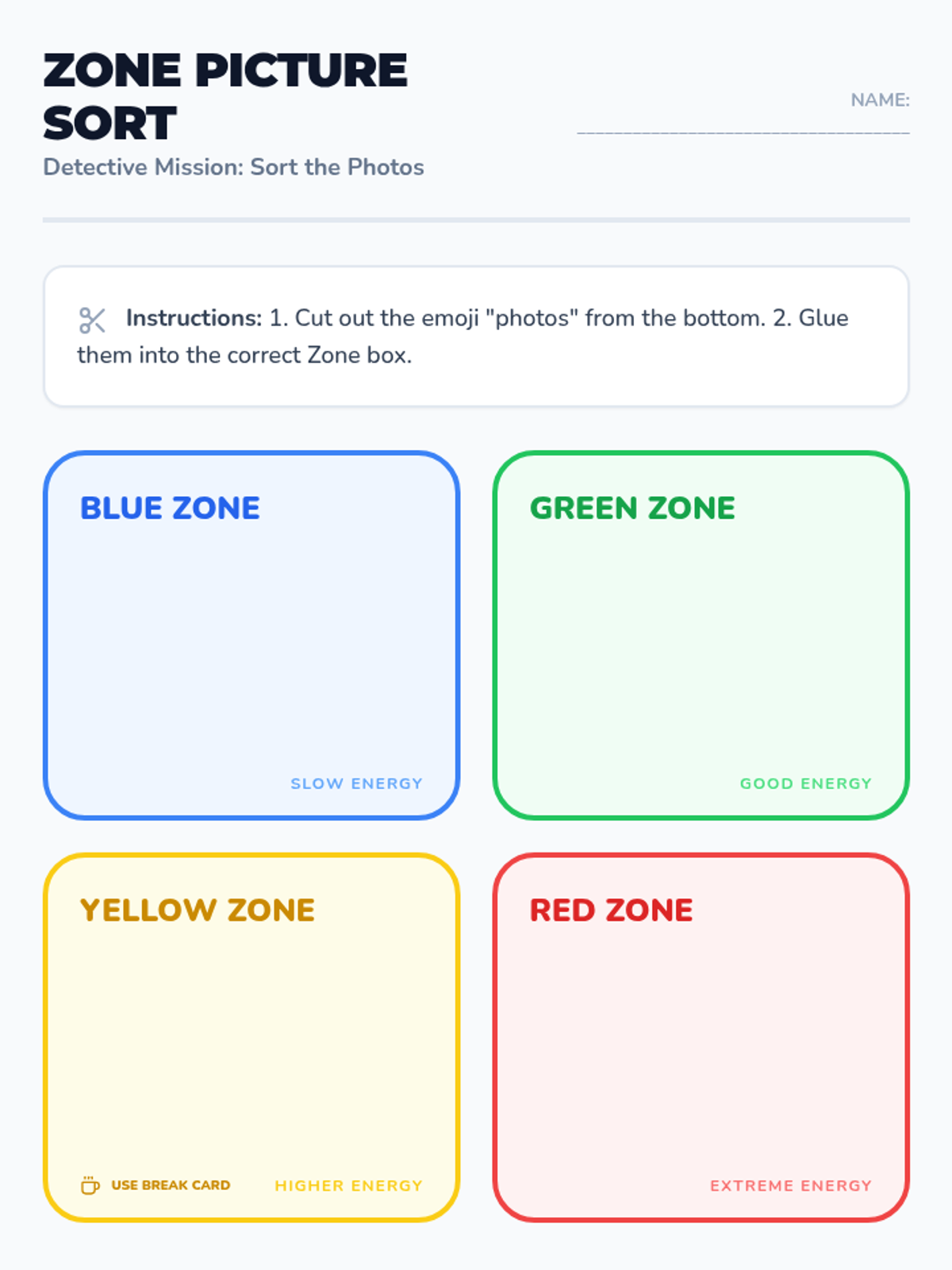
A hands-on lesson teaching students to identify their emotional zones and practice self-regulation strategies, specifically using 'break cards' to navigate the Yellow Zone.
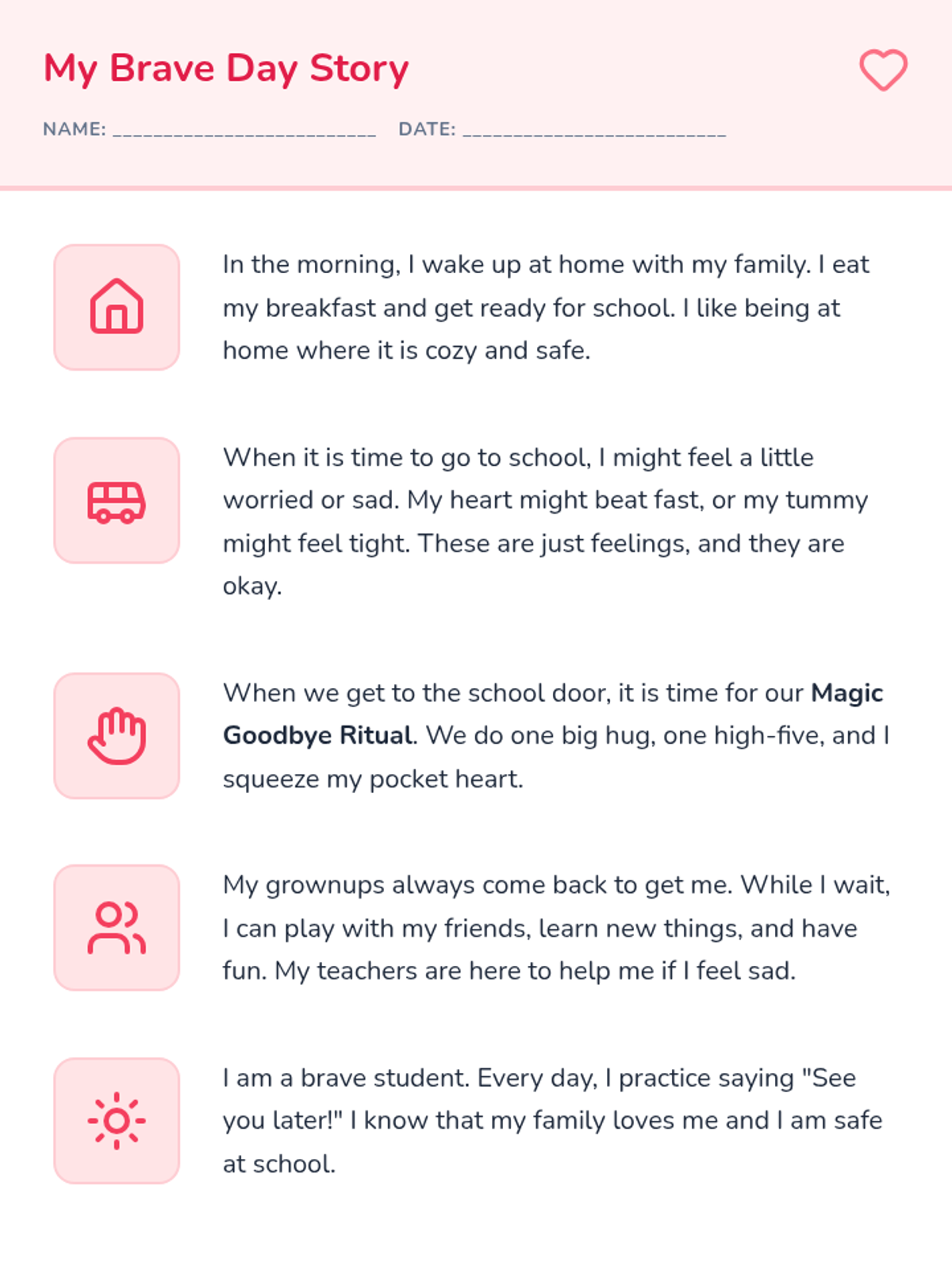
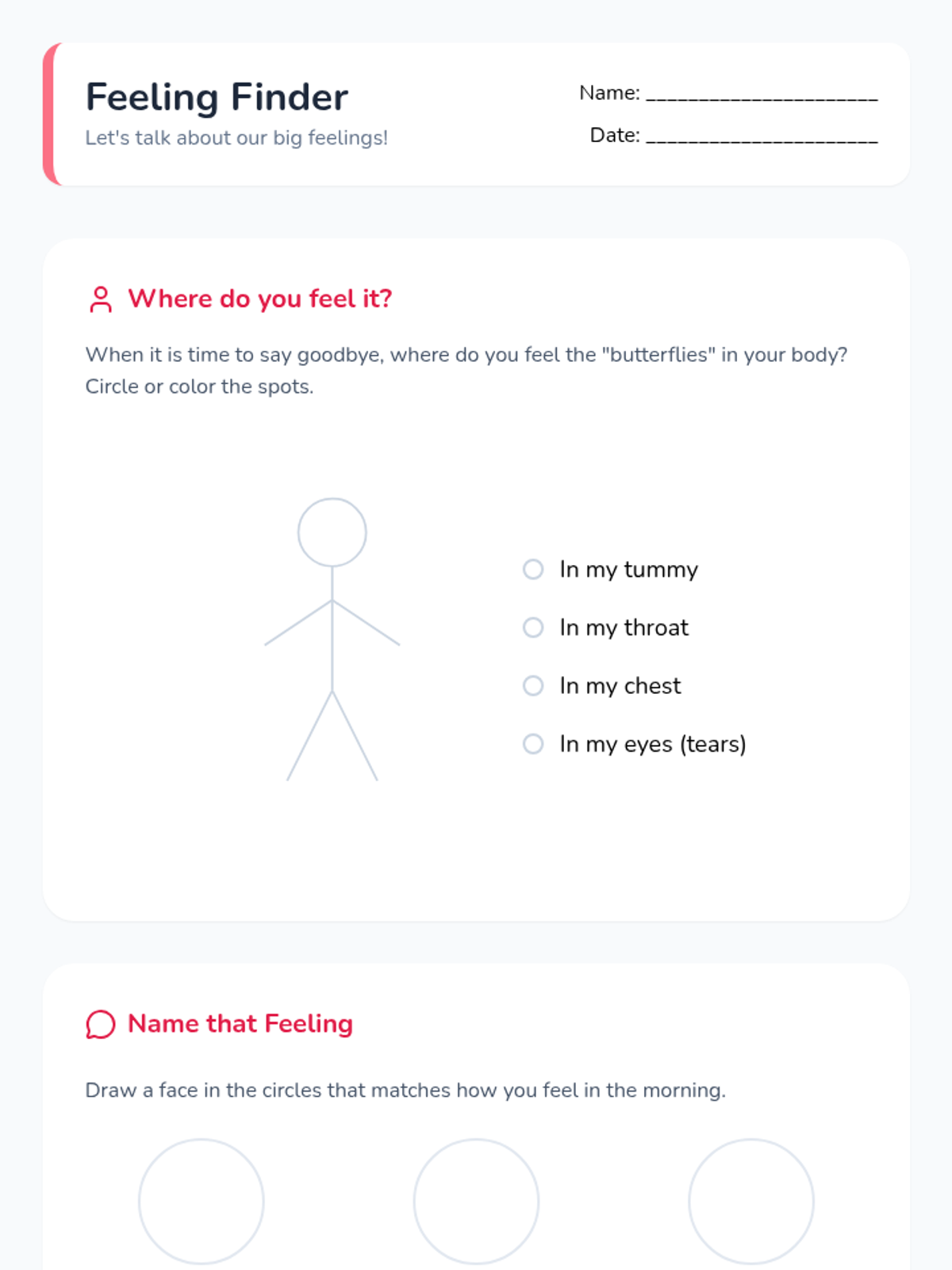
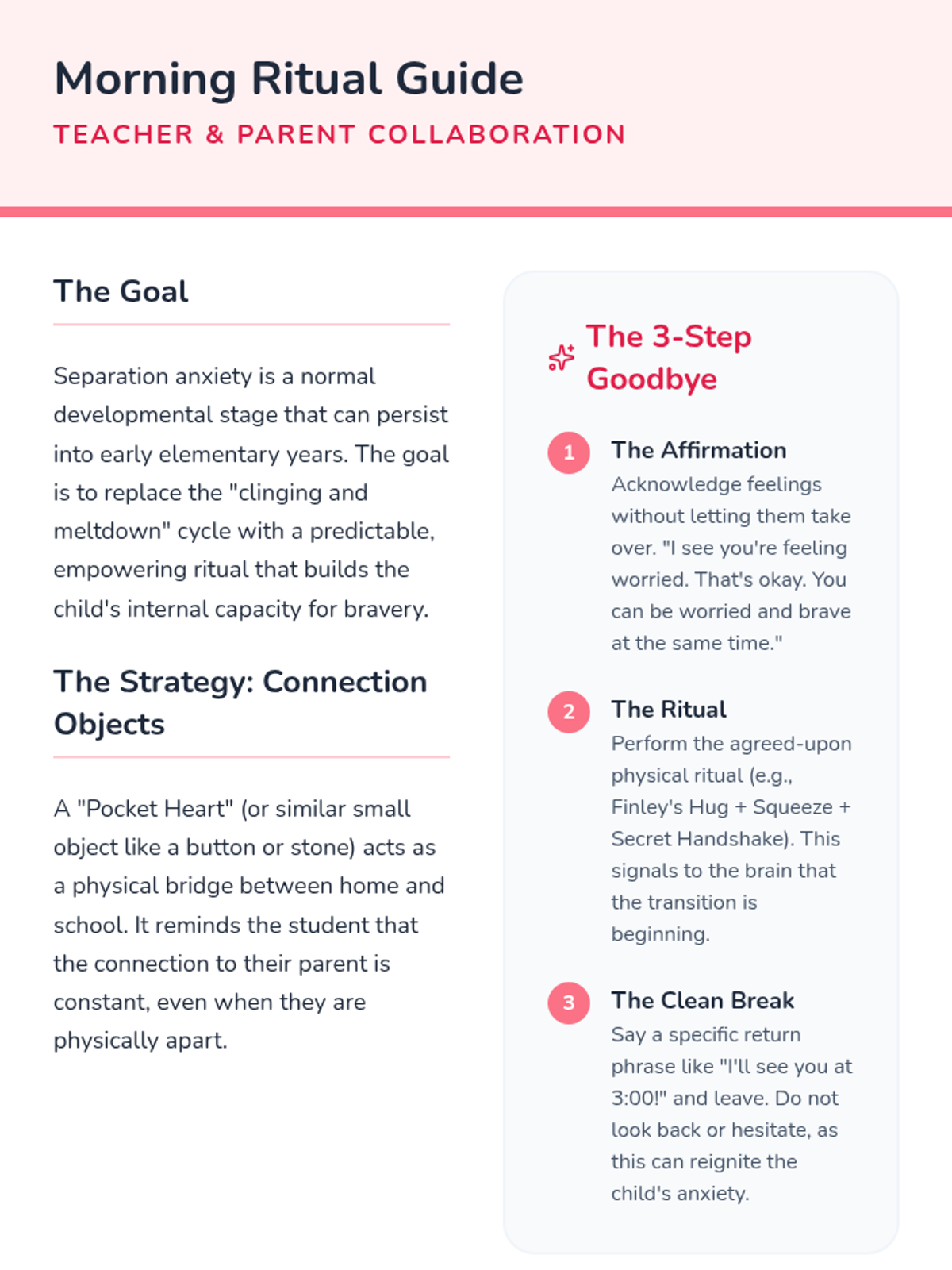
This lesson provides a gentle, supportive approach to managing separation anxiety through storytelling and the establishment of a calming morning ritual. Students learn to identify their feelings and use a 'connection object' to feel close to home while at school.
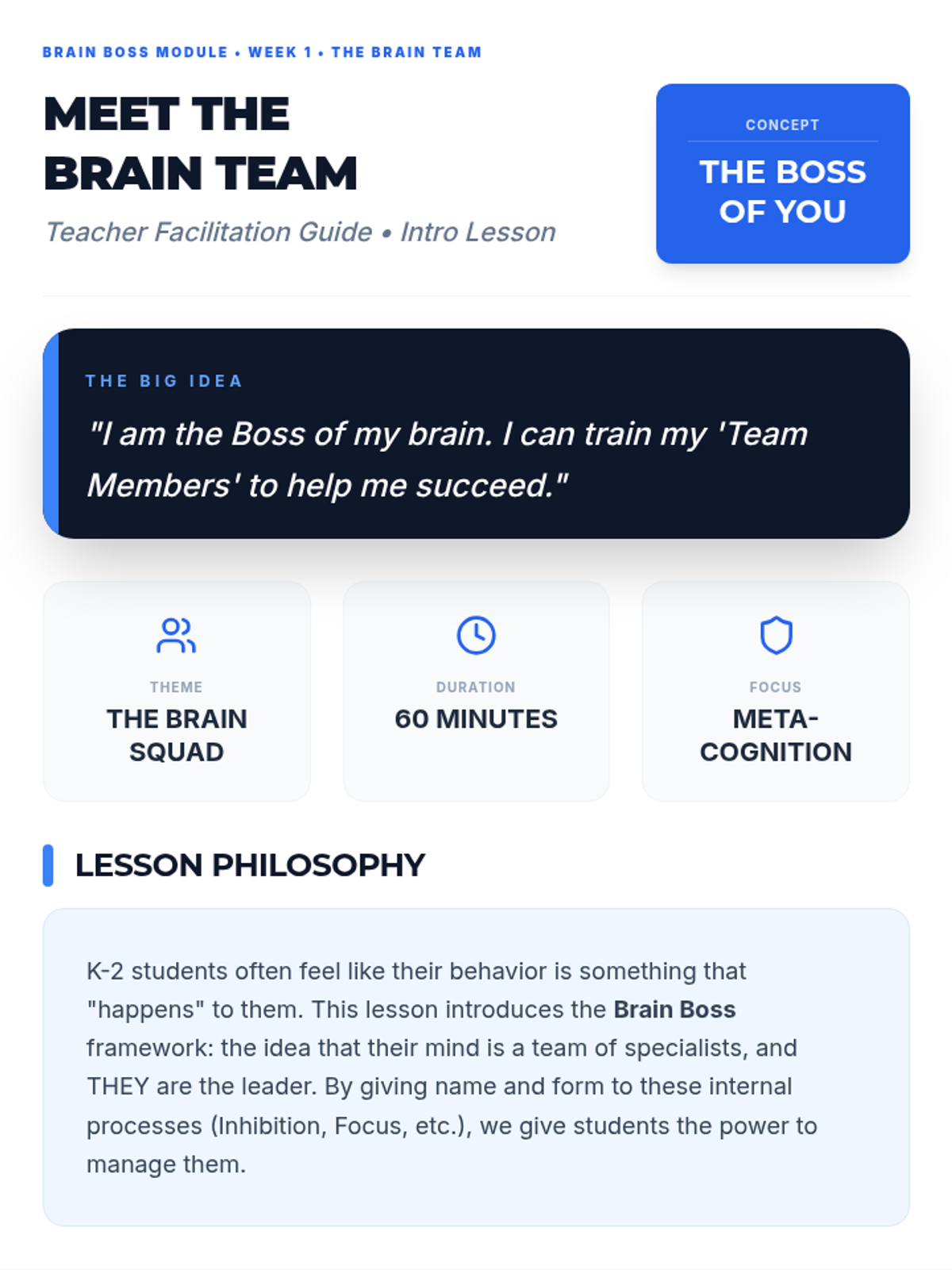
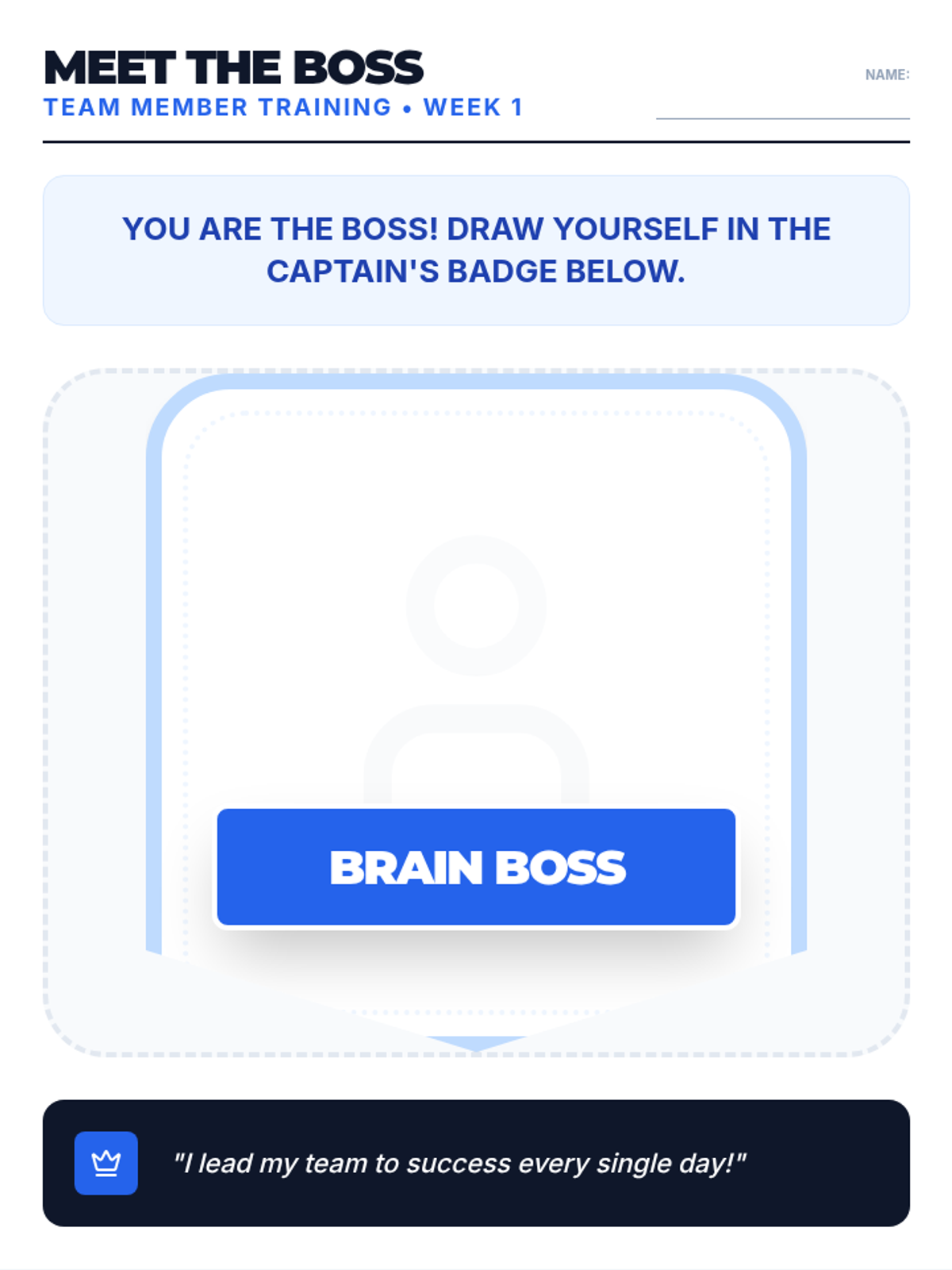
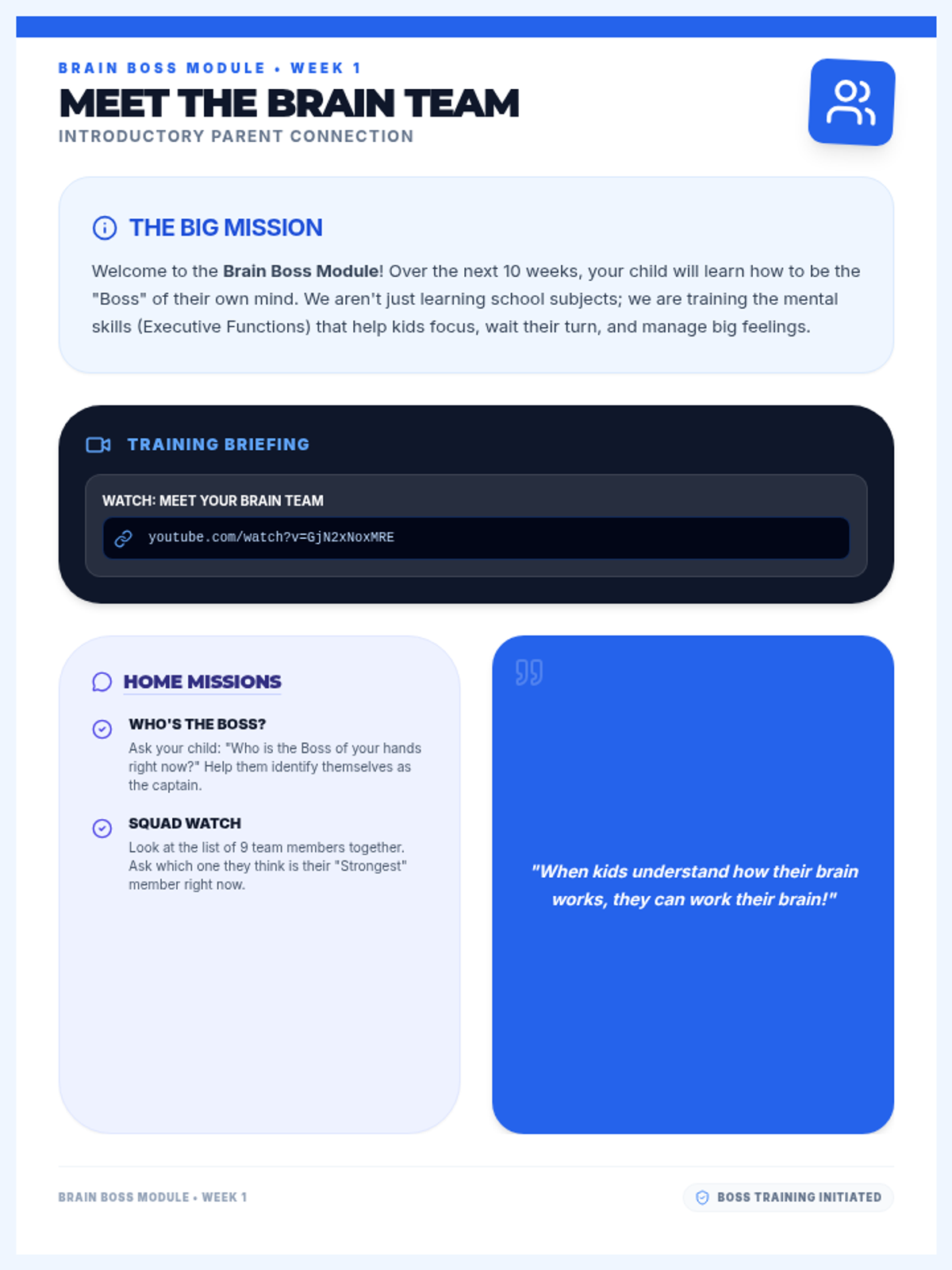
The introductory lesson for the Brain Boss Module. Students are introduced to the 'Brain Team' concept and learn that they are the 'Boss' who leads their team of mental skills to success.
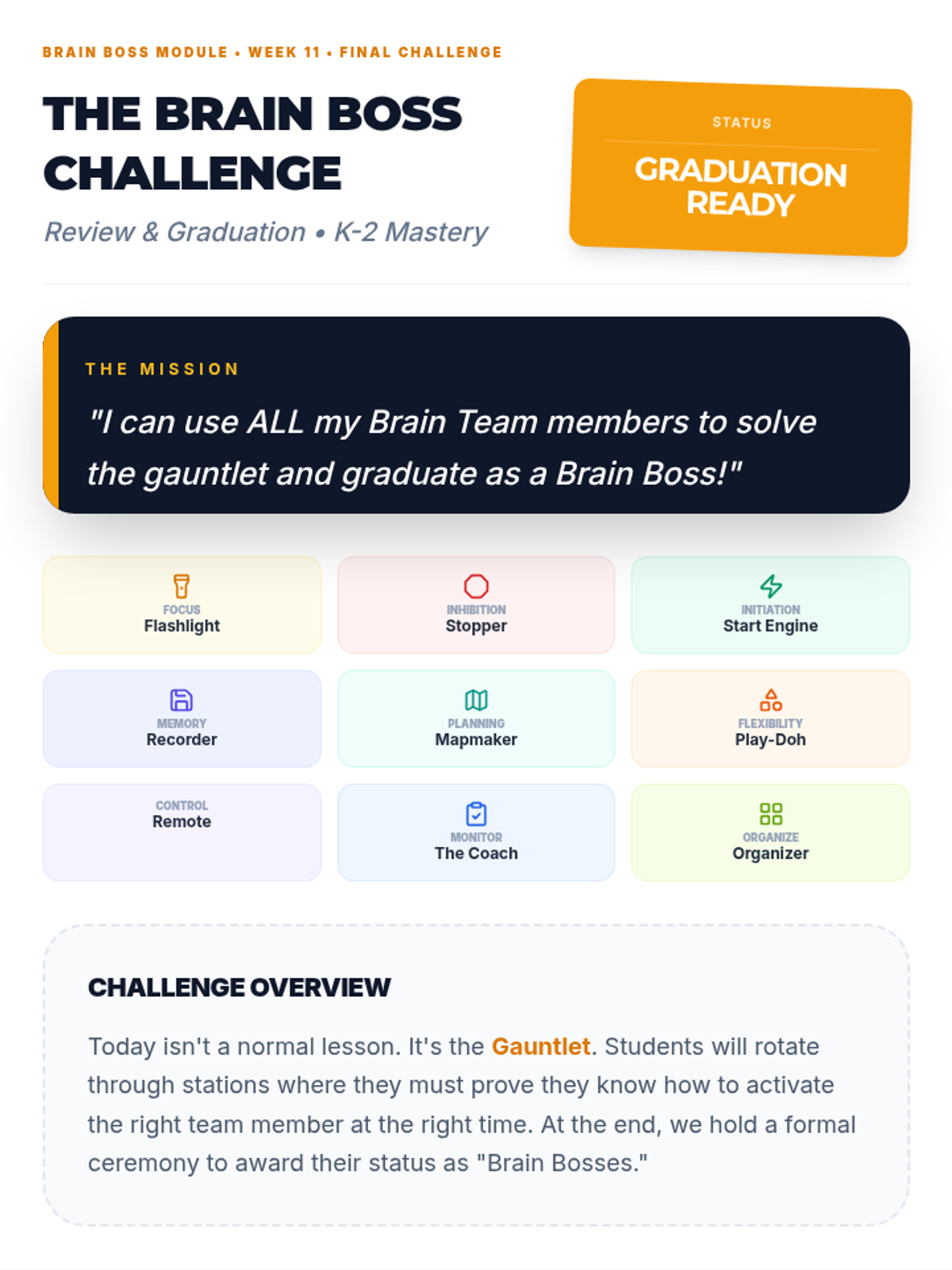
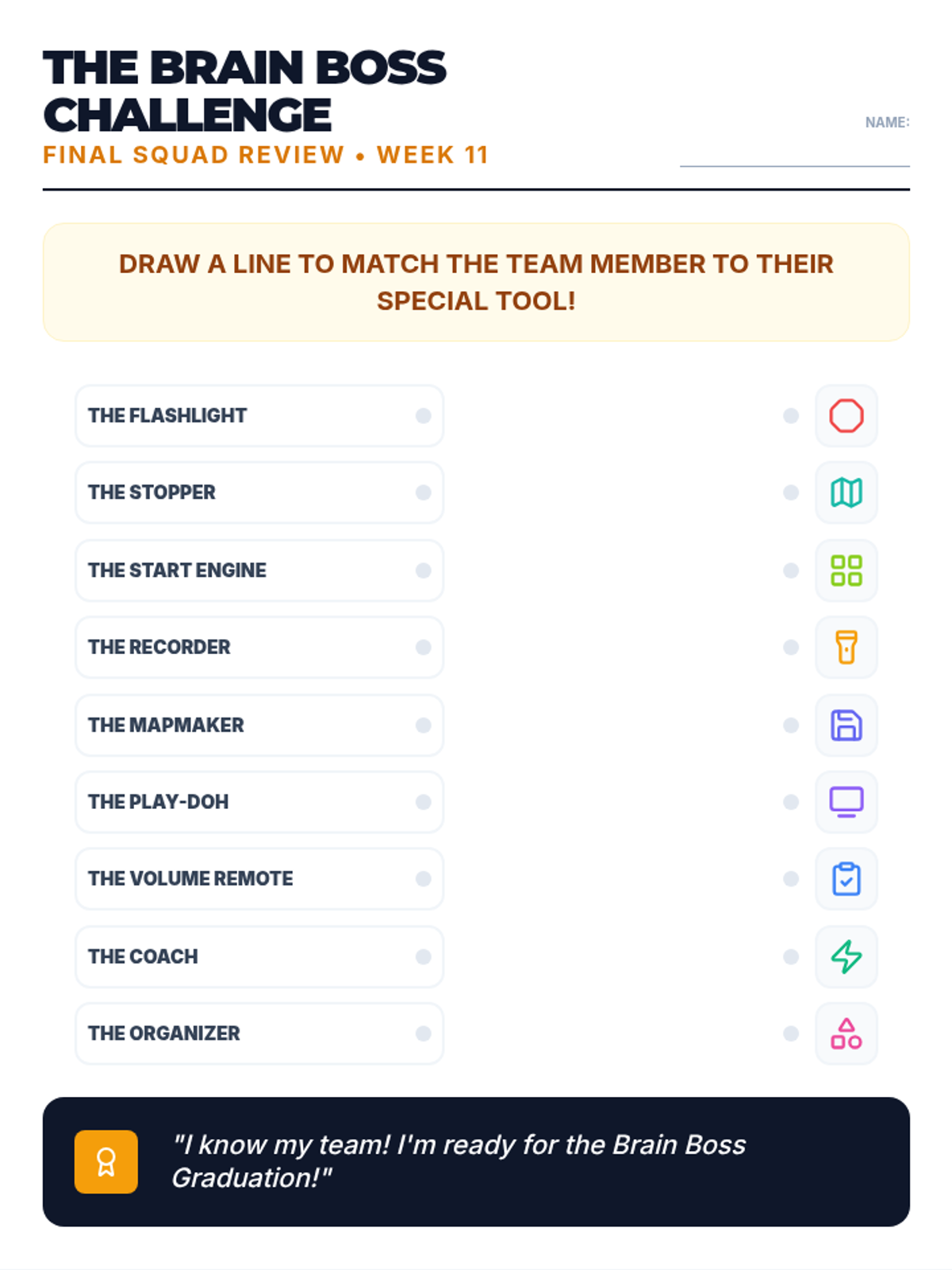
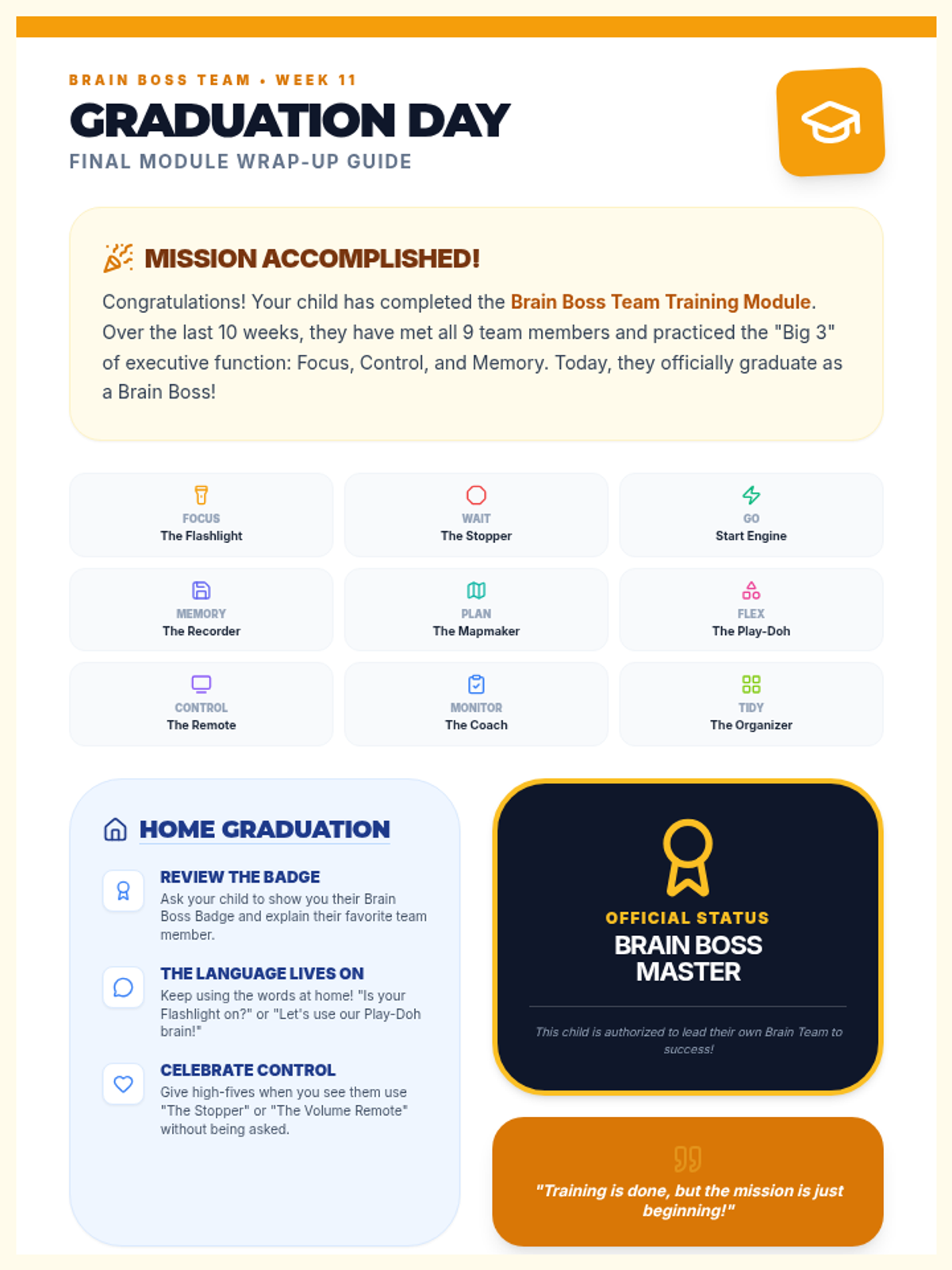
A 60-minute review lesson where students demonstrate their mastery of all 9 Brain Team members. Includes a station-based 'Brain Gauntlet' review game and a graduation ceremony to celebrate their new executive function skills.
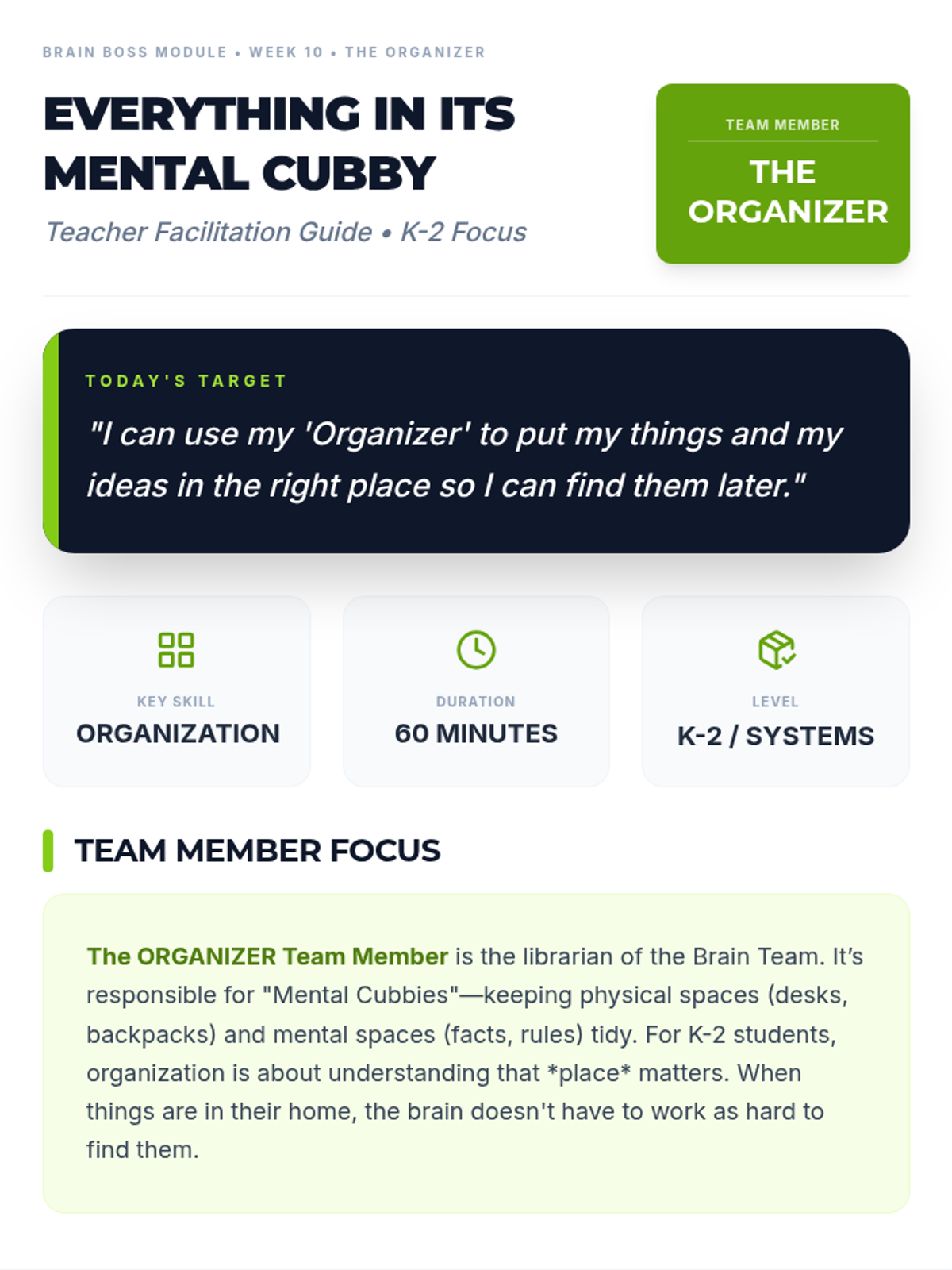
A 60-minute lesson teaching K-2 students how to activate their 'ORGANIZATION' team member, known as 'The Organizer'. Students learn to use 'Mental Cubbies' to keep their desk, belongings, and ideas in the right place.
A 60-minute lesson teaching K-2 students how to activate their 'SELF-MONITORING' team member, known as 'The Coach'. Students learn to check their work and behavior as they go.
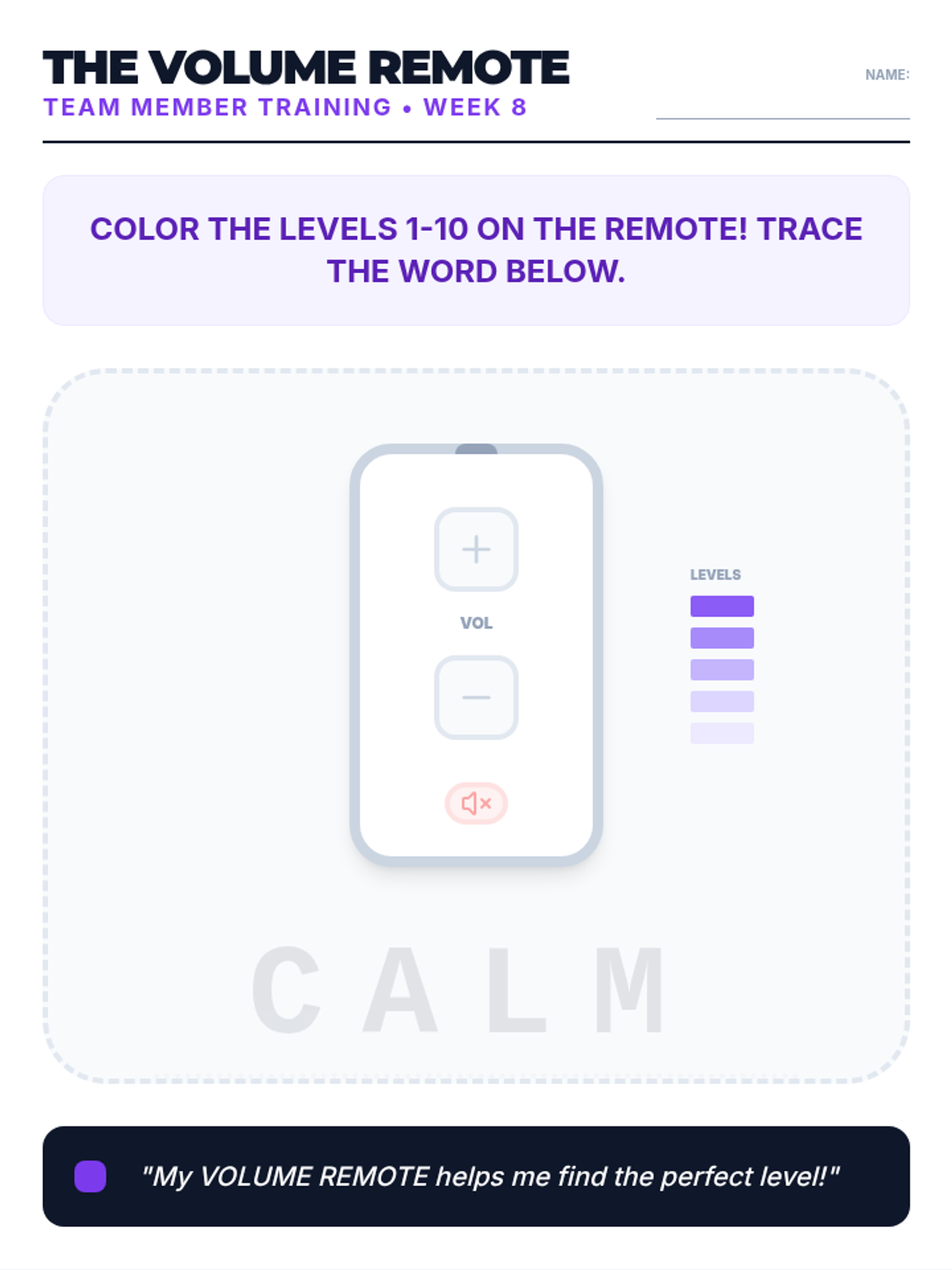
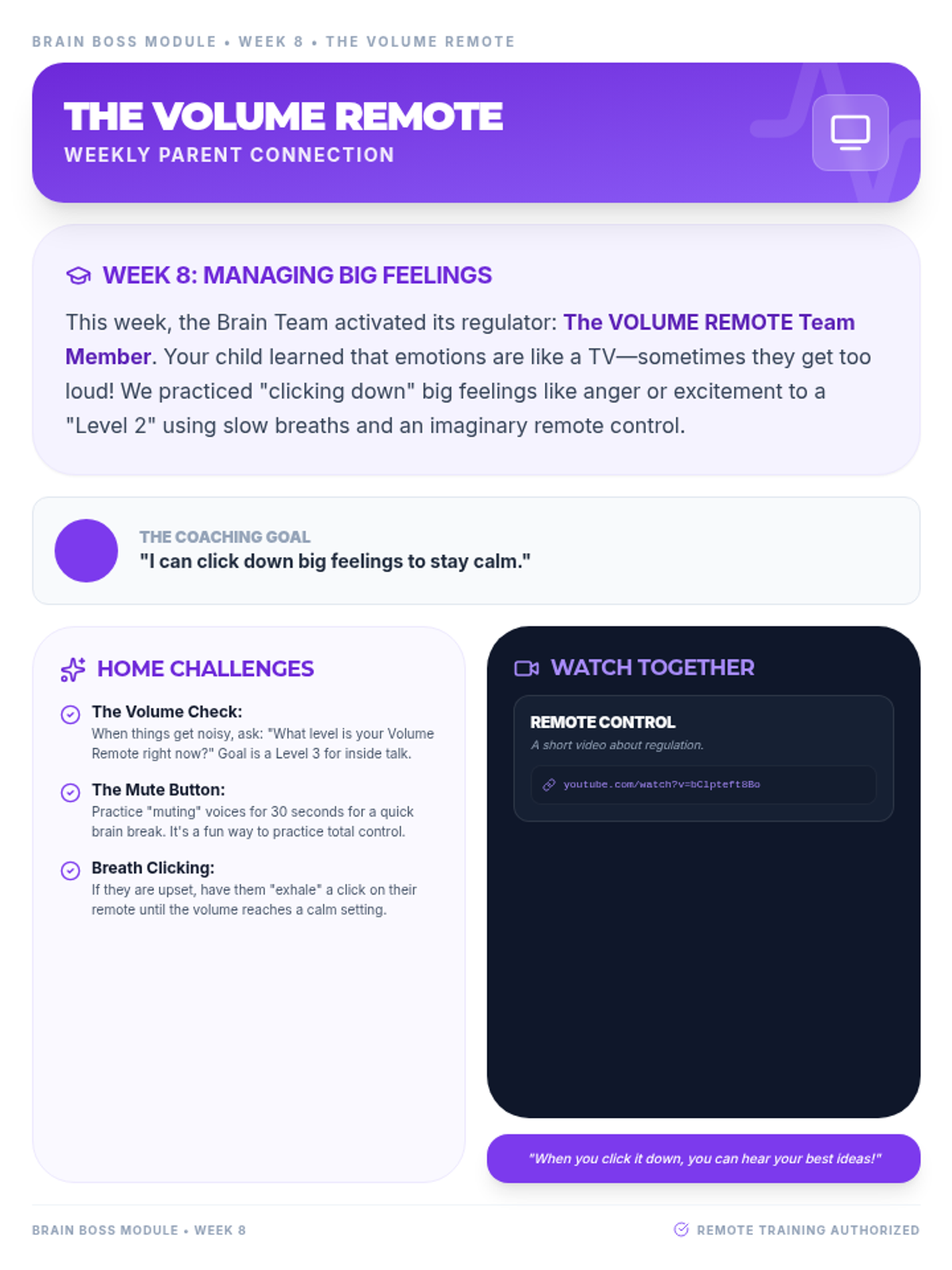
A 60-minute lesson teaching K-2 students how to activate their 'EMOTIONAL CONTROL' team member, known as 'The Volume Remote'. Students learn to "dial down" big feelings to stay calm and focused.
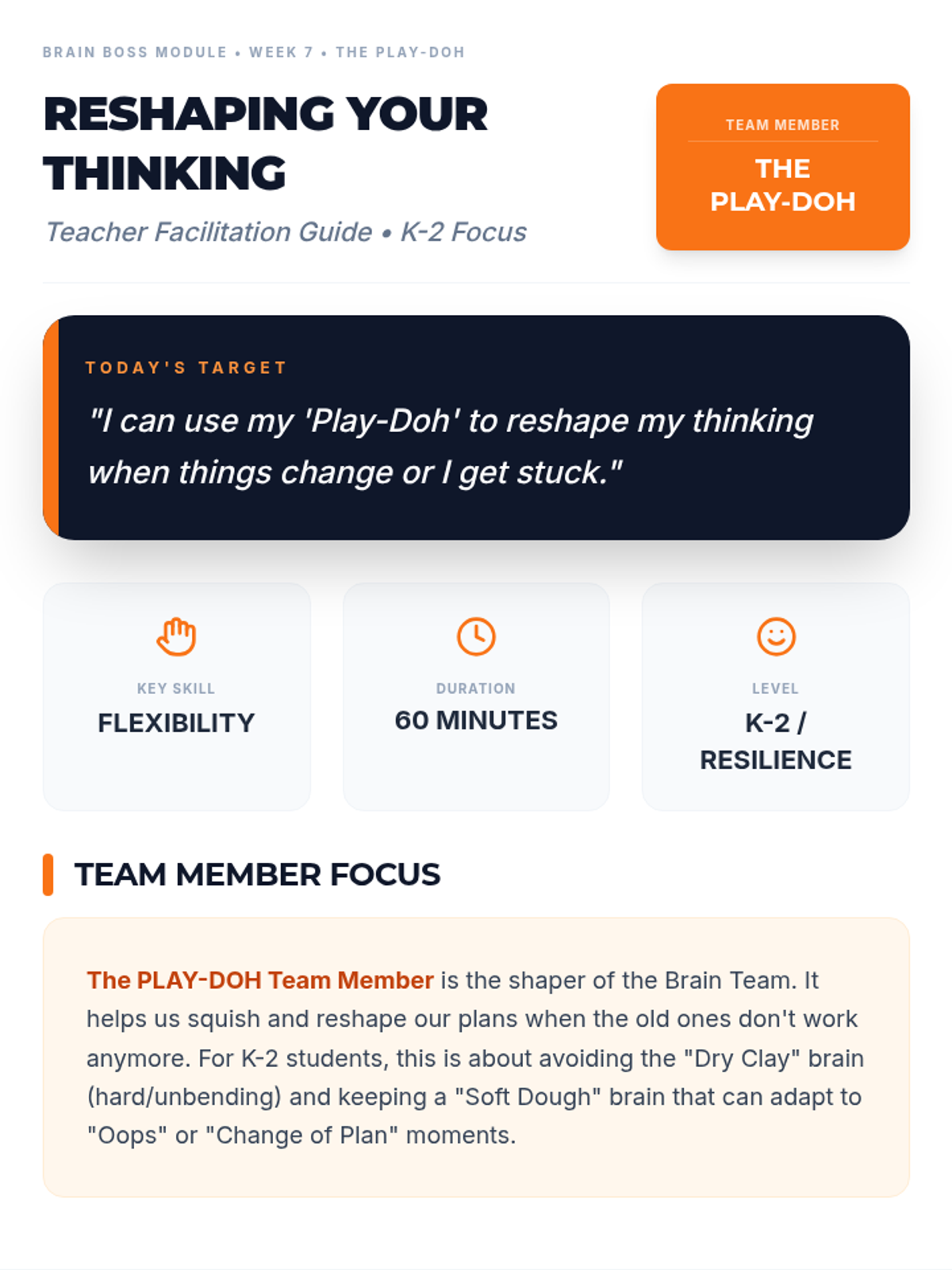
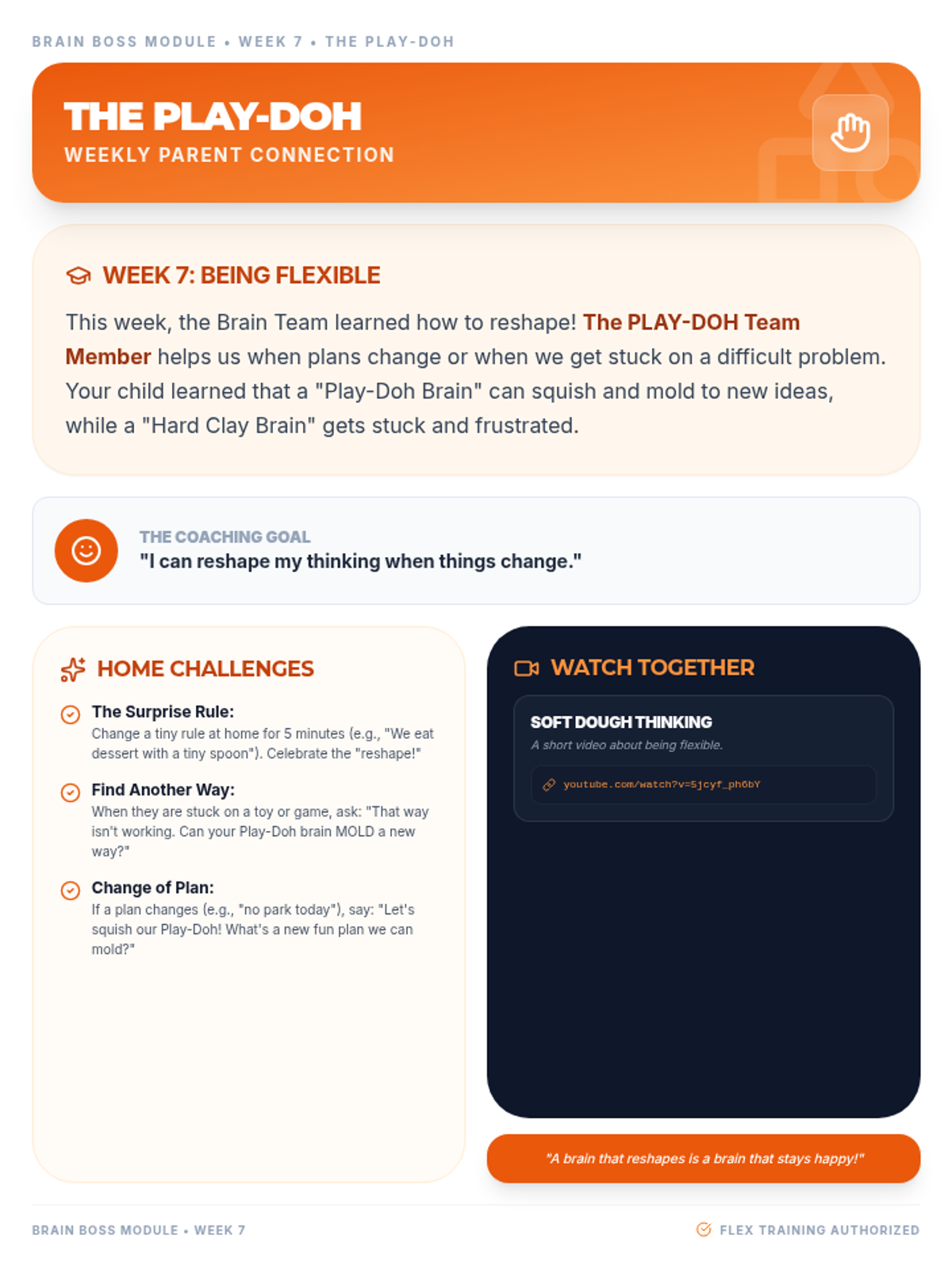
A 60-minute lesson teaching K-2 students how to activate their 'FLEXIBILITY' team member, known as 'The Play-Doh'. Students learn how to reshape their thinking when plans change or they get stuck.
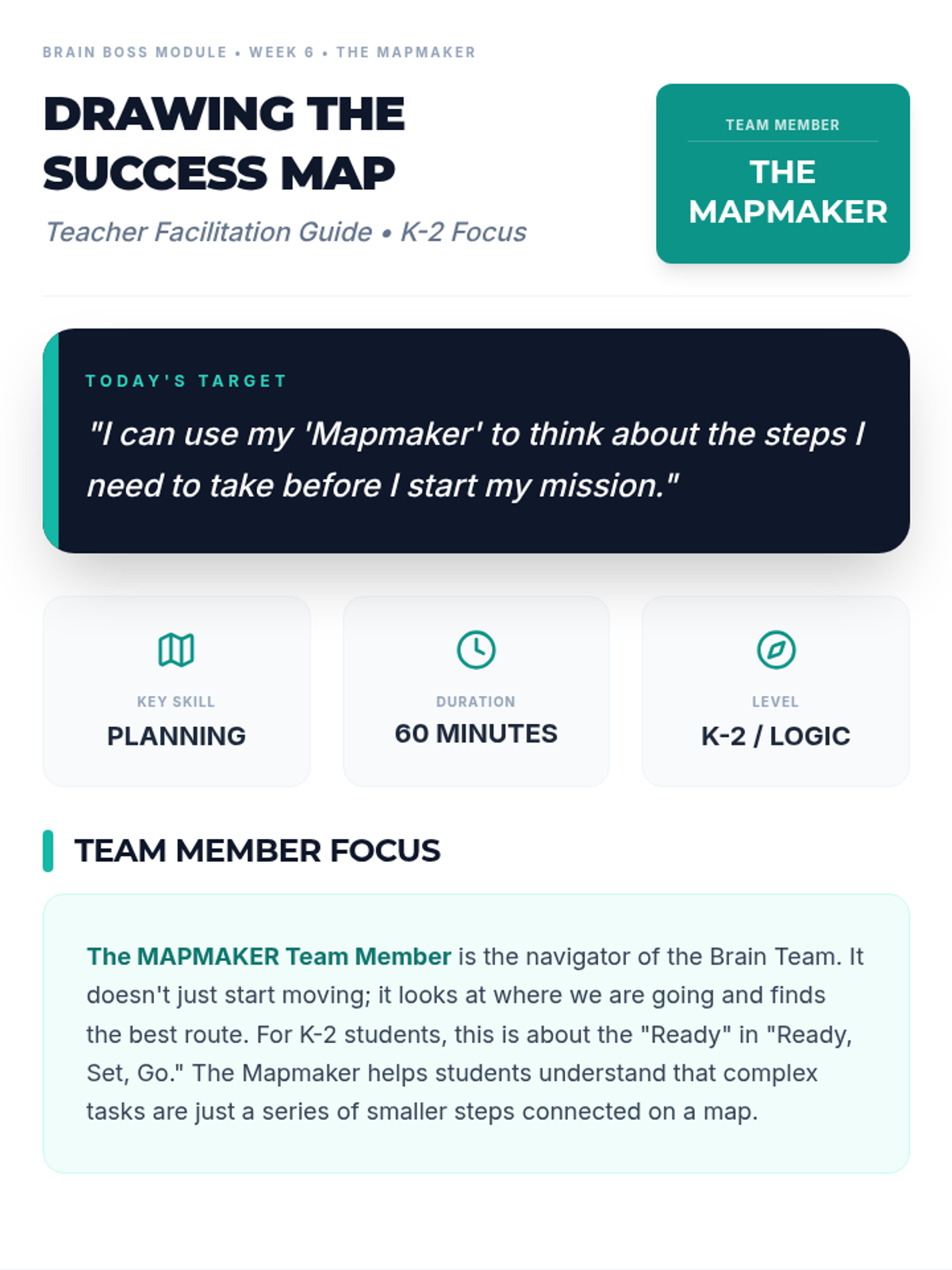
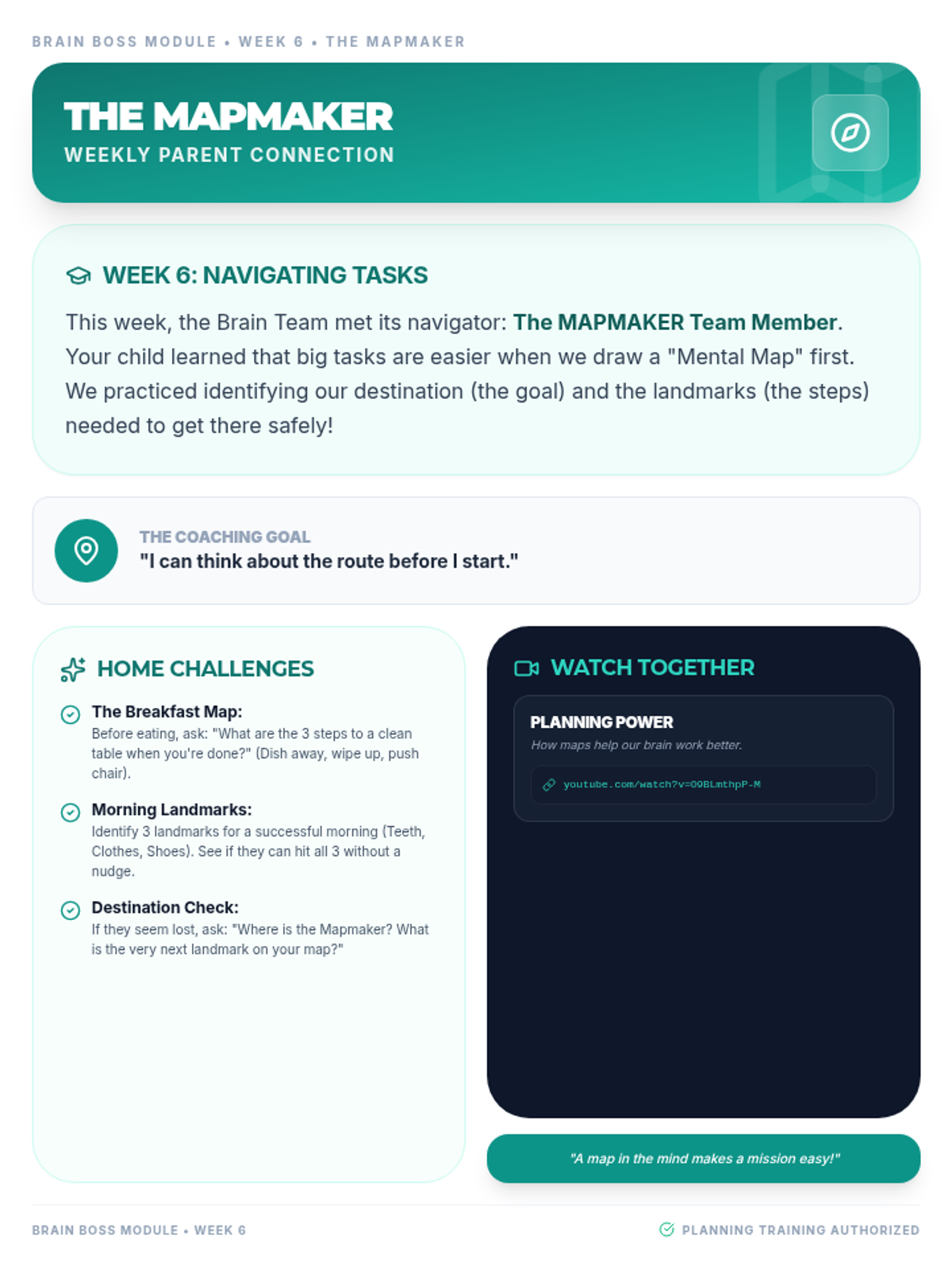
A 60-minute lesson teaching K-2 students how to activate their 'PLANNING' team member, known as 'The Mapmaker'. Students learn how to look at a goal and decide on the steps needed to get there before starting.
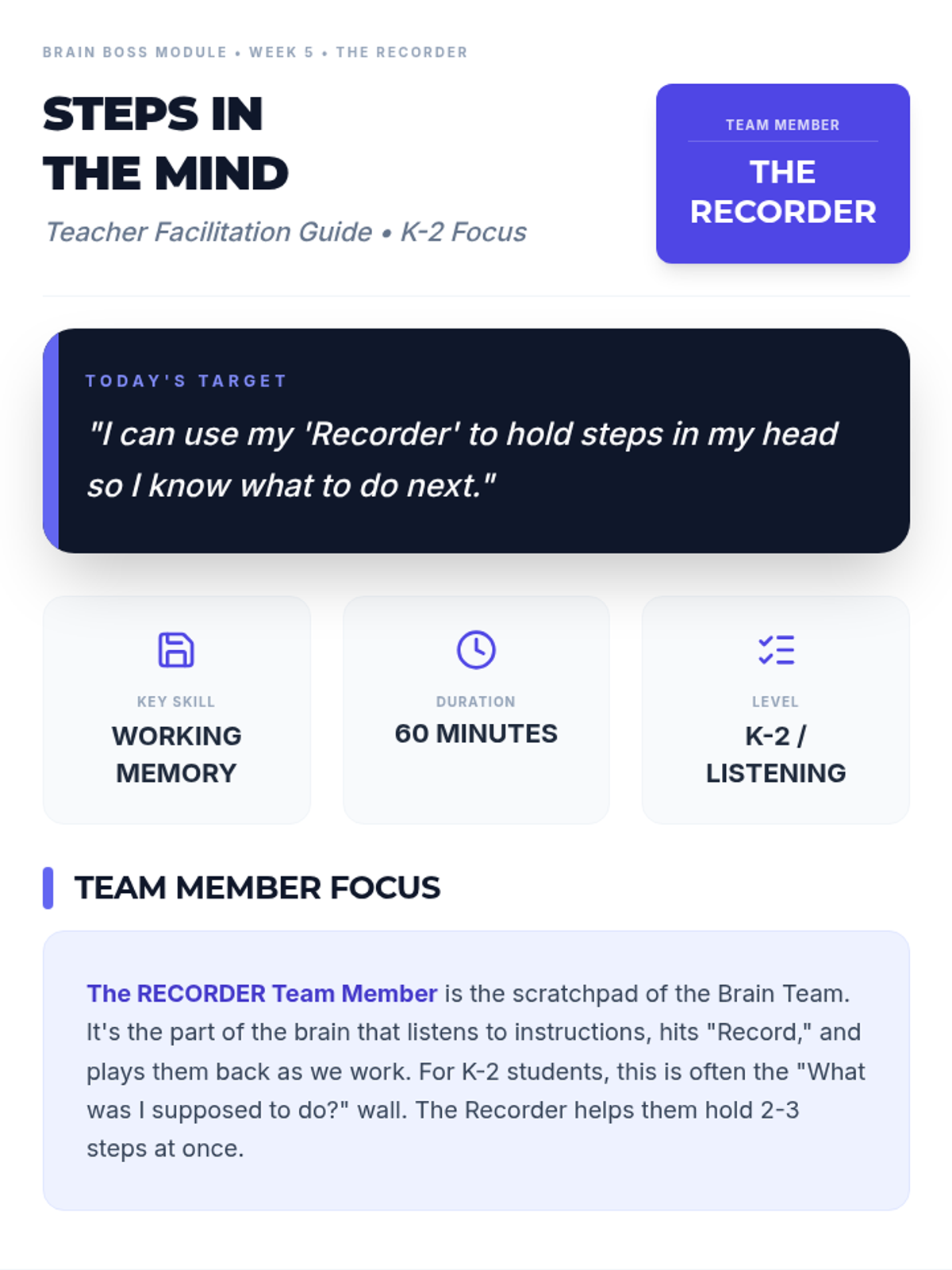
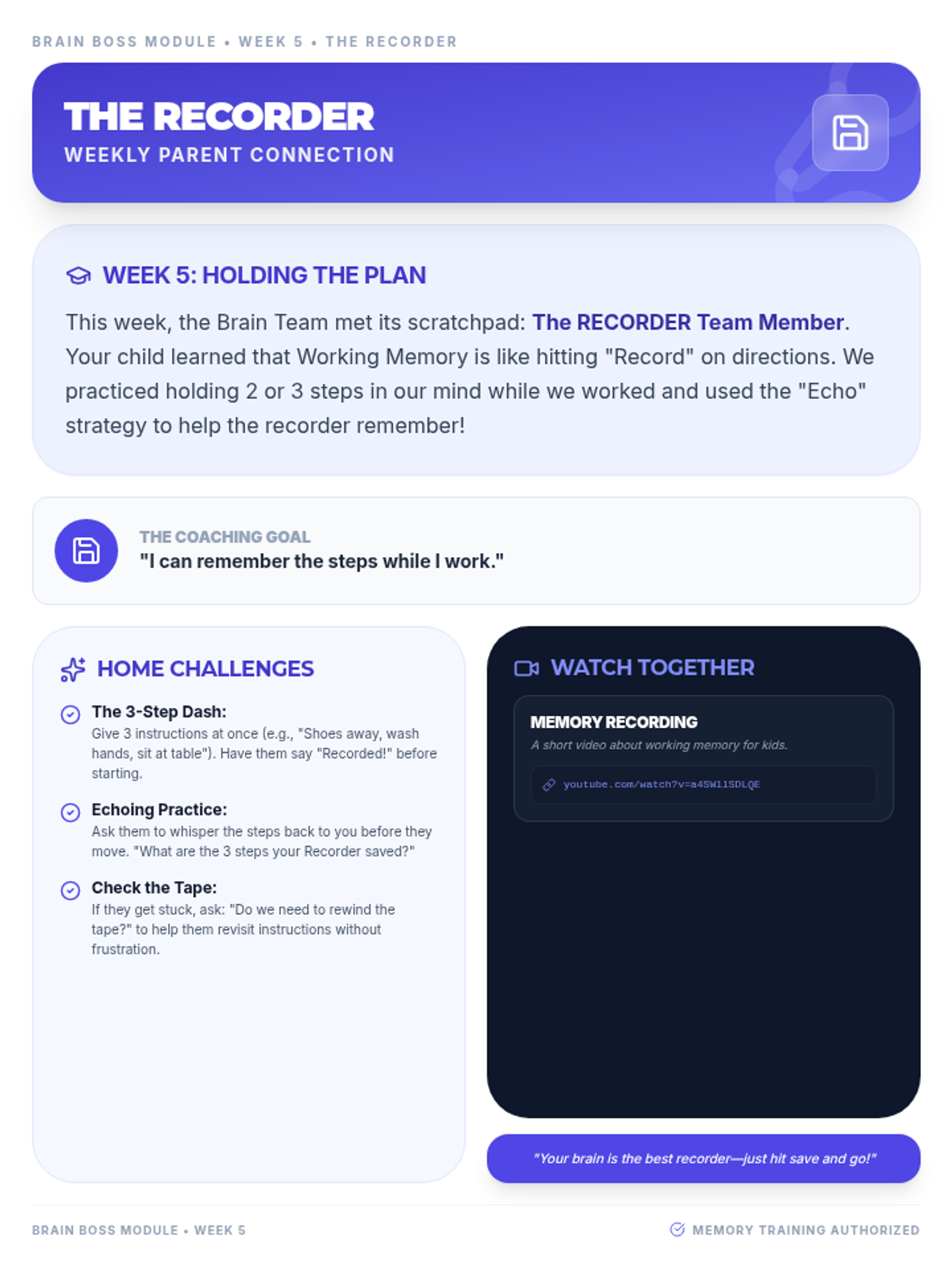
A 60-minute lesson teaching K-2 students how to activate their 'WORKING MEMORY' team member, known as 'The Recorder'. Students learn how to hold steps and instructions in their mind while completing a task.
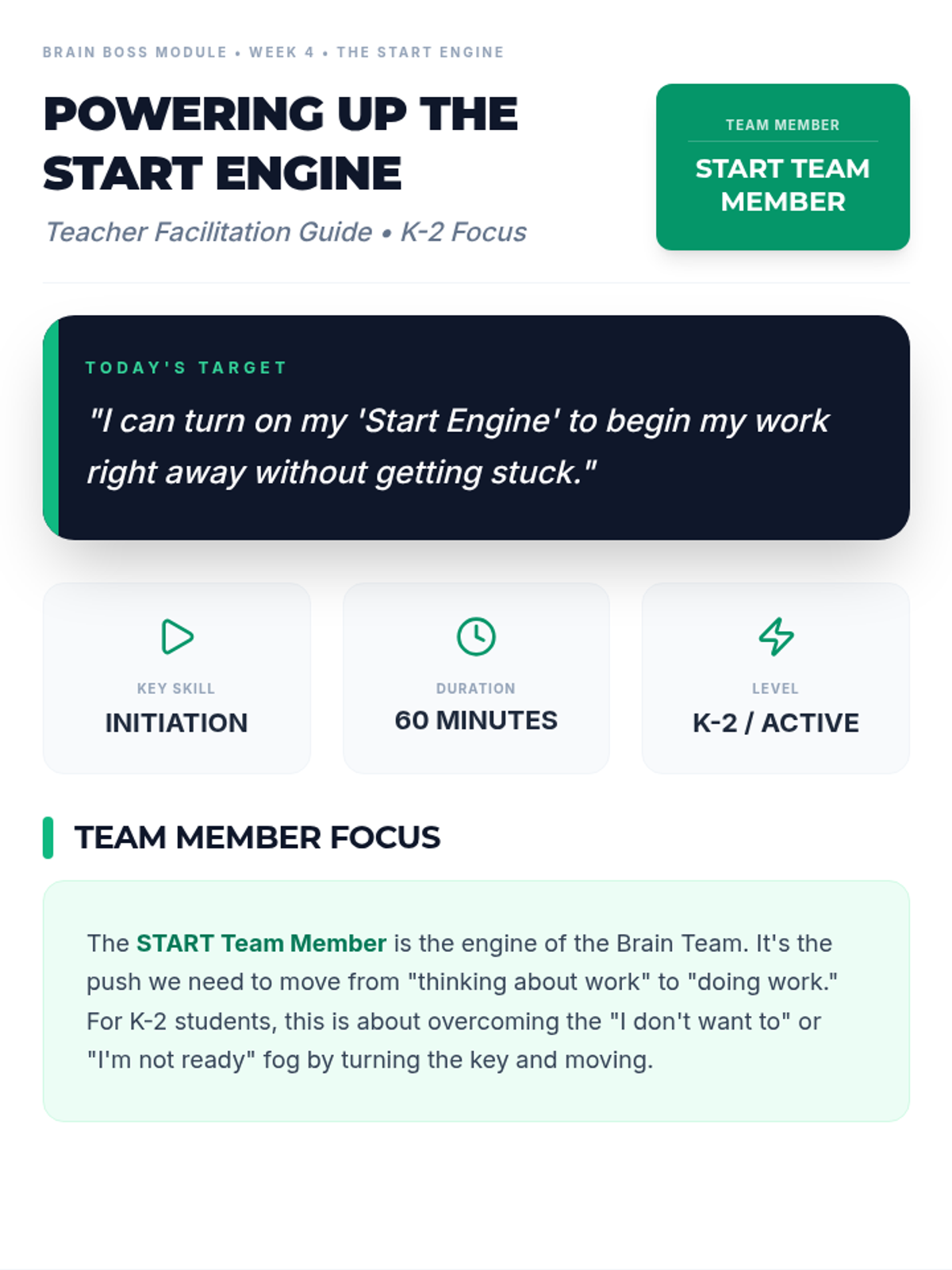
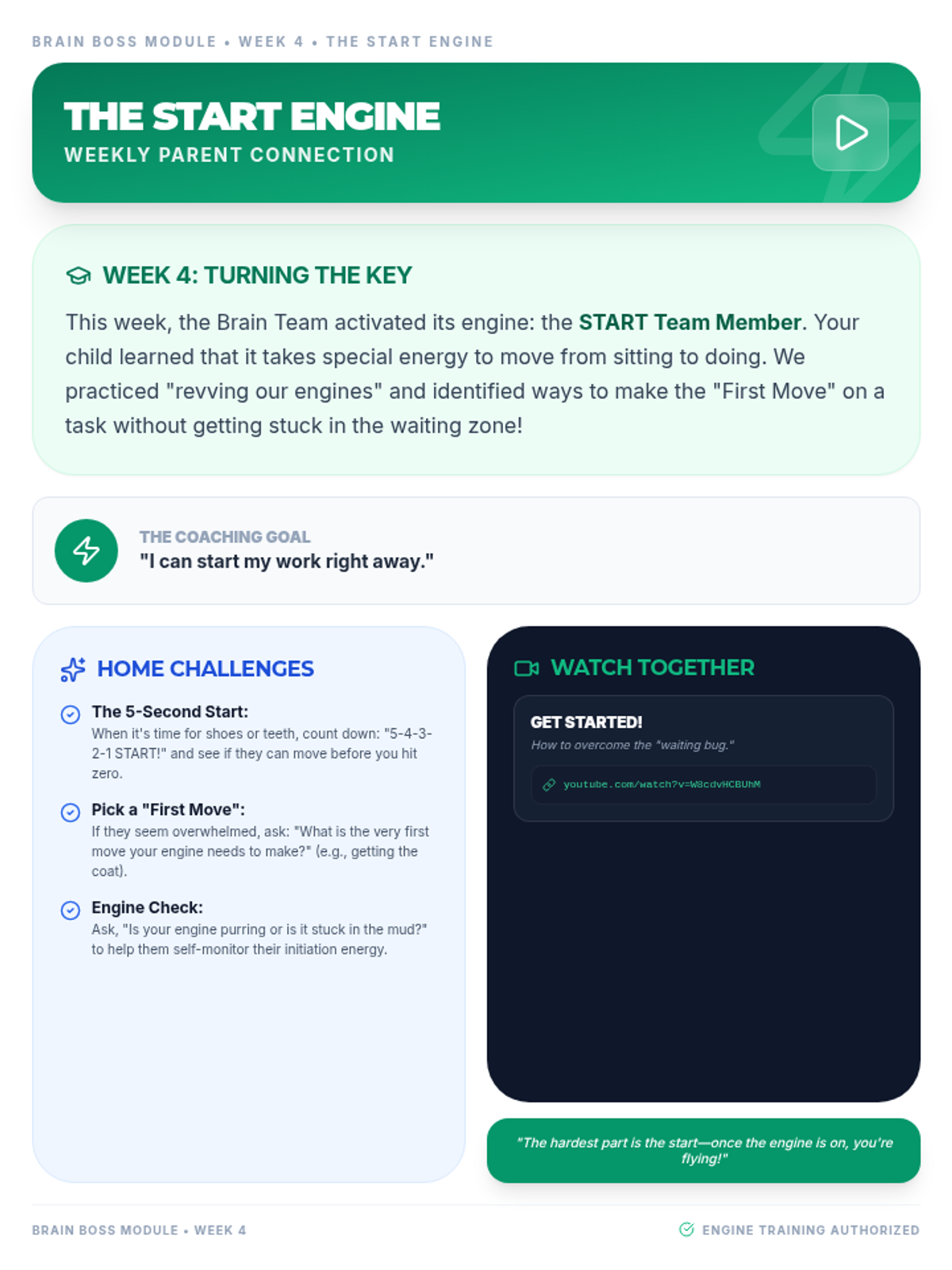
A 60-minute lesson teaching K-2 students how to activate their 'START' team member. Students learn how to "rev their engines" to begin tasks immediately without getting stuck in the "waiting zone".
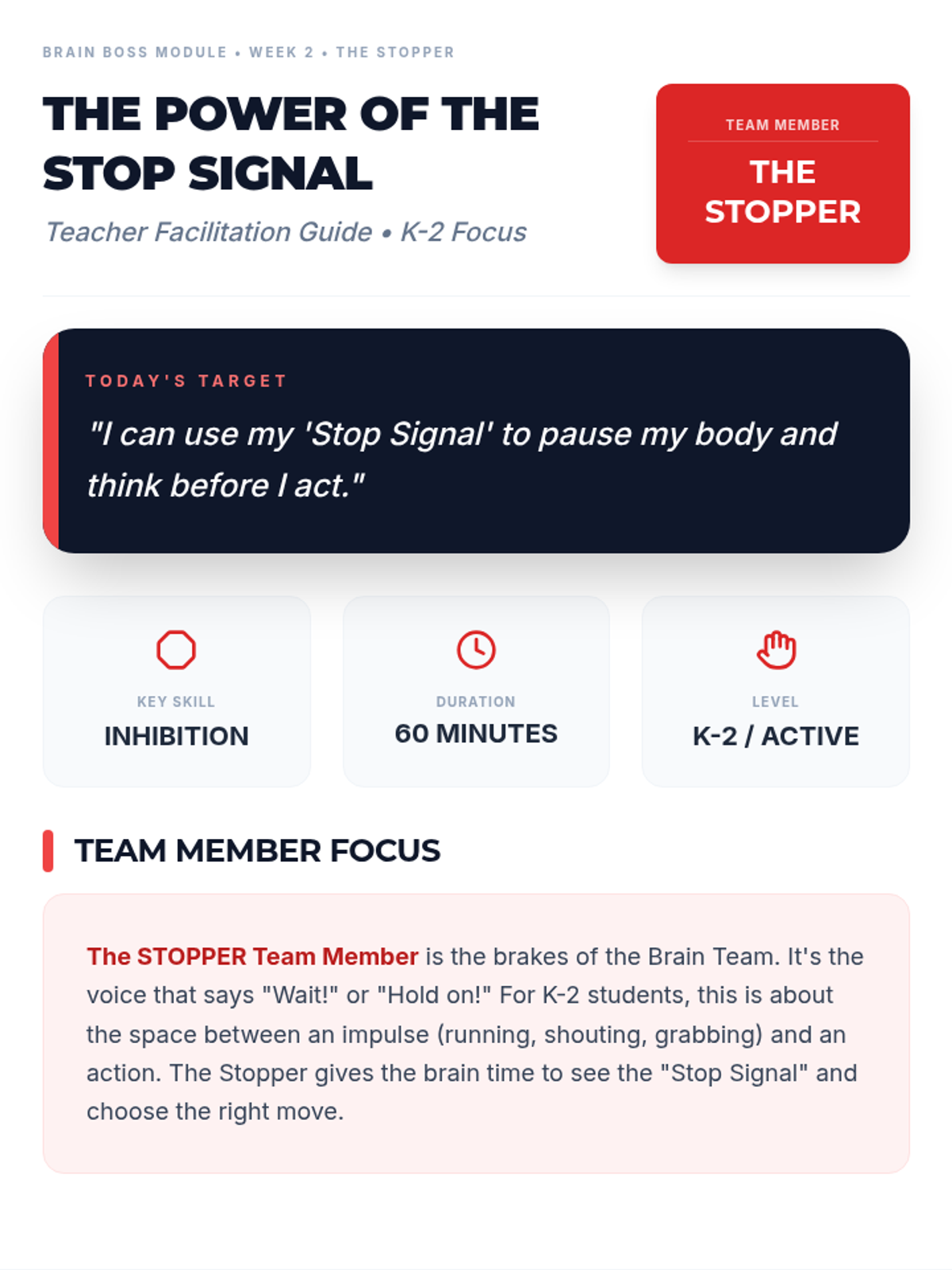
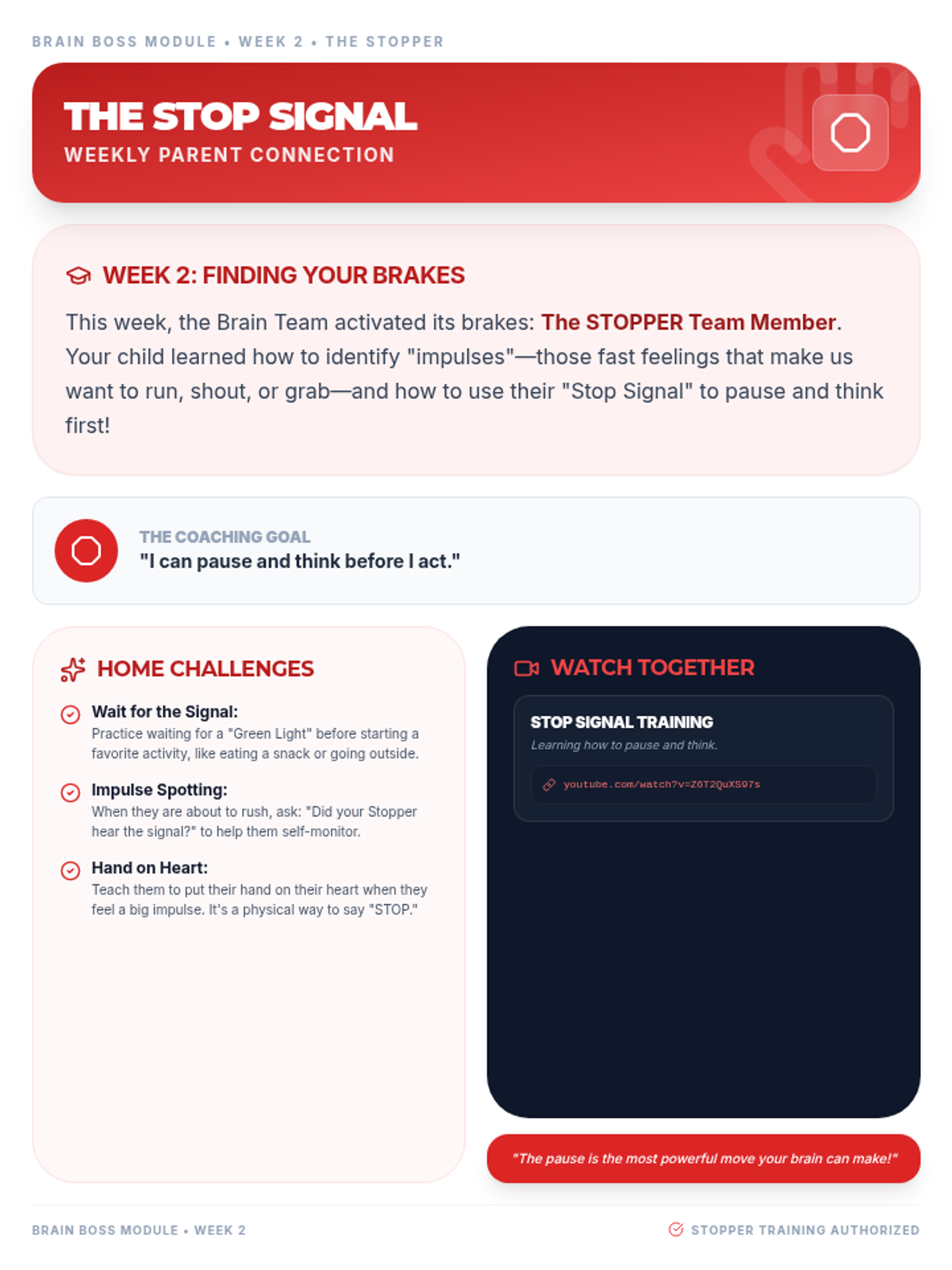
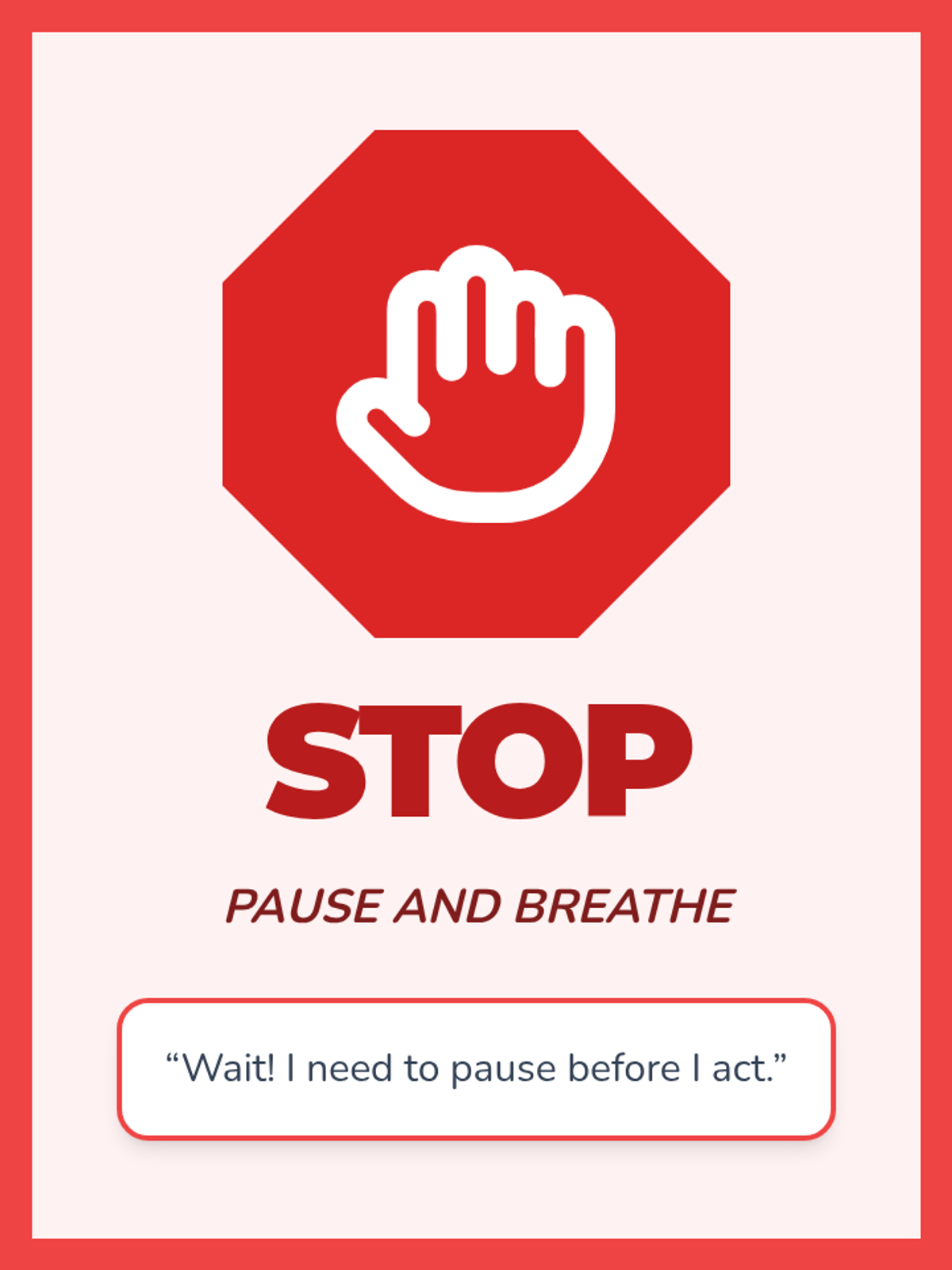
A 60-minute lesson teaching K-2 students how to activate their 'INHIBITION' team member, known as 'The Stopper'. Students learn to use their 'Stop Signal' to pause before acting and resist impulses.
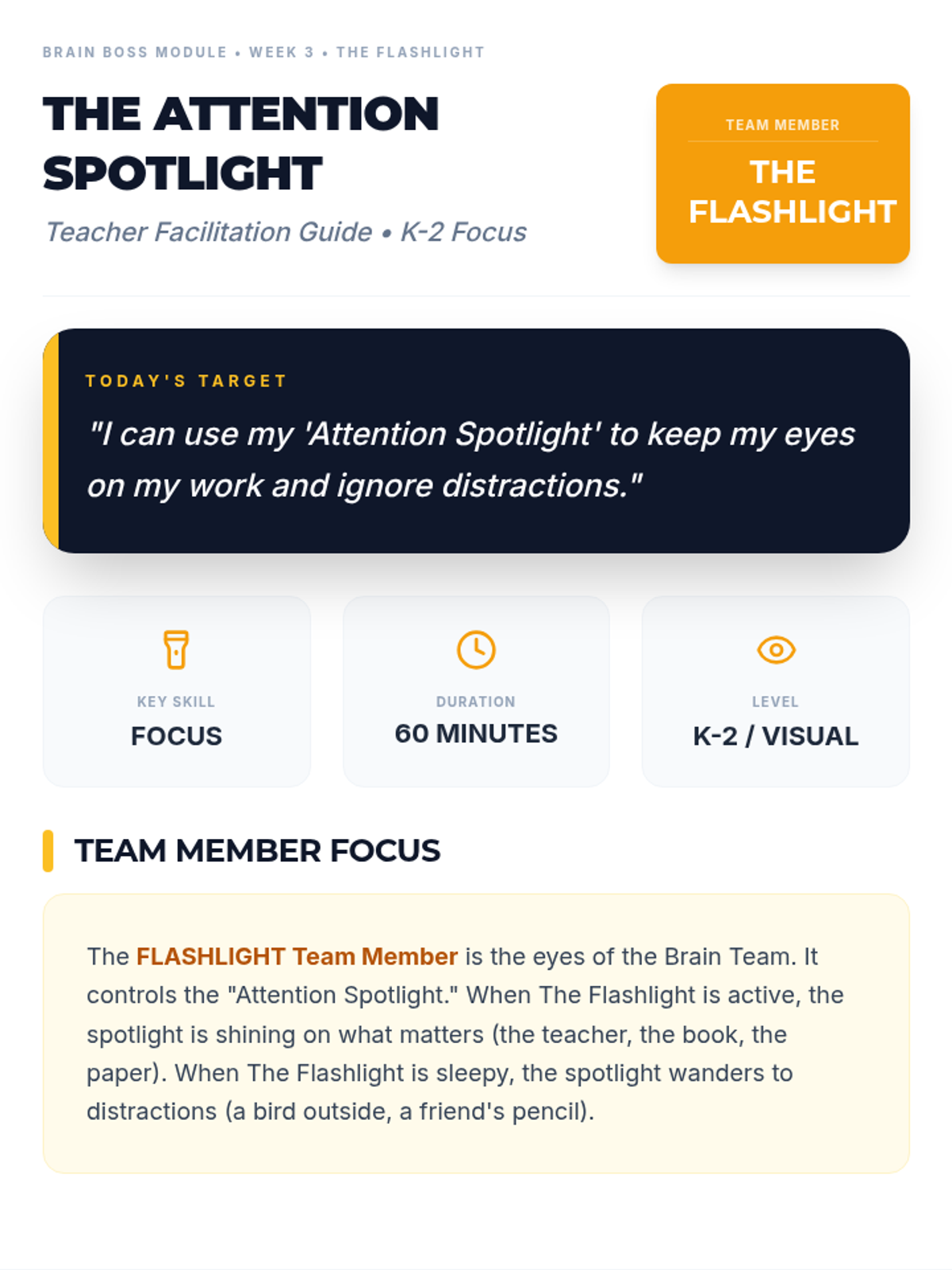
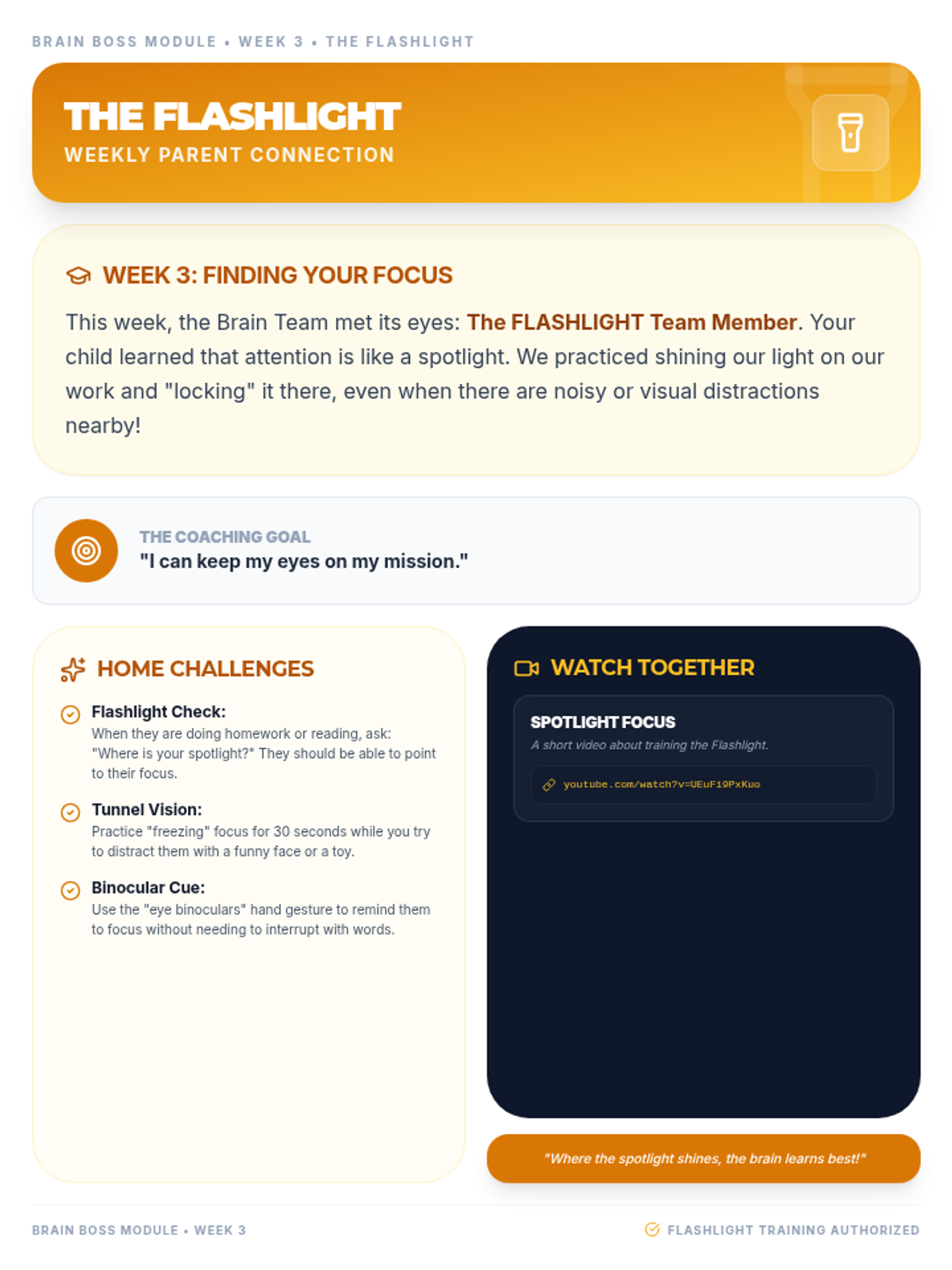
A 60-minute lesson teaching K-2 students how to activate their 'FOCUS' team member, known as 'The Flashlight'. Students learn to use their 'Attention Spotlight' to ignore distractions and stay on task.
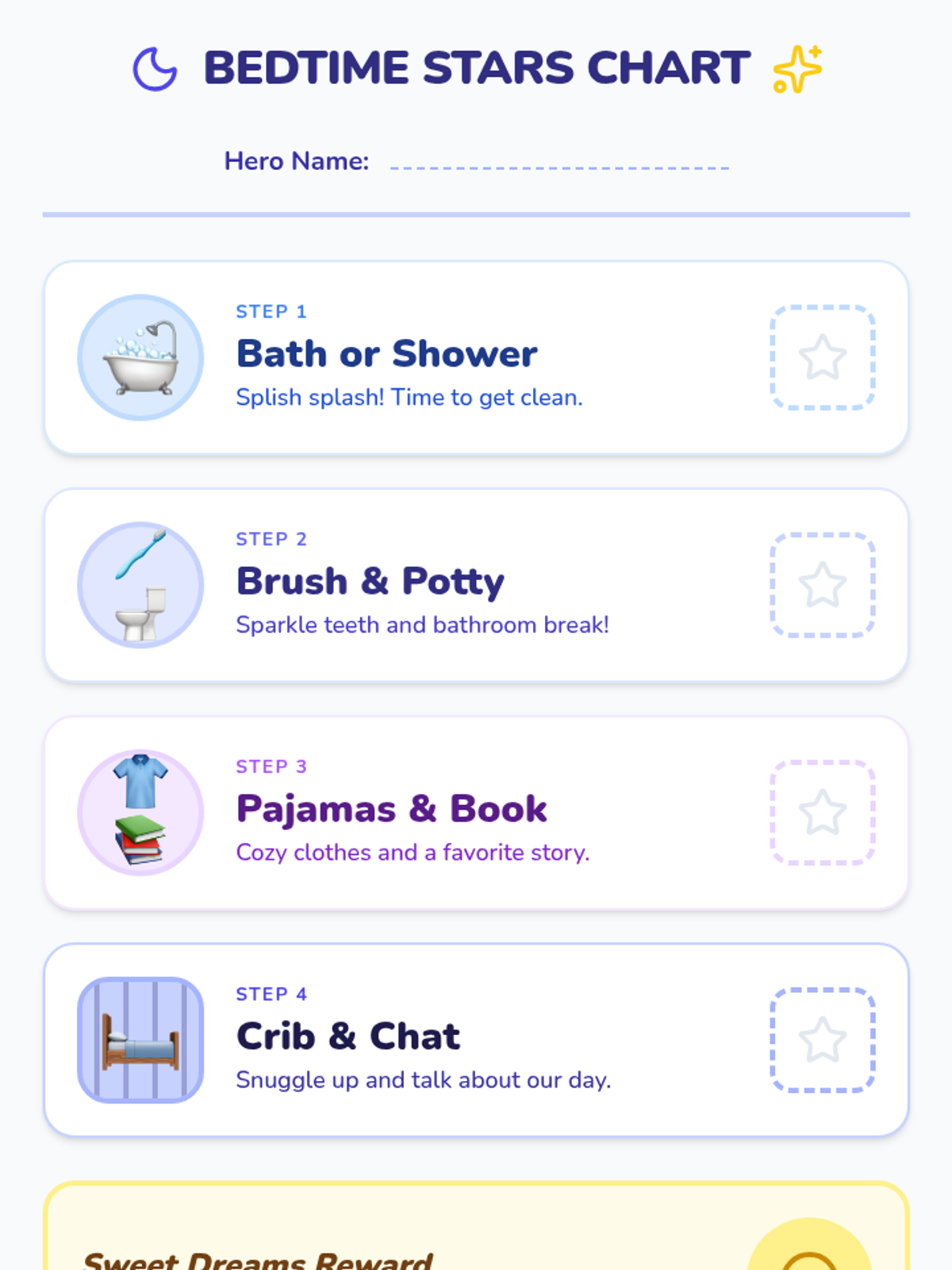
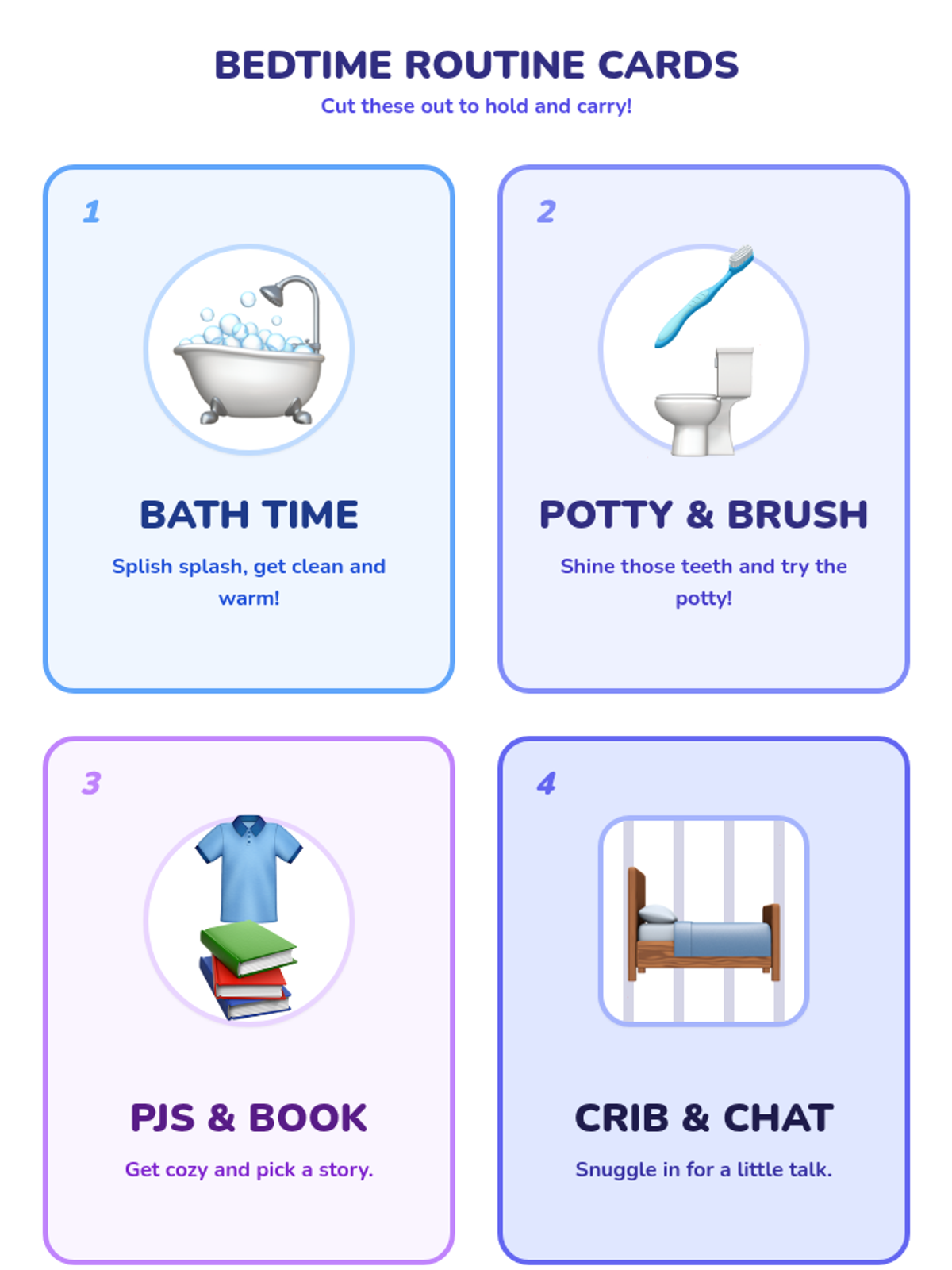
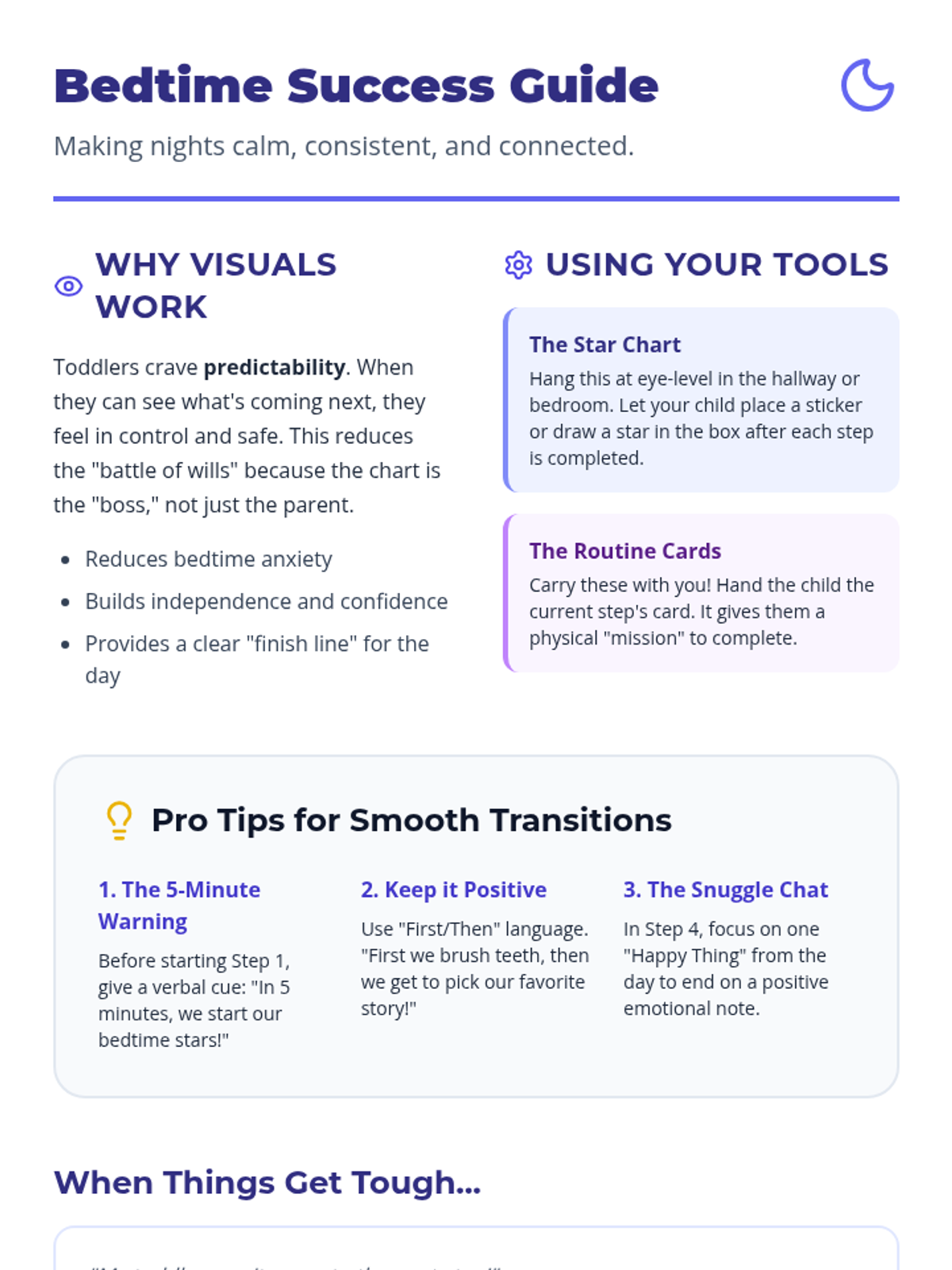
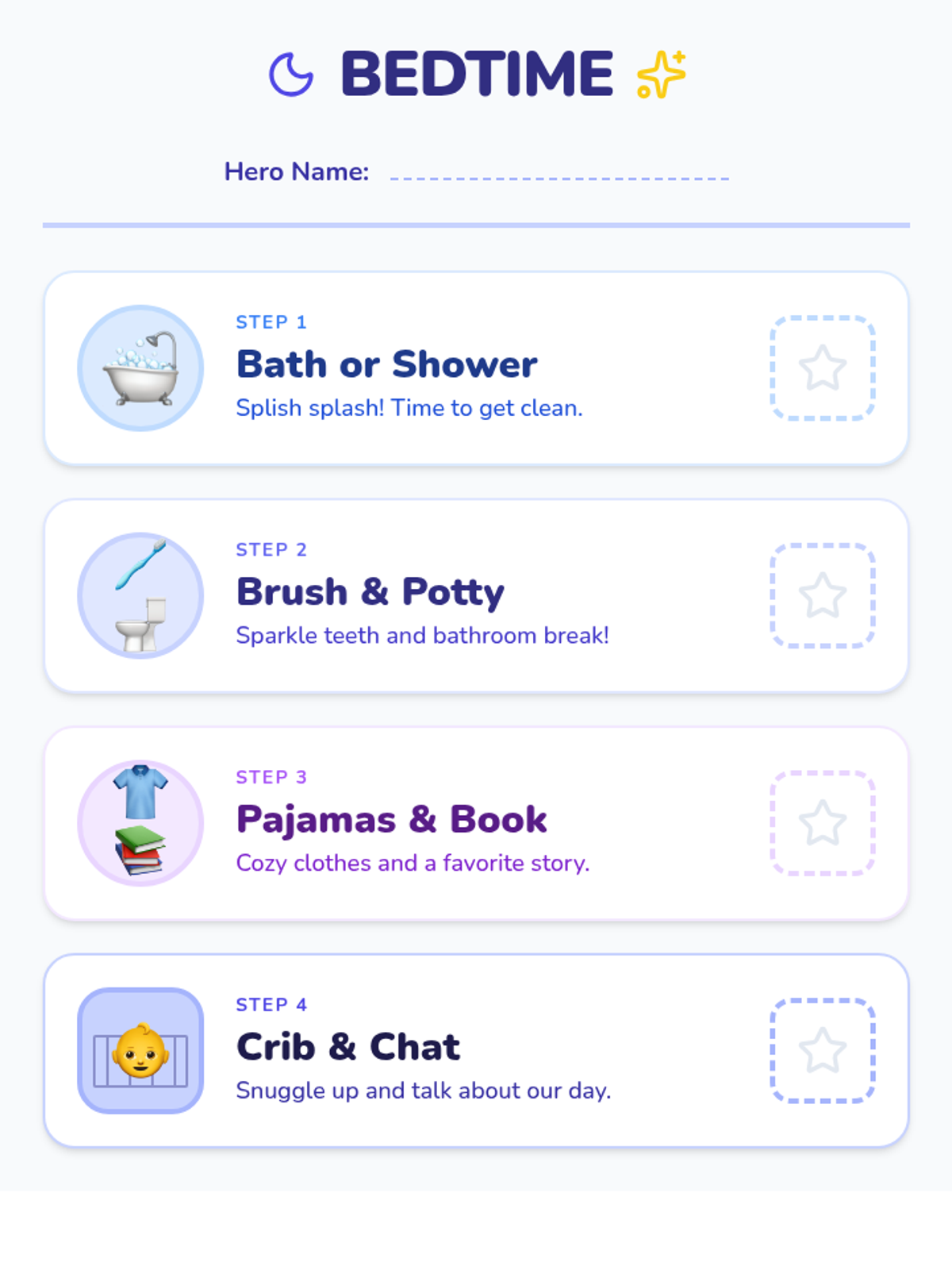
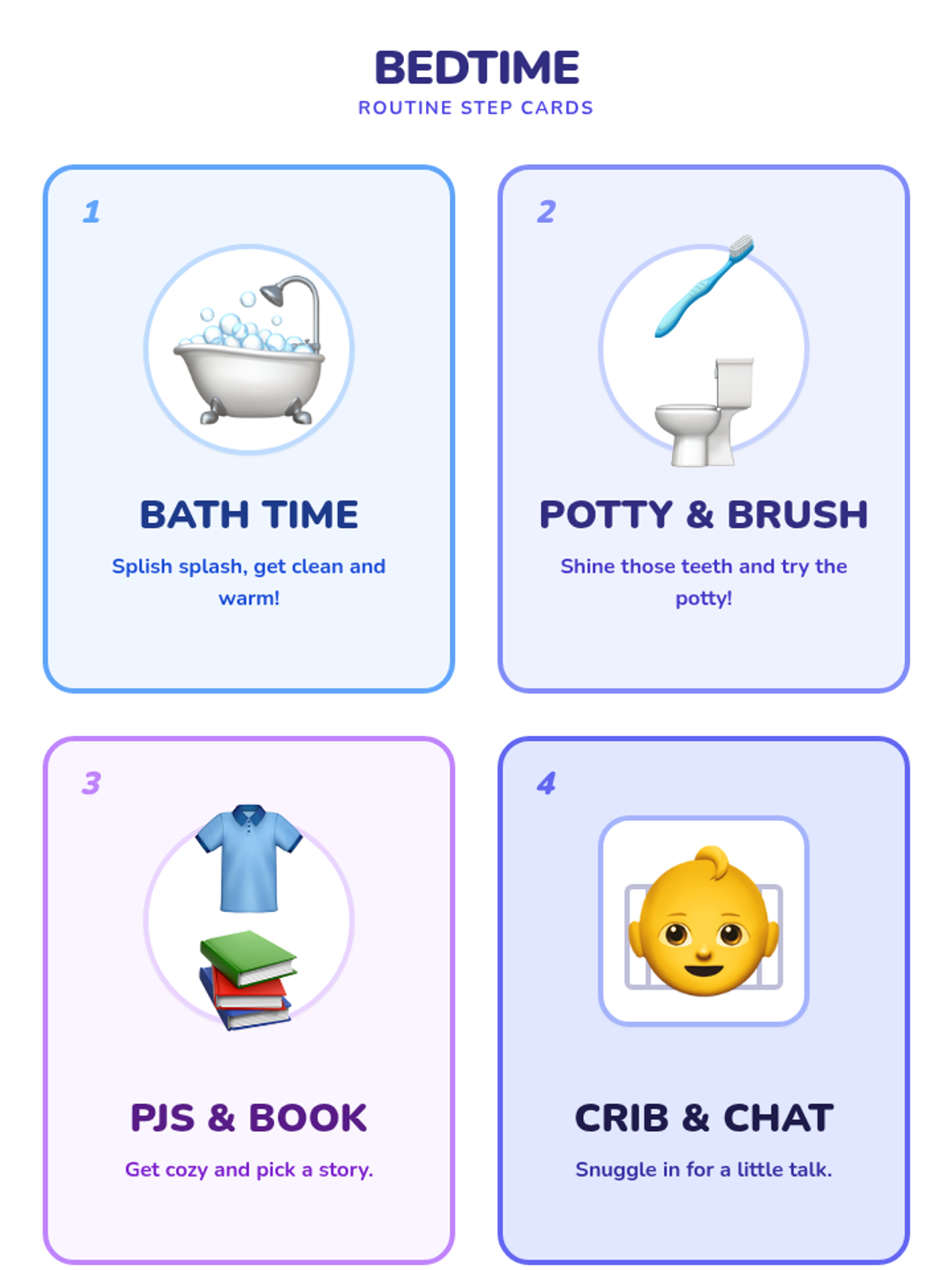
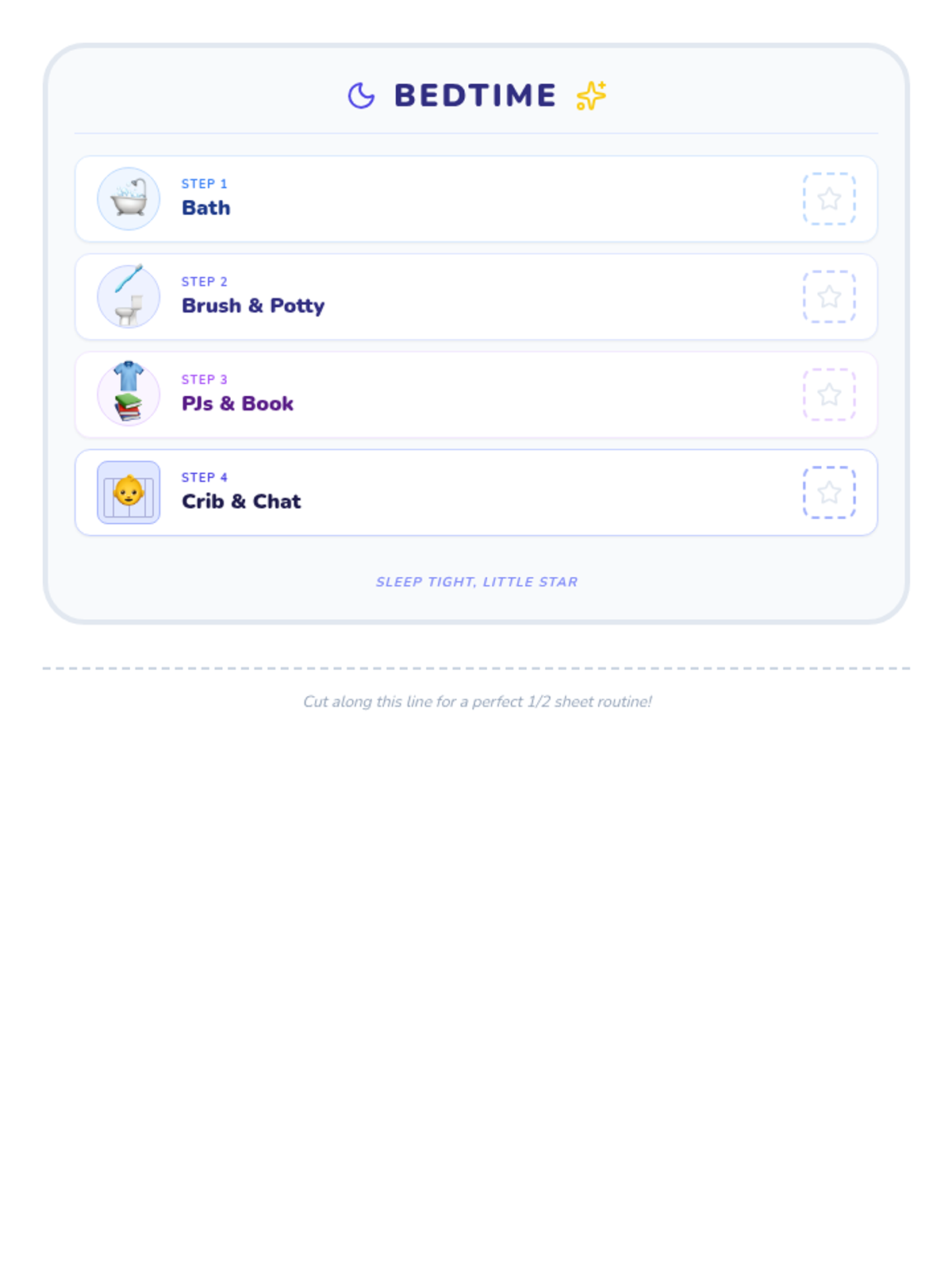
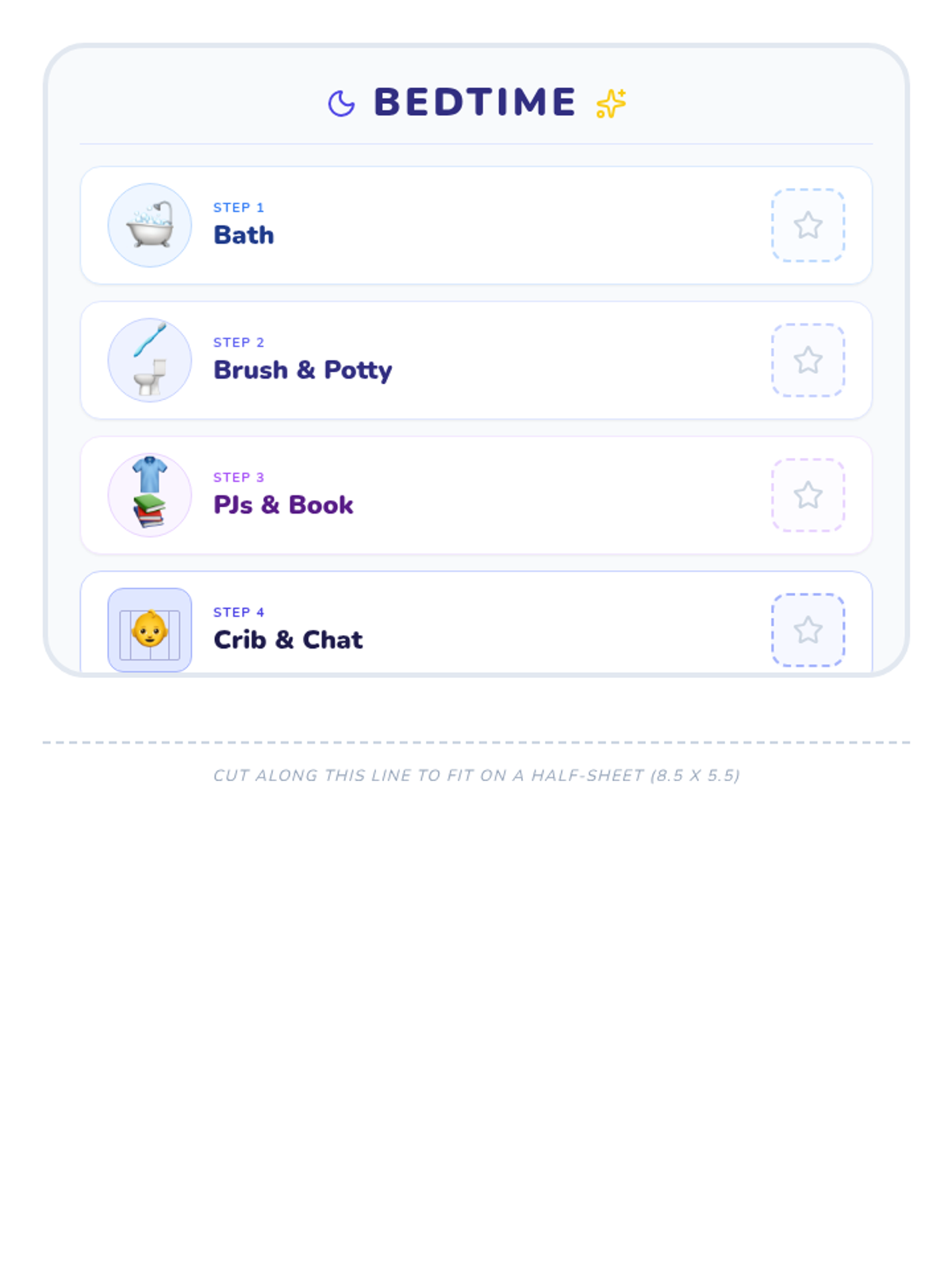
A lesson designed to help toddlers and parents establish a consistent, calming bedtime routine using visual cues.
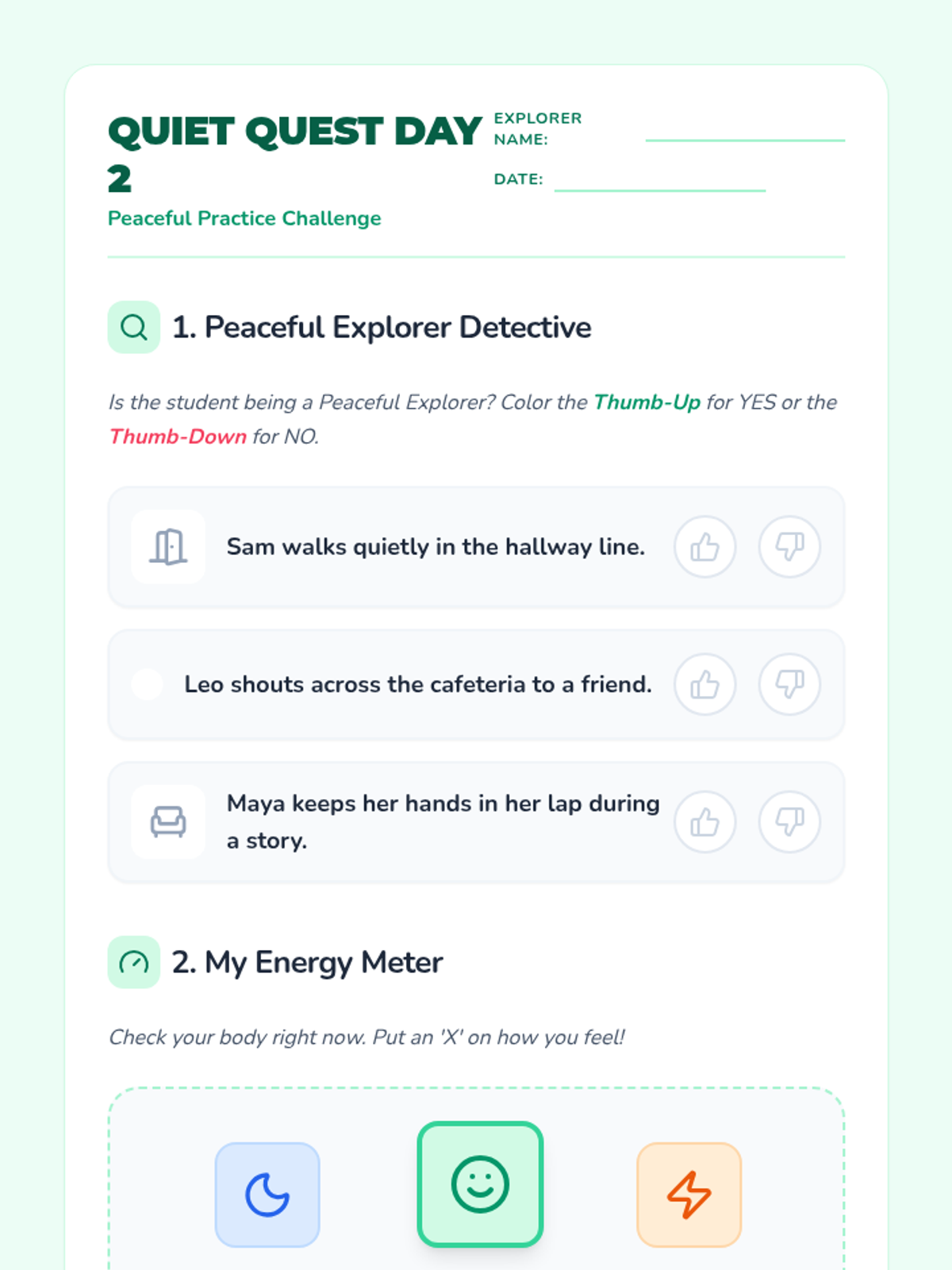
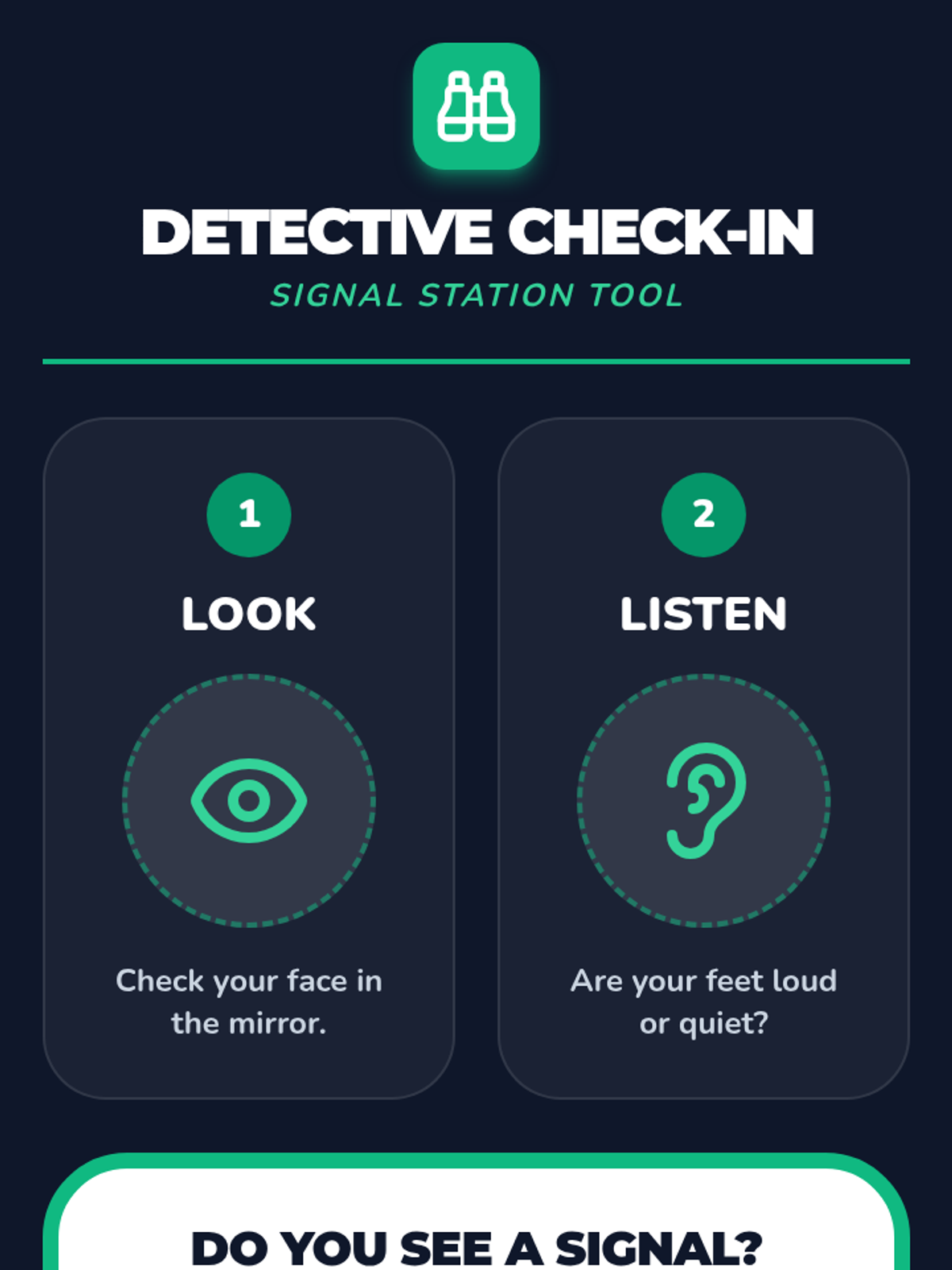
Students apply their knowledge of calm bodies and voices to more complex school scenarios. This lesson introduces the concept of 'Self-Checking' energy levels to help students self-regulate throughout the school day.
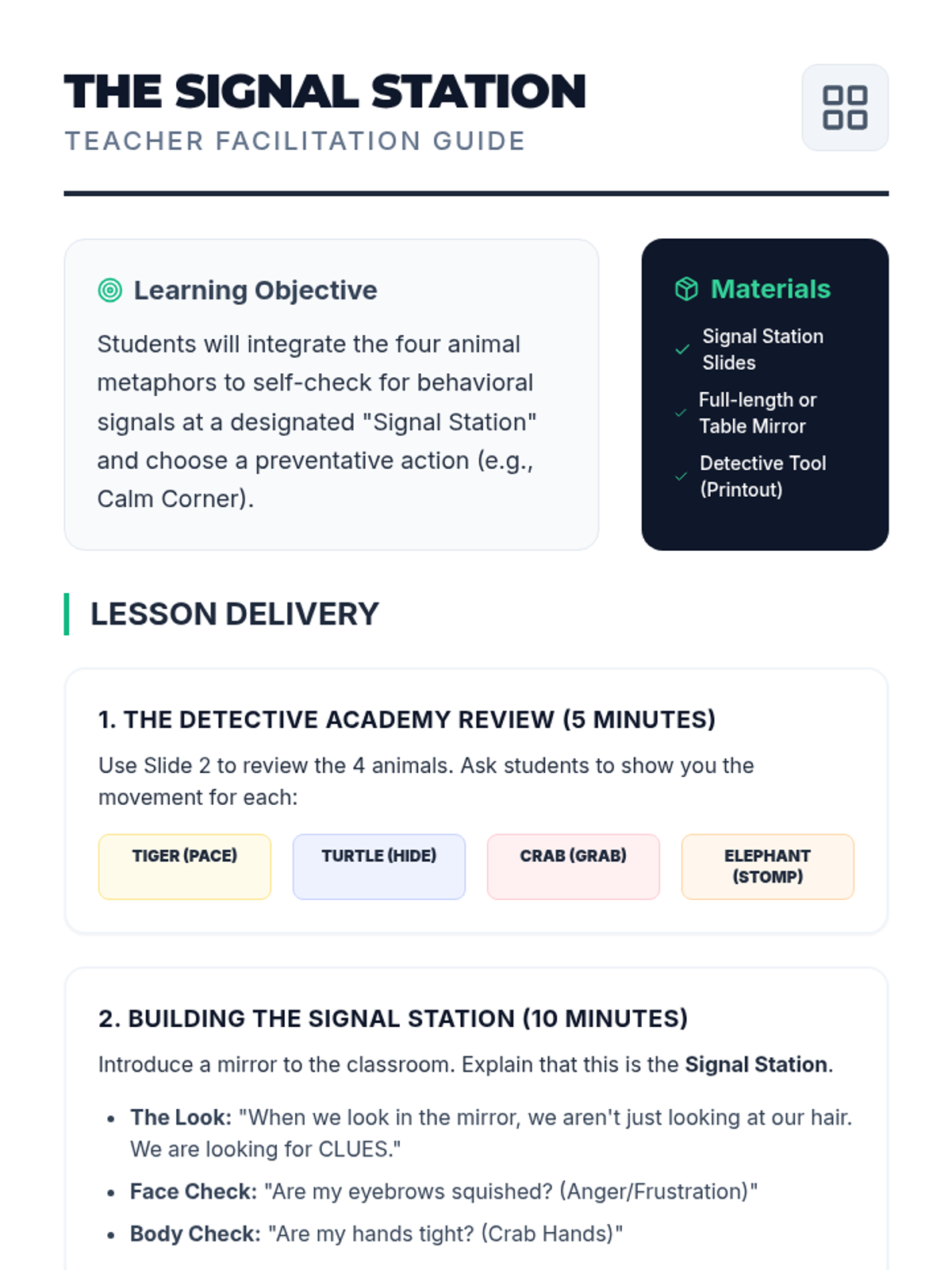
Students set up a classroom mirror station where they can check their own faces and bodies. They role-play noticing a warning sign (like pacing) and choosing to go to the 'calm corner' before a meltdown occurs.
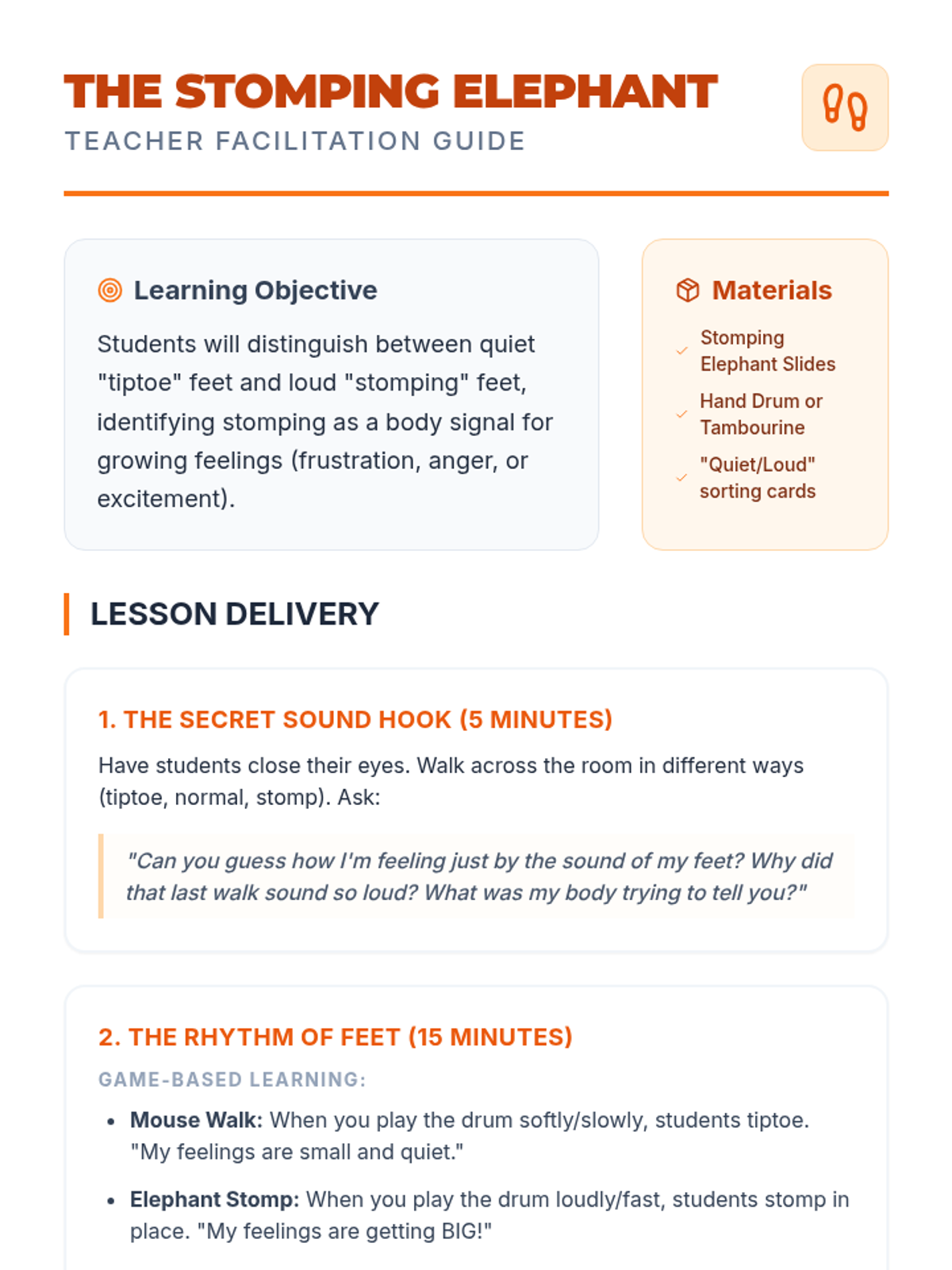
Children contrast 'tiptoe' and 'walking feet' with 'stomping feet.' They identify that heavy, loud footsteps often happen when feelings are growing from small to medium.
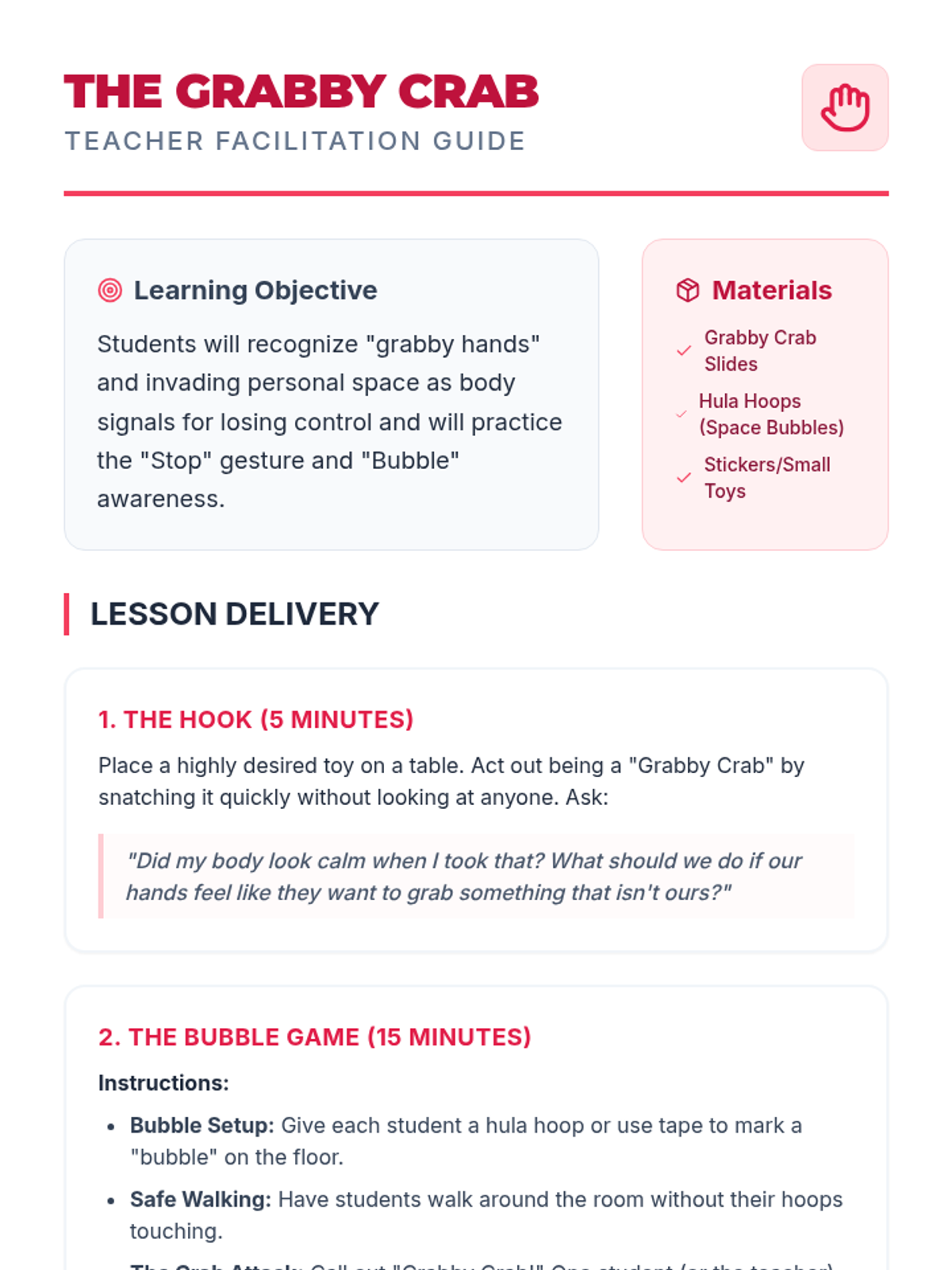
Students explore how 'grabby hands' or invading personal space can be a warning sign of losing control. They practice recognizing when their hands feel like they want to push or grab and using a 'stop' gesture instead.
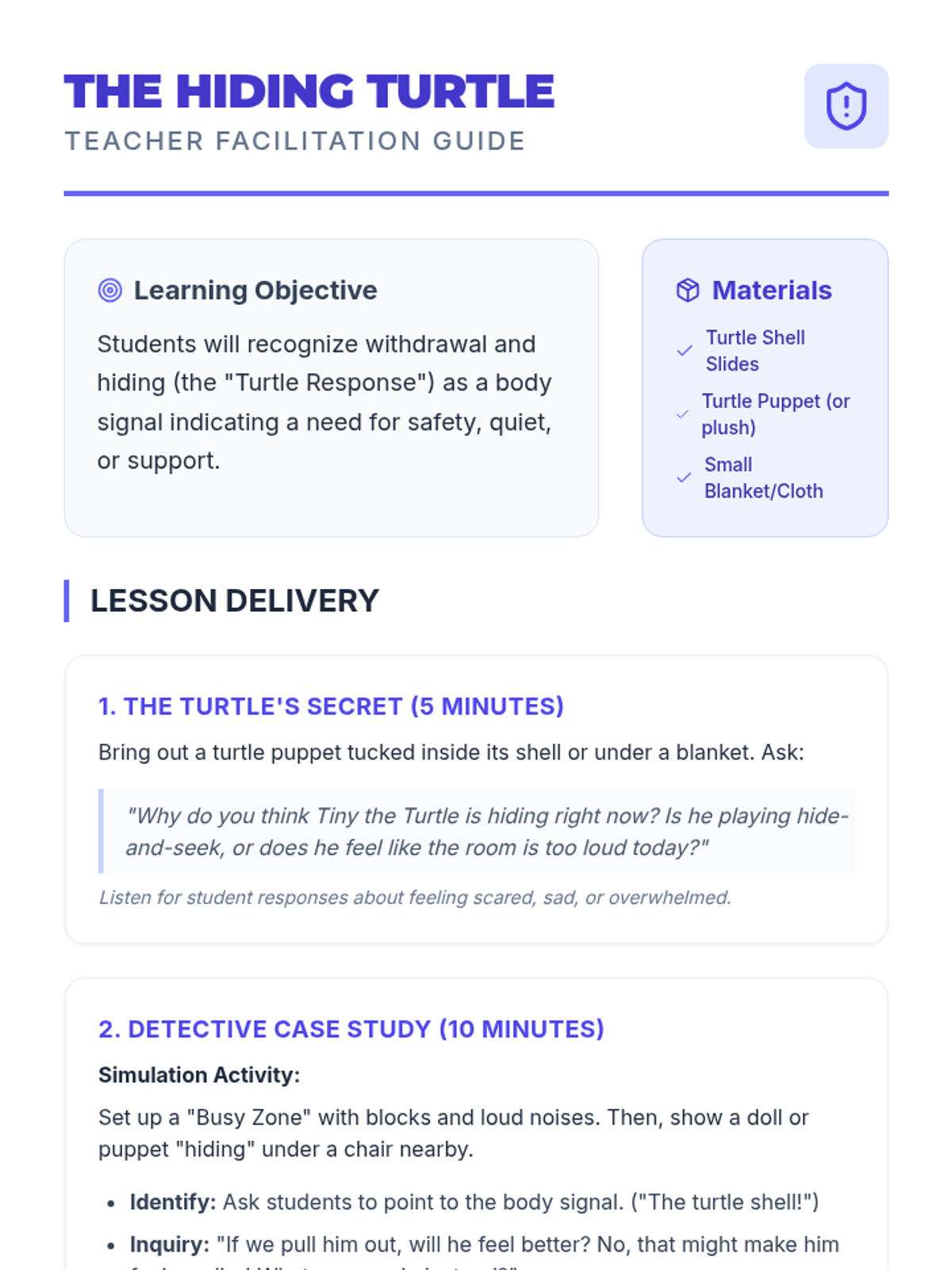
Focusing on the 'flight' response, this lesson uses the 'Turtle' metaphor to demonstrate how hiding or withdrawal can be a warning sign that someone feels unsafe or overwhelmed.
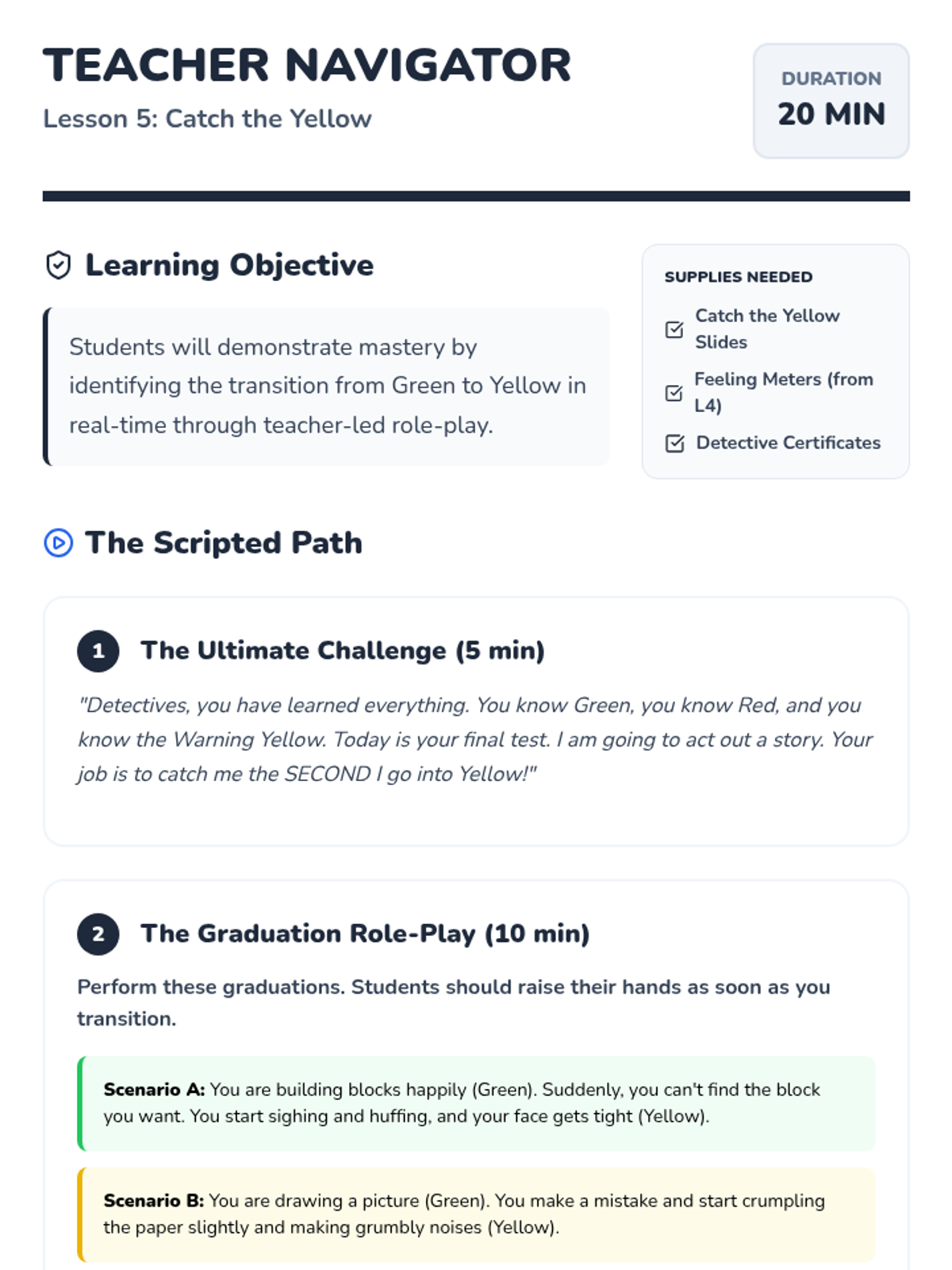
A mastery-focused role-play session where students practice 'catching' the shift into the Yellow Zone in real-time.
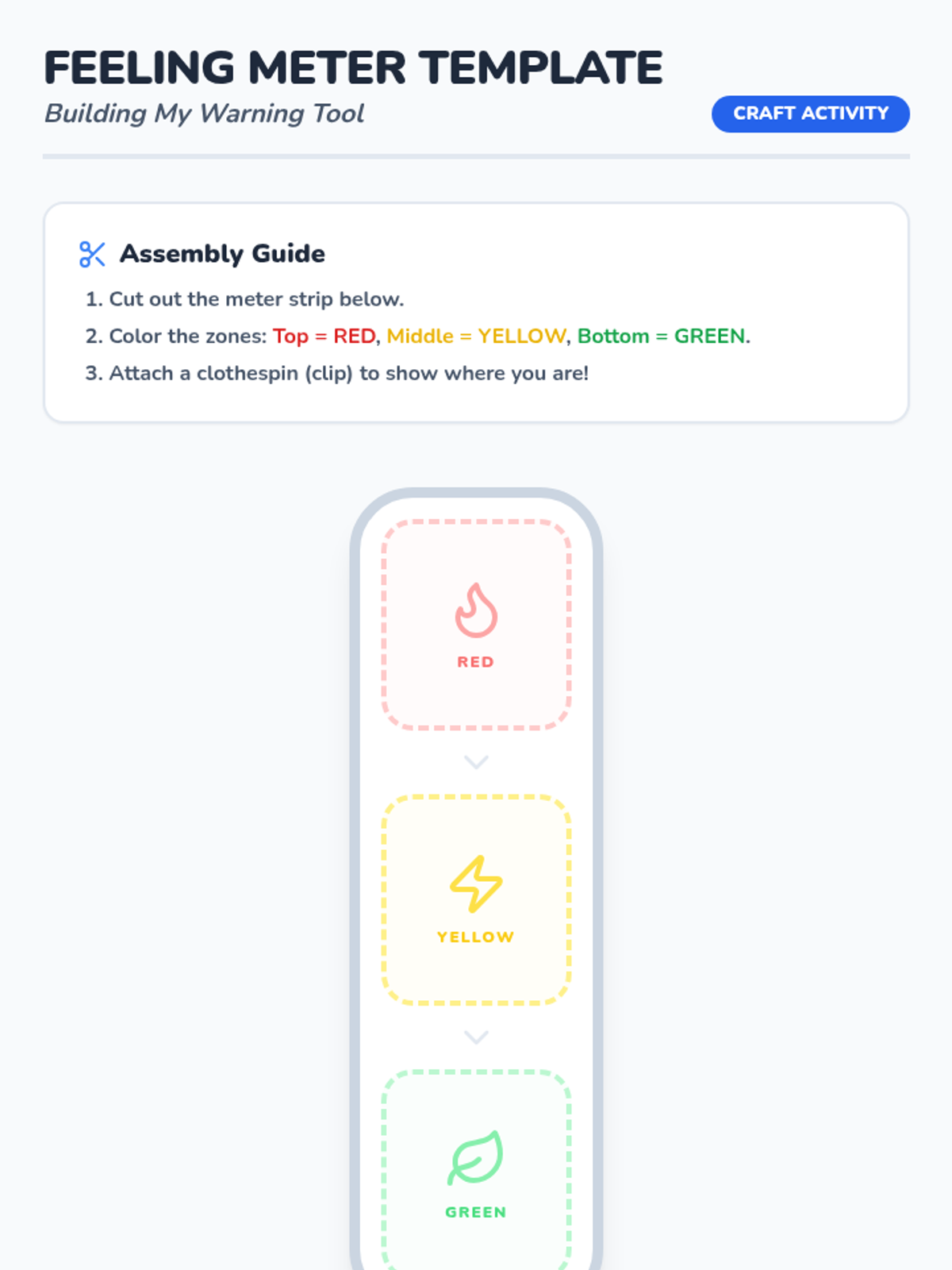
A hands-on project where students build their own visual feeling meters to practice self-assessment and communication of emotional state.
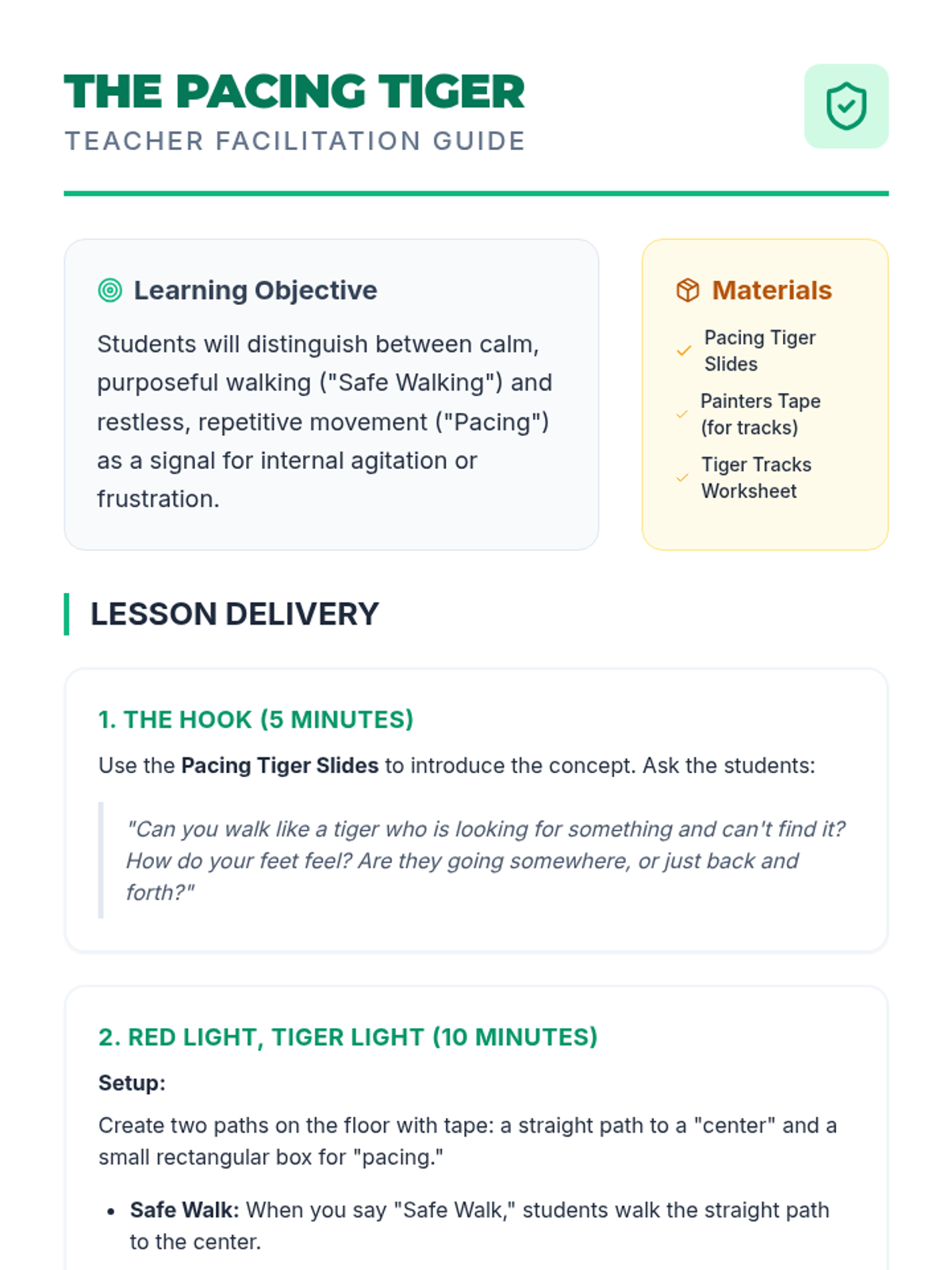
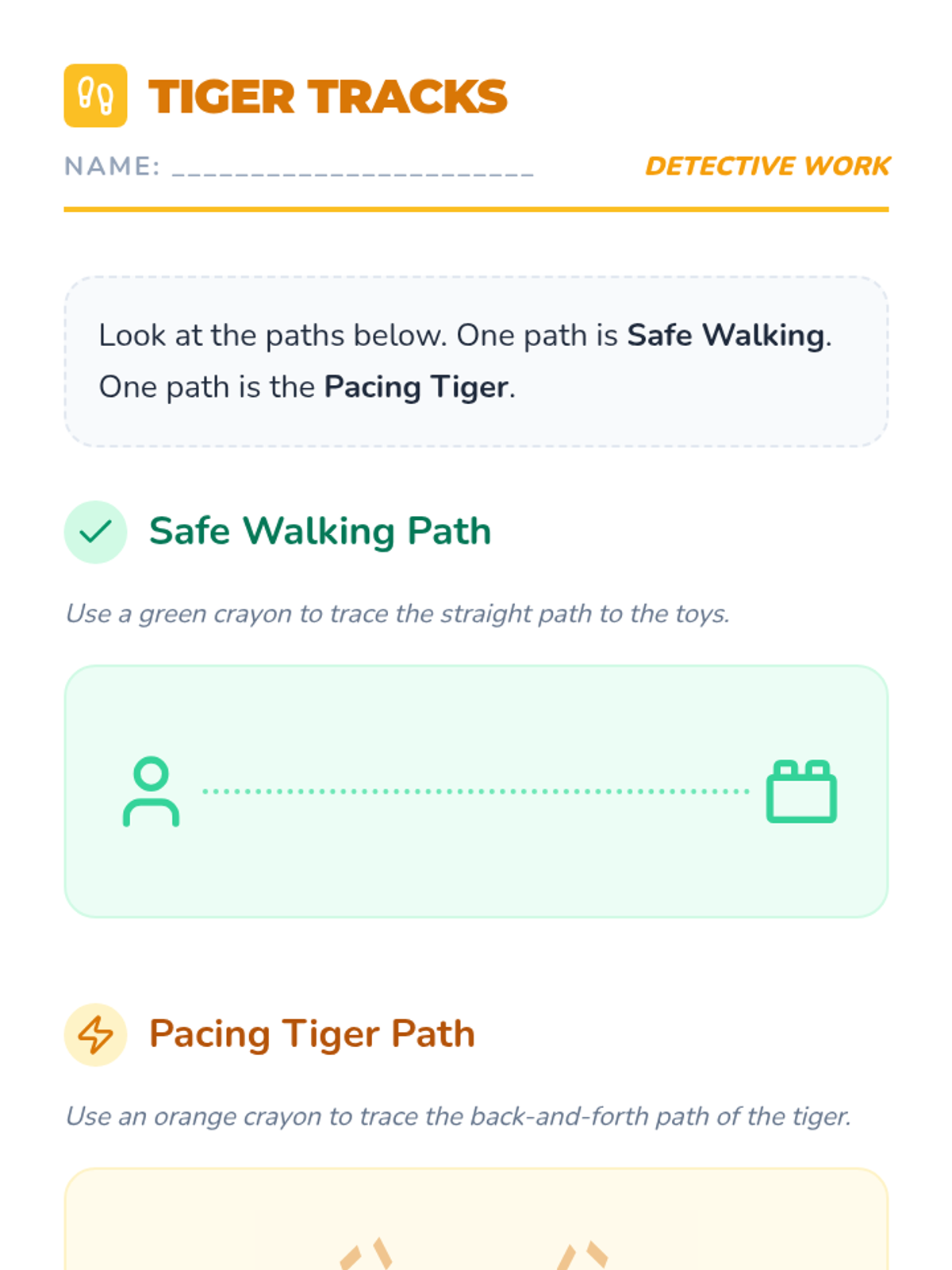
Students distinguish between calm, safe walking and restless, agitated pacing using the metaphor of a pacing tiger to identify when they or a peer might need help.
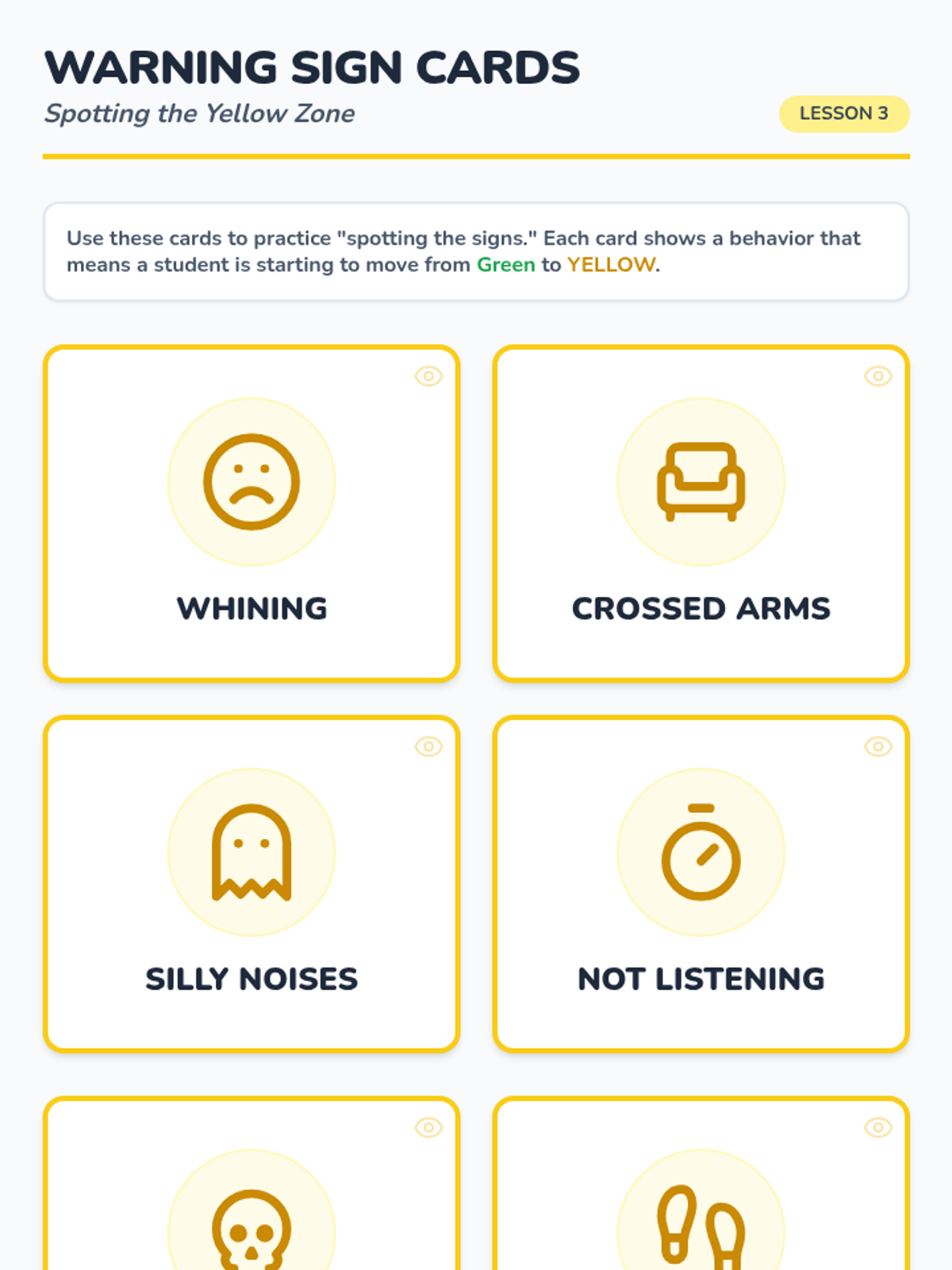
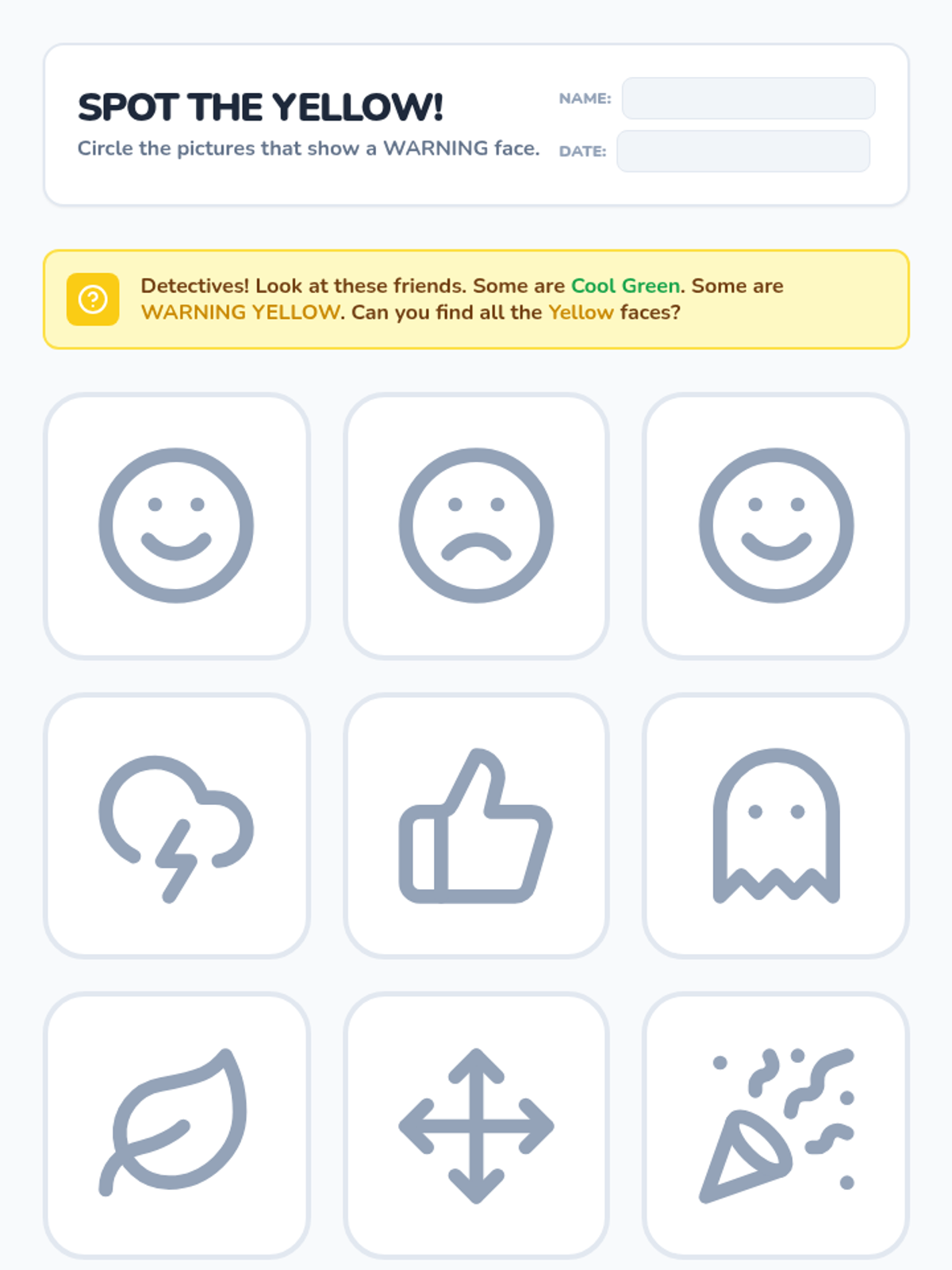
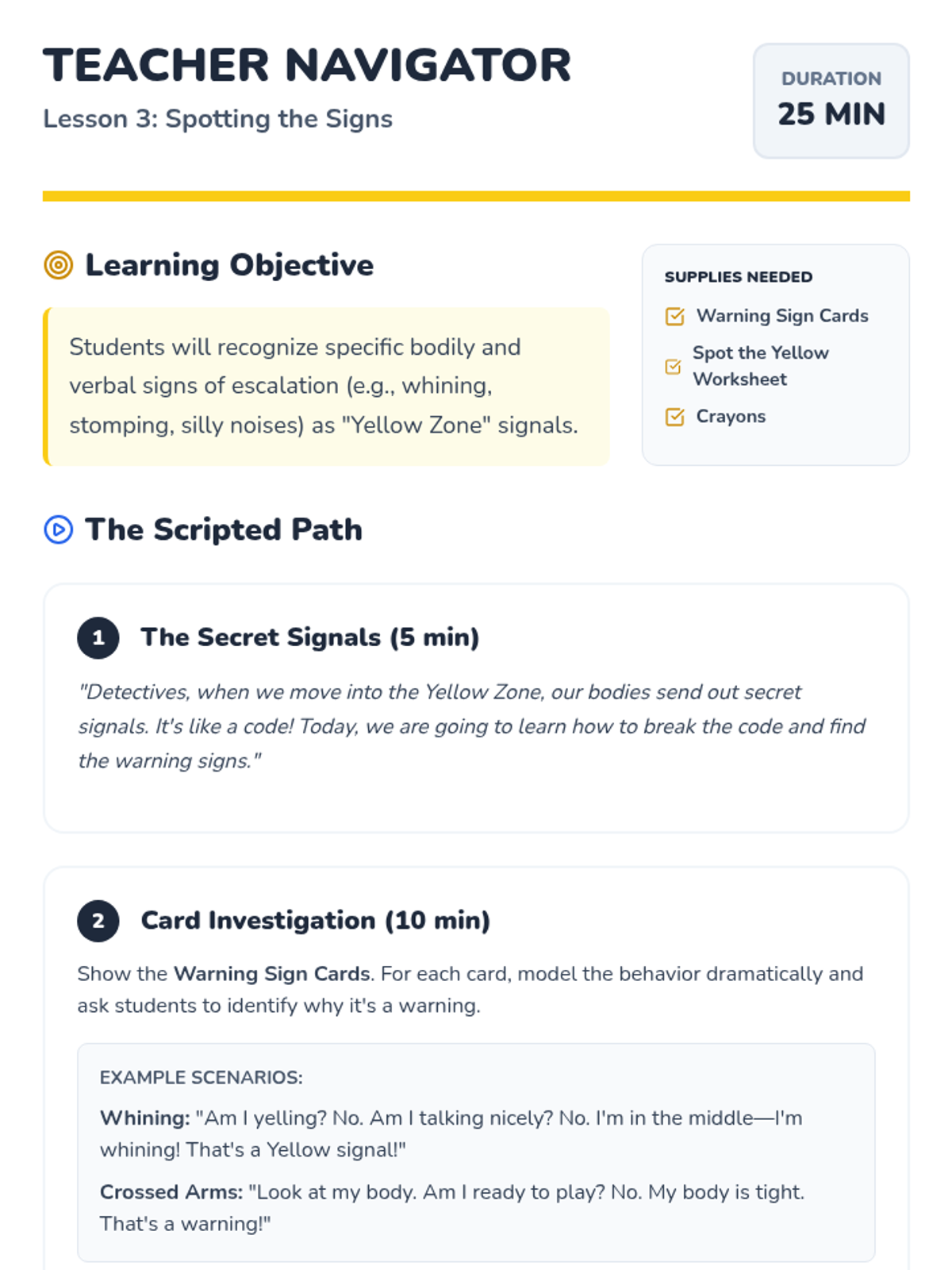
Students practice identifying specific escalation behaviors (whining, crossing arms) as 'warning' signals rather than just 'bad' behaviors.
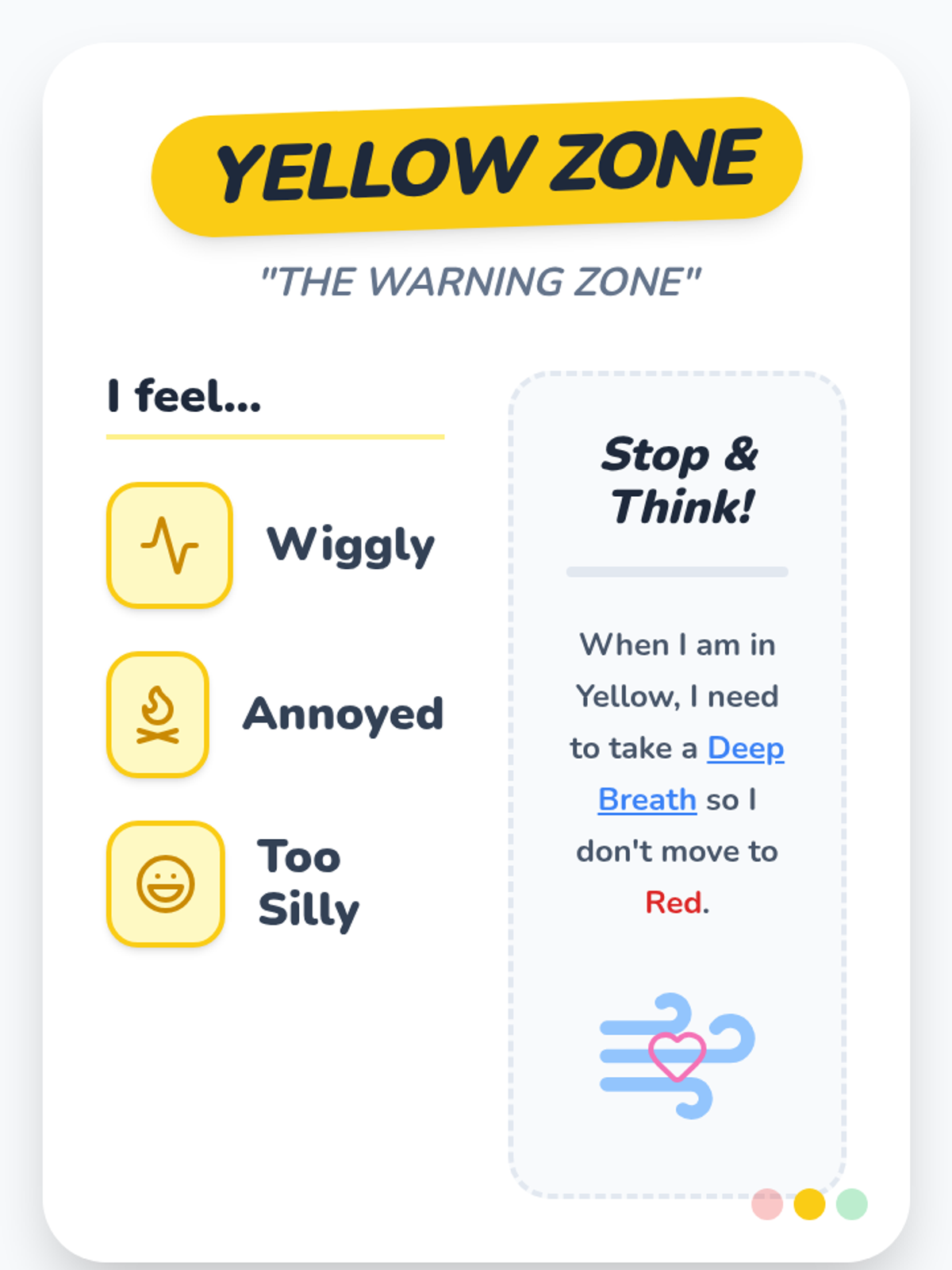
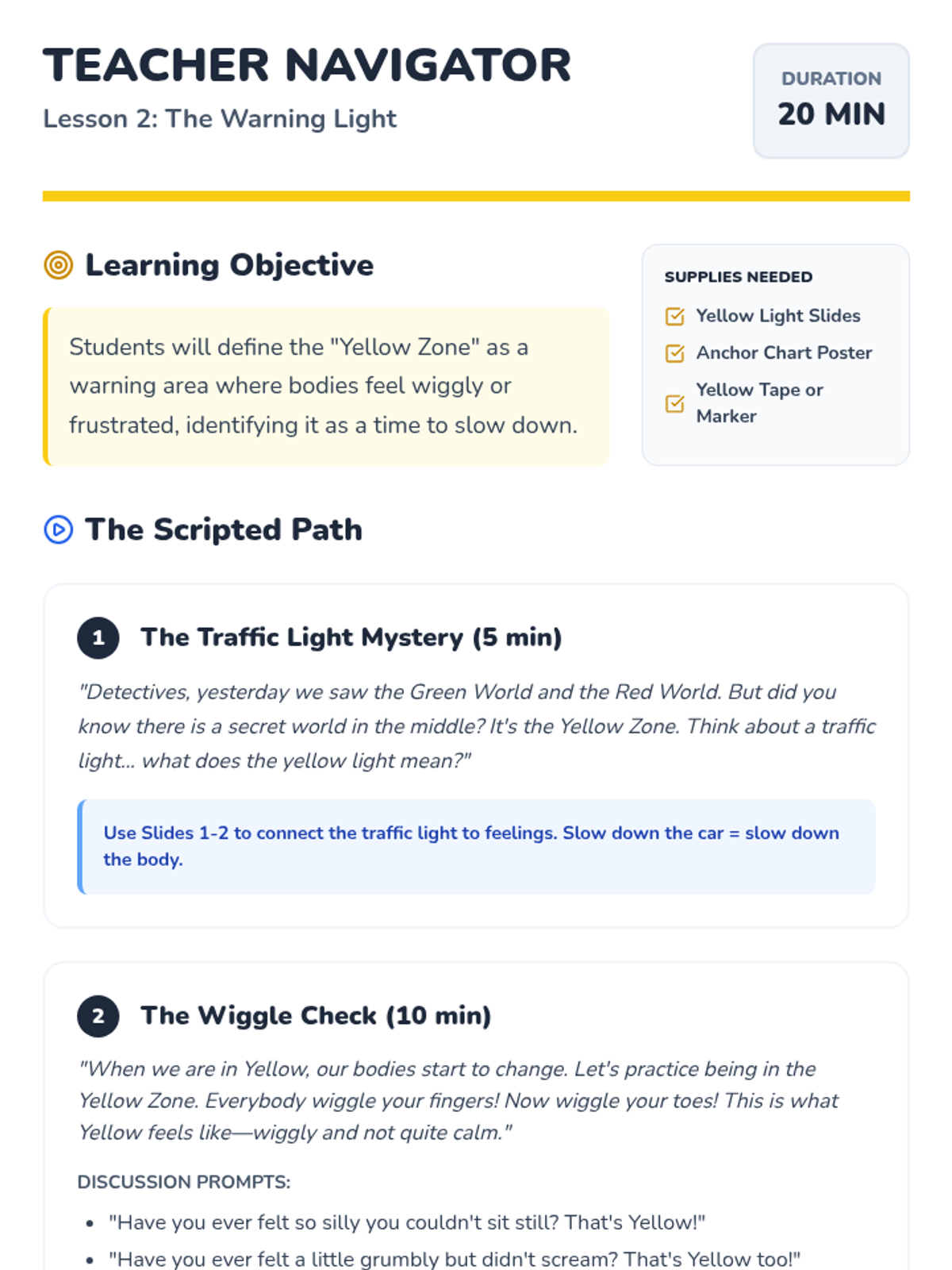
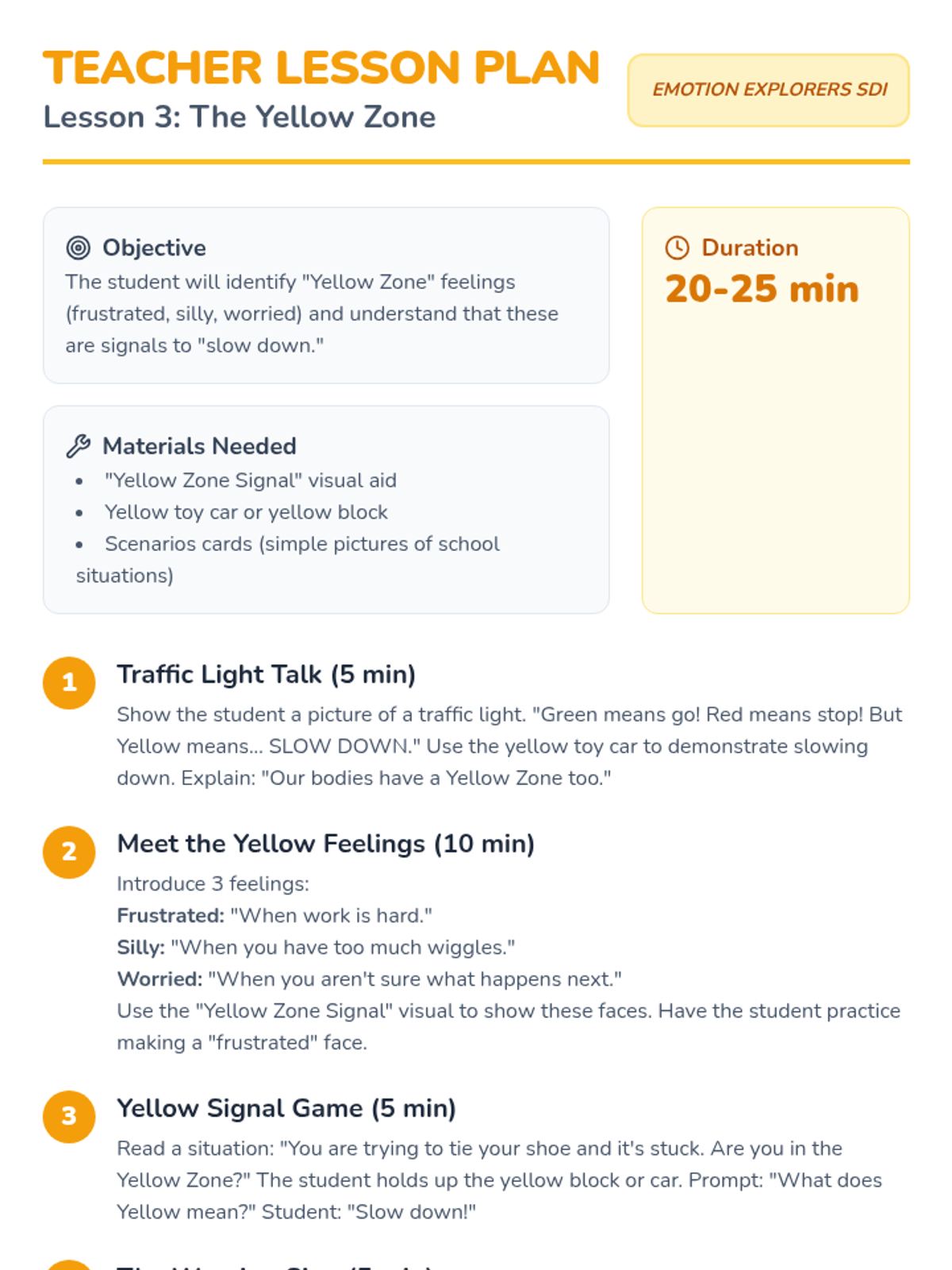
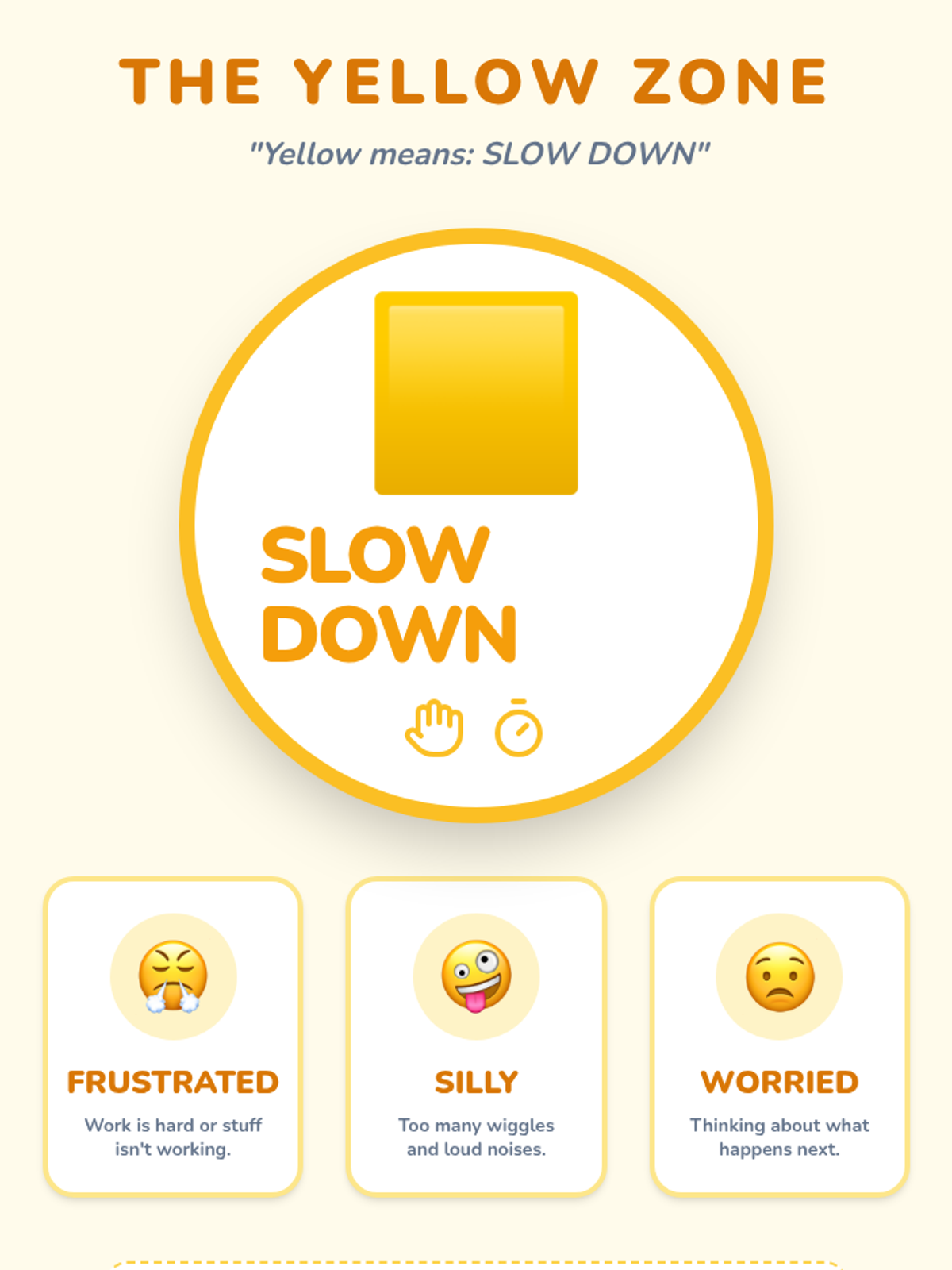
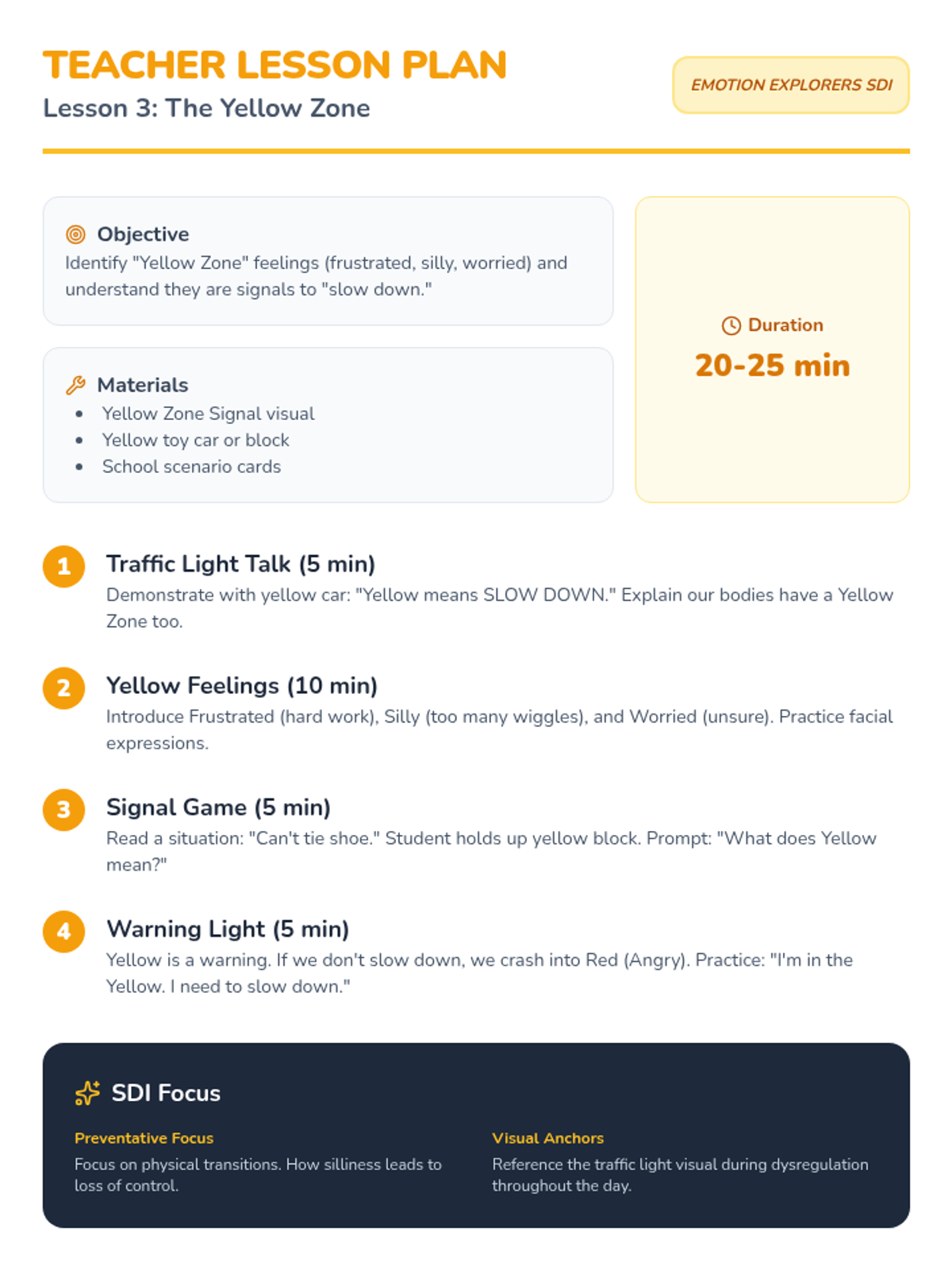
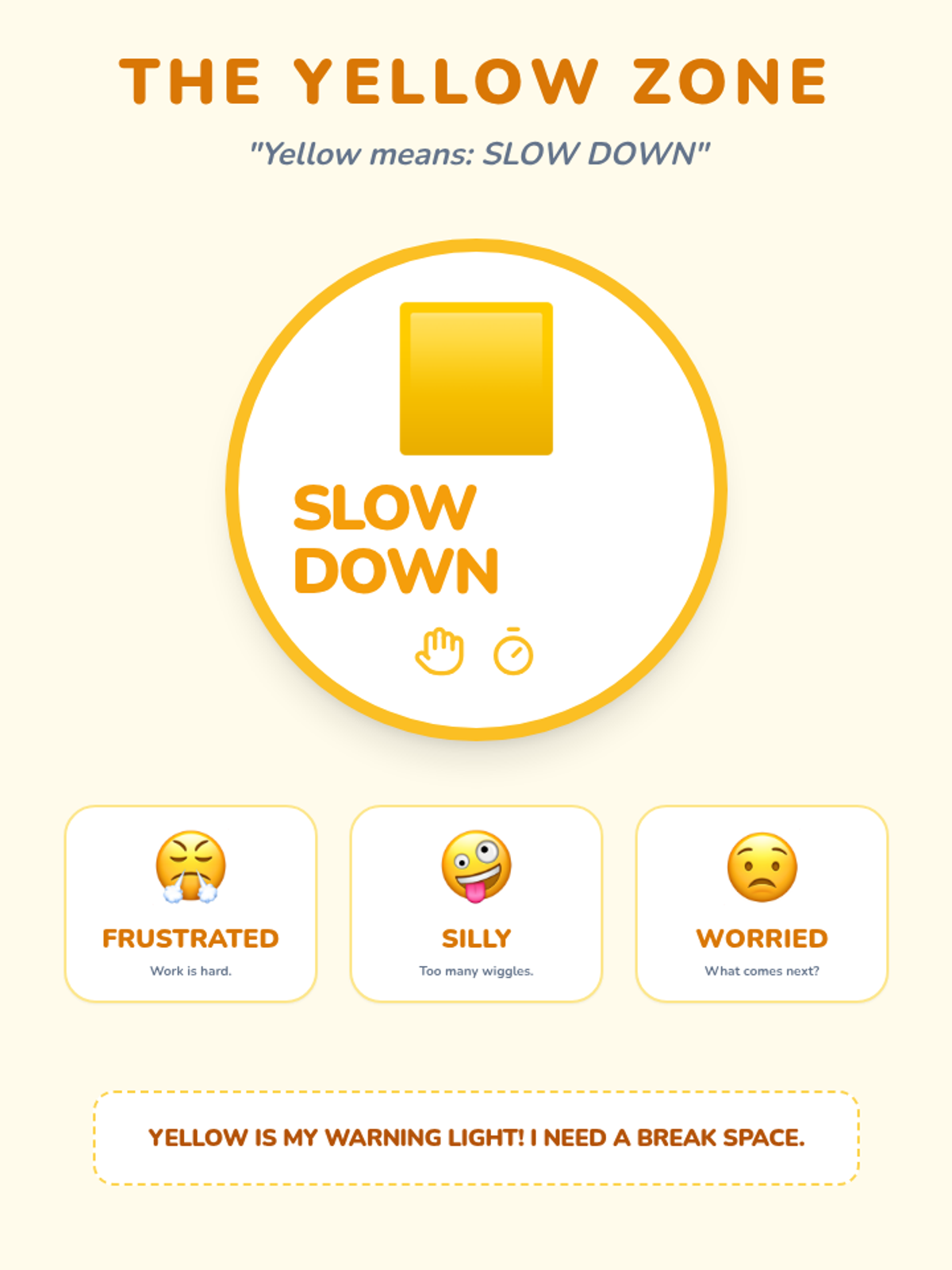
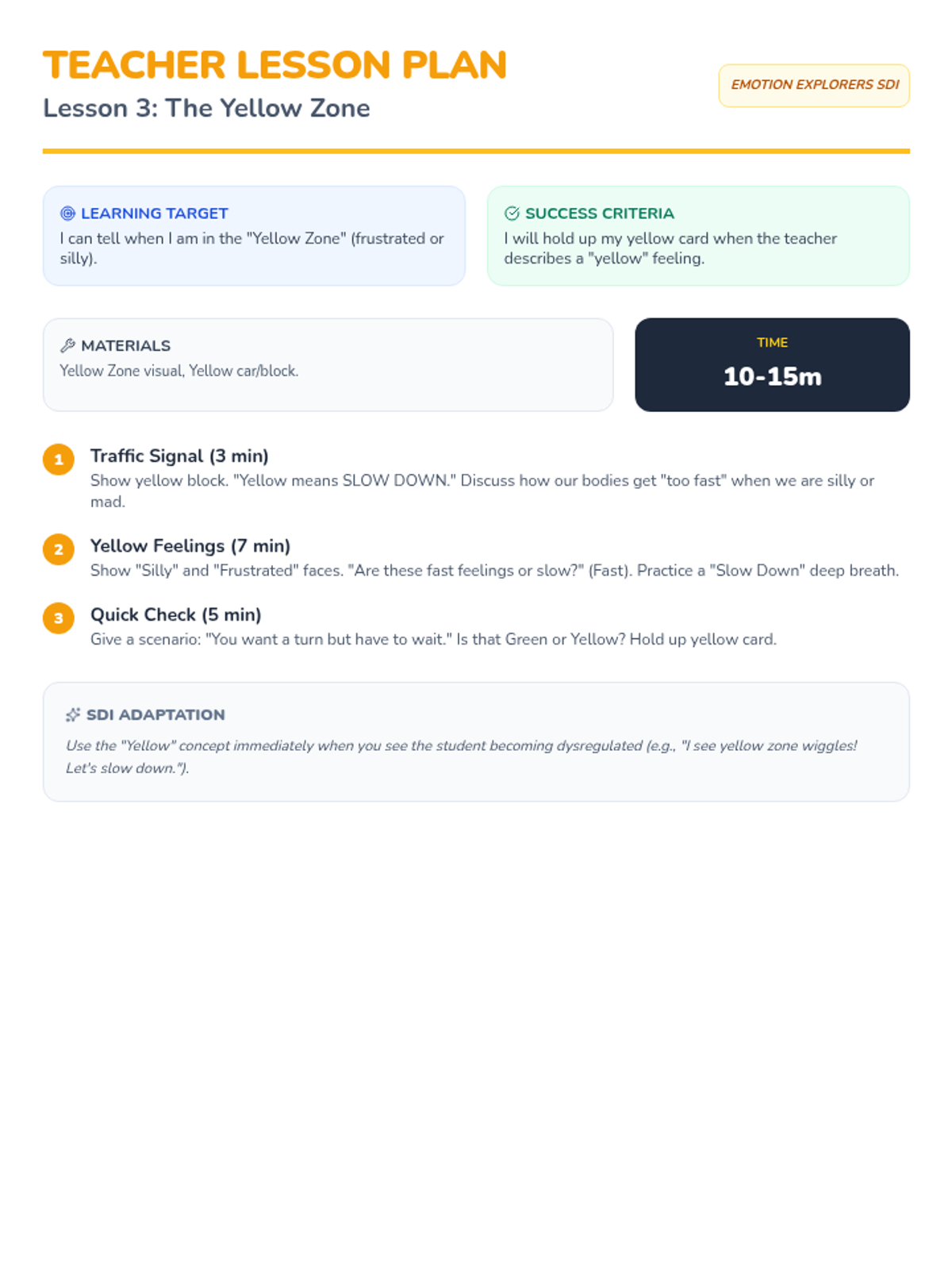
Introduces the 'Yellow Zone' as the bridge between calm and crisis, using the traffic light analogy to explain warning signs like frustration or wiggles.
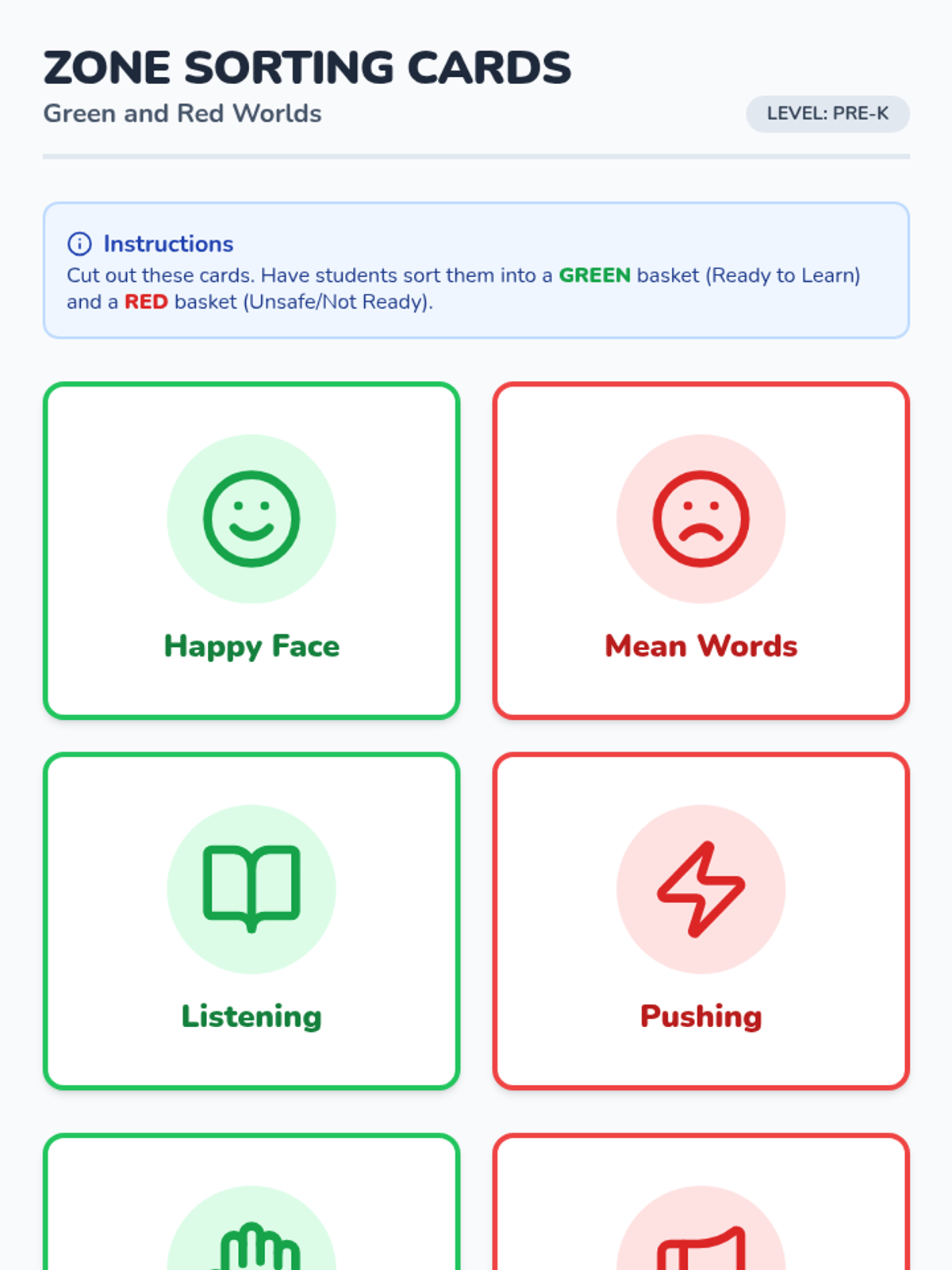
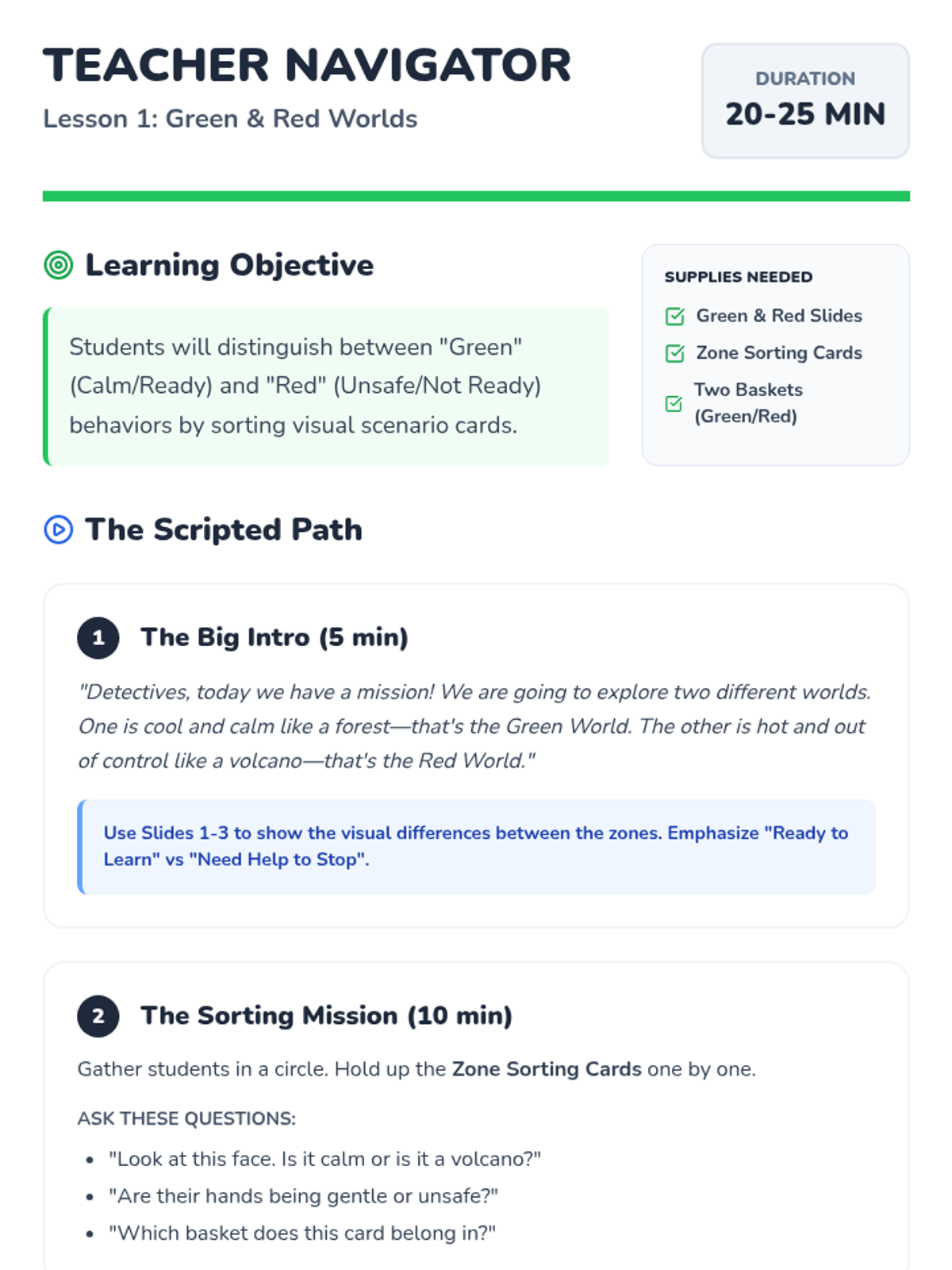
Students establish the baseline concepts of 'Green' (ready to learn, calm body) and 'Red' (out of control, unsafe) through sorting visual representations of behaviors.
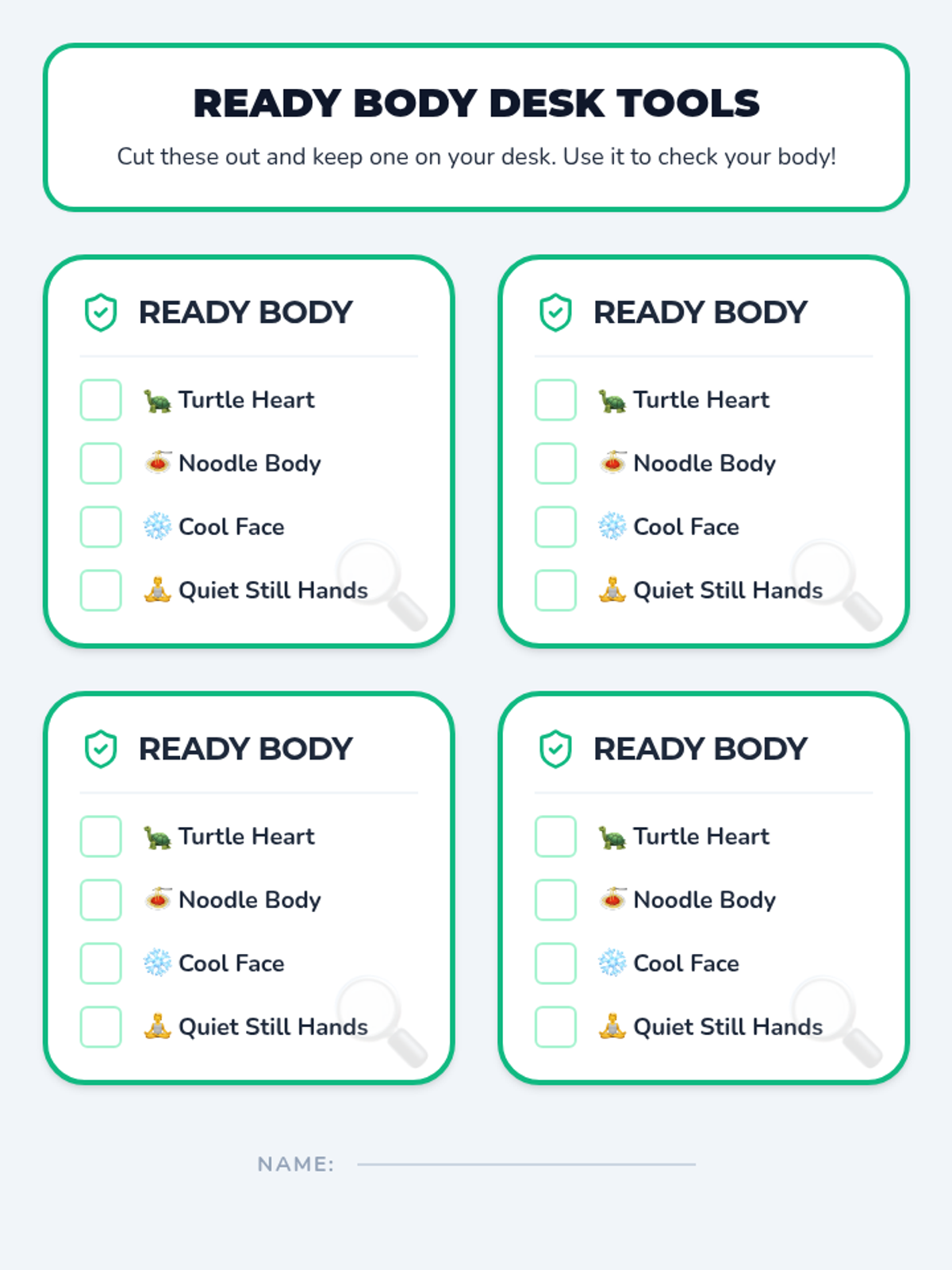
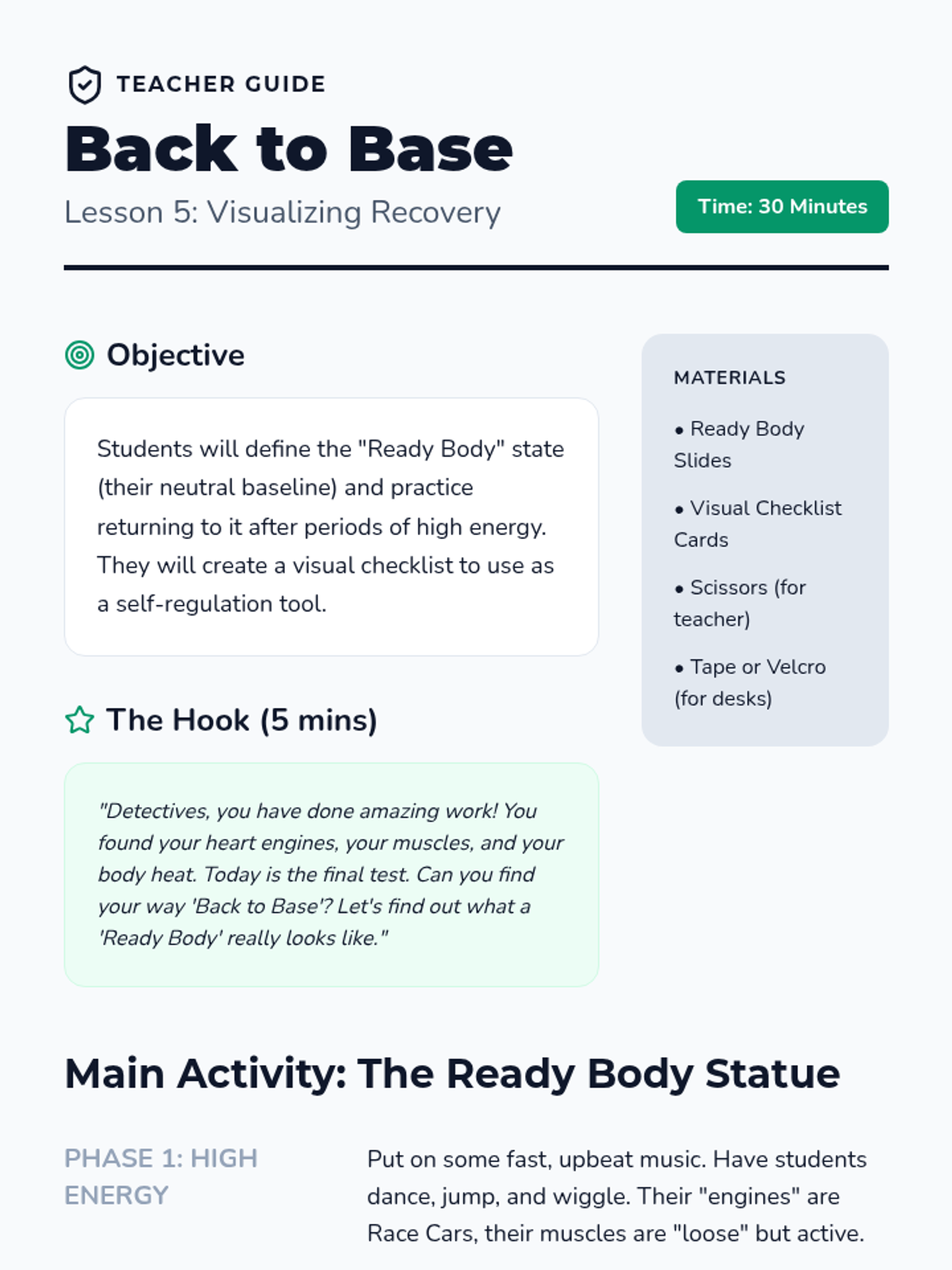
Students define what a 'Ready Body' looks and feels like, creating a visual checklist for returning to a calm state.
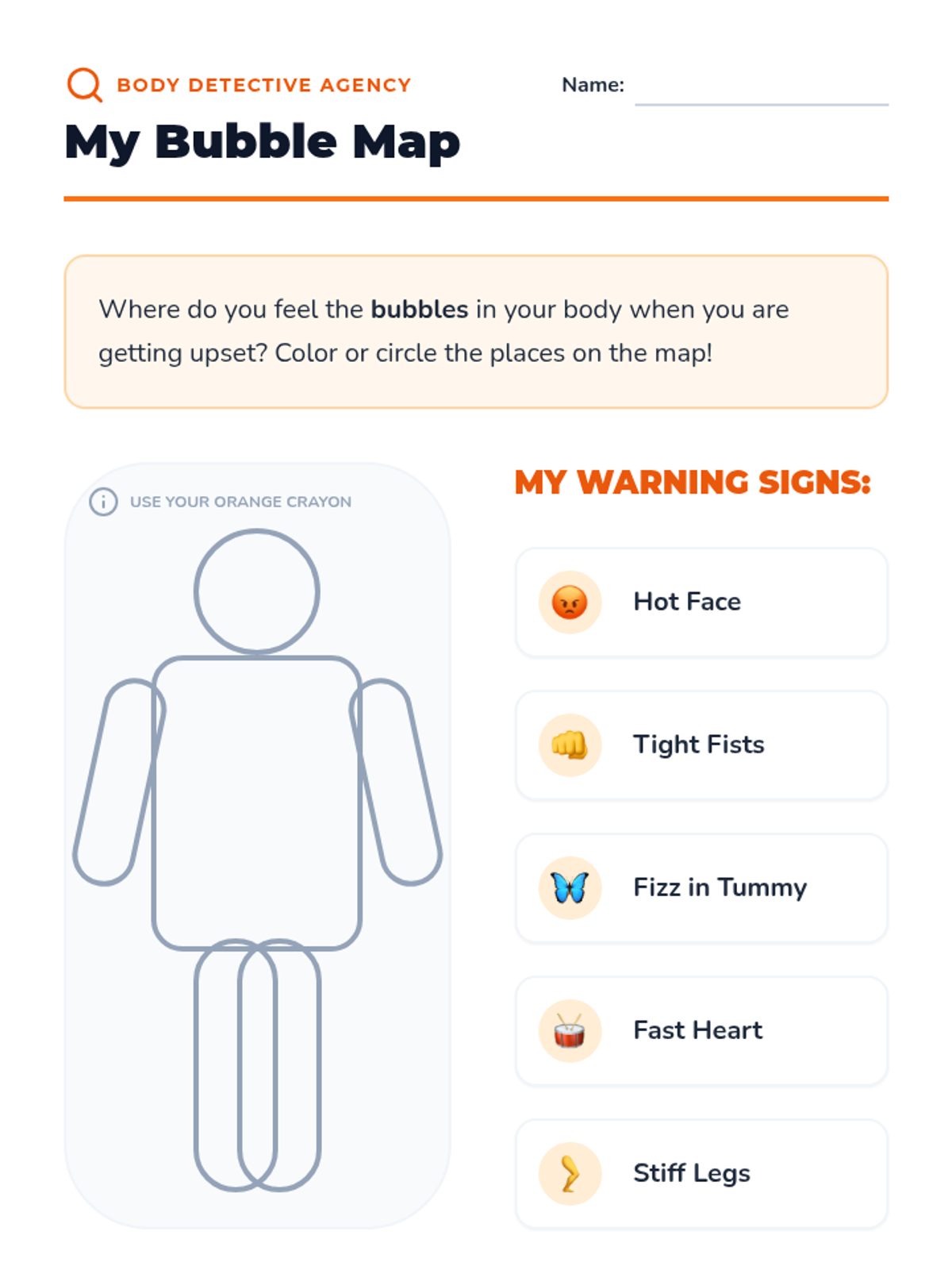
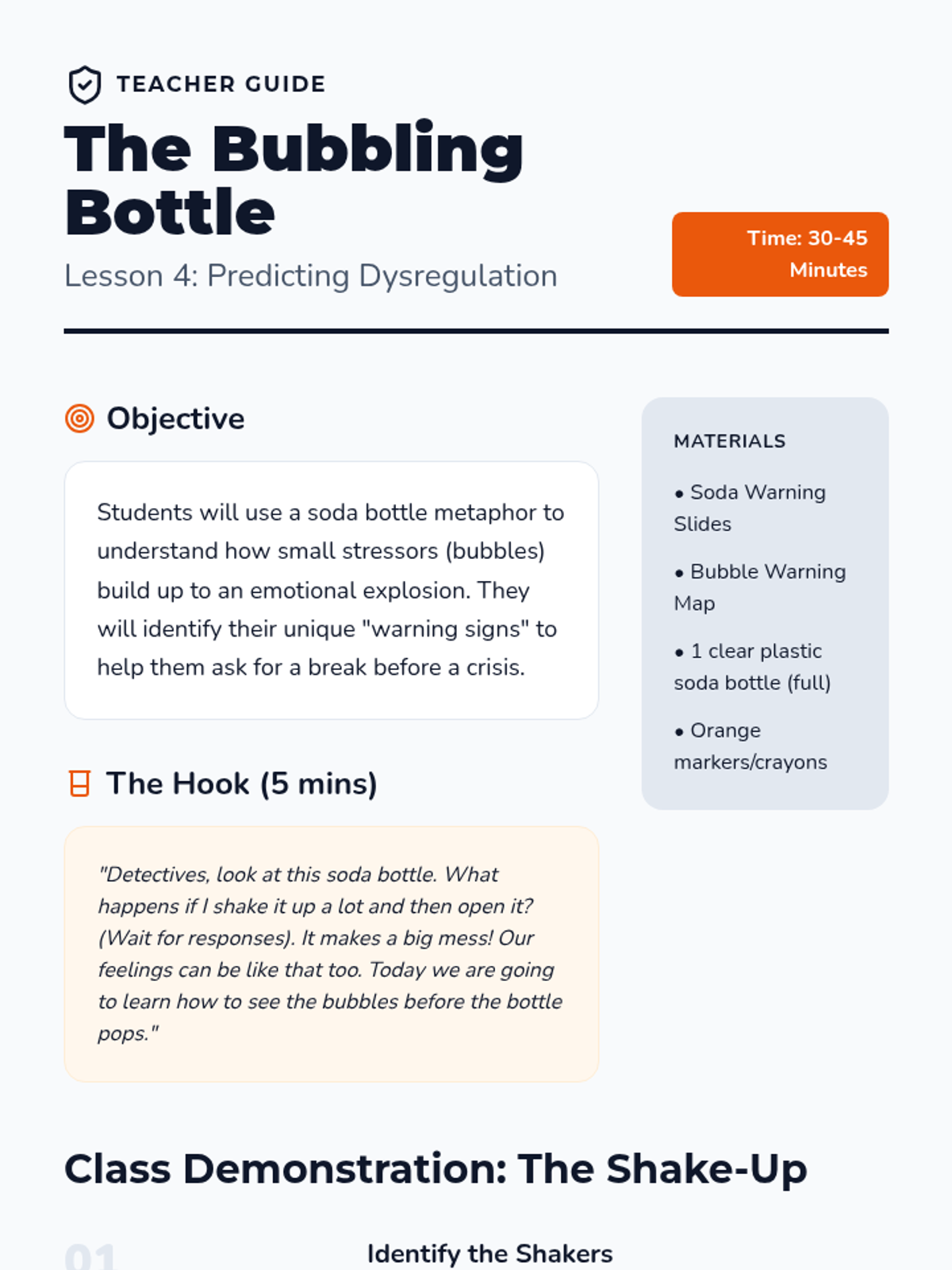
Students identify personal 'warning signs' or physical sensations that occur before an emotional explosion using a soda bottle metaphor.
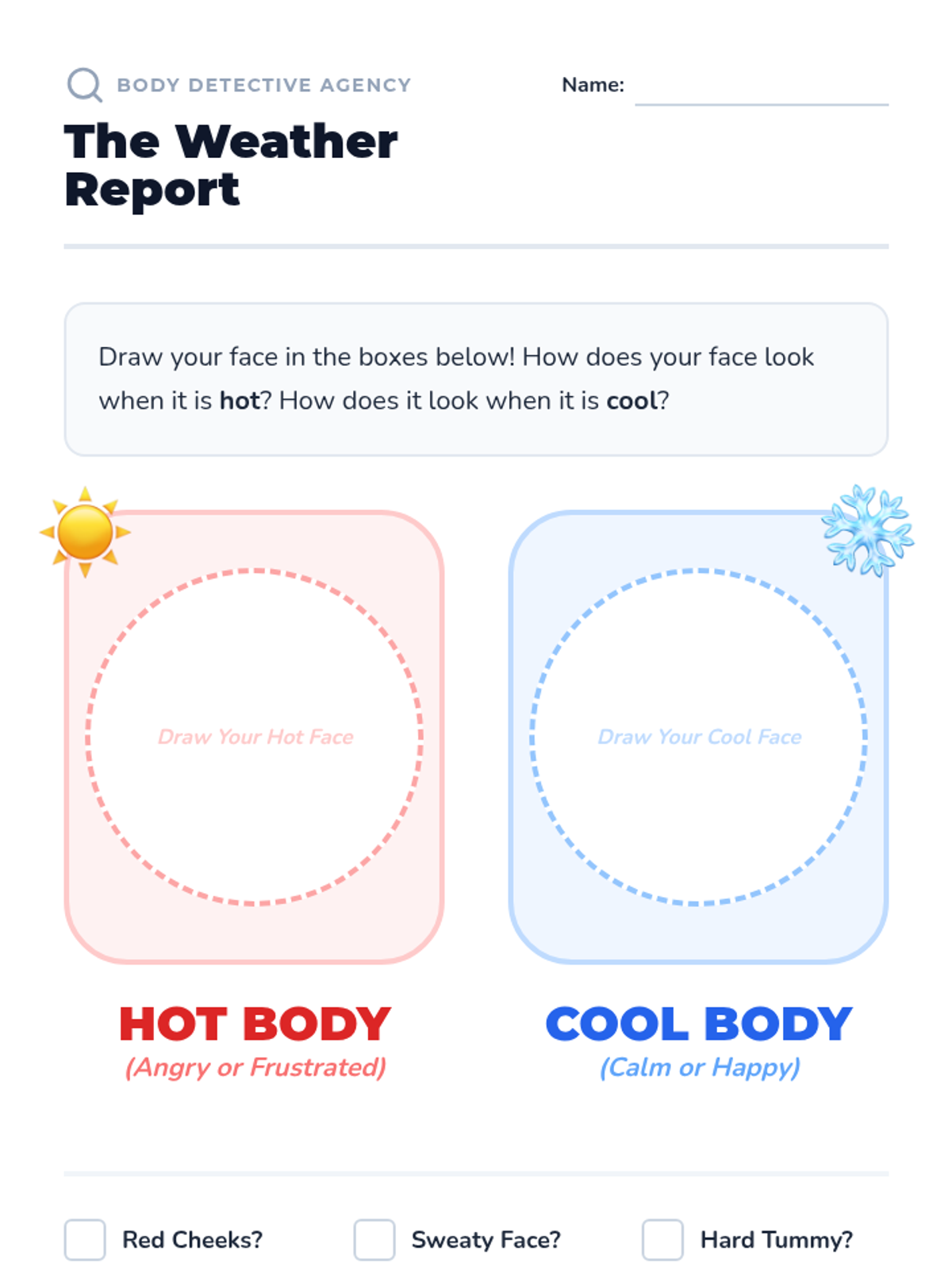
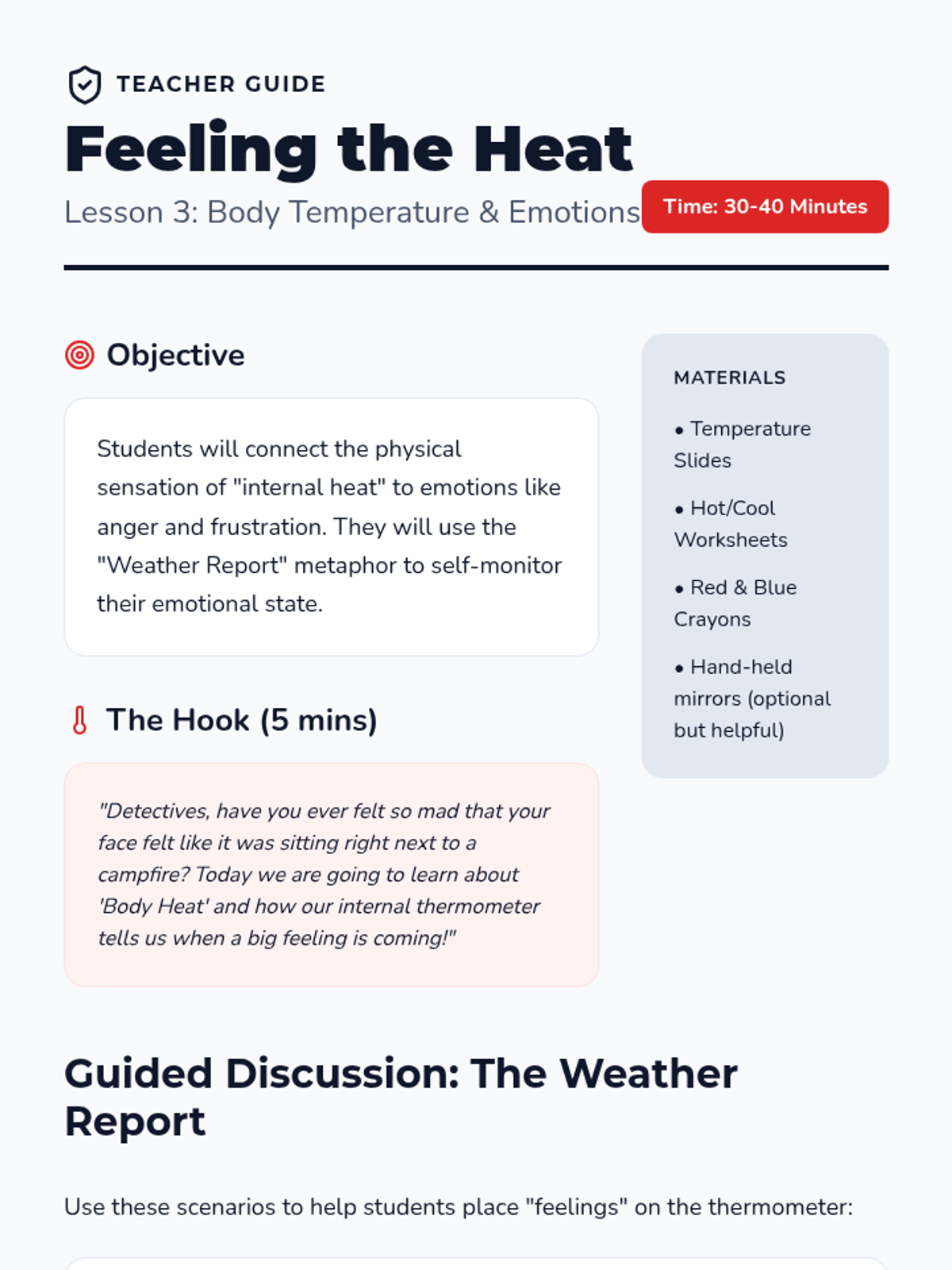
Students connect the physical sensation of heat to frustration and anger, using a thermometer visual to map their feelings.
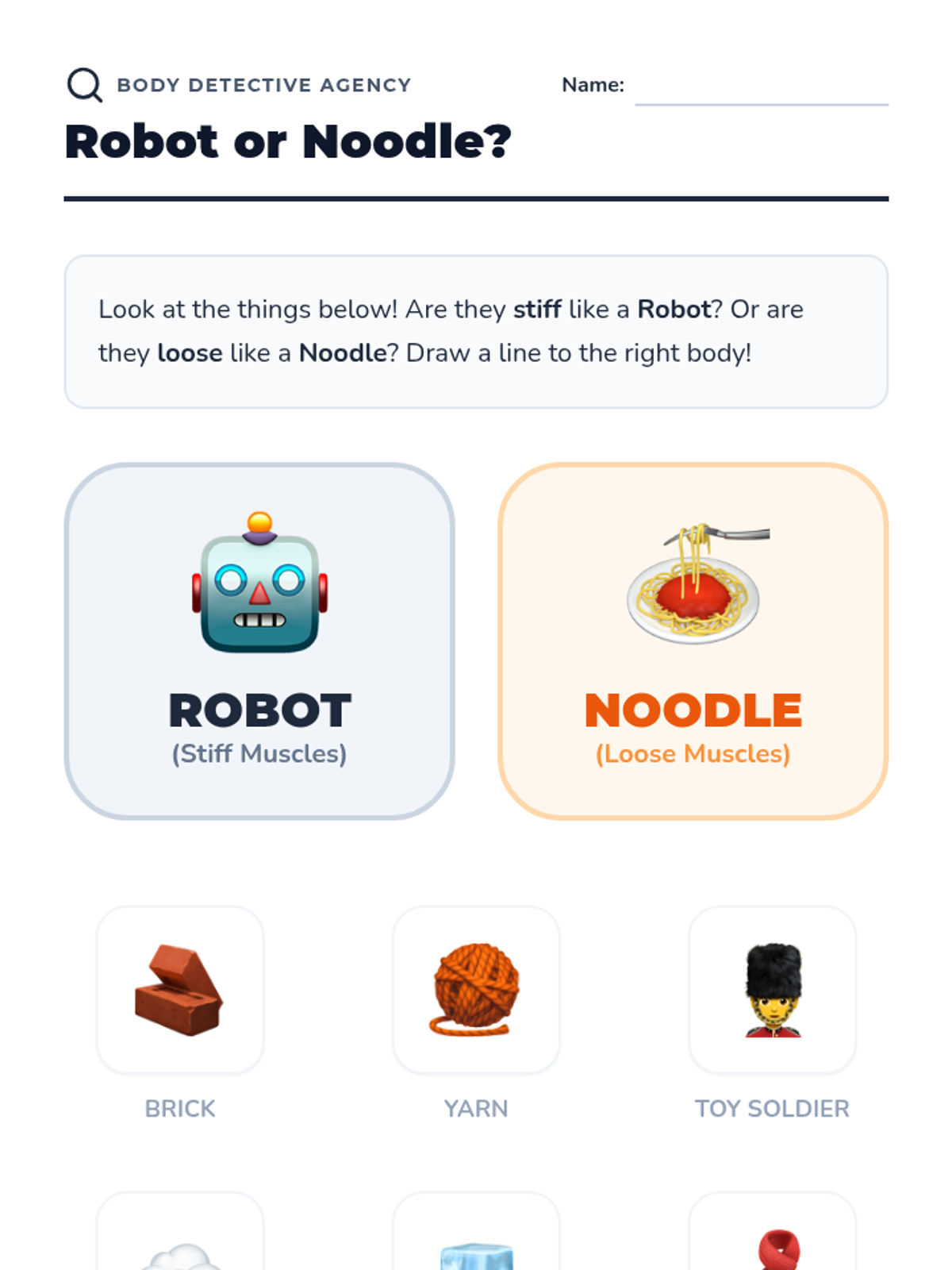
Students use the 'Spaghetti and Robot' metaphor to identify muscle tension and practice intentional relaxation.
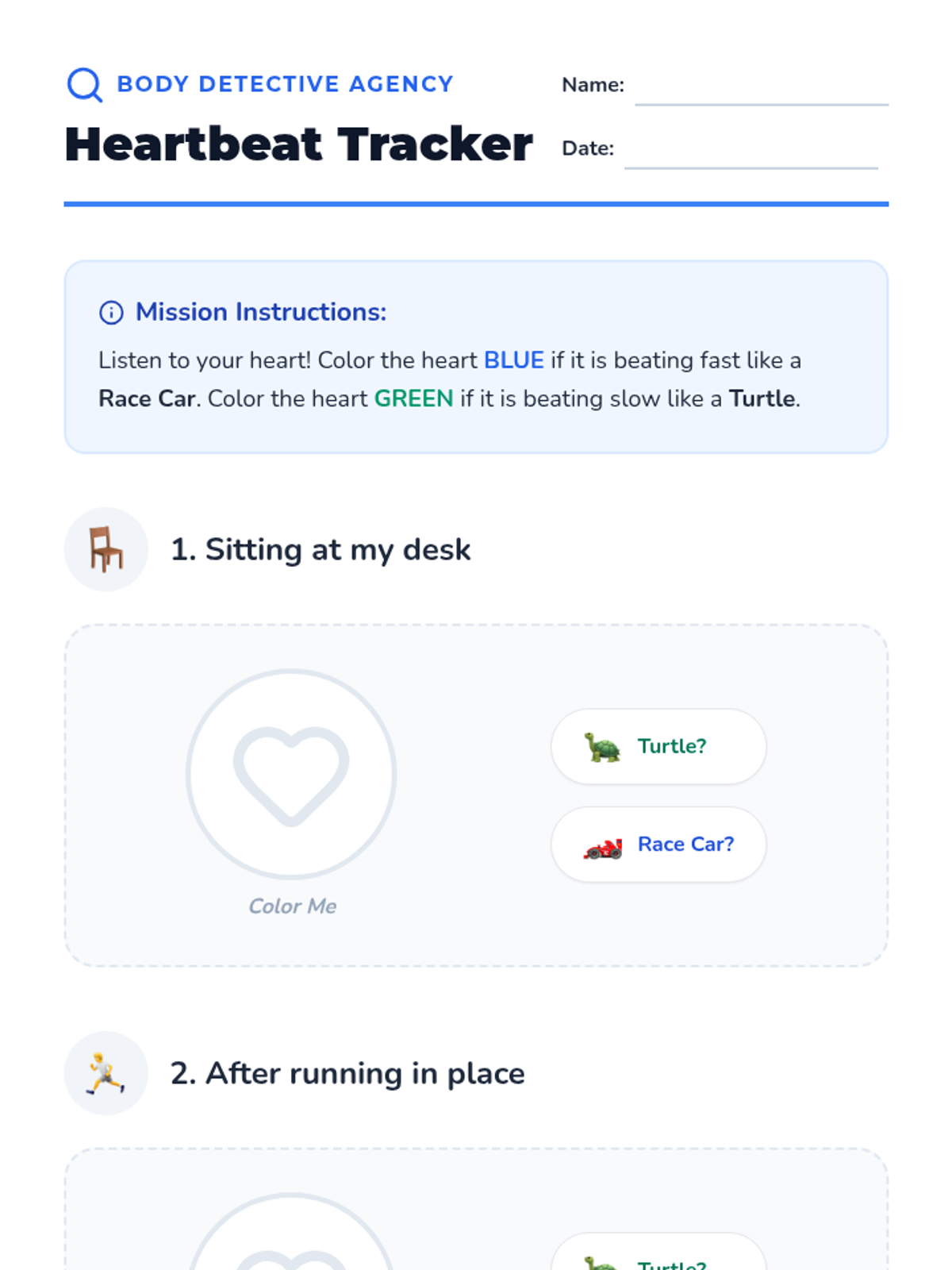
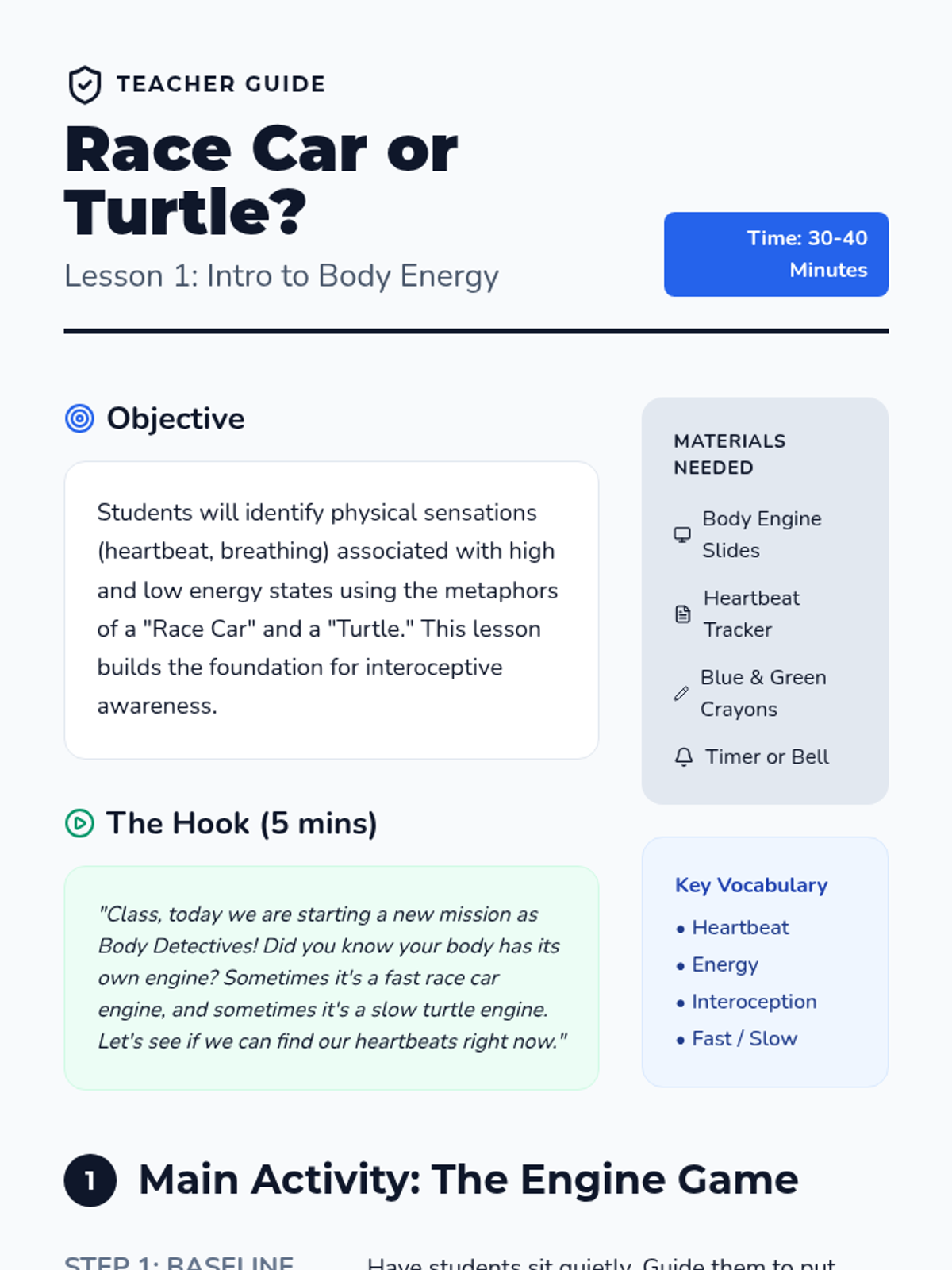
Students explore the difference between fast and slow energy by monitoring their heart rate and breathing after different physical activities.
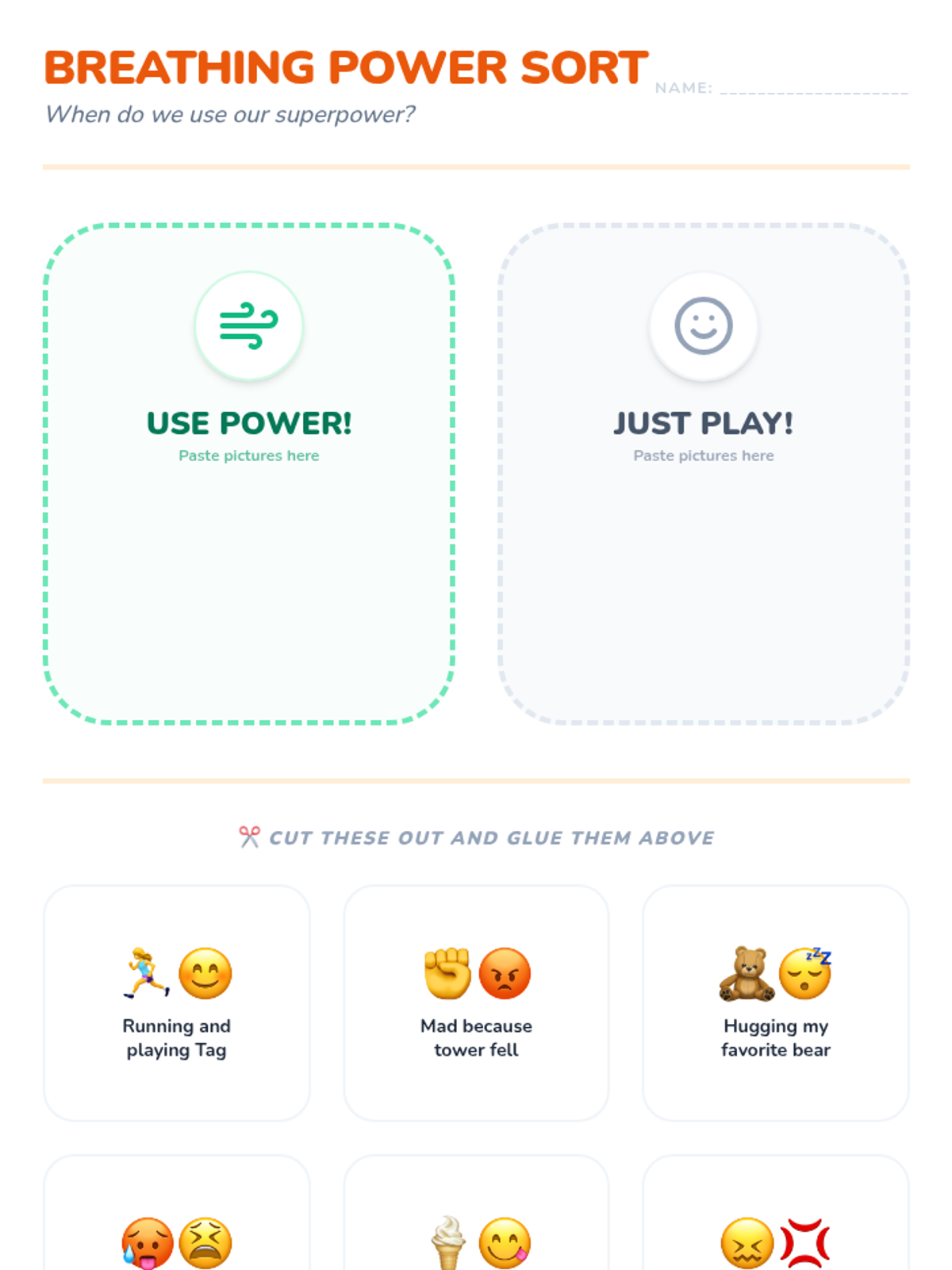
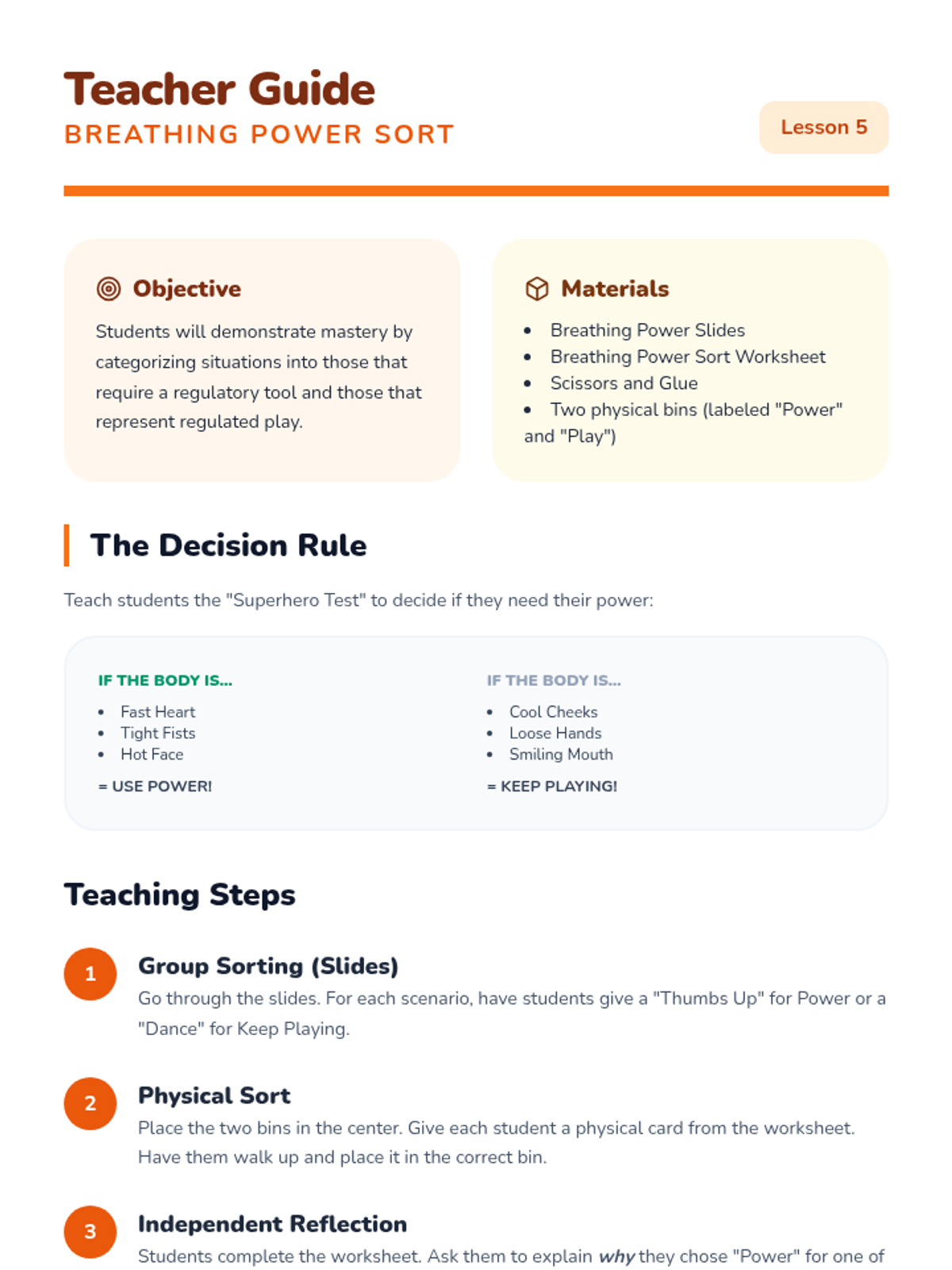
Students practice distinguishing between situations that require a breathing superpower and those that don't, using a visual scenario sorting game.
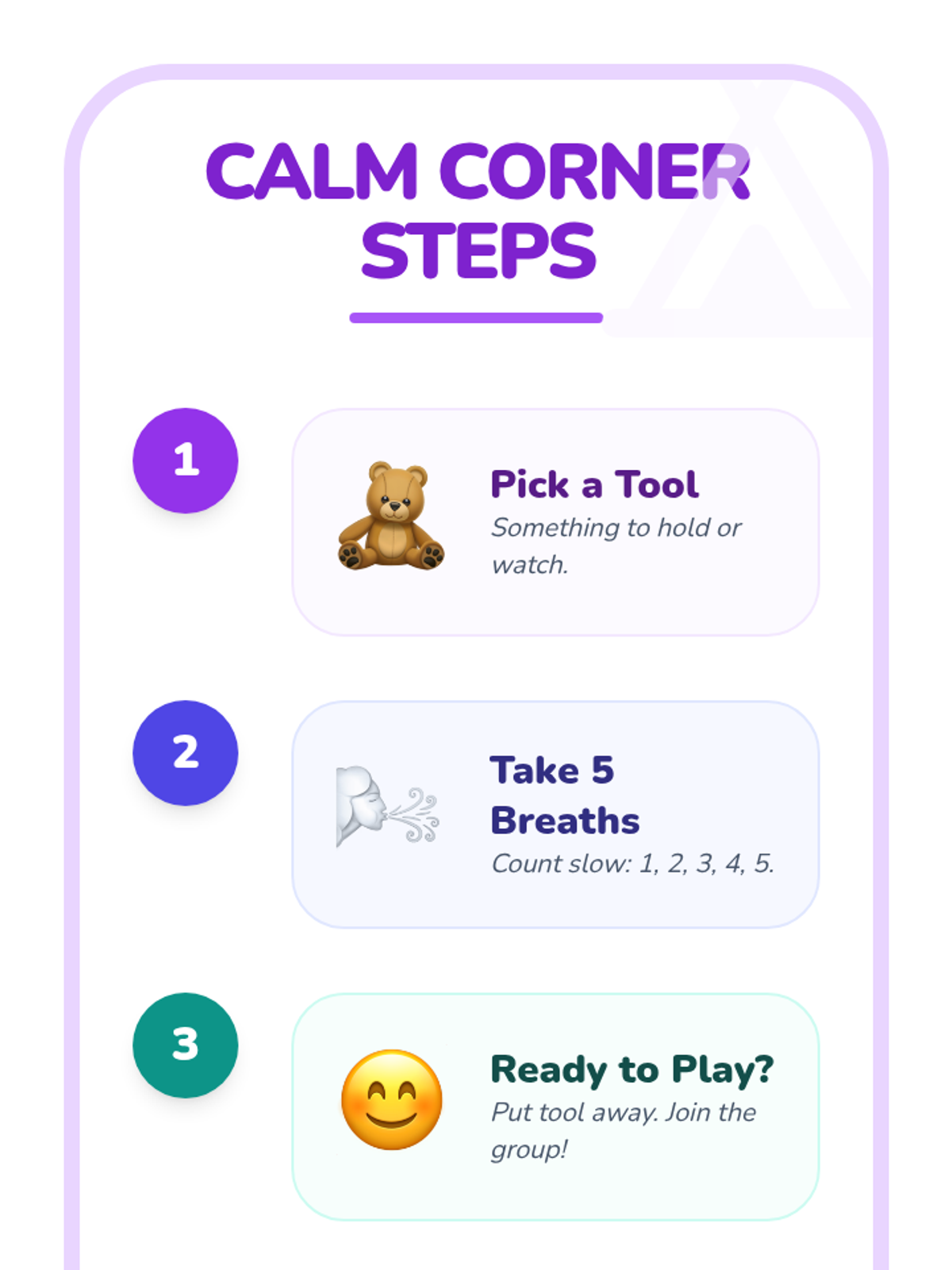
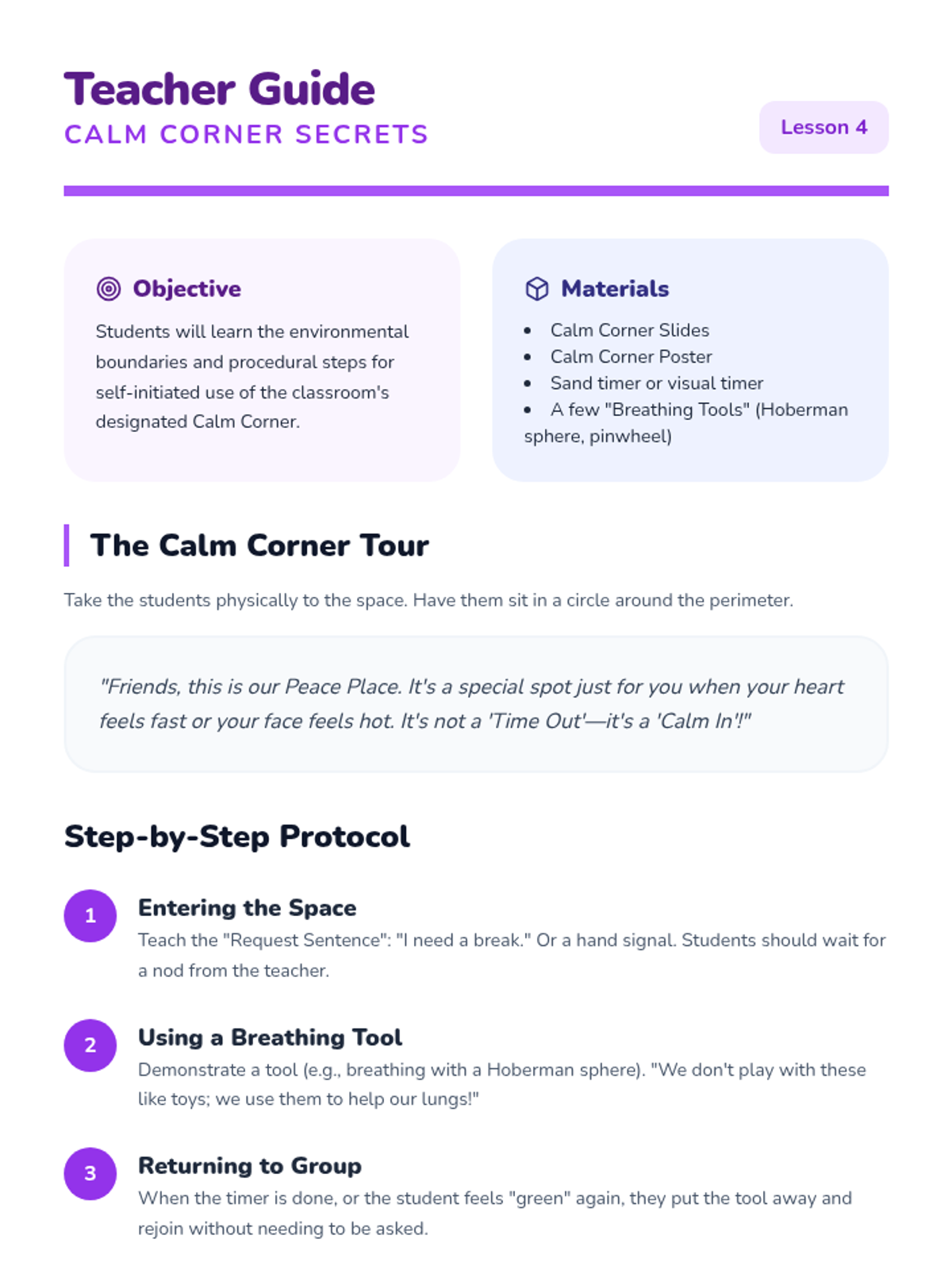
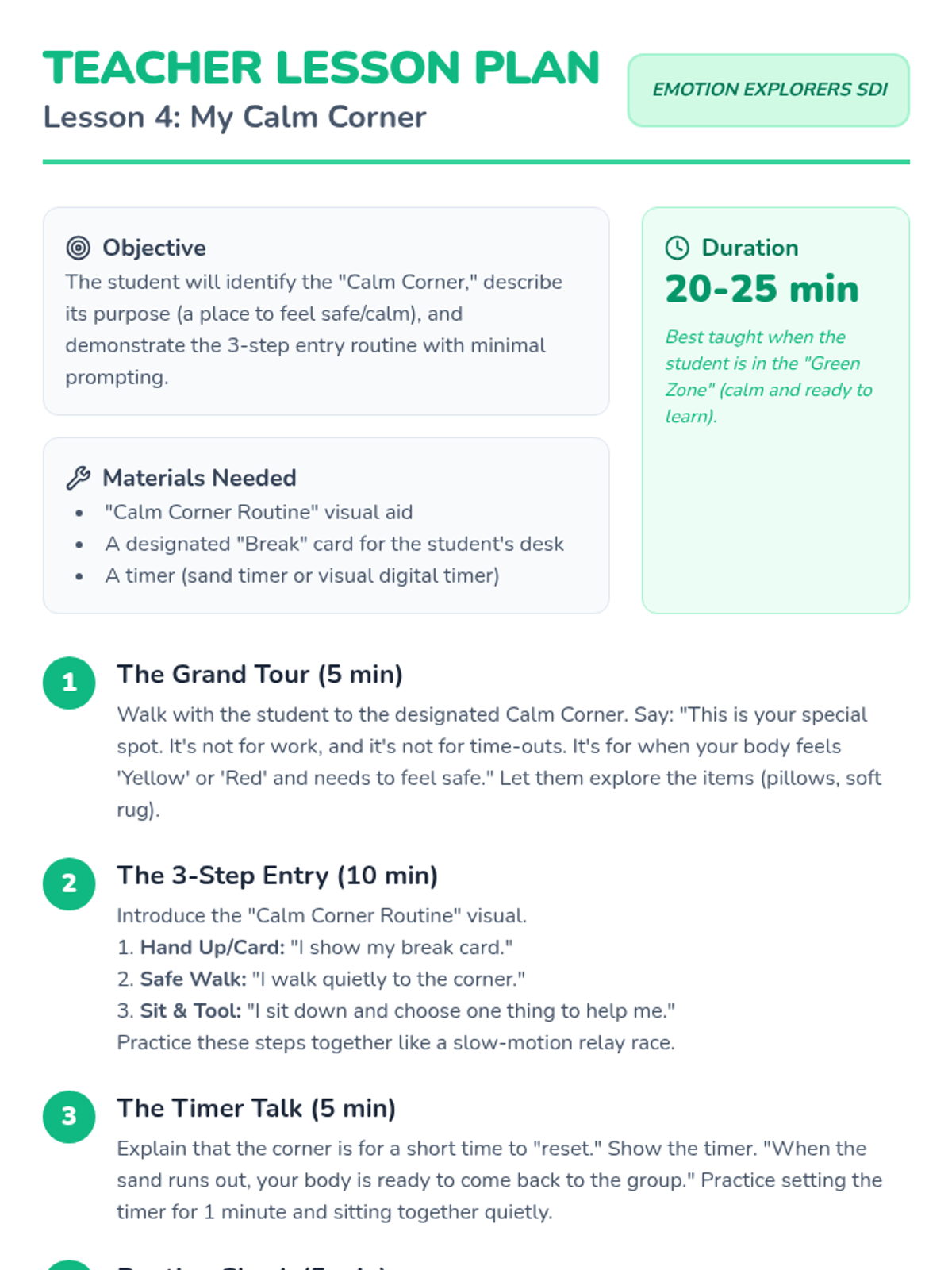
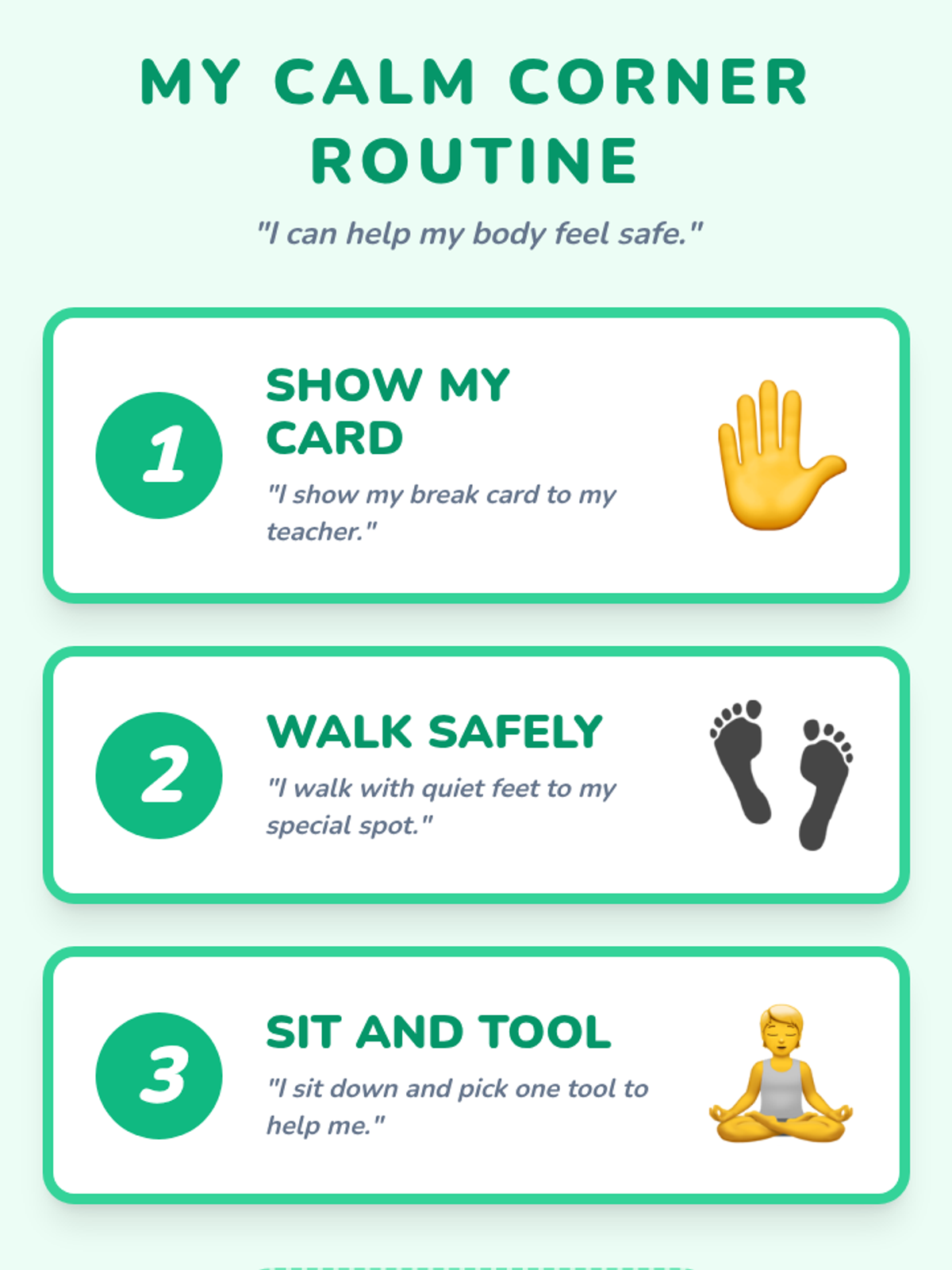
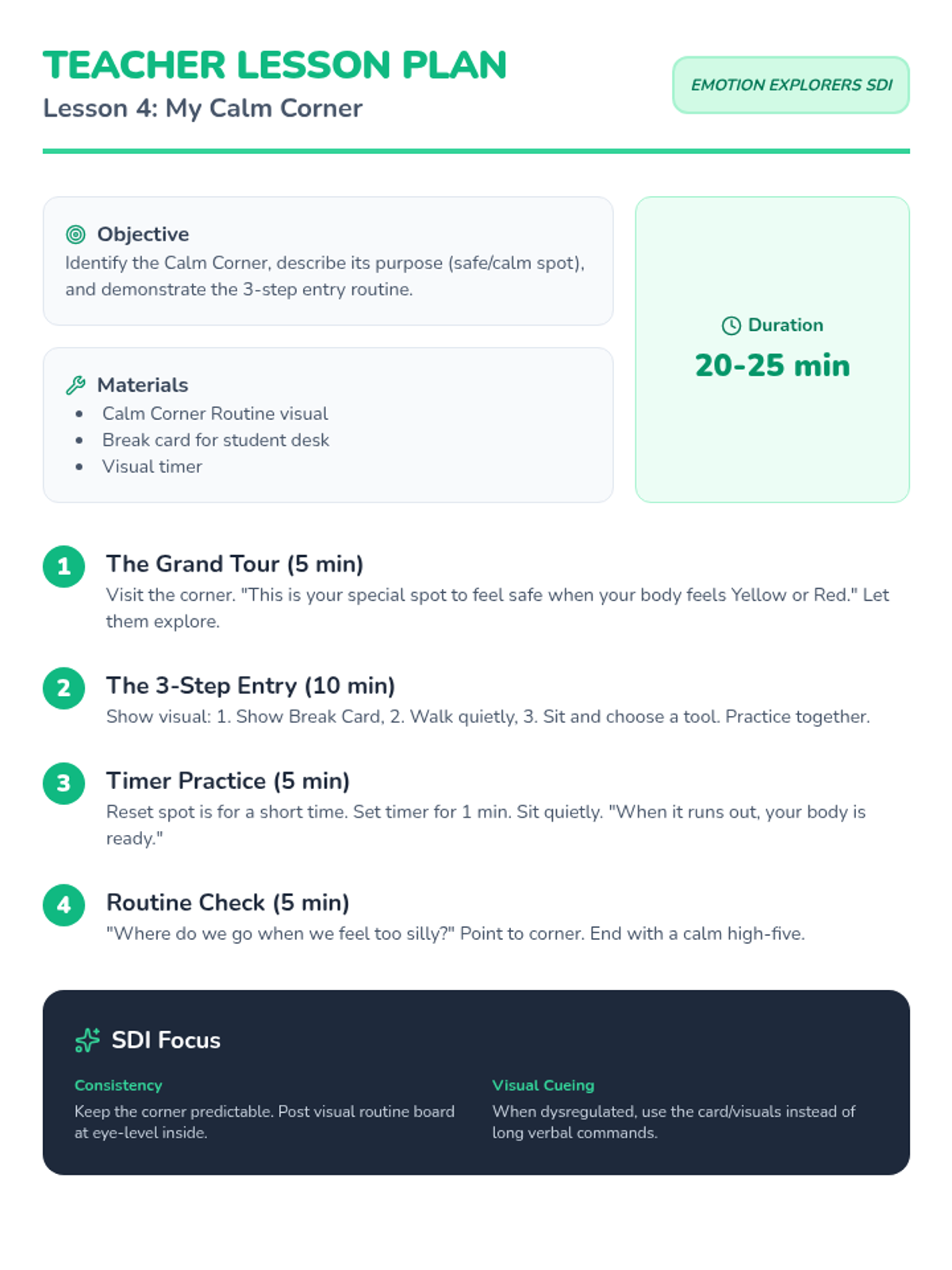
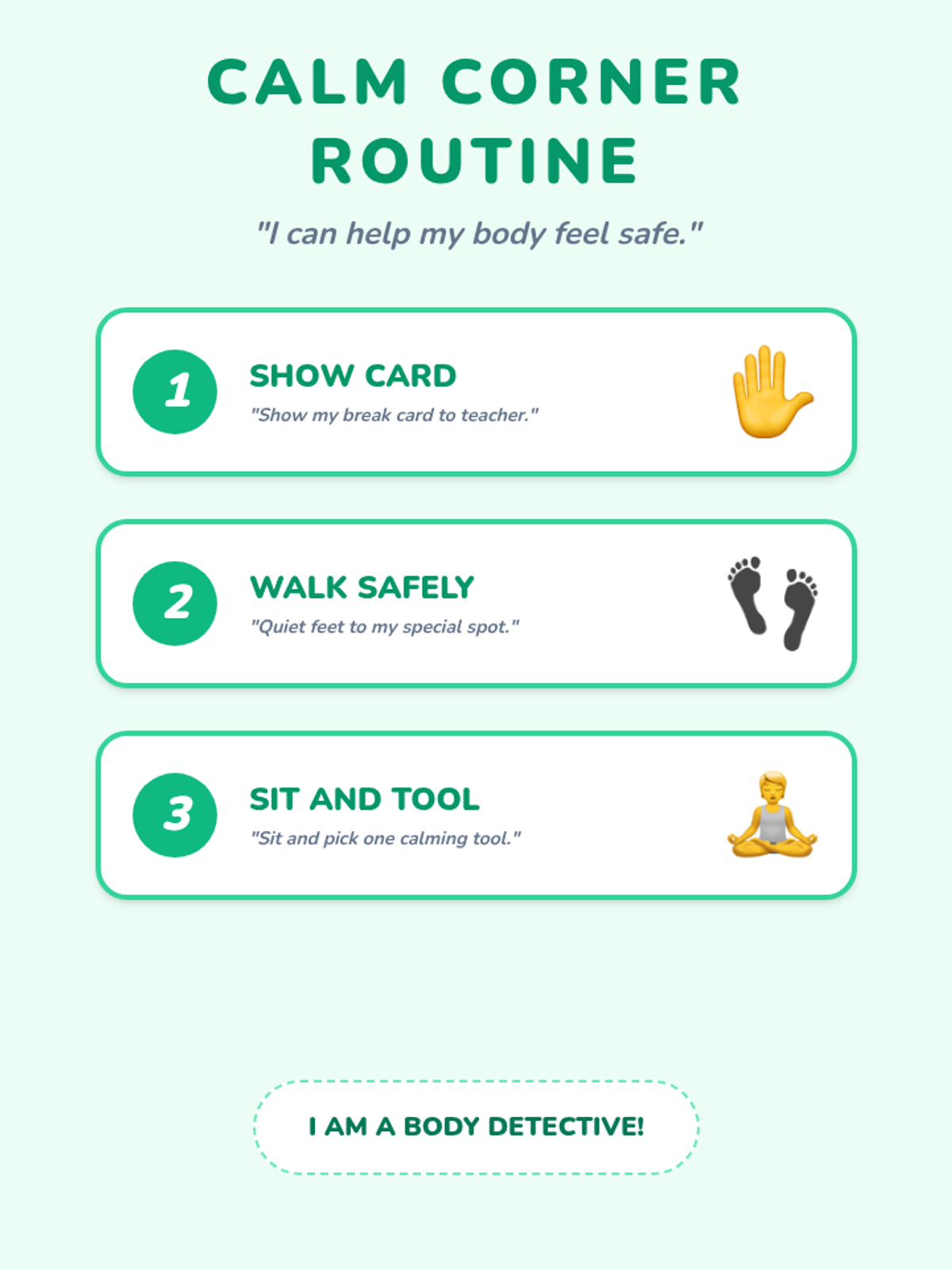
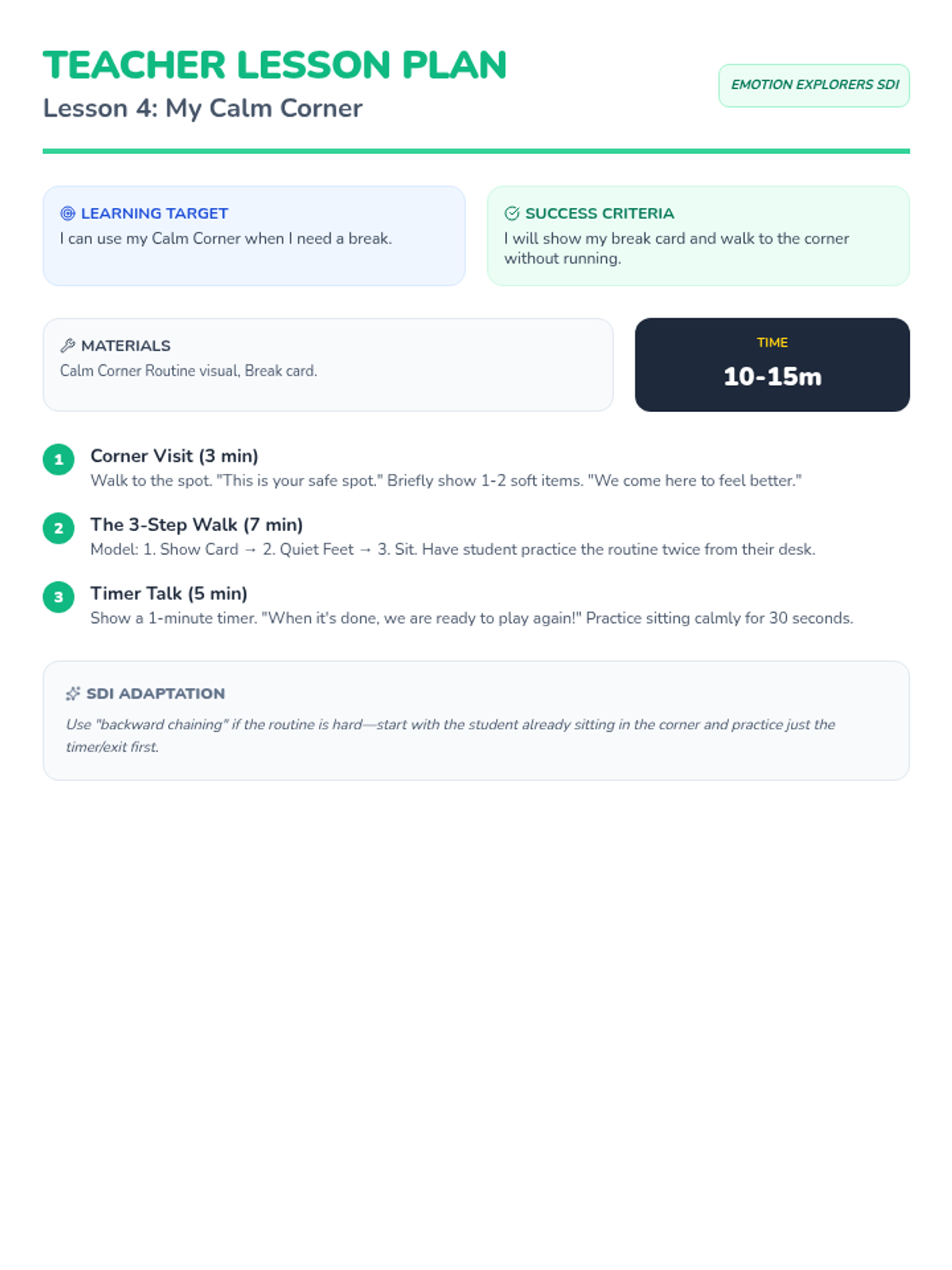
Students learn the specific steps for using the classroom Calm Corner, from entering the space to choosing a tool and re-joining the group.
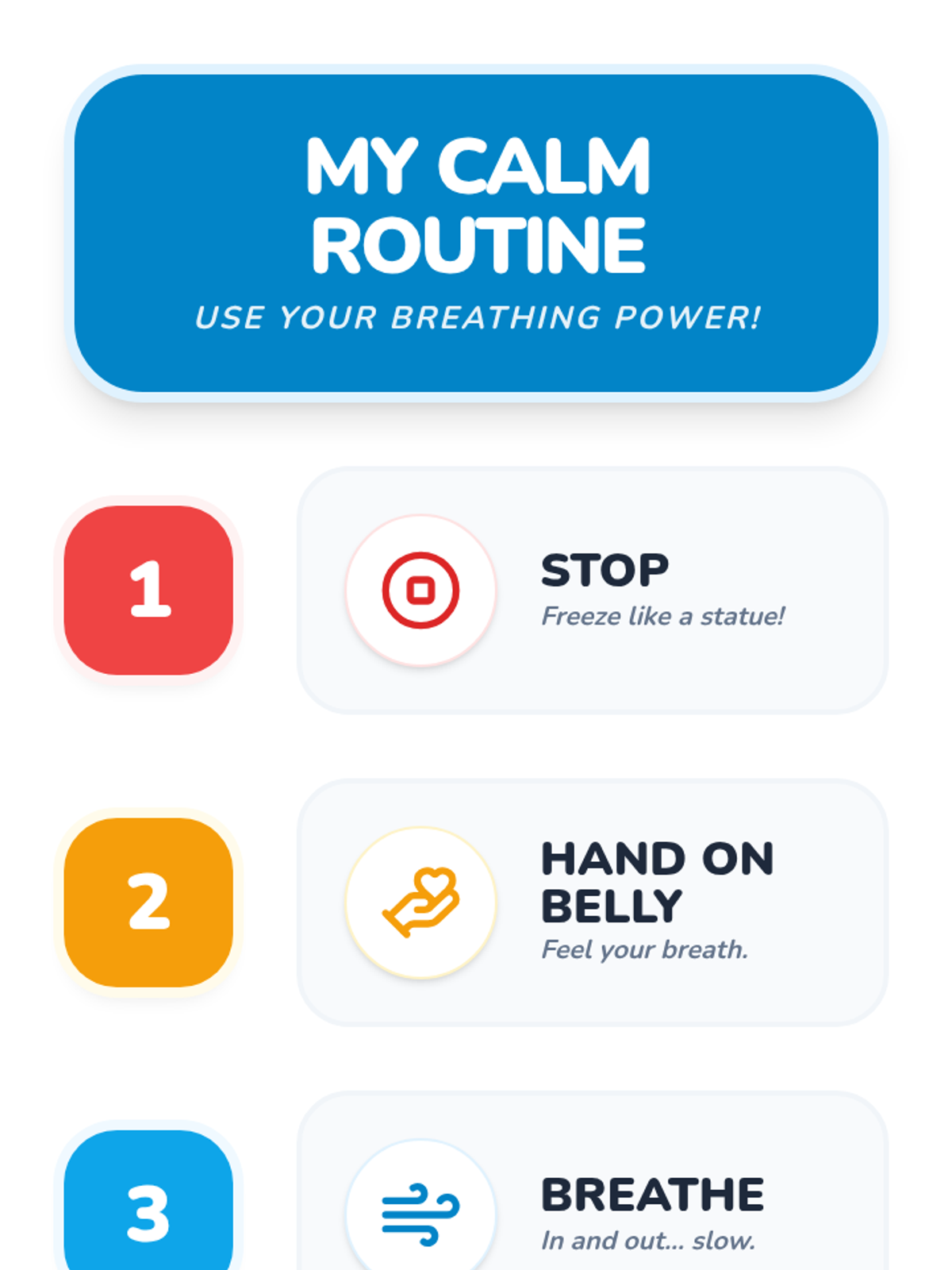
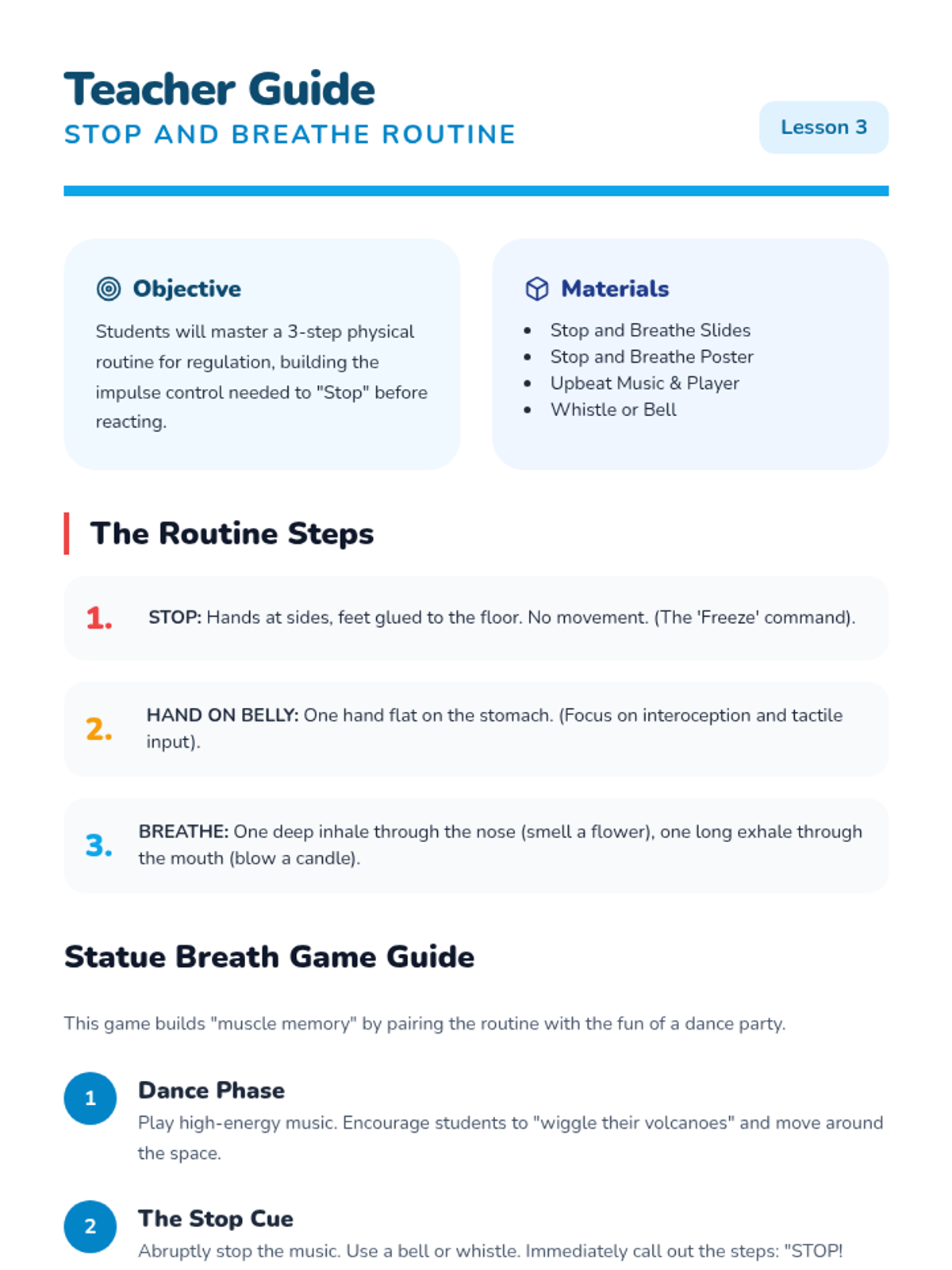
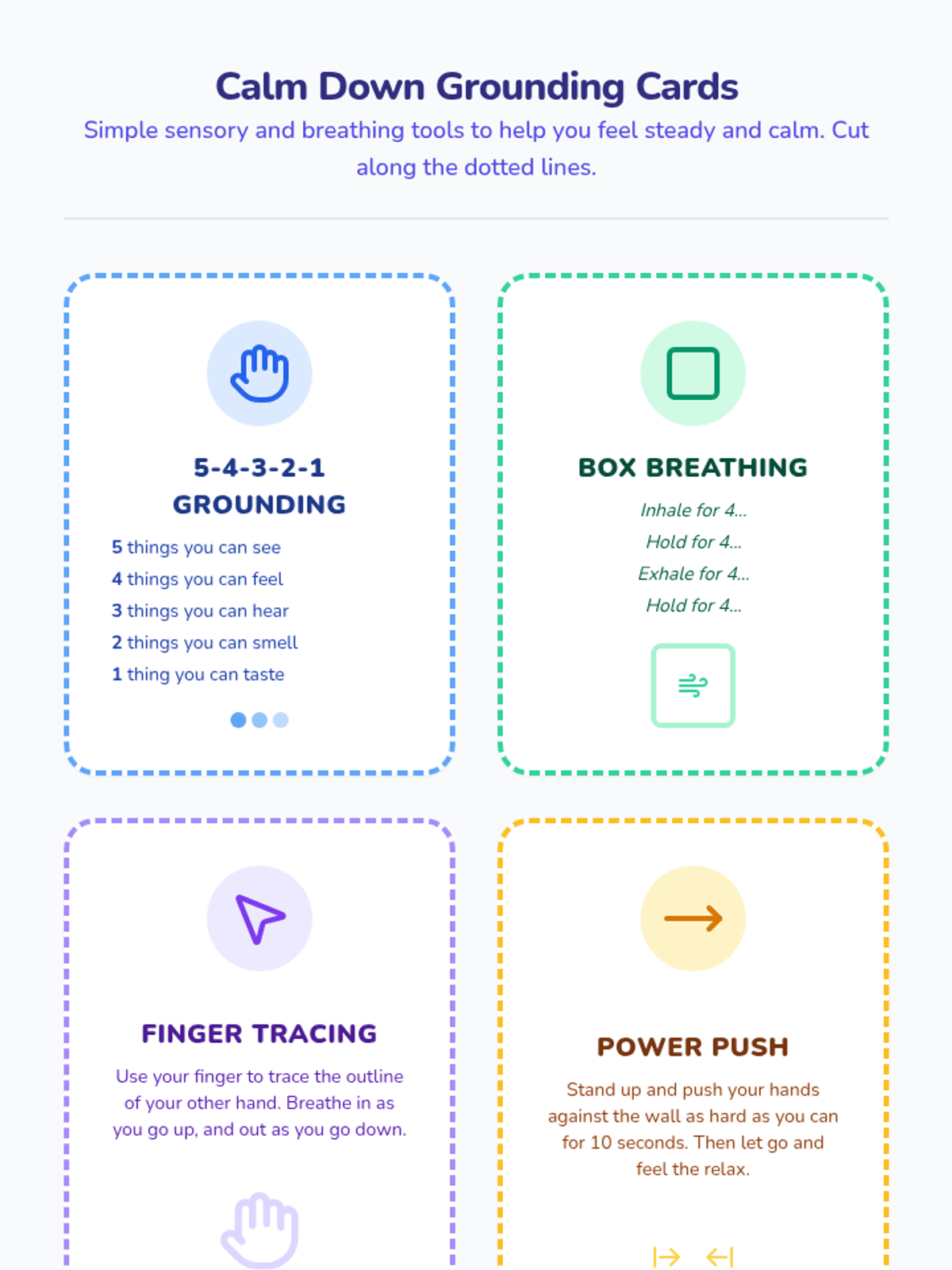
Students practice a concrete three-step routine (Stop, Hand on Belly, Breathe) using game-based drills to build muscle memory.
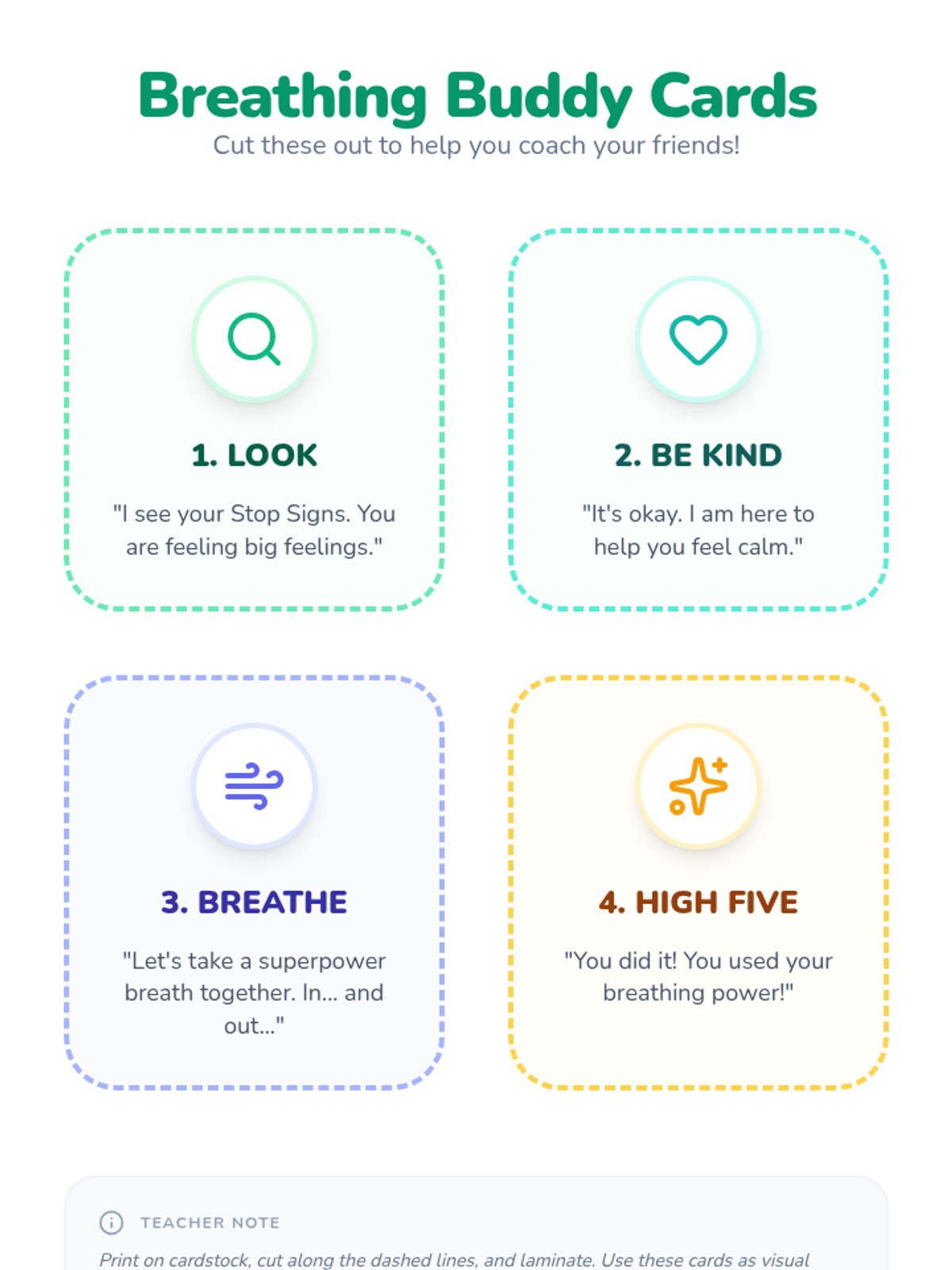
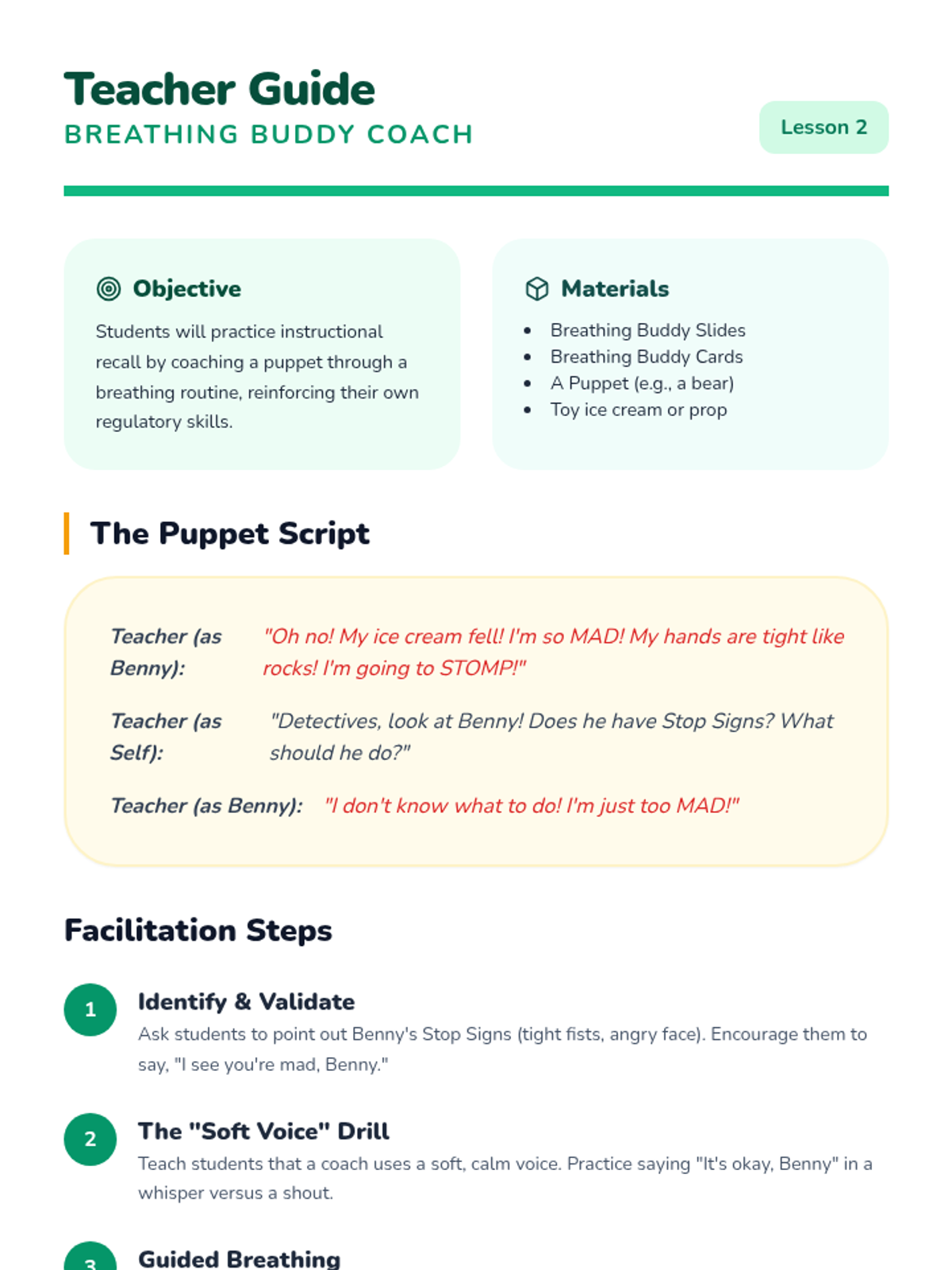
Students coach a puppet friend who is feeling upset through a breathing exercise, practicing their own skills while helping another.
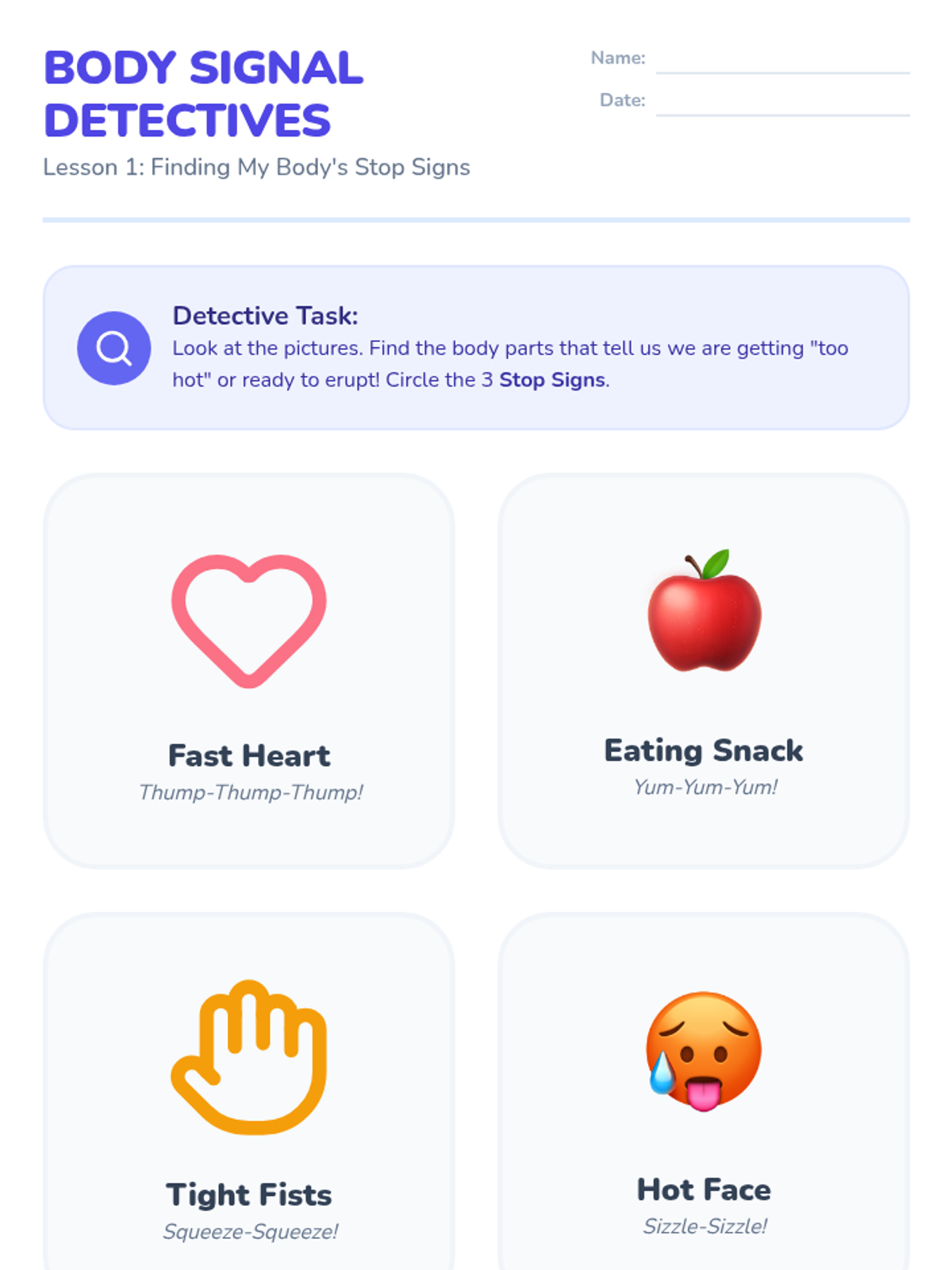
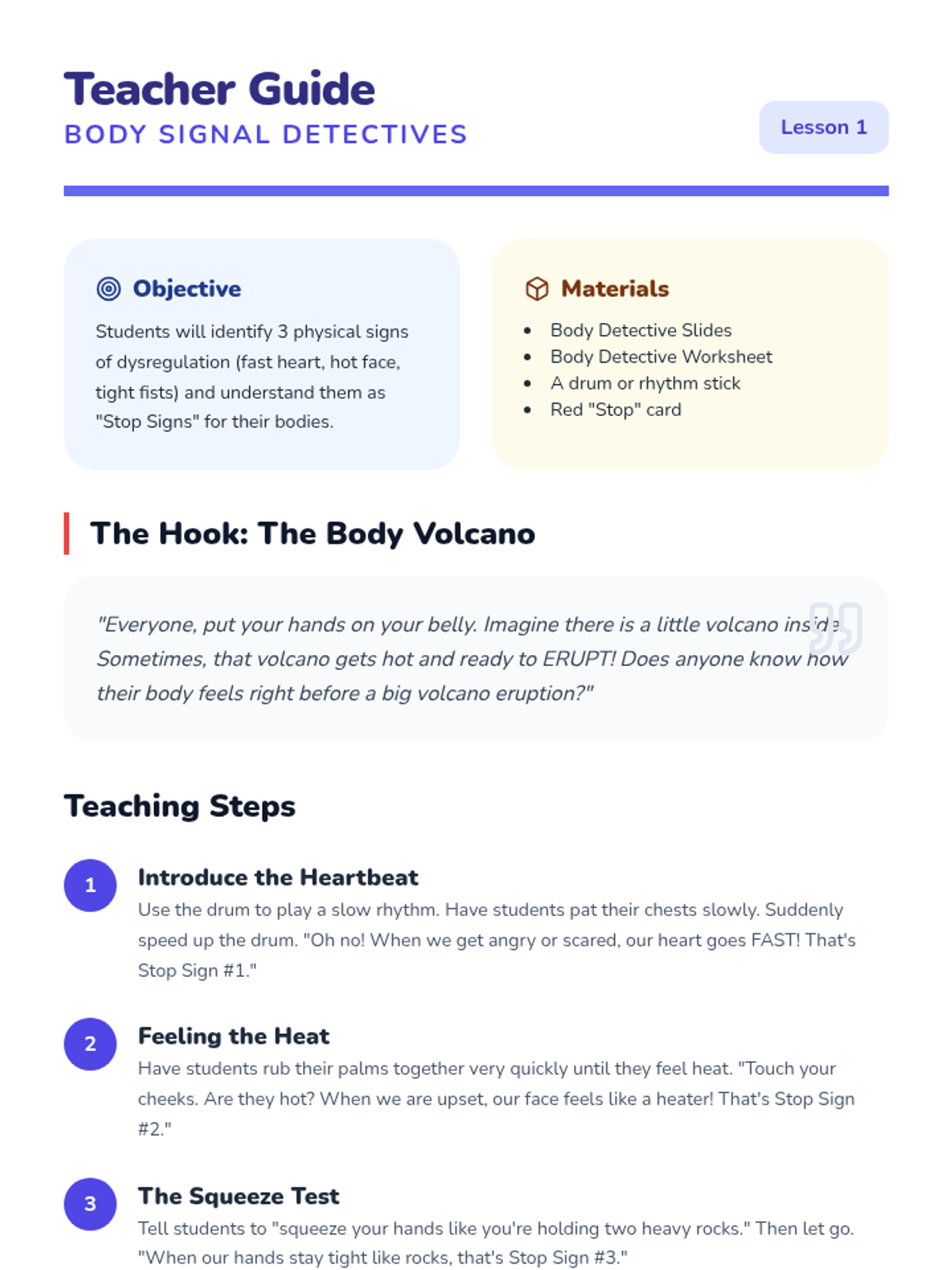
Students learn to identify physical signals like a racing heart, hot face, and tight fists as 'Stop Signs' that indicate a need for a breathing break.
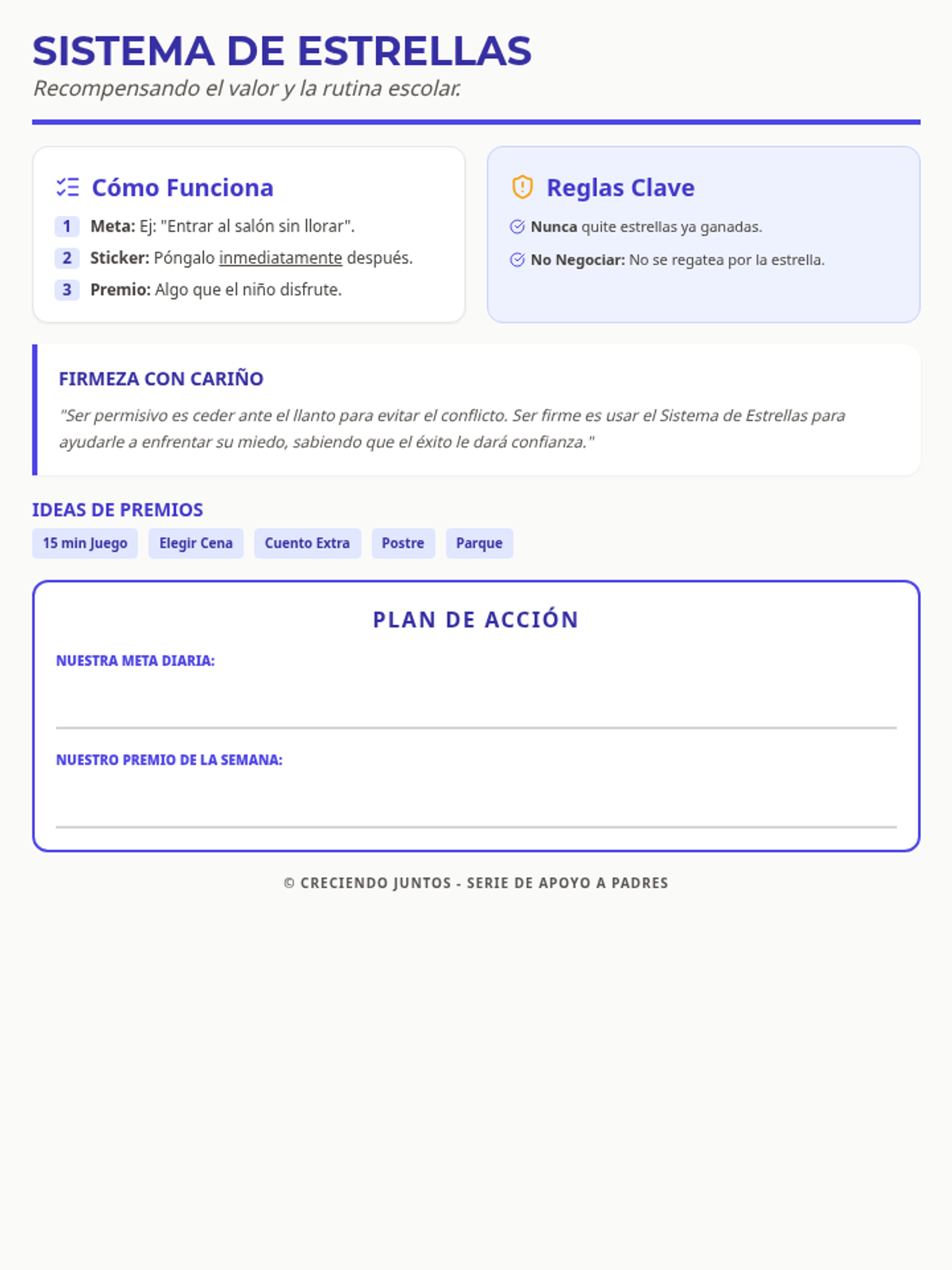
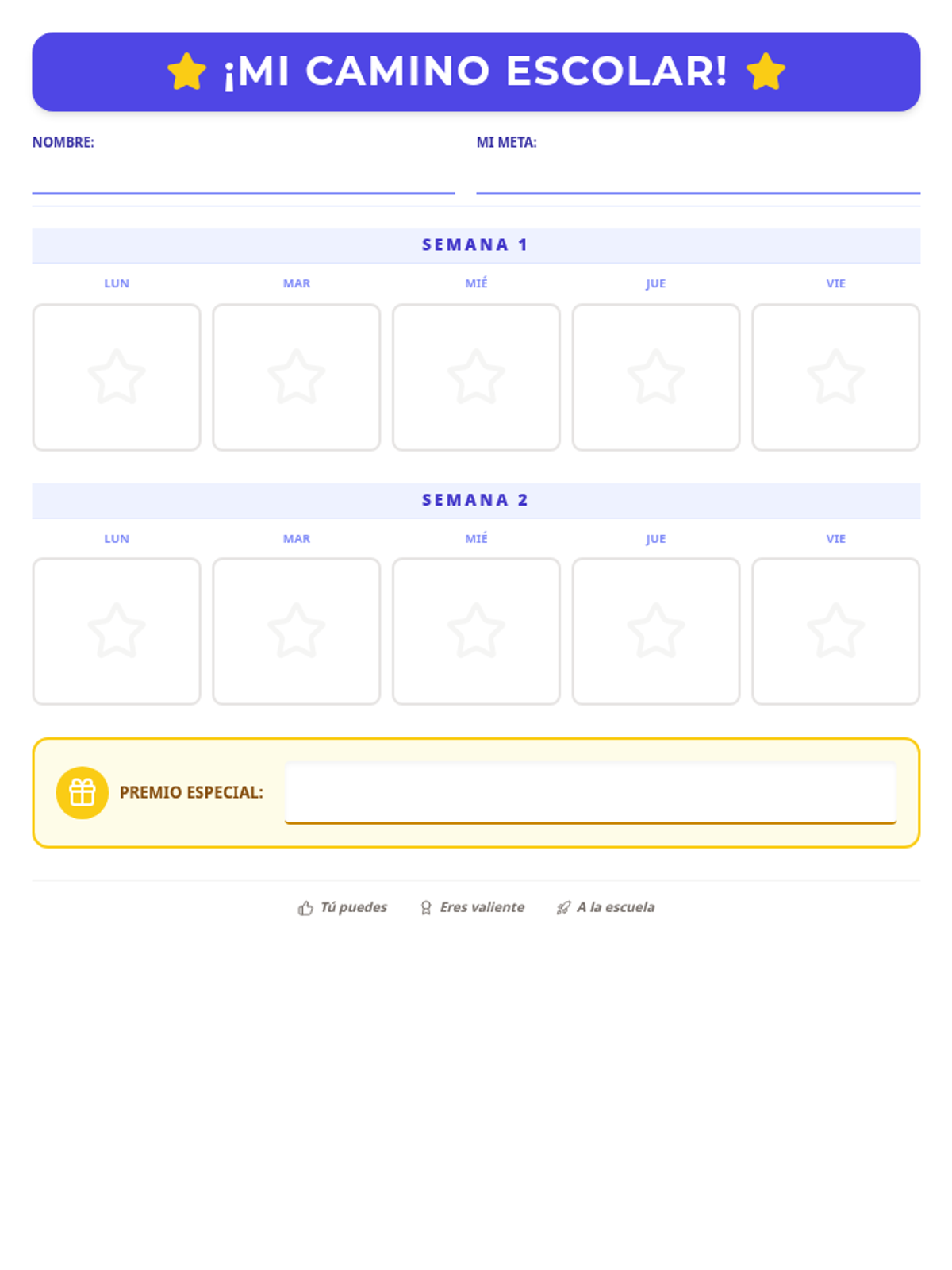
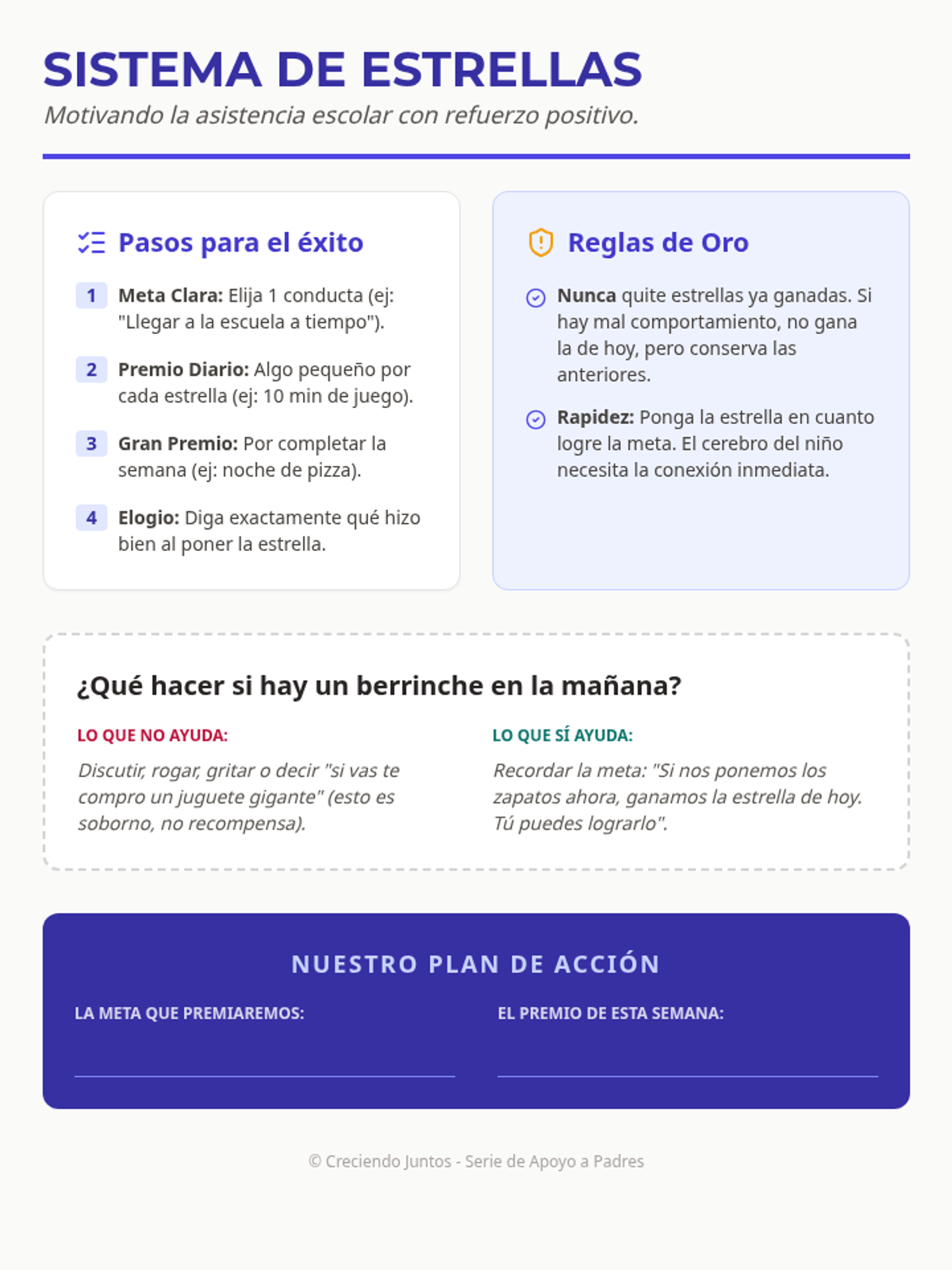
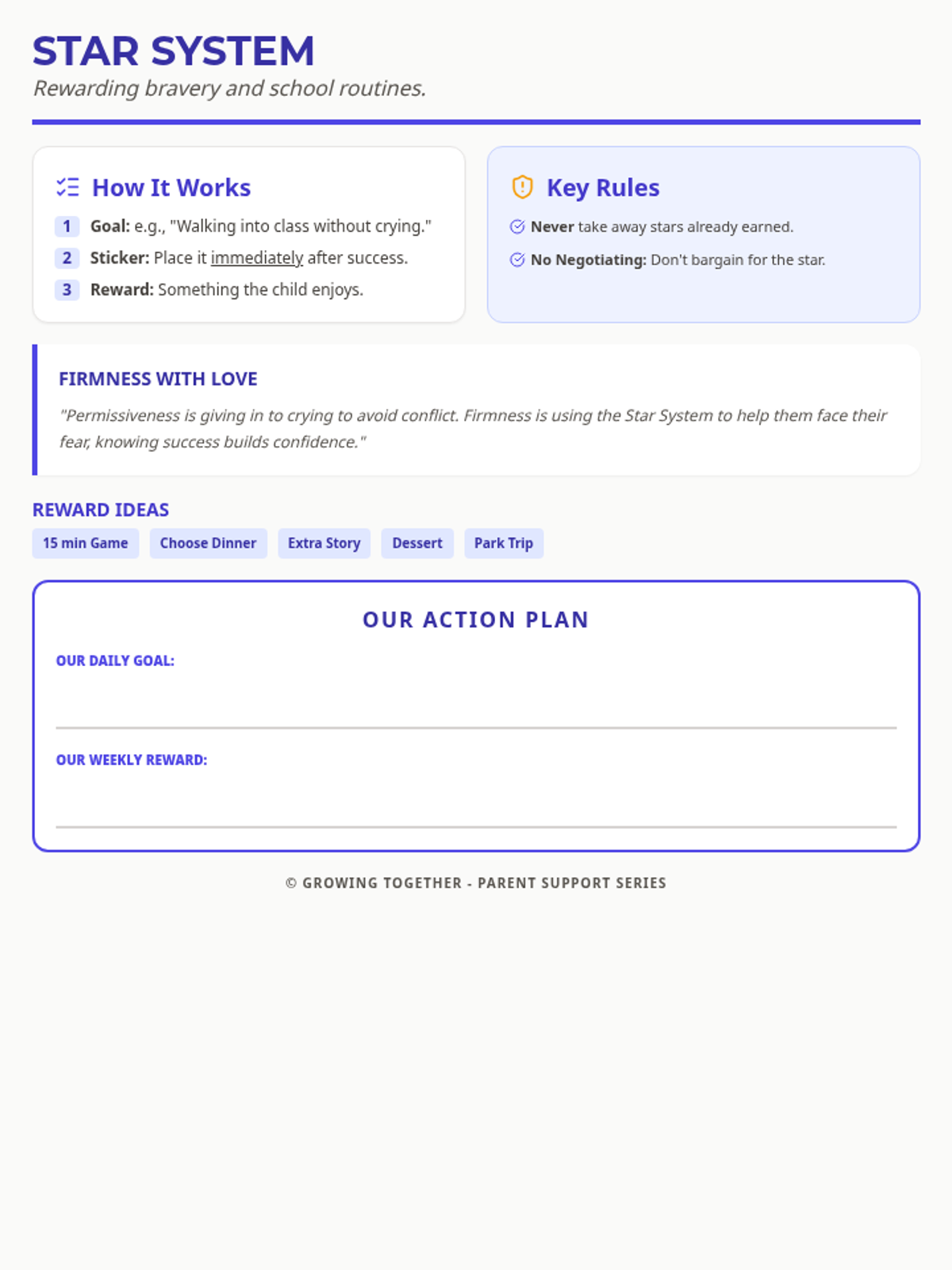
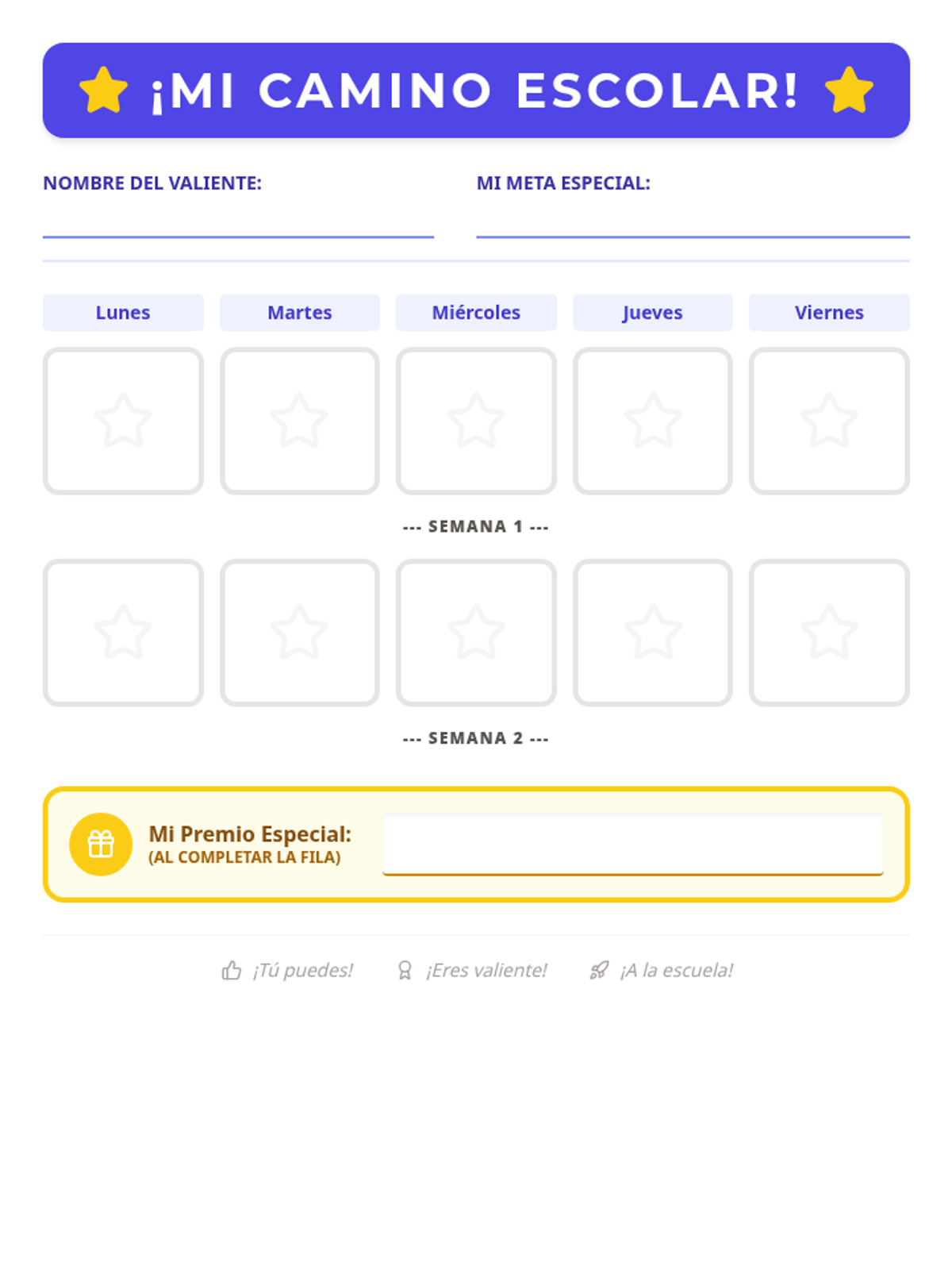
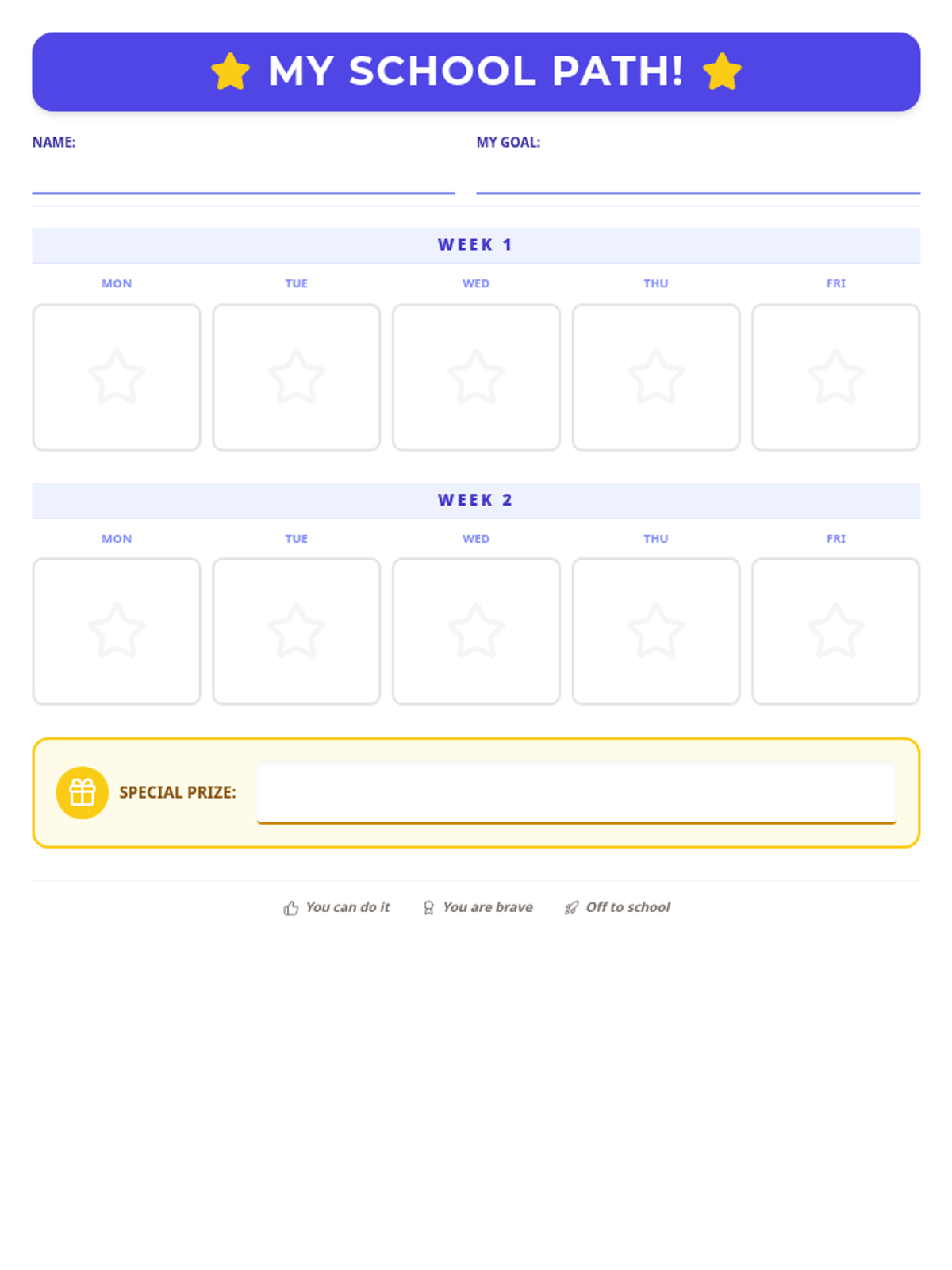
Practical steps for setting up a sticker chart system to reward school attendance and morning routines.
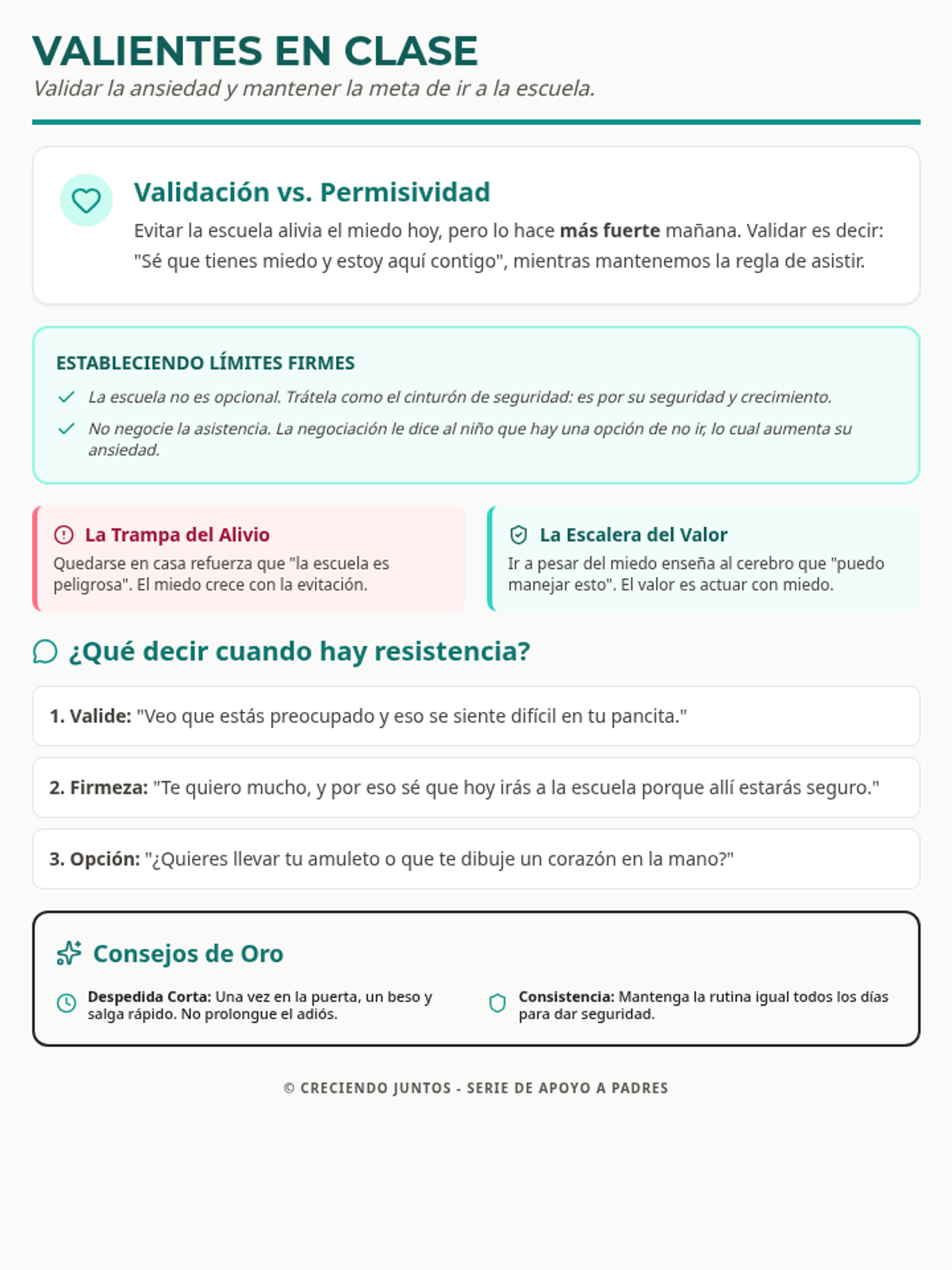
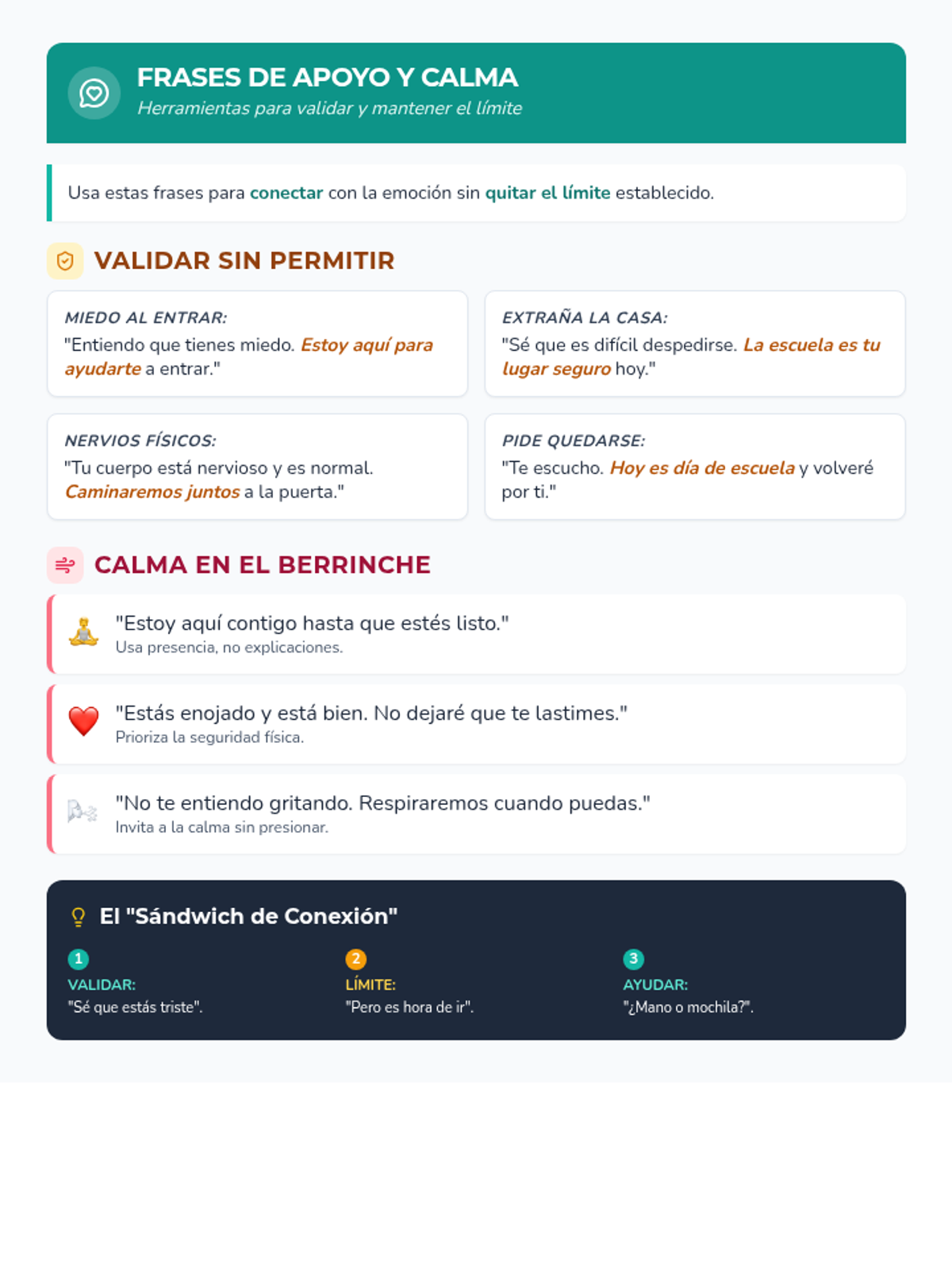
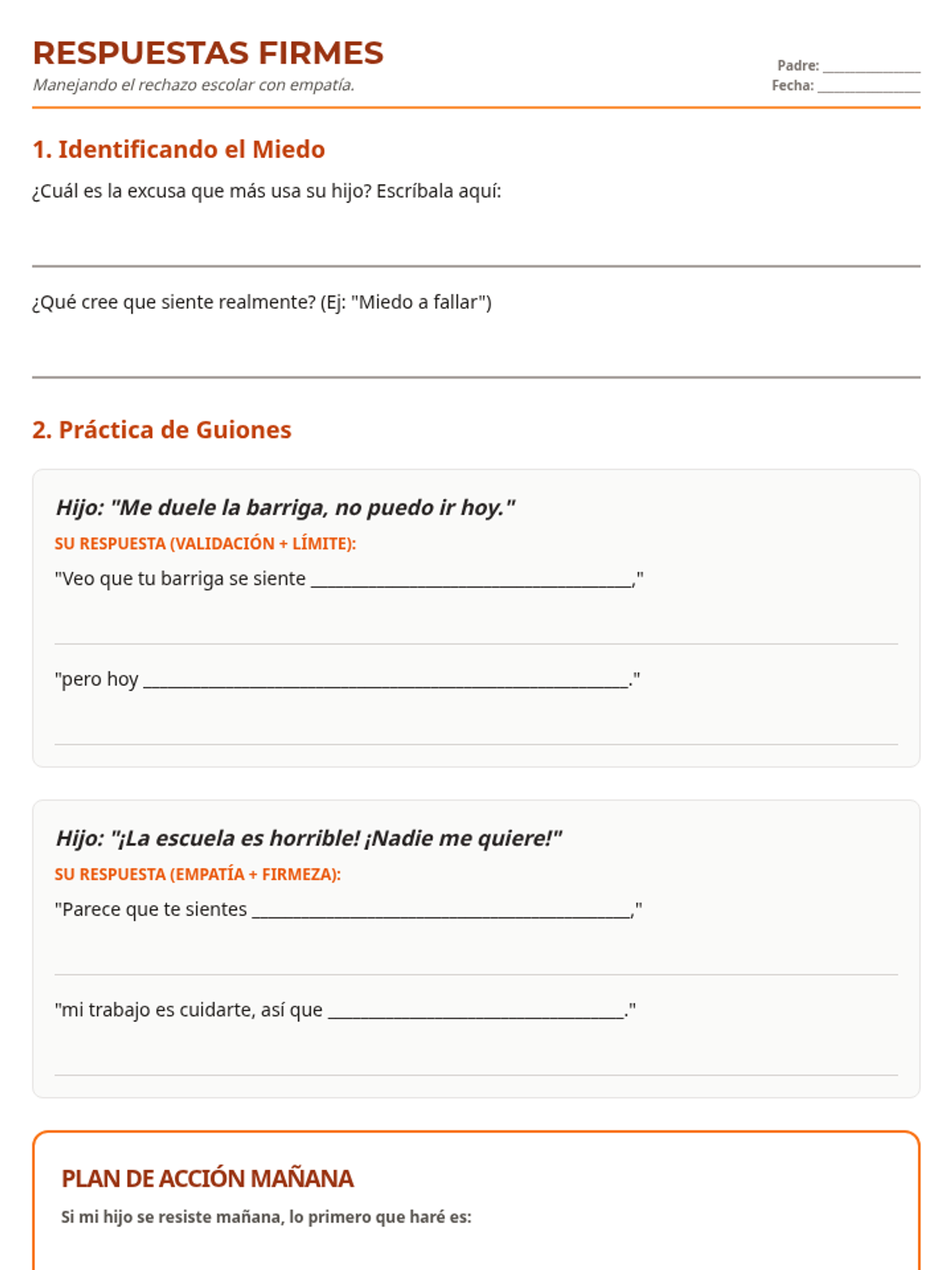
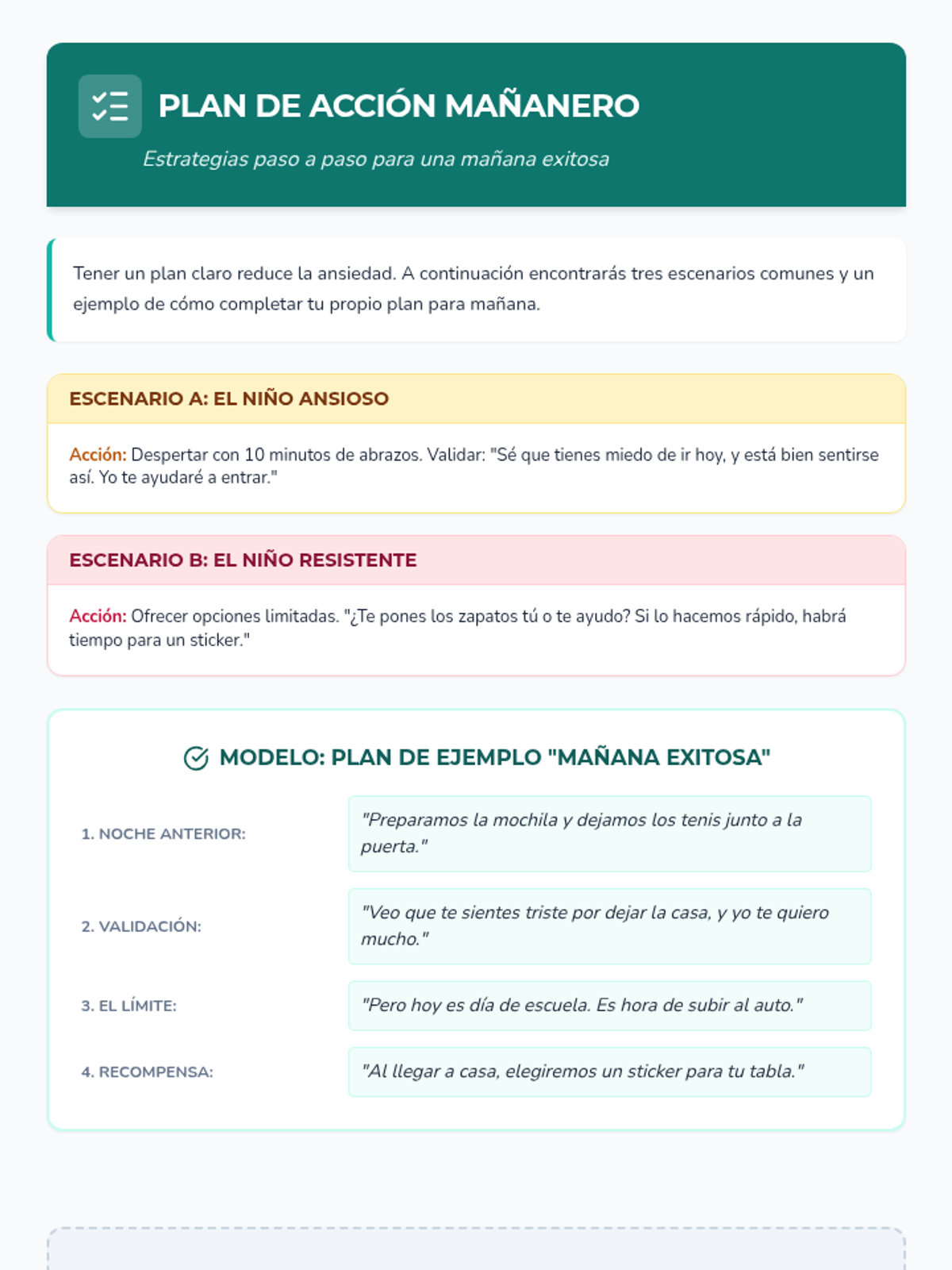
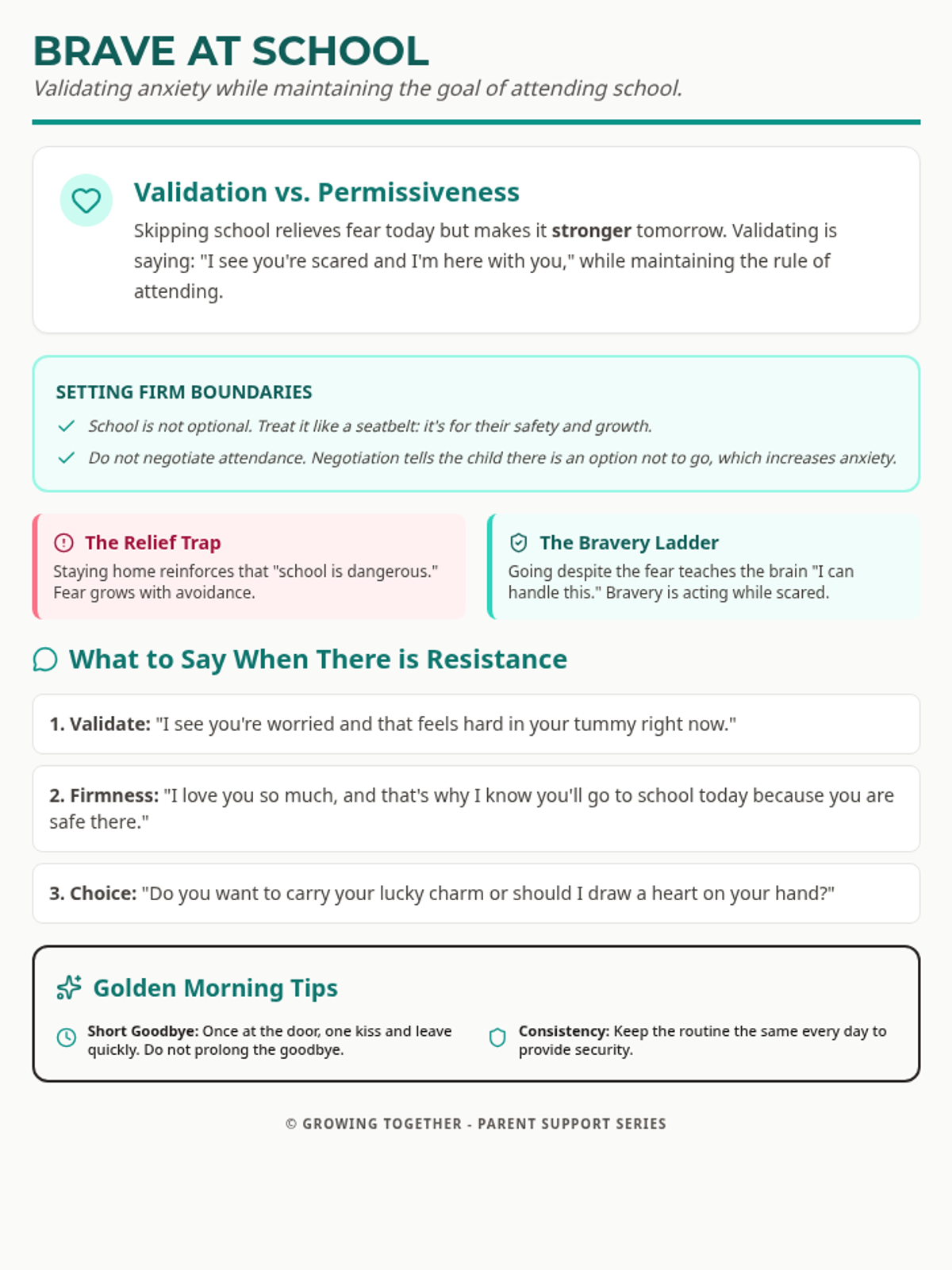
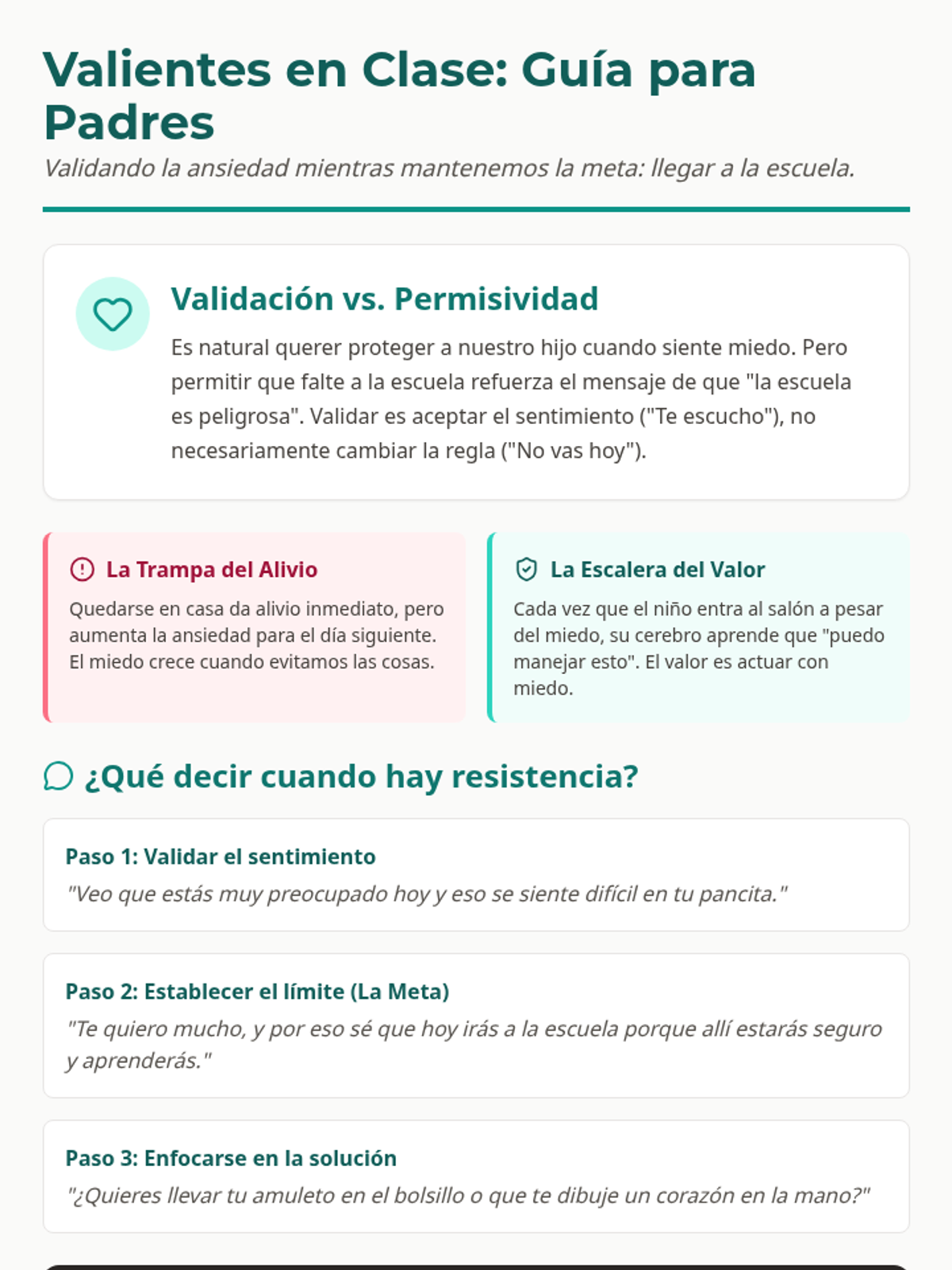
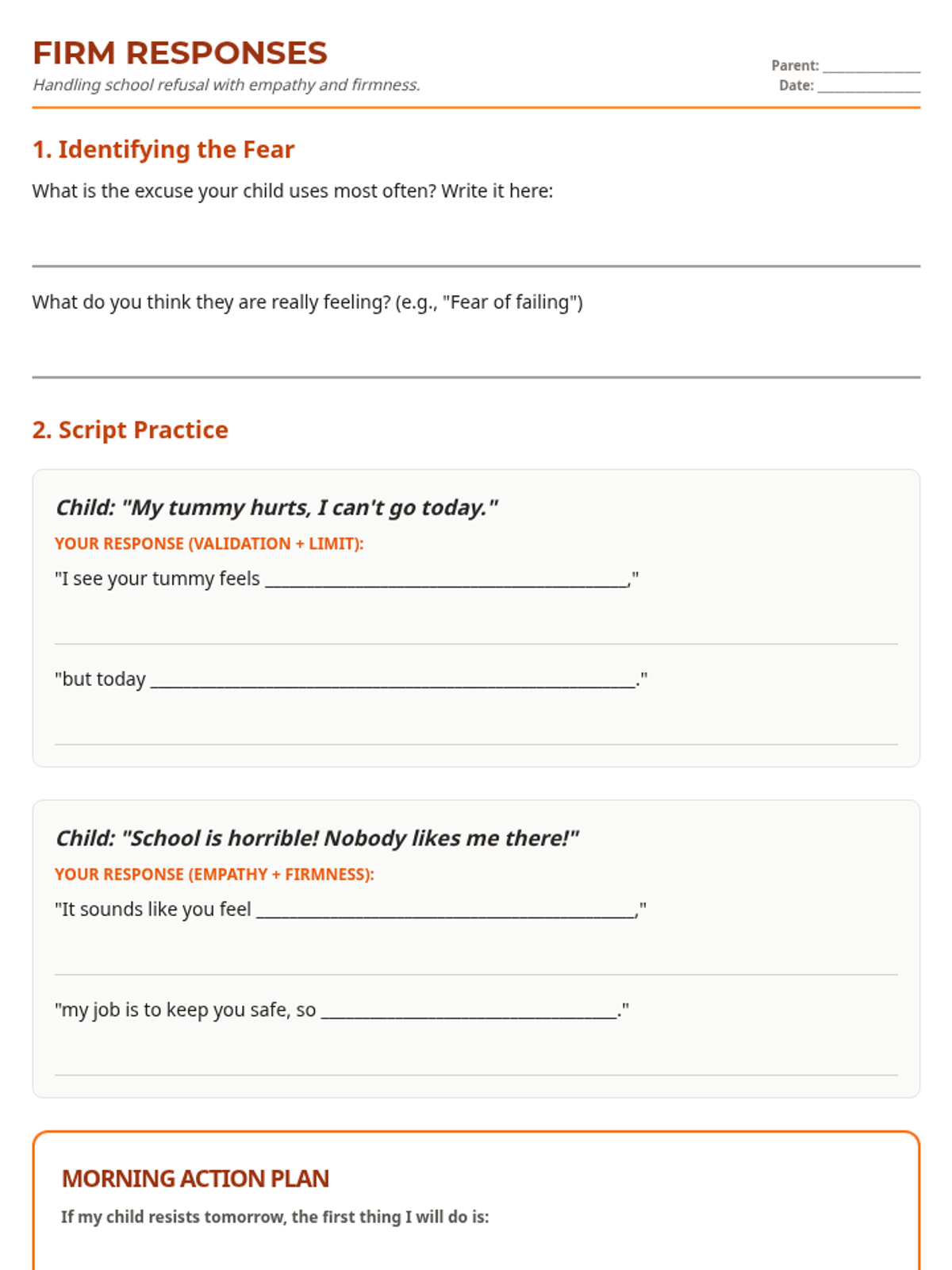
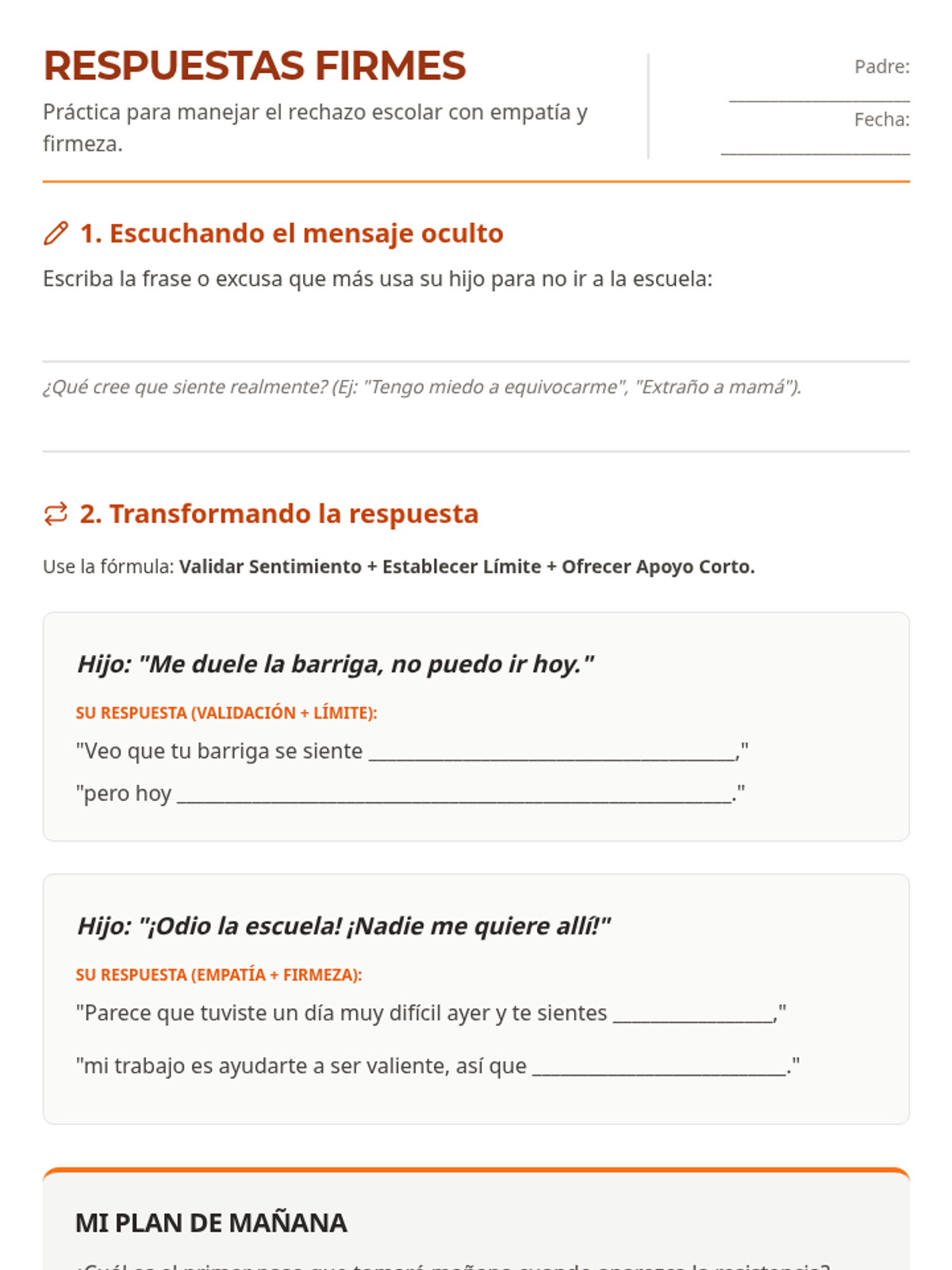
Strategies for parents to validate their child's school anxiety while maintaining firm boundaries regarding attendance.
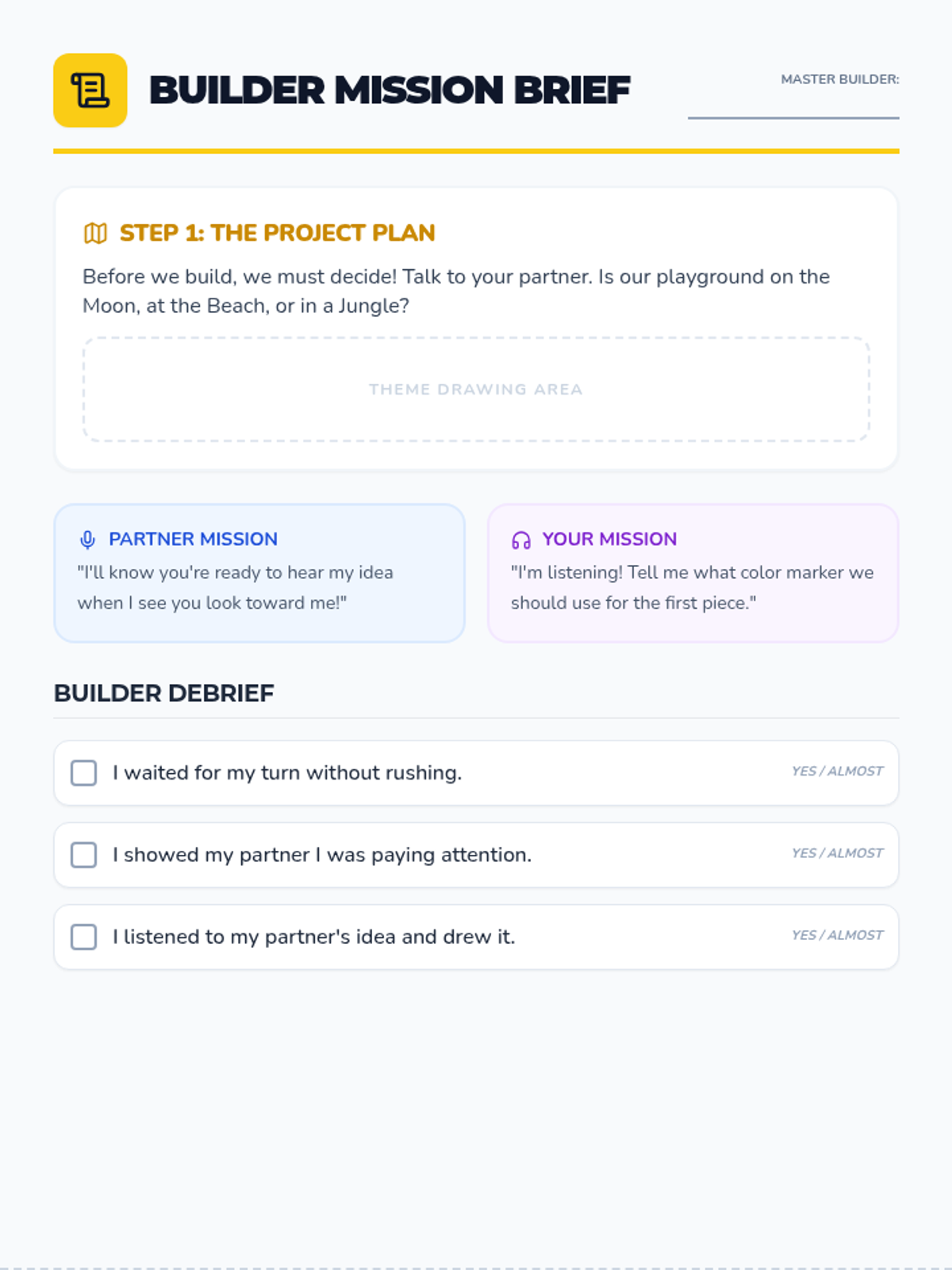
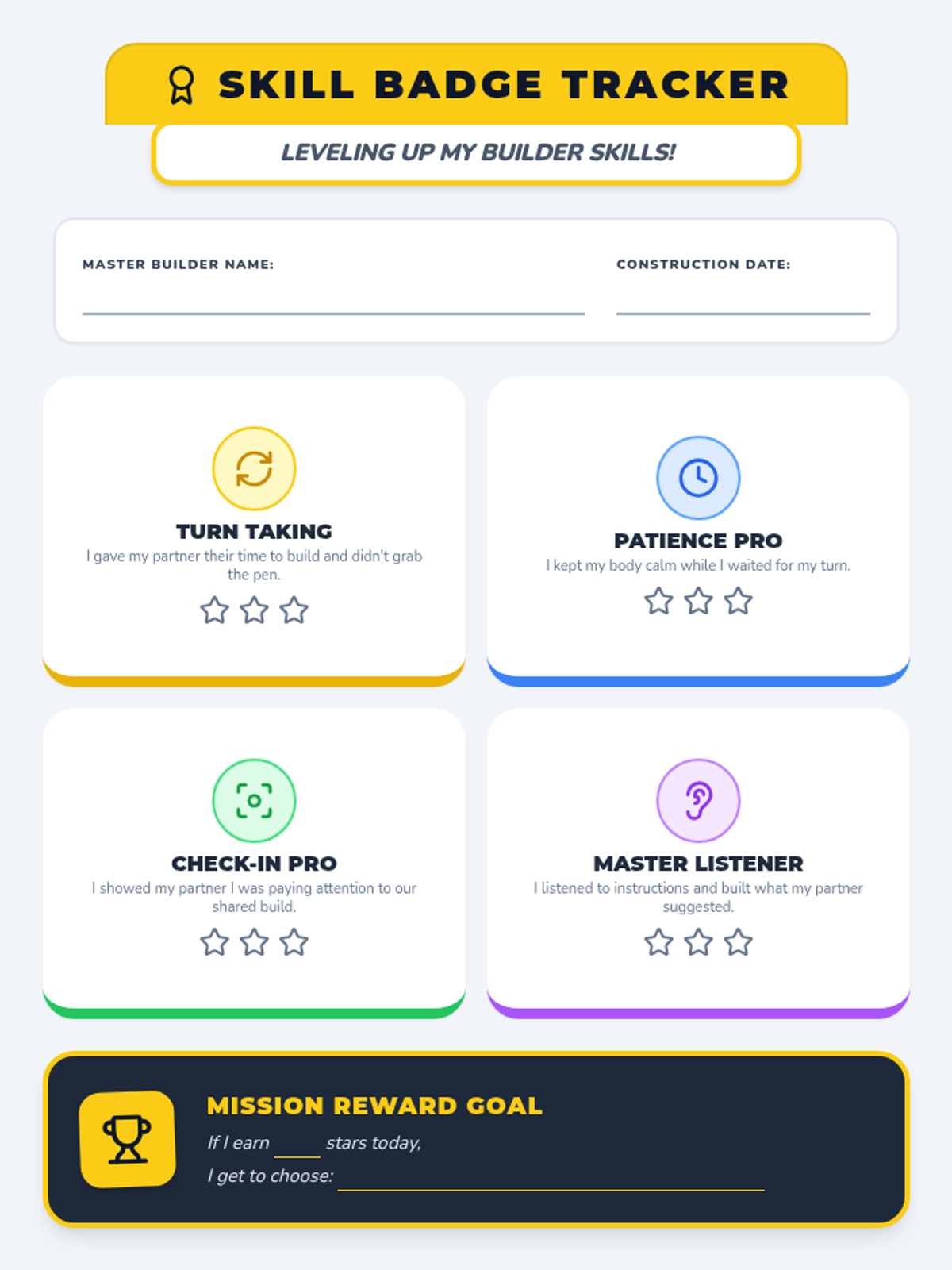
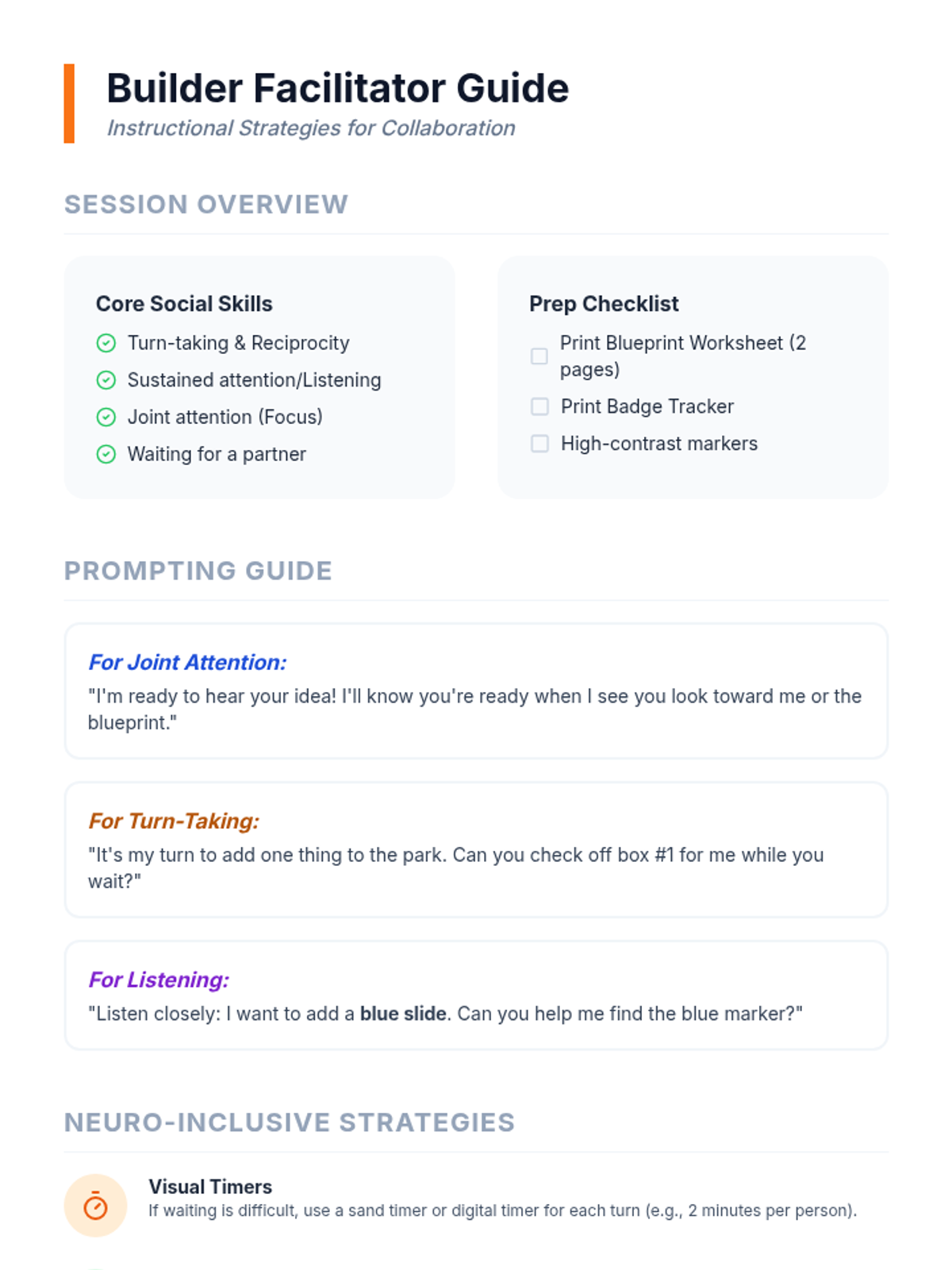
A collaborative design-based lesson for young learners to practice turn-taking, waiting, listening, and eye contact through a shared 'Master Builder' project.
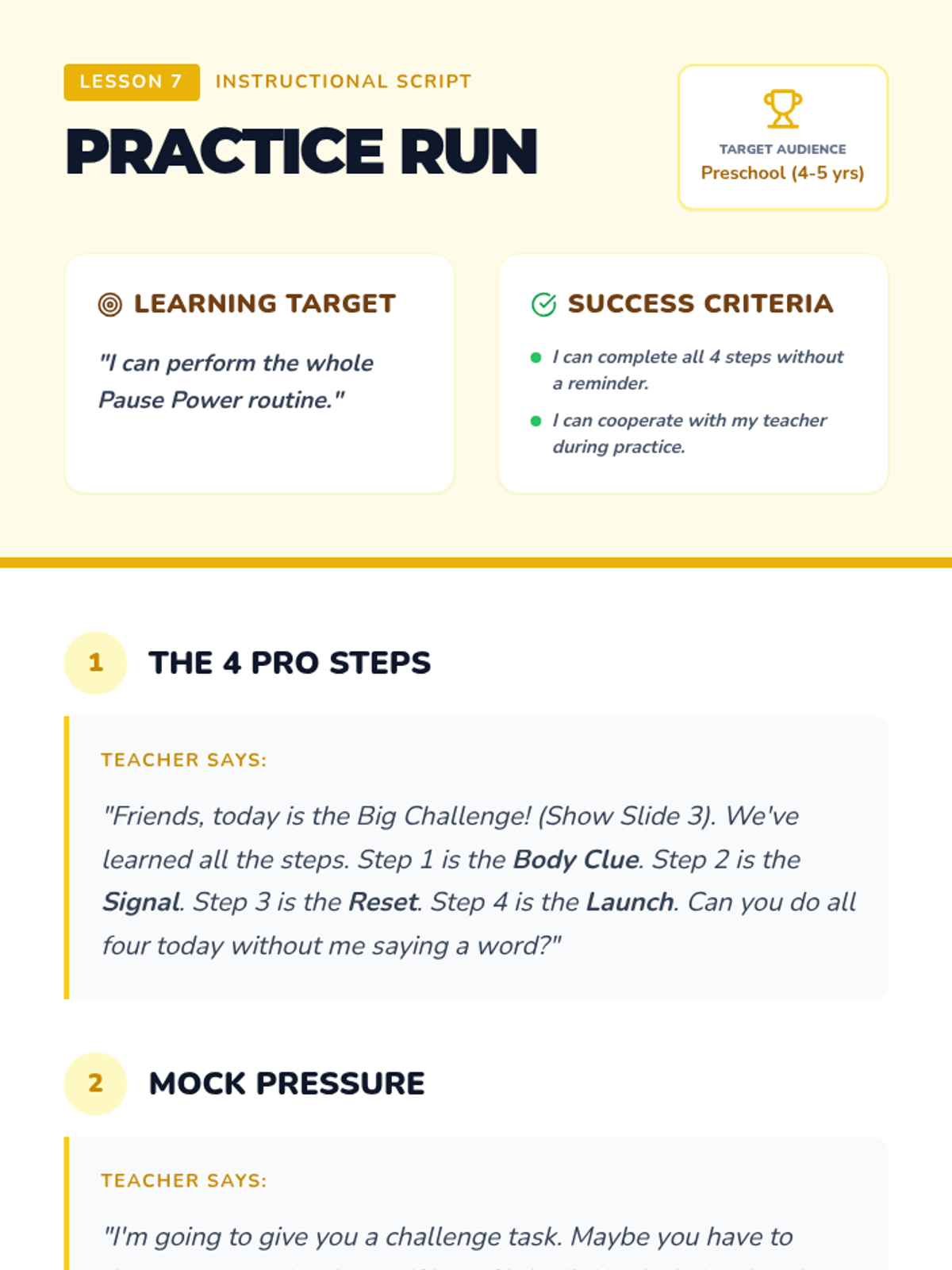
Reviewing all steps and setting a long-term goal for classroom independence.
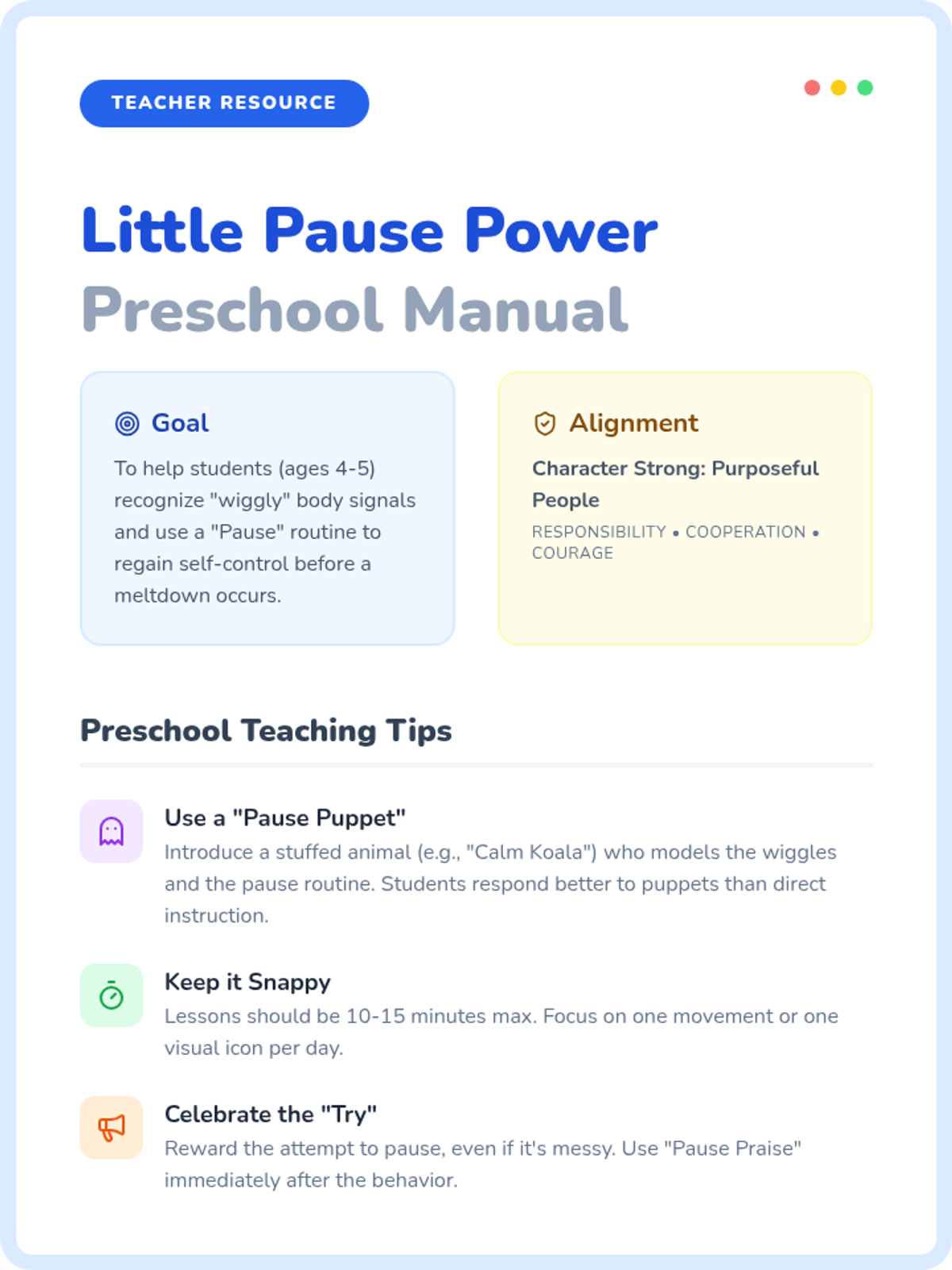
Practicing 'Pause Power' in controlled classroom situations.
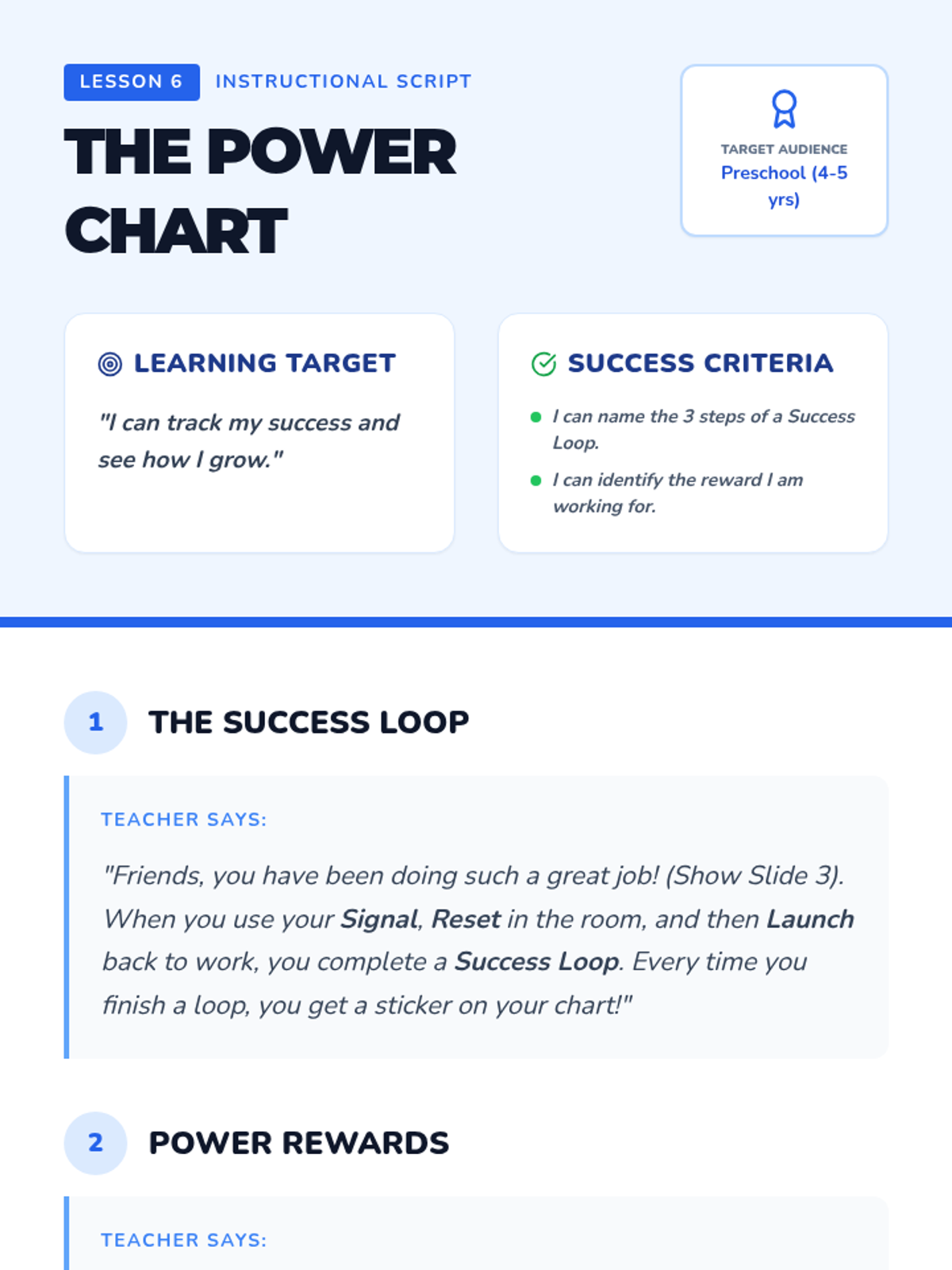
Understanding how charting success leads to 'Power Rewards' (bonus break time).
Preparing to transition back to academic work and re-entering the classroom flow.
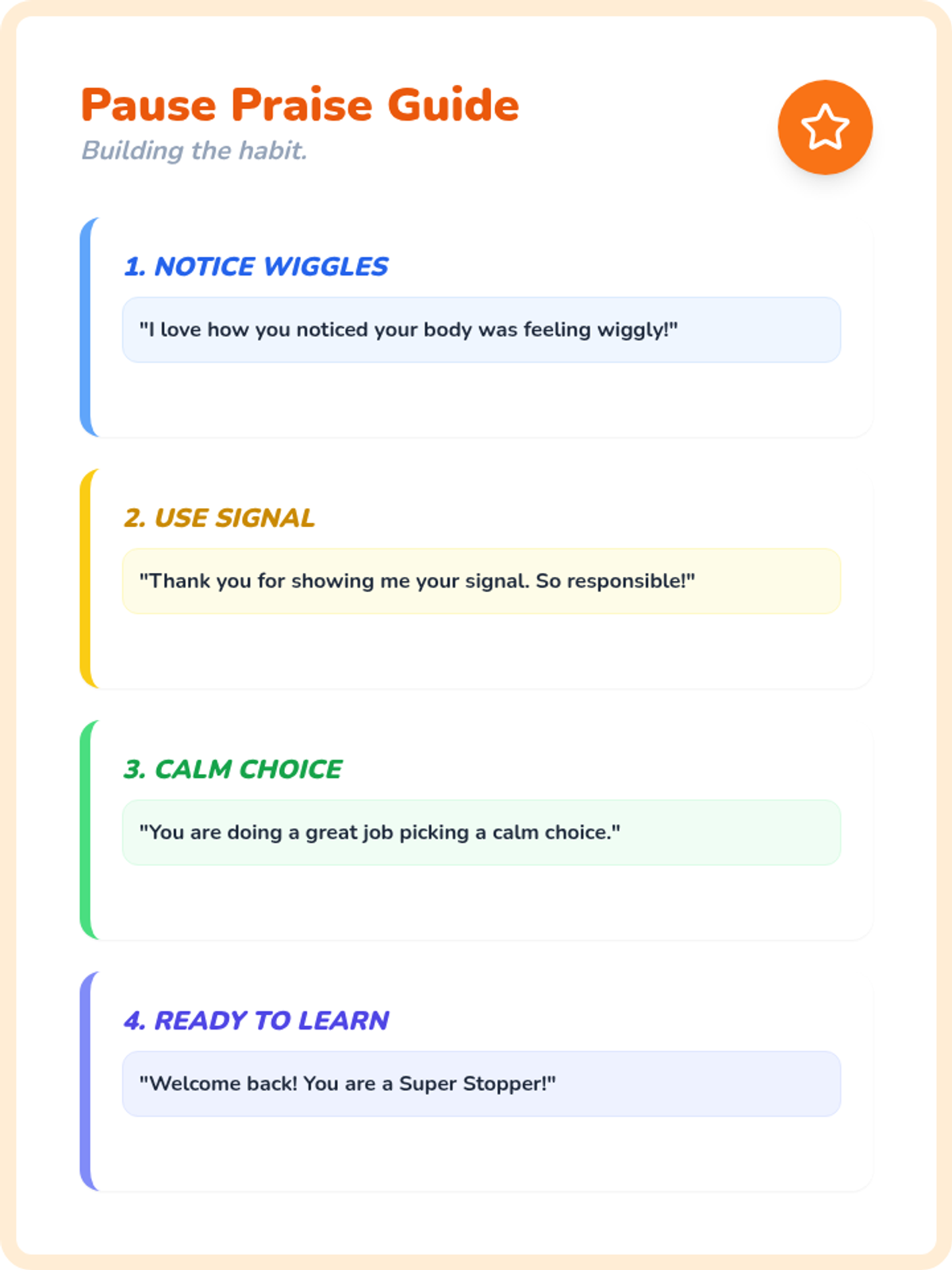
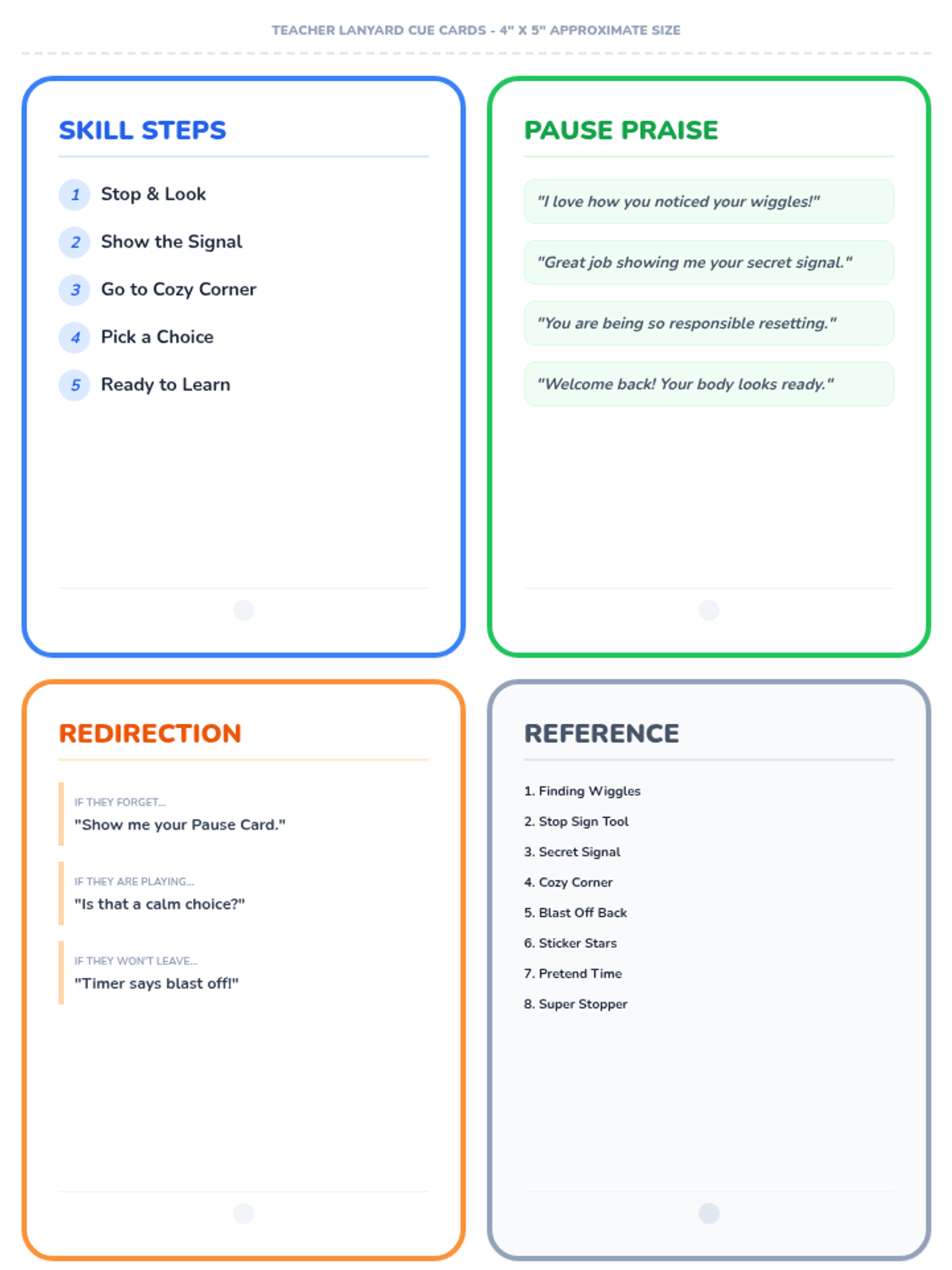
Activities during the 'Pause' that lead to regaining self-control and readiness to learn.
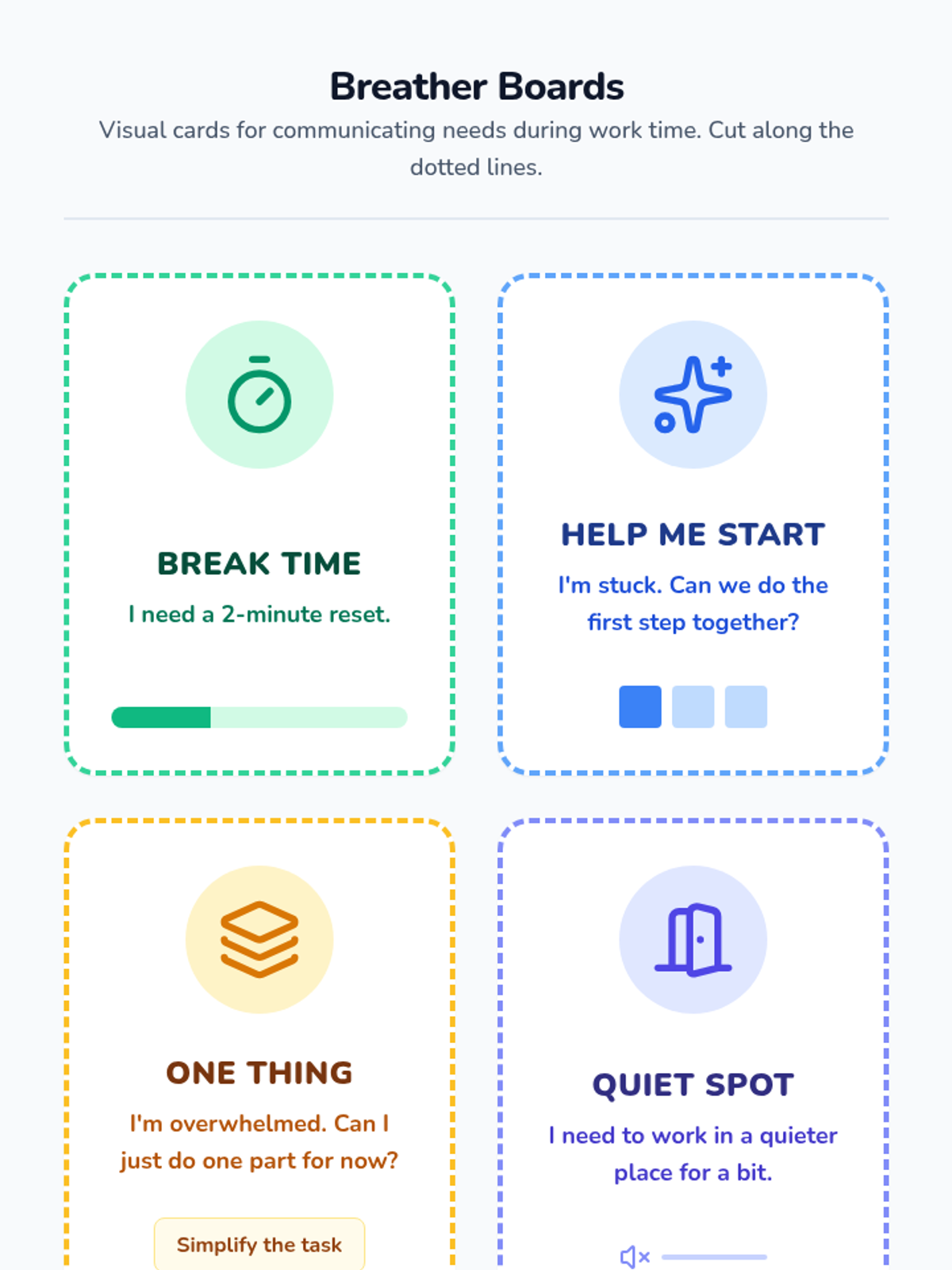
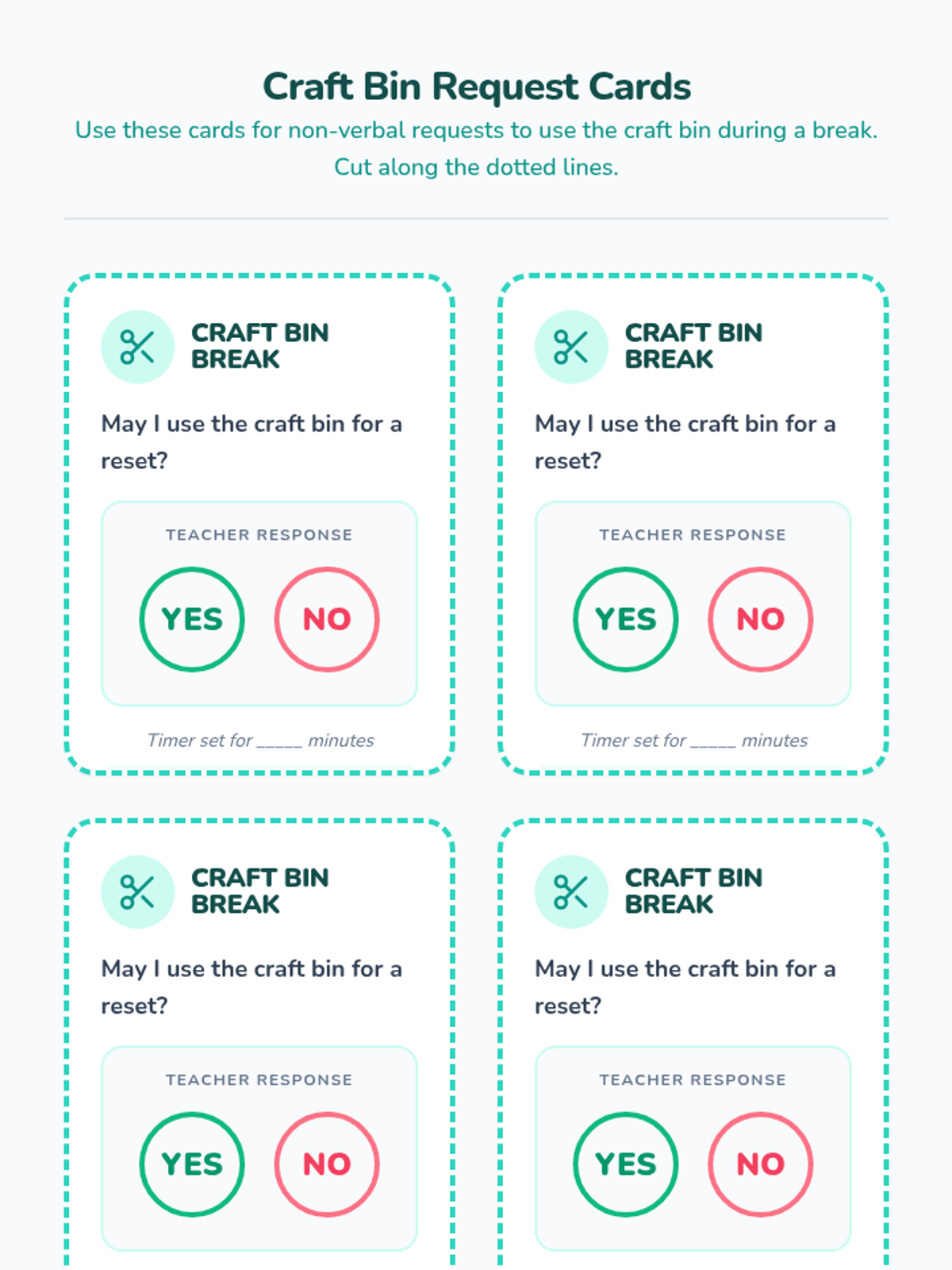
The mechanics of requesting a break through verbal and non-verbal cues.
Understanding what a 'Pause Power' break is, its purpose (self-control, not just escape), and how it works.
Identifying the feelings of 'shutting down' or avoidance and framing them as signals that it's time for a 'Pause'.
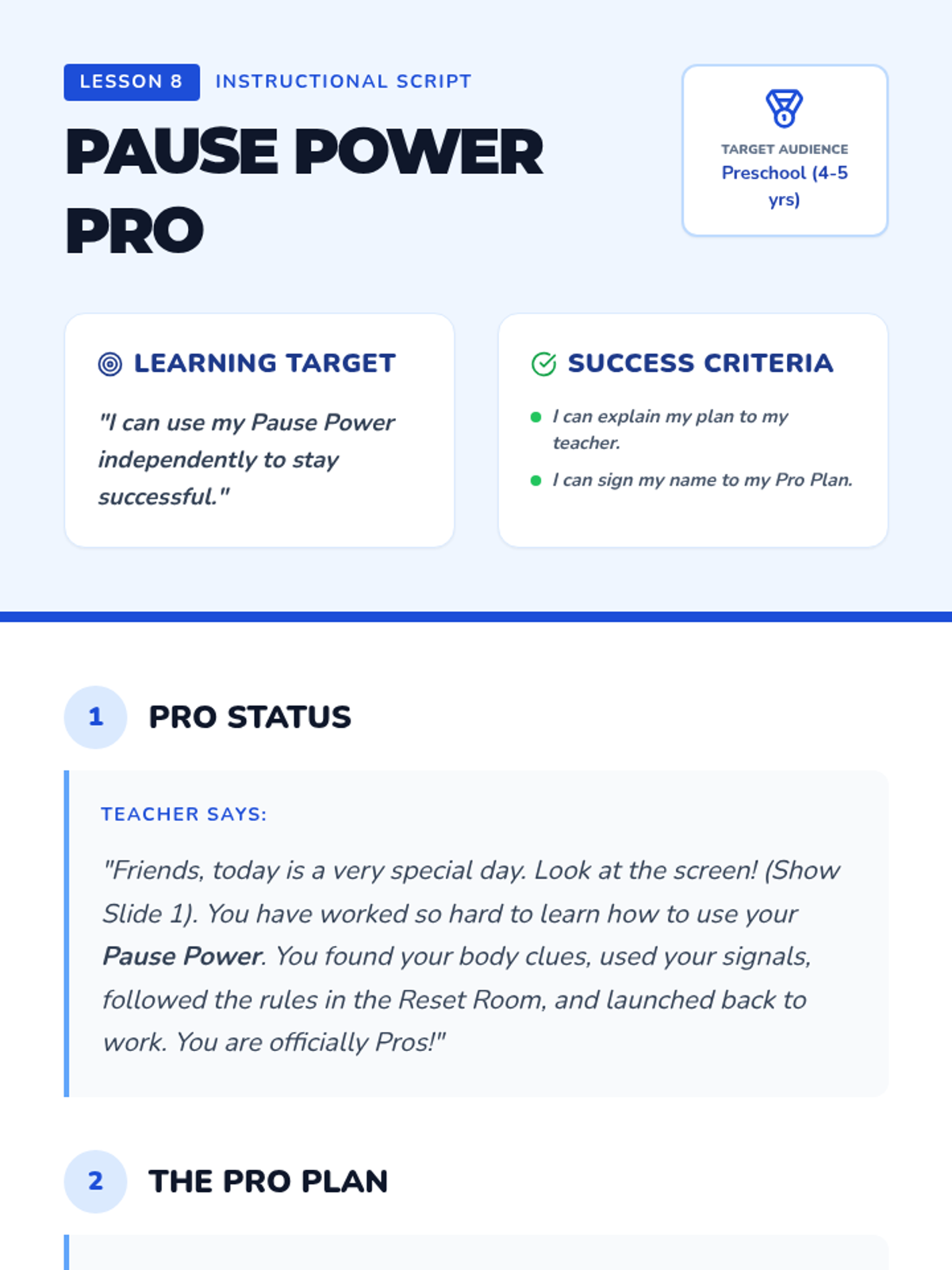
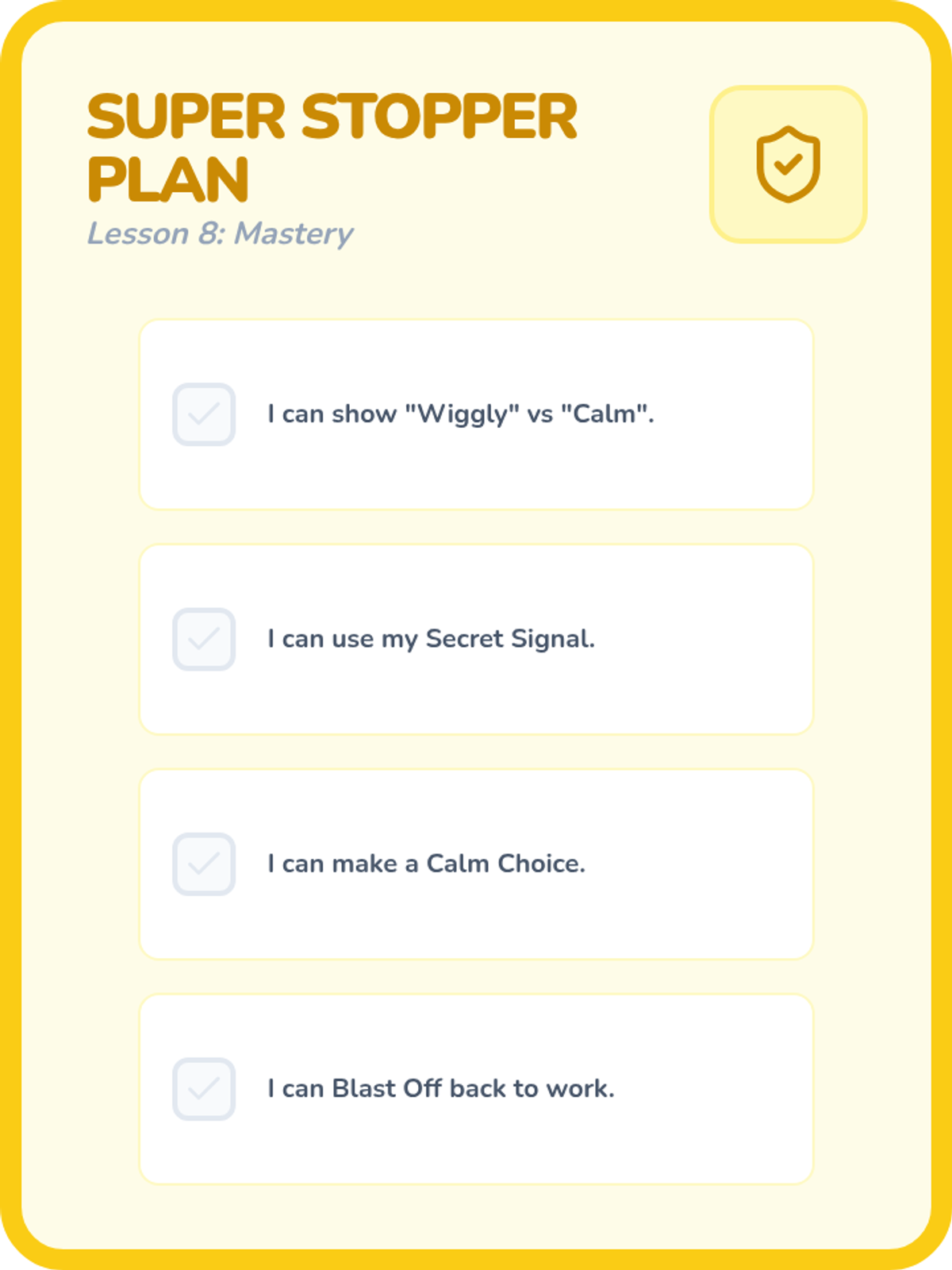
A final review and celebration of becoming a 'Super Stopper' who can use their pause independently.
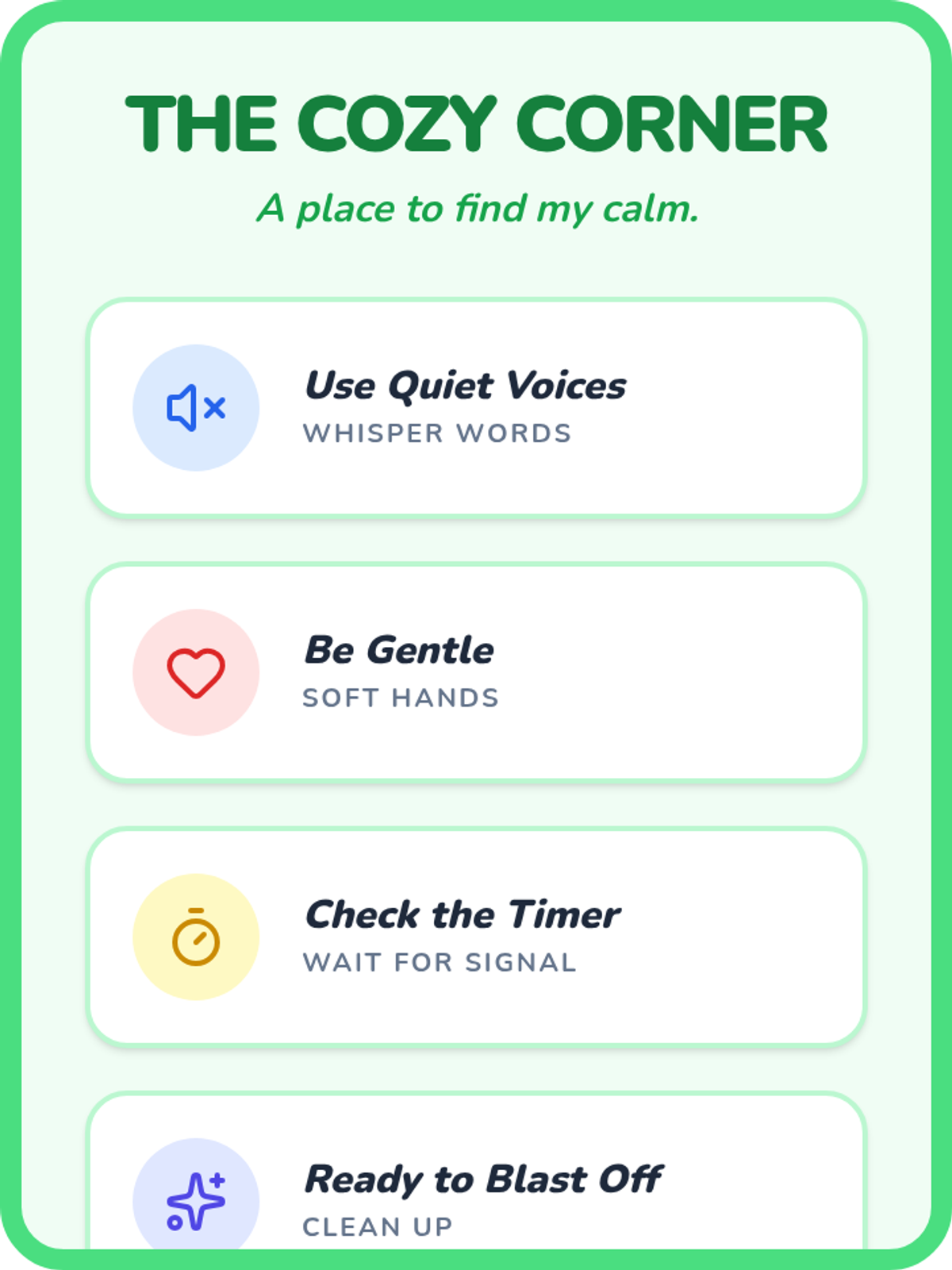
Exploring the classroom 'Cozy Corner' and choosing calming activities (books, breathing, sensory toys).
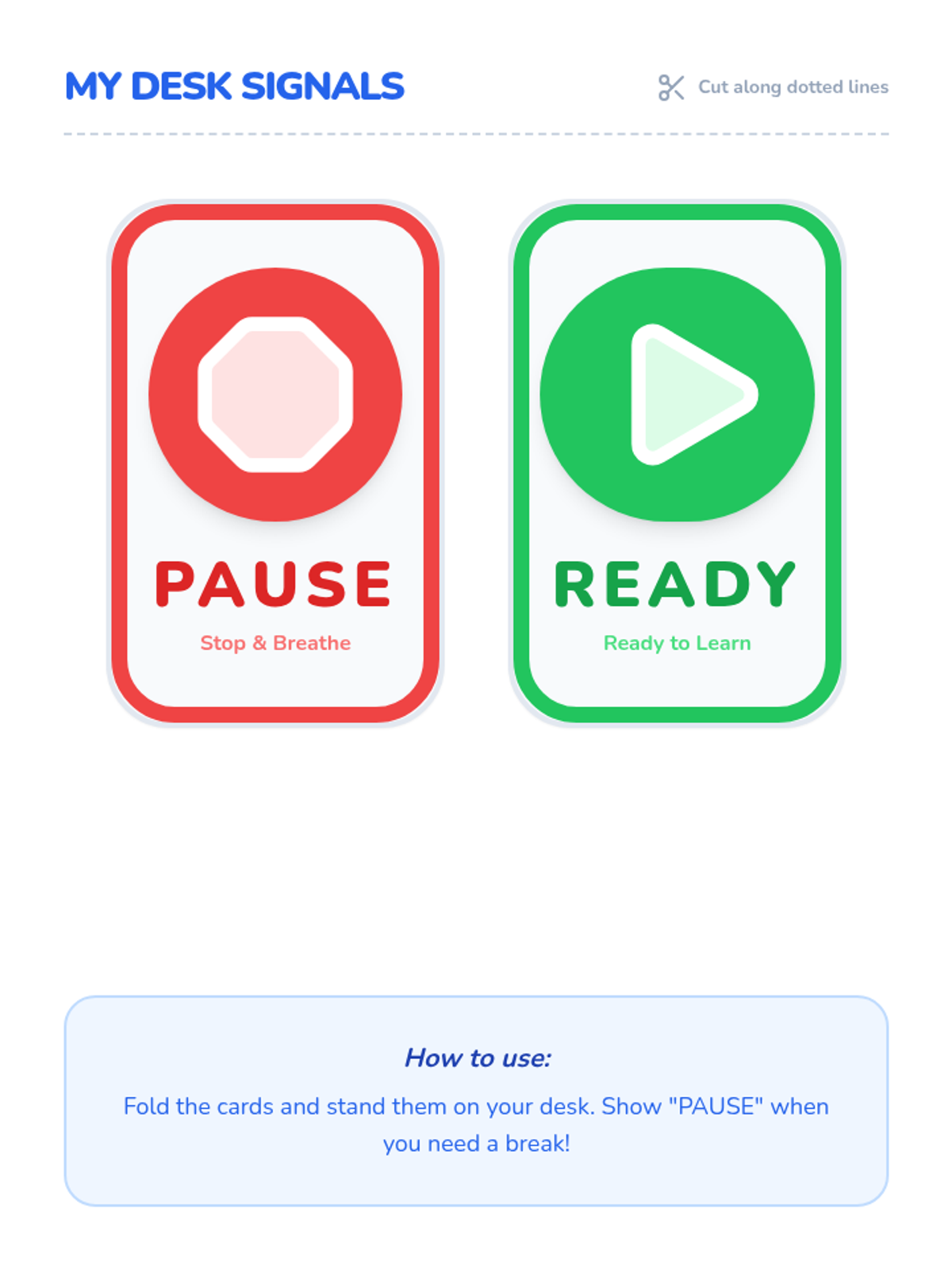
Introducing the physical 'Pause' card and explaining it as a tool for self-control, not a time-out.
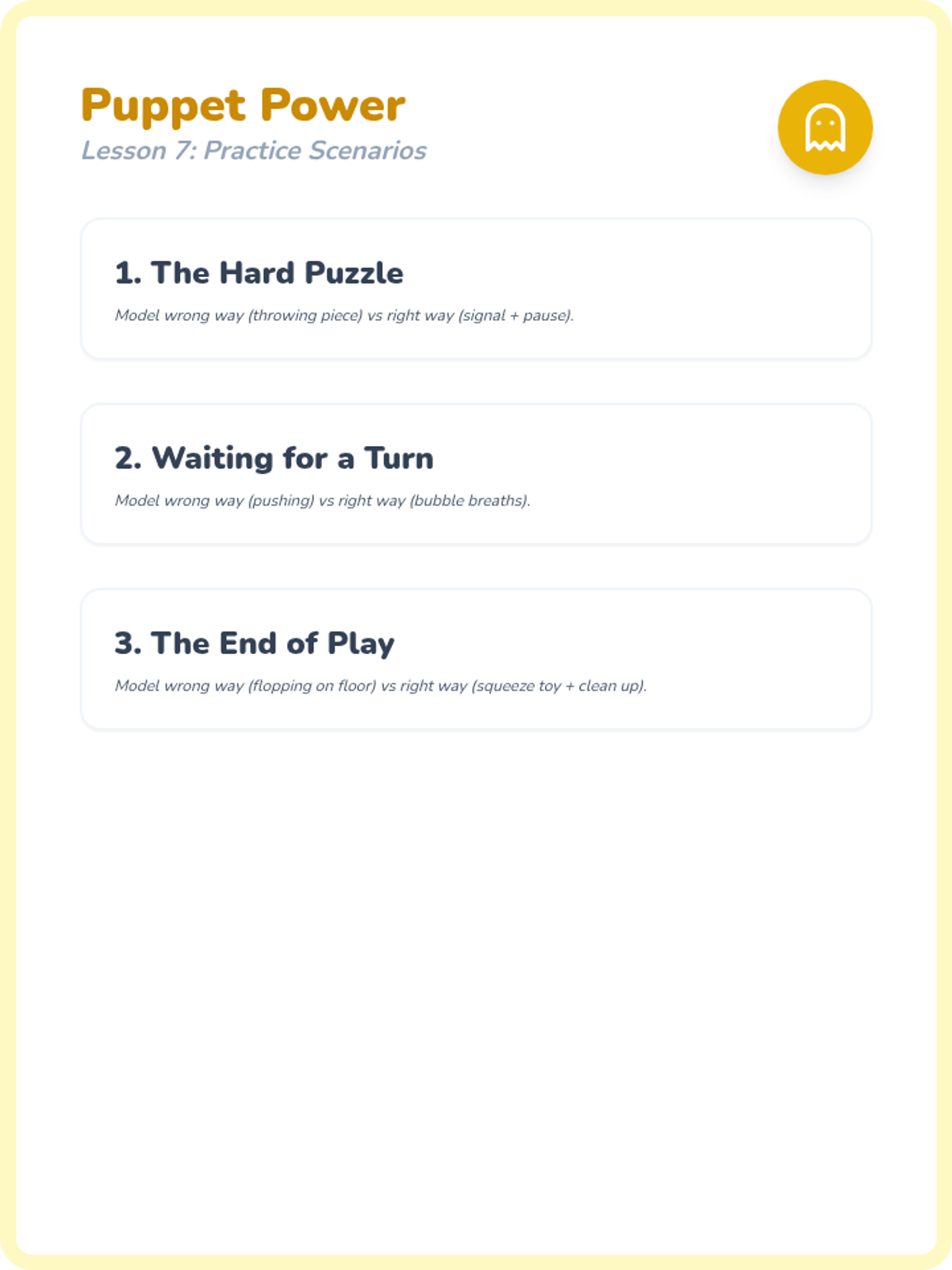
Guided role-play with puppets to practice the 'Pause' routine during normal classroom activities.
Using a visual sticker chart to track successful pauses and earn 'Power Breaks' (extra choice time).
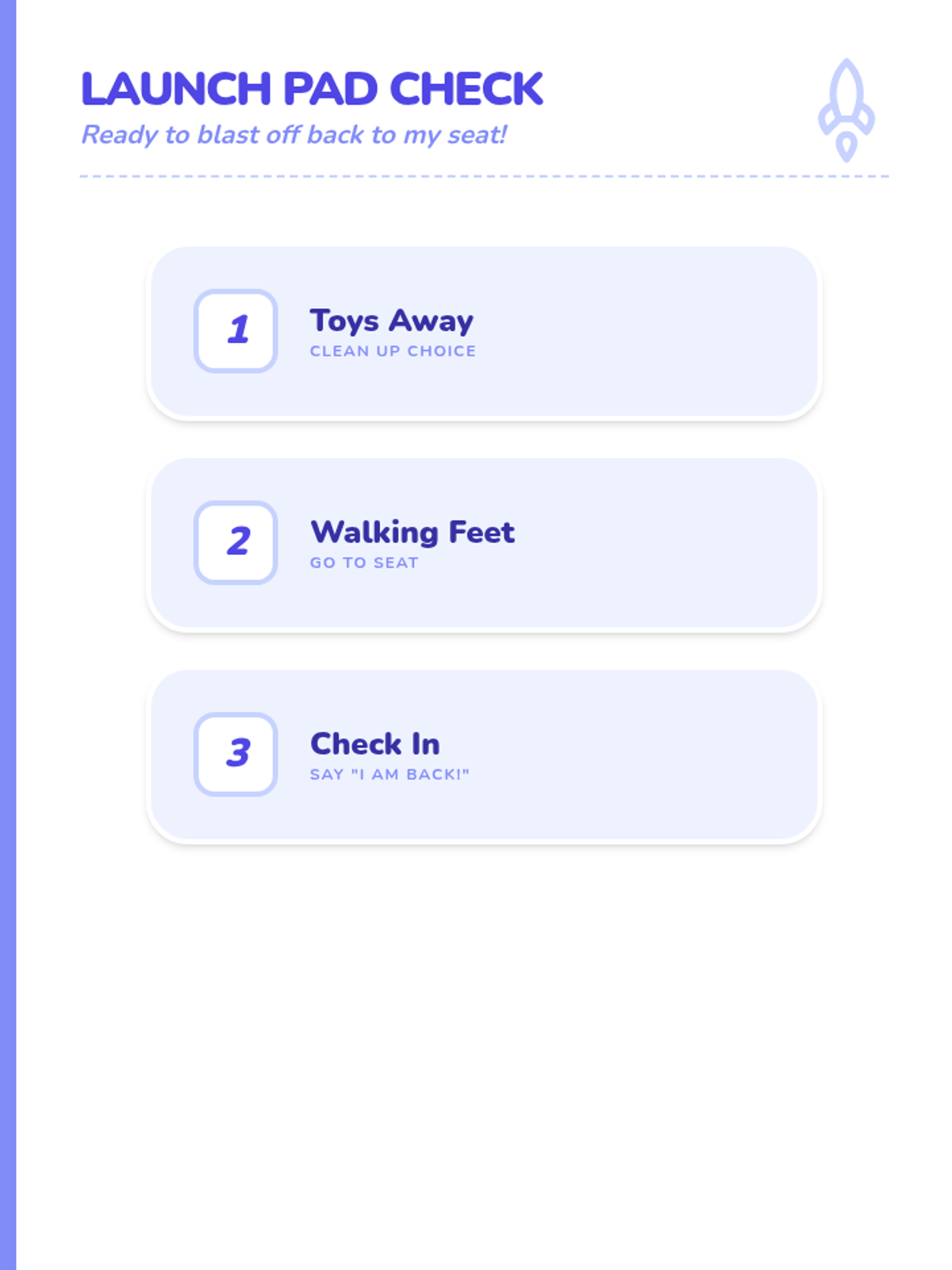
Simple steps for the student to transition from their 'Pause' area back to their seat with a 'Check-In'.
The mechanics of requesting a break through simple verbal and non-verbal signs suitable for preschoolers.
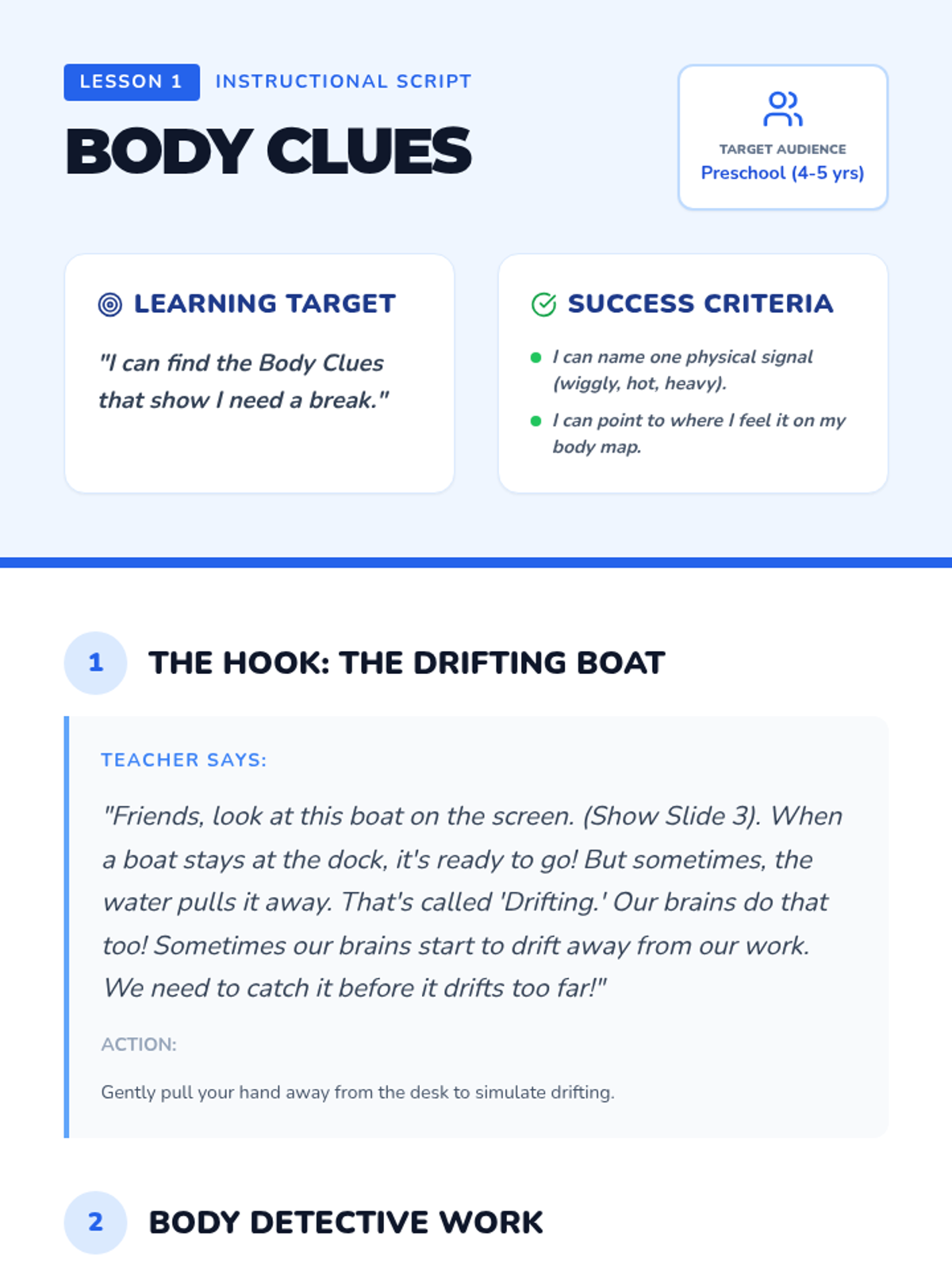
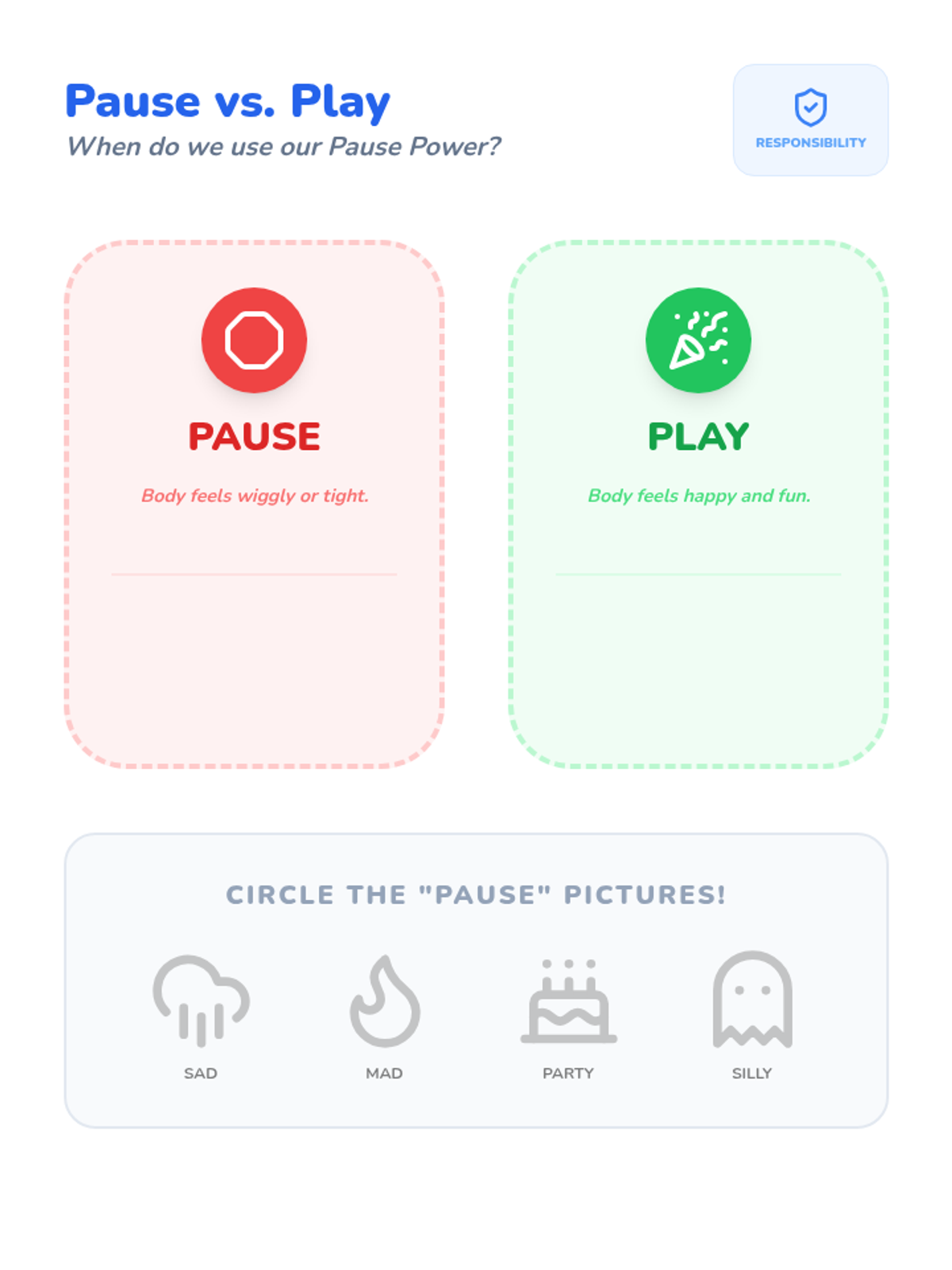
Helping students notice when their body feels 'wiggly,' 'tight,' or 'fast' as a signal that they need a pause.
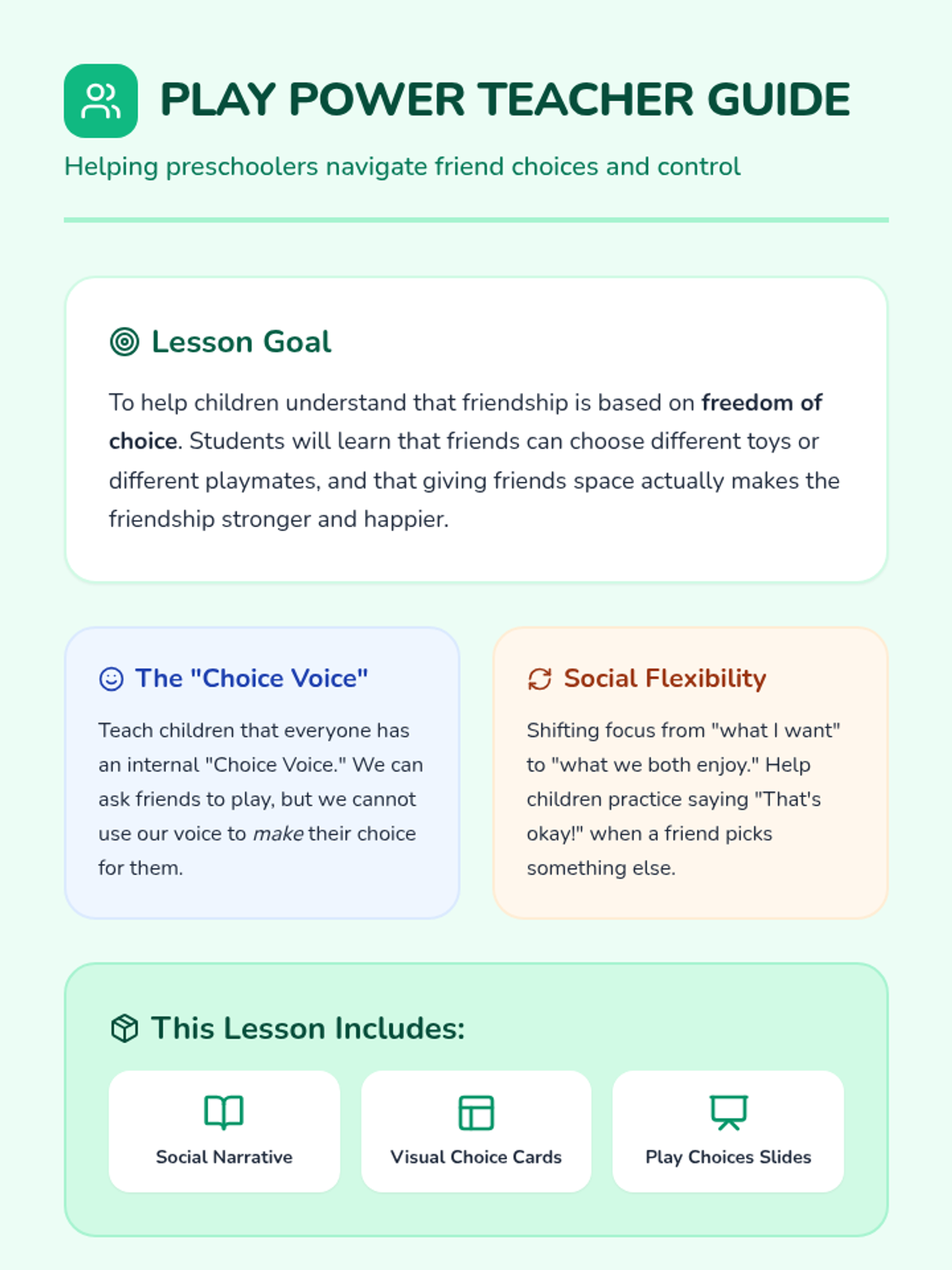
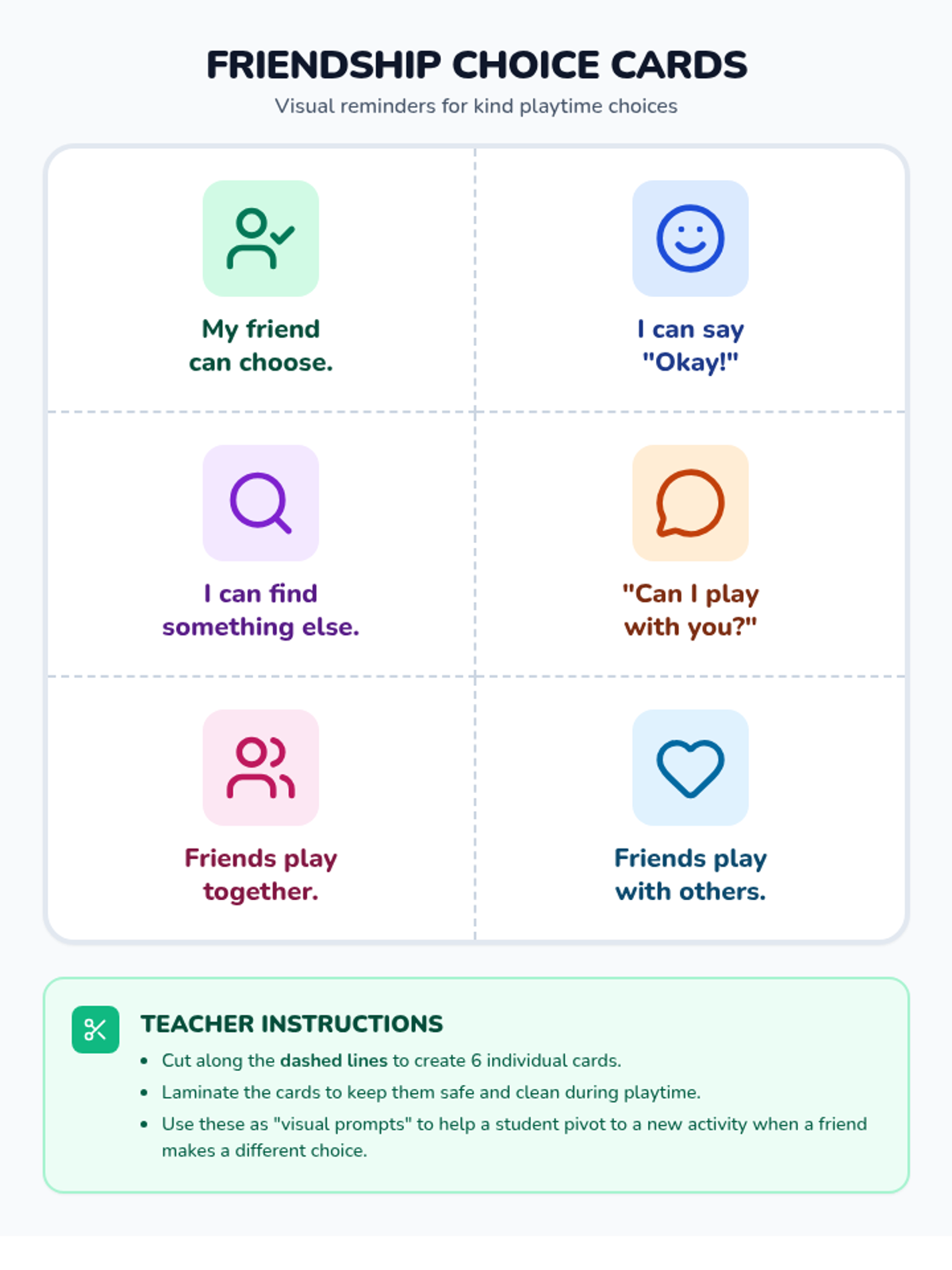
A lesson designed for preschoolers to understand that friends have the right to make their own choices about what to play with and who to play with. This lesson uses social narratives and visual supports to build empathy and social flexibility.
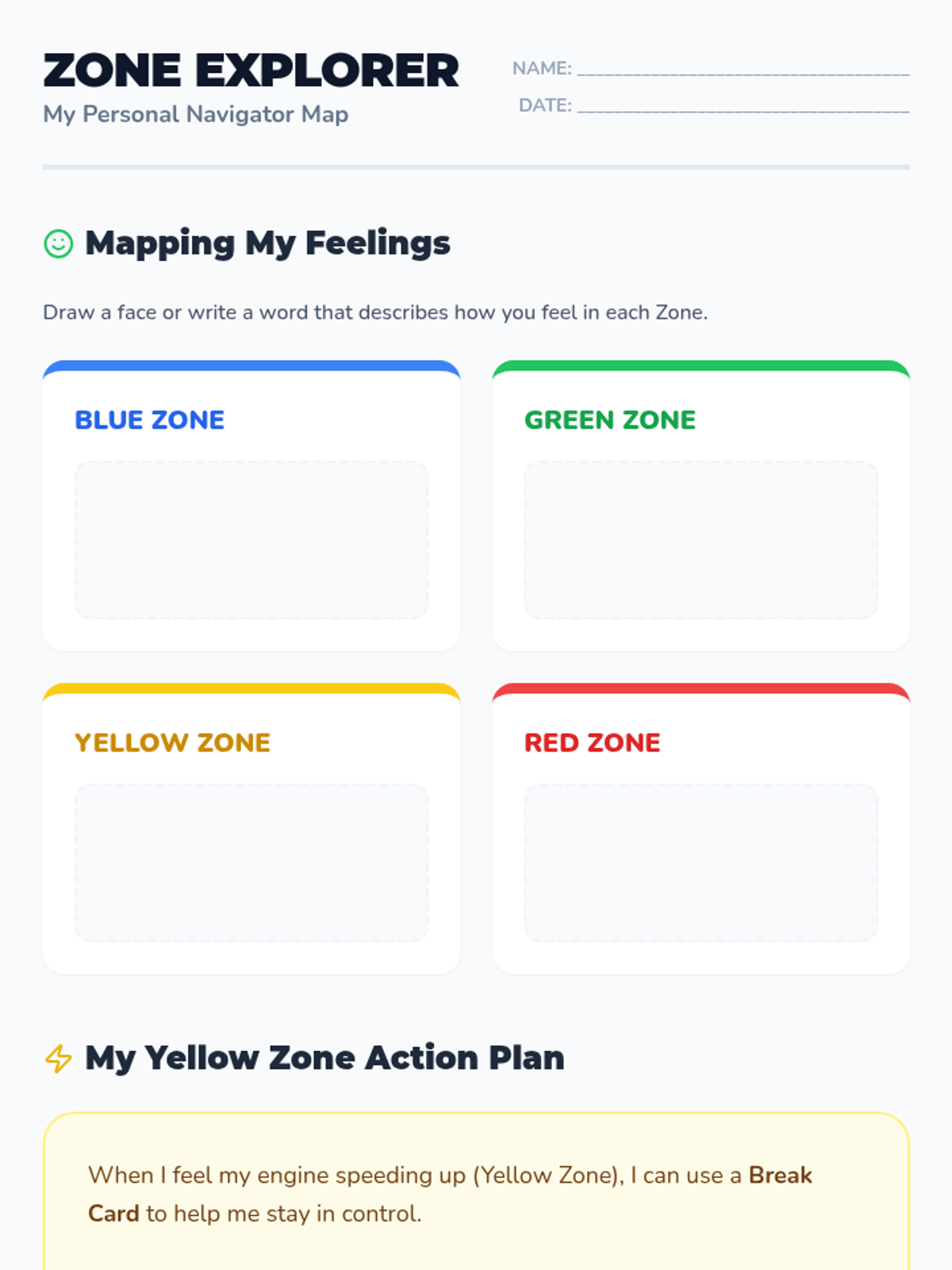
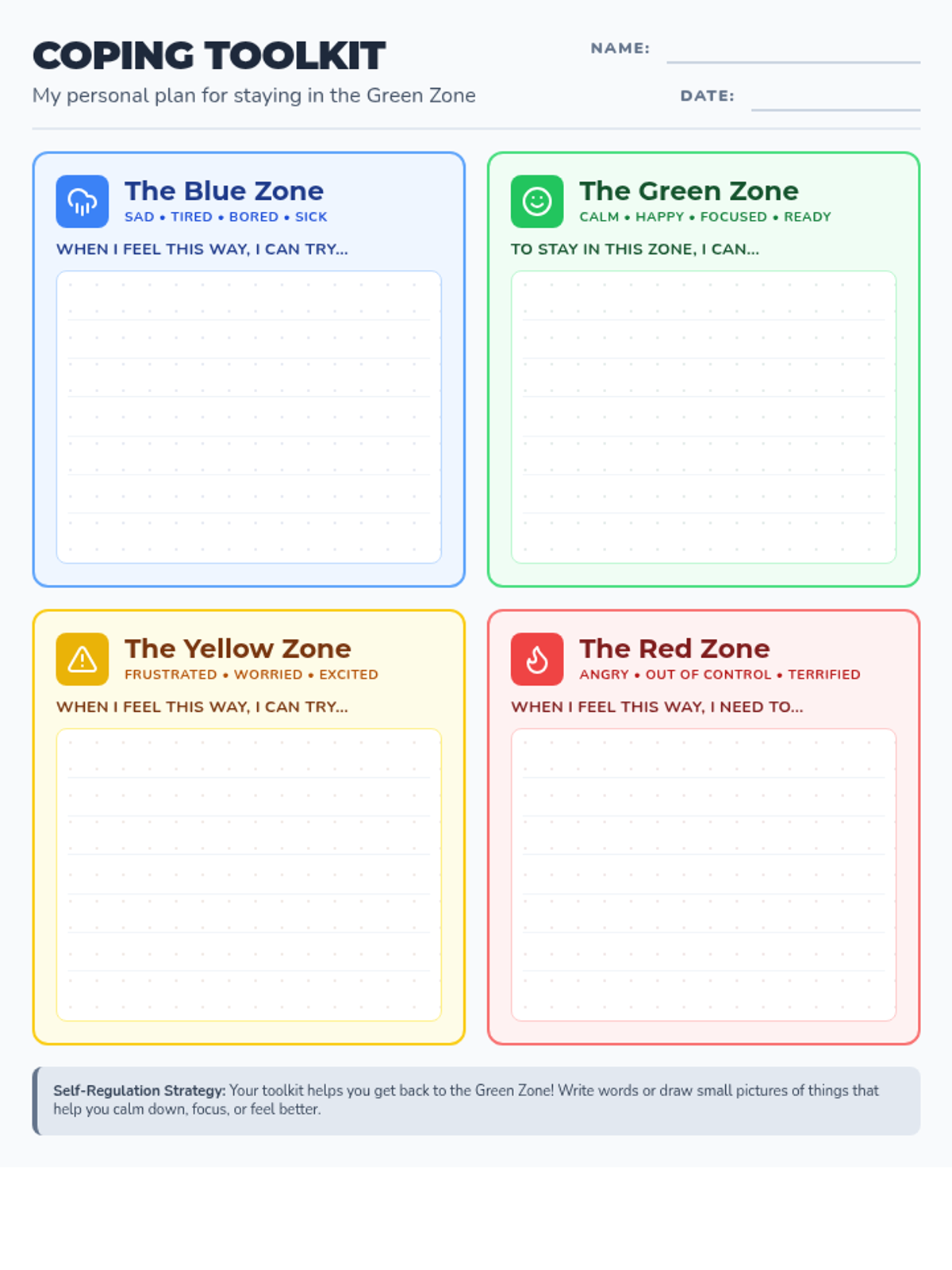
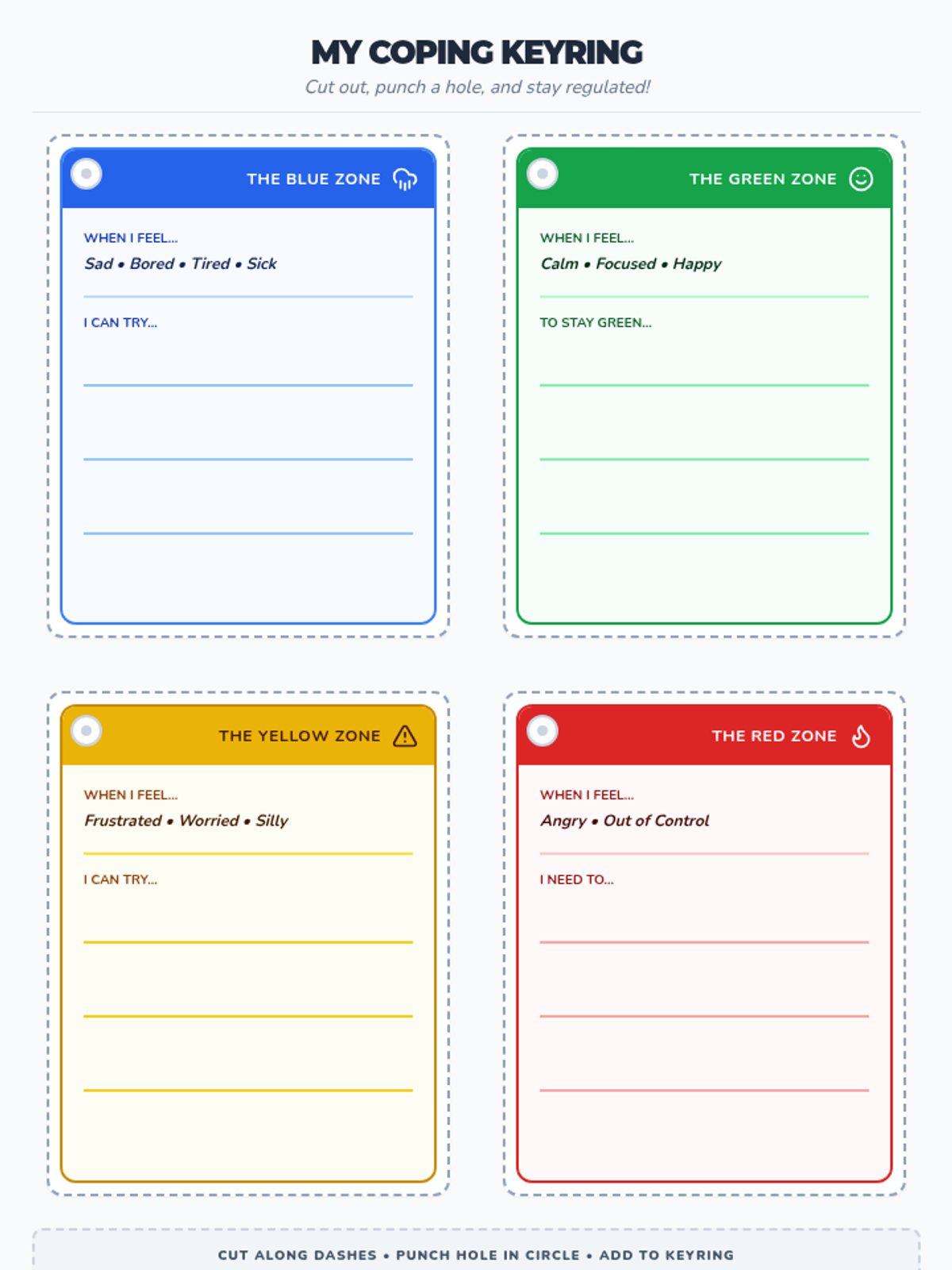
A collection of visual templates for students to identify emotional states and build personalized coping strategies based on the Zones of Regulation framework.
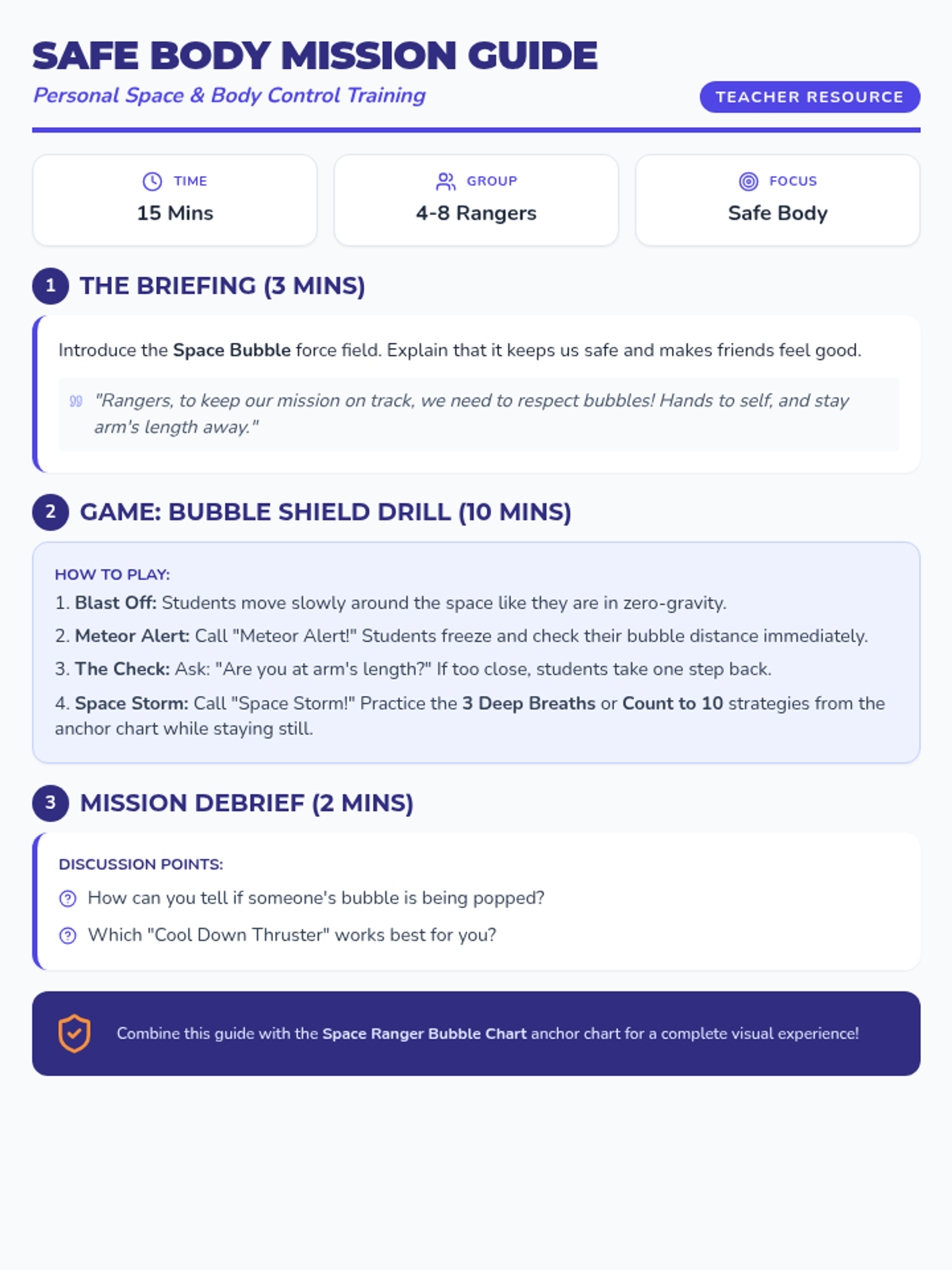
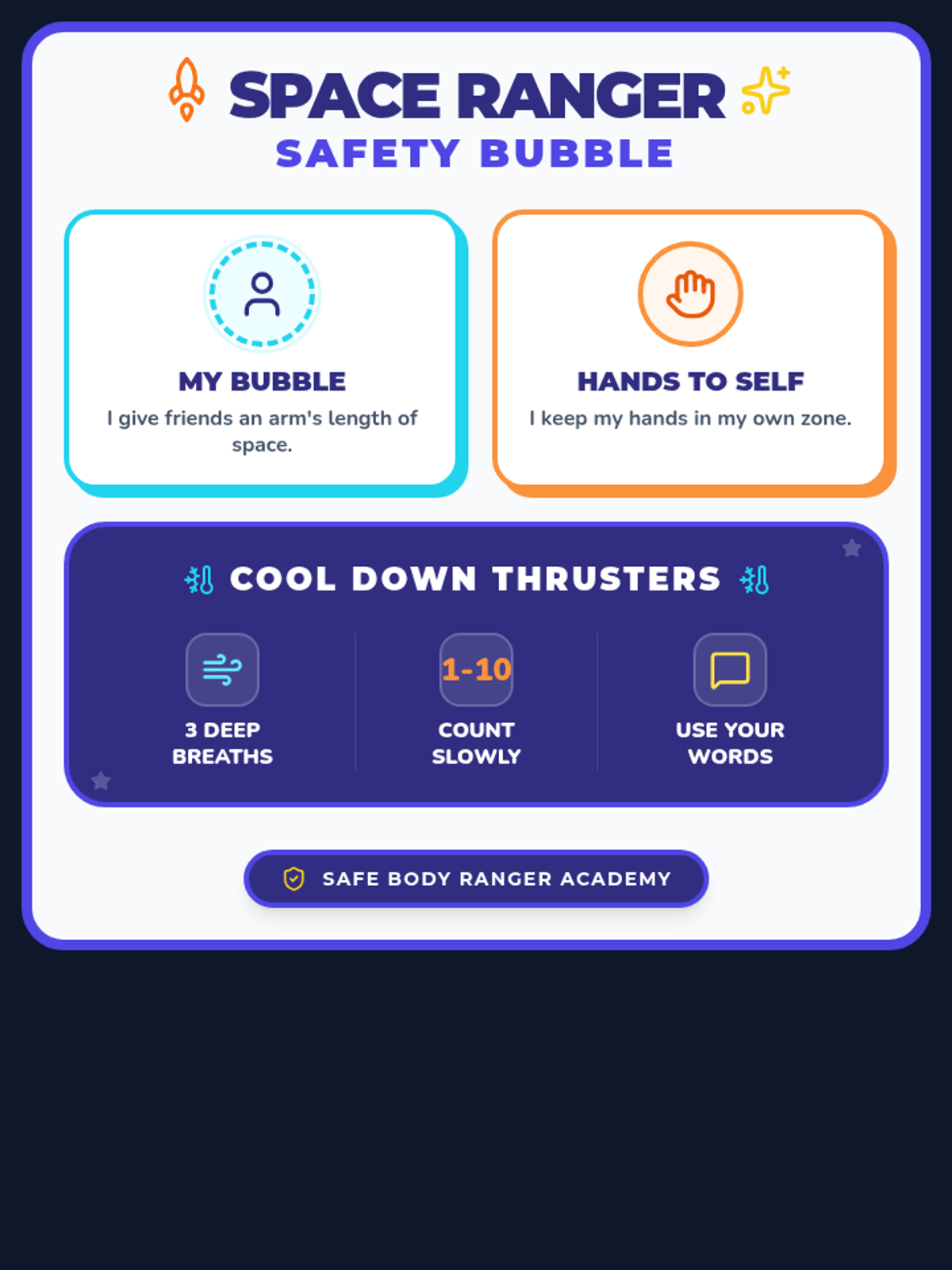
A 15-minute social-emotional learning lesson for Lunch Bunch groups, focusing on personal space, hands to self, and calming strategies using a fun 'Space Ranger' theme.
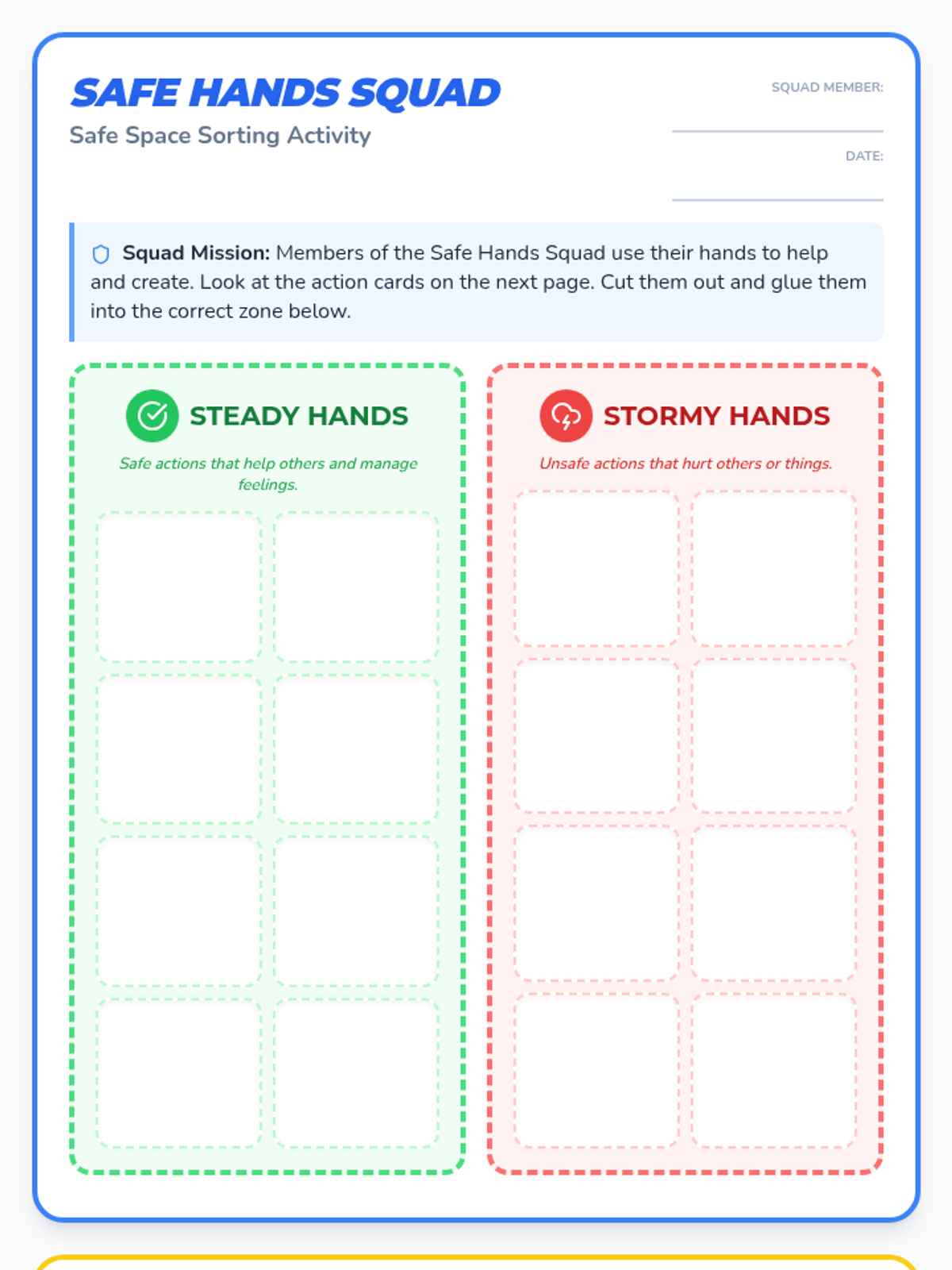
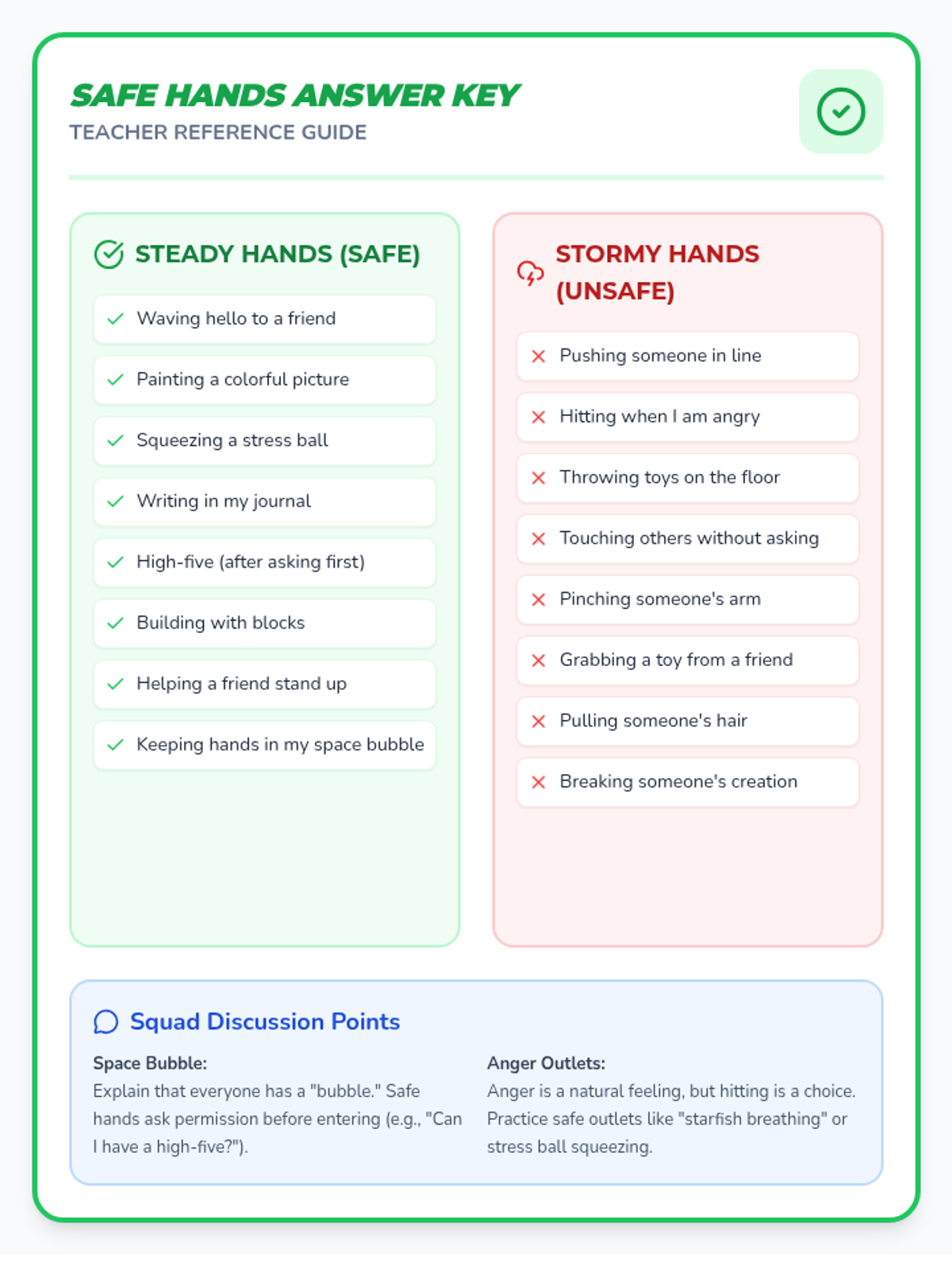
A lesson focused on teaching students how to use their hands safely, respect personal boundaries, and manage strong emotions like anger through a hands-on sorting activity.
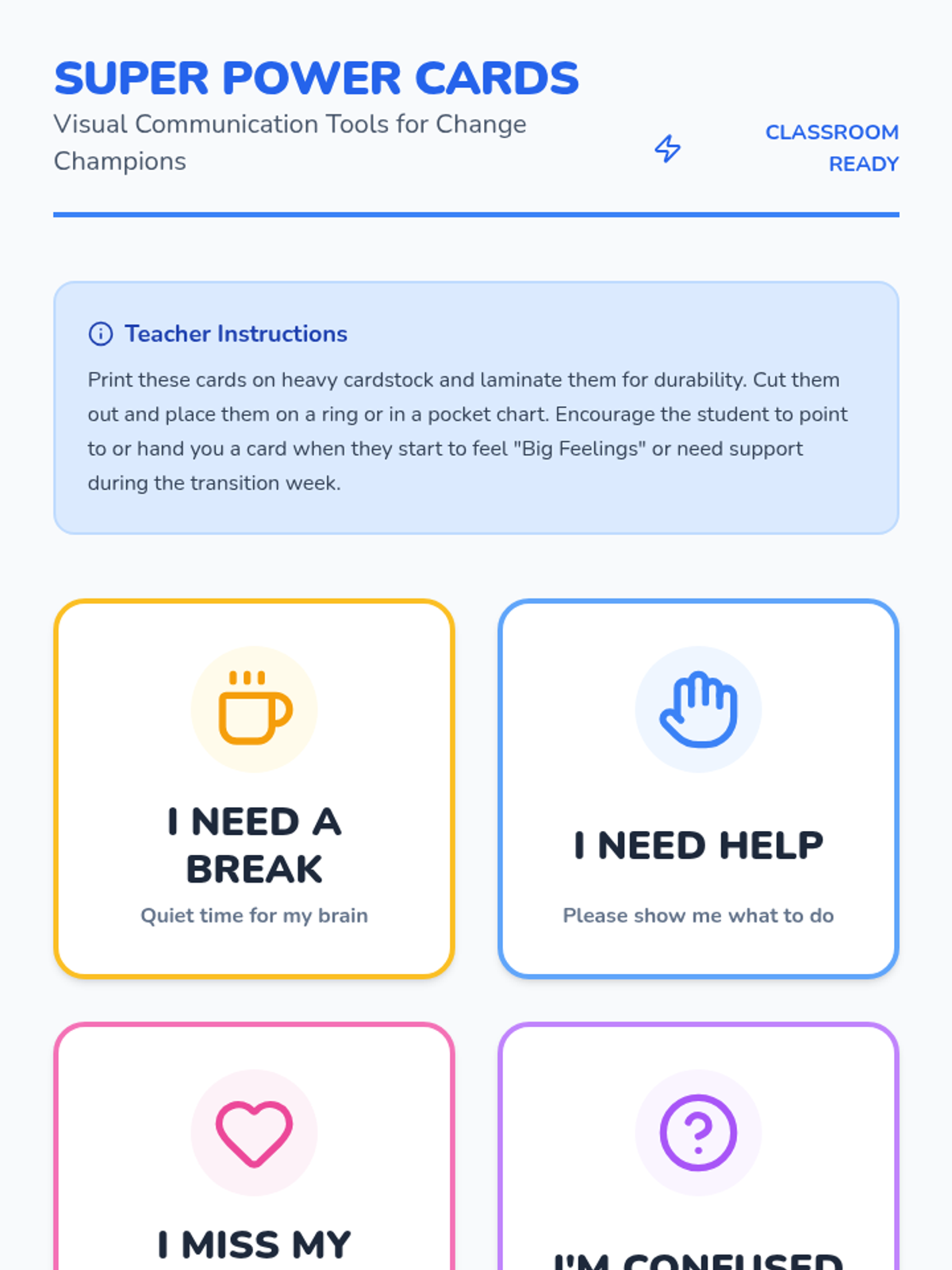
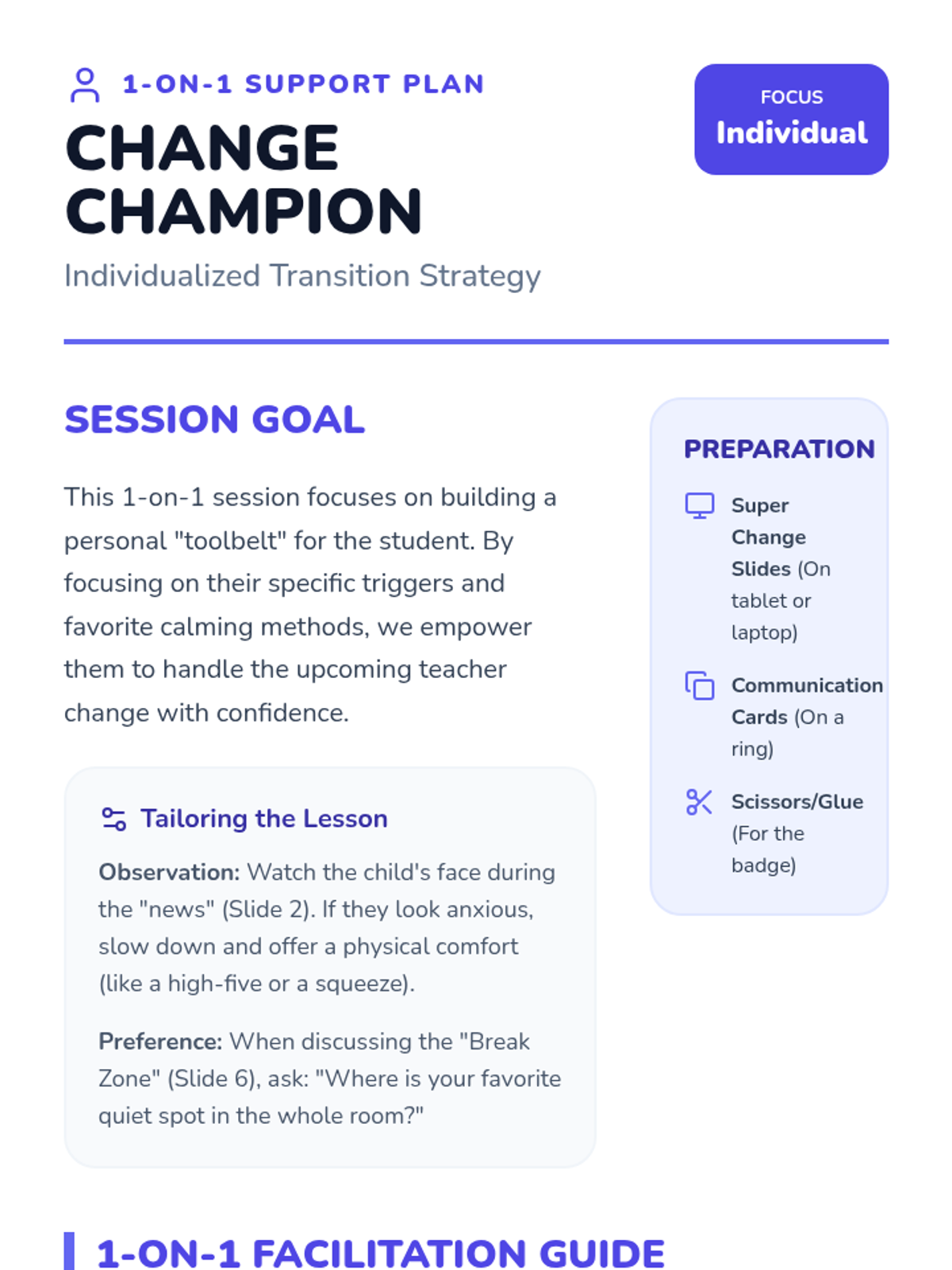
A lesson designed to help preschoolers navigate transitions when their regular teacher is away. It focuses on self-regulation, flexible thinking, and using visual tools to communicate needs.
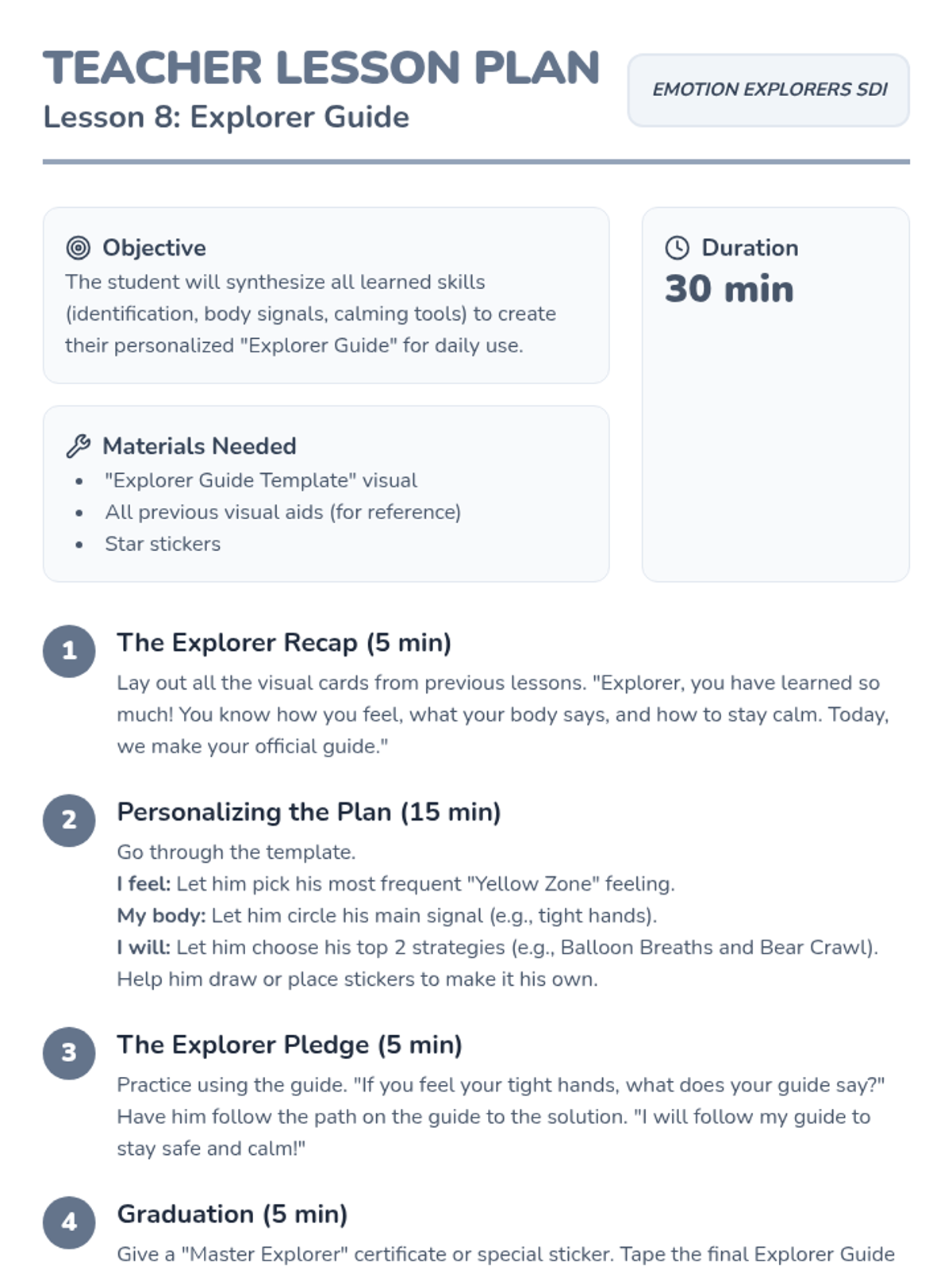
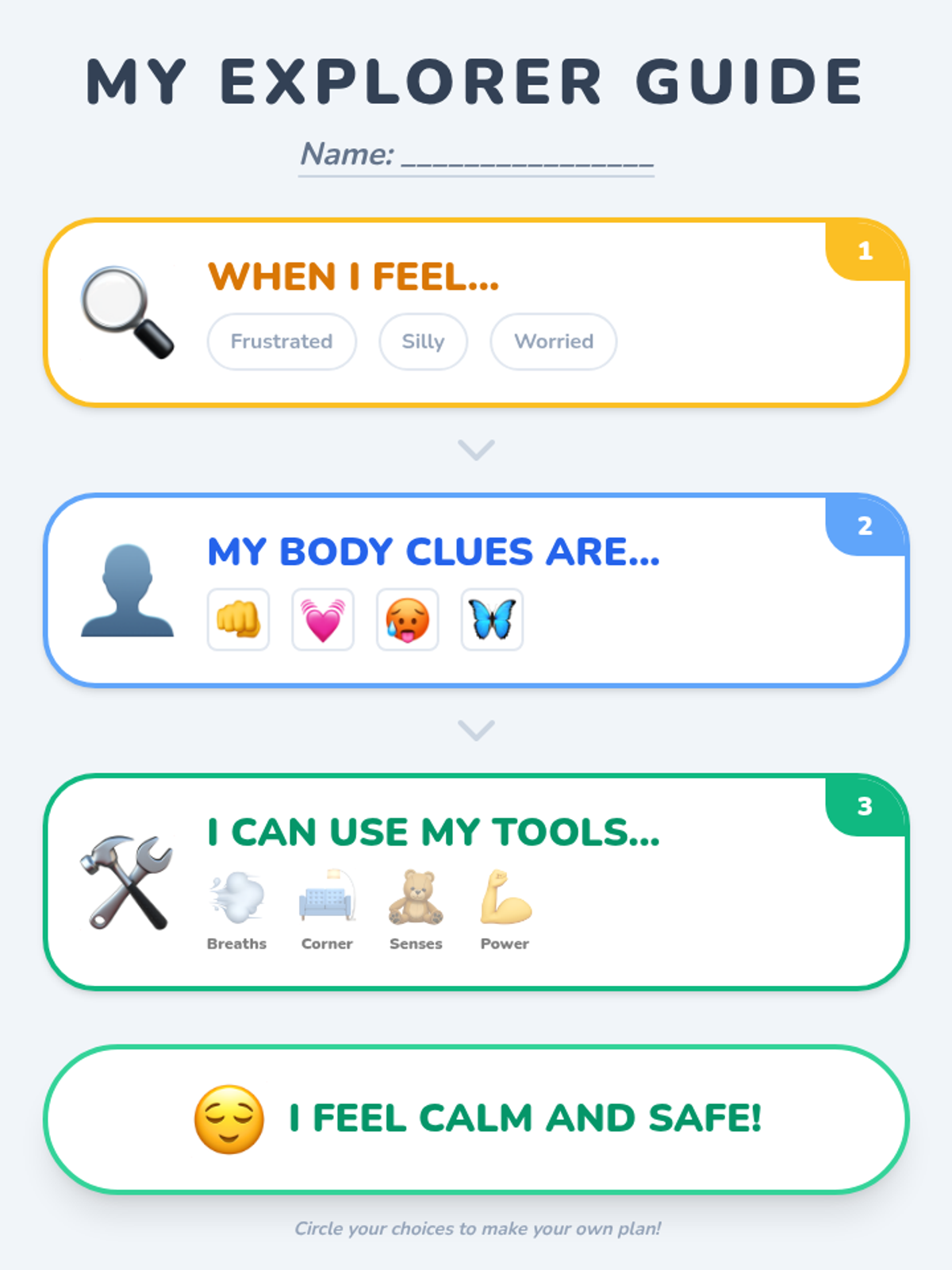
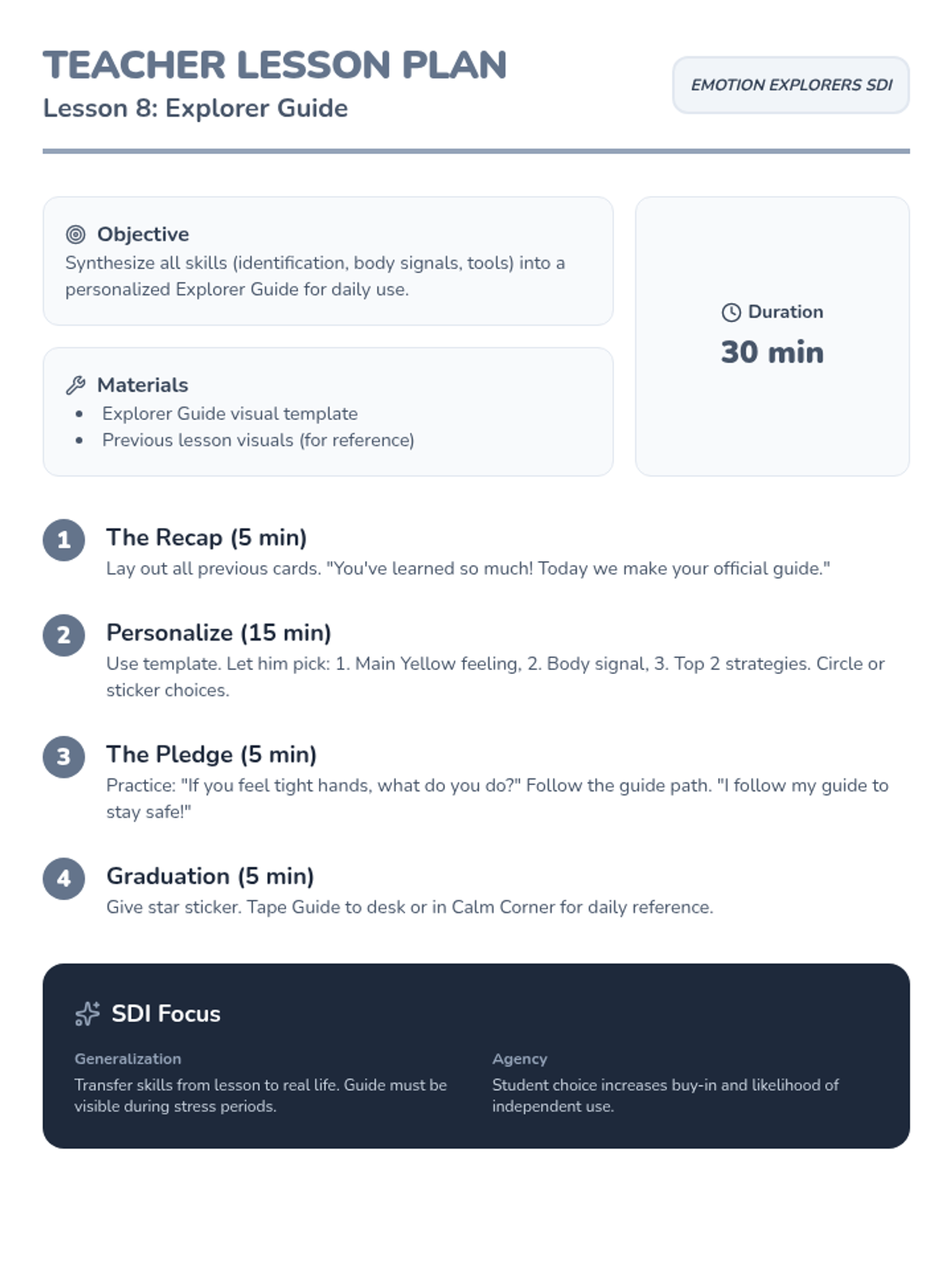
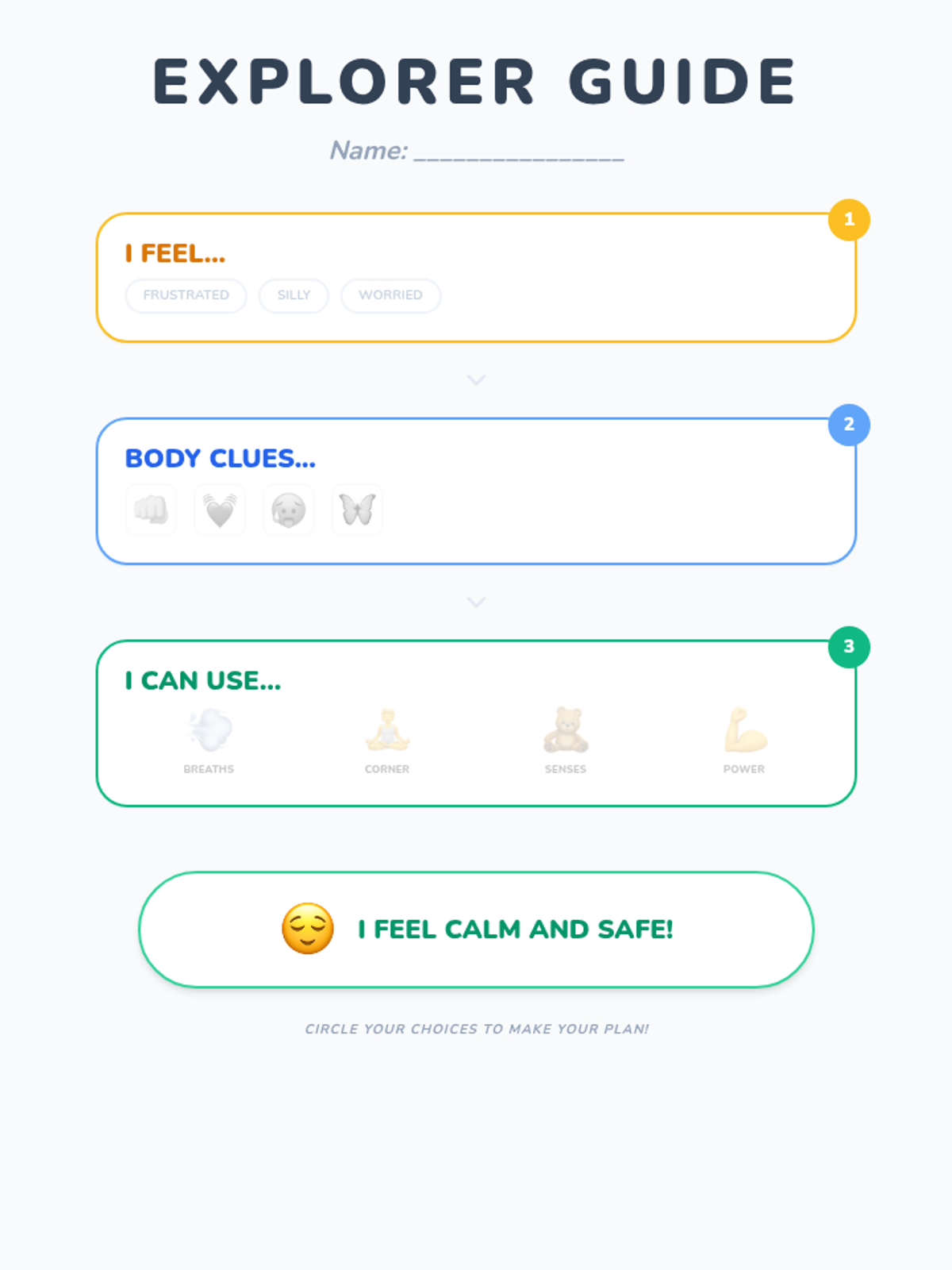
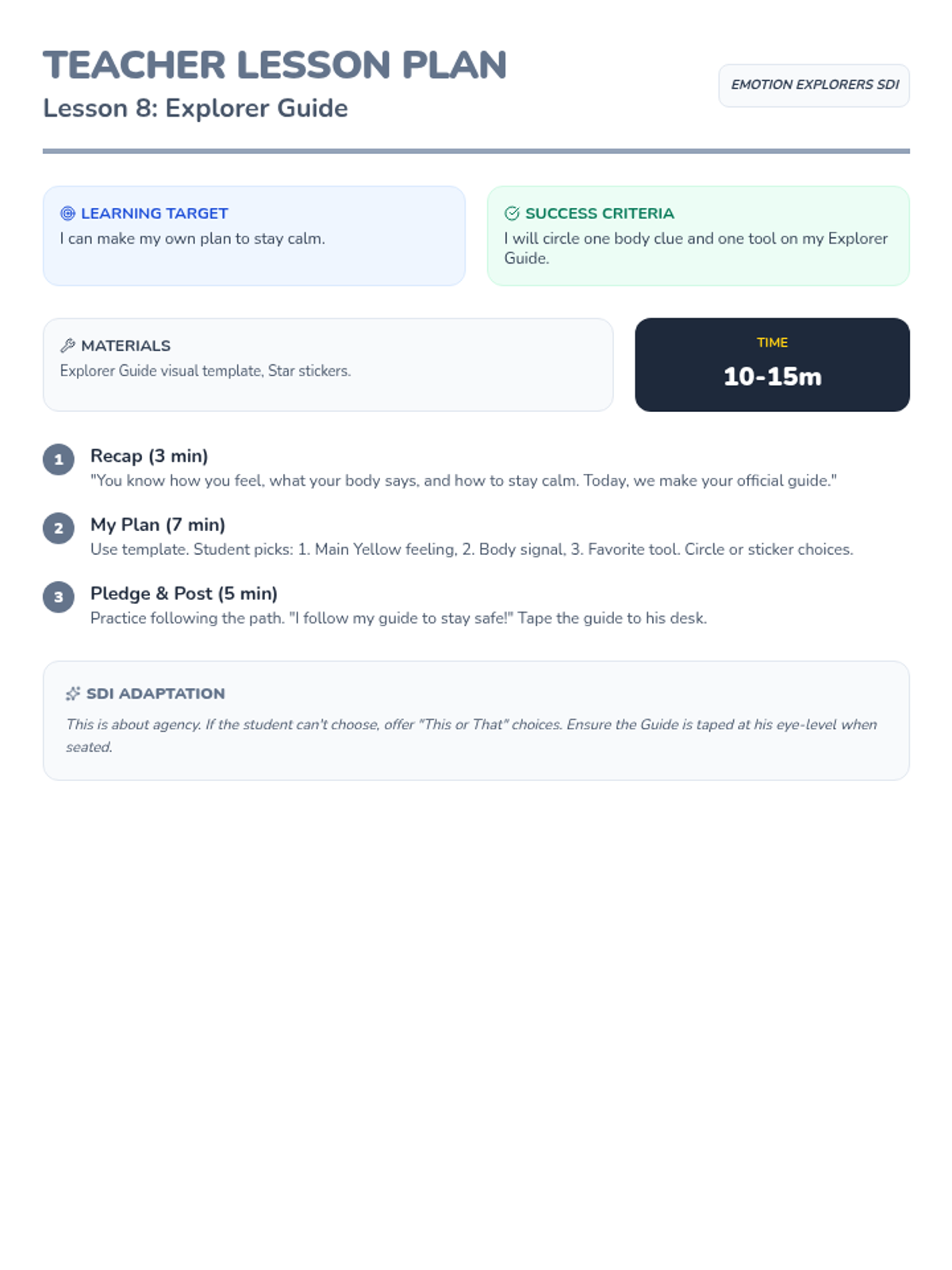
Synthesizes all skills into a personalized "Explorer Guide" that the student can use daily for self-regulation.
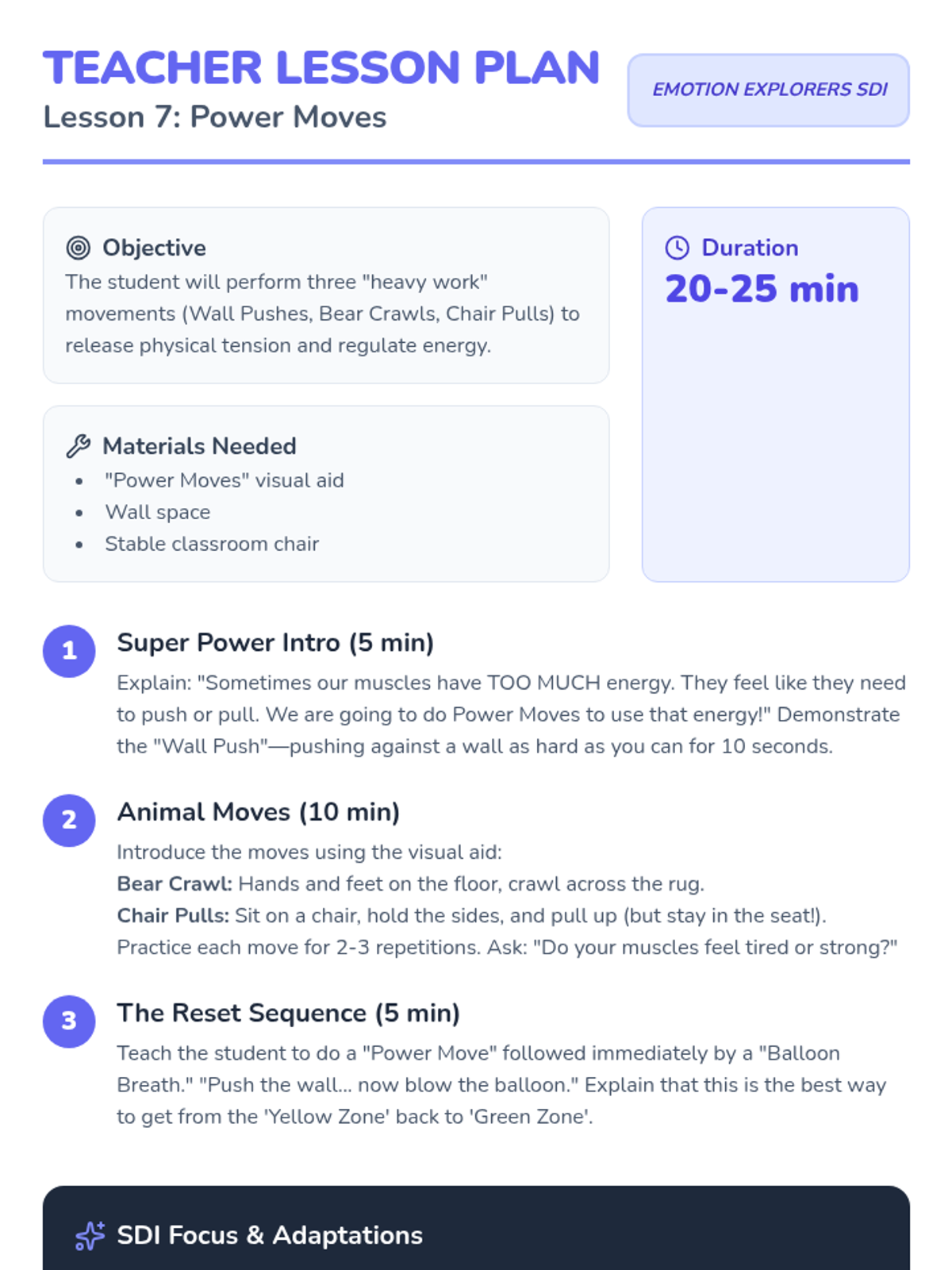
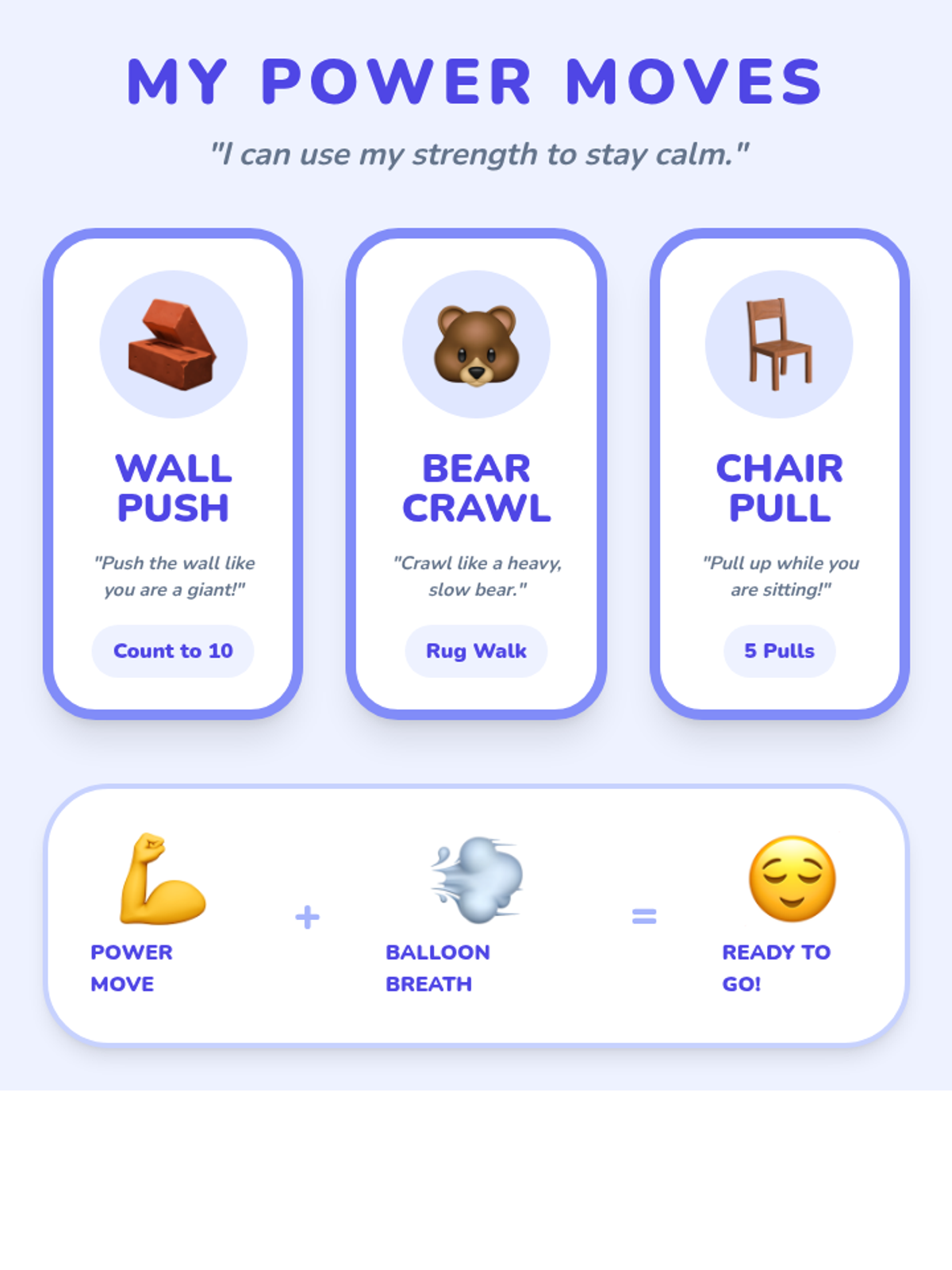
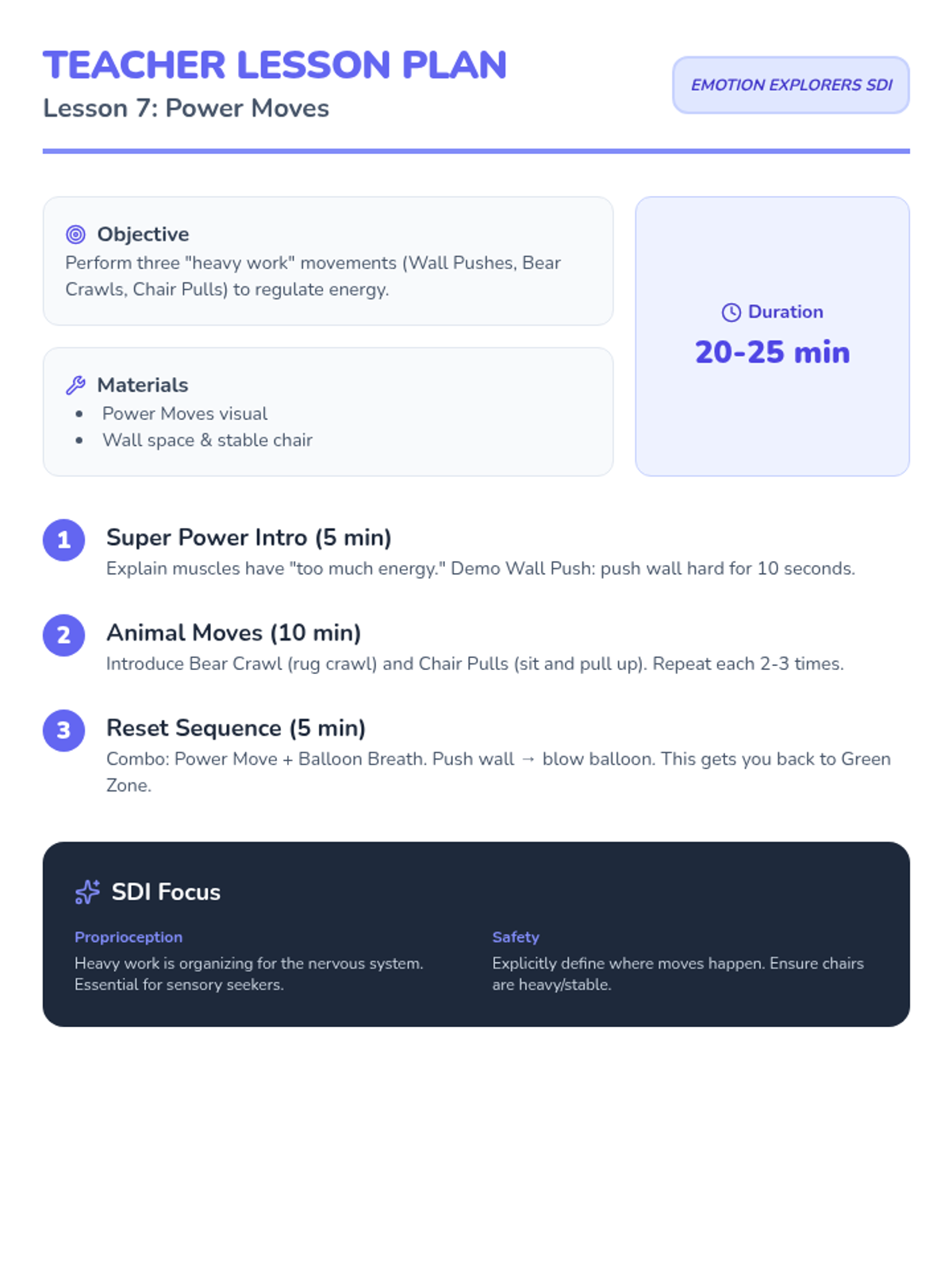
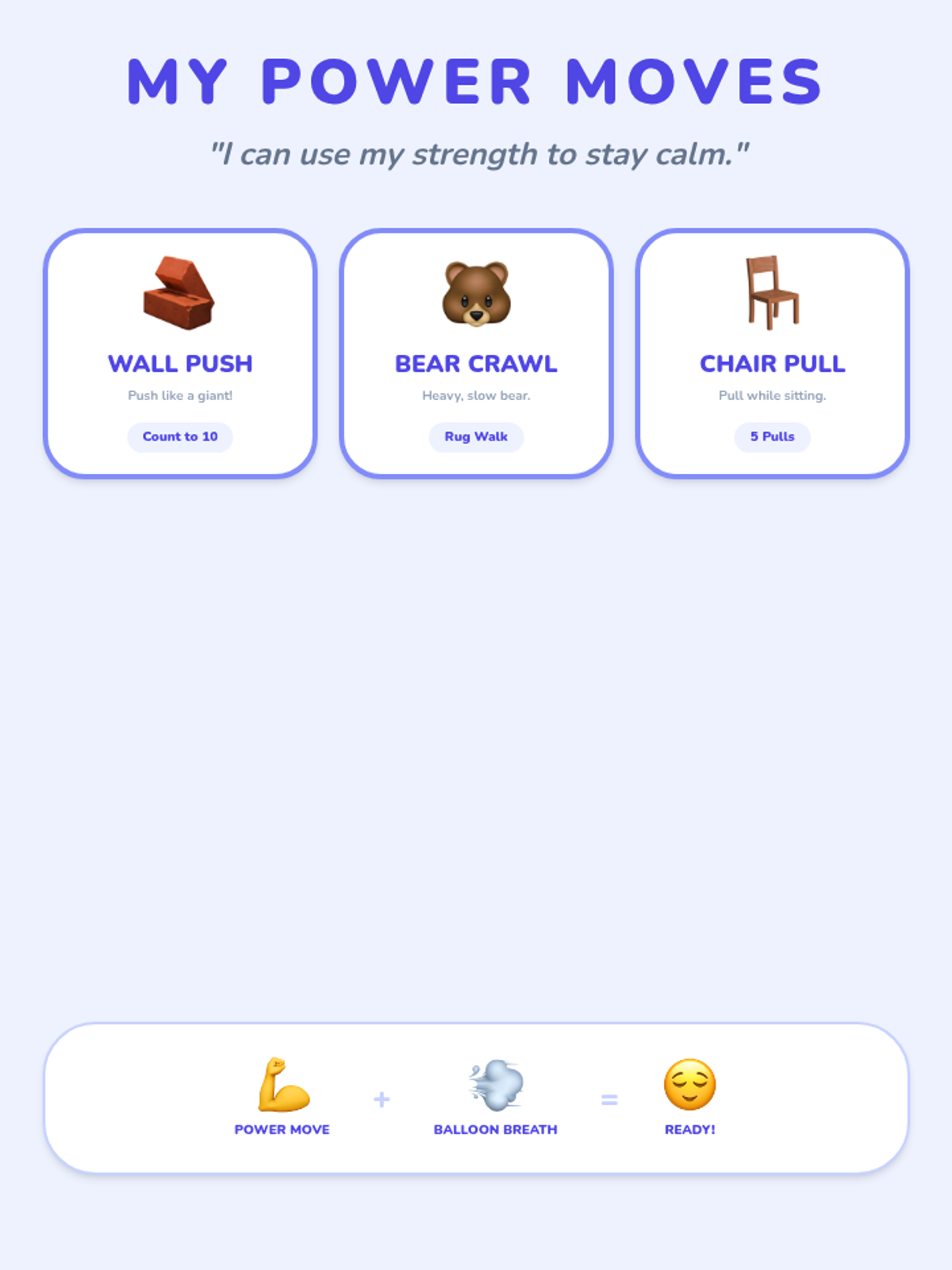
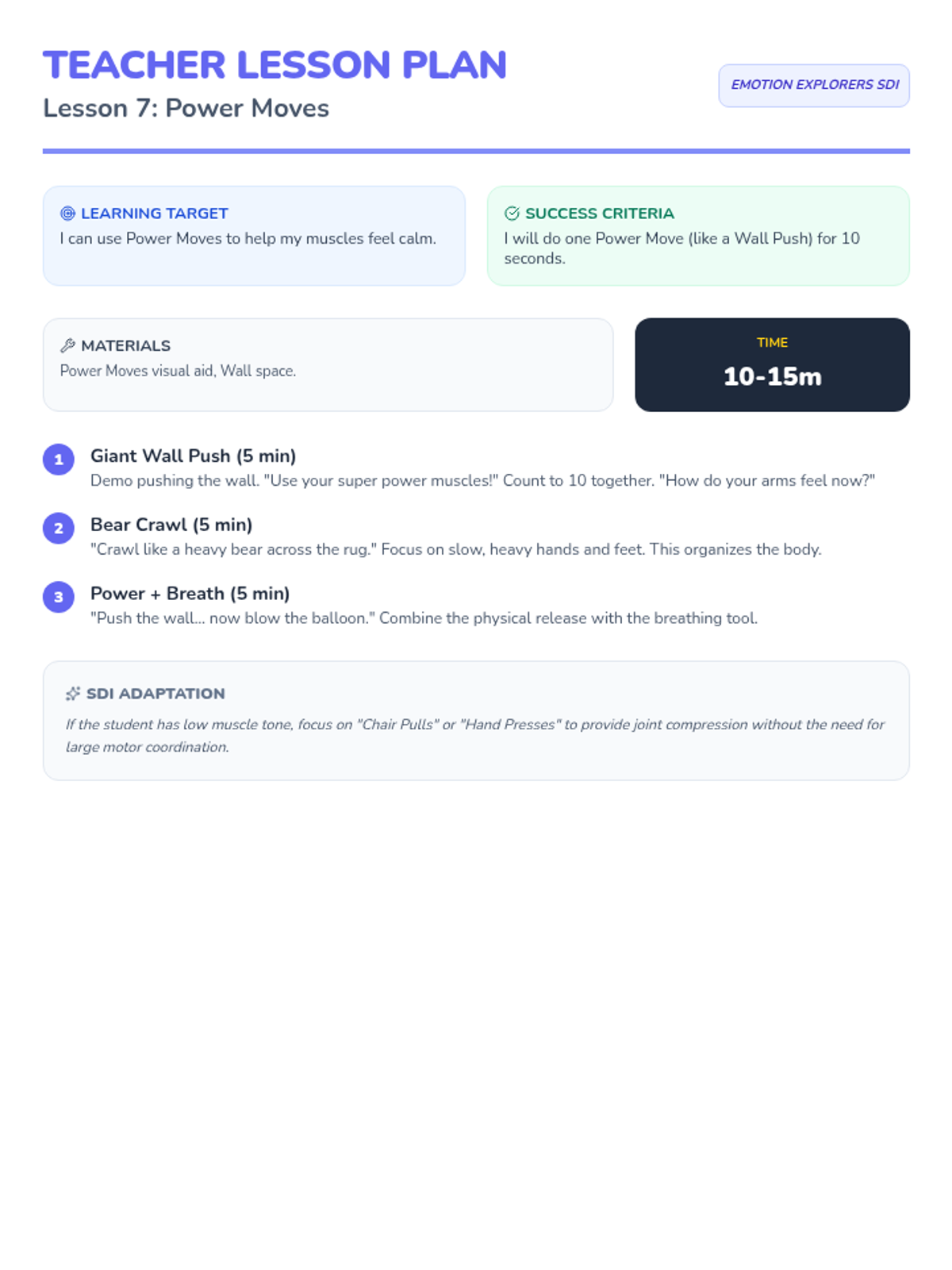
Teaches heavy work and physical movement strategies (wall pushes, animal crawls) to regulate high energy or intense emotions.
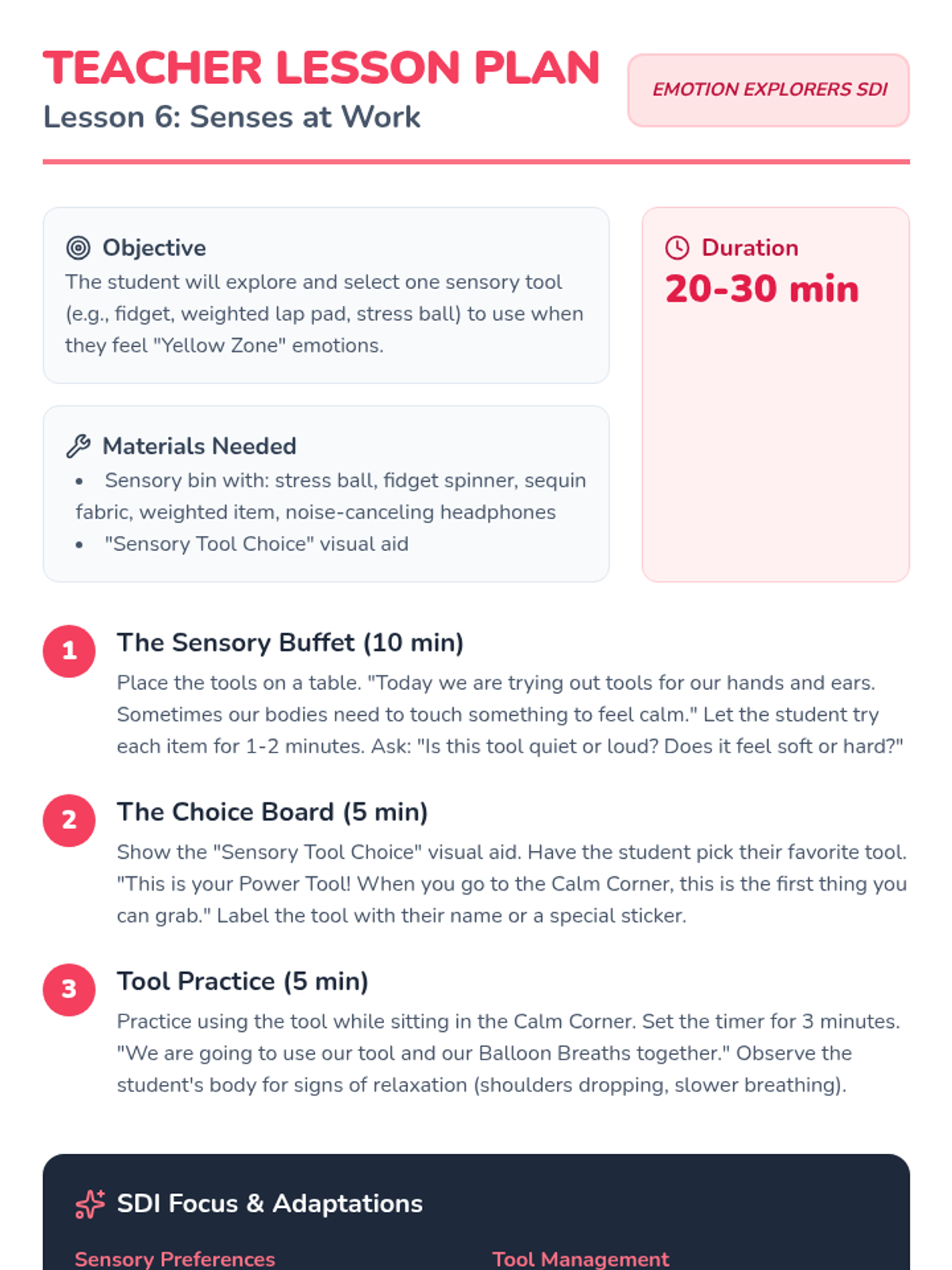
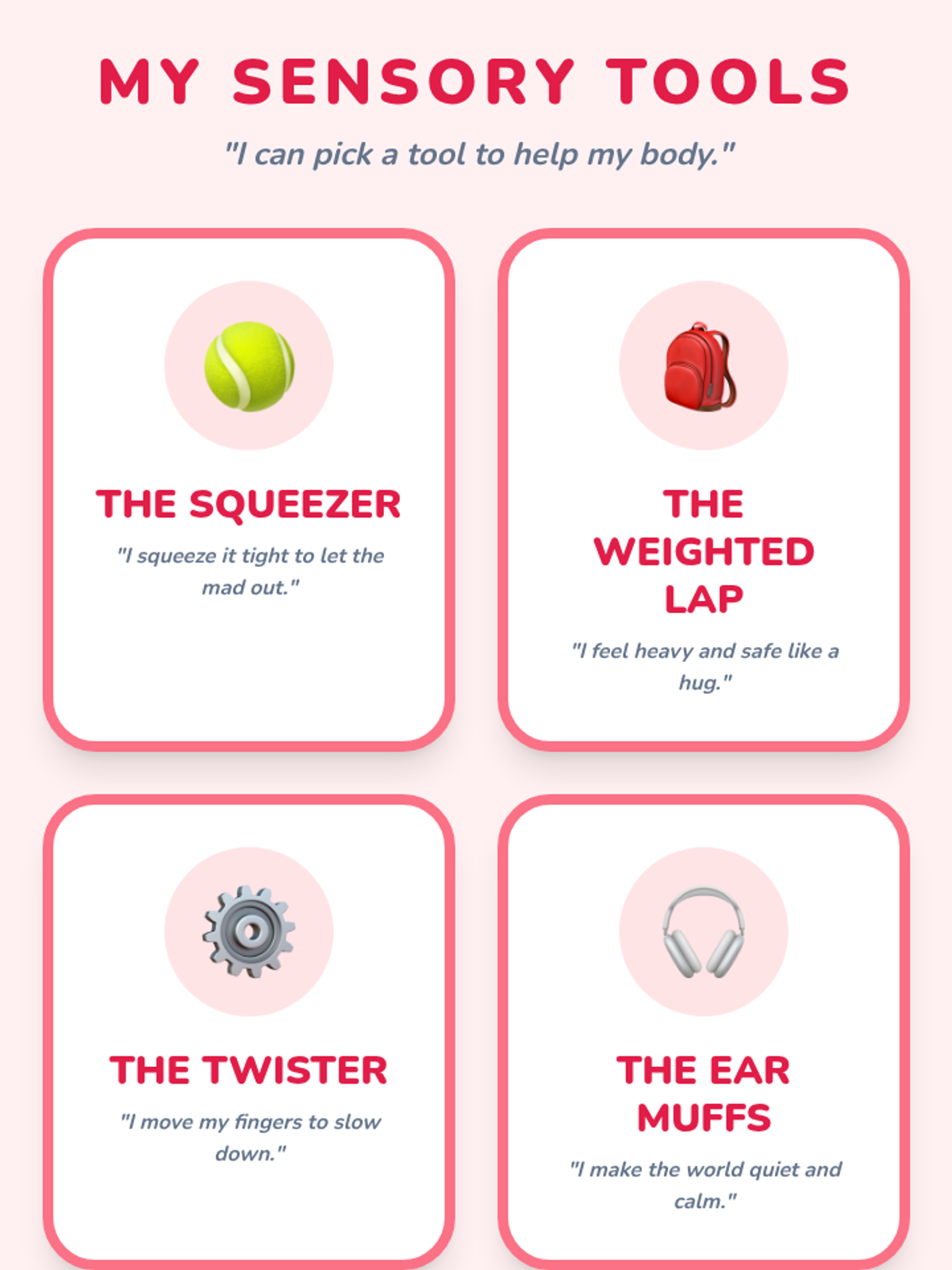
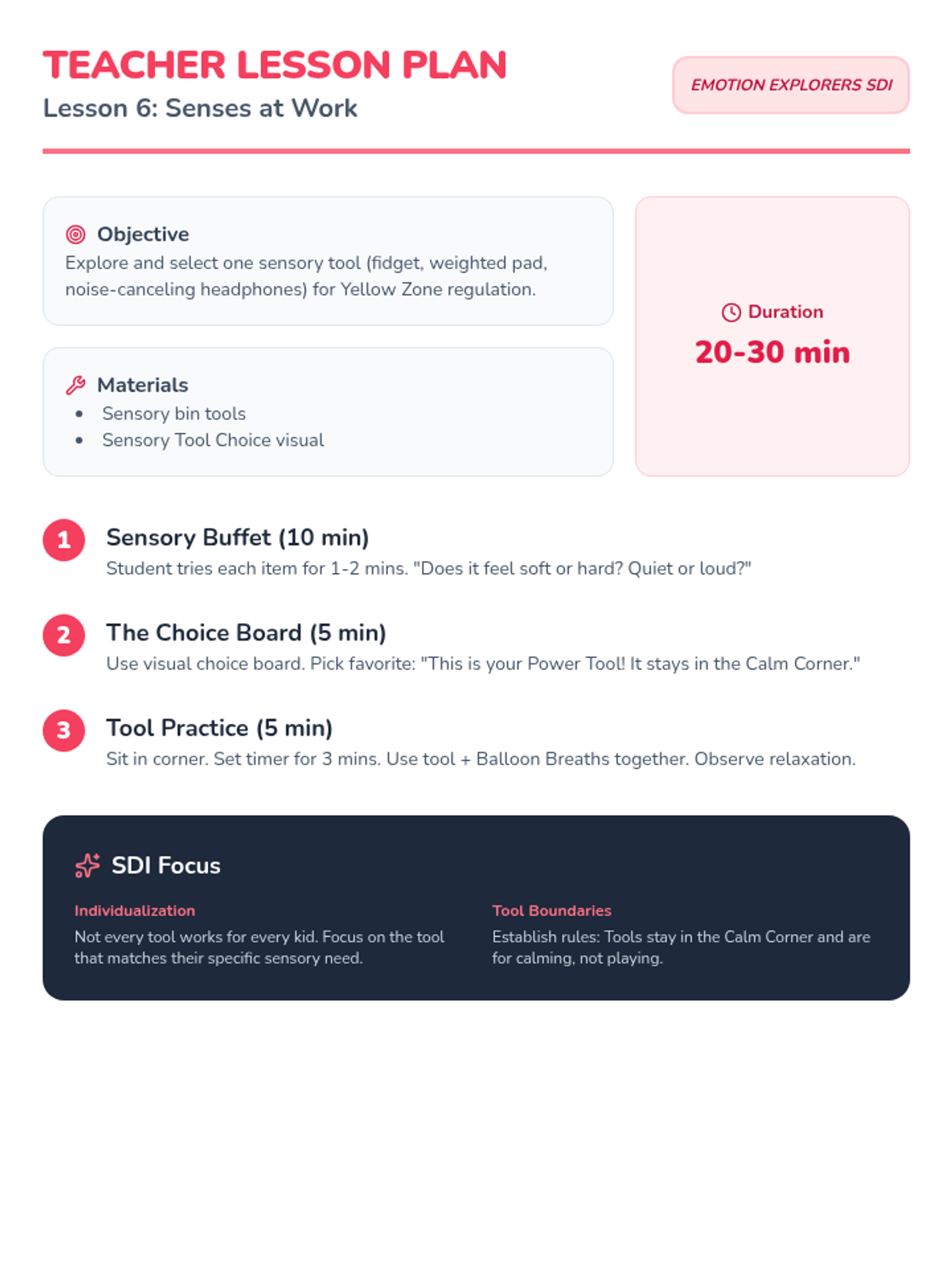
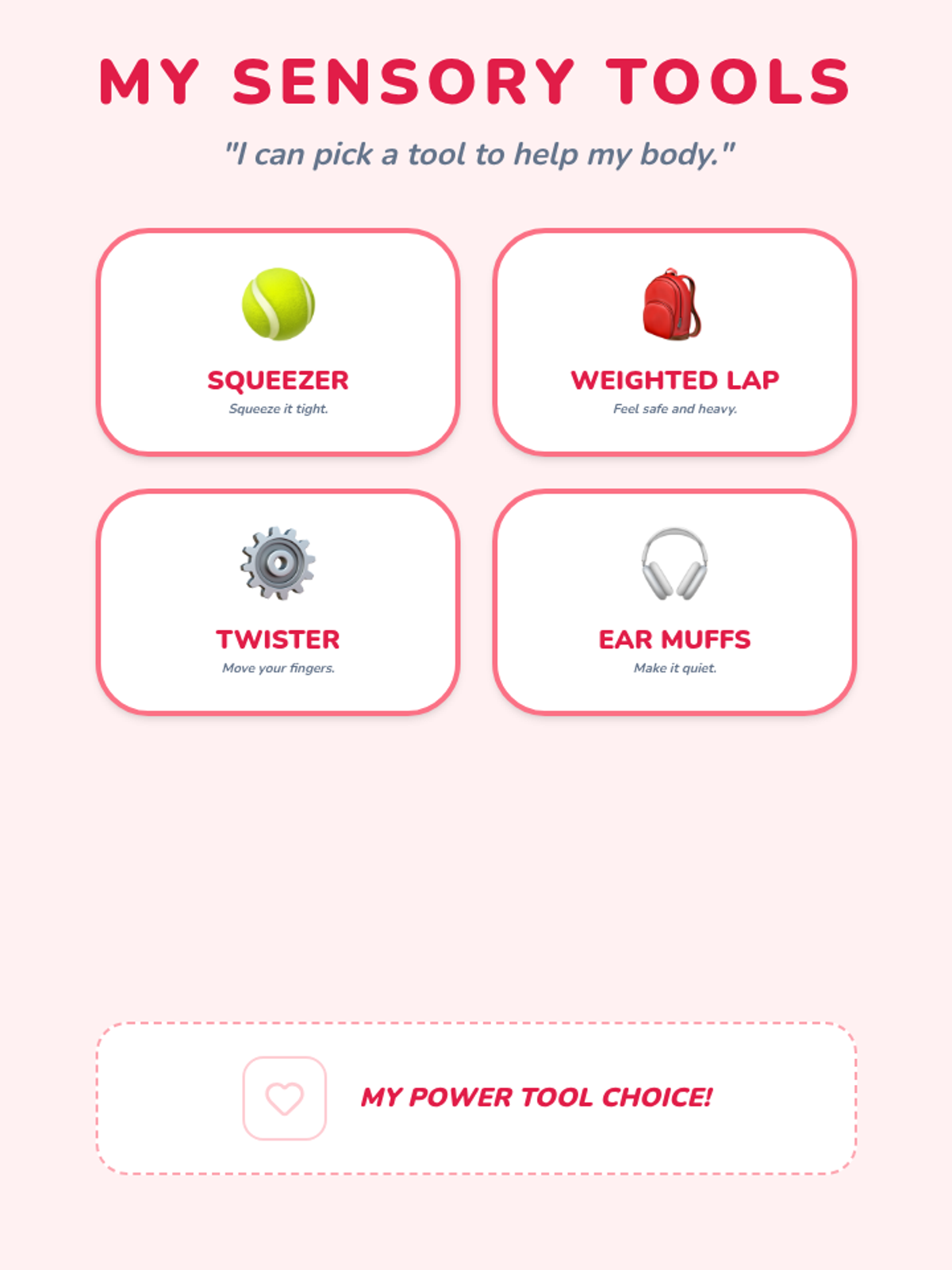
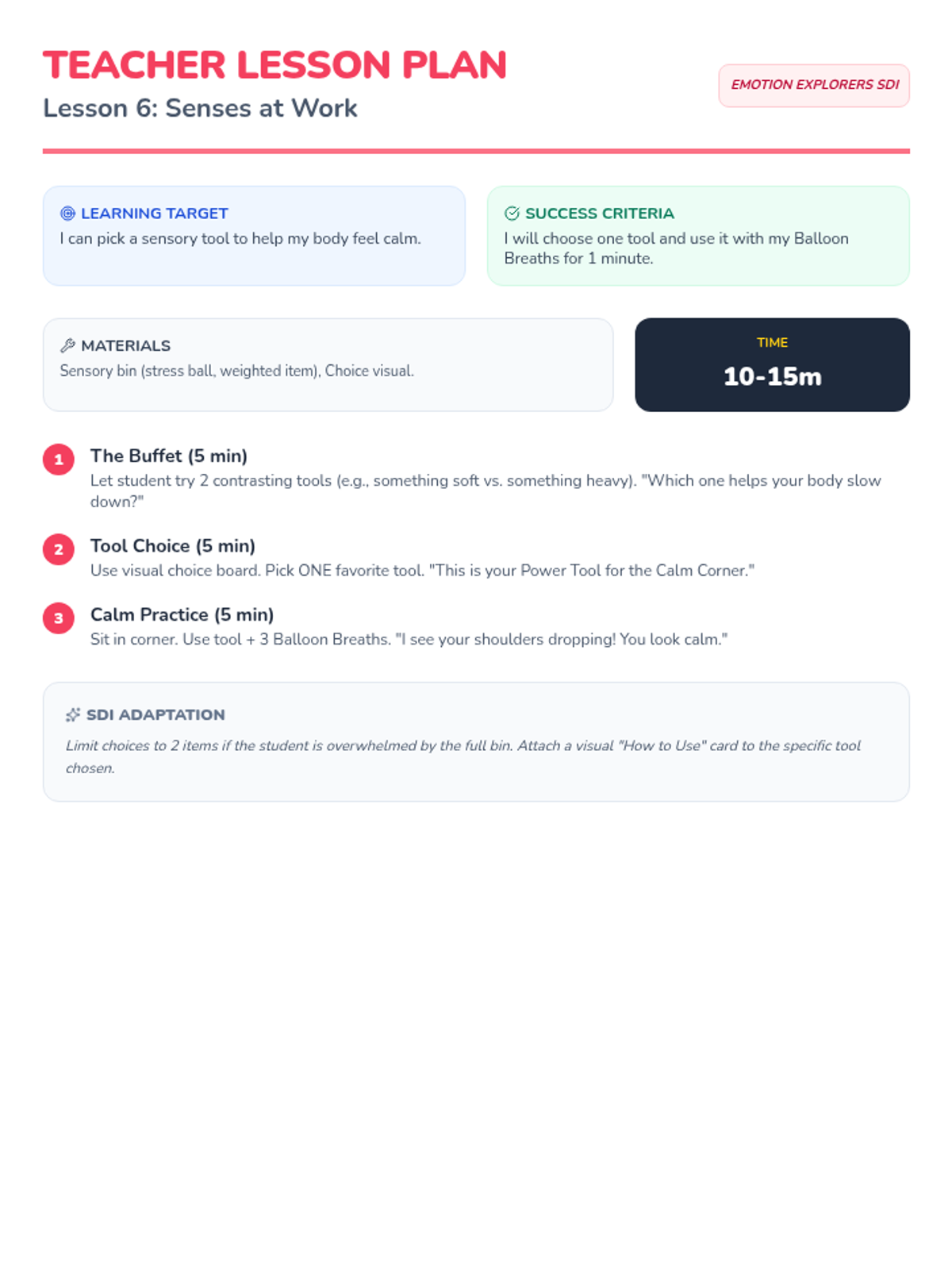
Explores the use of tactile and sensory tools (fidgets, weighted items) to help the body return to a calm state.
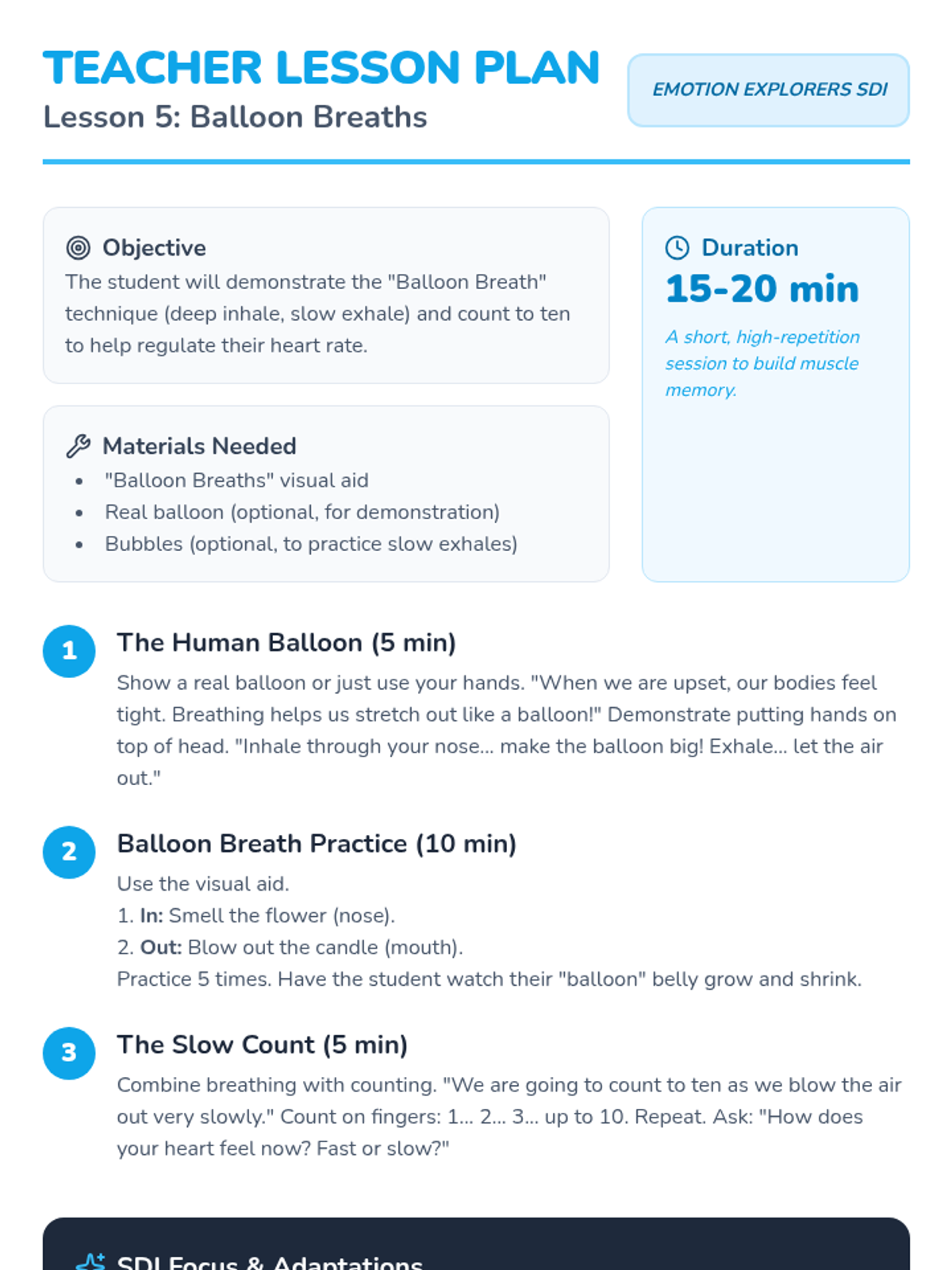
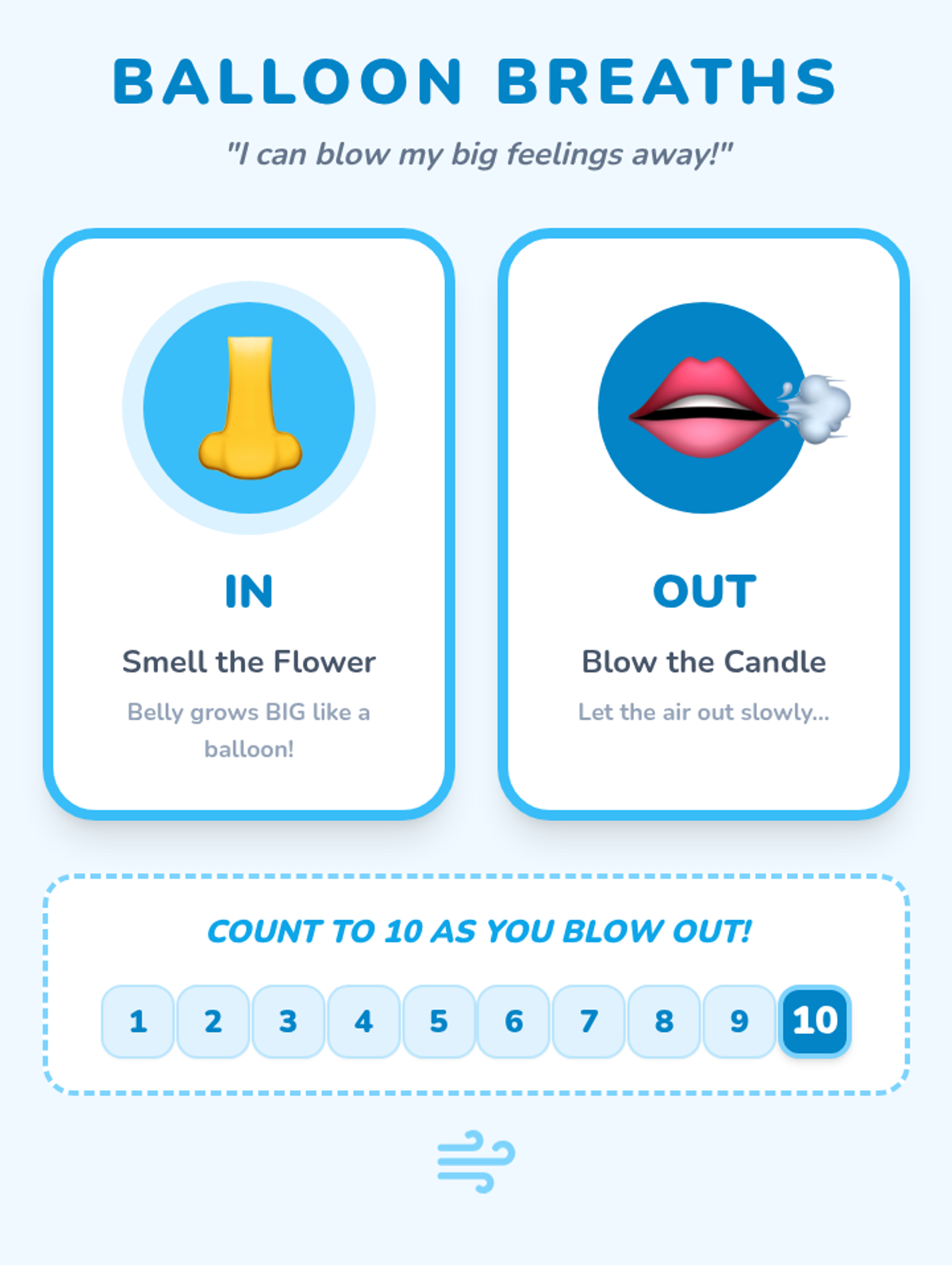
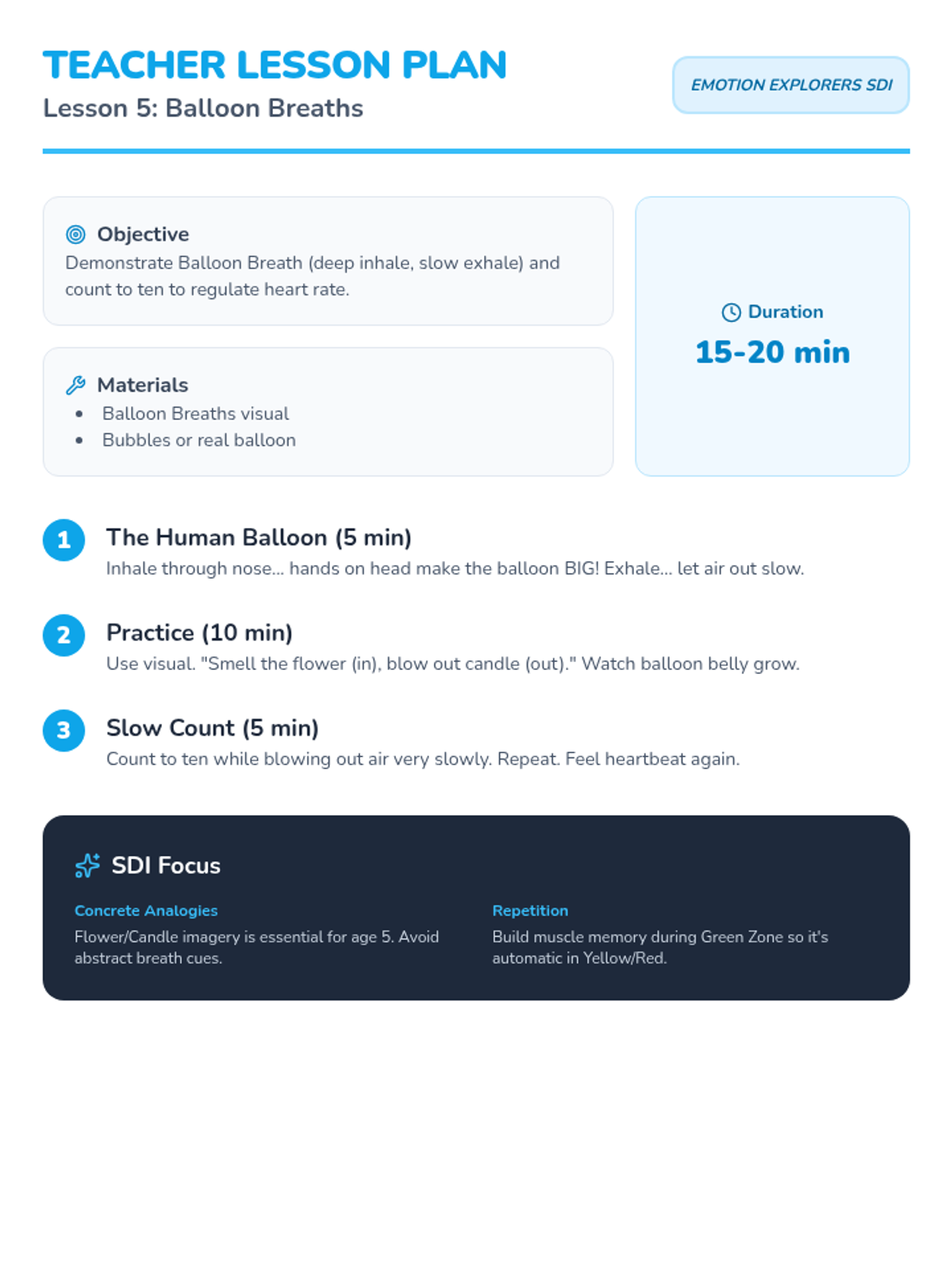
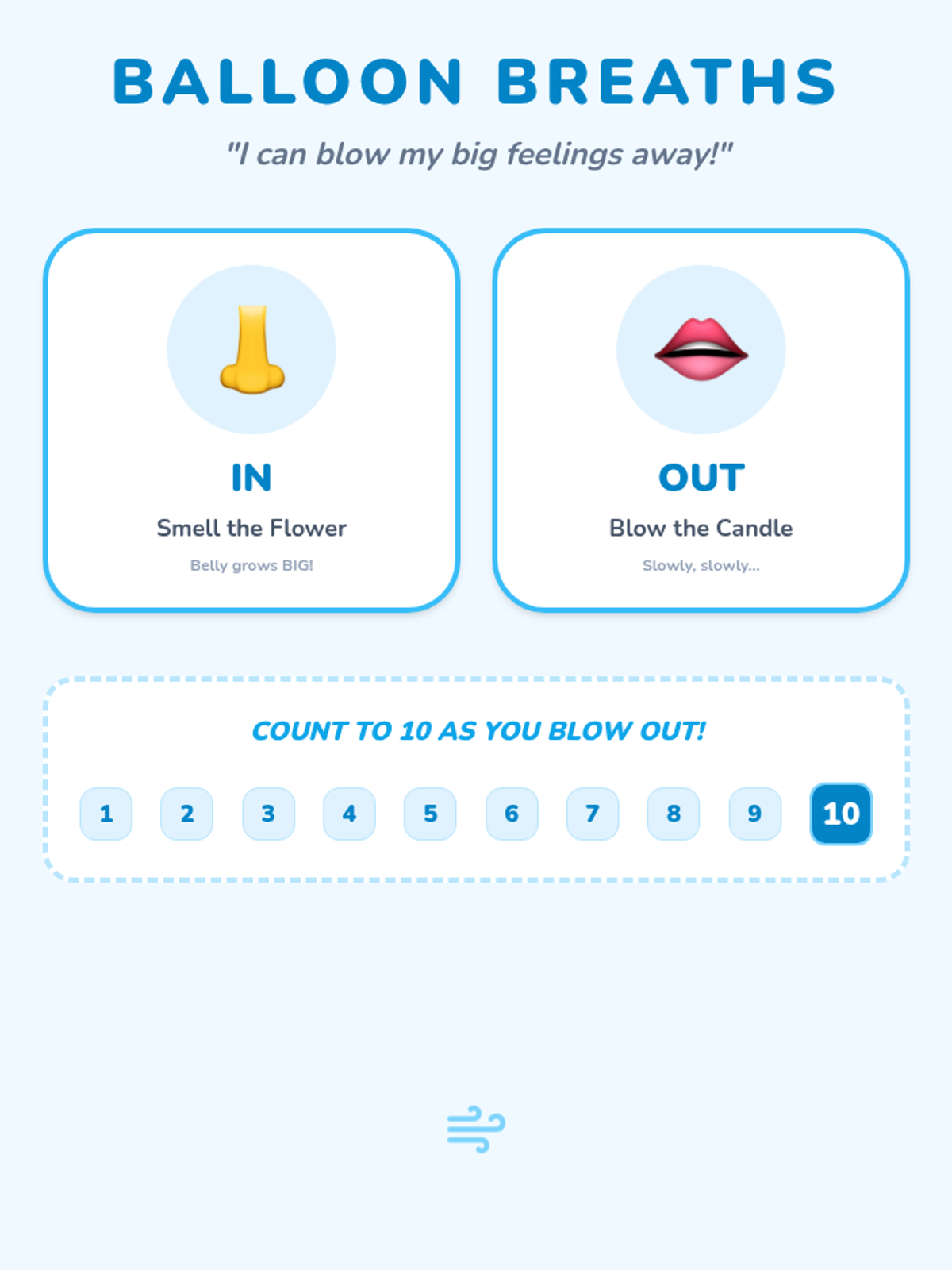
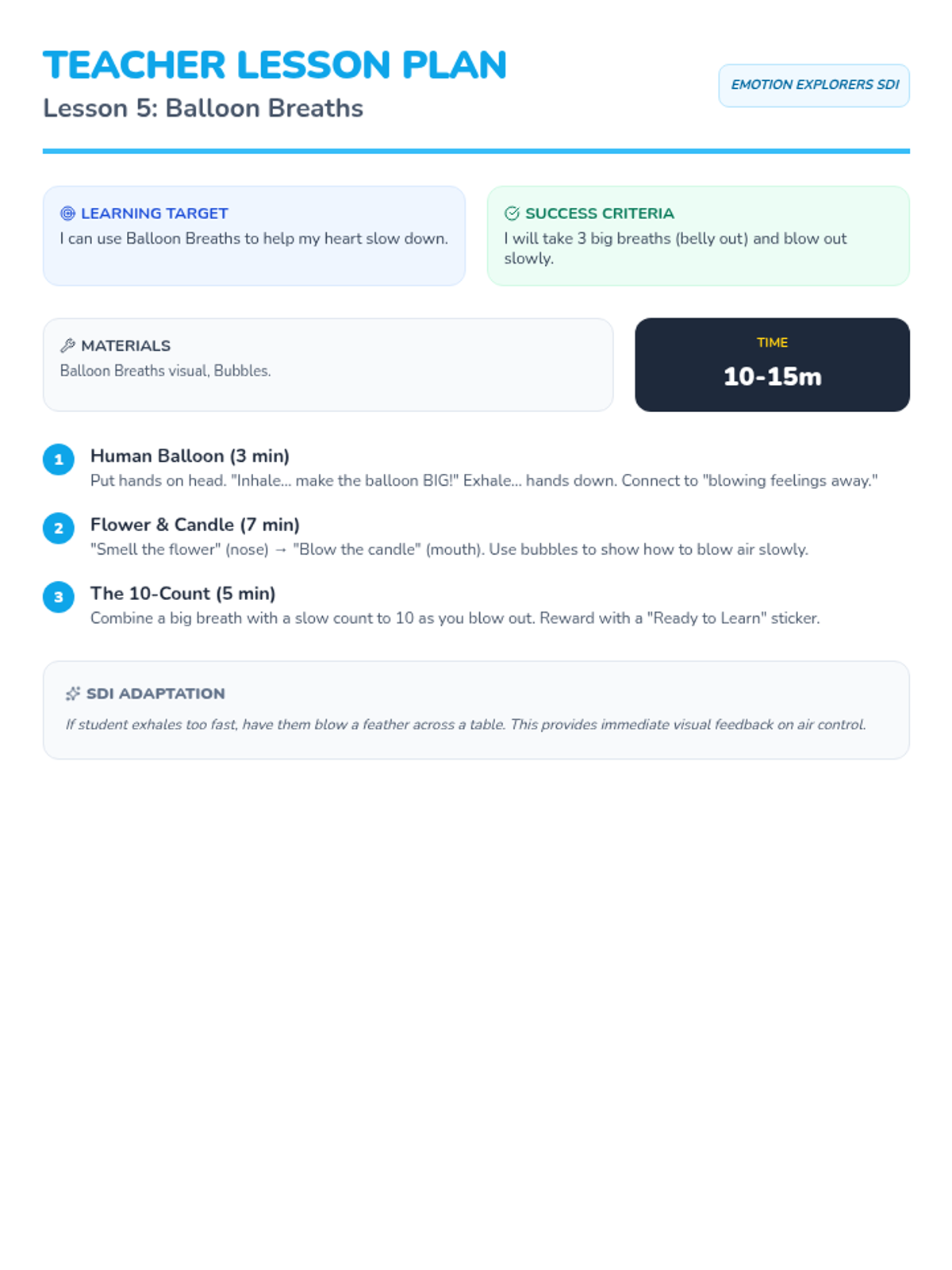
Explicitly teaches deep breathing techniques (Balloon Breaths) and counting to ten as internal tools for regulation.
Introduces the designated break space, the routine for entering it, and the expectation of using it for calming down.
Explains the concept of "Yellow Zone" feelings (frustration, silliness, worry) as warning signs that a break might be needed soon.
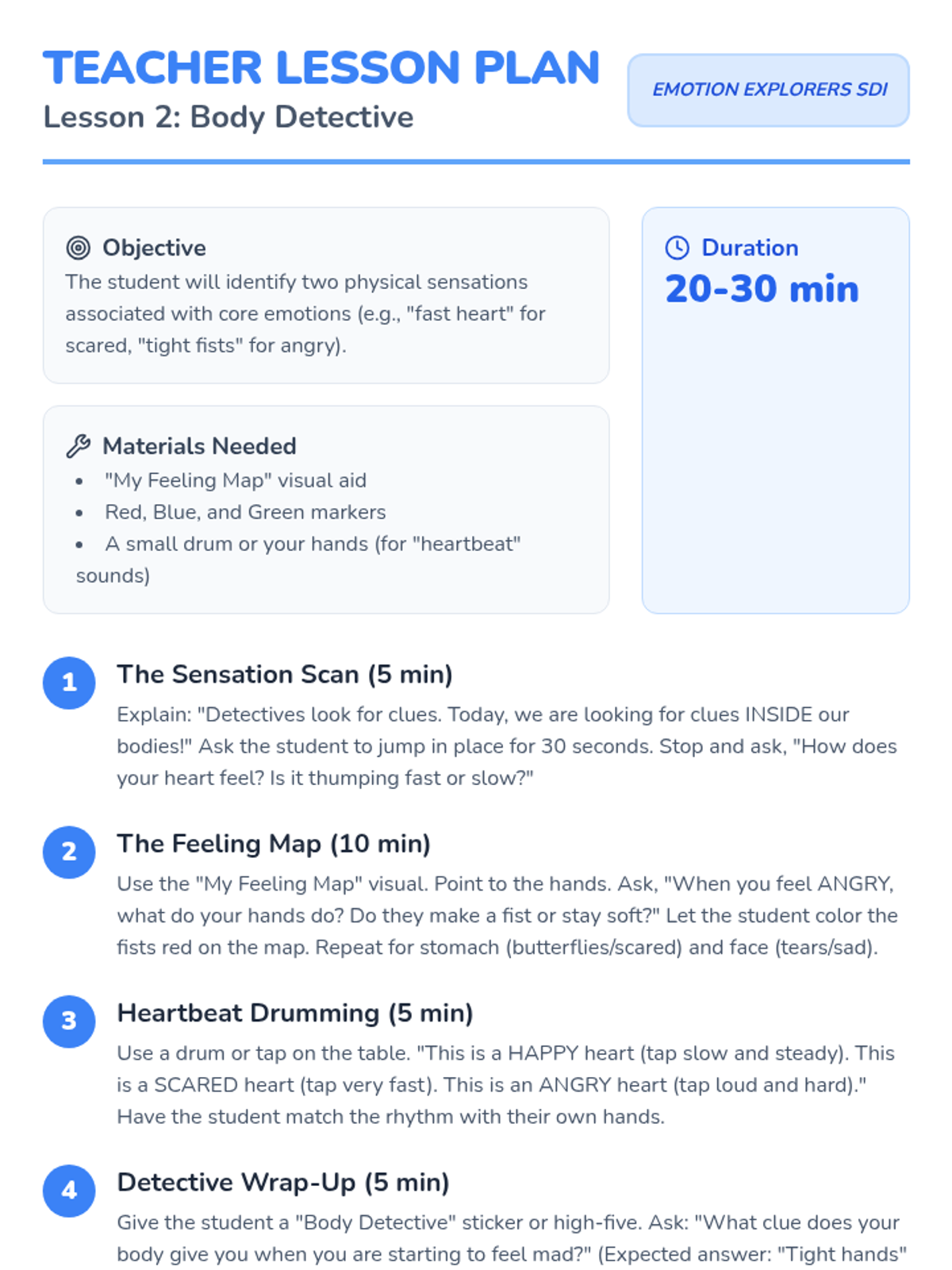
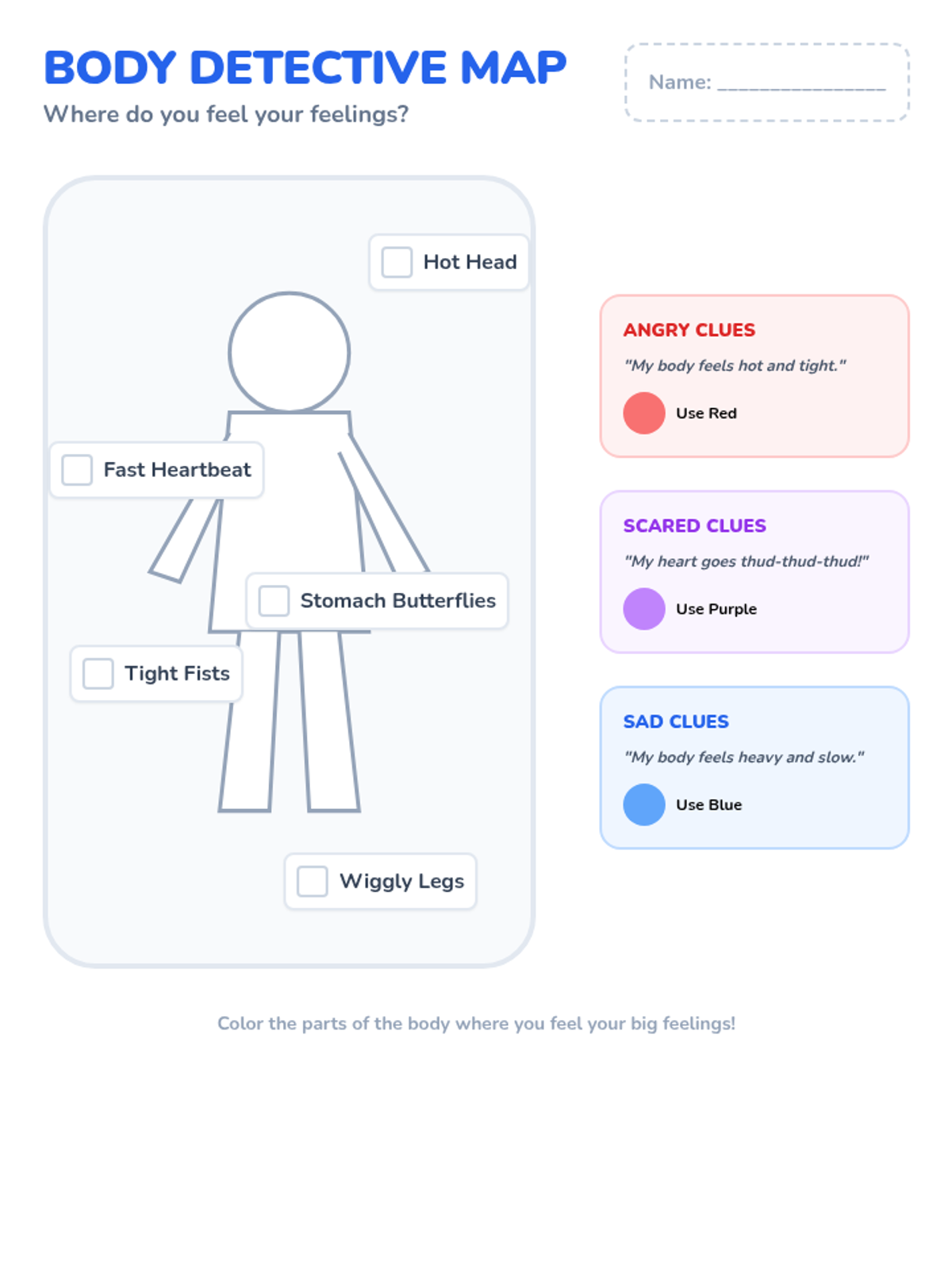
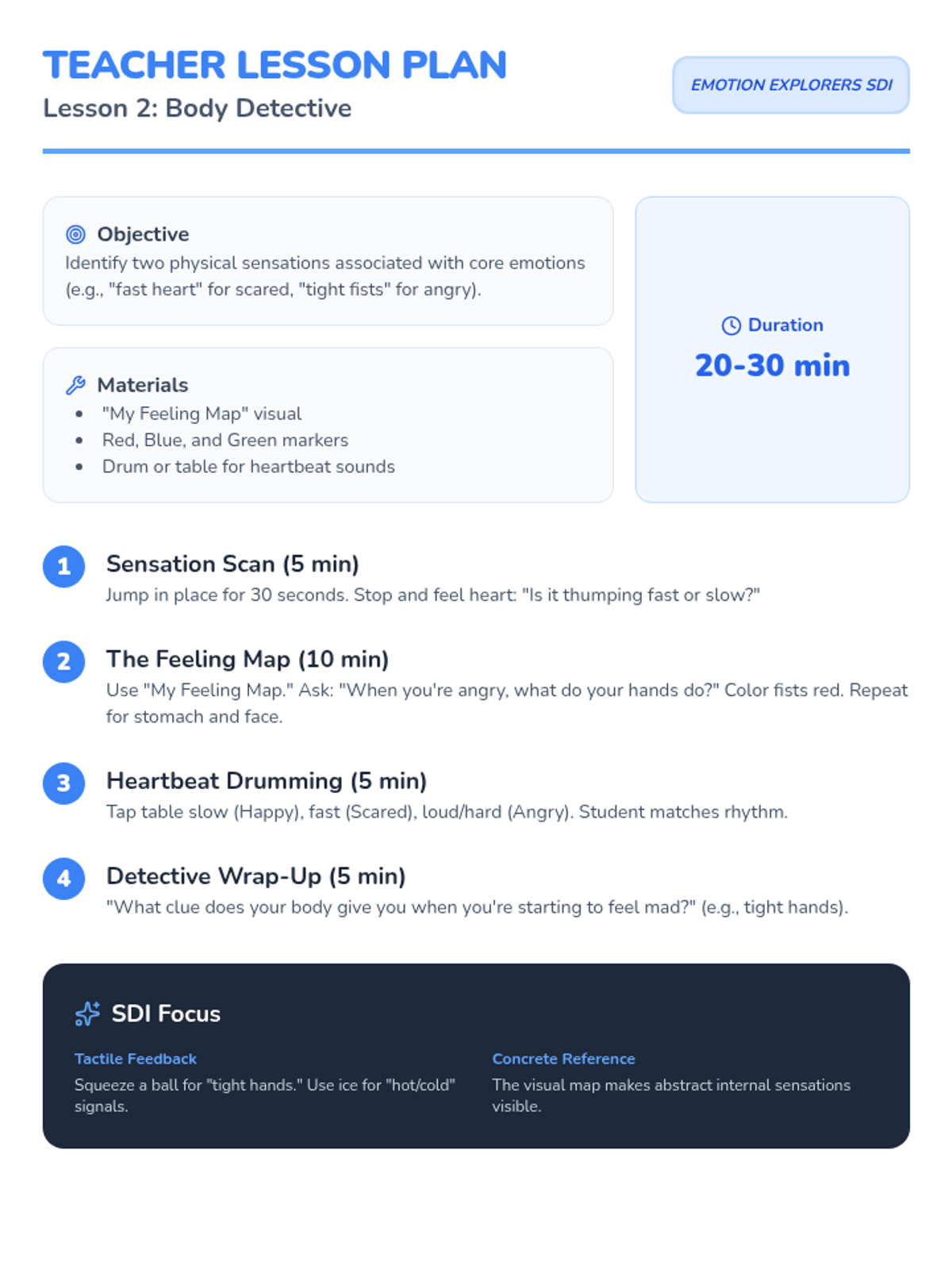
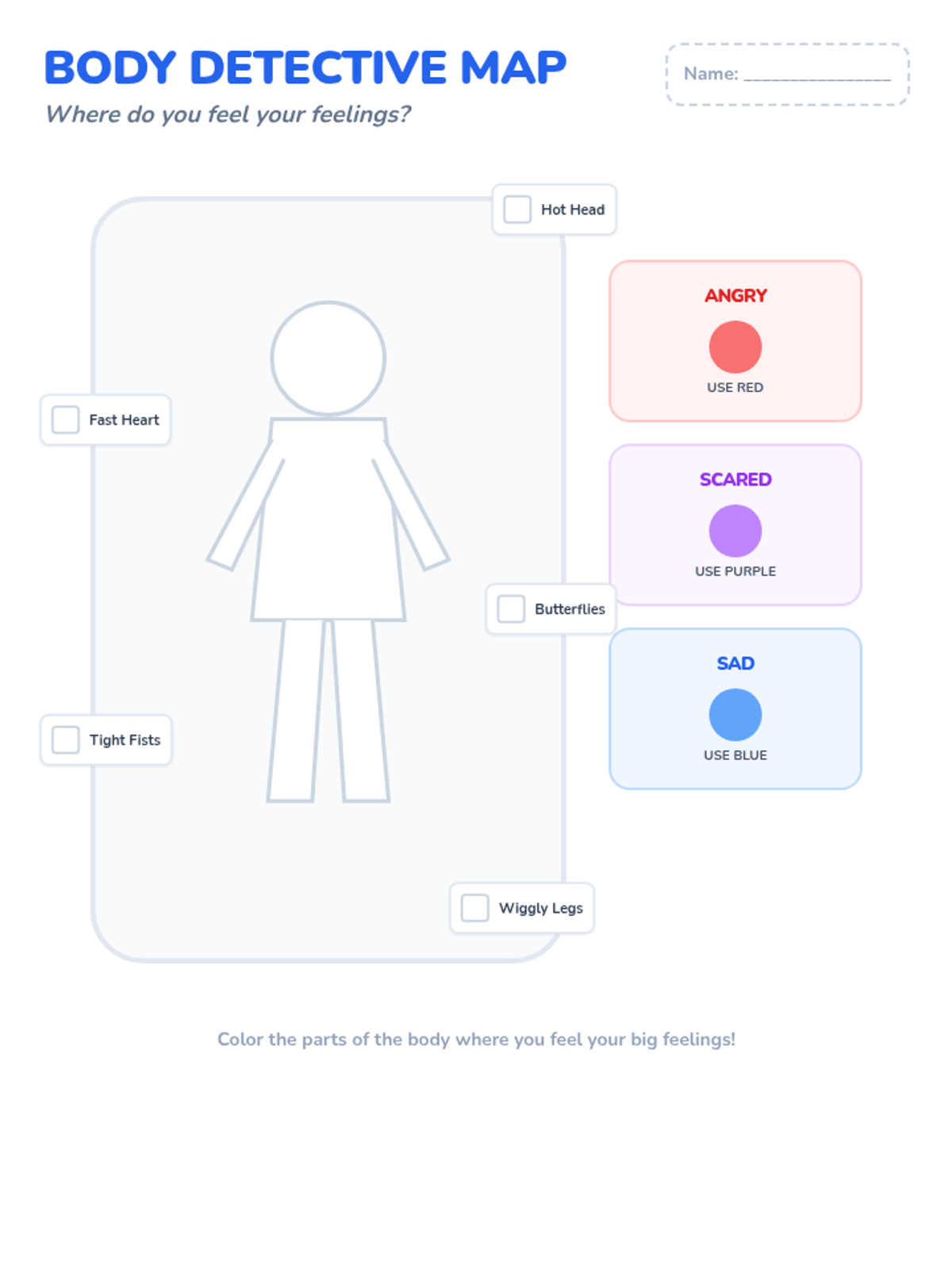
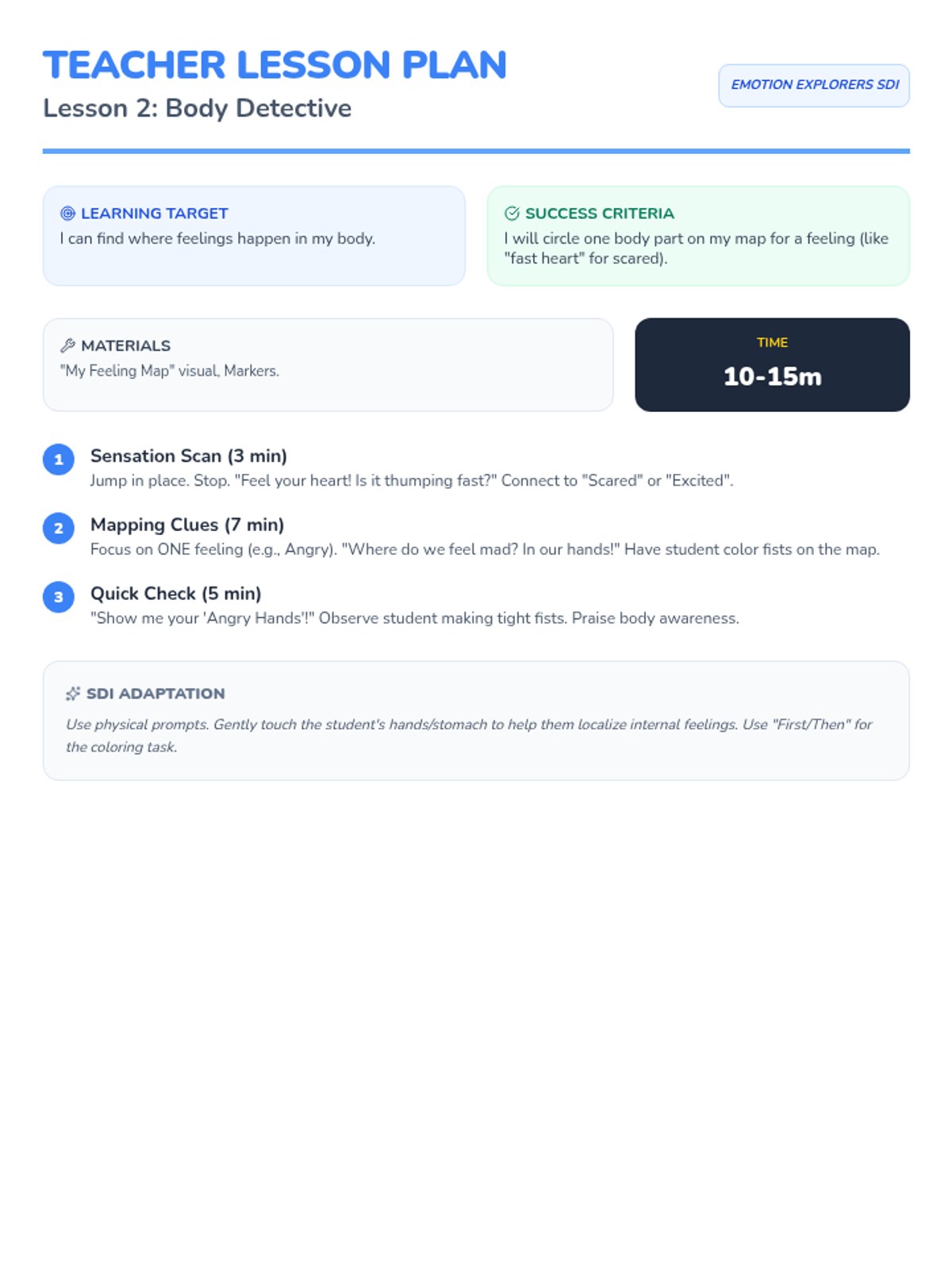
Teaches the student to connect physical sensations (heart beating fast, tight fists) to specific emotions to improve early self-awareness.
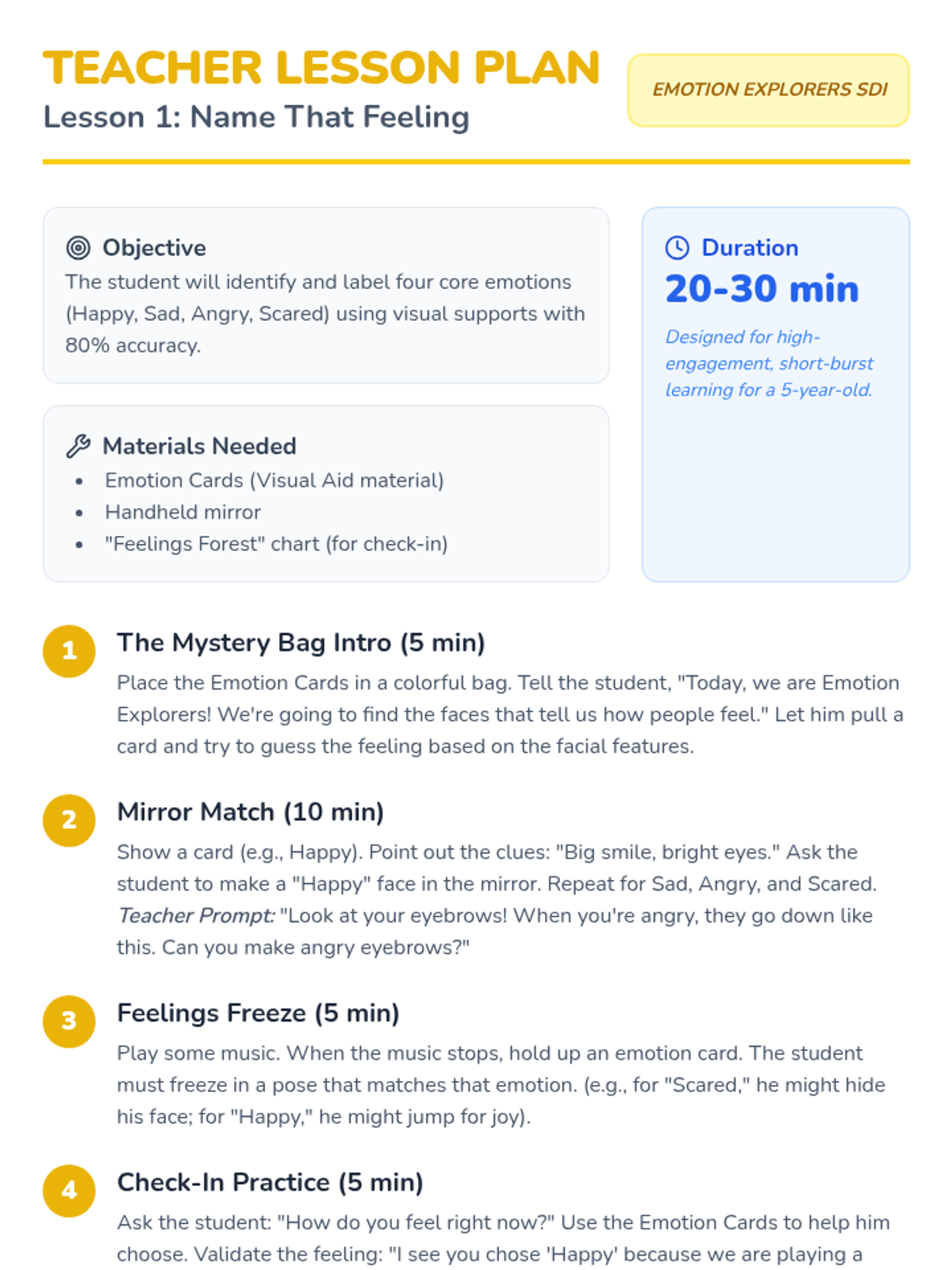
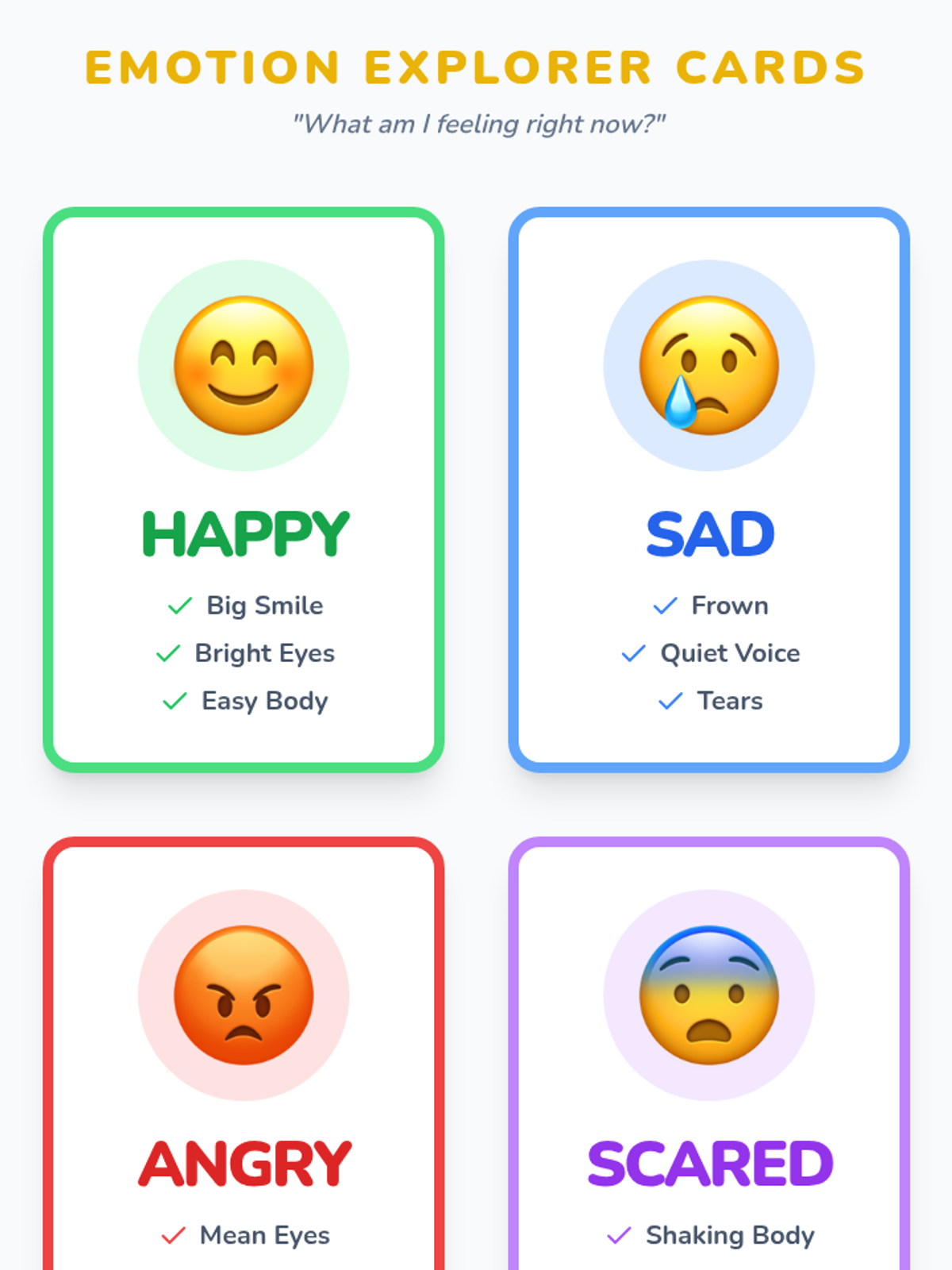
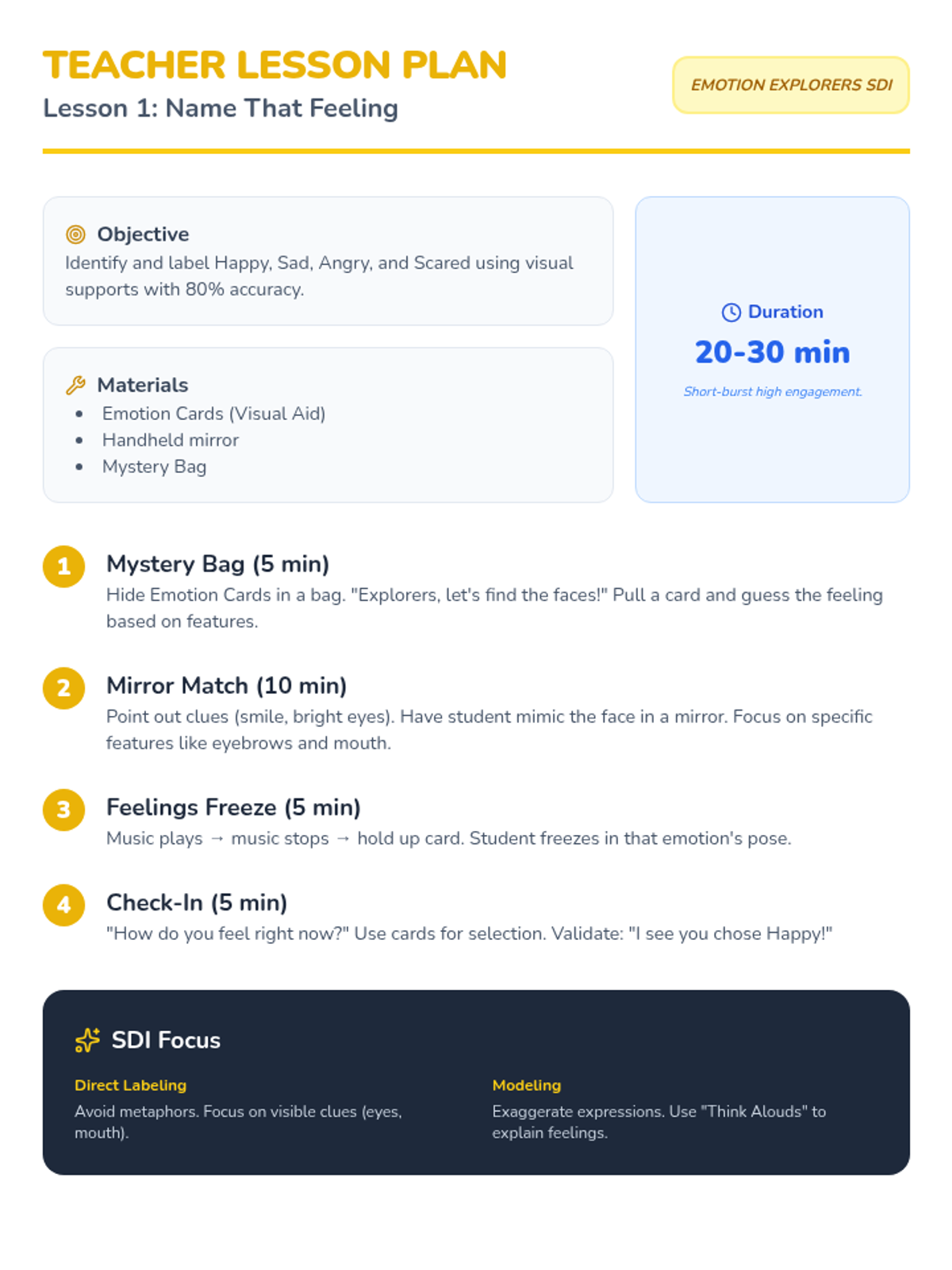
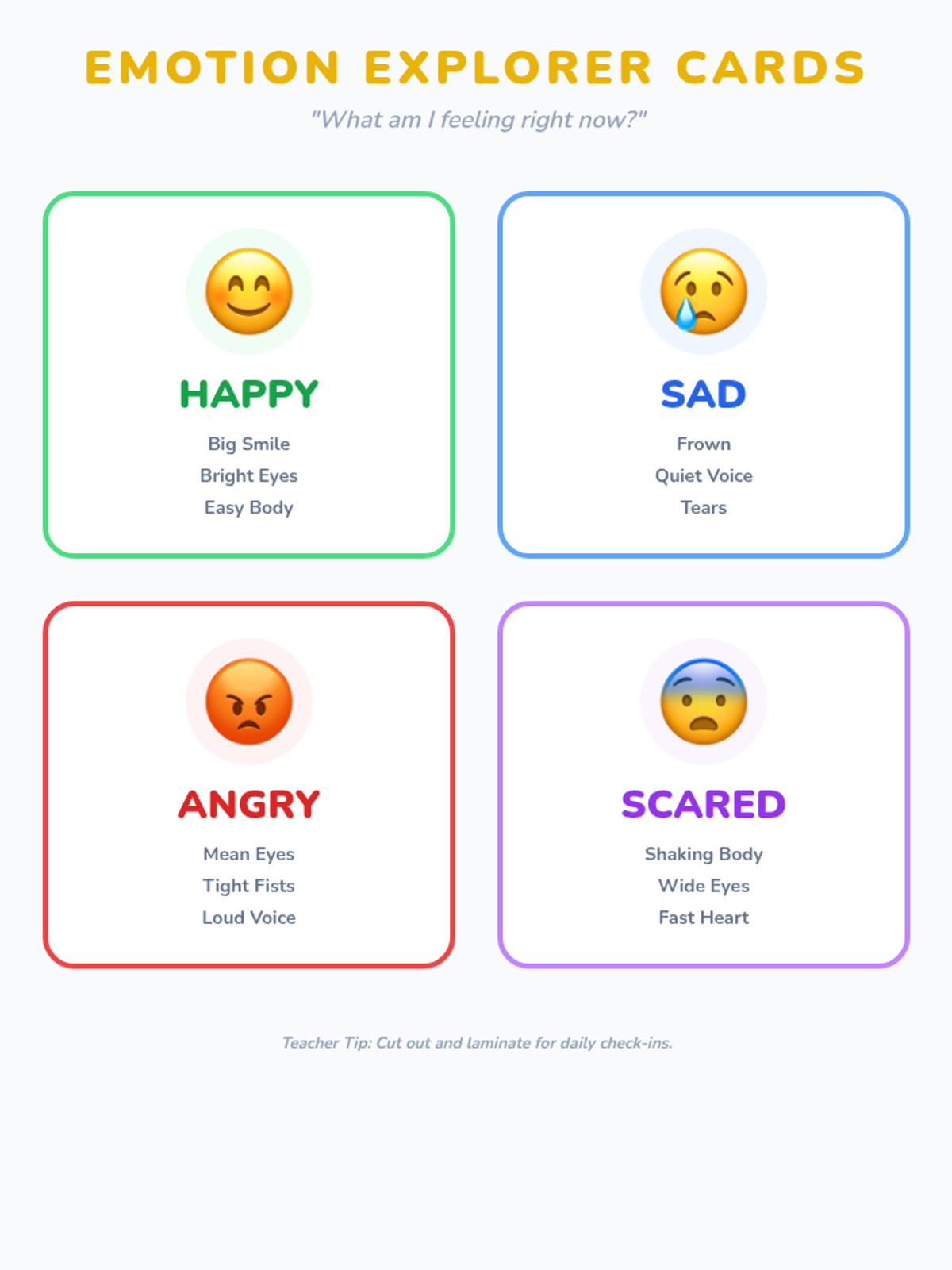
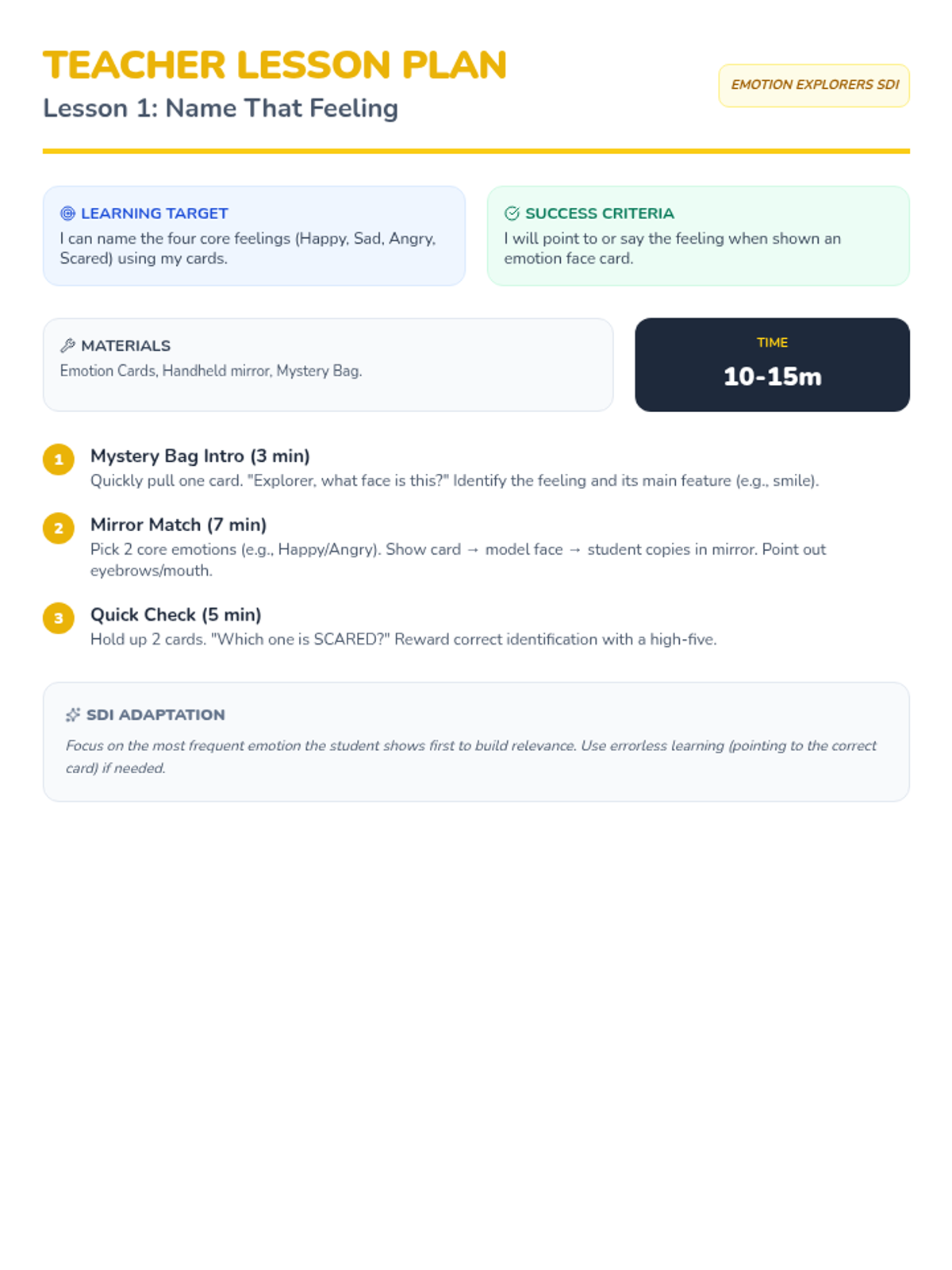
Introduces the four core emotions (Happy, Sad, Angry, Scared) using visual supports to help the student label their own feelings and the feelings of others.
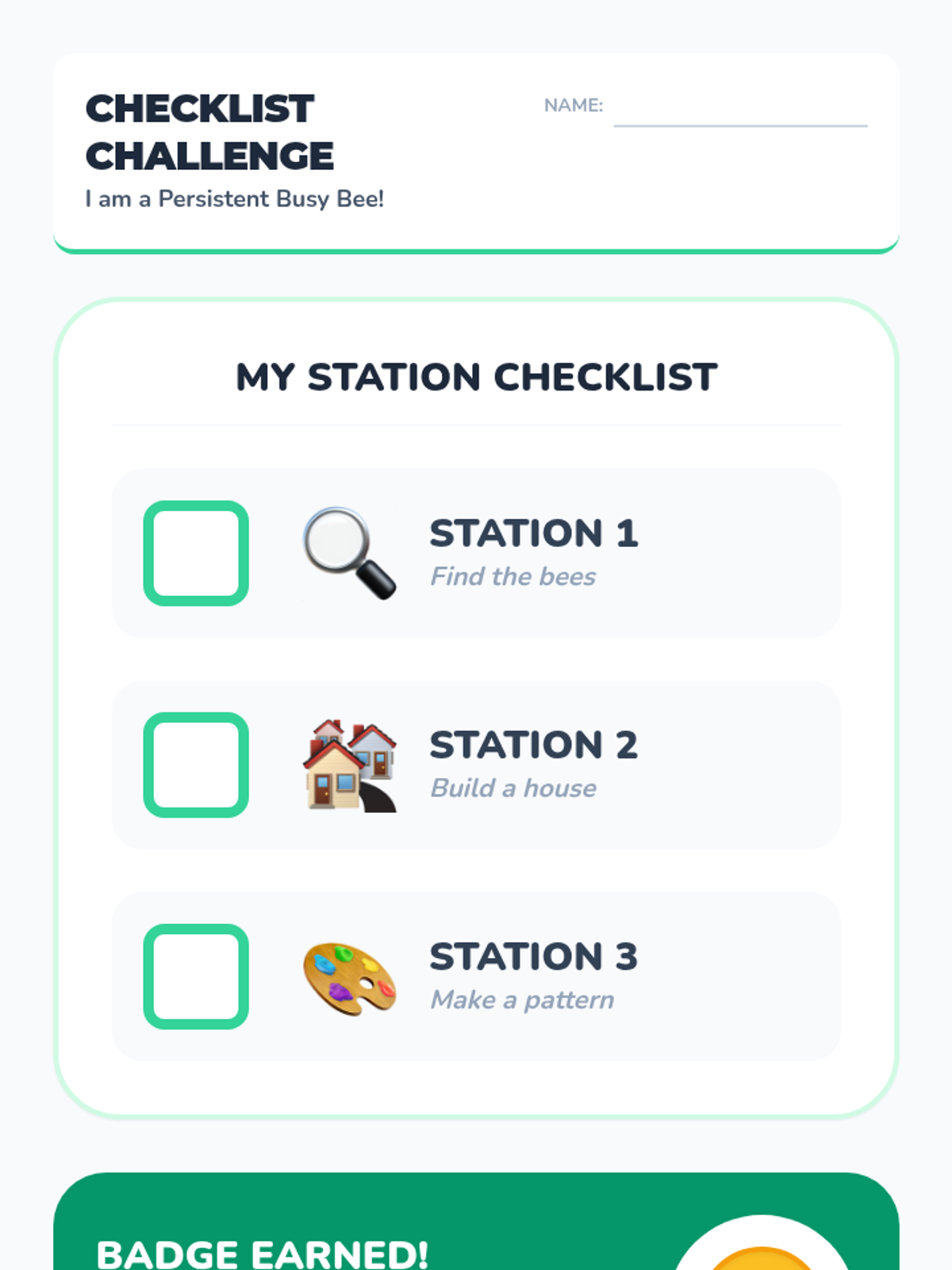
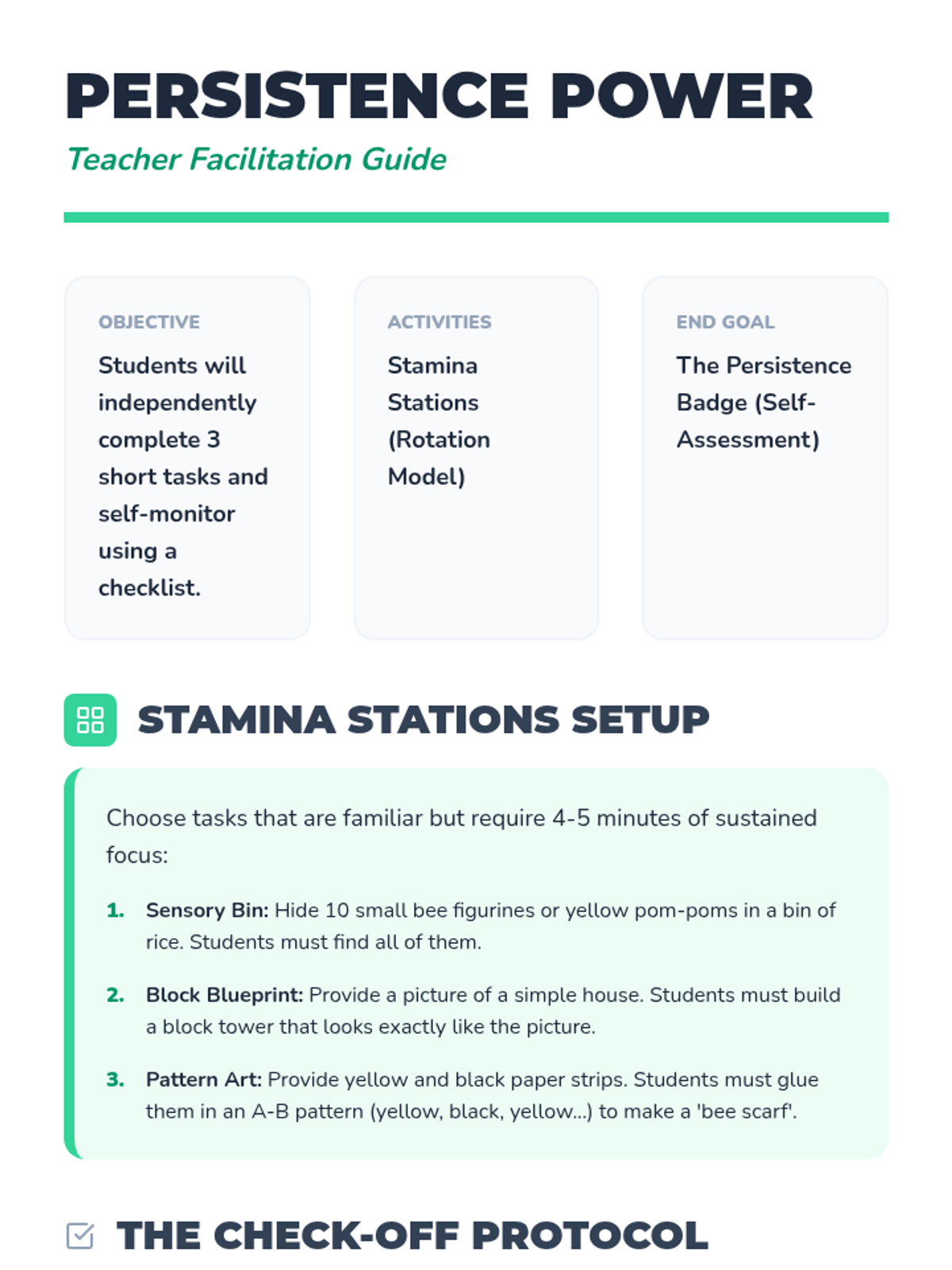
In this culminating lesson, students rotate through stations where they must complete tasks independently and check them off on a visual schedule. The focus is on self-assessing completion and building stamina.
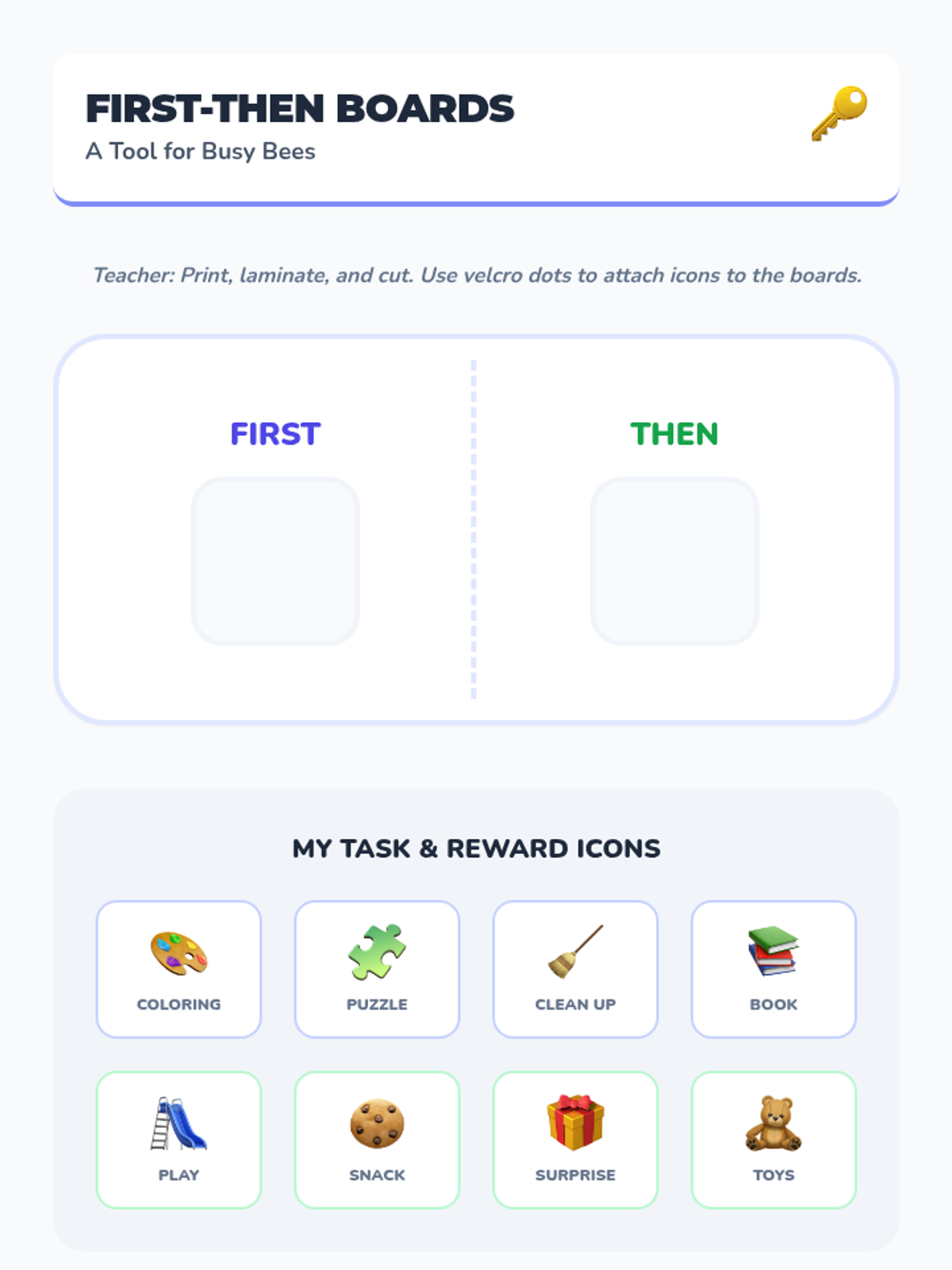
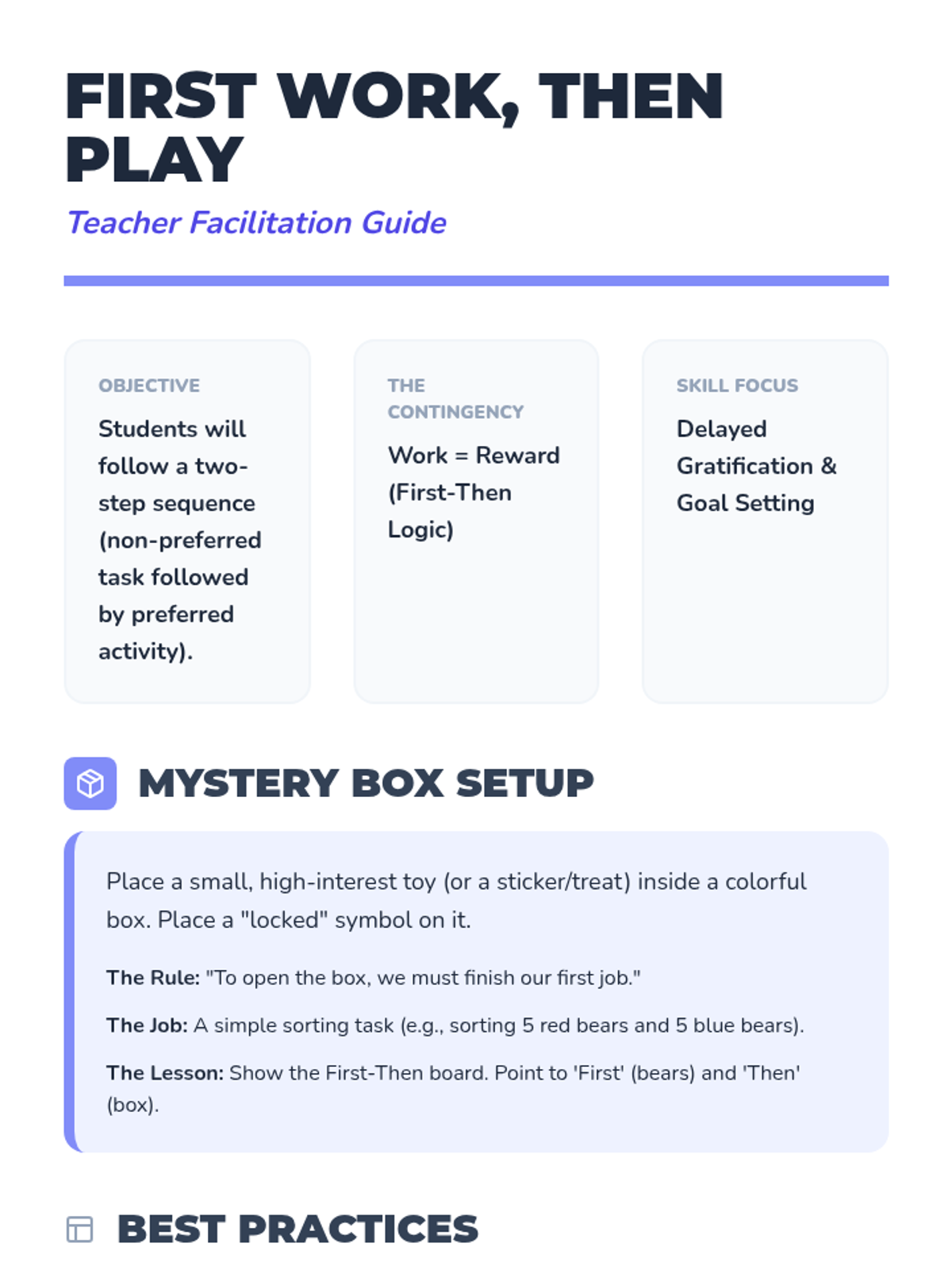
The lesson structures activities using 'First-Then' boards to teach the sequence of completing a requirement before accessing a reward. Students complete a short task to 'unlock' a preferred activity, reinforcing internal motivation.
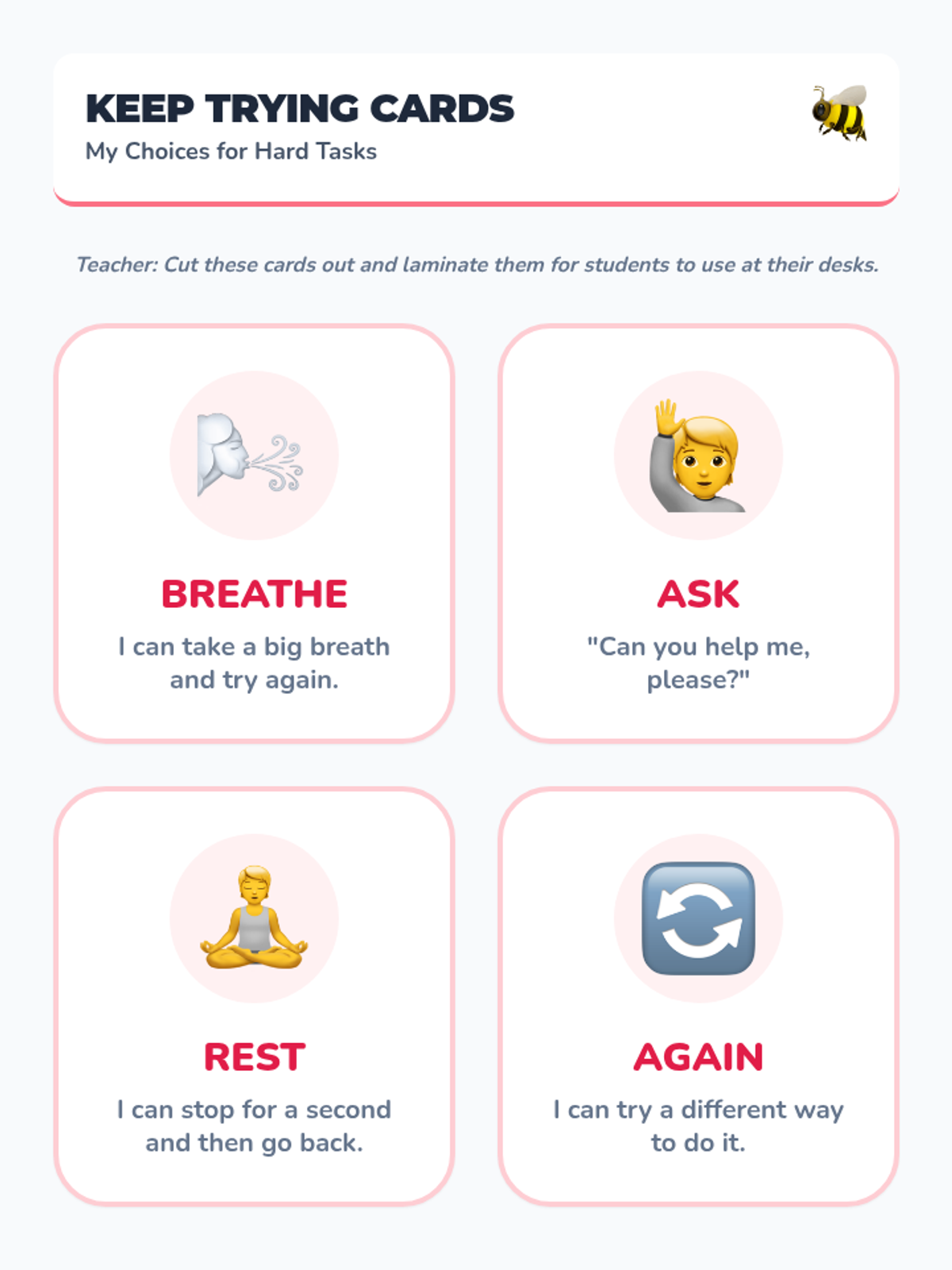
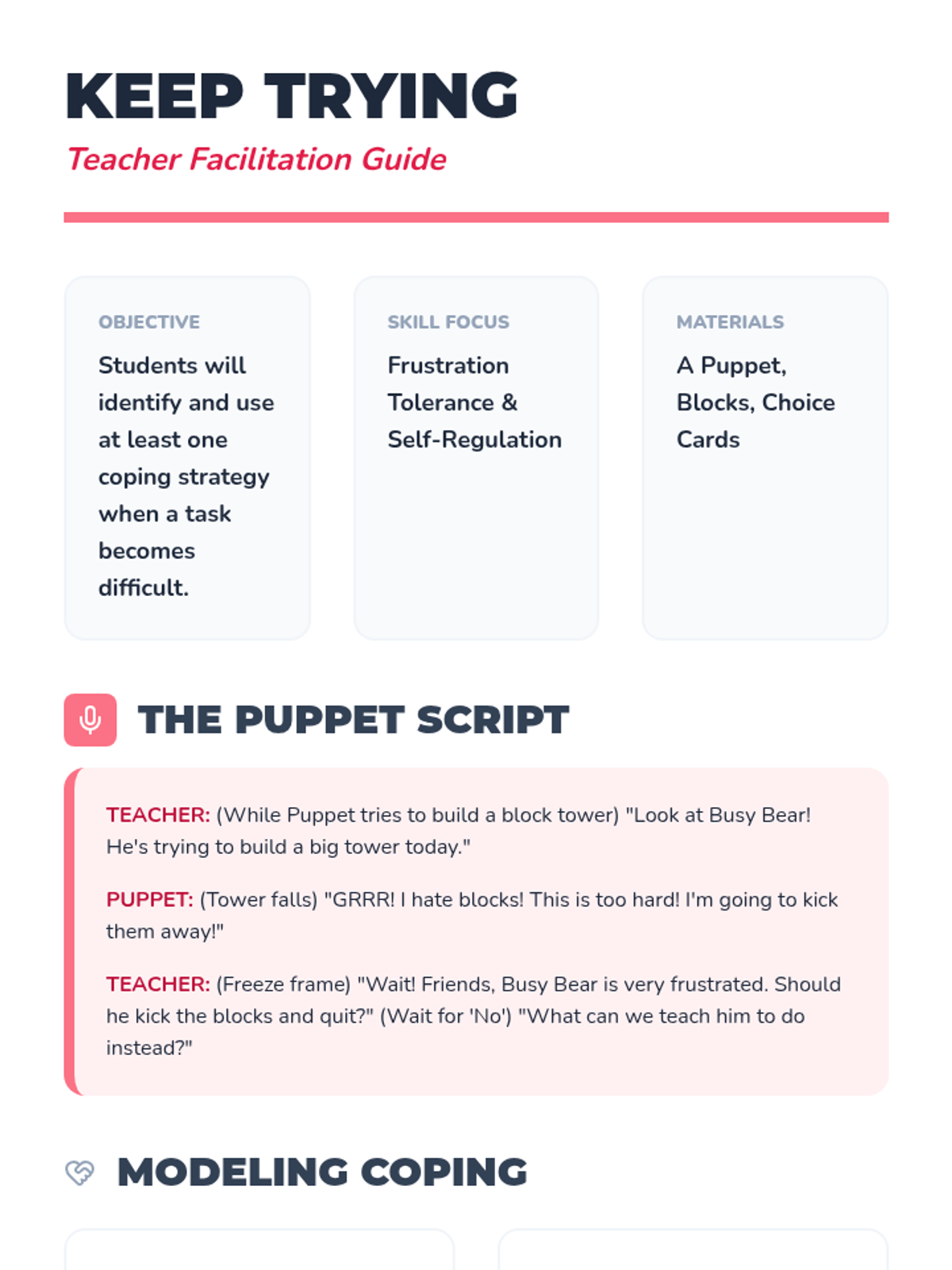
Students learn specific communication scripts and physical regulation techniques to use when a task gets hard. Through role-playing with puppets, the class practices asking for help or taking a break instead of quitting.
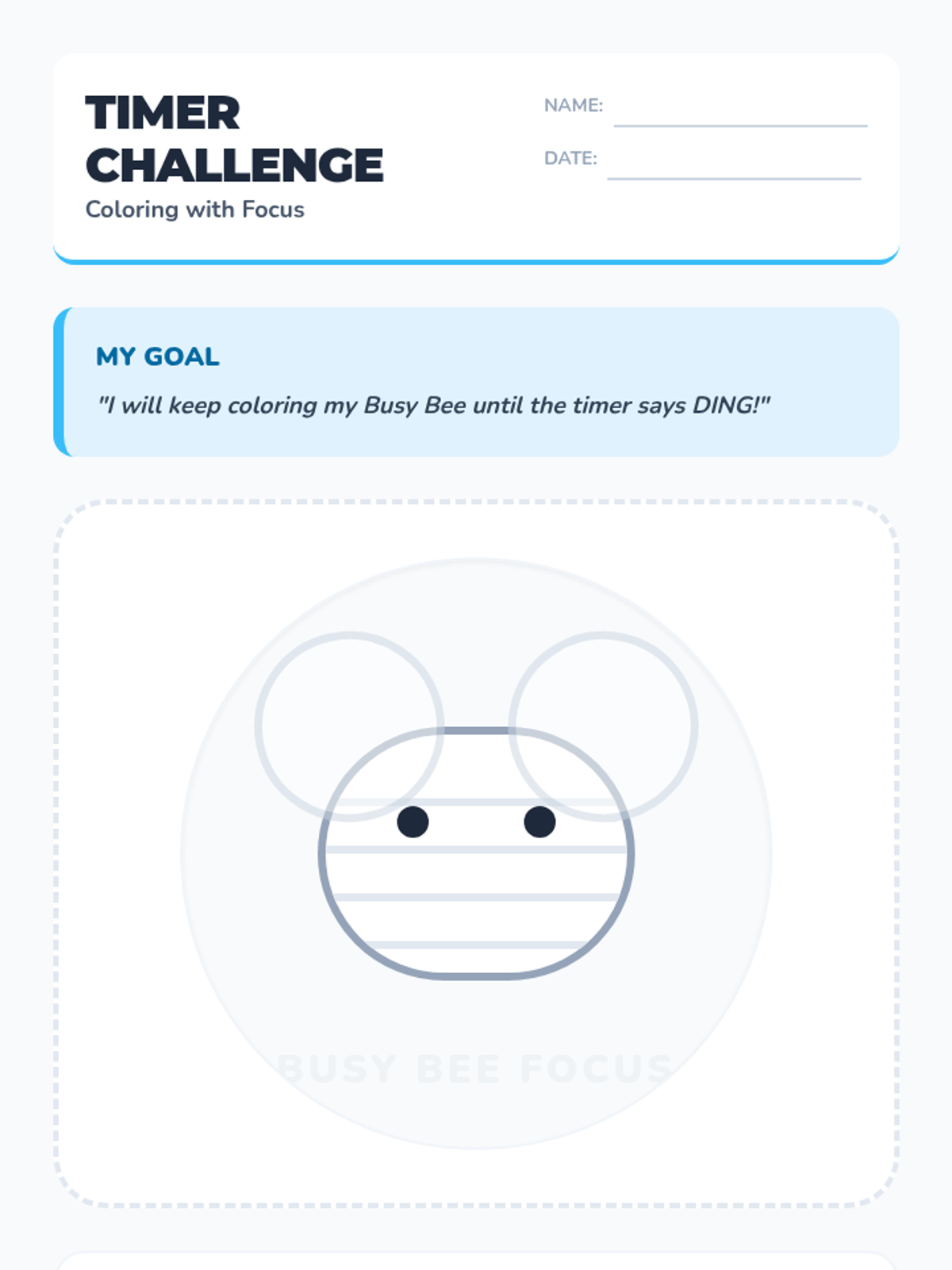
This lesson introduces visual timers as tools to help students visualize the passage of time during work periods. Students engage in a high-interest task that must continue until the timer ends, teaching them to pace their effort.
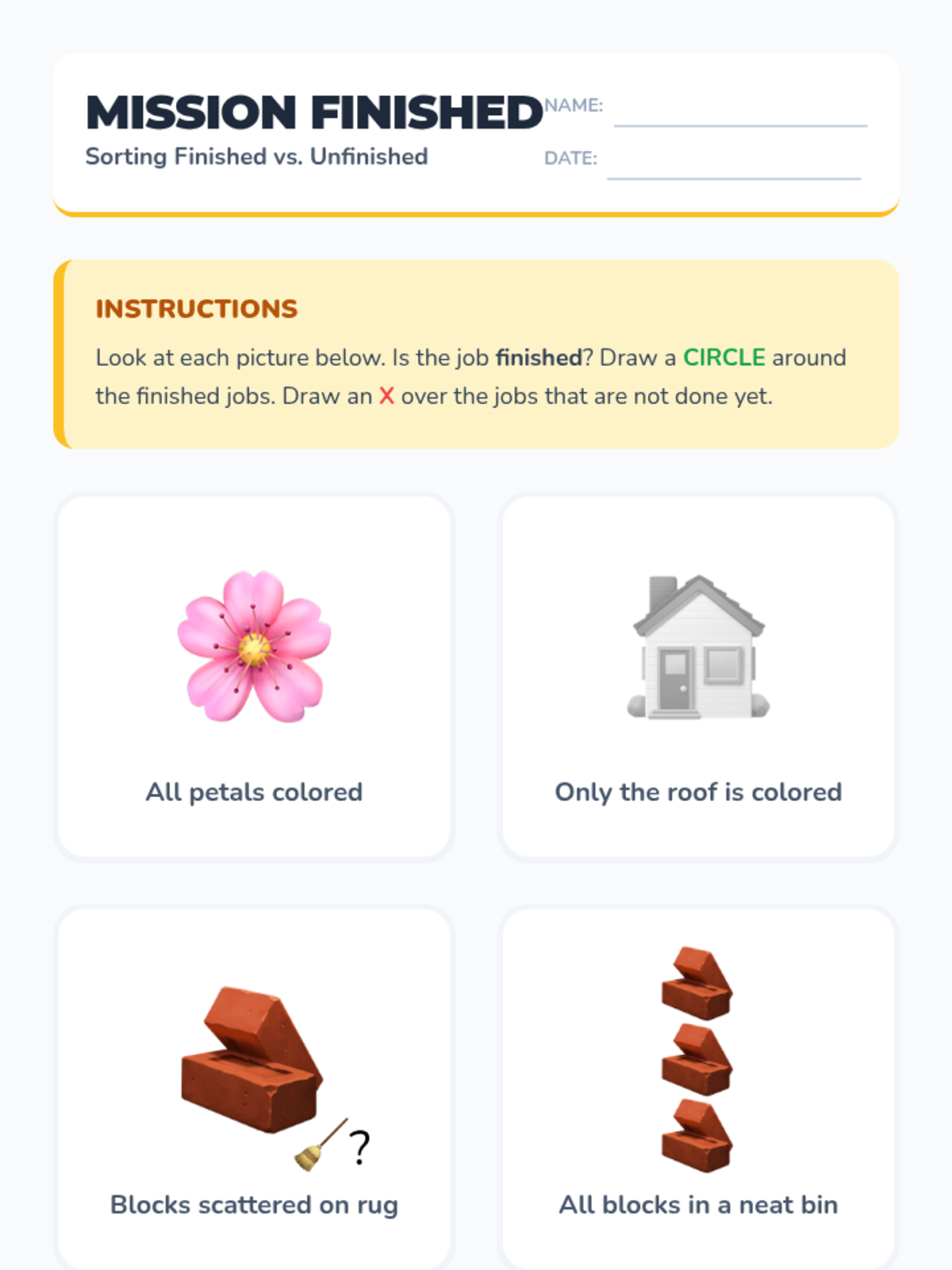
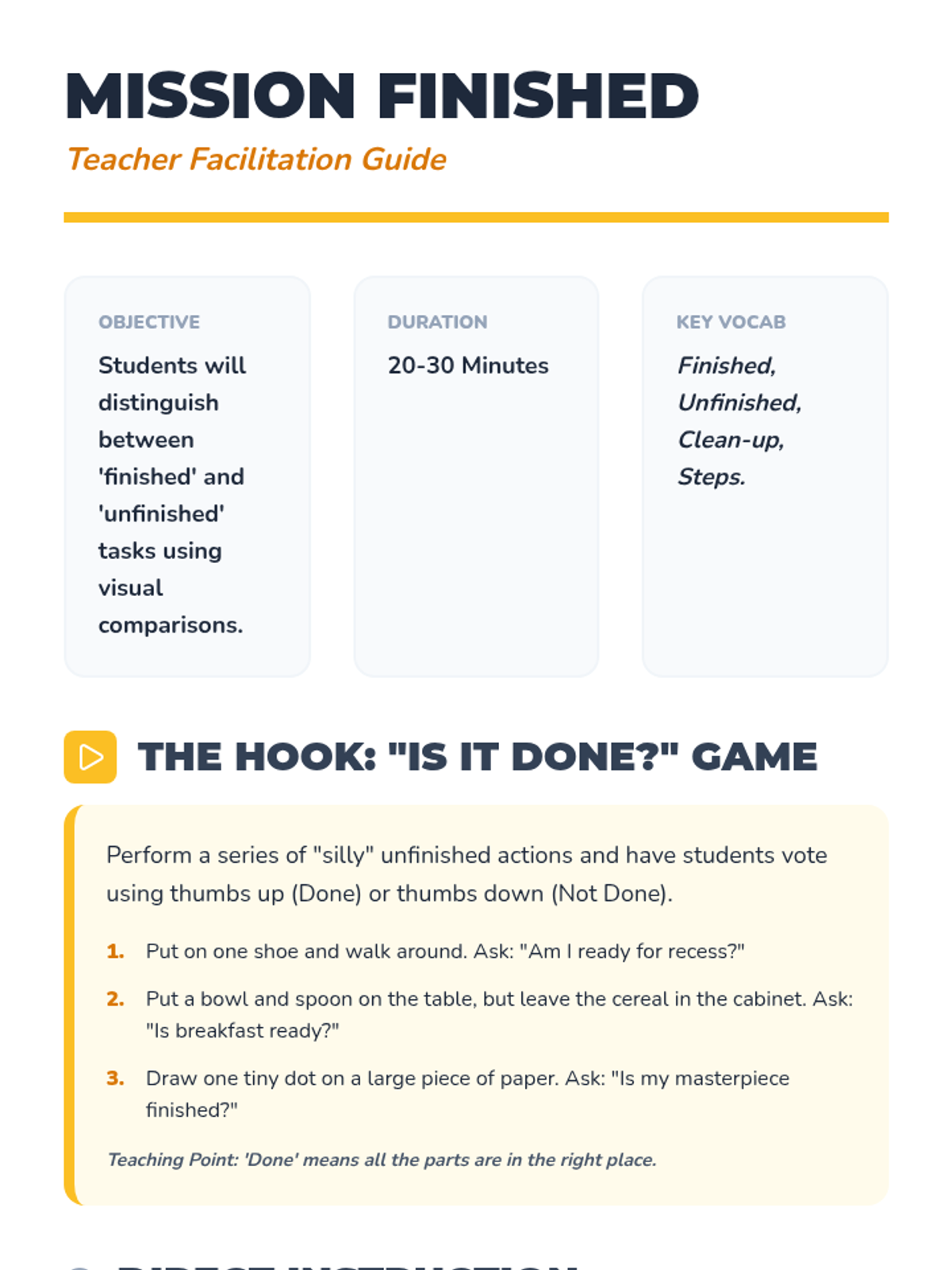
Students participate in a sorting activity to distinguish between 'finished' and 'unfinished' work using concrete visual examples. This lesson establishes the baseline expectation for quality and completion through the 'Is It Done?' game.
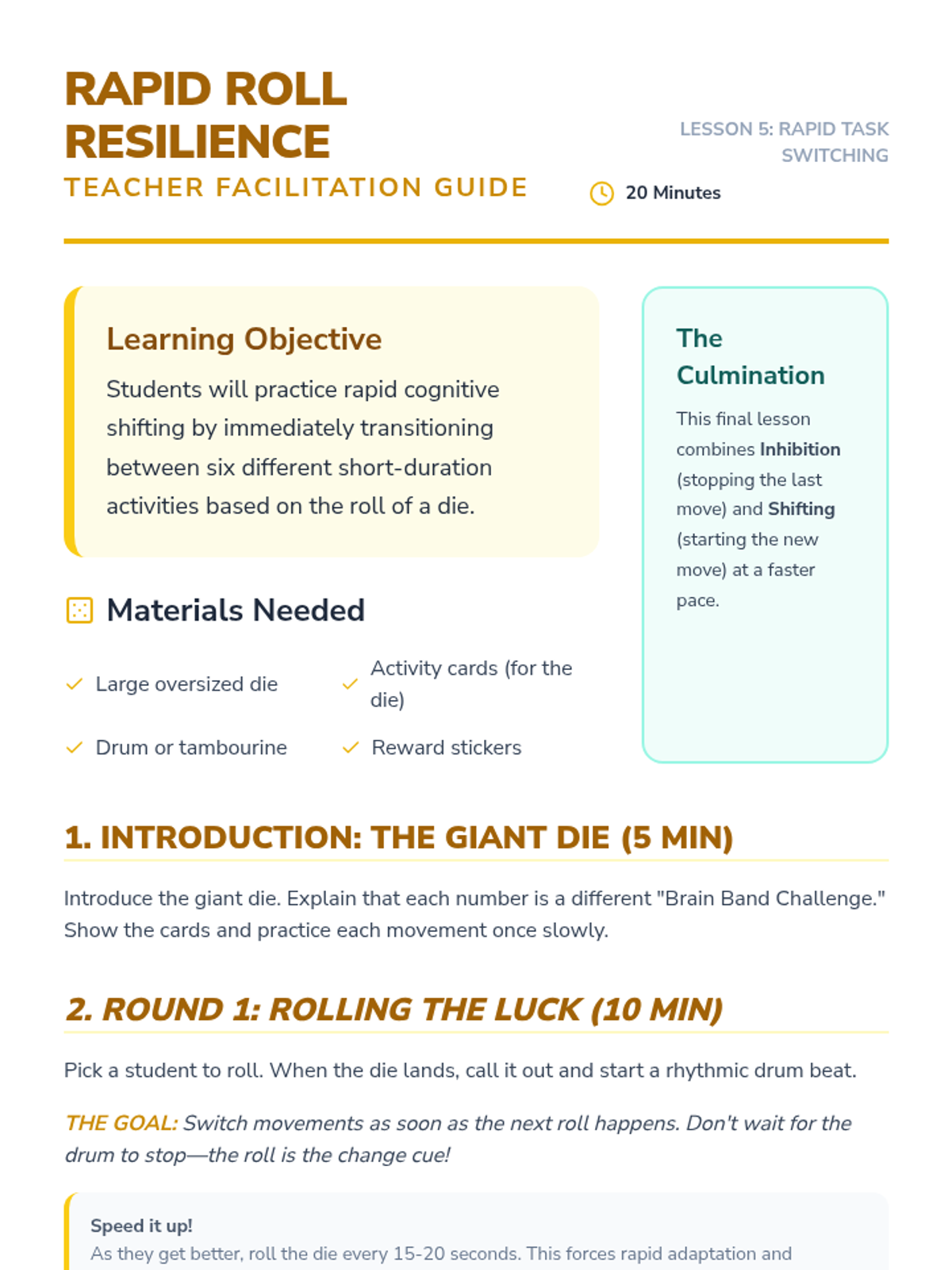
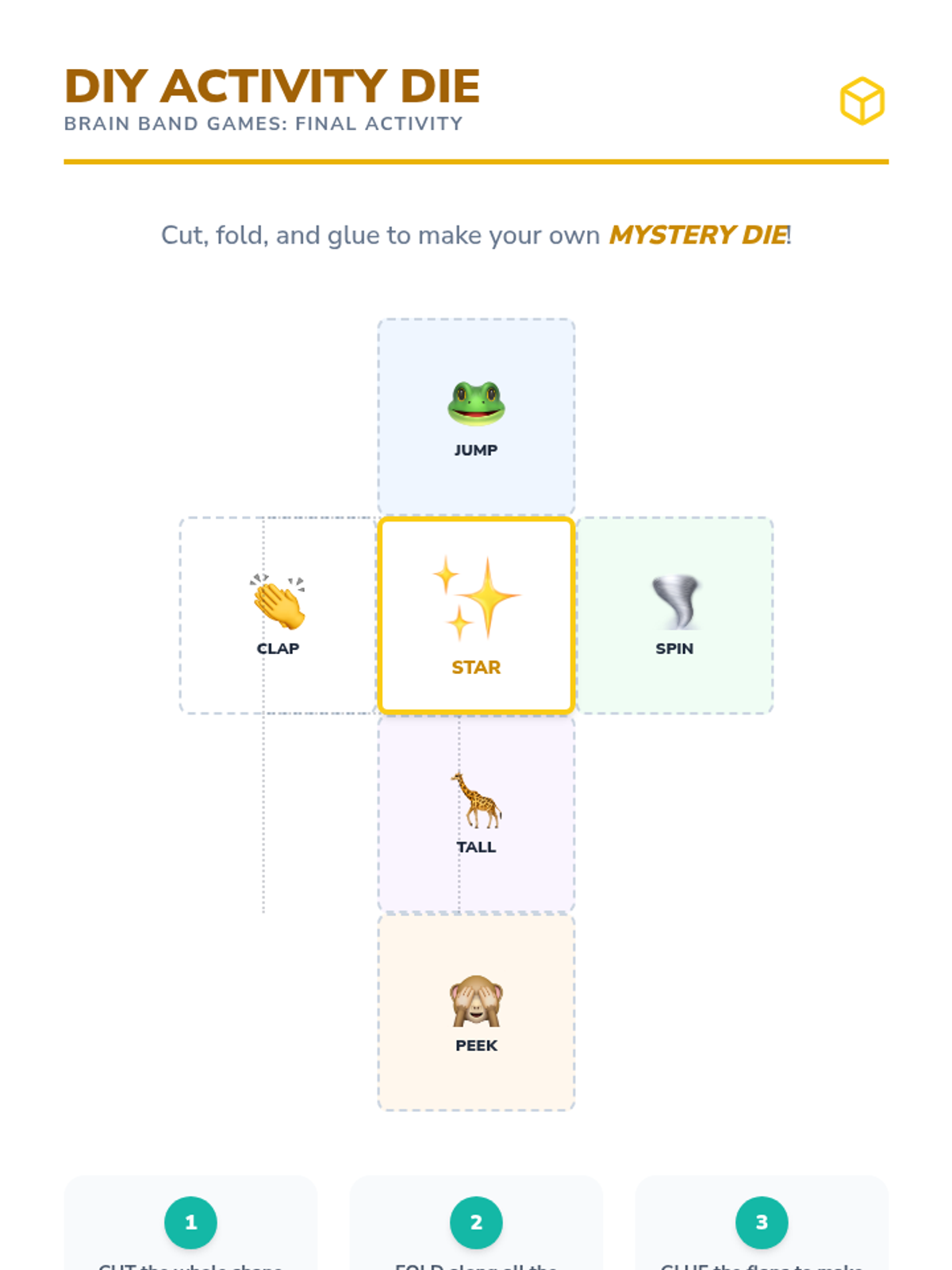
Students use a large activity die to practice rapid switching between different short movements. The lesson focuses on resilience and the ability to quickly recover and move on to the next task.
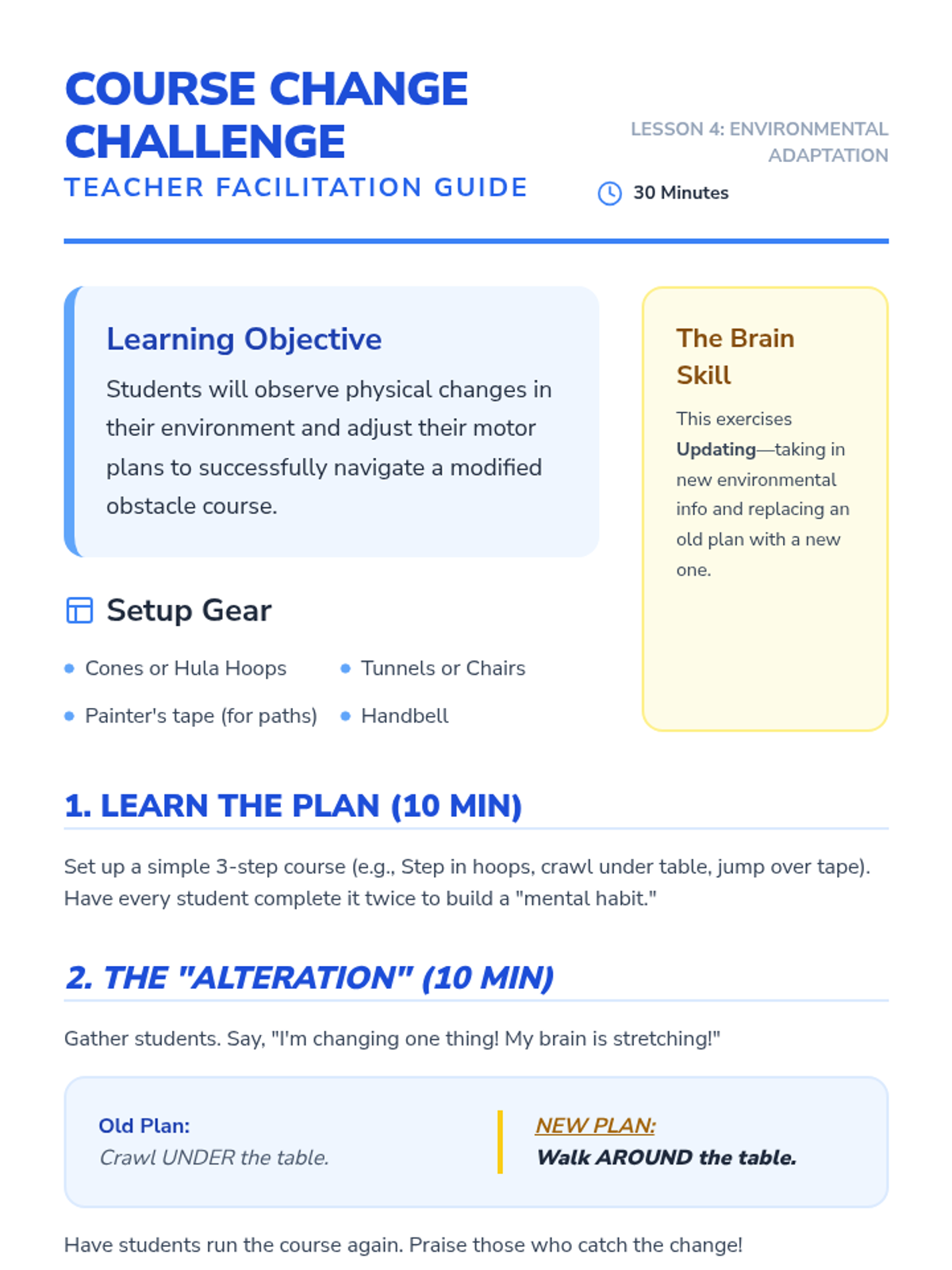
Students navigate an obstacle course that changes after they have learned the path. They must observe their environment and adjust their motor plans in real-time to overcome new challenges.
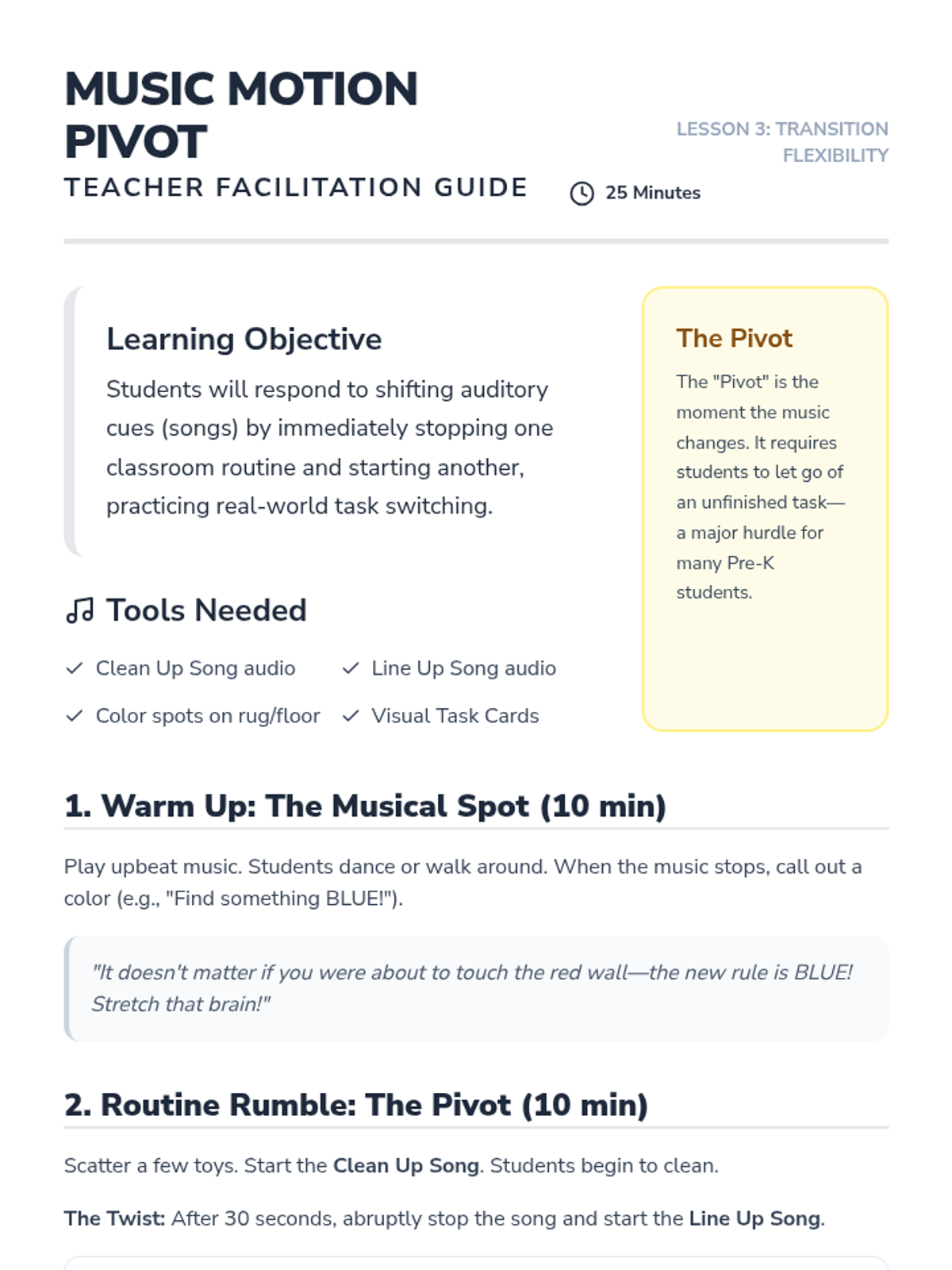
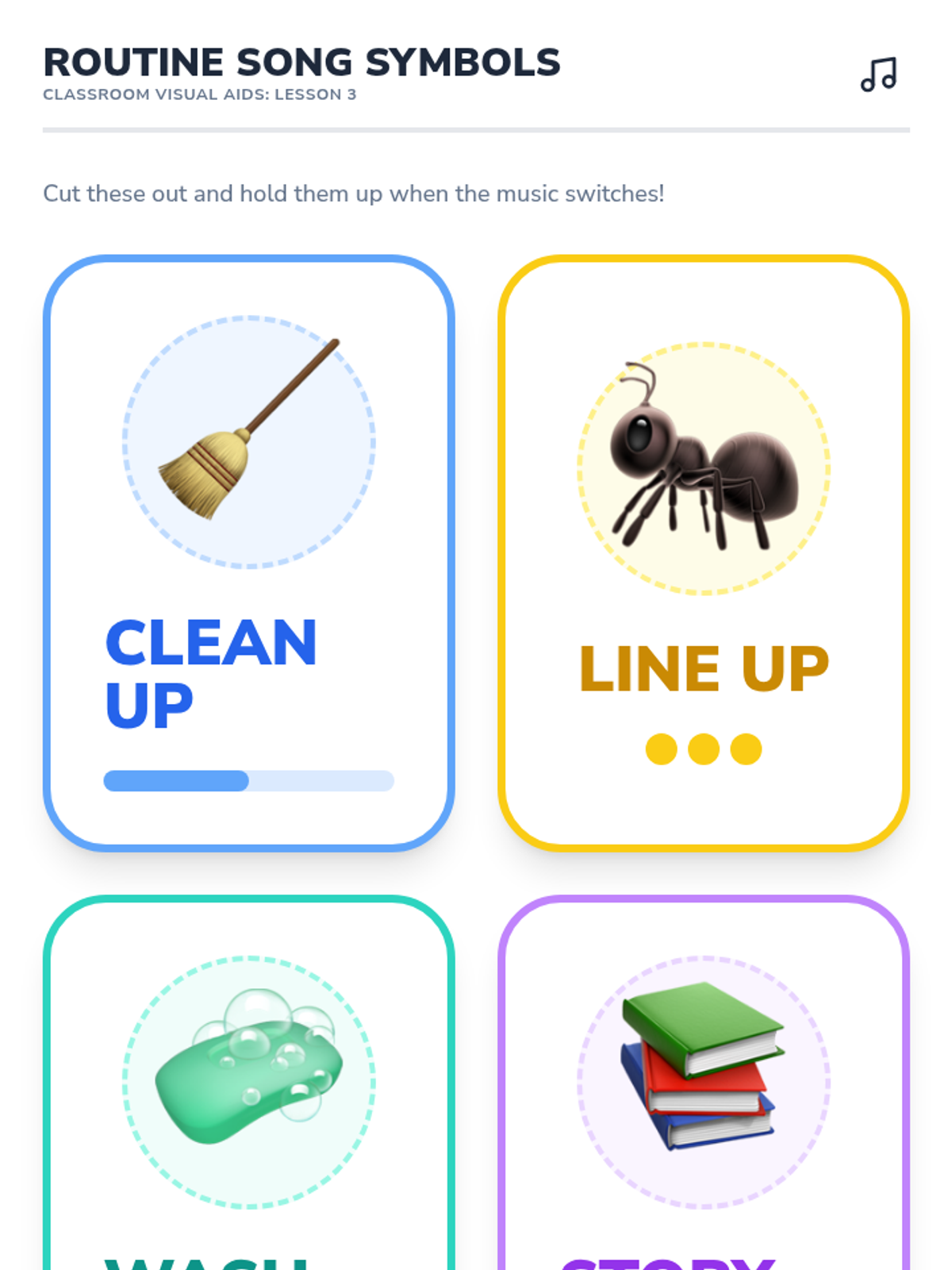
Students use songs to dictate classroom actions and practice pivoting behaviors when the music changes. This lesson connects the concept of flexibility to everyday classroom routines and transitions.
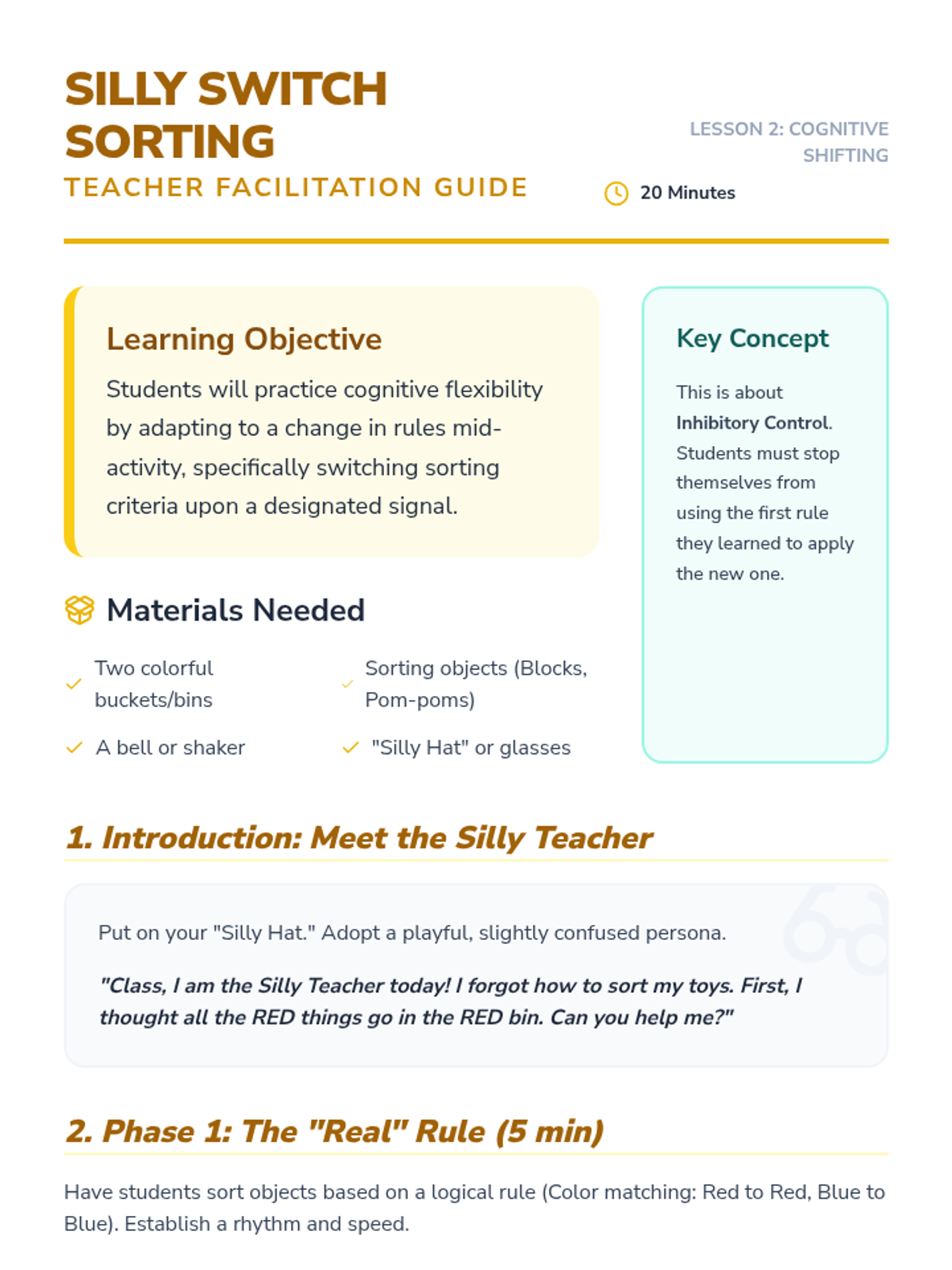
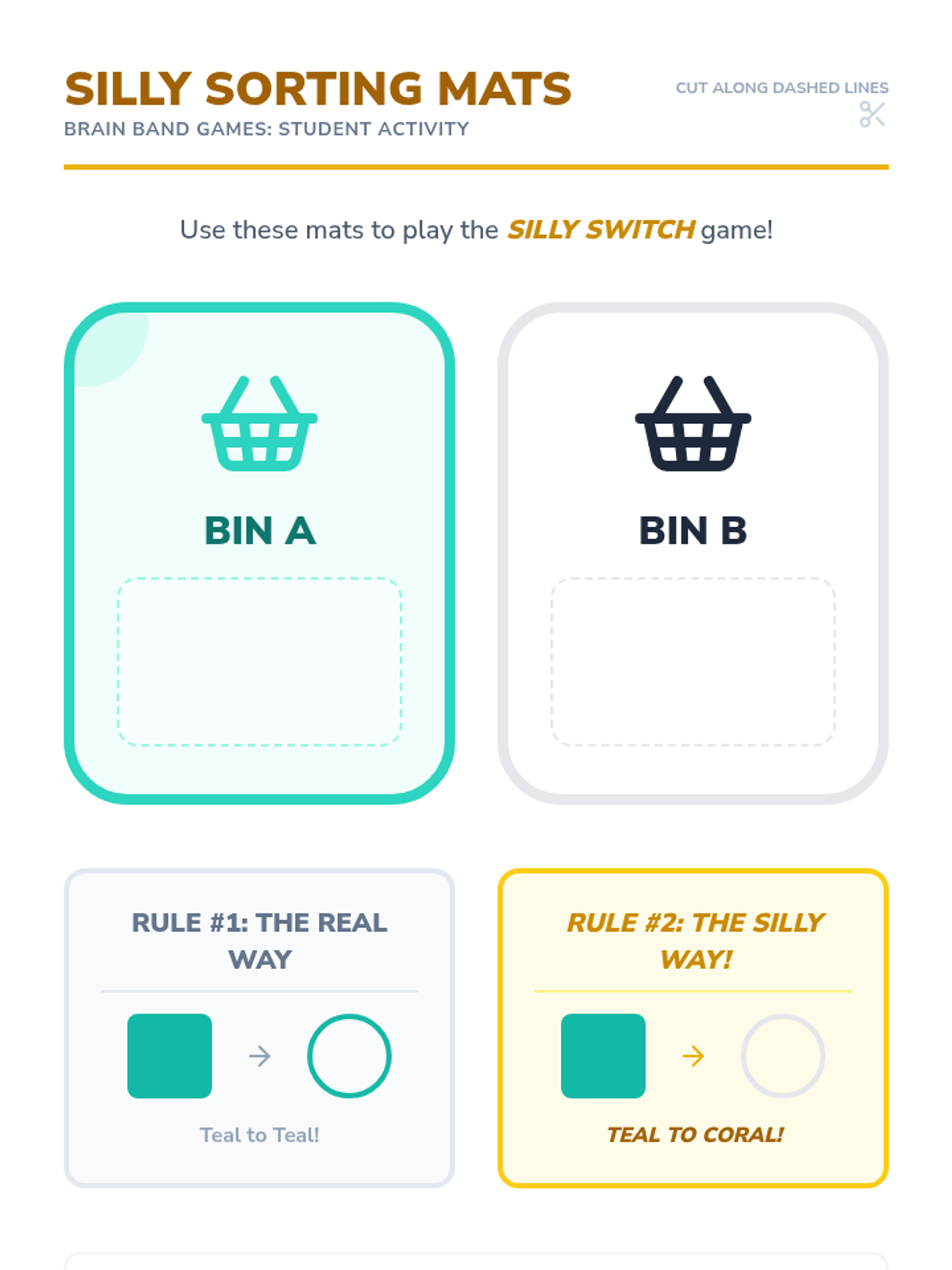
Students engage in sorting activities where rules change mid-game, requiring them to suppress initial learning and adapt to new parameters. A 'Silly Teacher' character helps make rule-switching fun and low-stakes.
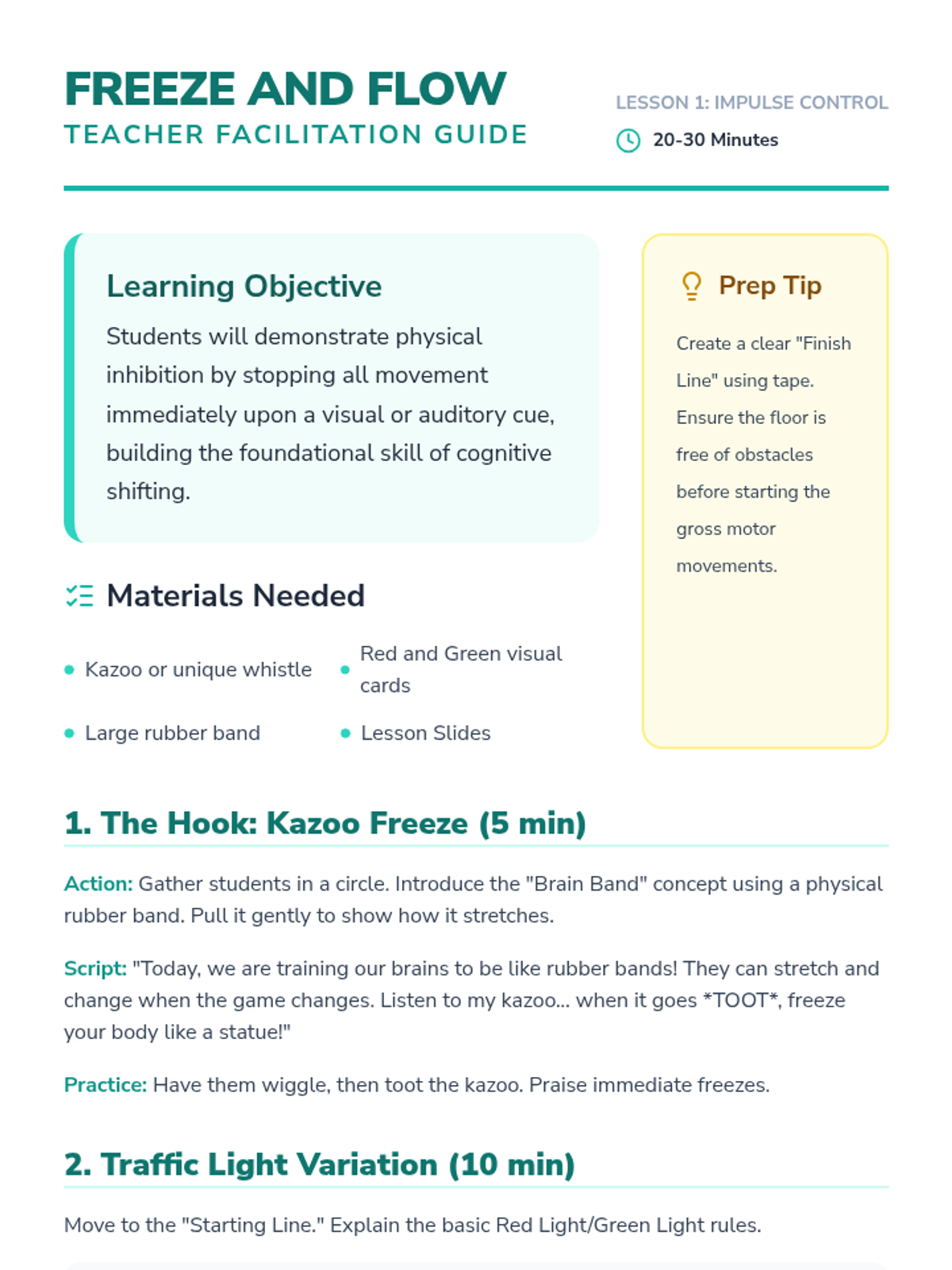
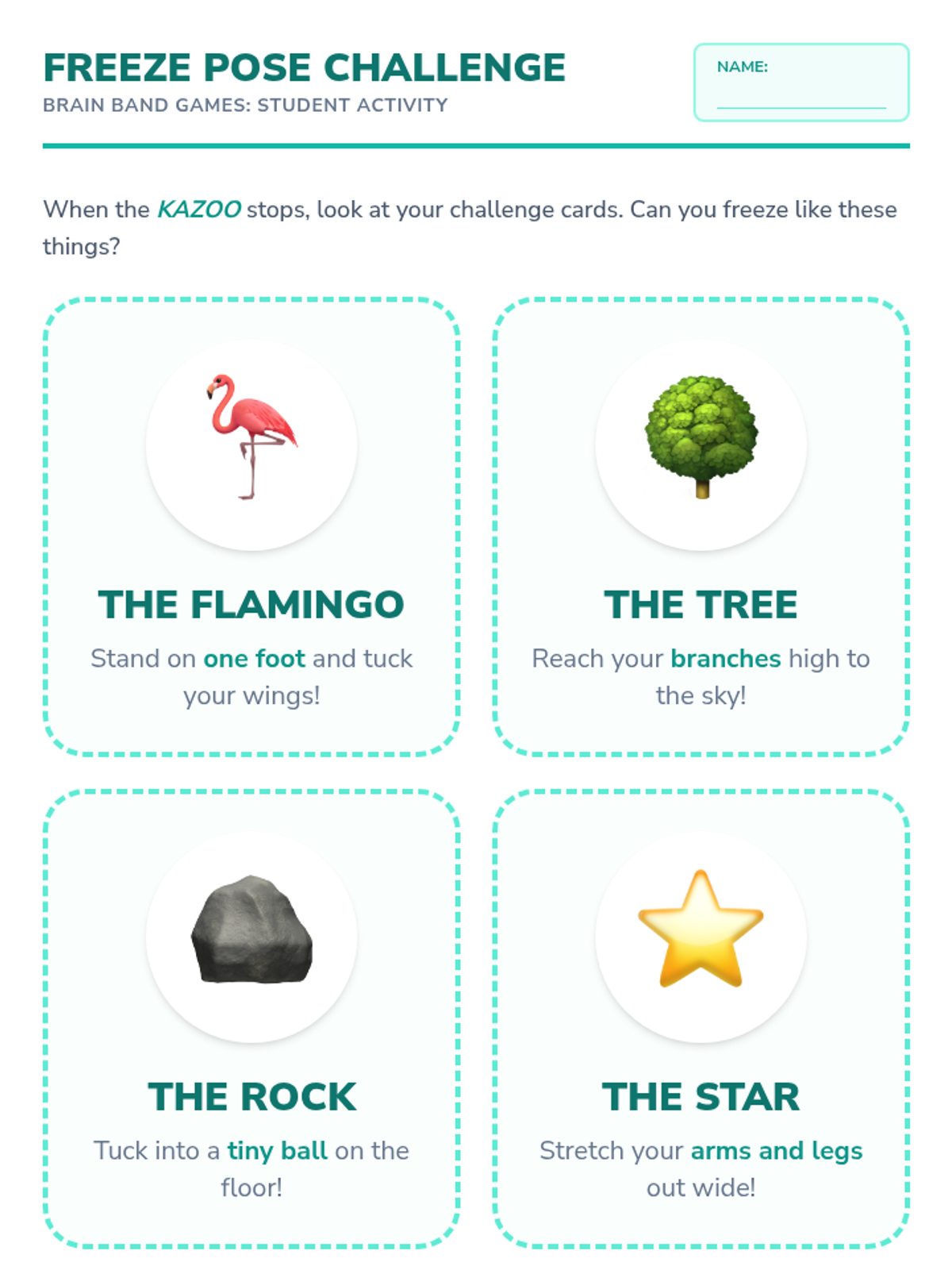
Students play 'Red Light, Green Light' variations to practice physical inhibition and auditory processing. The lesson focuses on the physical sensation of stopping immediately on a cue, building the foundation for task switching.
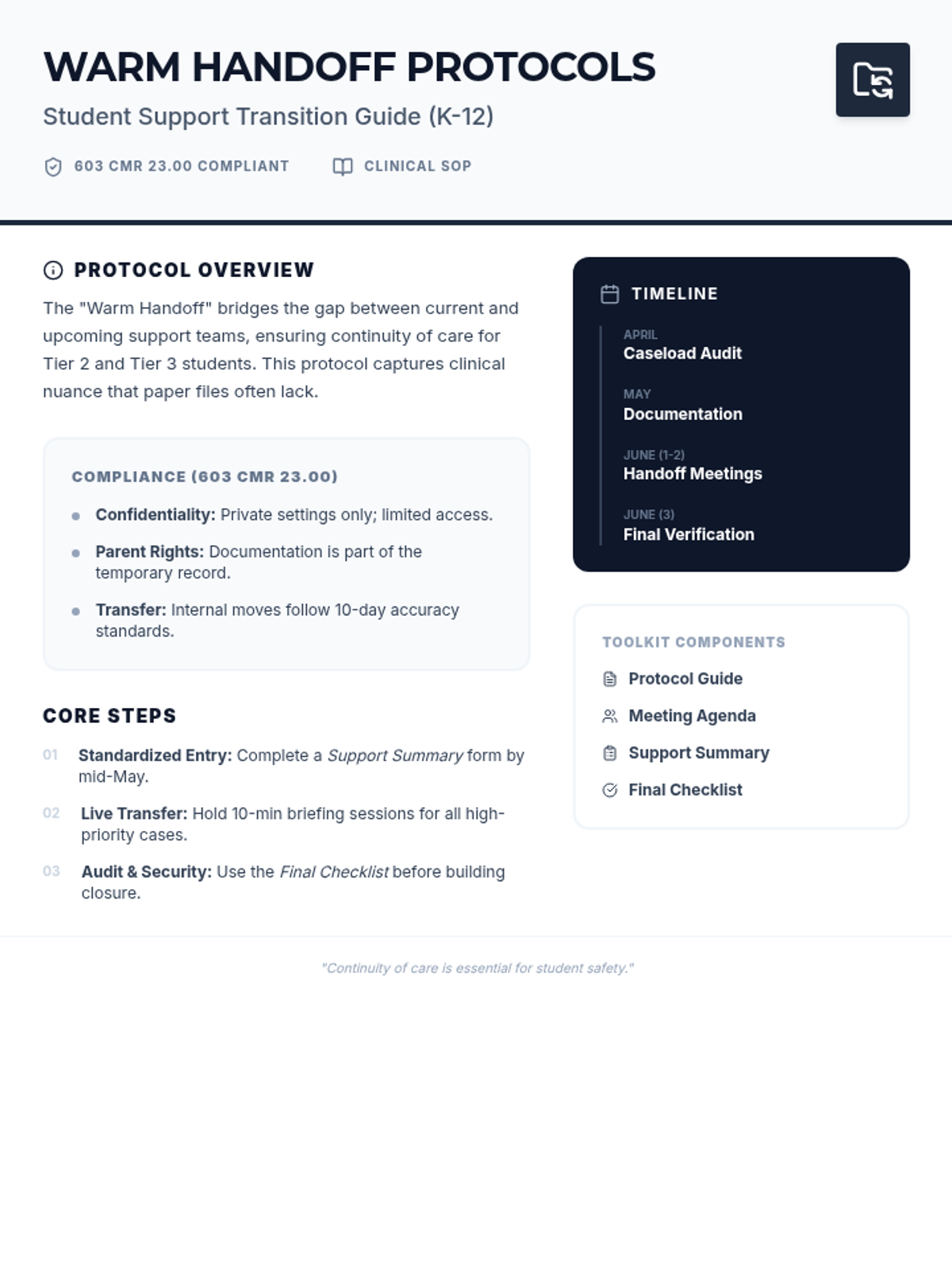
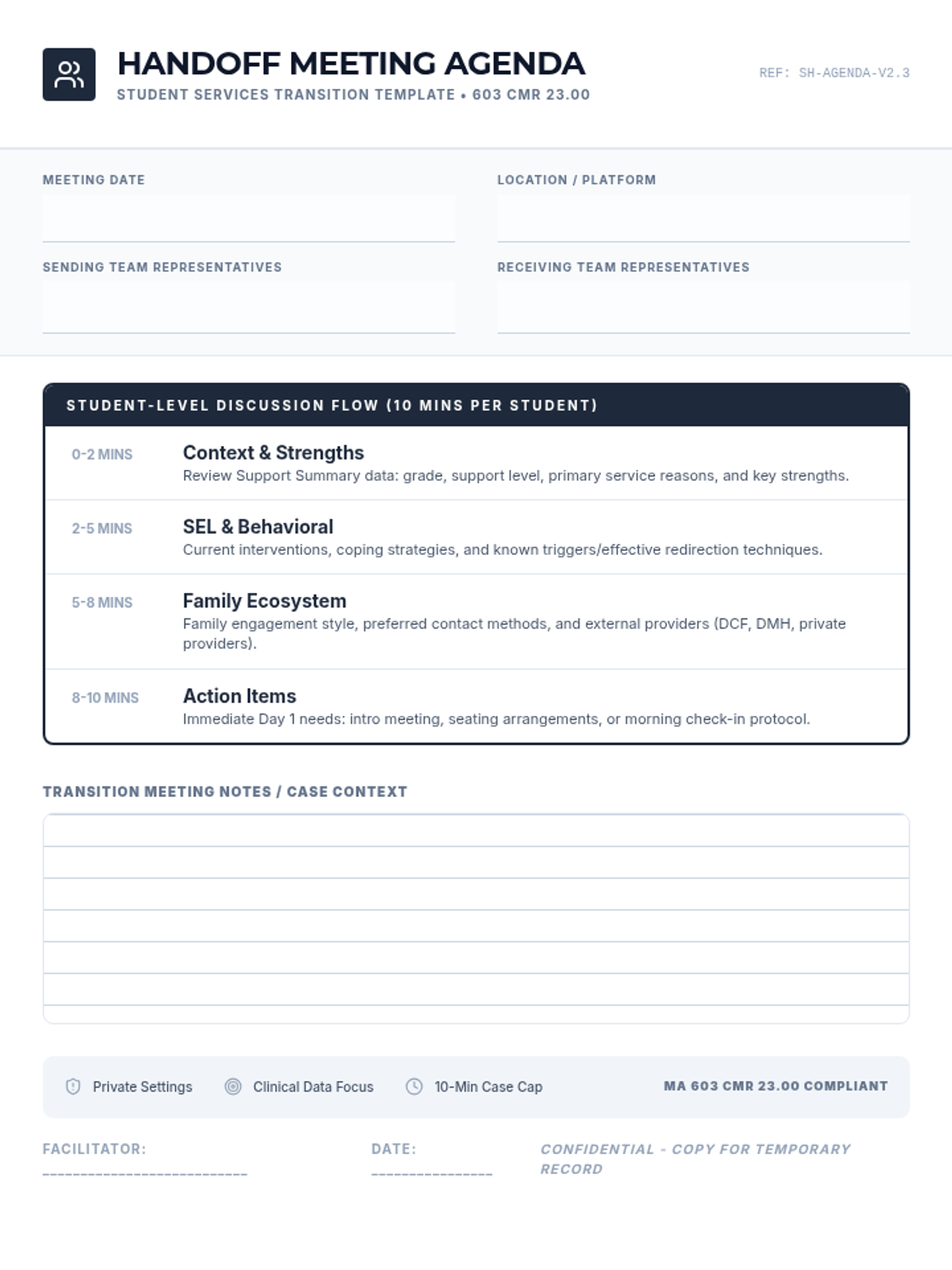
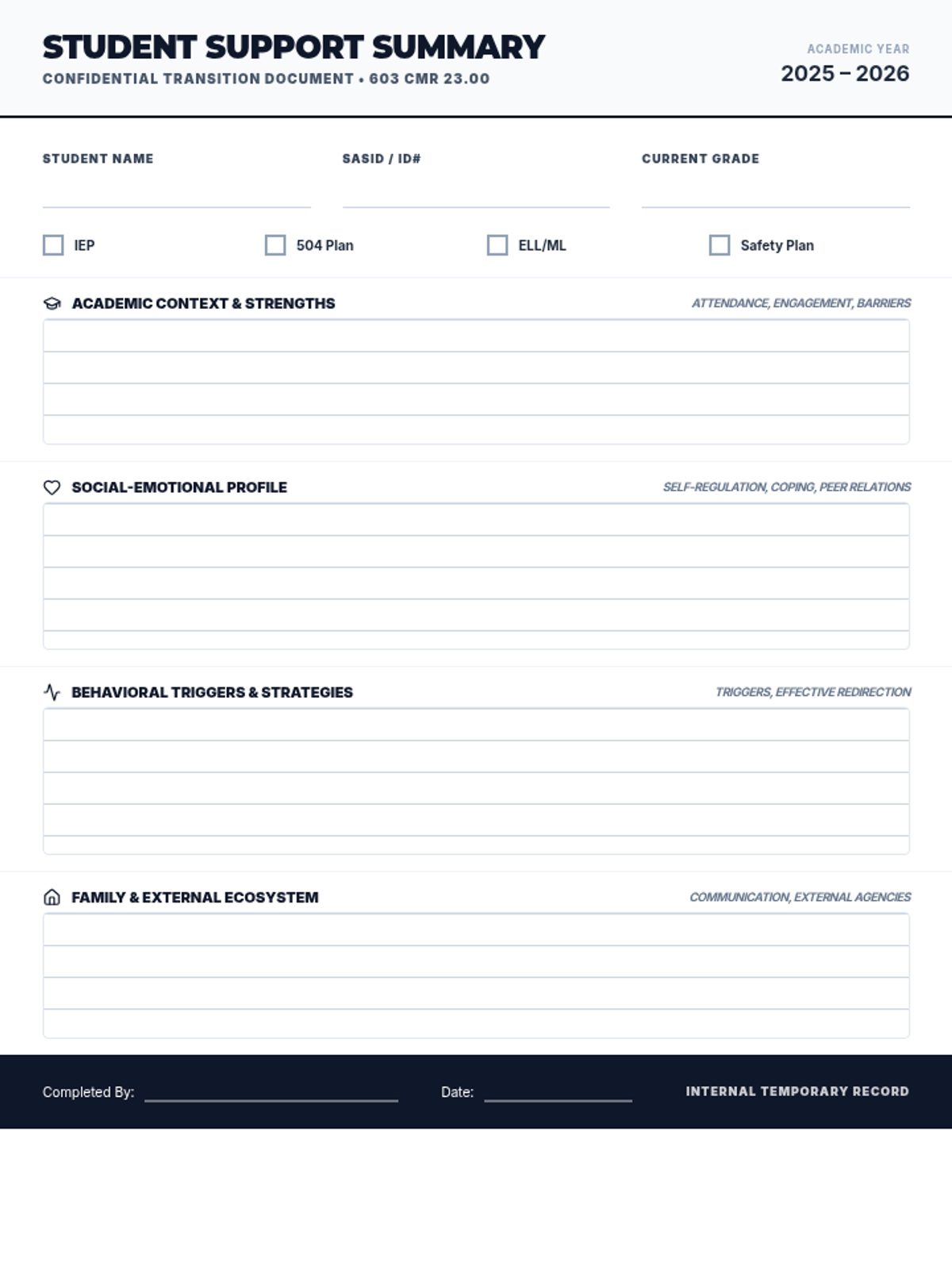
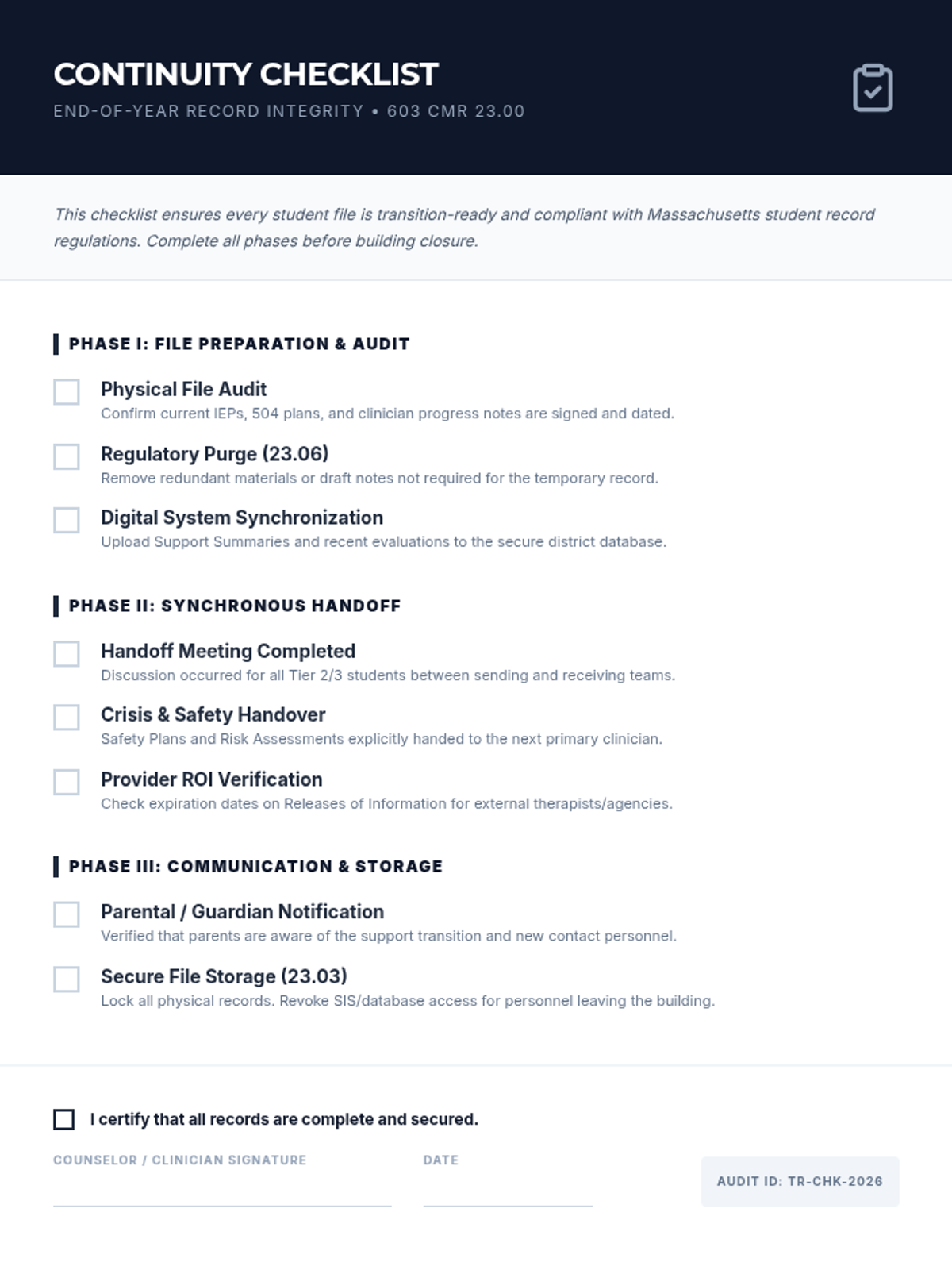
A comprehensive toolkit for K-12 school counselors and student services teams to ensure continuity of care during end-of-year transitions. It includes protocol guides, meeting structures, and documentation templates aligned with Massachusetts student records regulations.
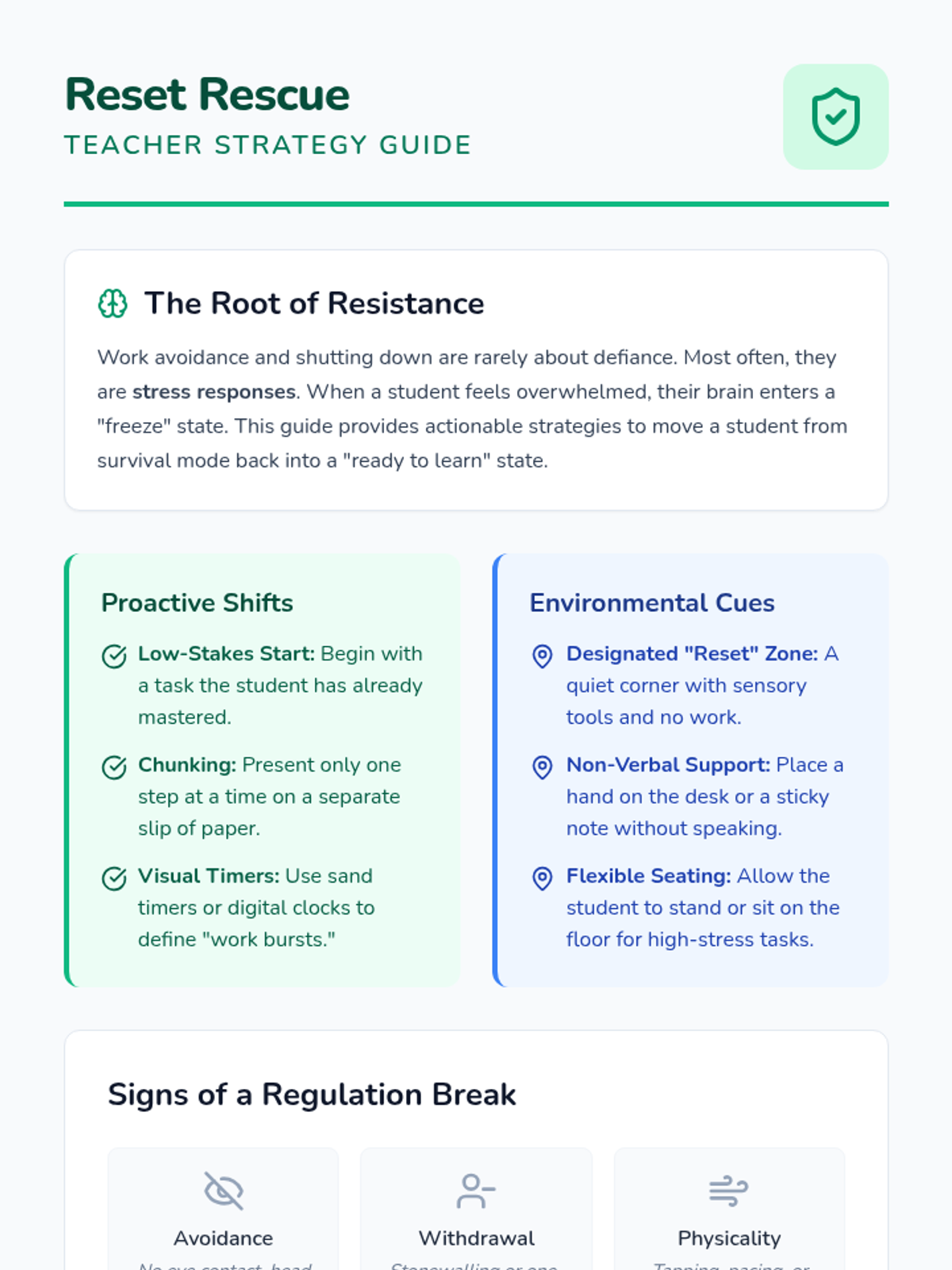
A comprehensive set of tools for teachers to support students experiencing work avoidance or shutting down, focusing on emotional regulation and proactive intervention.
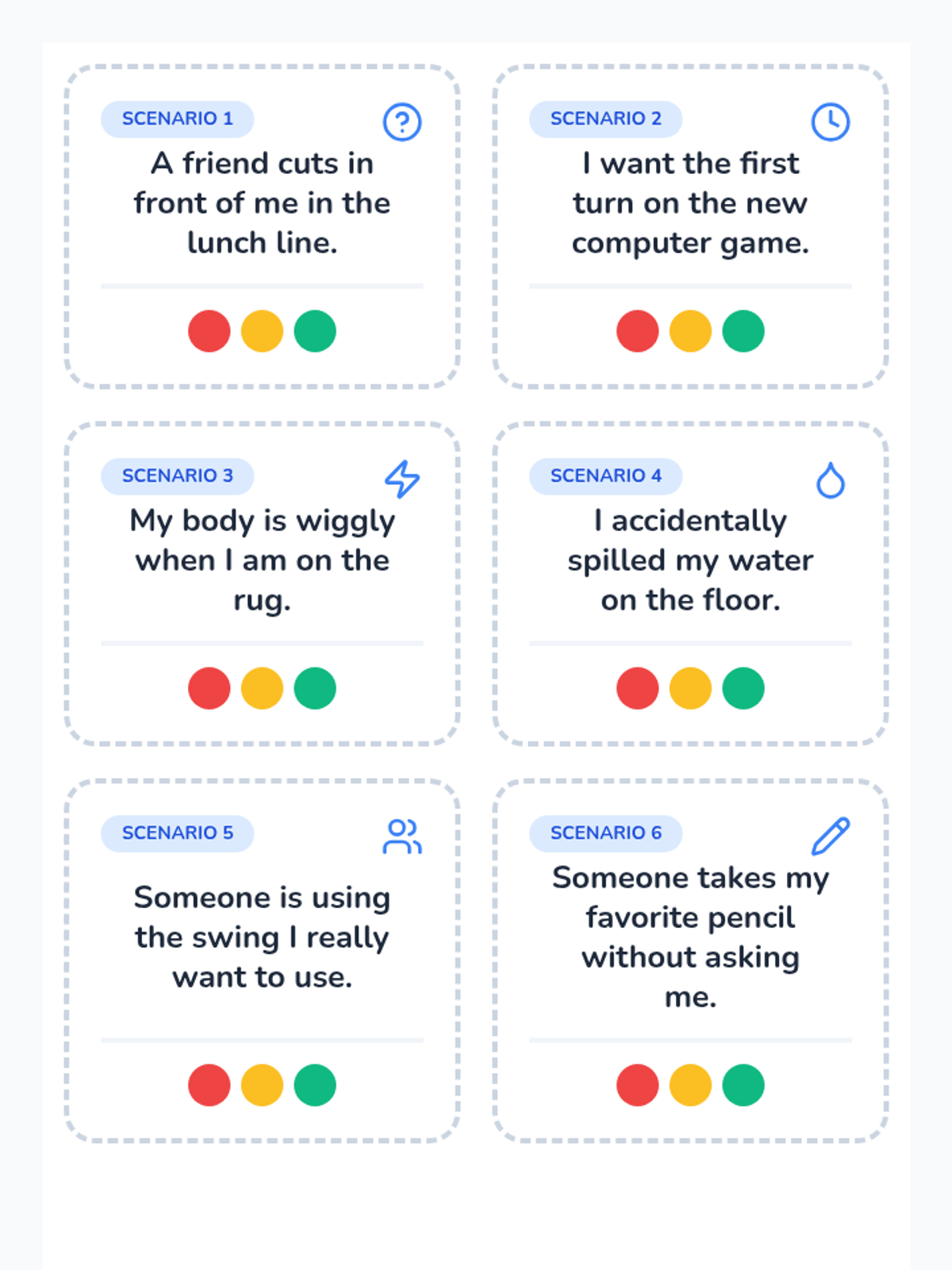
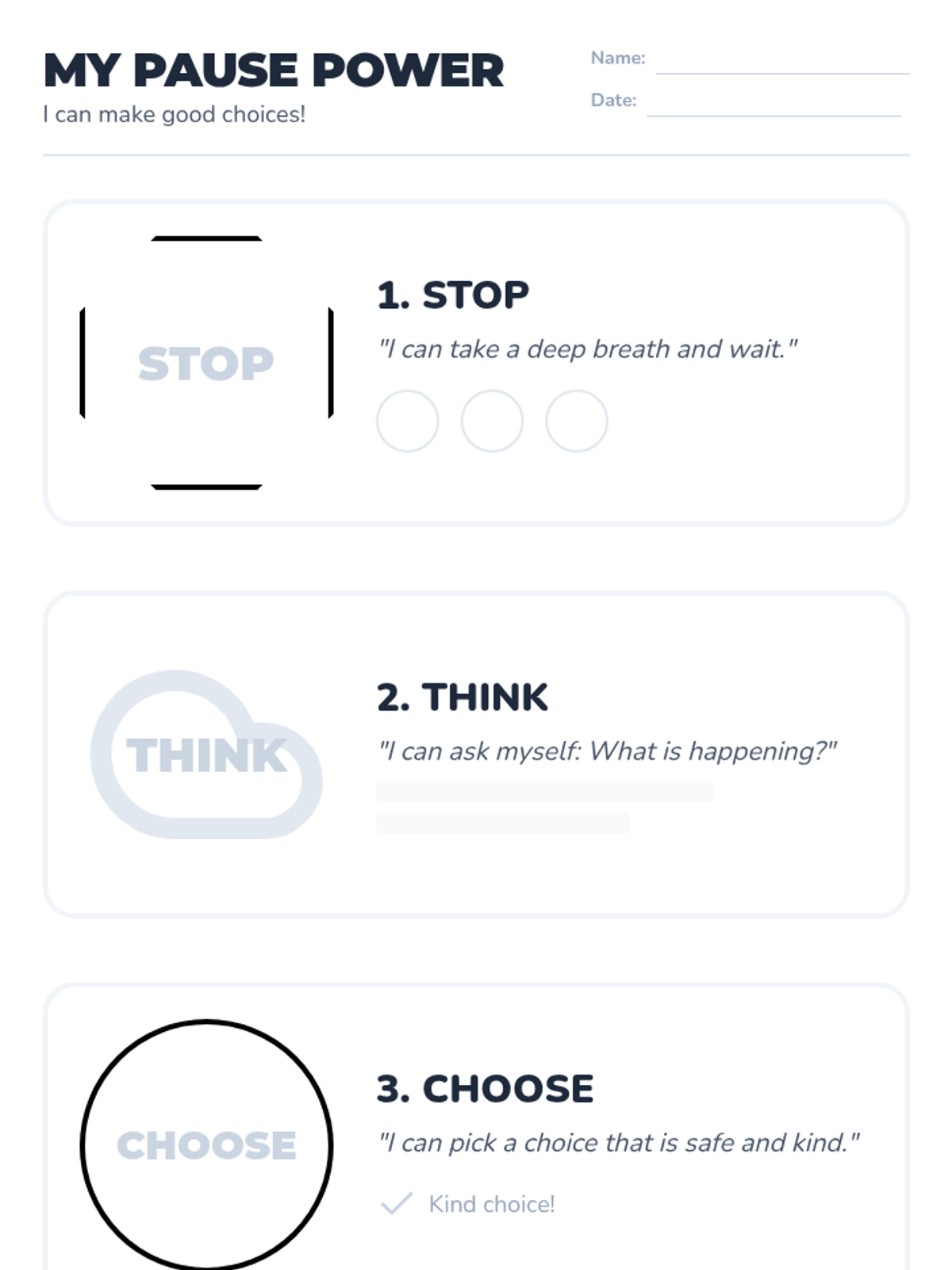
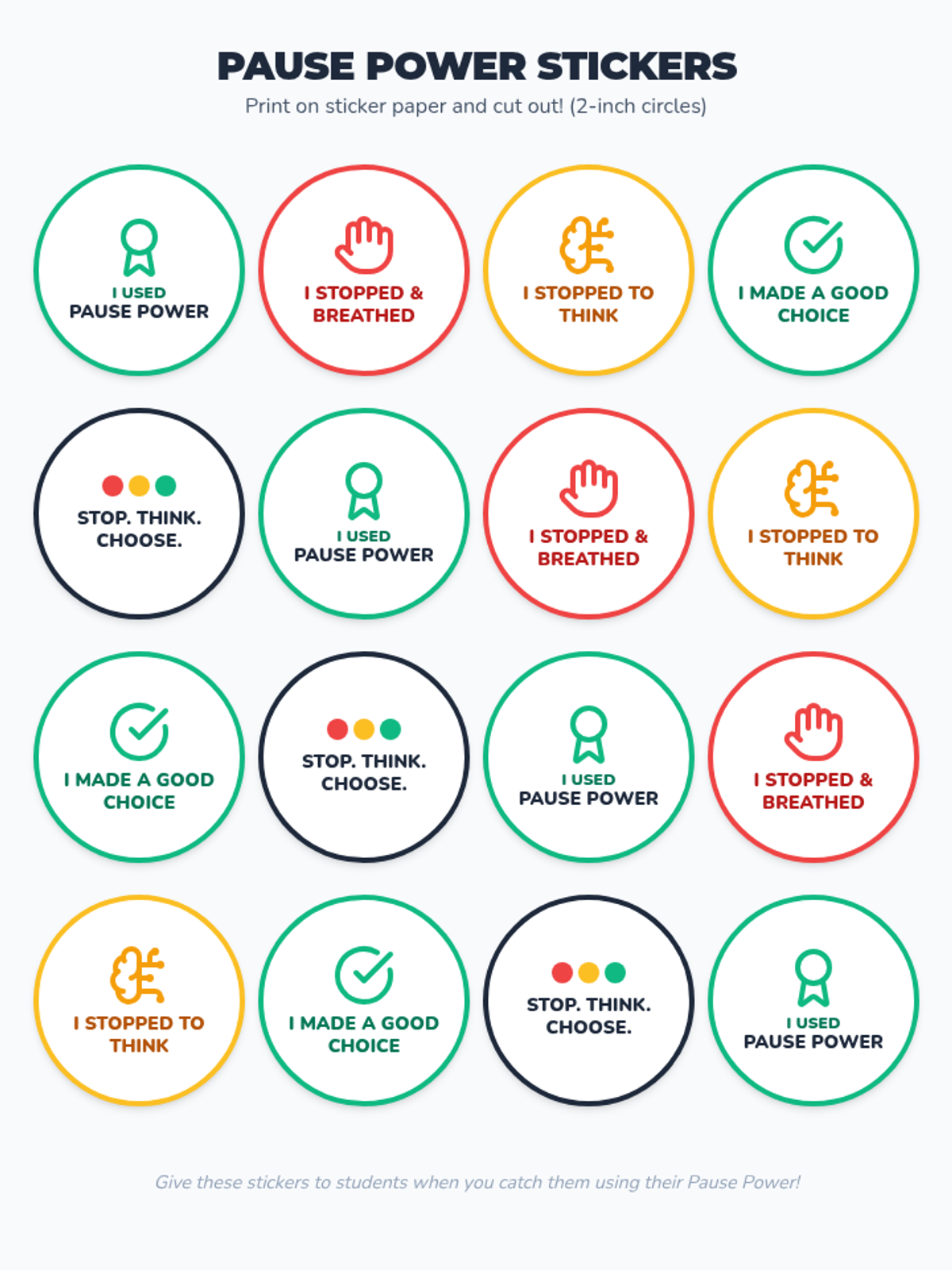
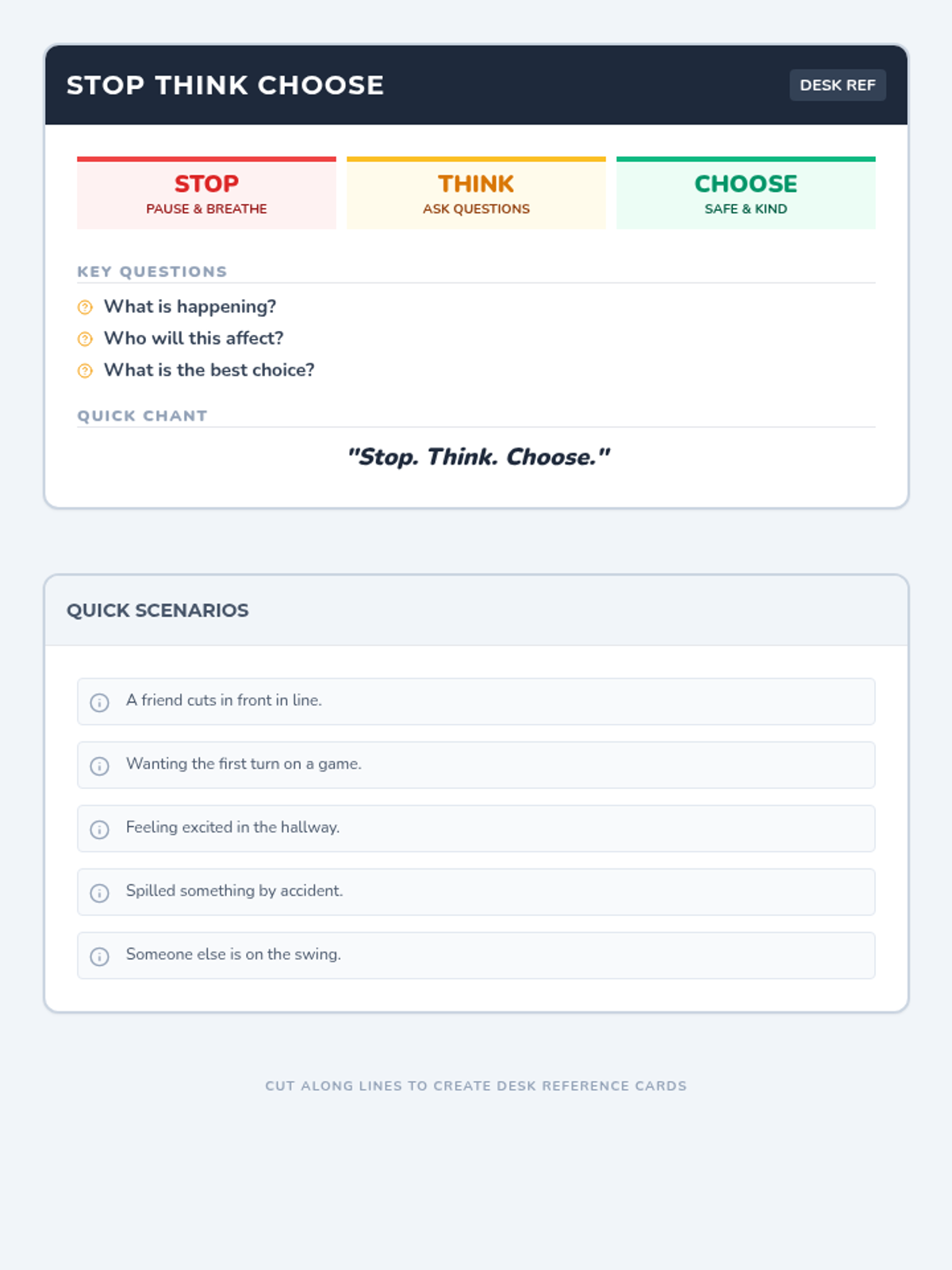
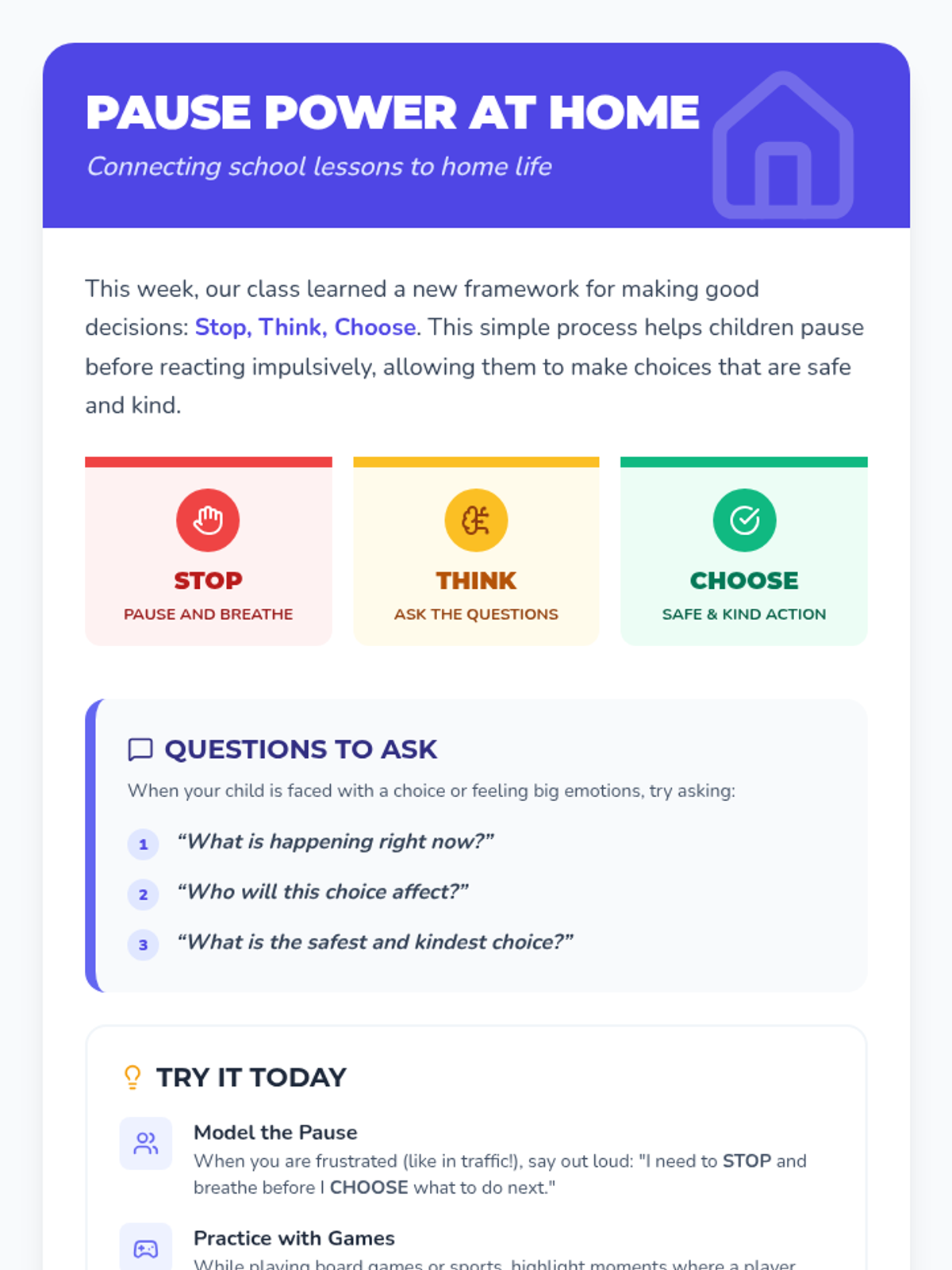
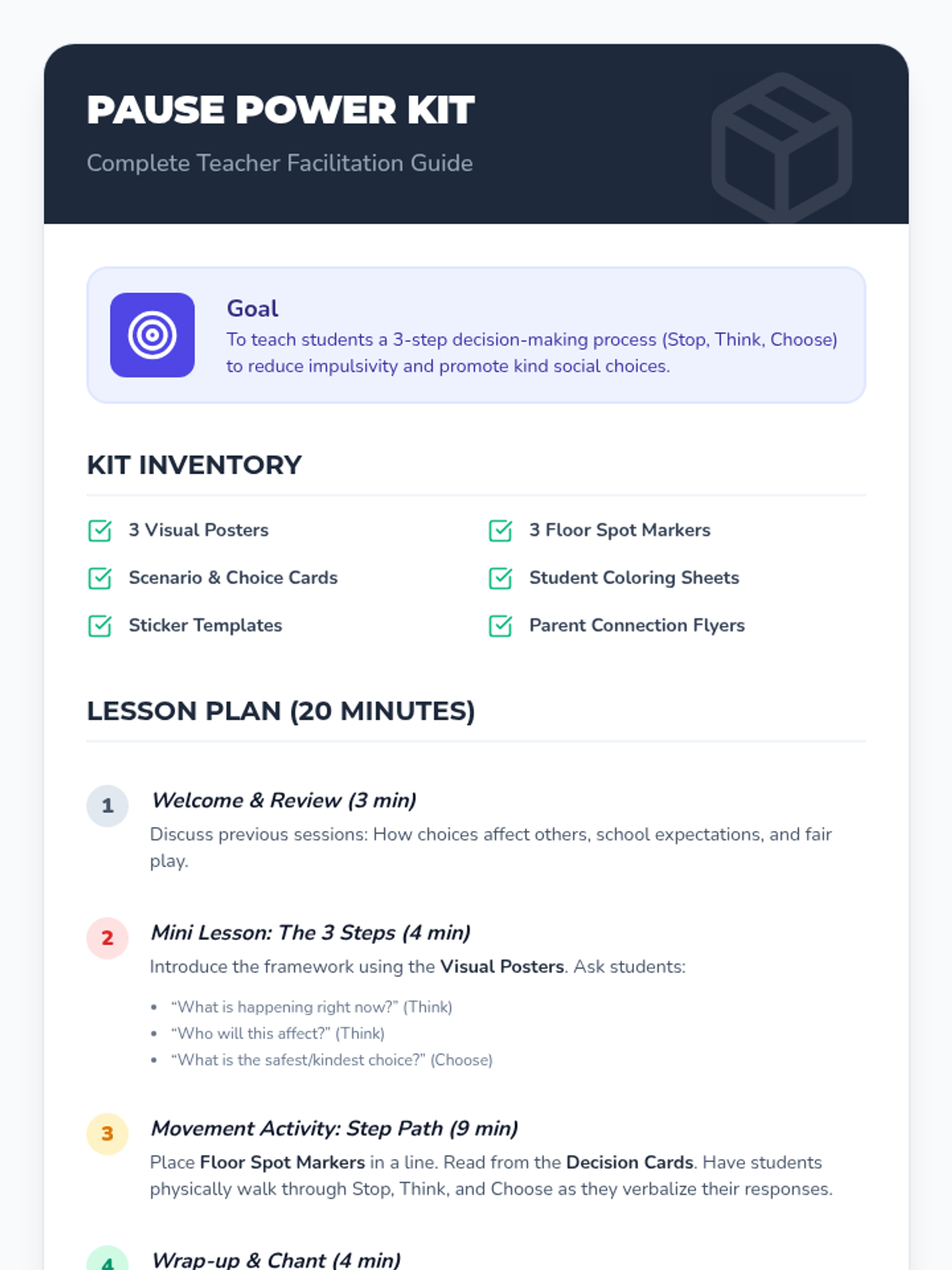
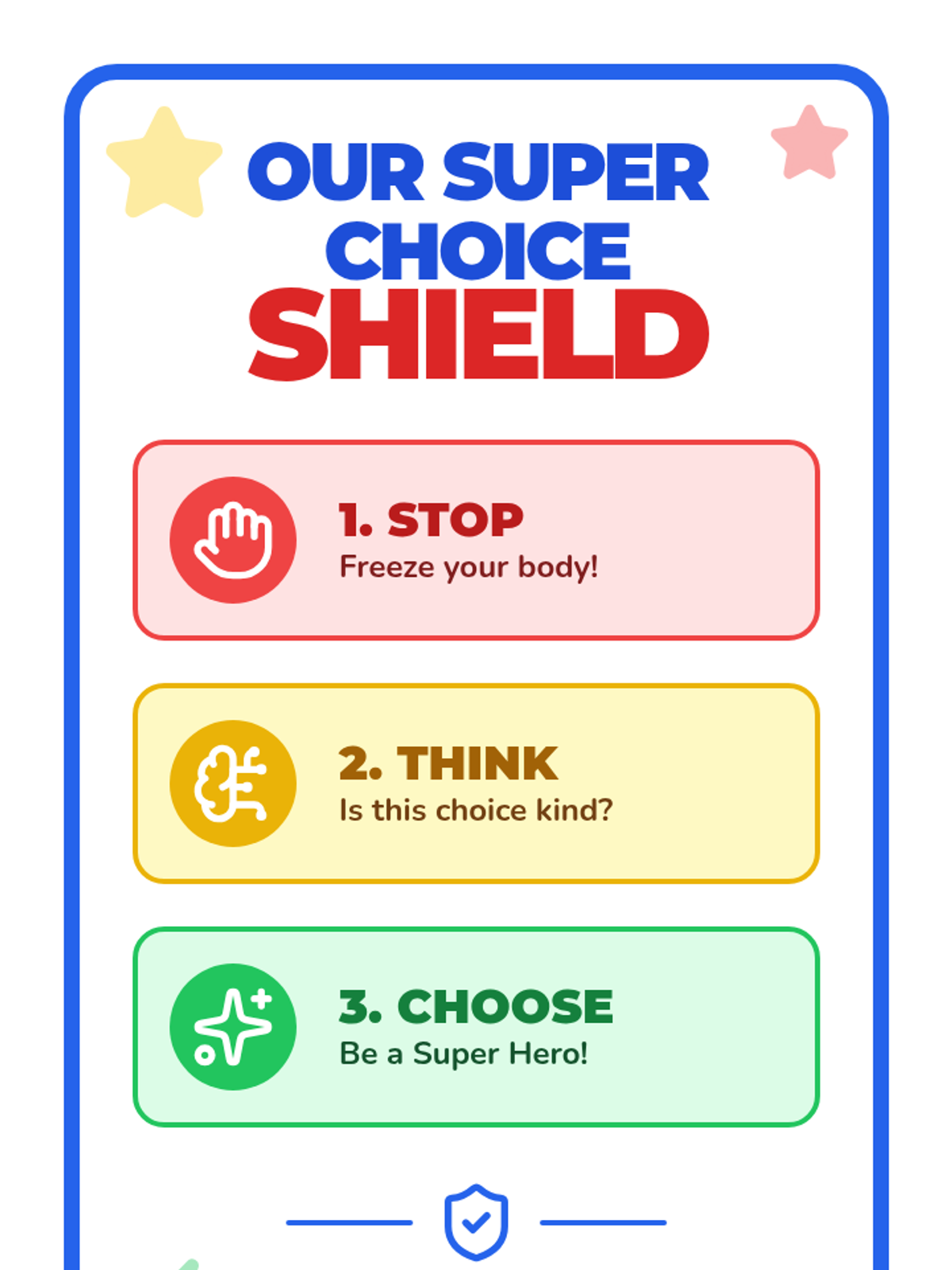
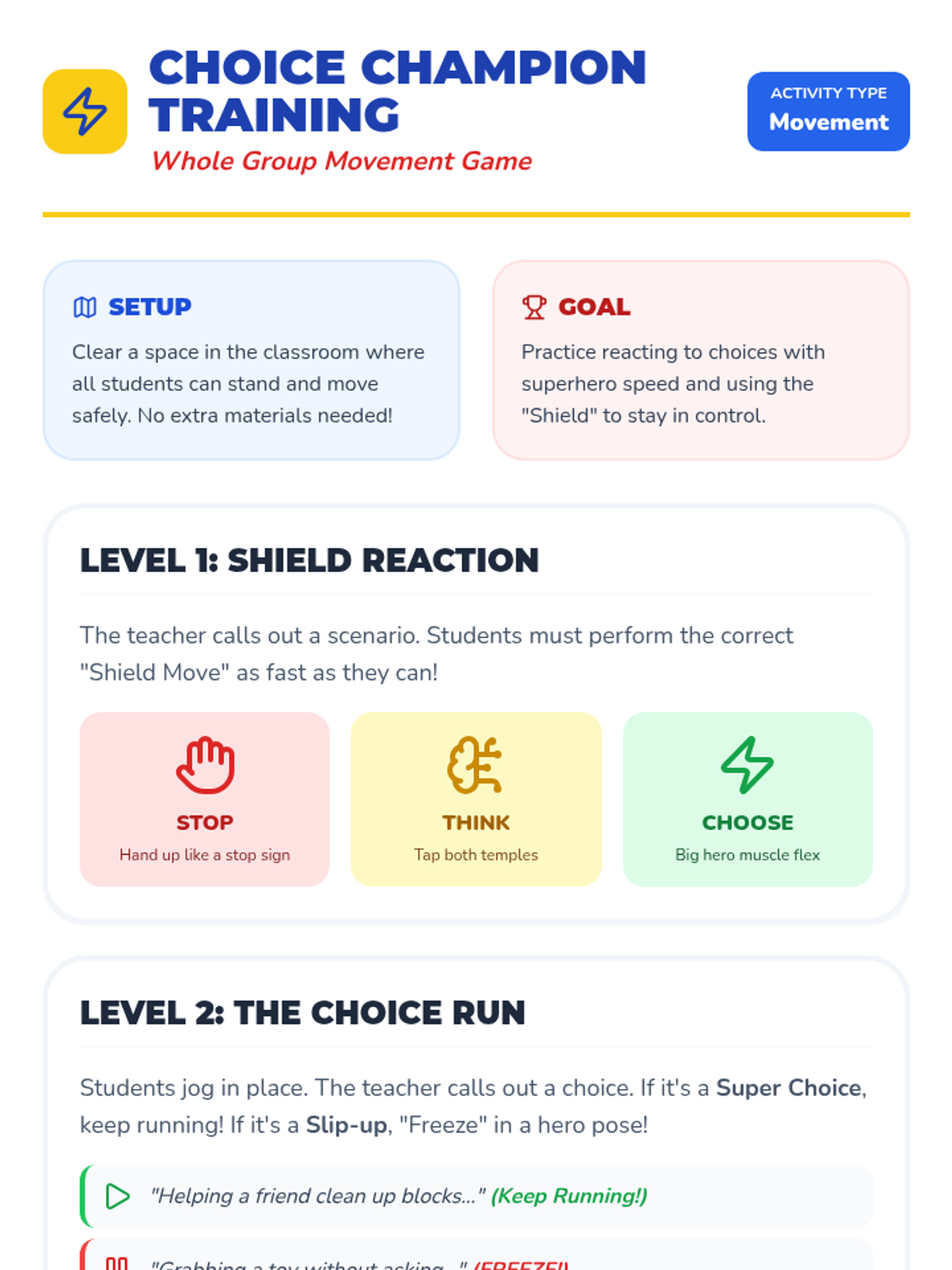
A social-emotional learning lesson focused on the 'Stop, Think, Choose' framework for decision-making. Students practice pausing before acting through movement activities, scenarios, and visual reinforcements.
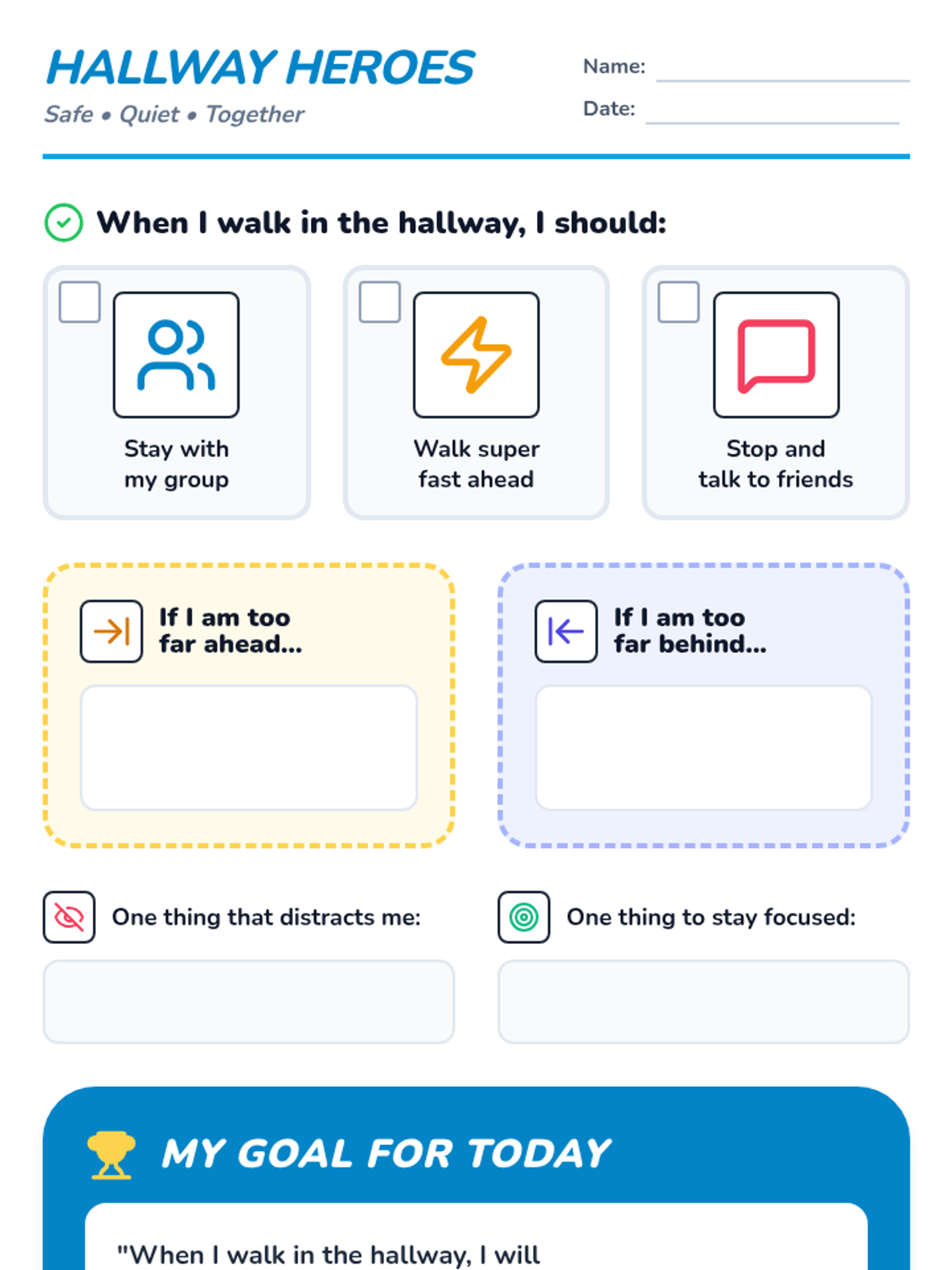
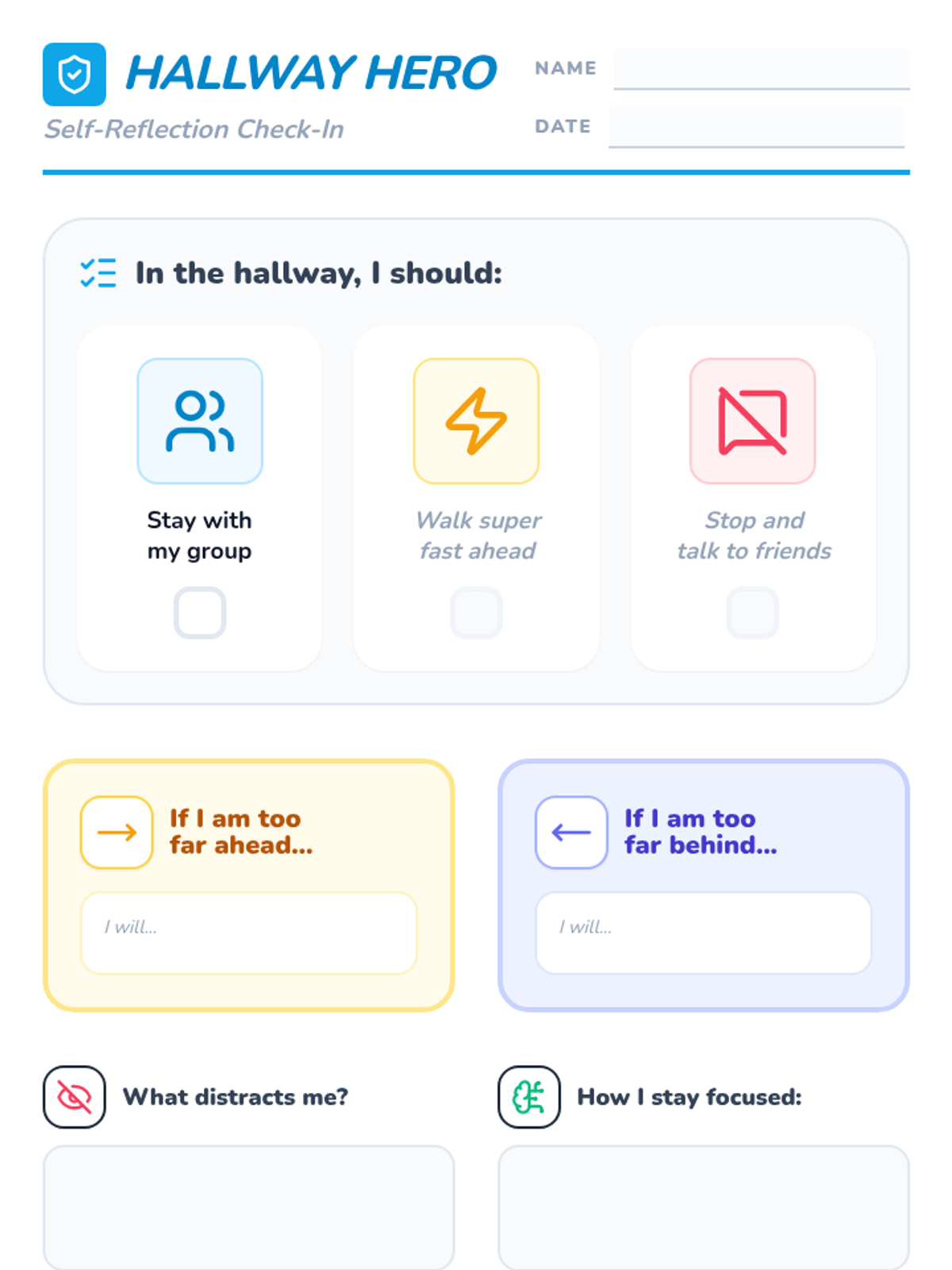
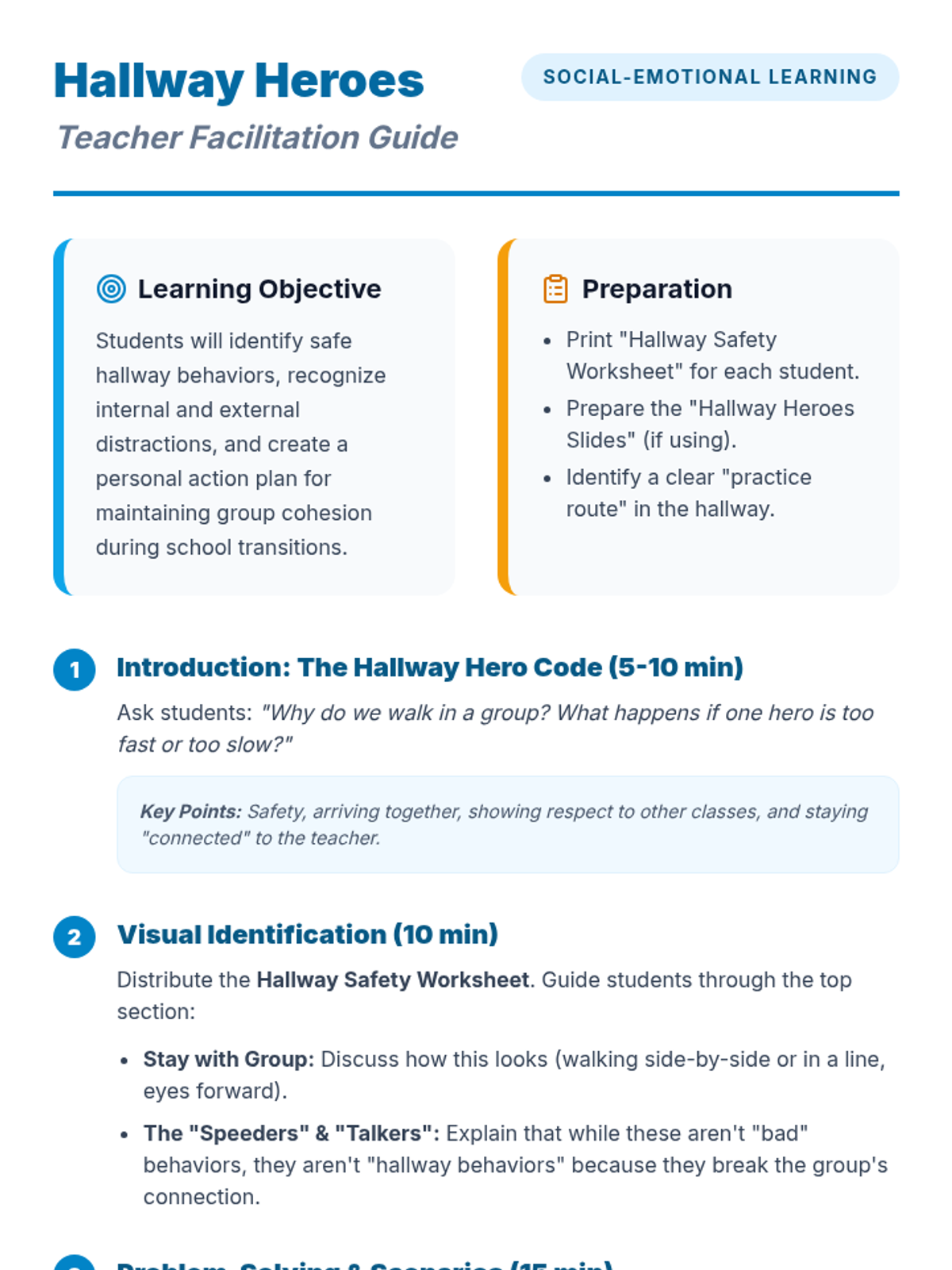
A social-emotional learning lesson focused on hallway safety, group cohesion, and self-regulation during transitions. Includes a visual self-reflection worksheet and a teacher facilitation guide.
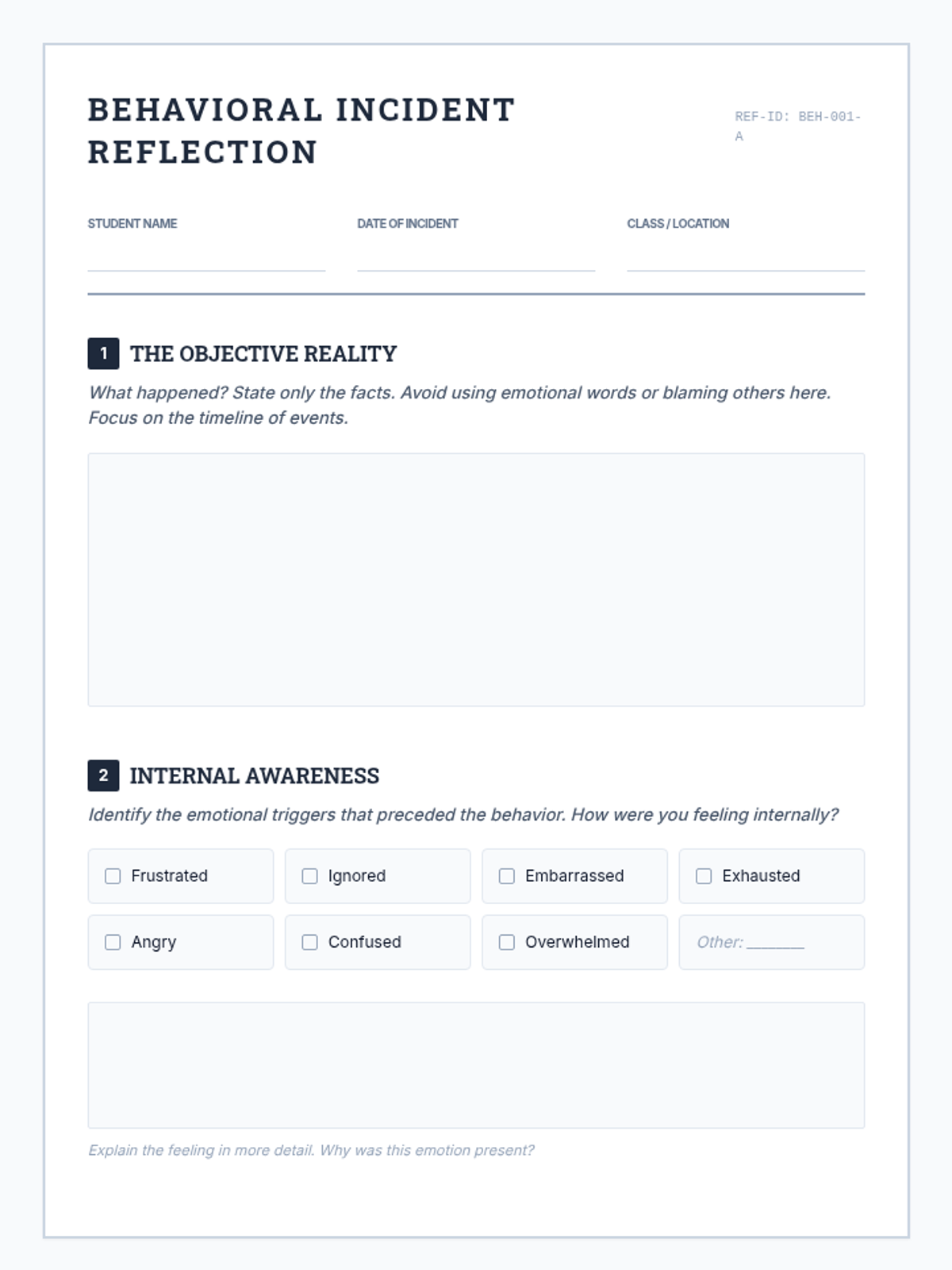
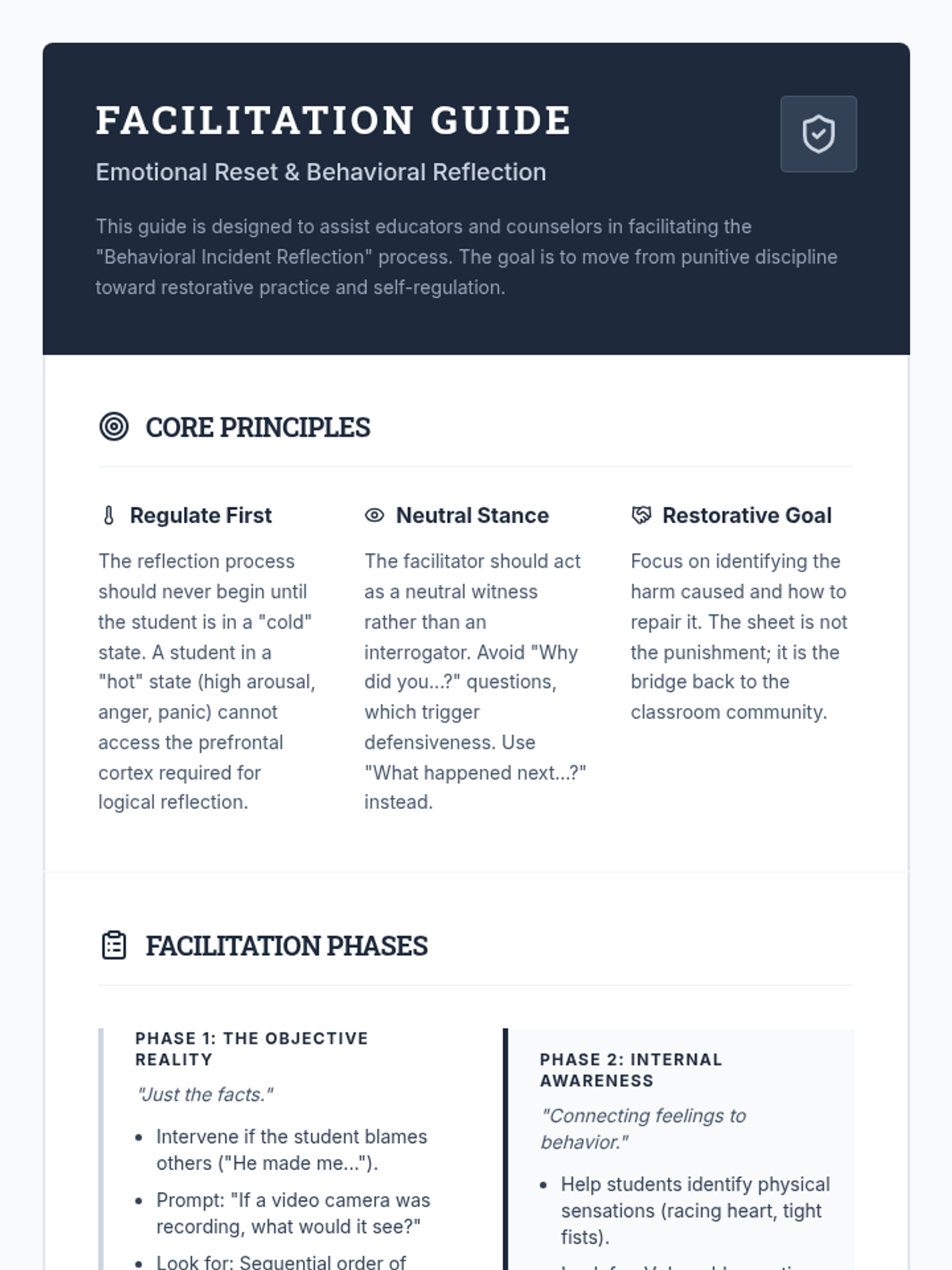
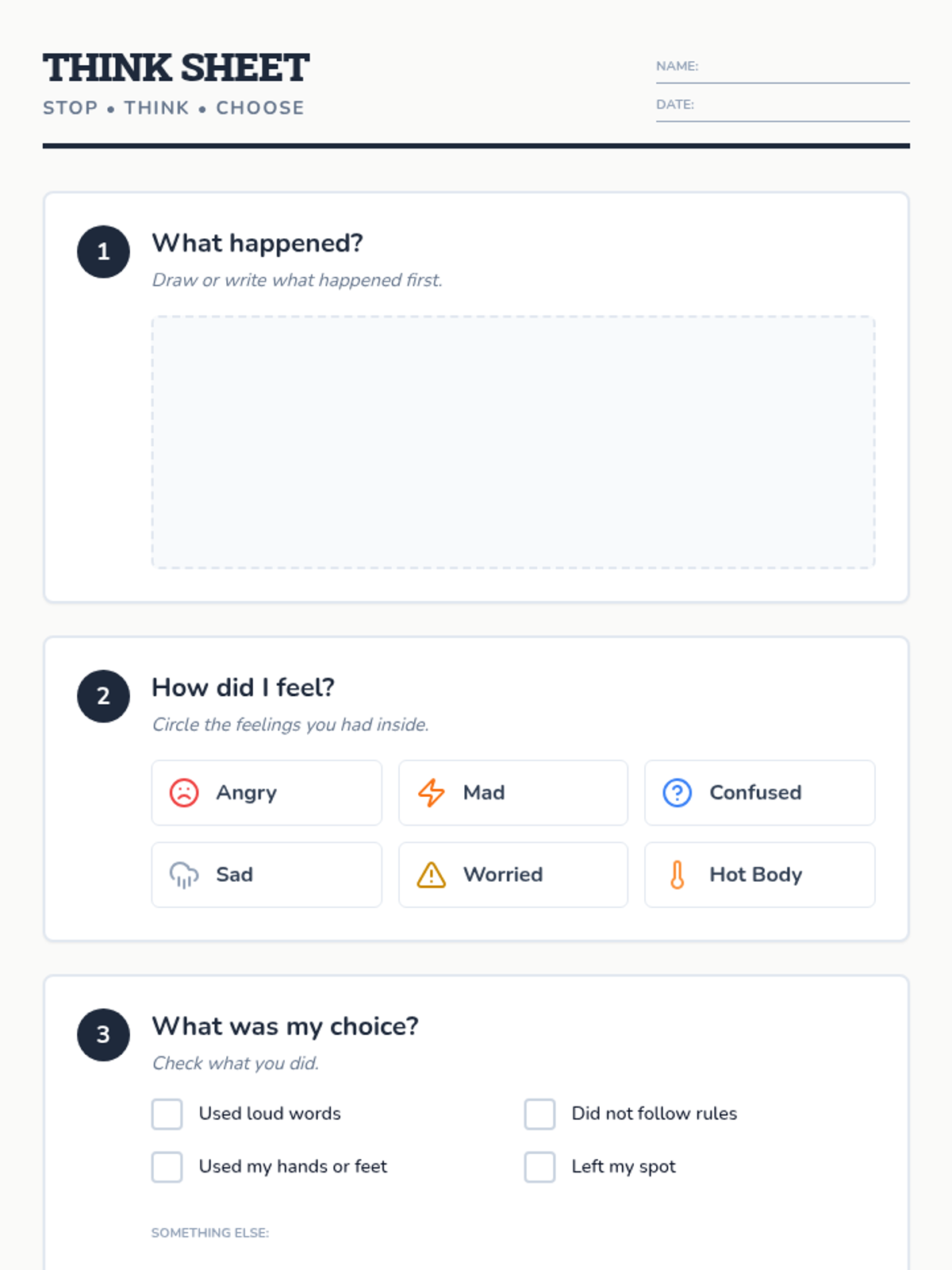
A structured reflection process to help students identify triggers, emotional states, and behavioral outcomes. This lesson provides tools for self-regulation and restorative action.
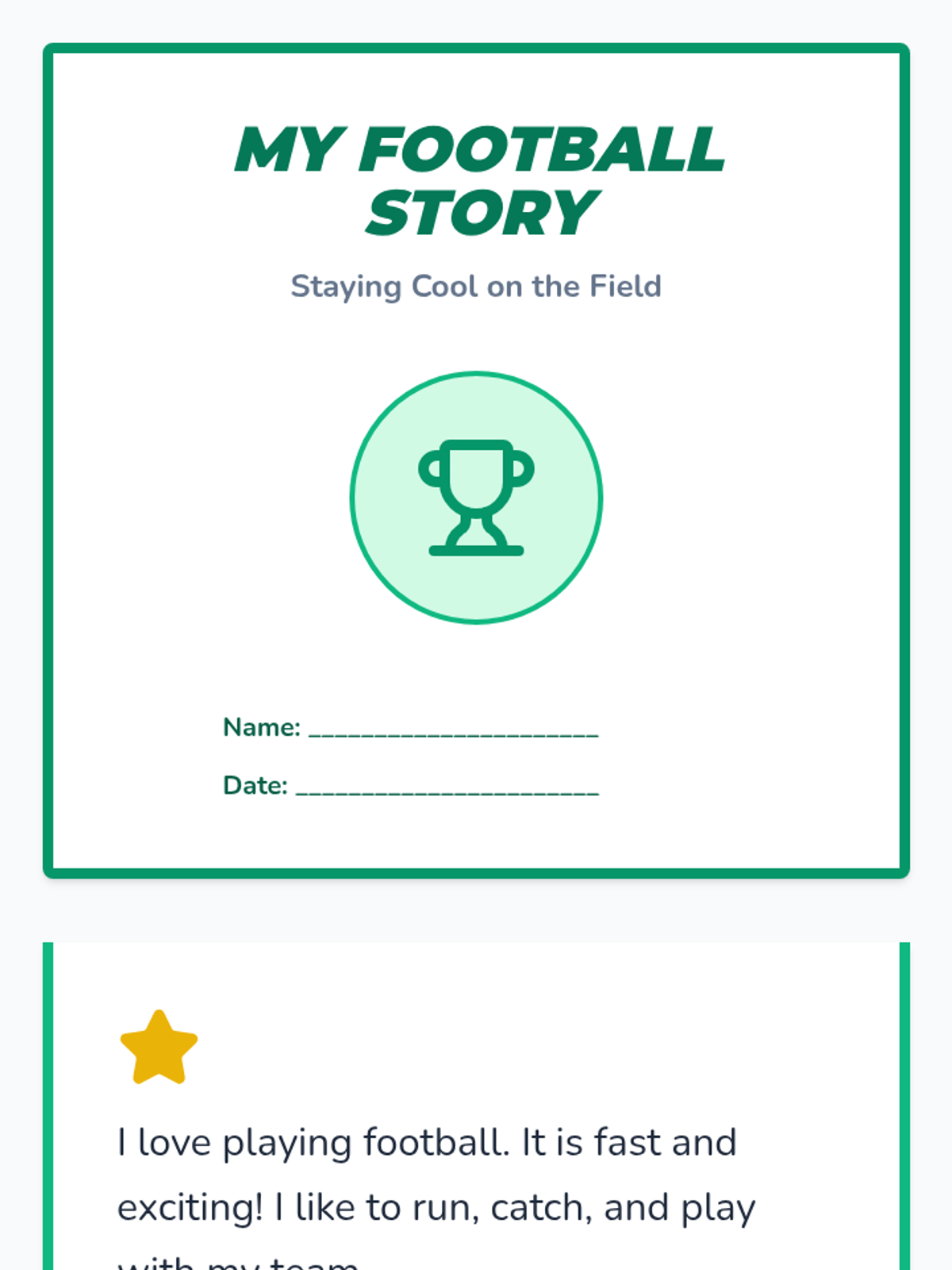
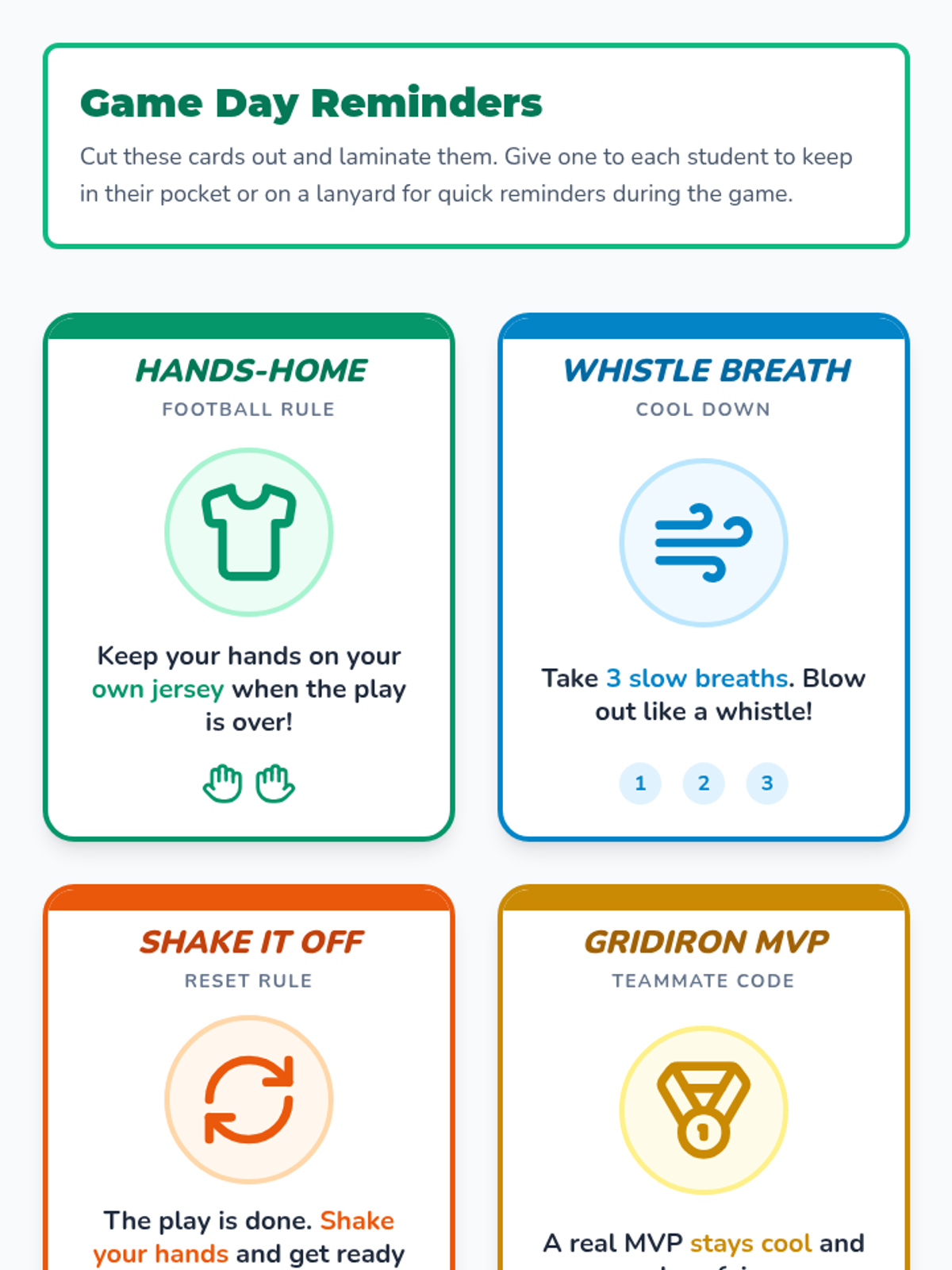
A social-emotional learning lesson for young Mustang athletes on managing frustration and keeping hands to oneself during football games. Includes a group presentation, a printable social story, and visual reminder cards.
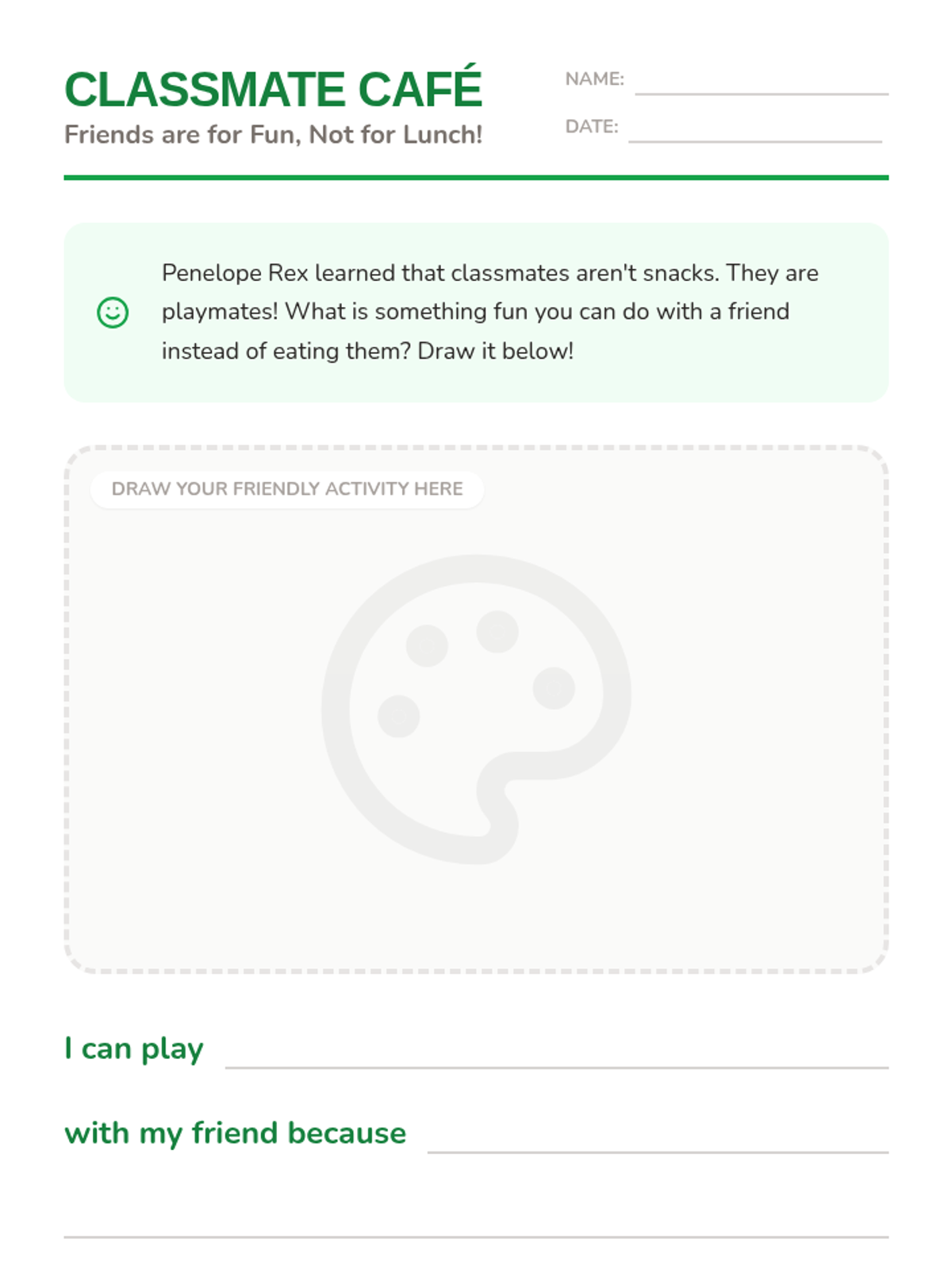
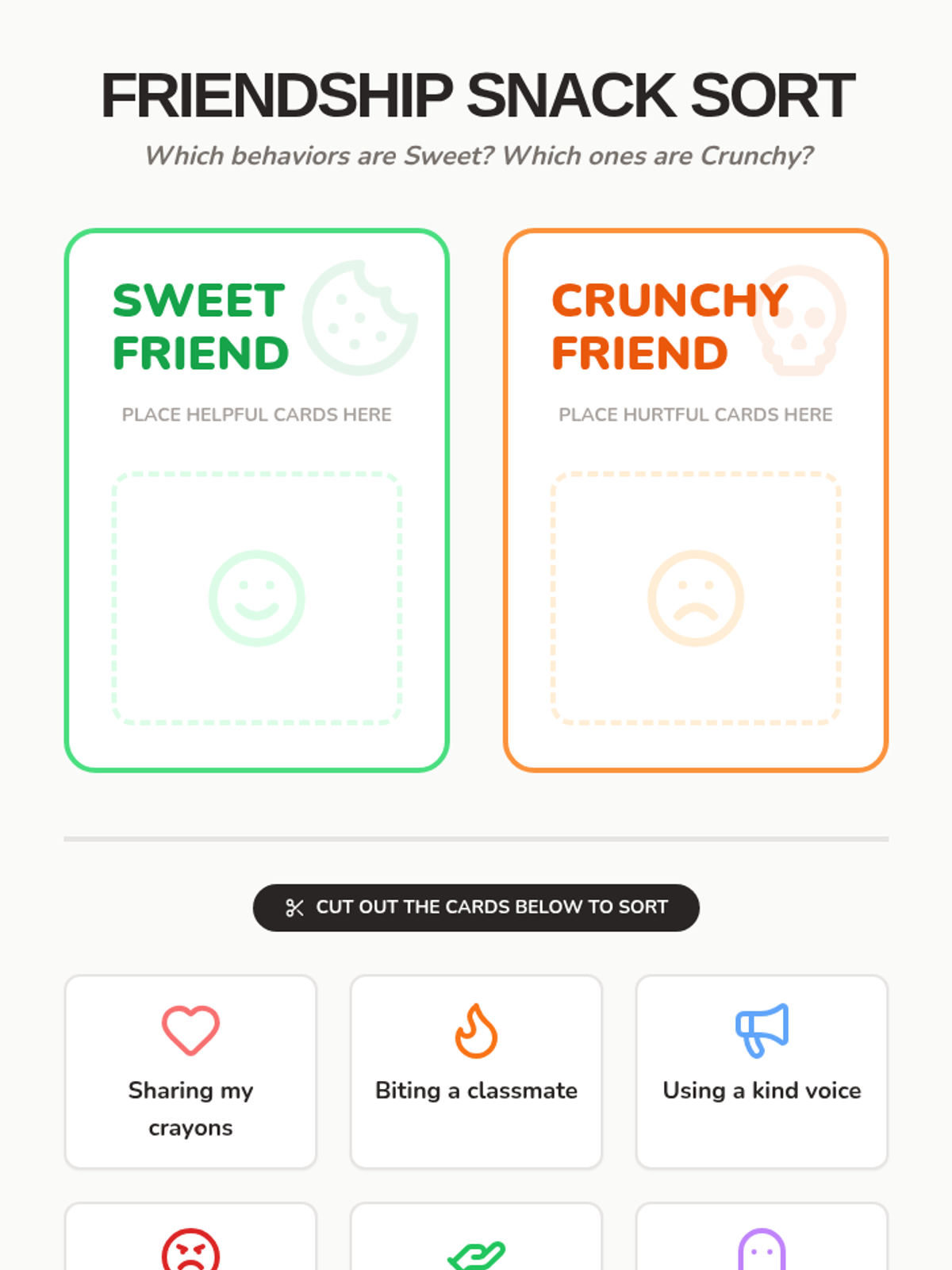
A social-emotional learning lesson inspired by the theme of a dinosaur learning not to eat their classmates, focusing on empathy, self-control, and building friendships.
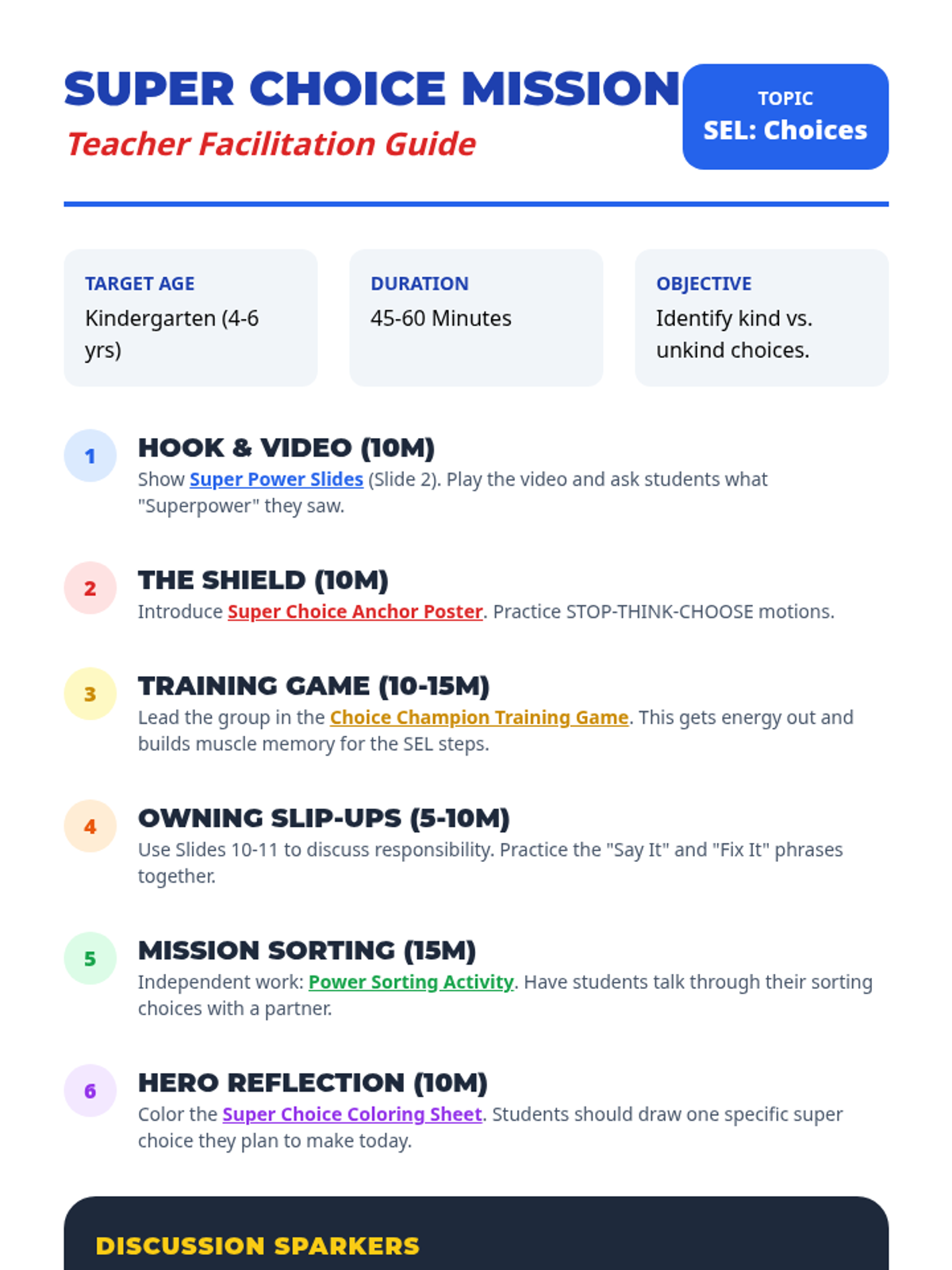
A vibrant, superhero-themed SEL lesson for kindergarteners that explores the 'superpower' of making kind and responsible choices through interactive scenarios and creative activities.
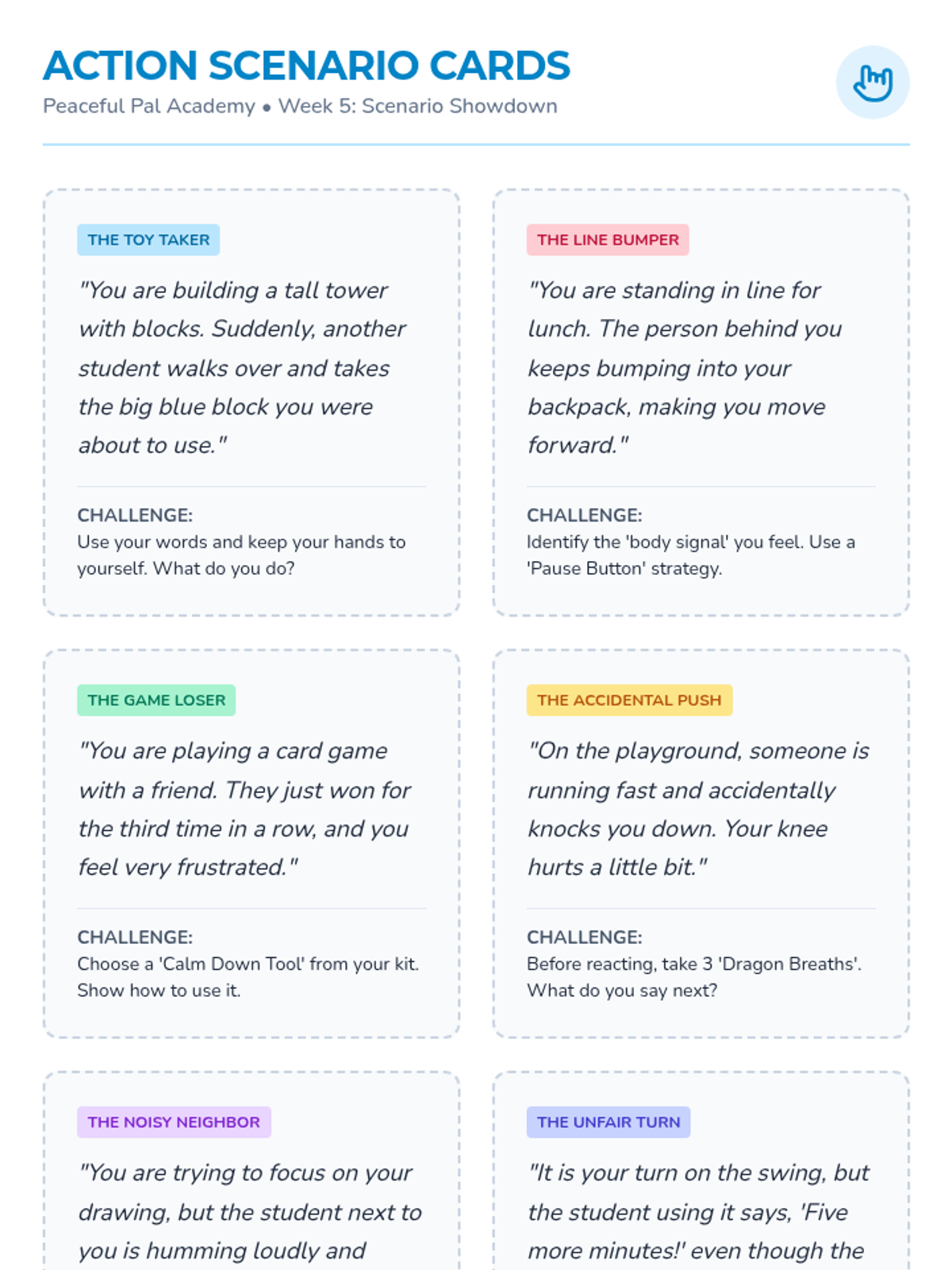
Students apply their skills through realistic role-play scenarios using specialized prompt cards.
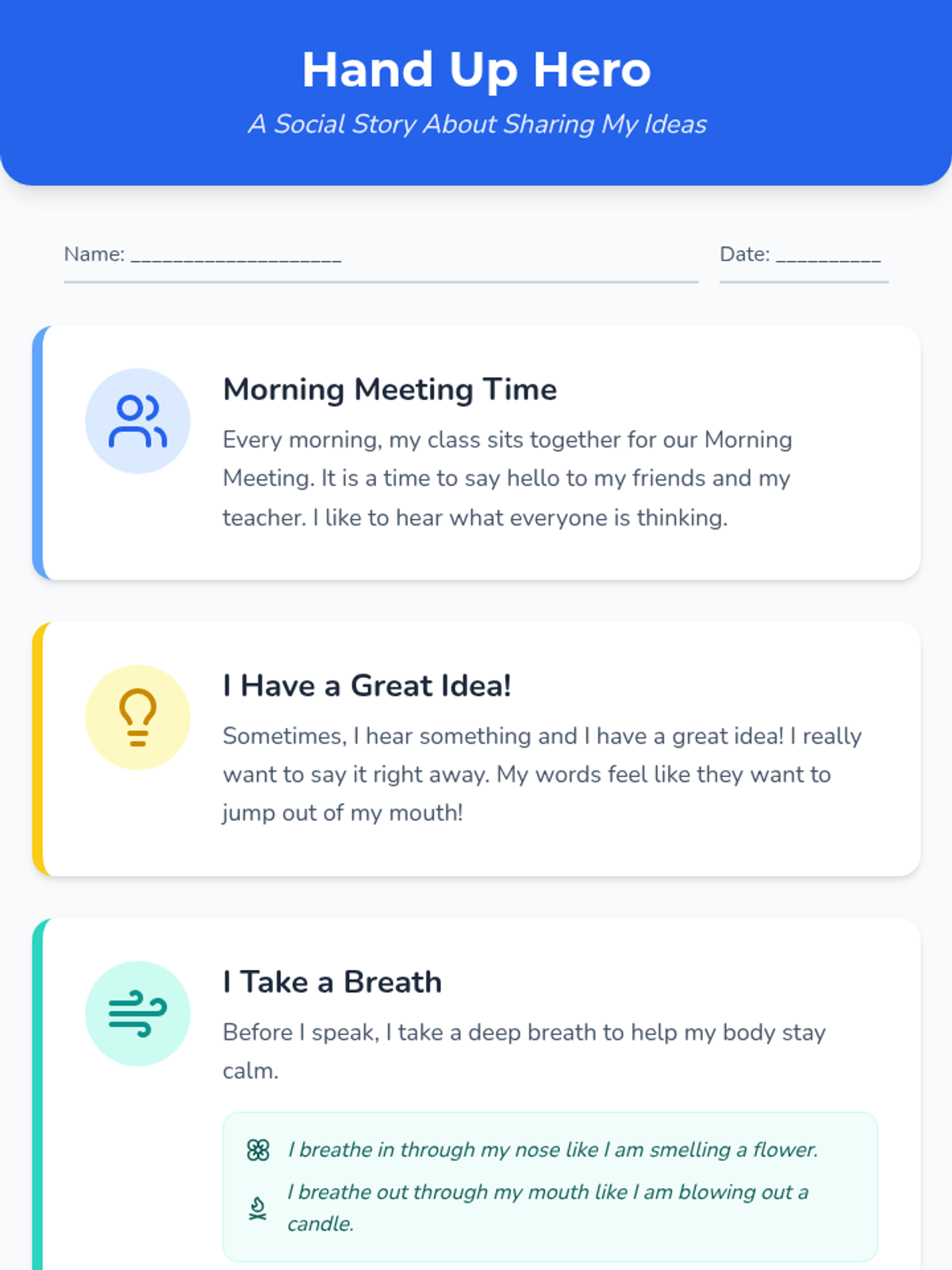
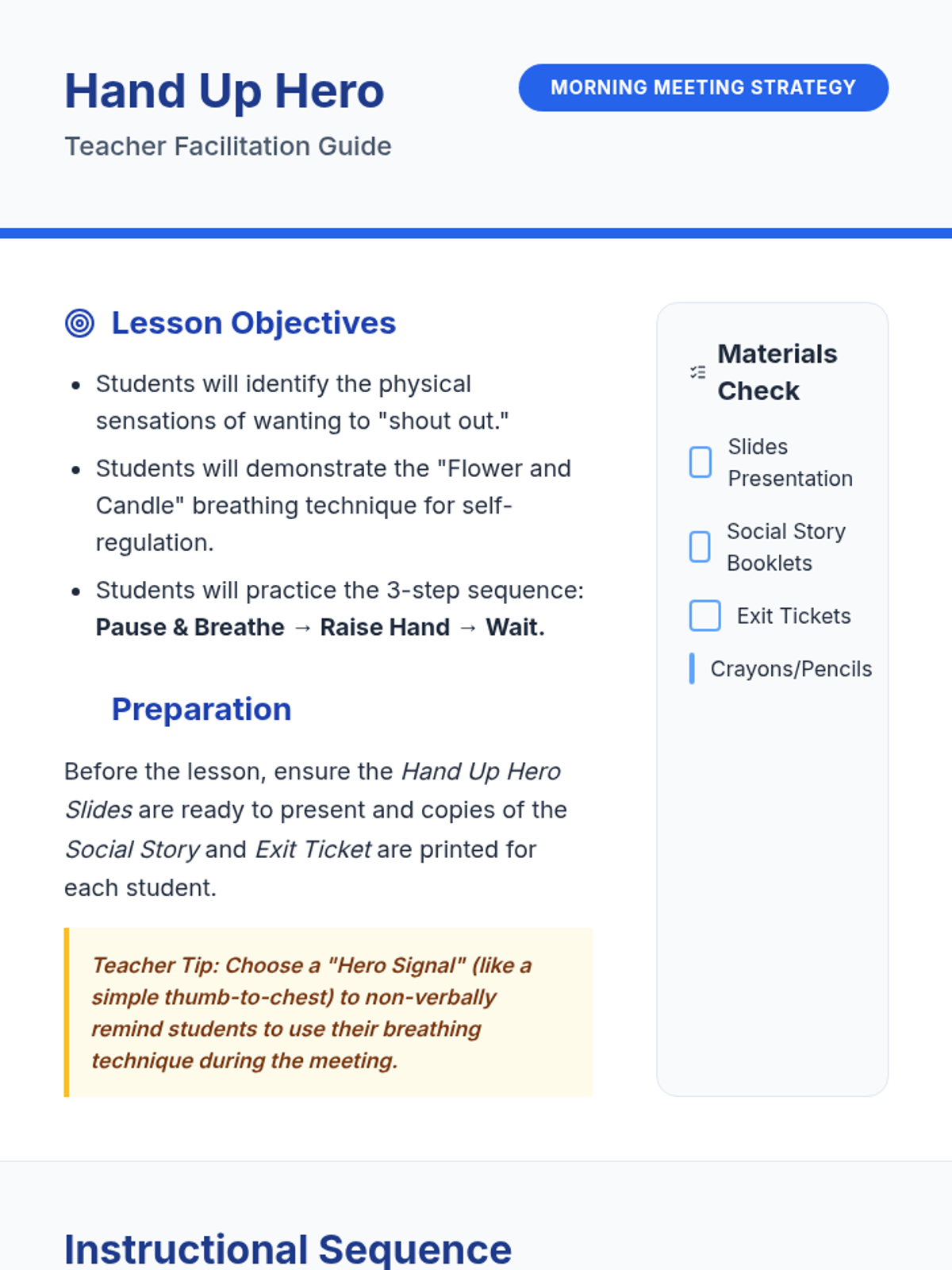
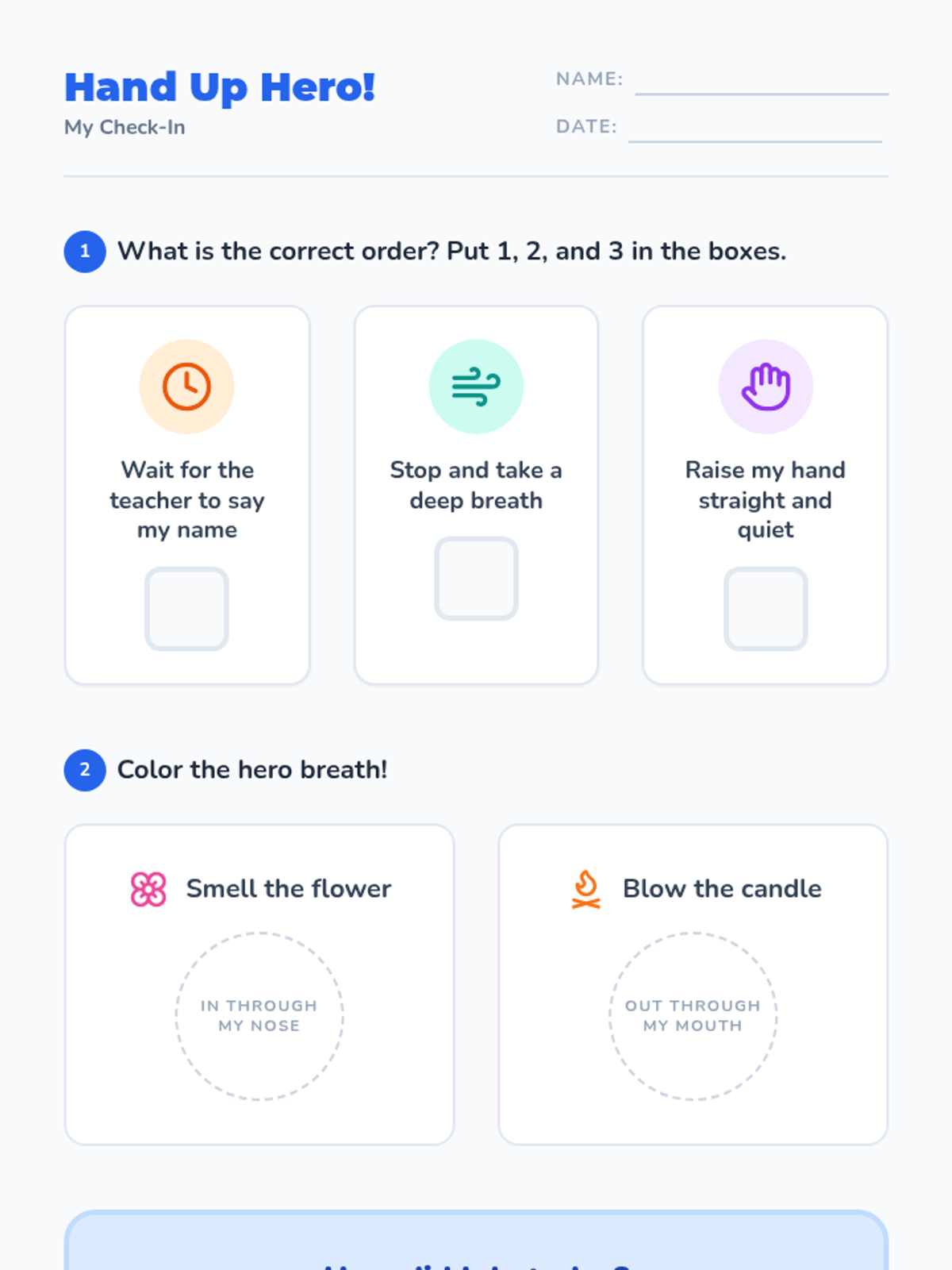
A social story and supporting materials focused on teaching students the importance and procedure of raising their hand during morning meetings using concrete 'I' statements and self-regulation techniques.
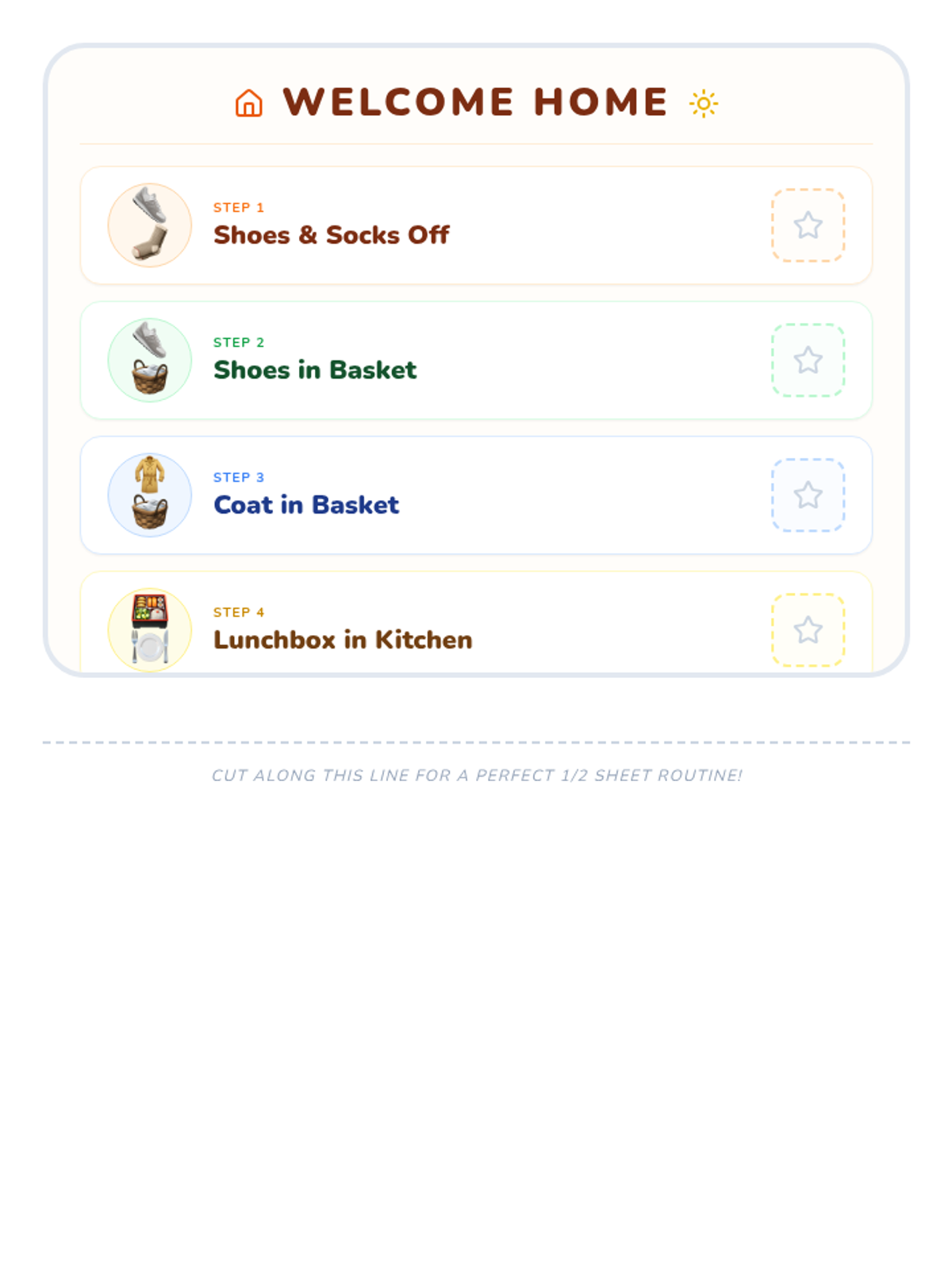
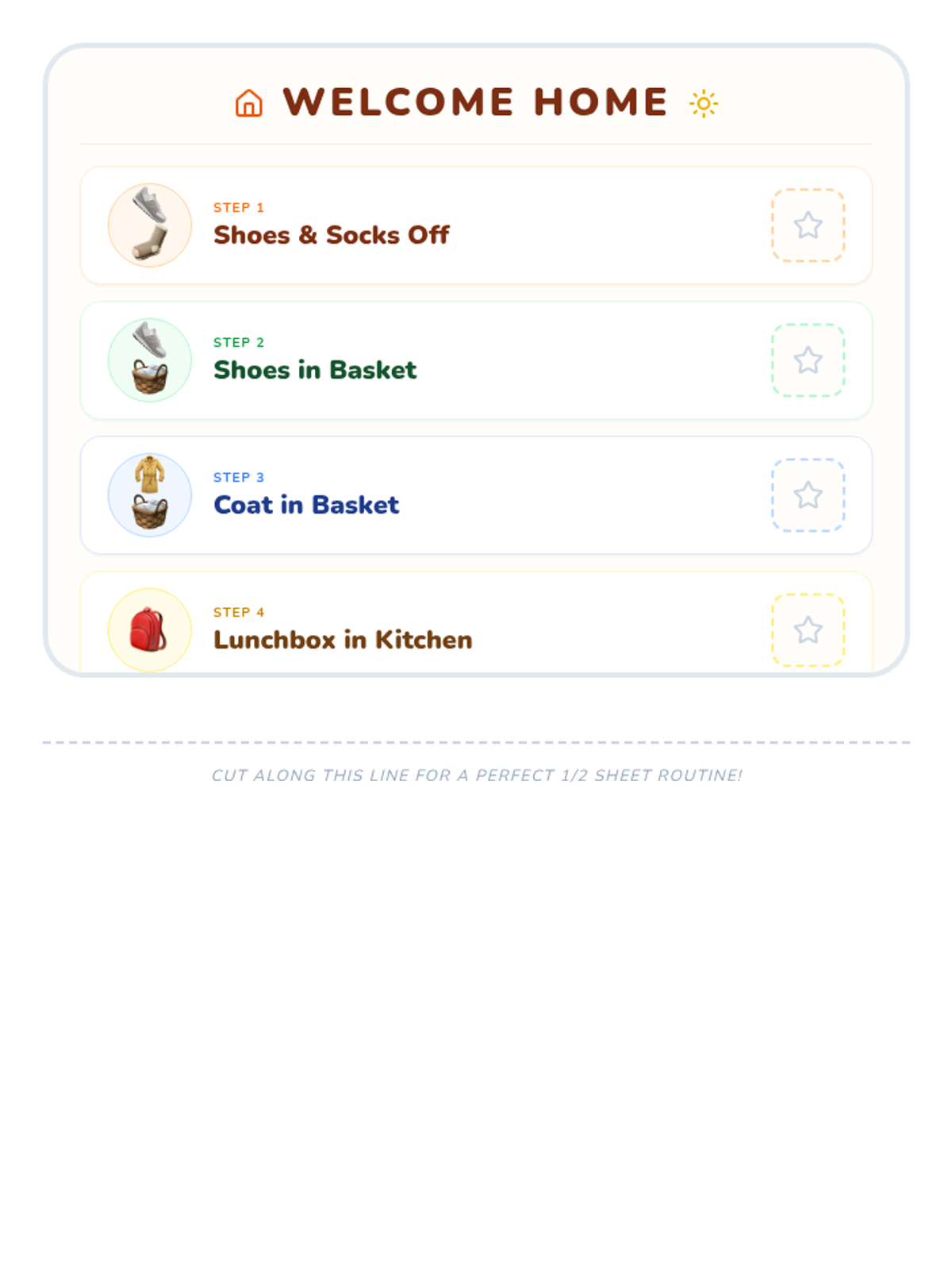
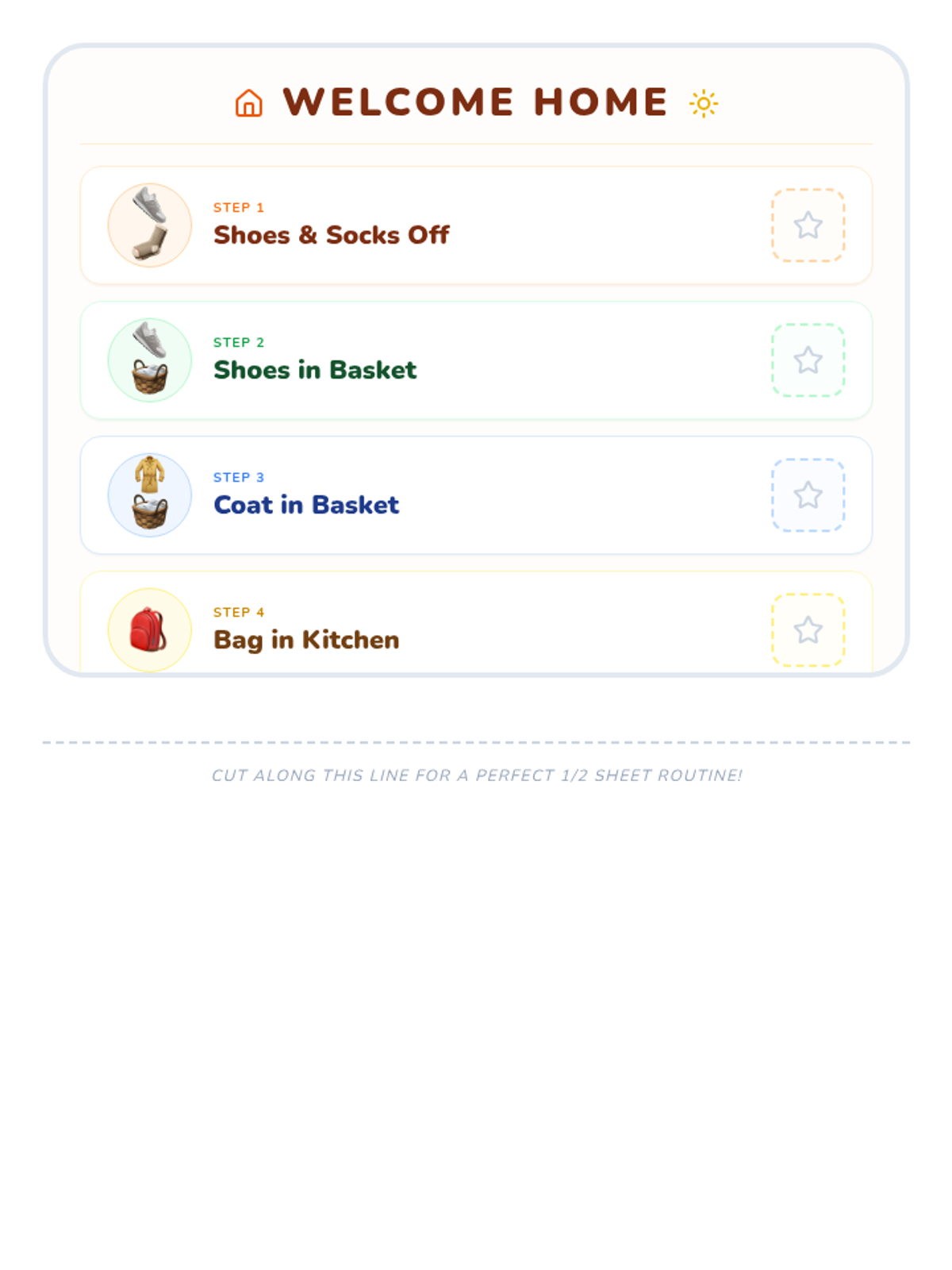
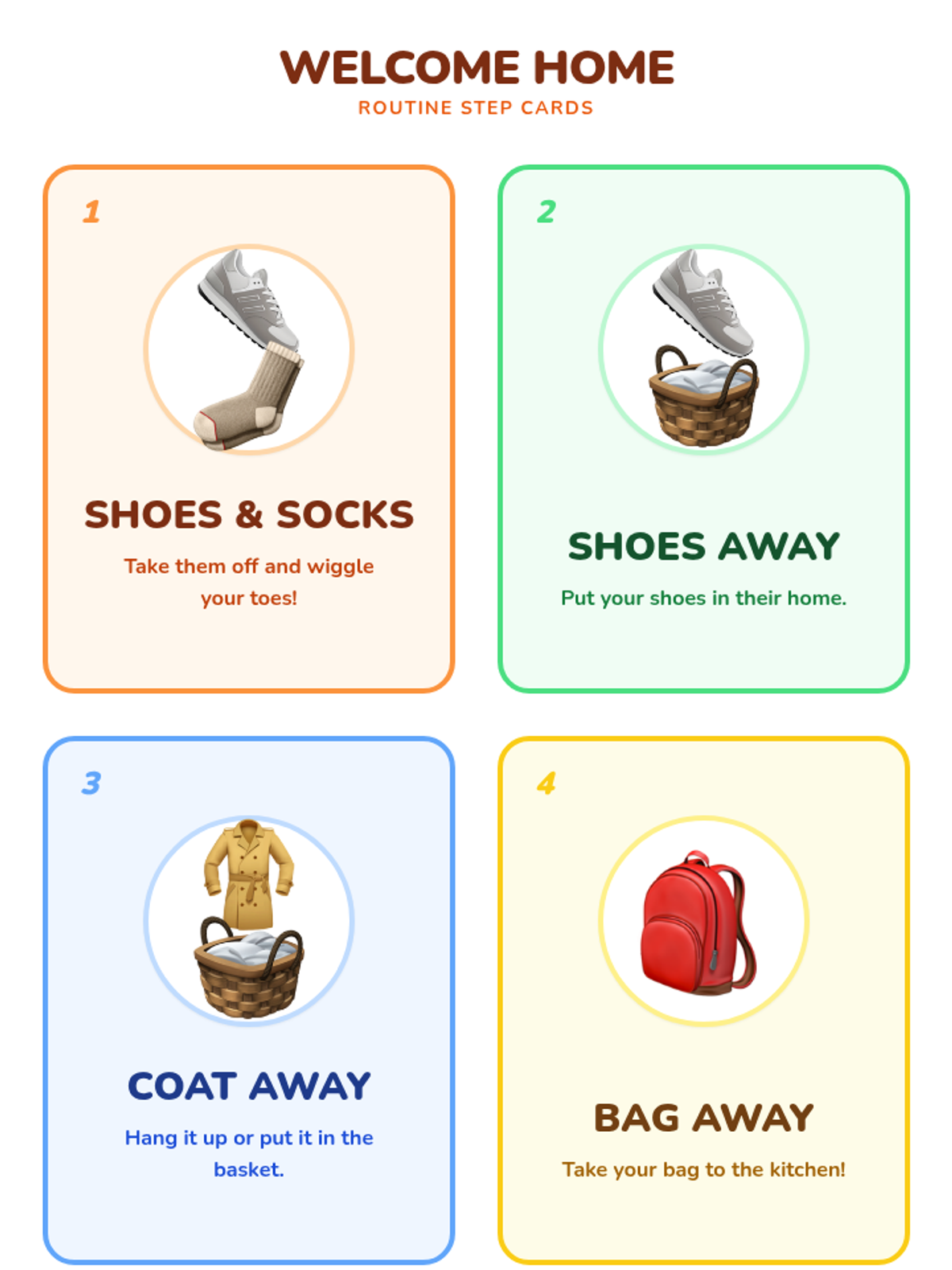
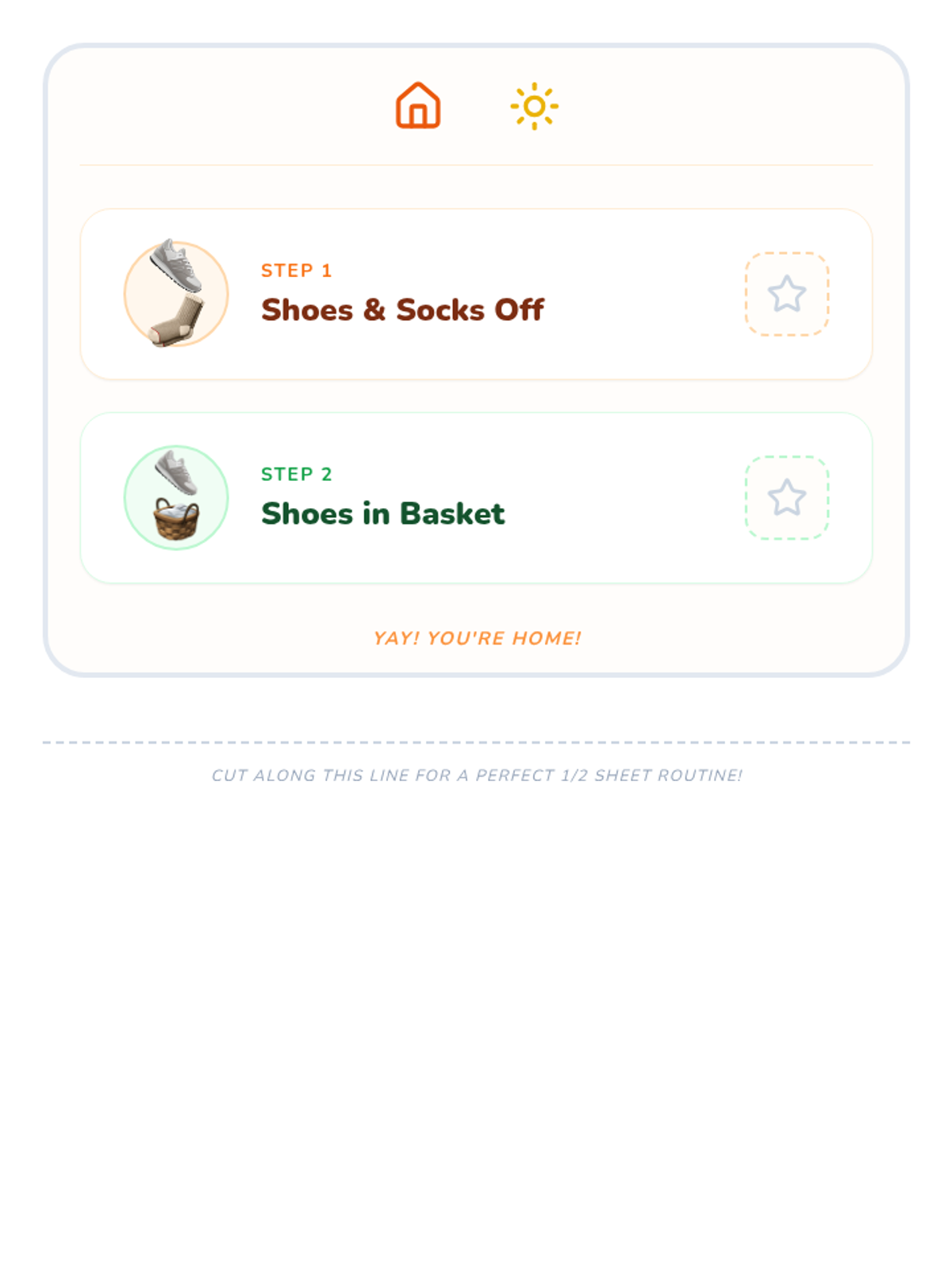
A lesson focused on the transition from school or outside to home, teaching toddlers how to manage their belongings.