Empathetic skill development through emotion recognition, cultural diversity appreciation, and bias confrontation. Targets multi-perspective analysis to support respectful interactions and complex social responses.
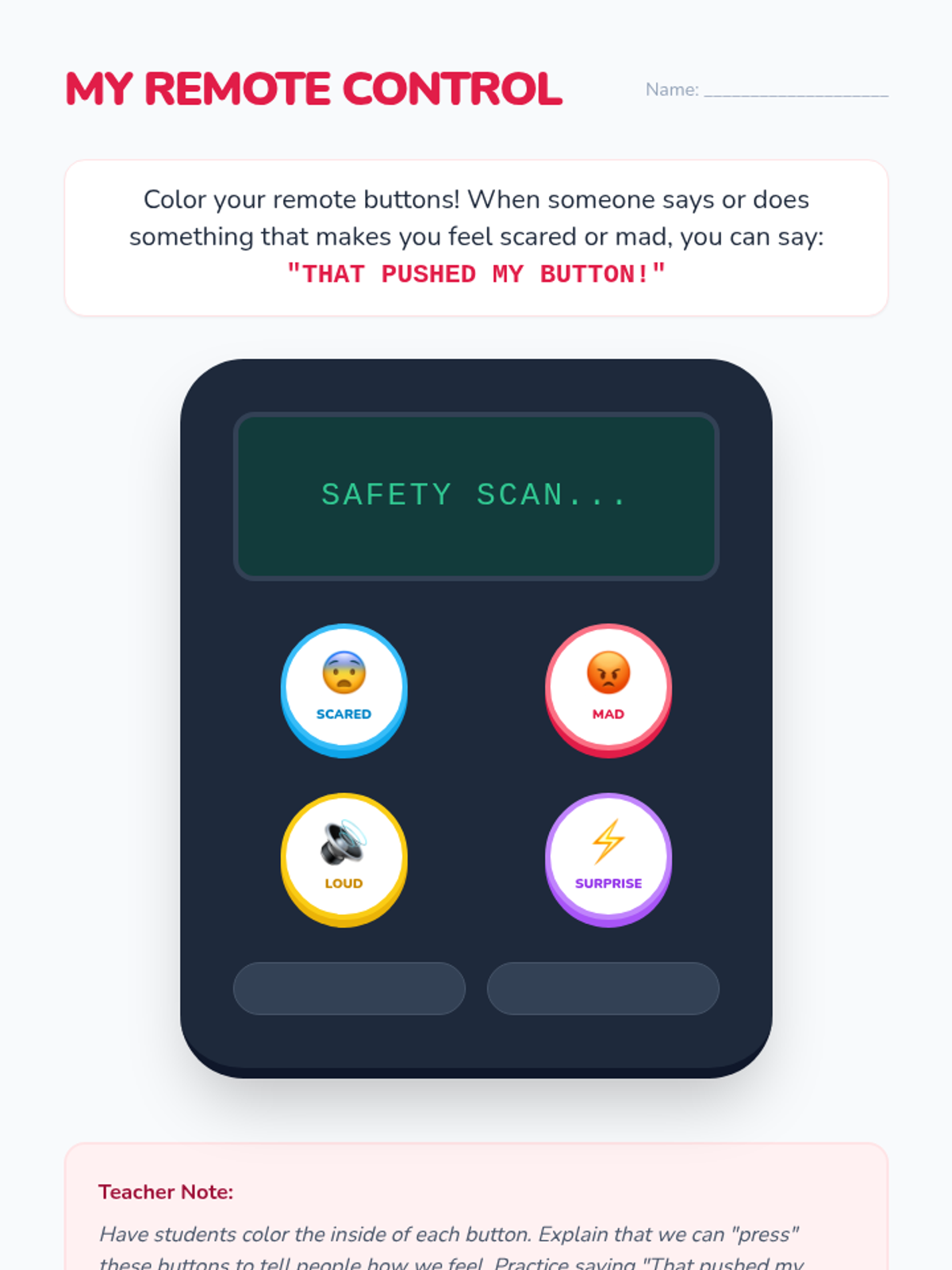
Empowering students to identify and communicate their personal triggers using a 'remote control' metaphor.
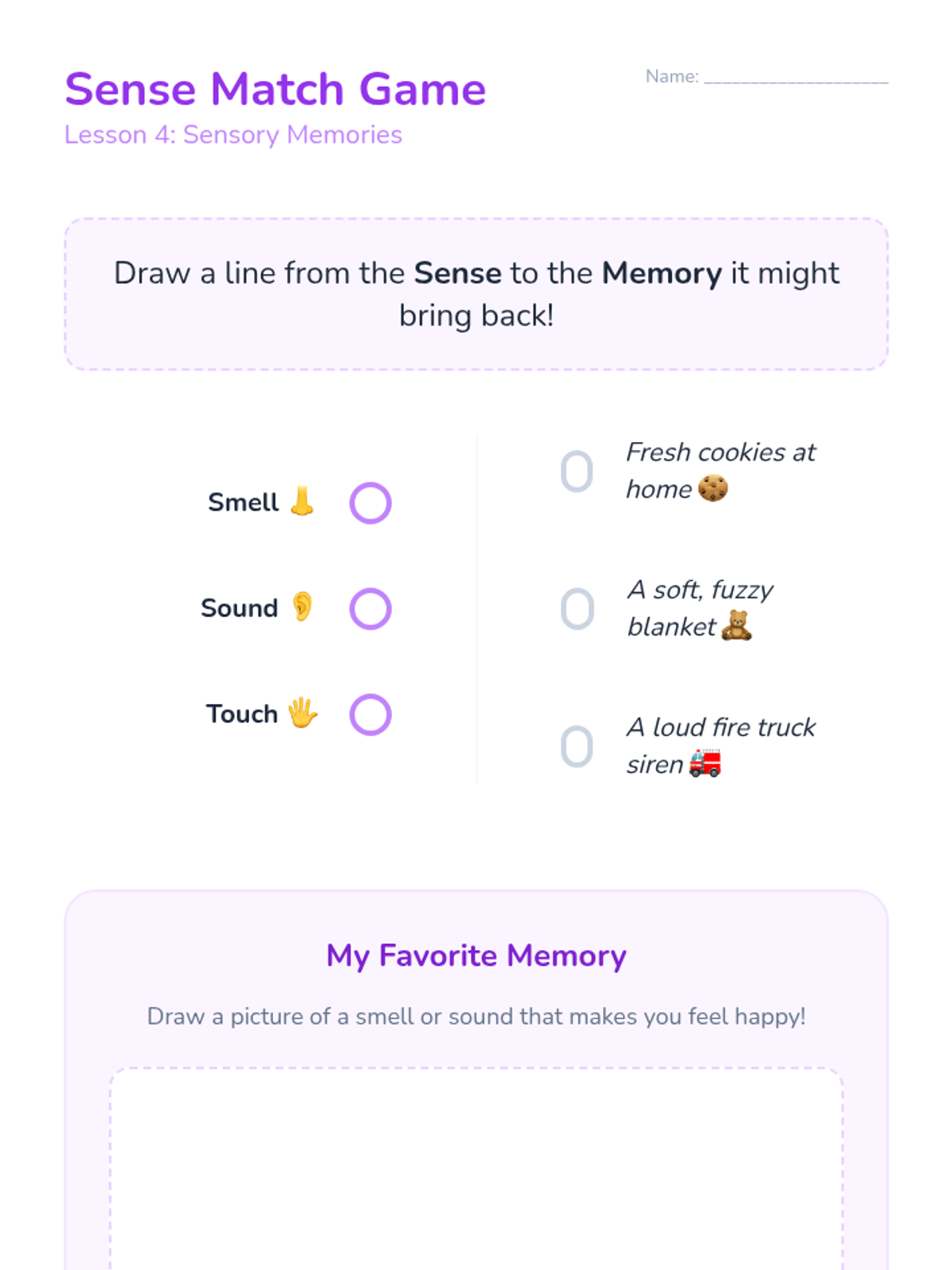
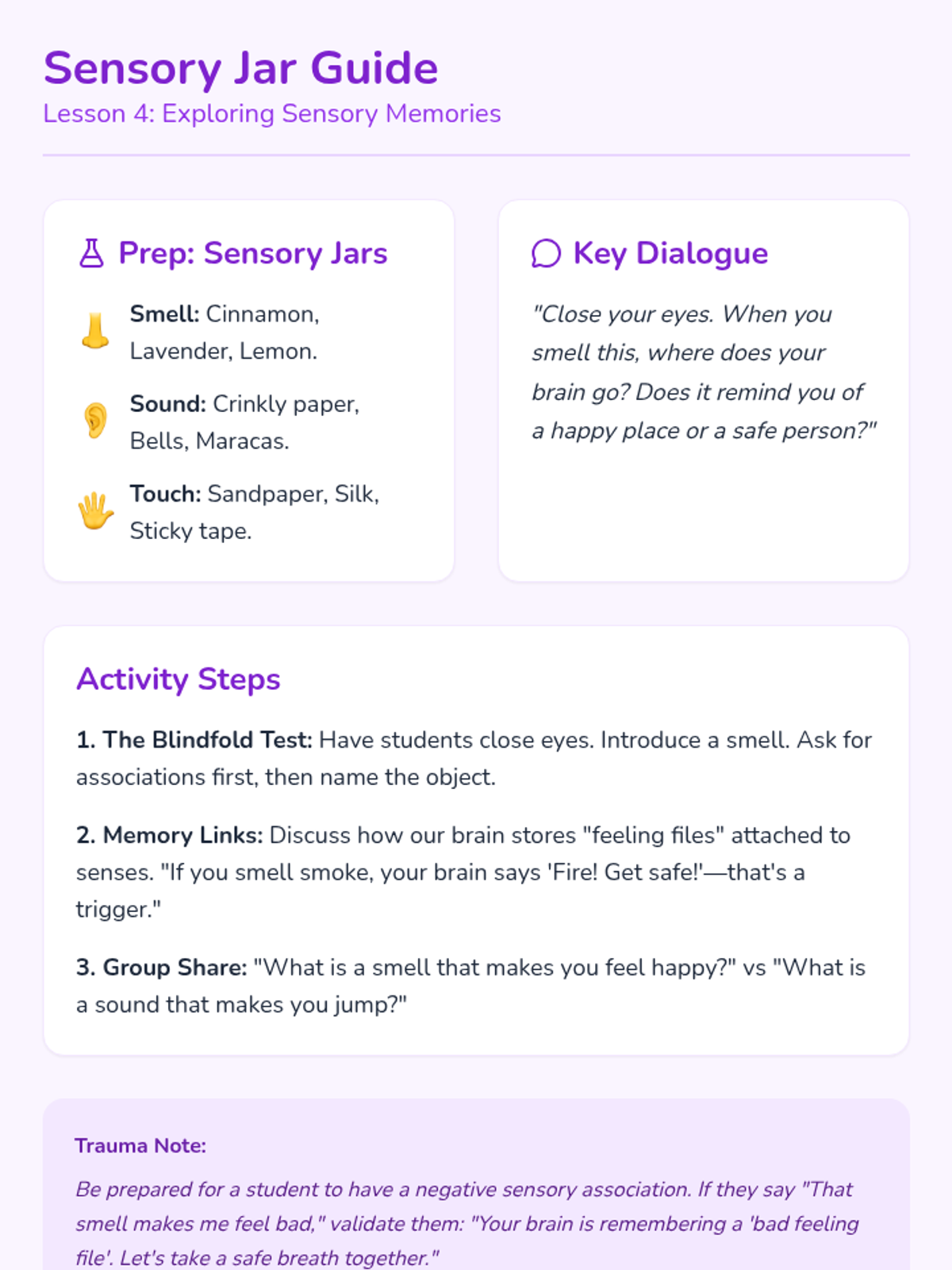
Connecting the five senses to memories and emotional responses.
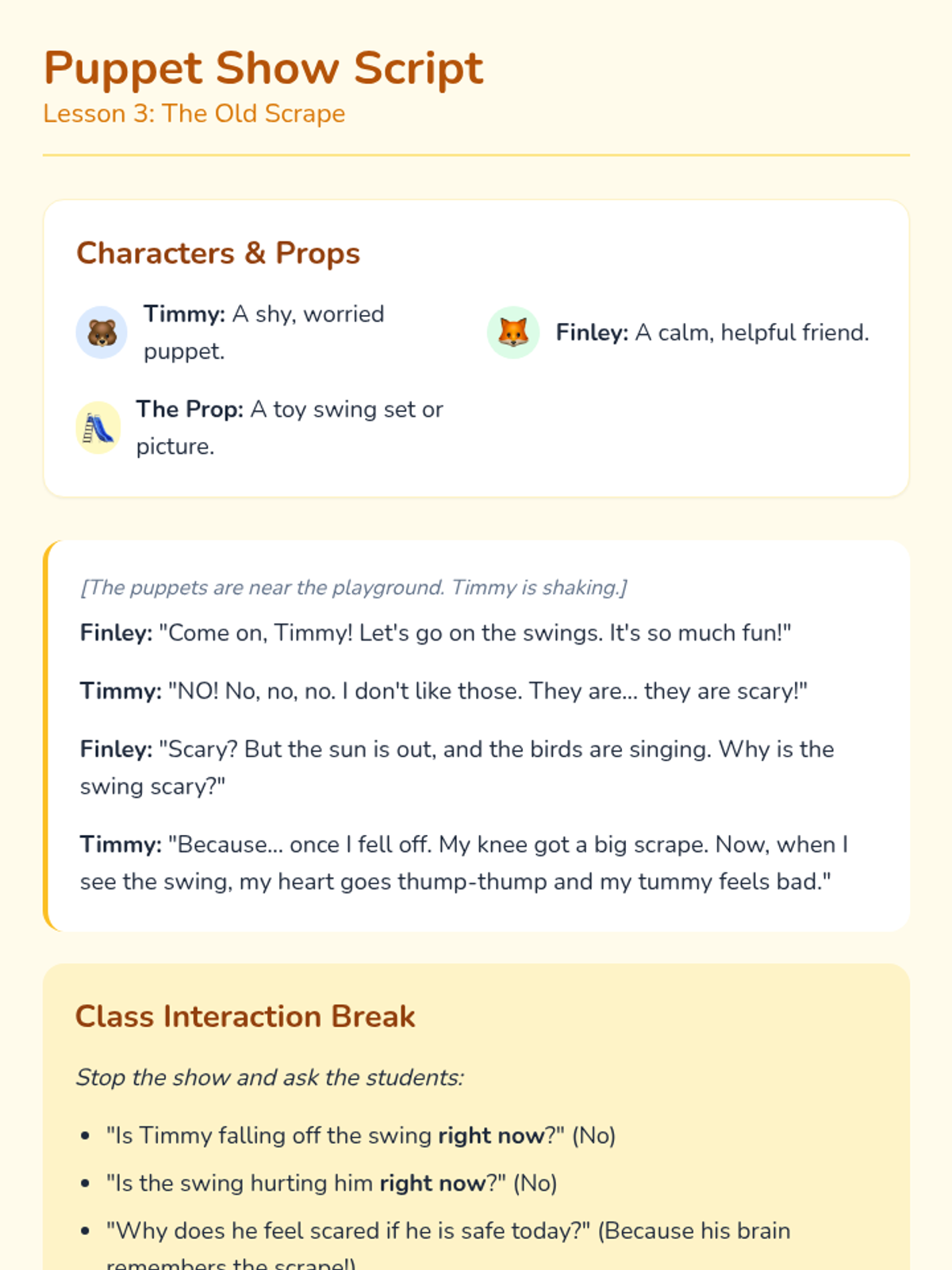
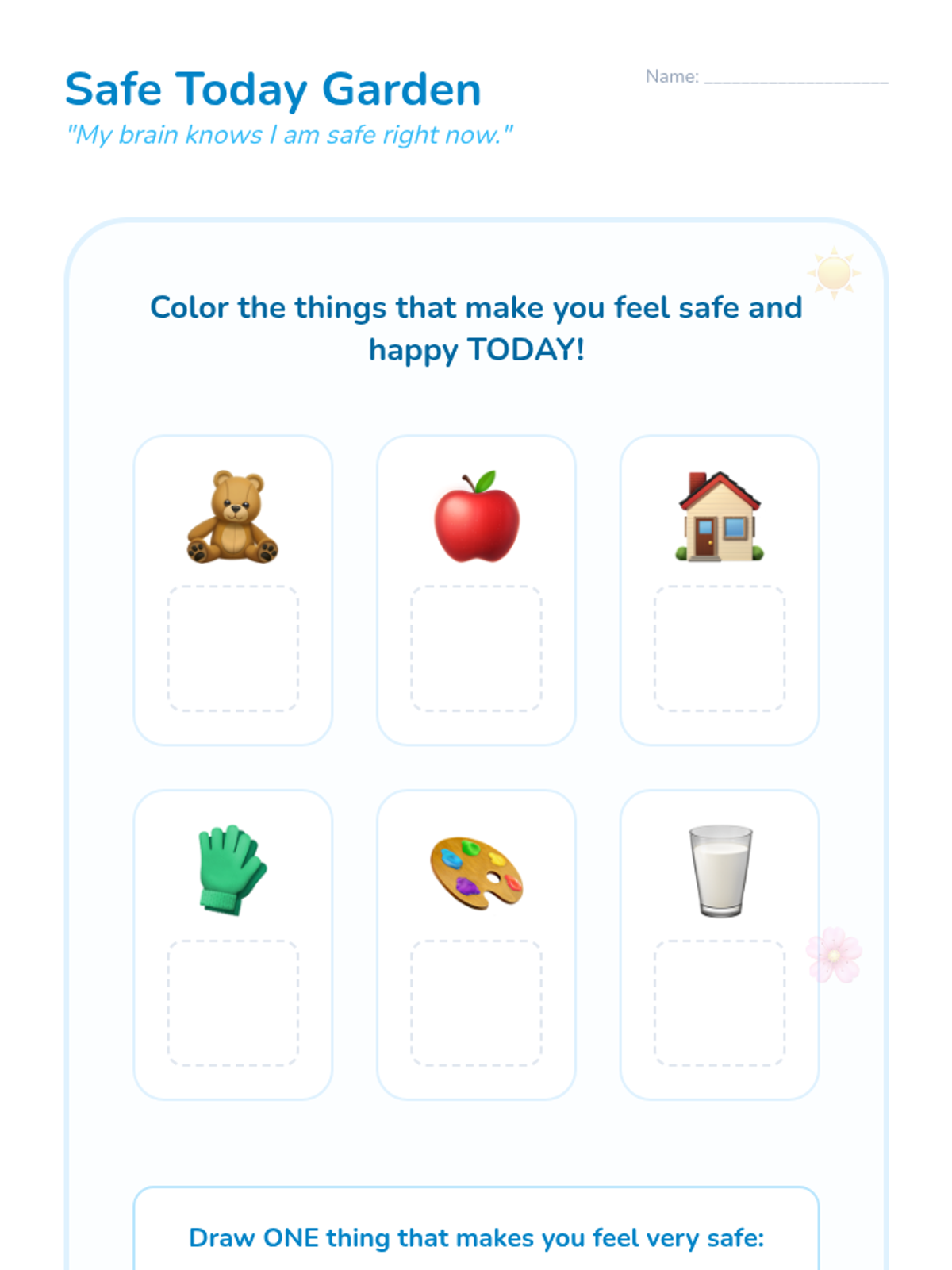
A puppet-led exploration of how past memories can influence present feelings about safe objects.
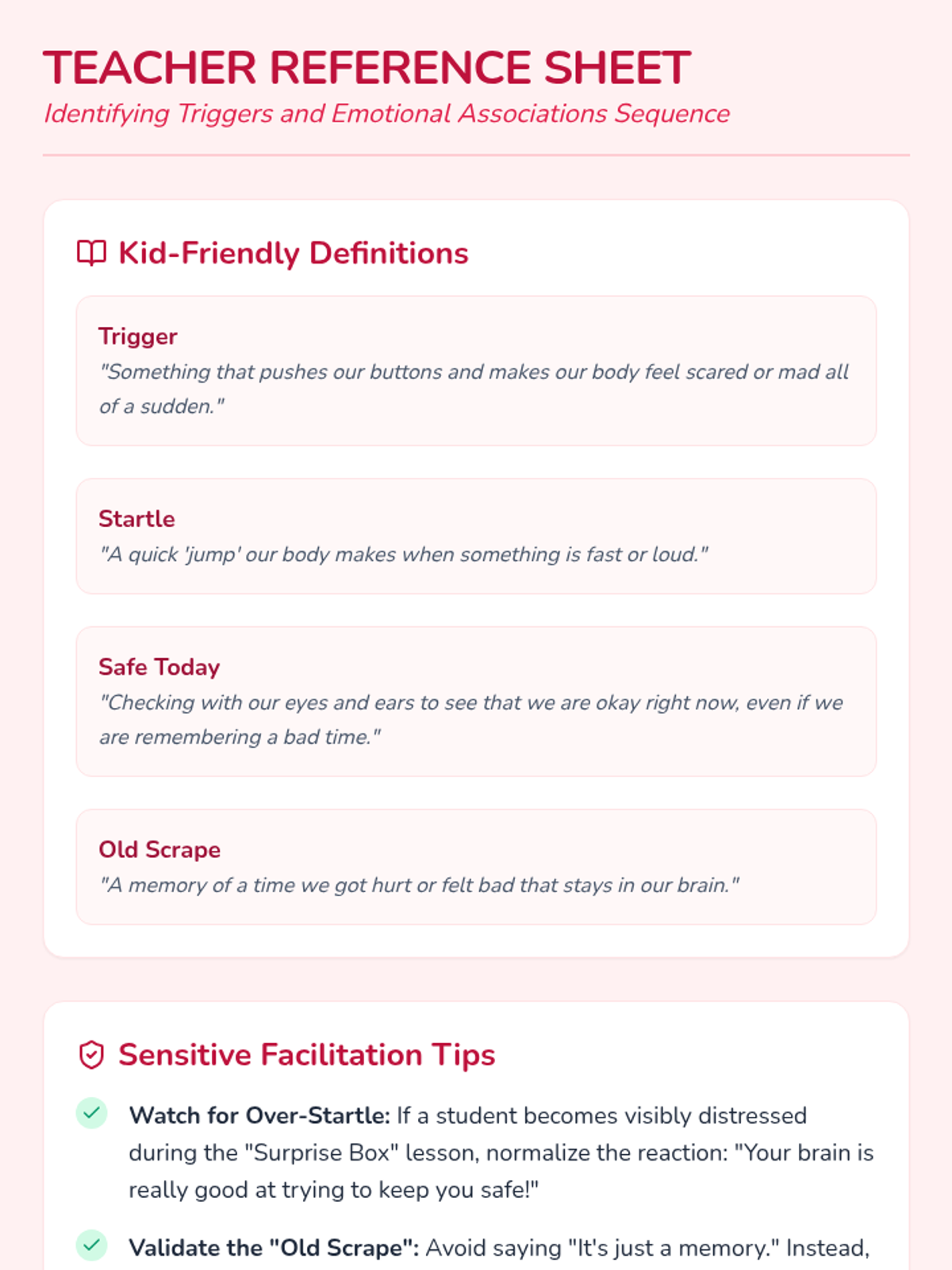
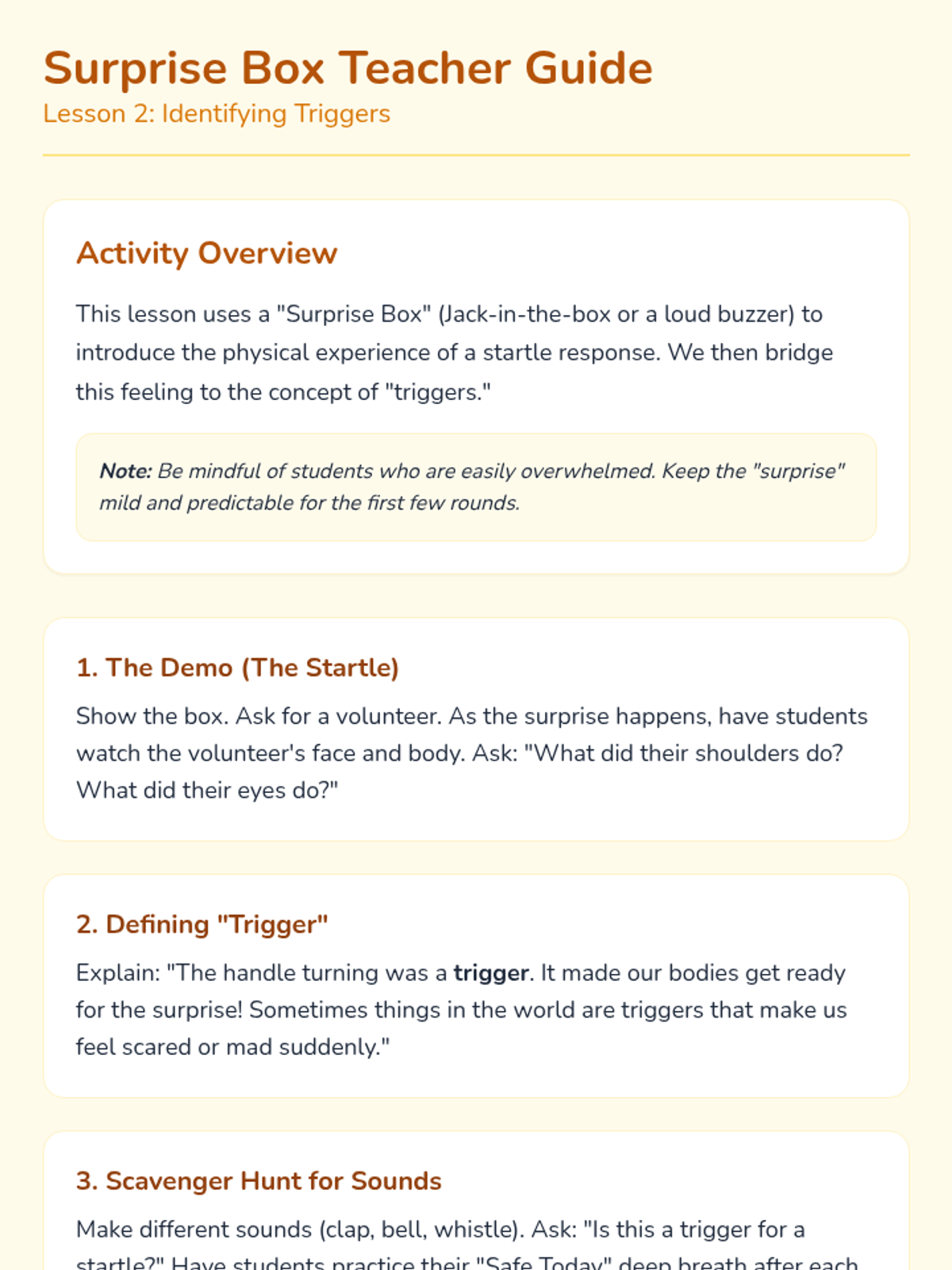
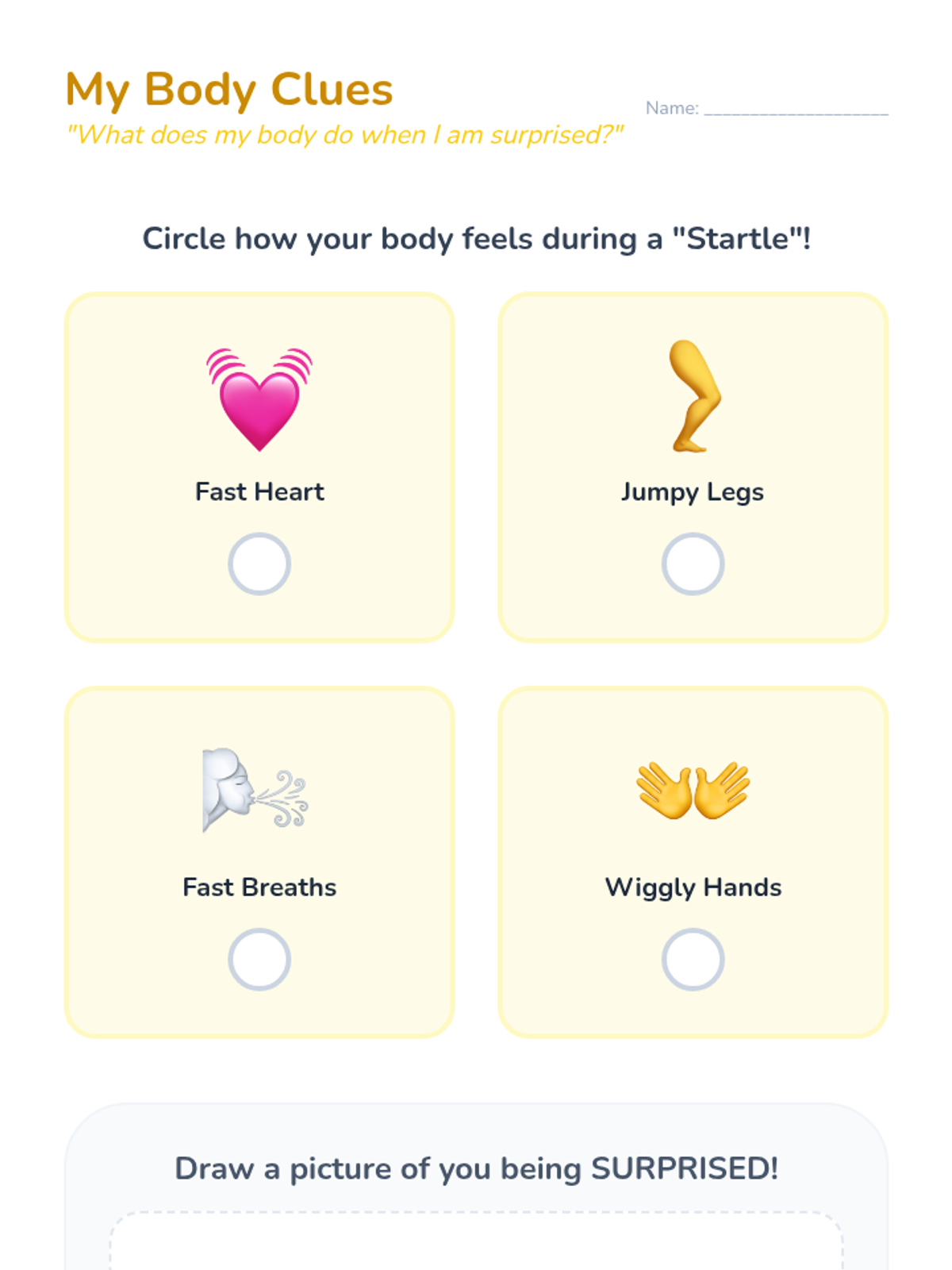
Introducing the concept of 'triggers' through startle responses and sudden surprises.
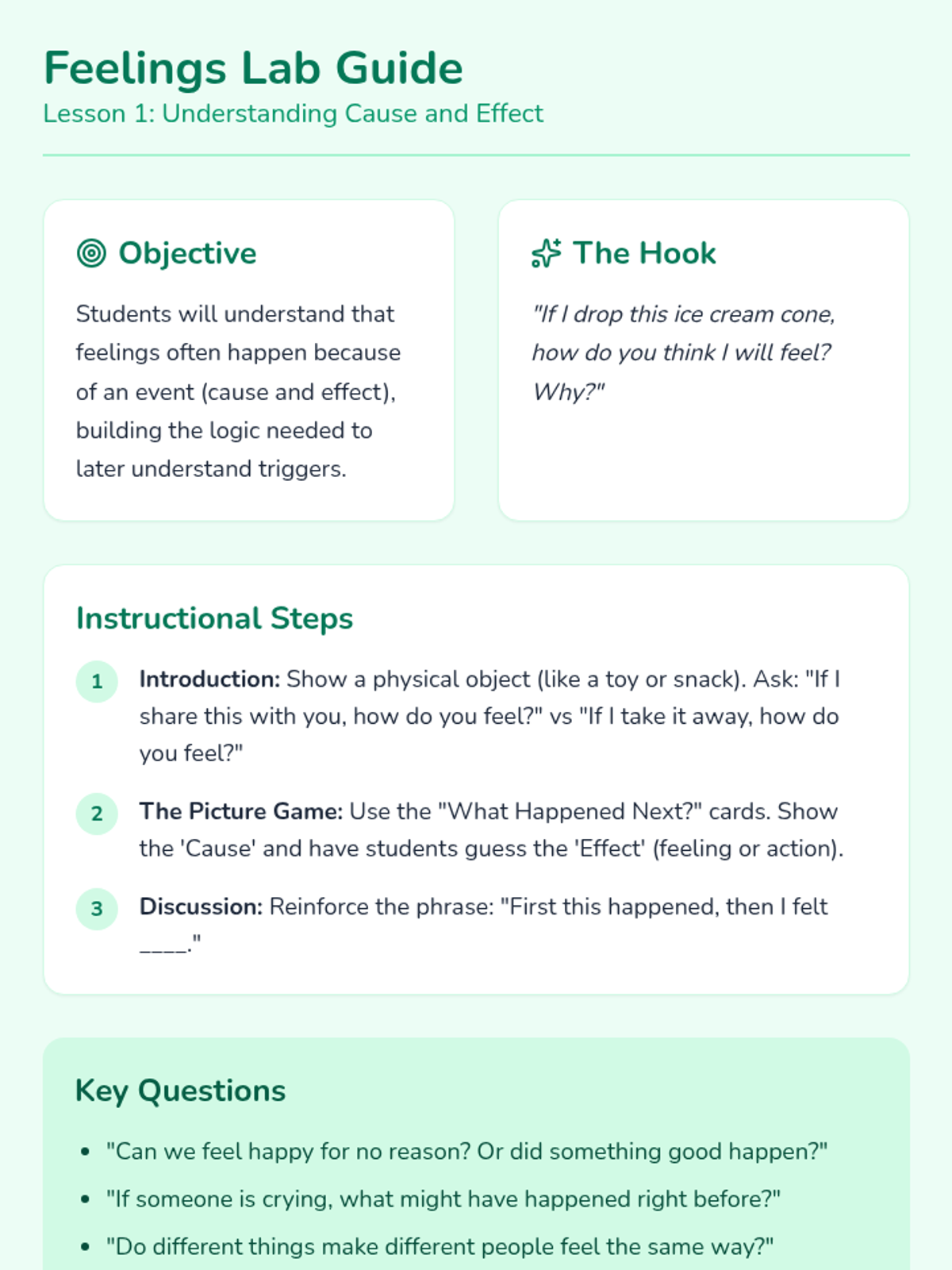
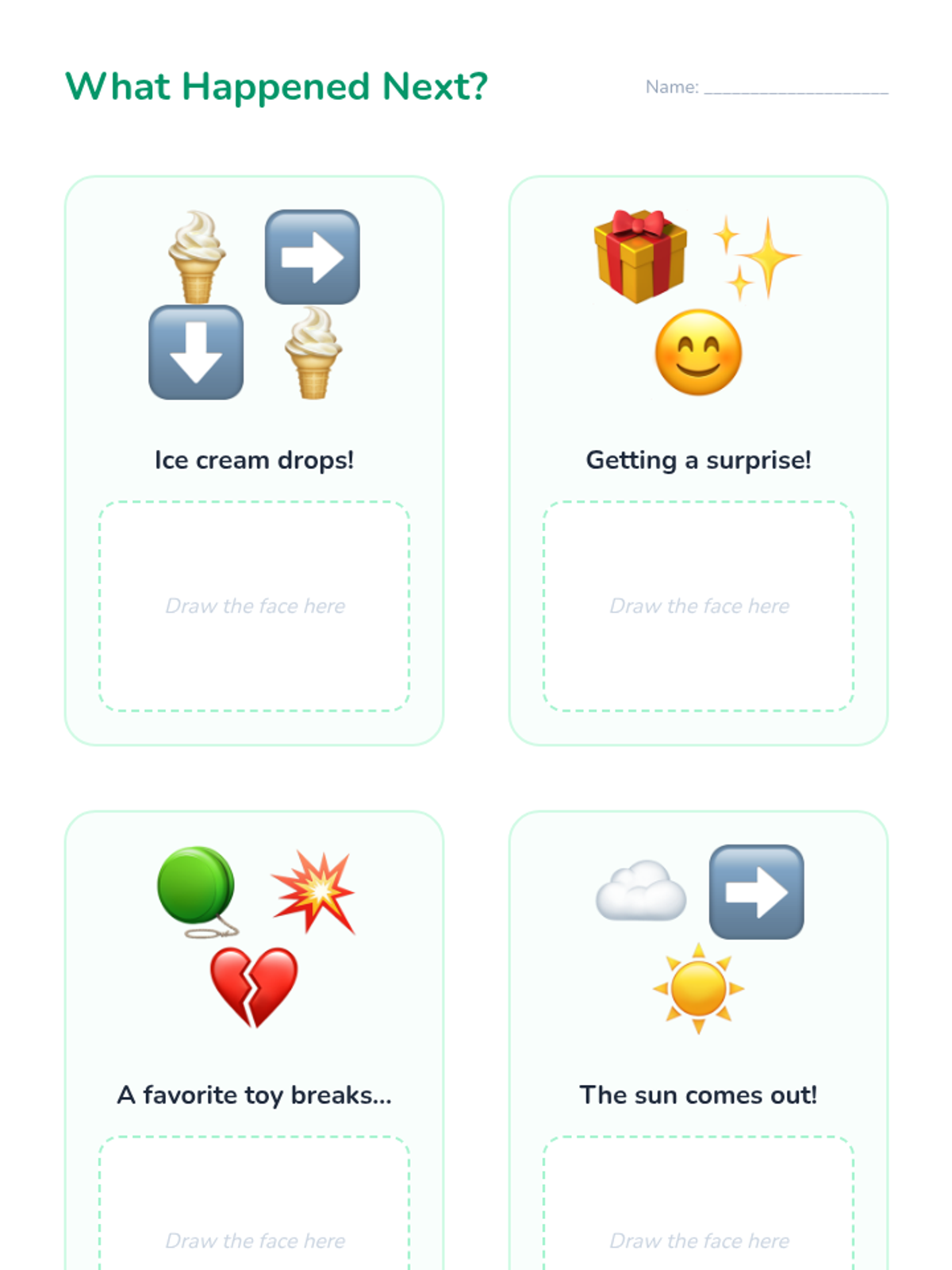
Students explore simple cause-and-effect scenarios to understand that feelings have specific origins.
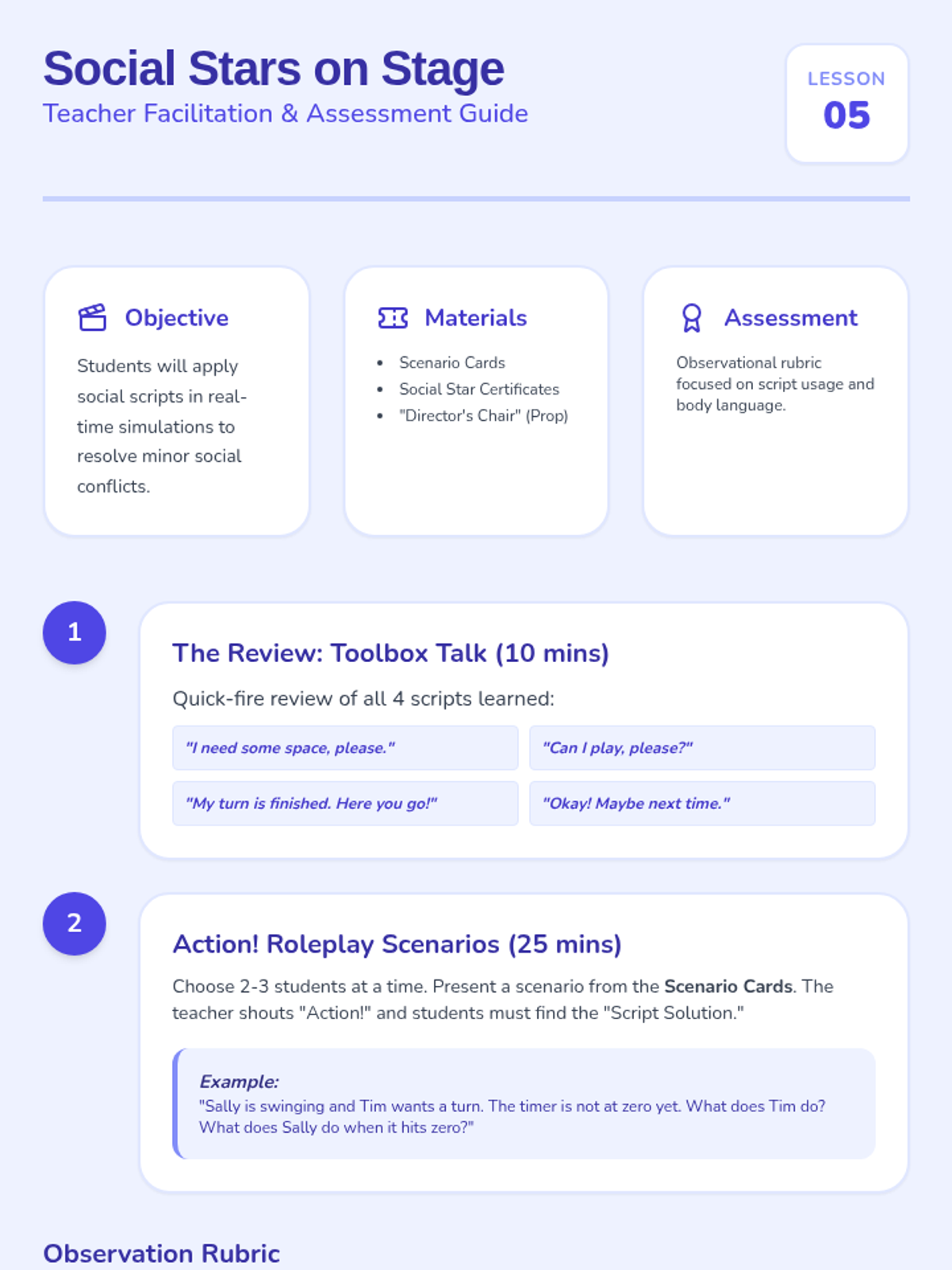
A performance-based assessment where students dramatize social scenarios using the scripts and strategies learned throughout the unit.
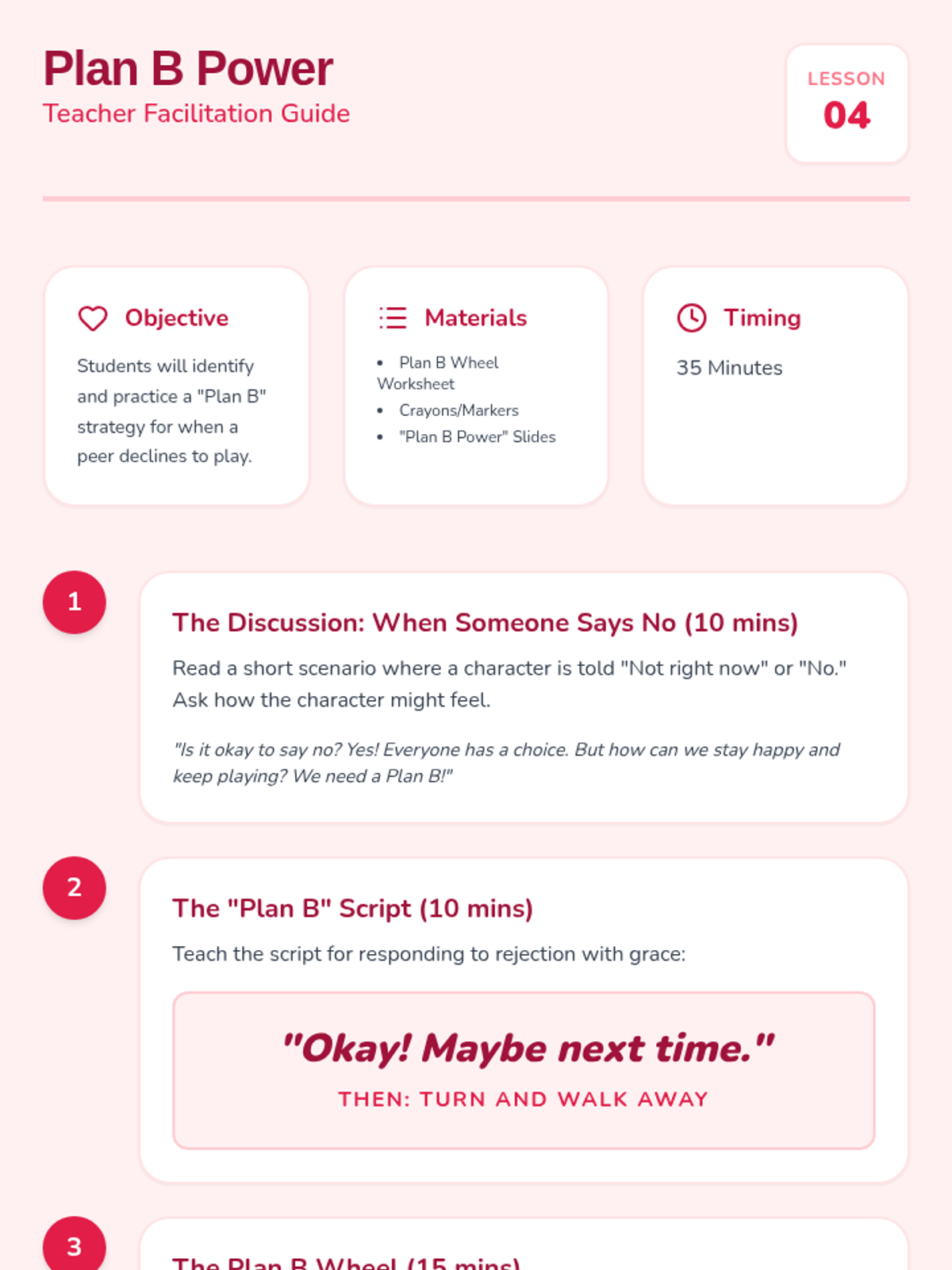
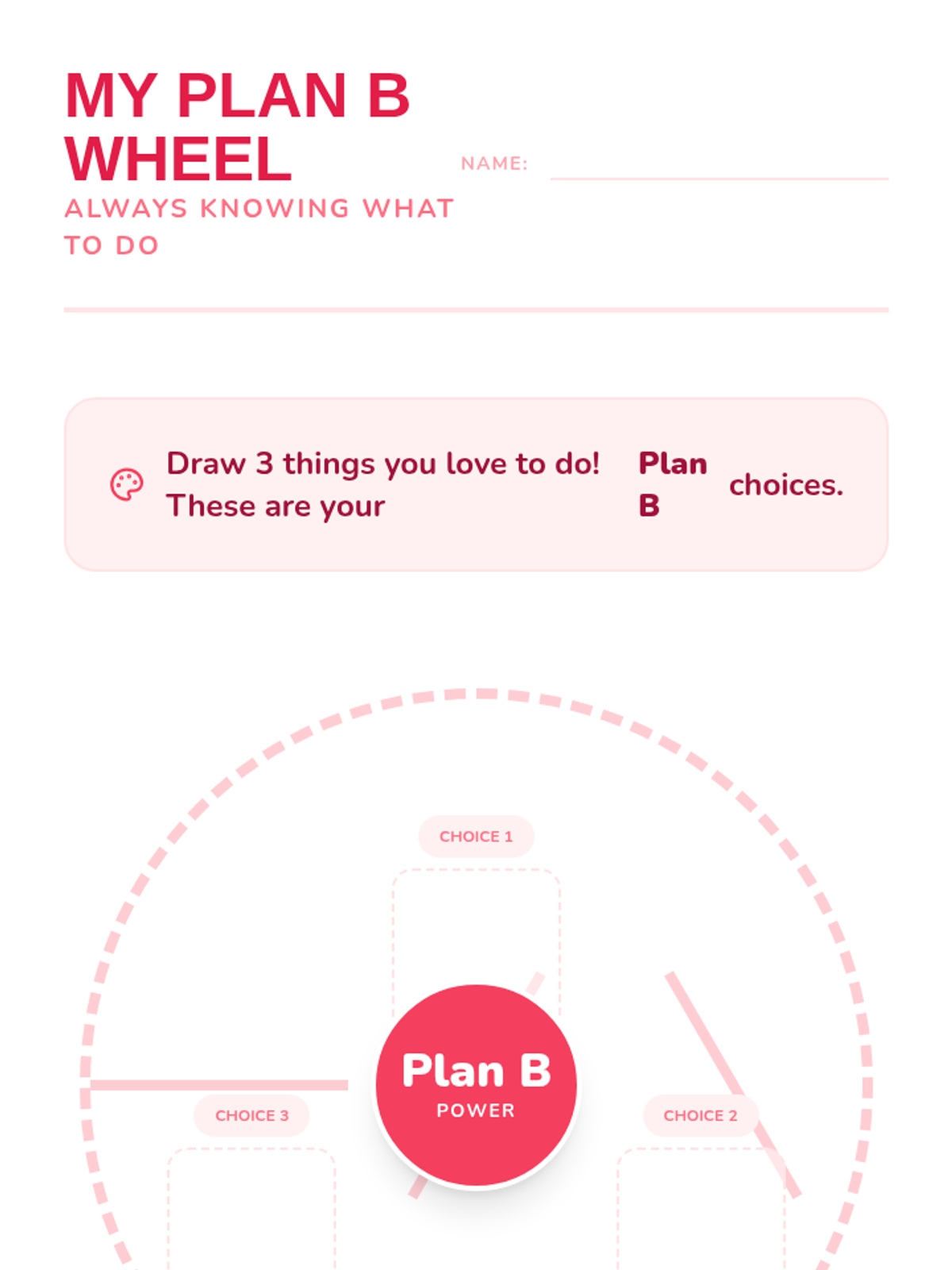
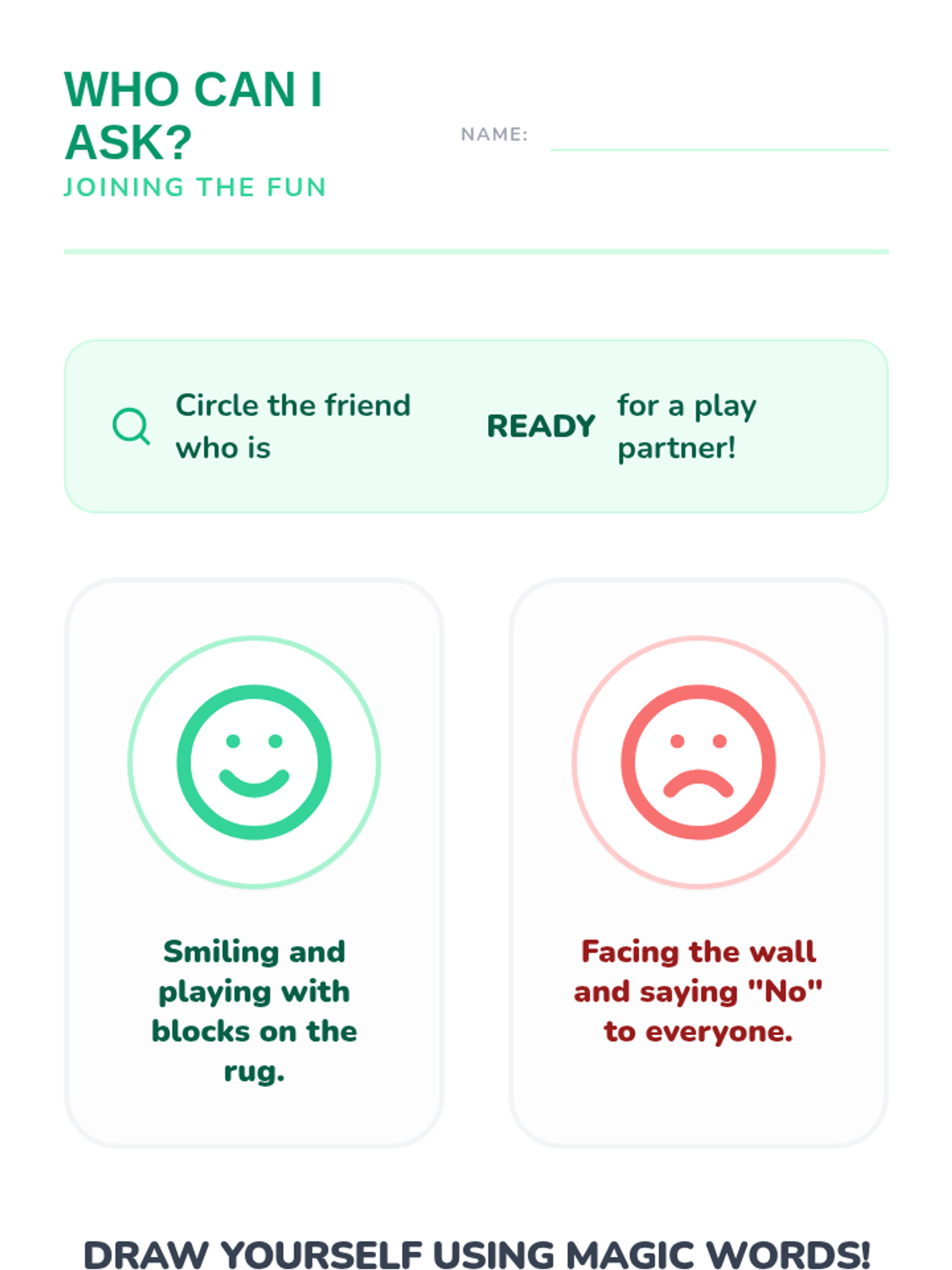
Building resilience by teaching students how to respond positively when a peer says 'no' and how to find alternative activities.
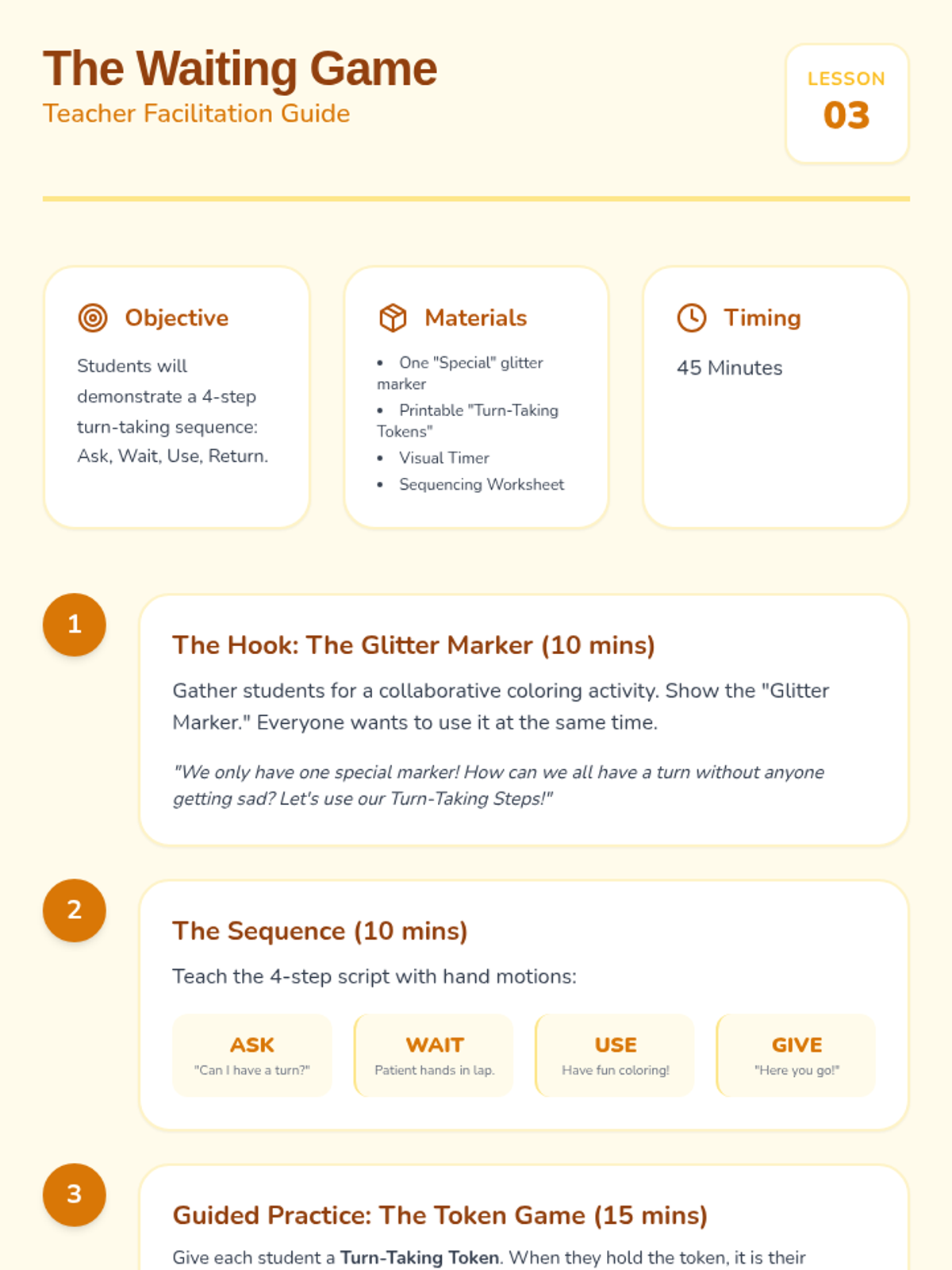
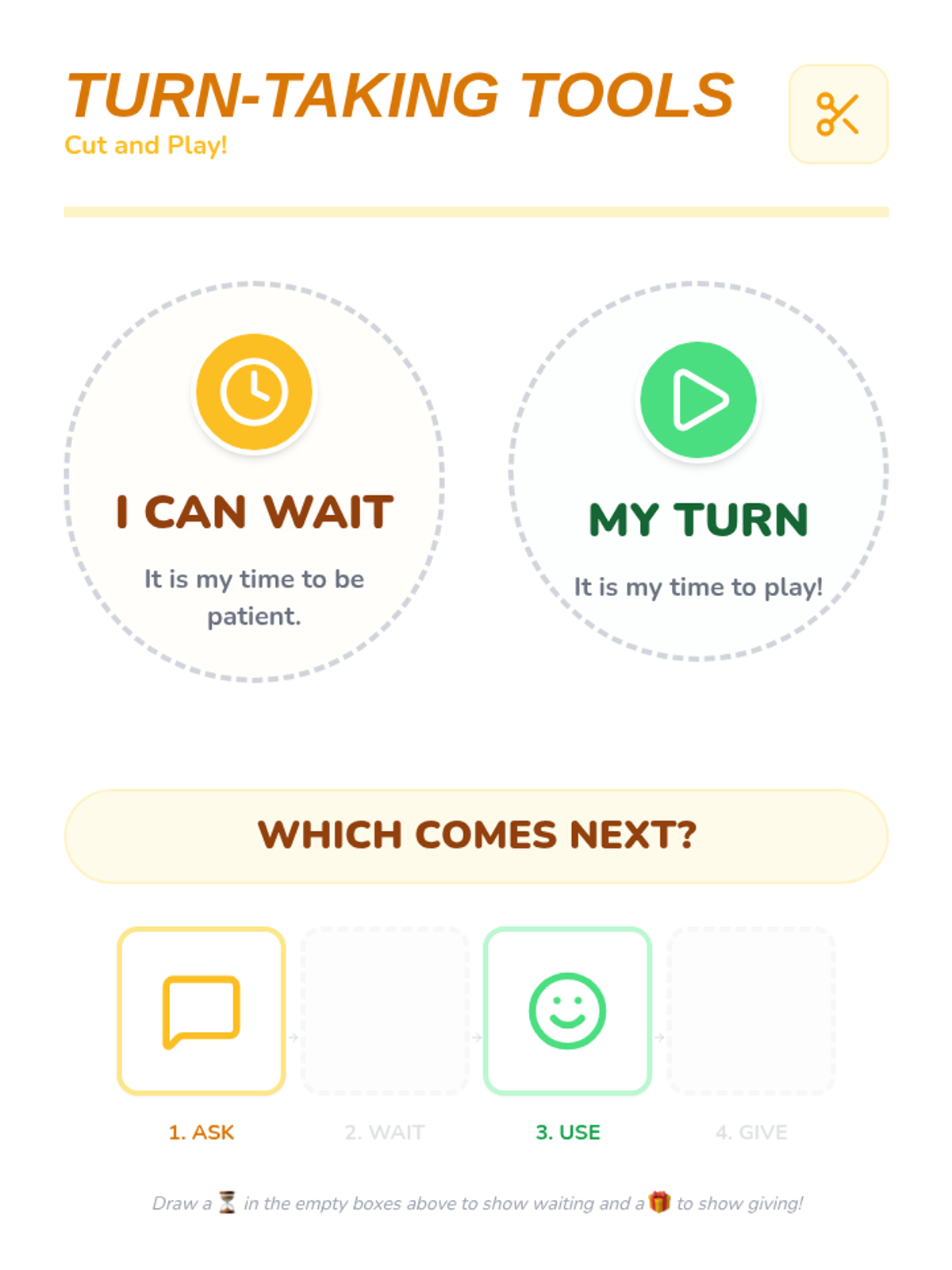
A step-by-step approach to sharing and turn-taking, focusing on the social narrative of asking, waiting, and returning toys.
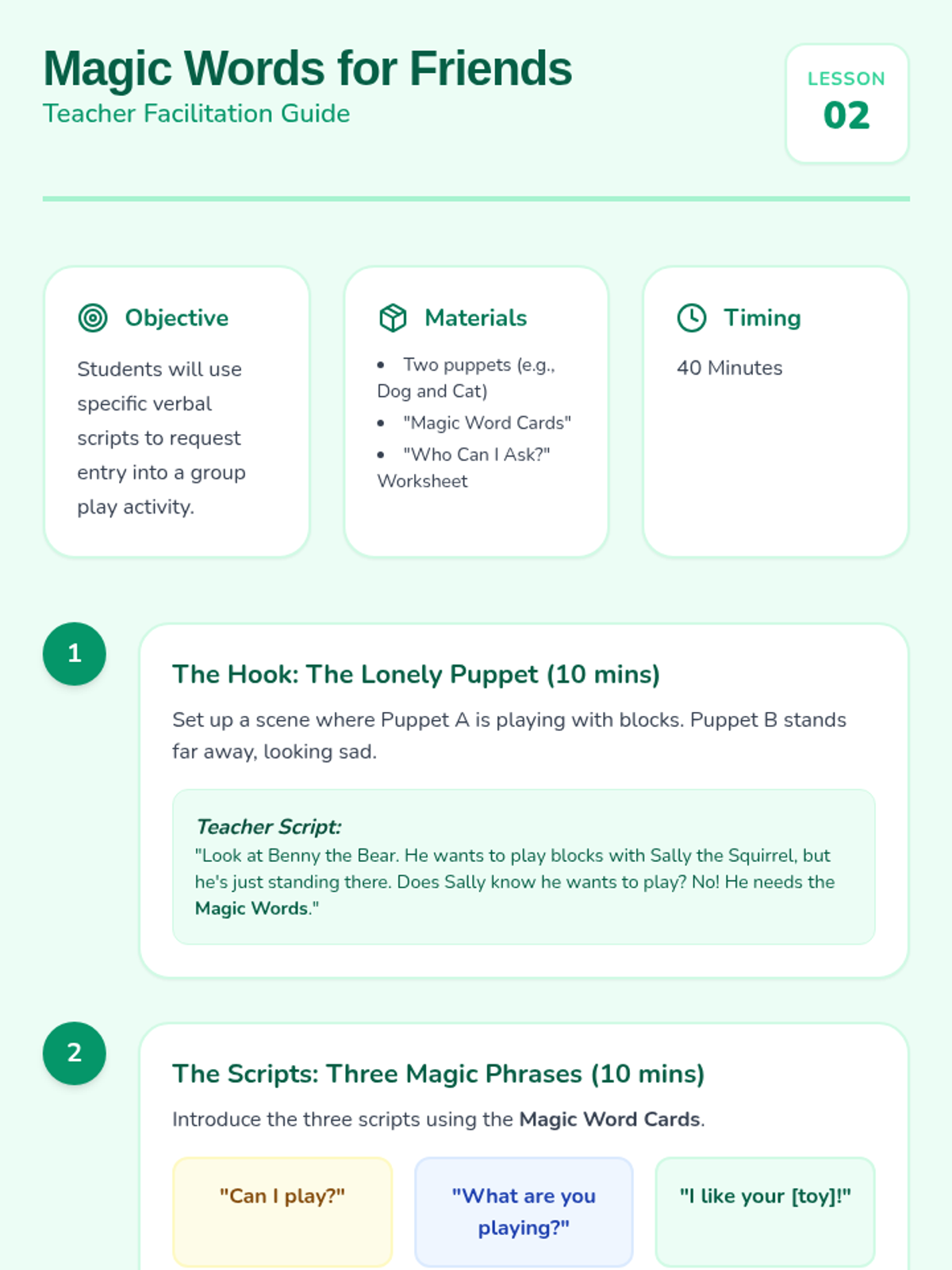
Students learn and practice verbal scripts to politely join peer activities using puppets and small group simulations.
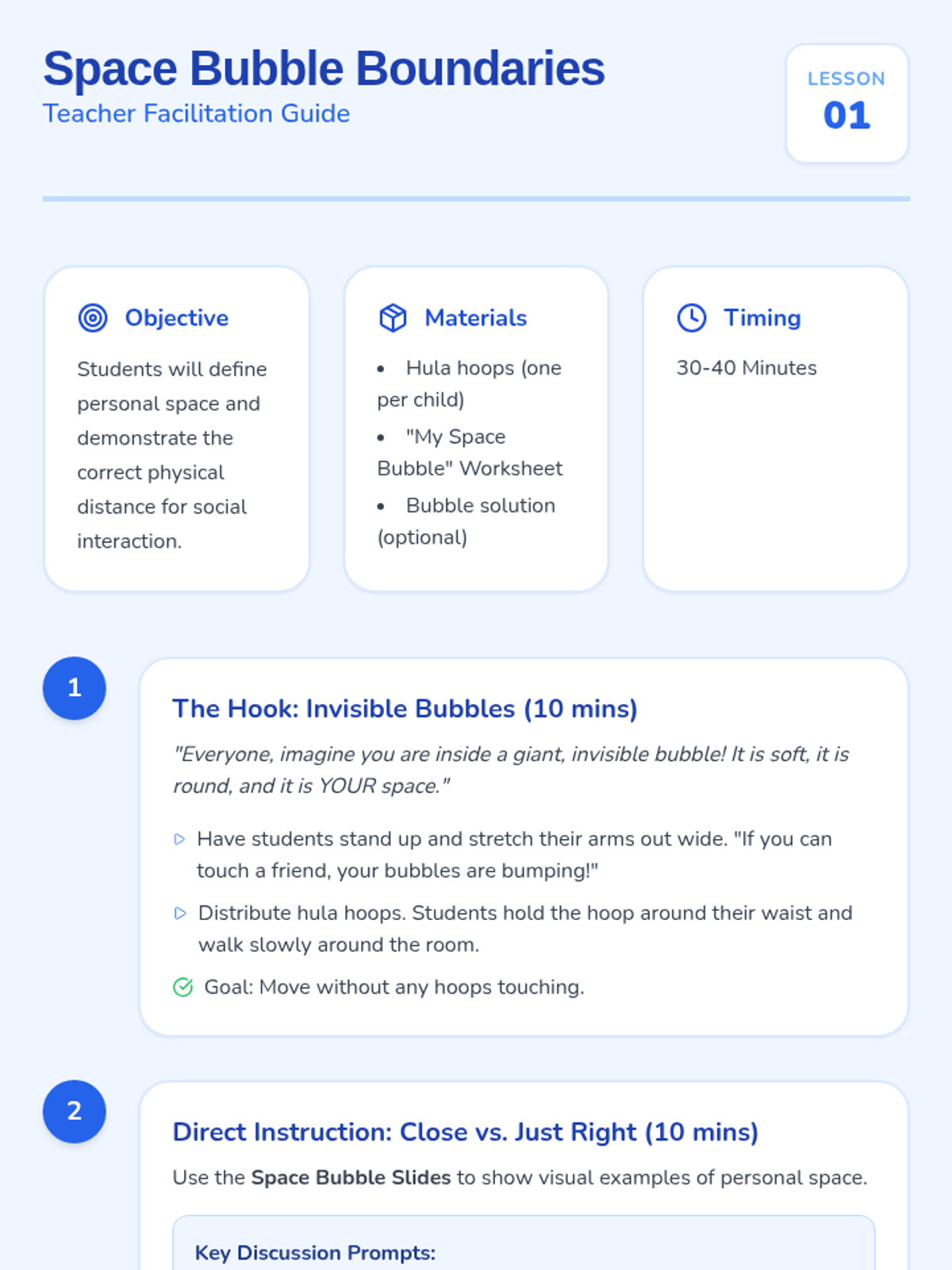
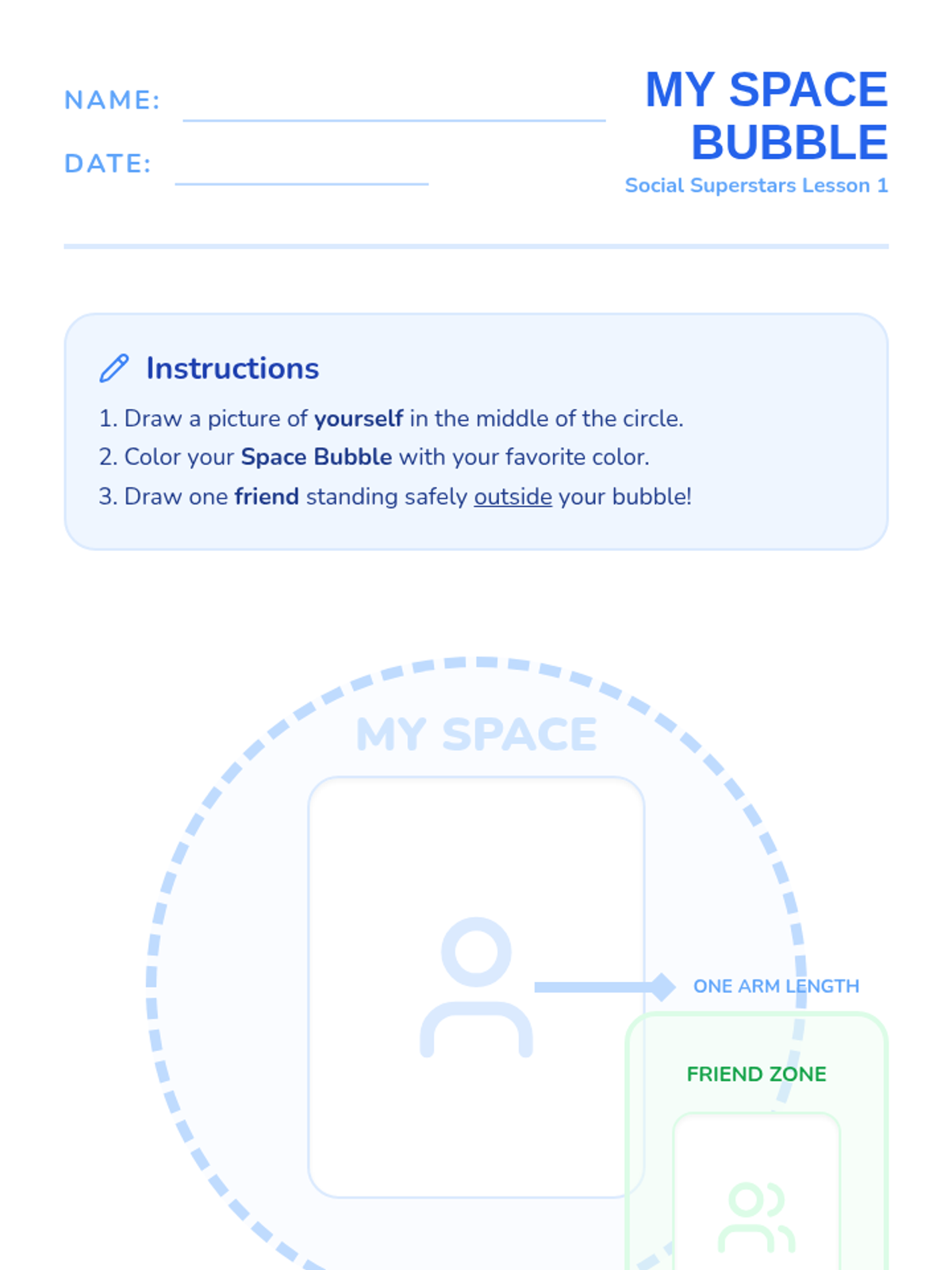
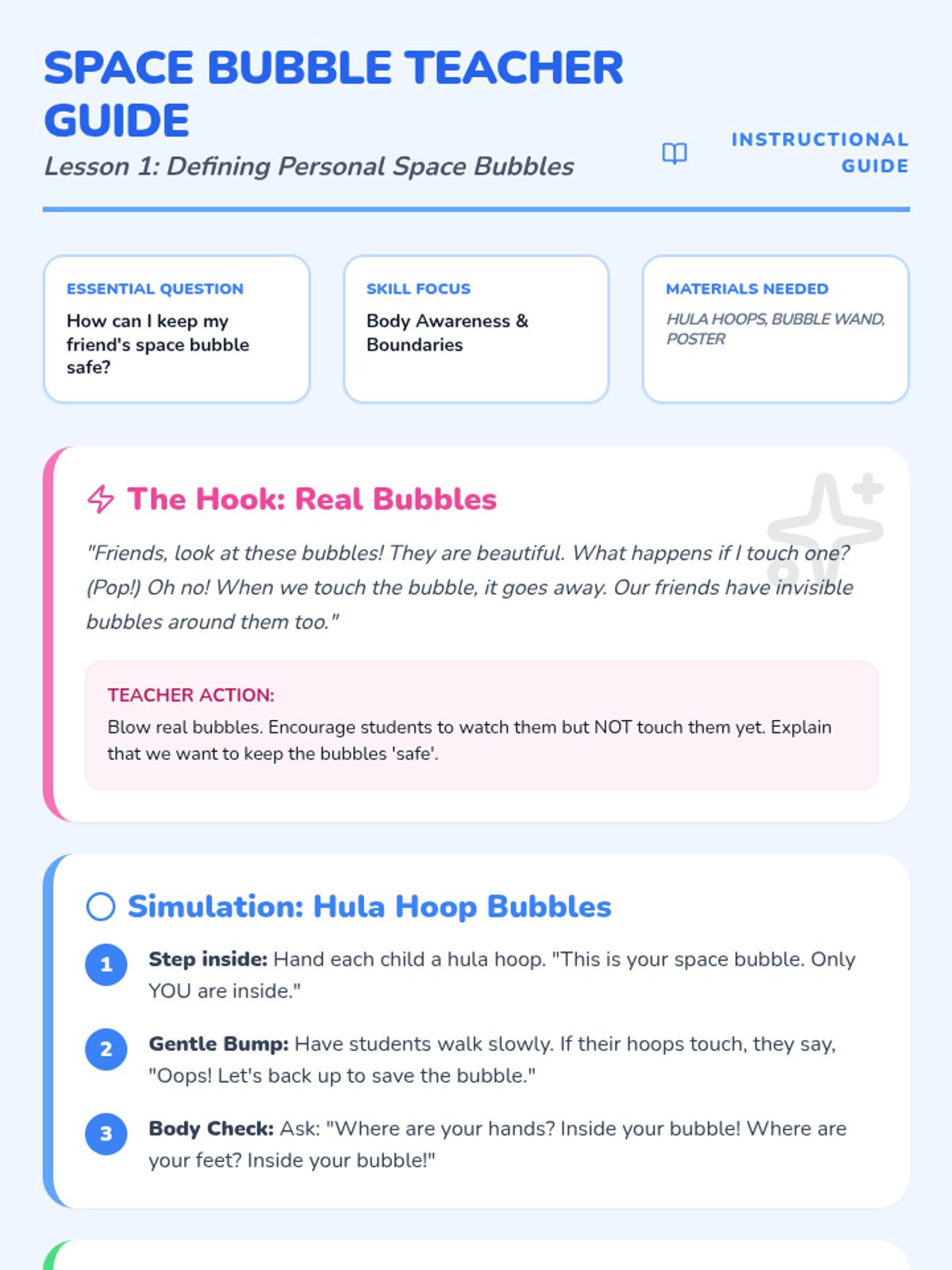
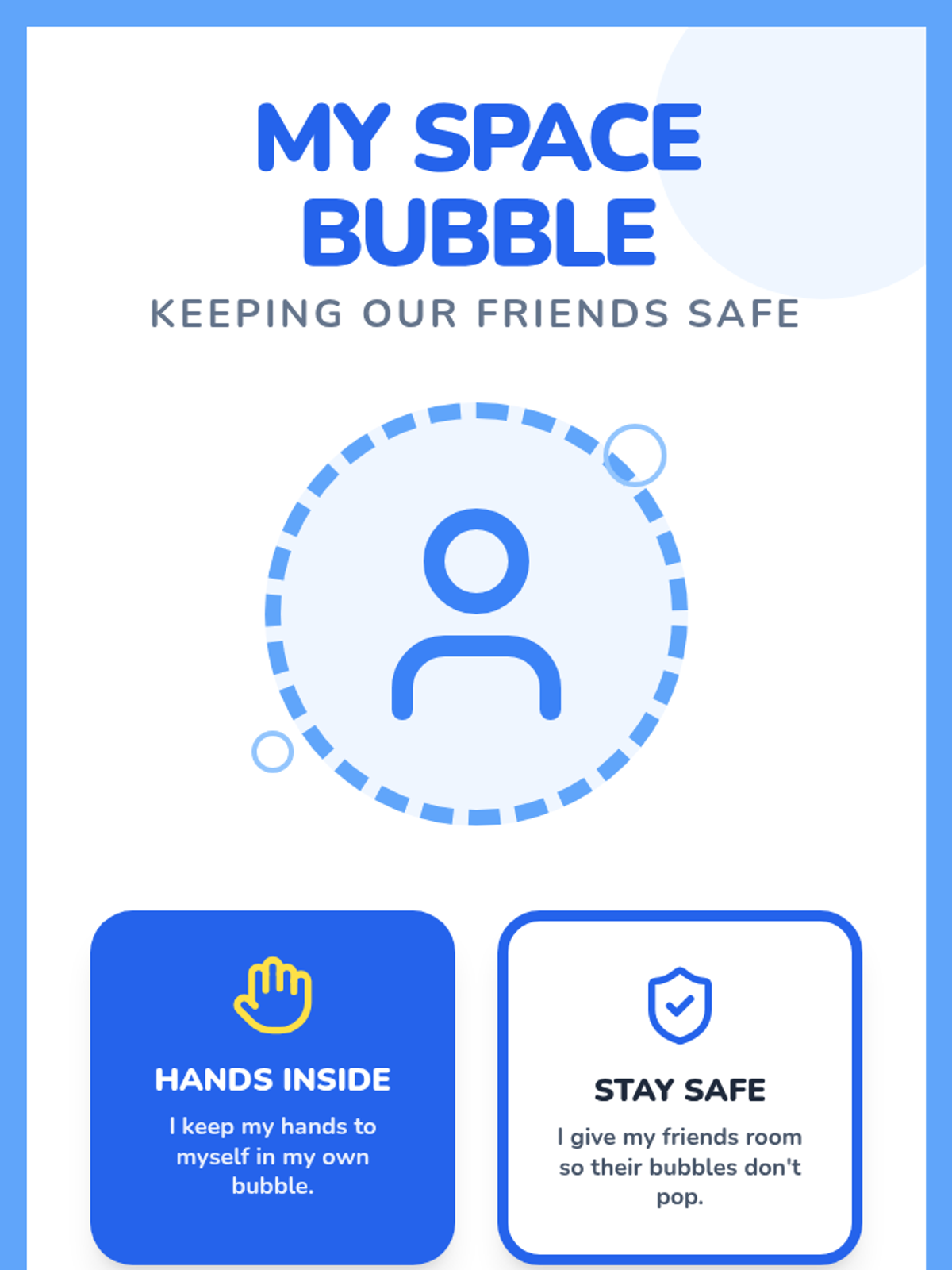
Students explore the concept of personal space using the 'Space Bubble' metaphor to understand appropriate physical distances during social interactions.
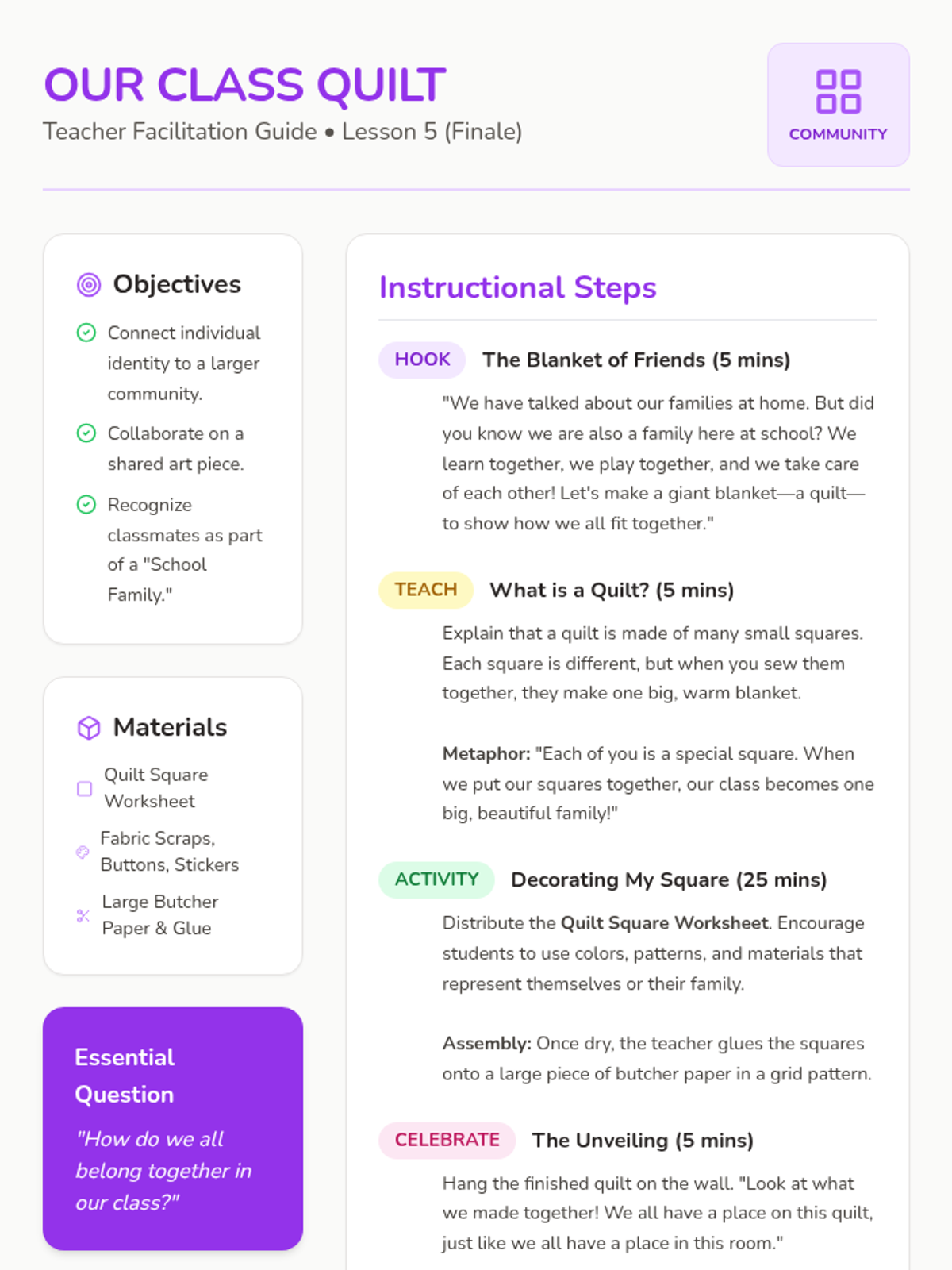
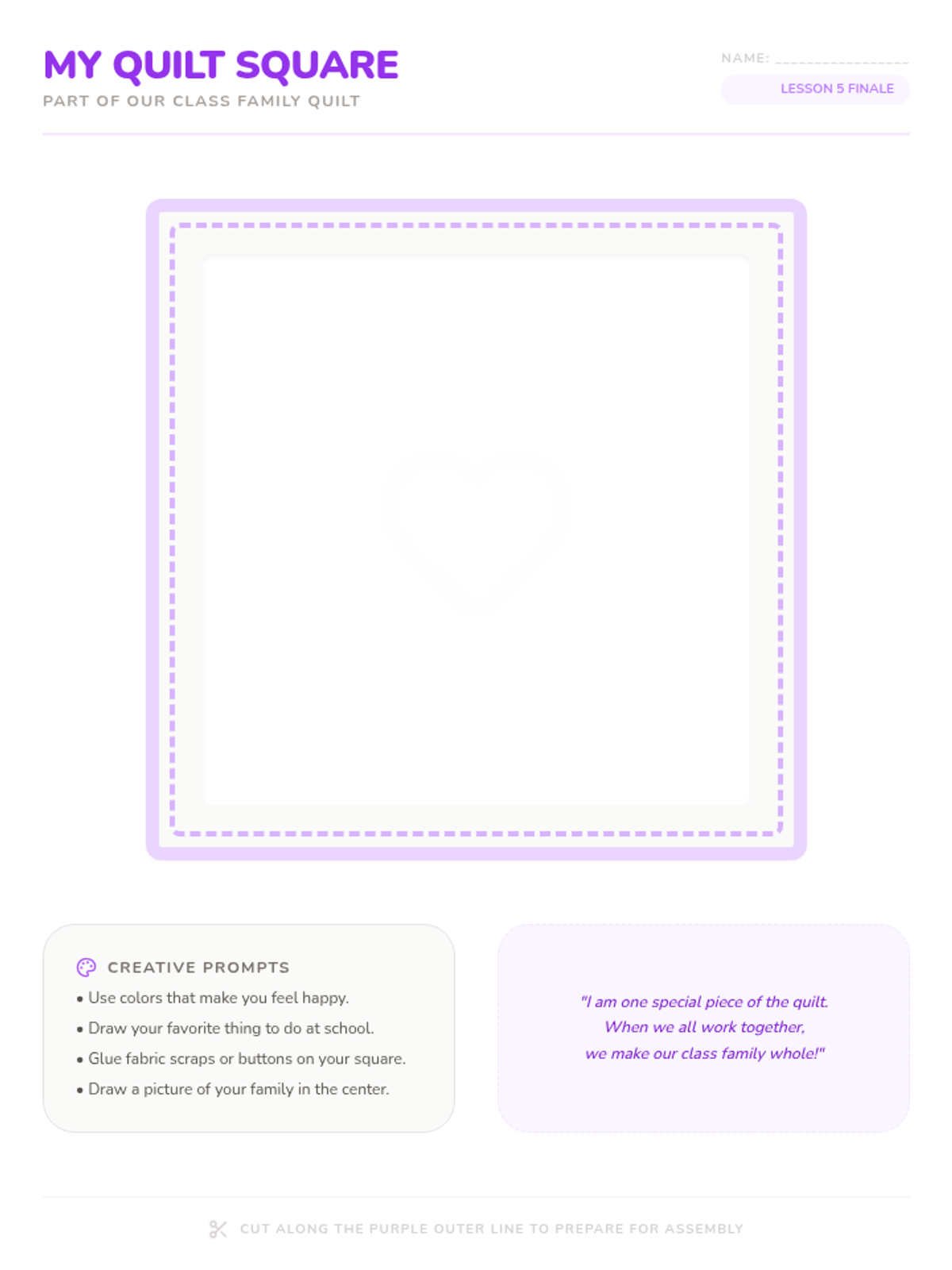
A collaborative art project where individual family squares are combined to symbolize the classroom community as a family unit.
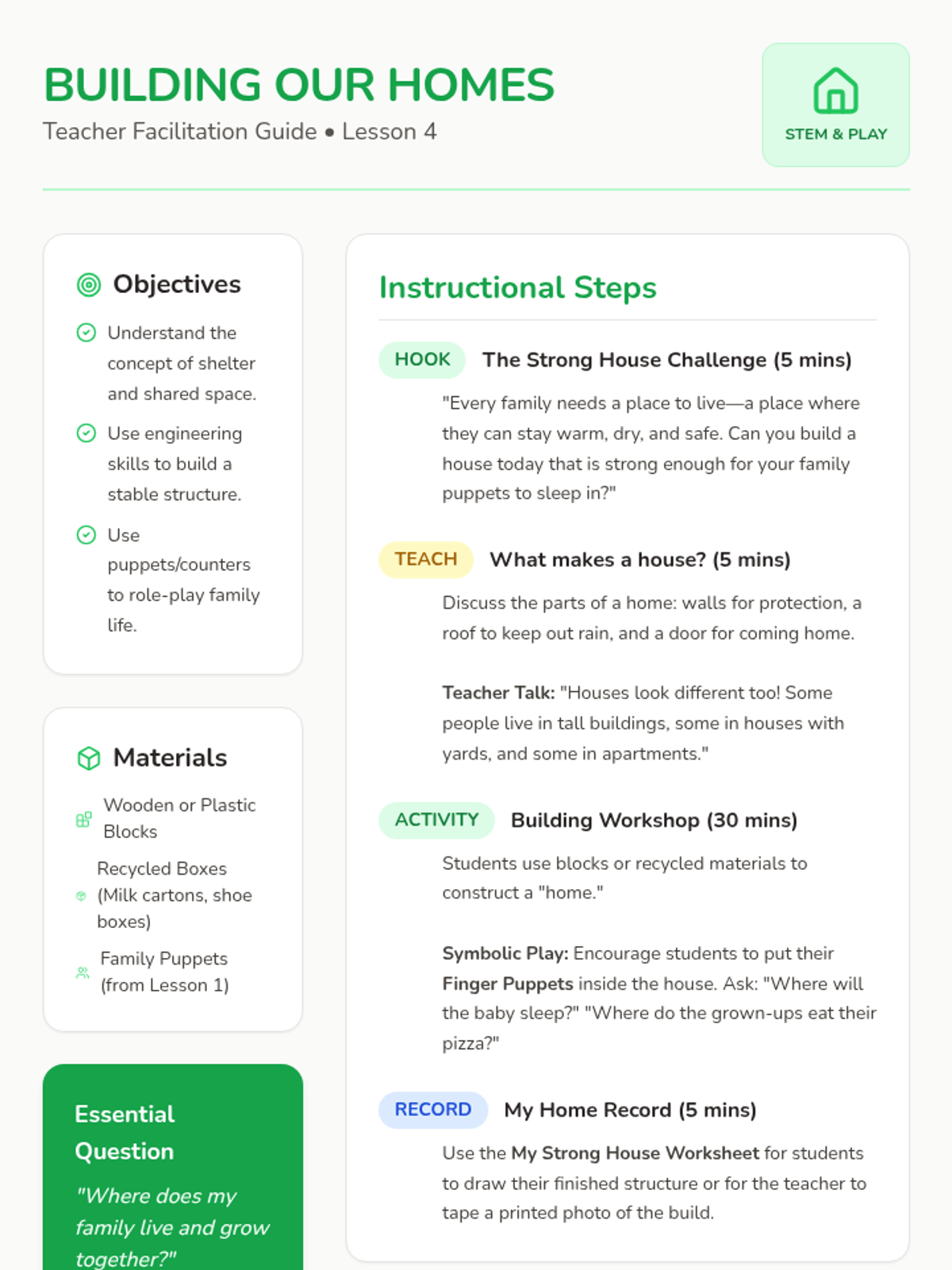
Students use engineering and symbolic play to build a physical structure representing their home, reinforcing the concept of shelter and shared space.
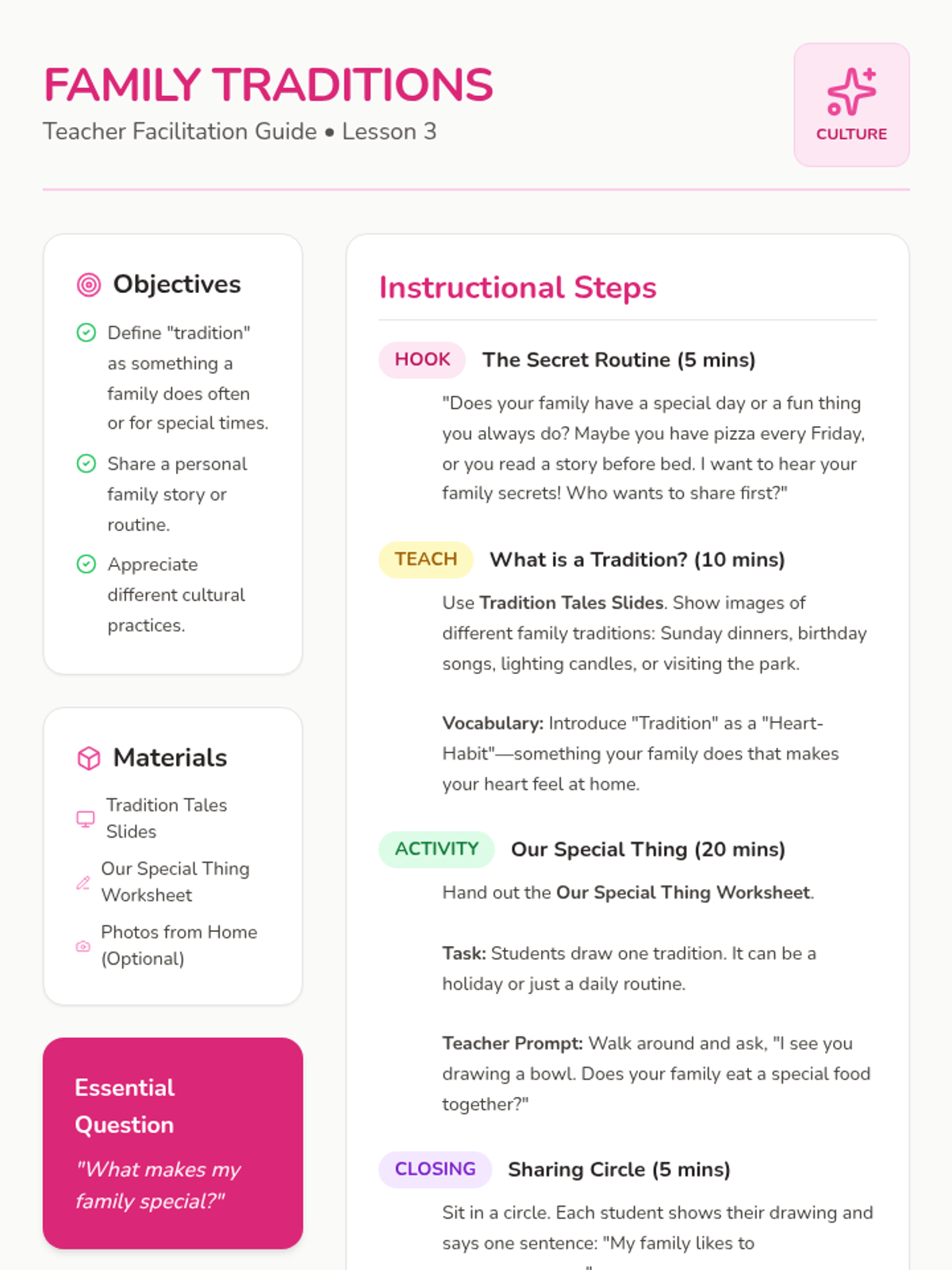
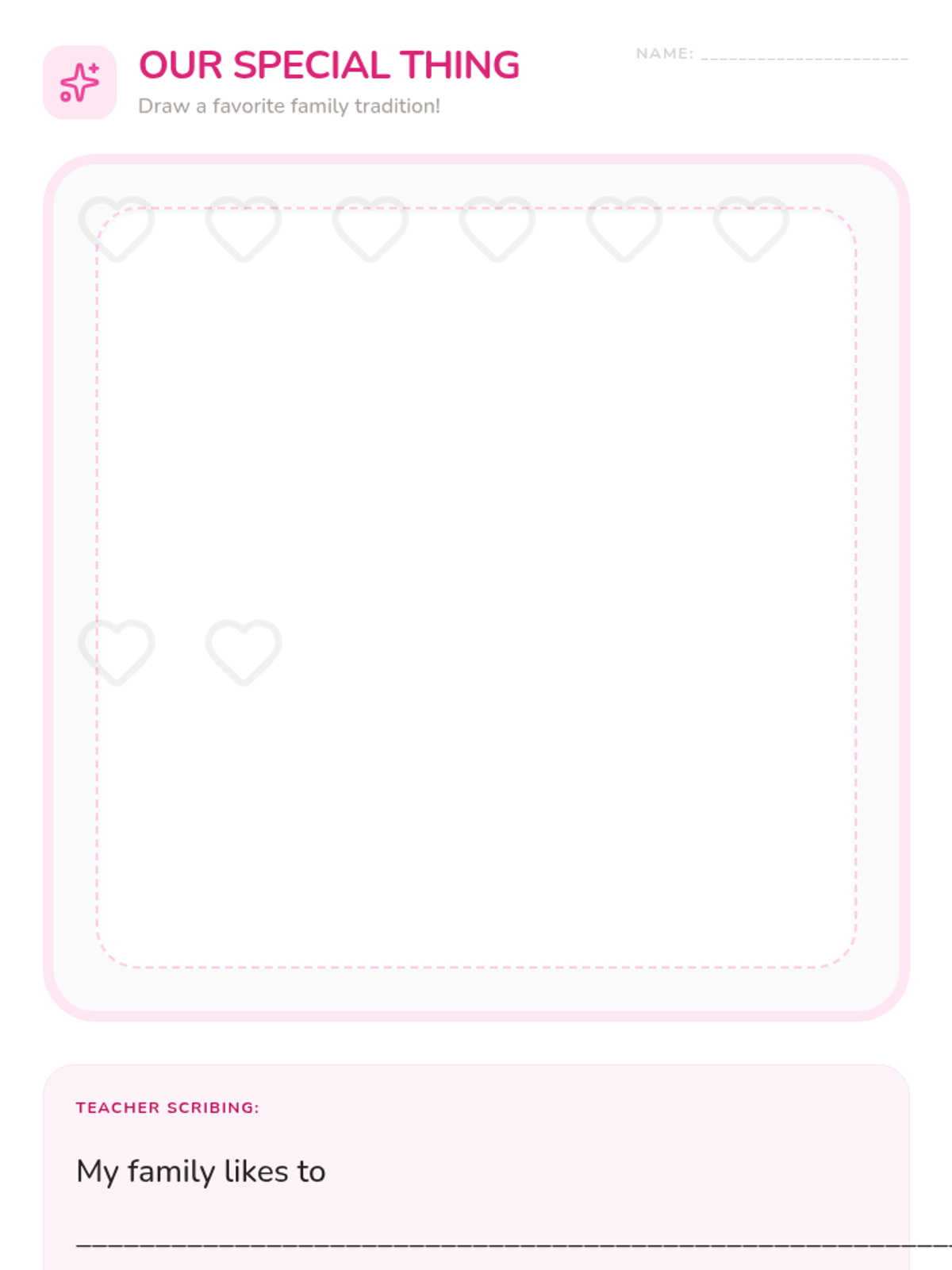
Students share and illustrate special routines and traditions that make their family unique, fostering cultural awareness and narrative skills.
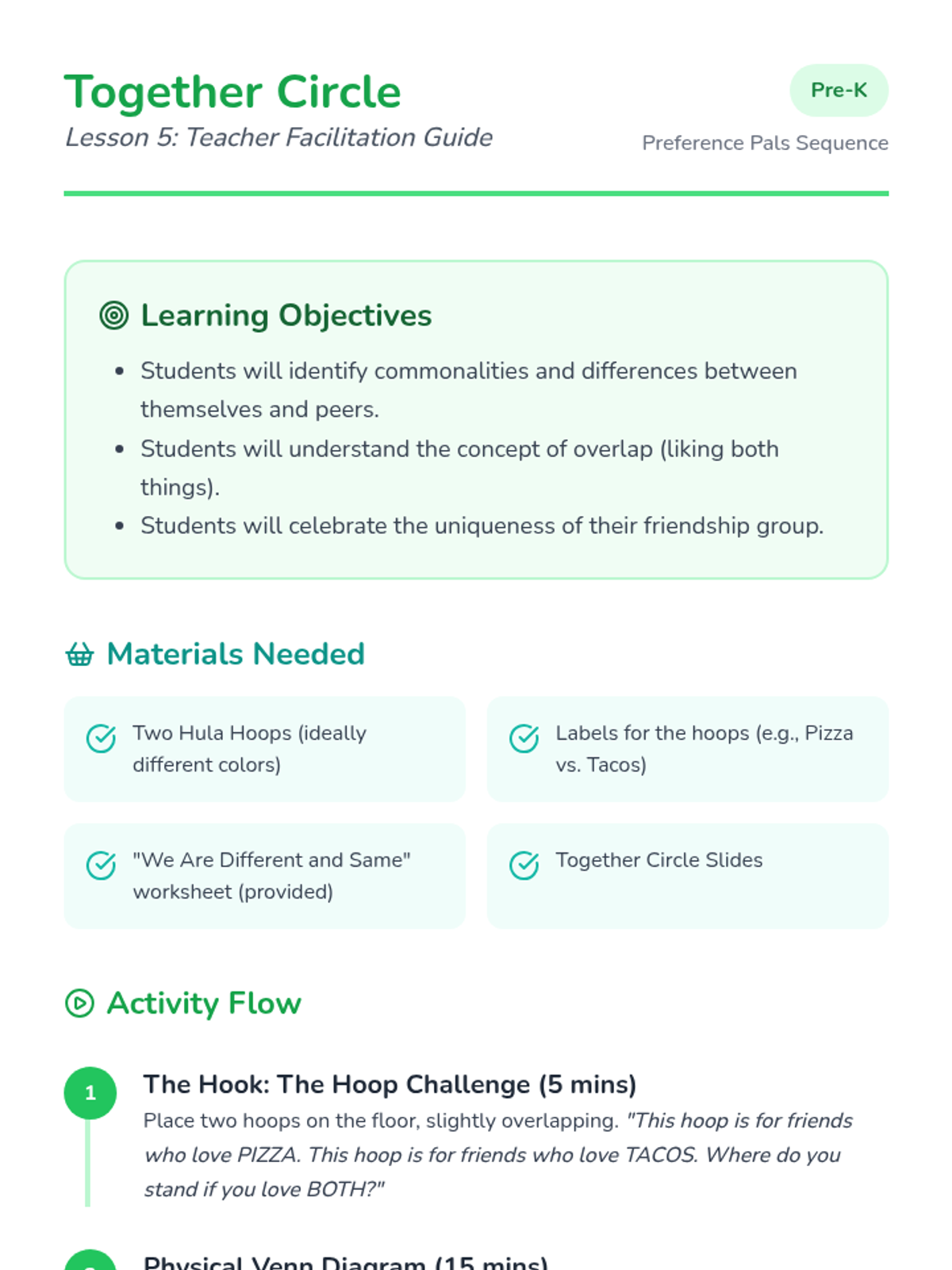
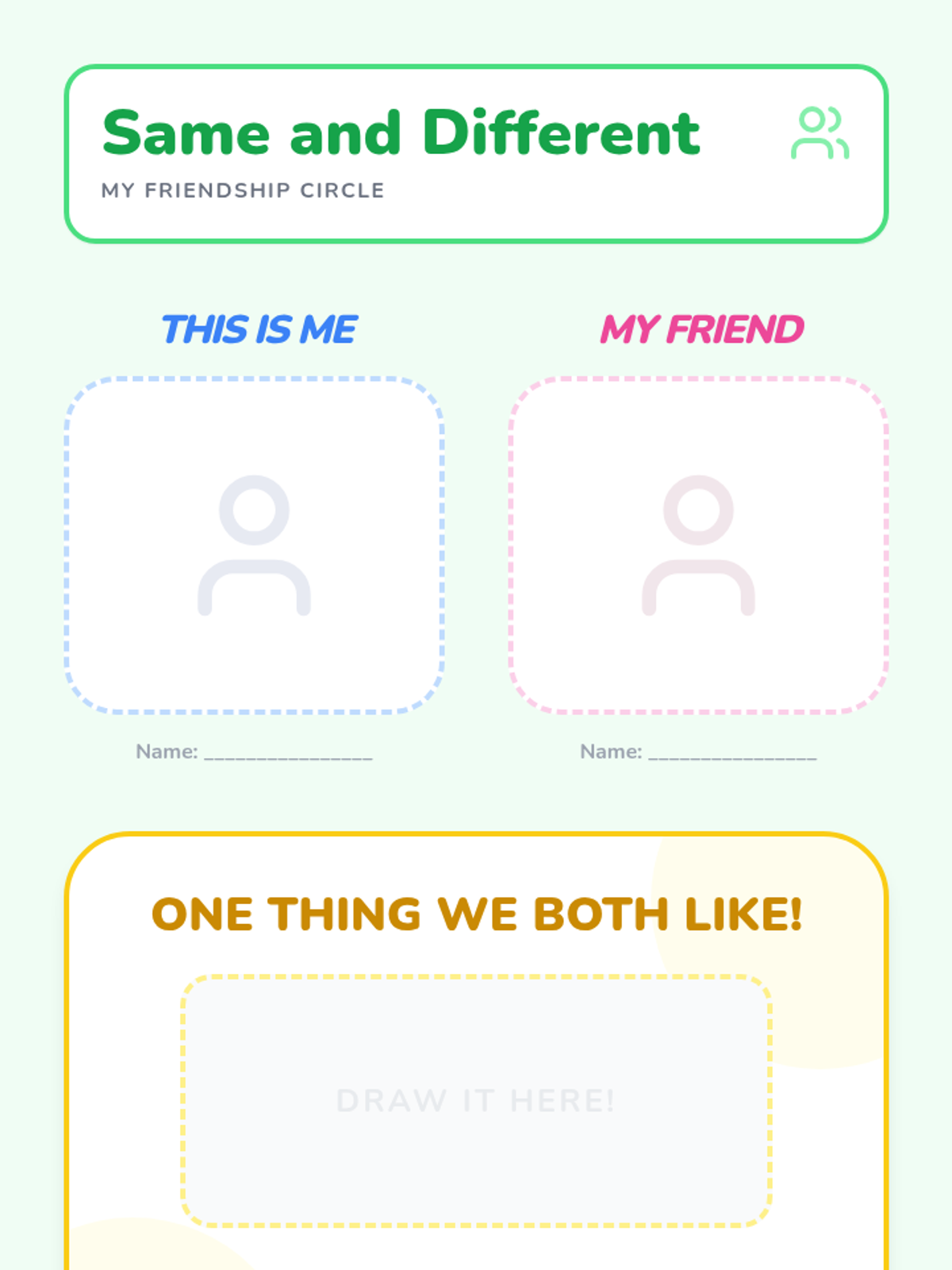
Using a physical Venn diagram activity, students visualize how they can share some interests with friends while keeping their own unique preferences.
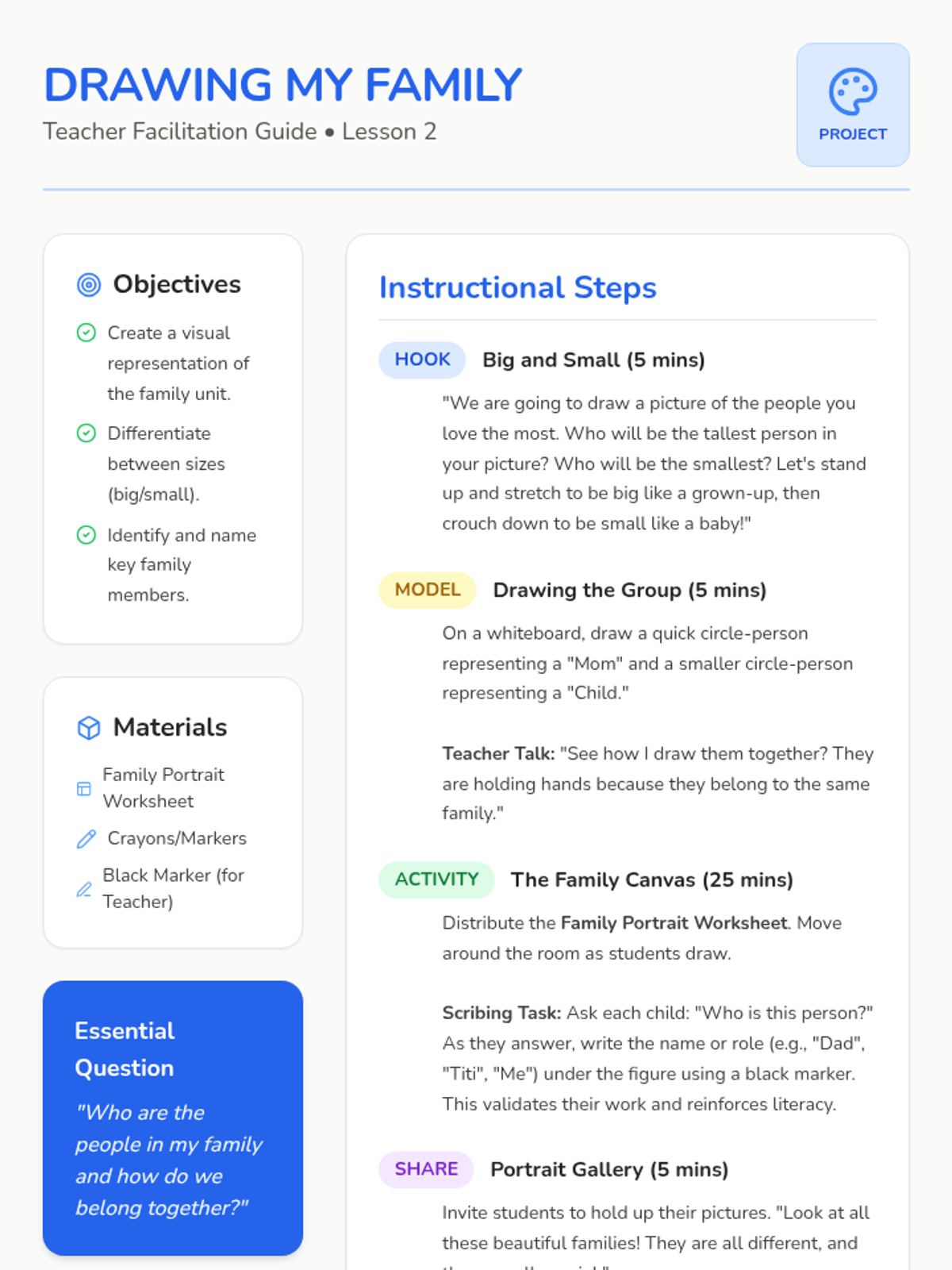
A project-based lesson where students create a visual representation of their family unit, focusing on relative size and identifying key members.
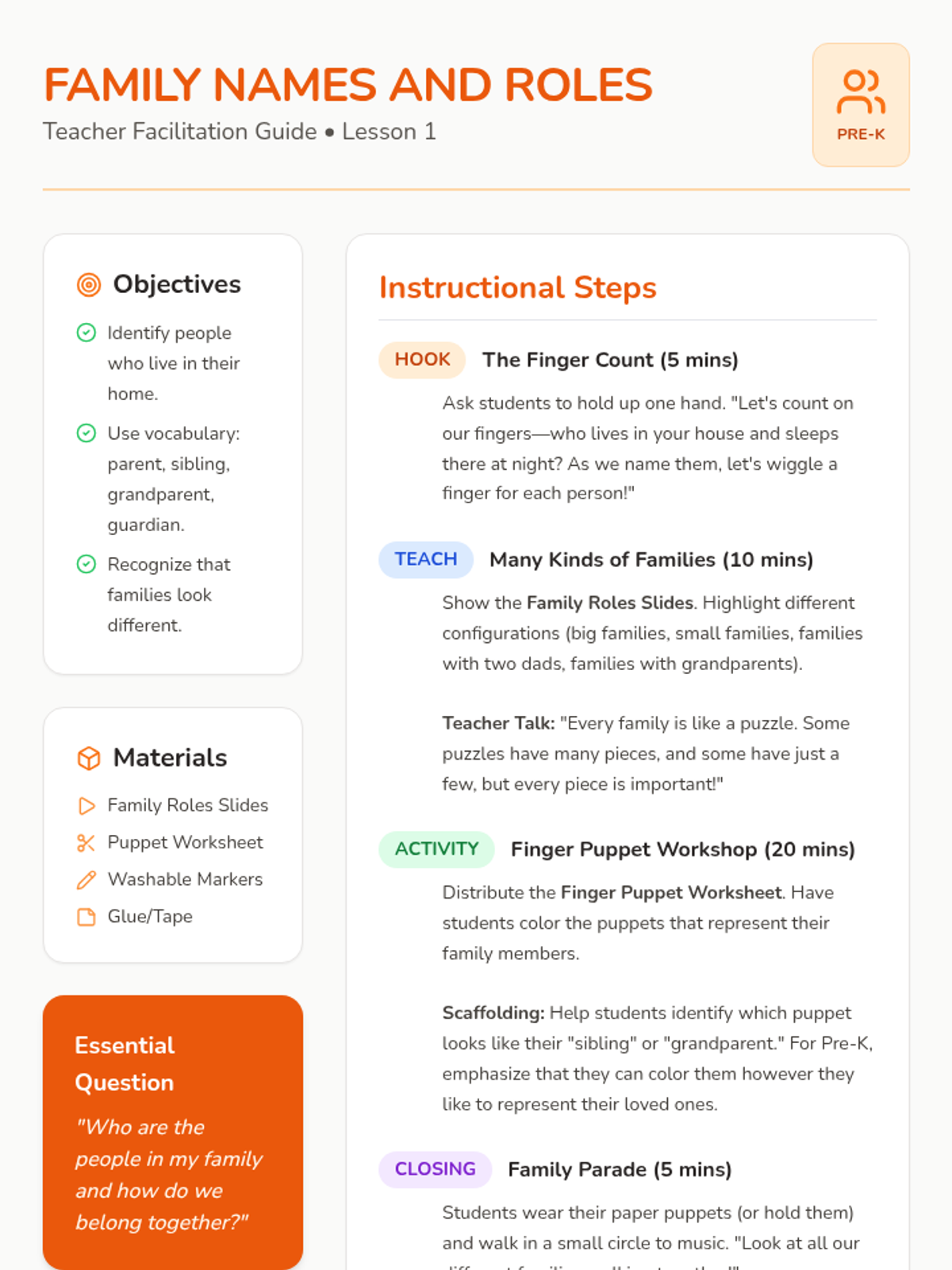
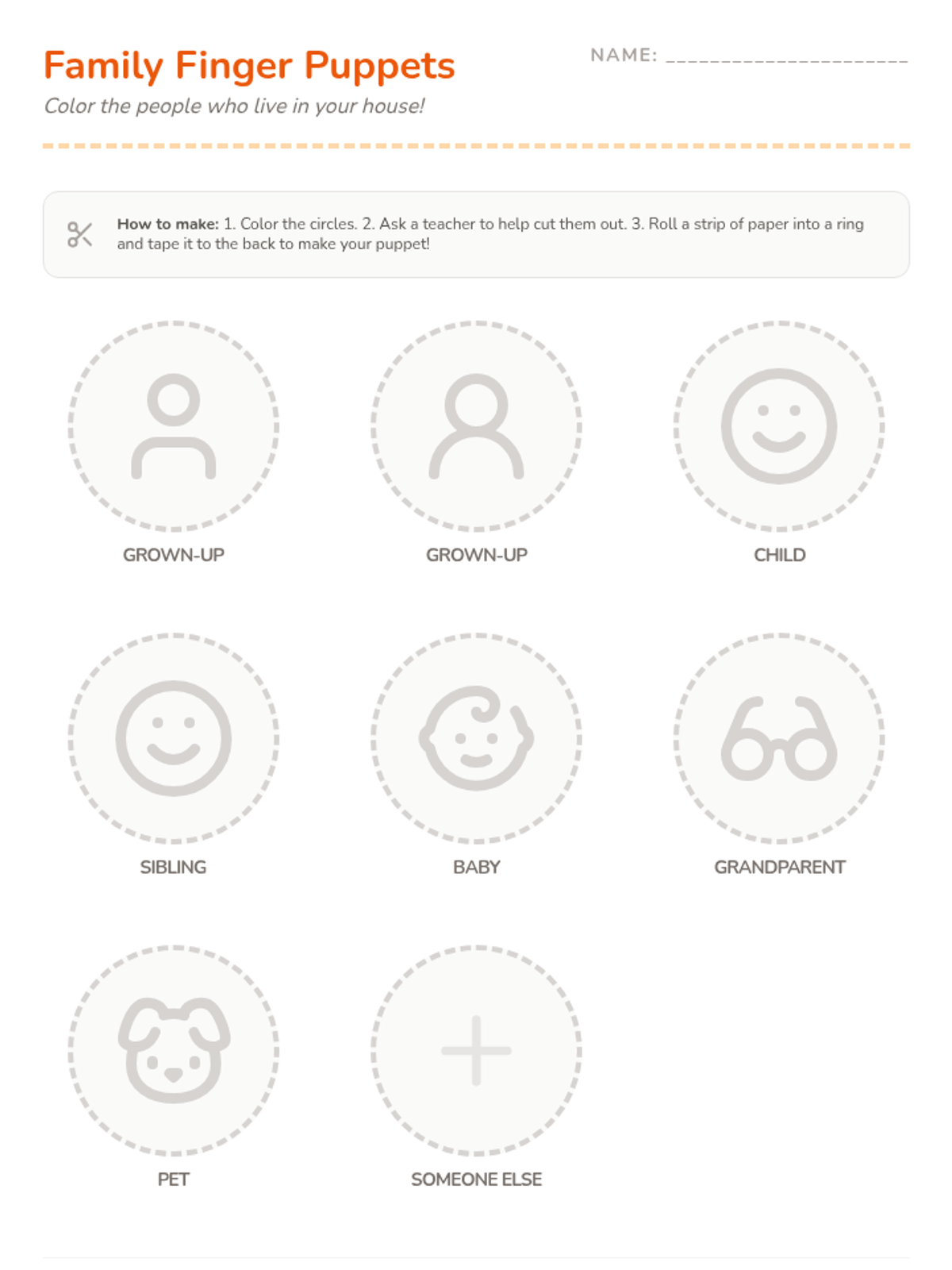
Students explore diverse family configurations and learn vocabulary for family roles while using finger puppets to represent their own homes.
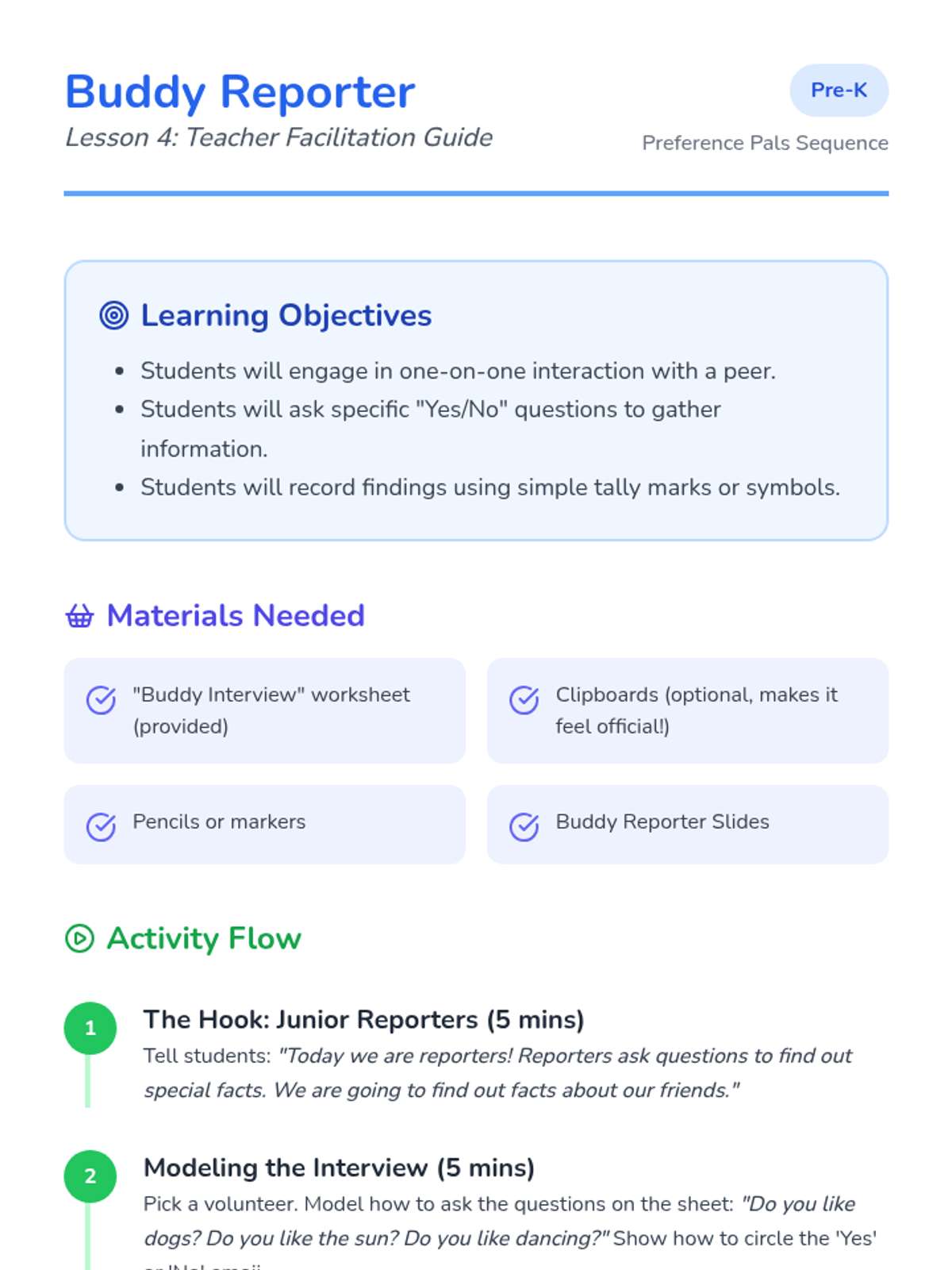
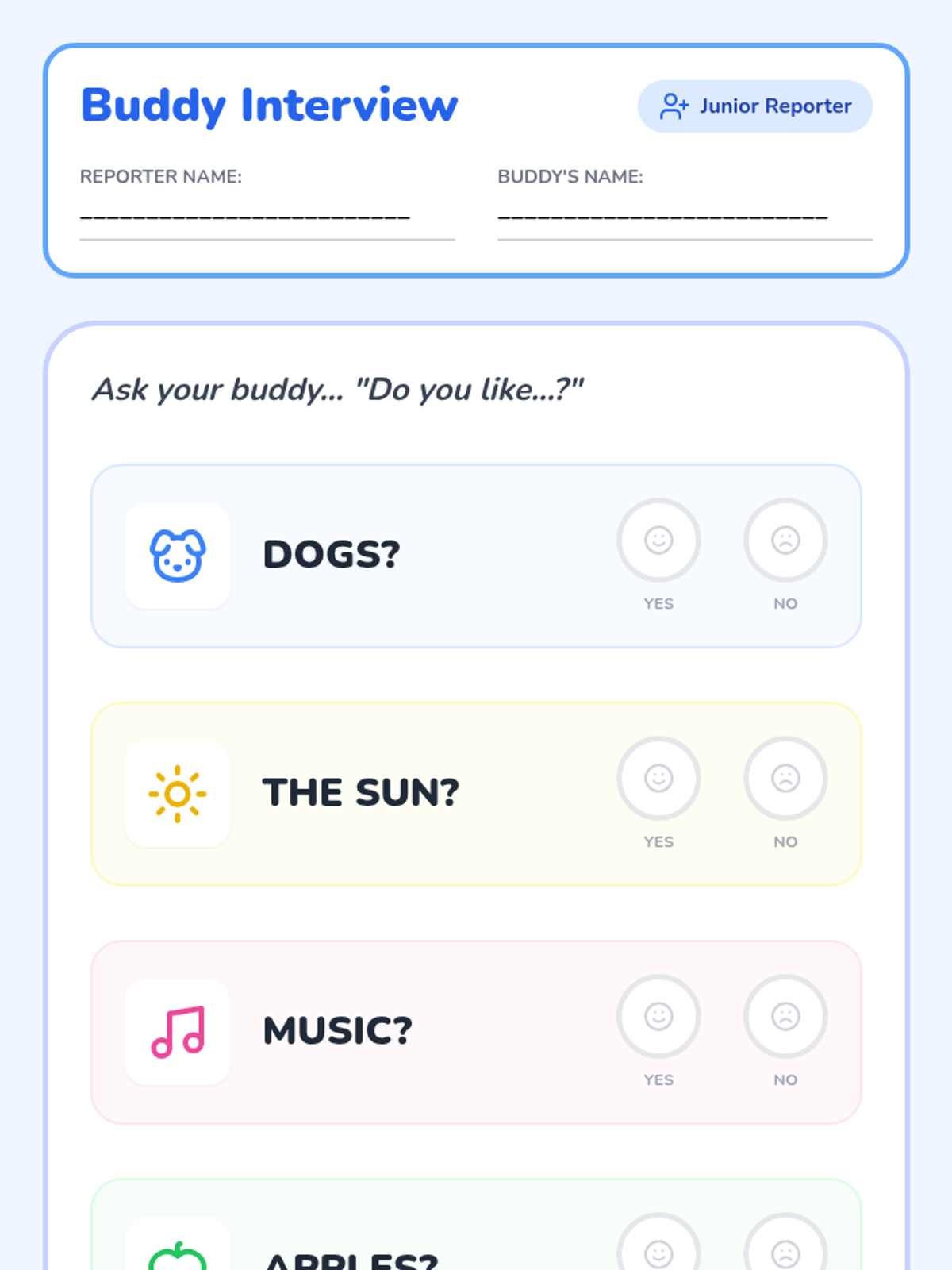
Students work in pairs to interview a friend about their likes and dislikes, discovering common ground and unique traits.
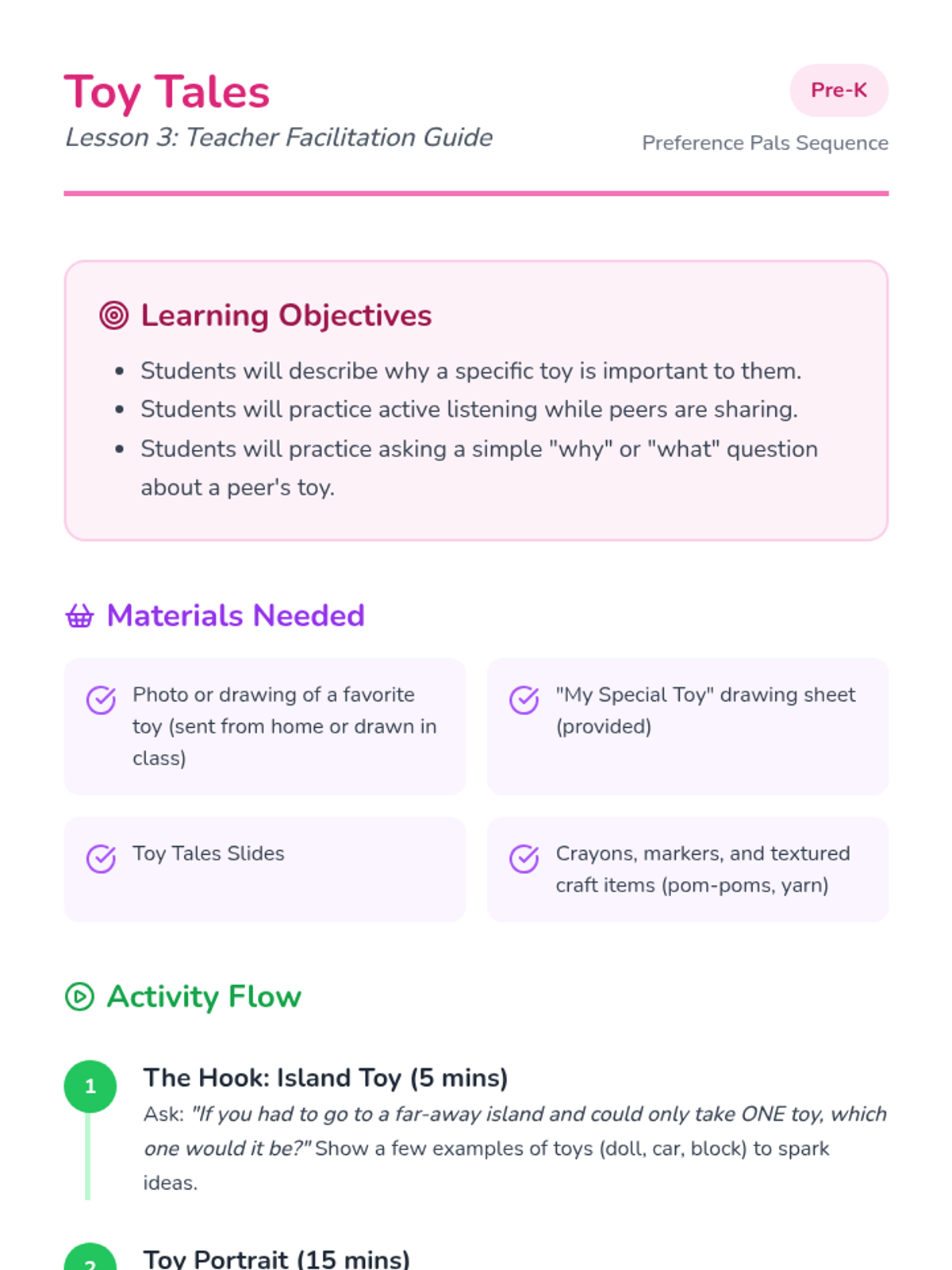
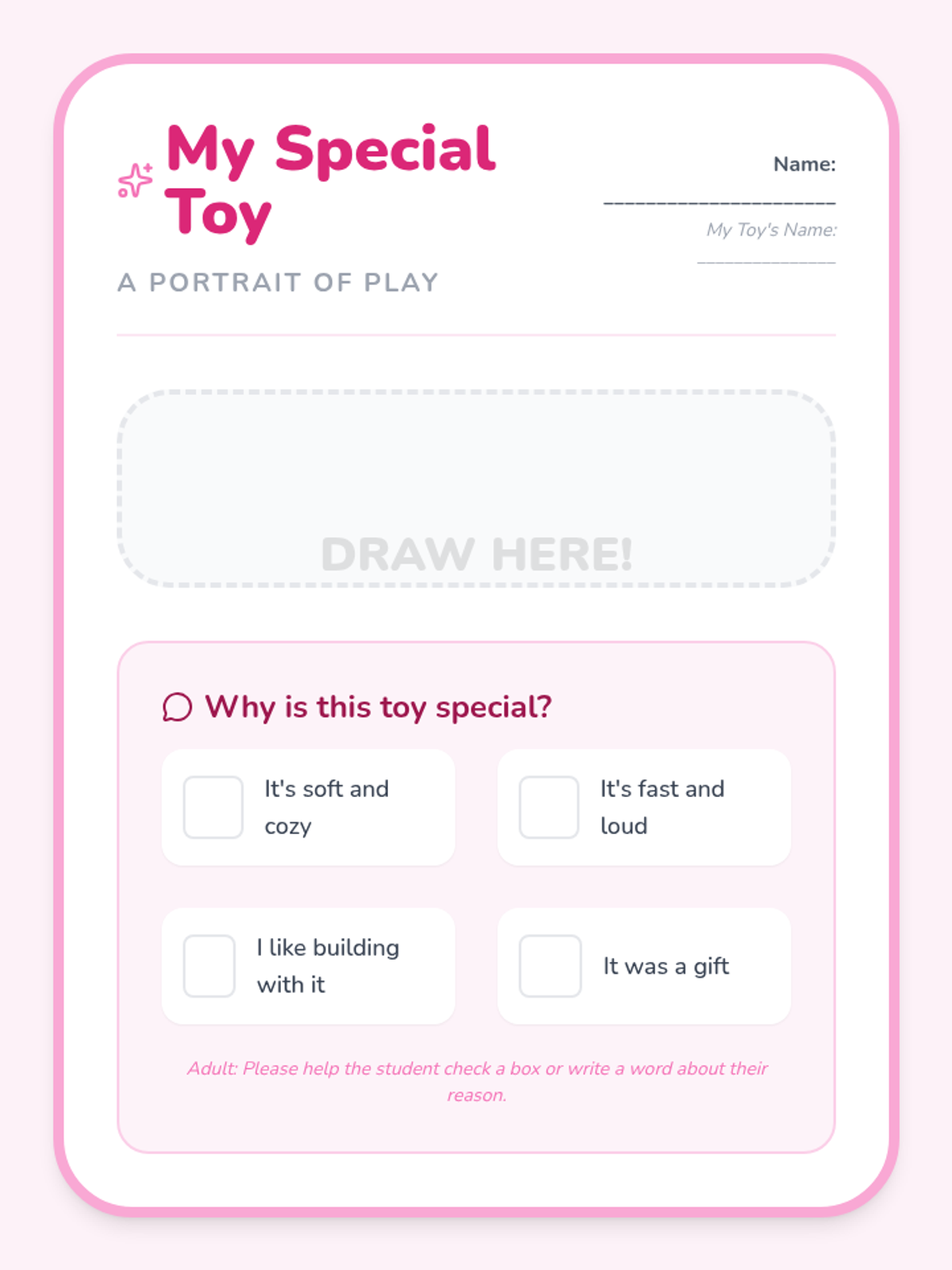
Students share their favorite toys and learn to ask questions about others' interests, fostering respect and oral communication.
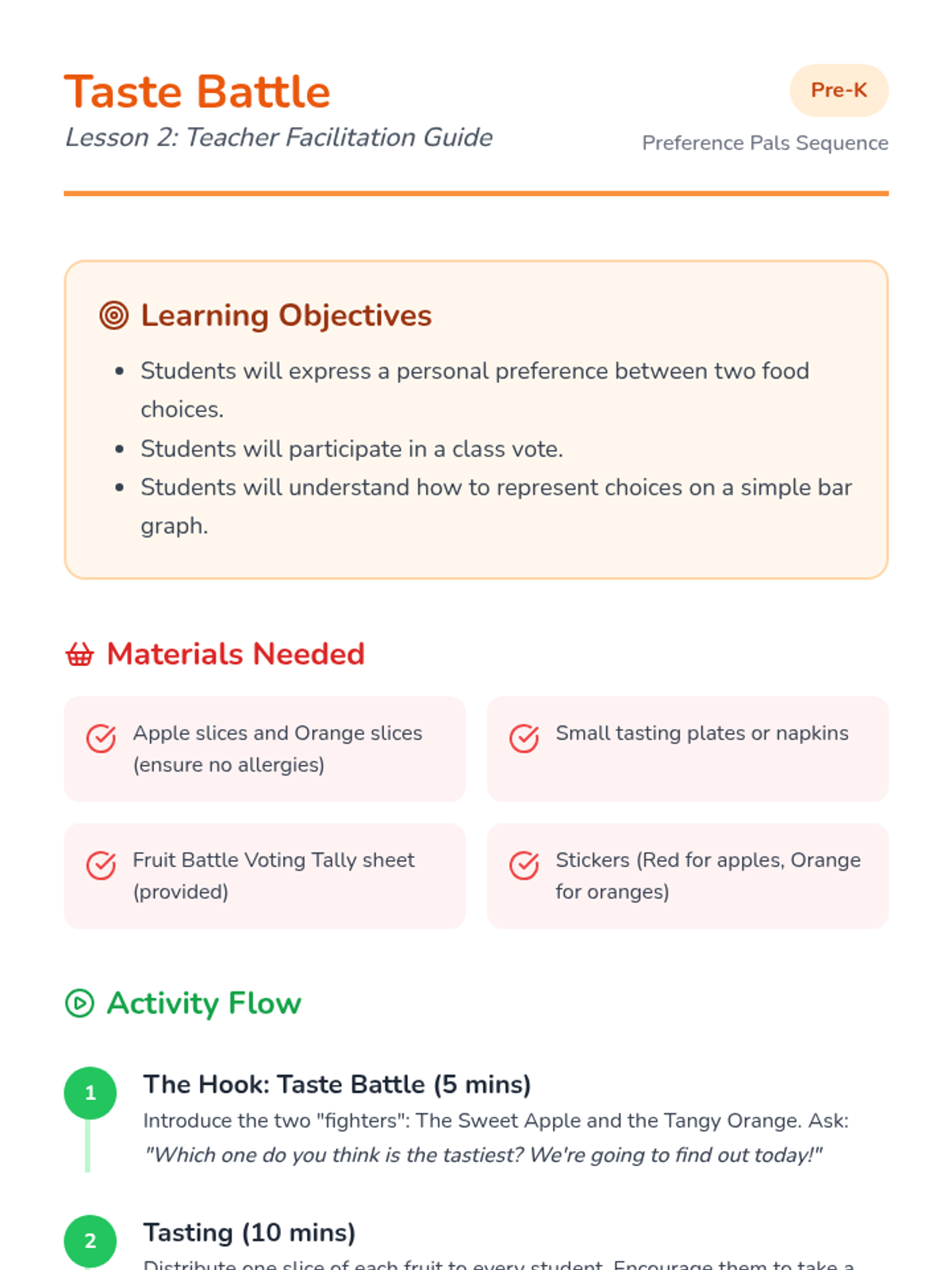
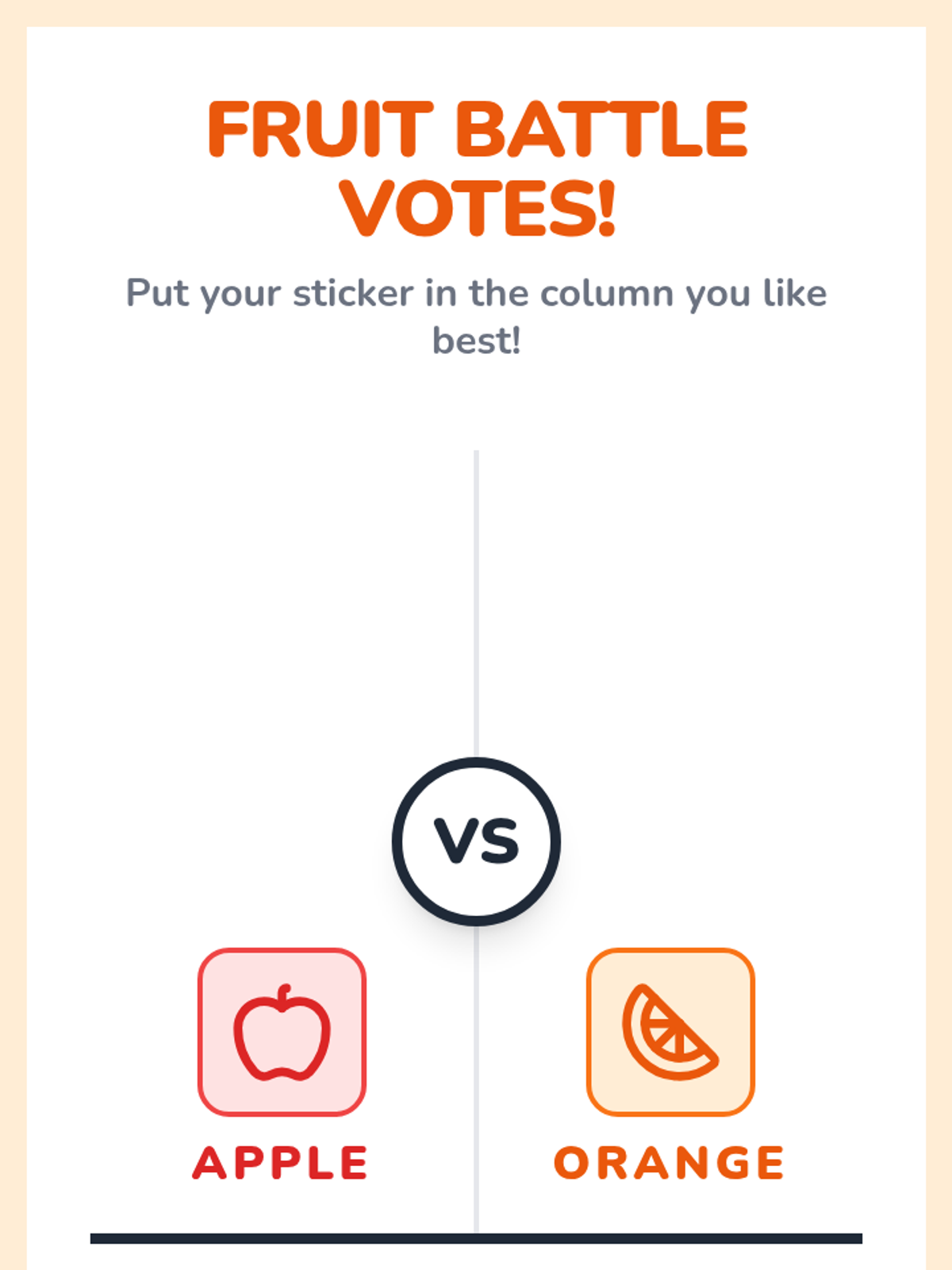
A hands-on tasting activity where students express food preferences, vote for their favorites, and view simple data as a class.
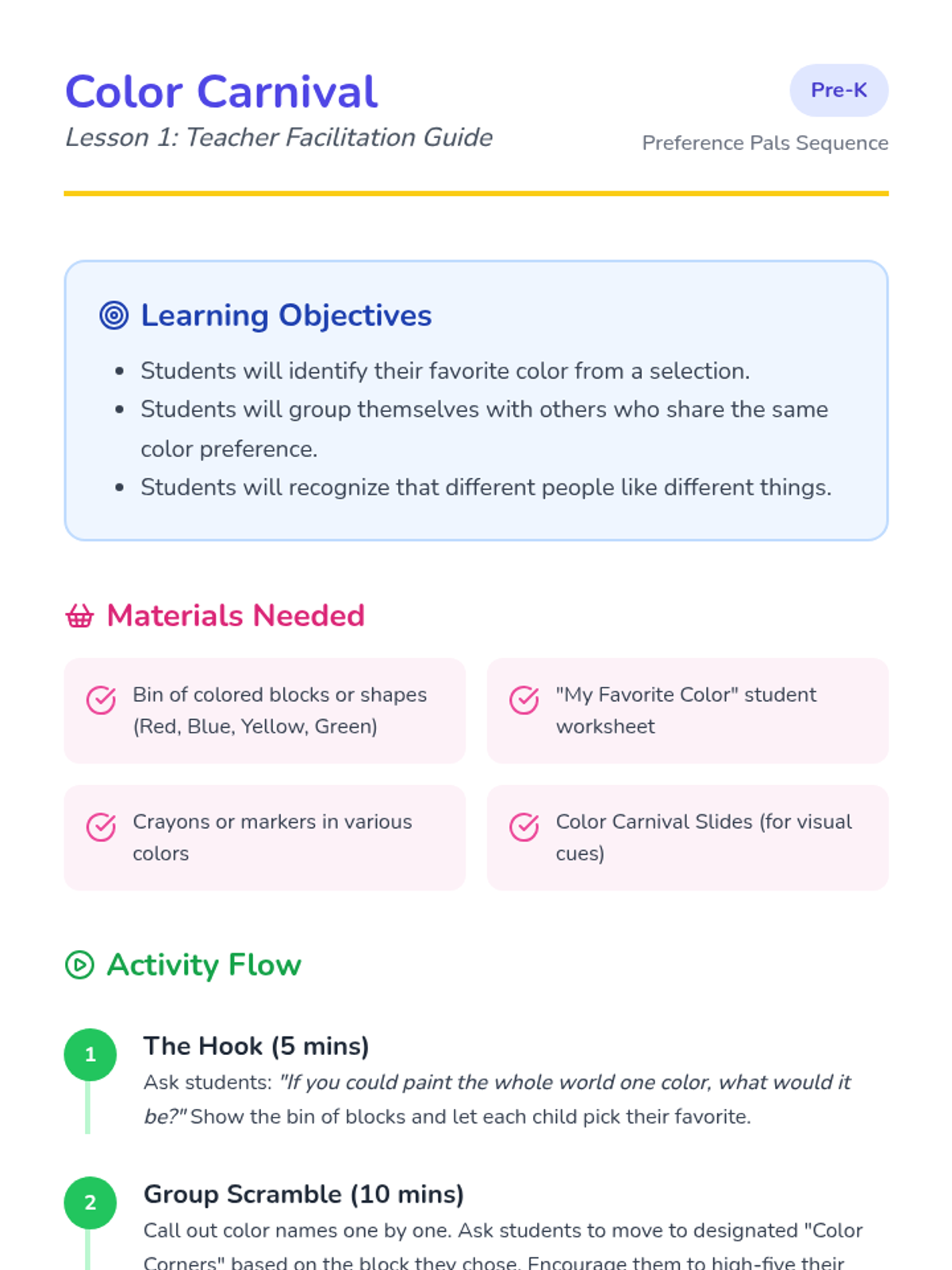
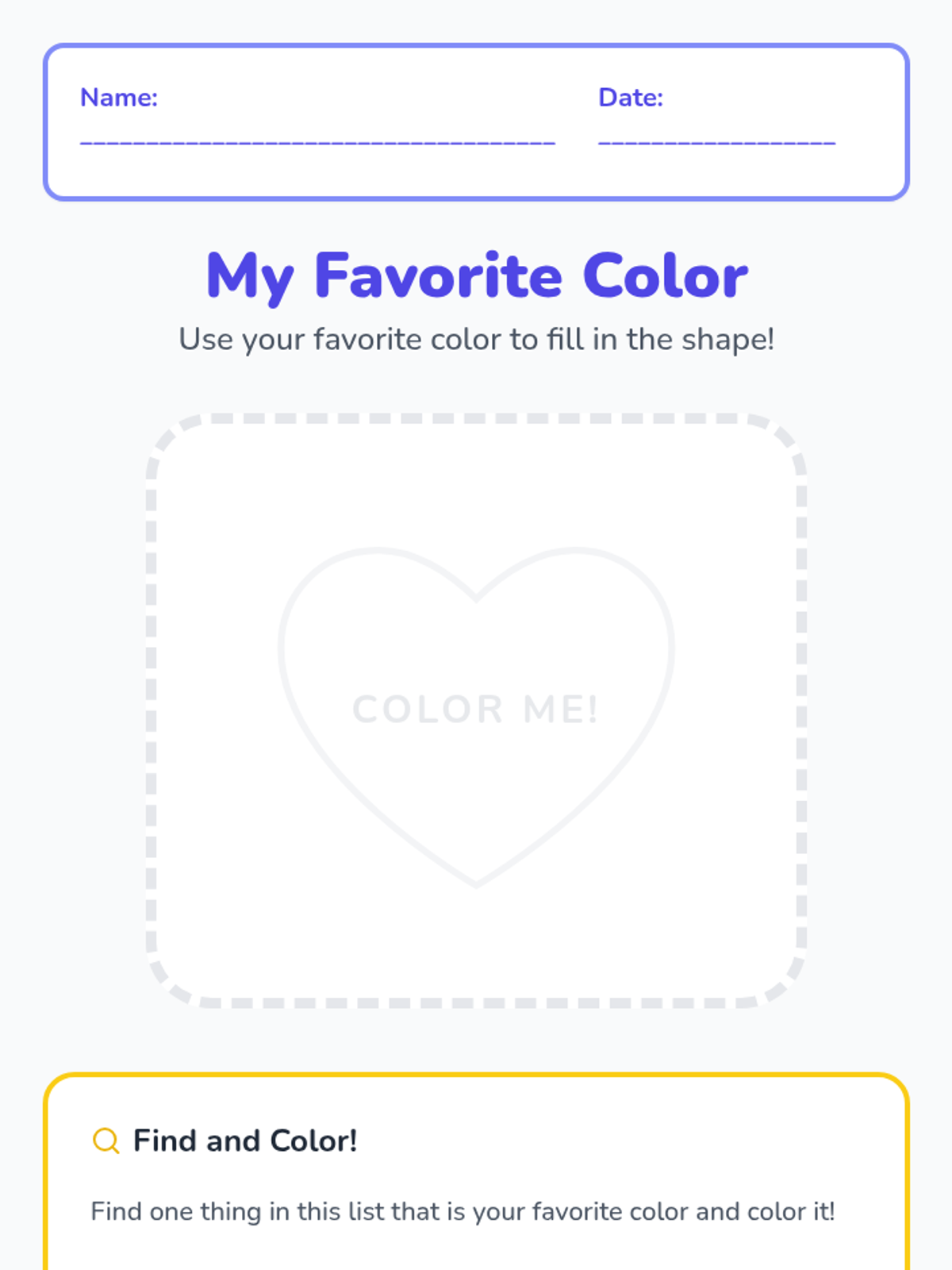
Students explore color and shape preferences, learning to group themselves based on shared choices while recognizing individual differences.
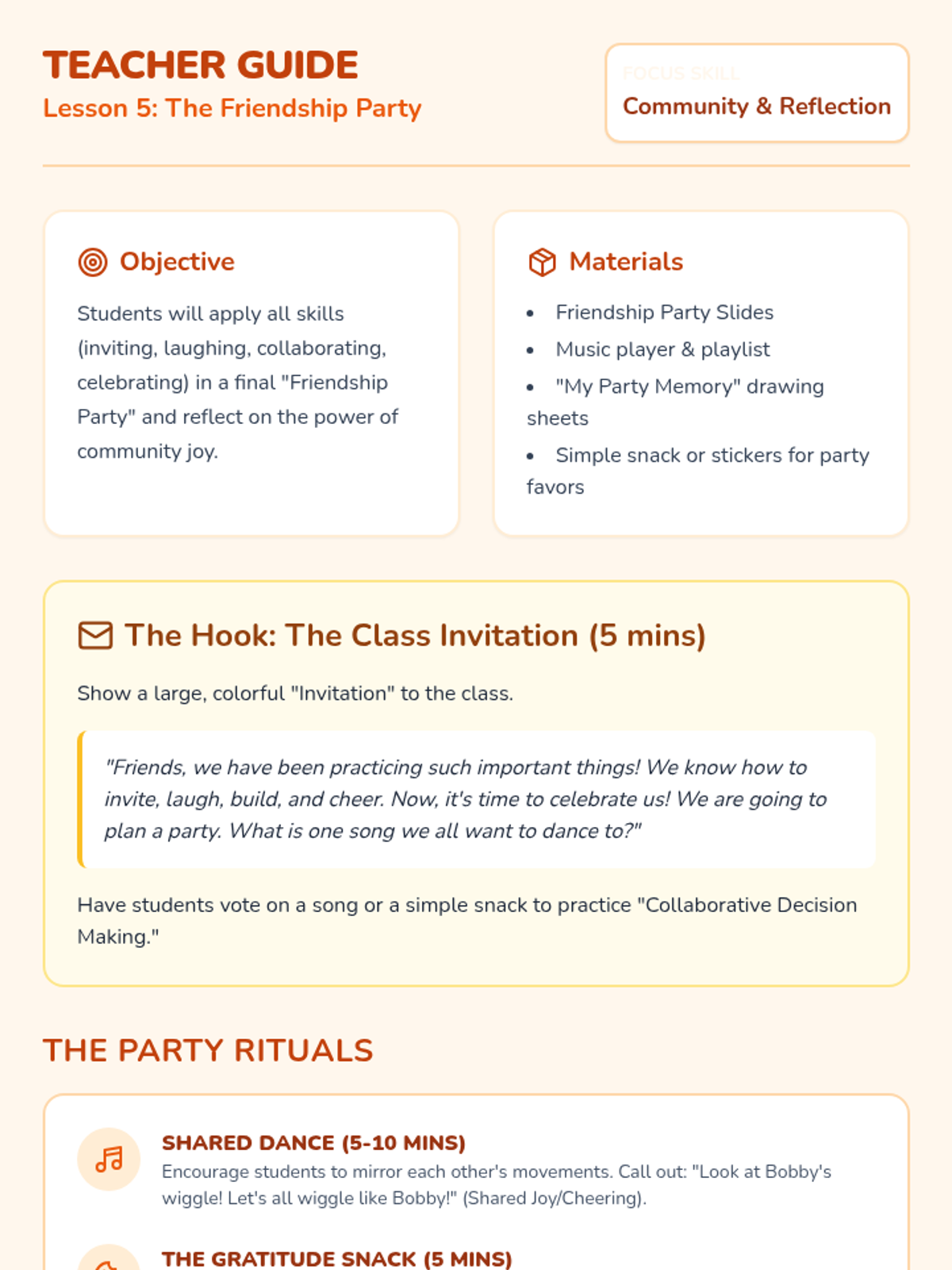
A culminating event where students plan and execute a simple shared activity (like a dance party or snack share). They reflect on how doing things together feels different than doing them alone.
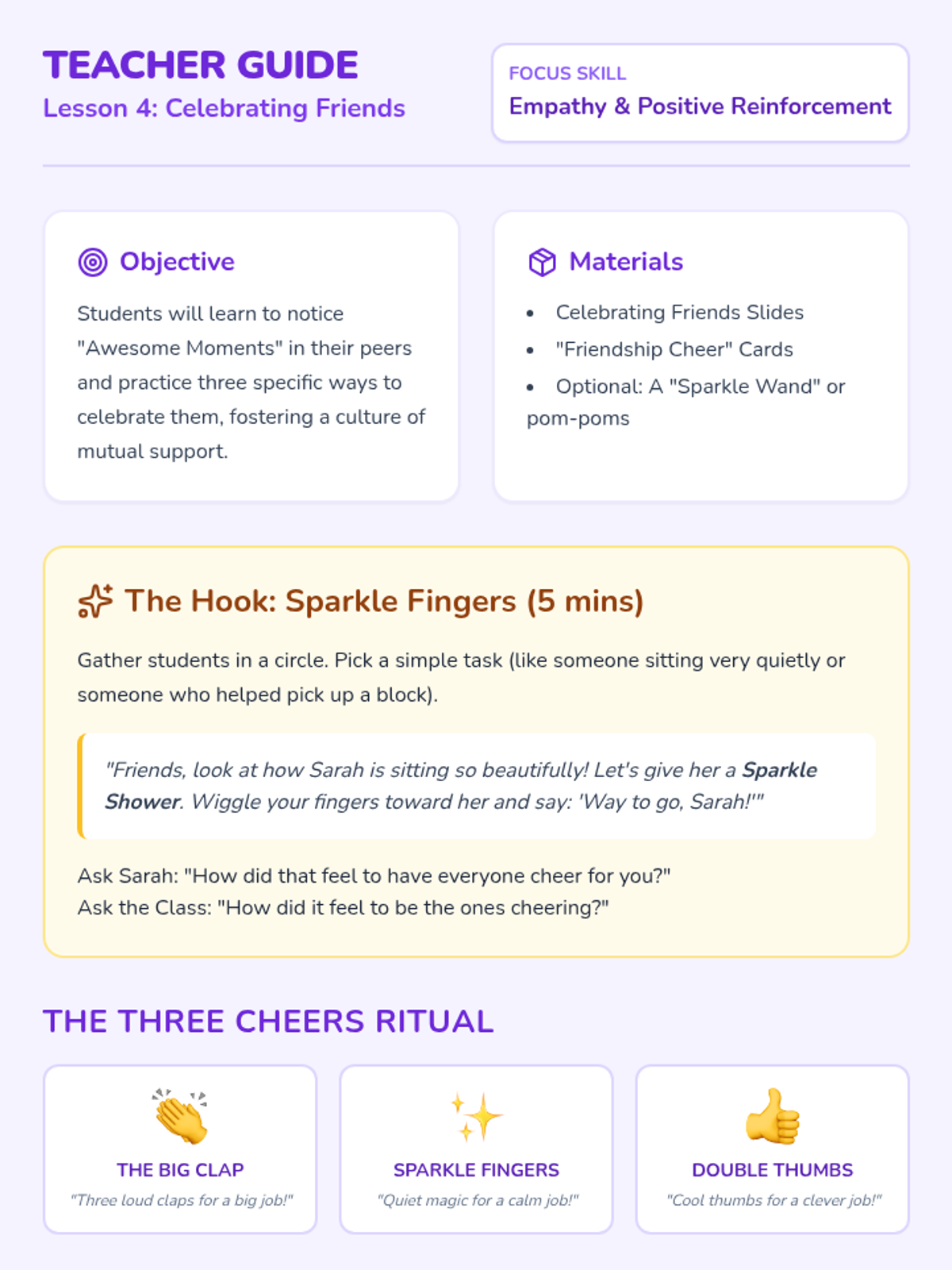
Students learn to identify when a friend does something good and how to celebrate them (clapping, cheering). This shifts focus from self-gratification to finding joy in others' success.
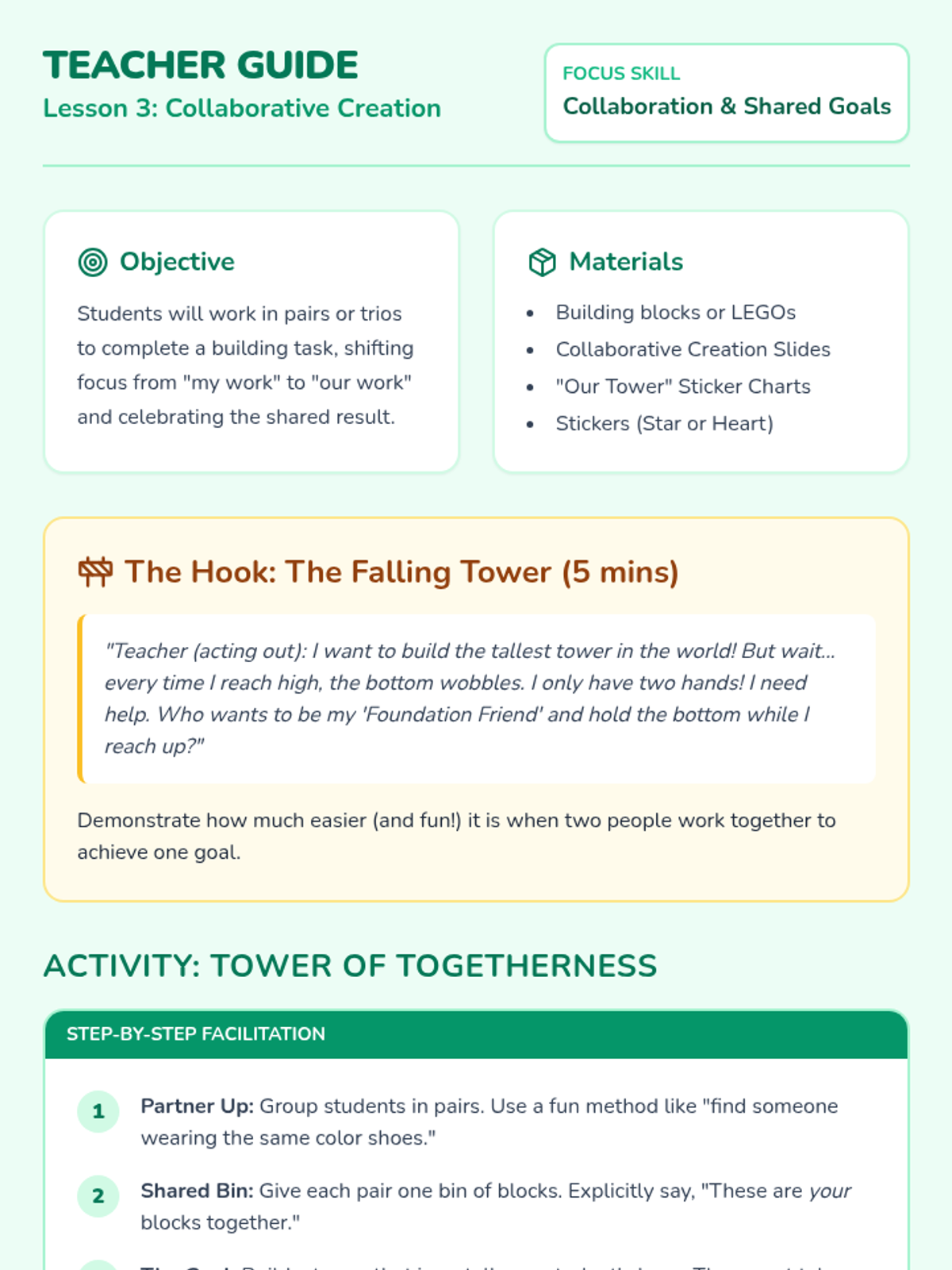
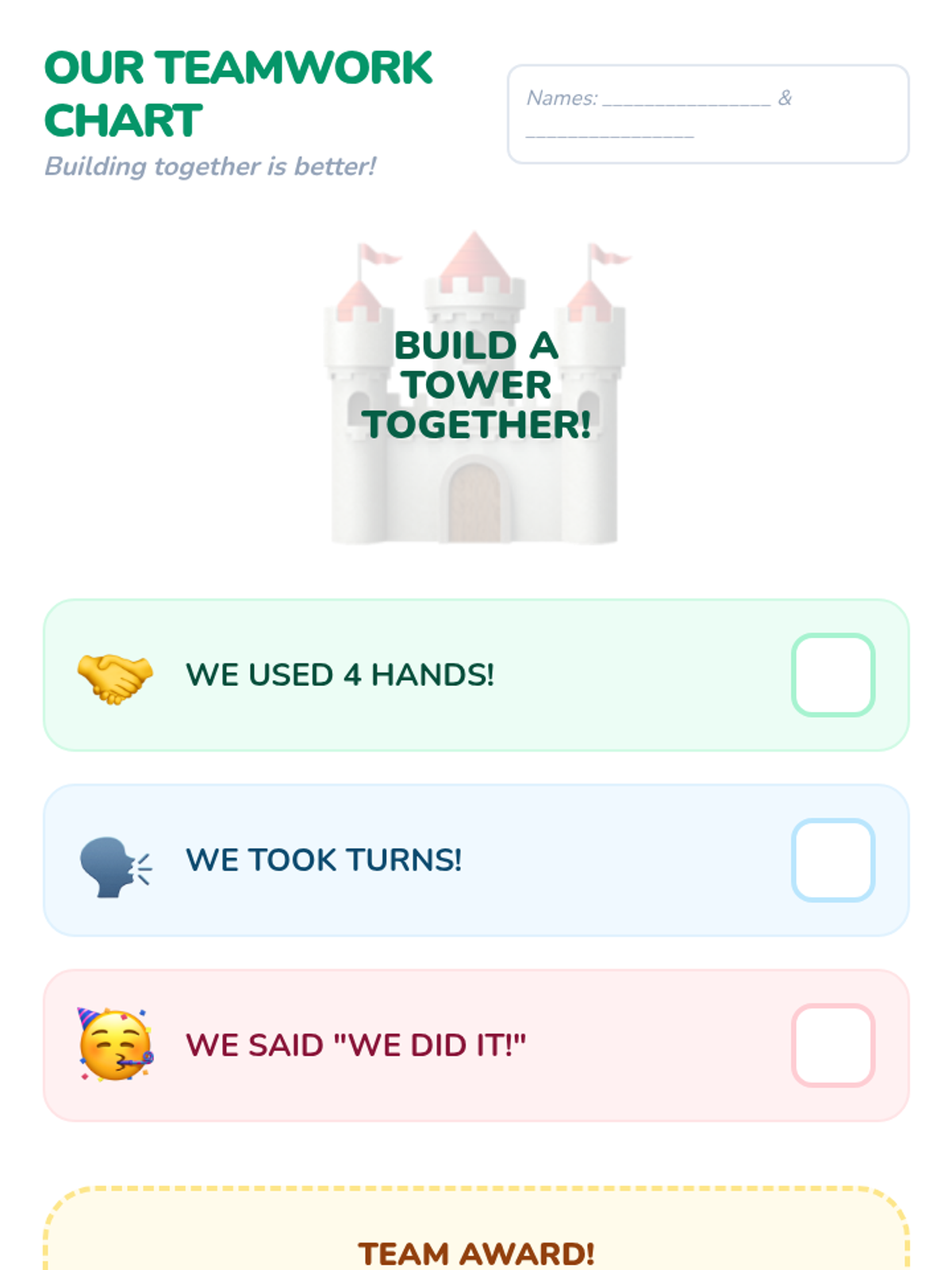
Small groups work together to build something (block tower, art piece). The focus is on the positive feeling of achieving a goal together rather than the final product.
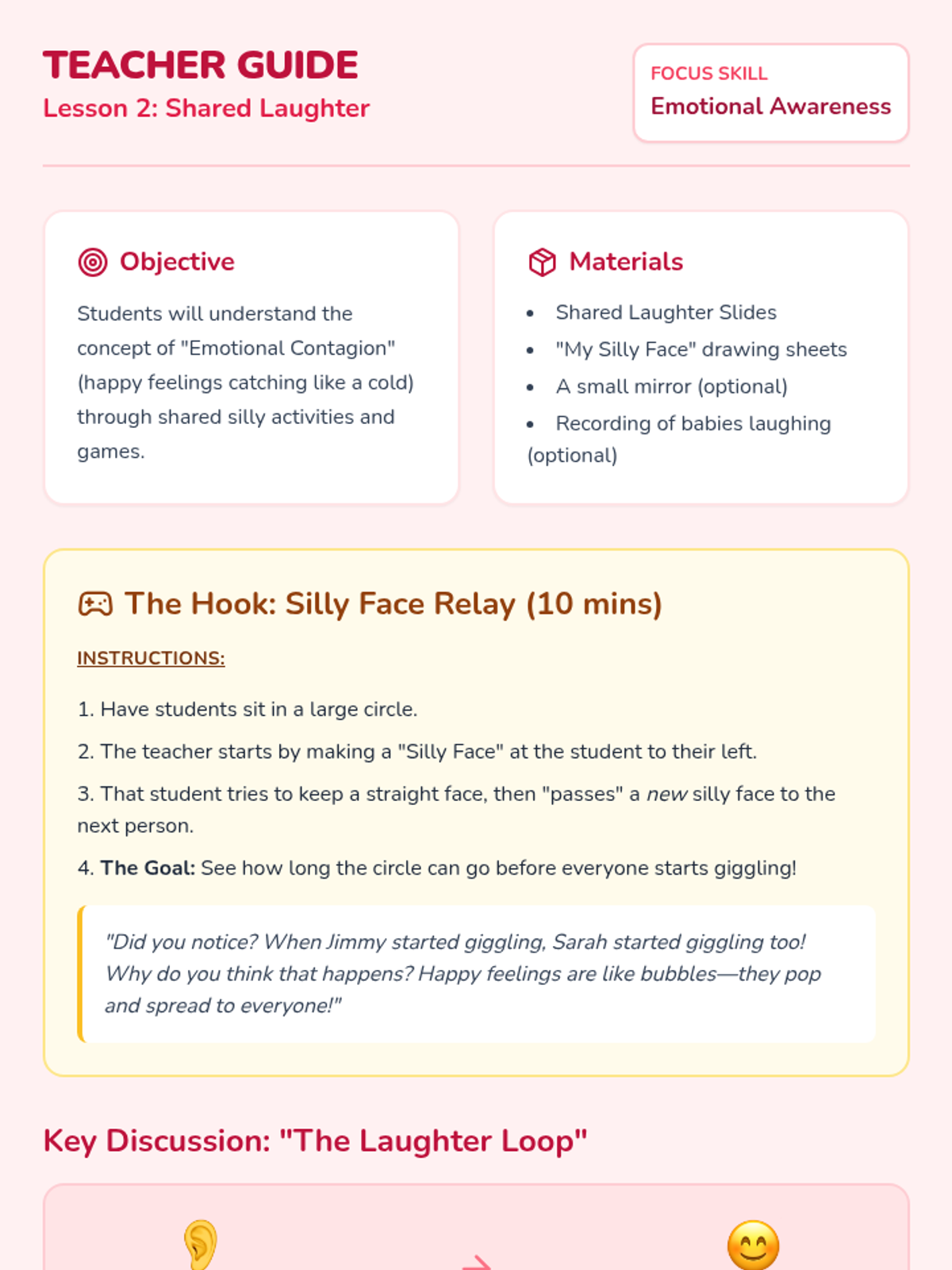
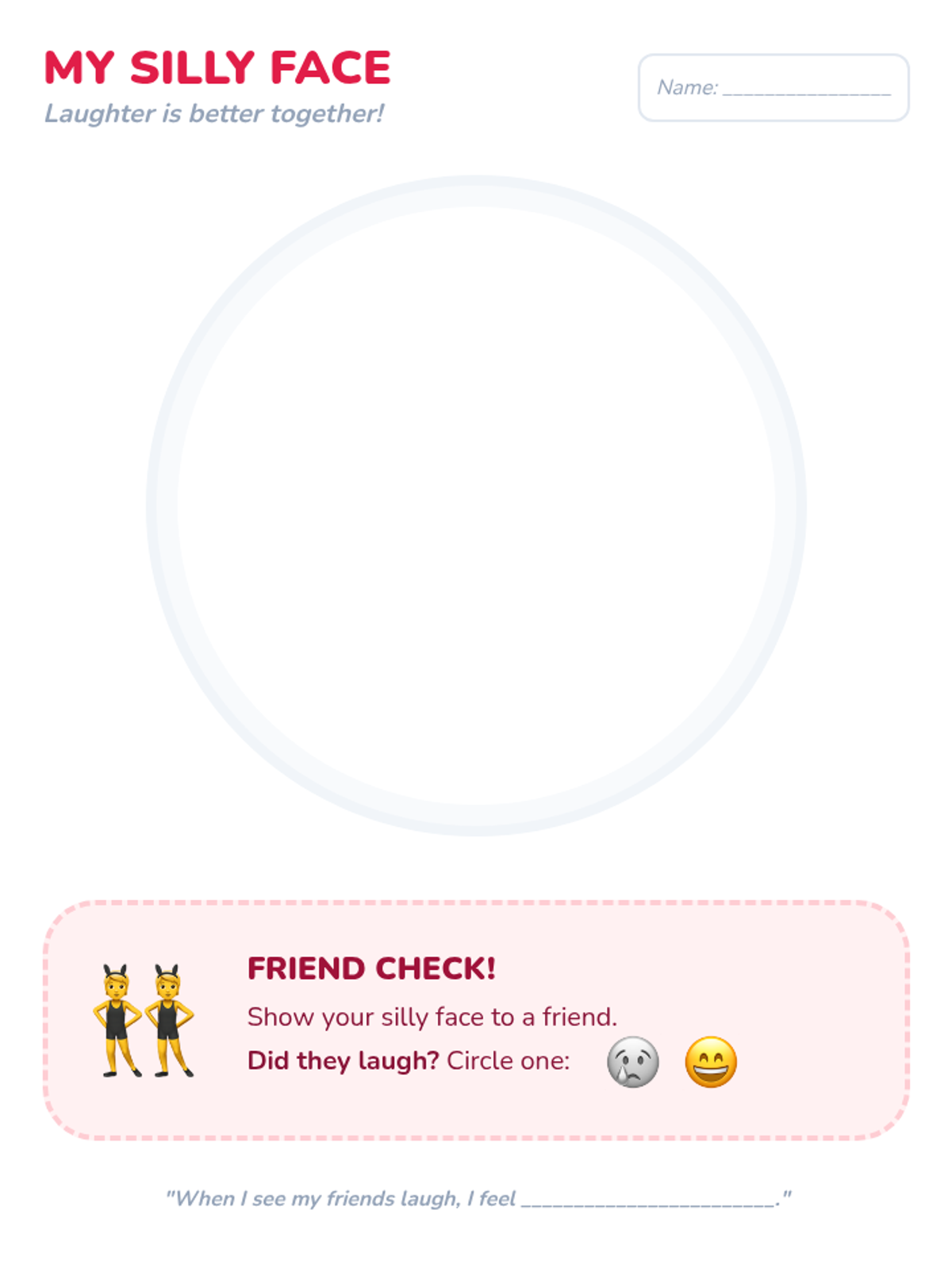
The class engages in silly activities designed solely to produce shared laughter. They discuss how hearing others laugh makes them want to laugh too, introducing the concept of emotional contagion.
Reflecting on achievements and celebrating the internal feeling of pride through a classroom showcase.
Empowering students to share their mastered skills with peers, building leadership and reinforcing their own learning.
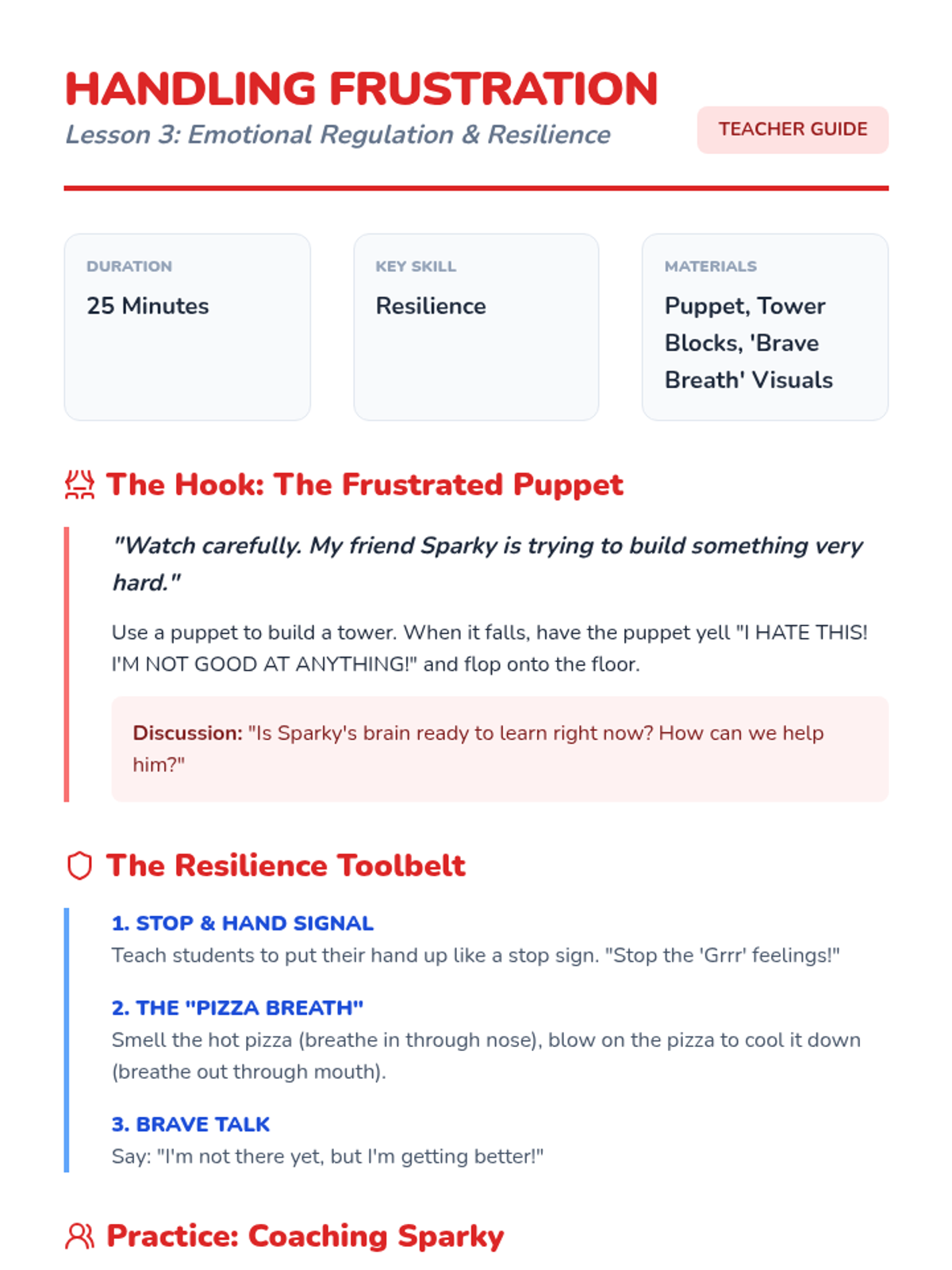
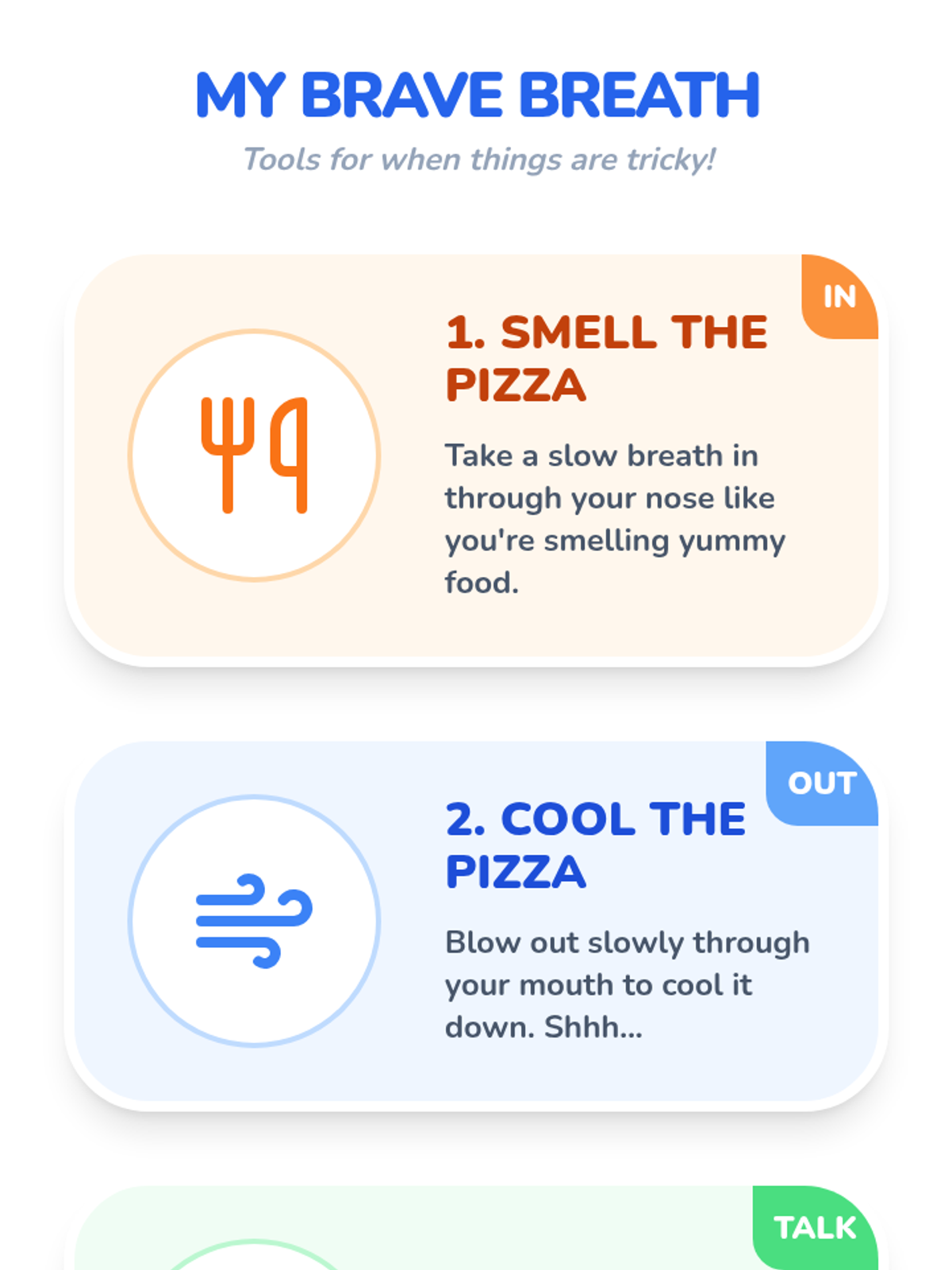
Learning emotional regulation tools and positive self-talk to manage frustration when learning something new.
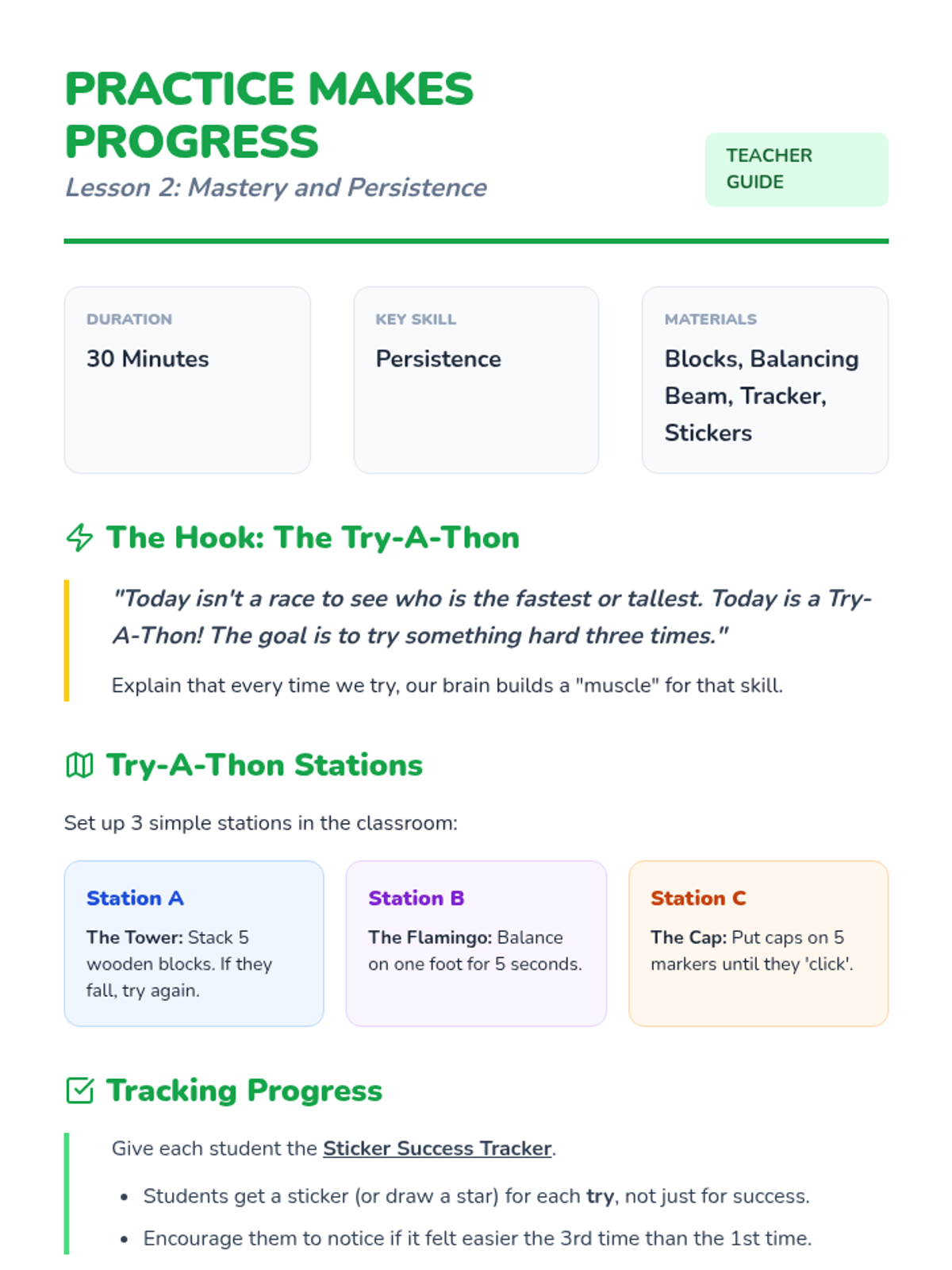
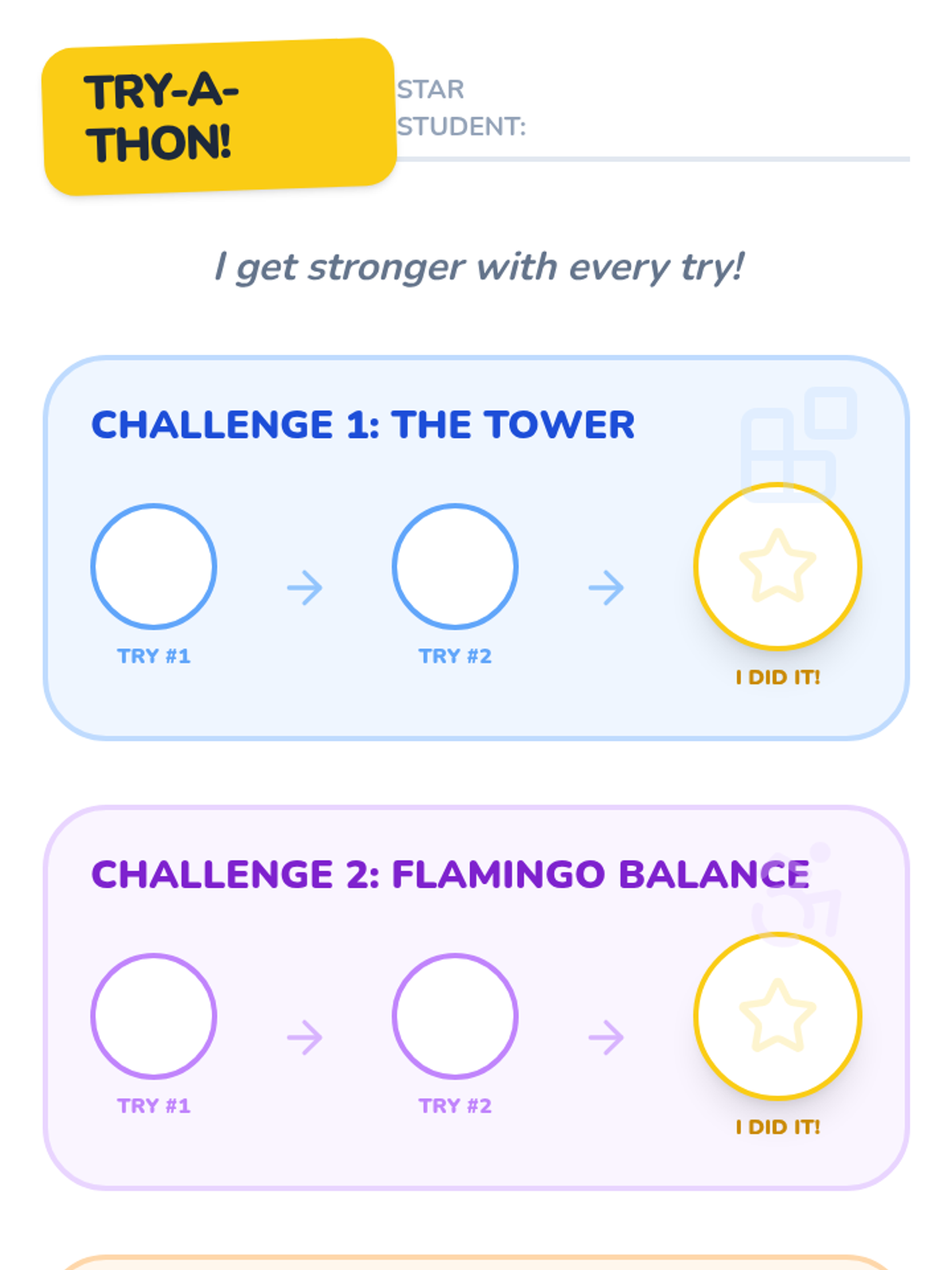
Focusing on persistence and tracking small improvements through repeated practice of simple skills.
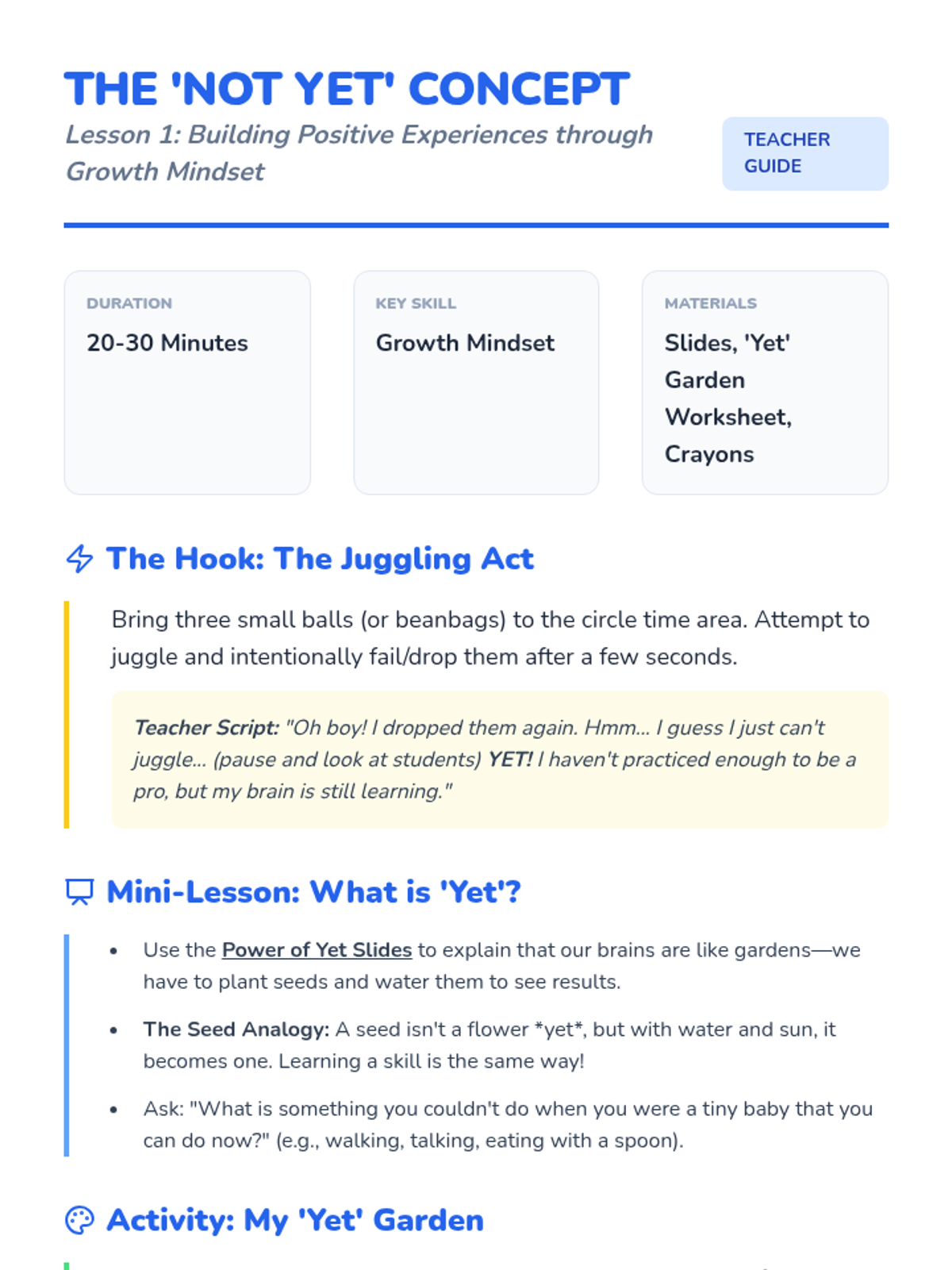
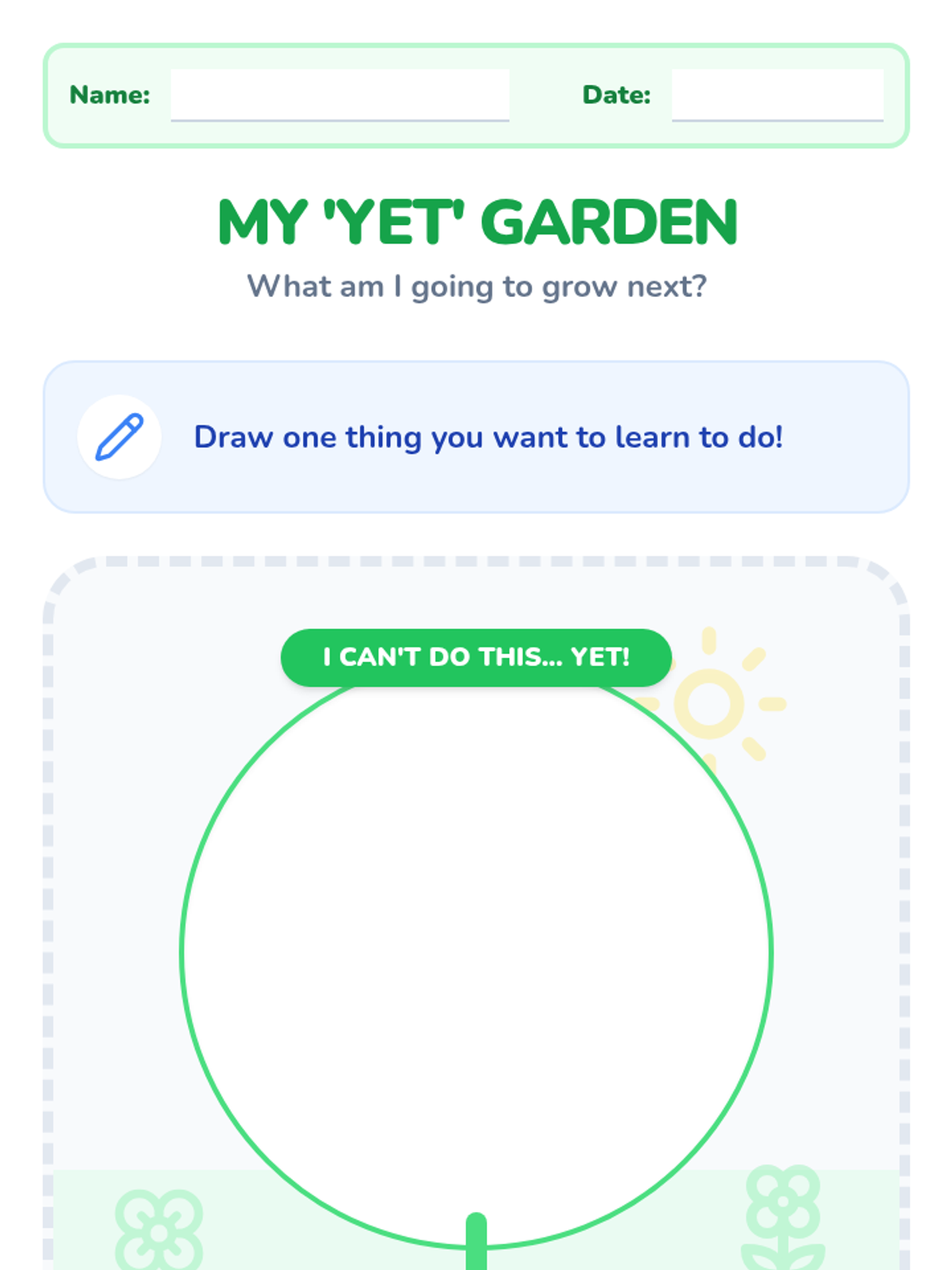
Introduction to the growth mindset using the word 'yet' to transform frustrations into future goals.
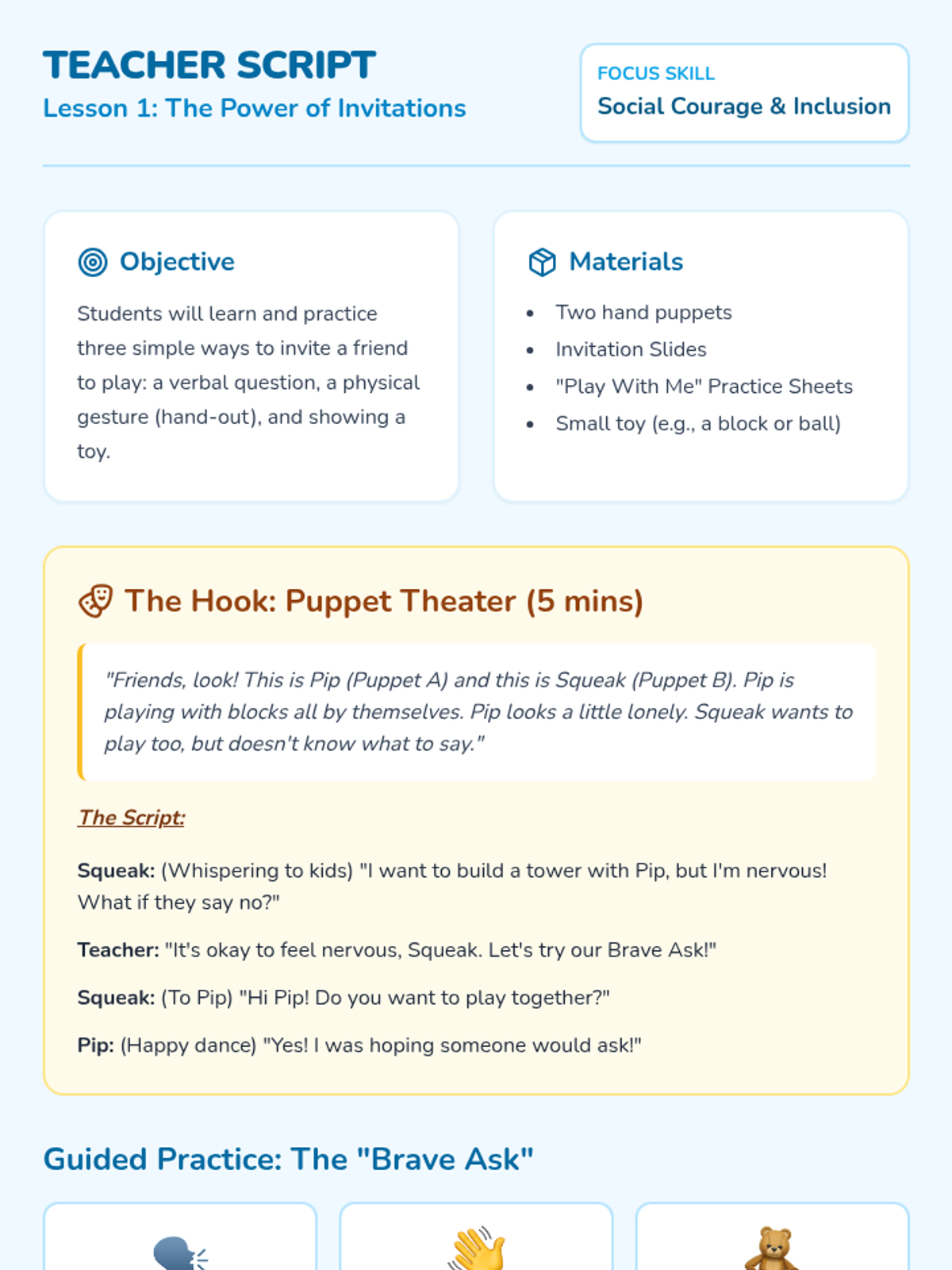
Students learn simple scripts and gestures to invite peers to join a positive activity, practicing inclusion and social courage.
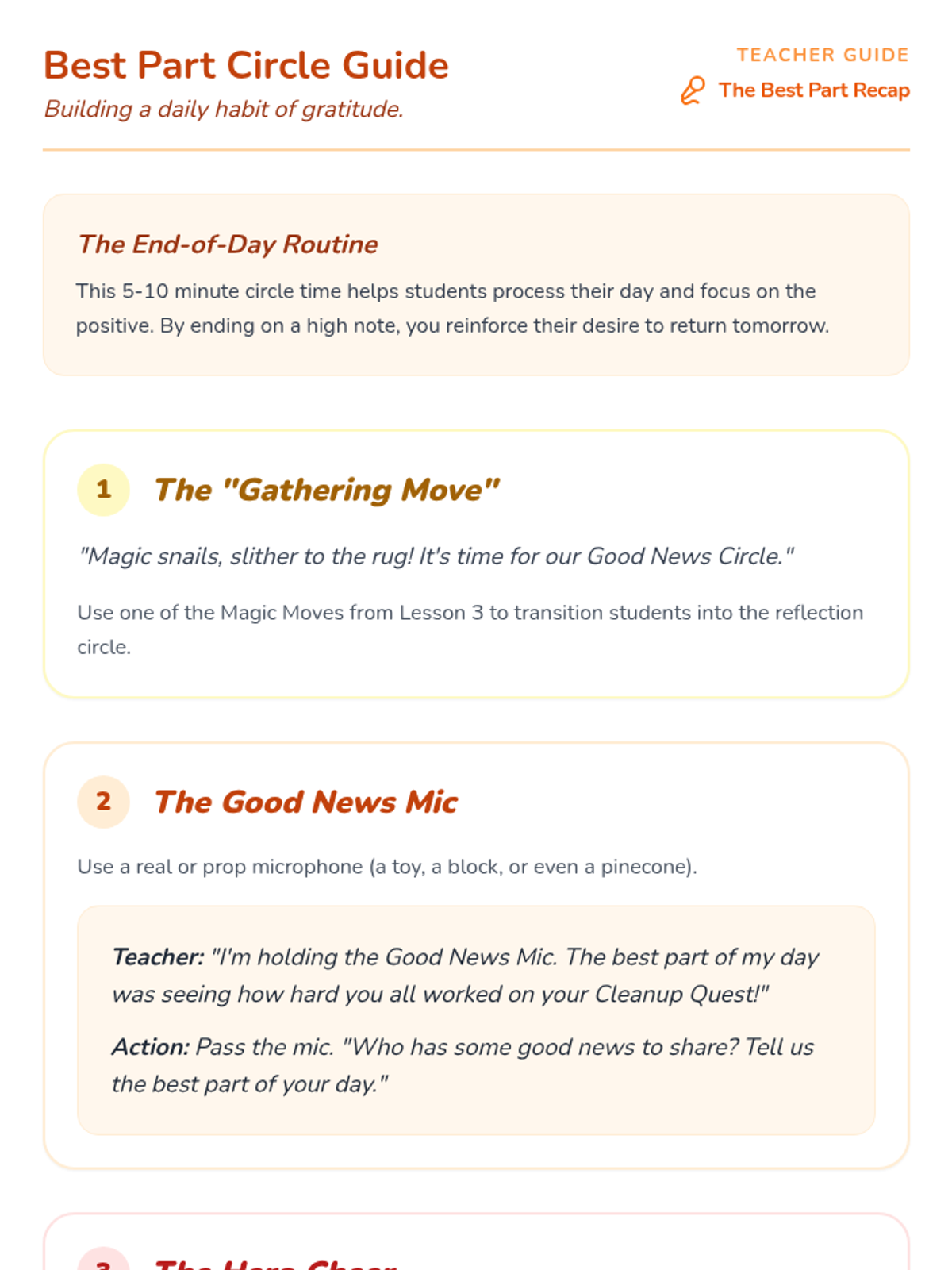
Students establish a gratitude habit by sharing the best parts of their day, reinforcing positive memories before going home.
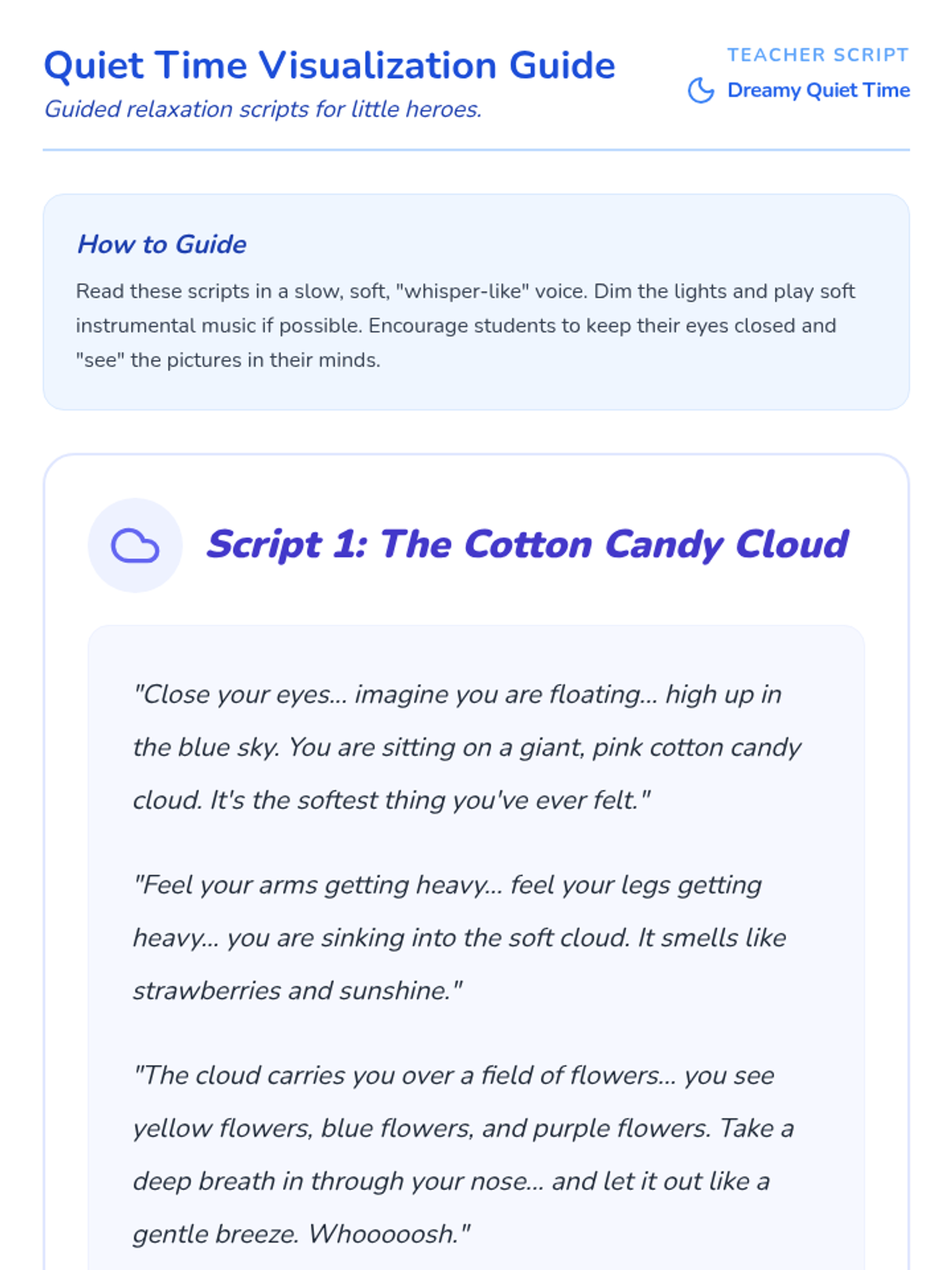
Students explore visualization and relaxation techniques to find joy and stillness during quiet or nap times.
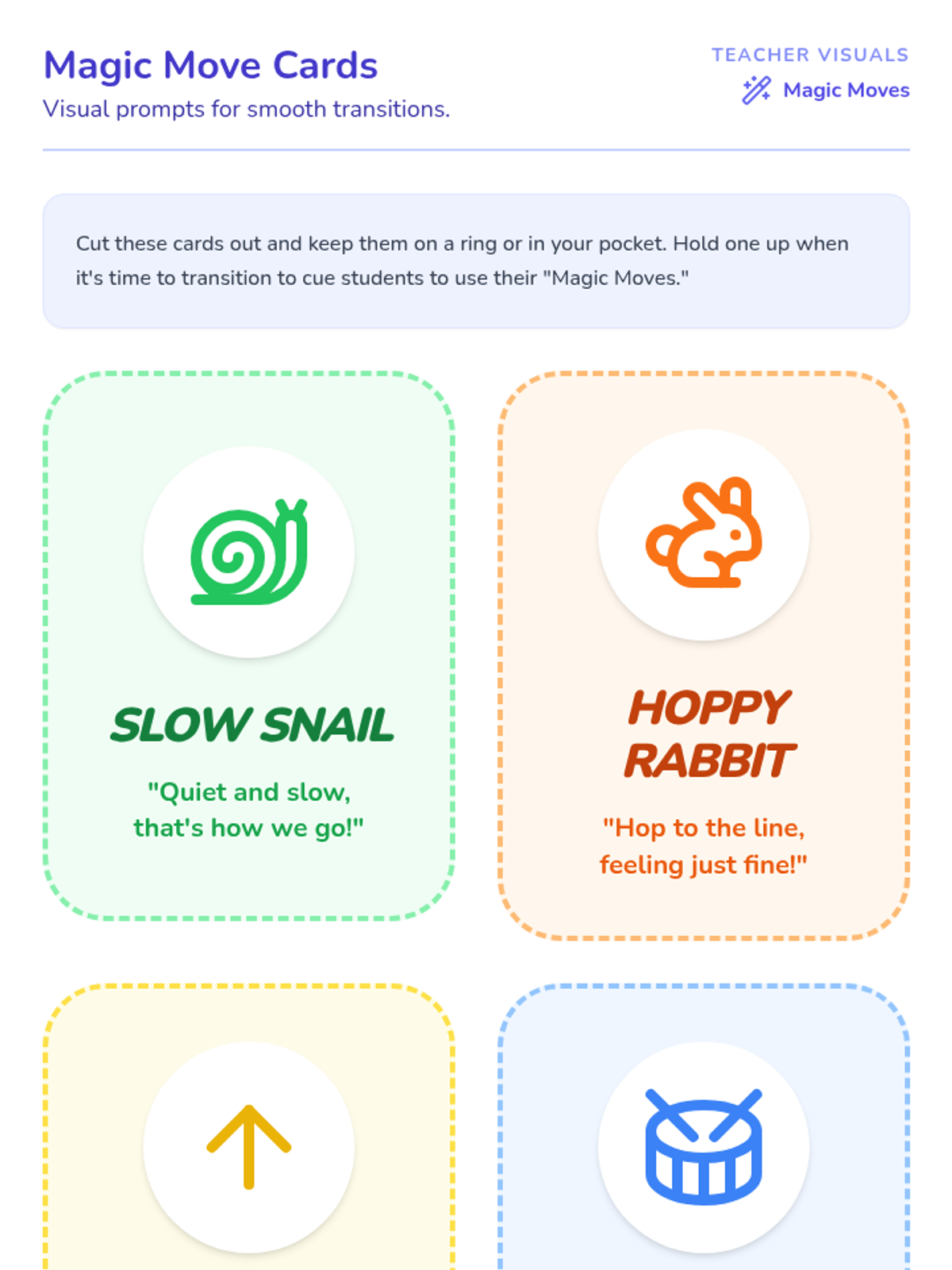
Students learn stress-free transition strategies, using imagination and 'magic' to move smoothly between activities.
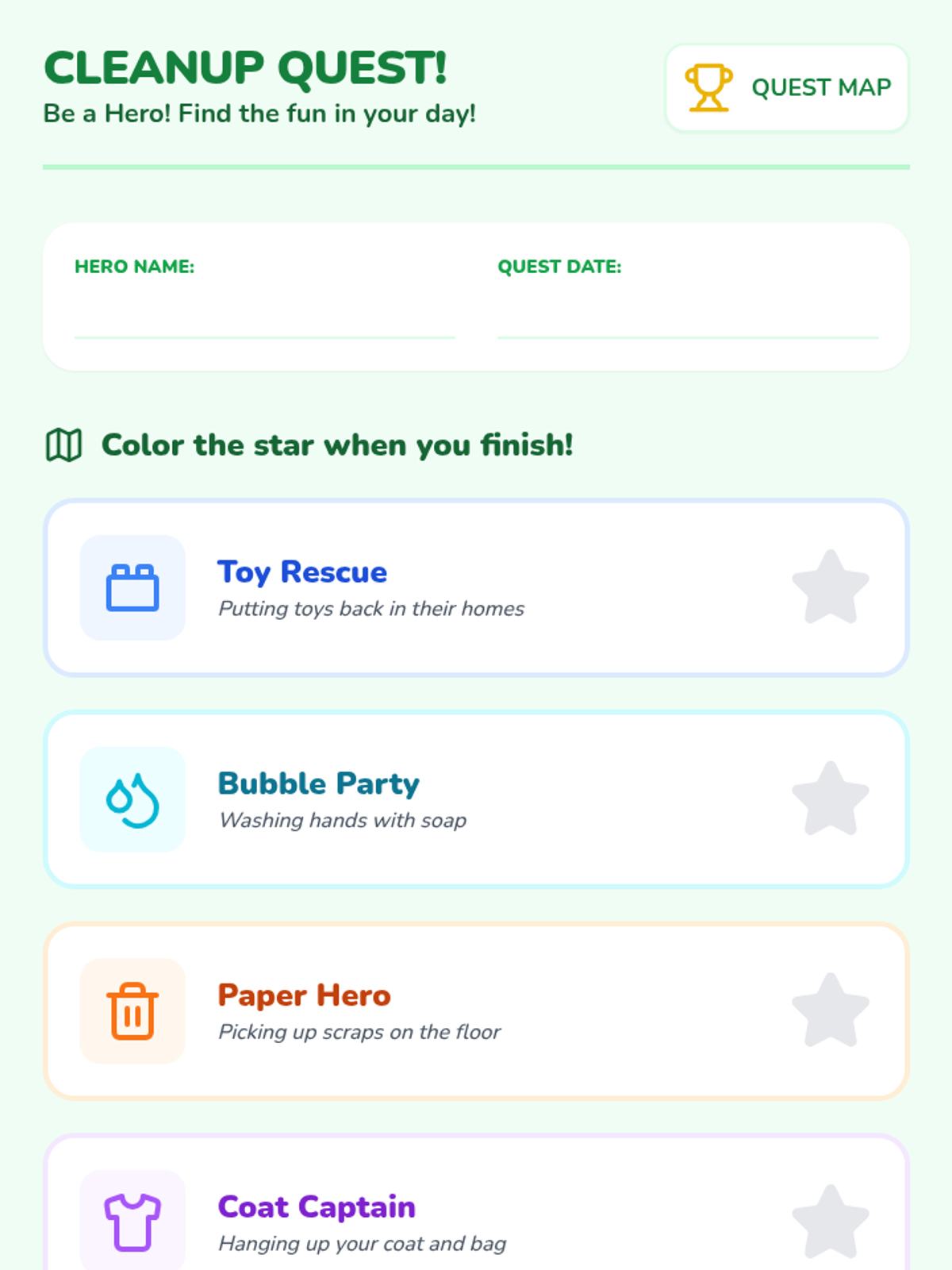
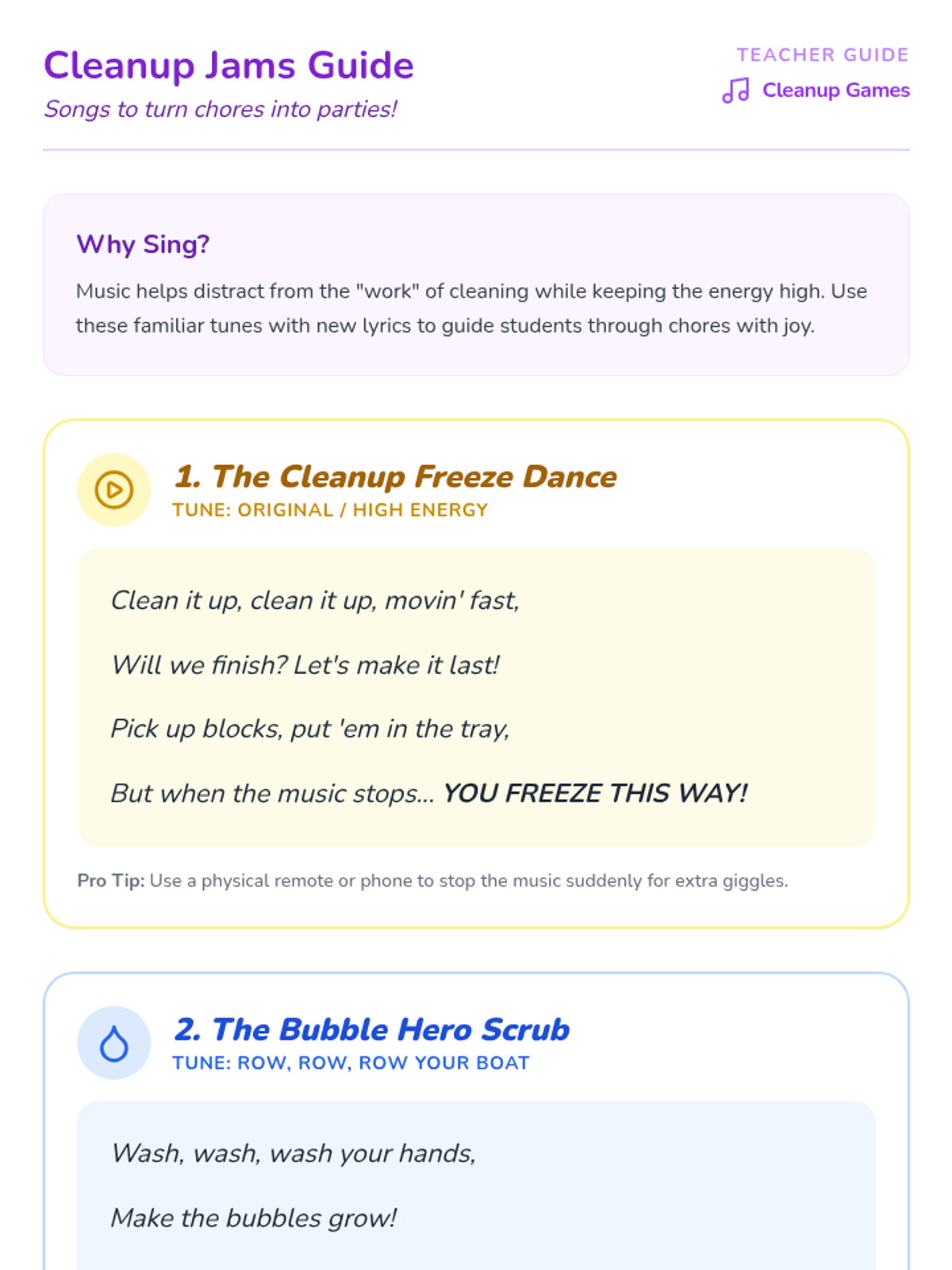
This lesson turns cleanup and maintenance tasks into games and songs, helping students reframe chores as positive, shared experiences.
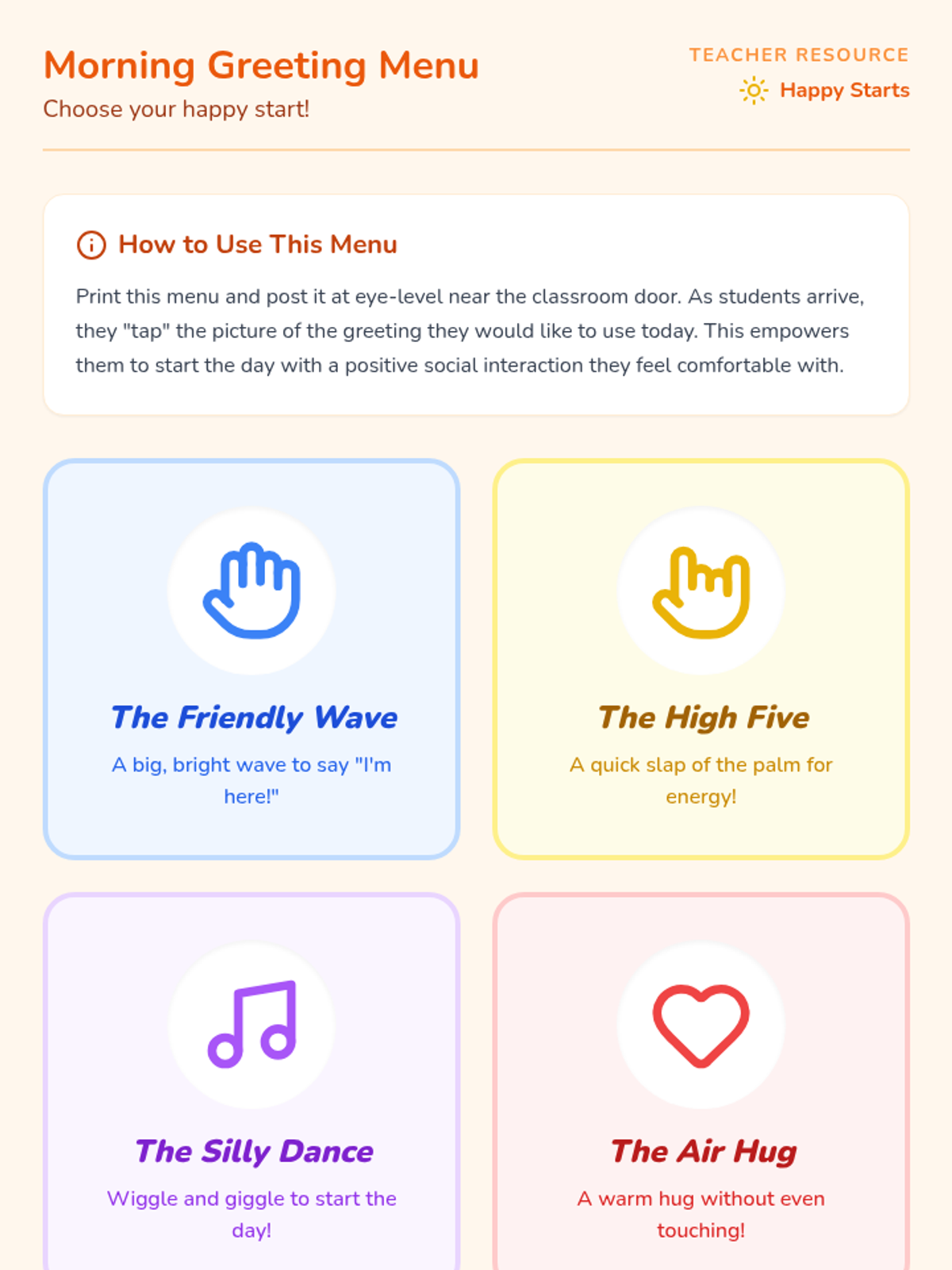
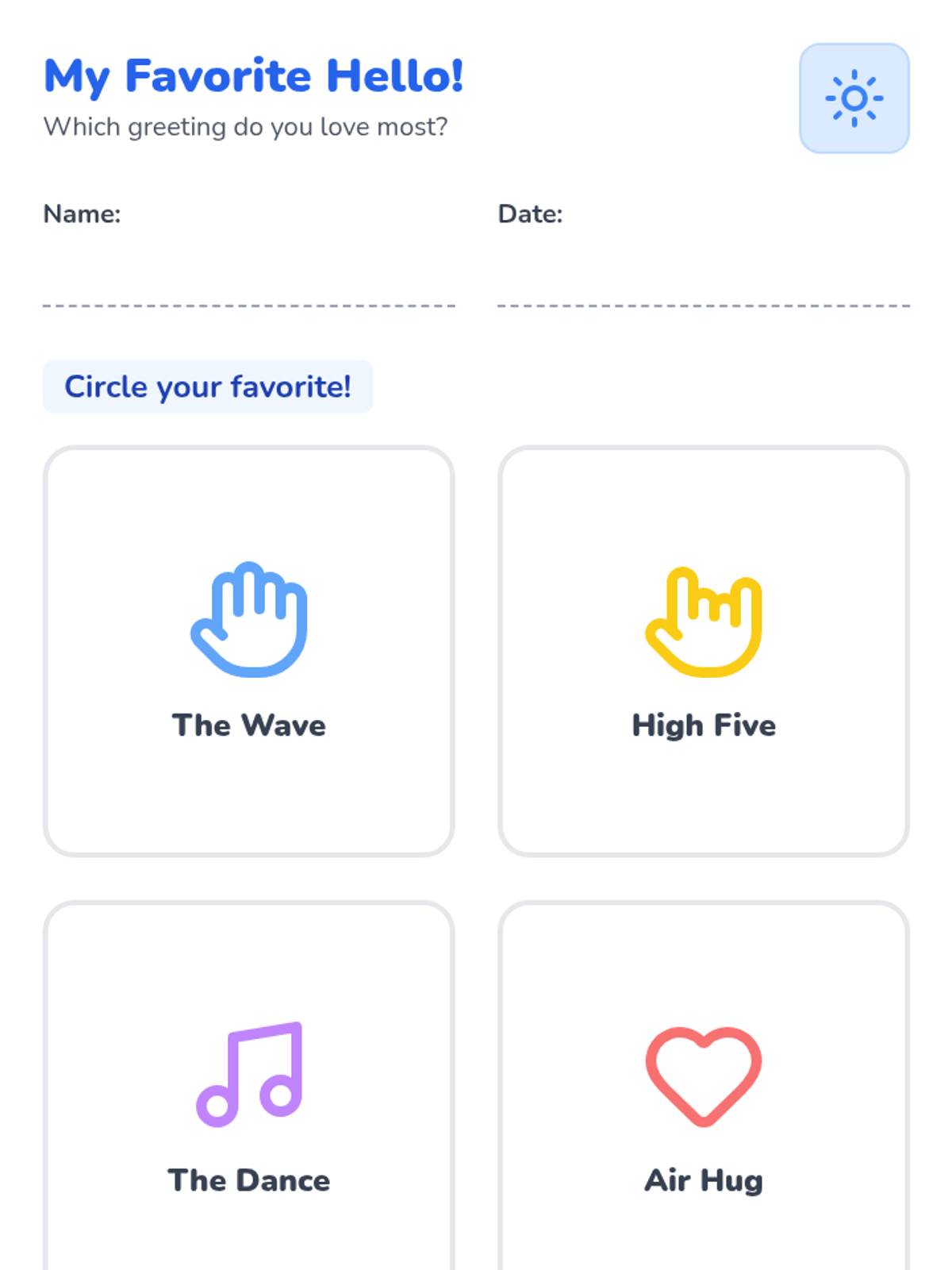
Students practice different ways to start the day positively, choosing signature greetings like waves, high-fives, or dances to set a happy tone.
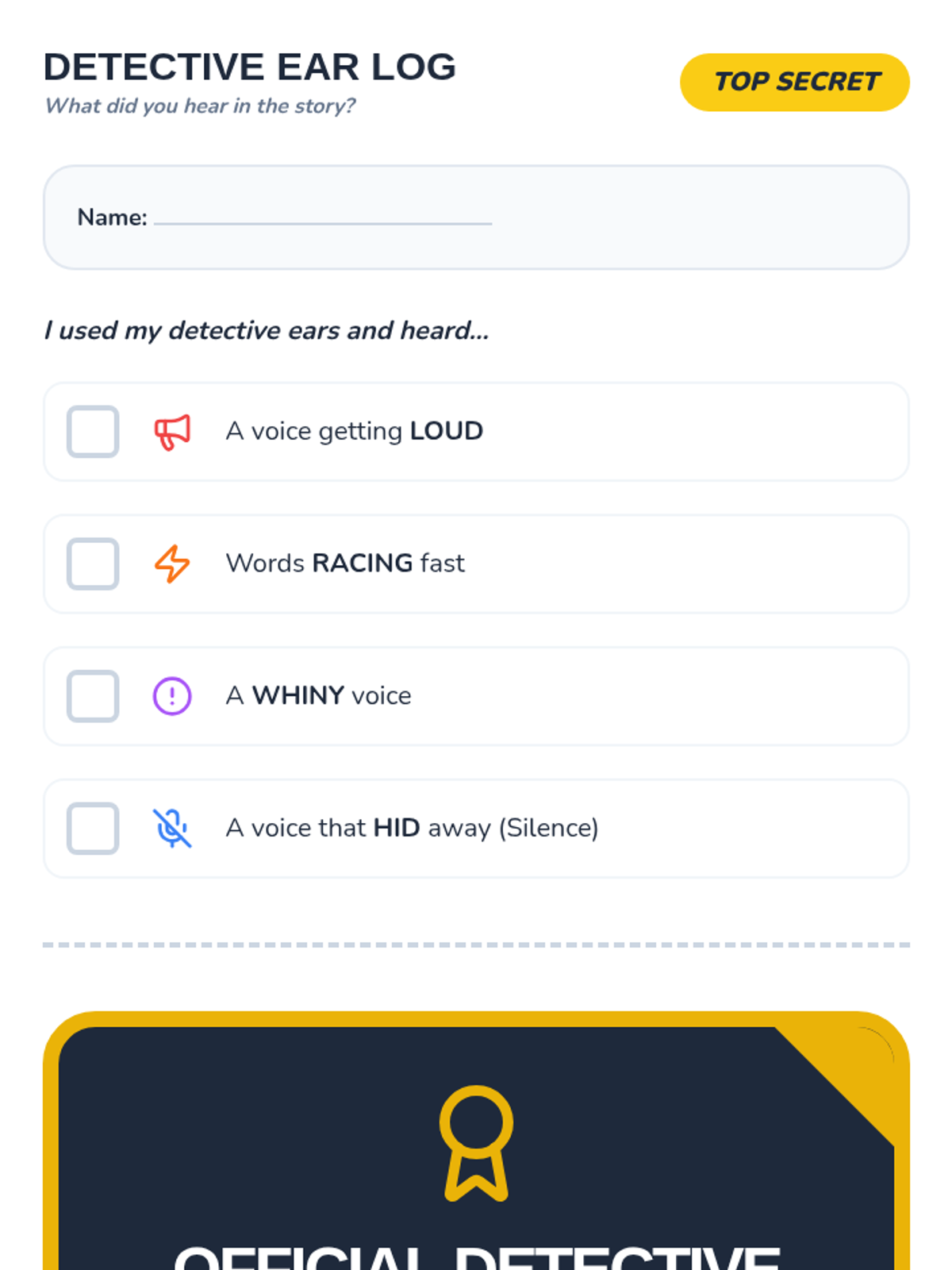
In a culminating activity, students use their 'detective ears' to identify vocal changes in stories and infer how characters are feeling.
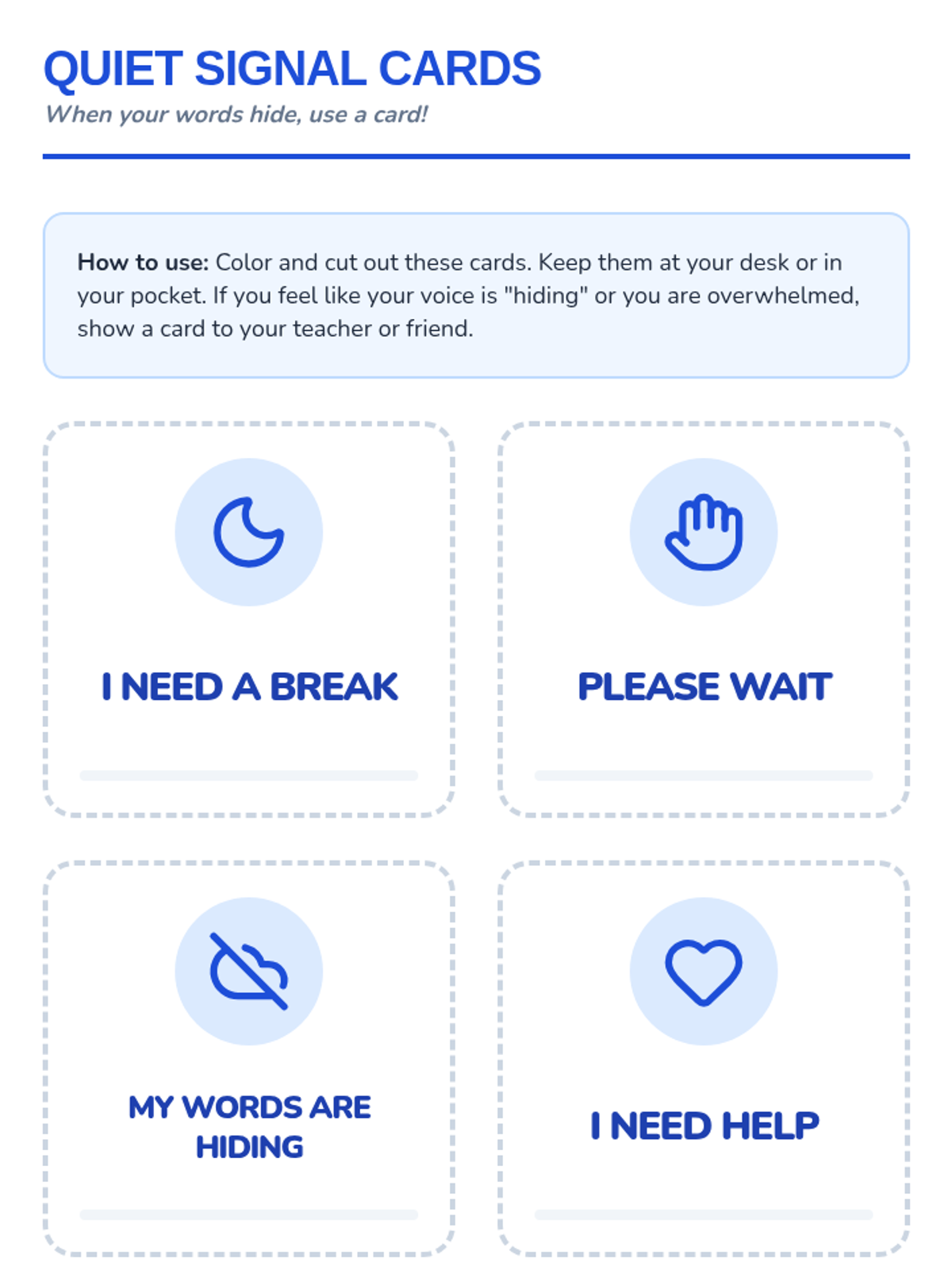
This lesson covers the 'freeze' response, teaching students that silence or withdrawal is also an important communication signal.
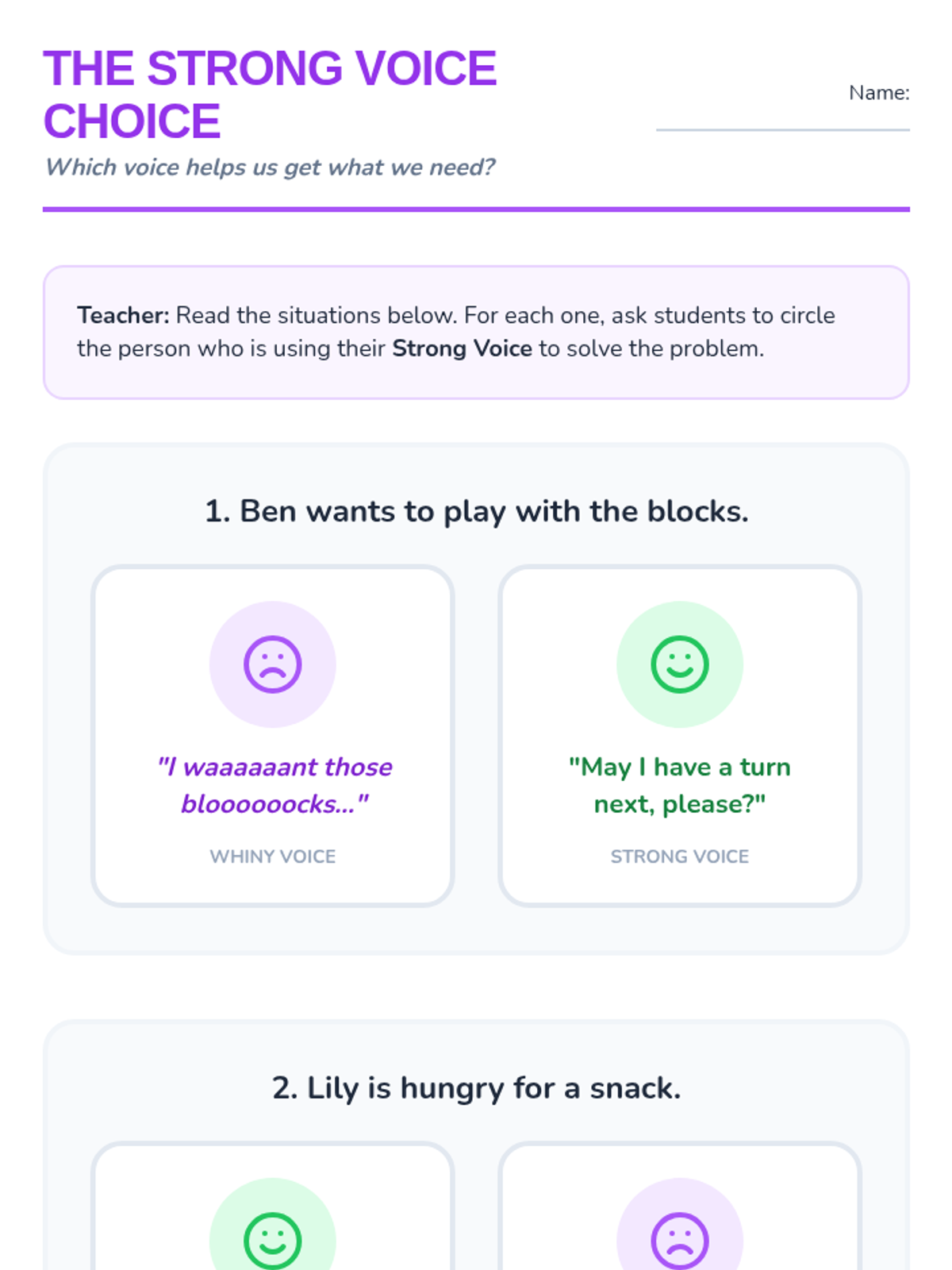
Students differentiate between 'strong voices' and 'whiny voices,' learning to recognize whining as a signal for needing help or feeling frustrated.
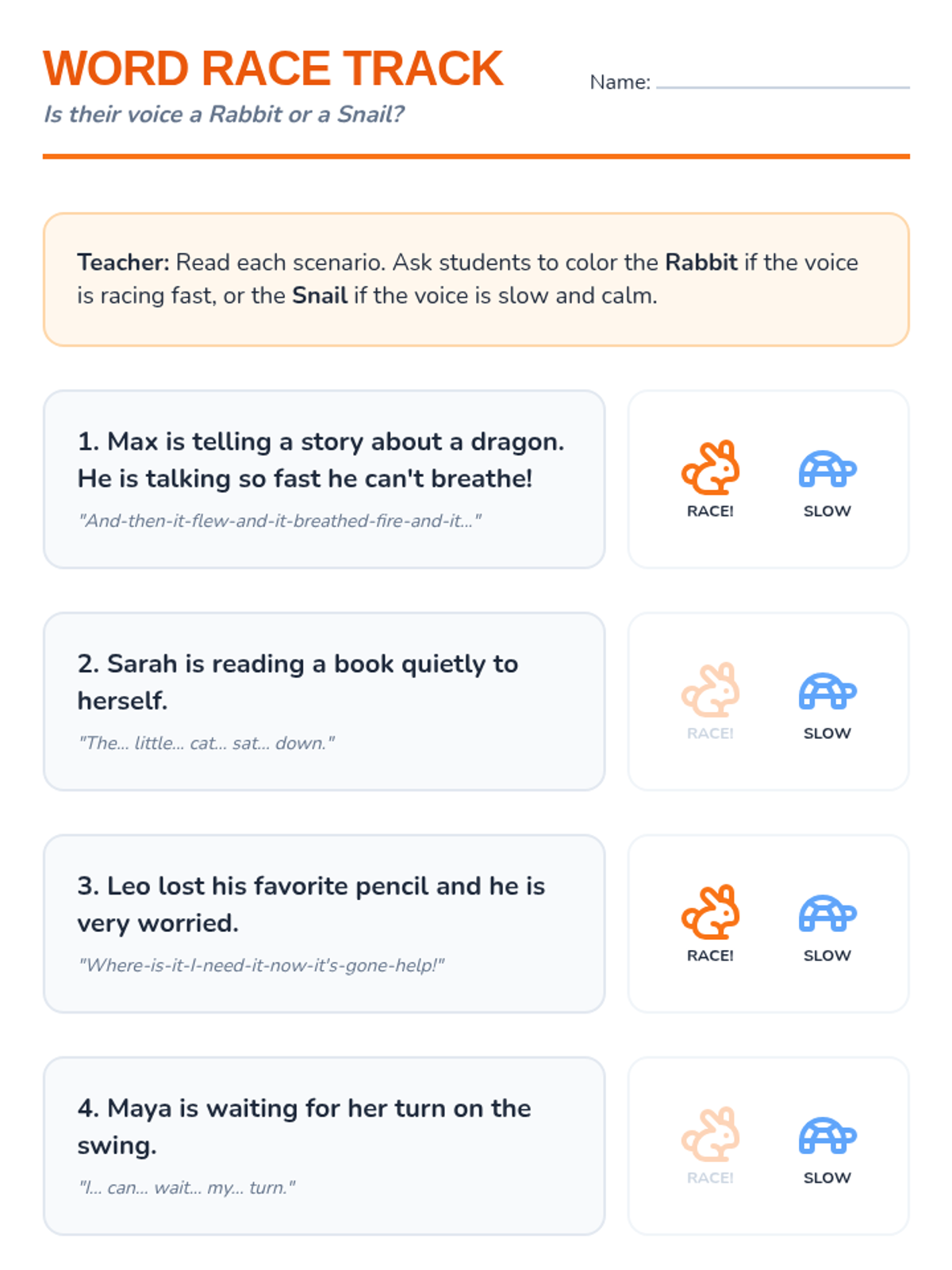
Students learn how the speed of speech relates to emotional states, identifying 'racing words' as a sign of anxiety or excitement.
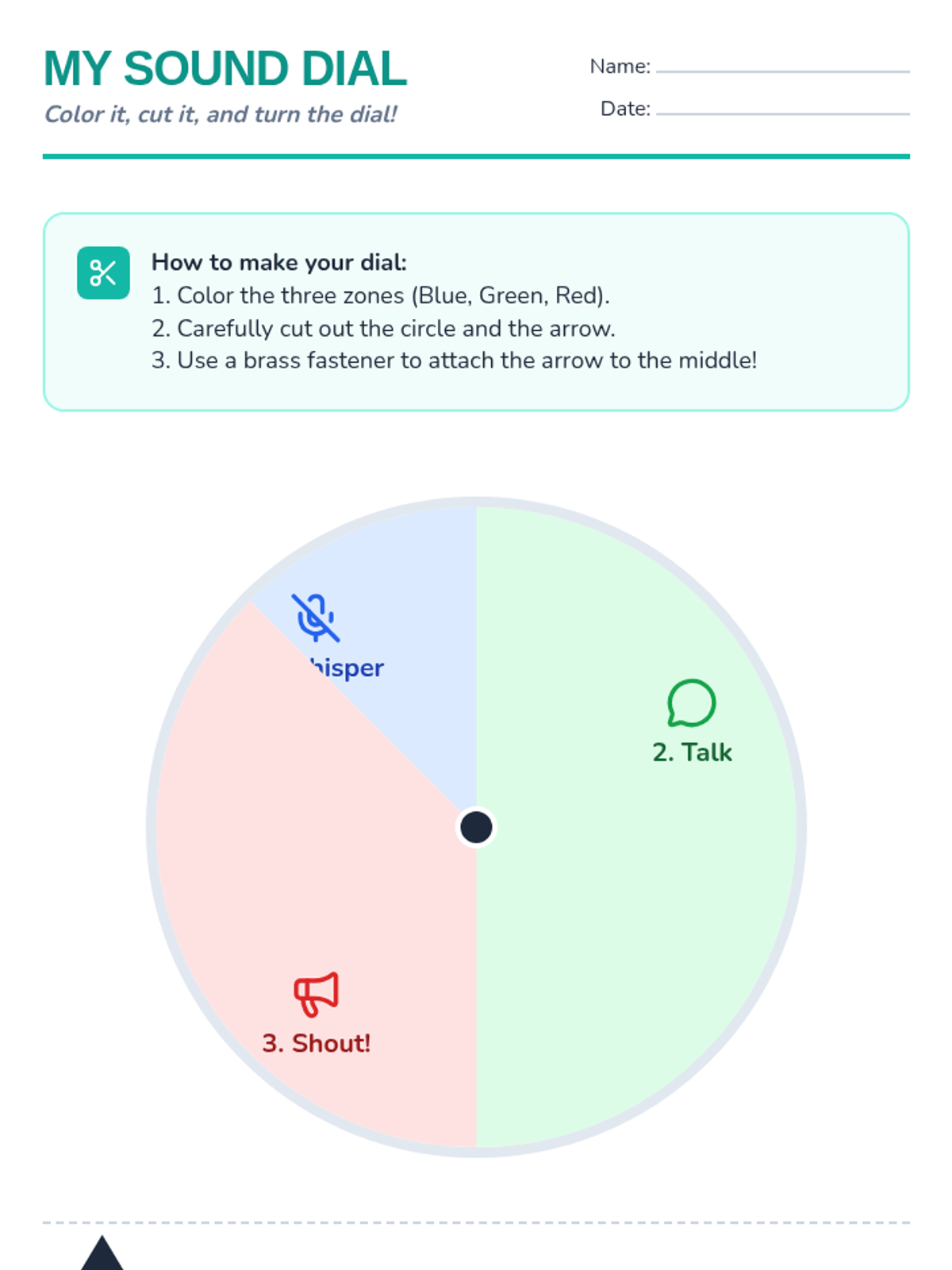
Students explore the concept of volume using a 'sound dial' to understand how an unexpectedly loud voice can be a warning sign of big feelings.
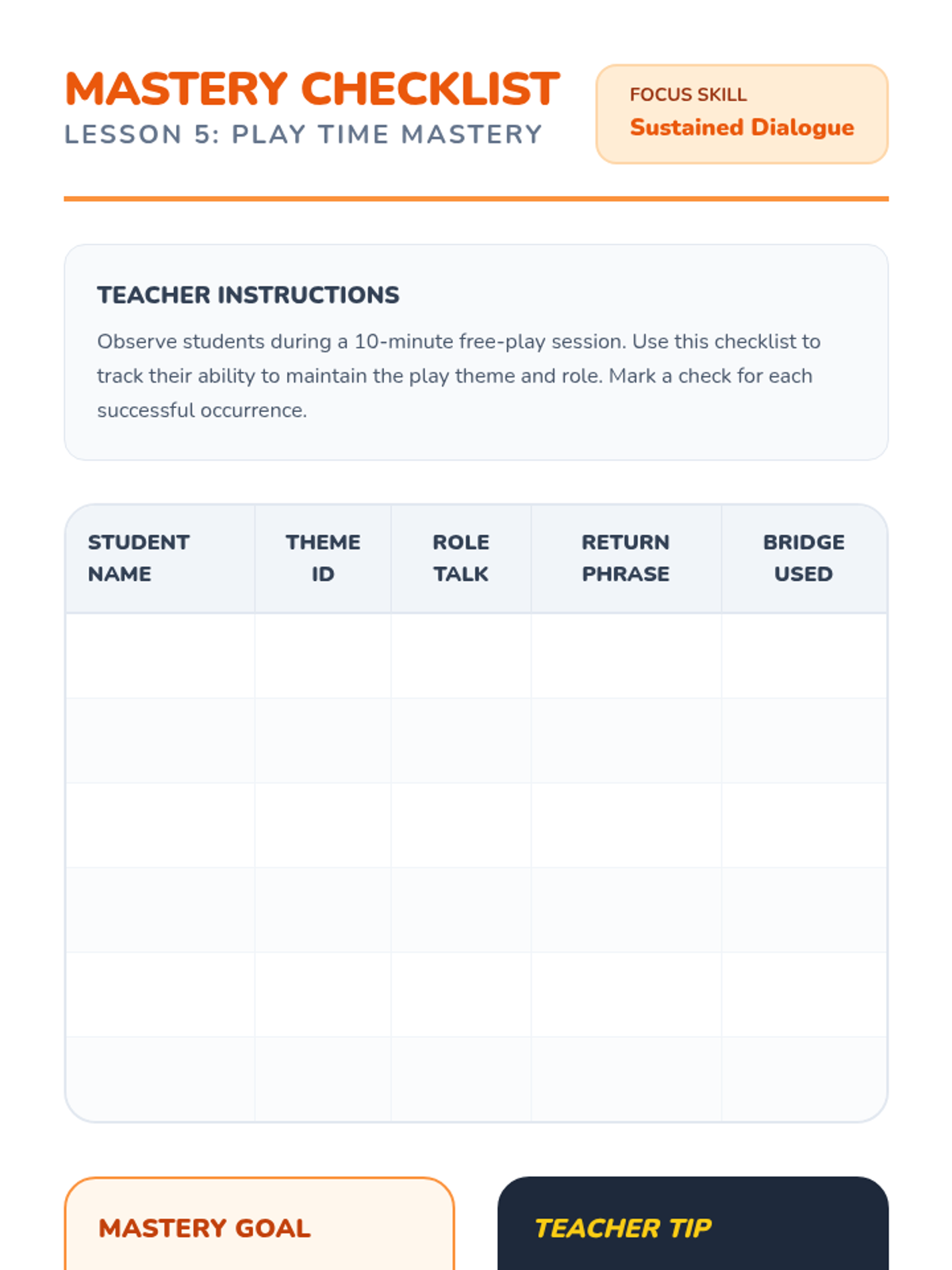
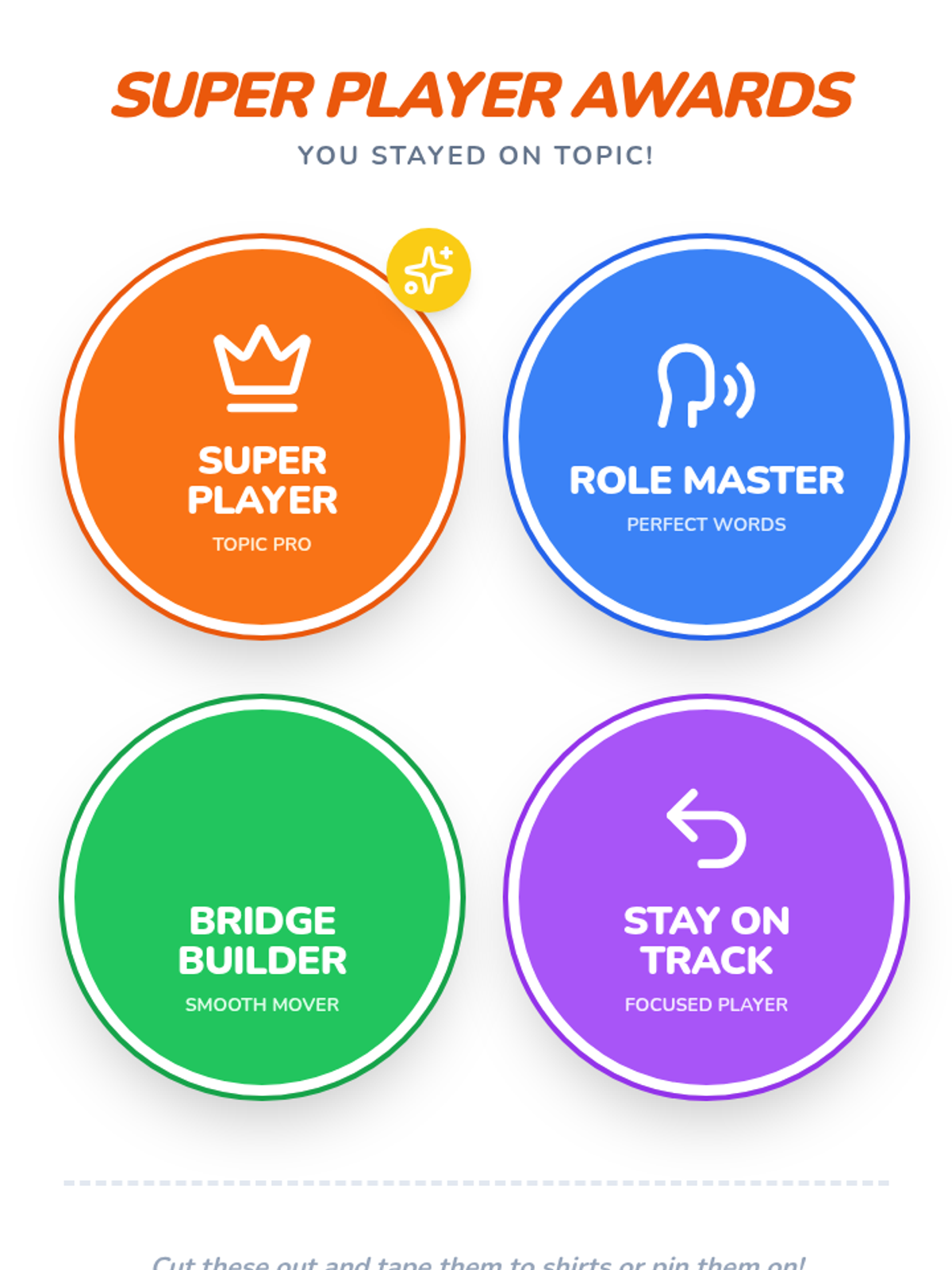
Students engage in a free-play session where they are rewarded with tokens for maintaining their role and topic for consecutive turns. The focus is on sustained, reciprocal dialogue within the chosen scenario.
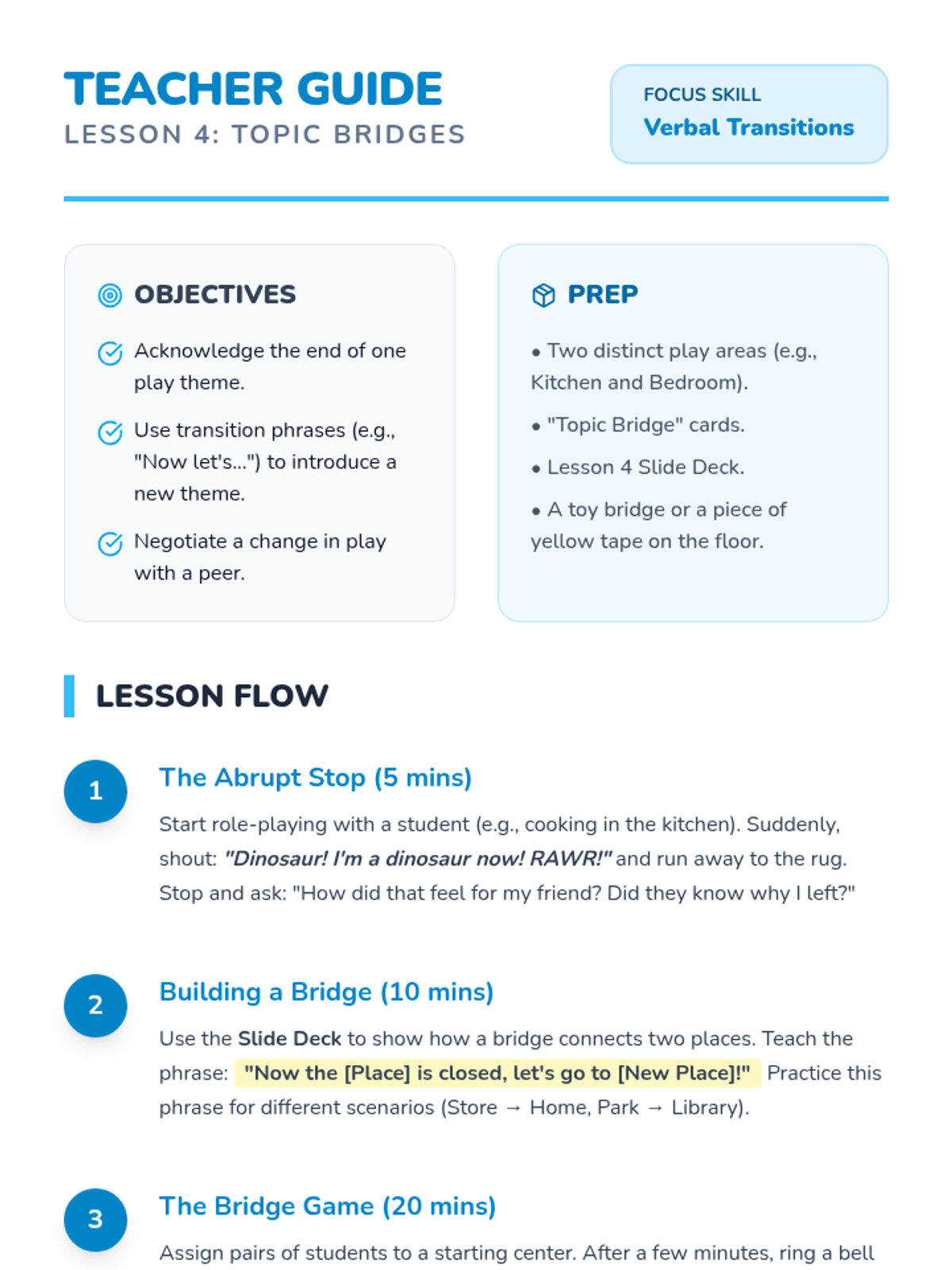
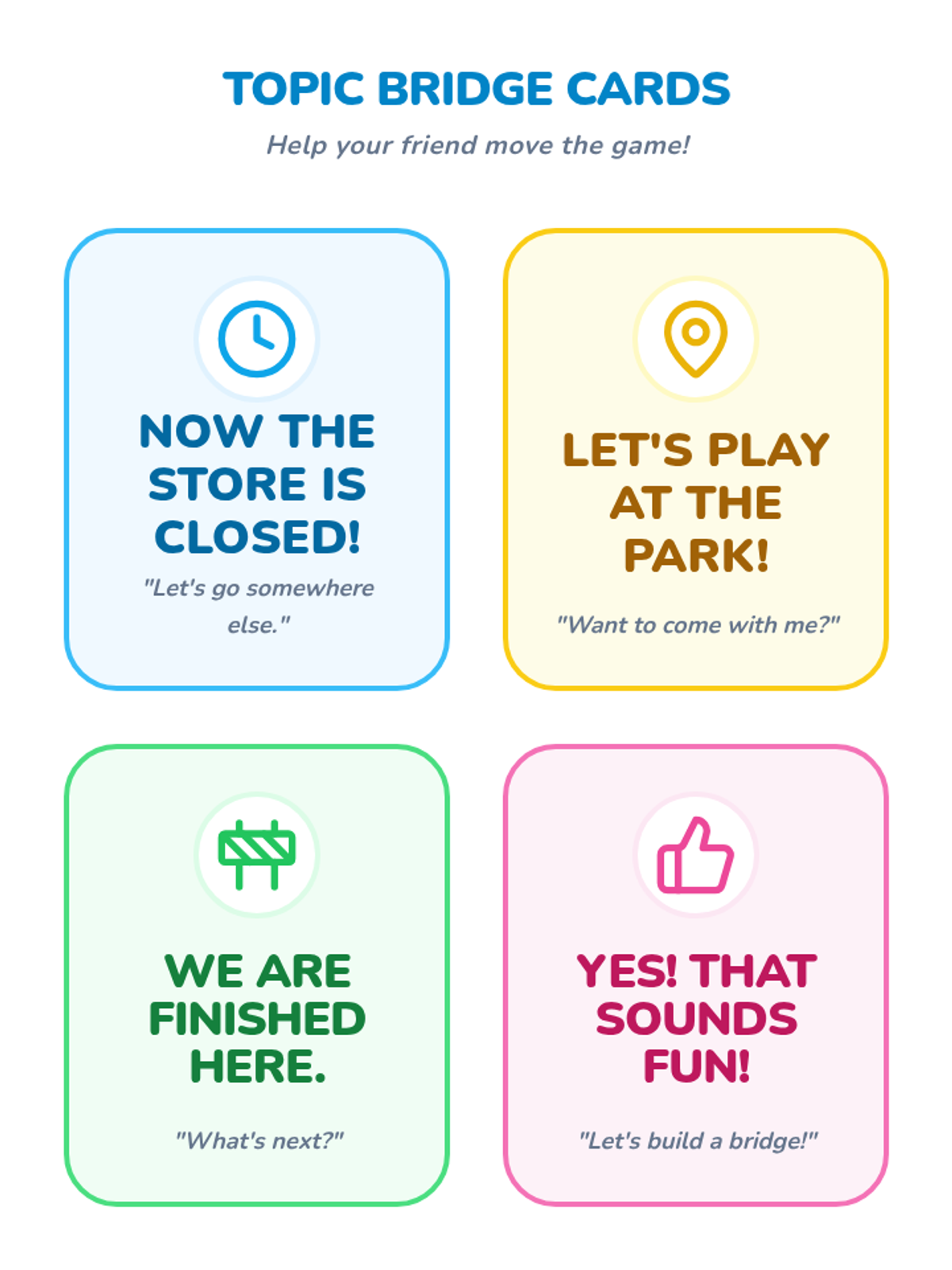
Students learn how to shift play themes naturally. Instead of abruptly changing games, they practice saying, 'Let's change to...' or 'Now the store is closed, let's go to the park,' treating the transition as a bridge.
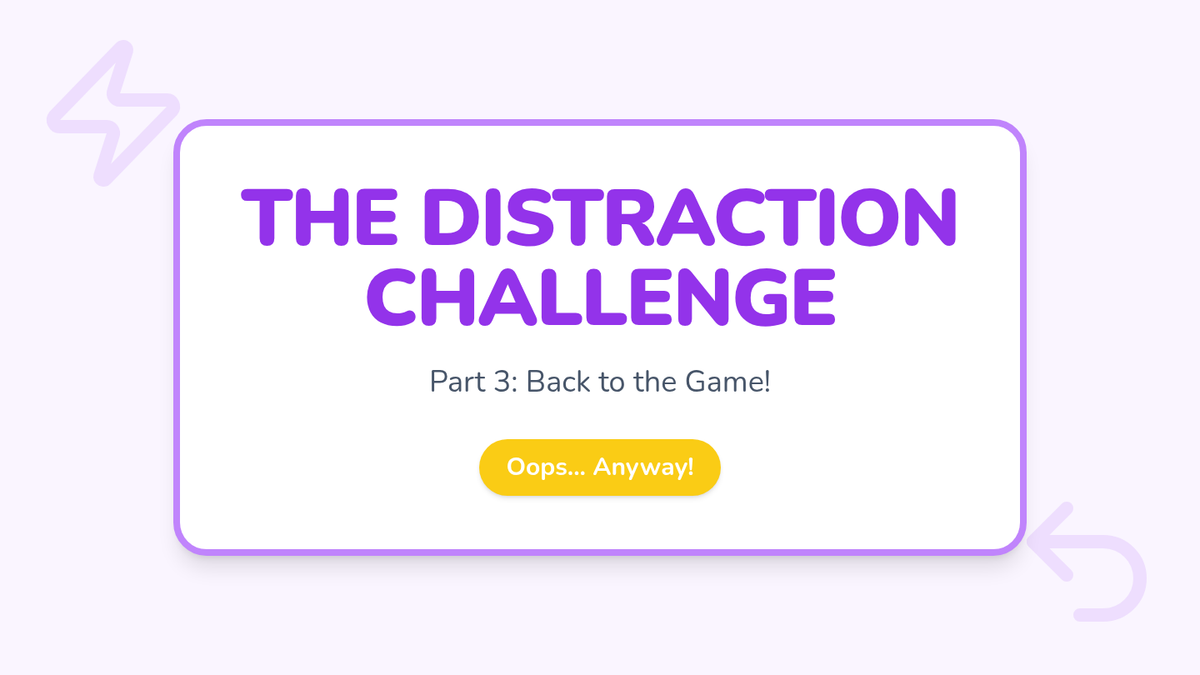
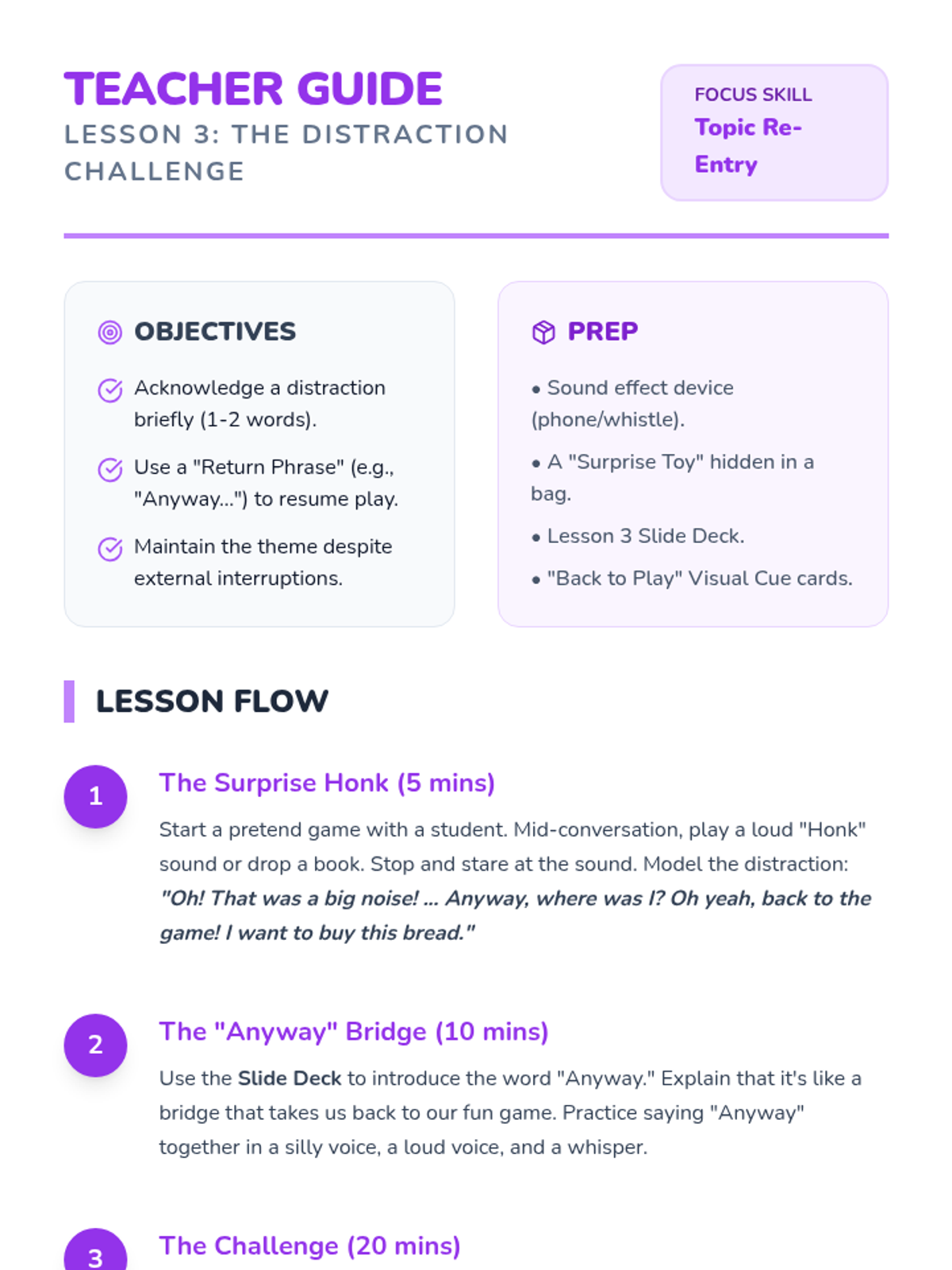
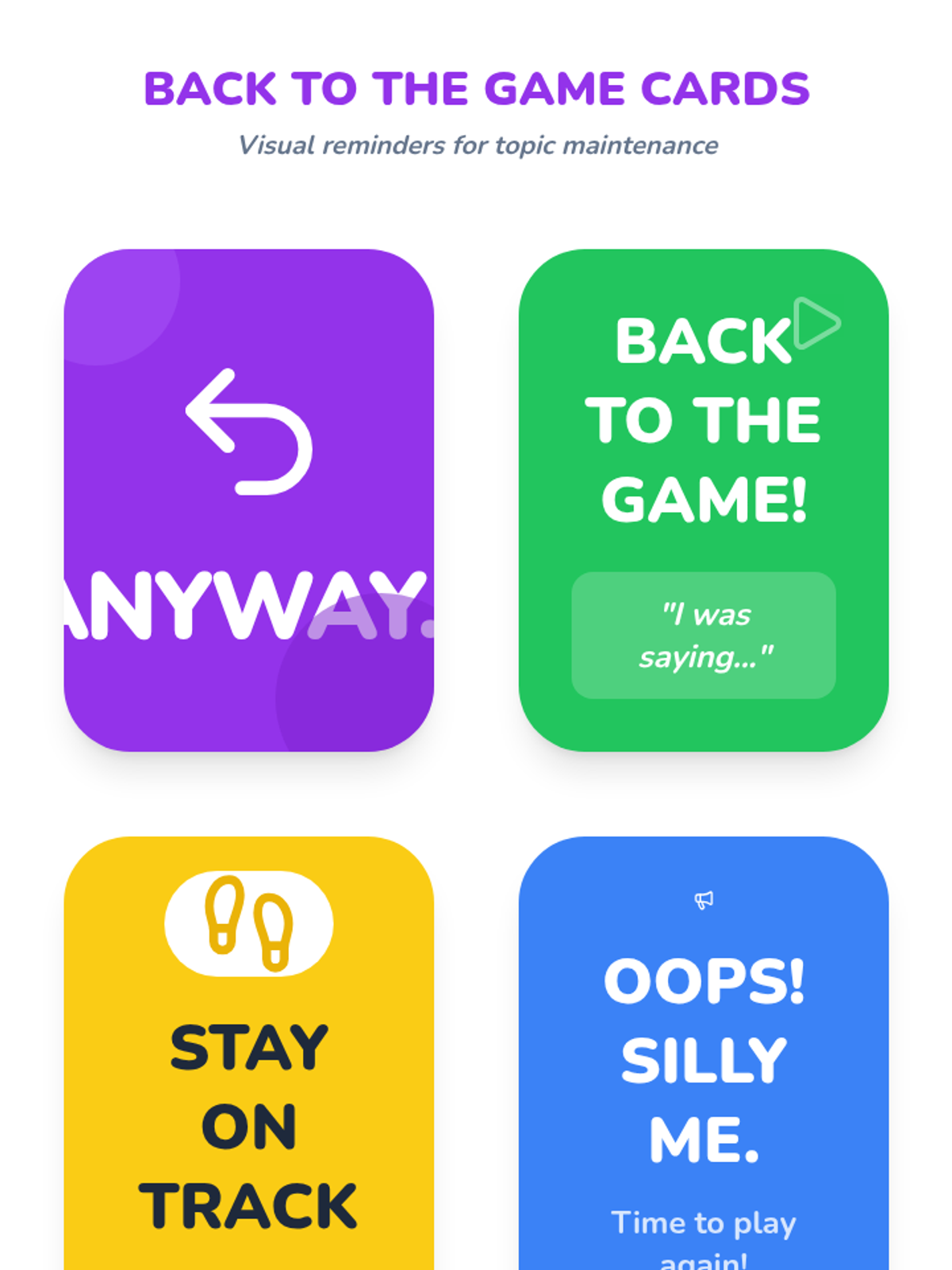
During a structured play scenario, the teacher introduces a 'distraction' (a new toy or noise). Students practice acknowledging the distraction briefly but then using a 'return phrase' (e.g., 'Anyway, back to the game') to resume their play theme.
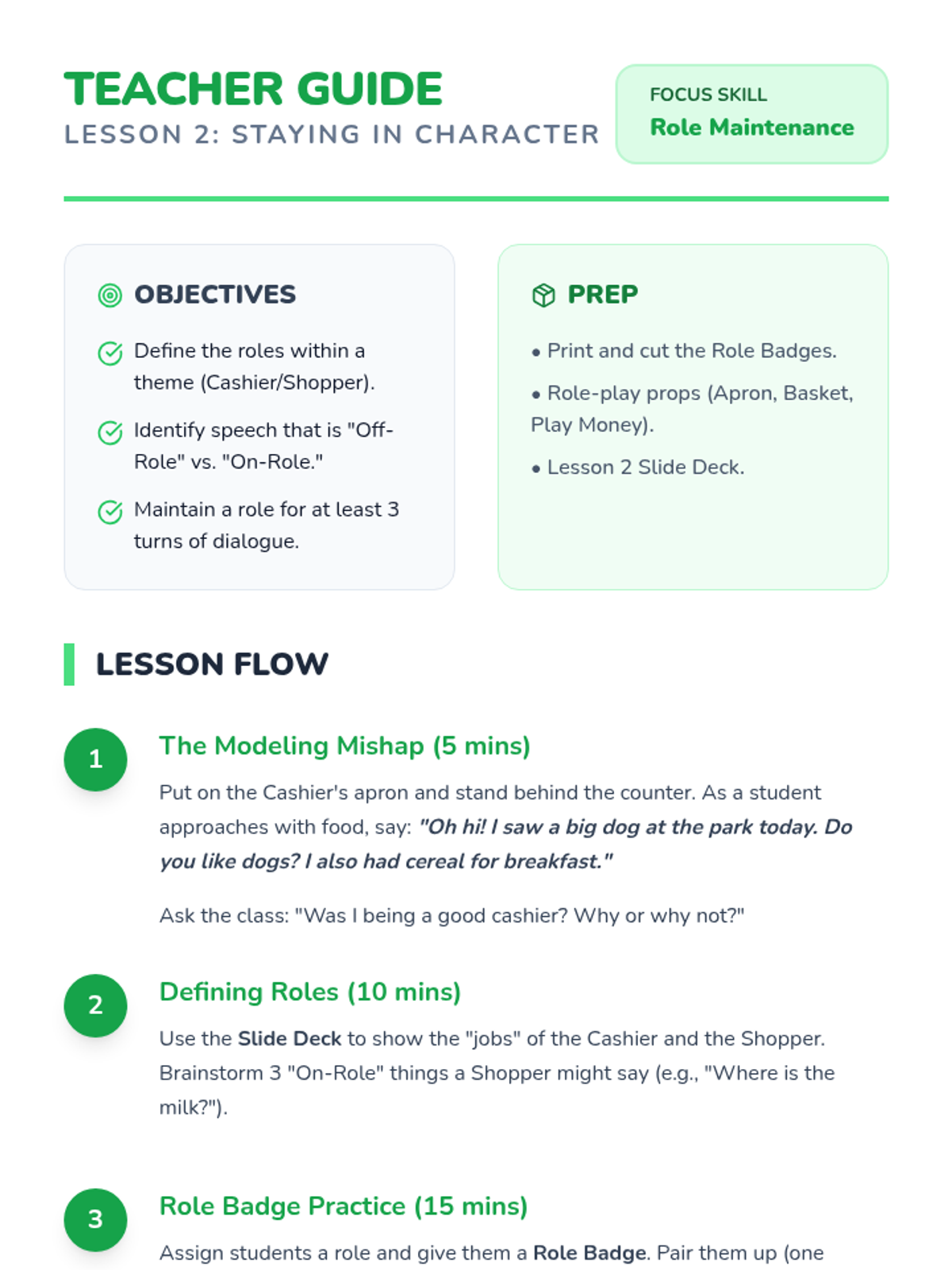
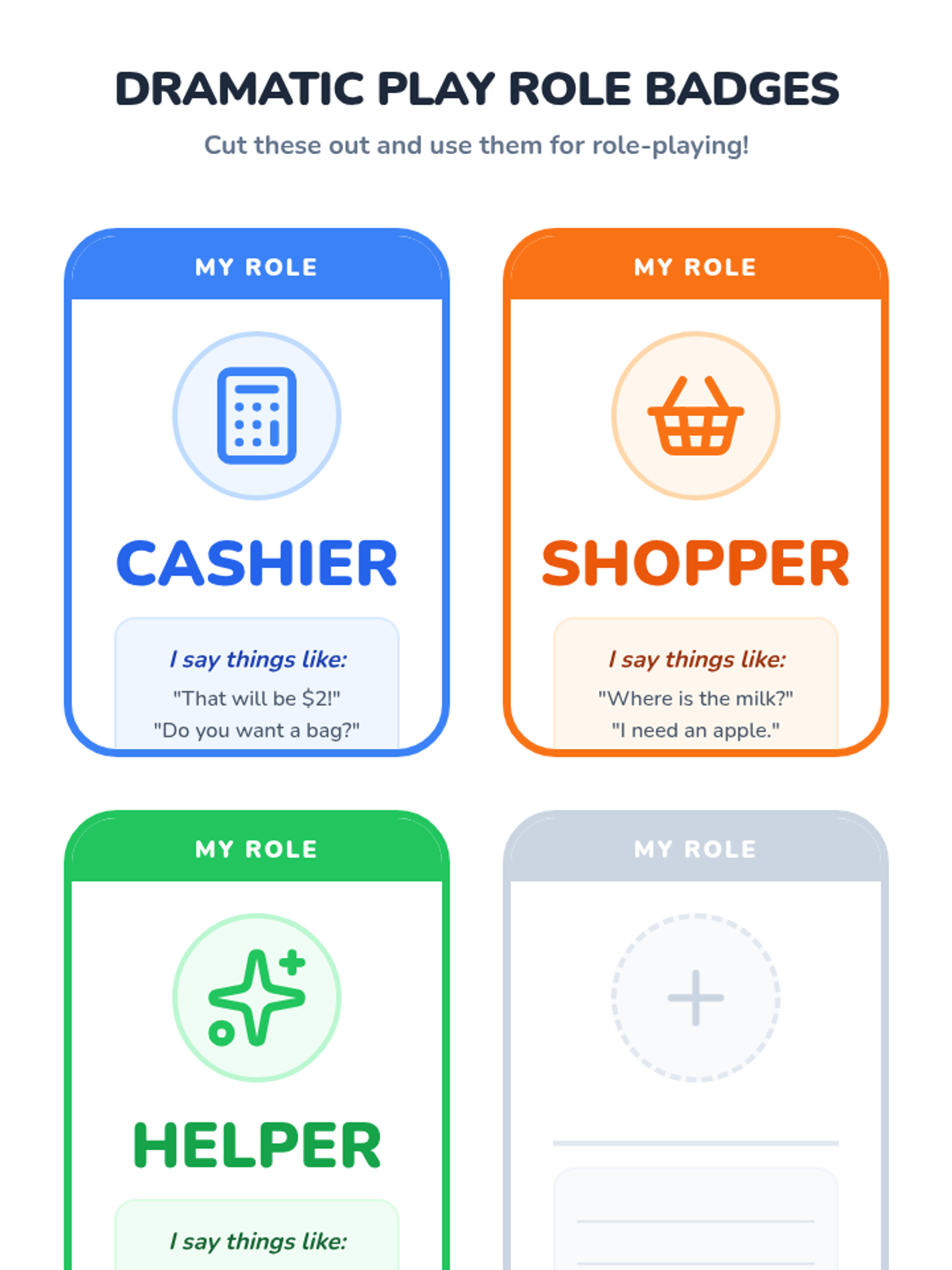
Students practice role-playing specific characters (e.g., Cashier, Shopper). They learn that the Cashier talks about prices and food, not about their new shoes or what they watched on TV, to keep the game fun.
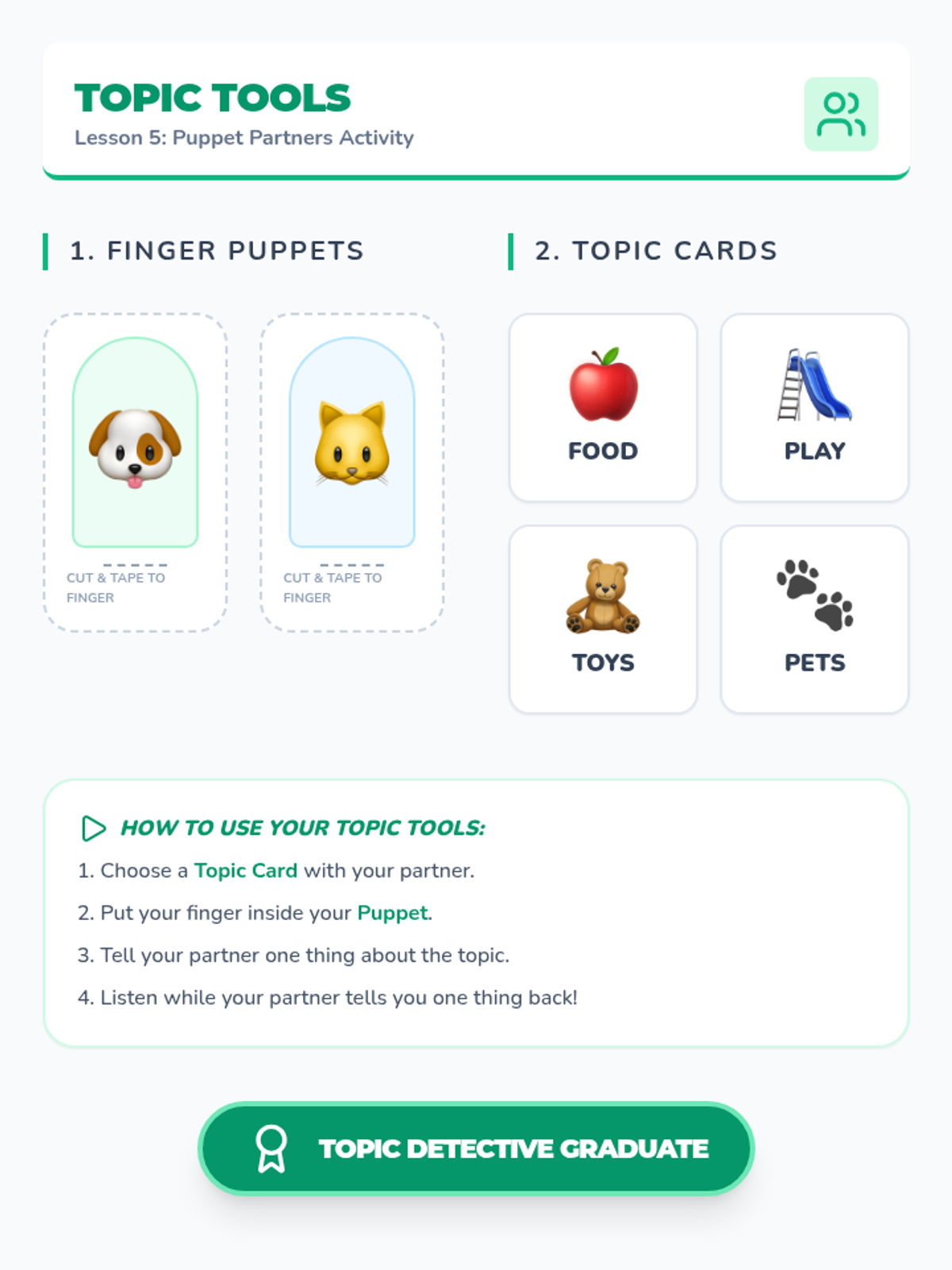
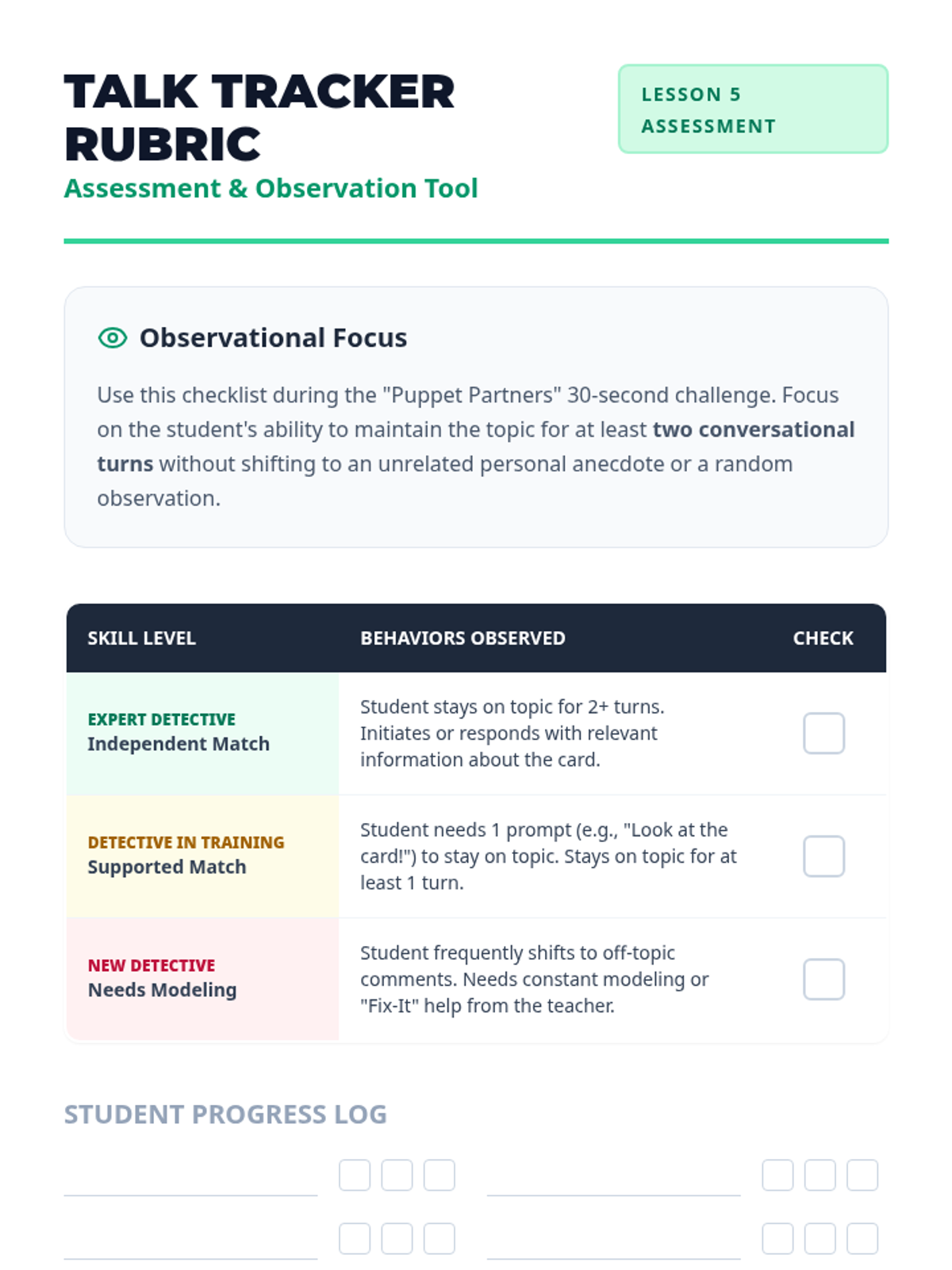
Students apply their skills in short peer-to-peer interactions using finger puppets and designated topic cards for focused practice.
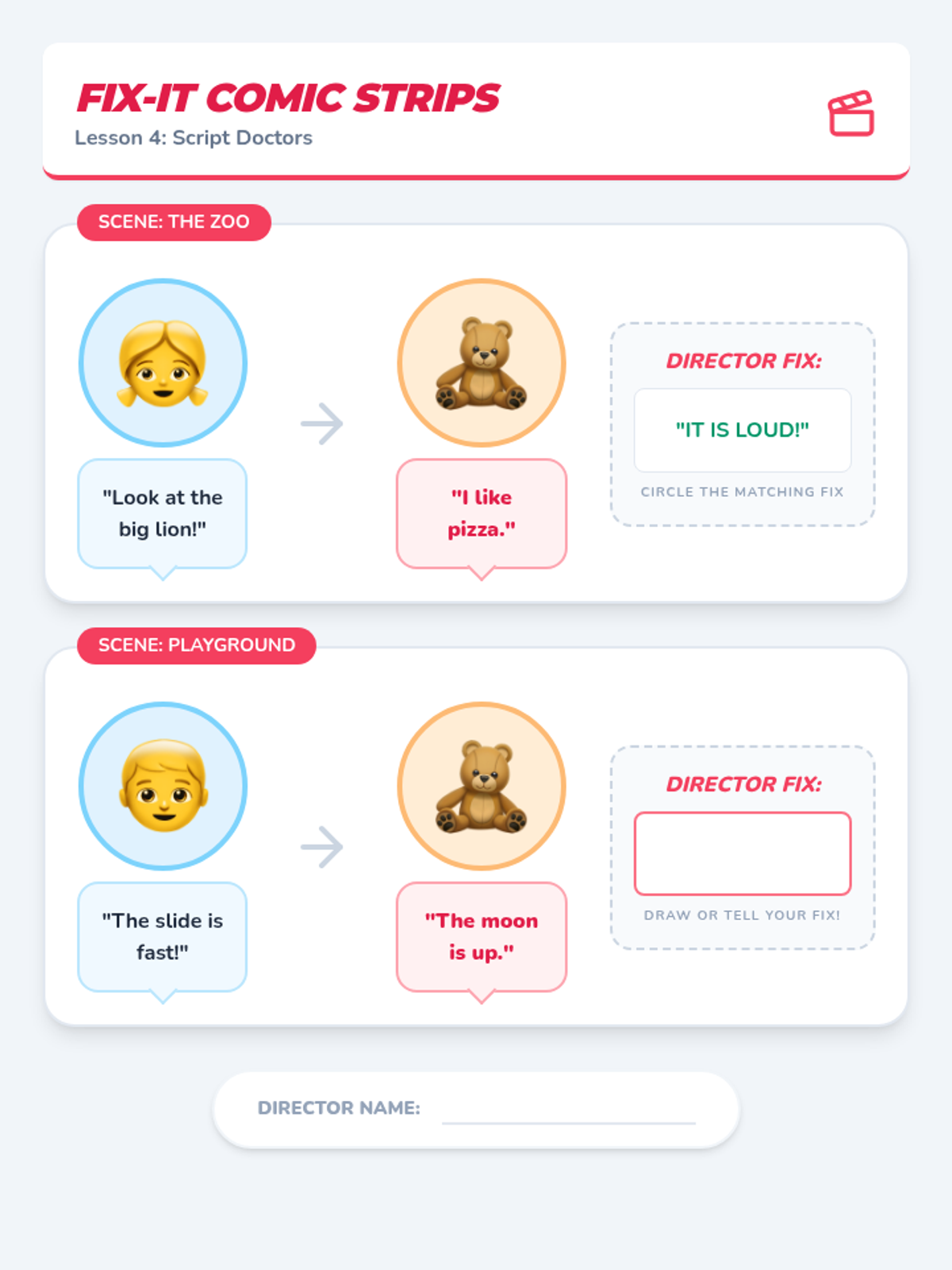
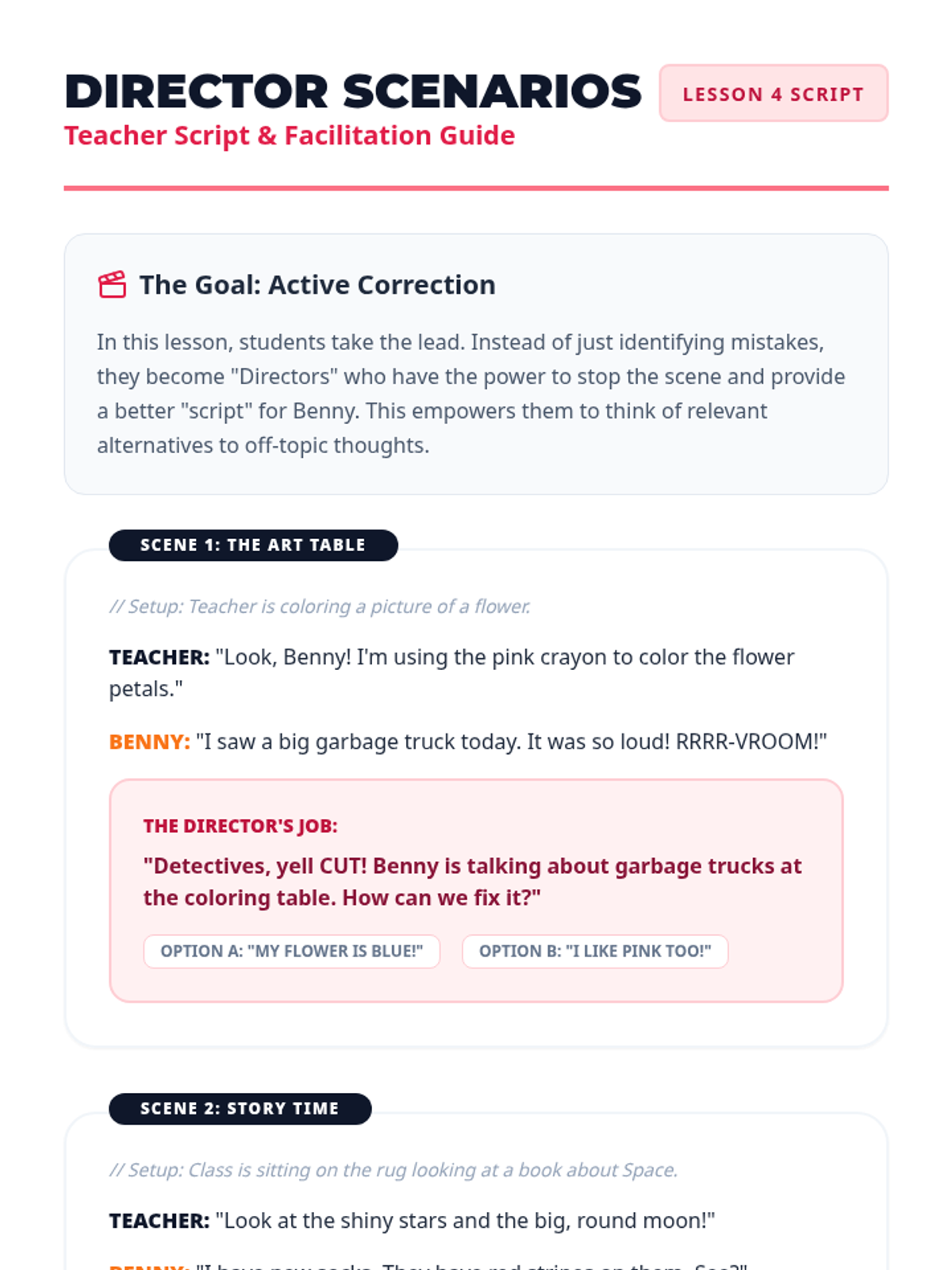
Students act as 'directors' to fix broken conversation scripts, suggesting relevant alternatives for the puppet's off-topic mistakes.
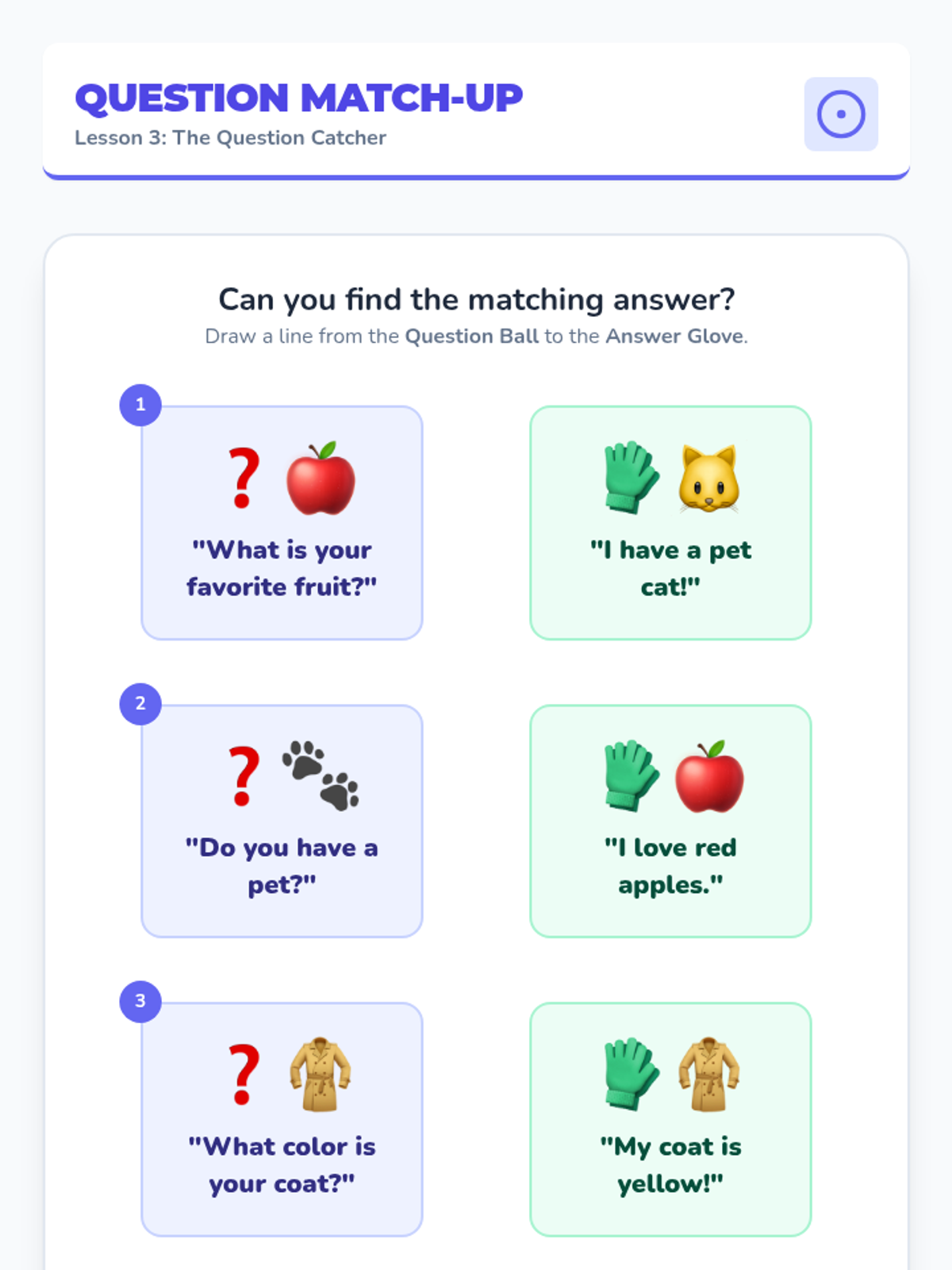
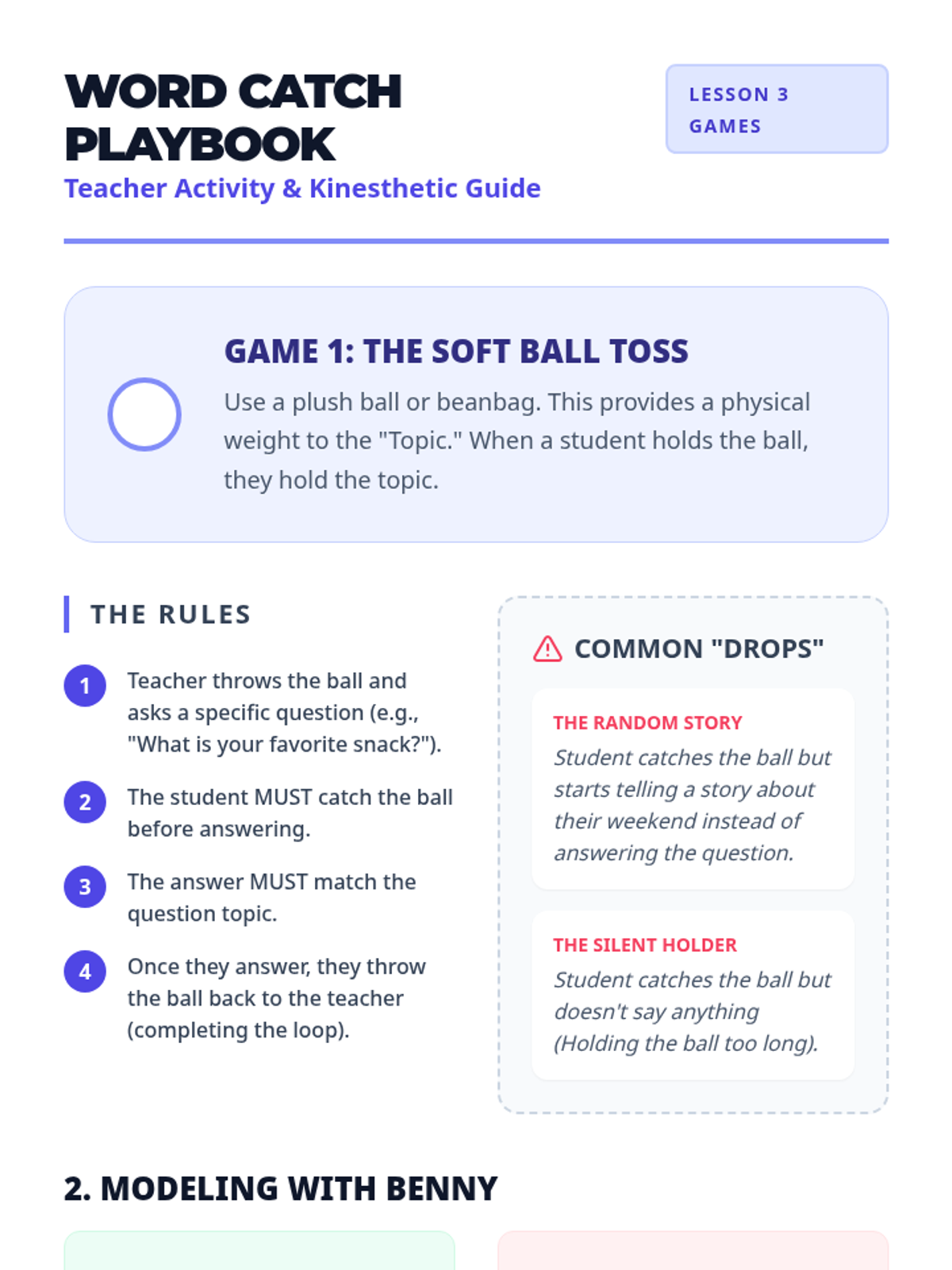
Students learn the concept of reciprocal communication by visualizing questions and answers as a game of catch, focusing on direct answering.
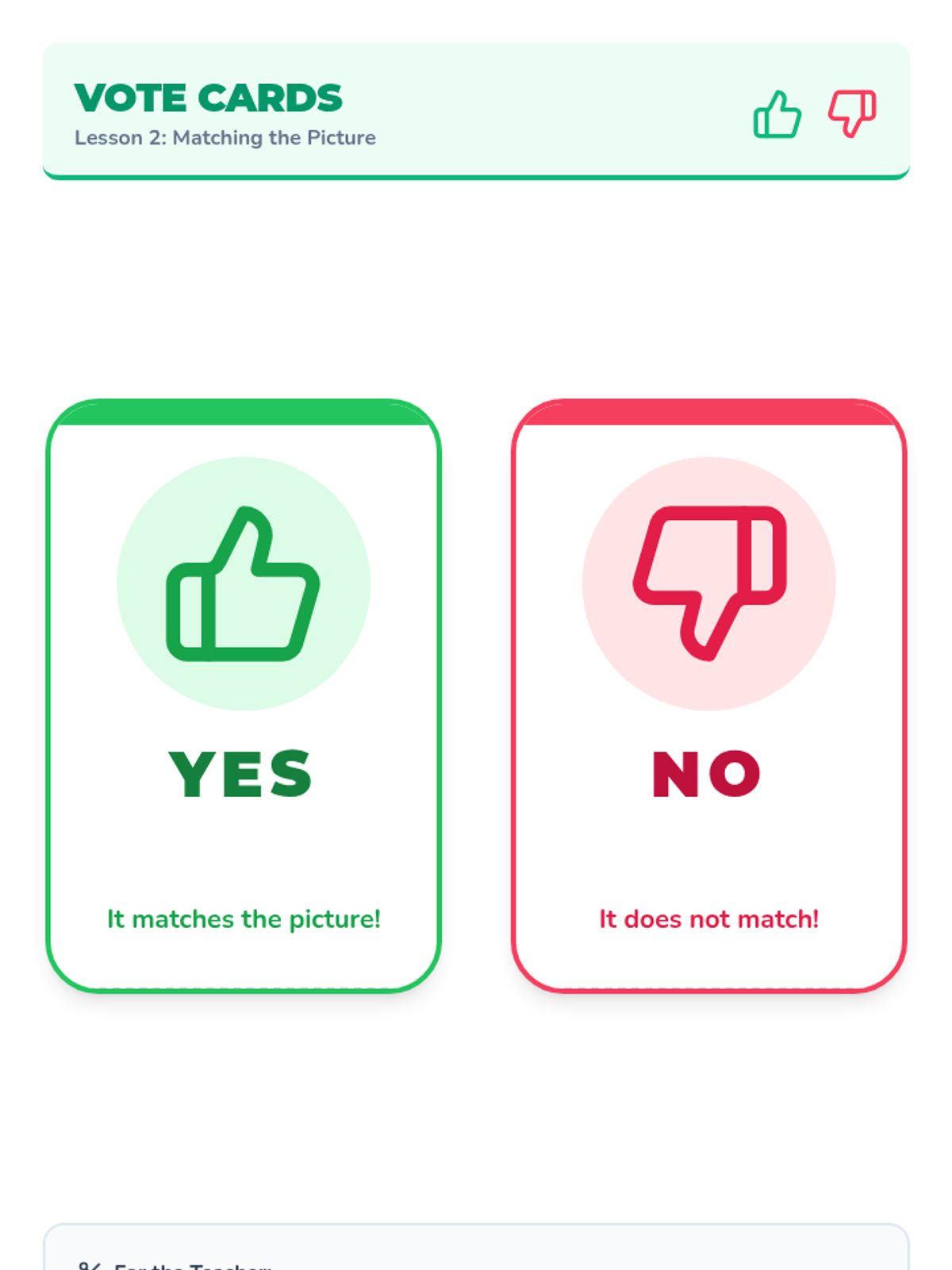
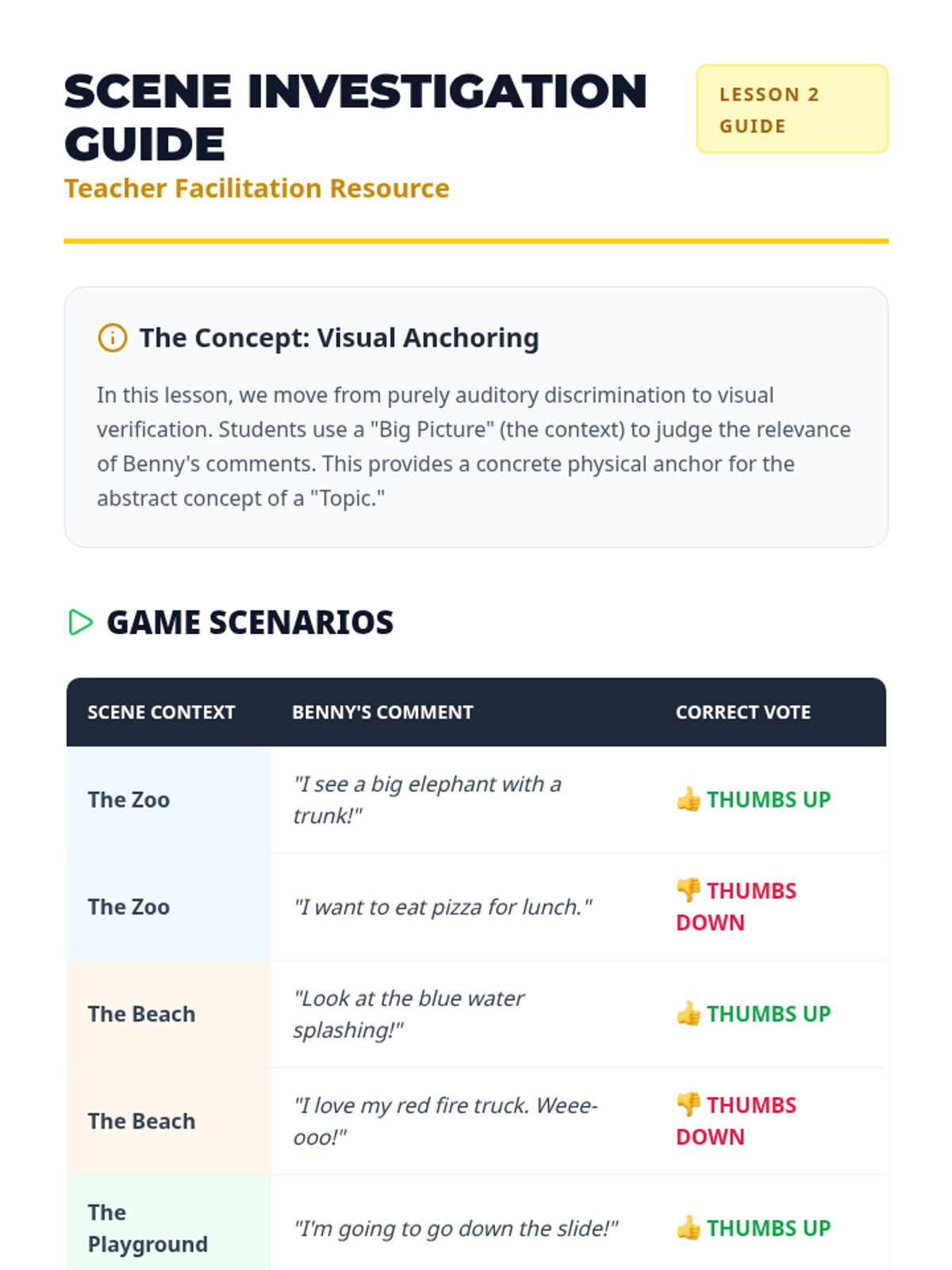
Students use visual scenes to judge whether the puppet's comments match the visible context, using 'Thumbs Up' and 'Thumbs Down' to vote.
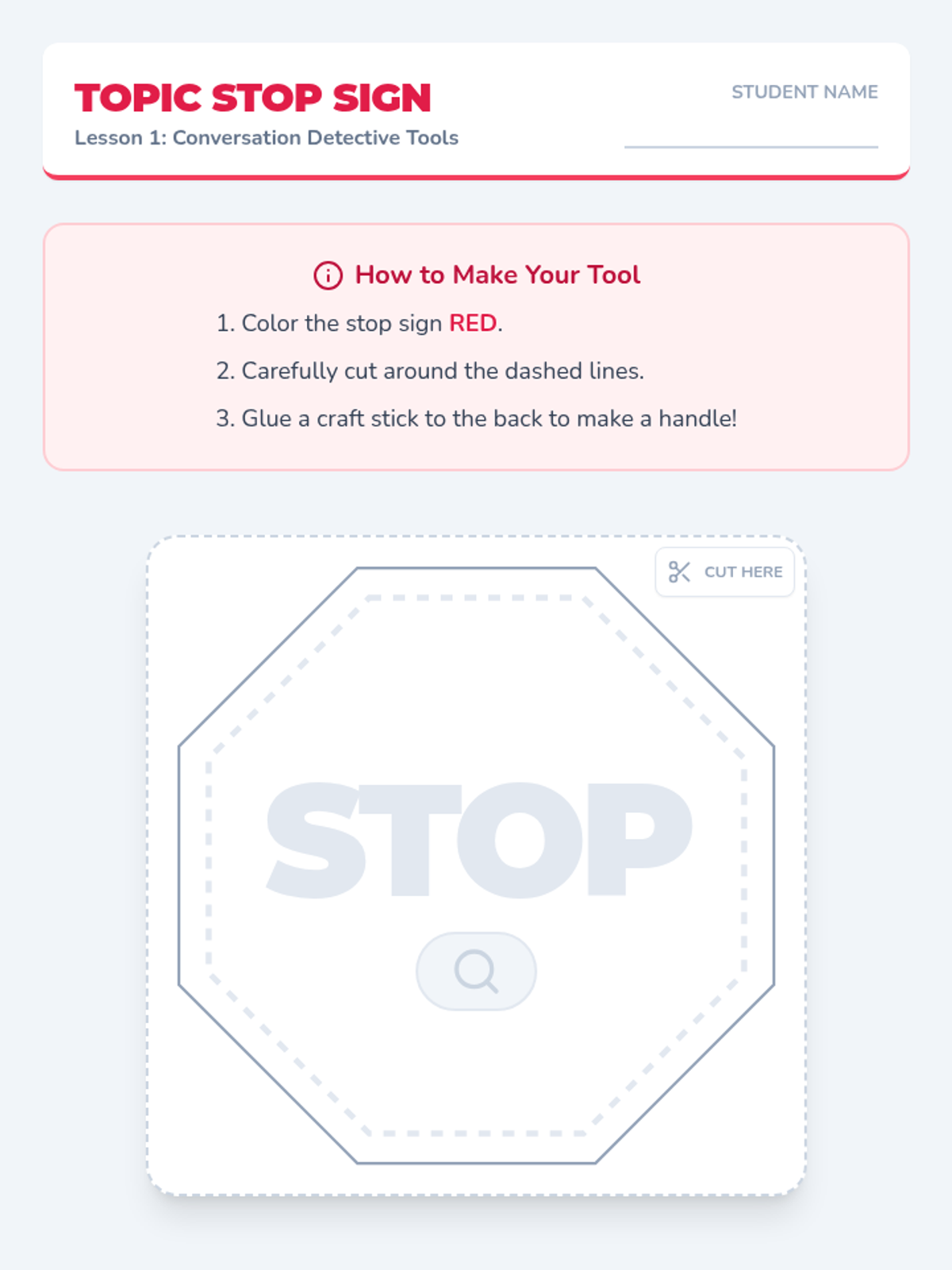
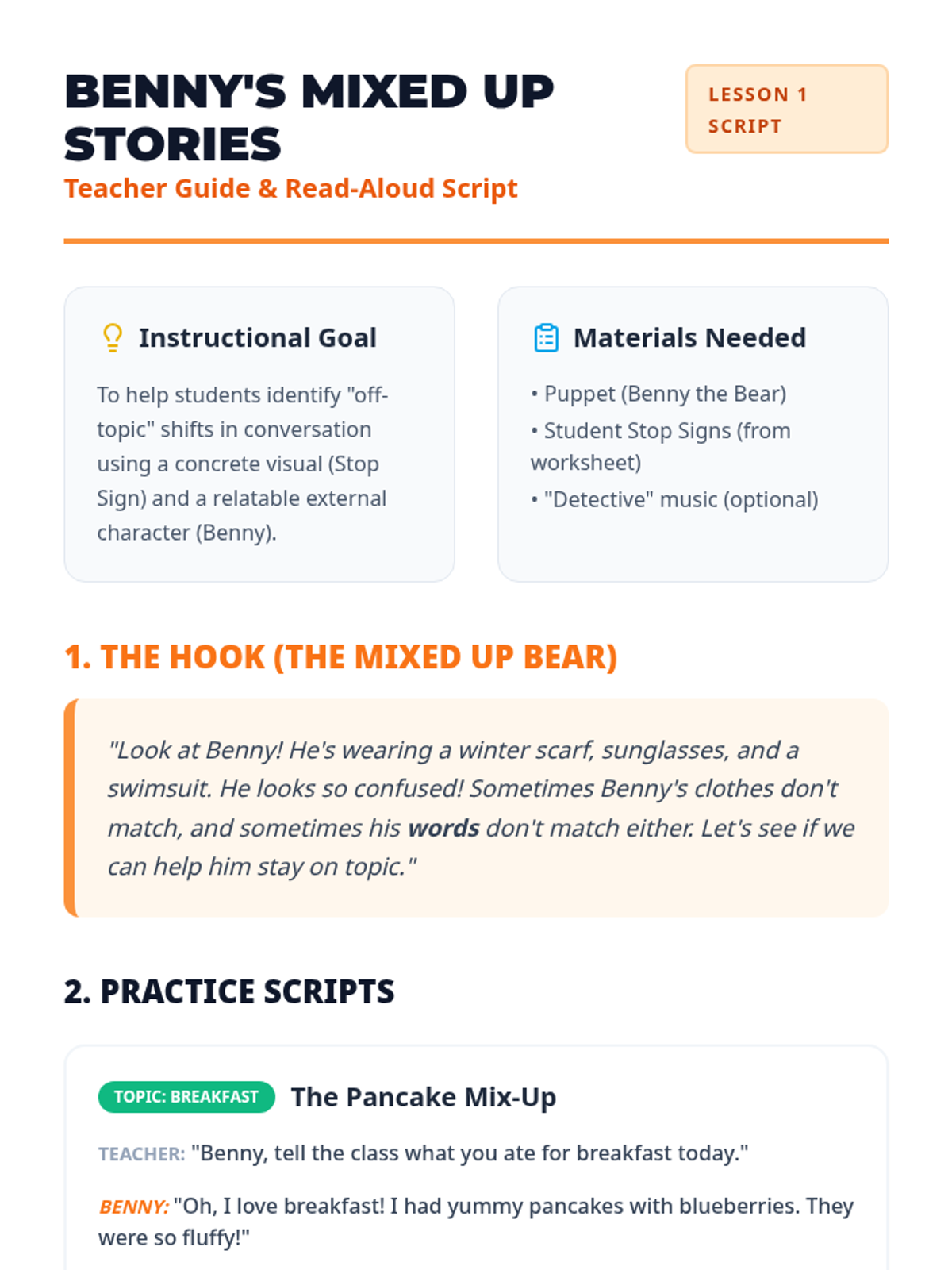
Students meet Benny the Bear, a puppet who gets mixed up about topics, and practice identifying off-topic comments using a physical 'Stop' sign.
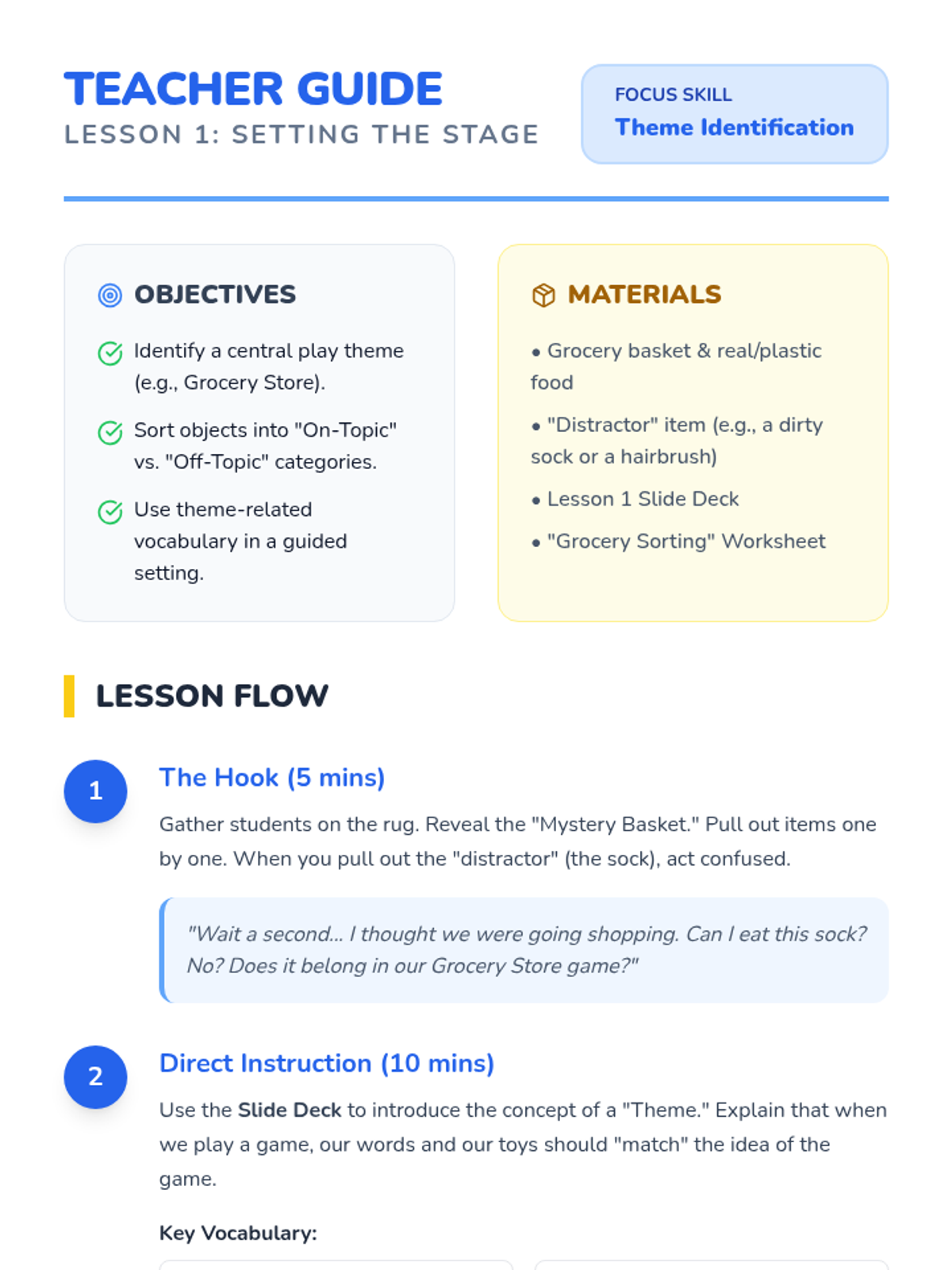
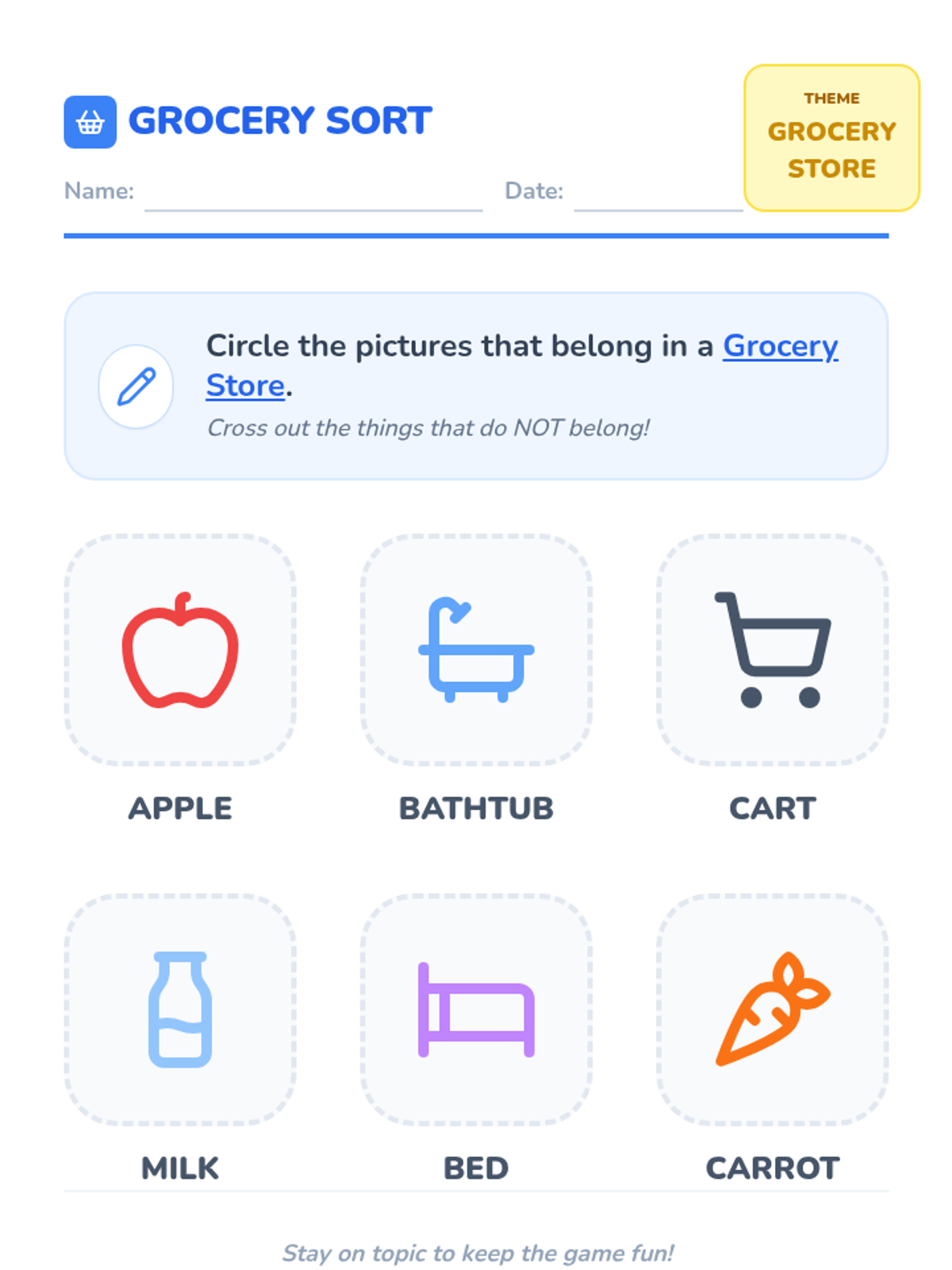
Students explore a dramatic play center (Grocery Store) and identify tools and words that belong there by sorting objects into 'Grocery Store' vs. 'Not Grocery Store' piles.
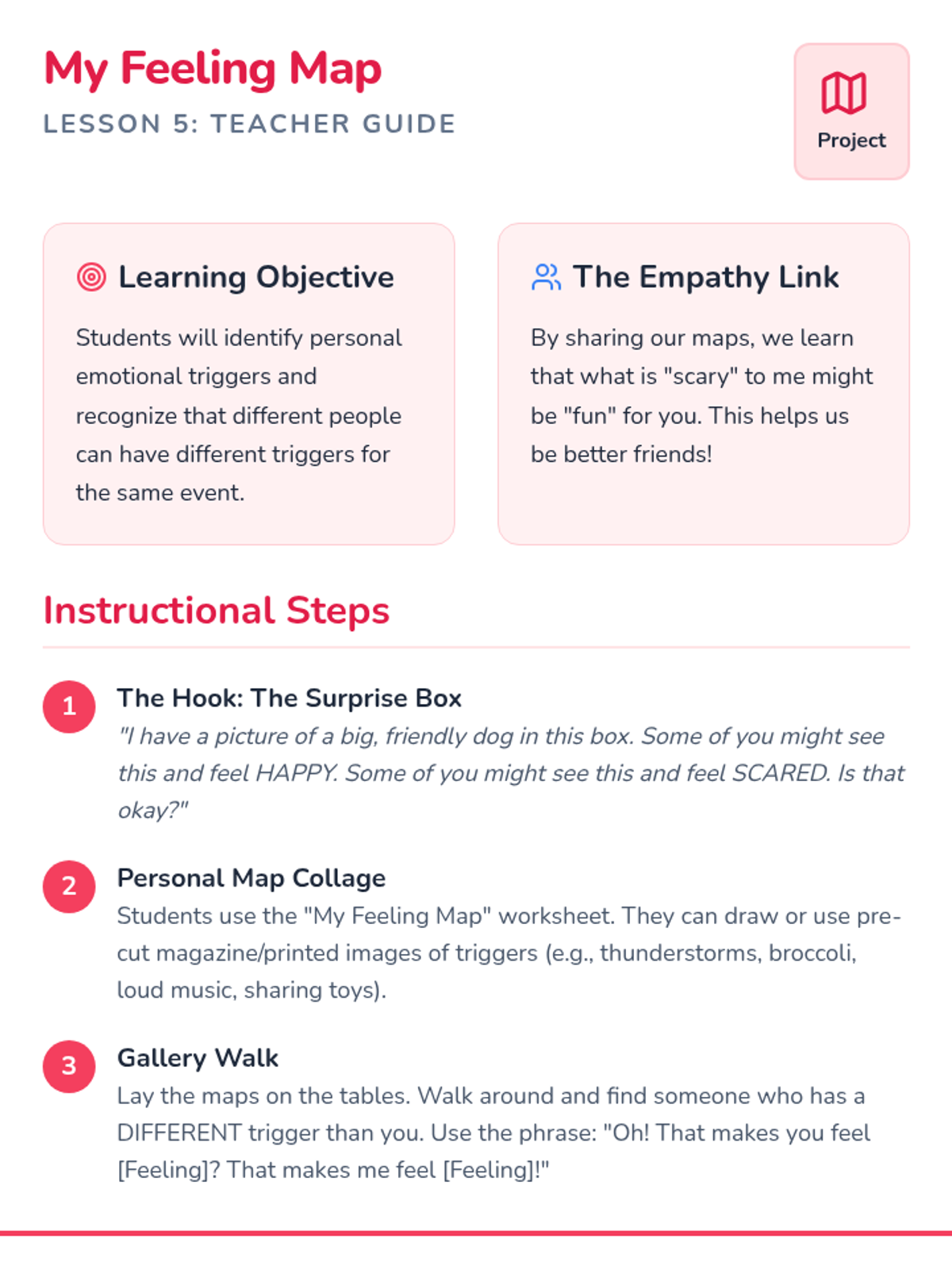
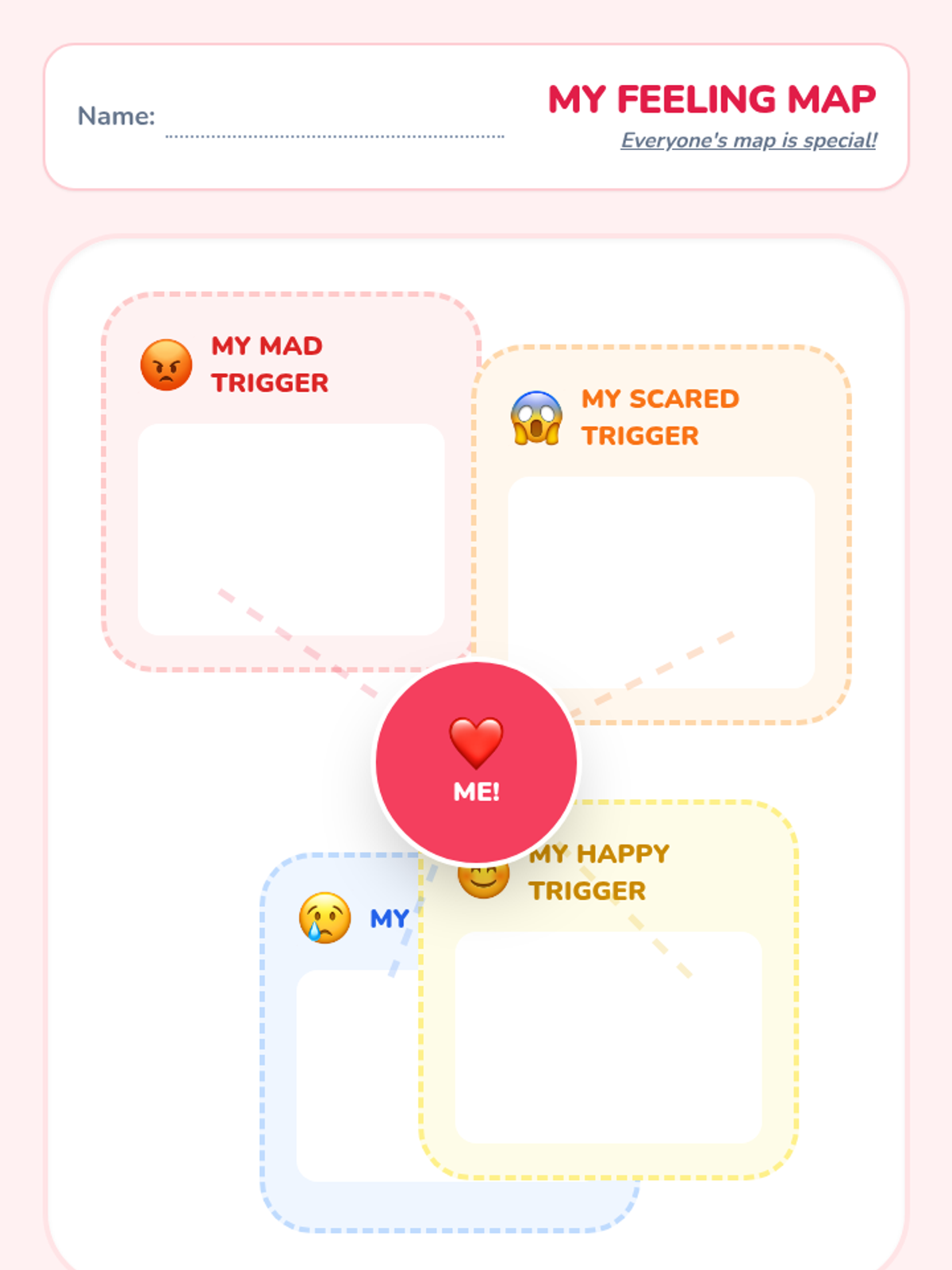
Students create personal maps of their own emotional triggers, normalizing that different events affect people in different ways.
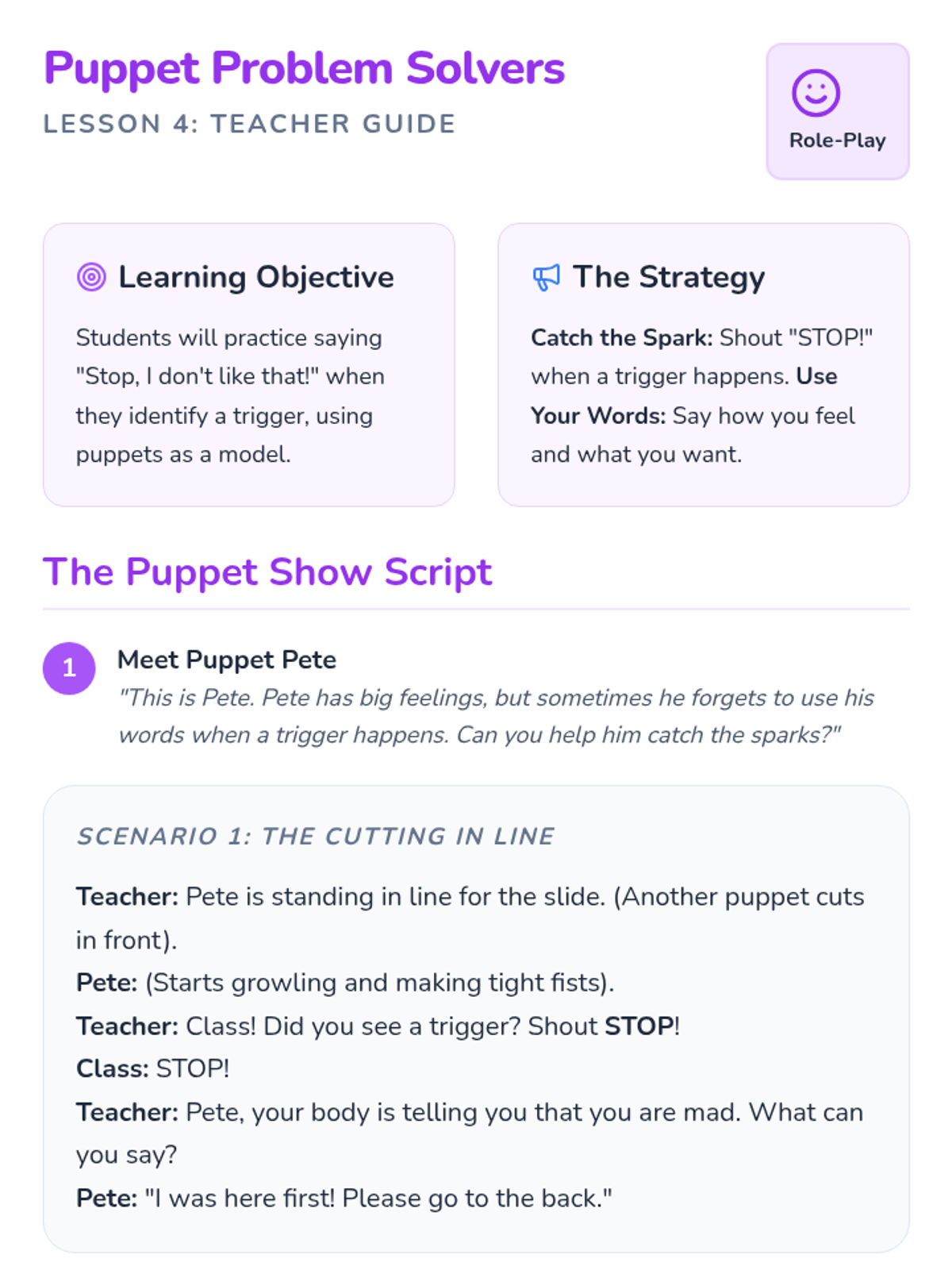
Using puppets, students practice identifying triggers and using verbal strategies to respond appropriately to social antecedents.
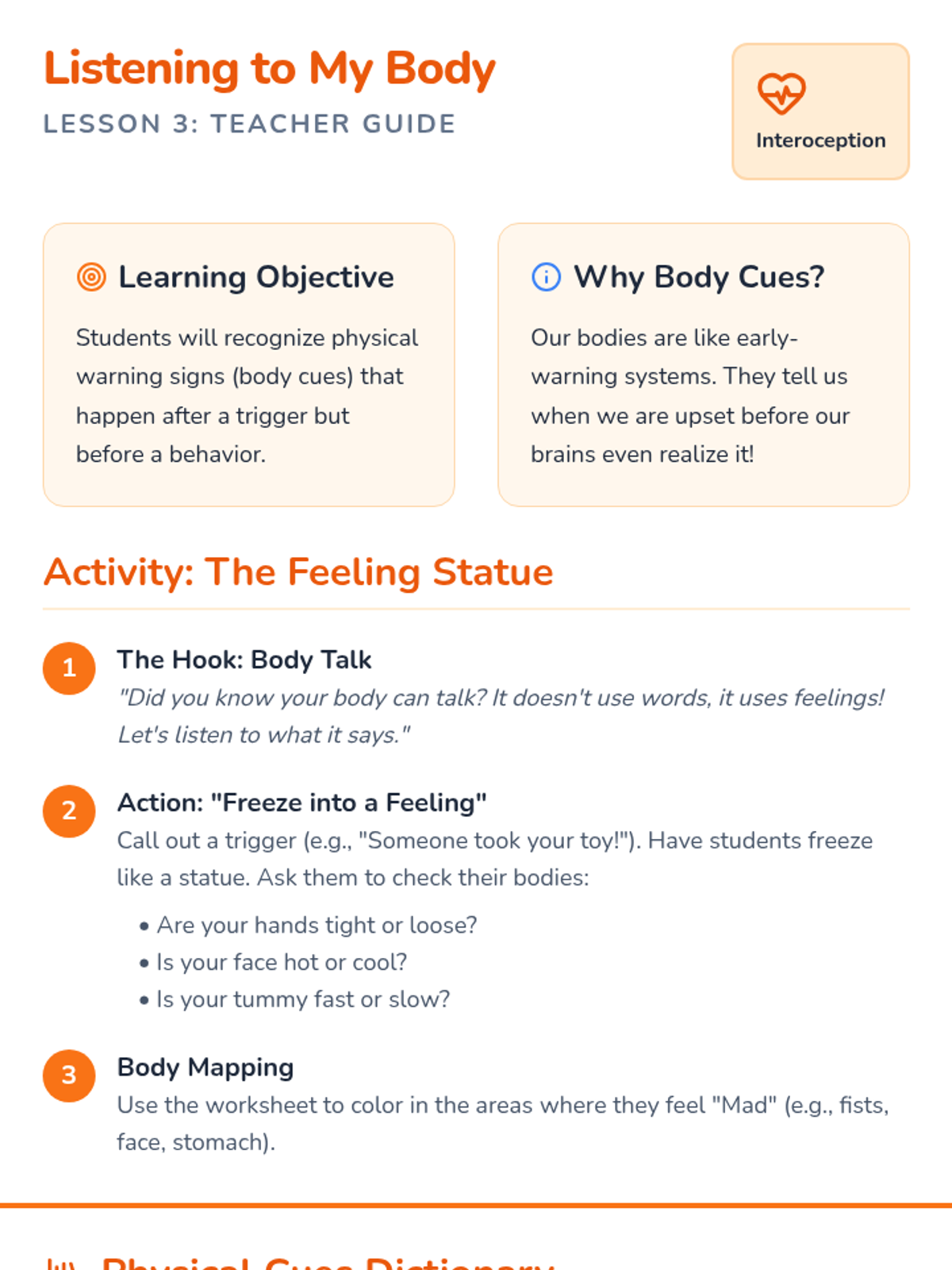
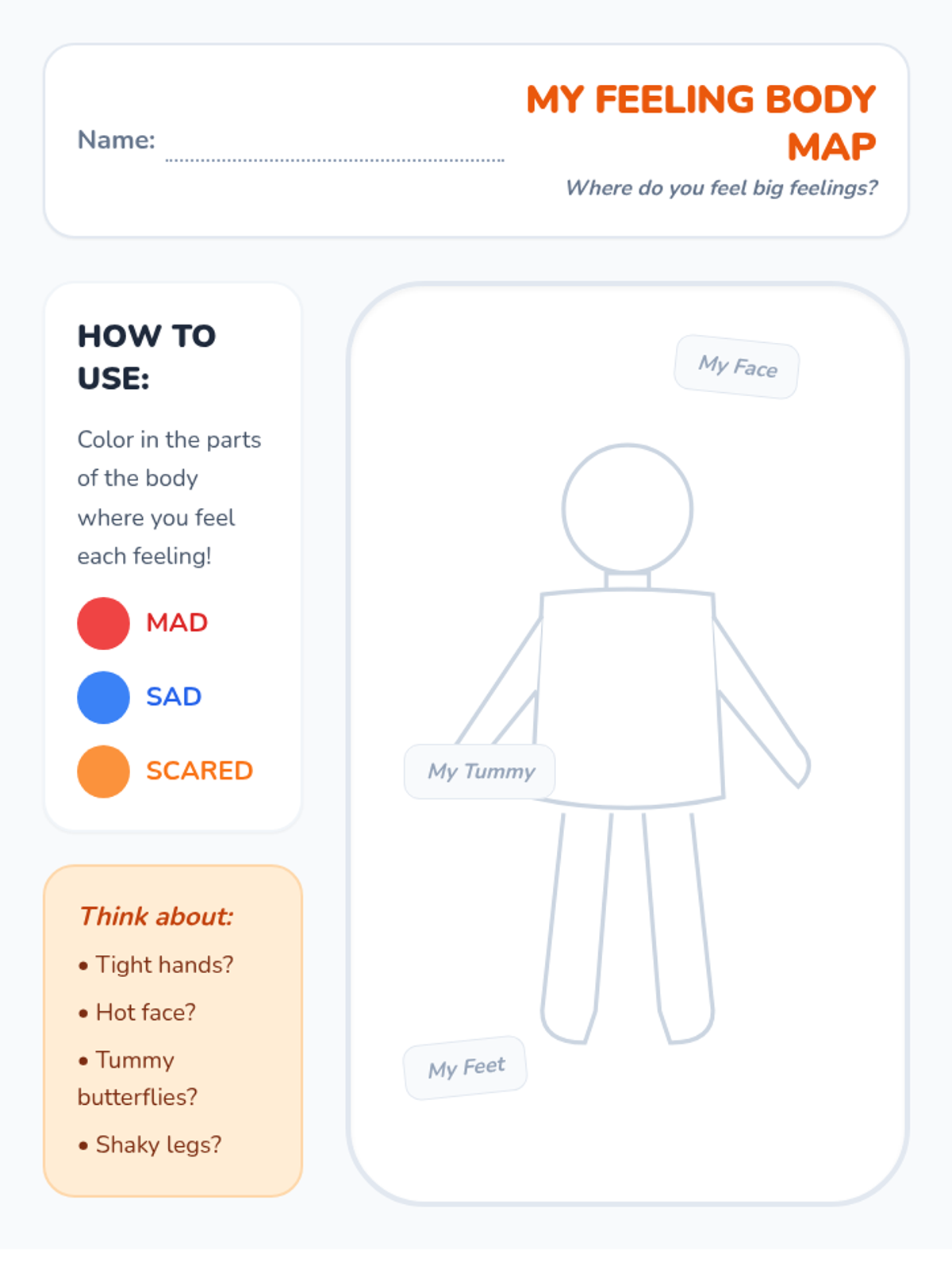
Students learn to recognize the physical warning signs their bodies give them after a trigger occurs but before a big behavior.
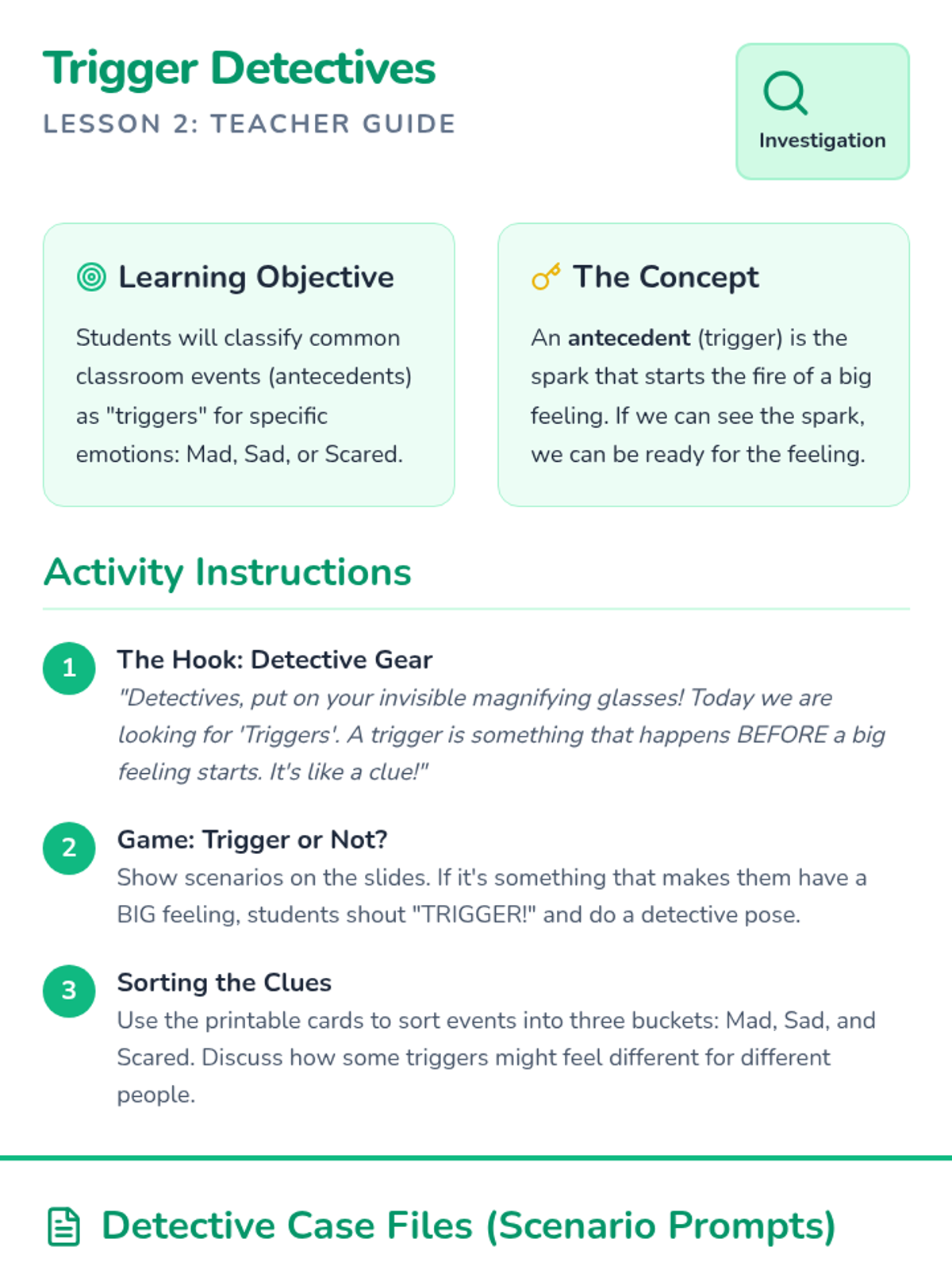
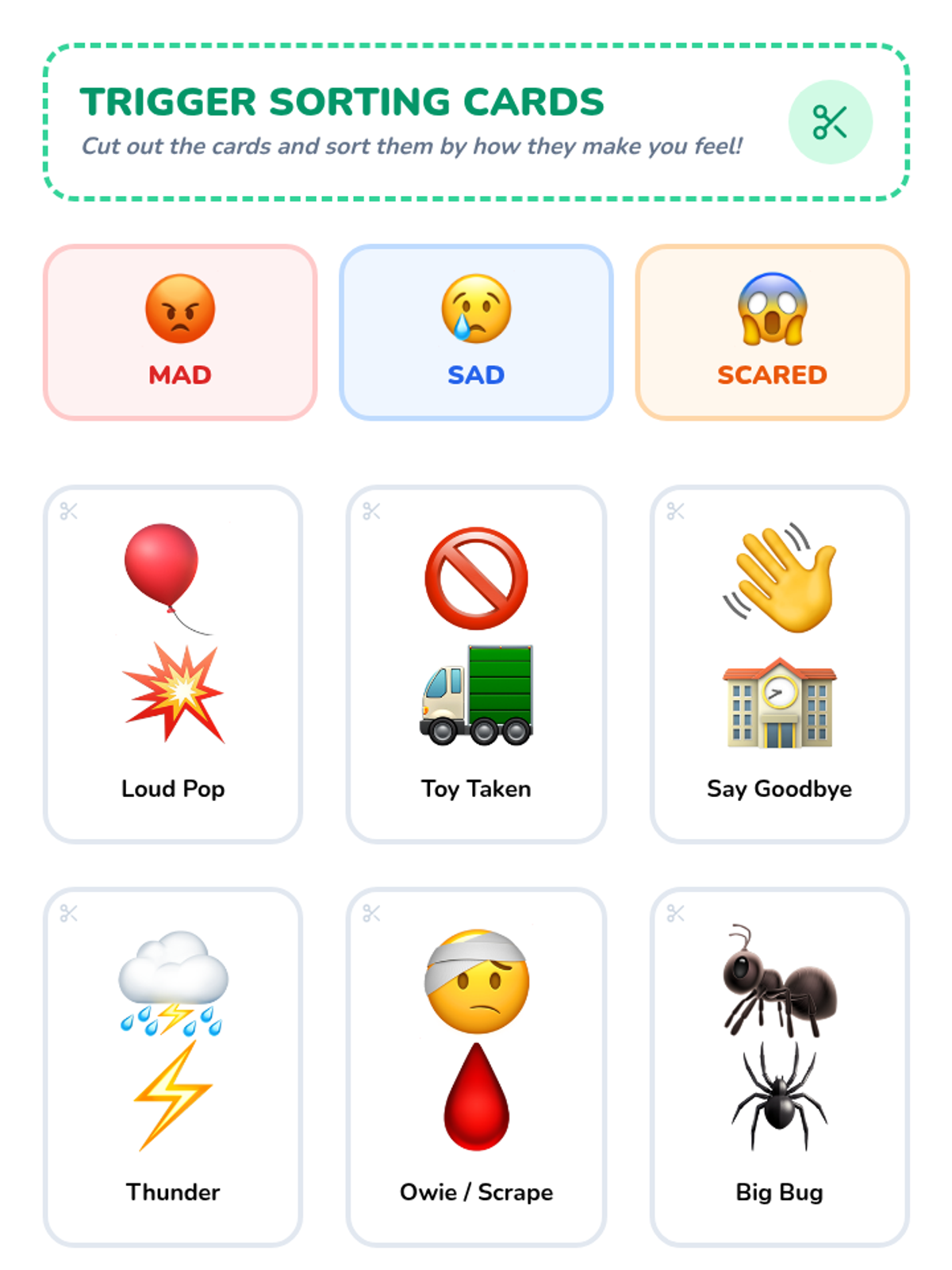
Students classify common classroom scenarios as triggers for different emotions, building a vocabulary for cause-and-effect.
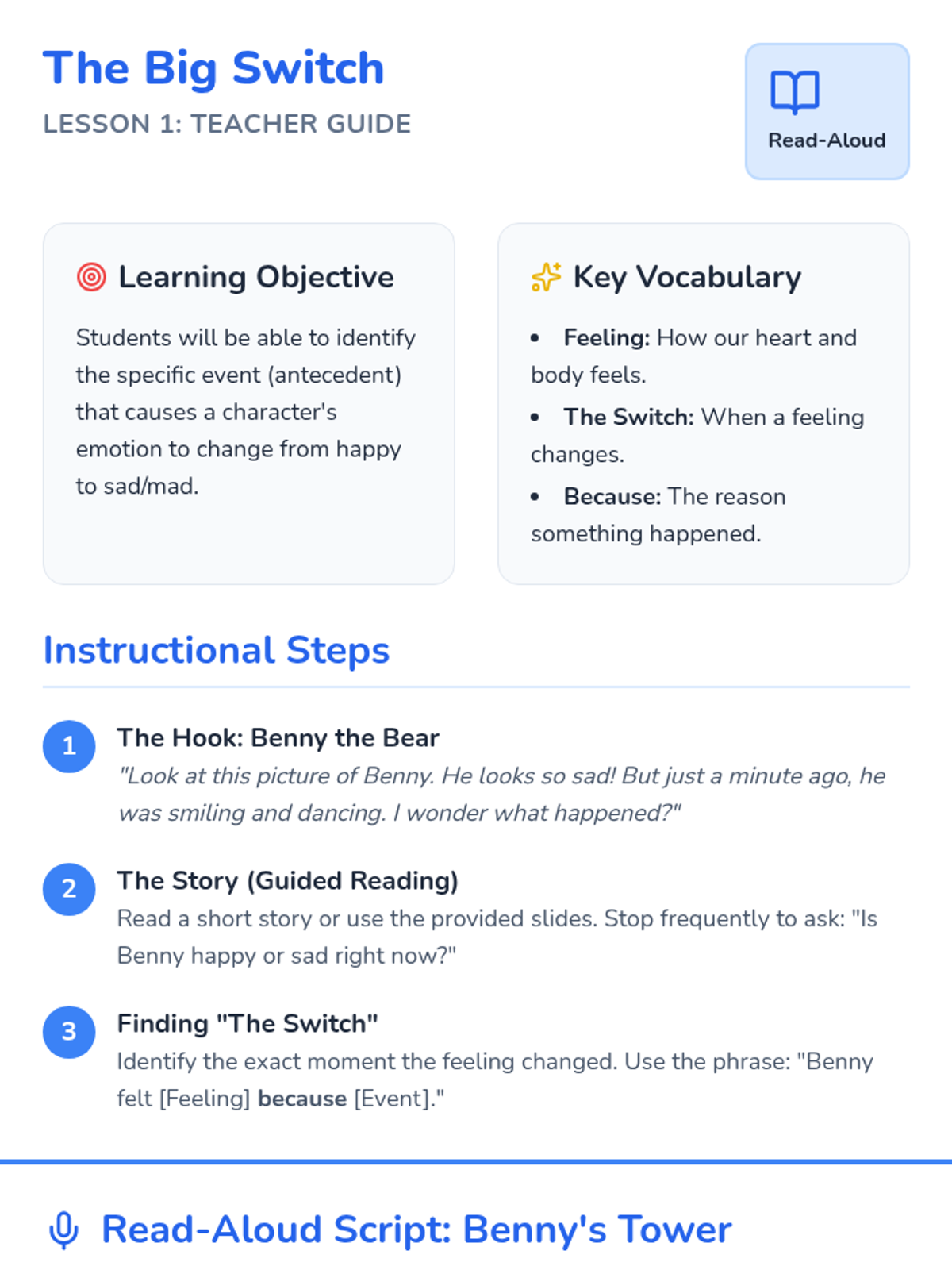
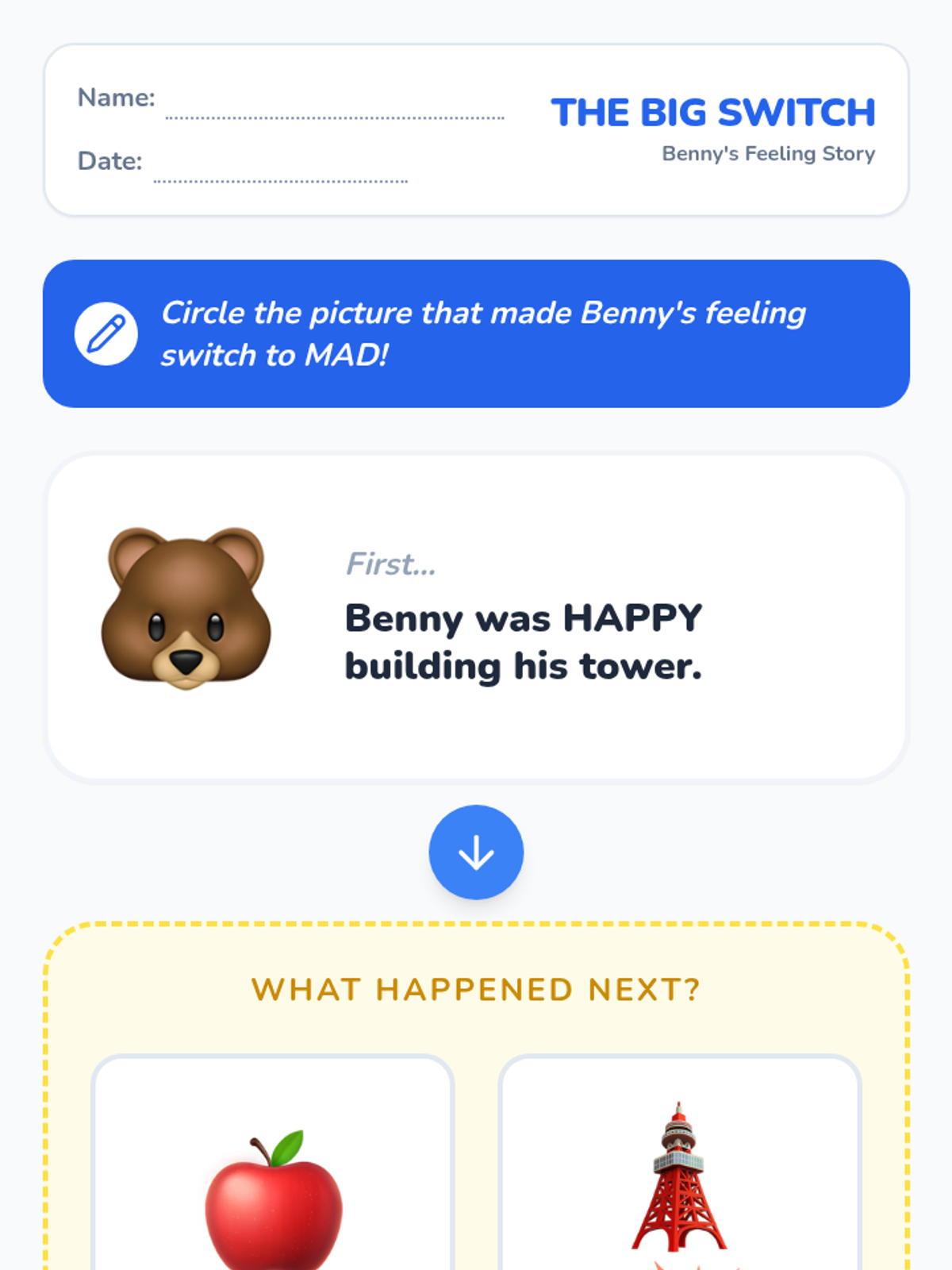
Students observe a character's emotional shift during a story and identify the specific moment or cause that changed their feeling.
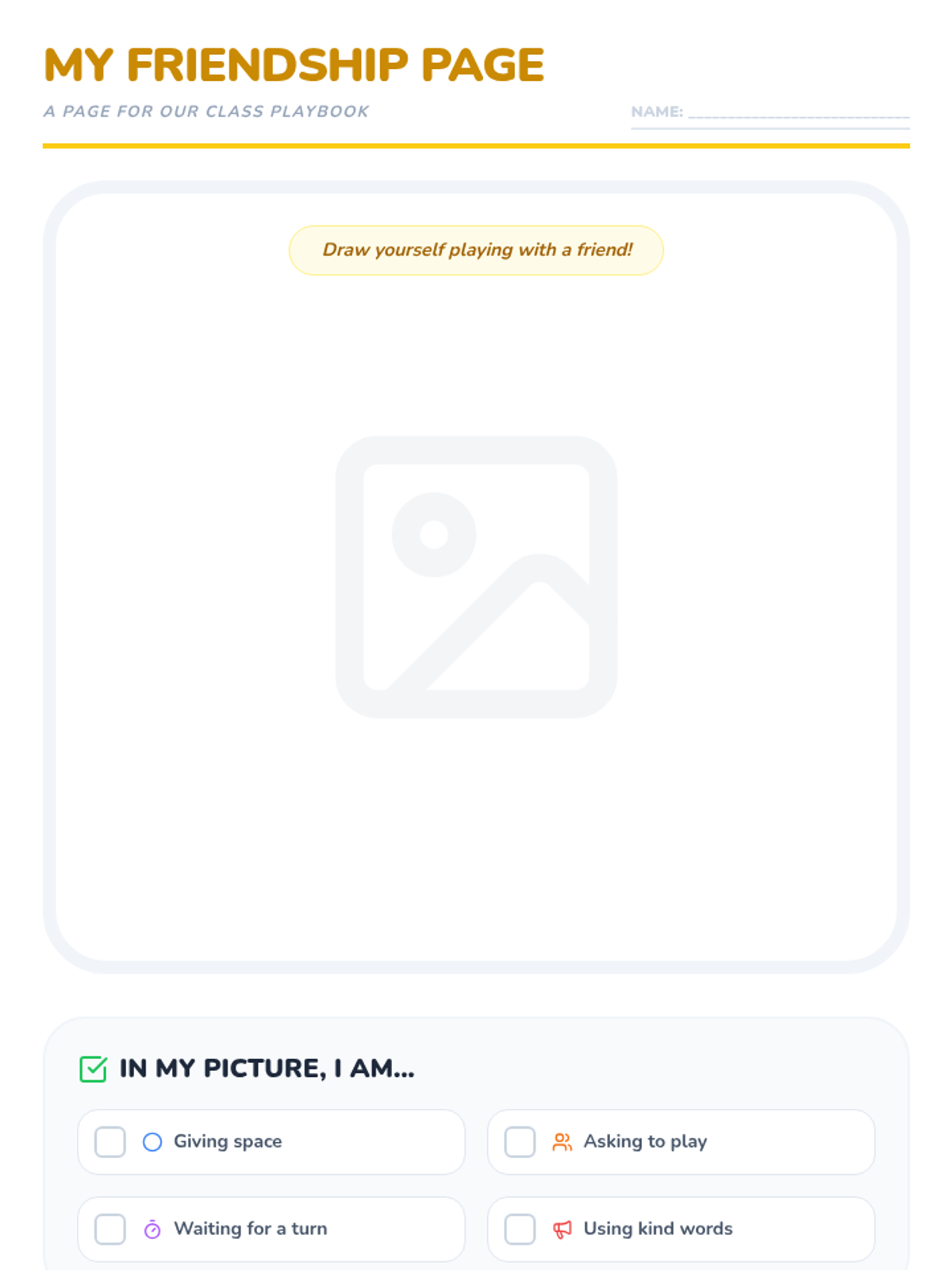
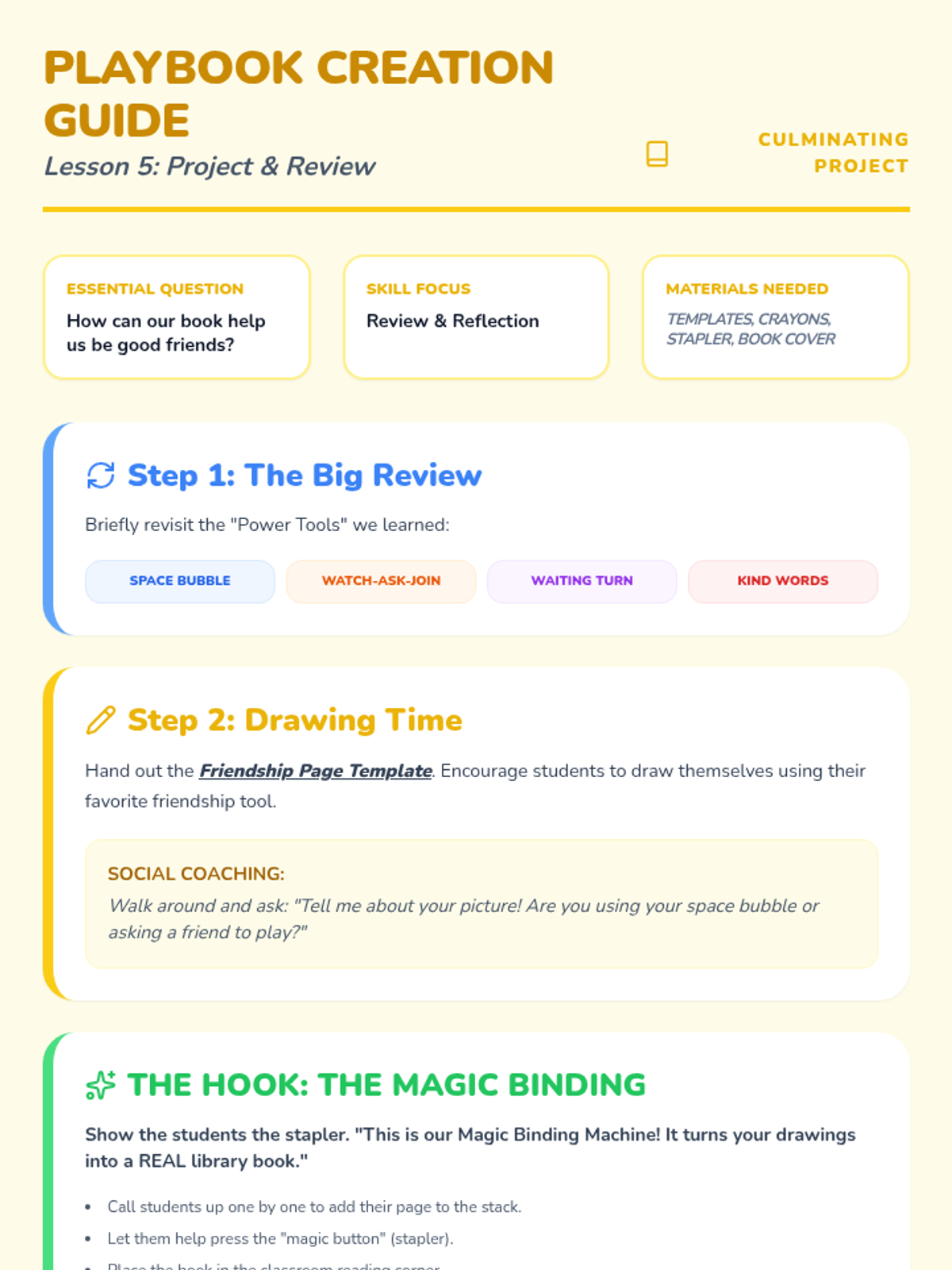
Students create and present a page for the class 'Friendship Playbook', reflecting on their favorite social skill.
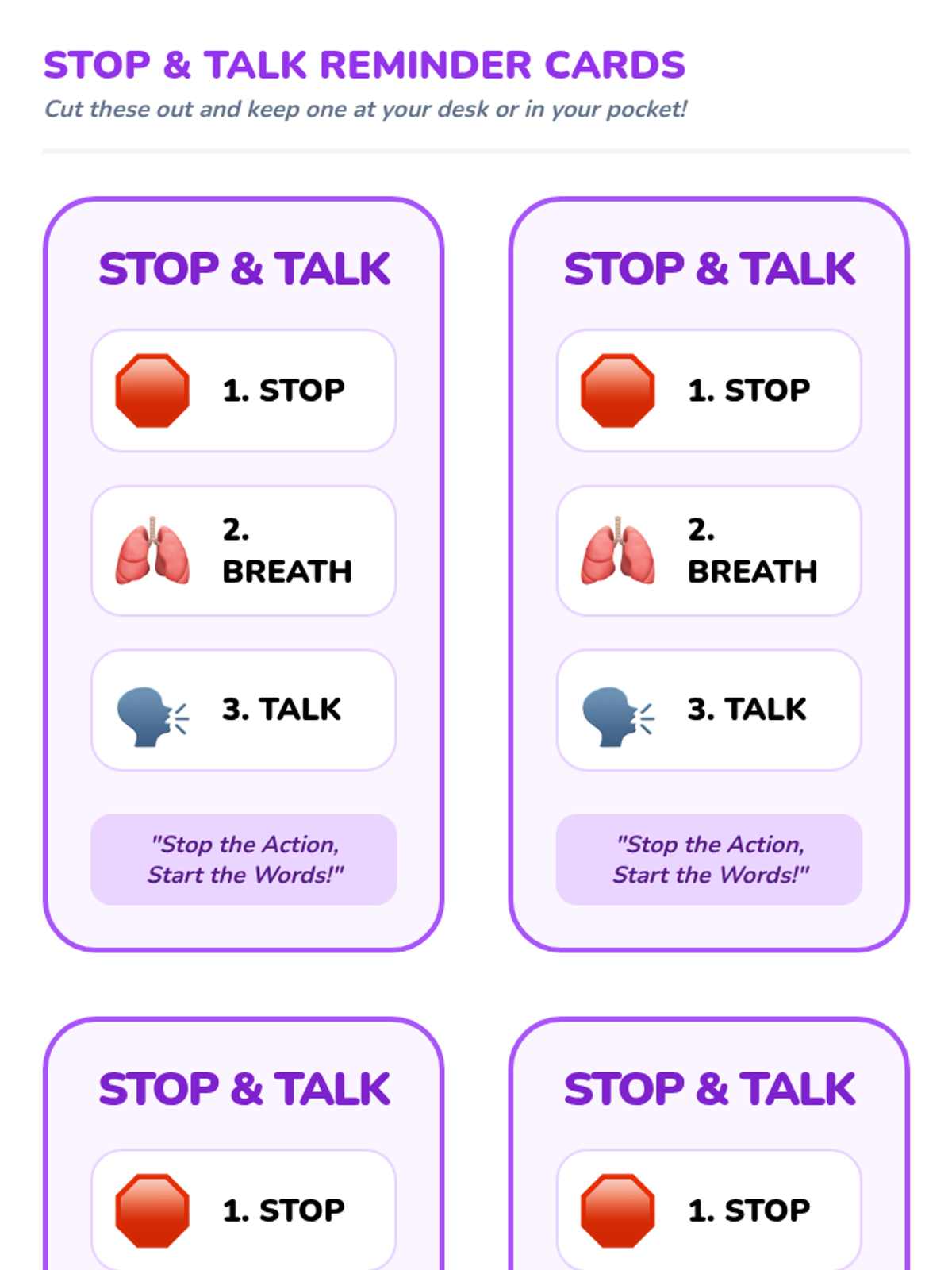
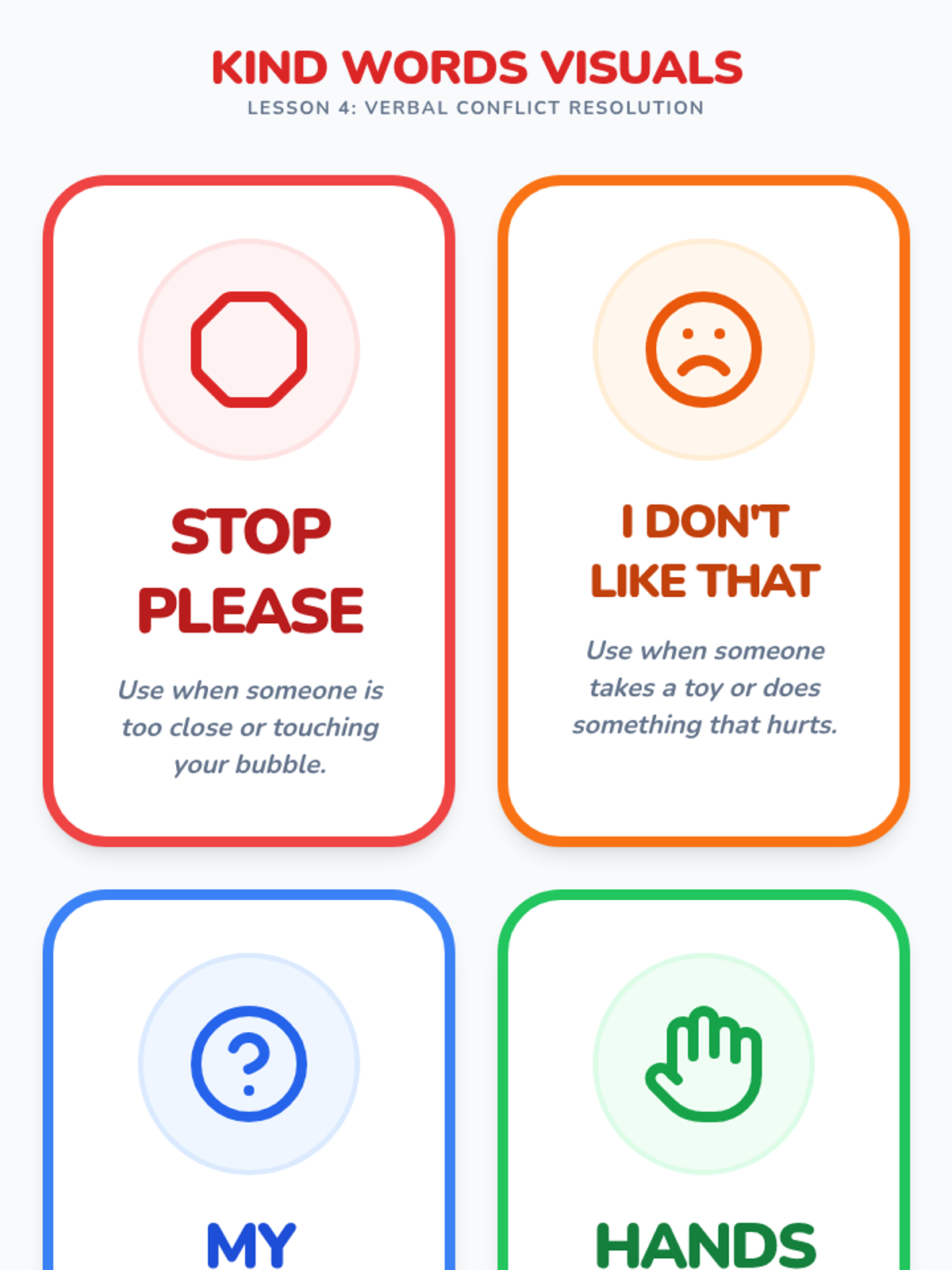
Students practice using verbal scripts like 'Stop please' and 'I don't like that' as alternatives to physical reactions during conflict.
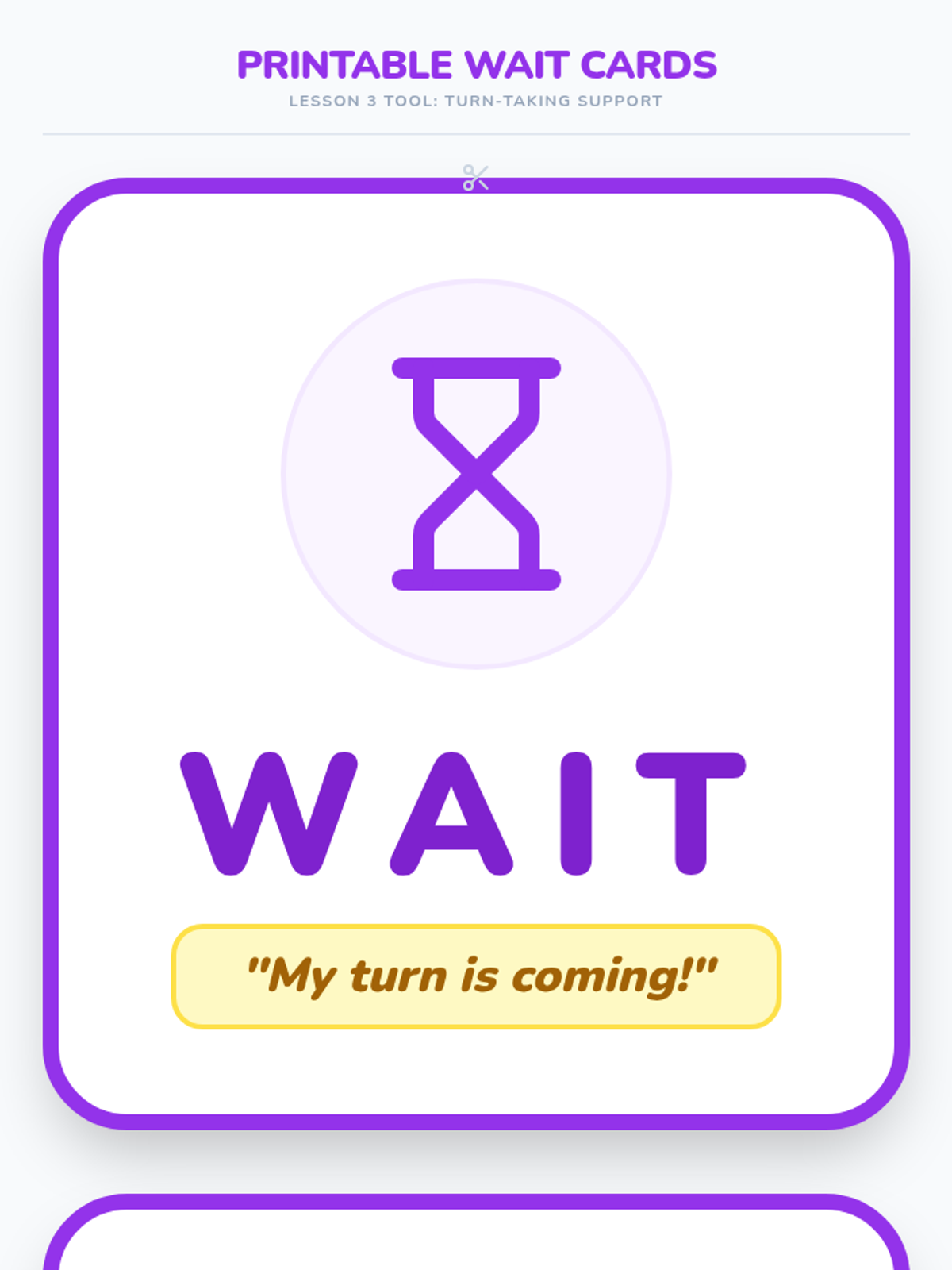
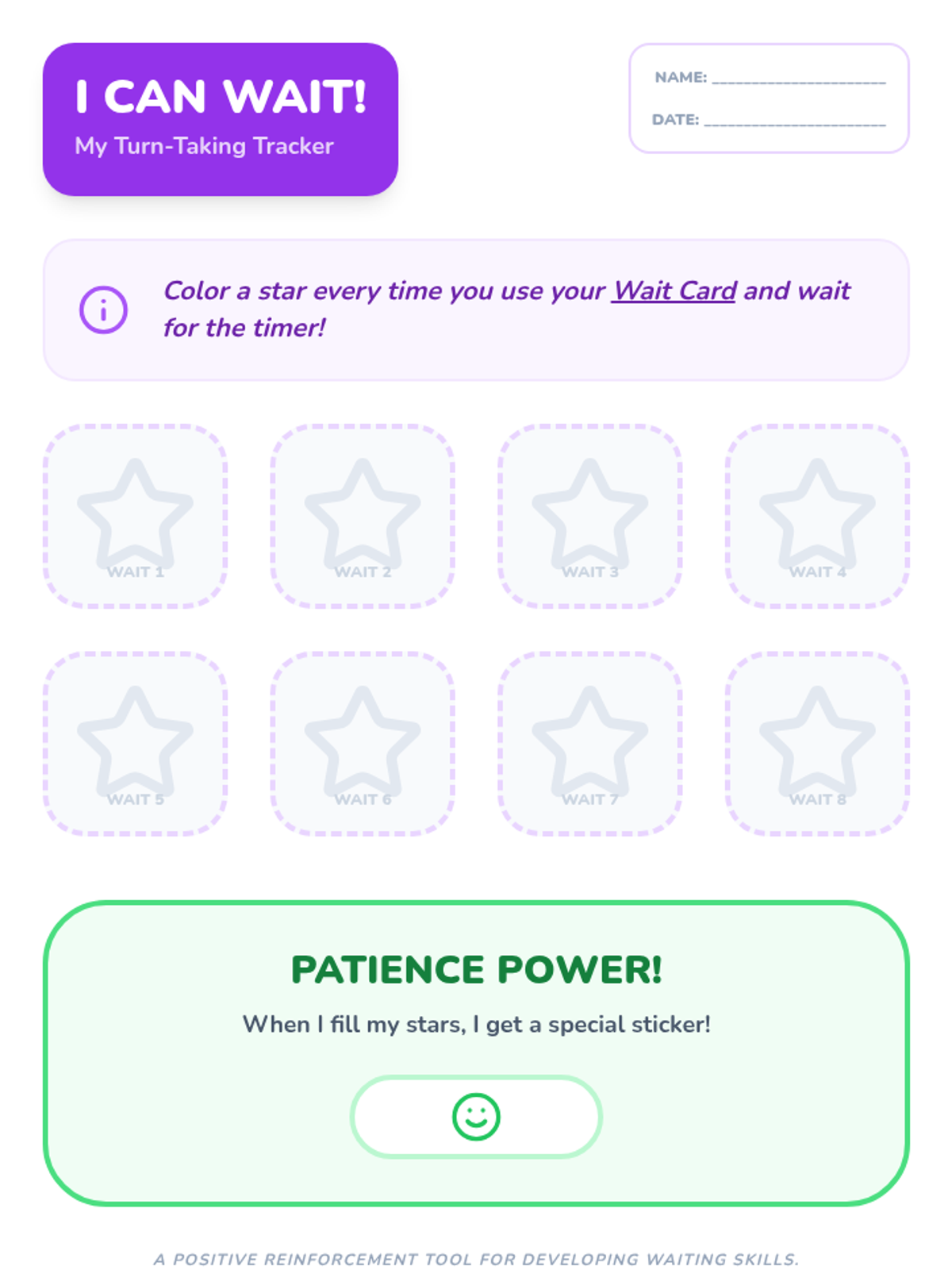
Students explore a social story about waiting and turn-taking, using visual 'wait cards' and timers to build patience.
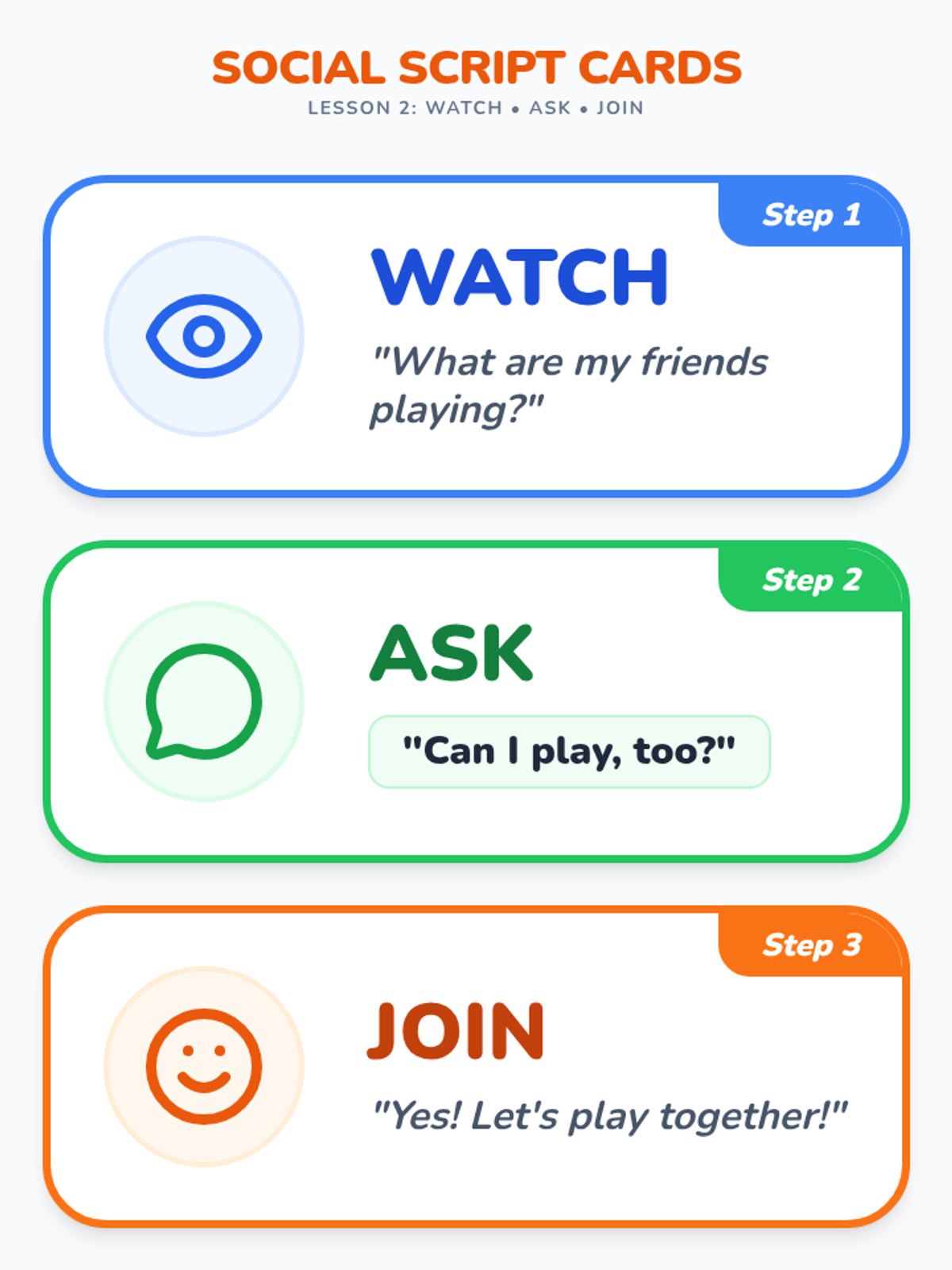
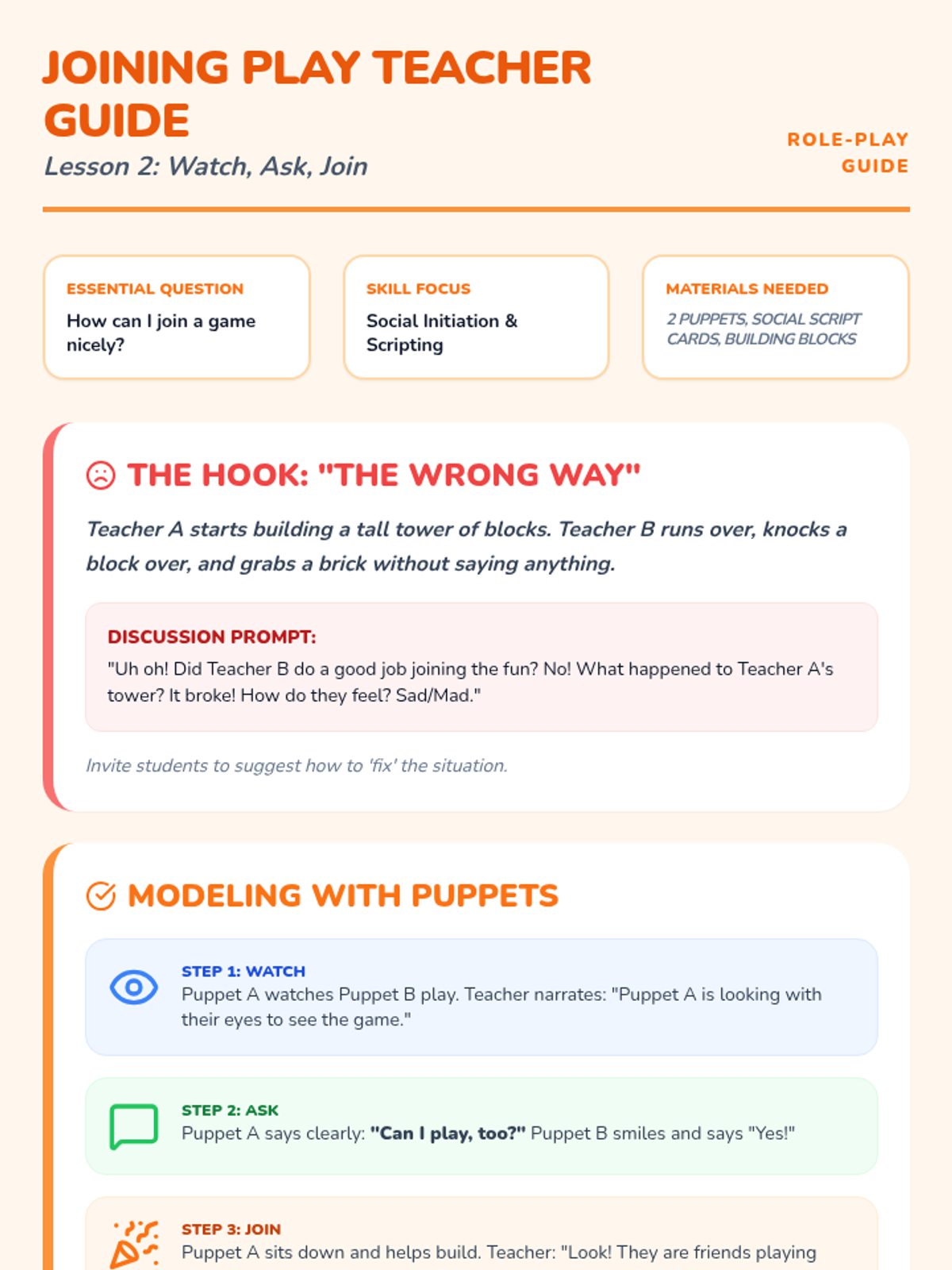
Students learn and practice the 'Watch, Ask, Join' script for entering social play situations respectfully using puppets.
Students use hula hoops to visualize 'space bubbles' and learn about keeping hands to oneself through a social story.