Stop-and-think strategies, impulse management, and SMART goal setting for personal growth. Develops internal motivation, stress reduction techniques, and resilience through proactive planning and monitoring.
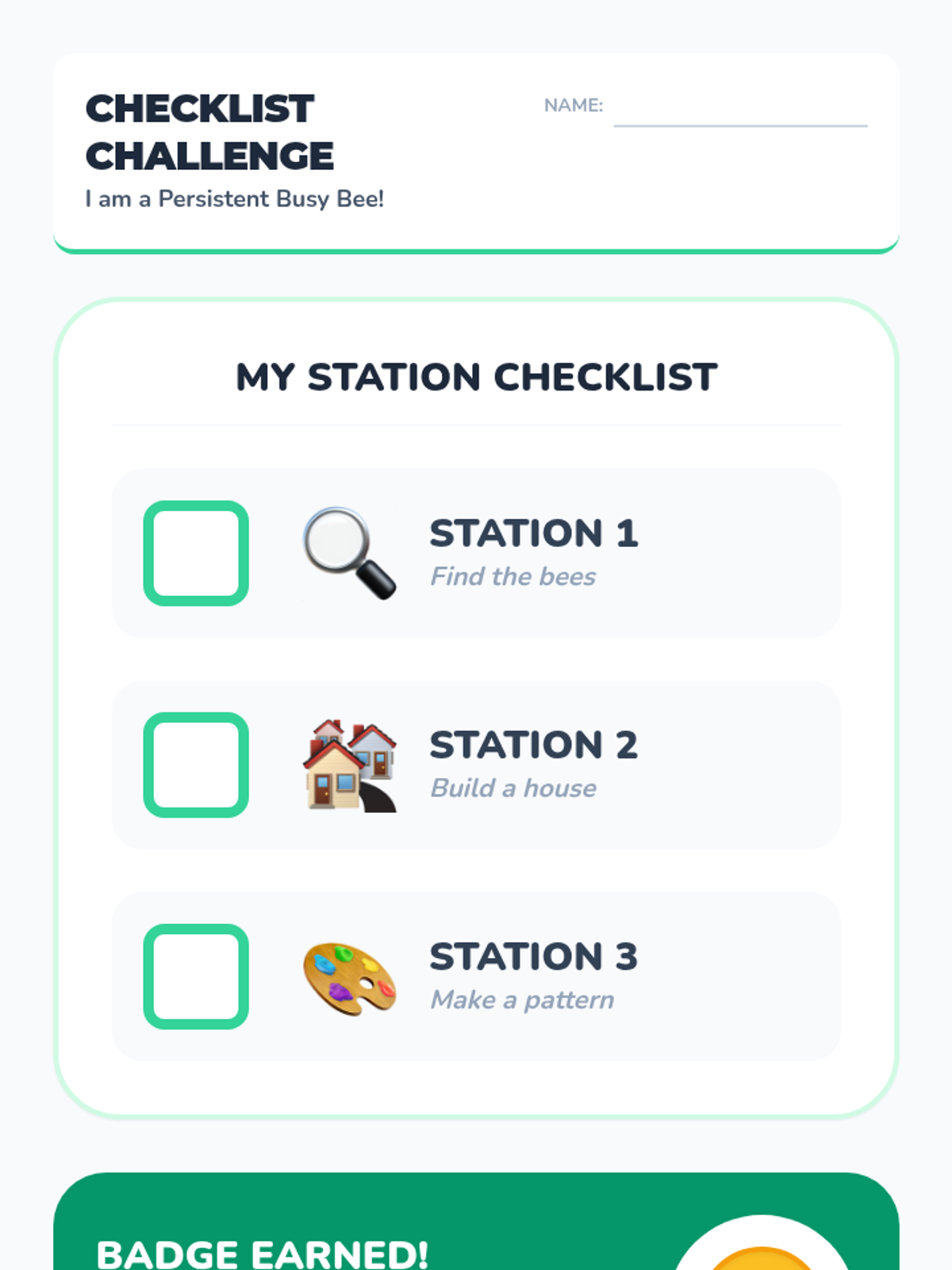
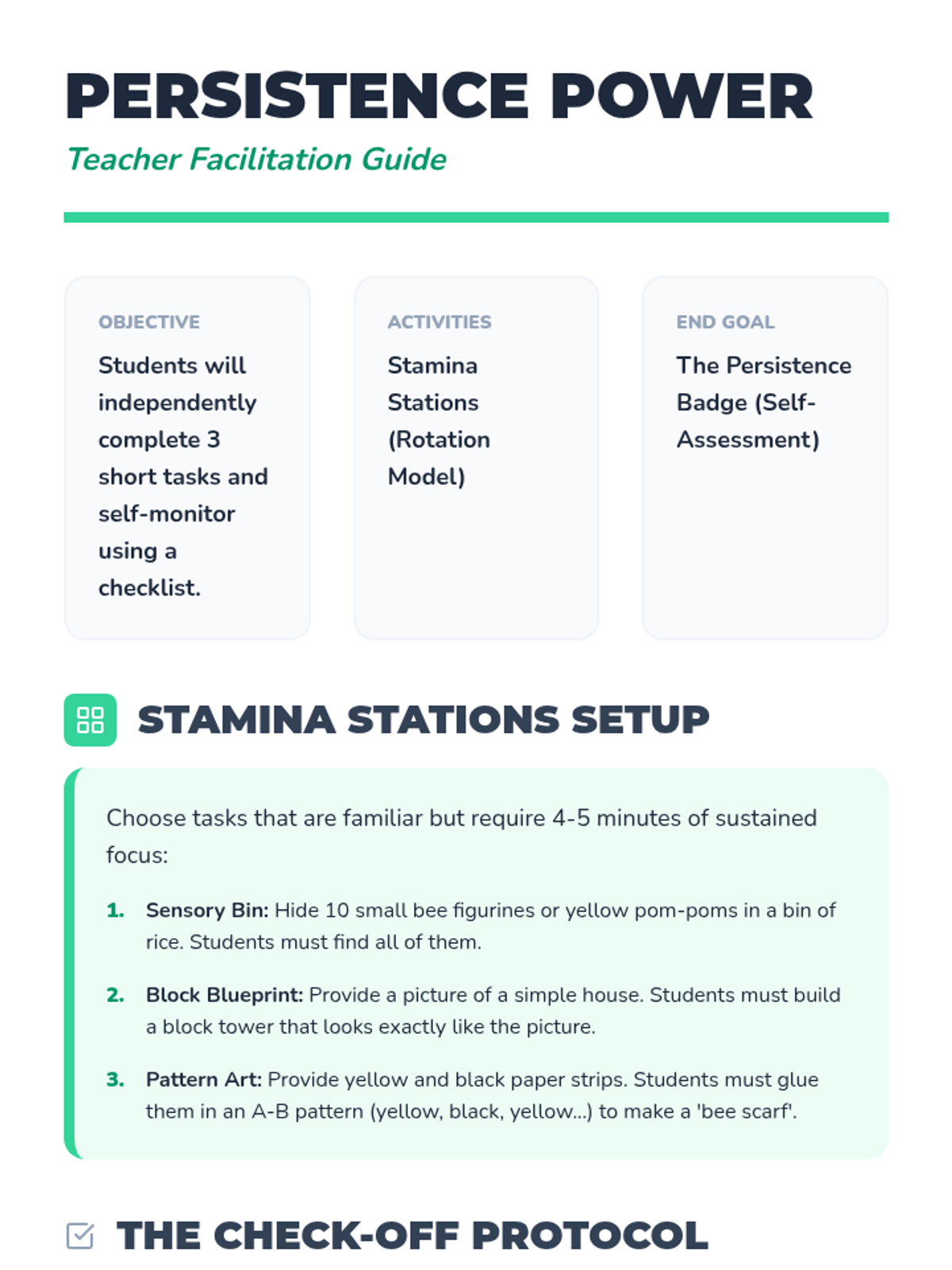
In this culminating lesson, students rotate through stations where they must complete tasks independently and check them off on a visual schedule. The focus is on self-assessing completion and building stamina.
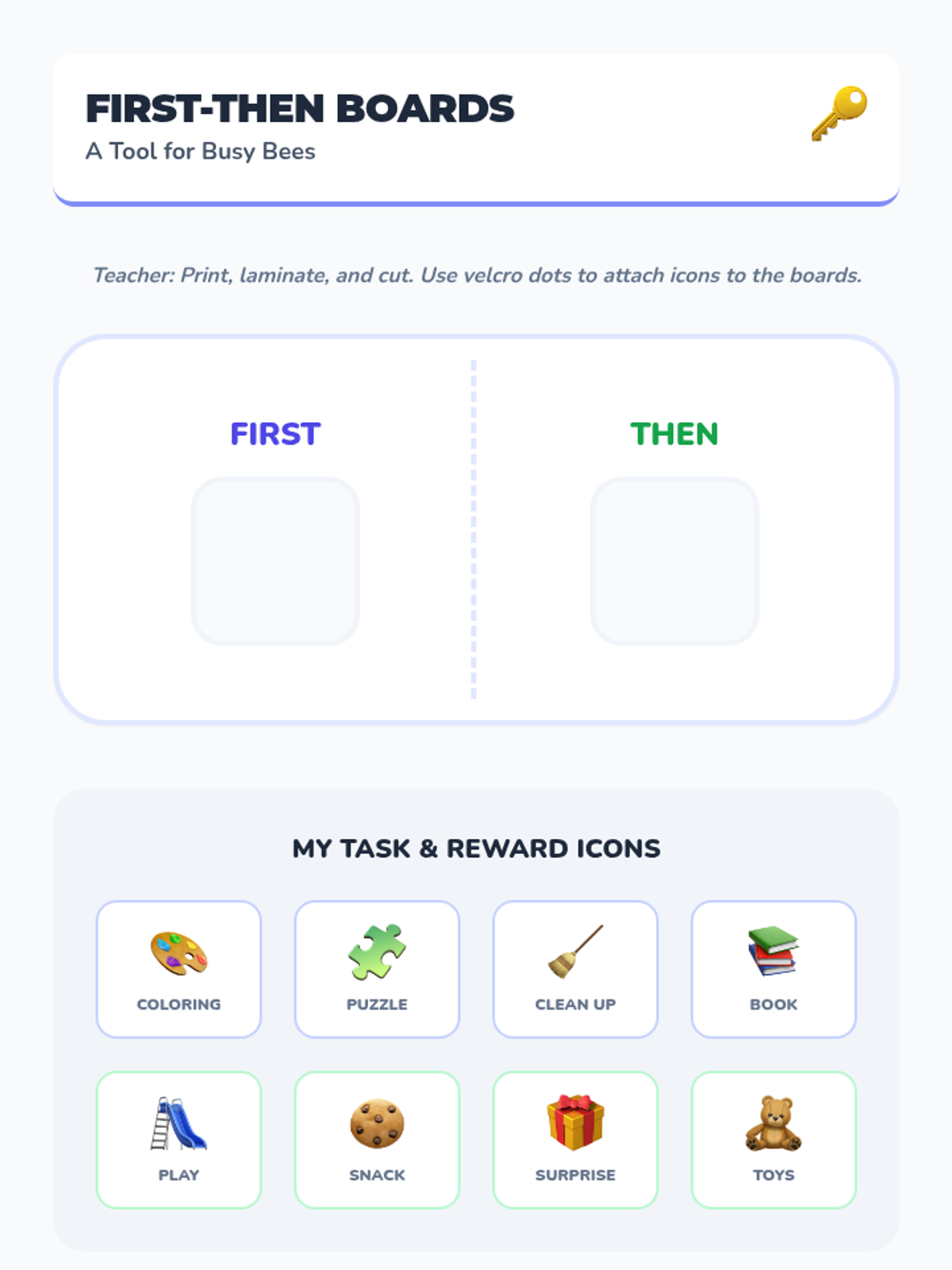
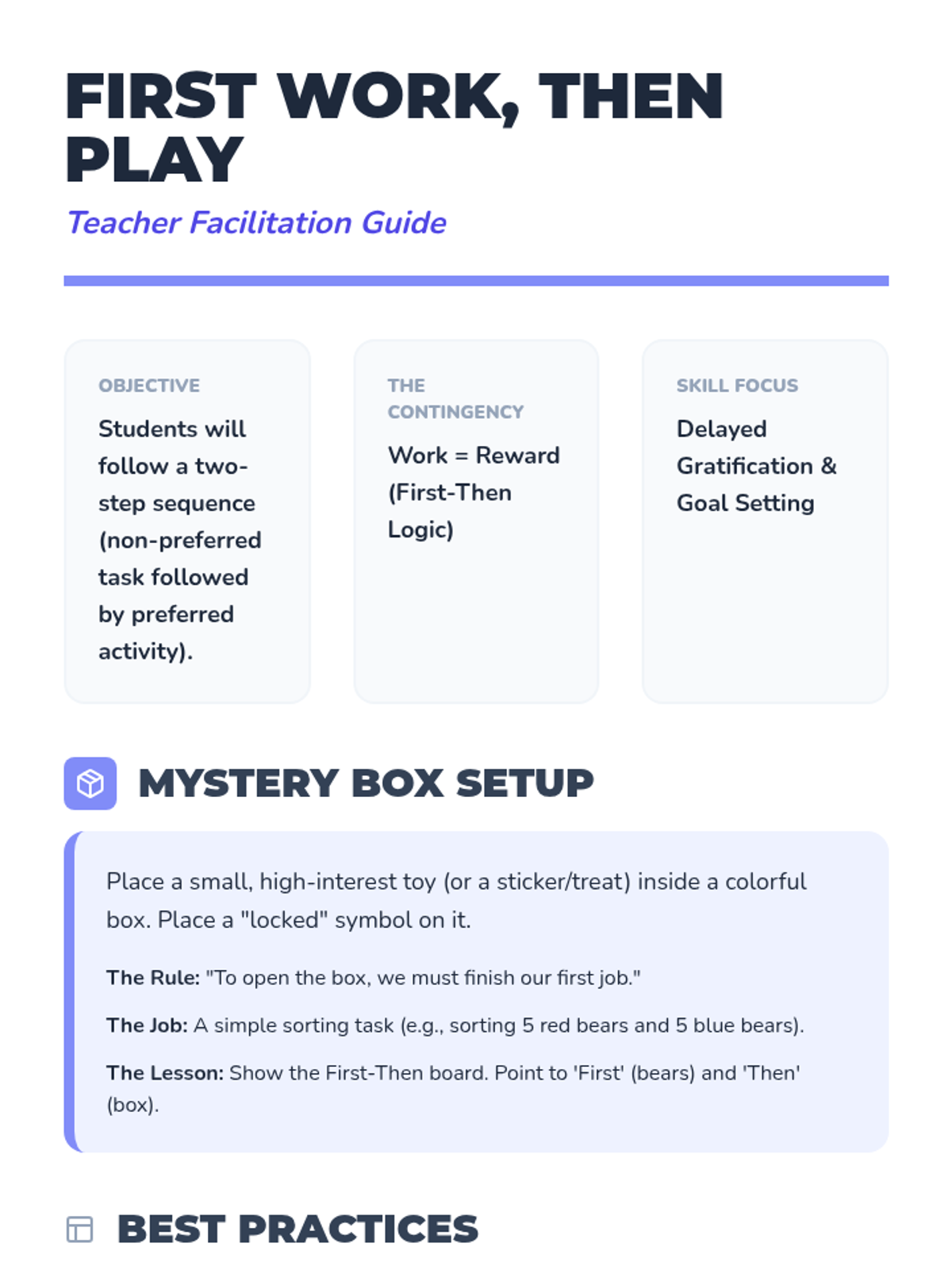
The lesson structures activities using 'First-Then' boards to teach the sequence of completing a requirement before accessing a reward. Students complete a short task to 'unlock' a preferred activity, reinforcing internal motivation.
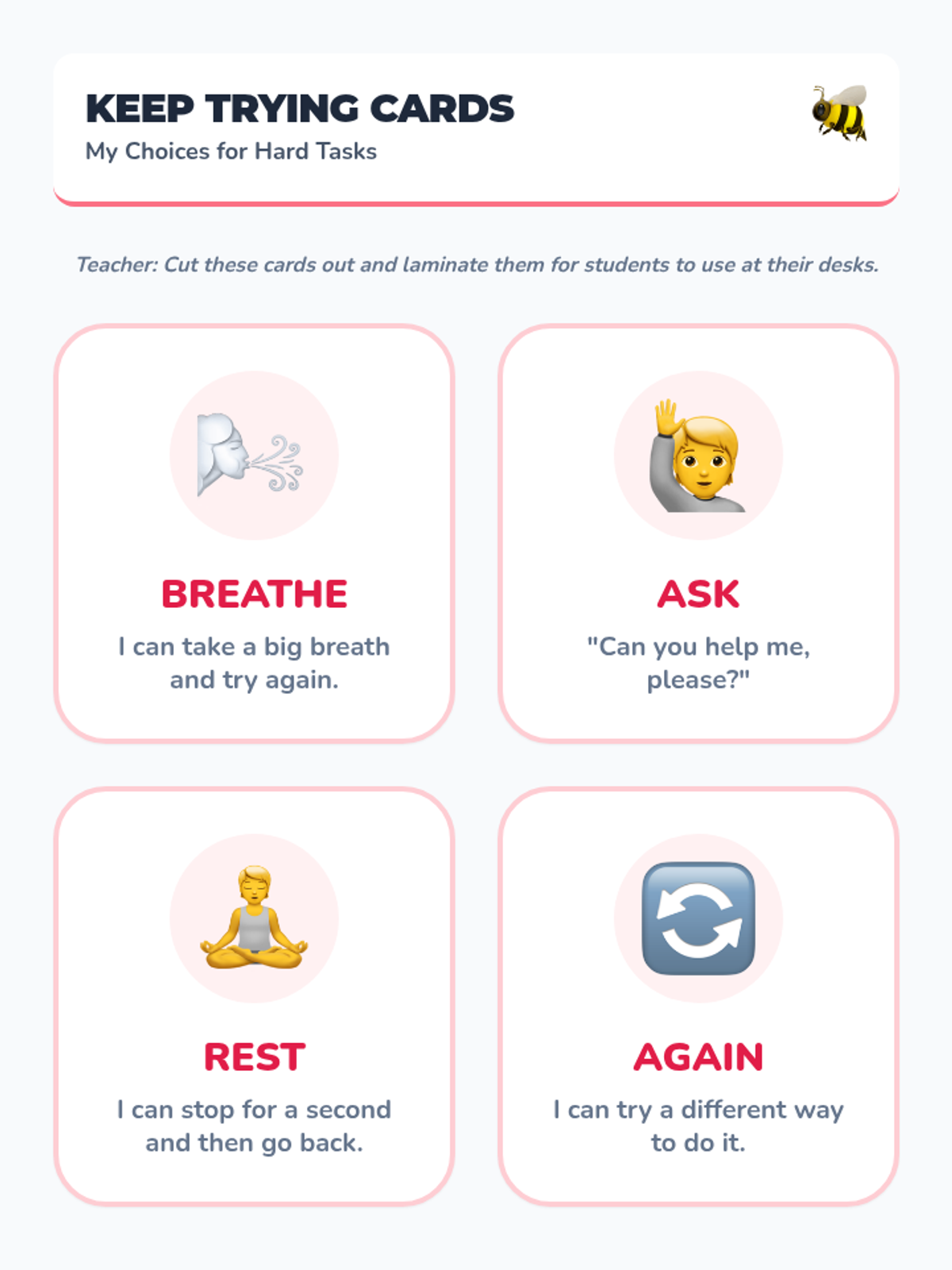
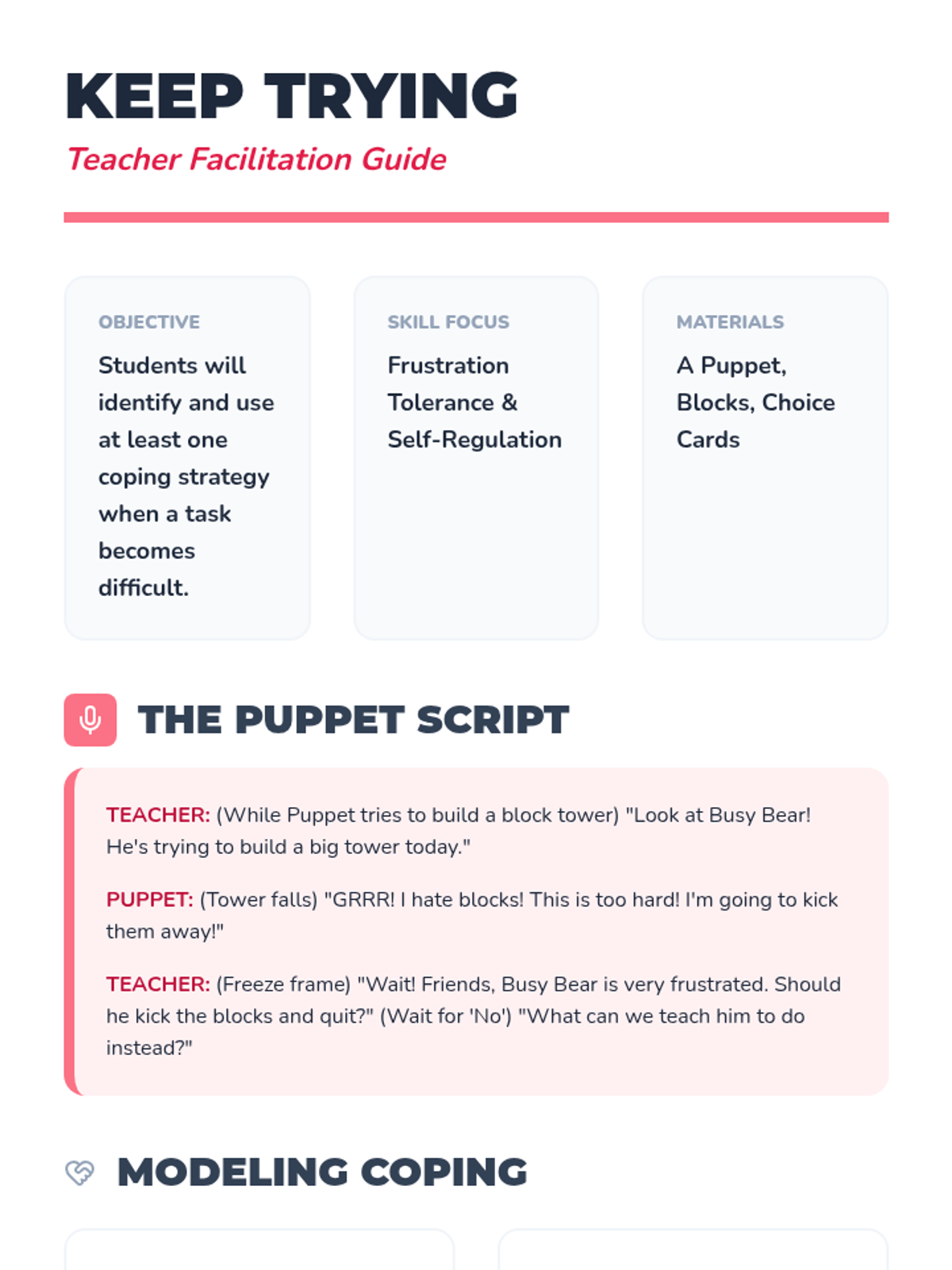
Students learn specific communication scripts and physical regulation techniques to use when a task gets hard. Through role-playing with puppets, the class practices asking for help or taking a break instead of quitting.
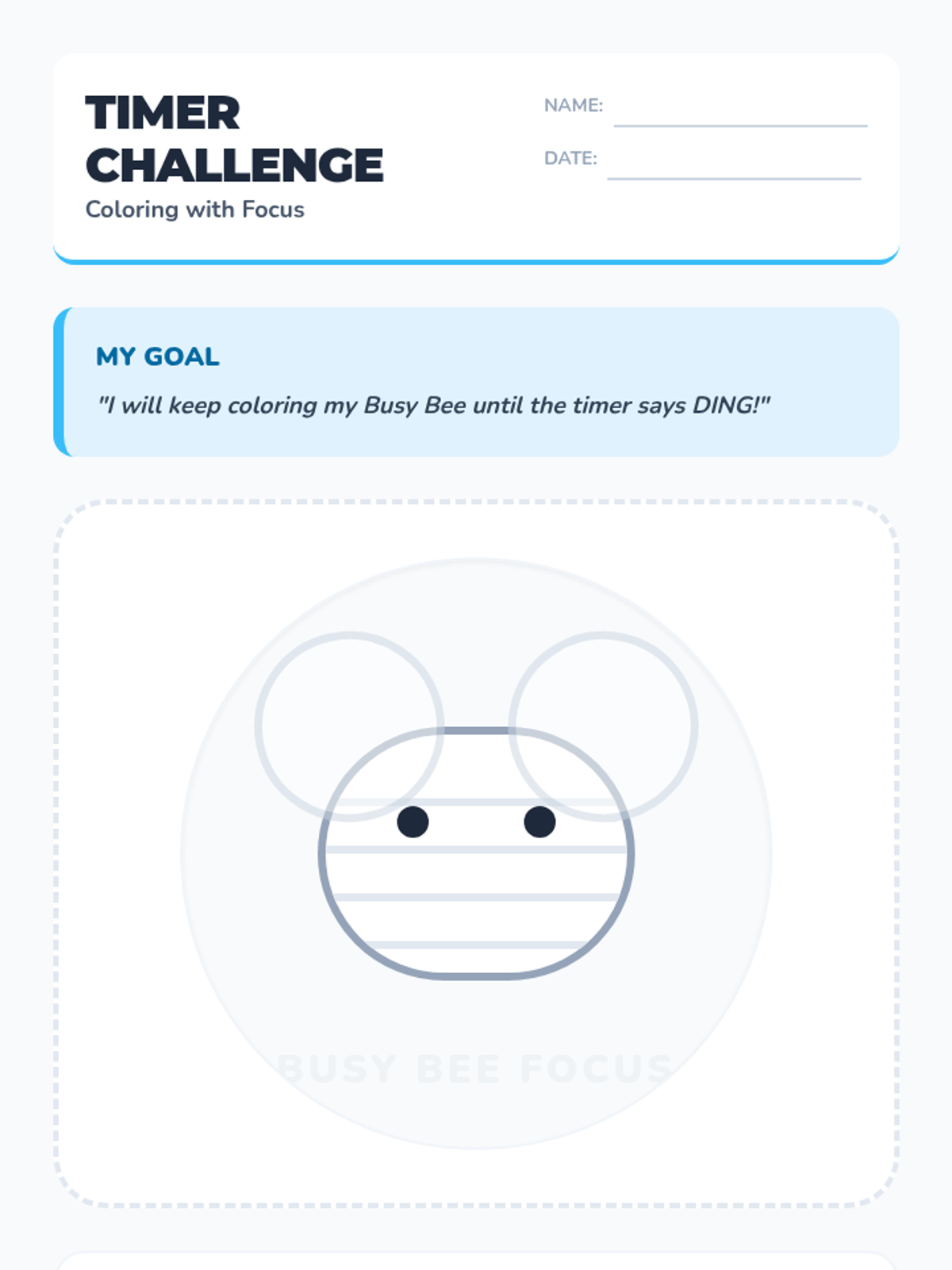
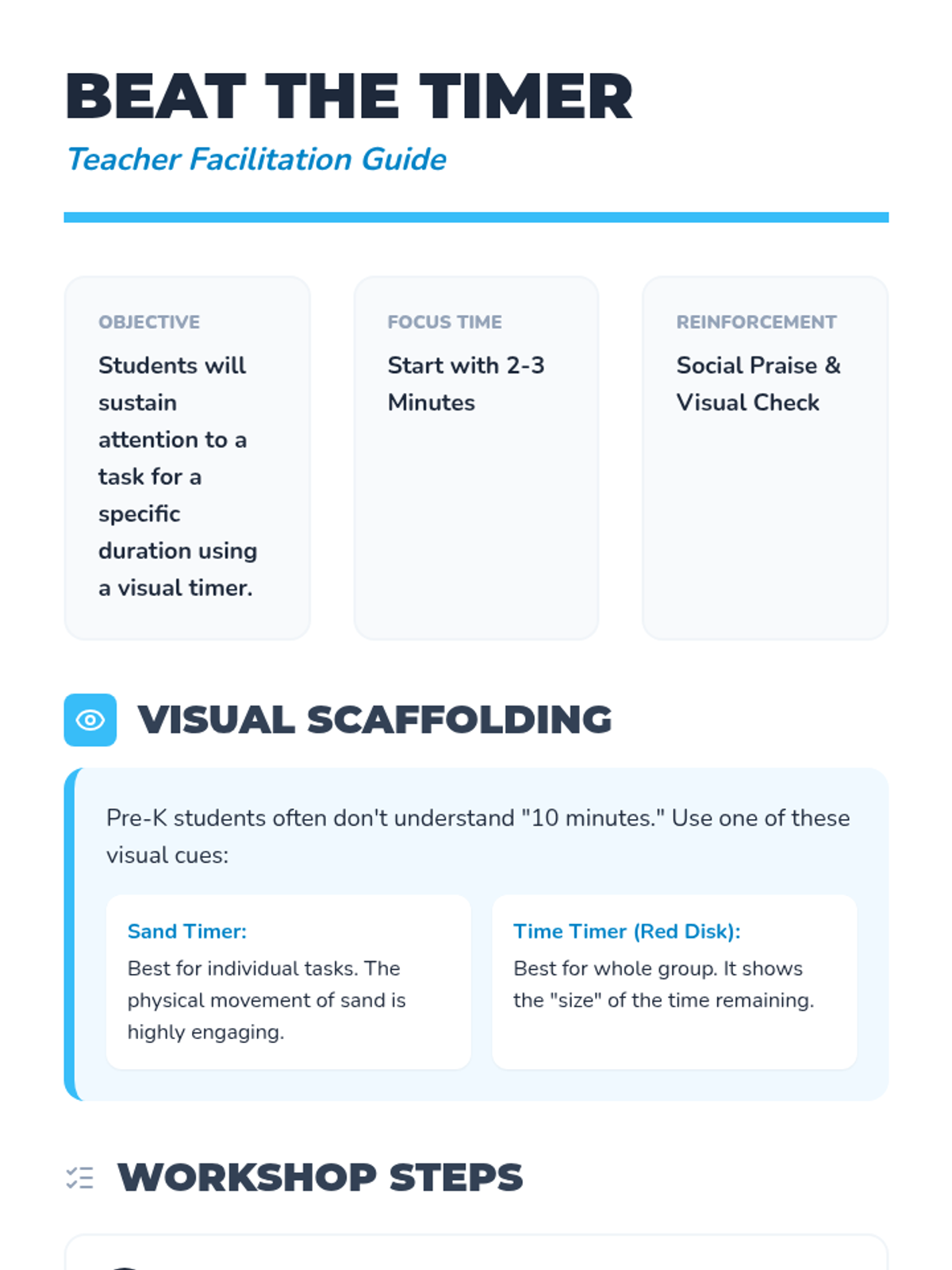
This lesson introduces visual timers as tools to help students visualize the passage of time during work periods. Students engage in a high-interest task that must continue until the timer ends, teaching them to pace their effort.
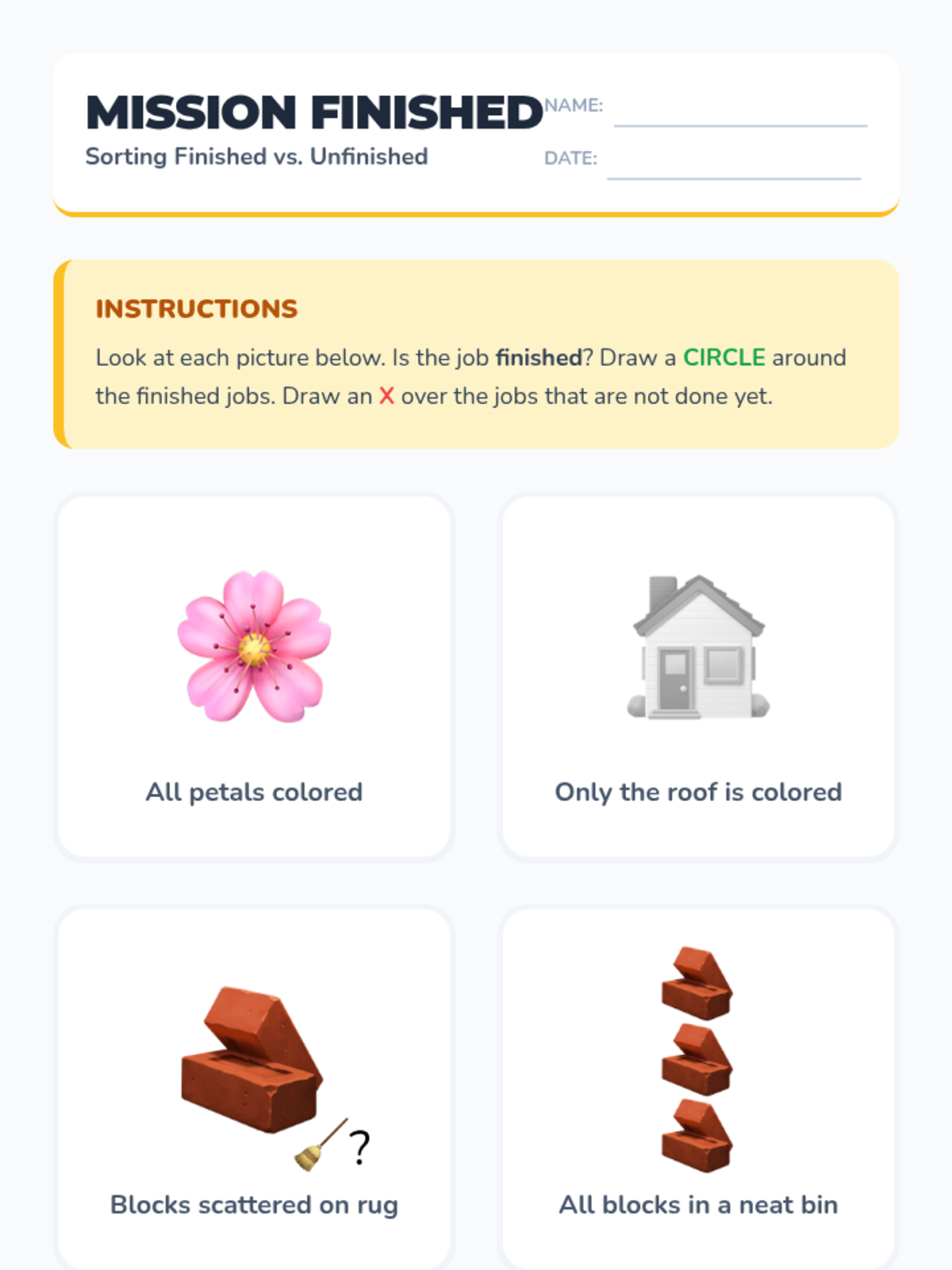
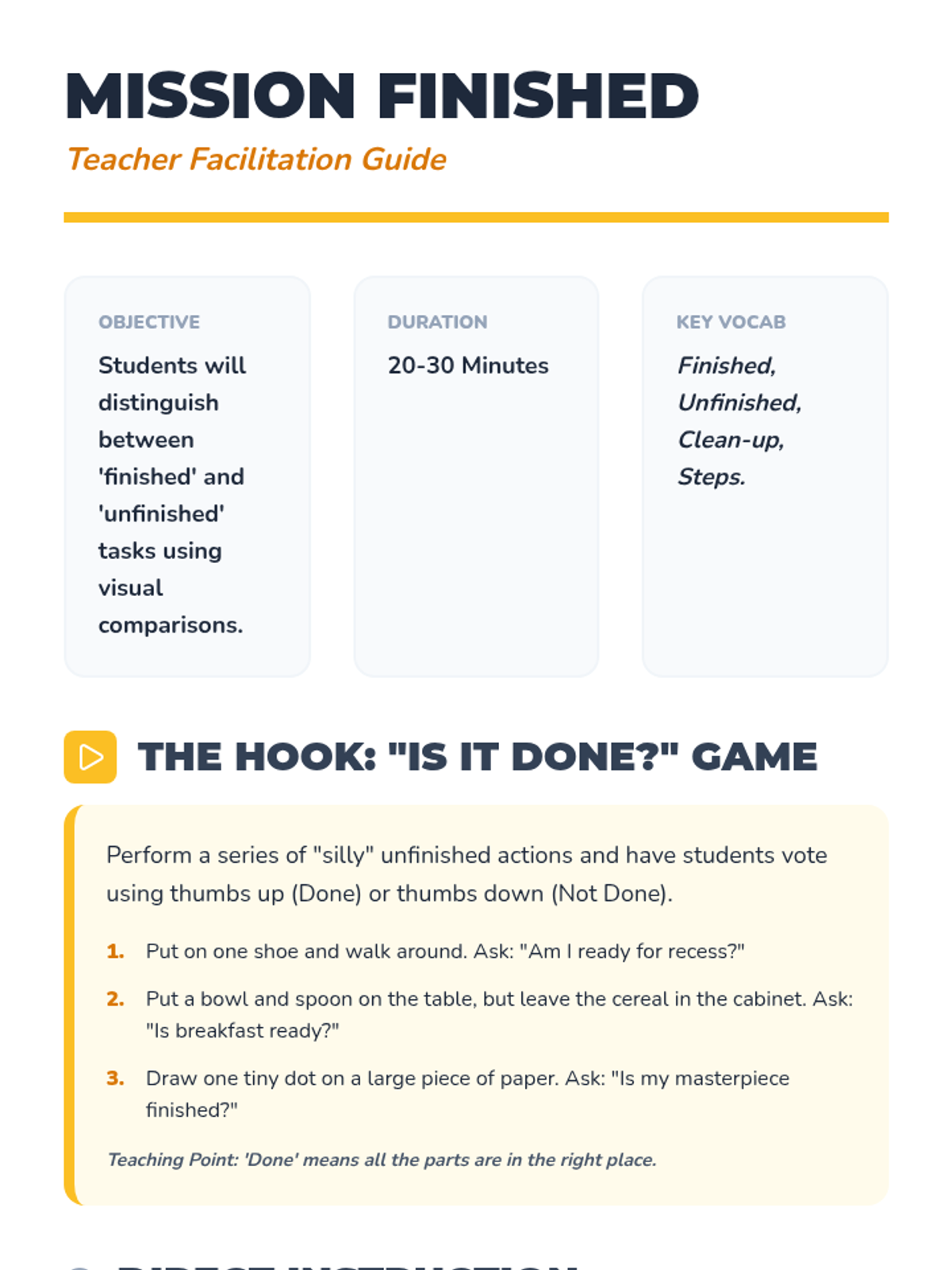
Students participate in a sorting activity to distinguish between 'finished' and 'unfinished' work using concrete visual examples. This lesson establishes the baseline expectation for quality and completion through the 'Is It Done?' game.
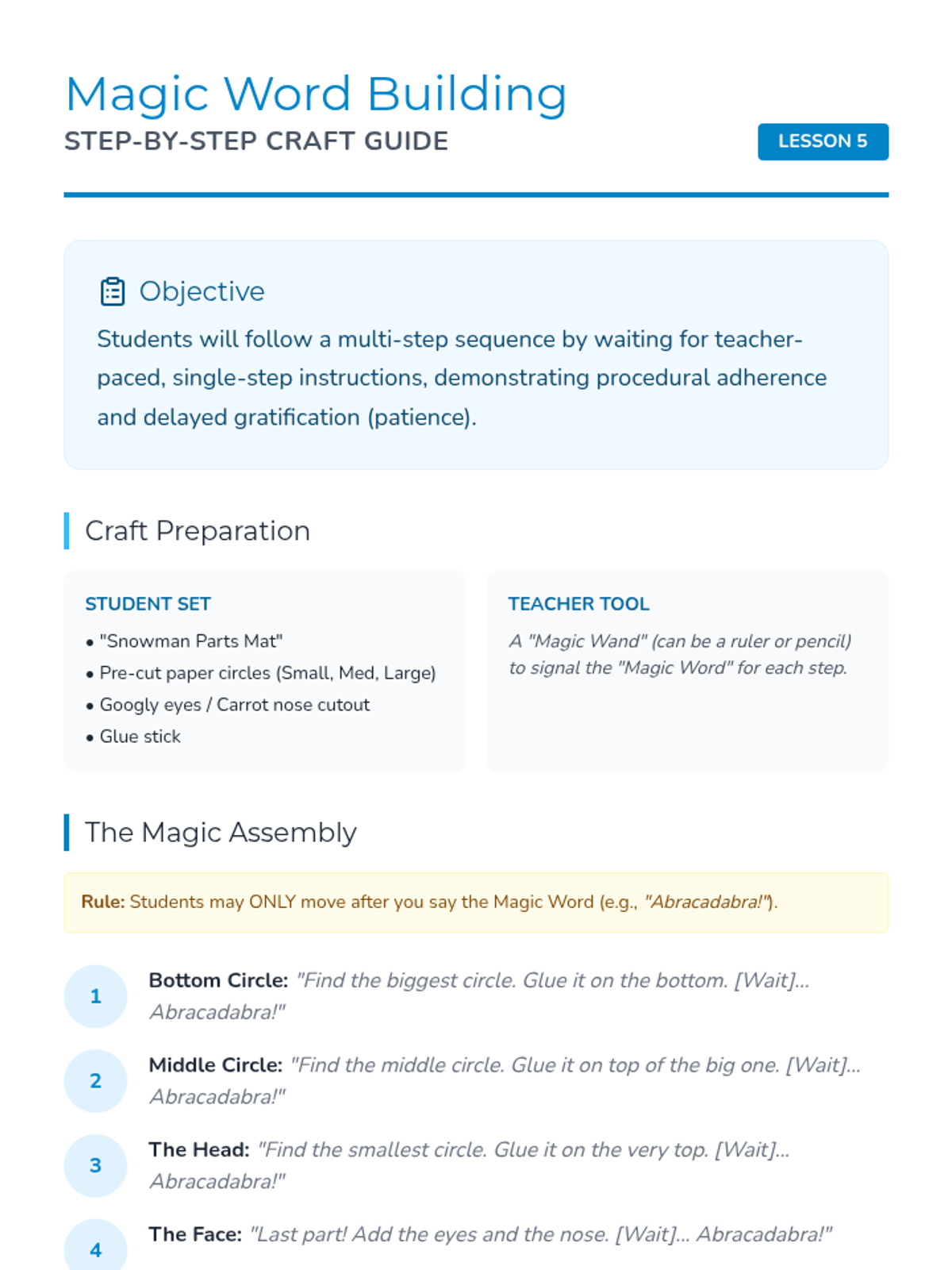
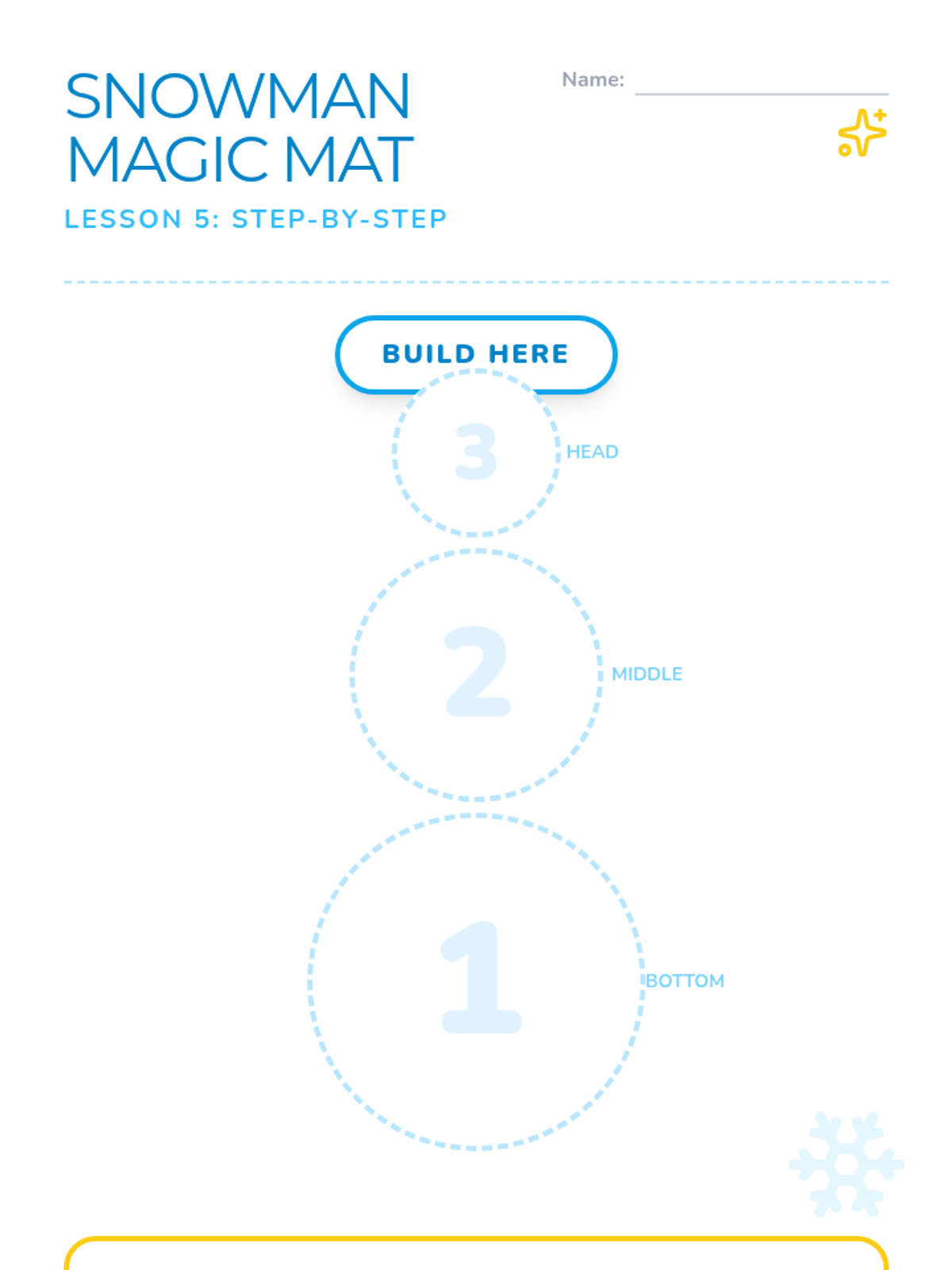
Students build a simple craft by following teacher-paced, step-by-step instructions. This lesson promotes patience, step-wise working memory, and procedural adherence.
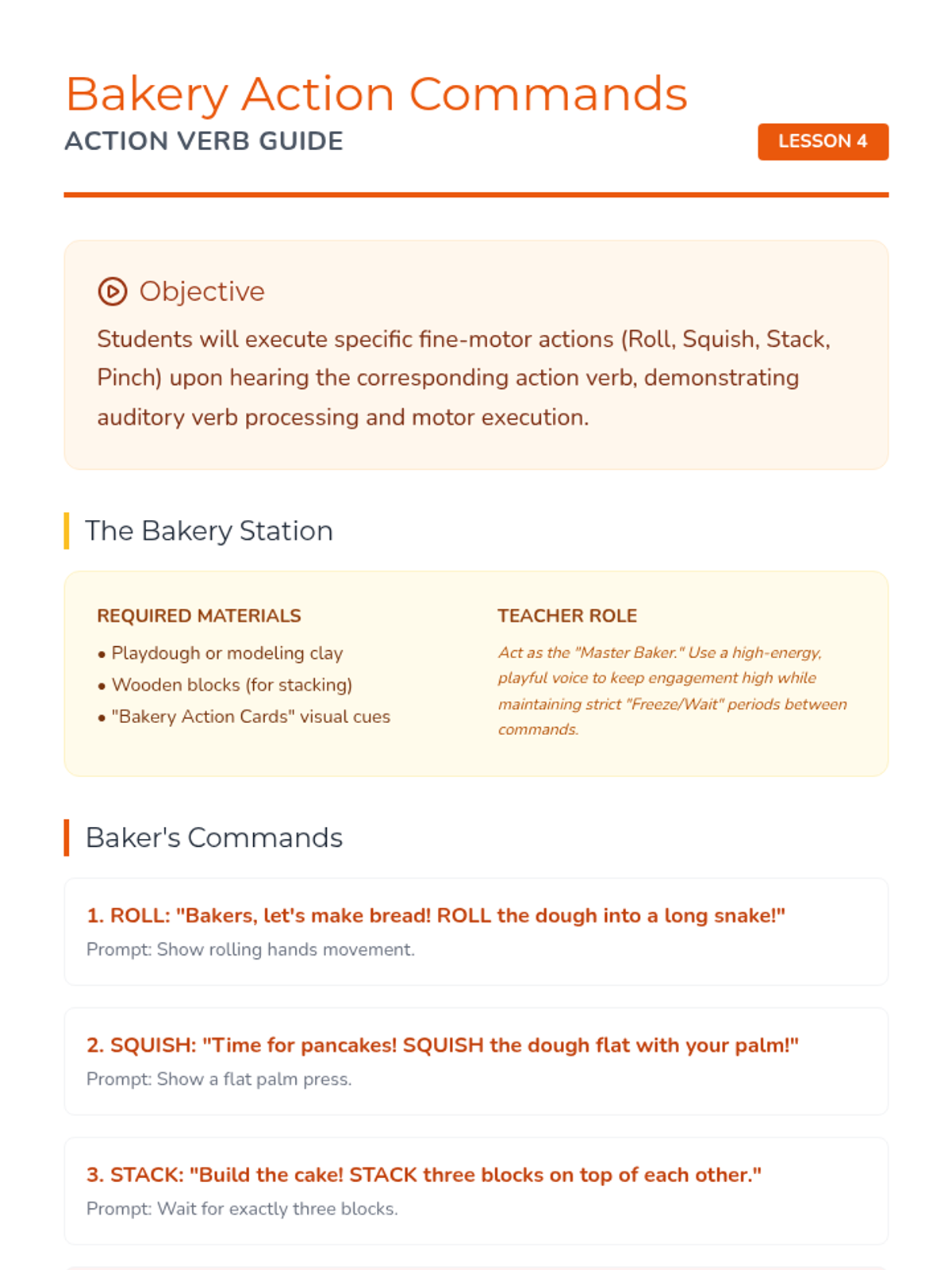
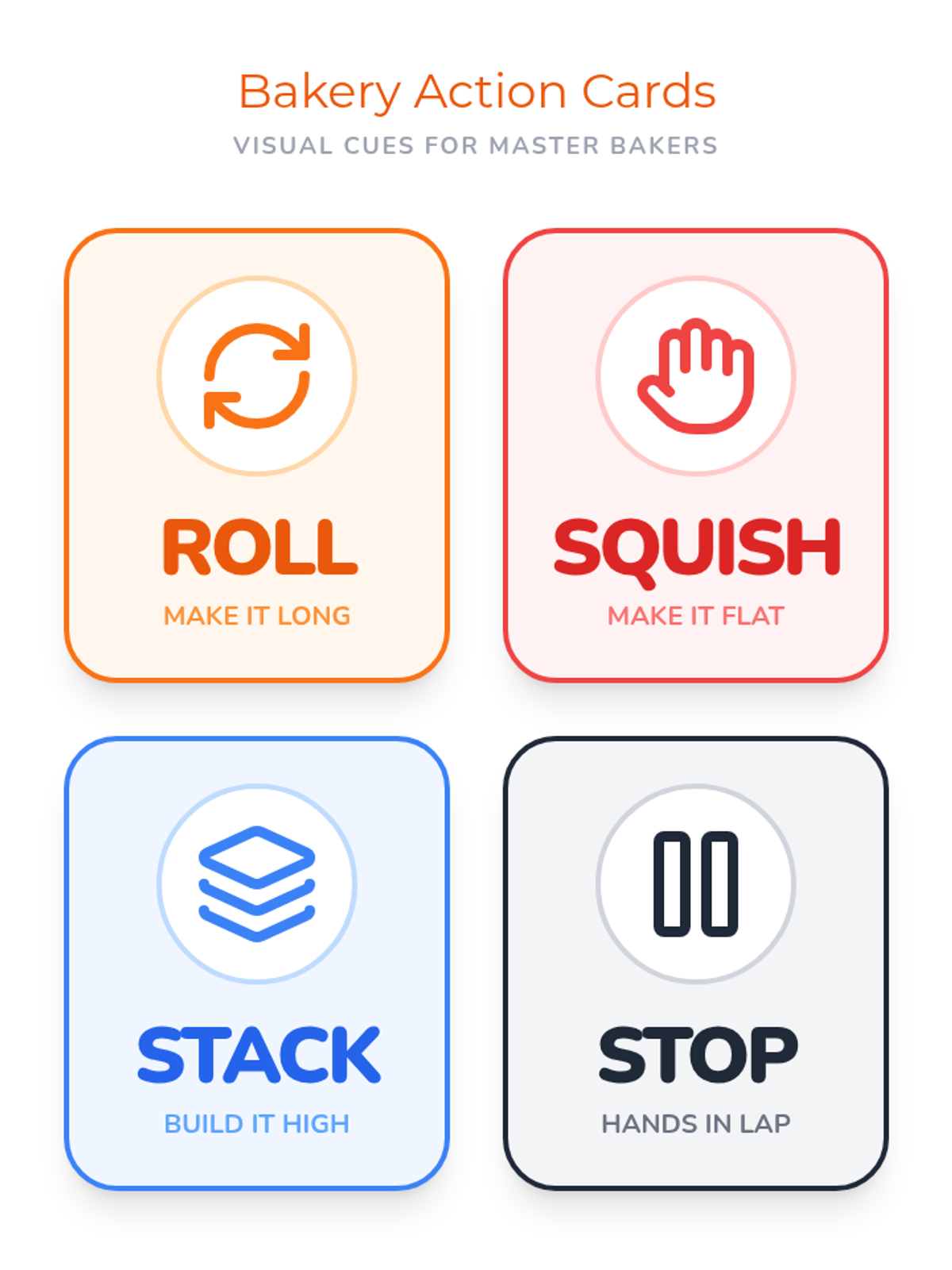
Students process action-verbs like 'roll,' 'squish,' or 'stack' using dough or blocks. This lesson emphasizes verb comprehension and sensory engagement through fine motor actions.
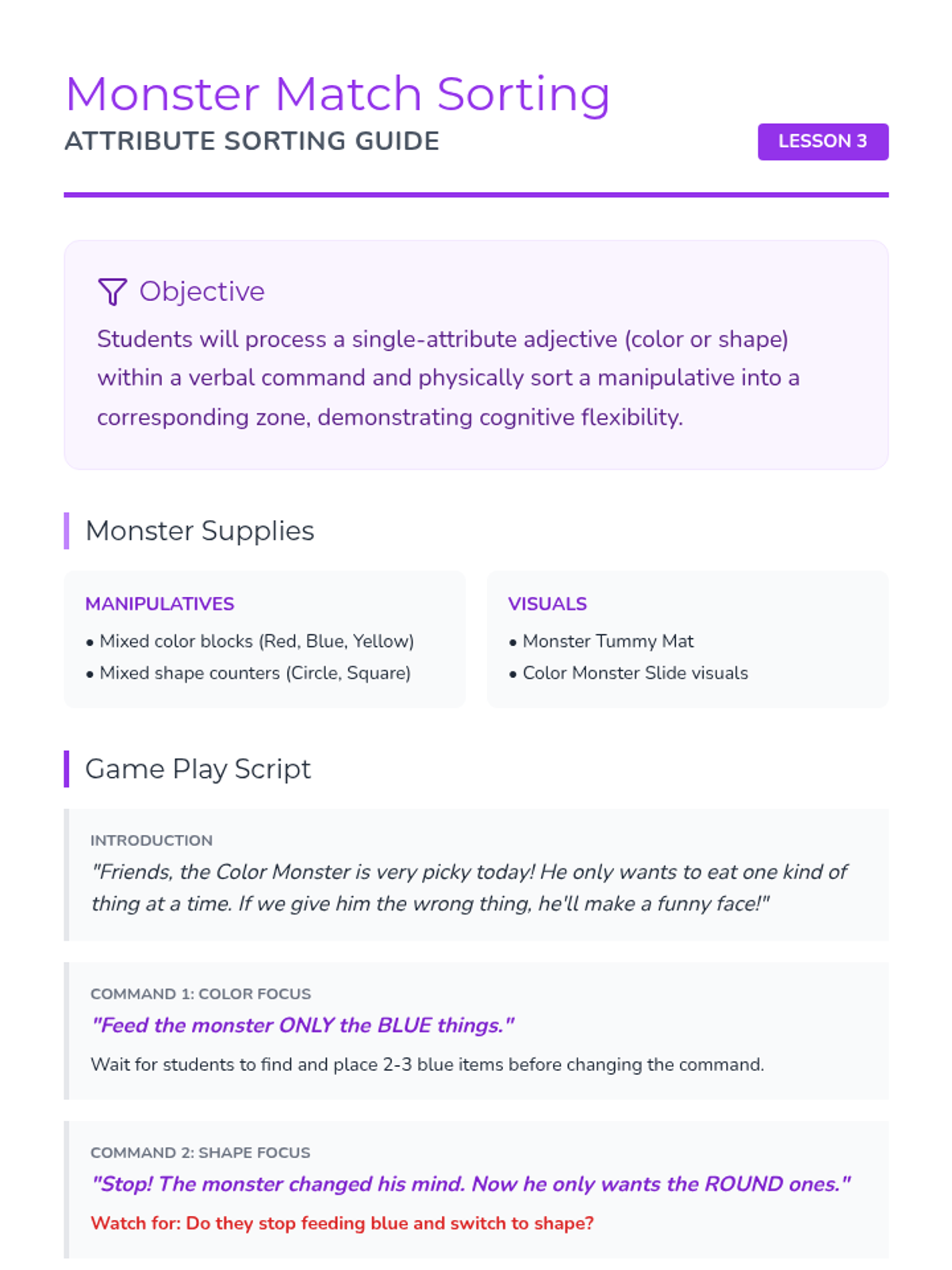
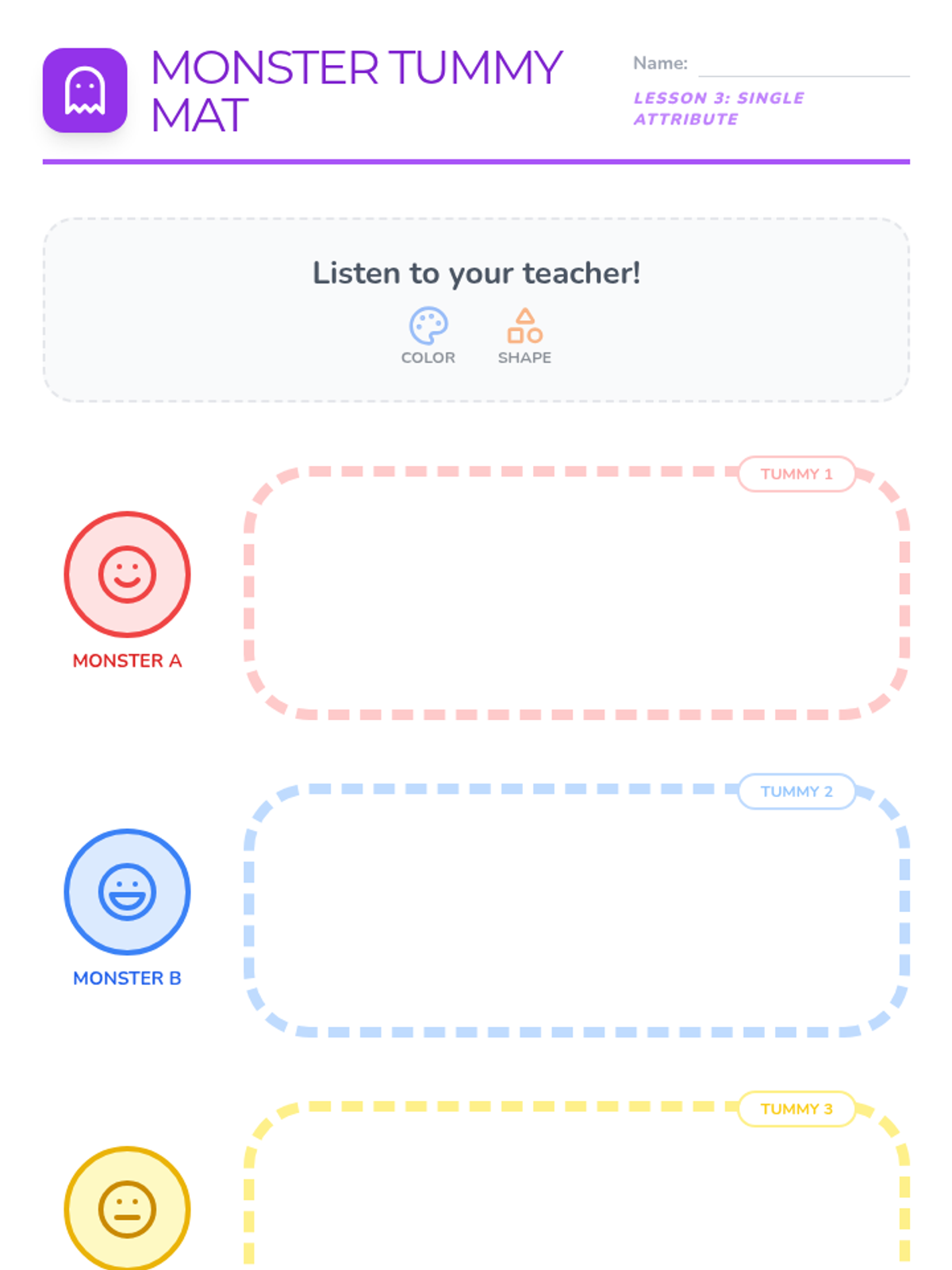
Students execute commands based on a single visual attribute like color or shape. This requires listening for adjectives and applying them to a physical sorting task to build cognitive flexibility.
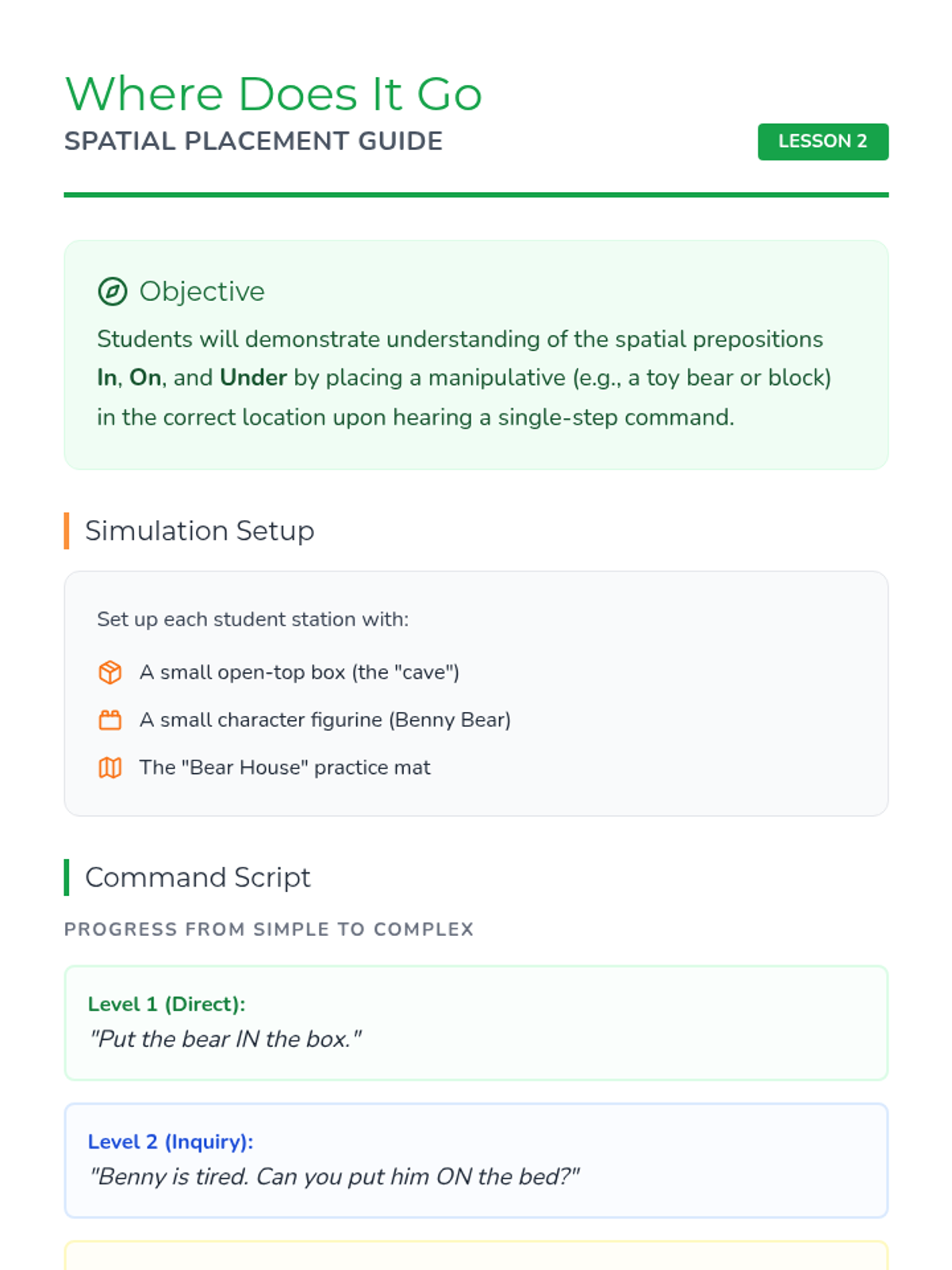
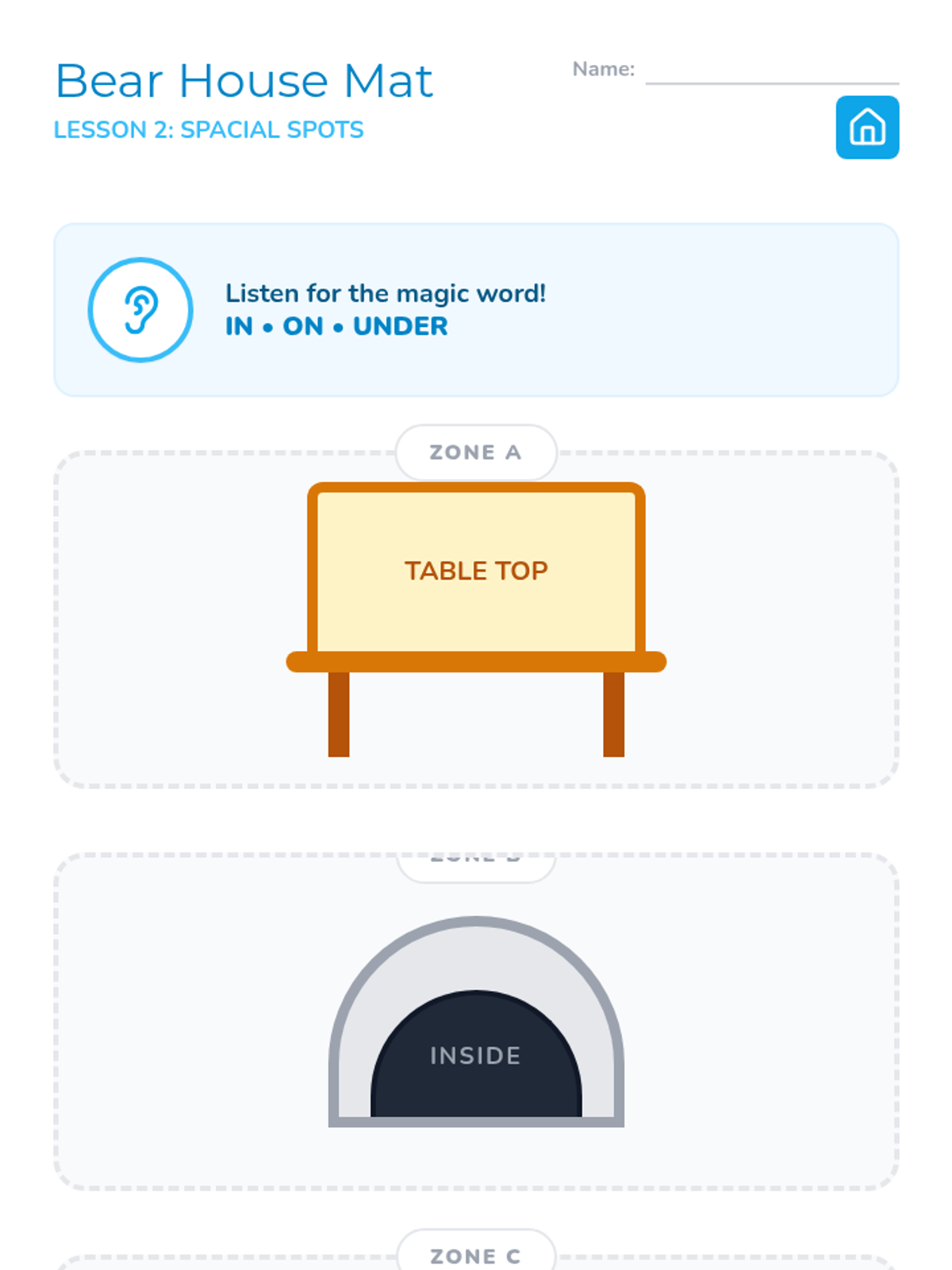
Students follow single-step spatial directions (in, on, under) using concrete objects and boxes. This lesson reinforces spatial prepositions and auditory processing in a simulation-based setting.
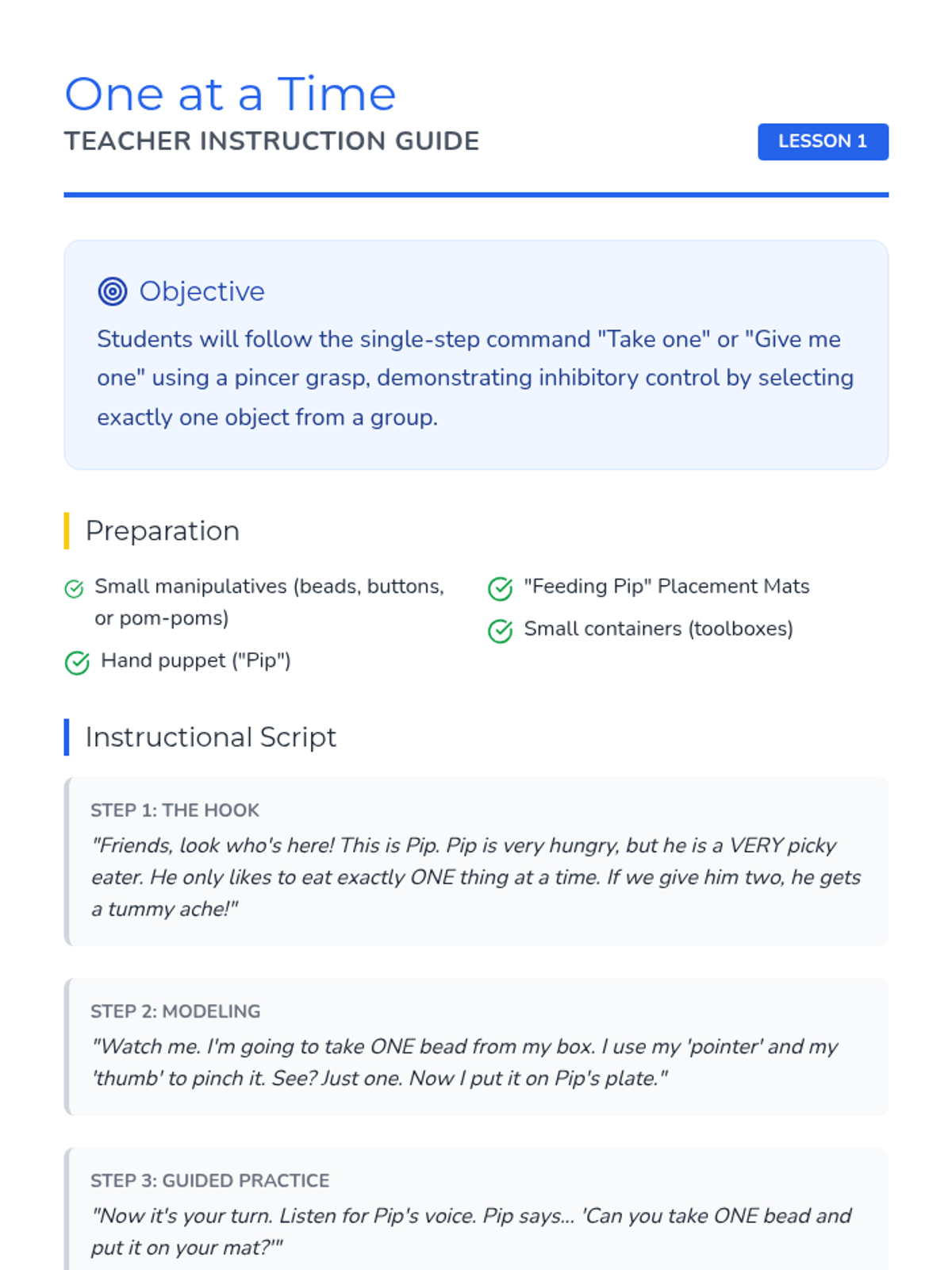
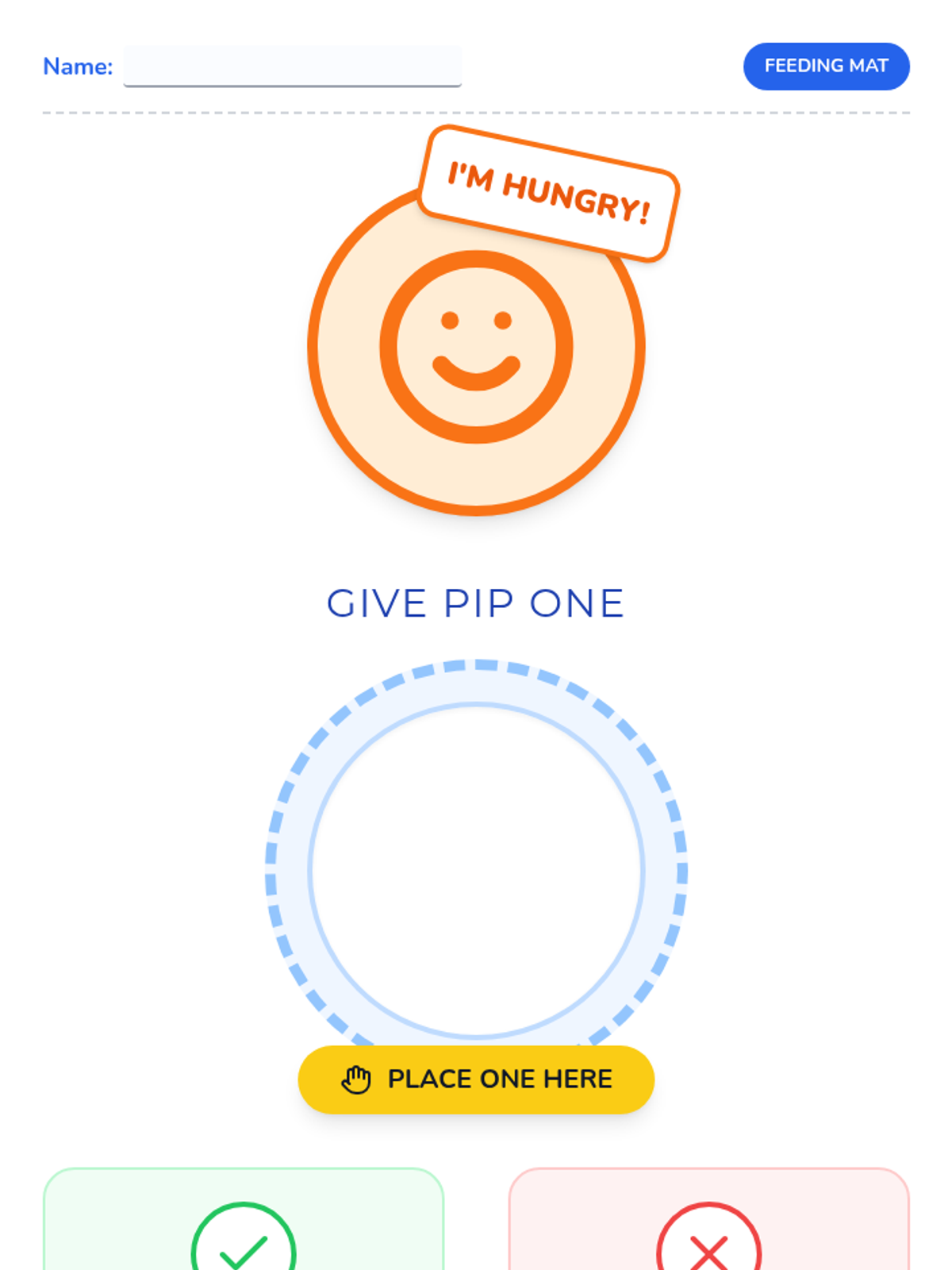
Students practice inhibitory control and quantity discrimination by responding to commands to take or give exactly one item. This lesson focuses on the pincer grasp and resisting the urge to grab multiple objects.
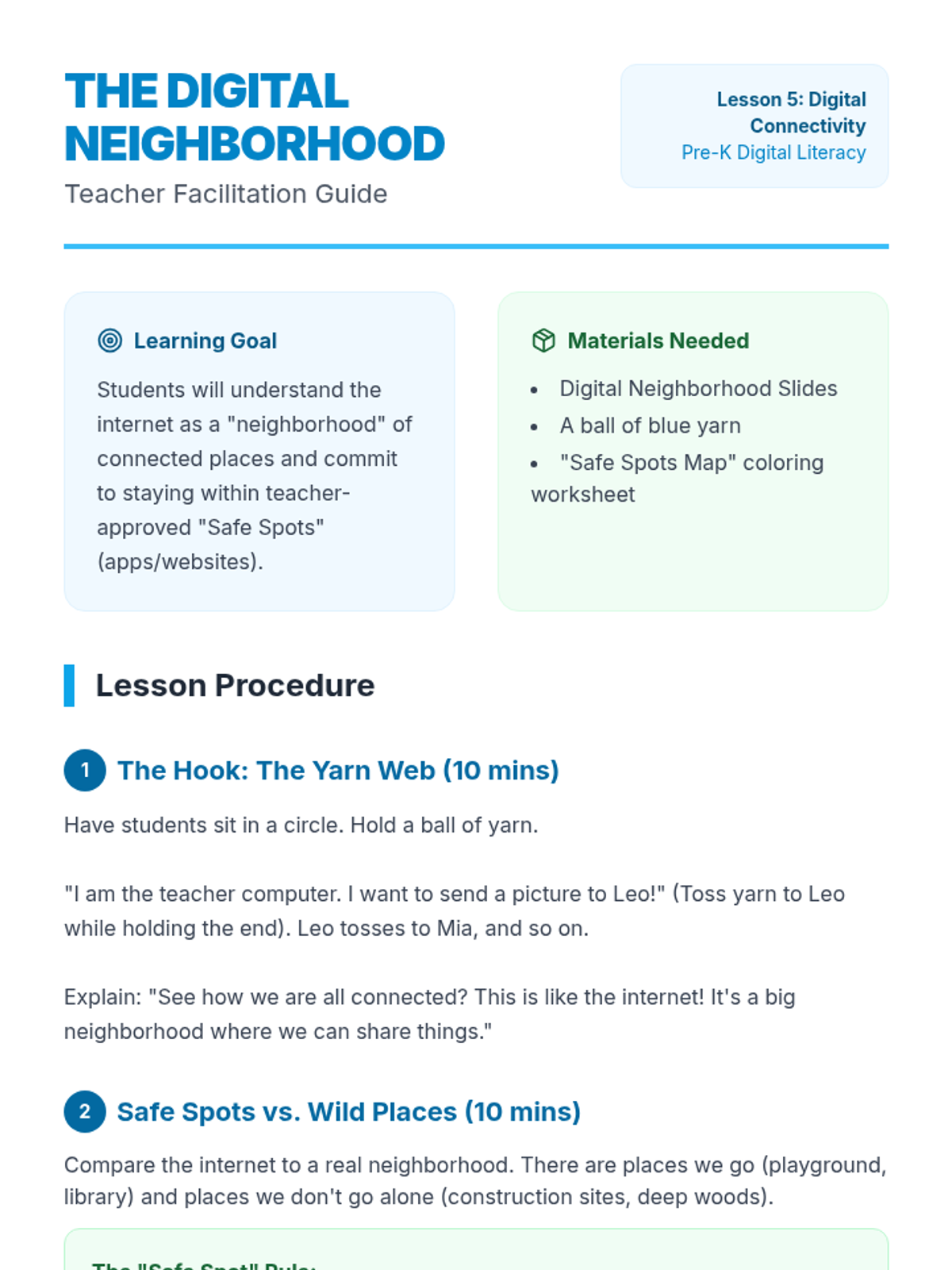
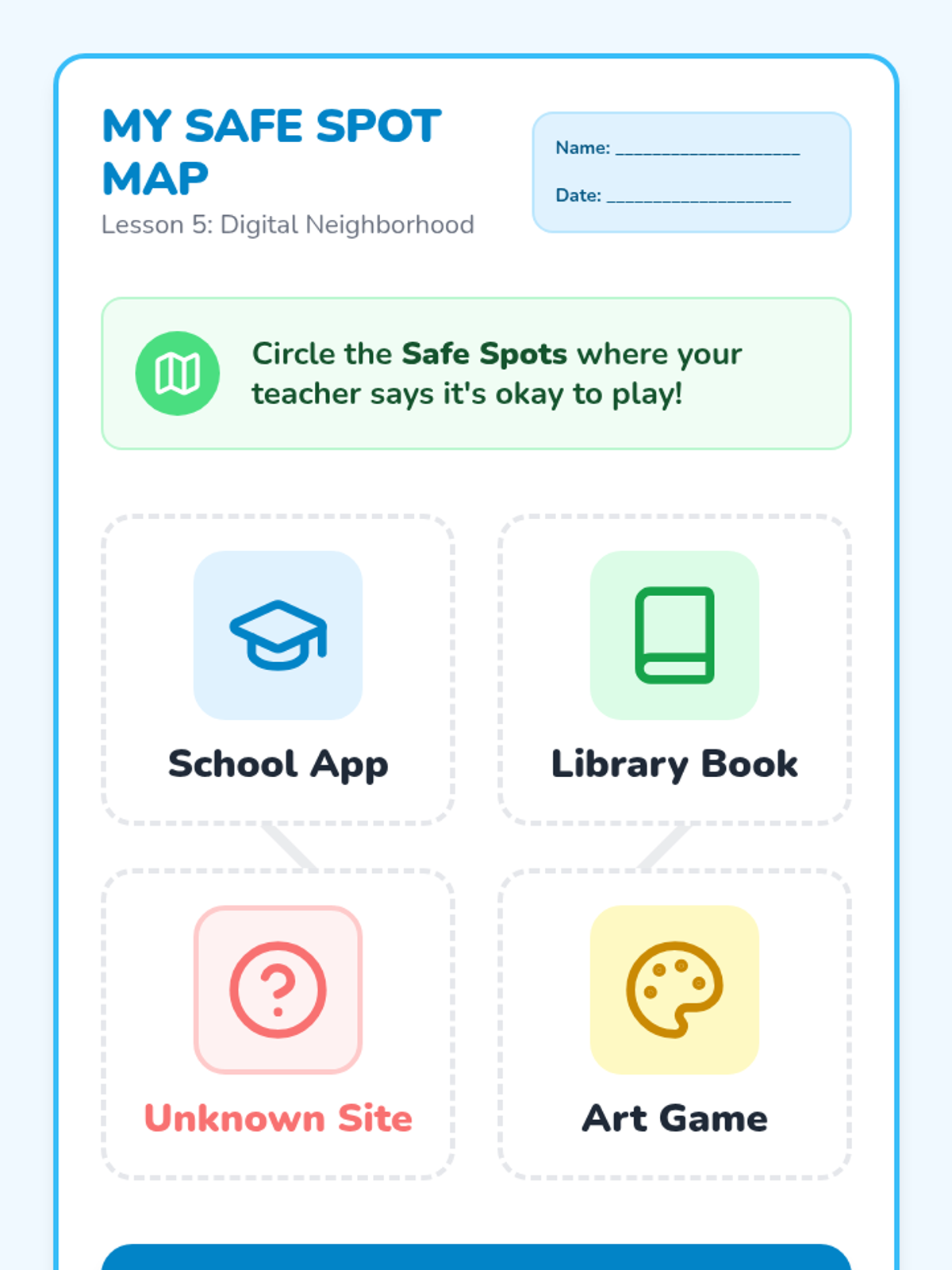
Provides a basic mental model of how devices connect us to a 'digital neighborhood' and the importance of staying in teacher-approved 'safe places'.
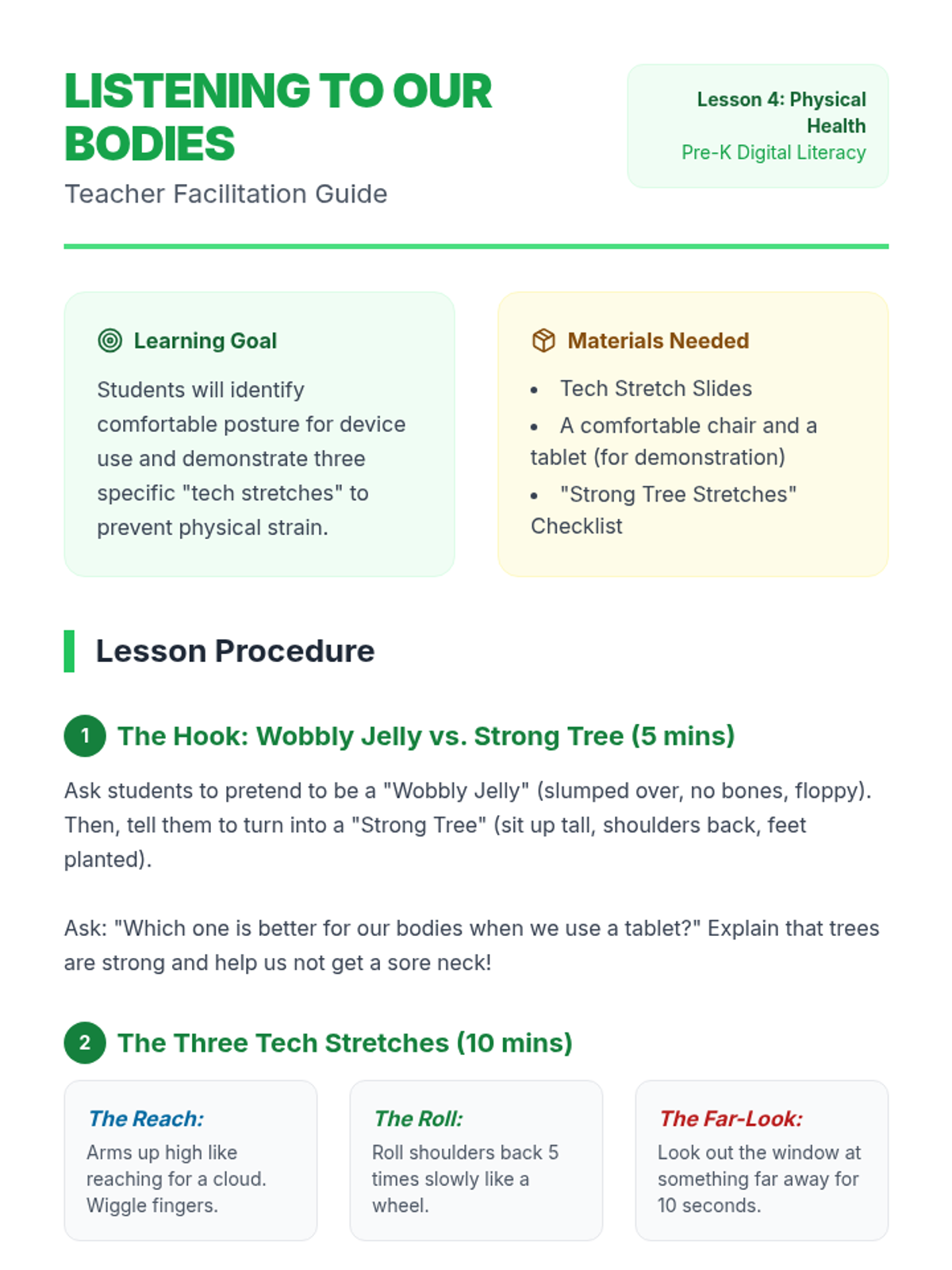
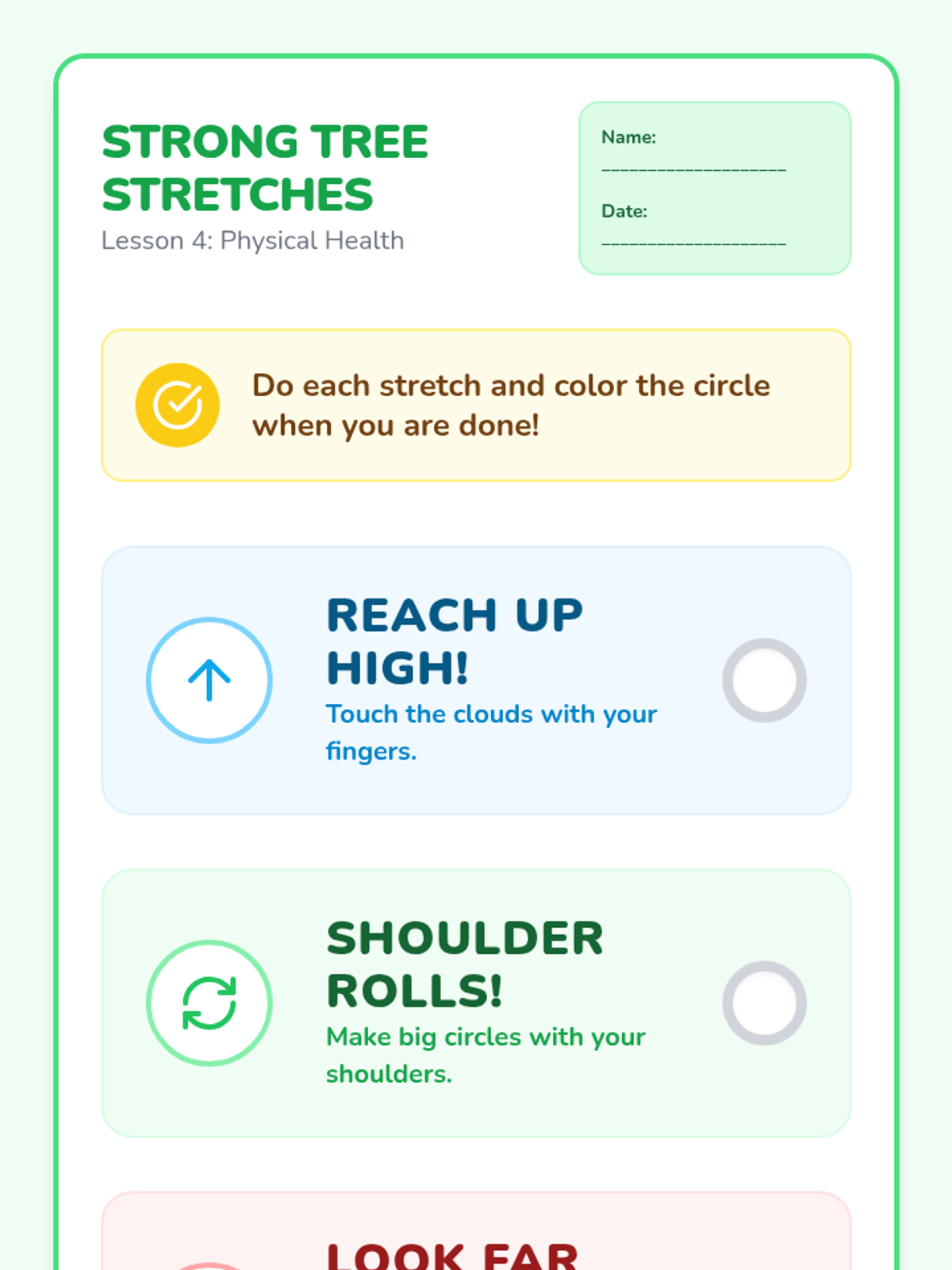
Introduces physical health habits related to technology use, including proper posture and the importance of taking movement breaks.
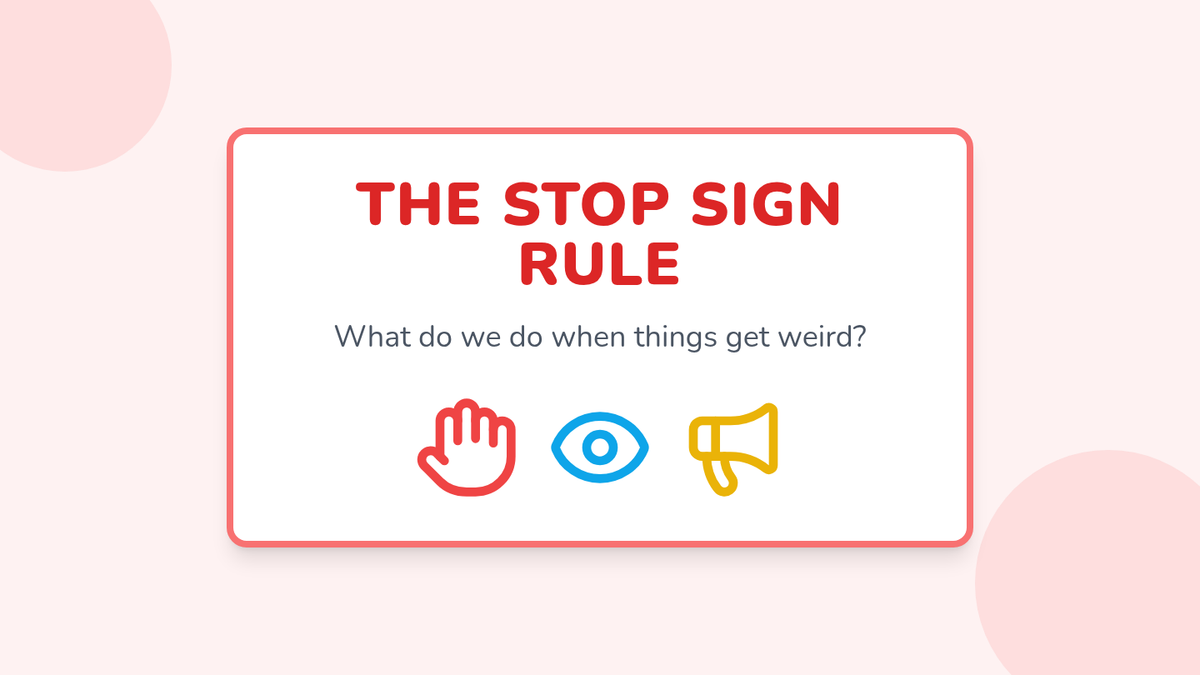
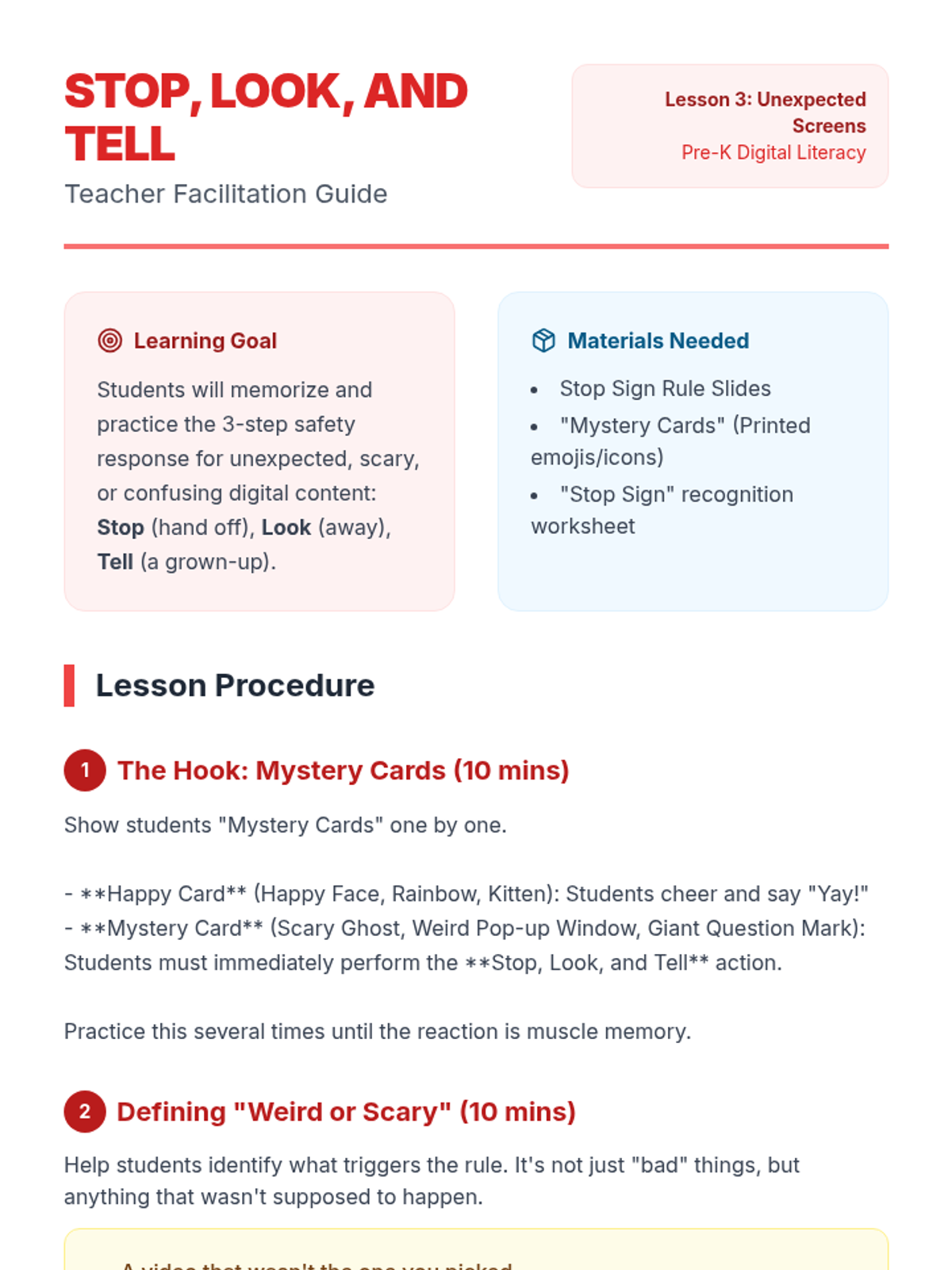
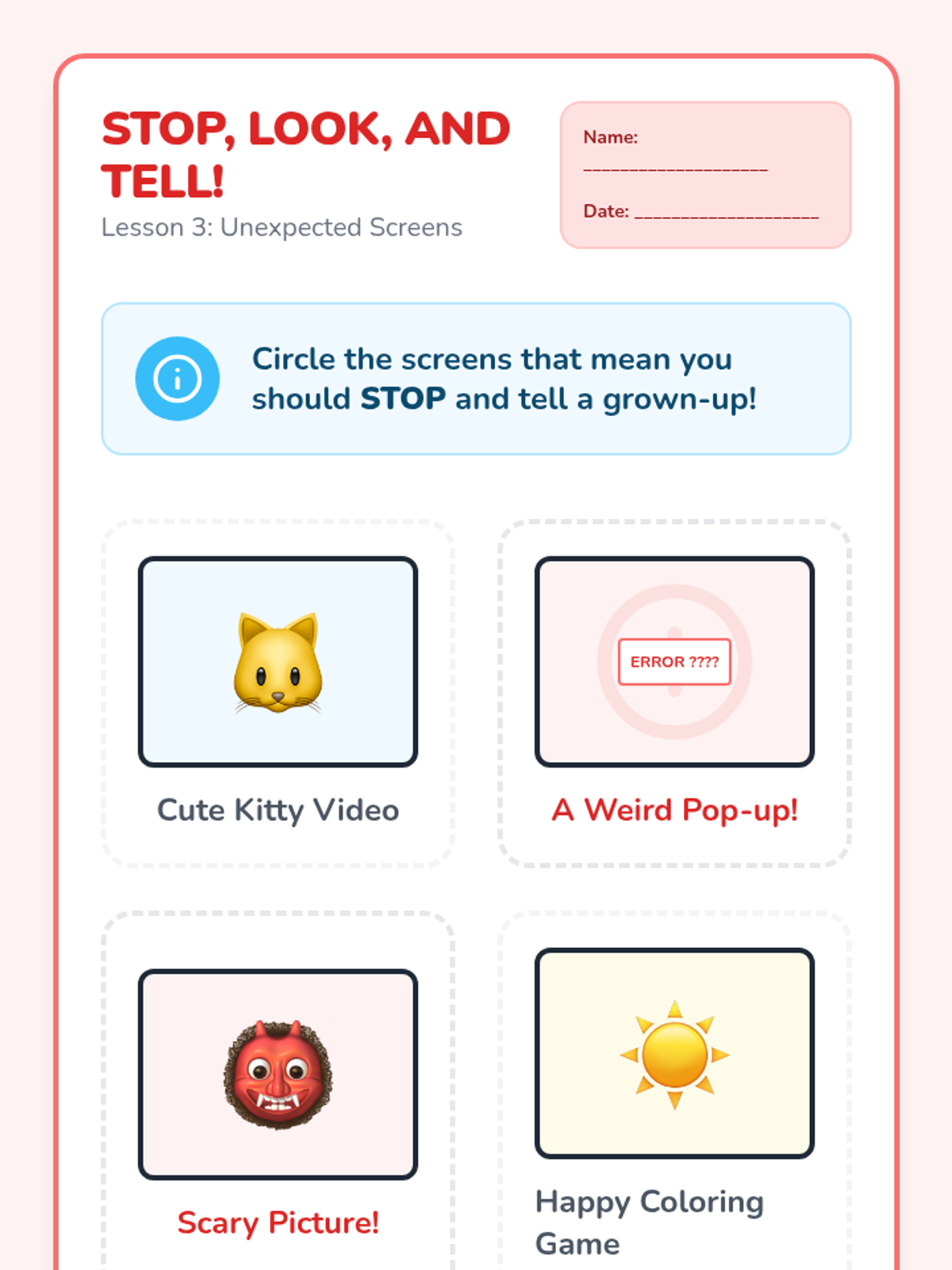
Teaches students the 'Stop, Look, and Tell' protocol for when they encounter unexpected, confusing, or scary content on a screen.
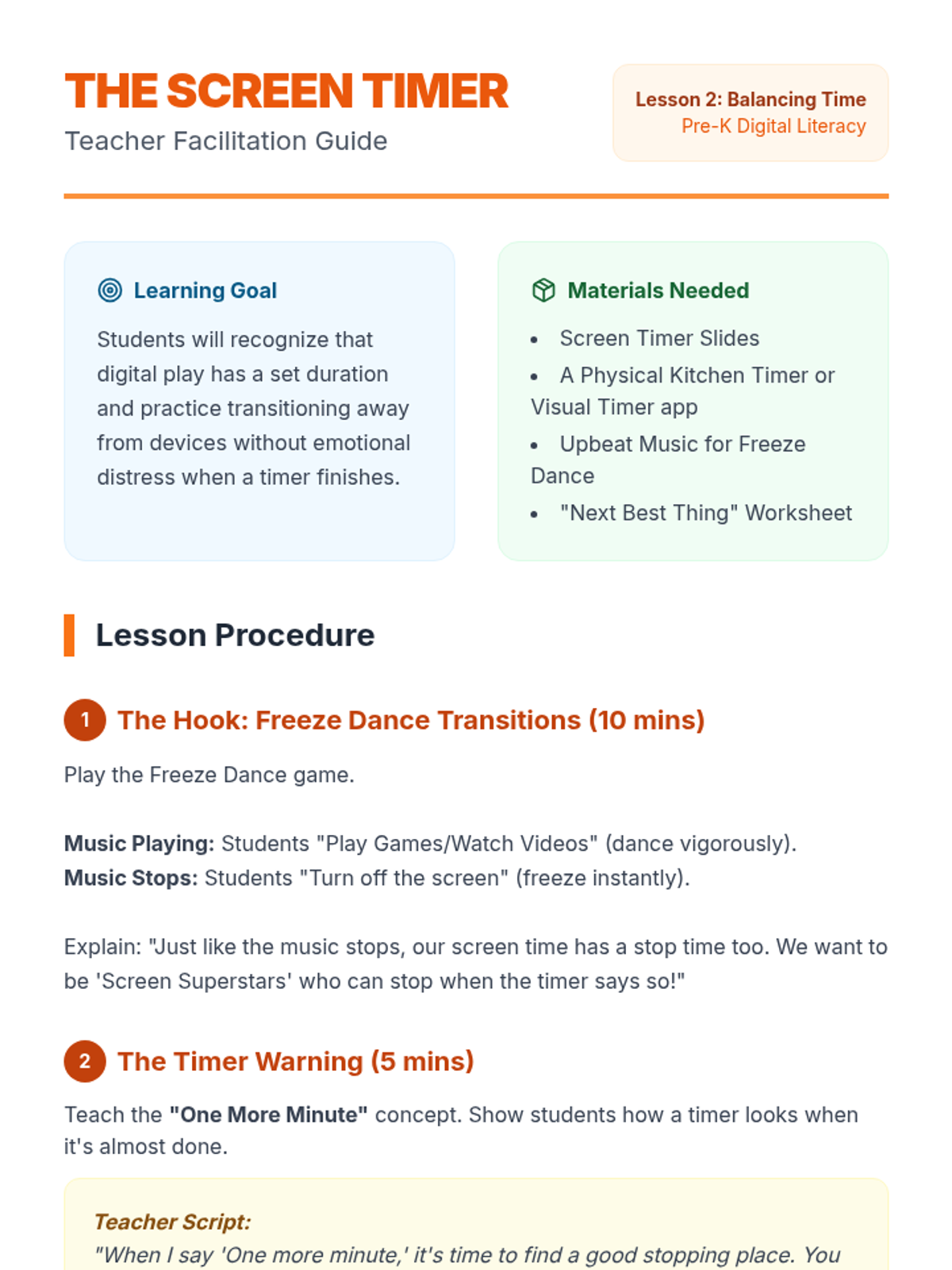
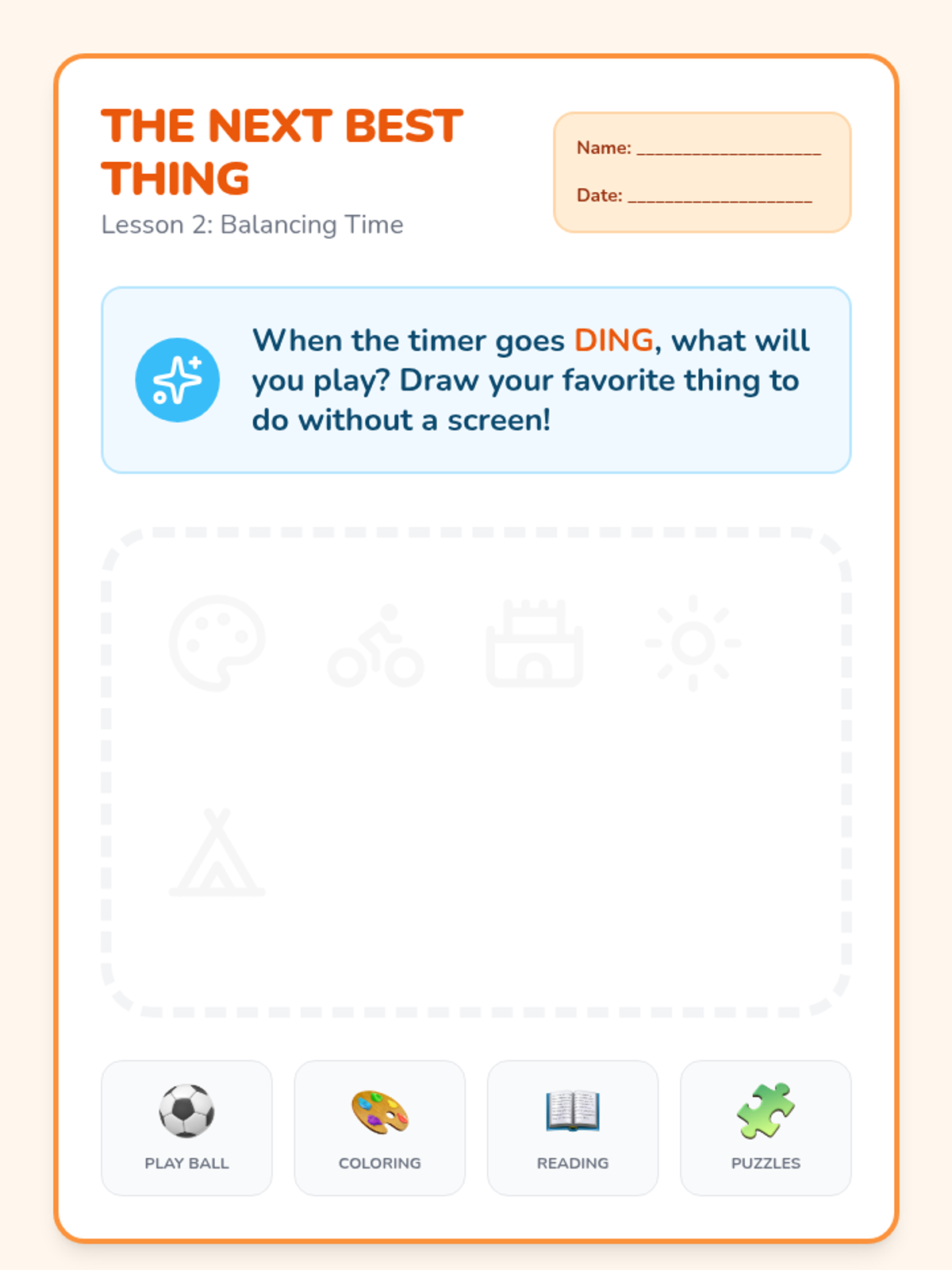
Focuses on self-regulation and time awareness by practicing transitions from digital devices to other activities using timers and games.
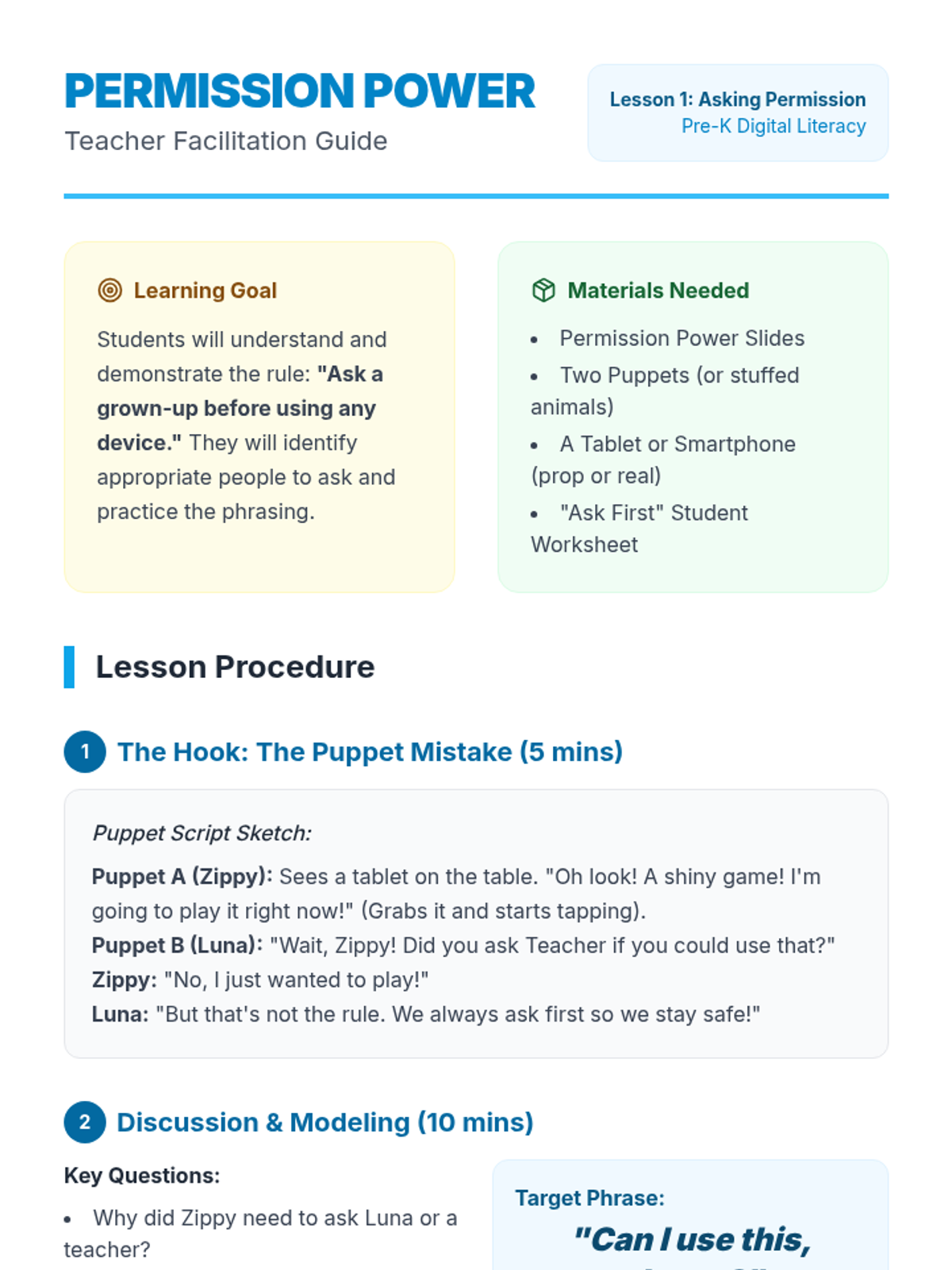
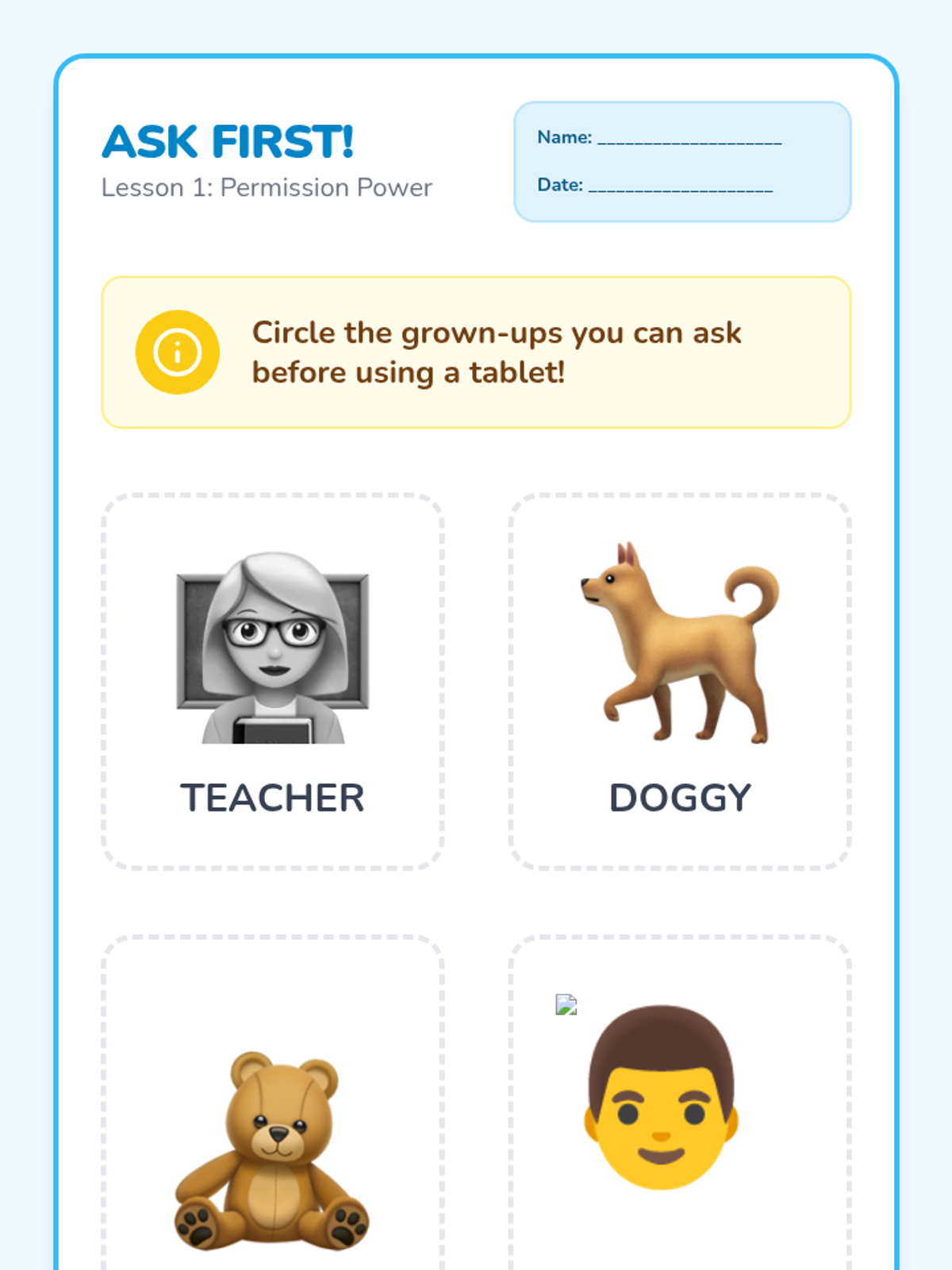
Students learn the fundamental rule of asking a trusted adult for permission before using any digital device through puppet modeling and discussion.
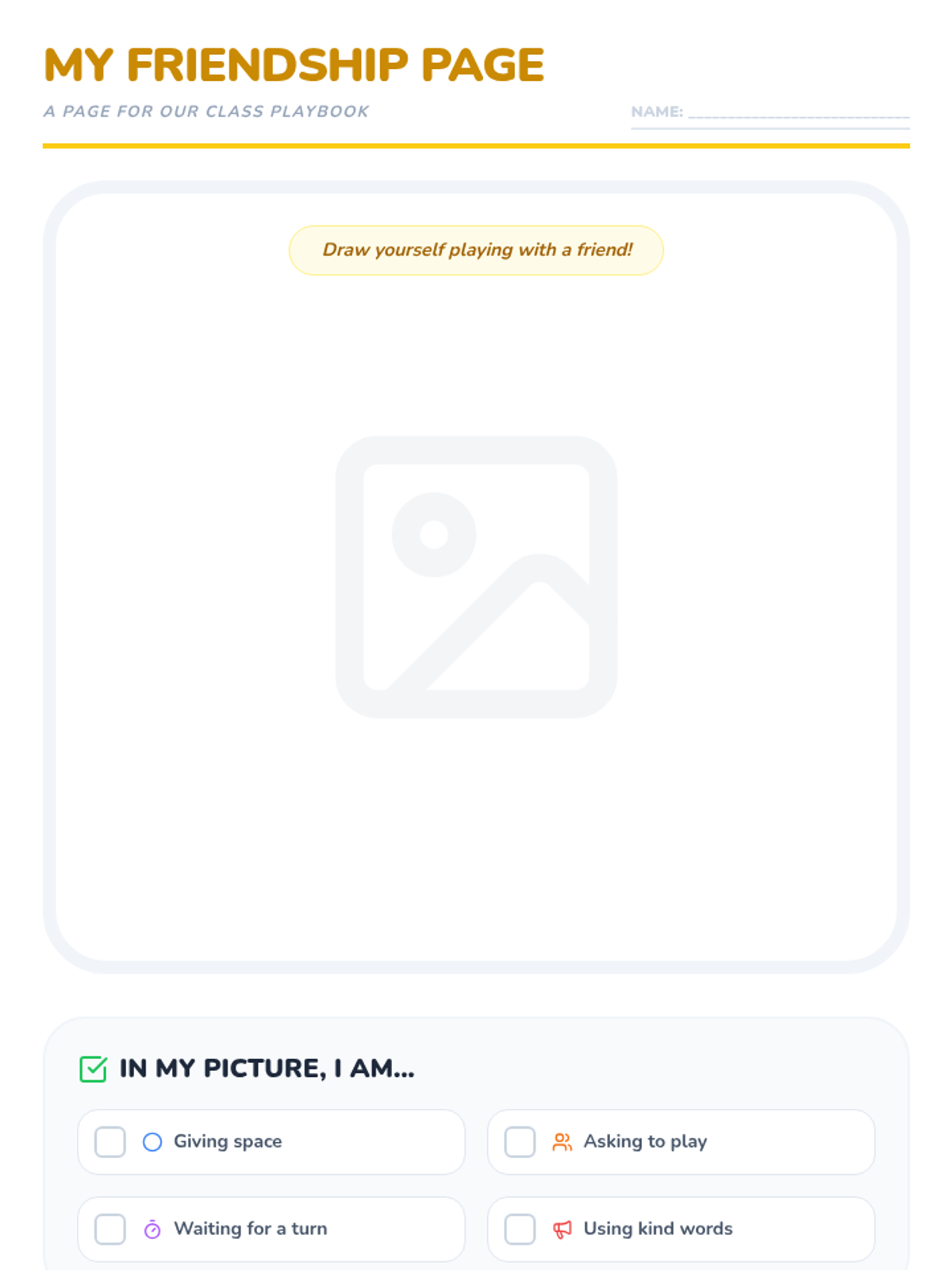
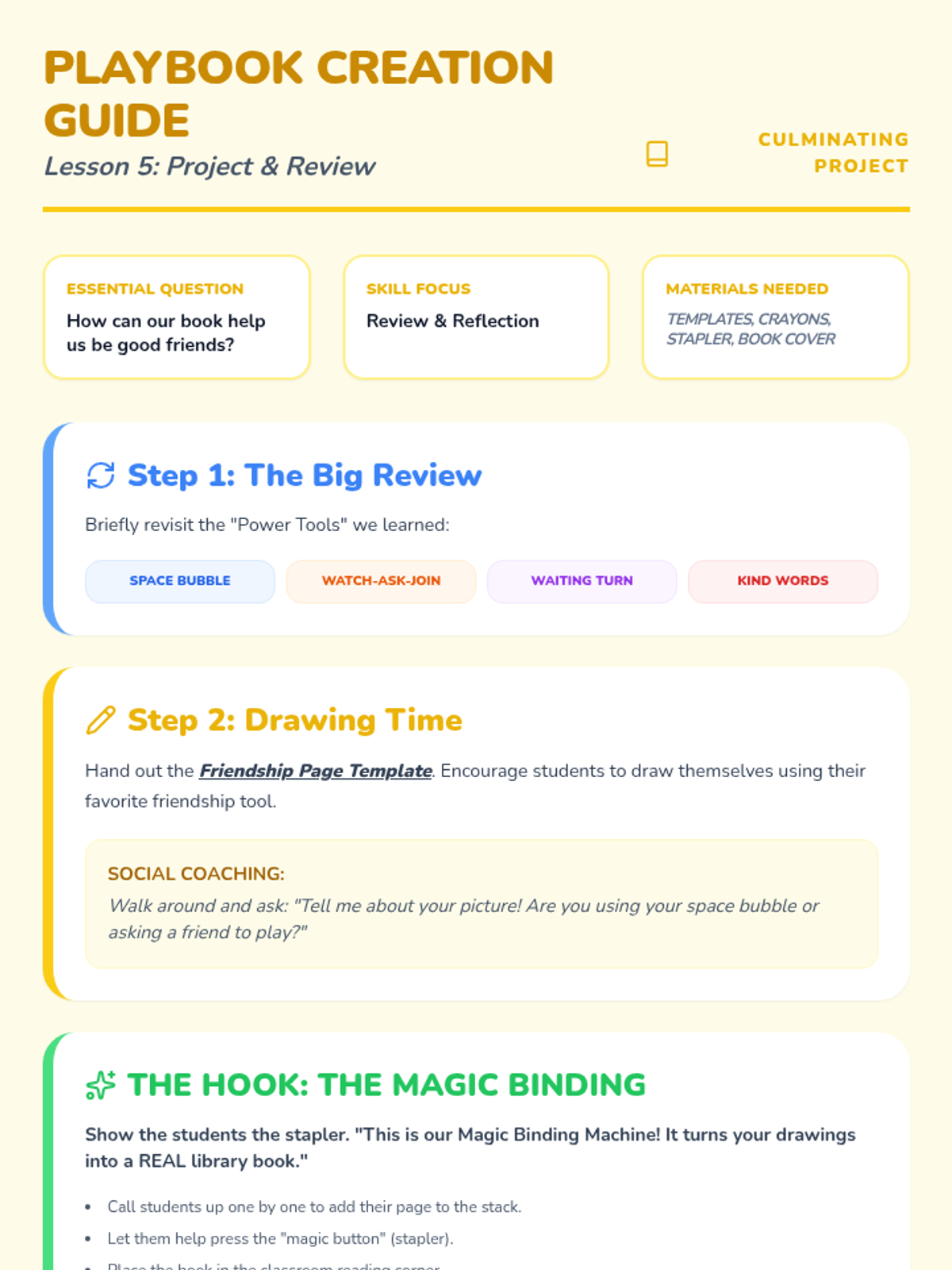
Students create and present a page for the class 'Friendship Playbook', reflecting on their favorite social skill.
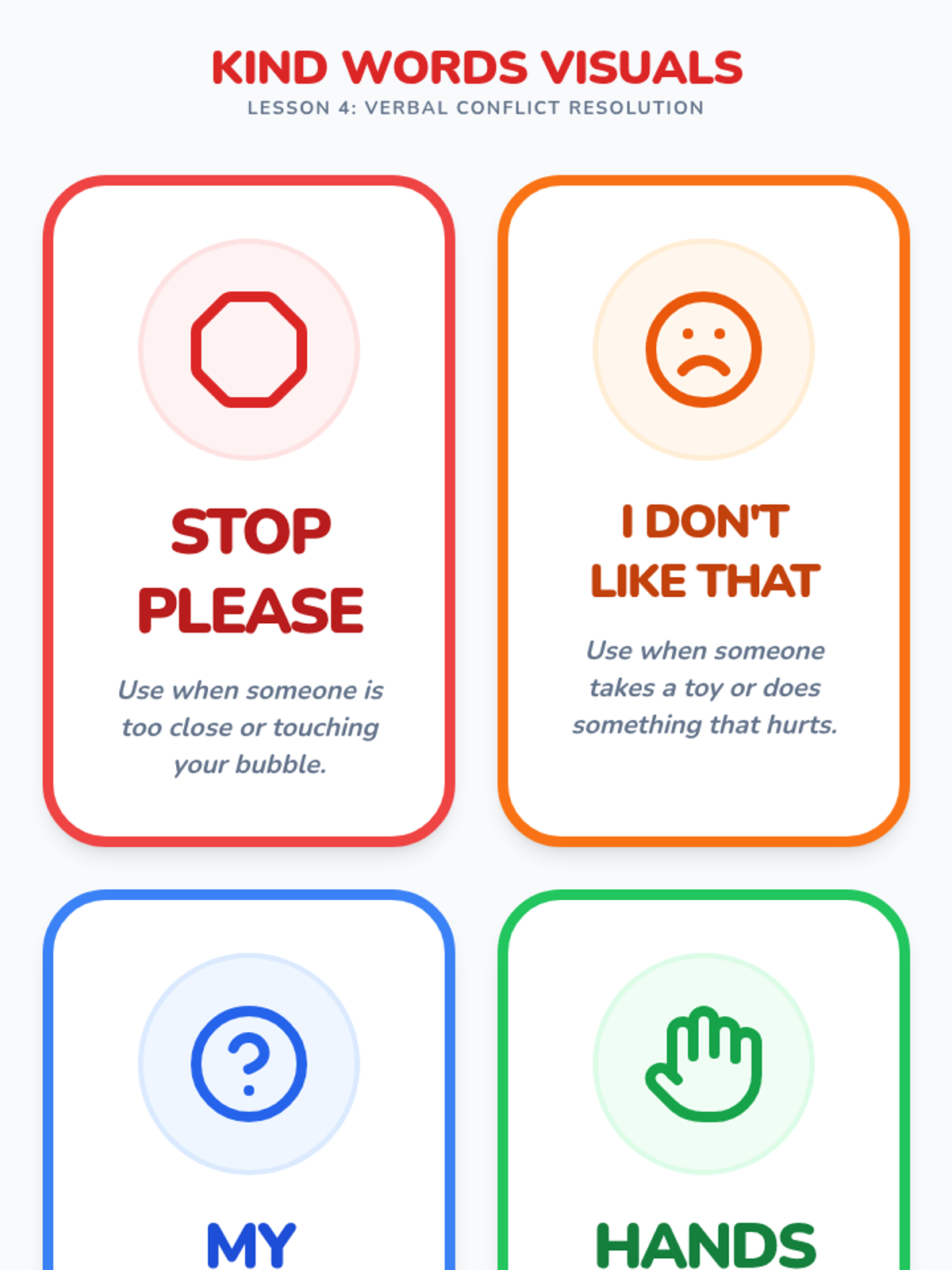
Students practice using verbal scripts like 'Stop please' and 'I don't like that' as alternatives to physical reactions during conflict.
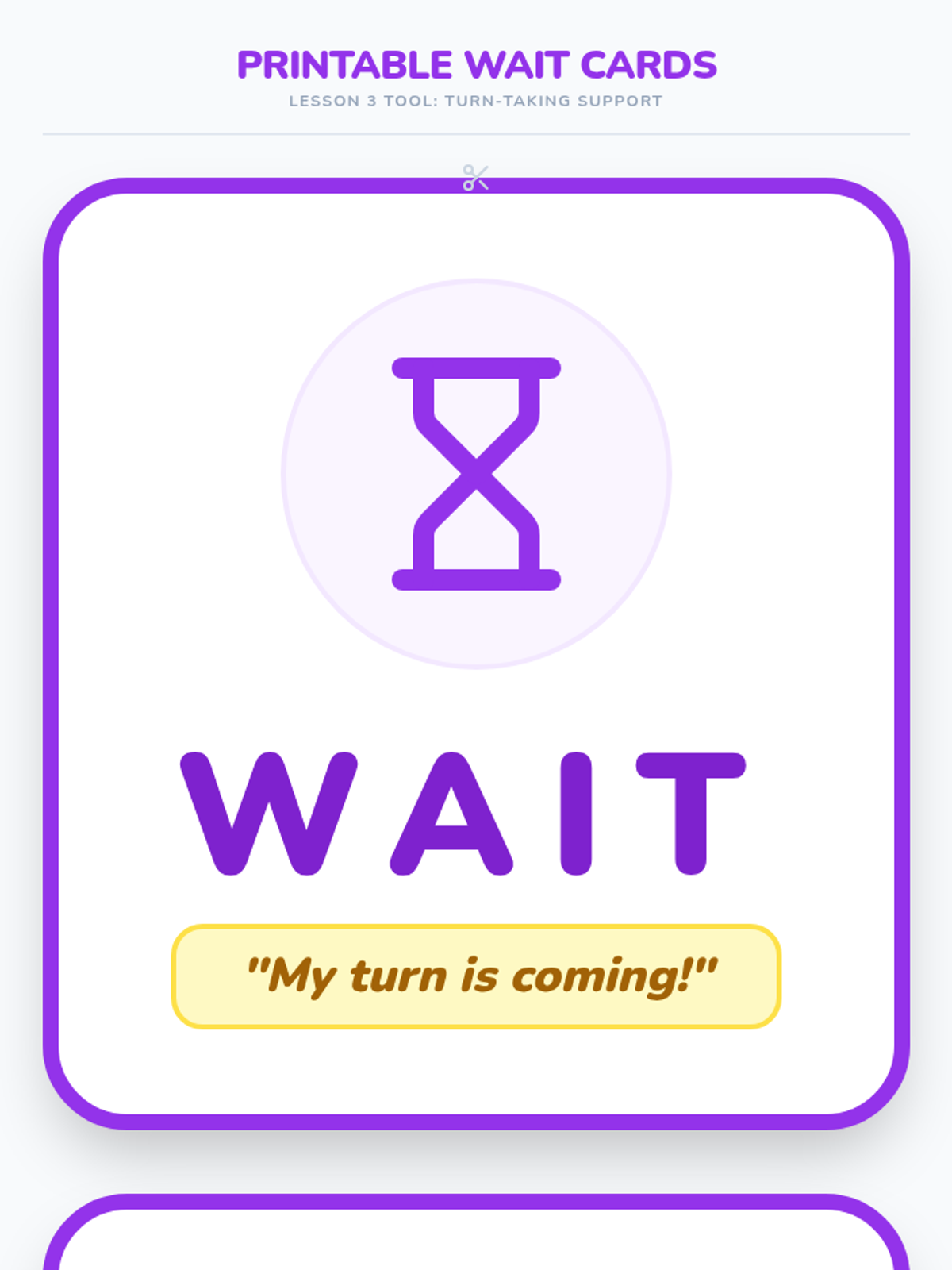
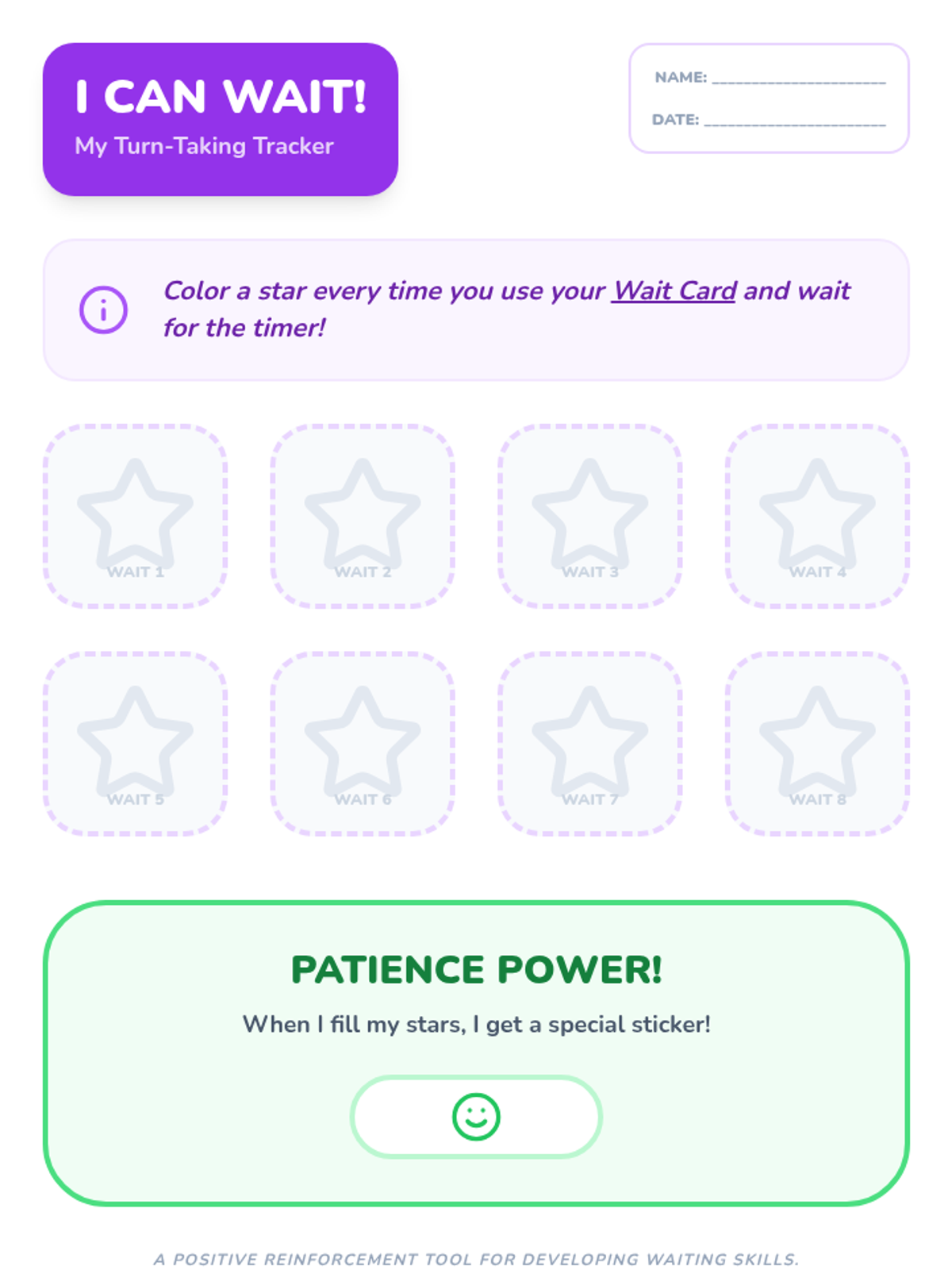
Students explore a social story about waiting and turn-taking, using visual 'wait cards' and timers to build patience.
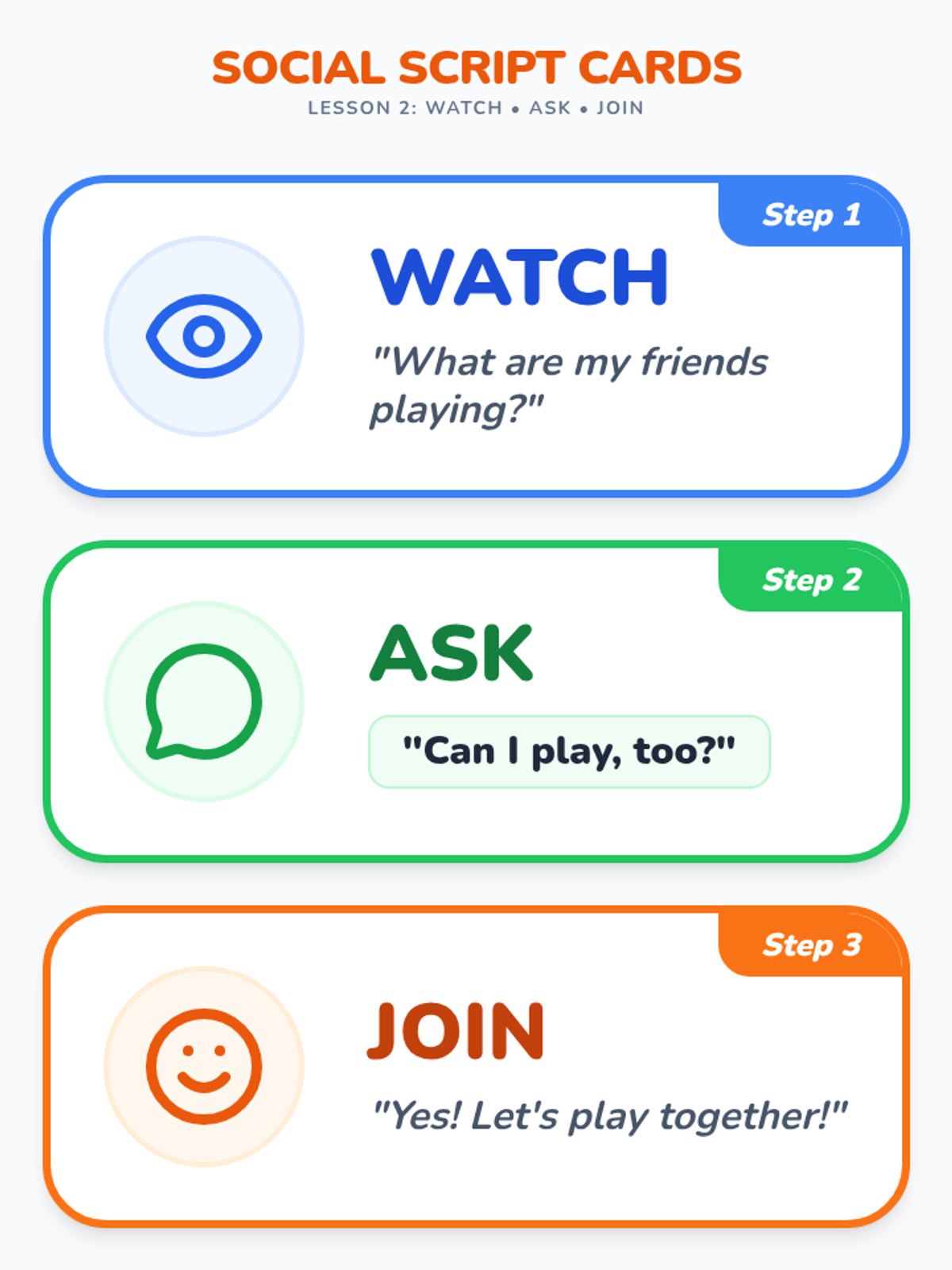
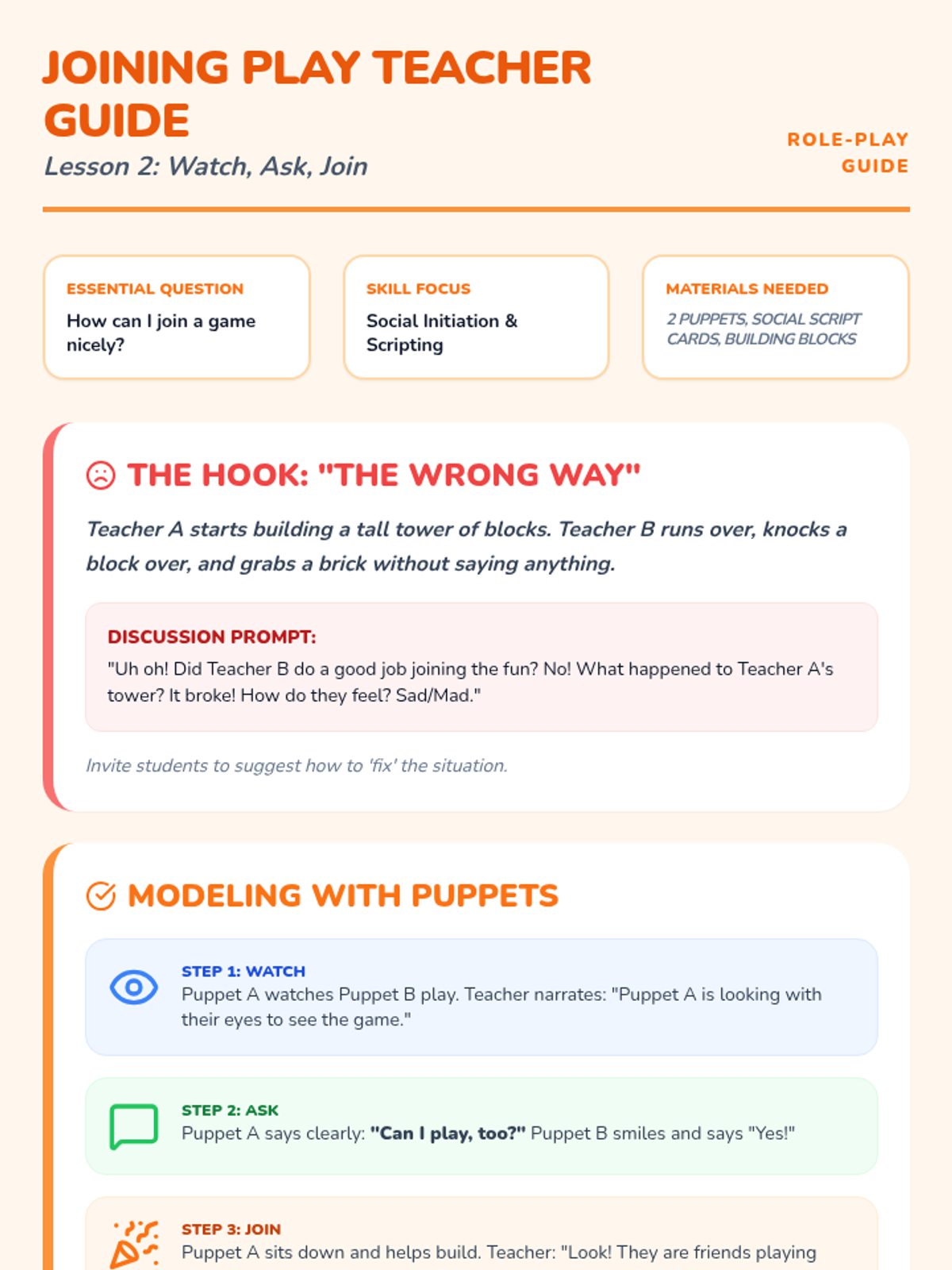
Students learn and practice the 'Watch, Ask, Join' script for entering social play situations respectfully using puppets.
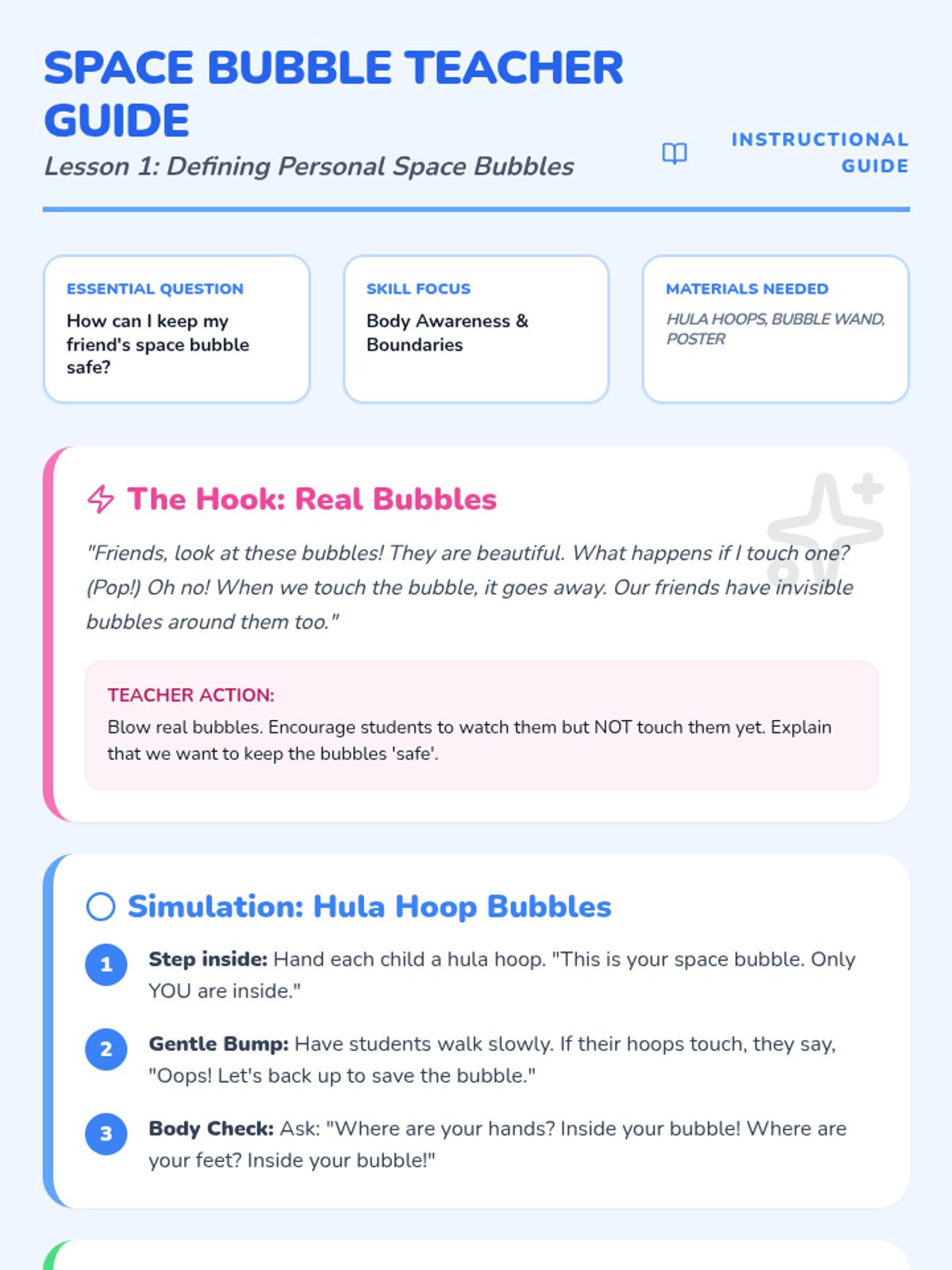
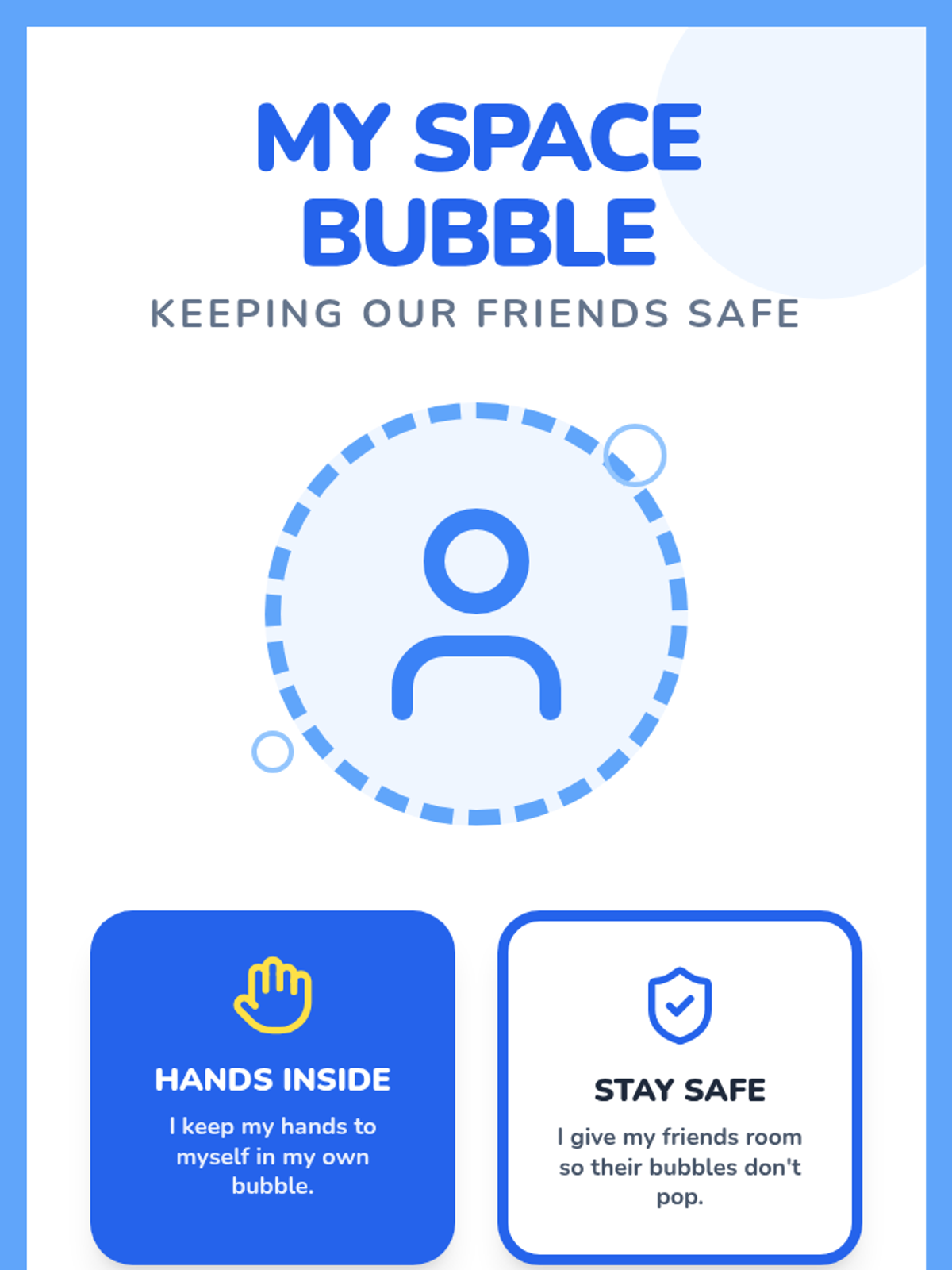
Students use hula hoops to visualize 'space bubbles' and learn about keeping hands to oneself through a social story.
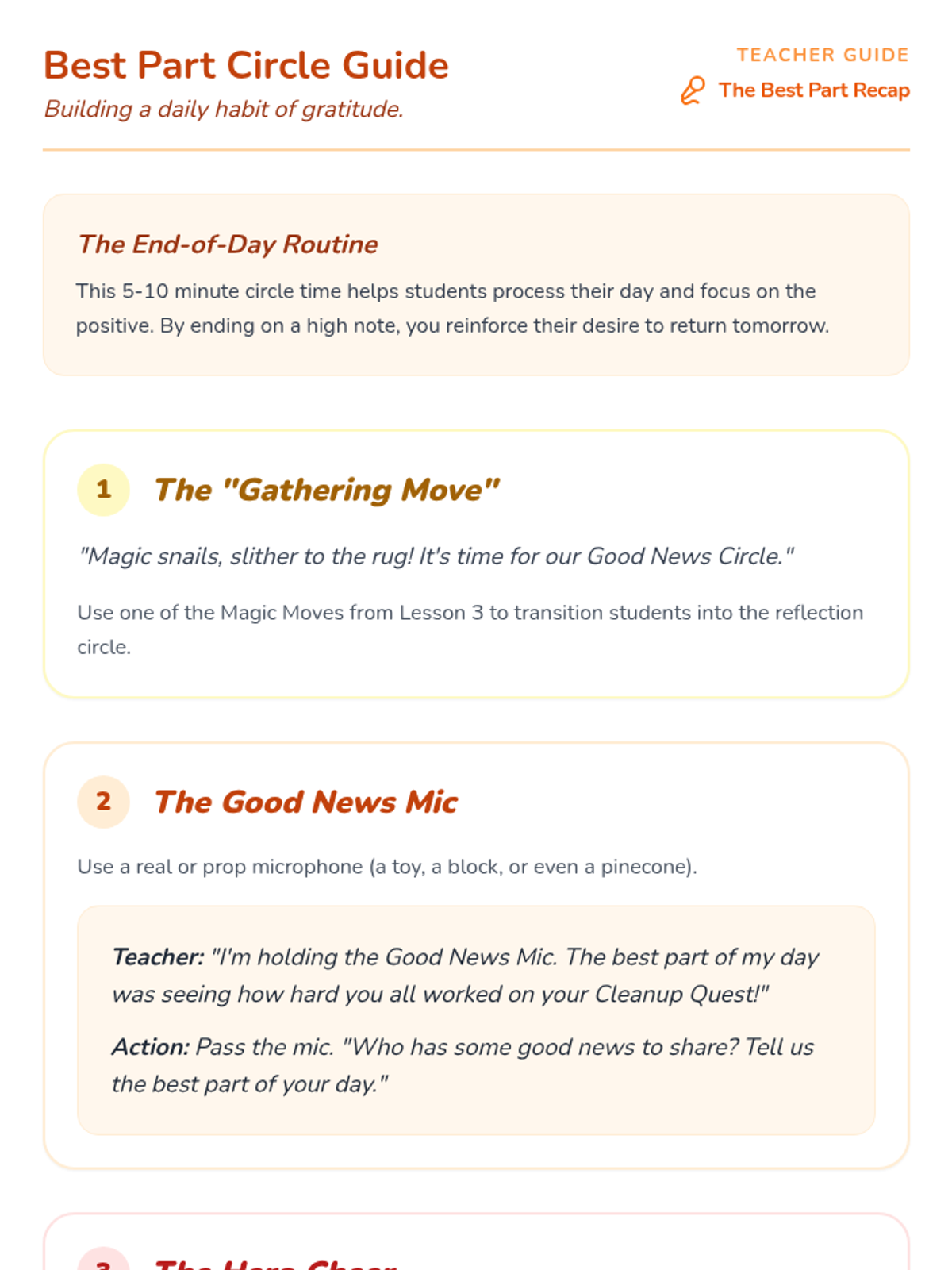
Students establish a gratitude habit by sharing the best parts of their day, reinforcing positive memories before going home.
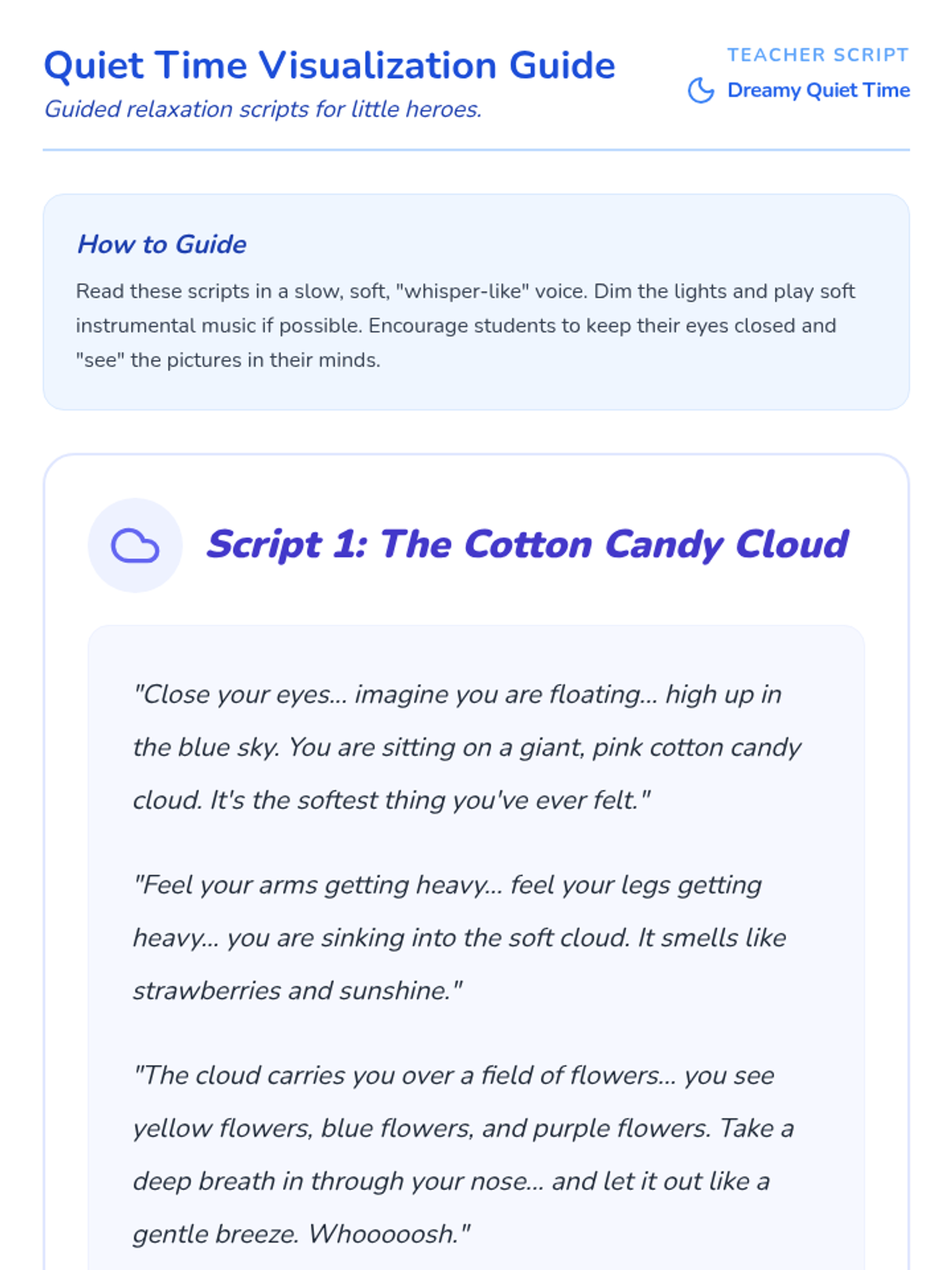
Students explore visualization and relaxation techniques to find joy and stillness during quiet or nap times.
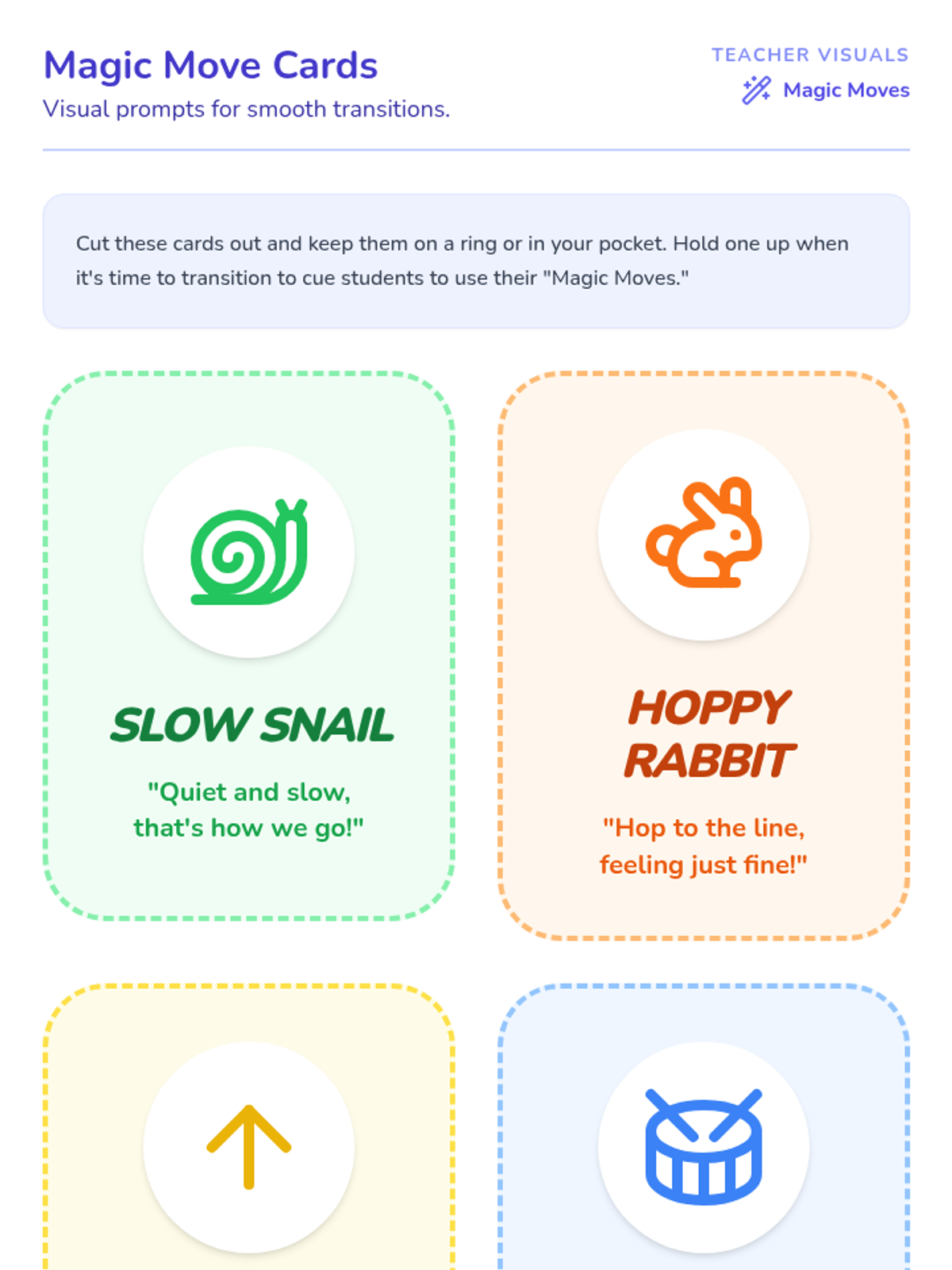
Students learn stress-free transition strategies, using imagination and 'magic' to move smoothly between activities.
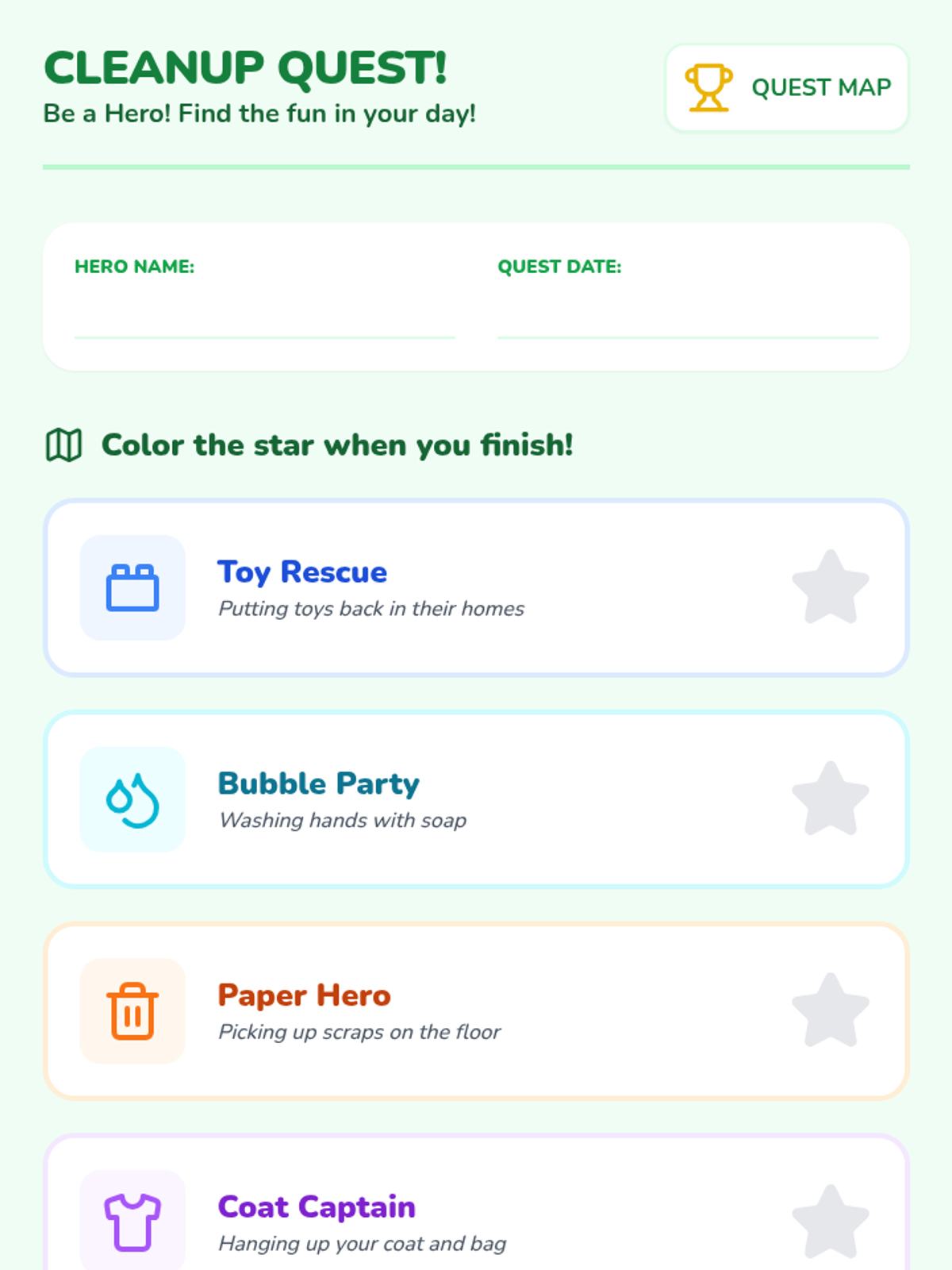
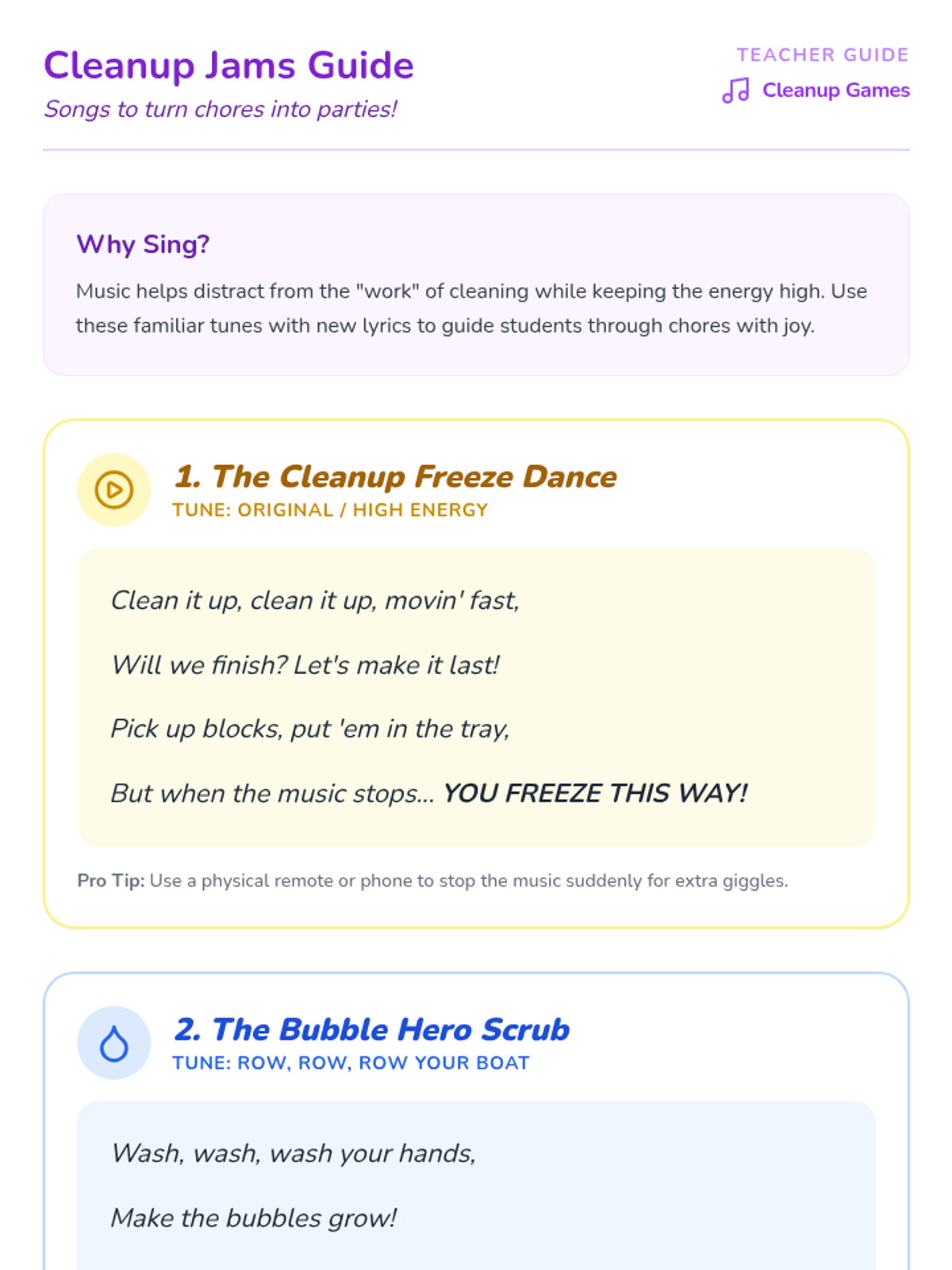
This lesson turns cleanup and maintenance tasks into games and songs, helping students reframe chores as positive, shared experiences.
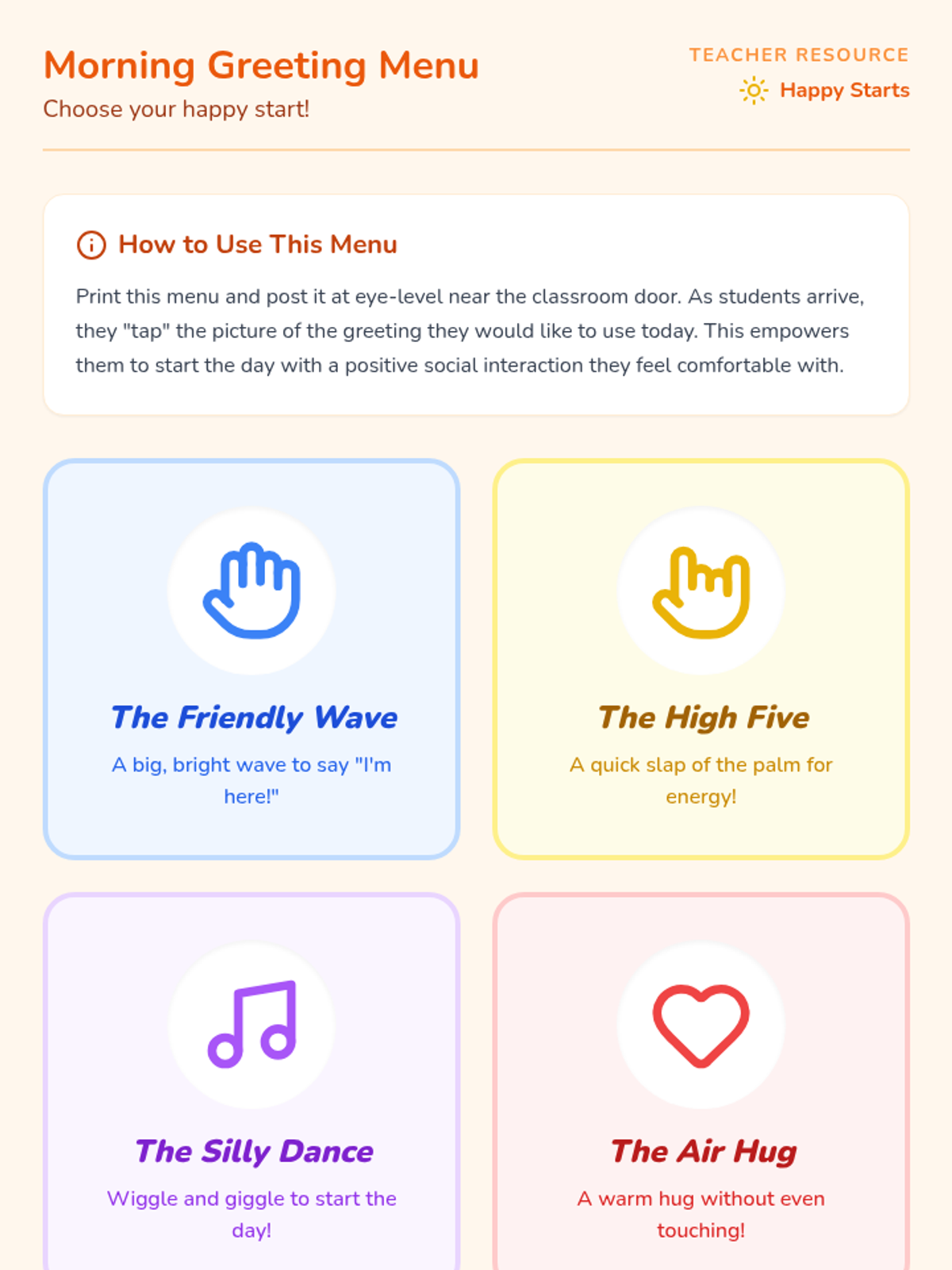
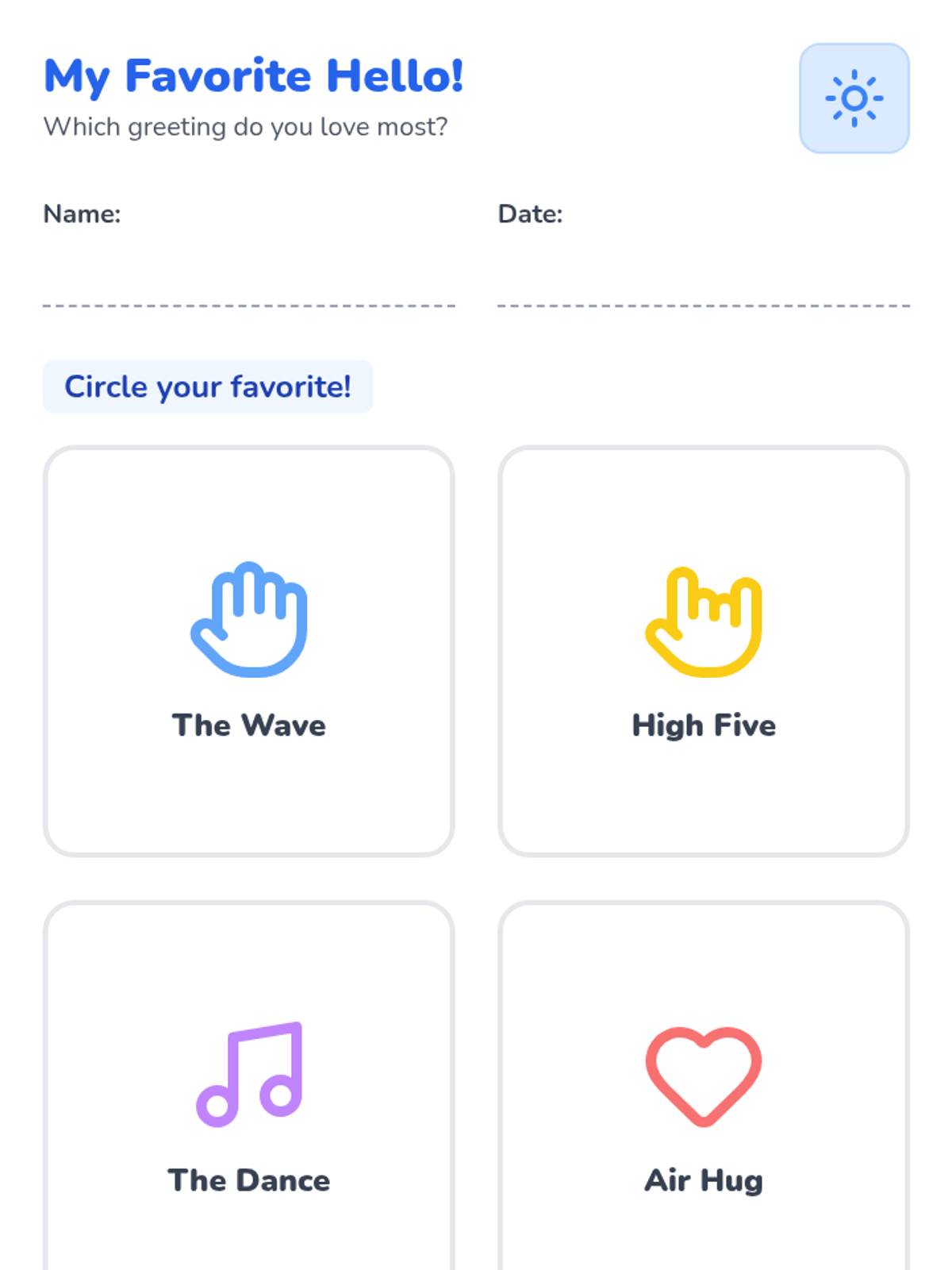
Students practice different ways to start the day positively, choosing signature greetings like waves, high-fives, or dances to set a happy tone.
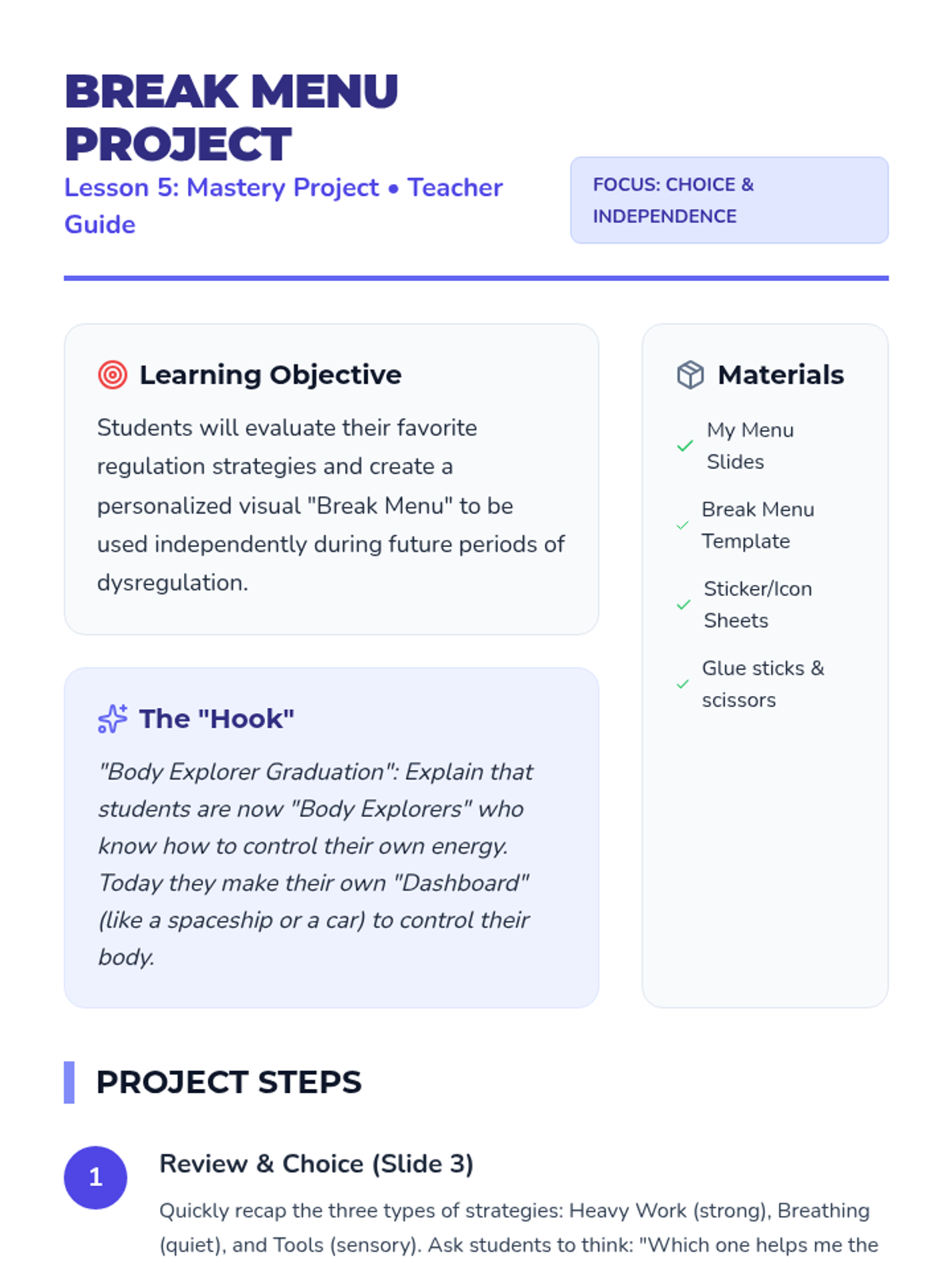
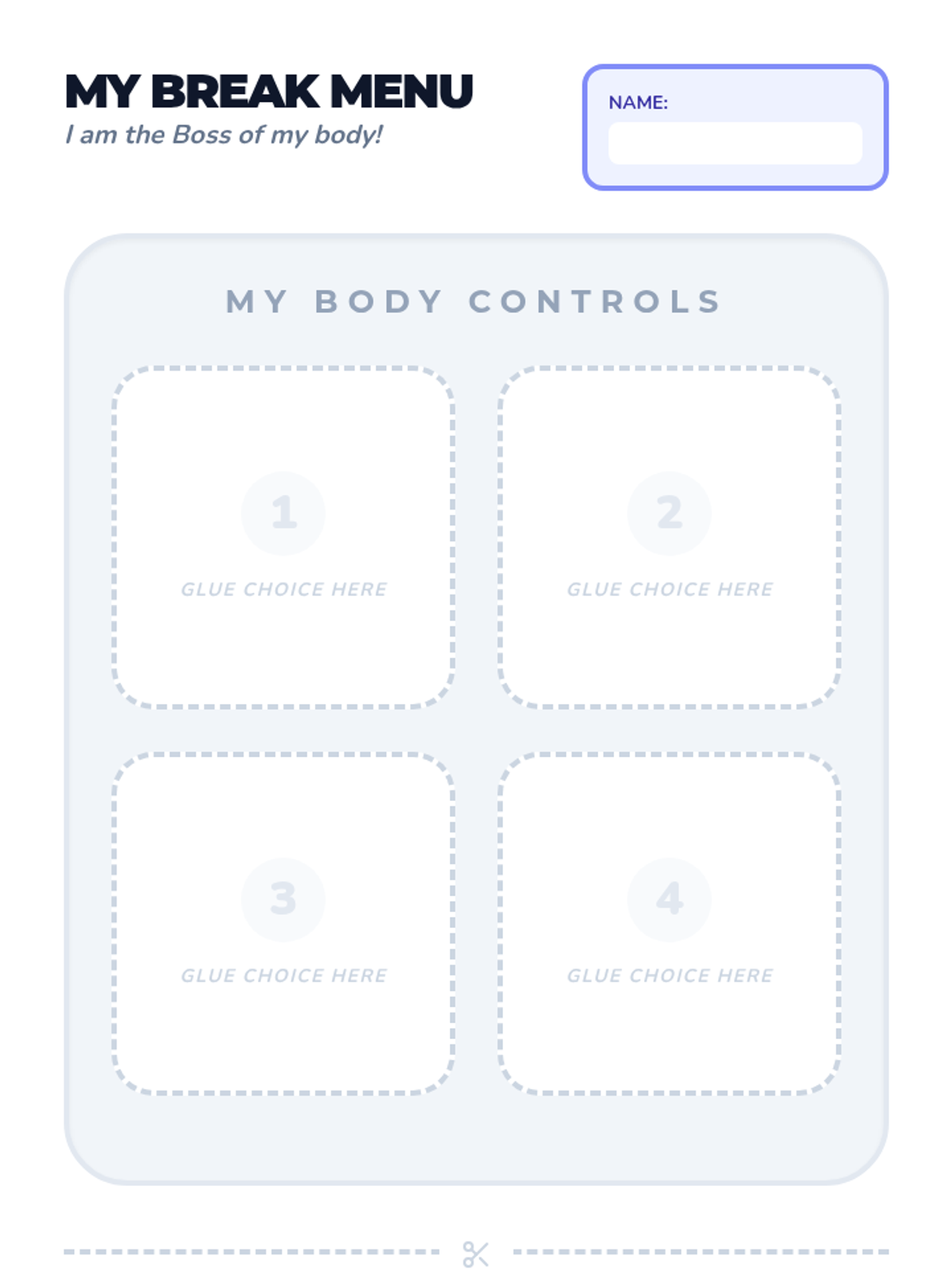
Students select their favorite regulation strategies to create a personalized visual 'Break Menu,' providing them with a permanent resource for self-regulation.
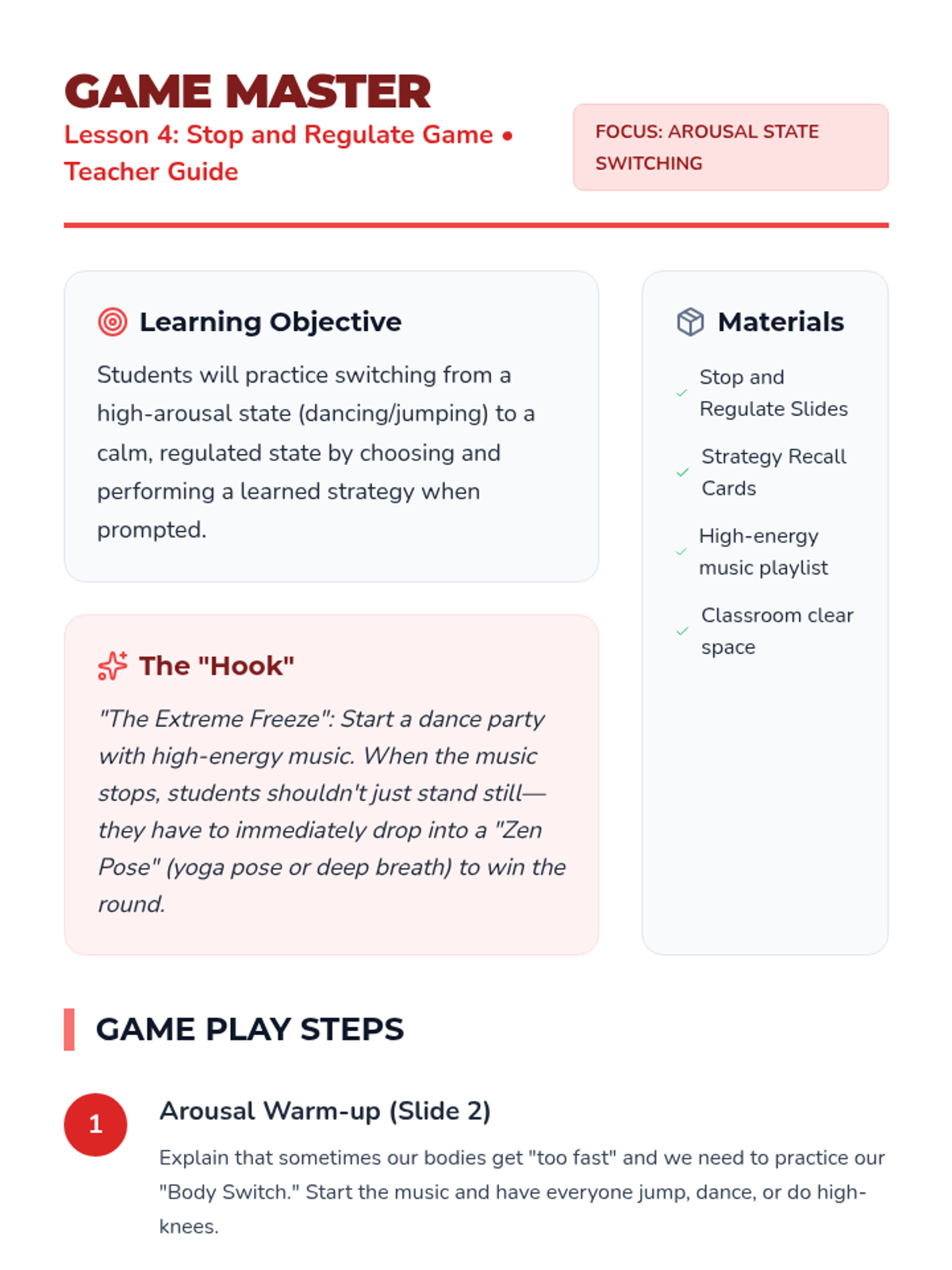
A structured game practicing the switch from high energy to calm regulation, simulating the real-time need for strategic breaks.
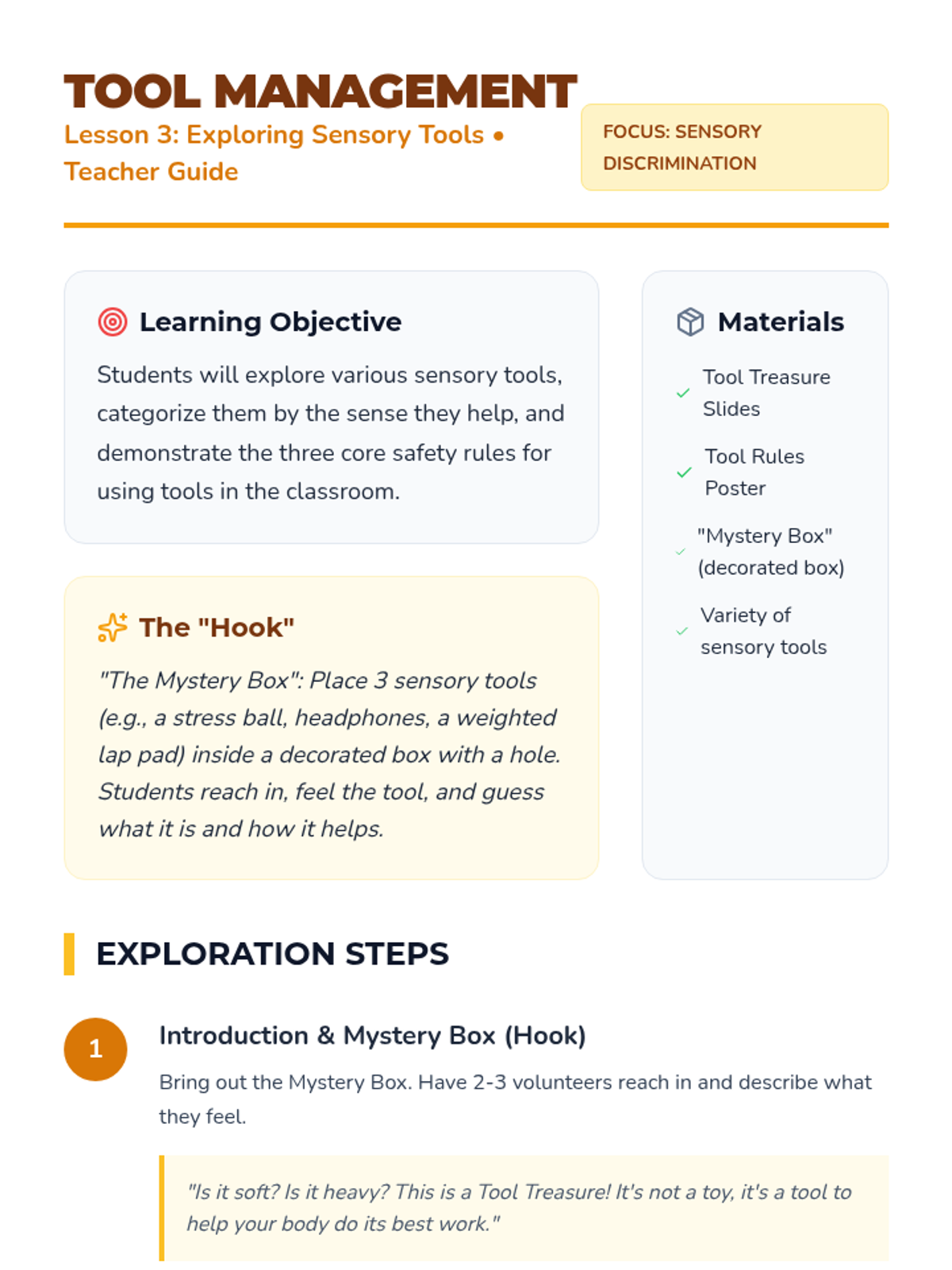
Students explore sensory tools like fidgets and noise-canceling headphones, learning the appropriate ways to use them safely for regulation.
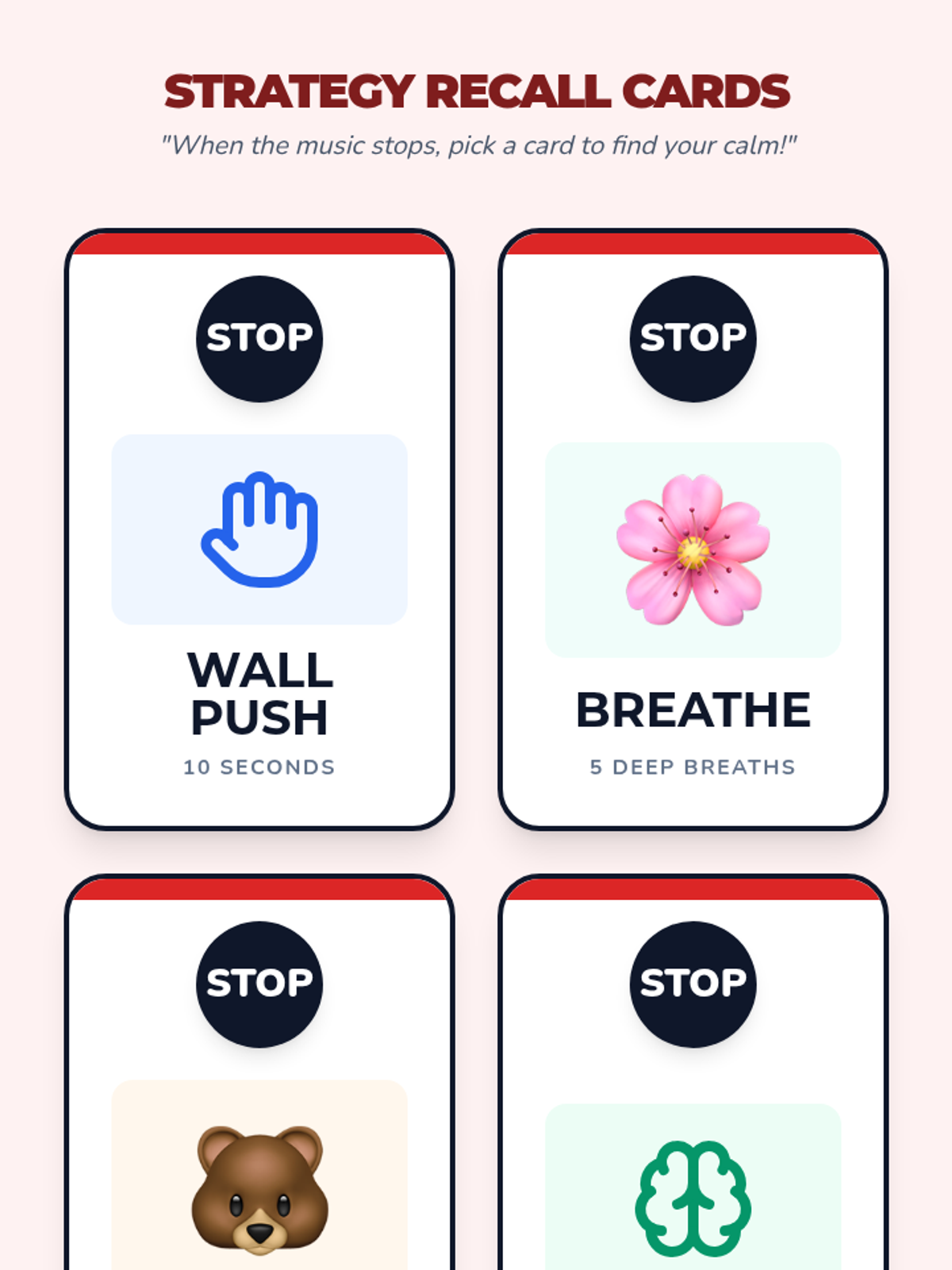
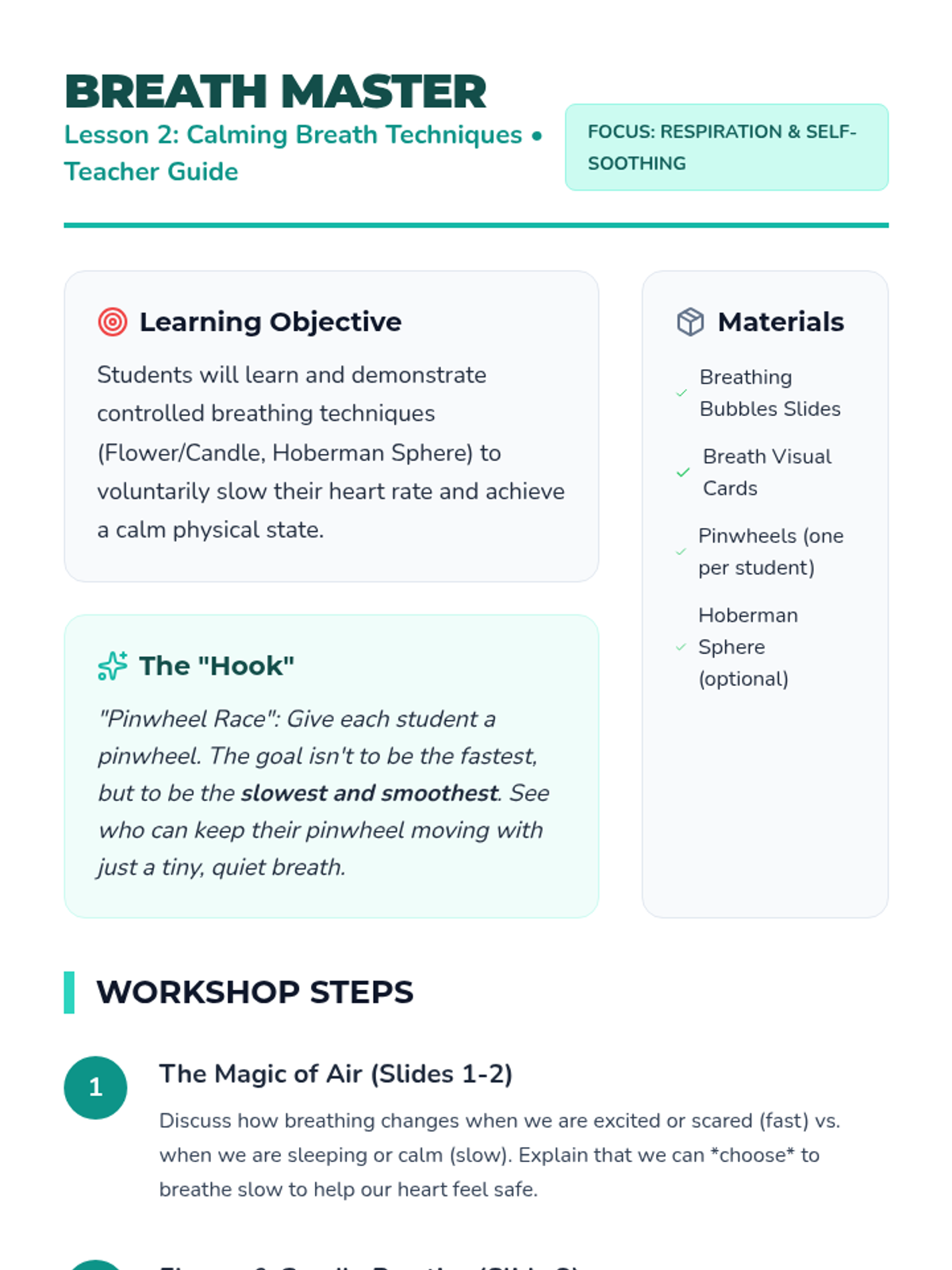
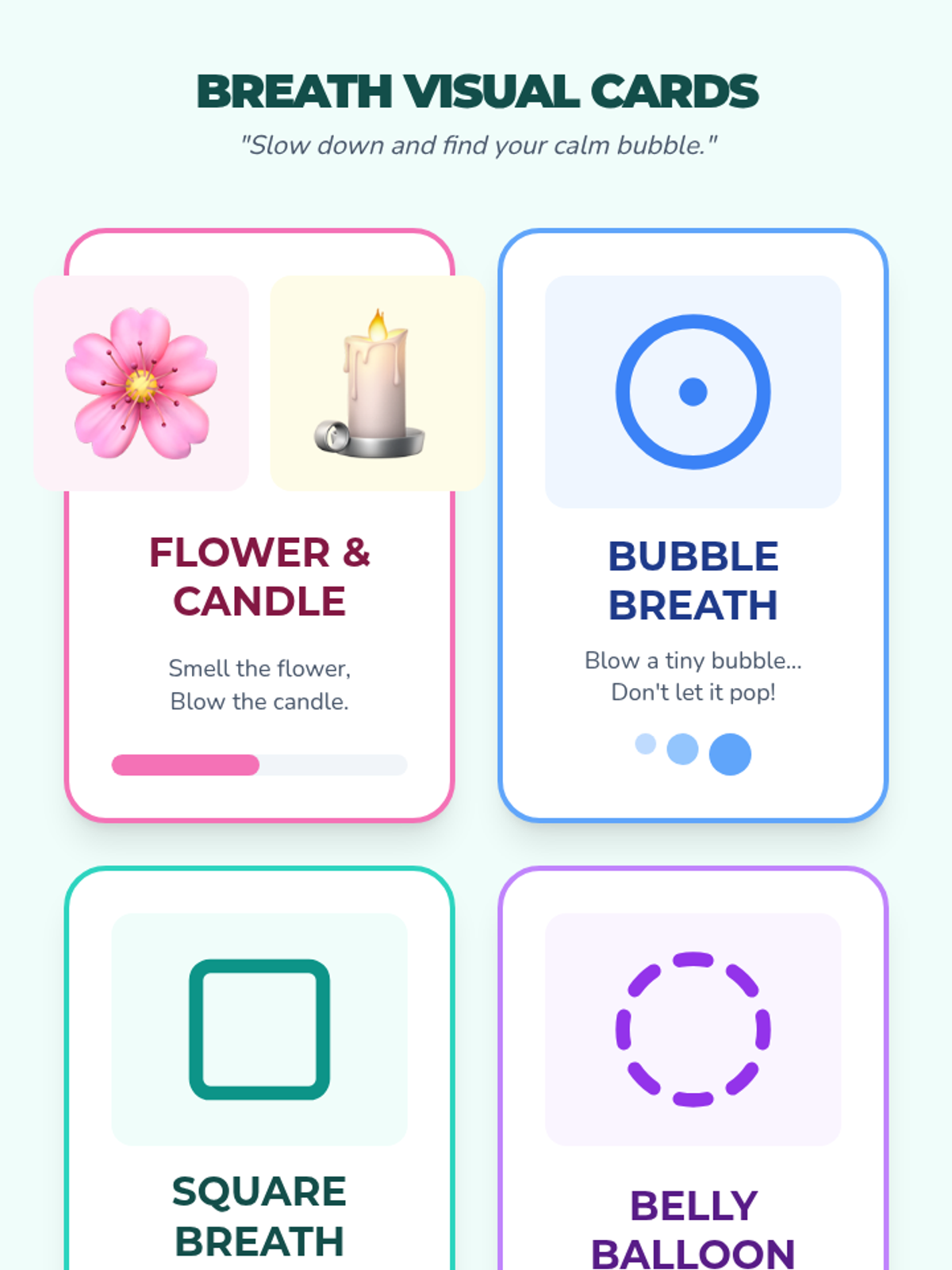
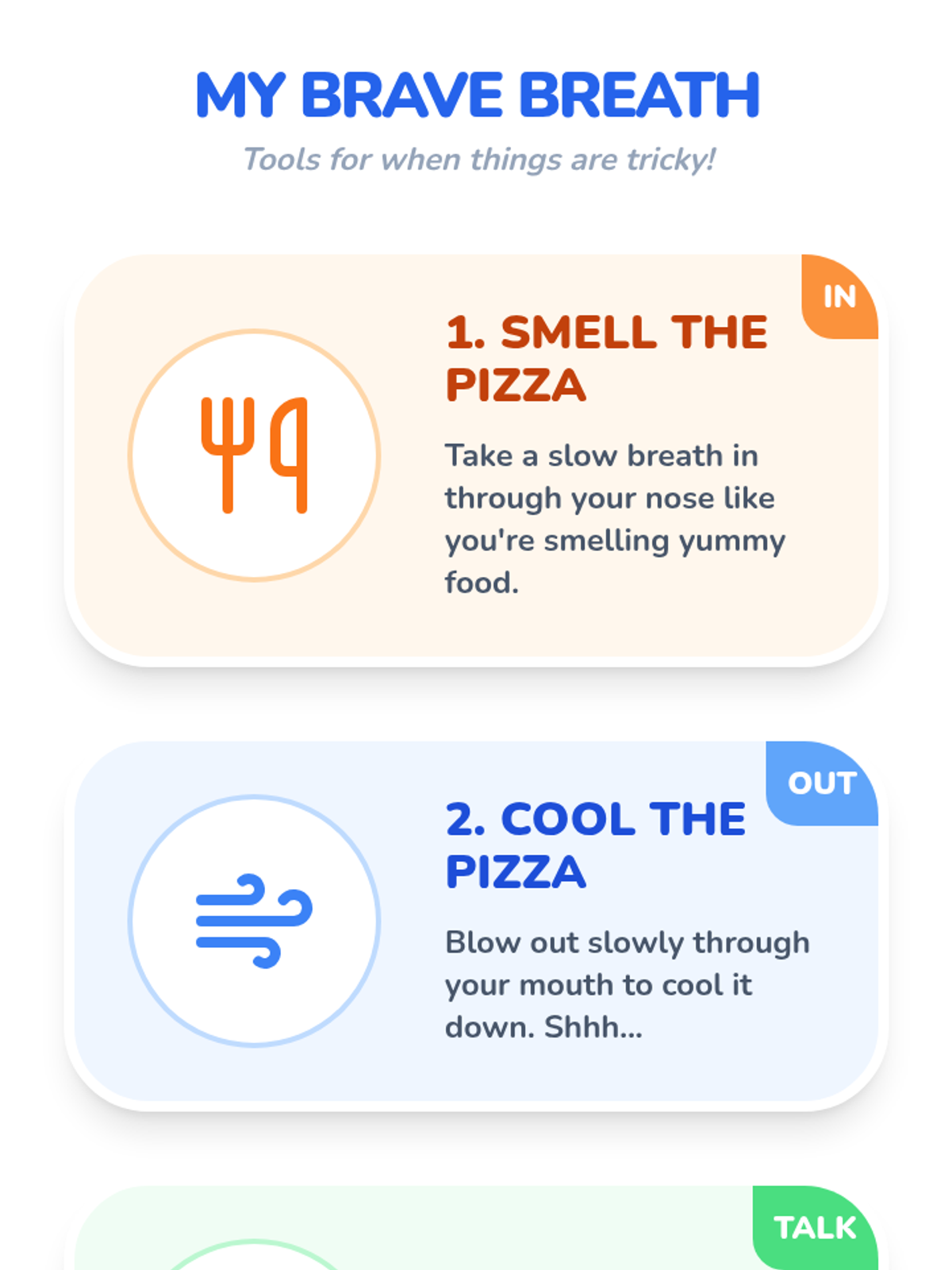
Students learn and practice deep breathing techniques using visual aids to help slow their heart rate and calm their physical bodies.
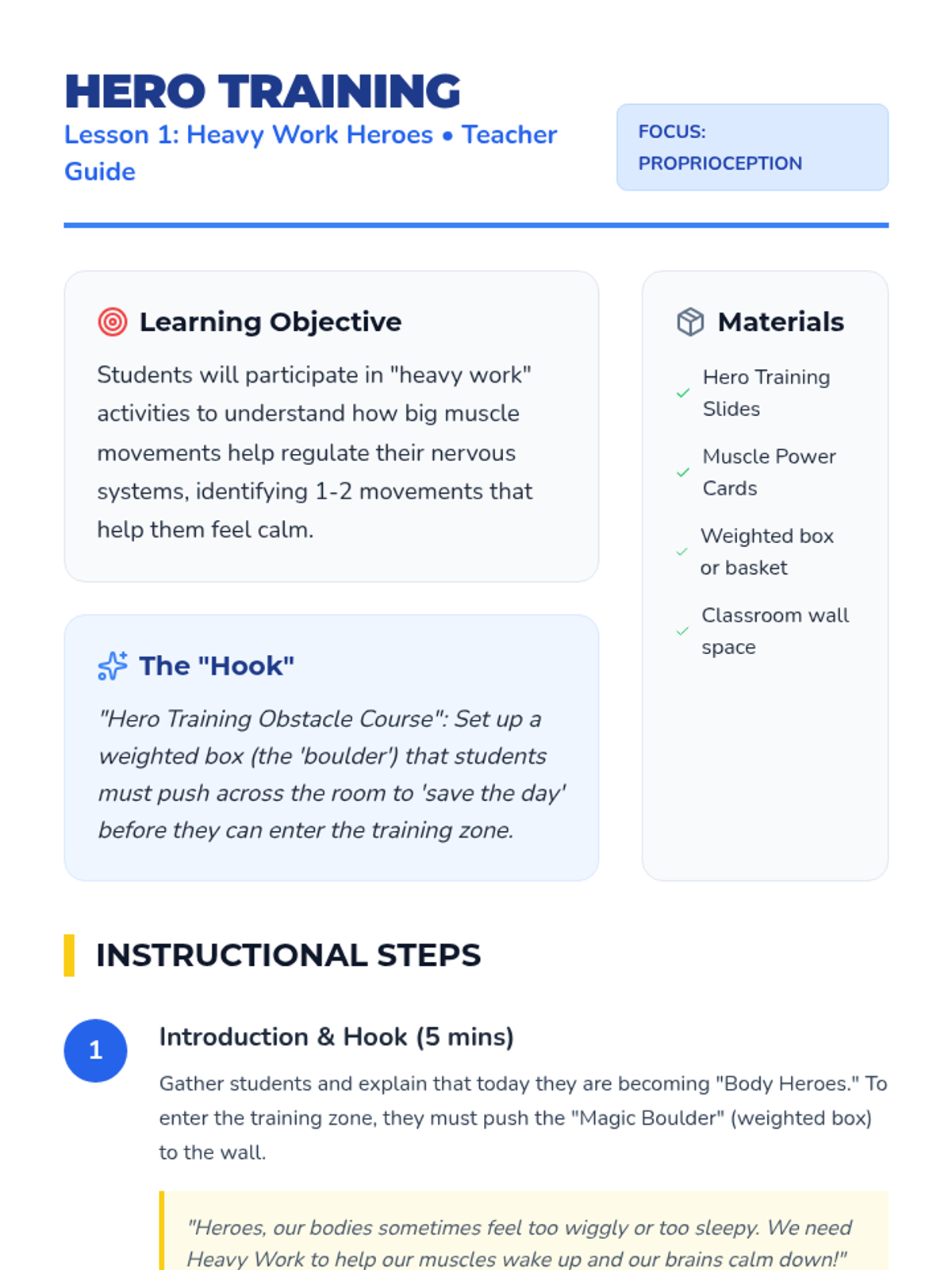
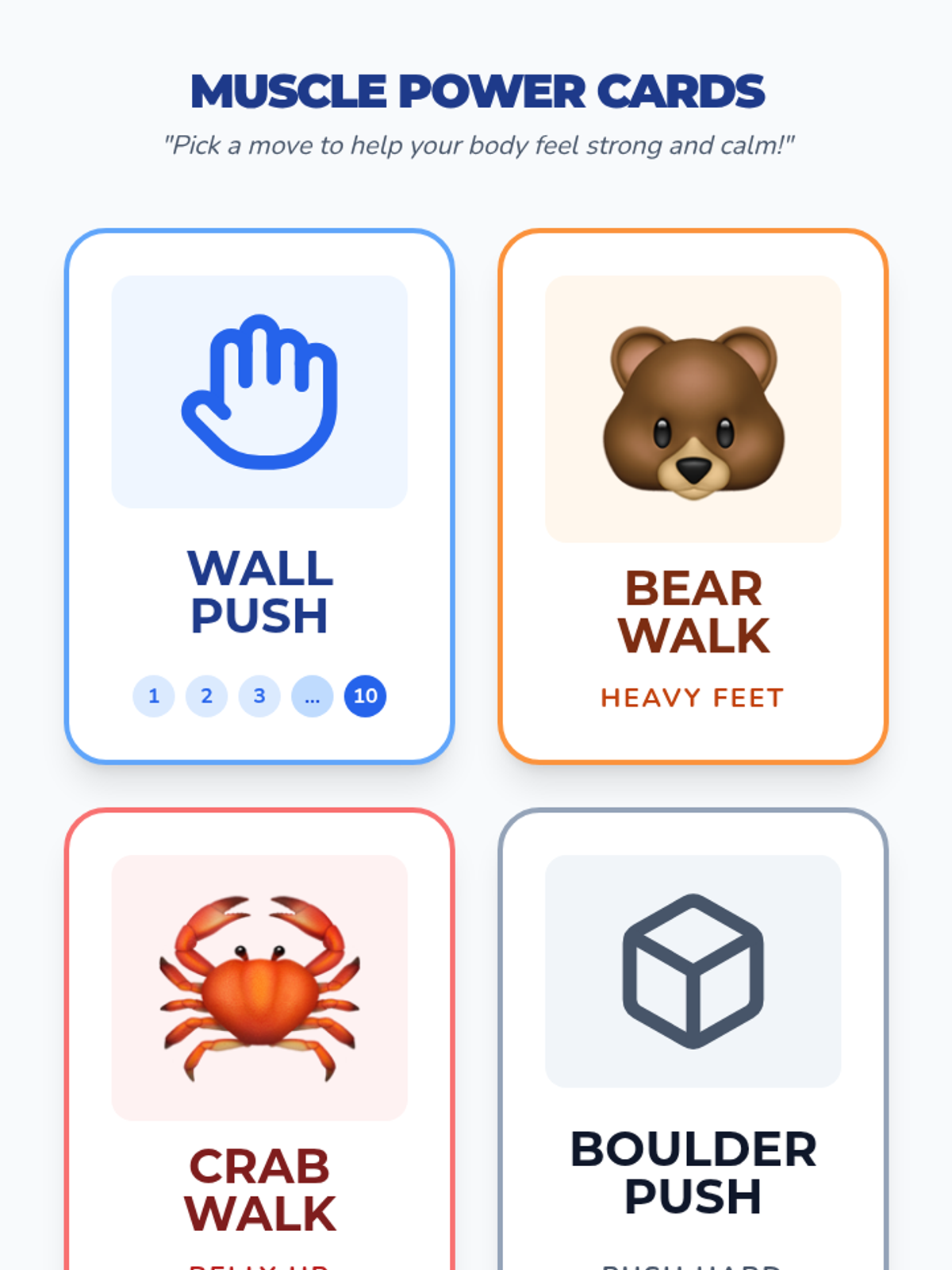
Students engage in proprioceptive 'heavy work' activities like wall pushes and animal walks to understand how strong movements help calm the brain and wake up muscles.
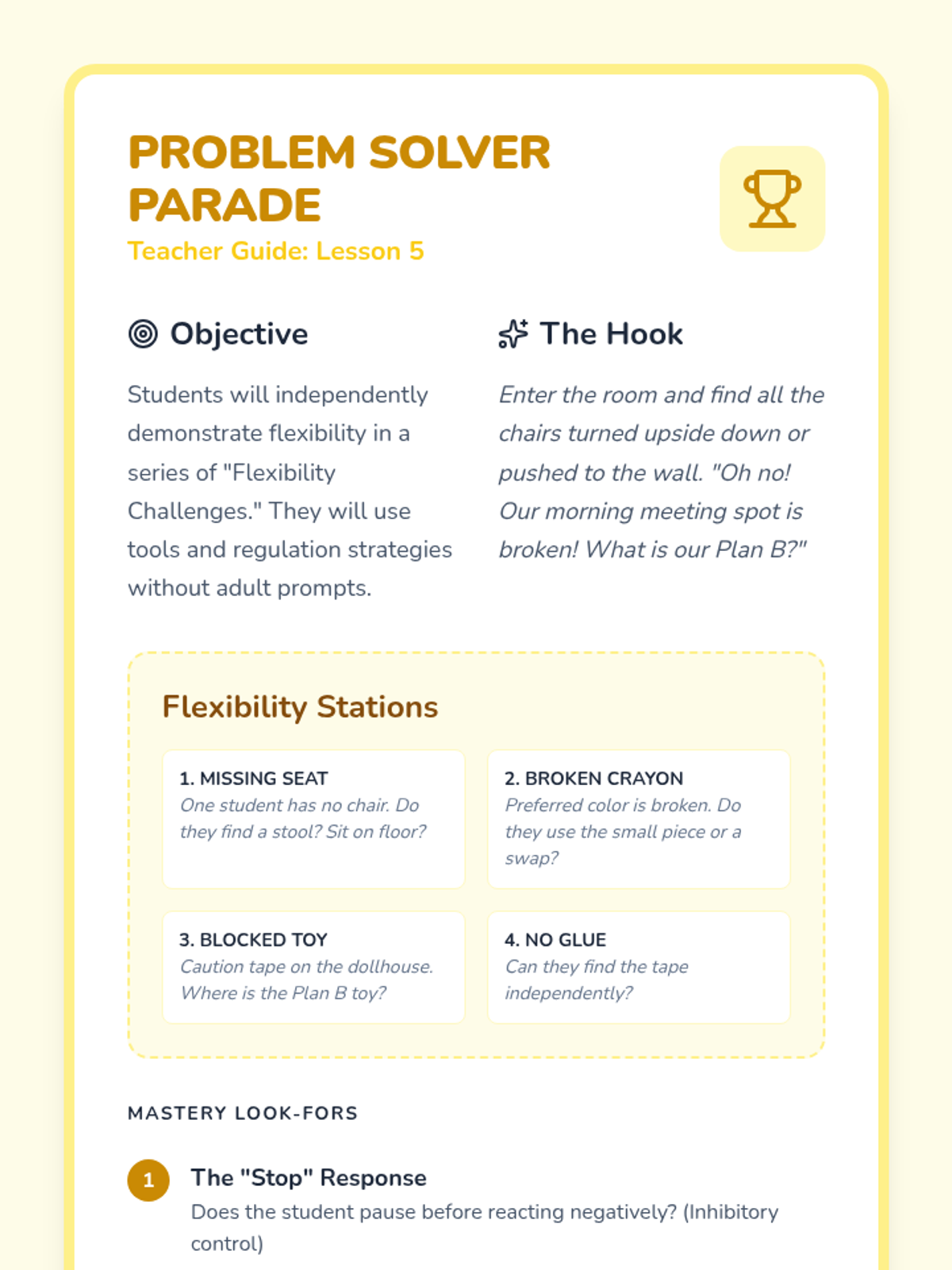
A cumulative challenge where students independently apply flexibility strategies to solve novel classroom problems.
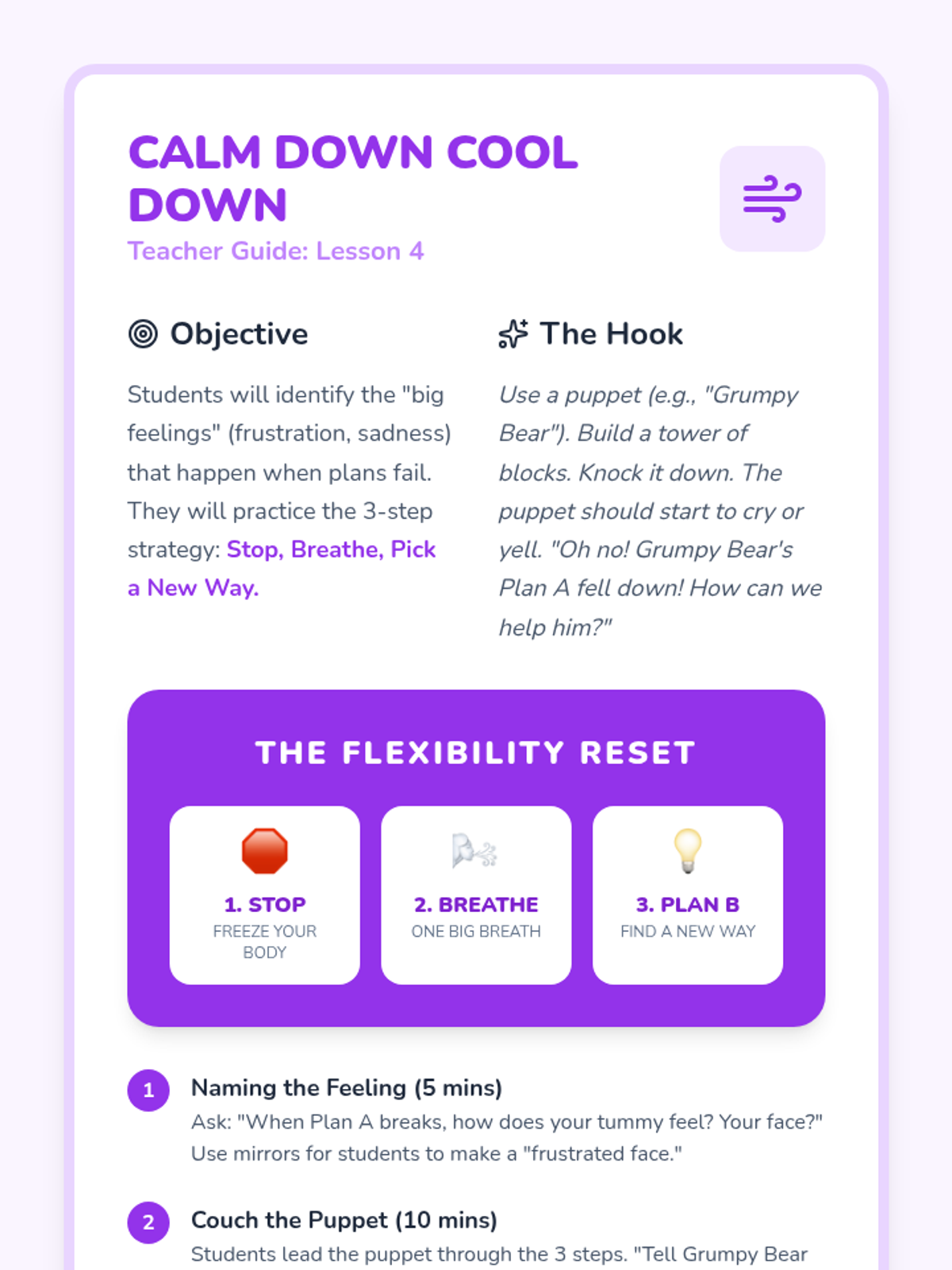
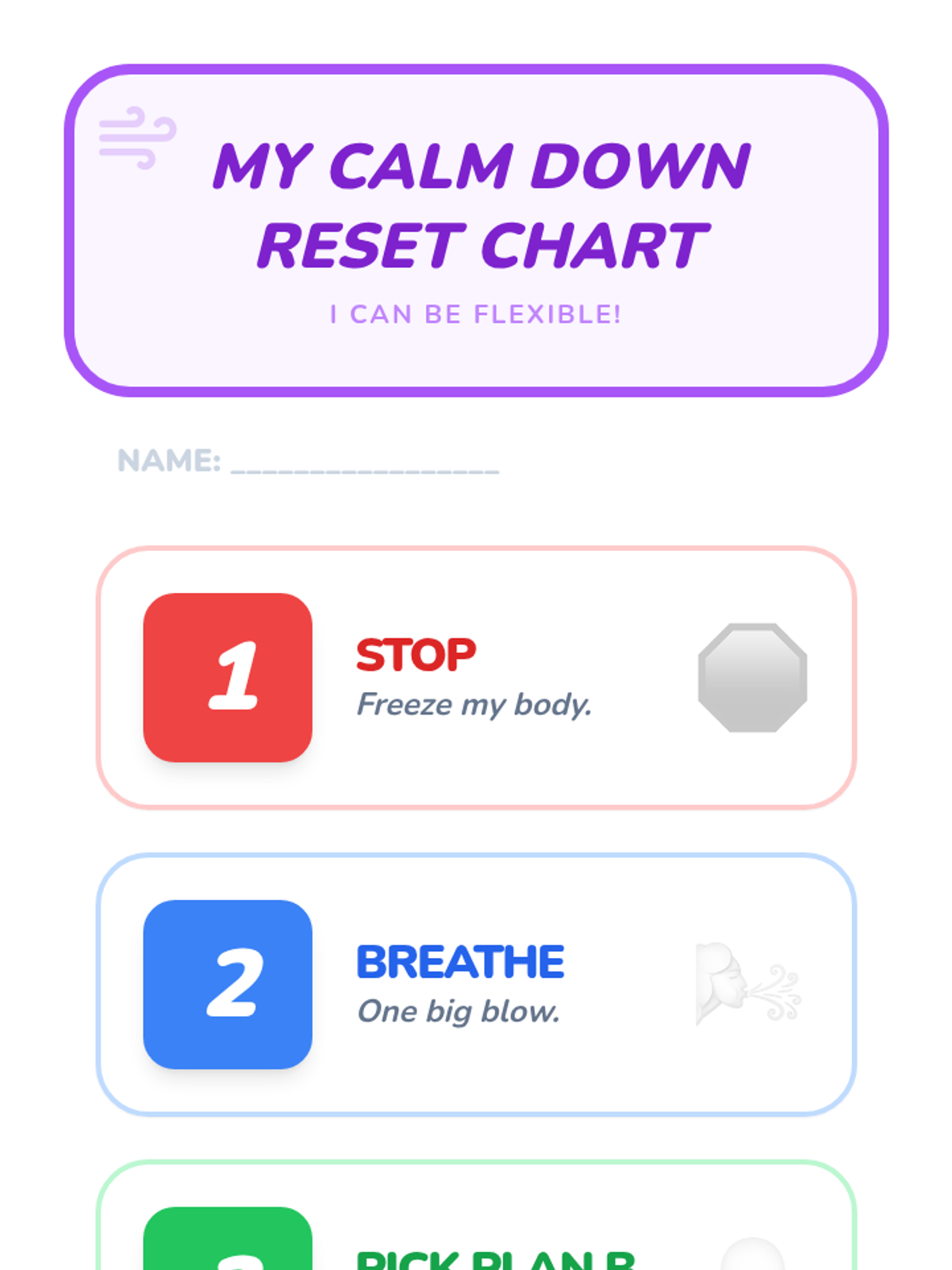
Focuses on emotional regulation strategies like 'Stop, Breathe, Pick a New Way' to handle the frustration of change.
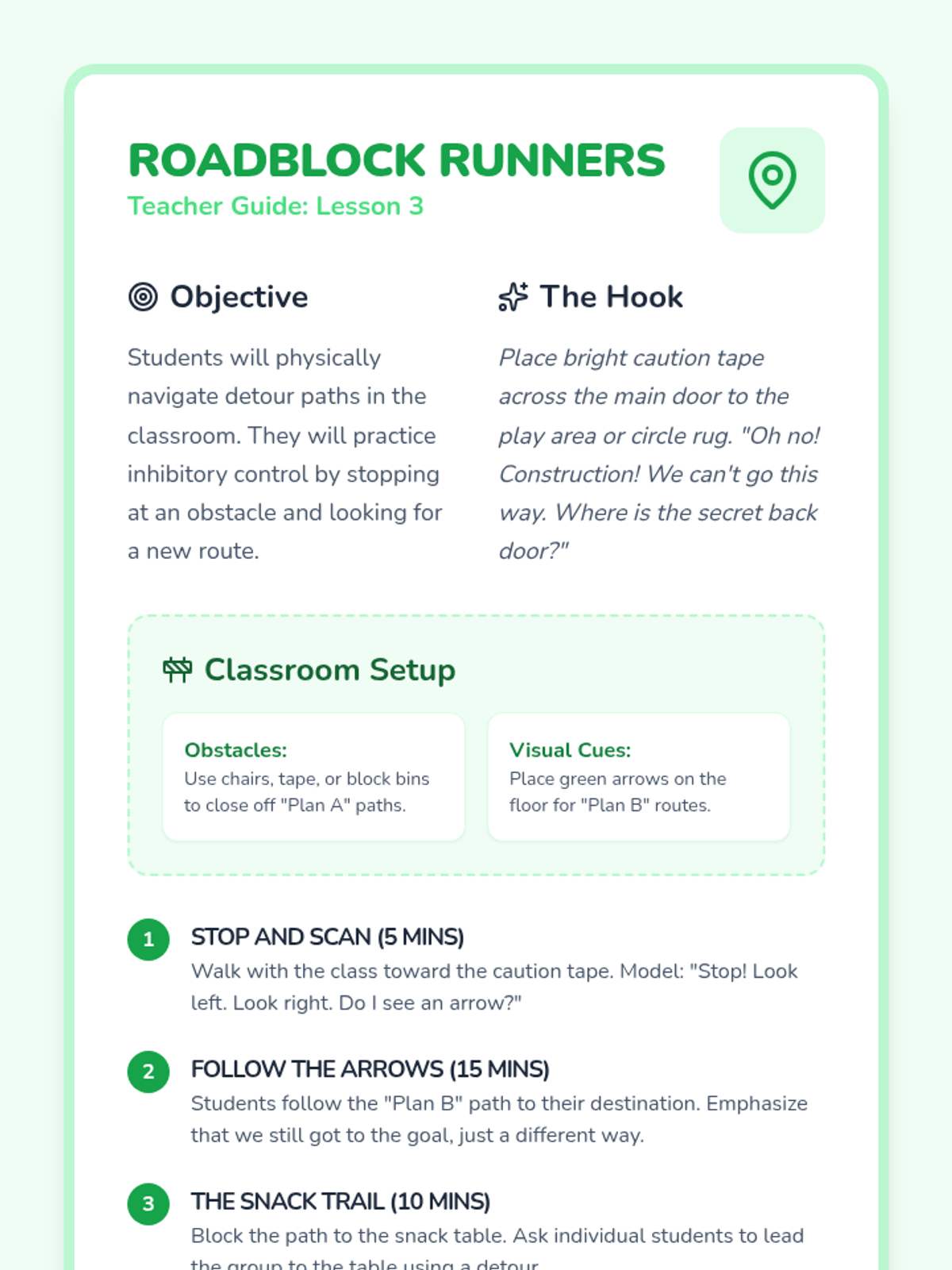
Students navigate physical obstacles and classroom detours to build spatial reasoning and inhibition control.
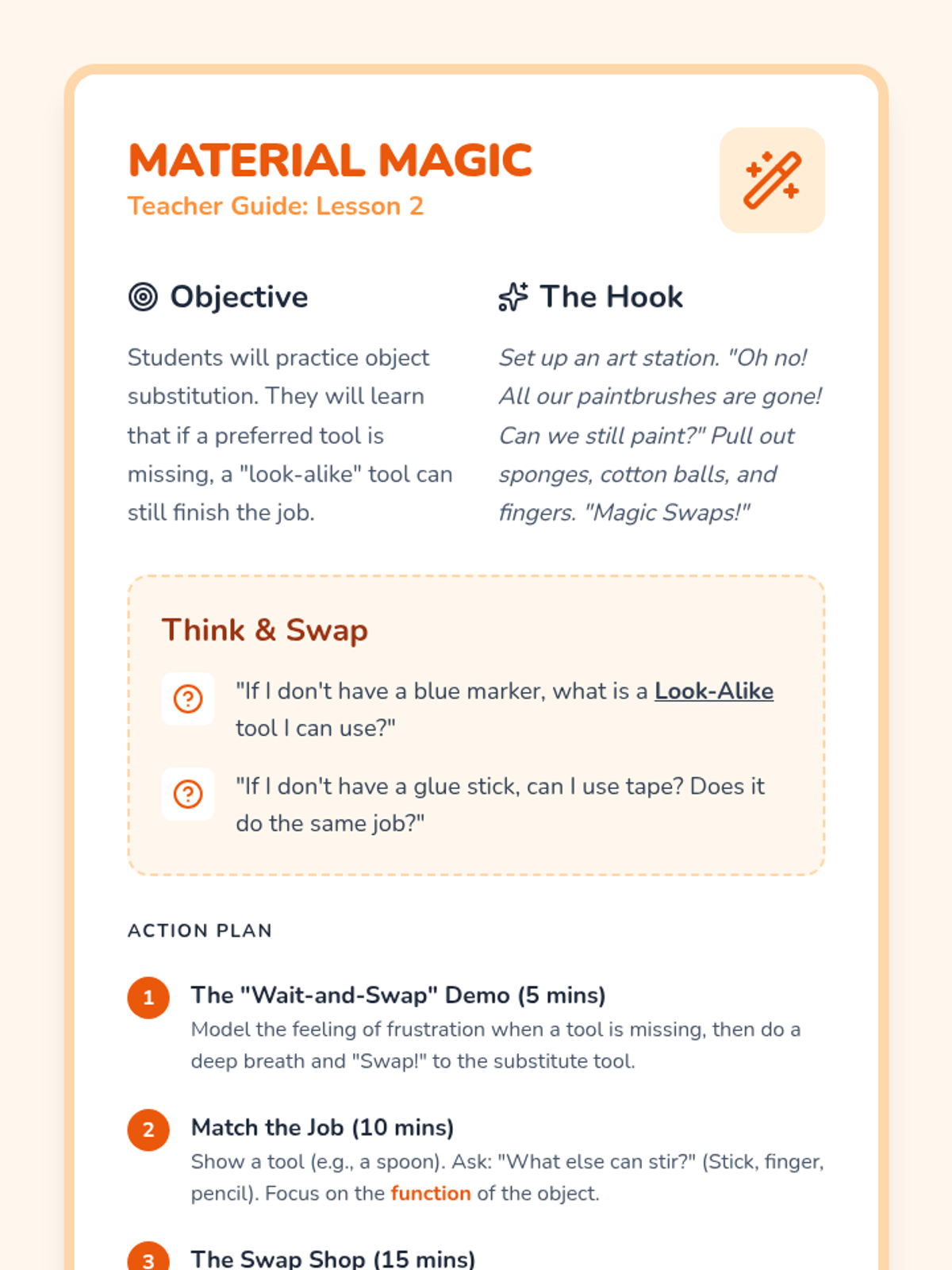
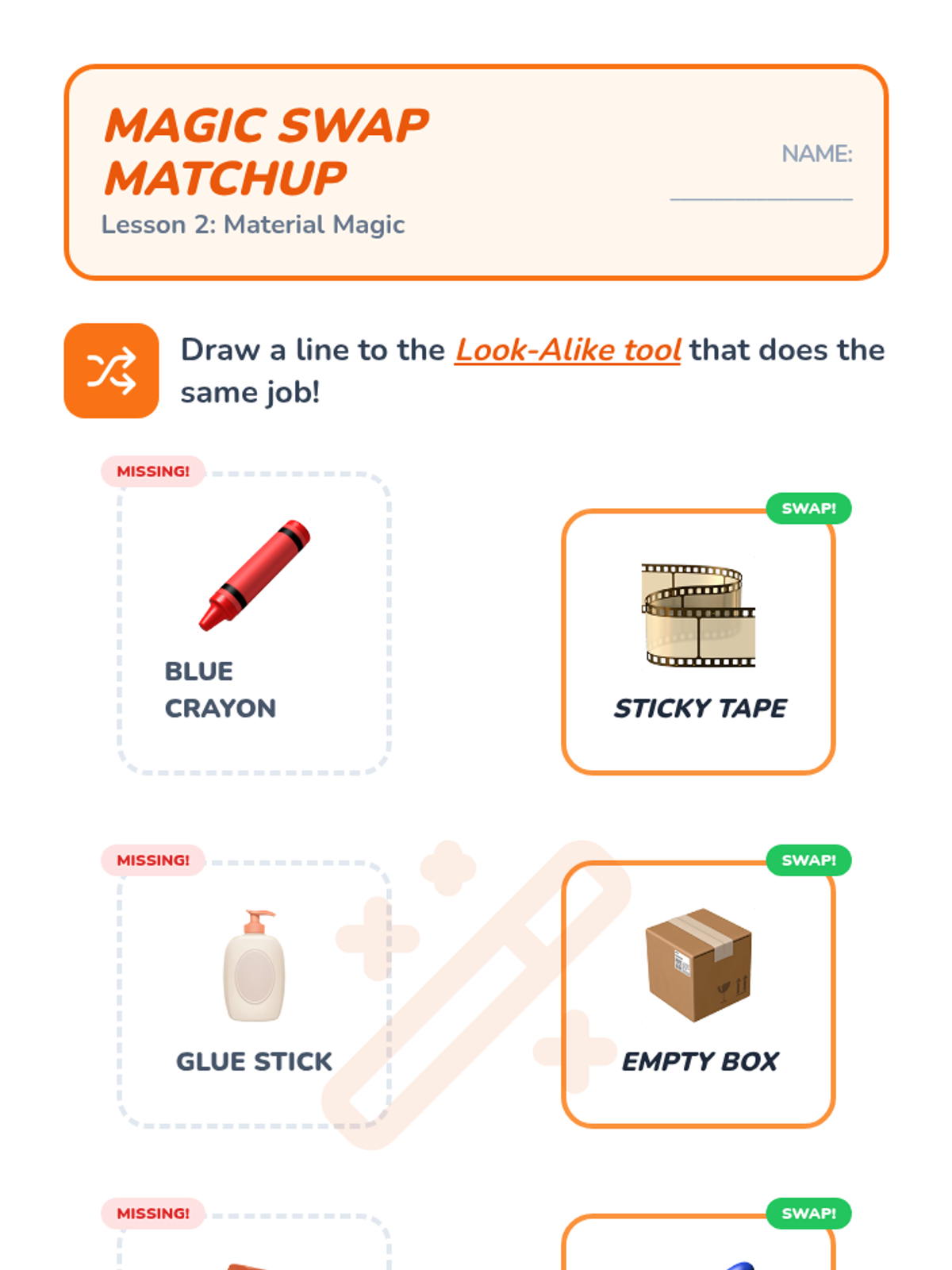
Students practice using alternative materials when their first choice is unavailable, learning that different tools can reach the same goal.
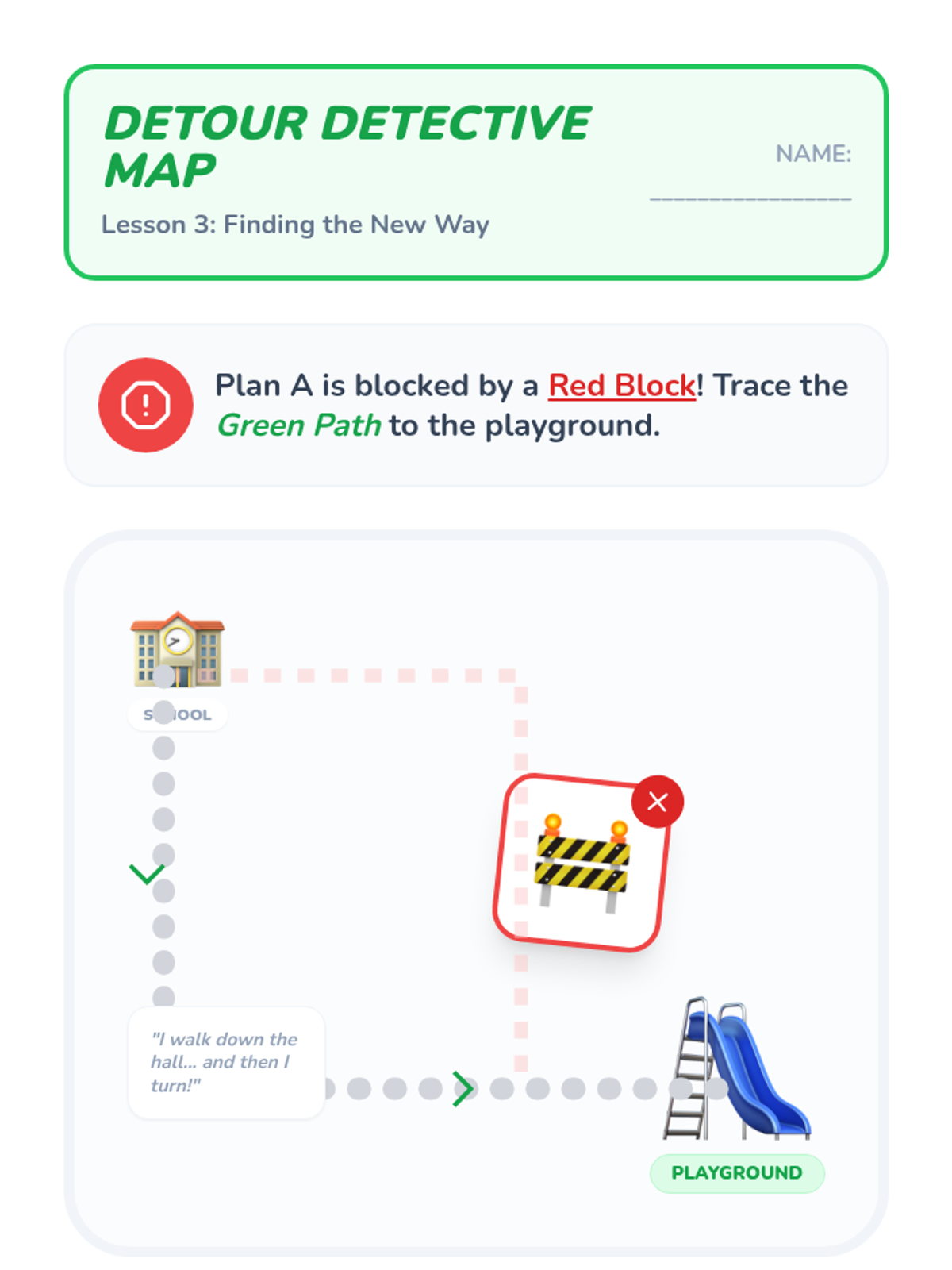
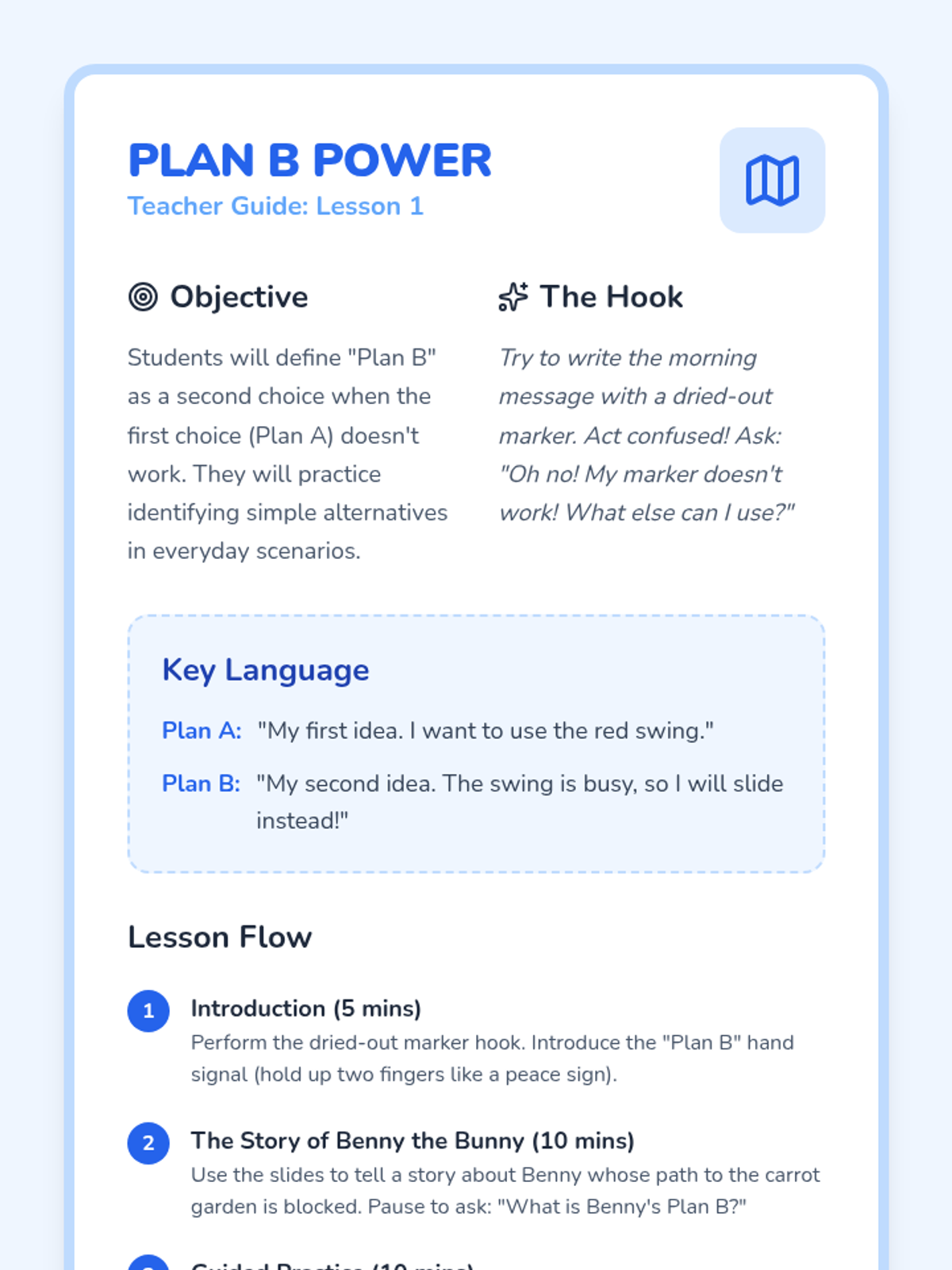
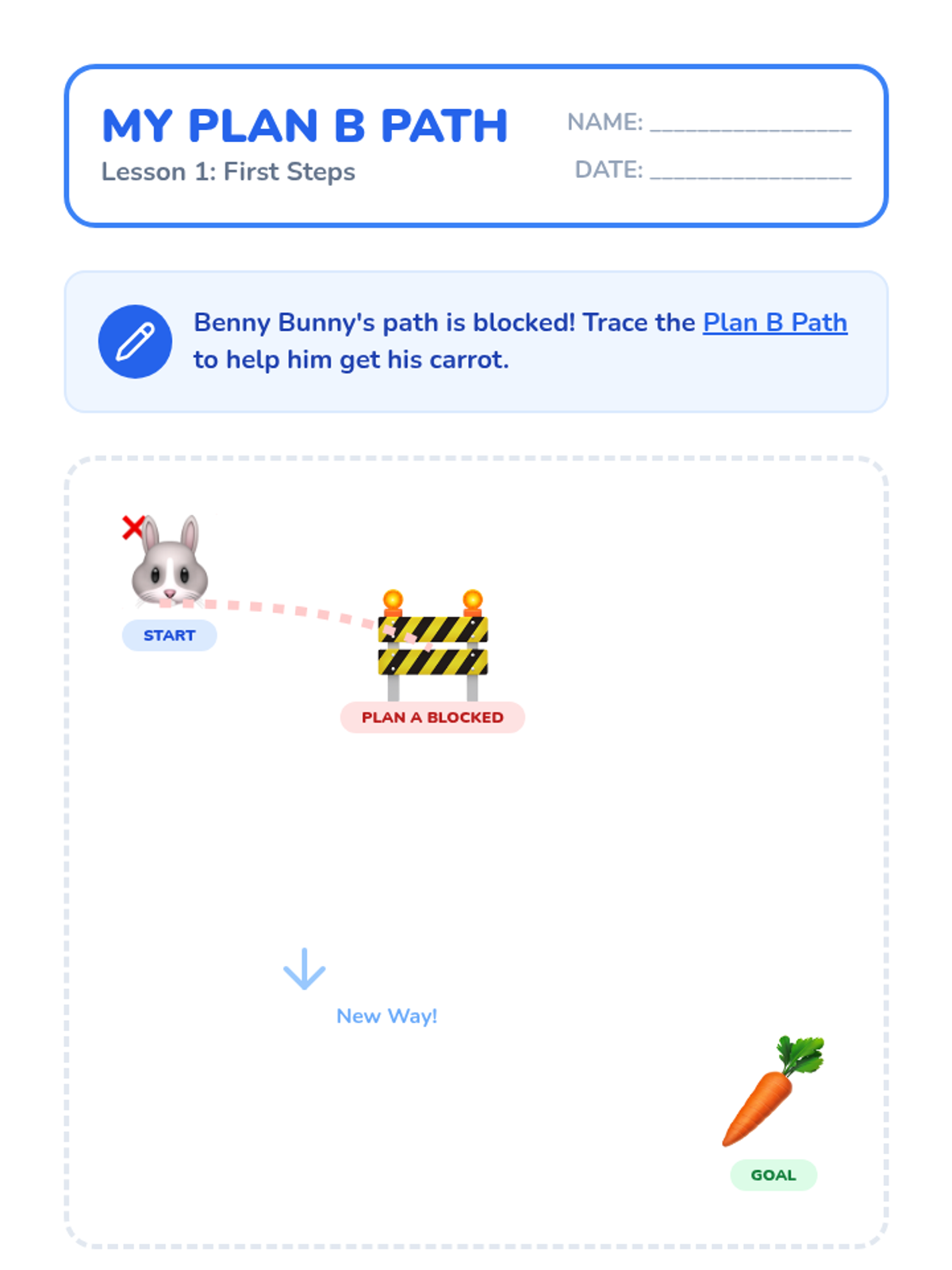
Students learn the concept of 'Plan B' through a story about blocked paths and practice brainstorming simple alternatives.
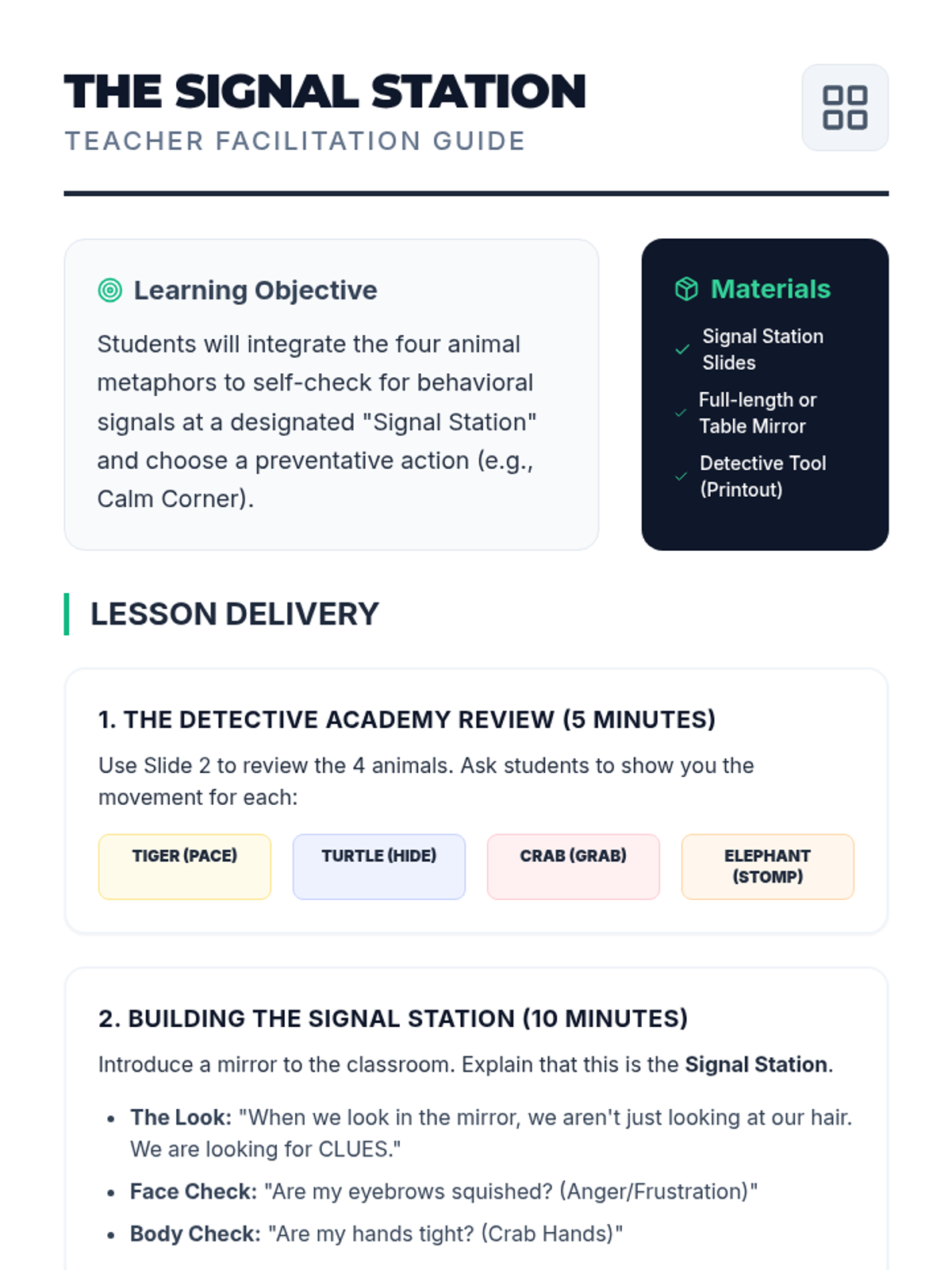
Students set up a classroom mirror station where they can check their own faces and bodies. They role-play noticing a warning sign (like pacing) and choosing to go to the 'calm corner' before a meltdown occurs.
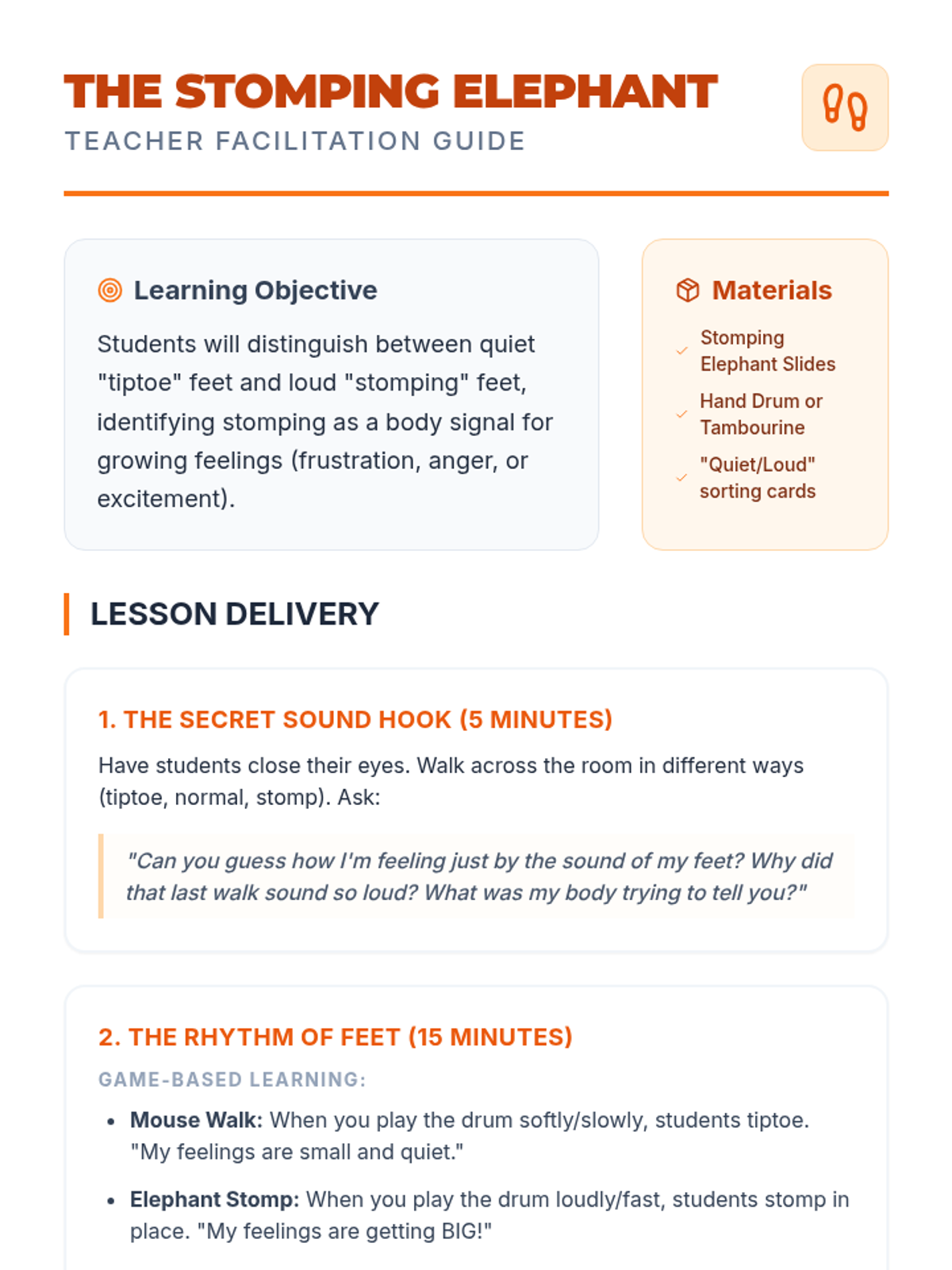
Children contrast 'tiptoe' and 'walking feet' with 'stomping feet.' They identify that heavy, loud footsteps often happen when feelings are growing from small to medium.
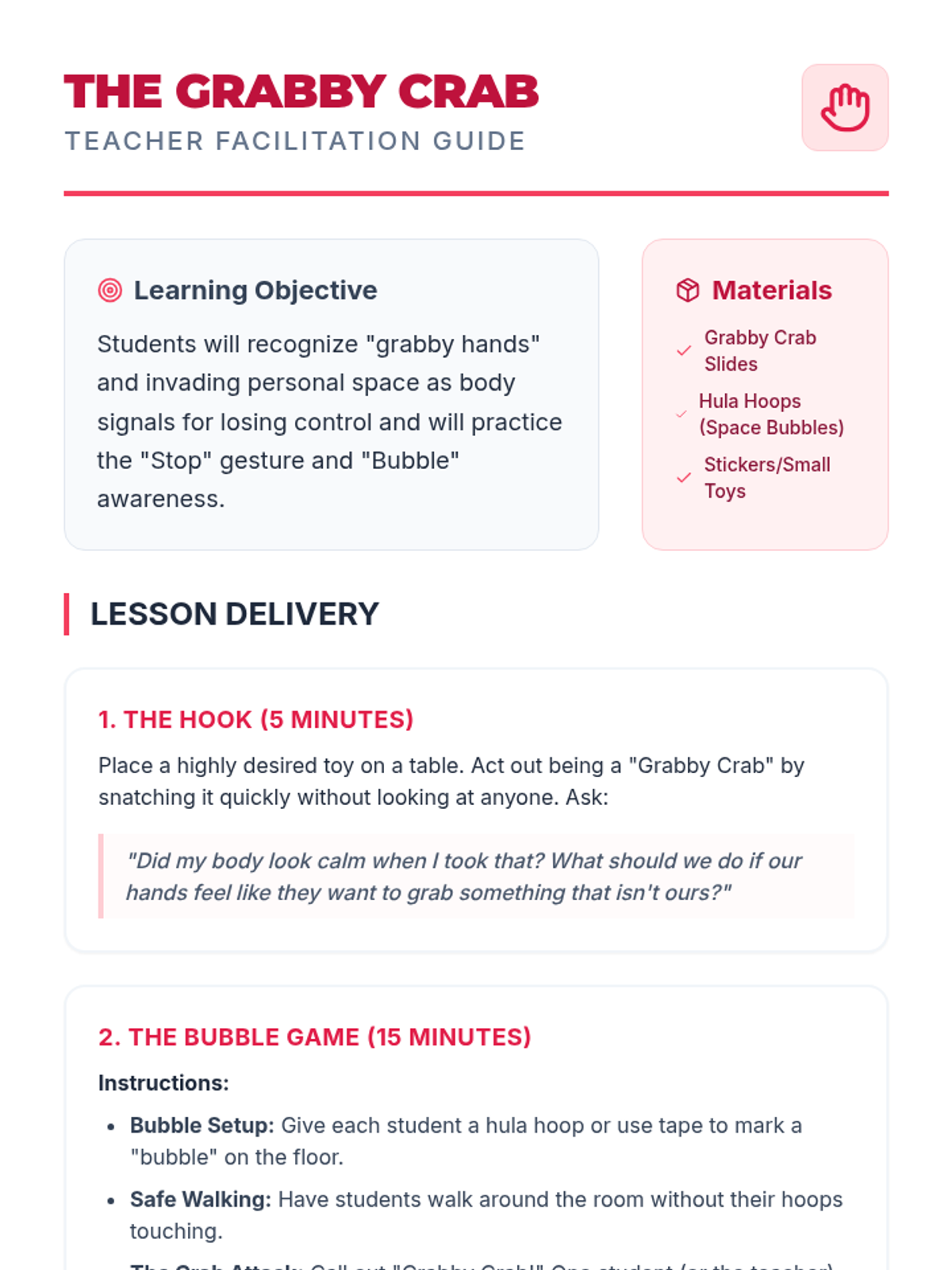
Students explore how 'grabby hands' or invading personal space can be a warning sign of losing control. They practice recognizing when their hands feel like they want to push or grab and using a 'stop' gesture instead.
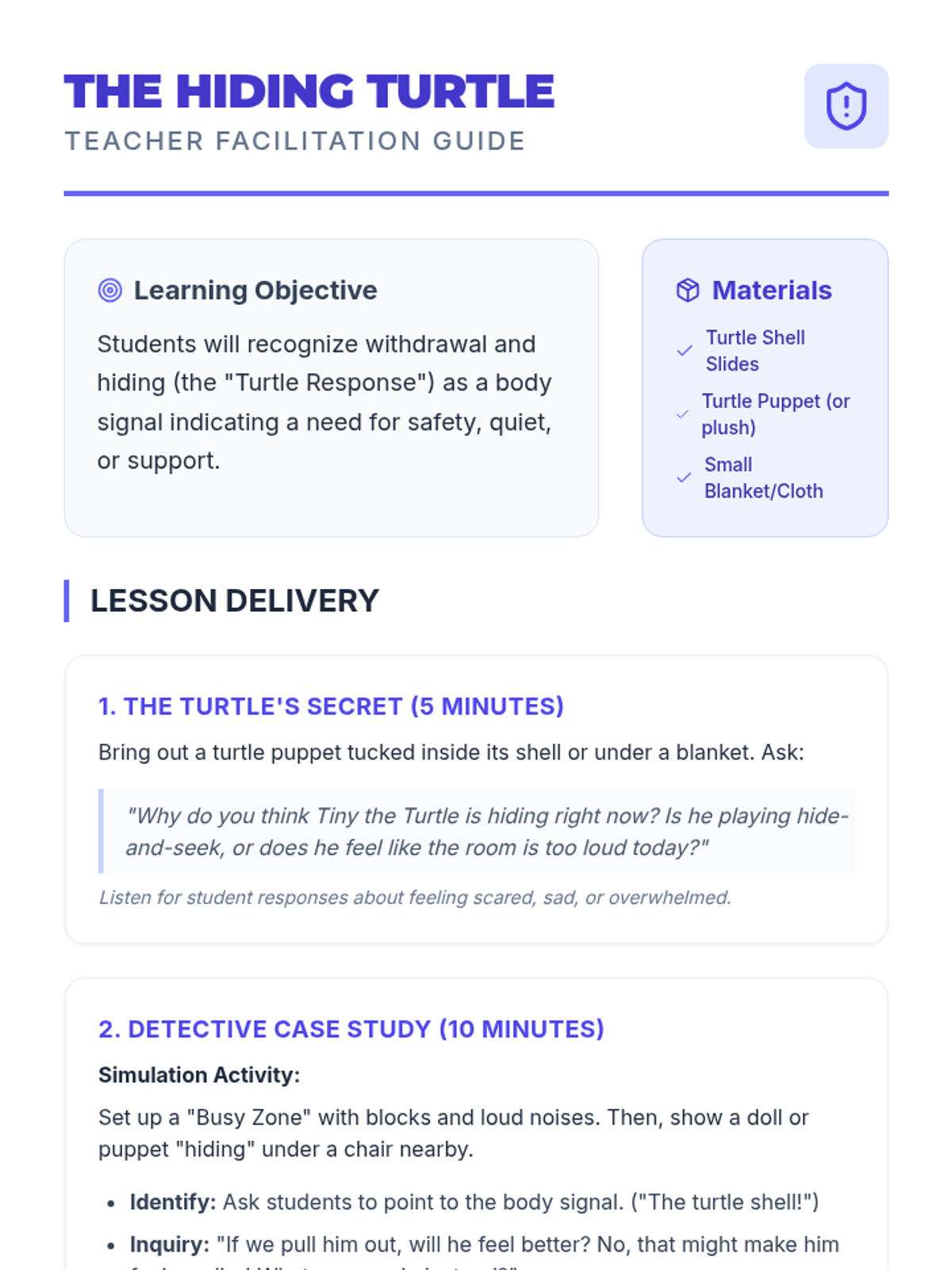
Focusing on the 'flight' response, this lesson uses the 'Turtle' metaphor to demonstrate how hiding or withdrawal can be a warning sign that someone feels unsafe or overwhelmed.
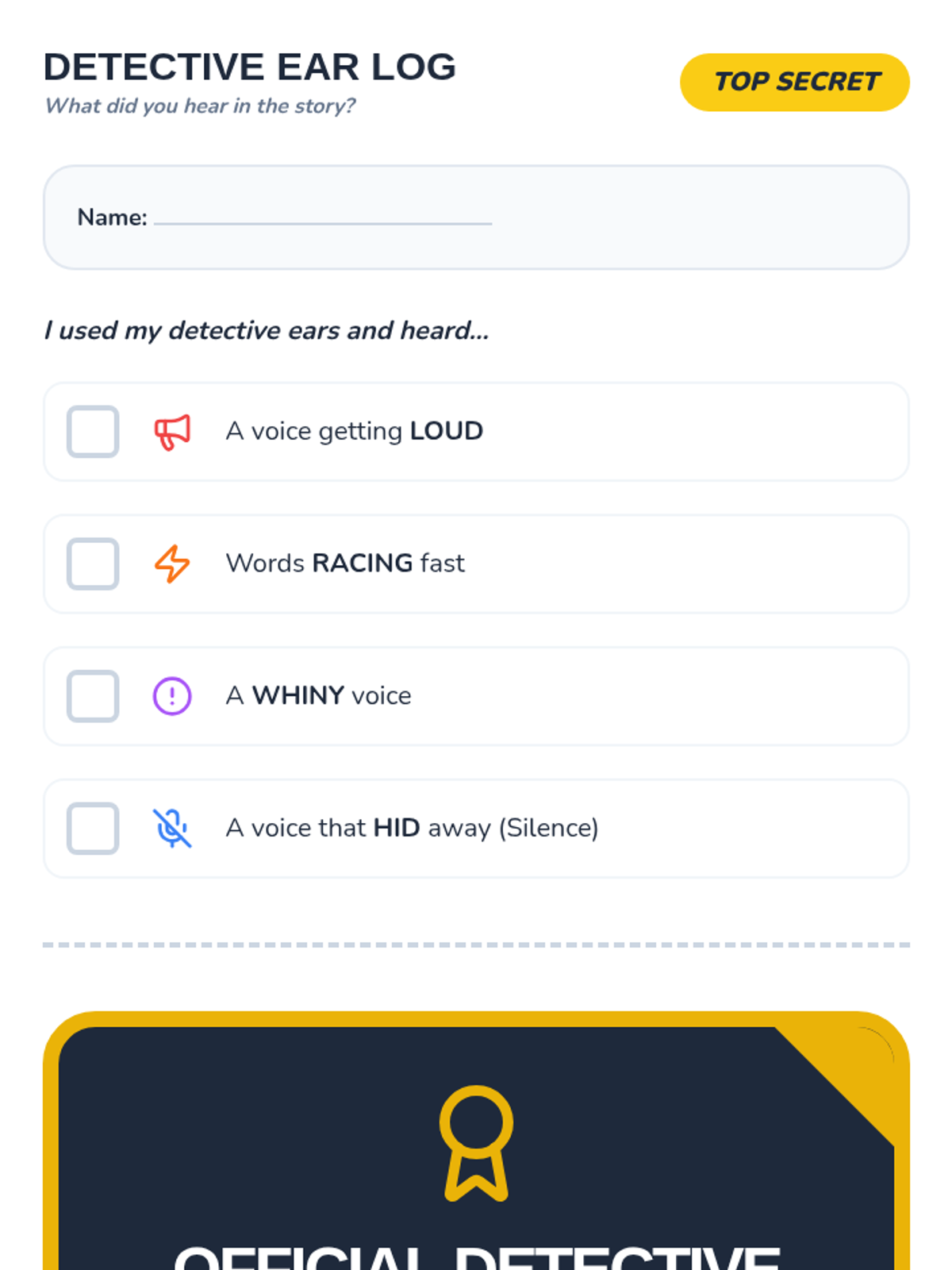
In a culminating activity, students use their 'detective ears' to identify vocal changes in stories and infer how characters are feeling.
Students apply their learned strategies to help Pippin join the class, reflecting on their journey from feeling stuck to feeling active.
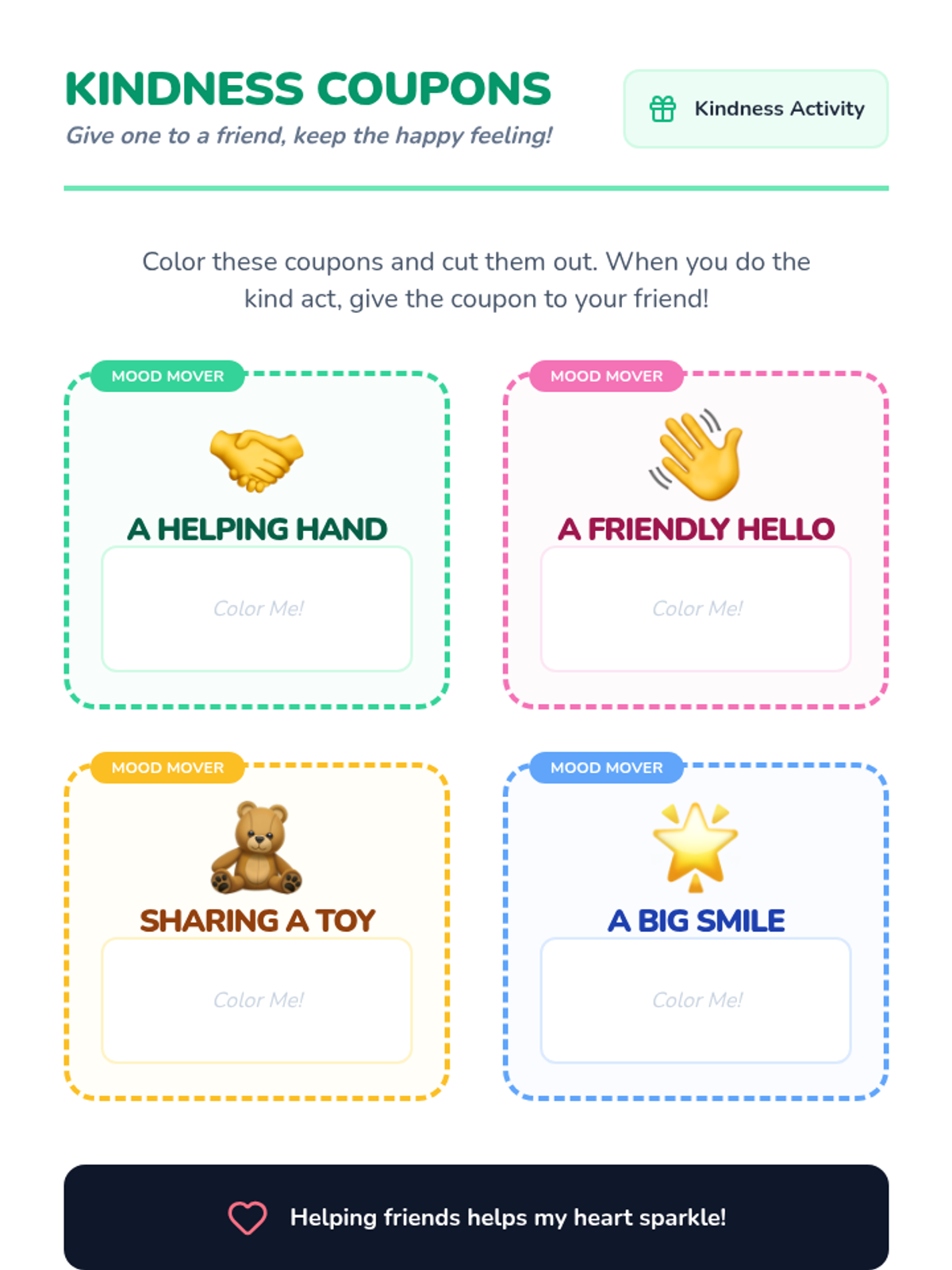
Students discover the mood-boosting power of kindness by practicing simple prosocial actions within the classroom community.
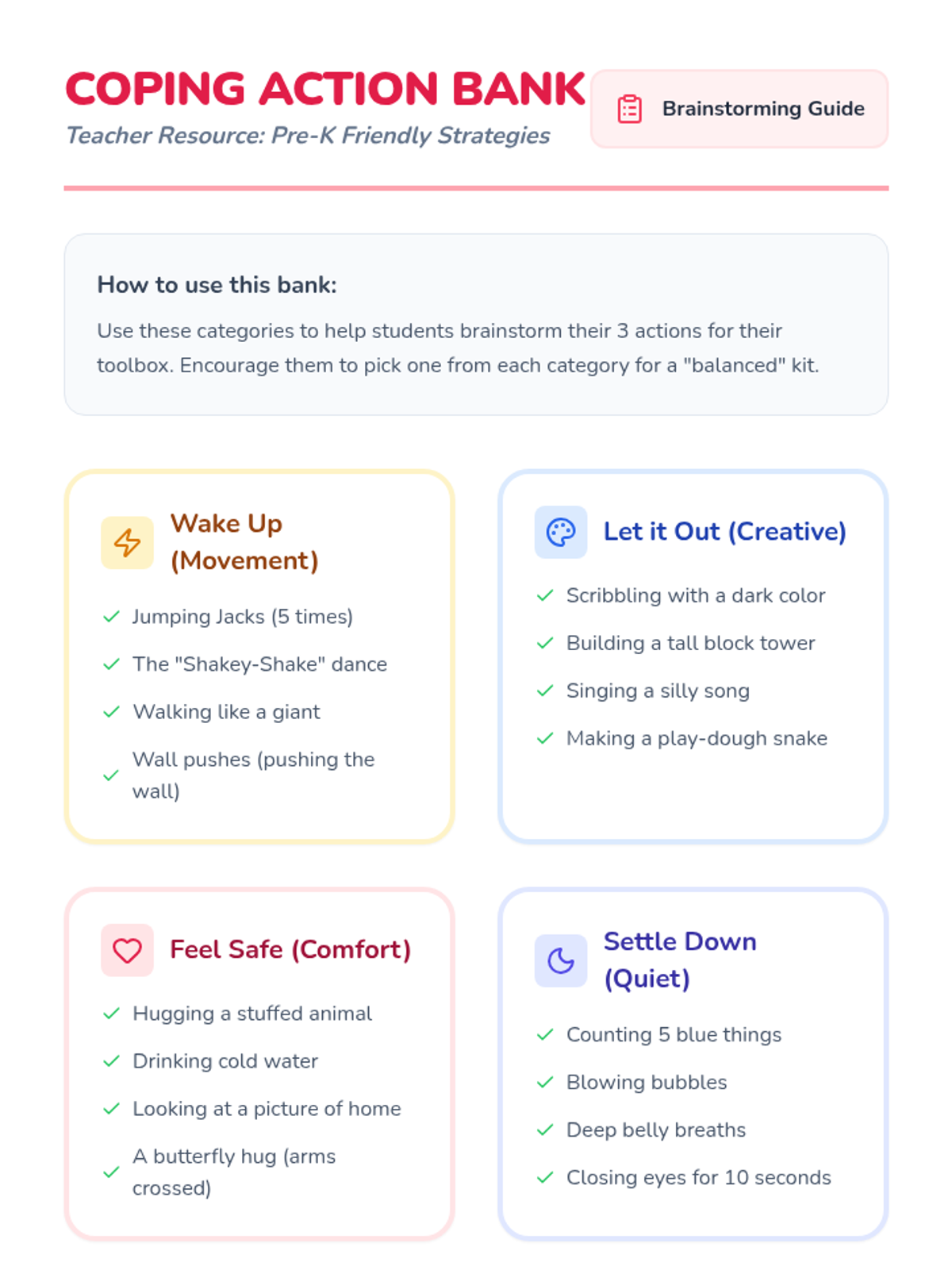
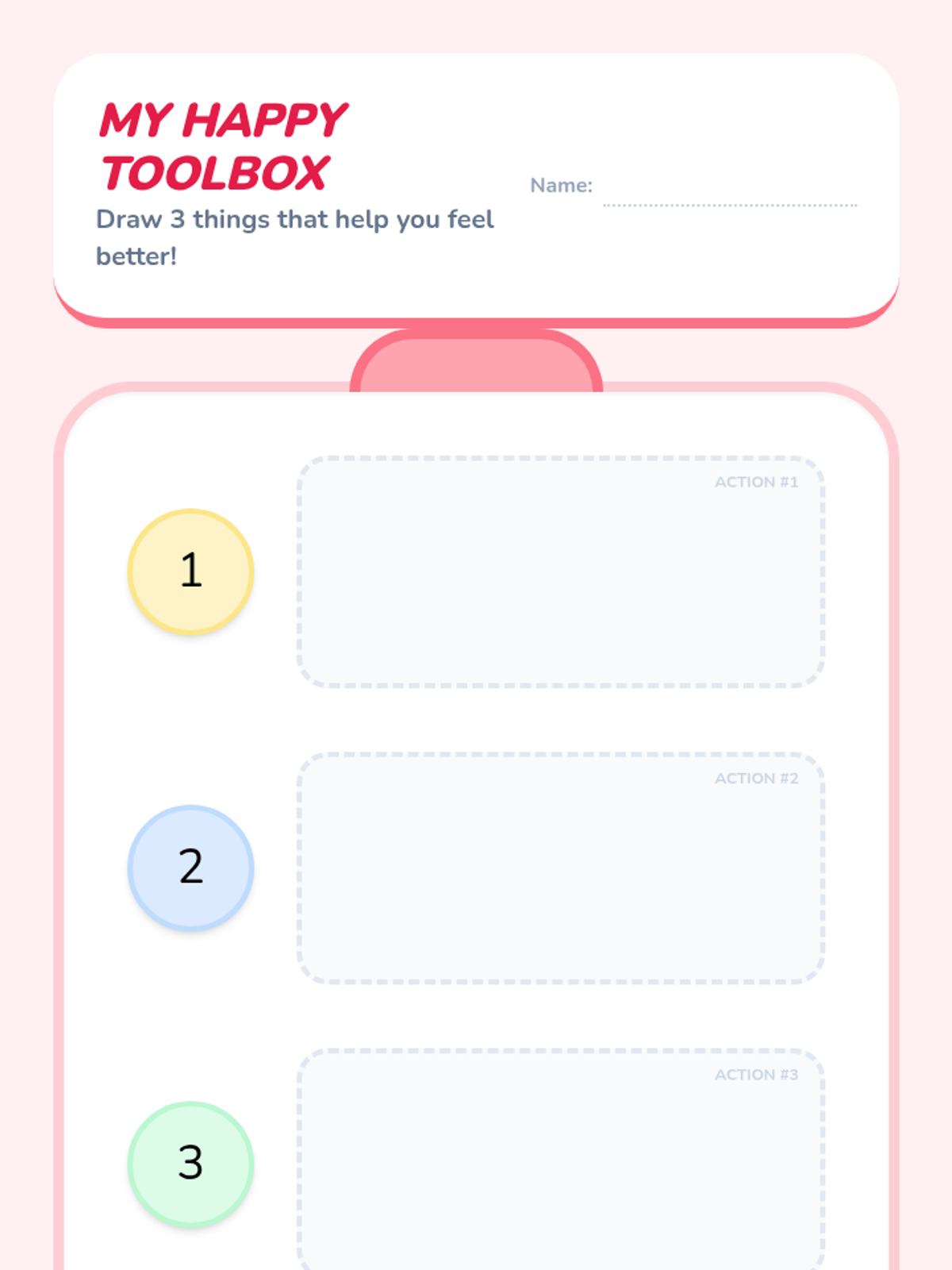
Students identify and select three specific, safe actions they can take to build their own mental 'Coping Kit' for difficult days.
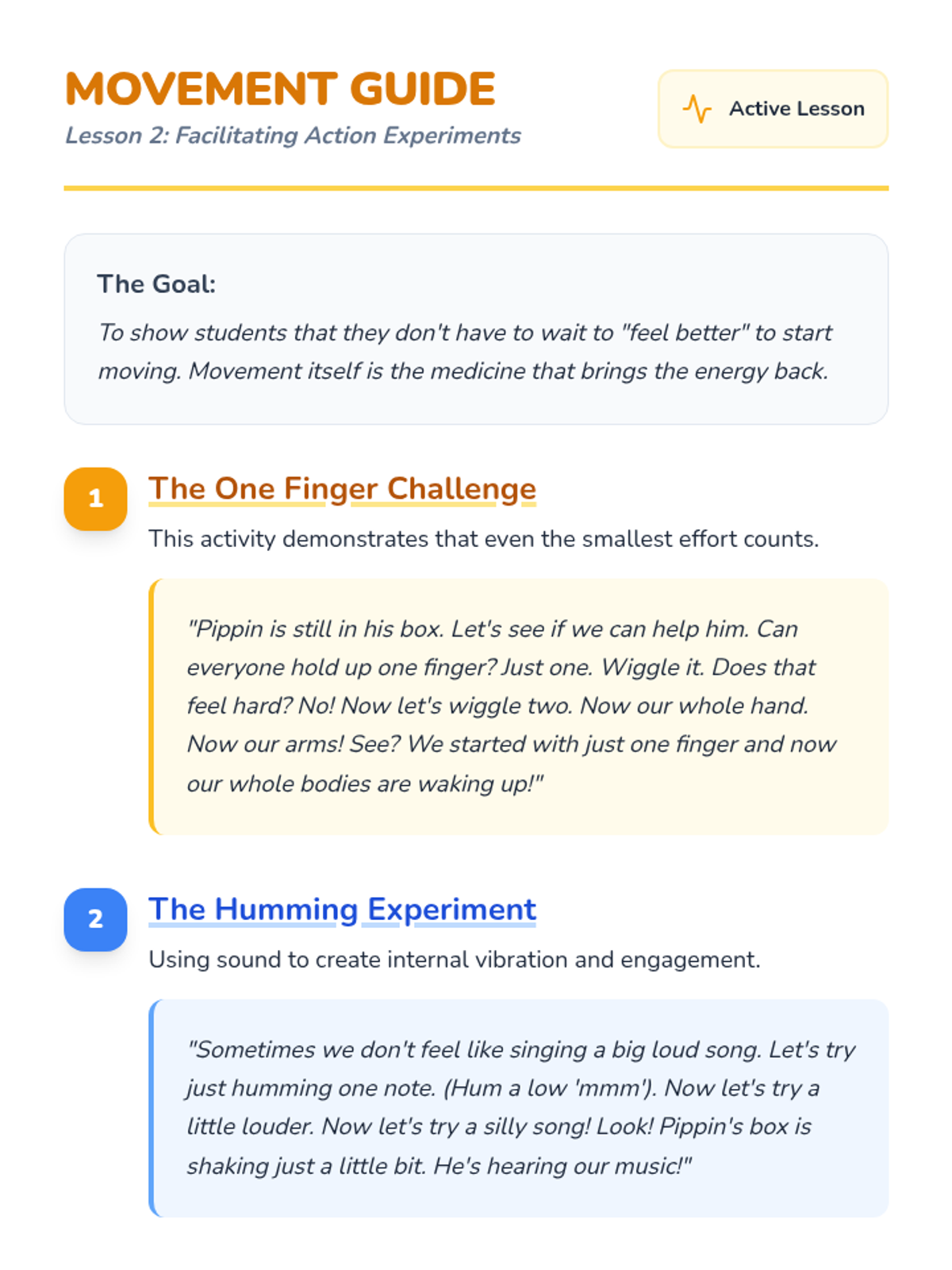
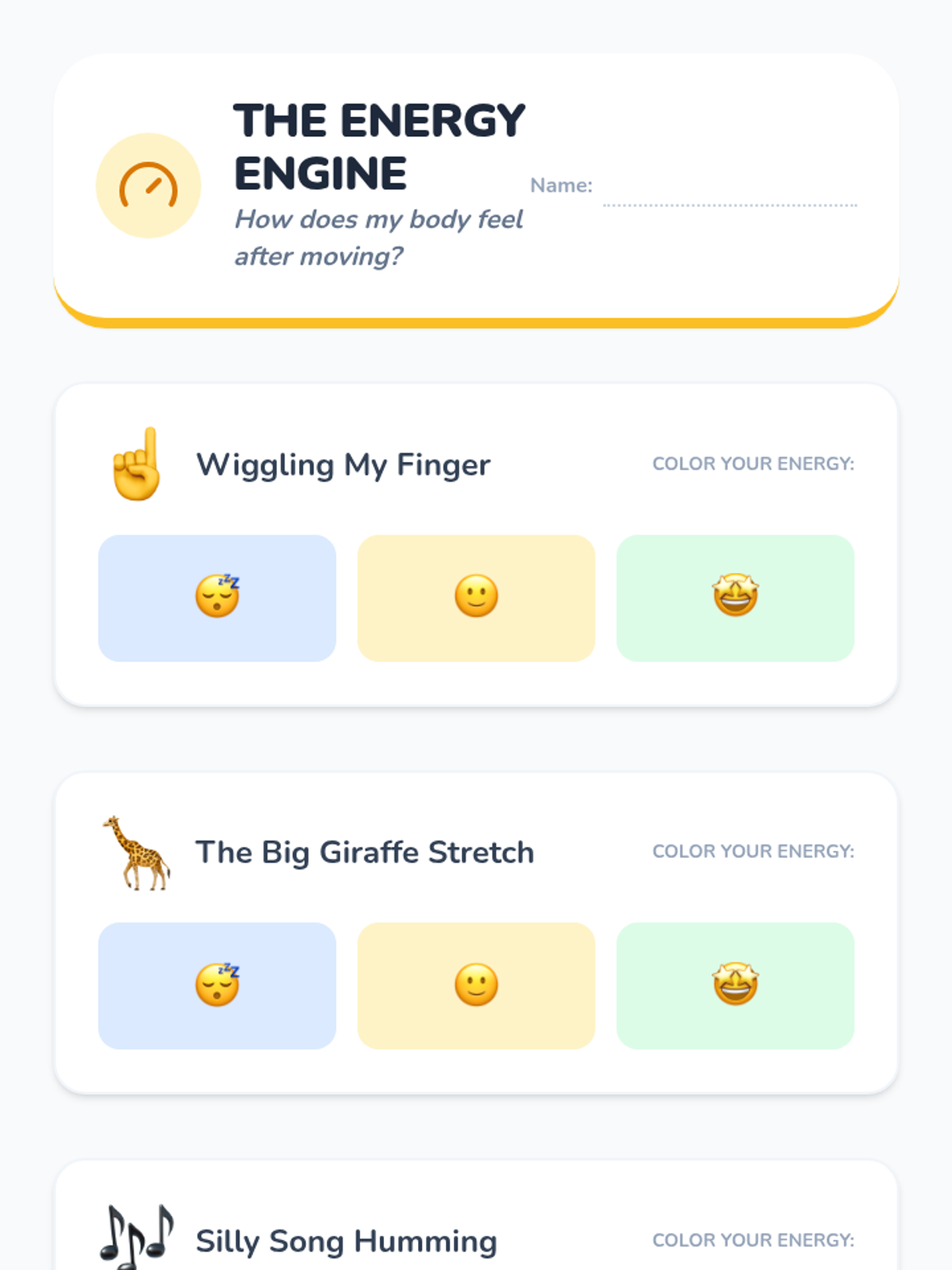
Students lead Pippin through 'Action Experiments' like stretching and singing to see how small movements can create big shifts in mood.
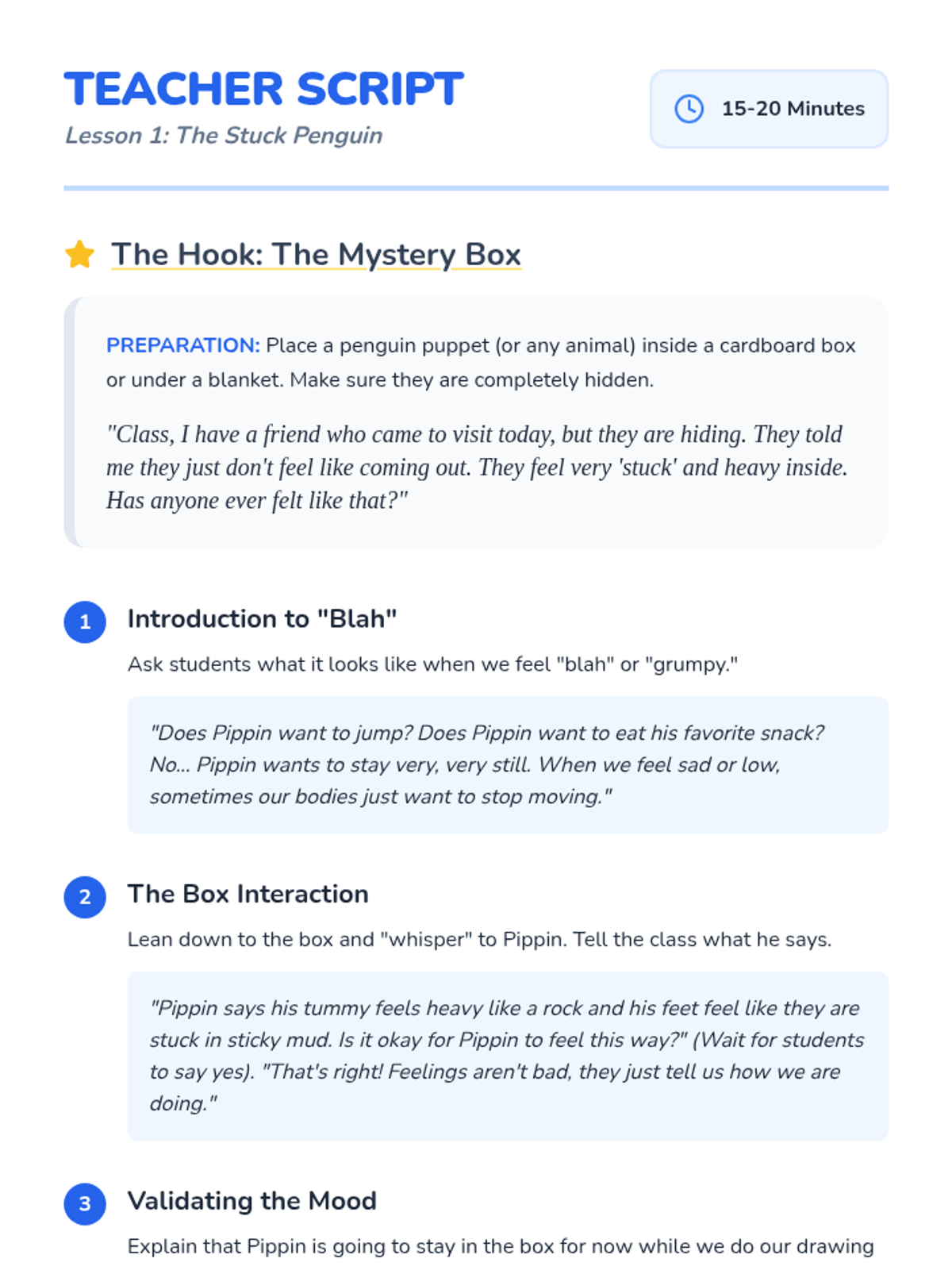
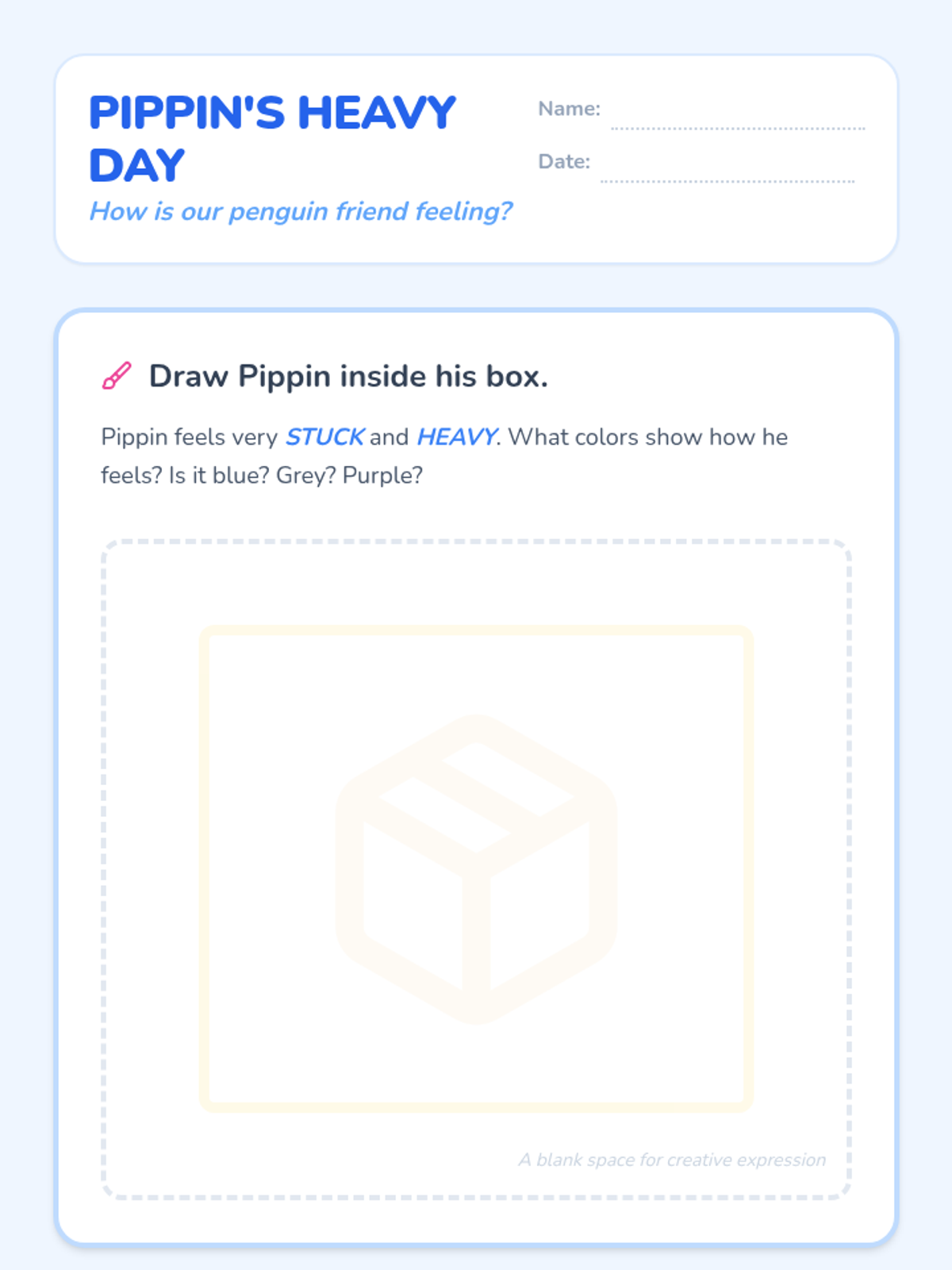
Students meet Pippin the Penguin, a puppet who feels 'stuck' and grumpy, to explore the connection between feelings and physical stillness.
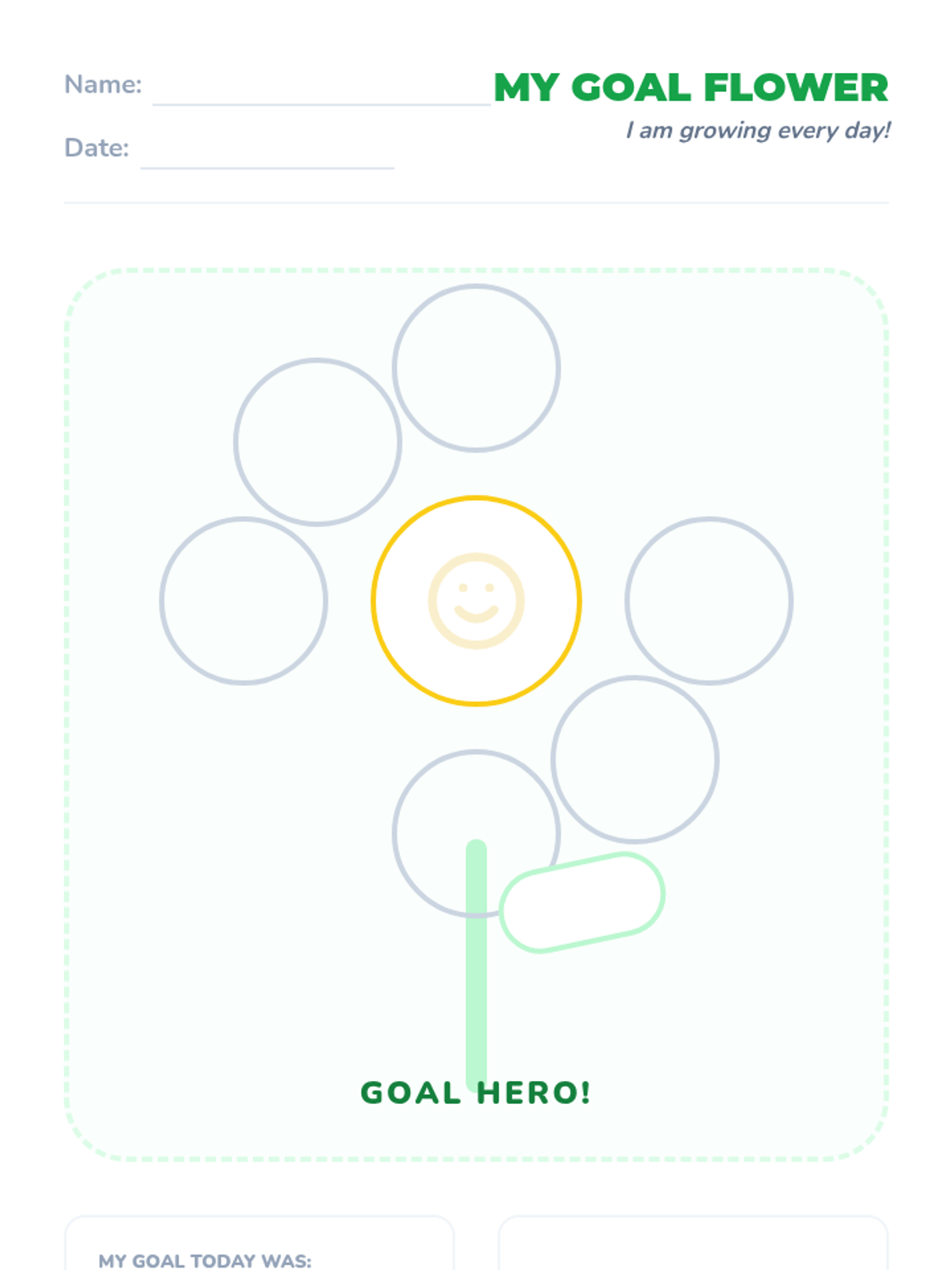
Students walk through the full daily cycle of goal setting and reflection, culminating in a celebration of their effort in the classroom 'Goal Garden'.
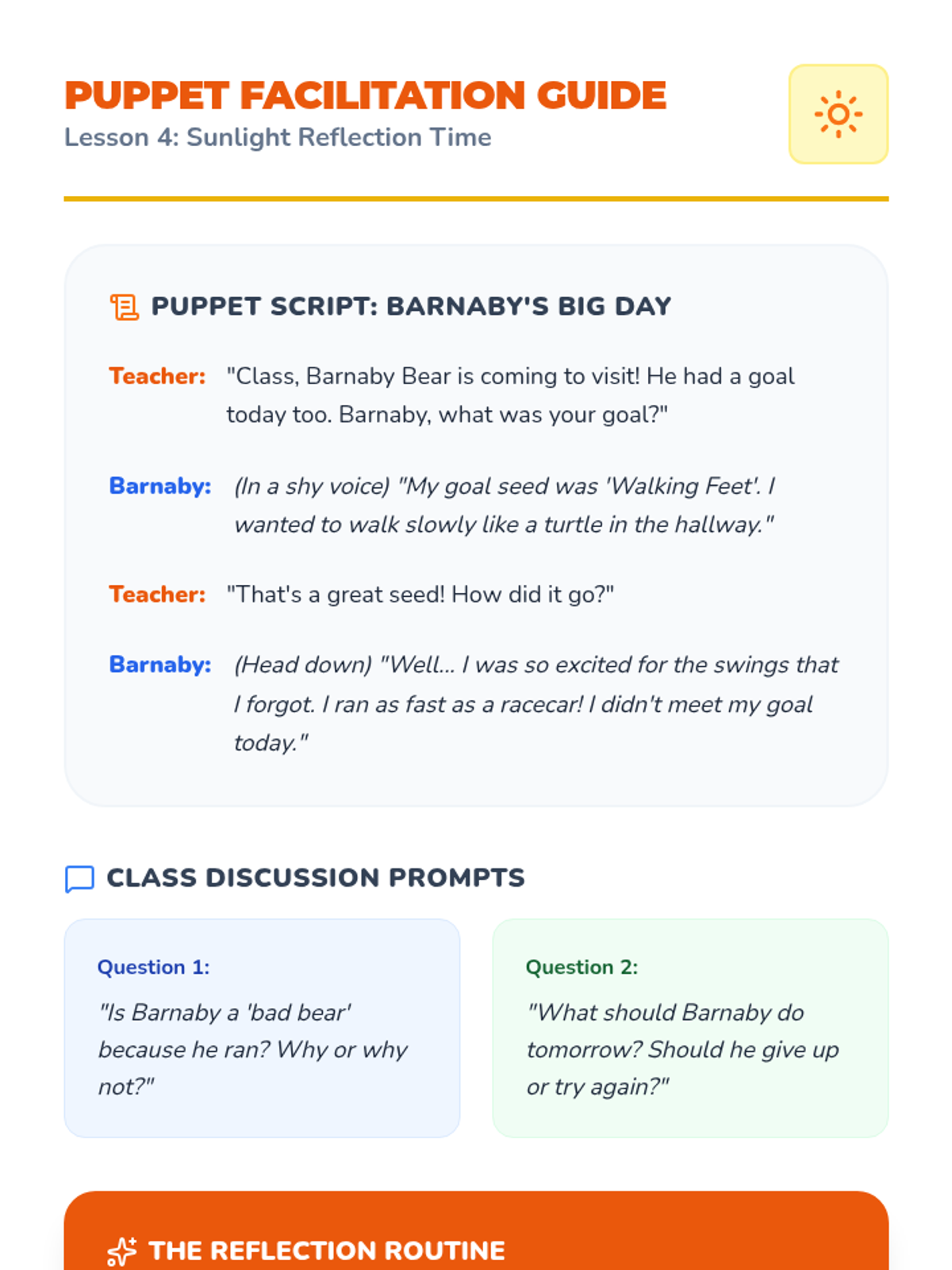
Students learn how to reflect on their day using simple gestures and puppet-led discussions that emphasize growth mindset and 'trying again'.
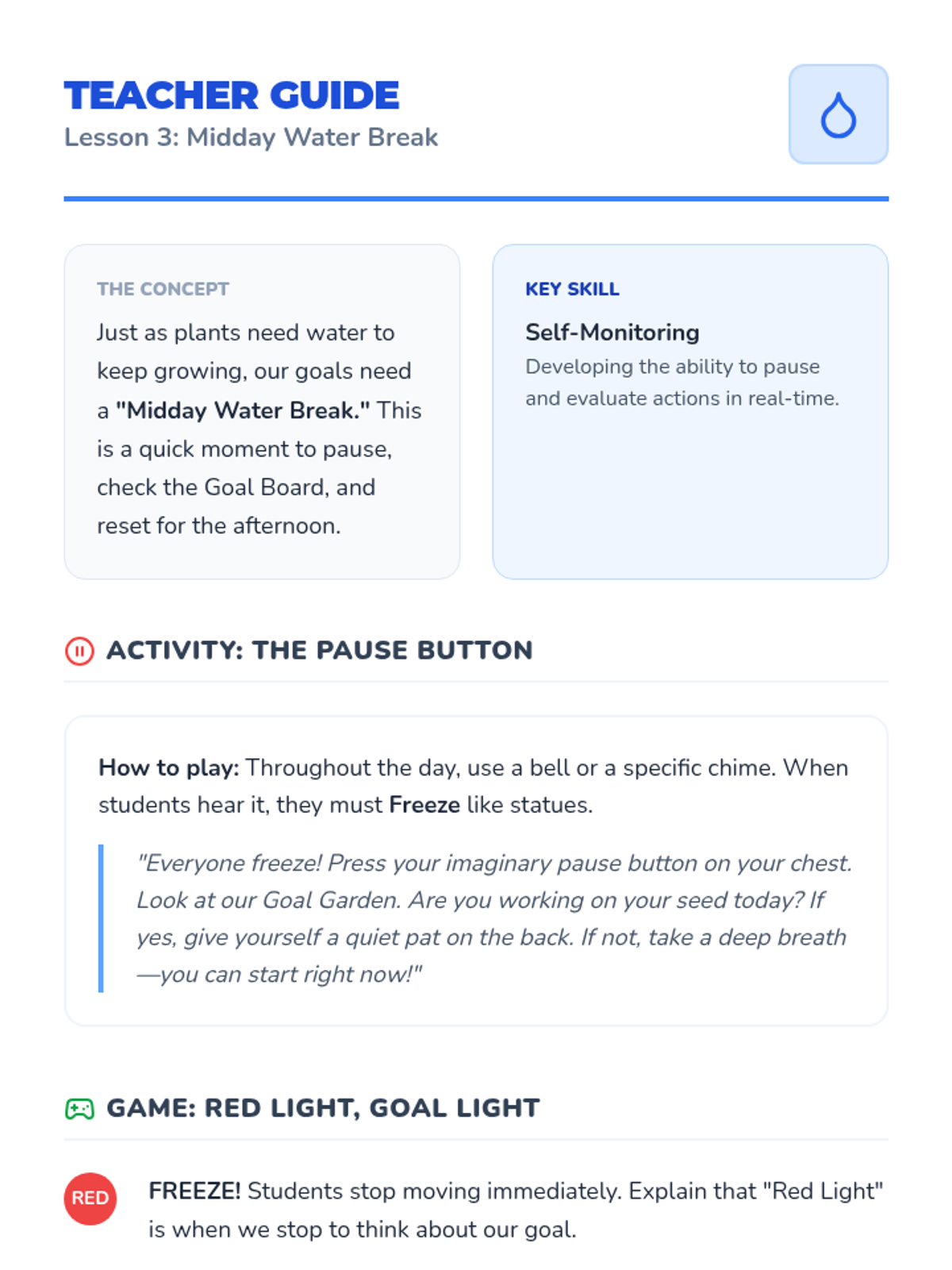
Introduces a mid-day 'pause button' moment where students stop to look at their goal selection and self-monitor their progress through interactive games.
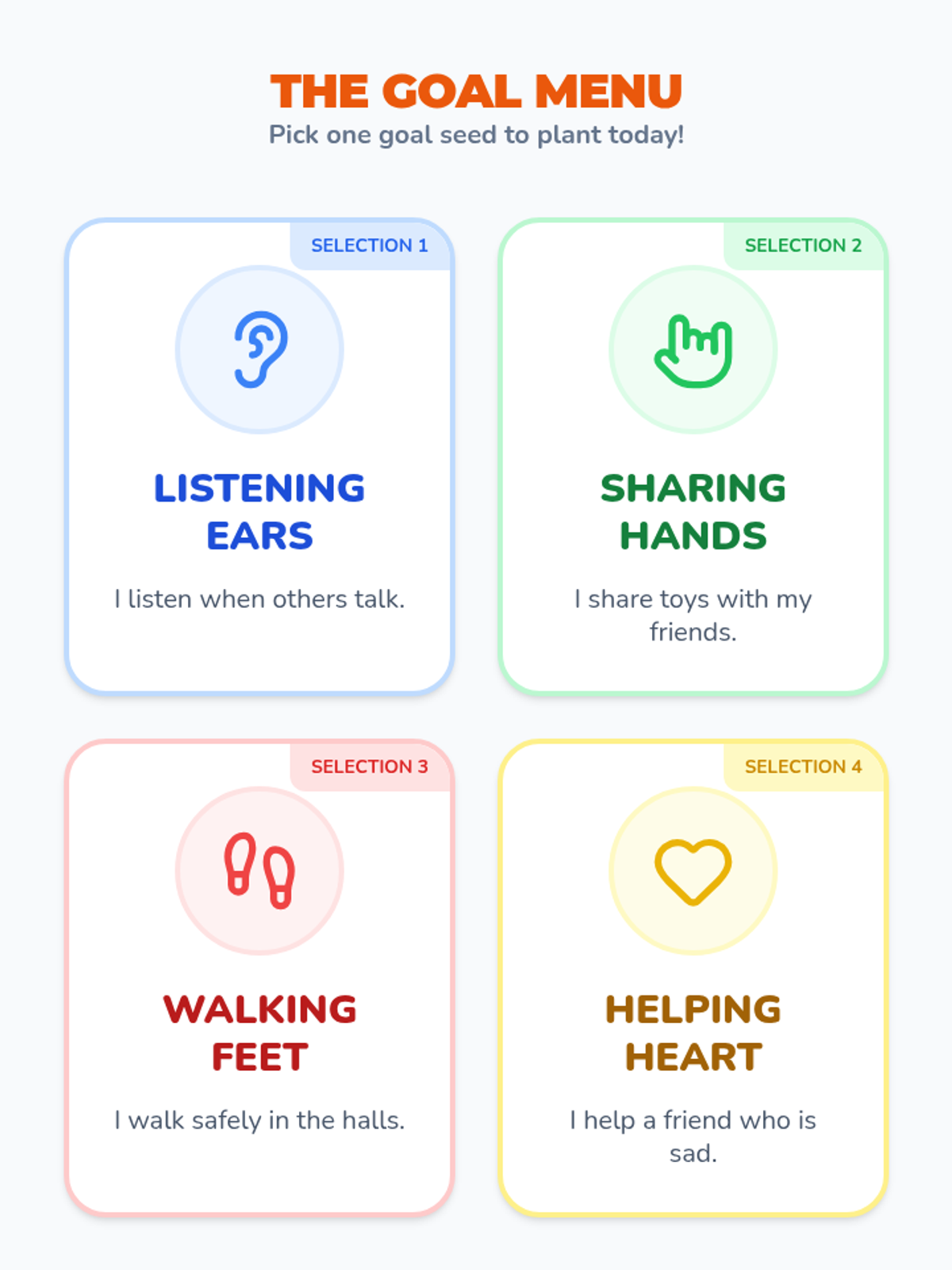
Students practice the morning routine of choosing one specific behavior to focus on from a 'menu' of options and marking it on a visual chart.
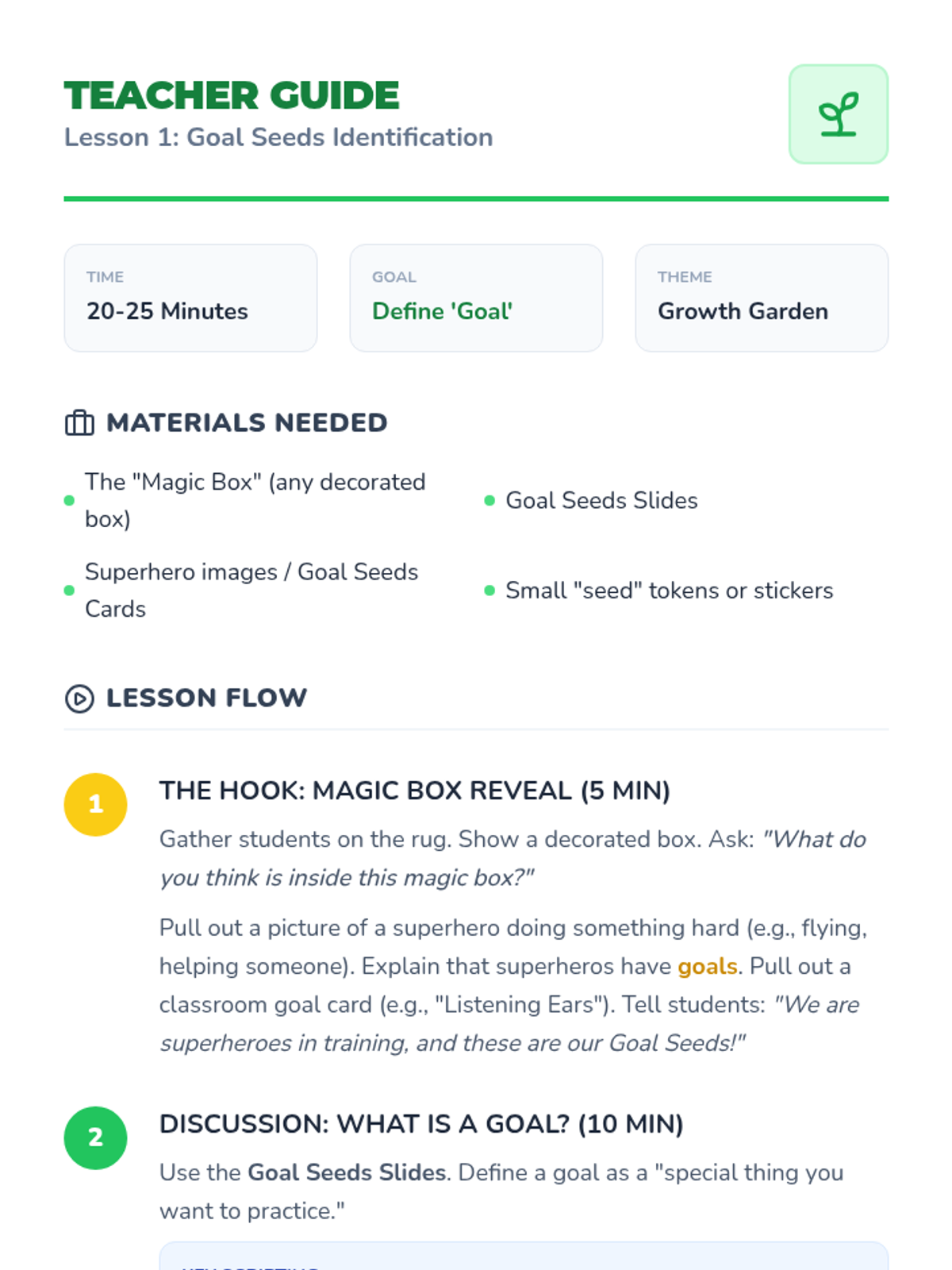
Students explore the concept of a 'goal' as something specific they want to achieve, using large picture cards depicting common classroom behaviors like sharing and listening.
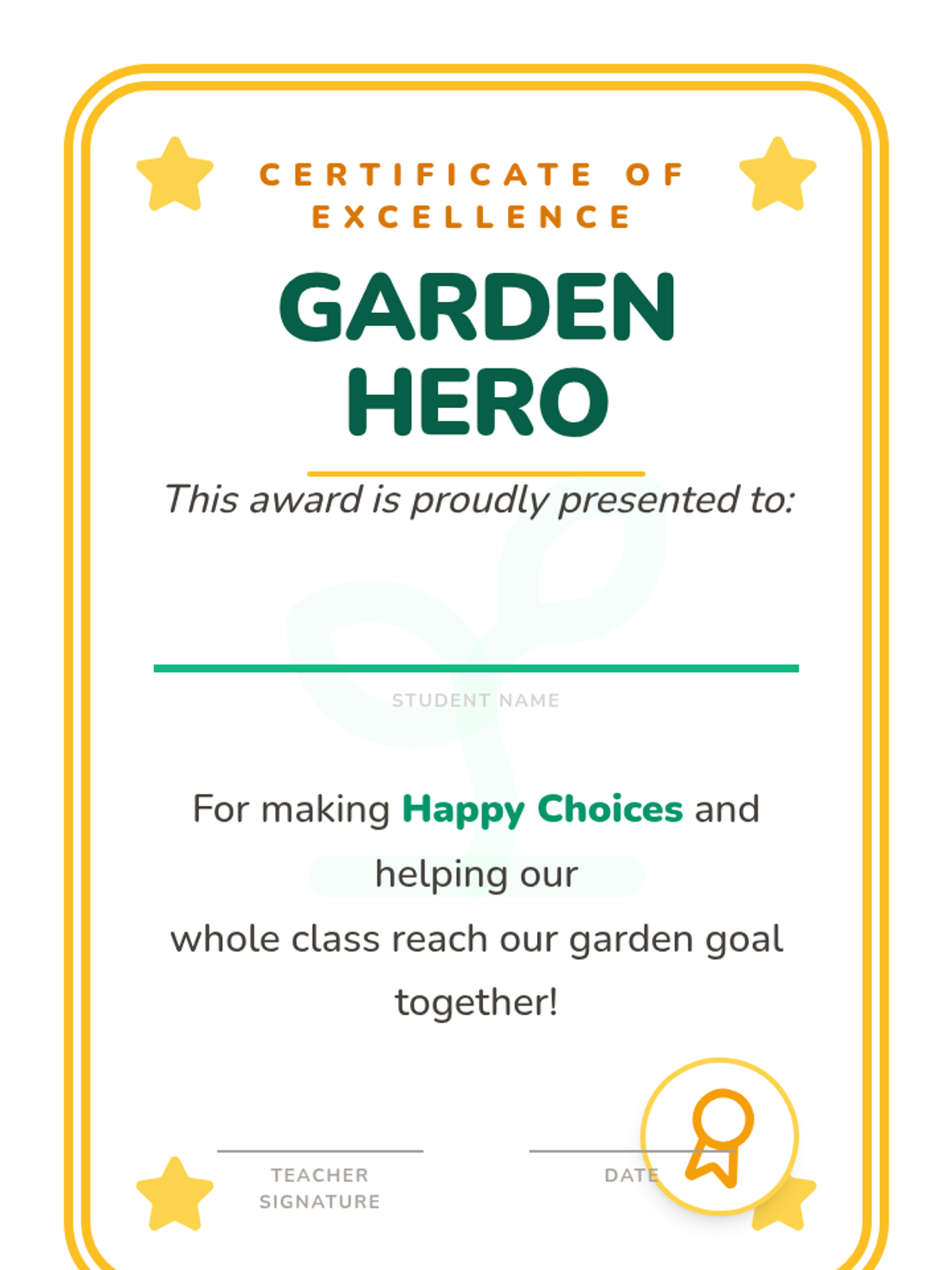
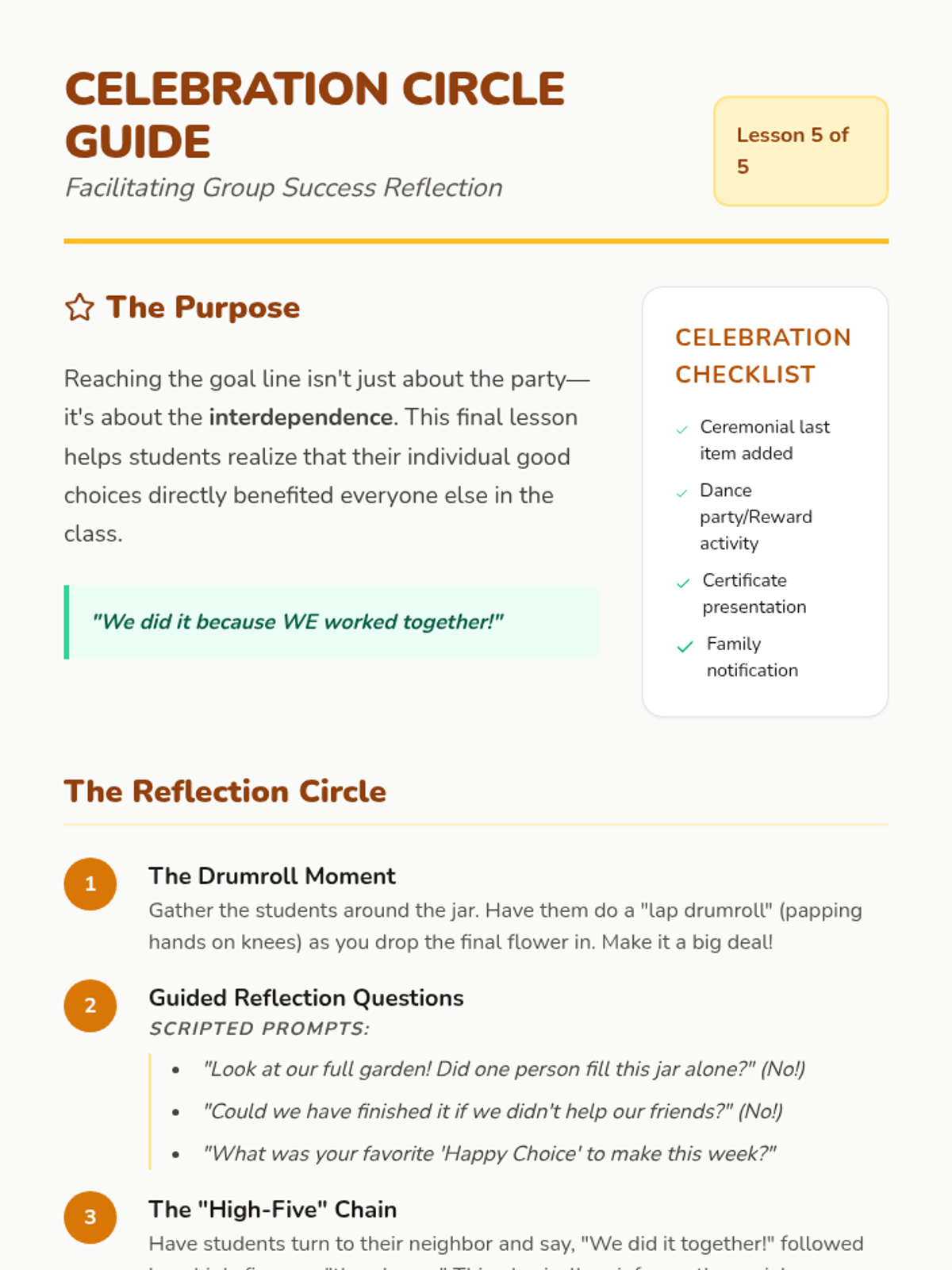
The class celebrates reaching their goal and reflects on how their teamwork made it possible.
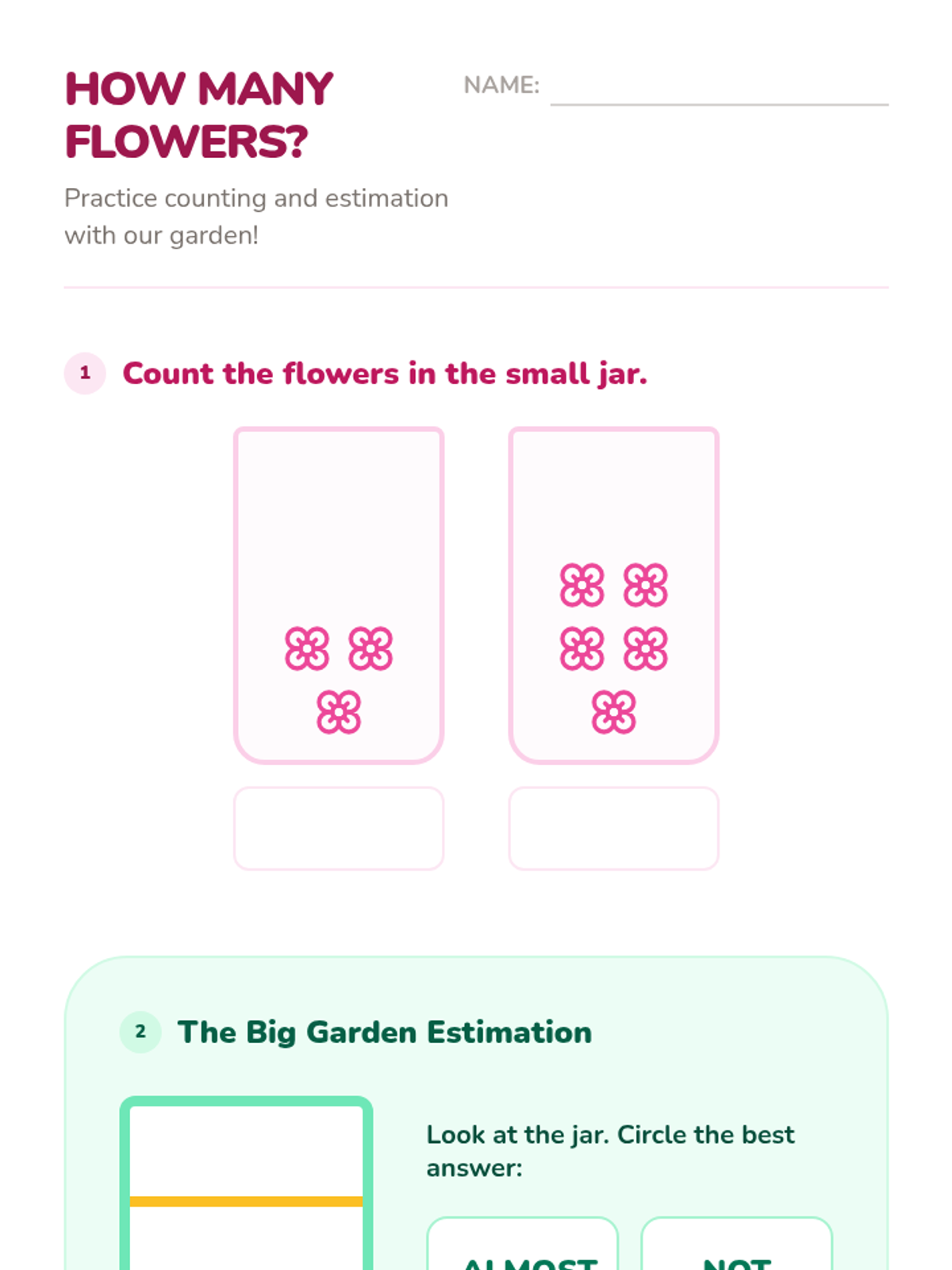
Students use the tracker to practice basic estimation and measurement, discussing how close they are to their shared reward.
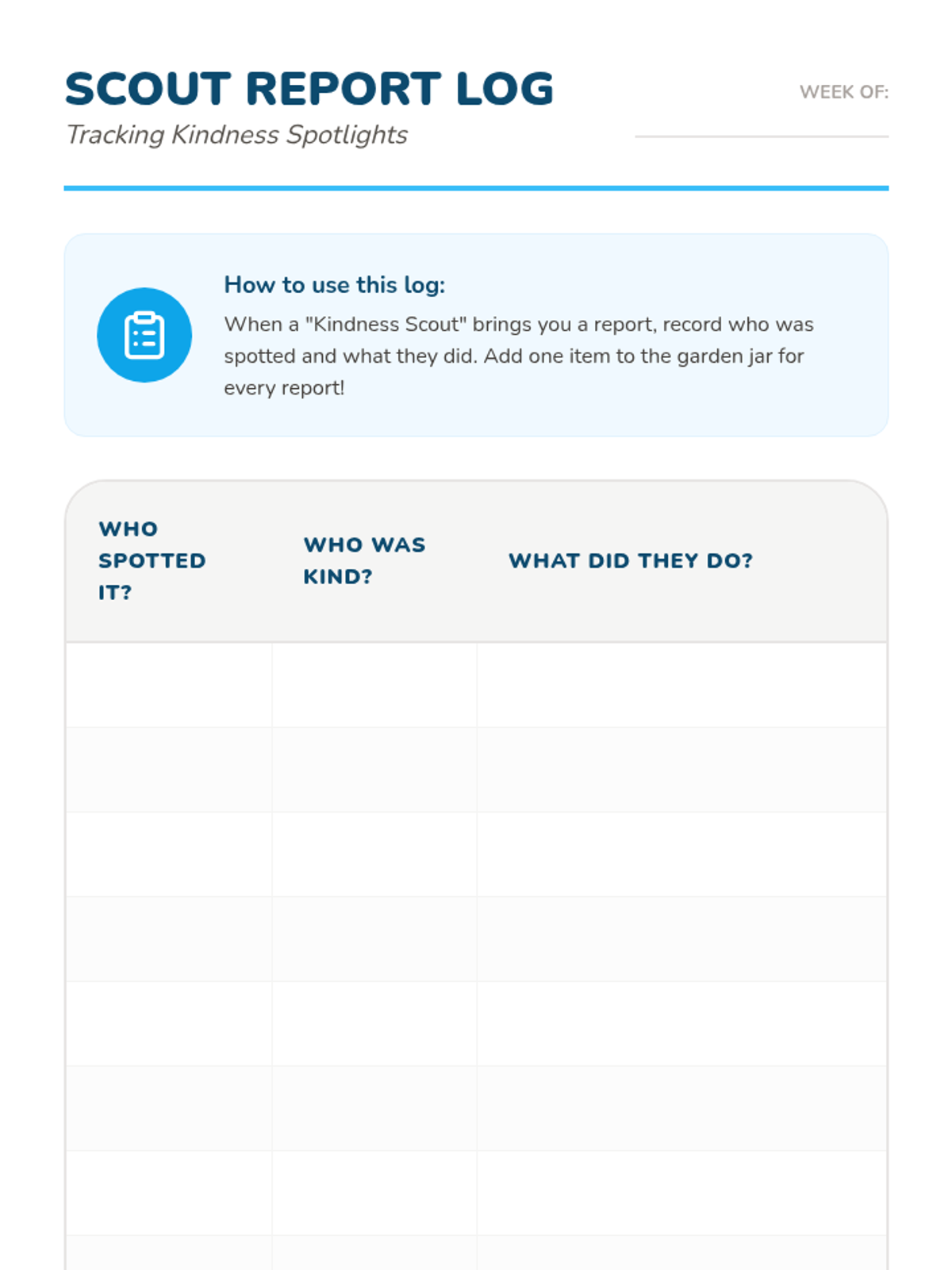
Students learn to observe and report positive behaviors in their peers, acting as 'Kindness Scouts' to help the garden grow.
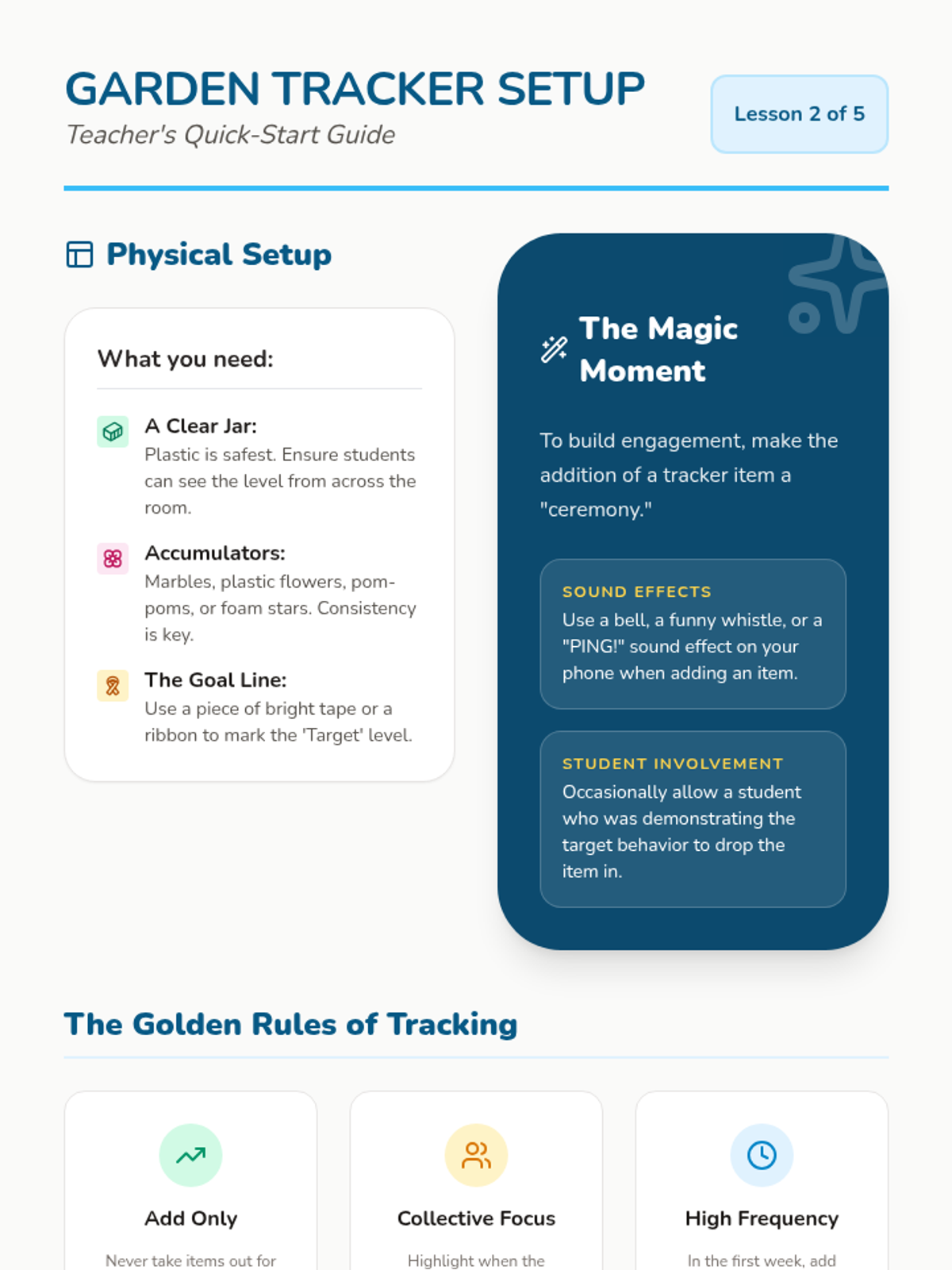
The teacher introduces the visual tracking system (the 'Good Choice Garden') and students practice understanding how collective actions fill the tracker.
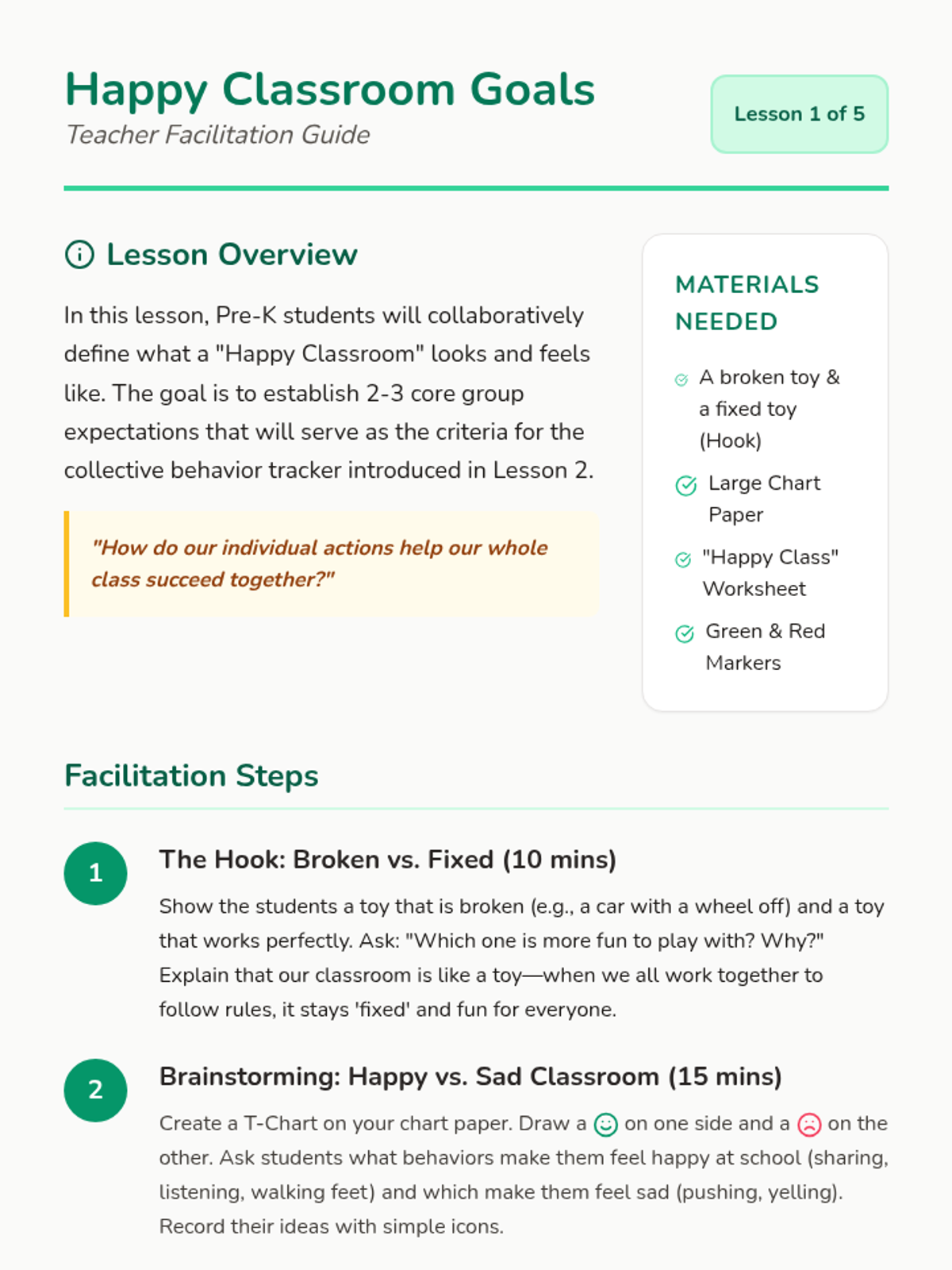
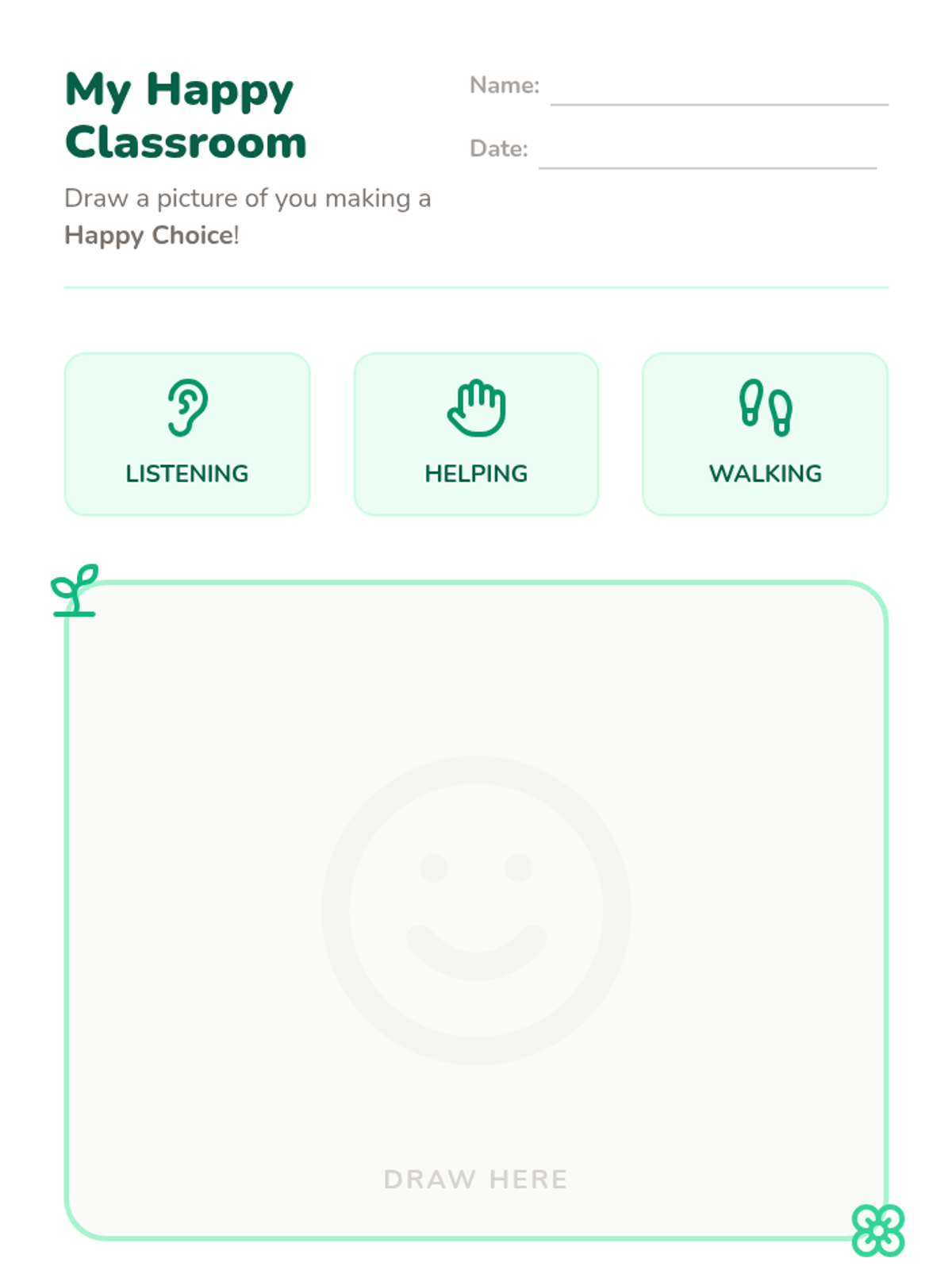
Students define what a 'happy and safe classroom' looks like and agree on key behaviors that will help the group succeed.
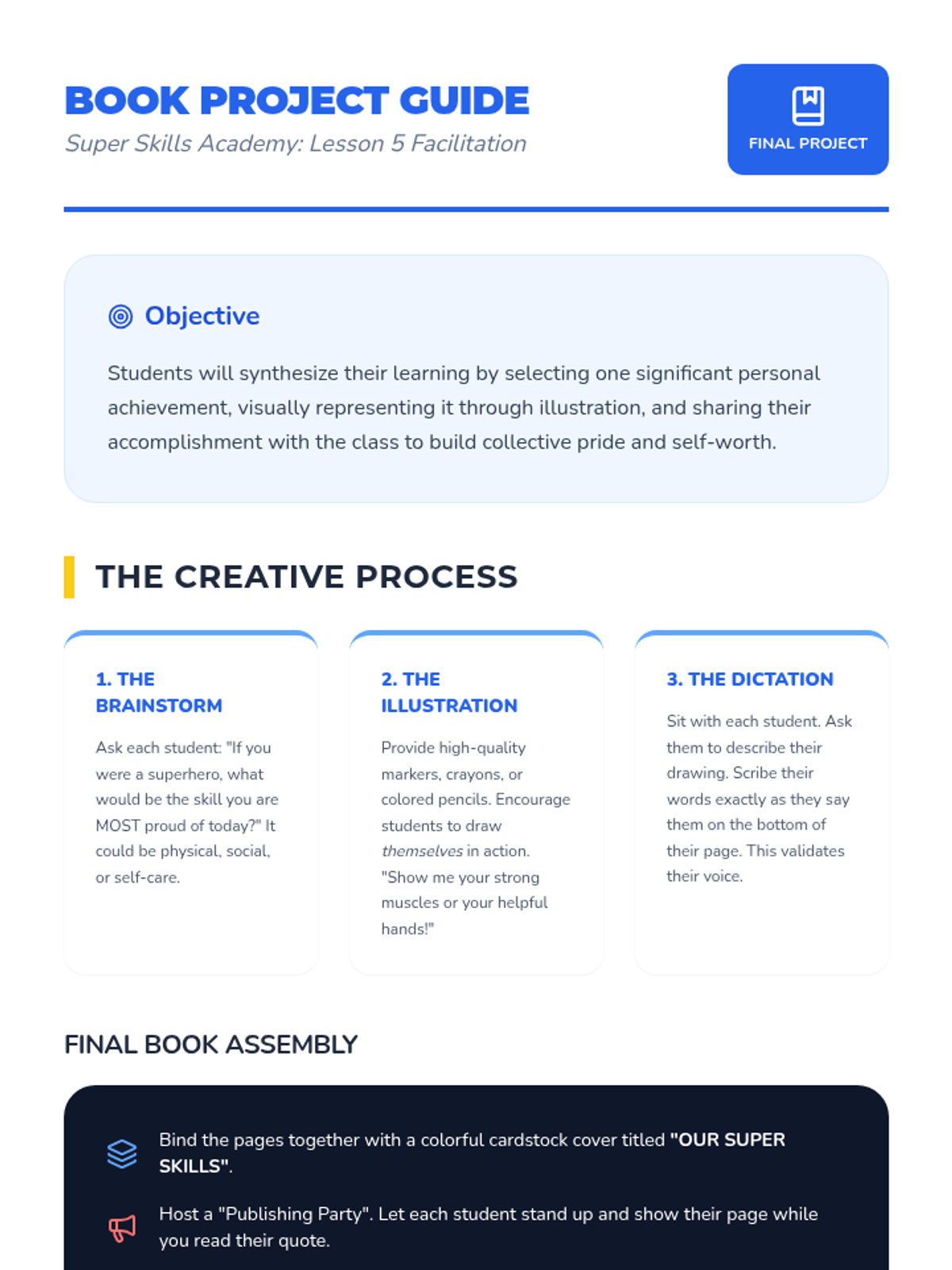
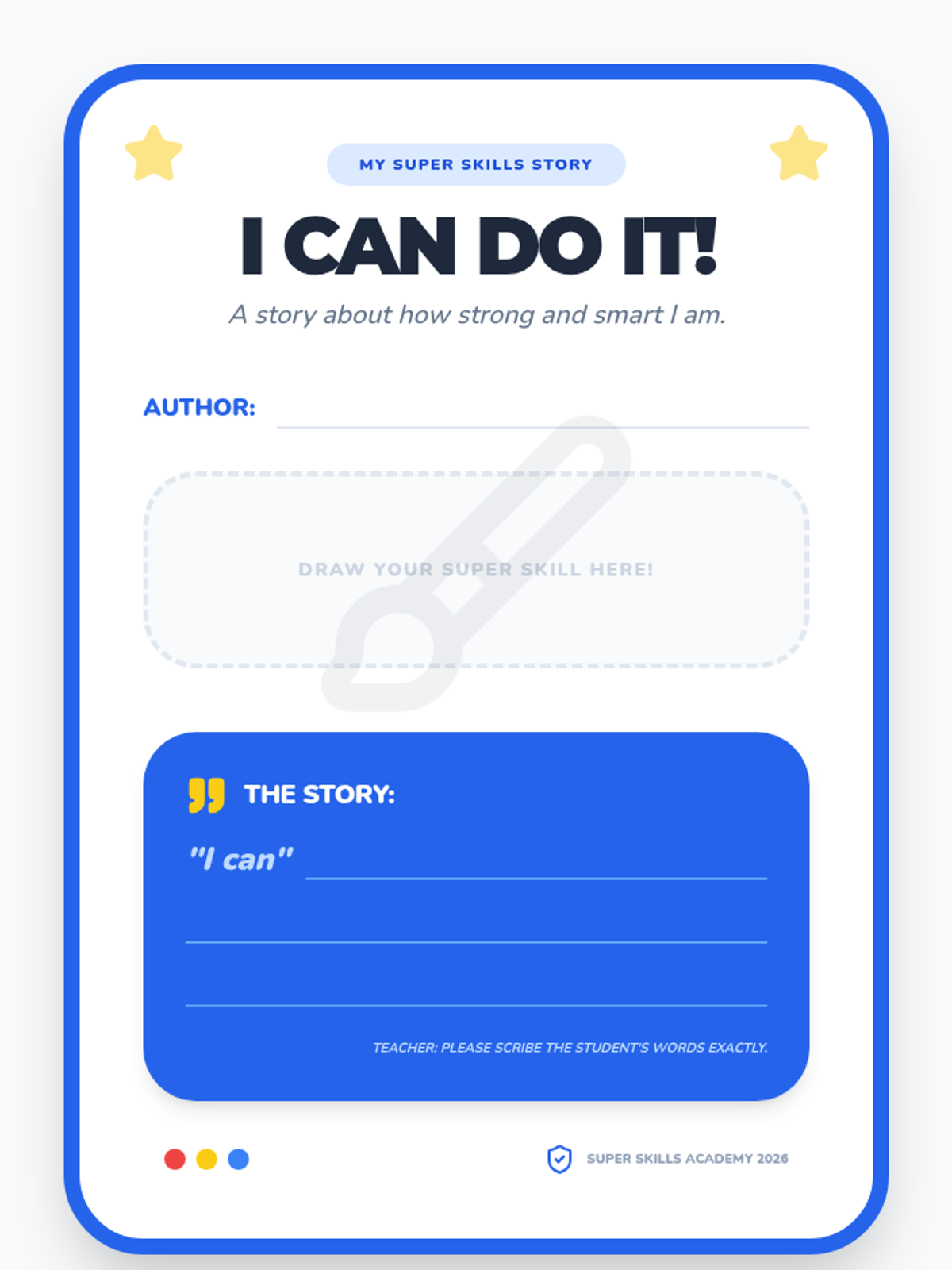
A culminating project where students create a visual record of their achievements to celebrate their growing independence.
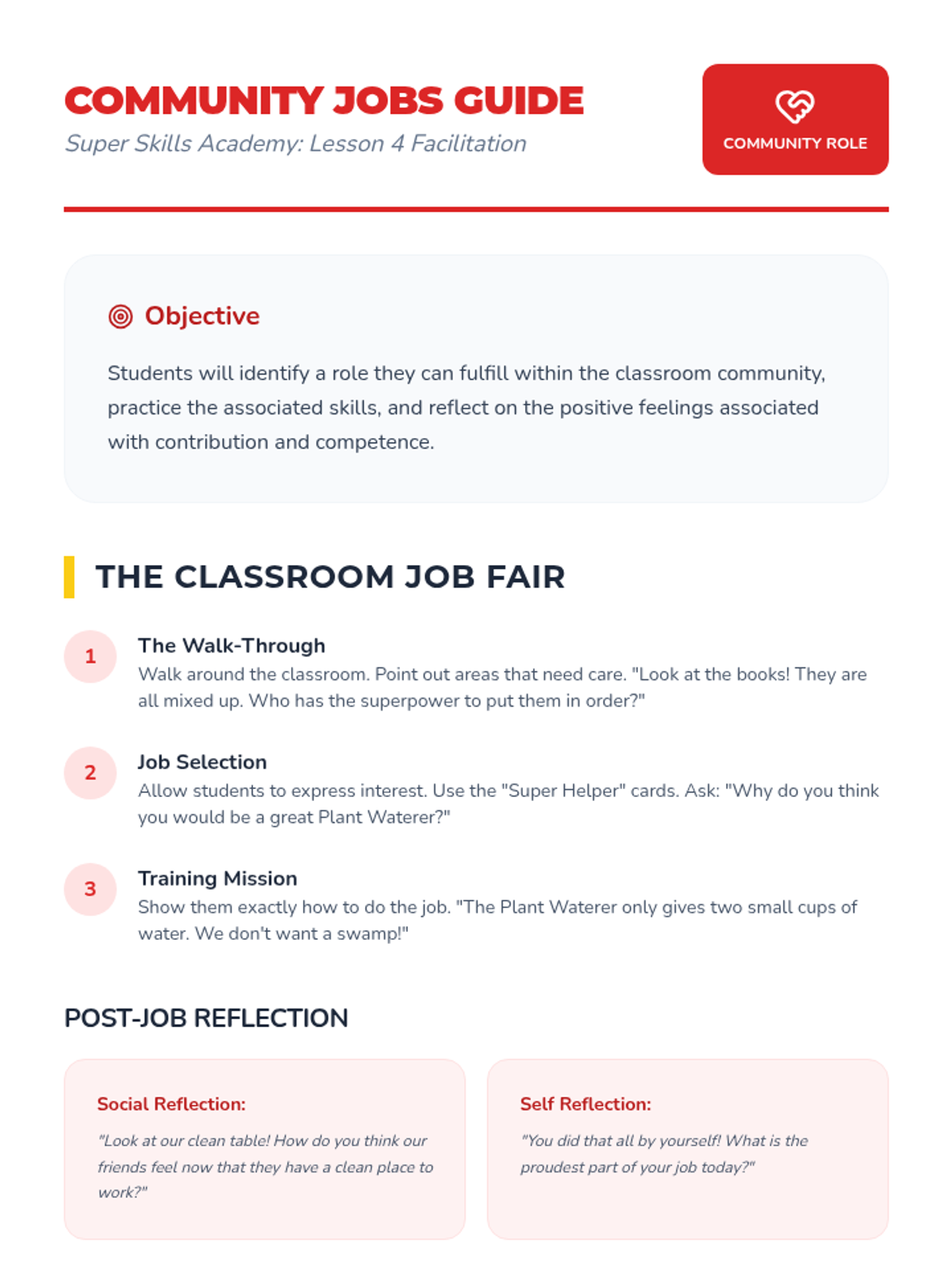
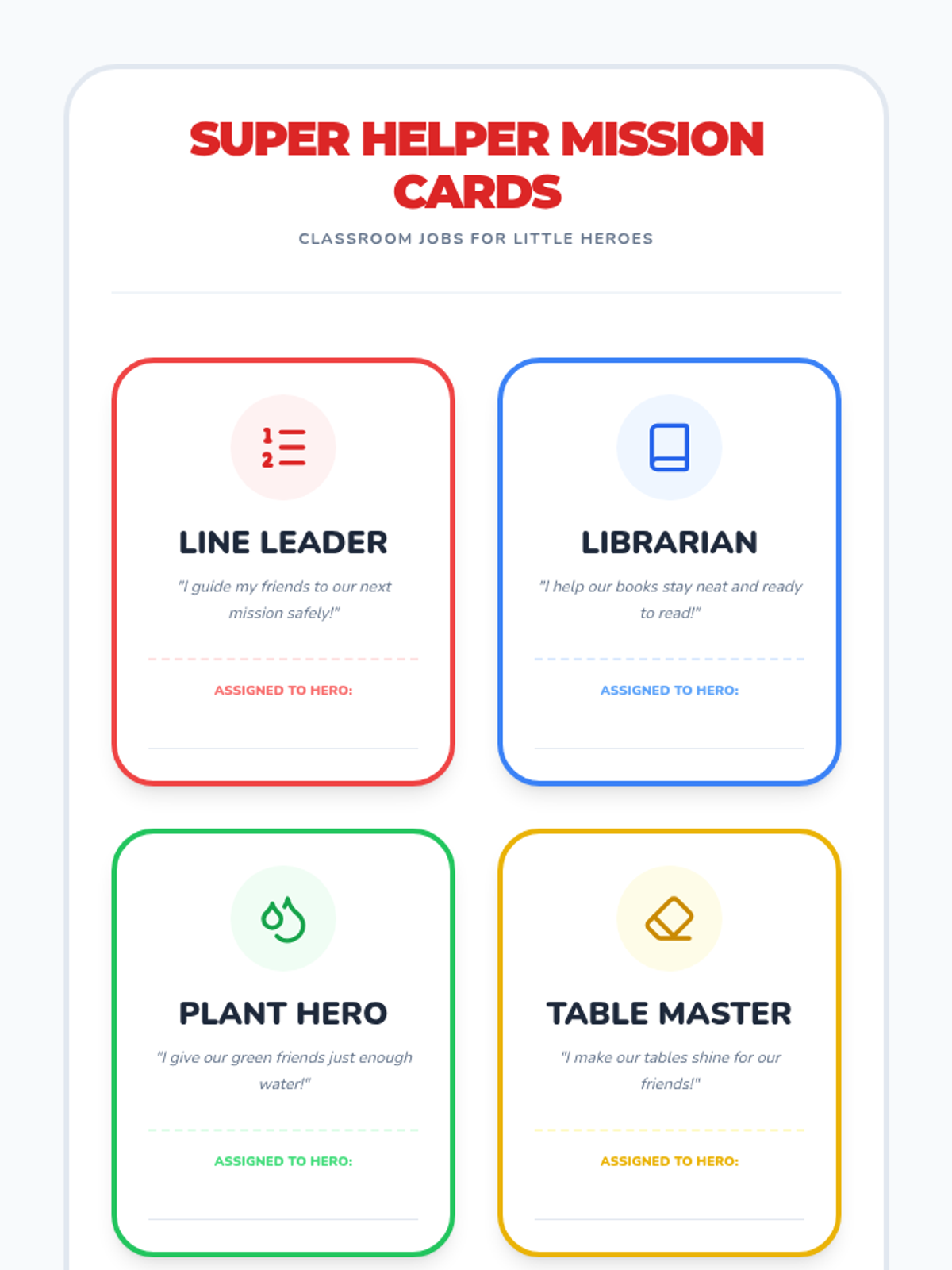
Students take on classroom responsibilities to understand their role in a community and the satisfaction of contributing.
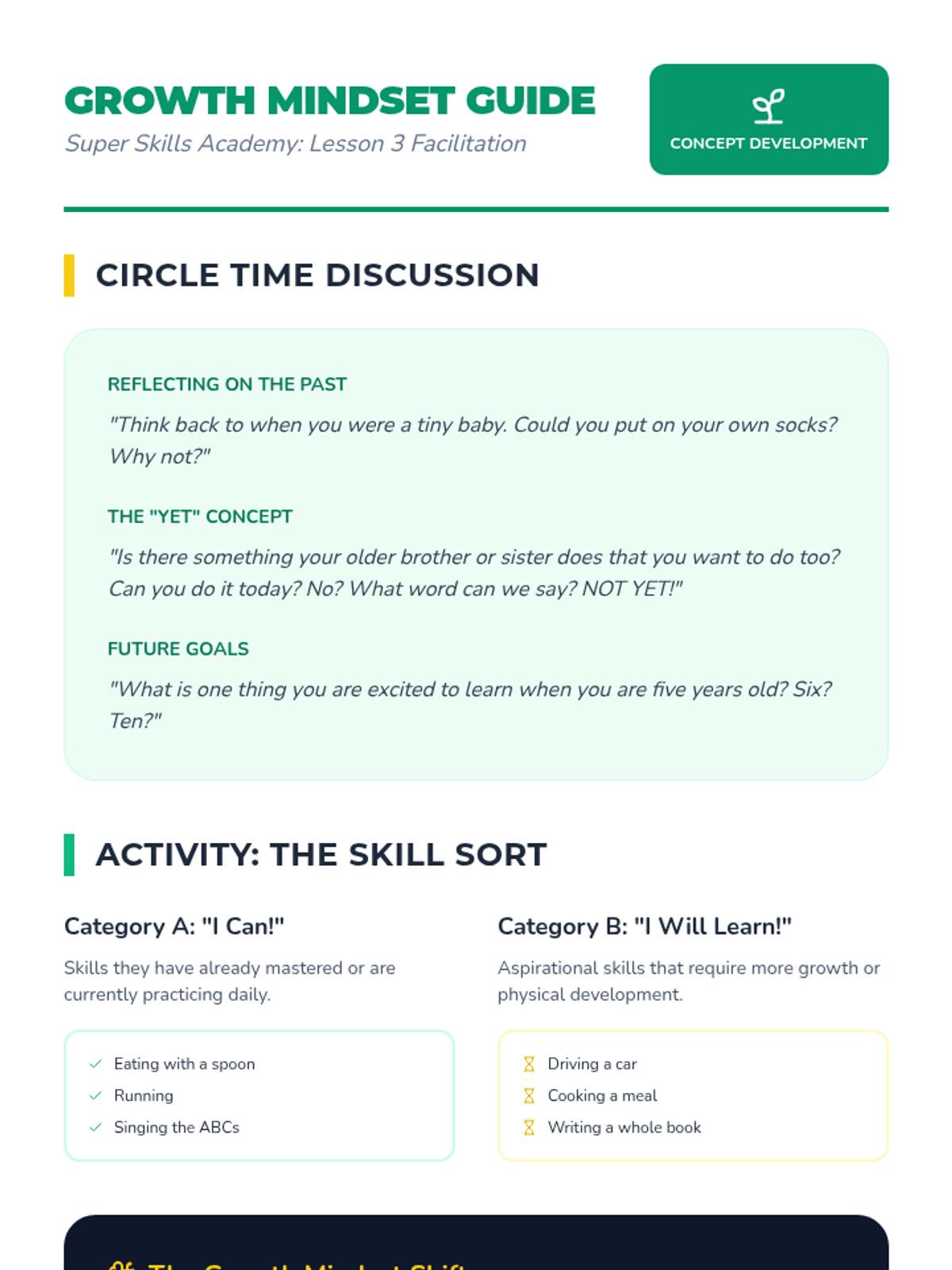
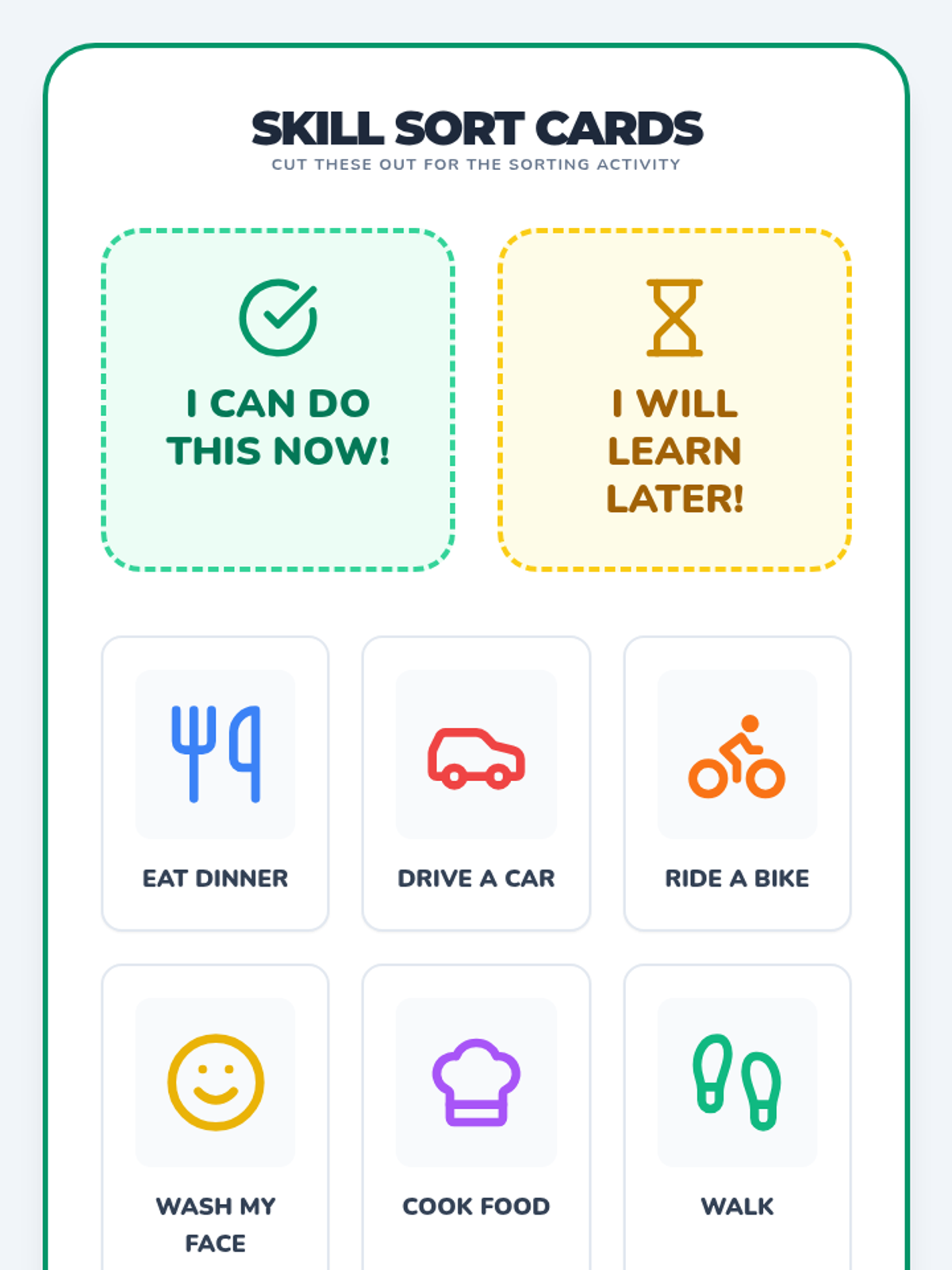
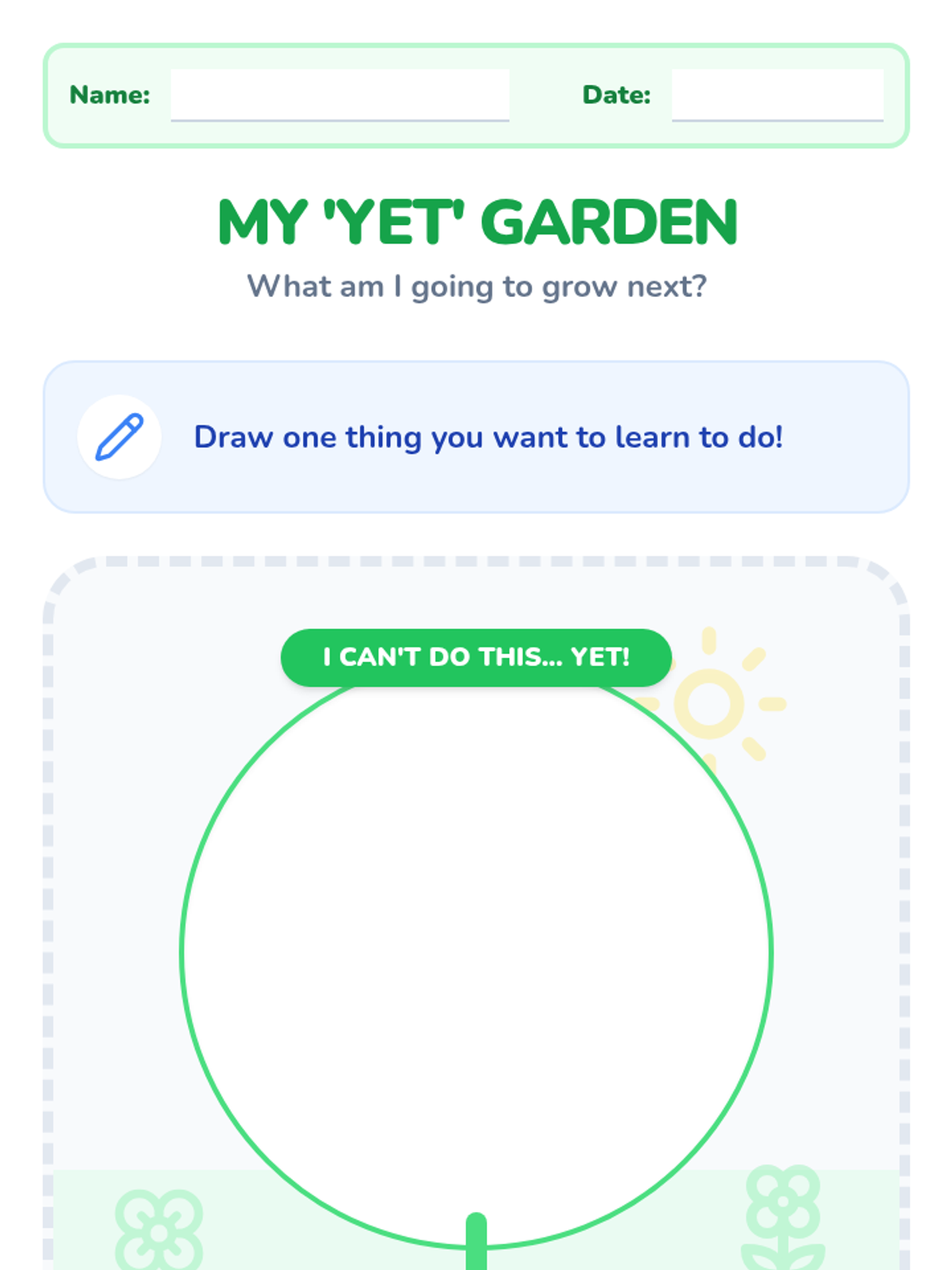
Students distinguish between current skills and future goals, fostering a growth mindset and understanding personal development.
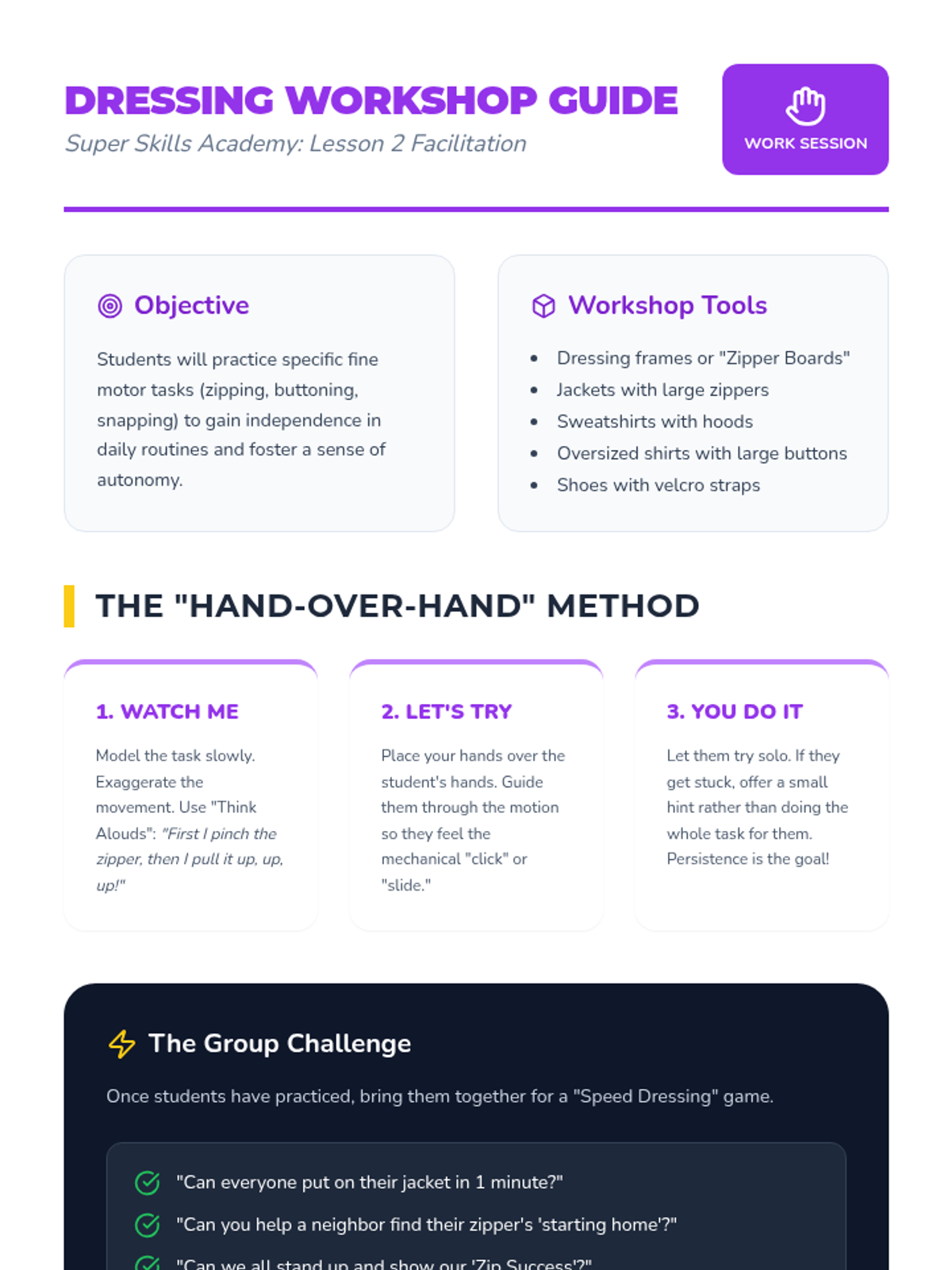
A hands-on workshop where students practice zippers, buttons, and other self-care tasks to build fine motor skills and autonomy.
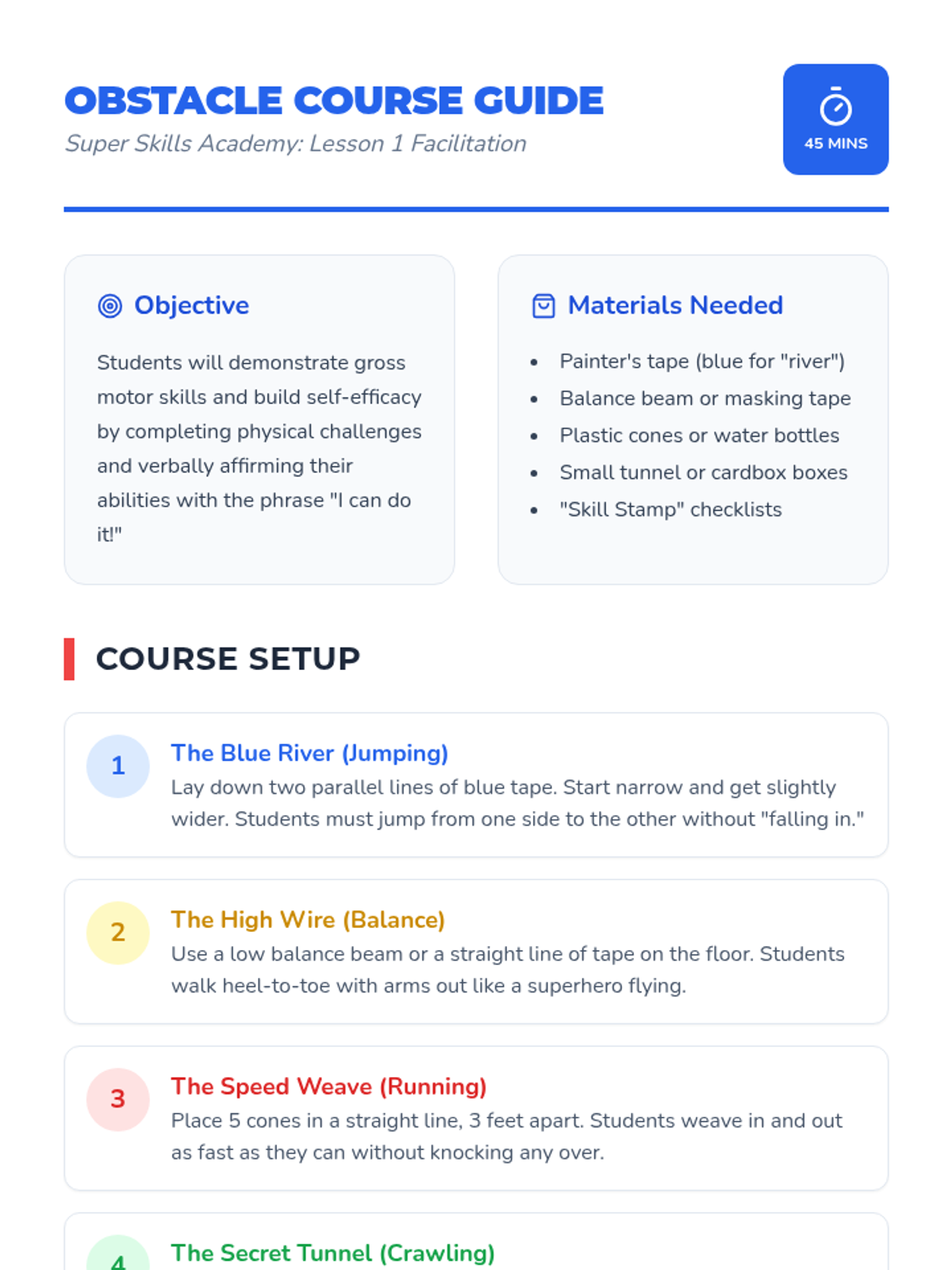
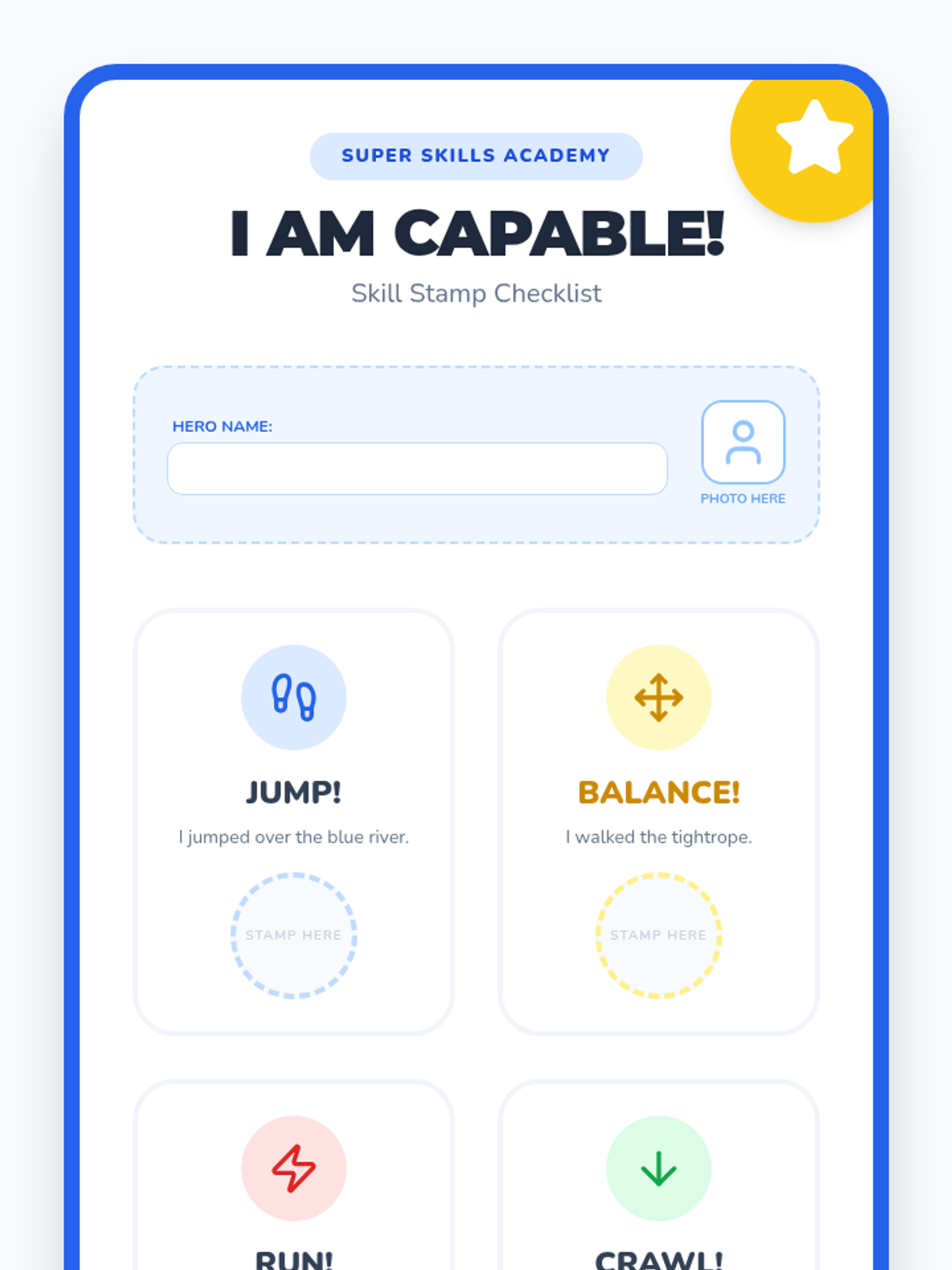
Students explore their physical capabilities through an obstacle course, practicing self-affirmation and gross motor skills.
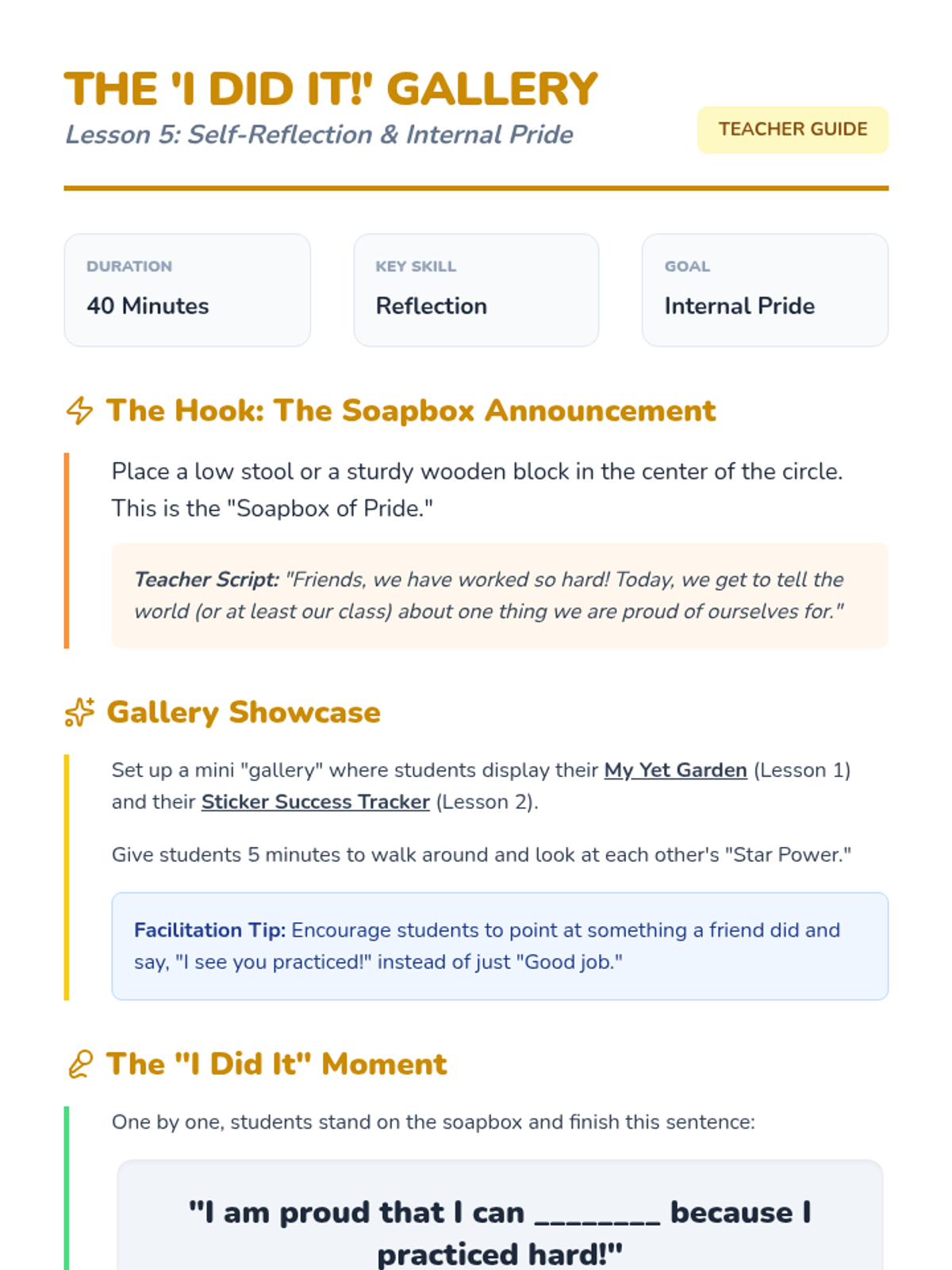
Reflecting on achievements and celebrating the internal feeling of pride through a classroom showcase.
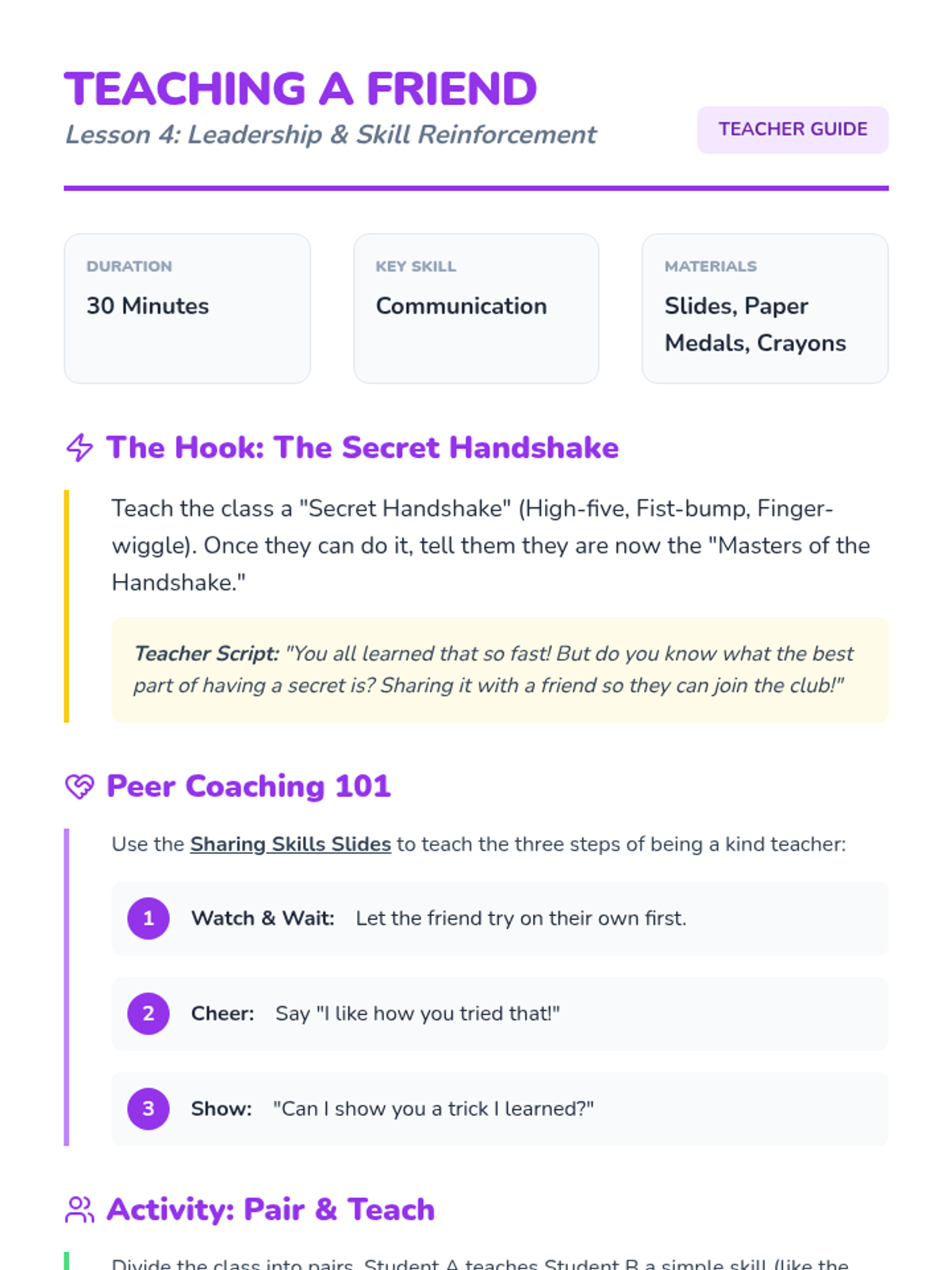
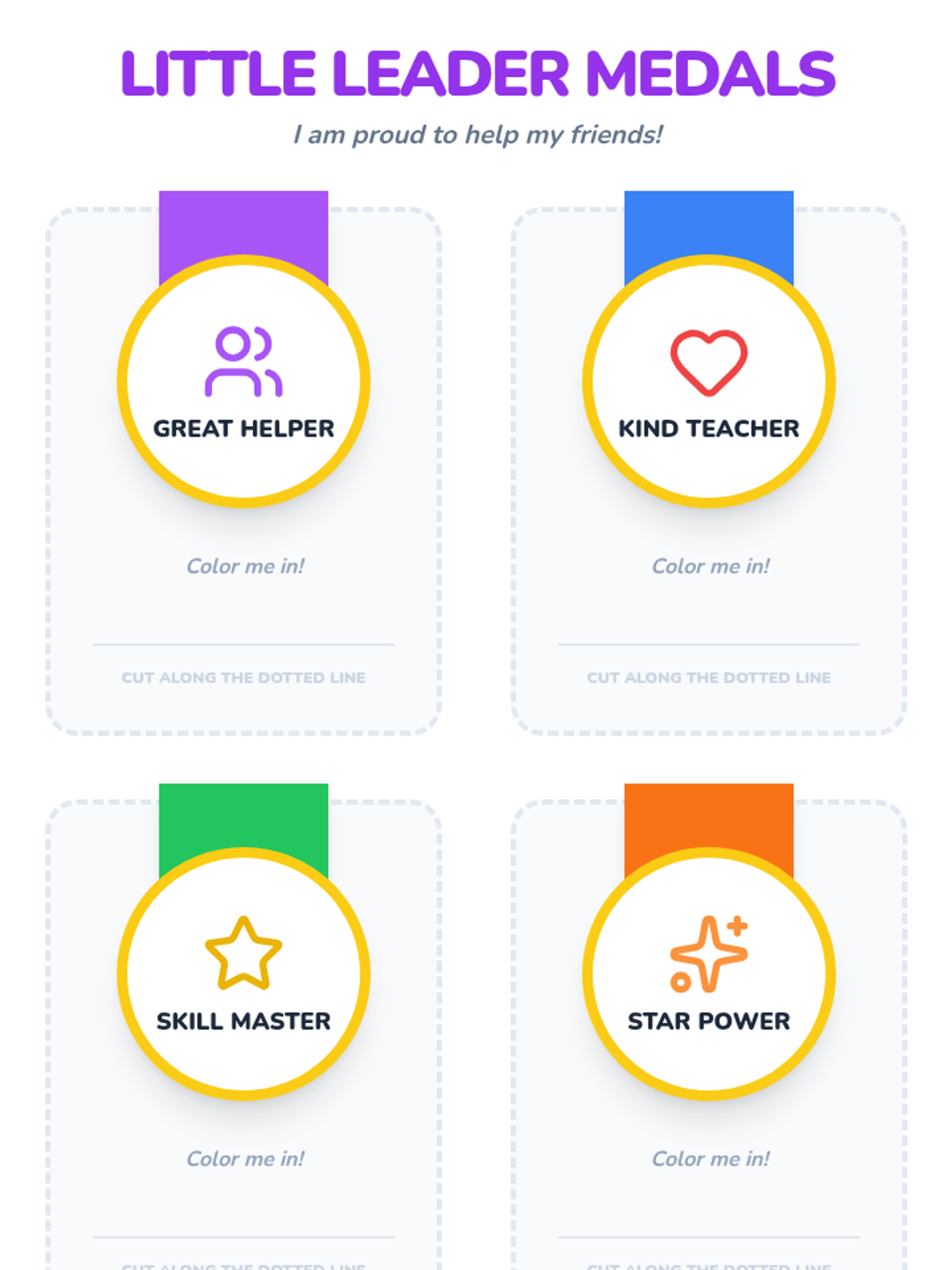
Empowering students to share their mastered skills with peers, building leadership and reinforcing their own learning.
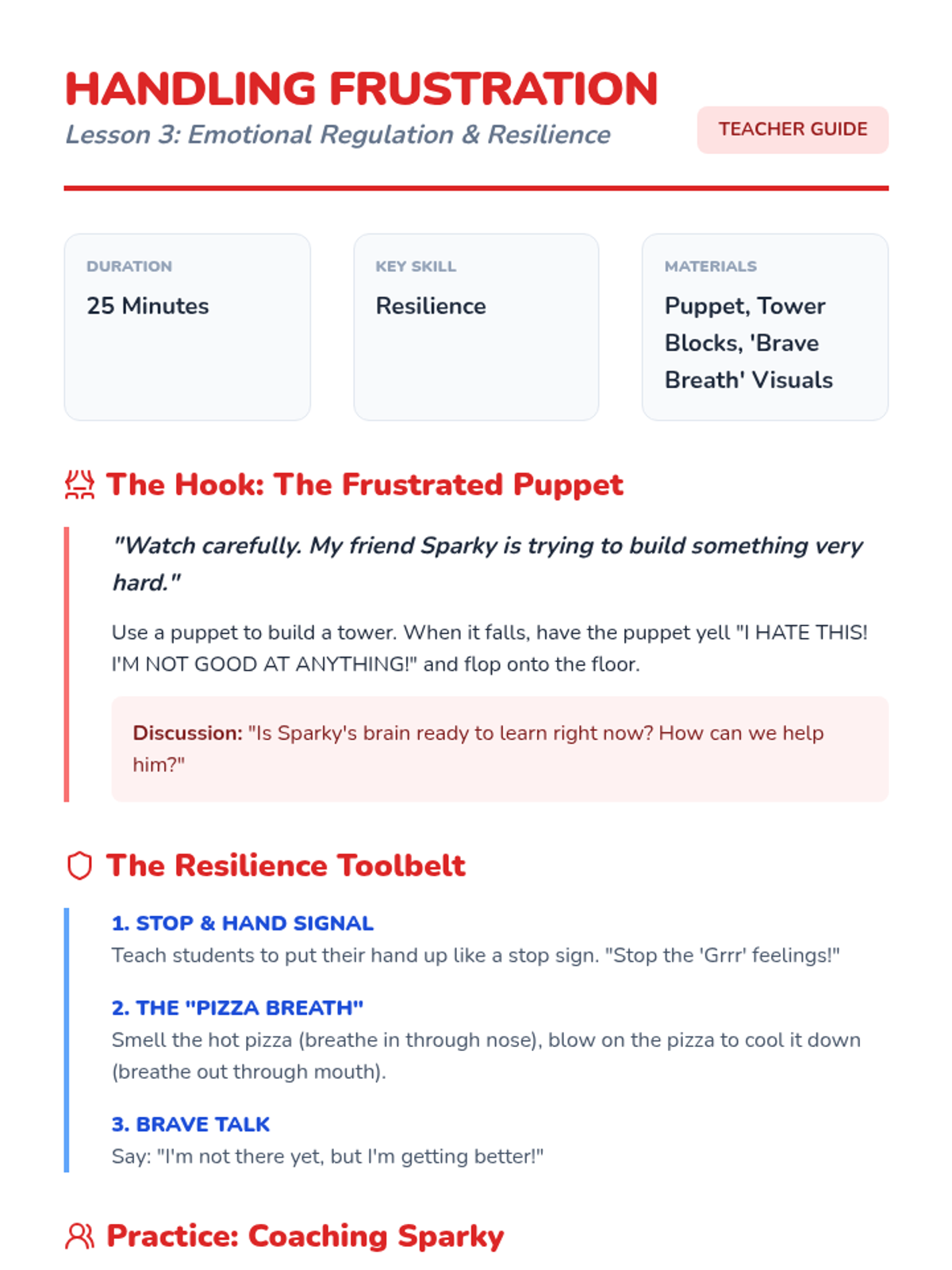
Learning emotional regulation tools and positive self-talk to manage frustration when learning something new.
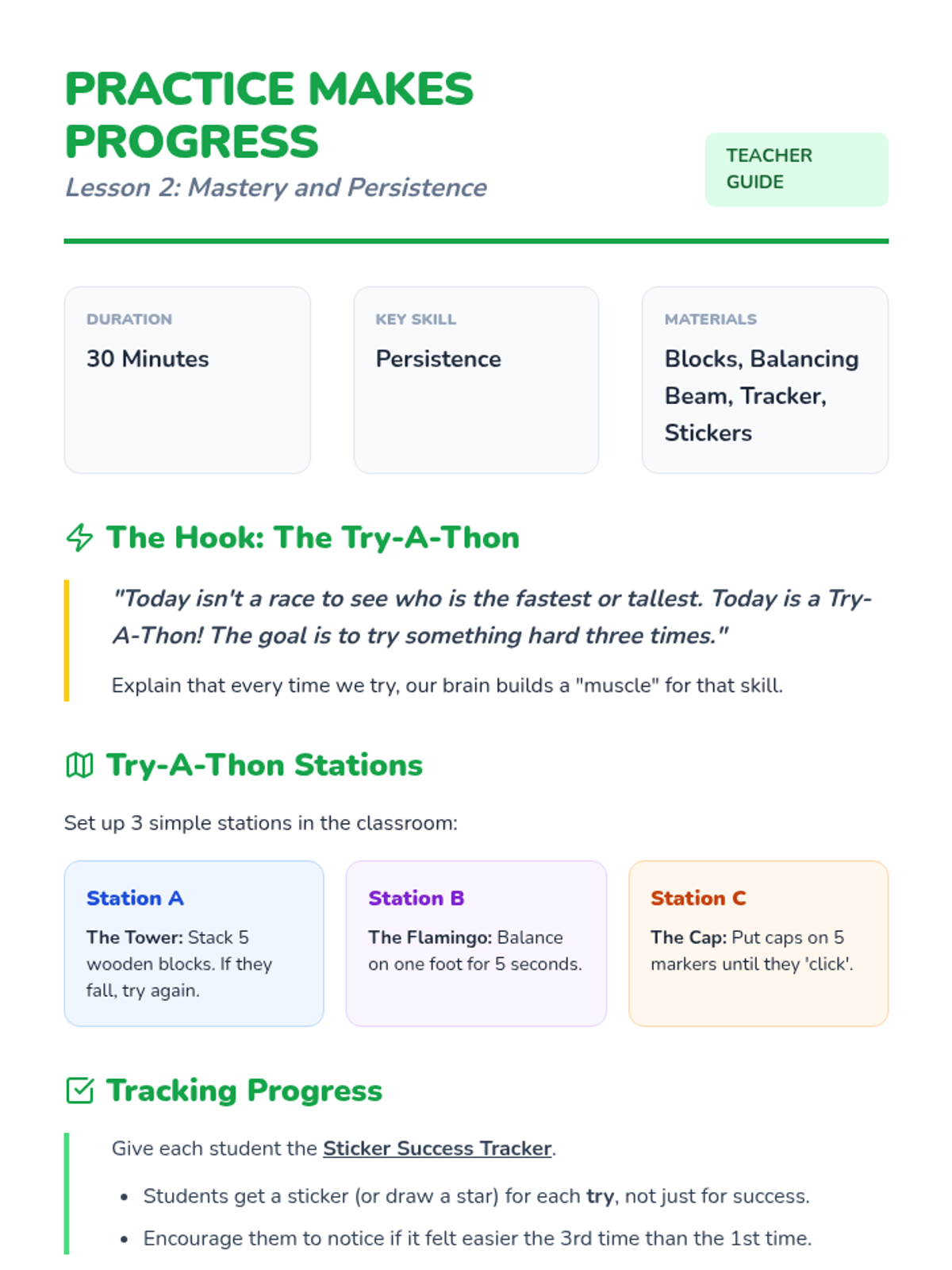
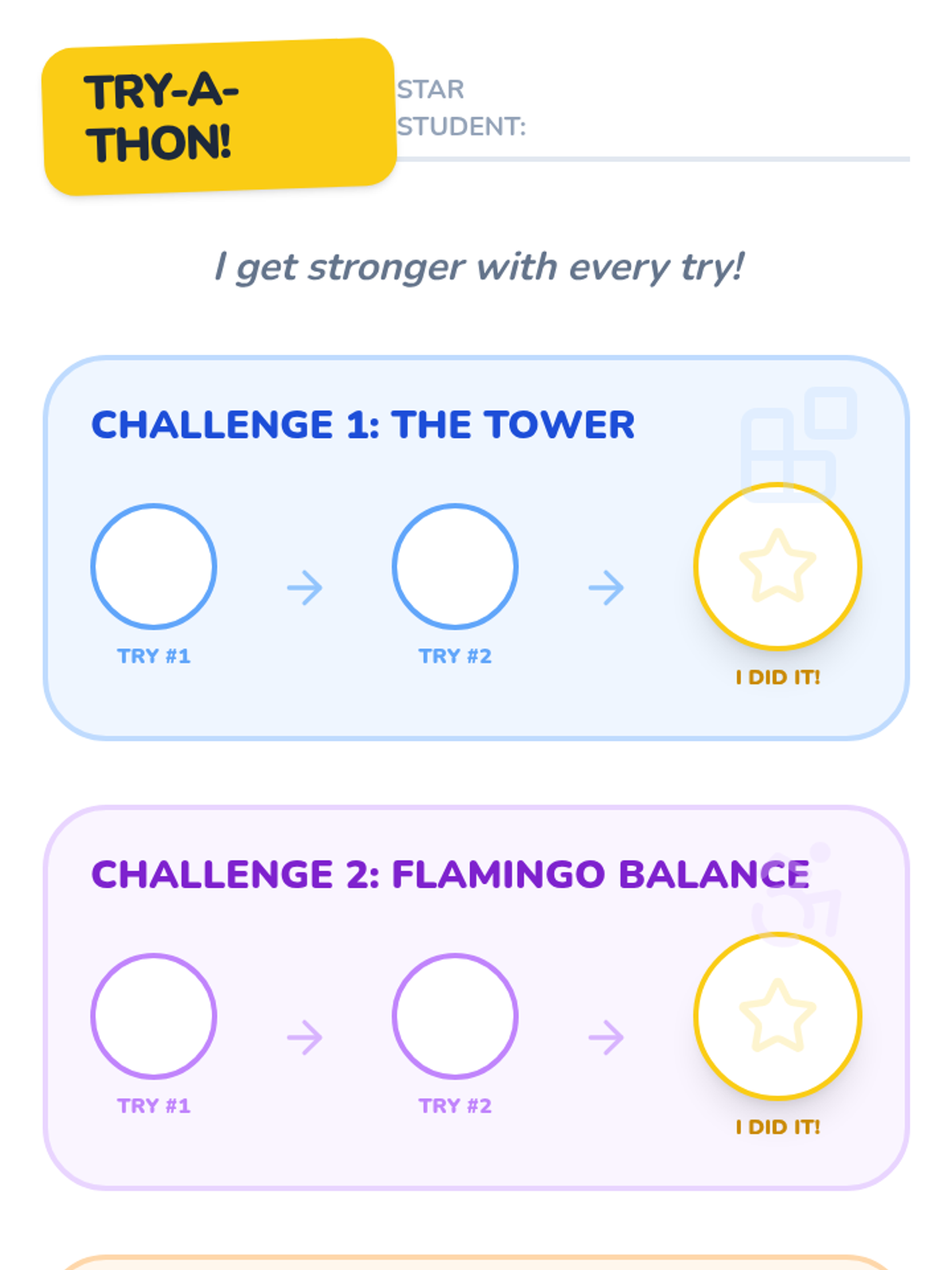
Focusing on persistence and tracking small improvements through repeated practice of simple skills.
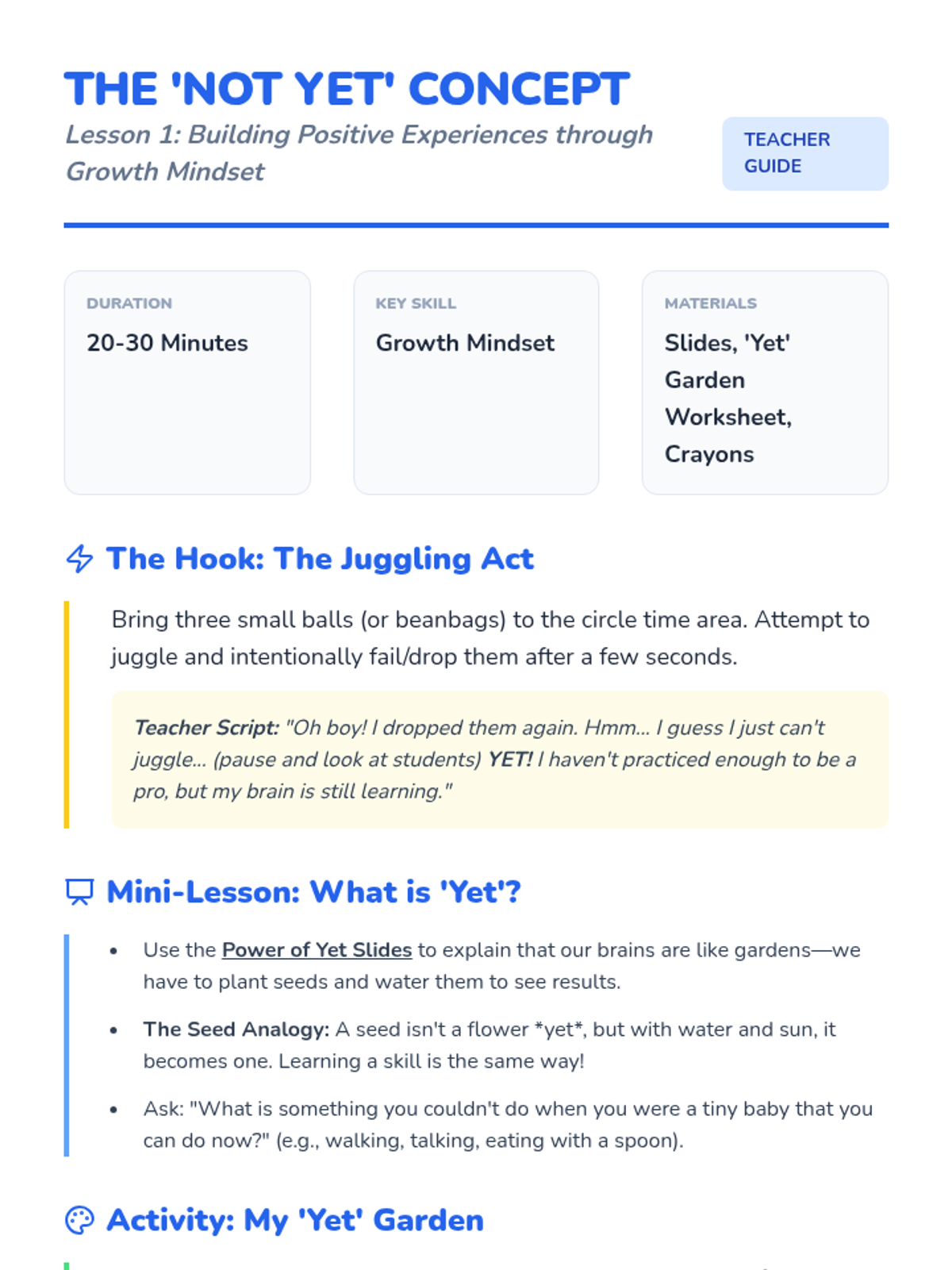
Introduction to the growth mindset using the word 'yet' to transform frustrations into future goals.