Active listening, assertive expression, and boundary-setting strategies for interpersonal success. Develops proficiency in conflict mediation, cooperative teamwork, and the cultivation of healthy romantic and platonic connections.
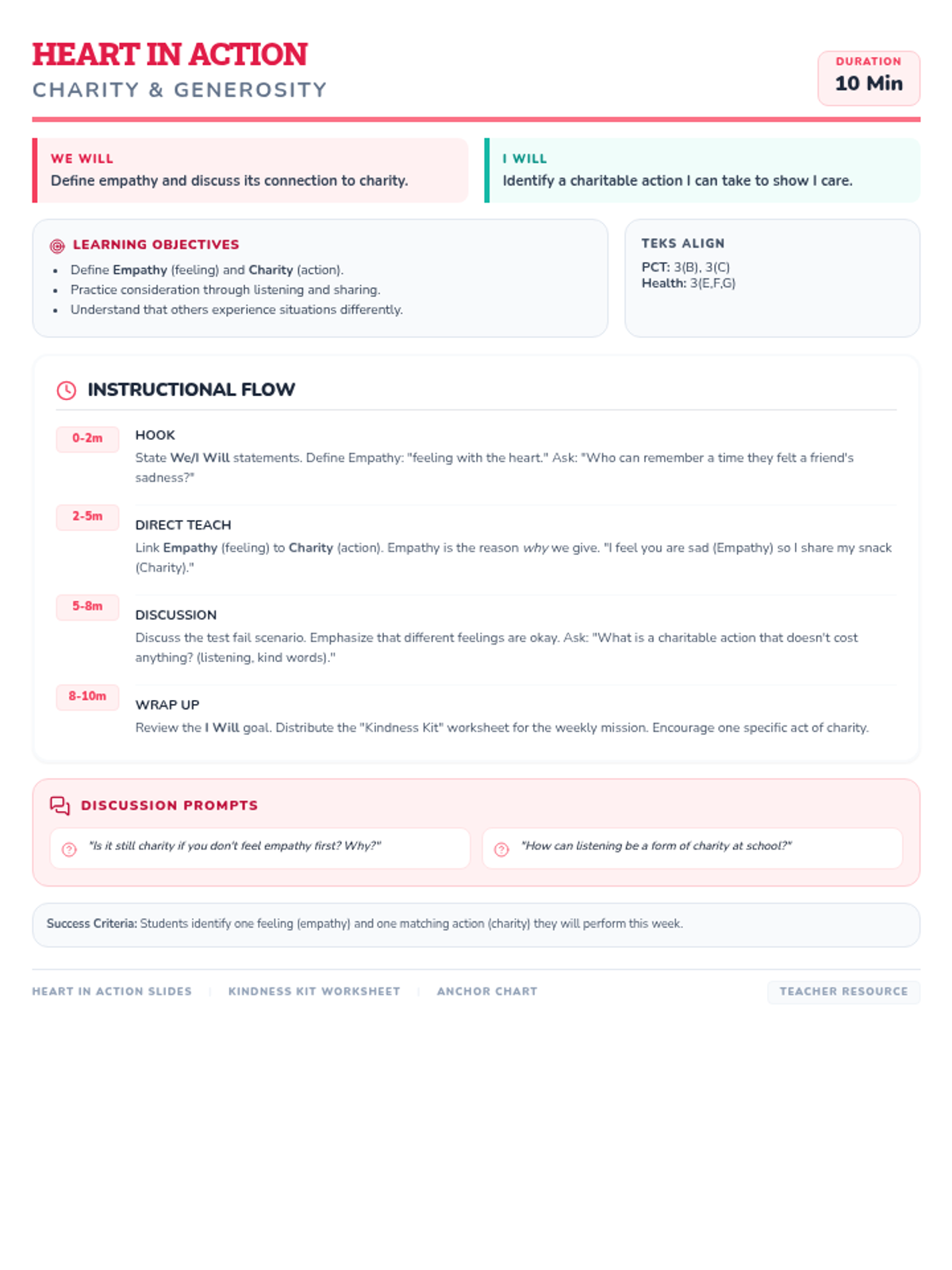
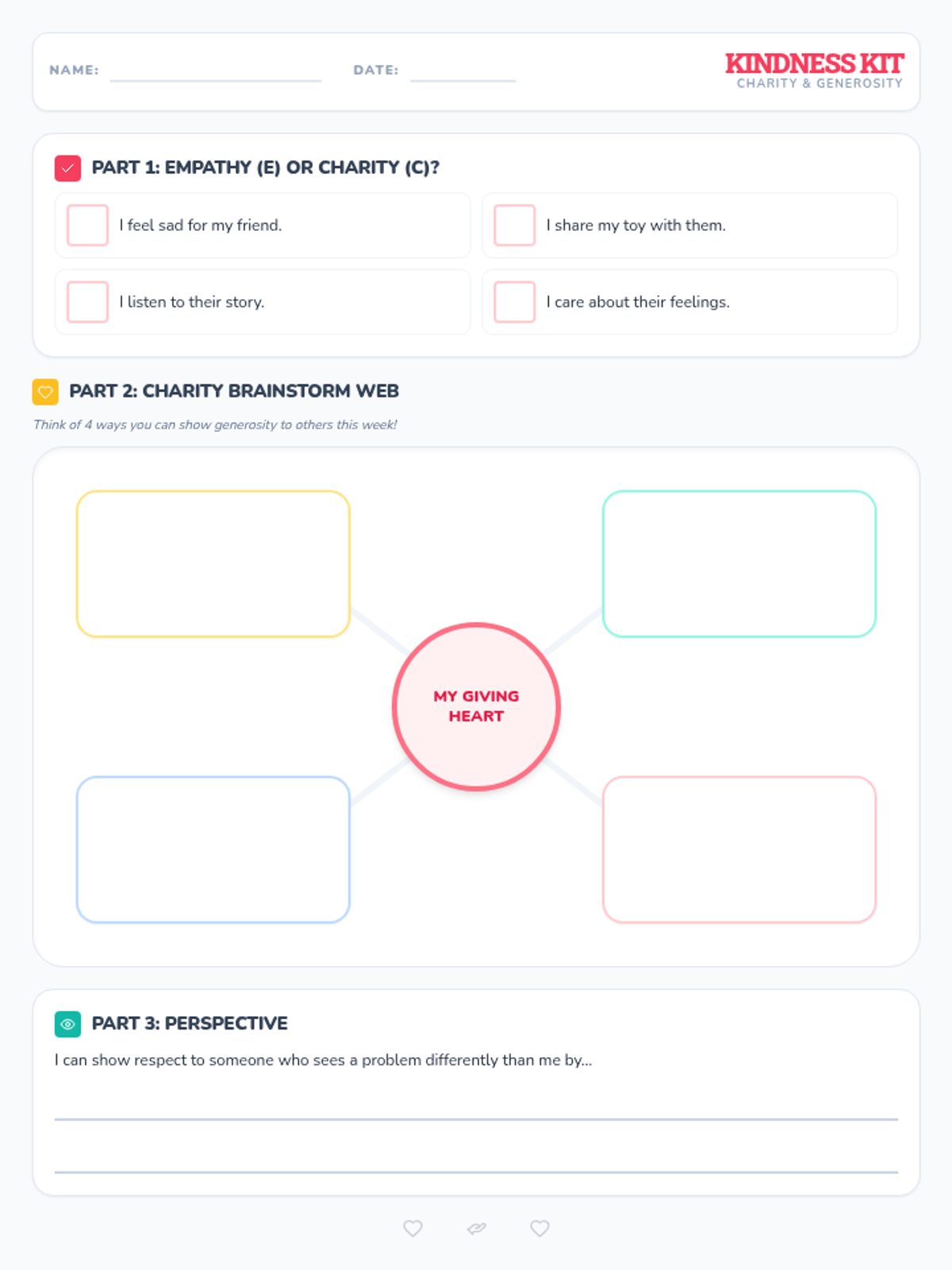
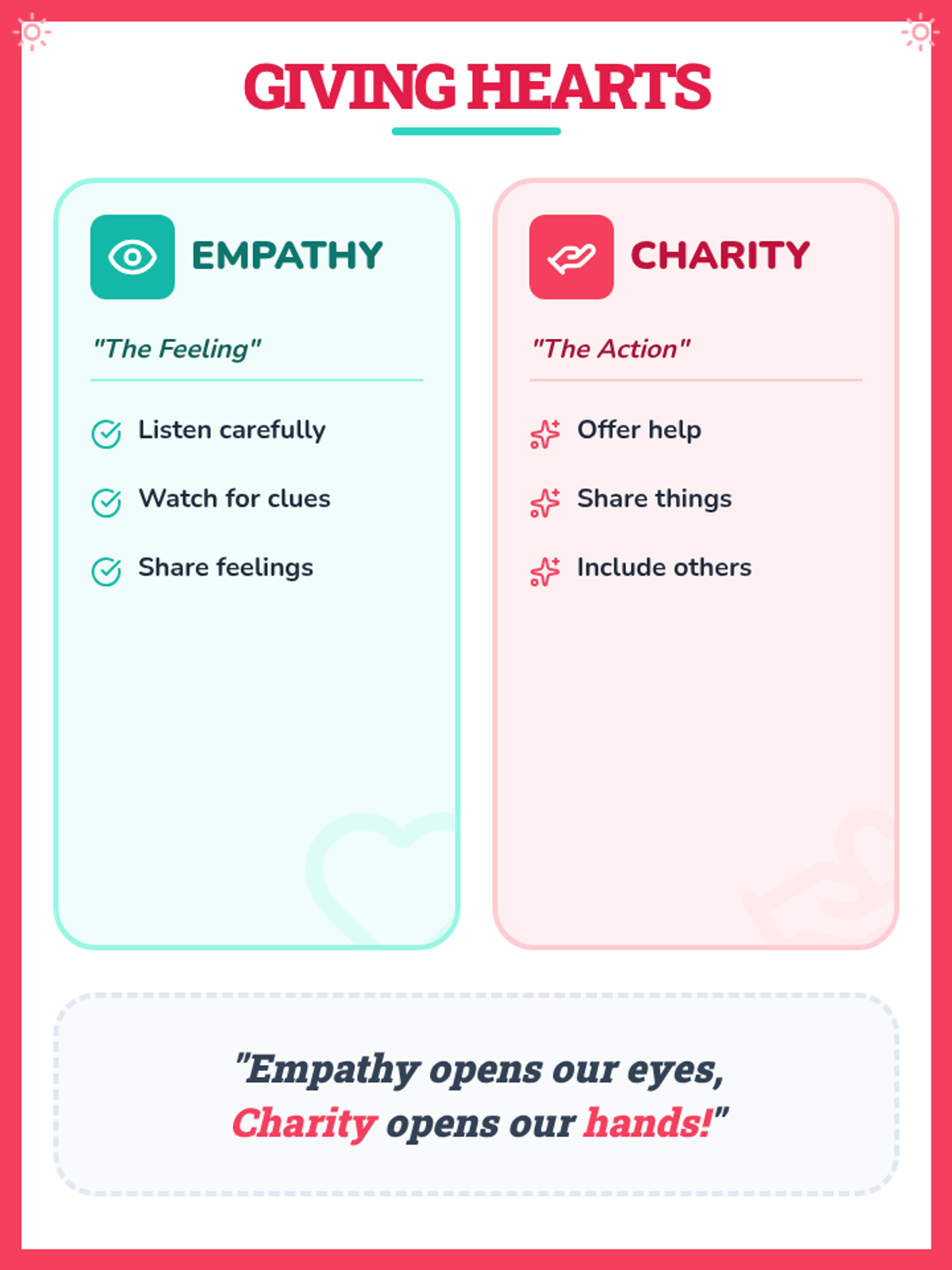
A 10-minute lesson focused on the connection between empathy and charity, teaching students how to identify needs and act with generosity. Includes a slide deck, worksheet, and anchor chart.
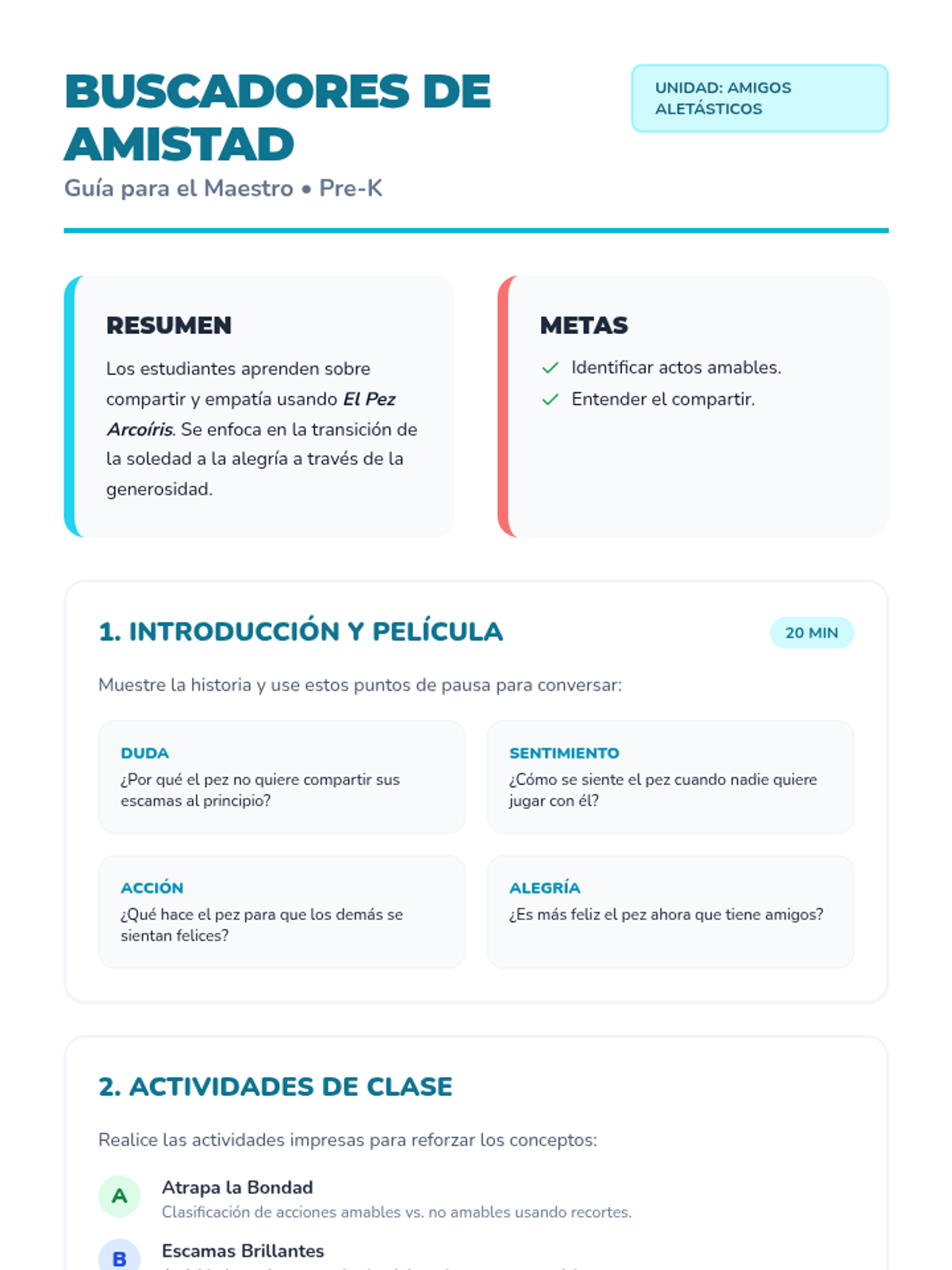
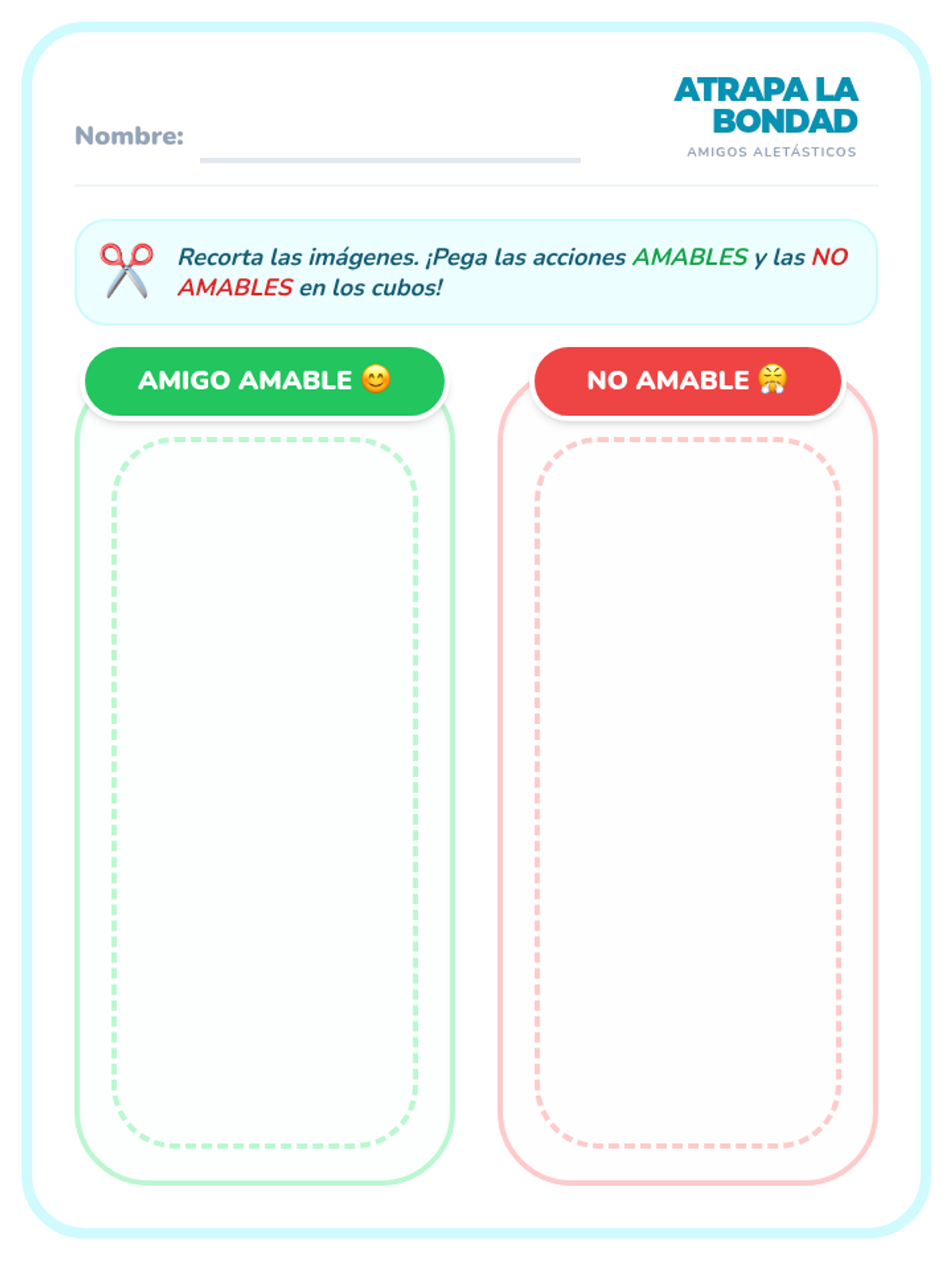
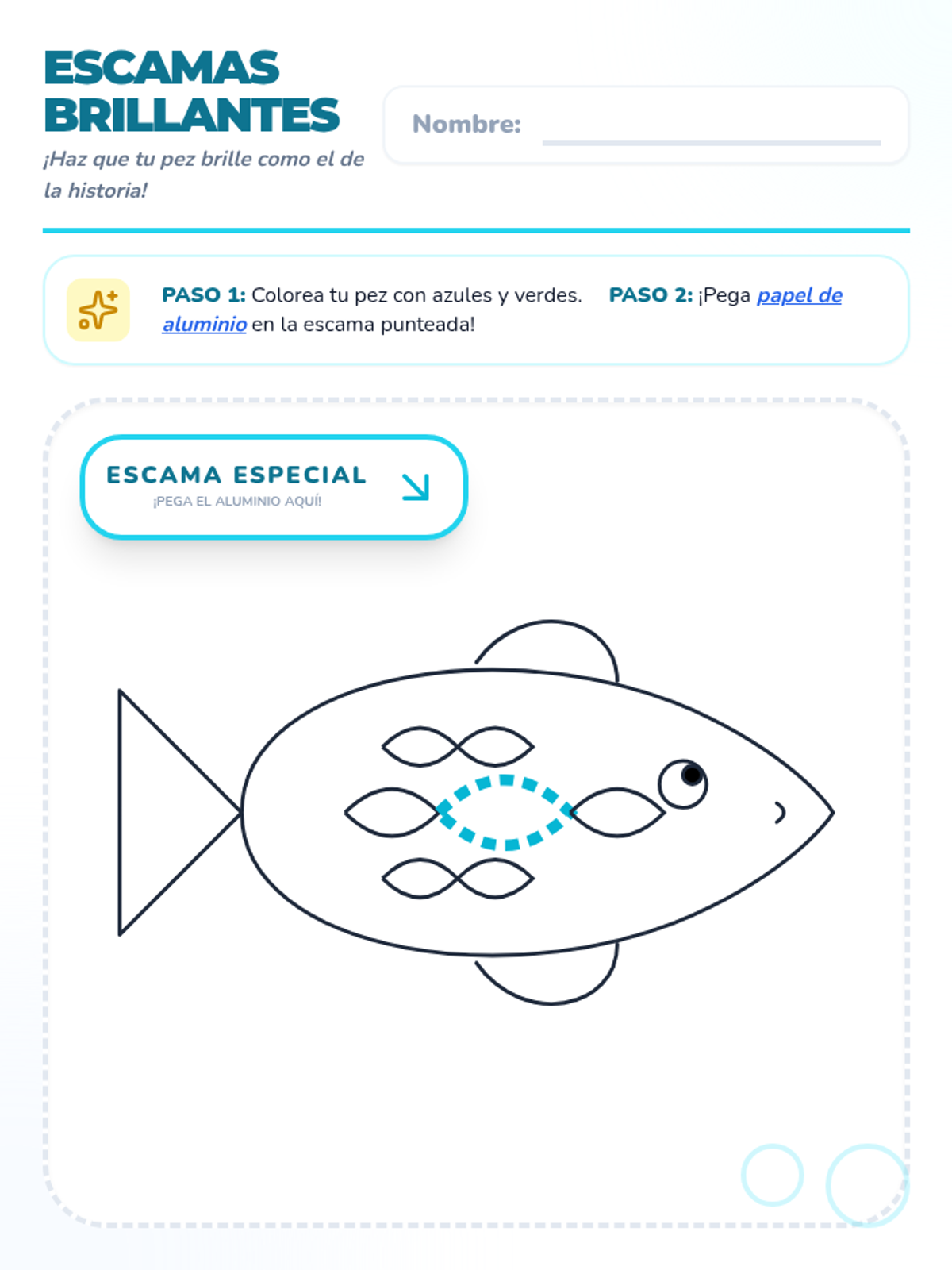
Una lección que explora la importancia de compartir y ser un amigo amable, centrada en ver El Pez Arcoíris y seguida de actividades creativas y de clasificación.
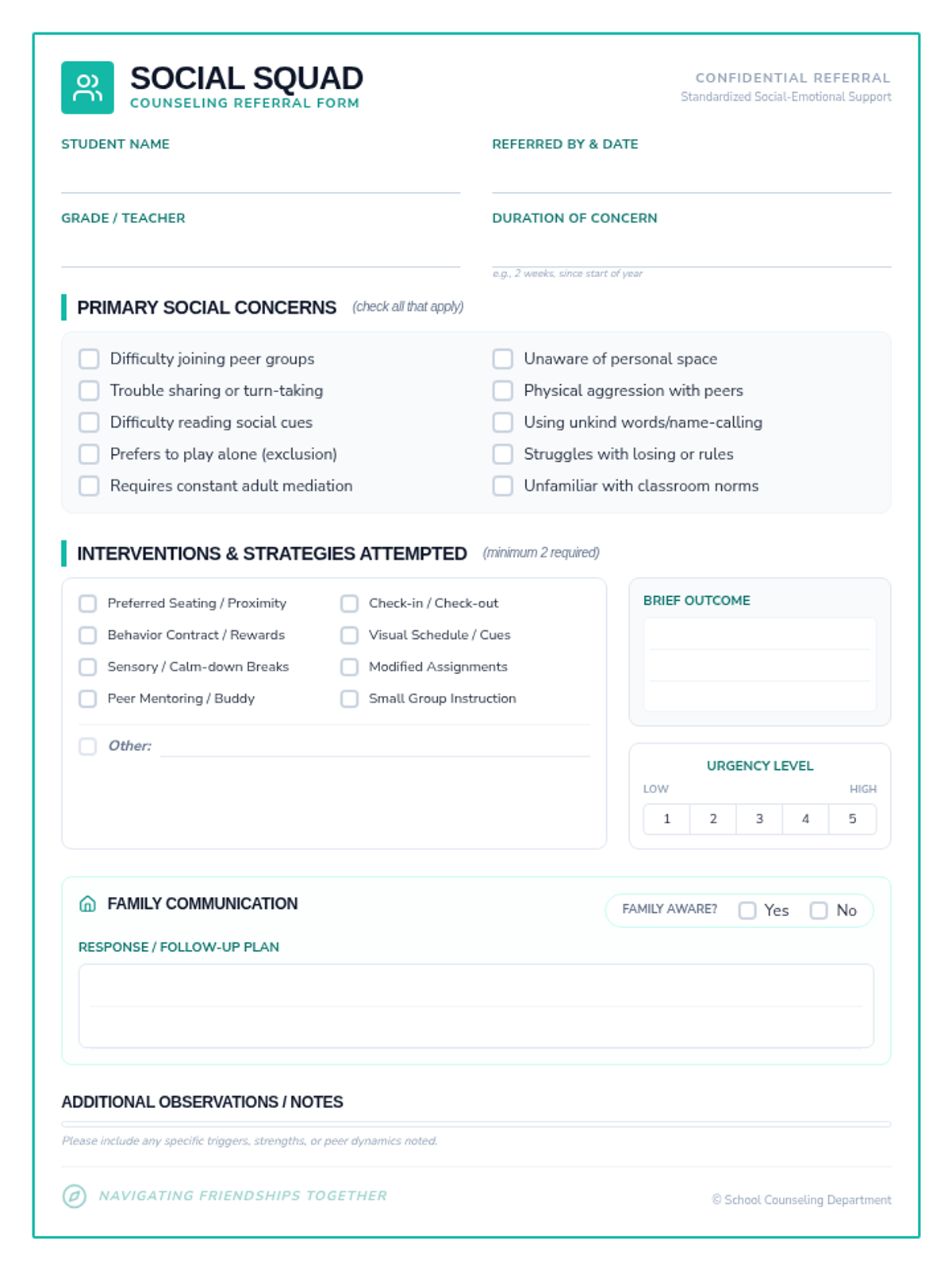
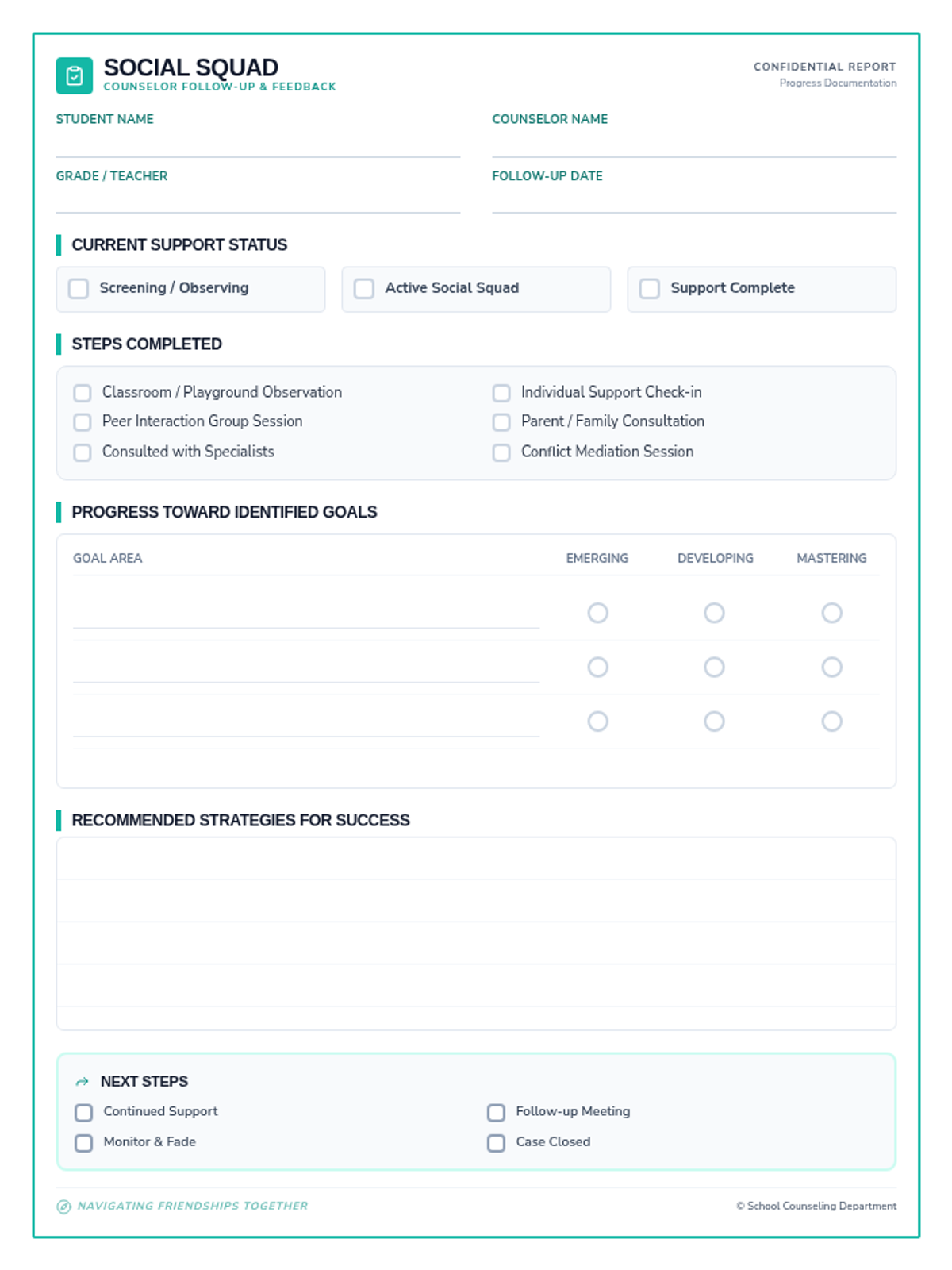
A suite of professional school counseling forms for managing student referrals, tracking progress, and providing feedback to teachers and families.
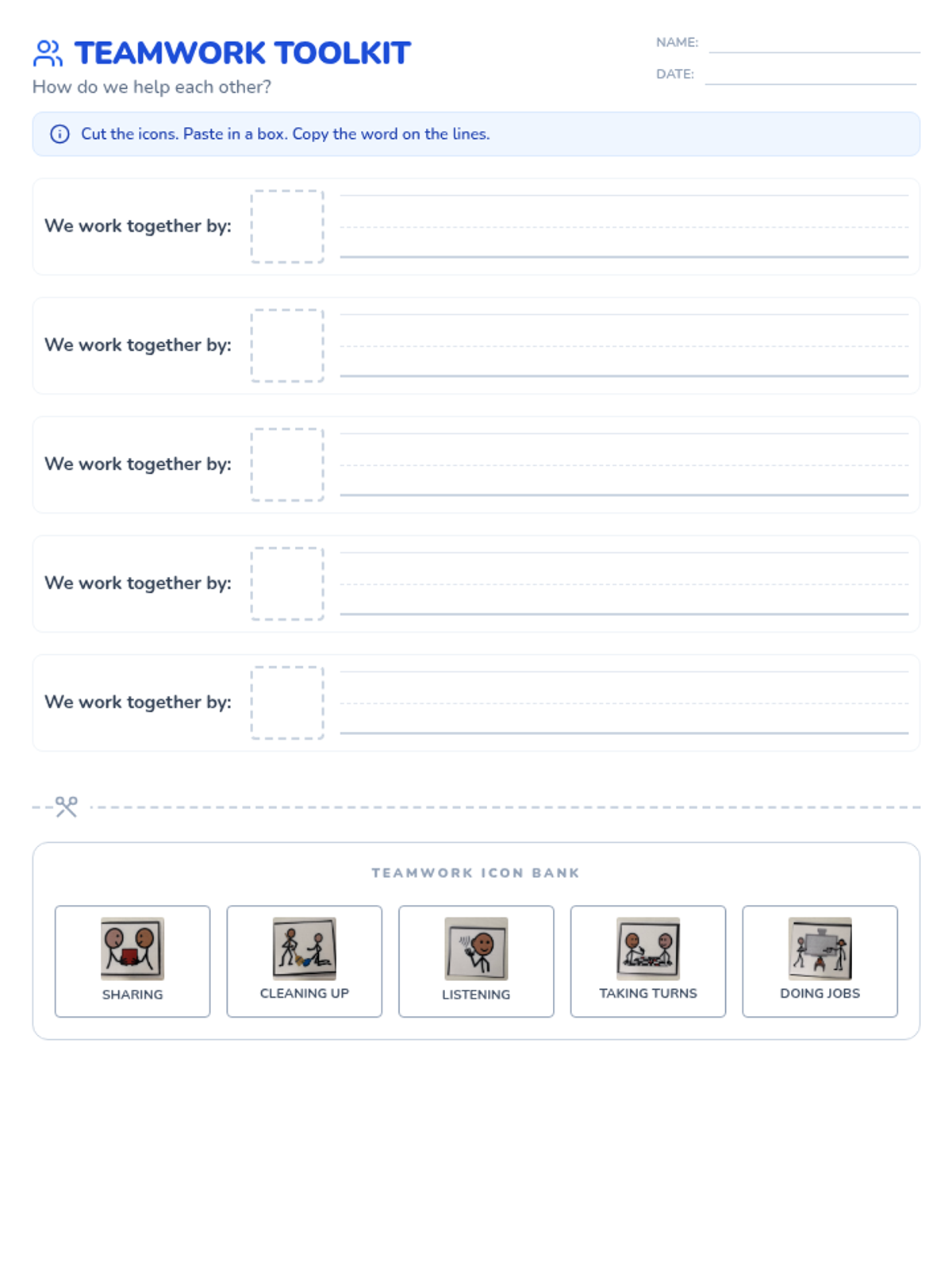
A lesson focused on collaborative behaviors and classroom community through a hands-on sentence building activity.
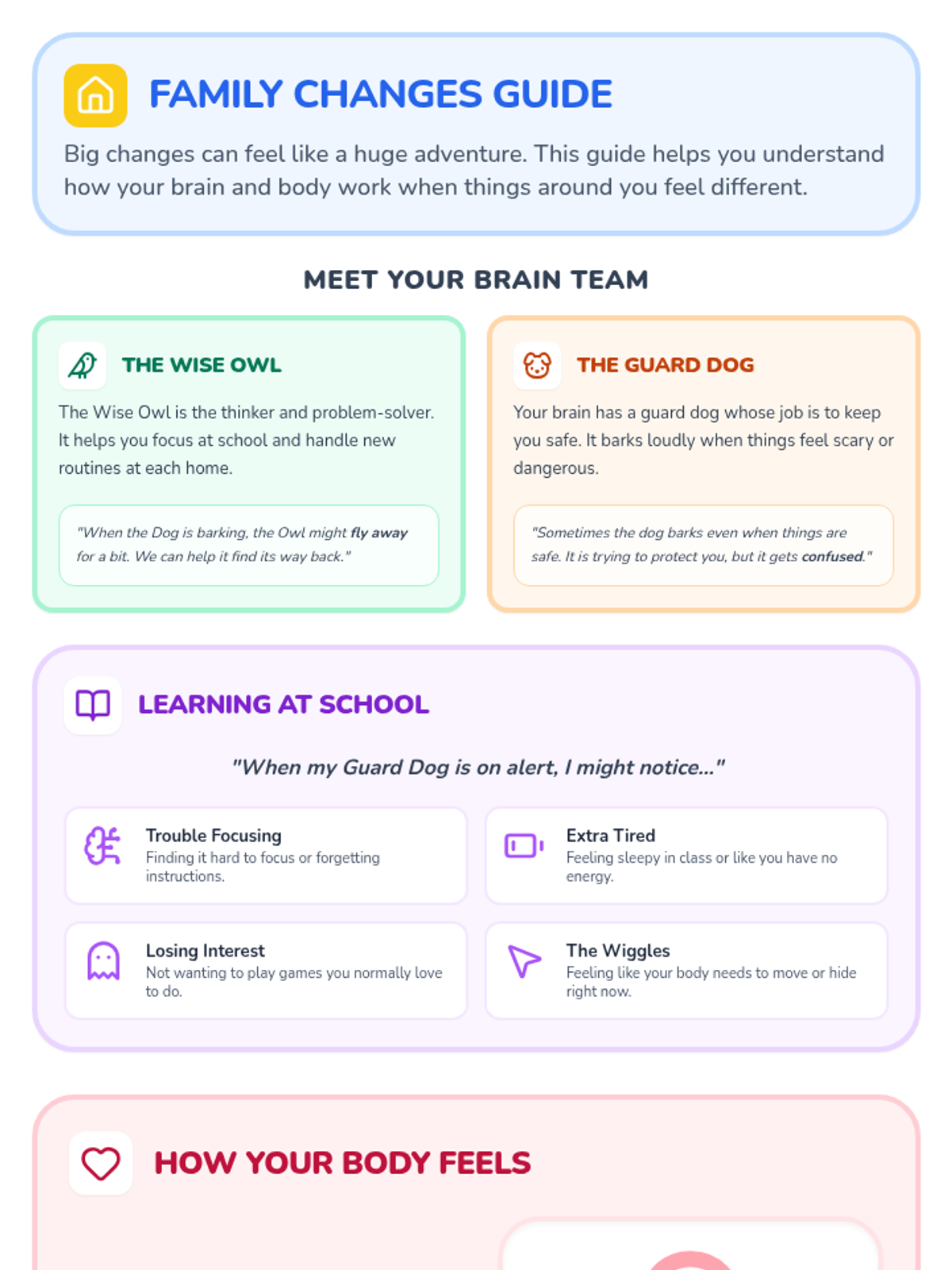
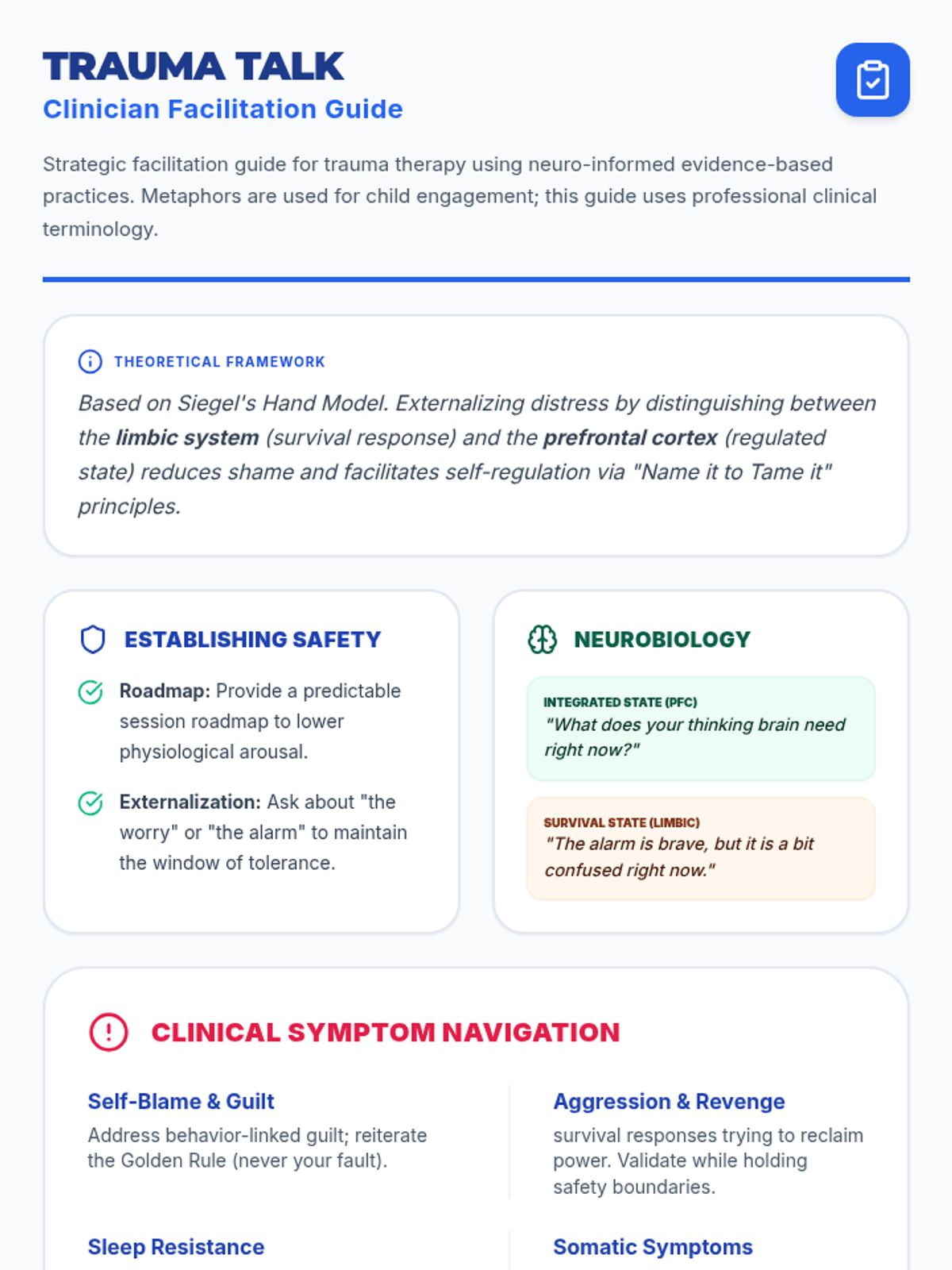
A set of resources designed to support children and their caregivers through the trauma of family changes, focusing on brain-based metaphors and clinical best practices.
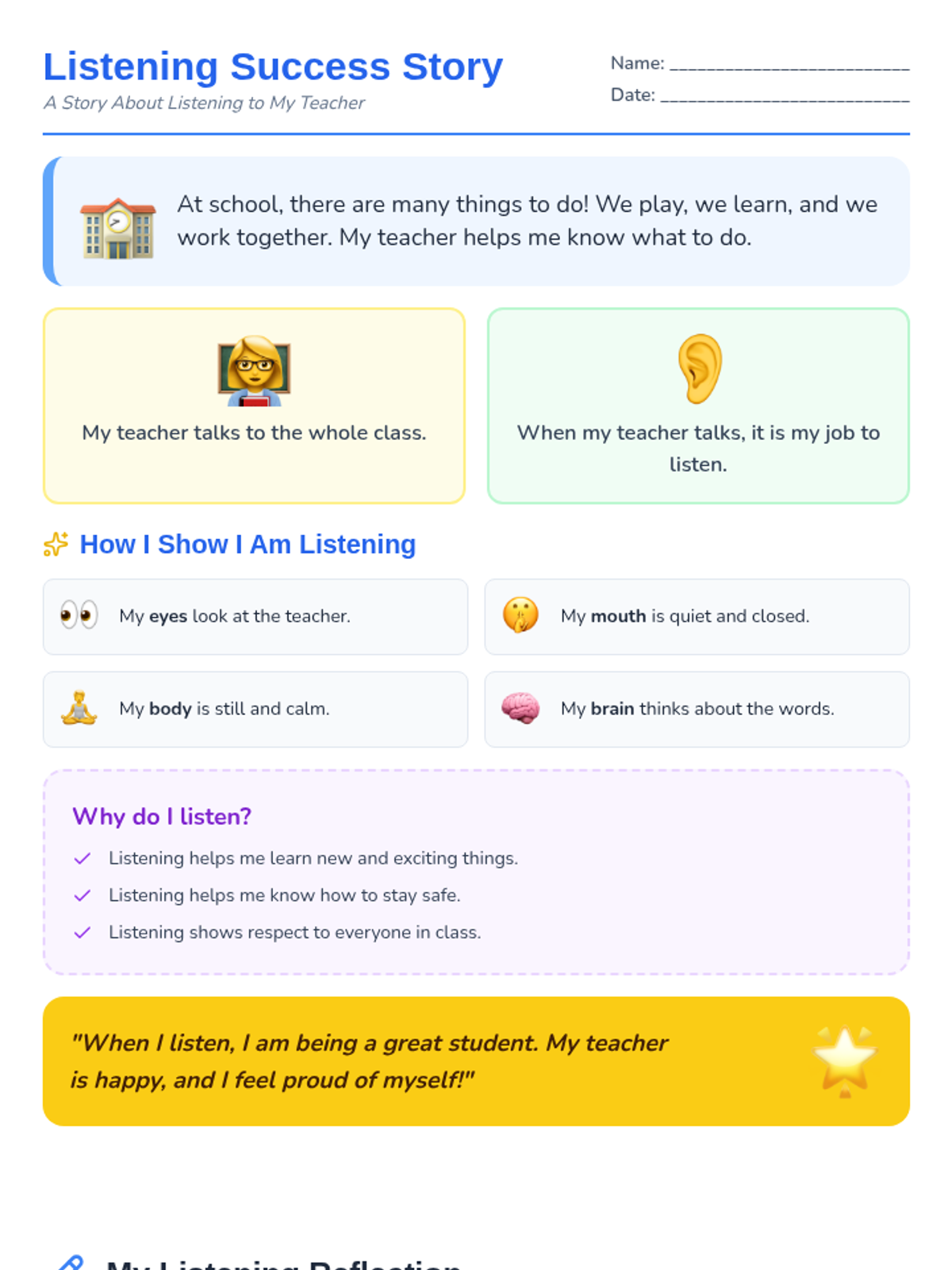
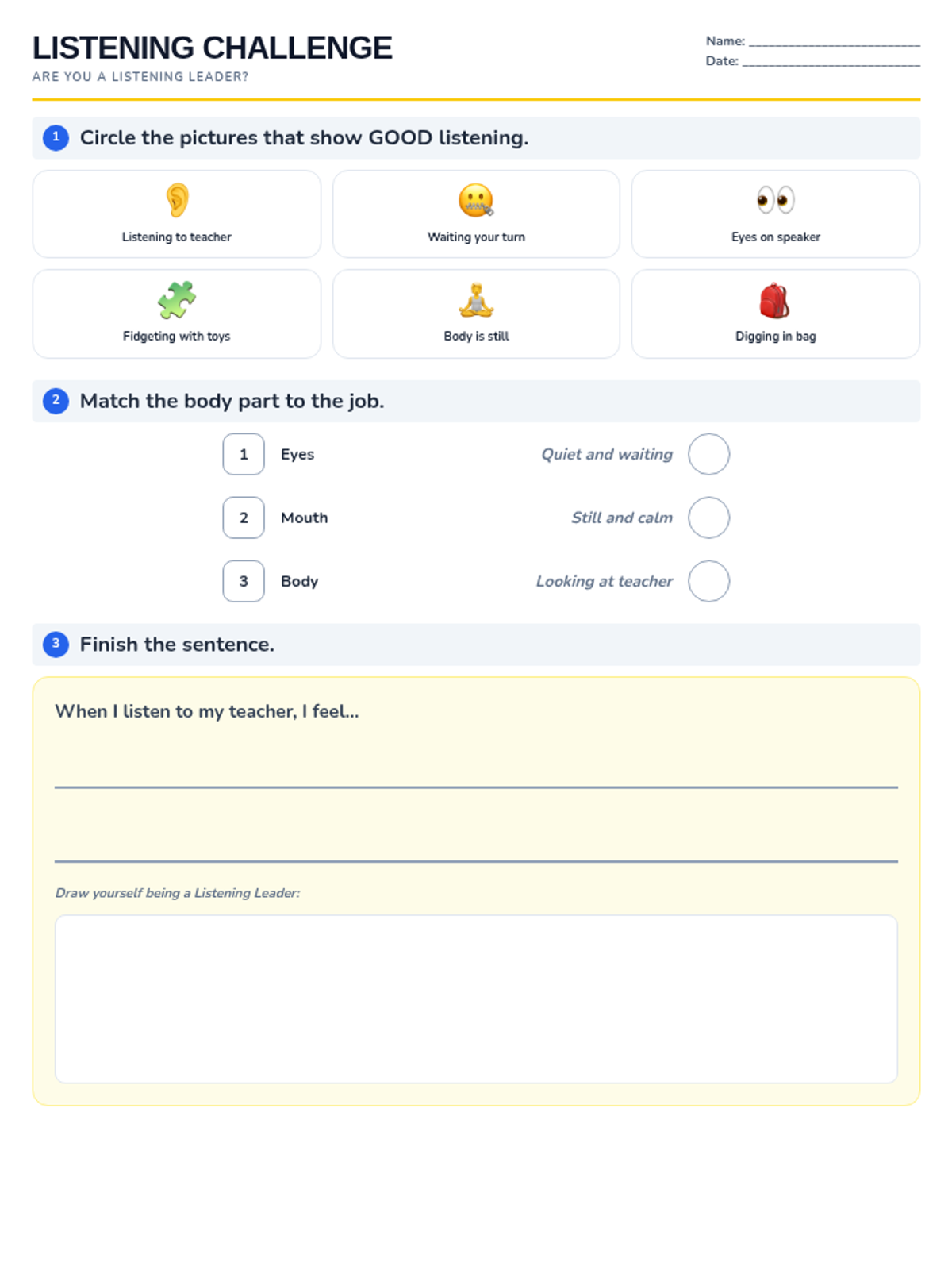
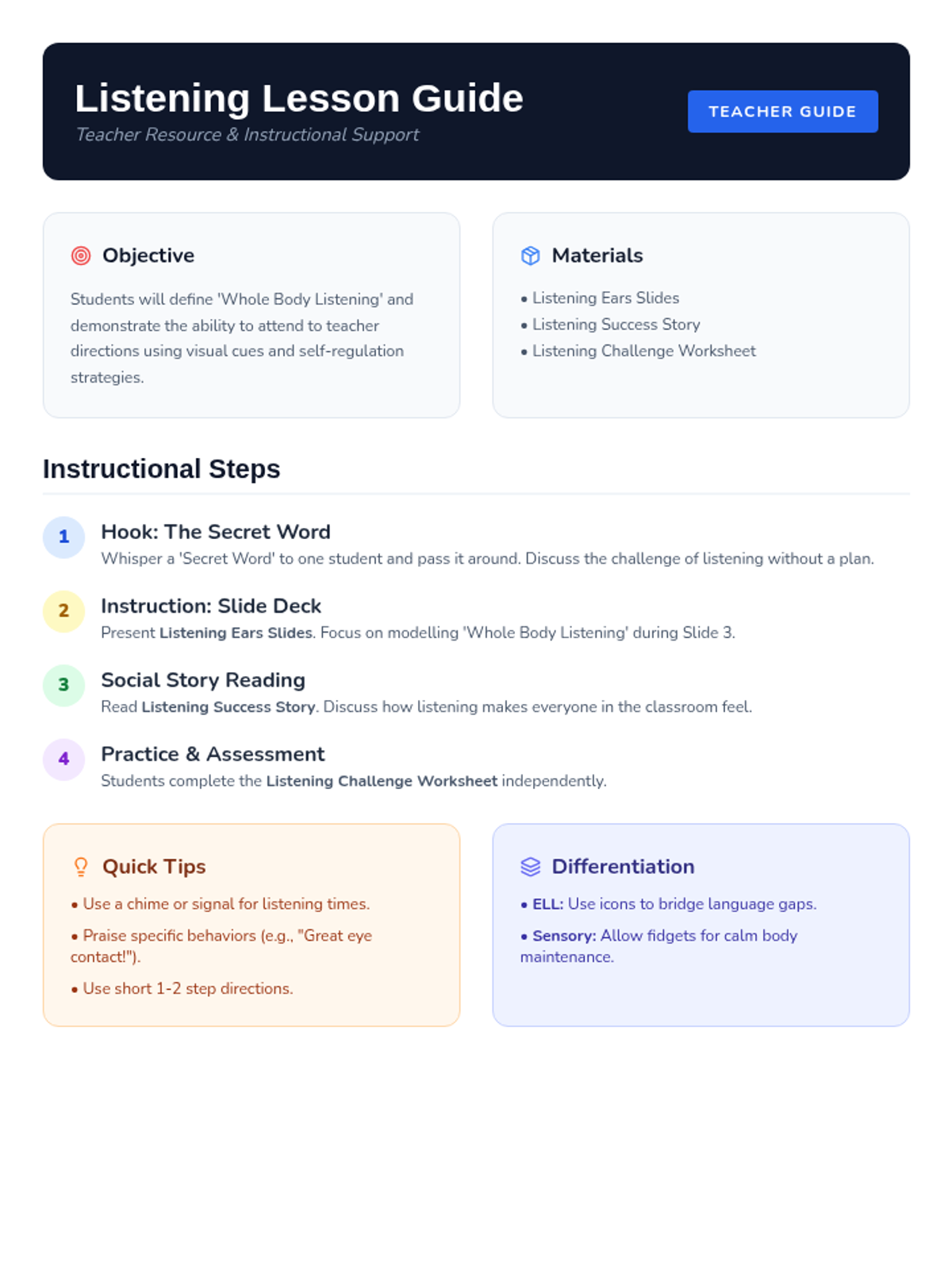
A lesson focused on teaching students the importance of listening to the teacher and the practical steps of 'Whole Body Listening'. This includes a social story, a presentation, and practice activities.
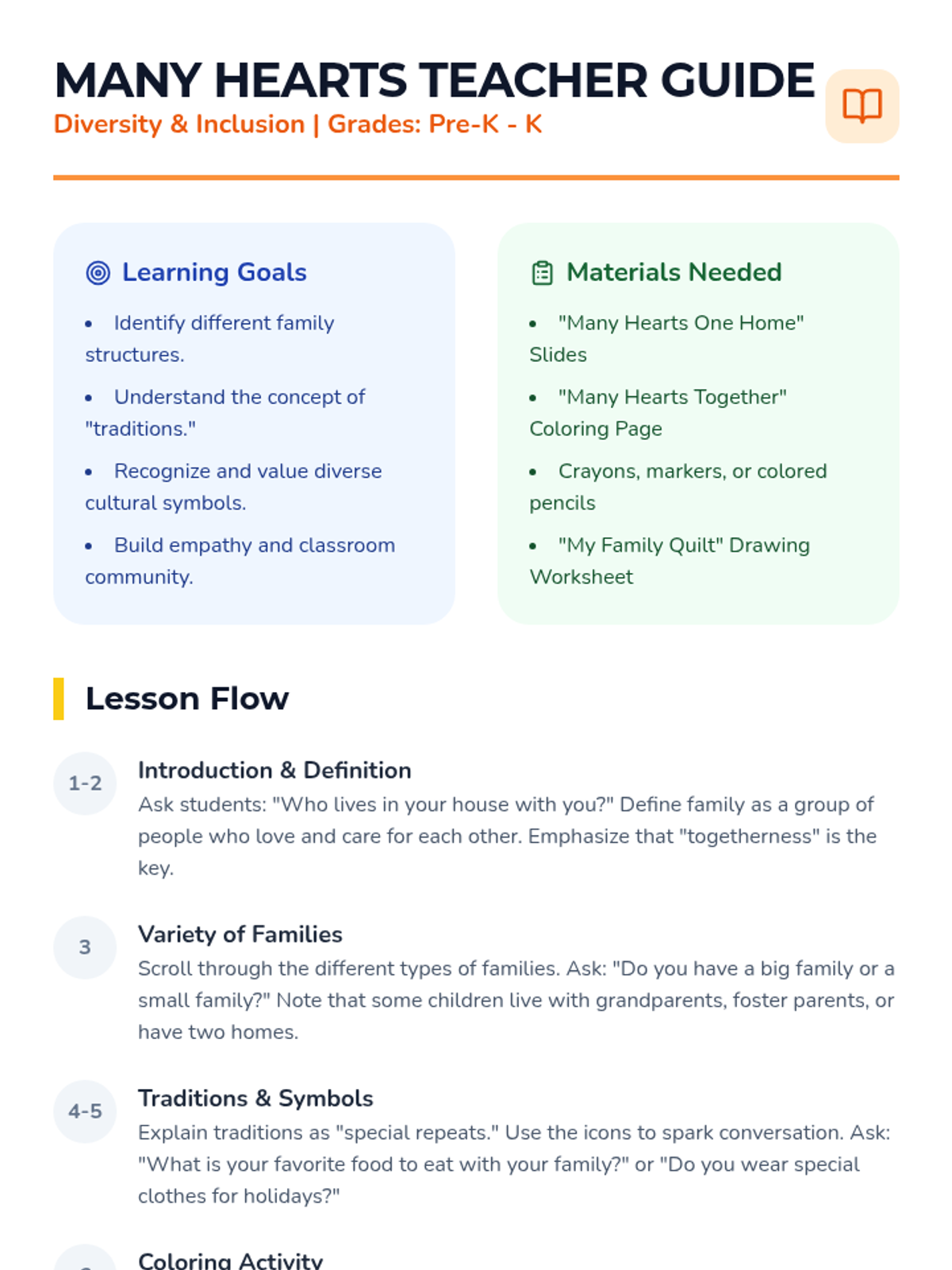
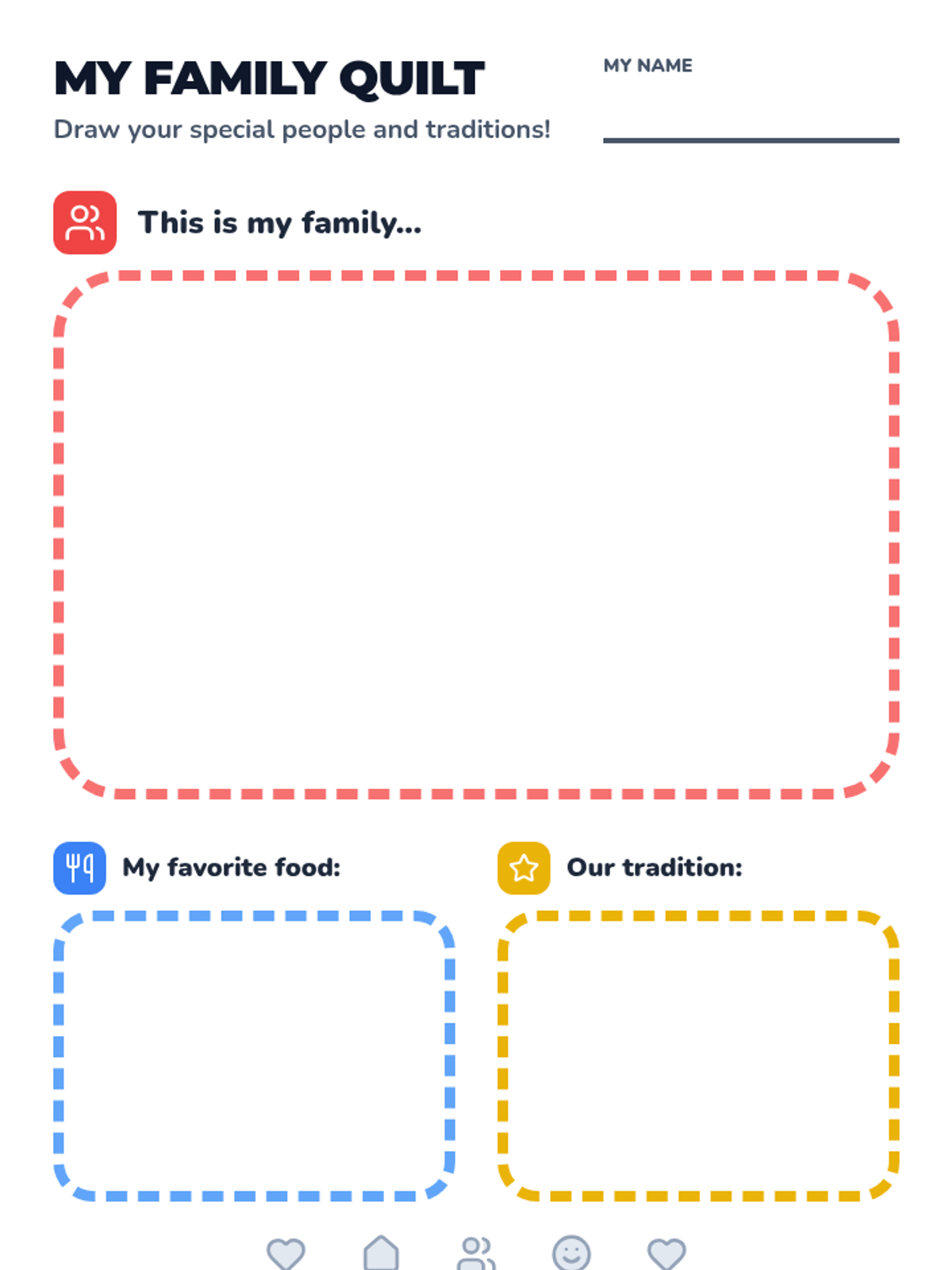
A friendly, interactive Pre-K guidance lesson exploring the beautiful variety of families and traditions through storytelling, discussion, and a fun Bingo game.
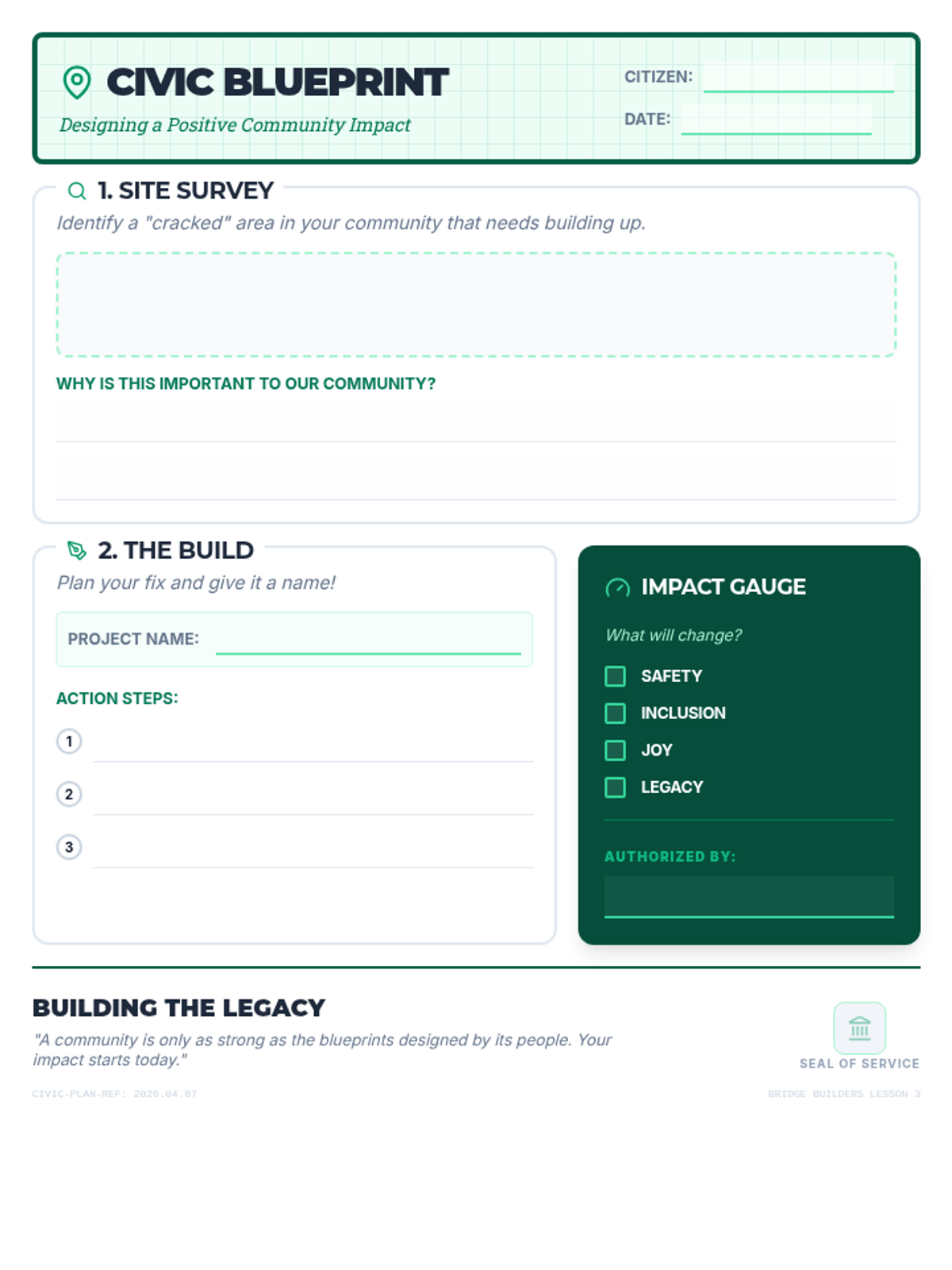
In this final lesson of the sequence, students transition from group teamwork to community-wide thinking, exploring how their collective actions impact the 'city' (their school or local community) and planning a sustainable service project.
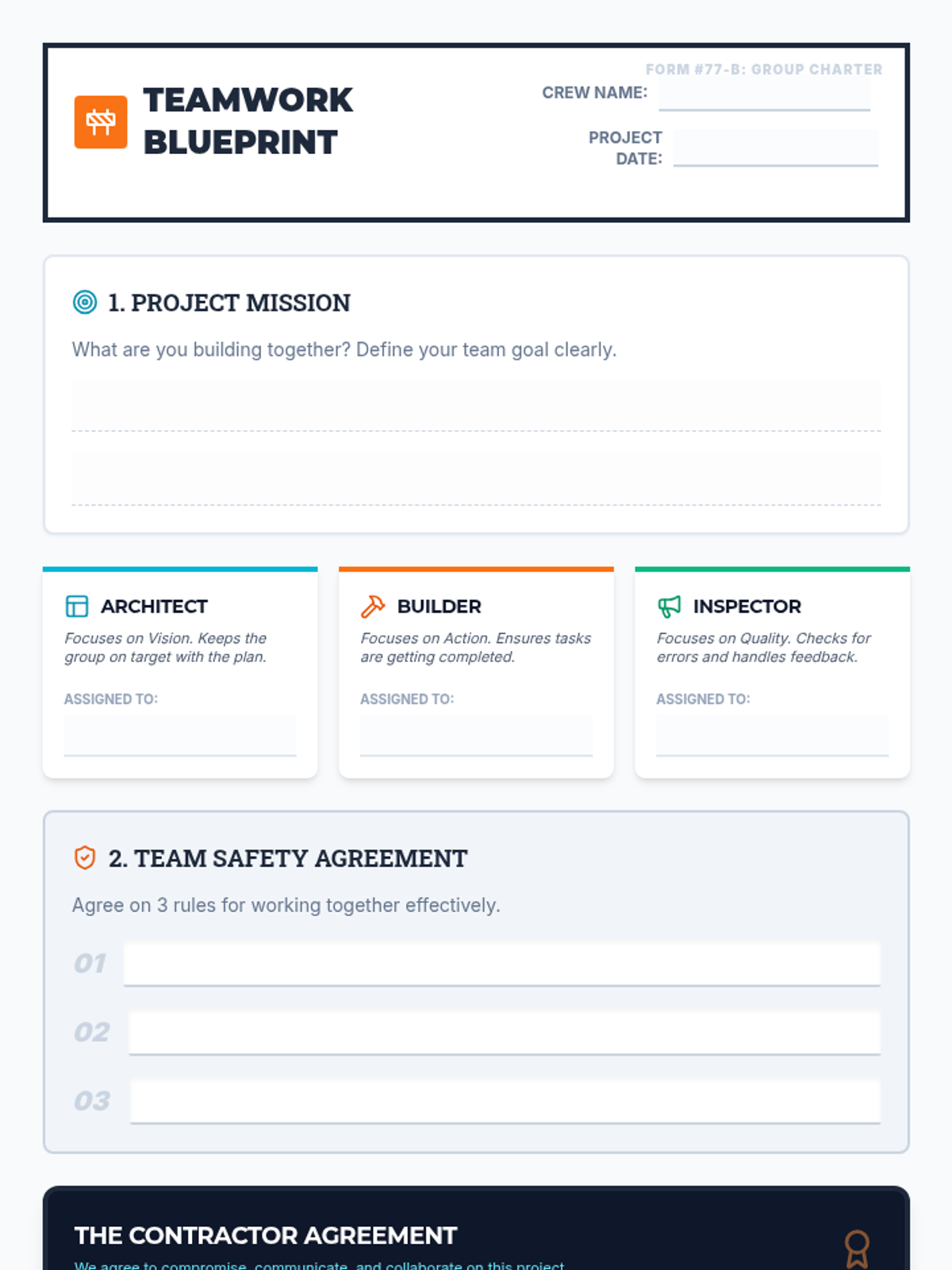
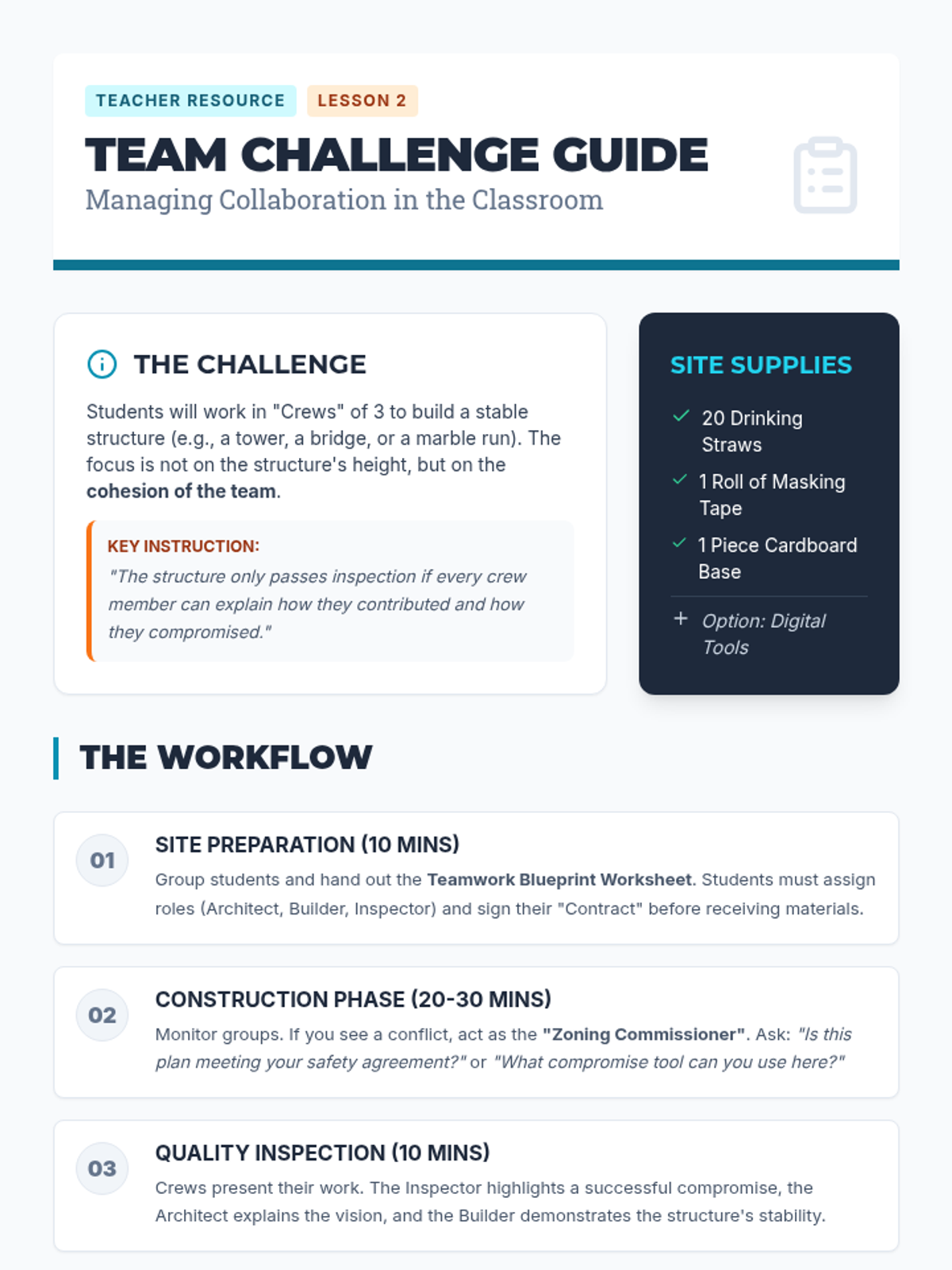
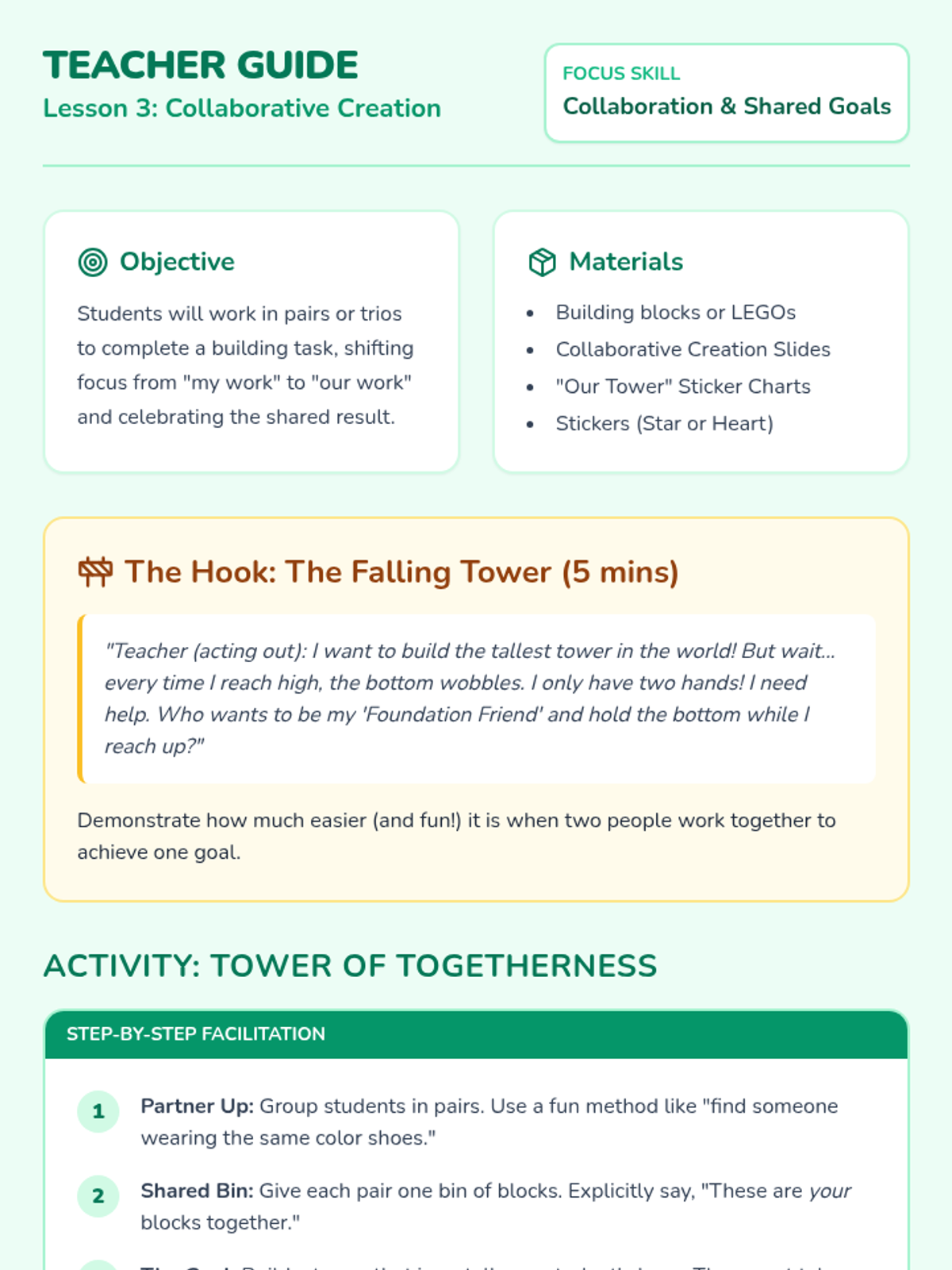
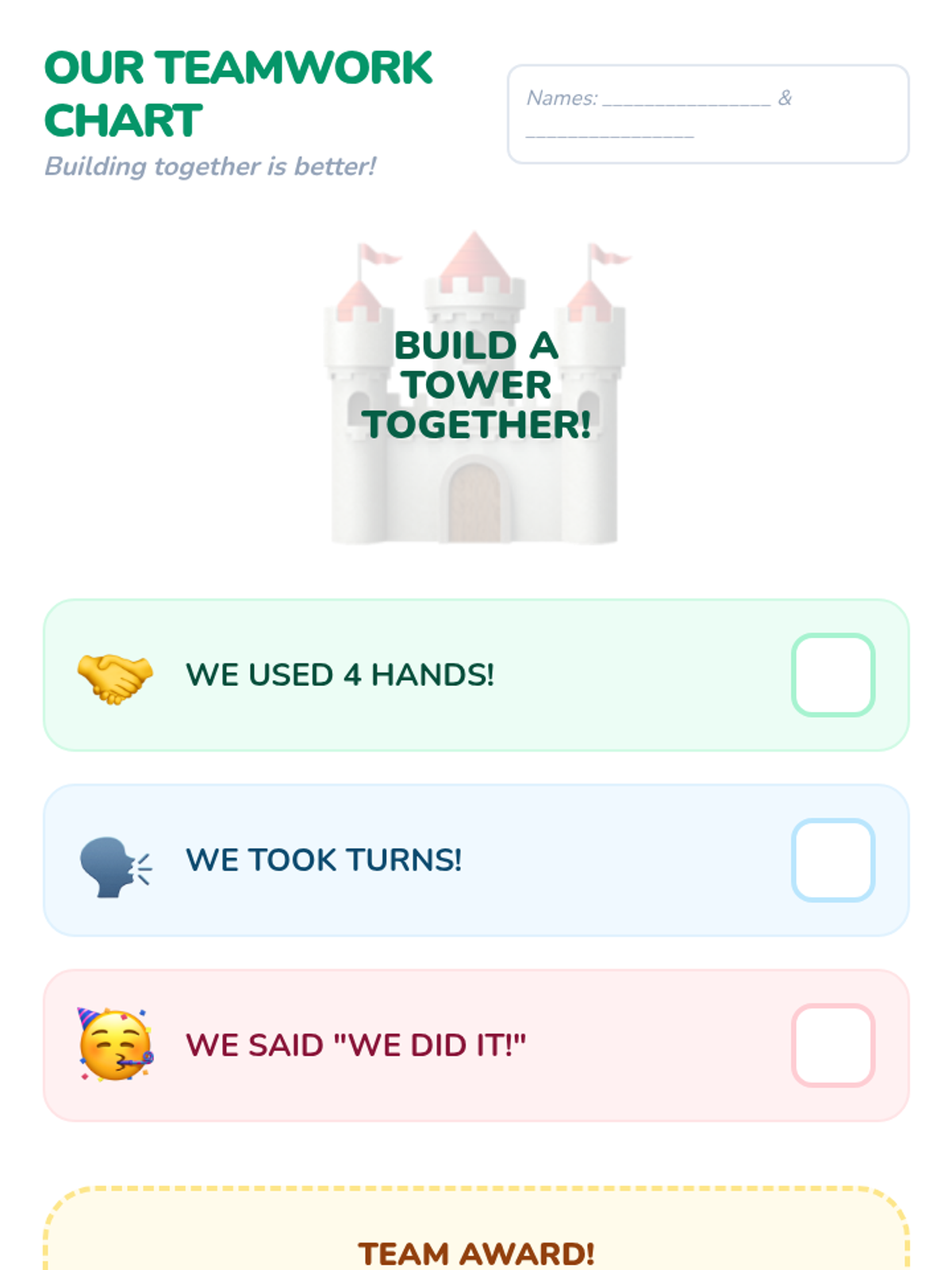
This lesson focuses on the mechanics of teamwork, specifically addressing how to share roles, compromise on shared goals, and celebrate collective success through the lens of a construction project.
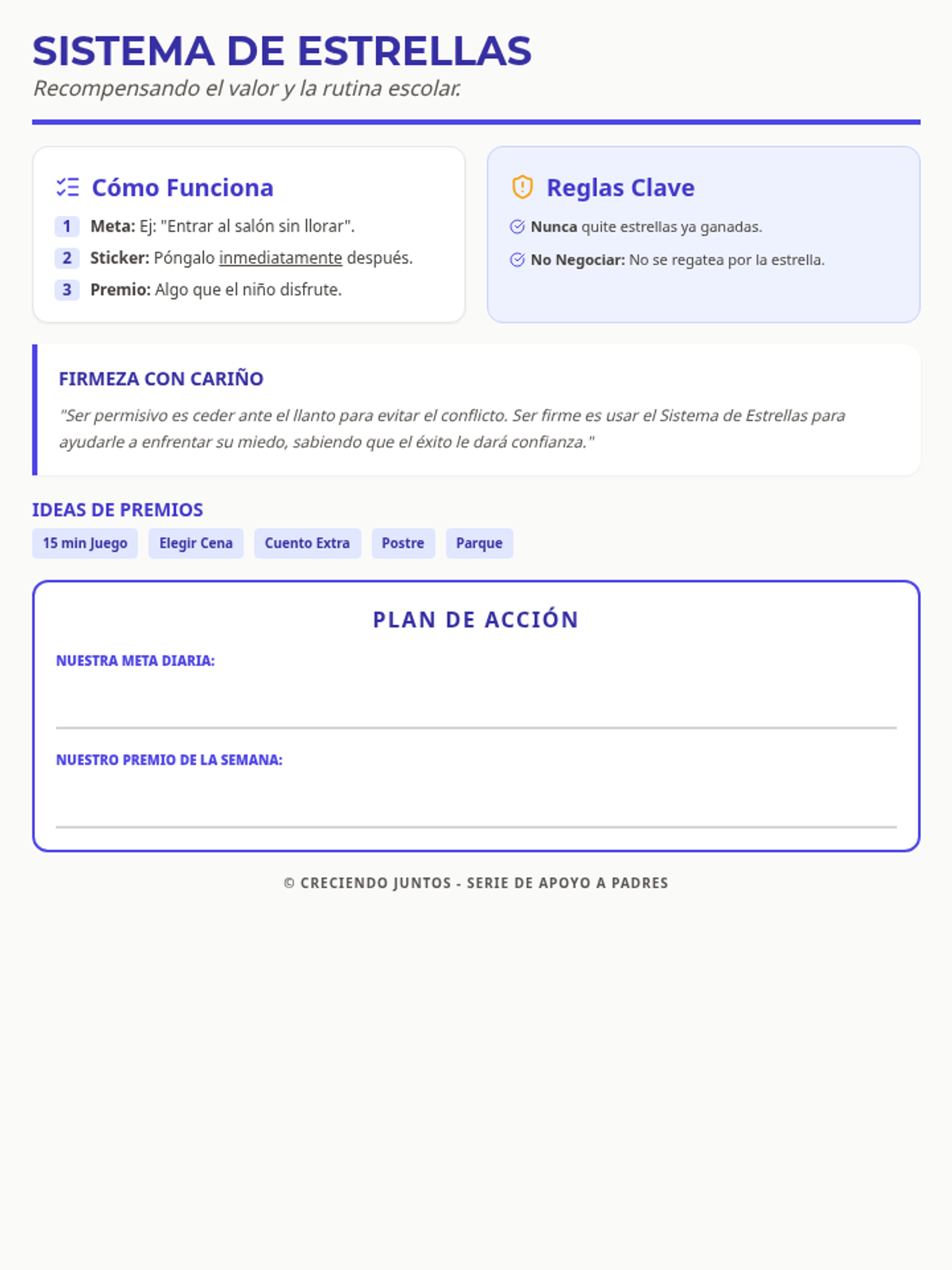
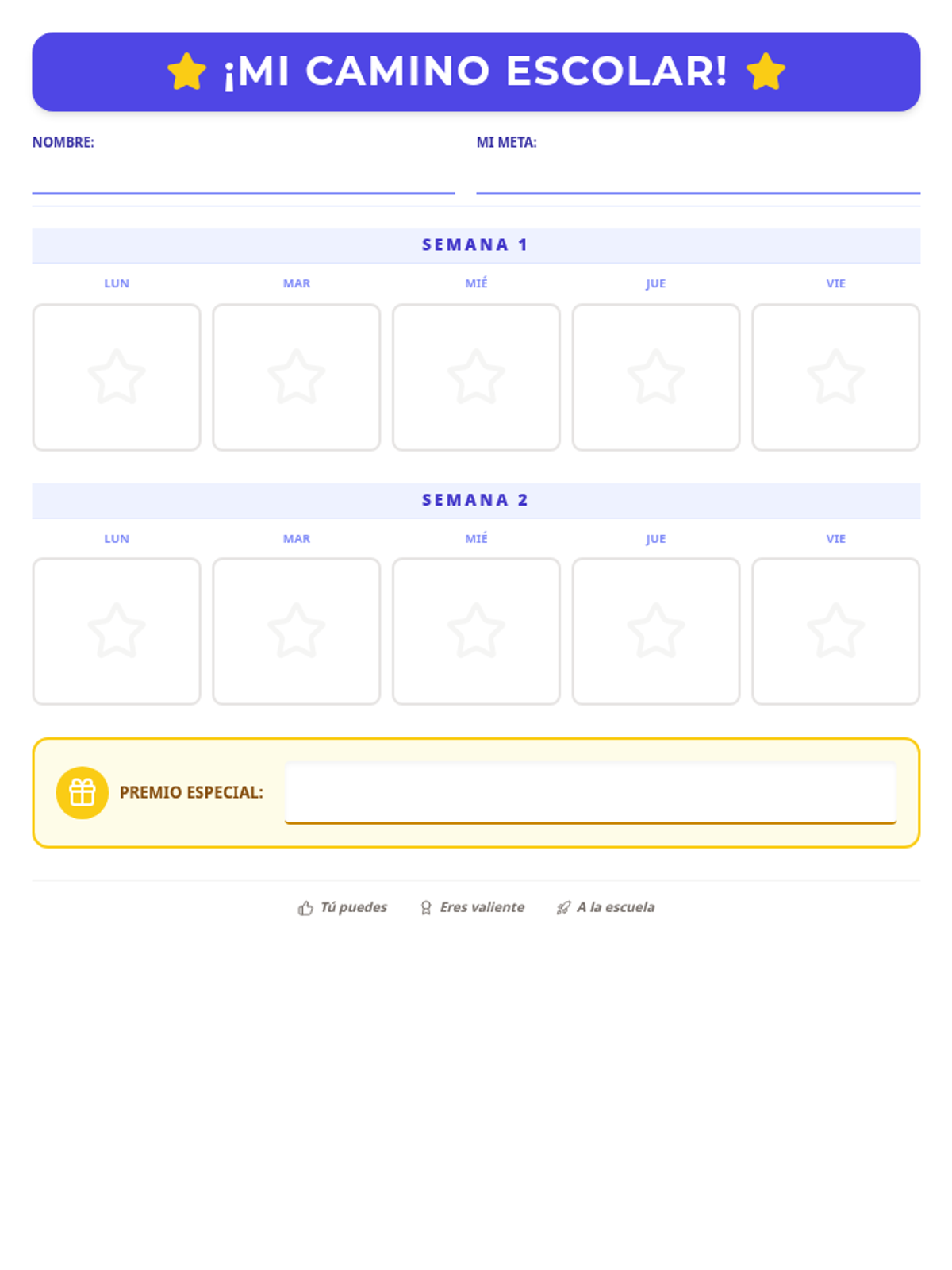
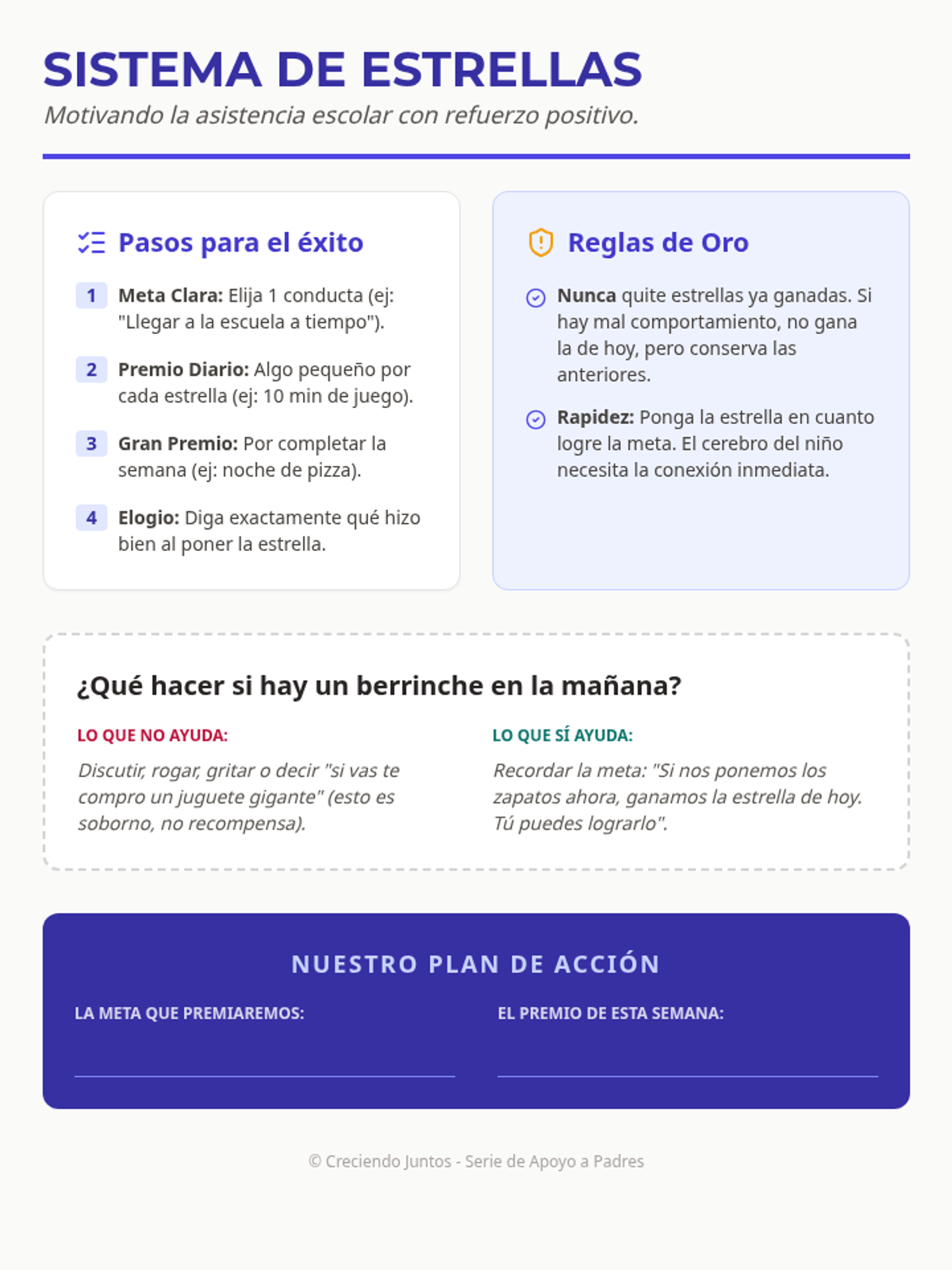
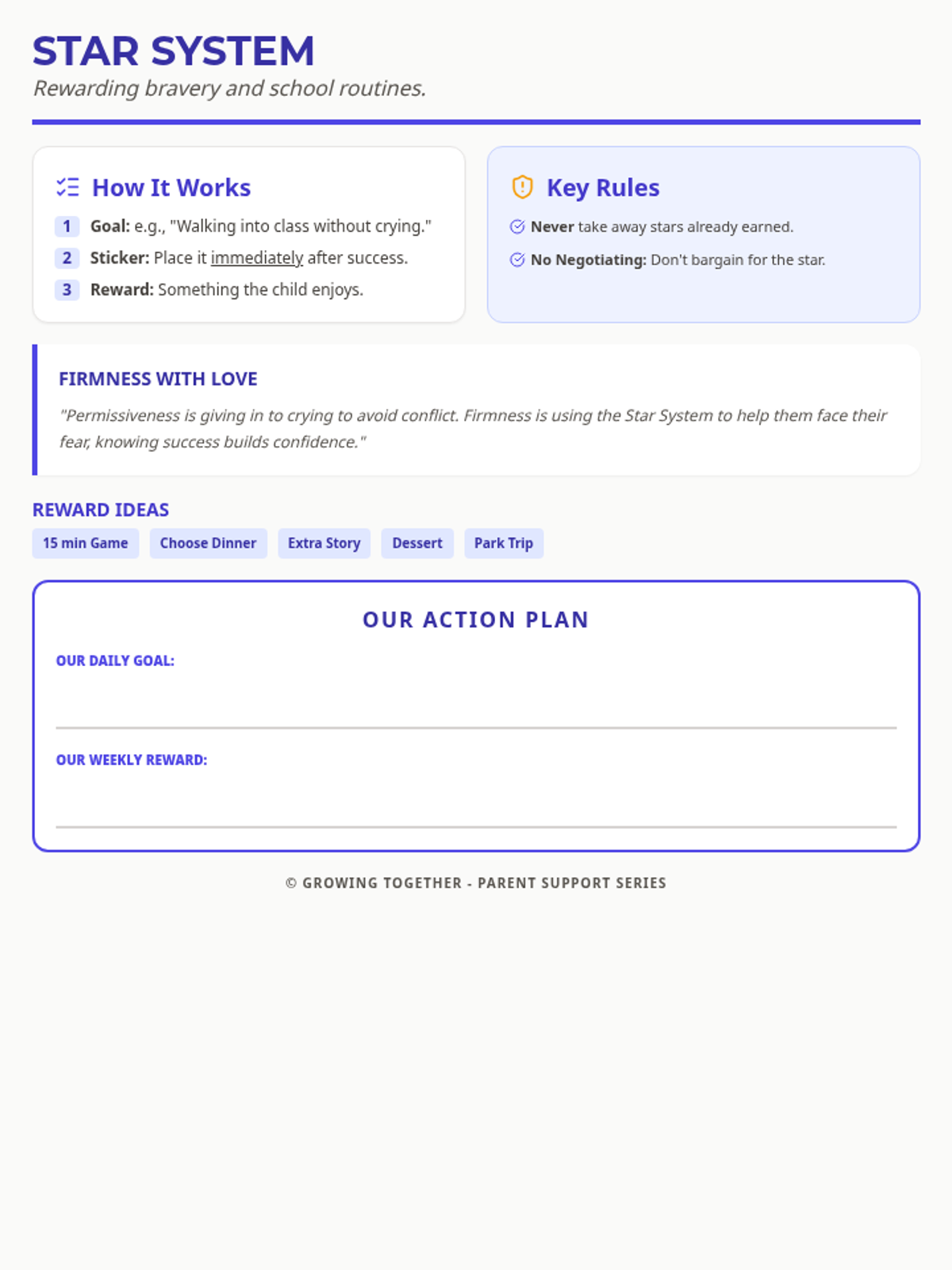
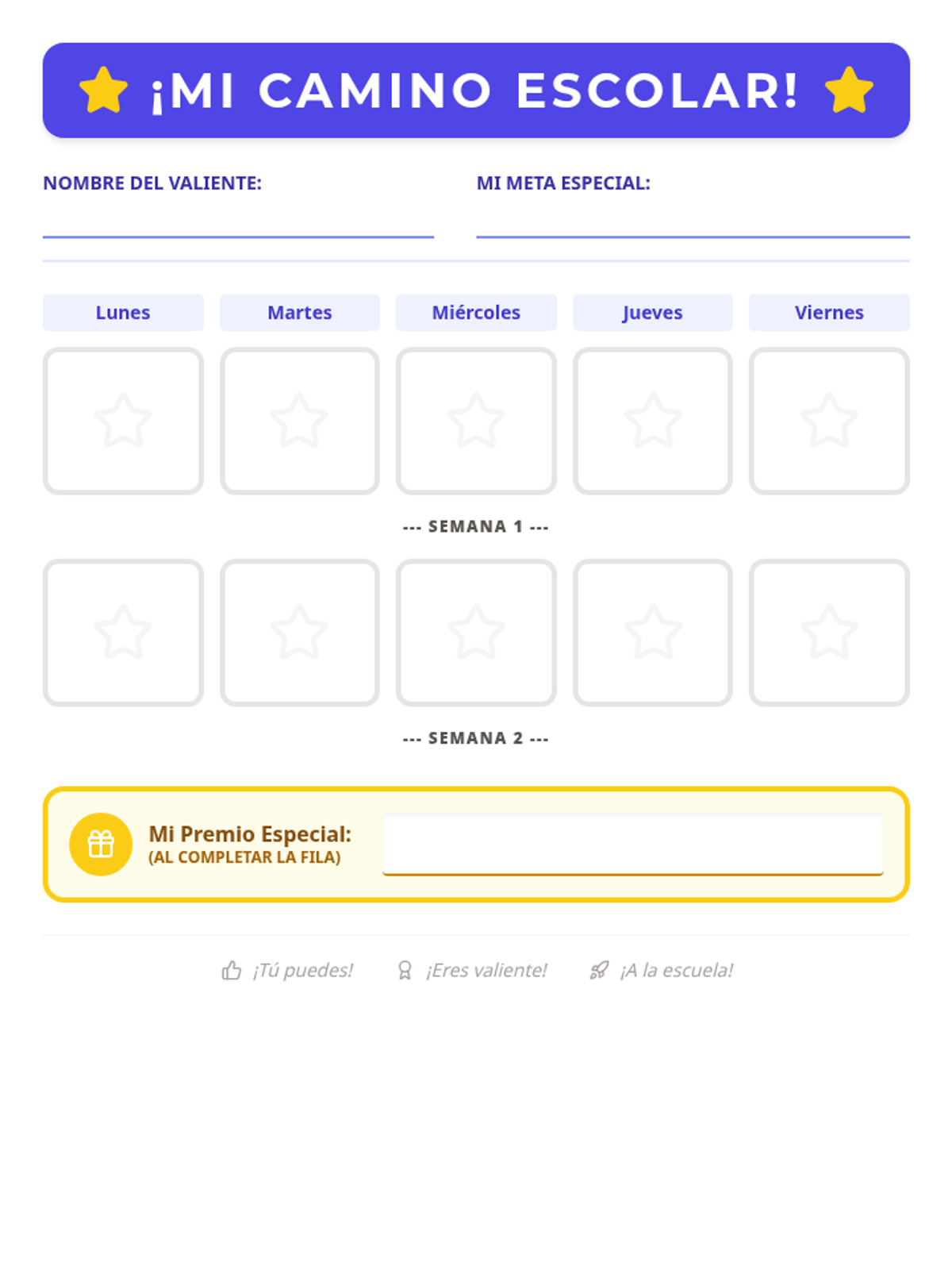
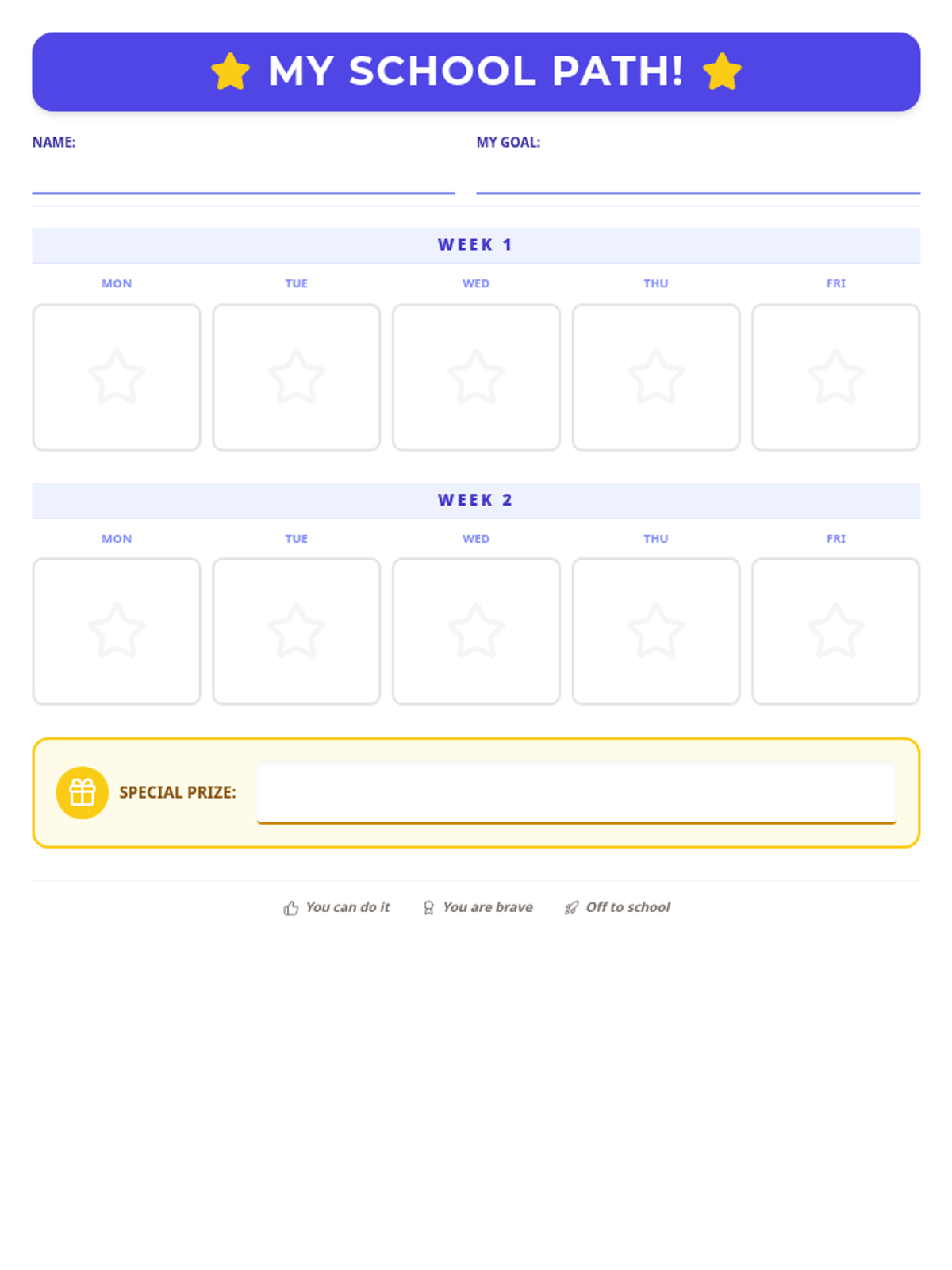
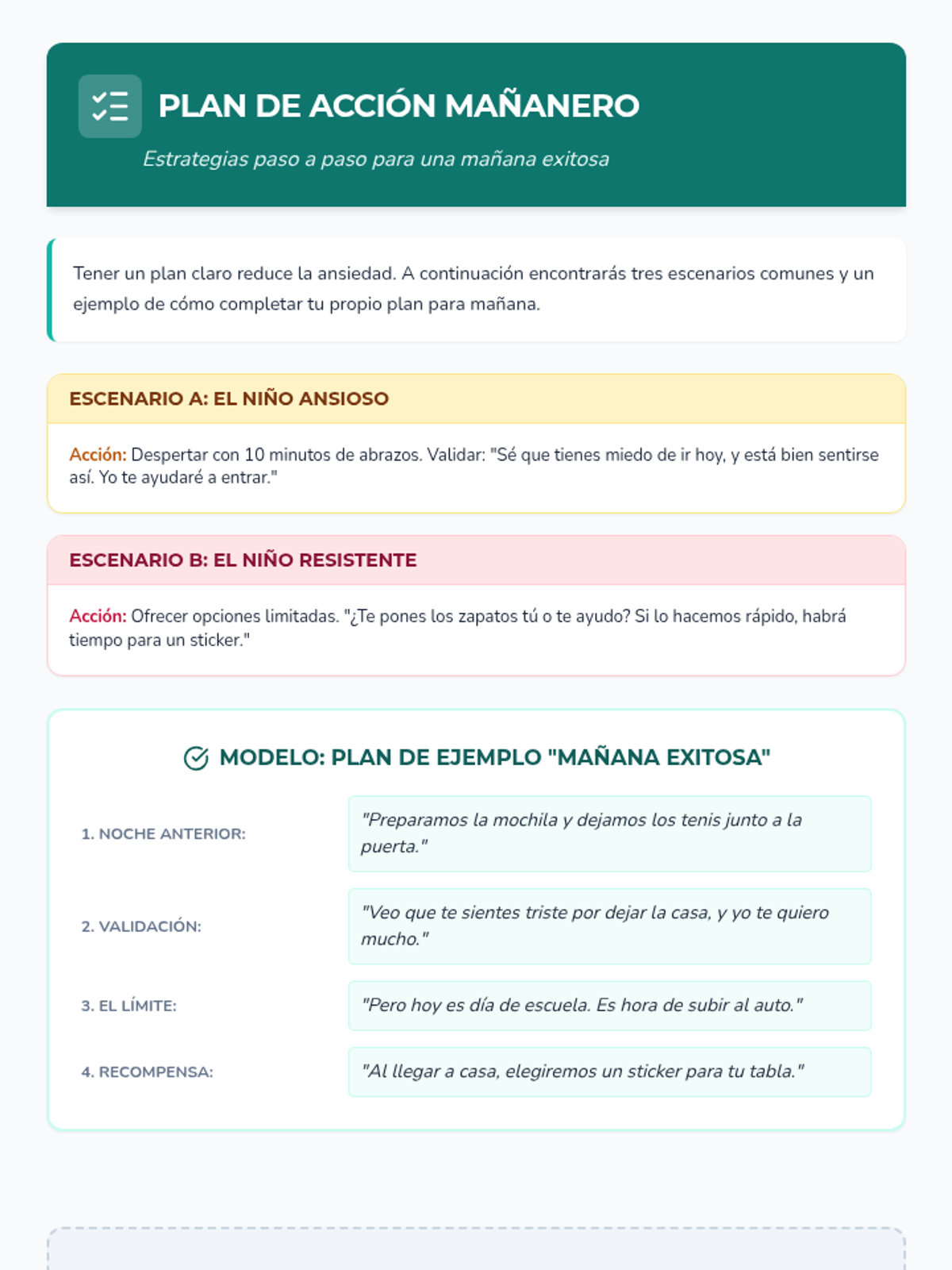
Practical steps for setting up a sticker chart system to reward school attendance and morning routines.
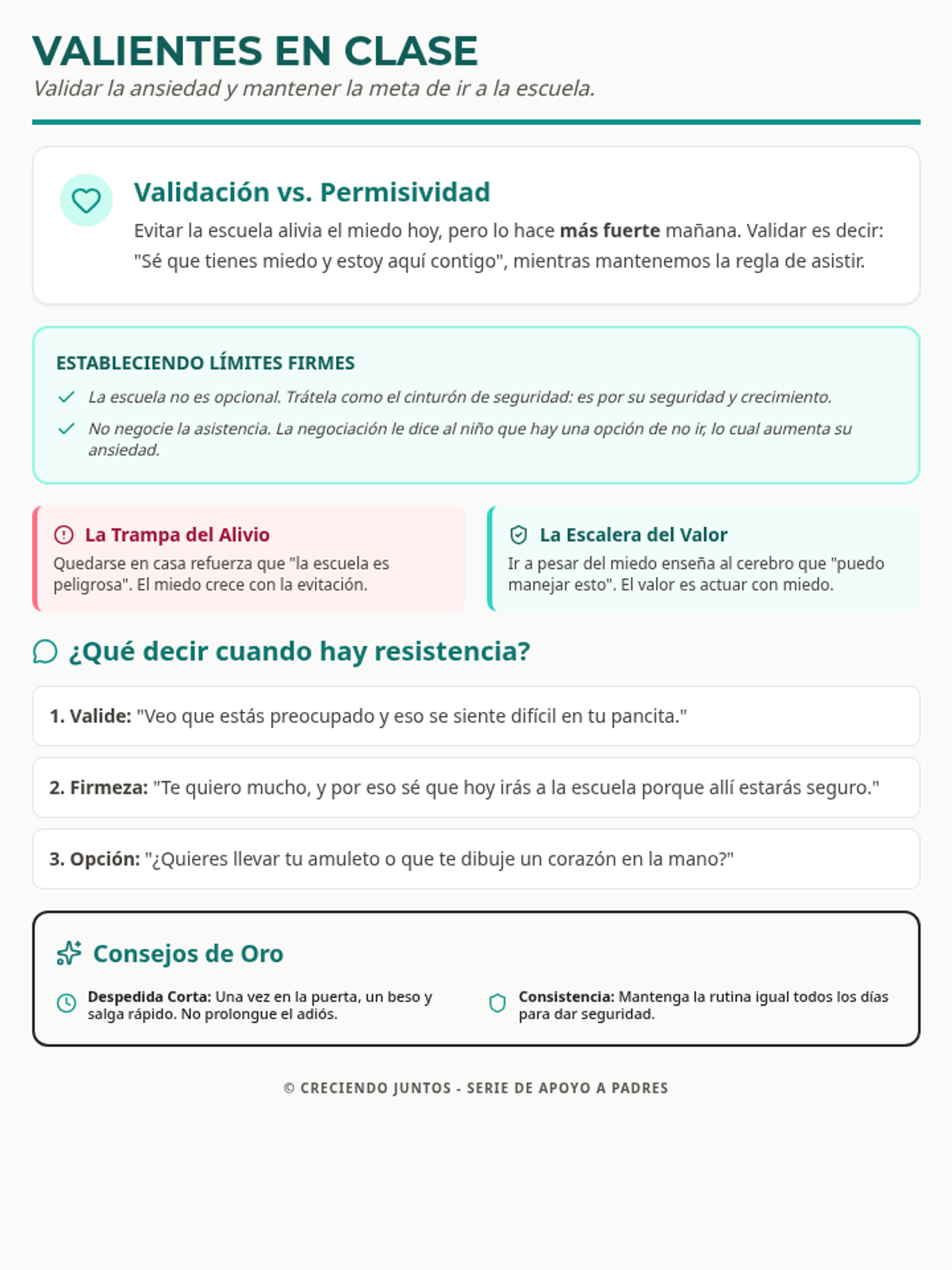
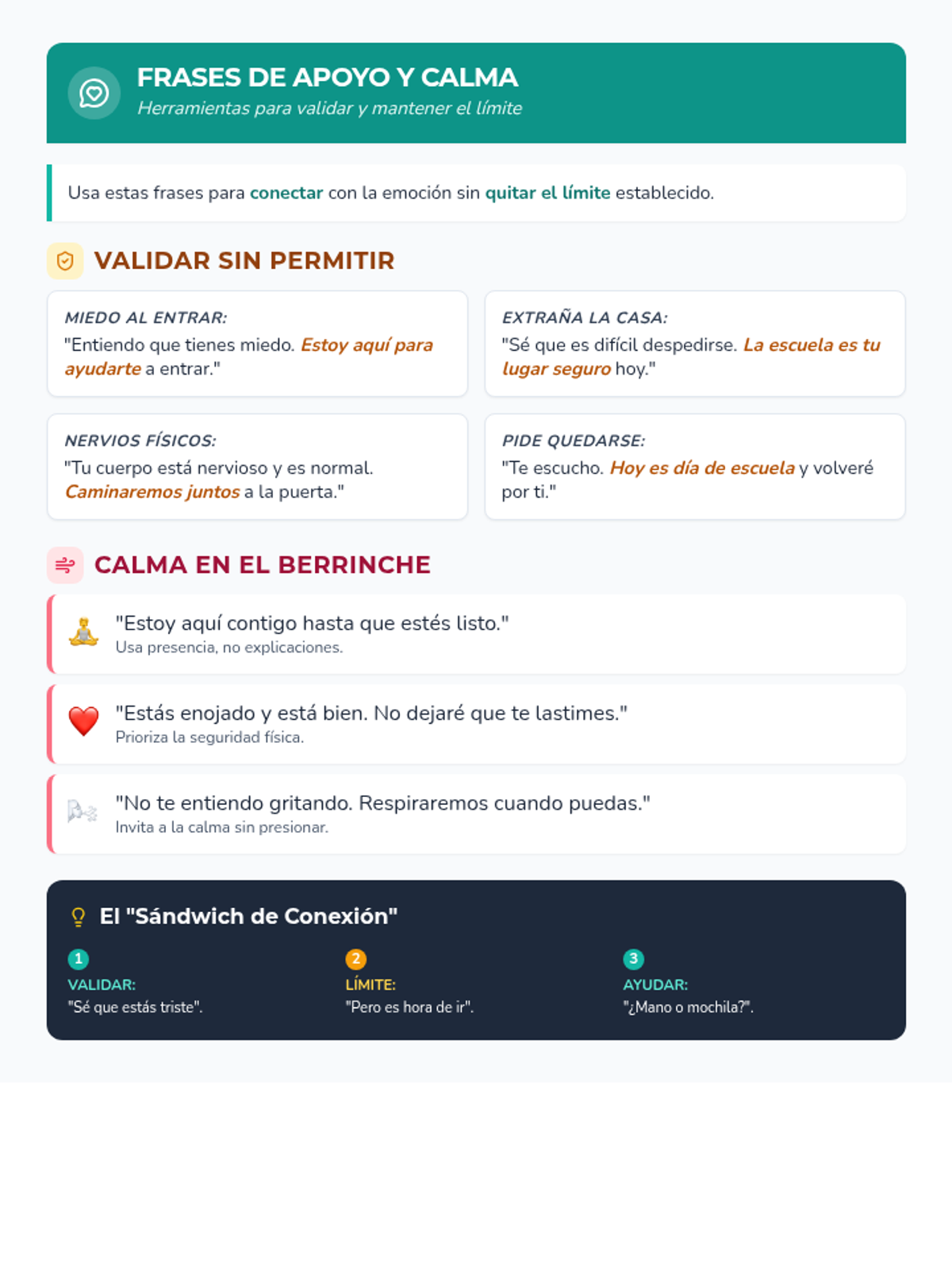
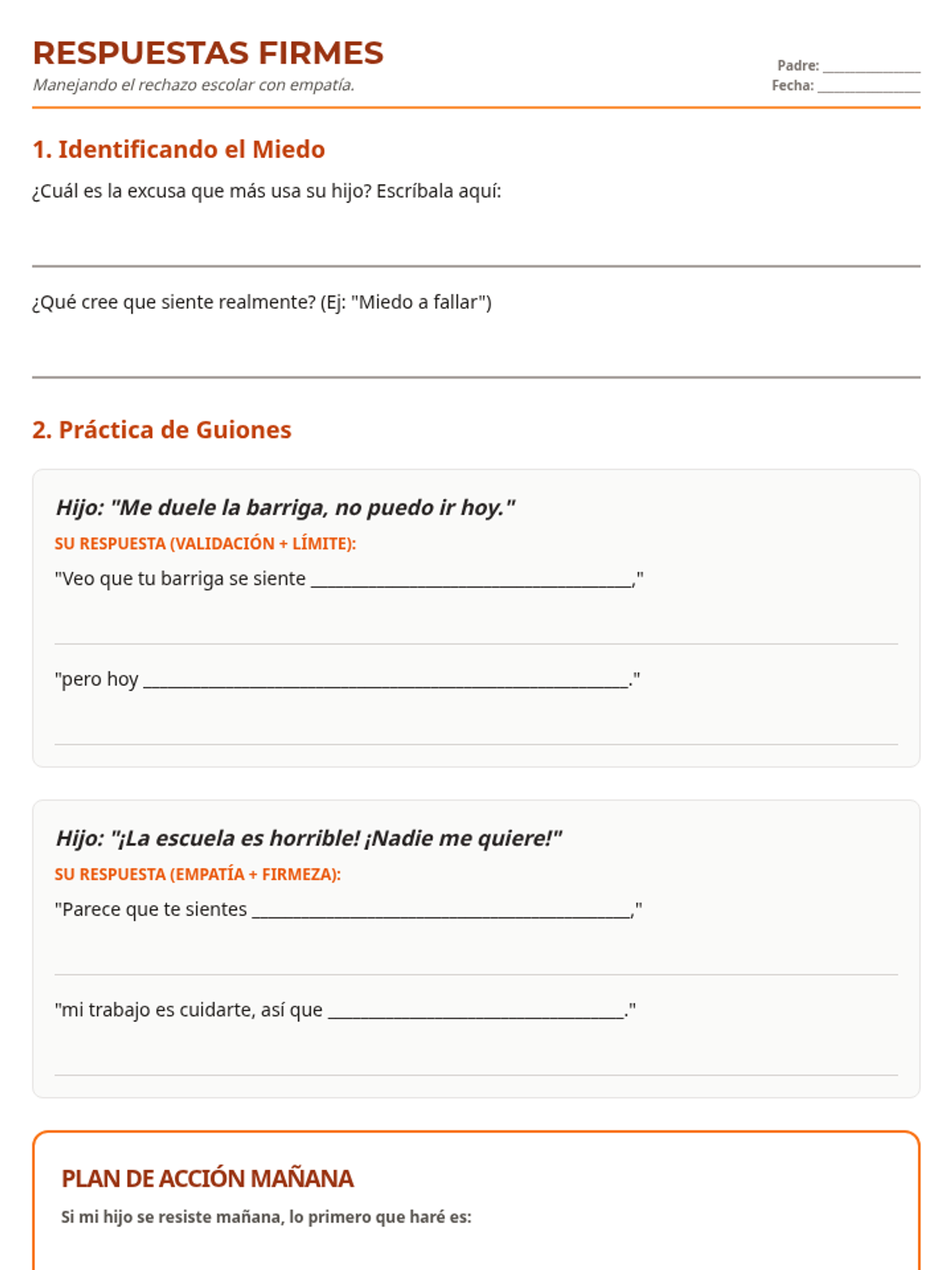
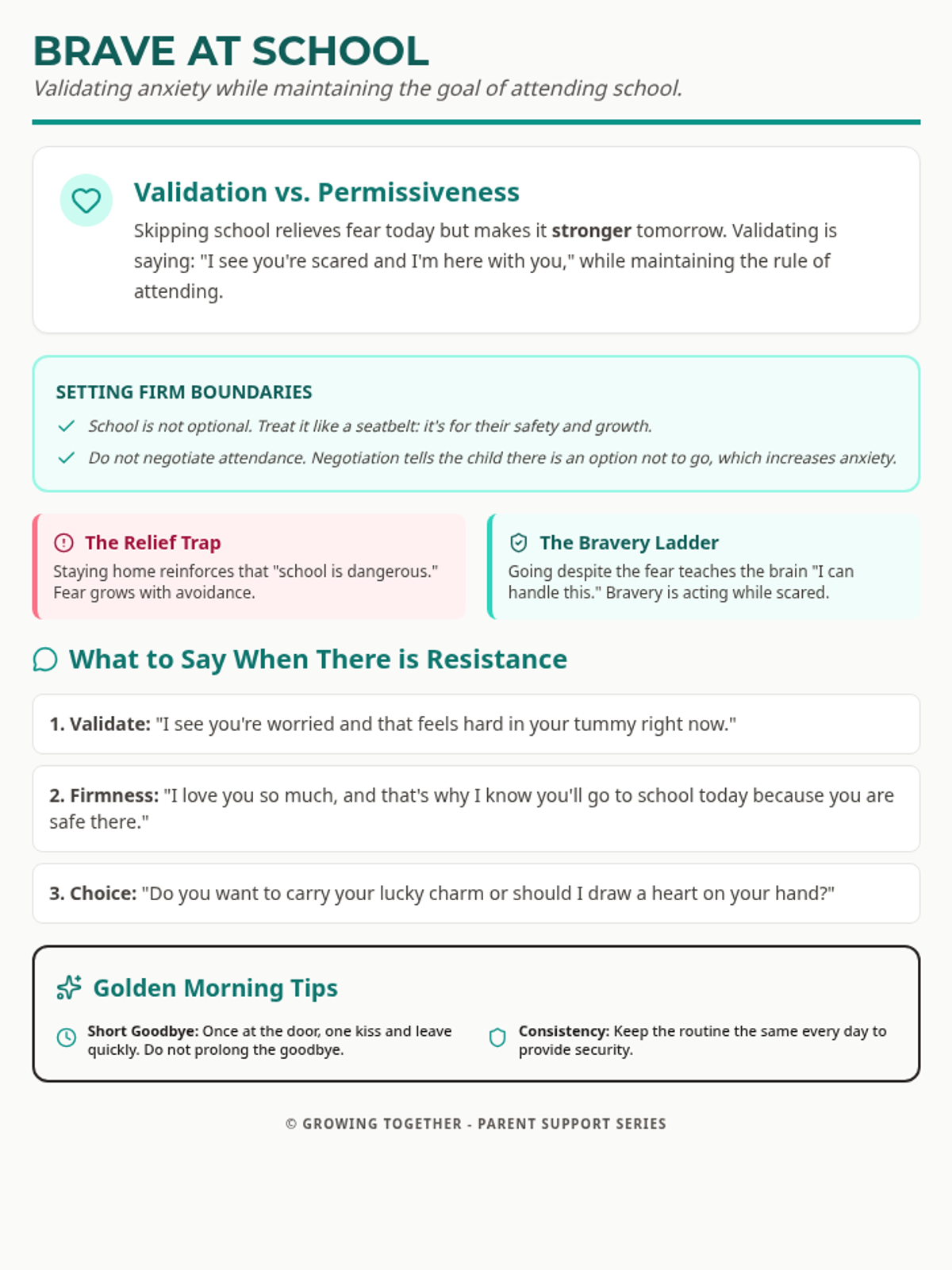
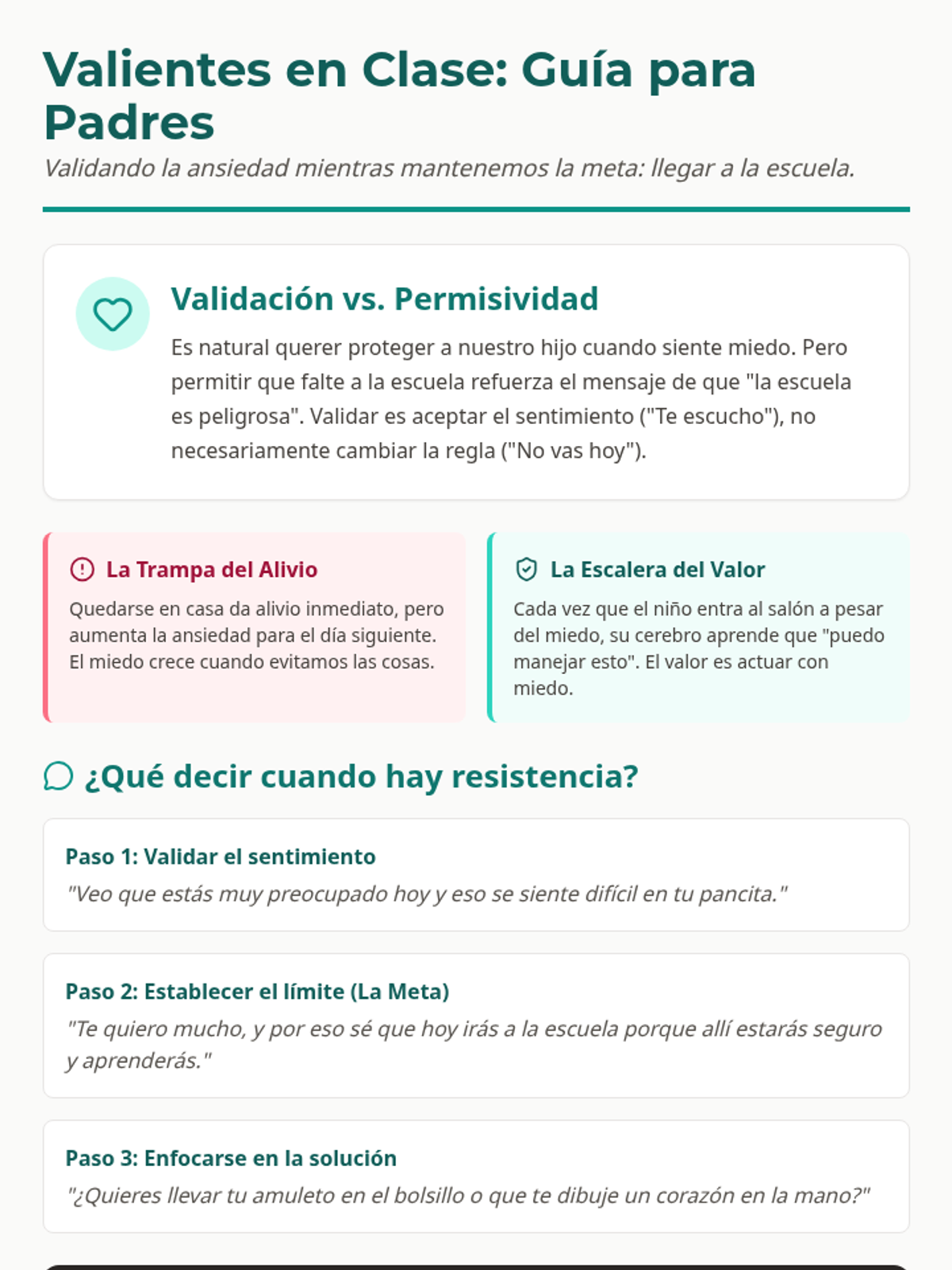
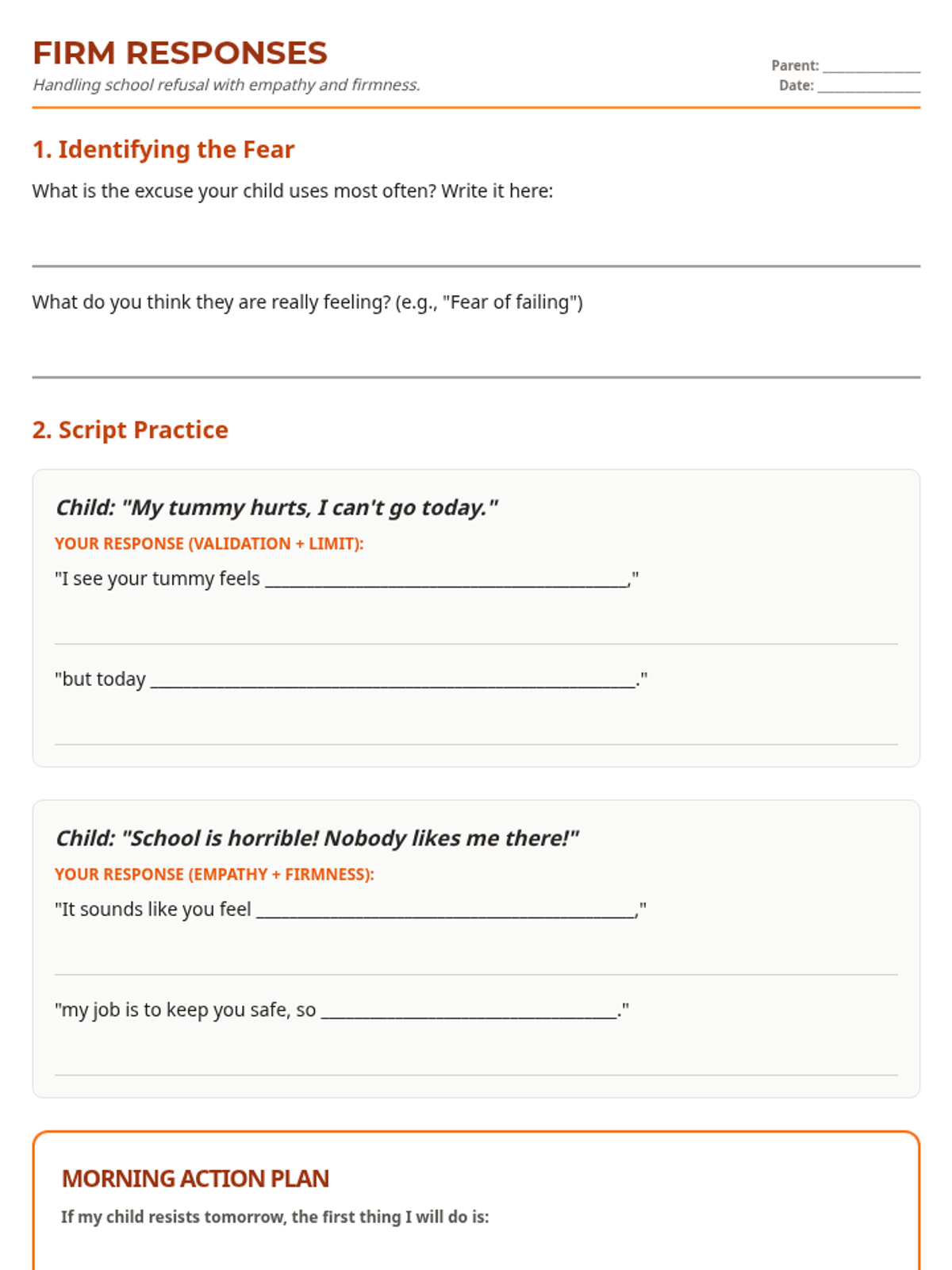
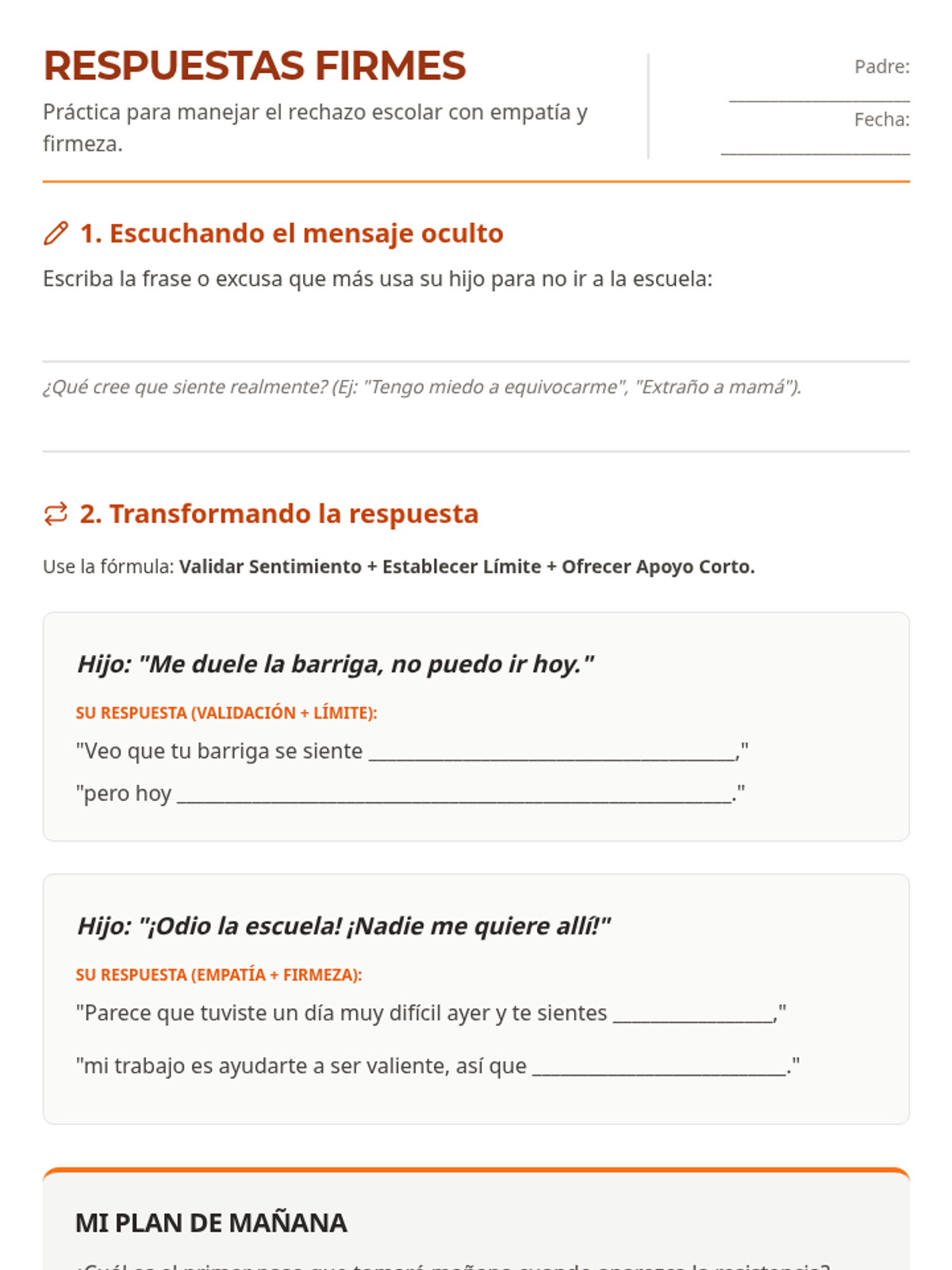
Strategies for parents to validate their child's school anxiety while maintaining firm boundaries regarding attendance.
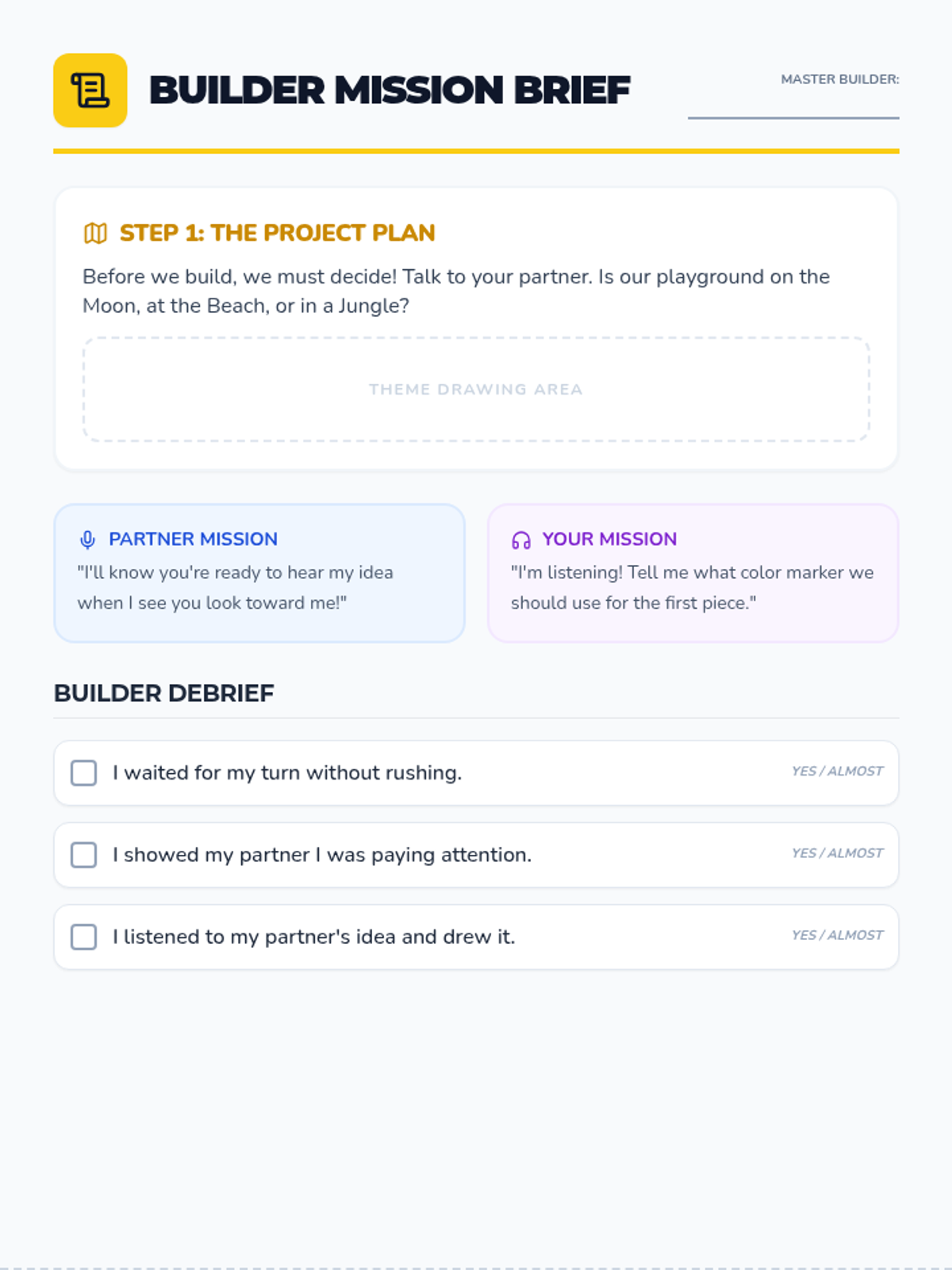
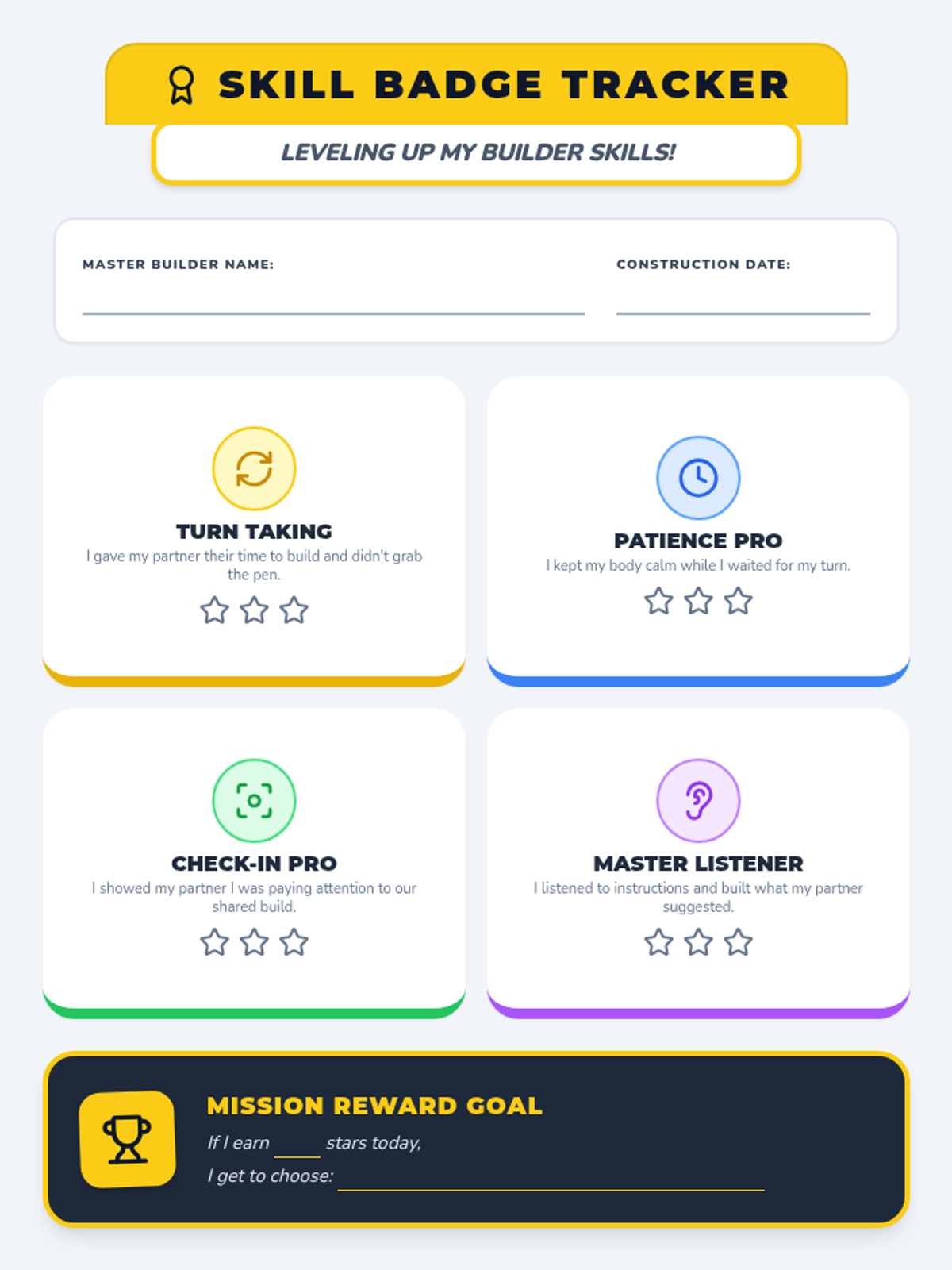
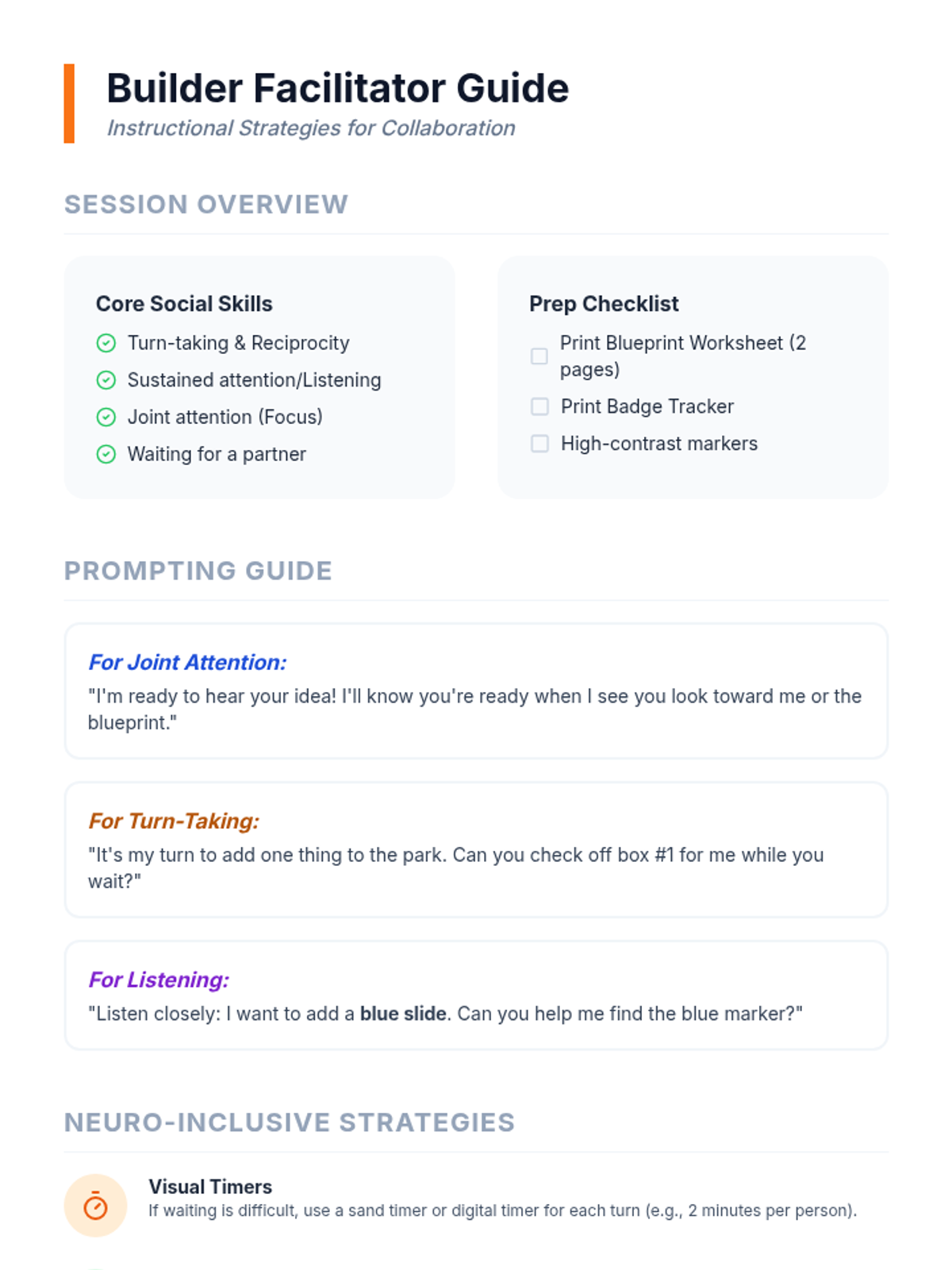
A collaborative design-based lesson for young learners to practice turn-taking, waiting, listening, and eye contact through a shared 'Master Builder' project.
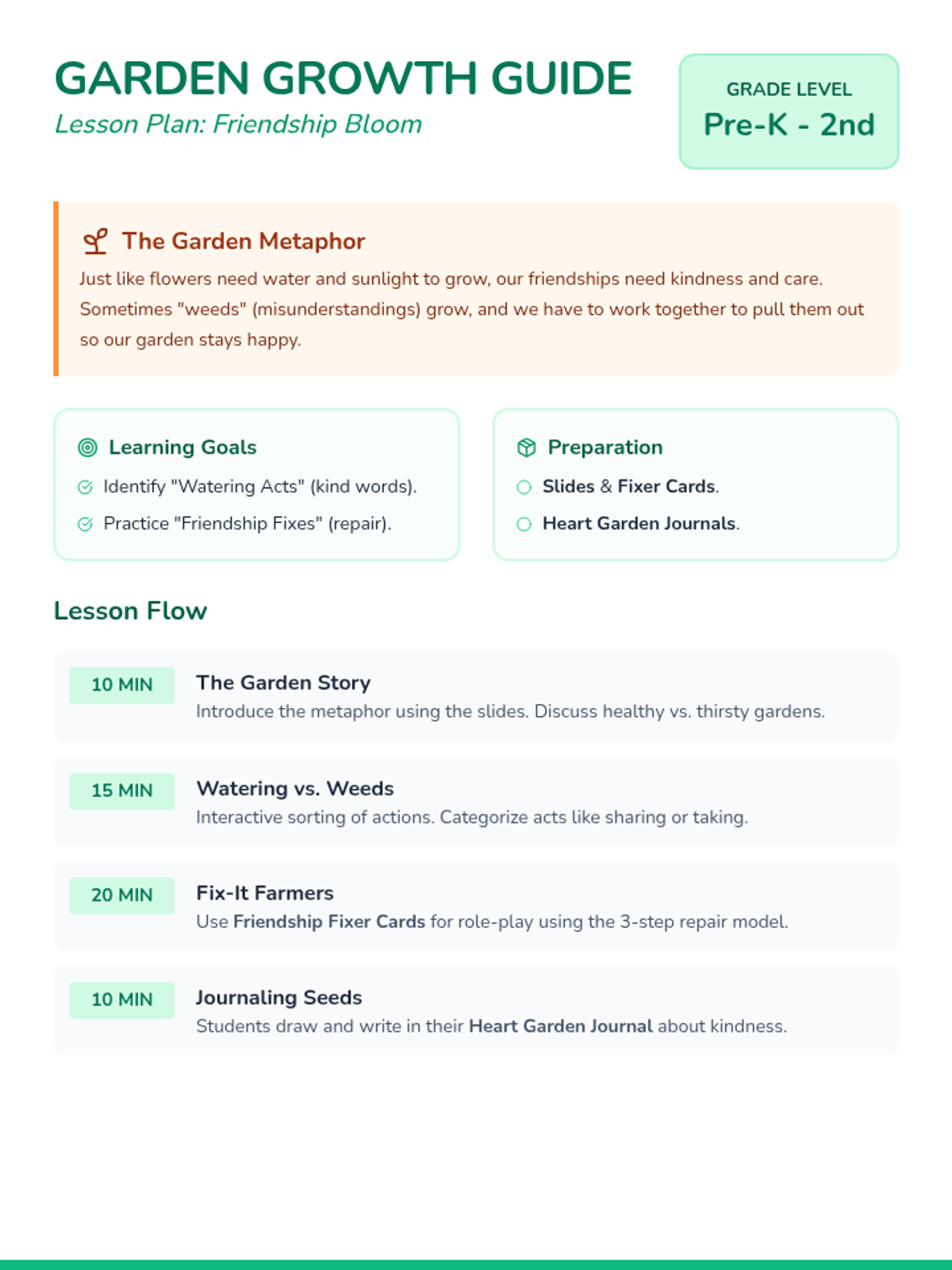
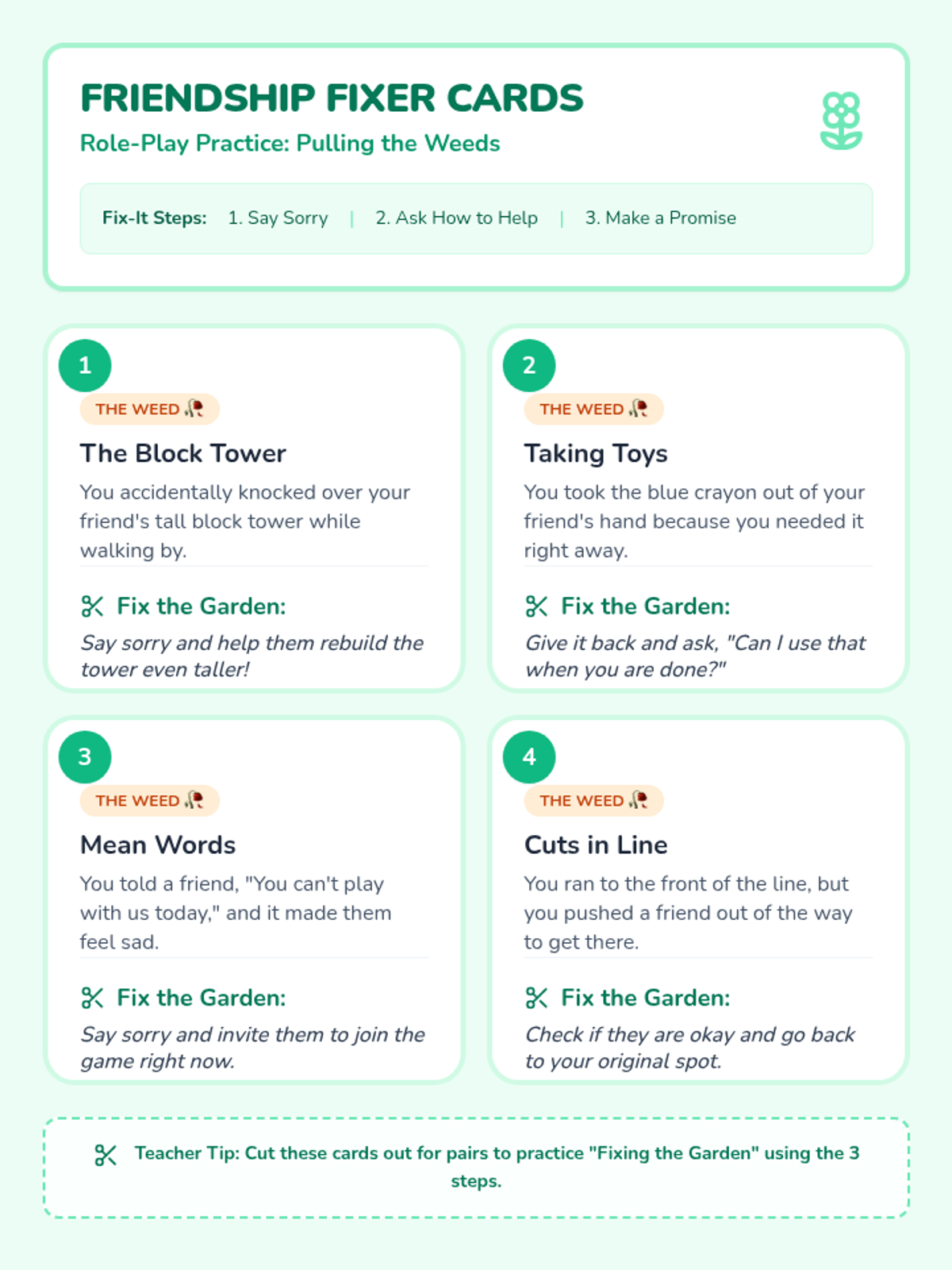
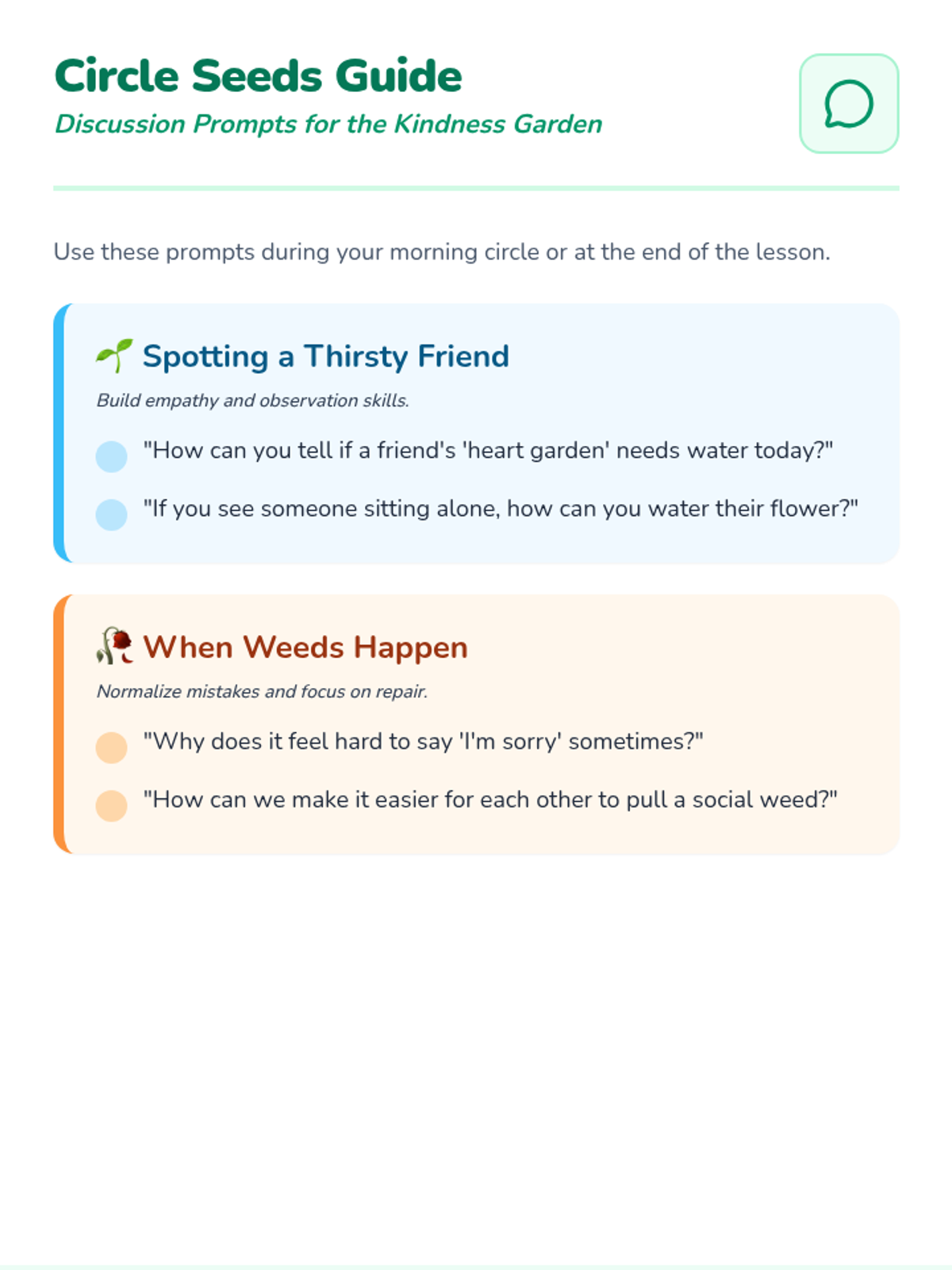
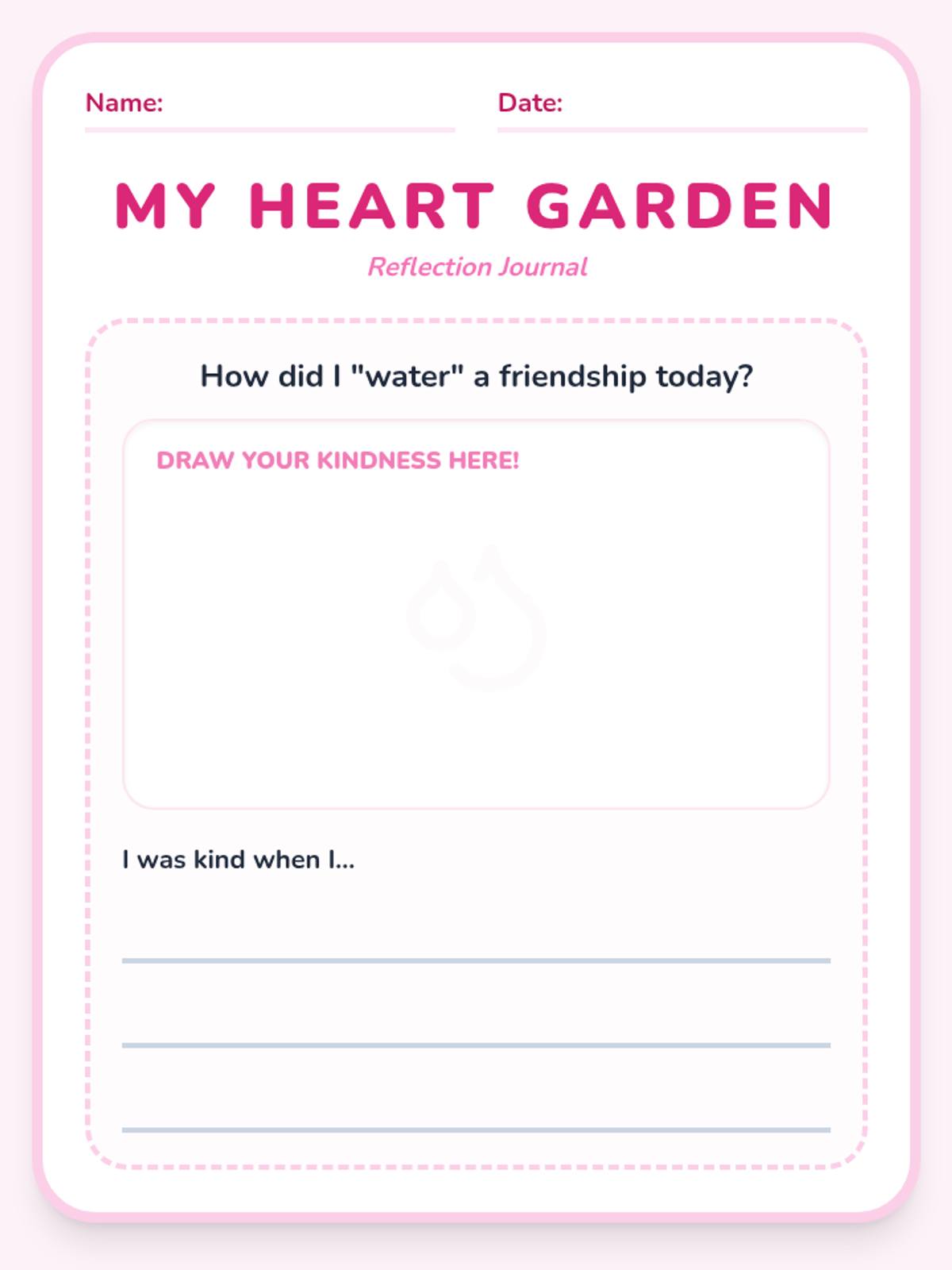
An SEL lesson for Pre-K to 2nd grade that uses a garden metaphor to teach kindness, social repair, and the impact of our actions on others. Students learn to 'water' friendships with kind acts and 'pull weeds' by fixing misunderstandings.
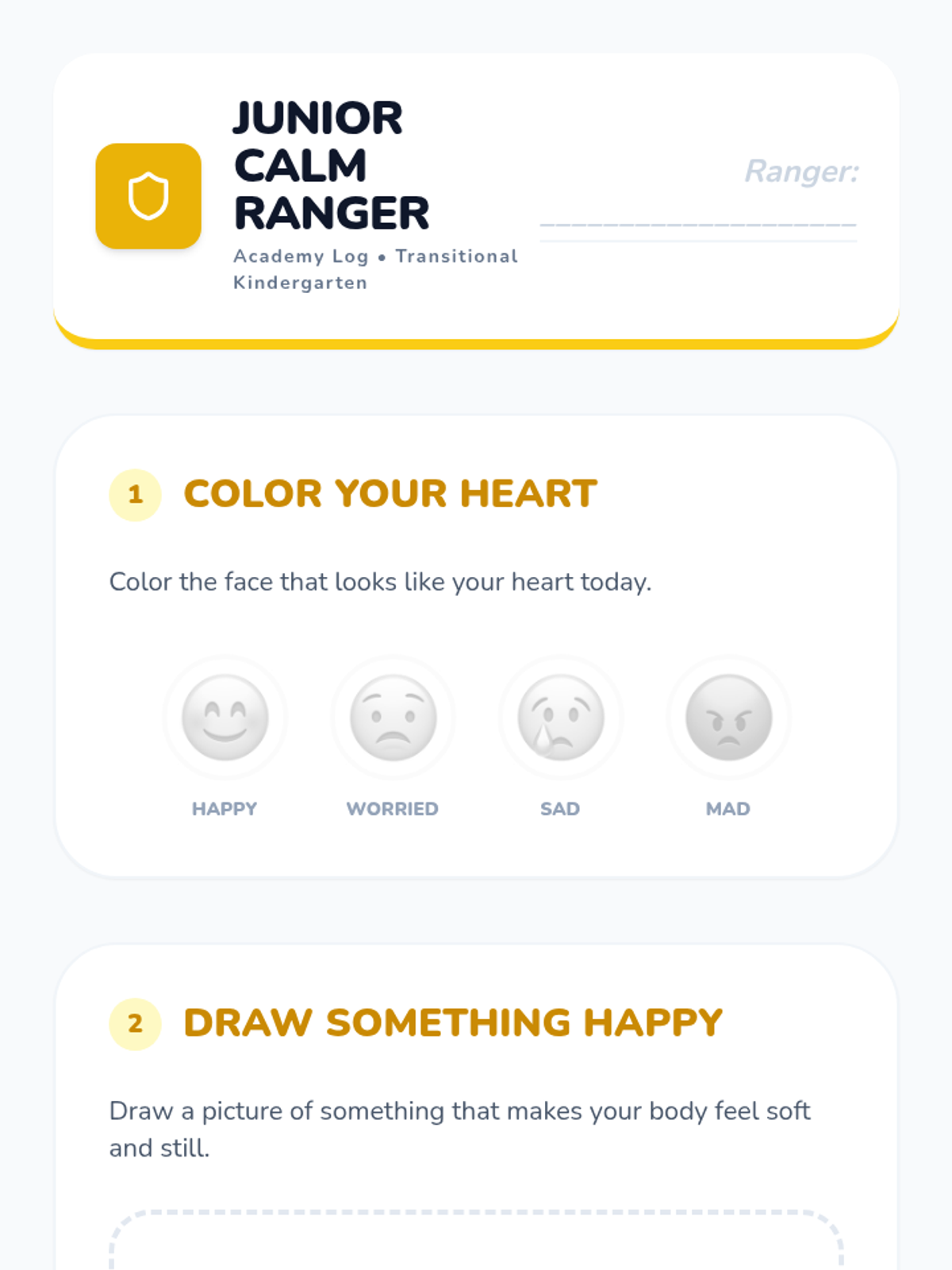
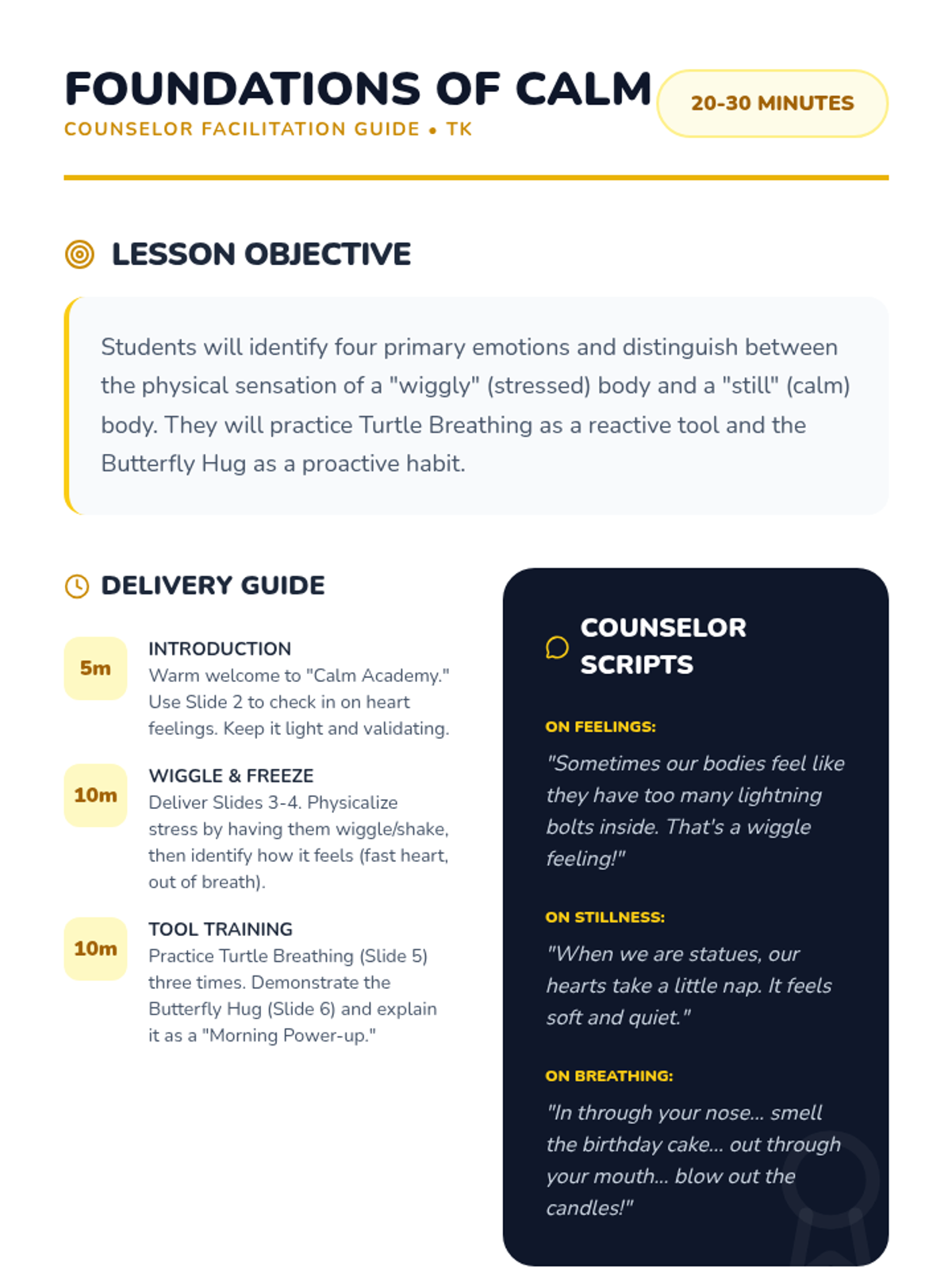
A foundational lesson for Transitional Kindergarten students focused on identifying basic emotions and the physical sensation of being 'wiggly' (stressed) vs. 'still' (calm). Introduces 'Turtle Breathing' as a primary regulation tool.
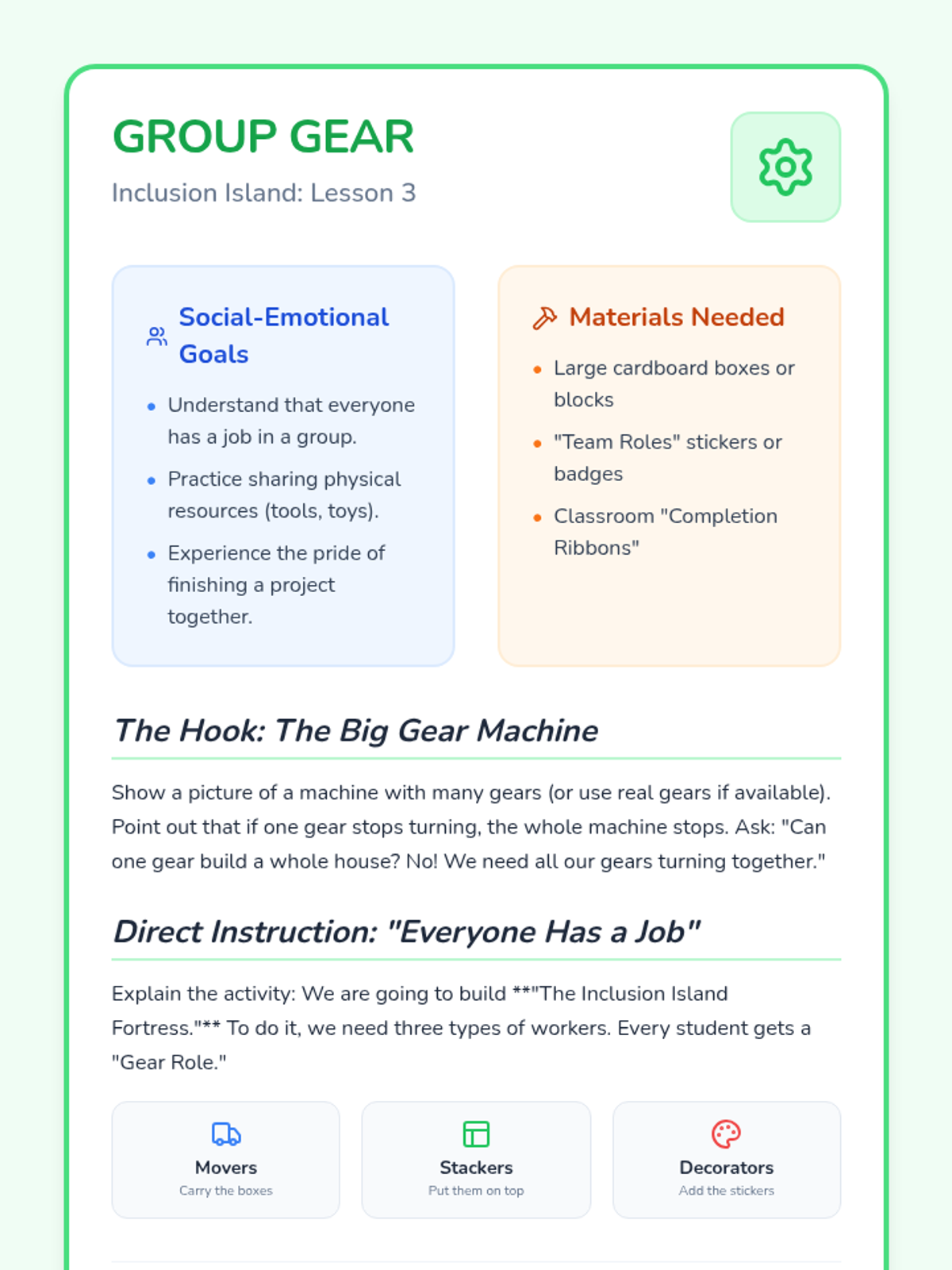
A hands-on collaborative project where students must work together, ensuring every person has a specific and valued role in the group.
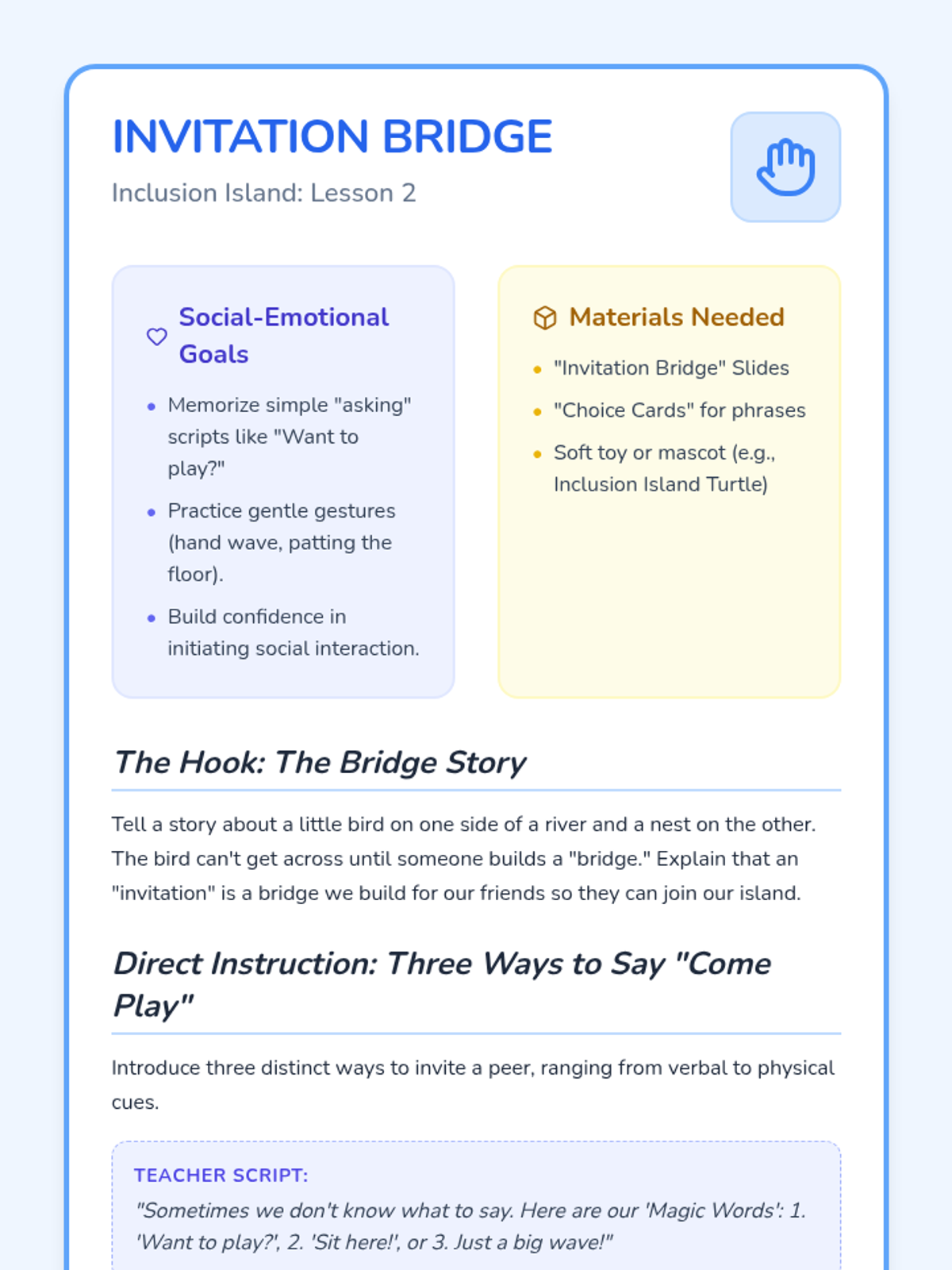
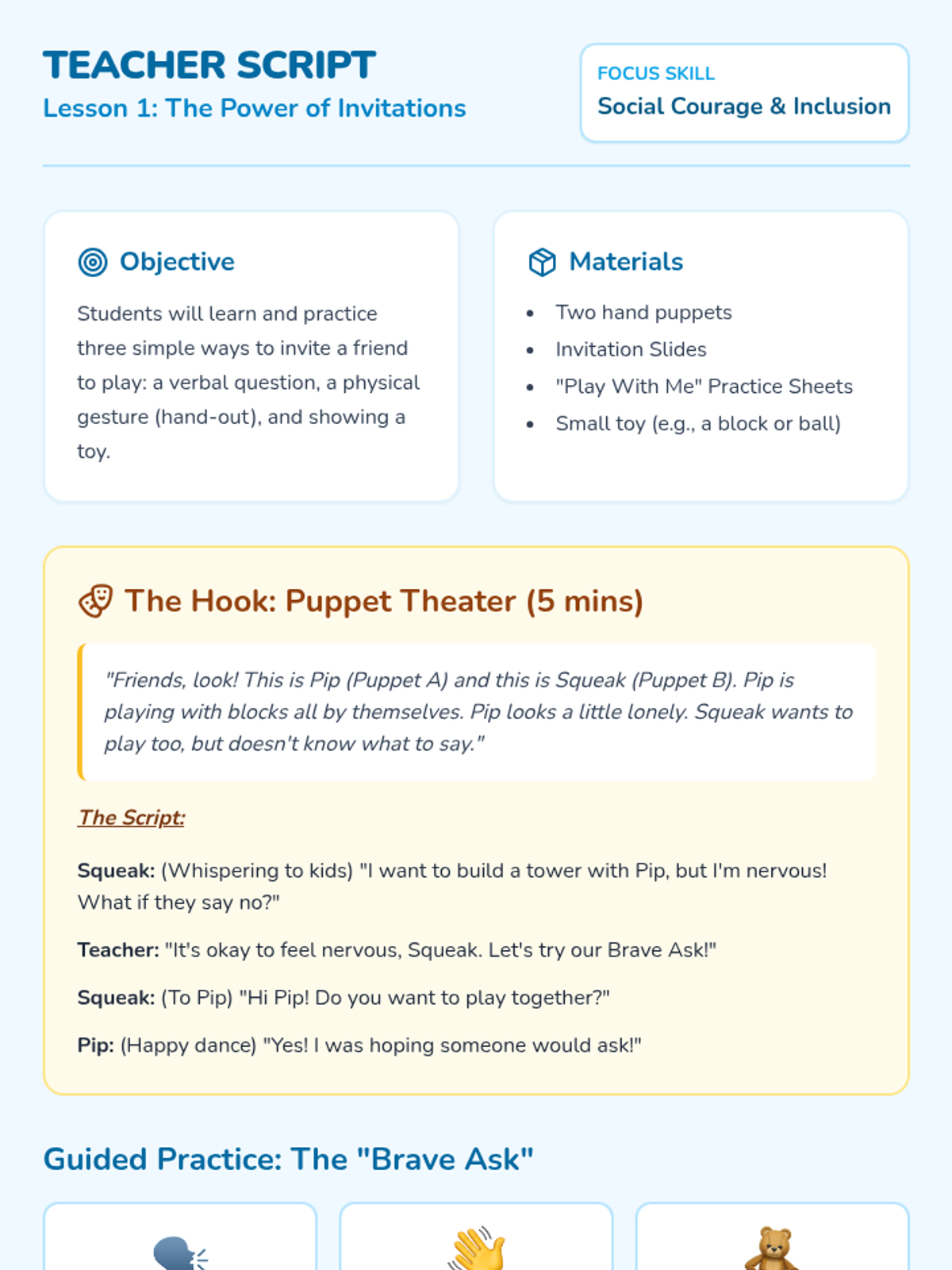
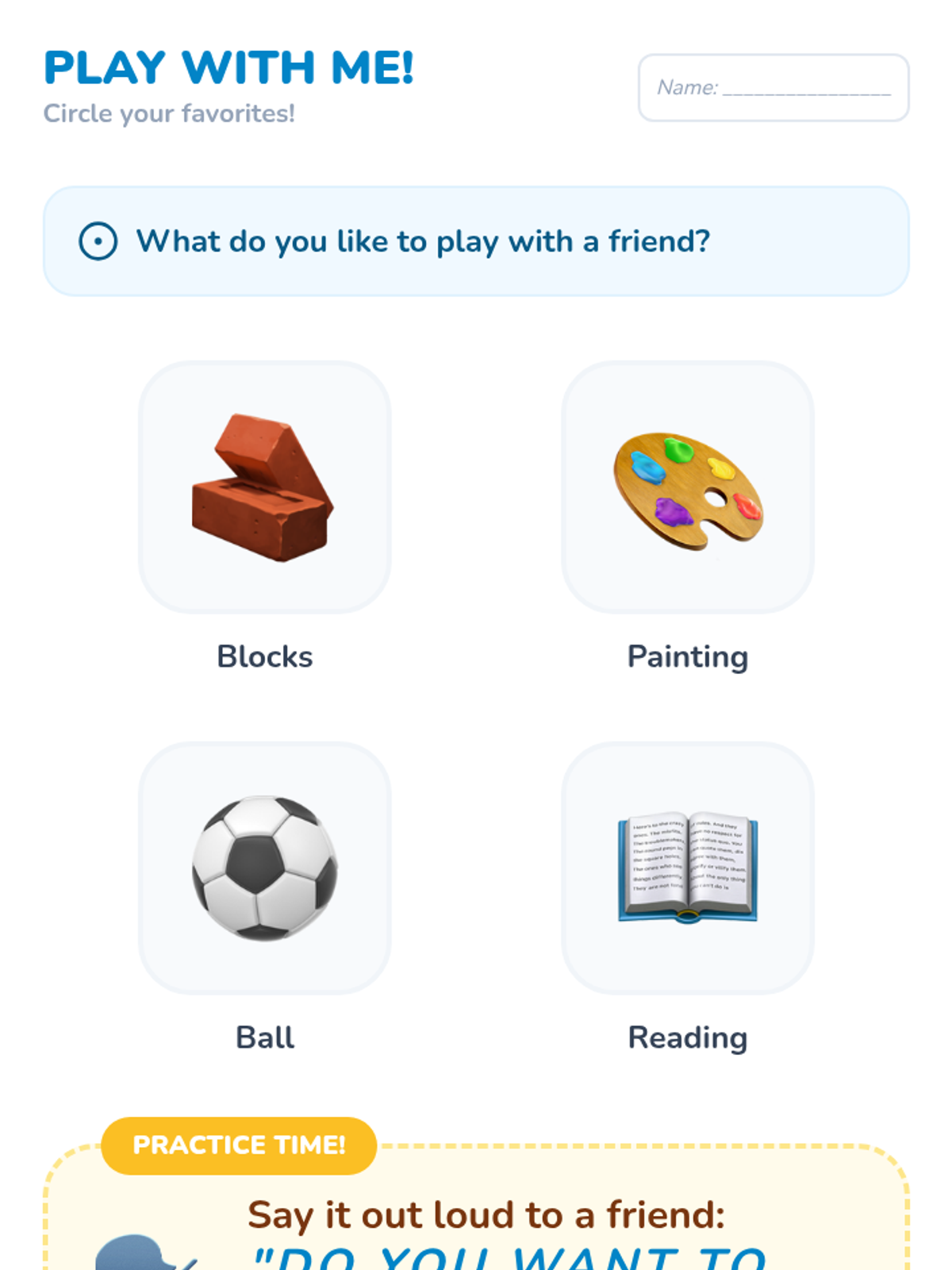
Students learn simple phrases and gestures to invite others into their activities, practicing through guided roleplay and social scripting.
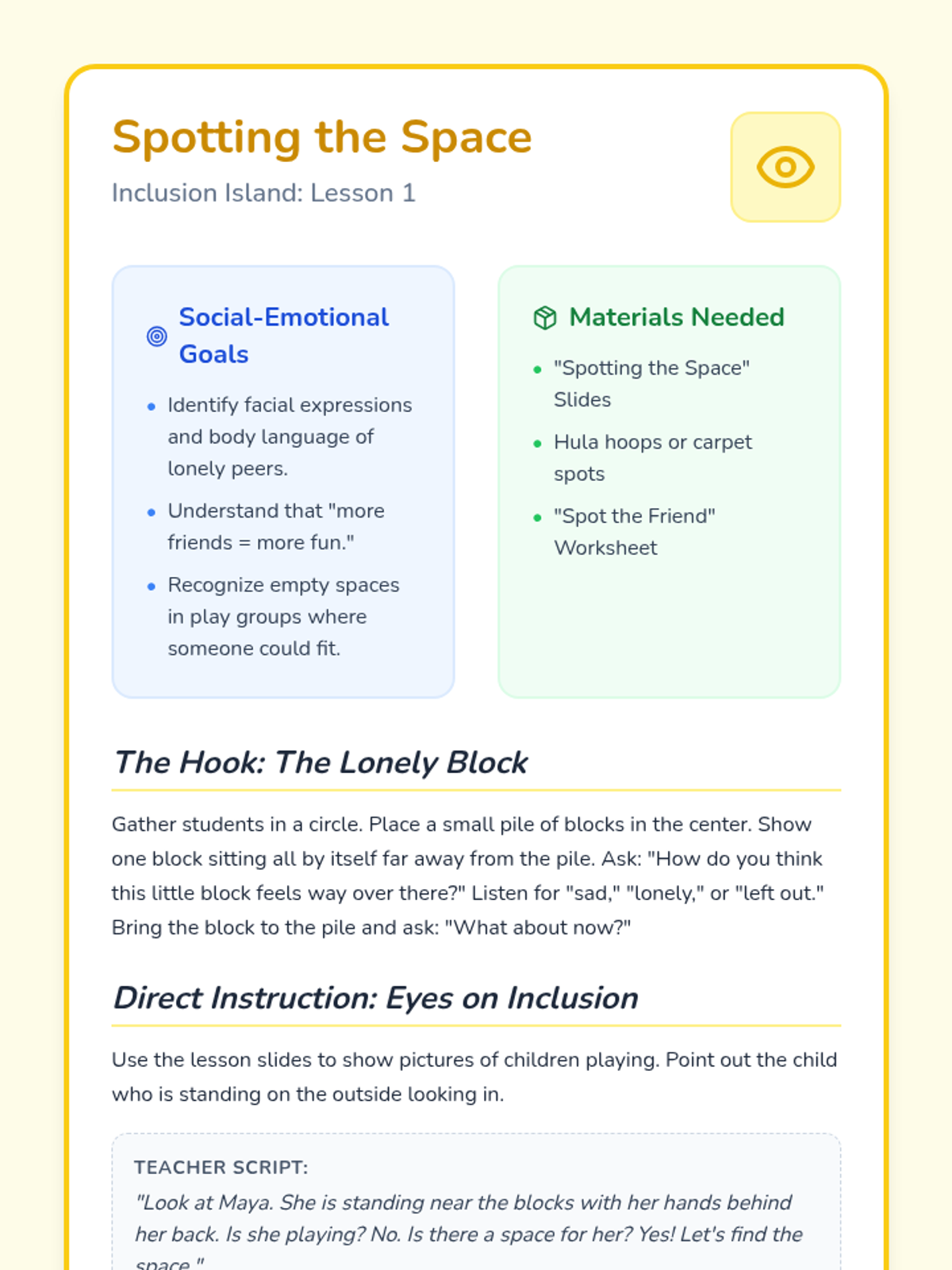
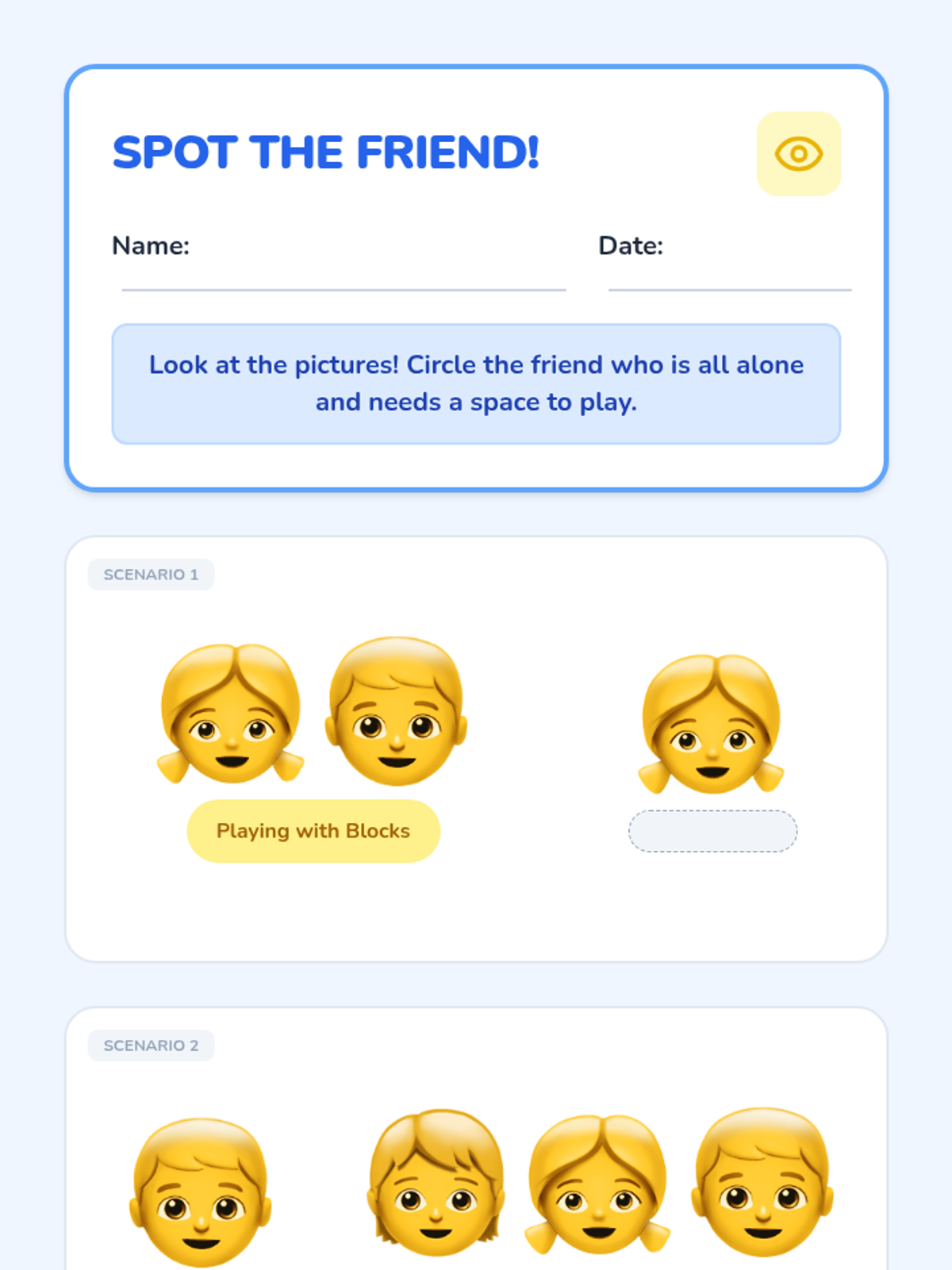
A foundational lesson focused on recognizing when a peer is playing alone and might want to join in, using visual cues and social stories.
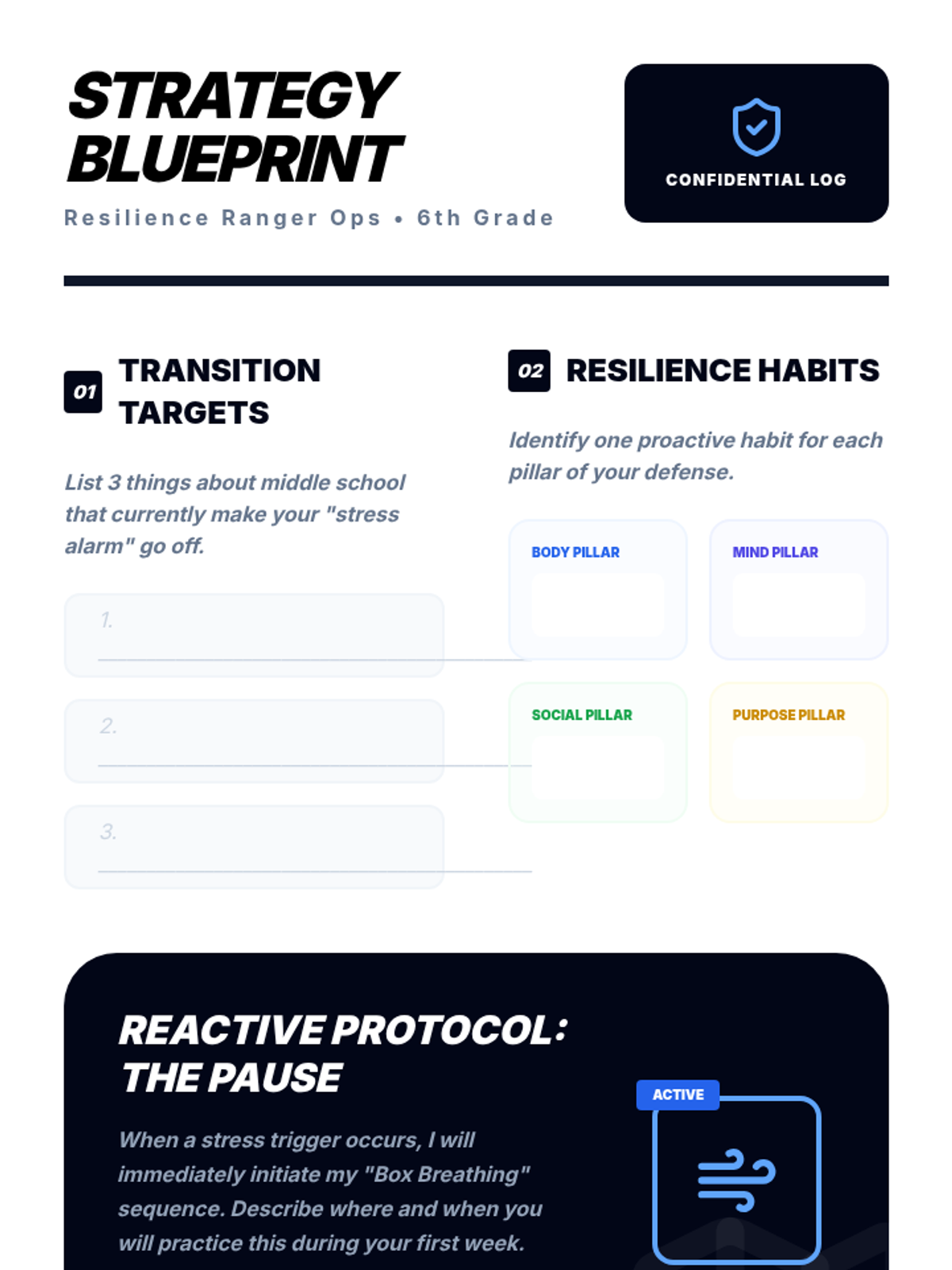
Sixth grade students prepare for the transition to middle school by developing high-level resilience habits and long-term stress management plans.
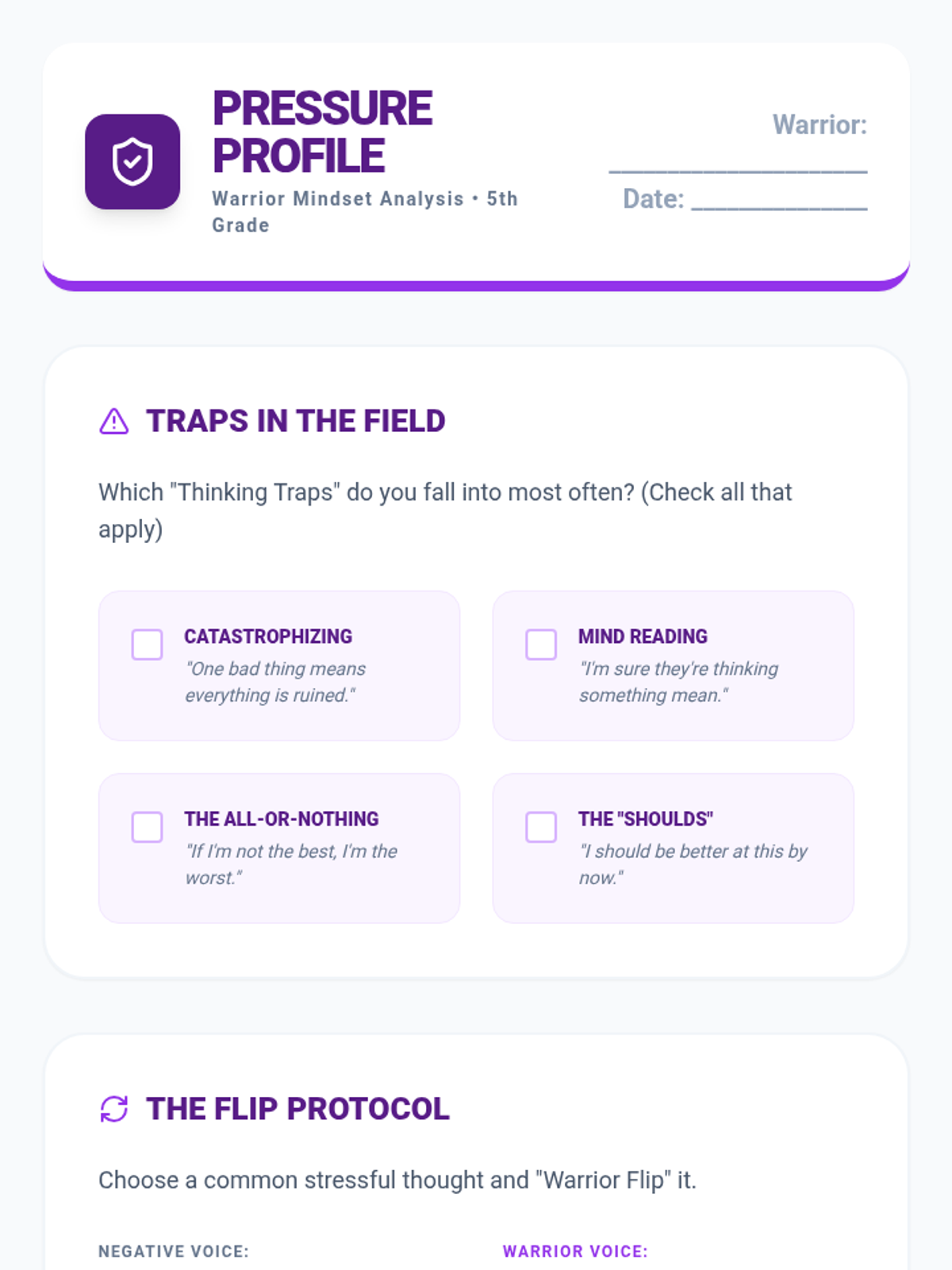
Fifth graders explore academic and social pressure, focusing on the power of positive self-talk and perspective-shifting.
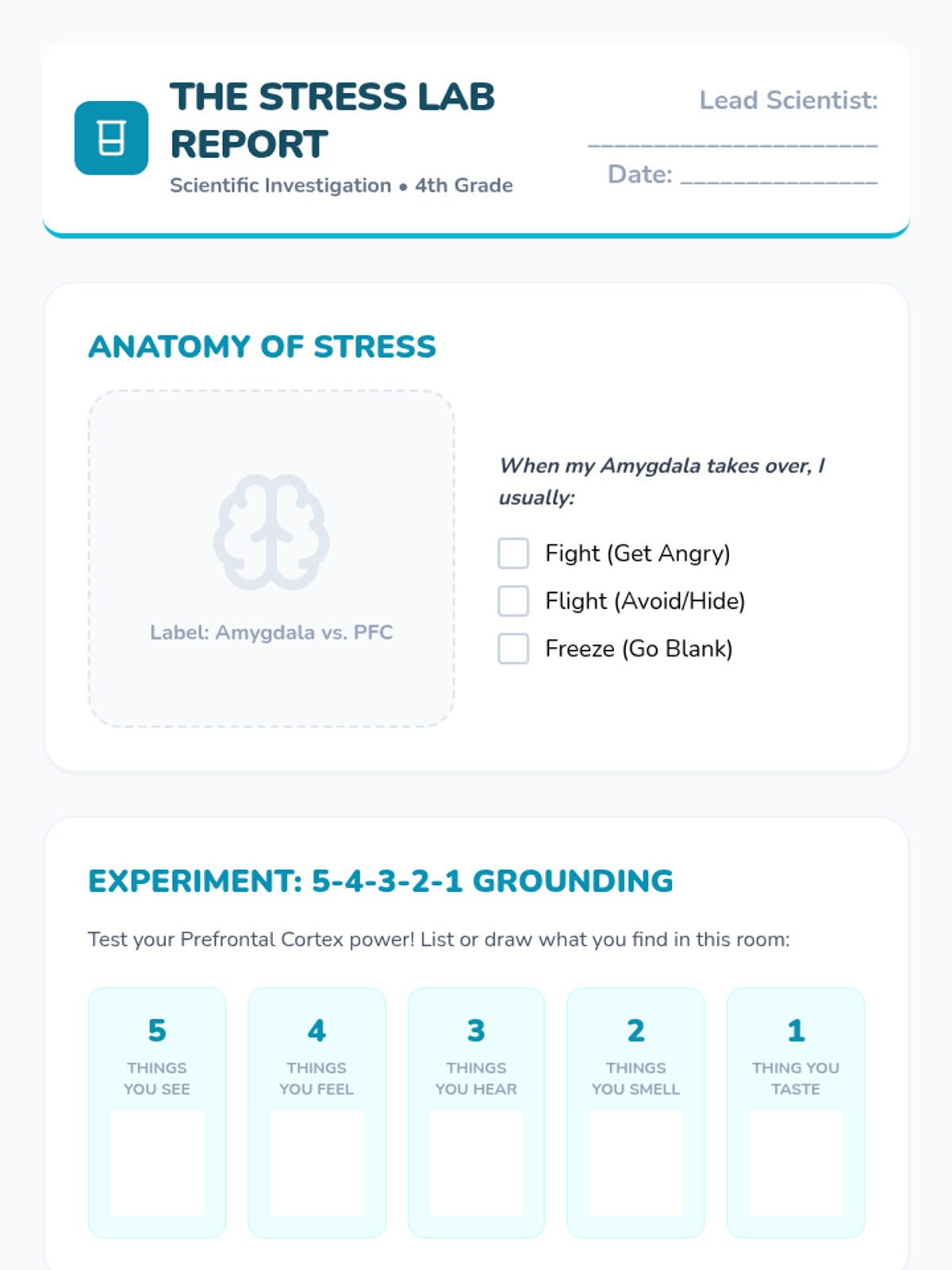
Fourth grade students investigate the science of the 'fight, flight, or freeze' response and develop logic-based strategies to respond.
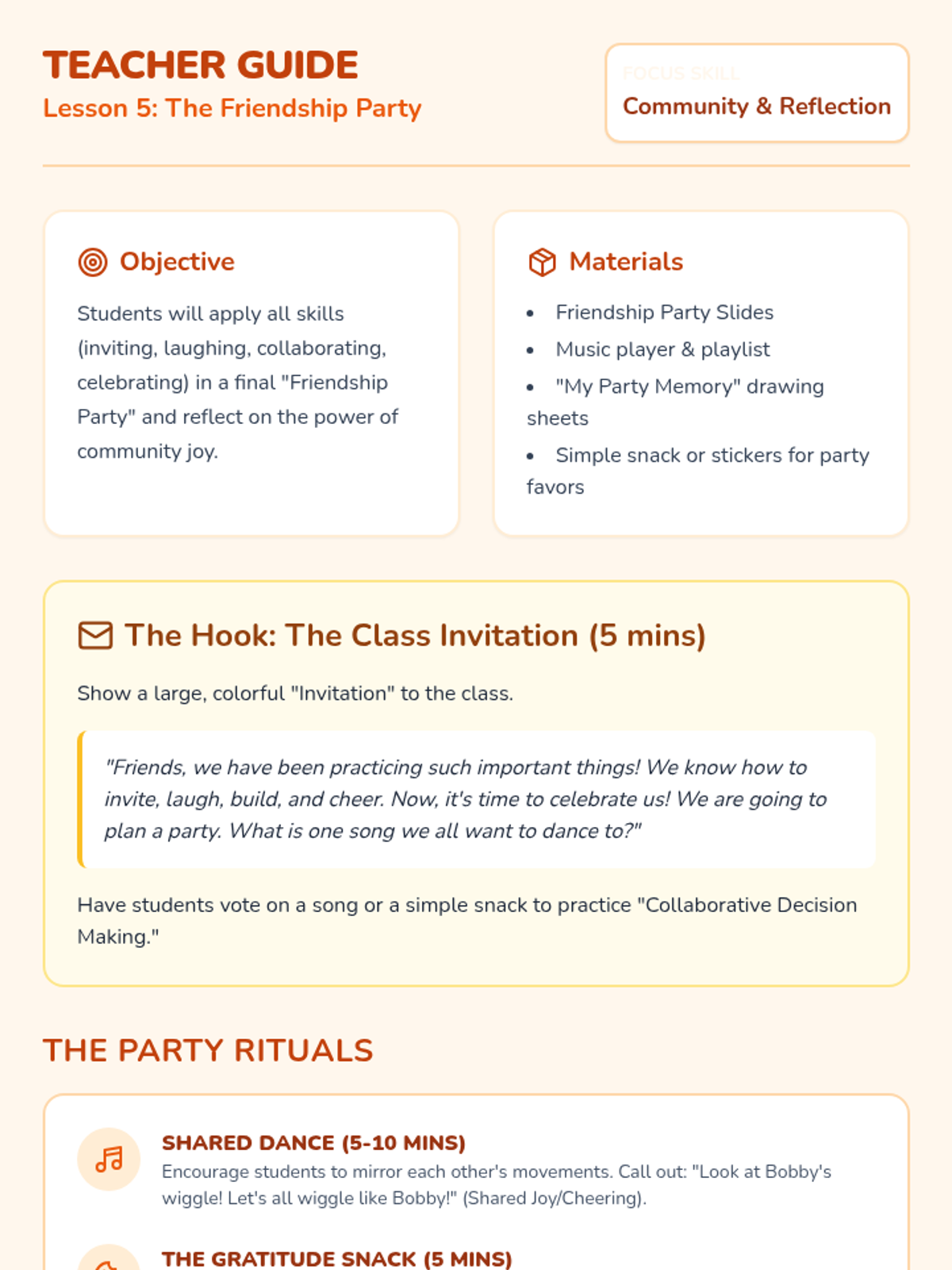
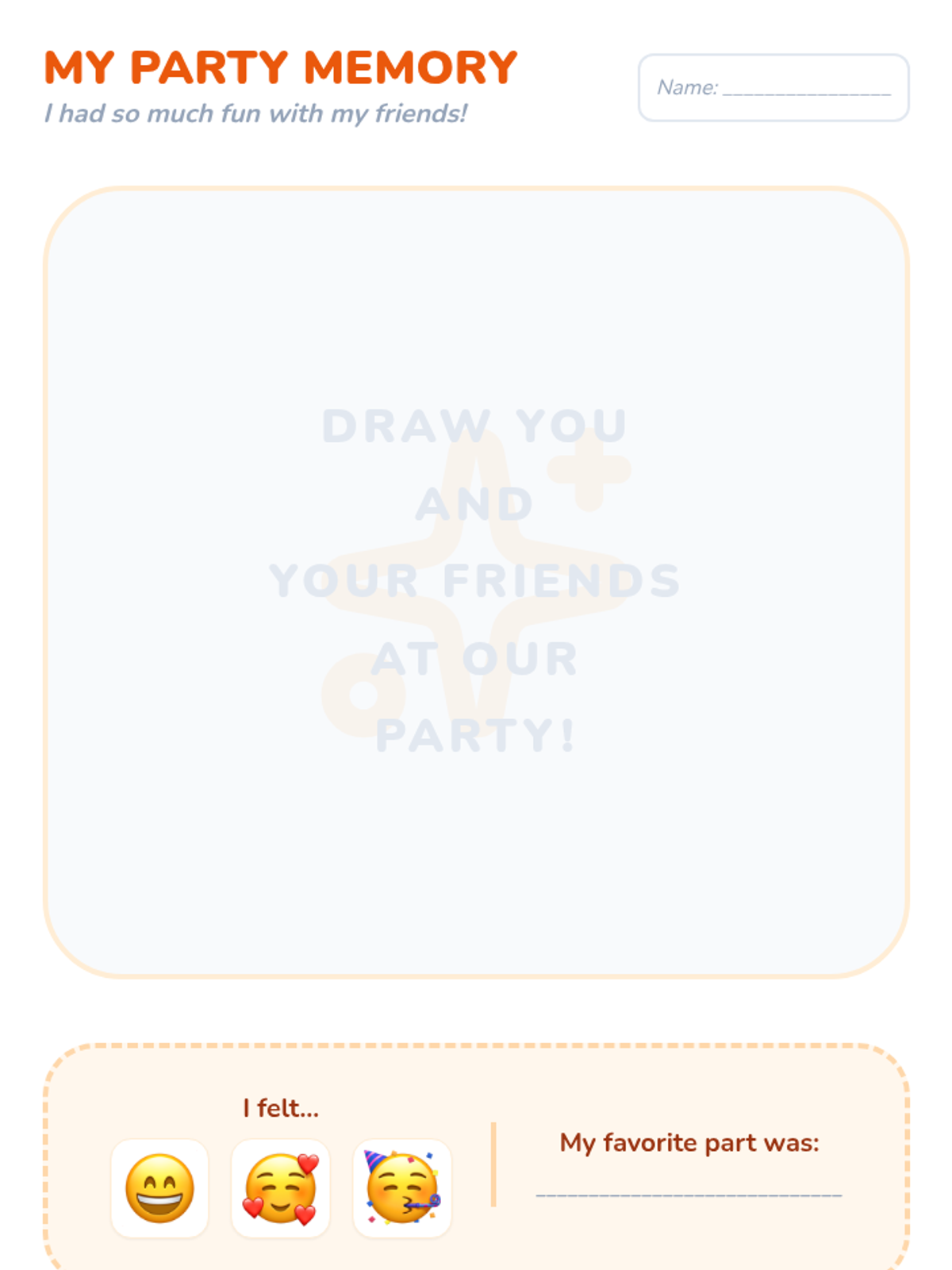
A culminating event where students plan and execute a simple shared activity (like a dance party or snack share). They reflect on how doing things together feels different than doing them alone.
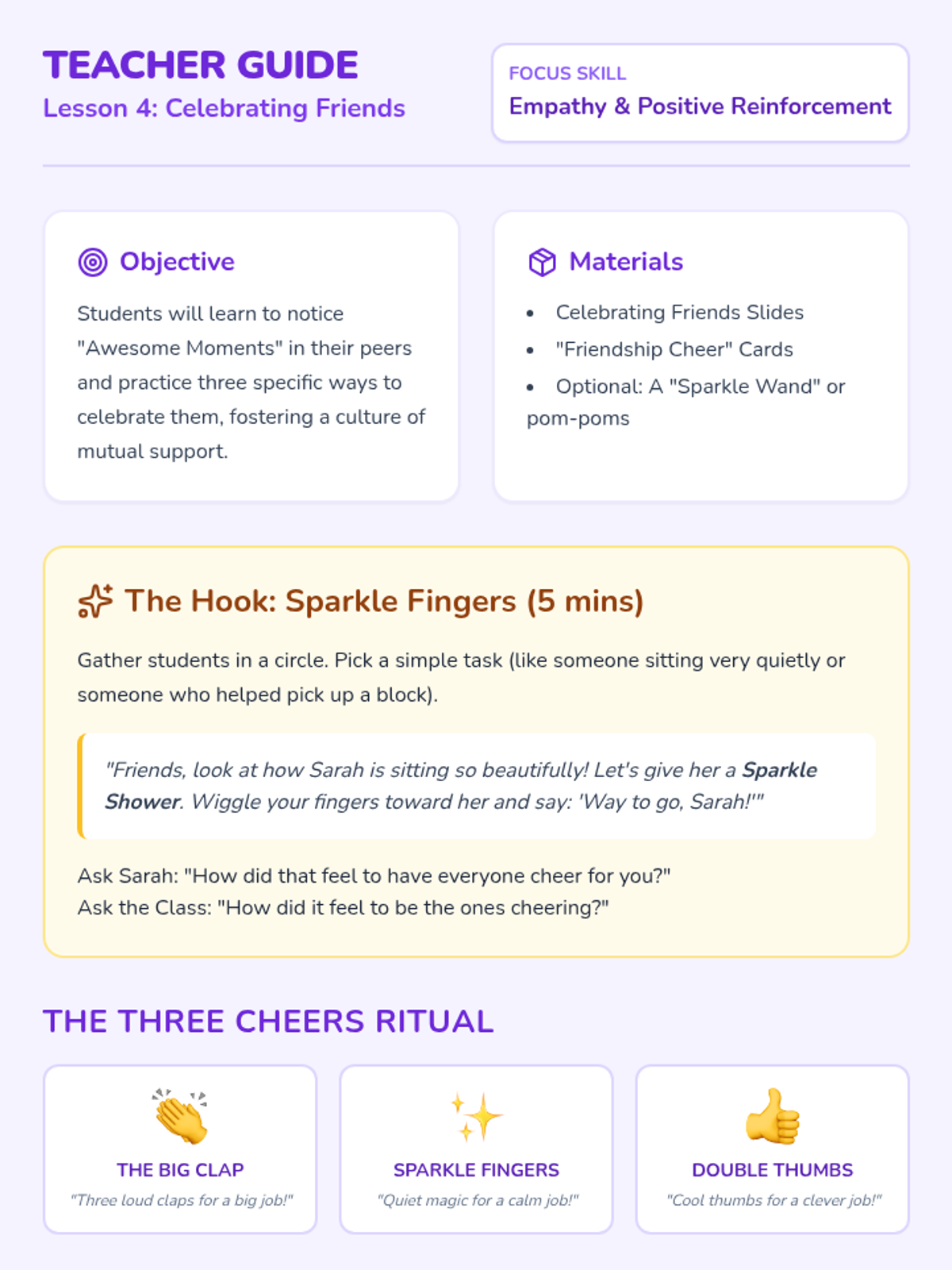
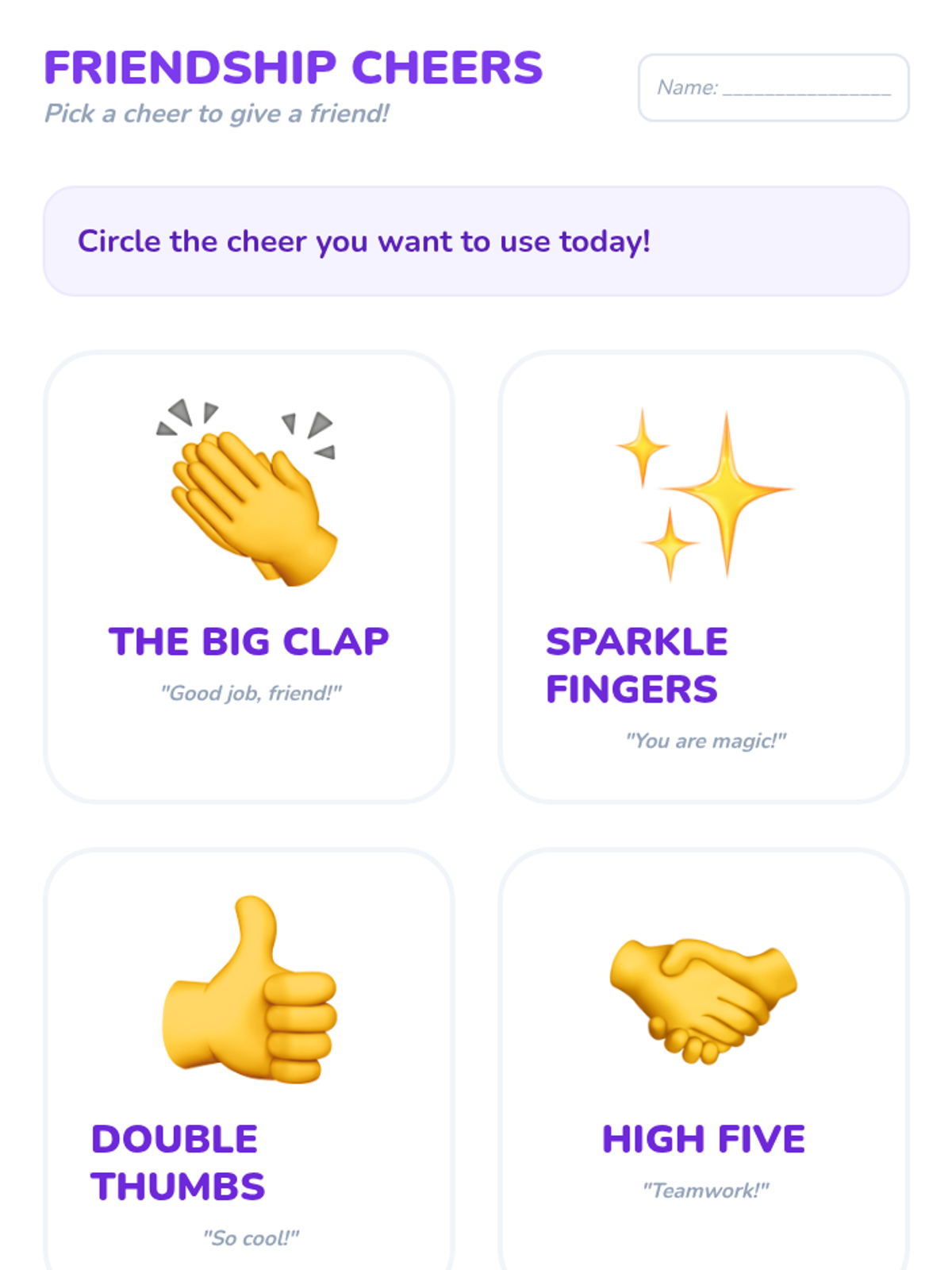
Students learn to identify when a friend does something good and how to celebrate them (clapping, cheering). This shifts focus from self-gratification to finding joy in others' success.
Small groups work together to build something (block tower, art piece). The focus is on the positive feeling of achieving a goal together rather than the final product.
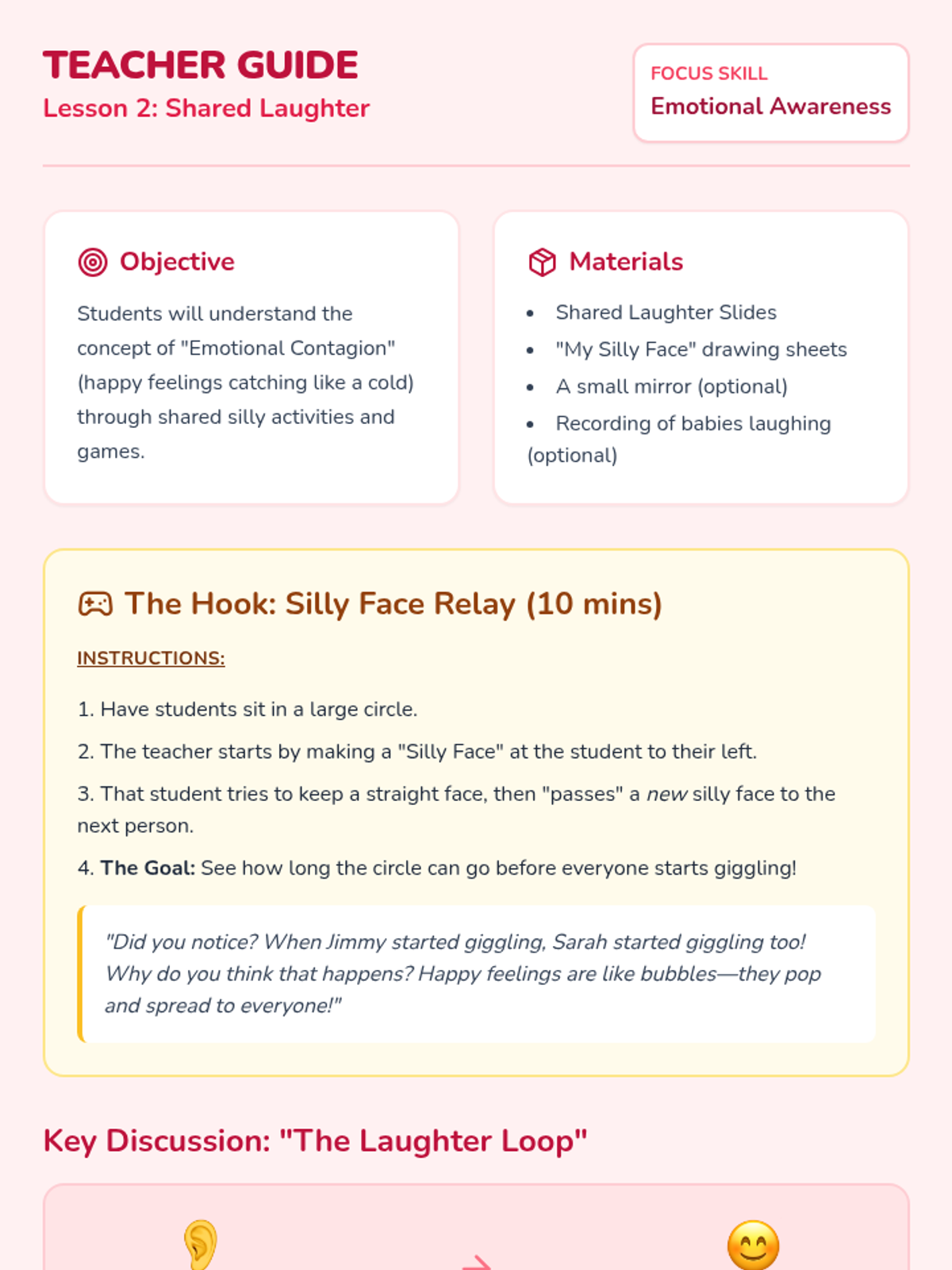
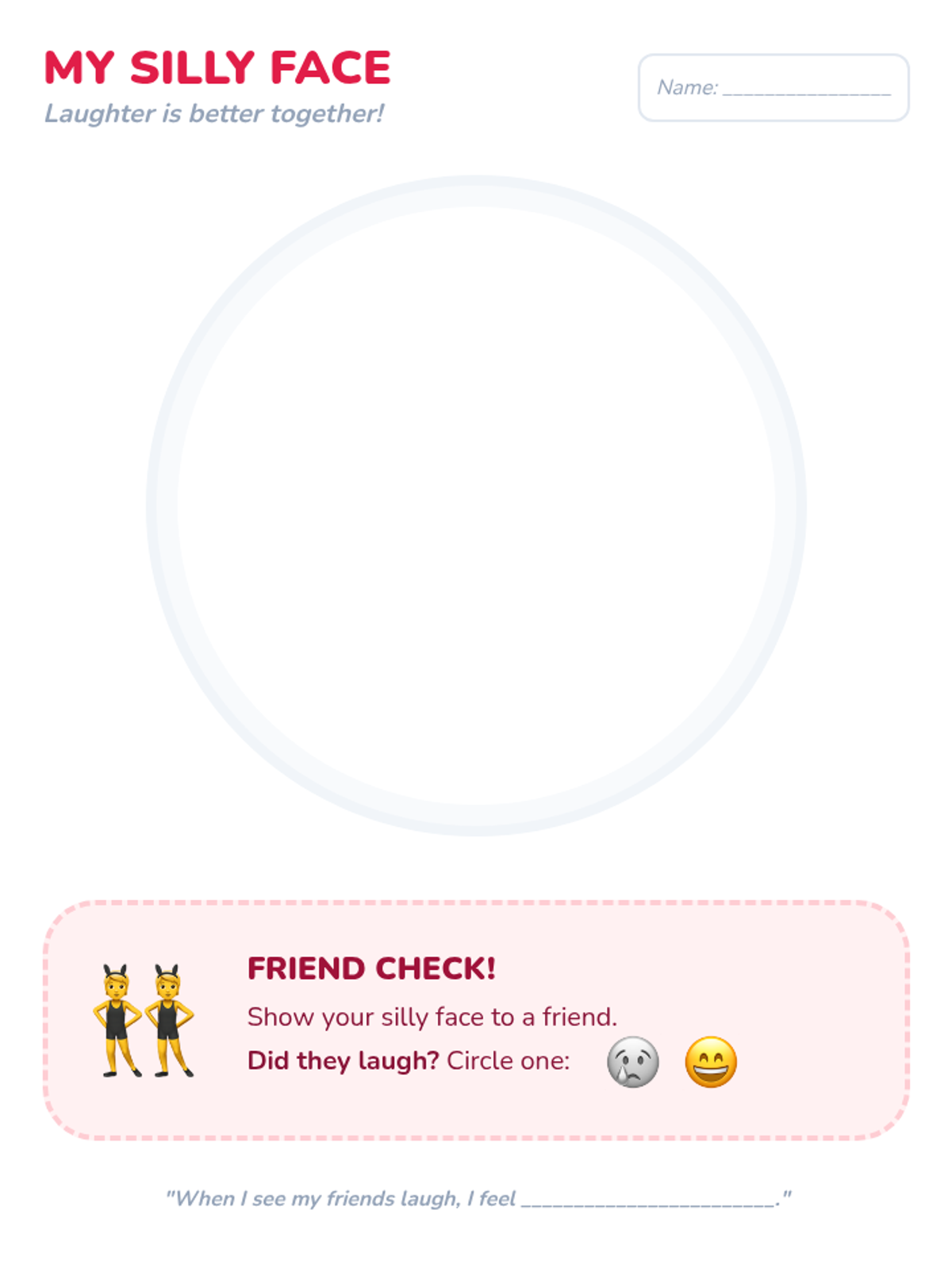
The class engages in silly activities designed solely to produce shared laughter. They discuss how hearing others laugh makes them want to laugh too, introducing the concept of emotional contagion.
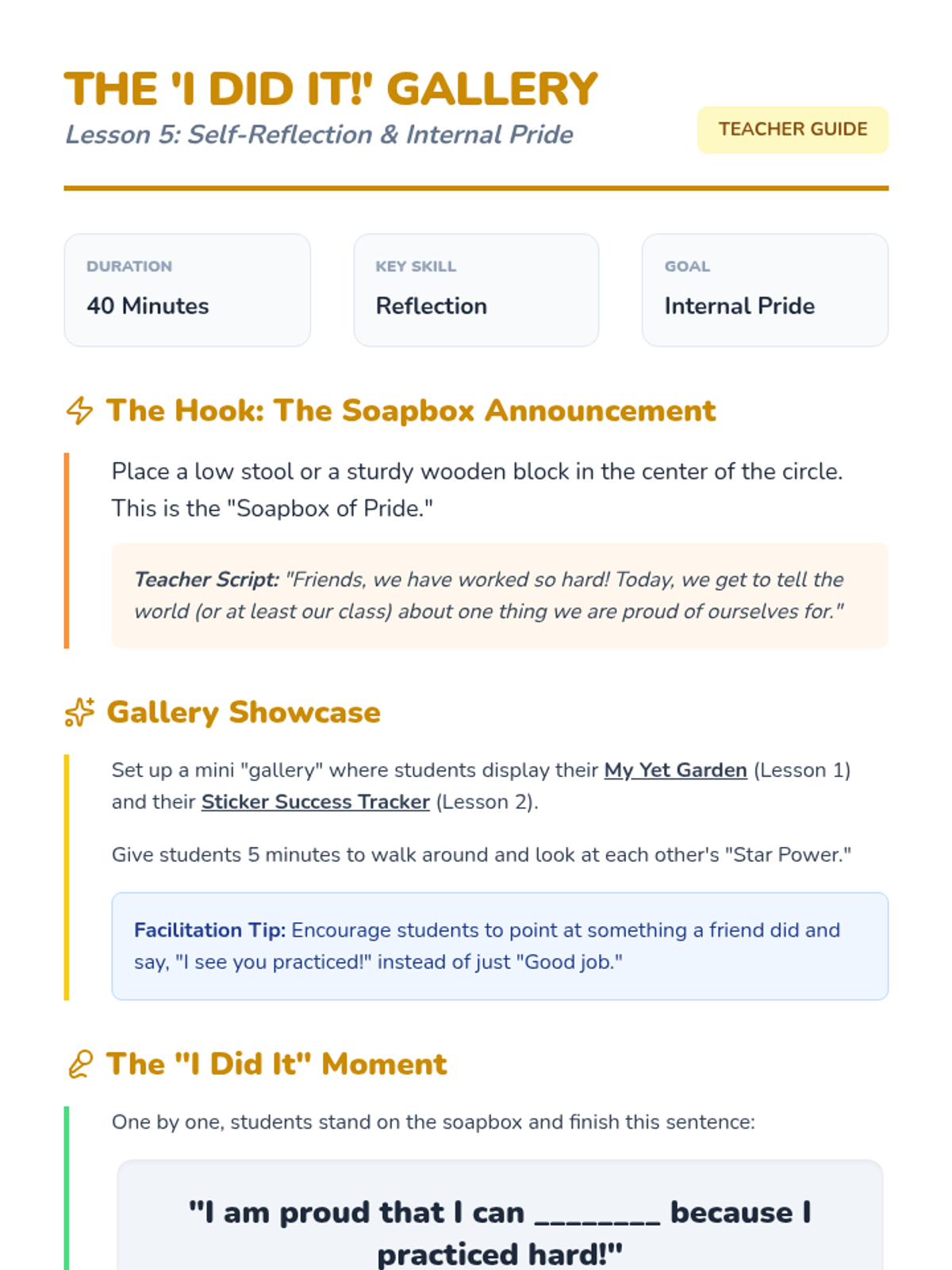
Reflecting on achievements and celebrating the internal feeling of pride through a classroom showcase.
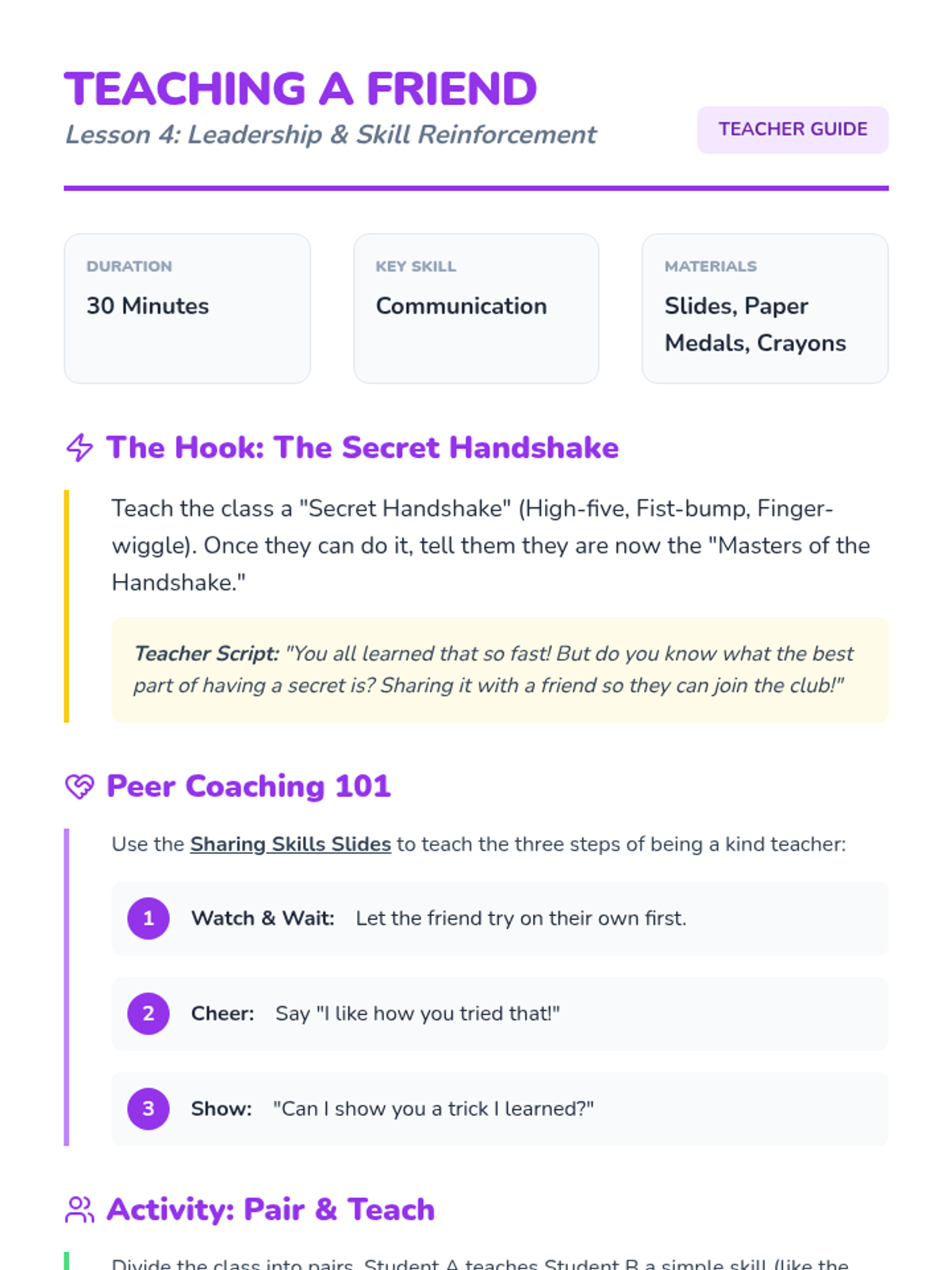
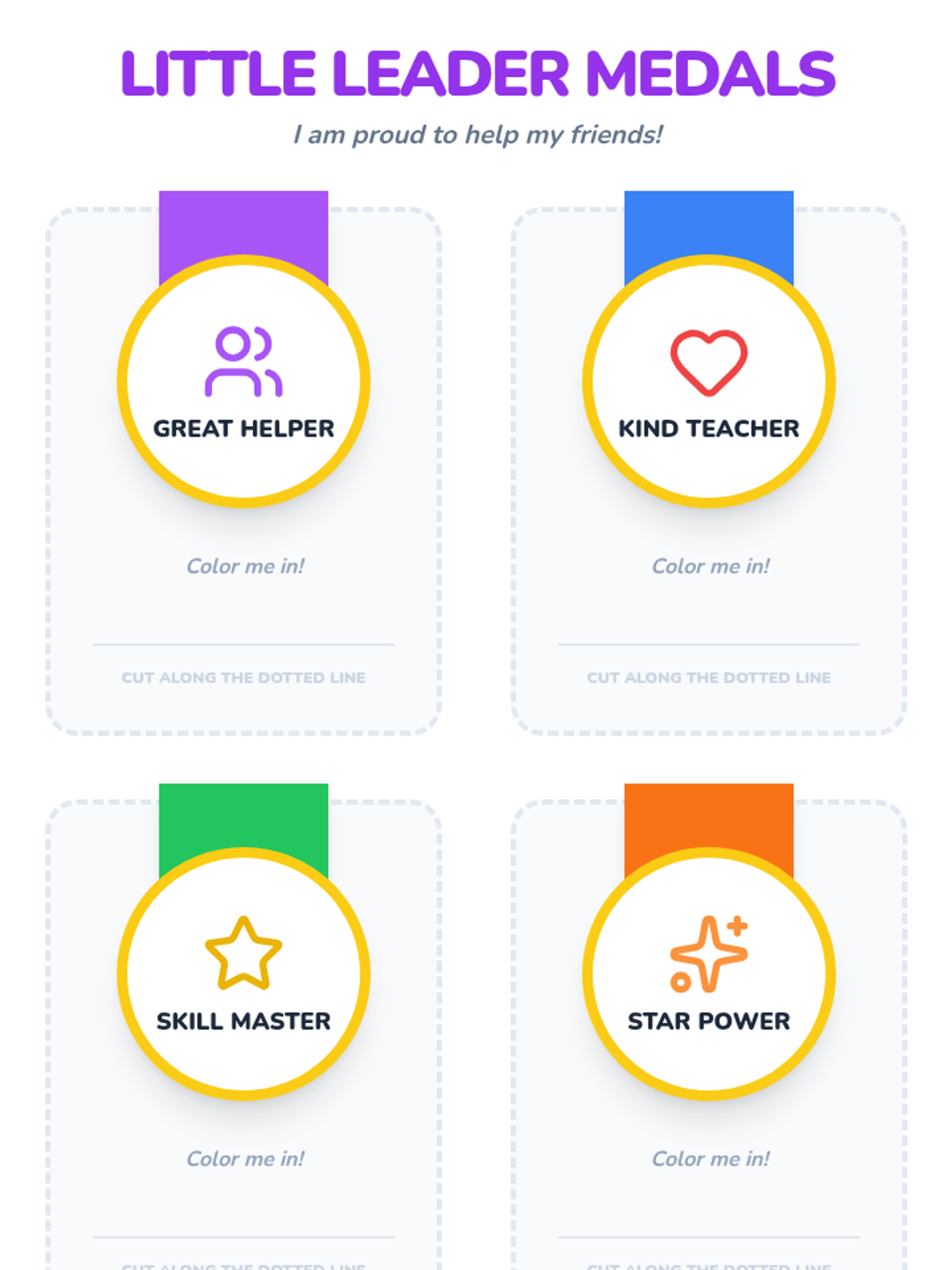
Empowering students to share their mastered skills with peers, building leadership and reinforcing their own learning.
Learning emotional regulation tools and positive self-talk to manage frustration when learning something new.
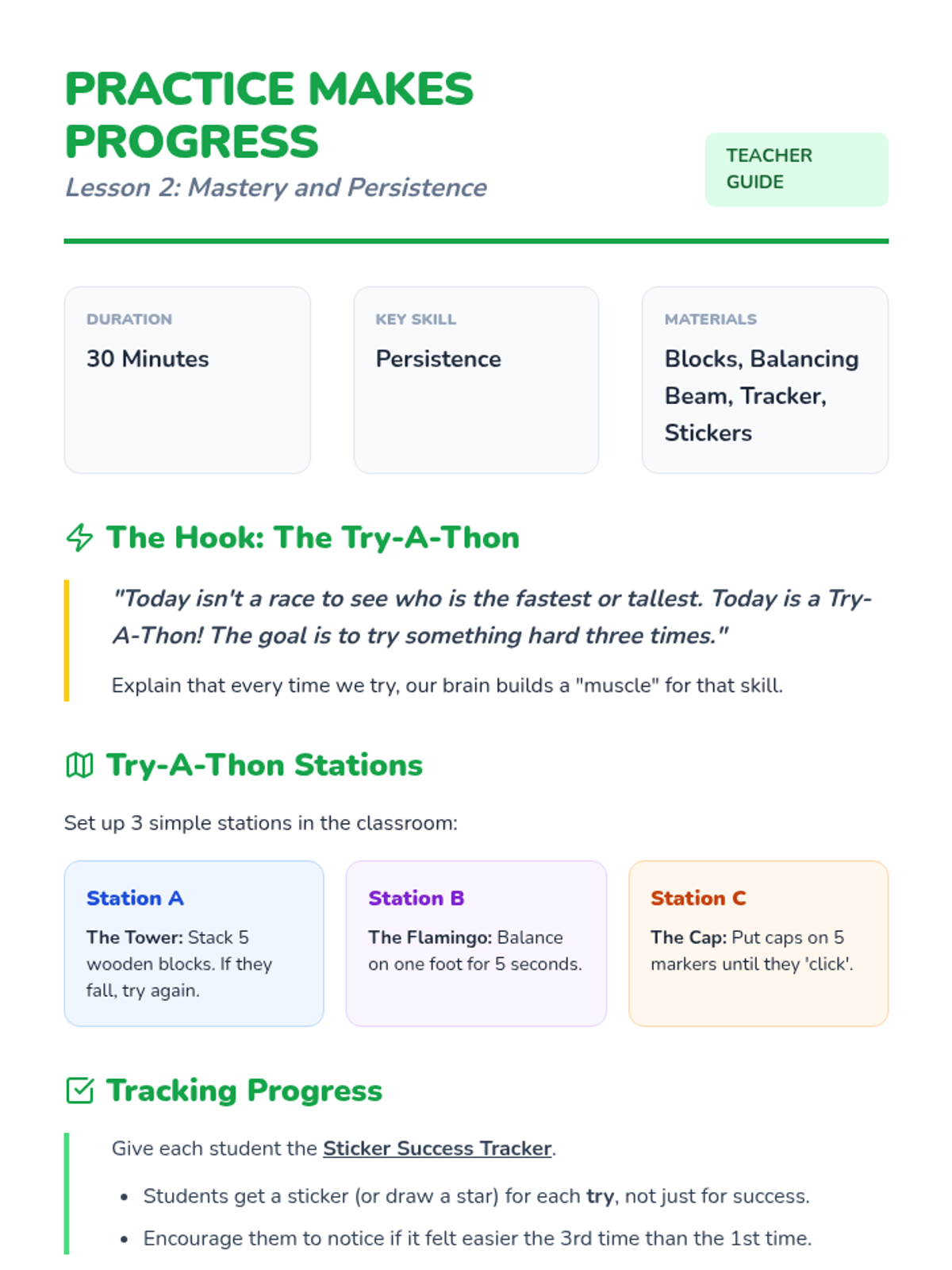
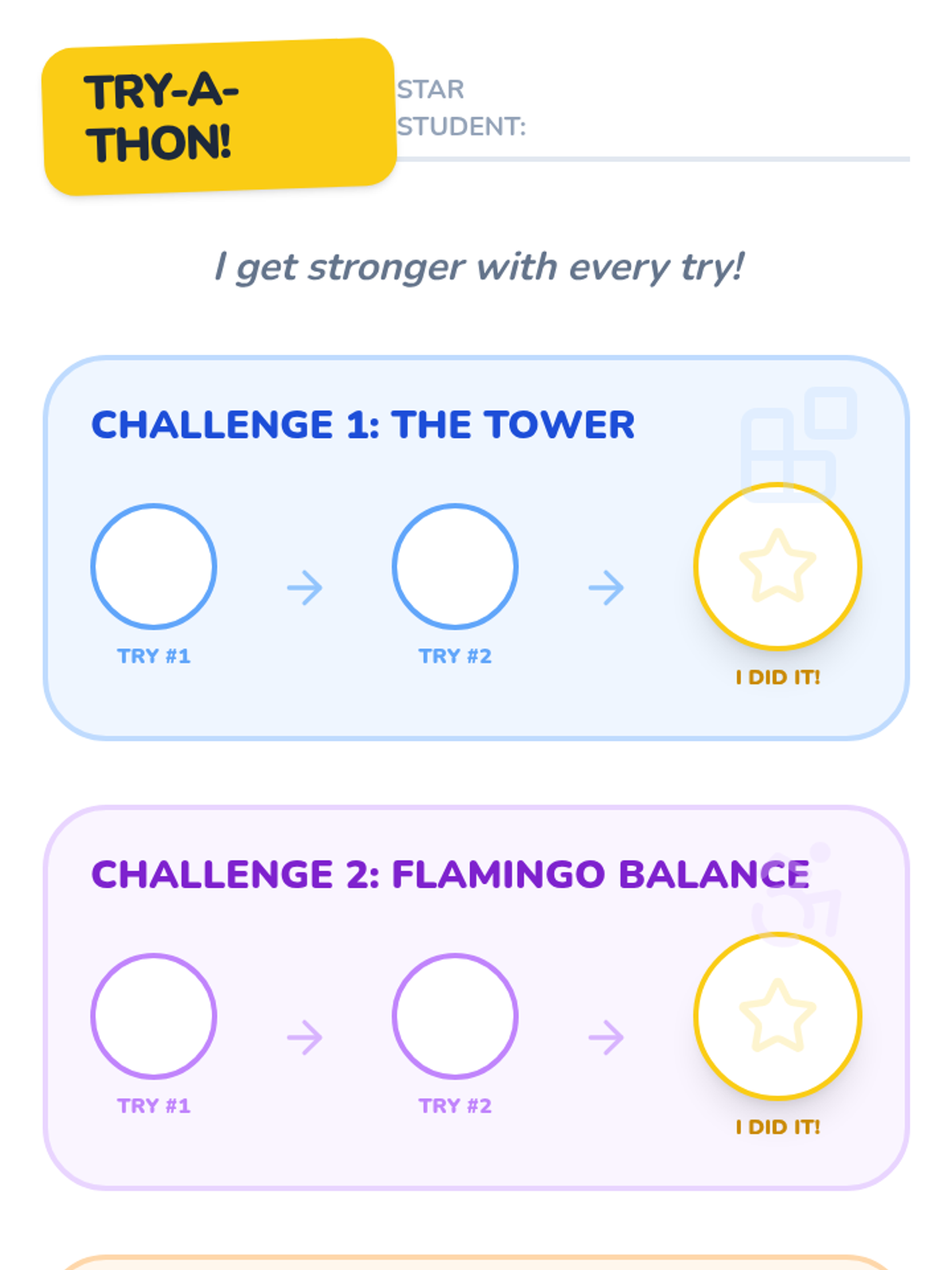
Focusing on persistence and tracking small improvements through repeated practice of simple skills.
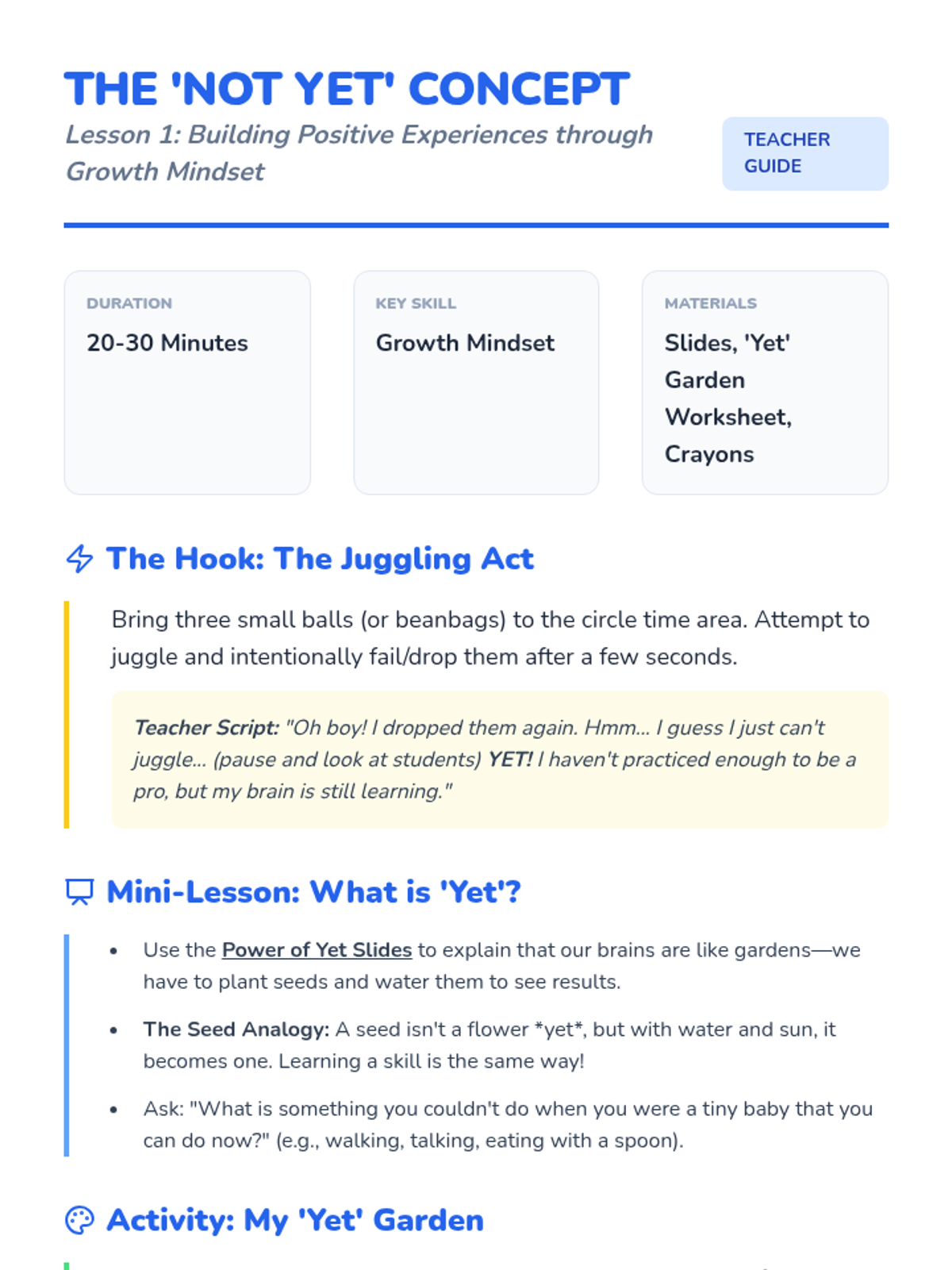
Introduction to the growth mindset using the word 'yet' to transform frustrations into future goals.
Students learn simple scripts and gestures to invite peers to join a positive activity, practicing inclusion and social courage.
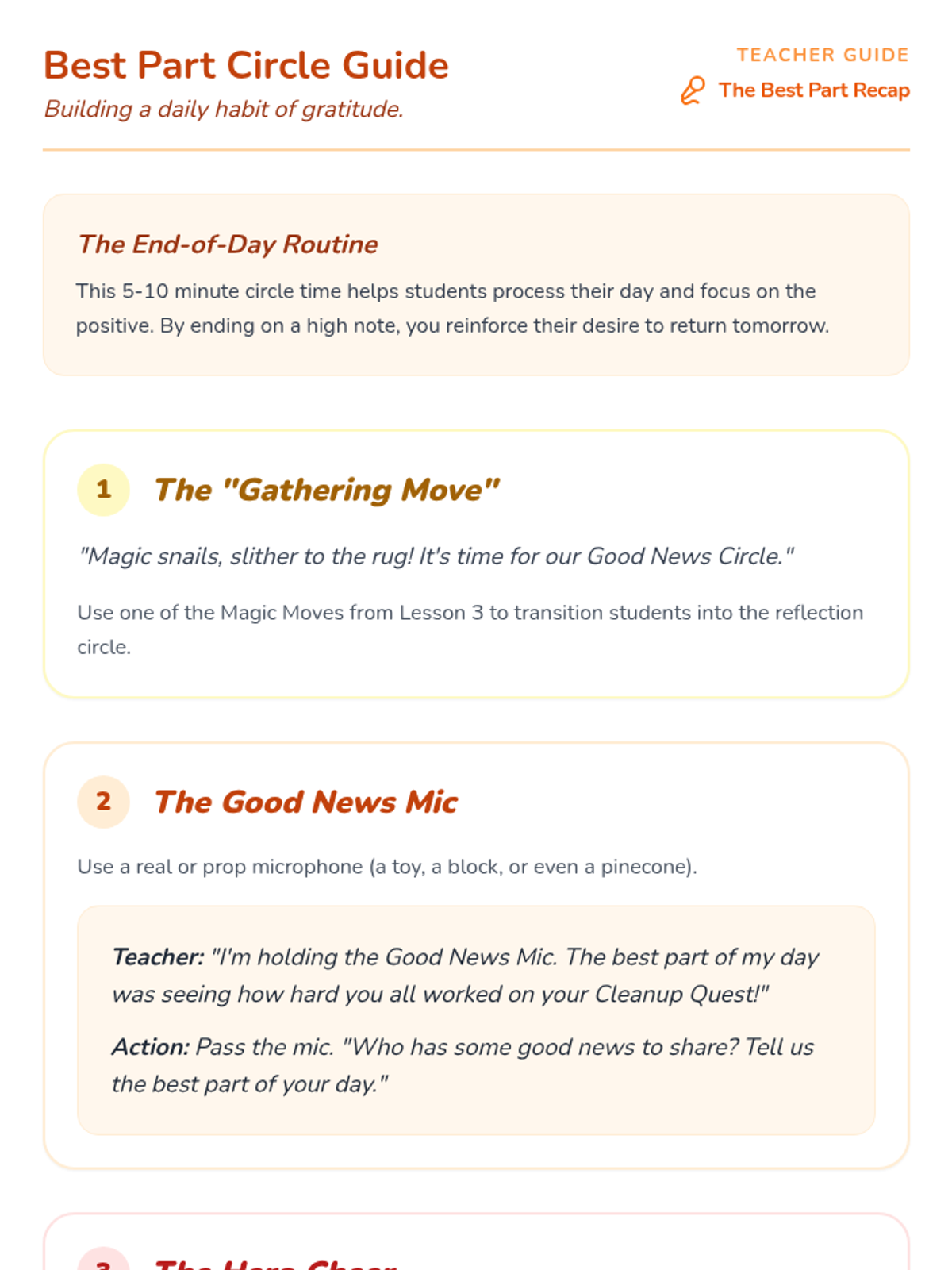
Students establish a gratitude habit by sharing the best parts of their day, reinforcing positive memories before going home.
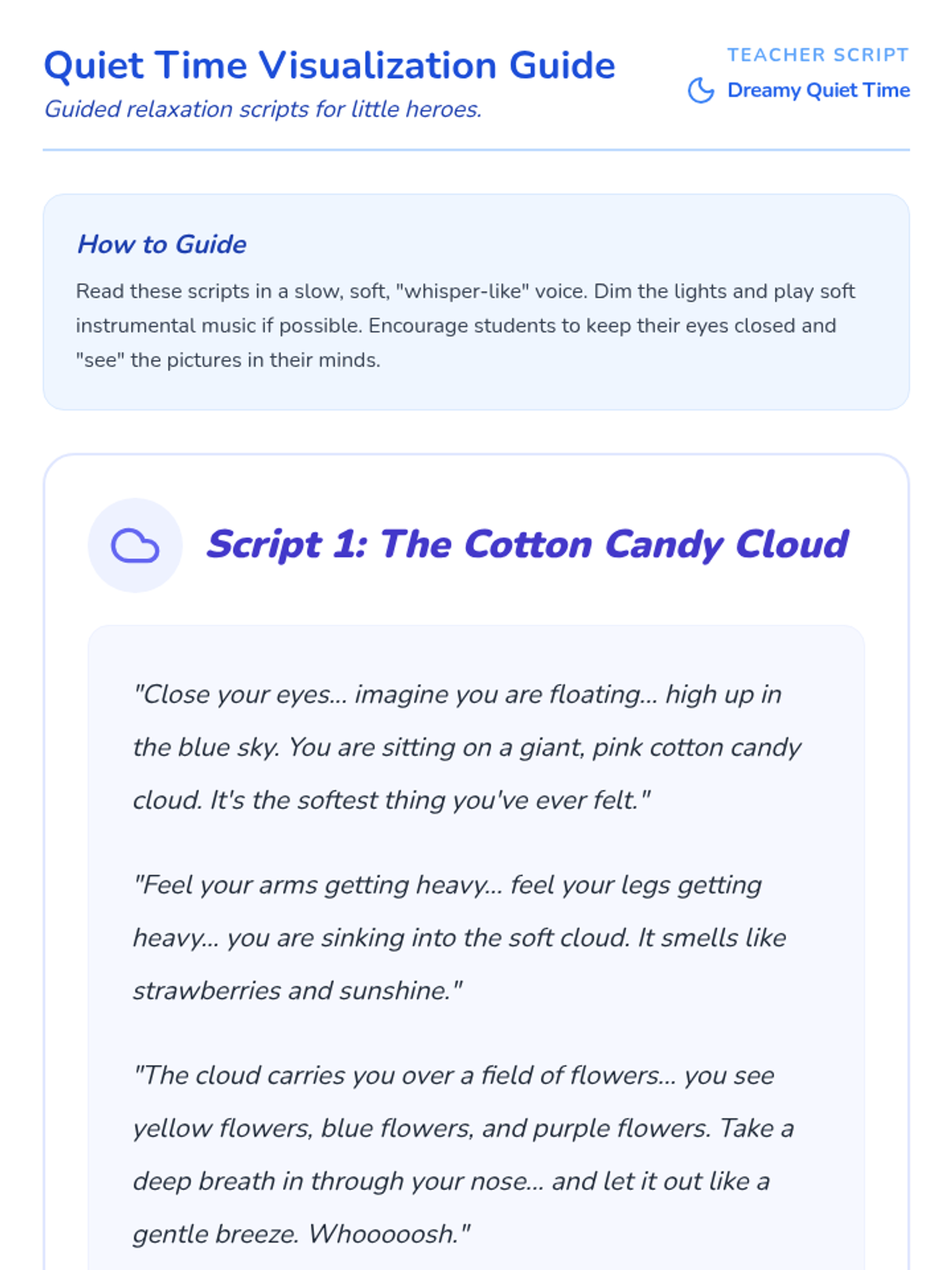
Students explore visualization and relaxation techniques to find joy and stillness during quiet or nap times.
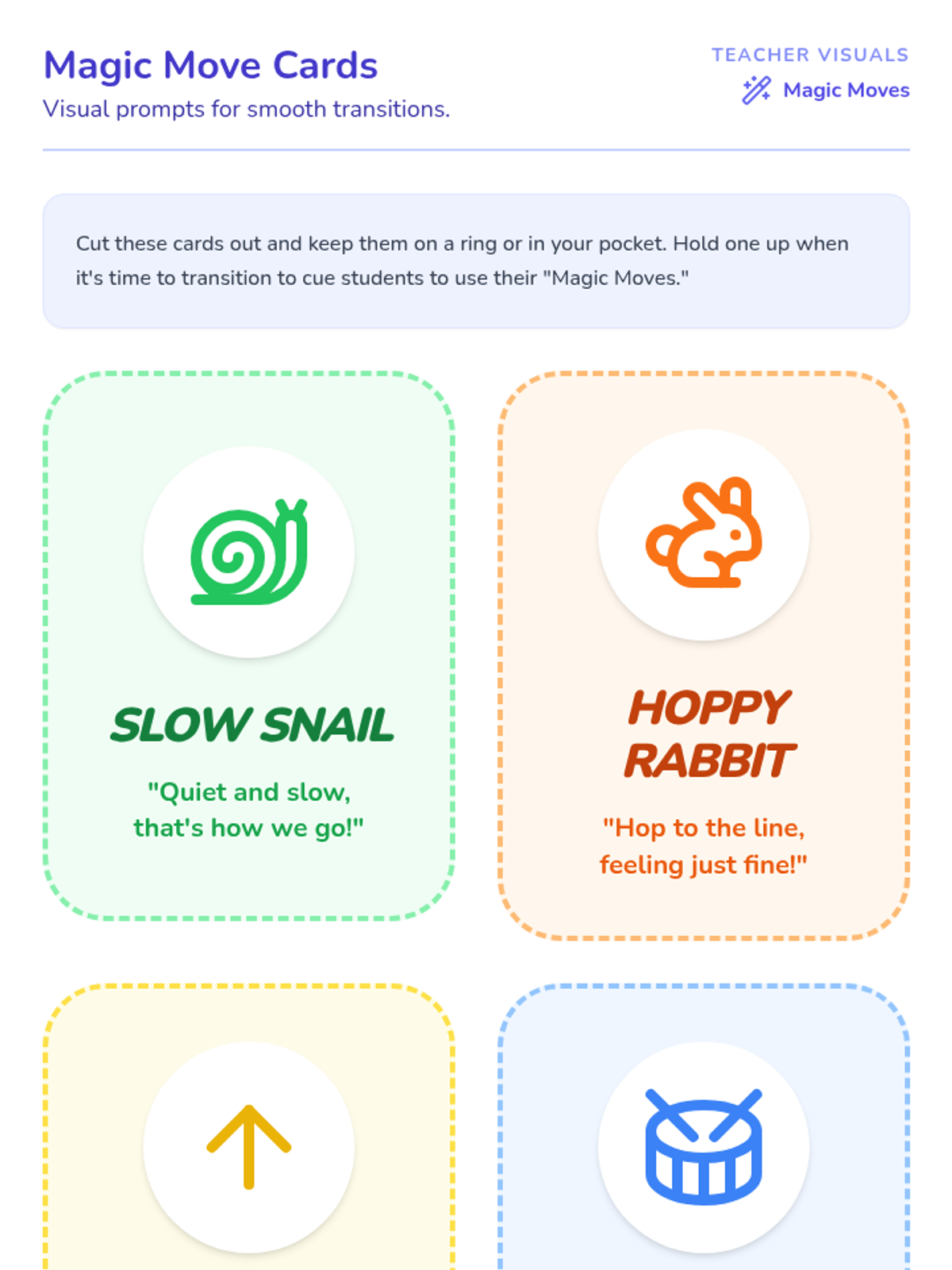
Students learn stress-free transition strategies, using imagination and 'magic' to move smoothly between activities.
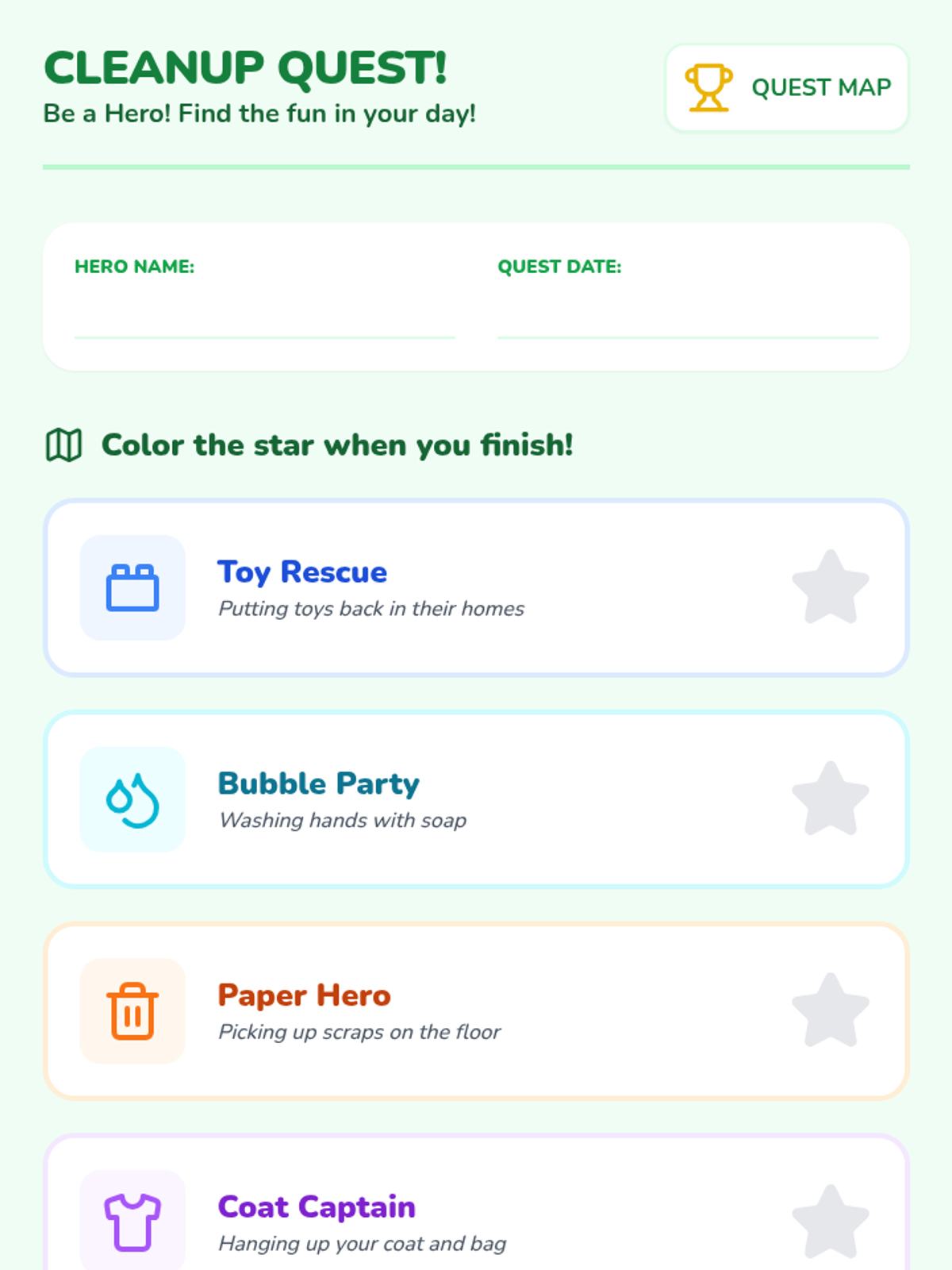
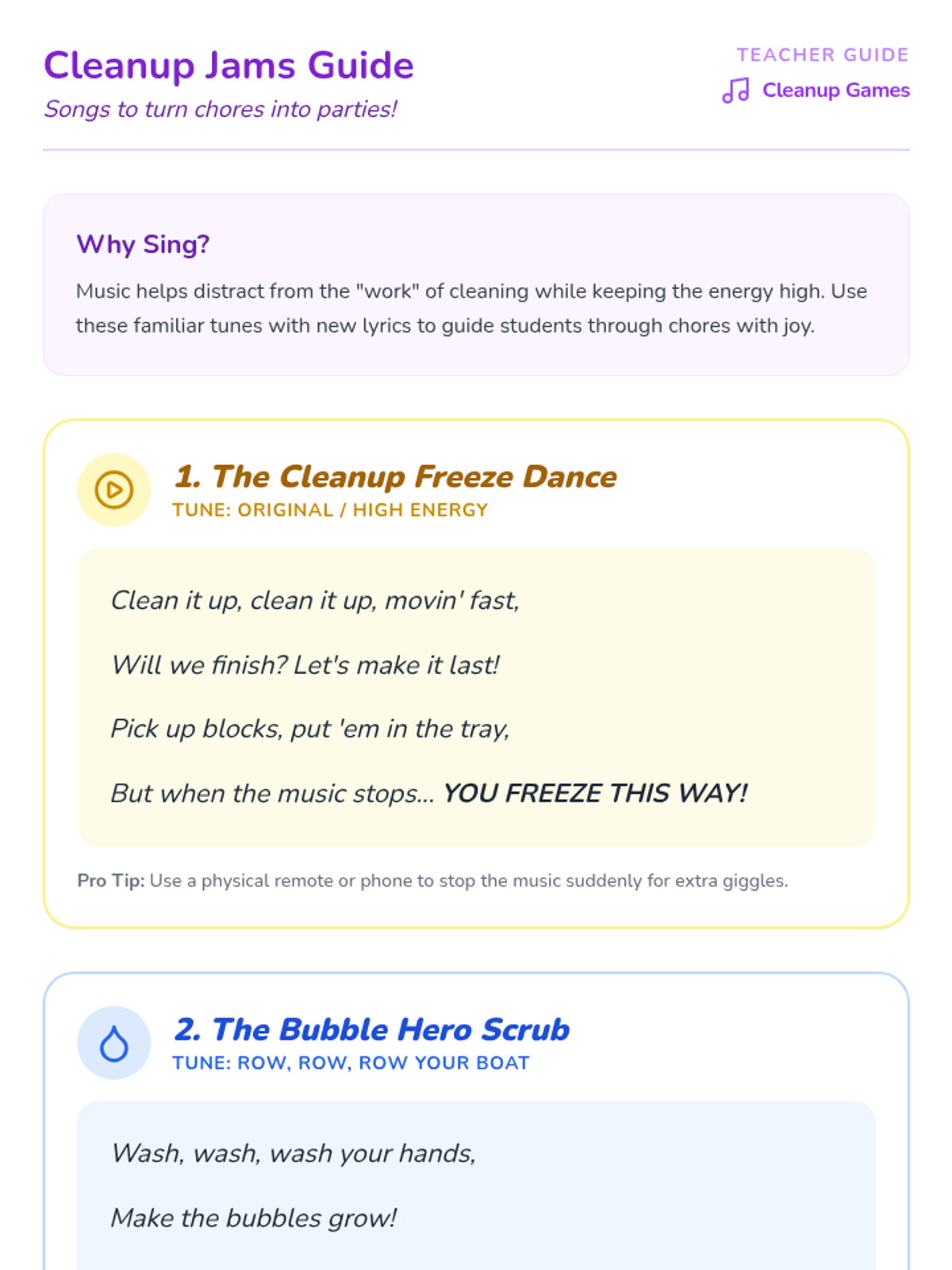
This lesson turns cleanup and maintenance tasks into games and songs, helping students reframe chores as positive, shared experiences.
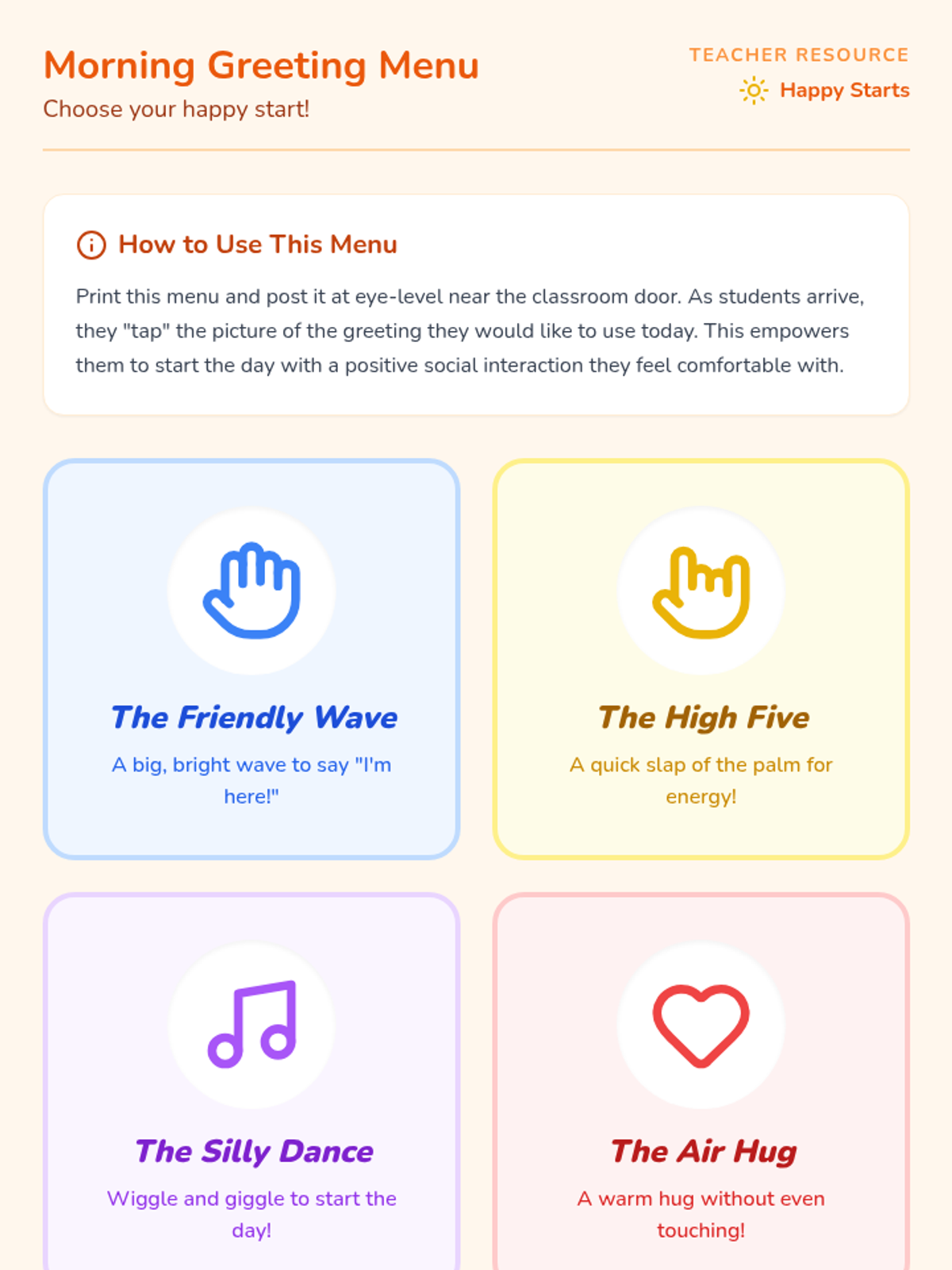
Students practice different ways to start the day positively, choosing signature greetings like waves, high-fives, or dances to set a happy tone.
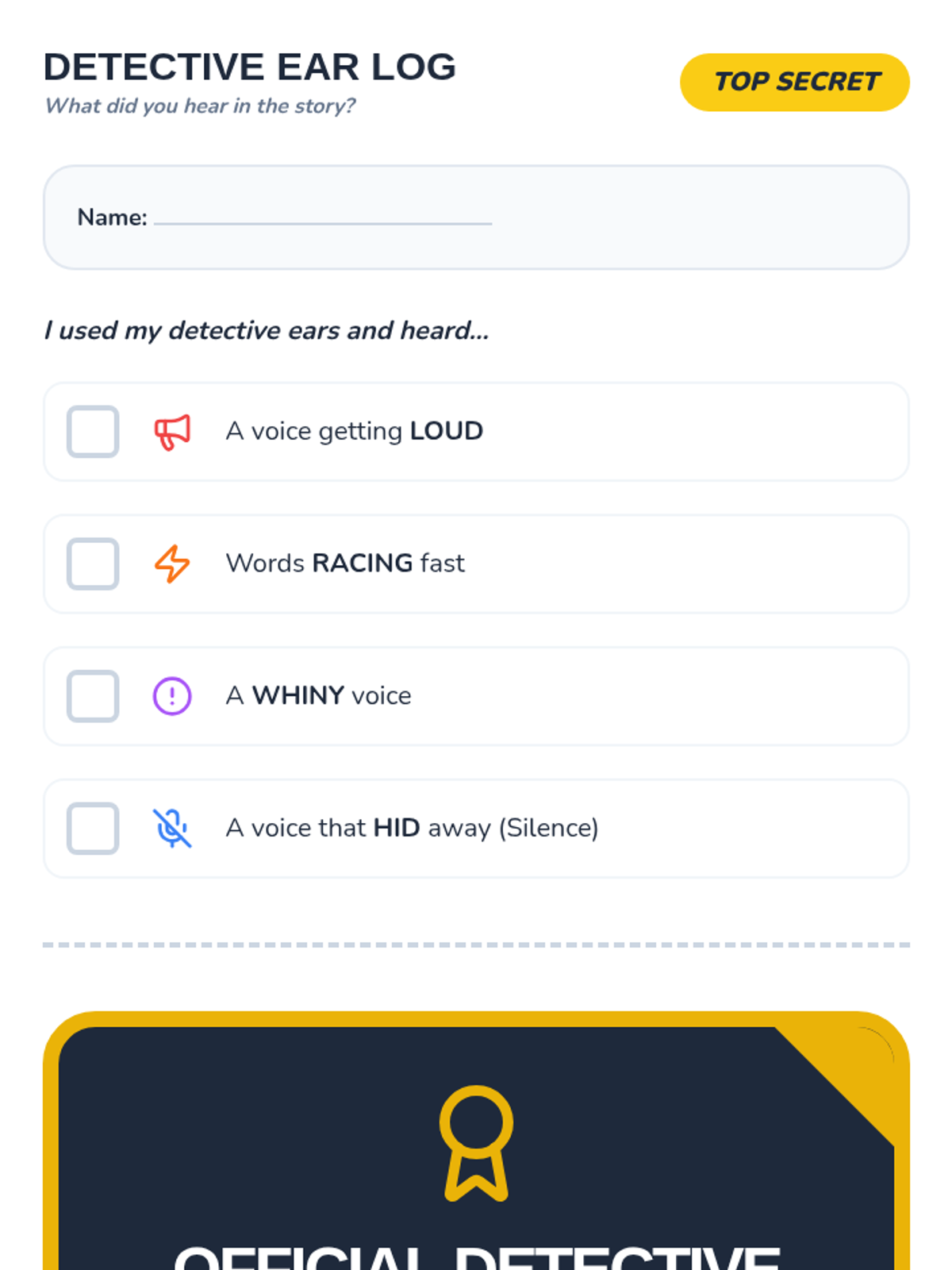
In a culminating activity, students use their 'detective ears' to identify vocal changes in stories and infer how characters are feeling.
This lesson covers the 'freeze' response, teaching students that silence or withdrawal is also an important communication signal.
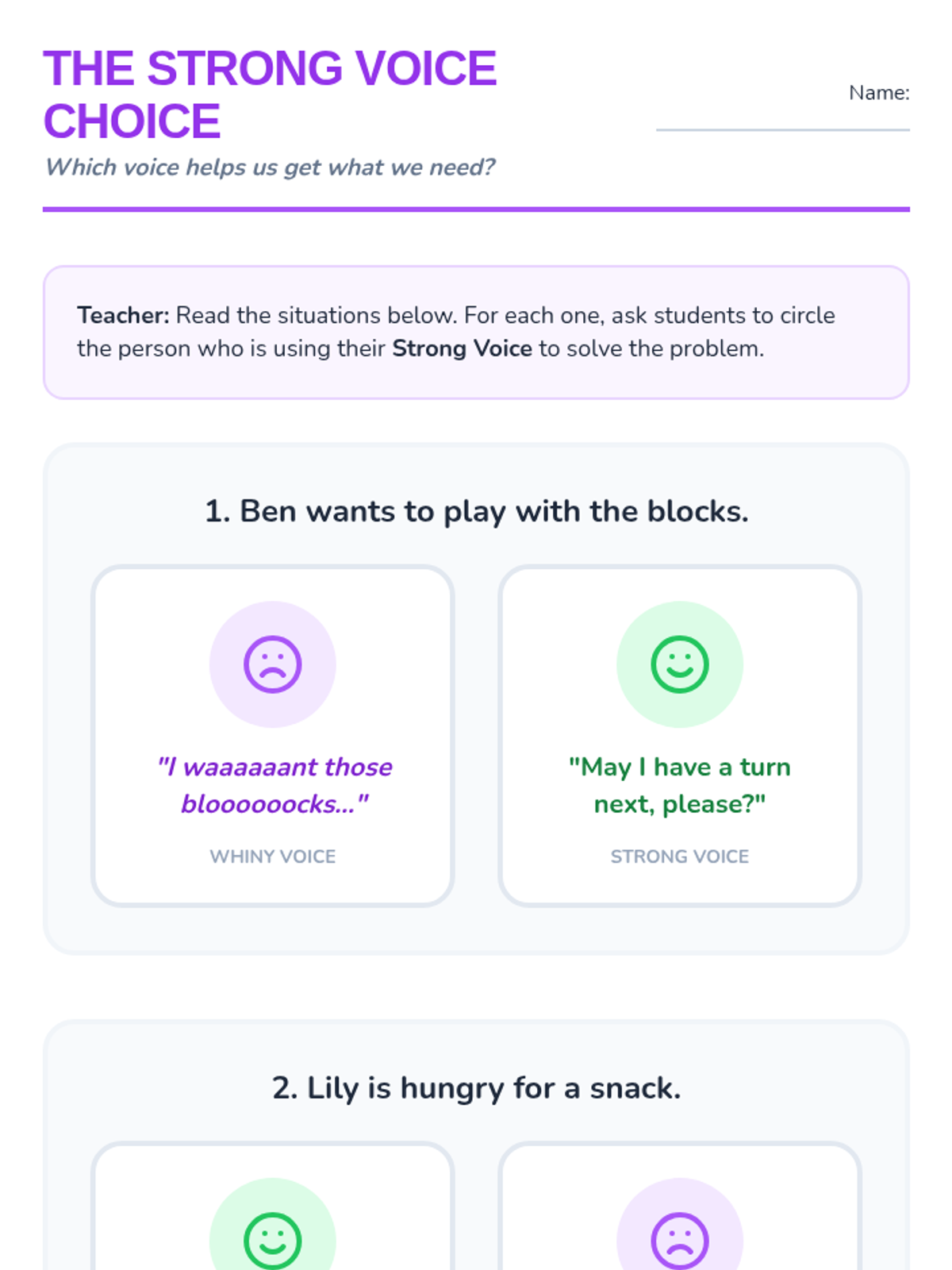
Students differentiate between 'strong voices' and 'whiny voices,' learning to recognize whining as a signal for needing help or feeling frustrated.
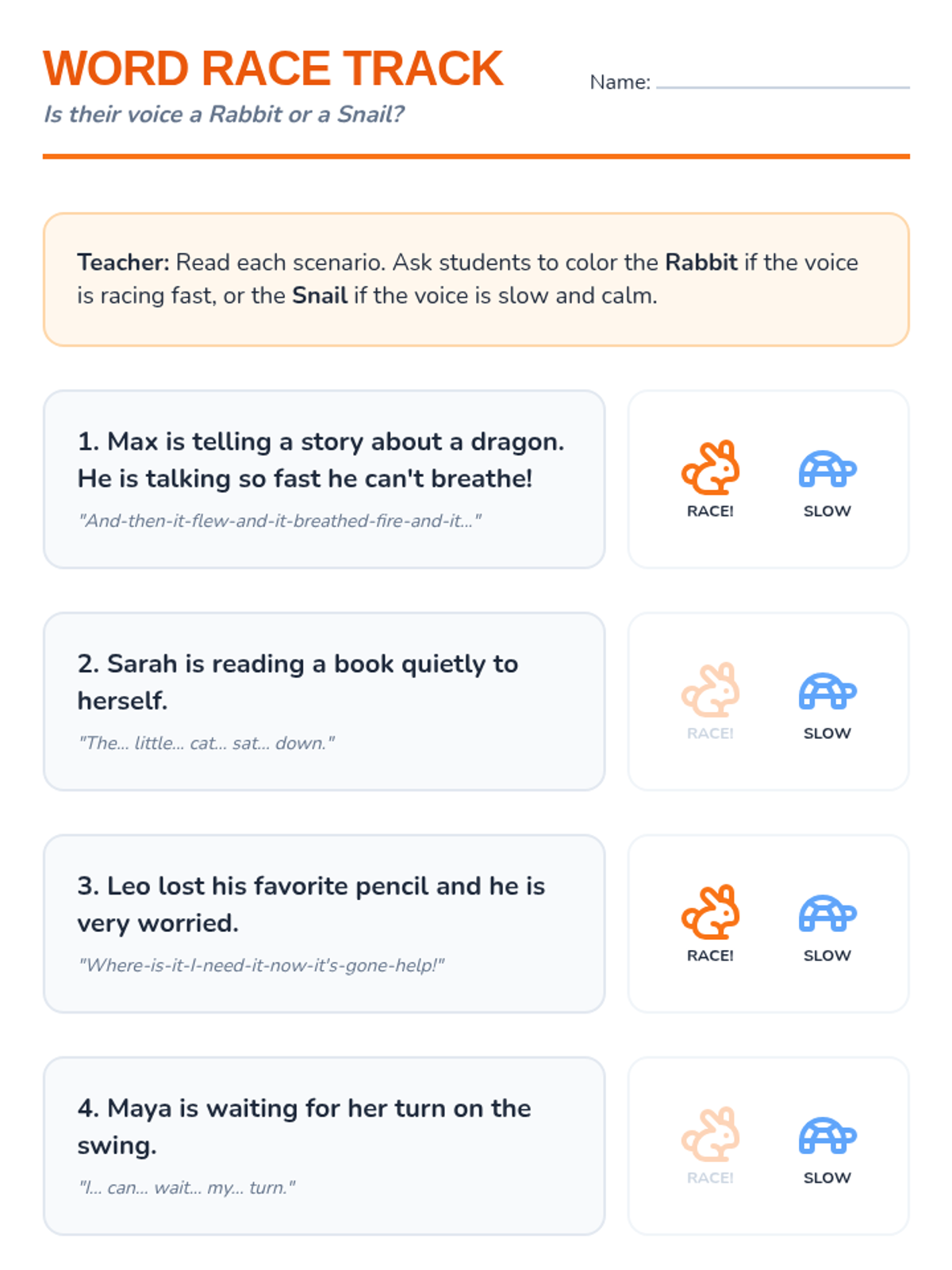
Students learn how the speed of speech relates to emotional states, identifying 'racing words' as a sign of anxiety or excitement.
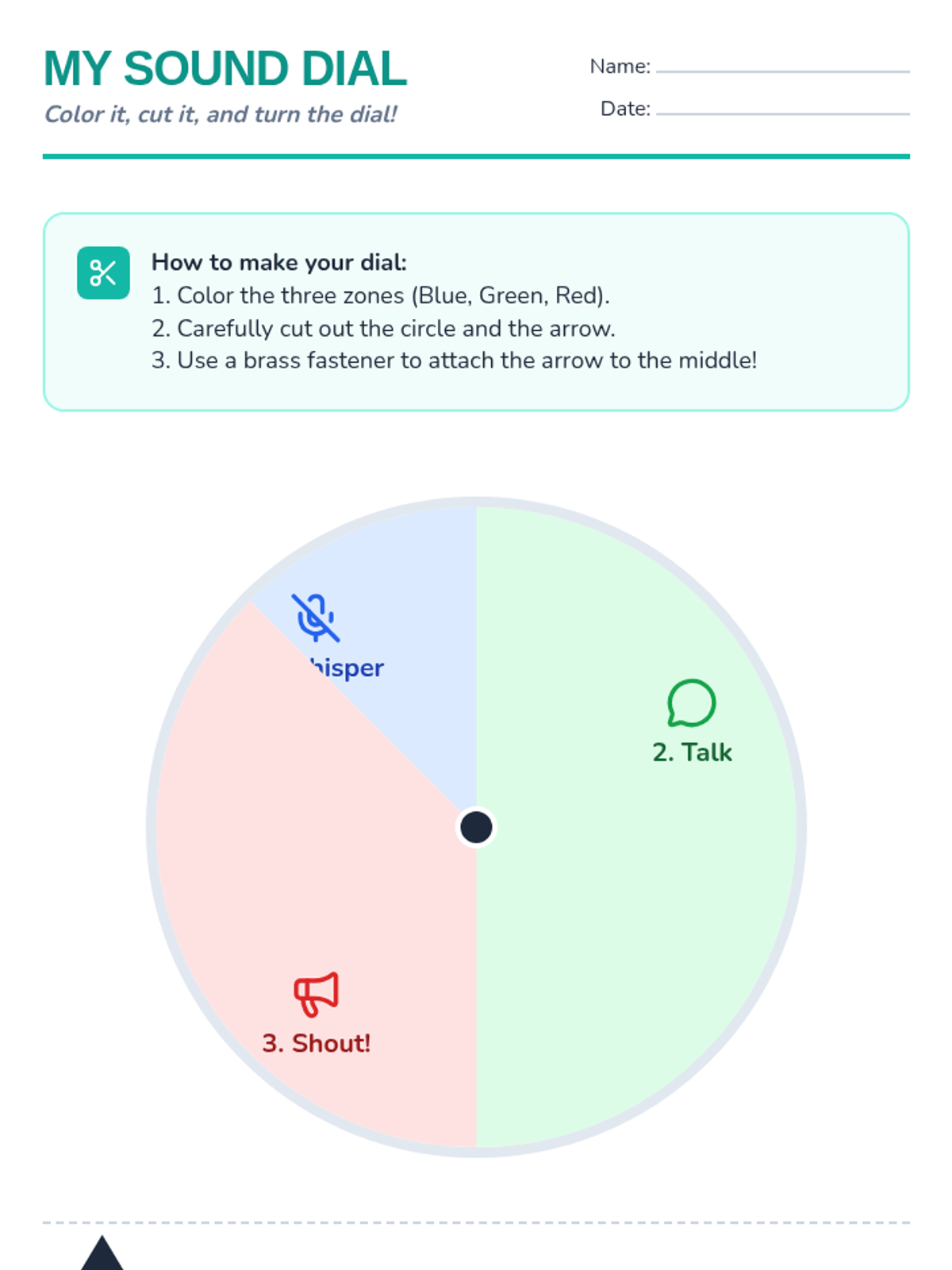
Students explore the concept of volume using a 'sound dial' to understand how an unexpectedly loud voice can be a warning sign of big feelings.
Students apply their learned strategies to help Pippin join the class, reflecting on their journey from feeling stuck to feeling active.
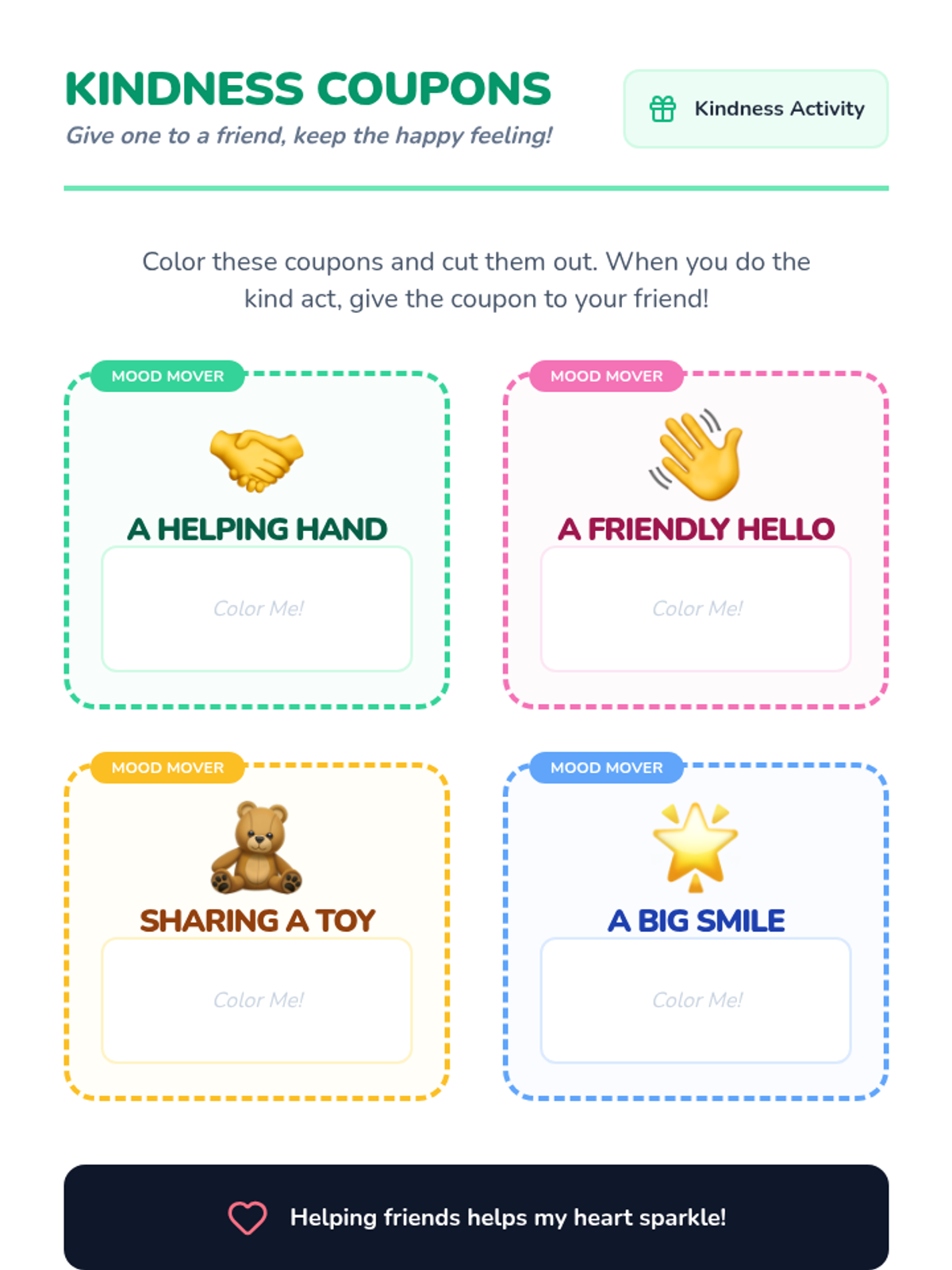
Students discover the mood-boosting power of kindness by practicing simple prosocial actions within the classroom community.
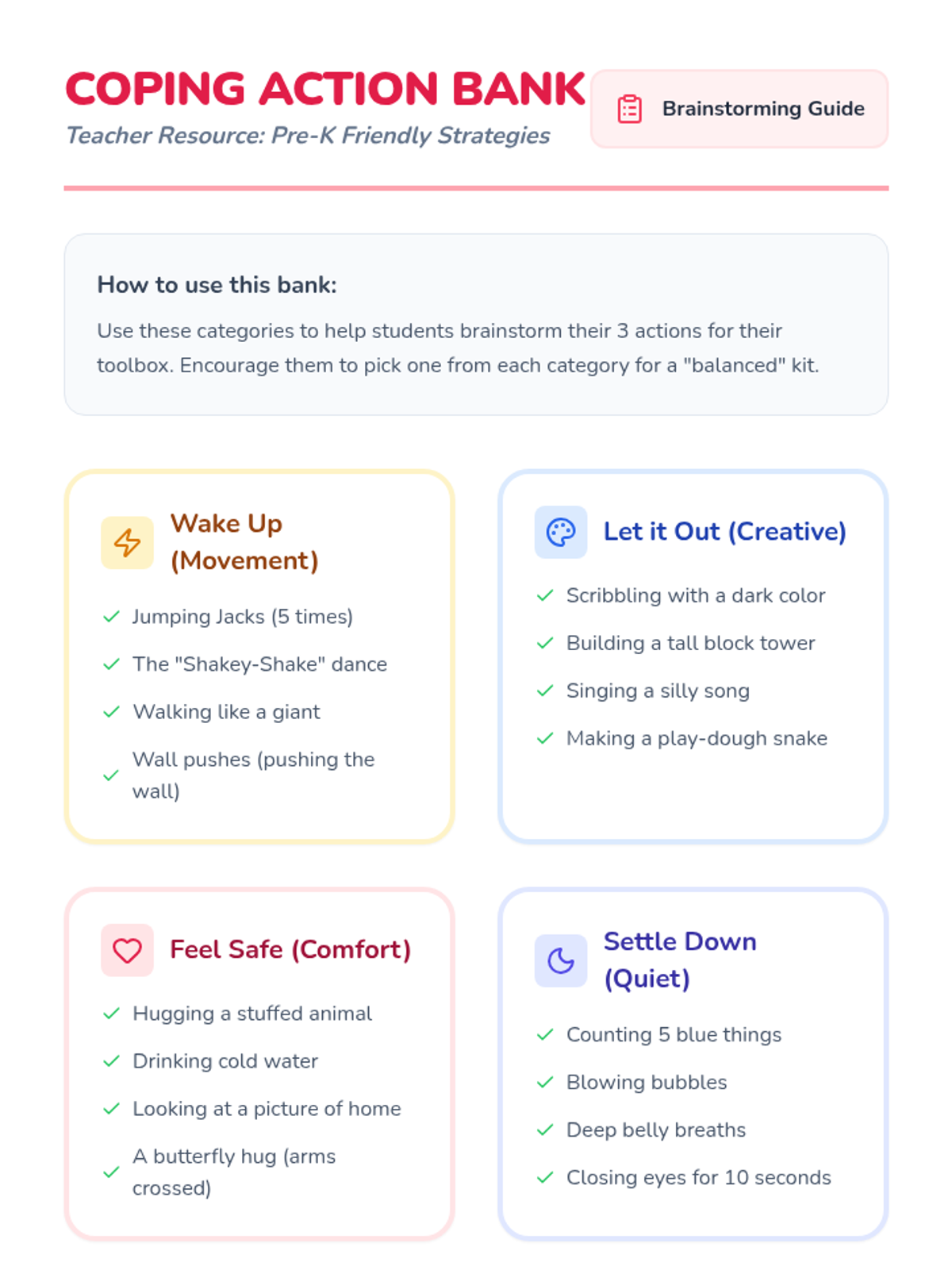
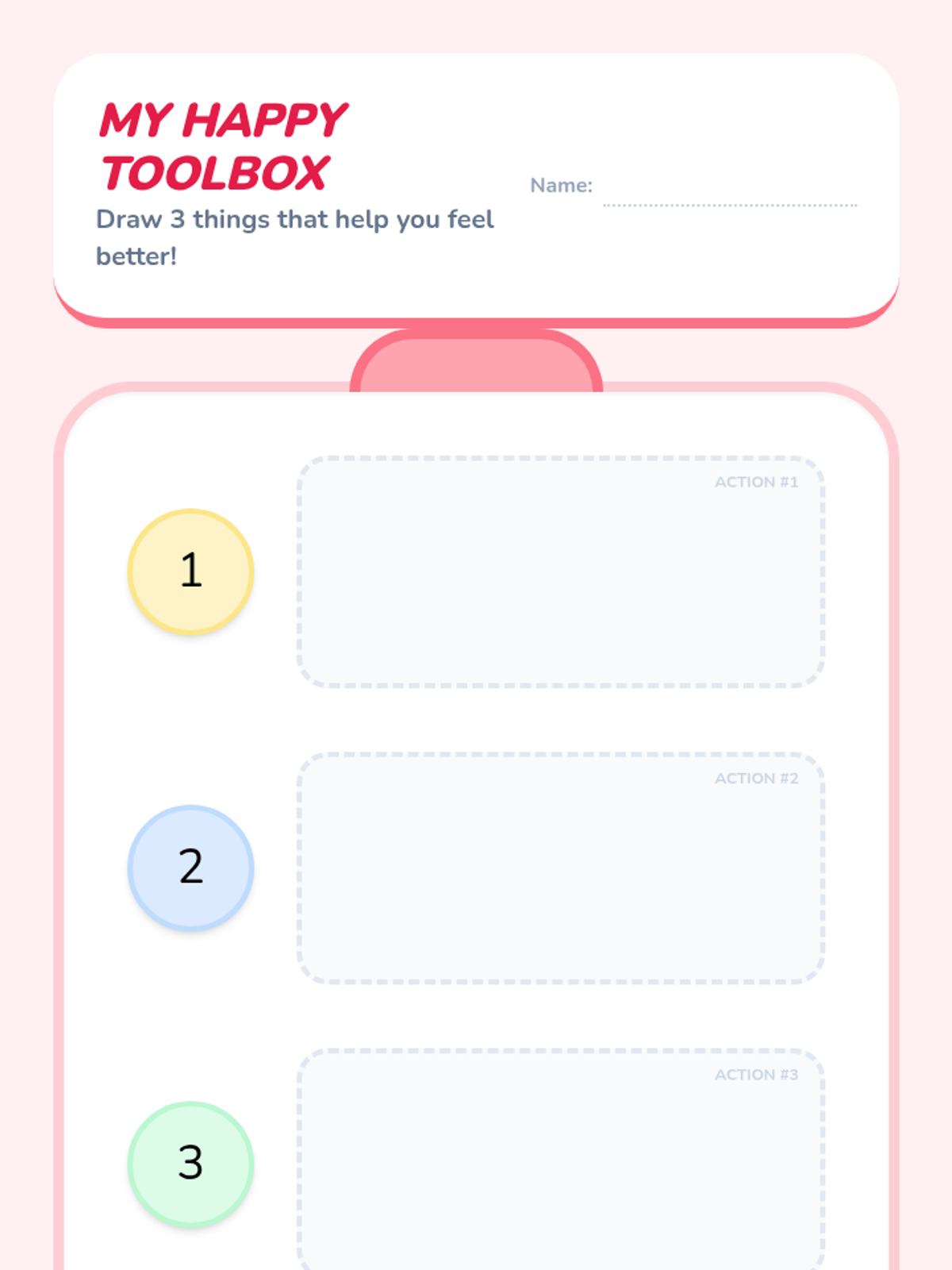
Students identify and select three specific, safe actions they can take to build their own mental 'Coping Kit' for difficult days.
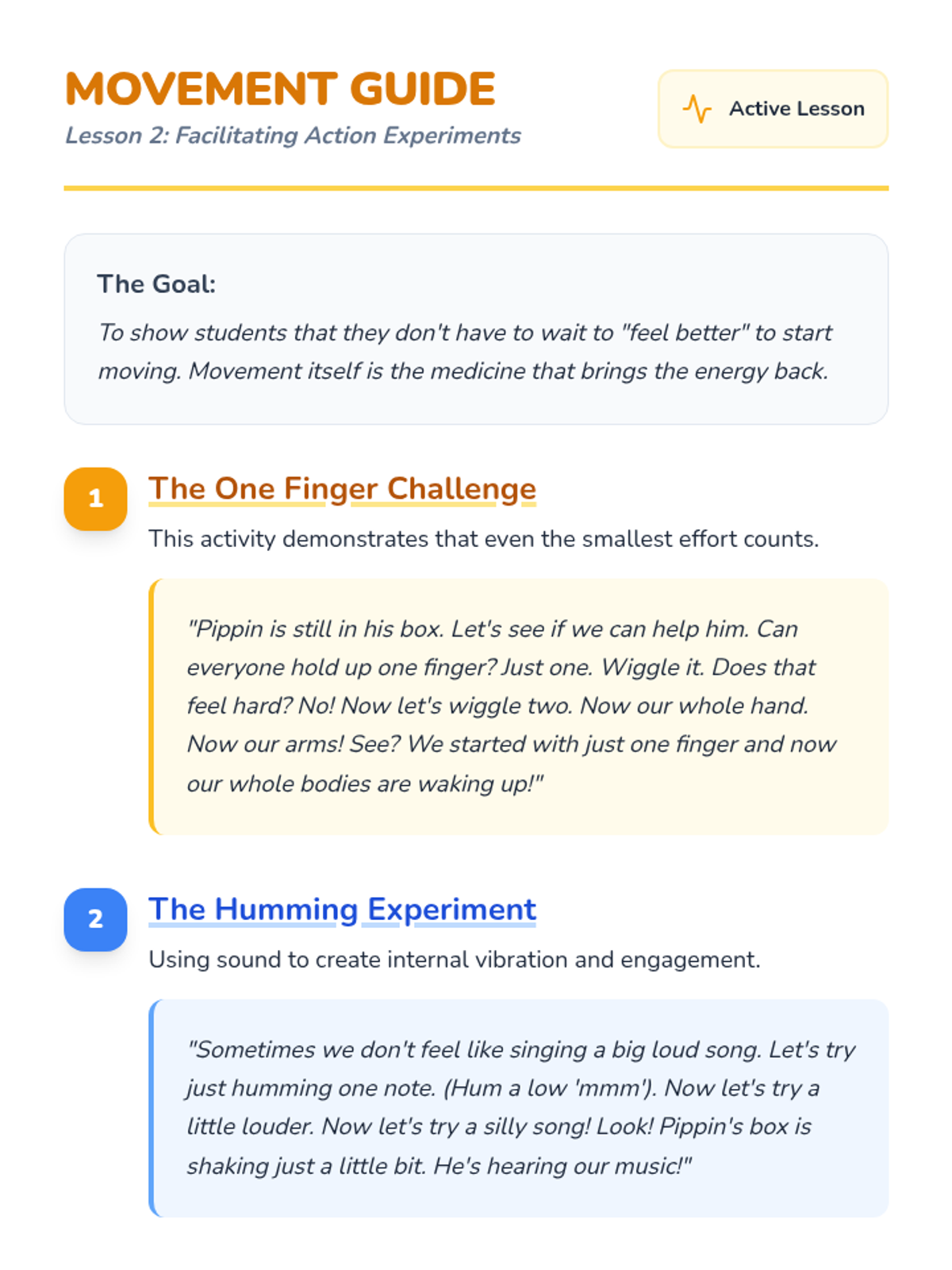
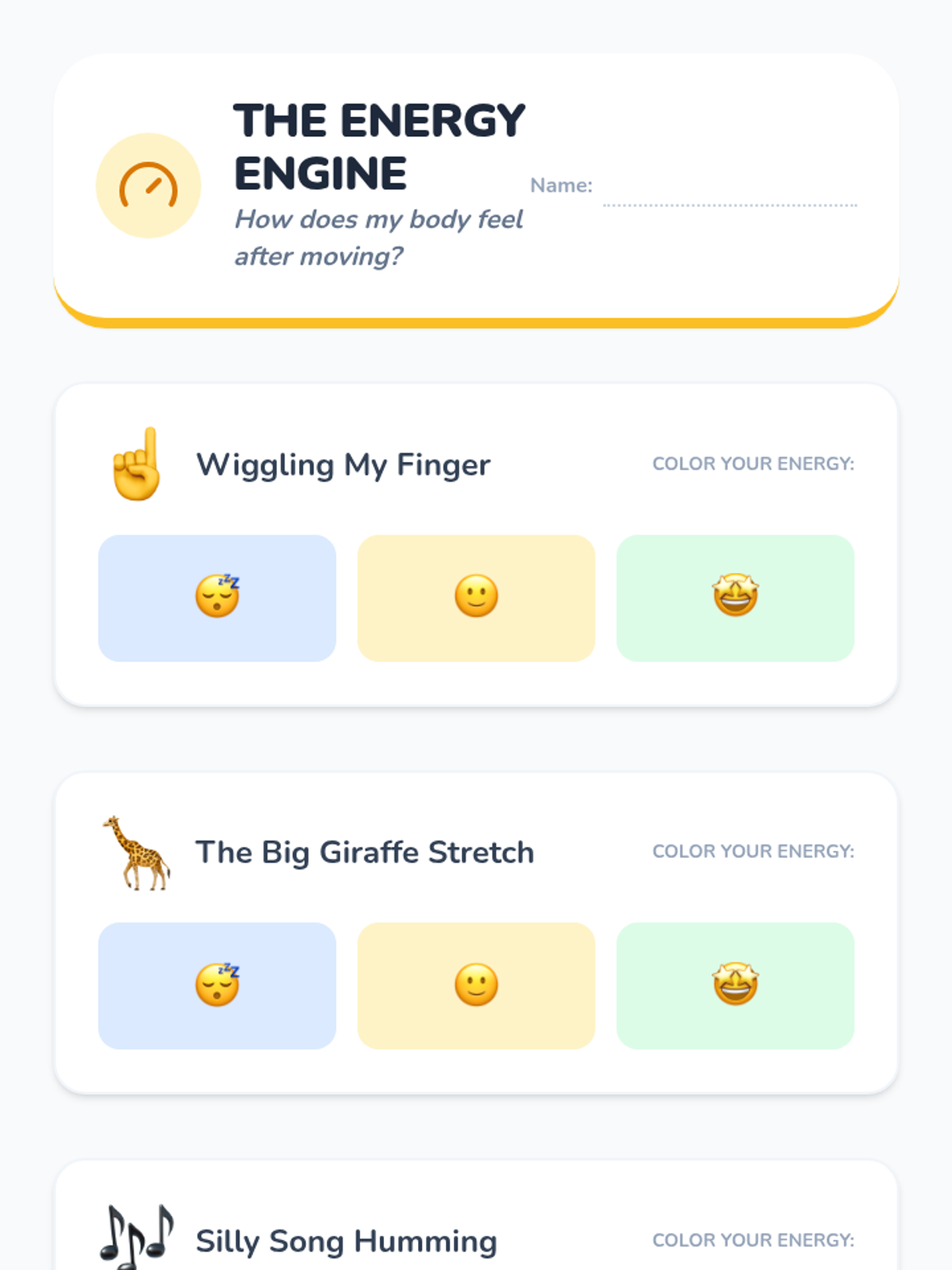
Students lead Pippin through 'Action Experiments' like stretching and singing to see how small movements can create big shifts in mood.
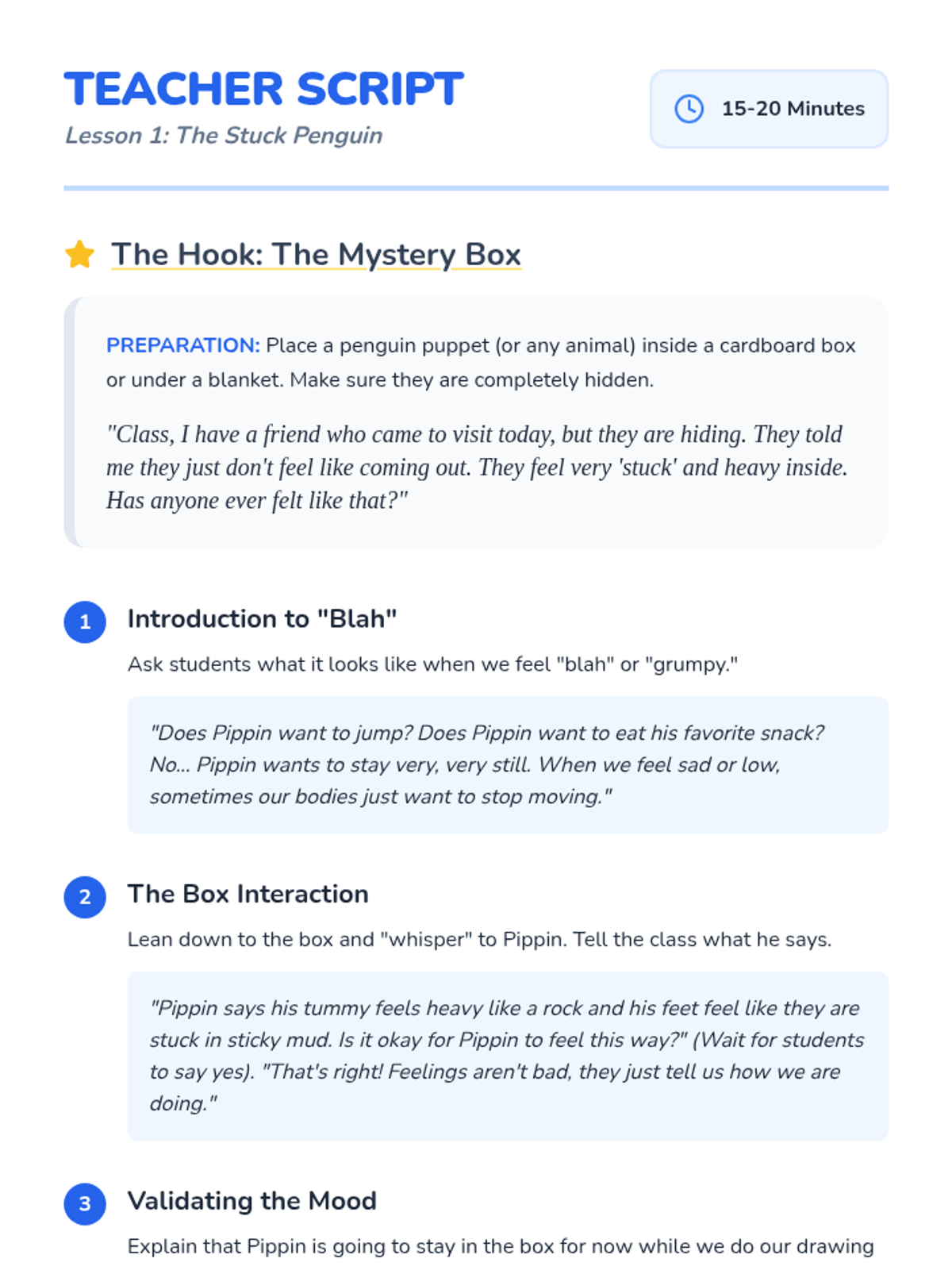
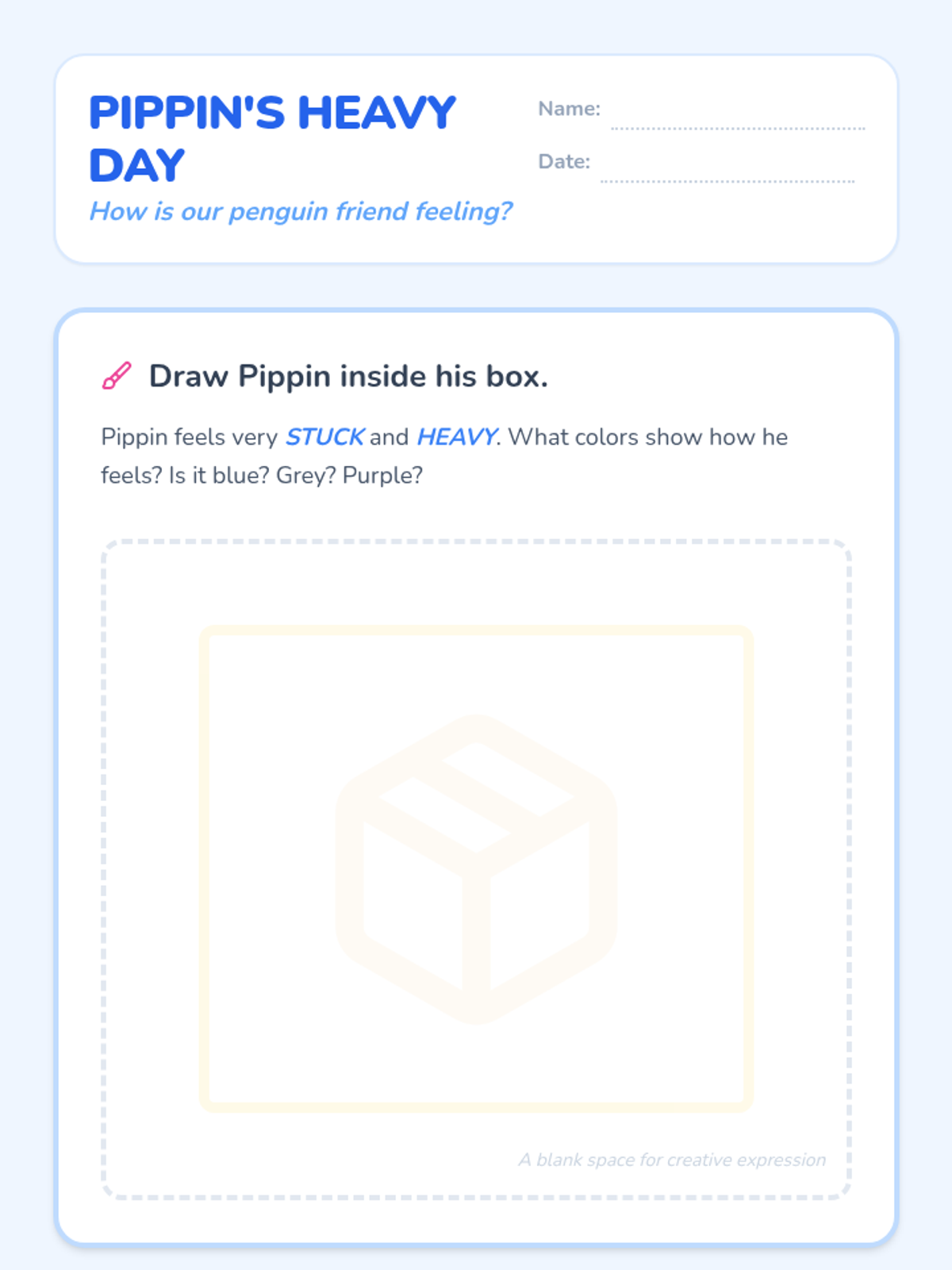
Students meet Pippin the Penguin, a puppet who feels 'stuck' and grumpy, to explore the connection between feelings and physical stillness.
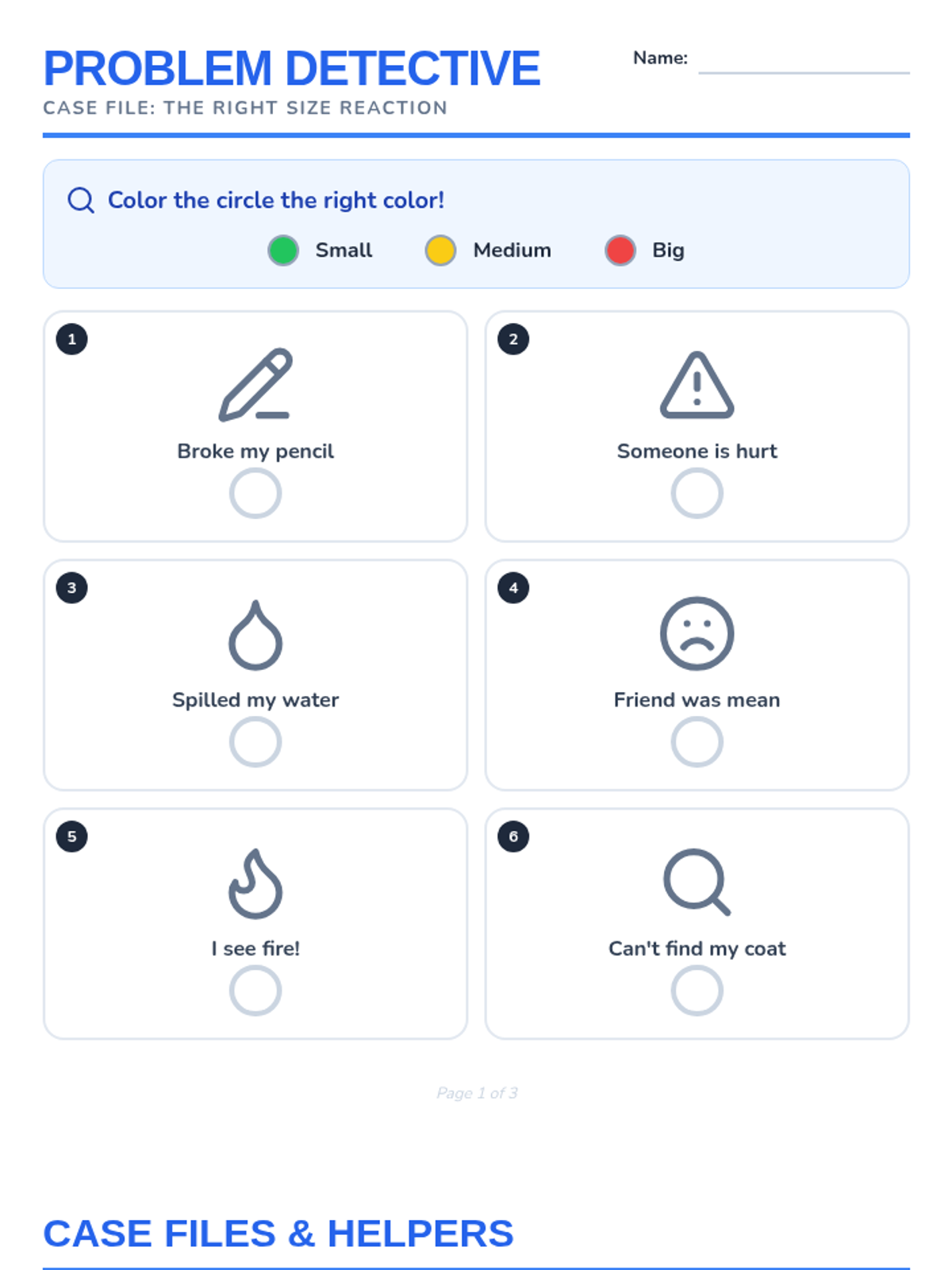
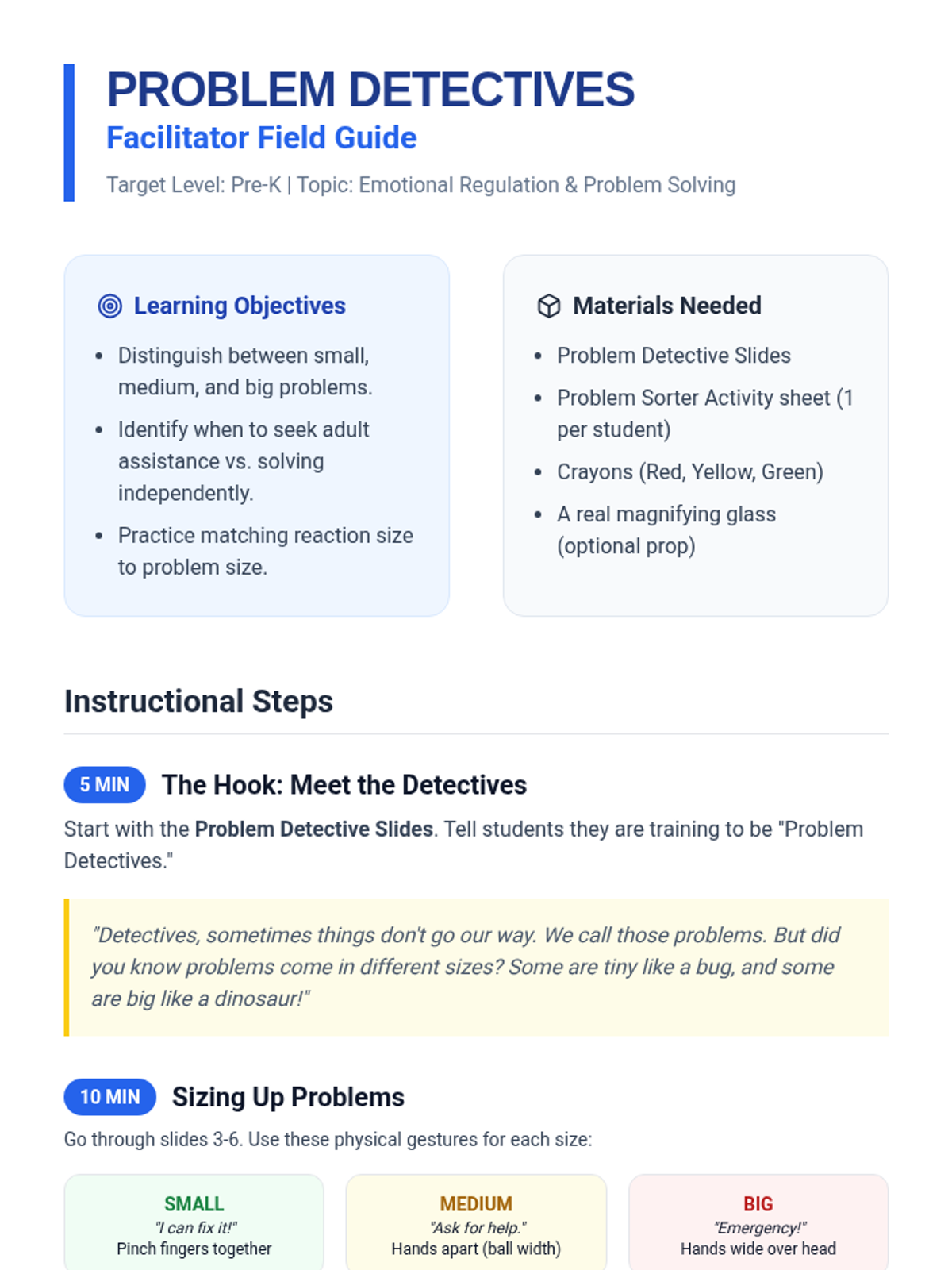
A Social-Emotional Learning lesson for Pre-K students to identify the size of problems (small, medium, big) and learn appropriate reactions and help-seeking strategies.
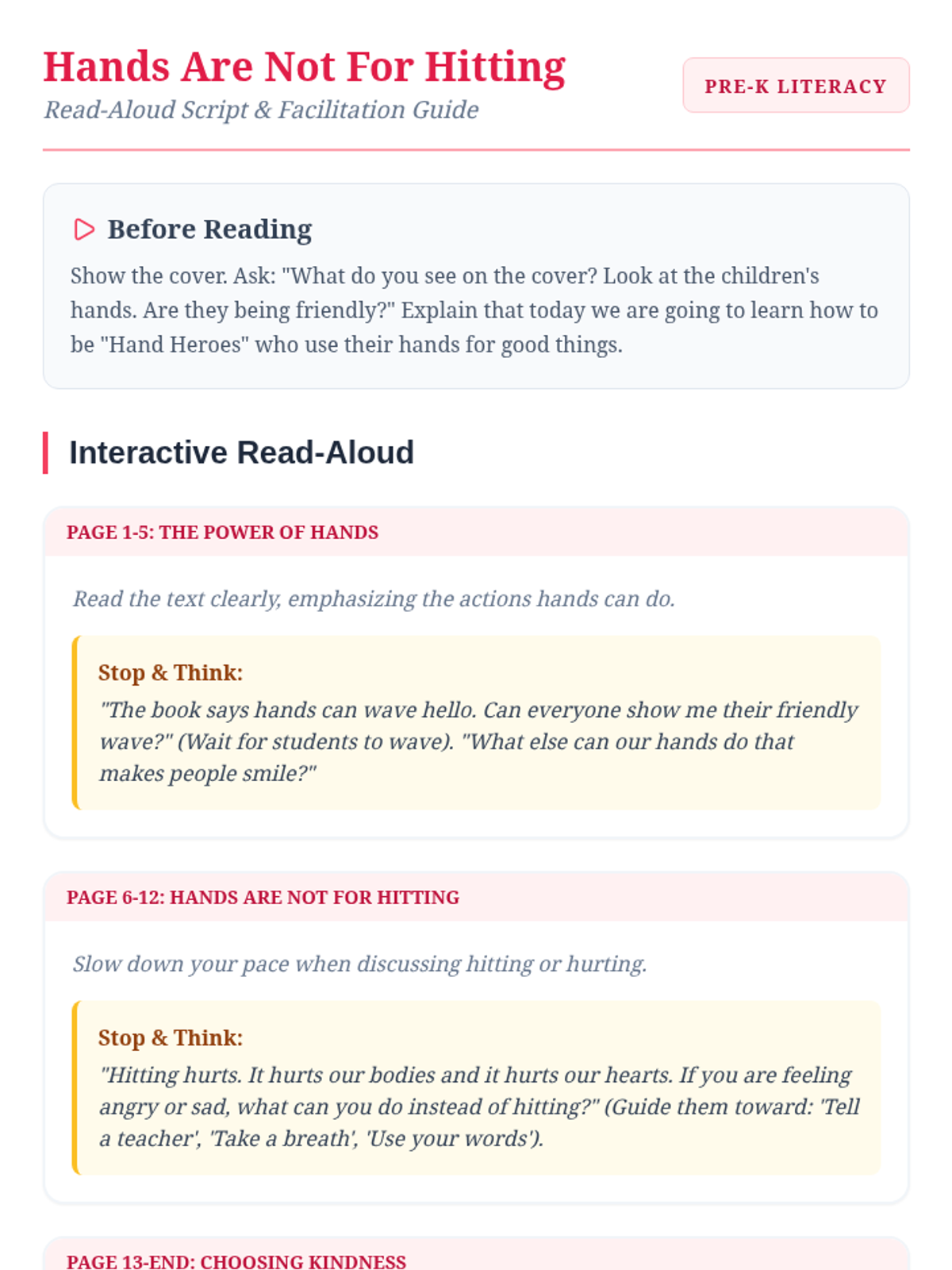
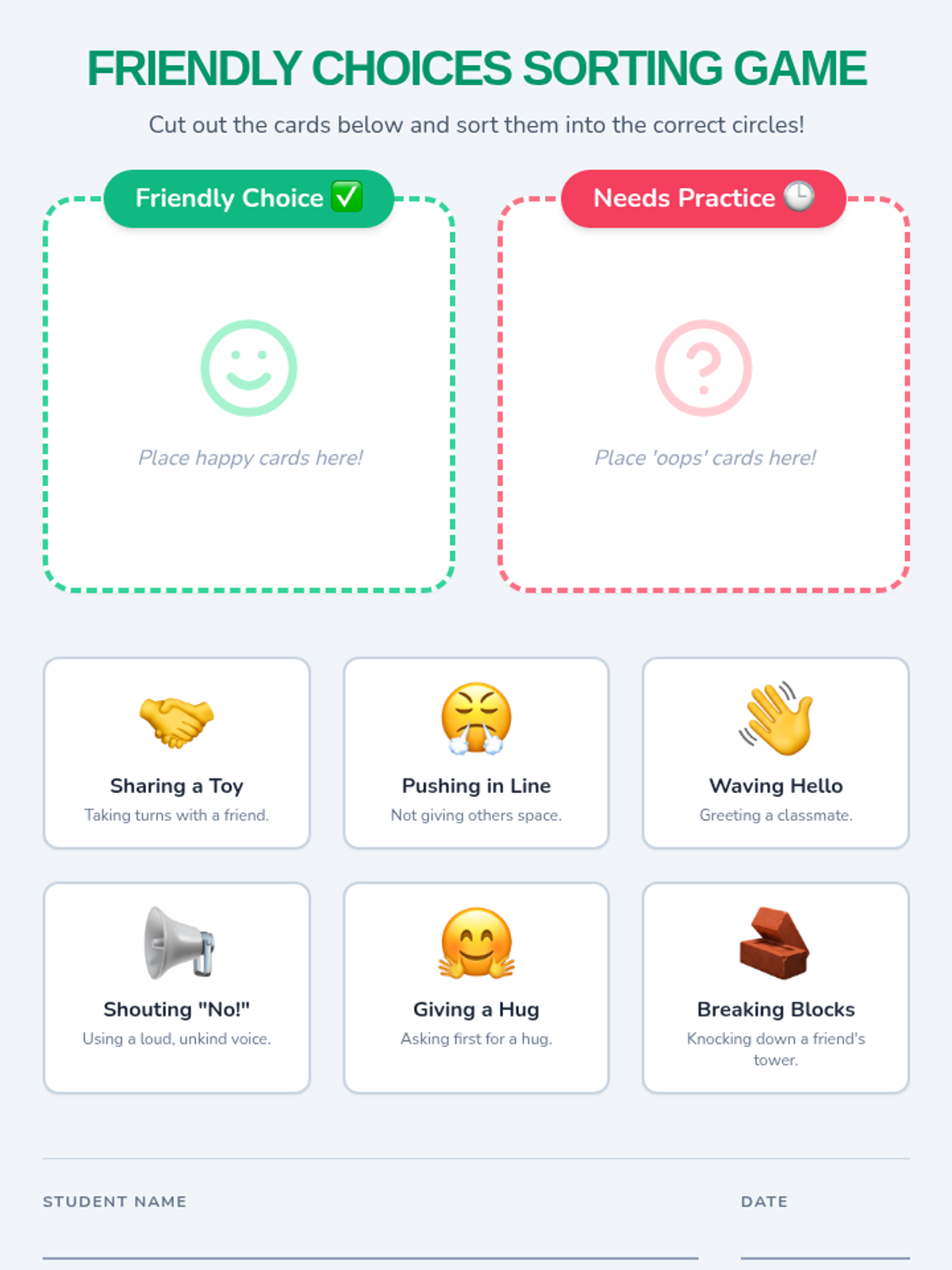
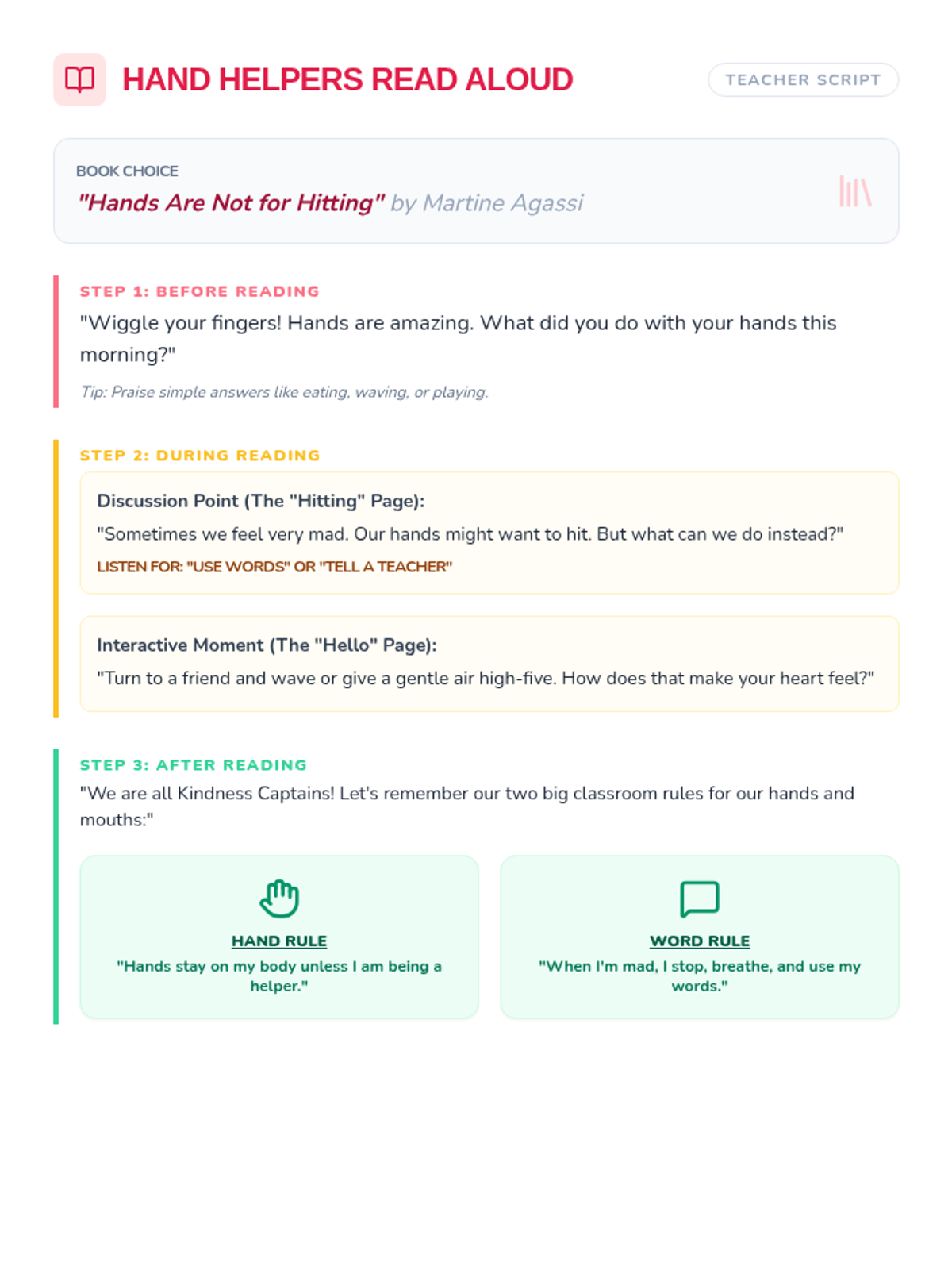
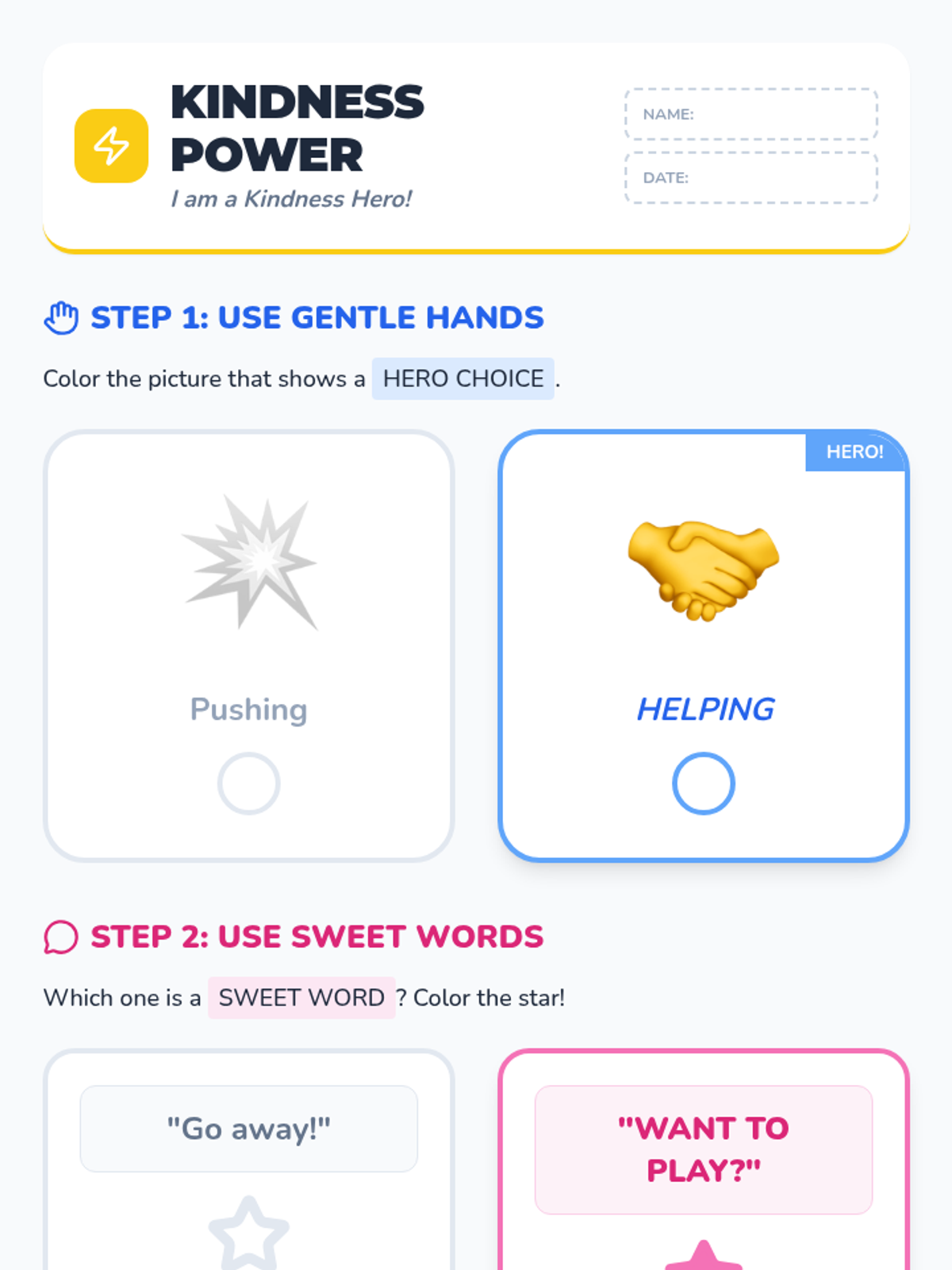
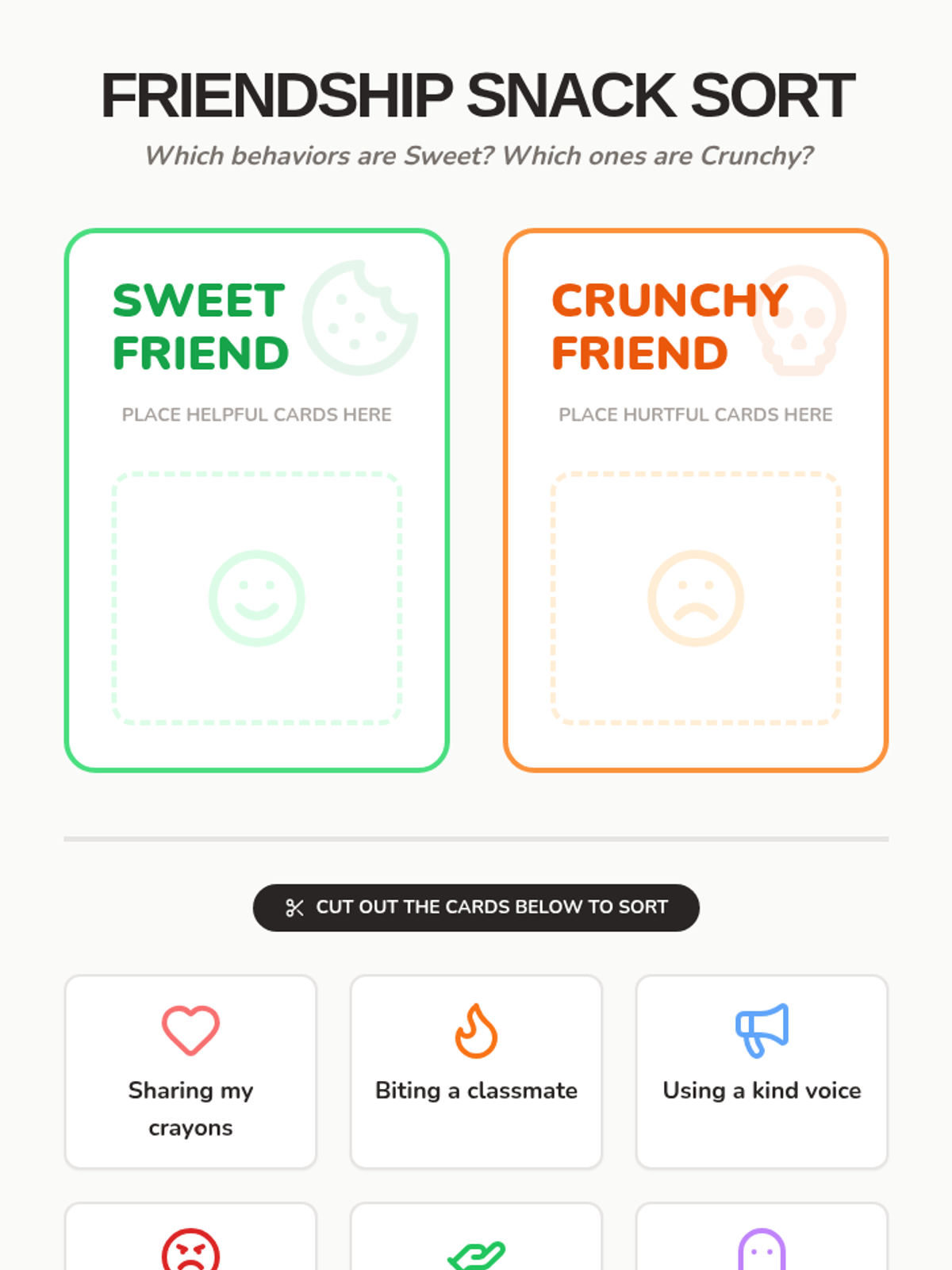
A Pre-K lesson focused on teaching students how to use their hands for kindness and their words for communication, featuring a read-aloud, a sorting game, and interactive practice.
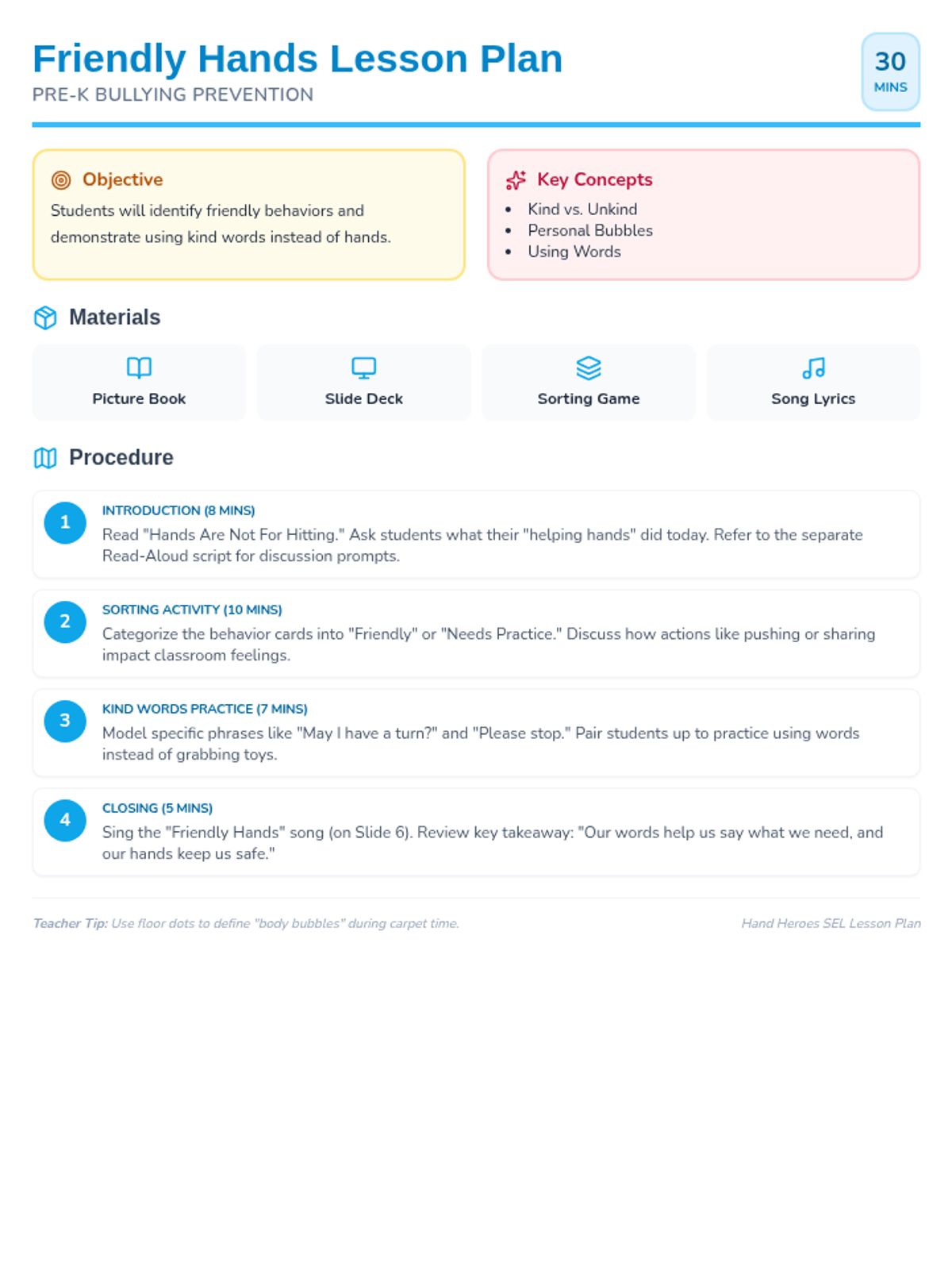
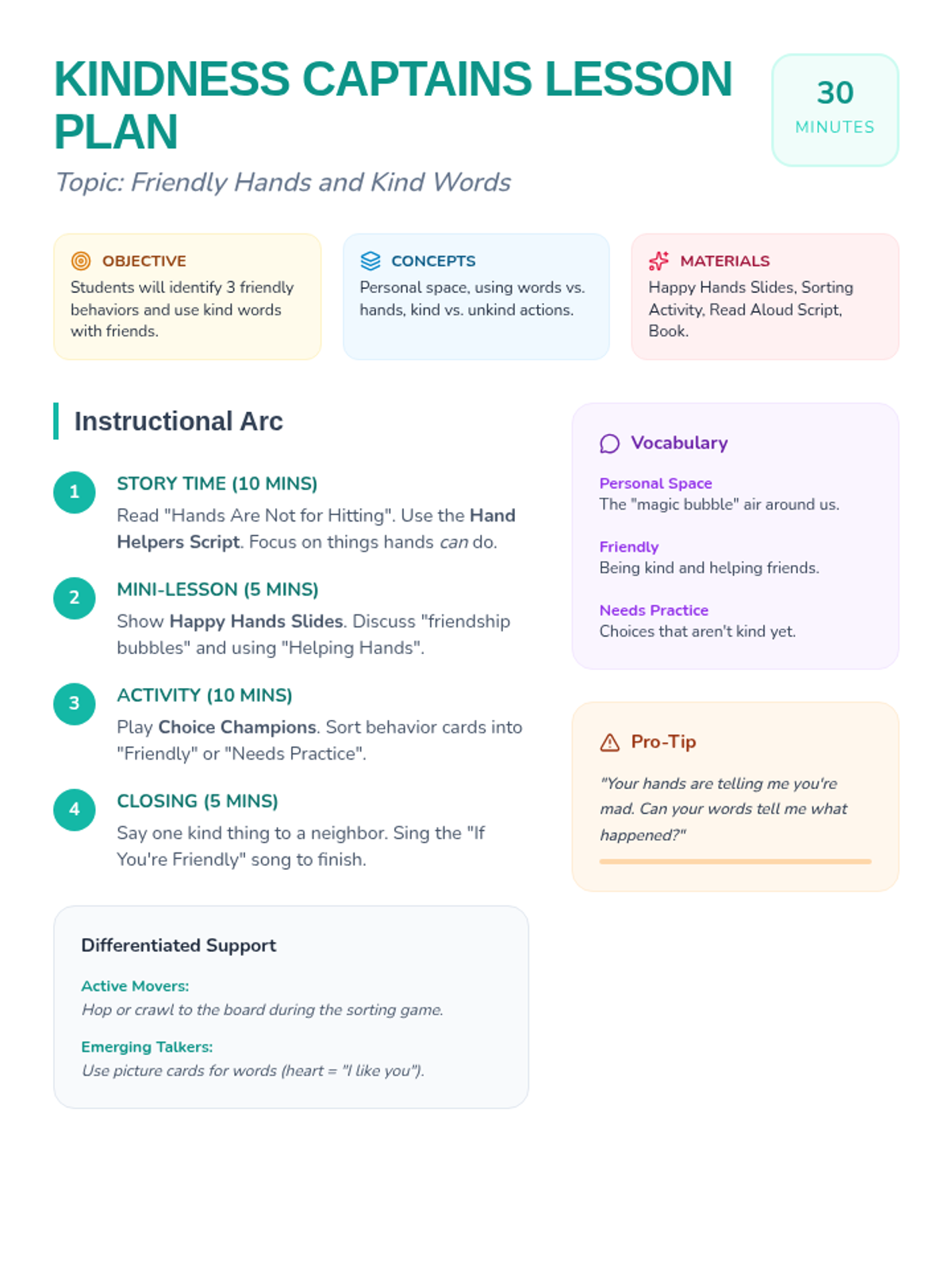
A 30-minute Pre-K lesson focused on identifying friendly behaviors, practicing personal space, and using kind words to build a positive classroom environment.
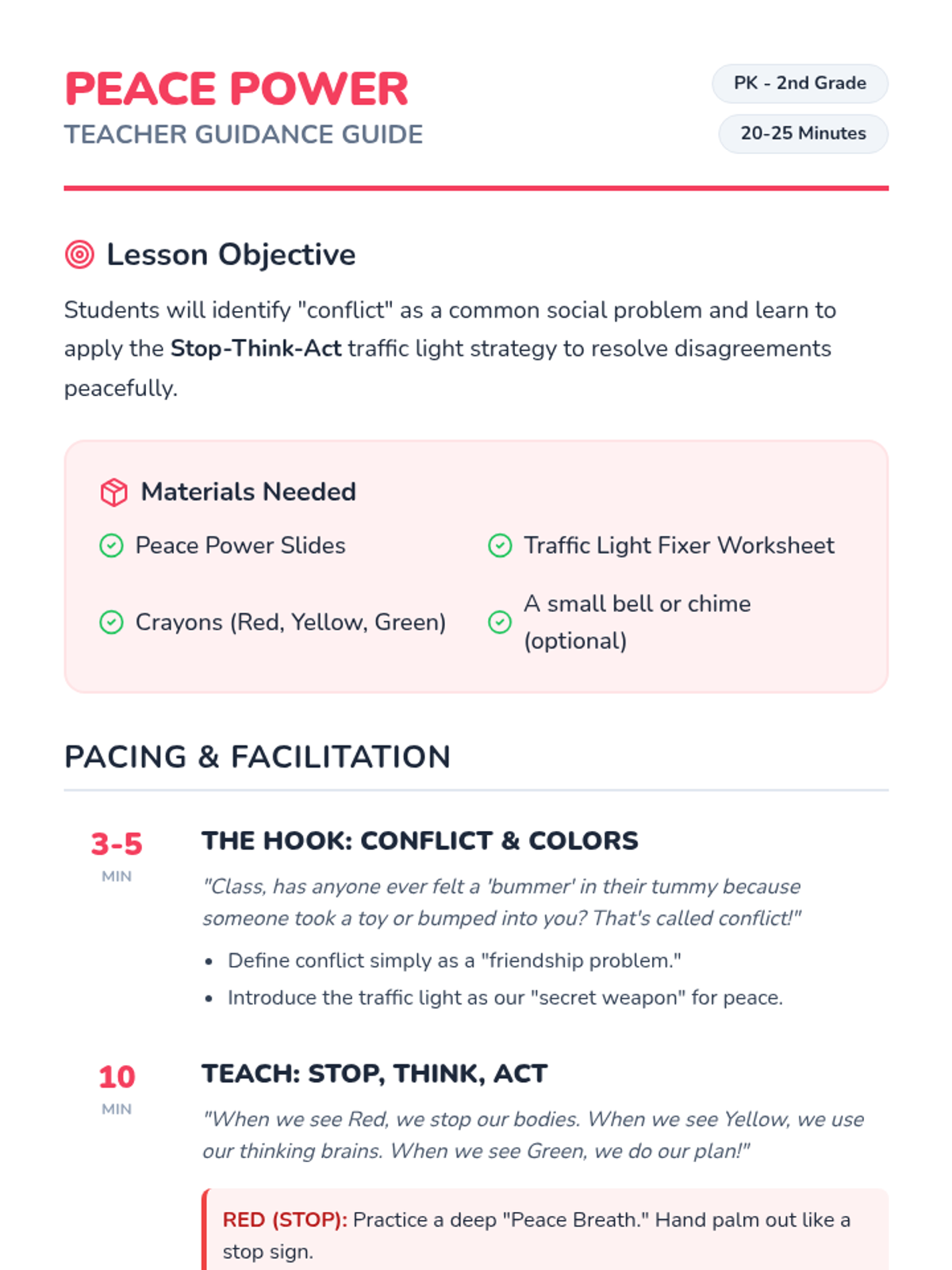
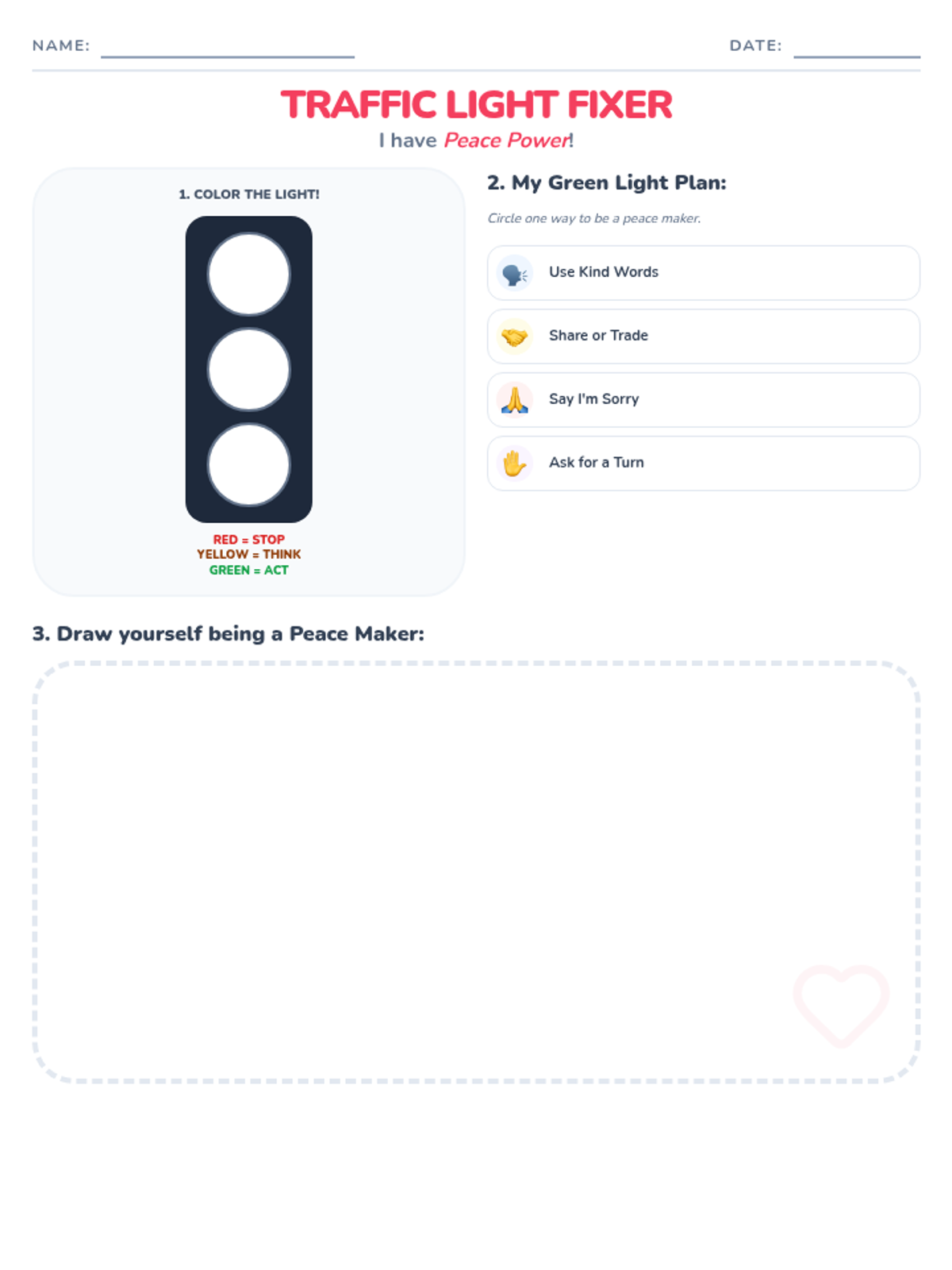
A vibrant, interactive guidance lesson for PK-2nd grade students focusing on the 'Stop-Think-Act' conflict resolution strategy using a traffic light metaphor. Emphasizes self-regulation and kind choices.
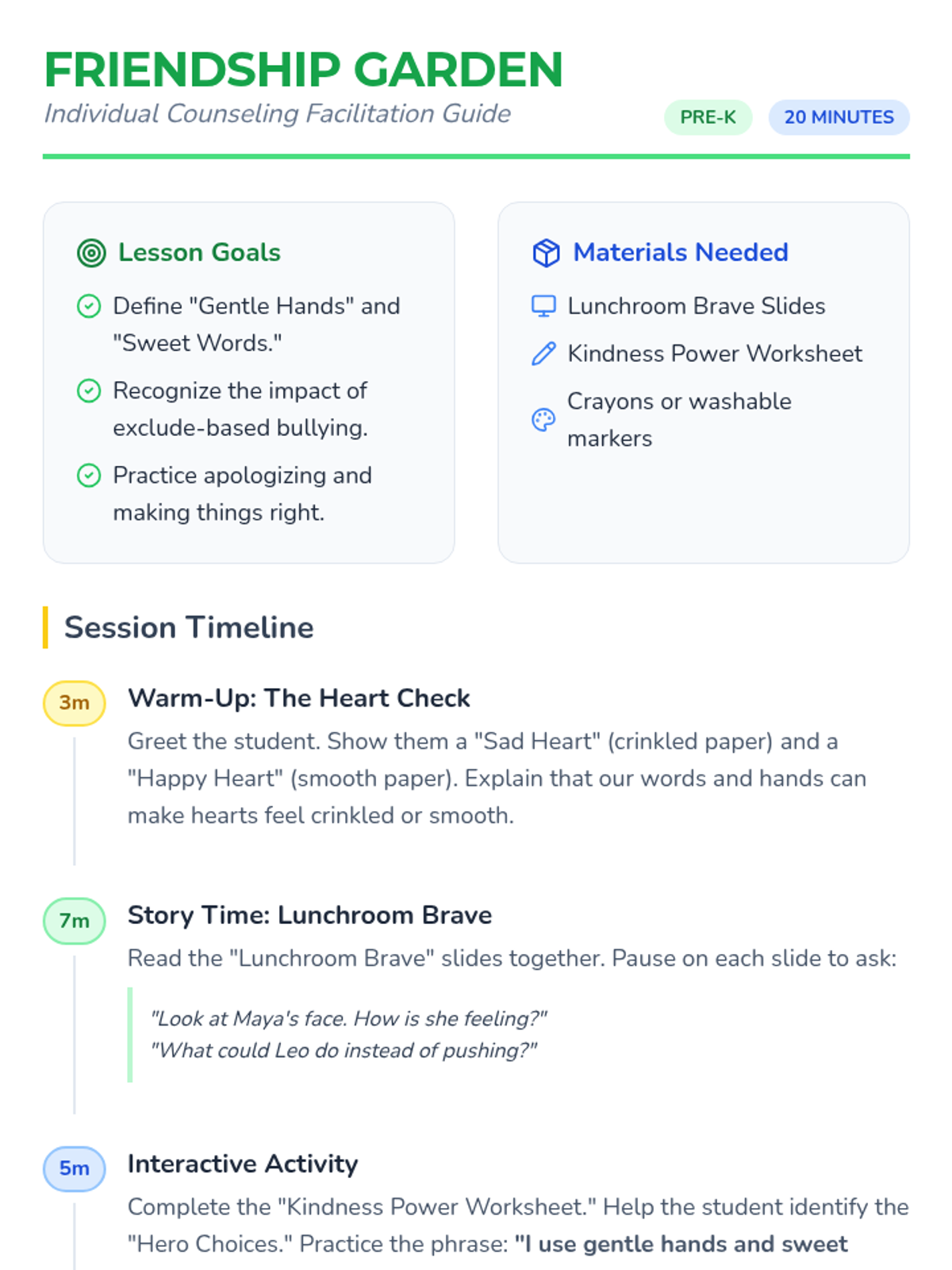
A 20-minute individual counseling session for Pre-K students focused on identifying and replacing bullying behaviors like unkind words and physical aggression with kindness and empathy.
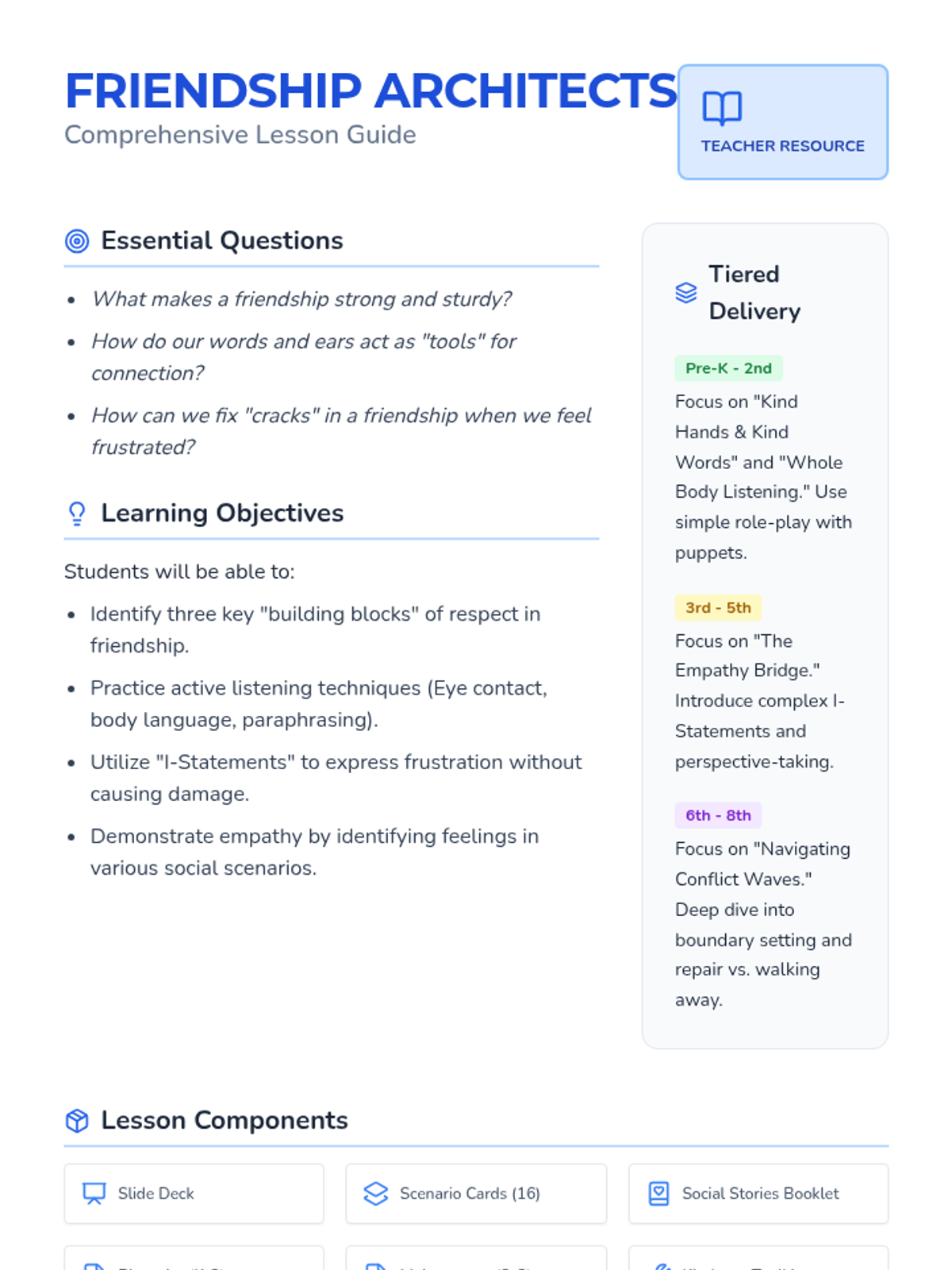
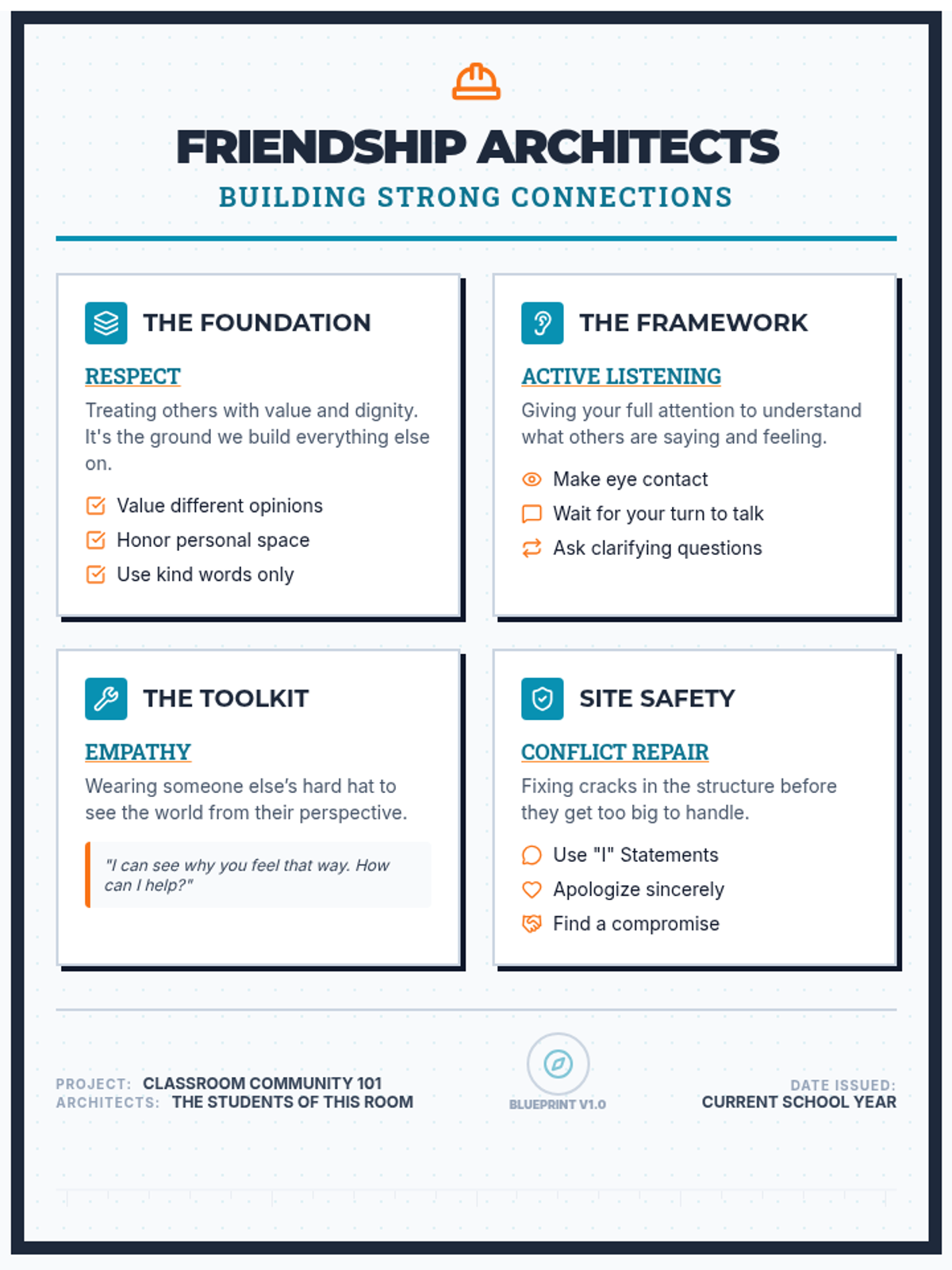
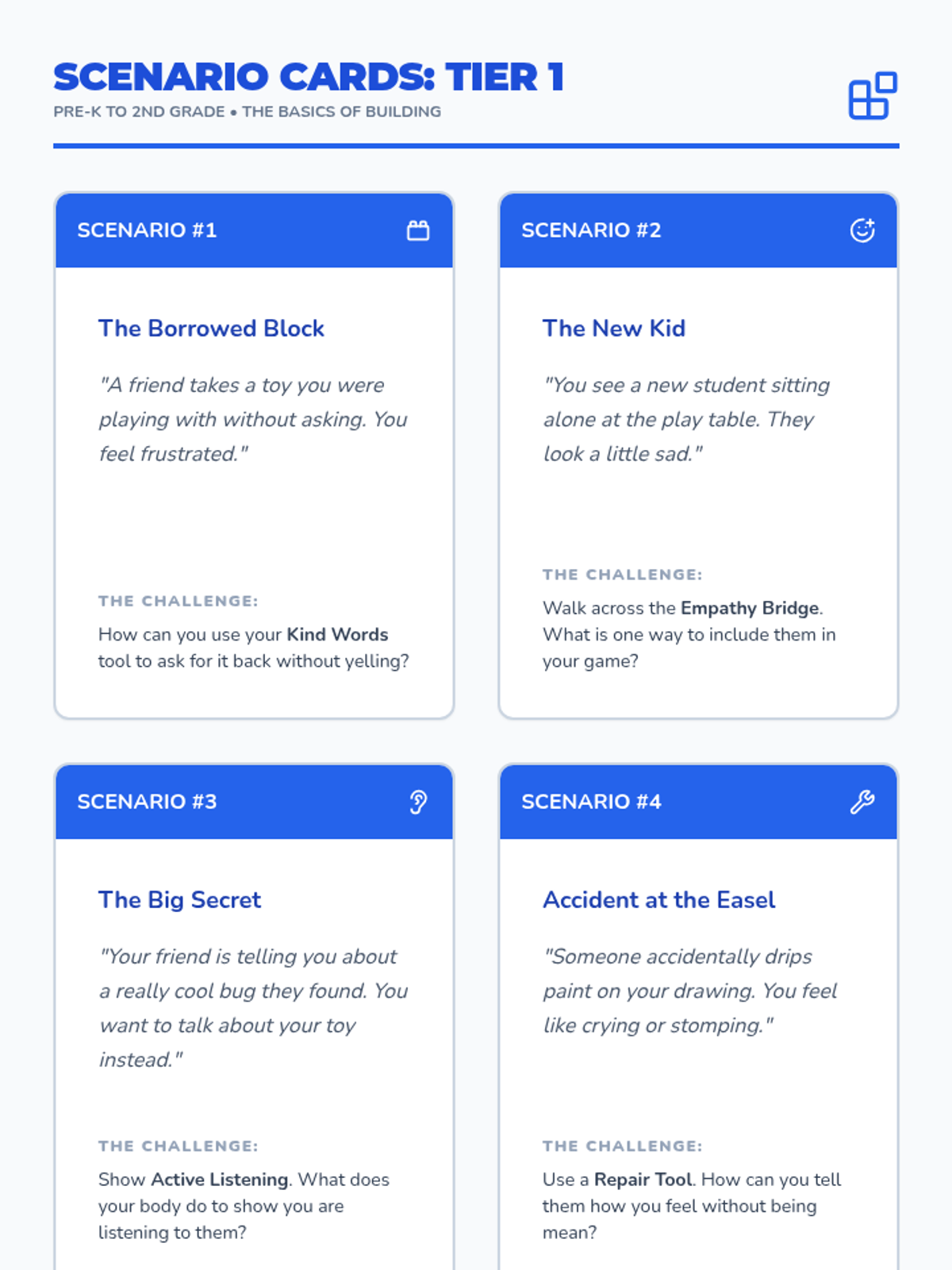
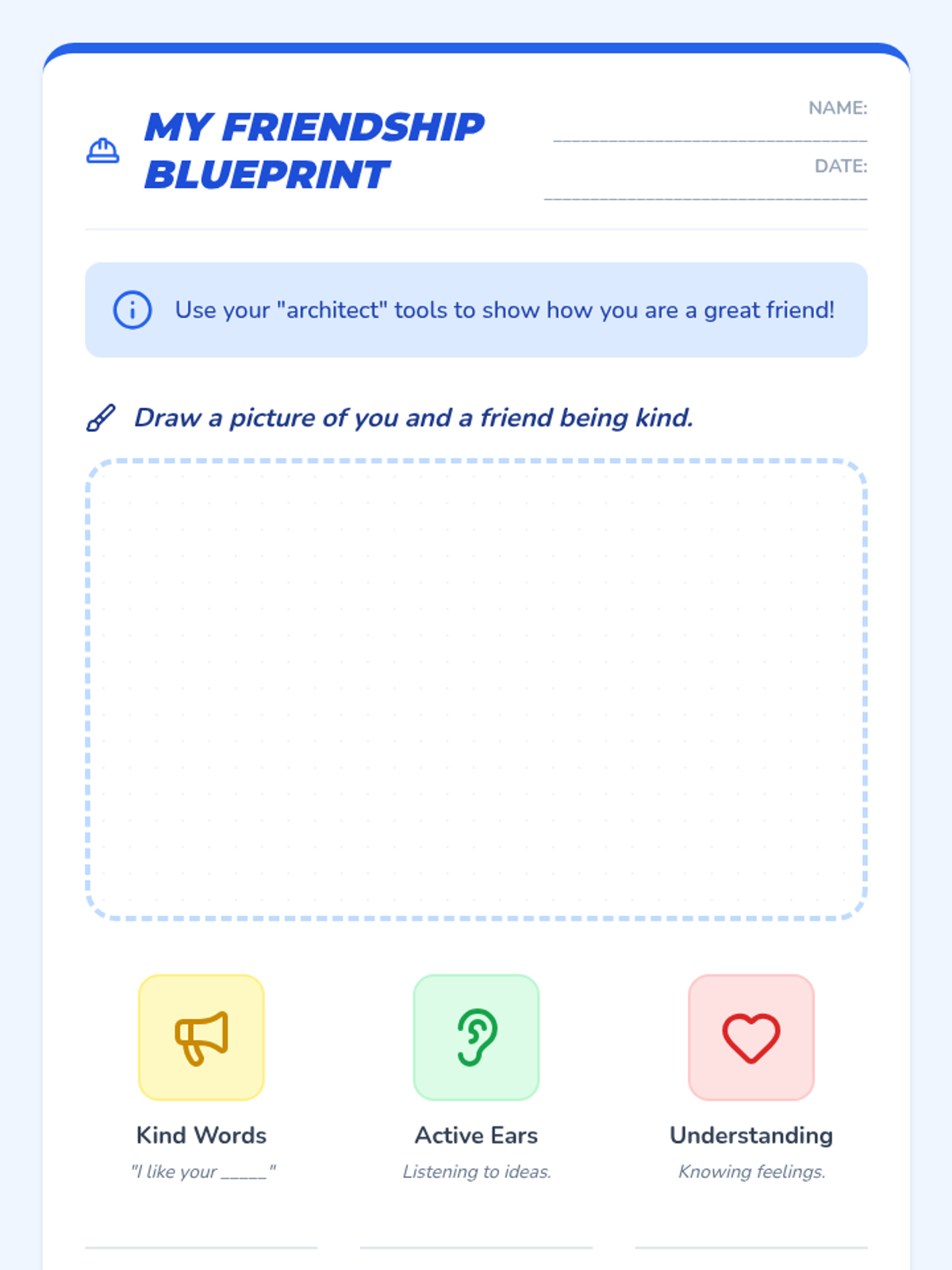
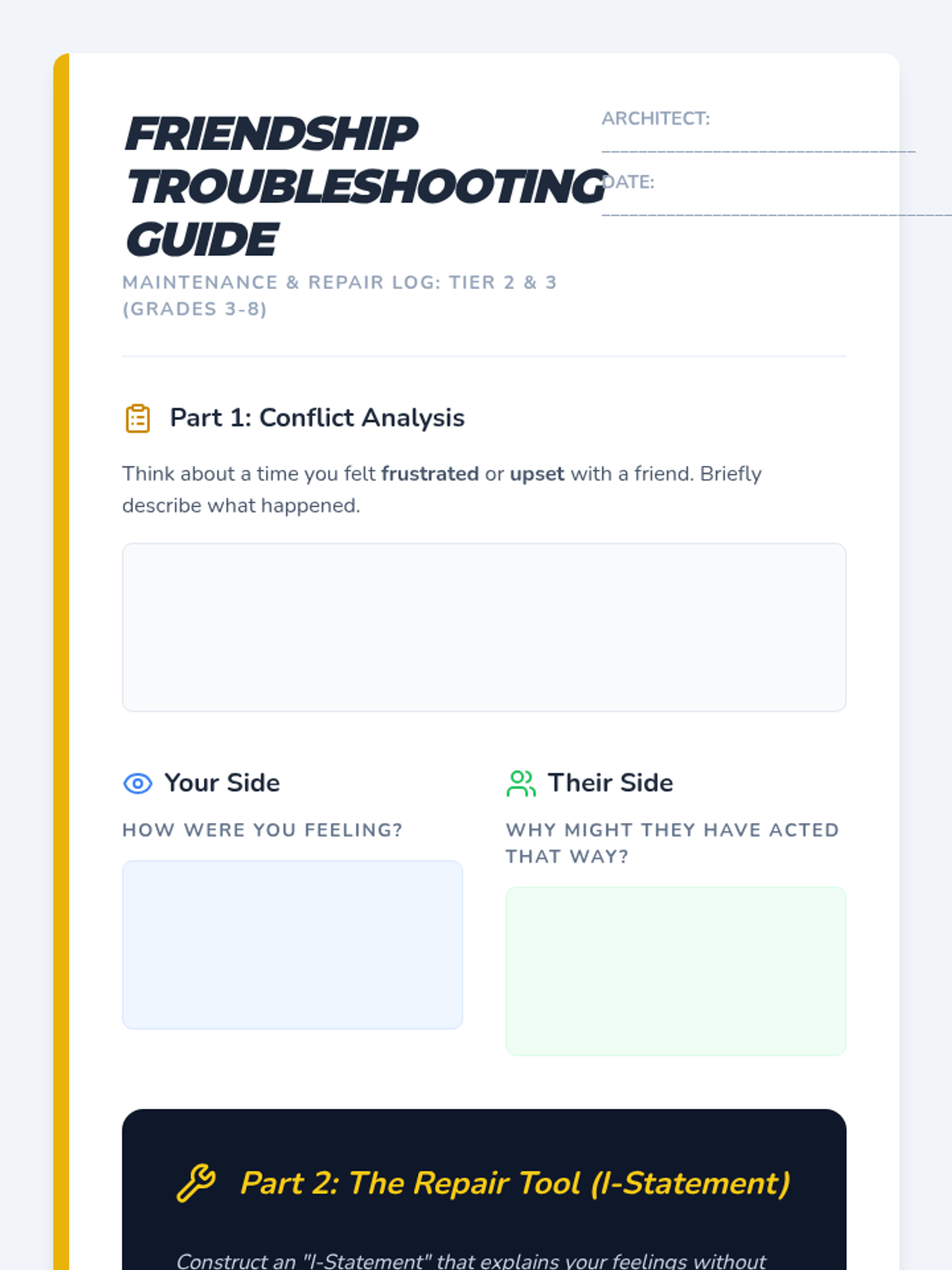
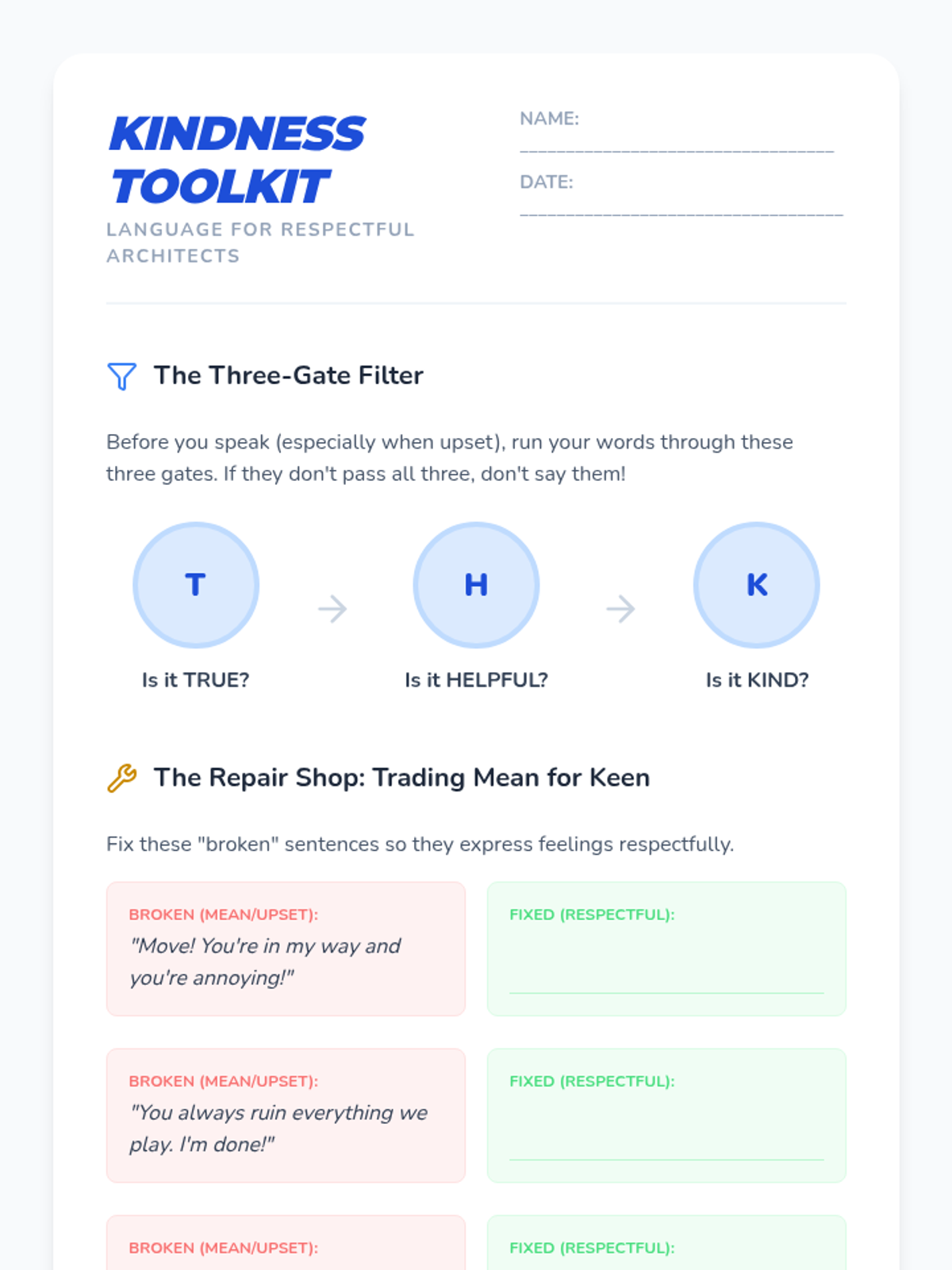
A multi-tiered lesson exploring the essential building blocks of friendship, focusing on respectful communication, active listening, and managing conflict with empathy. This lesson includes differentiated activities suitable for Pre-K through 8th grade.
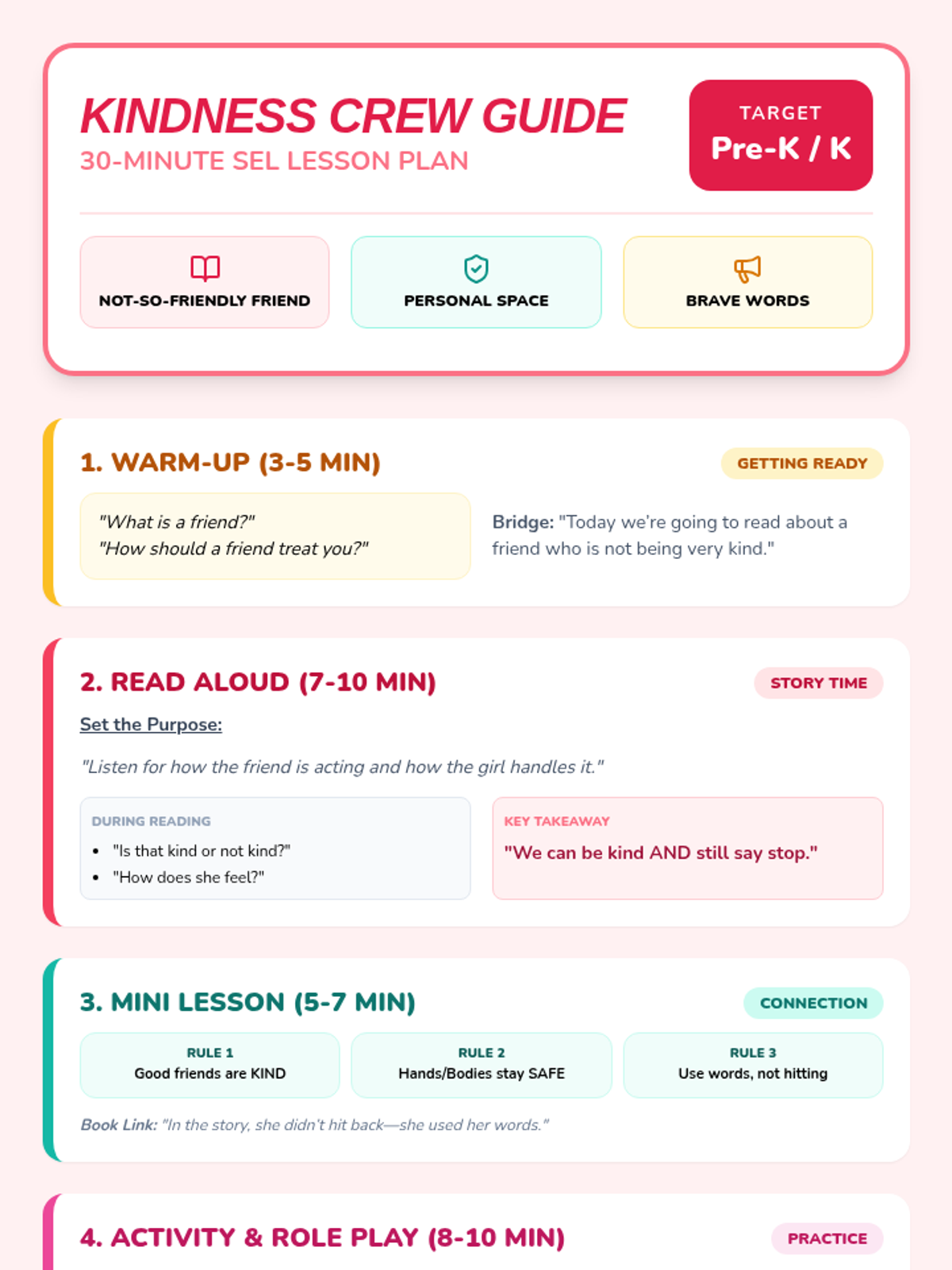
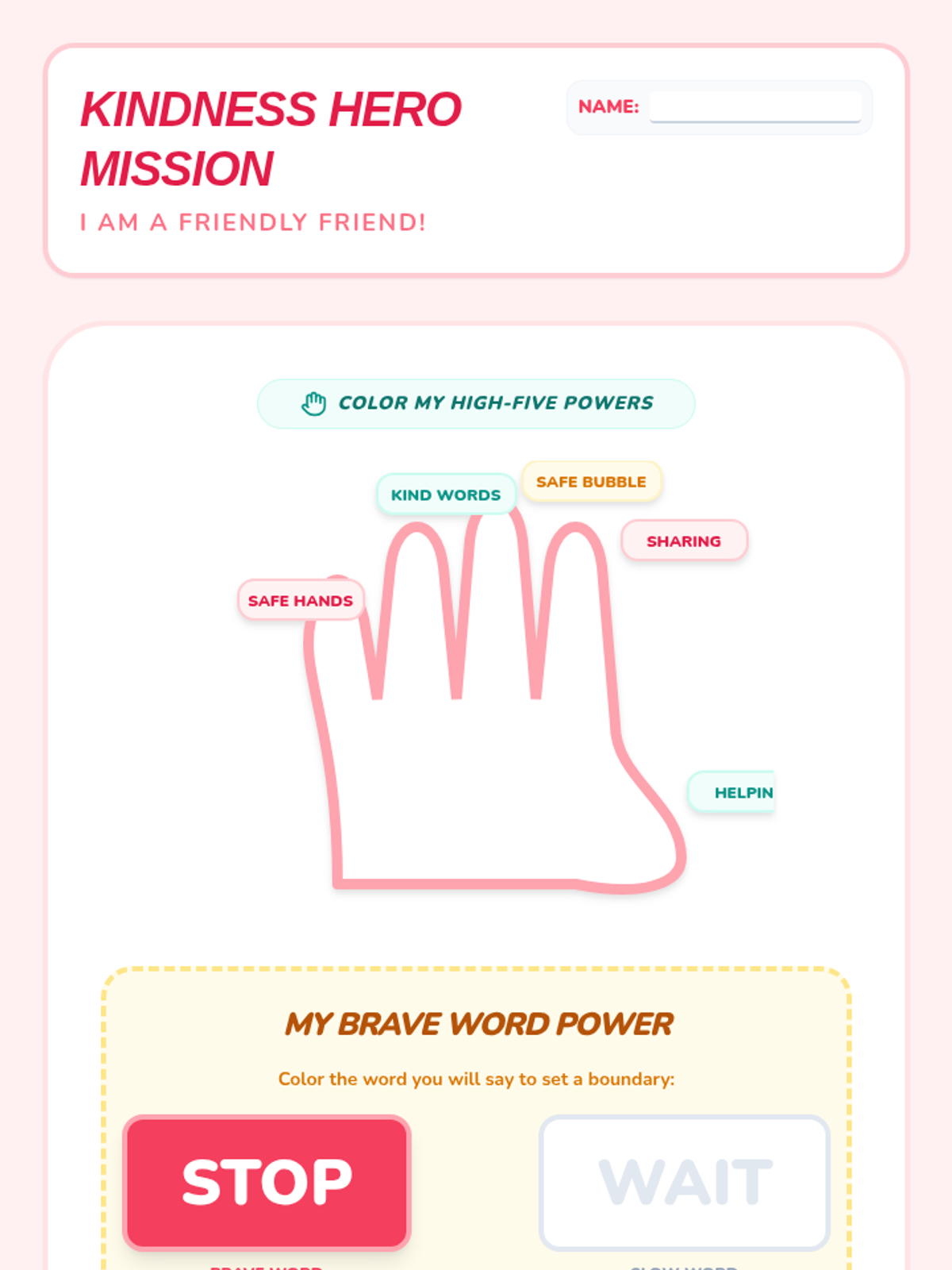
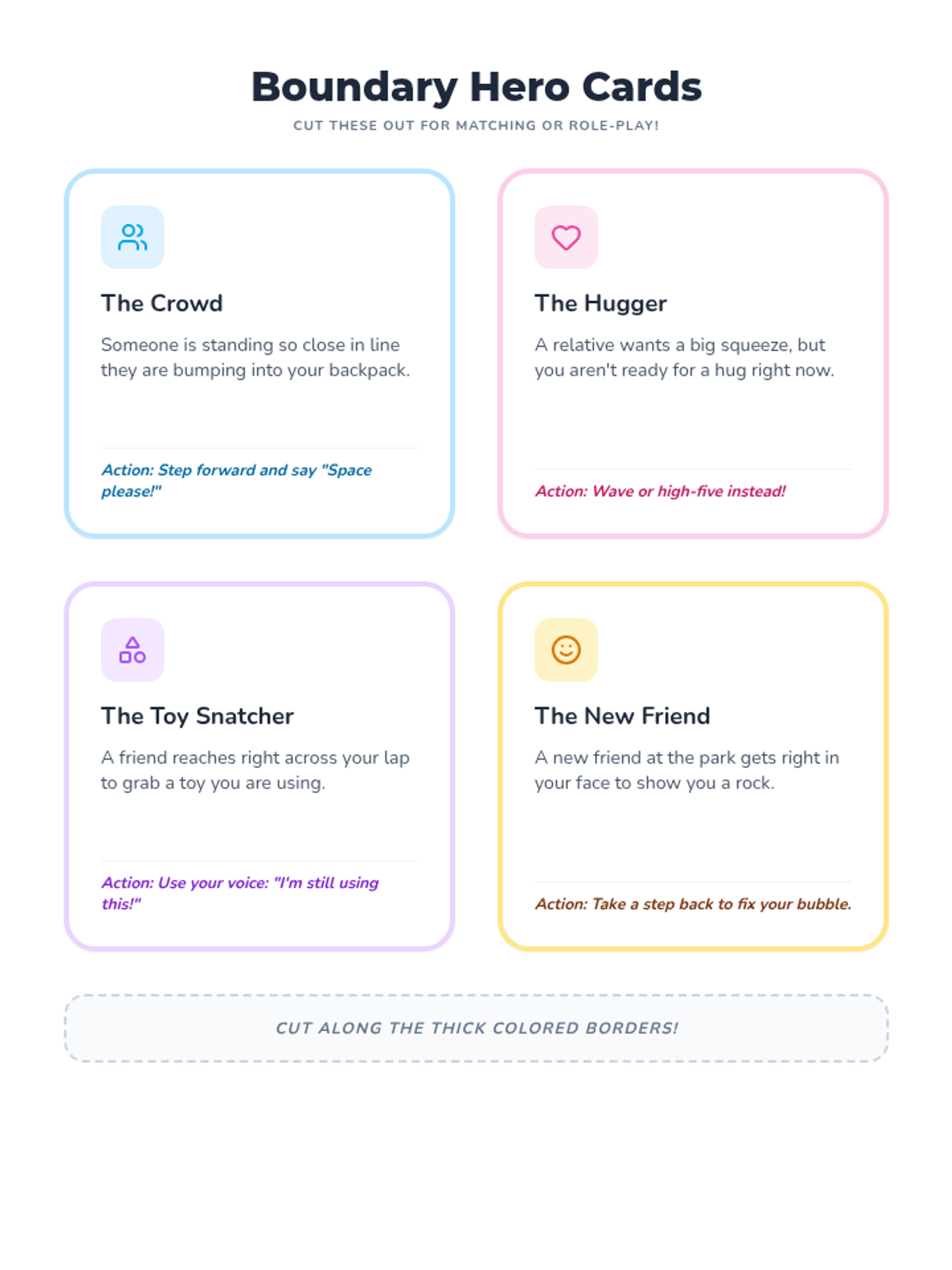
A 30-minute social-emotional lesson for Pre-K and Kindergarten based on the book 'The Not-So-Friendly Friend'. Students learn to identify qualities of a good friend, recognize unkind behaviors like hitting or bossing, and practice setting healthy boundaries and personal space. Includes the 'Hero Flip-Freeze' movement game.
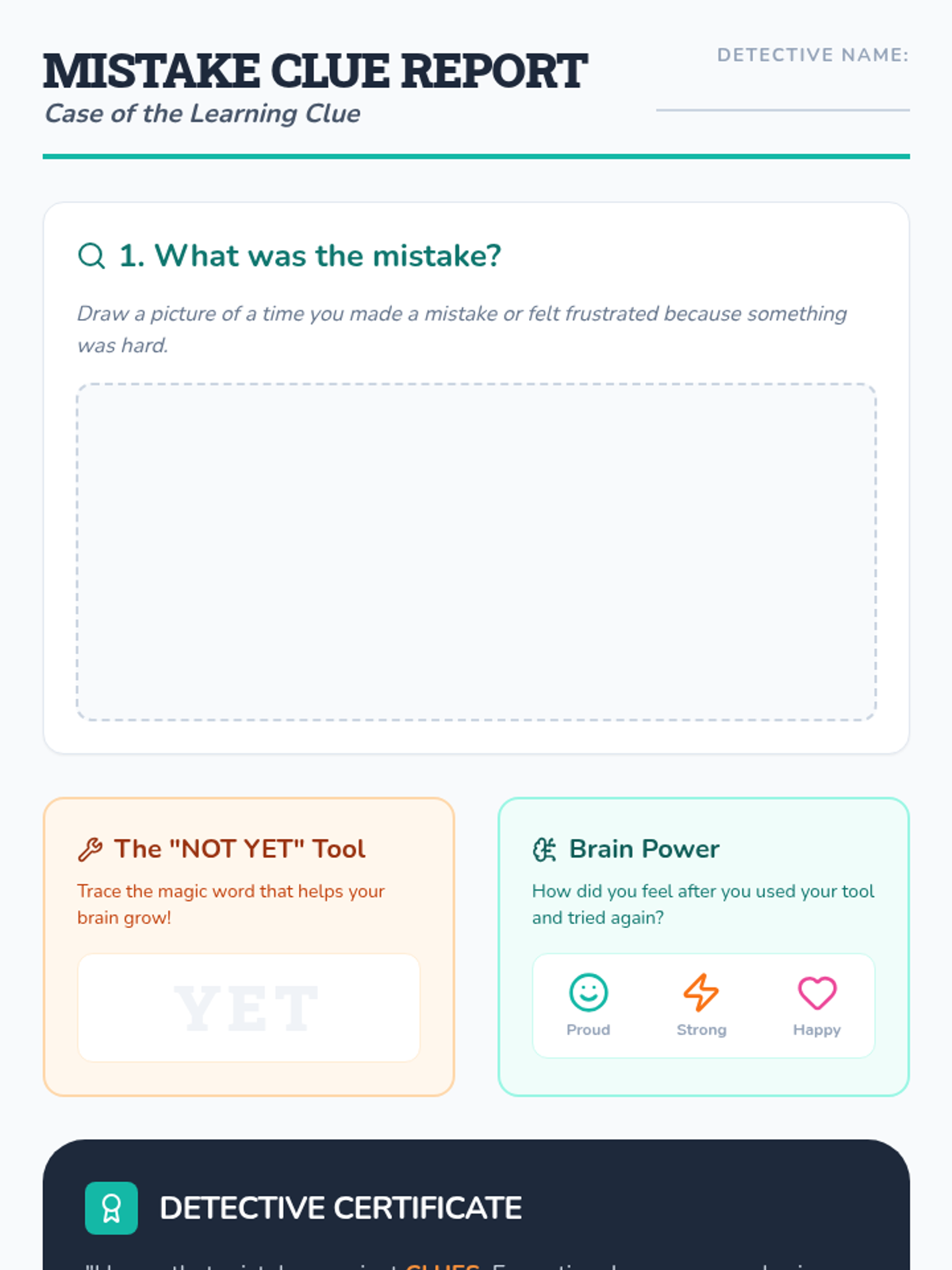
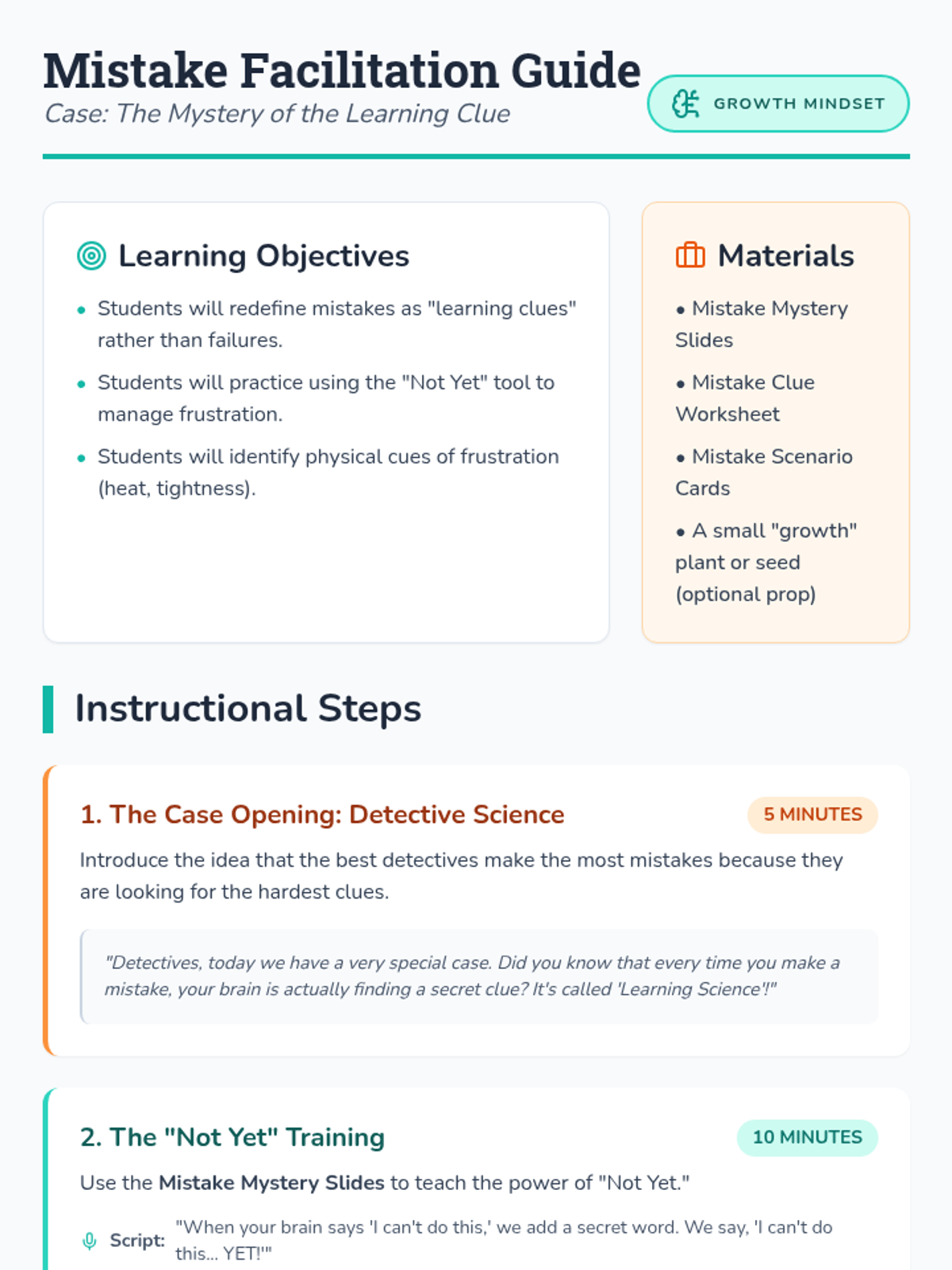
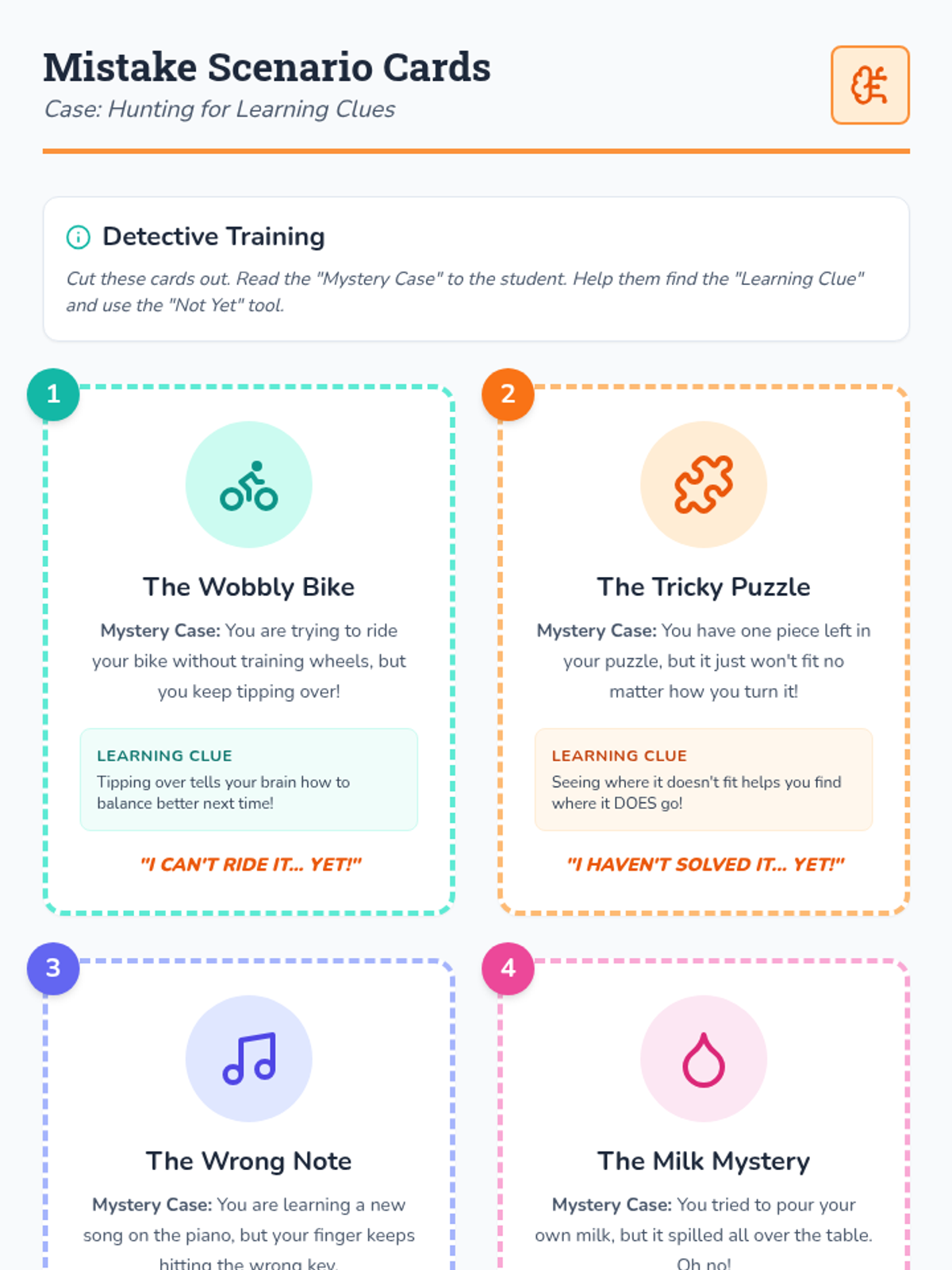
A unit focused on growth mindset and resilience. Students learn to see mistakes as 'clues for learning' and practice strategies for managing frustration when things are difficult.
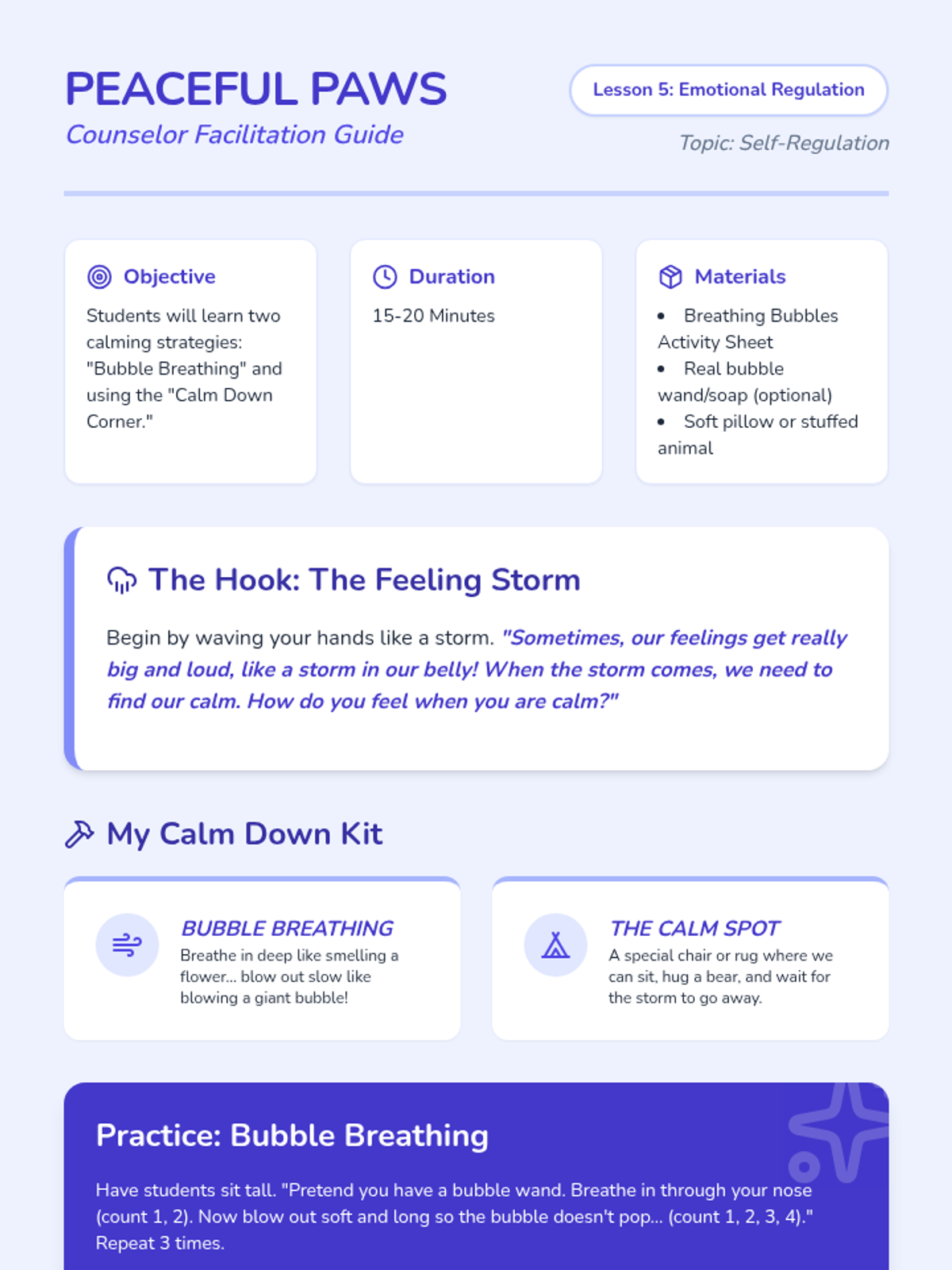
Provides simple strategies for self-soothing and emotional regulation, including deep breathing and using a 'Calm Down Corner'.
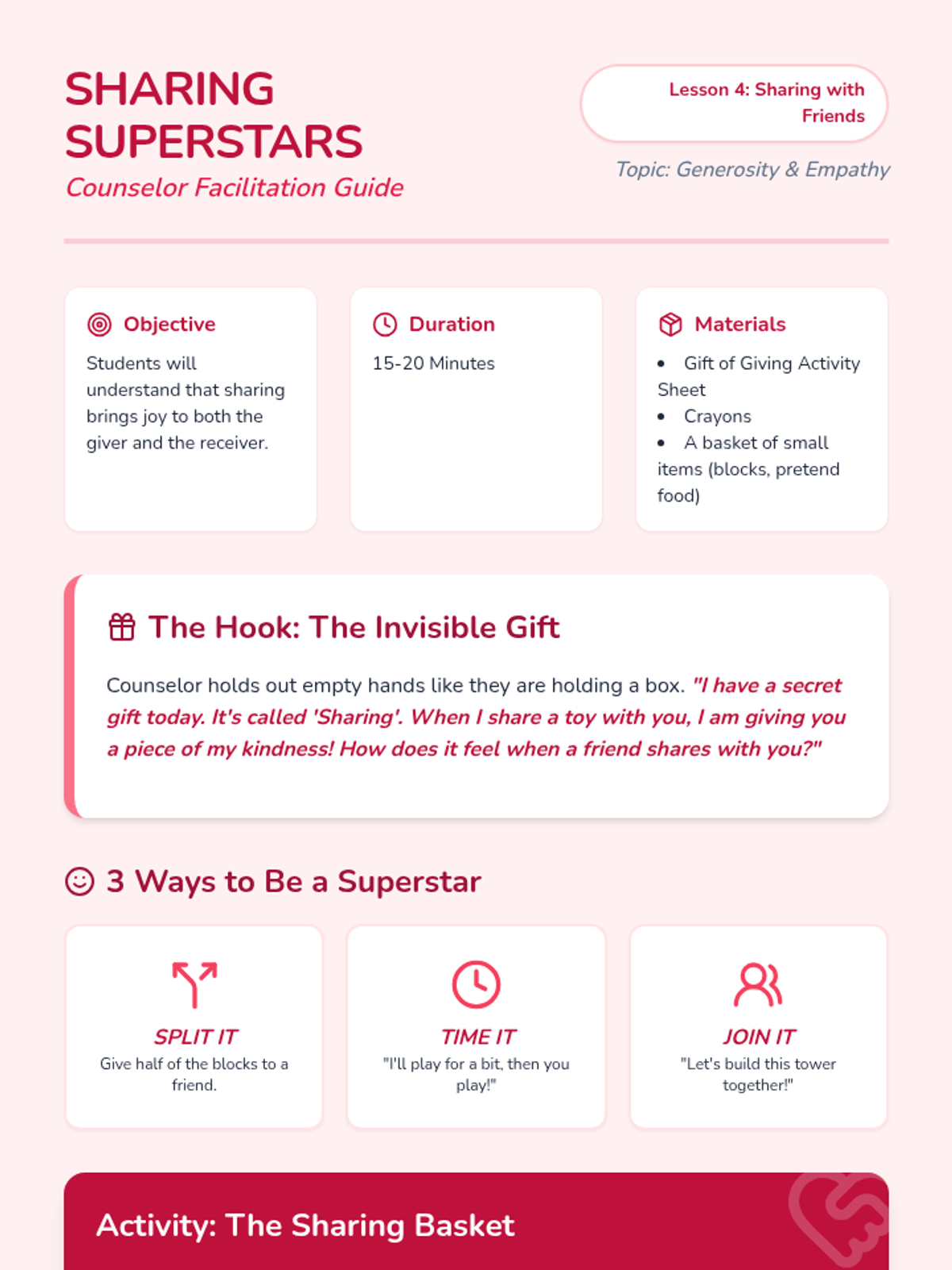
Explores the joy of sharing toys and space with friends, focusing on the positive feelings associated with generosity.
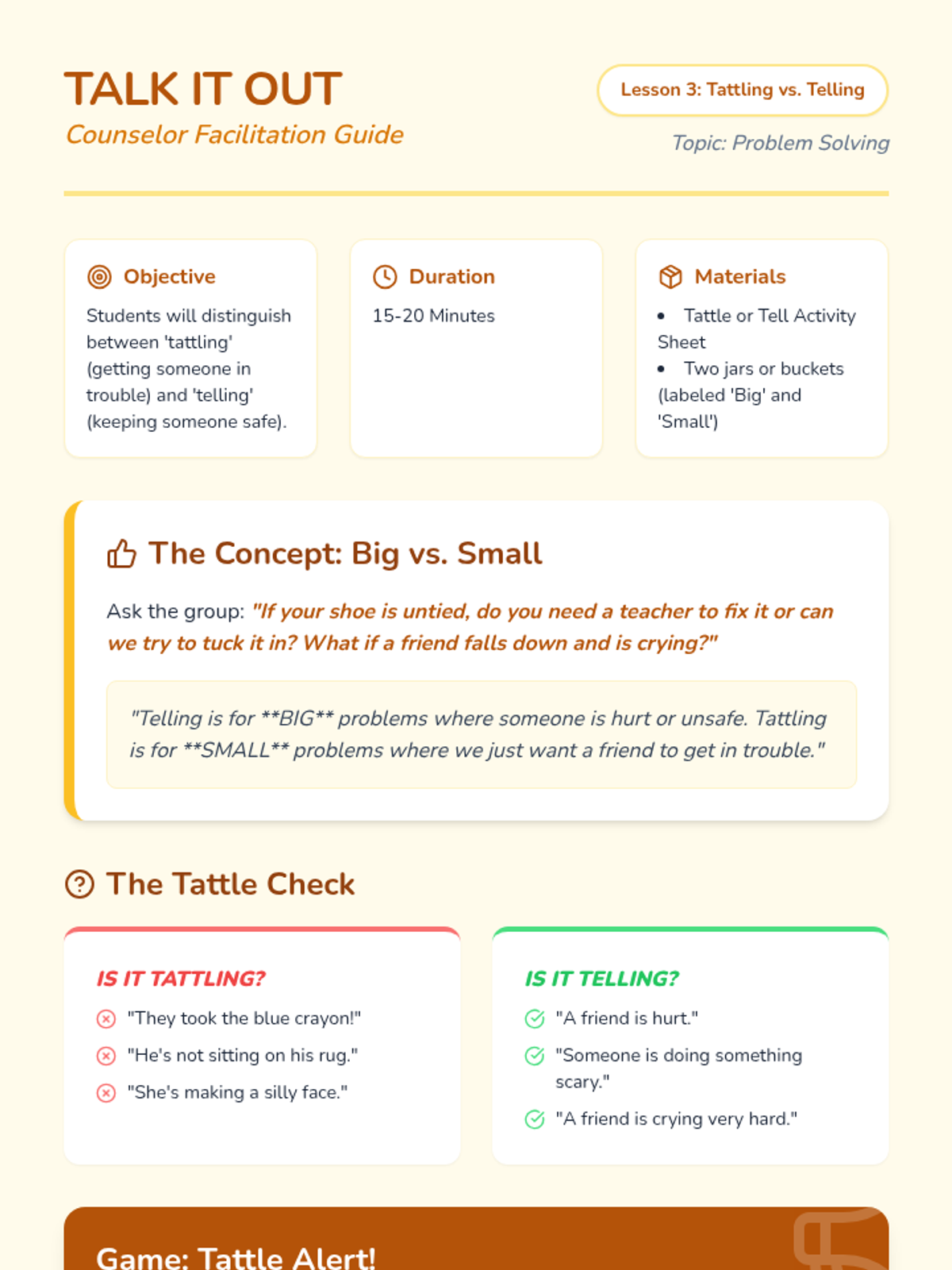
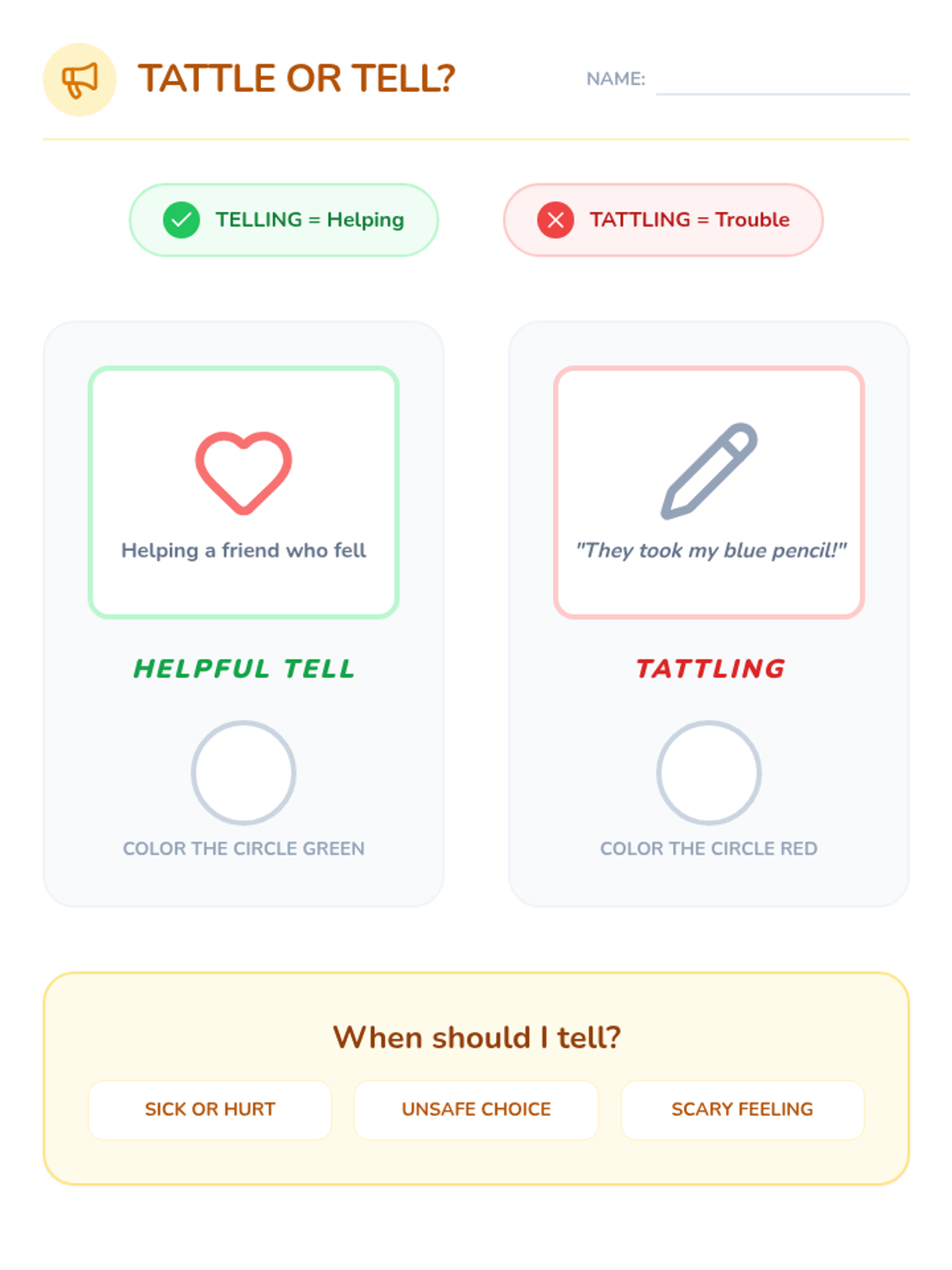
Helps children distinguish between 'tattling' to get someone in trouble and 'telling' to keep someone safe.
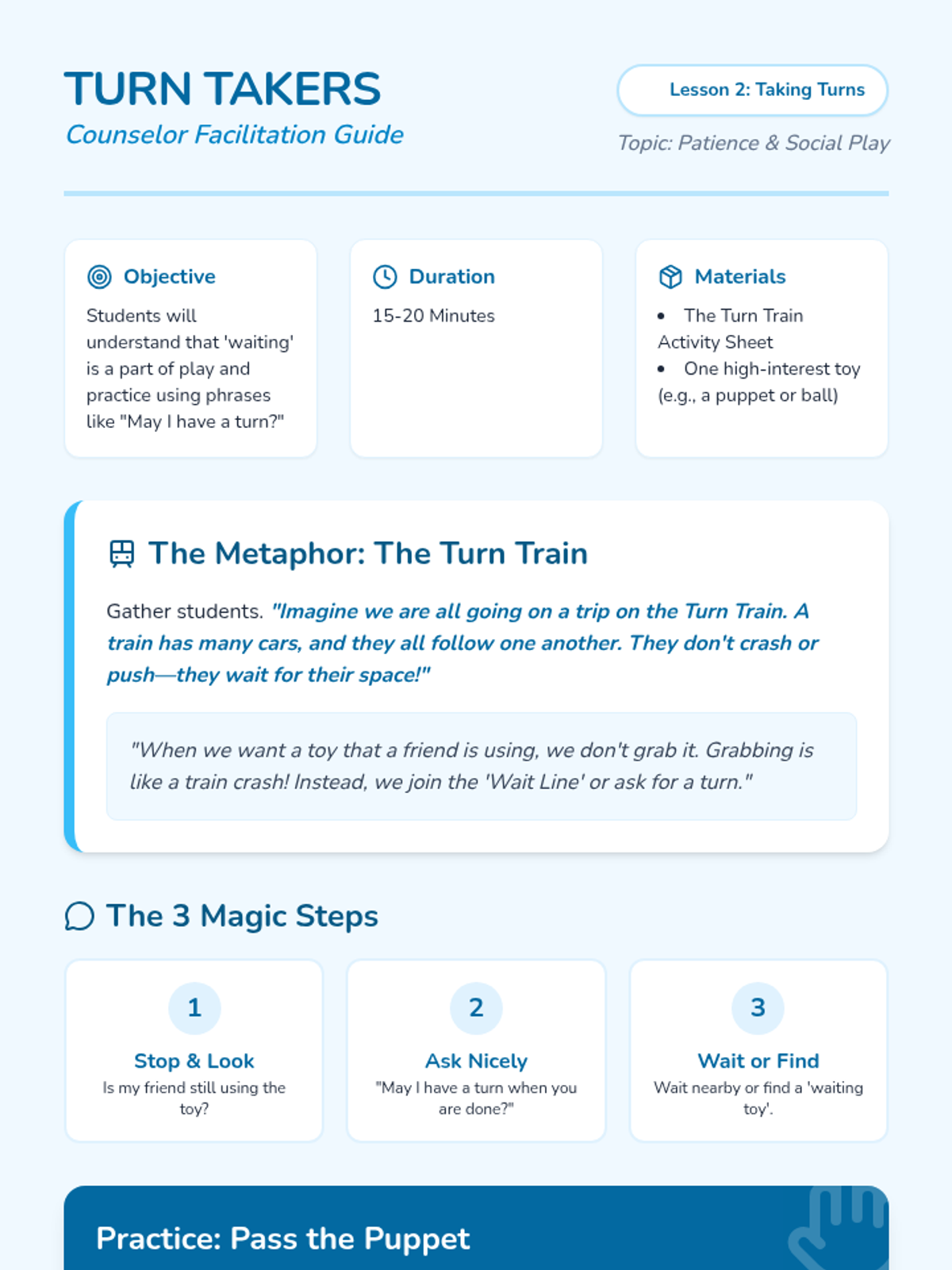
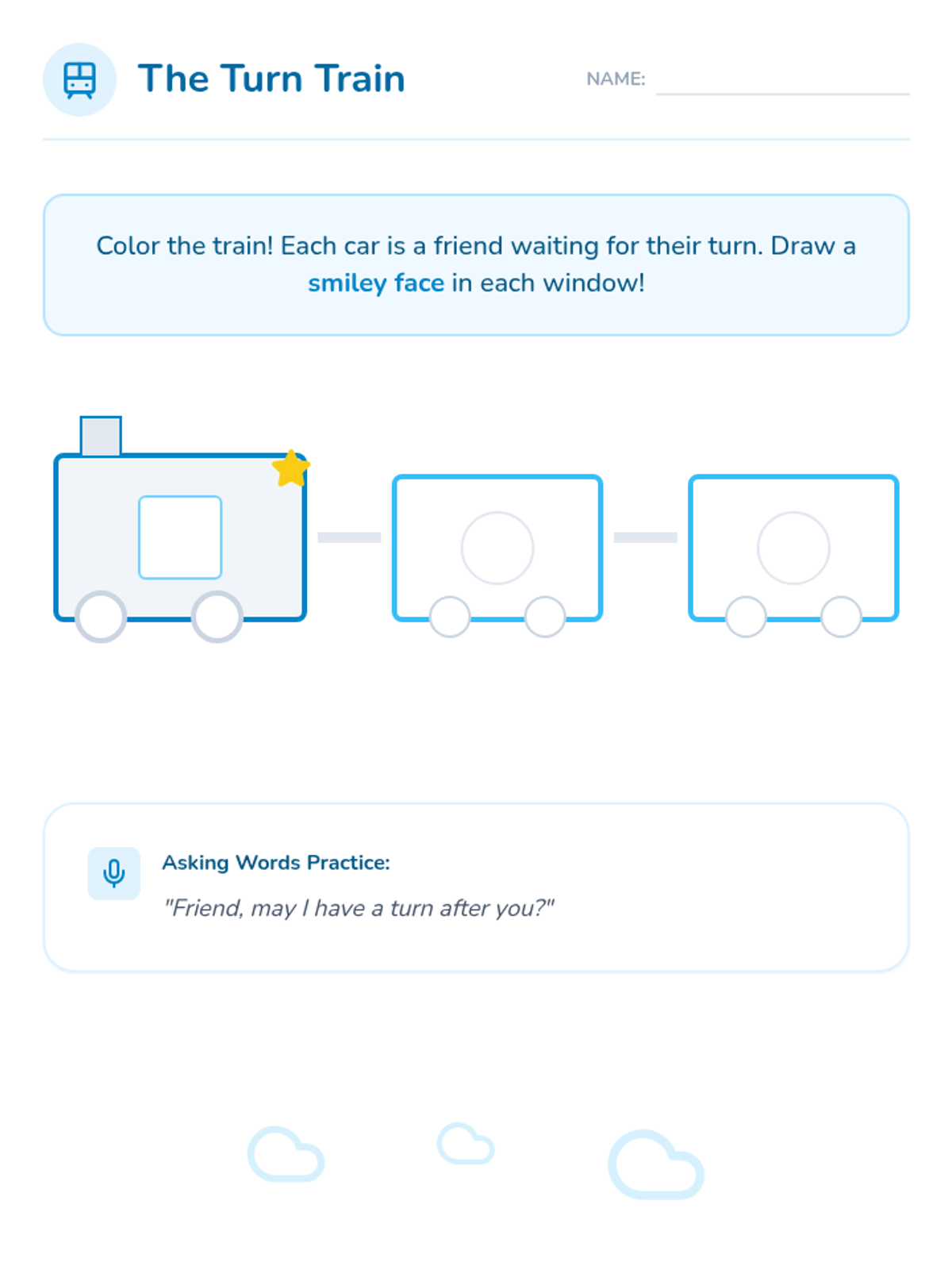
Introduces the concept of waiting and sharing time through a 'Turn Train' metaphor, helping students develop patience.
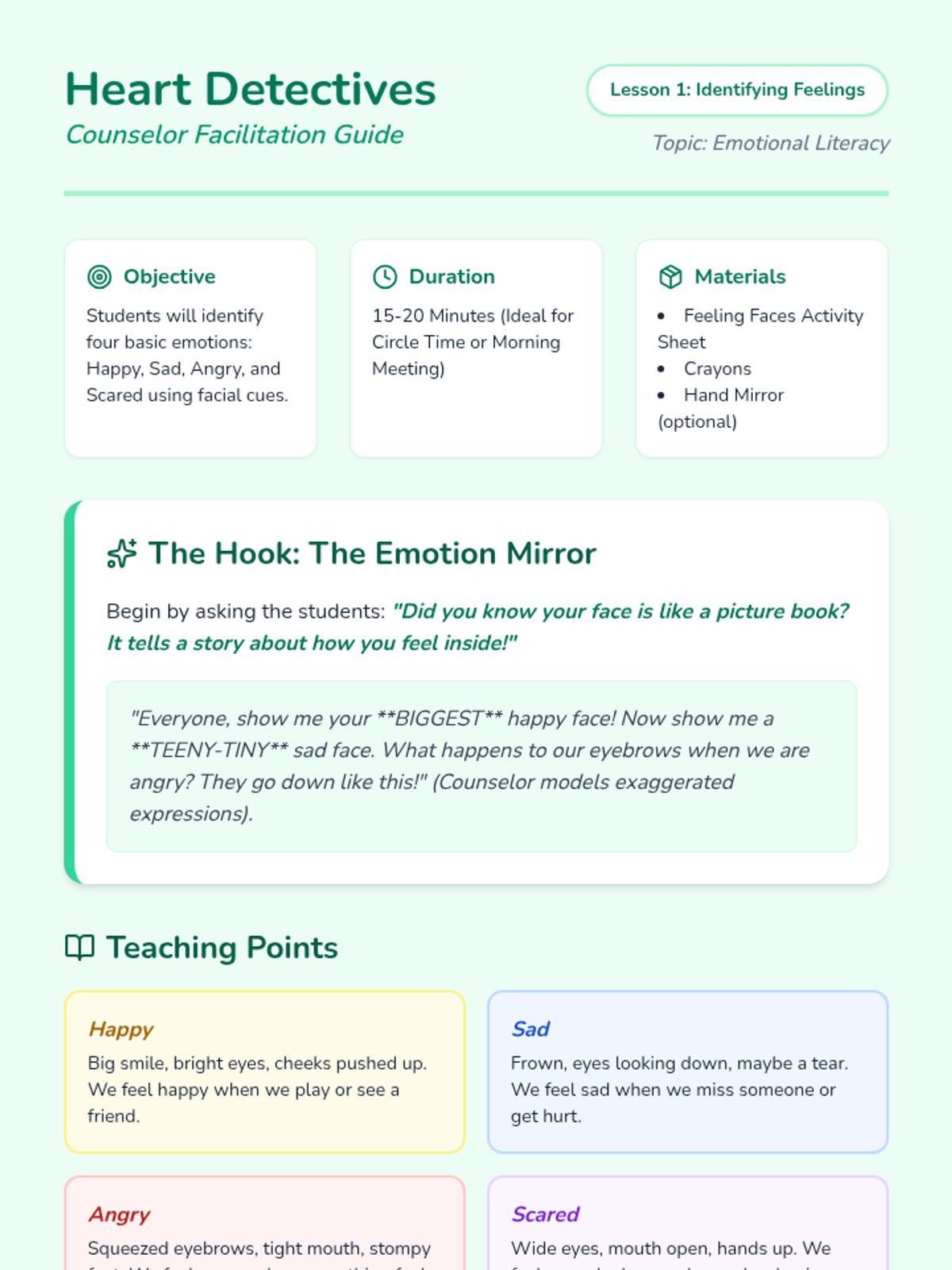
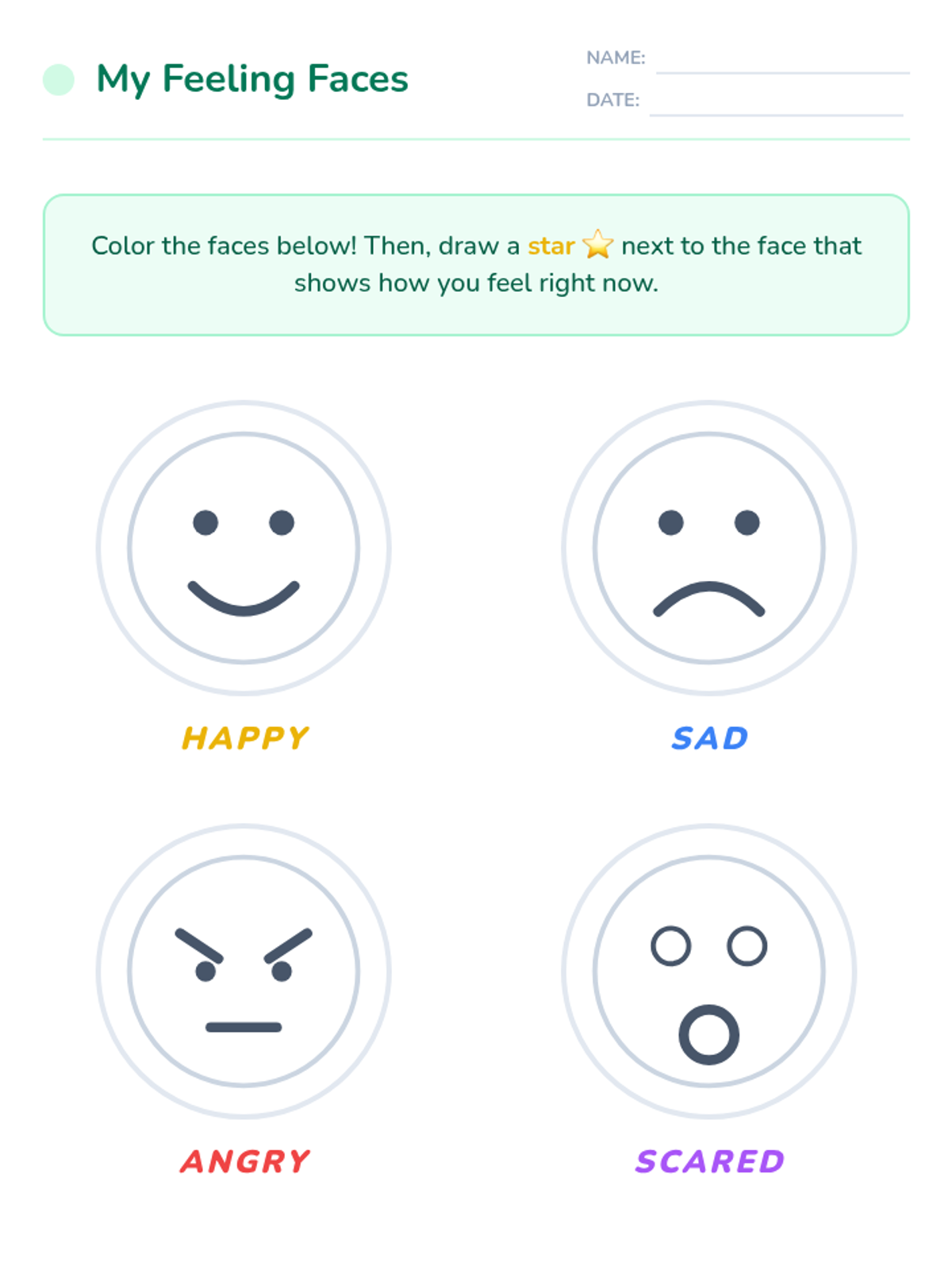
Students learn to recognize and name basic emotions (happy, sad, angry, scared) using visual cues and relatable scenarios.
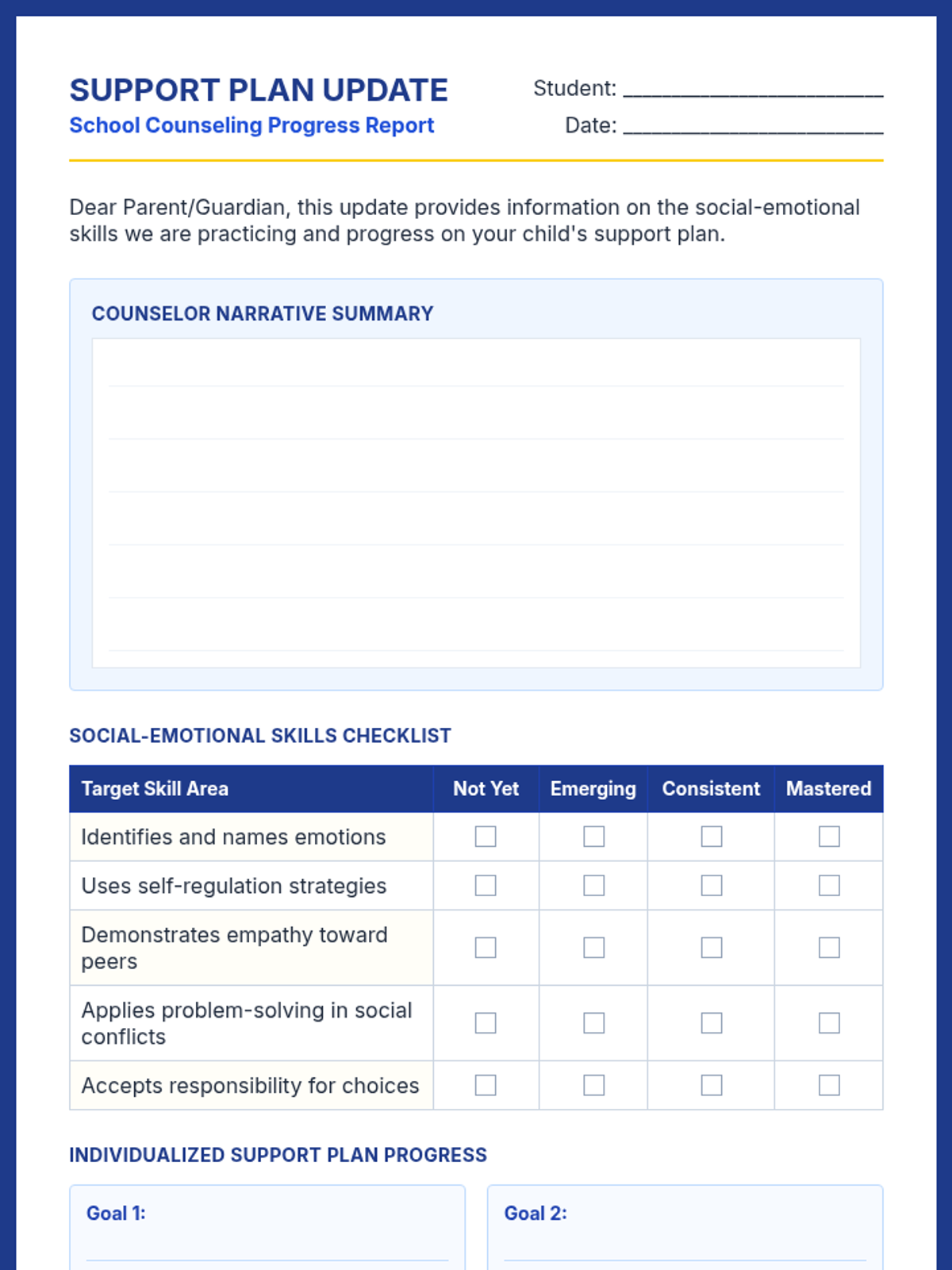
A set of tools for school counselors to effectively communicate student social-emotional progress with families, ensuring a collaborative approach to support.
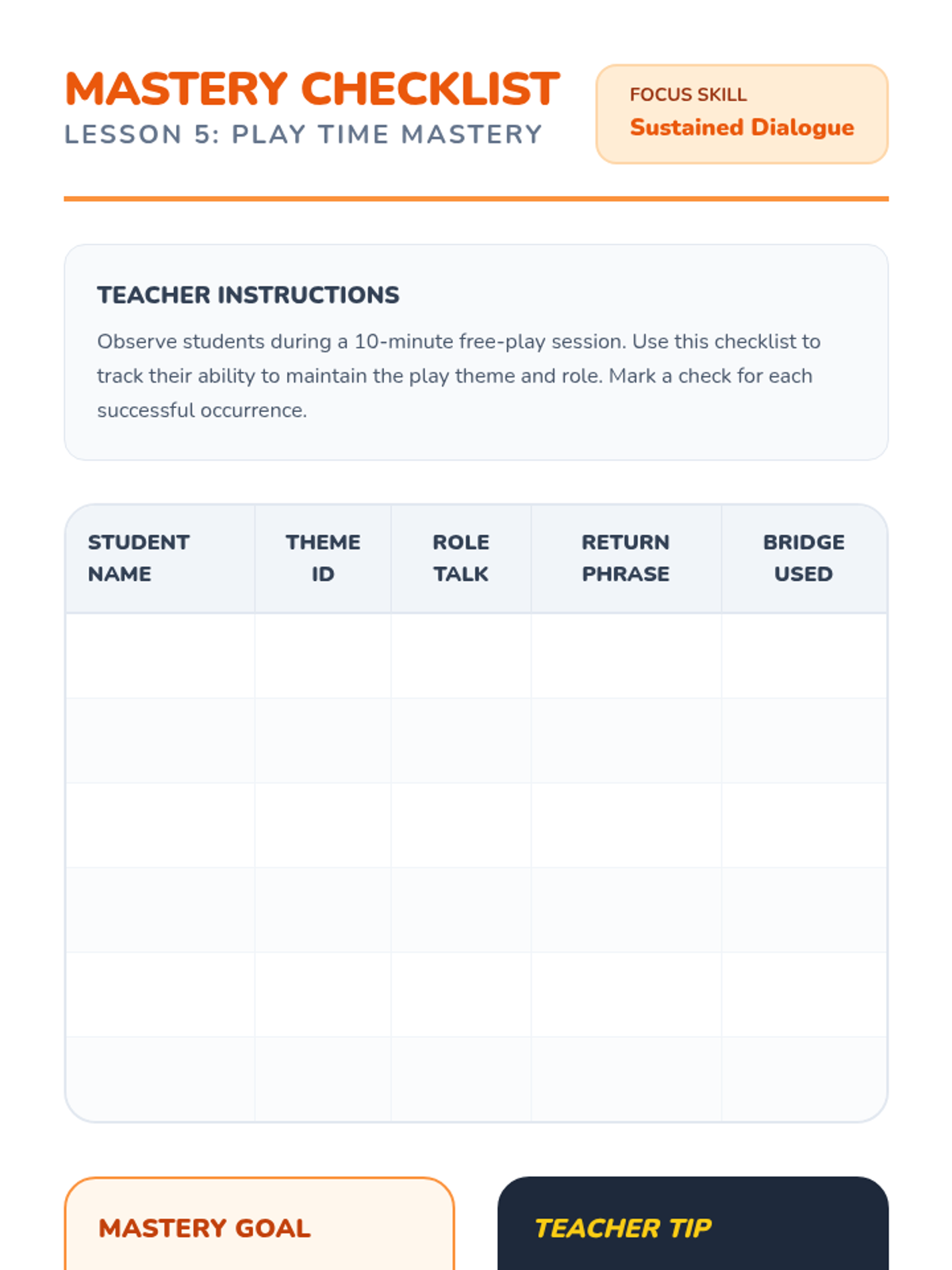
Students engage in a free-play session where they are rewarded with tokens for maintaining their role and topic for consecutive turns. The focus is on sustained, reciprocal dialogue within the chosen scenario.
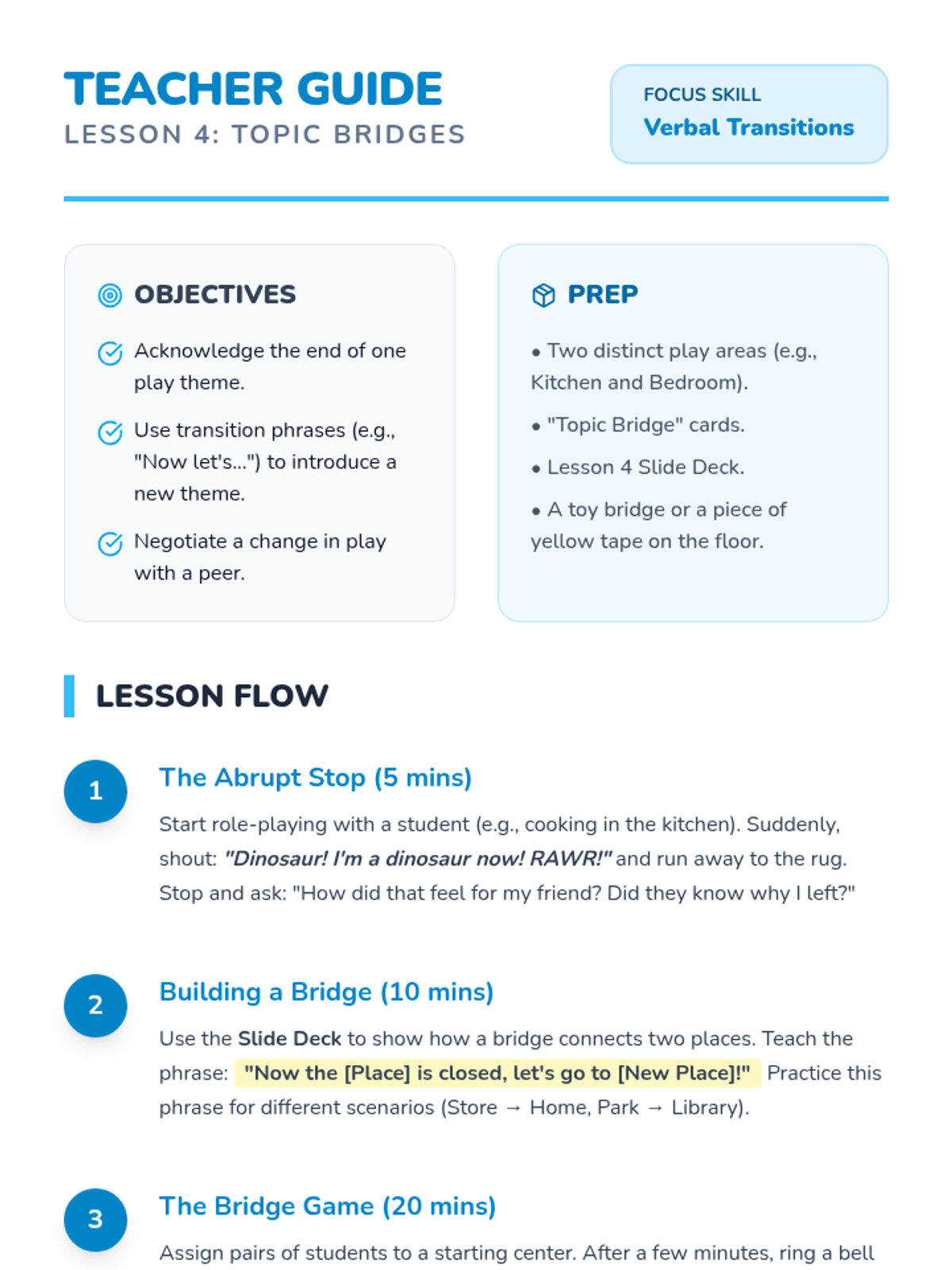
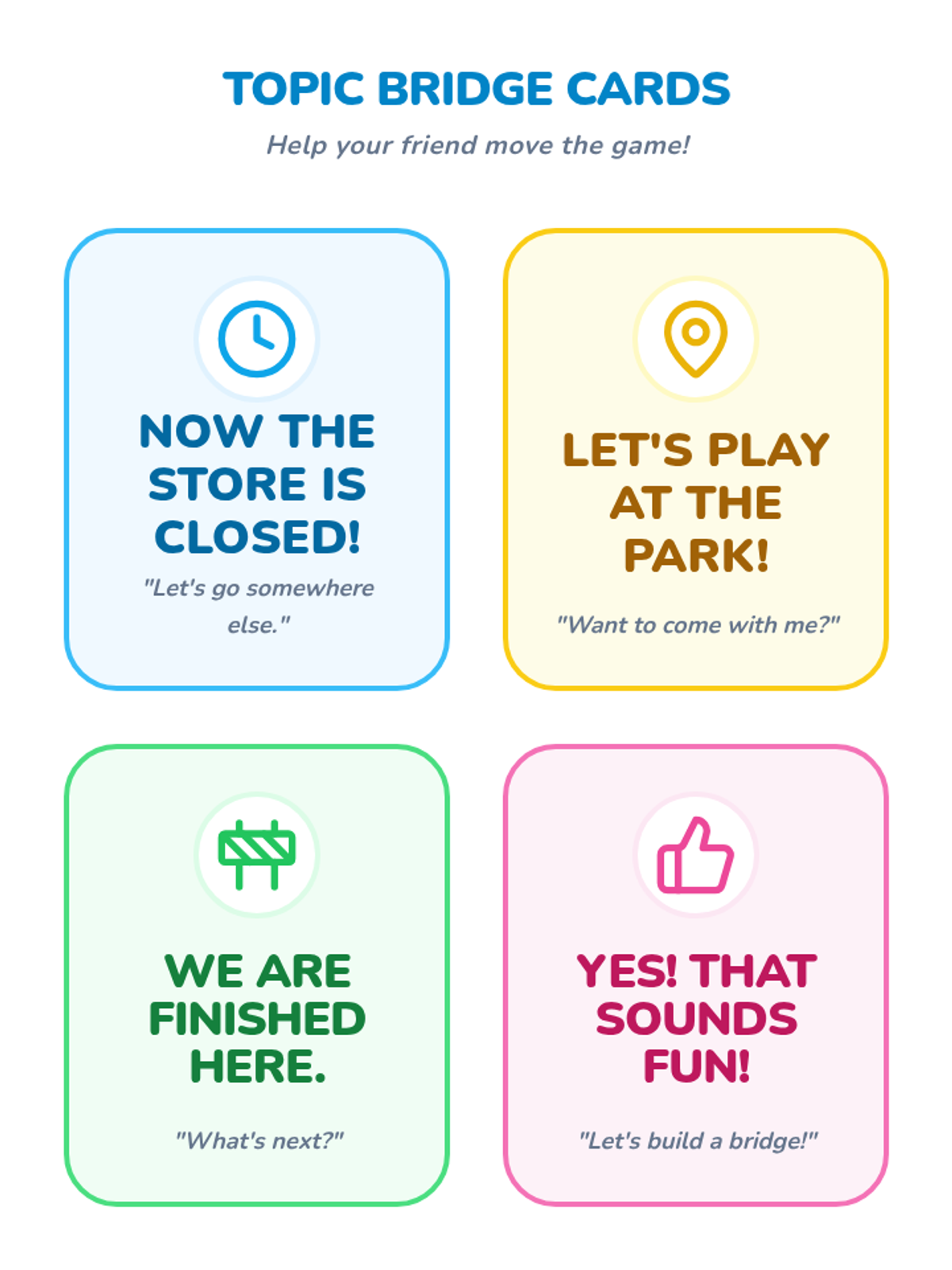
Students learn how to shift play themes naturally. Instead of abruptly changing games, they practice saying, 'Let's change to...' or 'Now the store is closed, let's go to the park,' treating the transition as a bridge.
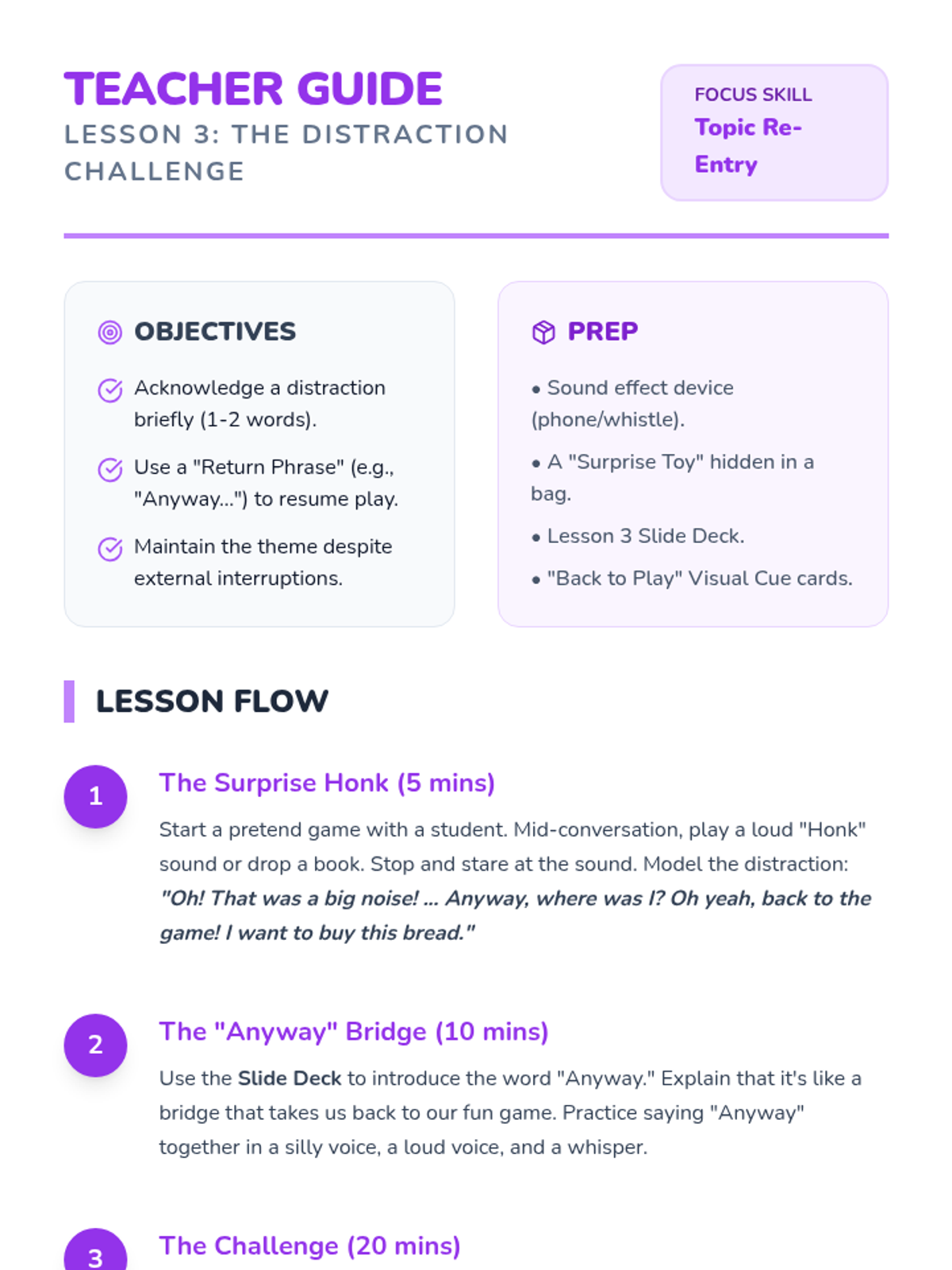
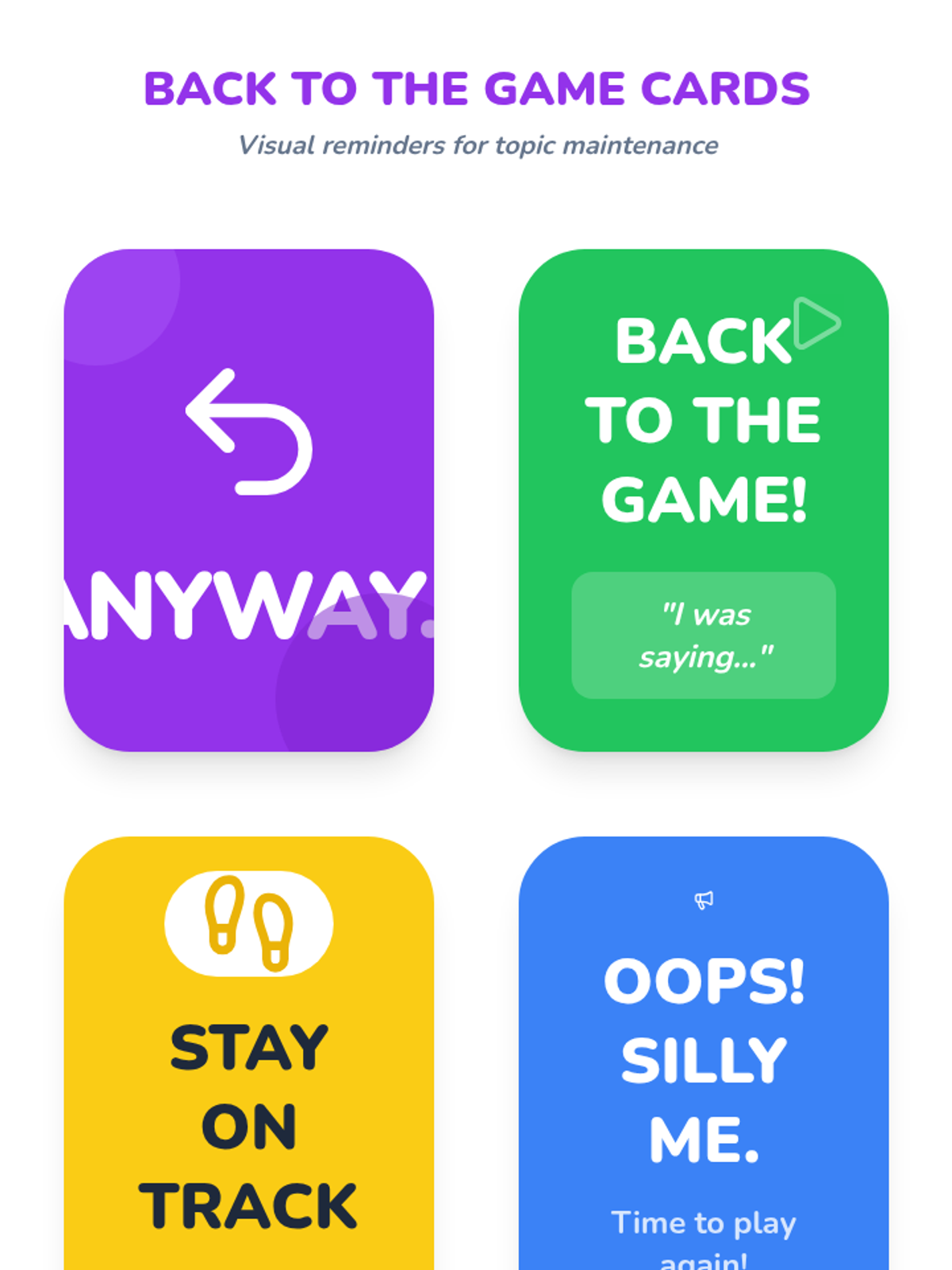
During a structured play scenario, the teacher introduces a 'distraction' (a new toy or noise). Students practice acknowledging the distraction briefly but then using a 'return phrase' (e.g., 'Anyway, back to the game') to resume their play theme.
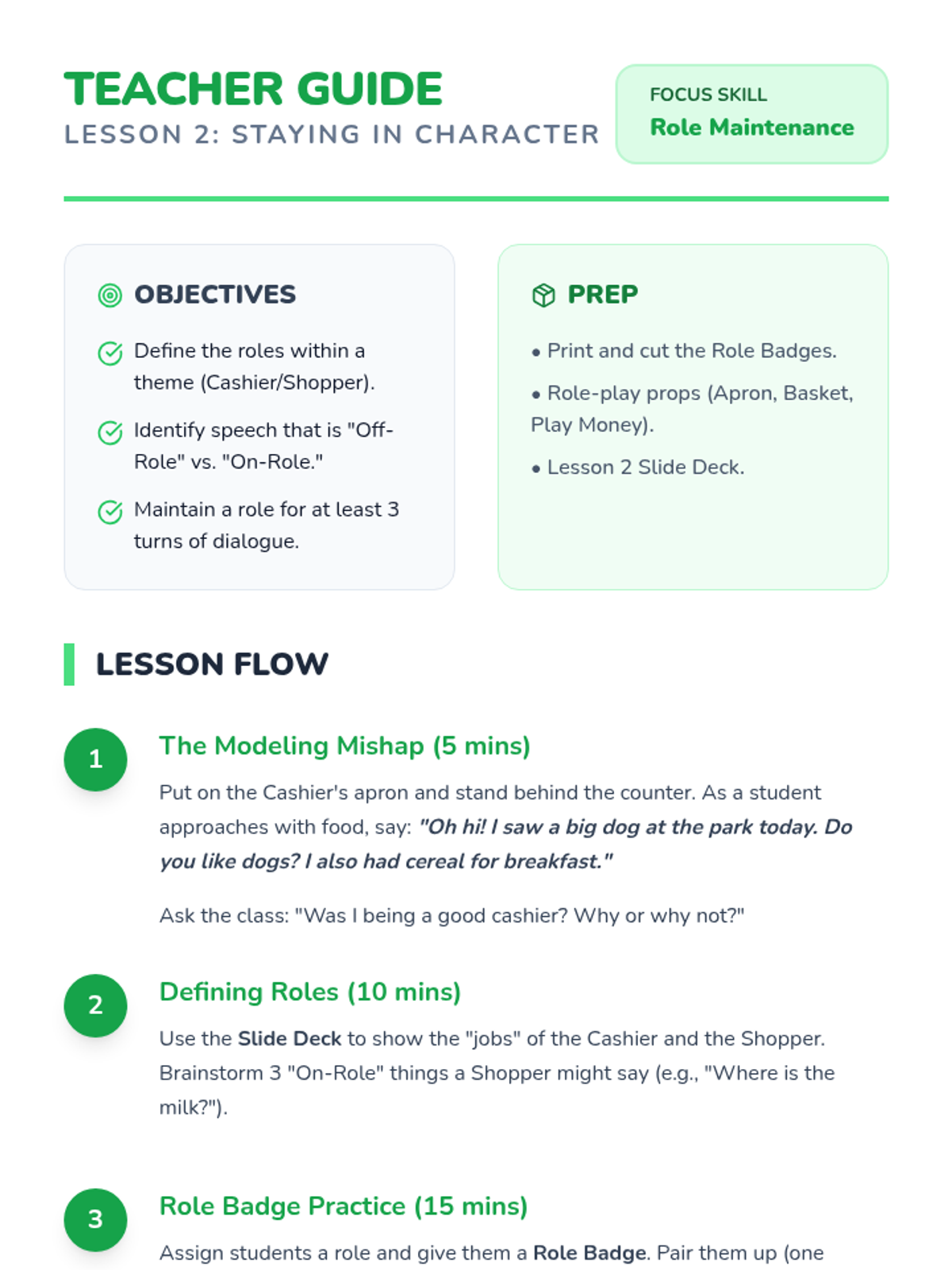
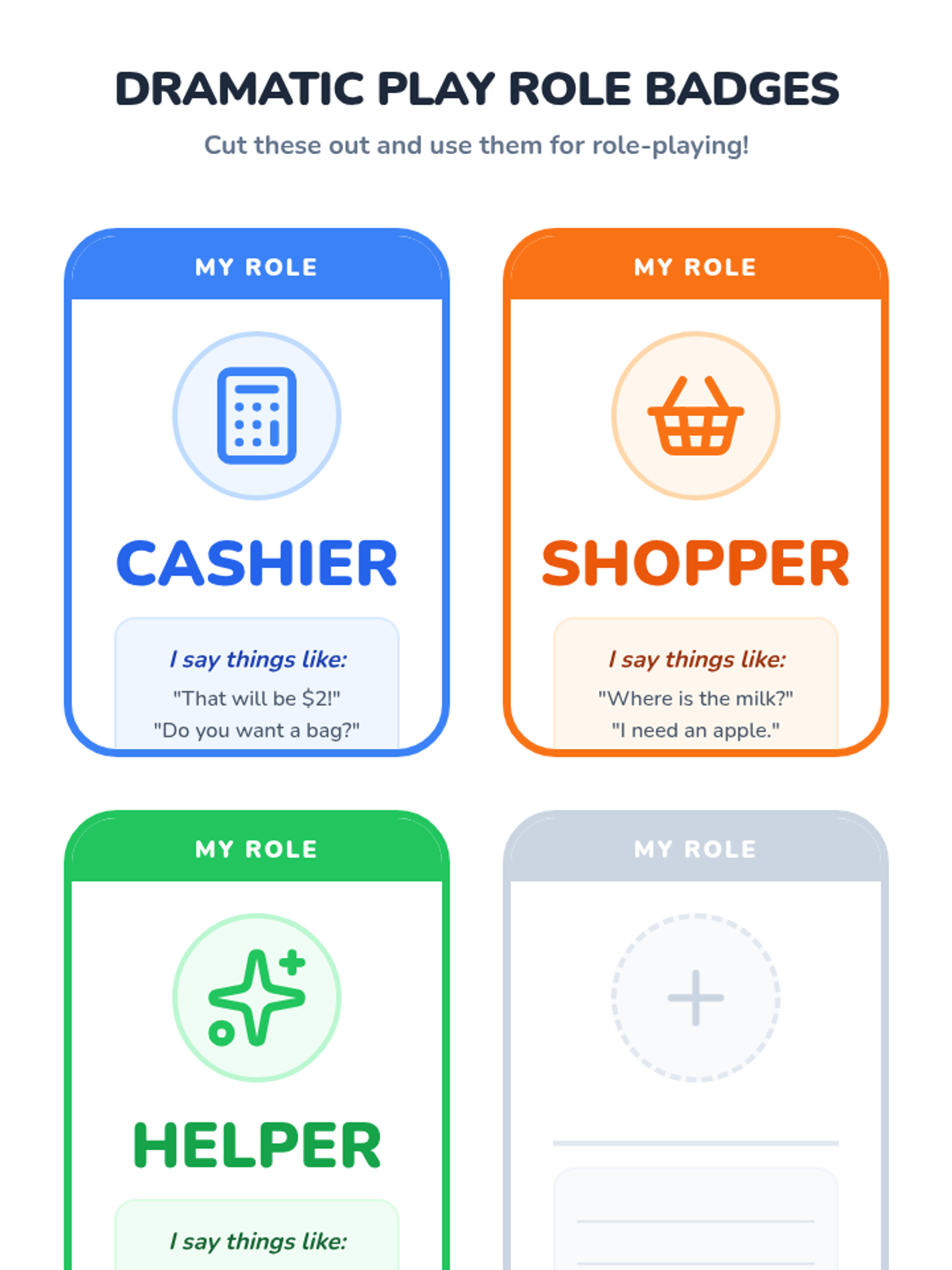
Students practice role-playing specific characters (e.g., Cashier, Shopper). They learn that the Cashier talks about prices and food, not about their new shoes or what they watched on TV, to keep the game fun.
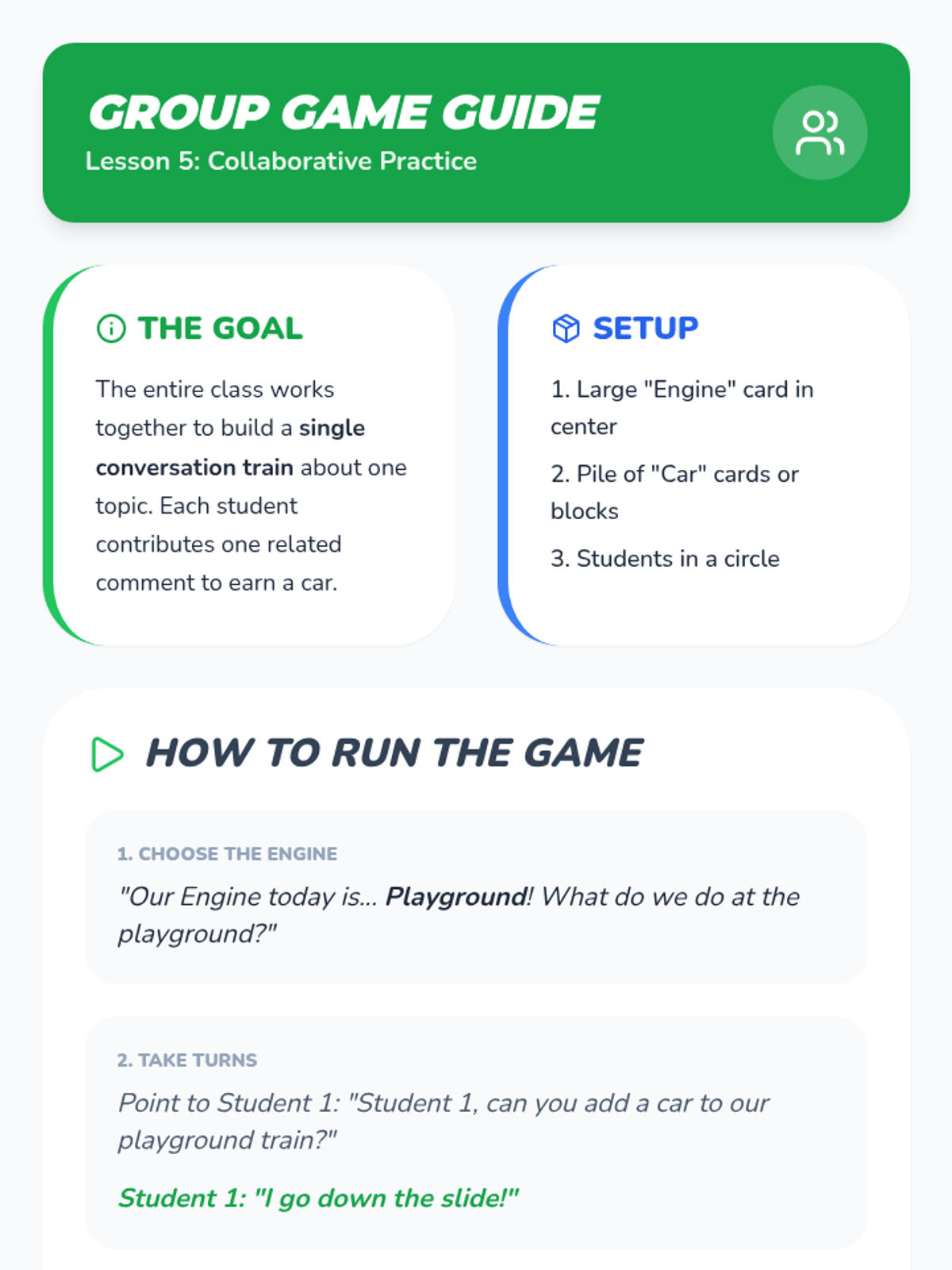
The class works together to build a long conversation train. Students take turns contributing related comments to a shared topic to reach a group goal.
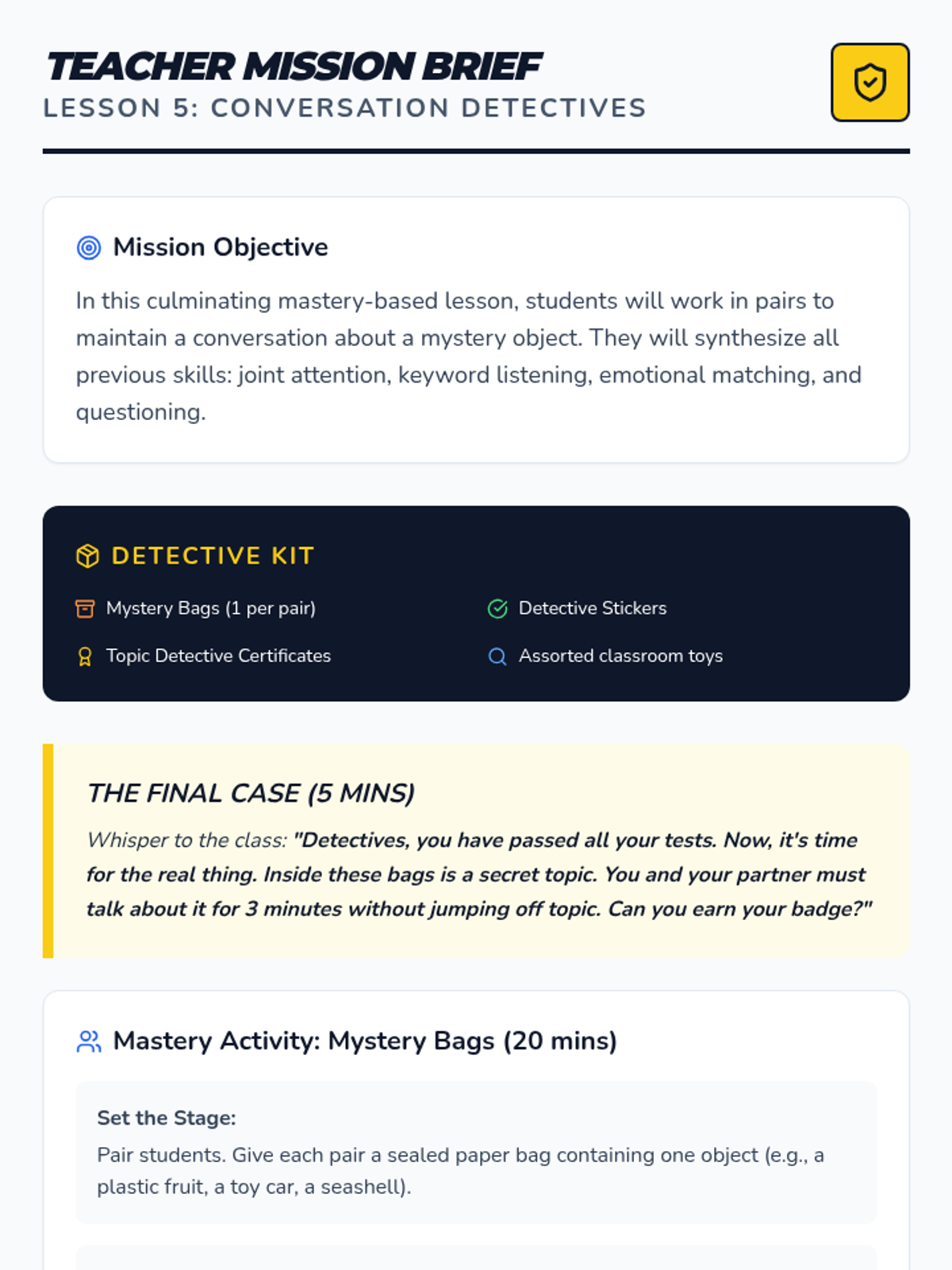
A culminating peer-to-peer activity where students use mystery objects to practice sustained topic maintenance in pairs.
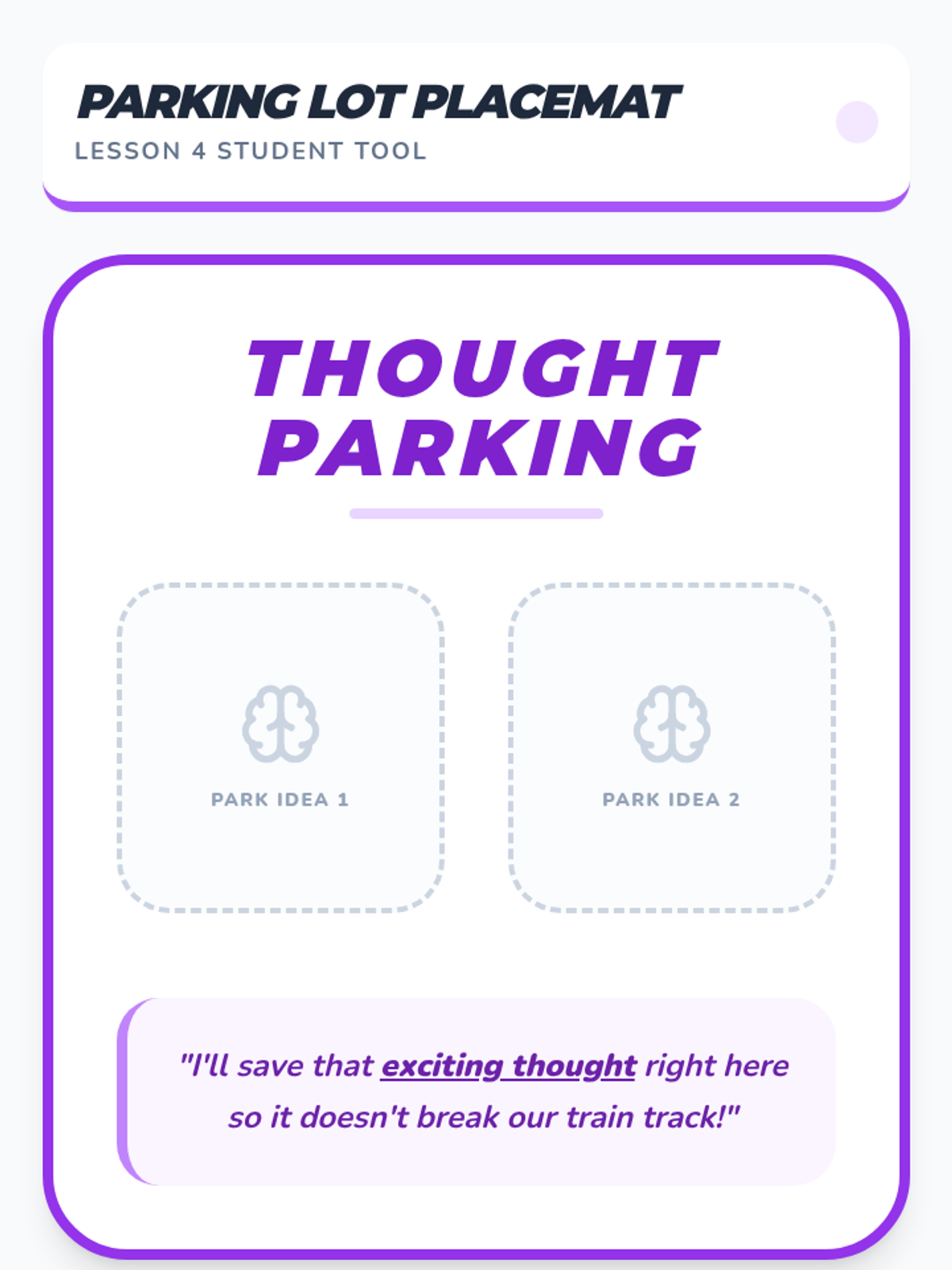
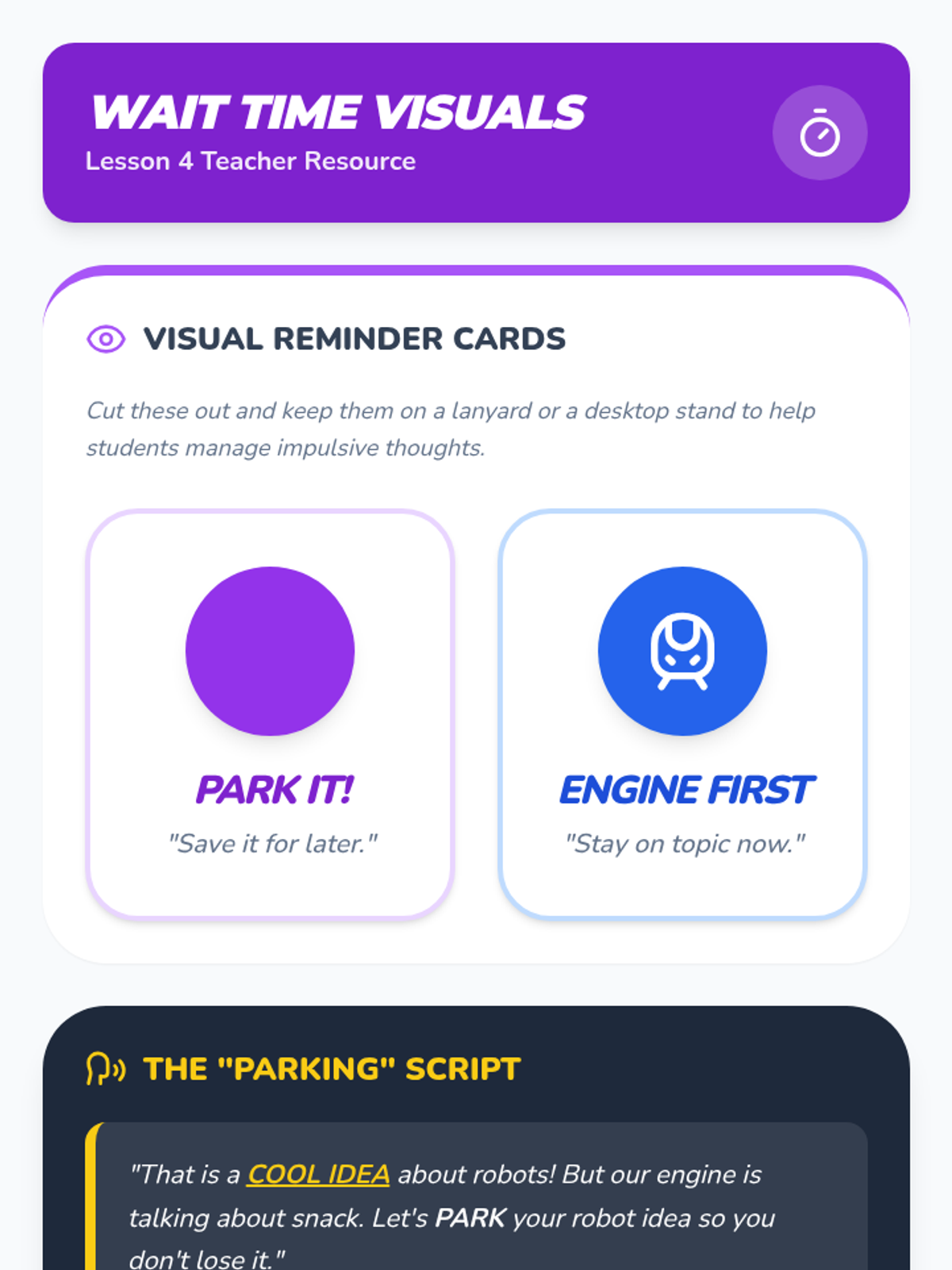
Students learn a strategy for off-topic thoughts: the 'Parking Lot.' They practice saving unrelated ideas for later so the main conversation train can keep going.
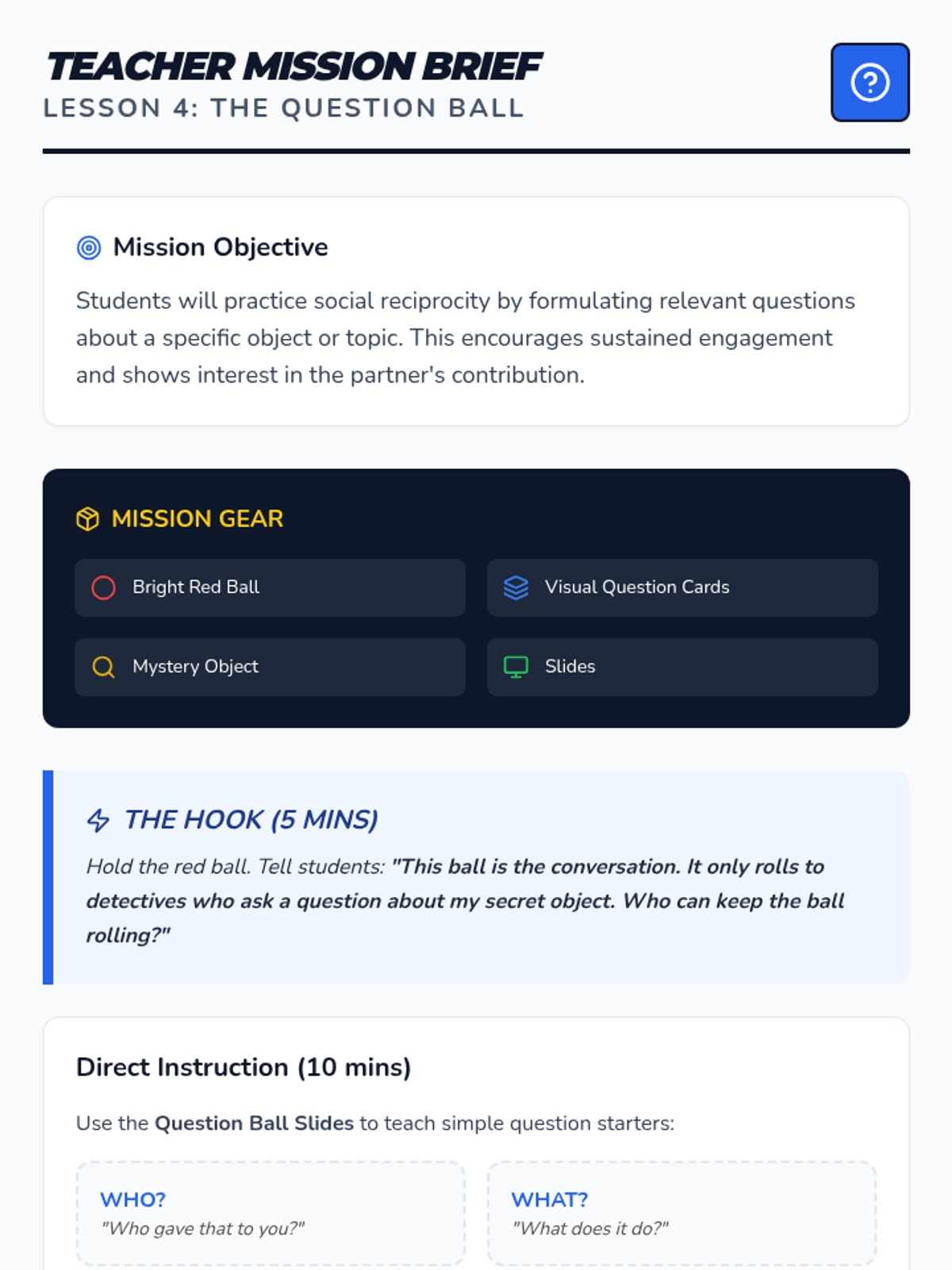
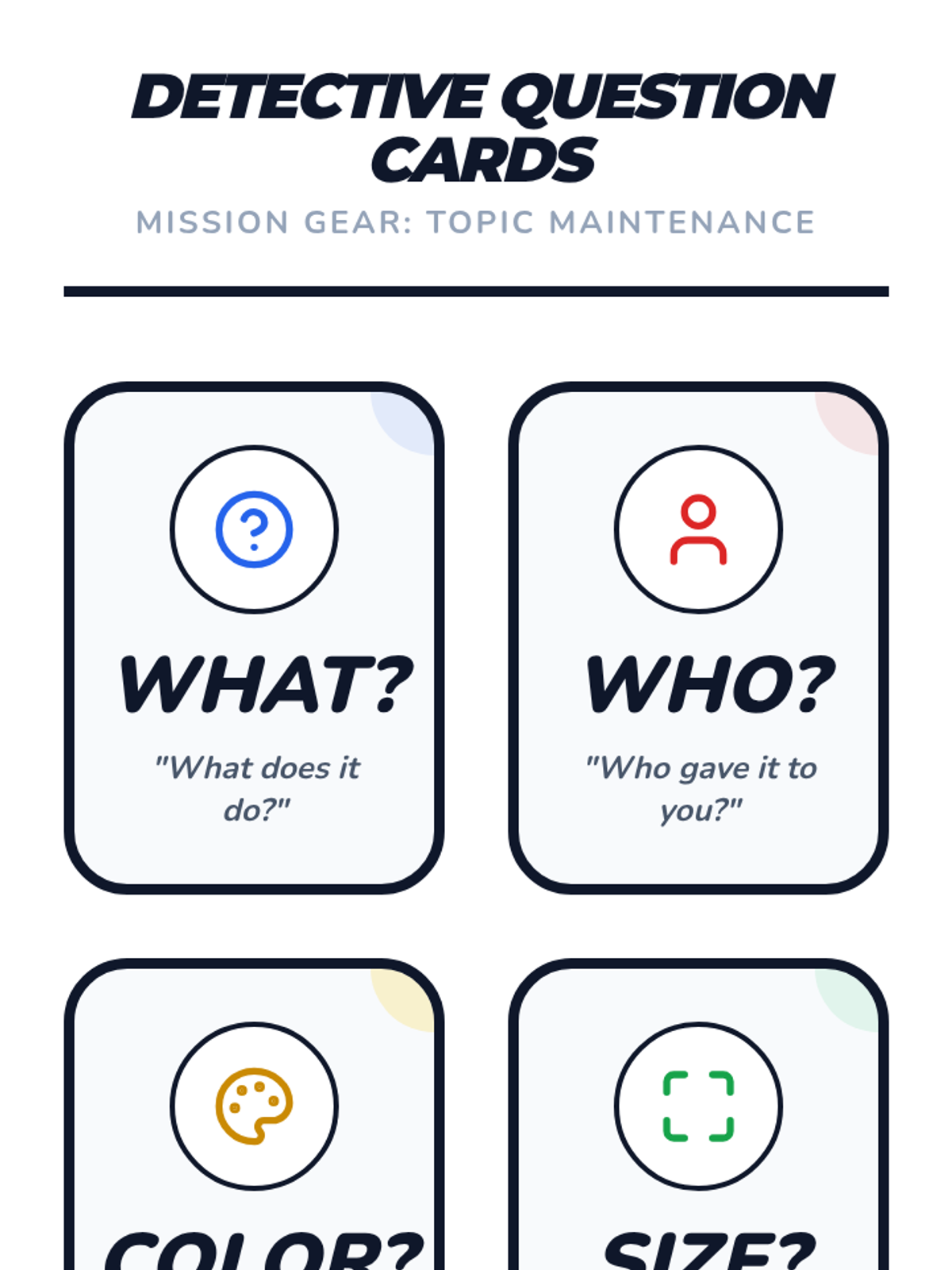
Students practice asking relevant questions about a specific object or topic to keep a conversation going and show interest.
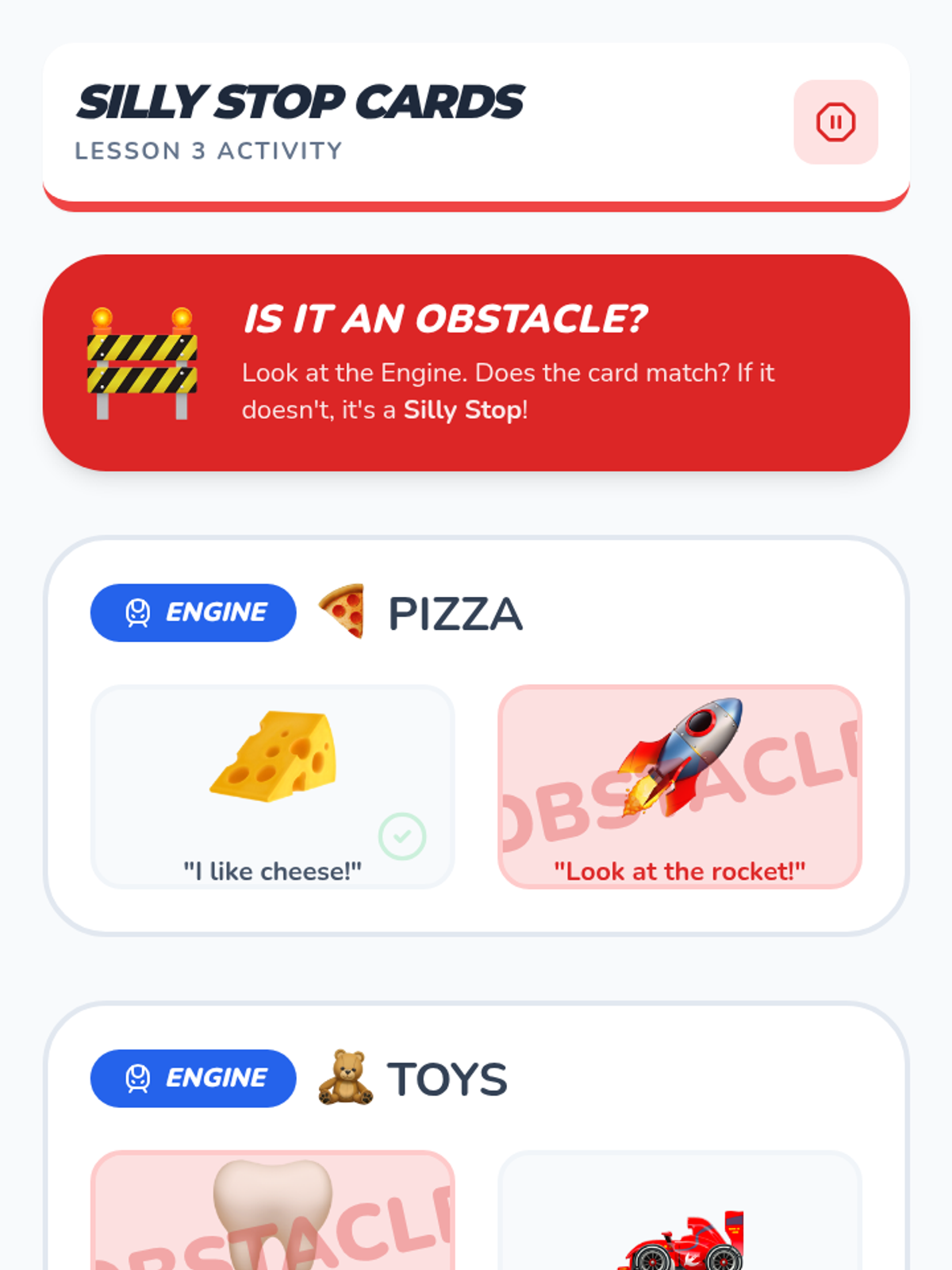
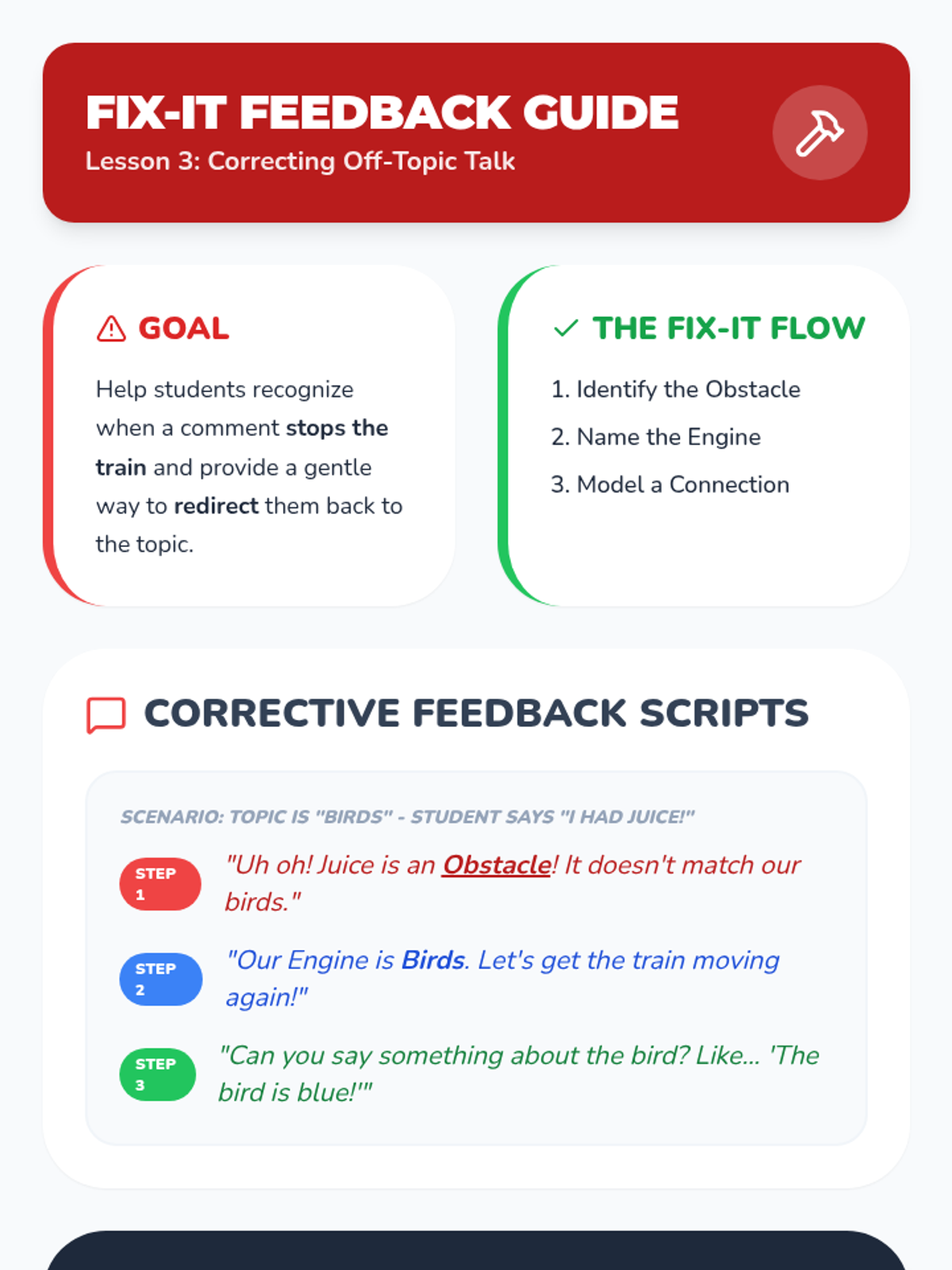
Students identify 'broken tracks'—comments that don't match the topic. They learn how off-topic words stop a conversation and practice 'fixing' the track.
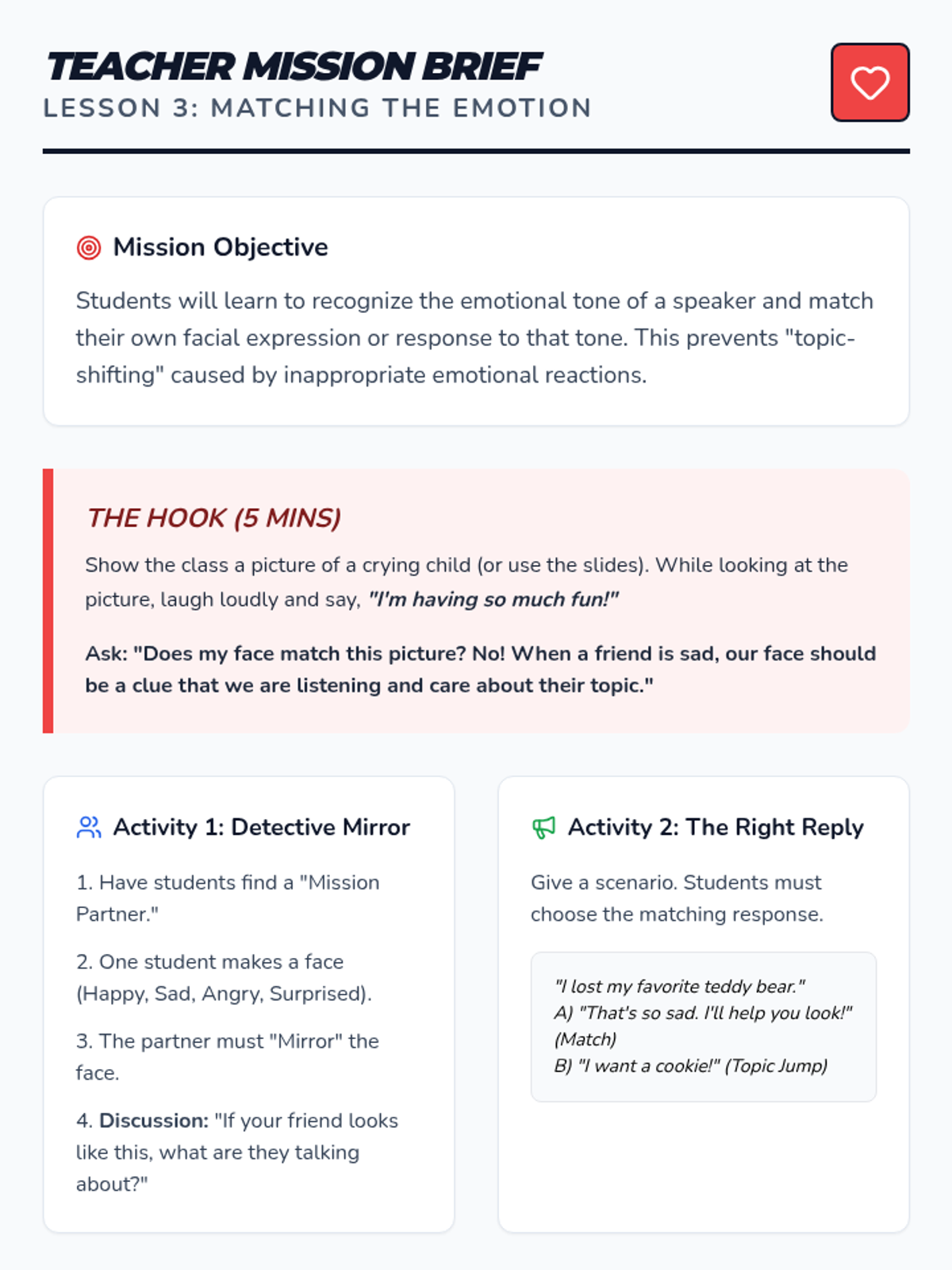
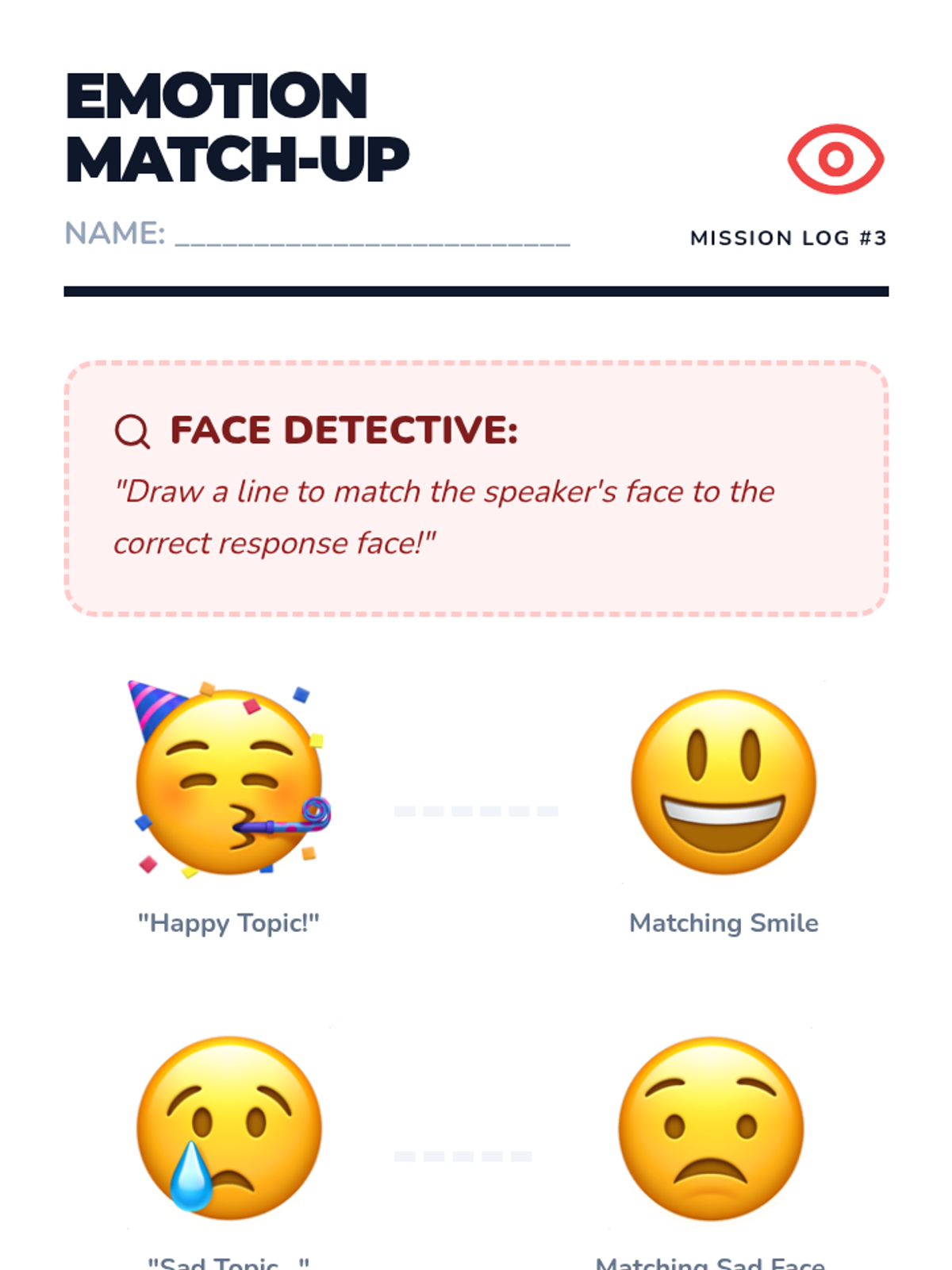
Students learn to match their emotional response to the speaker's tone and content, ensuring their contribution is appropriate for the topic.
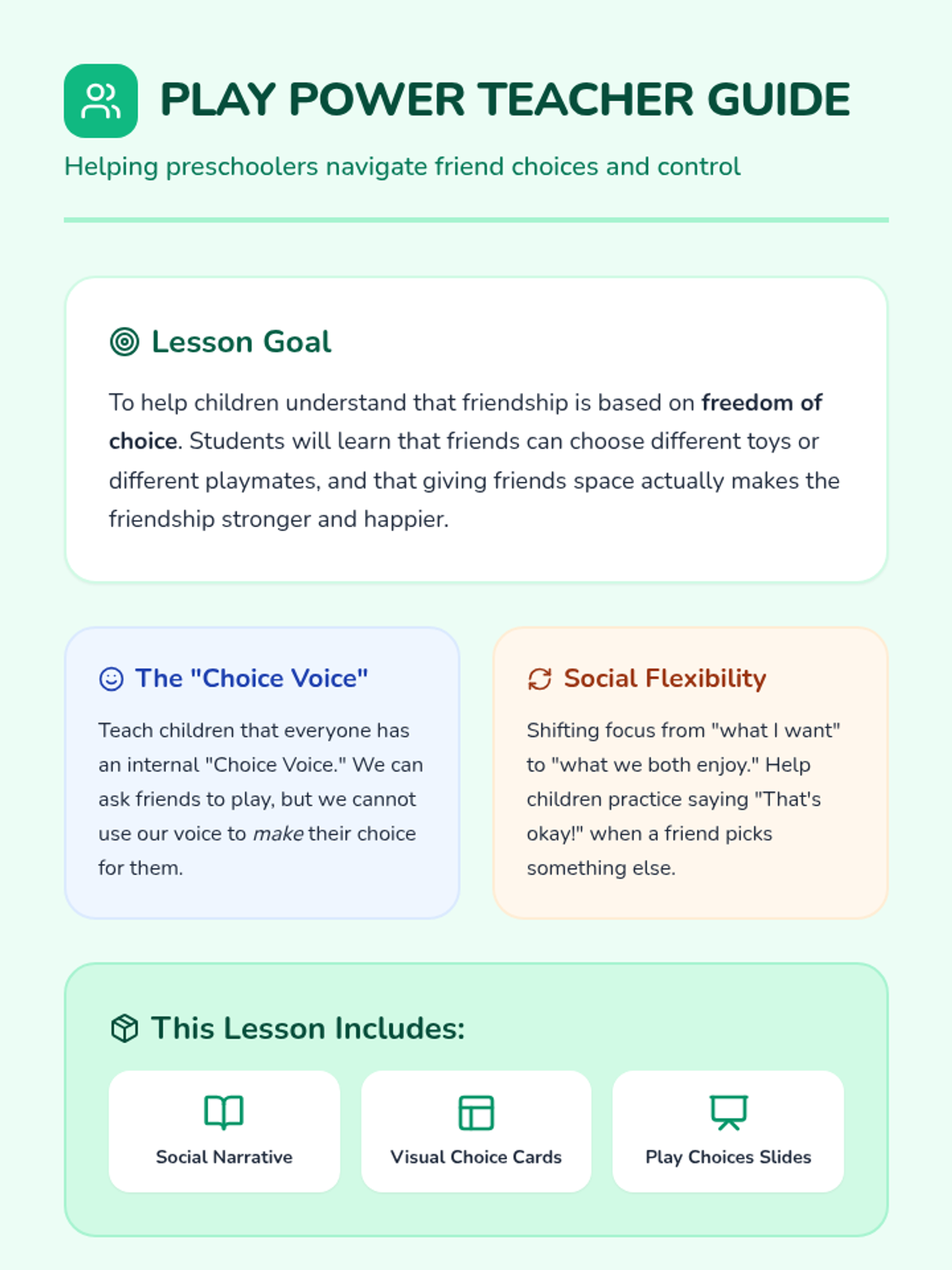
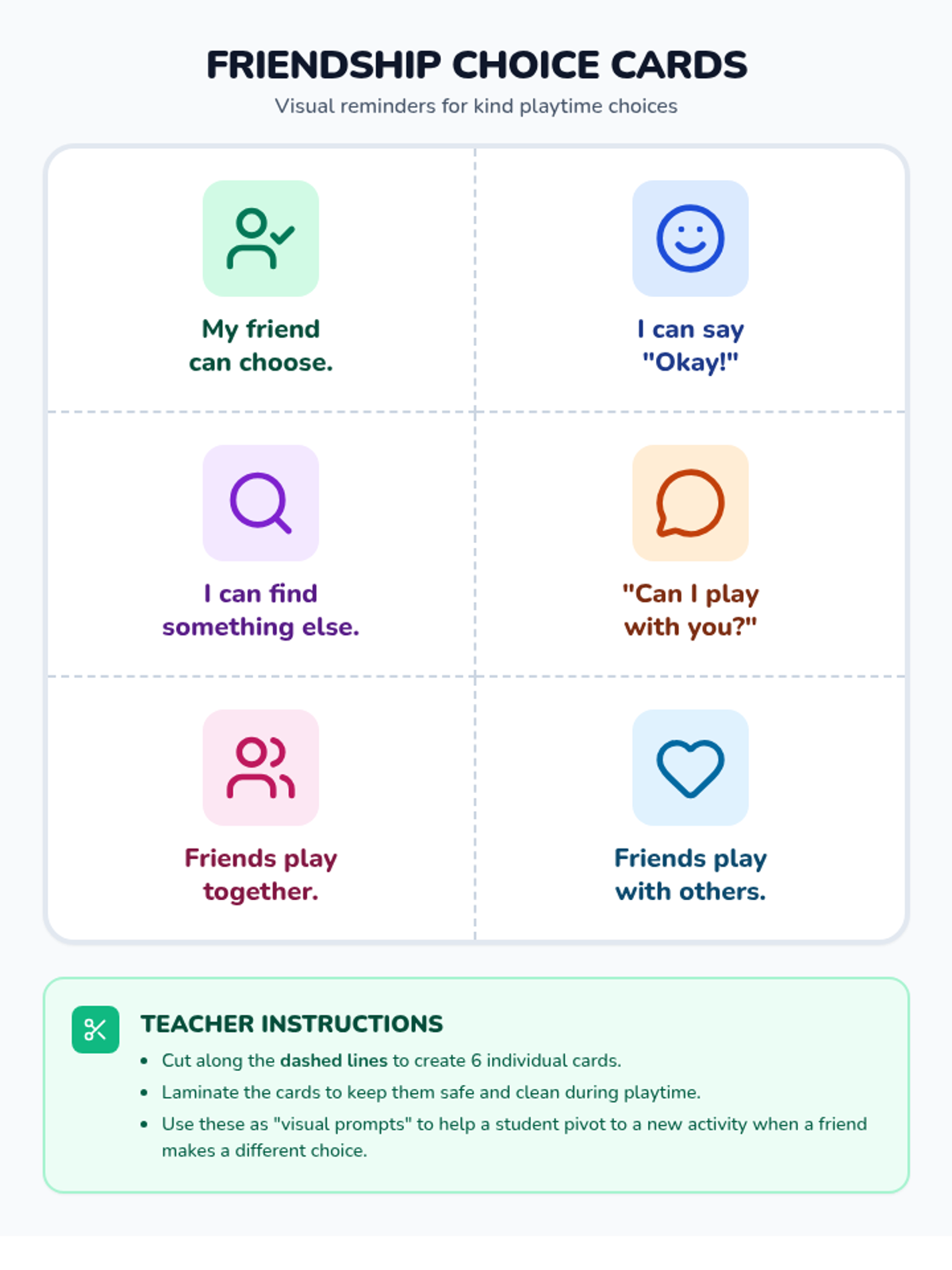
A lesson designed for preschoolers to understand that friends have the right to make their own choices about what to play with and who to play with. This lesson uses social narratives and visual supports to build empathy and social flexibility.
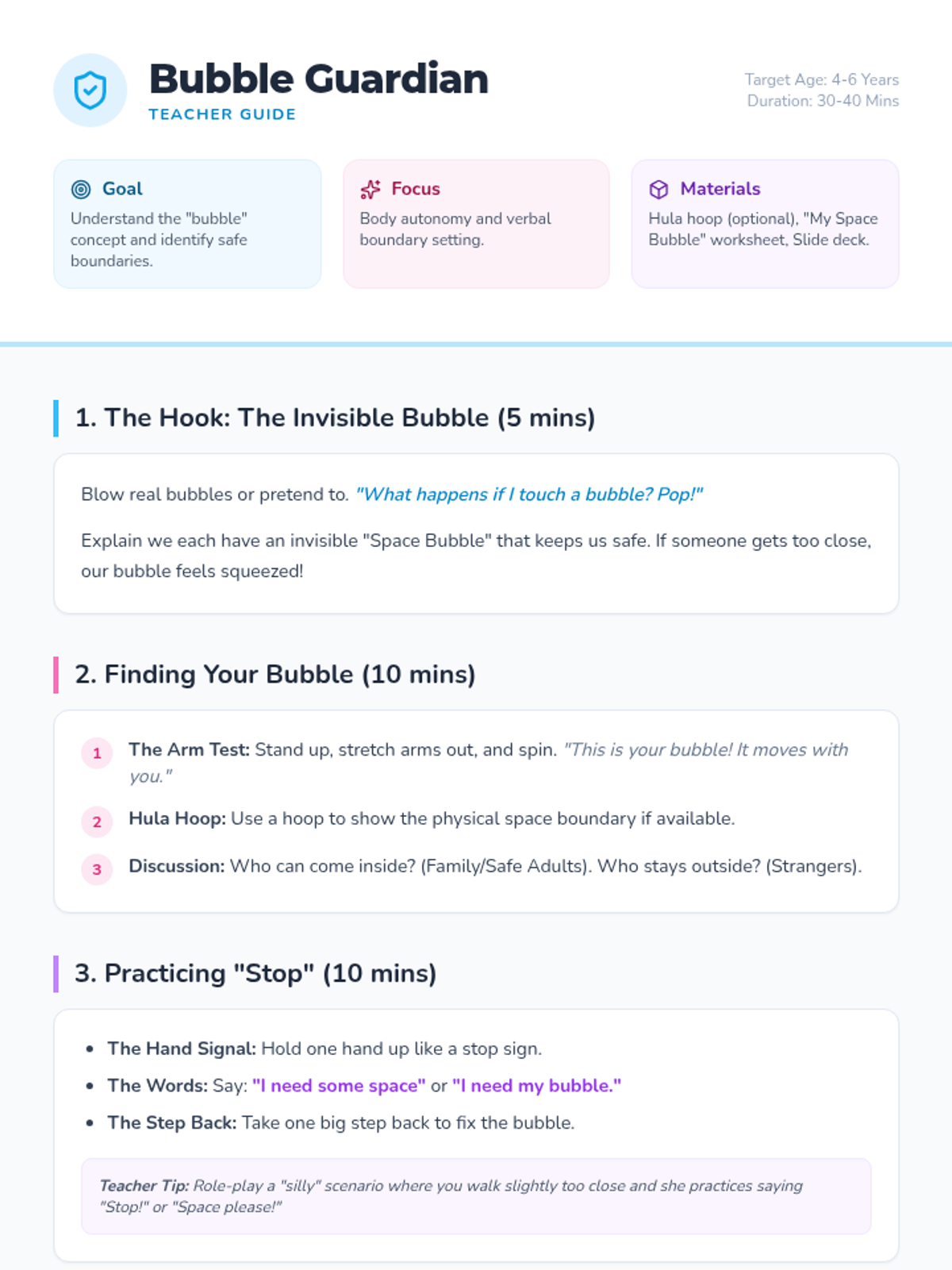
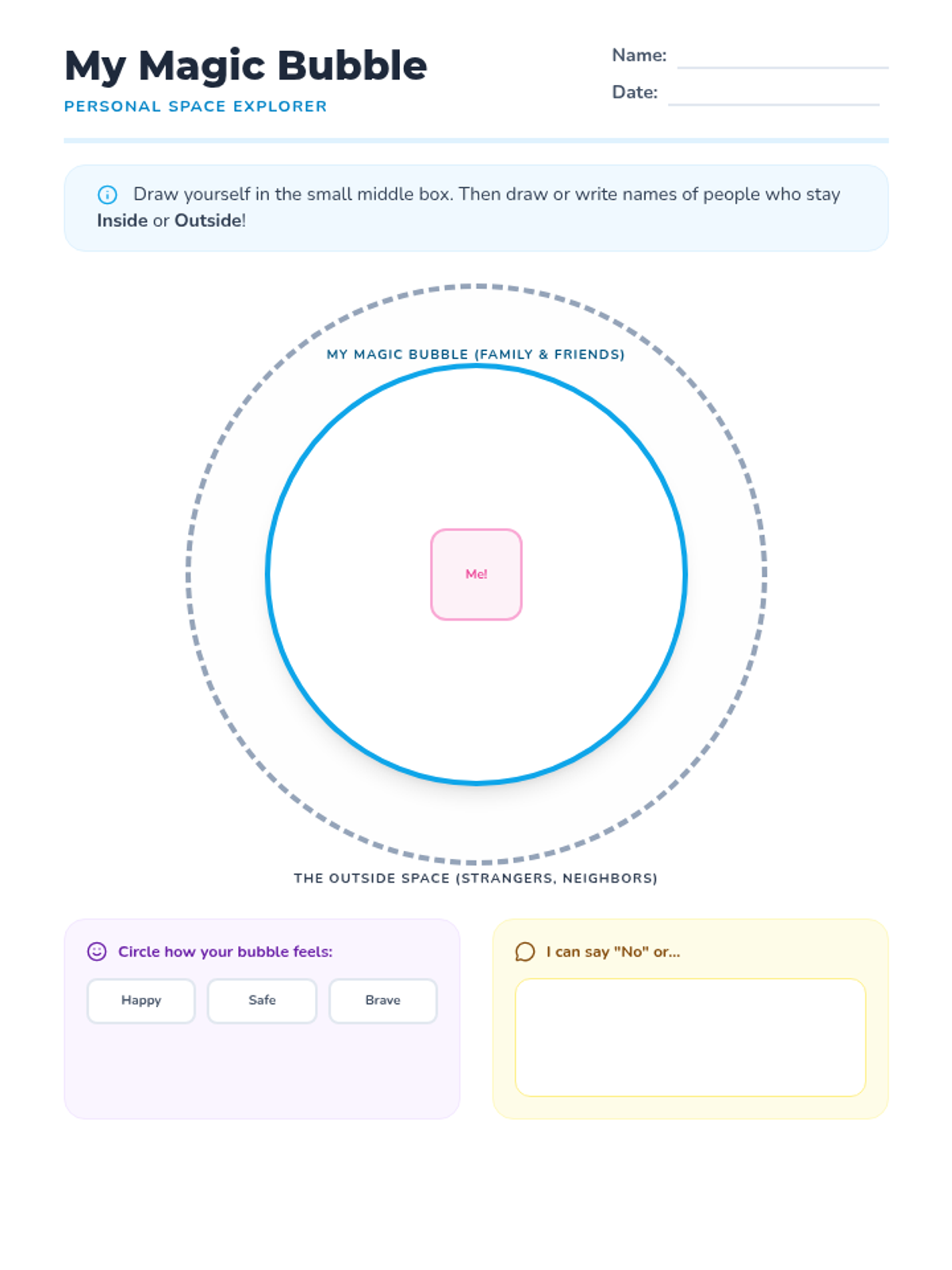
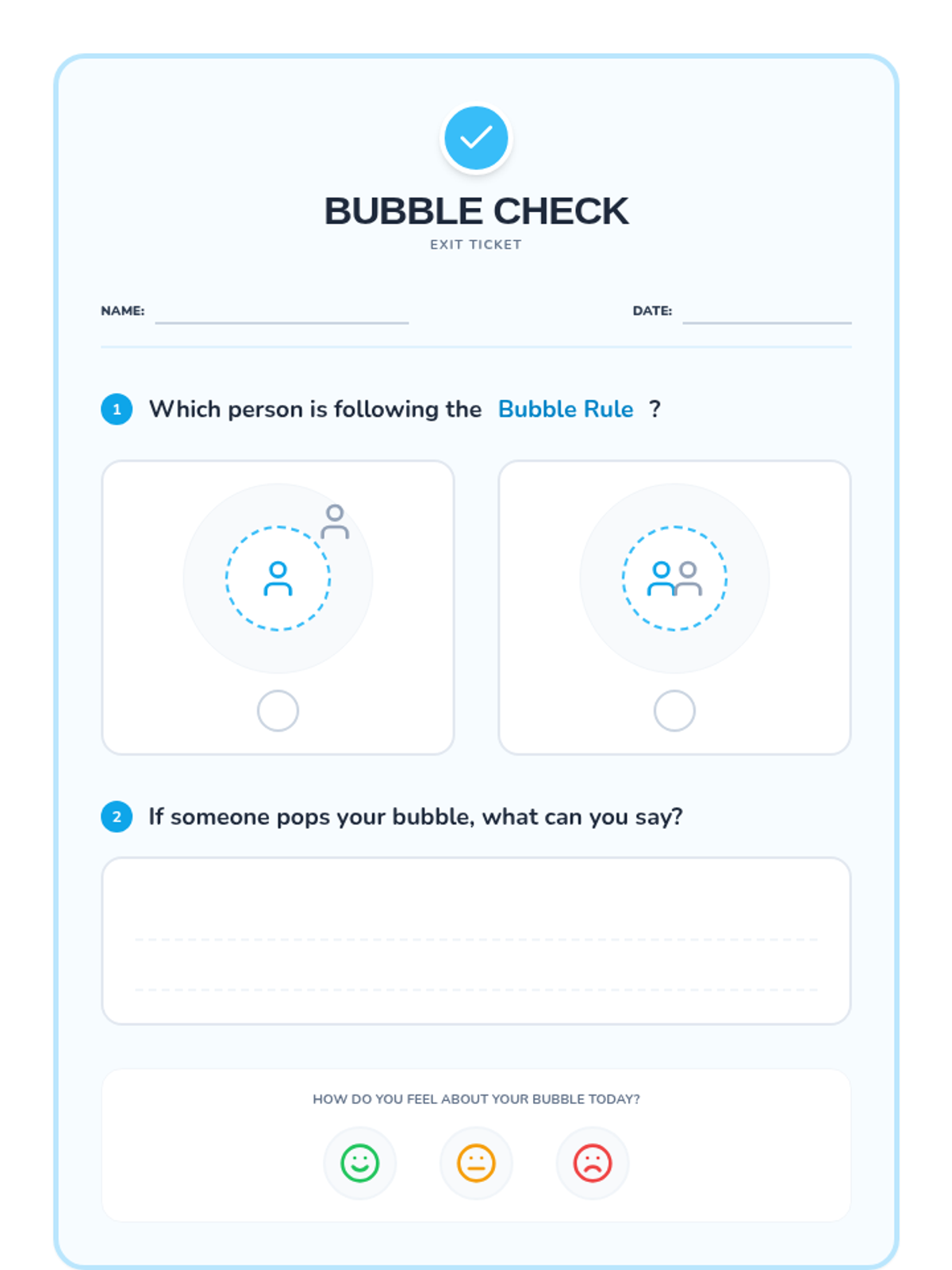
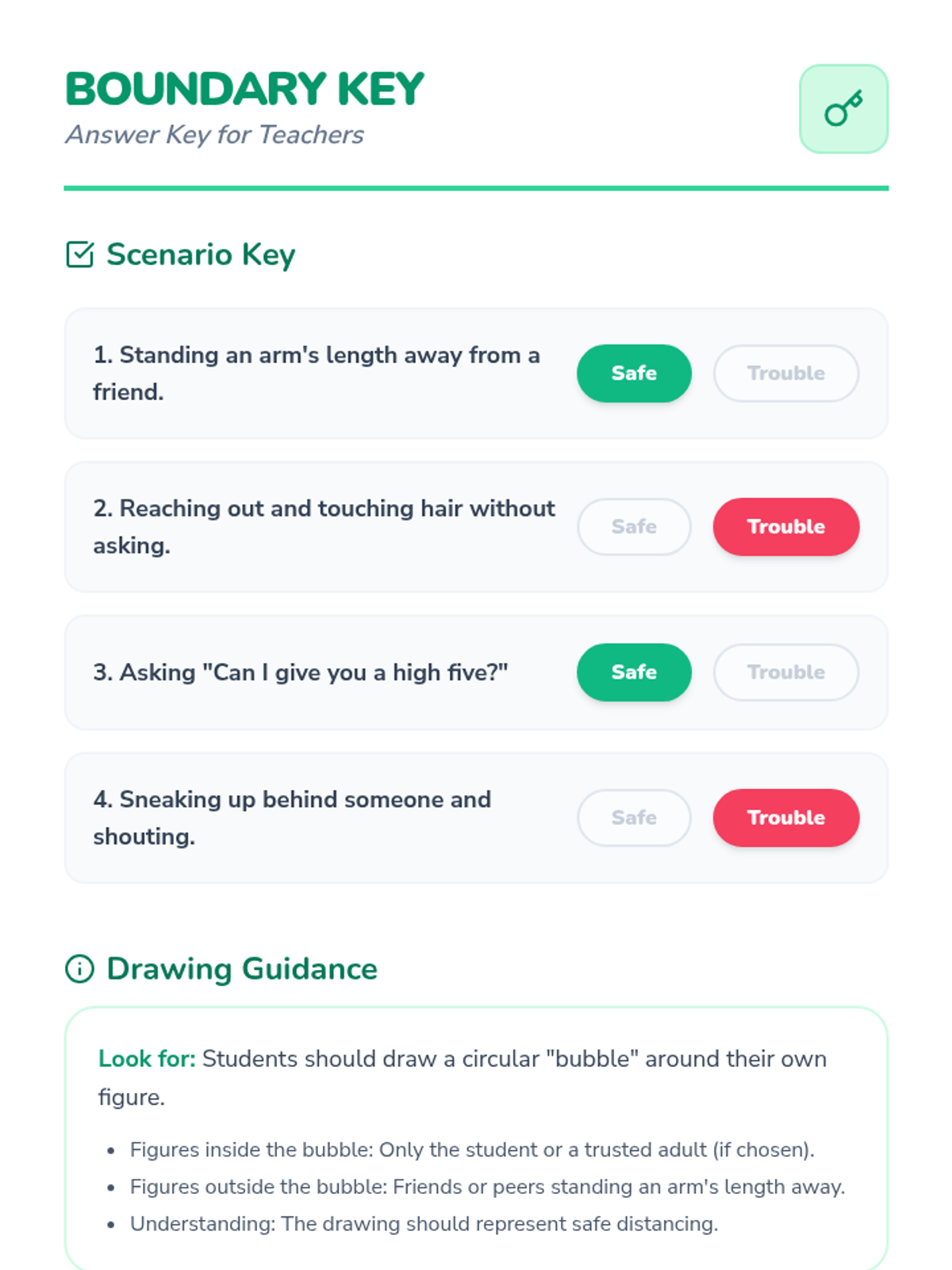
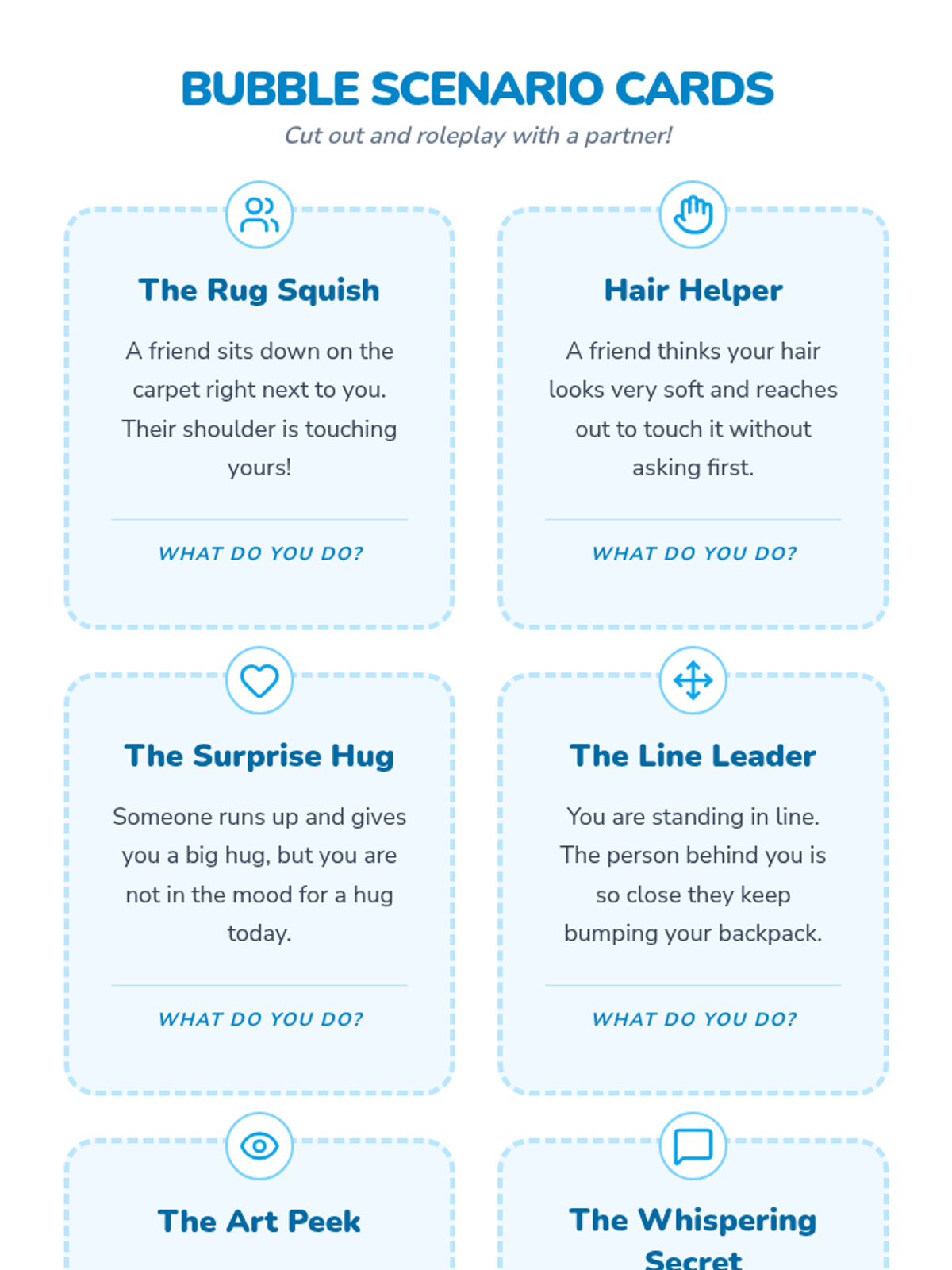
A gentle, interactive lesson for young learners to understand the concept of a 'personal space bubble' and how to set healthy boundaries with others.
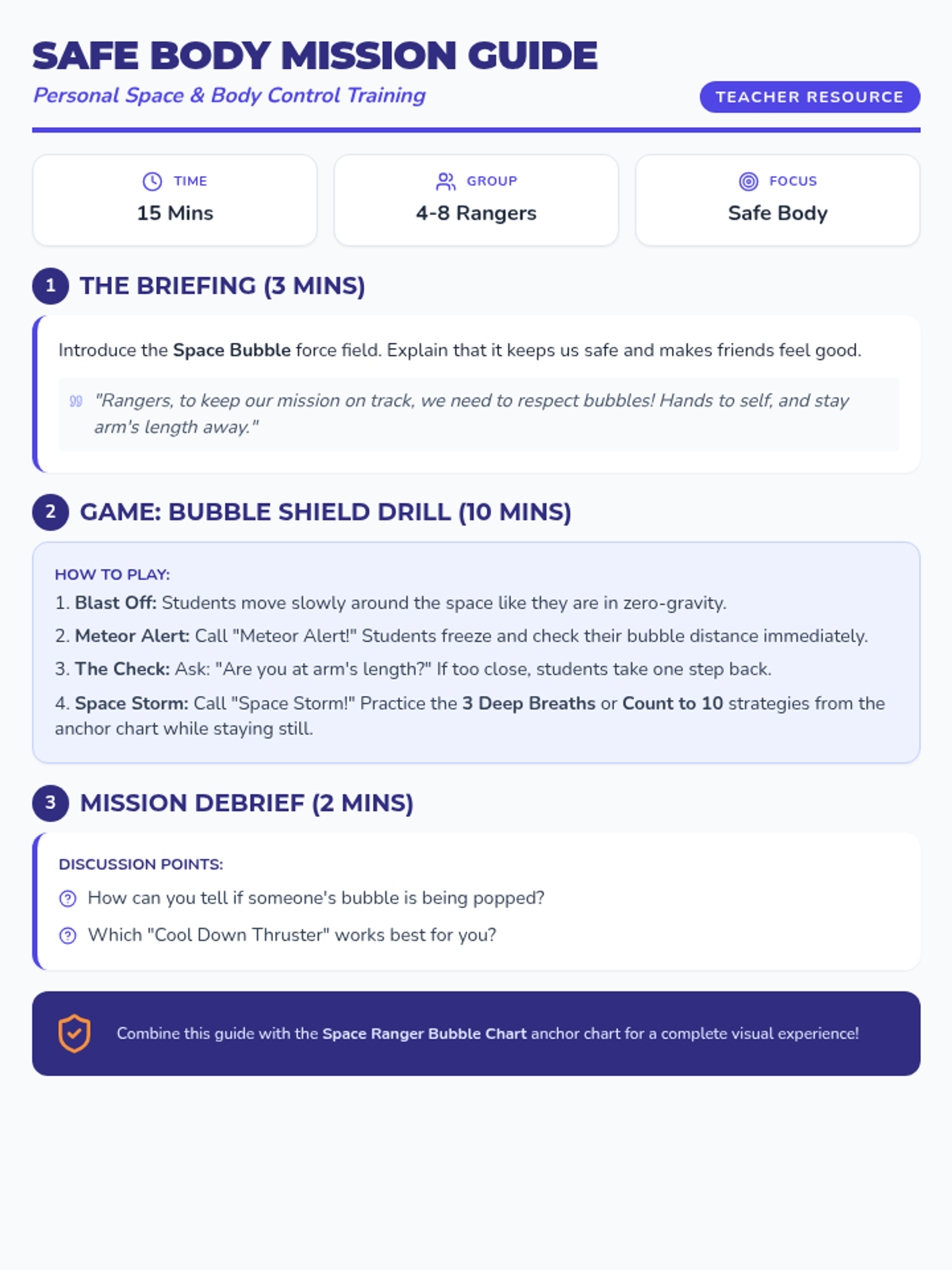
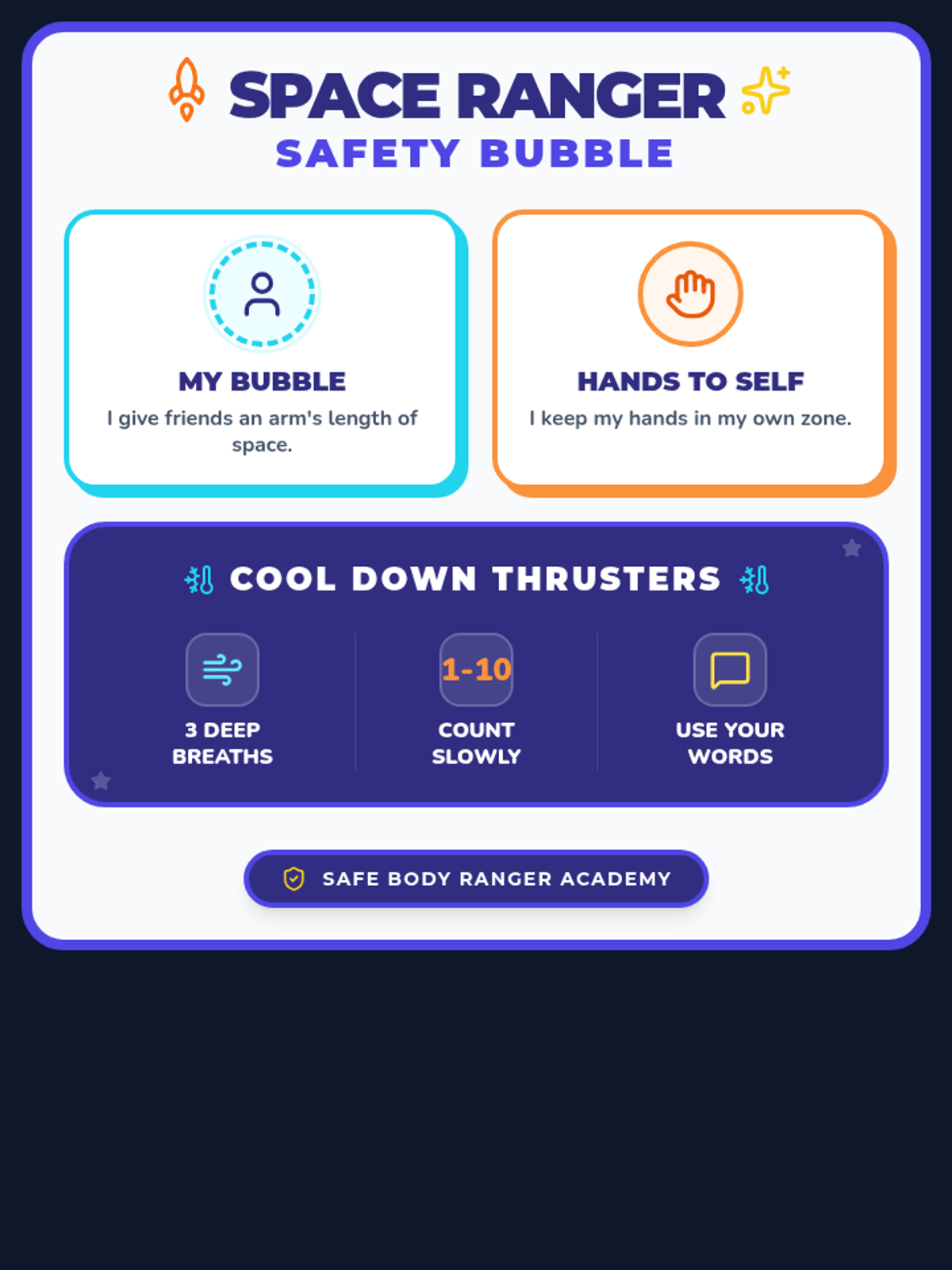
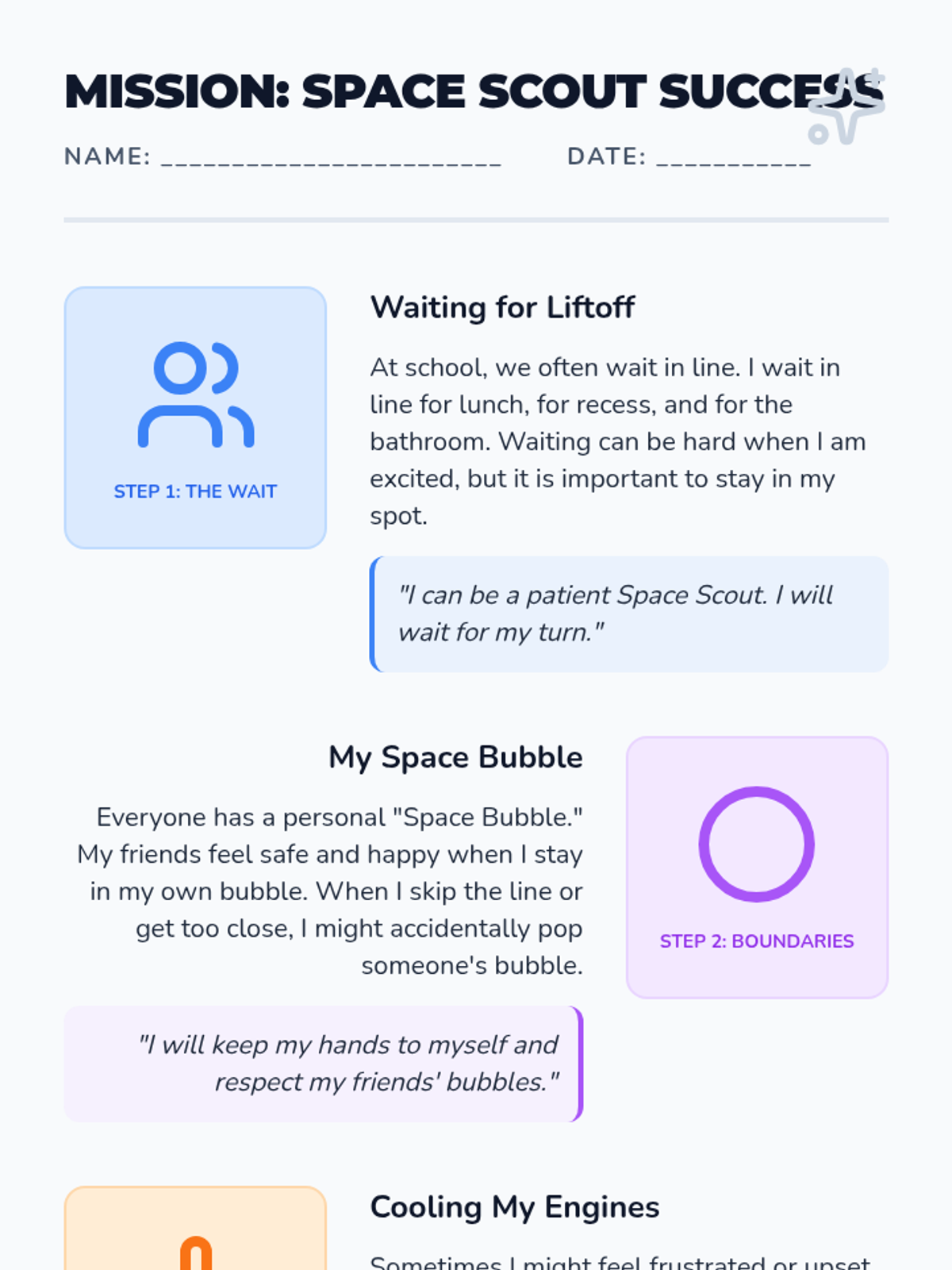
A 15-minute social-emotional learning lesson for Lunch Bunch groups, focusing on personal space, hands to self, and calming strategies using a fun 'Space Ranger' theme.
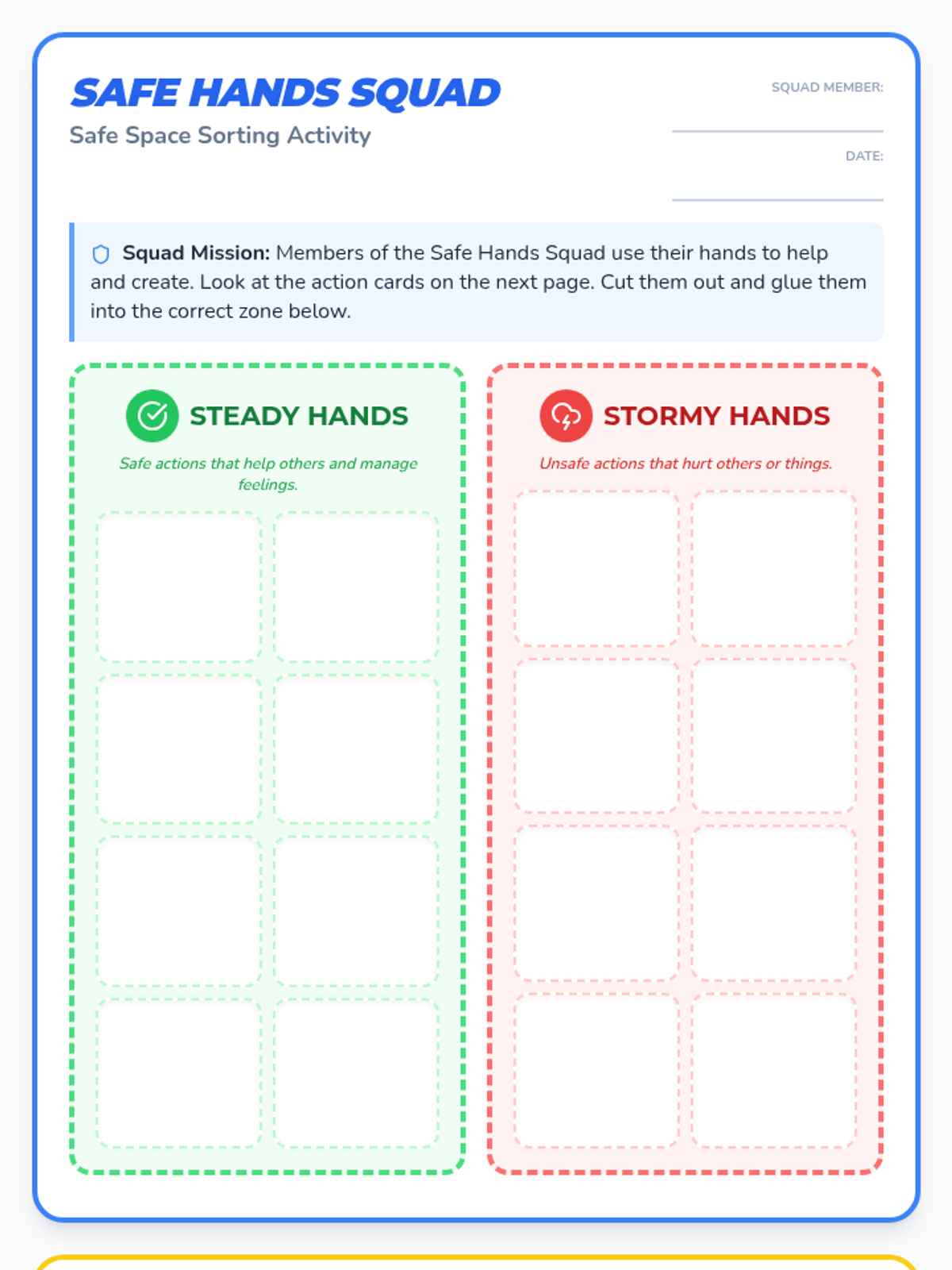
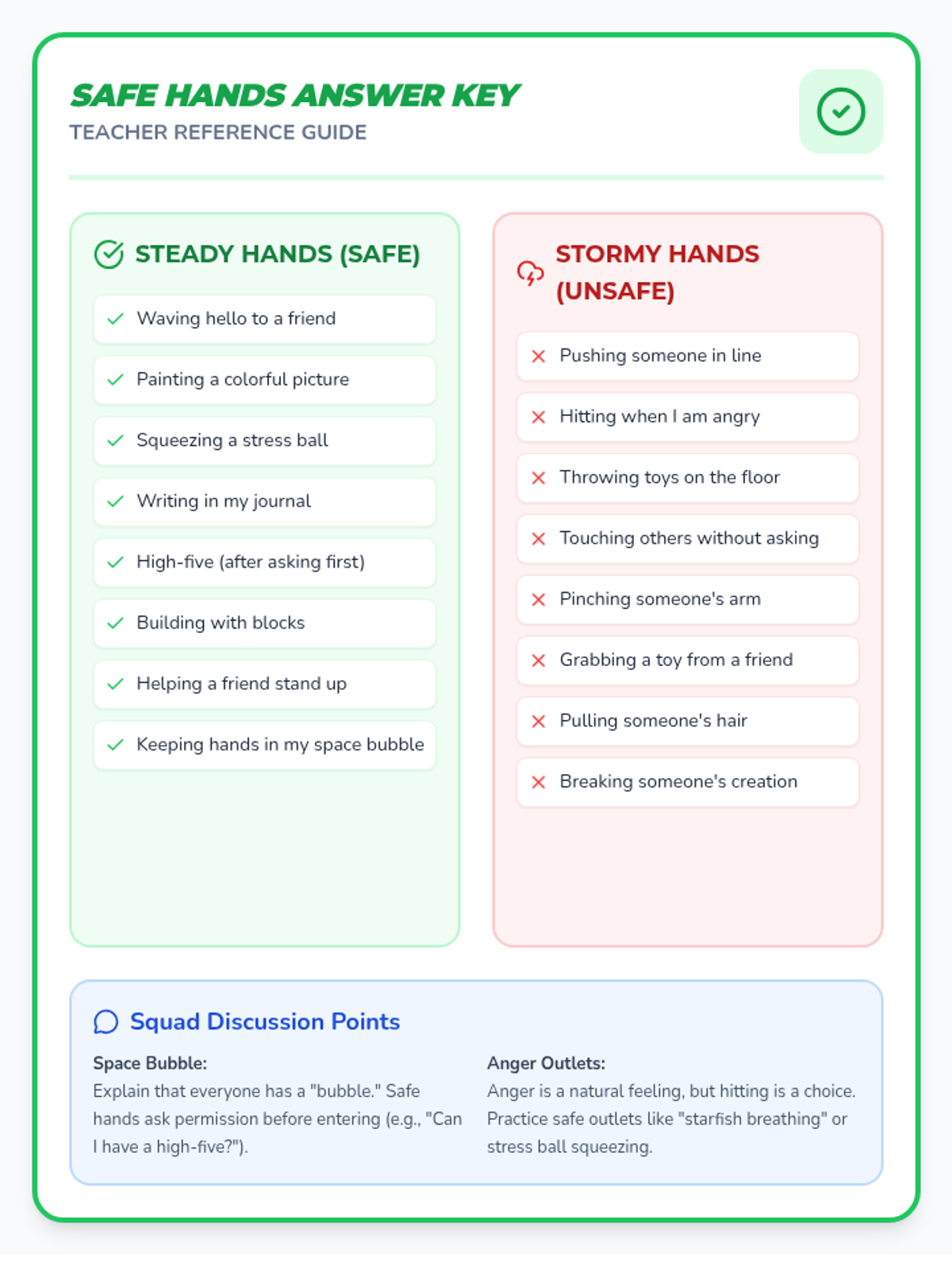
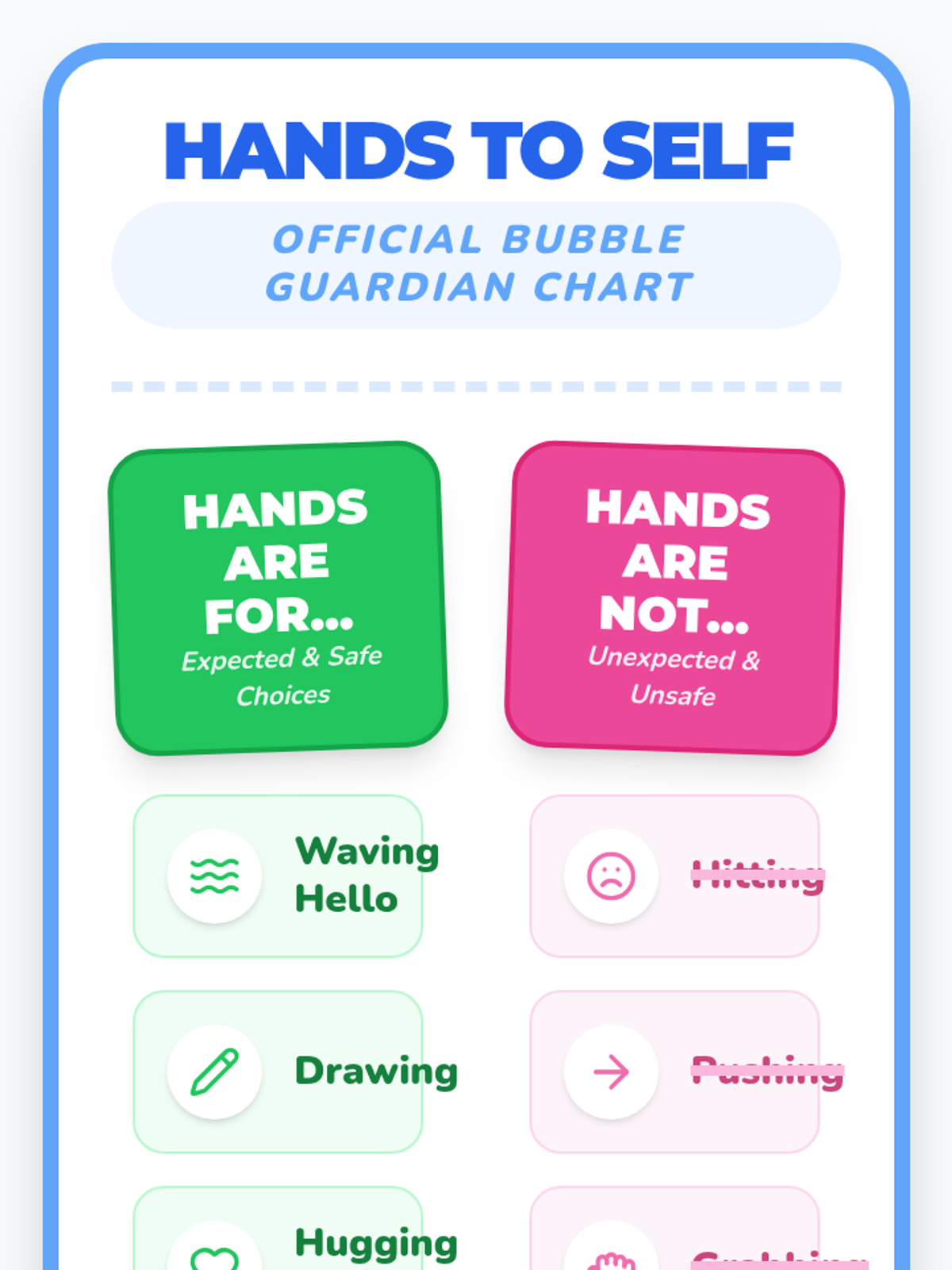
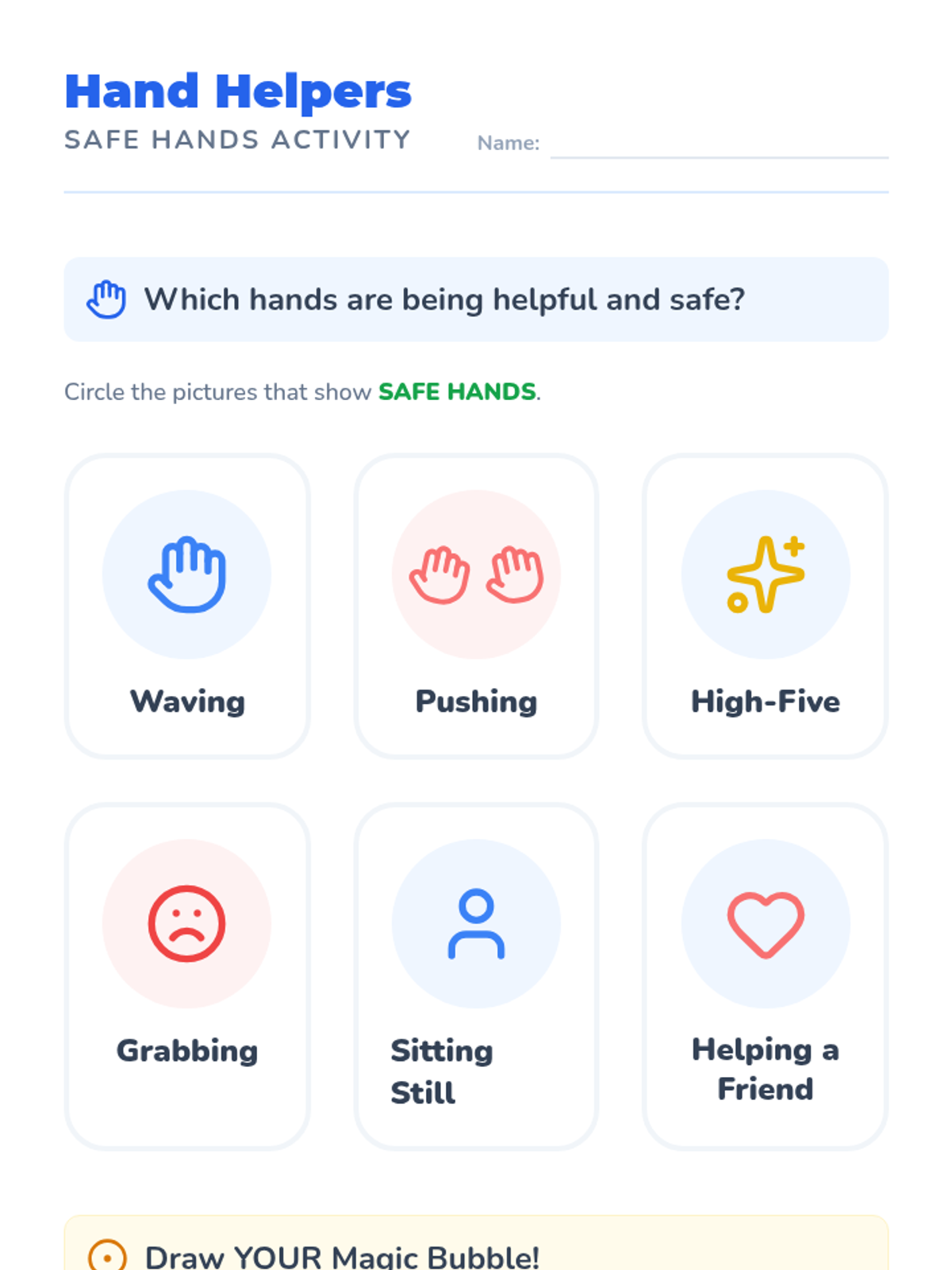
A lesson focused on teaching students how to use their hands safely, respect personal boundaries, and manage strong emotions like anger through a hands-on sorting activity.
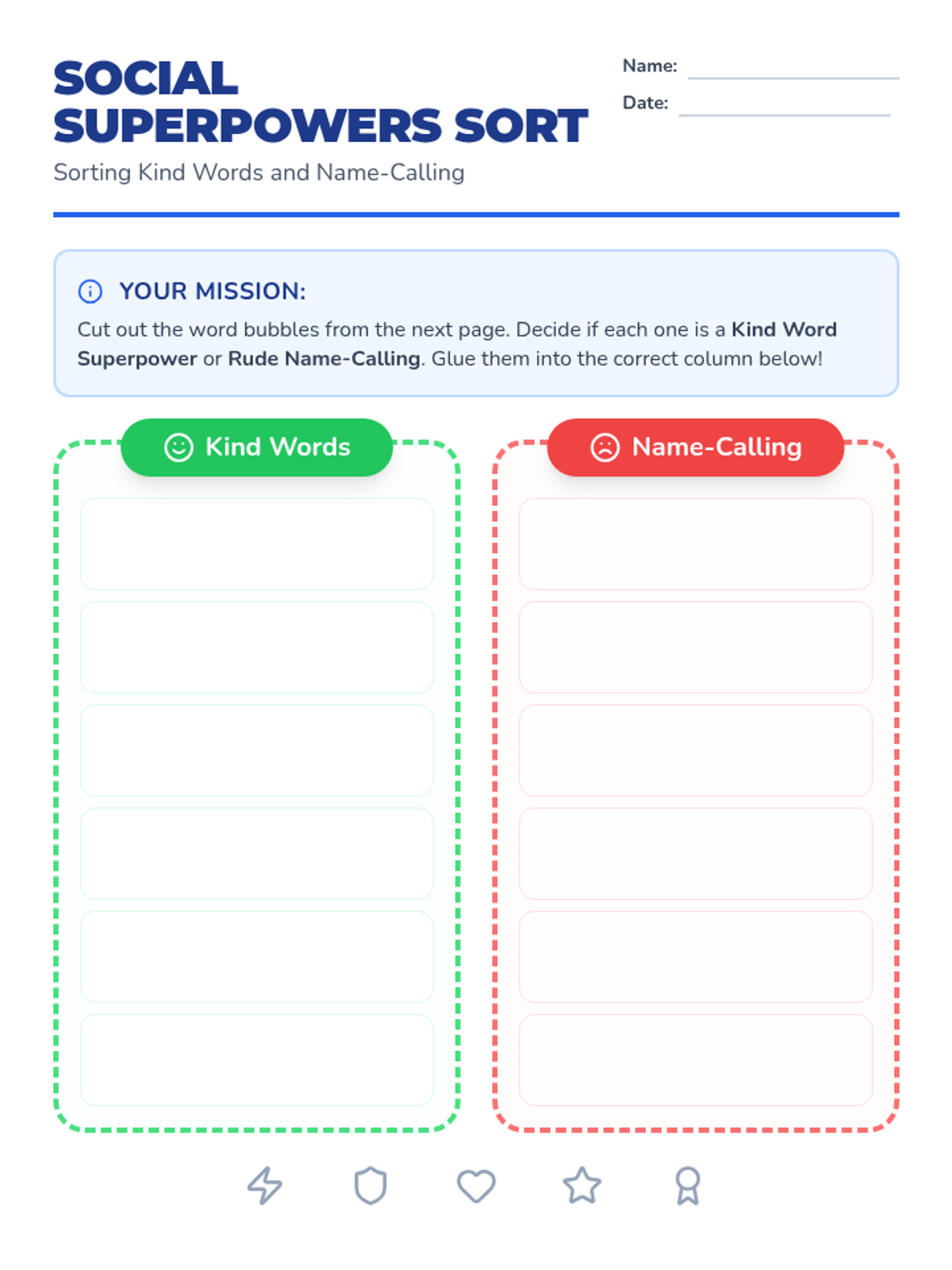
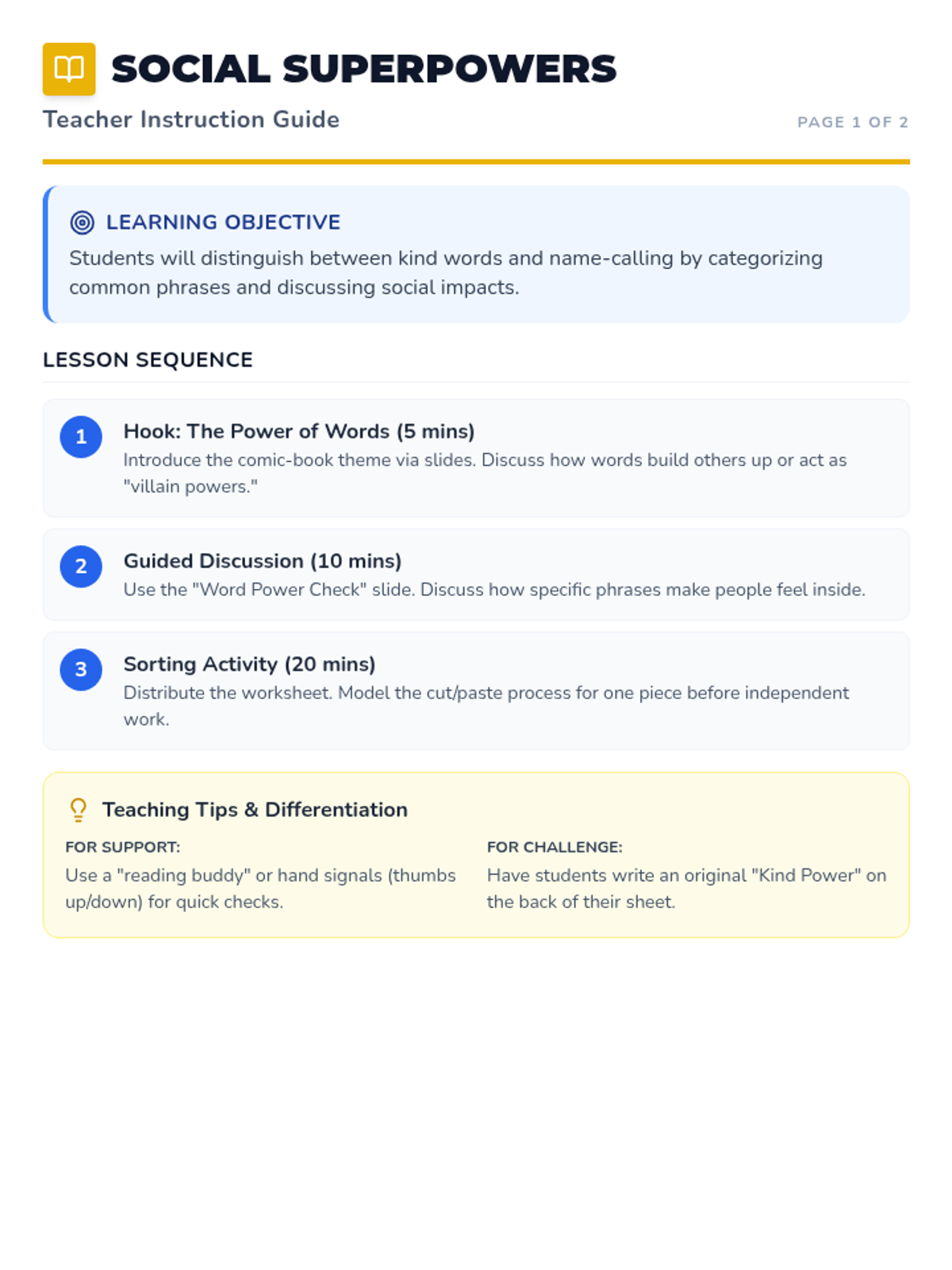
A lesson exploring the impact of kind words versus name-calling through interactive discussion and a hands-on sorting activity. Students learn to identify social "superpowers" that build others up.
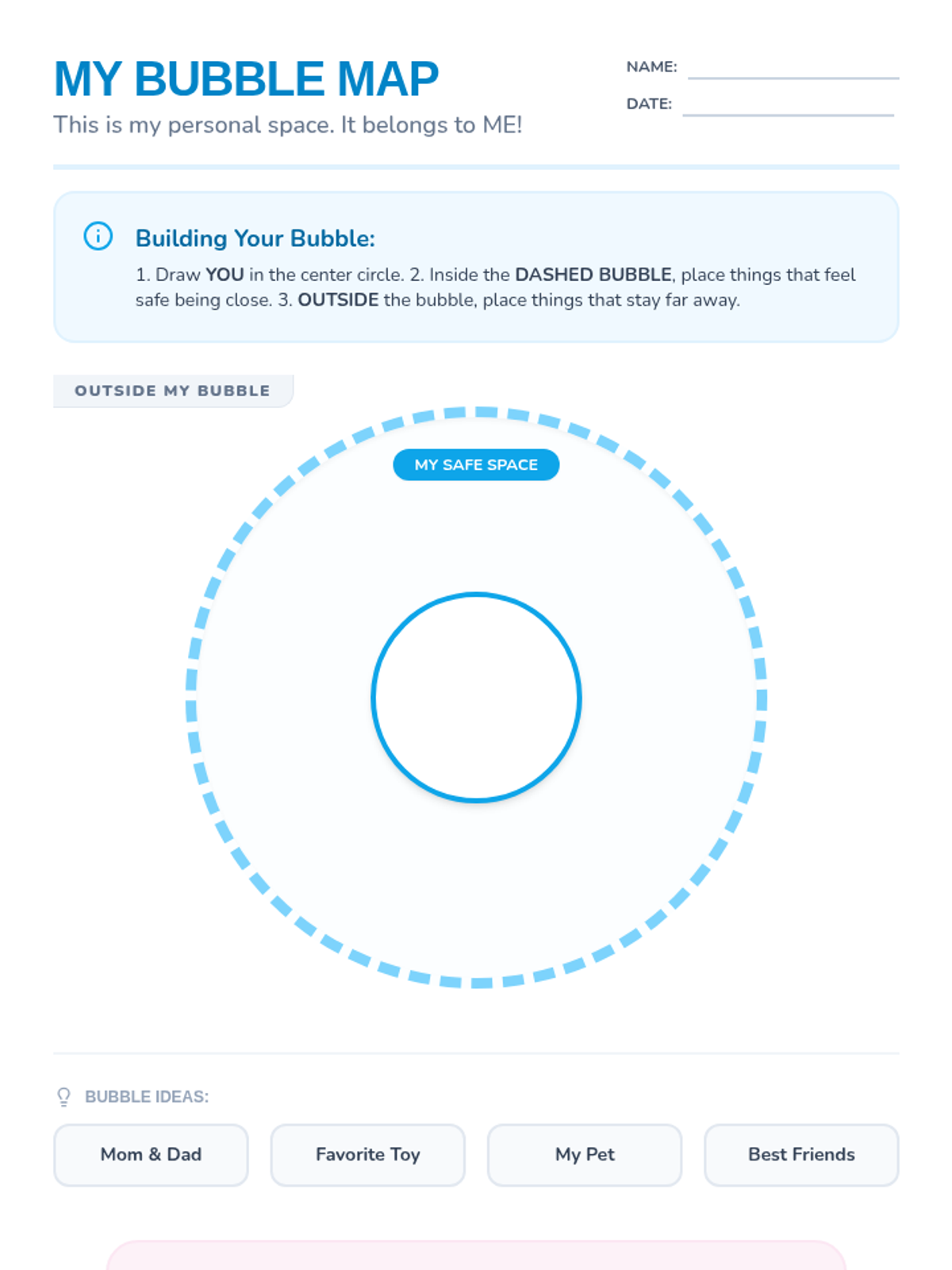
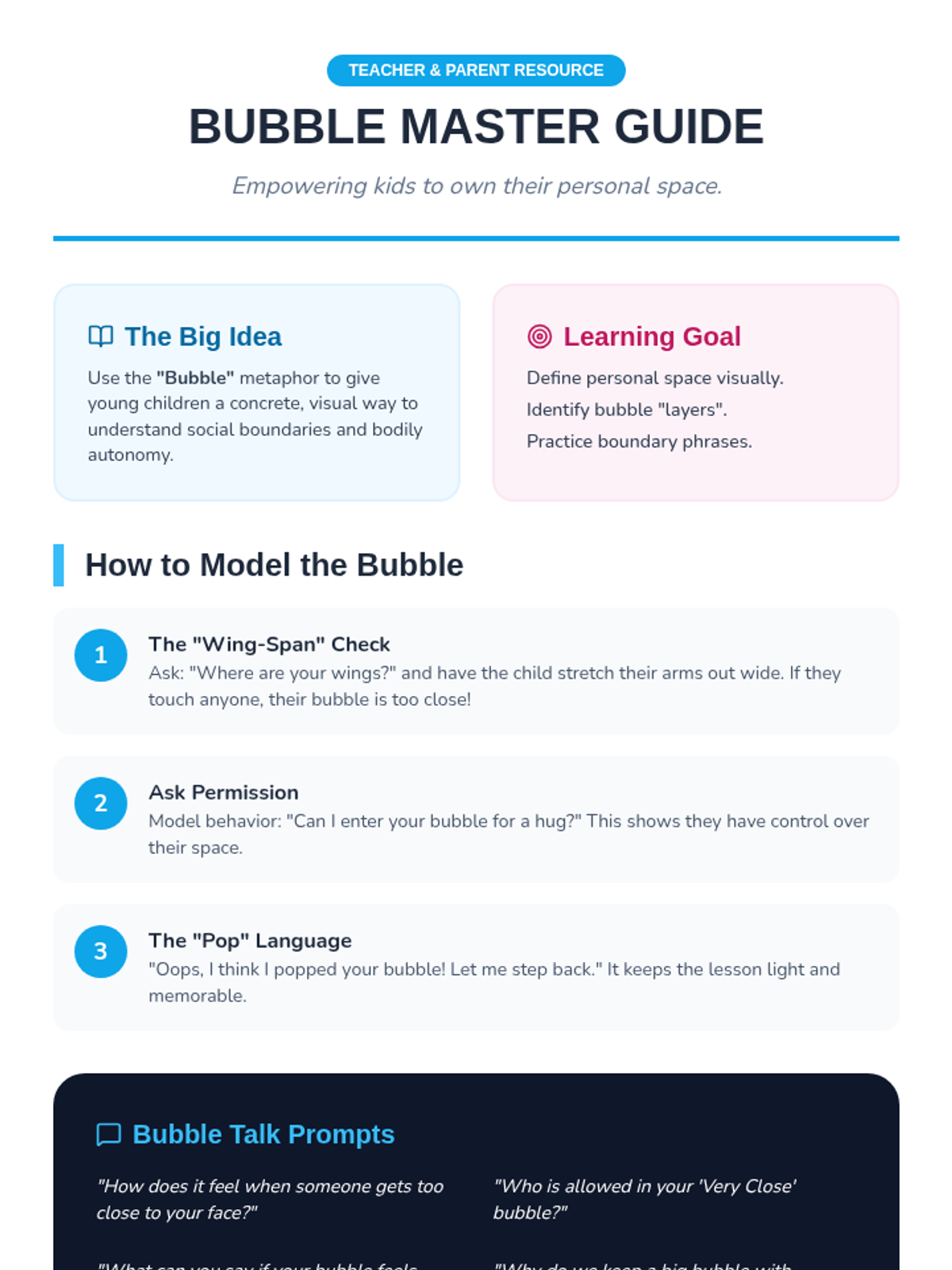
A social-emotional learning lesson introducing the concept of personal space through the 'bubble' metaphor. Parents and children explore who and what belongs in their personal space to build healthy boundaries.
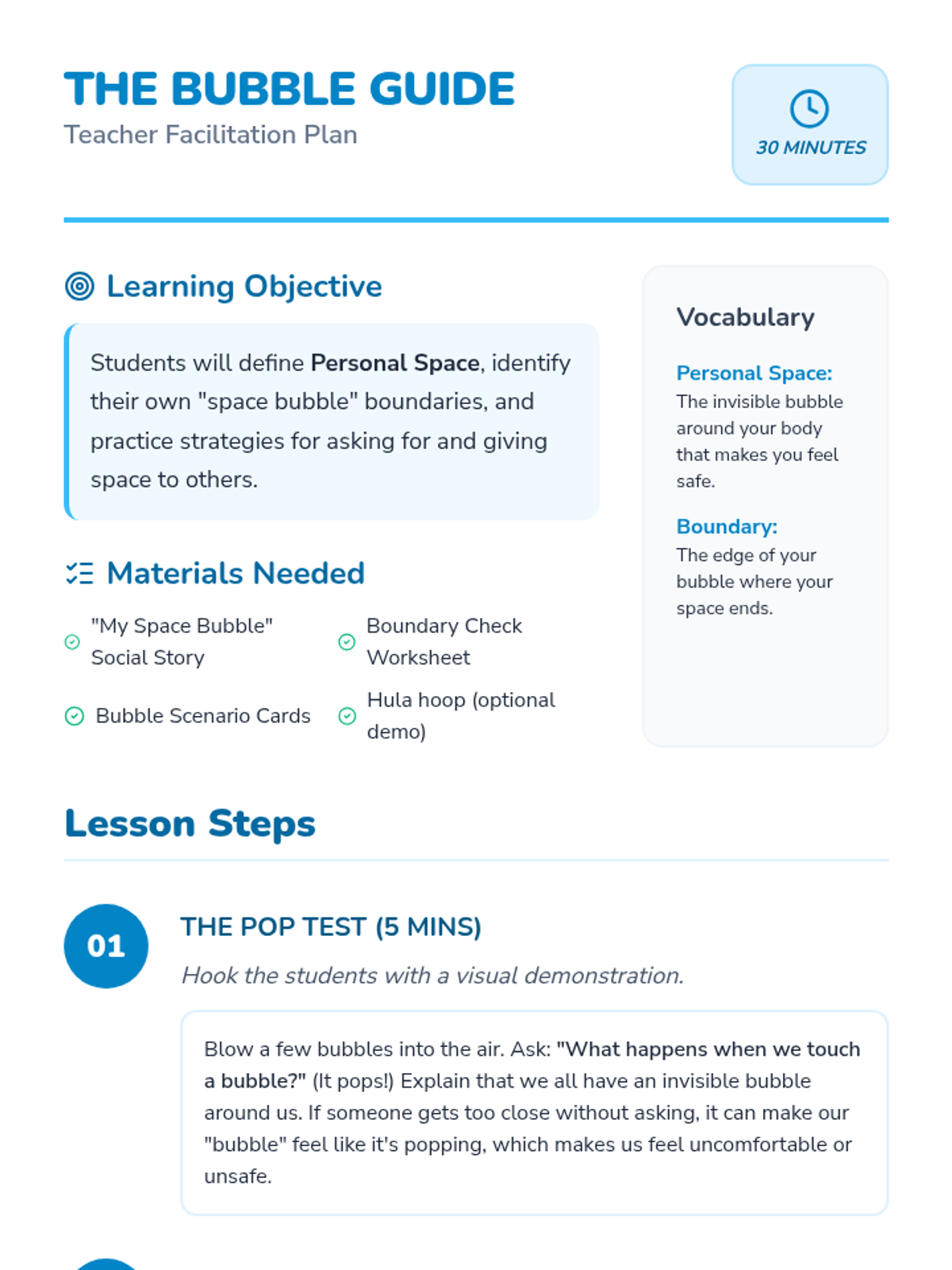
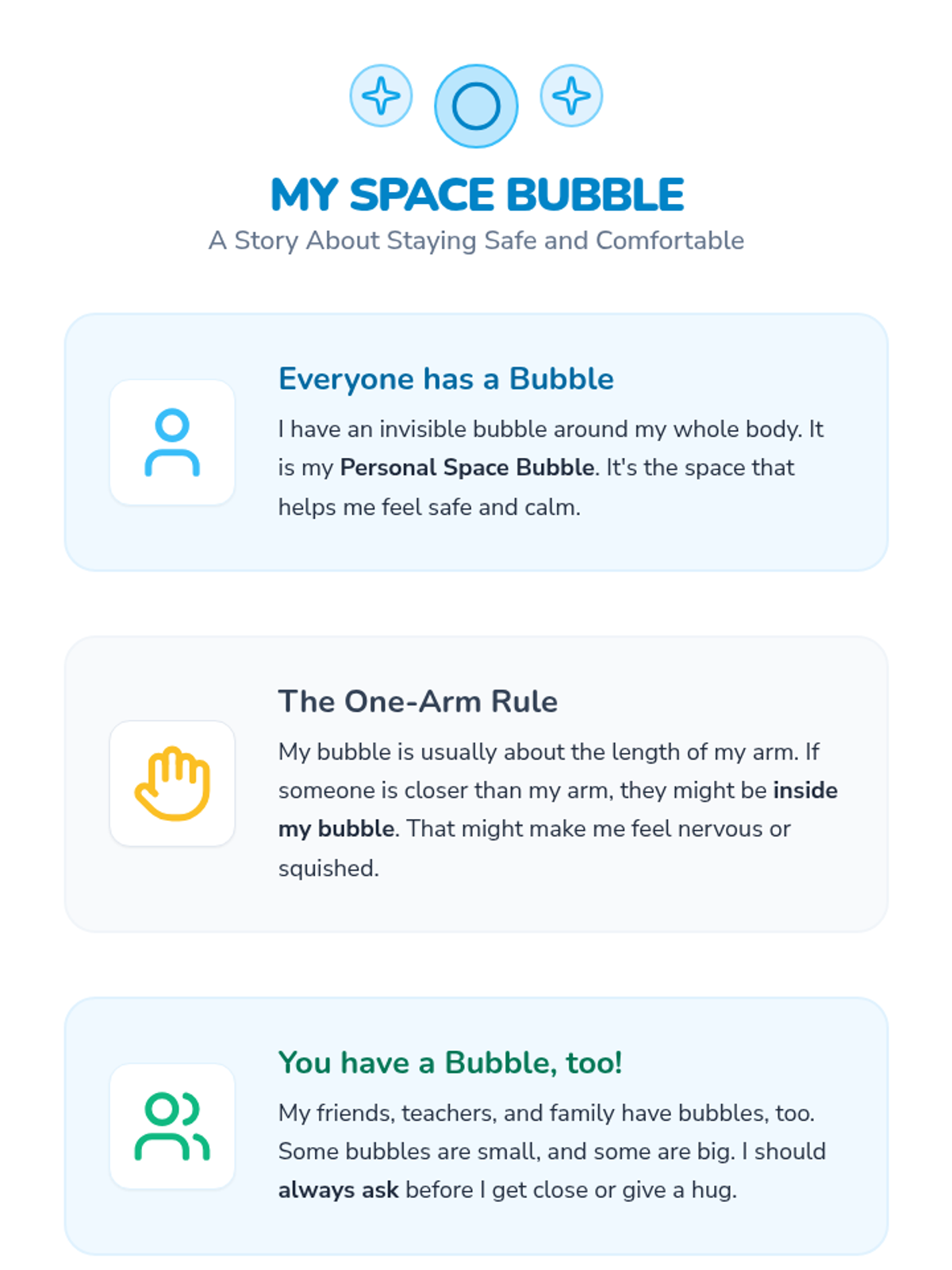
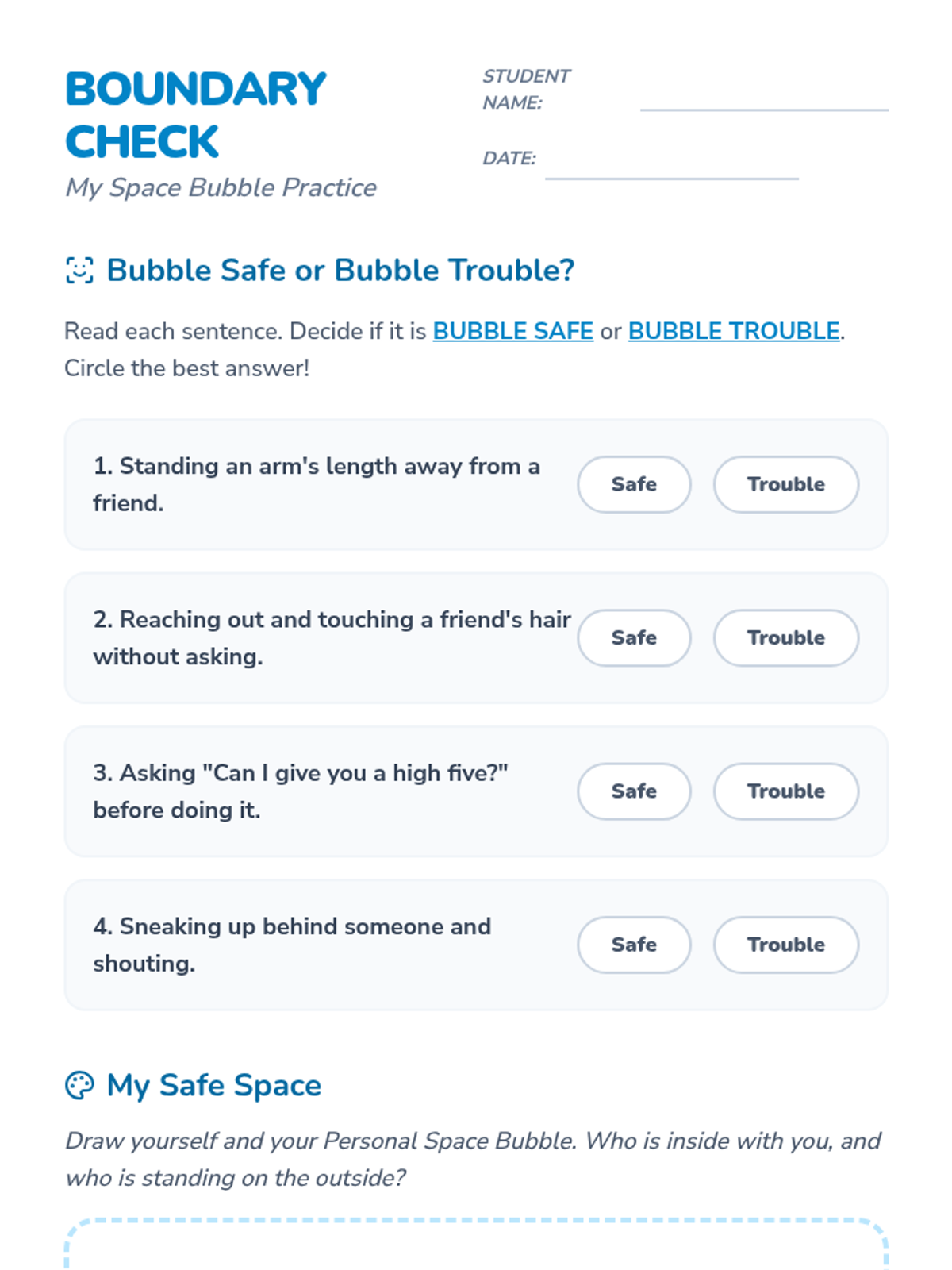
A 30-minute social-emotional learning lesson focused on understanding and respecting personal space using the 'Personal Space Bubble' concept. Includes a social story and an interactive activity.
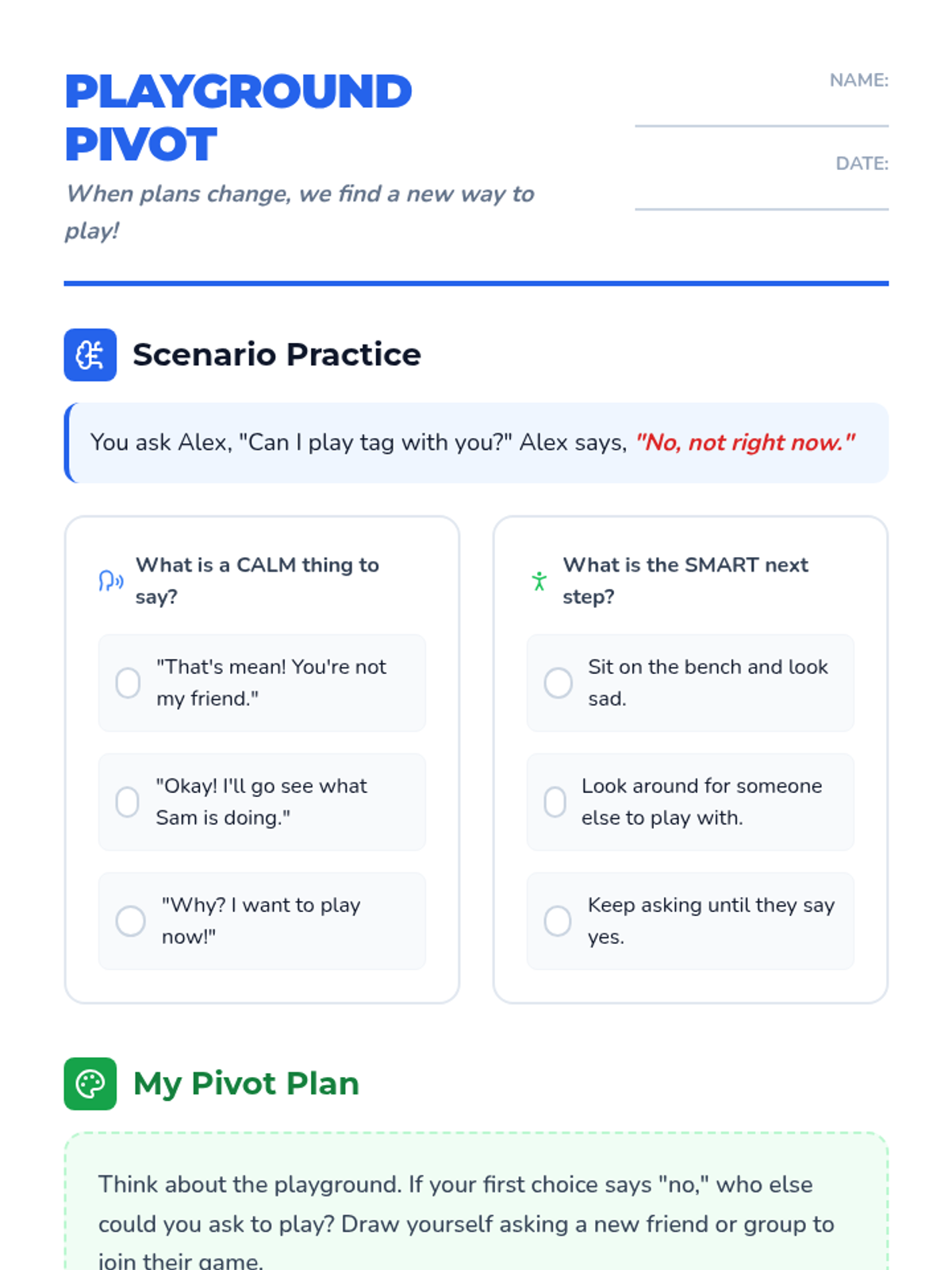
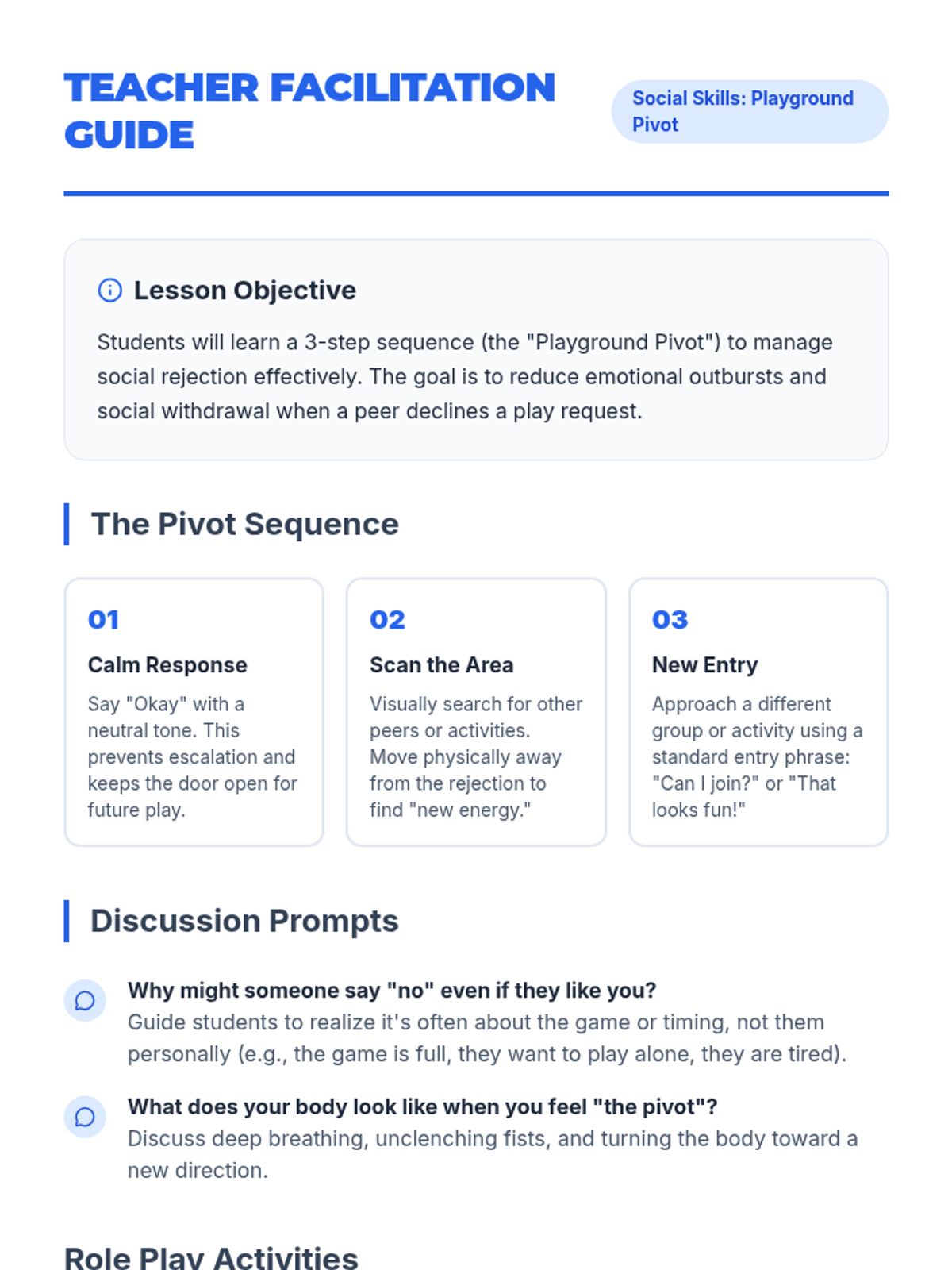
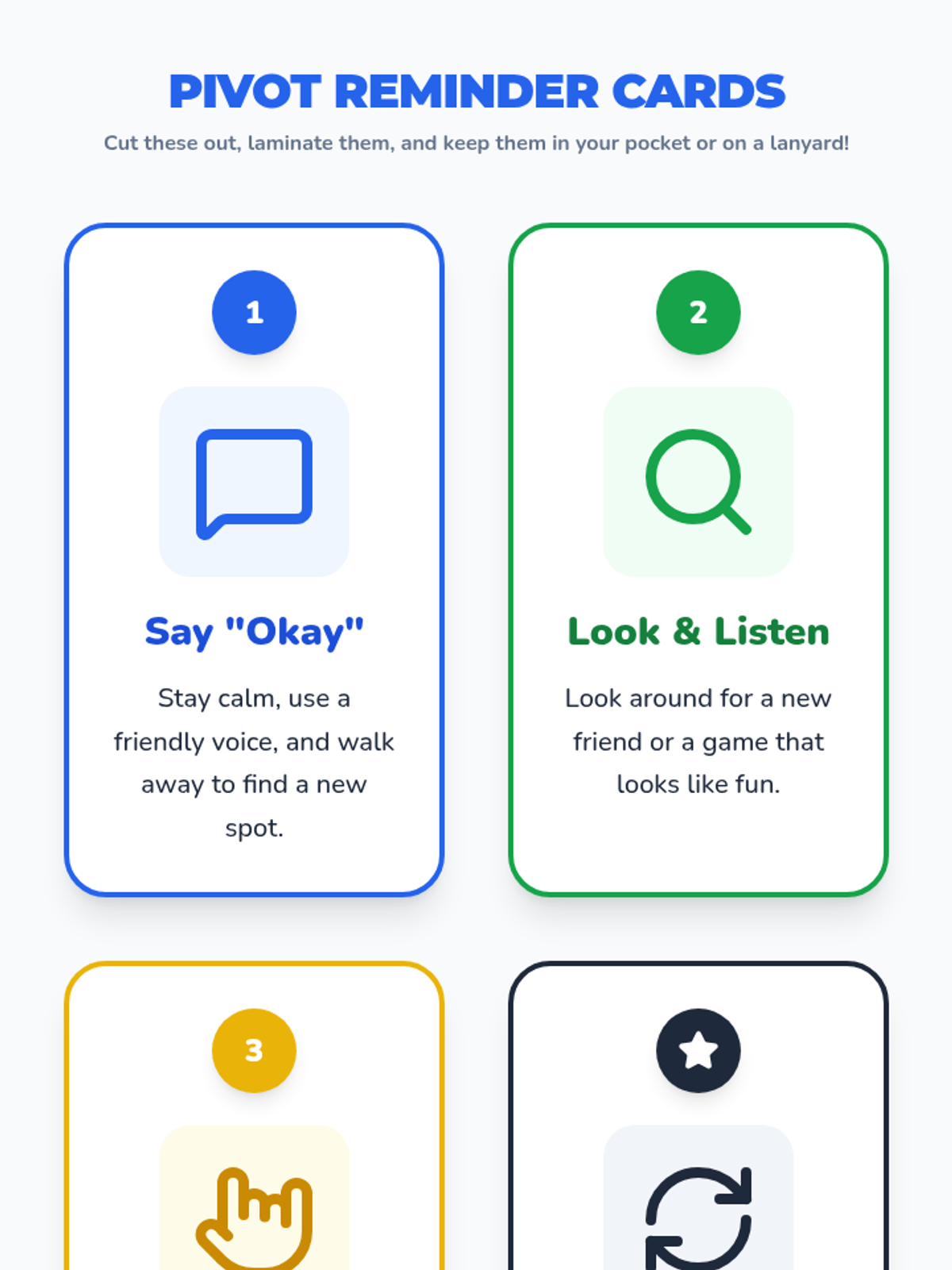
This lesson helps students navigate social rejection by teaching them how to calmly handle a friend saying 'no' and successfully finding a new person or group to play with.
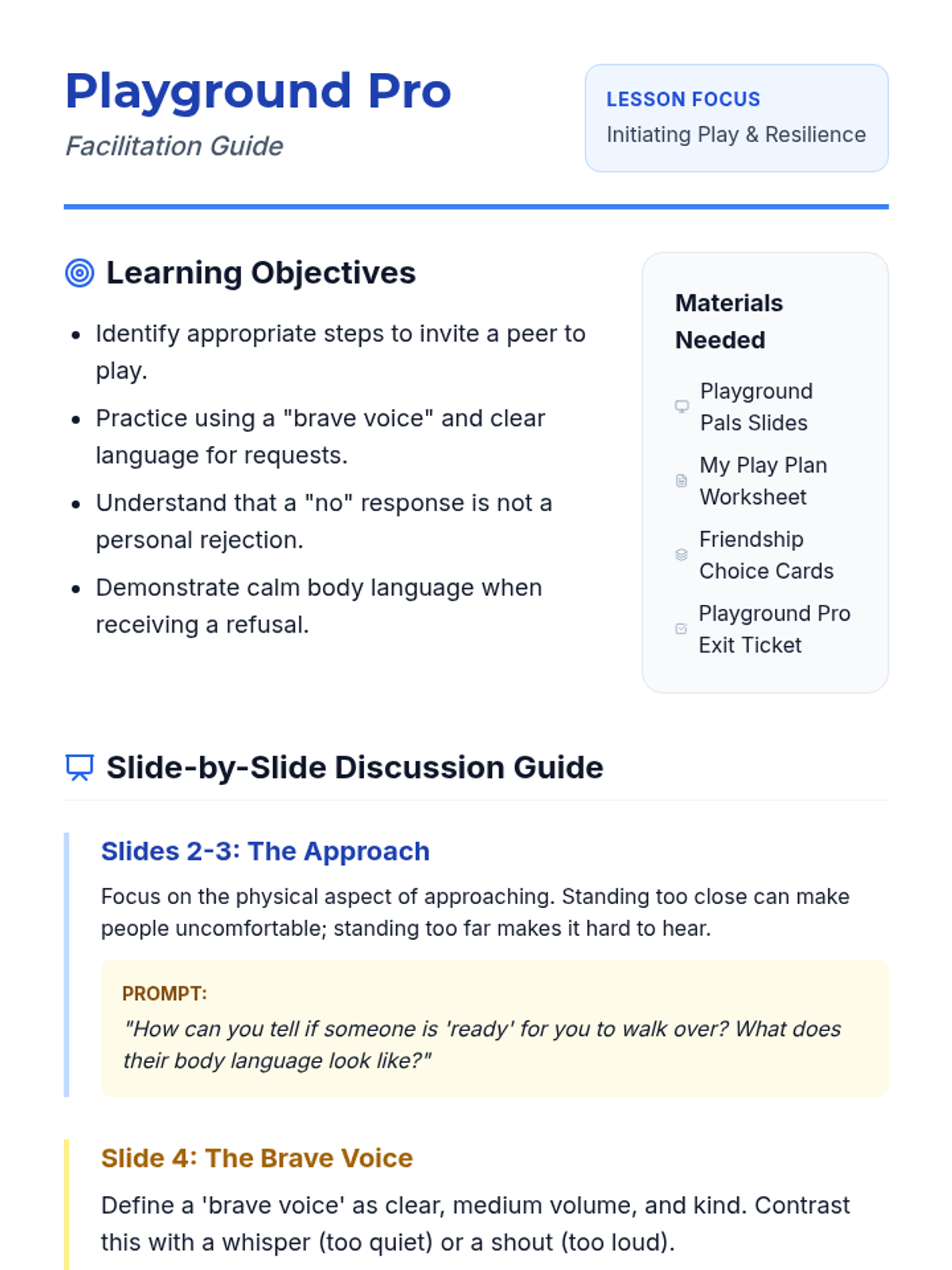
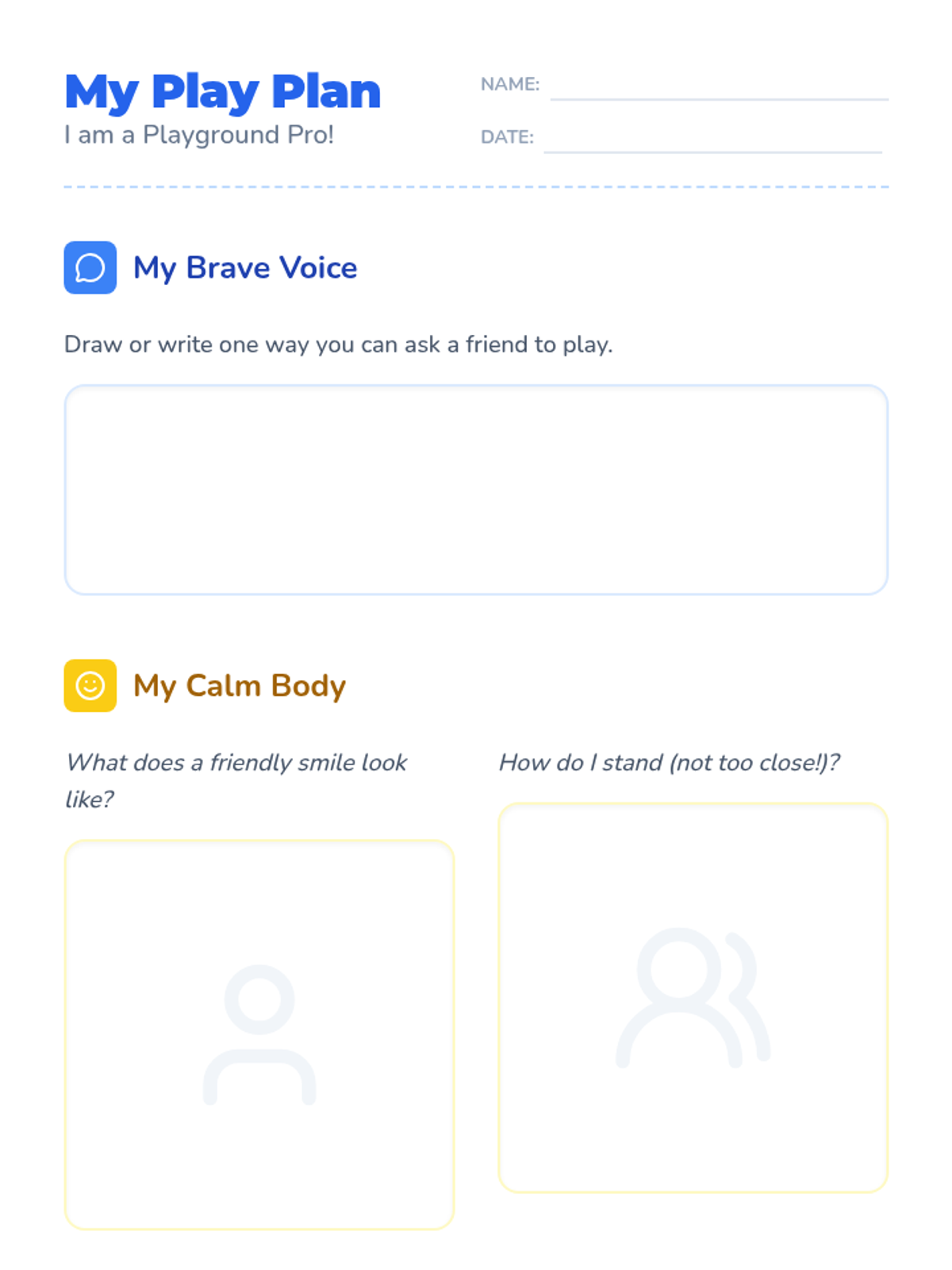
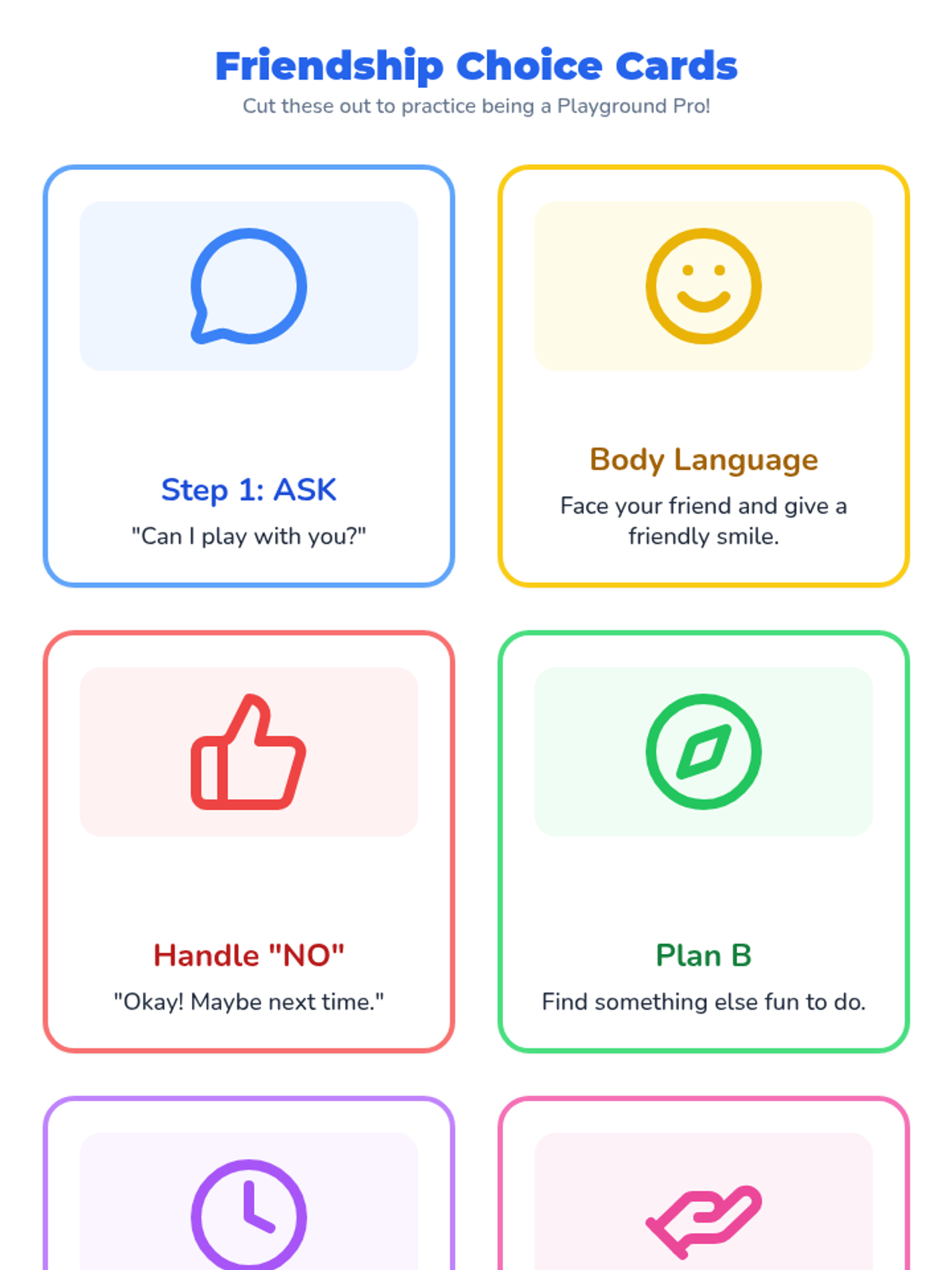
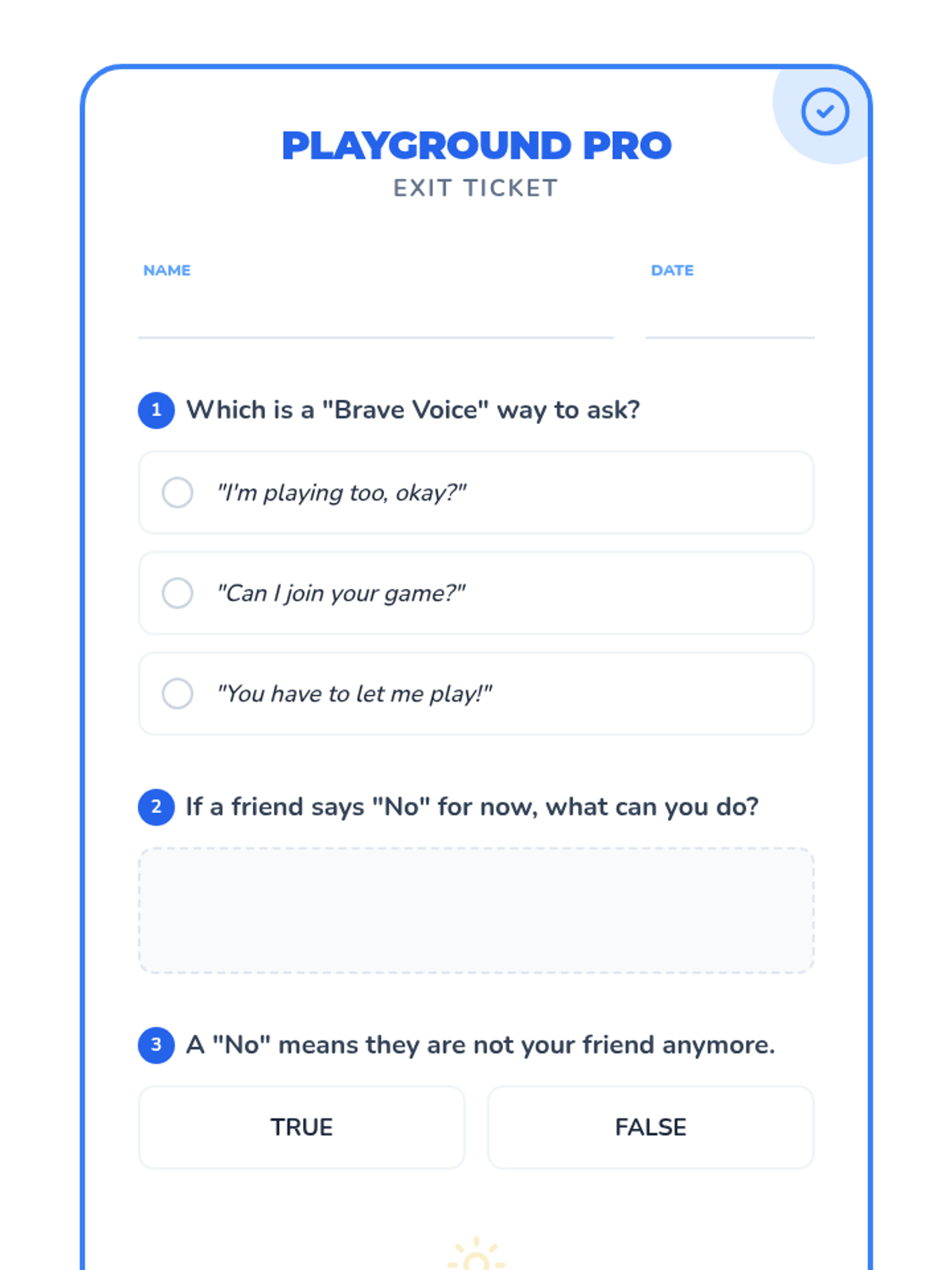
A social-emotional learning lesson focused on the social skills of inviting others to play and gracefully accepting a 'no' response. This lesson uses visual storytelling and role-play to build confidence and resilience in peer interactions.
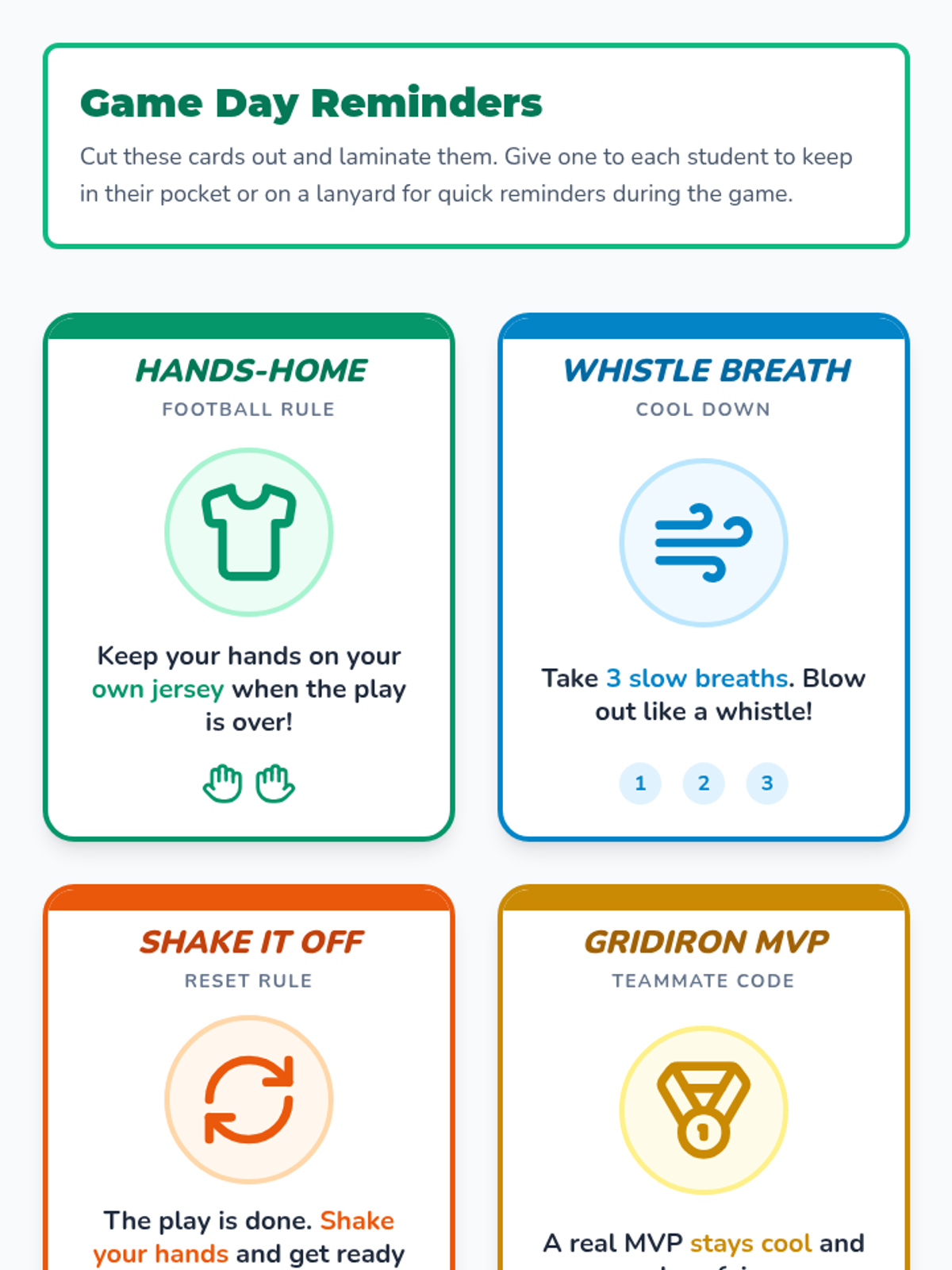
A social-emotional learning lesson for young Mustang athletes on managing frustration and keeping hands to oneself during football games. Includes a group presentation, a printable social story, and visual reminder cards.
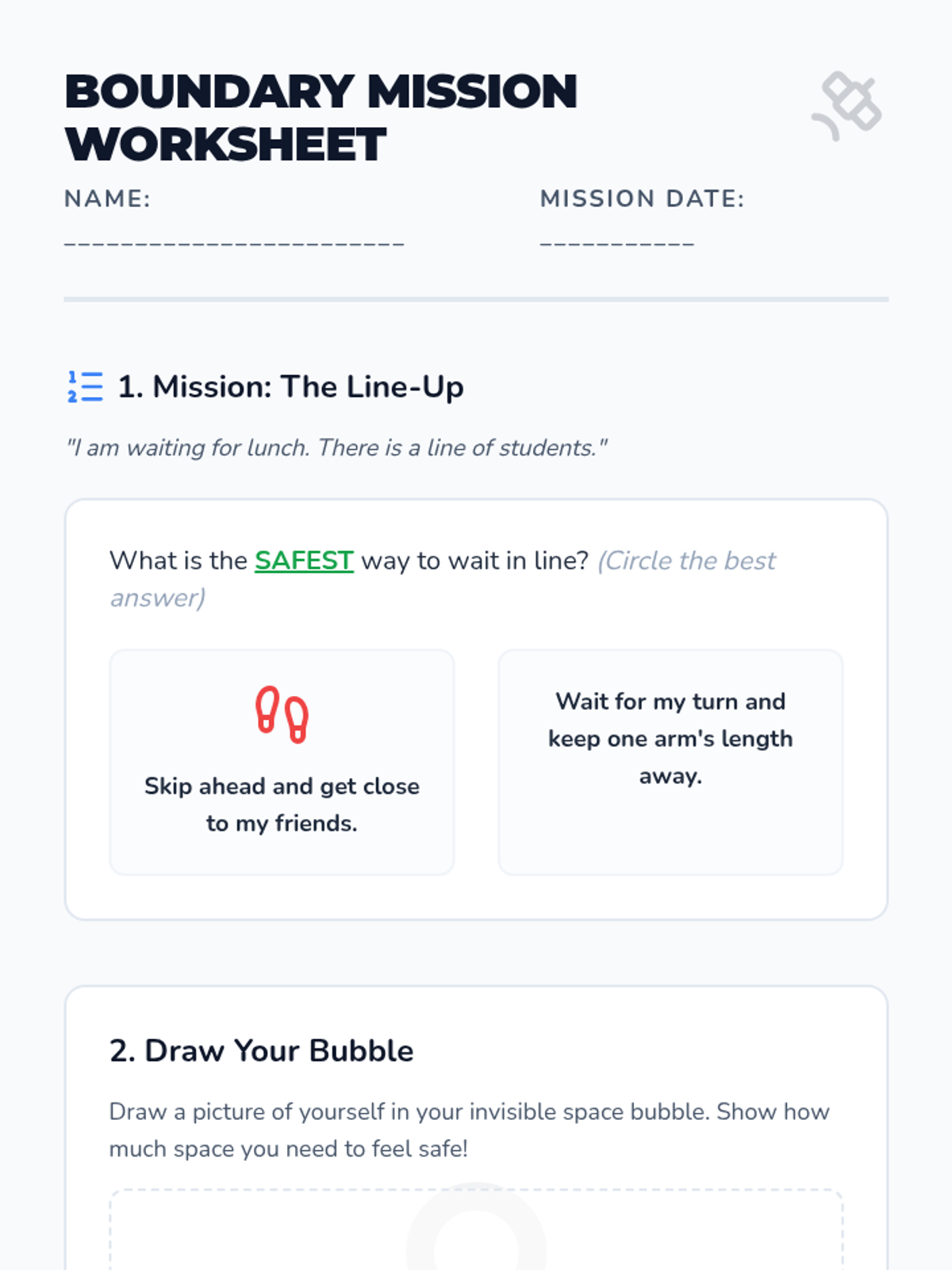
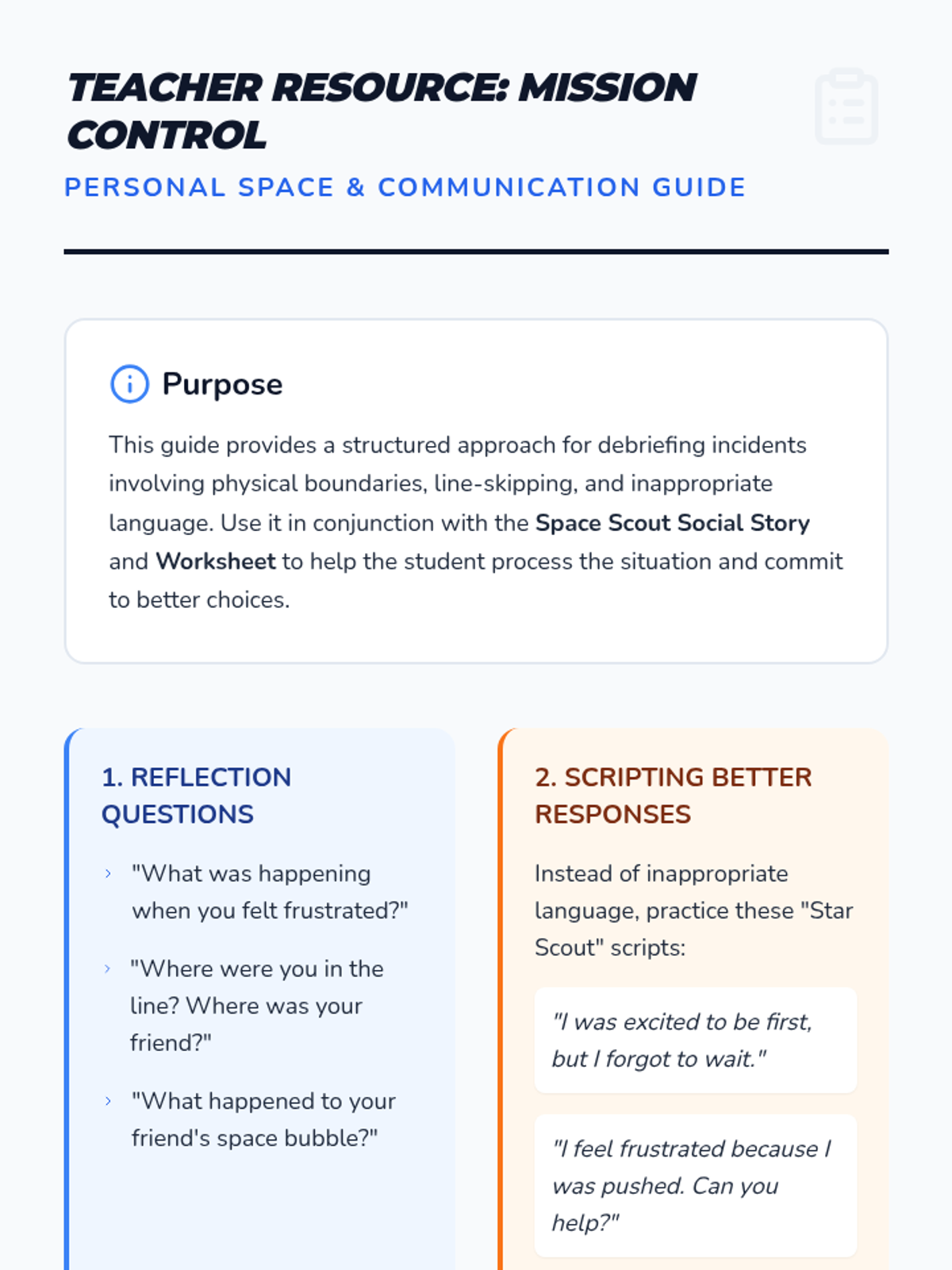
An intervention lesson focused on personal space, waiting in line, and choosing appropriate words when feeling frustrated or overwhelmed.
A Kindergarten social-emotional learning lesson focused on personal space, safe body choices, and understanding expected vs. unexpected behaviors using the 'space bubble' metaphor.
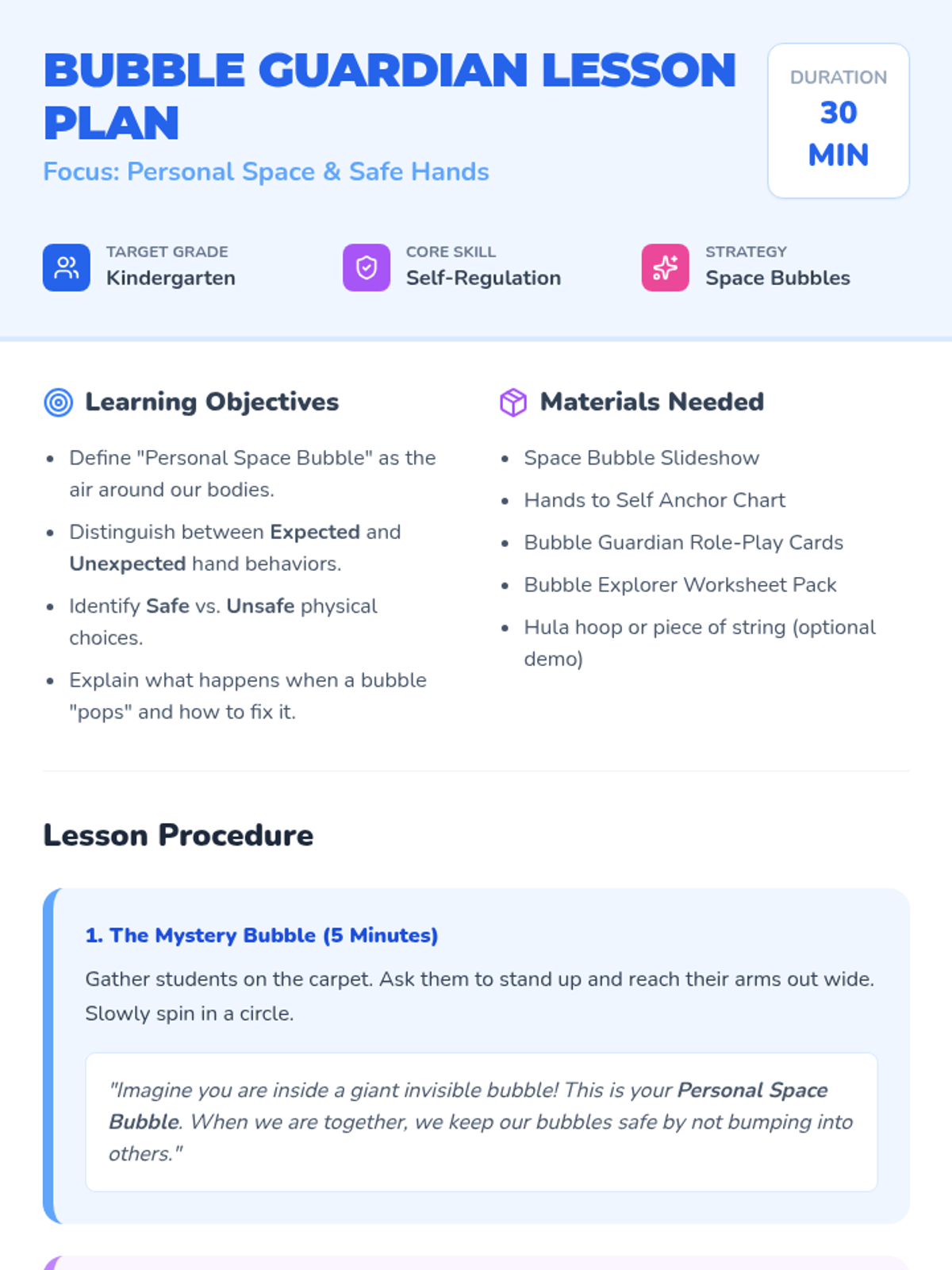
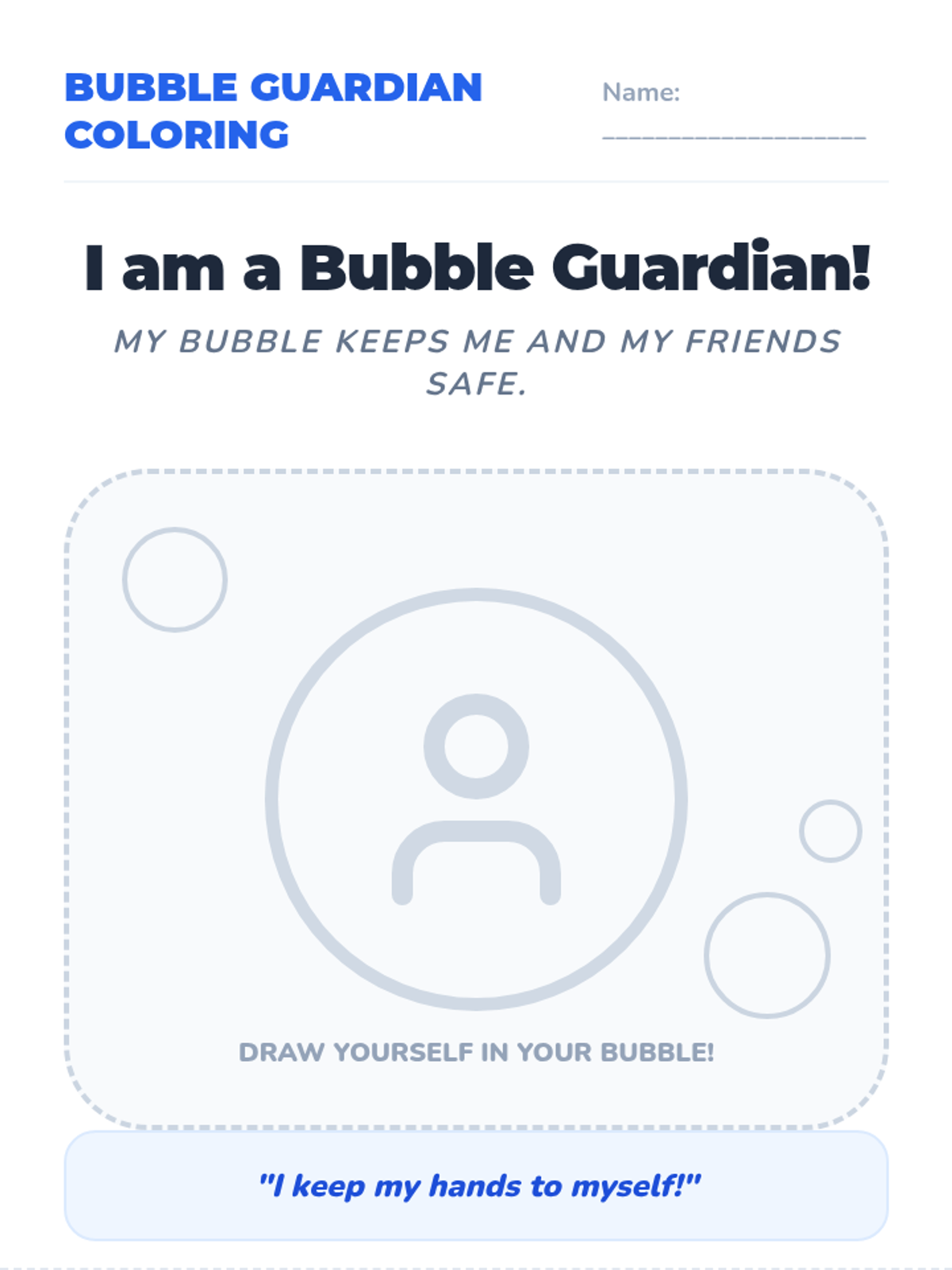
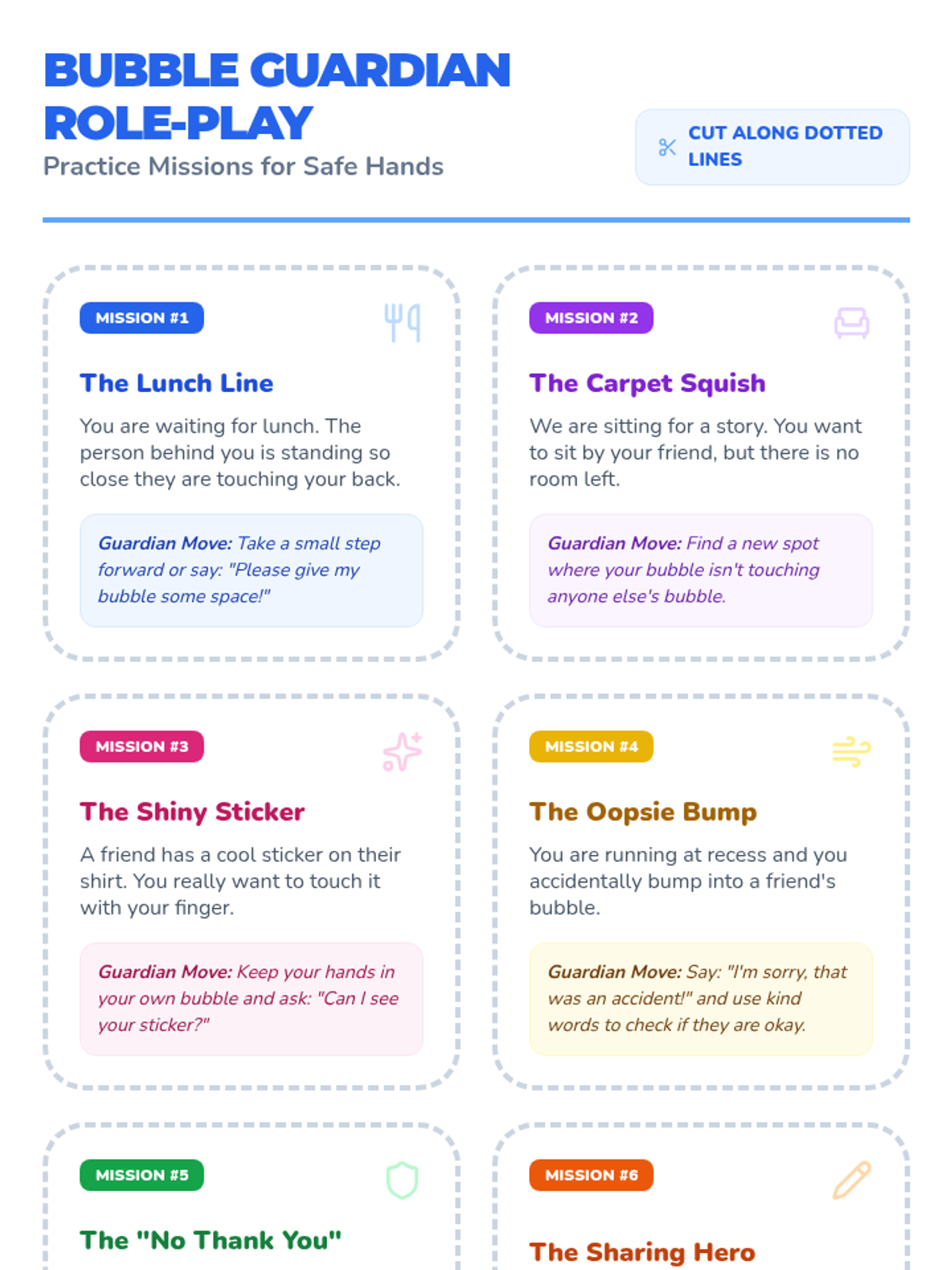
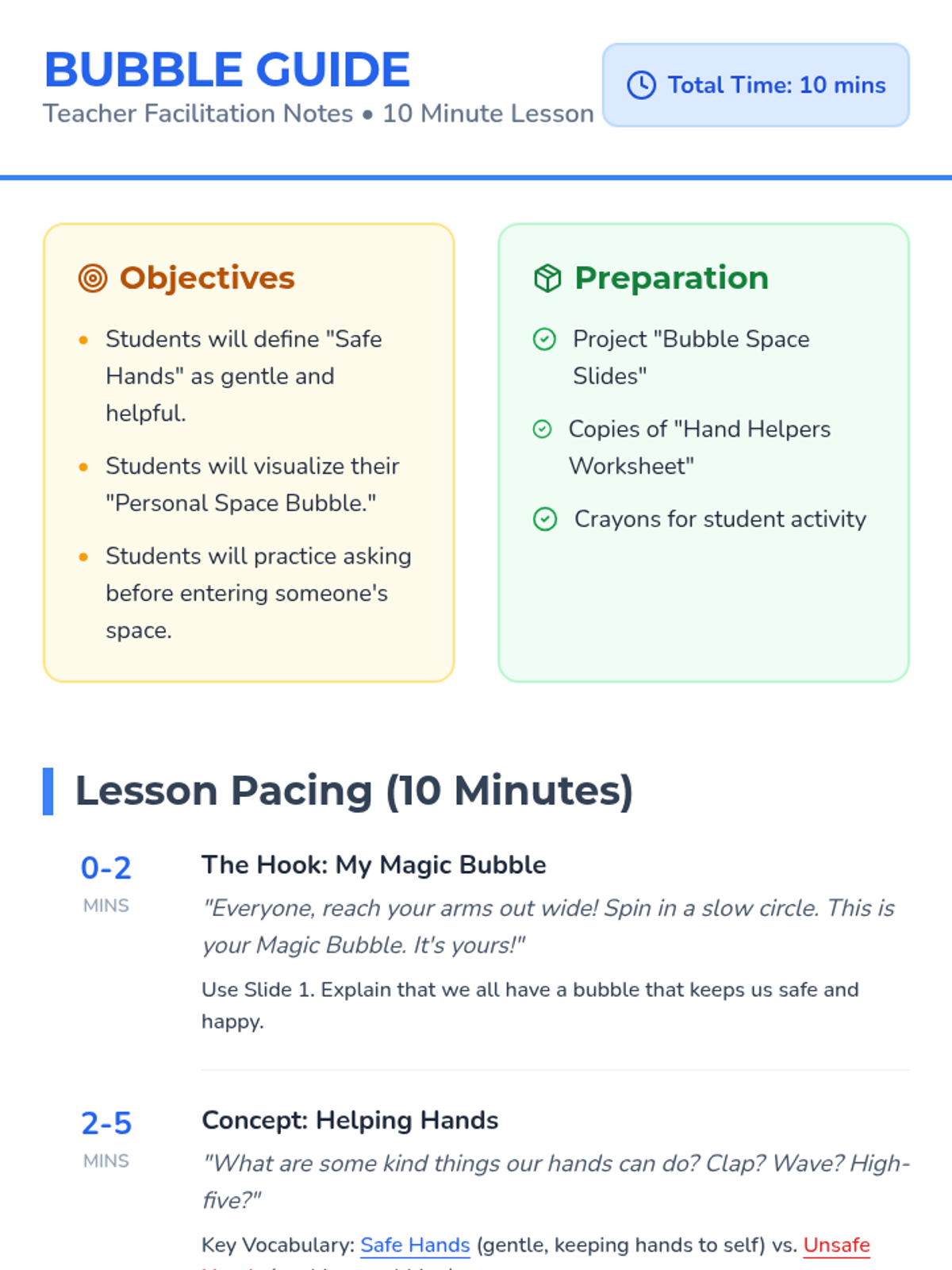
A brief, engaging 10-minute lesson for Pre-K students focused on defining 'safe hands' and understanding the 'personal space bubble' through simple visuals and guided practice.
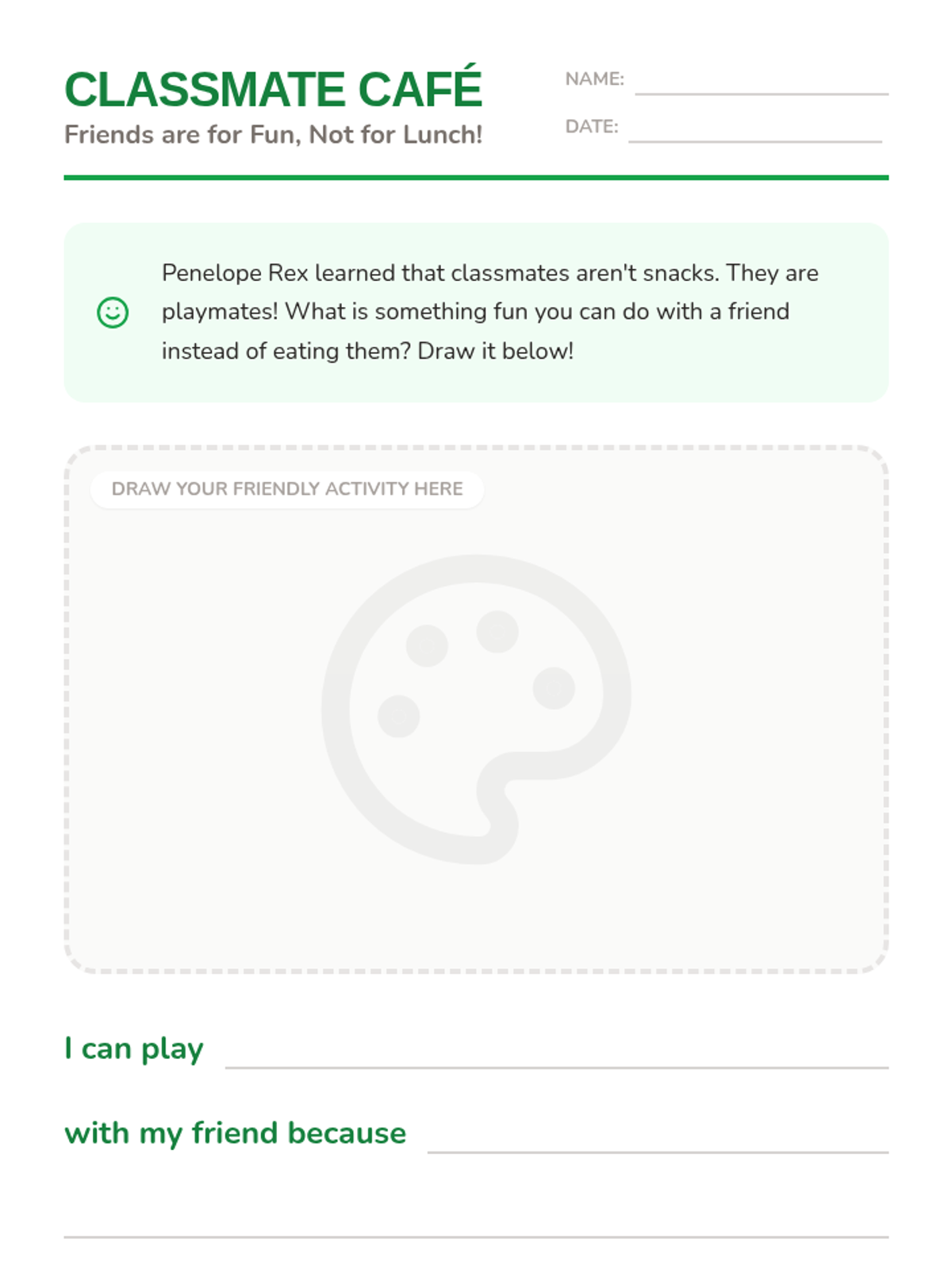
A social-emotional learning lesson inspired by the theme of a dinosaur learning not to eat their classmates, focusing on empathy, self-control, and building friendships.
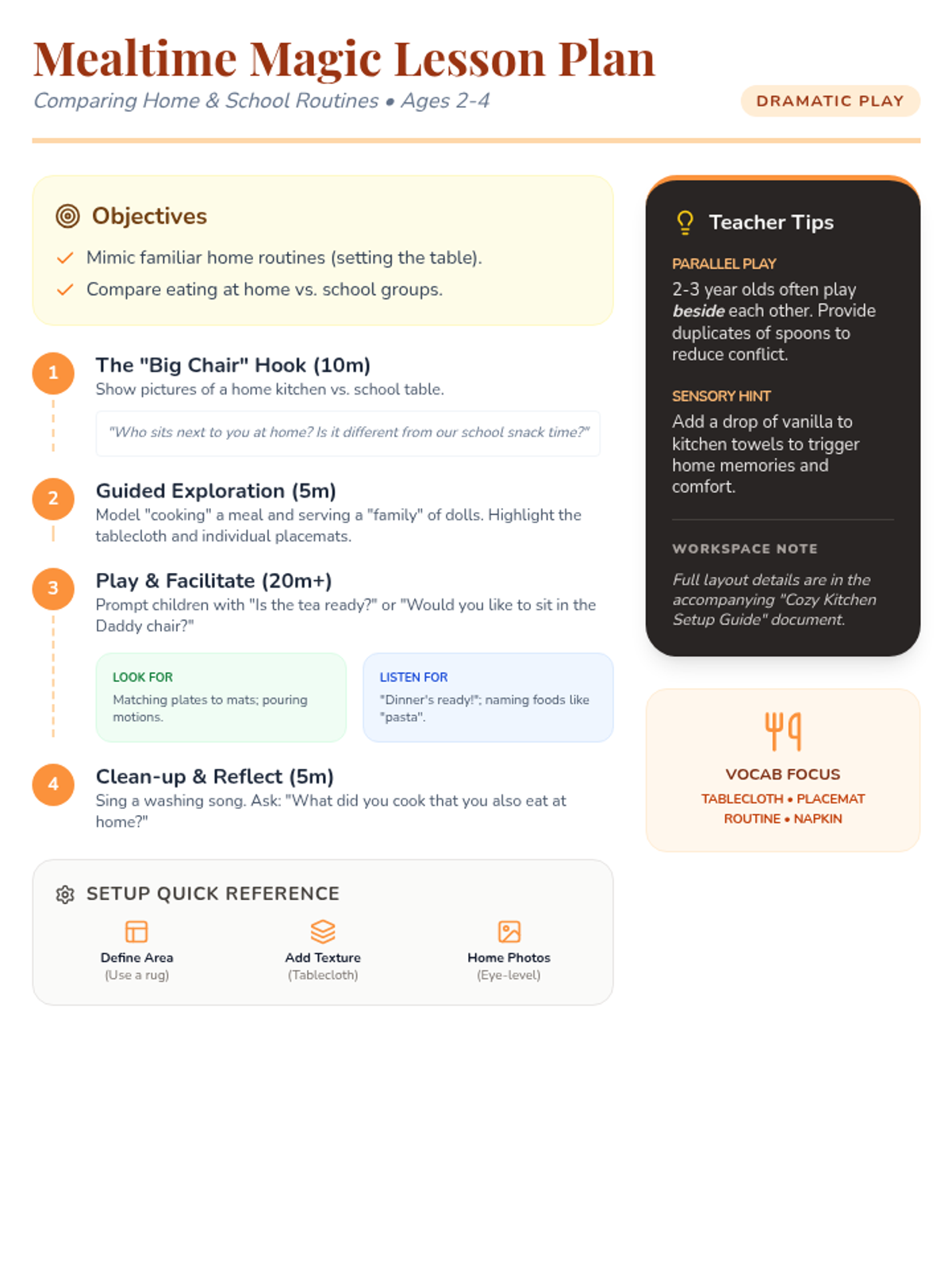
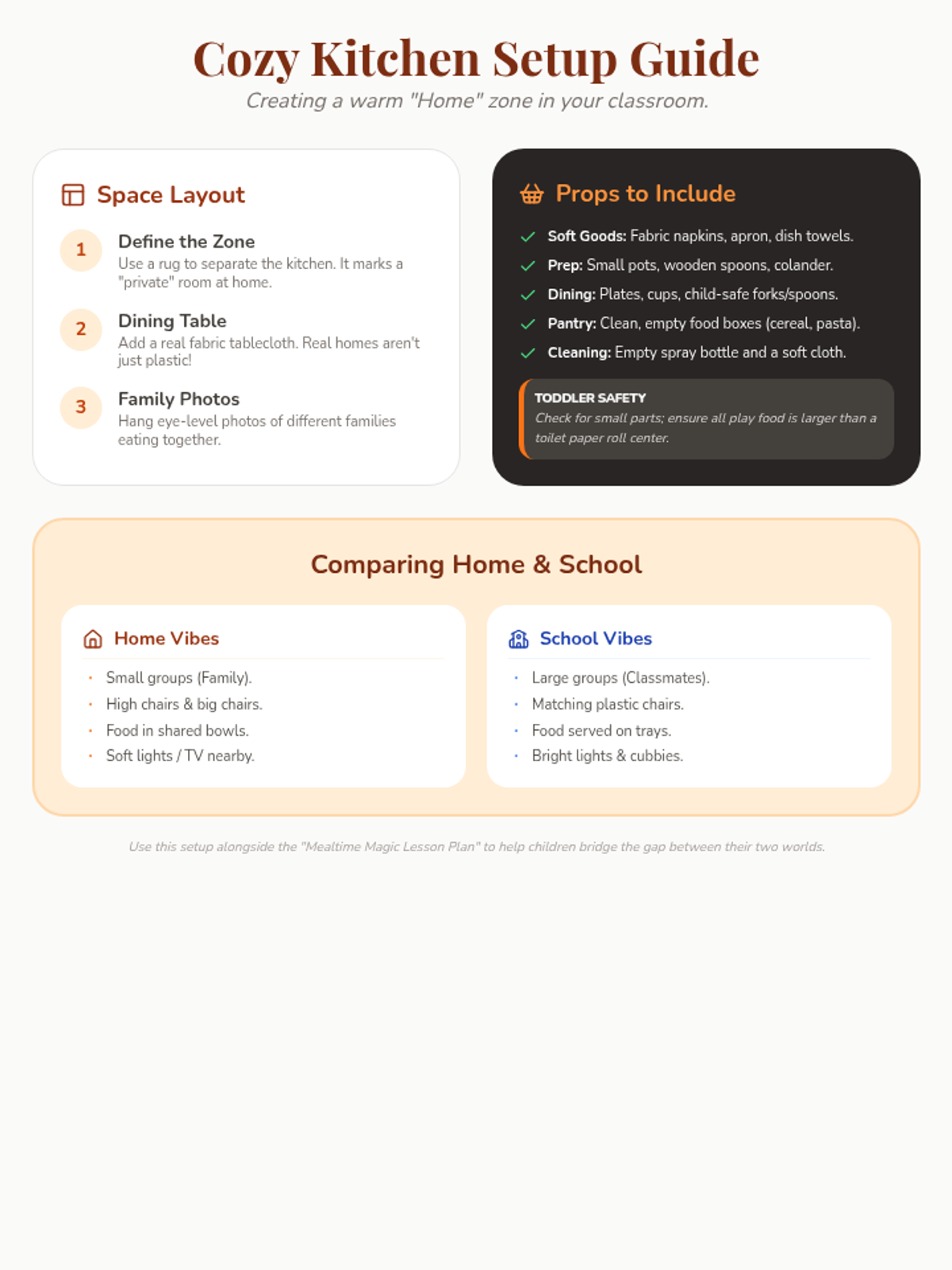
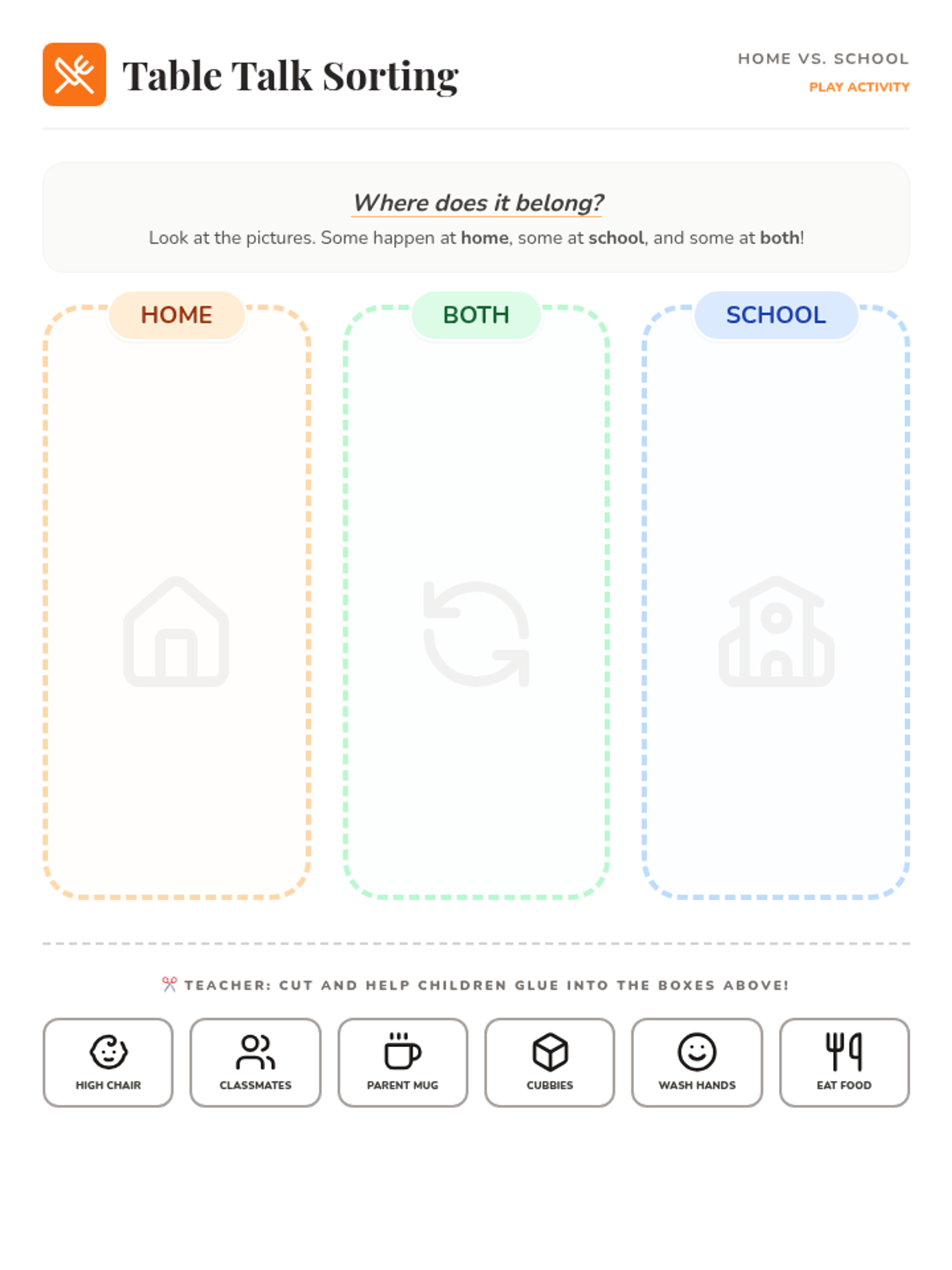
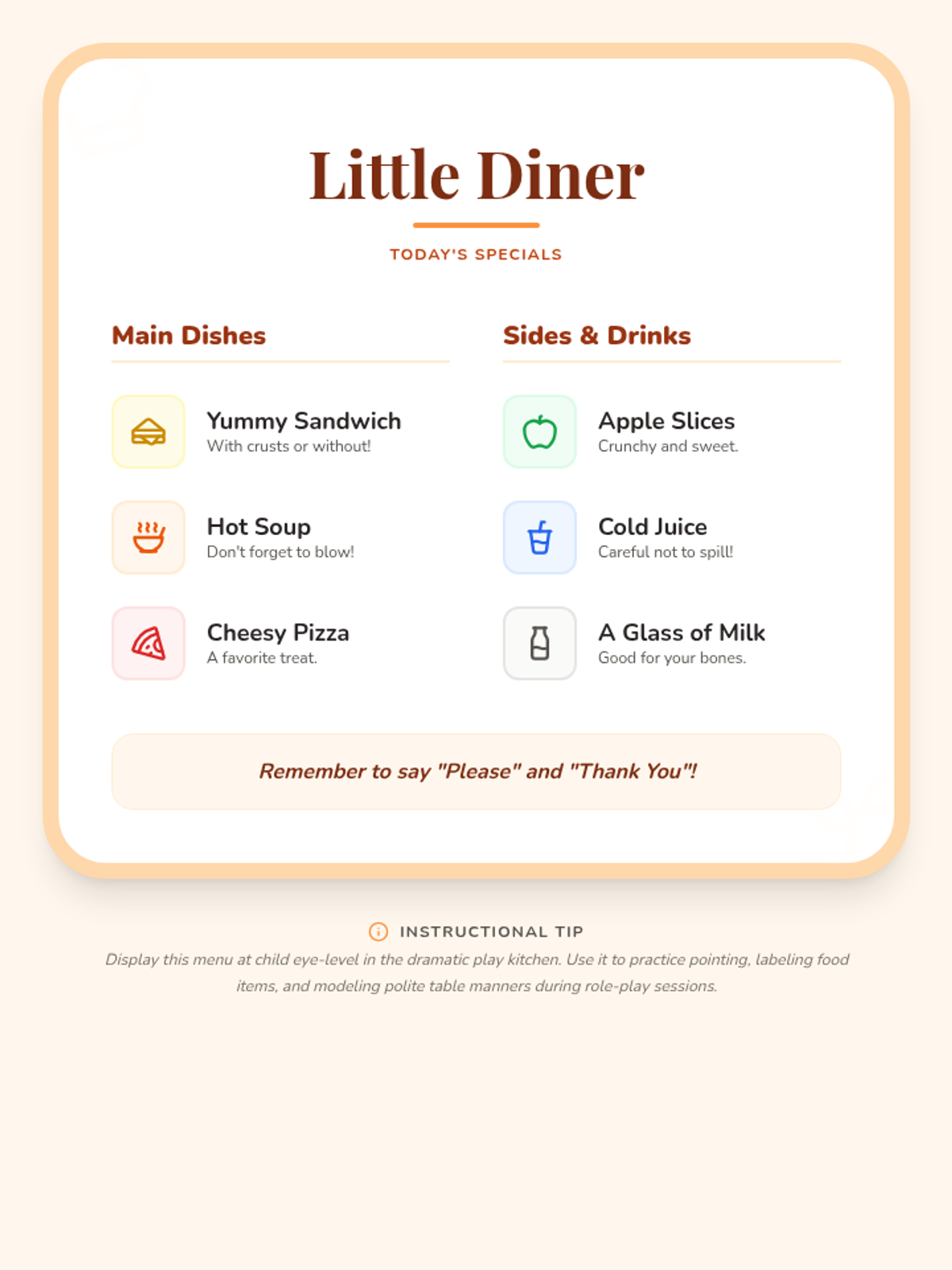
A hands-on dramatic play lesson for preschoolers (ages 2-4) focused on exploring home mealtime routines and comparing them to school meals. Kids will engage in role-play using a play kitchen and dining area to build social and language skills.
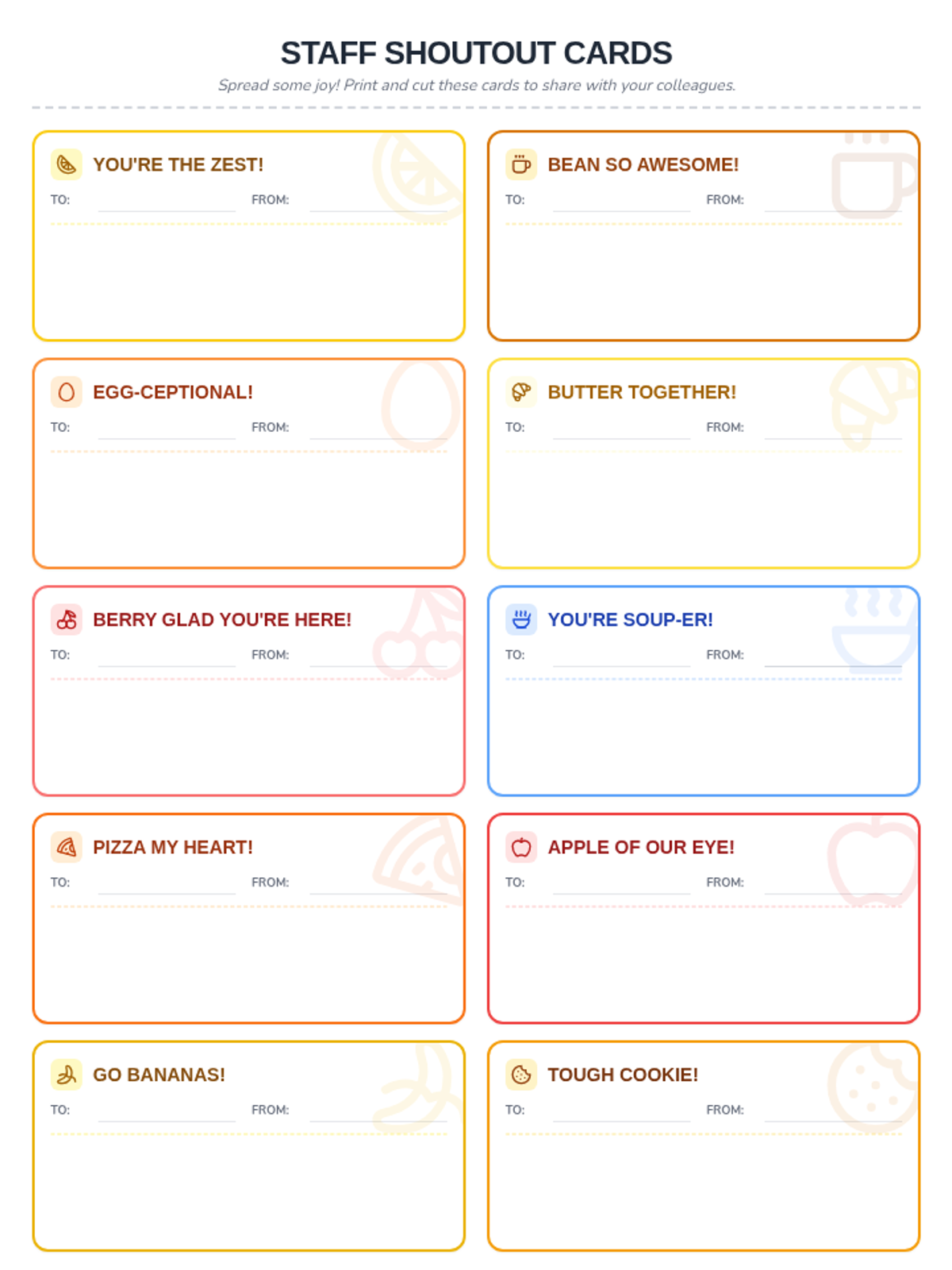
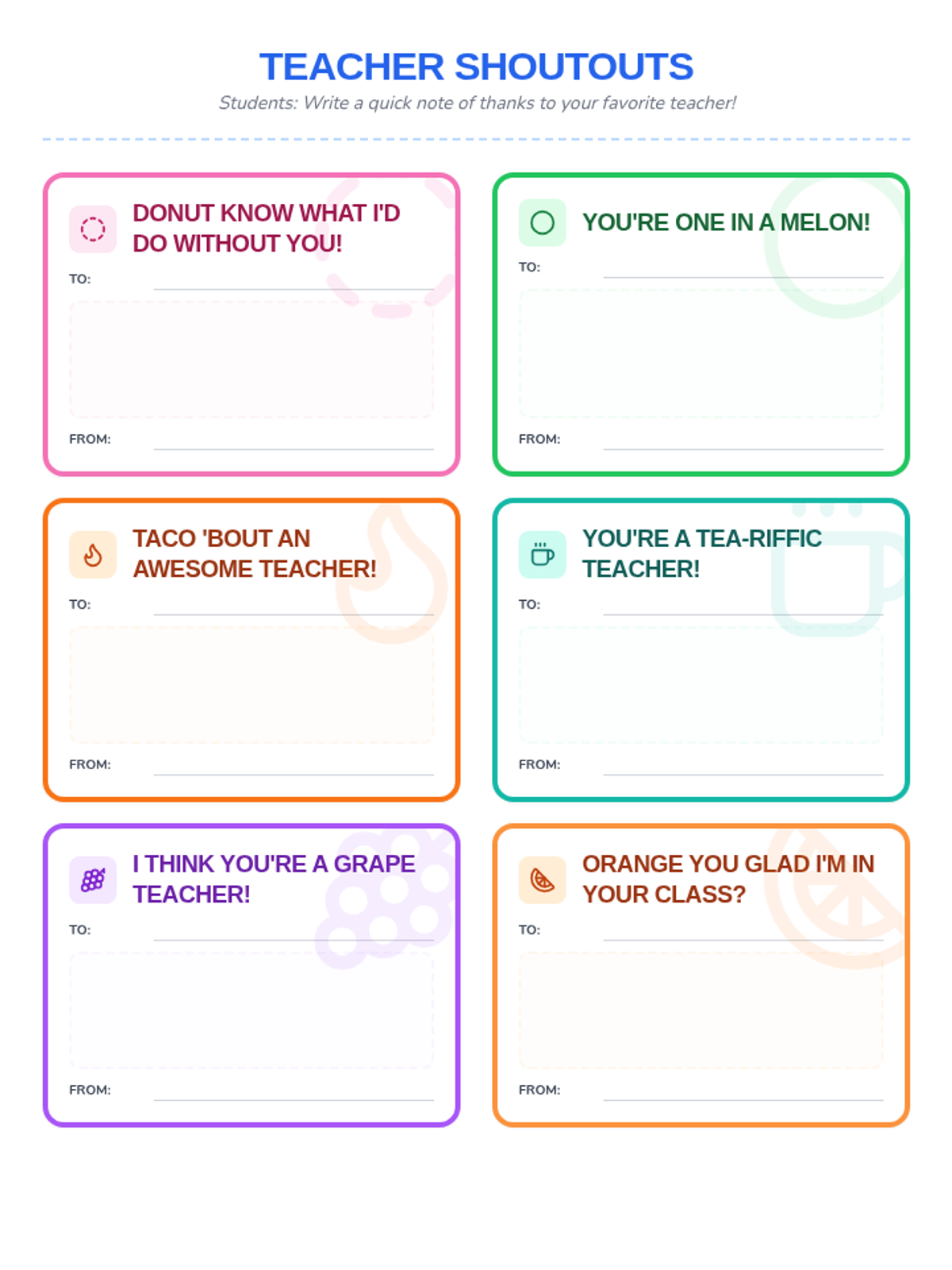
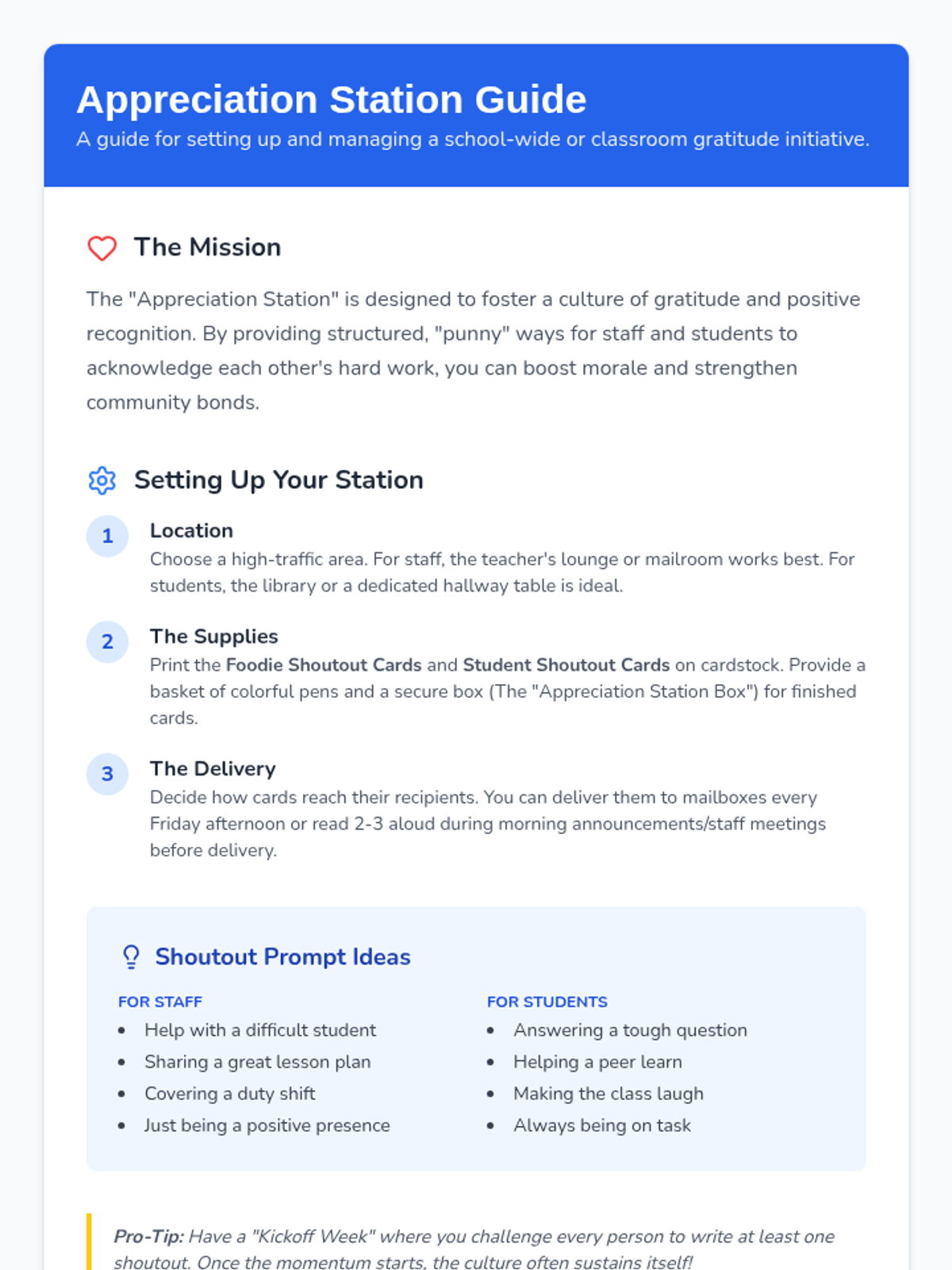
A collection of appreciation-themed resources for school staff and students to express gratitude through creative, pun-based shoutout cards.
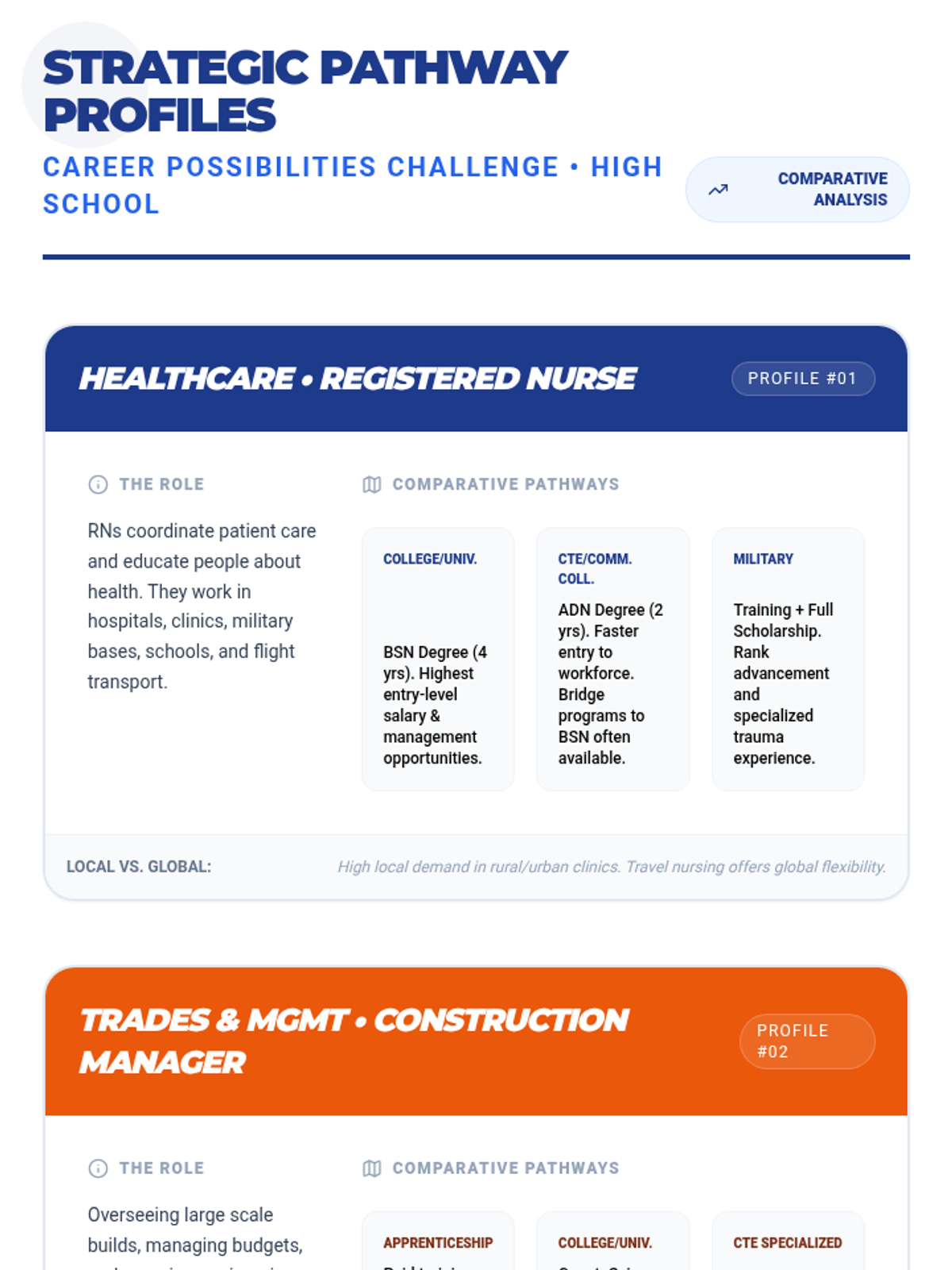
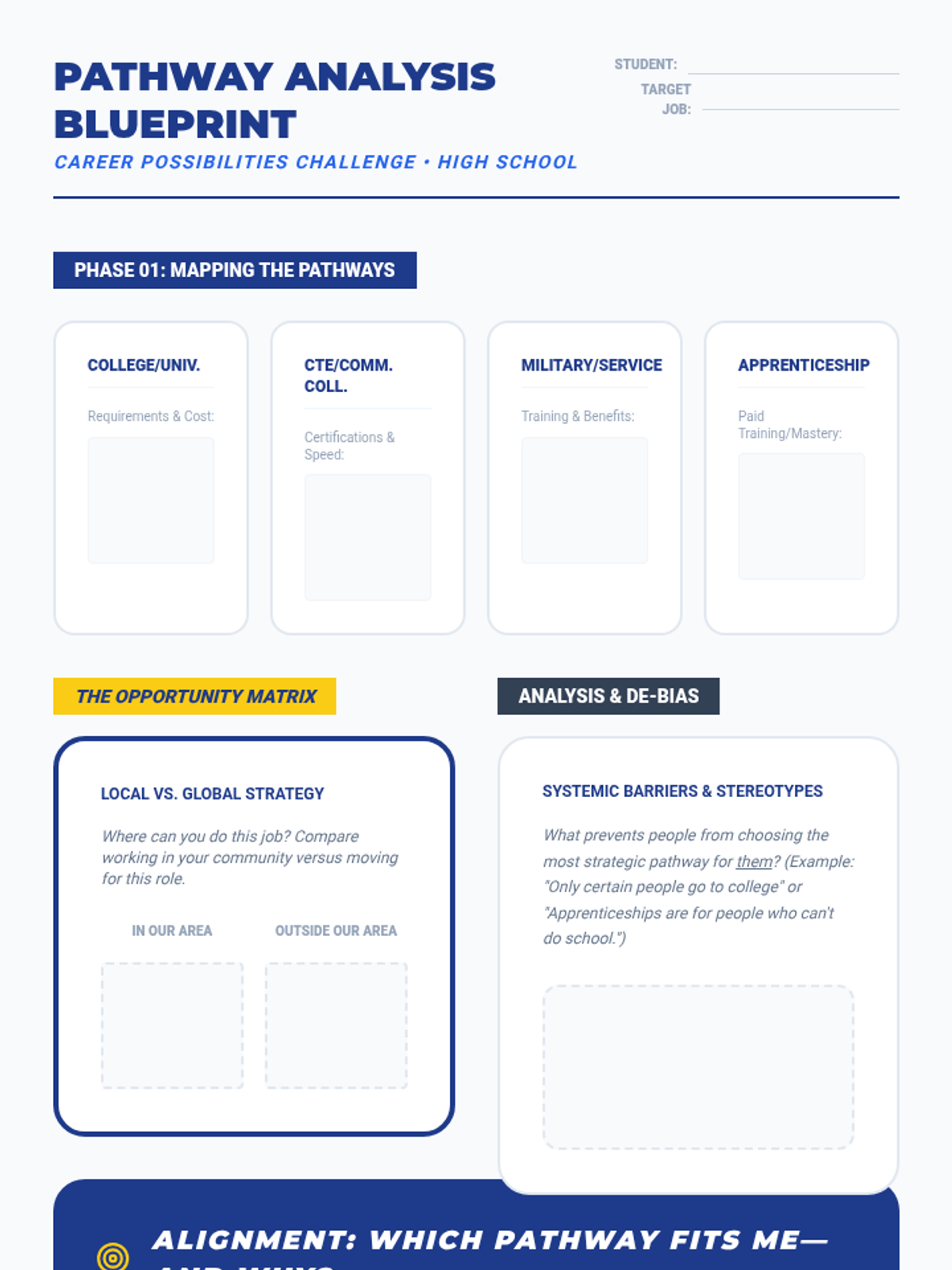
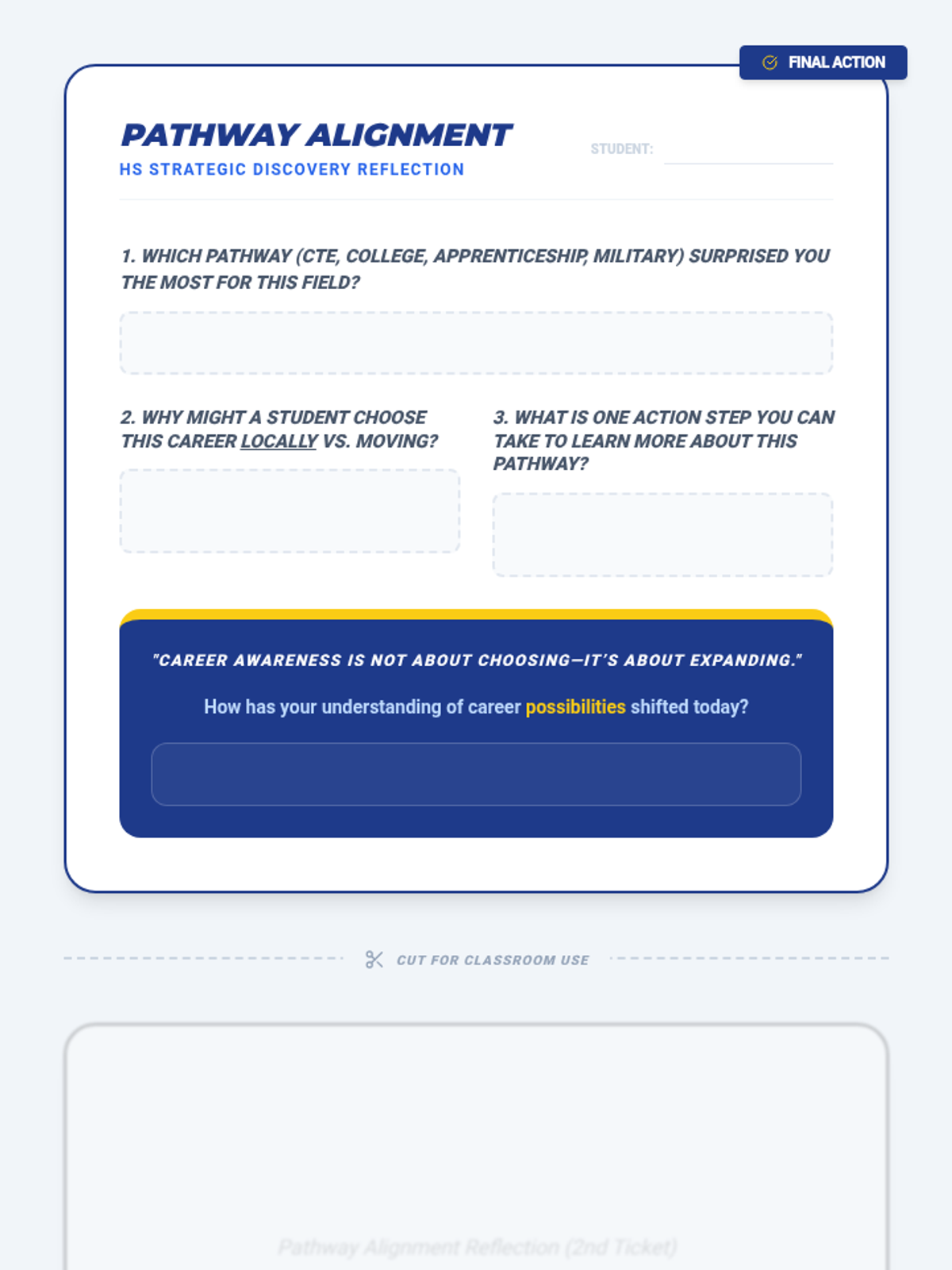
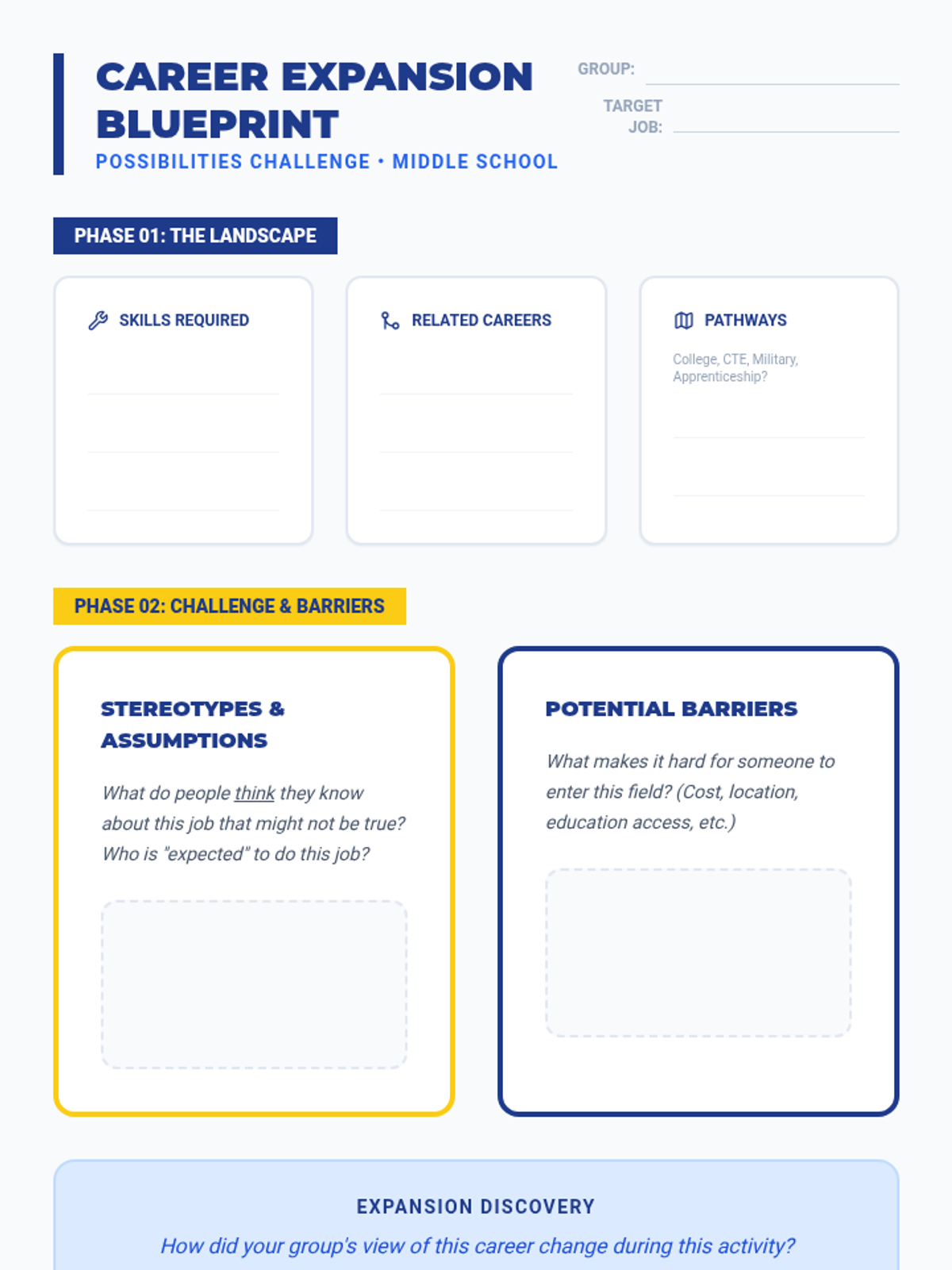
A strategic career planning lesson for high schoolers focusing on comparing specific pathways (CTE, college, military) and evaluating local versus out-of-area opportunities.
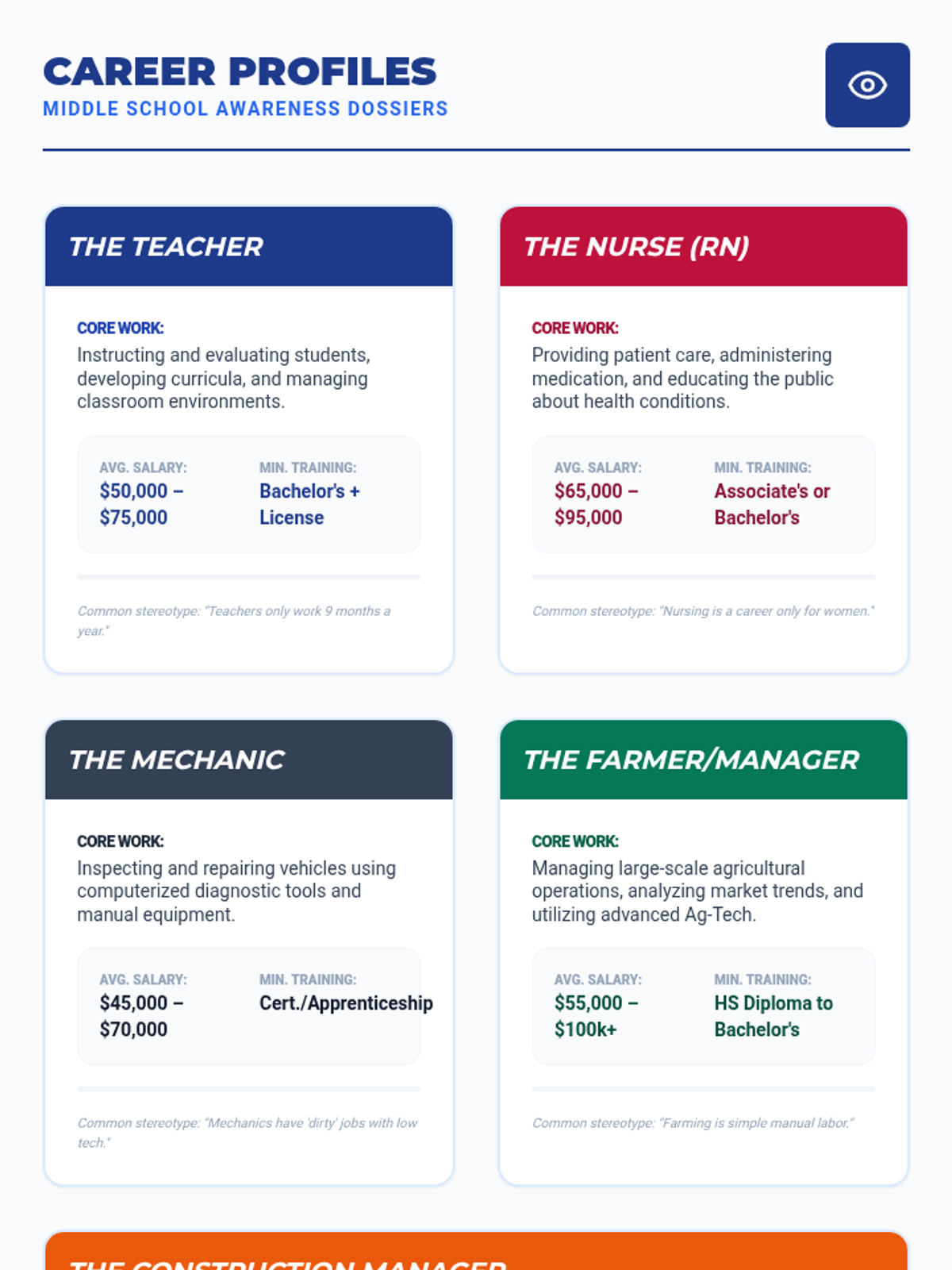
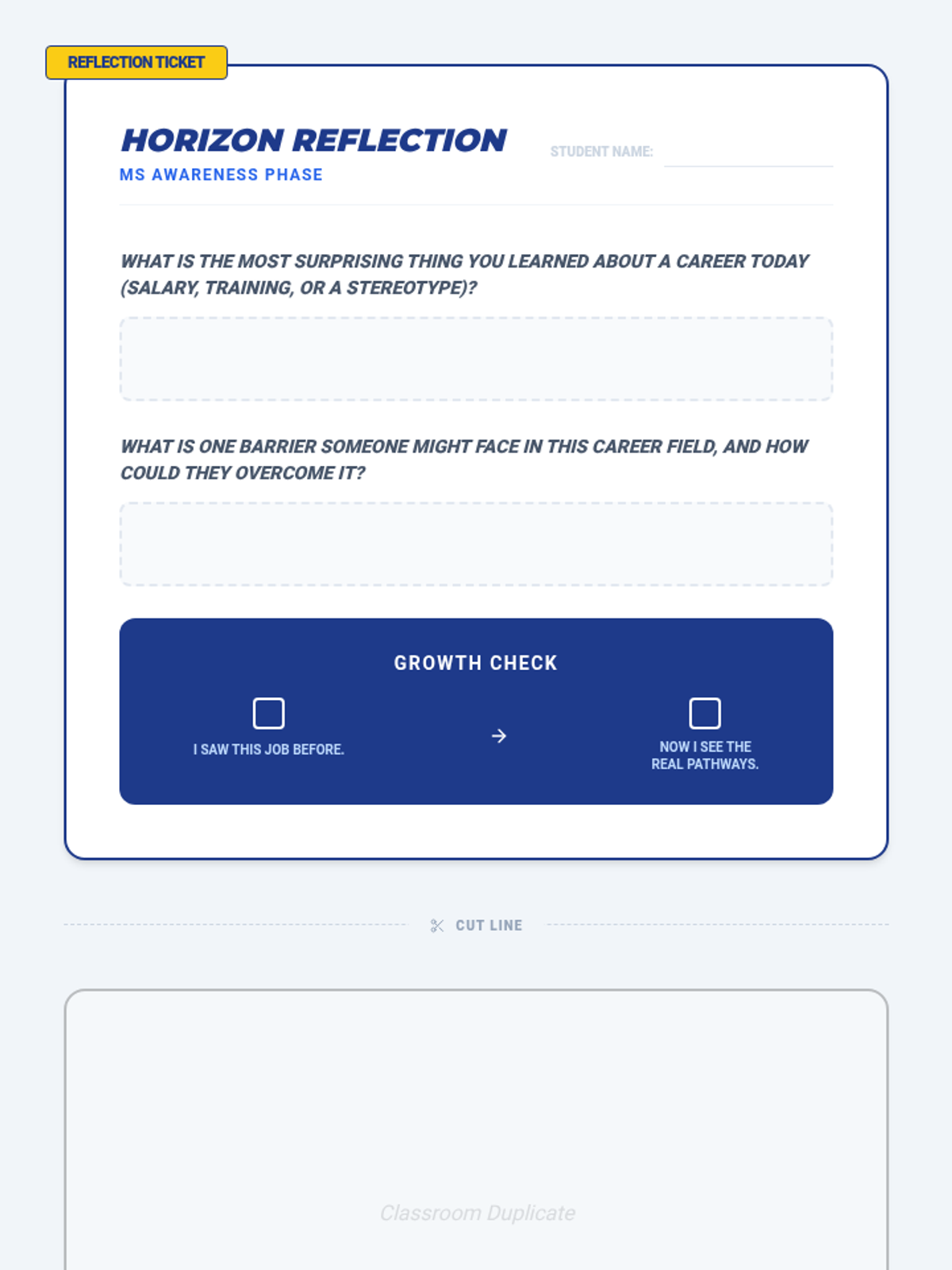
A career exploration lesson for middle schoolers that dives into salary, education requirements, and identifying stereotypes or barriers within specific career fields.
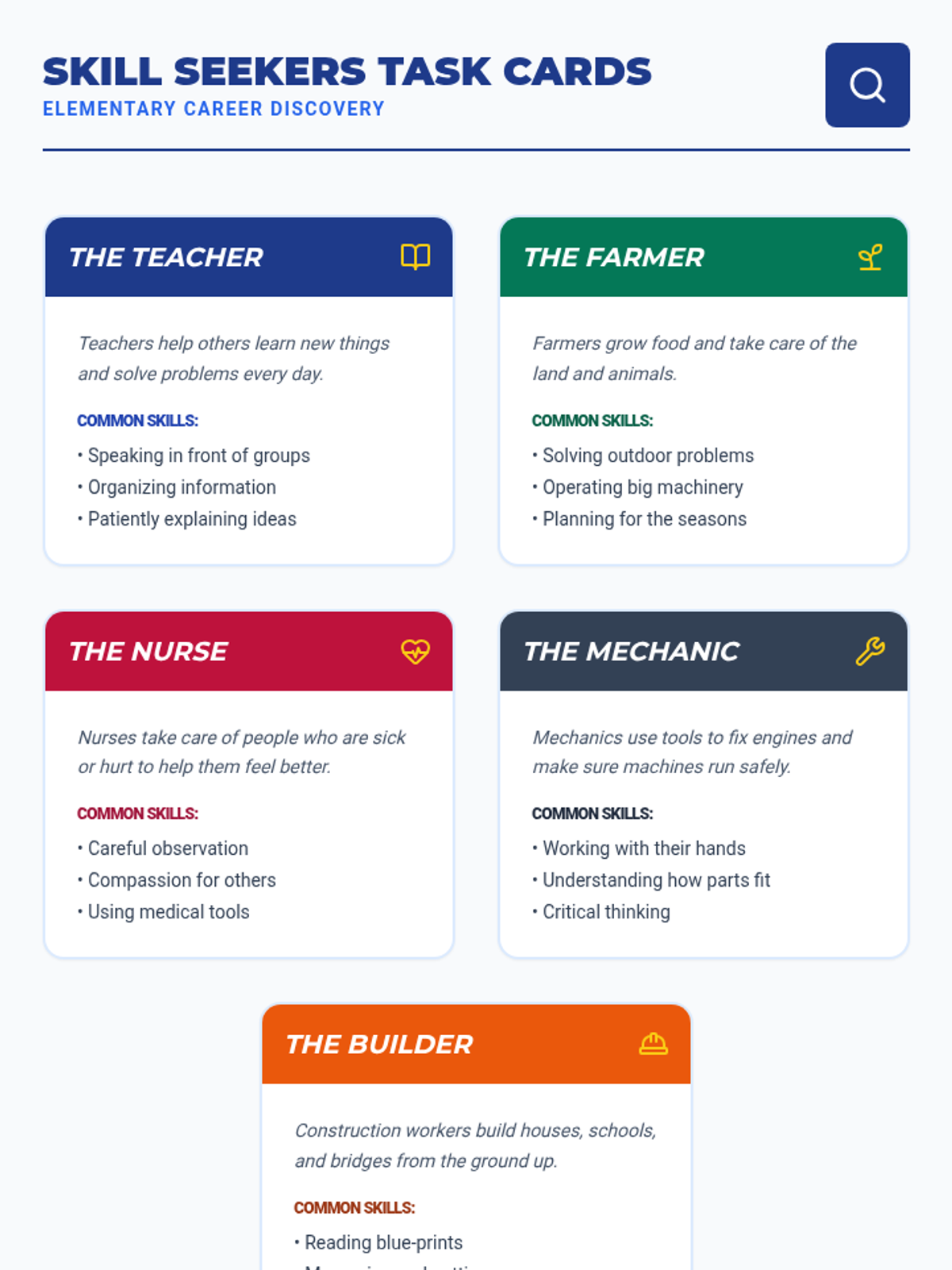
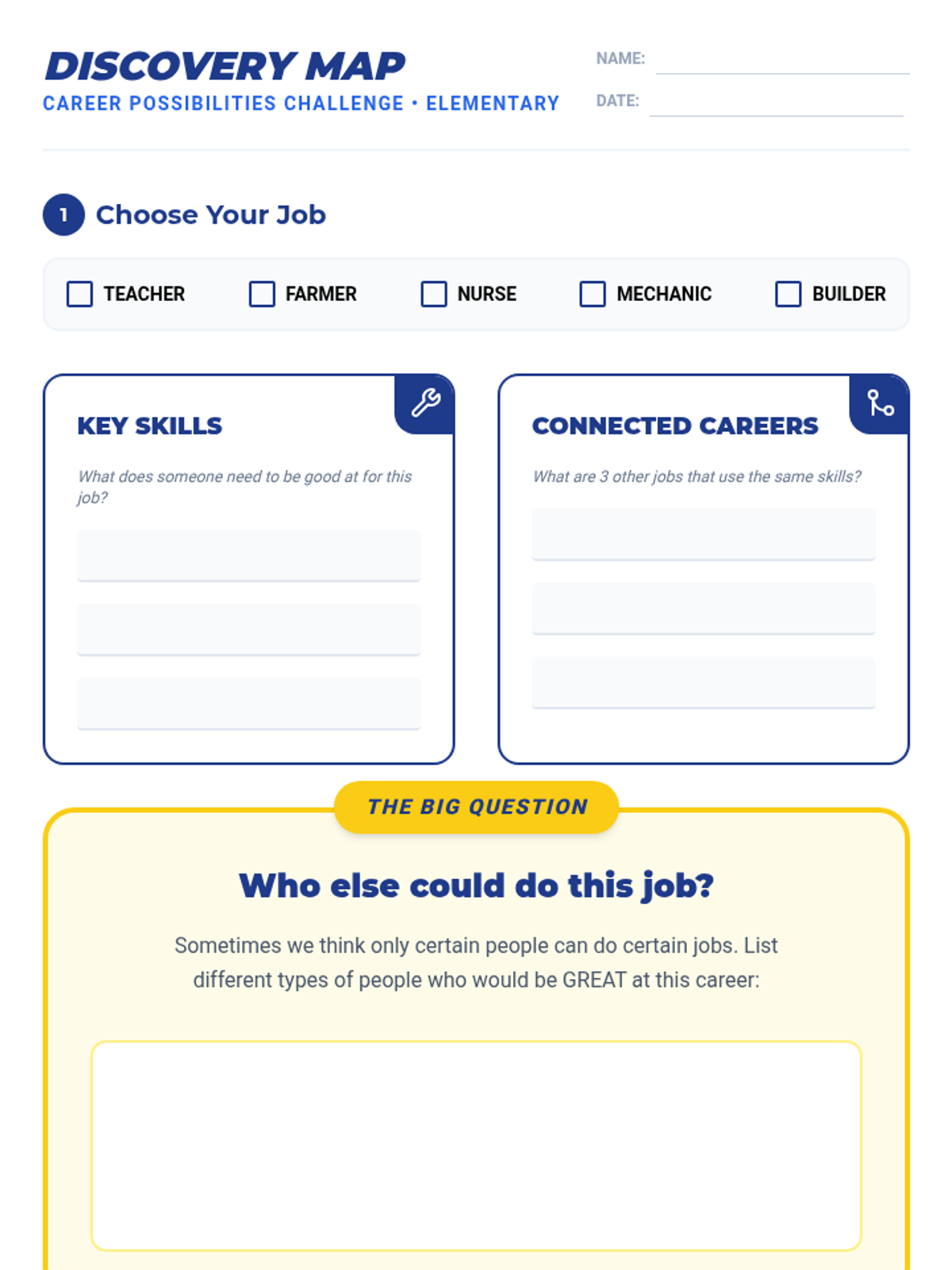
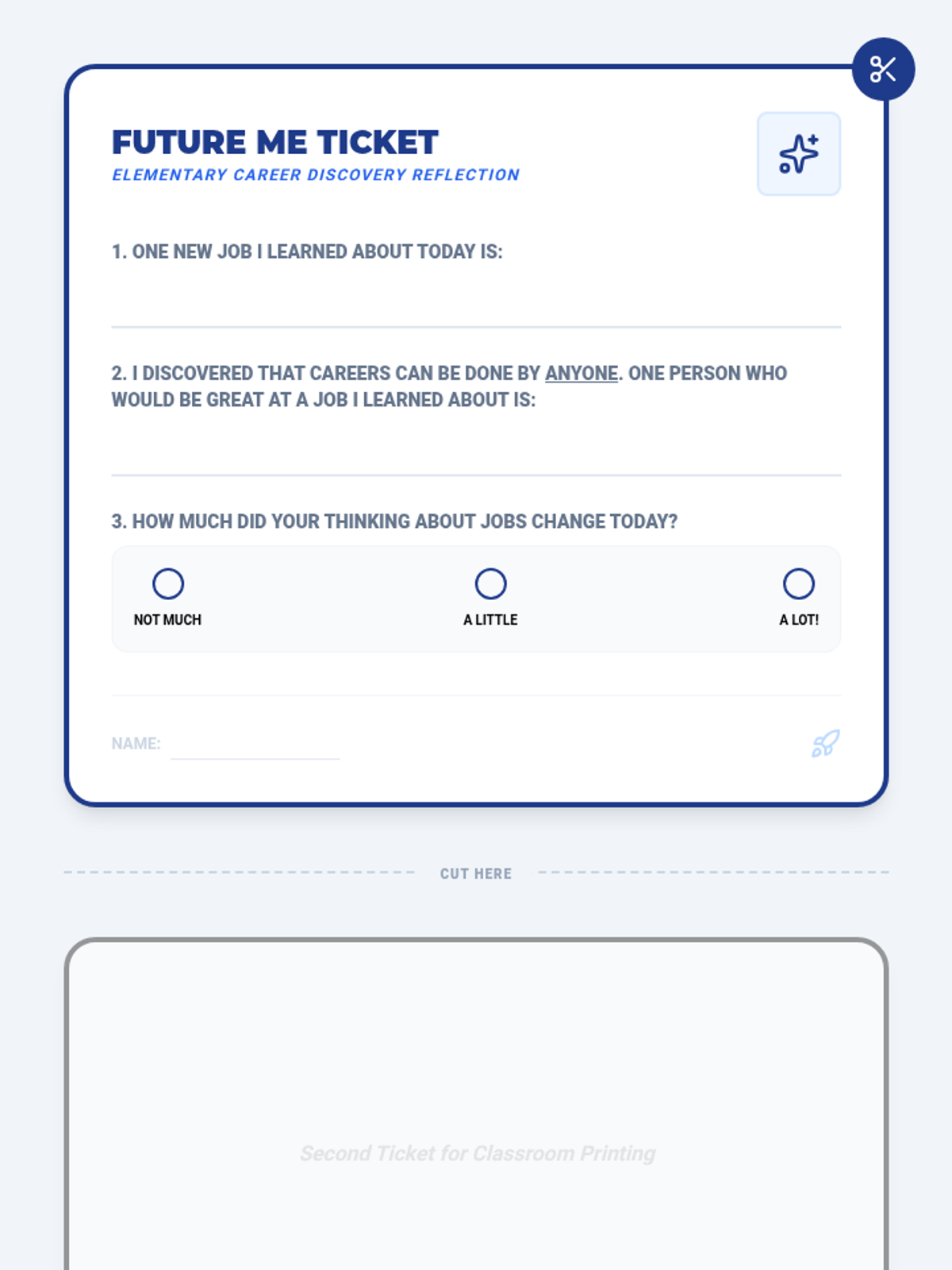
An introductory career awareness lesson for elementary students focusing on identifying job skills and exploring 'who else' can do a job. Students use a graphic organizer to expand their understanding of common professions.
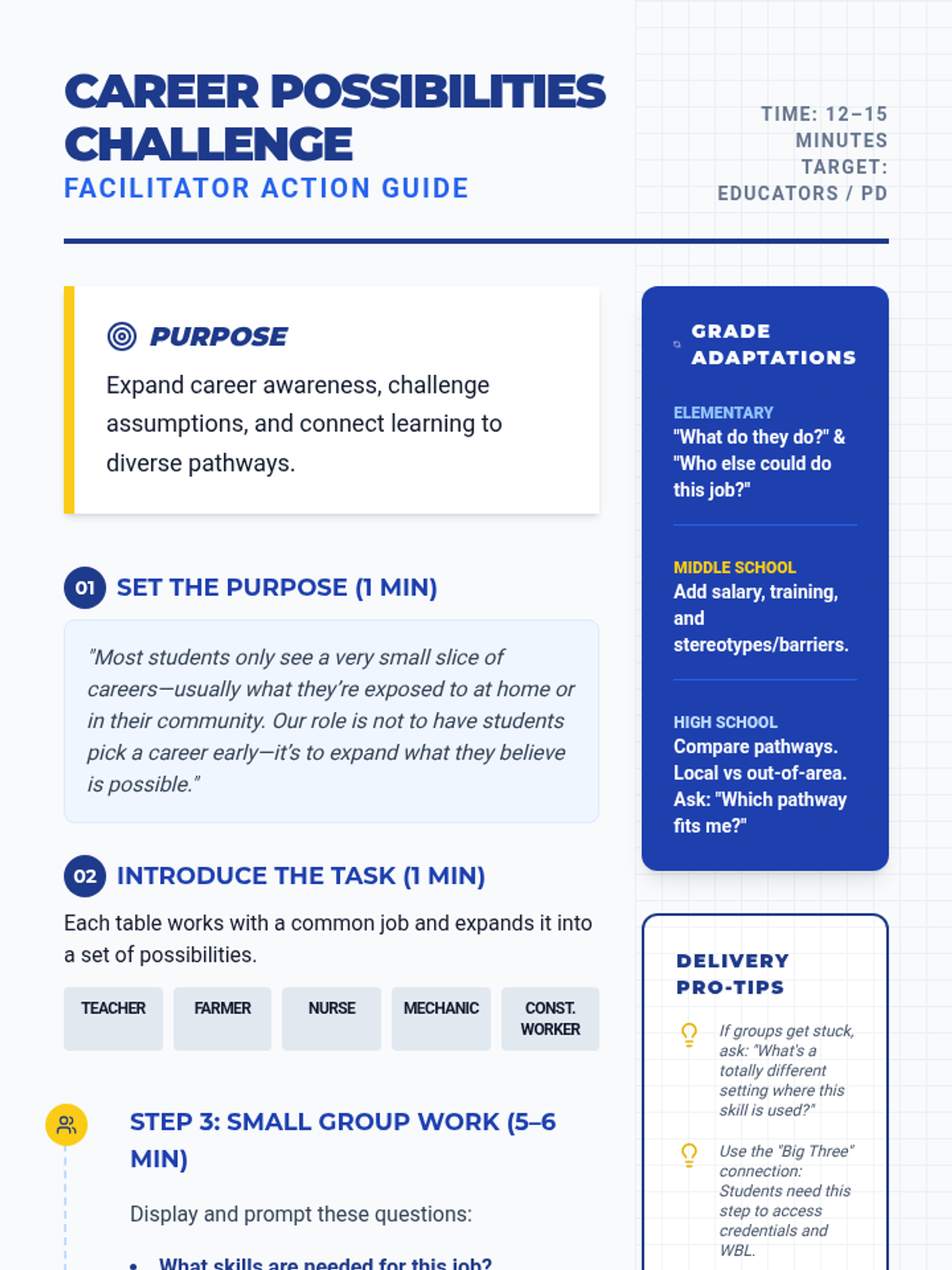
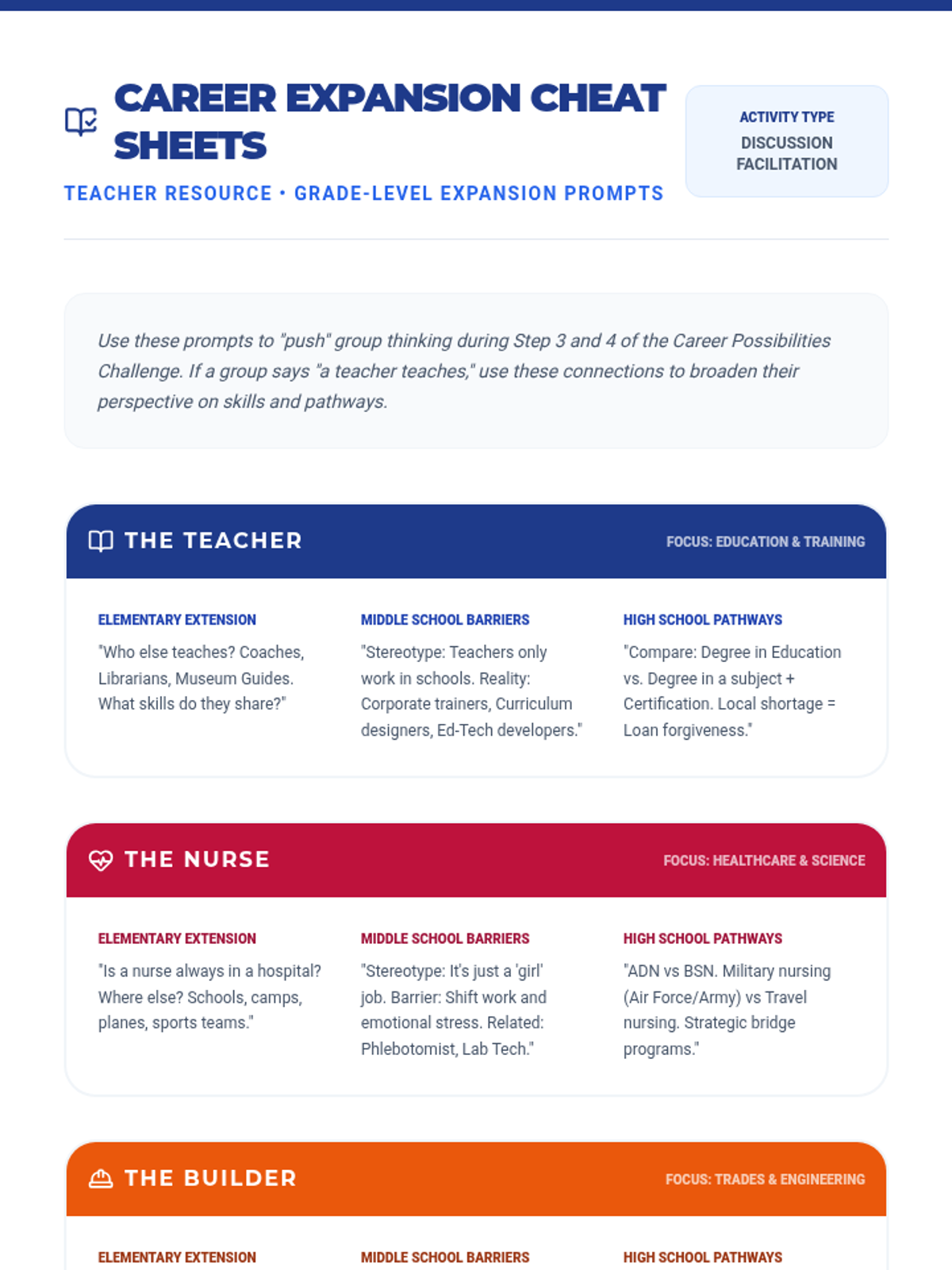
A professional development session for educators to learn how to facilitate career expansion activities that challenge student assumptions and connect learning to diverse pathways.
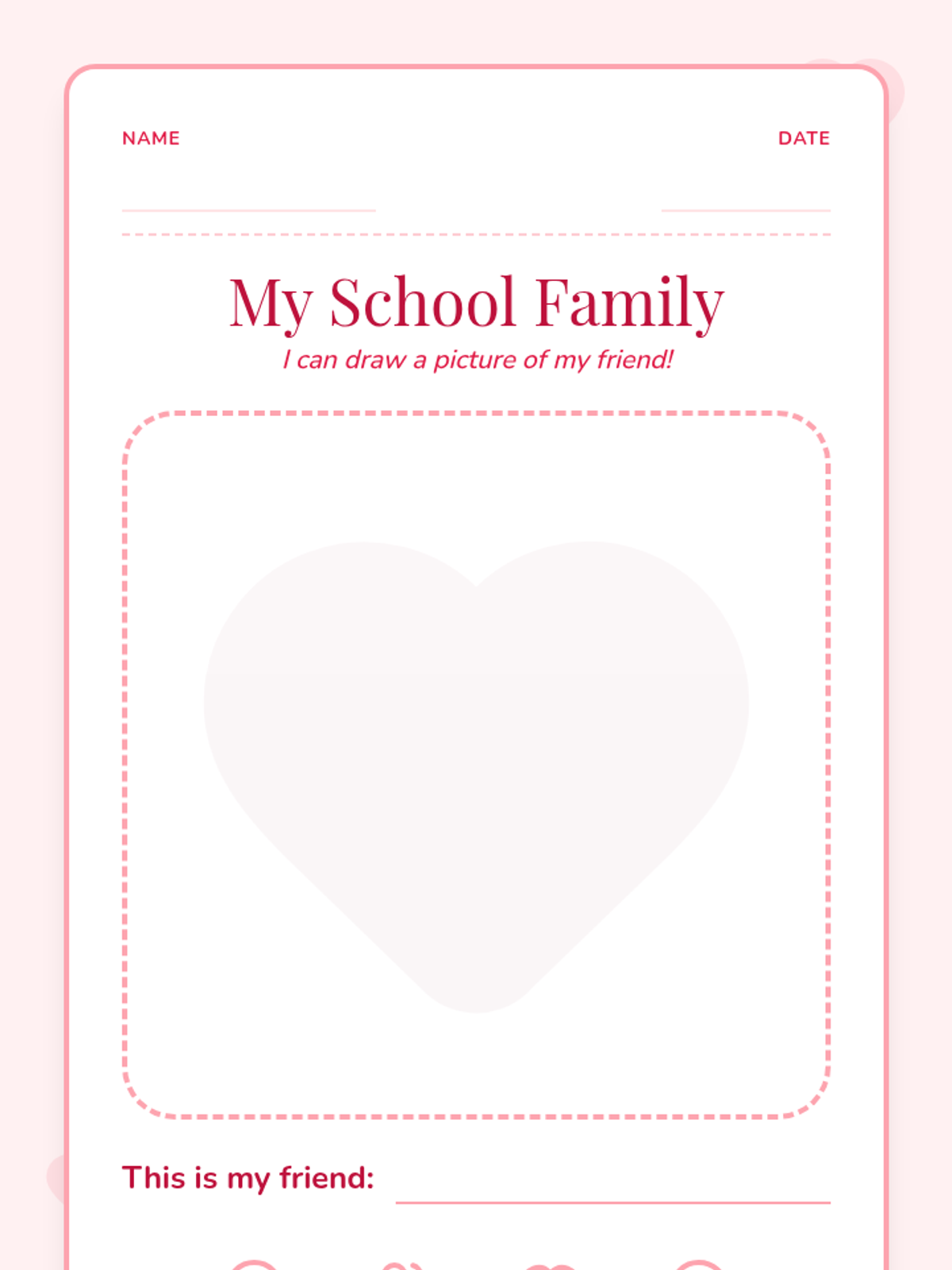
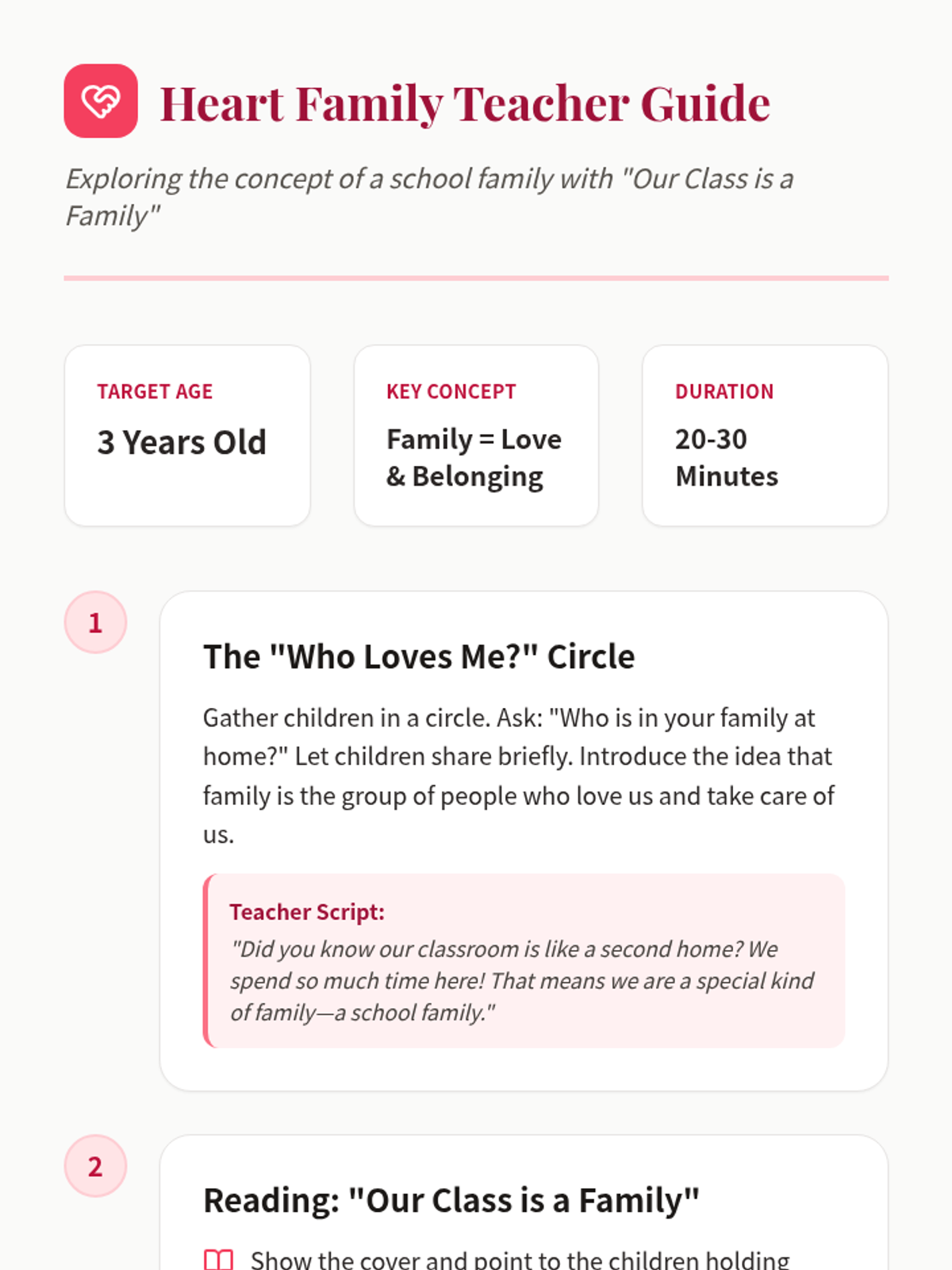
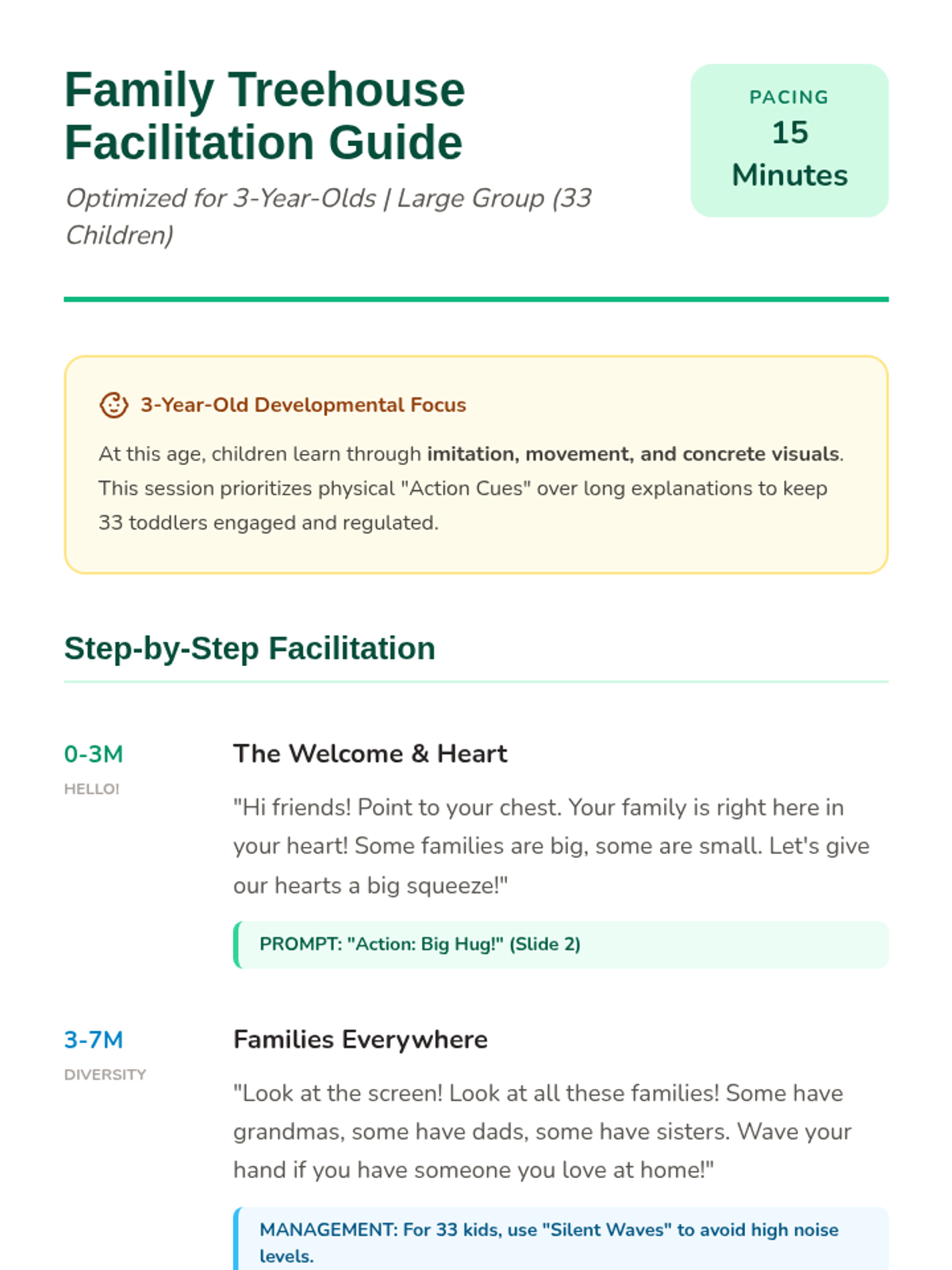
A gentle introduction to the concept of non-traditional families, focusing on how classmates and friends form a 'school family' based on the book 'Our Class is a Family'. Designed specifically for the developmental needs of 3-year-olds through visual storytelling and creative expression.
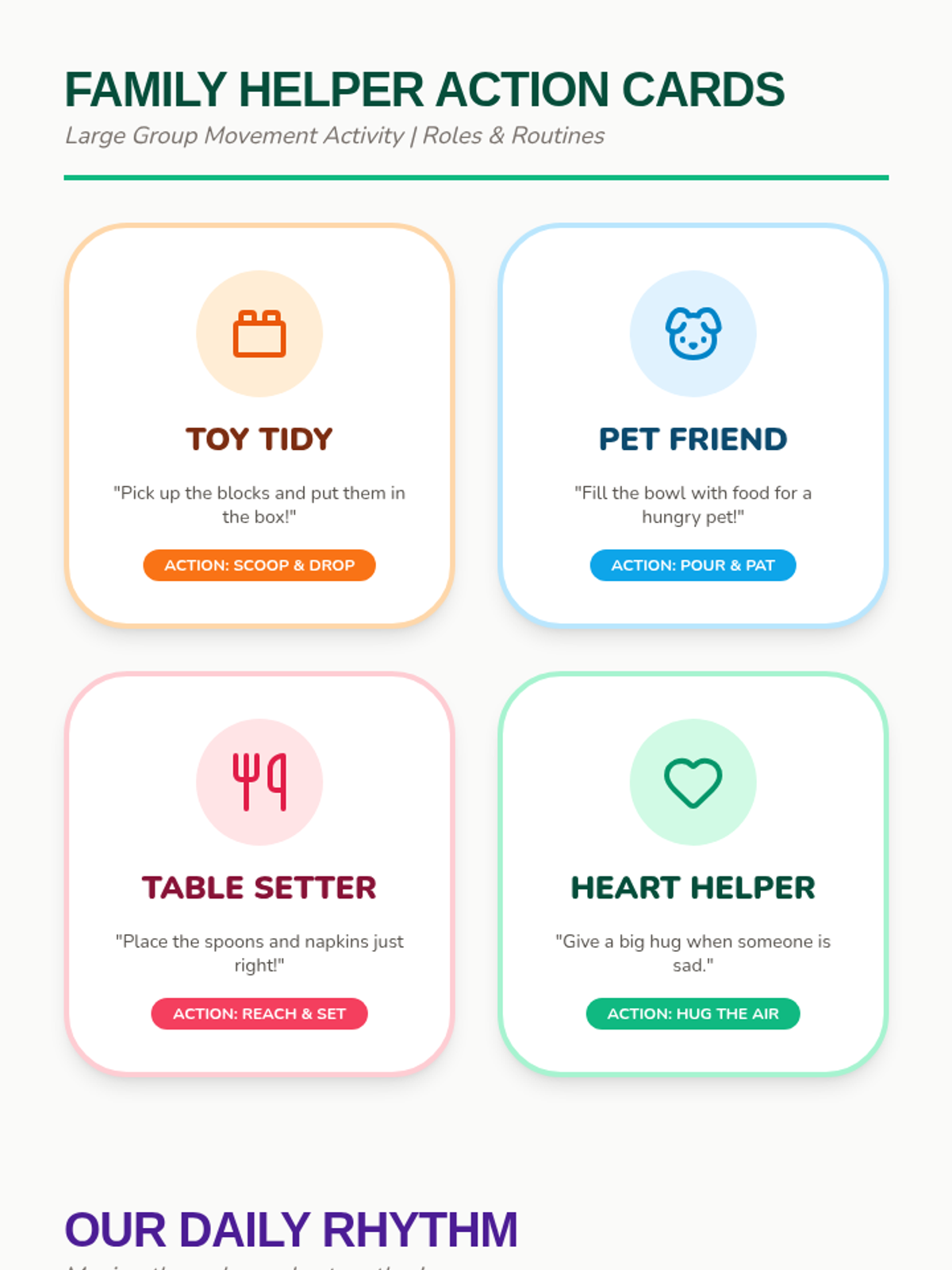
An interactive exploration of what makes a family, celebrating diversity, responsibilities, and daily routines through a high-energy group session.
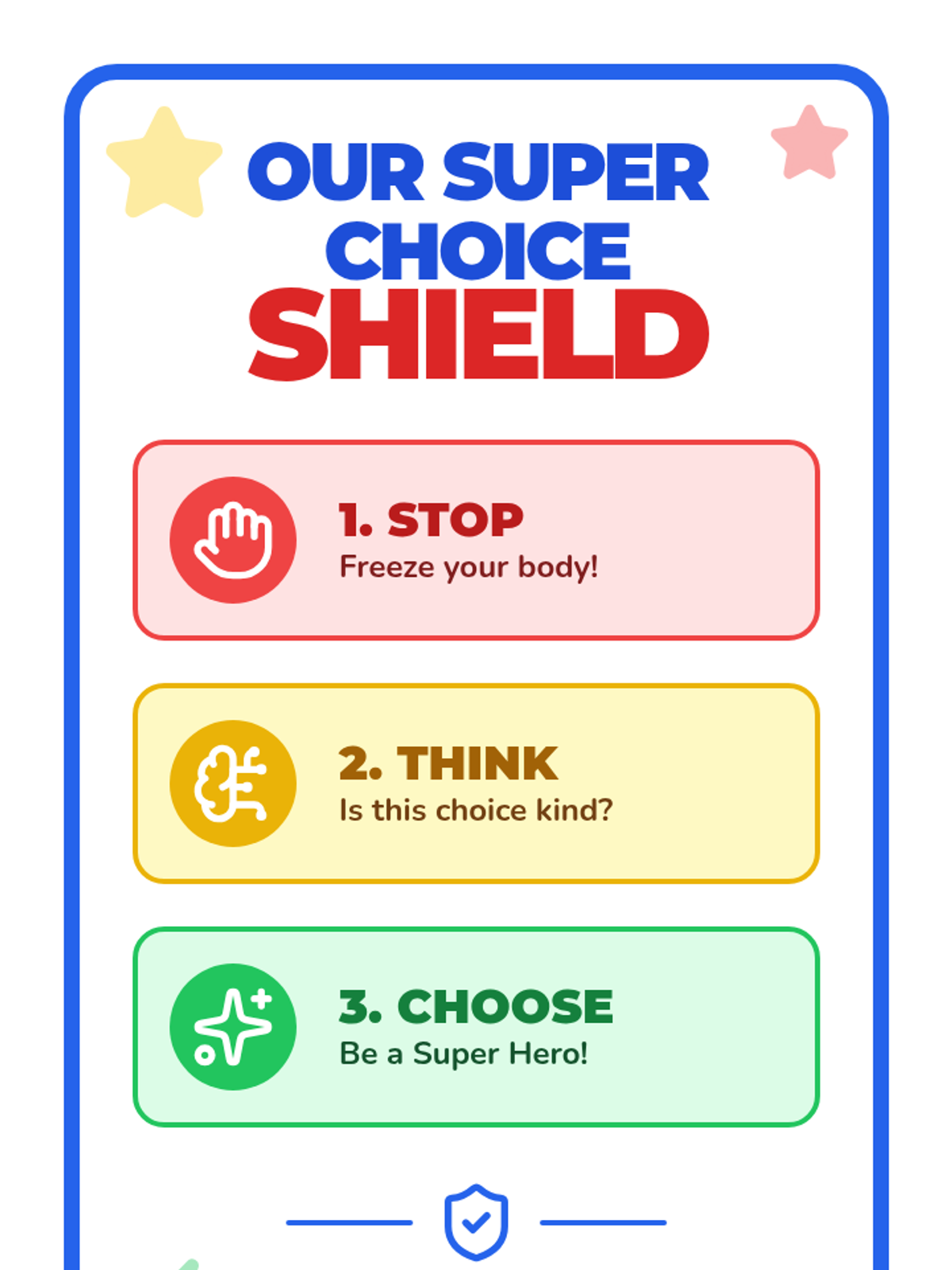
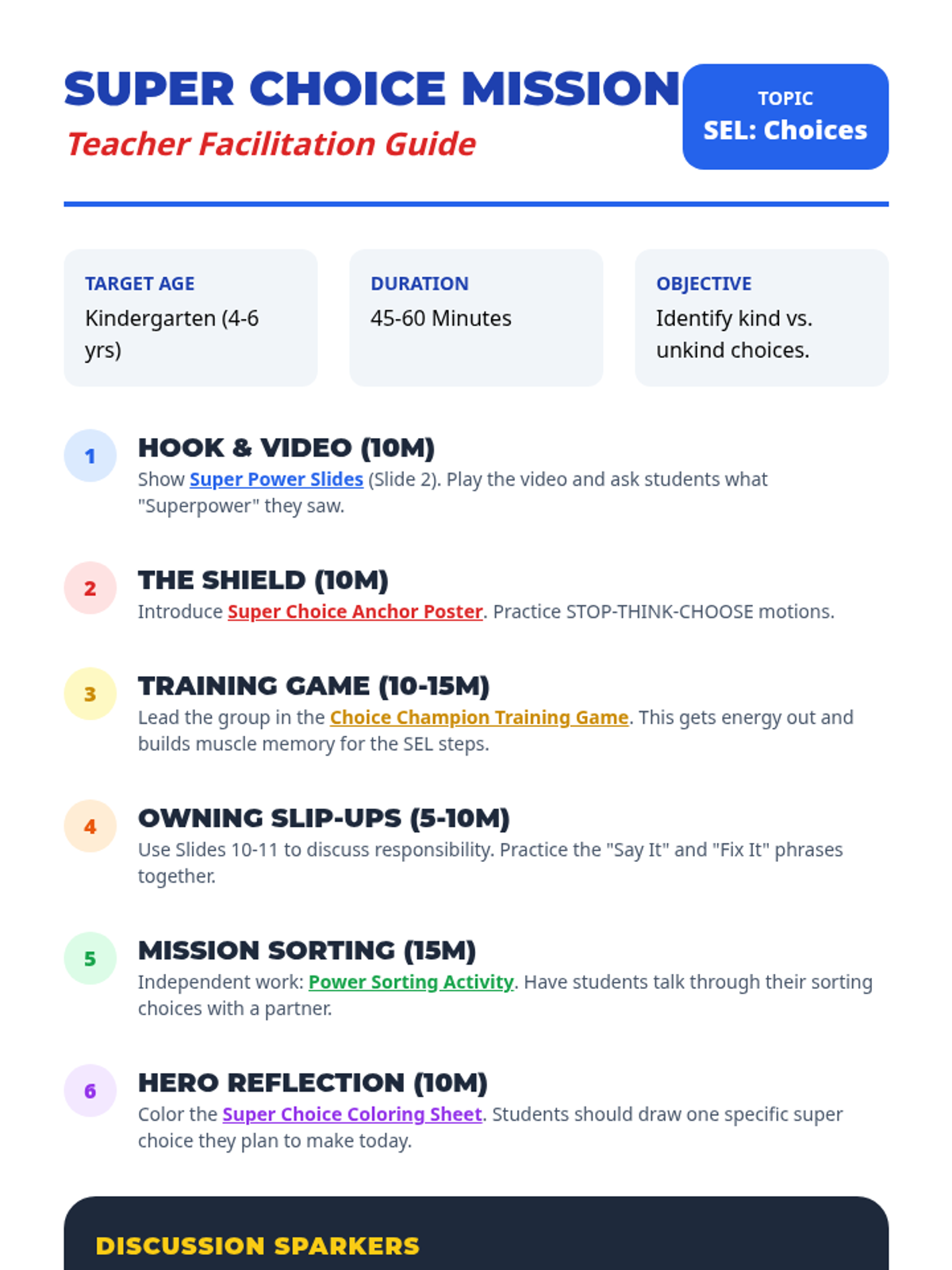
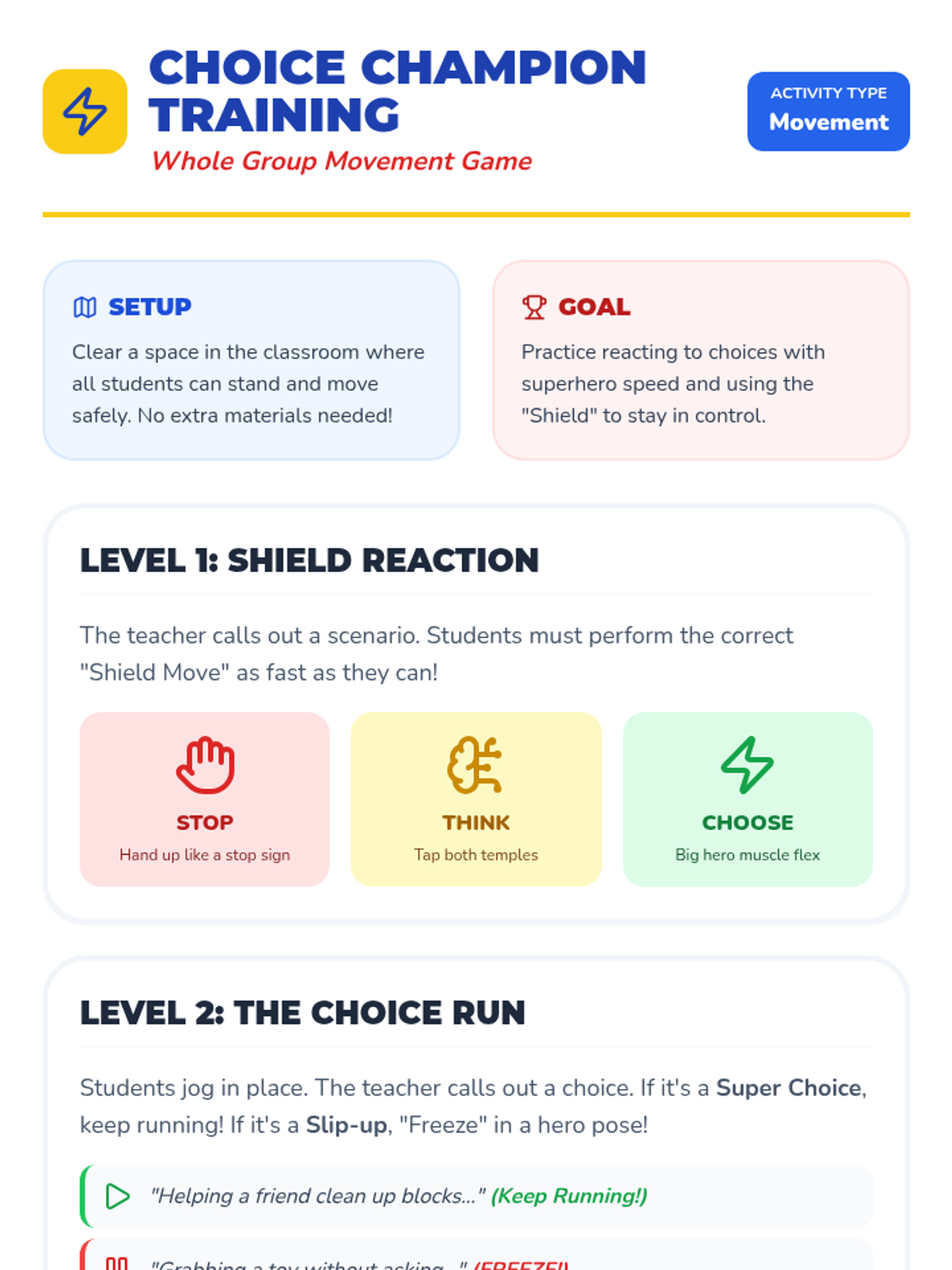
A vibrant, superhero-themed SEL lesson for kindergarteners that explores the 'superpower' of making kind and responsible choices through interactive scenarios and creative activities.
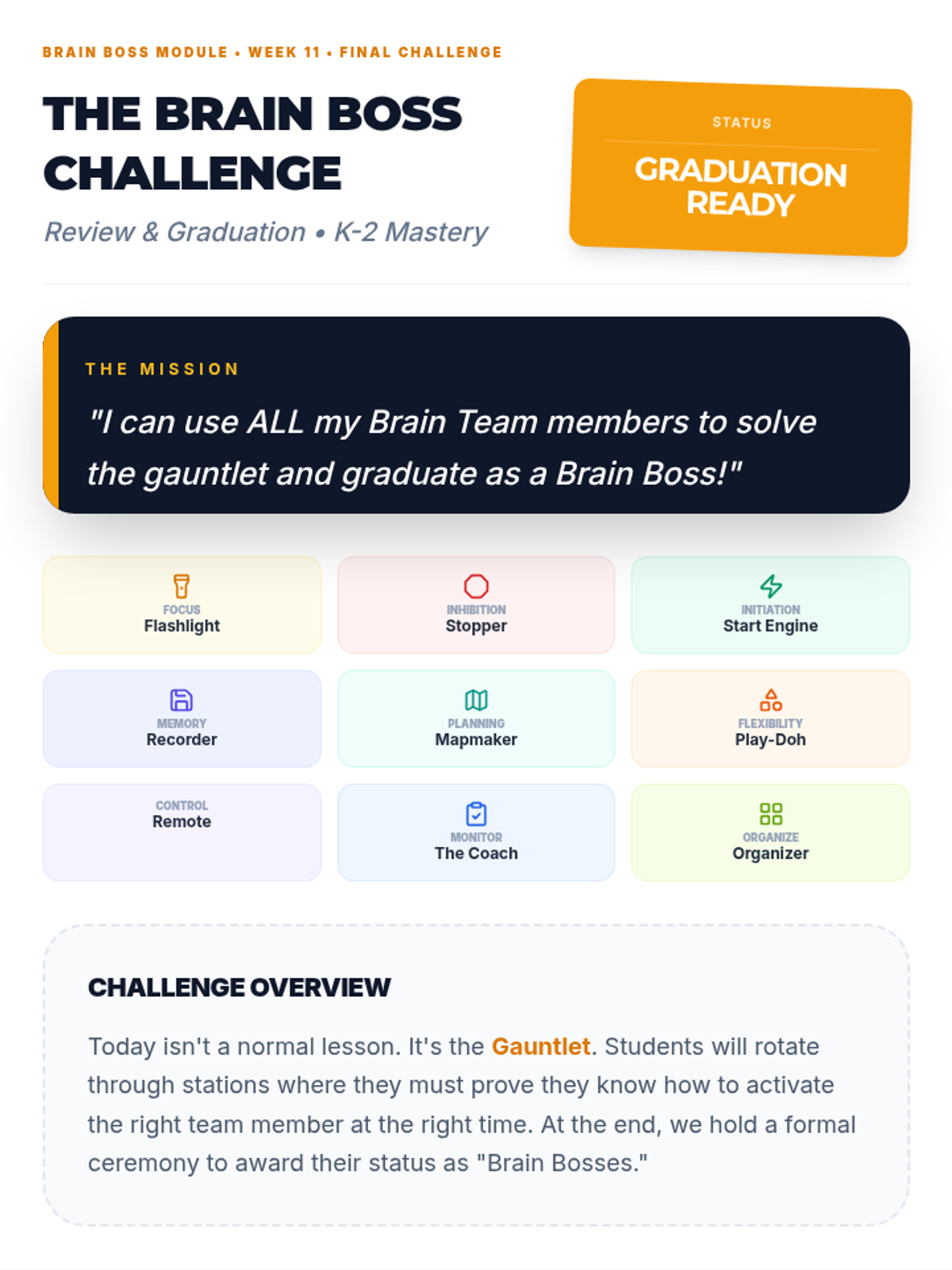
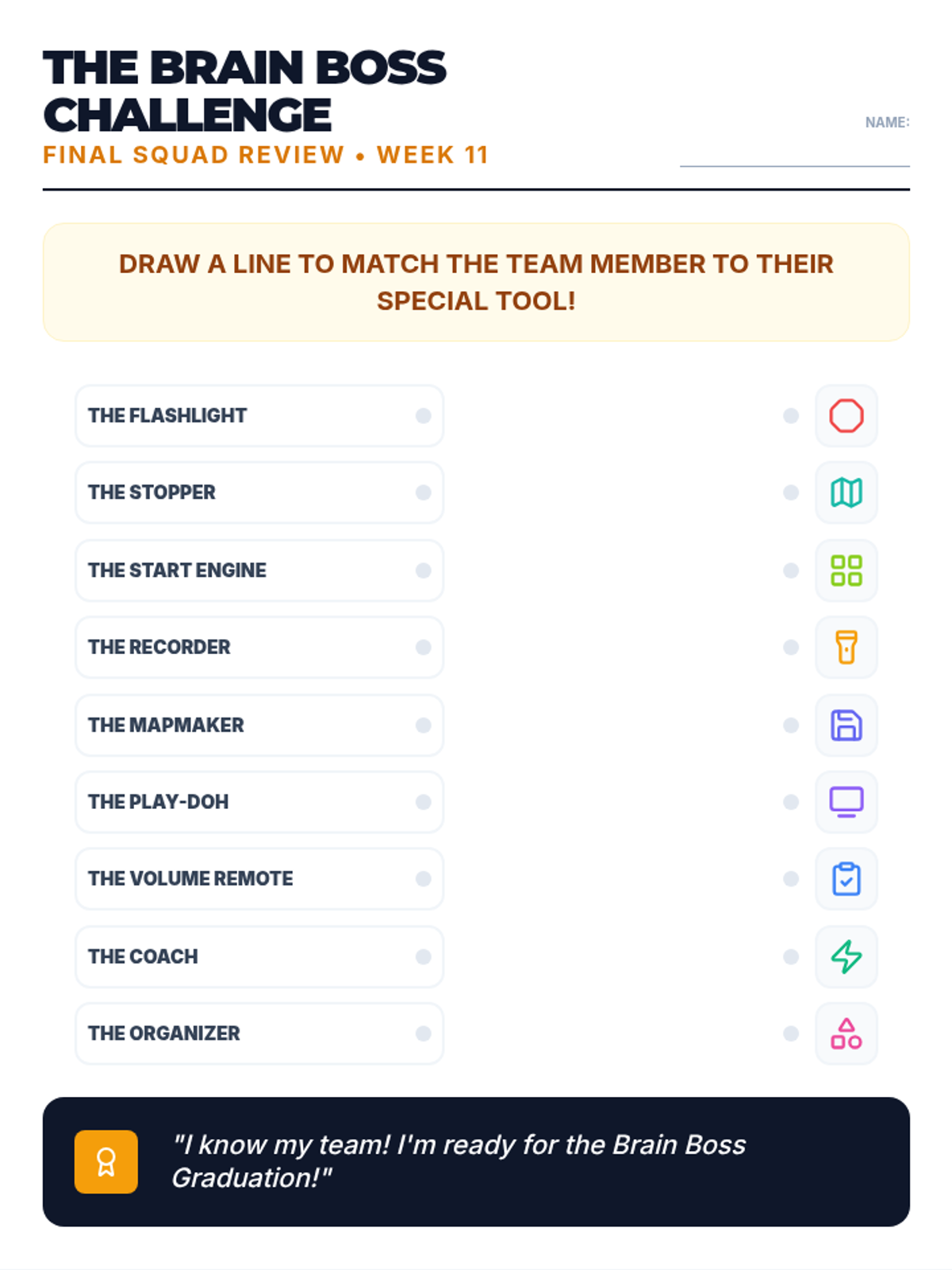
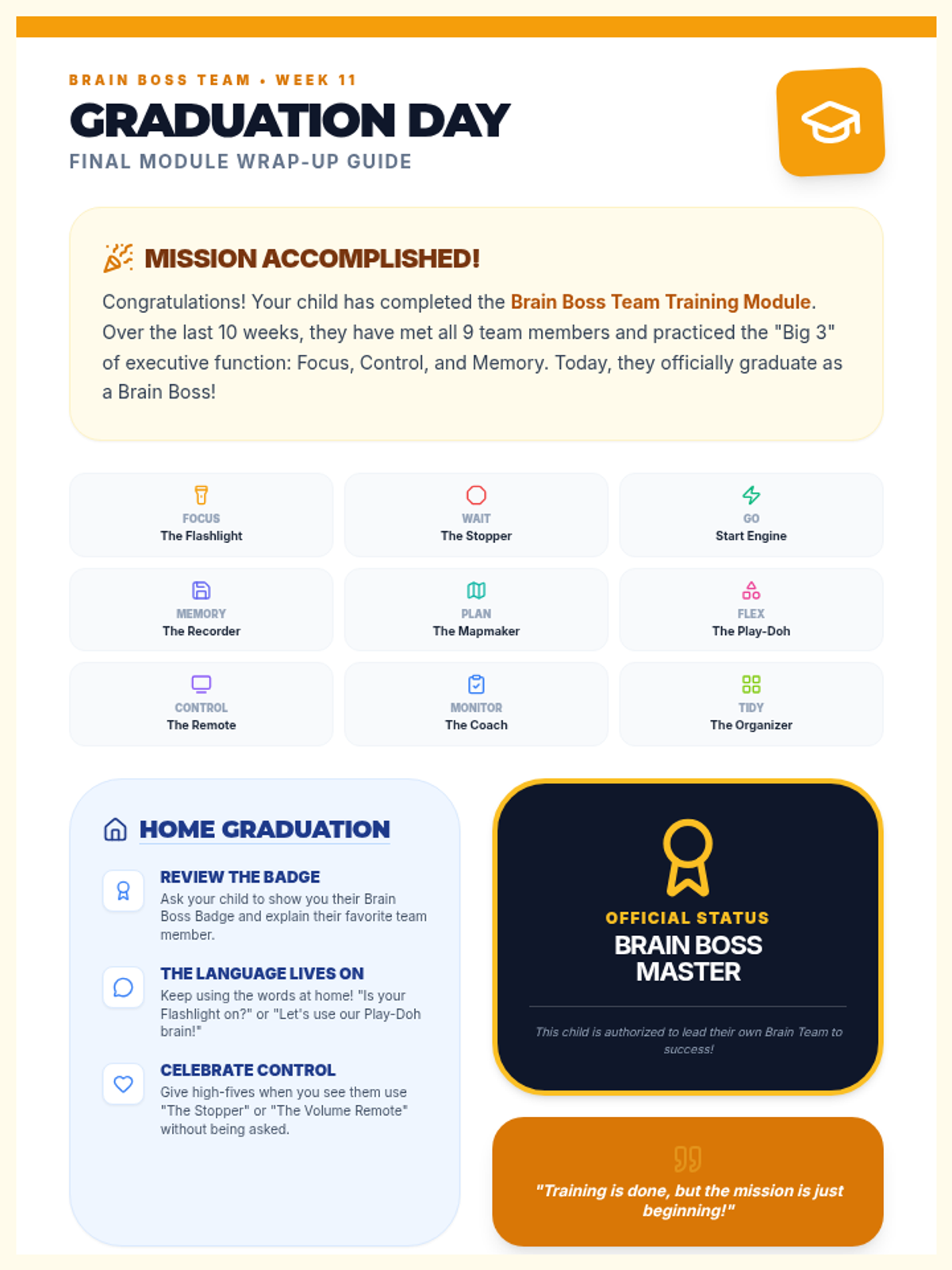
A 60-minute review lesson where students demonstrate their mastery of all 9 Brain Team members. Includes a station-based 'Brain Gauntlet' review game and a graduation ceremony to celebrate their new executive function skills.
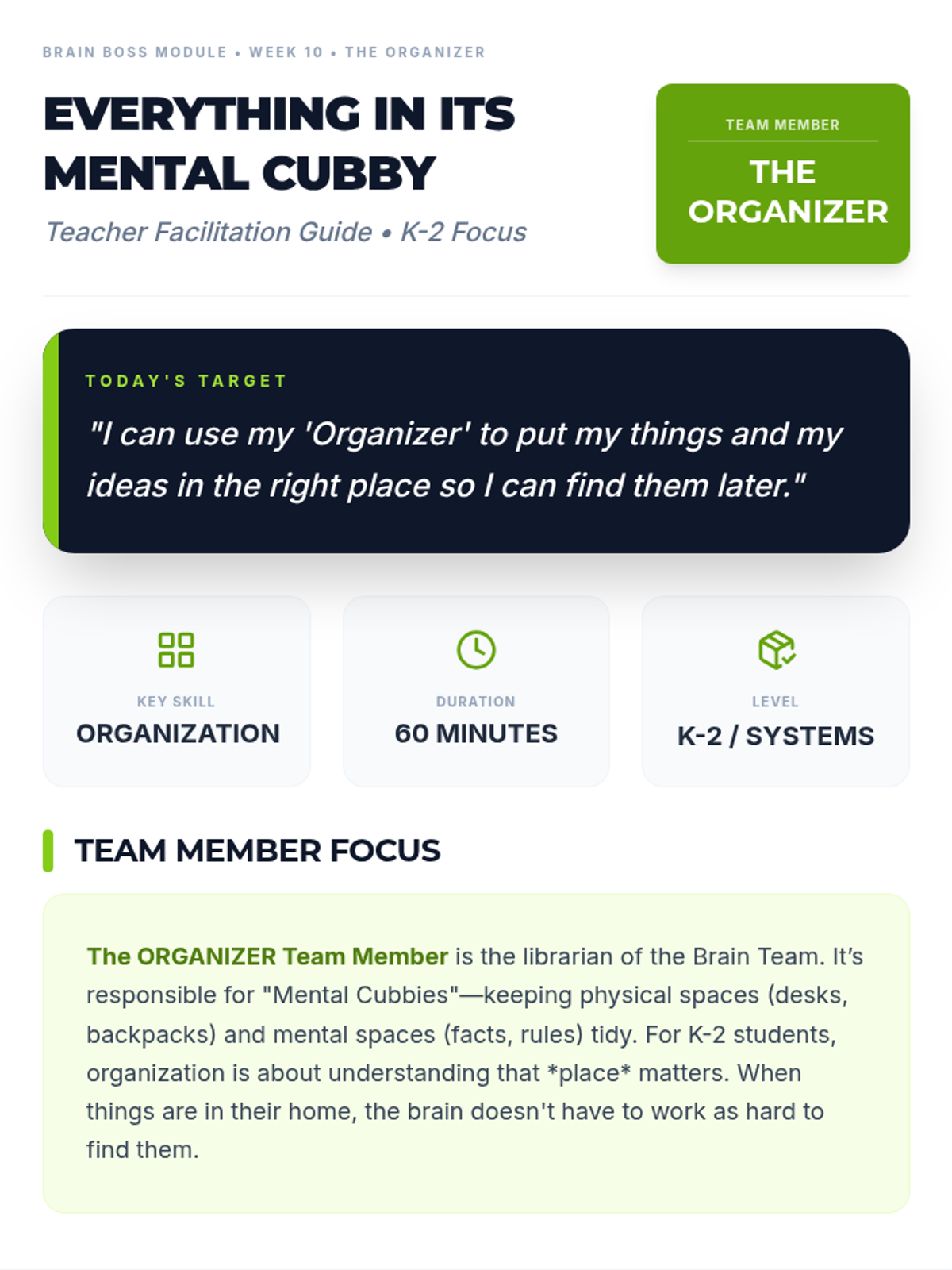
A 60-minute lesson teaching K-2 students how to activate their 'ORGANIZATION' team member, known as 'The Organizer'. Students learn to use 'Mental Cubbies' to keep their desk, belongings, and ideas in the right place.
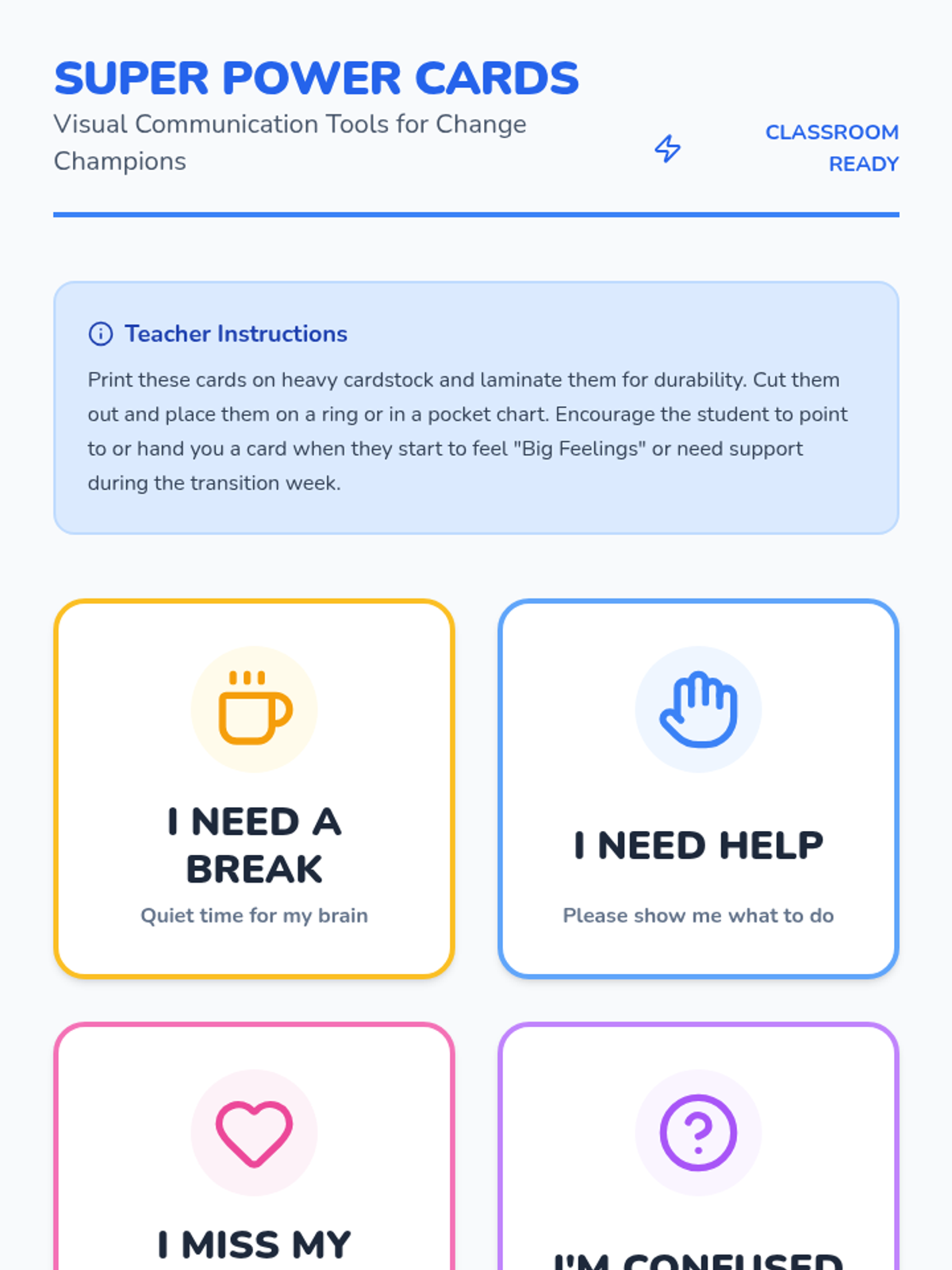
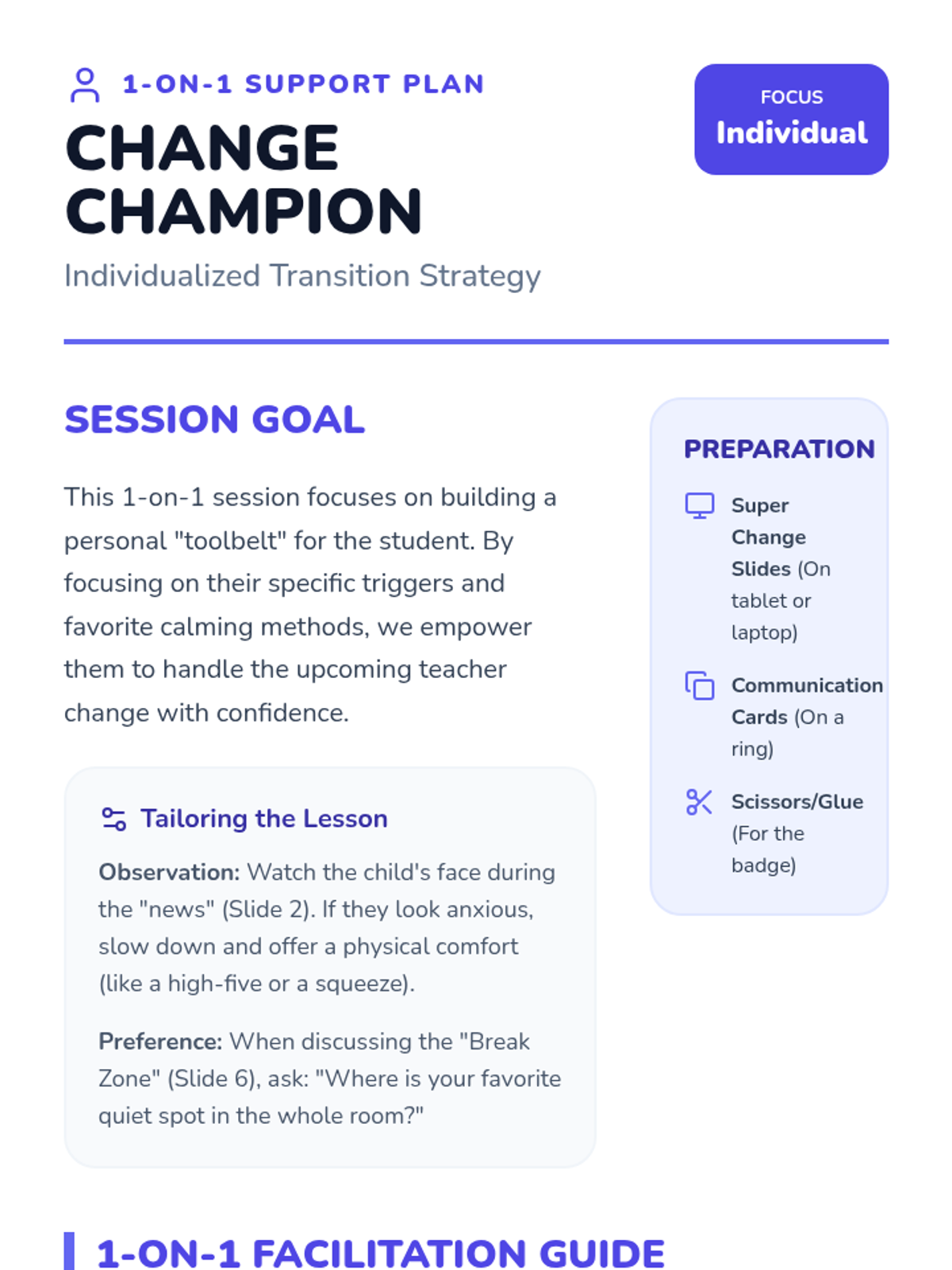
A lesson designed to help preschoolers navigate transitions when their regular teacher is away. It focuses on self-regulation, flexible thinking, and using visual tools to communicate needs.
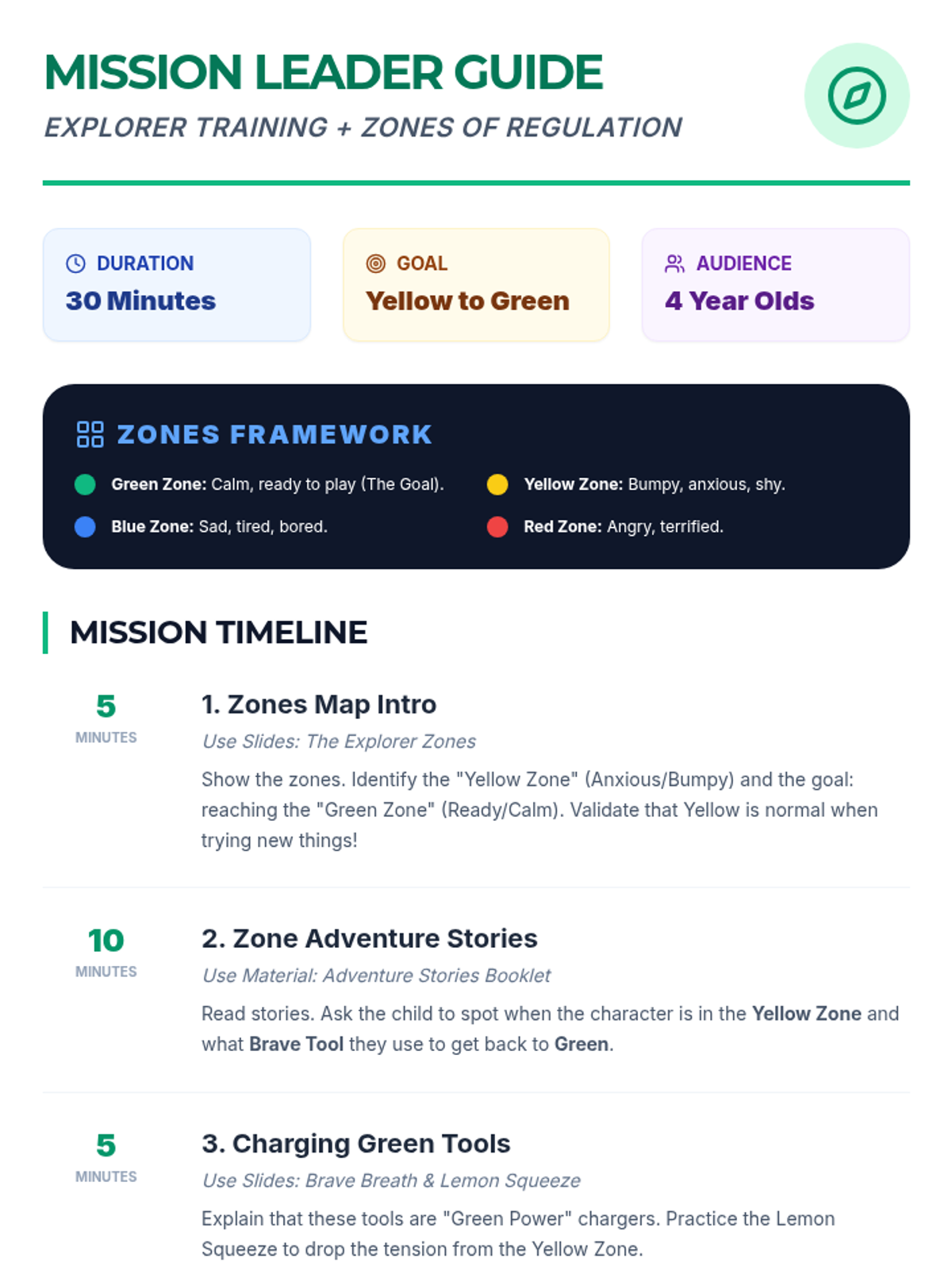
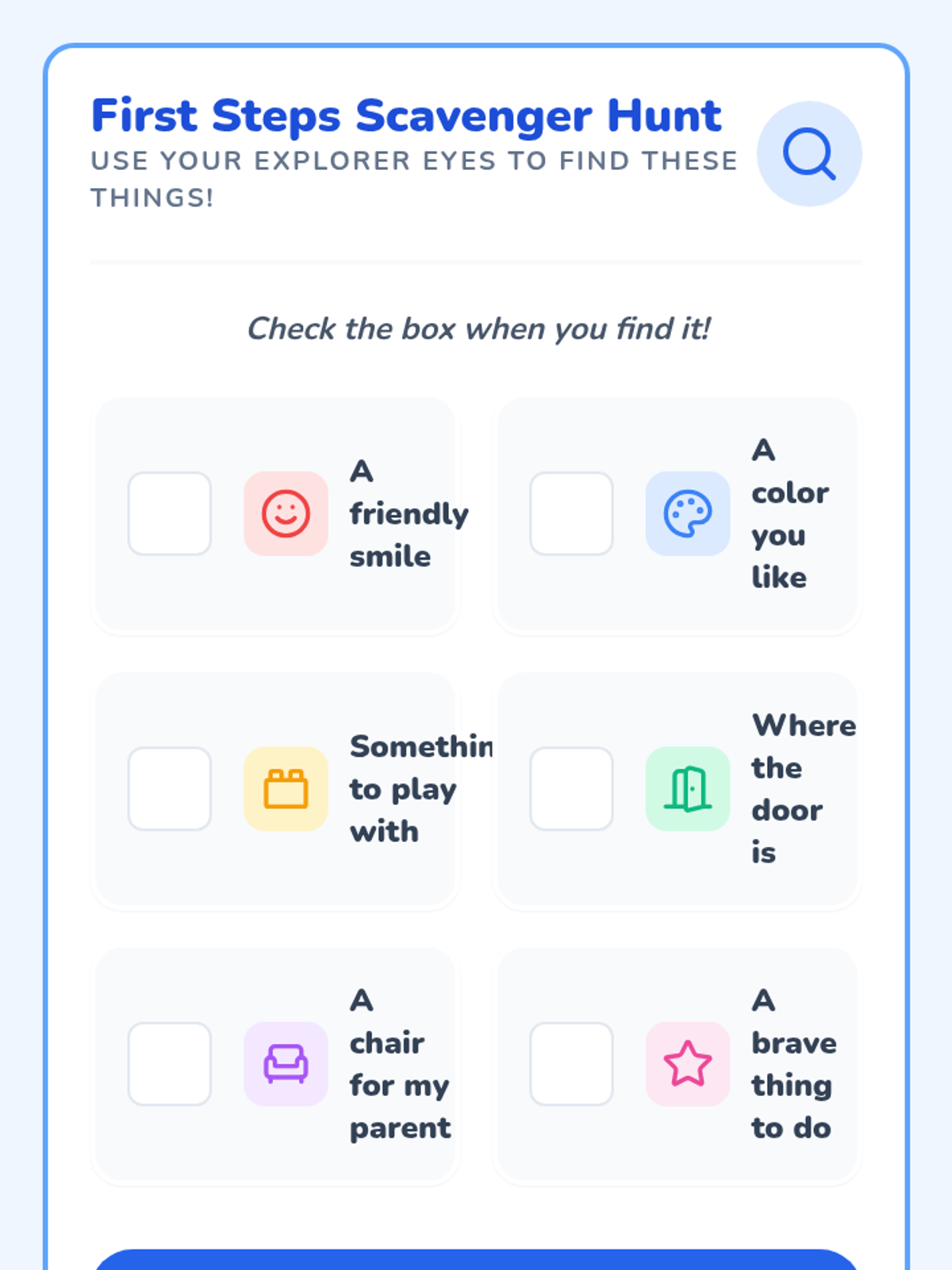
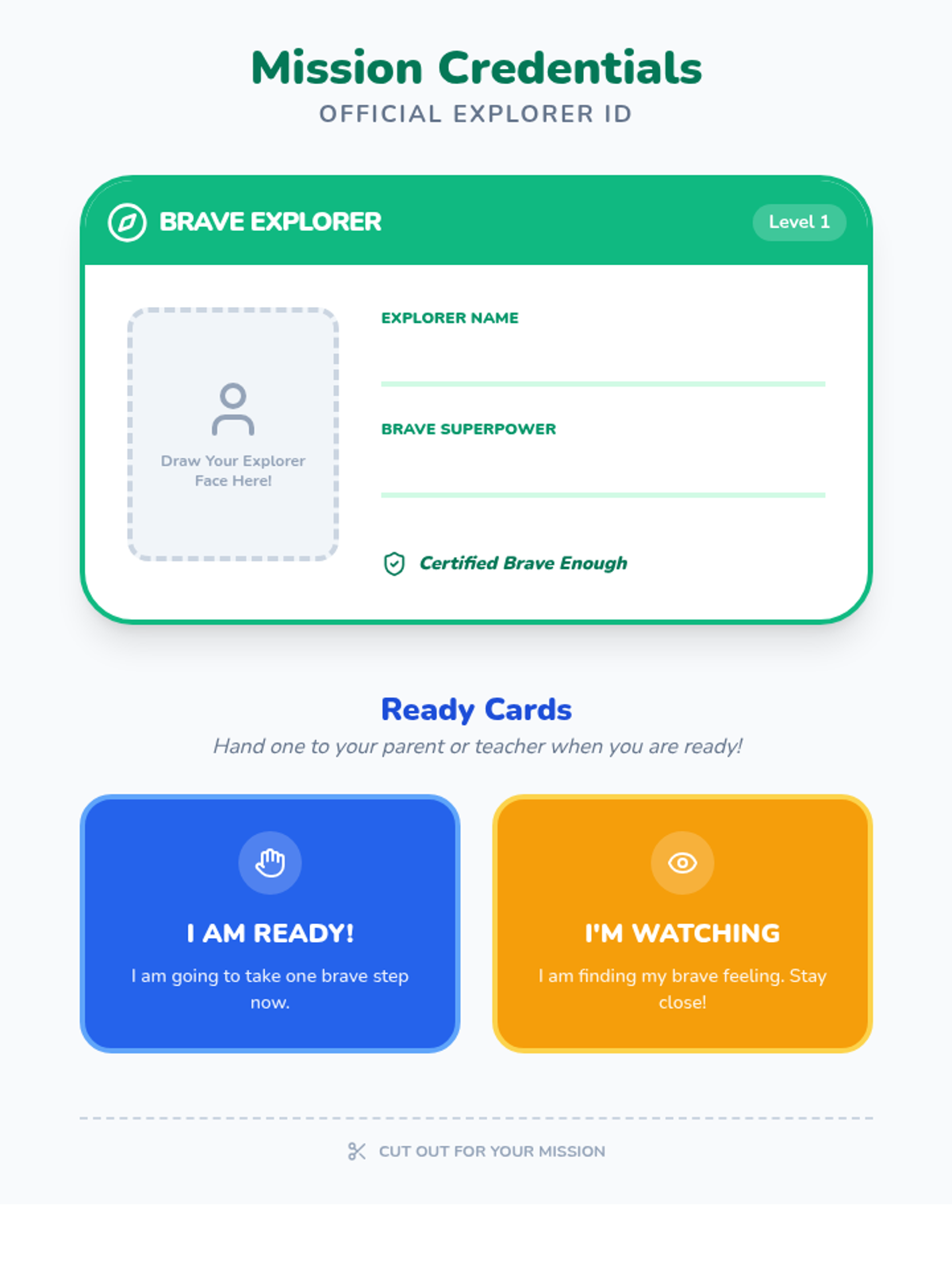
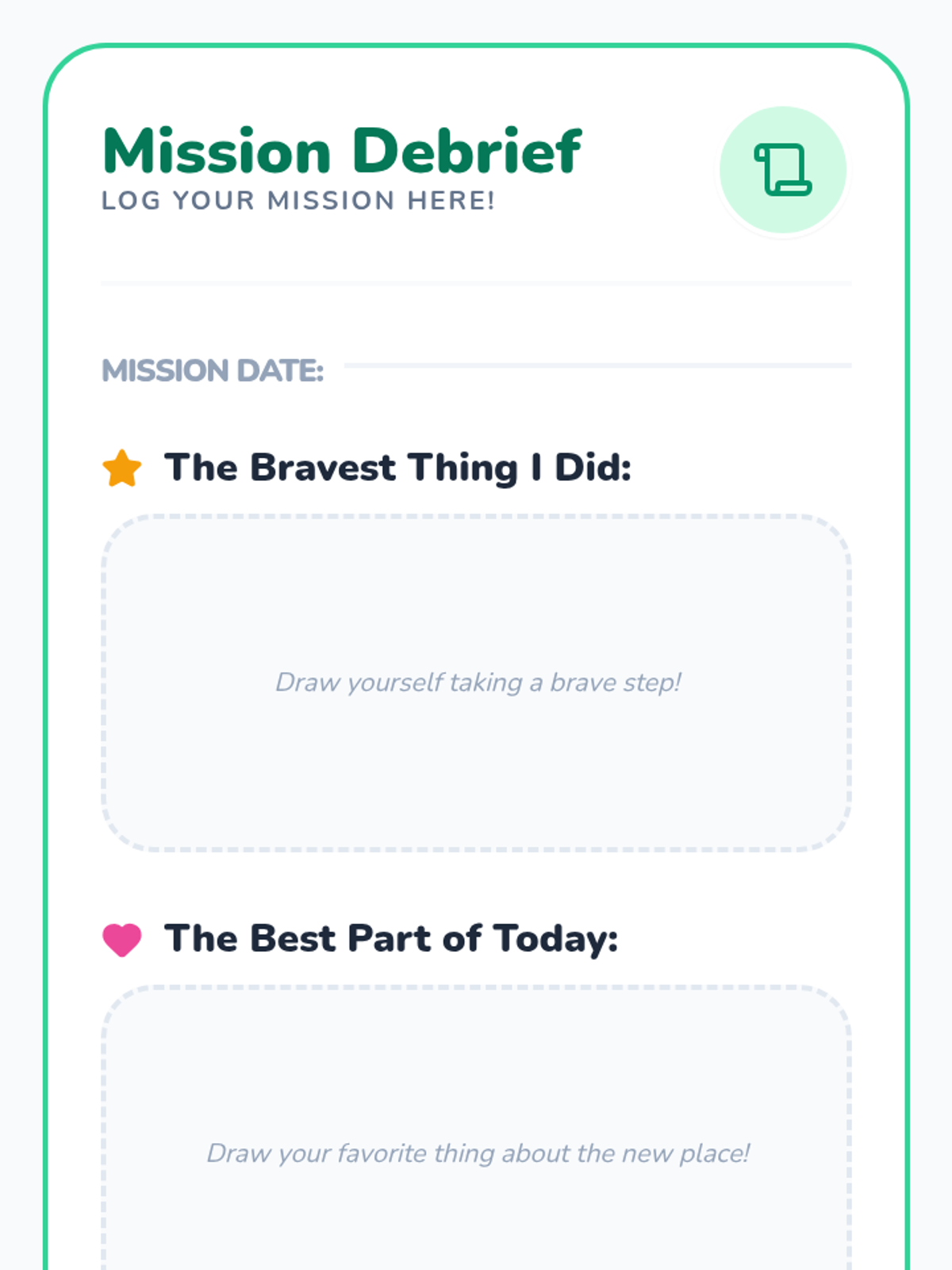
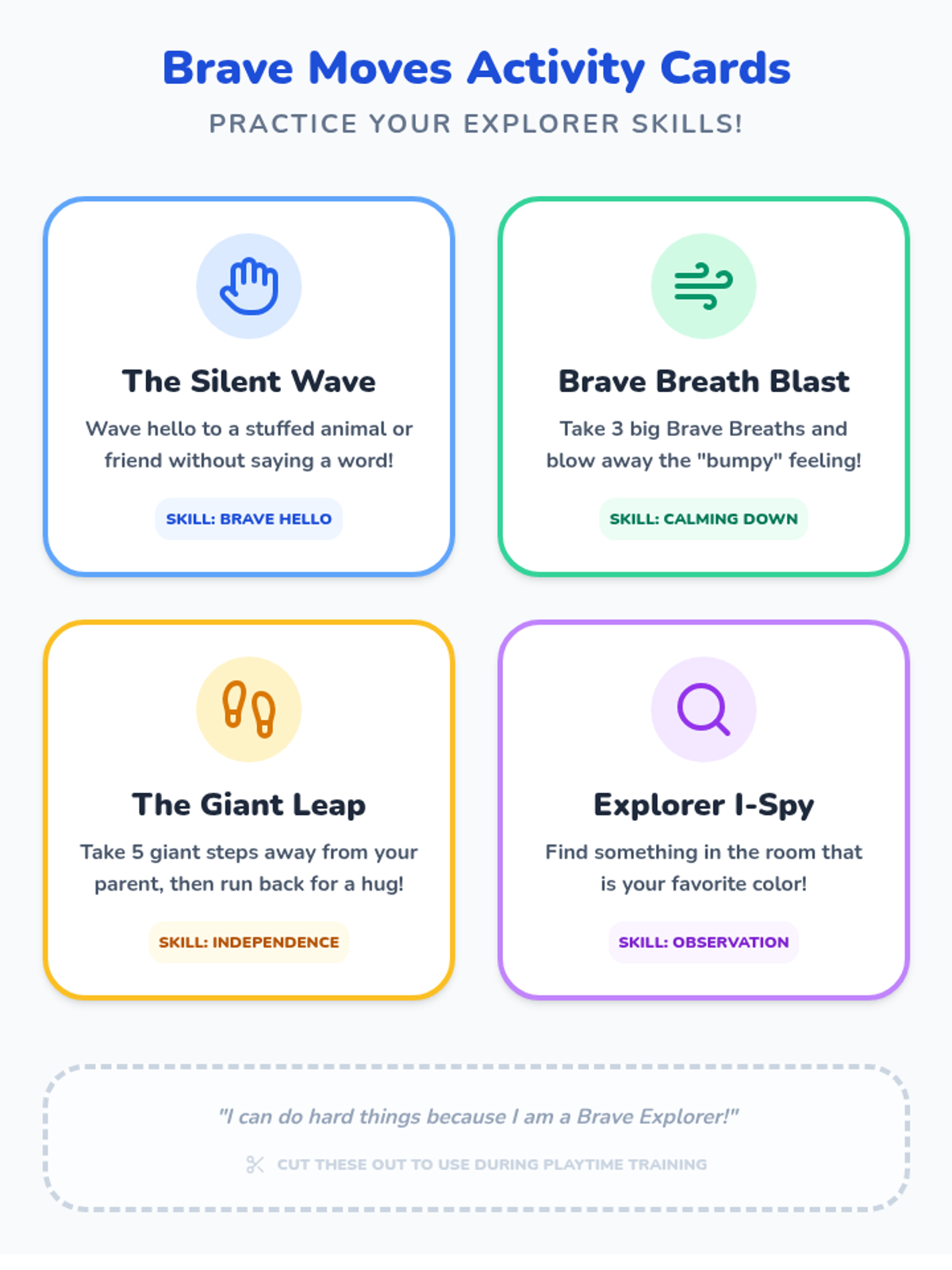
A supportive 30-minute session designed for a four-year-old to build confidence in new social situations using social stories, coping strategies, and gentle exposure techniques.