Identifies mental health crises and suicide warning signs while developing personal safety plans and grounding techniques. Equips users with peer gatekeeper skills and direct pathways to professional crisis resources and hotlines.
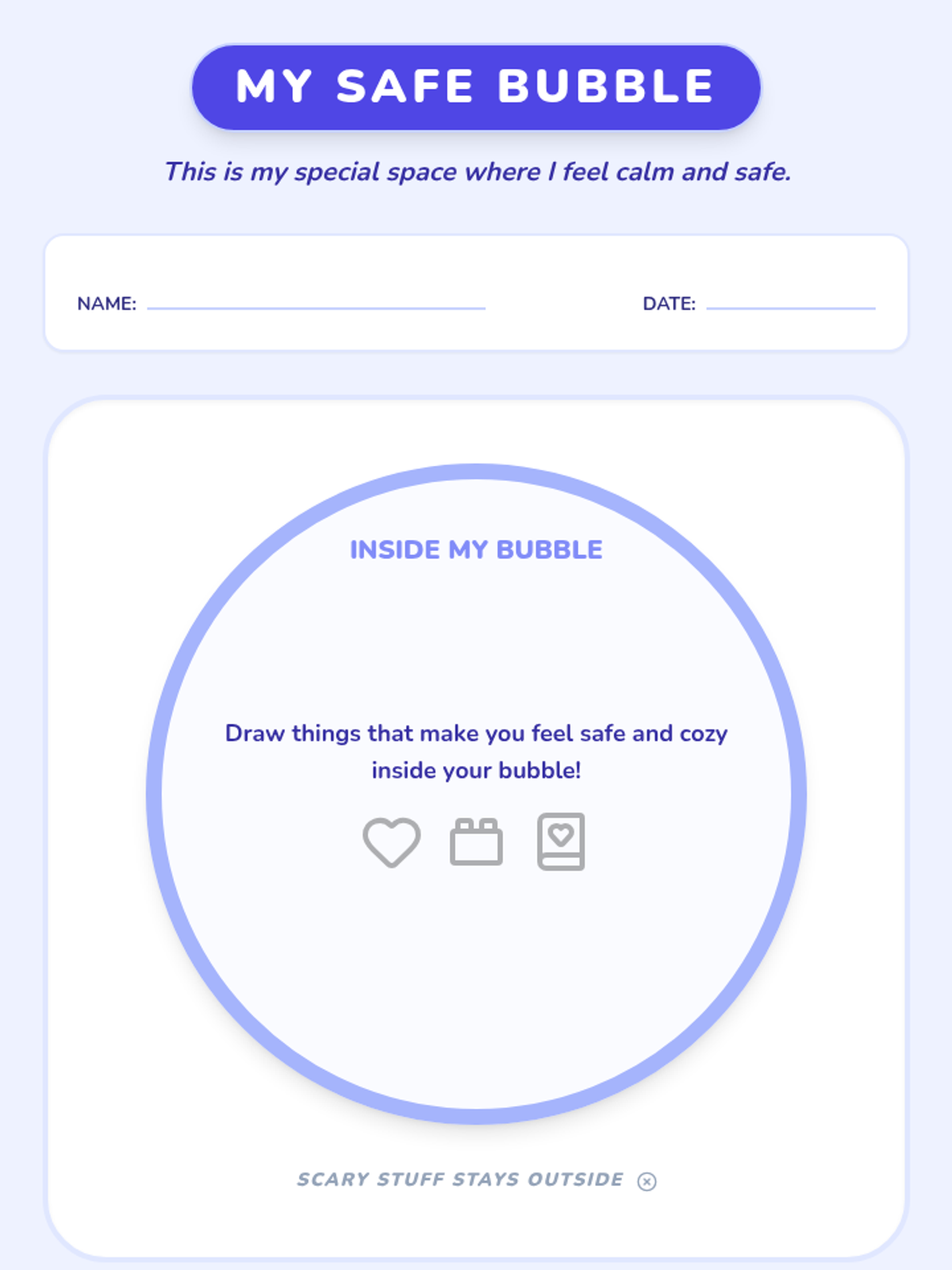
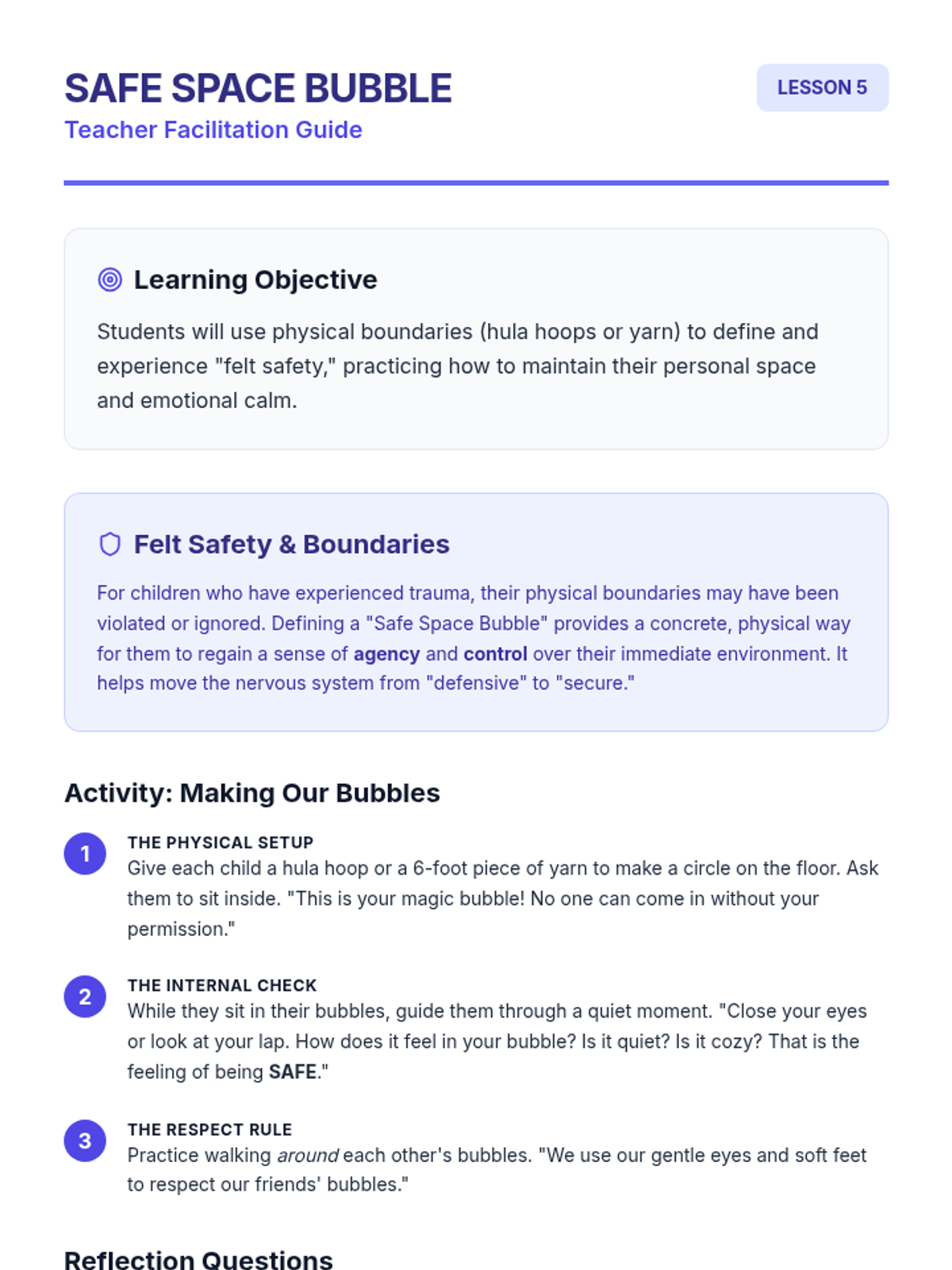
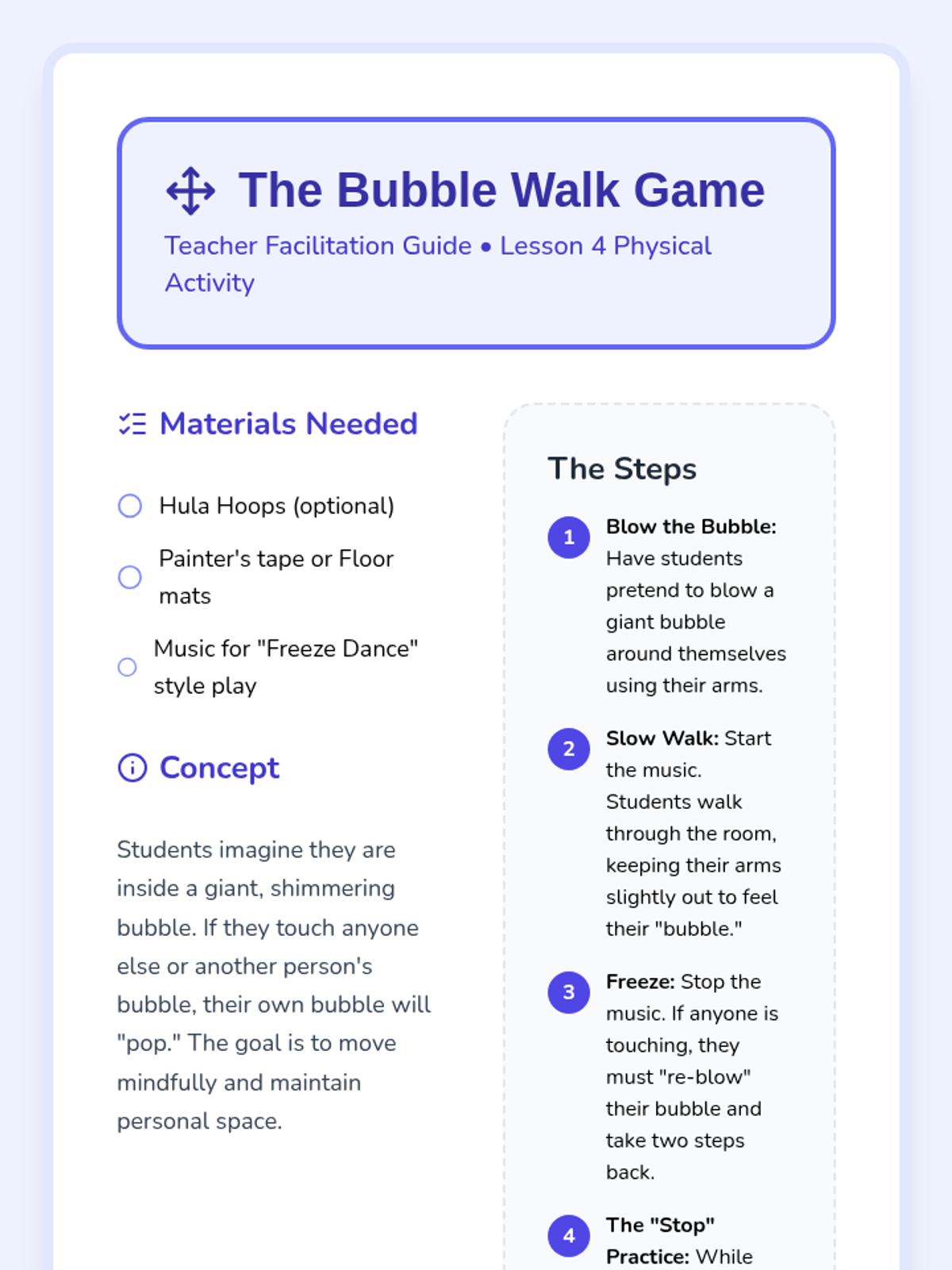
Students use physical boundaries to experience 'felt safety' and practice maintaining their personal 'Safe Space Bubble'.
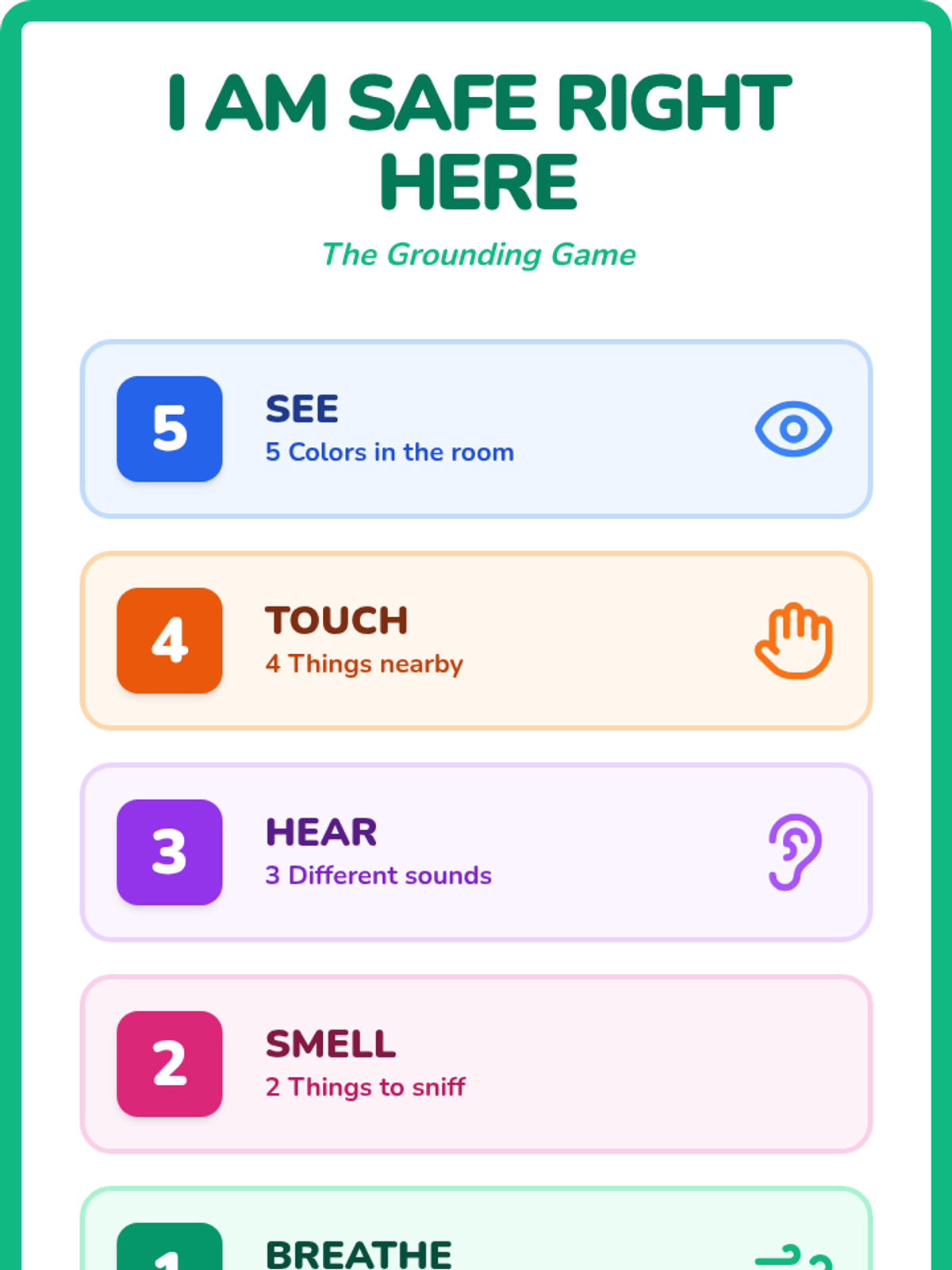
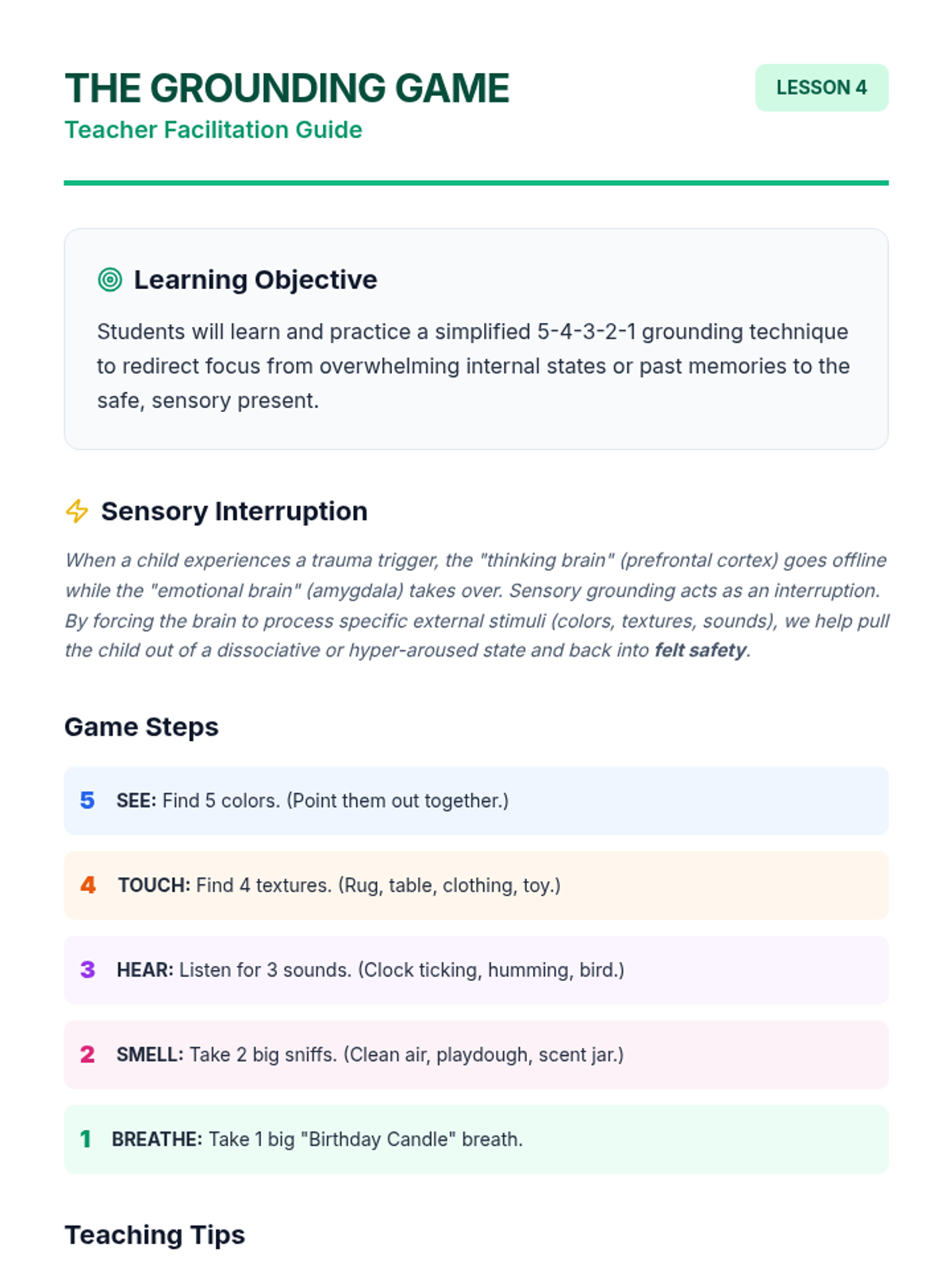
A Pre-K adapted grounding exercise using the 5-4-3-2-1 method to bring focus back to the present when feelings become overwhelming.
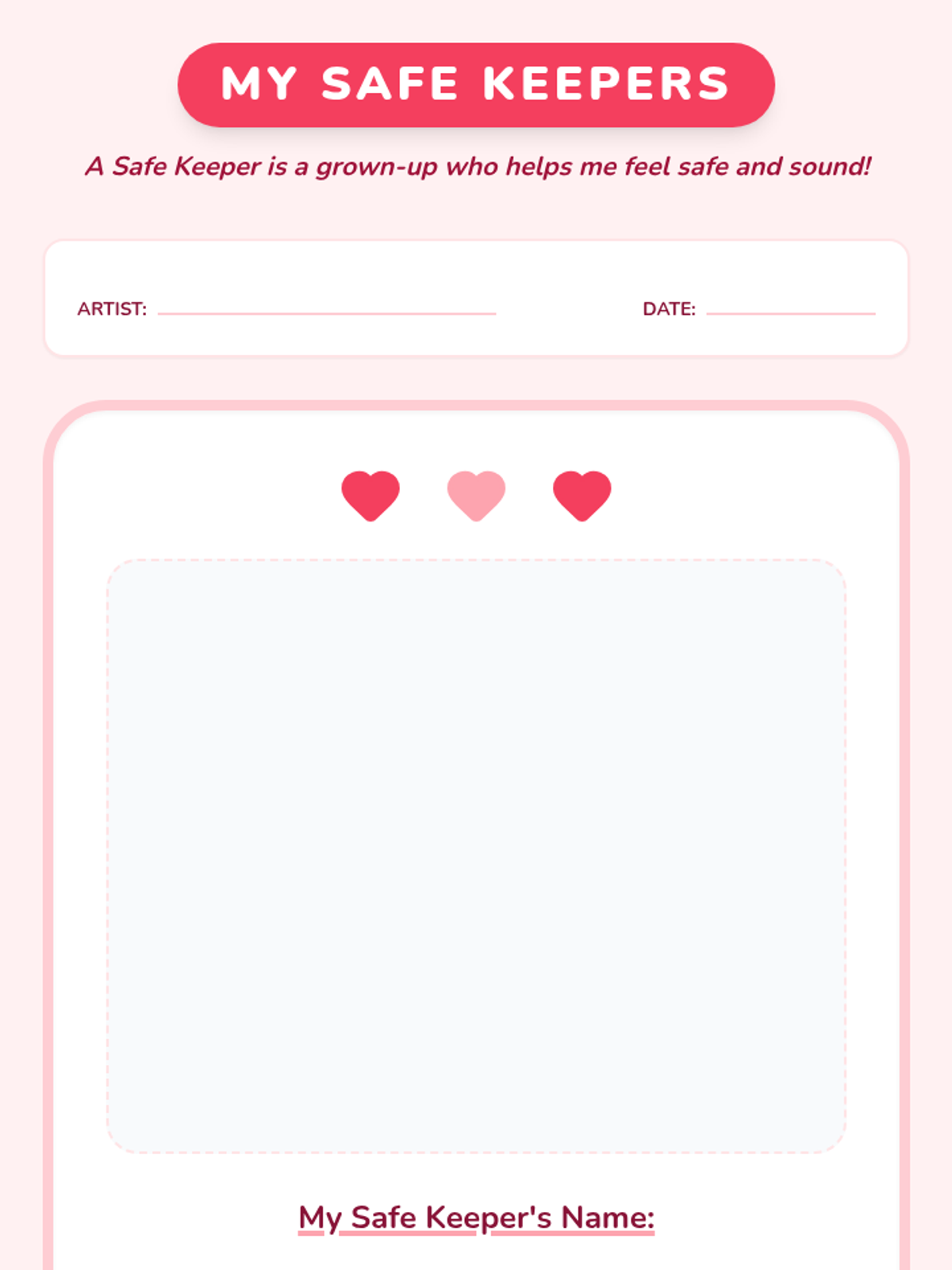
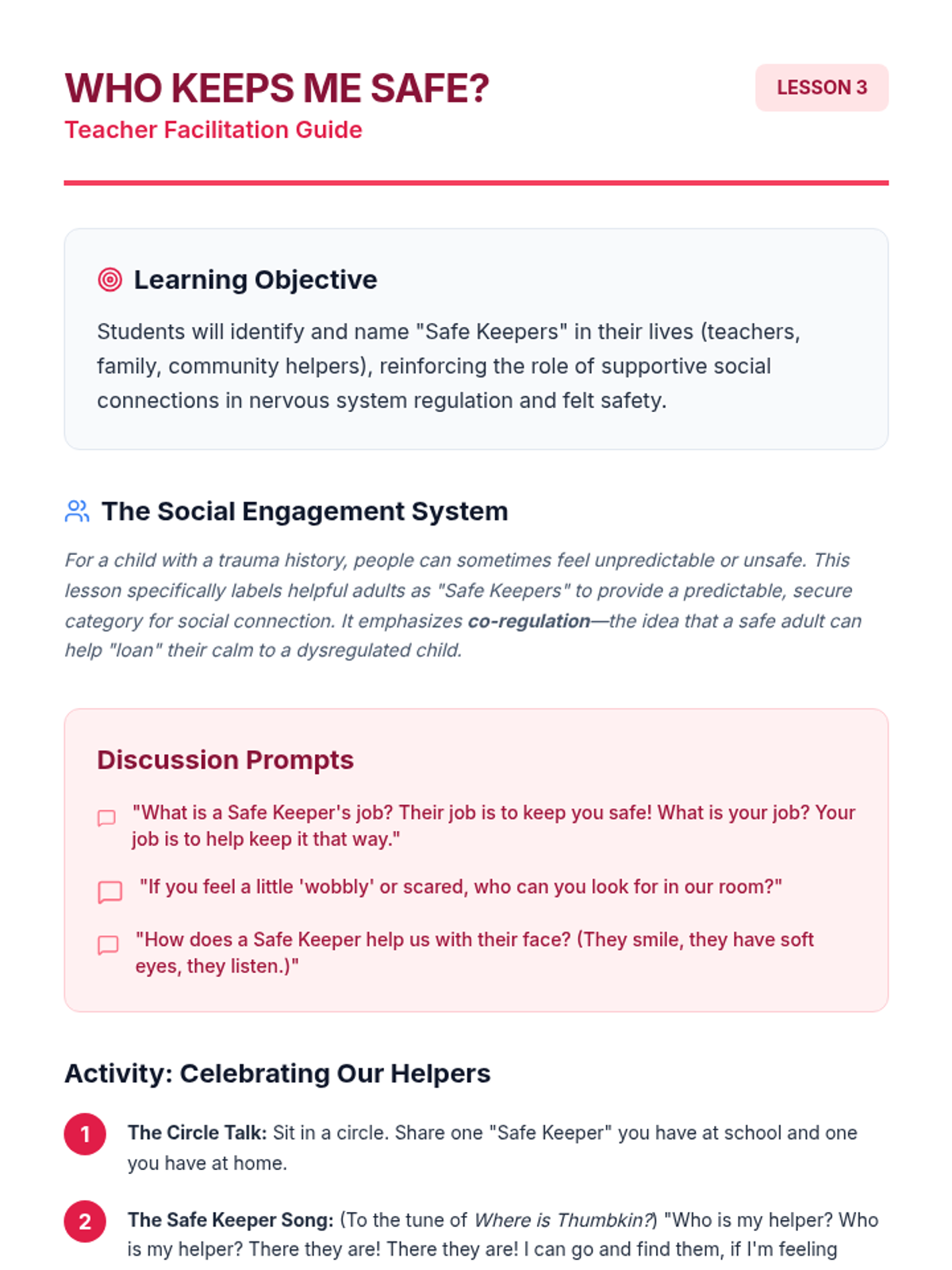
Students identify and celebrate the 'Safe Keepers' in their lives, reinforcing the importance of supportive adults in nervous system regulation.
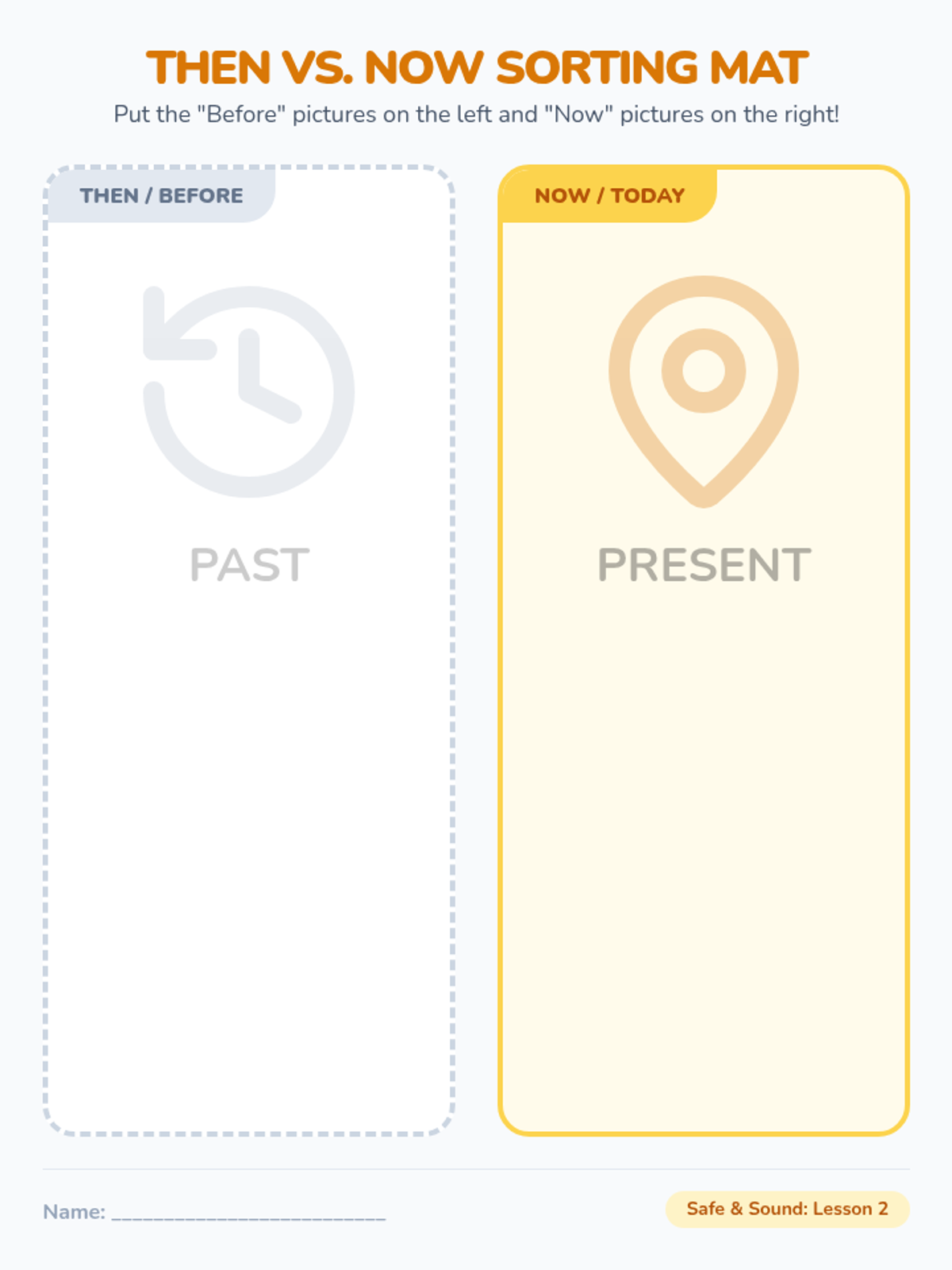
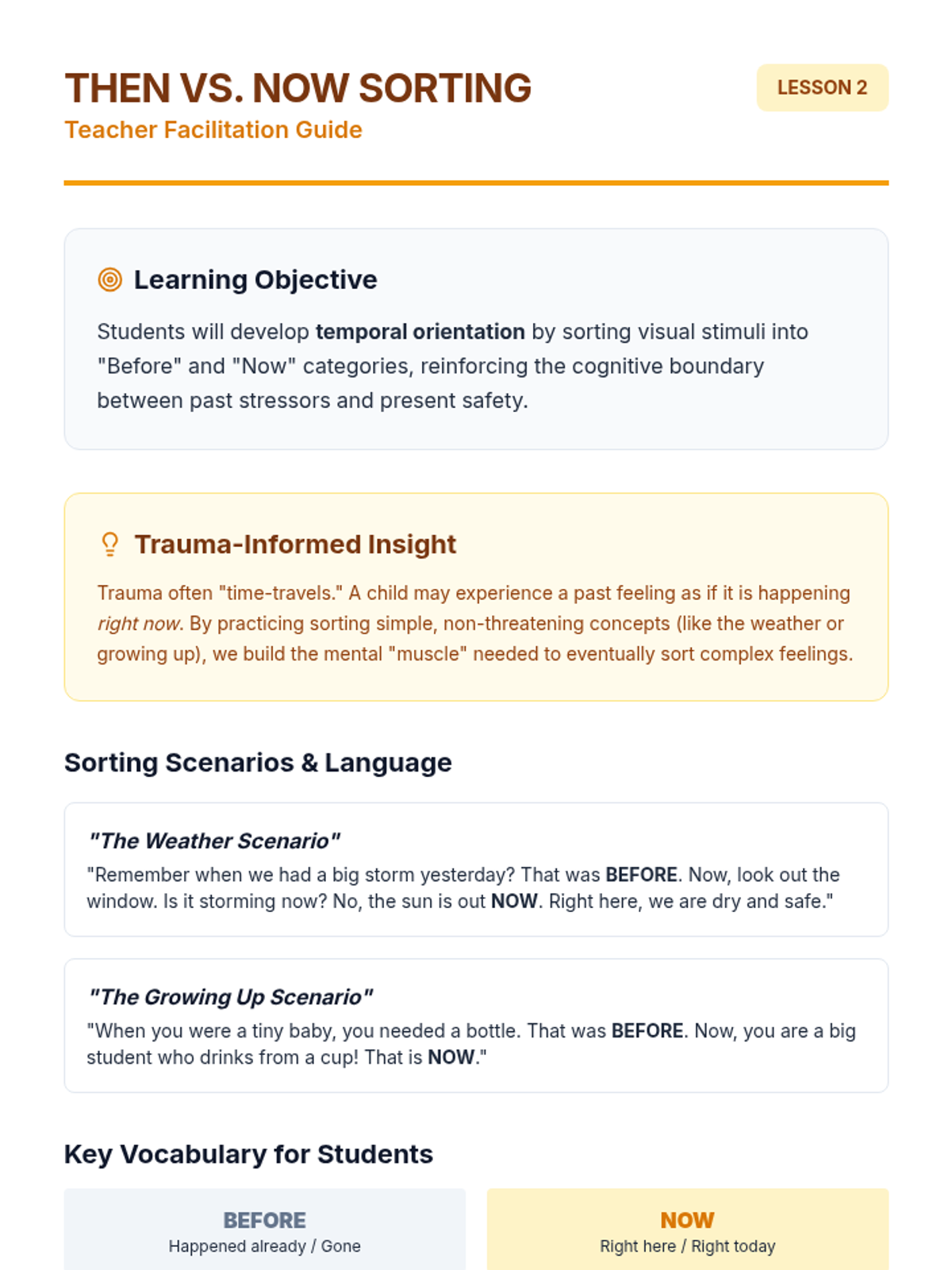
Children learn to differentiate between past events ('Before') and current reality ('Now') using visual sorting activities to build cognitive flexibility.
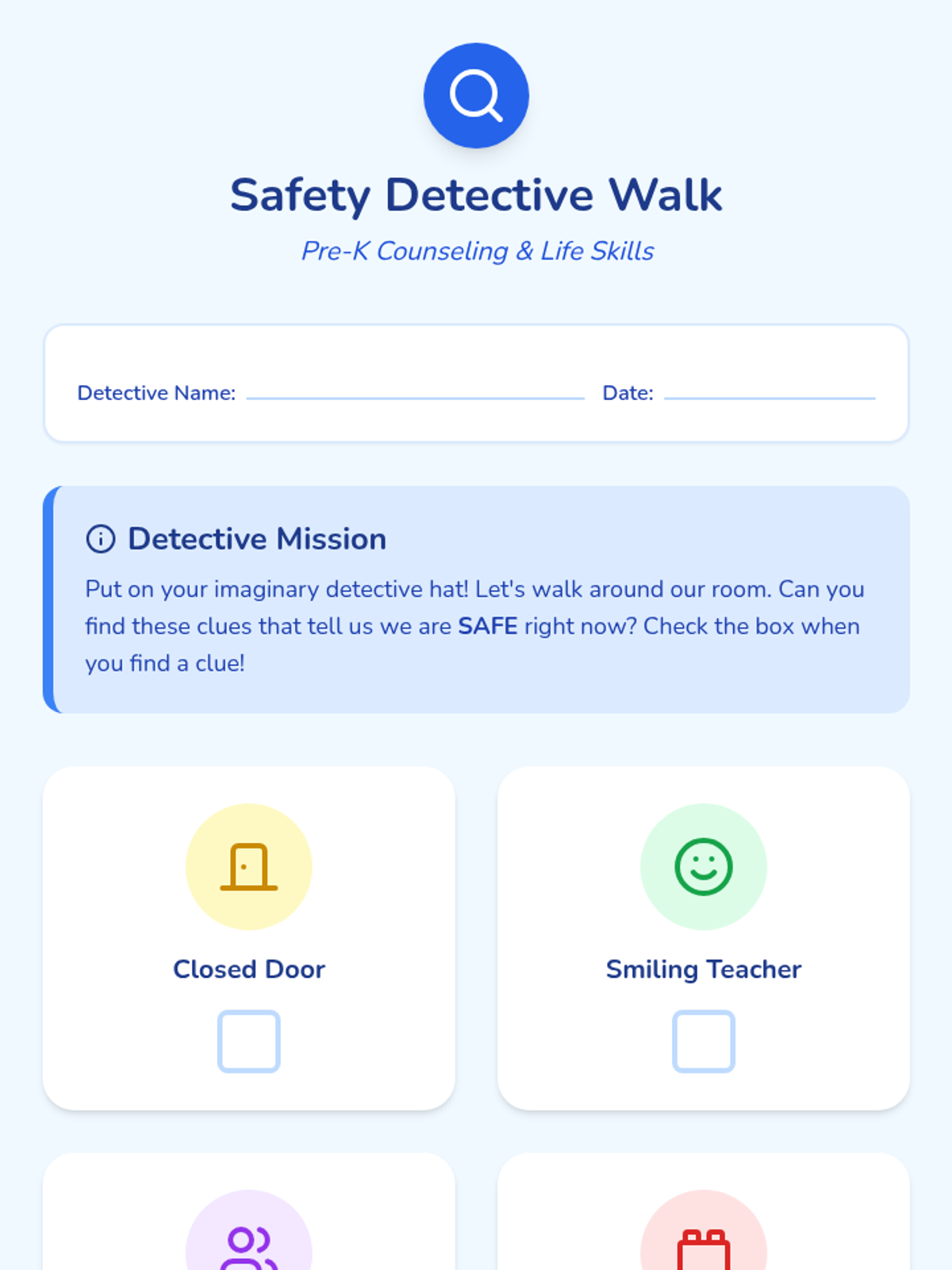
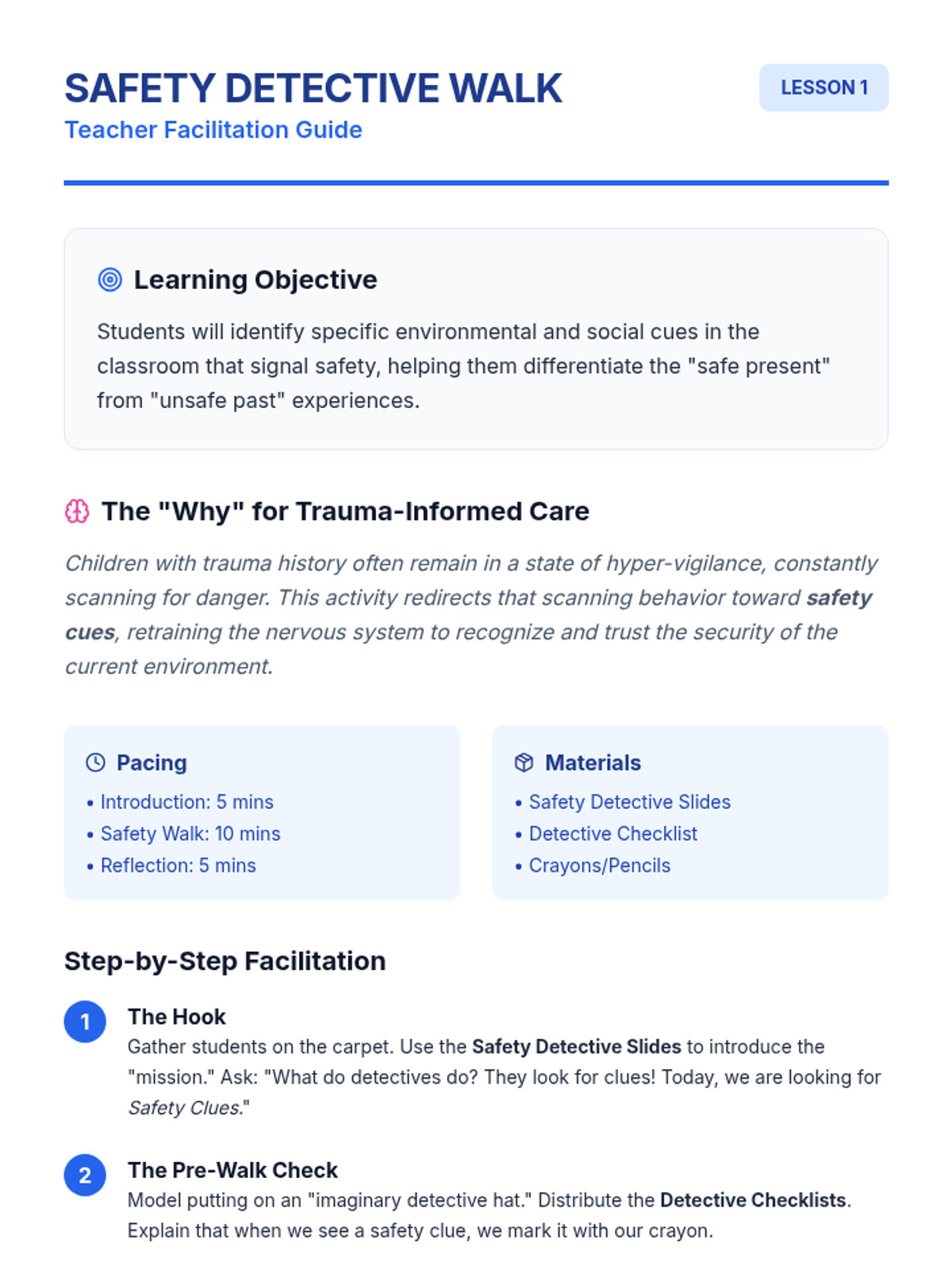
Students act as 'Safety Detectives' to identify specific physical and social cues in their classroom that indicate they are safe in the present moment.
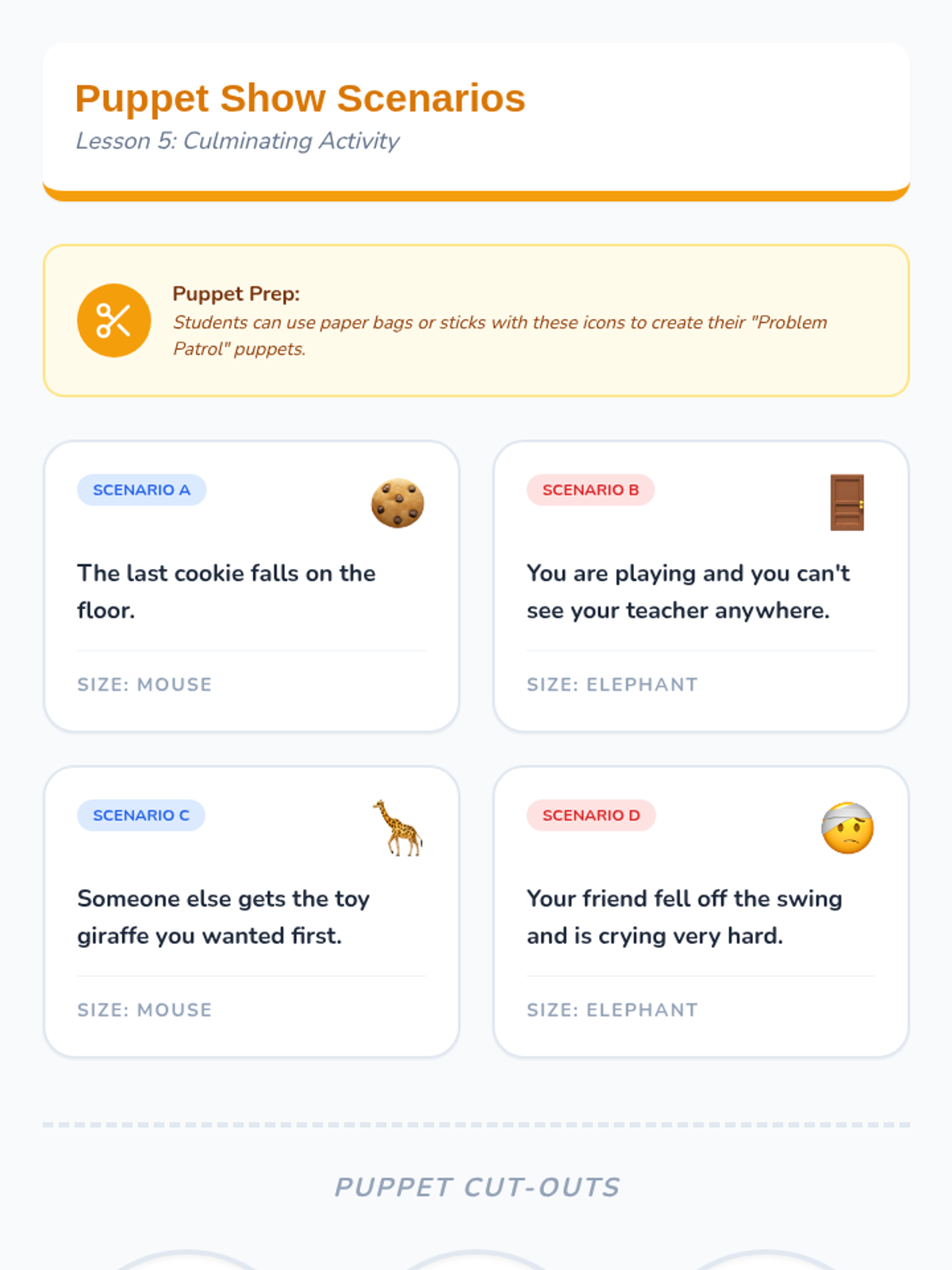
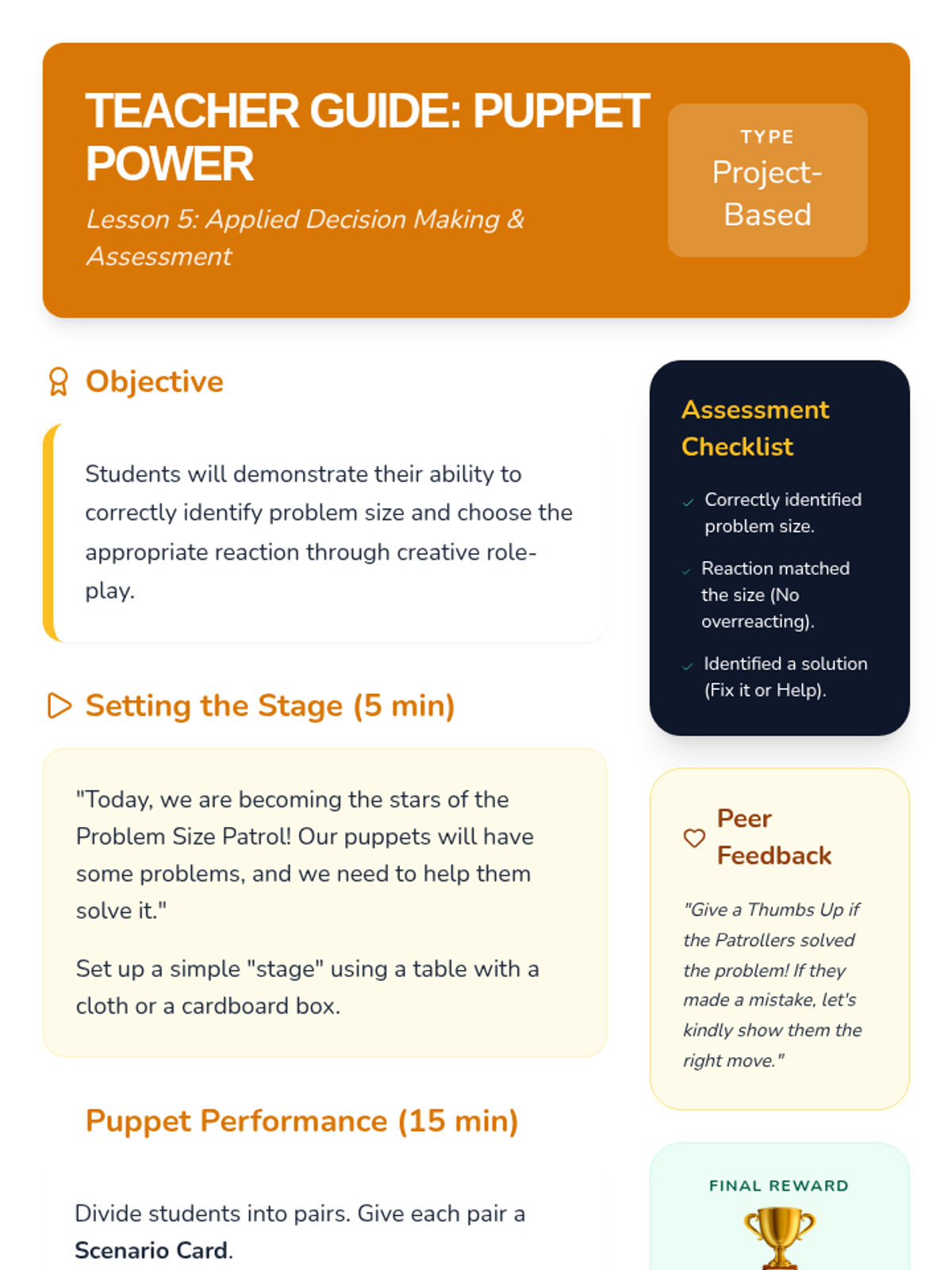
As a culminating activity, students use puppets to act out assigned scenarios, correctly identifying if the problem is big or small and choosing the right next step.
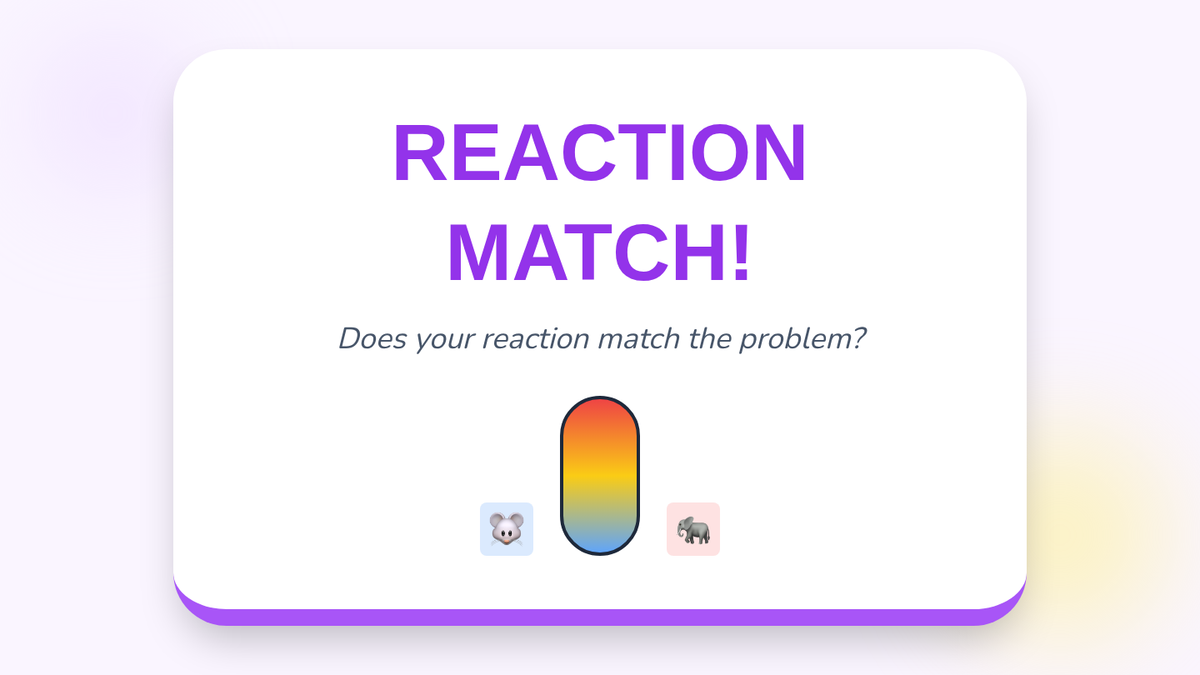
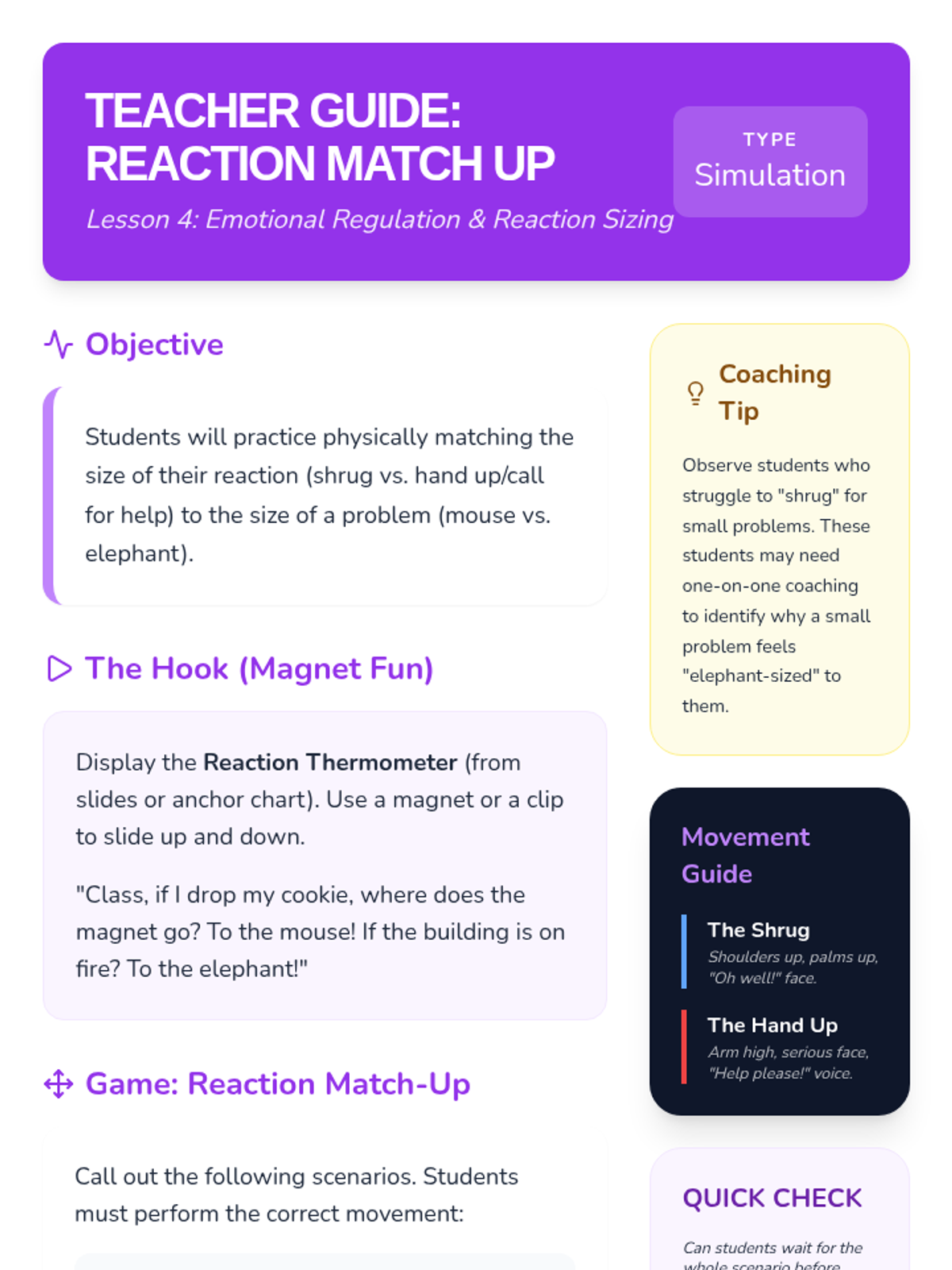
Students participate in a movement activity where they match the size of their reaction to the size of the problem using a 'Reaction Thermometer'.
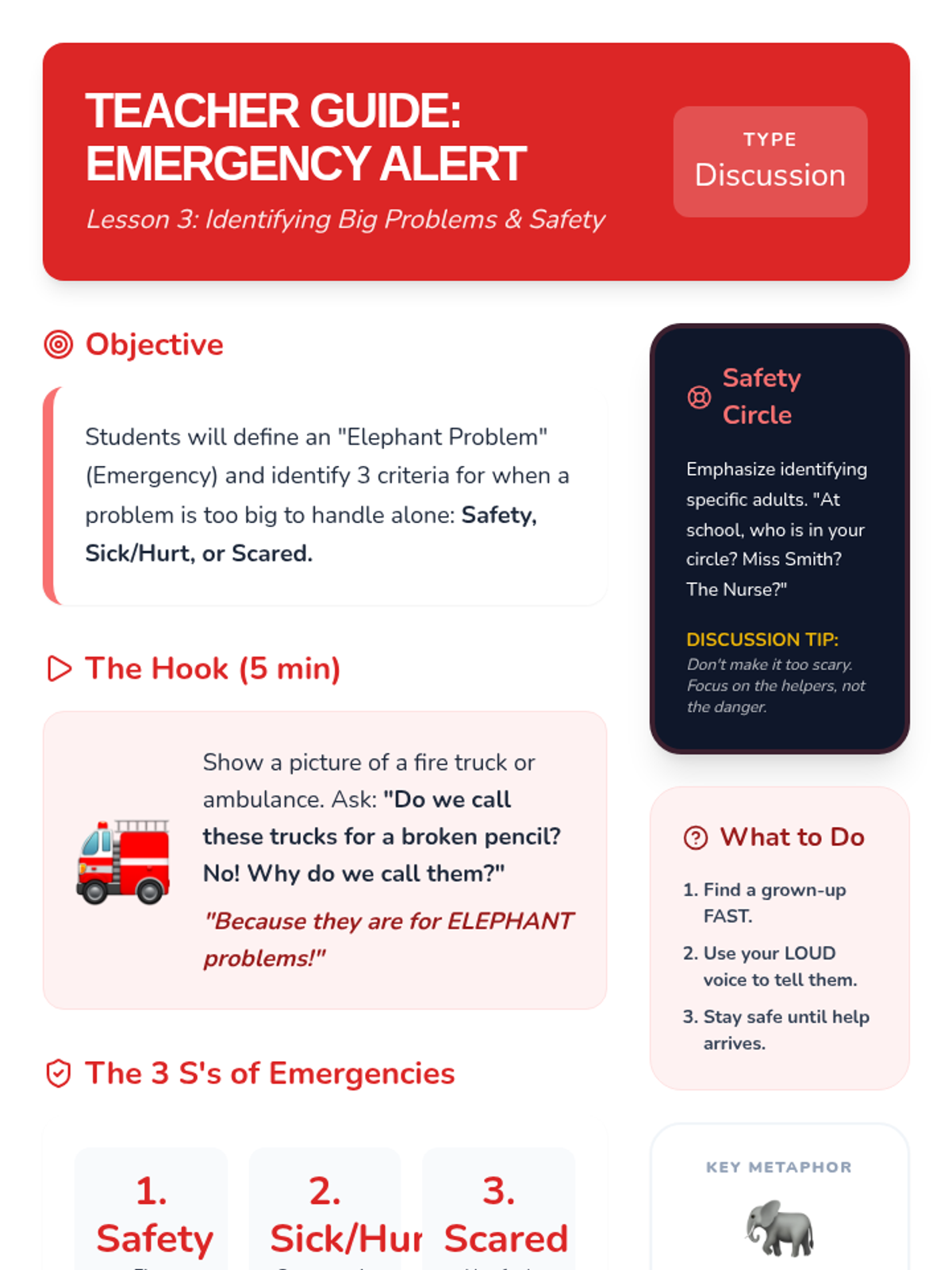
Students learn to identify 'Big Problems' involving safety or danger where an adult is always needed. The focus is on recognizing when safety is compromised.
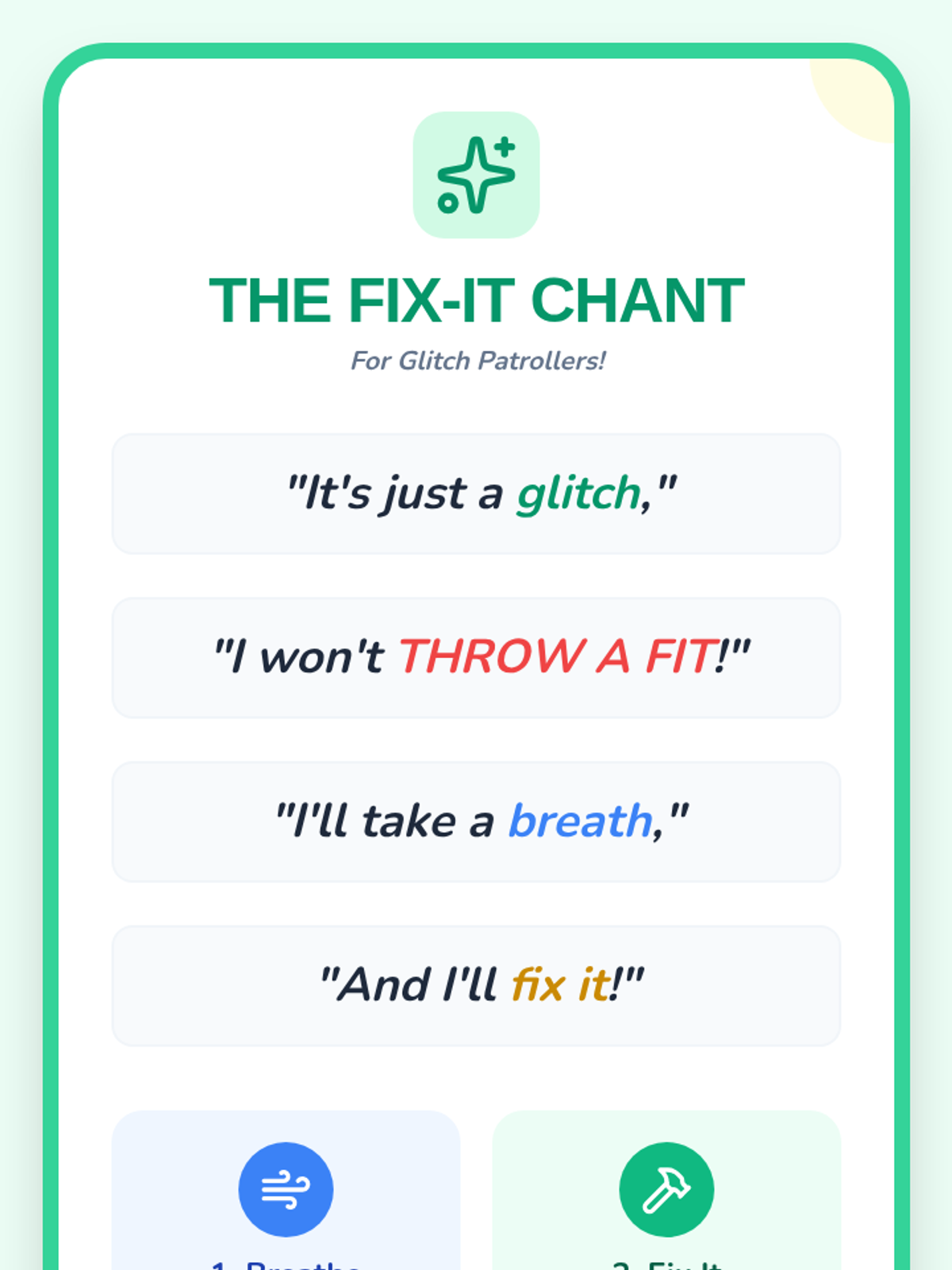
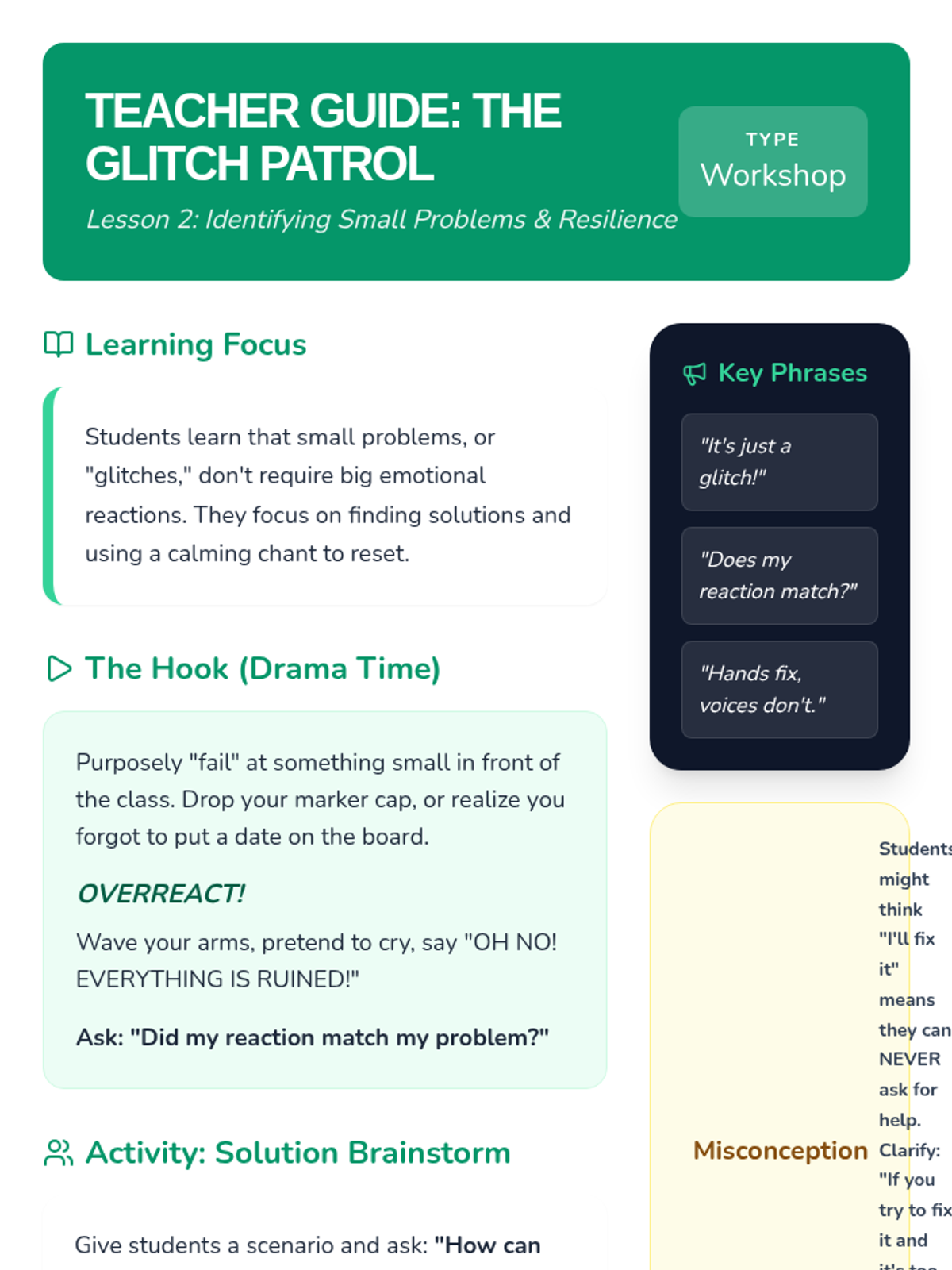
Focusing specifically on small problems, students learn the term 'glitch' for things like broken pencils or spilled water. They practice a 'fix-it' chant and brainstorm simple solutions.
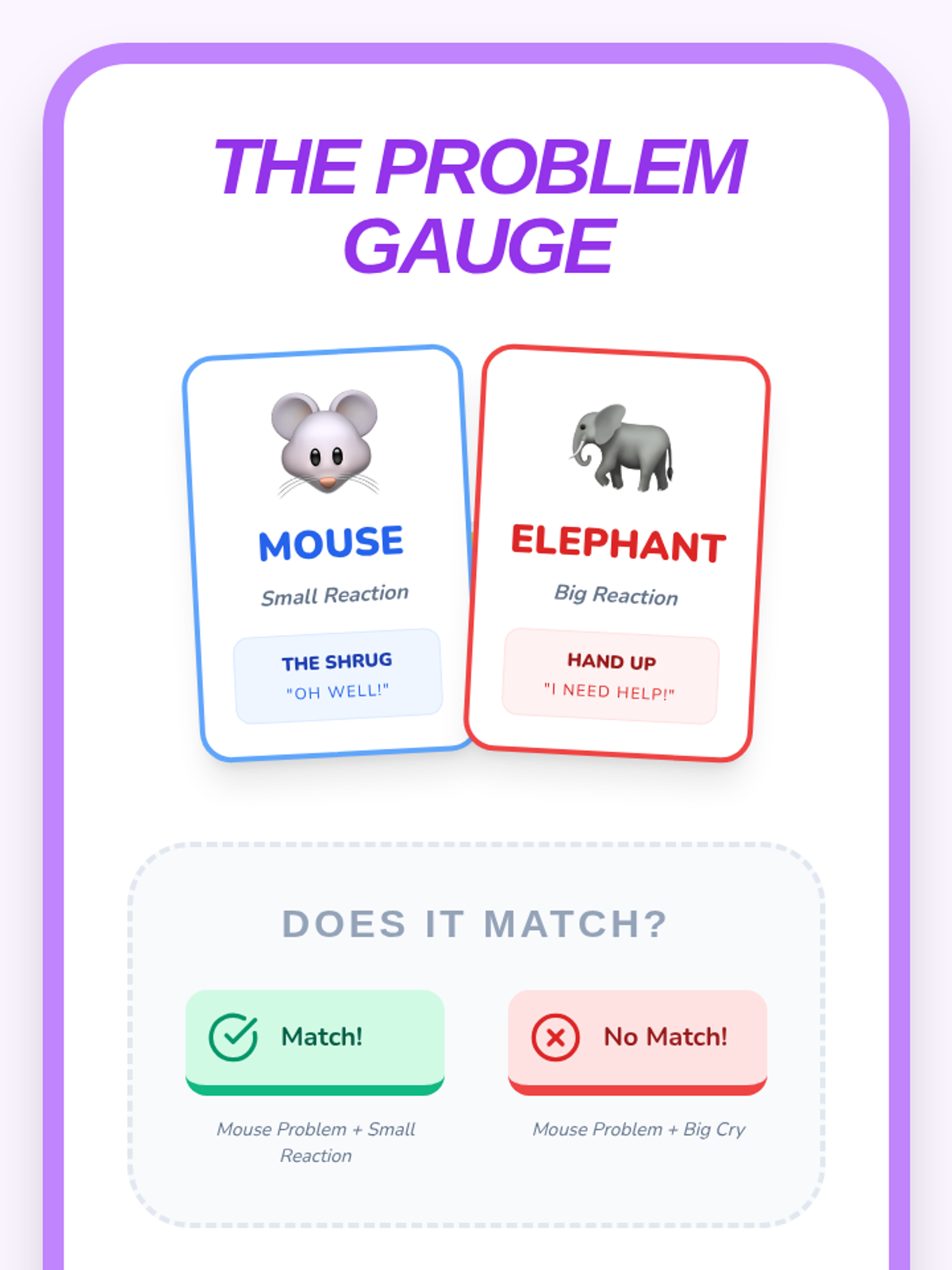
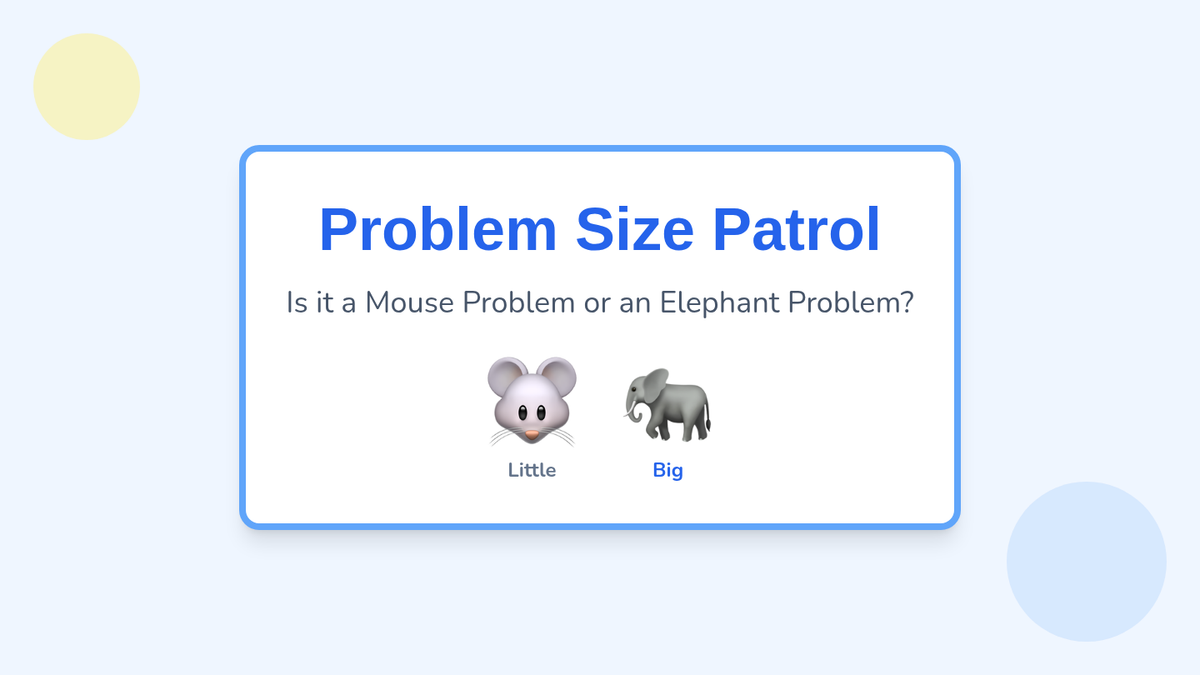
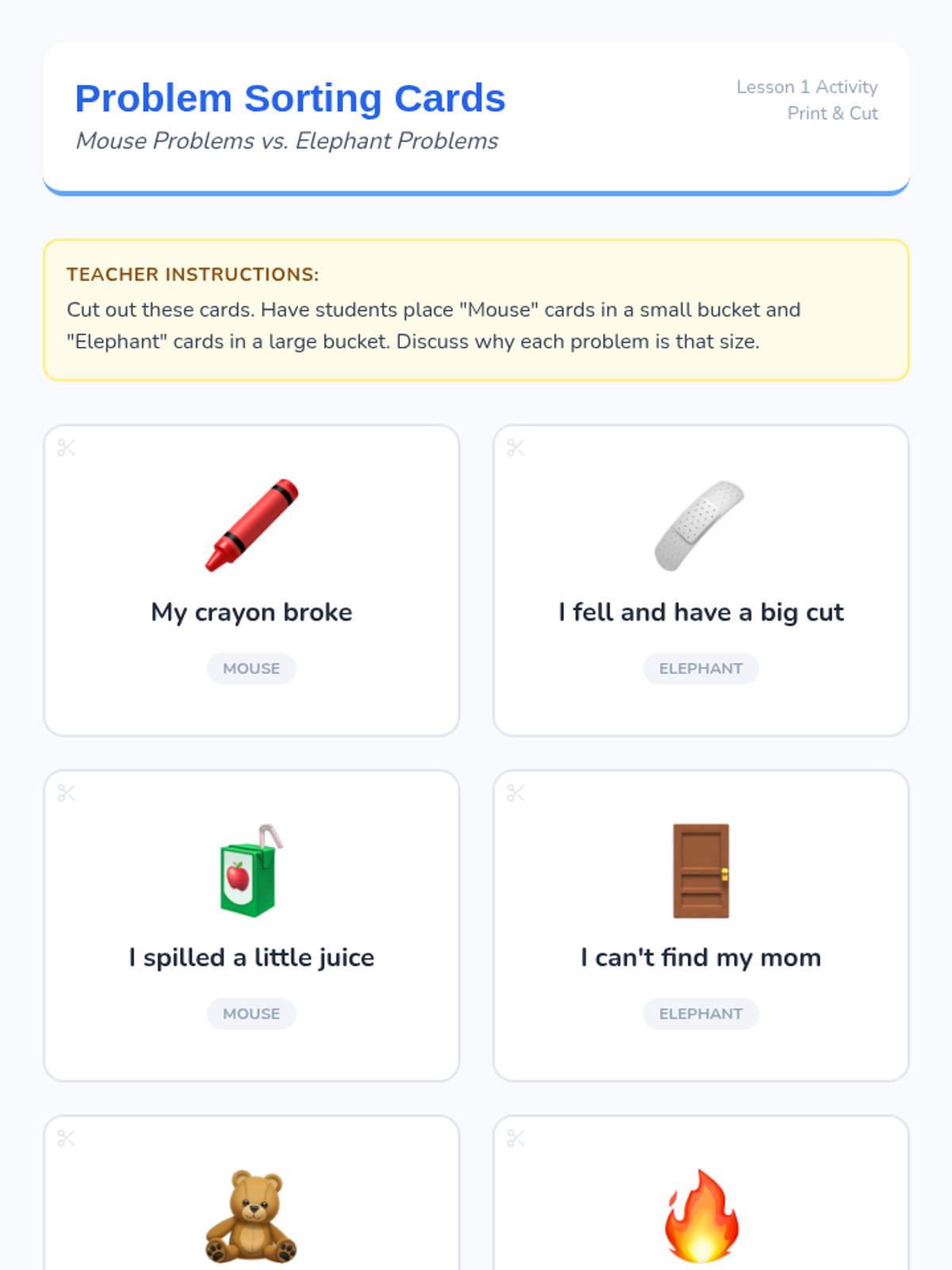
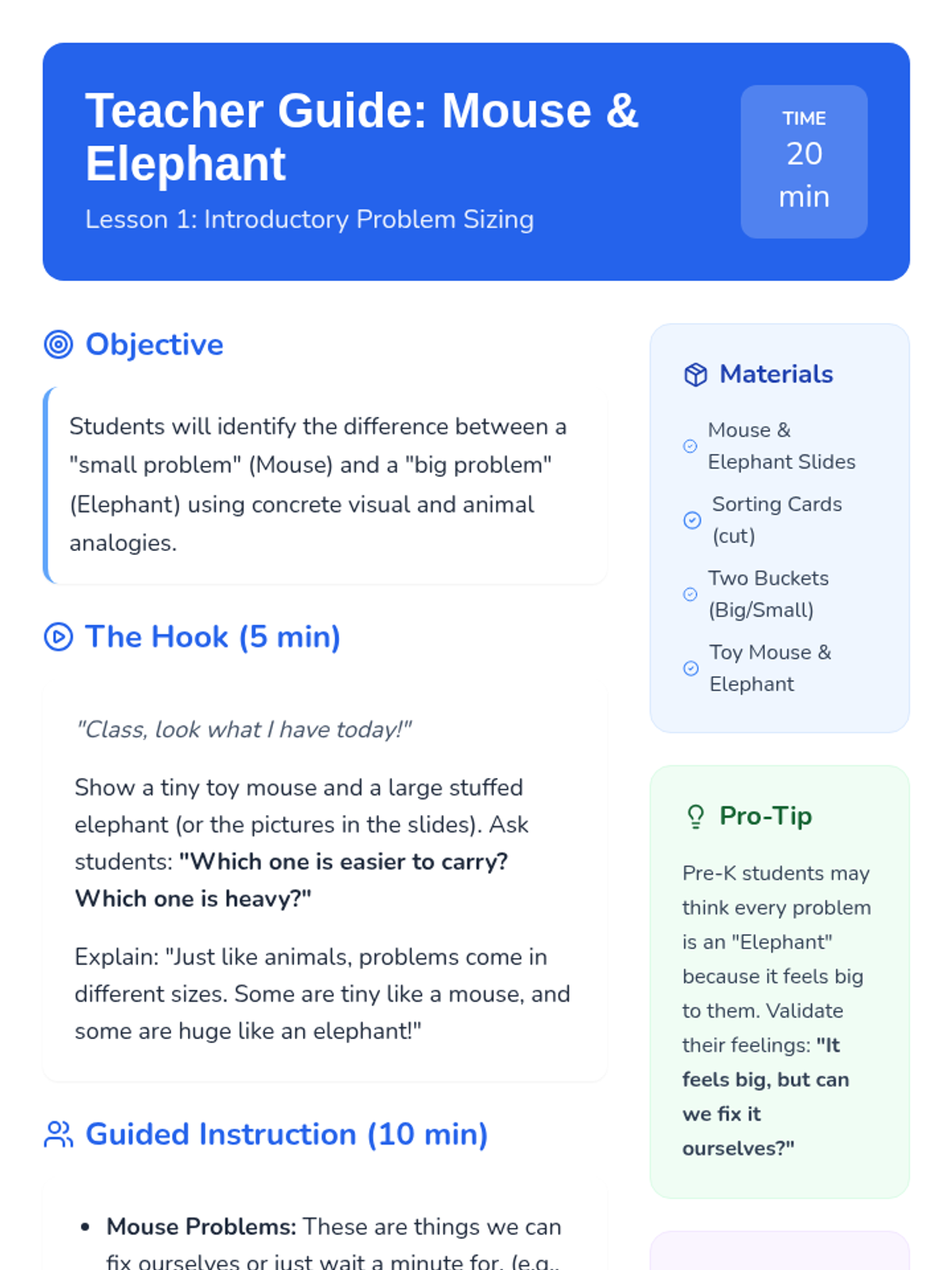
Students are introduced to the concept of problem size using animal sizes as a concrete analogy. They learn that 'Mouse Problems' are small and 'Elephant Problems' are big.
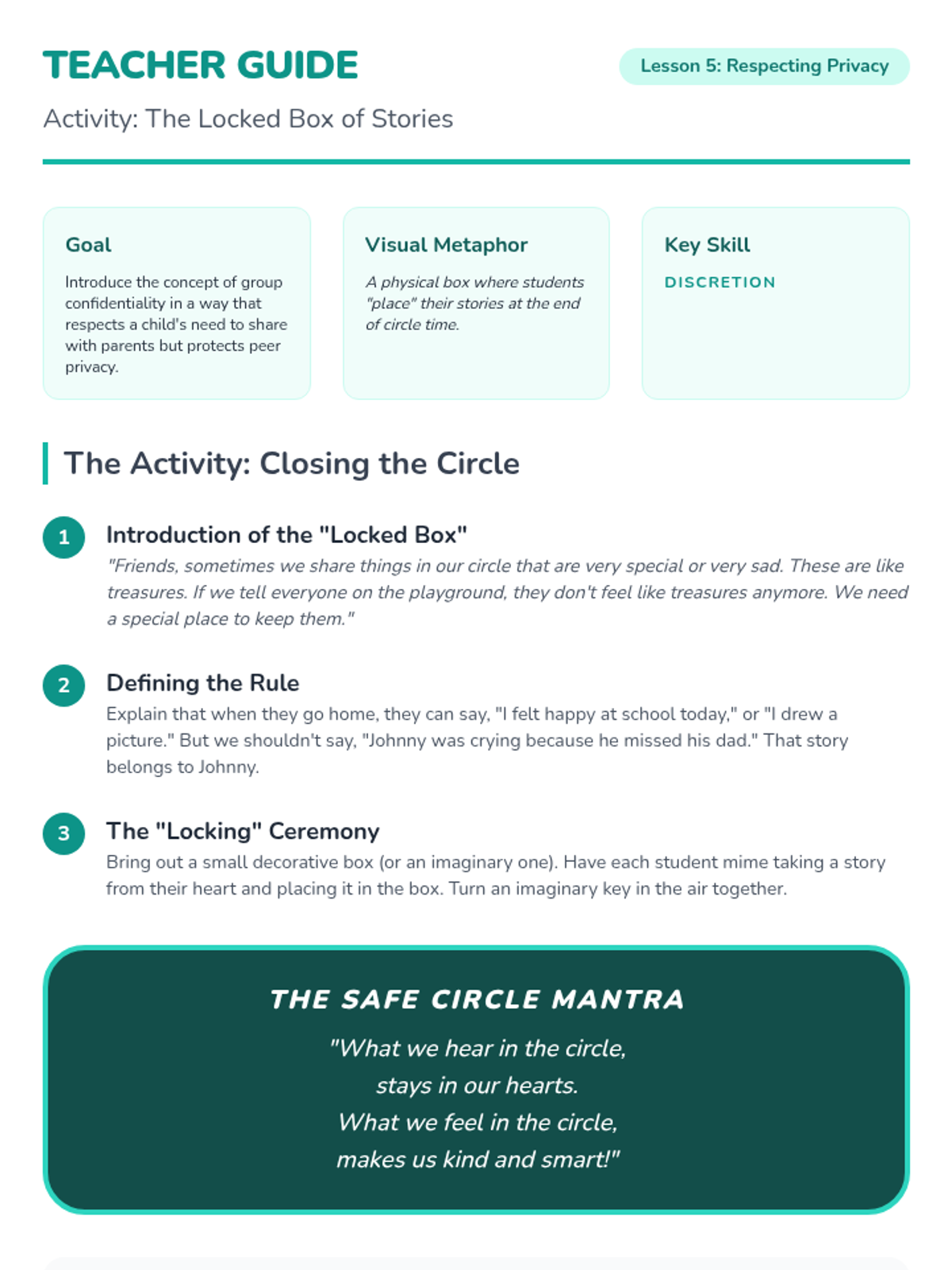
Students learn the value of keeping friends' stories private within their supportive circle, building trust and empathy.
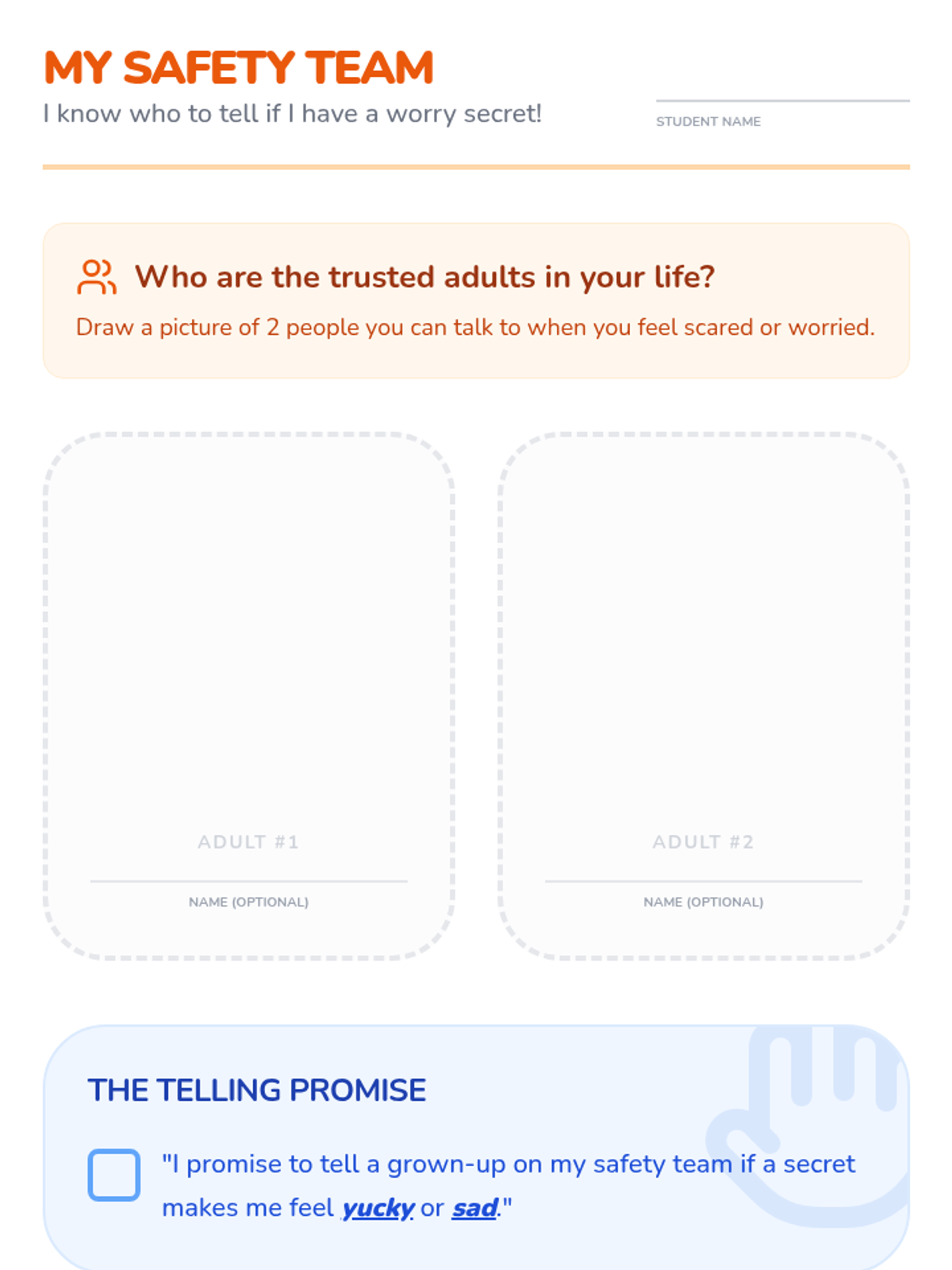
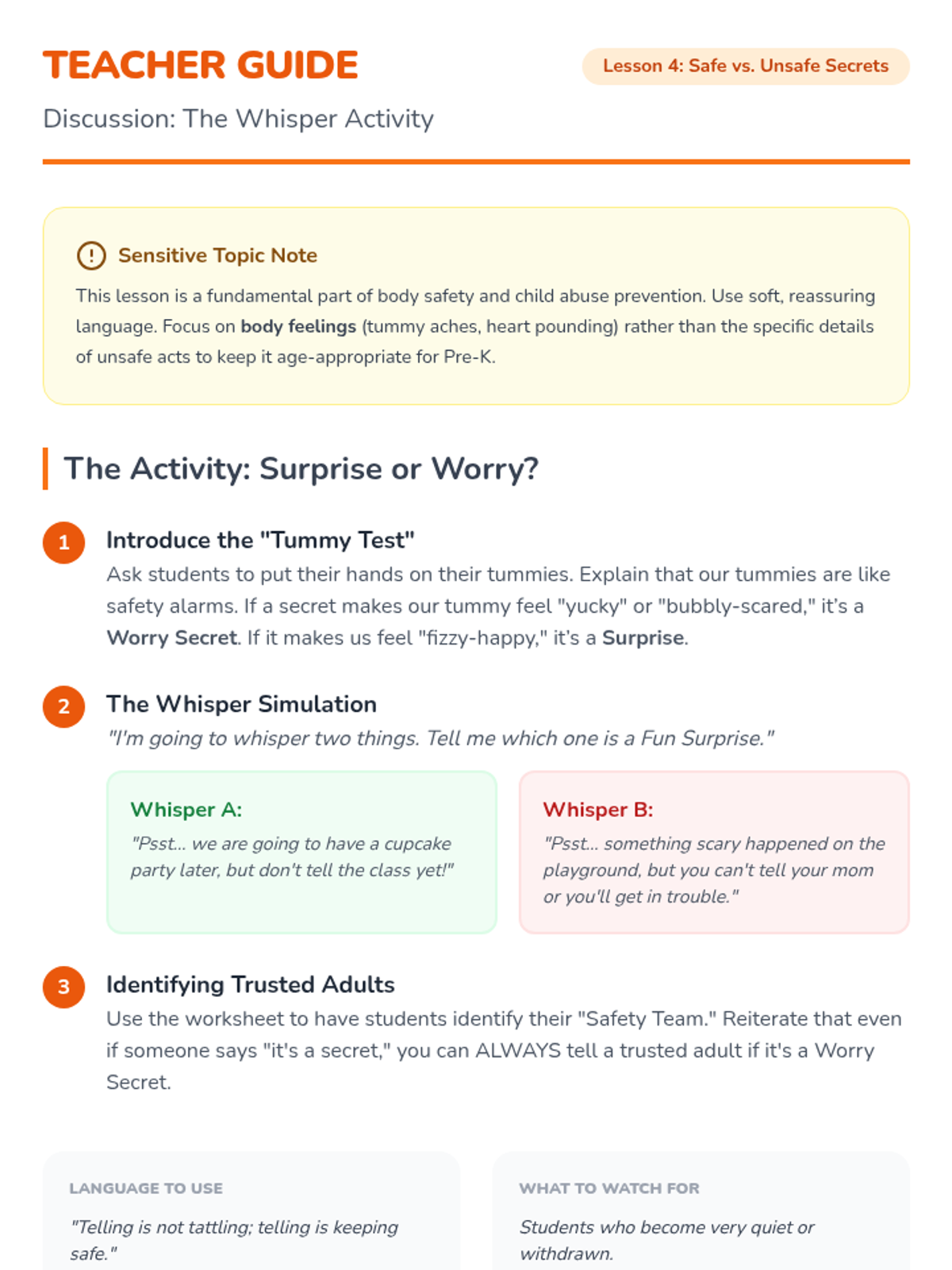
A gentle introduction to distinguishing between 'fun surprises' and 'worry secrets,' identifying trusted adults to talk to when something feels wrong.
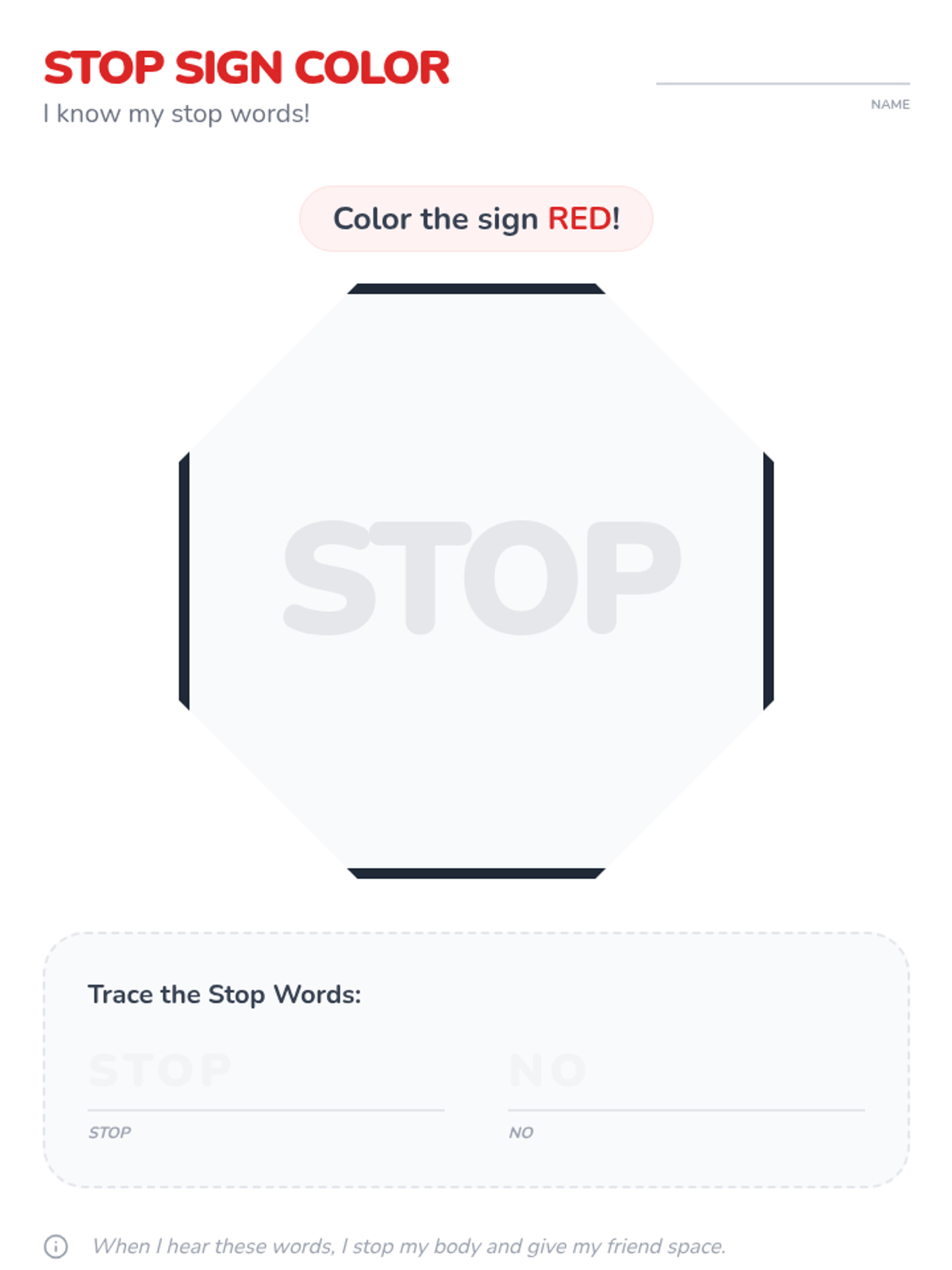
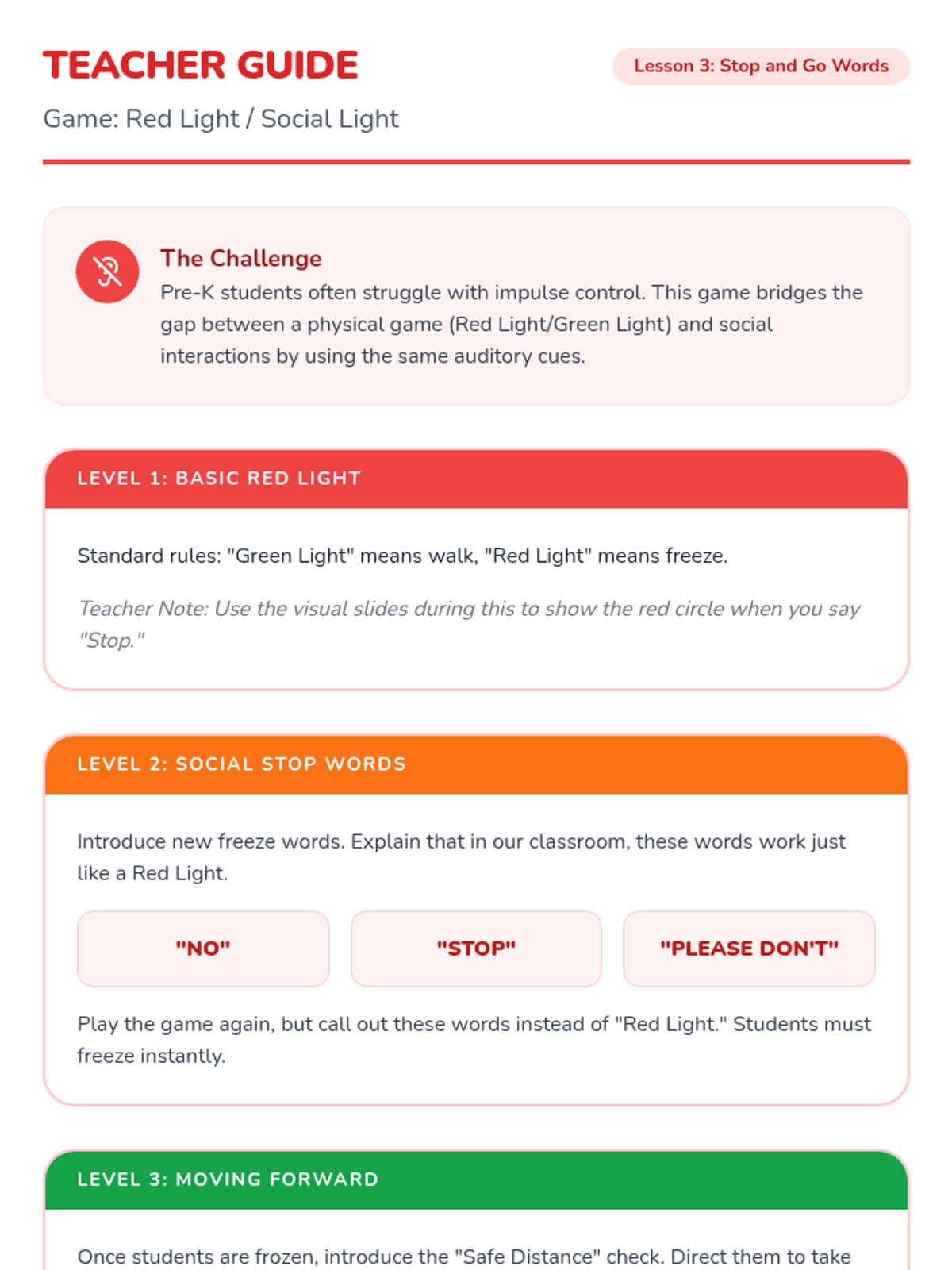
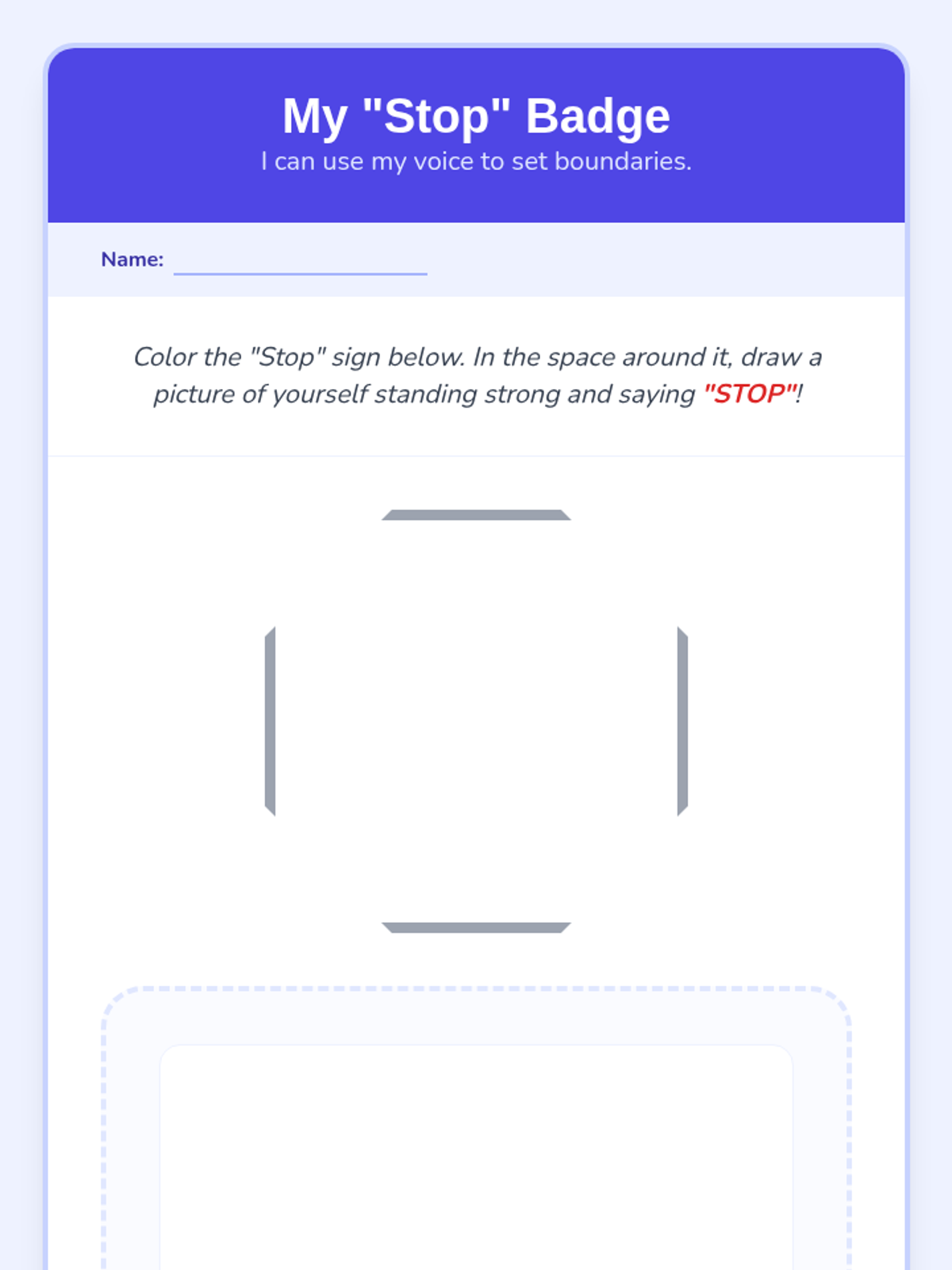
Students identify and practice 'stop' words, reinforcing the rule that when a friend says 'no' or 'stop,' we listen and give them space immediately.
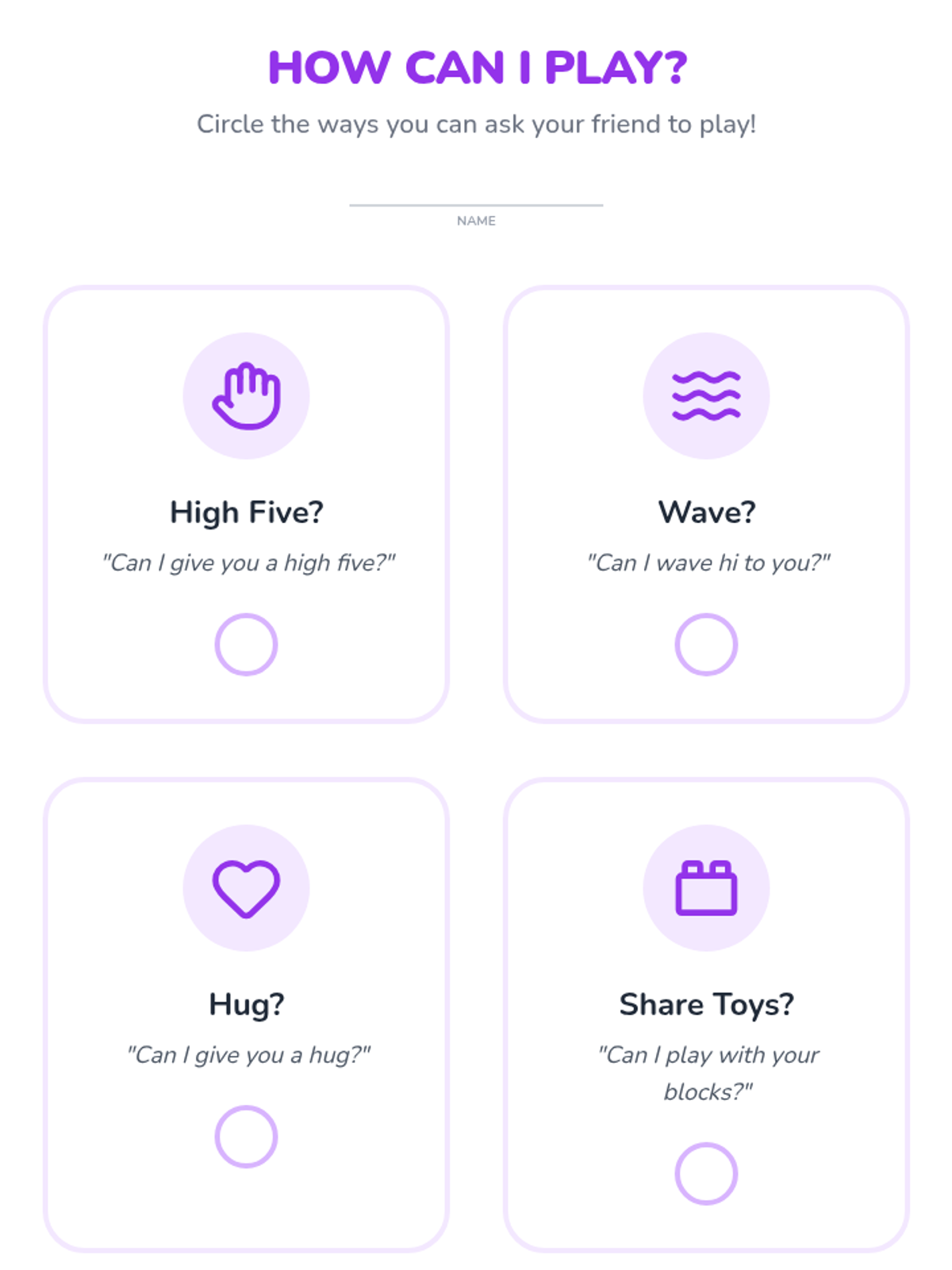
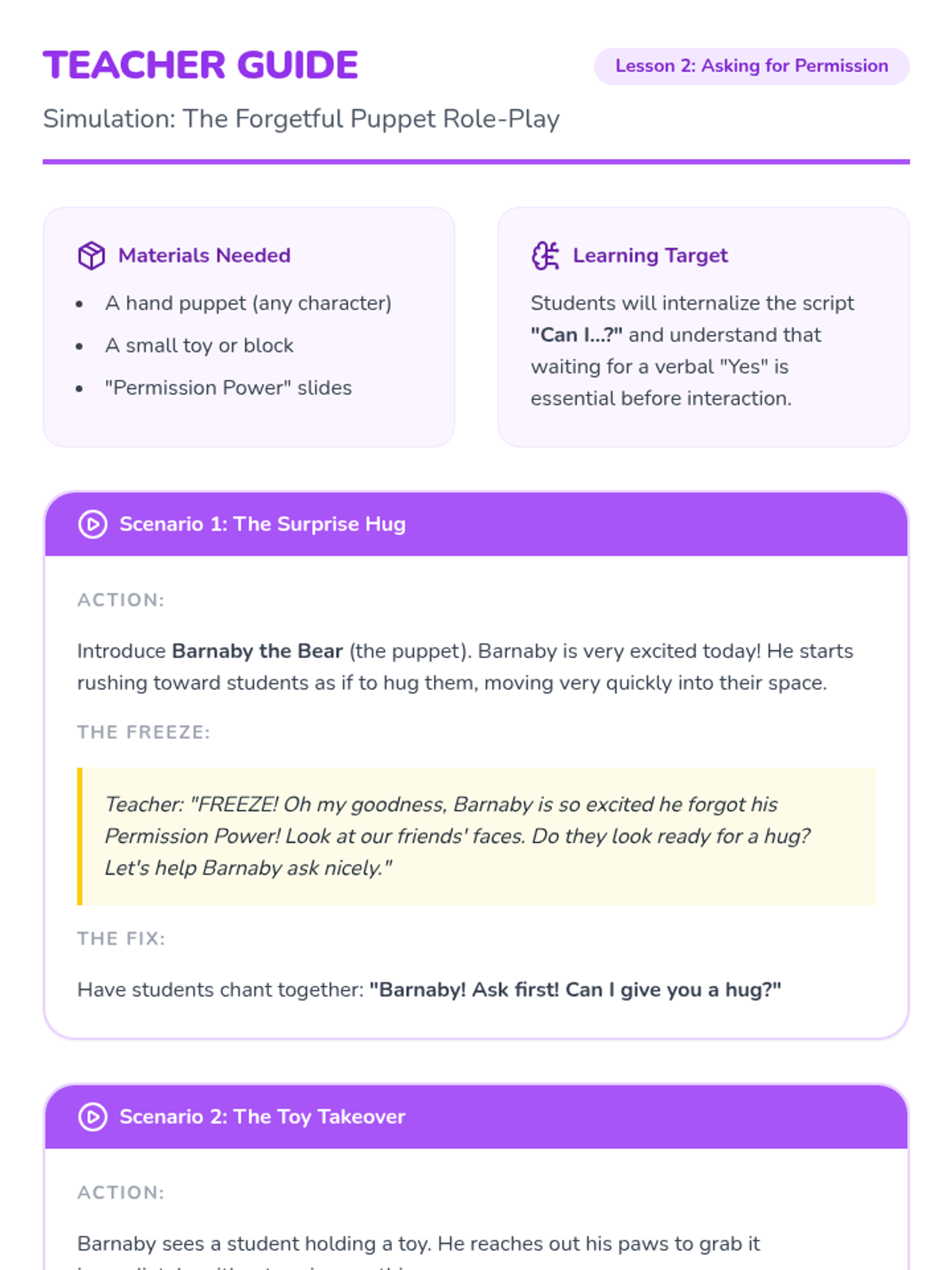
Students learn to ask for permission before entering someone's space or touching them, practicing simple verbal scripts and waiting for responses.
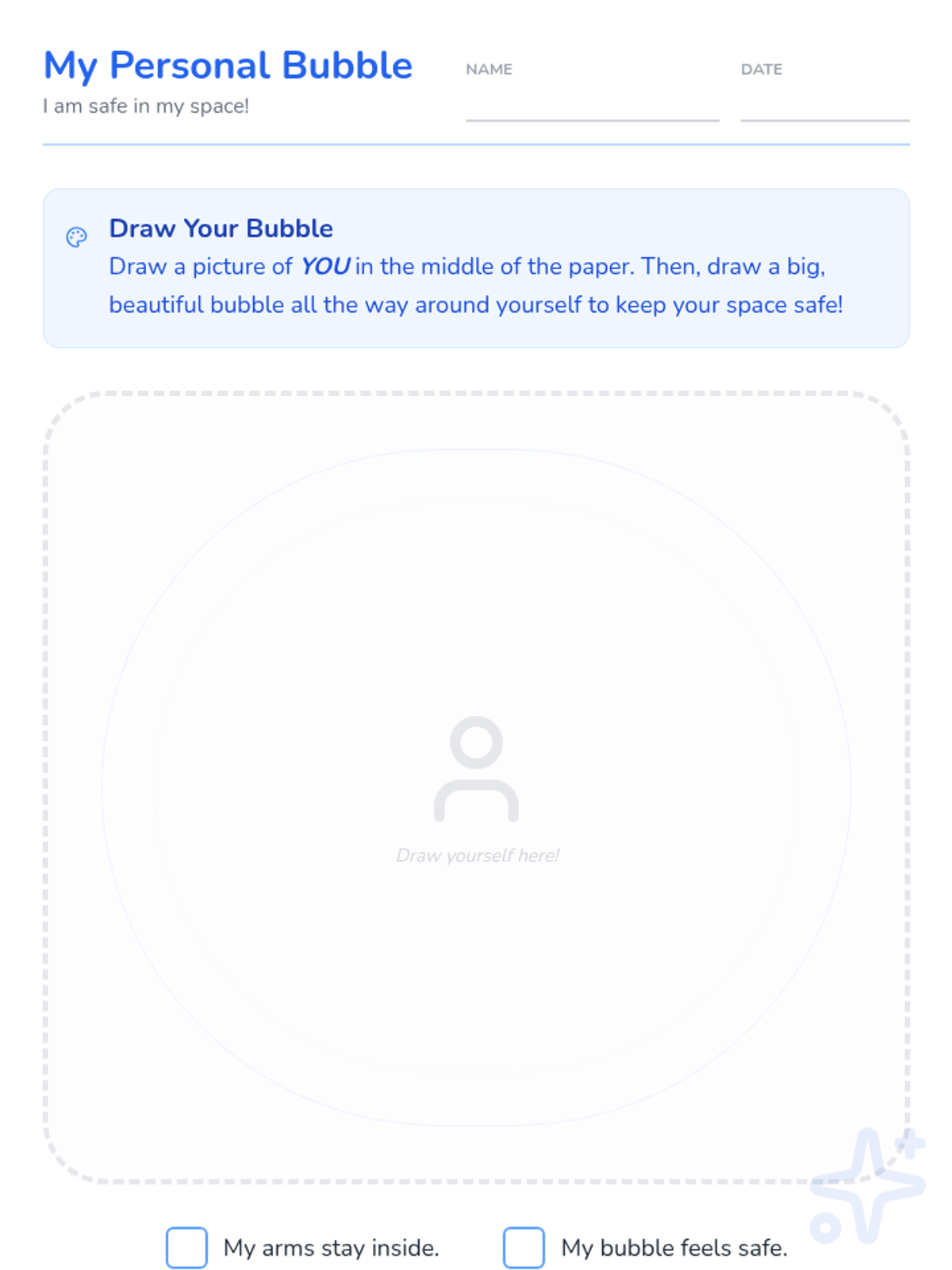
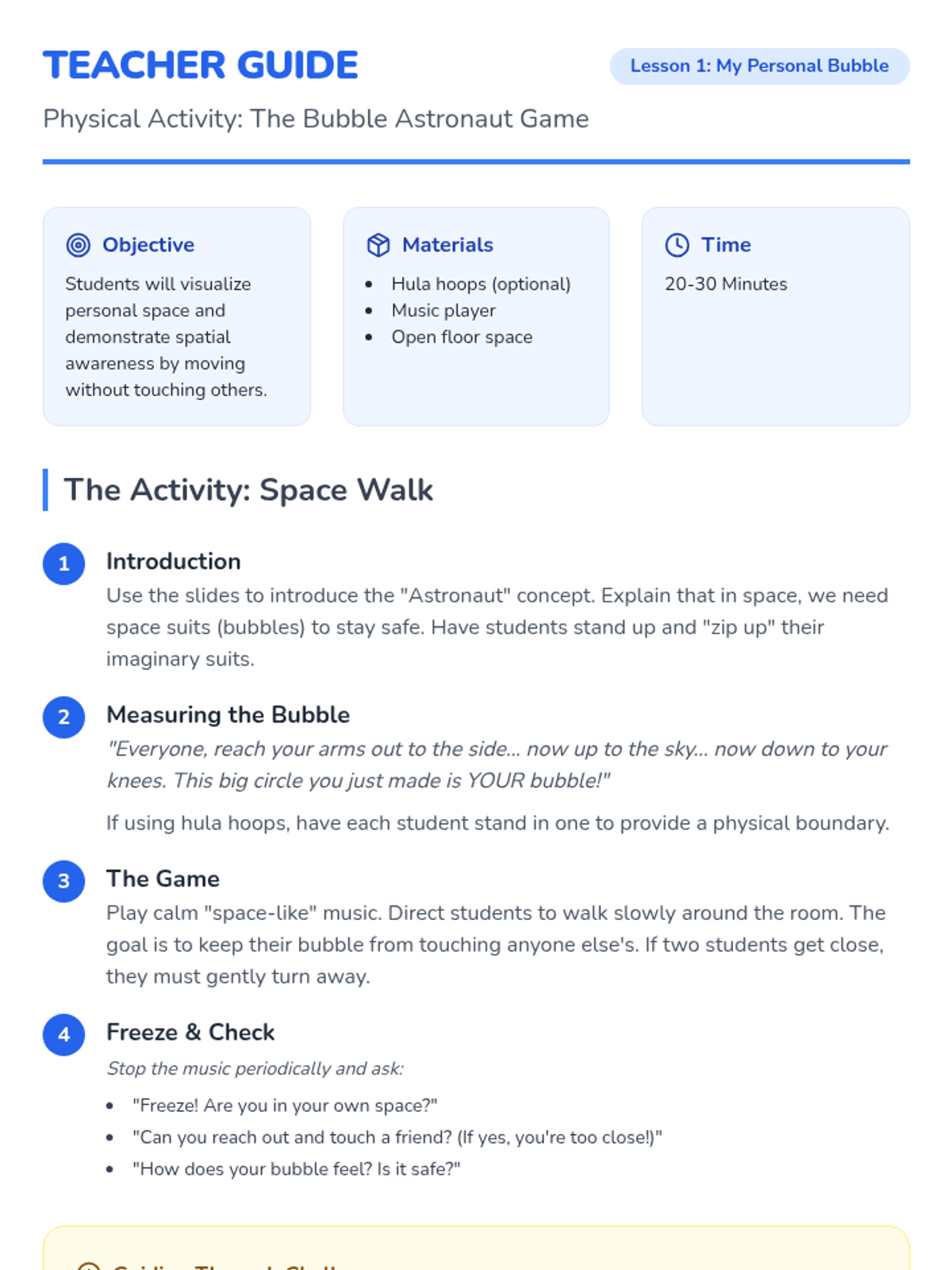
Students use hula hoops or outstretched arms to visualize their personal space bubble and practice moving without popping others' bubbles.
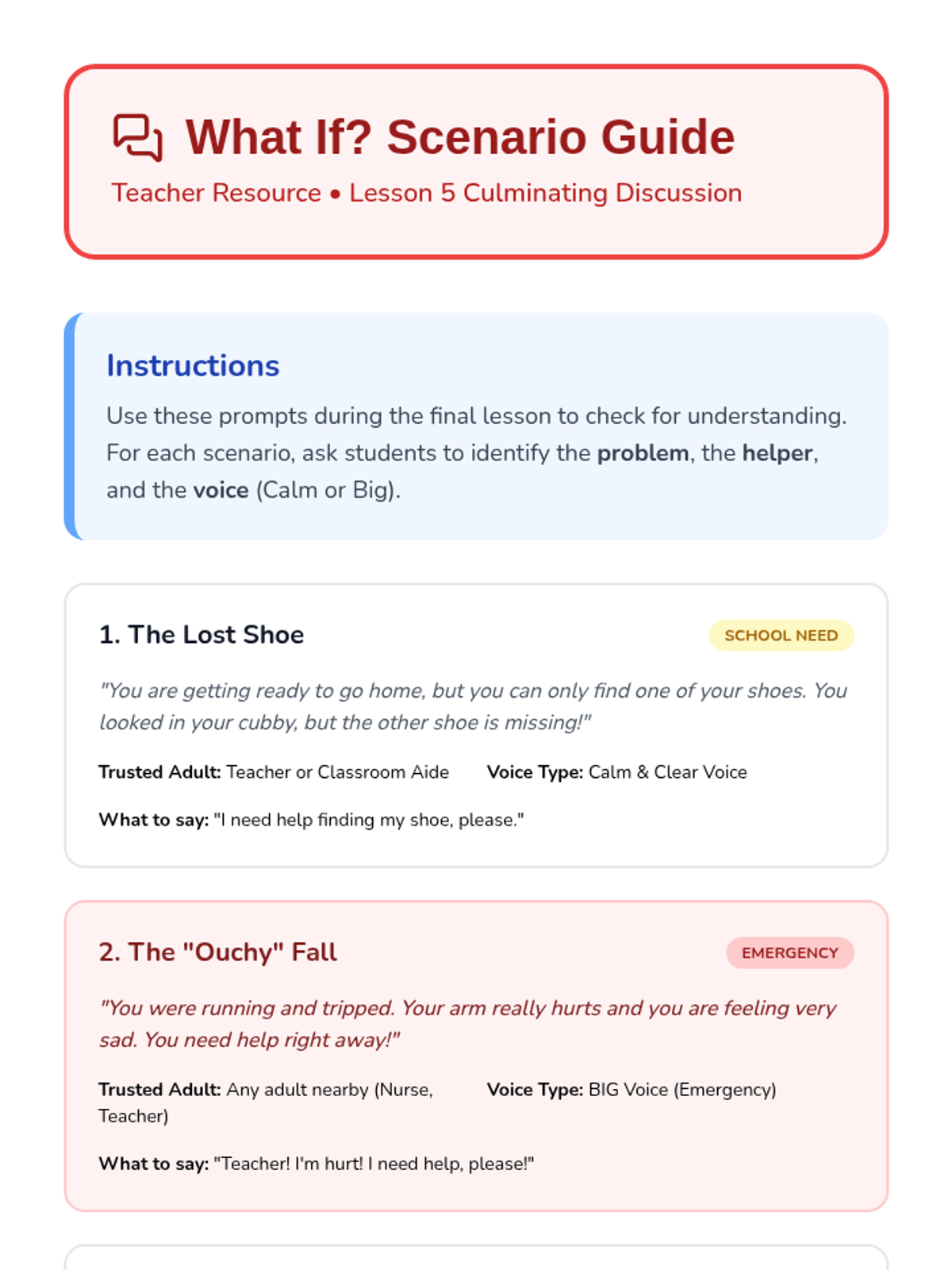
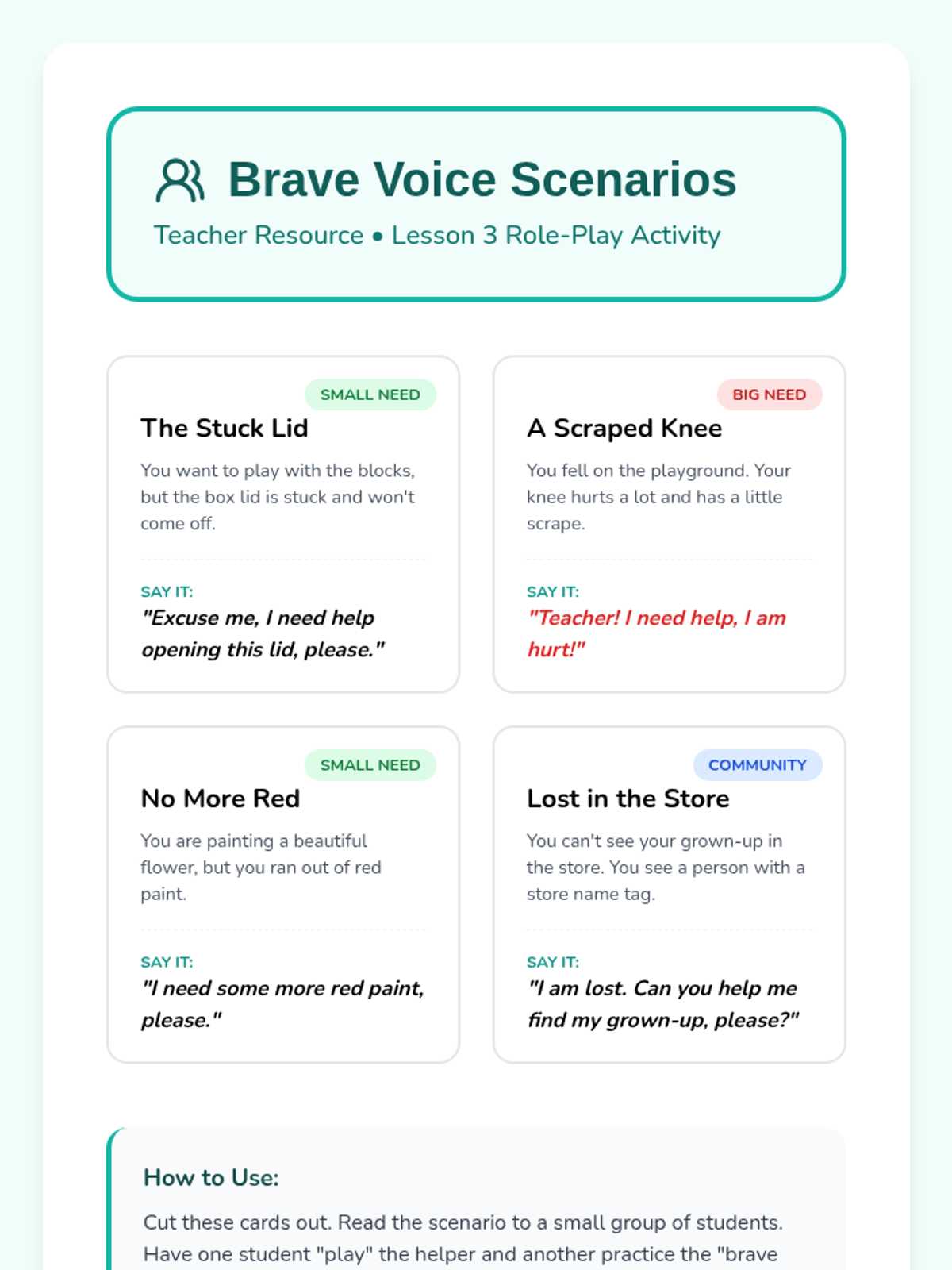
In a culminating session, students apply their skills to 'What If?' scenarios, deciding which voice and which helper to use in various situations.
Students explore personal space and autonomy through the 'Bubble Walk' game and learn firm phrases like 'Stop, I don't like that' to set boundaries.
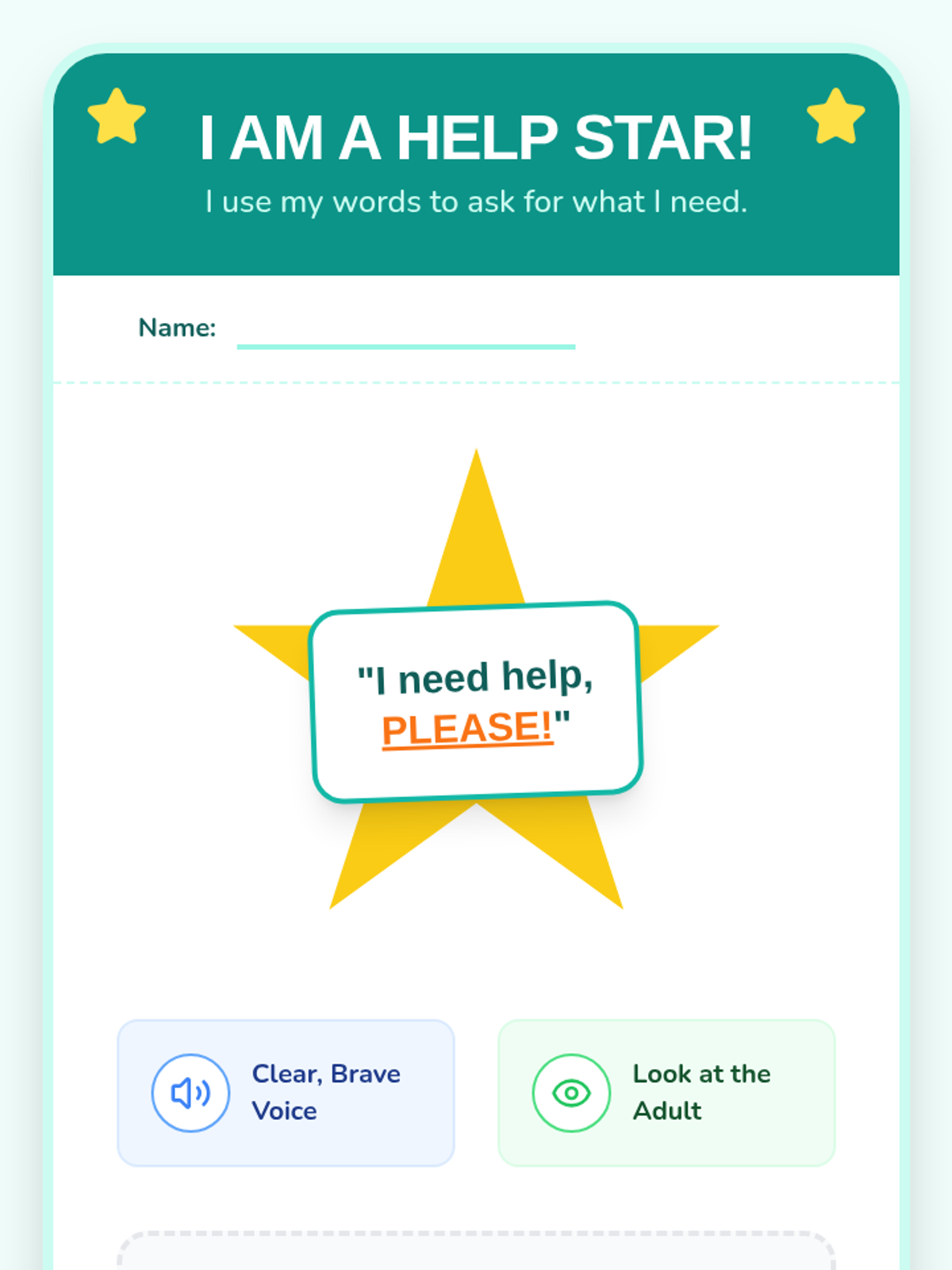
Focusing on verbal scripts and appropriate attention-getting, students practice the phrase 'I need help, please' and distinguish between urgent and non-urgent needs.
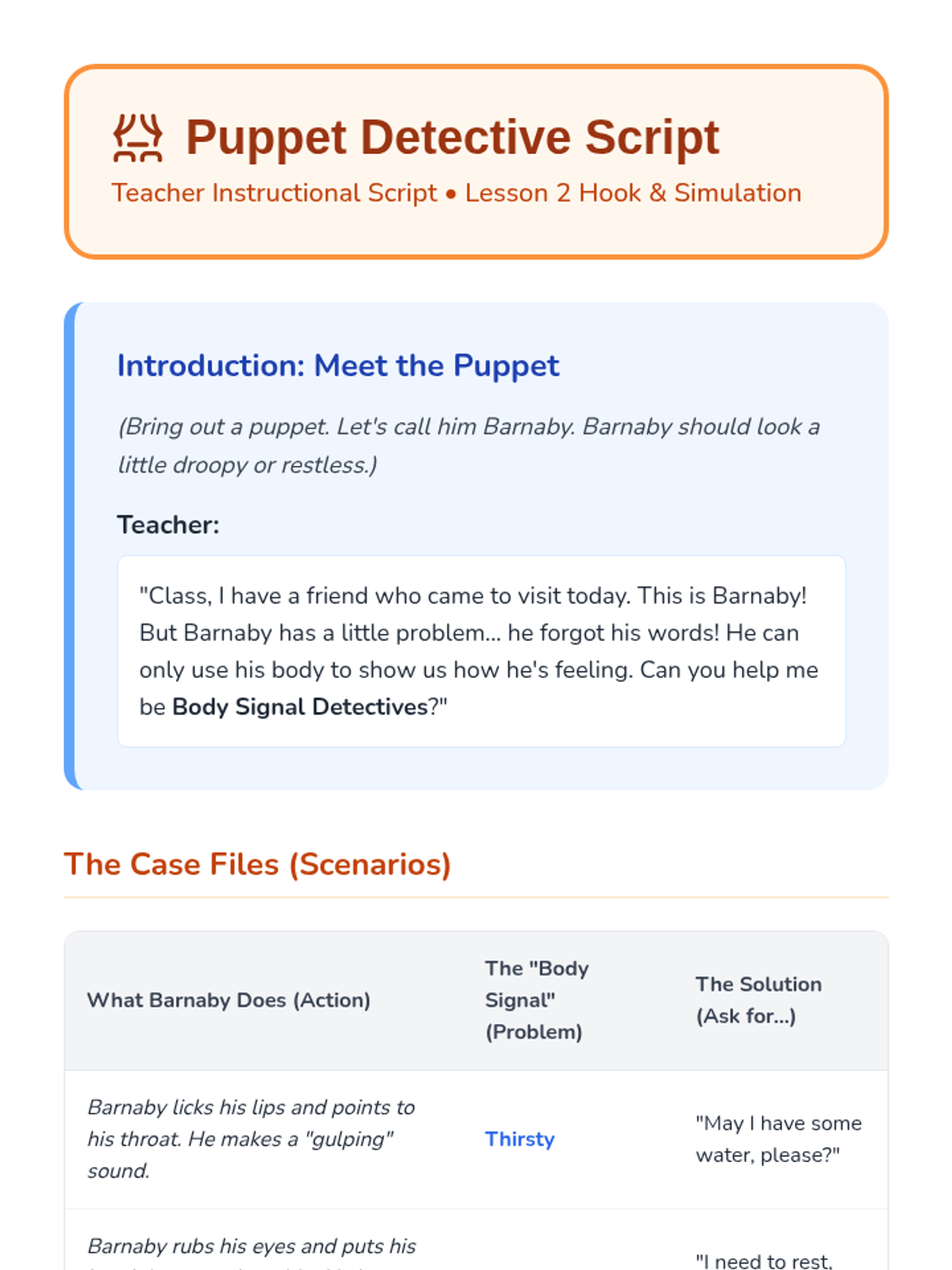
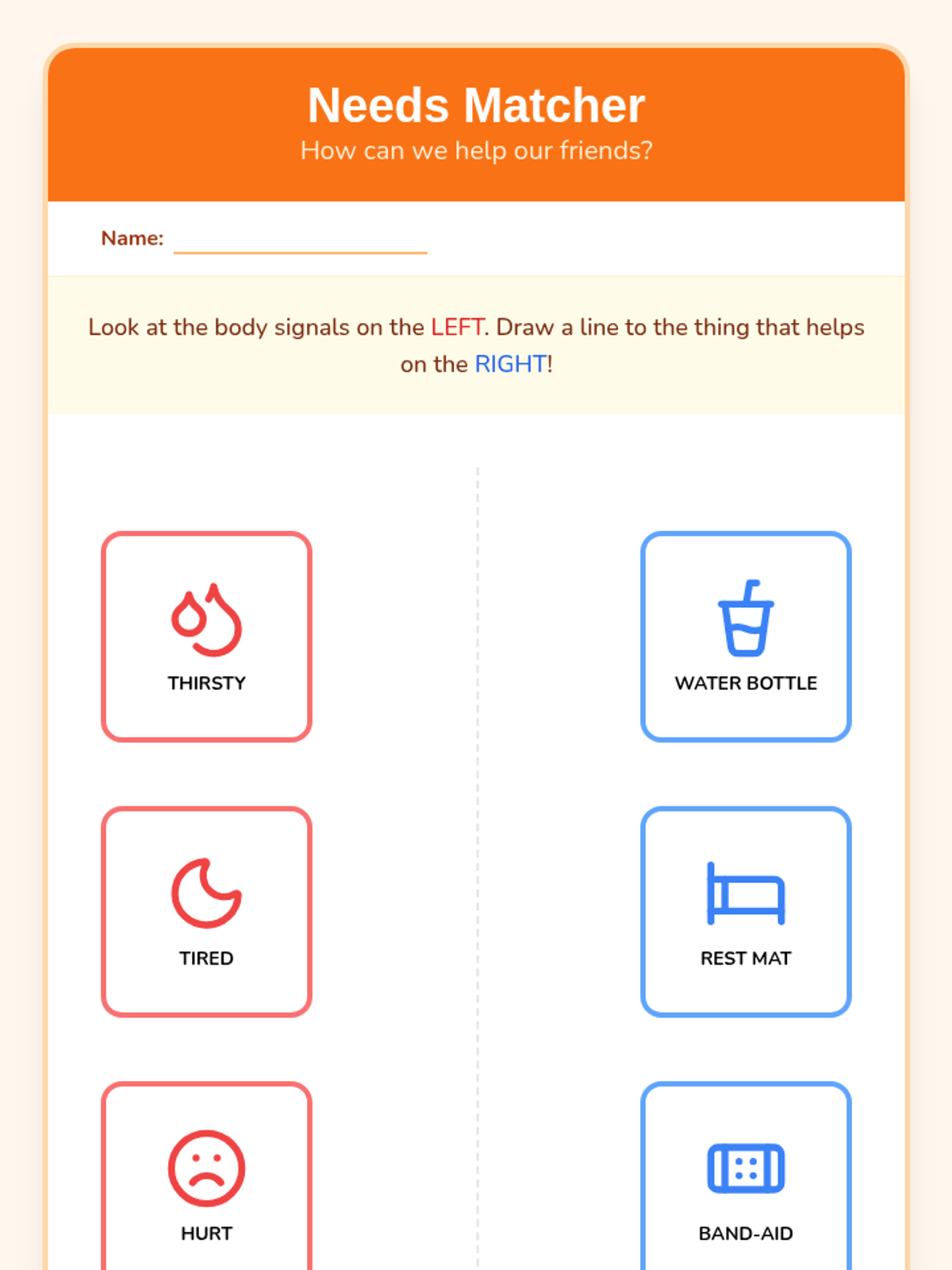
Children learn to connect body sensations with vocabulary like 'thirsty' or 'tired' through a puppet detective game and visual matching activities.
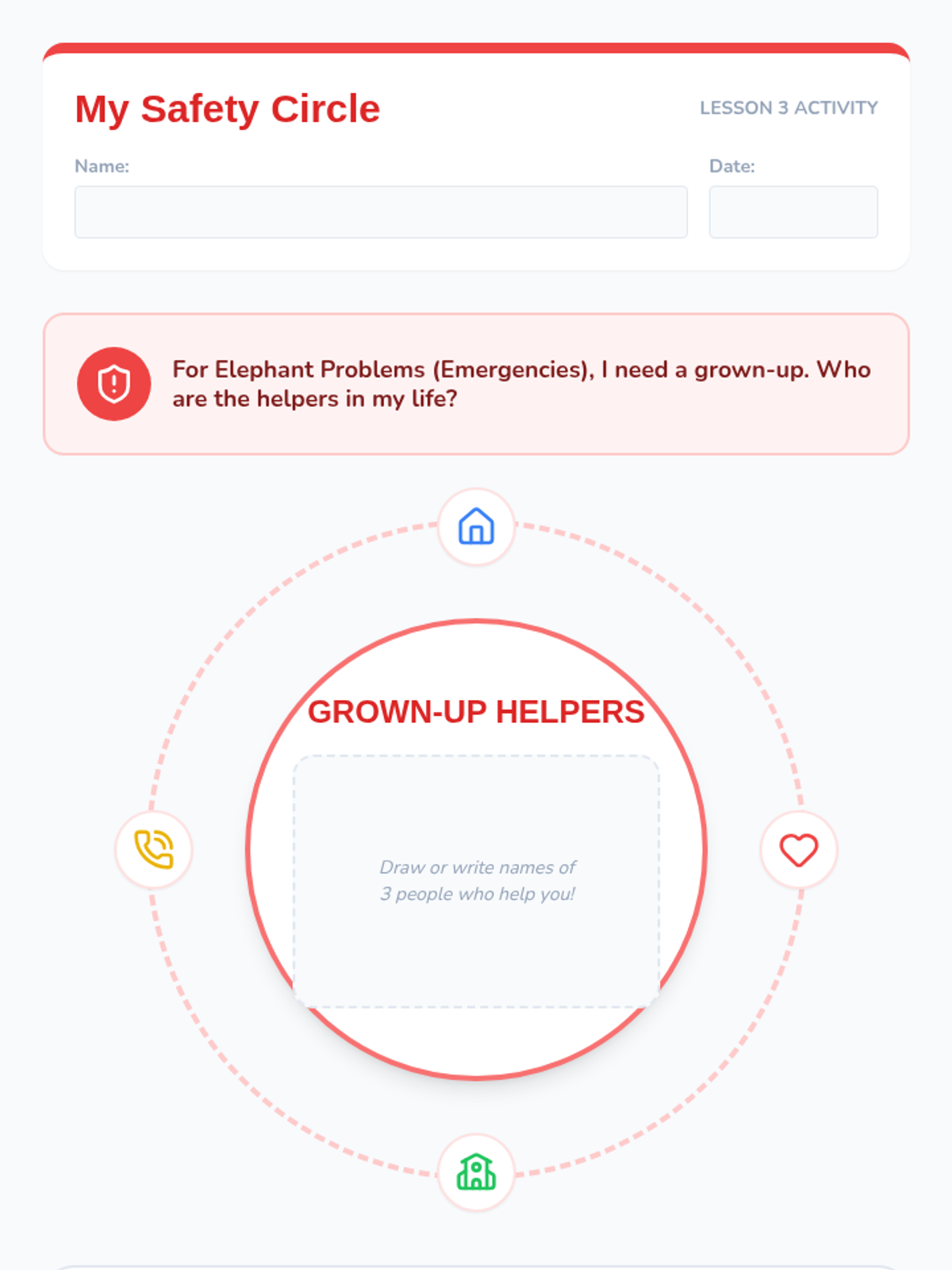
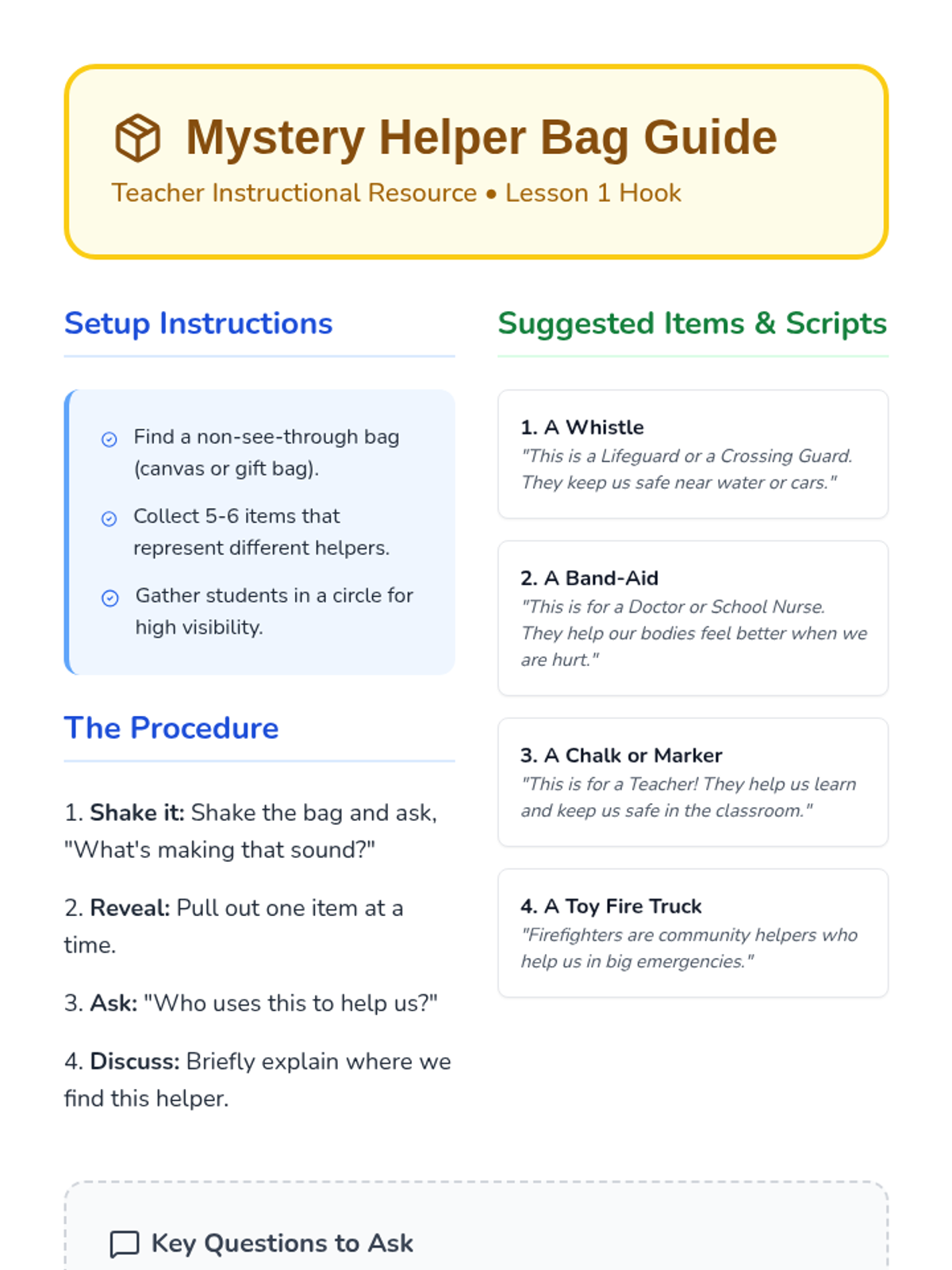
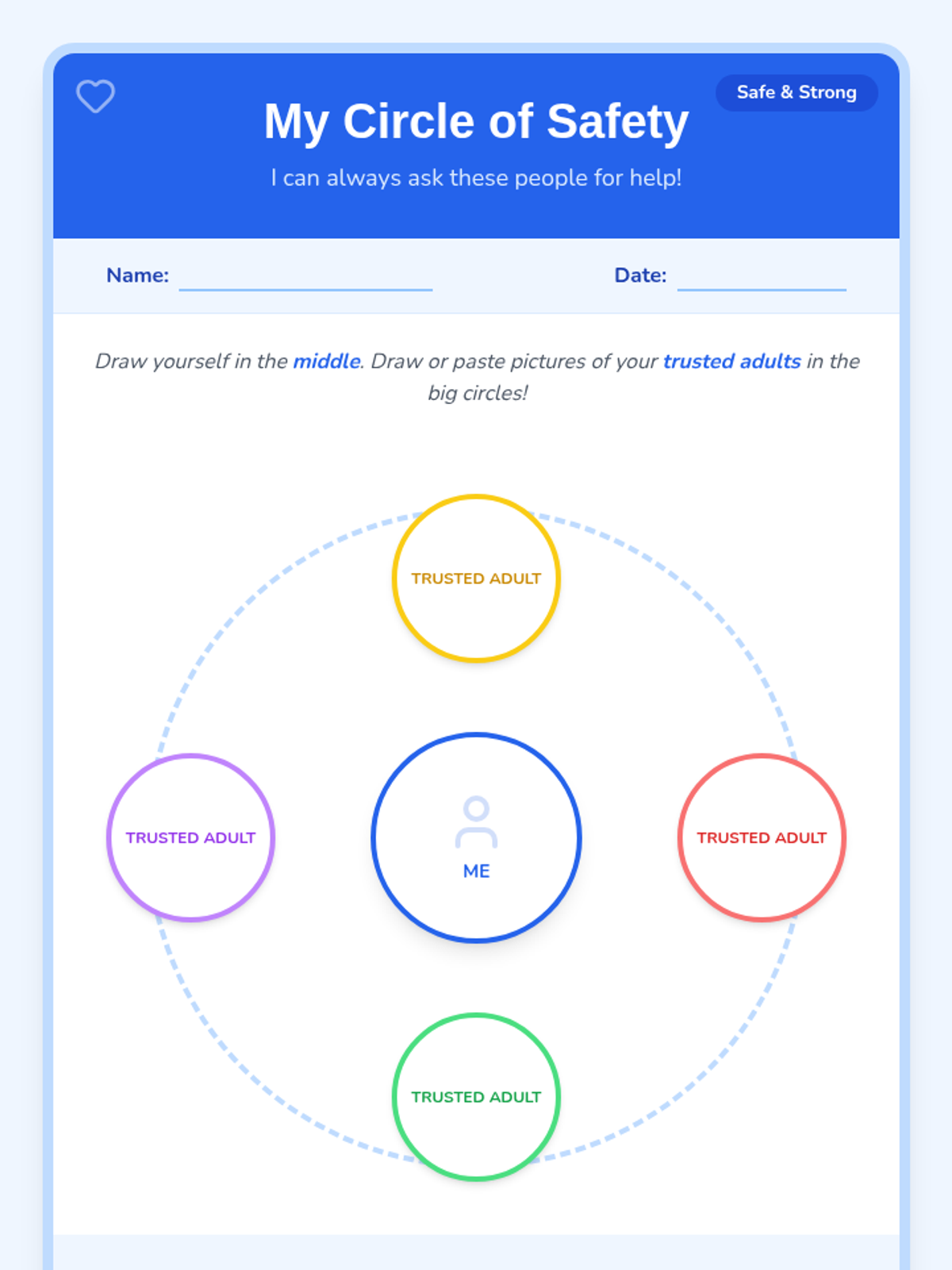
Students identify safe adults at school and home using a 'Mystery Helper' hook and create a visual 'Circle of Support' to establish a network of help-seekers.
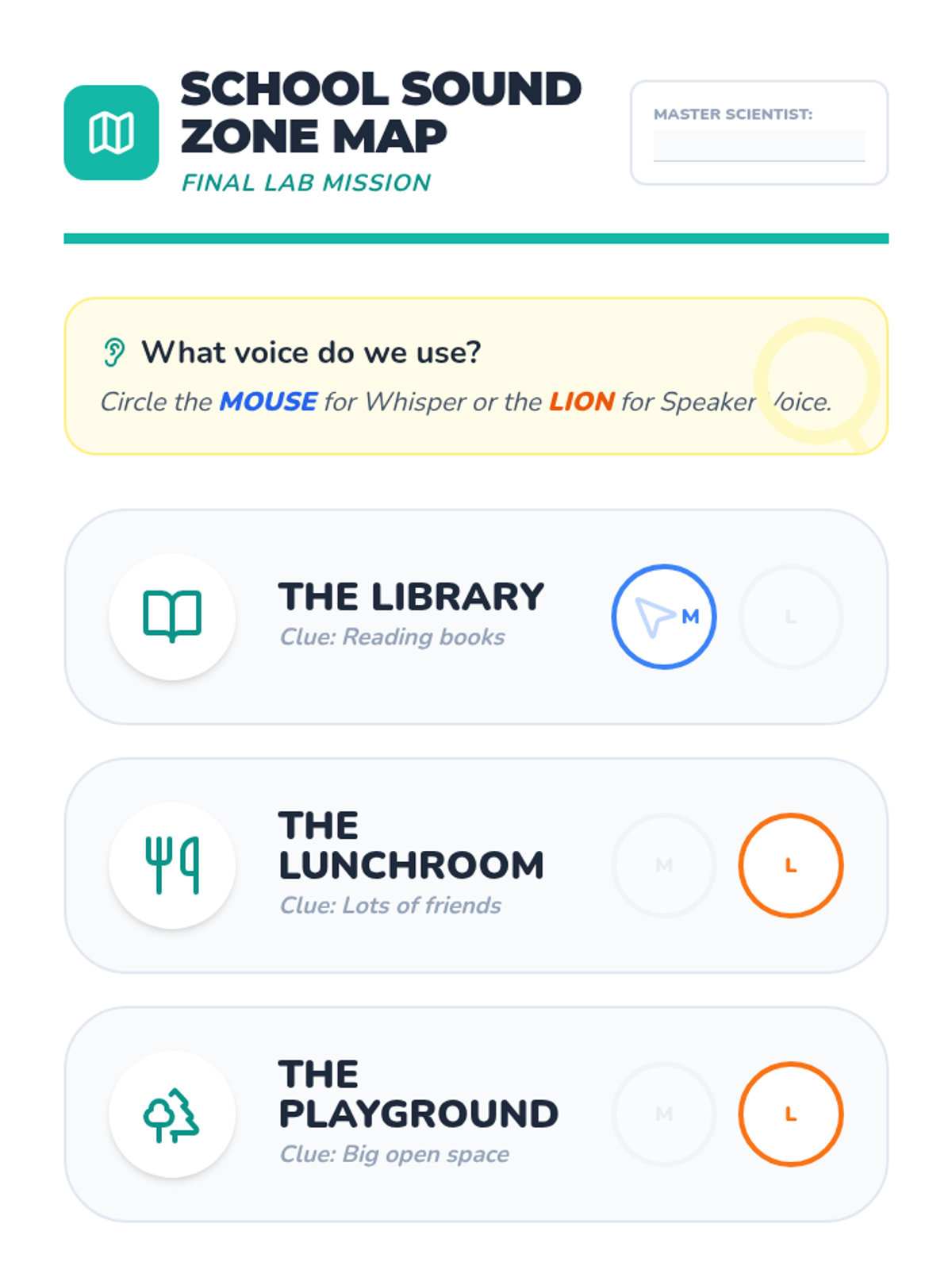
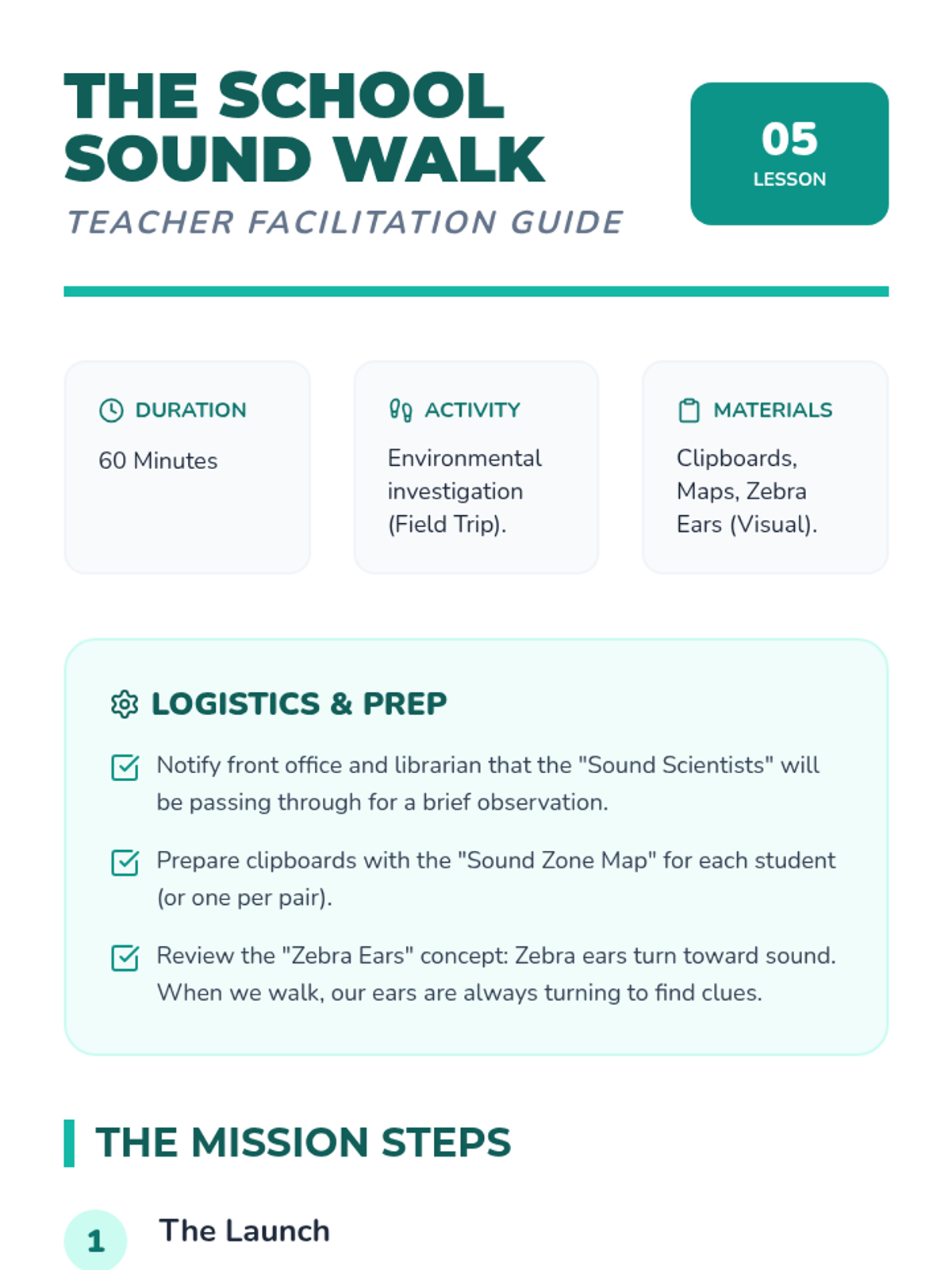
The class applies their knowledge during a school tour, mapping out different 'Sound Zones' and agreeing on appropriate volumes for shared spaces.
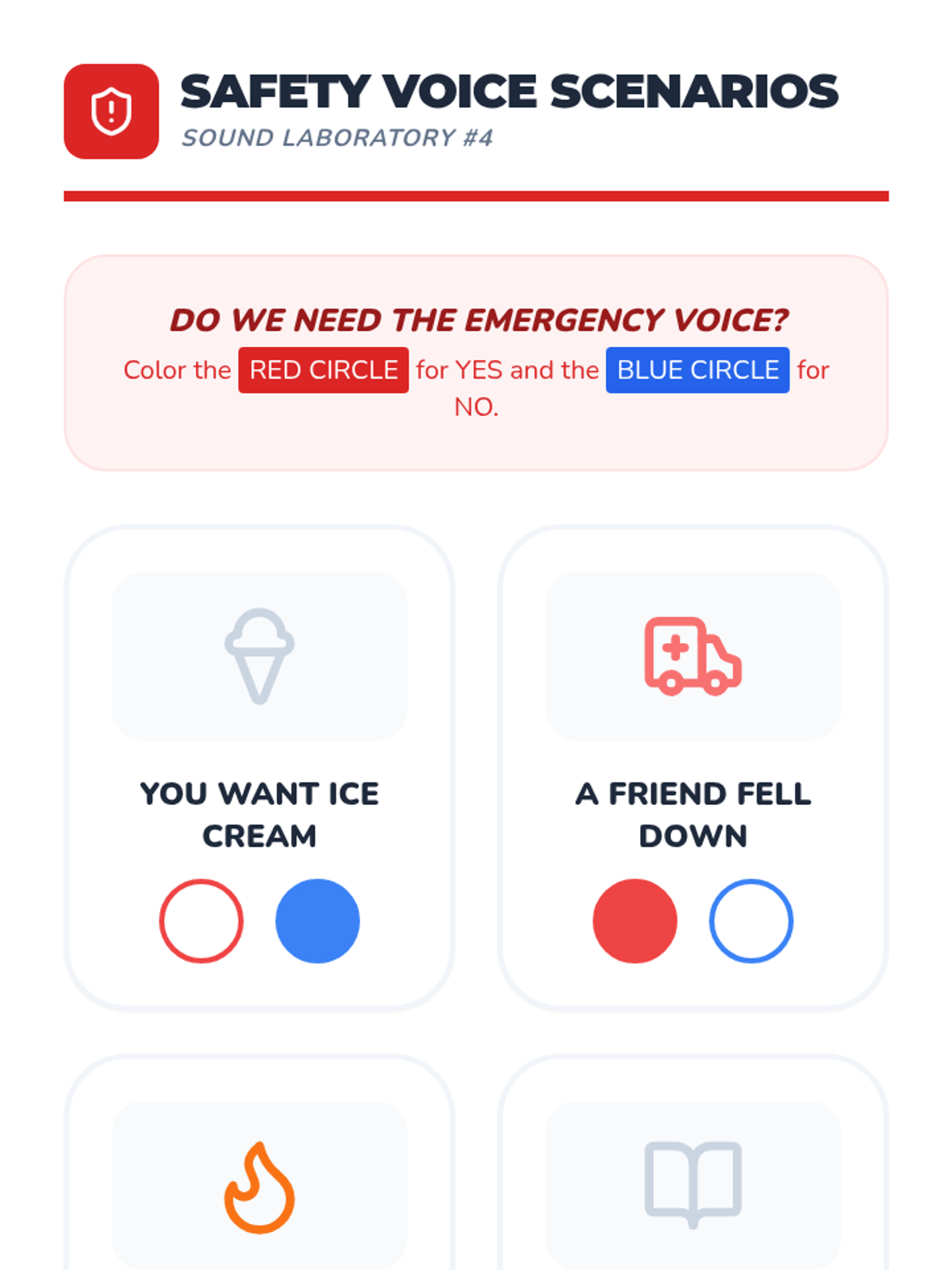
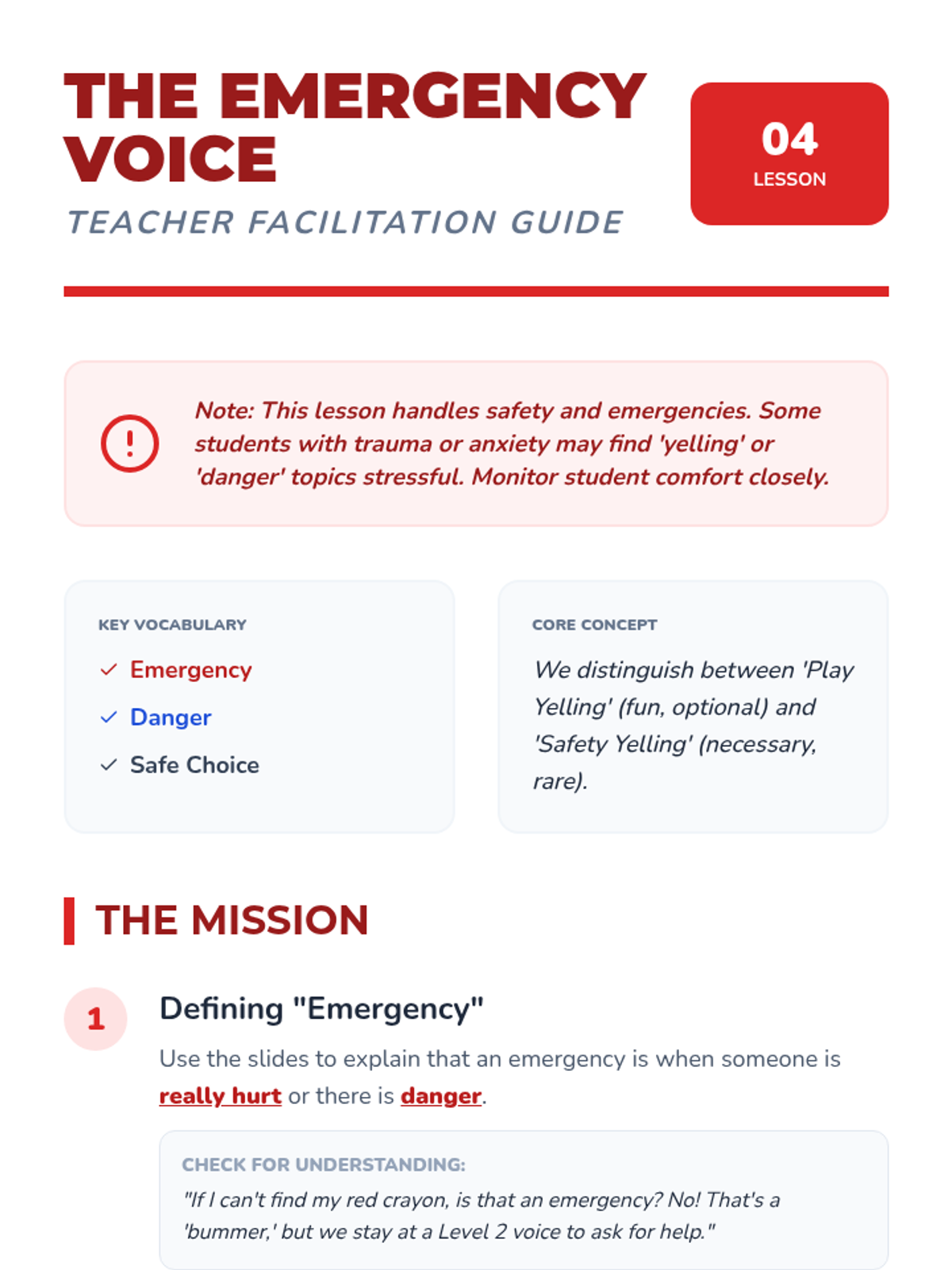
Students differentiate between 'play yelling' and 'safety yelling,' learning the specific contexts where a high volume is necessary for help.
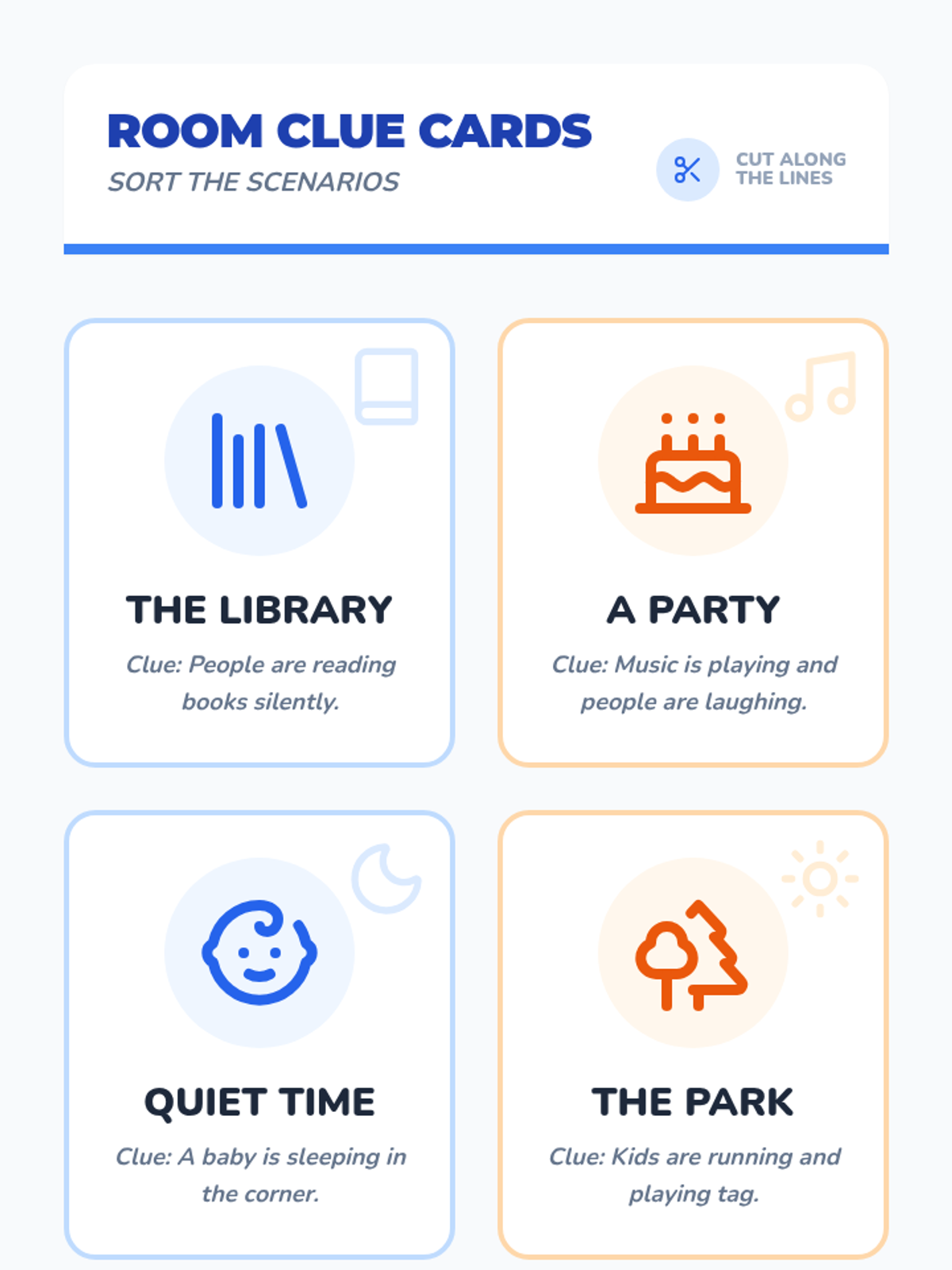
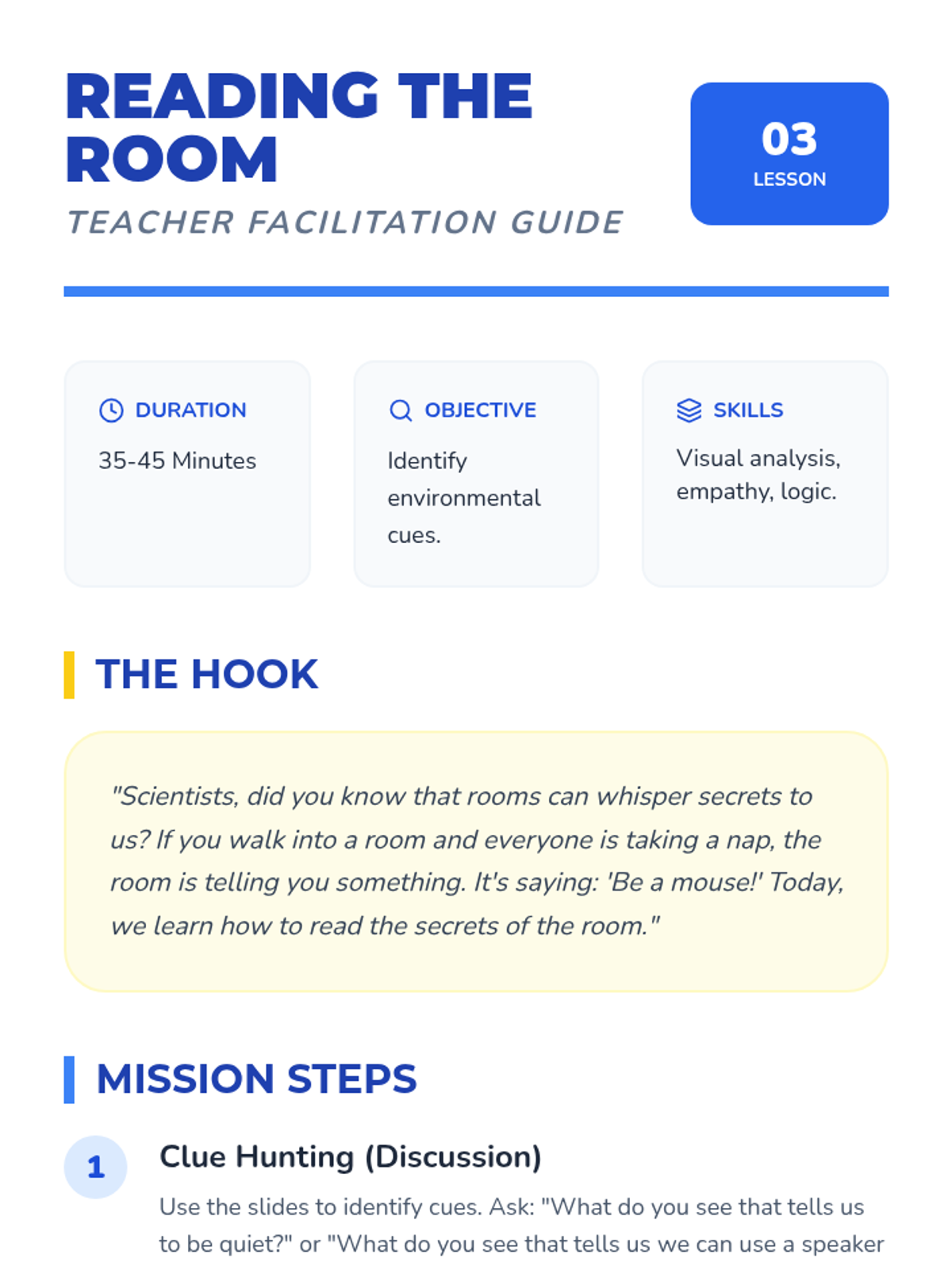
Students identify visual and social cues in different settings to determine if a space is a 'whisper zone' or a 'speaker zone.'
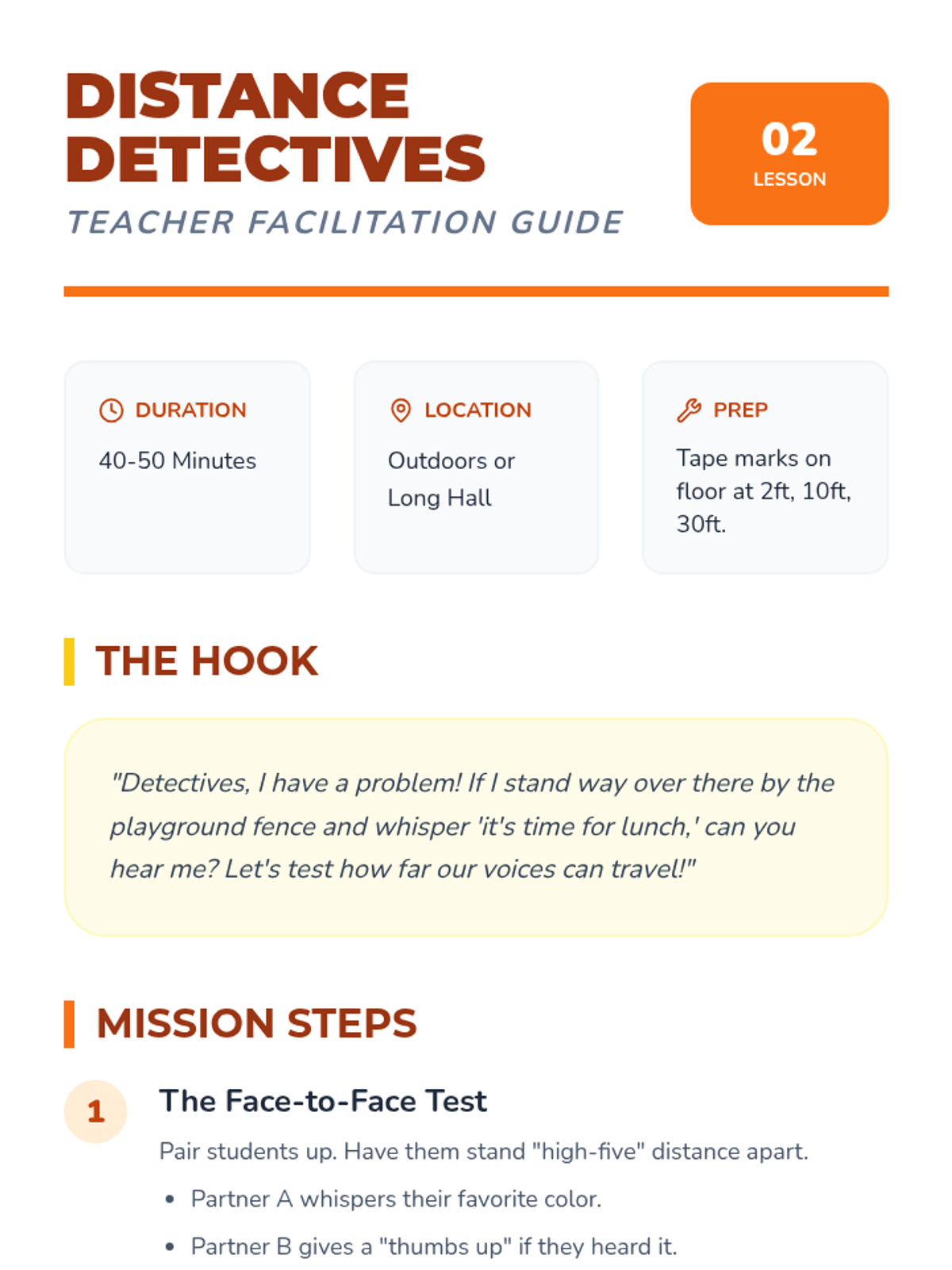
Through an outdoor or hallway experiment, students discover the relationship between physical distance and the volume needed to be heard by a partner.
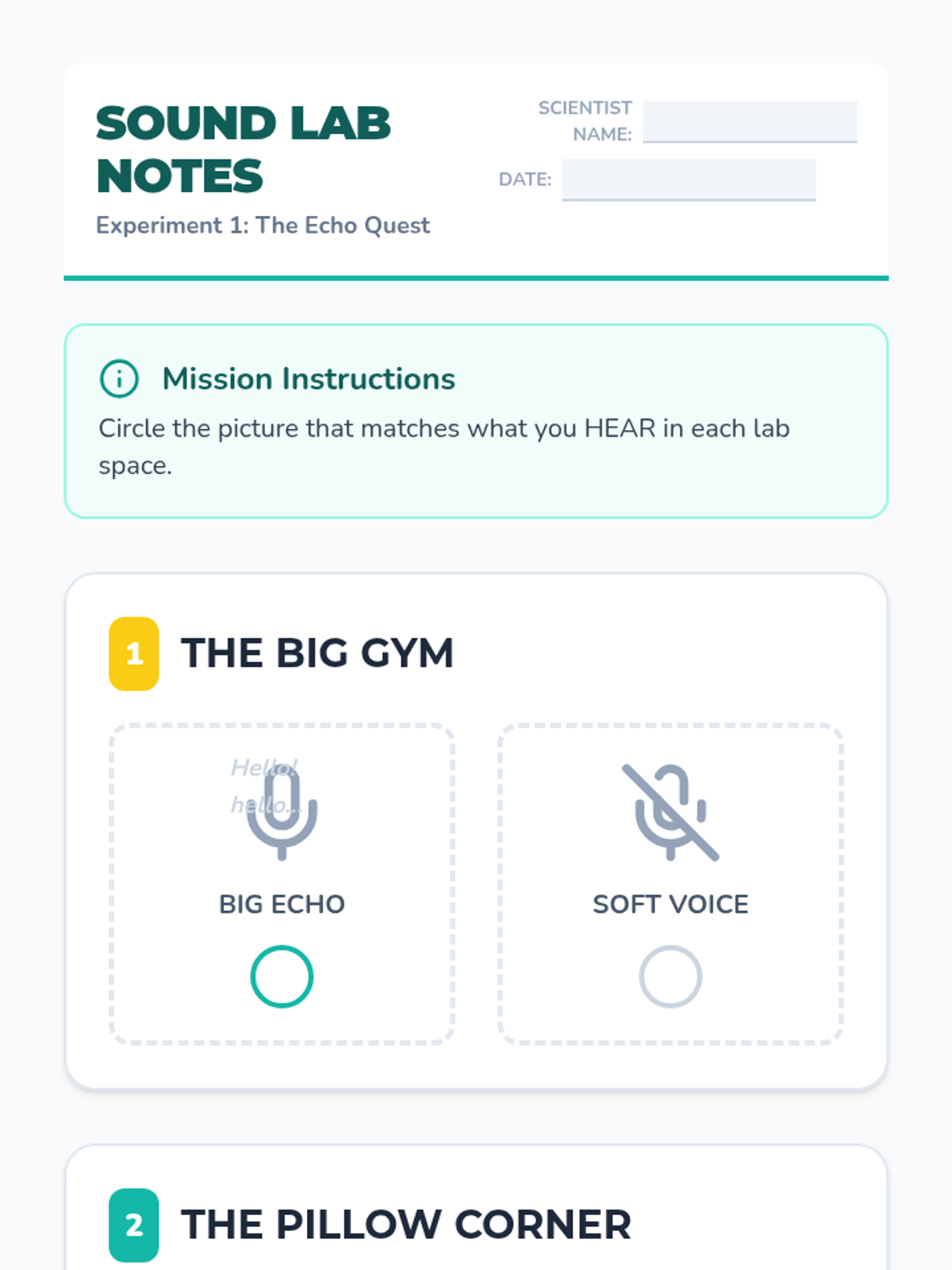
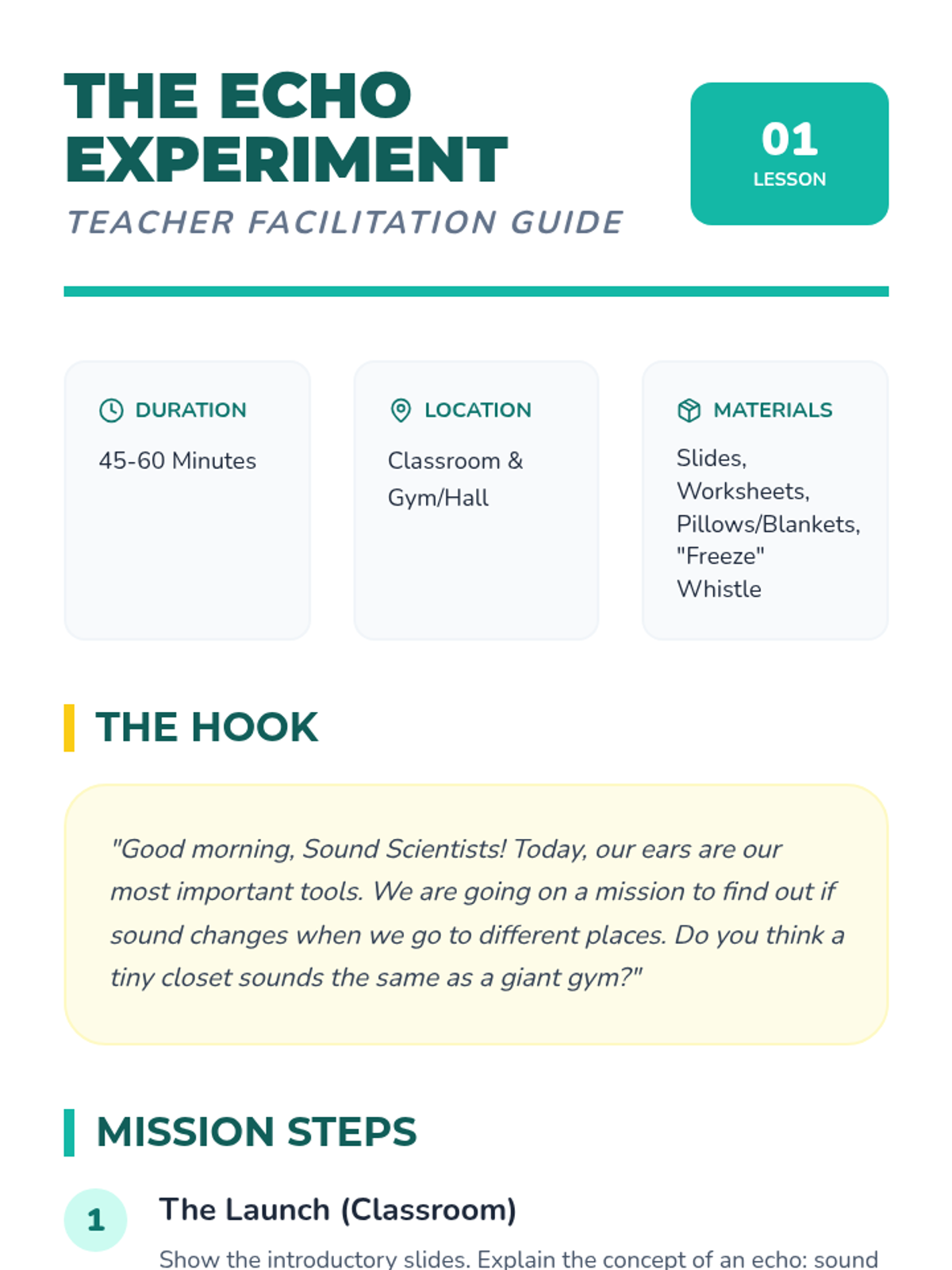
Students investigate how physical space affects sound by comparing a large, empty 'echo' space with a small, soft 'quiet' space, learning to observe auditory feedback.