Identifies mental health crises and suicide warning signs while developing personal safety plans and grounding techniques. Equips users with peer gatekeeper skills and direct pathways to professional crisis resources and hotlines.
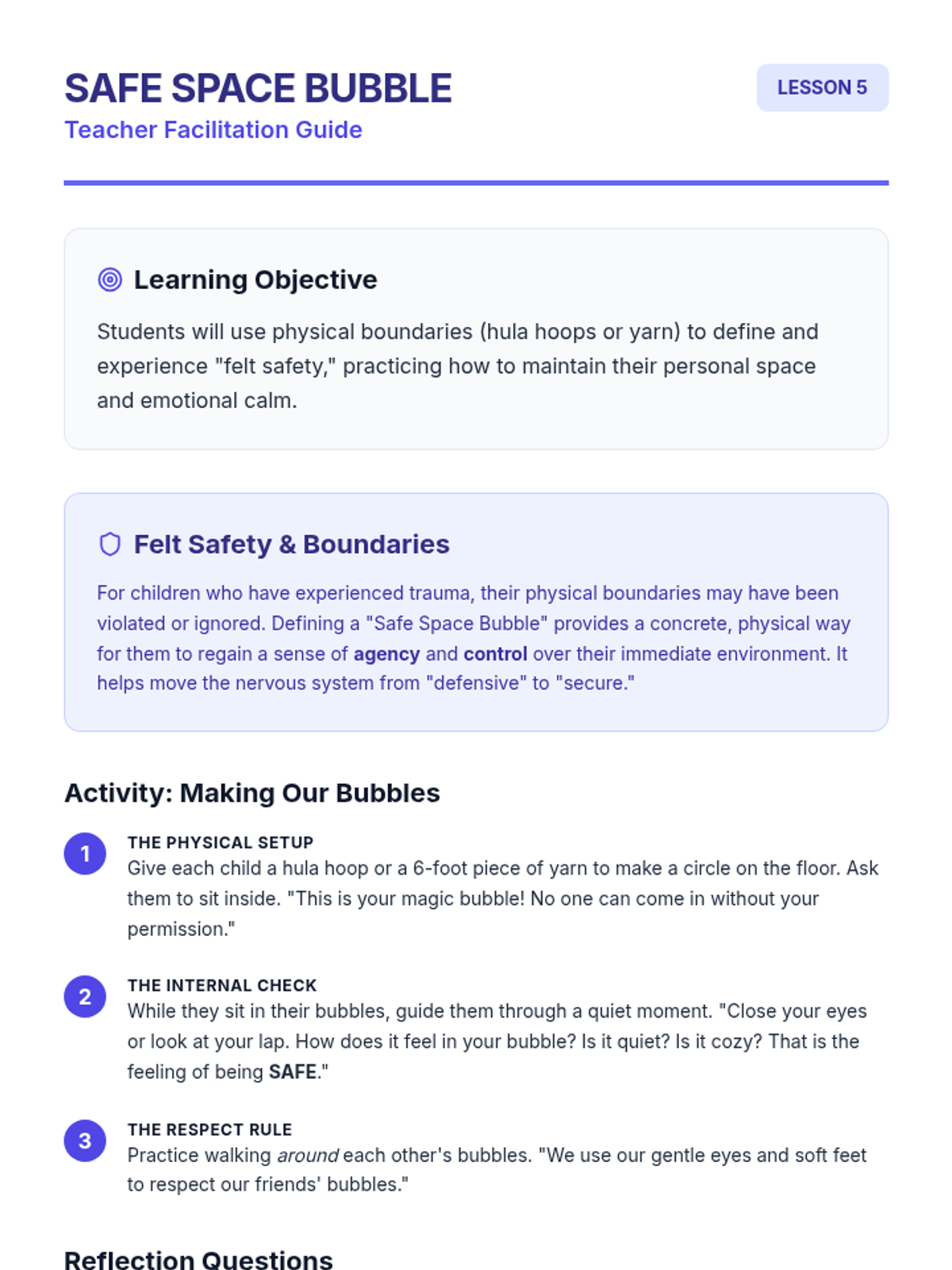
A facilitation guide for teachers leading the Safe Space Bubble lesson, teaching Pre-K students about personal boundaries and felt safety.
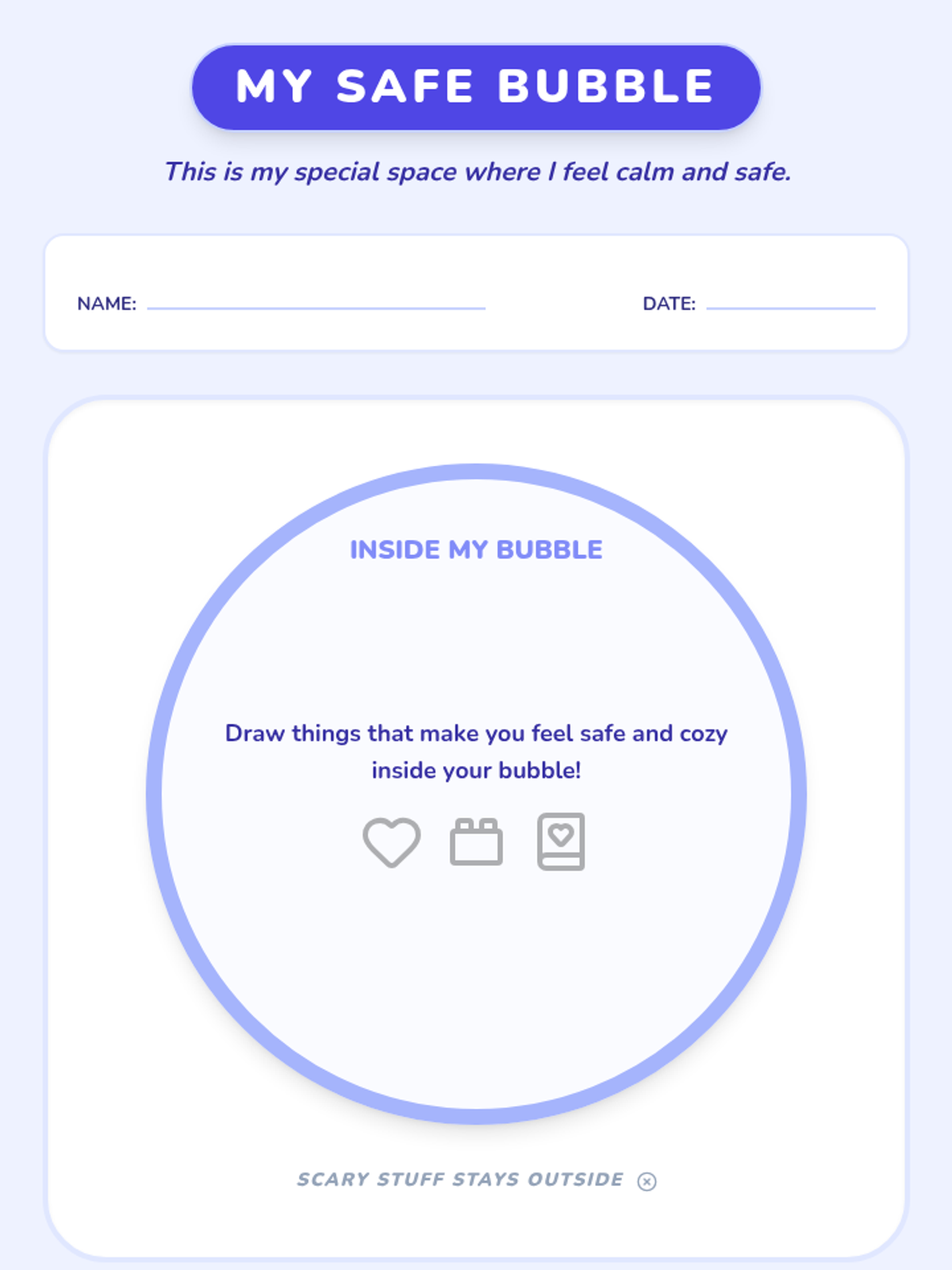
A drawing activity for Pre-K students to visualize and design their own "Safe Space Bubble" filled with things that make them feel secure.
Slides for the Safe Space Bubble lesson, teaching Pre-K students about personal boundaries and felt safety.
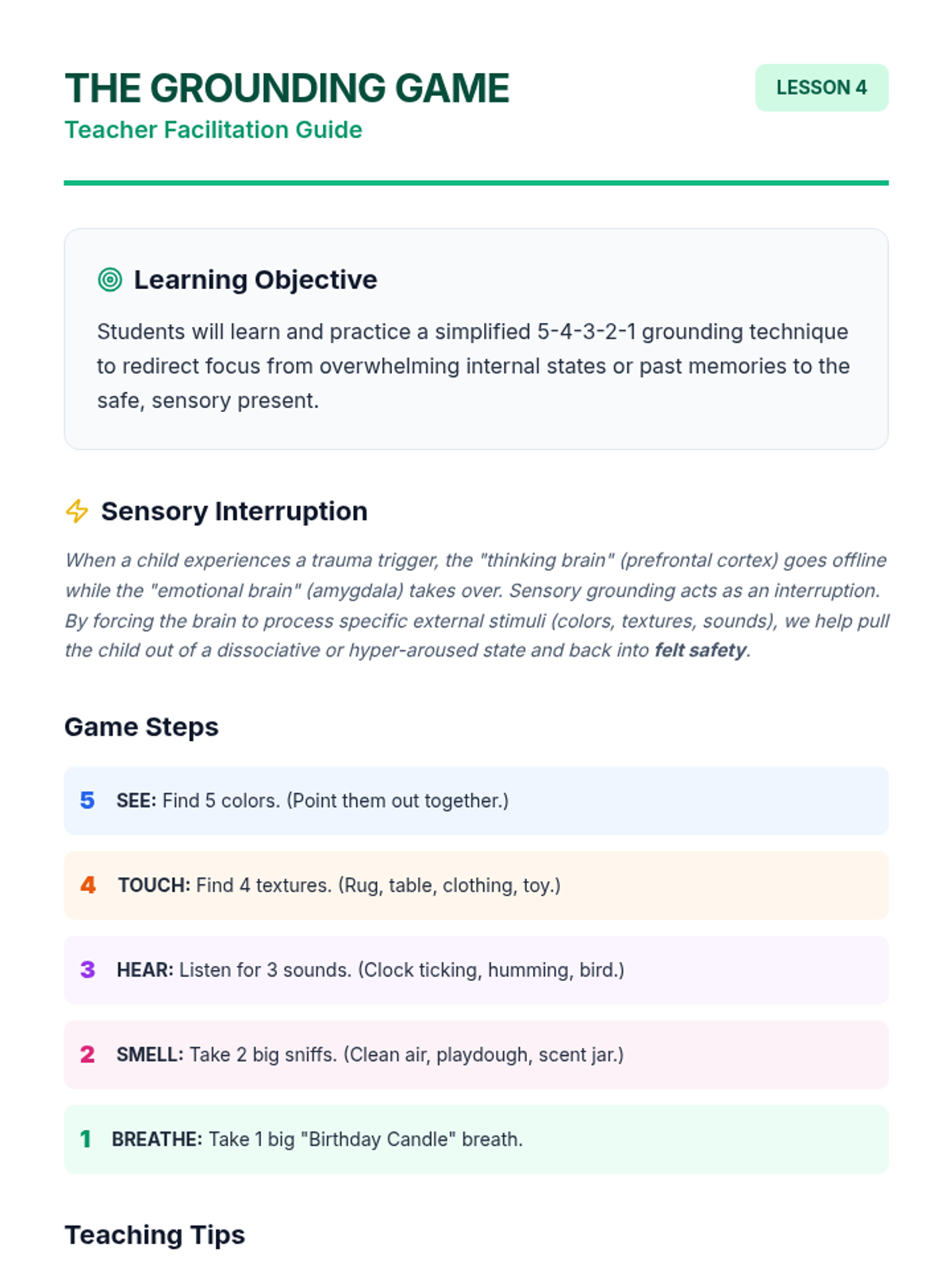
A facilitation guide for teachers leading the The Grounding Game lesson, teaching Pre-K students a simplified 5-4-3-2-1 grounding technique.
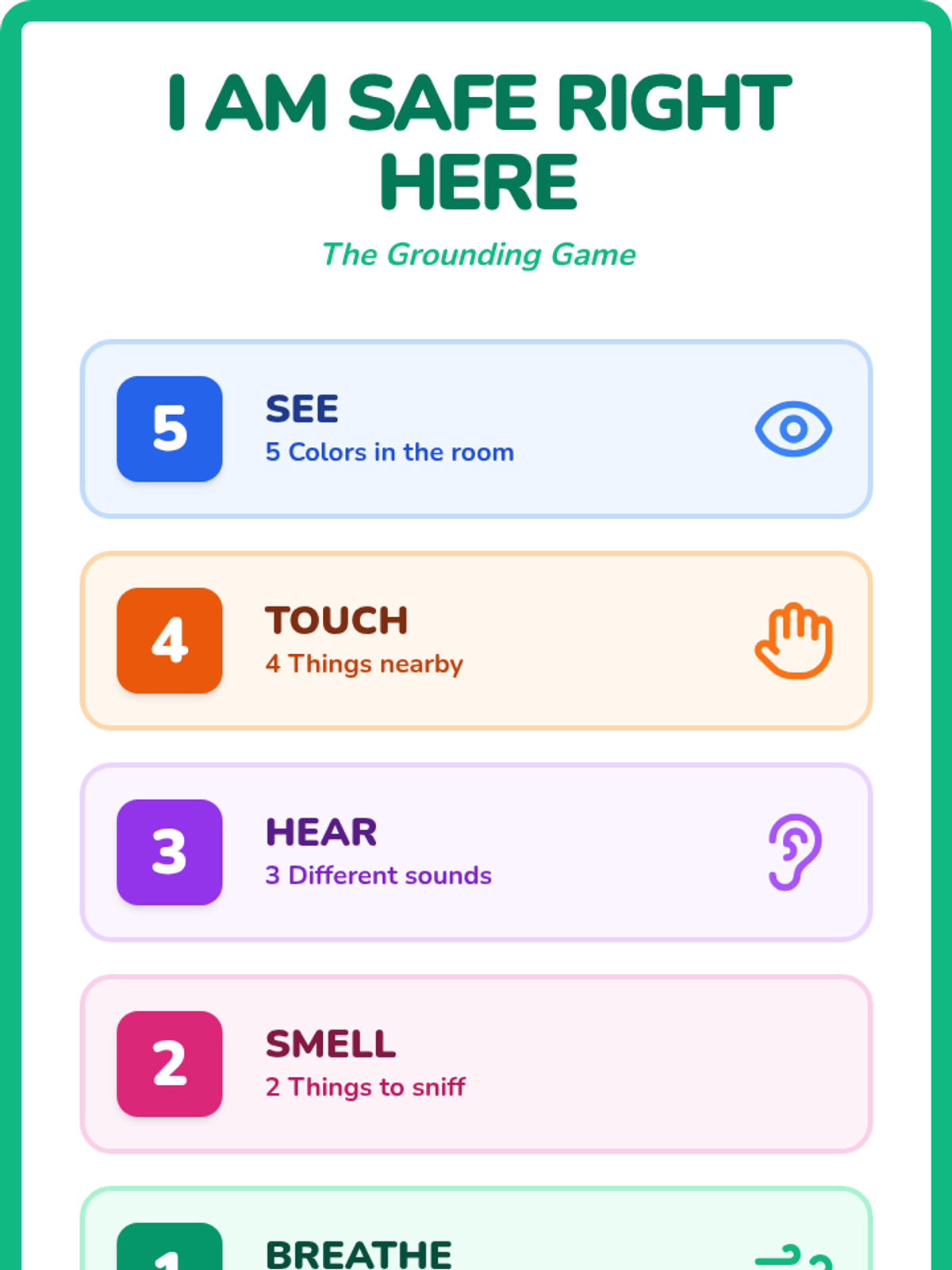
A visual anchor chart for Pre-K students illustrating the 5-4-3-2-1 grounding technique with simple icons and numbers.
Slides for the The Grounding Game lesson, teaching Pre-K students a simplified 5-4-3-2-1 grounding technique.
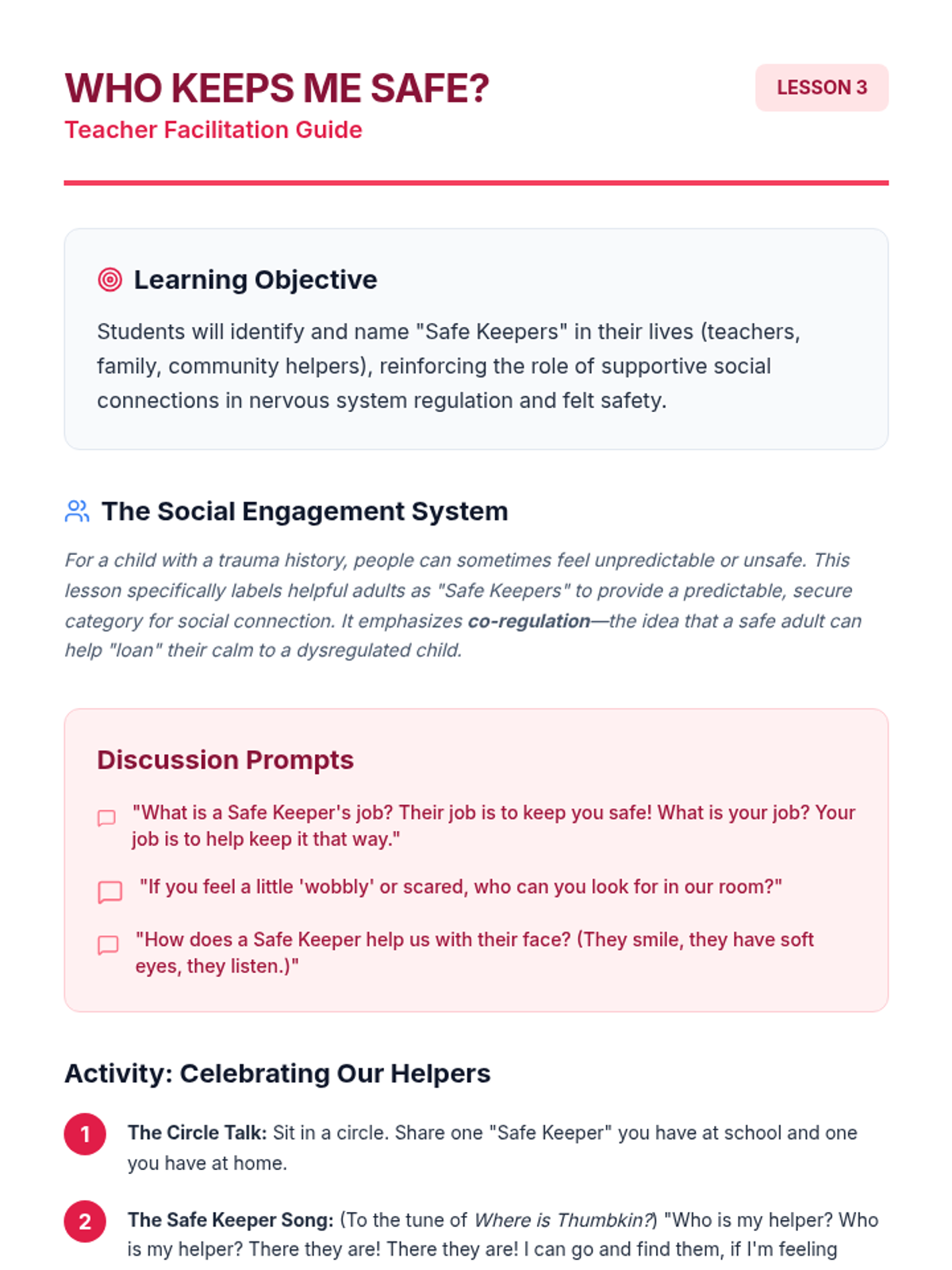
A facilitation guide for teachers leading the Who Keeps Me Safe lesson, focusing on social connection and co-regulation.
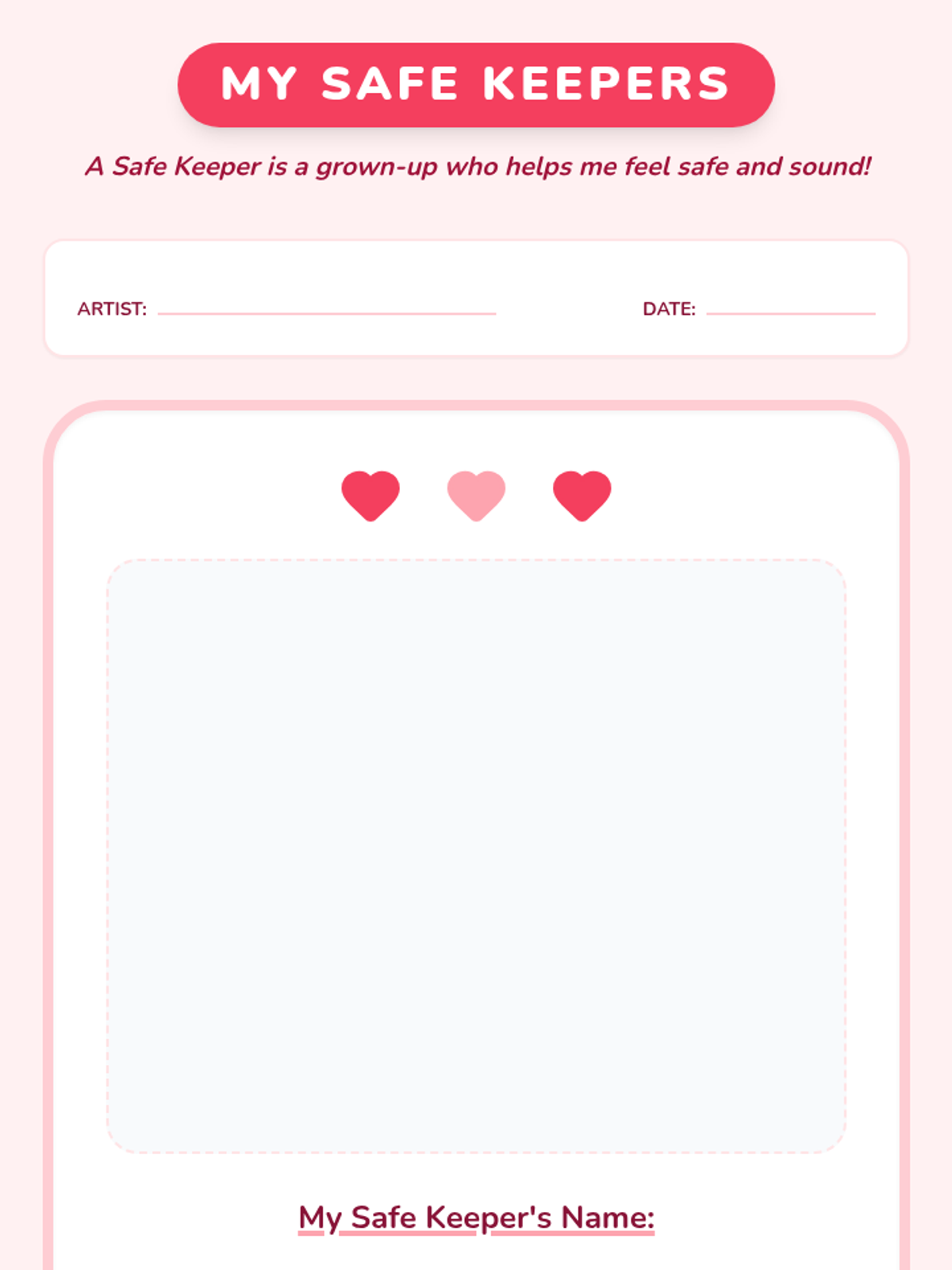
A drawing activity for Pre-K students to identify and celebrate the "Safe Keepers" (supportive adults) in their lives.
Slides for the Who Keeps Me Safe lesson, teaching Pre-K students about the supportive adults in their lives.
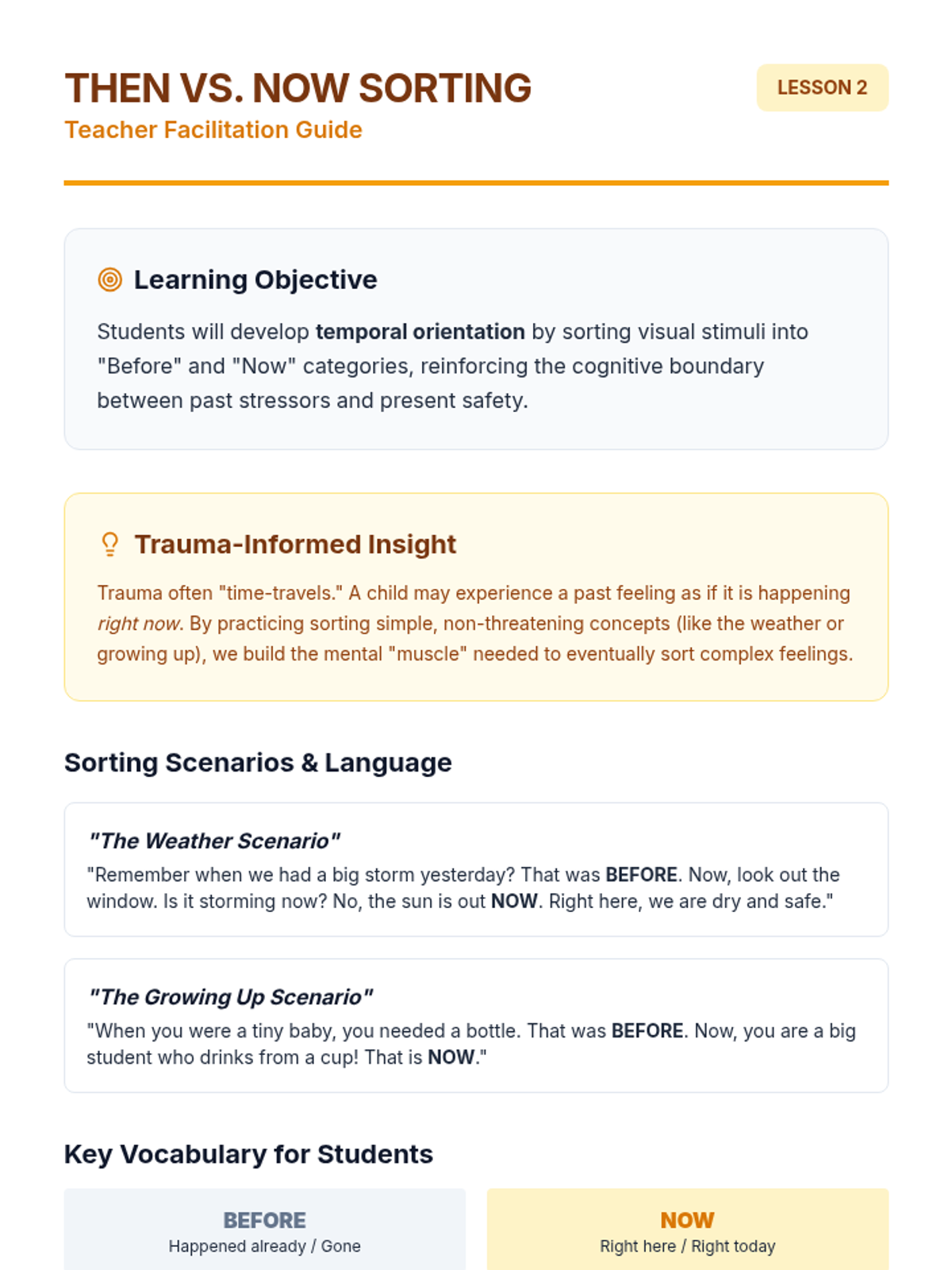
A facilitation guide for teachers leading the Then vs Now sorting activity, focusing on temporal orientation and cognitive flexibility.
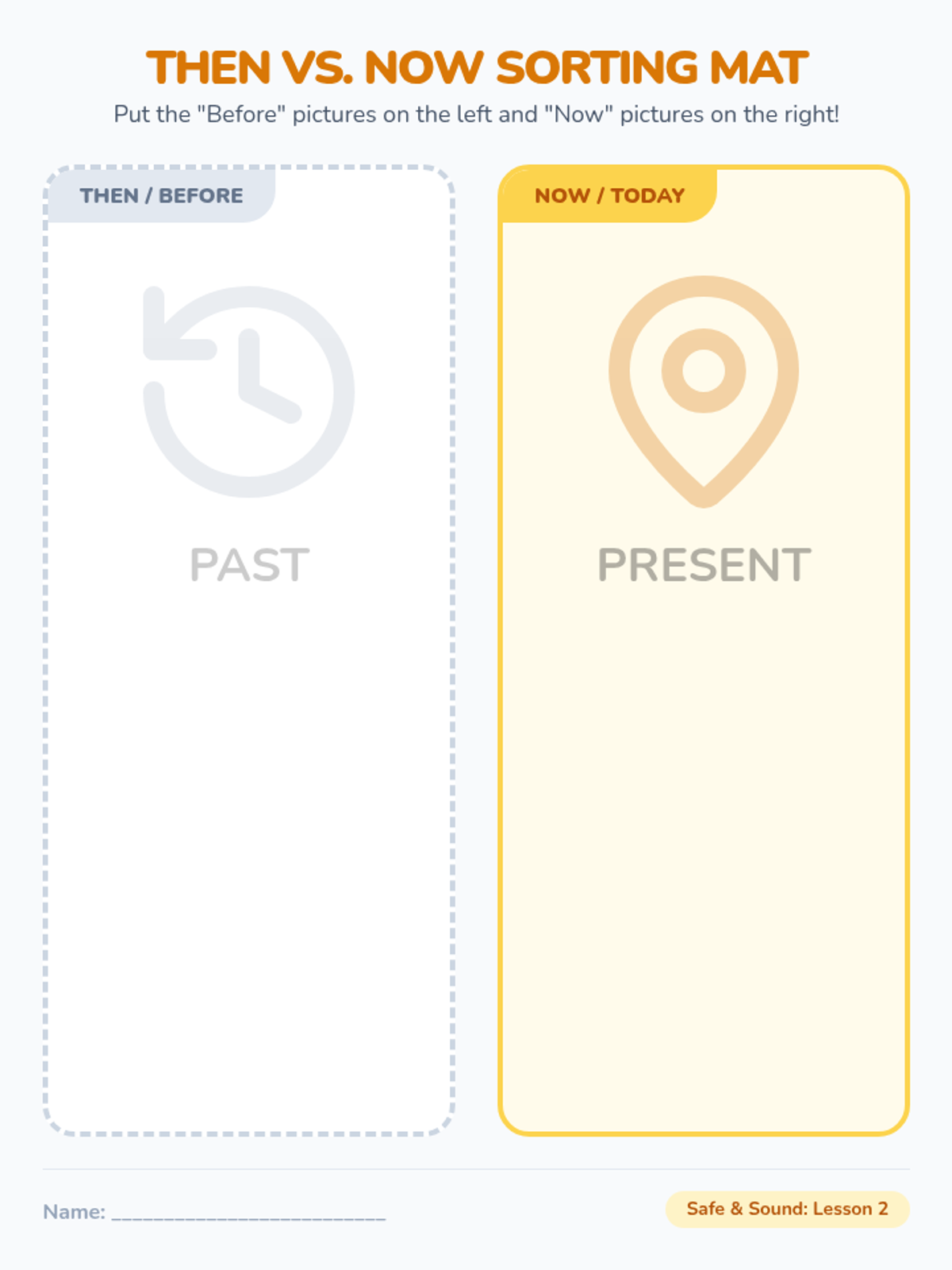
A sorting activity for Pre-K students to categorize events as "Then/Before" (past) or "Now/Today" (present).
Slides for the Then vs Now lesson, teaching Pre-K students to distinguish between past events and the current safe environment.
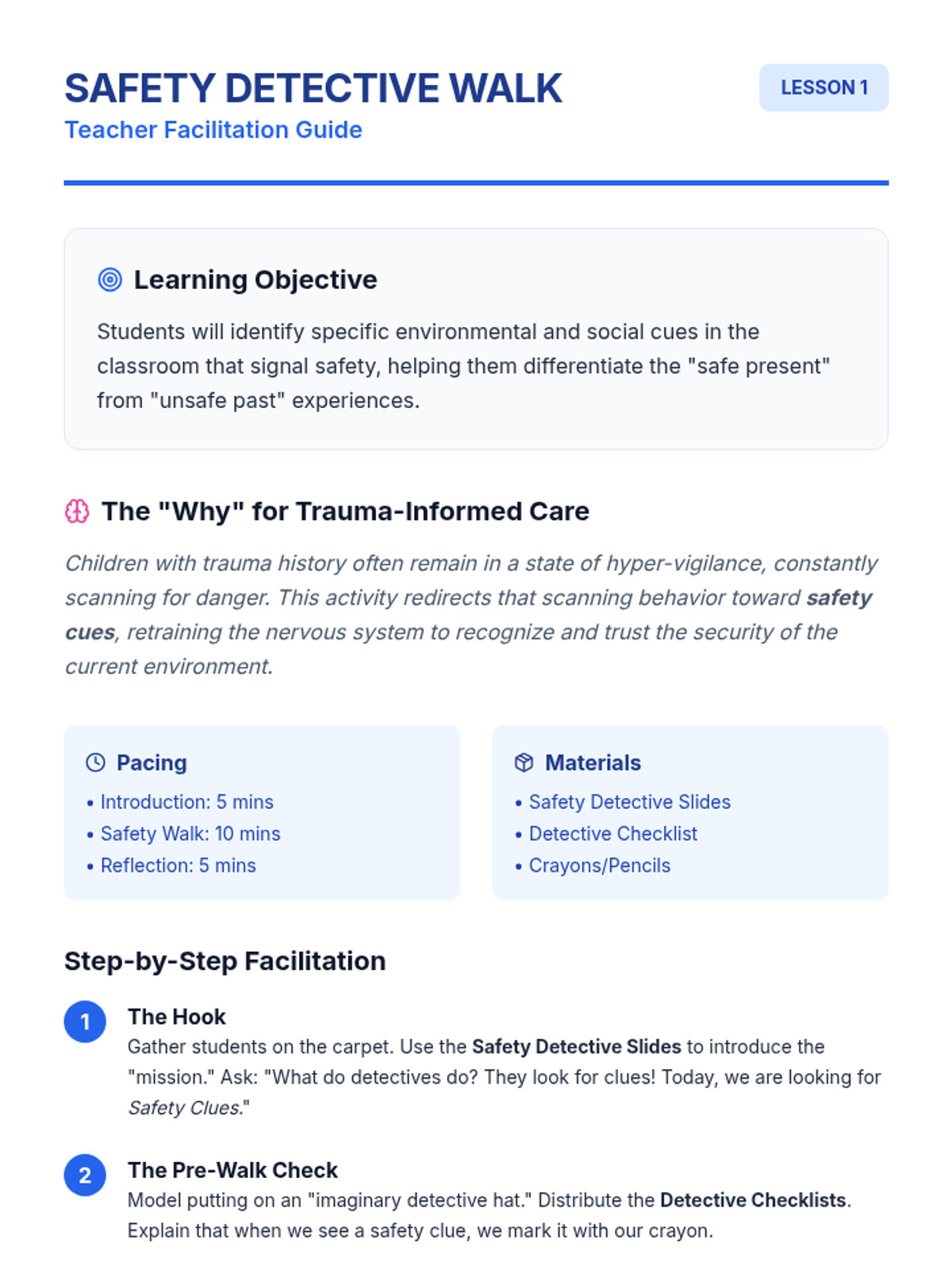
A facilitation guide for teachers leading the Safety Detective Walk, including trauma-informed context and step-by-step instructions.
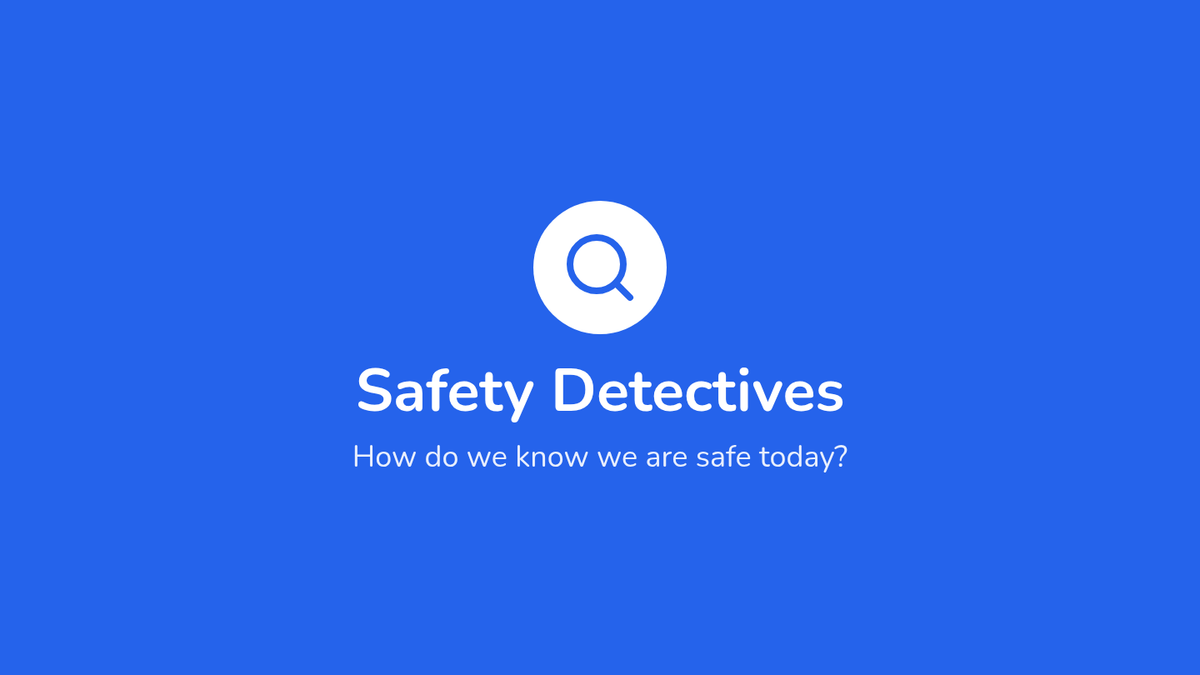
Introductory slides for the Safety Detective Walk, illustrating environmental safety cues for Pre-K students.
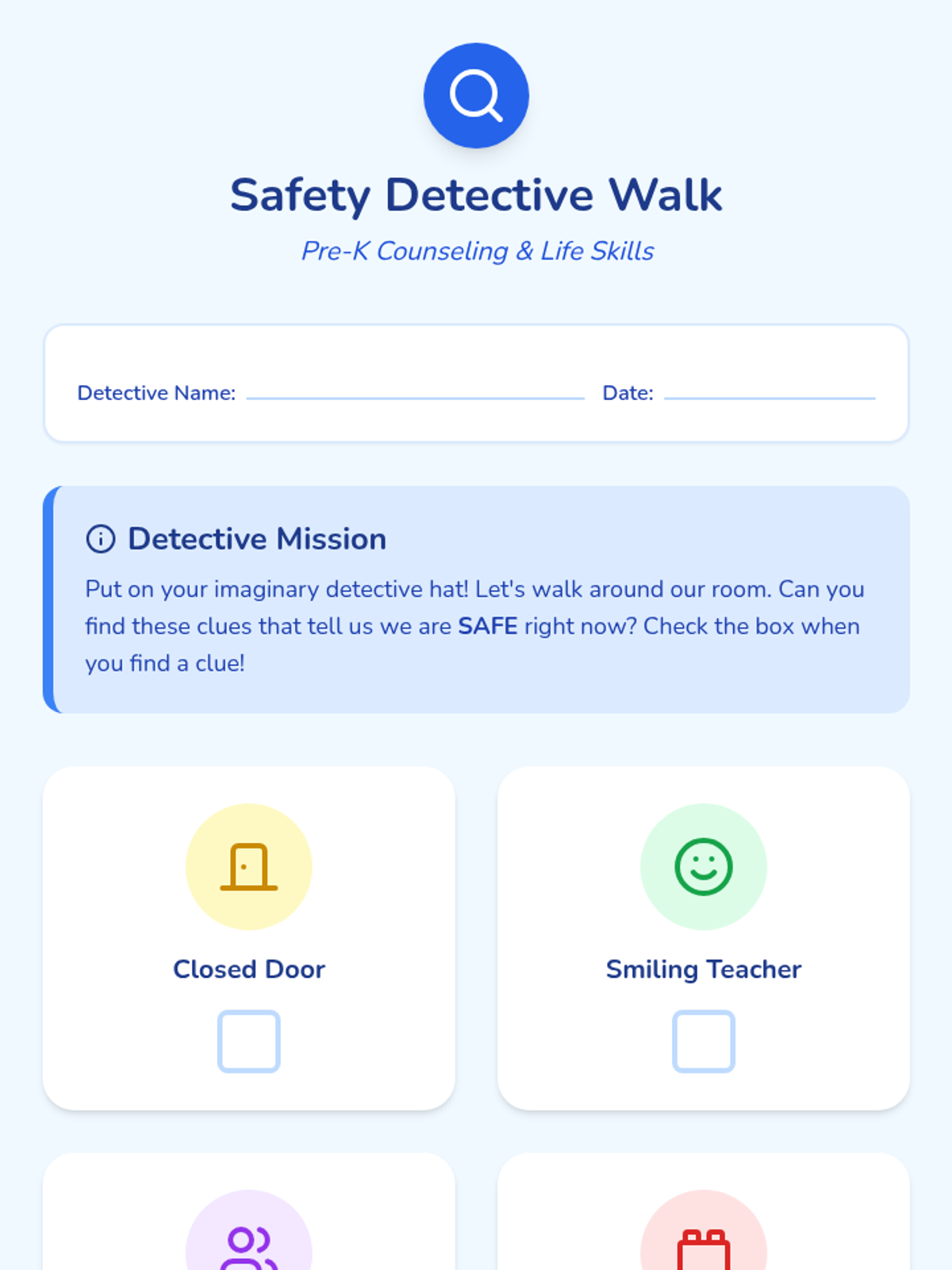
A visual checklist for Pre-K students to use during a classroom safety walk, helping them identify environmental cues of safety.
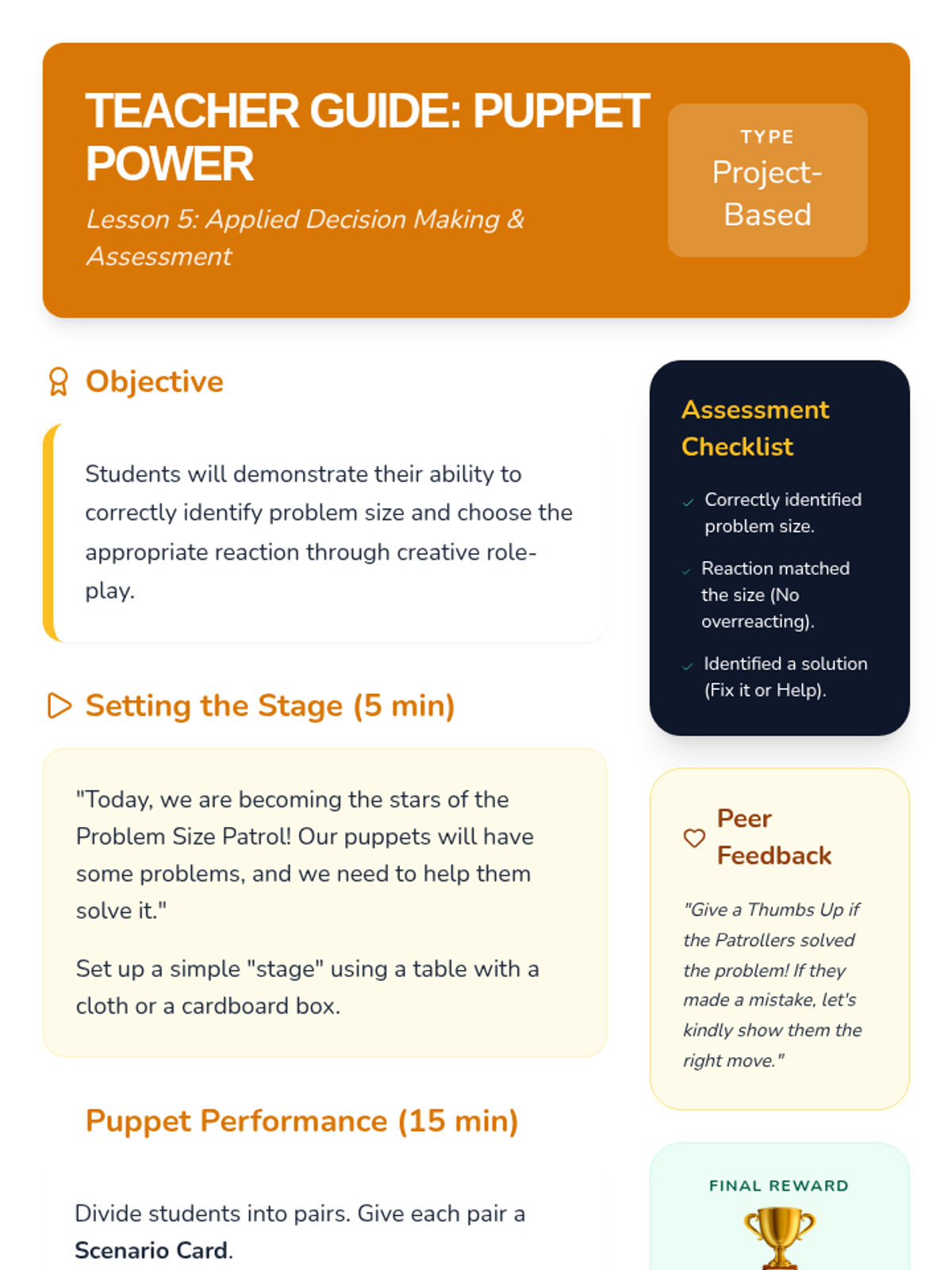
Teacher guidance for the culminating puppet show in Lesson 5. Includes an assessment checklist, performance structure, and tips for managing peer feedback and rewards.
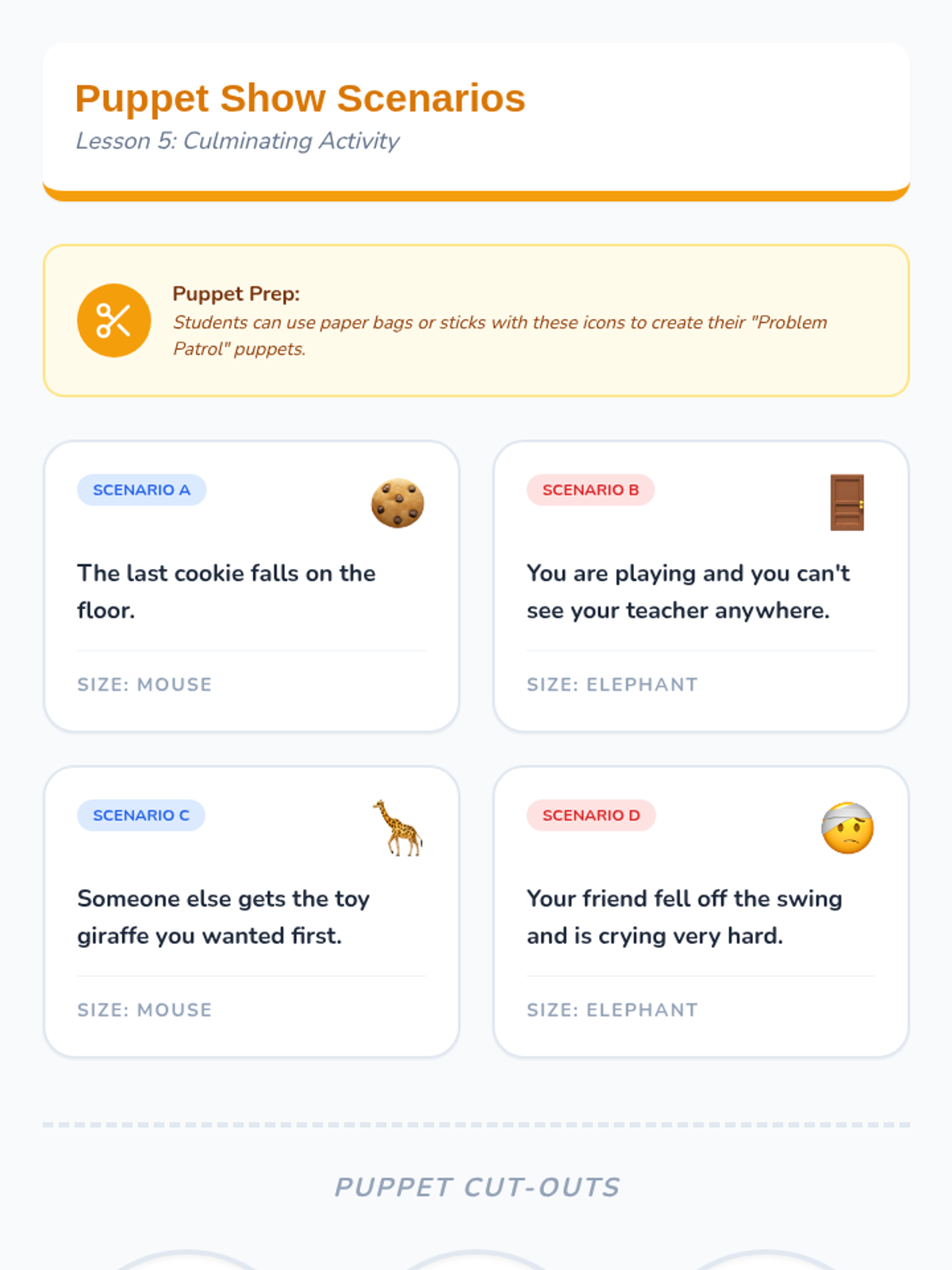
Scenario cards and puppet templates for the culminating activity in Lesson 5. Includes four role-play scenarios (two Mouse and two Elephant) for students to act out.
Culminating slides for Lesson 5. Sets the stage for the puppet show activity, outlining the steps for problem-solving and the audience's role in providing feedback.
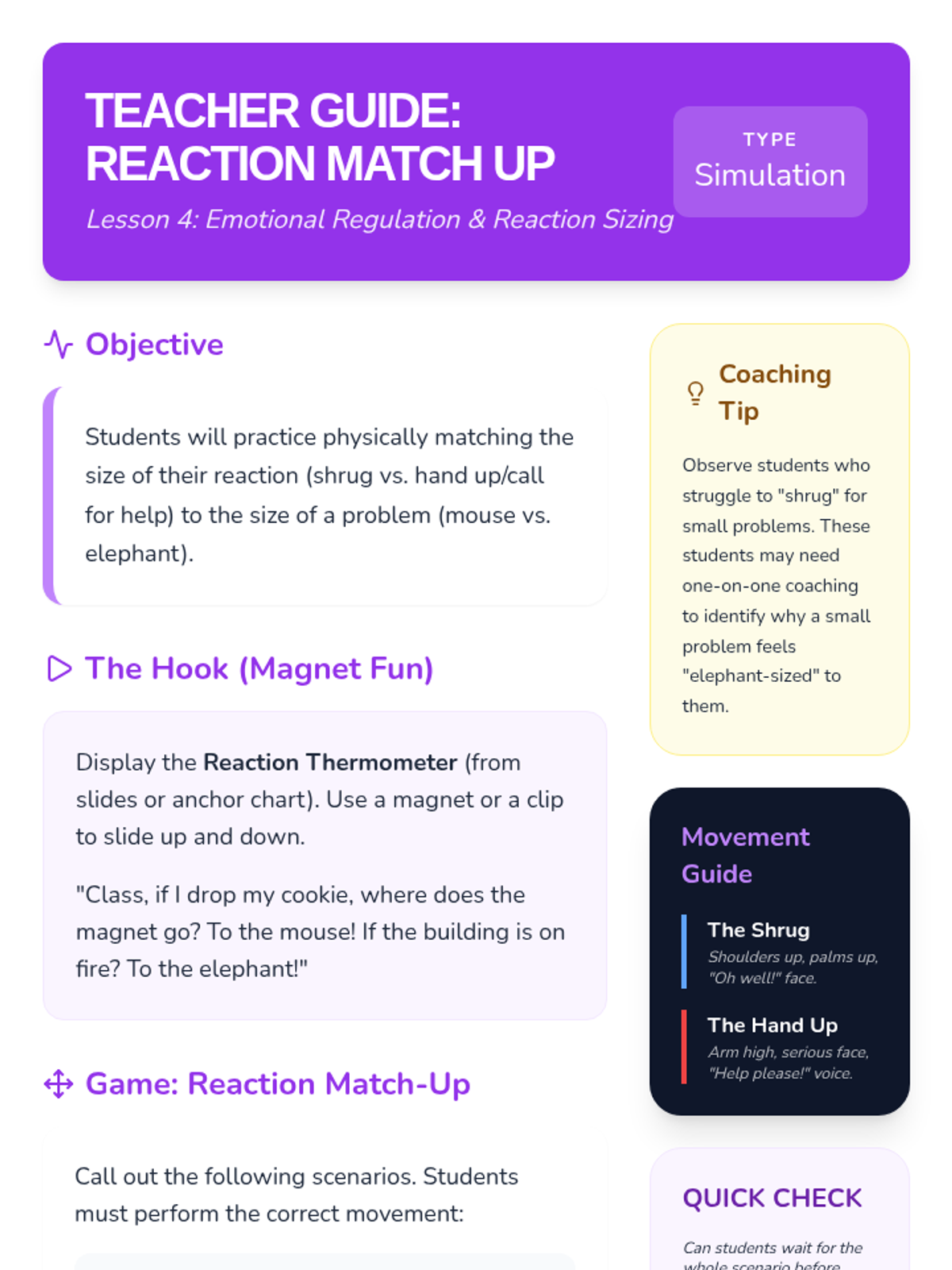
Teacher guidance for Lesson 4, including scenarios for the movement-based "Reaction Match-Up" game and coaching tips for emotional regulation.
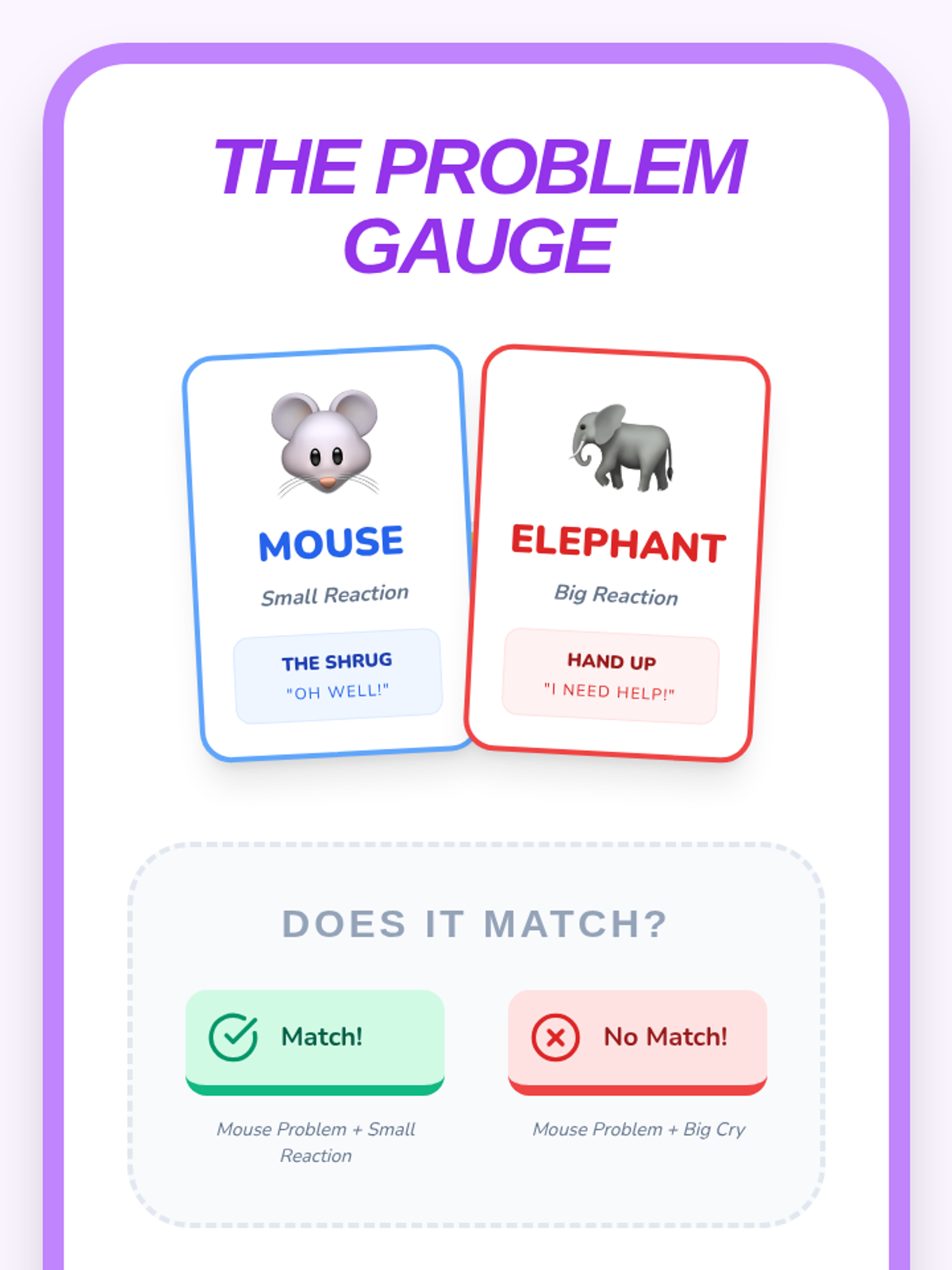
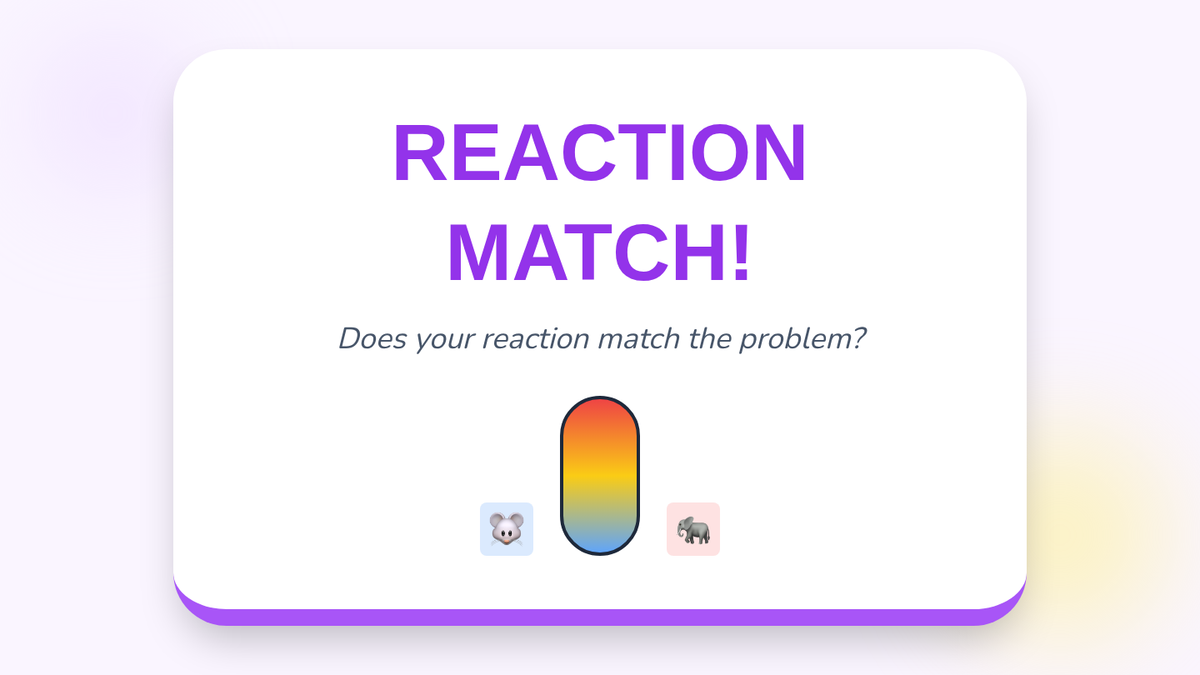
A visual "Reaction Match" poster showing the alignment between problem size and reaction size. Used as an anchor chart for the classroom movement activity.
Lesson 4 slides on matching reaction size to problem size. Introduces the "Reaction Thermometer" and movement-based activities (The Shrug vs. The Hand Up).
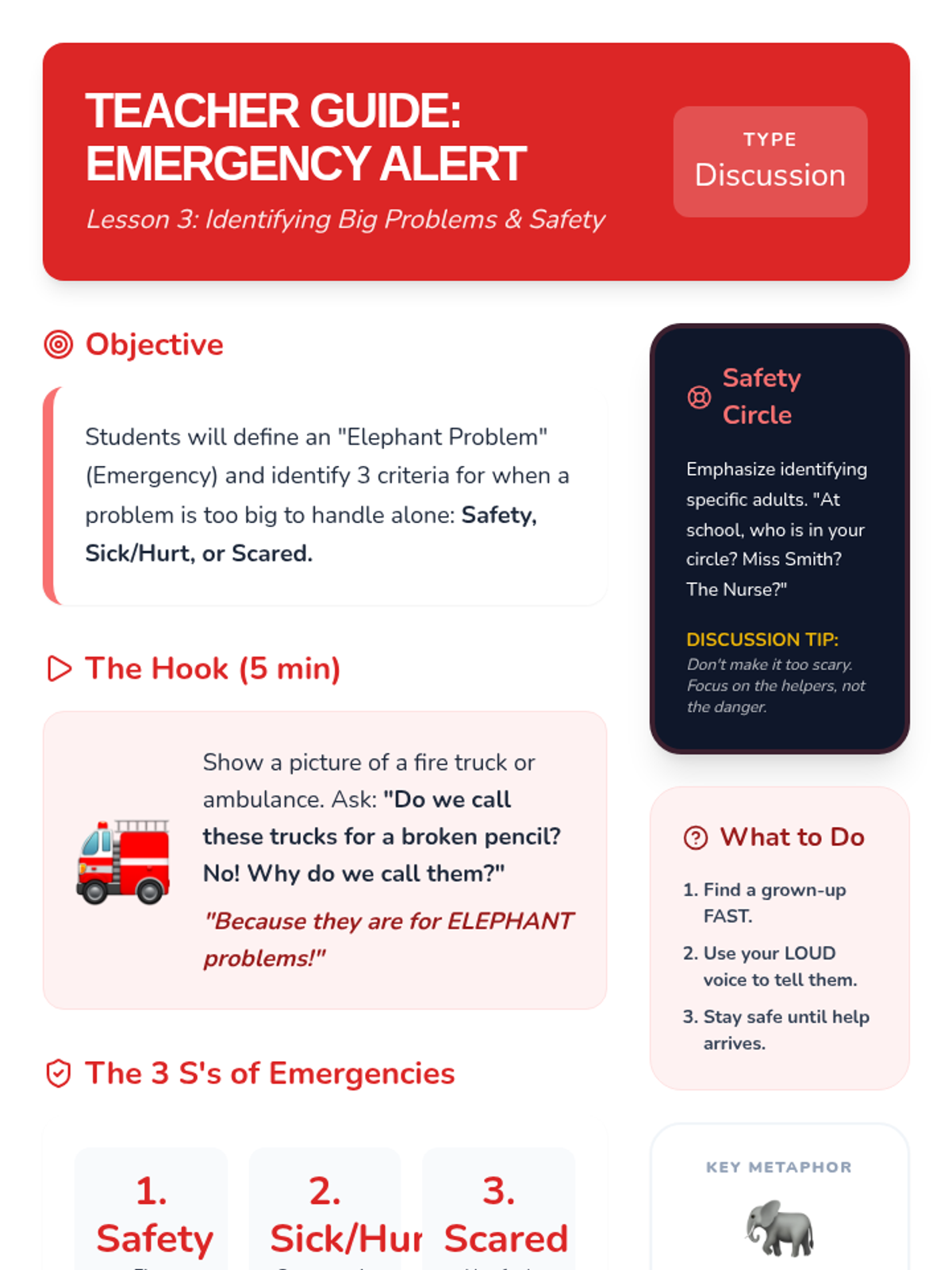
Teacher guidance for Lesson 3, focusing on "Elephant" problems. Includes discussion points on the 3 S's of emergencies and how to help students identify their Safety Circle without causing unnecessary fear.
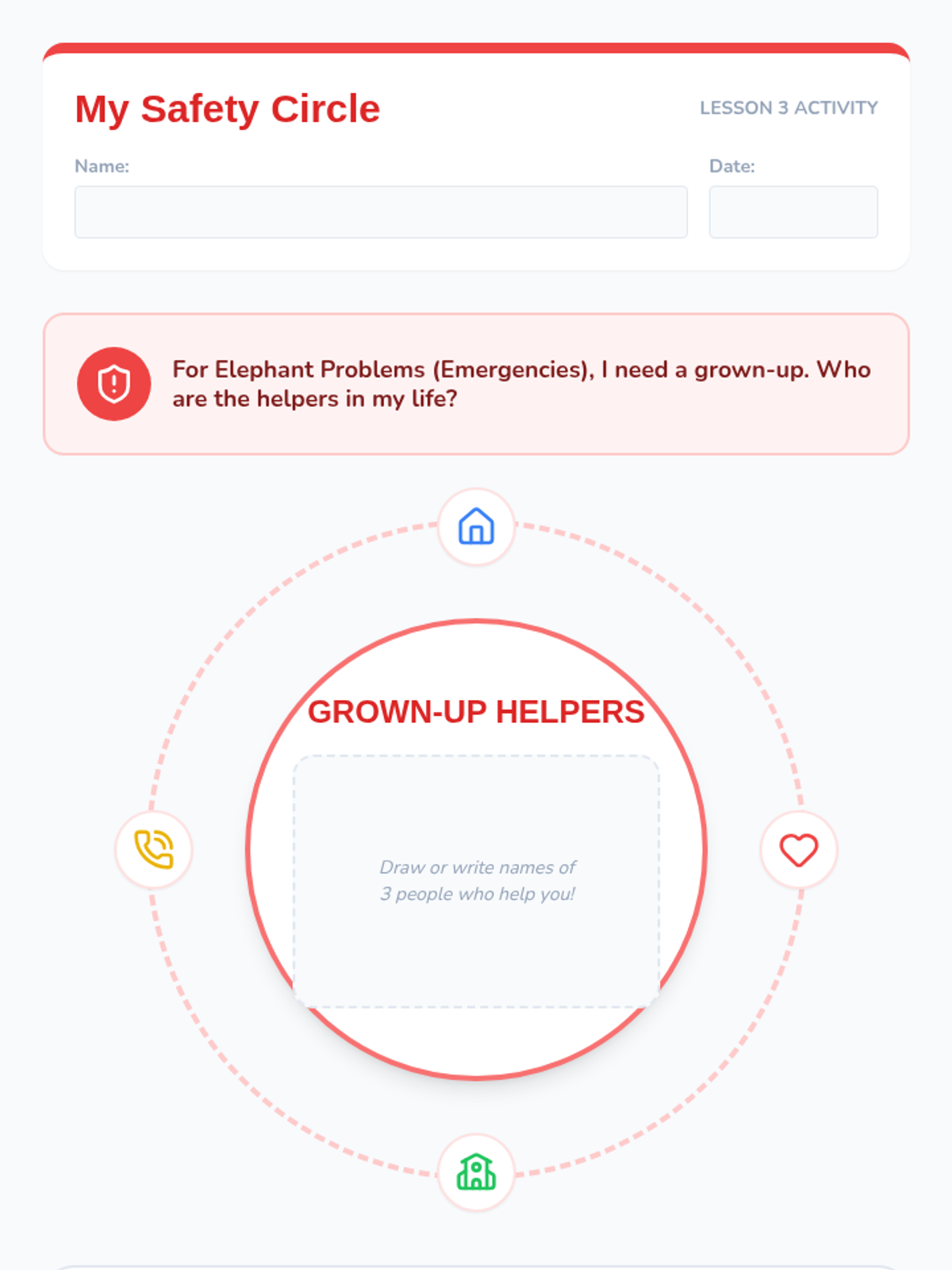
A "Safety Circle" worksheet for Lesson 3 where Pre-K students can draw or list the trusted adults they can go to during big "Elephant" problems. Includes visual reminders of emergency types.
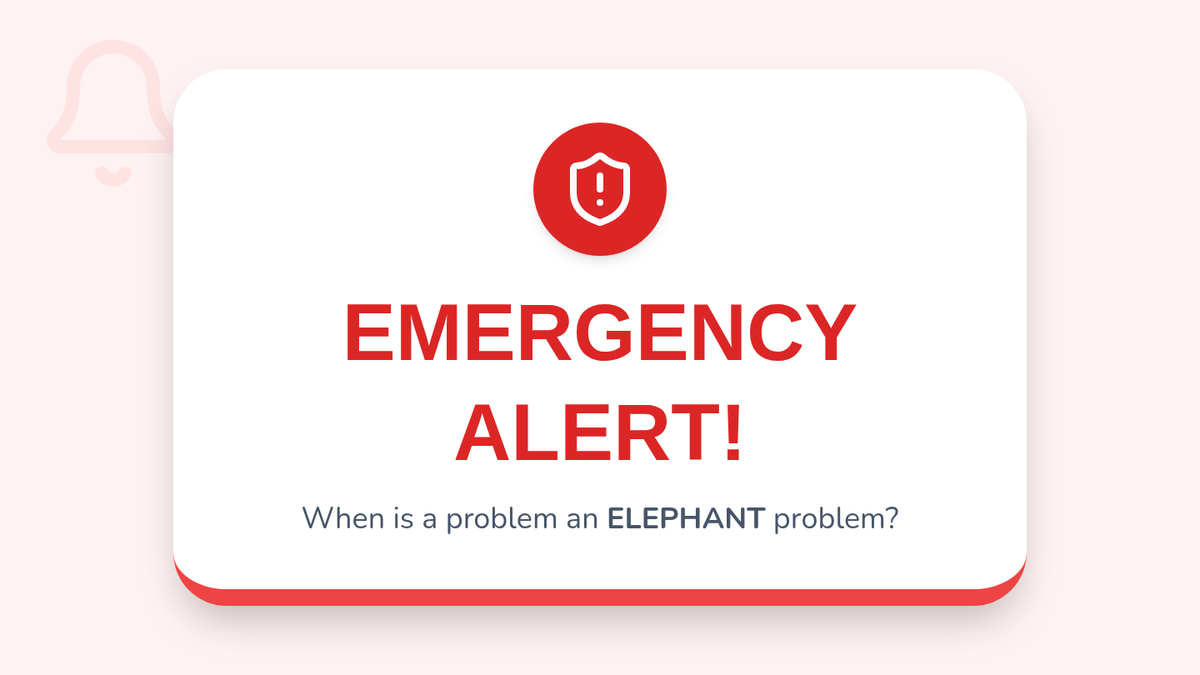
Lesson 3 slides on identifying "Elephant" or big problems. Focuses on the "3 S's" (Safety, Sick, Scared) and identifying trusted adults in the "Safety Circle."
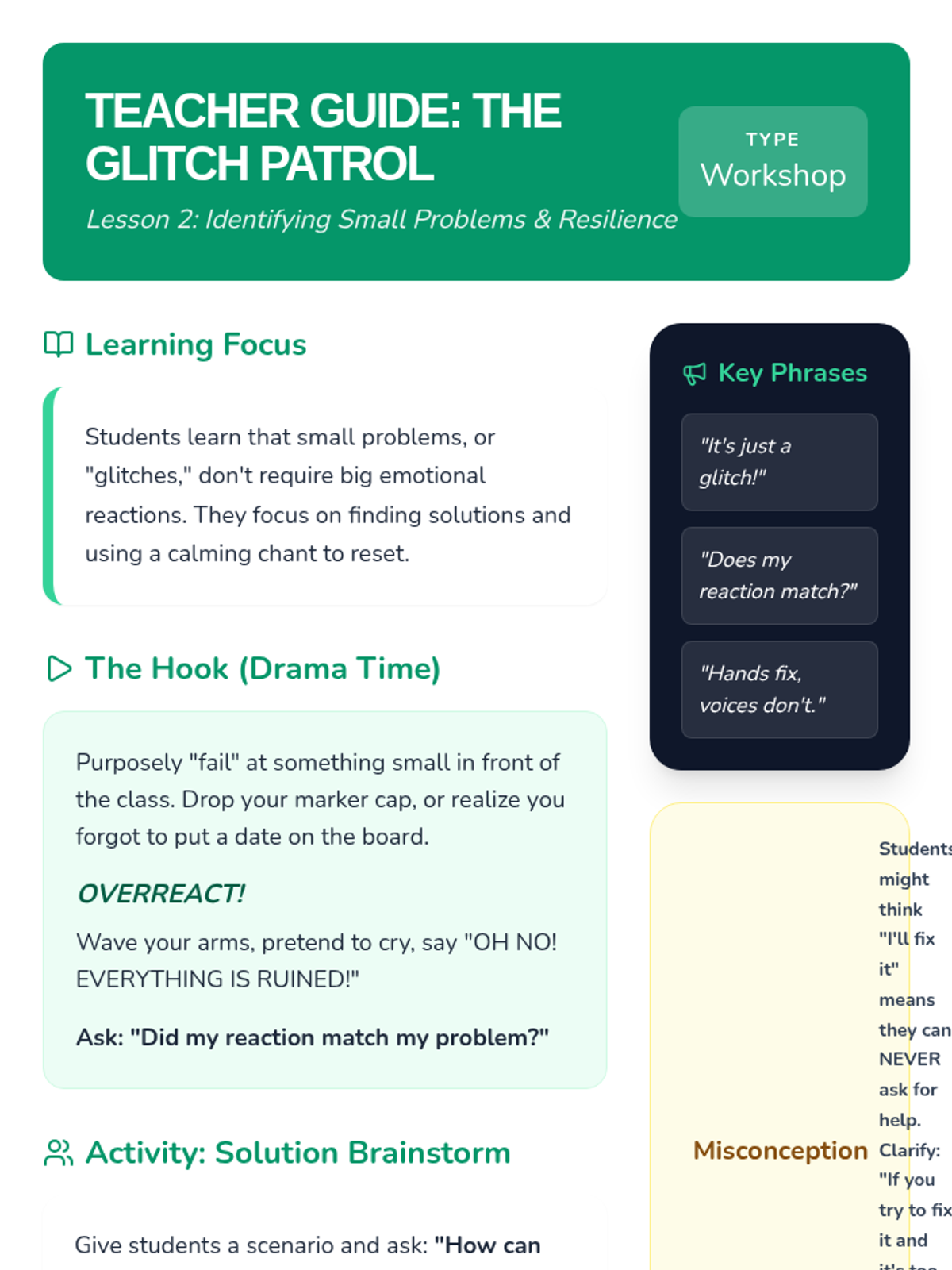
Teacher guidance for Lesson 2, including the dramatic "overreaction" hook and strategies for teaching small problem resolution. Includes key phrases and solution brainstorming ideas.
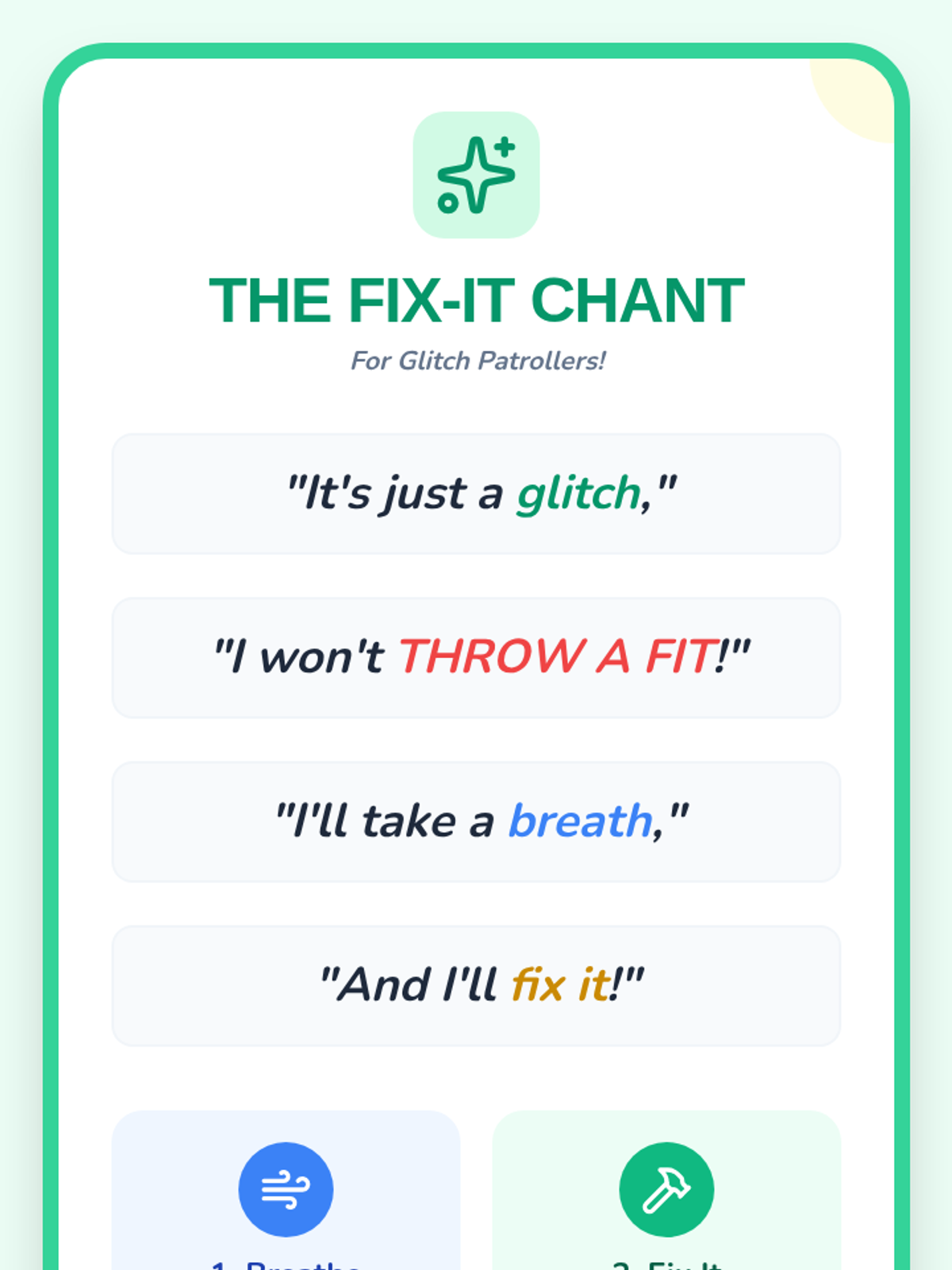
A classroom poster and individual handout for students to practice the "Fix-It Chant." Includes visual reminders for self-regulation and a space for students to "sign" their commitment.
Lesson 2 slides focused on small problems called "Glitches." Includes definitions, examples, and the "Fix-It Chant" to encourage resilience and self-regulation.
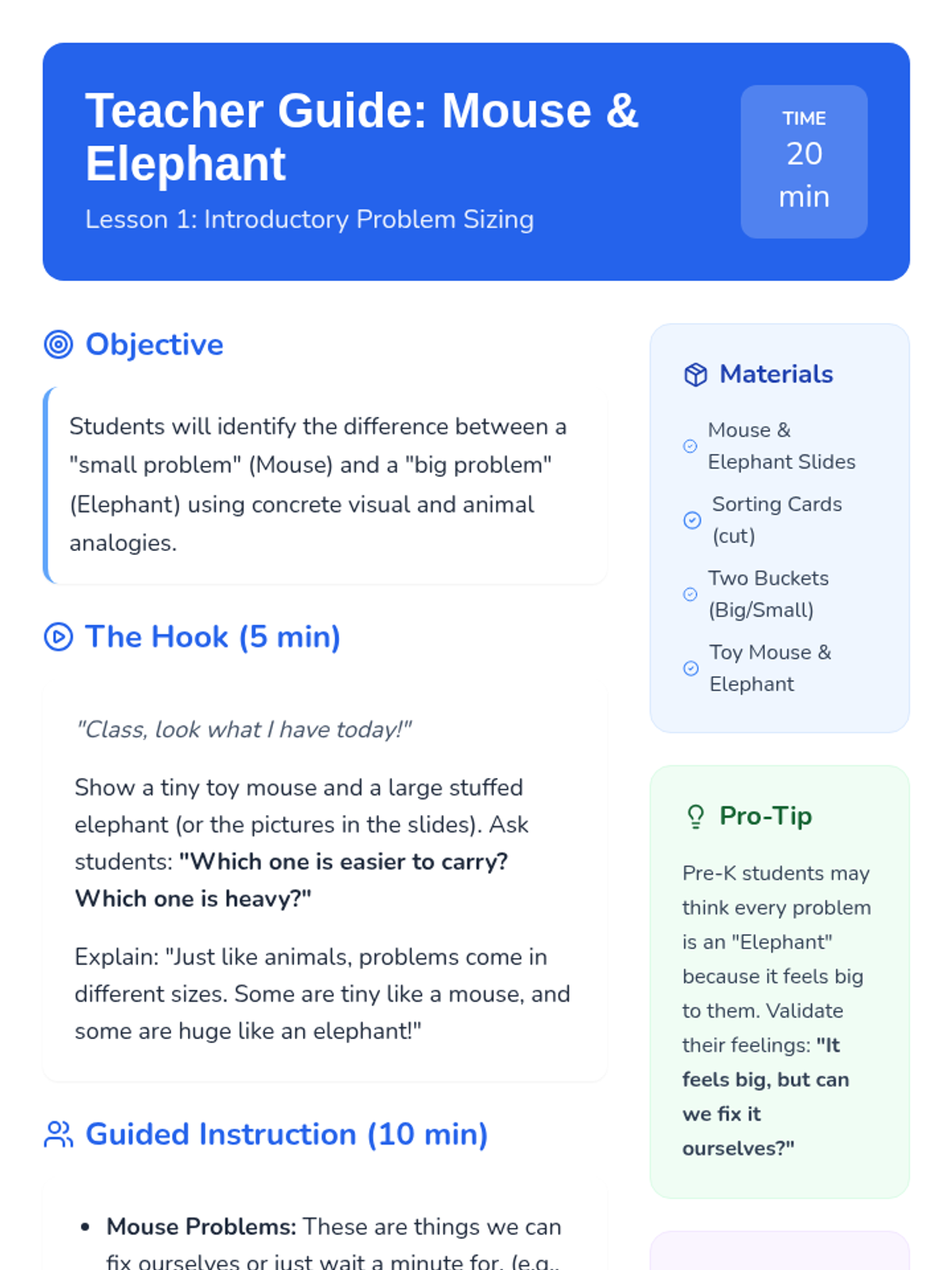
Instructional guide for teachers to lead Lesson 1. Includes hook ideas, discussion prompts, and a breakdown of the Mouse/Elephant concept for Pre-K learners.
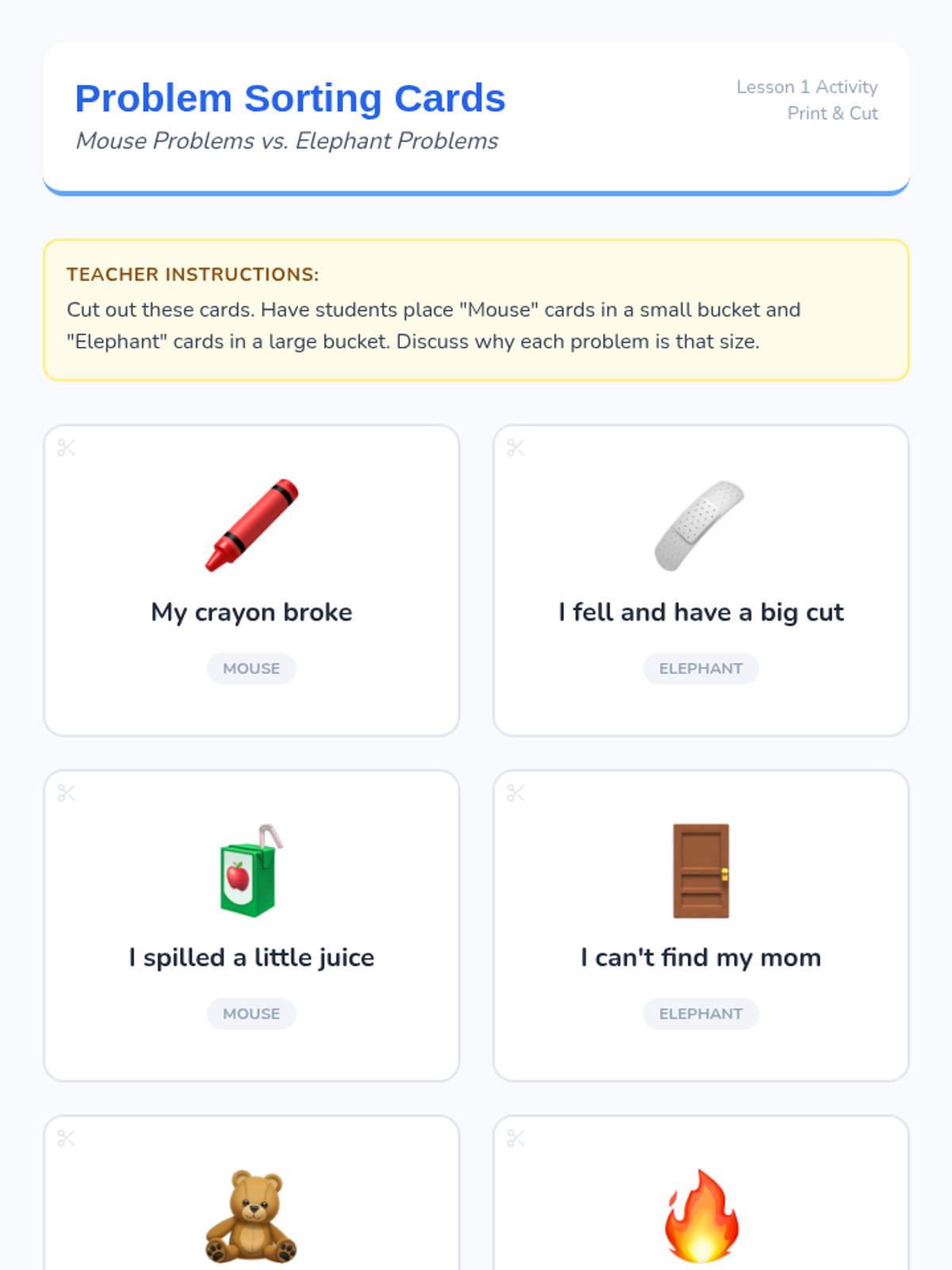
Printable sorting cards and bucket labels for Lesson 1. Features 6 scenarios for students to categorize as small (Mouse) or big (Elephant) problems.
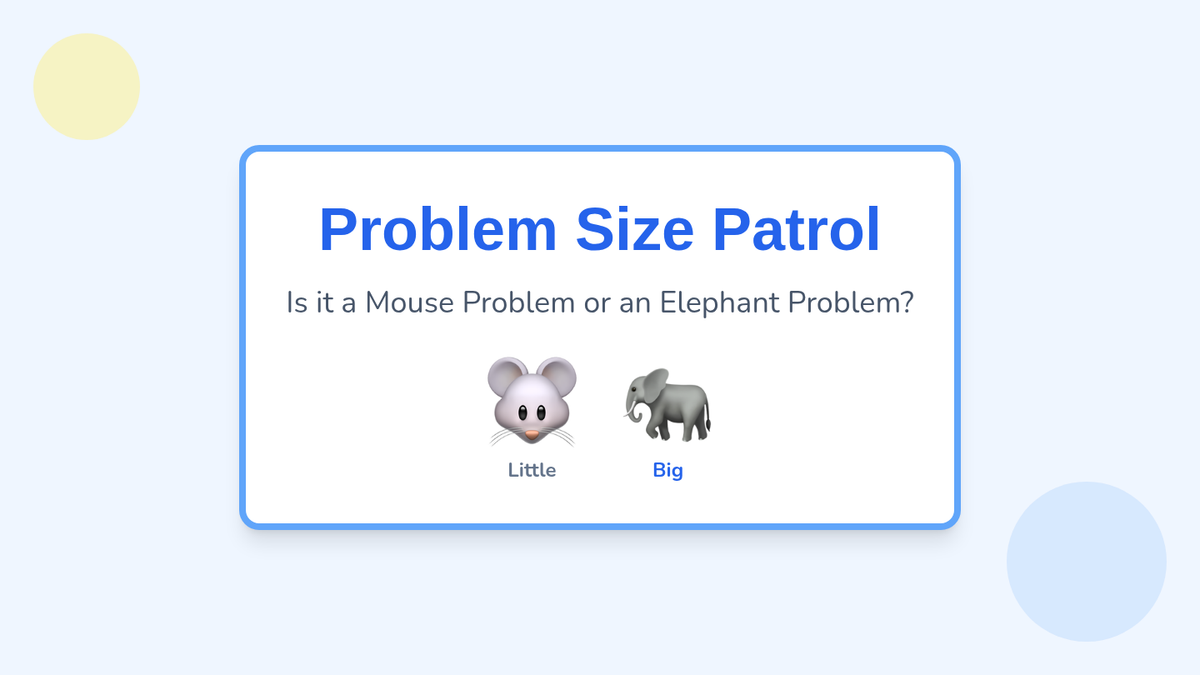
Introductory slides for Lesson 1 using the Mouse vs. Elephant analogy to teach problem sizing. Includes visual examples of small glitches and big emergencies.
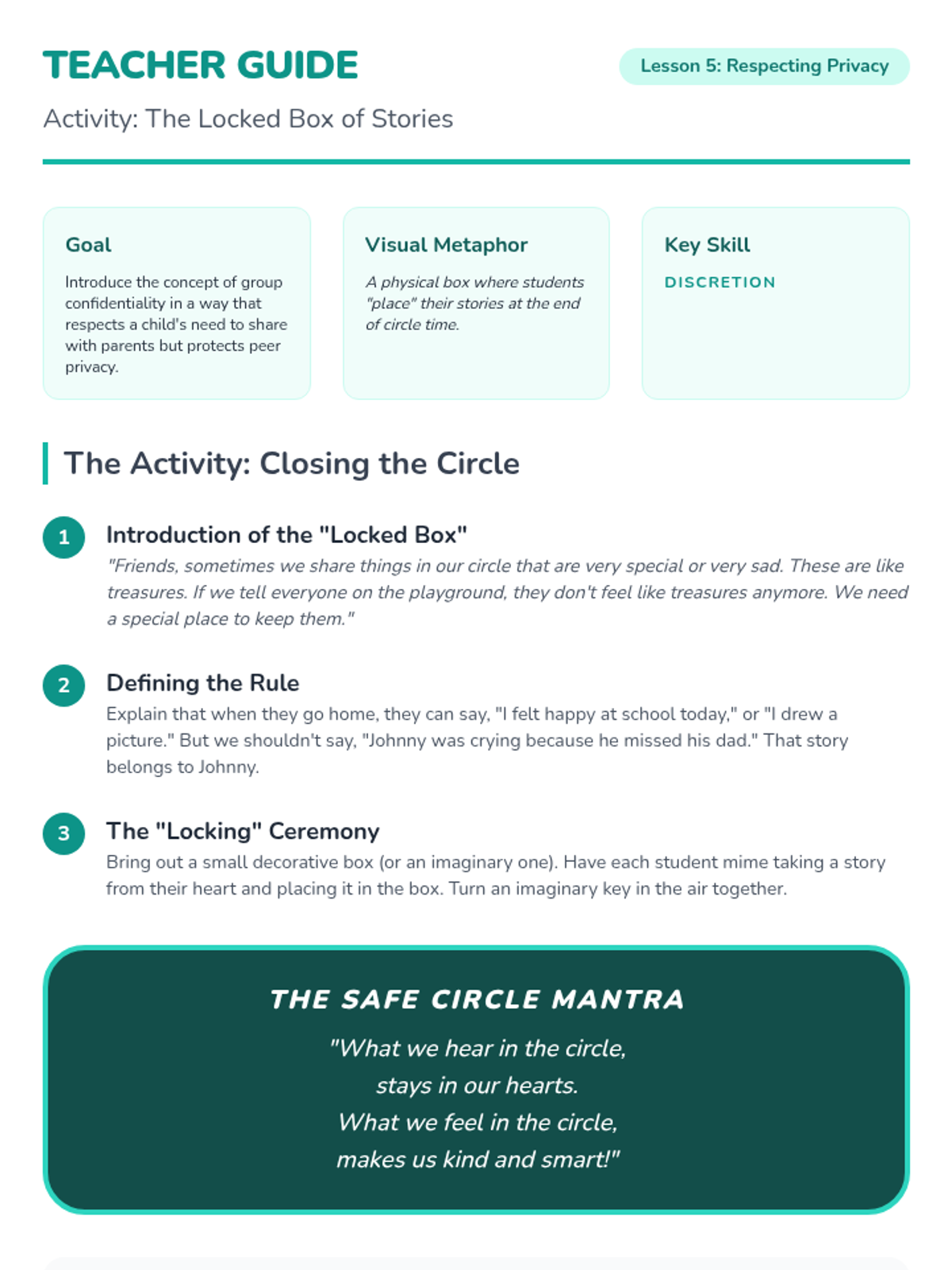
A comprehensive teacher guide for wrapping up the boundaries sequence, focusing on confidentiality and discretion through the 'Locked Box' ceremony.
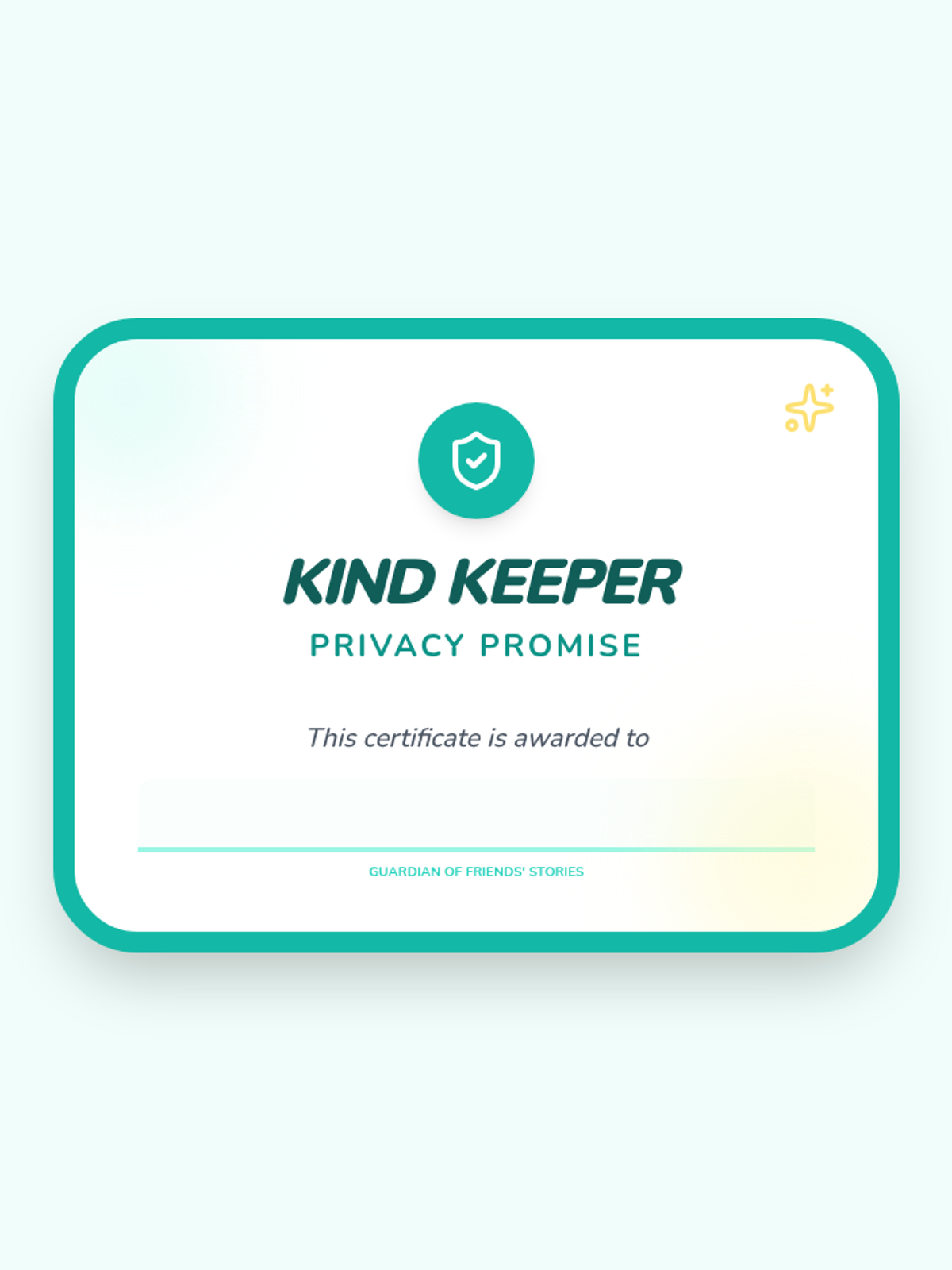
A commemorative 'Kind Keeper' certificate for Pre-K students to celebrate their commitment to respecting privacy and being a supportive group member.
Slides introducing the concept of privacy and confidentiality to Pre-K students through the 'Locked Box' metaphor, emphasizing respect for friends' shared stories.
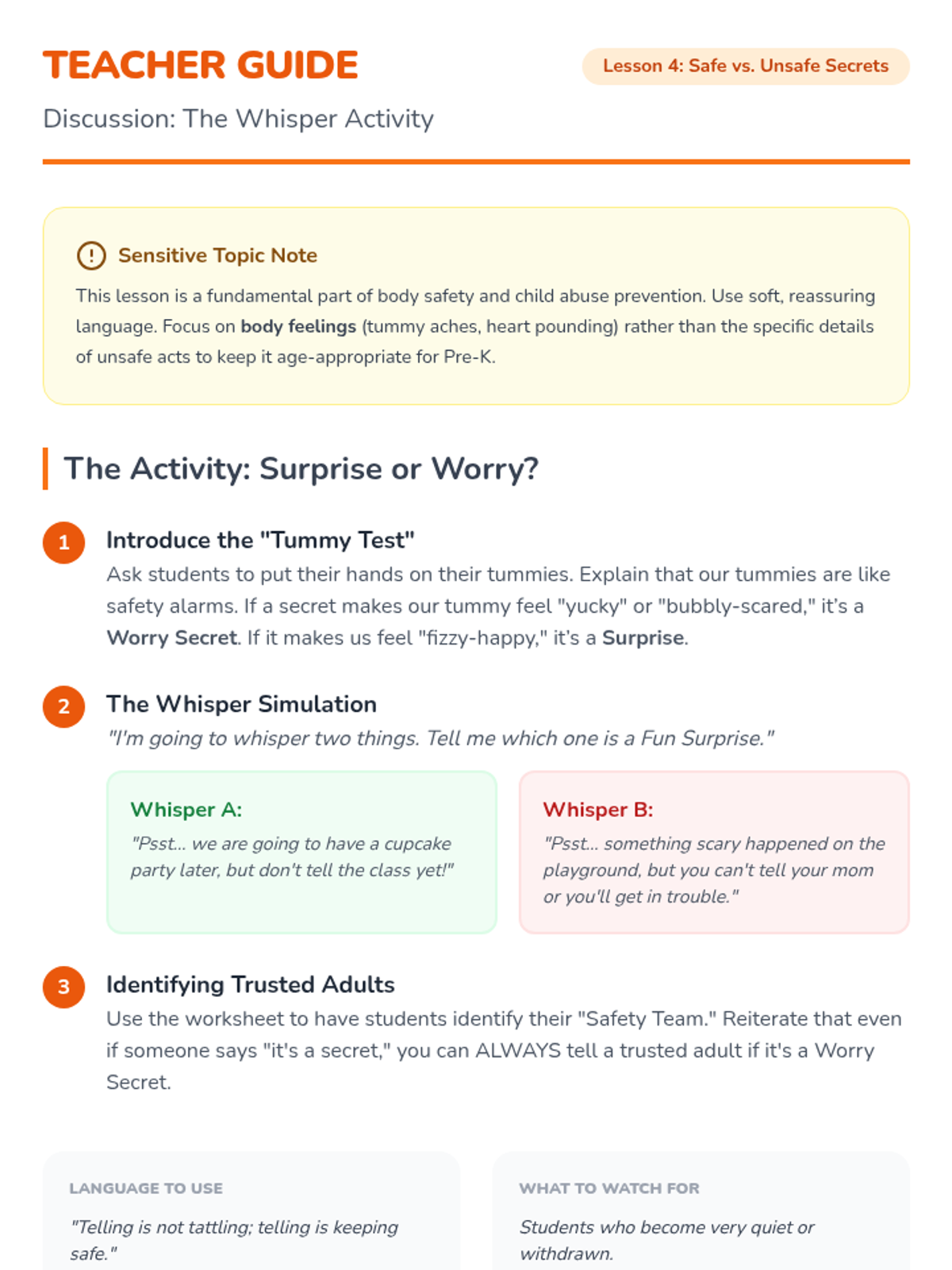
A specialized guide for teachers to lead discussions on safe vs. unsafe secrets, providing scripts for simulations and a framework for identifying body feelings related to safety.
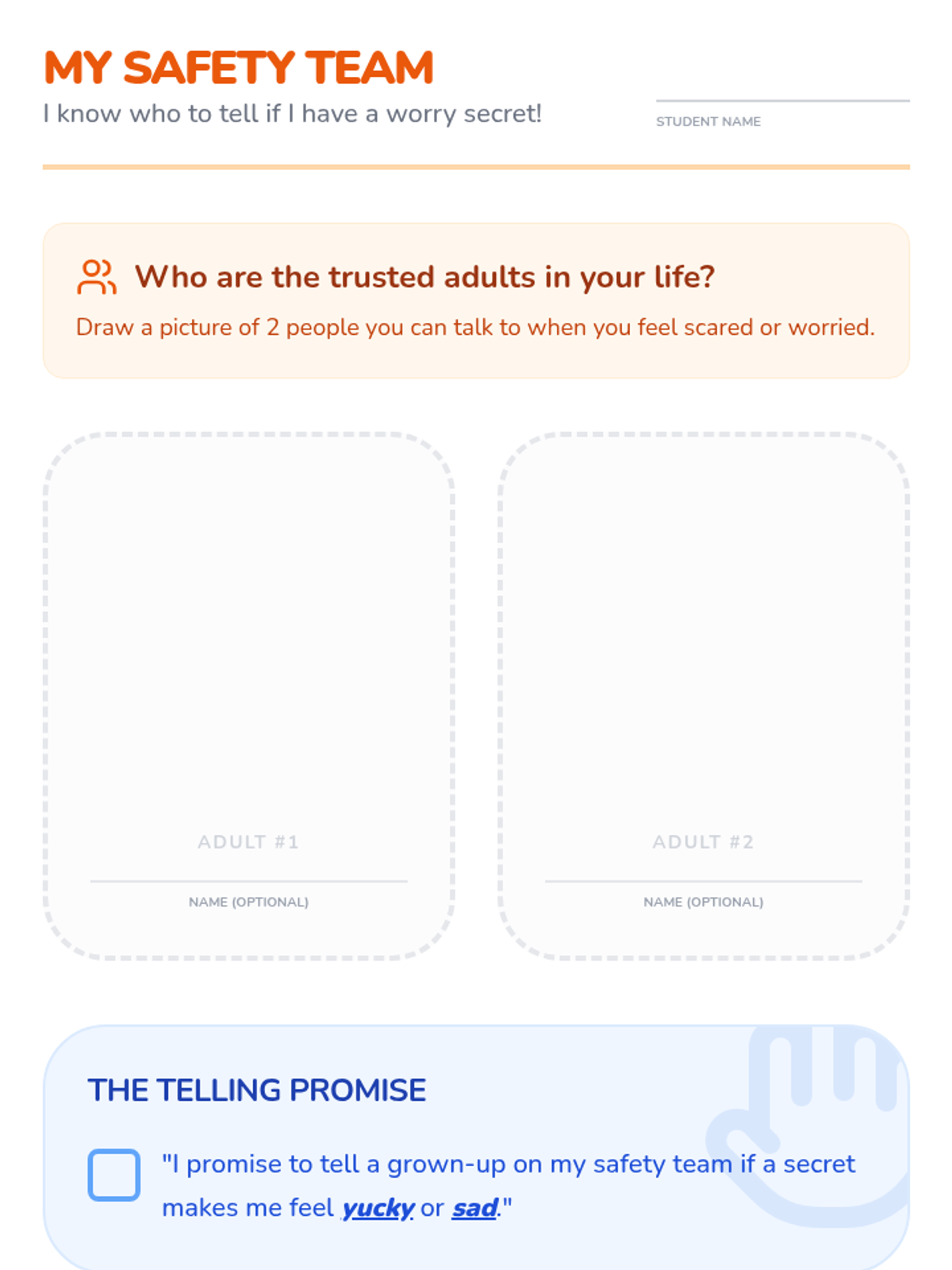
A student worksheet for identifying and drawing 'trusted adults' who make up their safety team, reinforcing the lesson on sharing unsafe secrets.