Functional behavior assessment, data tracking, and de-escalation strategies for managing classroom conduct. Addresses positive reinforcement, token economies, and individualized behavior contracts to support student self-regulation.
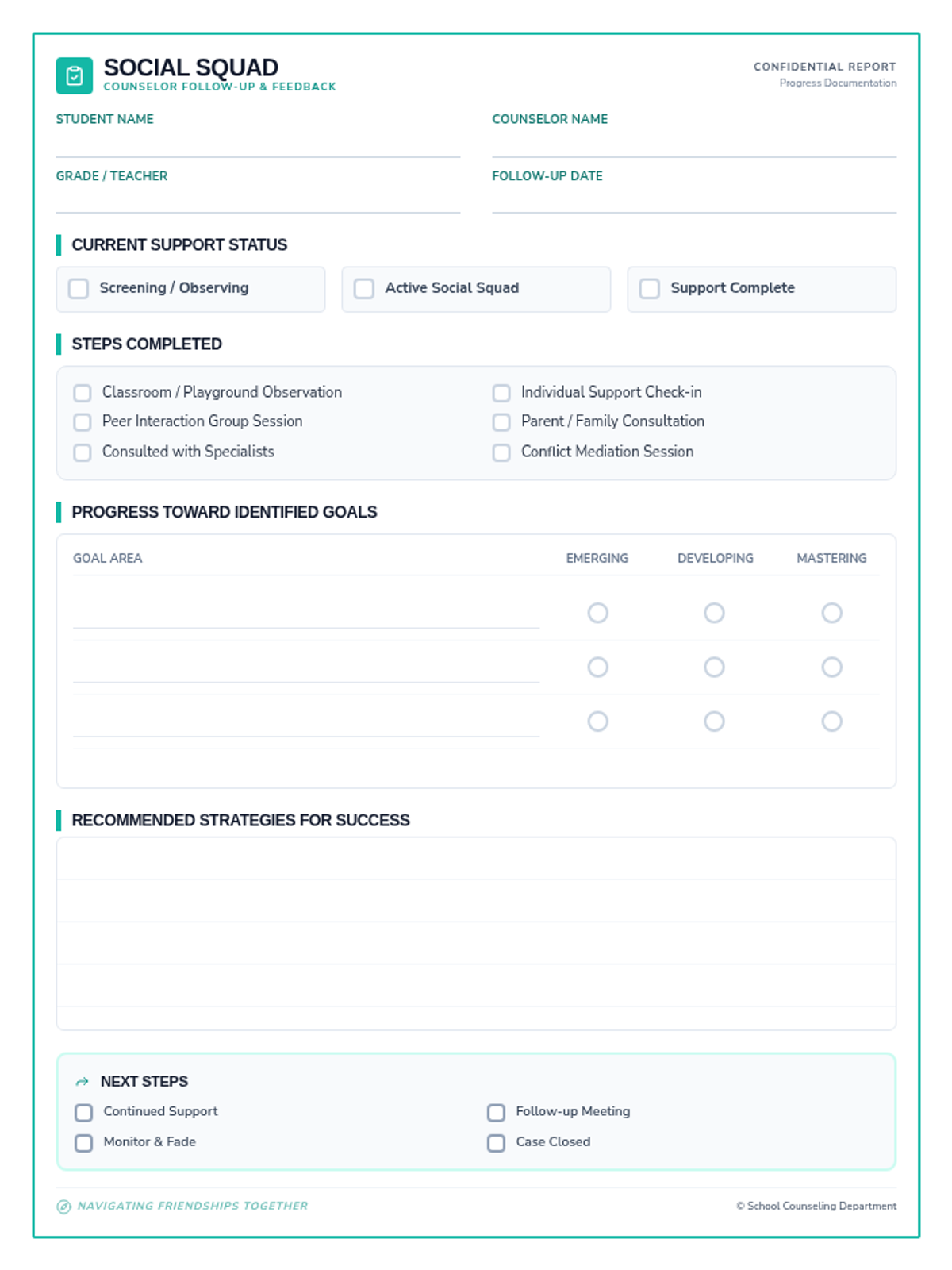
A revised school counselor follow-up and feedback form. It features a new introductory referral sentence, detailed intervention logs with dates and goals, a dedicated 'At this time' status section, and a professional closing message inviting continued collaboration. Now includes 'Outside Referral' in next steps.
English presentation slides for Lesson 2, explaining how to set up and maintain a sticker chart reward system to motivate school attendance and positive routines.
English presentation slides for Lesson 1, focusing on validating school anxiety while maintaining firm attendance boundaries. Includes practical scripts and morning routine tips.
Spanish presentation slides for Lesson 2, explaining how to set up and maintain a sticker chart reward system to motivate school attendance and positive routines.
Spanish presentation slides for Lesson 1, focusing on validating school anxiety while maintaining firm attendance boundaries. Includes practical scripts and morning routine tips.
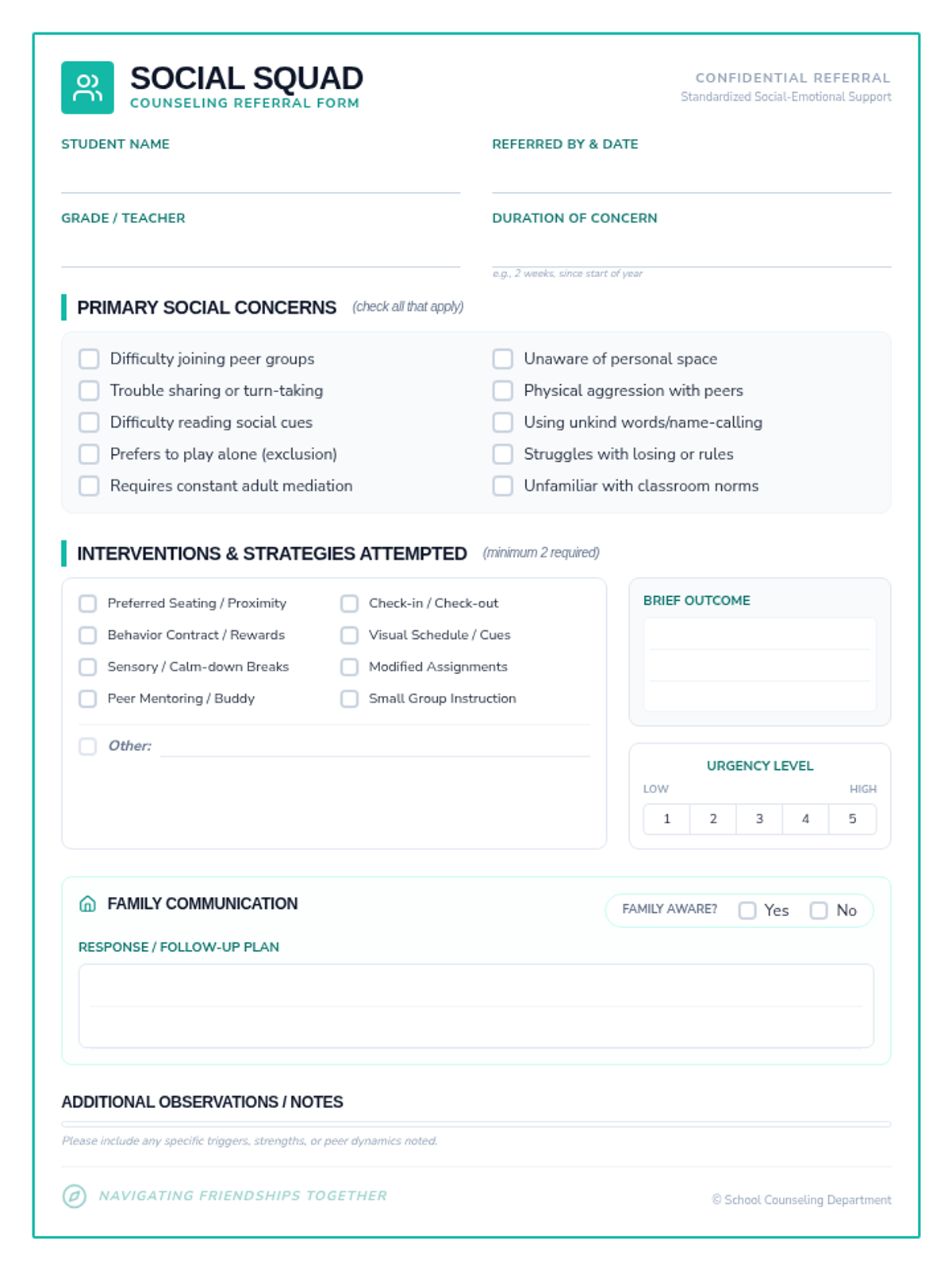
A comprehensive school counseling referral form updated with a dedicated 'Student Goals' section and restored full checklists for primary concerns and interventions. The layout ensures 'Additional Observations' and 'Family Communication' are equally sized, optimizing space for a one-page printable format.
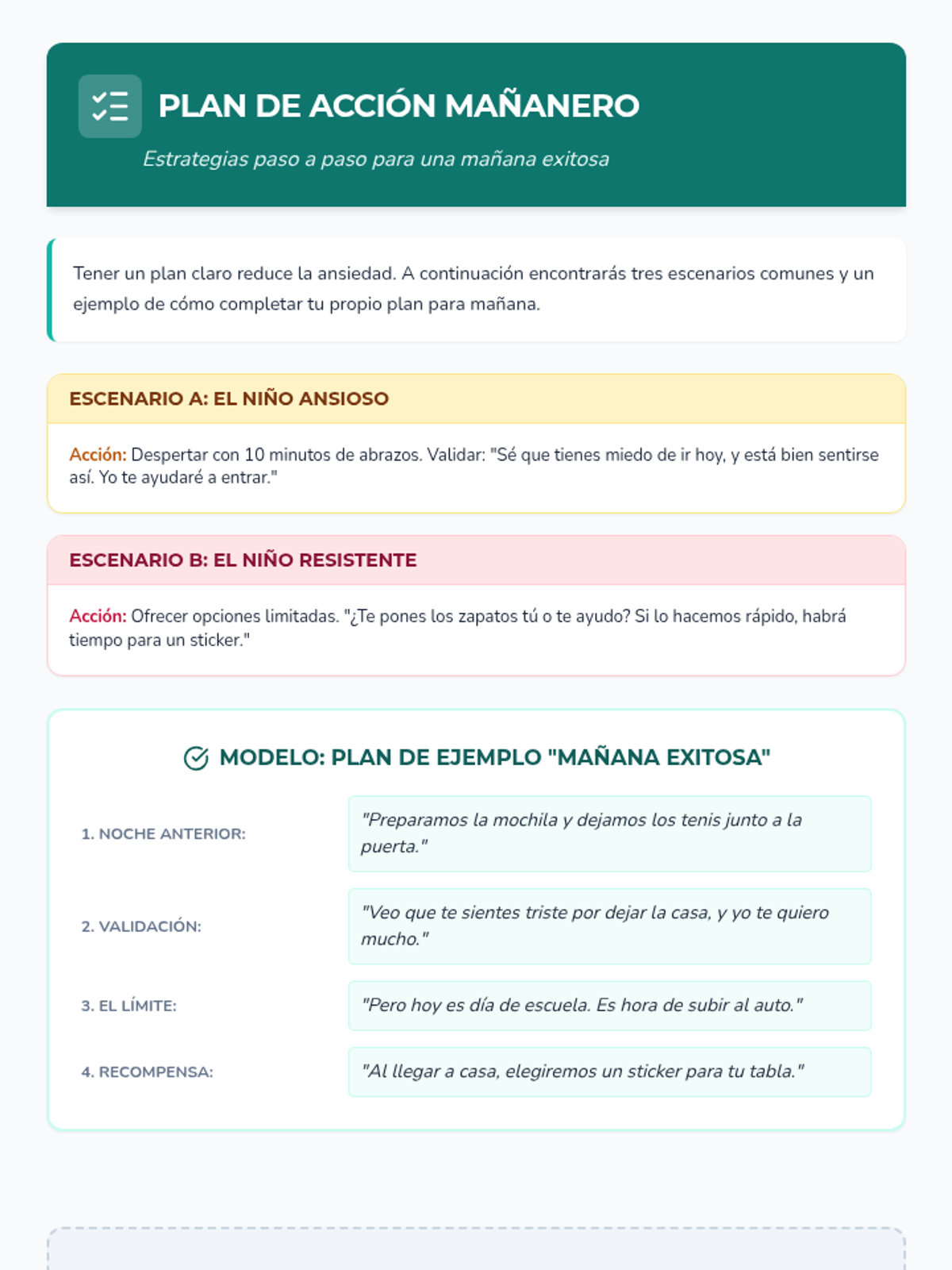
A Spanish action plan guide for parents providing specific scenarios and steps for handling morning routines and school refusal, including a customizable template with plenty of space for notes.
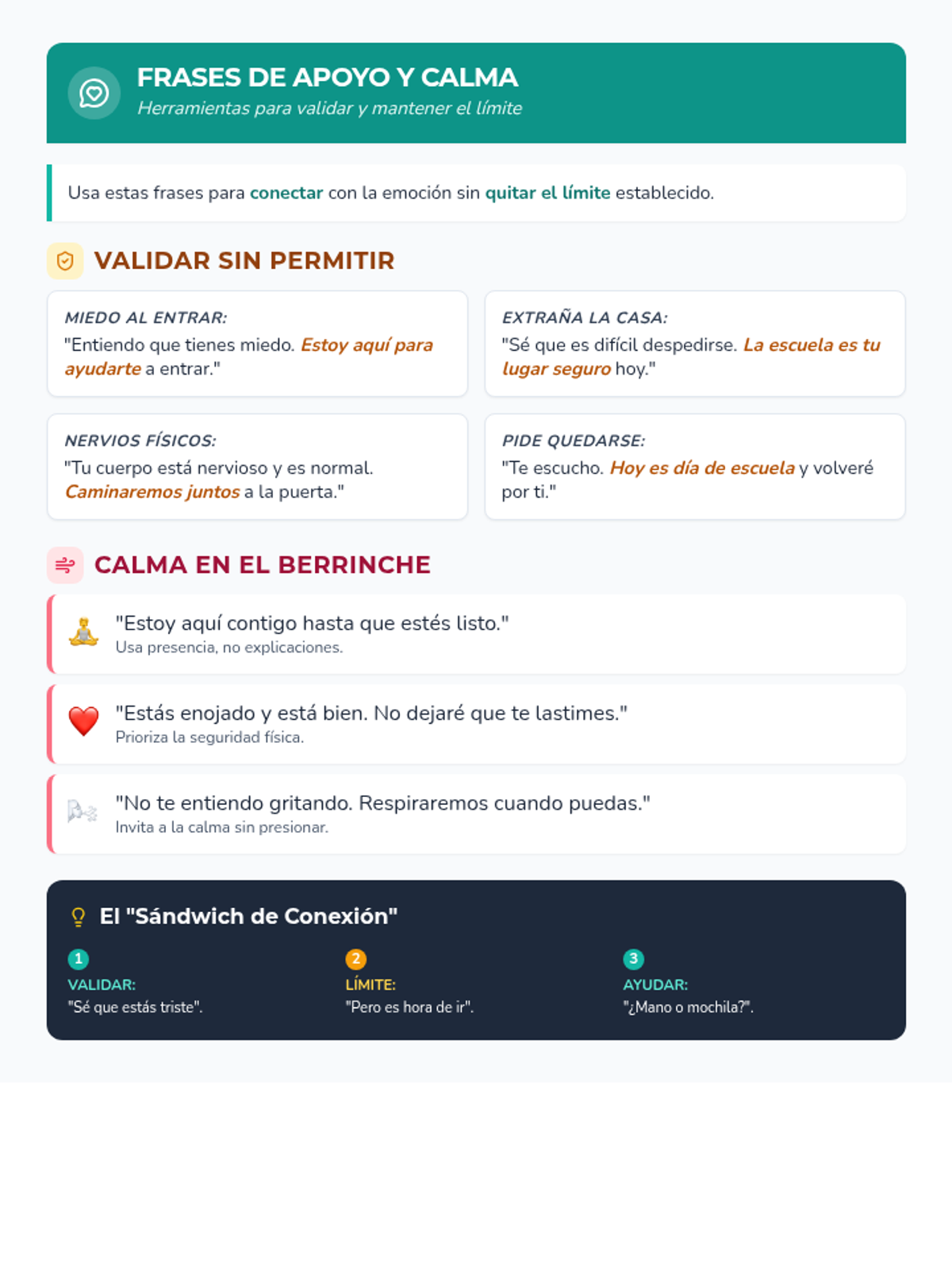
A Spanish reference sheet for parents featuring validating phrases that maintain boundaries for school attendance, along with soothing scripts for managing childhood tantrums.
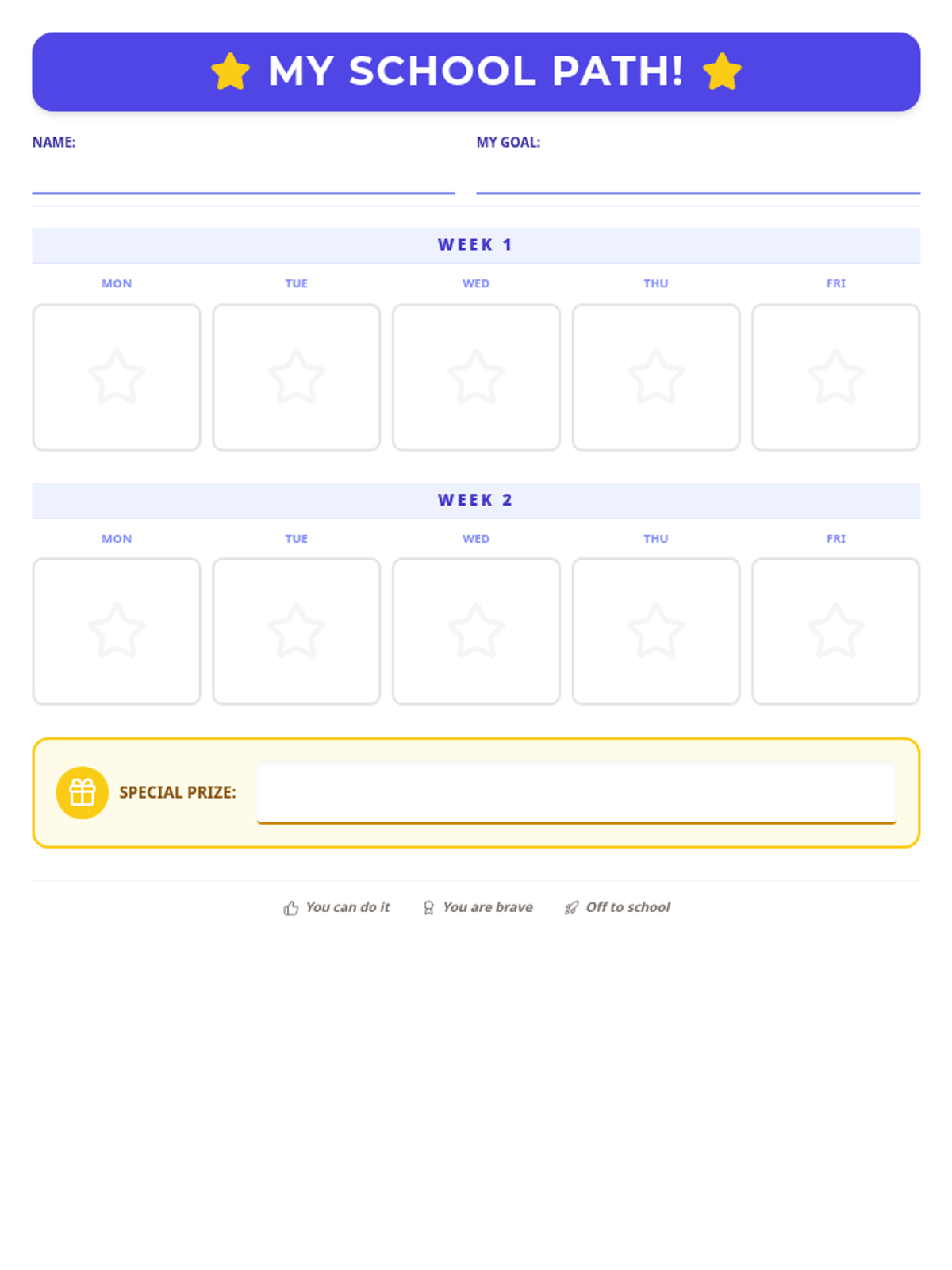
A child-friendly English sticker chart to track school attendance and morning routine success for two weeks.
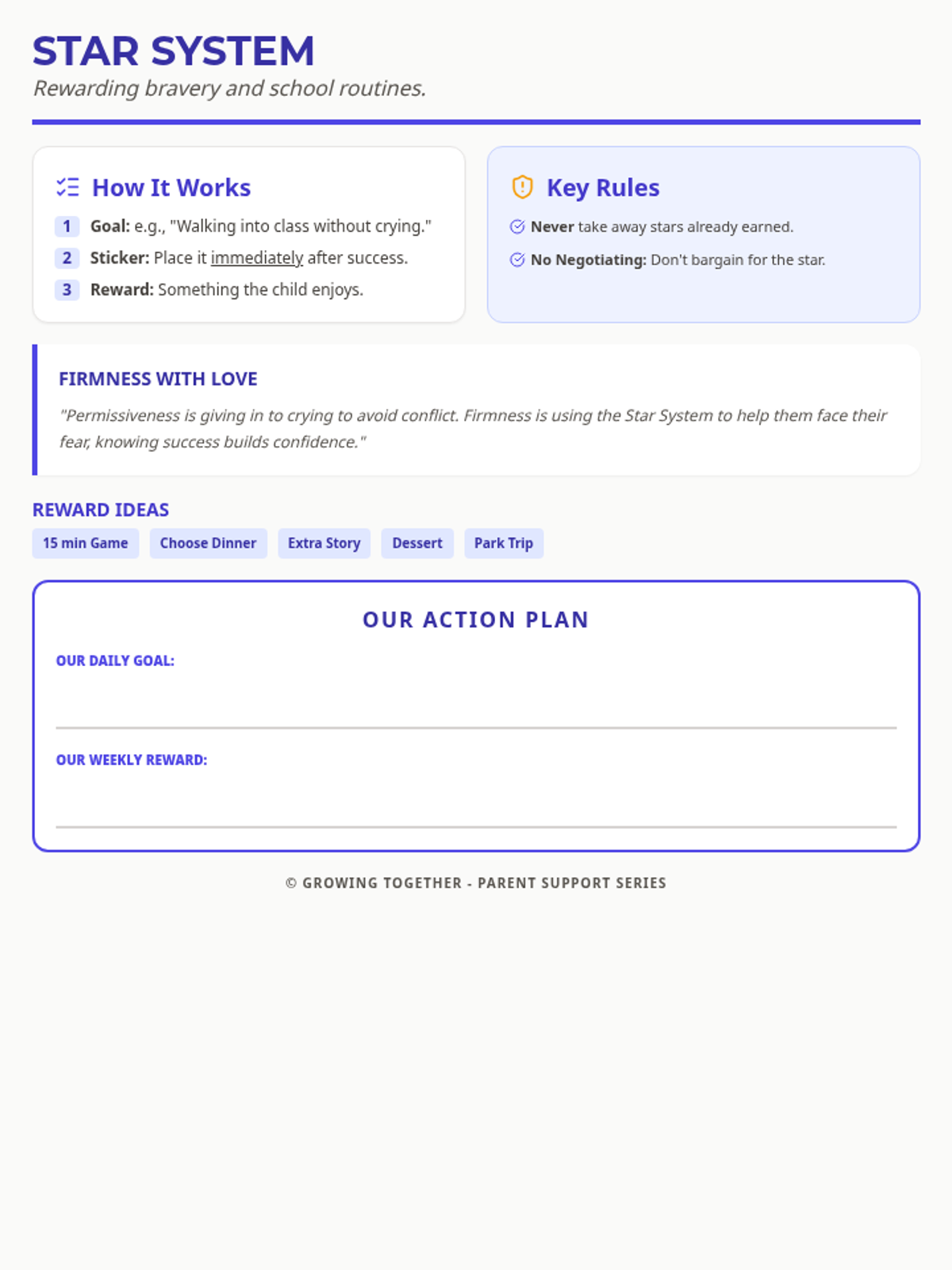
An English guide for parents on how to effectively set up and use a sticker chart system to motivate school attendance and morning routines.
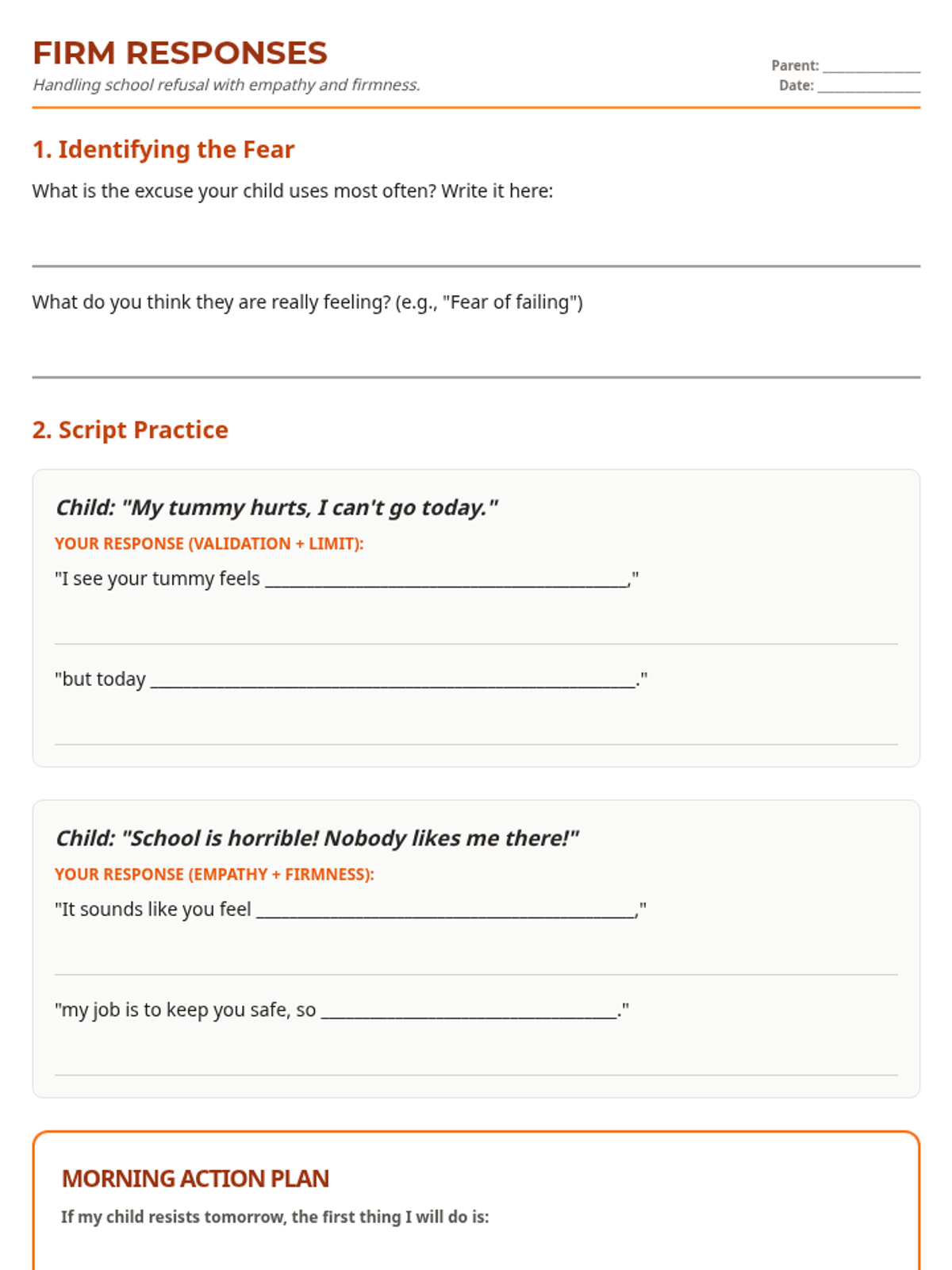
An English worksheet for parents to practice drafting responses to their child's school refusal, focusing on validation and setting limits.
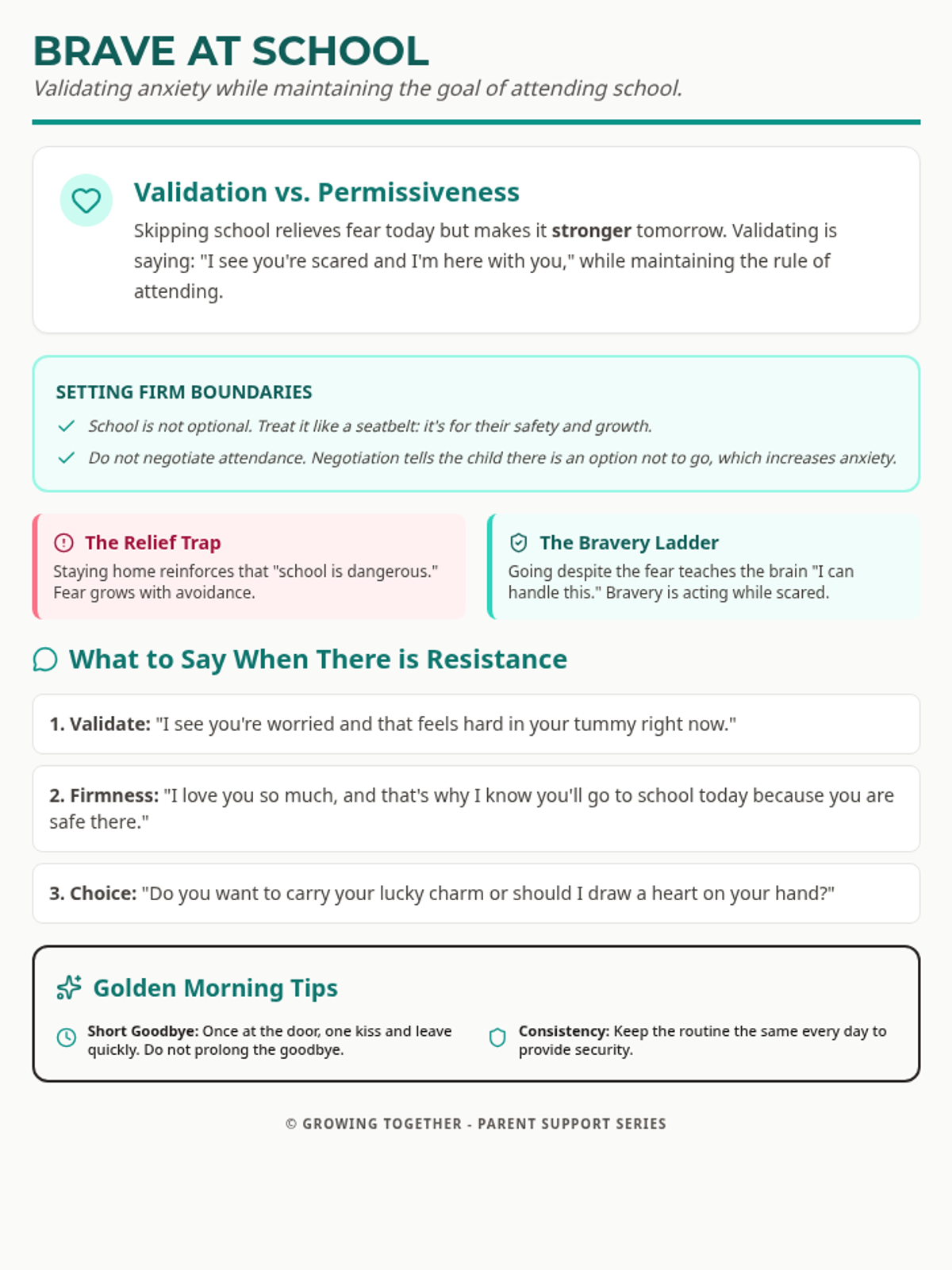
An English parent guide on how to validate a child's anxiety while maintaining firm school attendance boundaries, including sample scripts and morning tips.
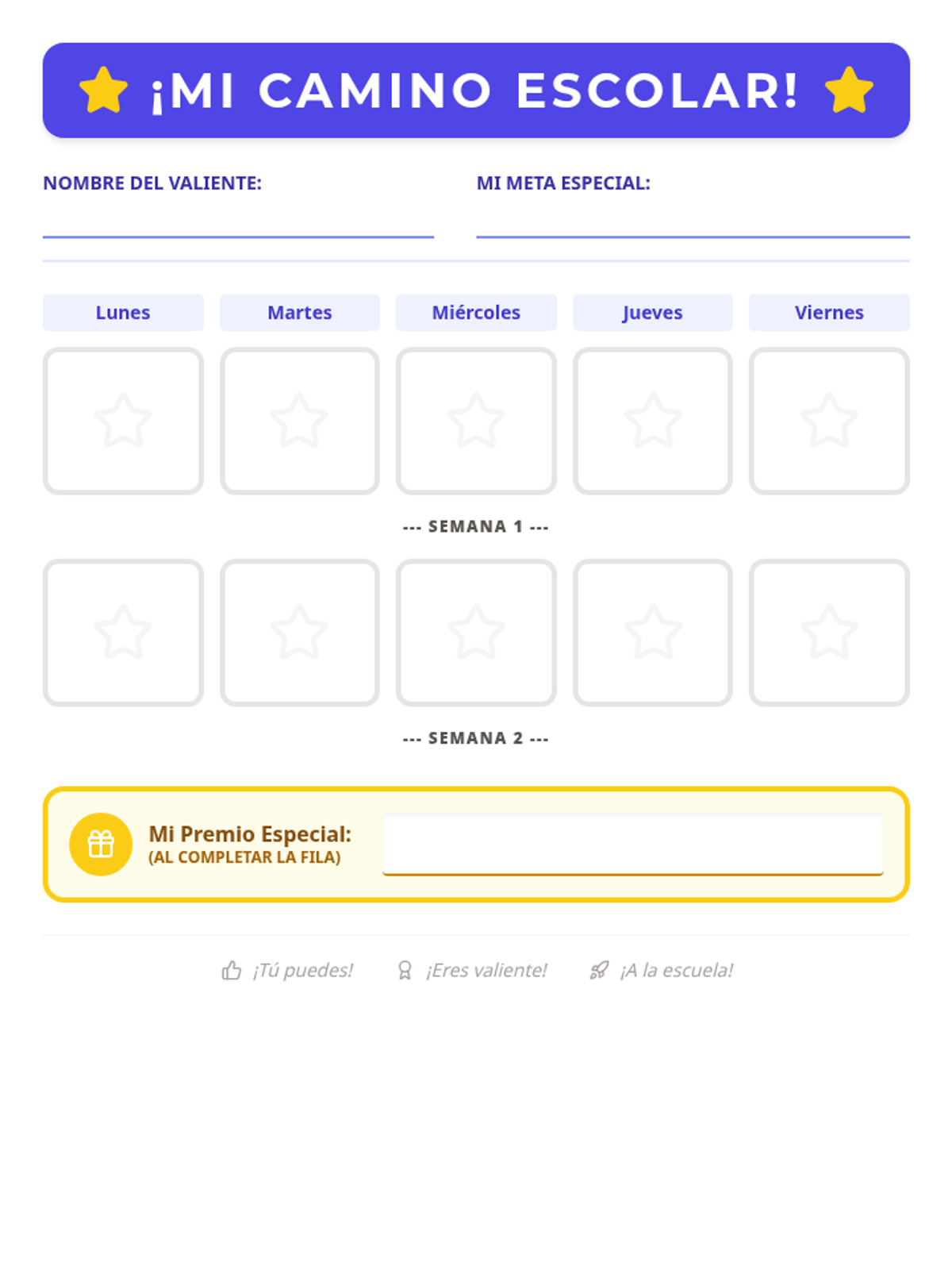
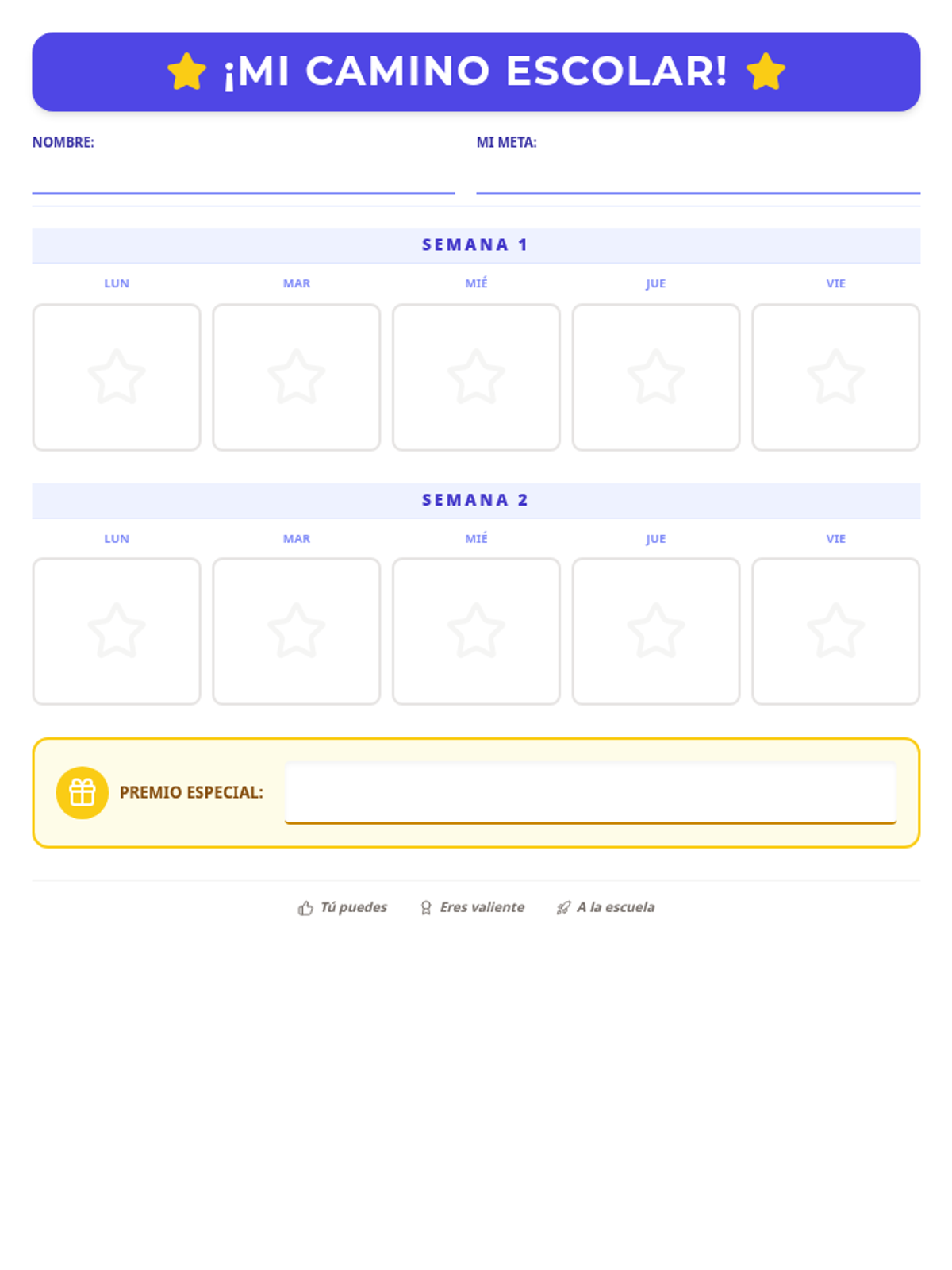
A child-friendly Spanish sticker chart to track school attendance and morning routine success for two weeks.
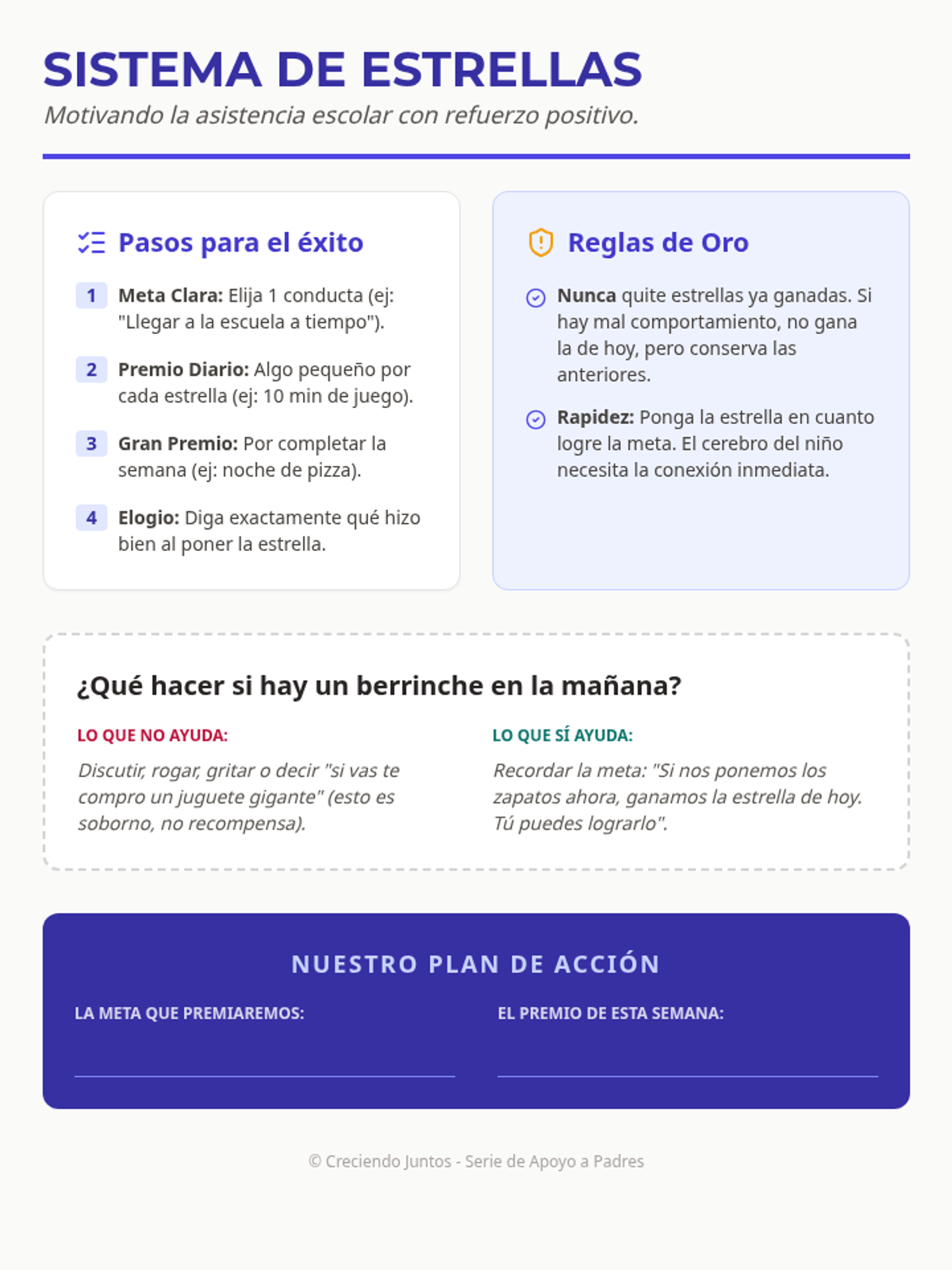
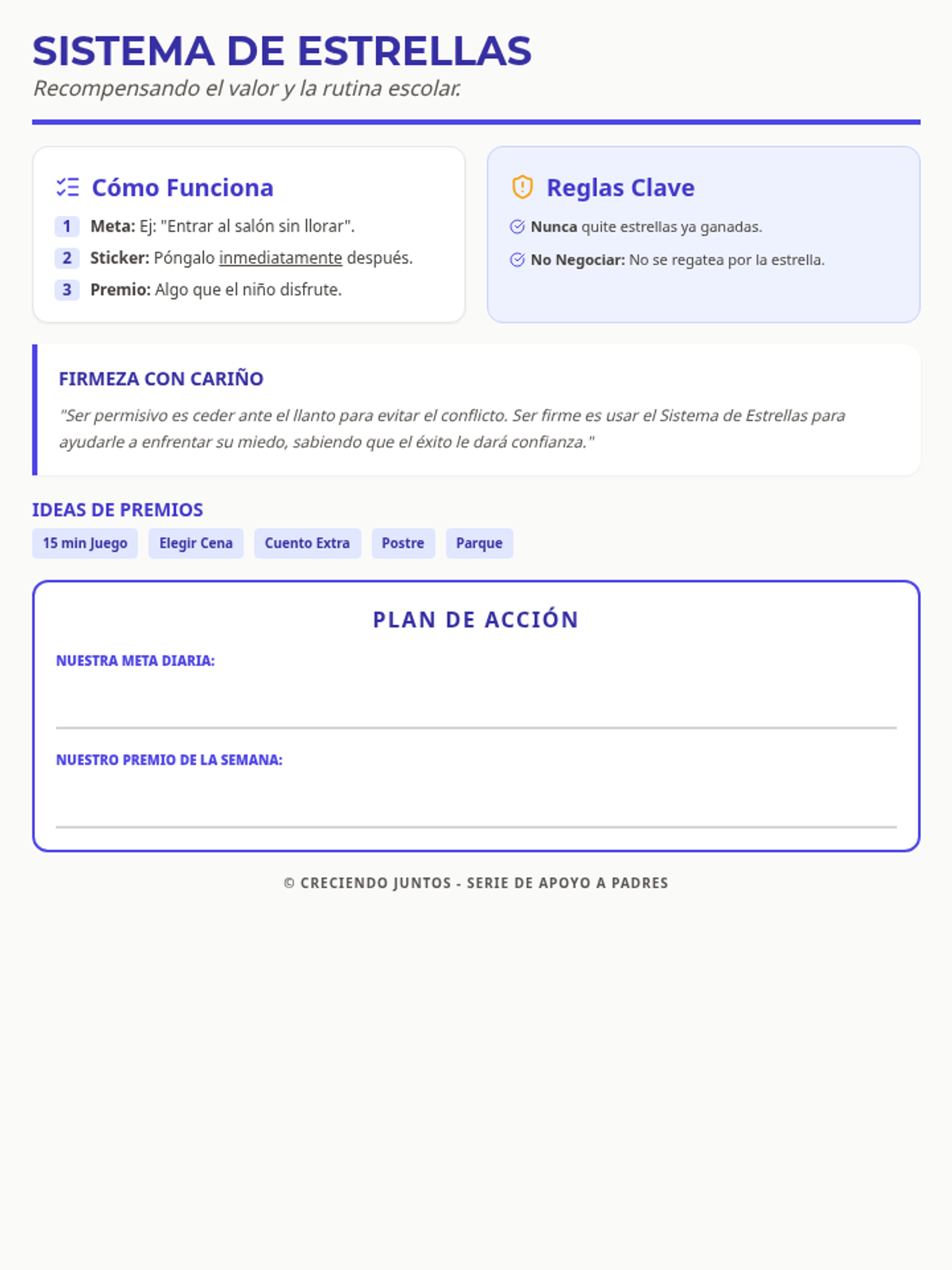
A Spanish guide for parents on how to effectively set up and use a sticker chart system to motivate school attendance and morning routines.
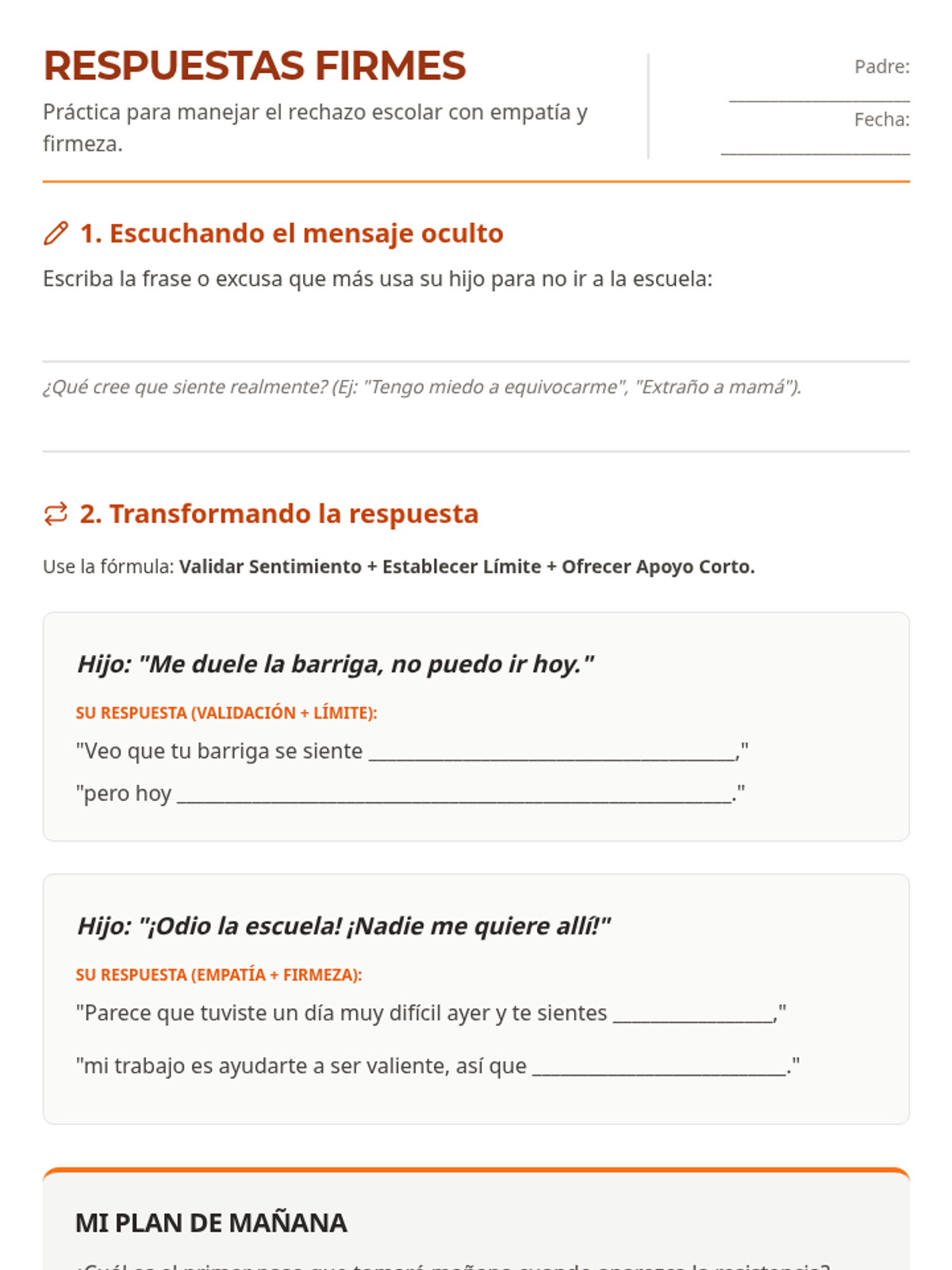
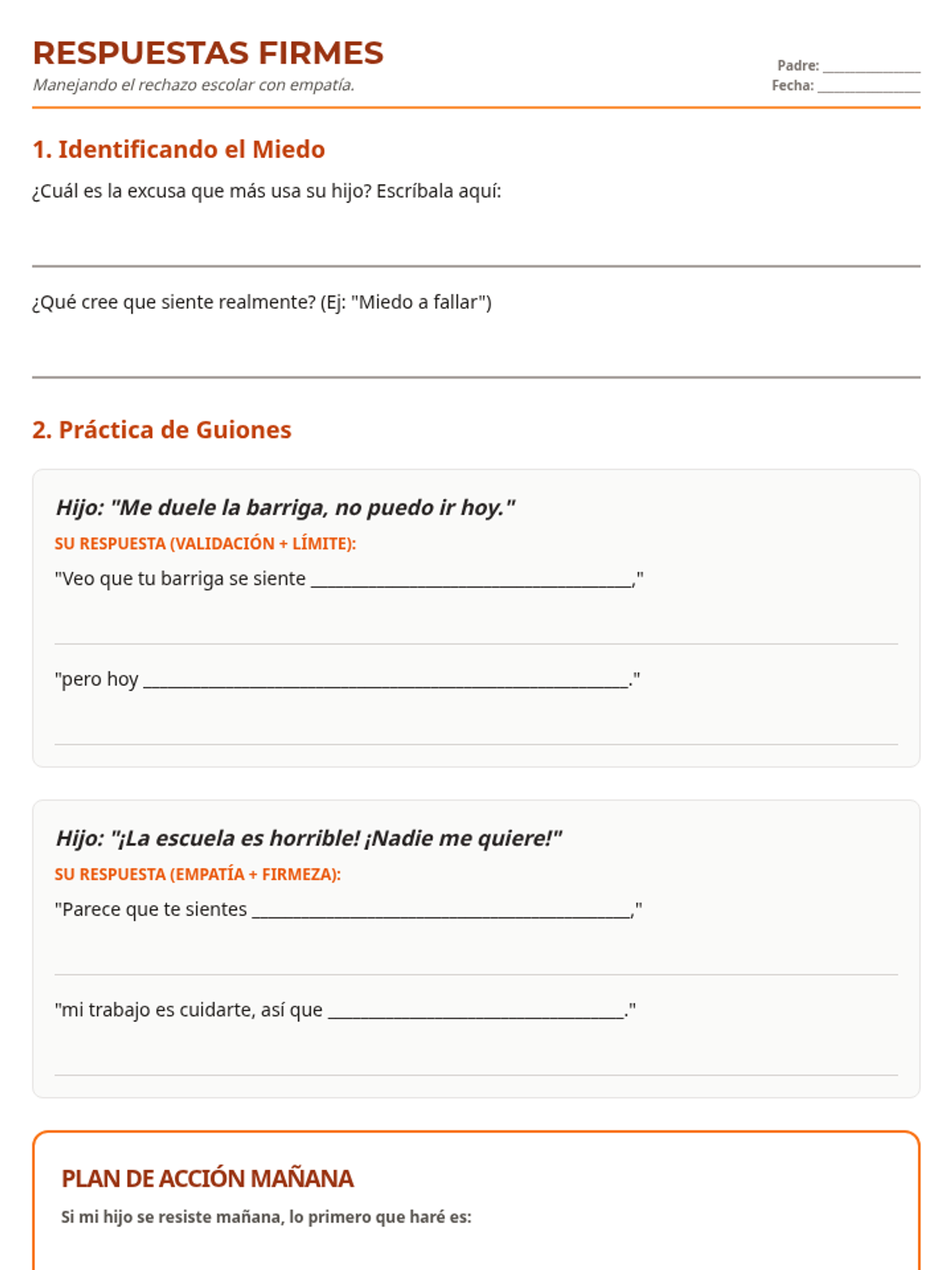
A Spanish worksheet for parents to practice drafting responses to their child's school refusal, focusing on validation and setting limits.
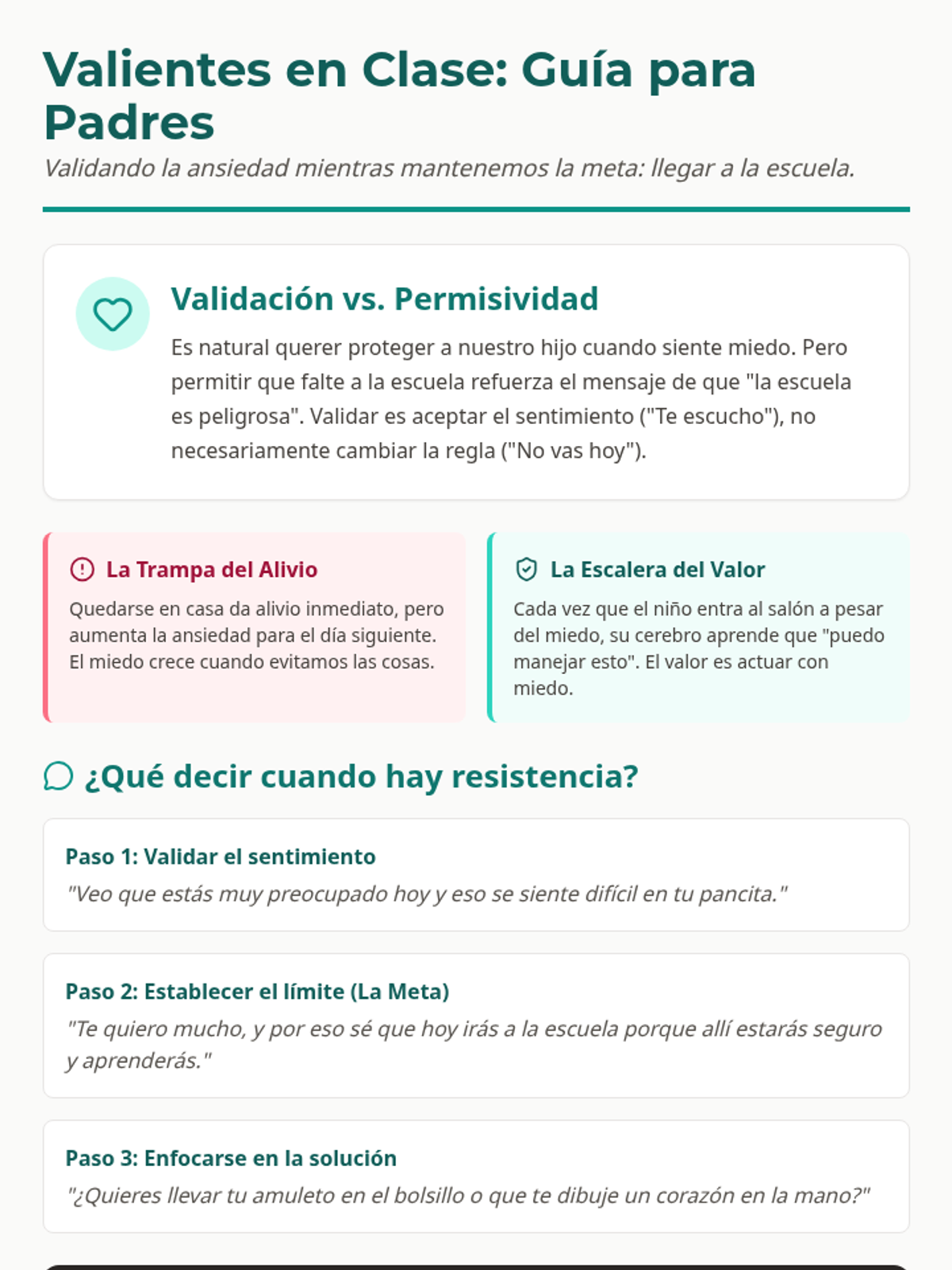
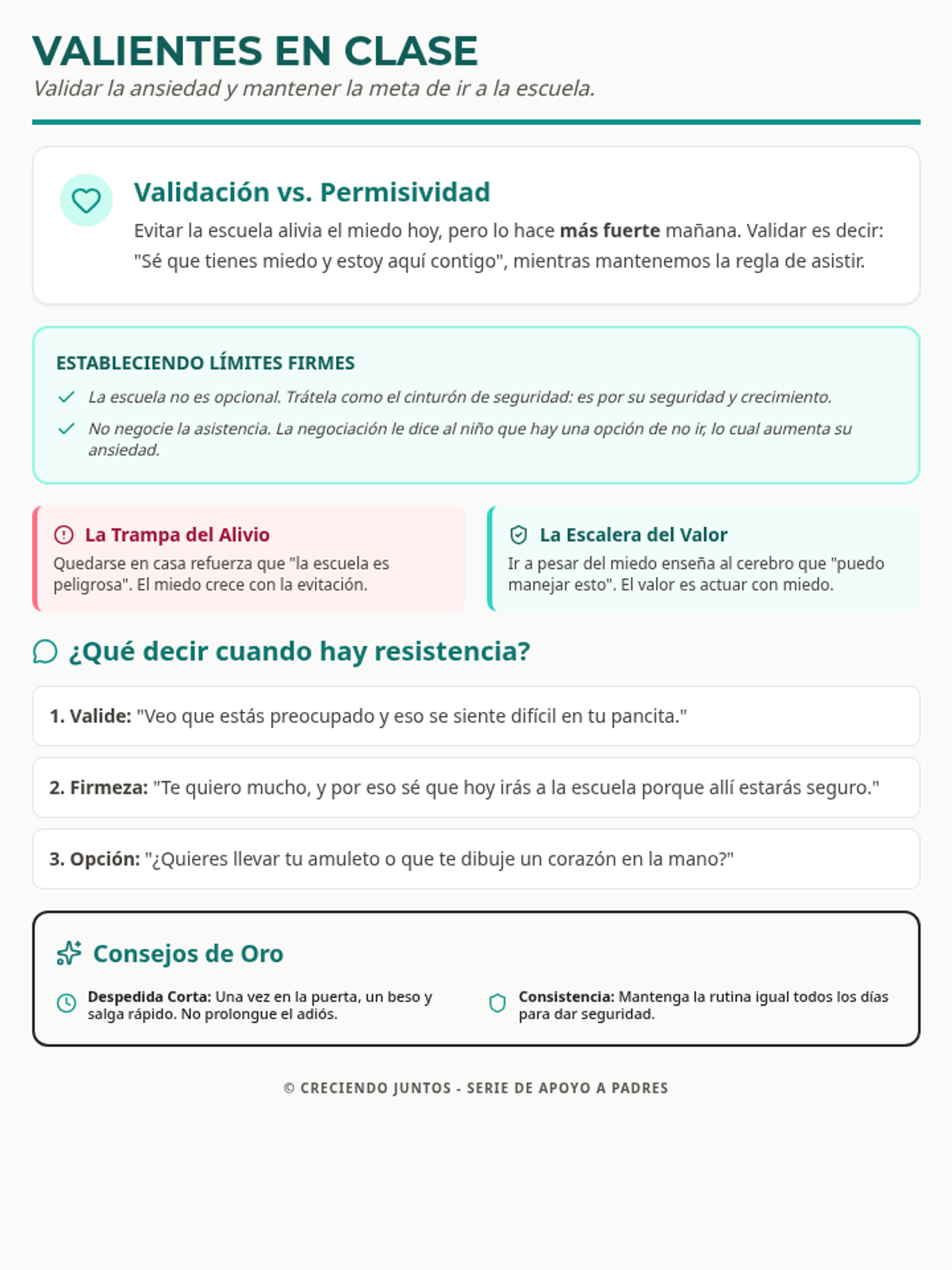
A Spanish parent guide on how to validate a child's anxiety while maintaining firm school attendance boundaries, including sample scripts and morning tips.
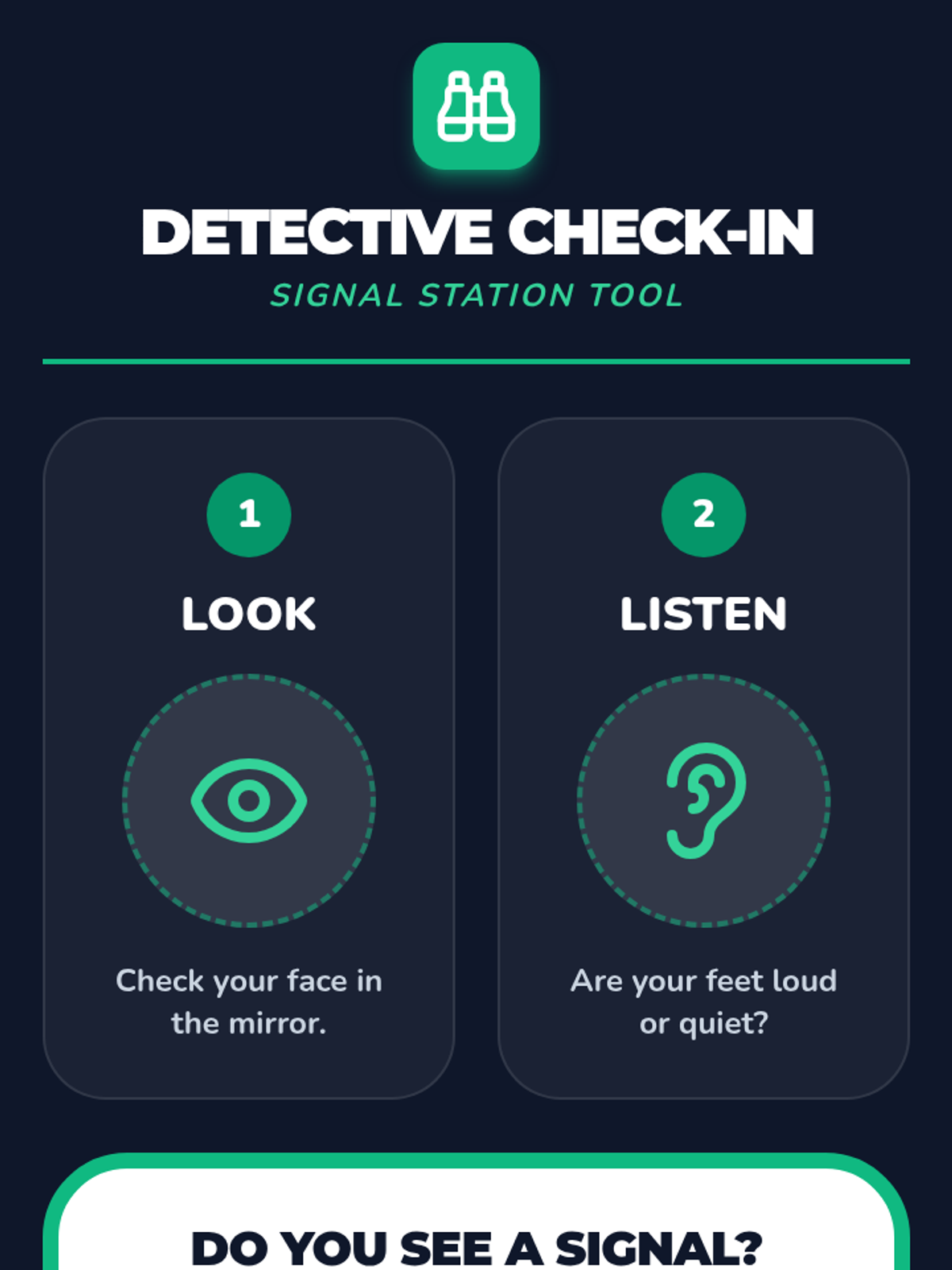
A visual anchor for the classroom Signal Station. Helps Pre-K students walk through the three-step process of checking their face and feet, identifying an animal body signal, and choosing a self-regulation strategy.
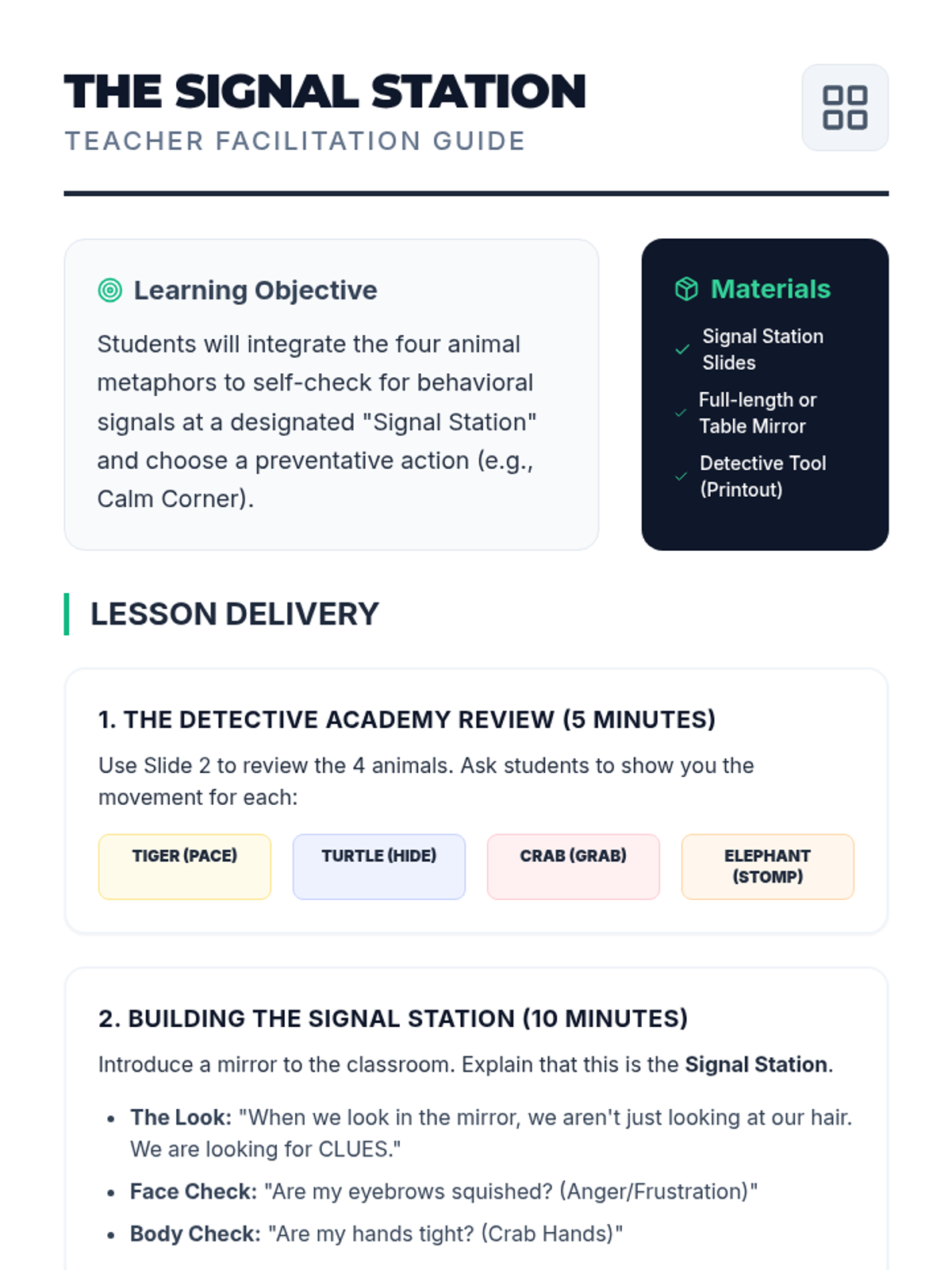
A facilitation guide for teachers to lead Lesson 5. Includes learning objectives, implementation strategies for the classroom 'Signal Station', role-play scenarios, and long-term normalization tips.
A 6-slide visual presentation for Pre-K students exploring the concept of the 'Signal Station' as a way to self-check for behavioral warning signs. Includes a review of all animal metaphors and actionable choices for self-regulation.
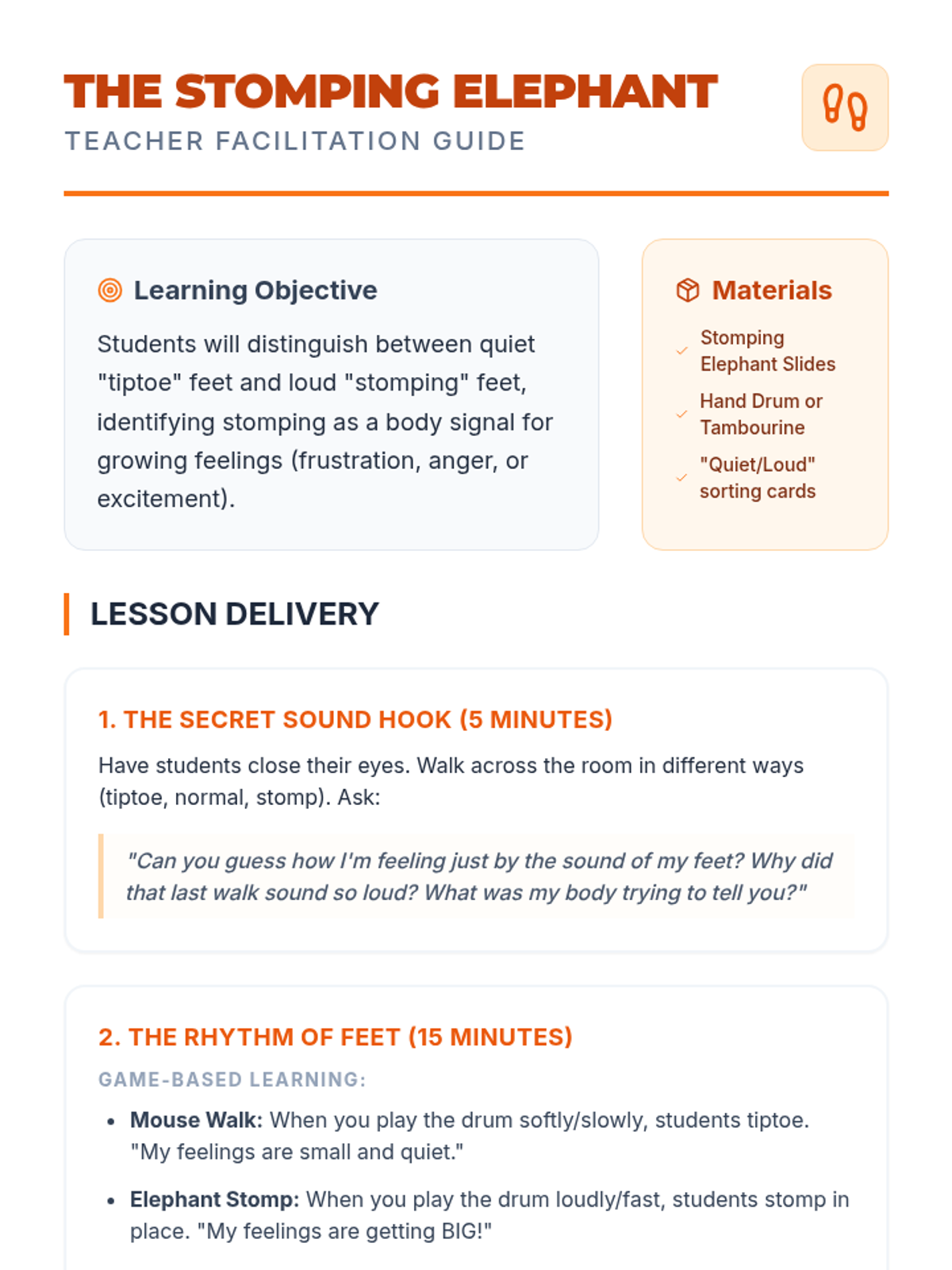
A facilitation guide for teachers to lead Lesson 4. Includes learning objectives, hook demonstration instructions for auditory discrimination, "The Rhythm of Feet" game, and behavioral self-check strategies.
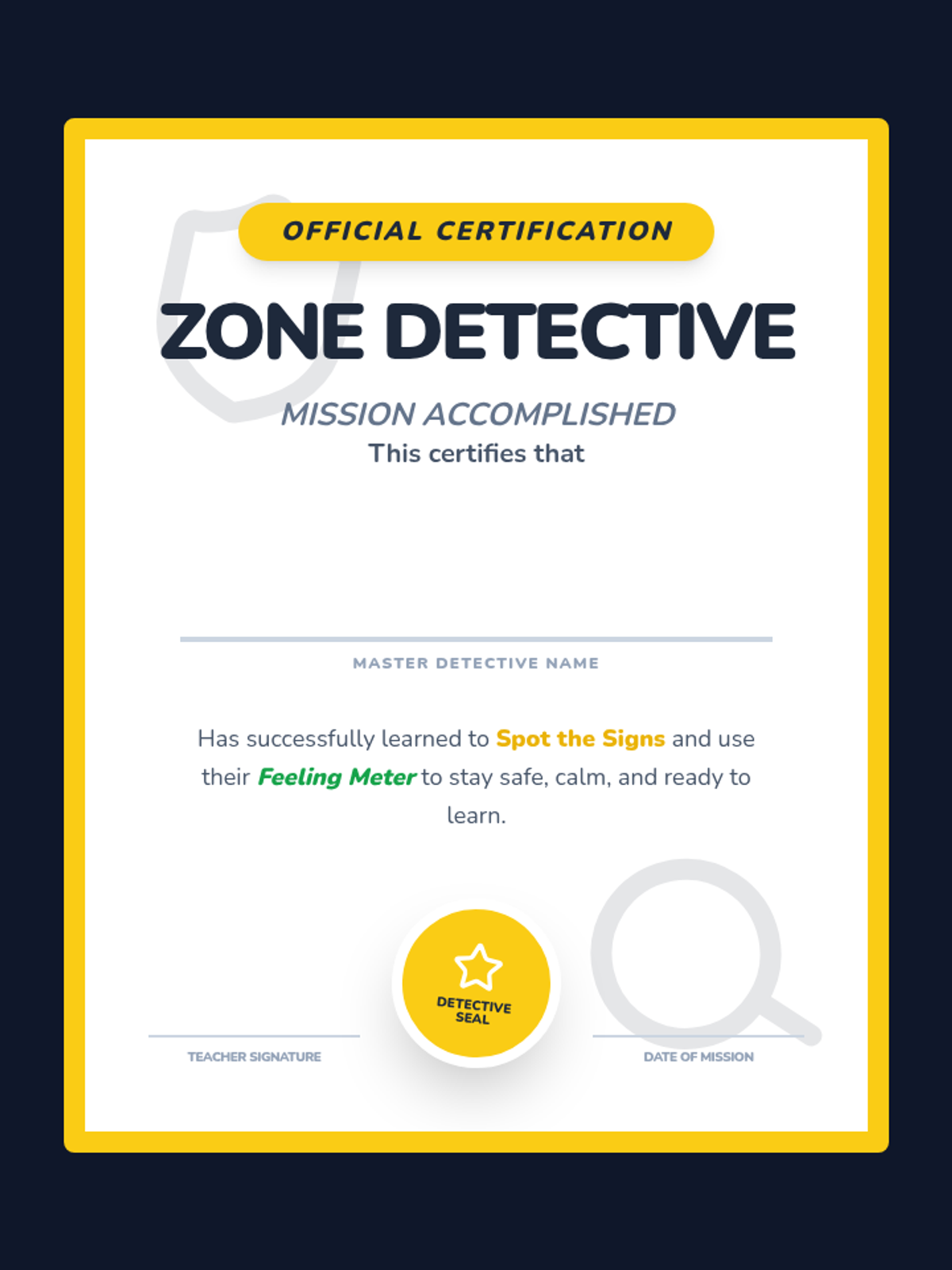
A fun "Official Zone Detective" certificate for completion of the Feeling Zone Detectives sequence.
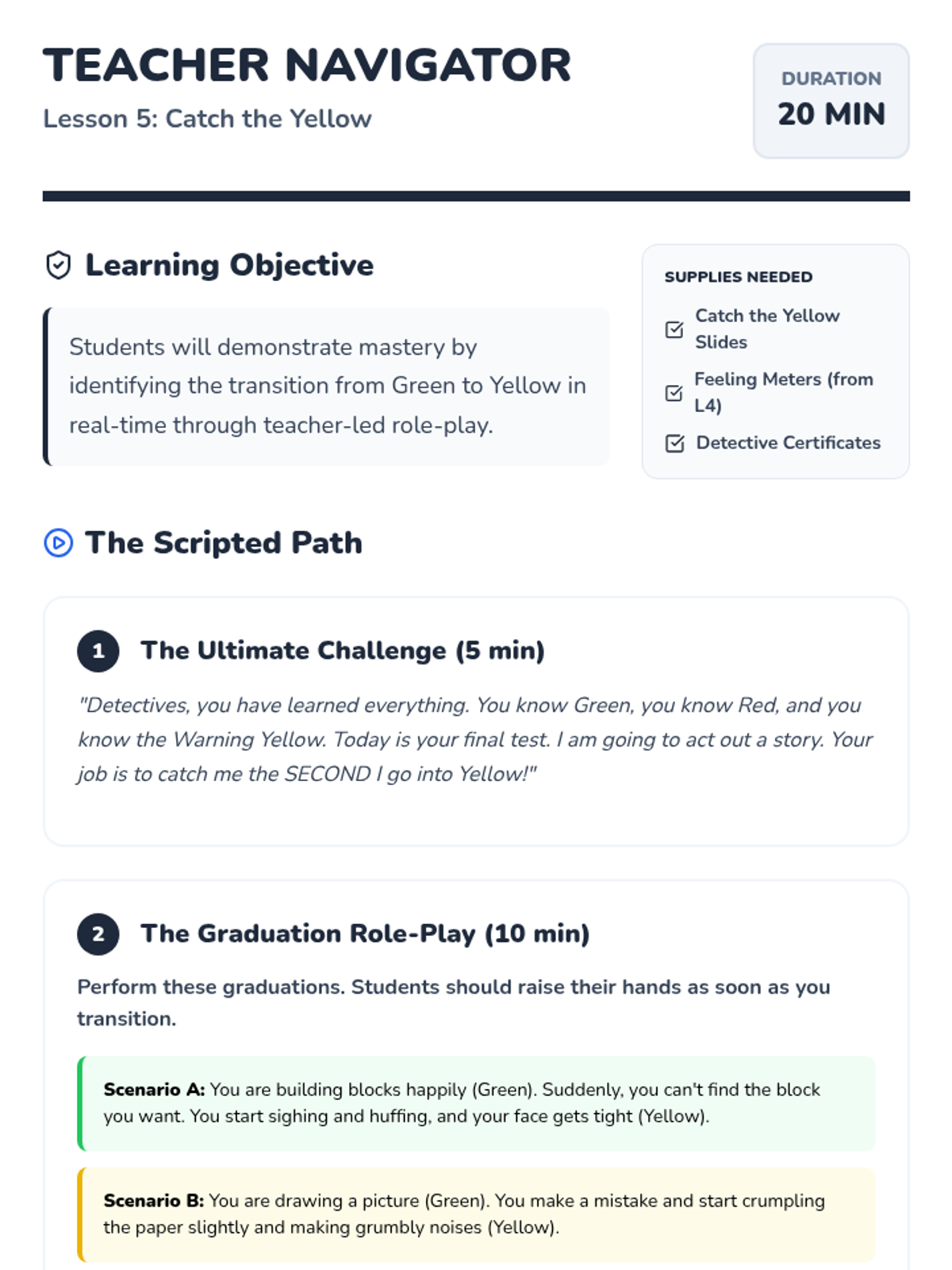
A comprehensive instructional guide for Lesson 5, including objectives, scripted prompts, and role-play scenarios for the final challenge.
A 6-slide visual presentation for Pre-K students exploring the concept of 'loud footsteps' through the metaphor of a stomping elephant. Teaches students to distinguish between quiet and loud feet as a signal of growing feelings.
Visual introduction slides for Lesson 5, focusing on the "Catch the Yellow" challenge and mastery review.
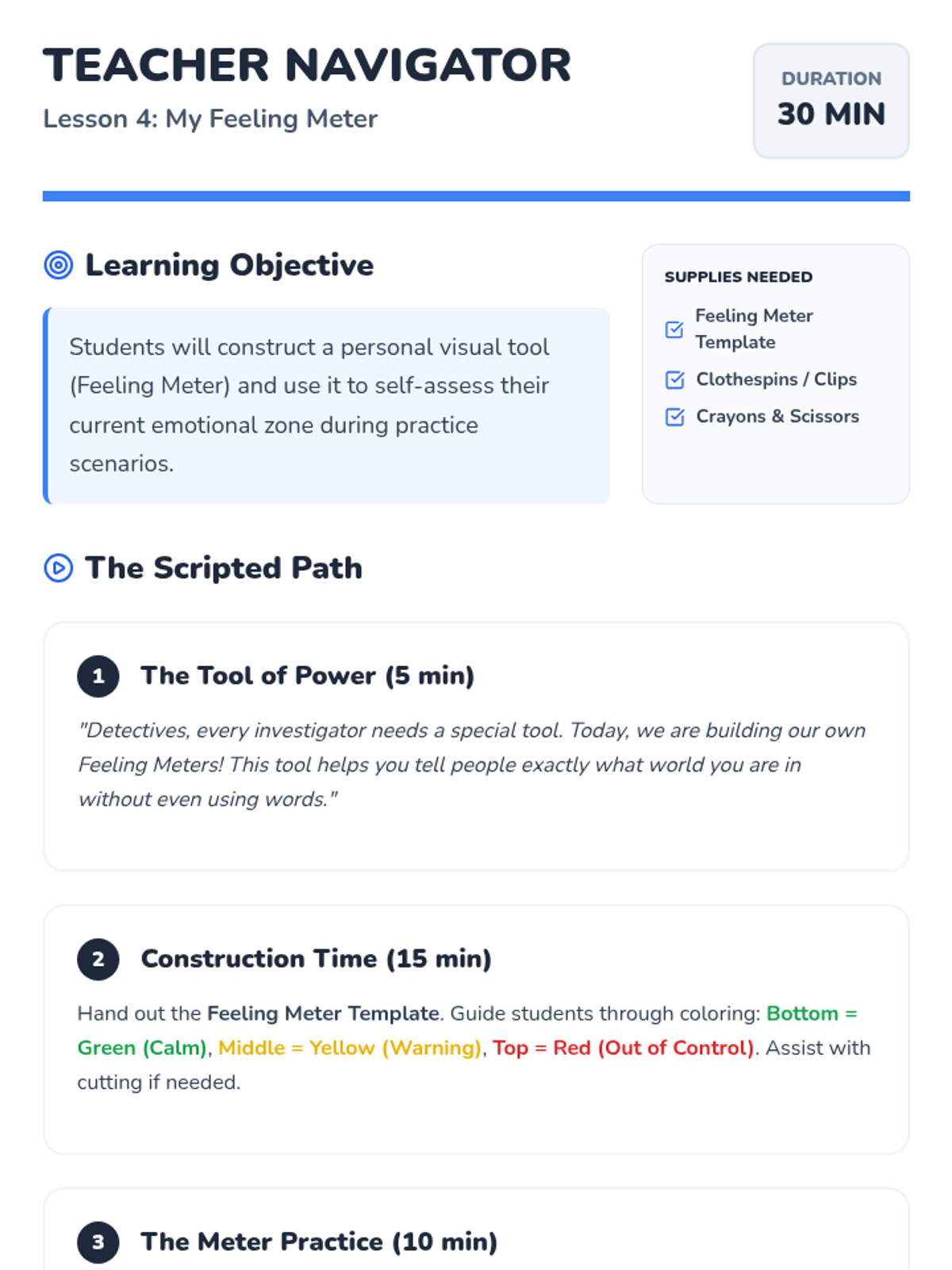
A comprehensive instructional guide for Lesson 4, including assembly instructions and practice scenarios for the Feeling Meter.
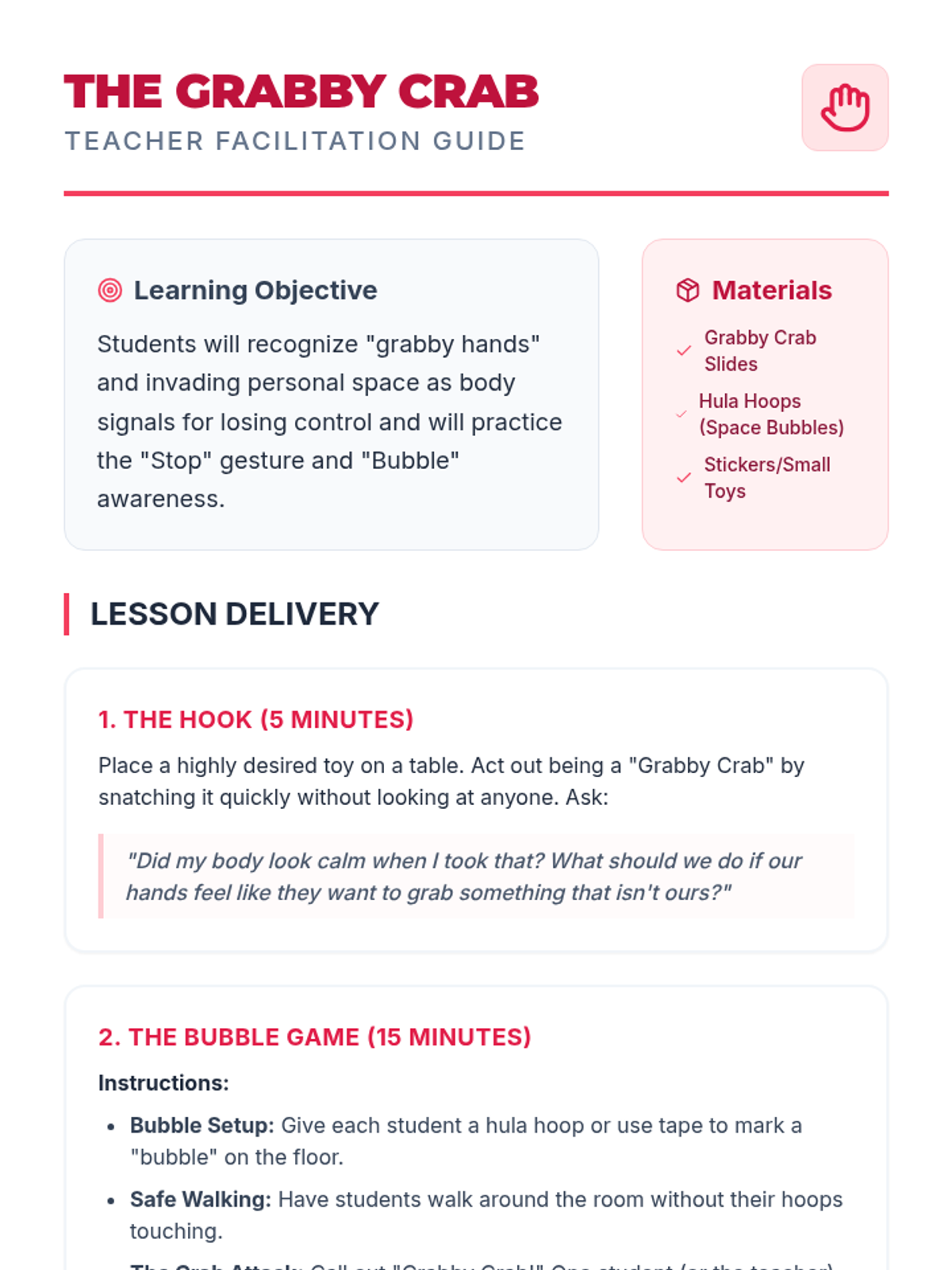
A facilitation guide for teachers to lead Lesson 3. Includes learning objectives, hook demonstration, the "Bubble Game" activity instructions, and behavioral anchor strategies for impulsive hands.
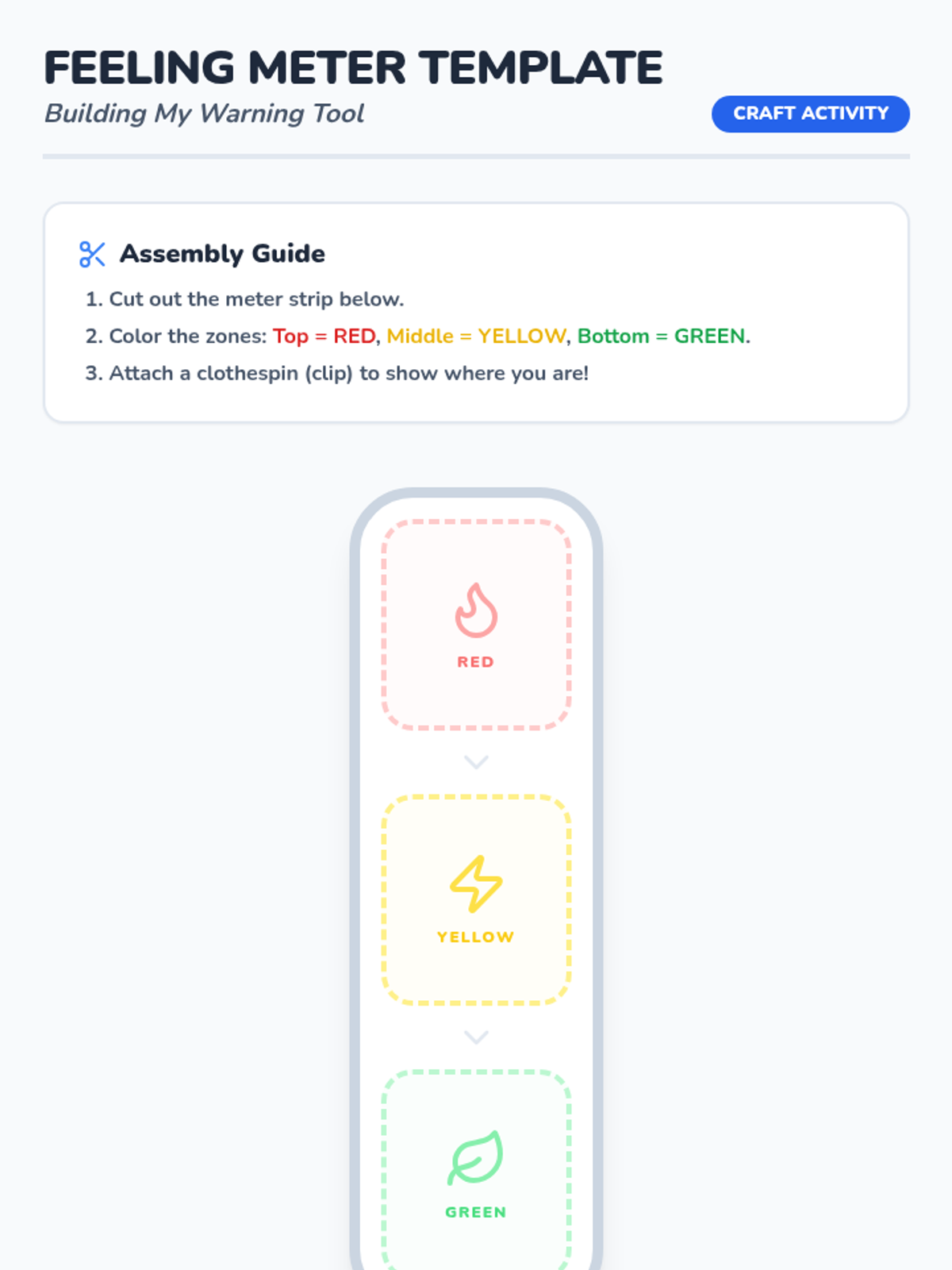
A craft template for Pre-K students to create their own vertical "Feeling Meter" with Green, Yellow, and Red zones.
A 6-slide visual presentation for Pre-K students exploring the concept of 'impulsive hands' through the metaphor of a grabby crab. Teaches students about personal space bubbles and how to use the 'stop' gesture.
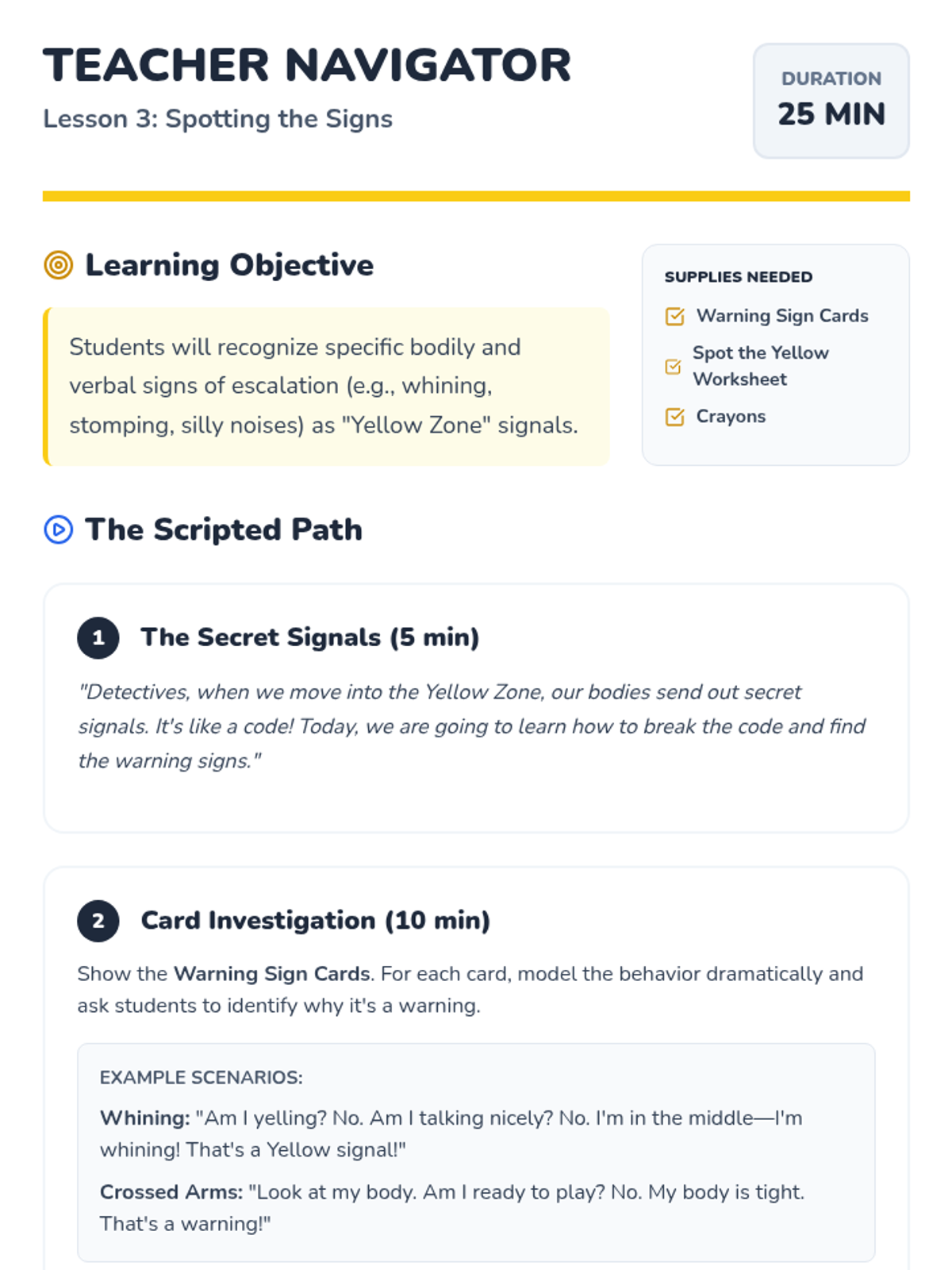
A comprehensive instructional guide for Lesson 3, including objectives, scripted prompts, and sorting activity instructions.
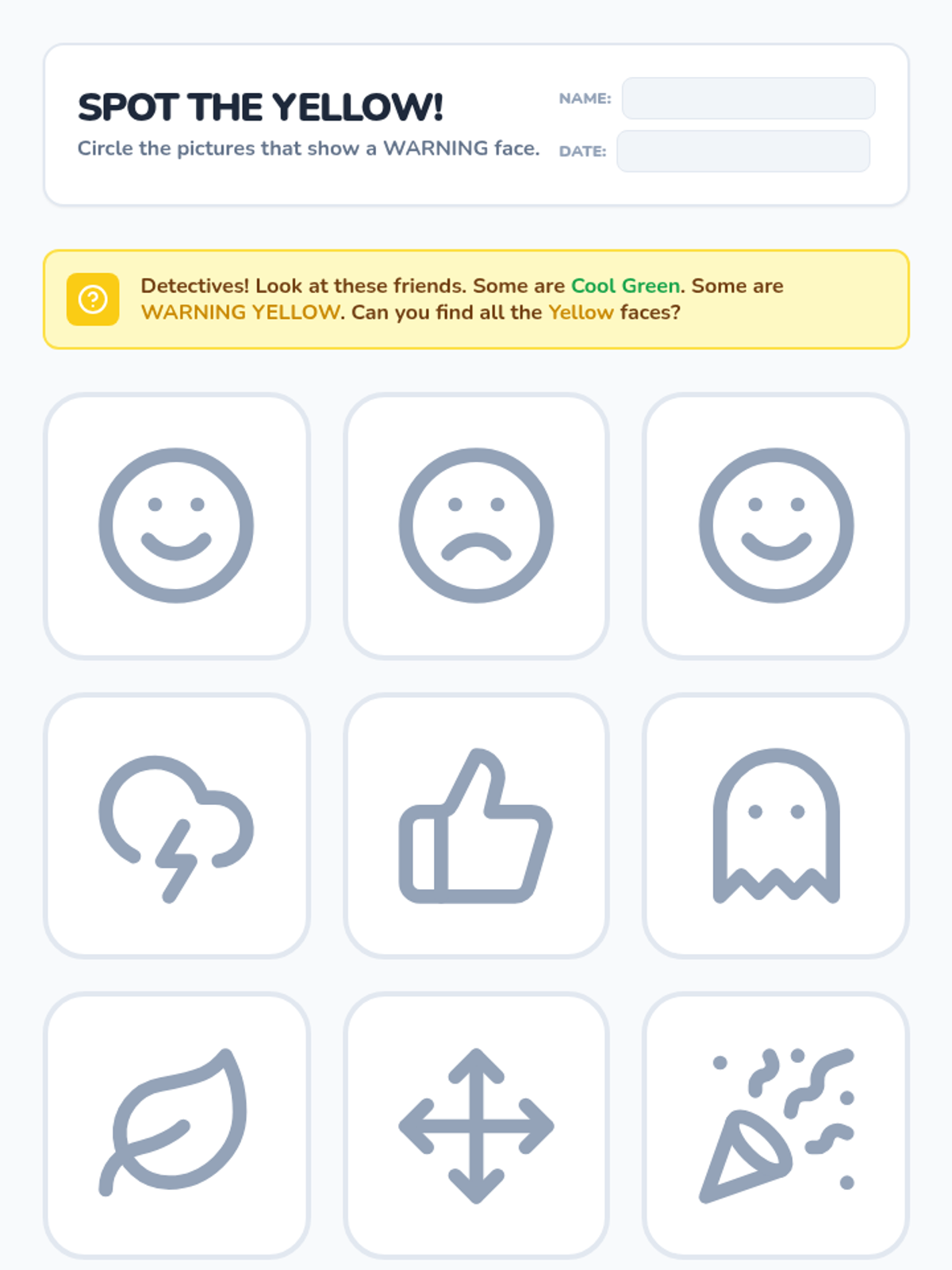
A simple visual worksheet for Pre-K students to identify and circle behaviors associated with the Yellow Zone warning signs.
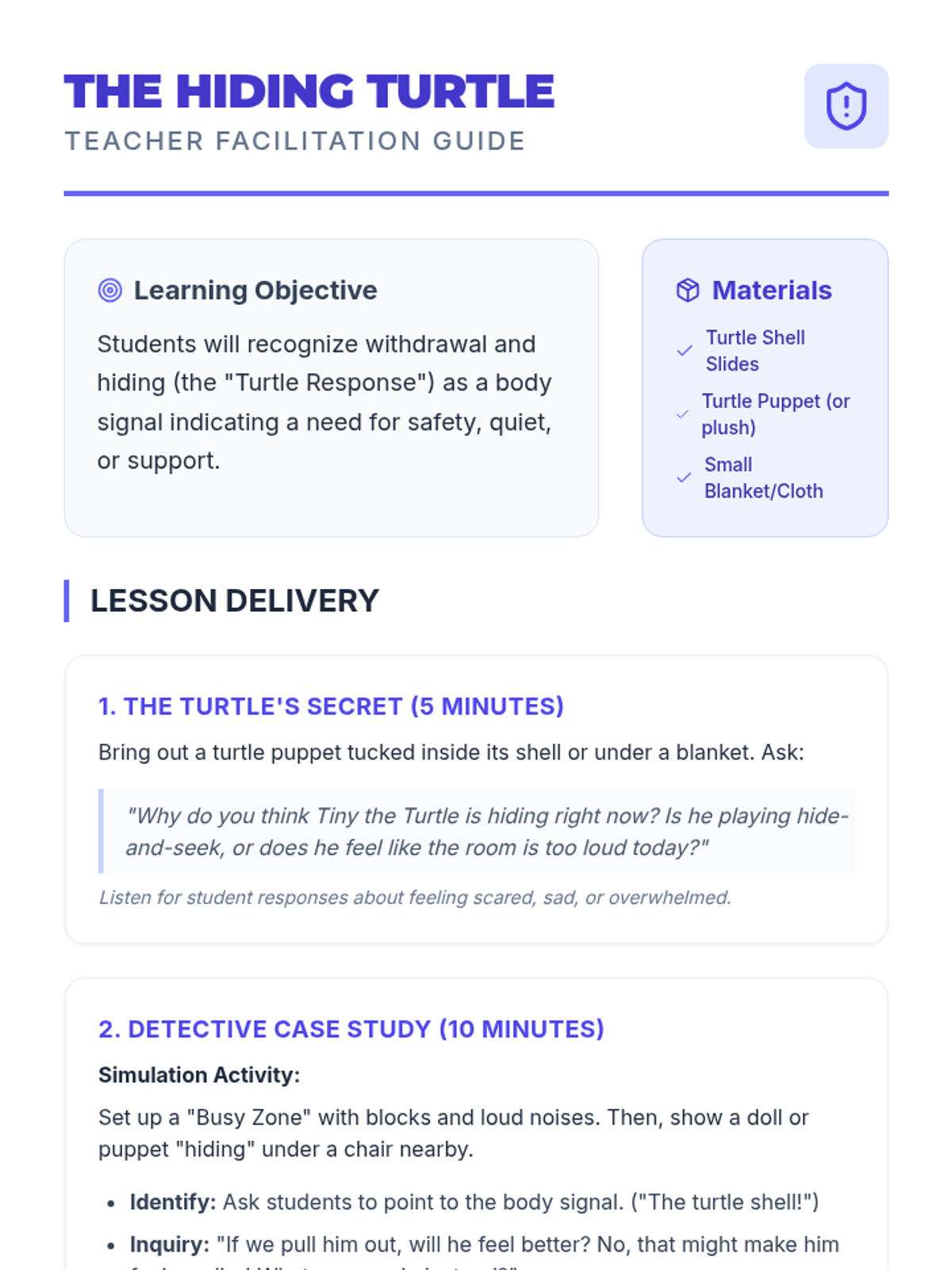
A facilitation guide for teachers to lead Lesson 2. Includes learning objectives, puppet-based hook instructions, a "Turtle Breath" regulation strategy, and differentiation tips for supporting students who withdraw.
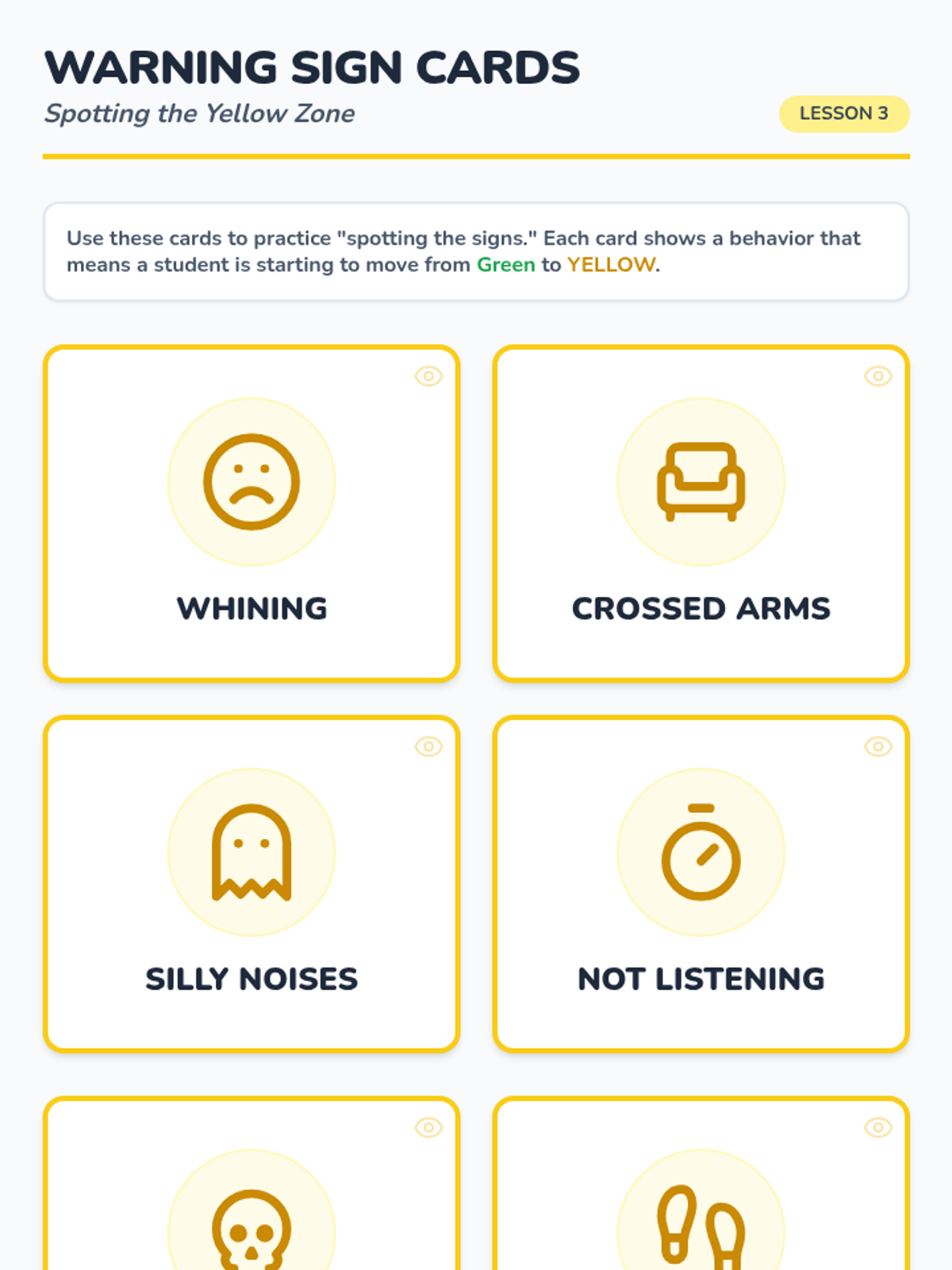
Nuanced behavior cards for Lesson 3, illustrating specific signs of escalation (e.g., whining, stomping, crossed arms) as warning signals.
A 6-slide visual presentation for Pre-K students exploring the concept of 'withdrawal' through the metaphor of a hiding turtle. Explains the difference between resting and hiding, and teaches students how to support a peer who is 'hiding' their body.
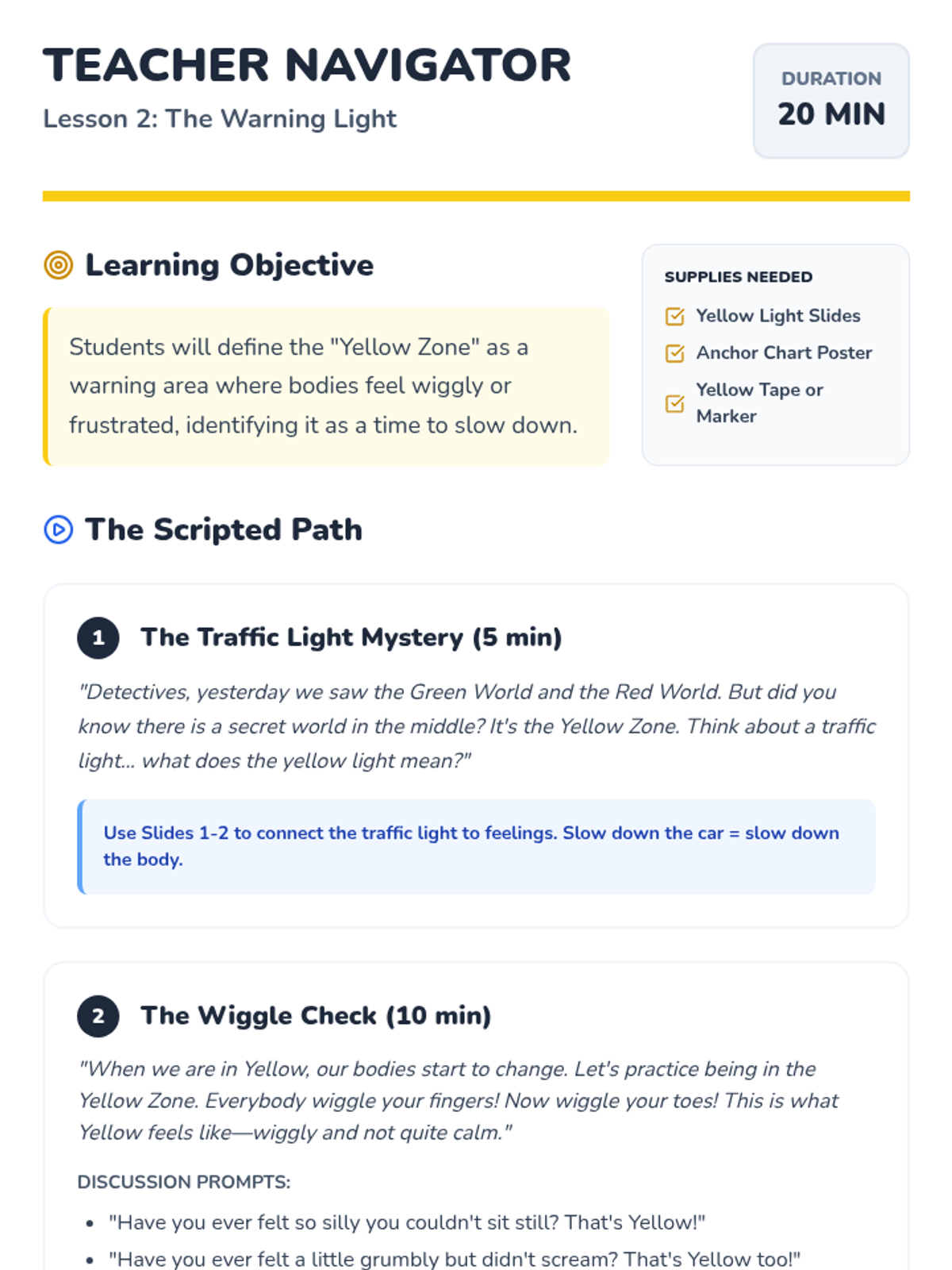
A comprehensive instructional guide for Lesson 2, including objectives, scripted prompts, and activities for introducing the Yellow Zone.
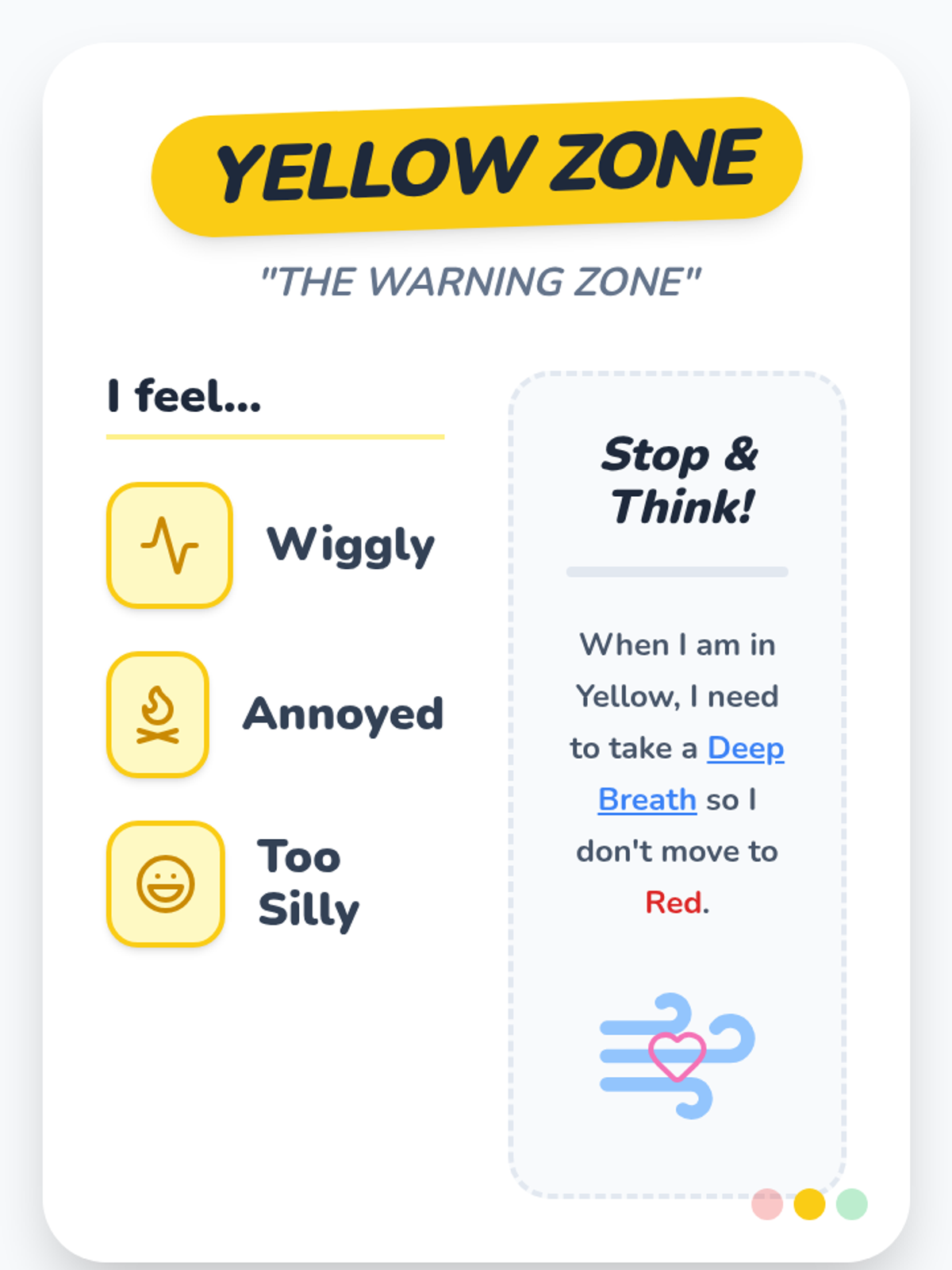
A bright, visual anchor chart for the classroom that illustrates the signs of being in the Yellow Zone and the "Stop & Think" concept.
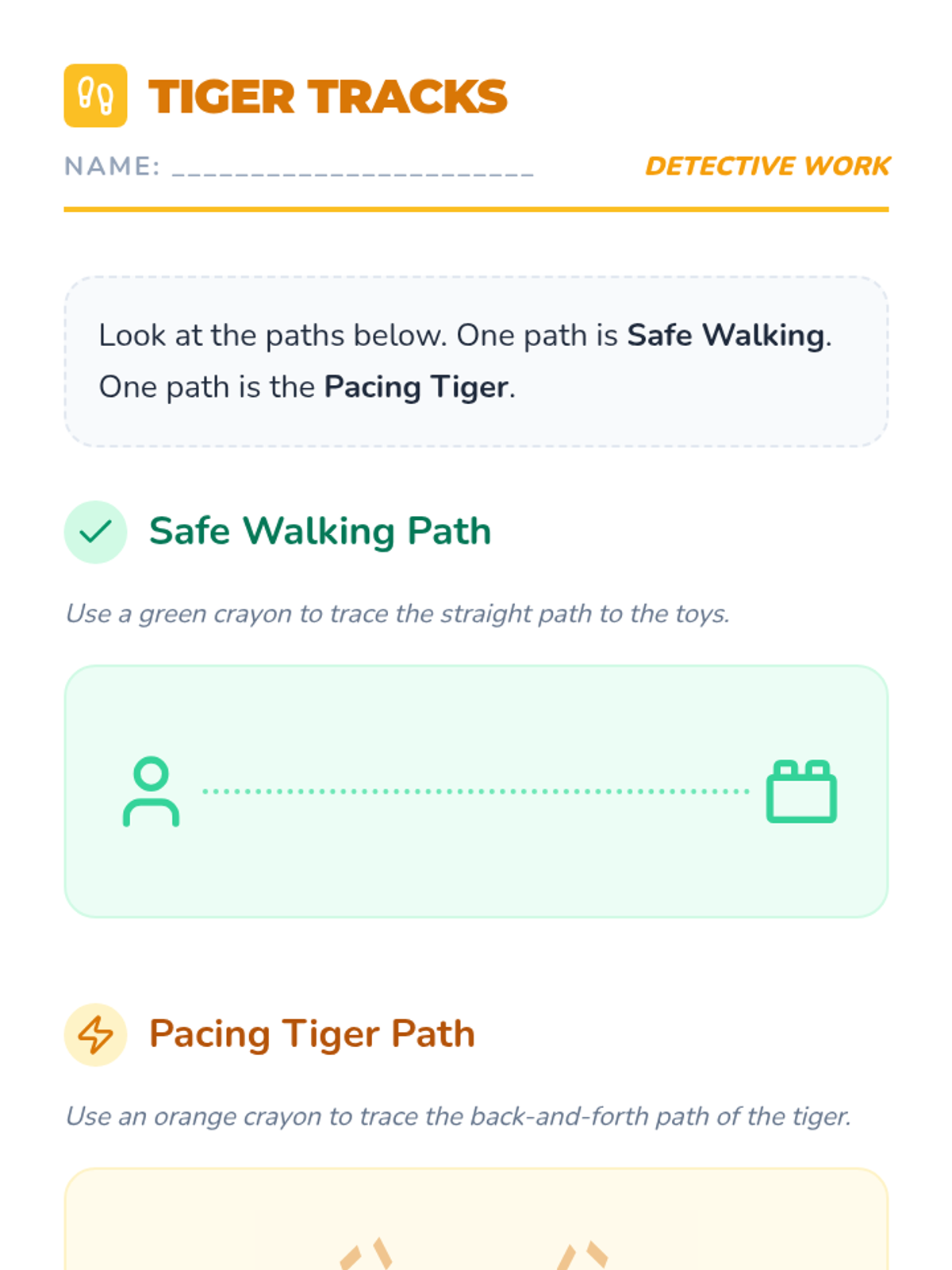
A Pre-K student worksheet to practice distinguishing between purposeful walking and pacing. Students trace straight and zig-zag paths to reinforce the visual difference between baseline and agitated movement.
Final celebration slides for Lesson 8, reviewing all mastery skills and celebrating the students' transition to independent self-regulation.
Role-play practice slides for Lesson 7, presenting specific scenarios for students to model the Pause Power routine using puppets.
Incentive-focused slides for Lesson 6, explaining the reward system and reinforcing the specific behaviors that earn sticker stars.
Visual presentation for Lesson 5, guiding students through the three clear steps for returning to classroom activities after a break.
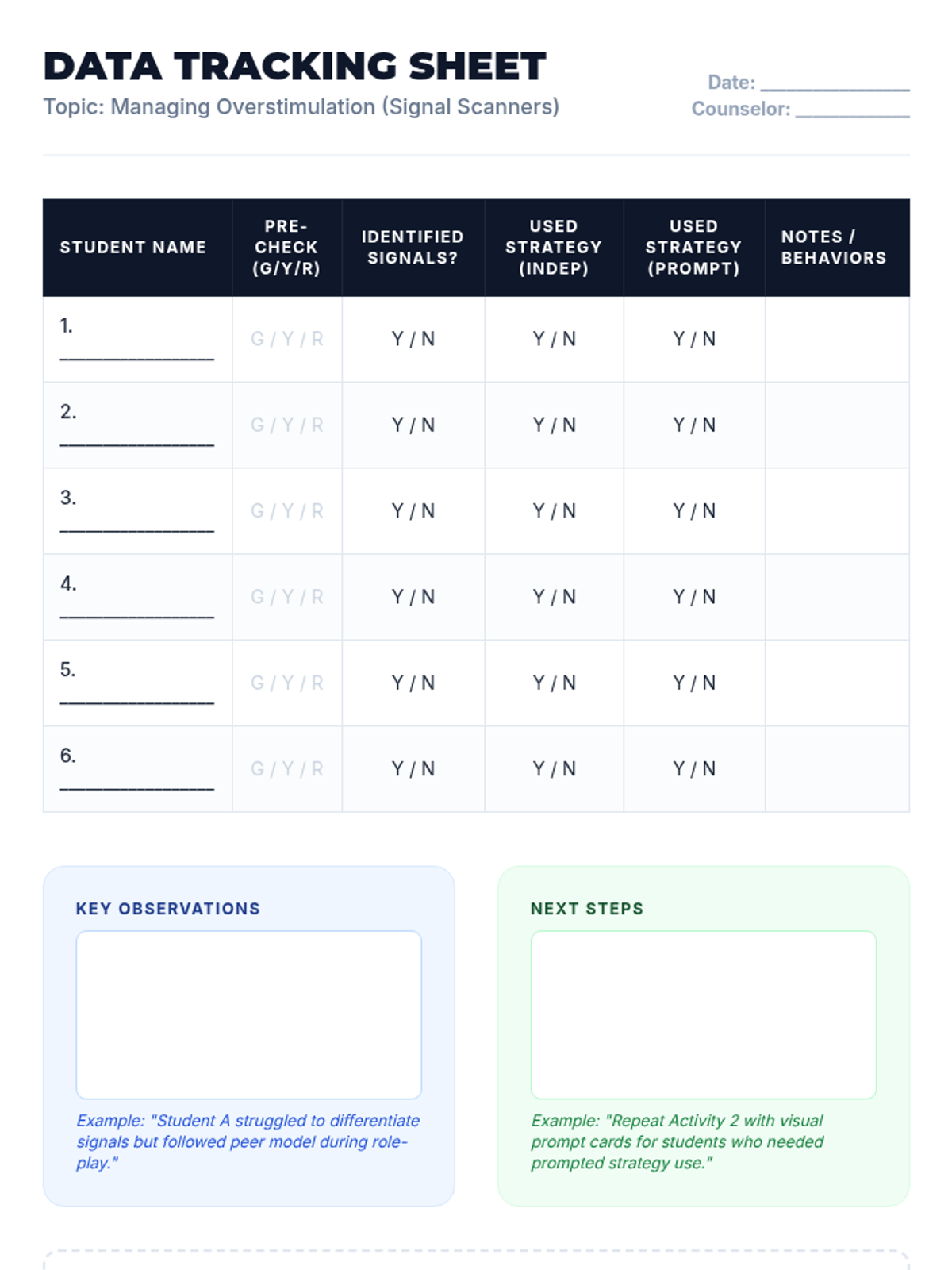
A professional tracking sheet for counselors to monitor student progress in identifying overstimulation signals and independently implementing coping strategies during the lesson.
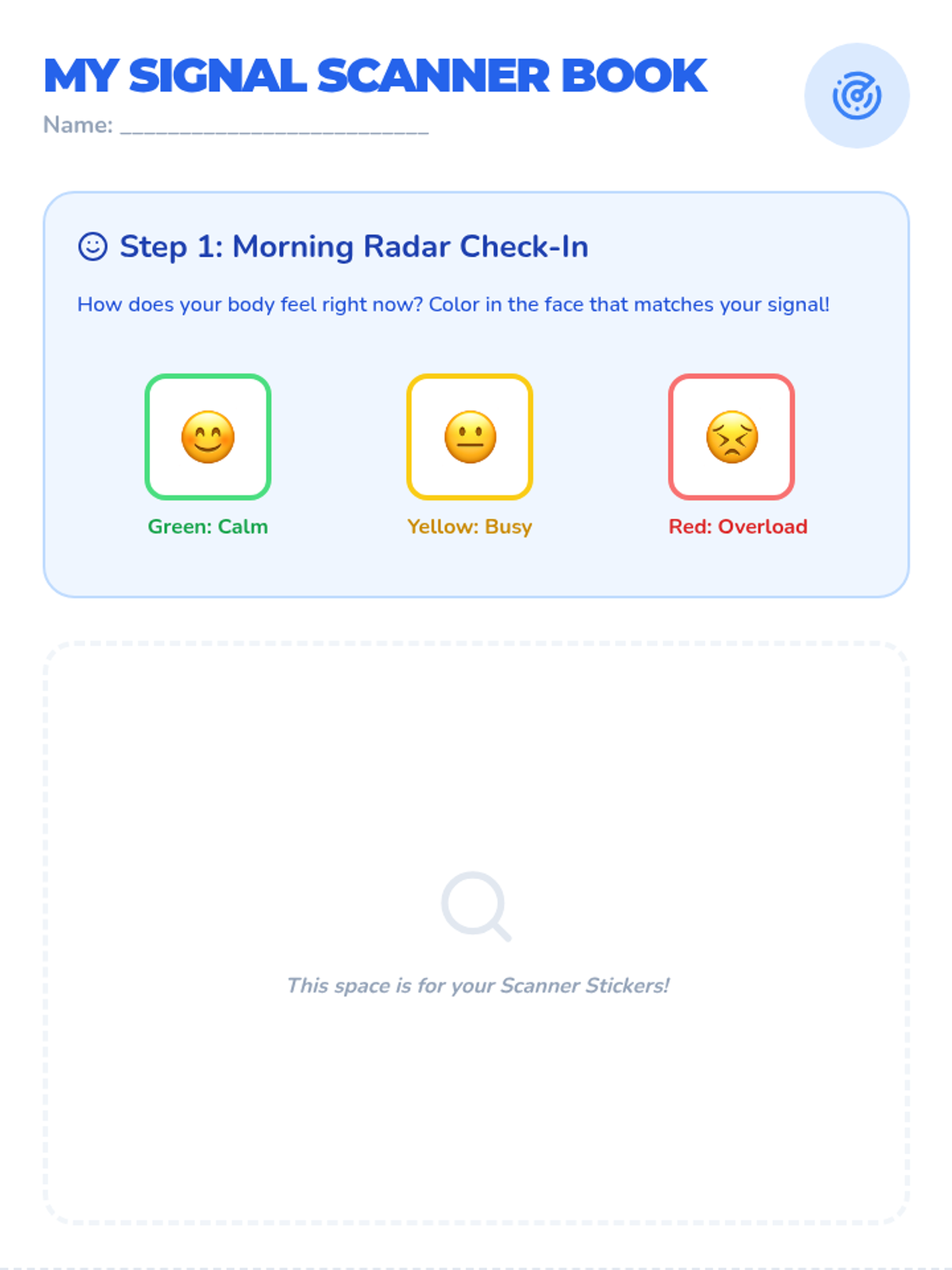
An engaging 3-page student workbook featuring a feelings check-in radar, a sensory signal sorting activity, and practice for self-regulation strategies.
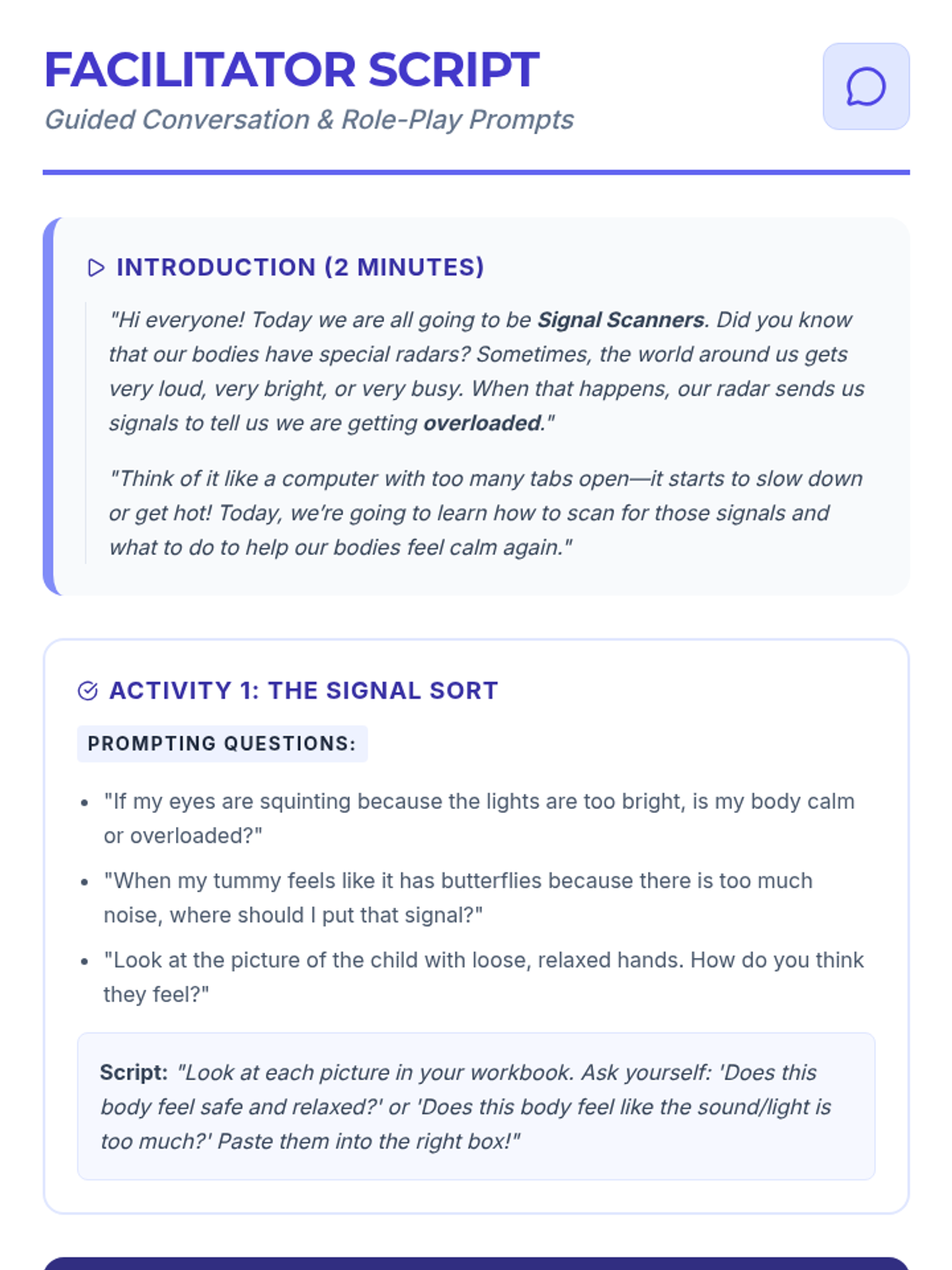
A detailed counselor script providing specific talking points, prompting questions, and role-play instructions to facilitate the overstimulation lesson effectively.
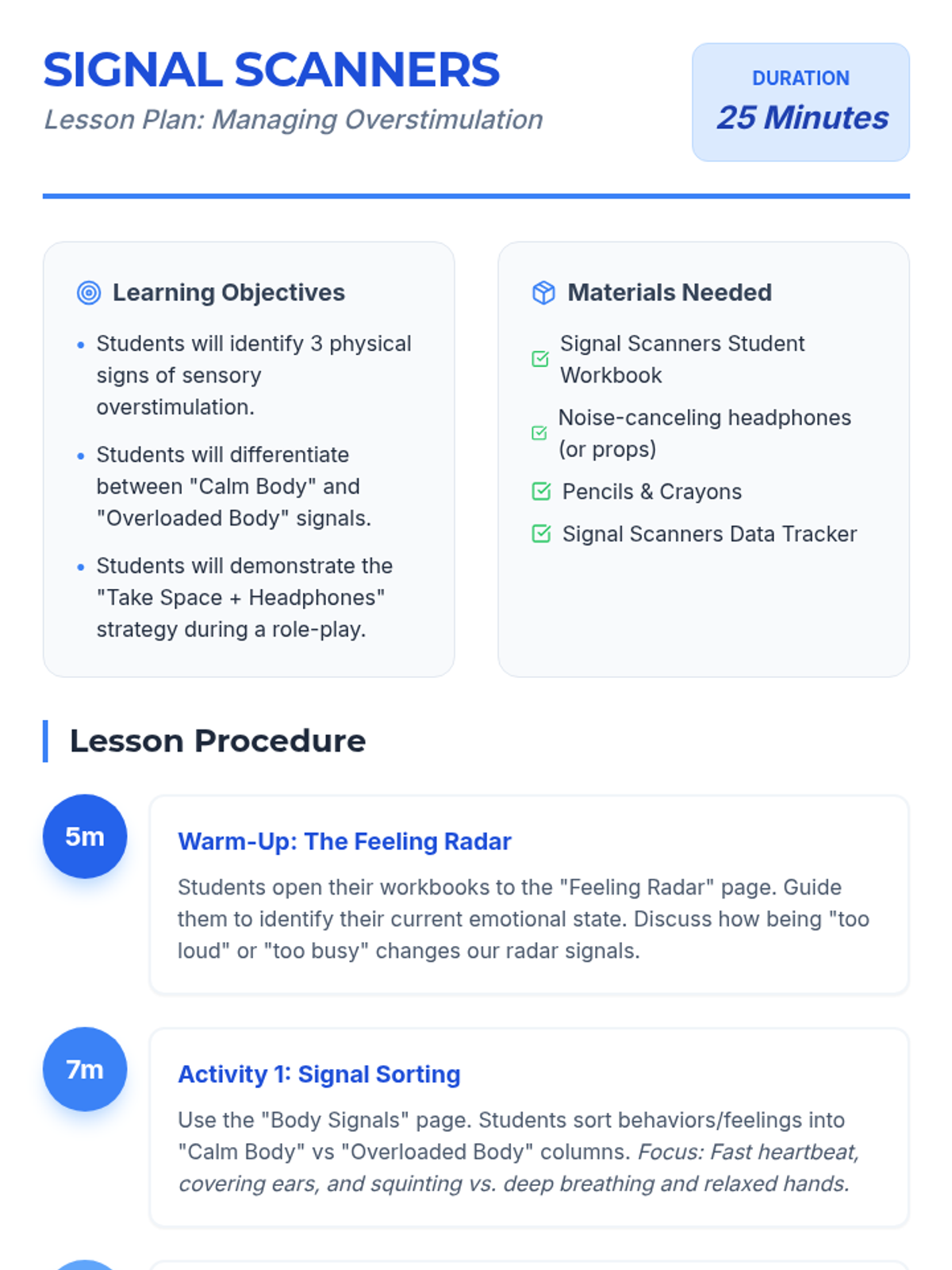
A comprehensive 25-minute lesson plan for teaching students how to manage sensory overstimulation, featuring clear objectives, a timed procedure, and specific activities.
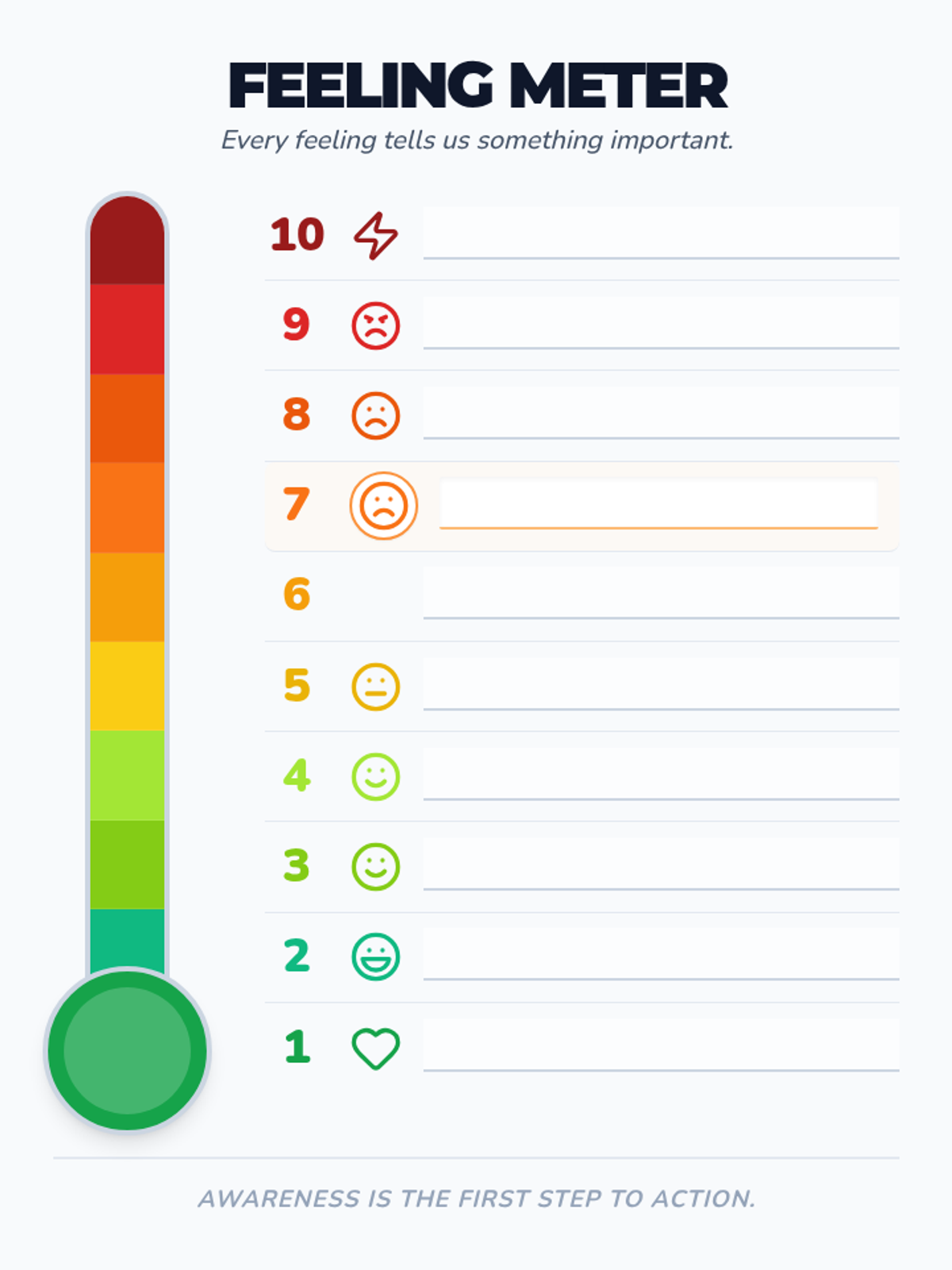
A detailed feelings thermometer poster with a 1-10 scale and color-coded zones: Green (1-3), Yellow (4-5), Orange (6-7), and Red (8-10). The green zone has been lightened to the palest shades to ensure a soft visual base while maintaining the light-to-dark gradient across the entire scale. Writing lines are included for student responses.
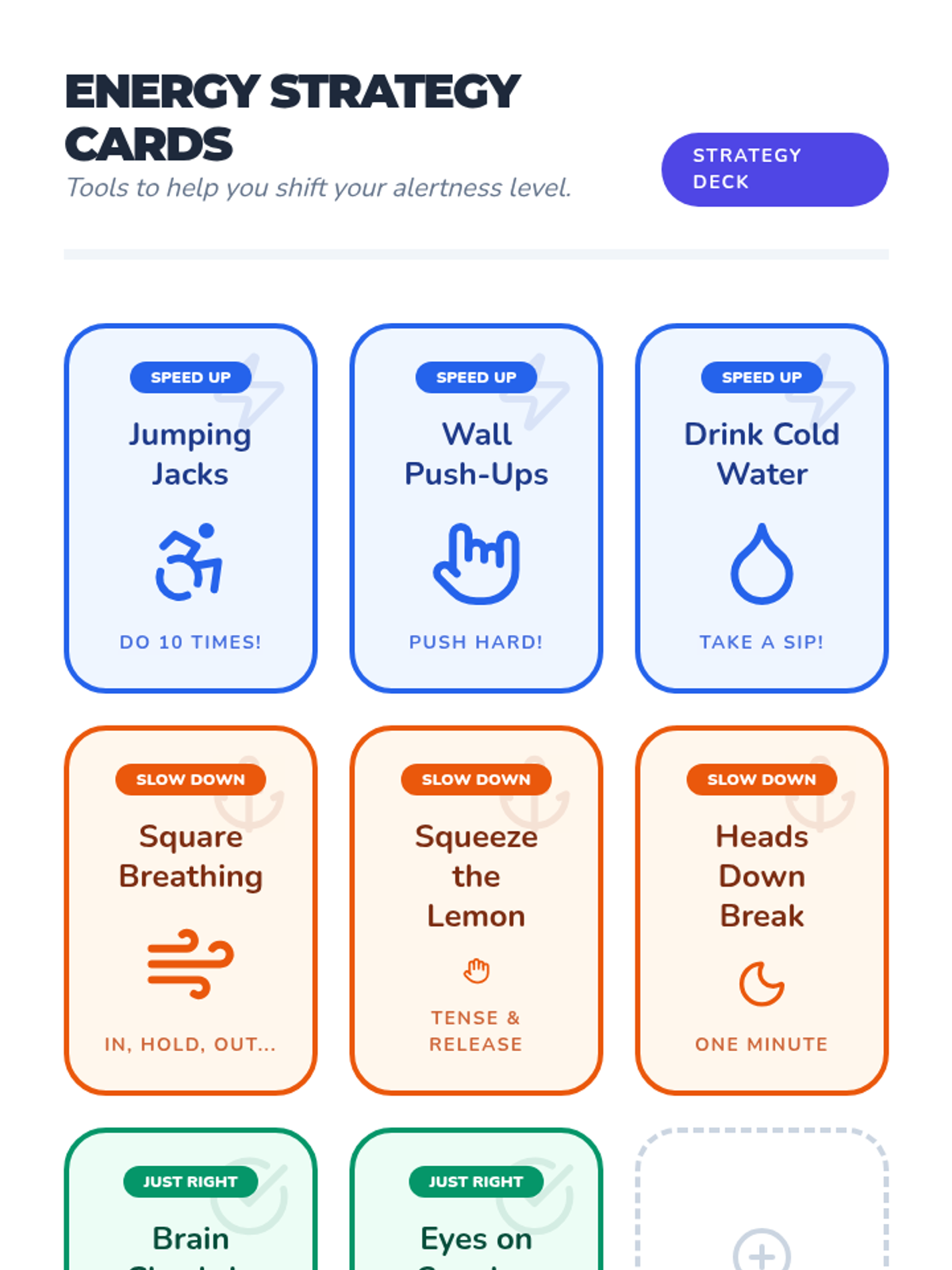
A set of printable task cards featuring 'Speed Up' and 'Slow Down' strategies to help students regulate their alertness levels through movement and breathing exercises.
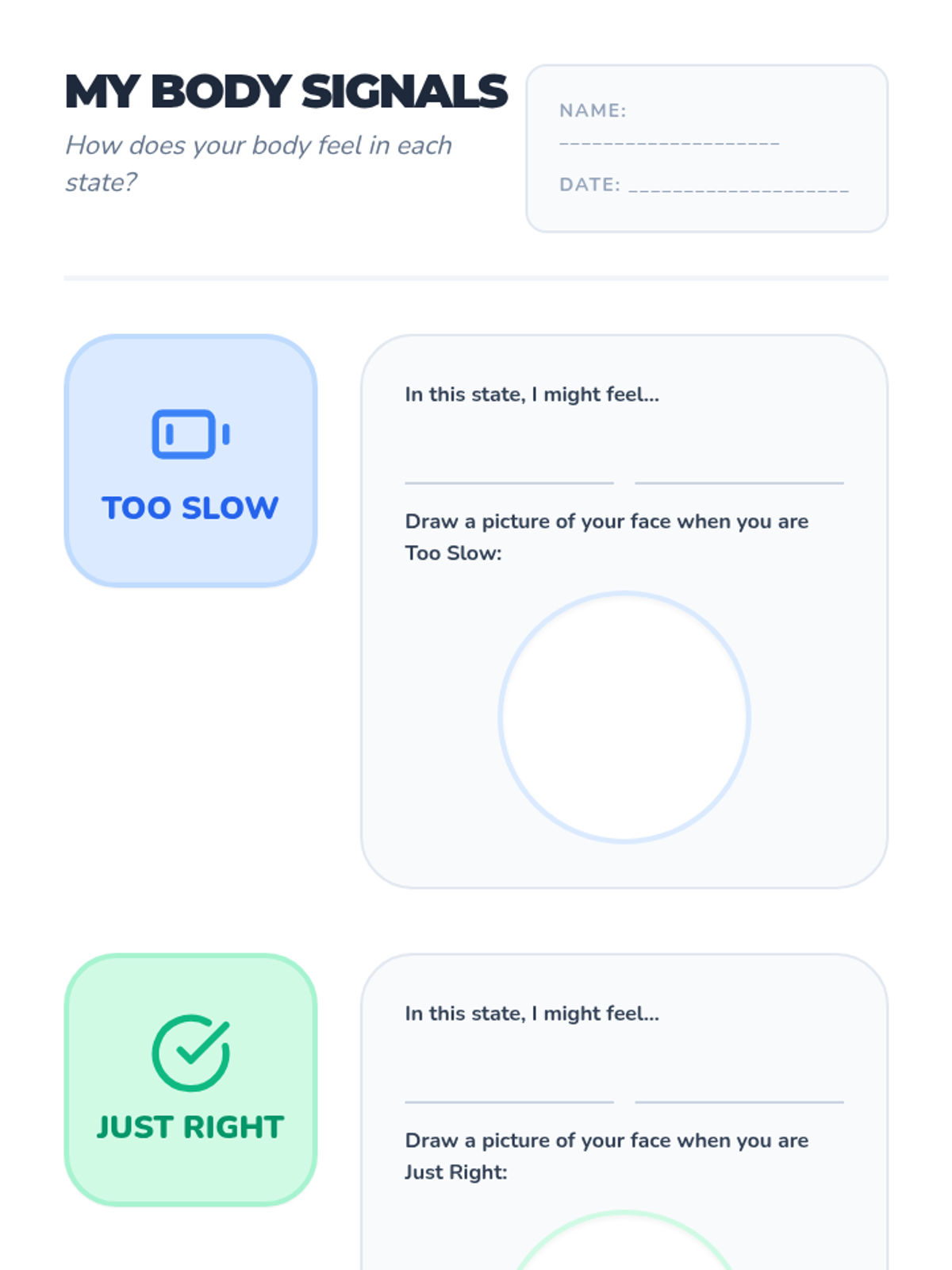
A reflection worksheet where students identify their personal signs for each energy state and draw their facial expressions to build self-awareness.
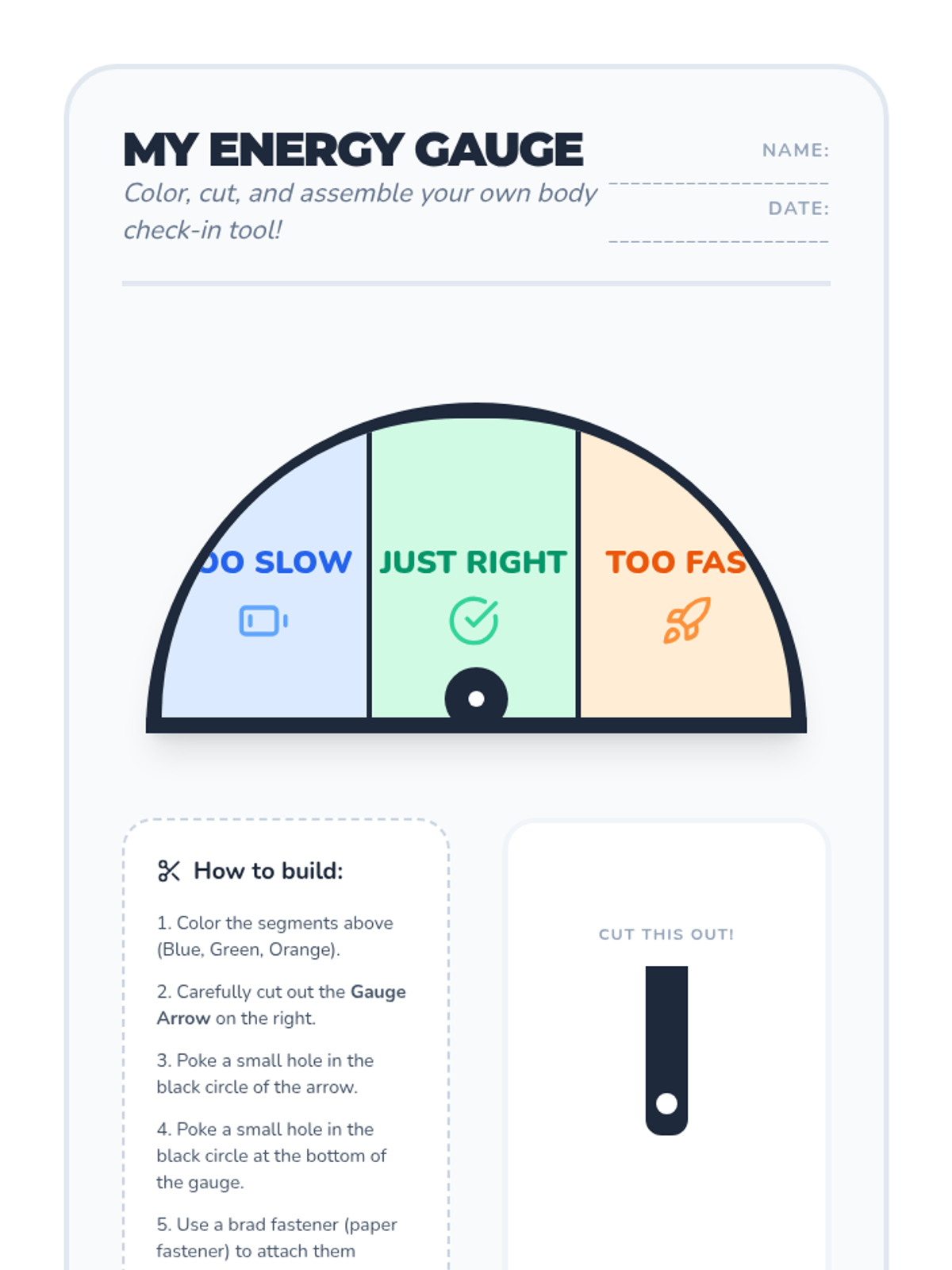
A printable DIY activity where students create their own 'Energy Gauge' tool. Includes the gauge face, assembly instructions, and a cutout arrow for hands-on self-regulation monitoring.
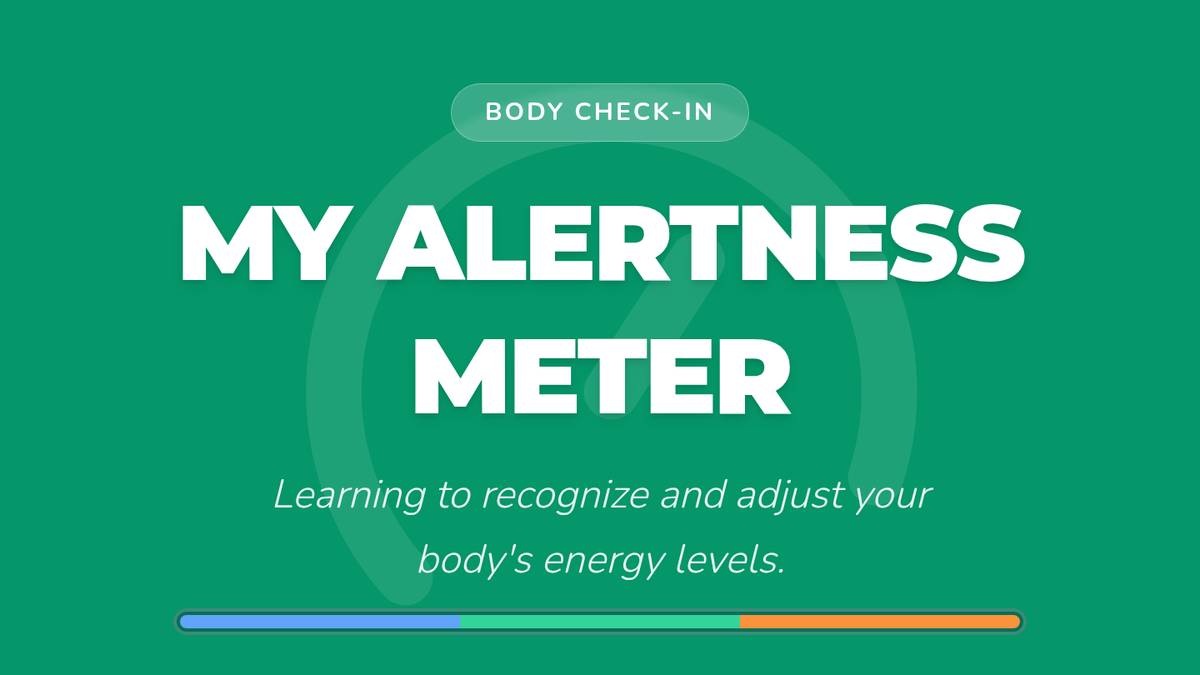
A visually engaging slide deck that teaches students to recognize 'Too Slow,' 'Just Right,' and 'Too Fast' states, including physical signs and strategies for each level.
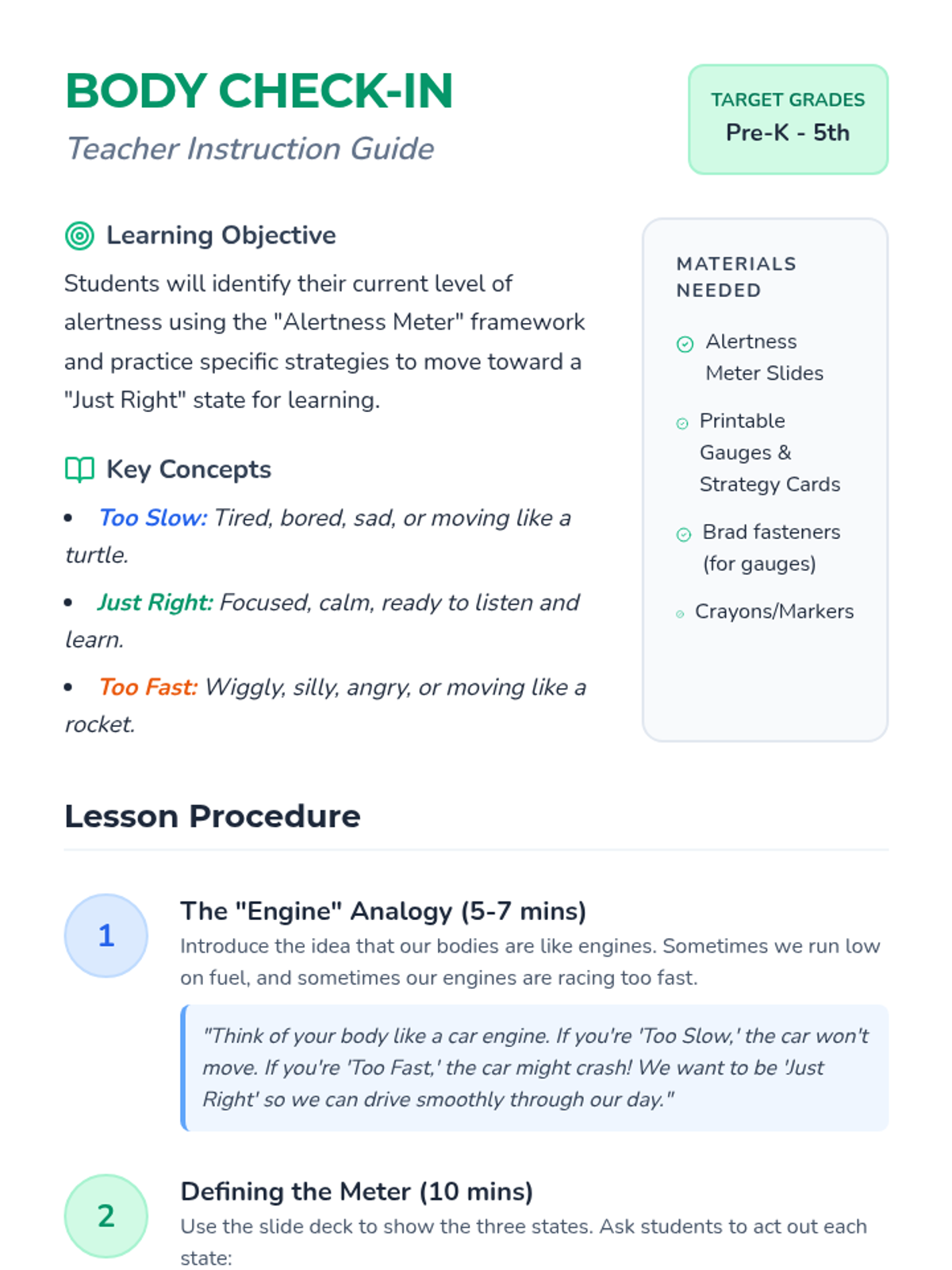
A comprehensive teacher guide for the Body Check-In lesson, featuring learning objectives, key concepts, a step-by-step lesson procedure, and differentiation strategies for Pre-K through 5th Grade.
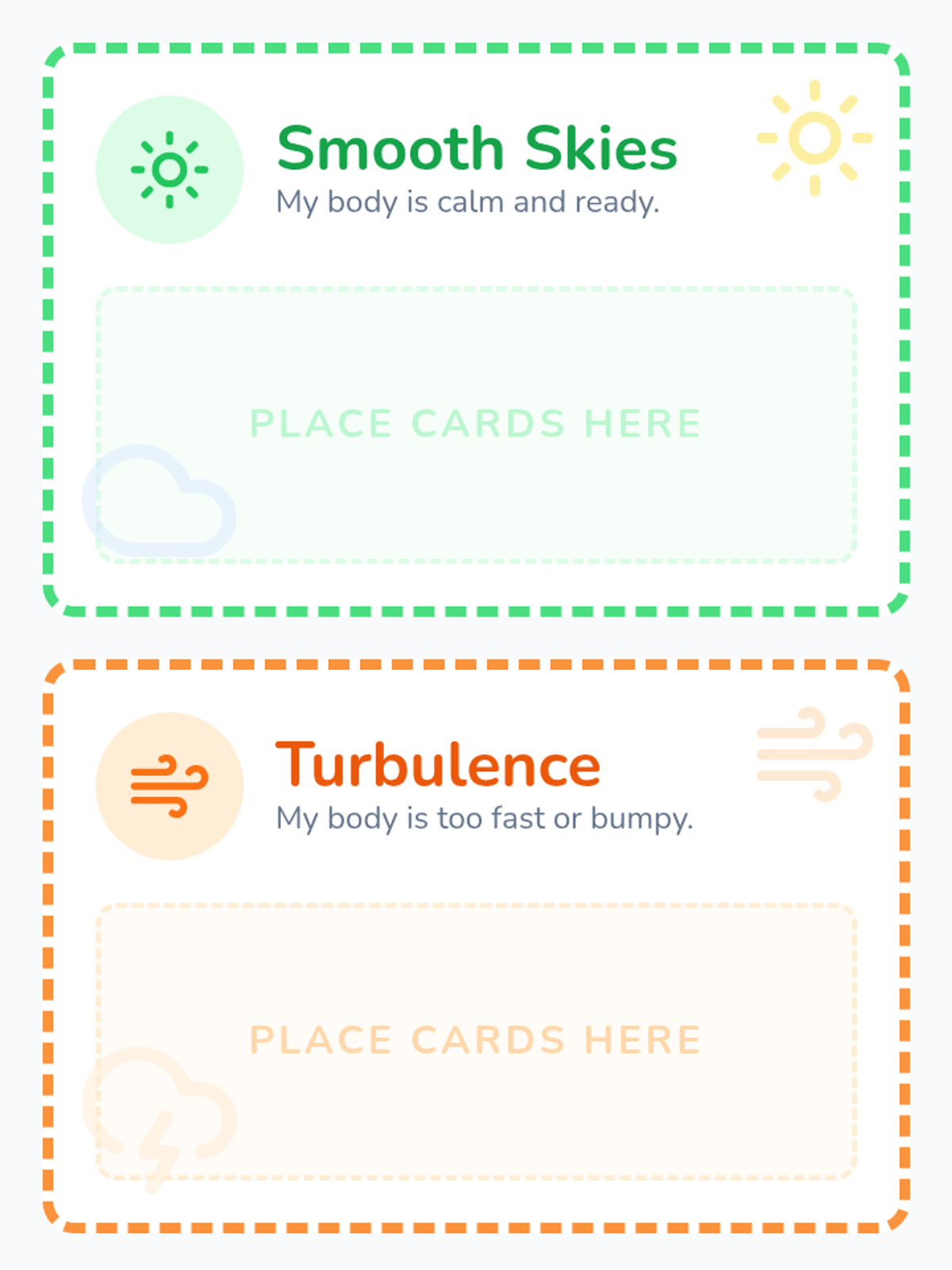
A hands-on sorting activity for preschoolers to categorize calm (smooth) vs. dysregulated (turbulent) behaviors using flight-themed mats. Includes 12 sorting cards across two sets.
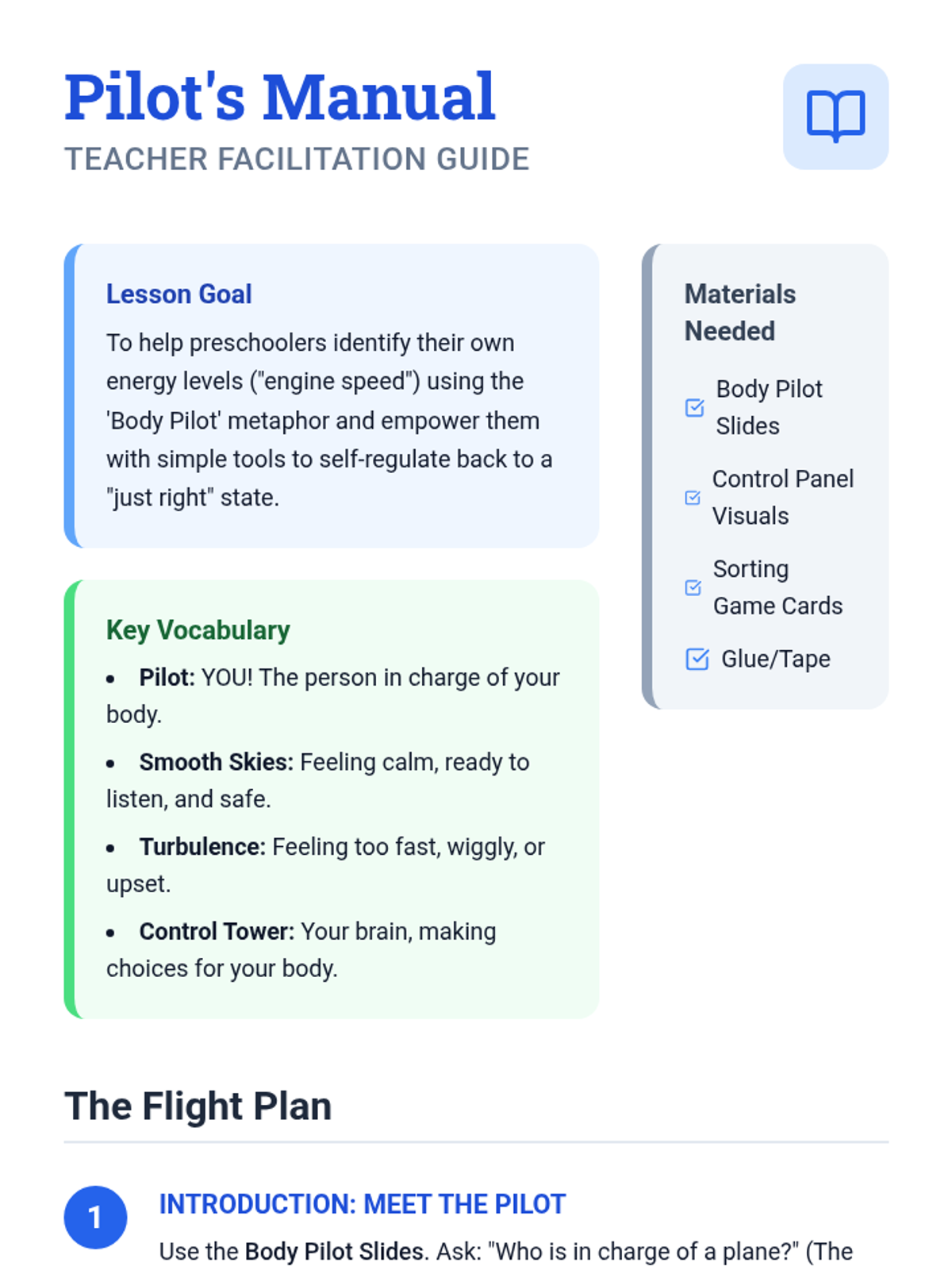
A teacher's guide for facilitating the 'Body Pilot' lesson, including instructional steps, key vocabulary, and differentiation strategies.
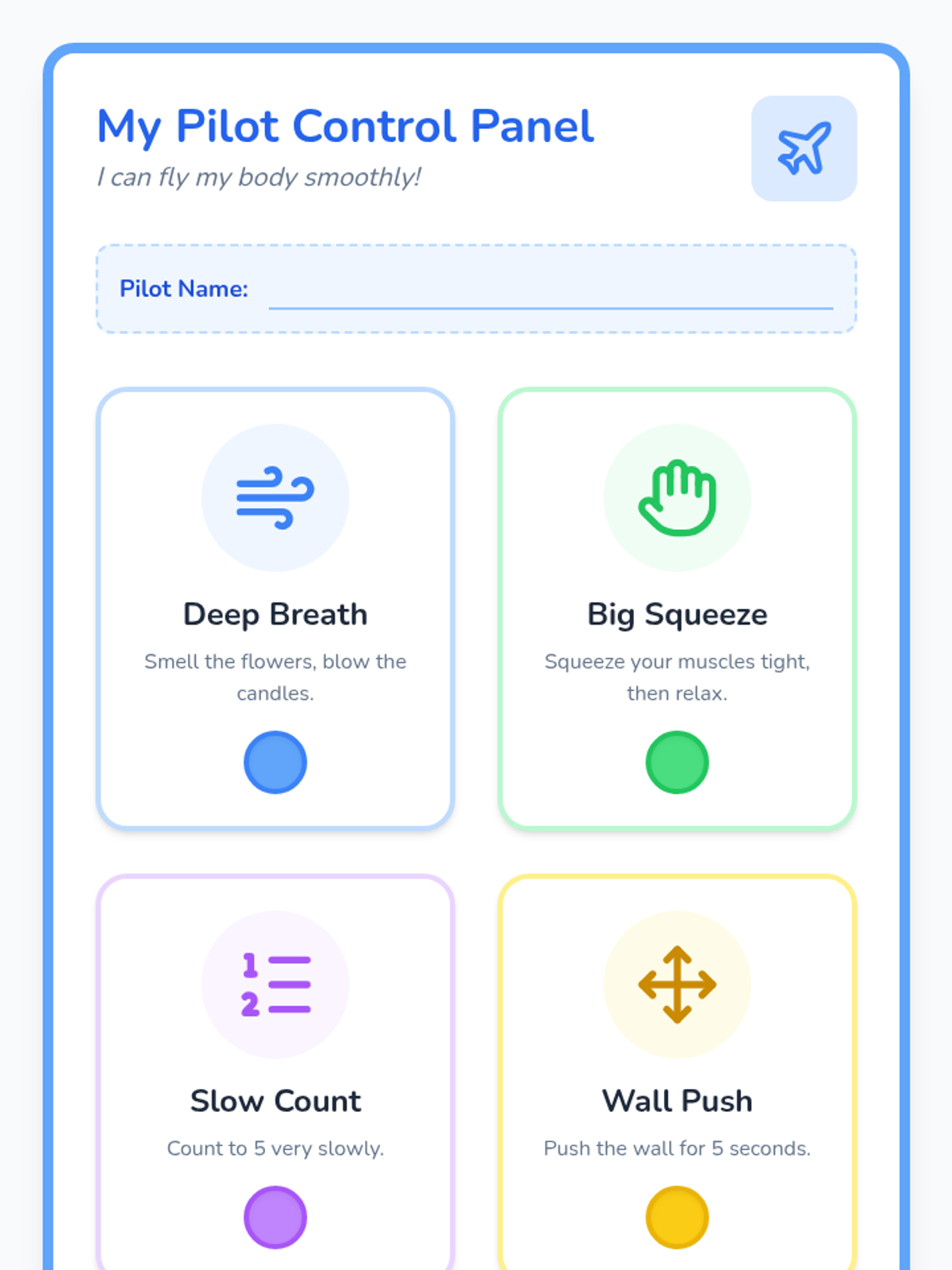
A visual 'control panel' worksheet for preschoolers to identify and practice self-regulation strategies like deep breathing and muscle relaxation.
An engaging slide deck using the 'Body Pilot' metaphor to teach preschoolers about self-regulation, identifying 'smooth' vs 'turbulent' energy levels.
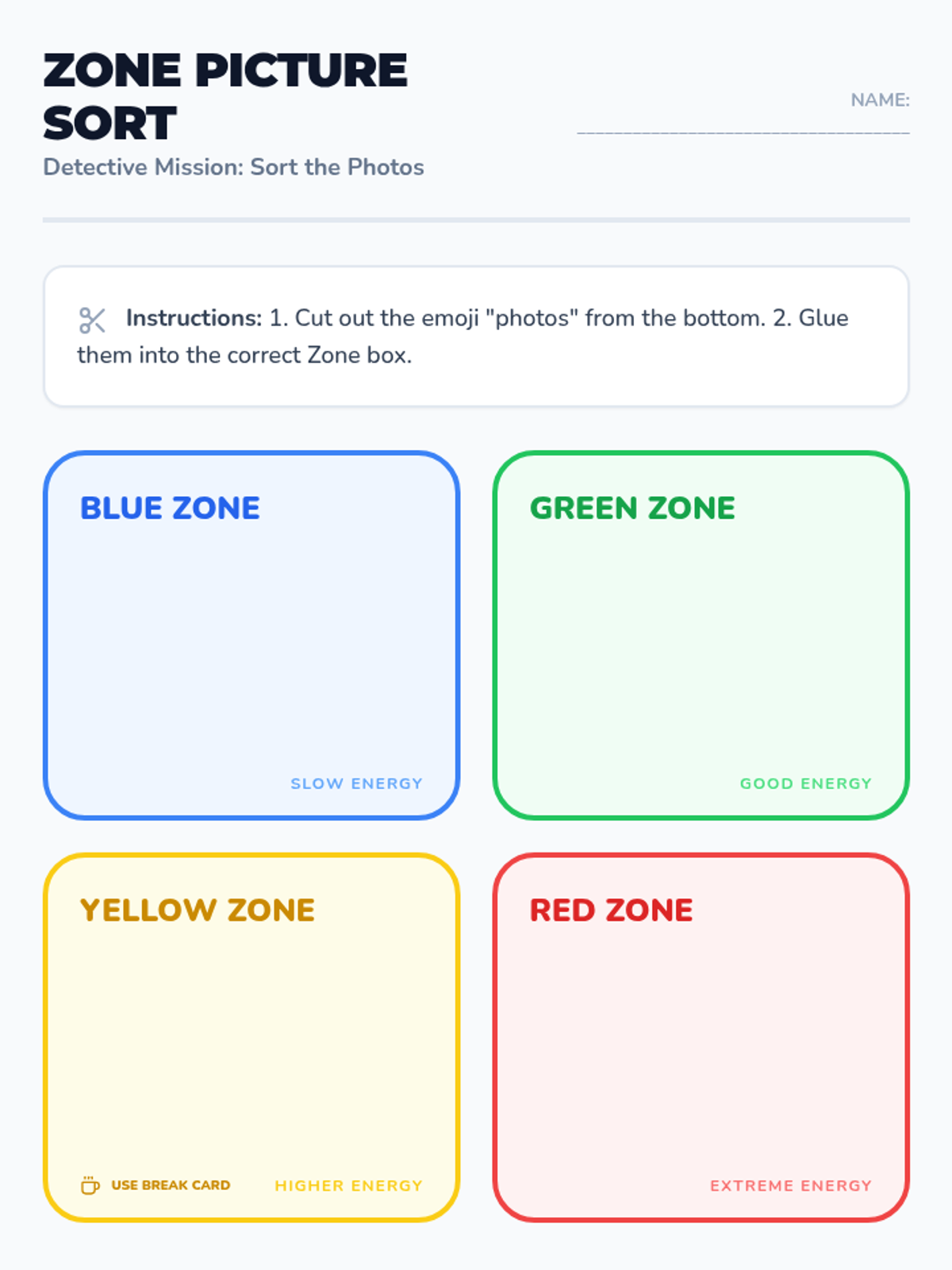
A cut-and-paste sorting activity where students identify the correct Zone of Regulation for eight different emoji 'photos'. It provides four large sorting boxes and a set of photo cards to cut and sort.
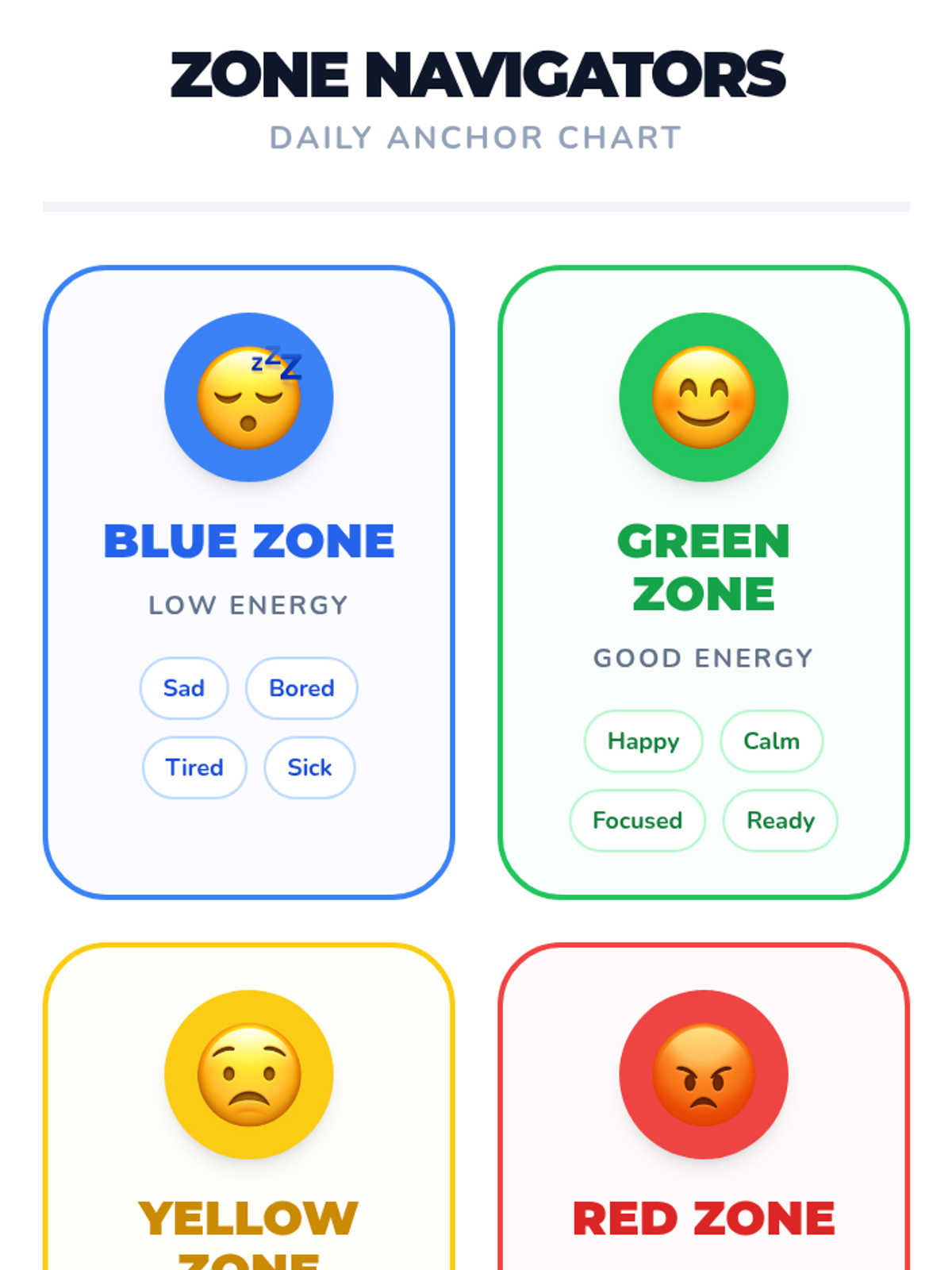
A colorful and clear anchor chart for classroom display or student reference. It identifies common feelings and energy levels for each of the four Zones of Regulation, with a specific reminder to use a break card in the Yellow Zone.
A high-visual slide deck that uses large emojis in a "Polaroid Photo" style to challenge students to identify the correct Zone of Regulation. It features a sequence of picture challenges and a focused mission on using a Break Card for the Yellow Zone.
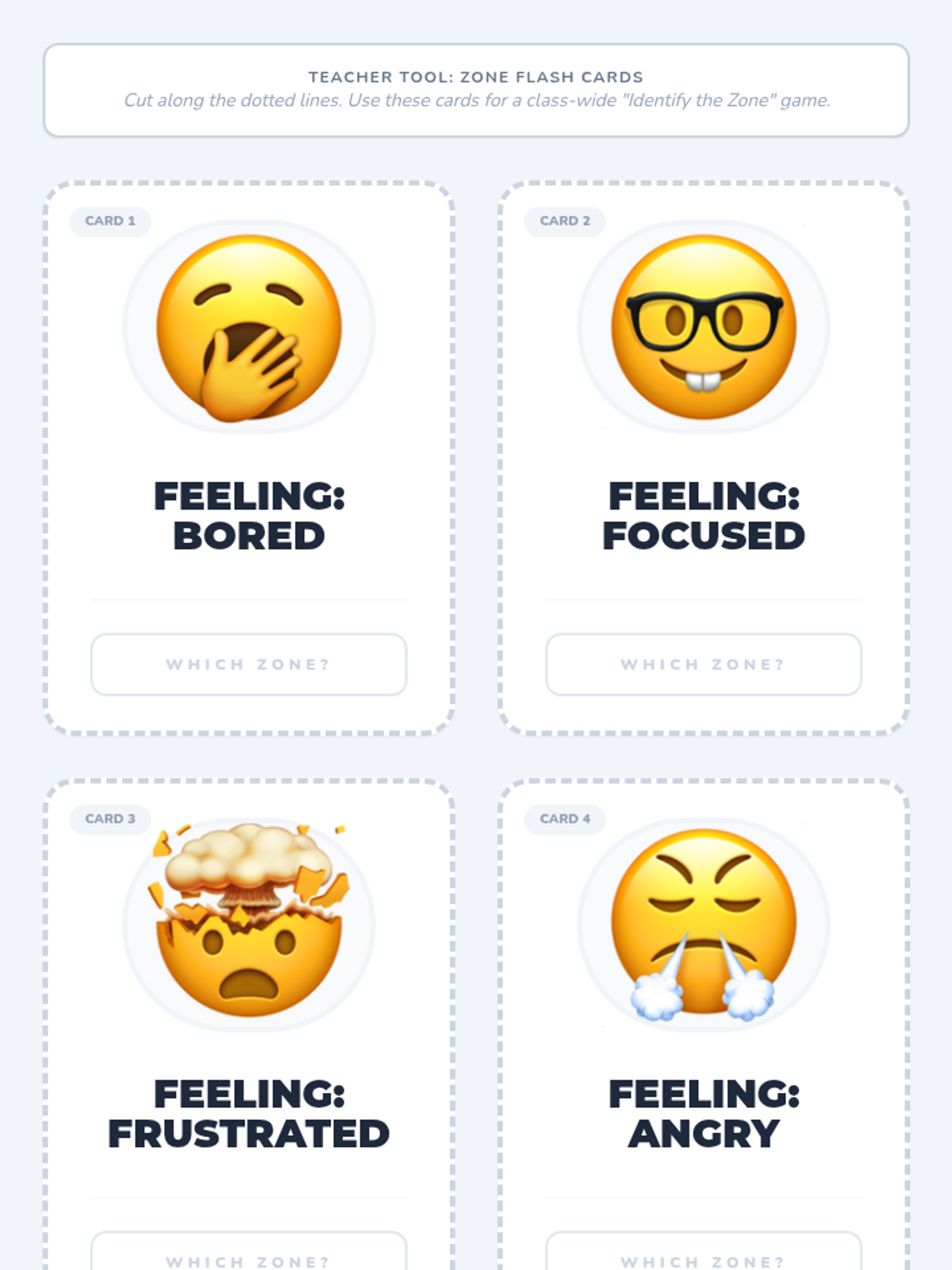
A set of printable flash cards featuring large expressive emoji 'pictures' and feeling labels. These cards are designed for teacher-led classroom activities where students identify the corresponding Zone of Regulation for each visual.
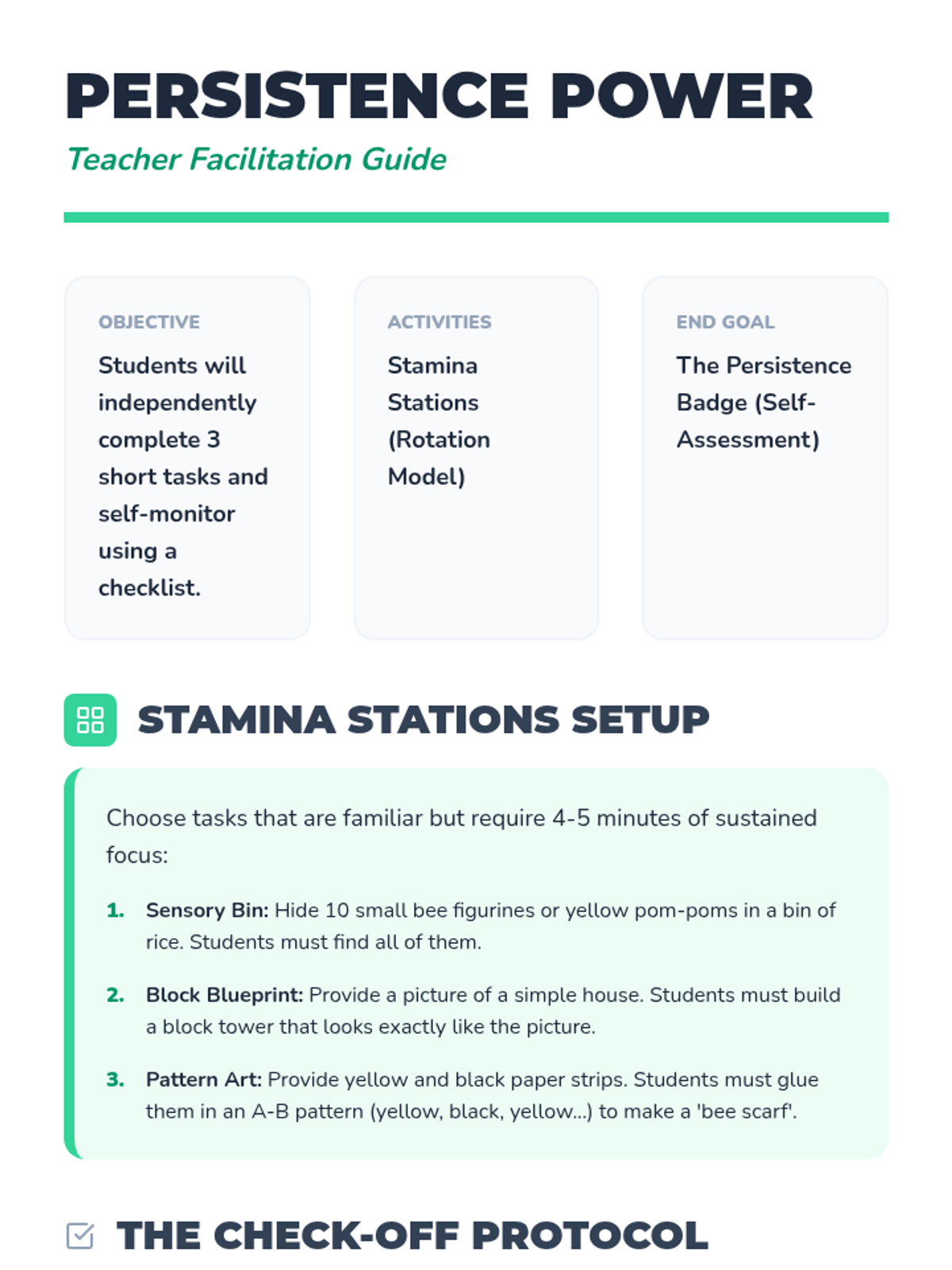
Teacher guide for the final lesson, including setup instructions for Stamina Stations and strategies for fostering self-monitoring habits.
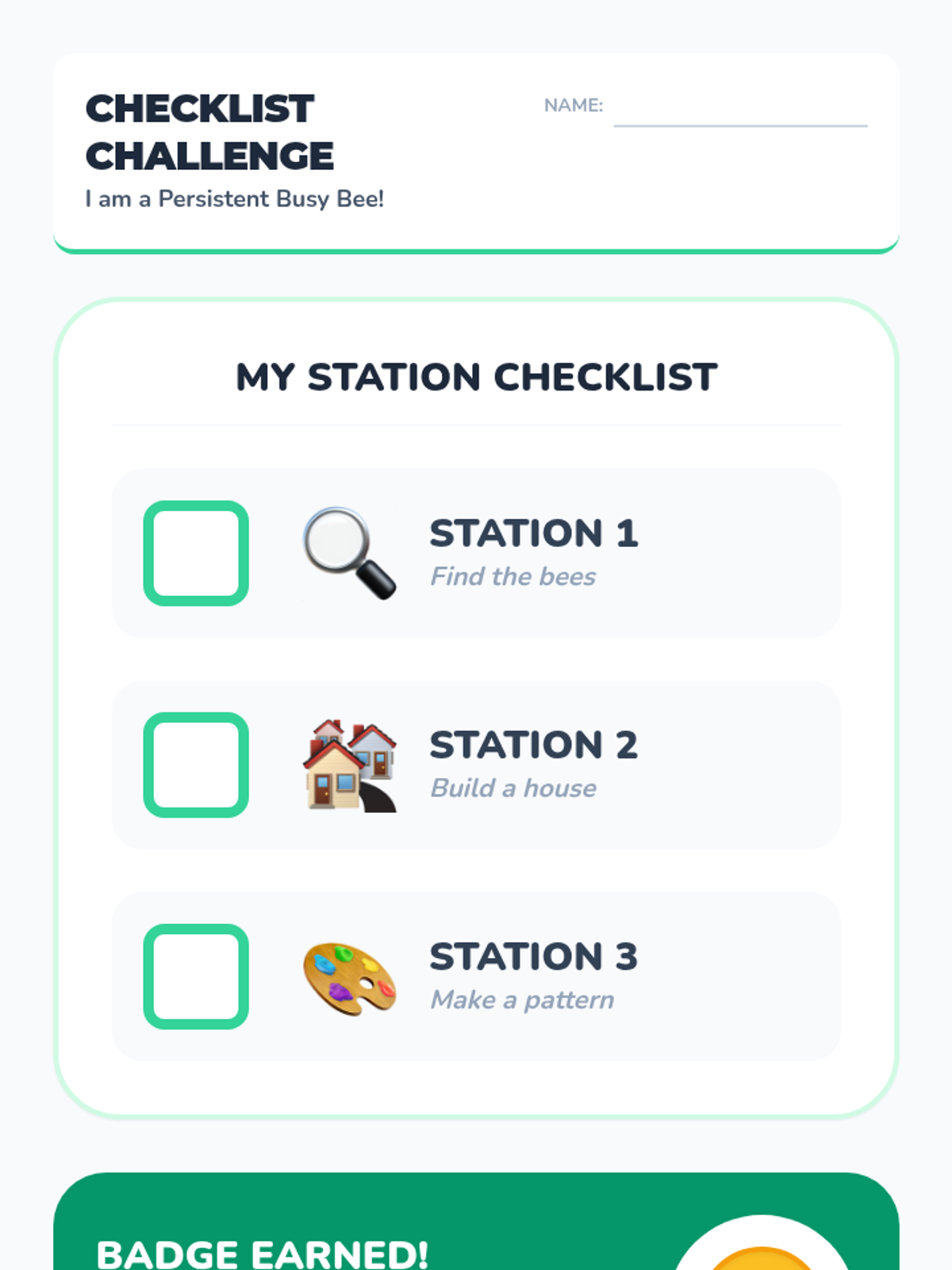
A visual checklist for the Stamina Stations activity, allowing students to self-monitor their progress and earn a 'Persistence Badge'.
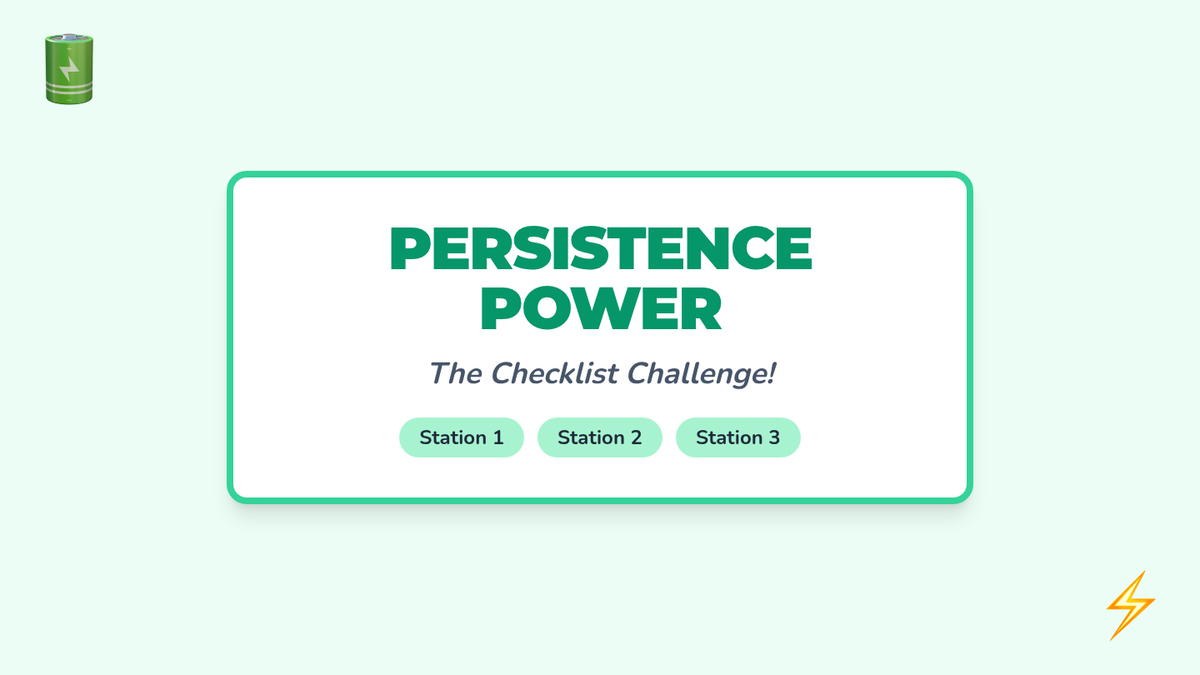
This slide deck introduces the concept of self-monitoring using checklists and outlines the 'Stamina Stations' activity for the culminating lesson.
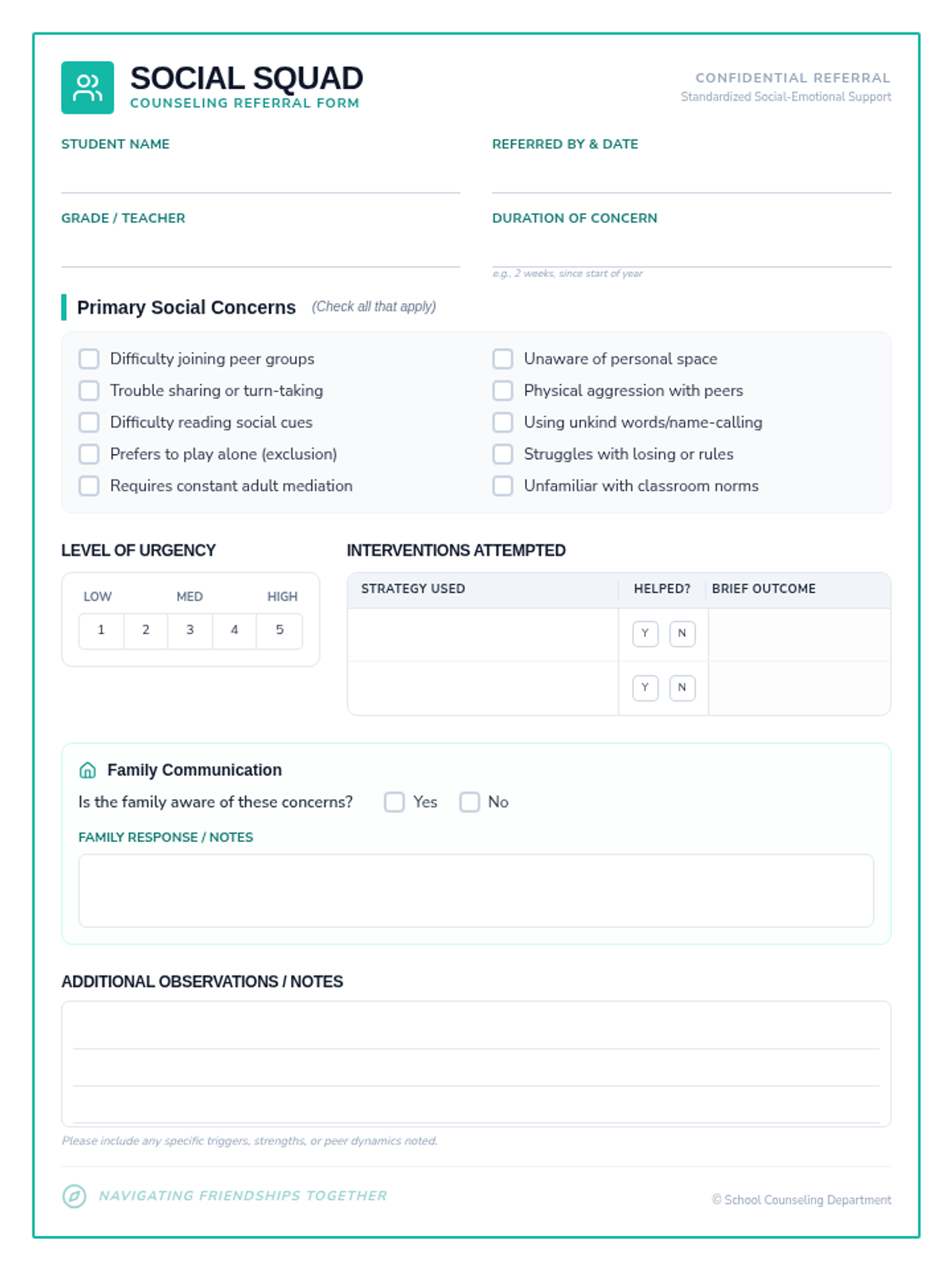
A revised comprehensive school counseling referral form for teachers, optimized to fit on a single page. It features clearer sections for social concerns, a more functional interventions table, and improved spacing for student work areas.
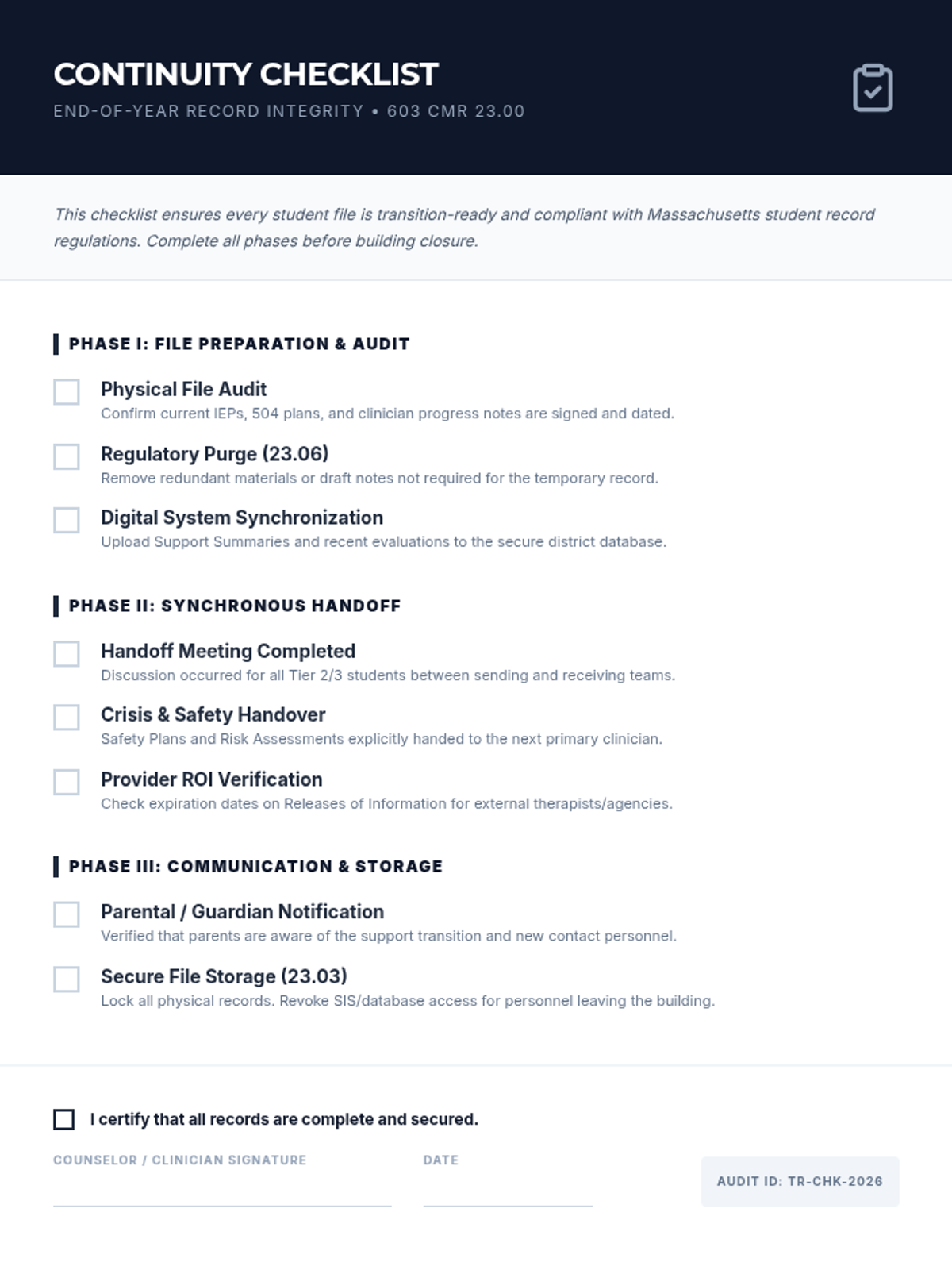
A streamlined documentation checklist optimized for single-page printing, ensuring all regulatory and clinical transition steps are completed and verified.
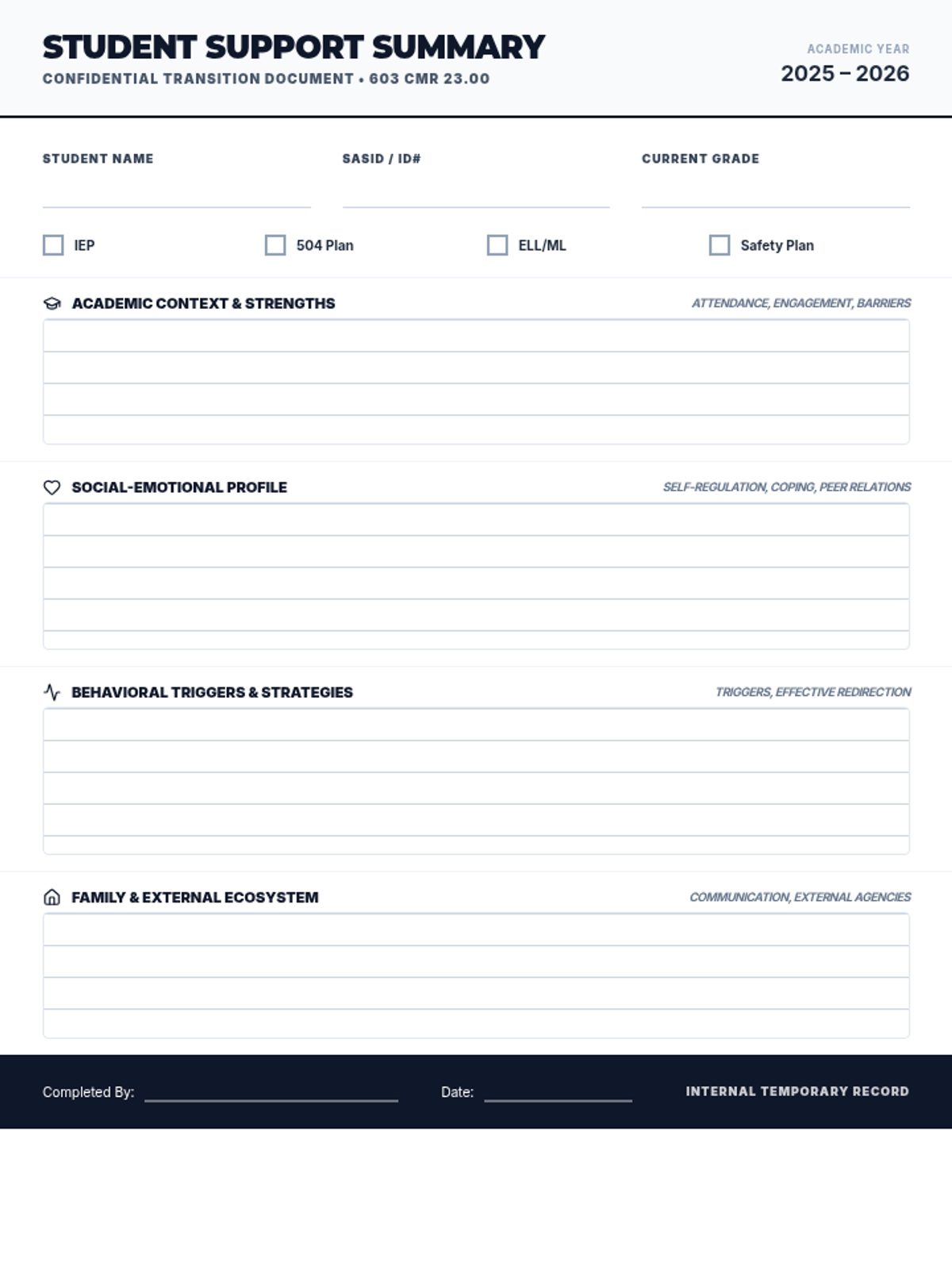
A redesigned student summary form optimized for single-page printing, featuring expanded handwriting areas and a clean professional layout for sensitive student data.
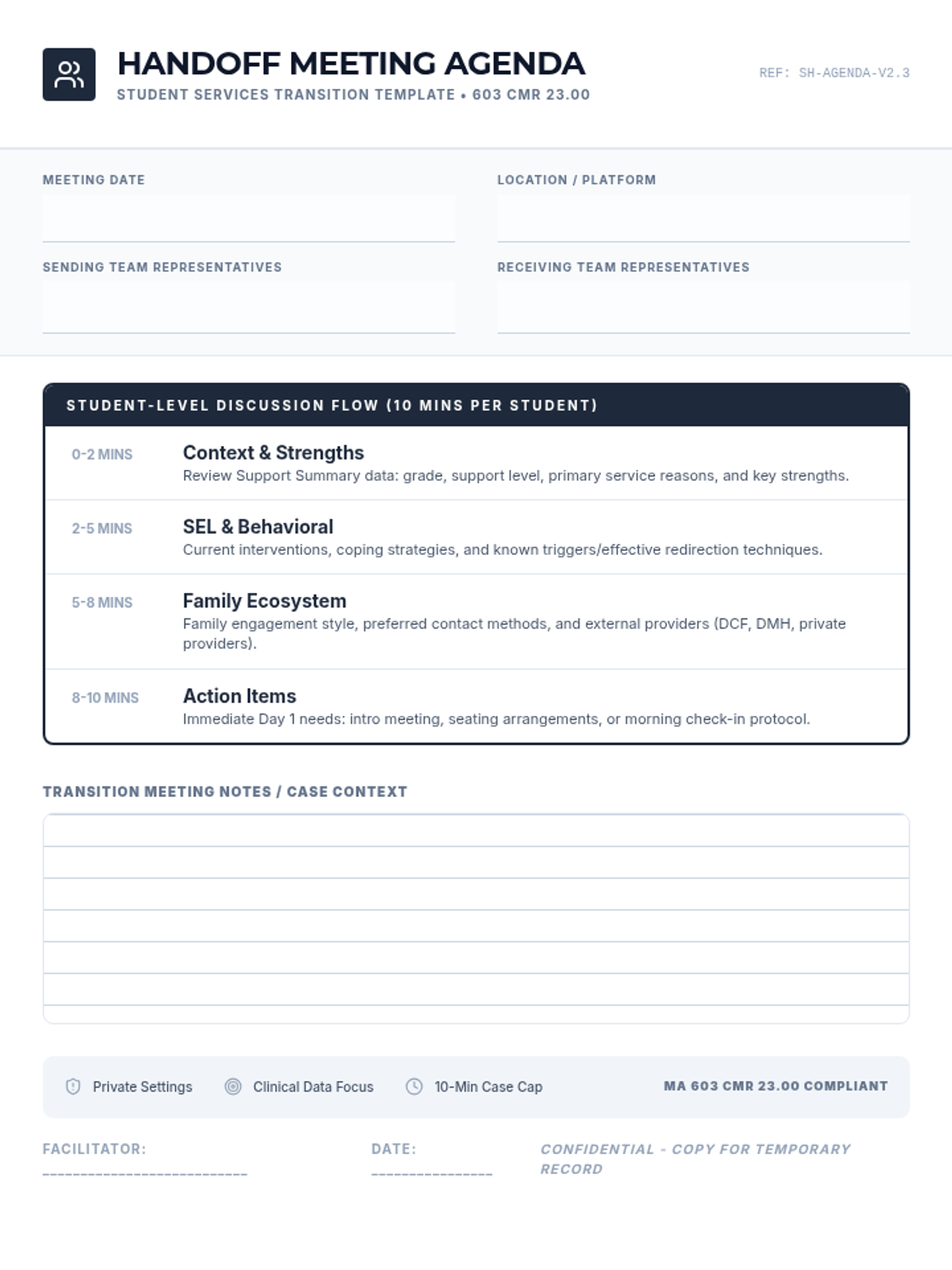
A structured agenda template for transition meetings, now refined for single-page printing with expanded handwriting areas and improved structural integrity.
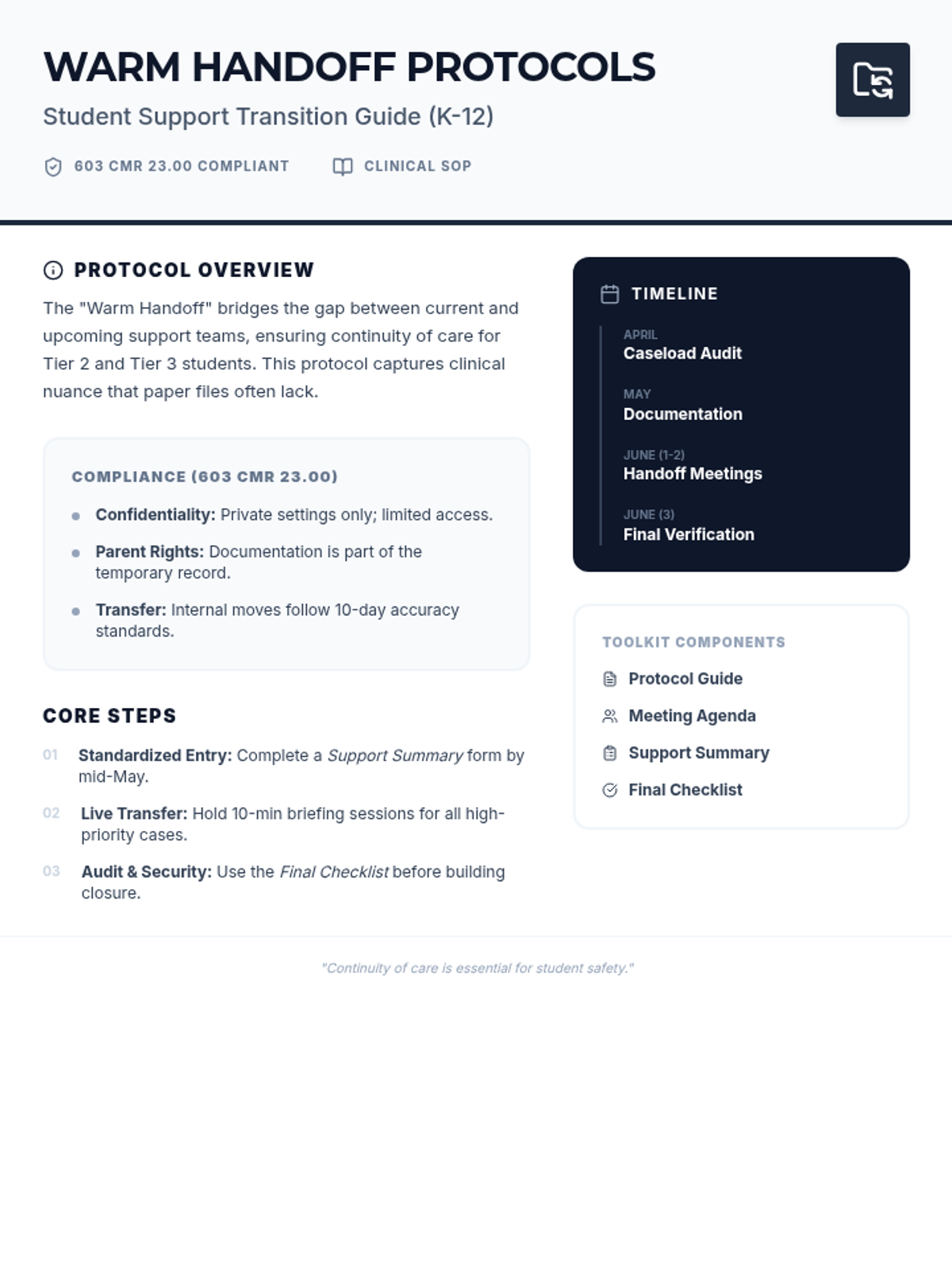
The foundational guide for the Warm Handoff protocol, detailing purpose, a detailed end-of-year timeline, and alignment with Massachusetts student record regulations (603 CMR 23.00). Now optimized for single-page printing.
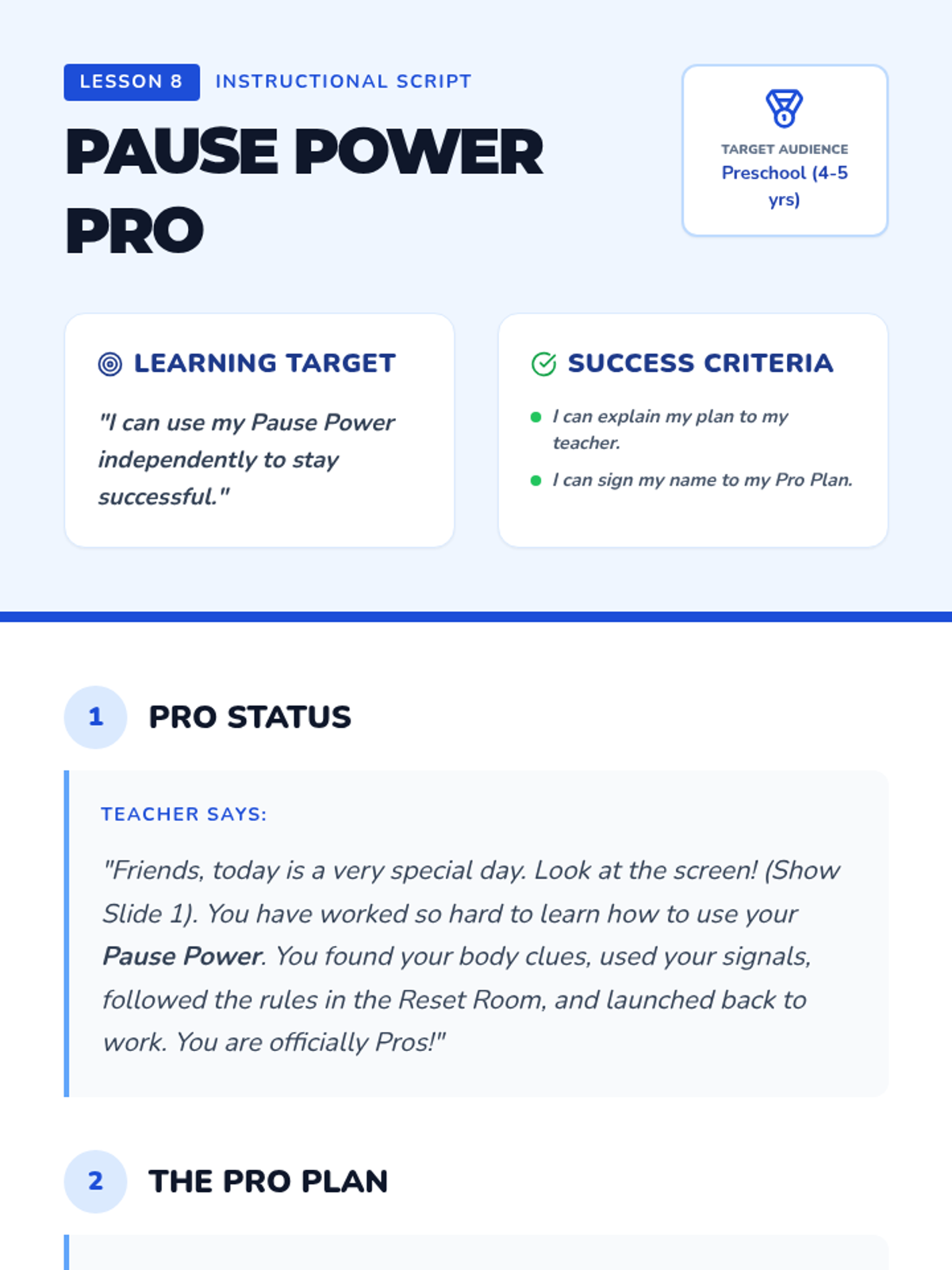
Comprehensive teacher script for Lesson 8: Pause Power Pro. Includes rules, timer instruction, and connection to Character Strong's Responsibility trait.
Instructional slide deck for Lesson 8: Pause Power Pro. Covers the rules of the self-regulation space, setting a 2-minute visual timer, and choosing from the "Reset Menu" tools.
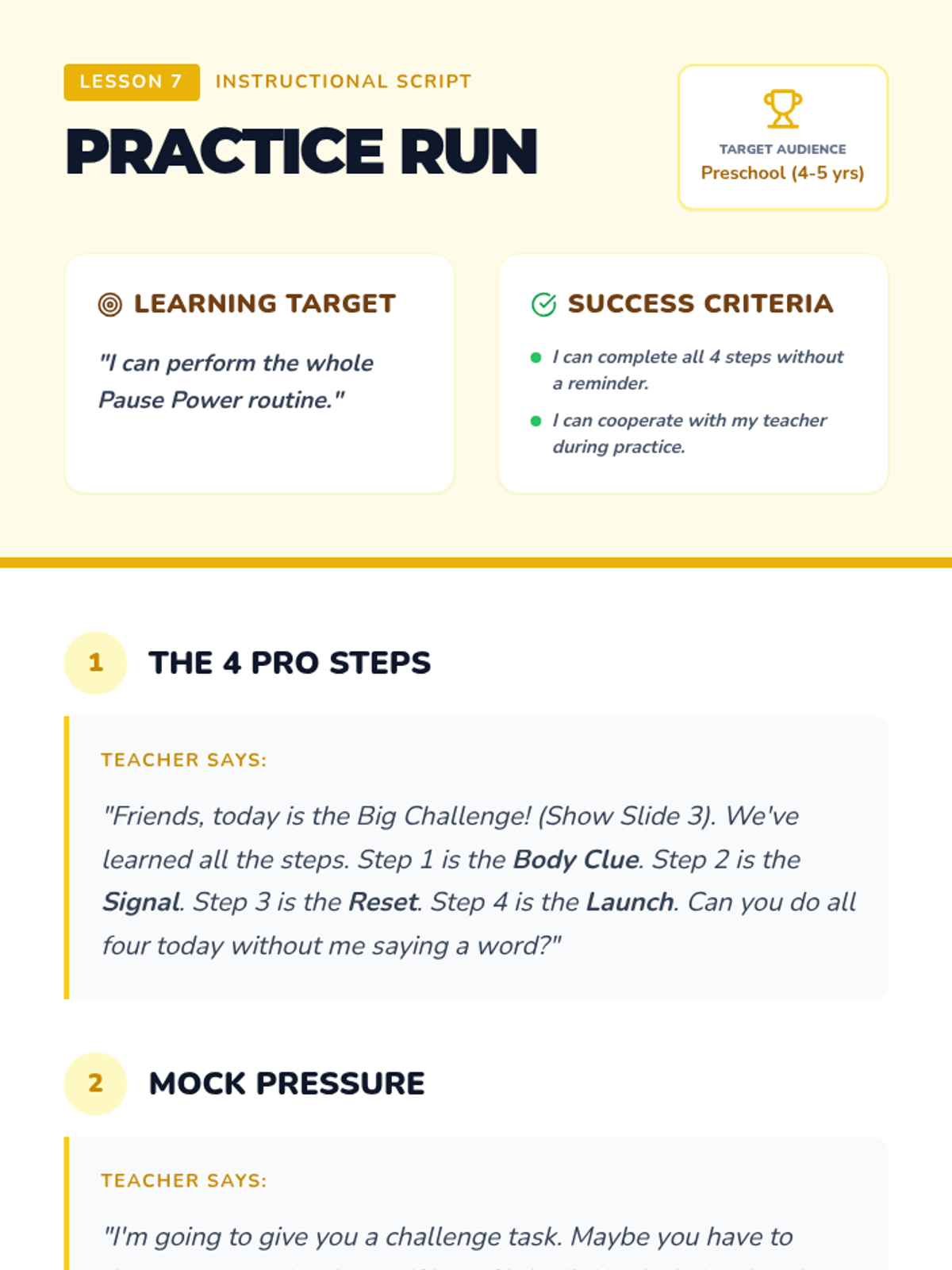
Comprehensive teacher script for Lesson 7: Practice Run. Covers the rules of the self-regulation space, setting a 2-minute visual timer, and choosing from the "Reset Menu" tools.
Instructional slide deck for Lesson 7: Practice Run. Covers the rules of the self-regulation space, setting a 2-minute visual timer, and choosing from the "Reset Menu" tools.
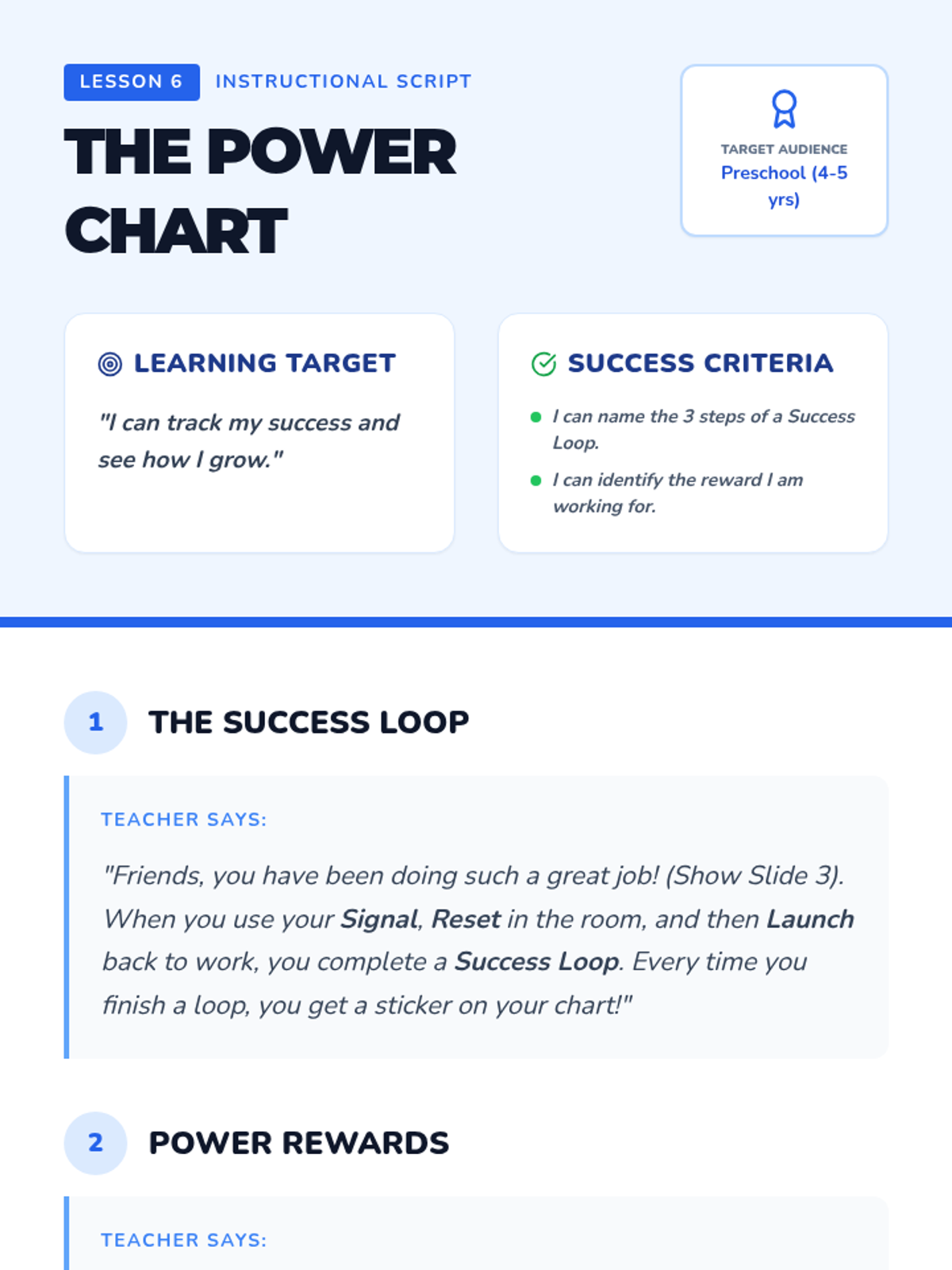
Comprehensive teacher script for Lesson 6: The Power Chart. Covers the rules of the self-regulation space, setting a 2-minute visual timer, and choosing from the "Reset Menu" tools.
Instructional slide deck for Lesson 6: The Power Chart. Covers the rules of the self-regulation space, setting a 2-minute visual timer, and choosing from the "Reset Menu" tools.
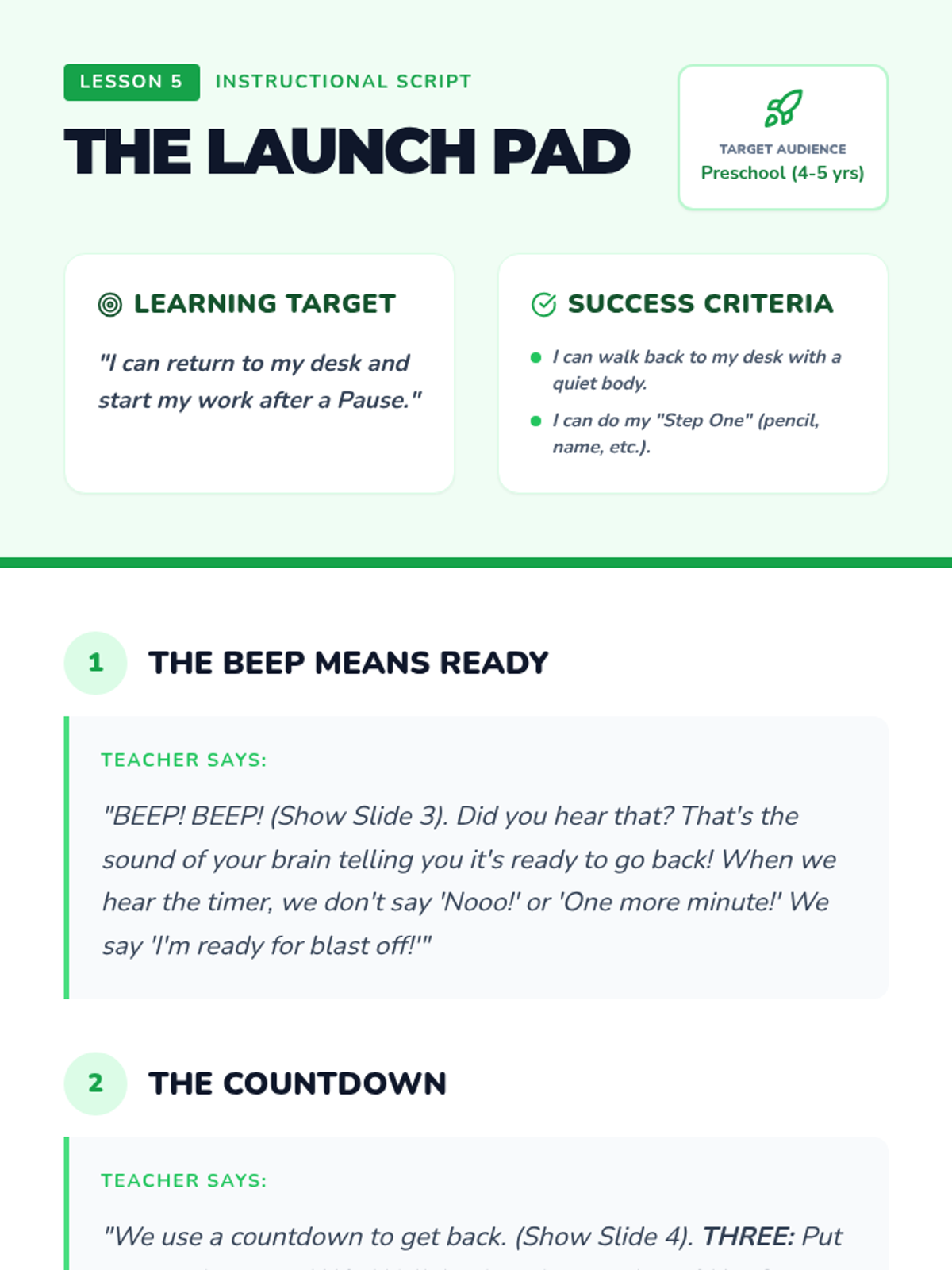
Comprehensive teacher script for Lesson 5: The Launch Pad. Covers the rules of the self-regulation space, setting a 2-minute visual timer, and choosing from the "Reset Menu" tools.
Instructional slide deck for Lesson 5: The Launch Pad. Covers the rules of the self-regulation space, setting a 2-minute visual timer, and choosing from the "Reset Menu" tools.
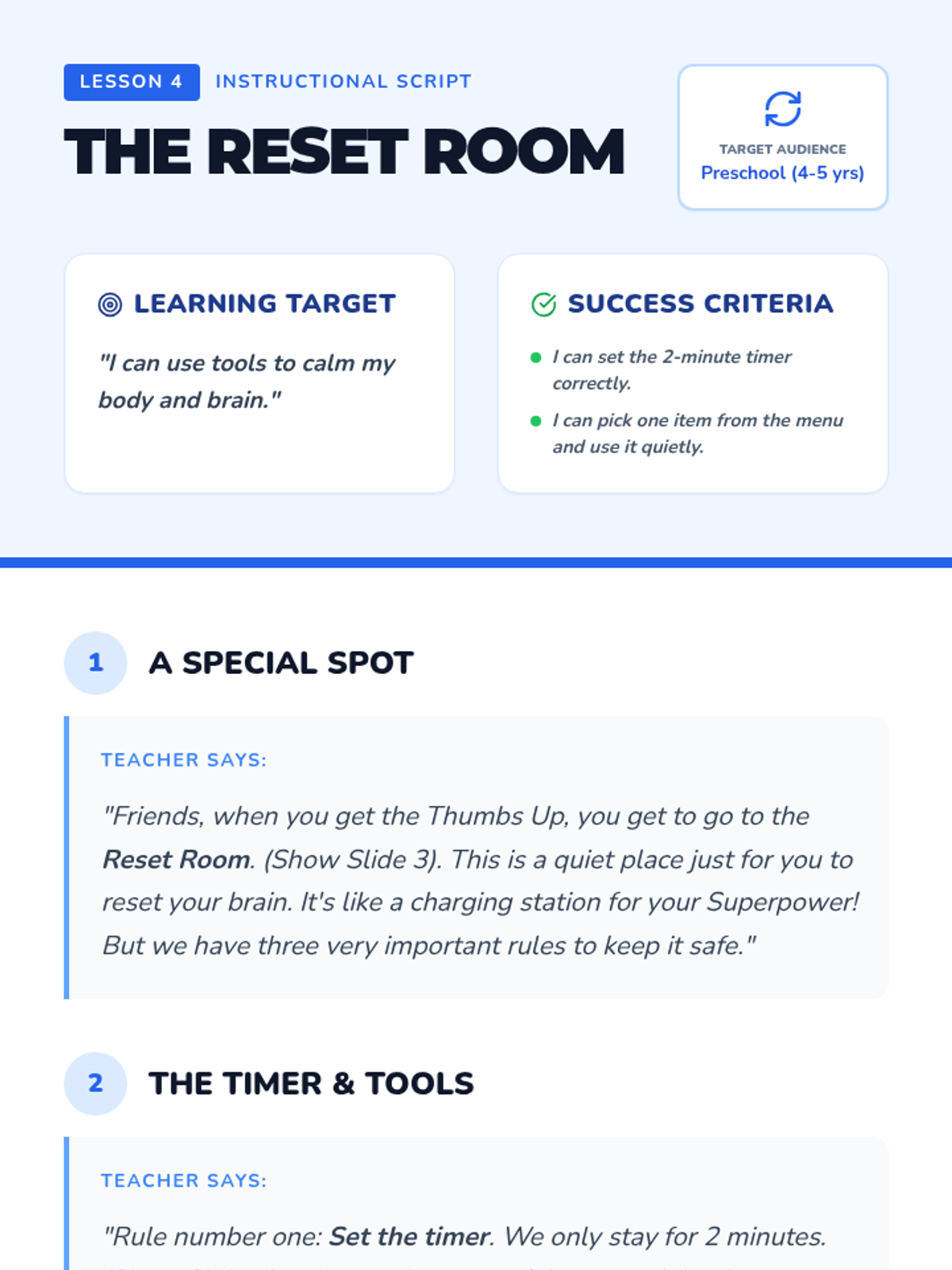
Comprehensive teacher script for Lesson 4: The Reset Room. Includes rules, timer instruction, and connection to Character Strong's Responsibility trait.
A slide deck for introducing preschoolers to the concept of play choices. It defines what a choice is, explains that friends have their own choice voice, and provides actionable options for when a friend chooses to play with something or someone else.
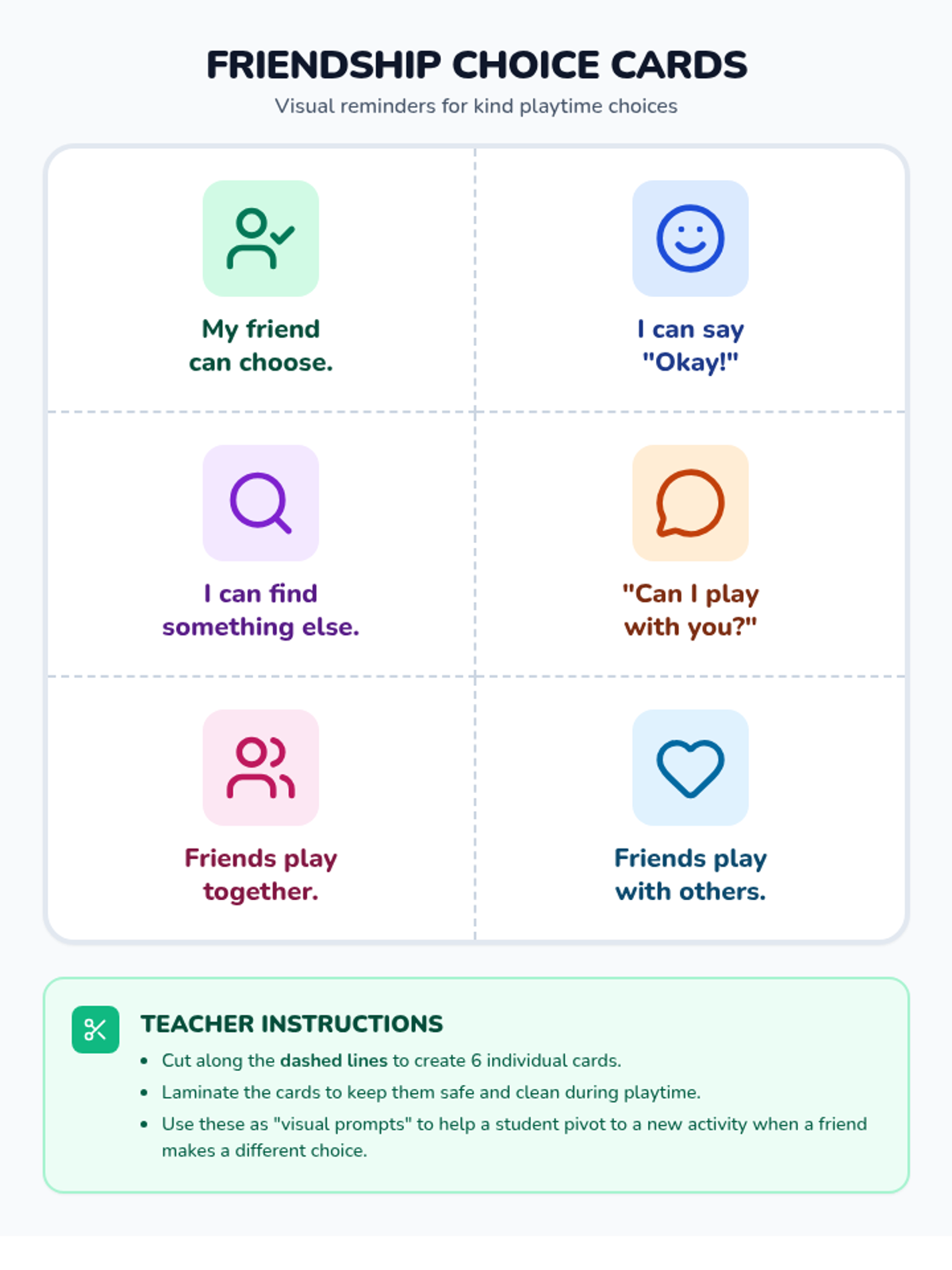
A set of 6 printable visual support cards for preschoolers to help them navigate social situations where friends make independent choices. Each card features a clear icon and a short, positive phrase.
A simple, illustrated social narrative for preschoolers about allowing friends to make their own choices during play. It covers friends choosing different toys and playing with other people.
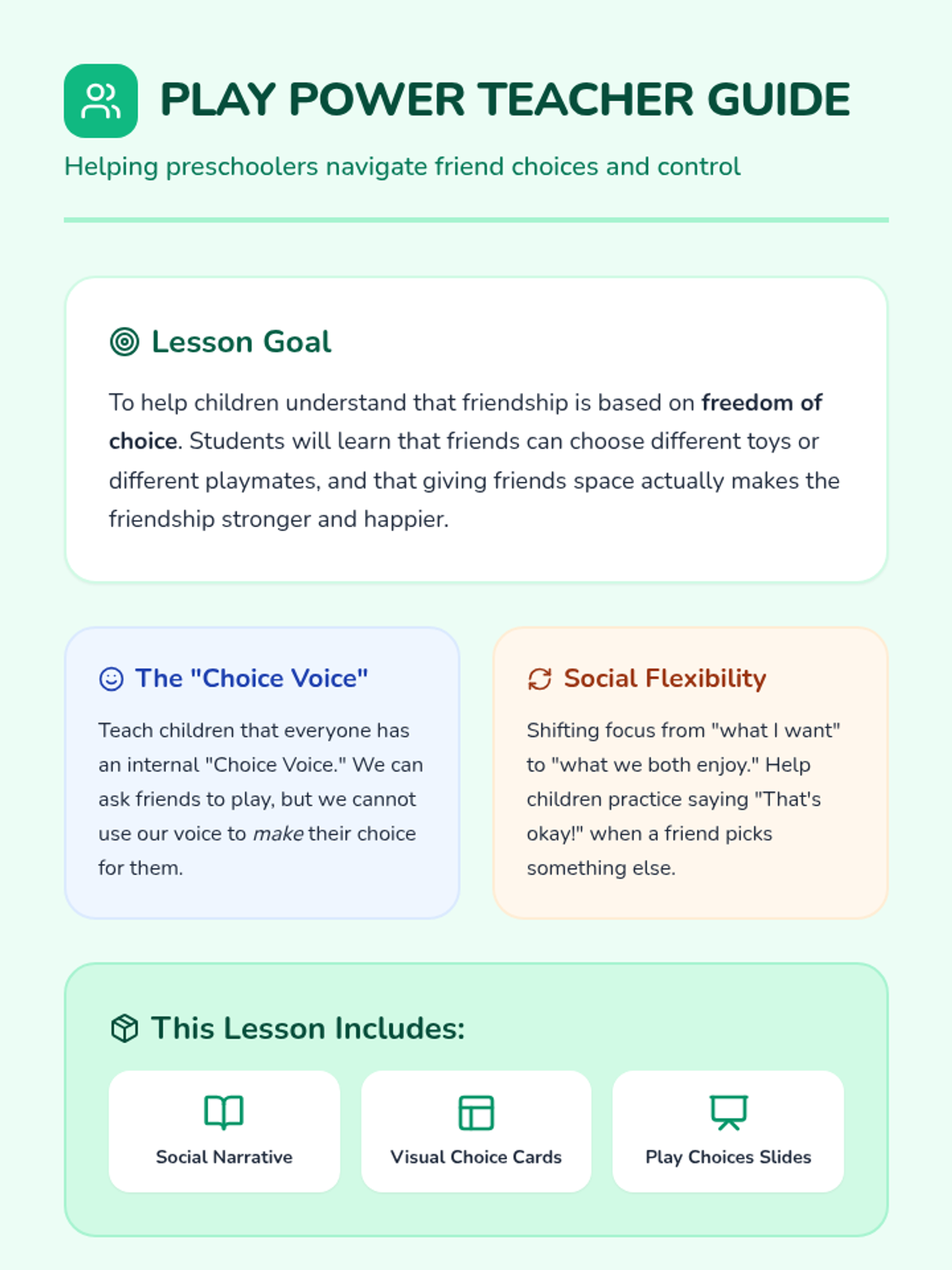
A comprehensive facilitator guide for teachers or parents to help preschoolers understand the concept of free choice in friendships. Includes teaching strategies, circle time prompts, and core concepts like the 'Choice Voice'.
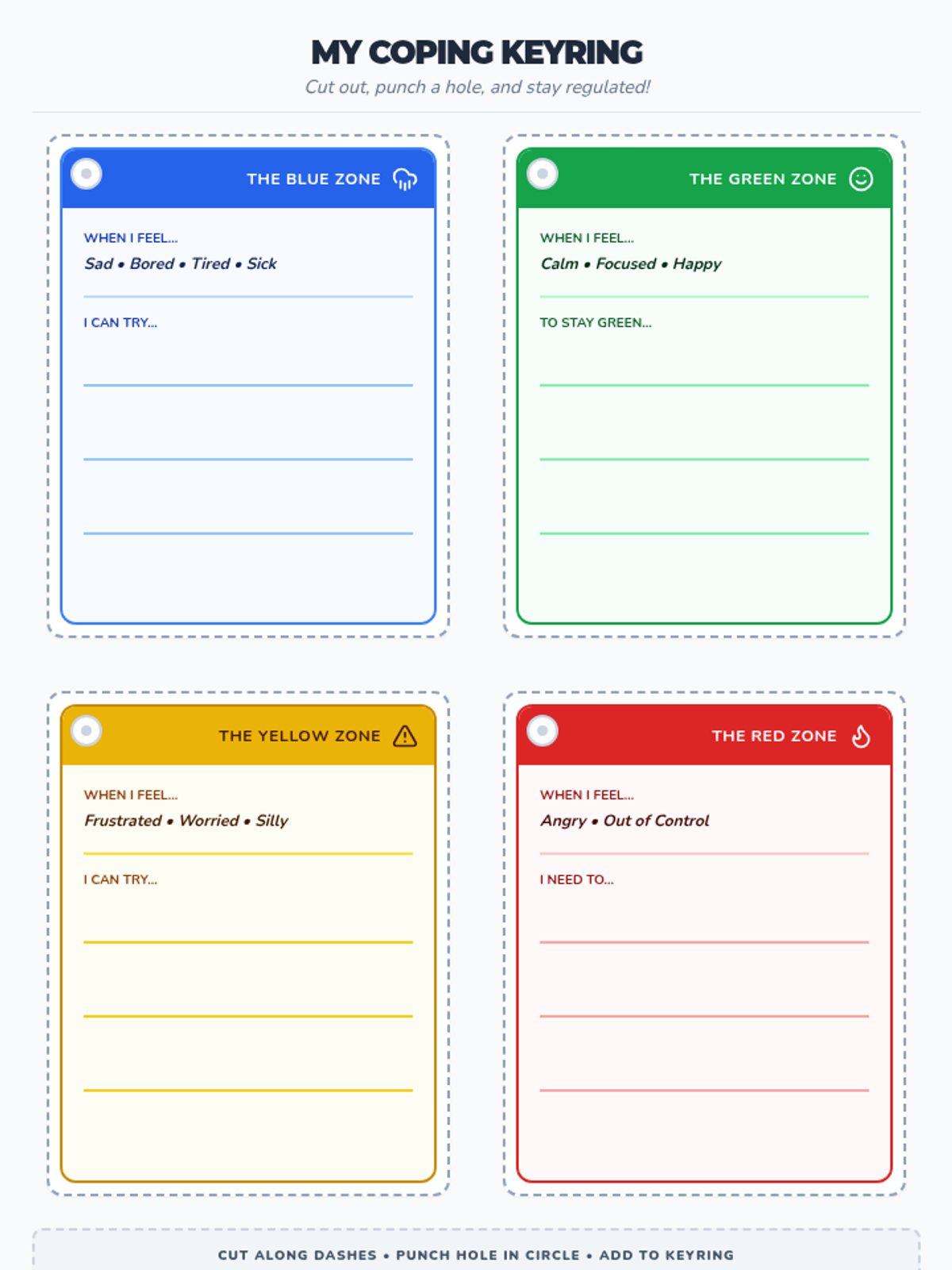
A set of printable, pocket-sized coping skill cards for each regulation zone, designed to be cut out and kept on a keyring for quick reference.
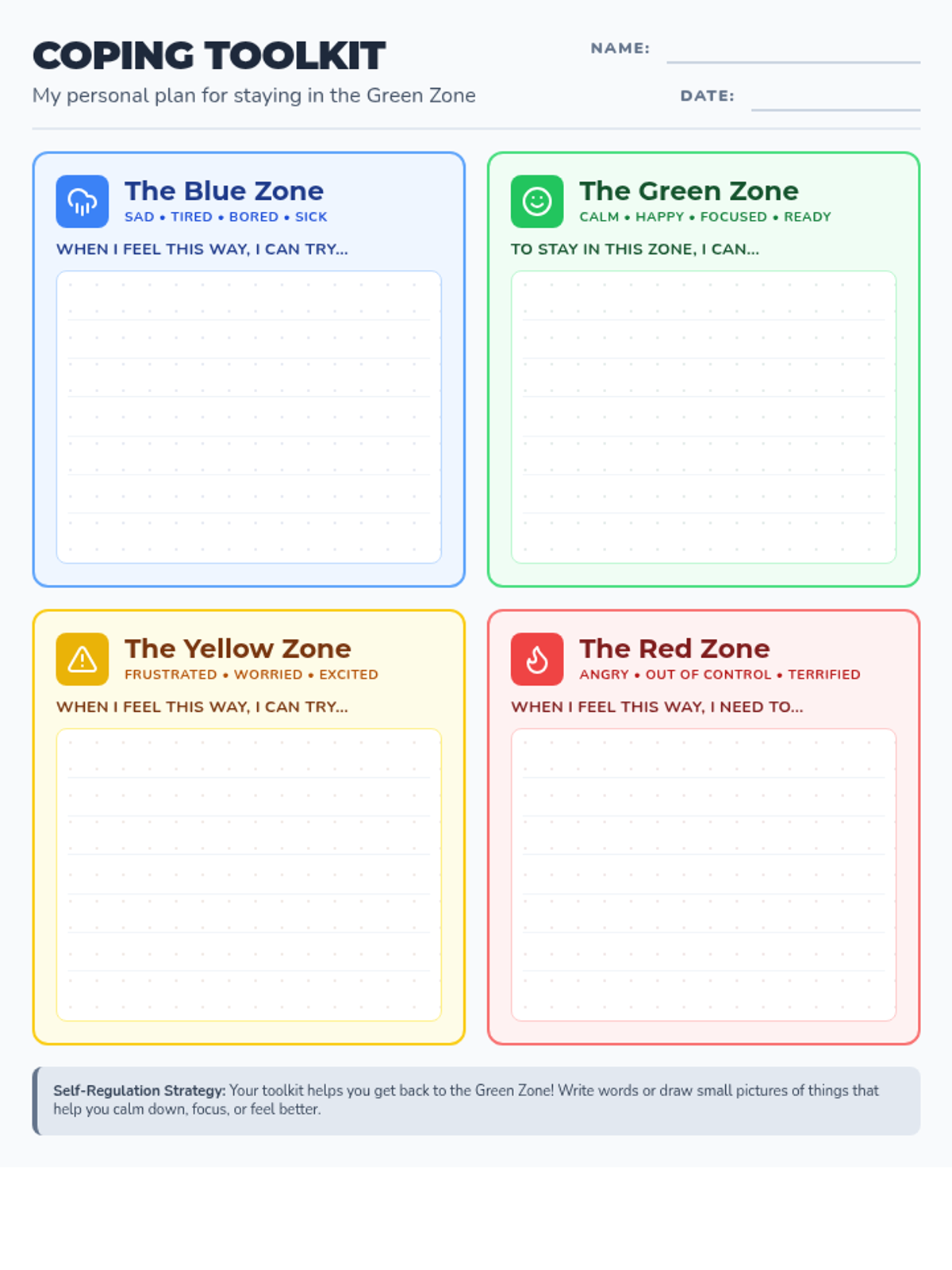
A color-coded visual template featuring the four regulation zones with dedicated space for students to write or draw their personalized coping strategies.
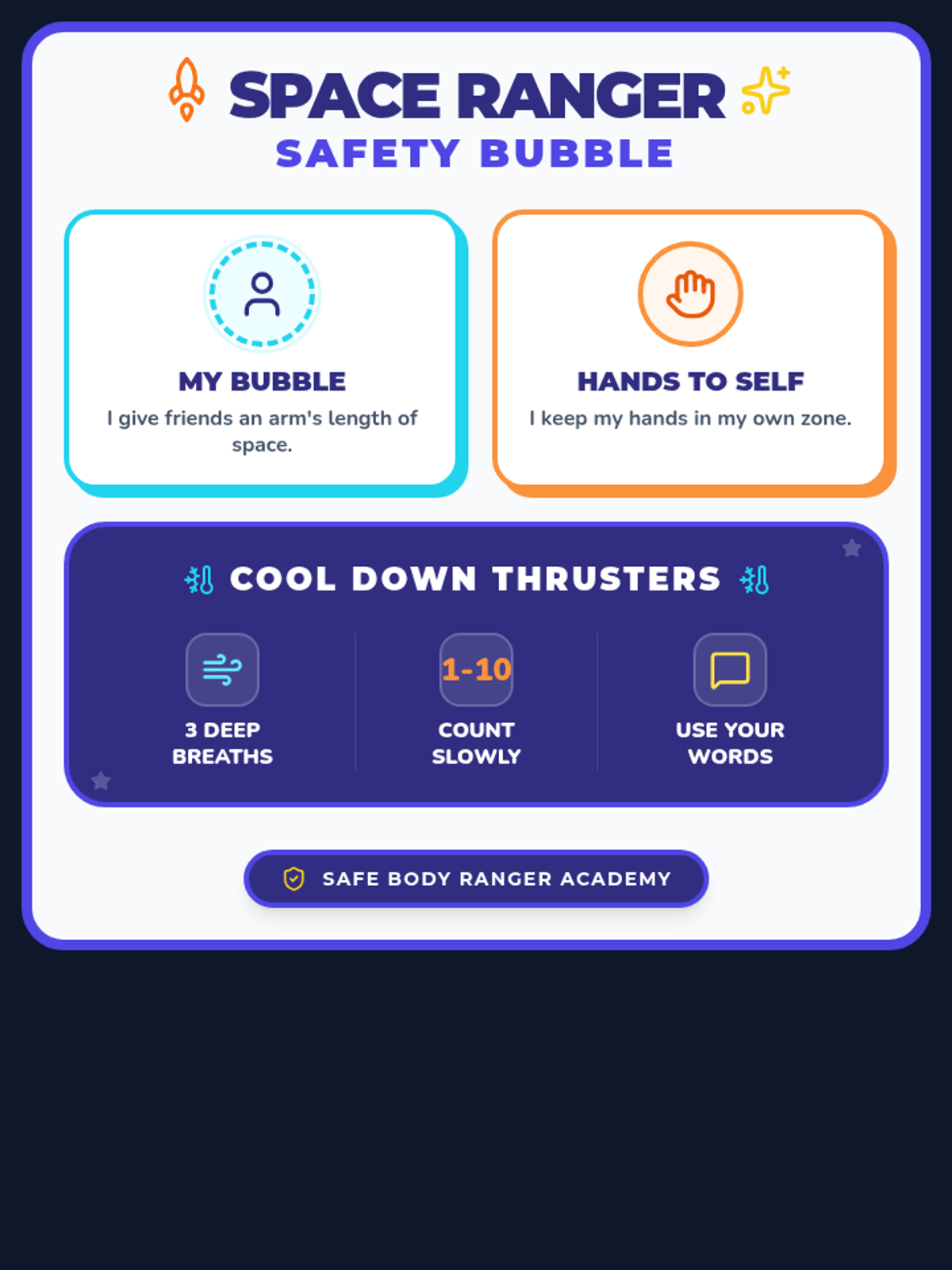
A high-contrast, visually engaging anchor chart for students, outlining 'Space Bubble' rules, 'Hands to Self' expectations, and three 'Cool Down Thruster' strategies. Includes space-themed icons and bold typography.
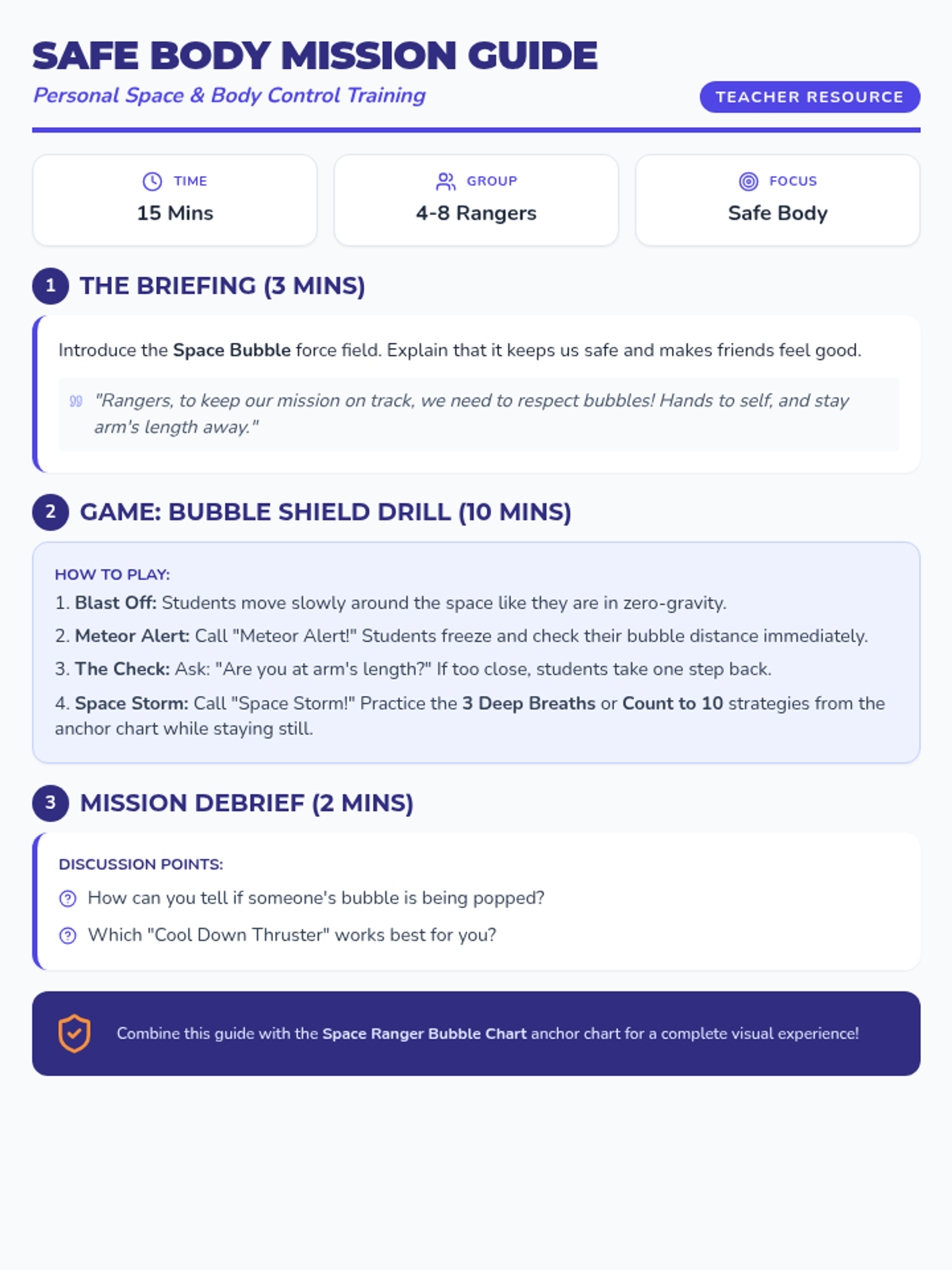
A comprehensive lesson plan for a 15-minute Lunch Bunch session. It includes a 'Space Rangers' theme, clear instructional steps, and a 'Bubble Shield Drill' game to teach personal space and body control.
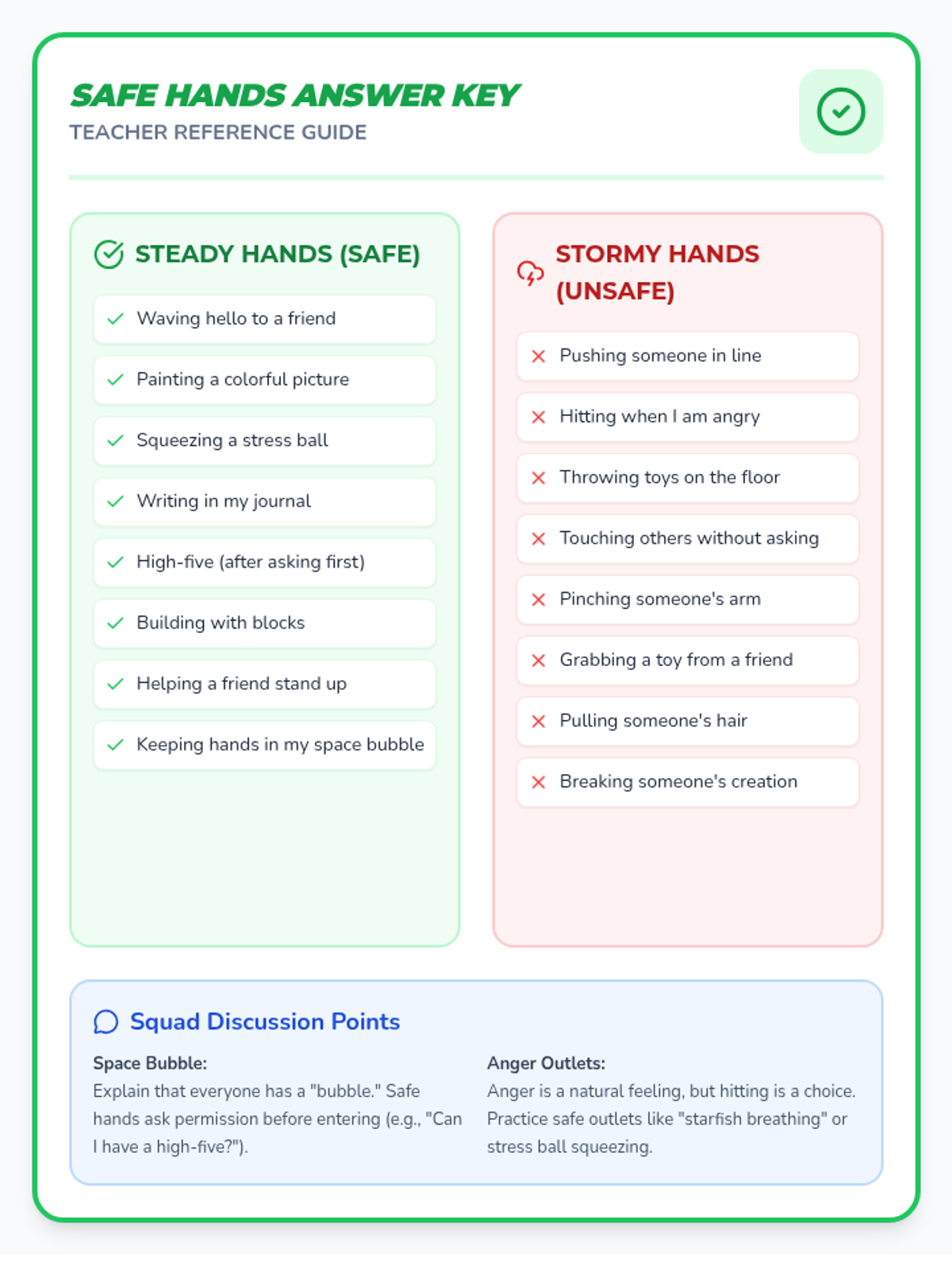
A teacher reference sheet providing the correct categorization for the Safe Hands activity and discussion points for the class.
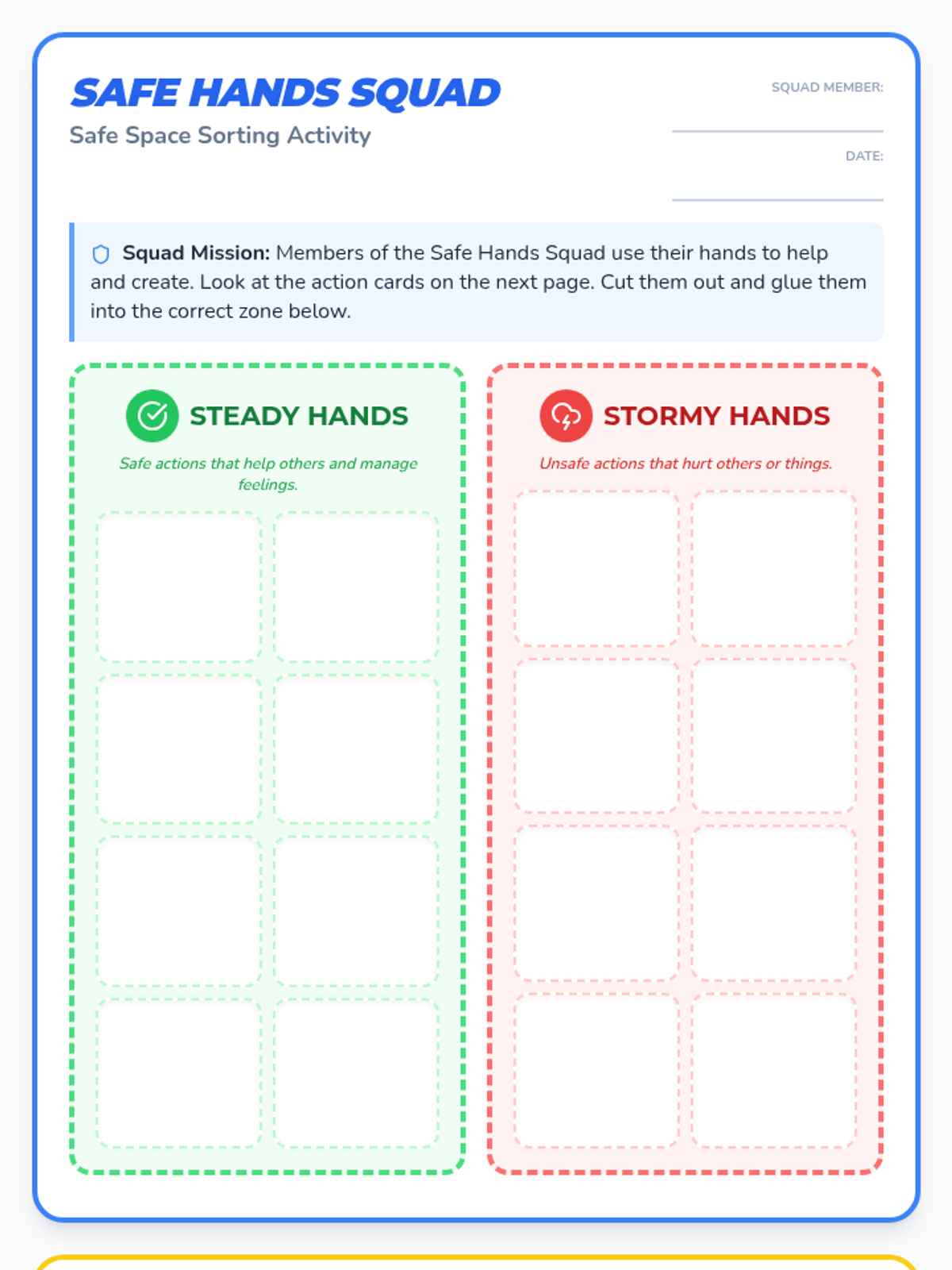
A squad-themed sorting activity where students categorize actions as 'Steady Hands' (safe) or 'Stormy Hands' (unsafe) to learn about boundaries and emotional regulation.
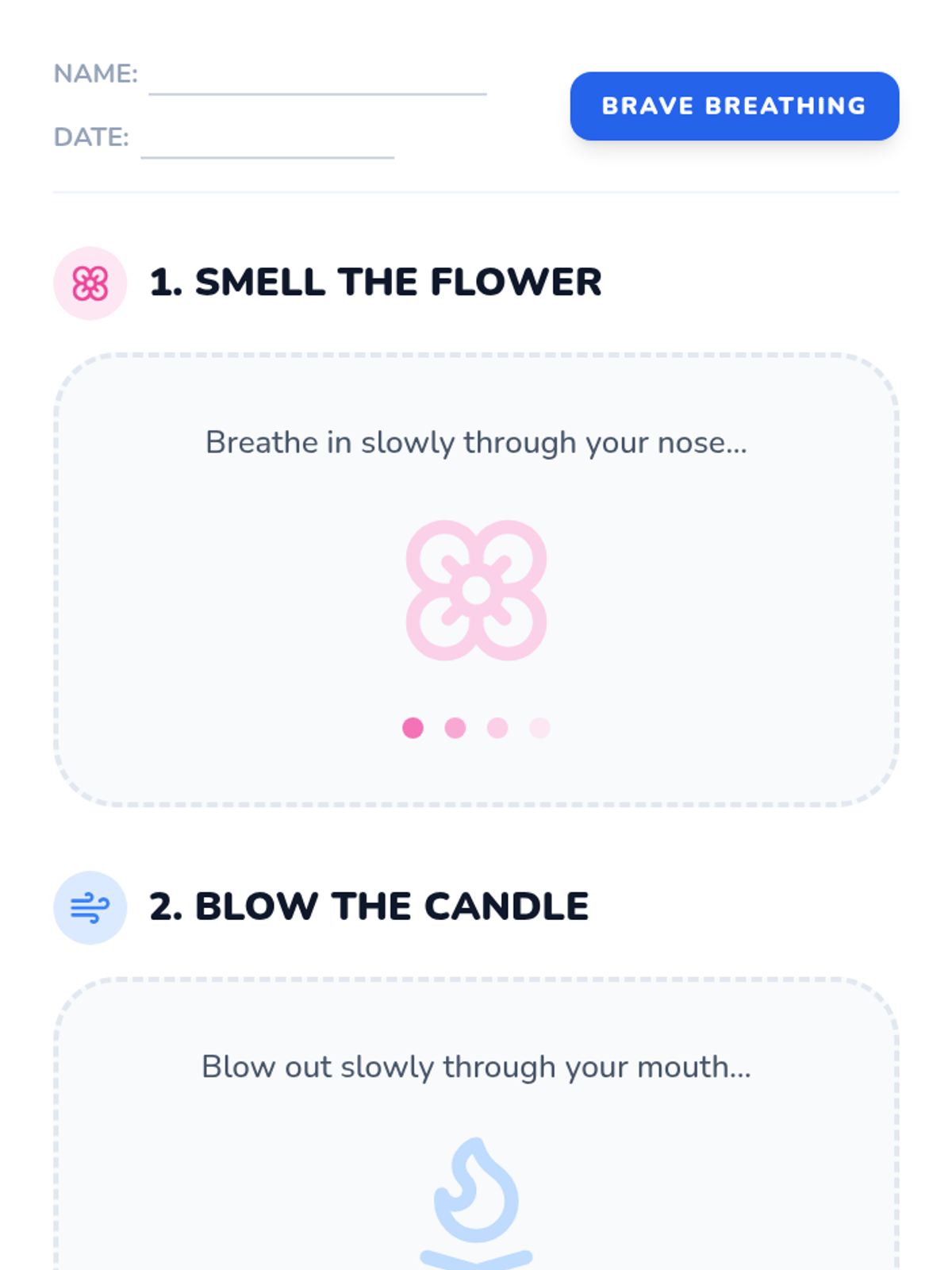
A hands-on worksheet for preschoolers to practice 'smell the flower, blow the candle' breathing and color their own 'Change Champion' badge.
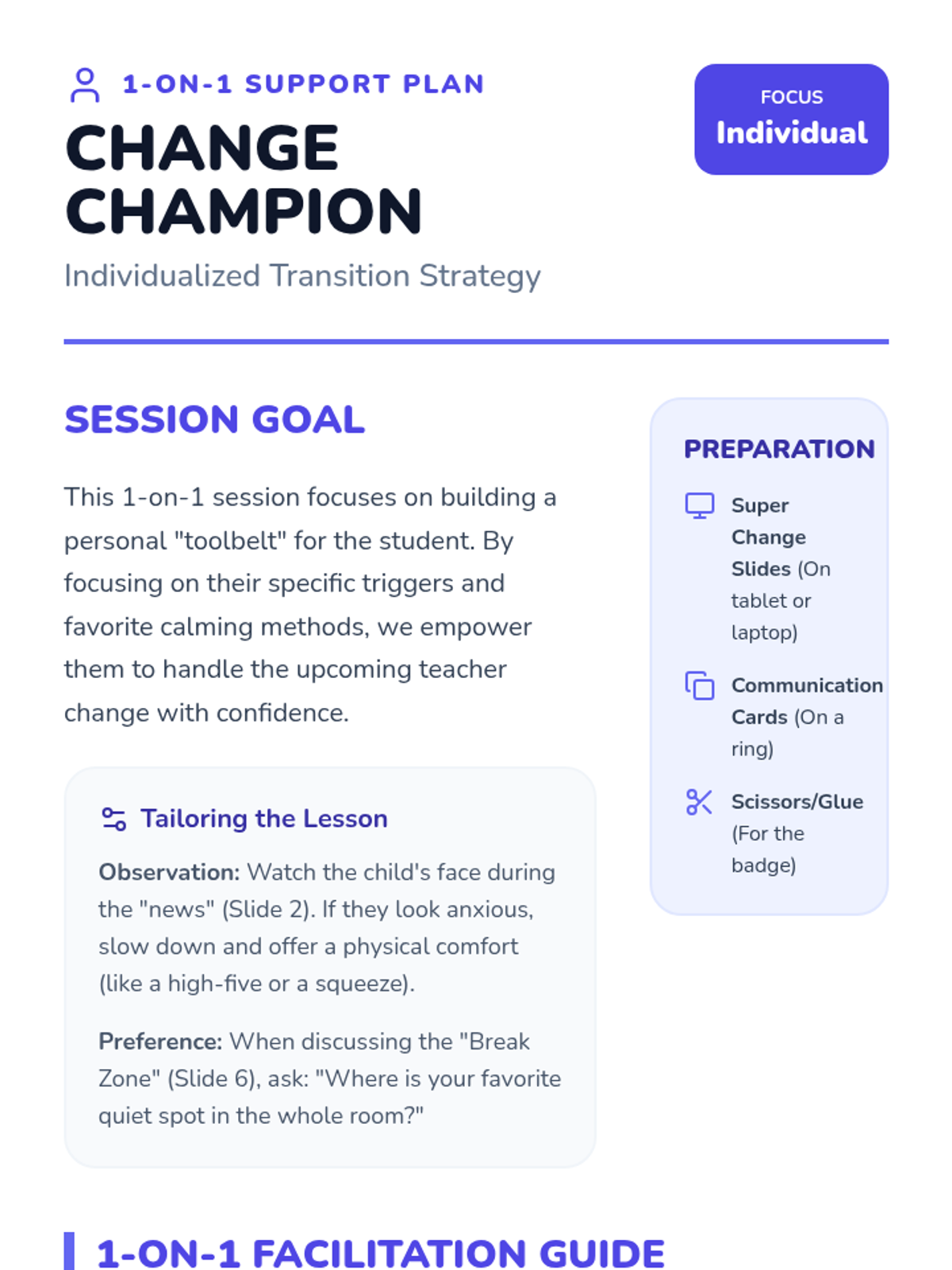
An individualized support plan for a 1-on-1 session to prepare a preschooler for a teacher change, including personal connection strategies and physical practice steps.
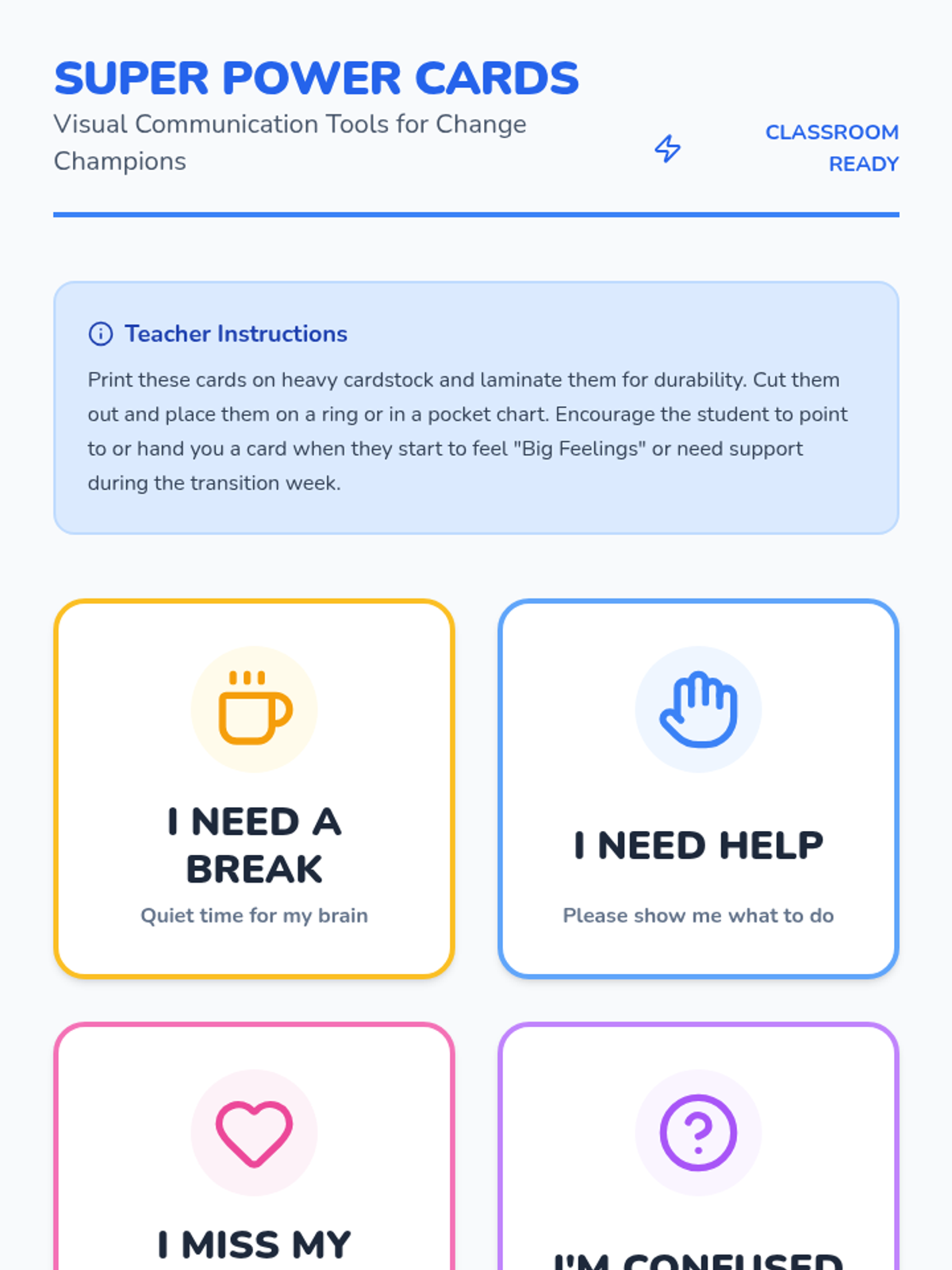
A set of printable communication cards featuring bold icons and simple text to help preschoolers express their needs (breaks, help, feelings) during transitions.
A vibrant, superhero-themed presentation to help preschoolers understand upcoming teacher changes, identify their feelings, and learn self-regulation 'super powers'.
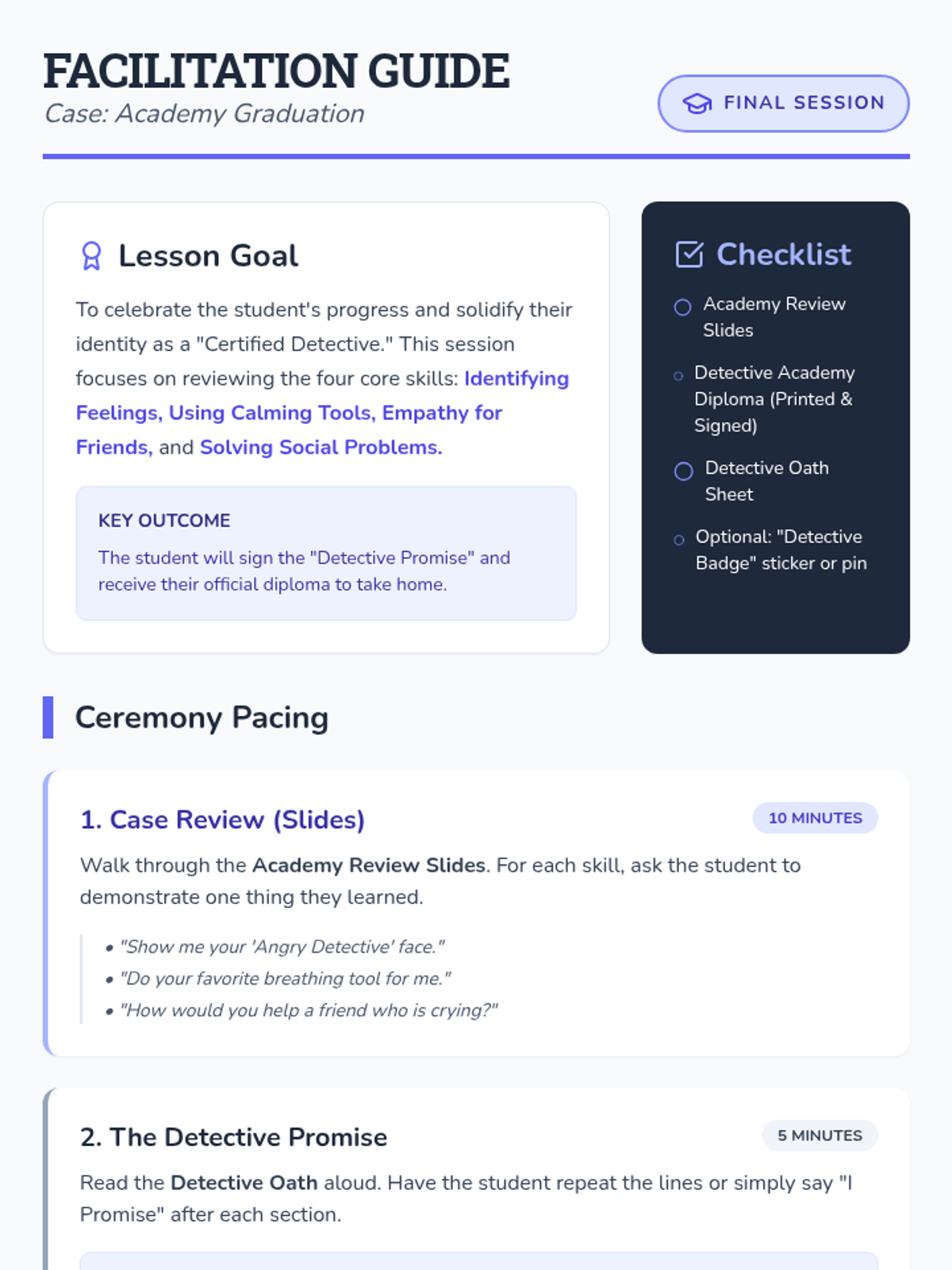
A teacher facilitation guide for the 'Academy Graduation' lesson, outlining the steps for a review session, a detective promise ceremony, and the presentation of diplomas.
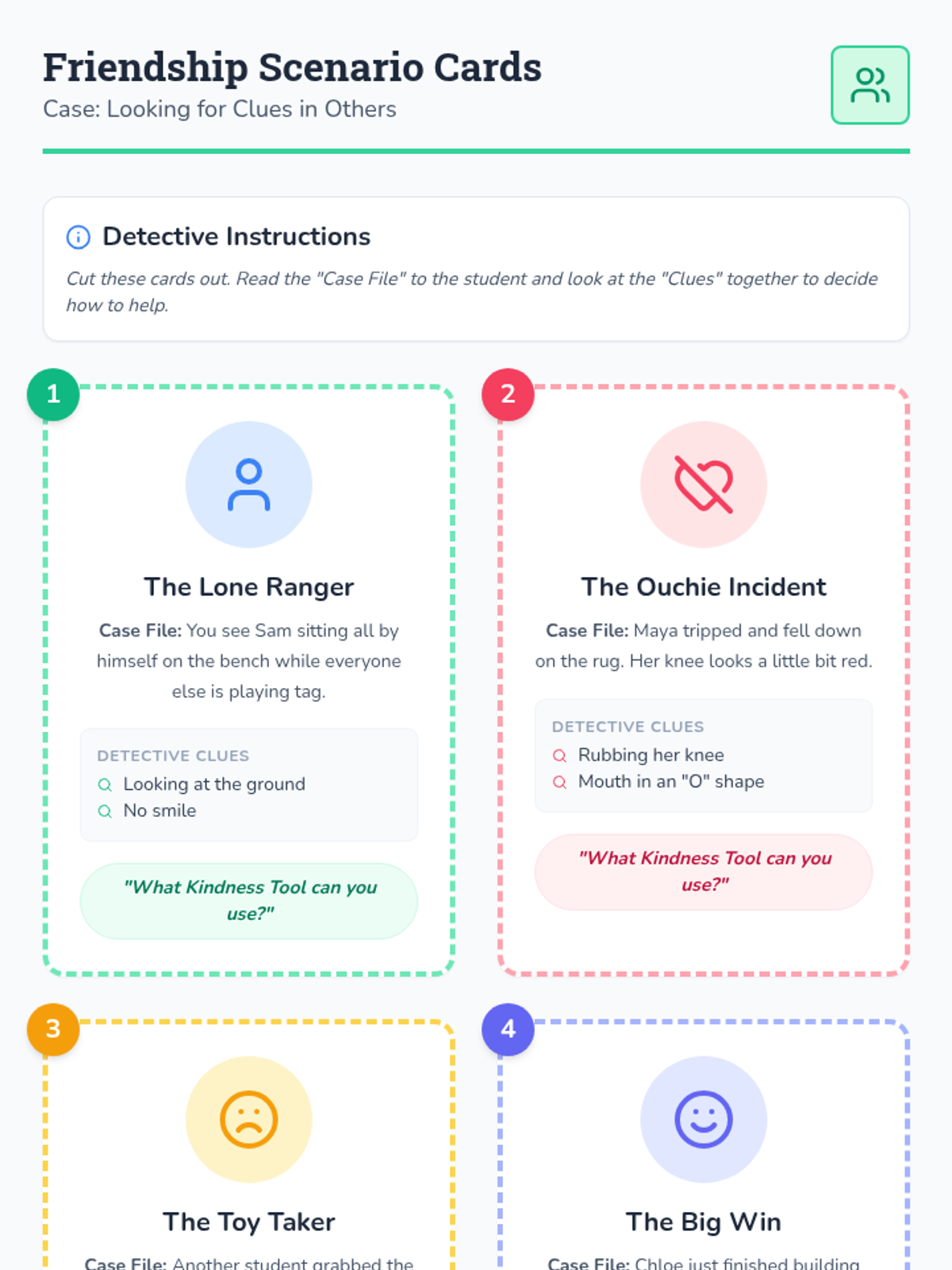
A set of 4 visual scenario cards for friendship-themed empathy practice. Students identify emotional clues in others and choose a 'Kindness Tool' to help.
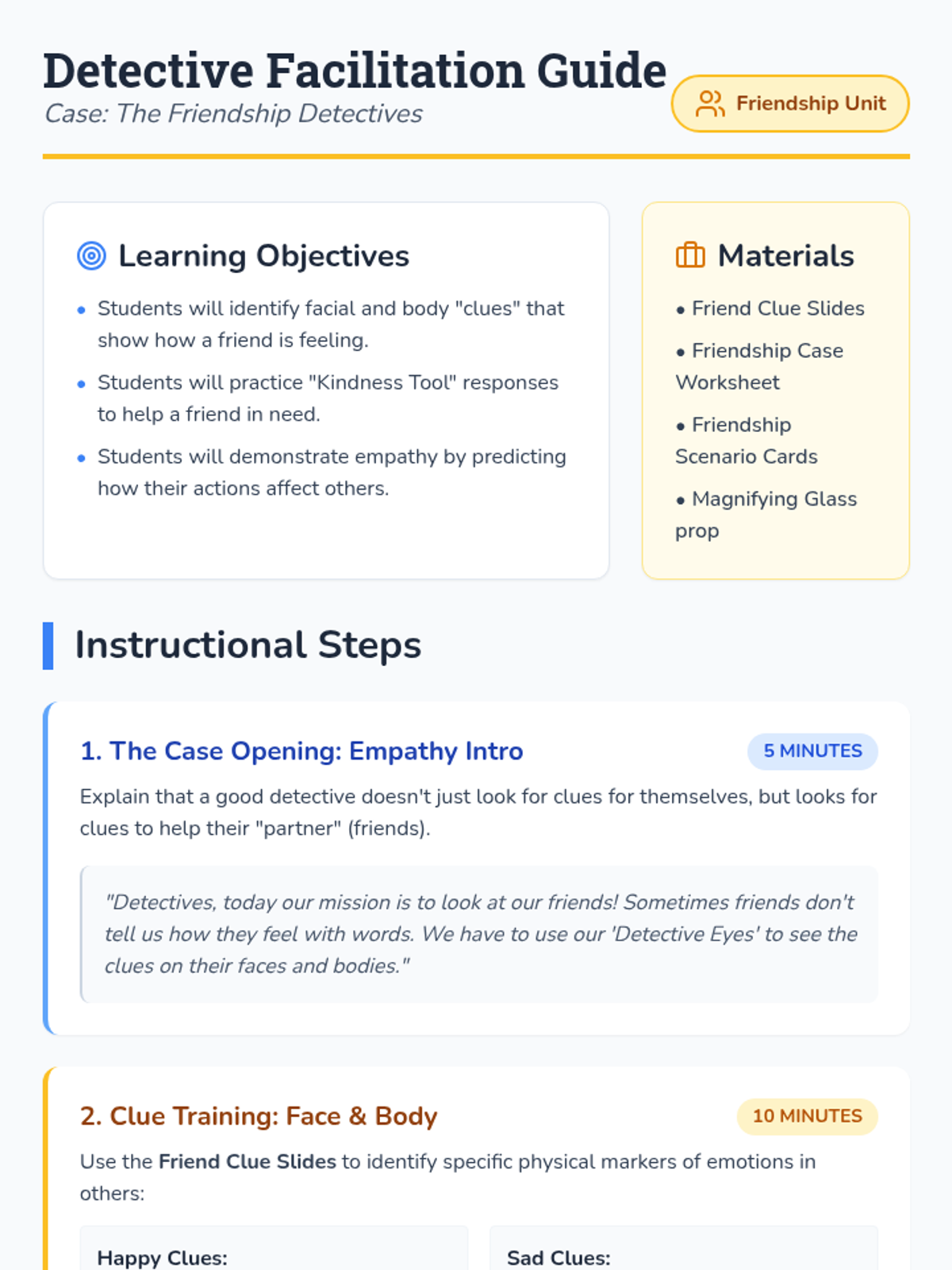
A teacher facilitation guide for the 'Friendship Detectives' lesson, providing instructional steps and differentiation strategies for teaching empathy and social cues.
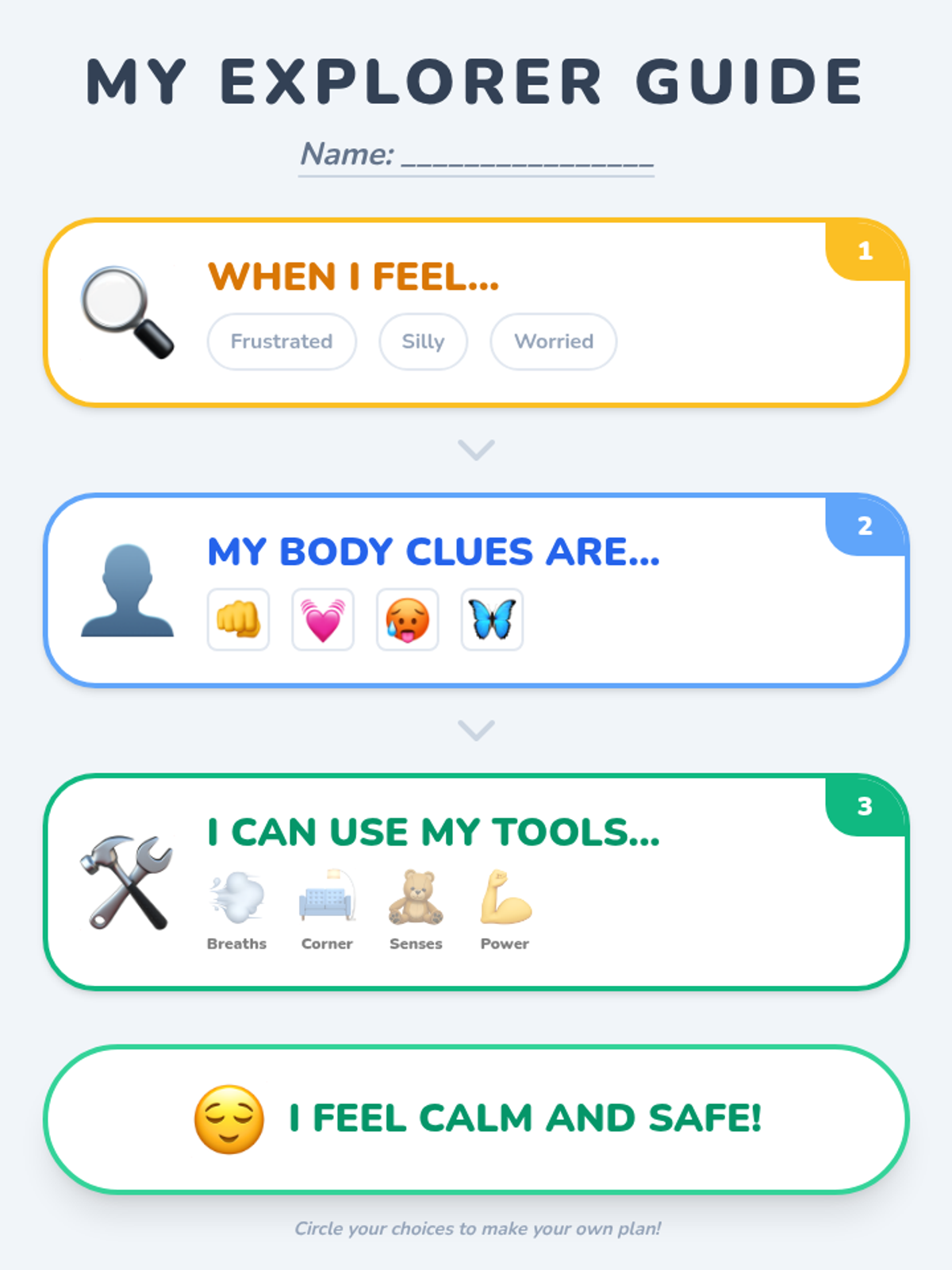
A personalized self-regulation guide template for the student to circle their preferred feelings, body signals, and tools.
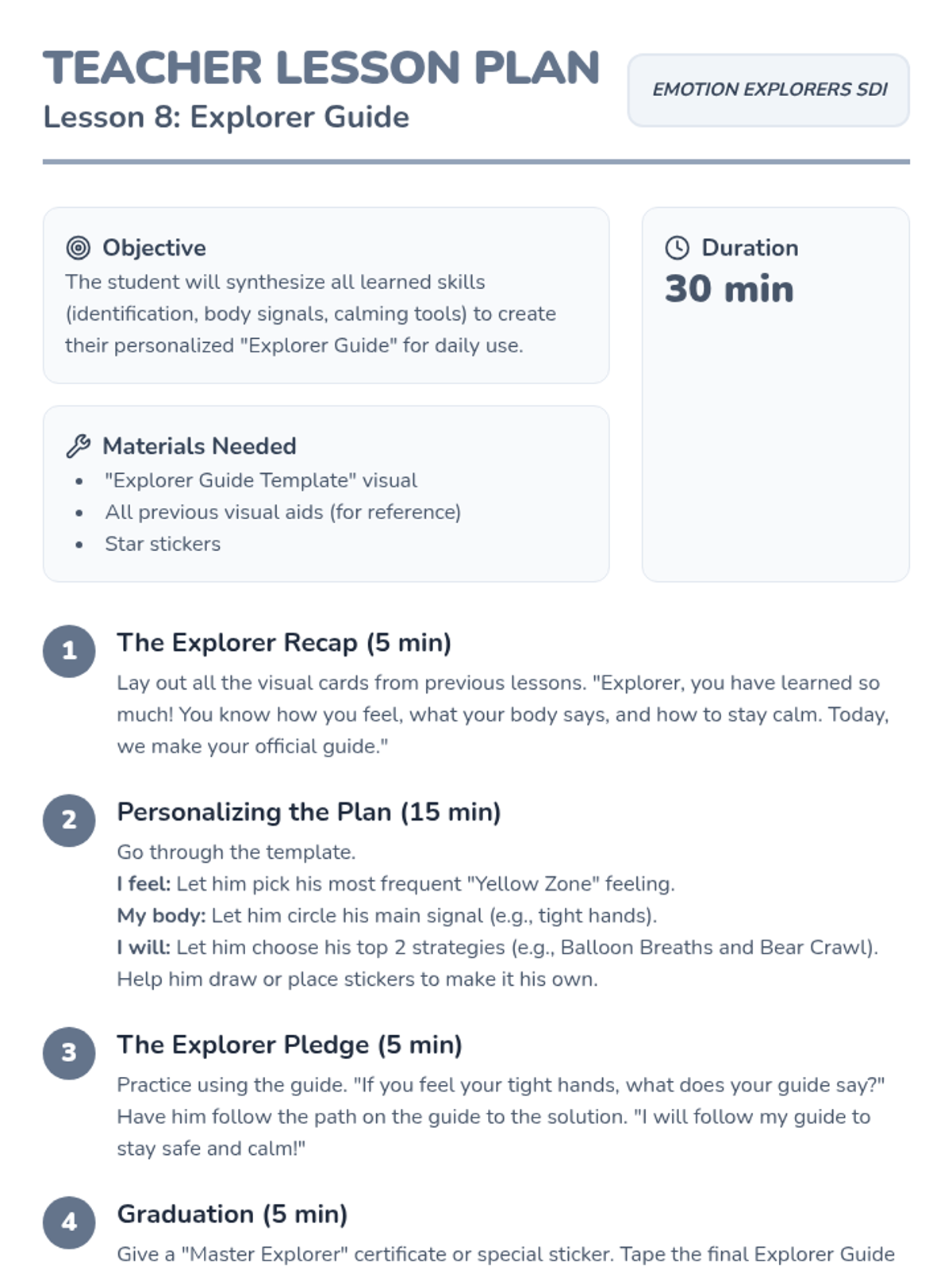
Teacher lesson plan for Lesson 8, synthesizing all skills into a personalized regulation plan for the student.