Empathetic skill development through emotion recognition, cultural diversity appreciation, and bias confrontation. Targets multi-perspective analysis to support respectful interactions and complex social responses.
Visual aids for Lesson 5, introducing the 'remote control' and 'buttons' metaphor for communicating triggers.
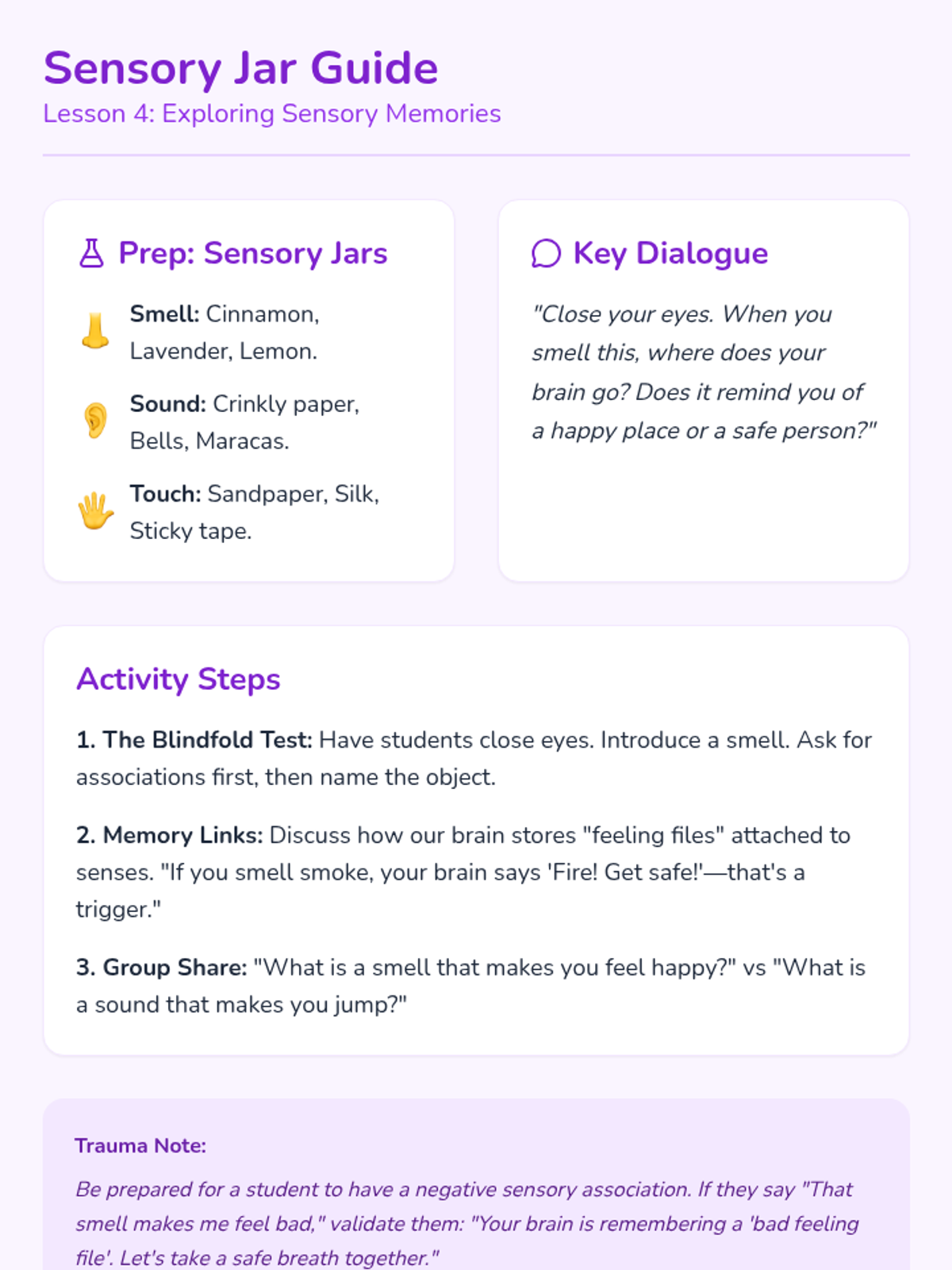
A teacher guide for Lesson 4, explaining how to set up and facilitate the sensory memory exploration activity.
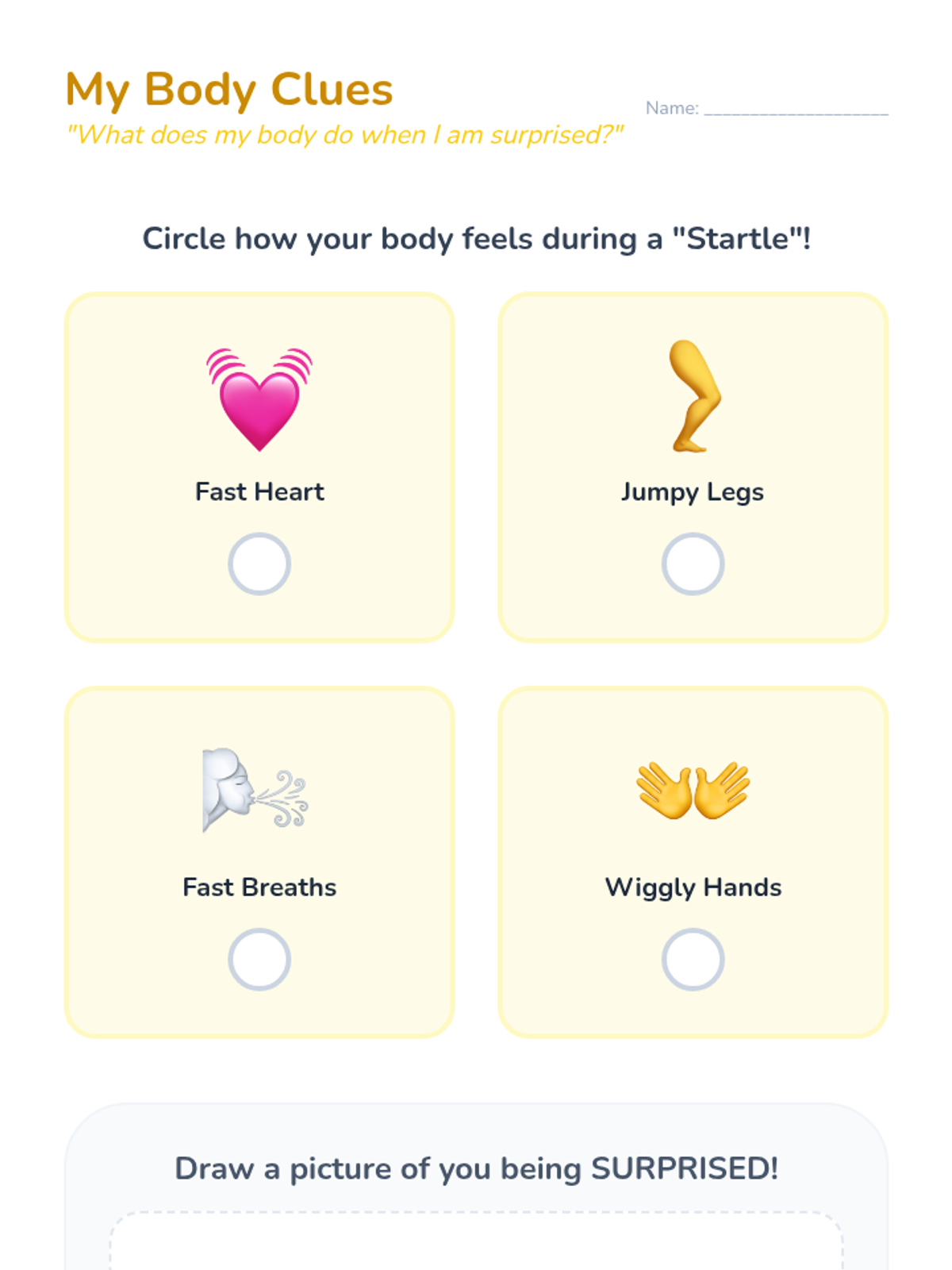
A student worksheet for Lesson 2 to help them recognize physical sensations associated with the startle response.
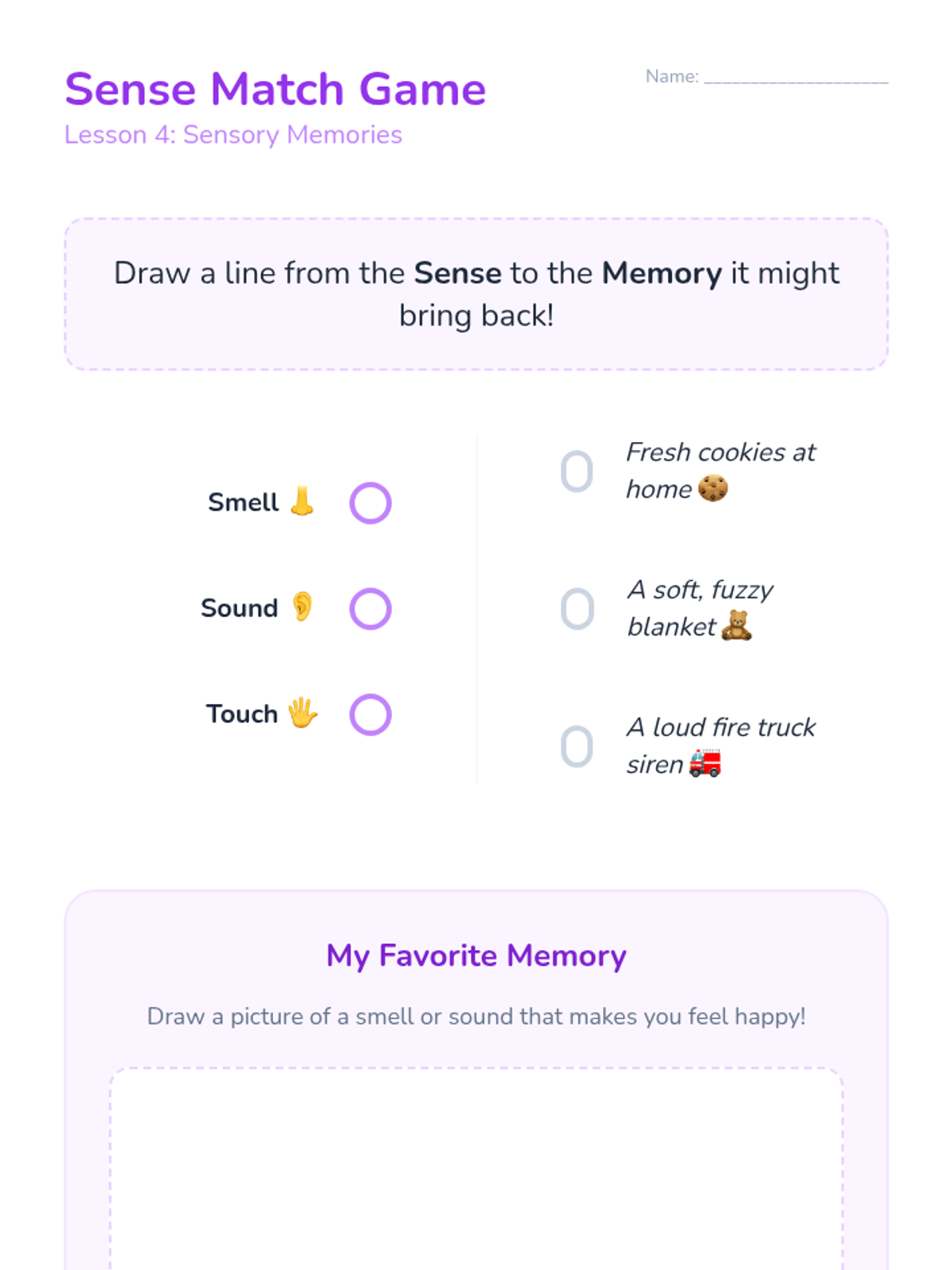
A student matching activity for Lesson 4 that connects the five senses to specific emotional memories.
Visual aids for Lesson 3 to accompany the puppet show, helping students visualize the difference between past memories and present safety.
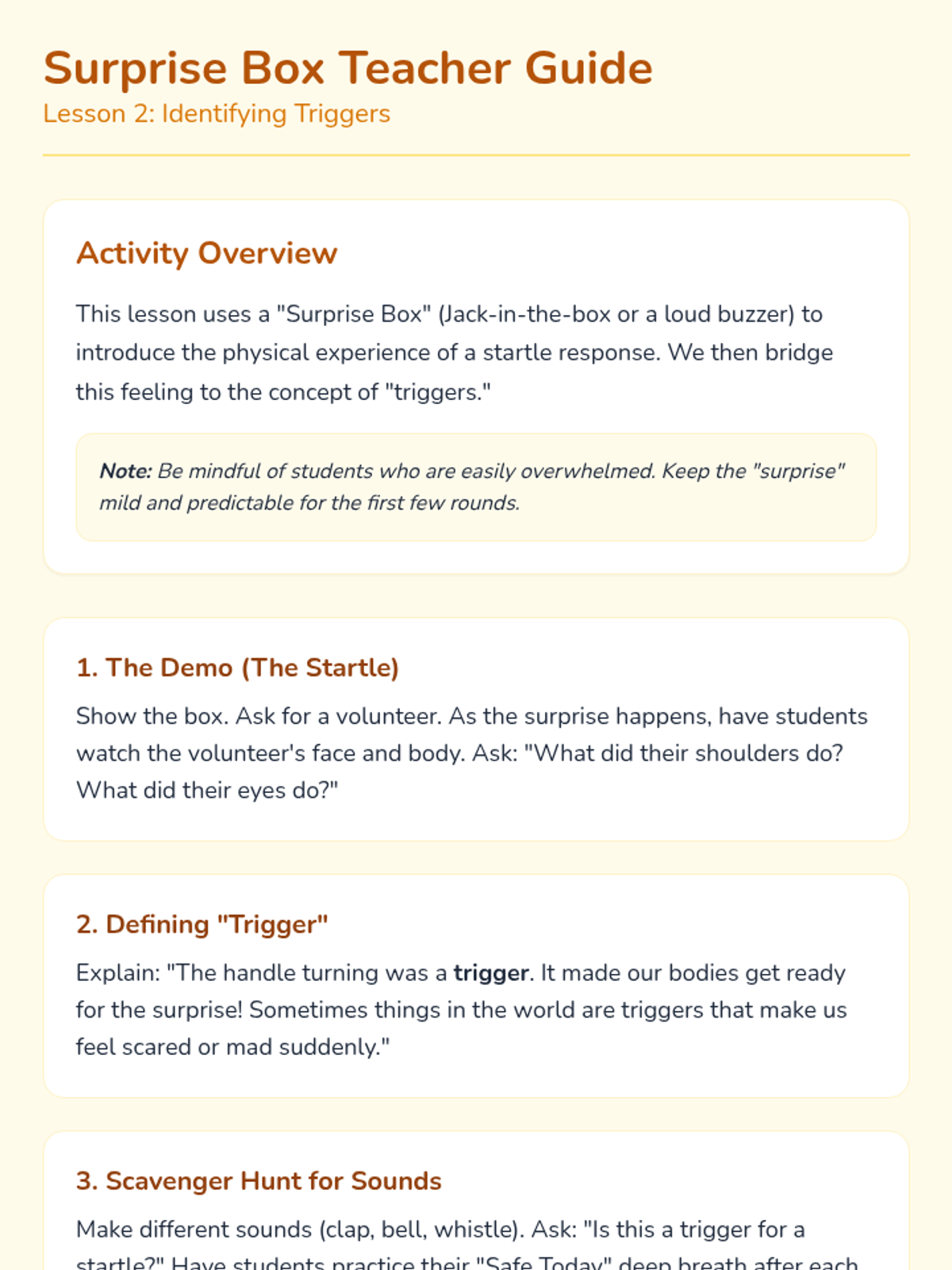
A teacher guide for Lesson 2, providing instructions on how to use the "Surprise Box" activity to teach startle responses and triggers.
Visual aids for Lesson 2 to explain startle responses and the concept of triggers using simple language and icons.
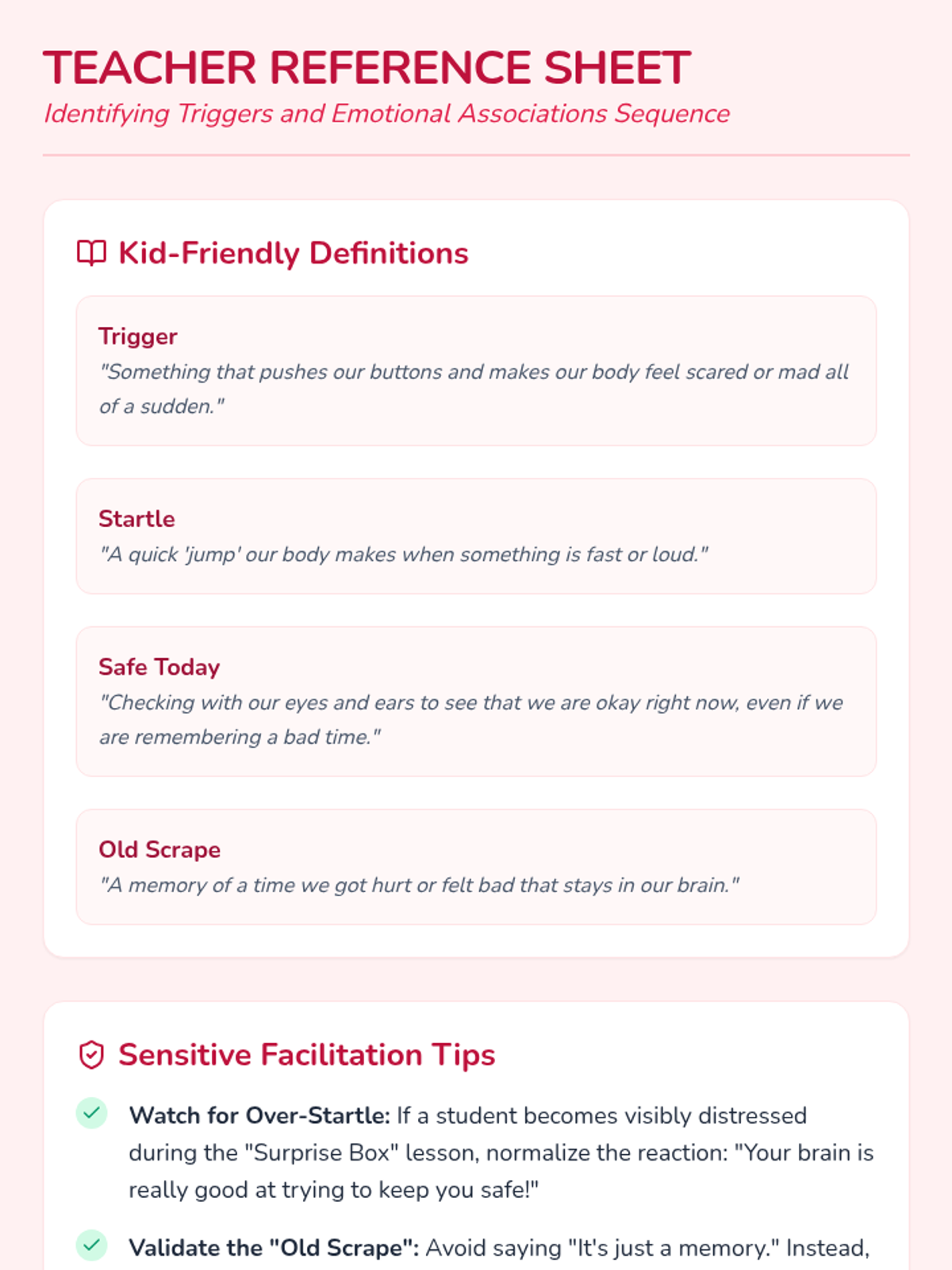
A comprehensive teacher reference sheet providing vocabulary definitions, trauma-informed tips, and instructional strategies for the entire sequence.
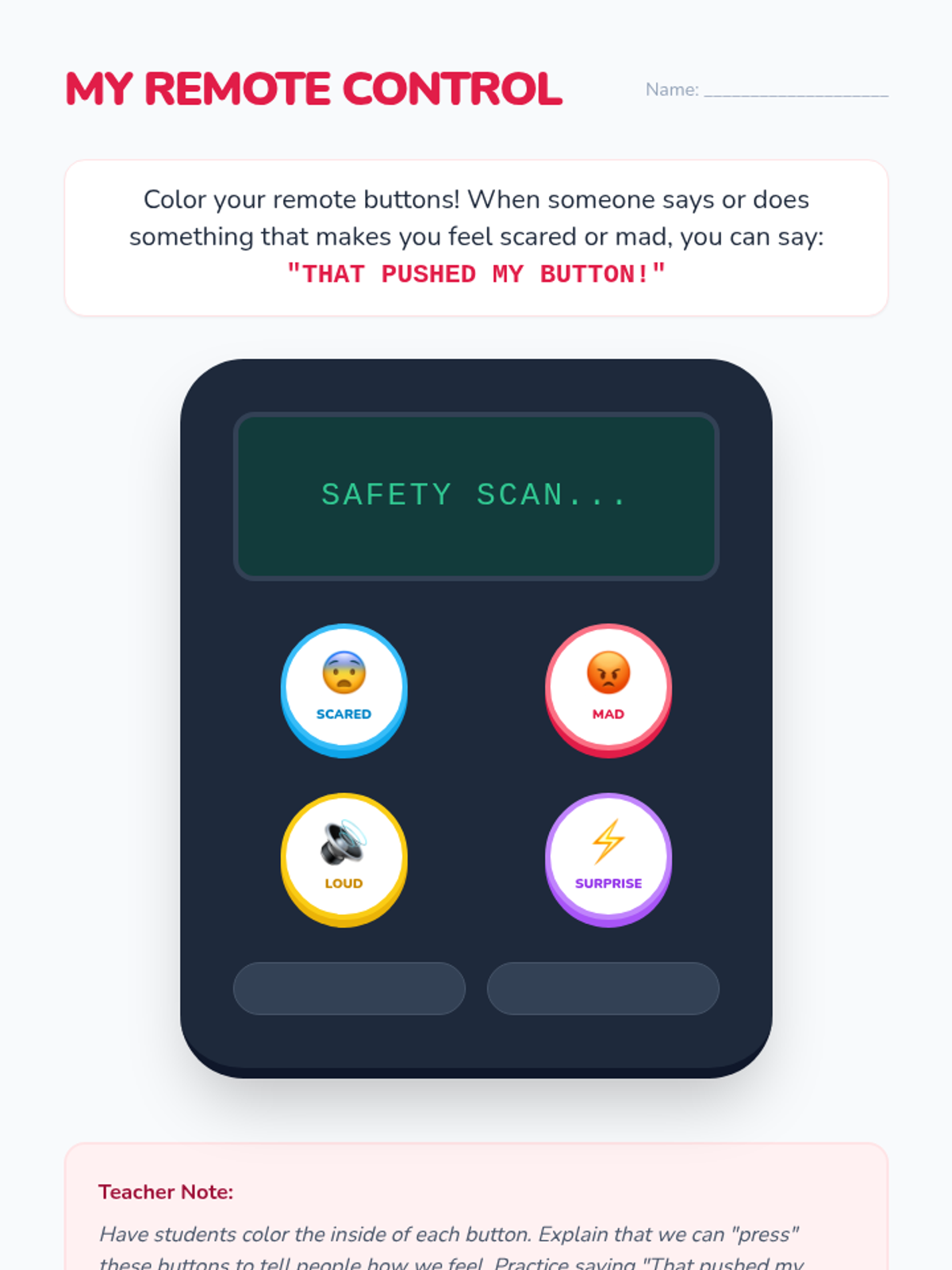
A student activity worksheet for Lesson 5 where they color and 'use' a remote control to identify their emotional buttons. Buttons have light backgrounds for coloring.
Slides for Lesson 4 exploring how the five senses can trigger memories and emotional responses.
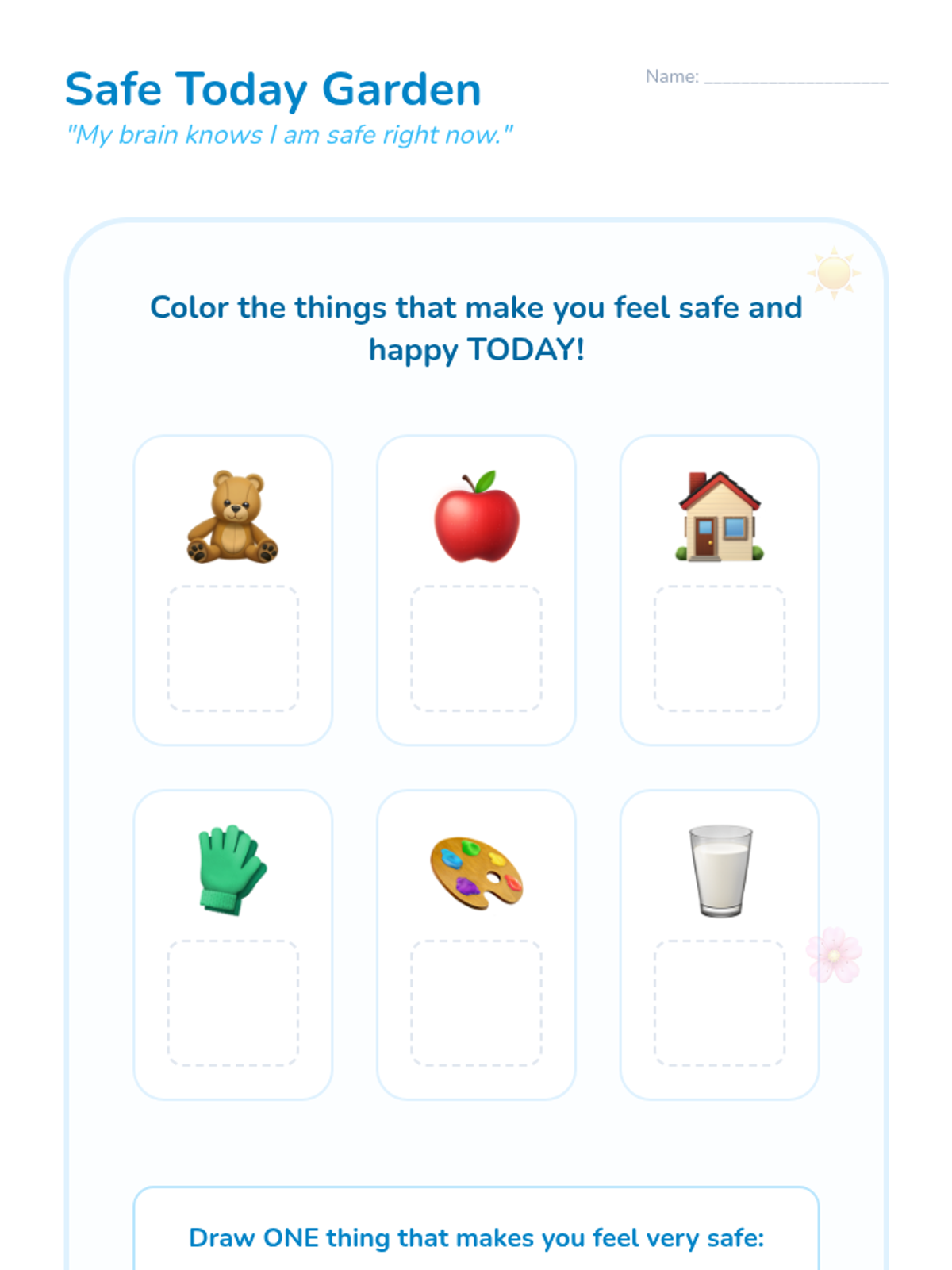
A student worksheet for Lesson 3 focusing on identifying safe, grounding objects in the present moment.
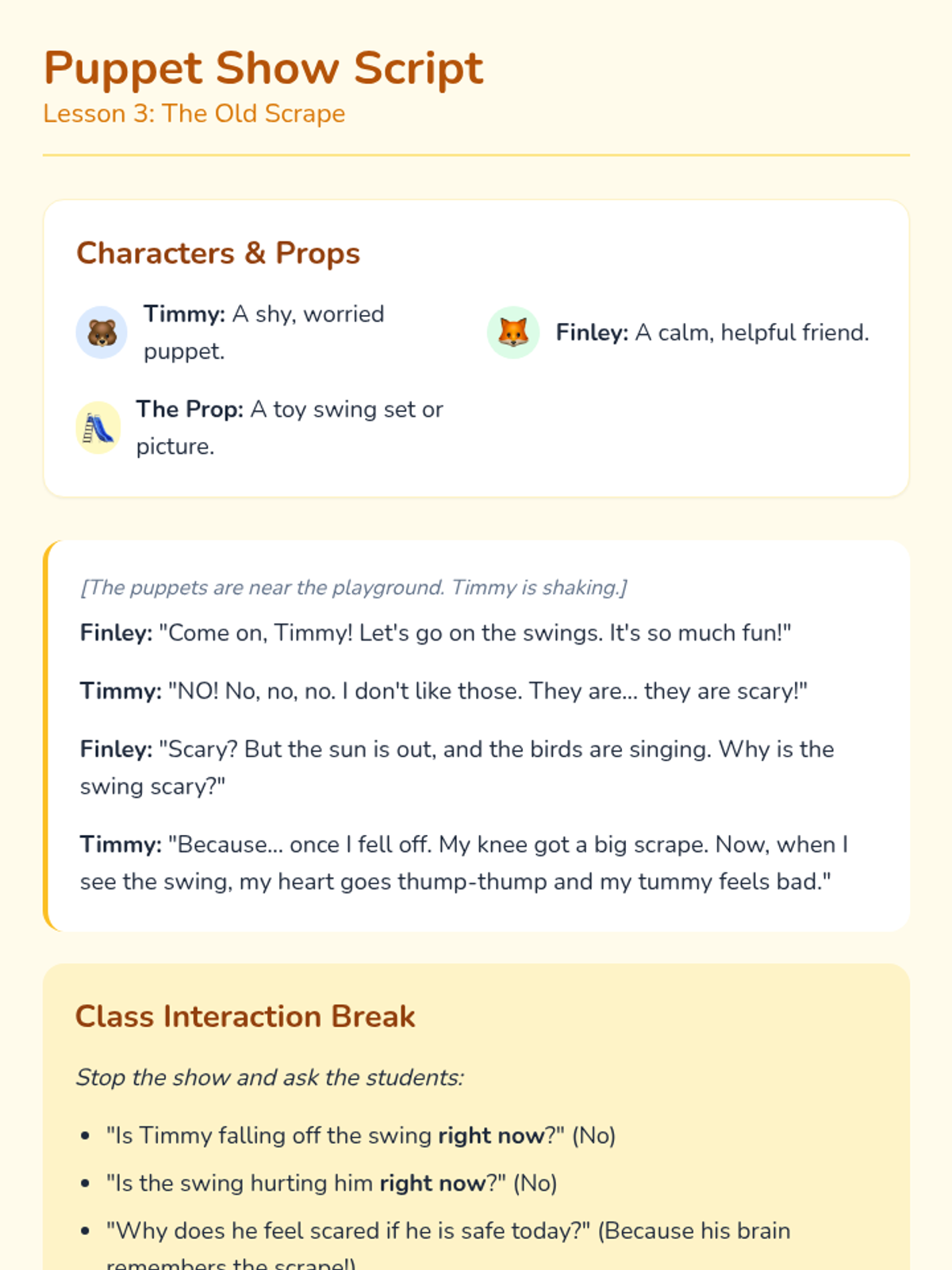
A puppet show script for Lesson 3 to help students differentiate between past memories (trauma/hurt) and present safety.
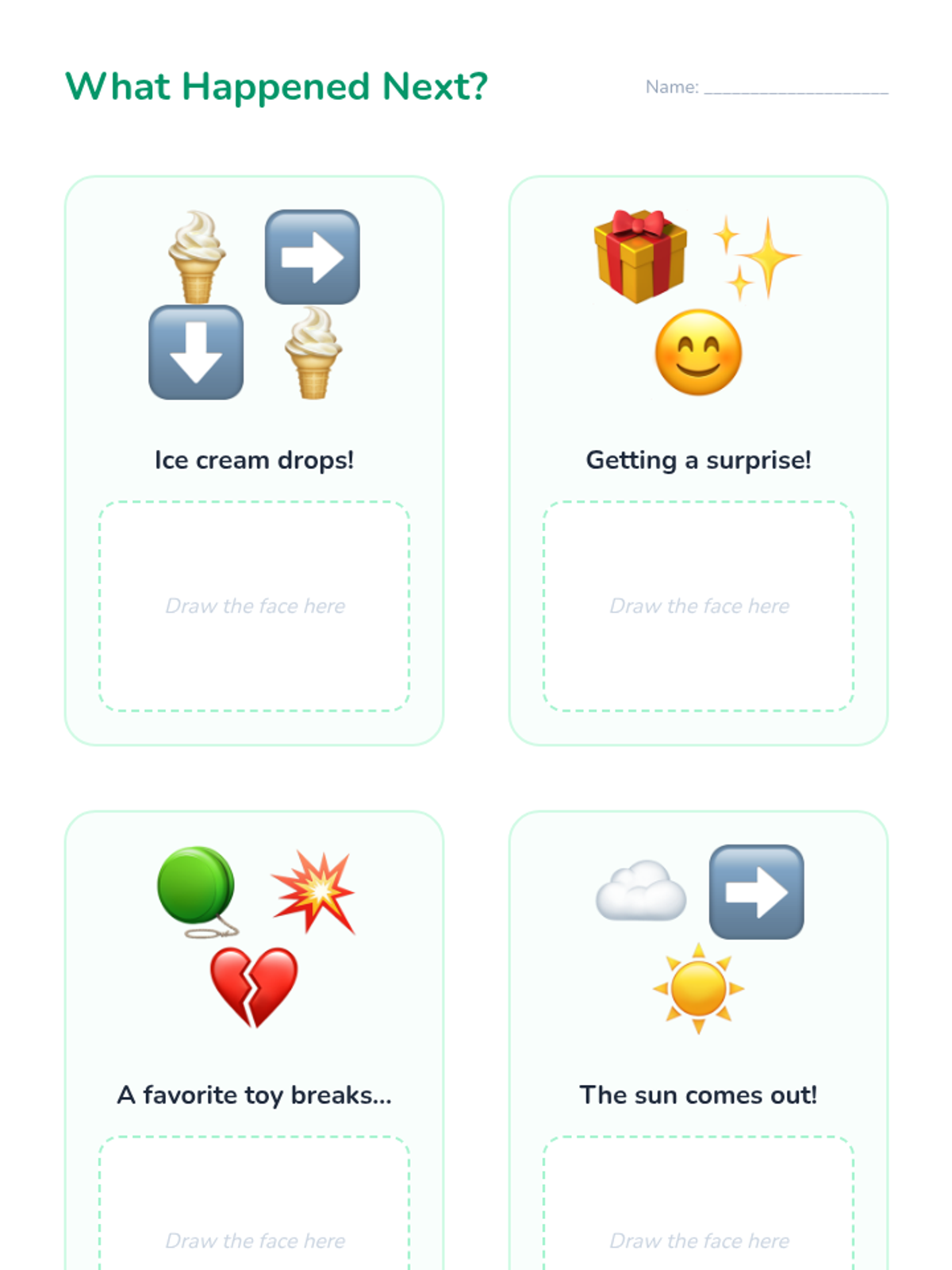
A student worksheet with simple emoji-based cause-and-effect scenarios where they draw the resulting emotional expression.
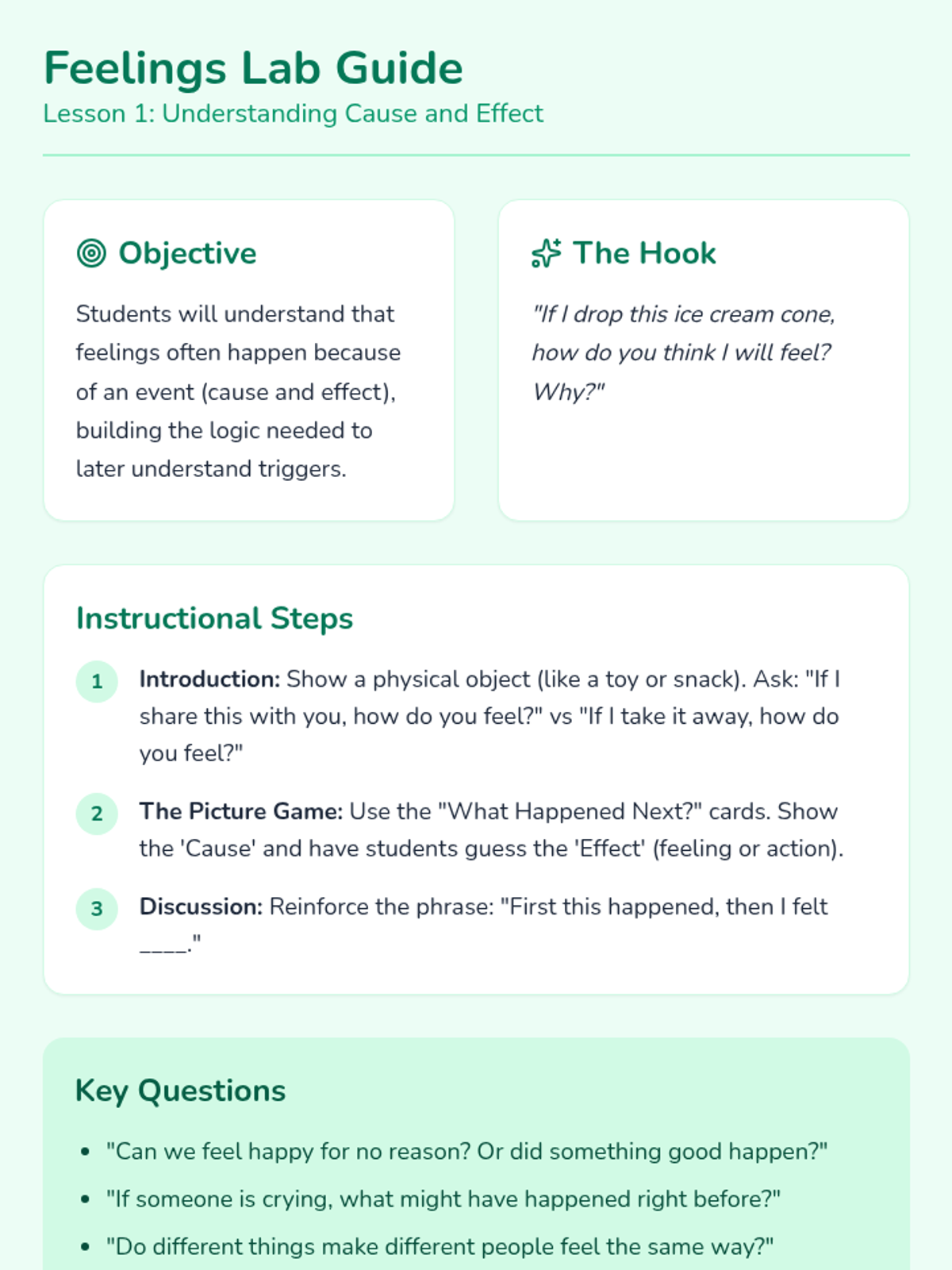
A teacher's guide for Lesson 1, focusing on establishing the concept of cause and effect through simple, relatable scenarios.
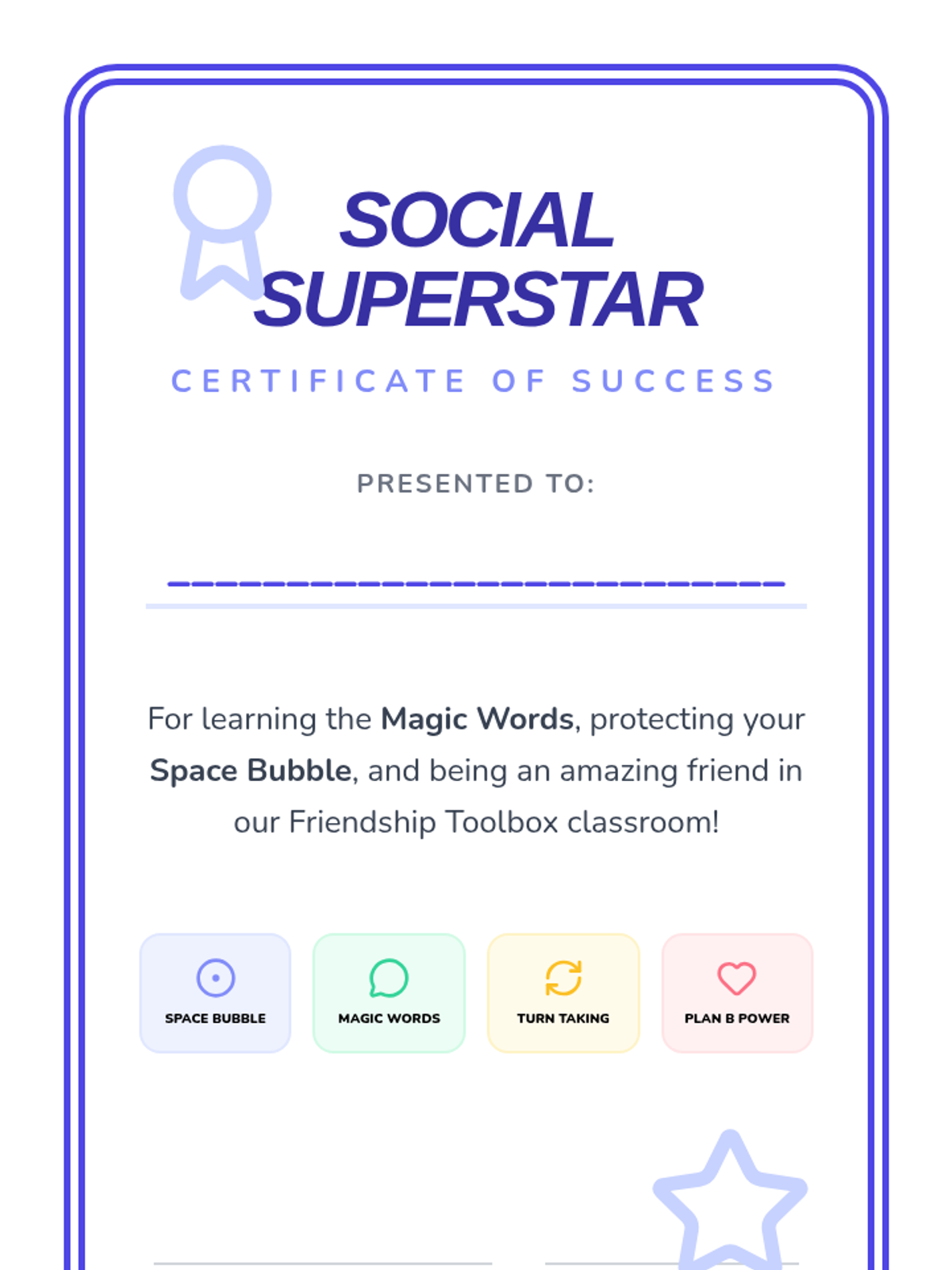
Completion certificate for the Friendship Toolbox sequence, recognizing student mastery of social scripting and positive behavior skills.
Visual slide deck for Lesson 5 facilitating the role-play activities and final unit review.
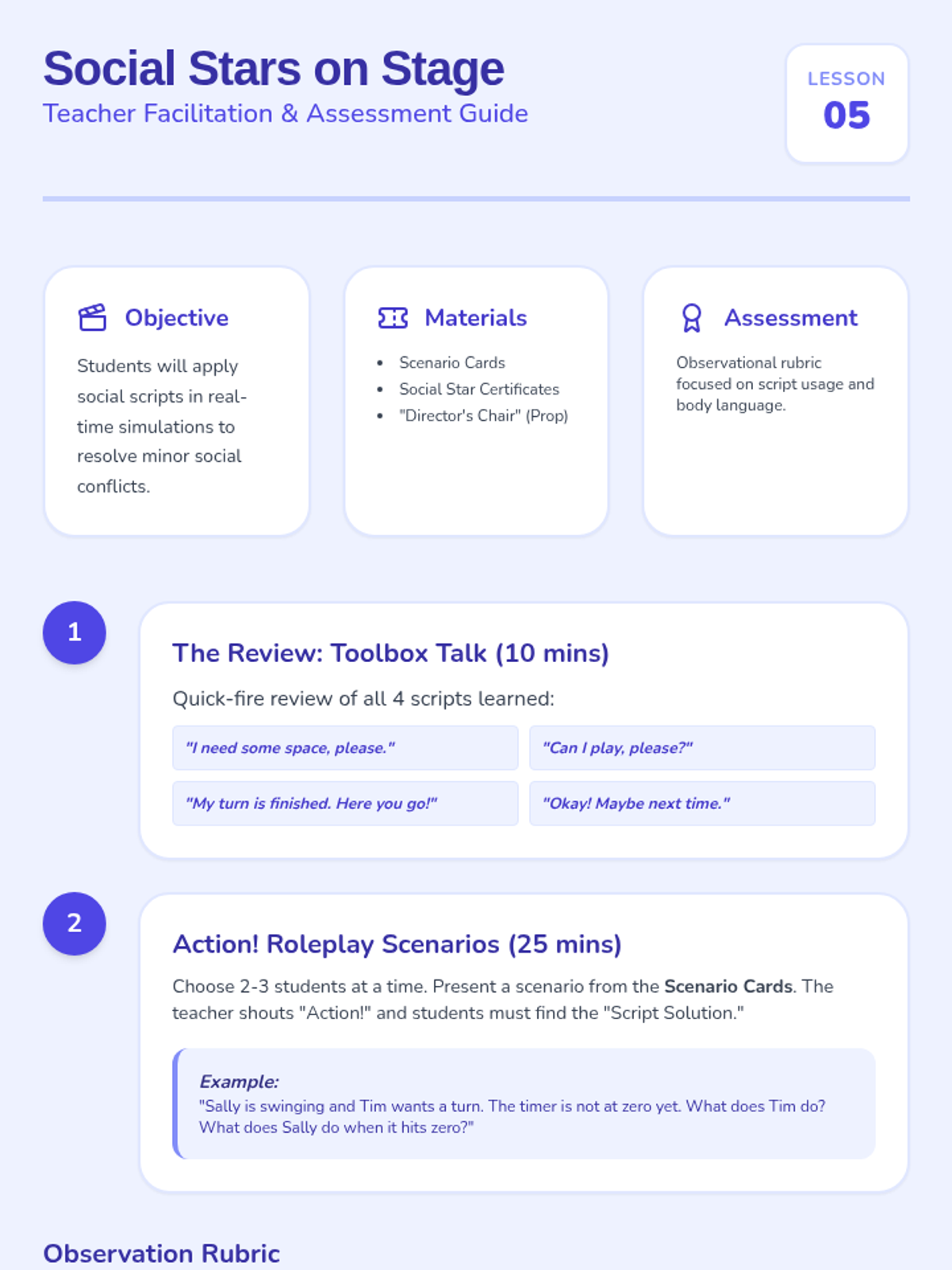
Teacher guide for Lesson 5 including a performance-based assessment rubric and role-play facilitation tips.
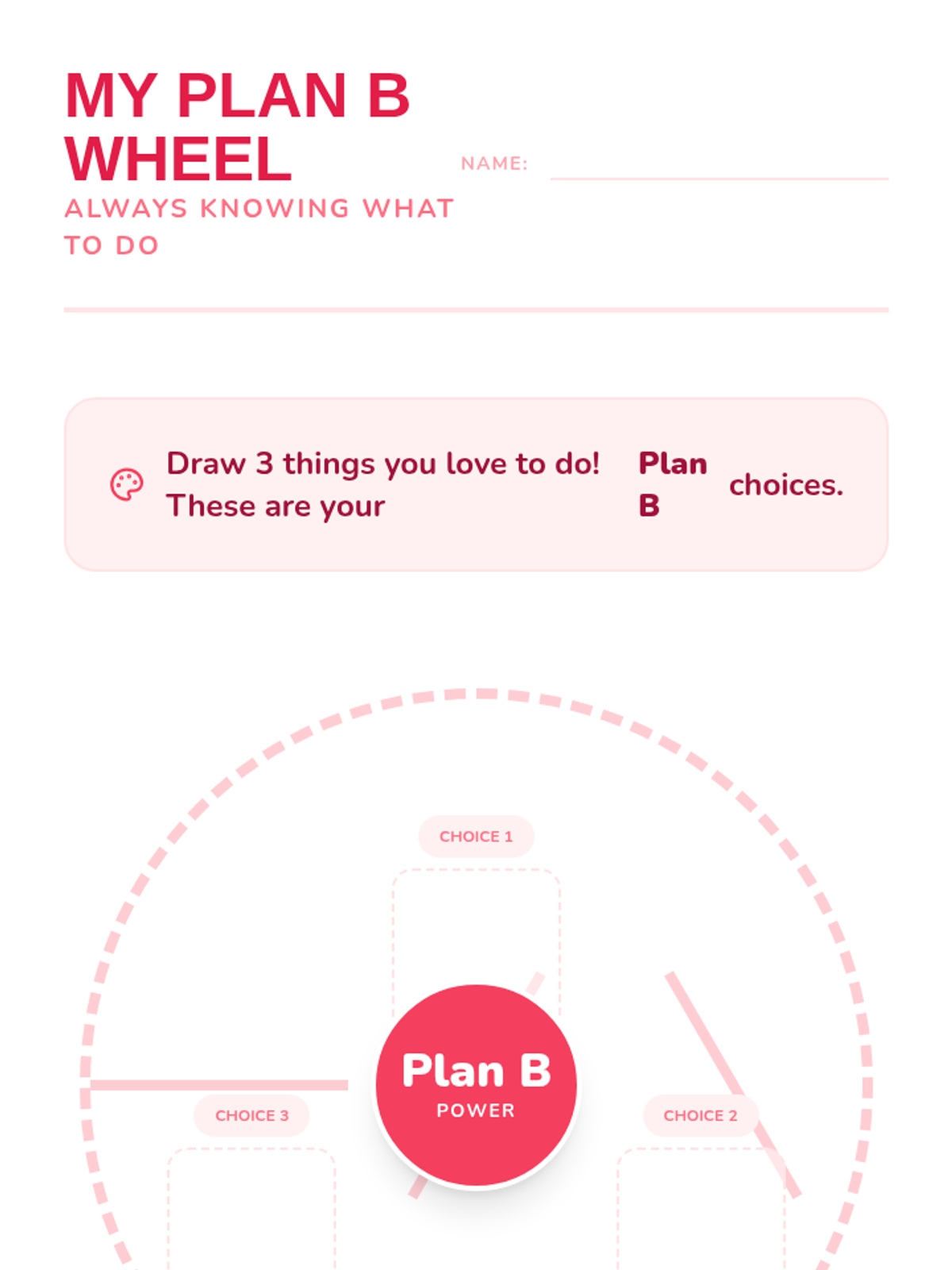
Student worksheet for Lesson 4 where students draw three alternative 'Plan B' activities to choose from when a friend says no.
Visual slide deck for Lesson 4 teaching students how to handle rejection politely and move to a 'Plan B' activity.
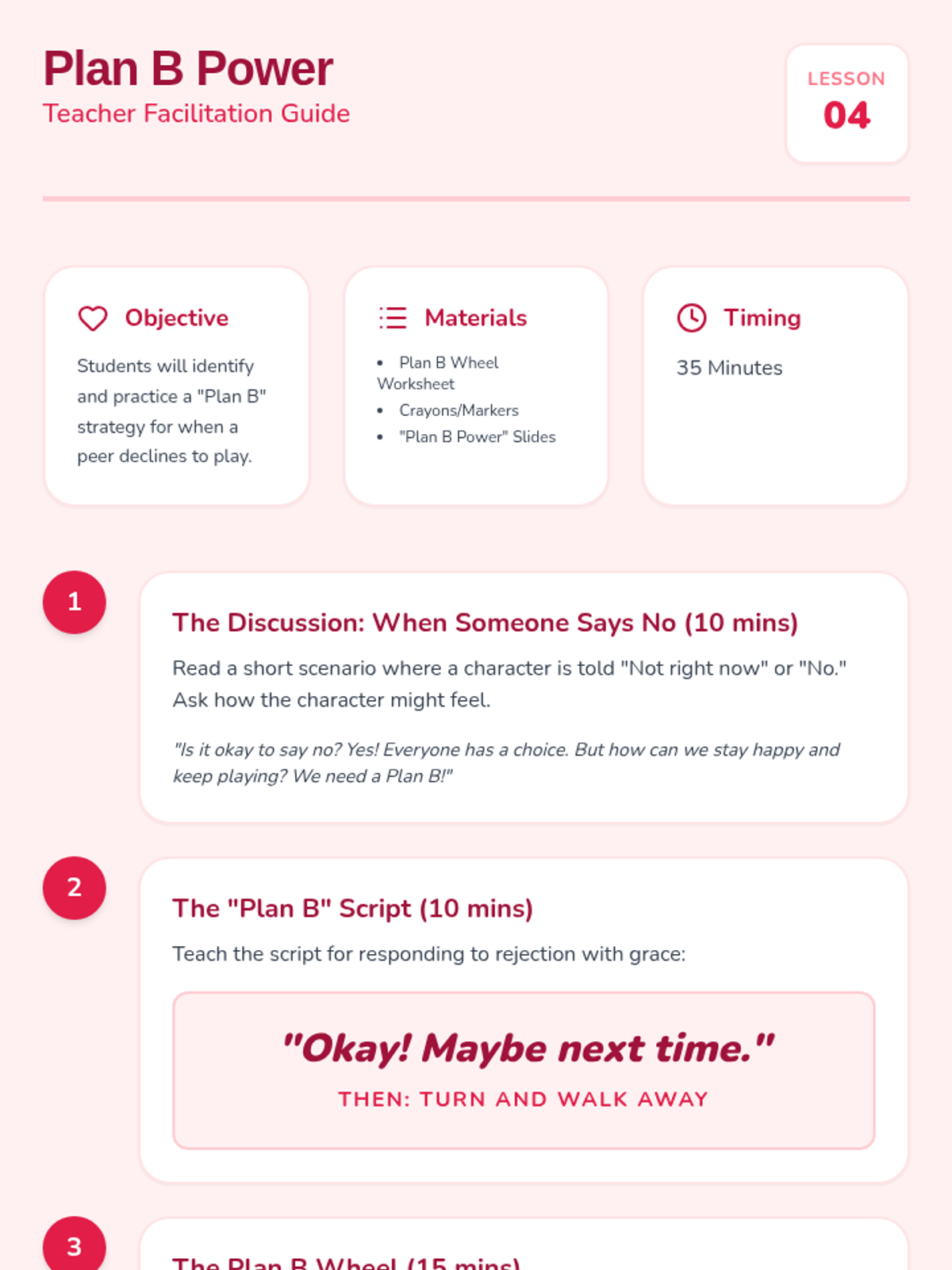
Teacher guide for Lesson 4 on handling social rejection and identifying alternative activities through the 'Plan B' strategy.
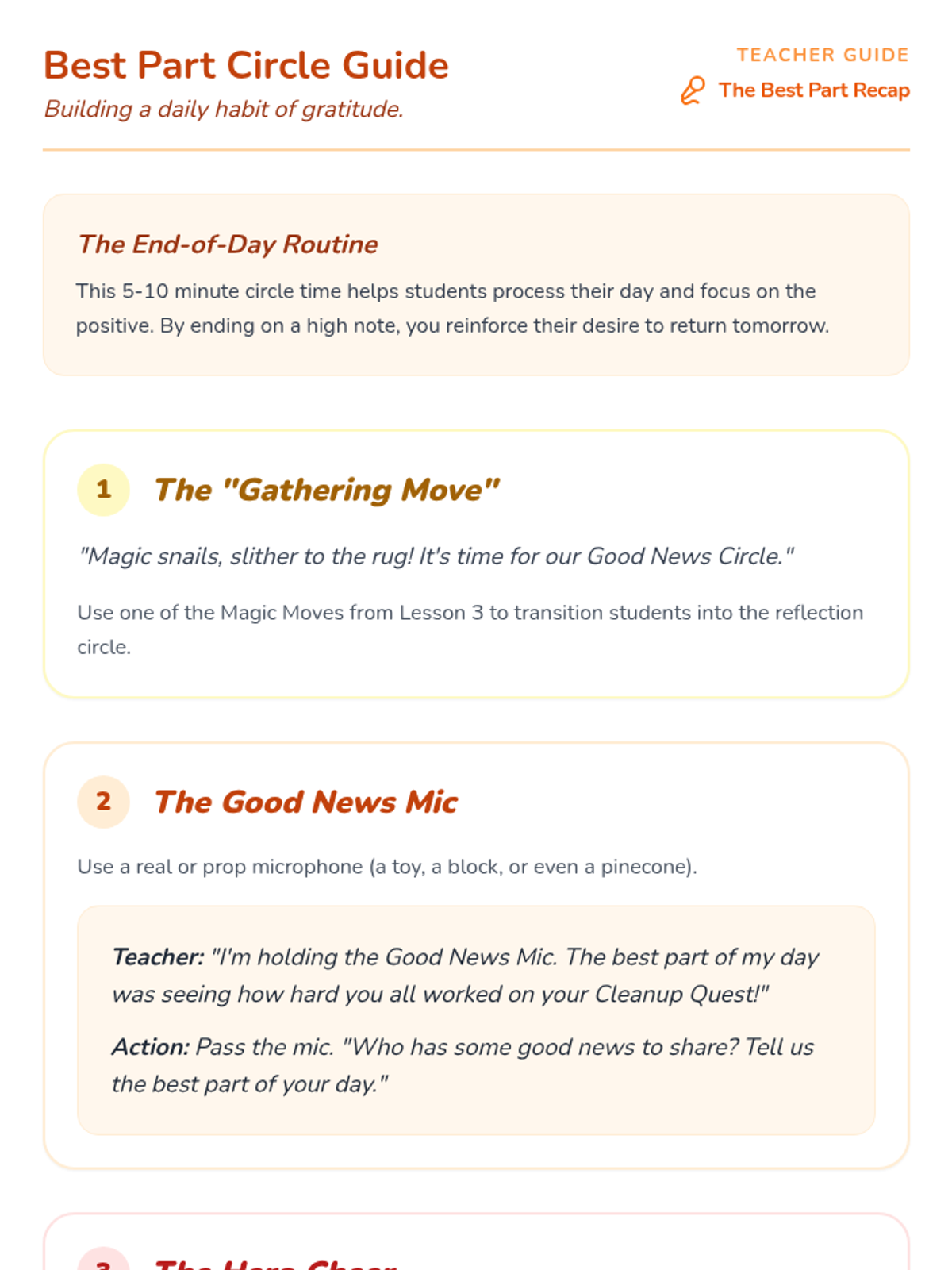
Teacher-facing guide for facilitating the end-of-day "Best Part" reflection circle with Pre-K students.
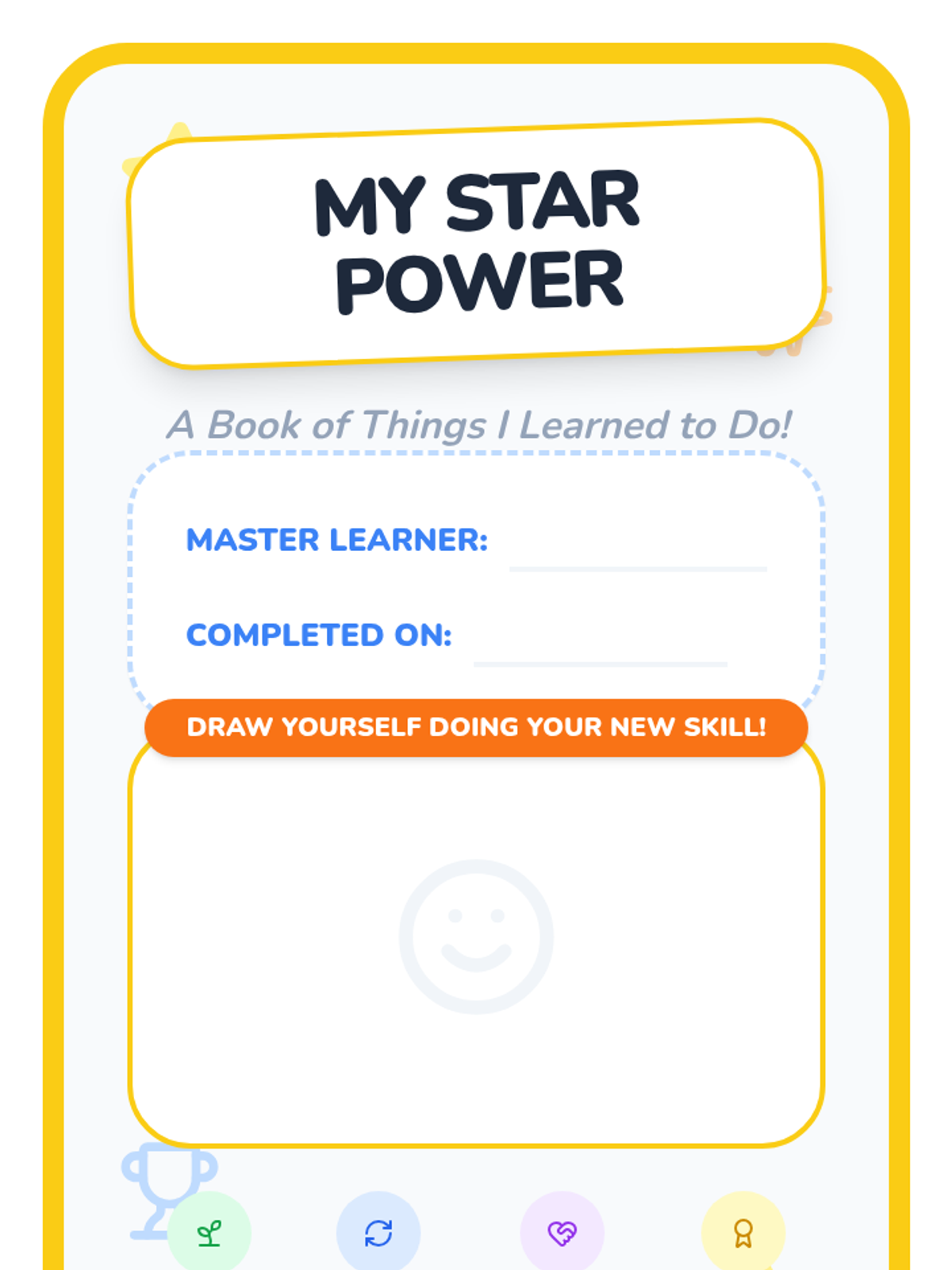
A decorative cover for the student's final 'Star Power' portfolio, featuring space for a self-portrait and recognition of their growth mindset journey.
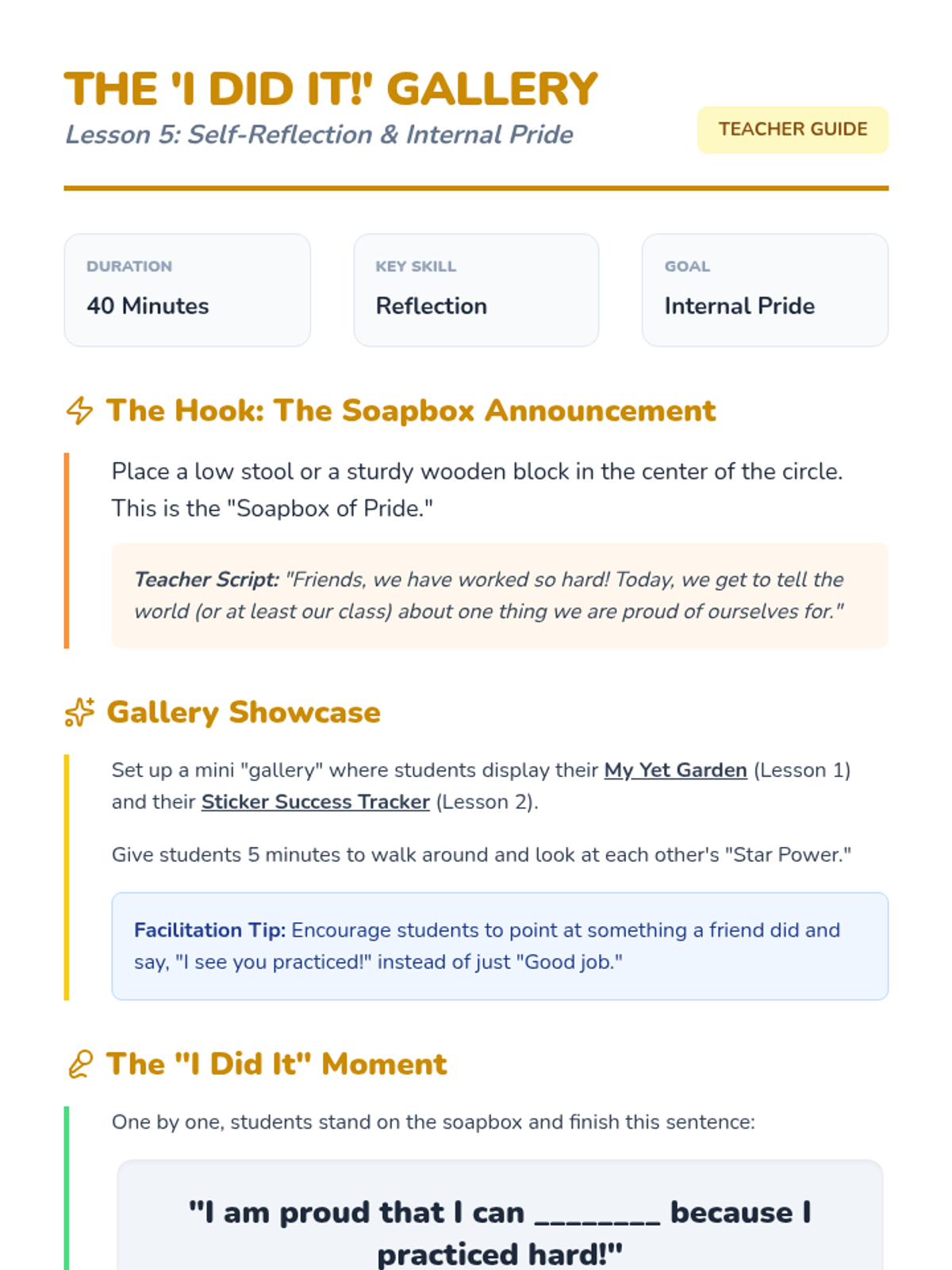
Comprehensive teacher guide for the final celebration lesson, outlining the 'Soapbox of Pride' activity, gallery walk facilitation, and portfolio assembly.
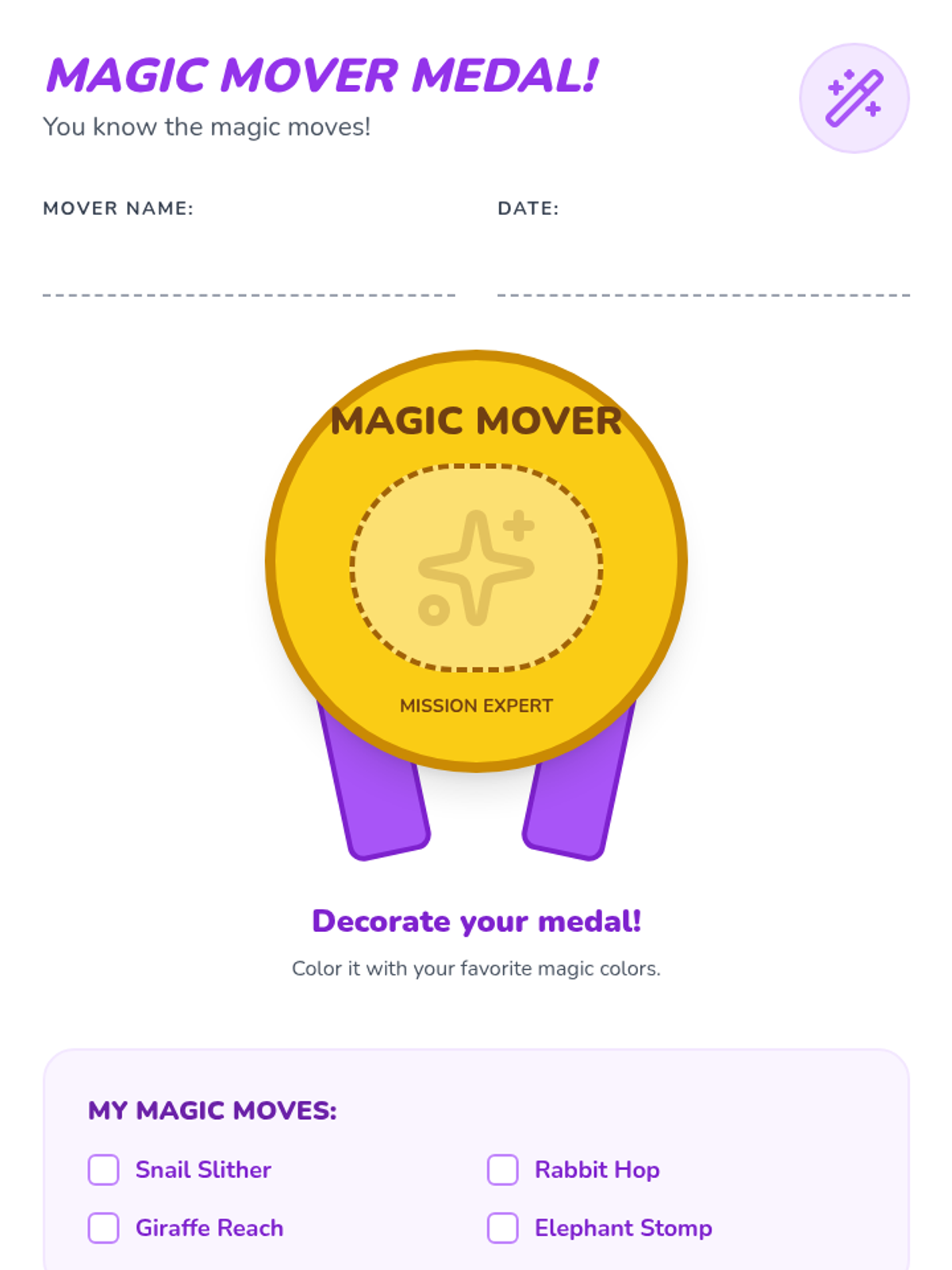
A student activity sheet where Pre-K children color and decorate their own "Magic Mover" medal for mastering classroom transitions.
Colorful slides for the final lesson celebration, focusing on internal pride, self-reflection, and the ongoing journey of growth for Pre-K students.
Visual presentation for the Best Part Recap lesson, establish a gratitude habit and establishing an end-of-day routine.
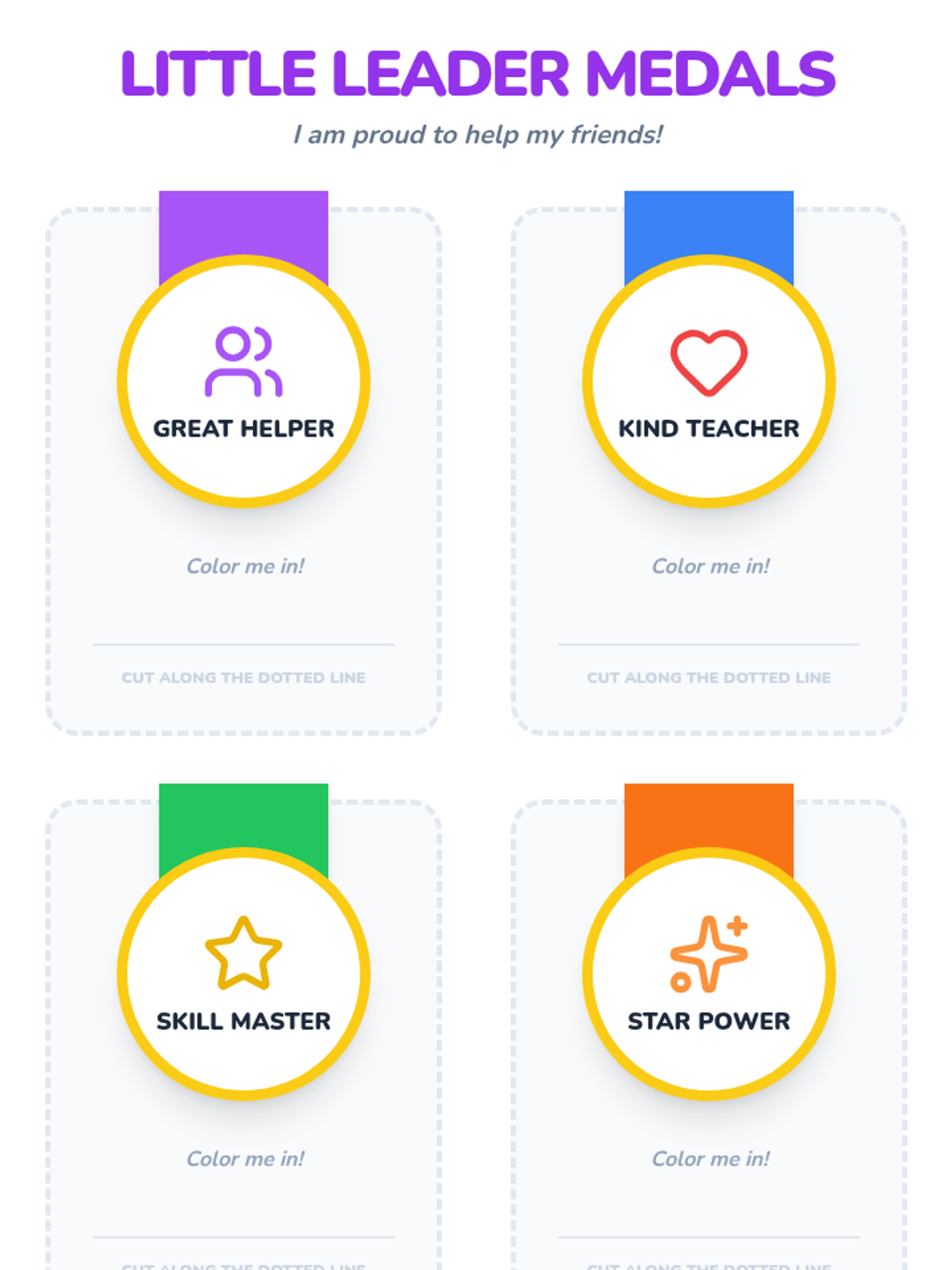
Printable medals for Pre-K students to color and wear, celebrating their achievements as 'Little Leaders' and 'Kind Teachers'.
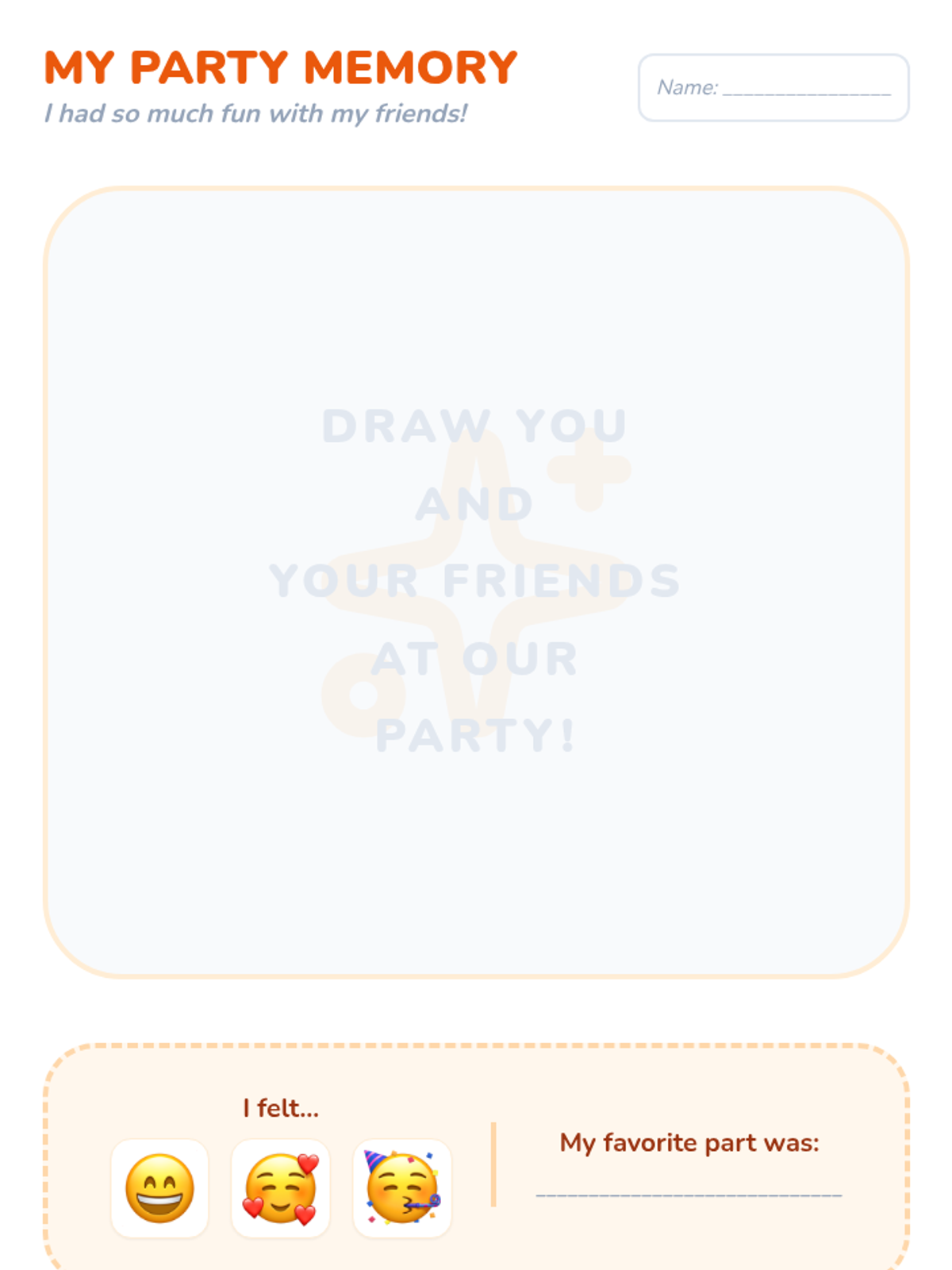
A student reflection sheet for Lesson 5 where they draw a memory from the Friendship Party and identify their feelings about the experience.
Visual presentation for Lesson 5, focusing on party rituals and a final reflection on the power of collective joy and friendship.
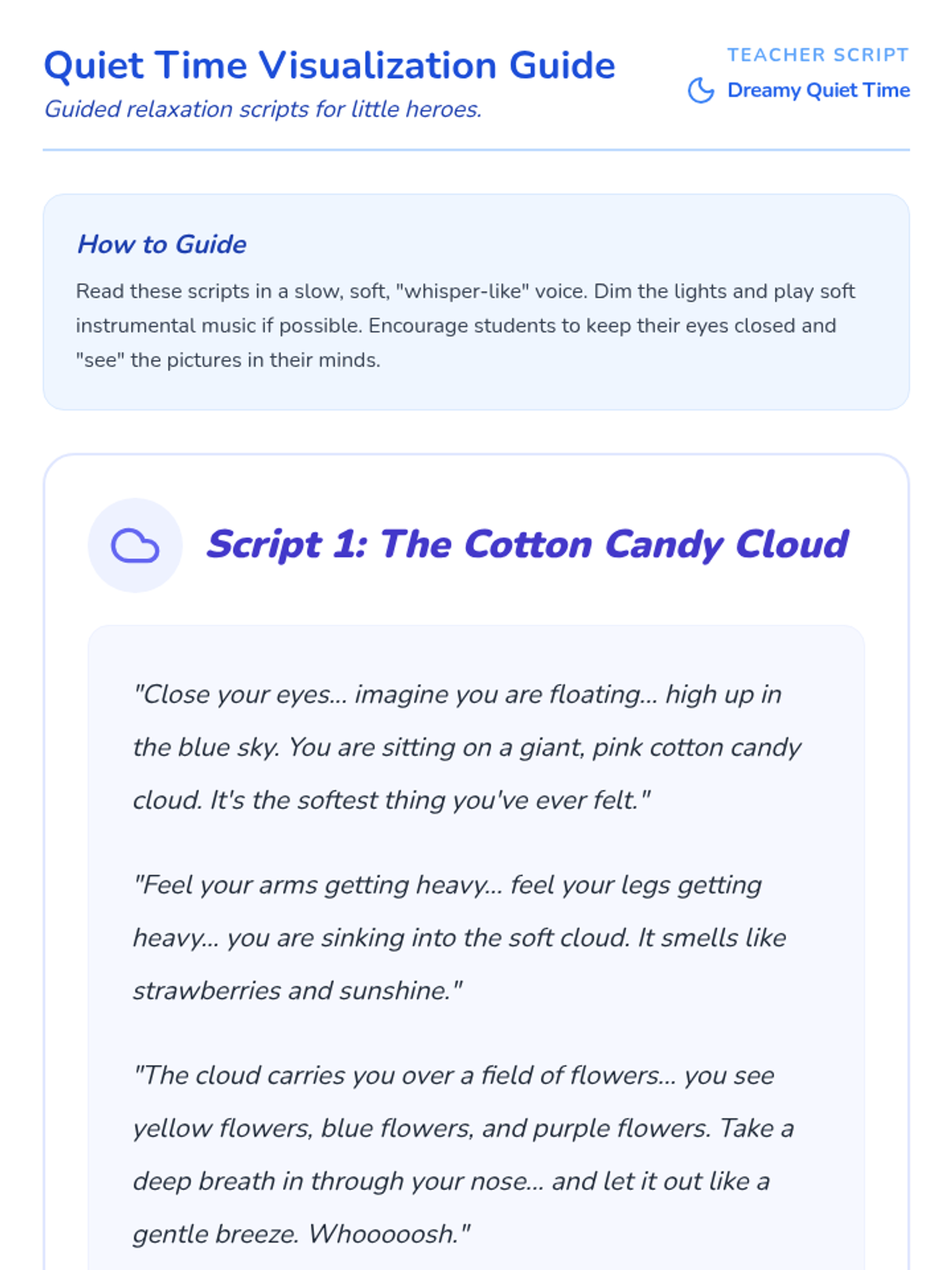
Teacher-facing guide with two visualization scripts (Cotton Candy Cloud and Magic Forest) to facilitate relaxation during quiet time.
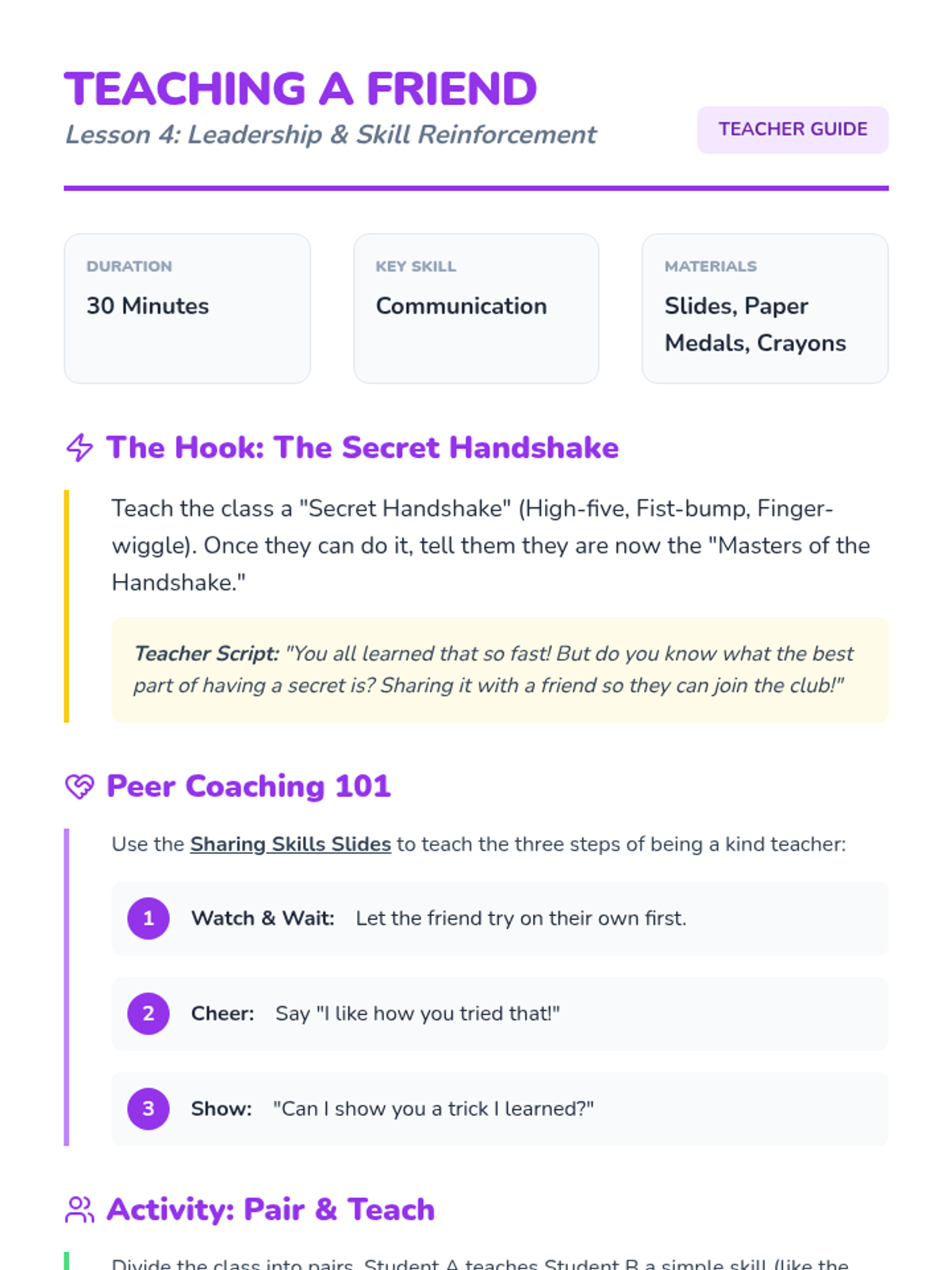
Facilitation guide for Lesson 4, teaching Pre-K students how to engage in peer-to-peer coaching and leadership through skill sharing.
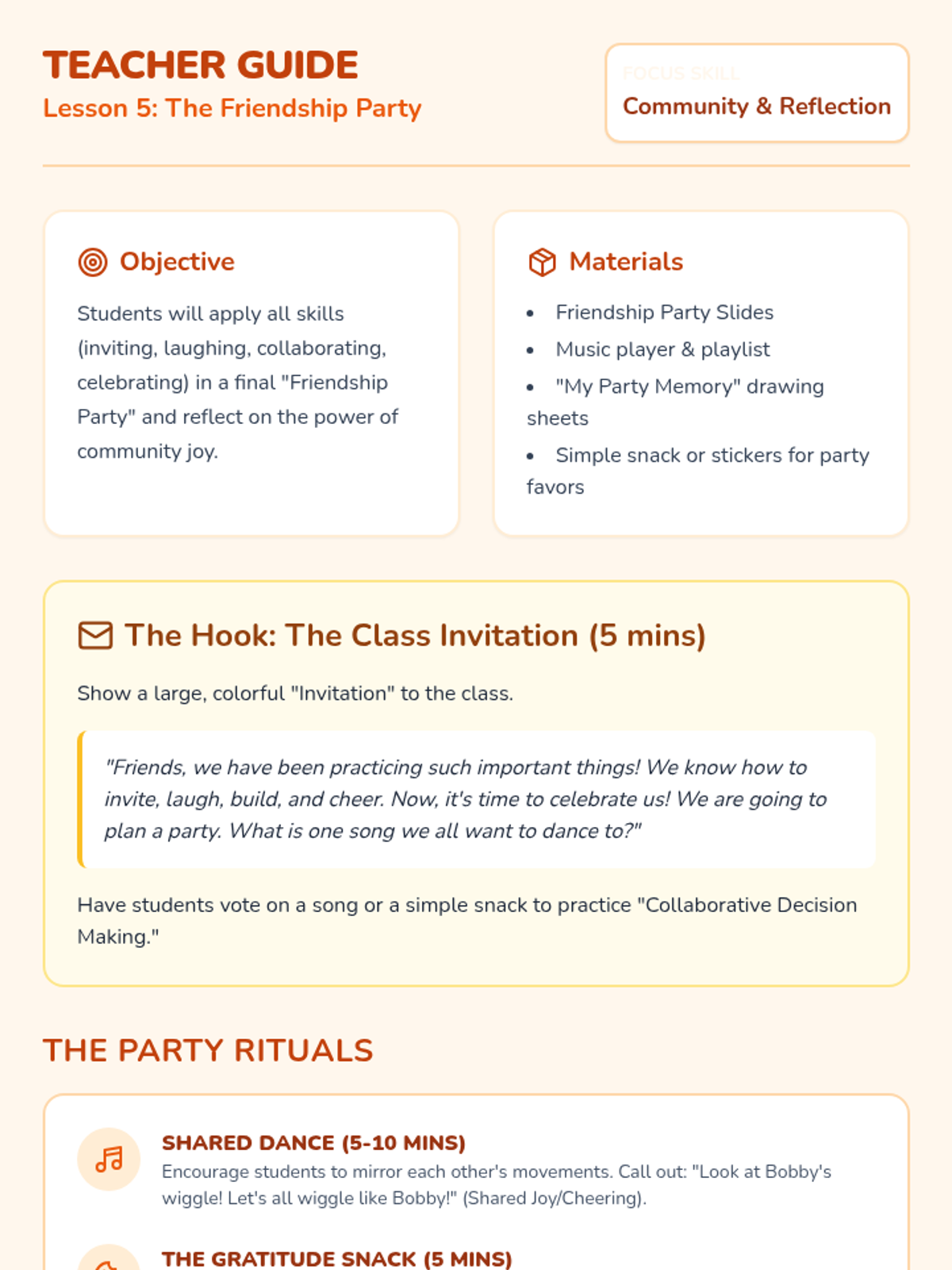
Event logistics and teacher guide for the culminating Lesson 5 'Friendship Party', featuring rituals for shared joy and guided reflection prompts.
Visual presentation for the Dreamy Quiet Time lesson, introducing visualization and relaxation techniques for Pre-K students.
Slides for Pre-K students exploring the concept of peer teaching as a way to reinforce mastery and build social-emotional competence.
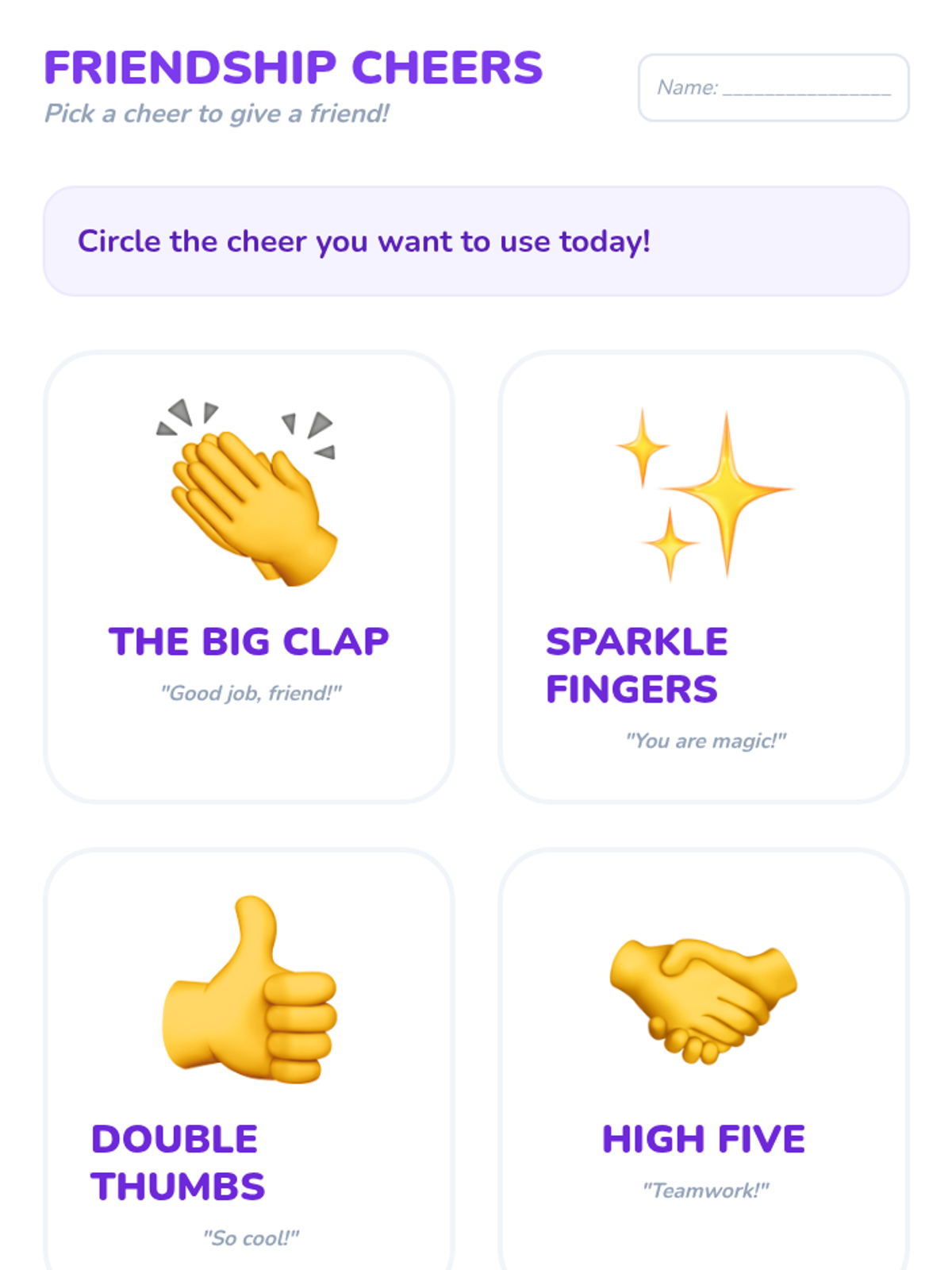
Student activity sheet for Lesson 4 that presents four different ways to celebrate a friend (Big Clap, Sparkle Fingers, Double Thumbs, High Five) for students to choose and practice.
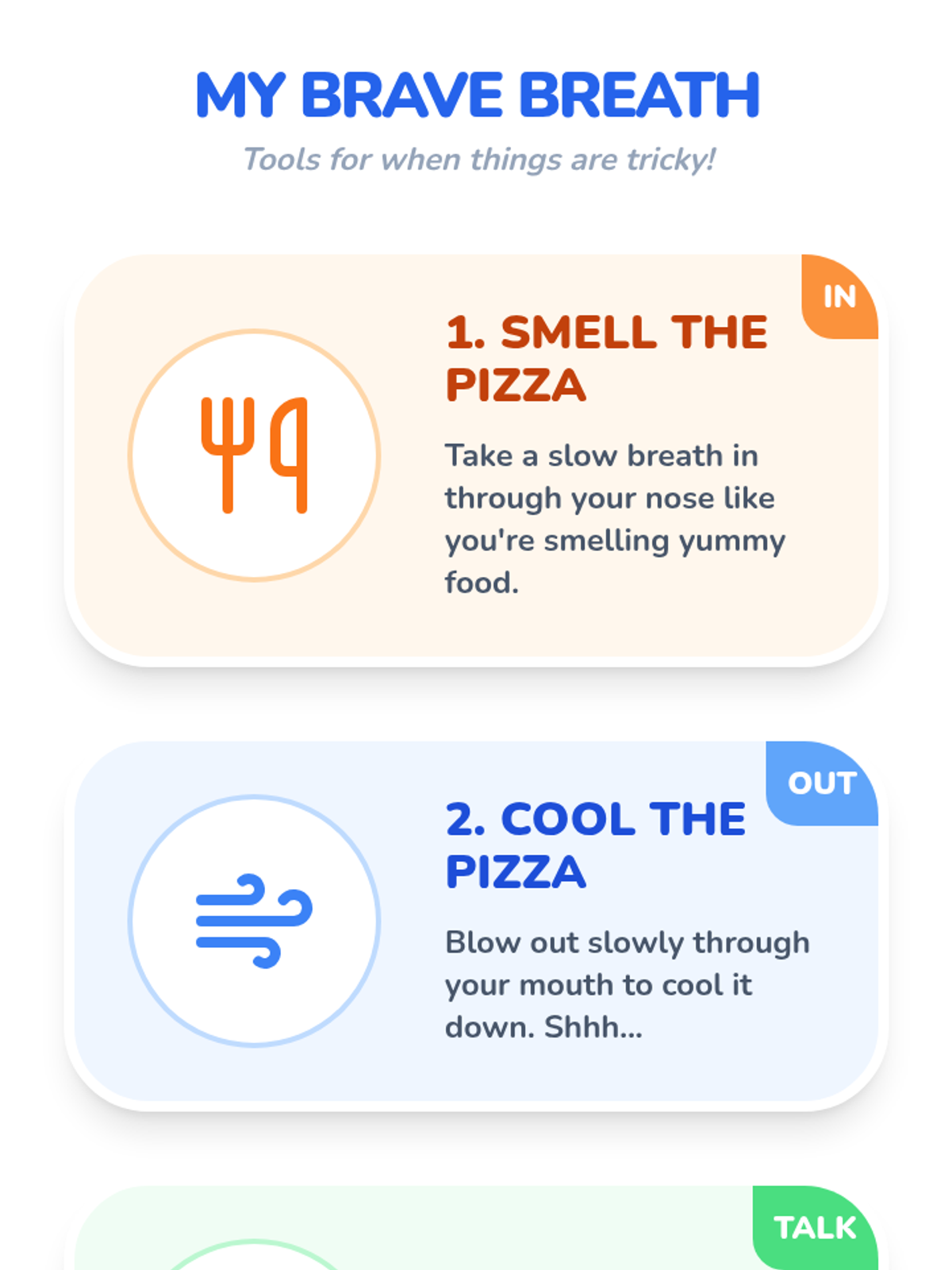
Large-format visual prompts for Pre-K students to use during moments of frustration, teaching 'Pizza Breath' and 'Brave Talk'.
Visual presentation for Lesson 4, teaching students how to identify positive actions in others and providing visual cues for various ways to cheer.
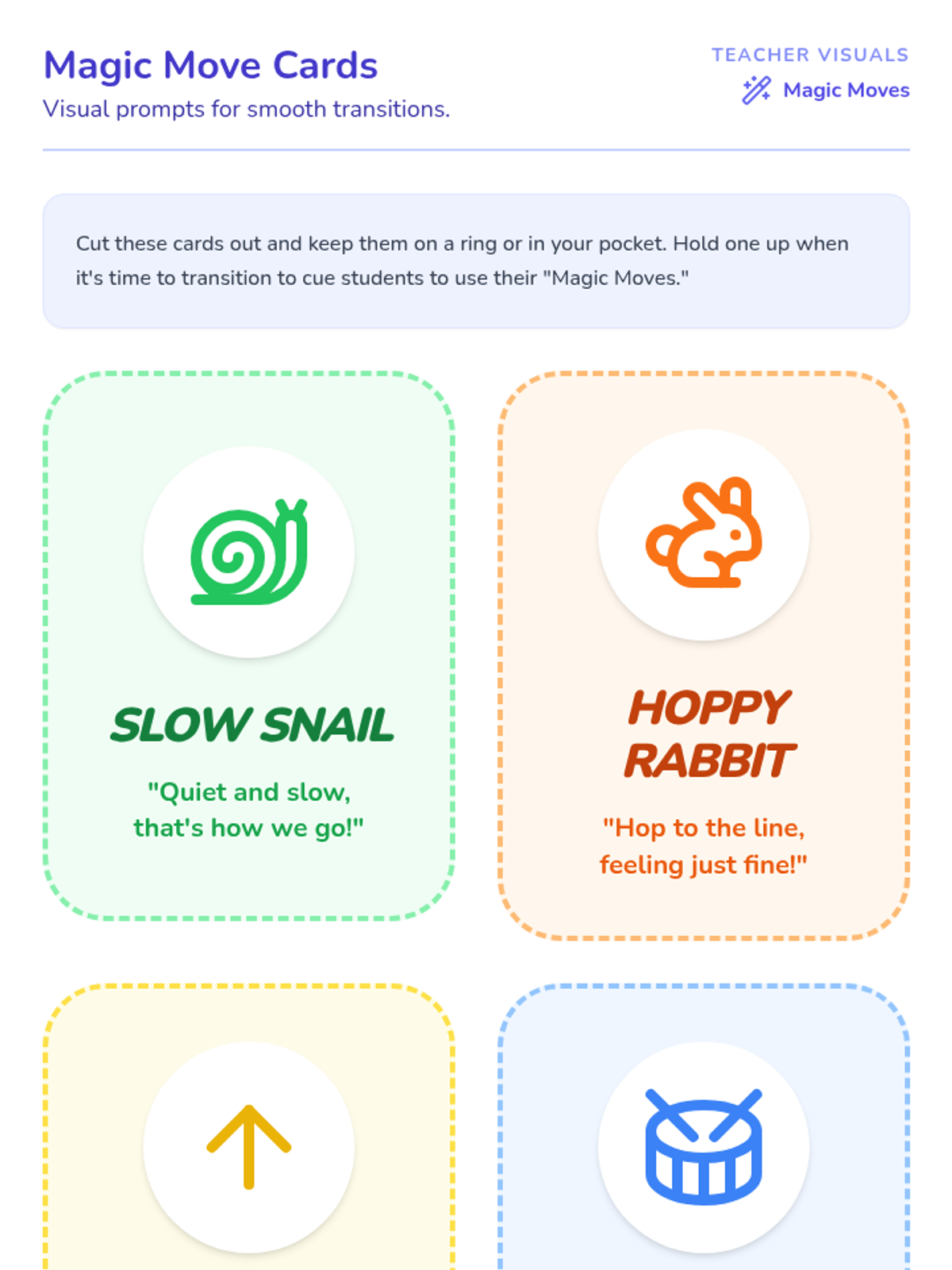
Four visual cue cards for teachers to use during transitions, featuring animal-themed "Magic Moves" like the Slow Snail and Hoppy Rabbit.
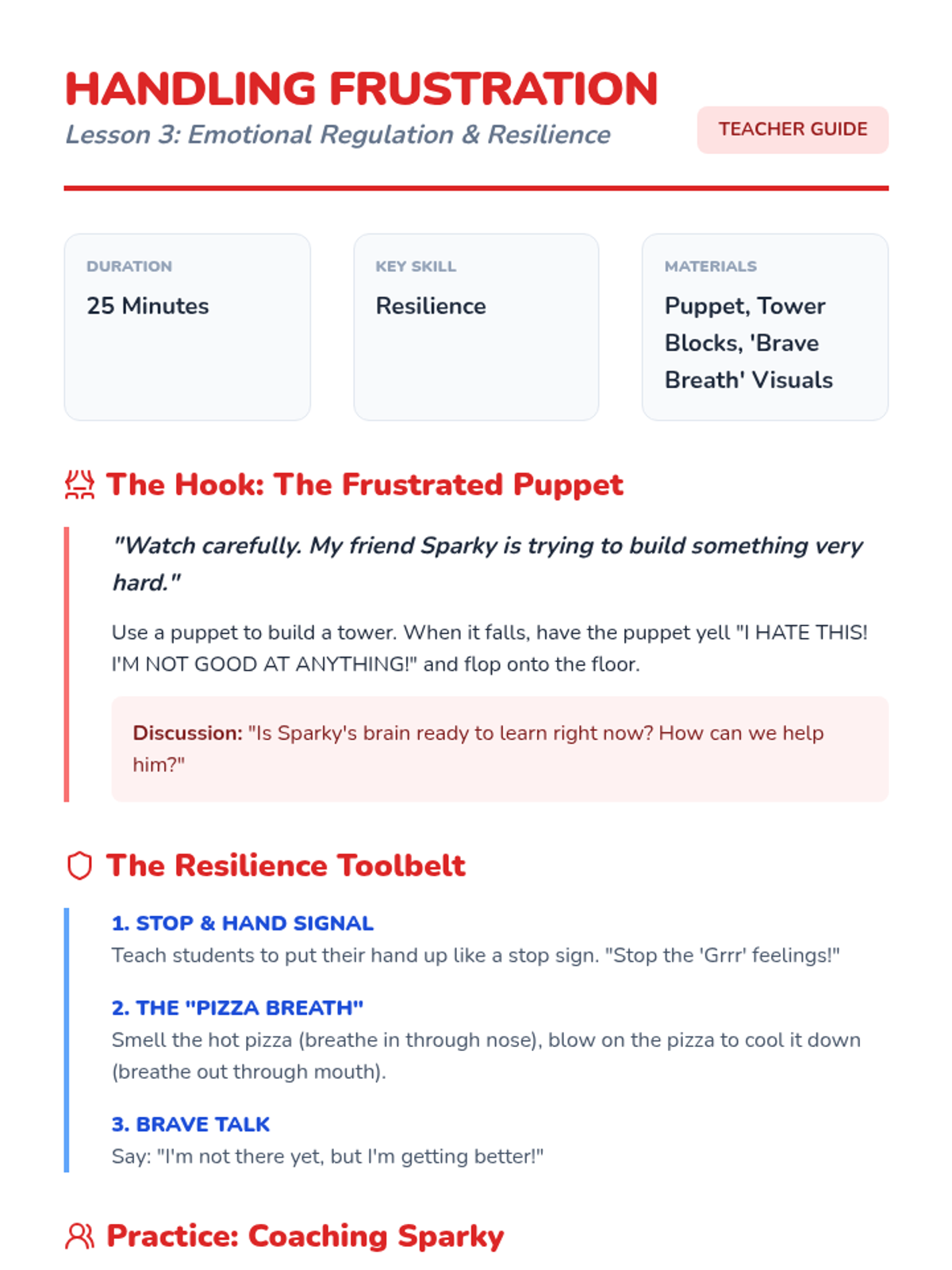
A lesson plan for teaching Pre-K students how to handle frustration during mastery building, including a puppet role-play script and regulation techniques.
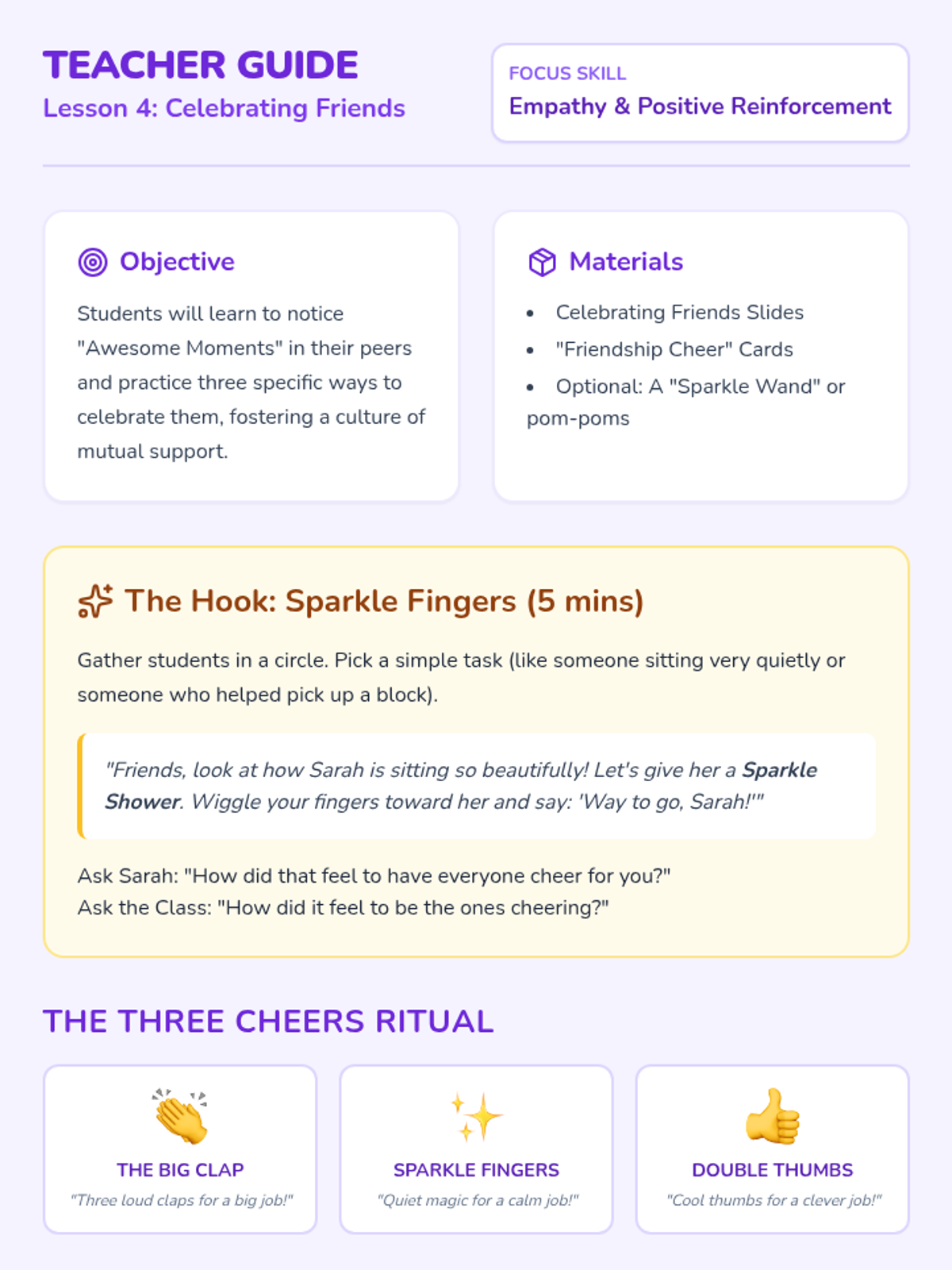
Discussion-based teacher guide for Lesson 4, including the 'Sparkle Shower' ritual, specific cheer types for Pre-K, and strategies for fostering peer observation.
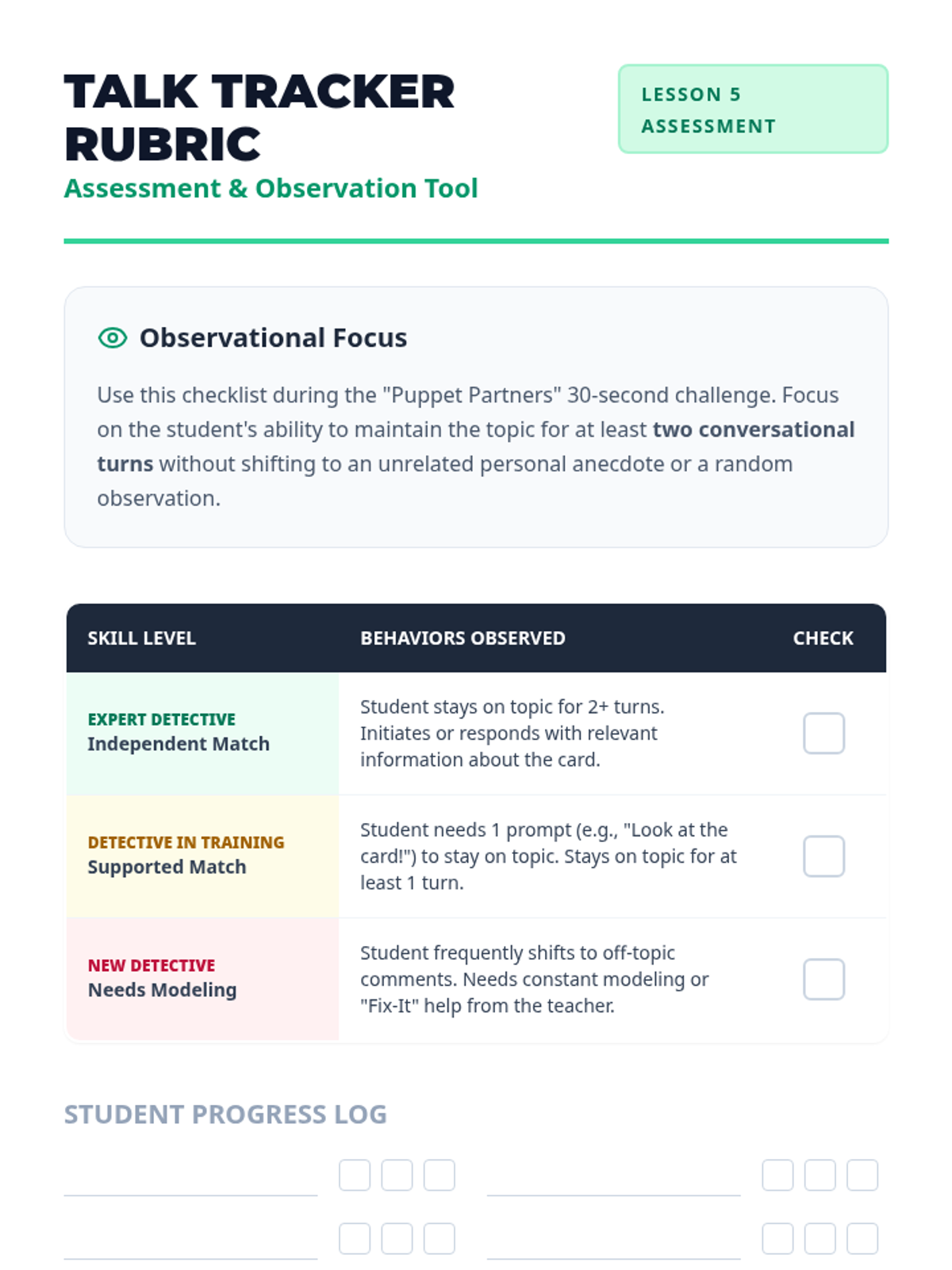
A teacher assessment rubric and observation log for the final 'Puppet Partners' lesson. Helps educators track student progress in topic maintenance using a simple 3-tier skill level system.
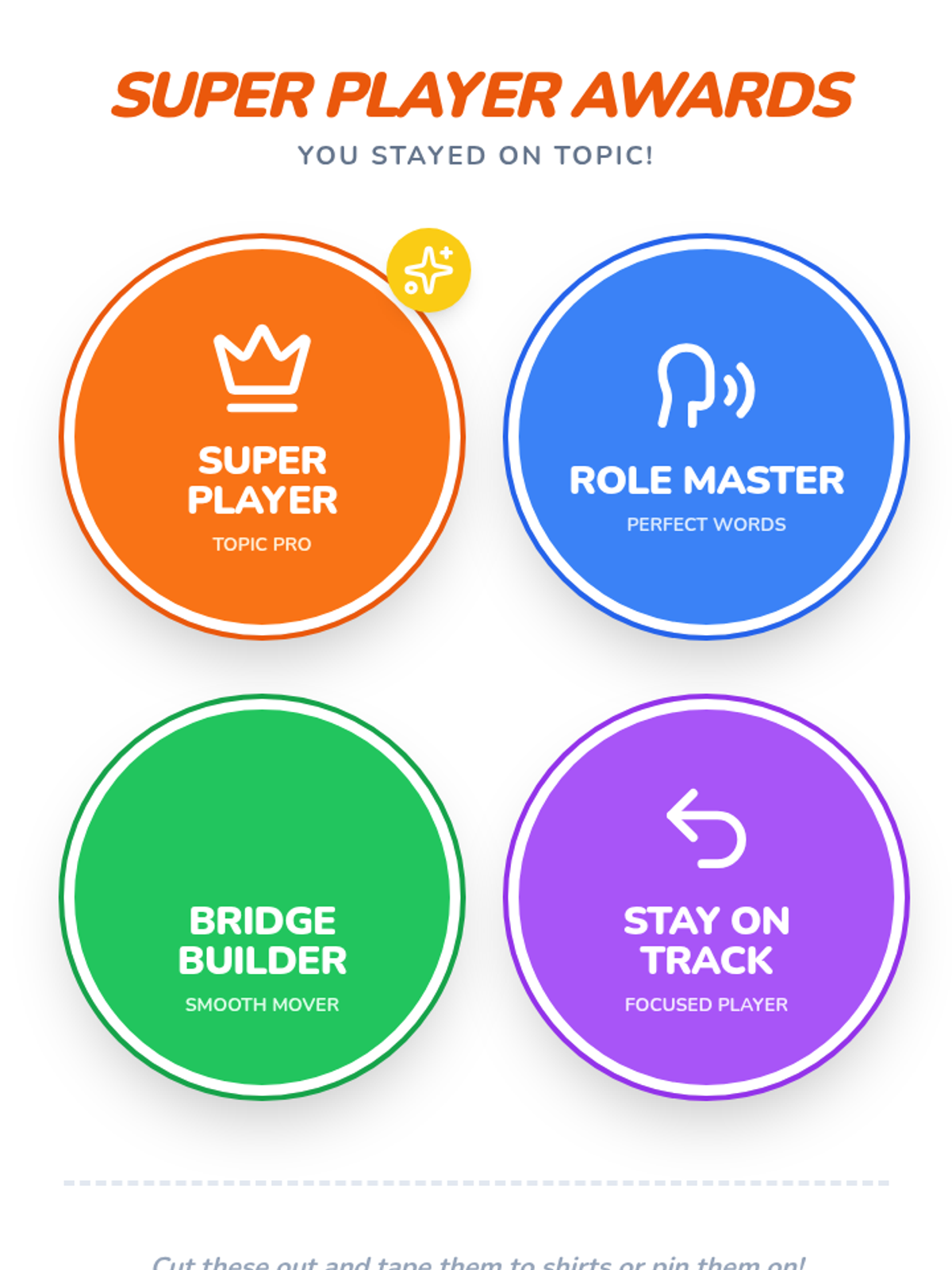
Reward badges for students who demonstrate mastery of topic maintenance skills during the final play session.
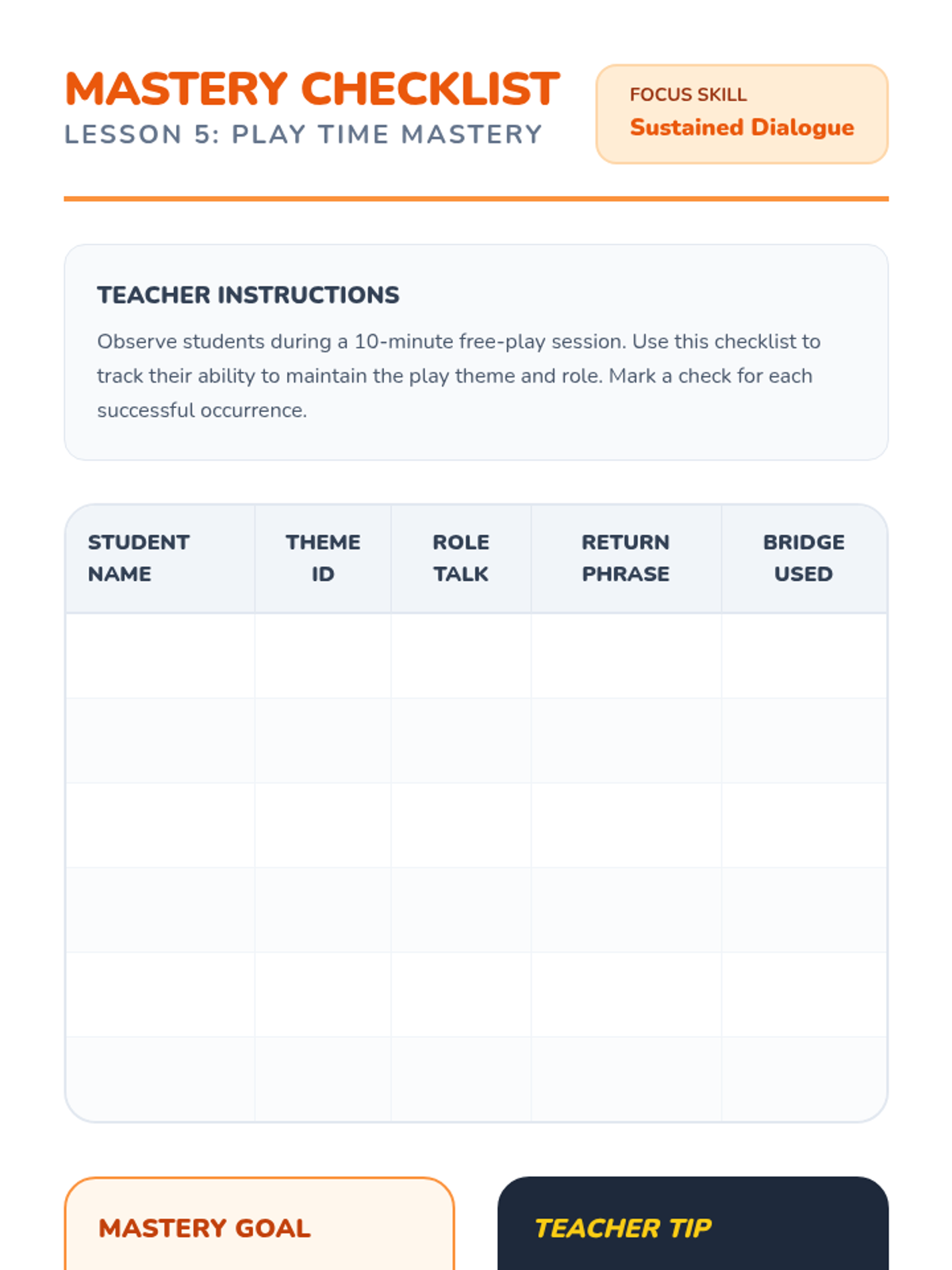
A teacher observation checklist for the final mastery lesson, allowing for real-time tracking of theme identification, role speech, and topic transitions.
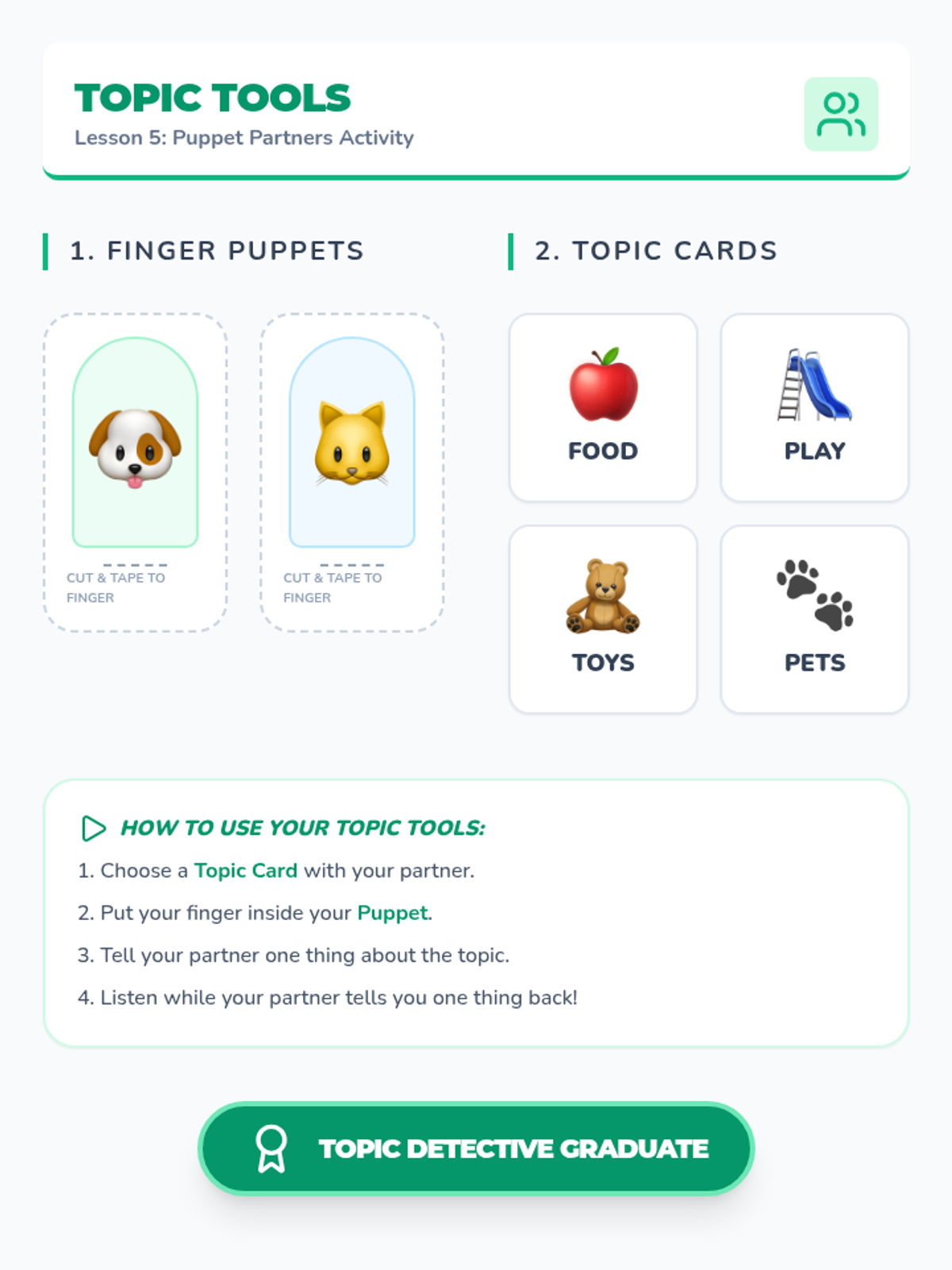
A printable set of finger puppet templates and topic cards for Lesson 5. These tools facilitate short peer-to-peer conversations where Pre-K students practice staying on a designated topic for 30 seconds.
Final slides for Lesson 5, reviewing all topic maintenance skills and introducing the final mastery challenge and reward ceremony.
Final slide deck for Lesson 5, guiding students through the 'Puppet Partners' 30-second talk challenge. Includes a review of on-topic vs. off-topic rules and visual examples of practice topics.
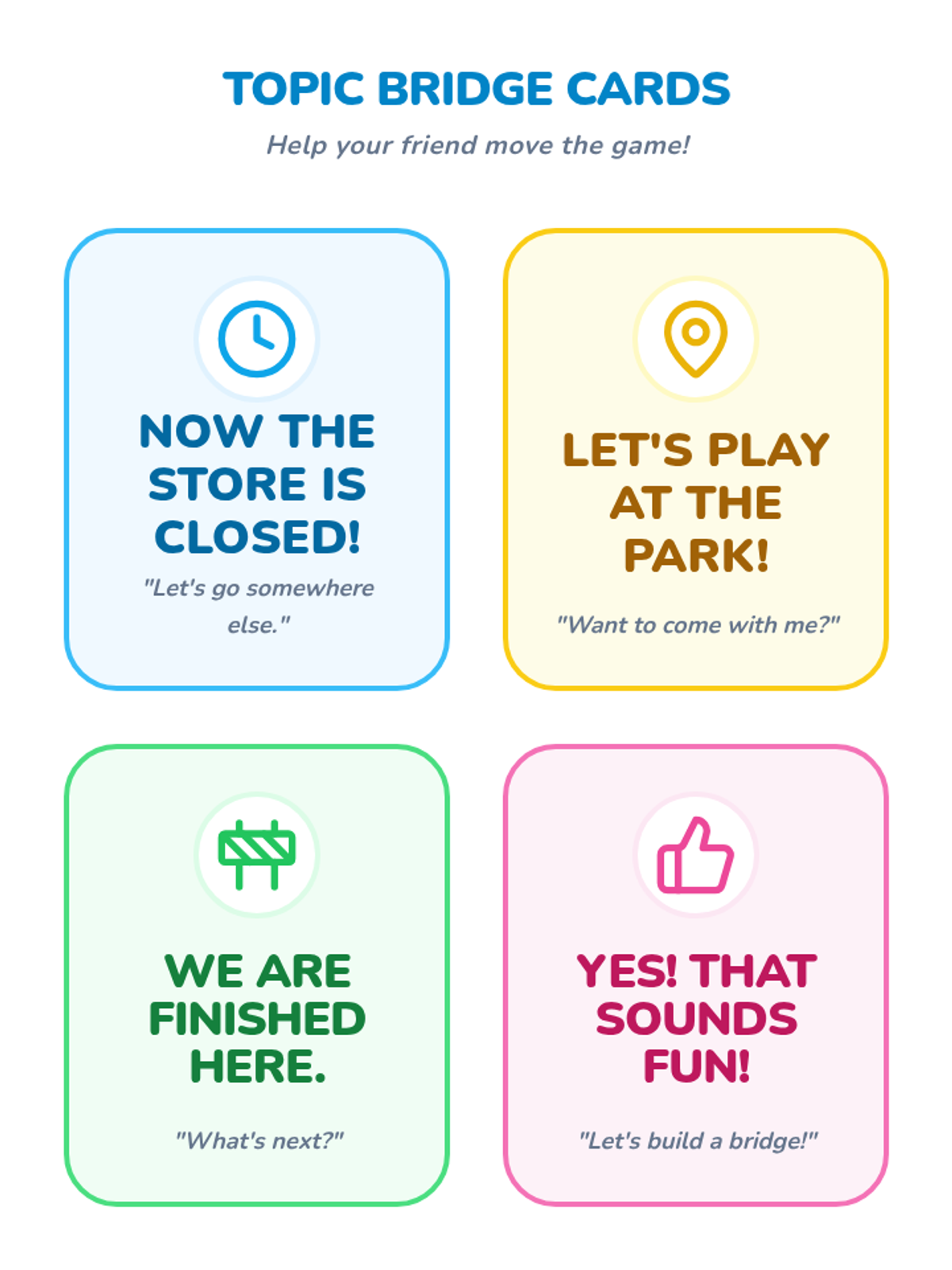
Bridge cards for students to use when initiating a change in play theme, providing visual and verbal scaffolds for transitions.
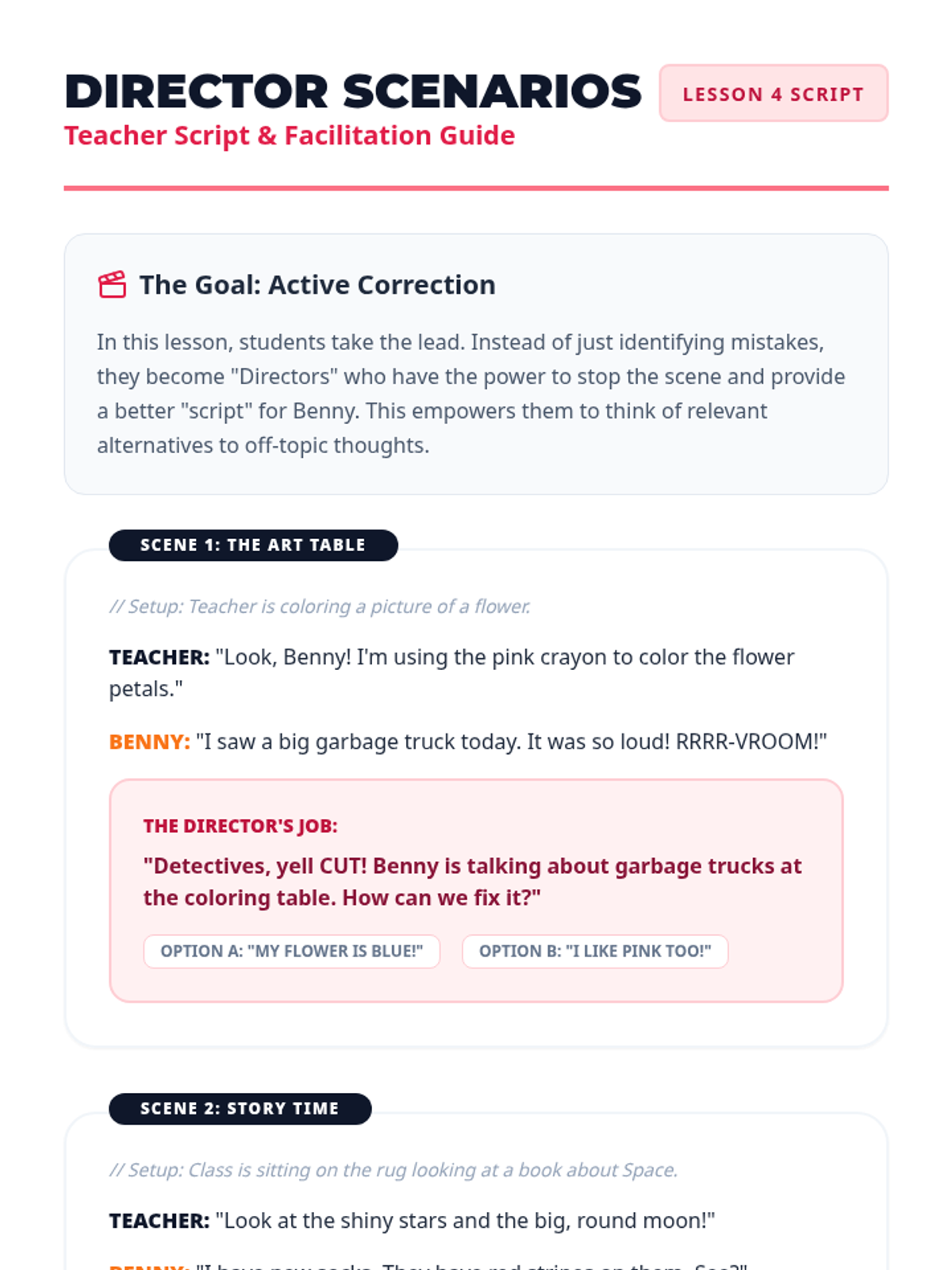
A script guide for Lesson 4, providing scenarios for the teacher to model off-topic conversation errors and prompts for students to act as 'Directors' to suggest relevant 'Fix It' responses.
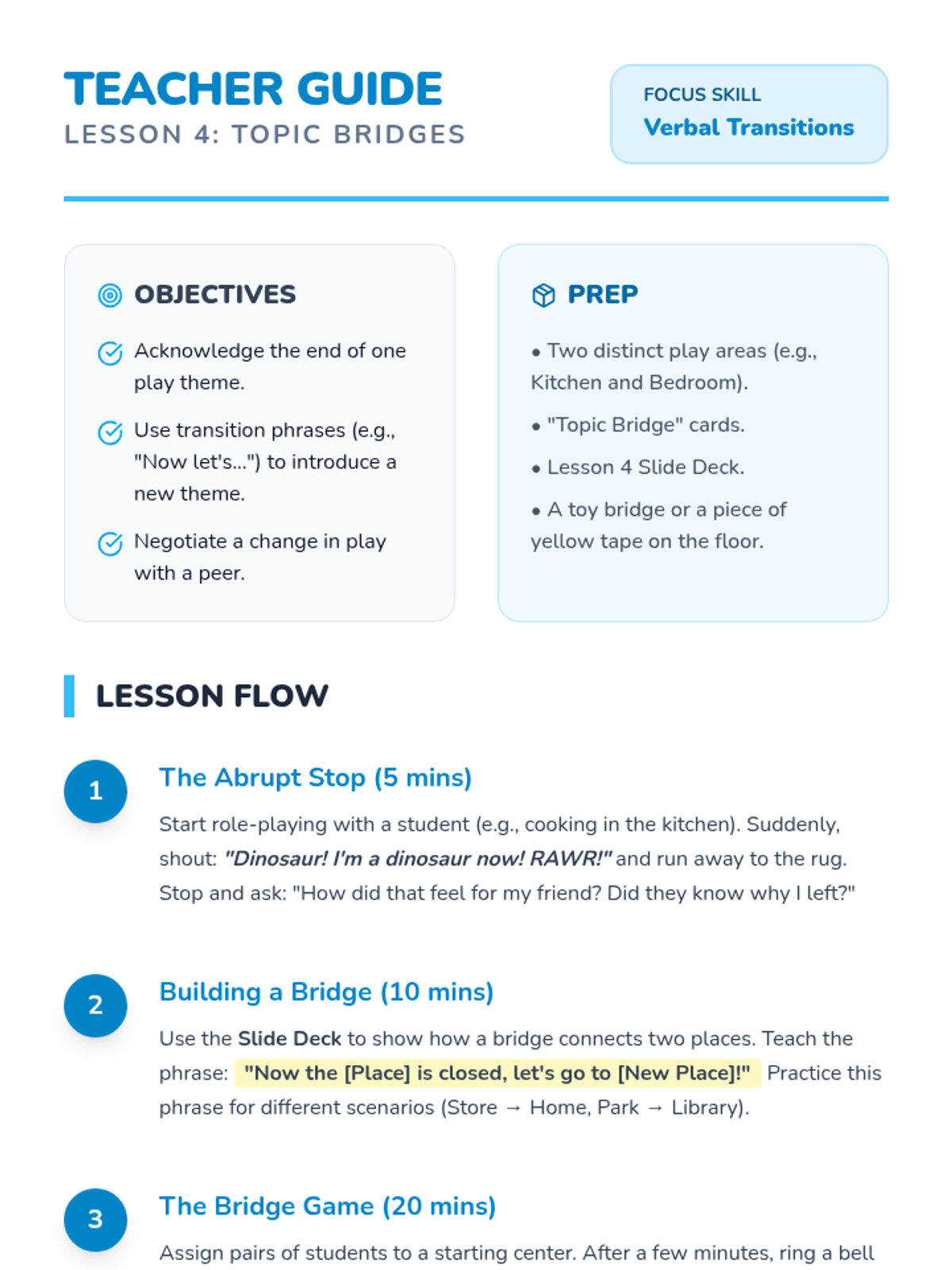
Teacher guide for Lesson 4, focusing on bridge phrases and transition activities for shifting play themes.
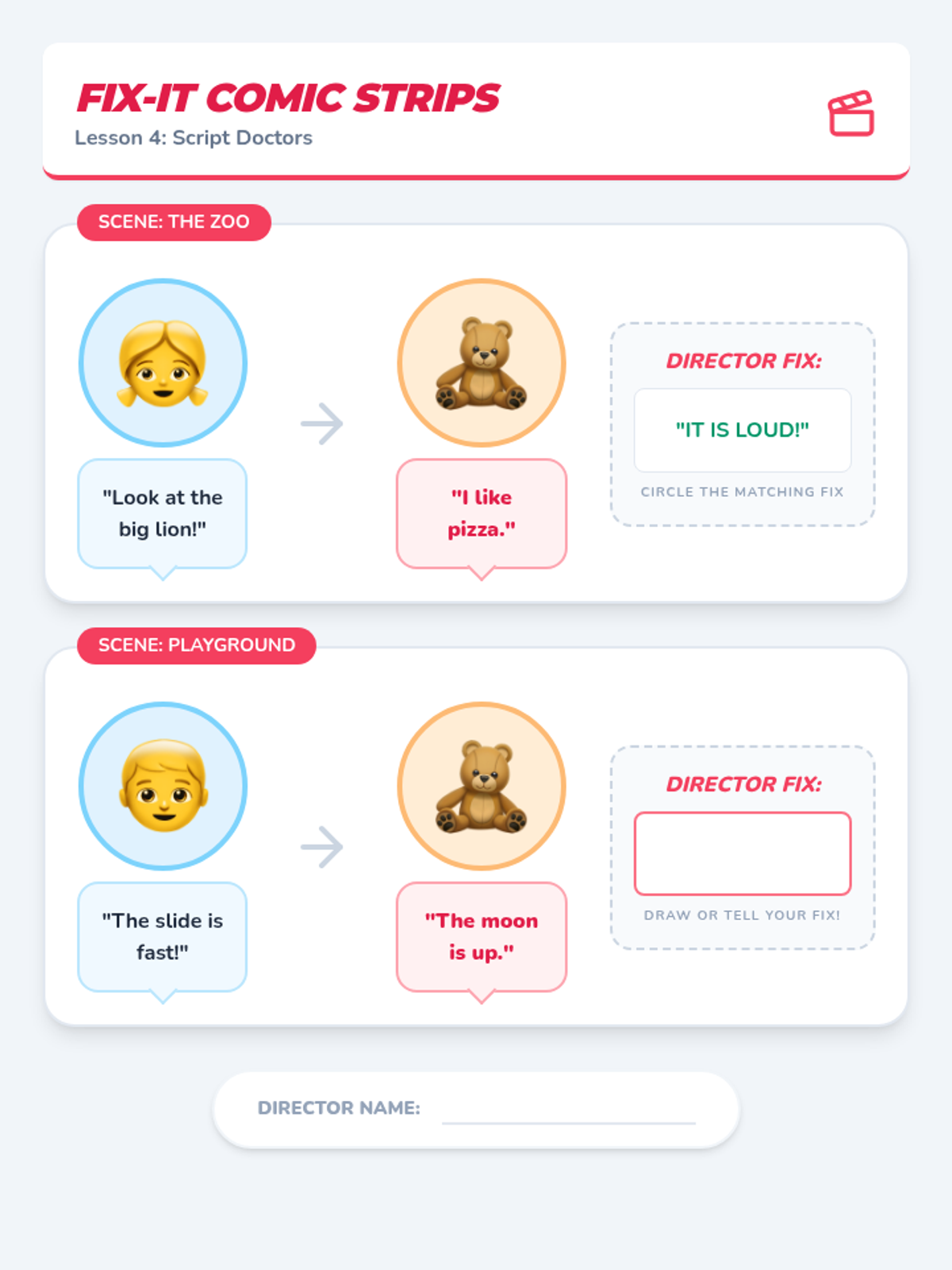
Simple comic-strip worksheet for Lesson 4 where Pre-K students identify a conversation error and suggest a matching fix. Provides one guided example and one open-ended panel for students to draw or dictate their own relevant response.
Slides for Lesson 4, showing how to change play themes naturally using verbal "bridges."
Interactive 'Director' slides for Lesson 4 where students practice identifying off-topic script errors and choosing relevant 'Fix It' responses. Uses a movie-making theme to engage Pre-K learners in problem-solving.
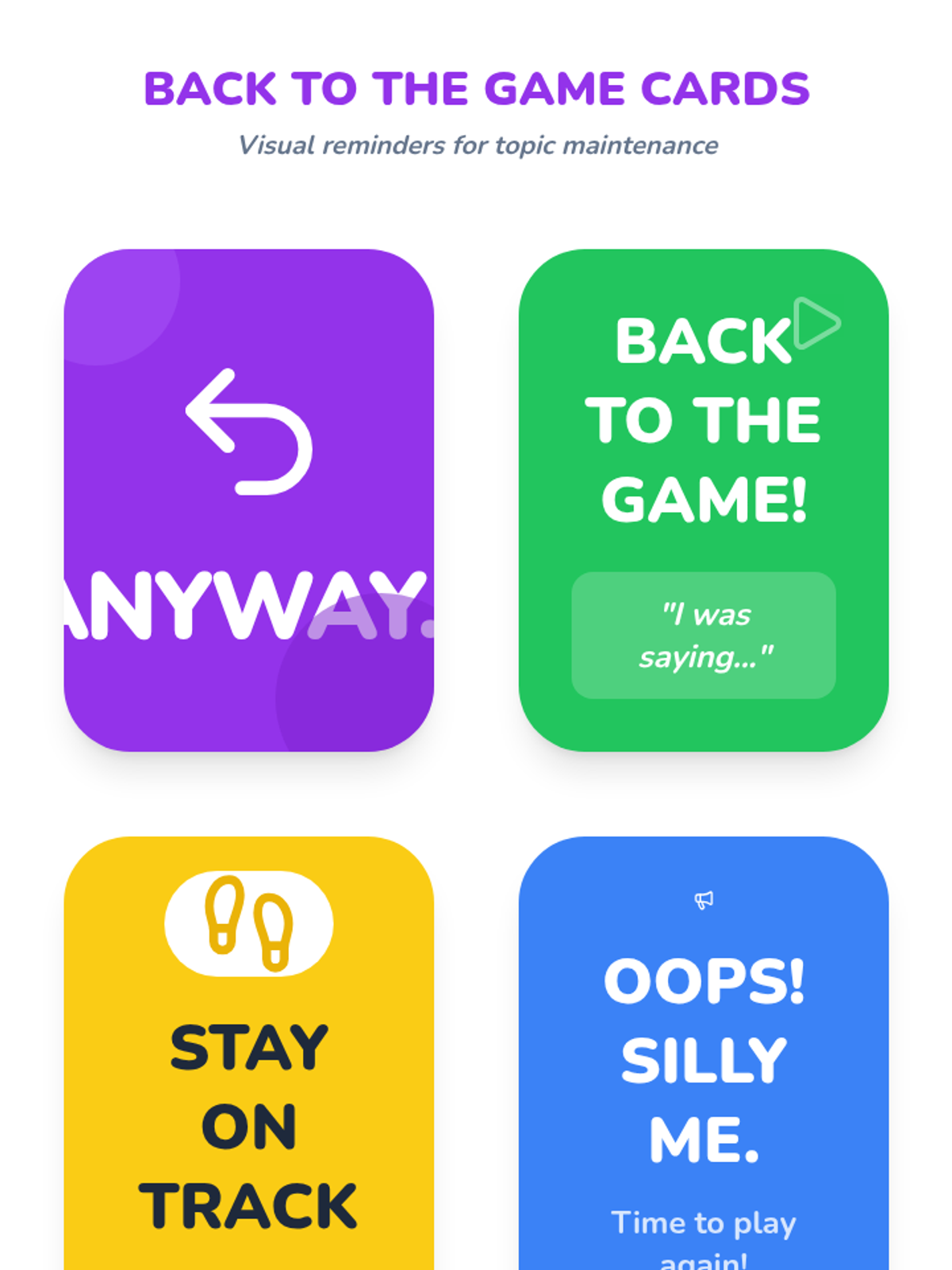
Visual reminder cards ("Anyway," "Back to the Game") for students to use when refocusing on a play theme after a distraction.
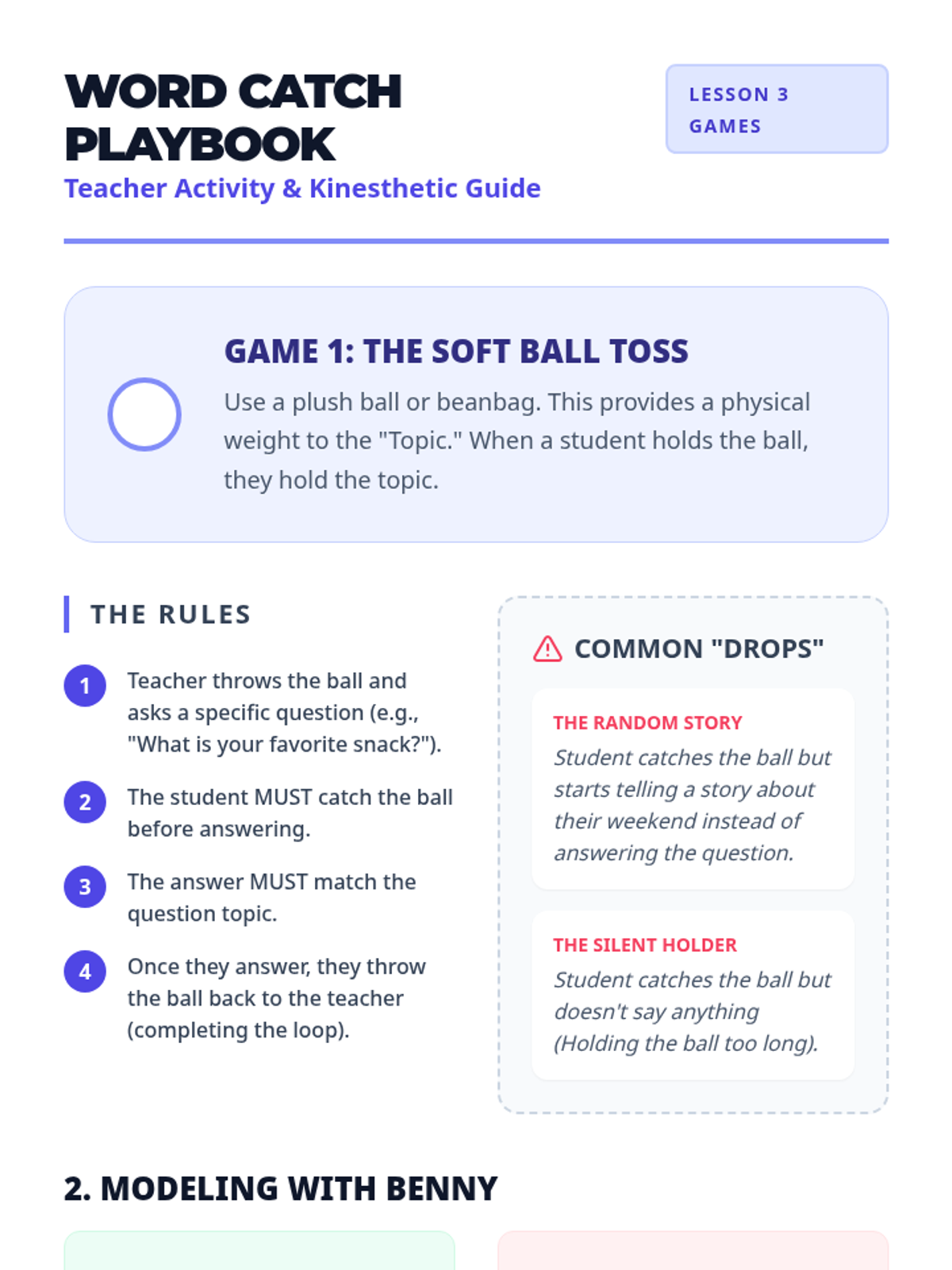
A detailed playbook for Lesson 3 activities, focusing on the physical 'Soft Ball Toss' game to reinforce reciprocal communication. Includes scripts for modeling 'Good Catches' and 'Dropped Balls' with Benny the Bear.
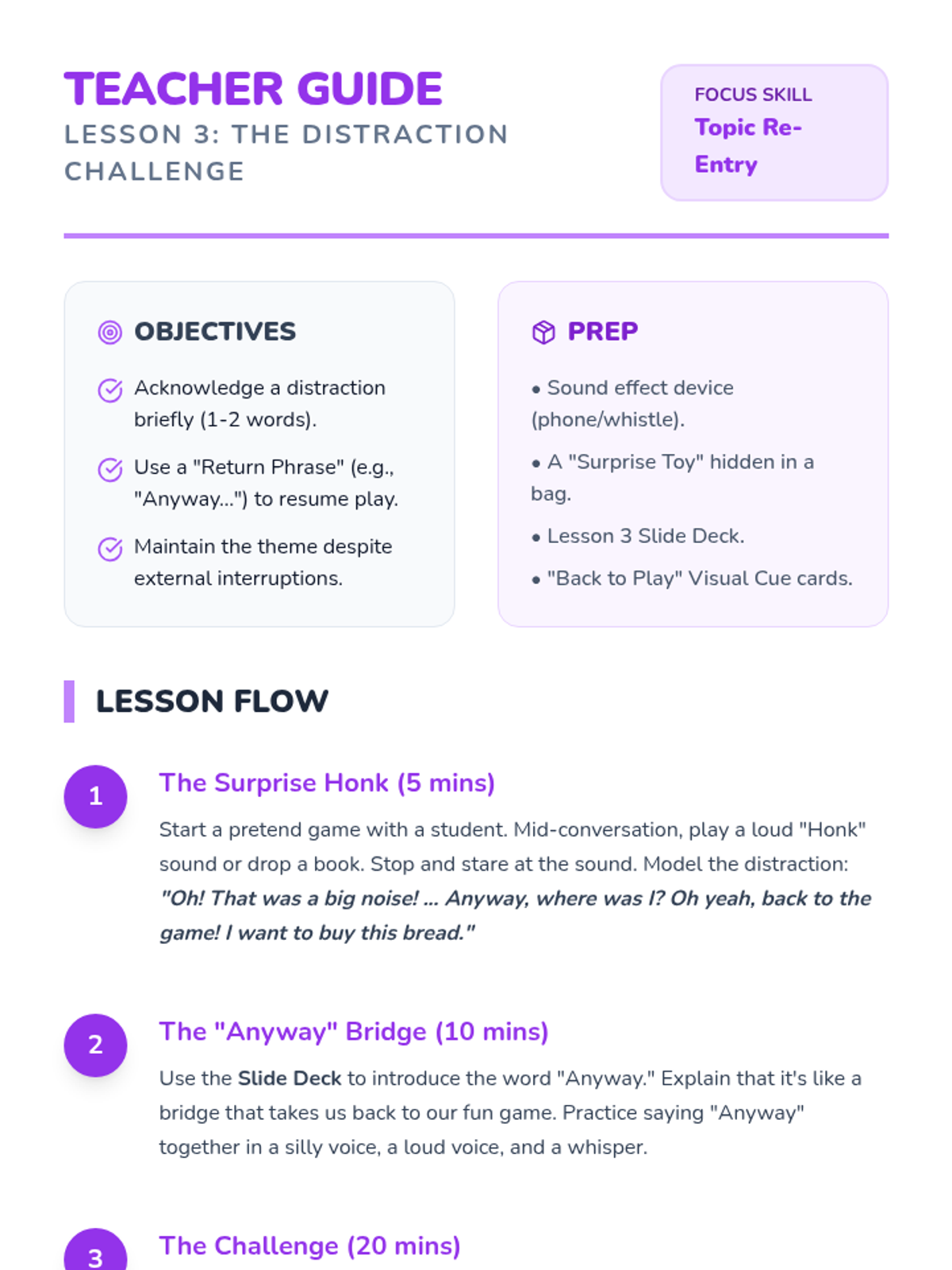
Teacher guide for Lesson 3, focusing on topic re-entry, using "return phrases," and facilitating the "Distraction Challenge."
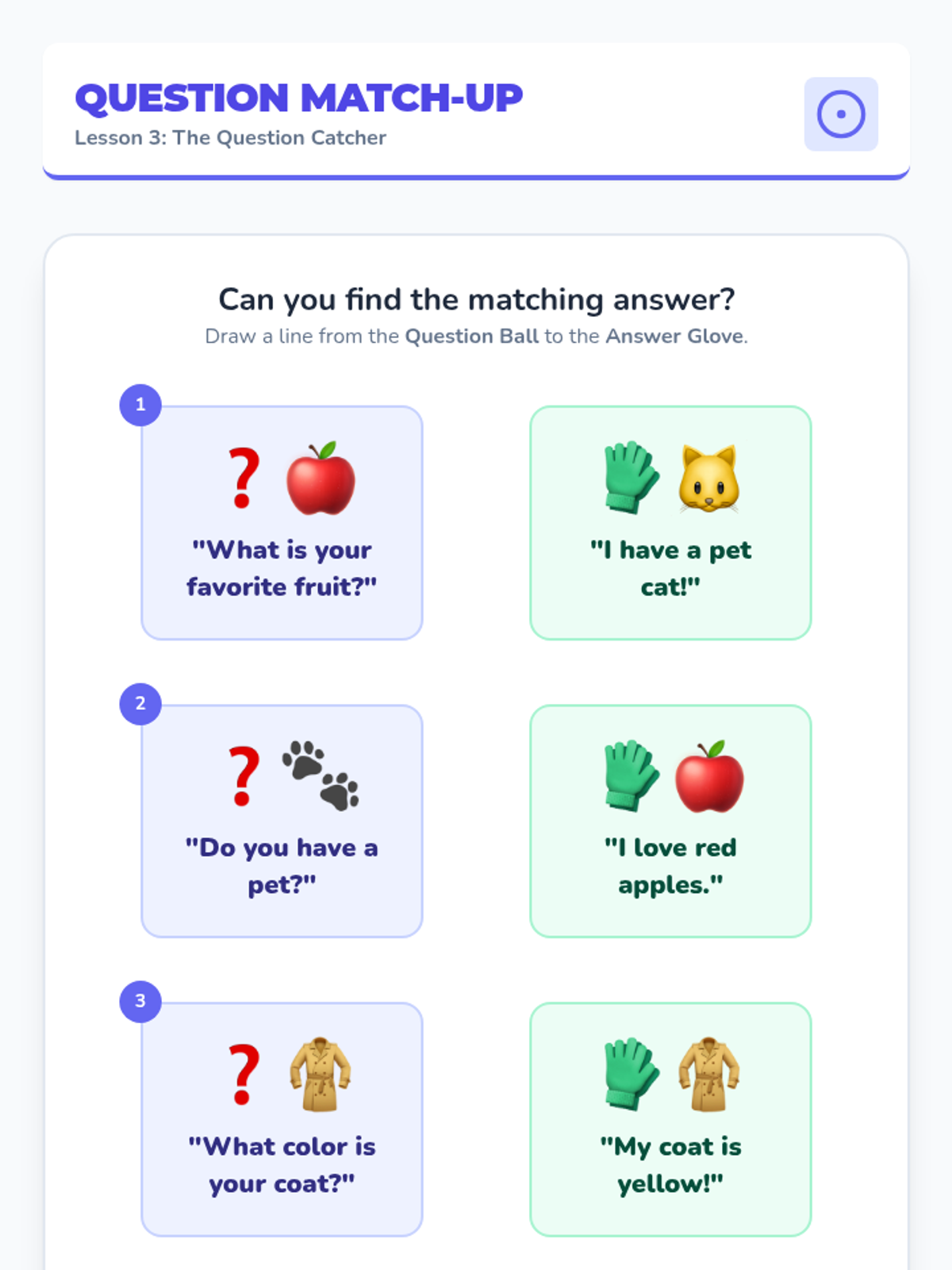
A visual matching worksheet for Lesson 3 where Pre-K students draw lines to connect 'Question Balls' to their corresponding 'Answer Gloves'. Includes simple icons and high-contrast text to support early readers and social learners.
Slides for Lesson 3, teaching students how to identify distractions and use return phrases to resume their play theme.
Visual slides for Lesson 3 using the metaphor of 'Catch' to explain reciprocal communication and answering questions directly. Includes visual examples of 'Dropped Balls' (off-topic) and 'Good Catches' (on-topic).
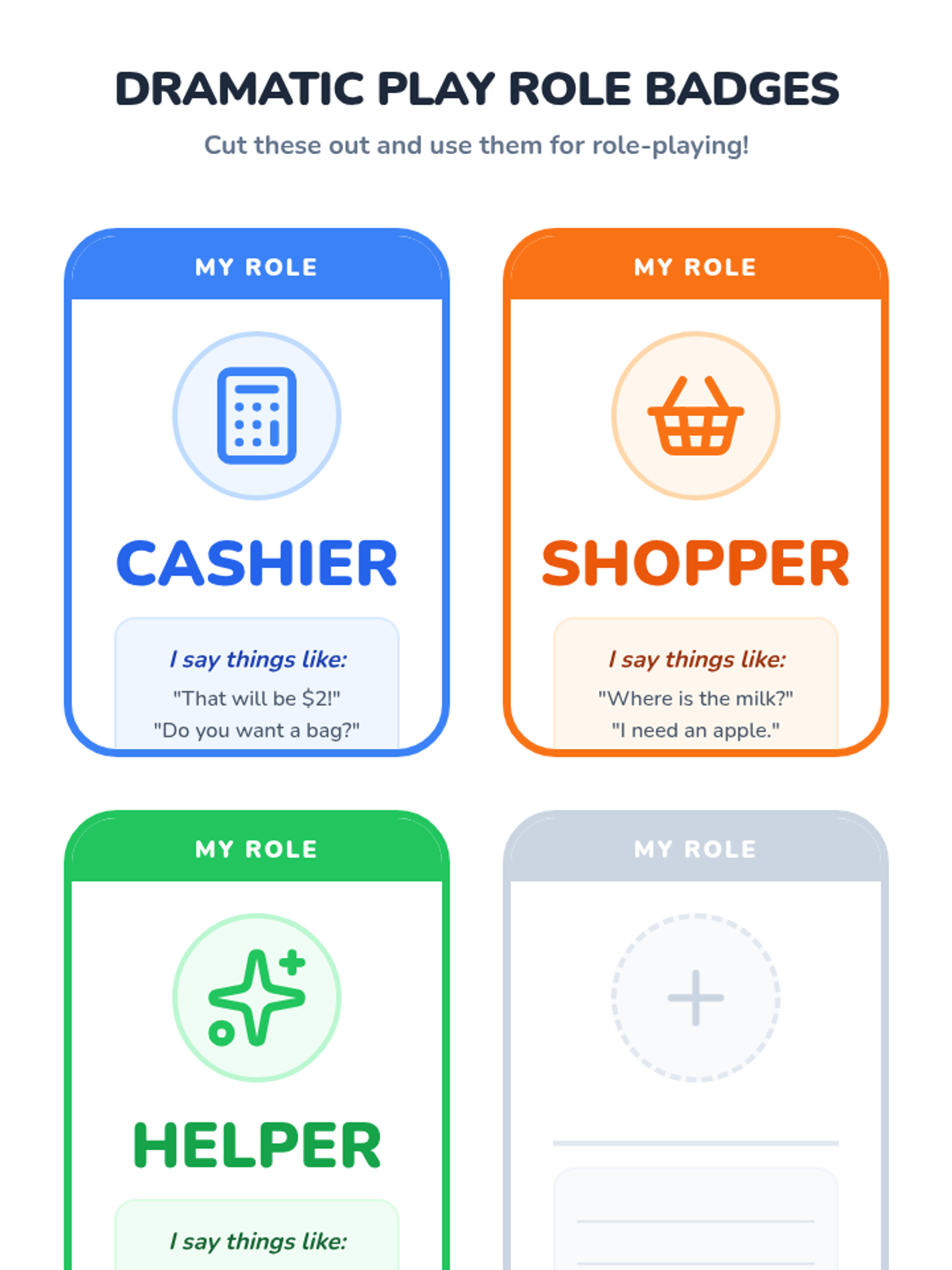
Visual role badges for students to wear during dramatic play, with role-specific sentence starters to help maintain topic.
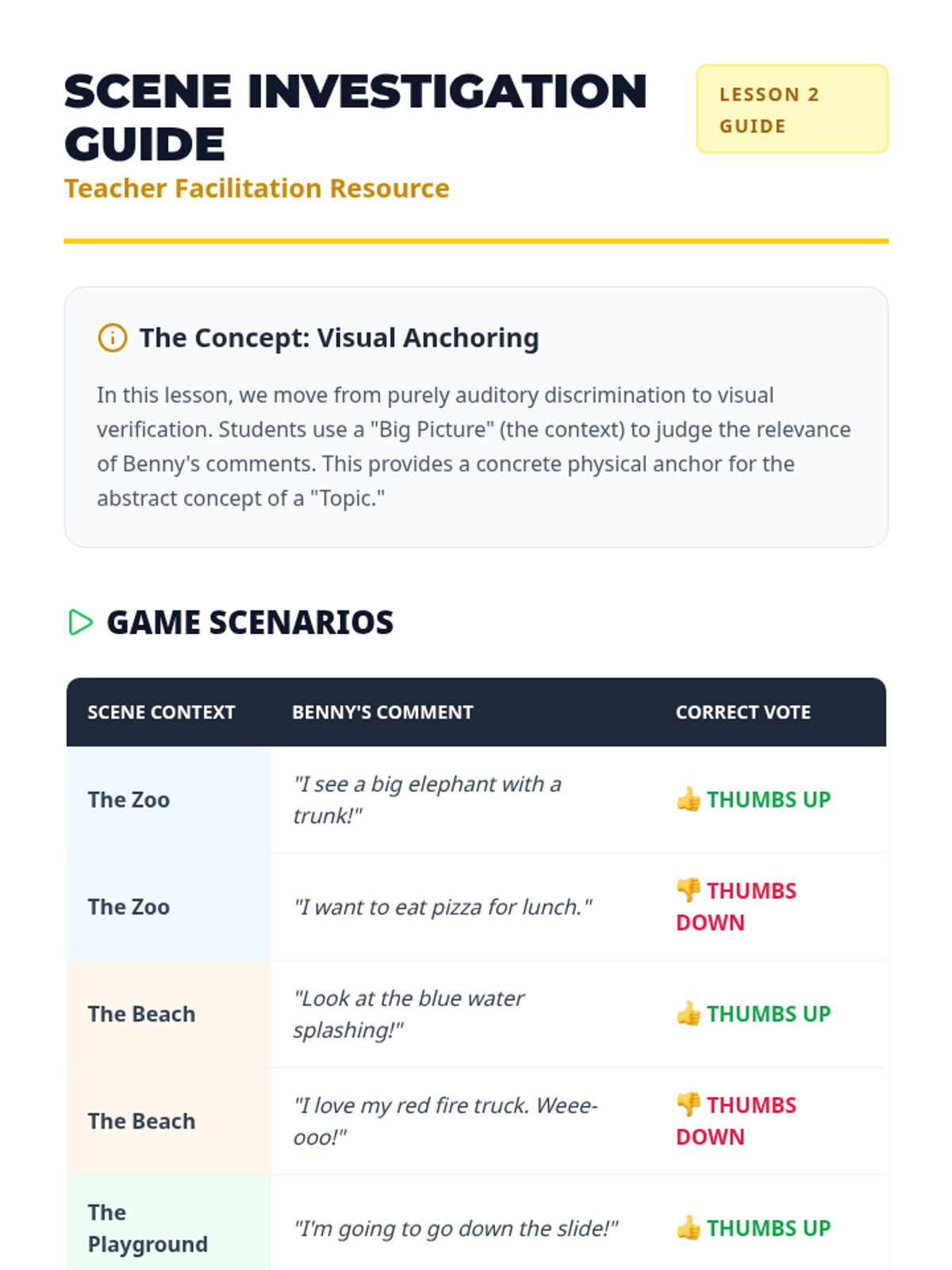
A teacher guide for Lesson 2 that includes a table of scene scenarios, correct voting responses, and strategies for moving from error detection to peer-assisted correction.