Root cause analysis and brainstorming techniques for everyday problem-solving. Equips learners with ethical frameworks and risk-benefit evaluation skills to predict consequences and make informed choices.
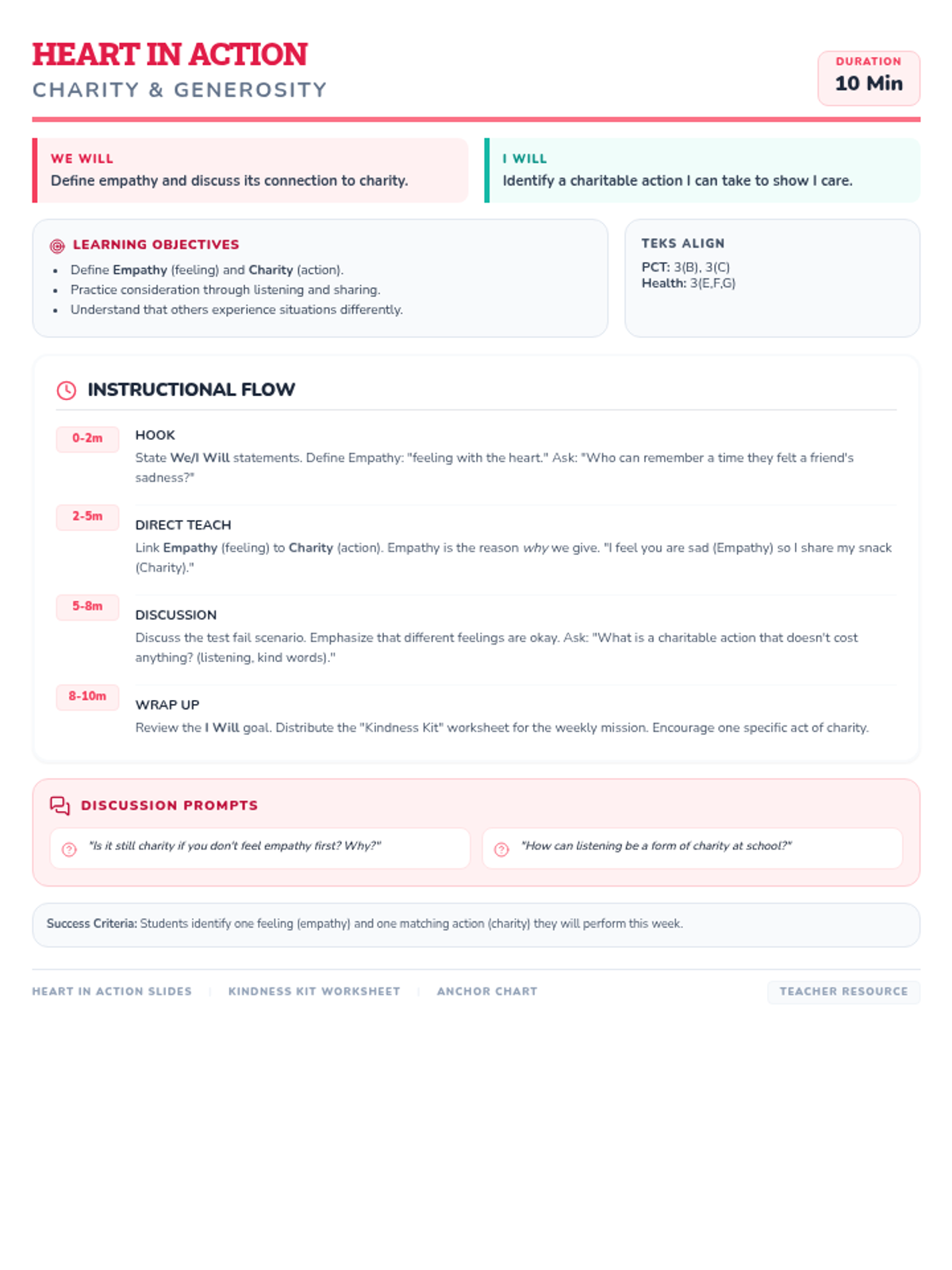
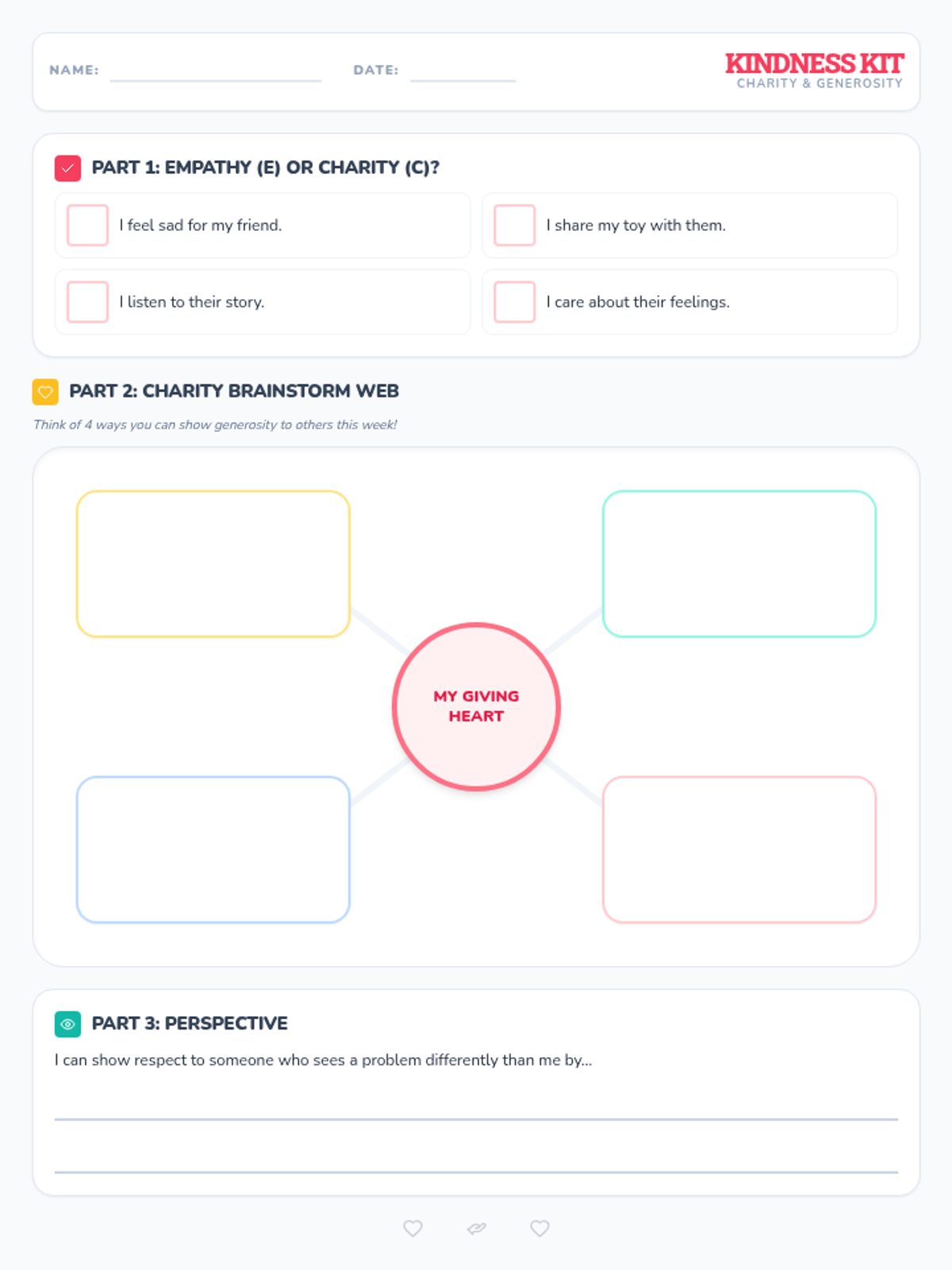
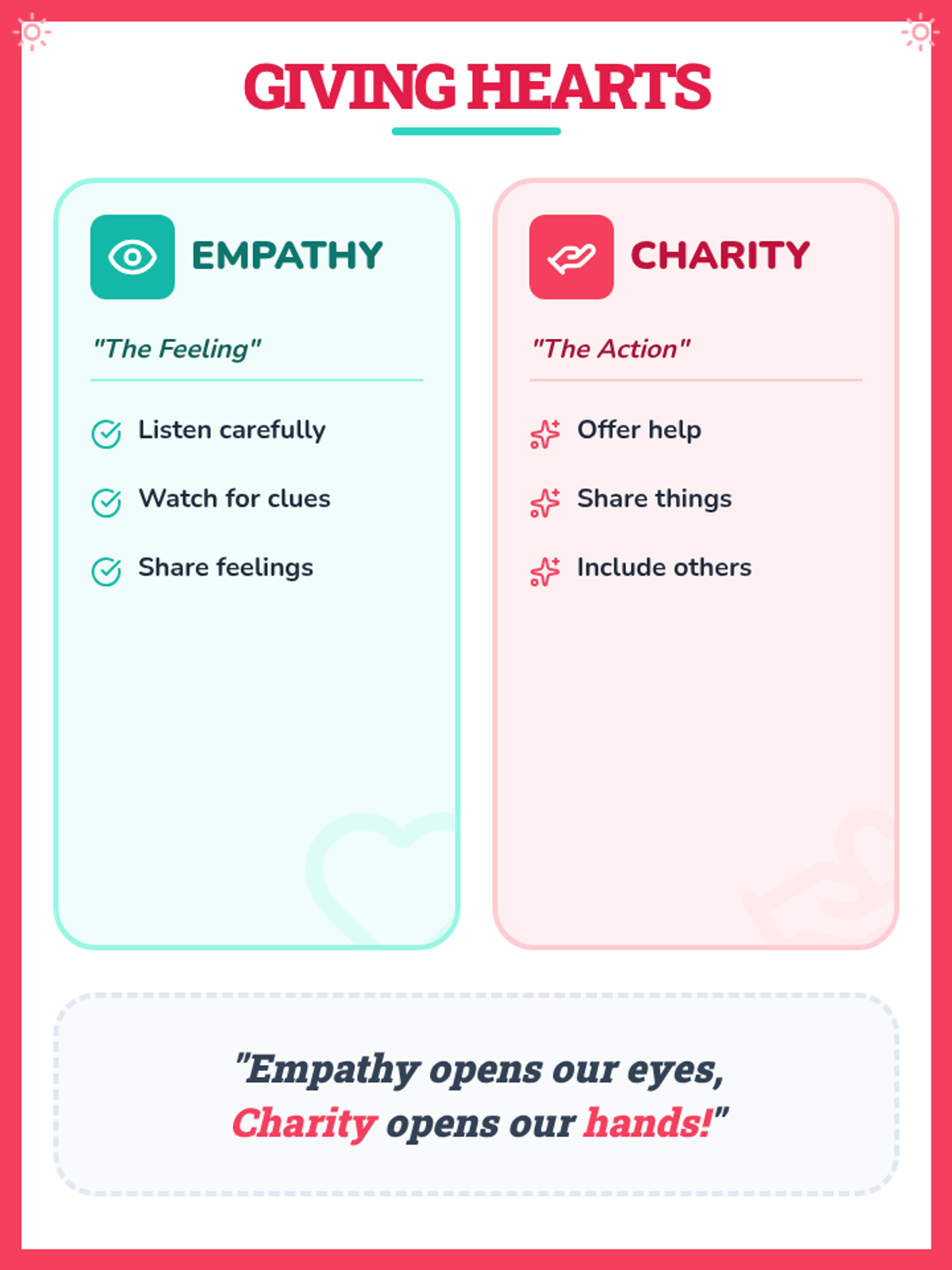
A 10-minute lesson focused on the connection between empathy and charity, teaching students how to identify needs and act with generosity. Includes a slide deck, worksheet, and anchor chart.
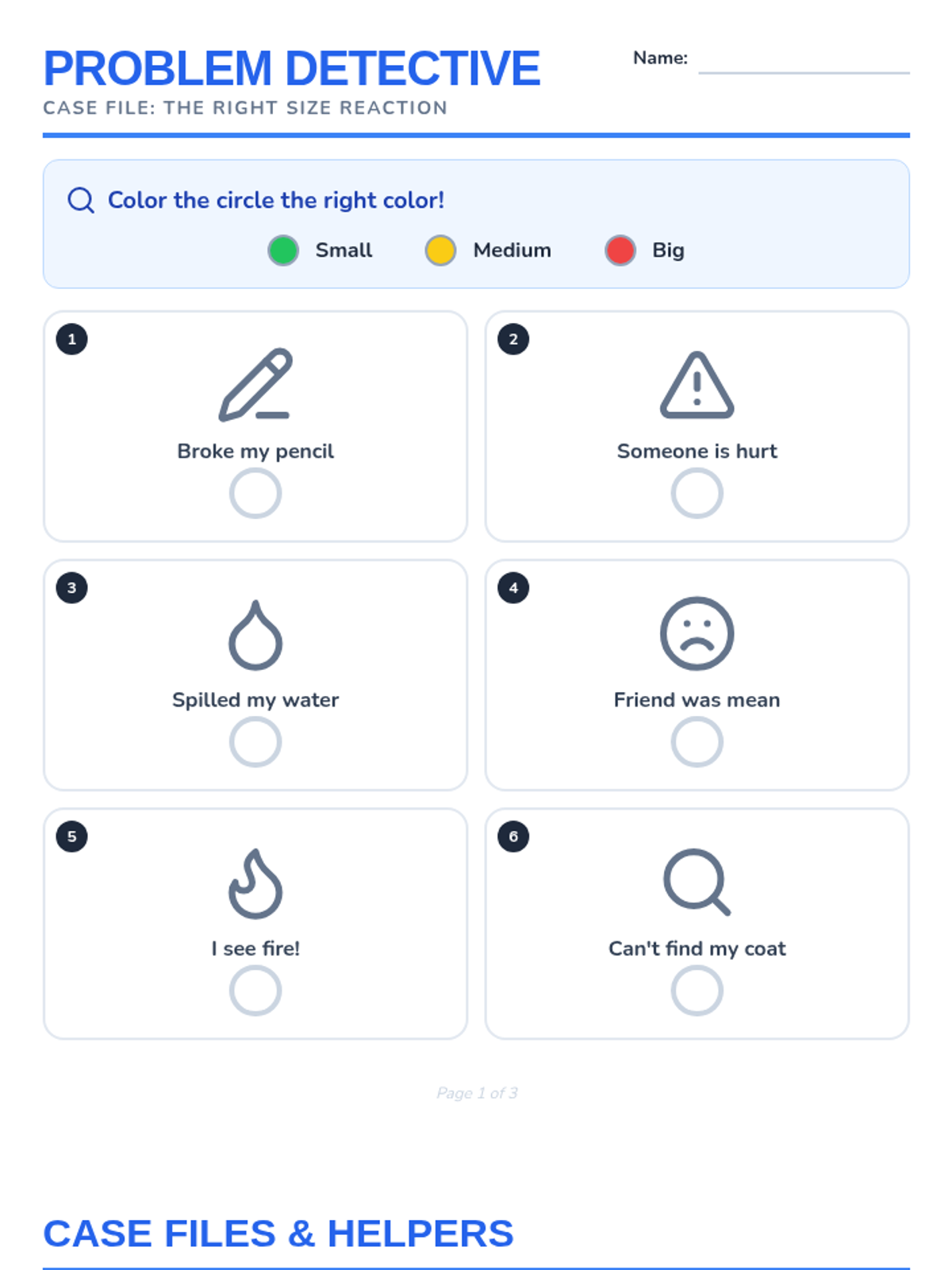
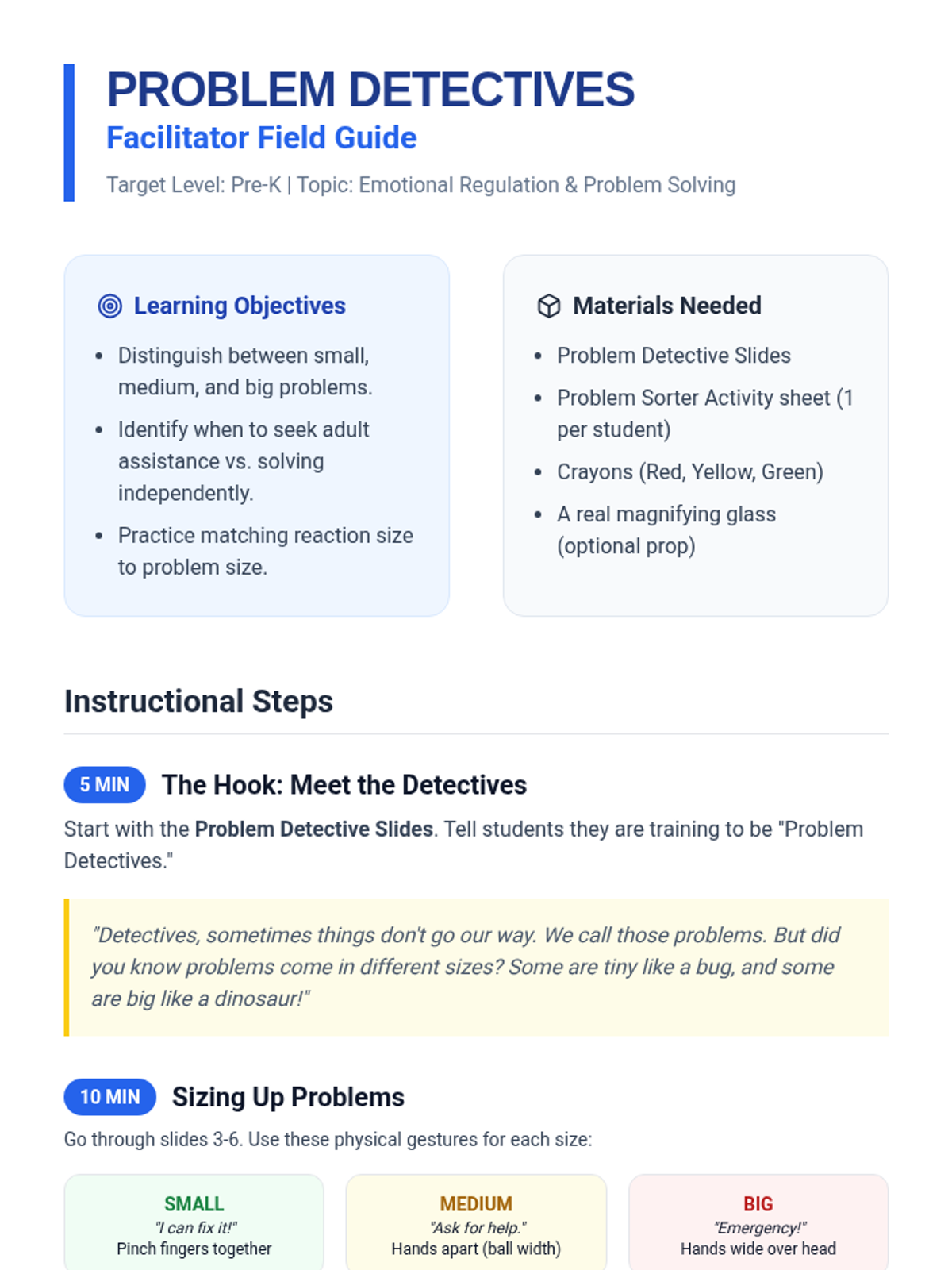
A Social-Emotional Learning lesson for Pre-K students to identify the size of problems (small, medium, big) and learn appropriate reactions and help-seeking strategies.
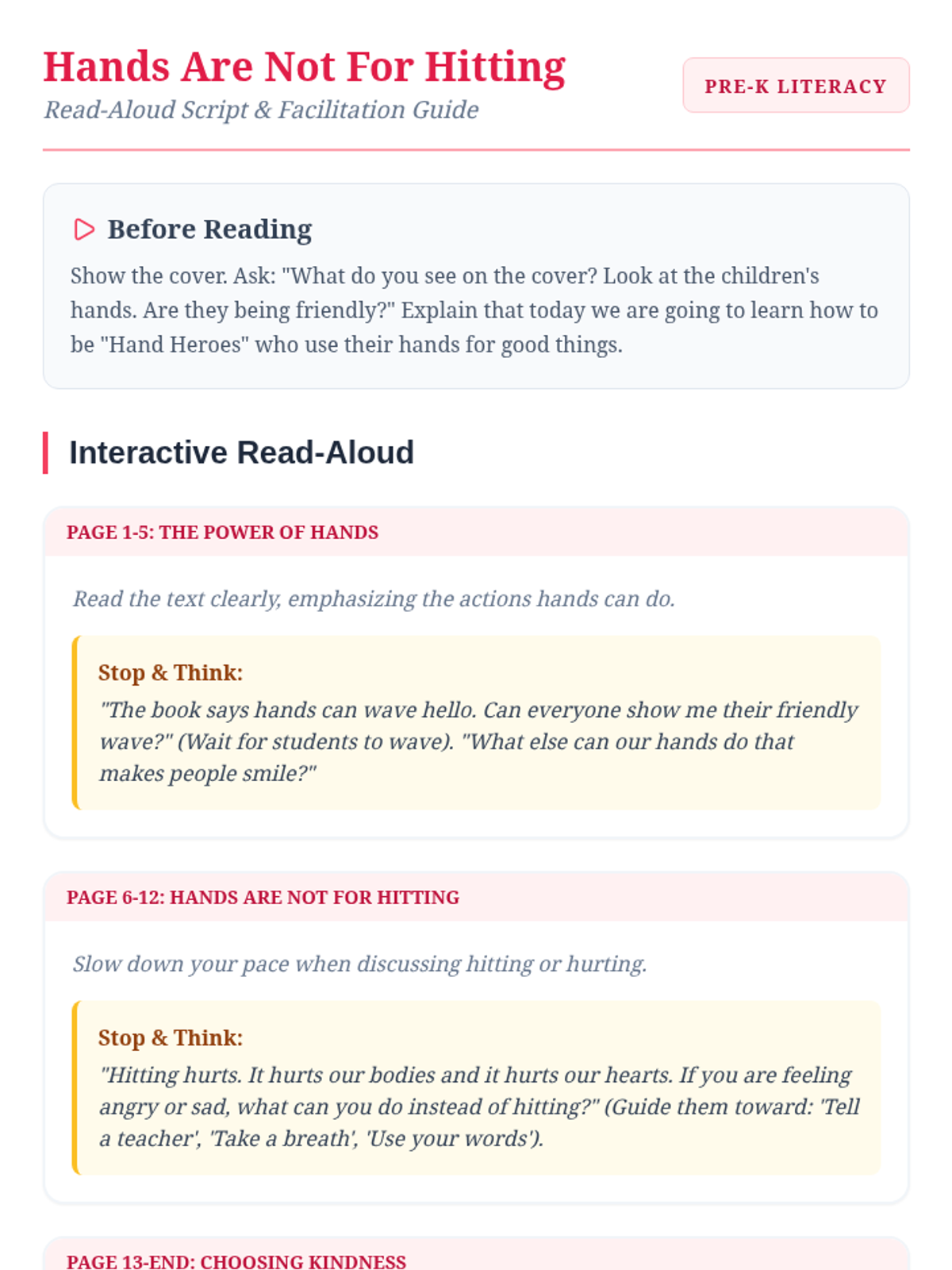
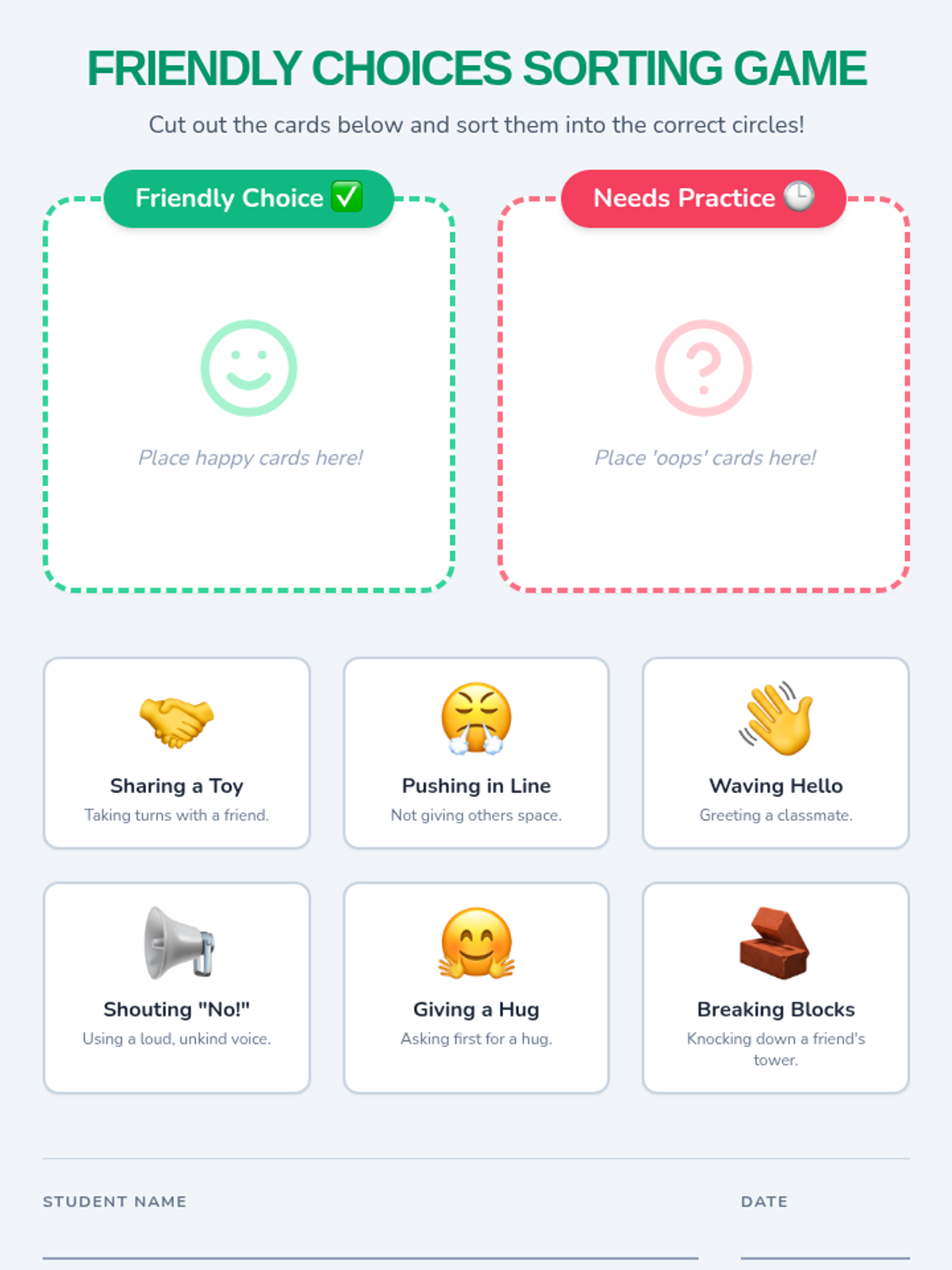
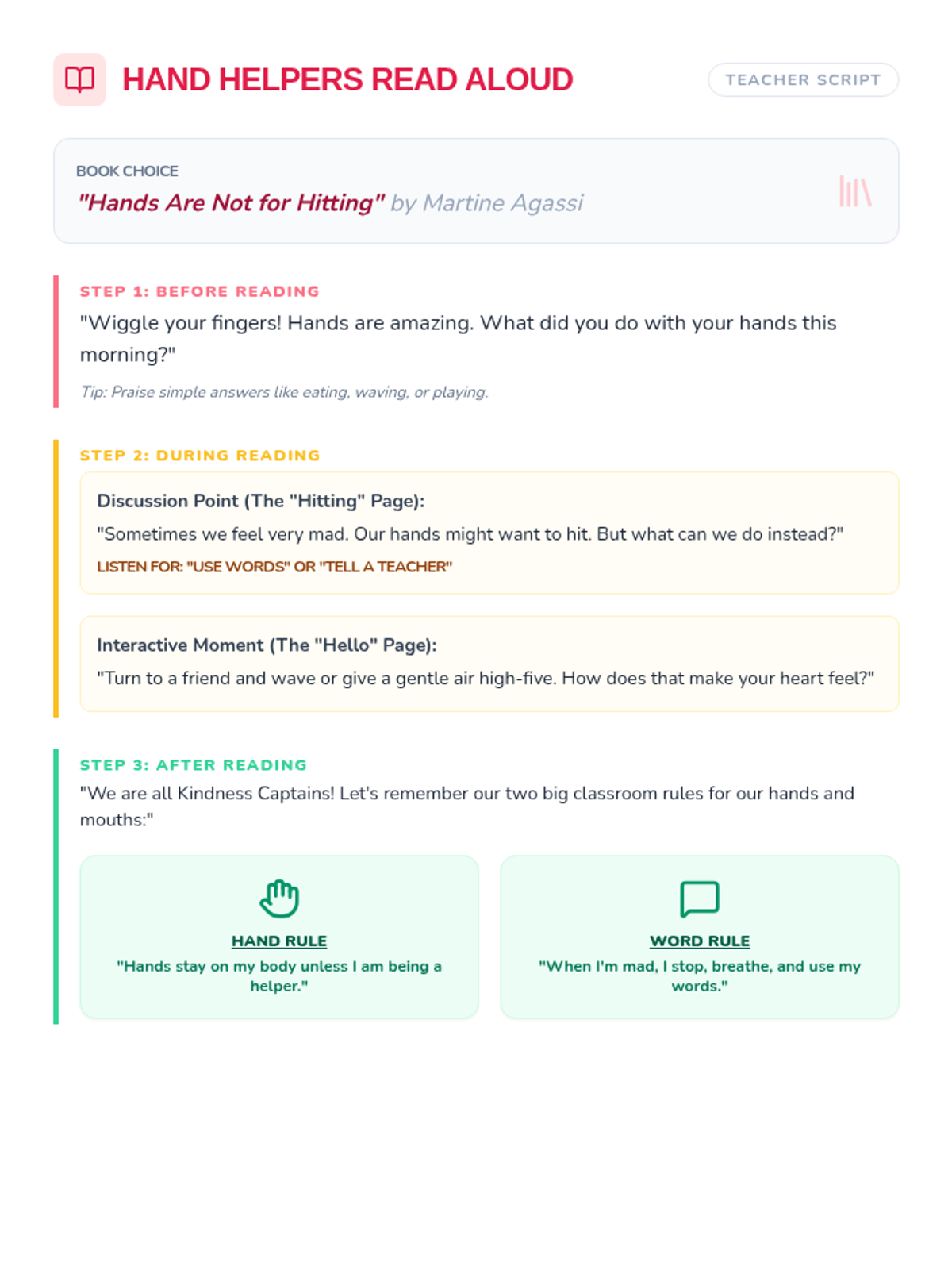
A Pre-K lesson focused on teaching students how to use their hands for kindness and their words for communication, featuring a read-aloud, a sorting game, and interactive practice.
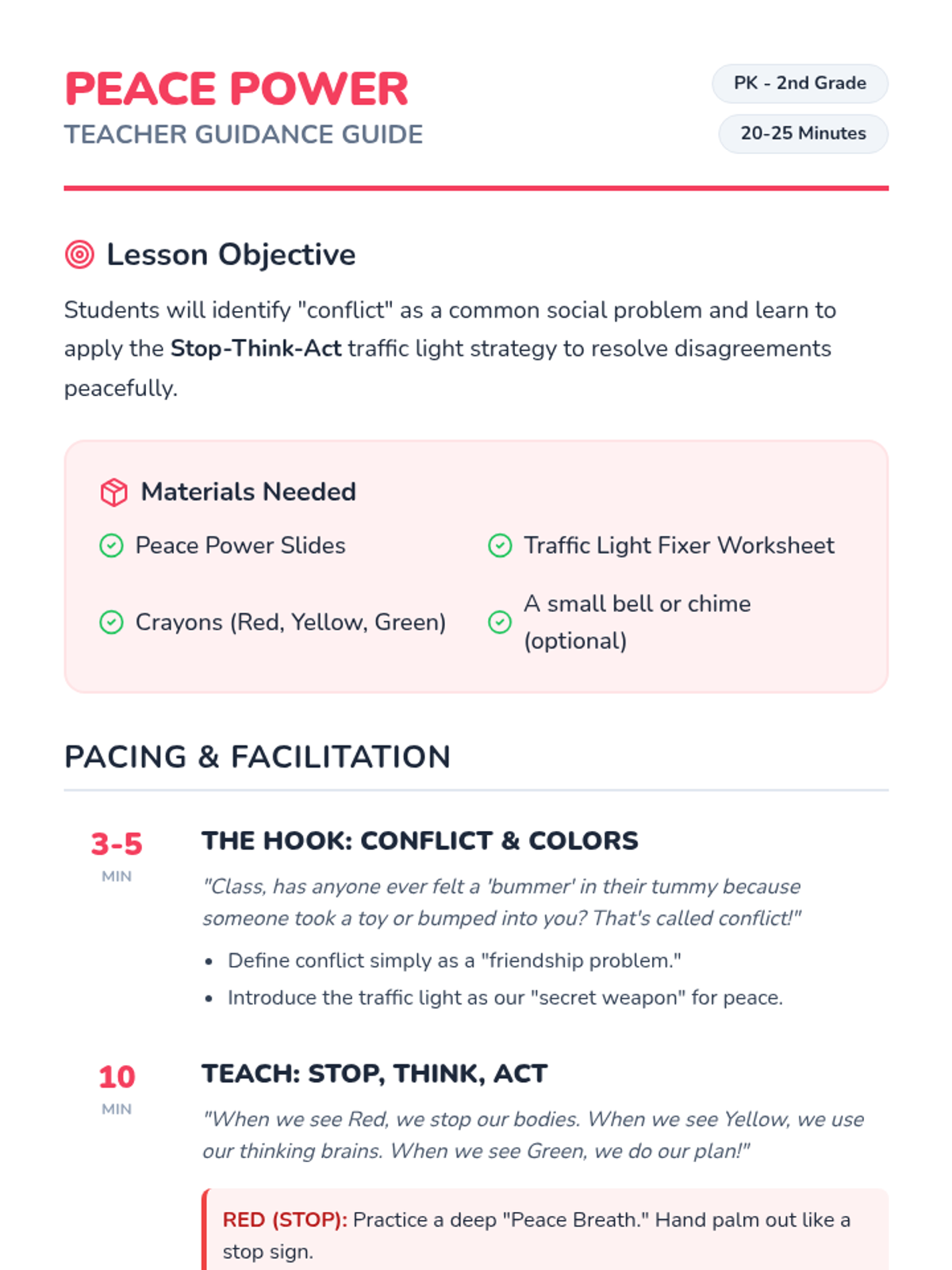
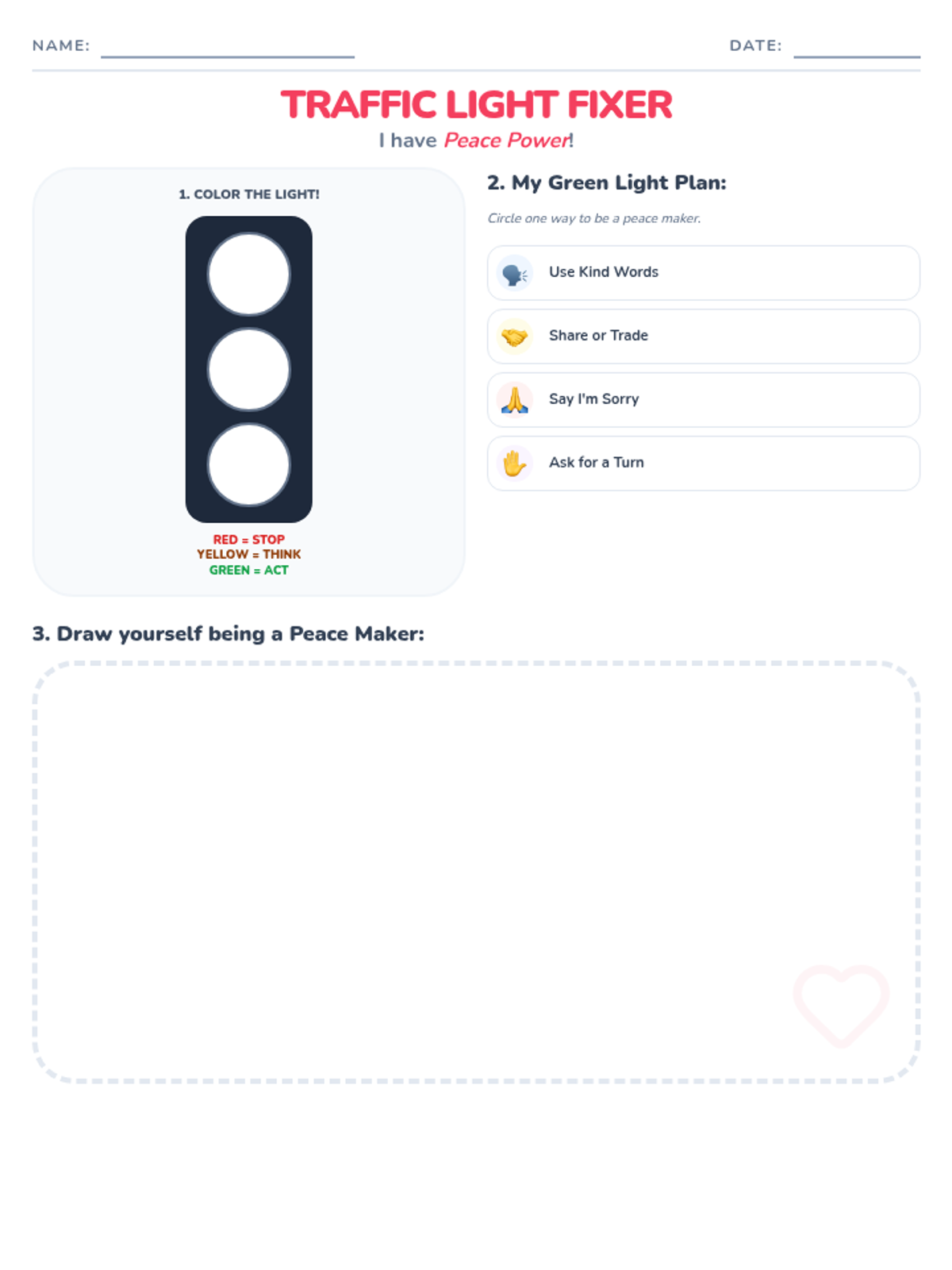
A vibrant, interactive guidance lesson for PK-2nd grade students focusing on the 'Stop-Think-Act' conflict resolution strategy using a traffic light metaphor. Emphasizes self-regulation and kind choices.
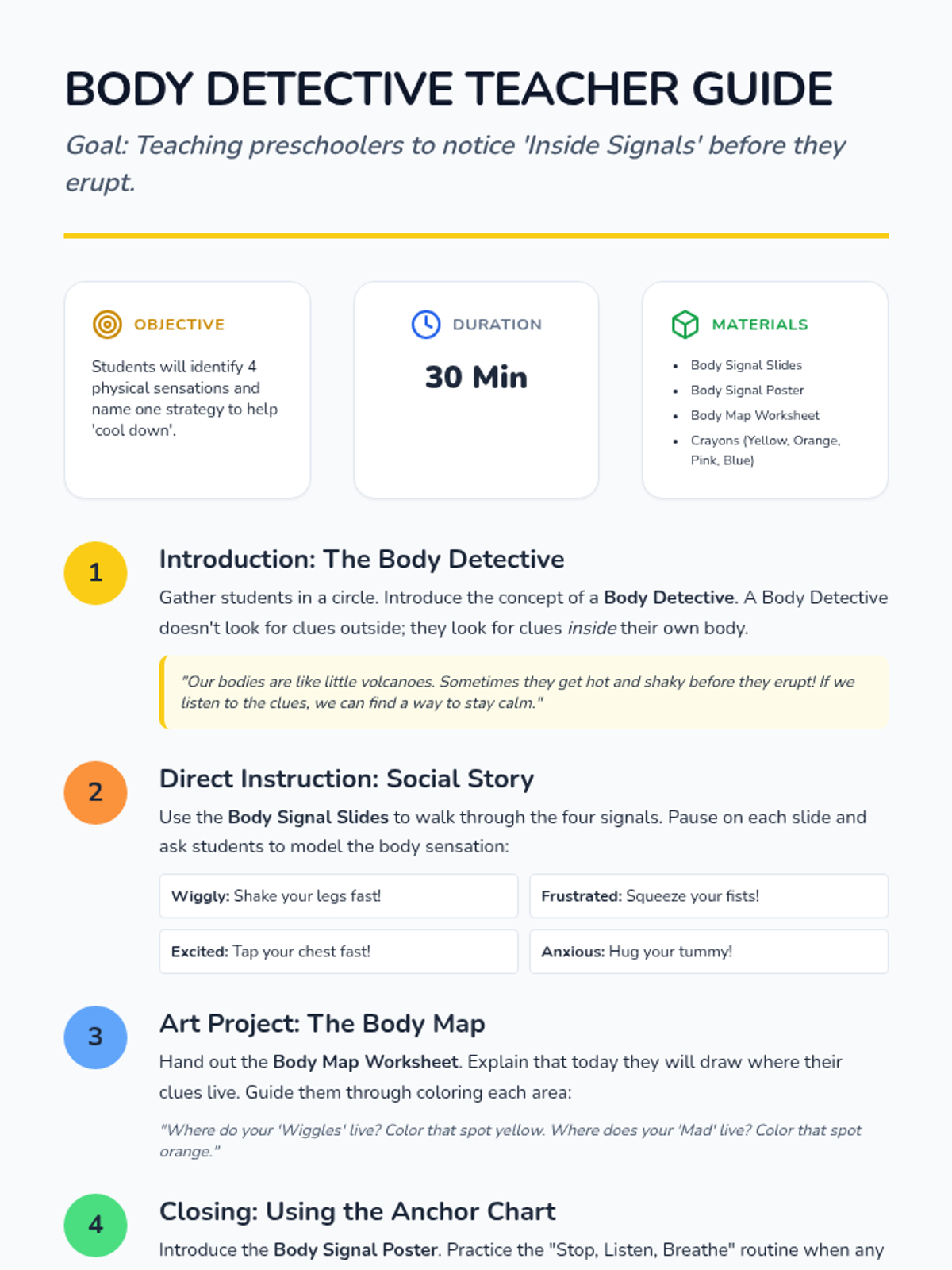
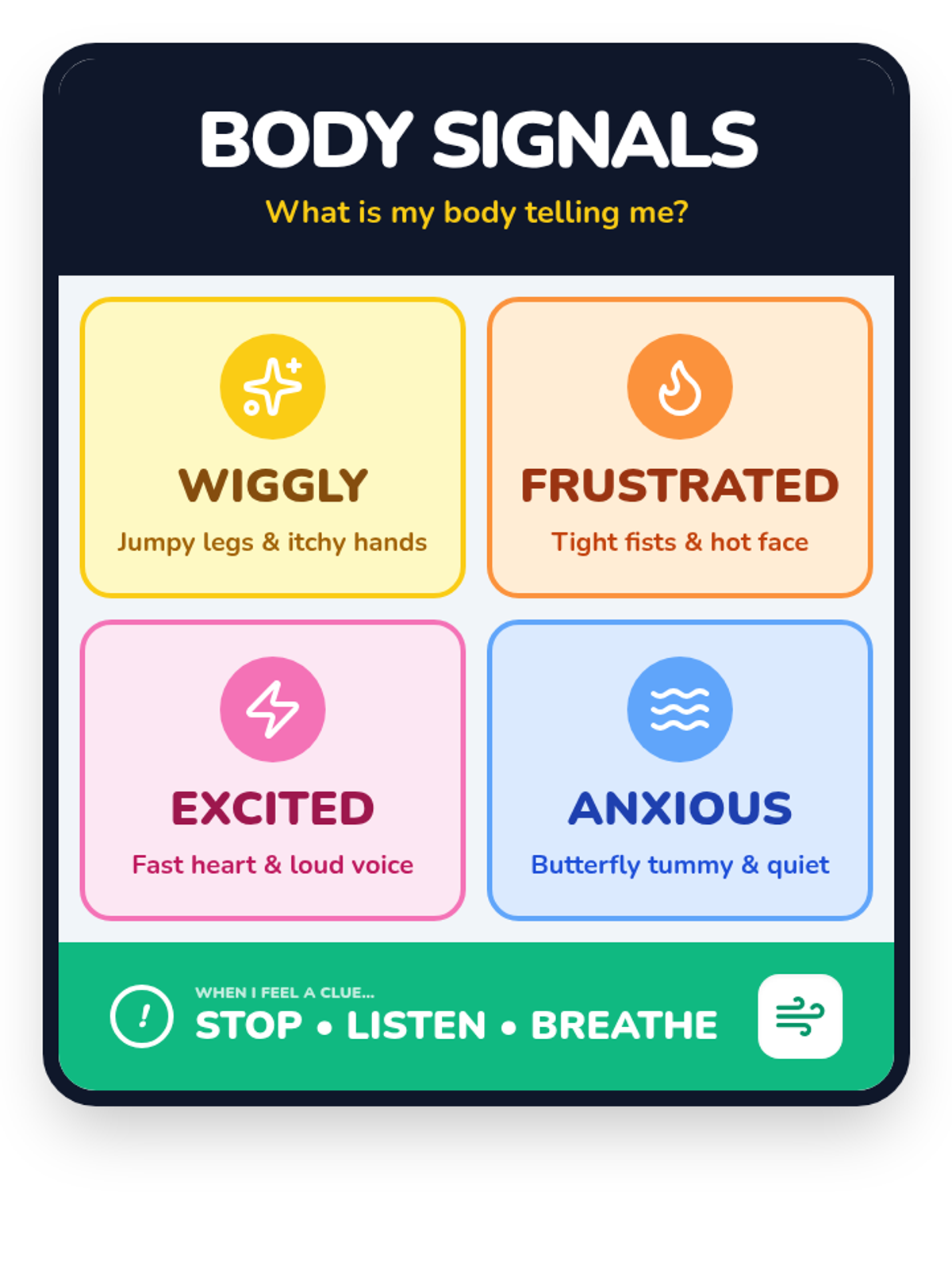
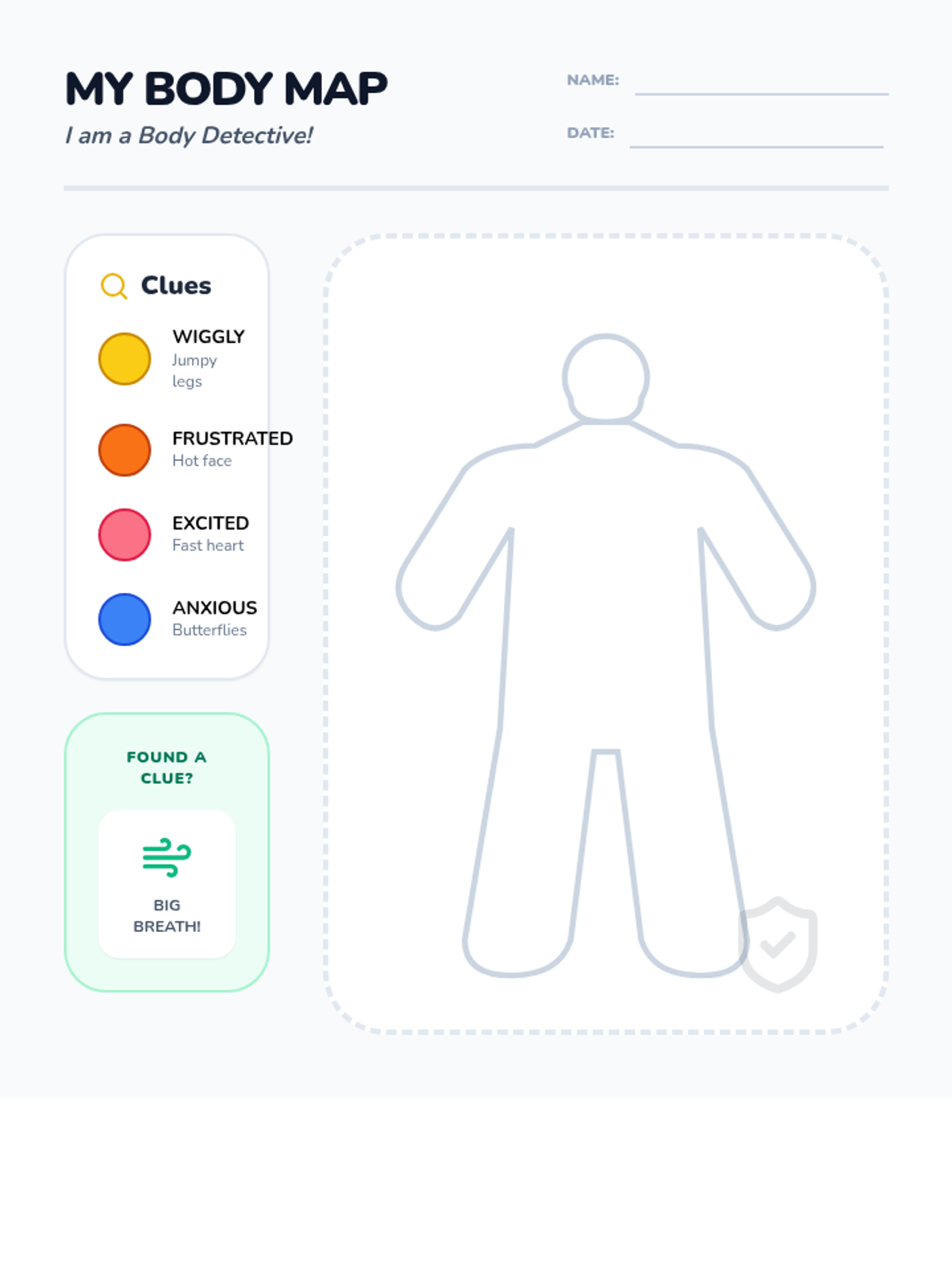
A preschool lesson focused on self-regulation by teaching children to recognize physical 'body signals' associated with wiggly, frustrated, excited, and anxious feelings before they lead to emotional eruptions.
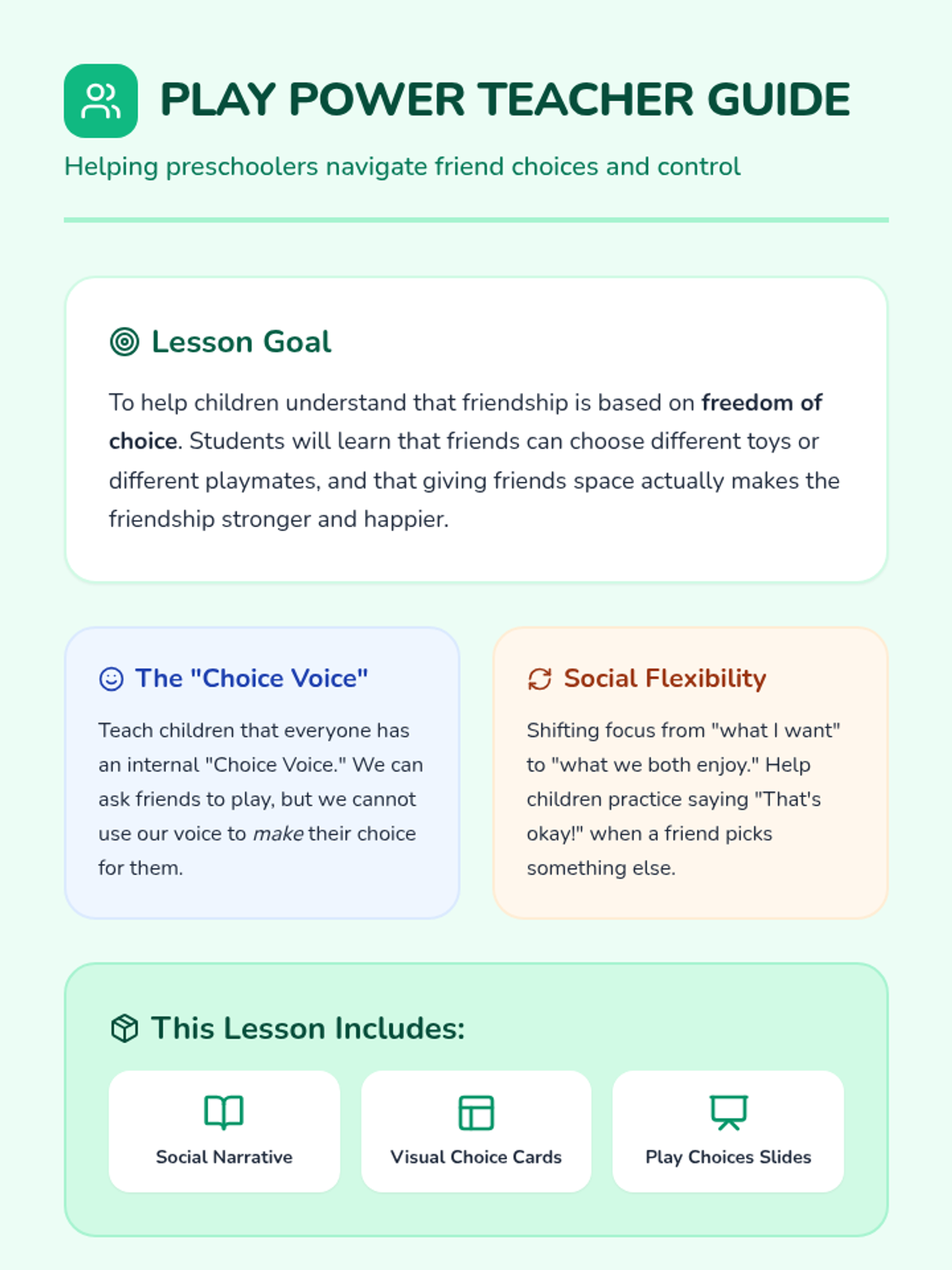
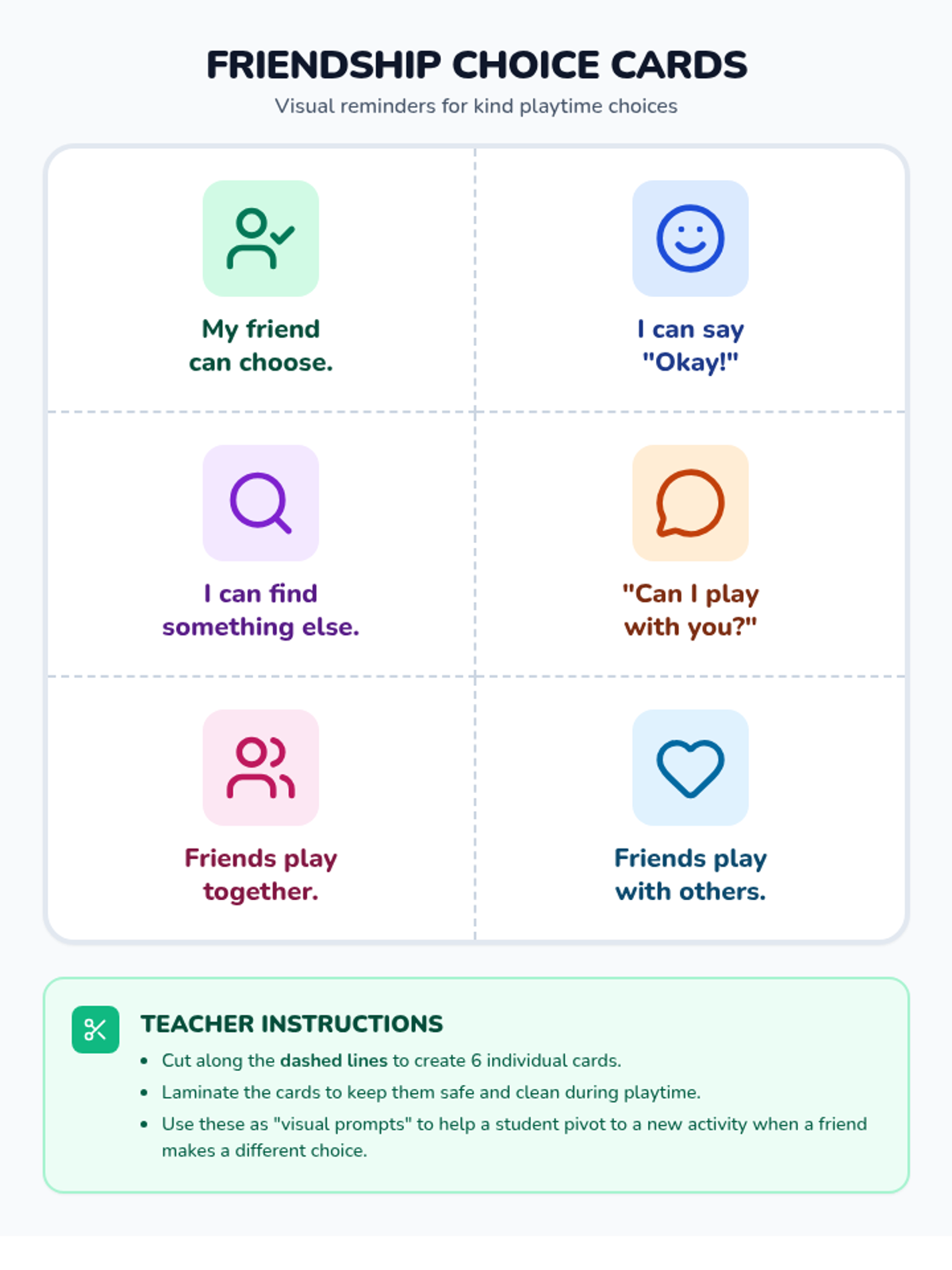
A lesson designed for preschoolers to understand that friends have the right to make their own choices about what to play with and who to play with. This lesson uses social narratives and visual supports to build empathy and social flexibility.
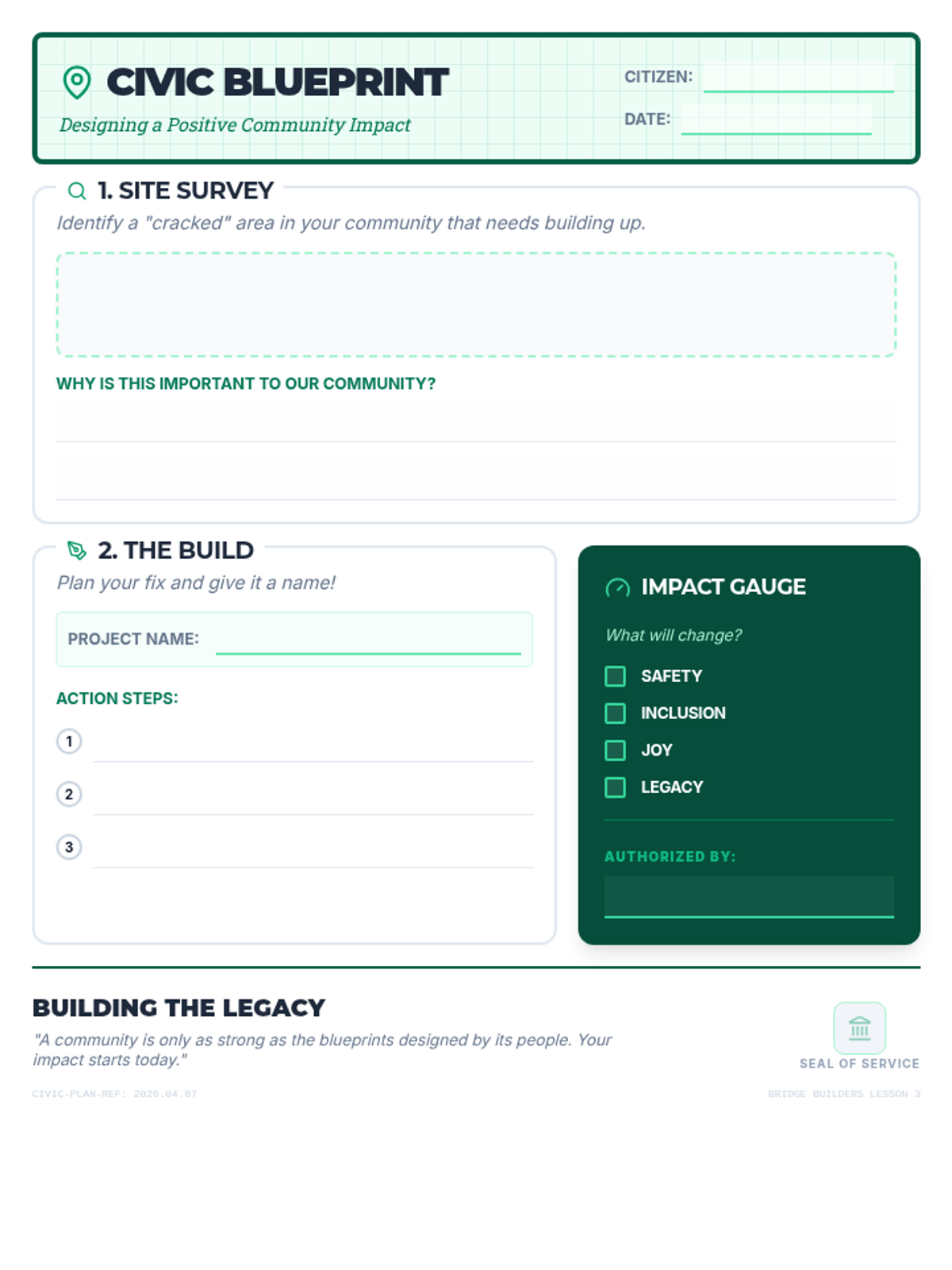
In this final lesson of the sequence, students transition from group teamwork to community-wide thinking, exploring how their collective actions impact the 'city' (their school or local community) and planning a sustainable service project.
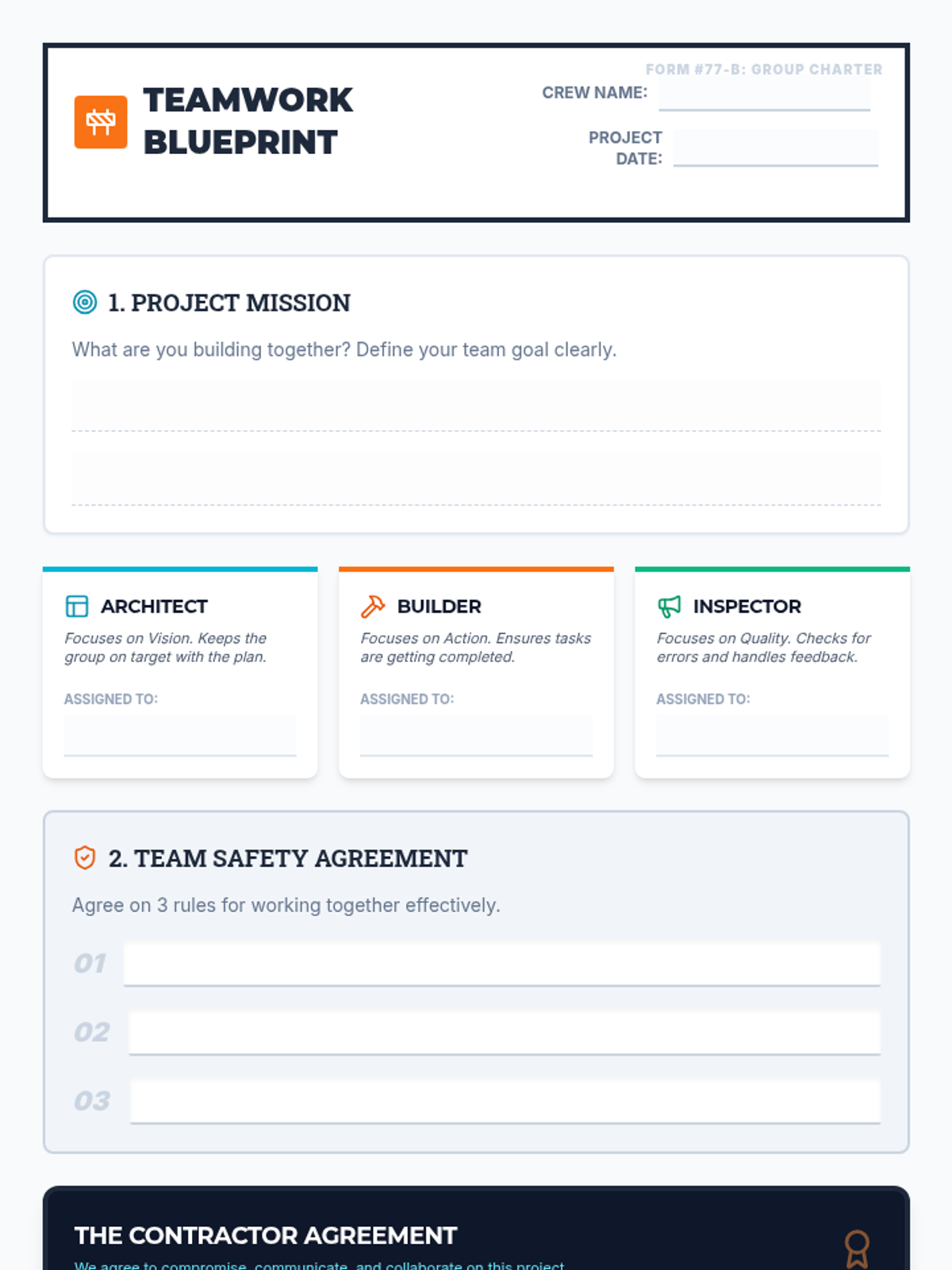
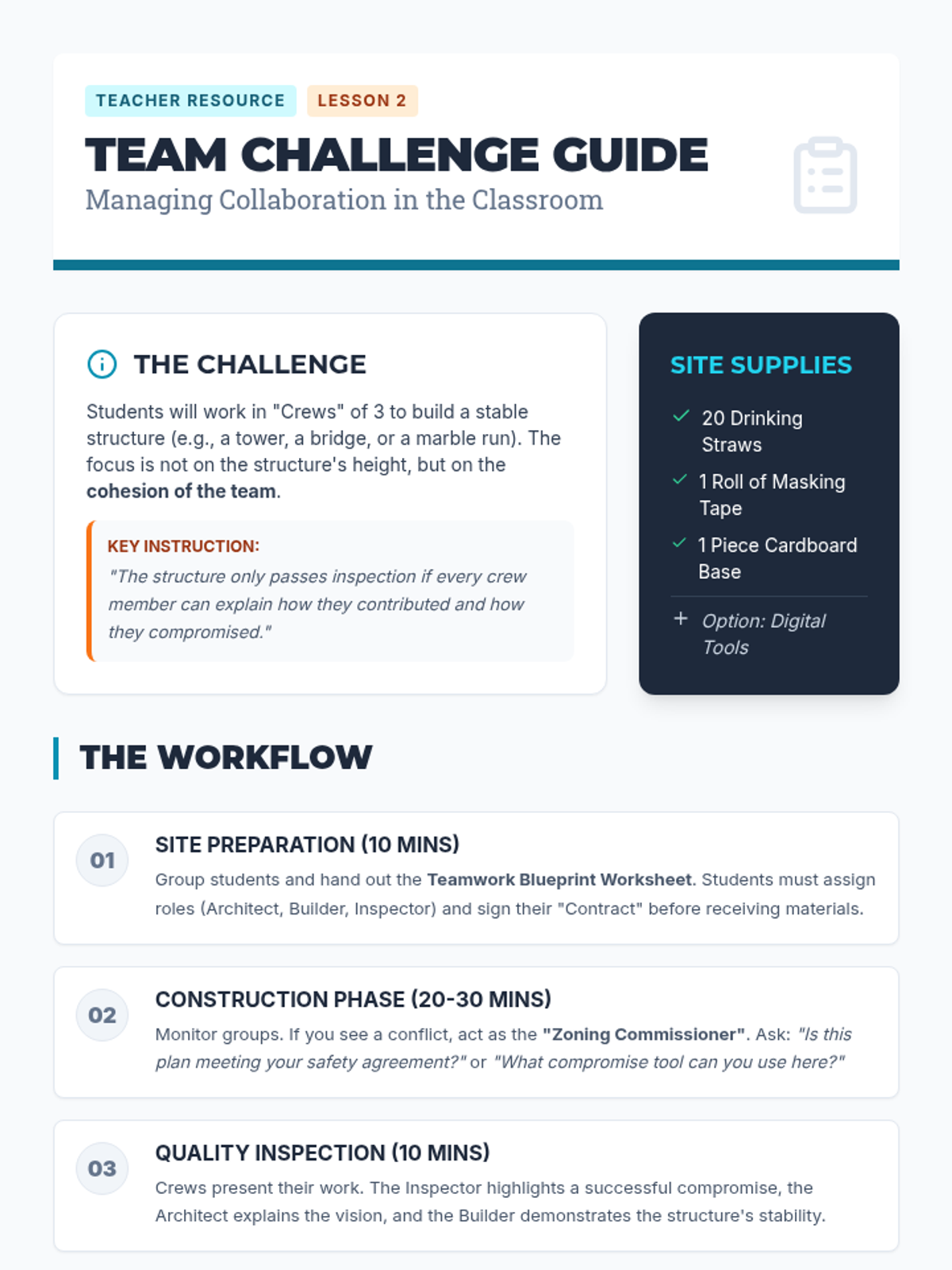
This lesson focuses on the mechanics of teamwork, specifically addressing how to share roles, compromise on shared goals, and celebrate collective success through the lens of a construction project.
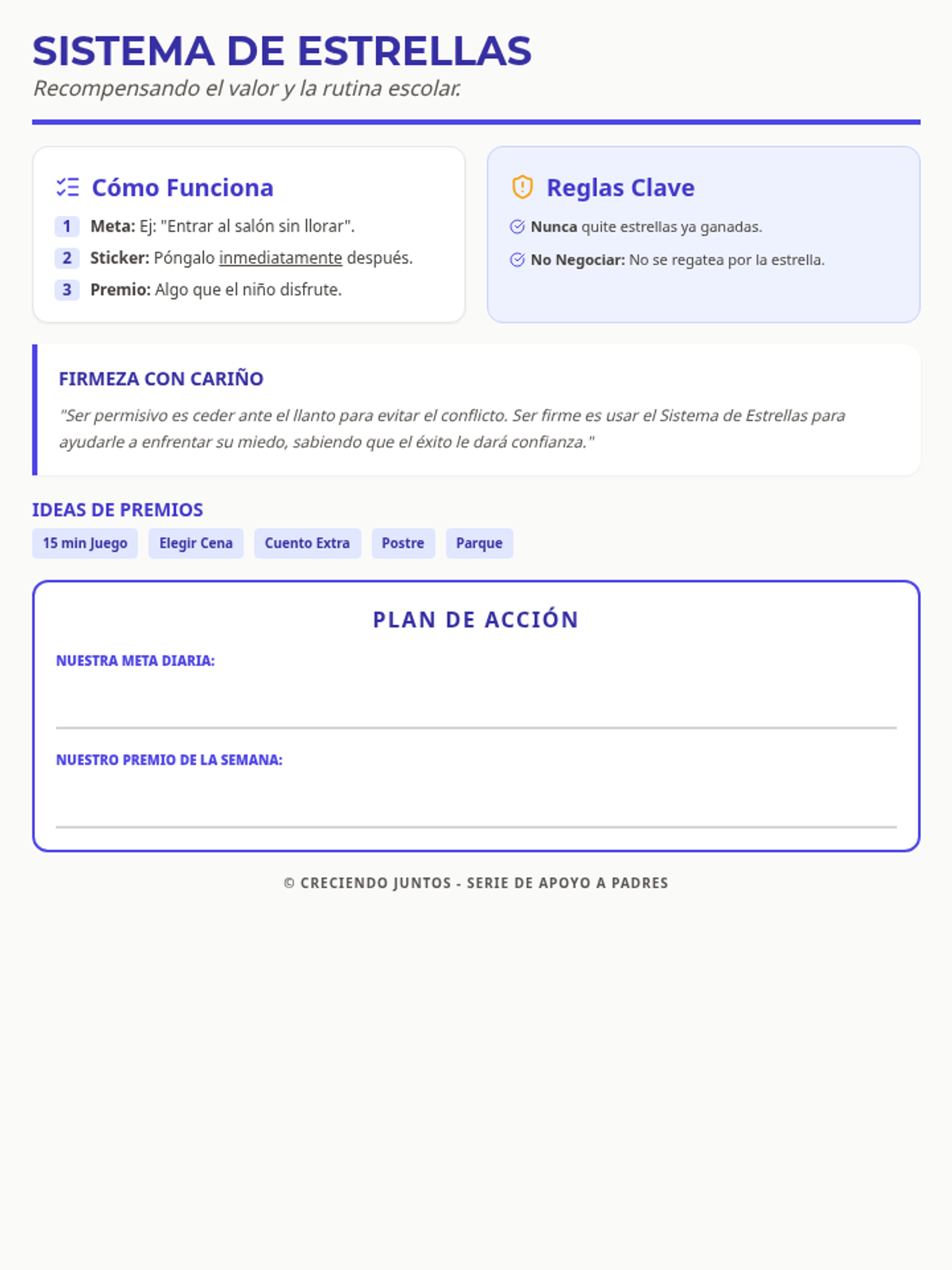
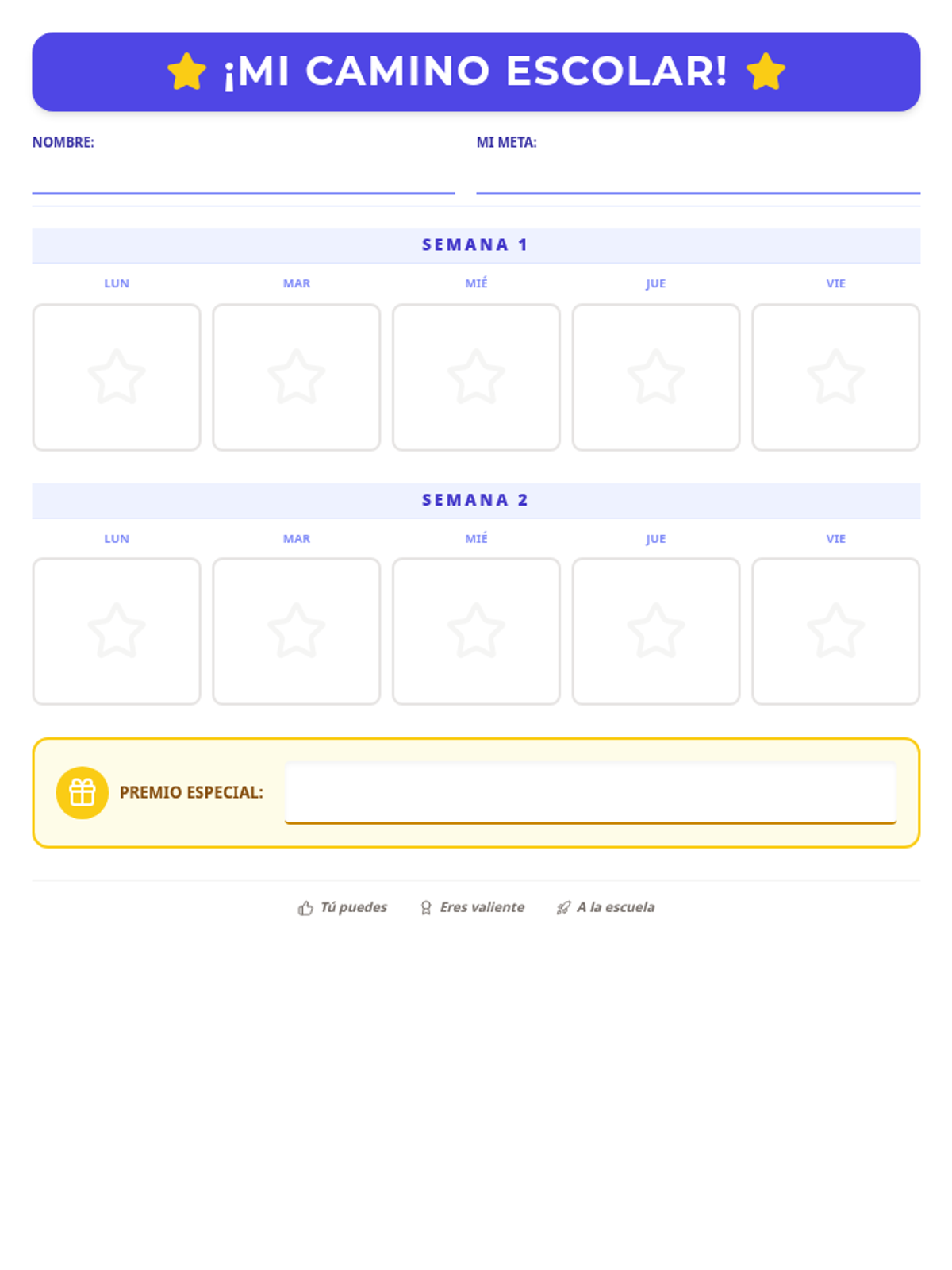
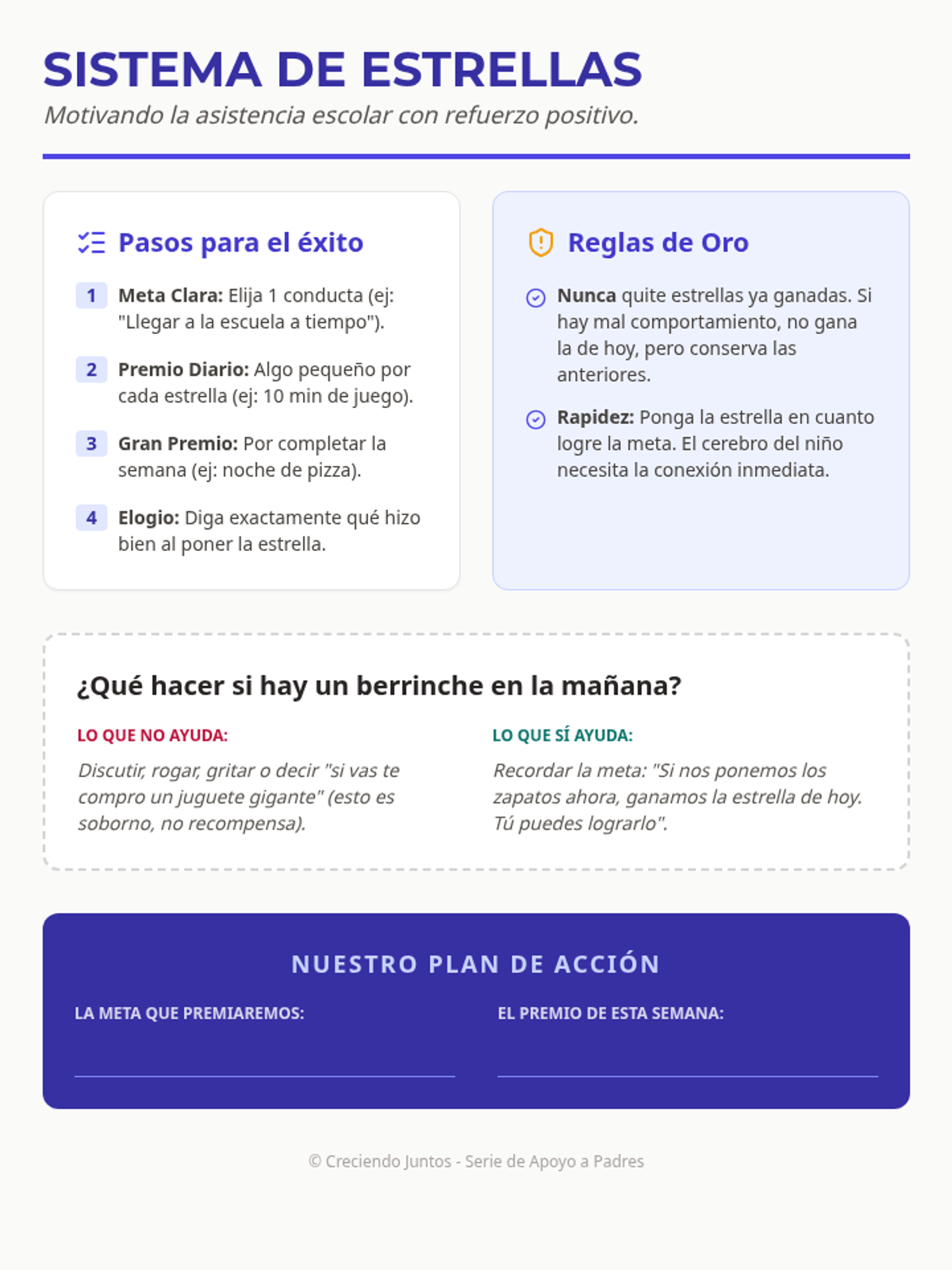
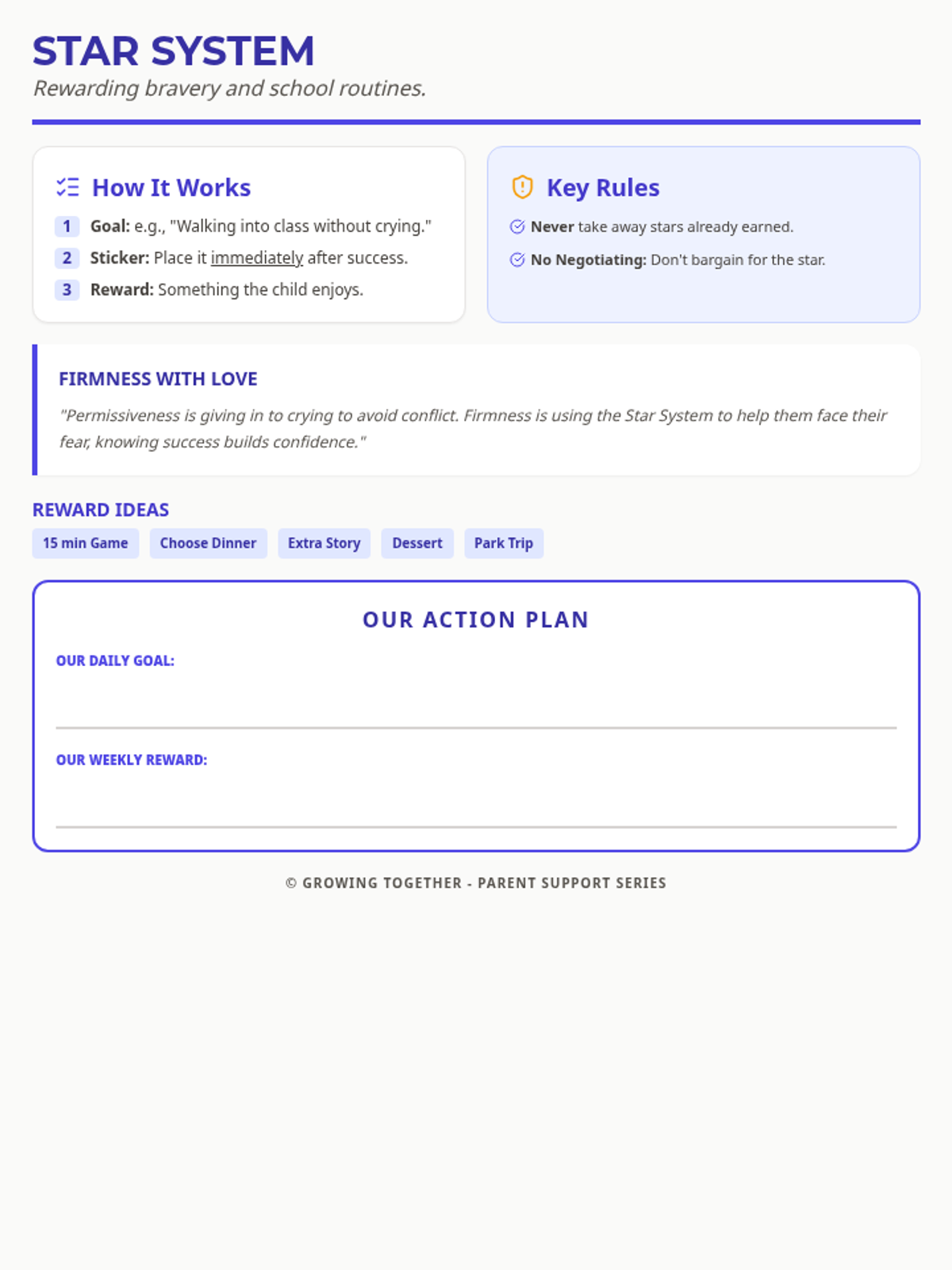
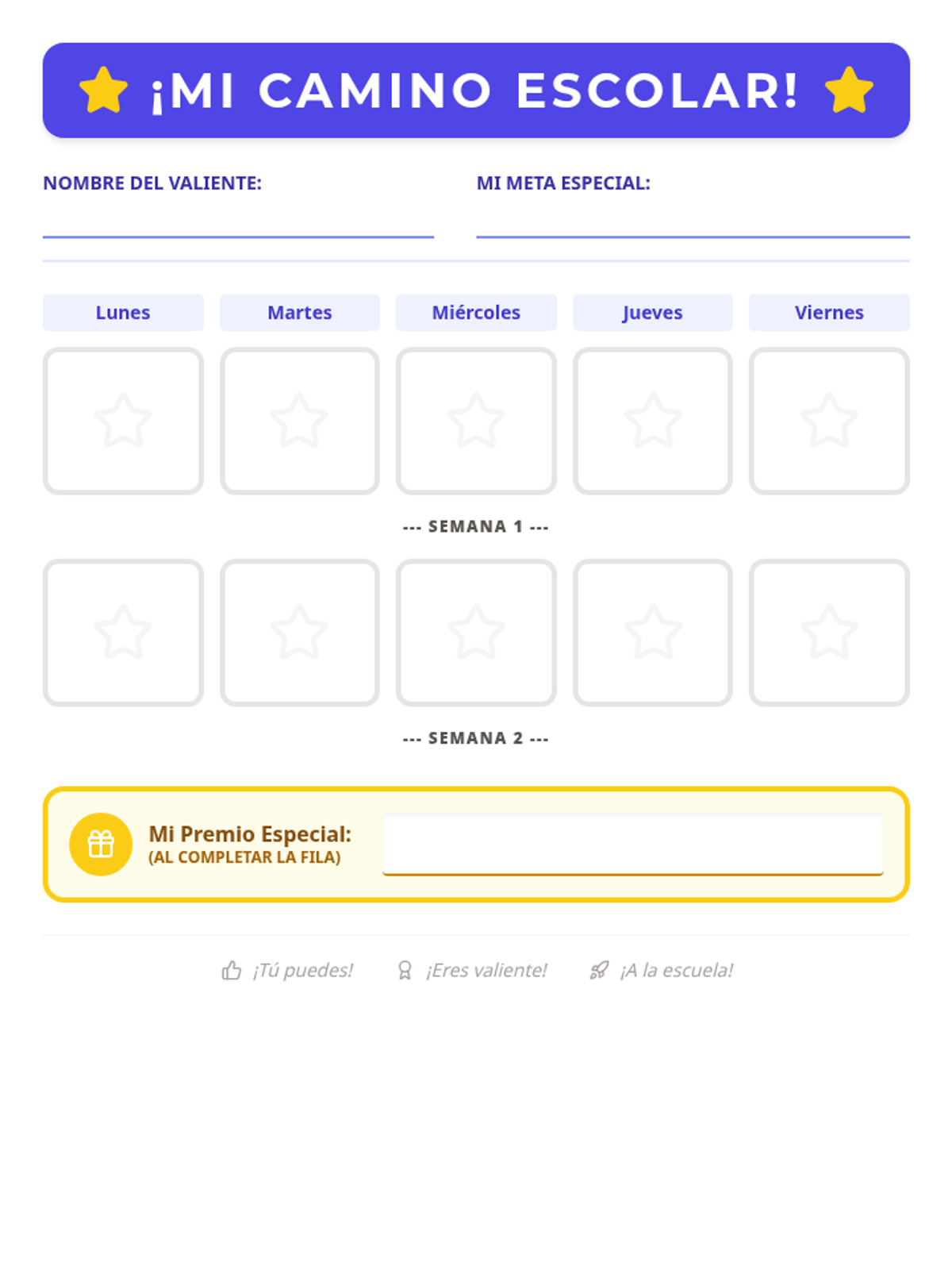
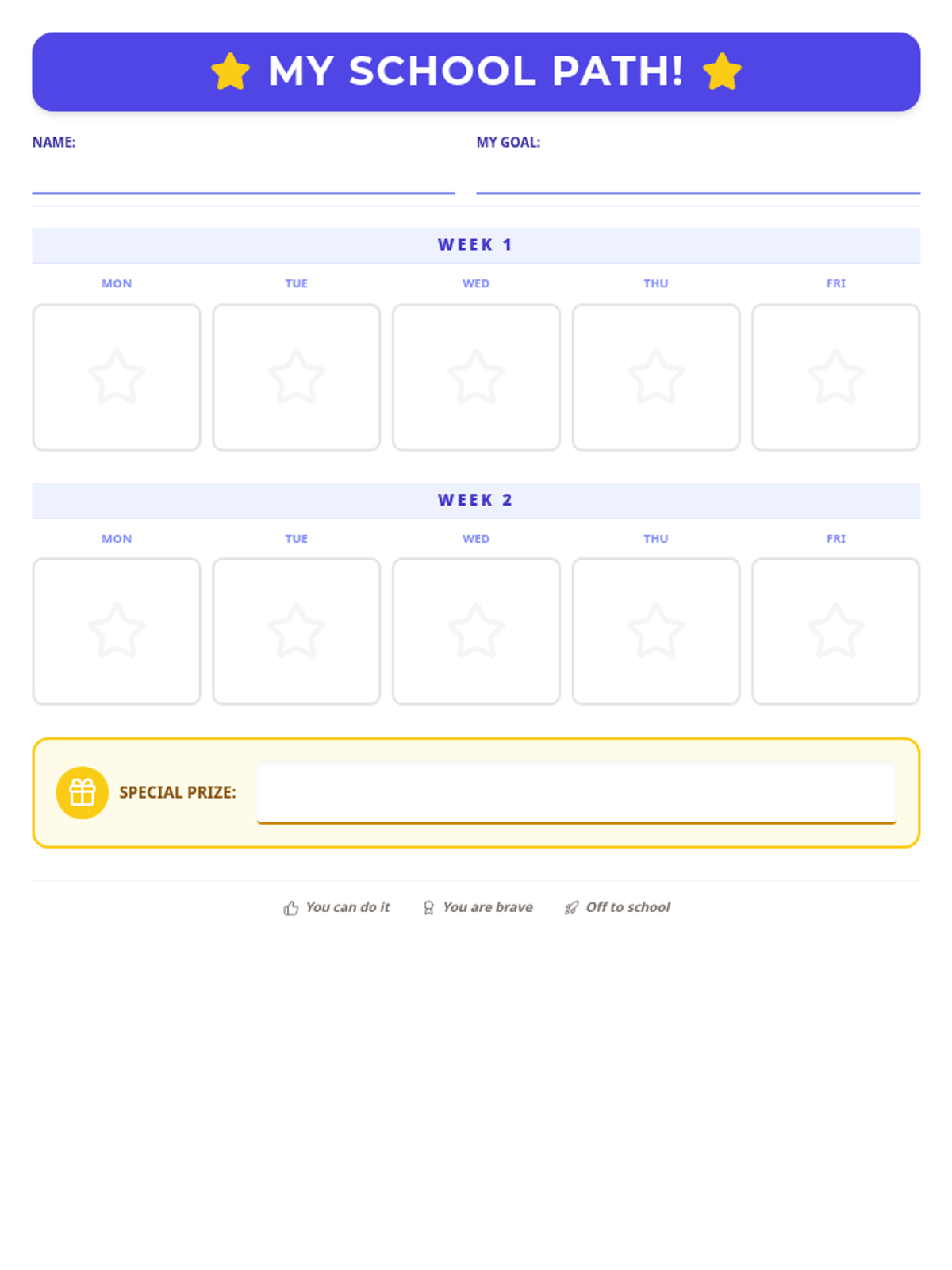
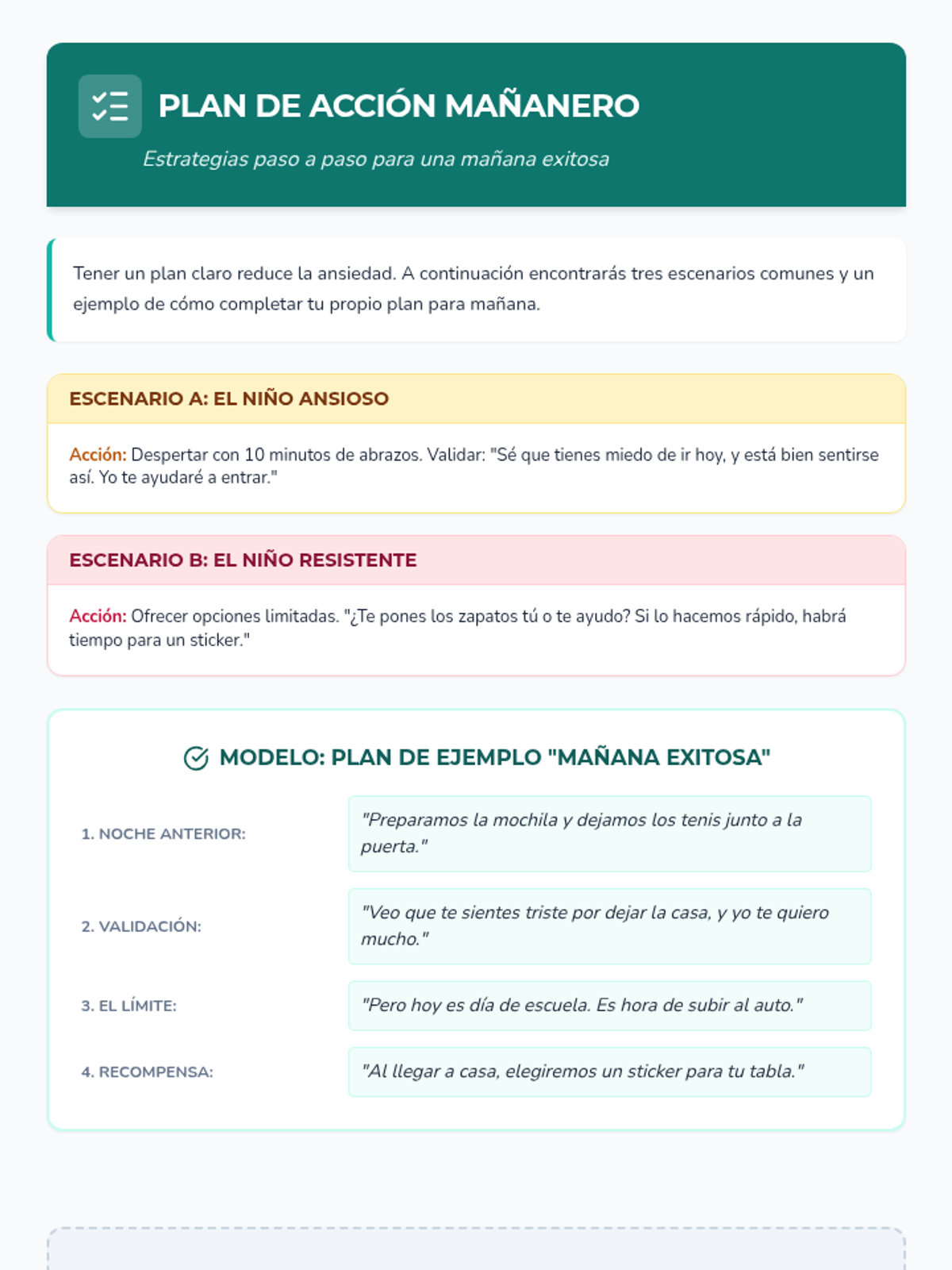
Practical steps for setting up a sticker chart system to reward school attendance and morning routines.
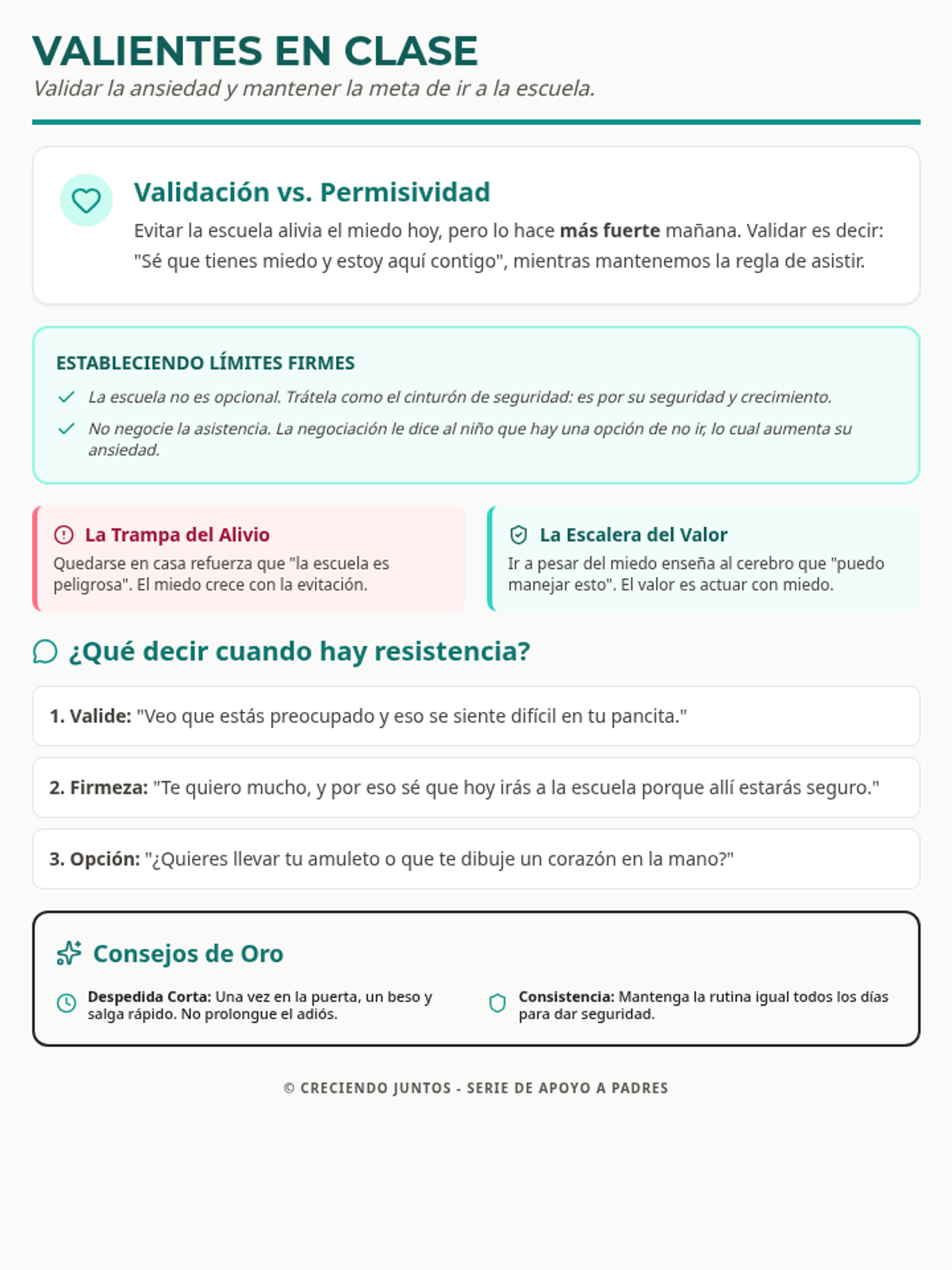
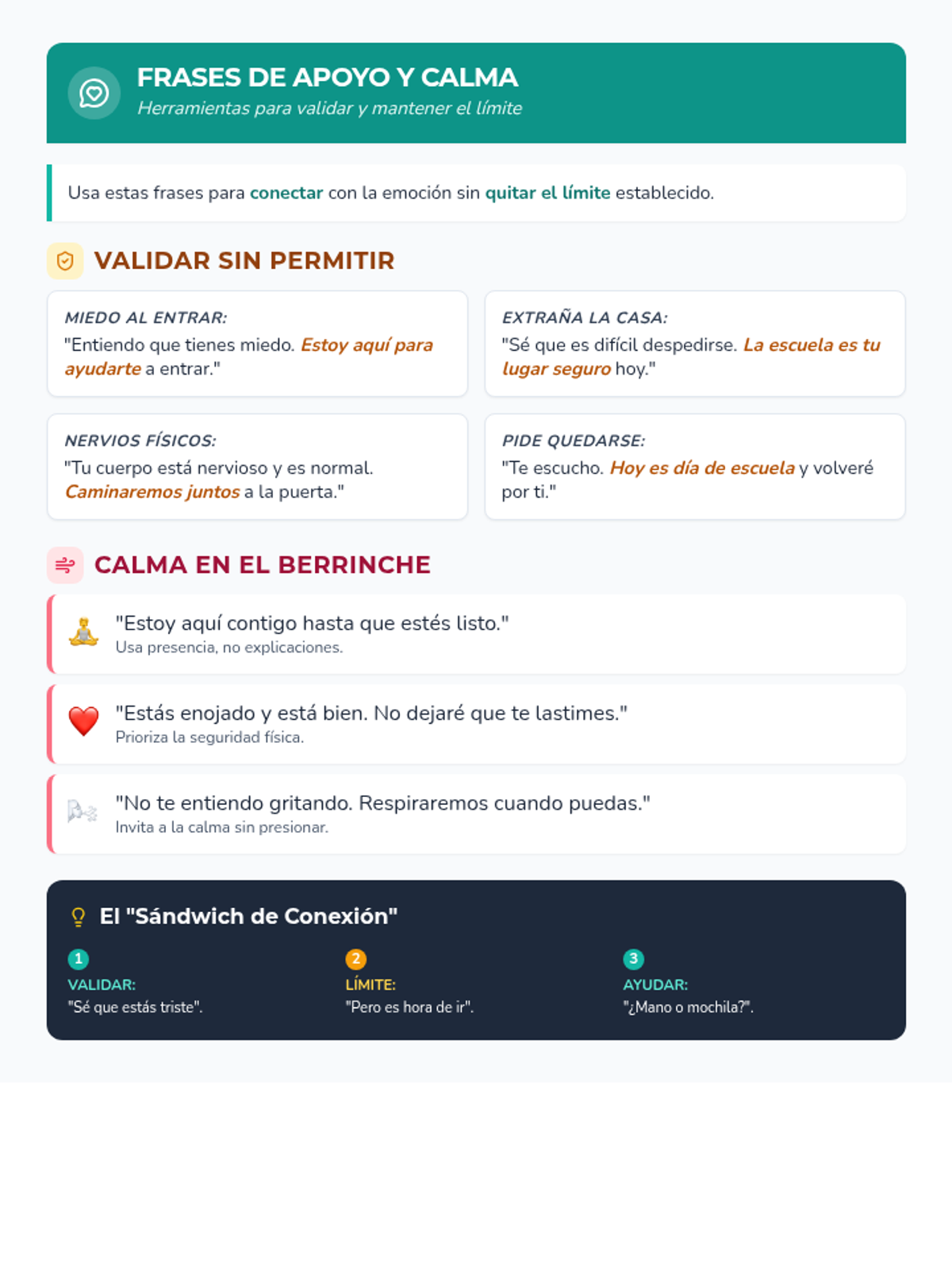
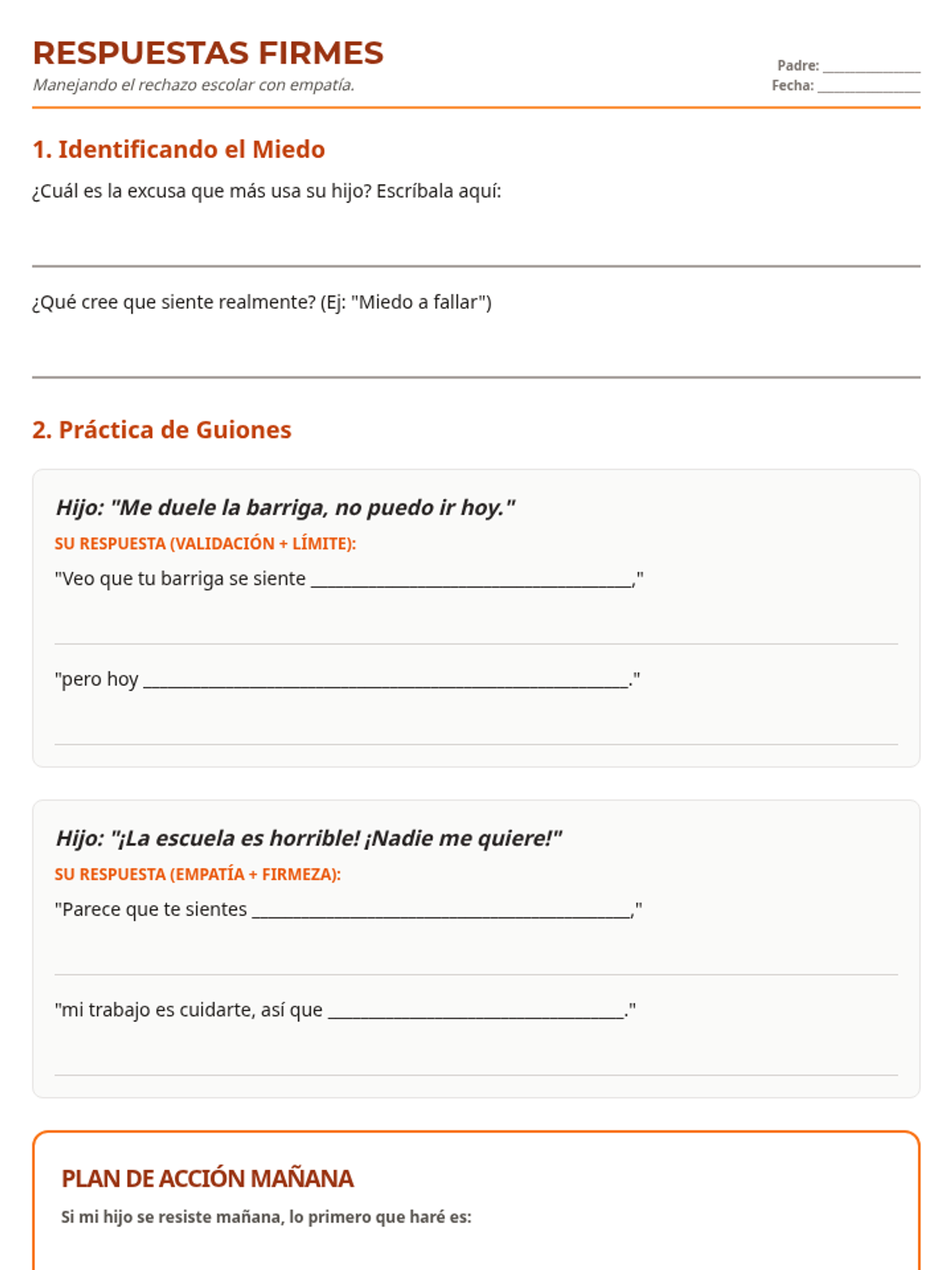
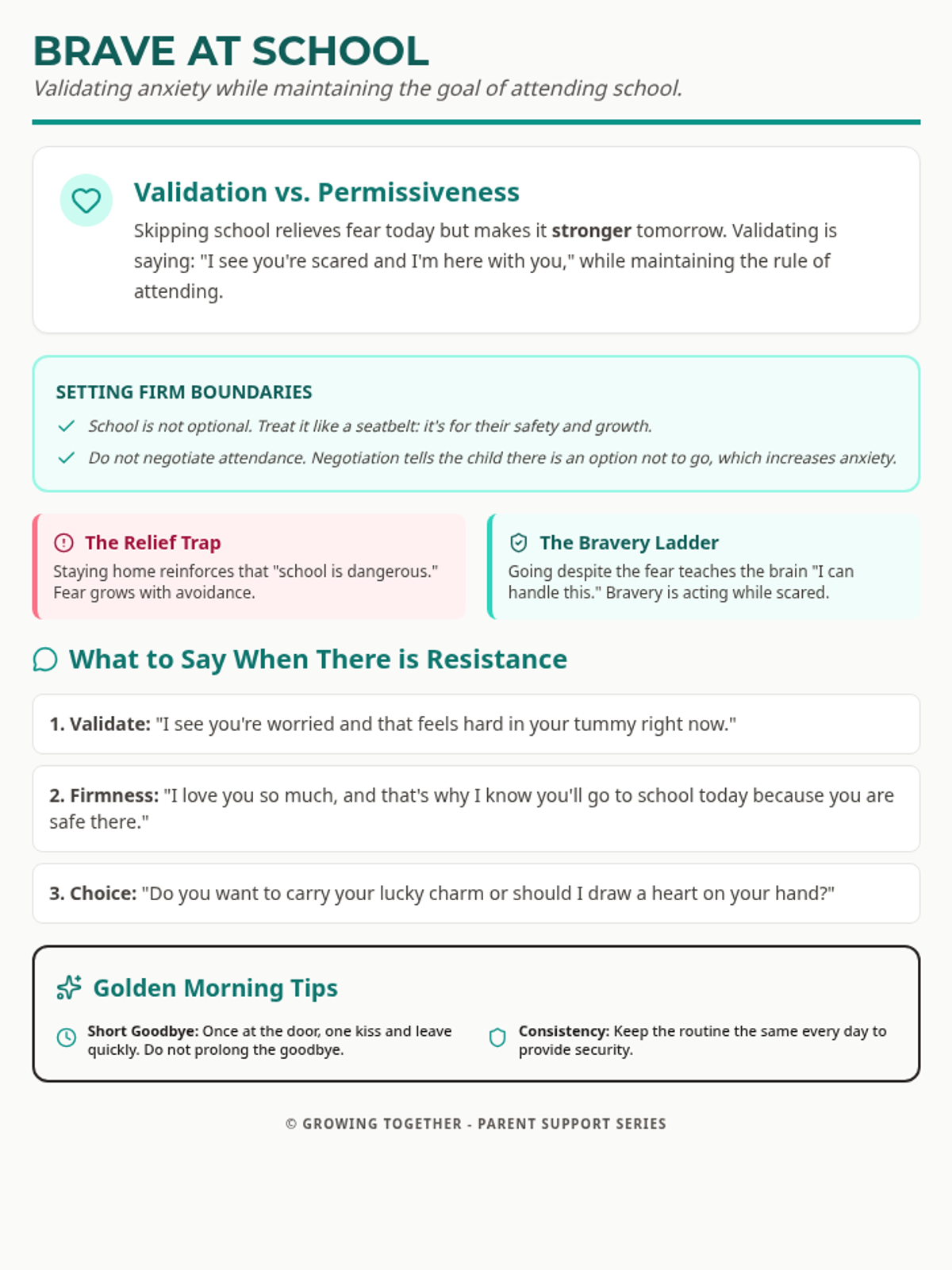
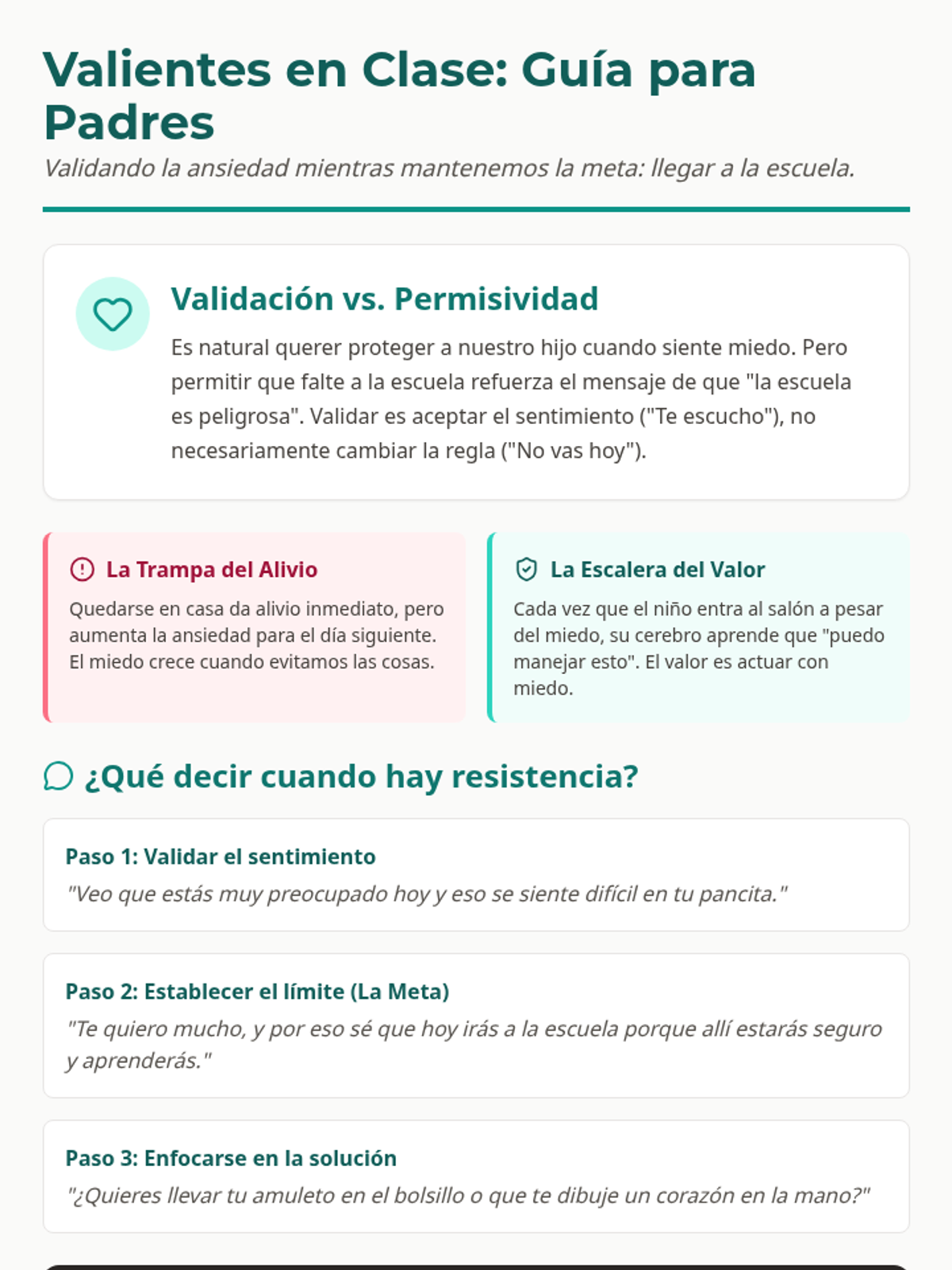
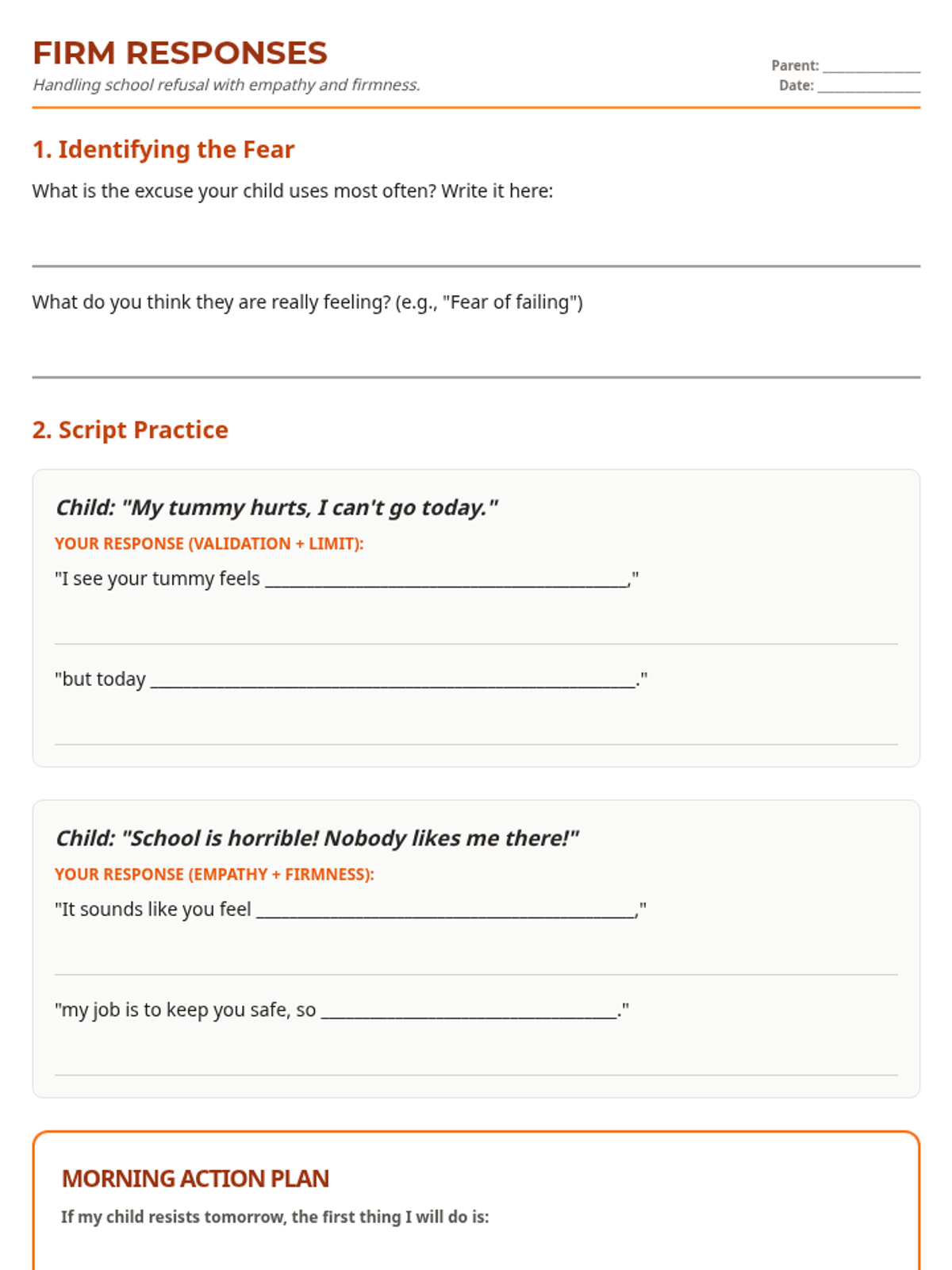
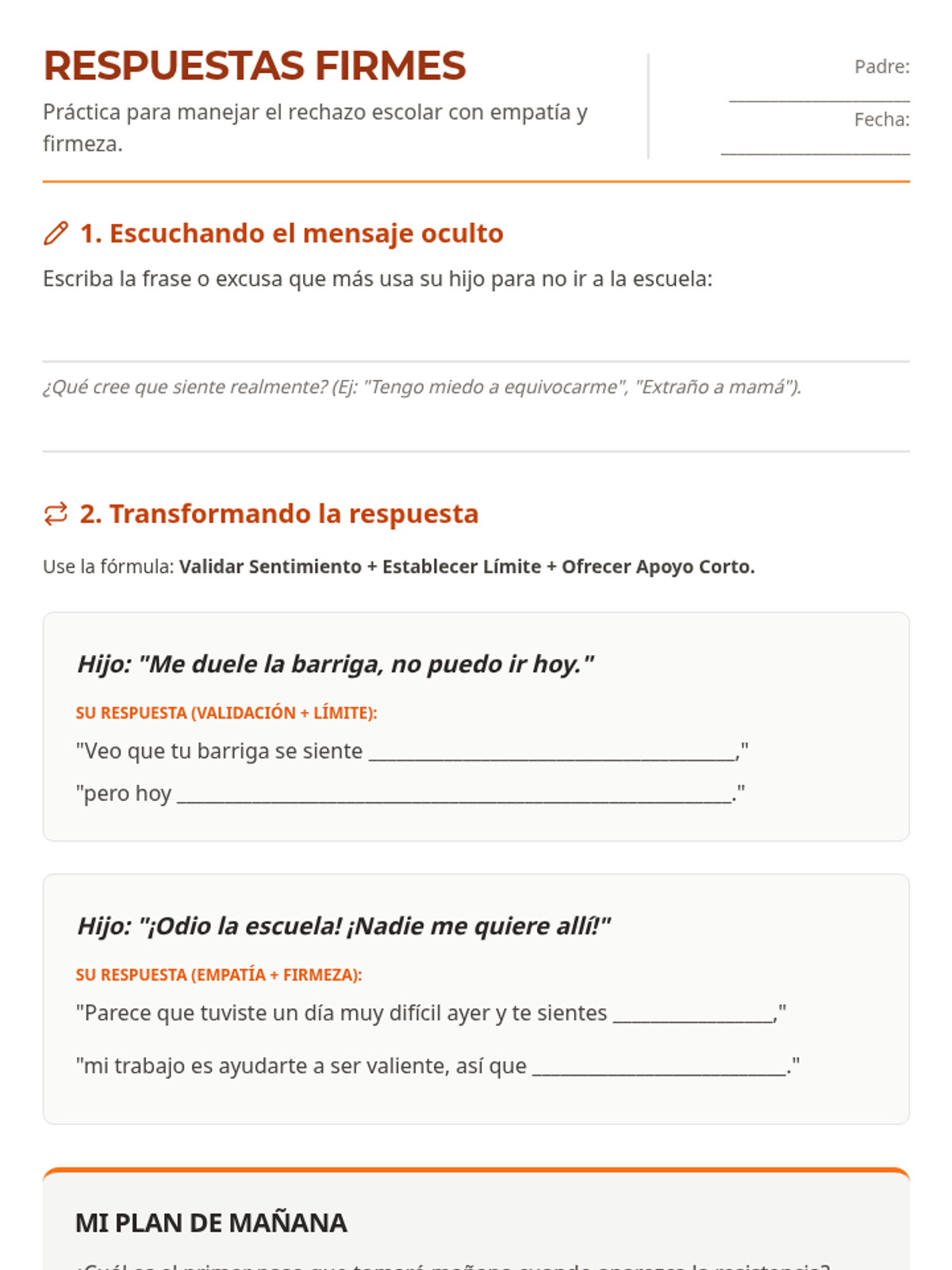
Strategies for parents to validate their child's school anxiety while maintaining firm boundaries regarding attendance.
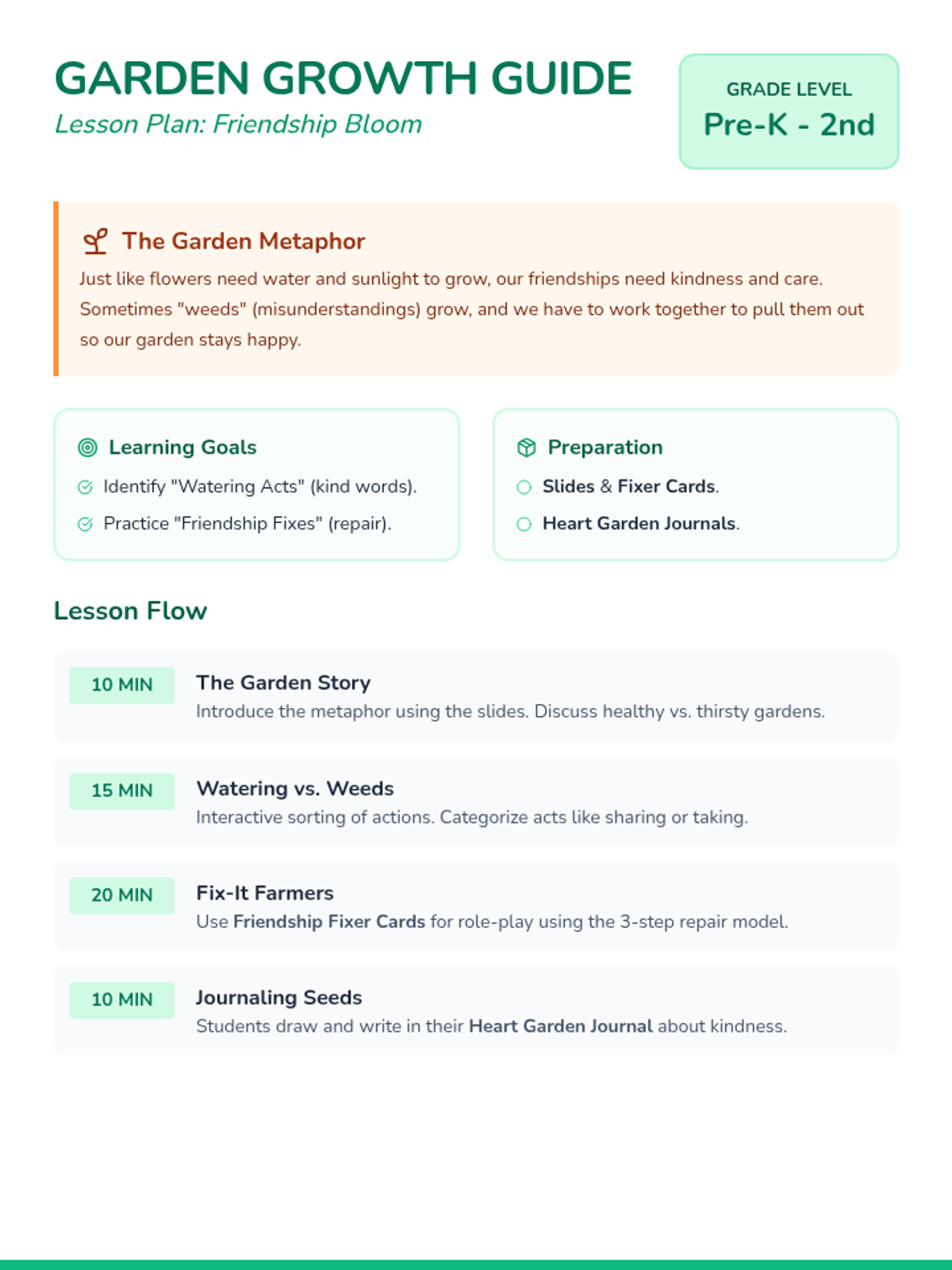
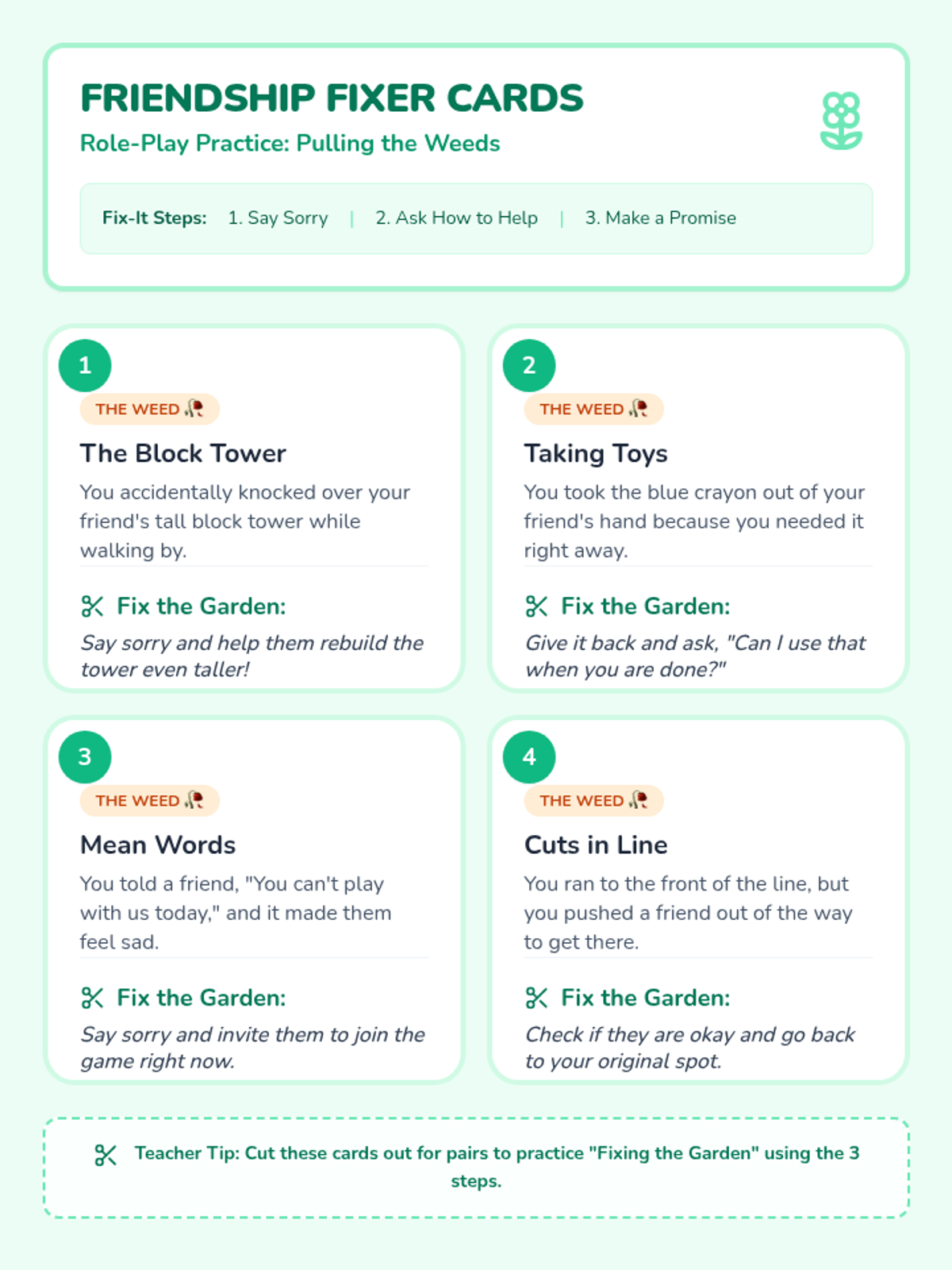
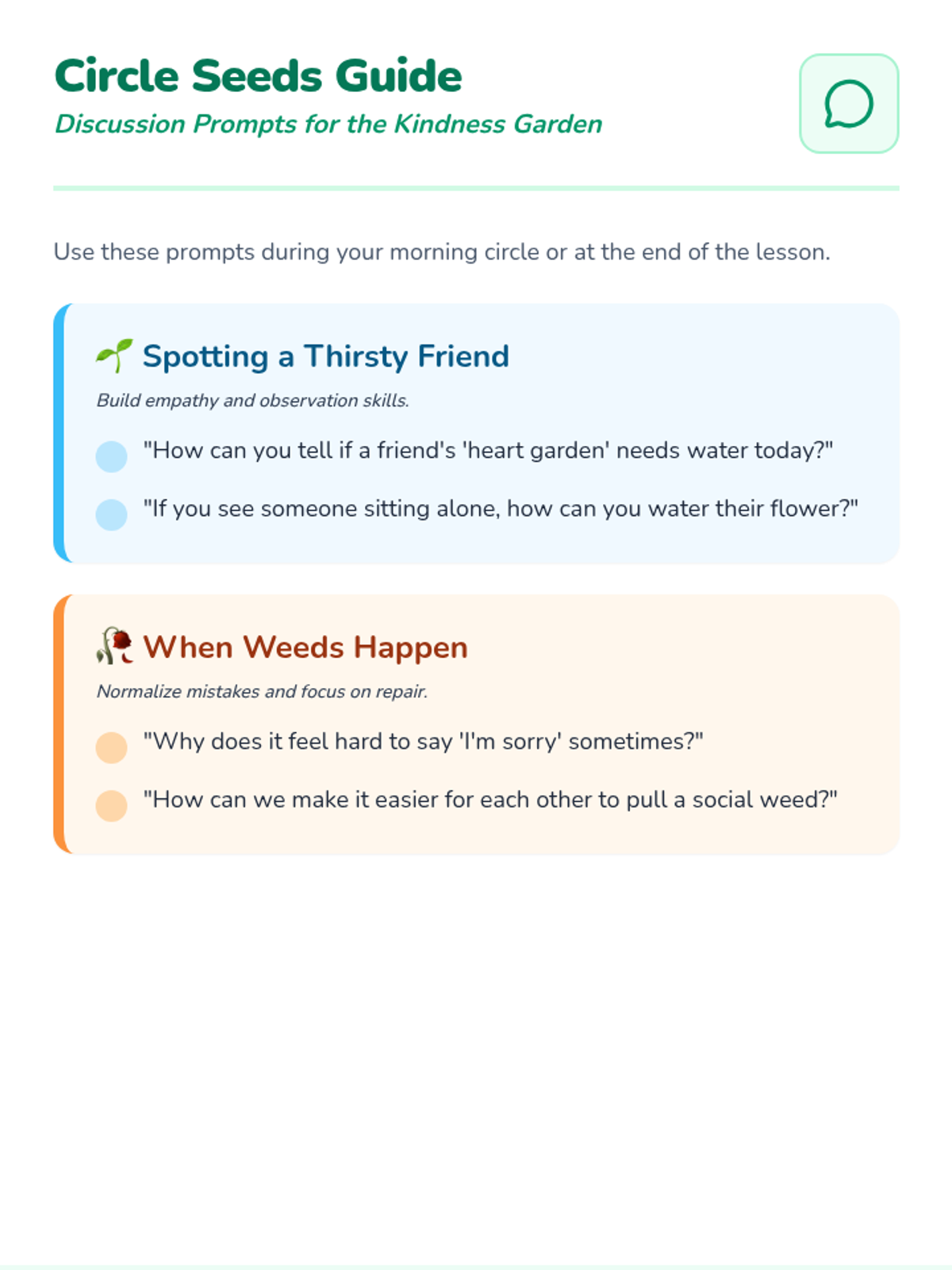
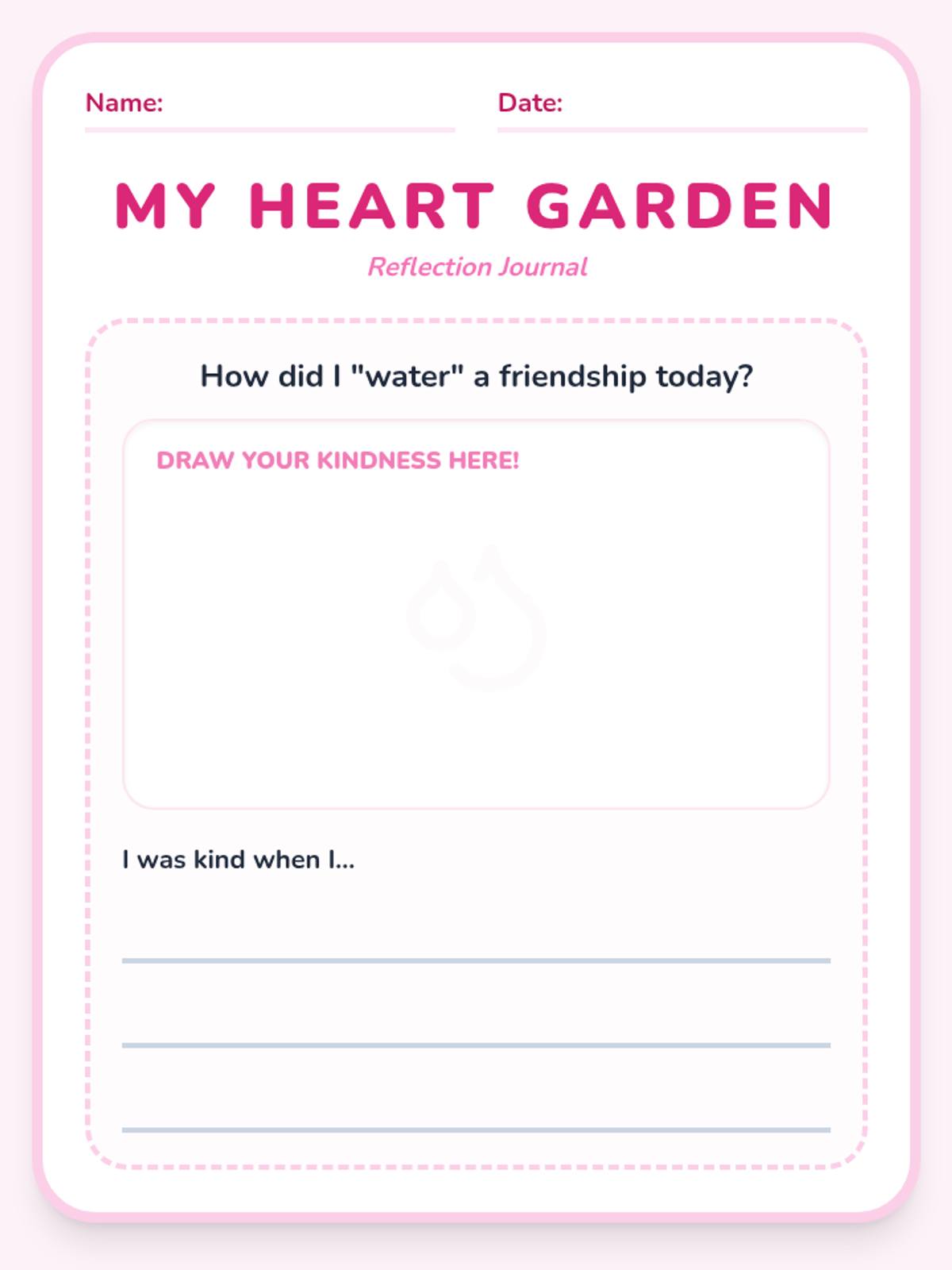
An SEL lesson for Pre-K to 2nd grade that uses a garden metaphor to teach kindness, social repair, and the impact of our actions on others. Students learn to 'water' friendships with kind acts and 'pull weeds' by fixing misunderstandings.
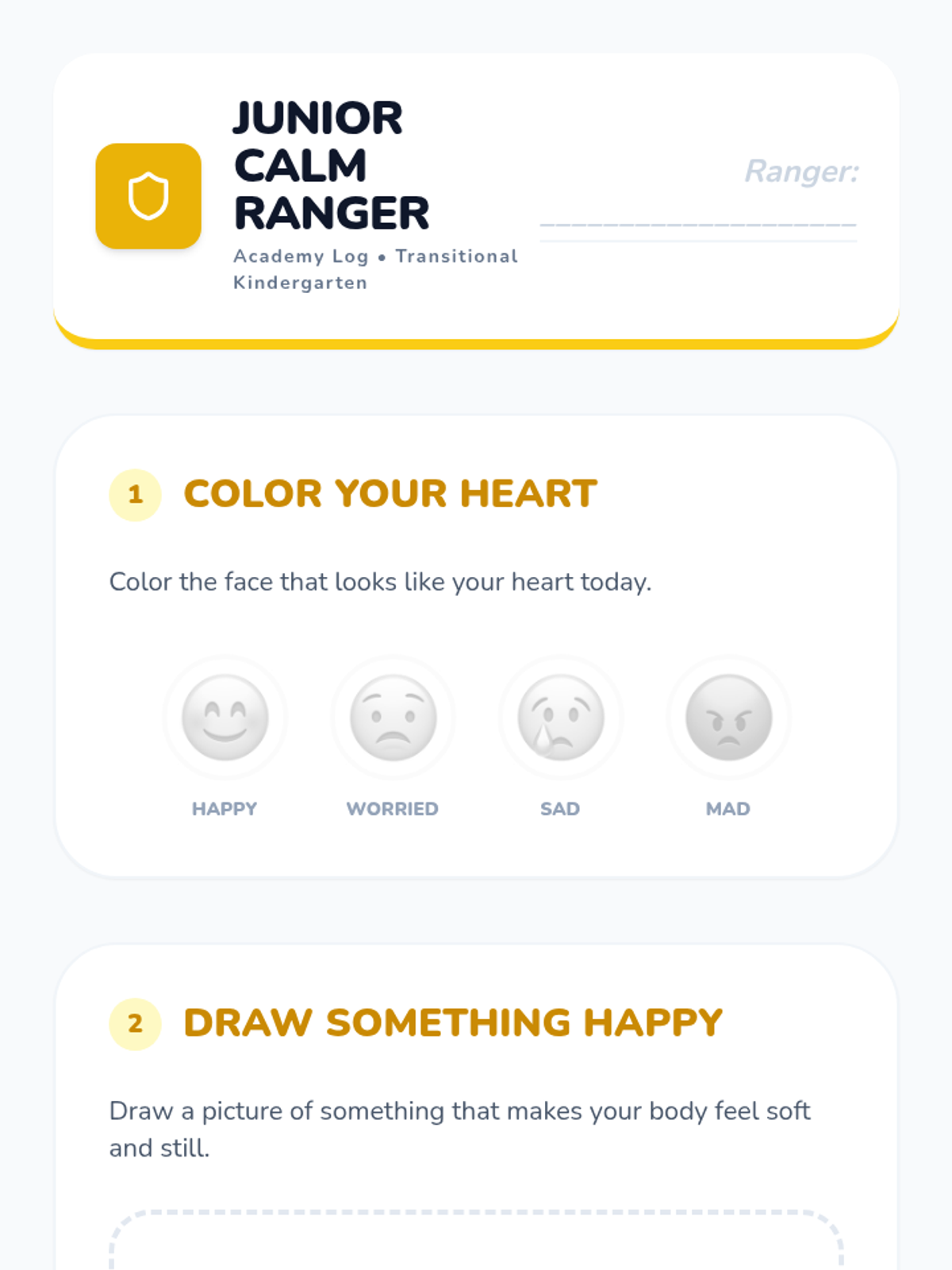
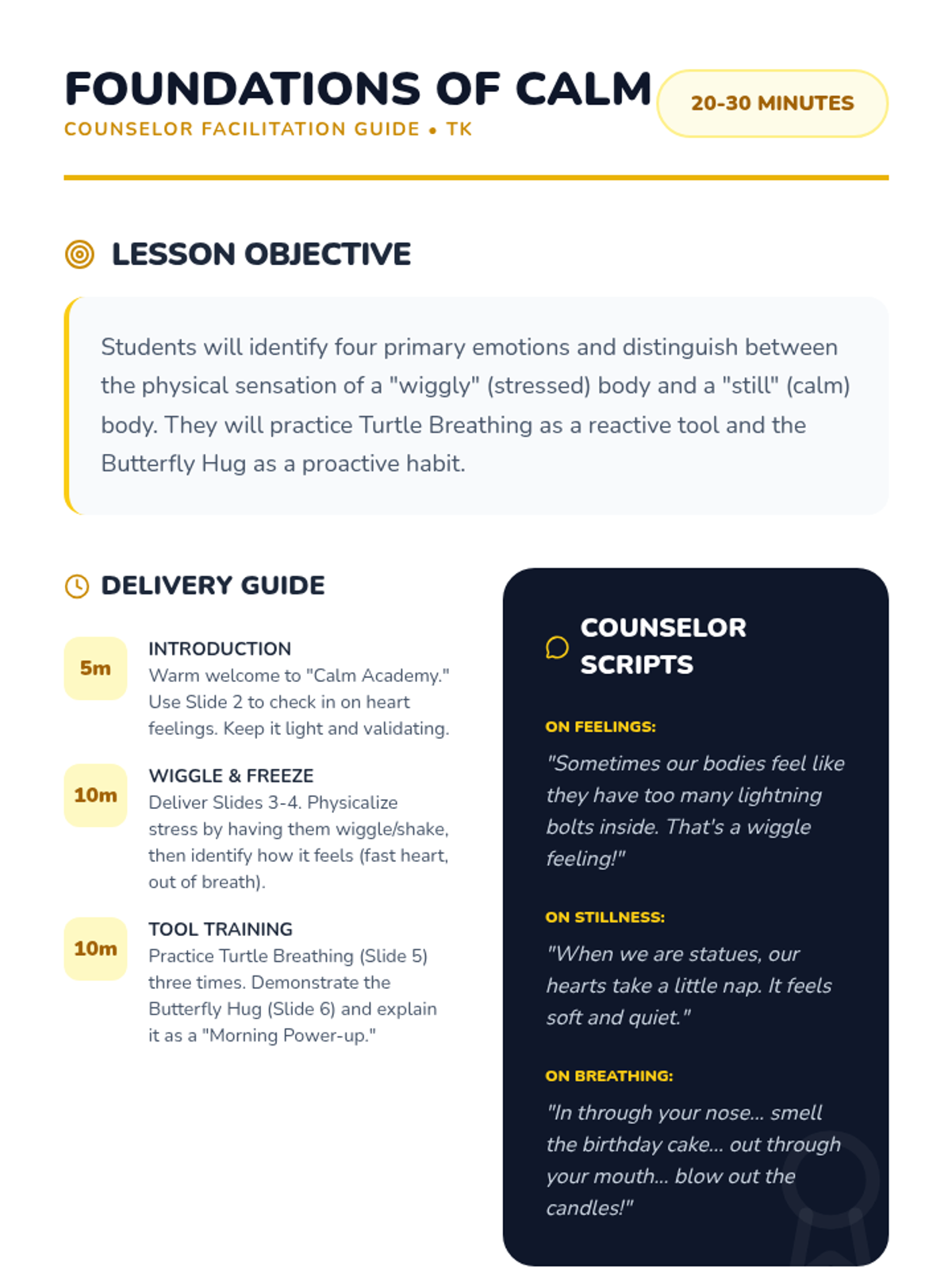
A foundational lesson for Transitional Kindergarten students focused on identifying basic emotions and the physical sensation of being 'wiggly' (stressed) vs. 'still' (calm). Introduces 'Turtle Breathing' as a primary regulation tool.
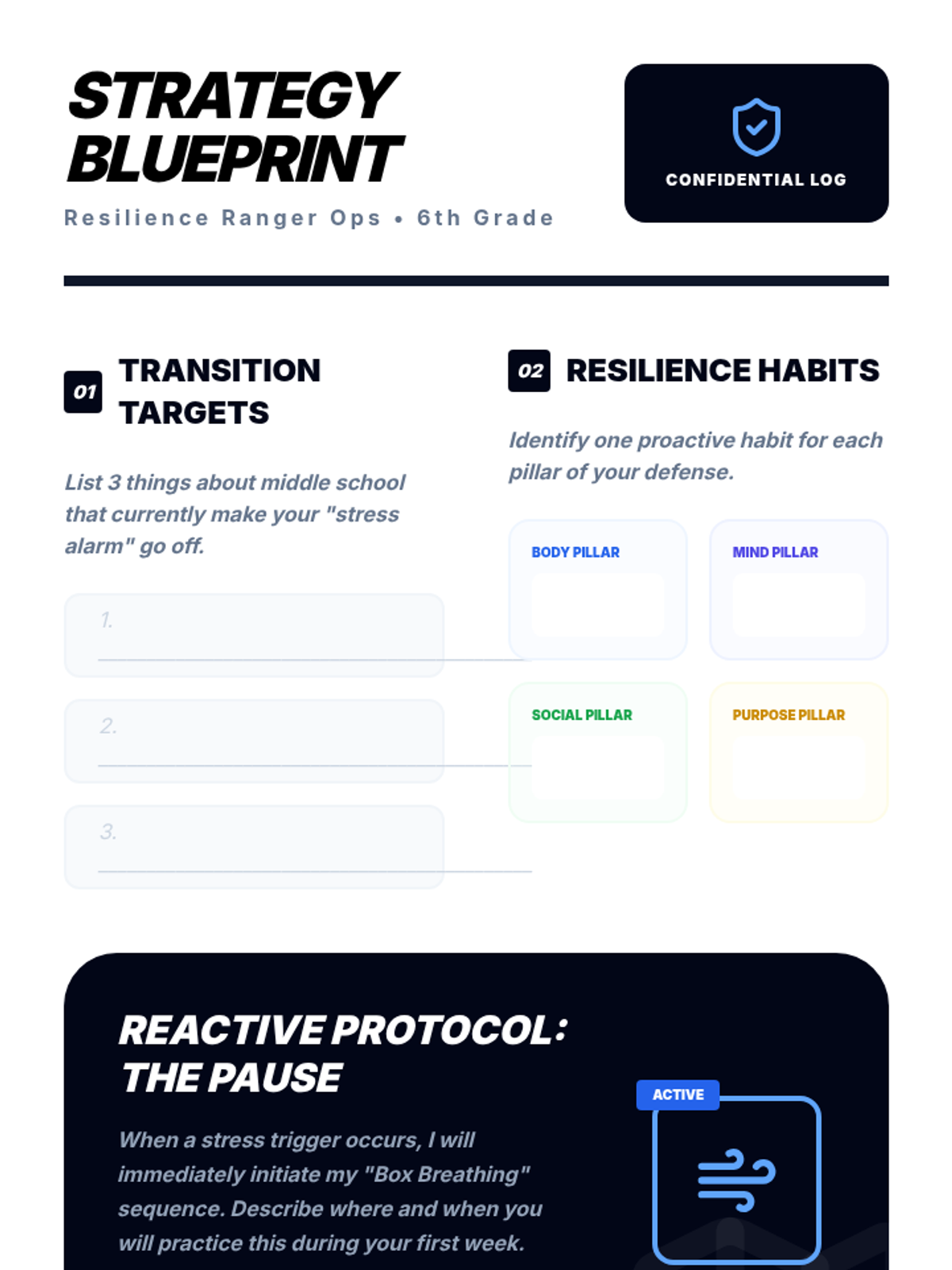
Sixth grade students prepare for the transition to middle school by developing high-level resilience habits and long-term stress management plans.
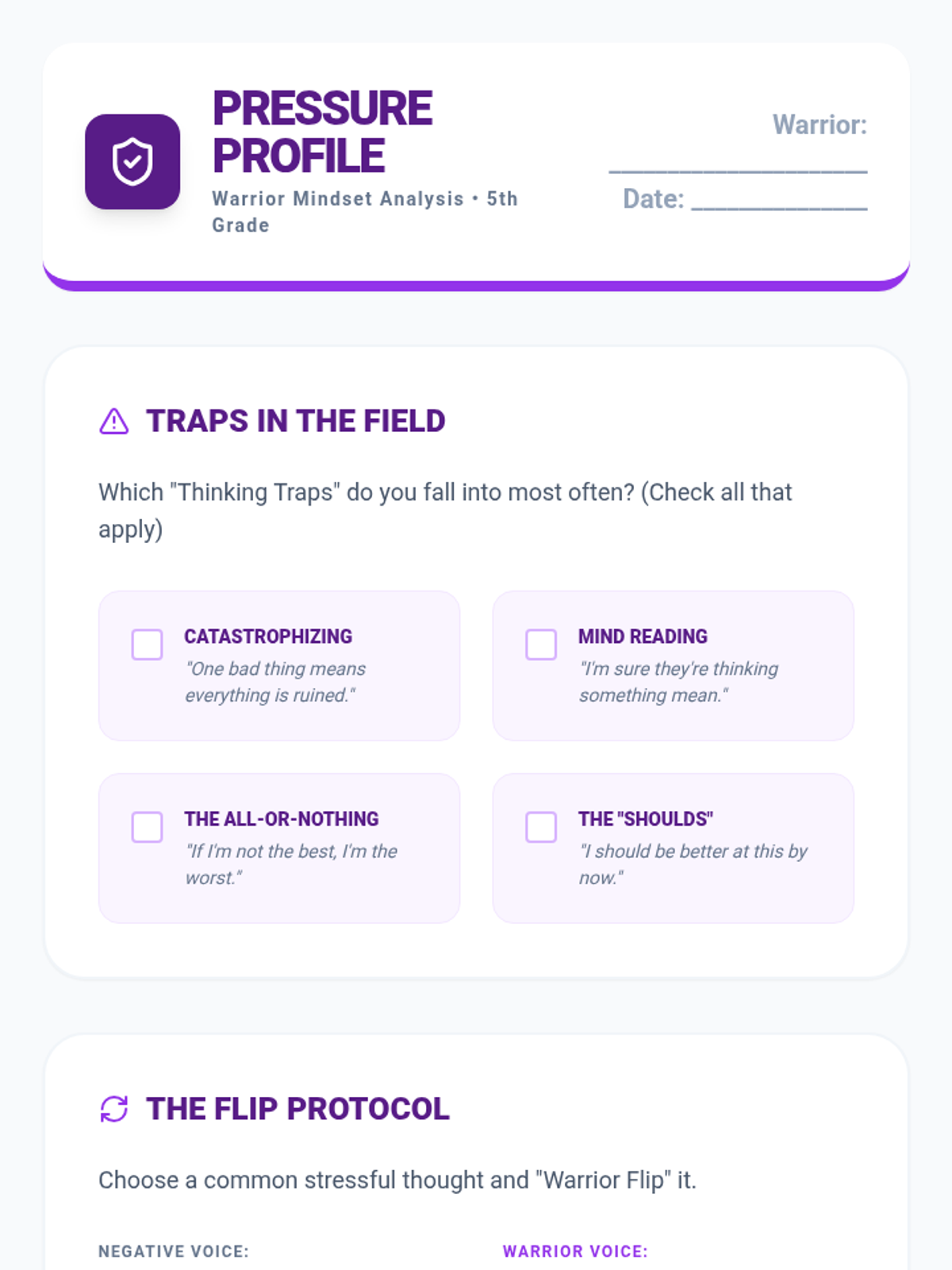
Fifth graders explore academic and social pressure, focusing on the power of positive self-talk and perspective-shifting.
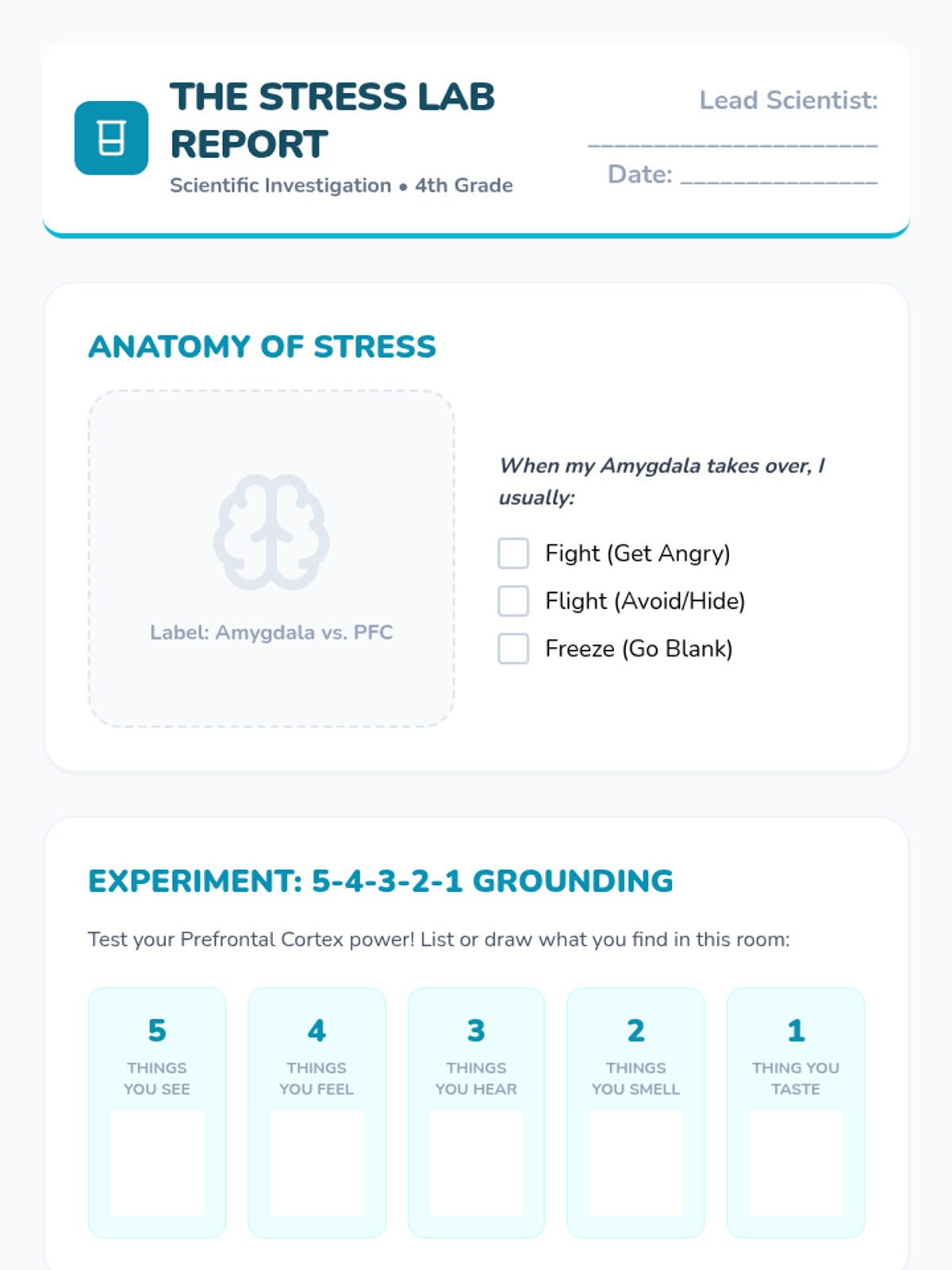
Fourth grade students investigate the science of the 'fight, flight, or freeze' response and develop logic-based strategies to respond.
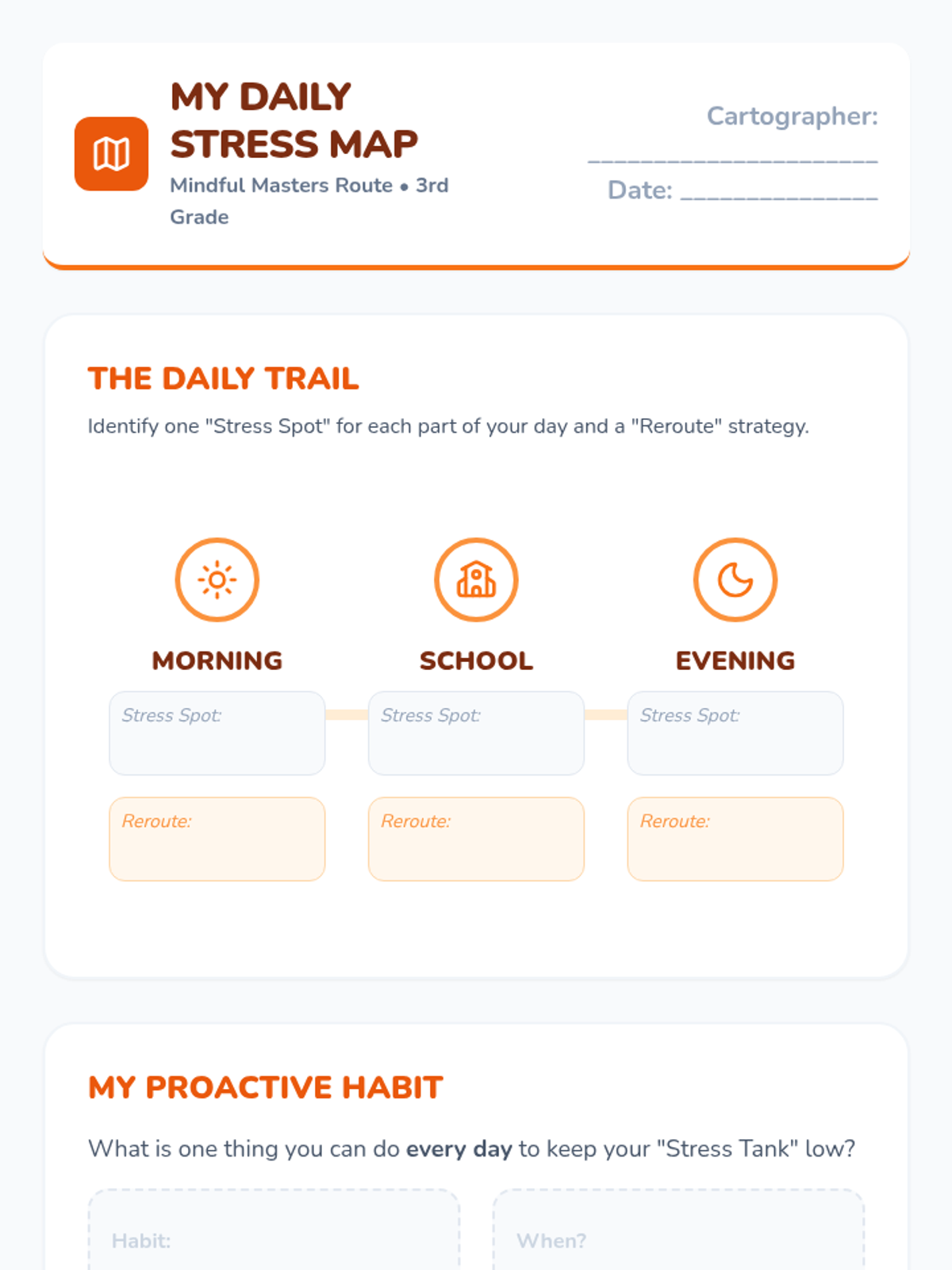
Third graders learn to map out their day to identify 'stress spots' and practice proactive planning to minimize overwhelm.
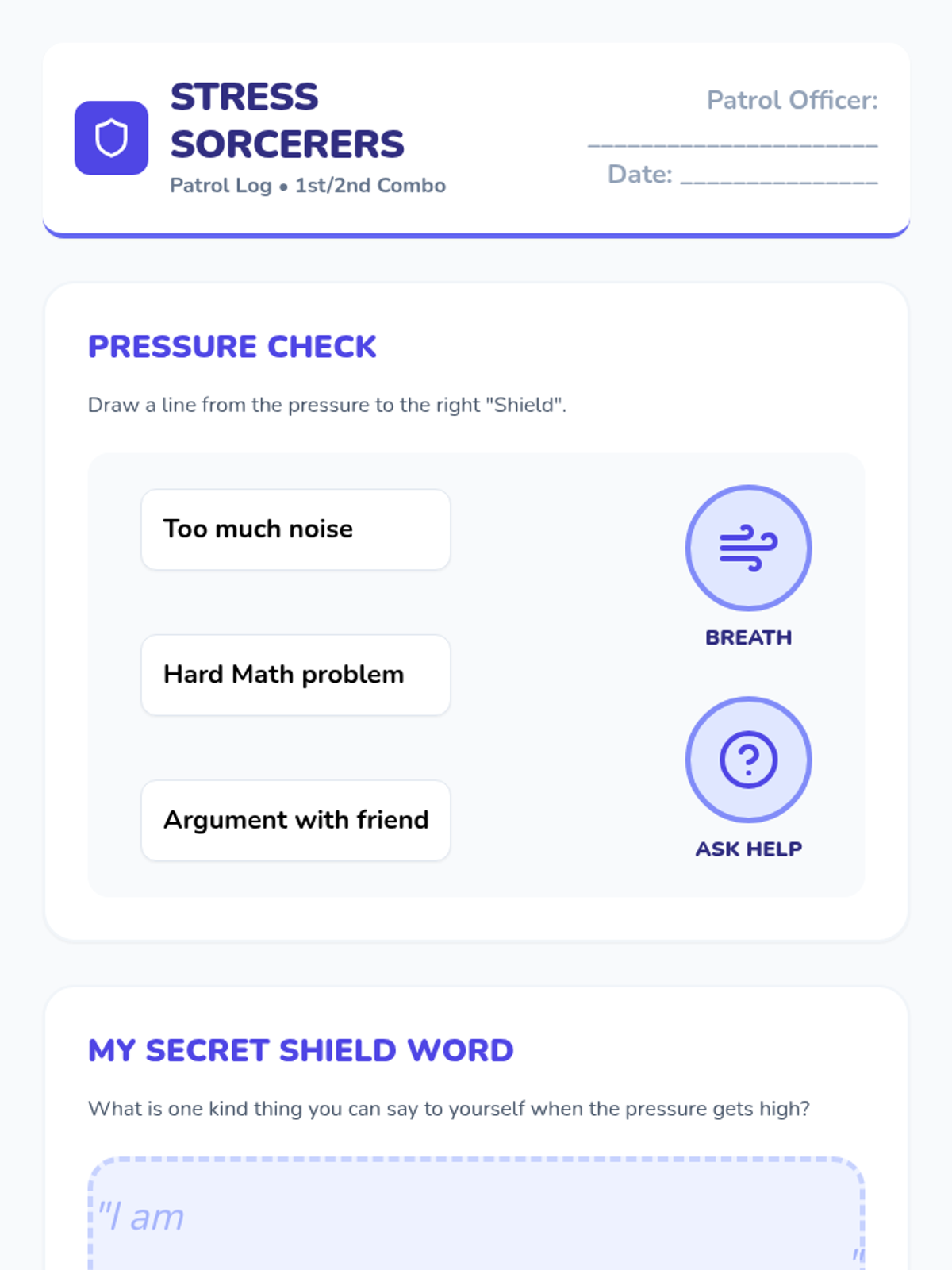
A specialized lesson for mixed-grade classrooms focusing on identifying shared stressors (schoolwork, friendship) and practicing group regulation.
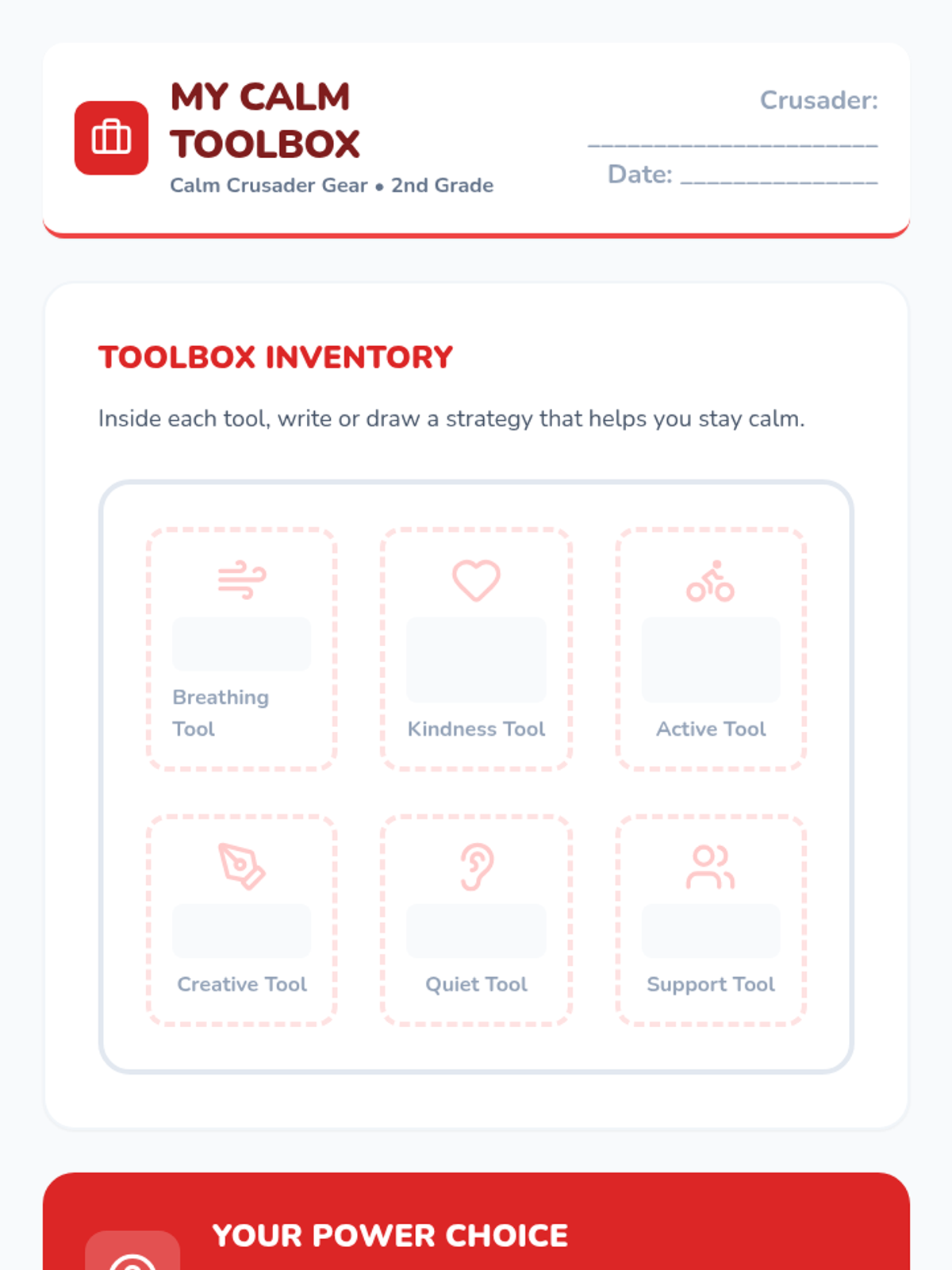
Second grade students explore how to build a personalized 'toolbox' of calm-down strategies to use when they feel overwhelmed.
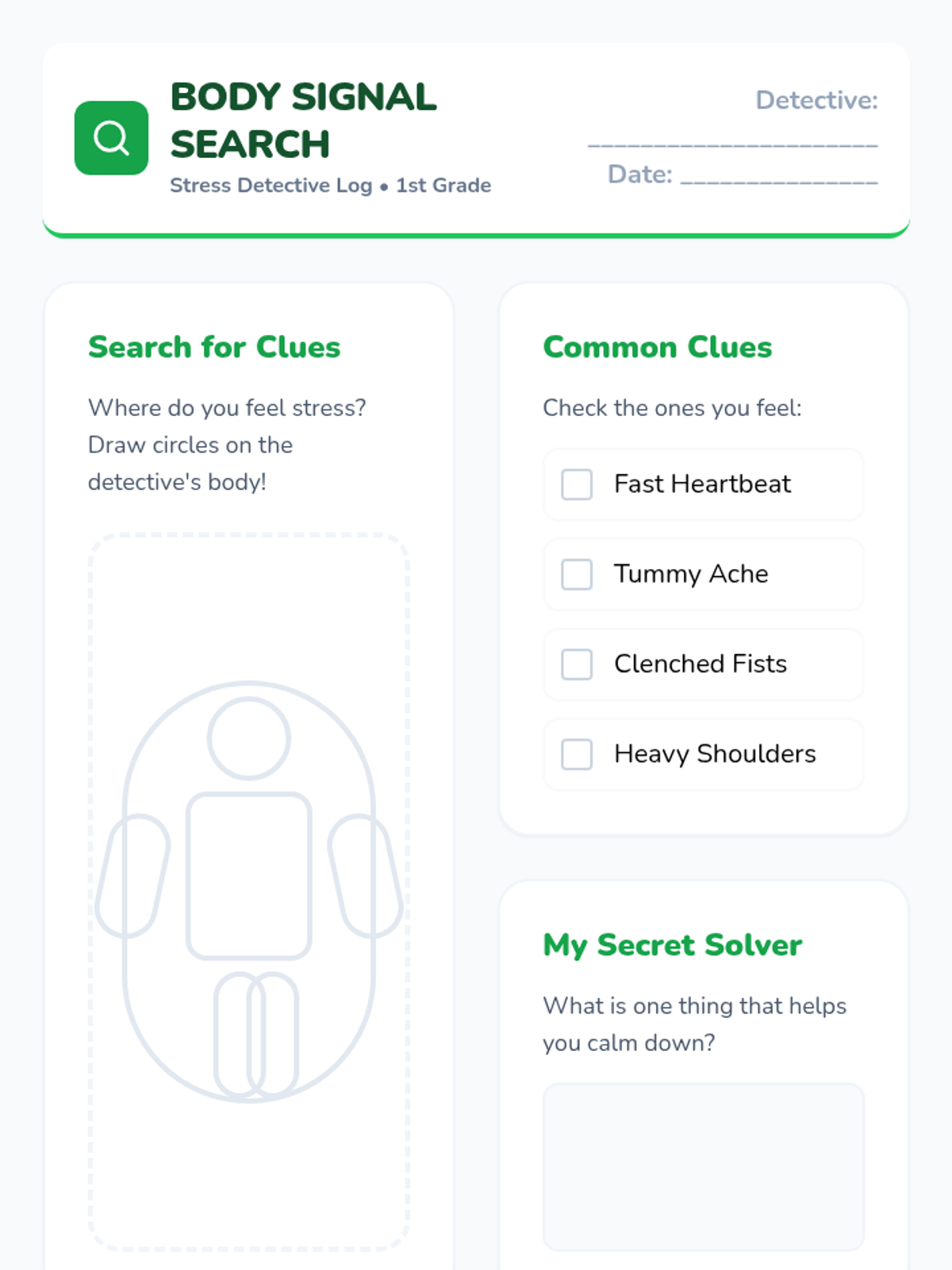
A focused lesson for 1st graders on identifying where stress lives in the body and learning the difference between 'helpful' and 'unhelpful' ways to react.
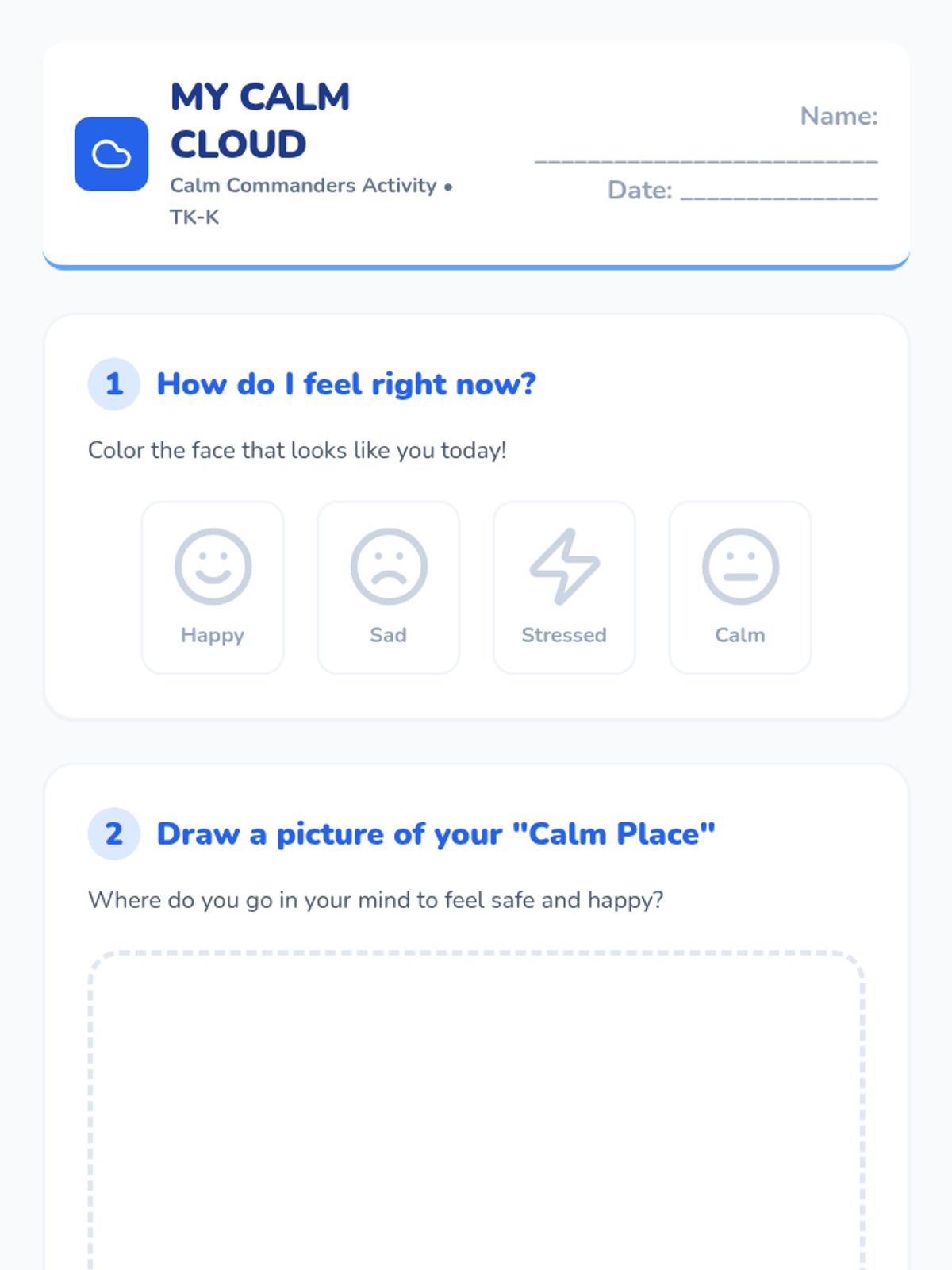
A gentle introduction for TK and Kindergarten students to understand feelings of 'tightness' or 'worry' (stress) and simple breathing techniques to feel calm.
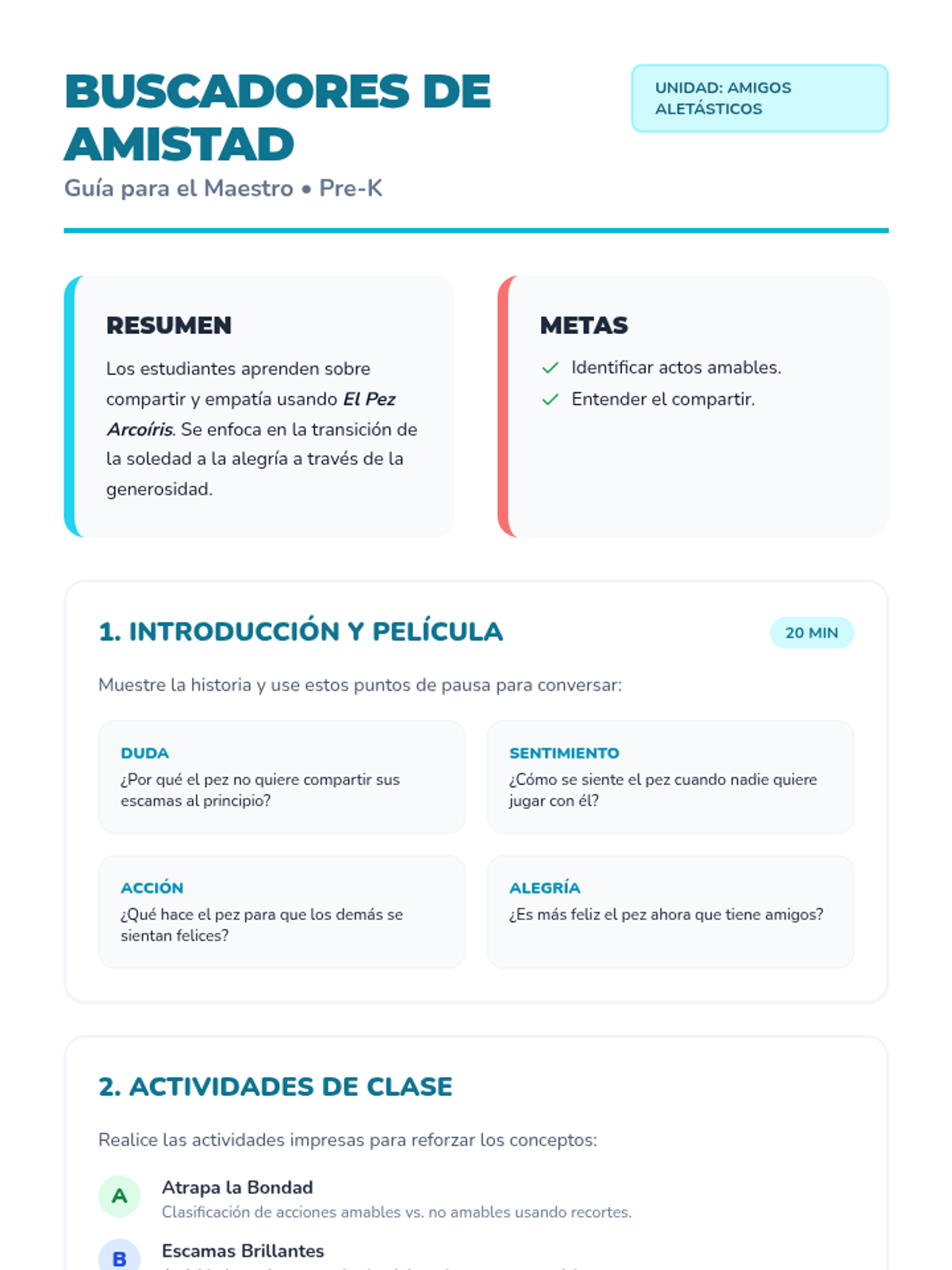
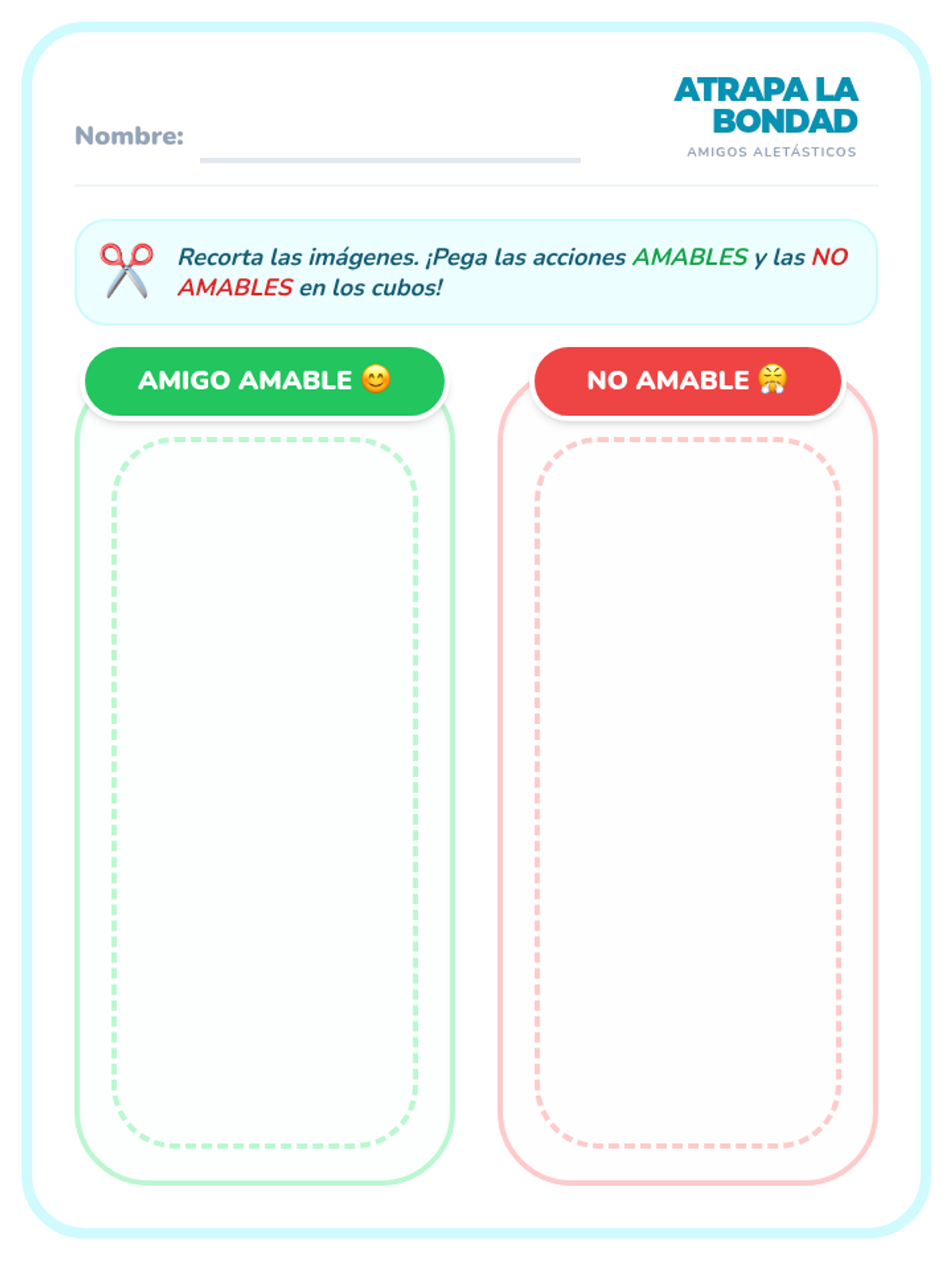
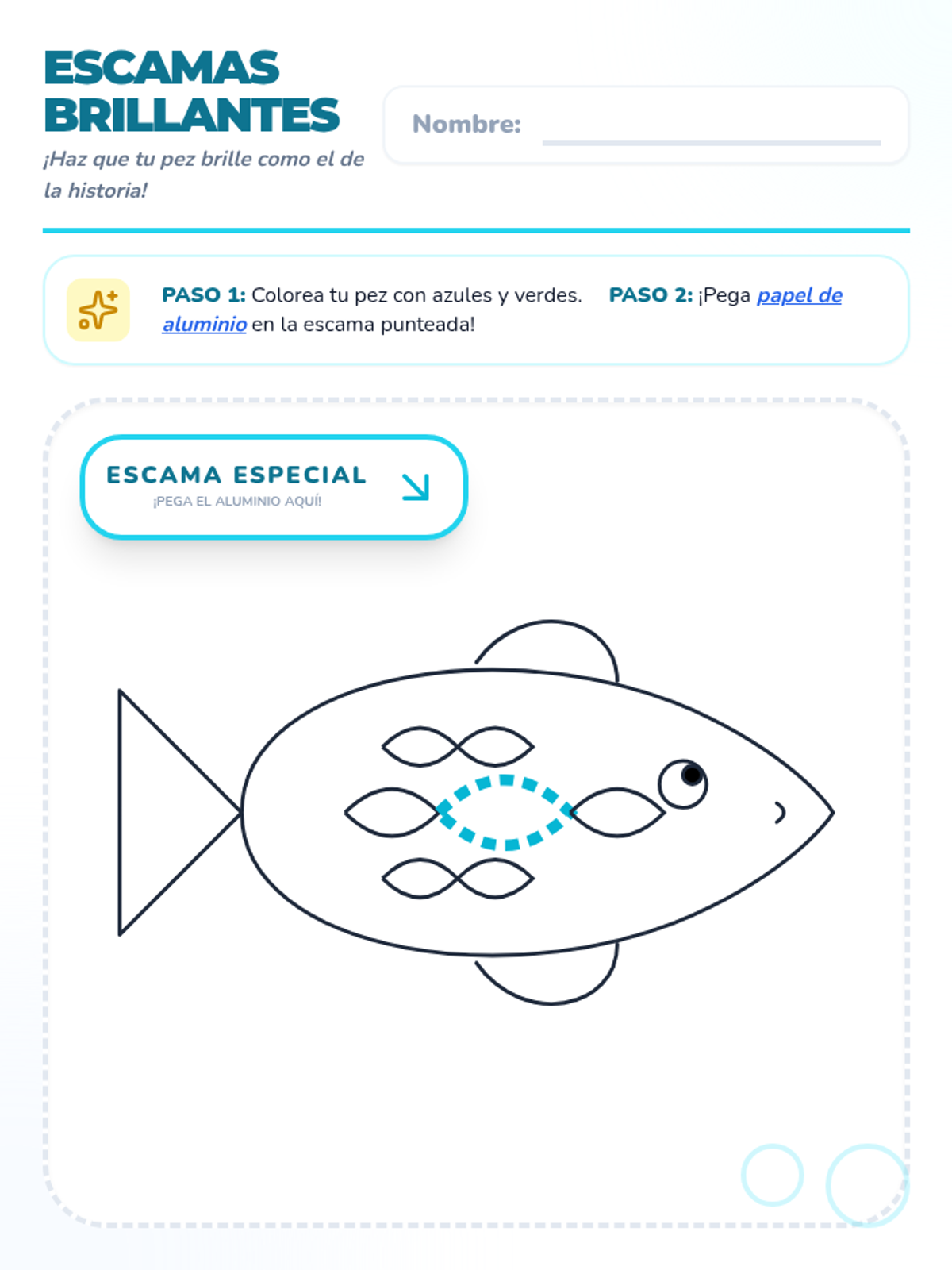
Una lección que explora la importancia de compartir y ser un amigo amable, centrada en ver El Pez Arcoíris y seguida de actividades creativas y de clasificación.
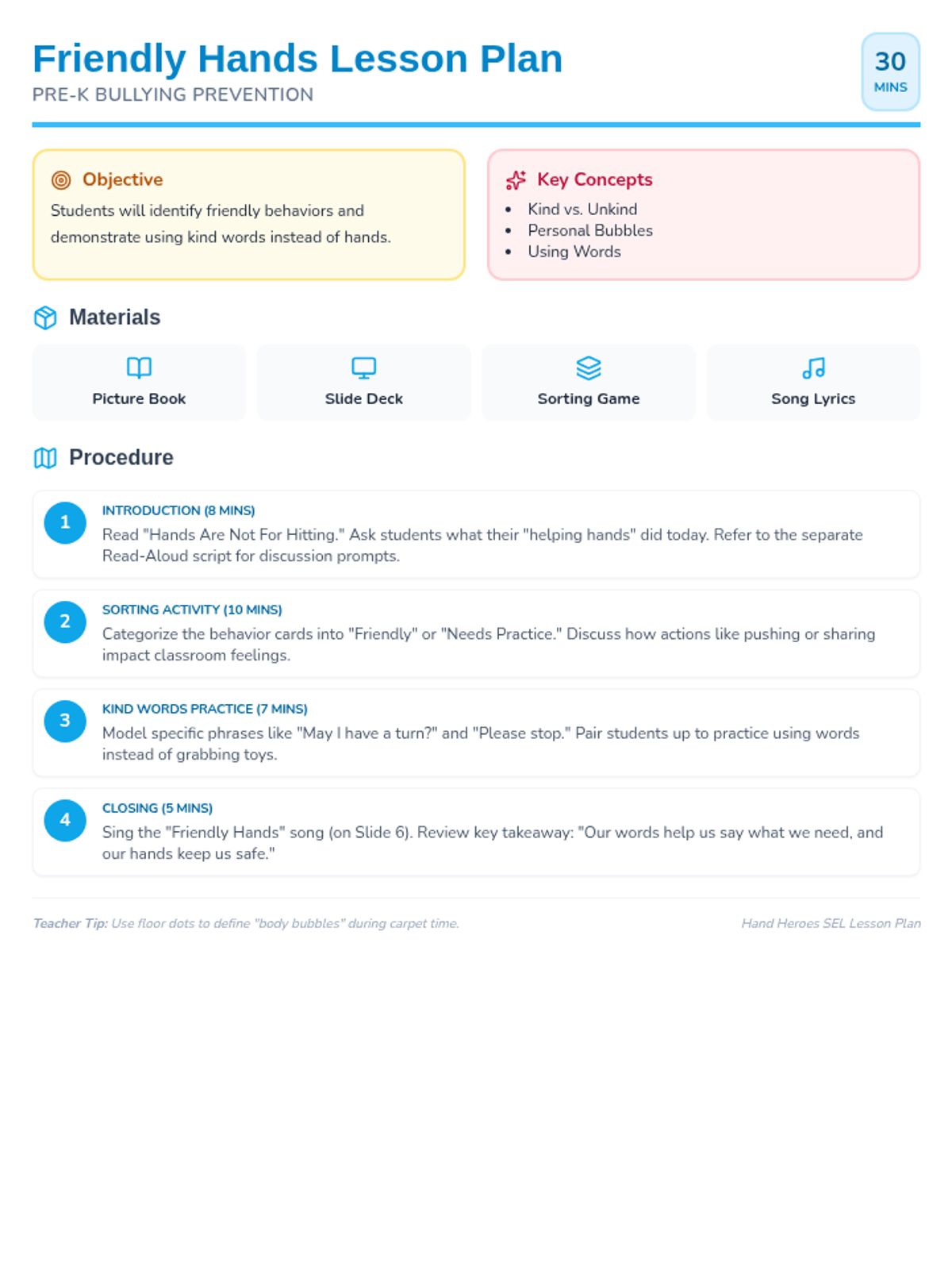
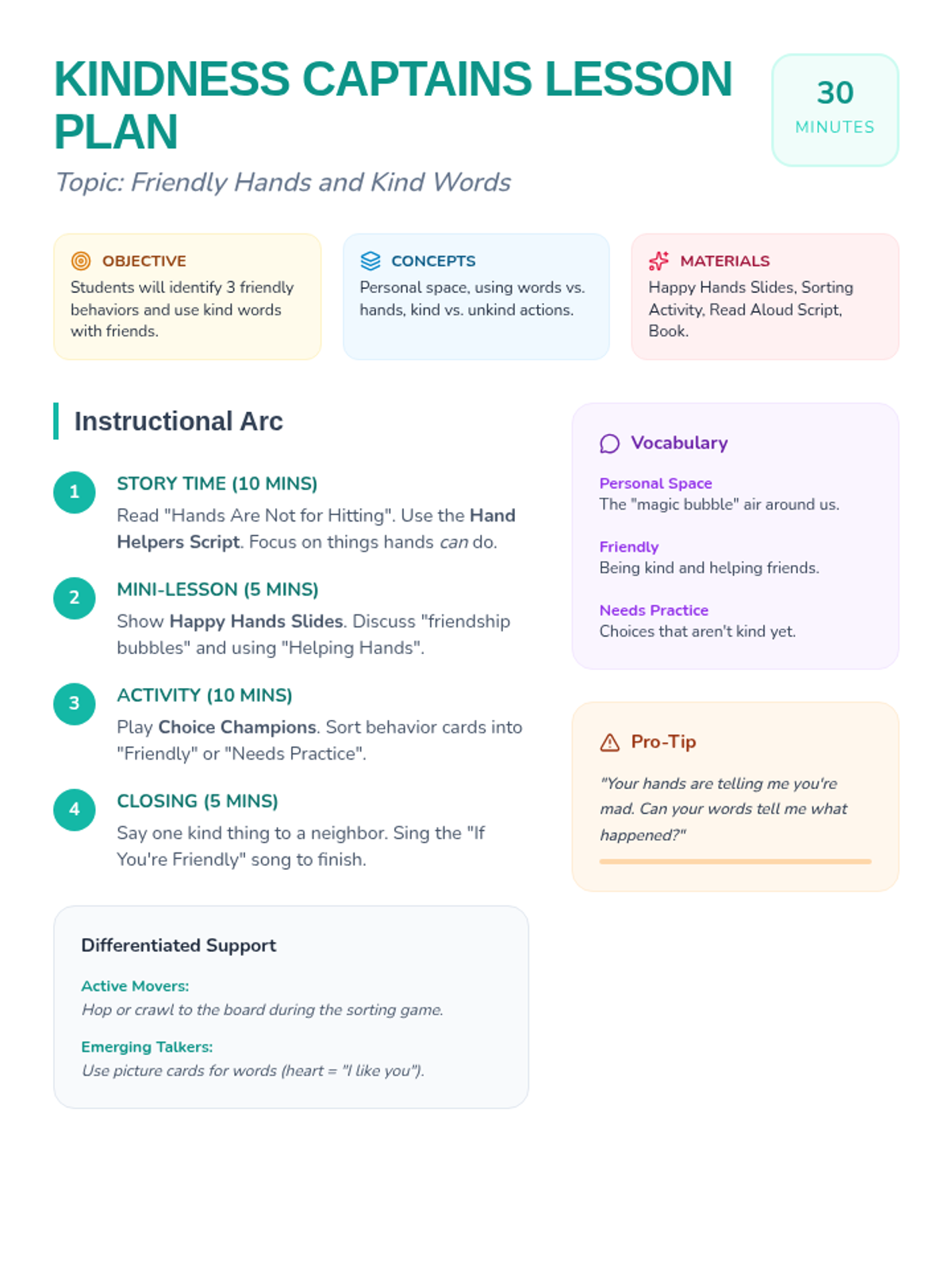
A 30-minute Pre-K lesson focused on identifying friendly behaviors, practicing personal space, and using kind words to build a positive classroom environment.
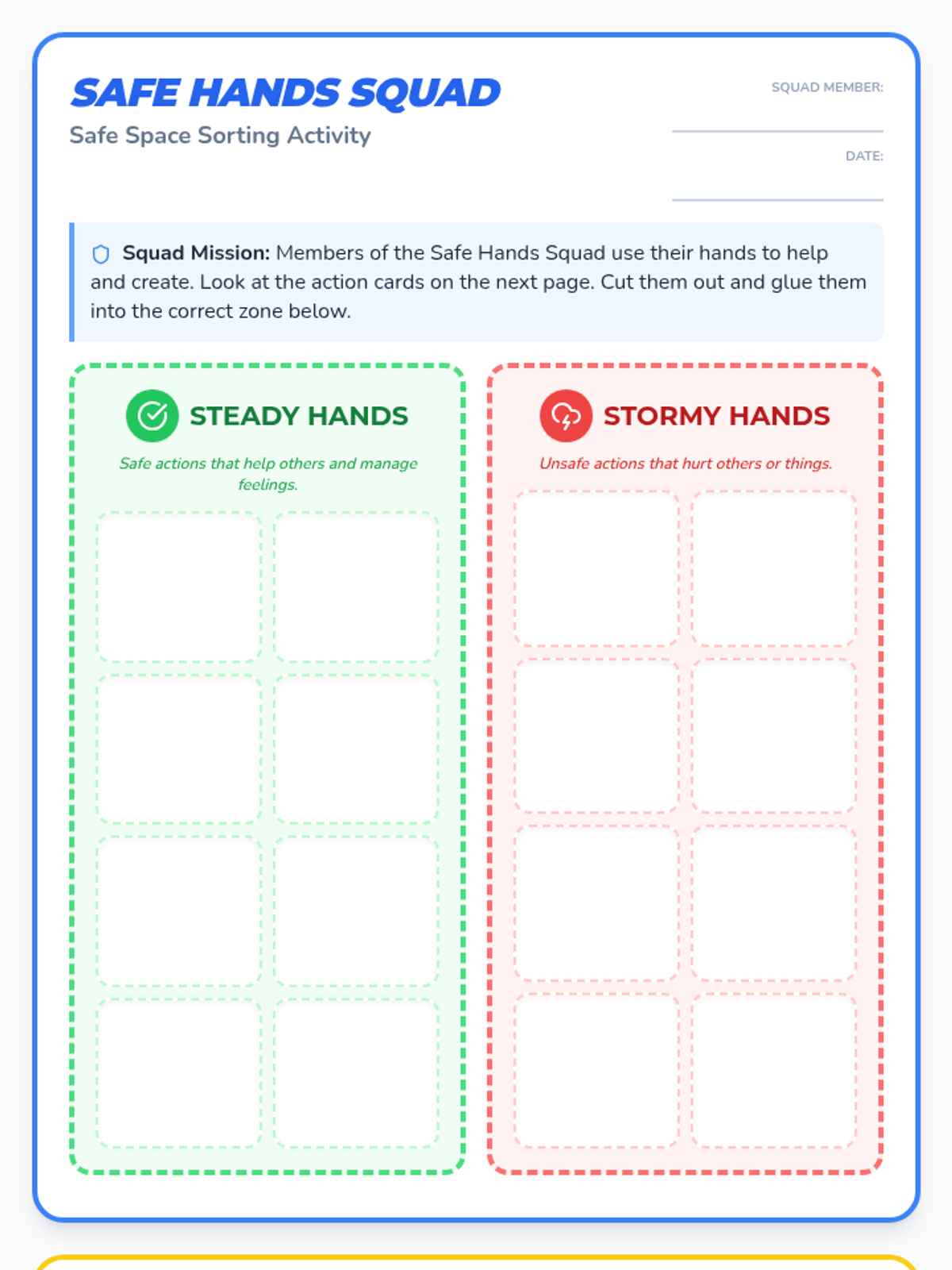
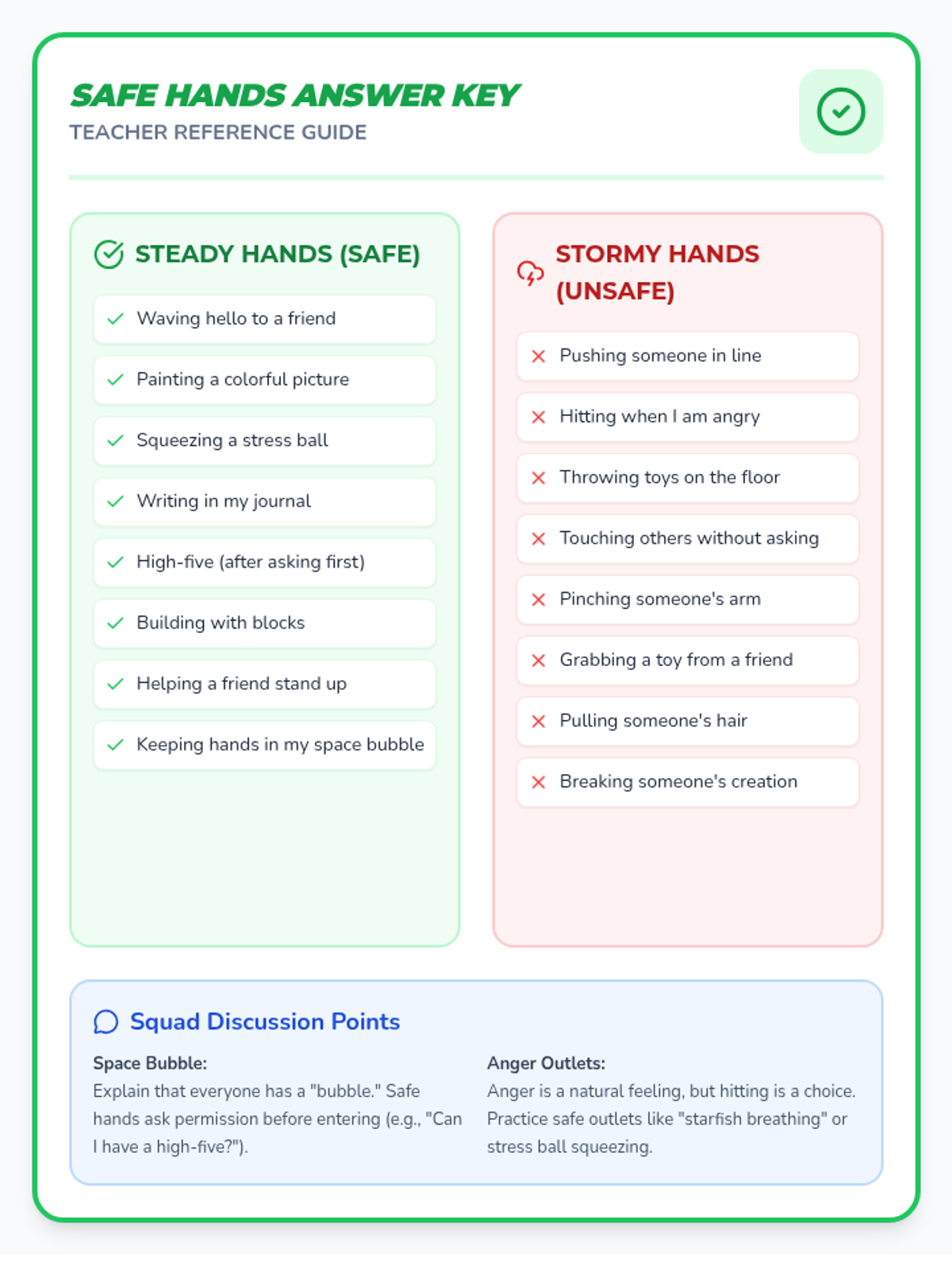
A lesson focused on teaching students how to use their hands safely, respect personal boundaries, and manage strong emotions like anger through a hands-on sorting activity.
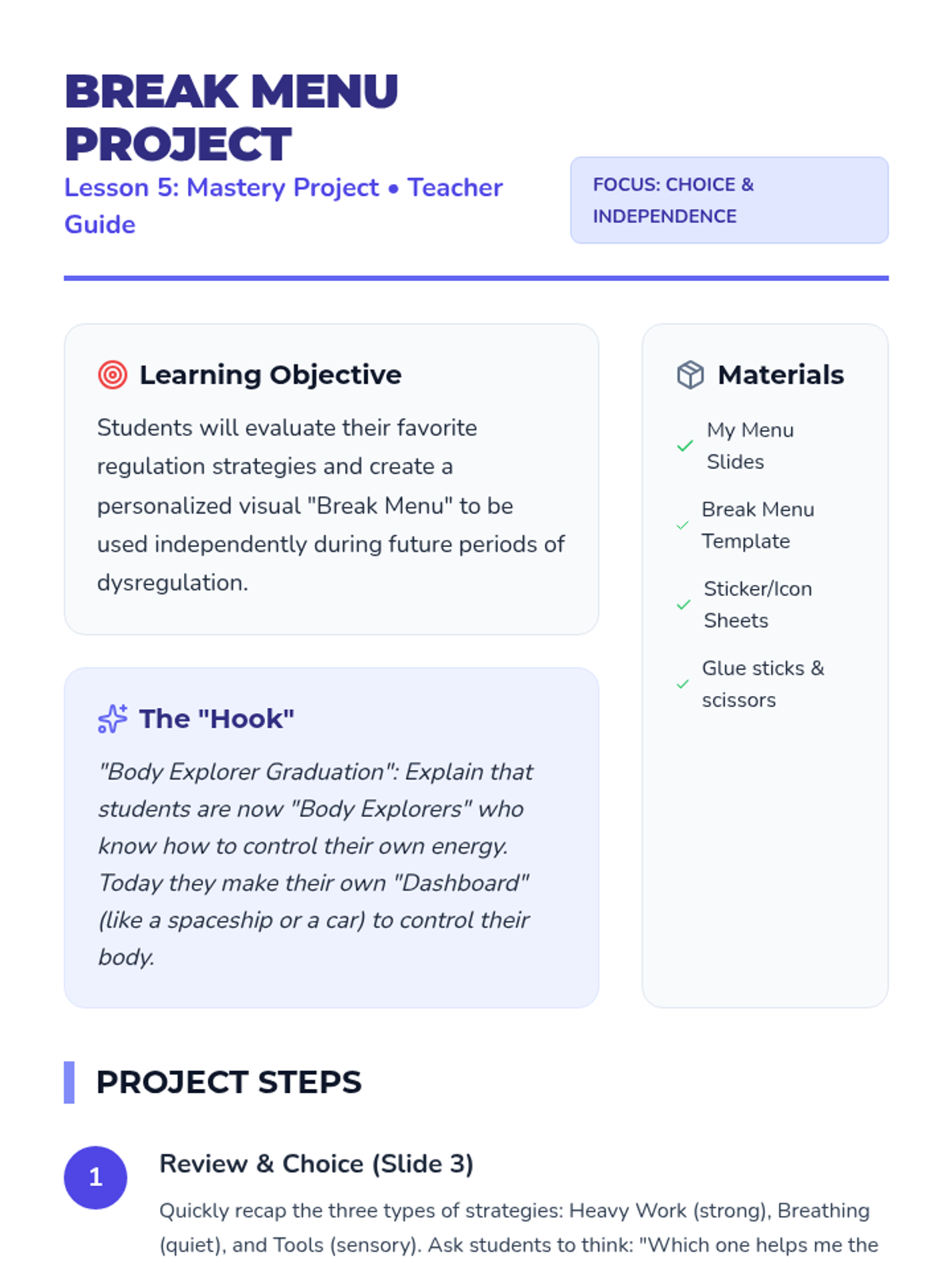
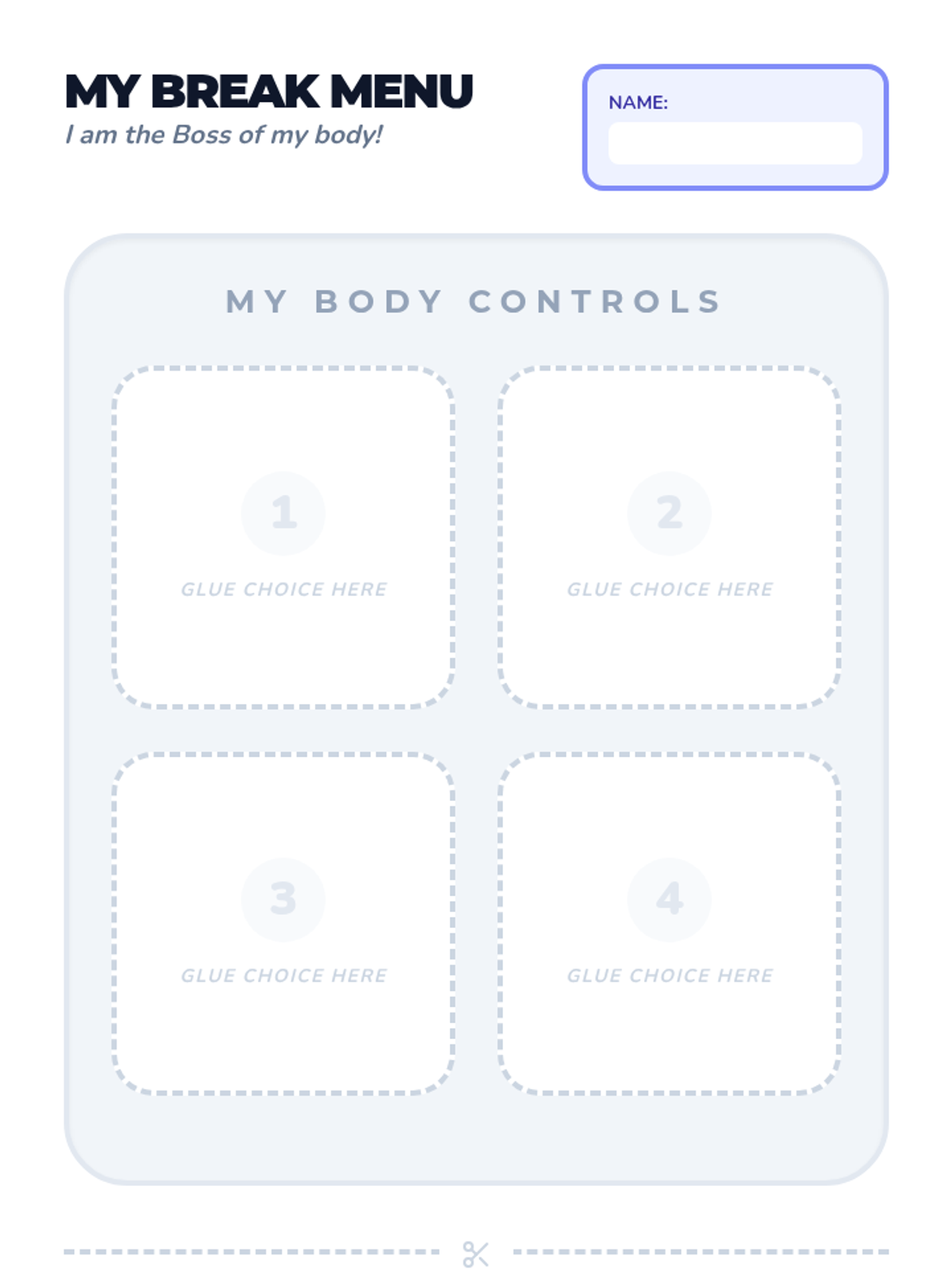
Students select their favorite regulation strategies to create a personalized visual 'Break Menu,' providing them with a permanent resource for self-regulation.
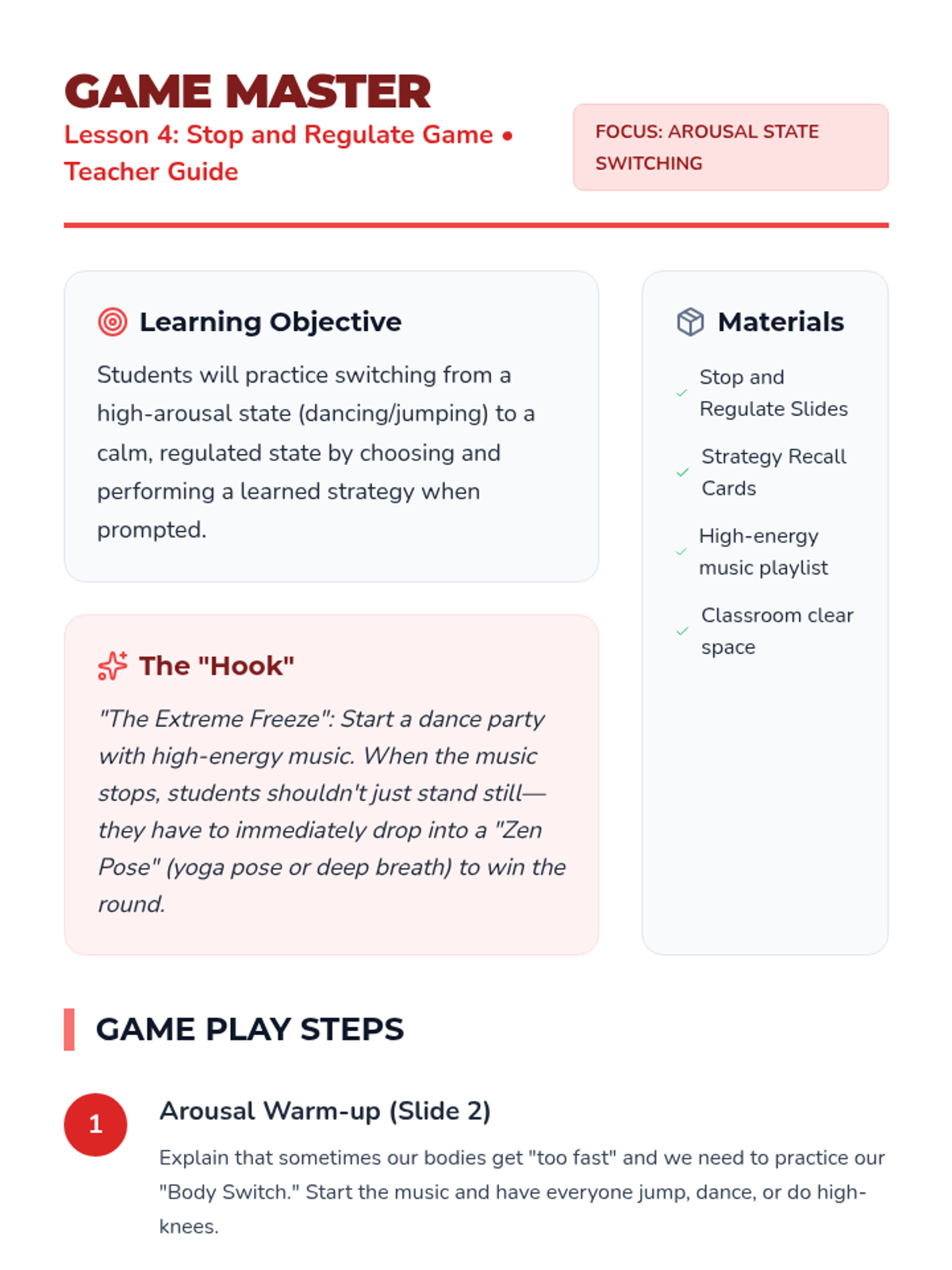
A structured game practicing the switch from high energy to calm regulation, simulating the real-time need for strategic breaks.
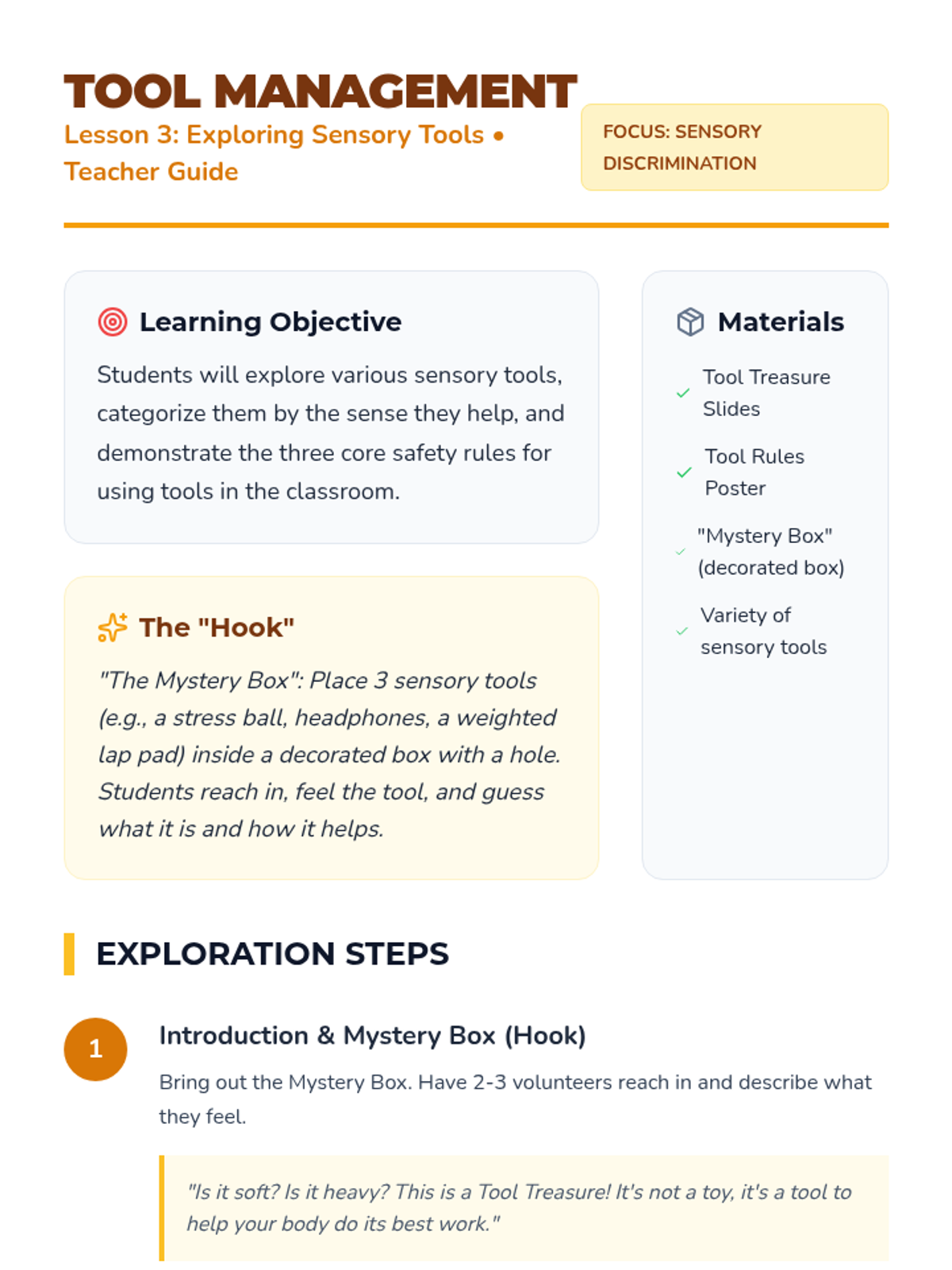
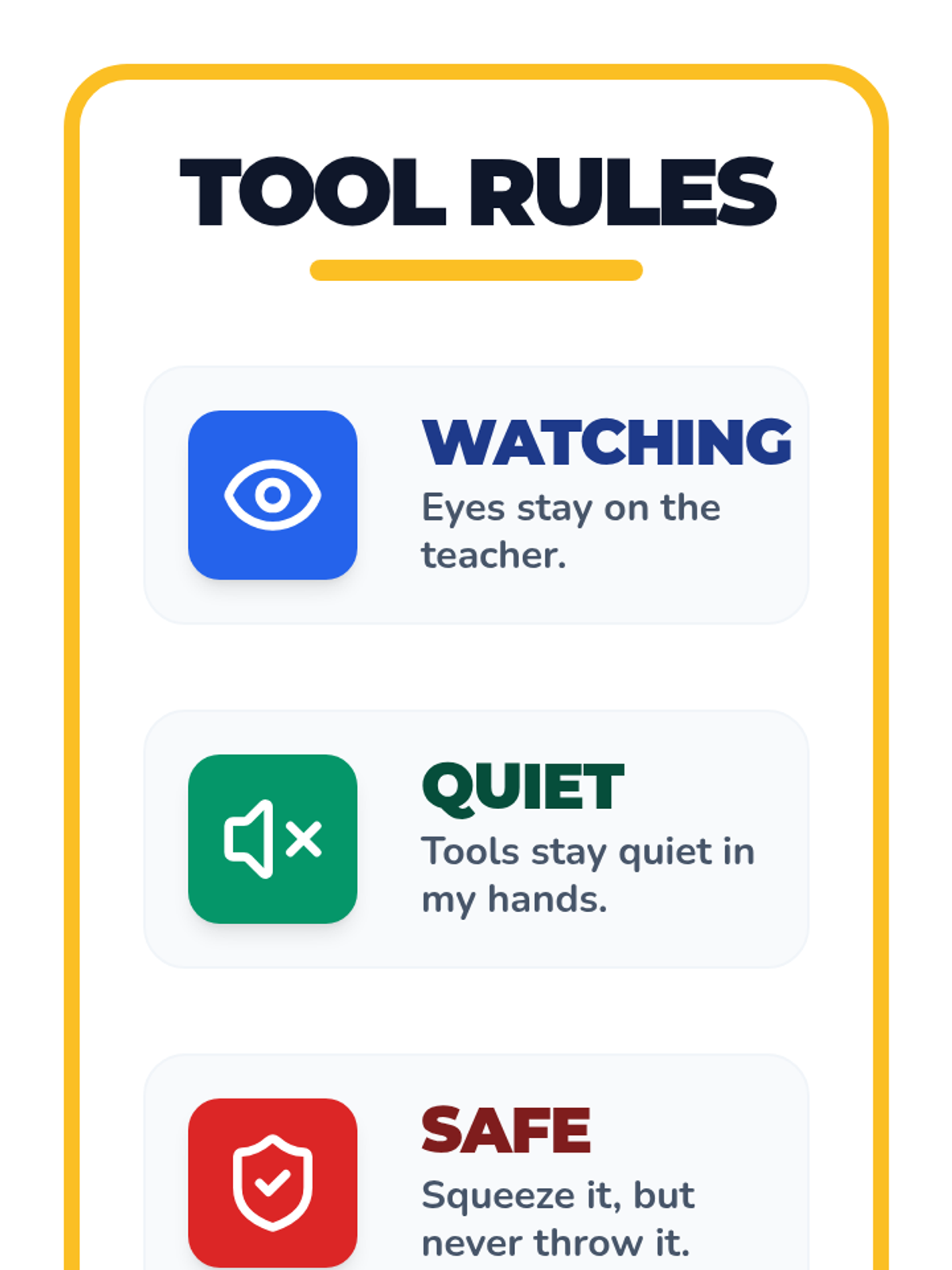
Students explore sensory tools like fidgets and noise-canceling headphones, learning the appropriate ways to use them safely for regulation.
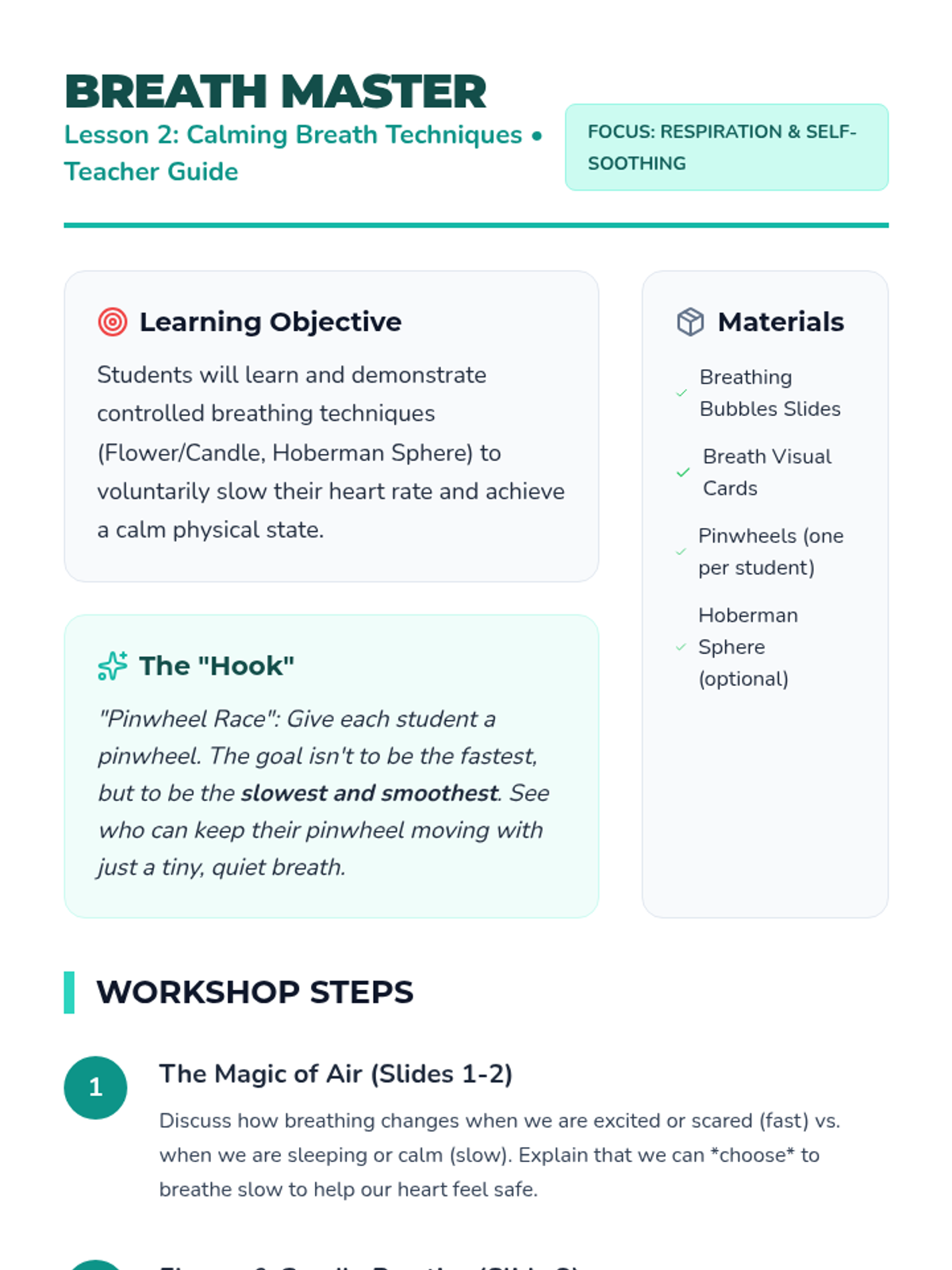
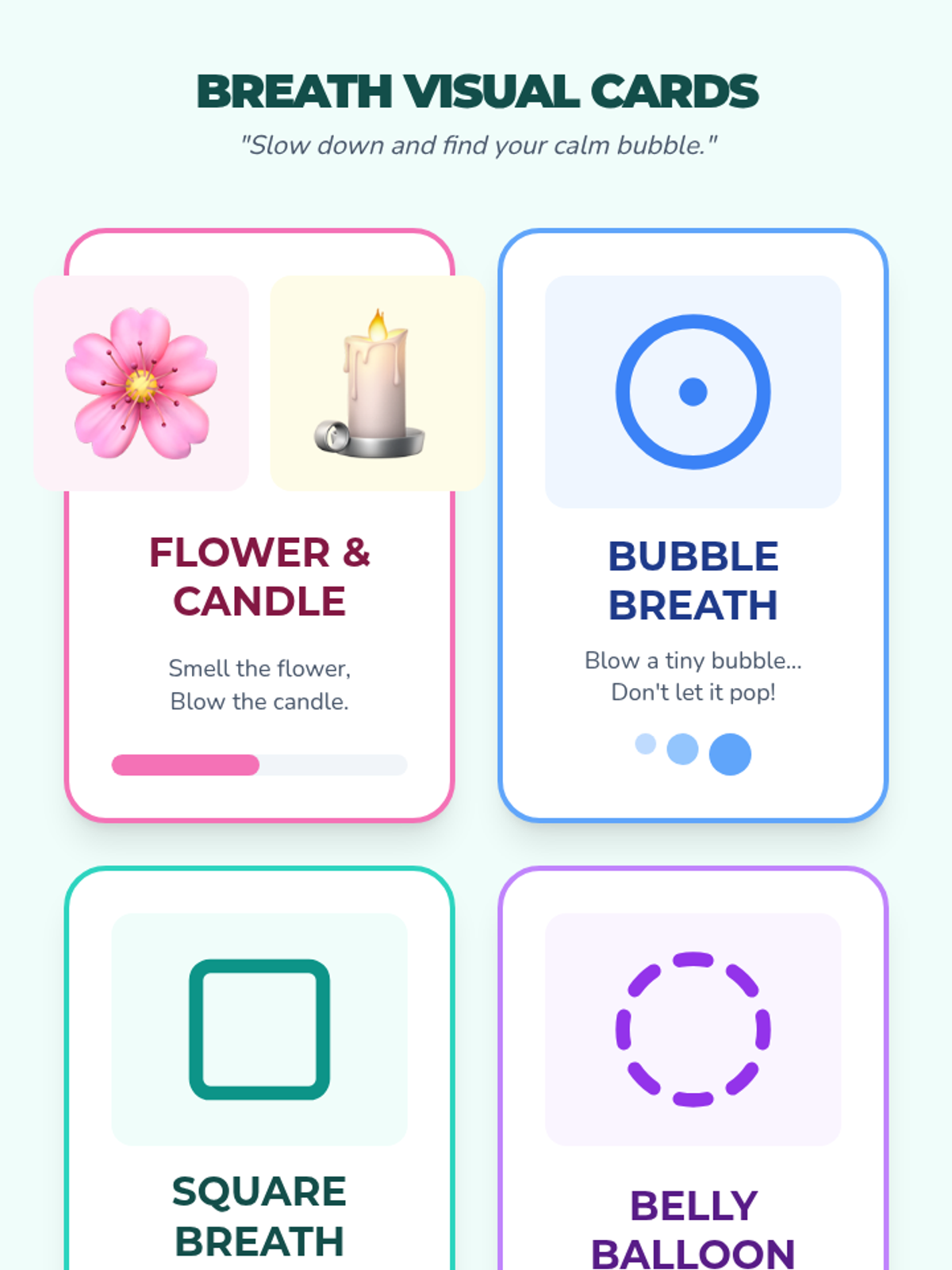
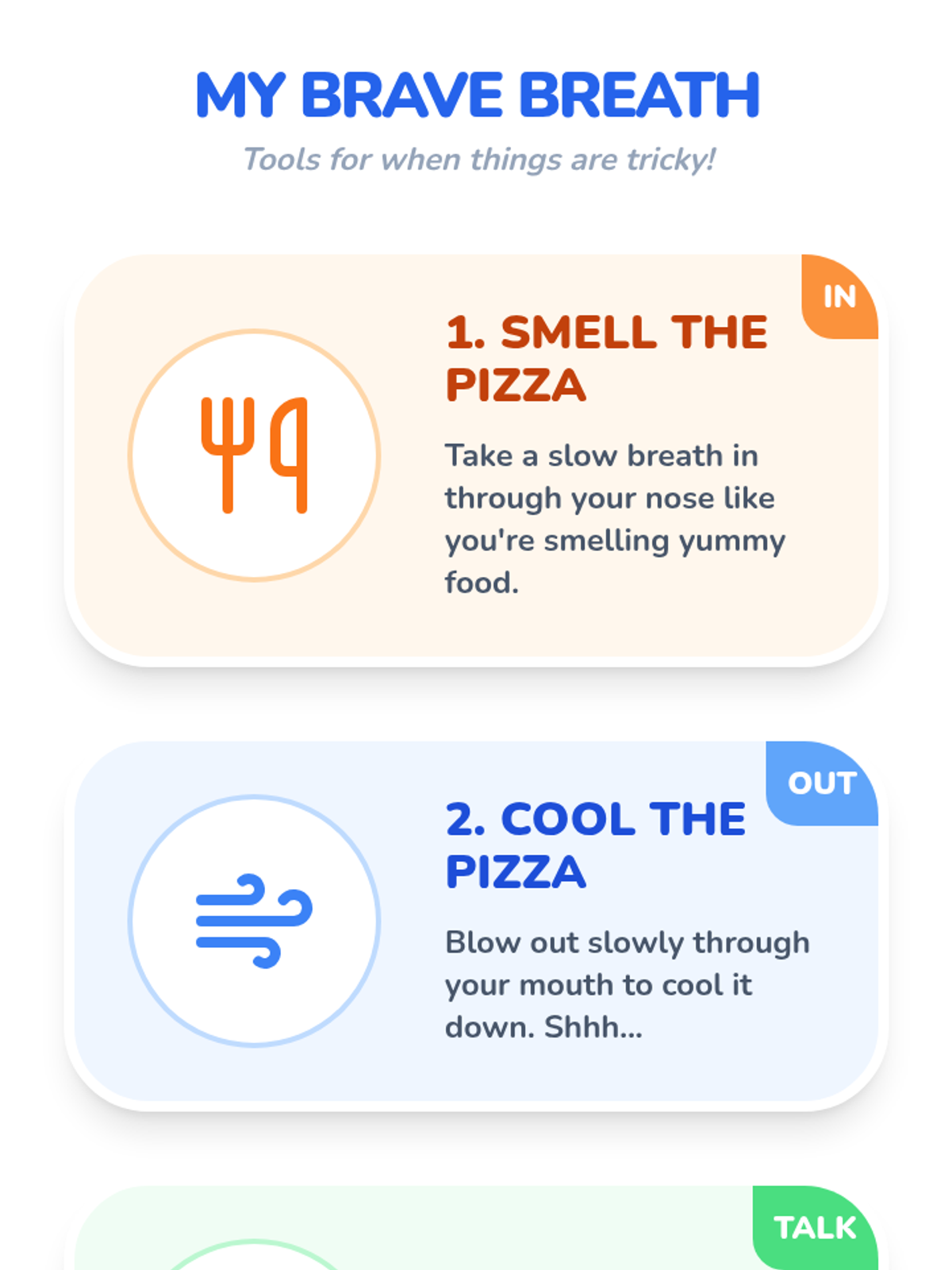
Students learn and practice deep breathing techniques using visual aids to help slow their heart rate and calm their physical bodies.
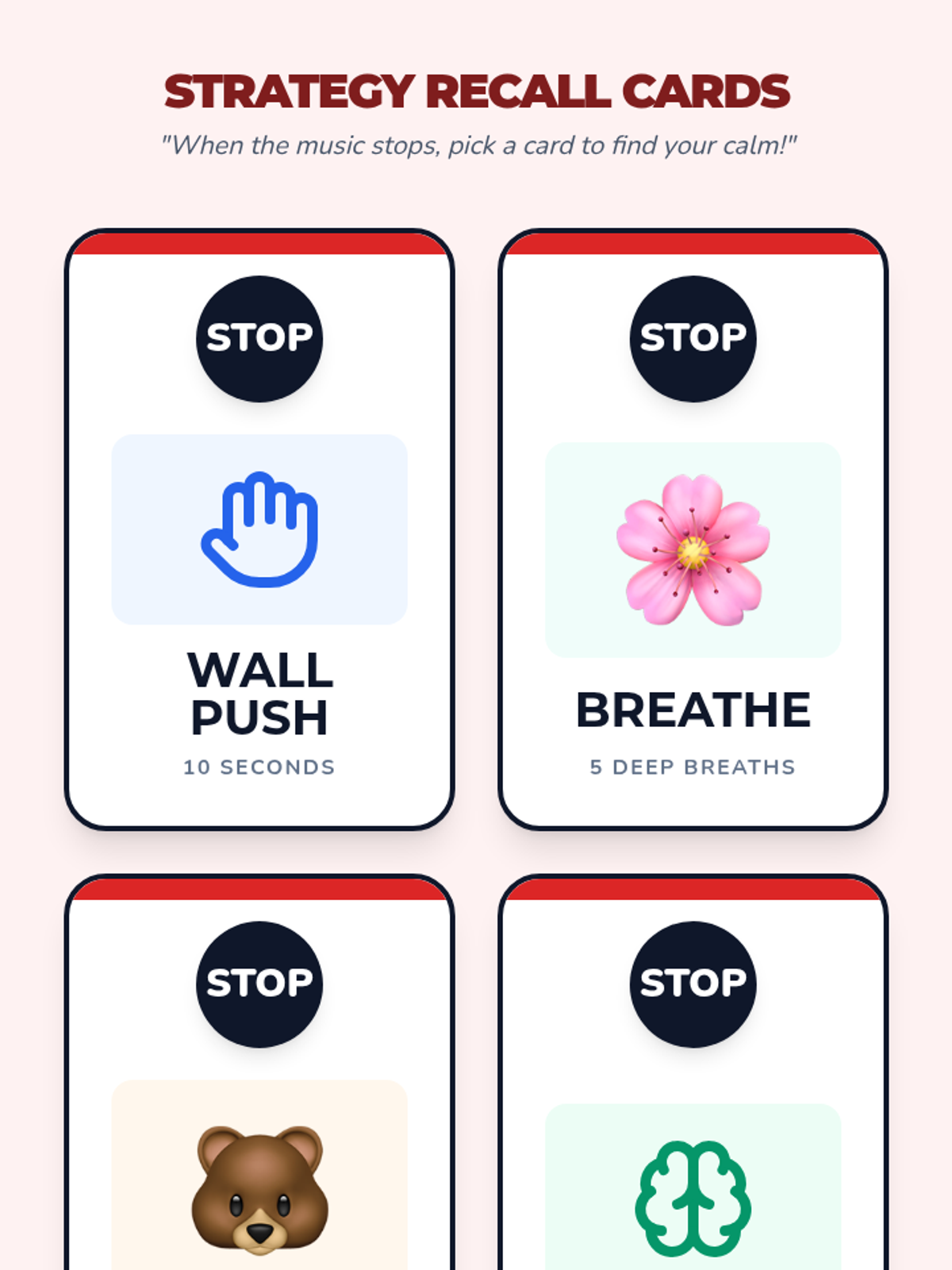
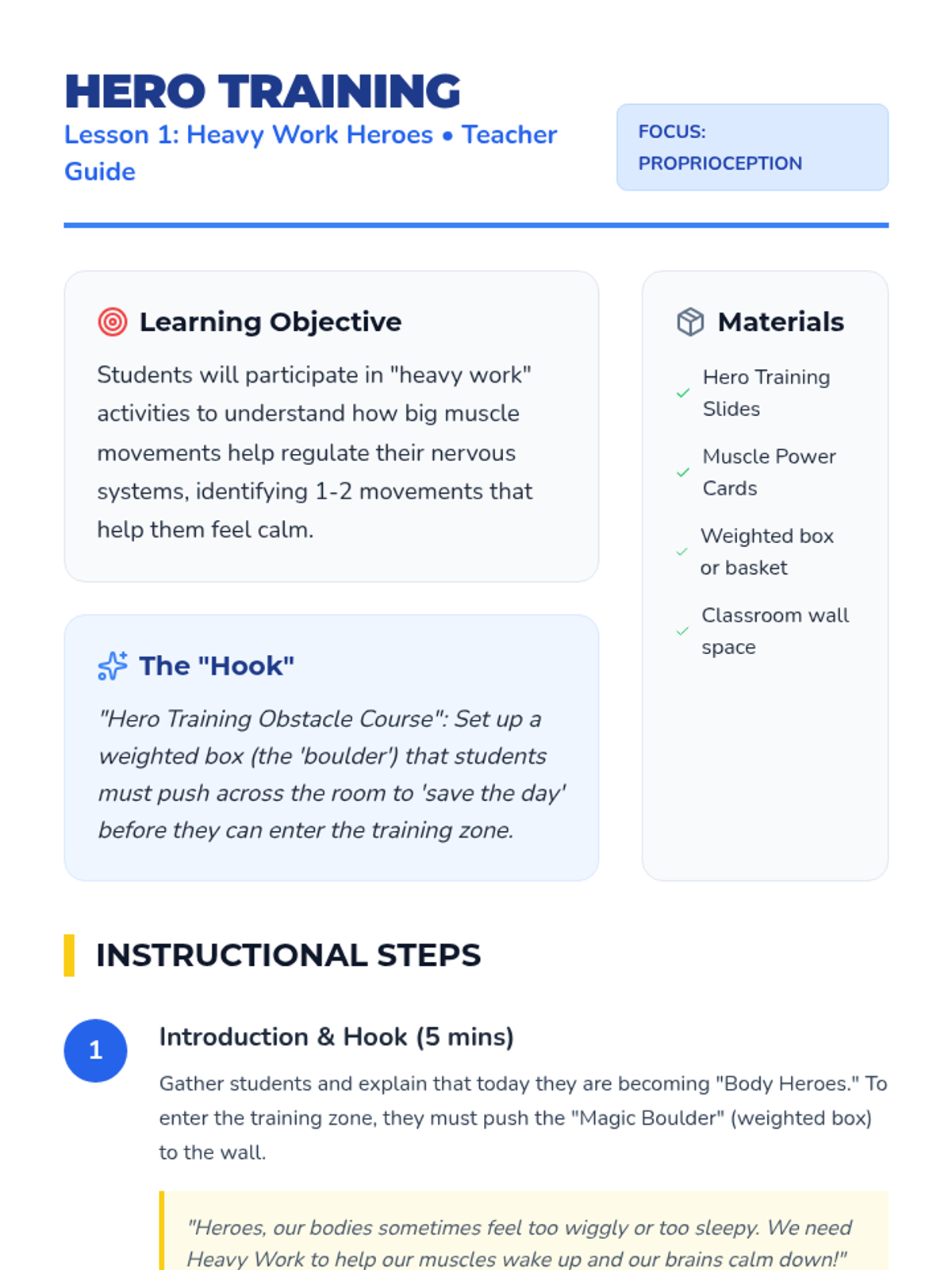
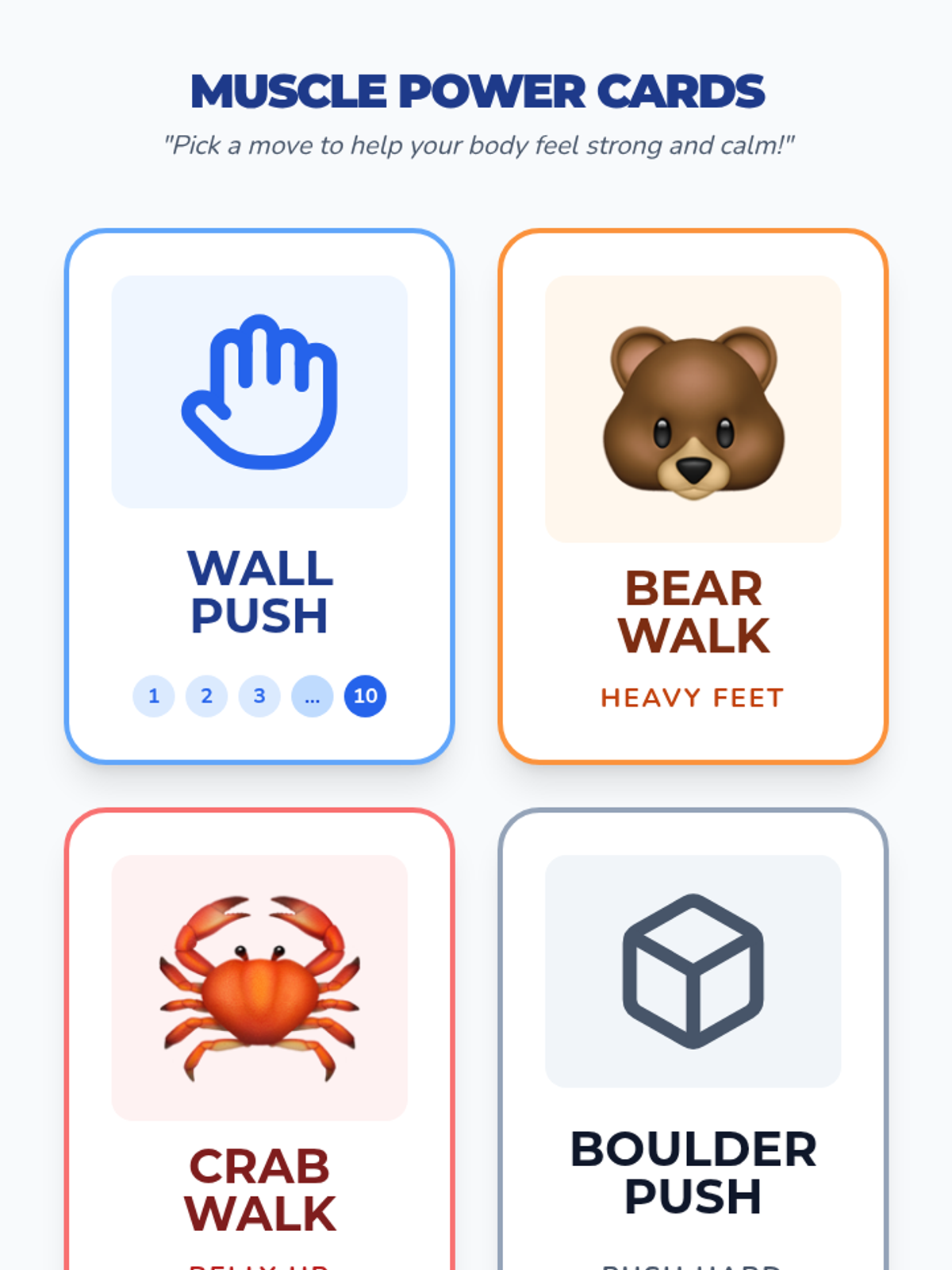
Students engage in proprioceptive 'heavy work' activities like wall pushes and animal walks to understand how strong movements help calm the brain and wake up muscles.
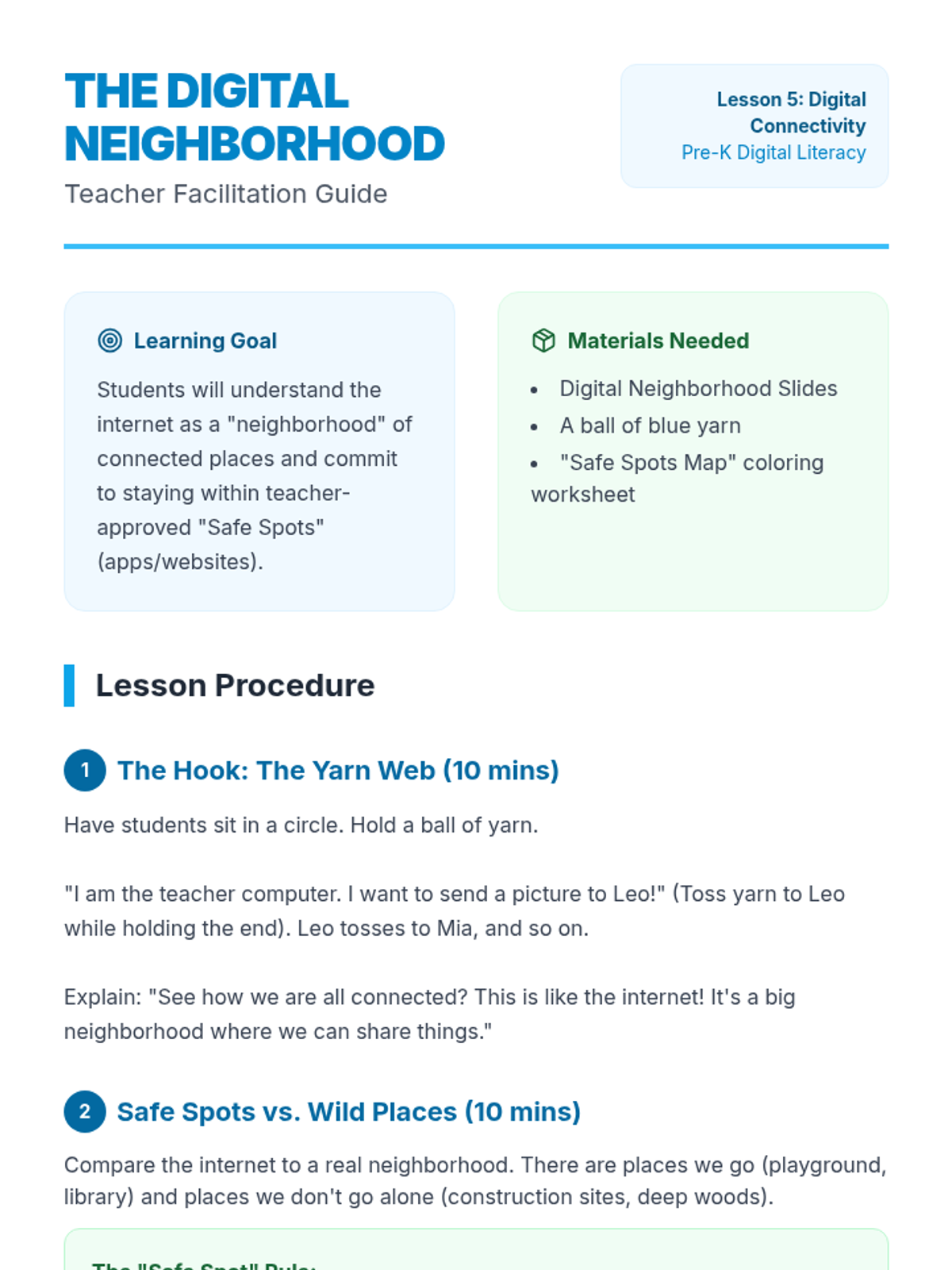
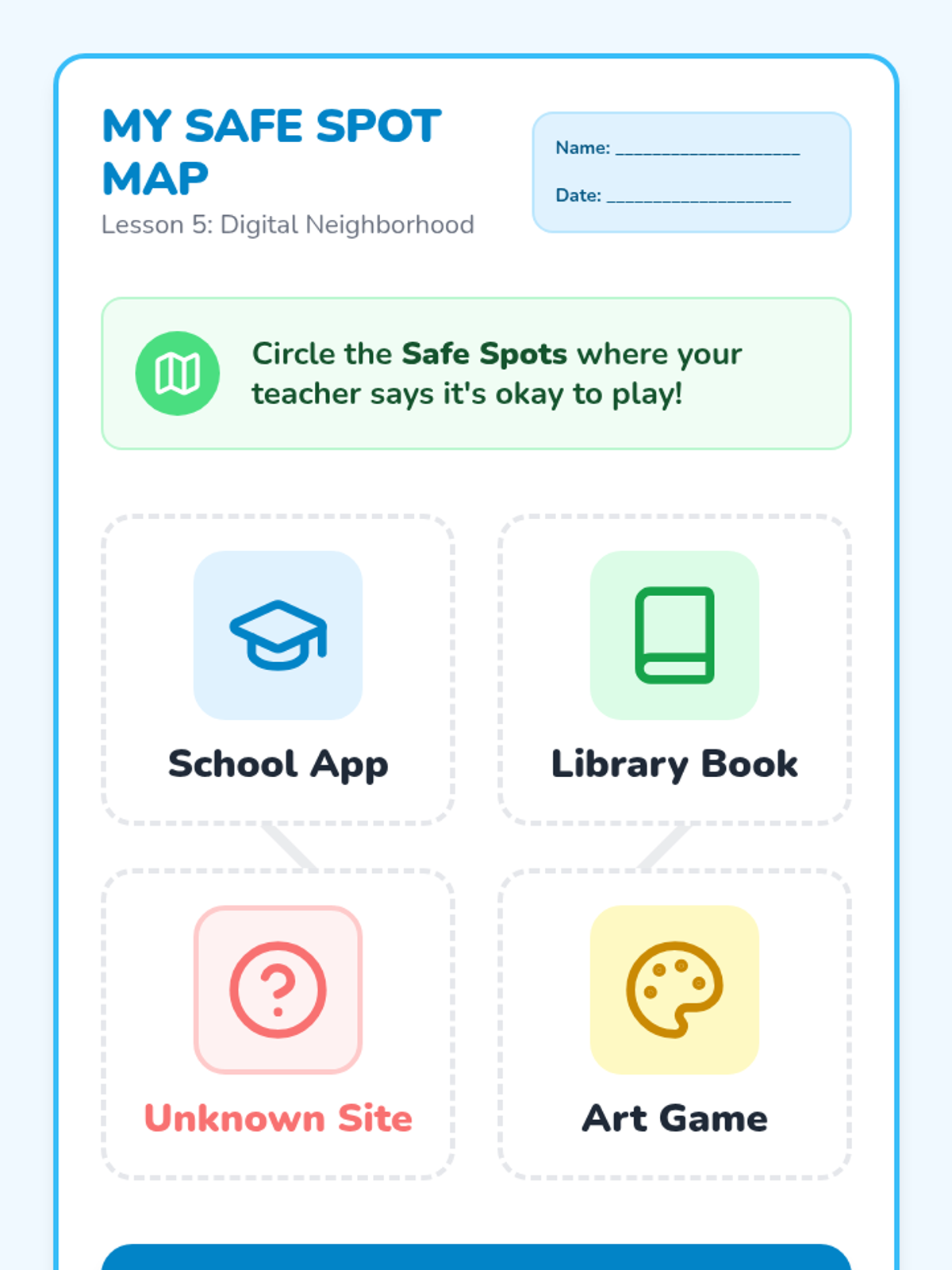
Provides a basic mental model of how devices connect us to a 'digital neighborhood' and the importance of staying in teacher-approved 'safe places'.
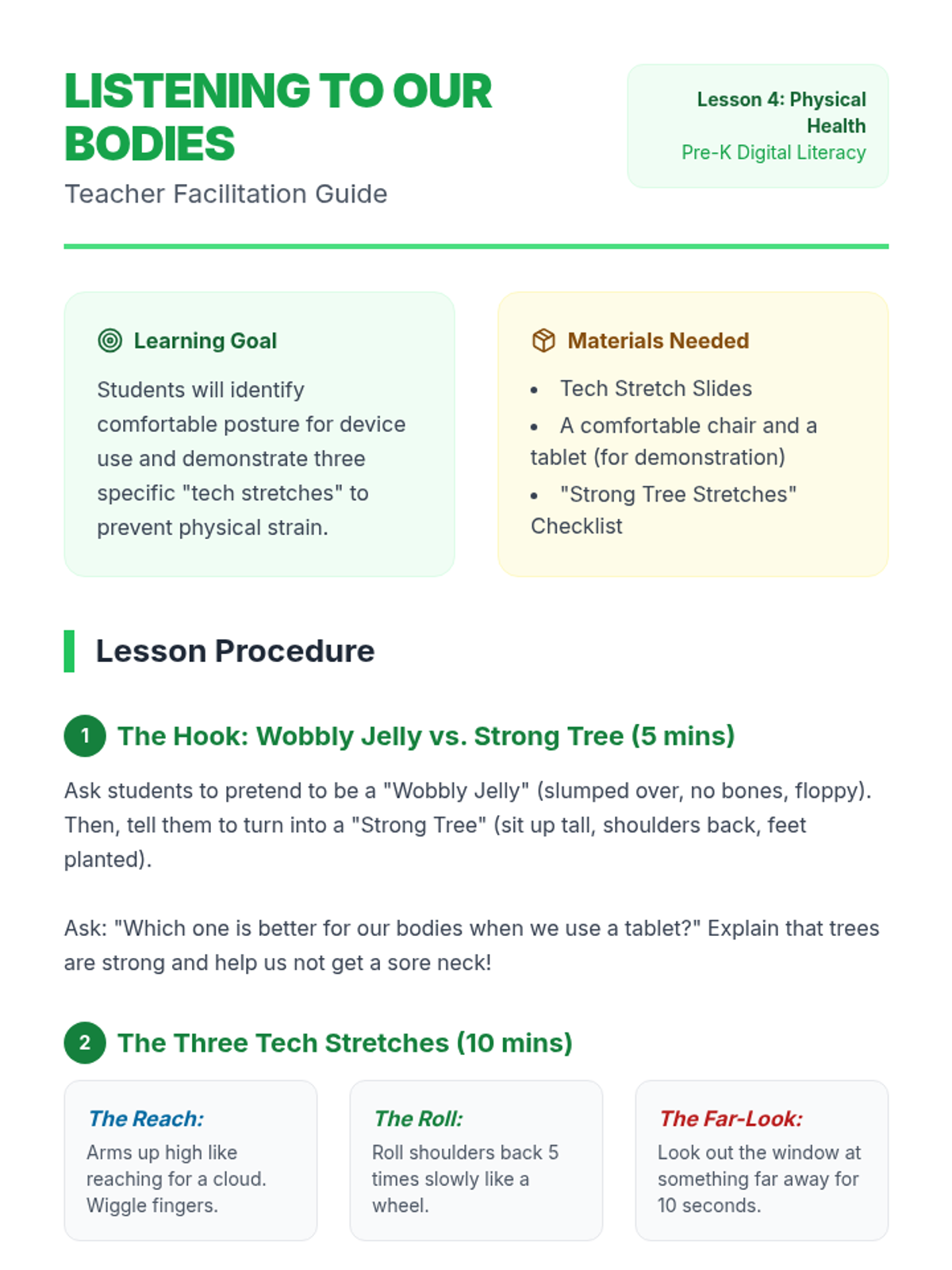
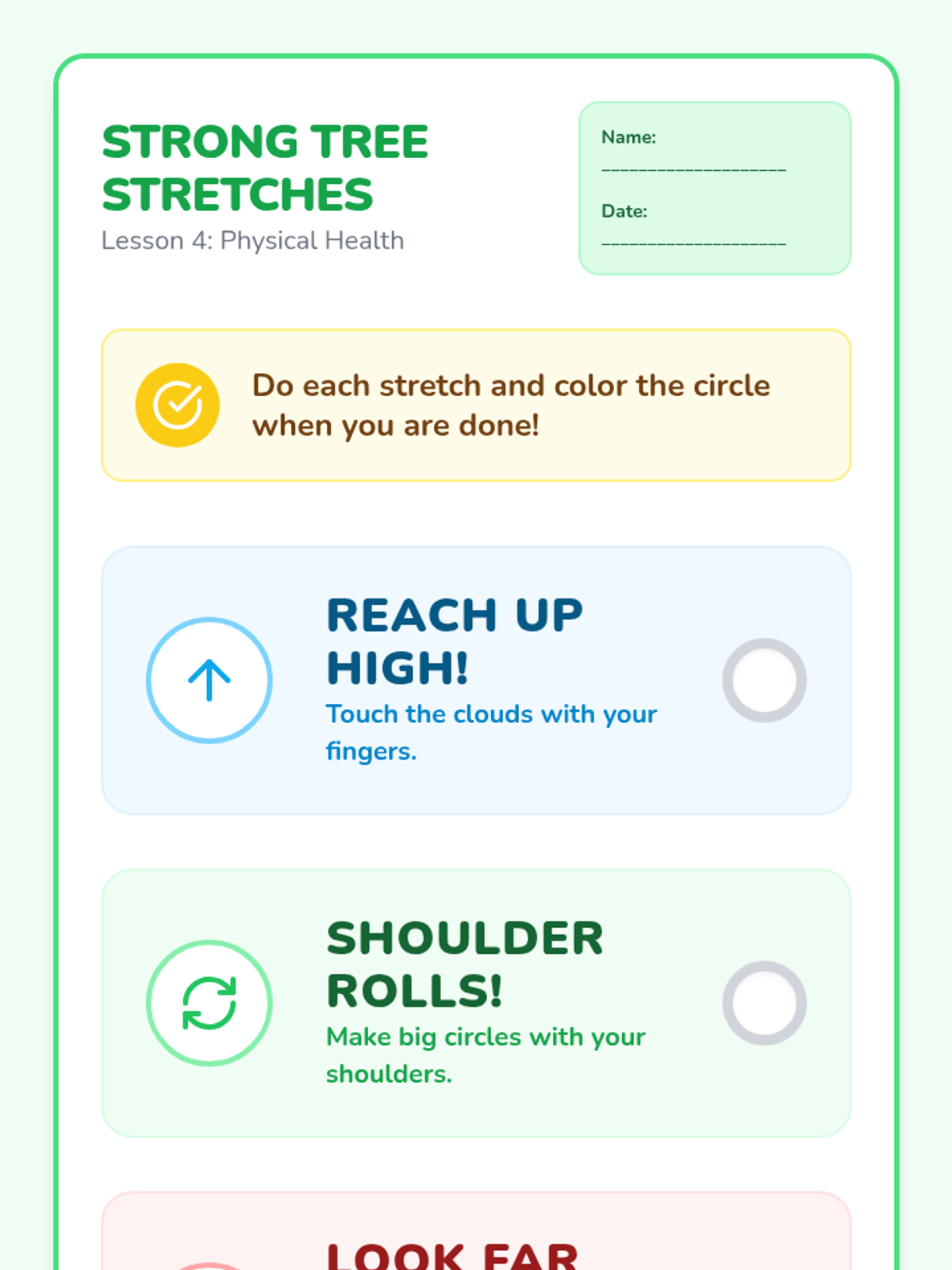
Introduces physical health habits related to technology use, including proper posture and the importance of taking movement breaks.
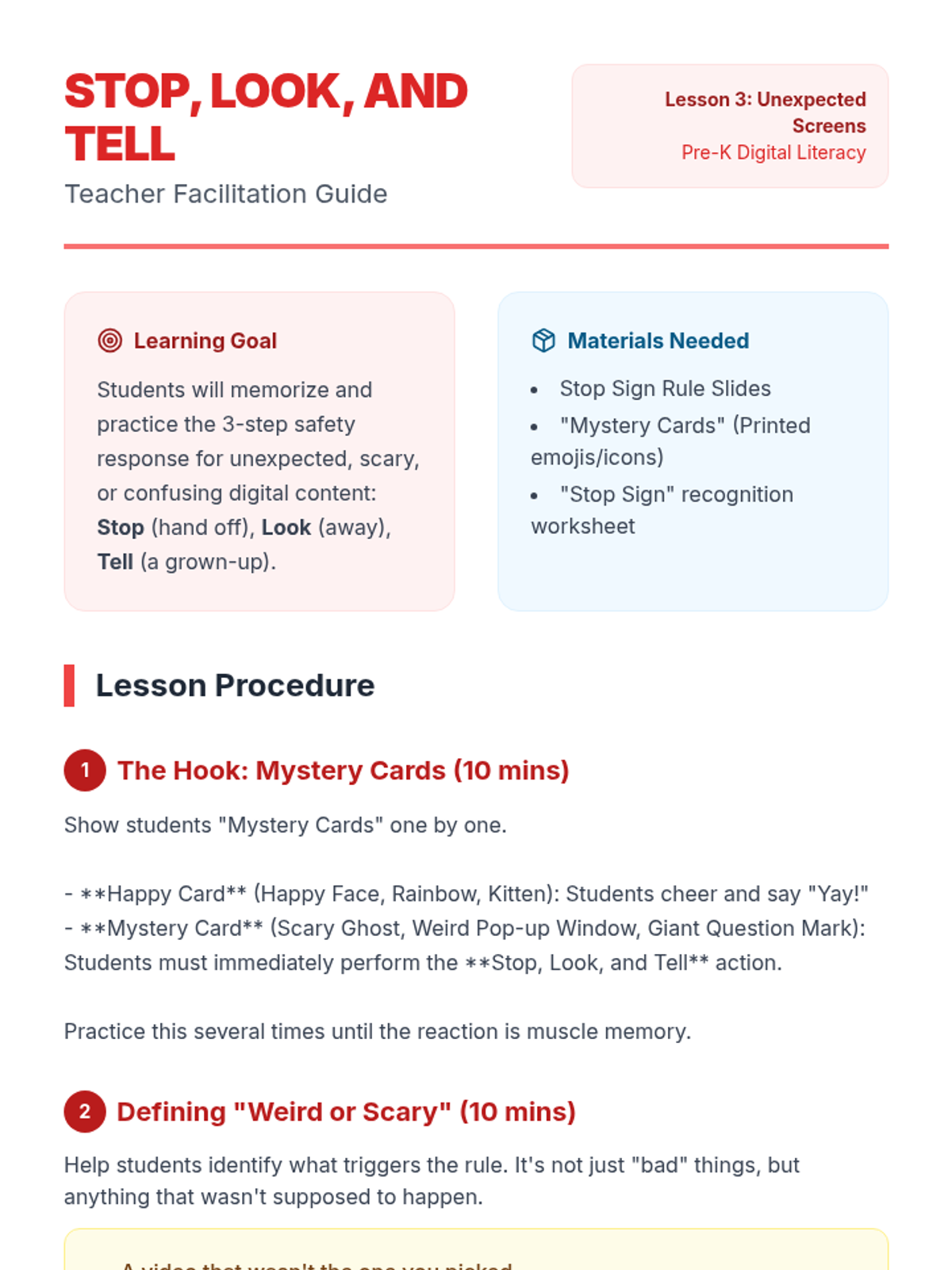
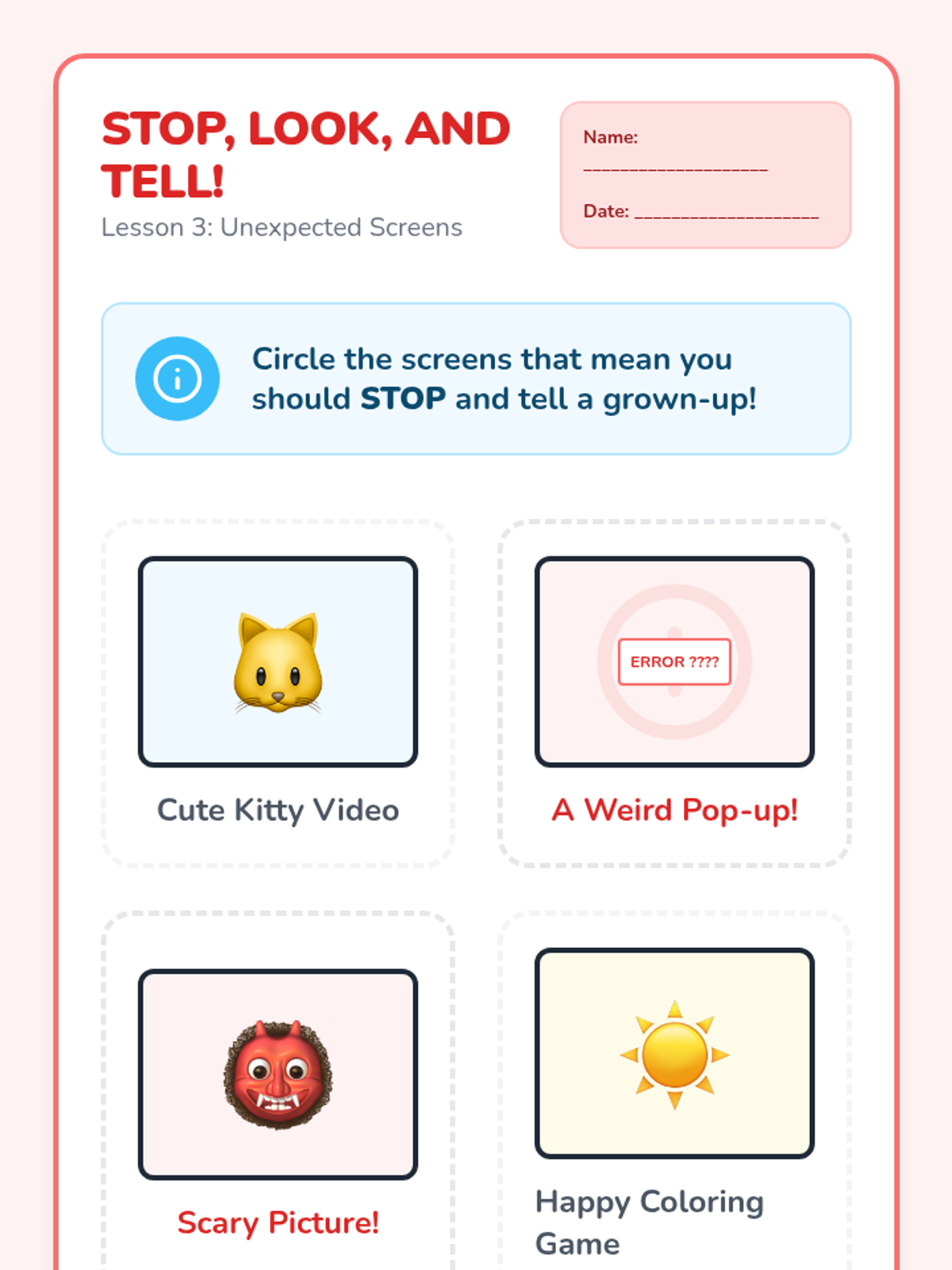
Teaches students the 'Stop, Look, and Tell' protocol for when they encounter unexpected, confusing, or scary content on a screen.
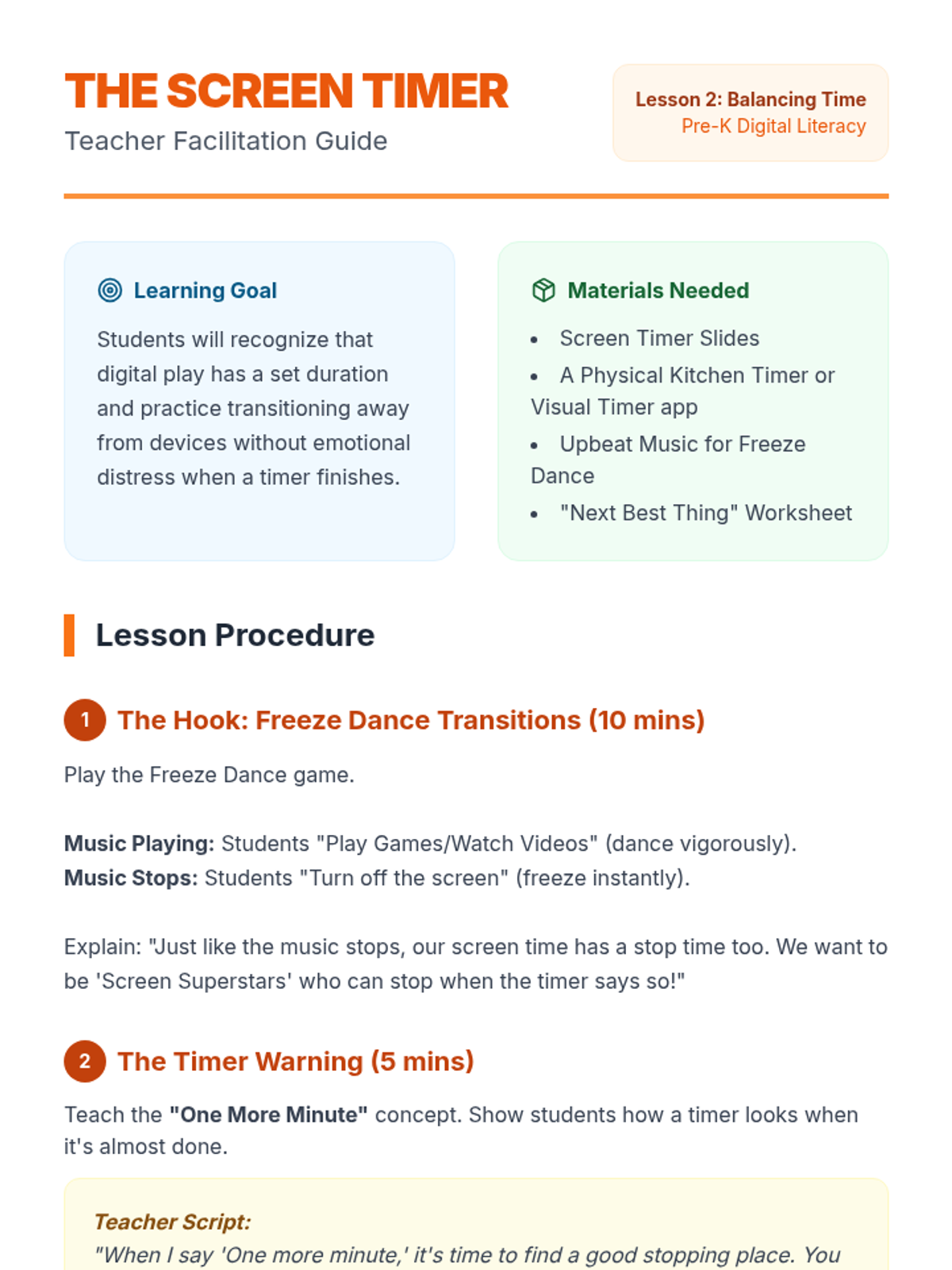
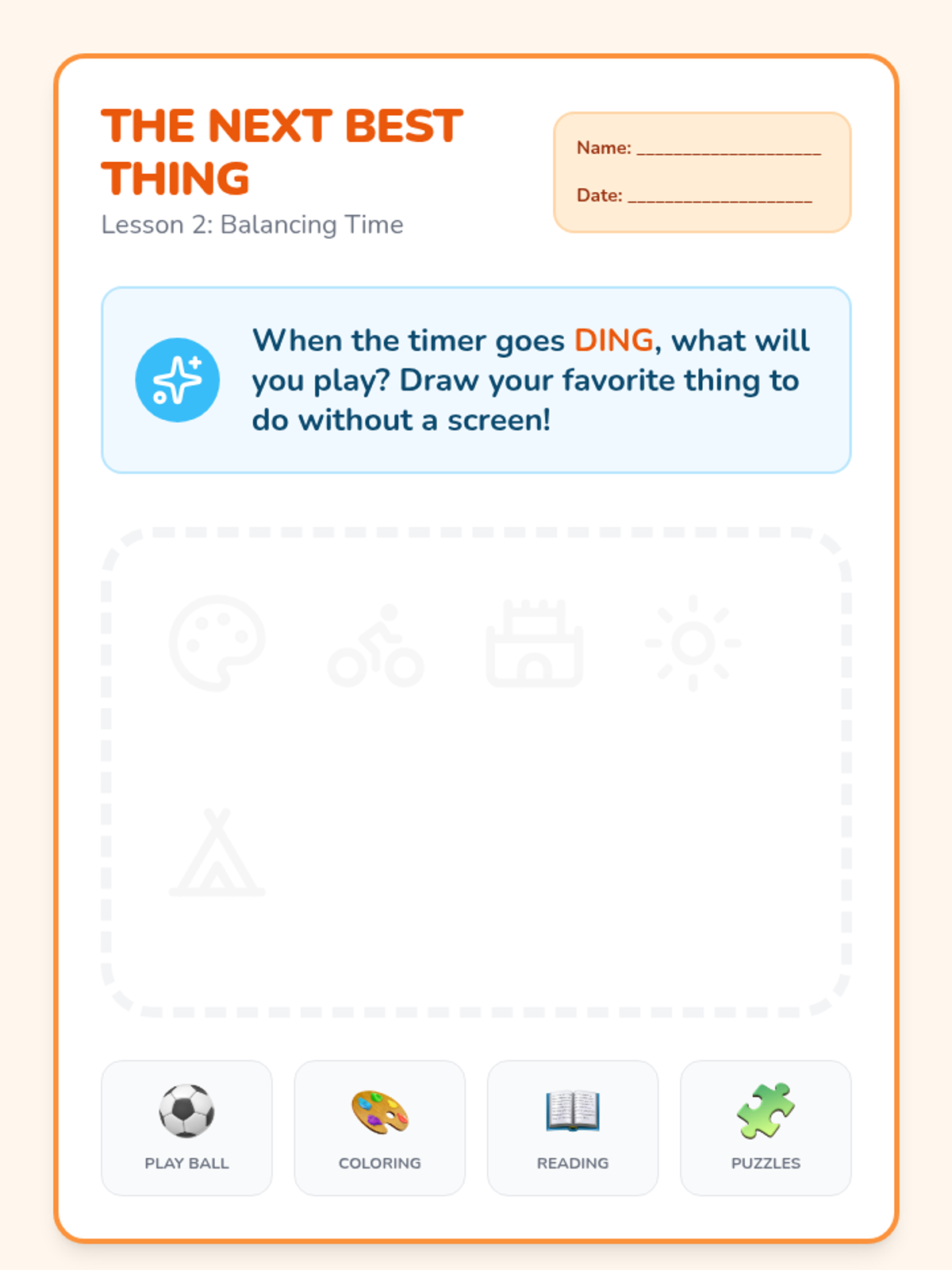
Focuses on self-regulation and time awareness by practicing transitions from digital devices to other activities using timers and games.
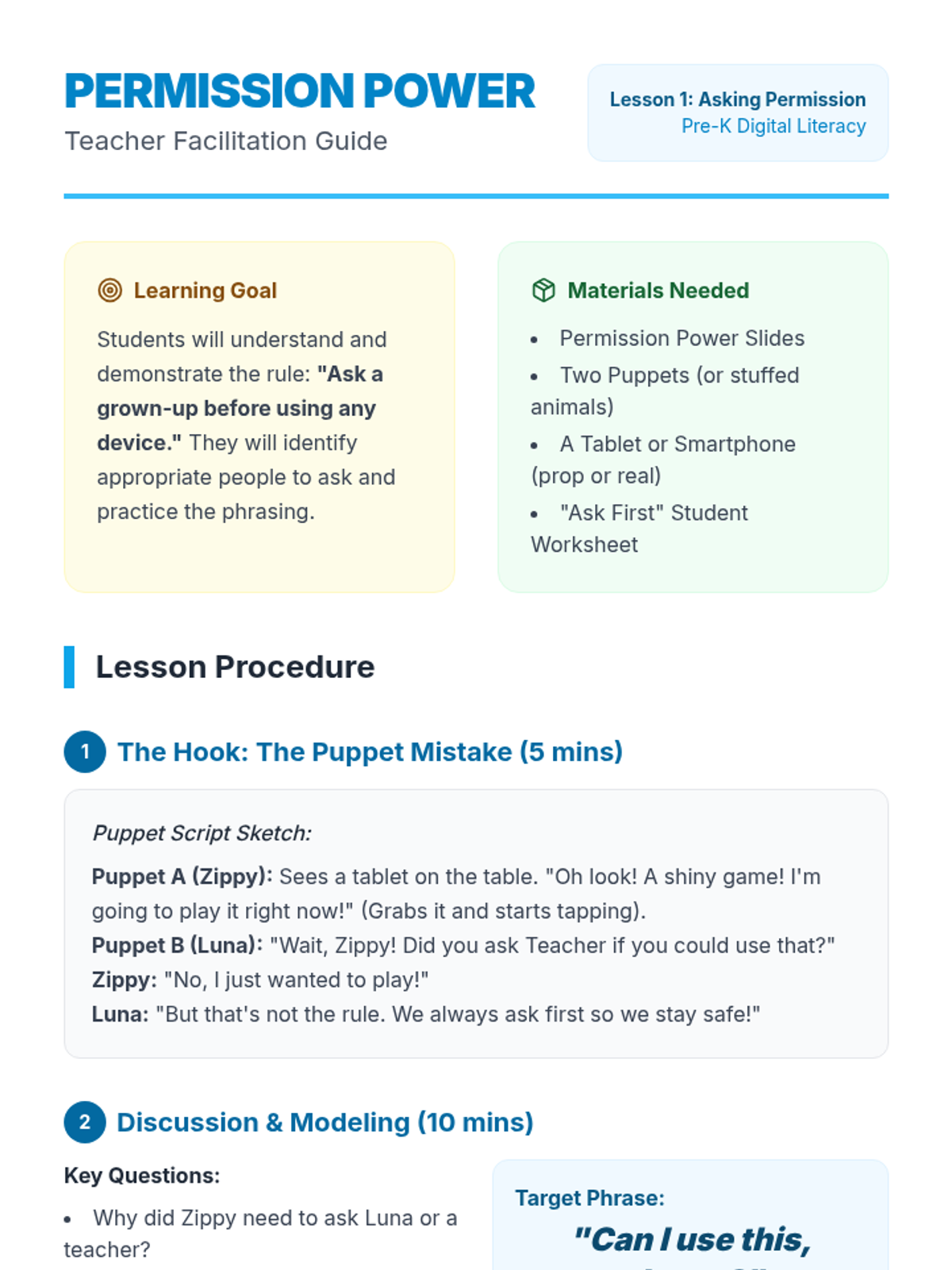
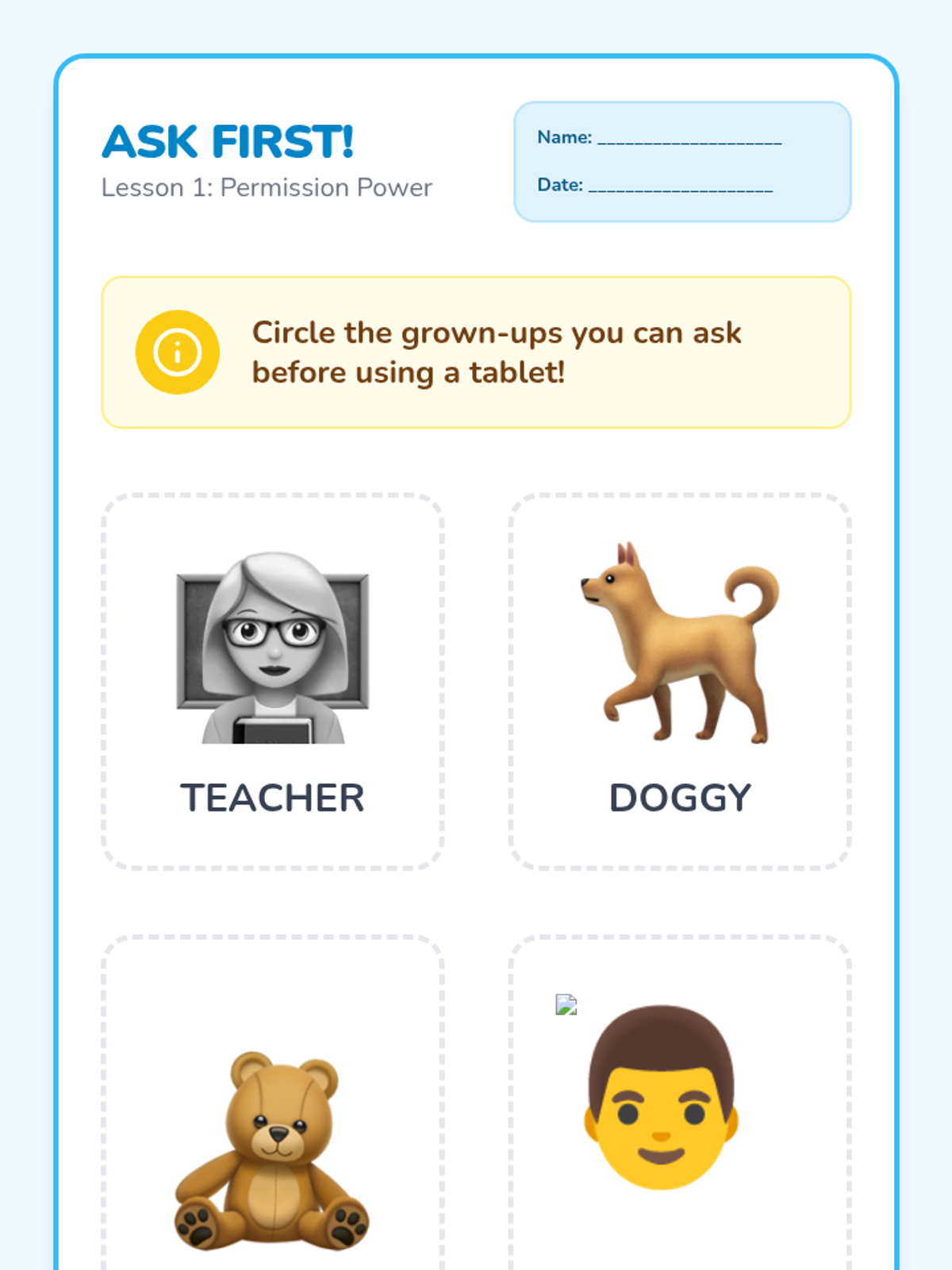
Students learn the fundamental rule of asking a trusted adult for permission before using any digital device through puppet modeling and discussion.
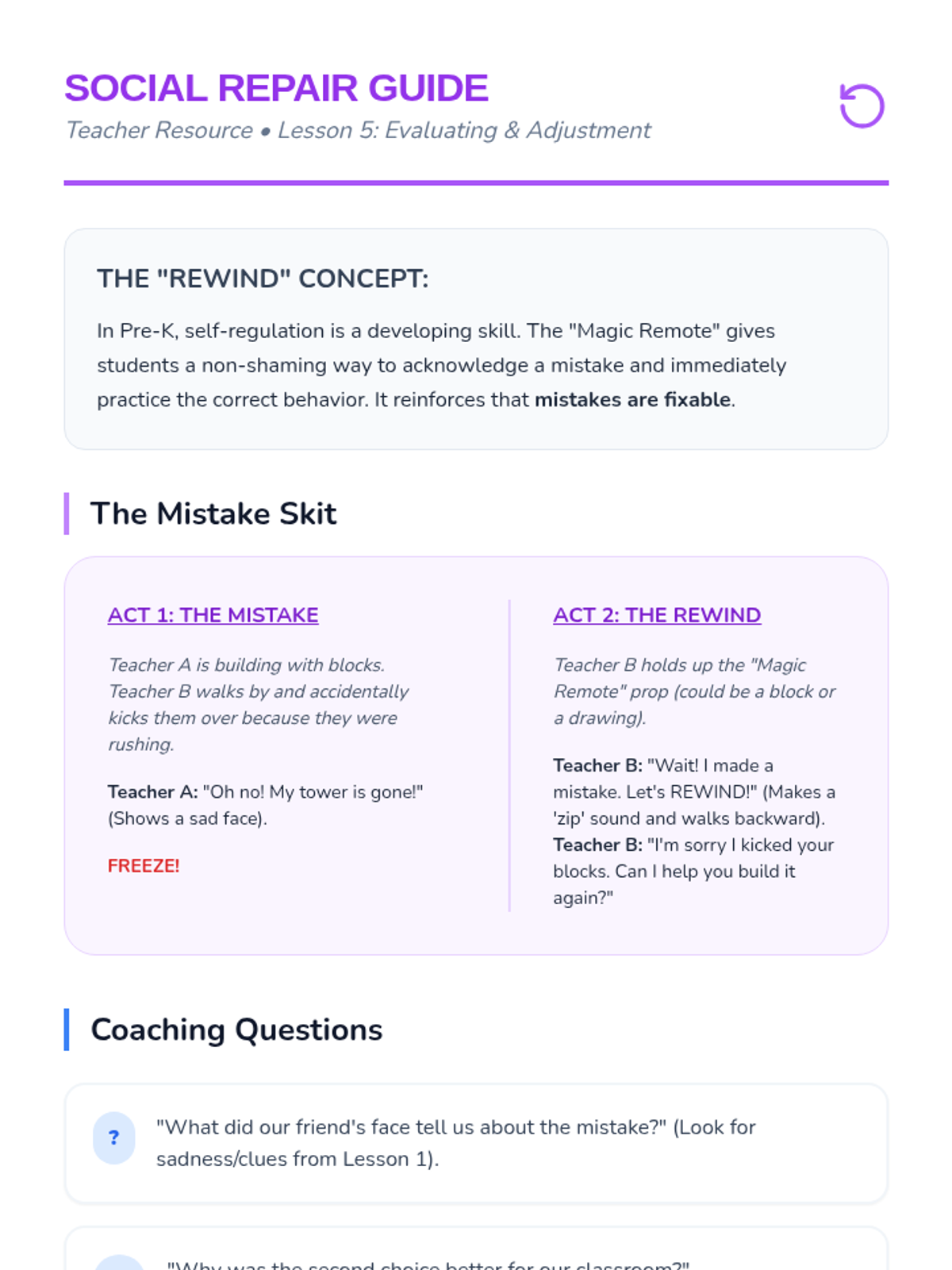
The final lesson focuses on what to do when a poor decision is made, emphasizing that choices can be corrected. Students watch a brief skit where a character makes a mistake, and then they collaboratively coach the character on how to 'rewind' and try a better strategy.
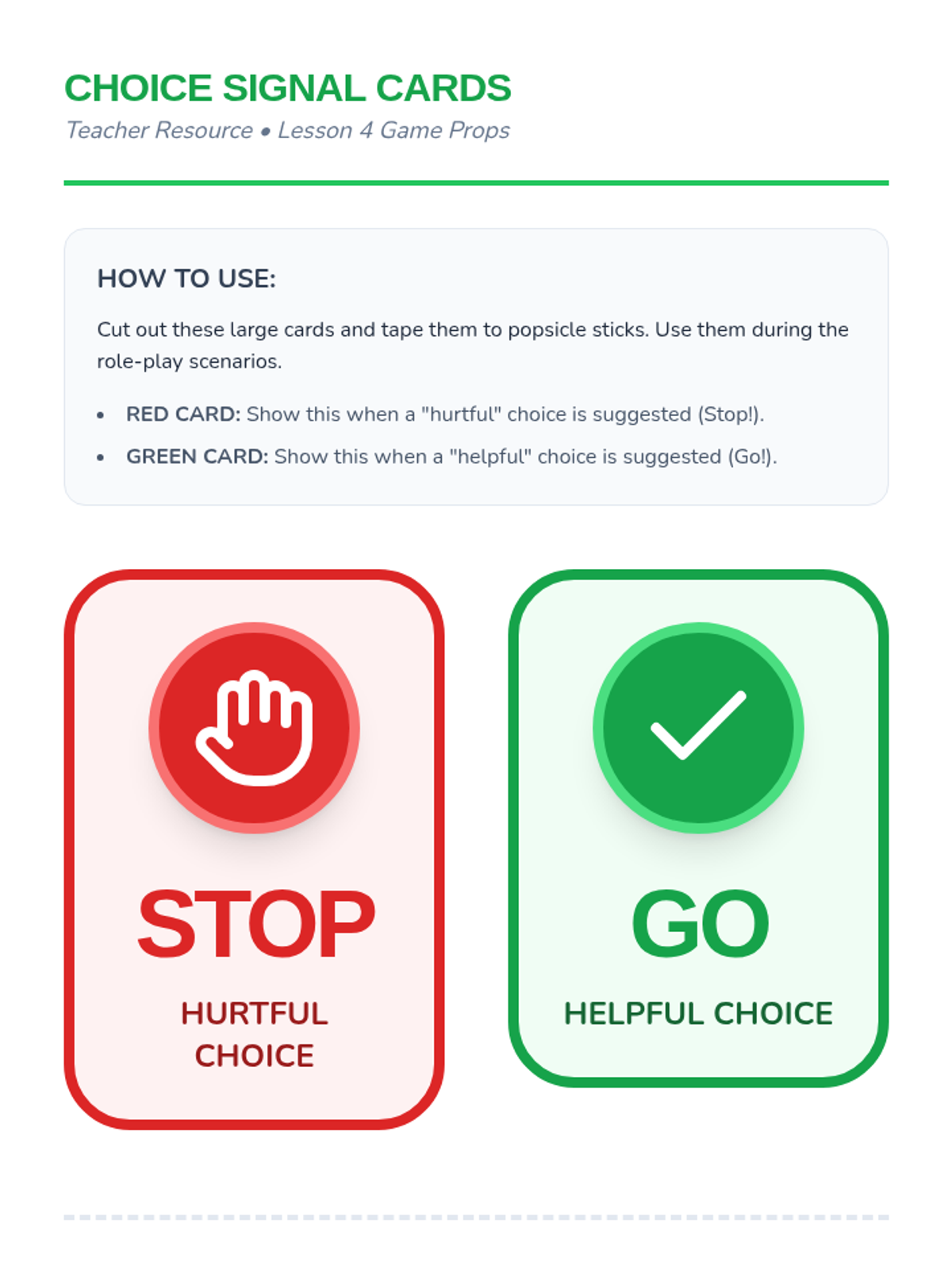
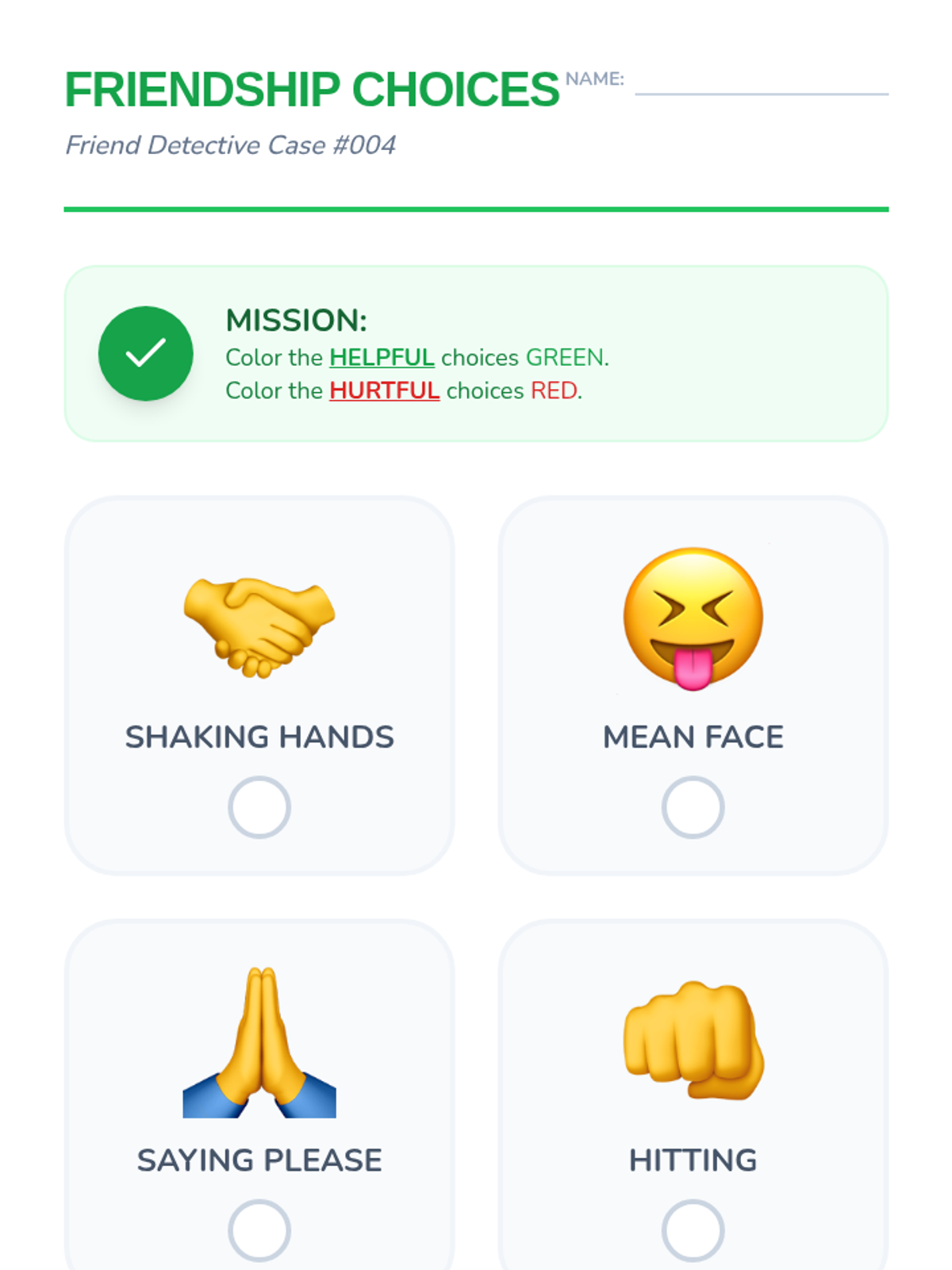
Students practice the 'Stop, Think, Choose' strategy through guided role-play scenarios involving sharing and turn-taking. They are presented with a social problem and offered two distinct choices, visually represented by red (stop/bad choice) and green (go/good choice) signals.
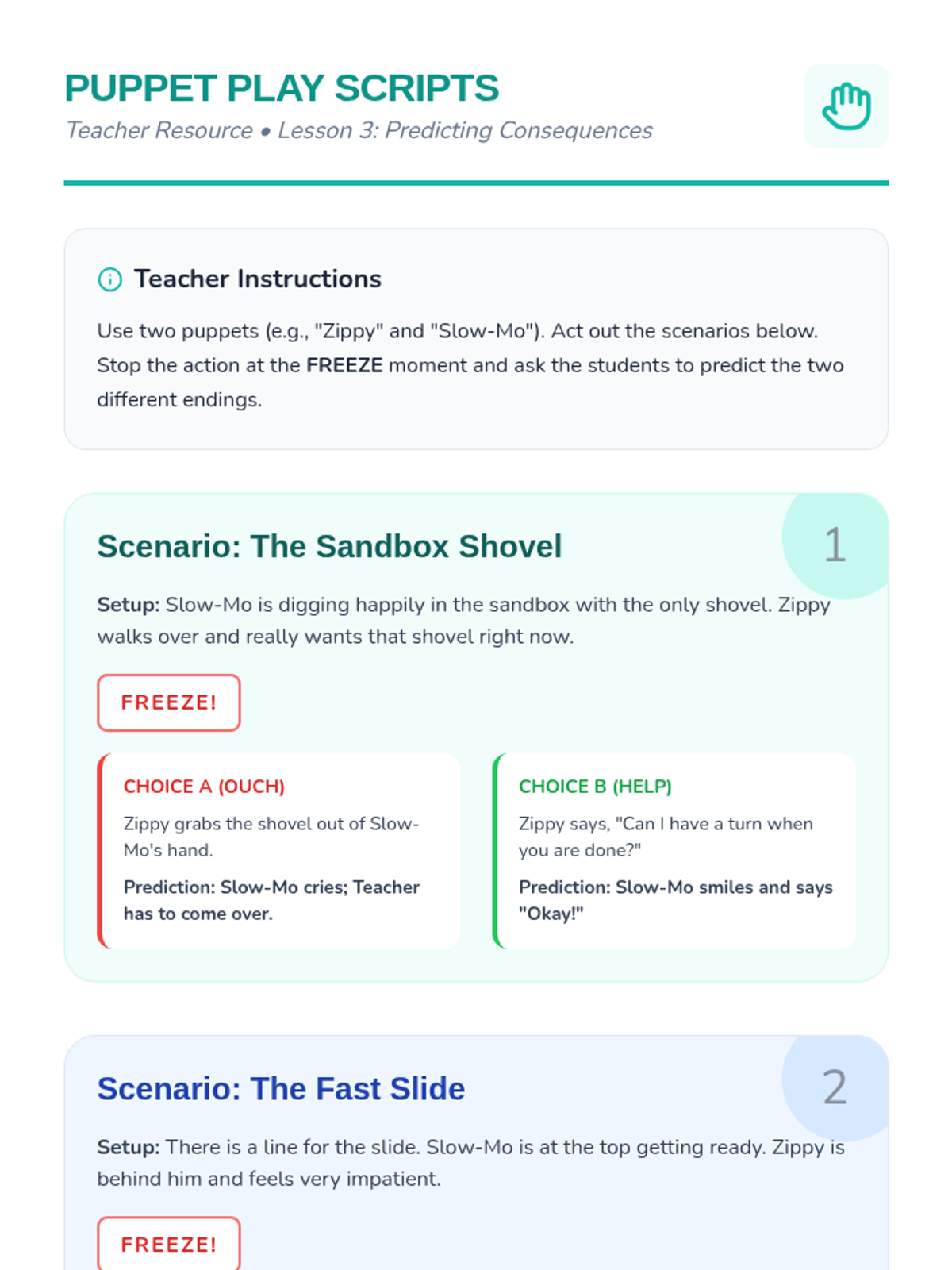
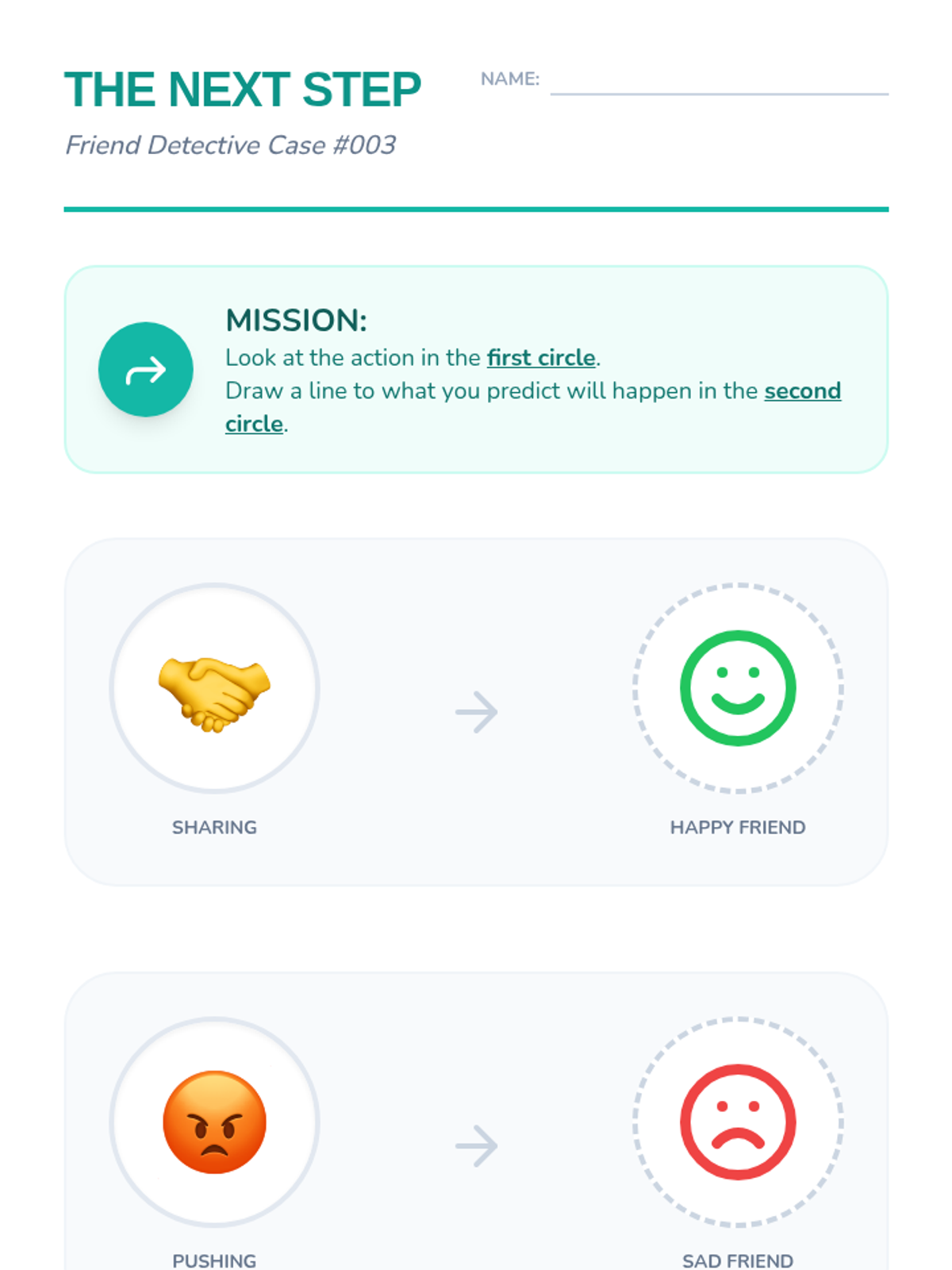
Using puppets, the teacher presents social scenarios where the action freezes right before a decision is made. Students discuss and predict what will happen next if the puppet chooses a negative action versus a positive one. This lesson builds the cognitive bridge between an action and its social result.
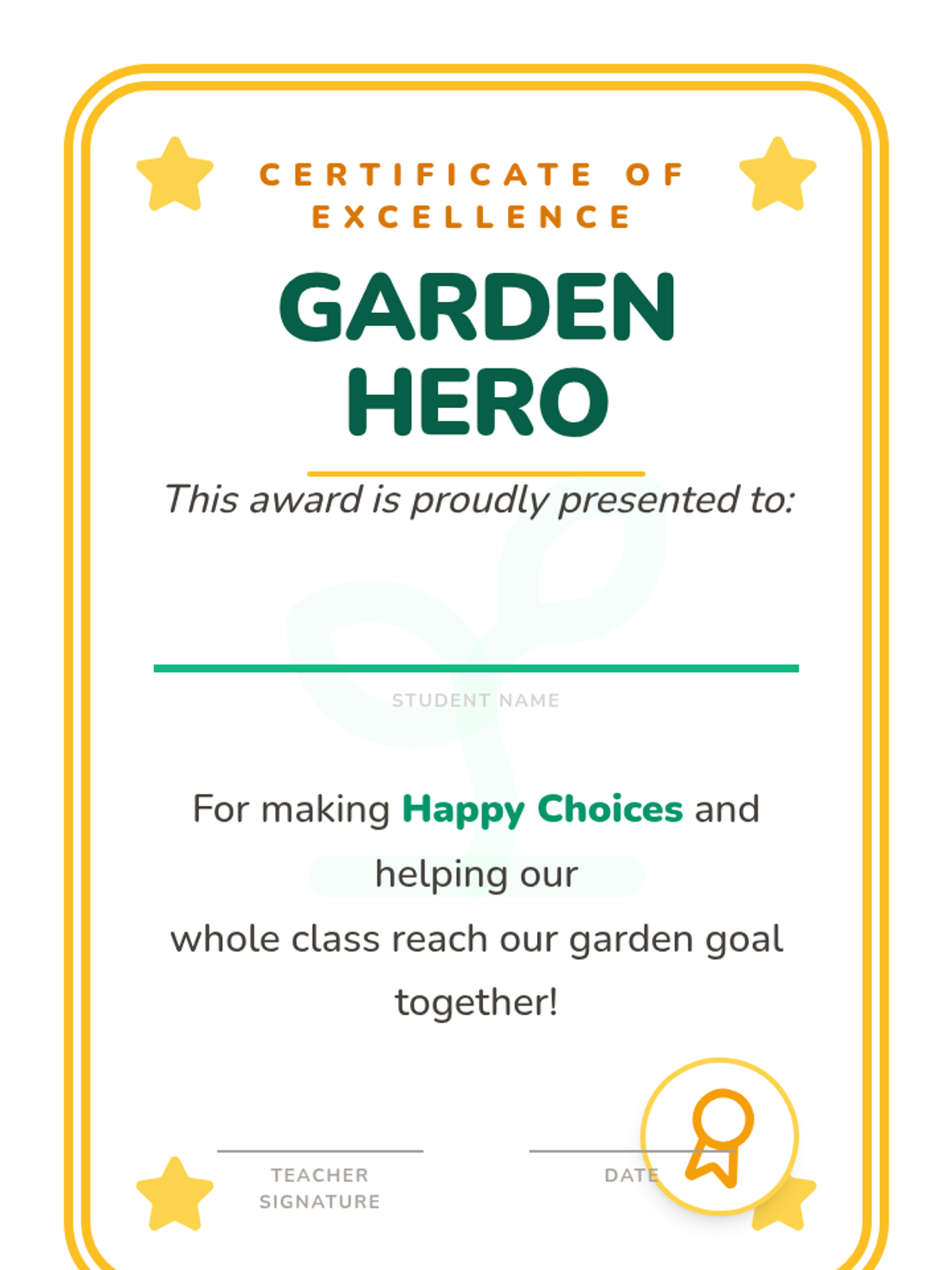
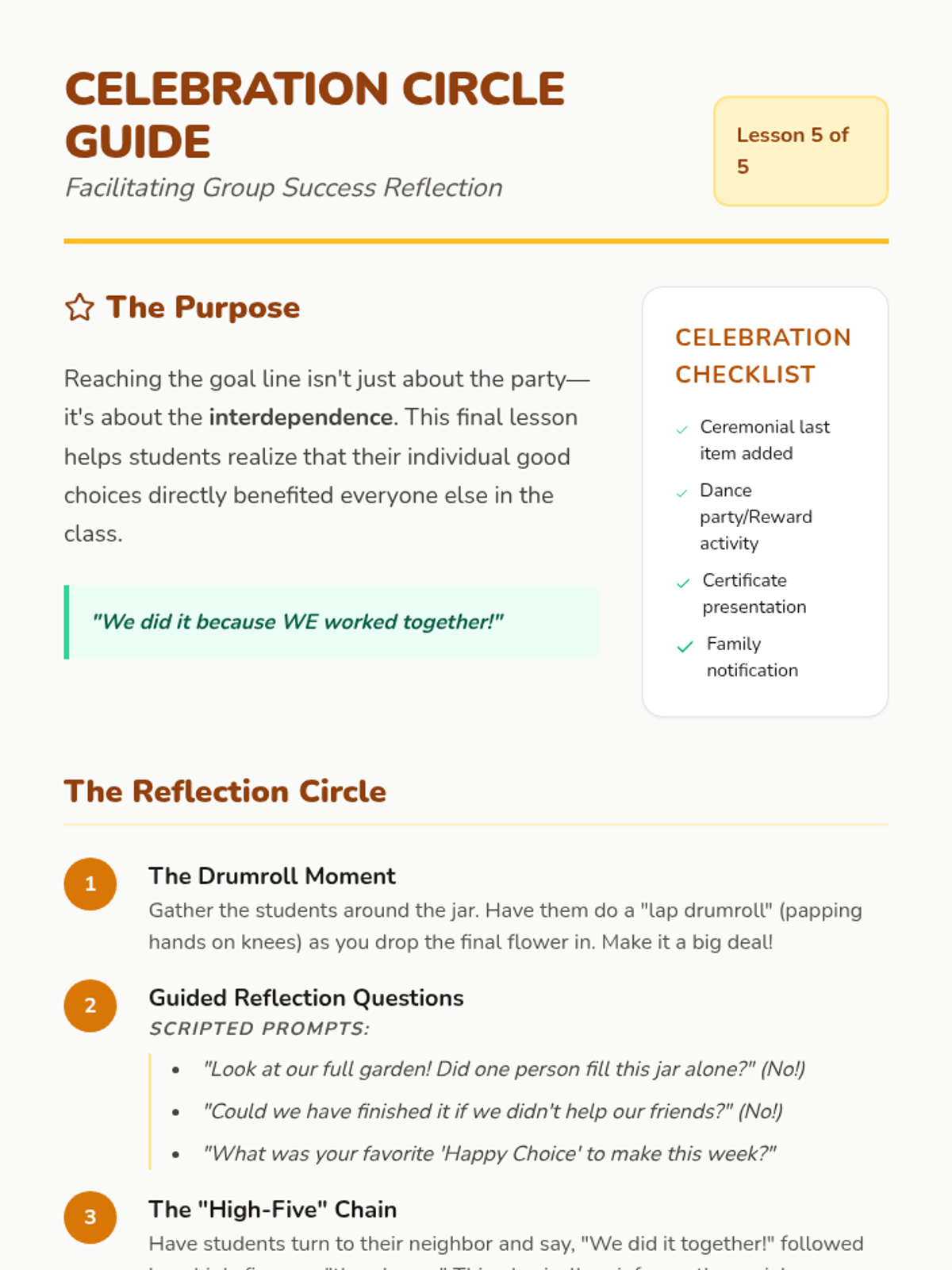
The class celebrates reaching their goal and reflects on how their teamwork made it possible.
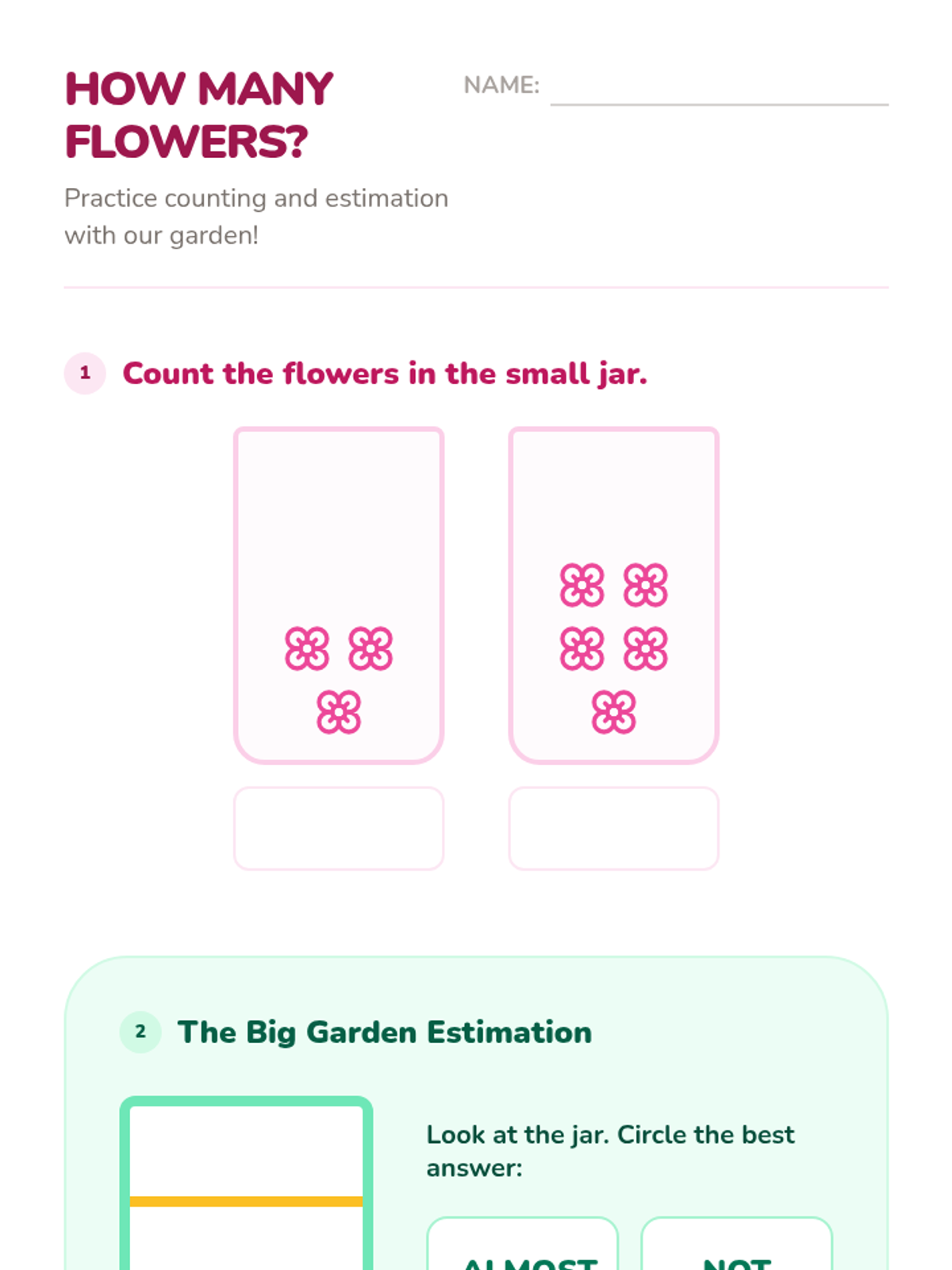
Students use the tracker to practice basic estimation and measurement, discussing how close they are to their shared reward.
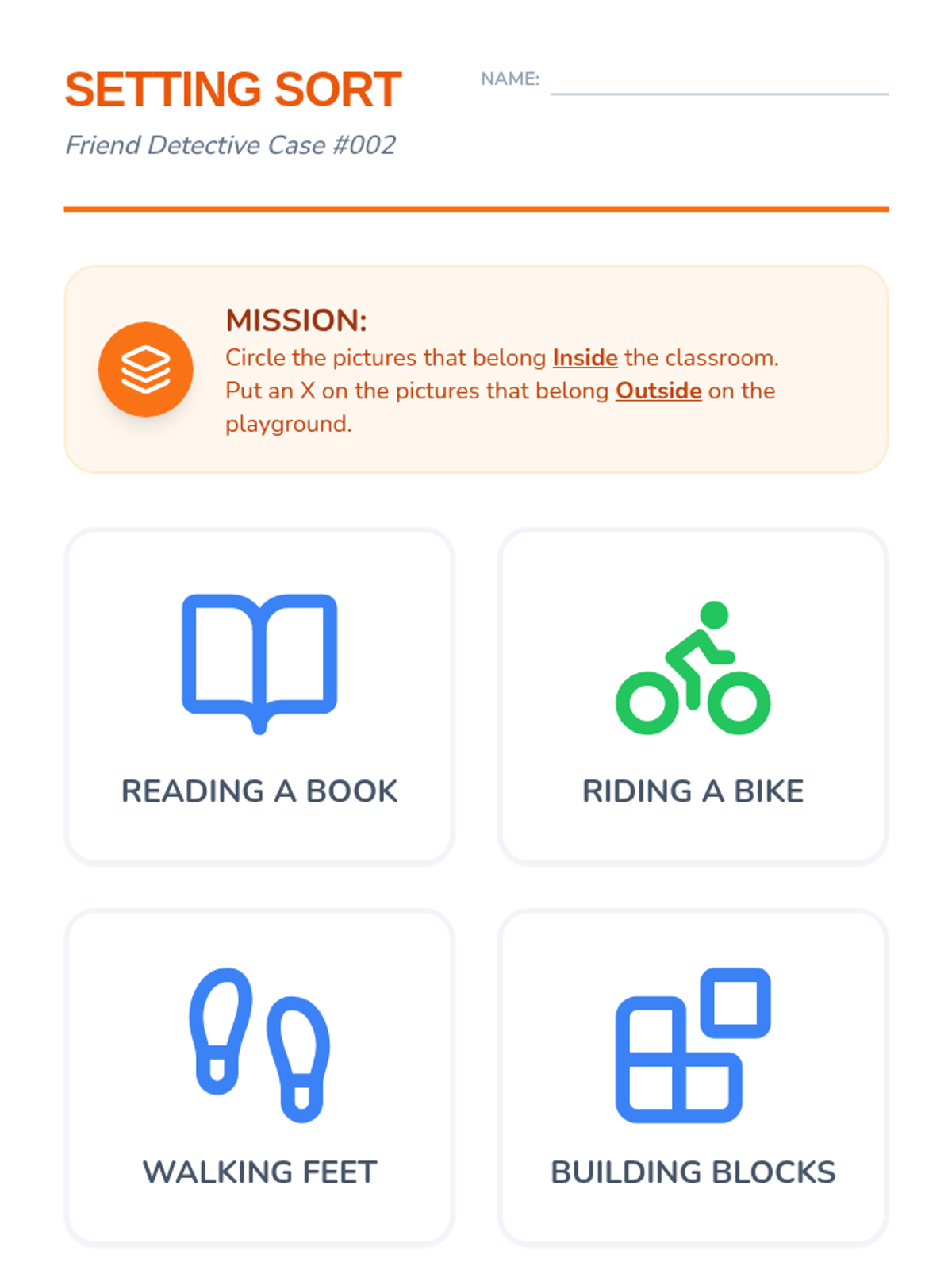
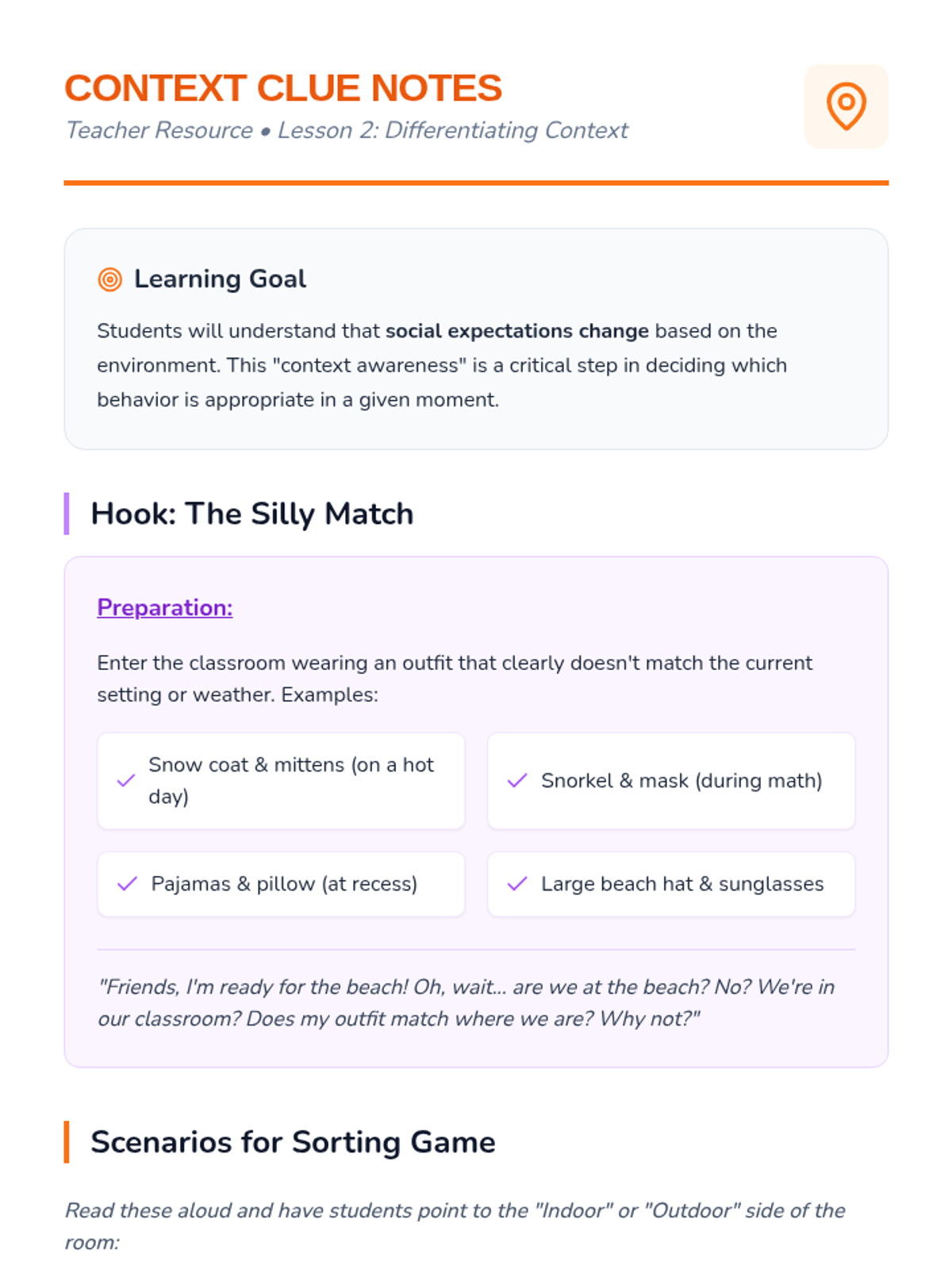
Learners engage in a sorting game to distinguish between 'indoor' and 'outdoor' behaviors, establishing that the environment changes which choices are appropriate. Students classify actions like running or whispering into the correct setting categories using visual supports.
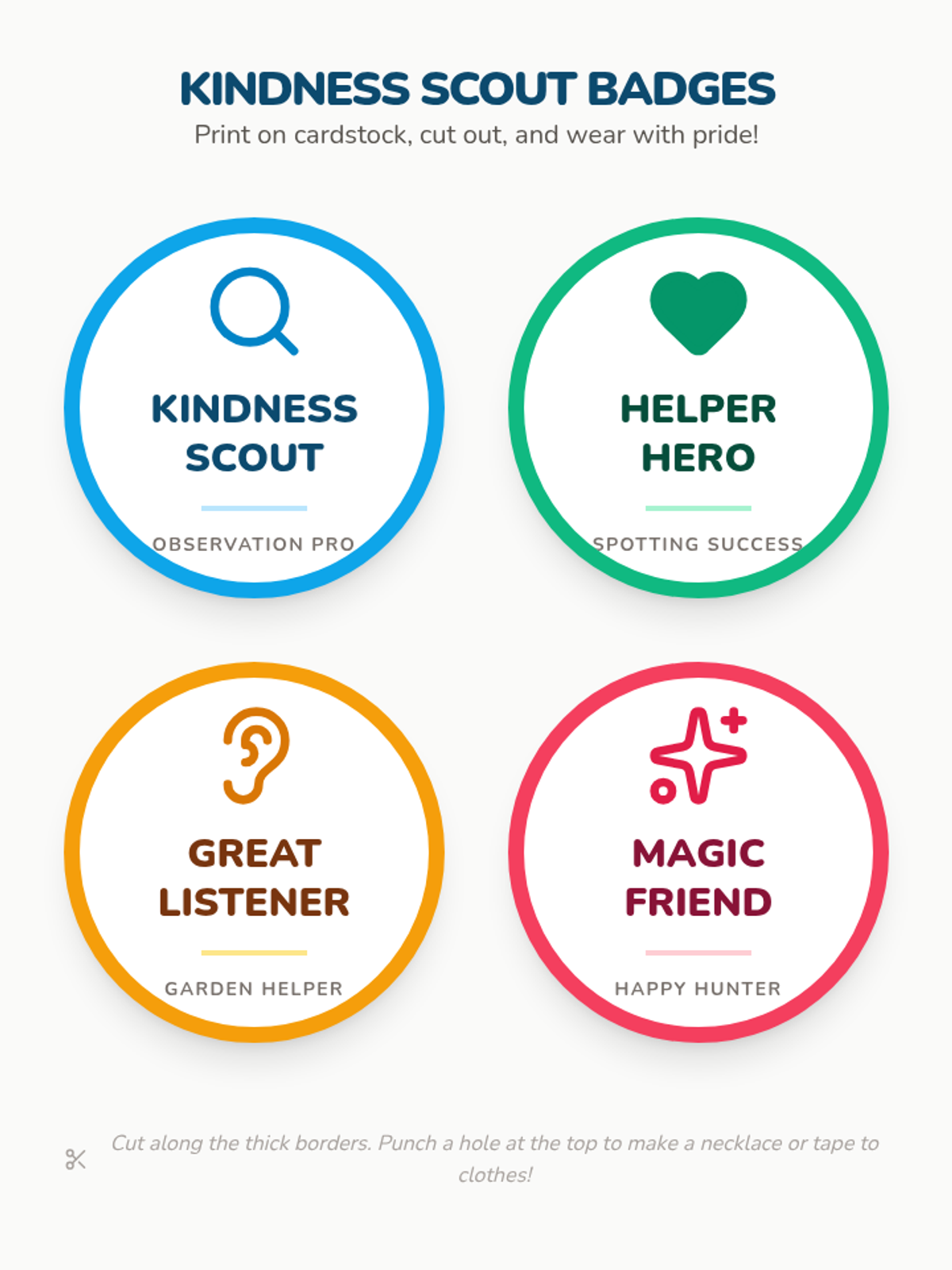
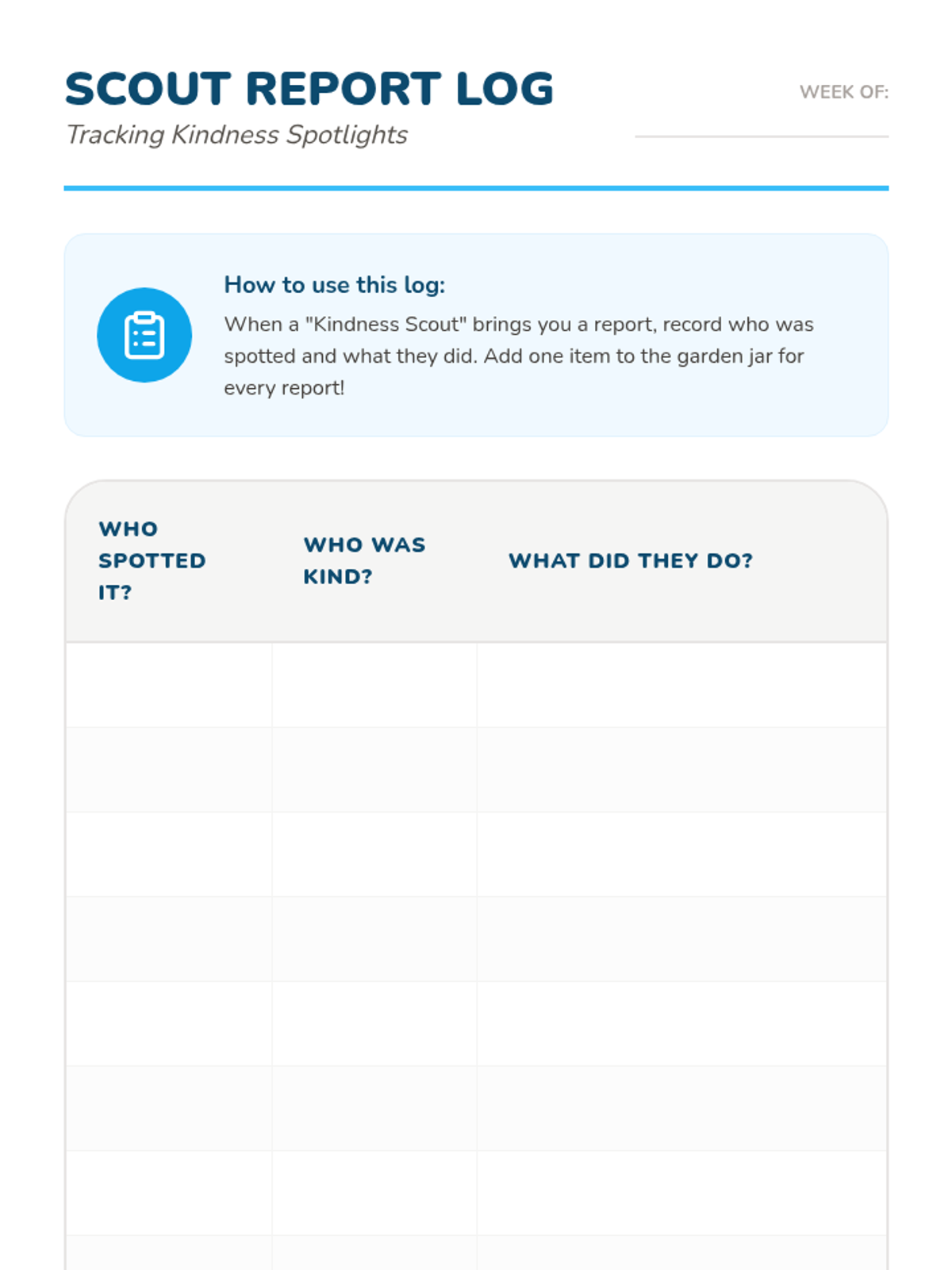
Students learn to observe and report positive behaviors in their peers, acting as 'Kindness Scouts' to help the garden grow.
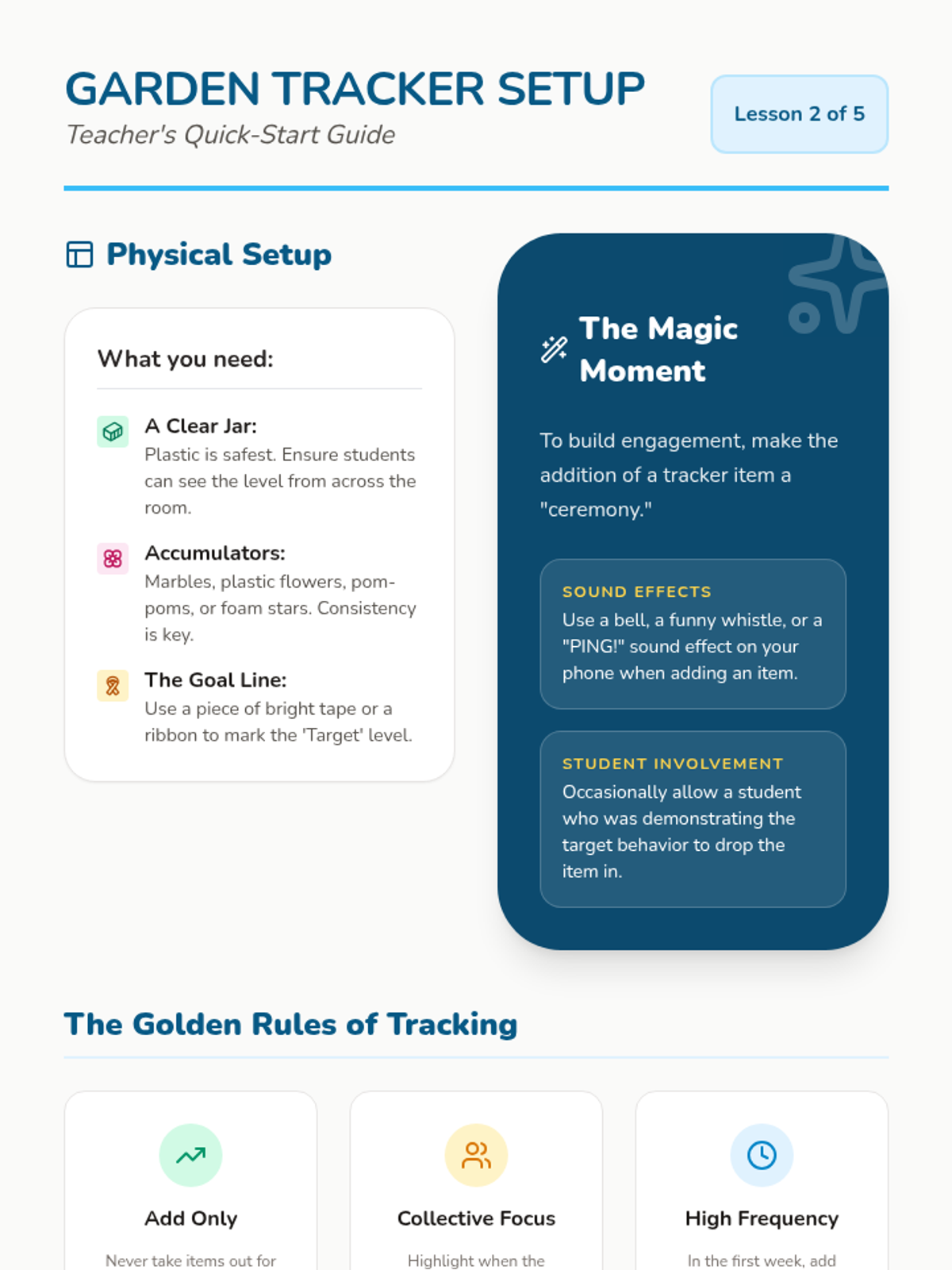
The teacher introduces the visual tracking system (the 'Good Choice Garden') and students practice understanding how collective actions fill the tracker.
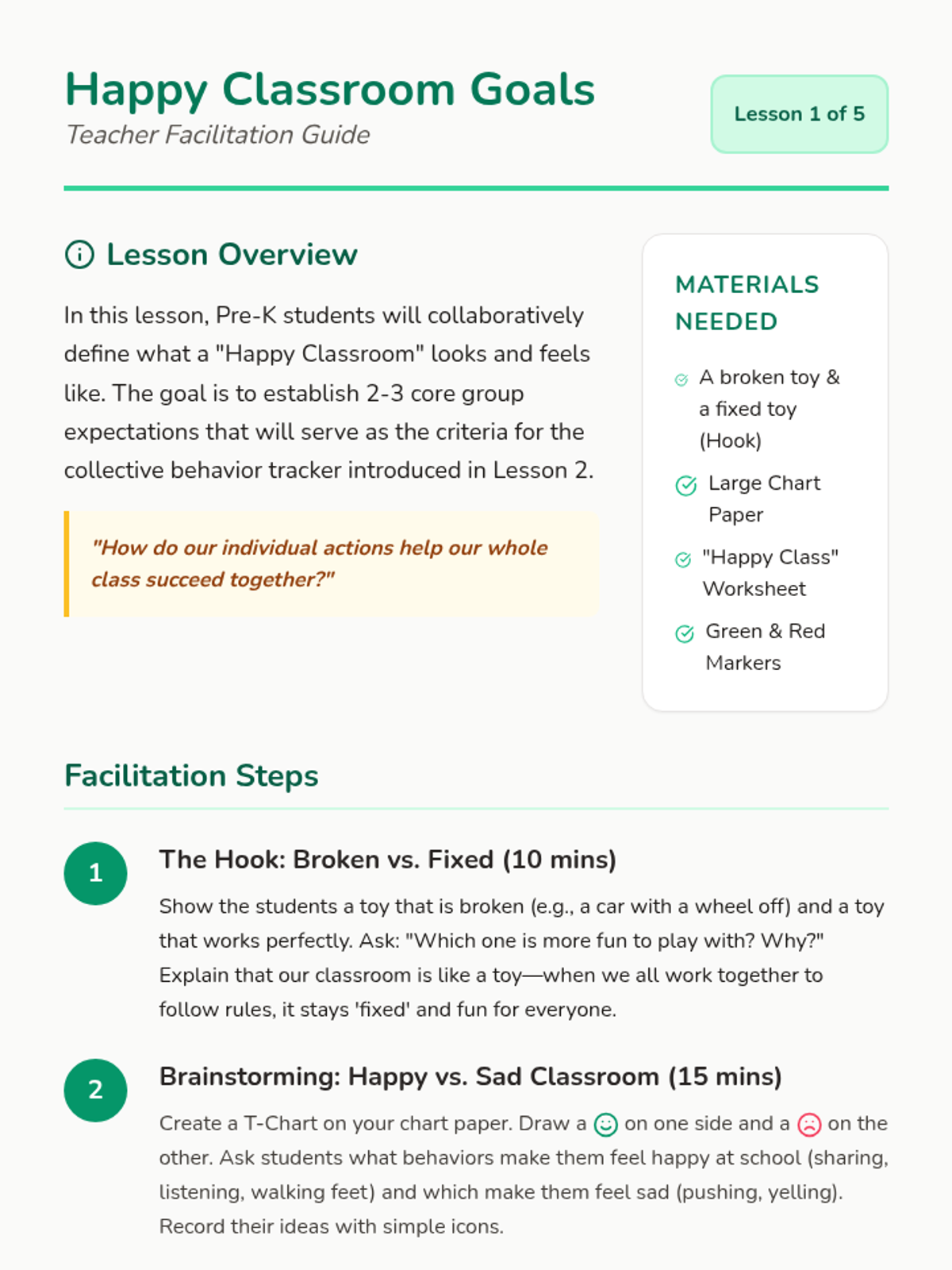
Students define what a 'happy and safe classroom' looks like and agree on key behaviors that will help the group succeed.
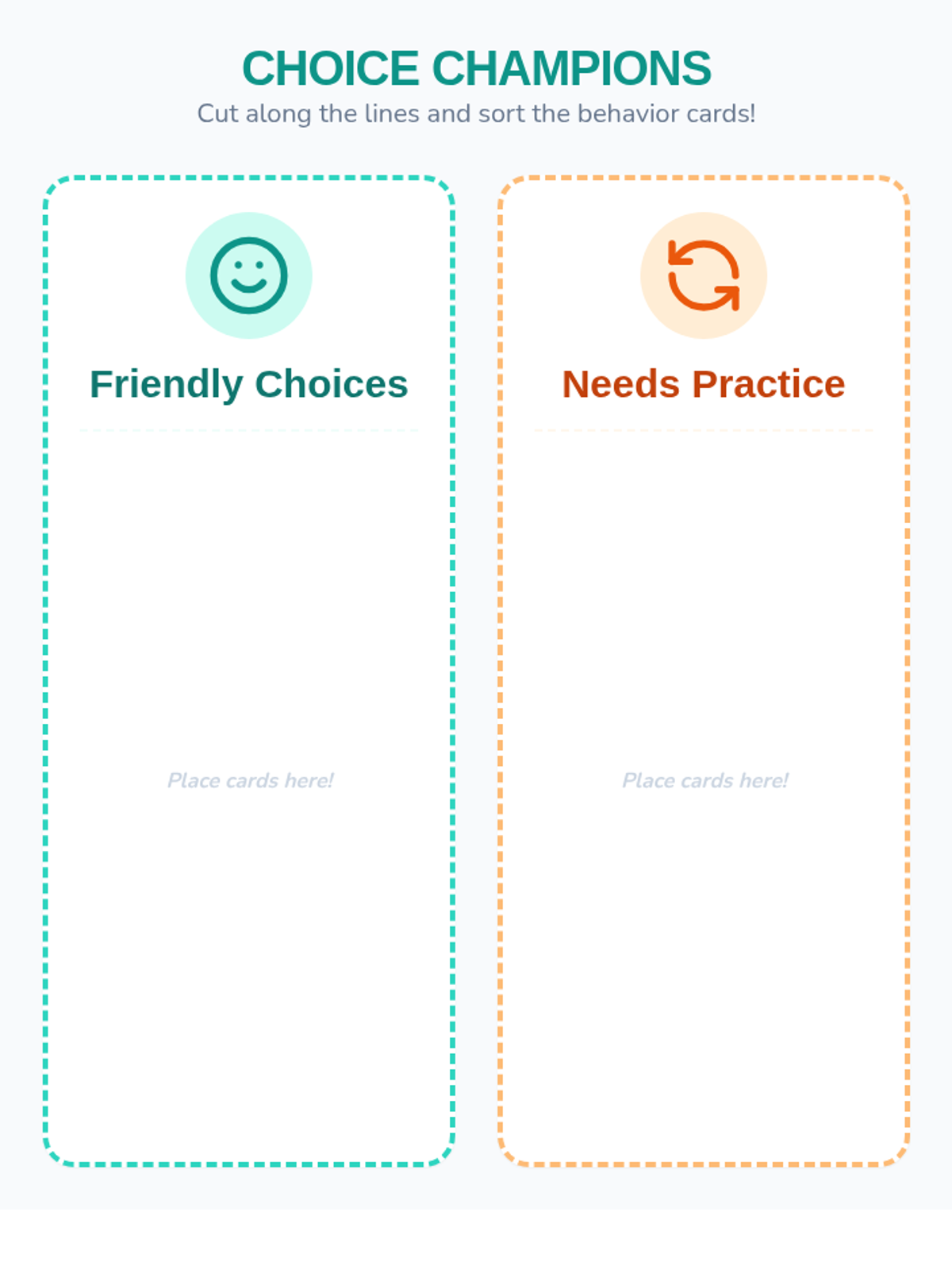
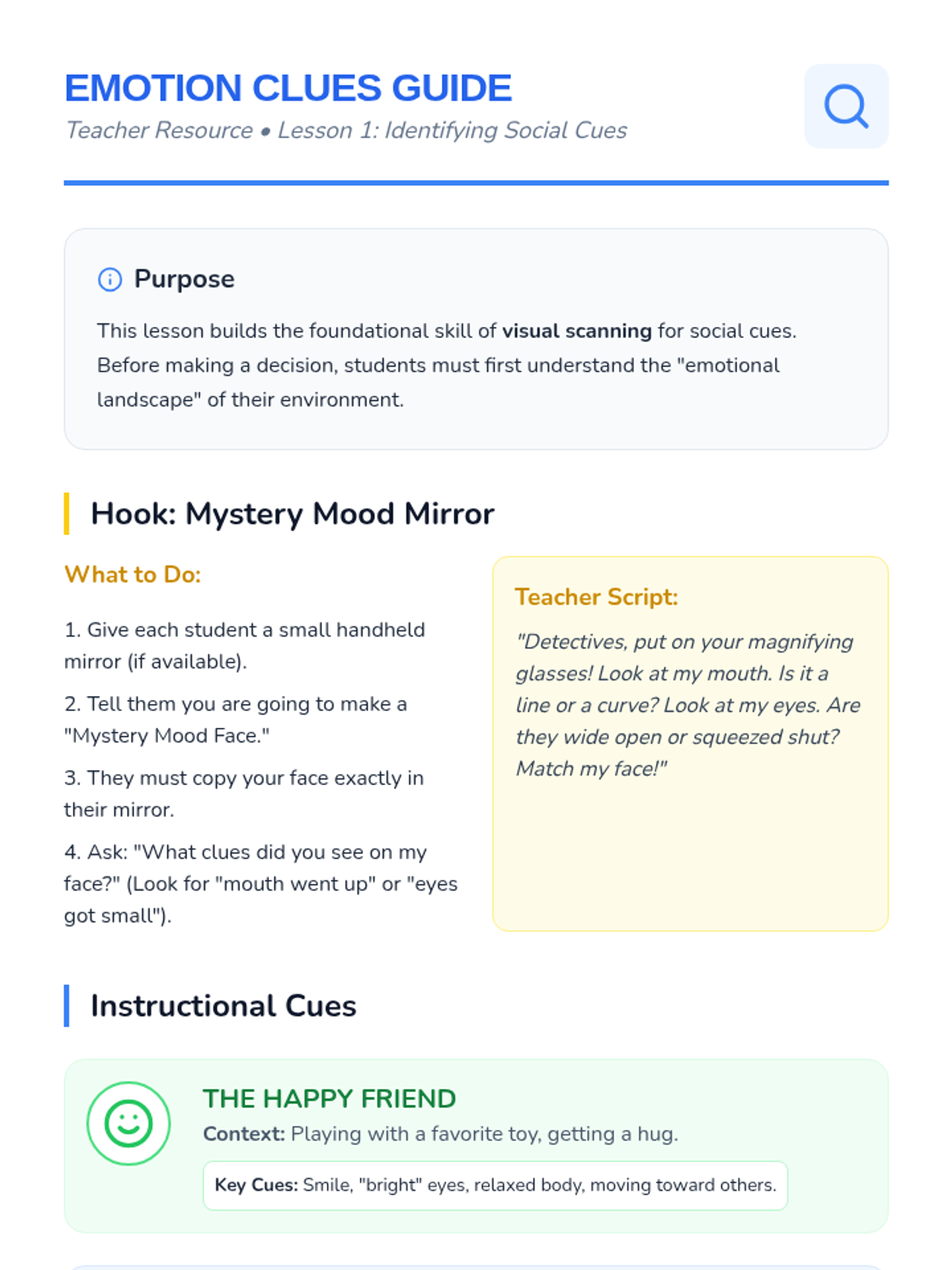
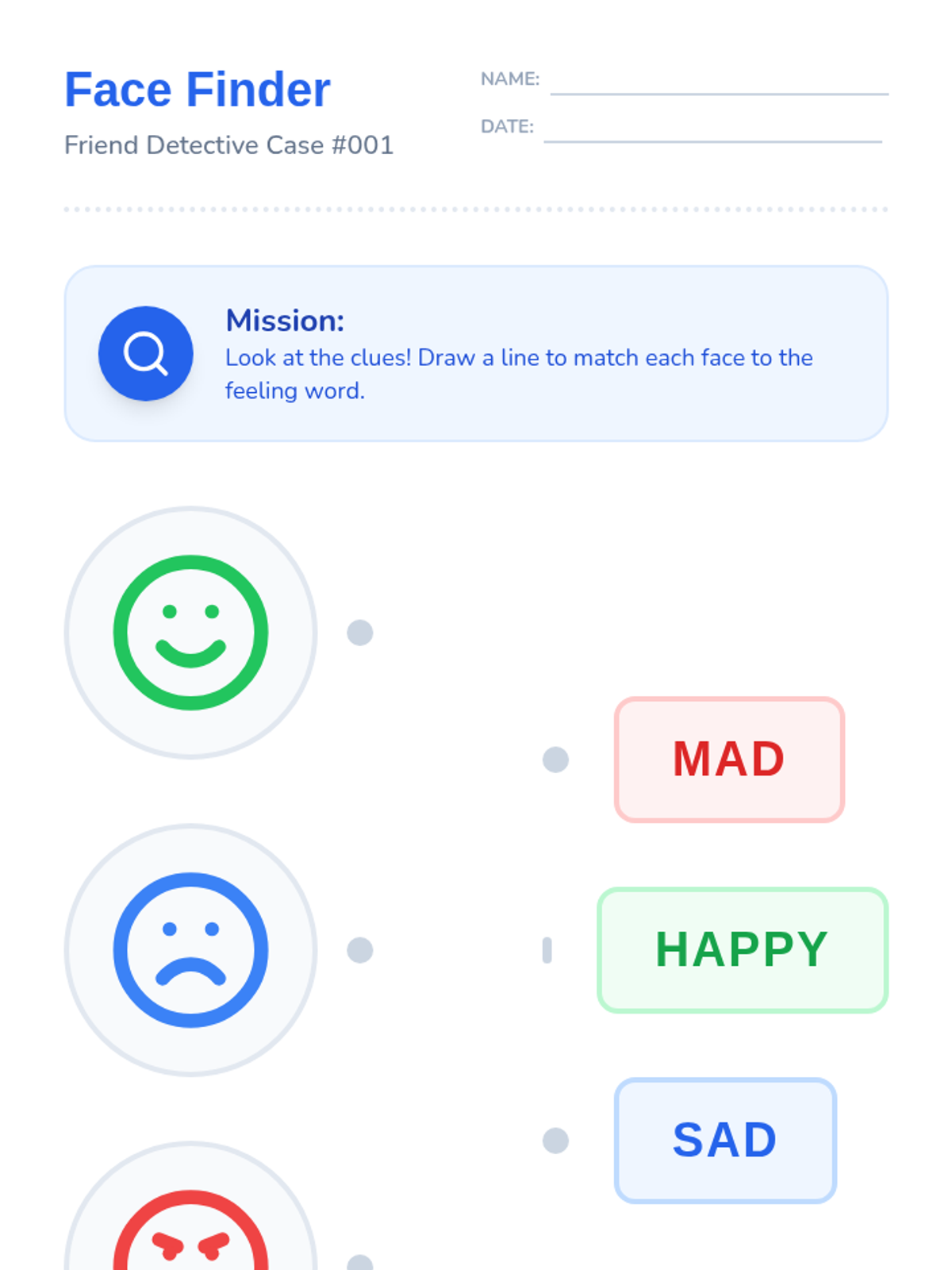
Students participate in a visual recognition activity using large photo cards to identify basic emotions based on facial expressions and body language. The teacher models how to look at eyes and mouths to determine if a peer is happy, sad, or frustrated.
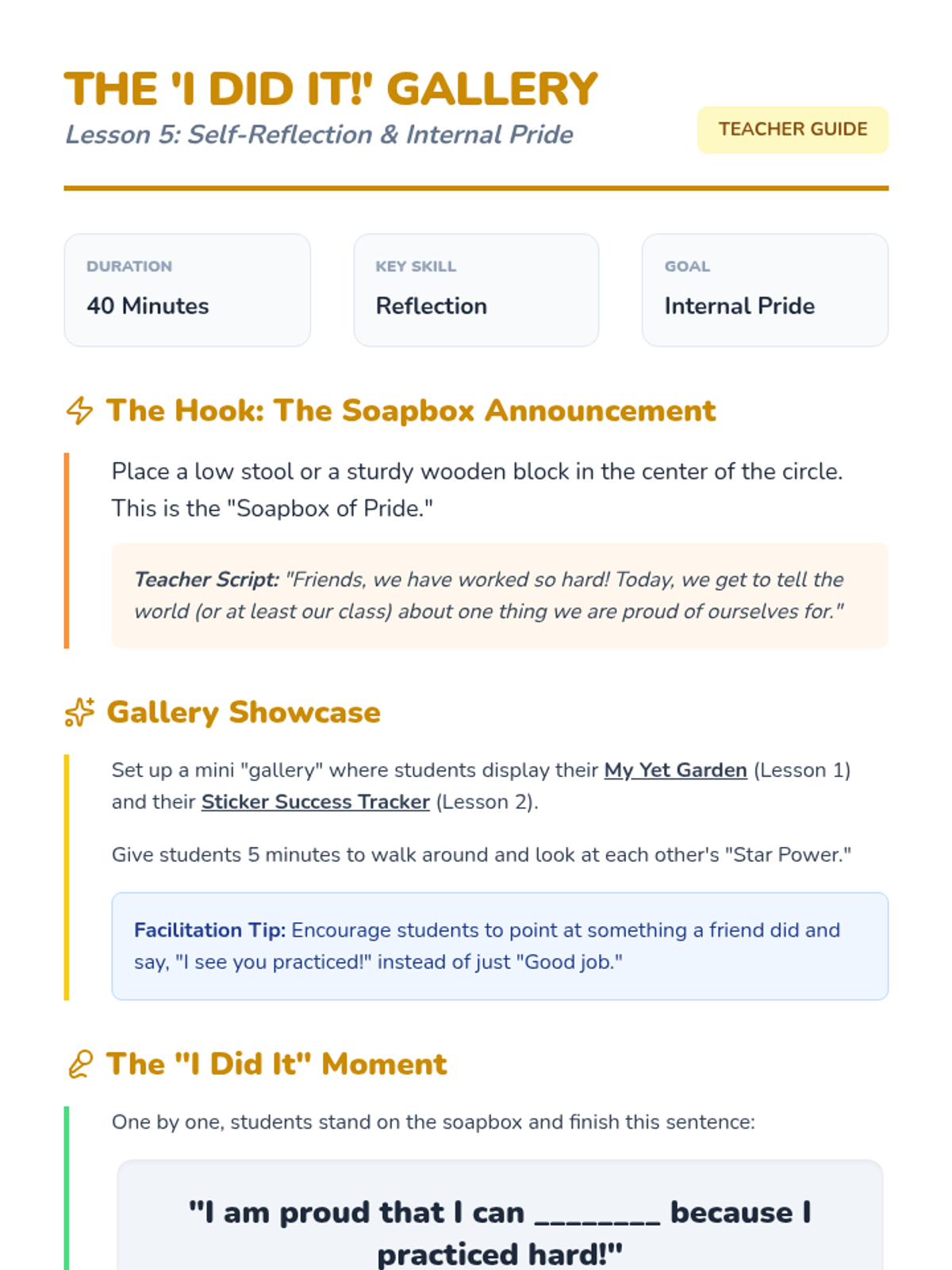
Reflecting on achievements and celebrating the internal feeling of pride through a classroom showcase.
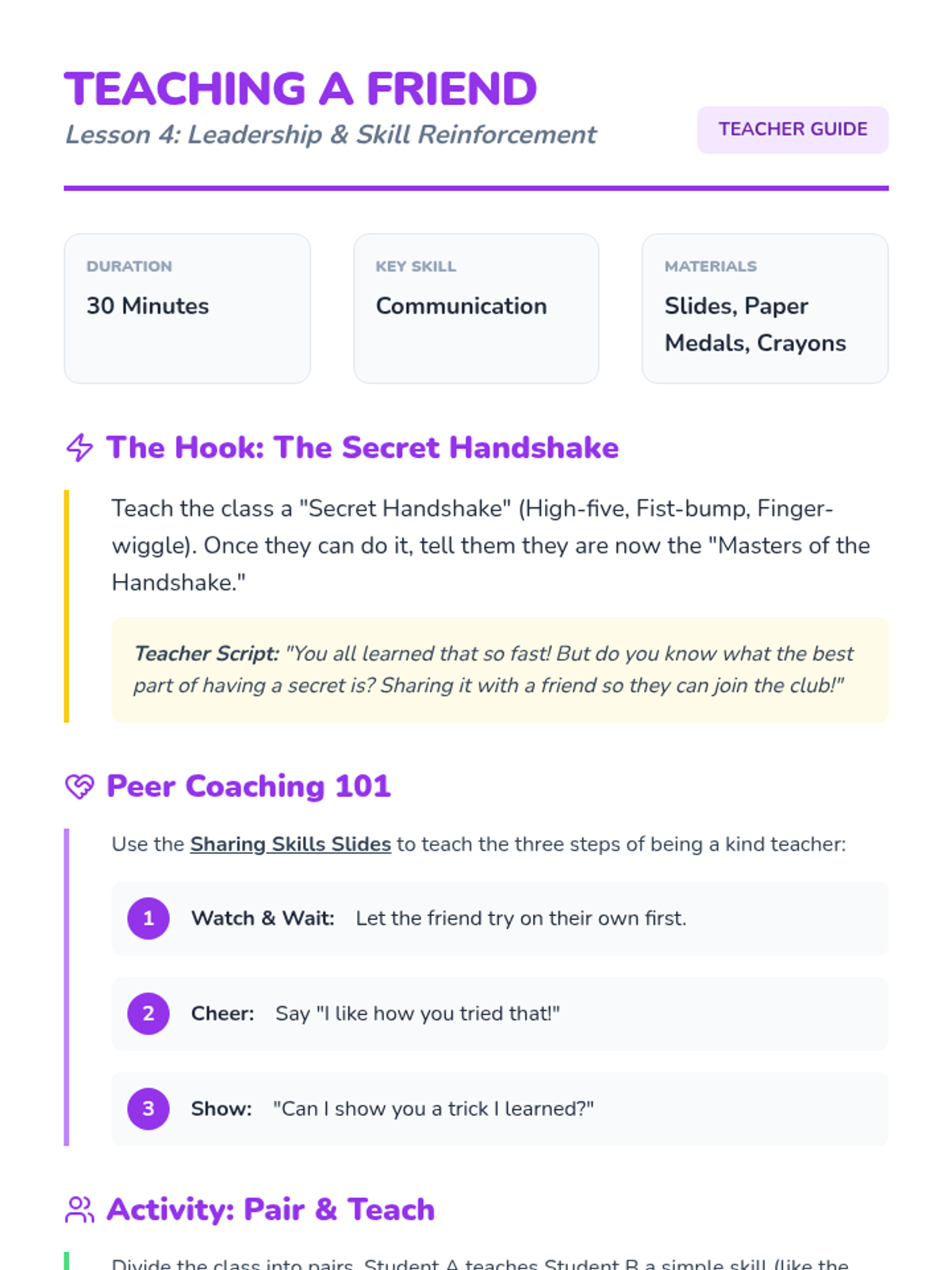
Empowering students to share their mastered skills with peers, building leadership and reinforcing their own learning.
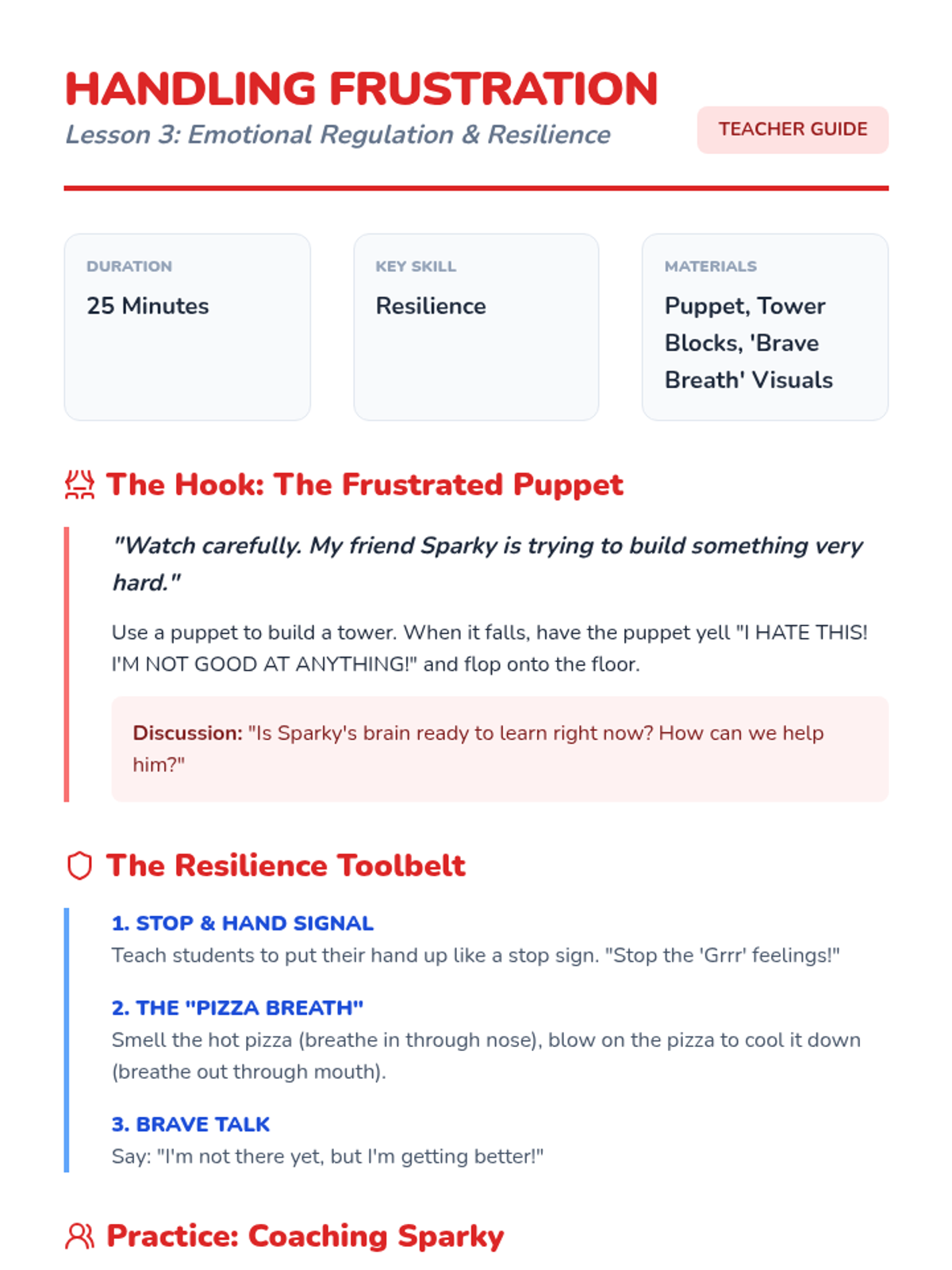
Learning emotional regulation tools and positive self-talk to manage frustration when learning something new.
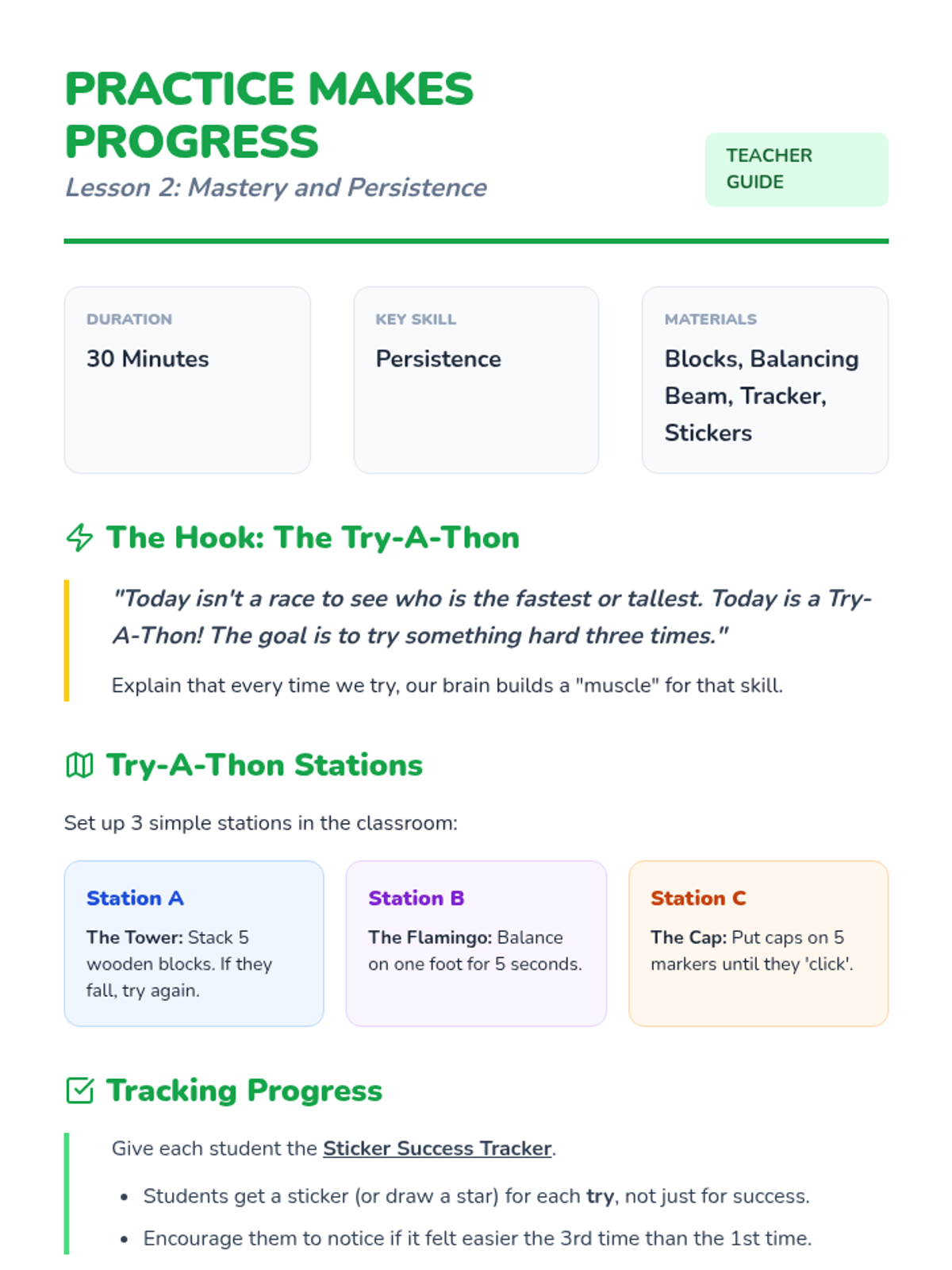
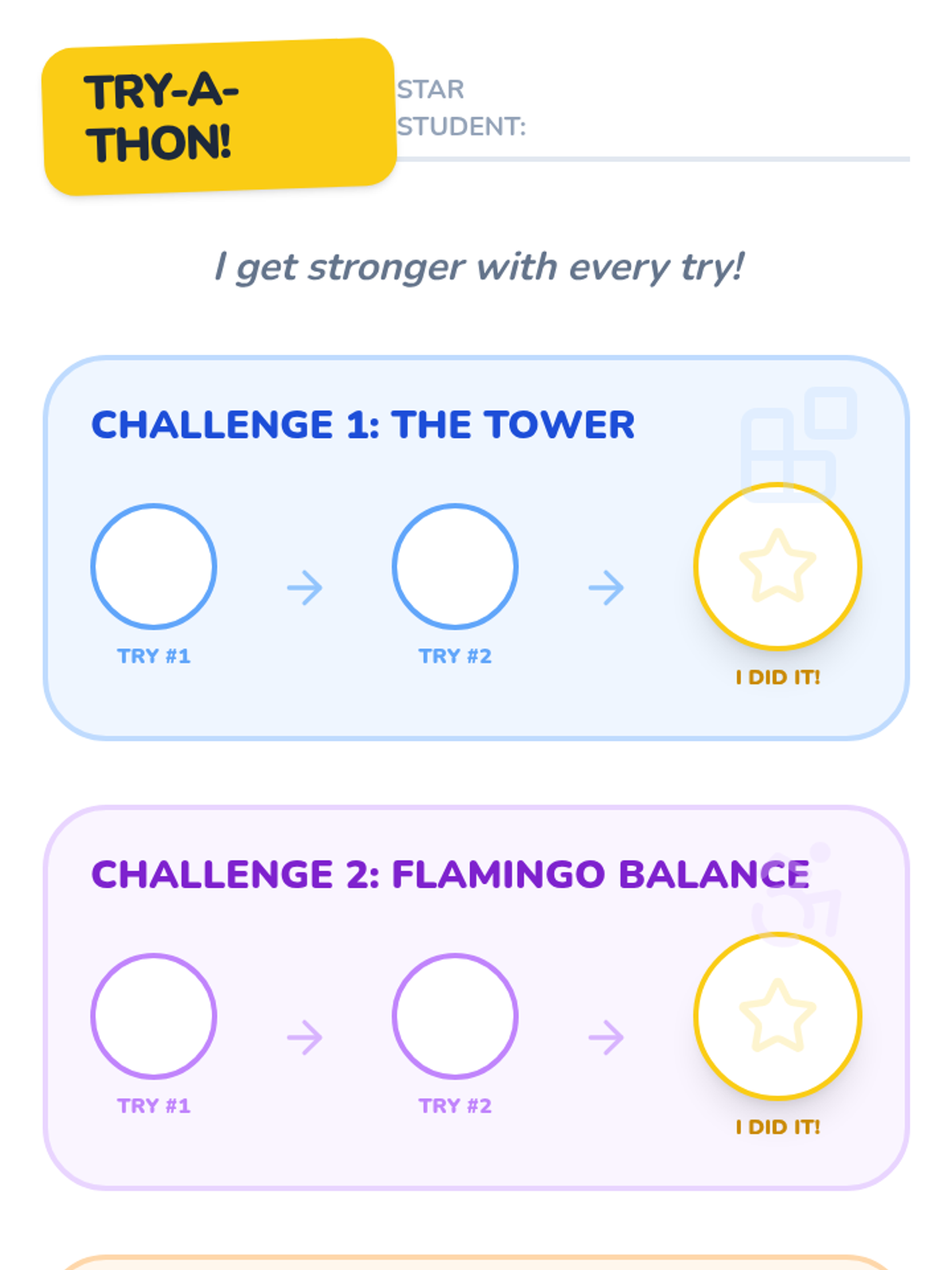
Focusing on persistence and tracking small improvements through repeated practice of simple skills.
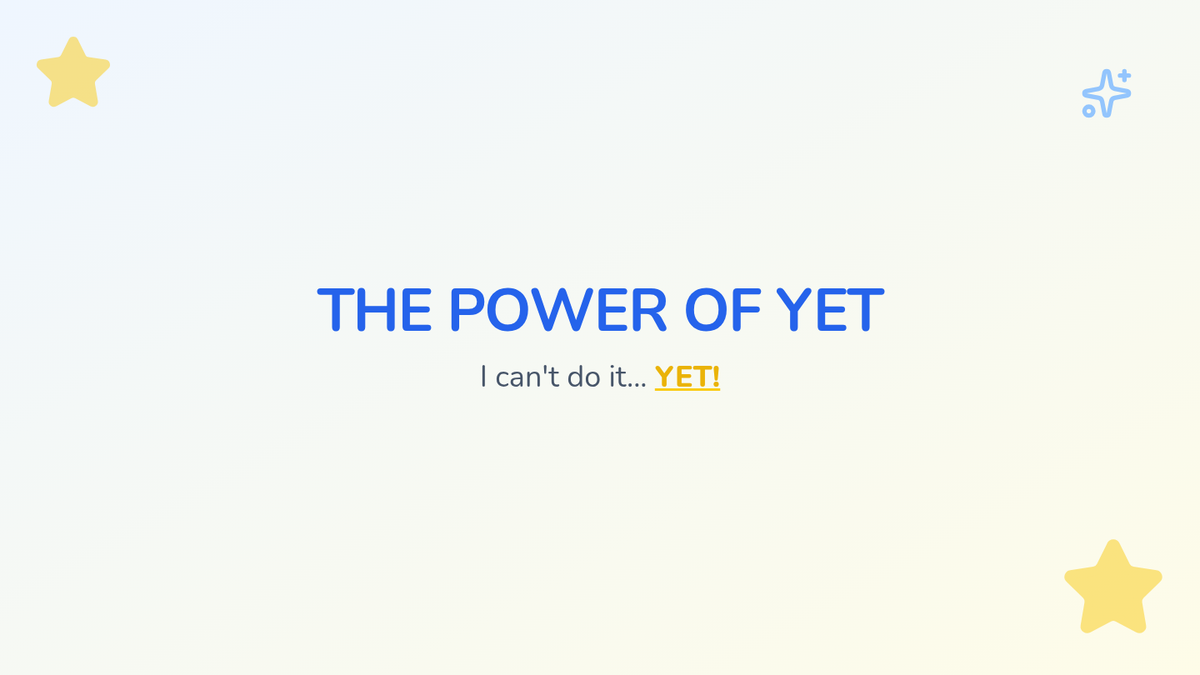
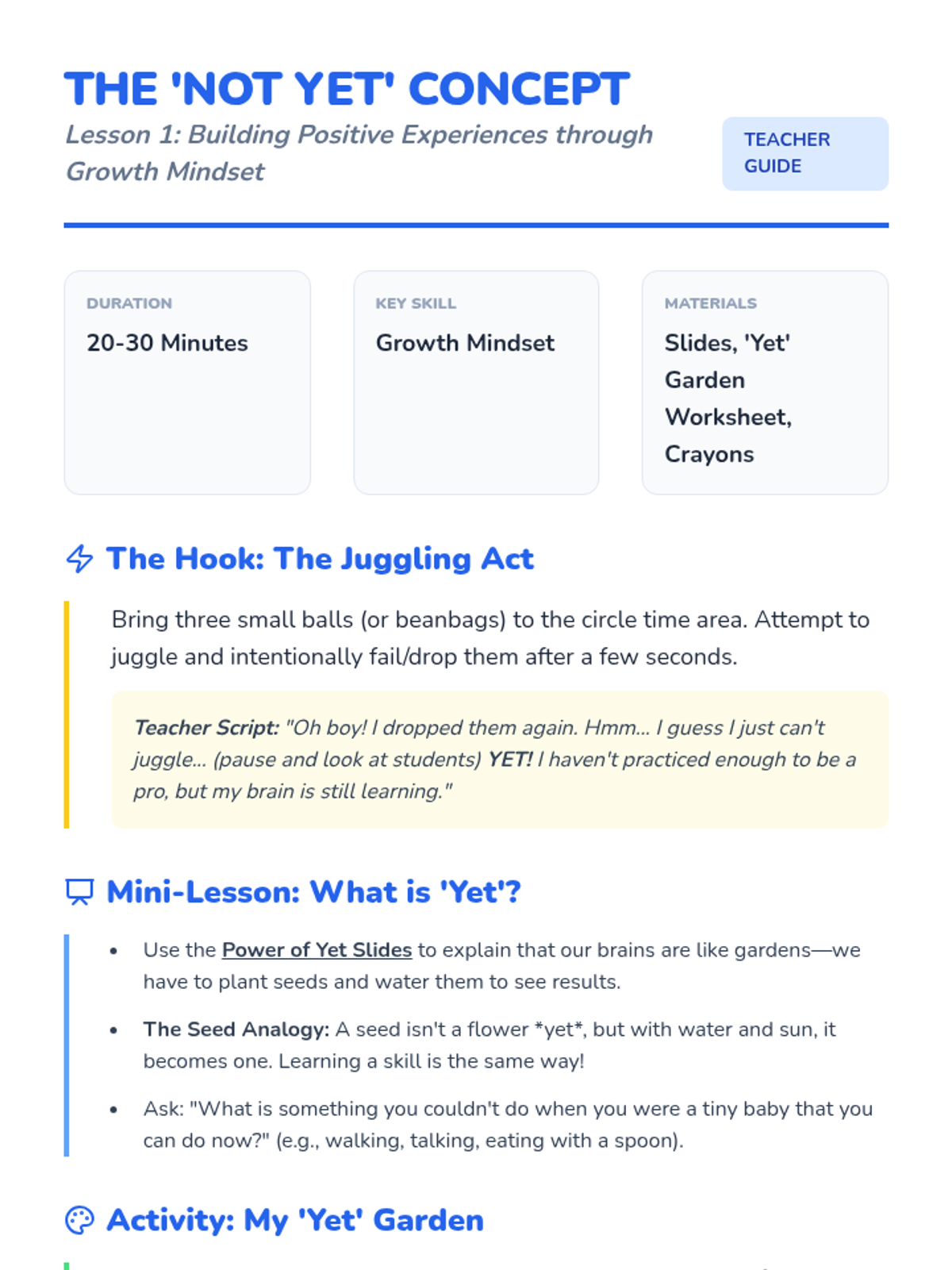
Introduction to the growth mindset using the word 'yet' to transform frustrations into future goals.
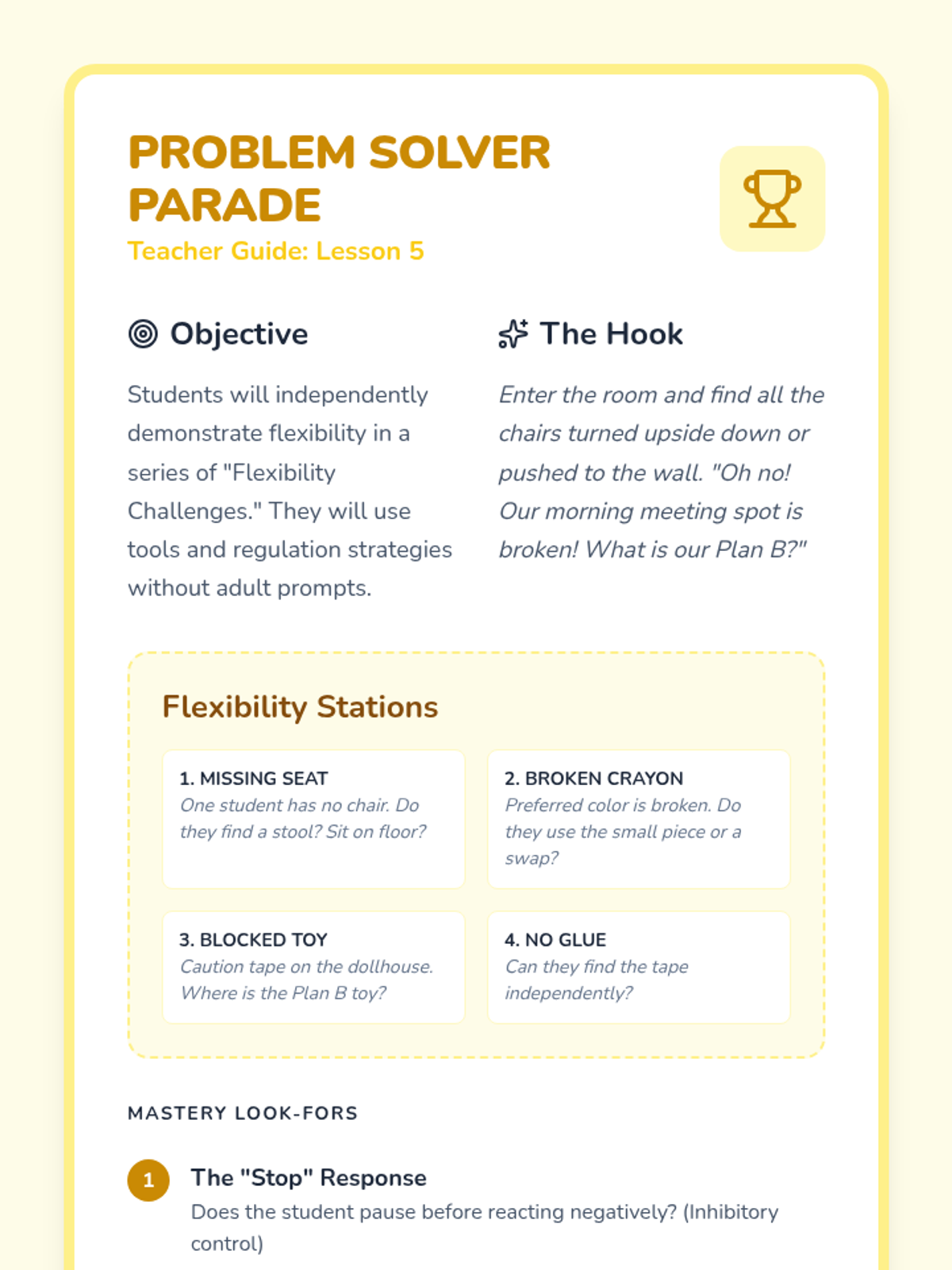
A cumulative challenge where students independently apply flexibility strategies to solve novel classroom problems.
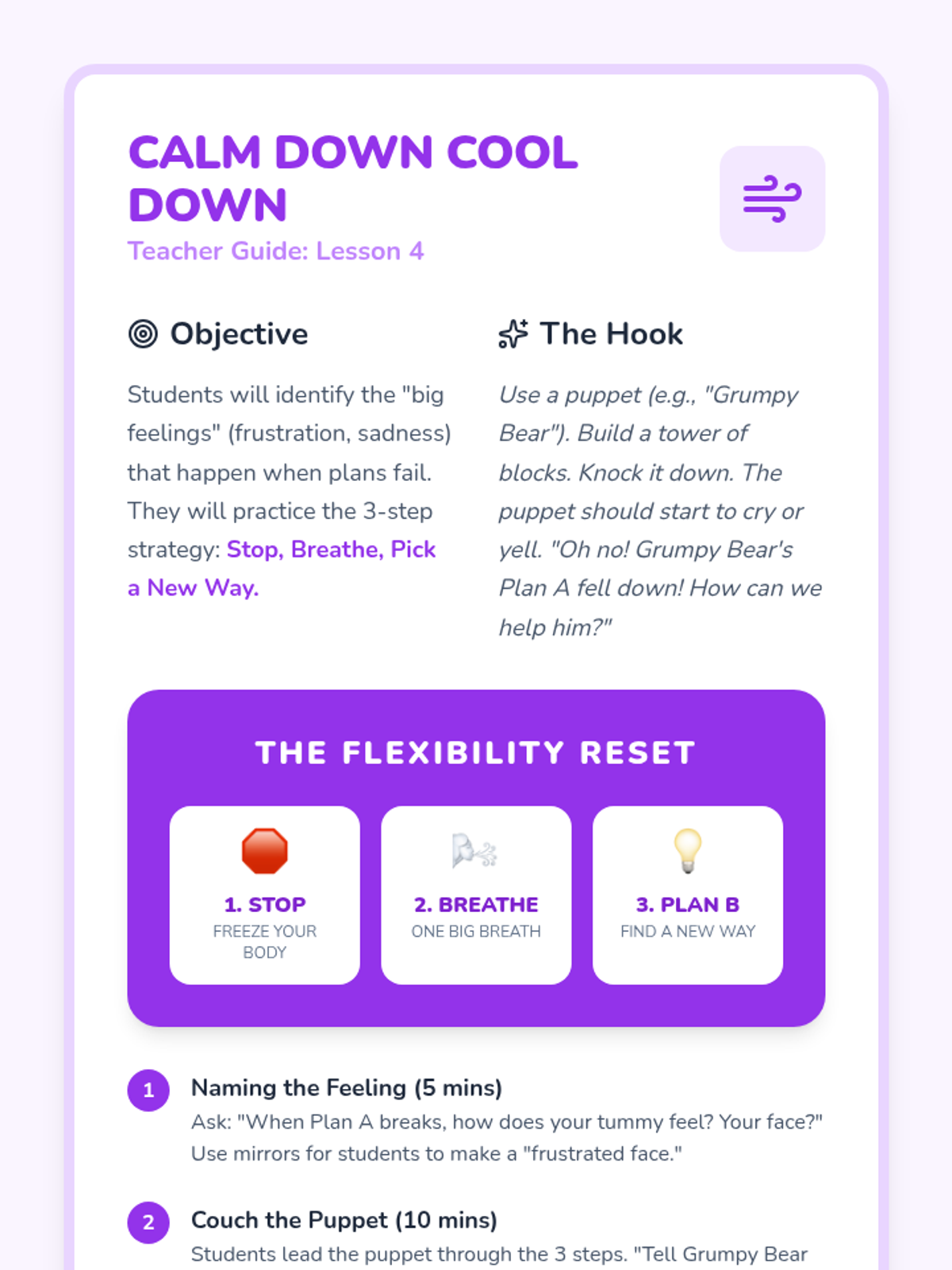
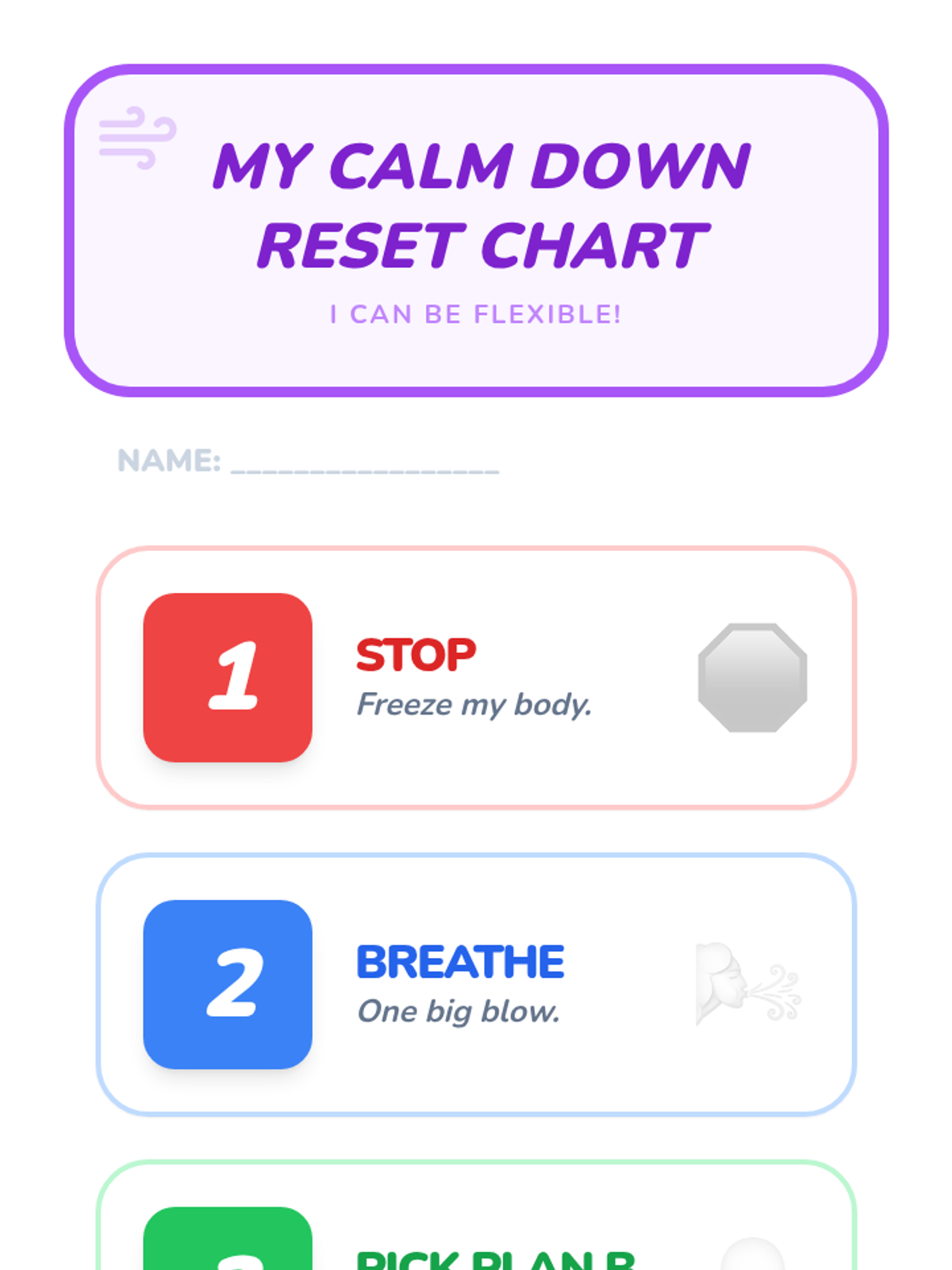
Focuses on emotional regulation strategies like 'Stop, Breathe, Pick a New Way' to handle the frustration of change.
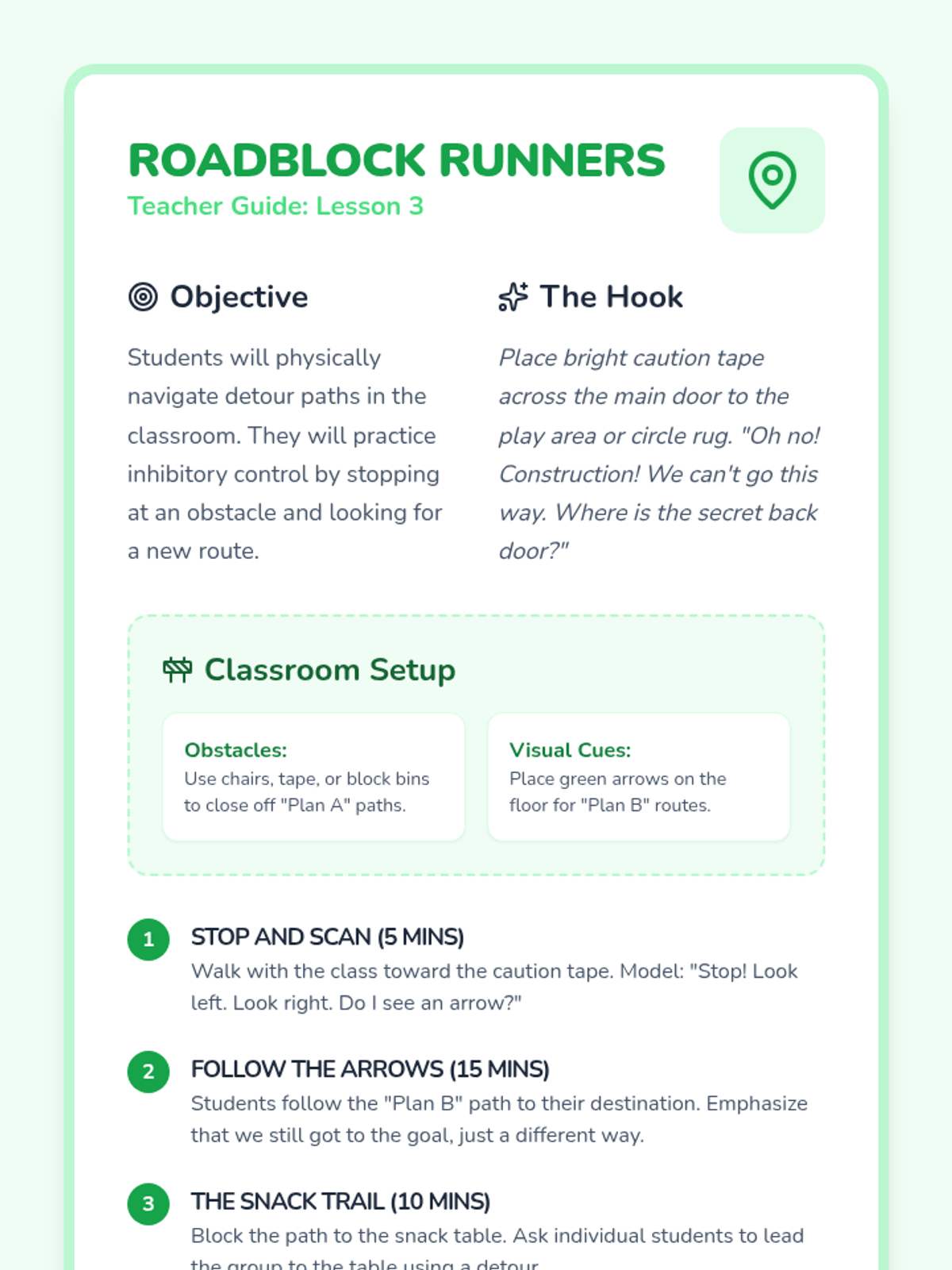
Students navigate physical obstacles and classroom detours to build spatial reasoning and inhibition control.
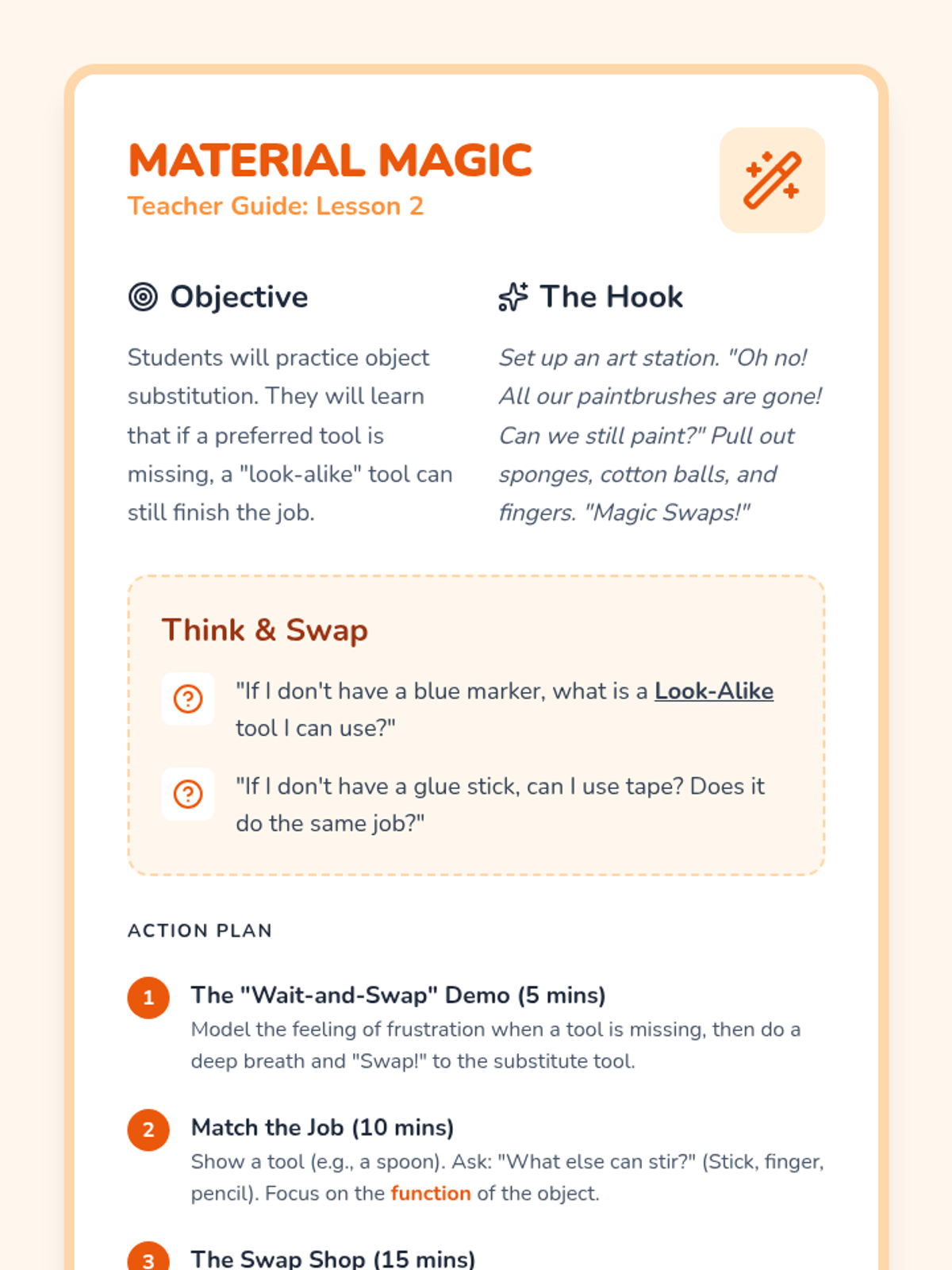
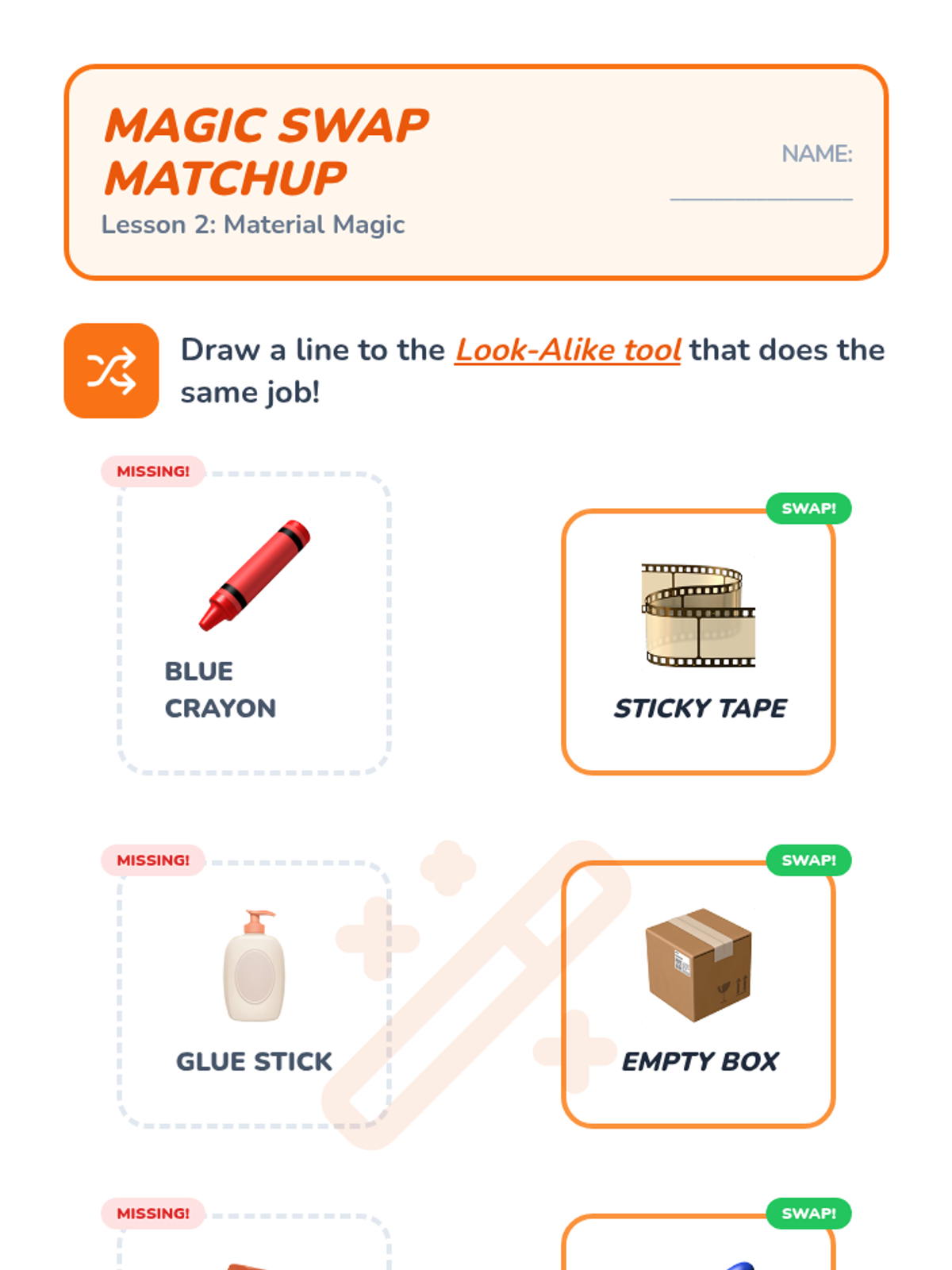
Students practice using alternative materials when their first choice is unavailable, learning that different tools can reach the same goal.
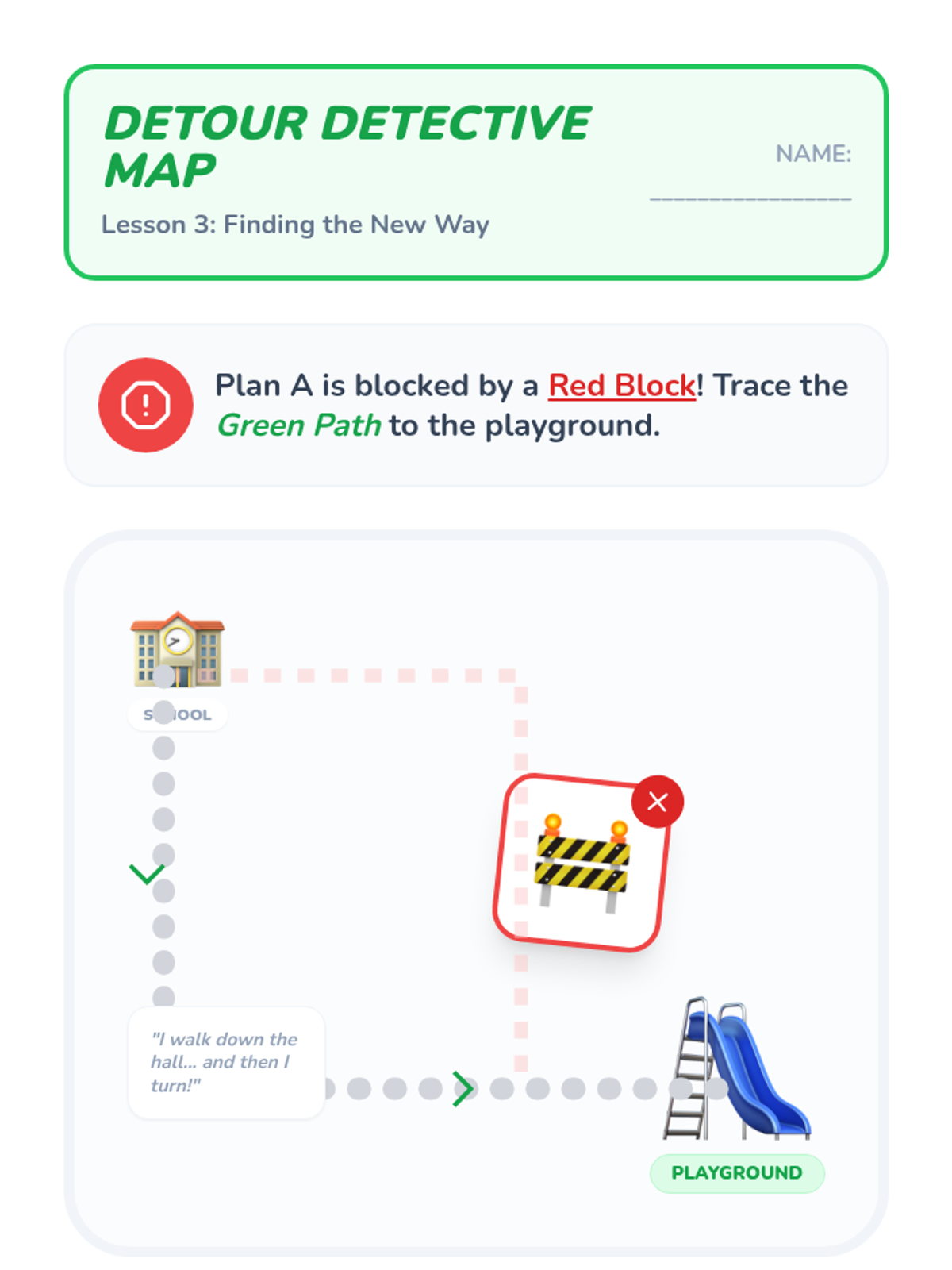
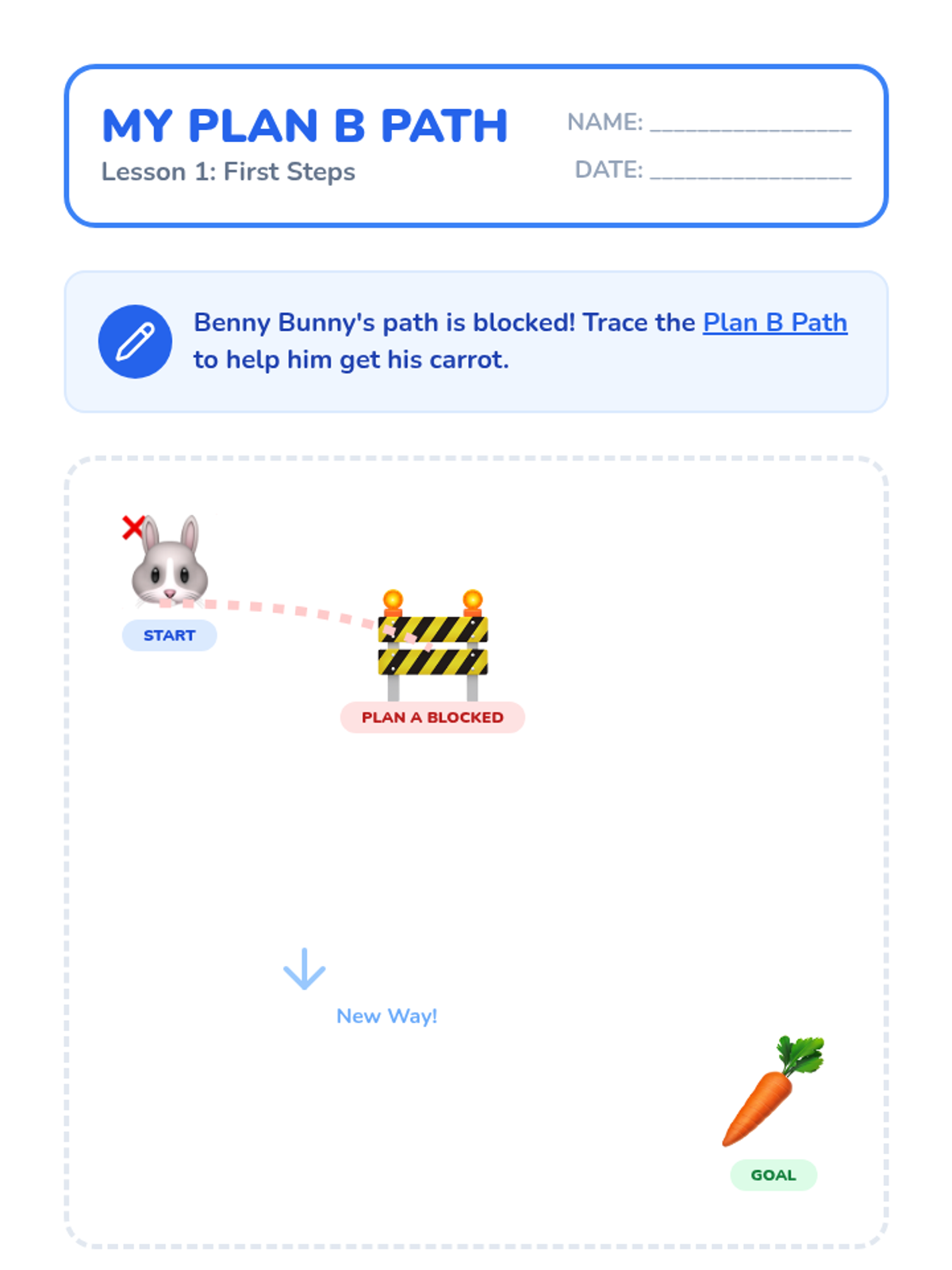
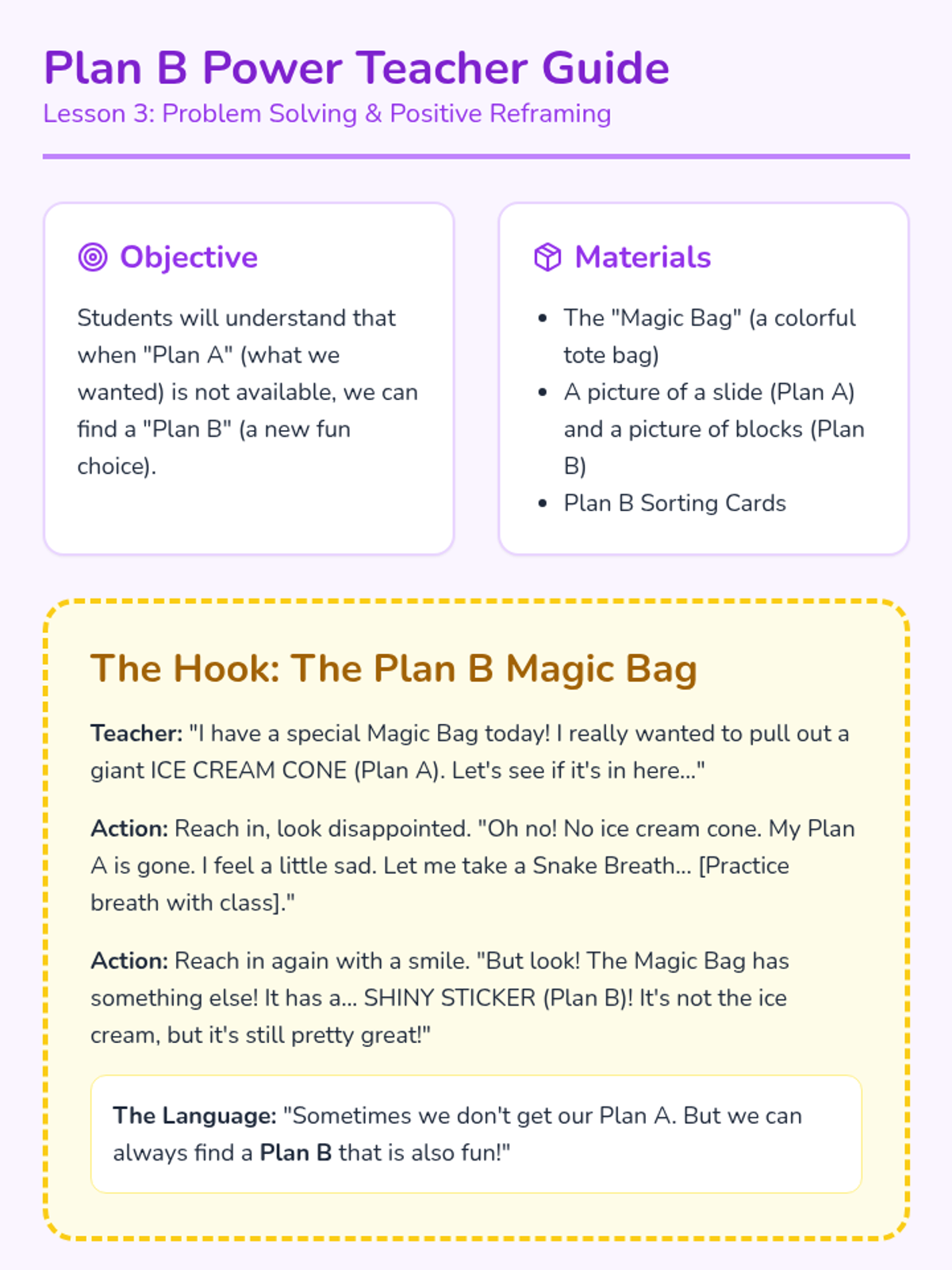
Students learn the concept of 'Plan B' through a story about blocked paths and practice brainstorming simple alternatives.
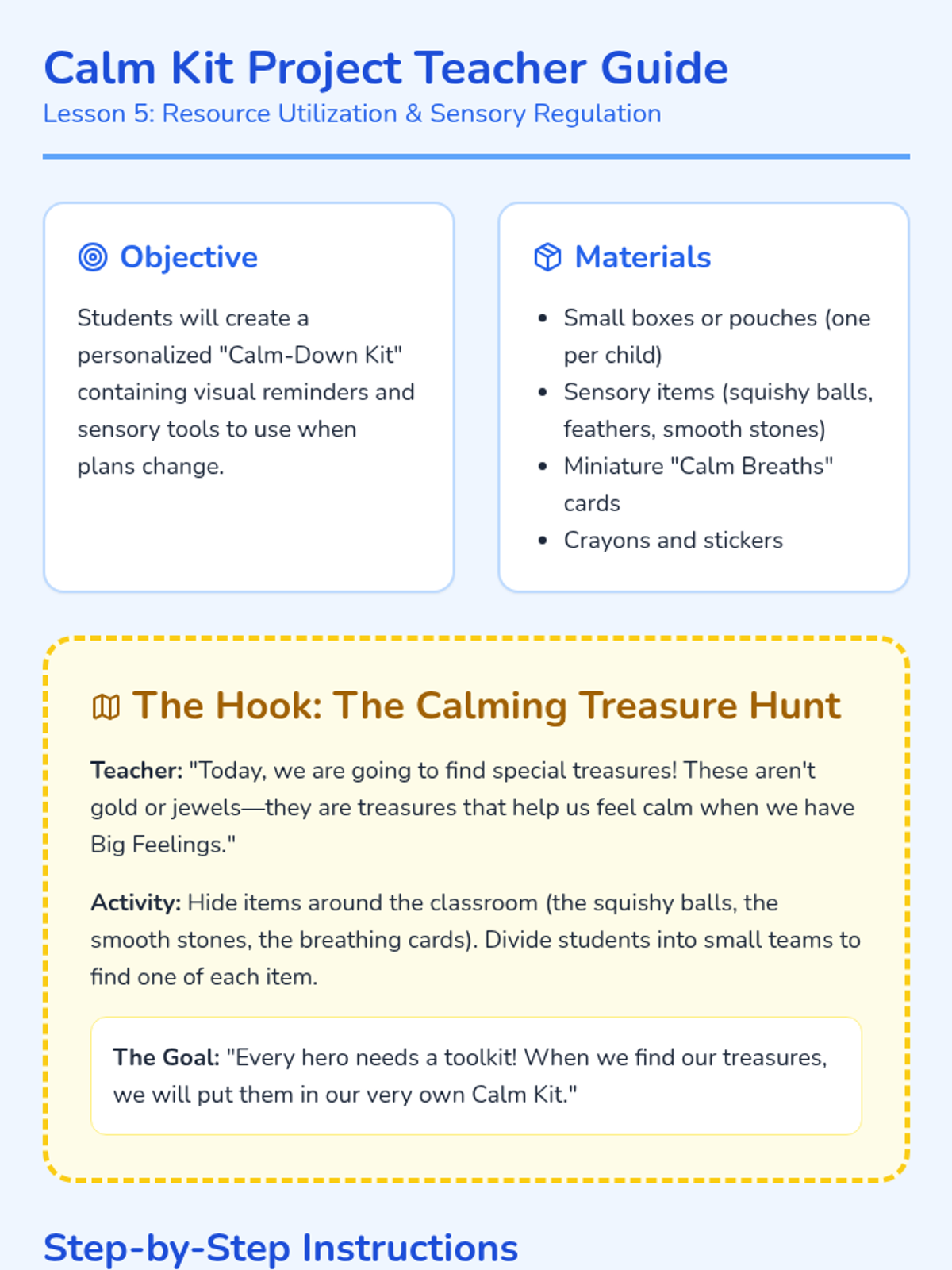
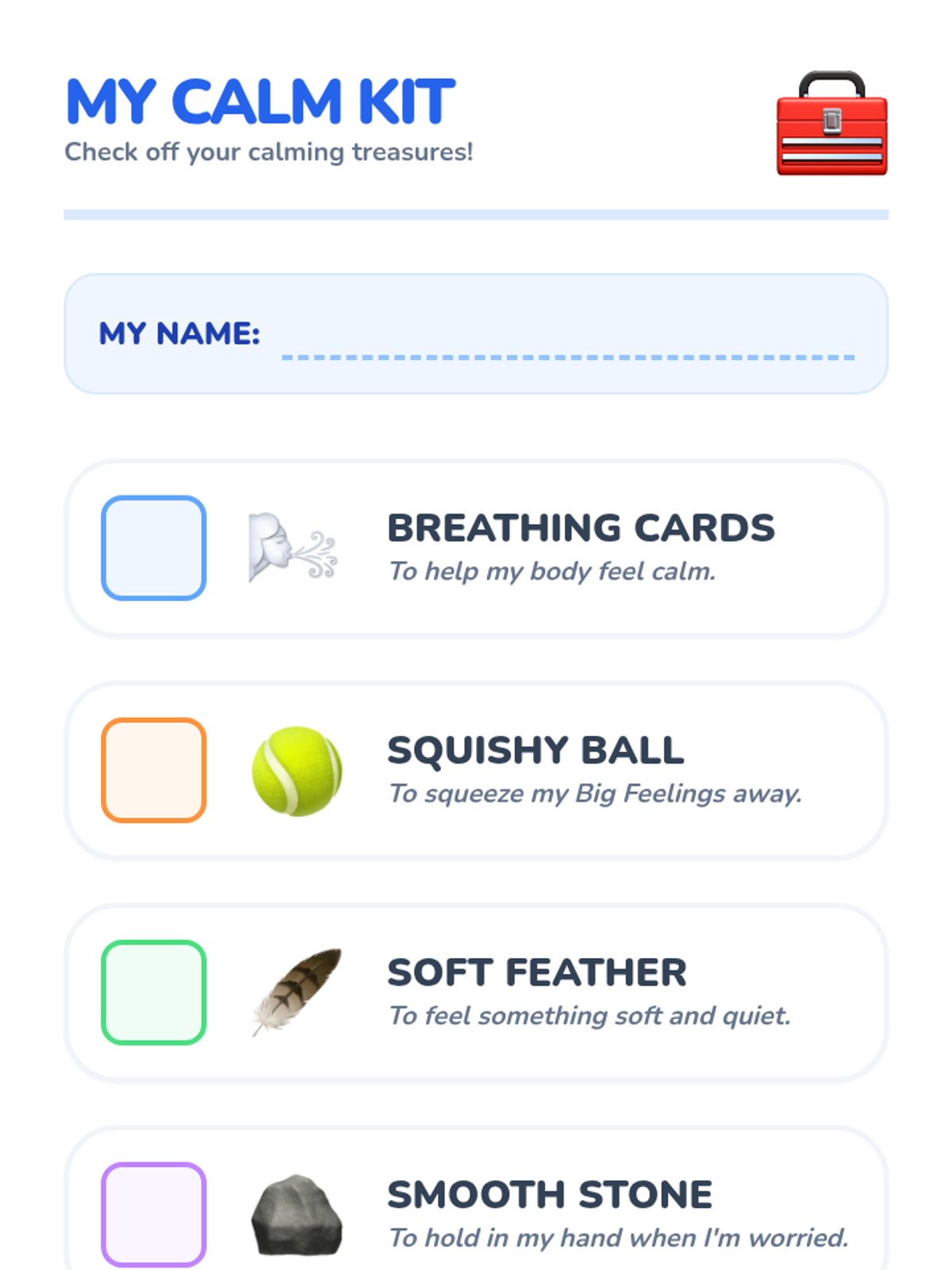
Students assemble a personalized calm-down kit with sensory items and visual reminders to use during stressful transitions.
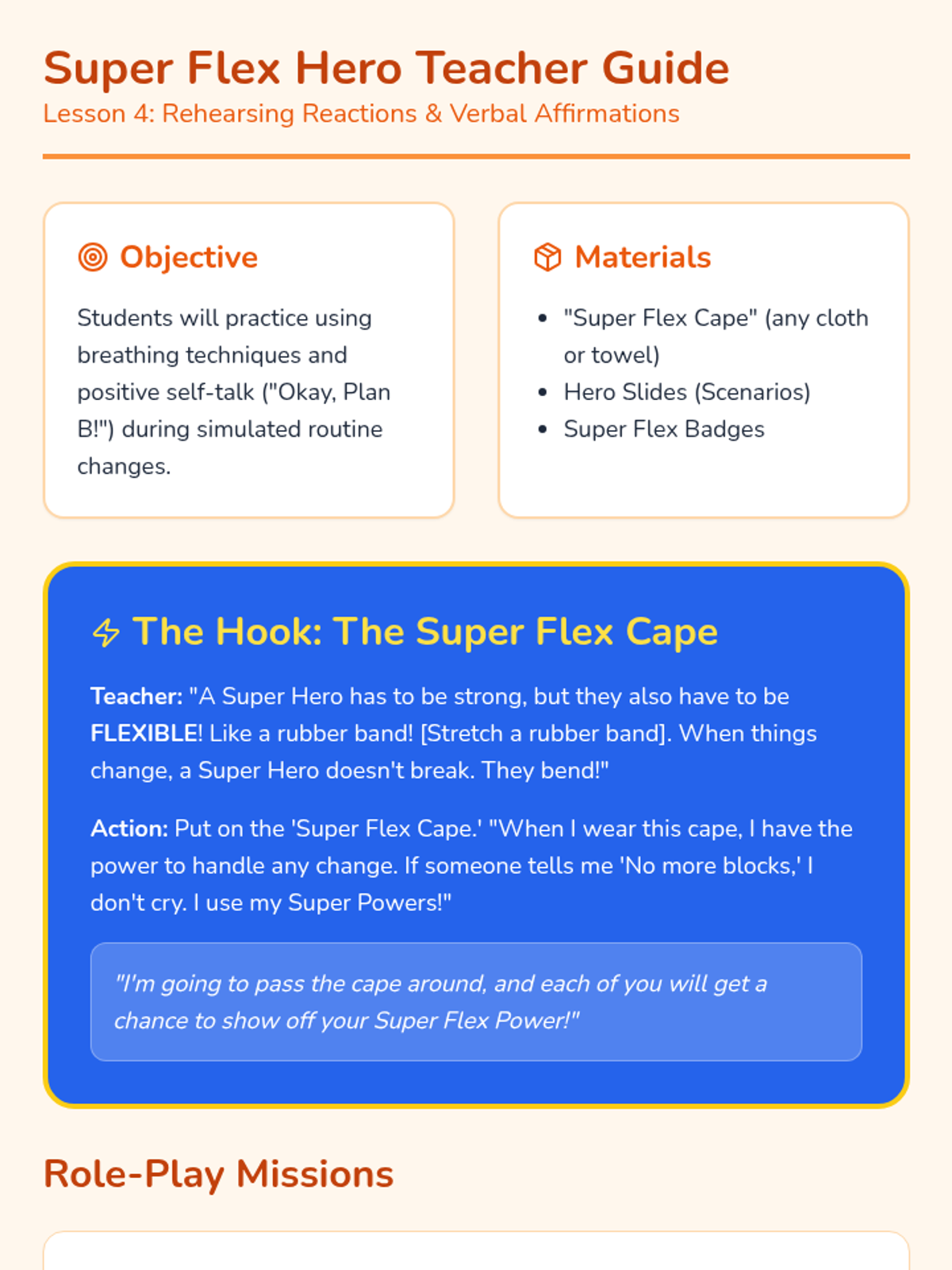
Students role-play common routine shifts, practicing positive verbal affirmations and coping strategies in a safe environment.
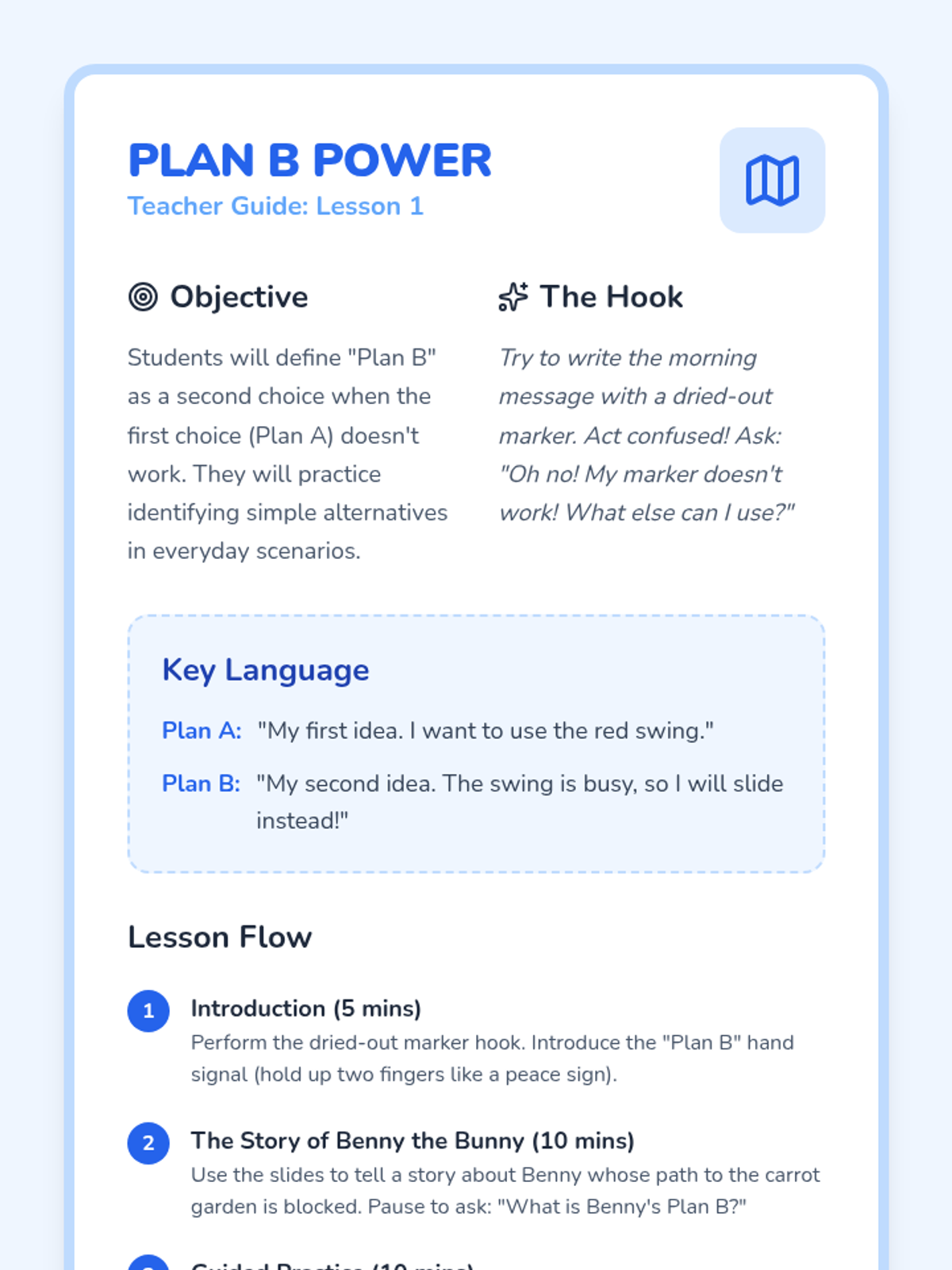
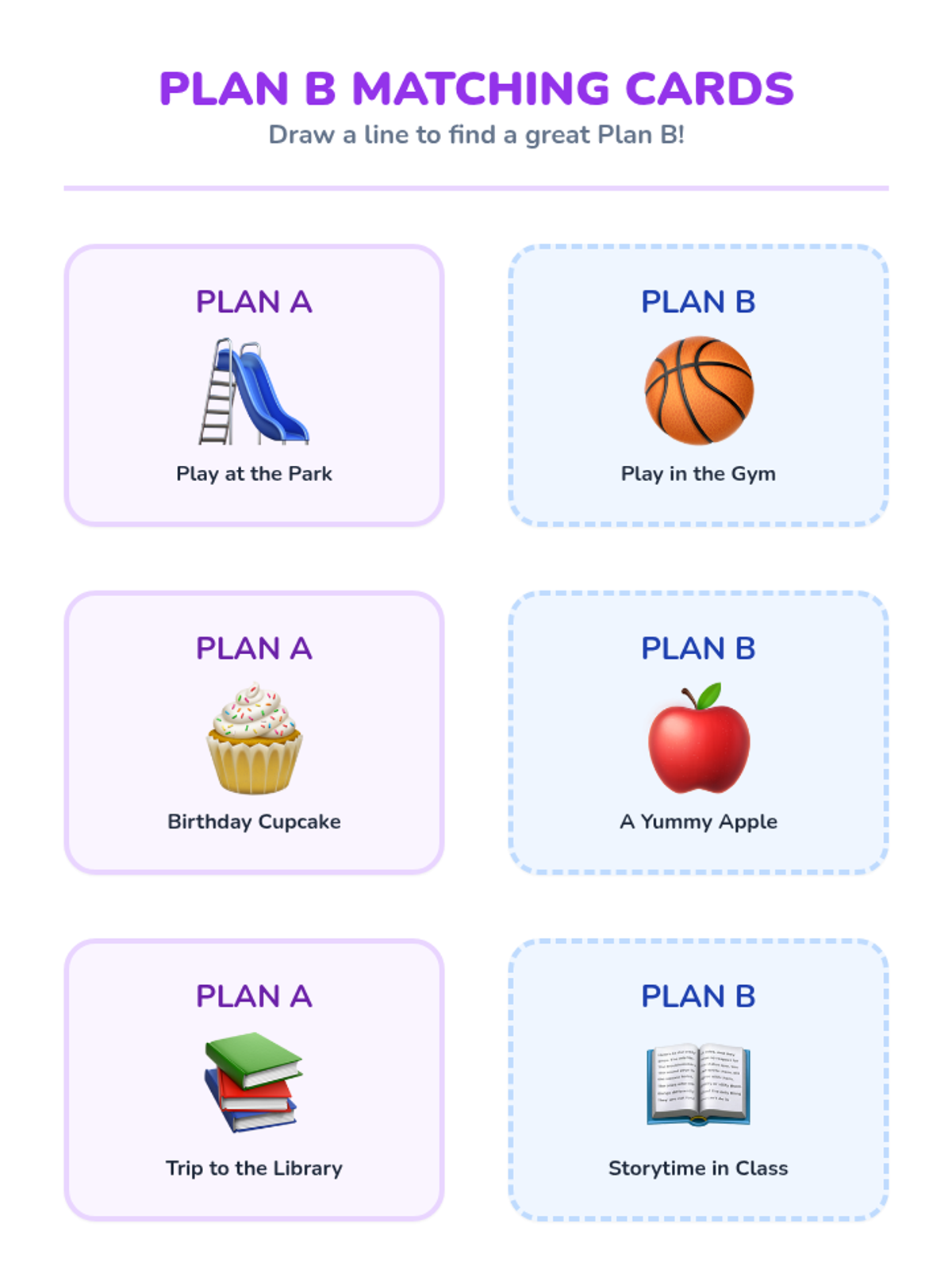
Students learn to distinguish between 'Plan A' and 'Plan B' and practice finding positive alternatives when things don't go as expected.
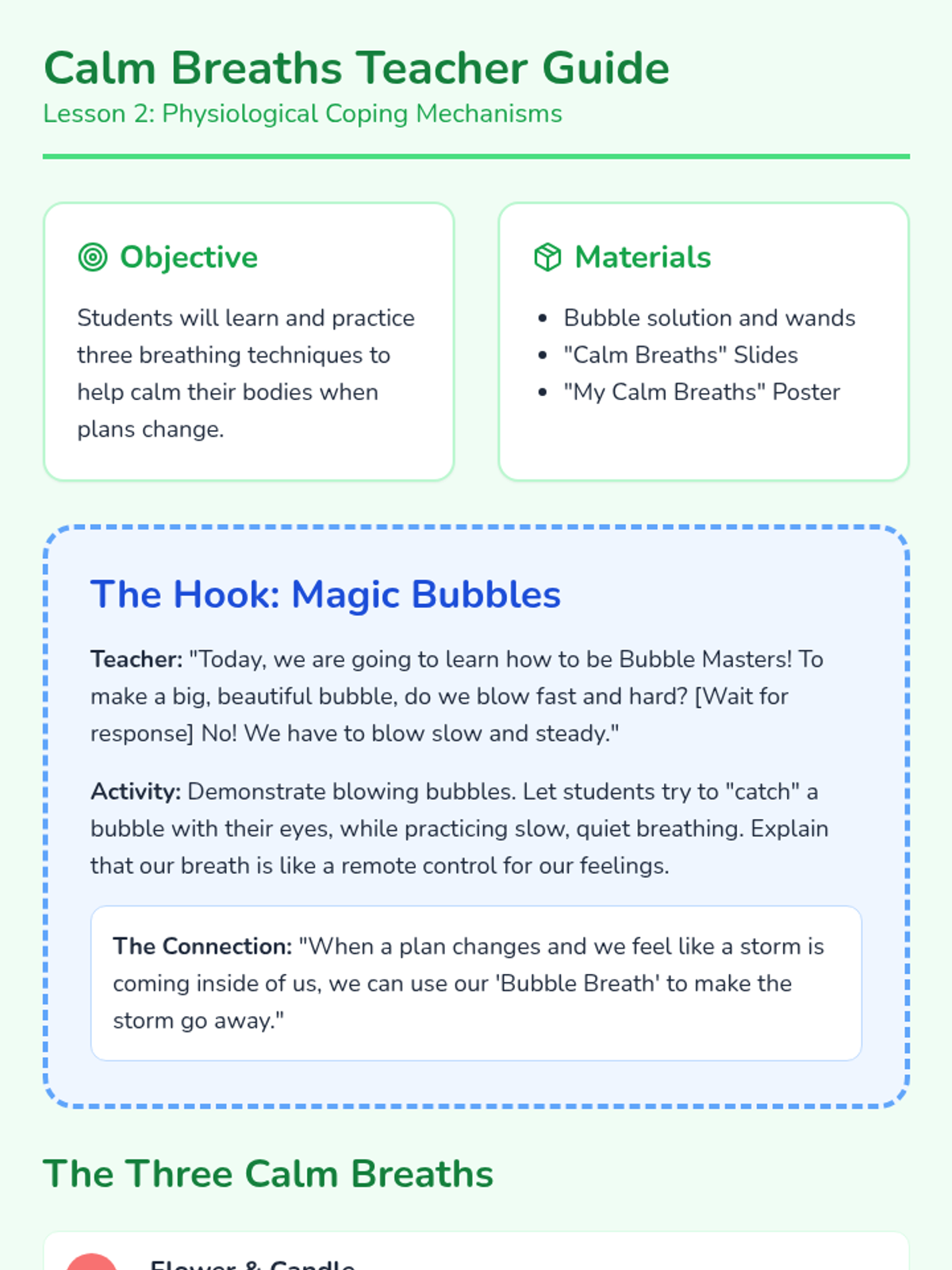
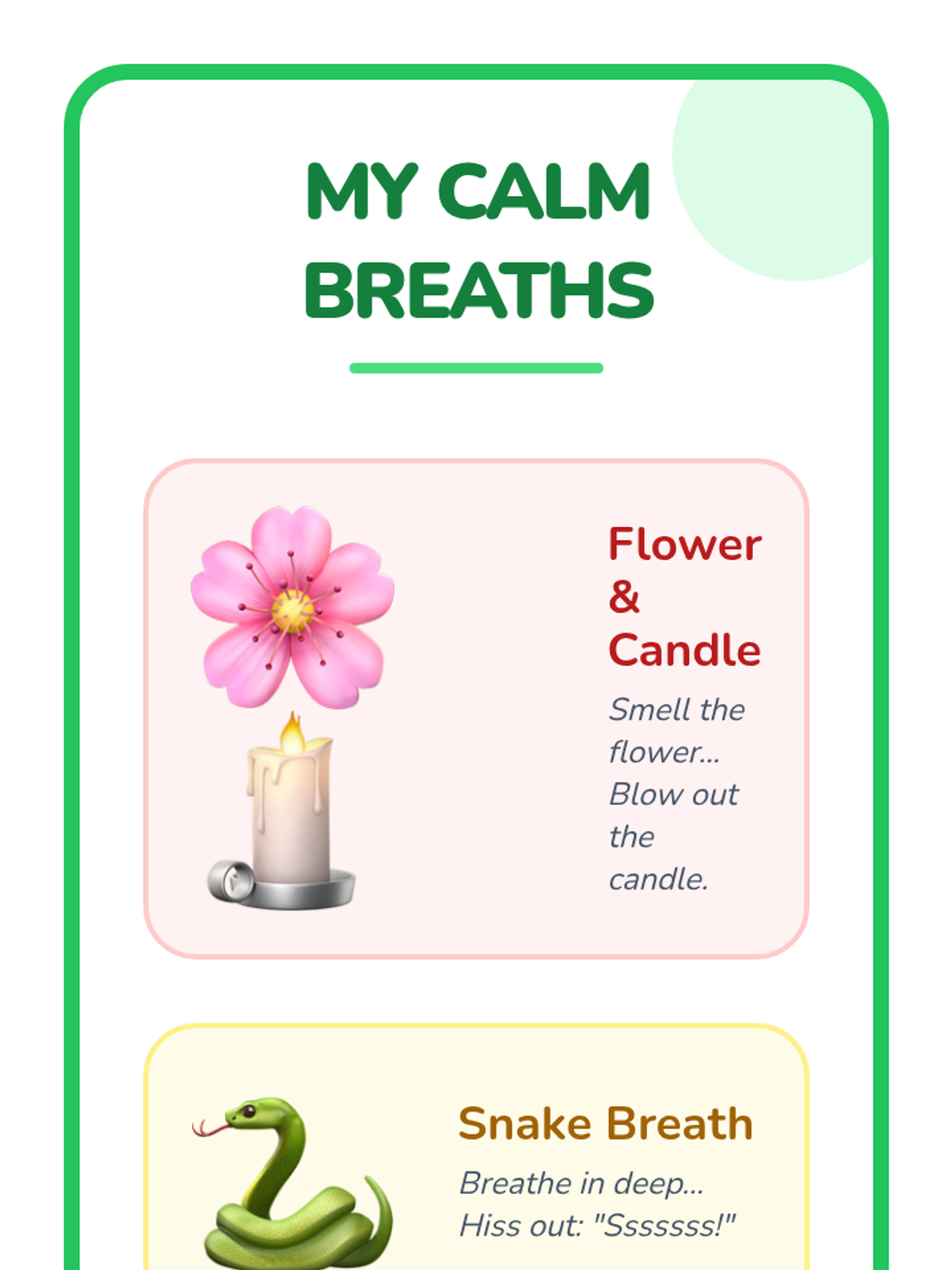
Students learn and practice three specific breathing techniques as immediate physiological responses to unwanted changes.
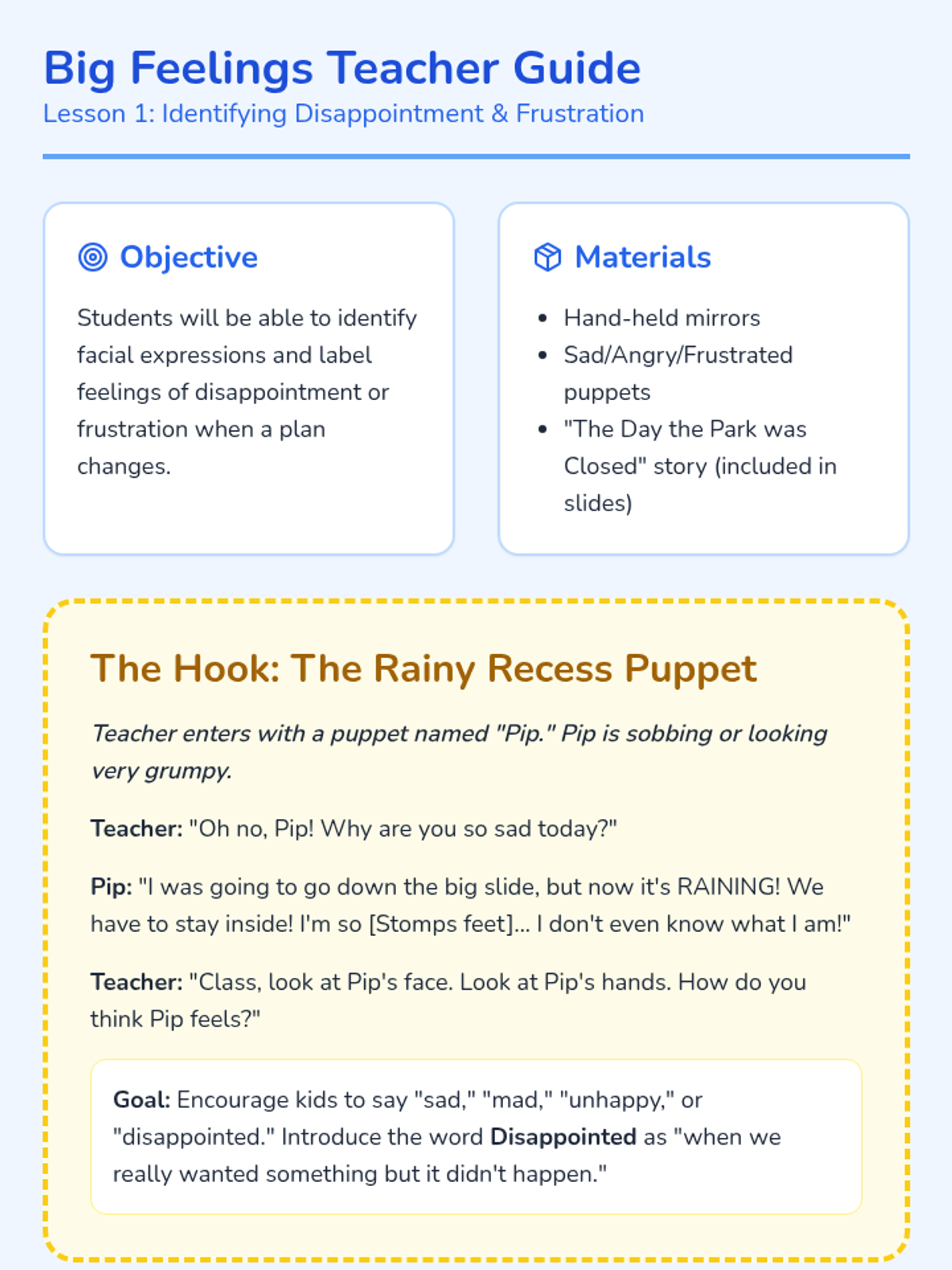
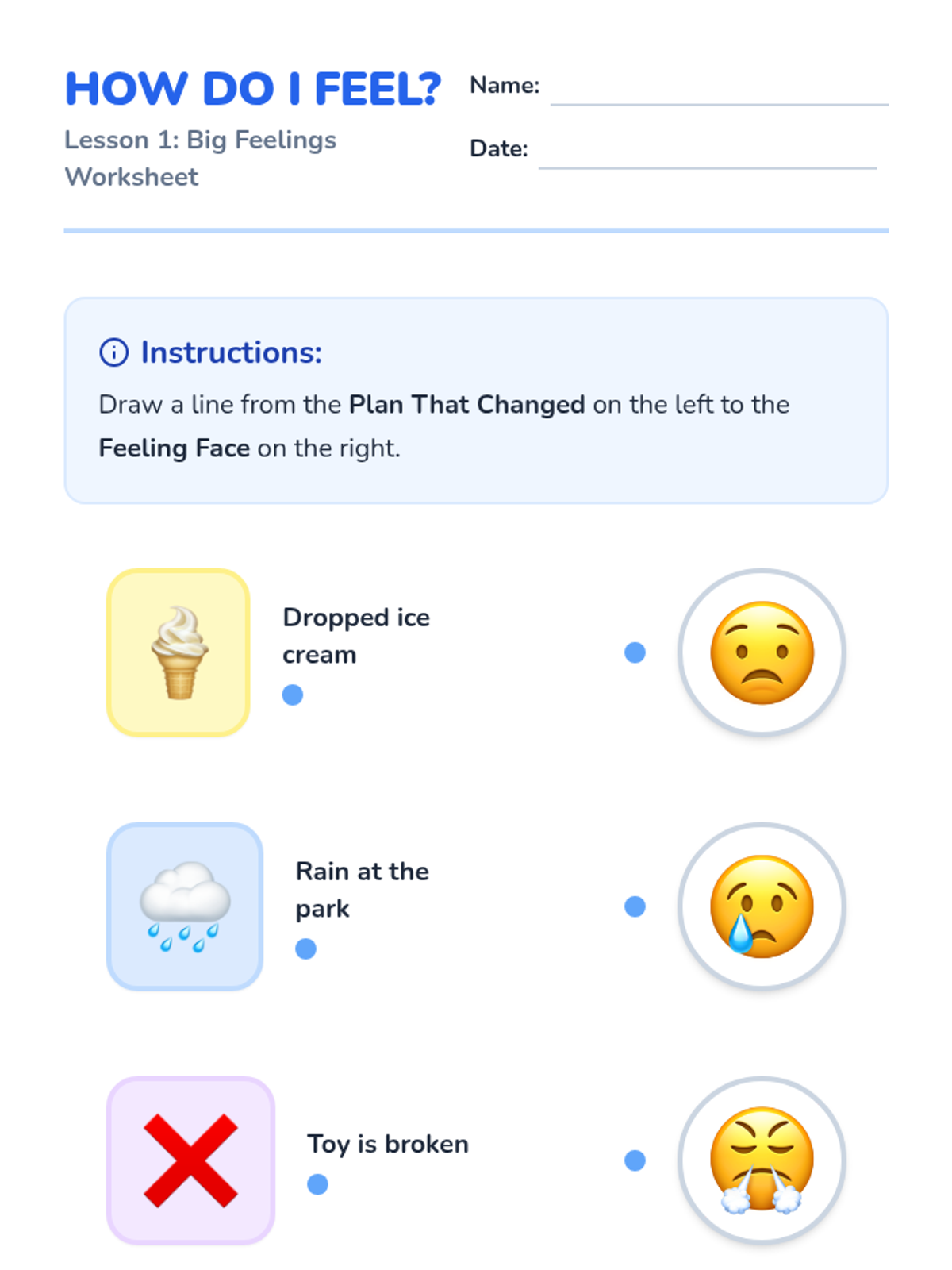
Students identify facial expressions and feelings (disappointment, frustration) associated with unexpected changes through stories and mirrors.