Emotion recognition ranging from basic feelings to complex nuances and mixed states. Strengthens accurate self-assessment through identity exploration, strength identification, and values-based decision making.
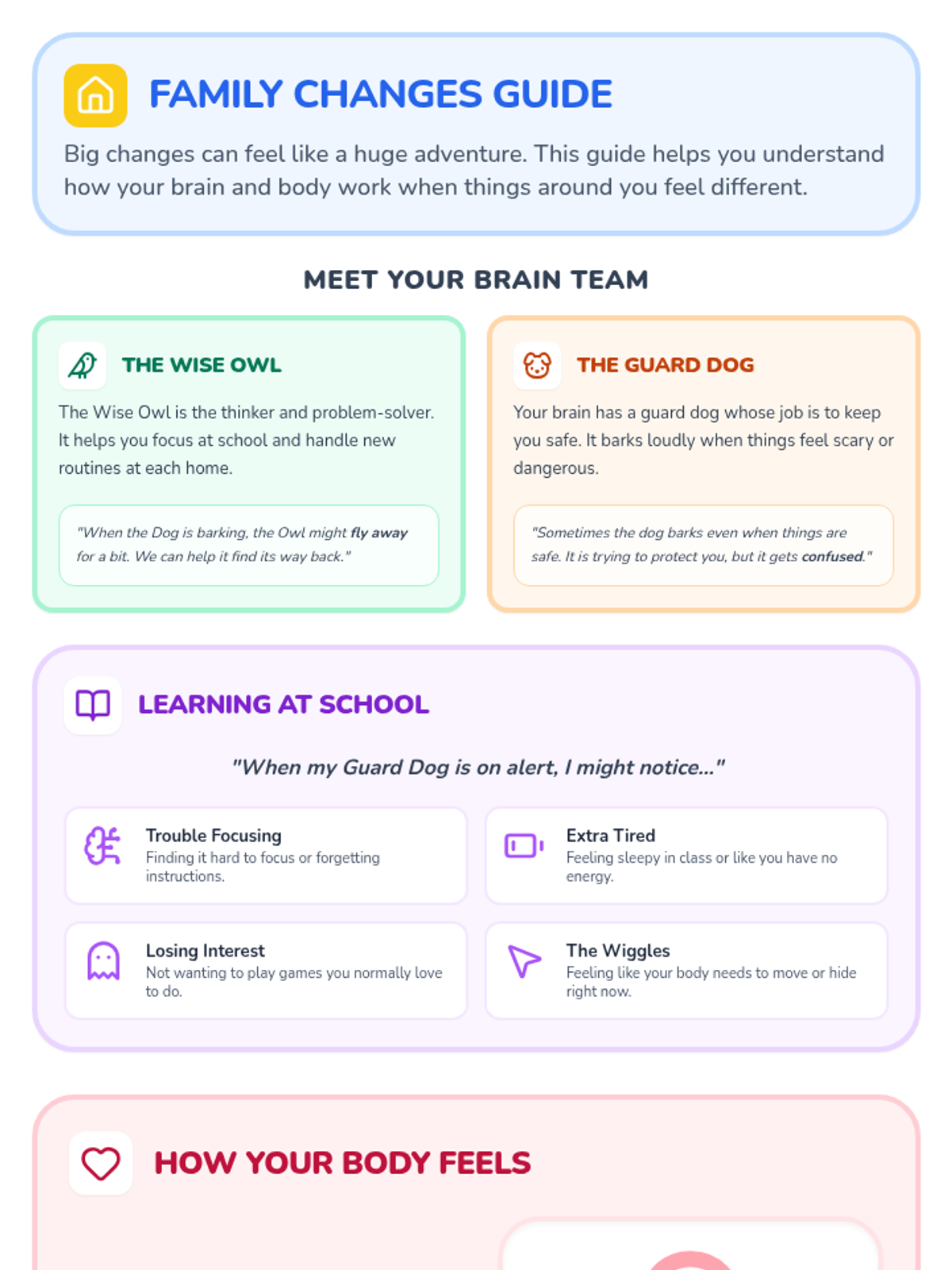
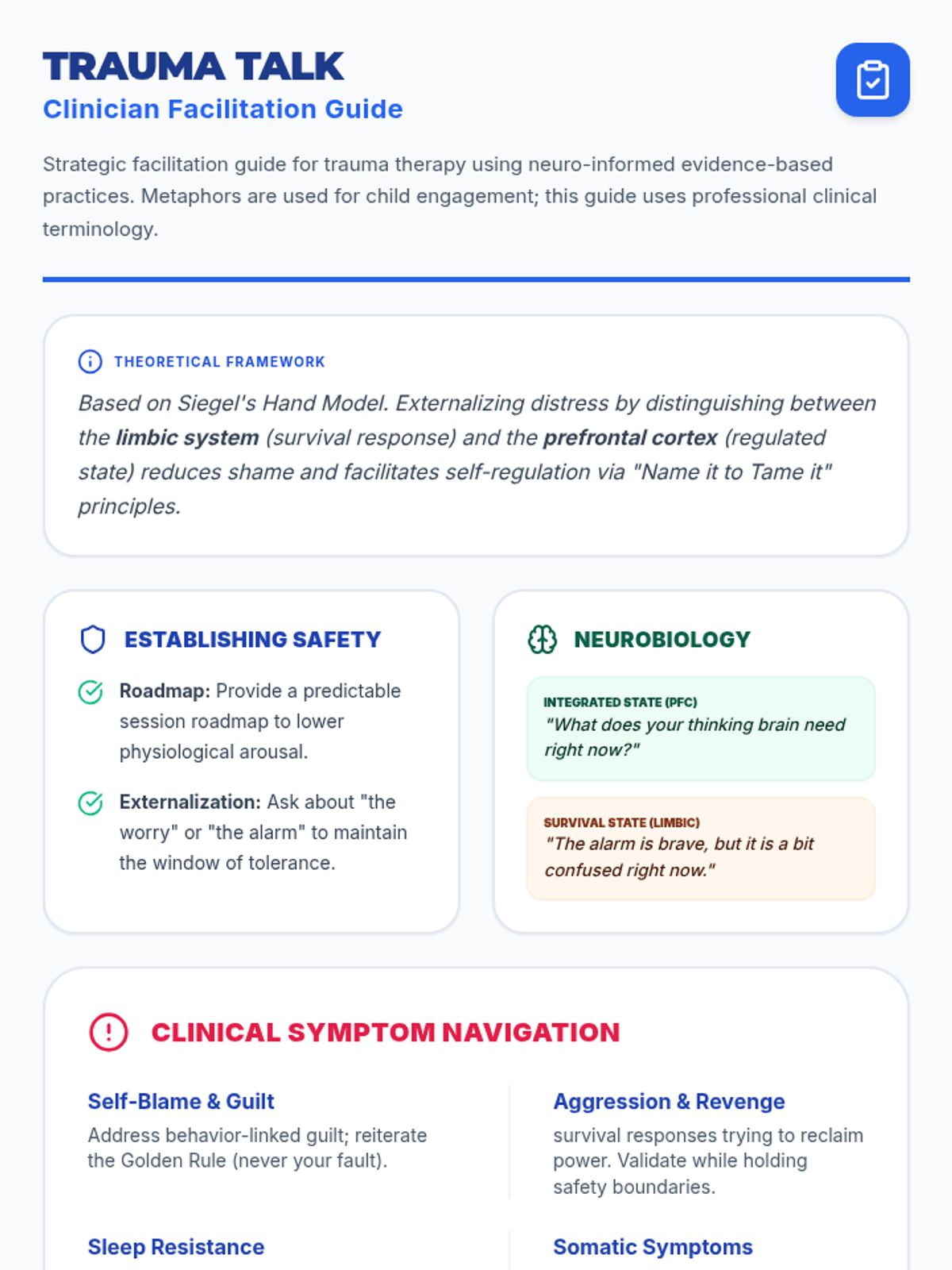
A set of resources designed to support children and their caregivers through the trauma of family changes, focusing on brain-based metaphors and clinical best practices.
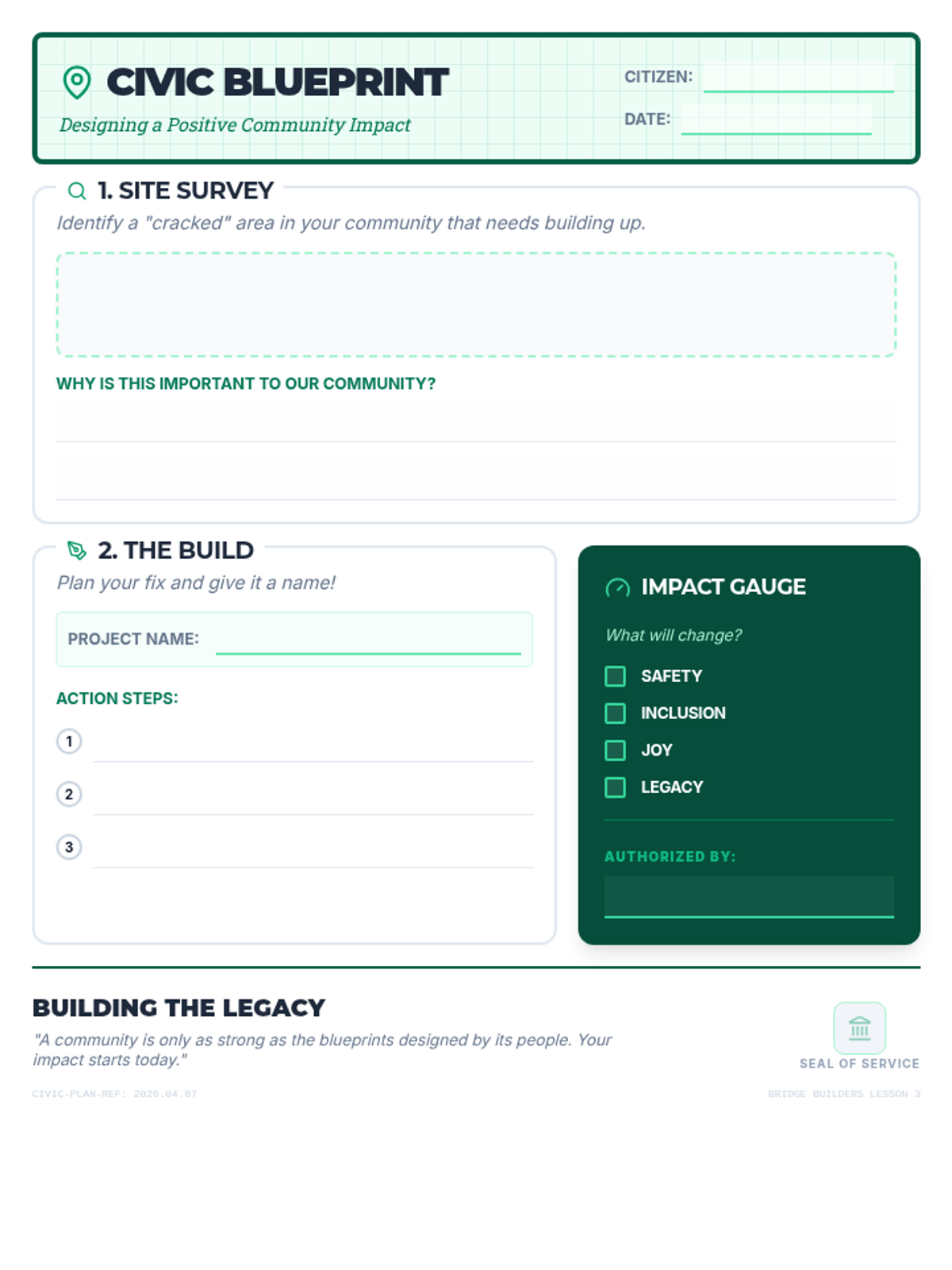
In this final lesson of the sequence, students transition from group teamwork to community-wide thinking, exploring how their collective actions impact the 'city' (their school or local community) and planning a sustainable service project.
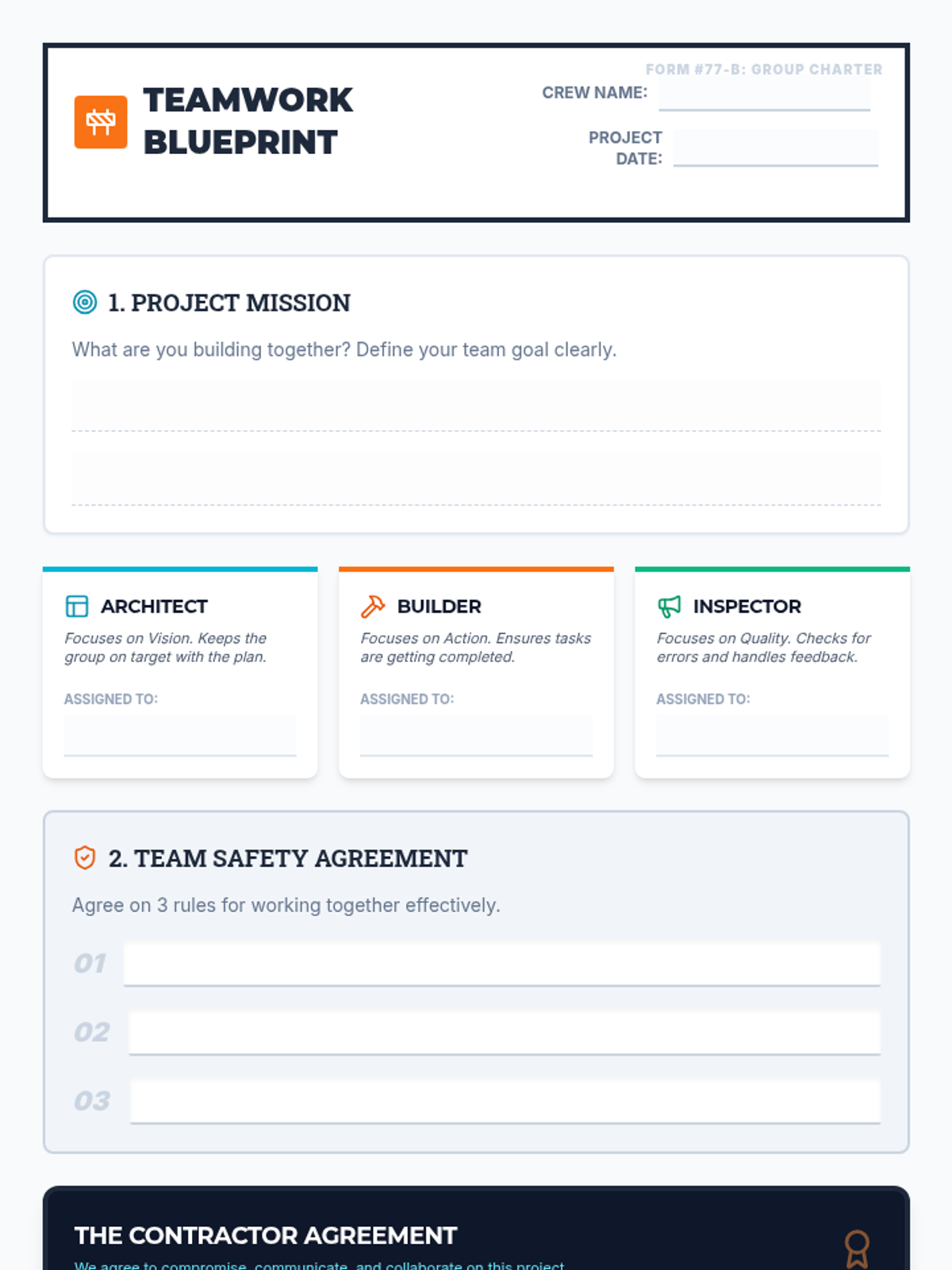
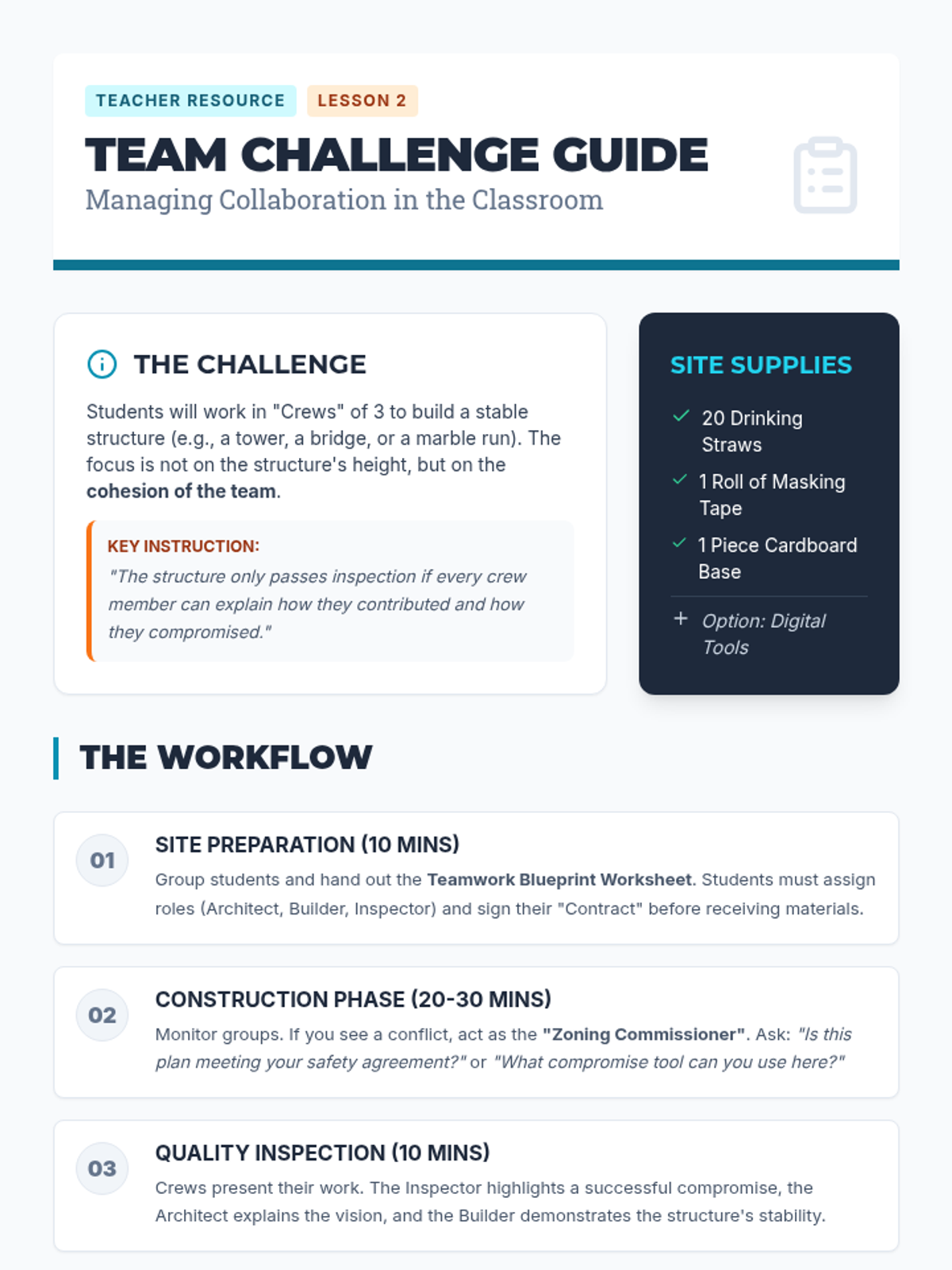
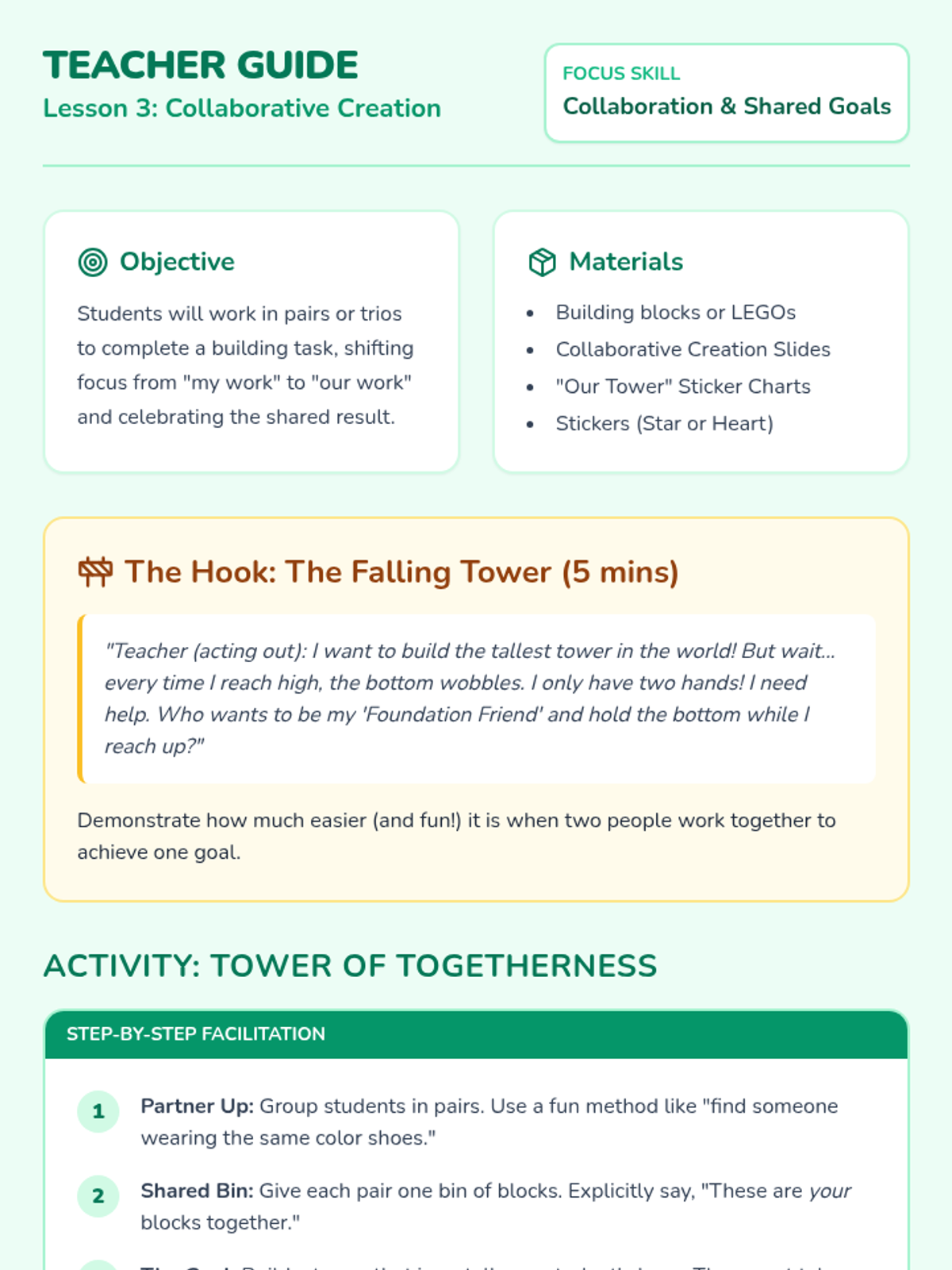
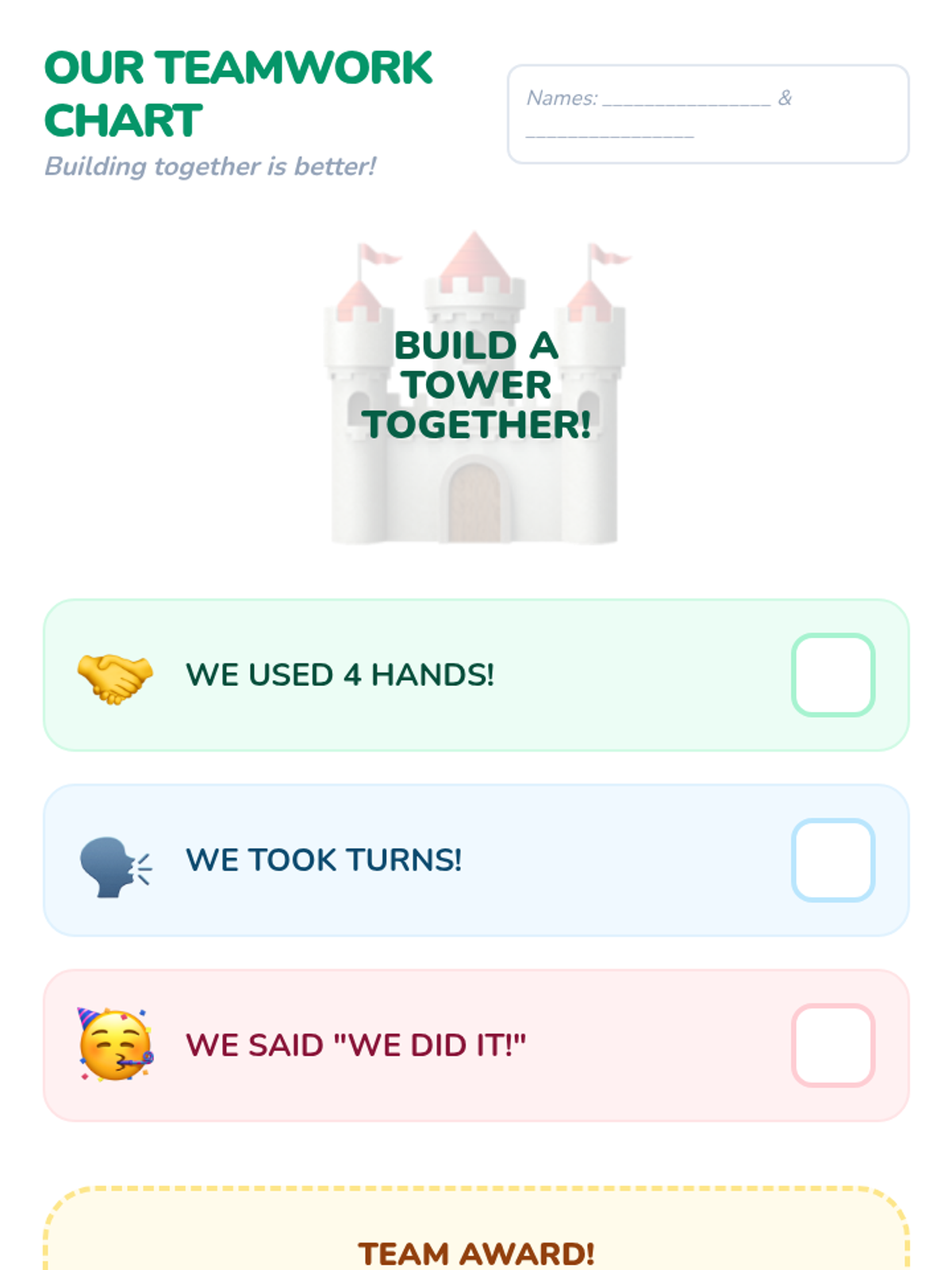
This lesson focuses on the mechanics of teamwork, specifically addressing how to share roles, compromise on shared goals, and celebrate collective success through the lens of a construction project.
Sixth grade students prepare for the transition to middle school by developing high-level resilience habits and long-term stress management plans.
Fifth graders explore academic and social pressure, focusing on the power of positive self-talk and perspective-shifting.
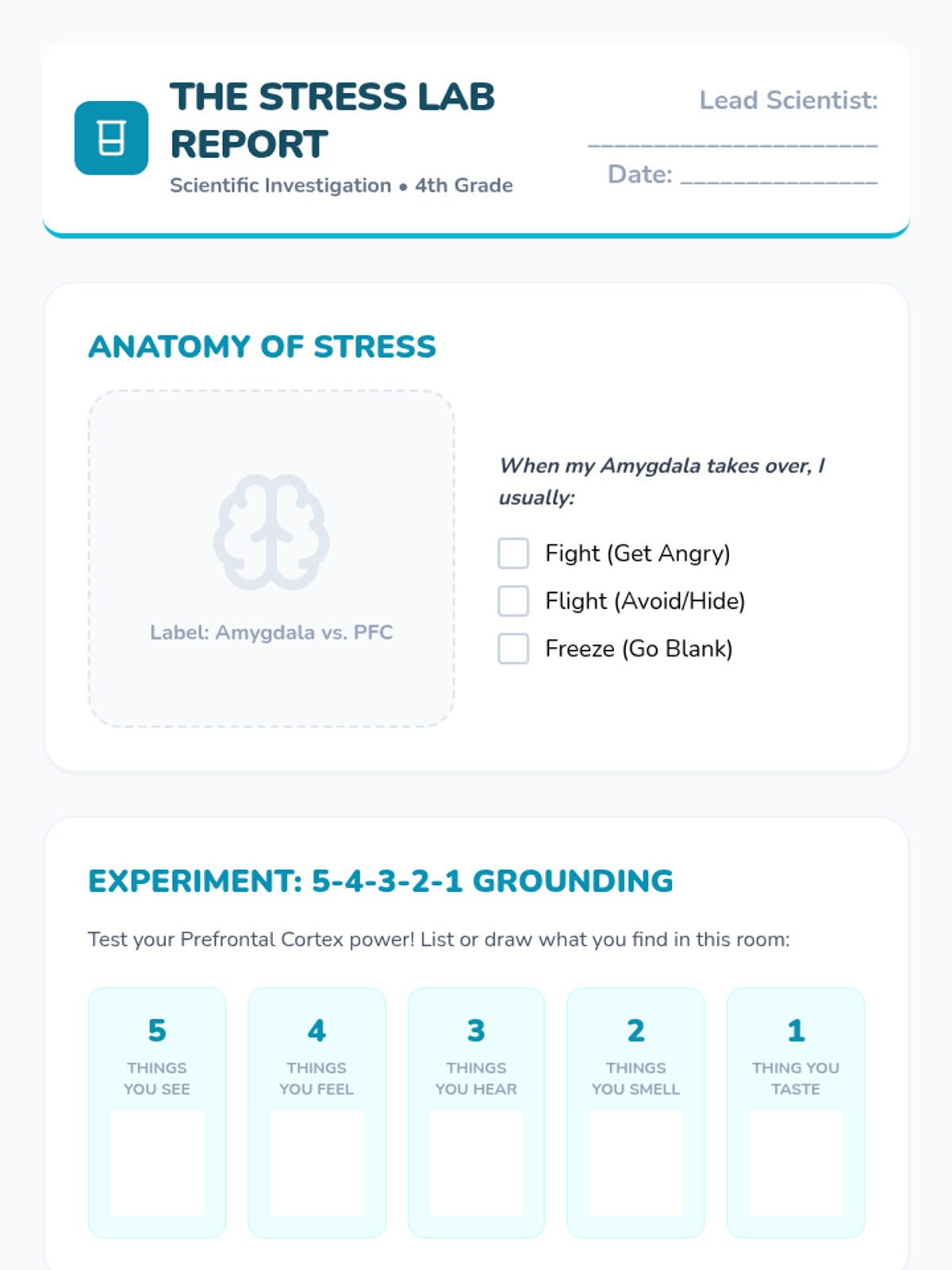
Fourth grade students investigate the science of the 'fight, flight, or freeze' response and develop logic-based strategies to respond.
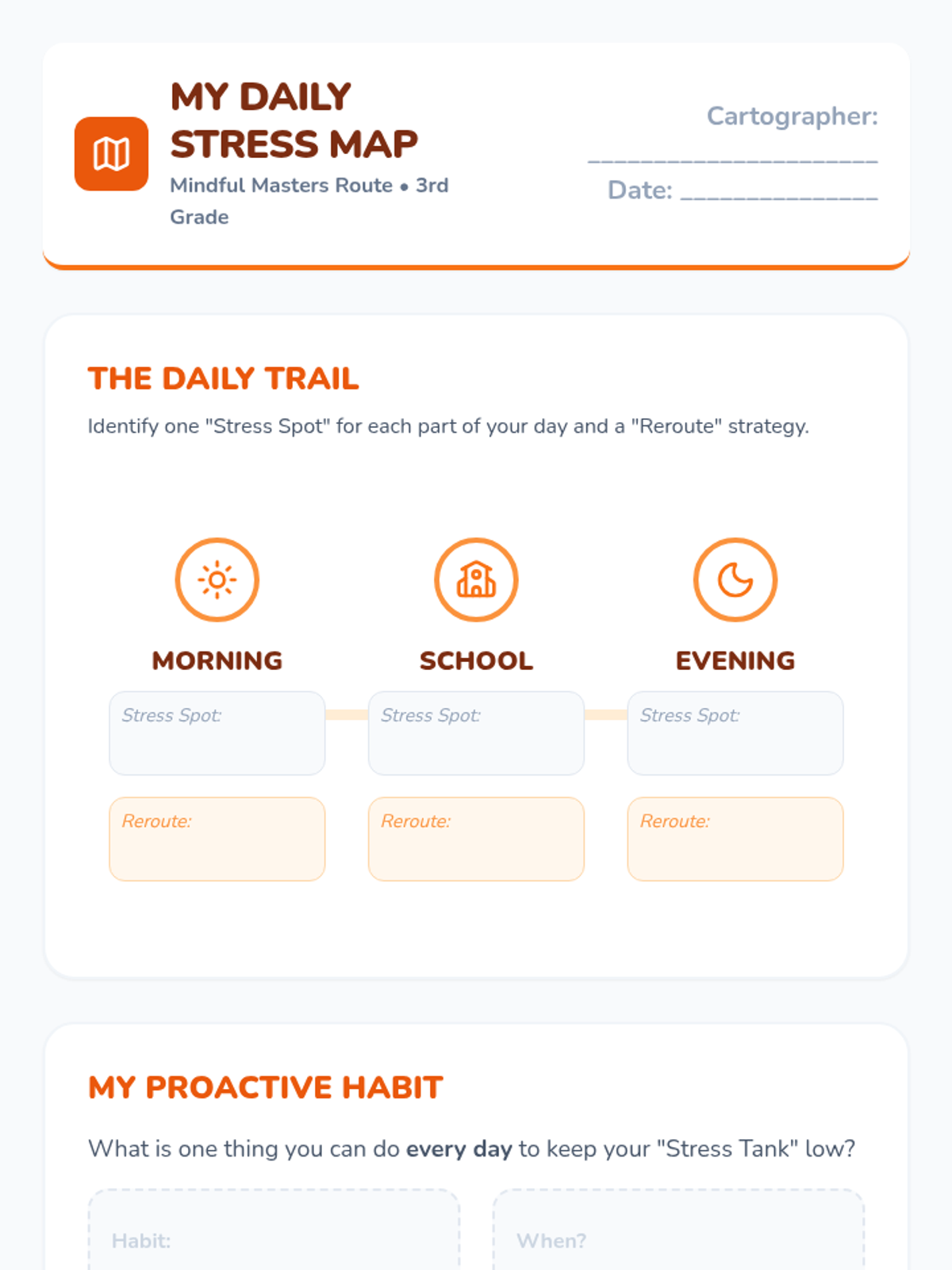
Third graders learn to map out their day to identify 'stress spots' and practice proactive planning to minimize overwhelm.
A specialized lesson for mixed-grade classrooms focusing on identifying shared stressors (schoolwork, friendship) and practicing group regulation.
Second grade students explore how to build a personalized 'toolbox' of calm-down strategies to use when they feel overwhelmed.
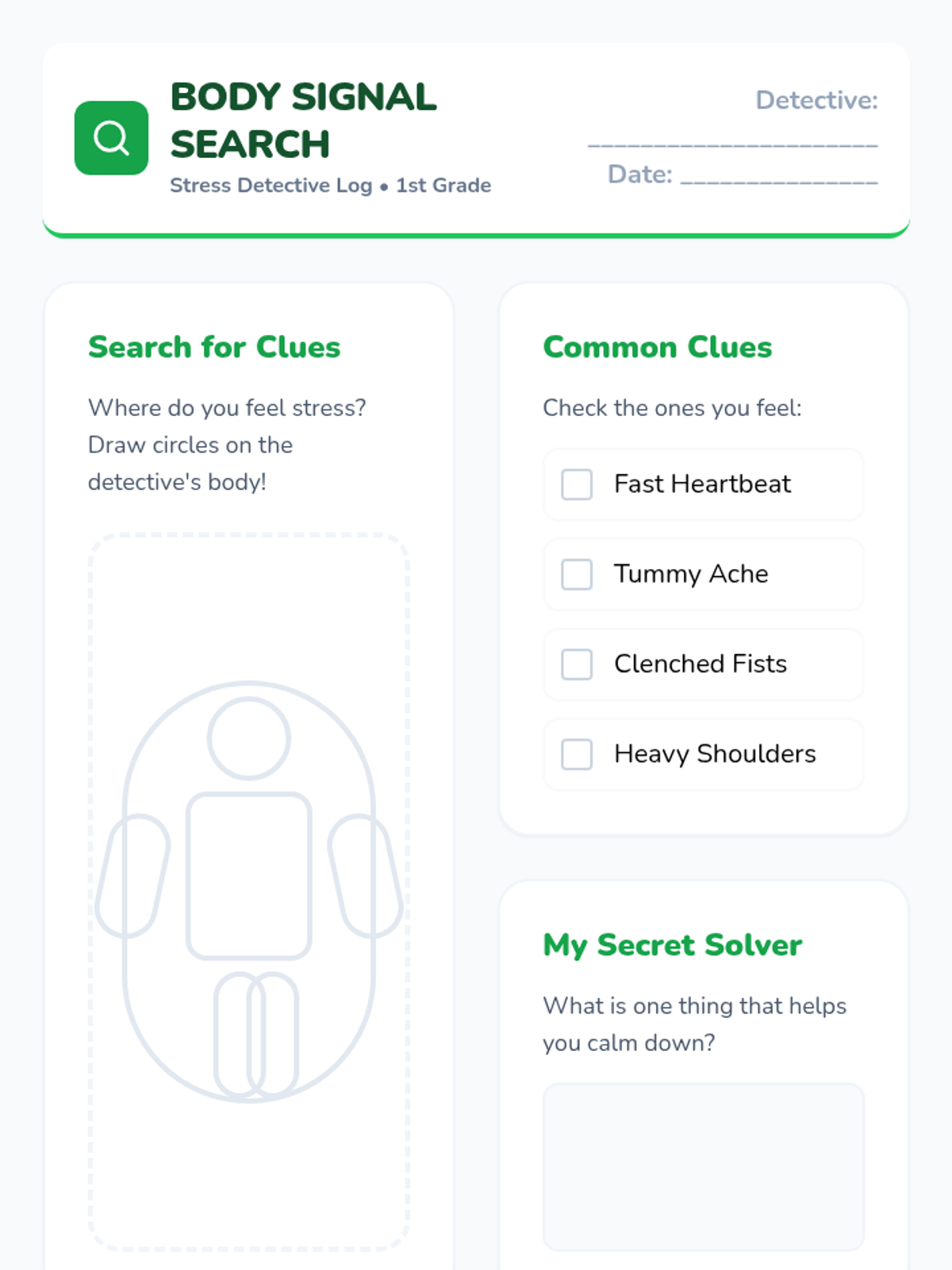
A focused lesson for 1st graders on identifying where stress lives in the body and learning the difference between 'helpful' and 'unhelpful' ways to react.
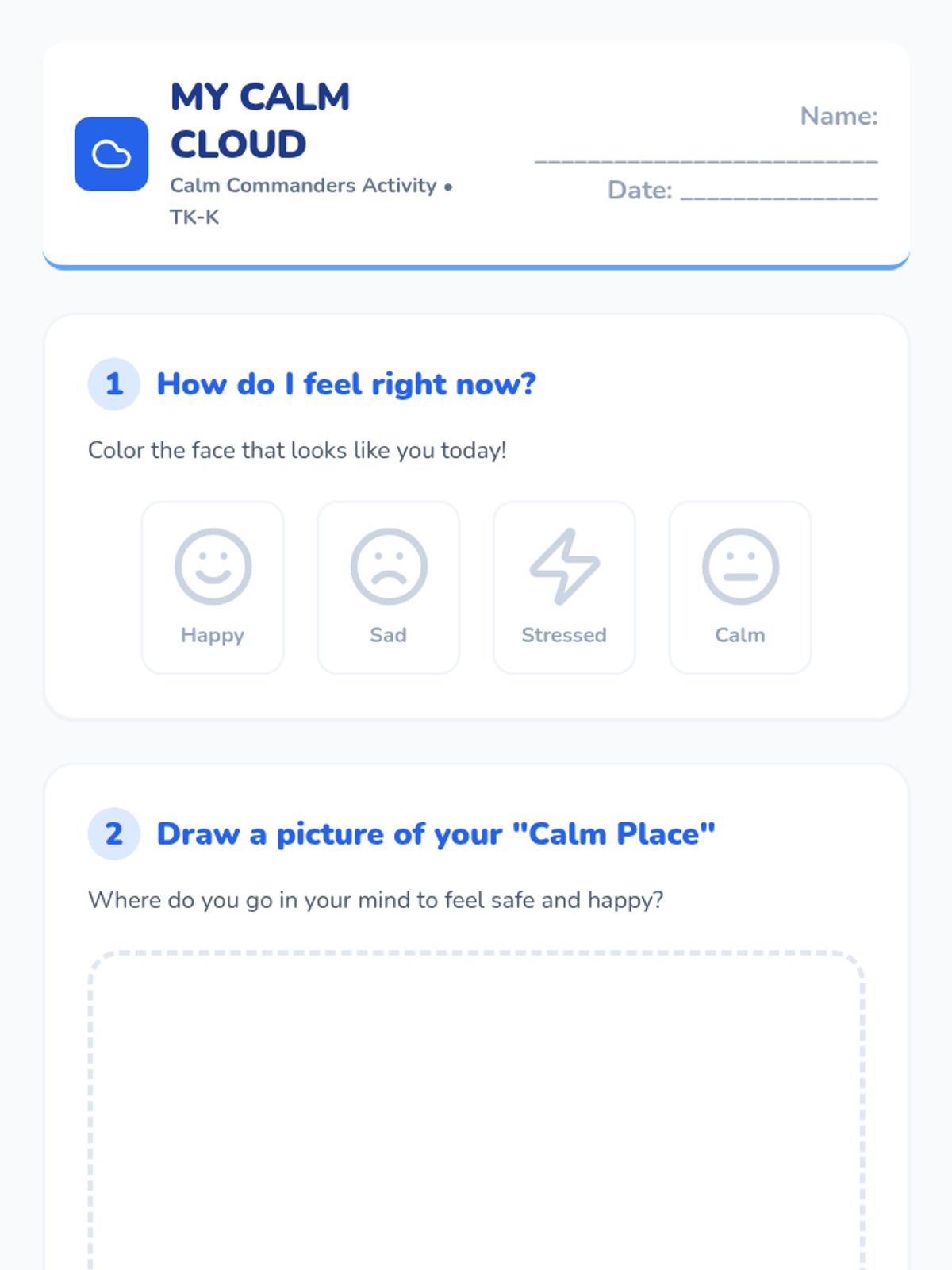
A gentle introduction for TK and Kindergarten students to understand feelings of 'tightness' or 'worry' (stress) and simple breathing techniques to feel calm.
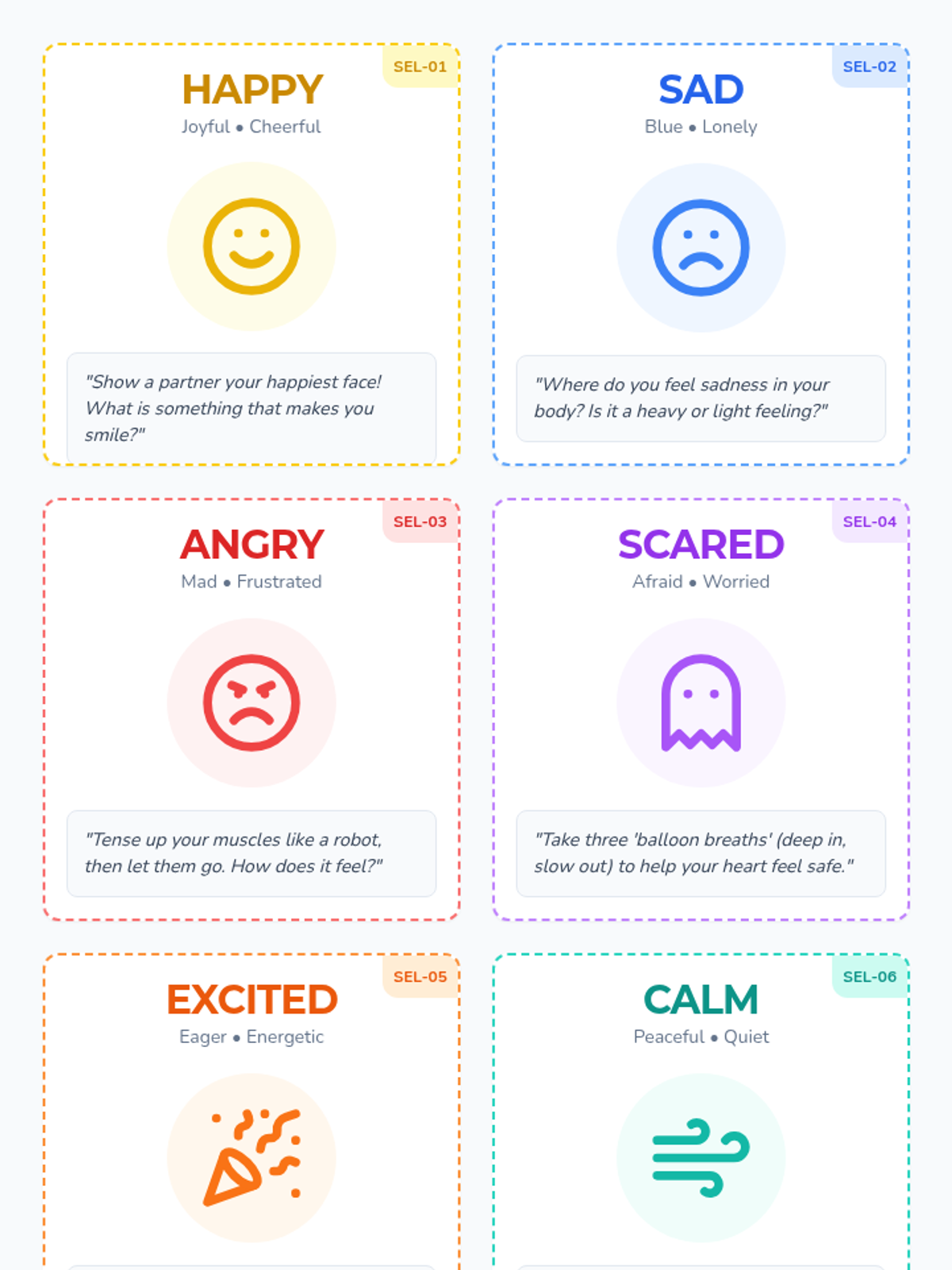
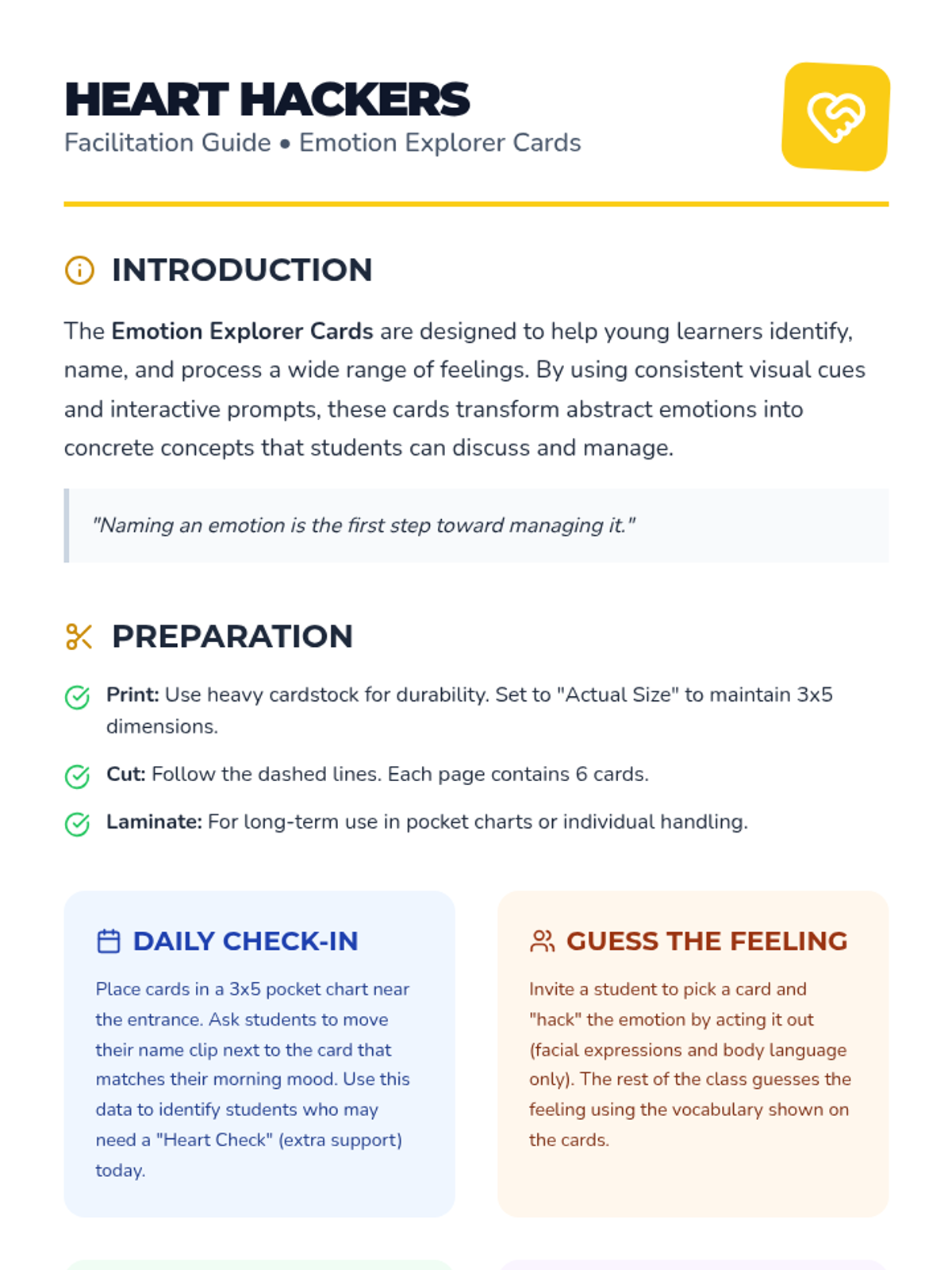
A social-emotional learning lesson focused on identifying and expressing core emotions through interactive task cards and group discussion. Students learn to recognize physiological and situational cues for different feelings.
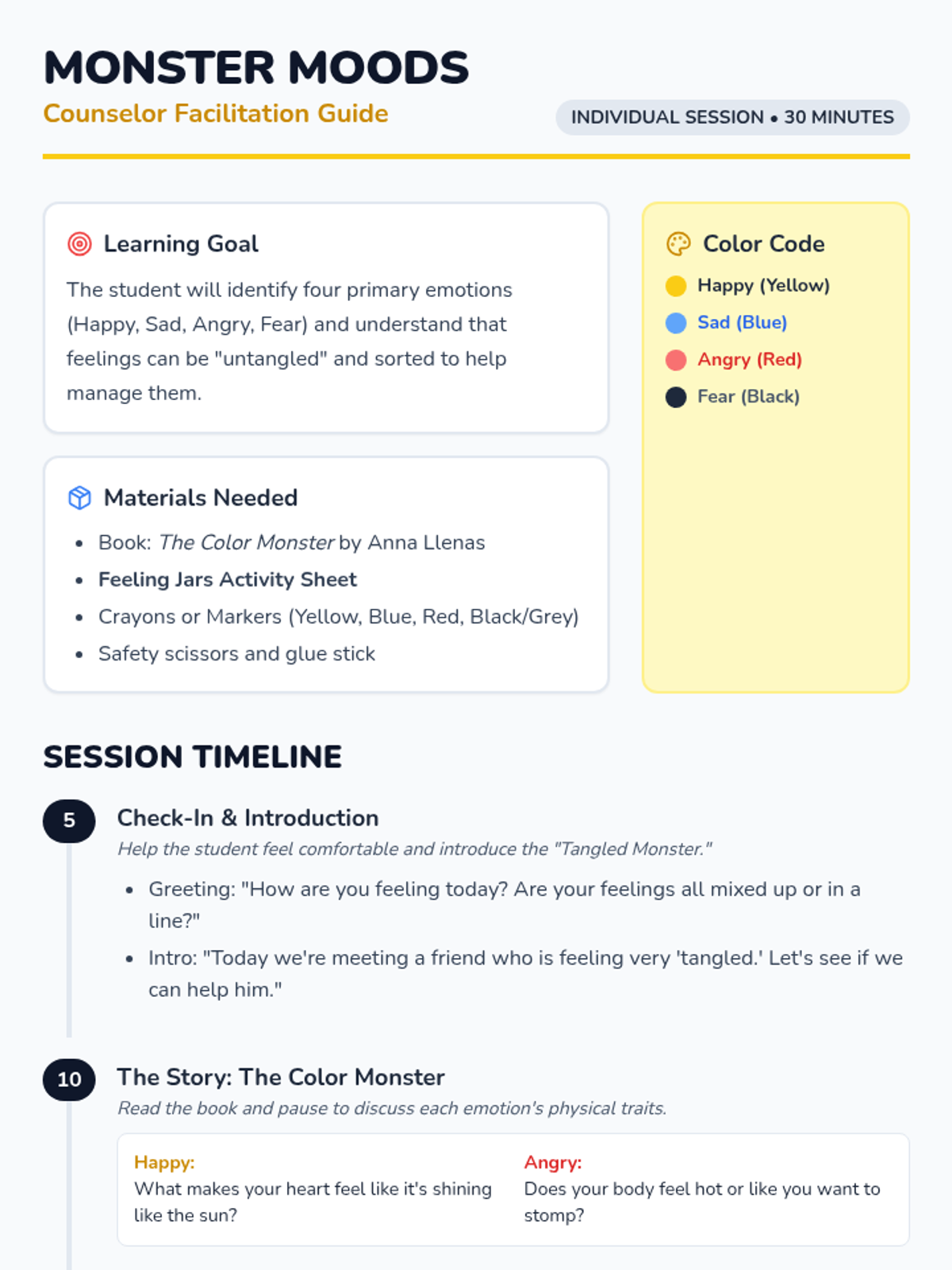
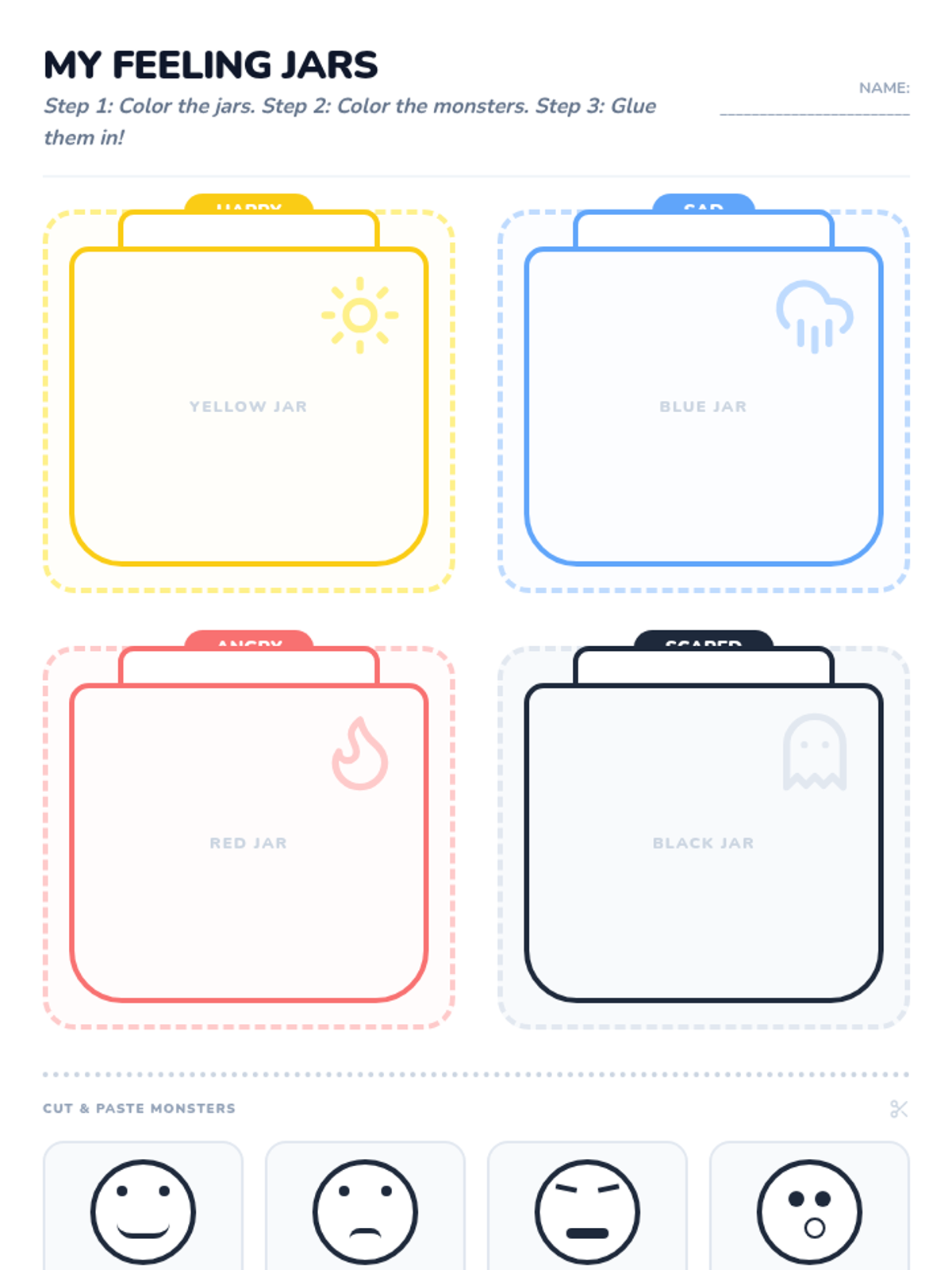
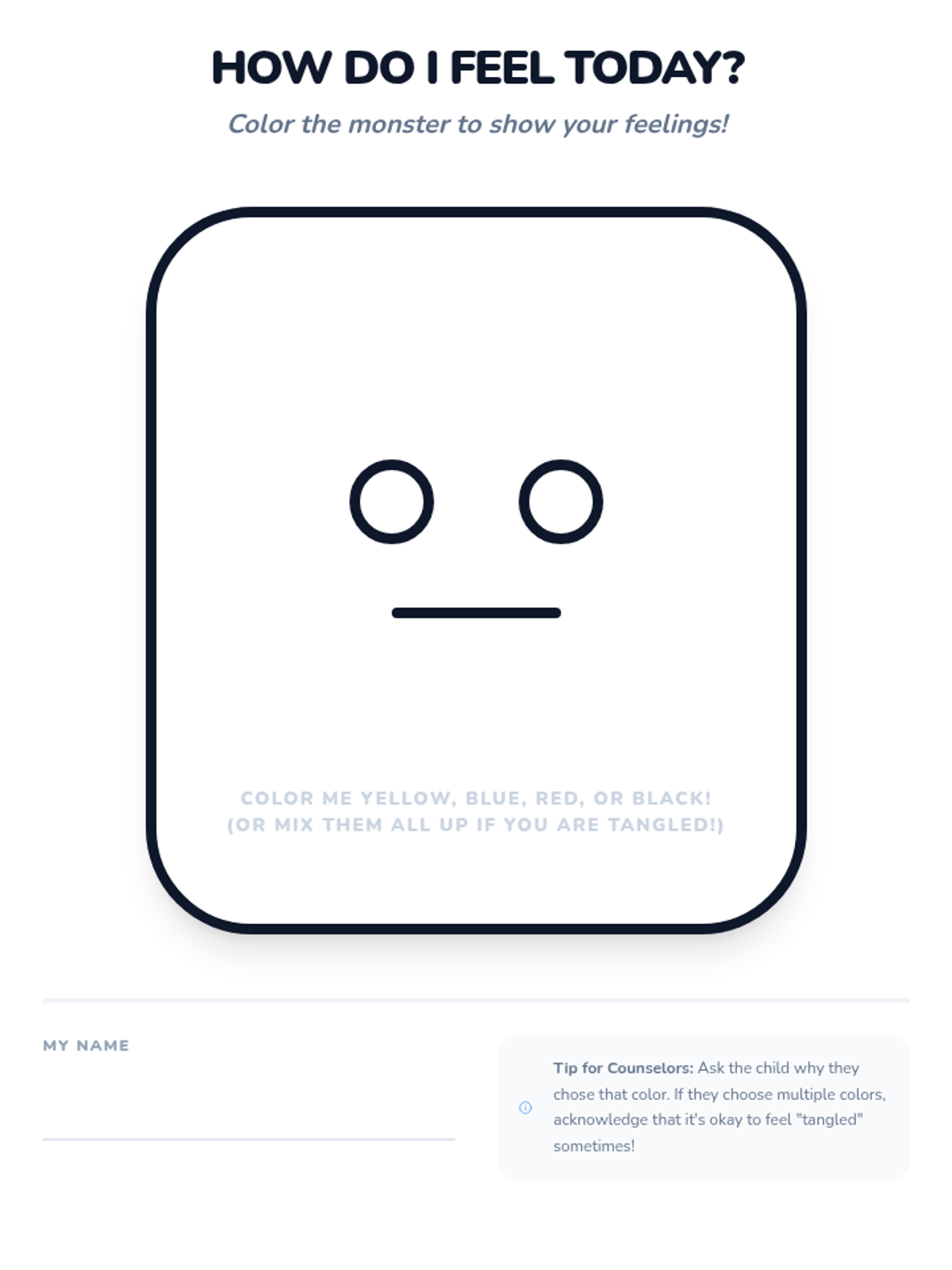
An individual counseling session for Pre-K students to identify and understand four primary emotions (happy, sad, angry, and fear) using the book The Color Monster. Students will practice sorting their 'tangled' feelings into jars just like the monster in the story.
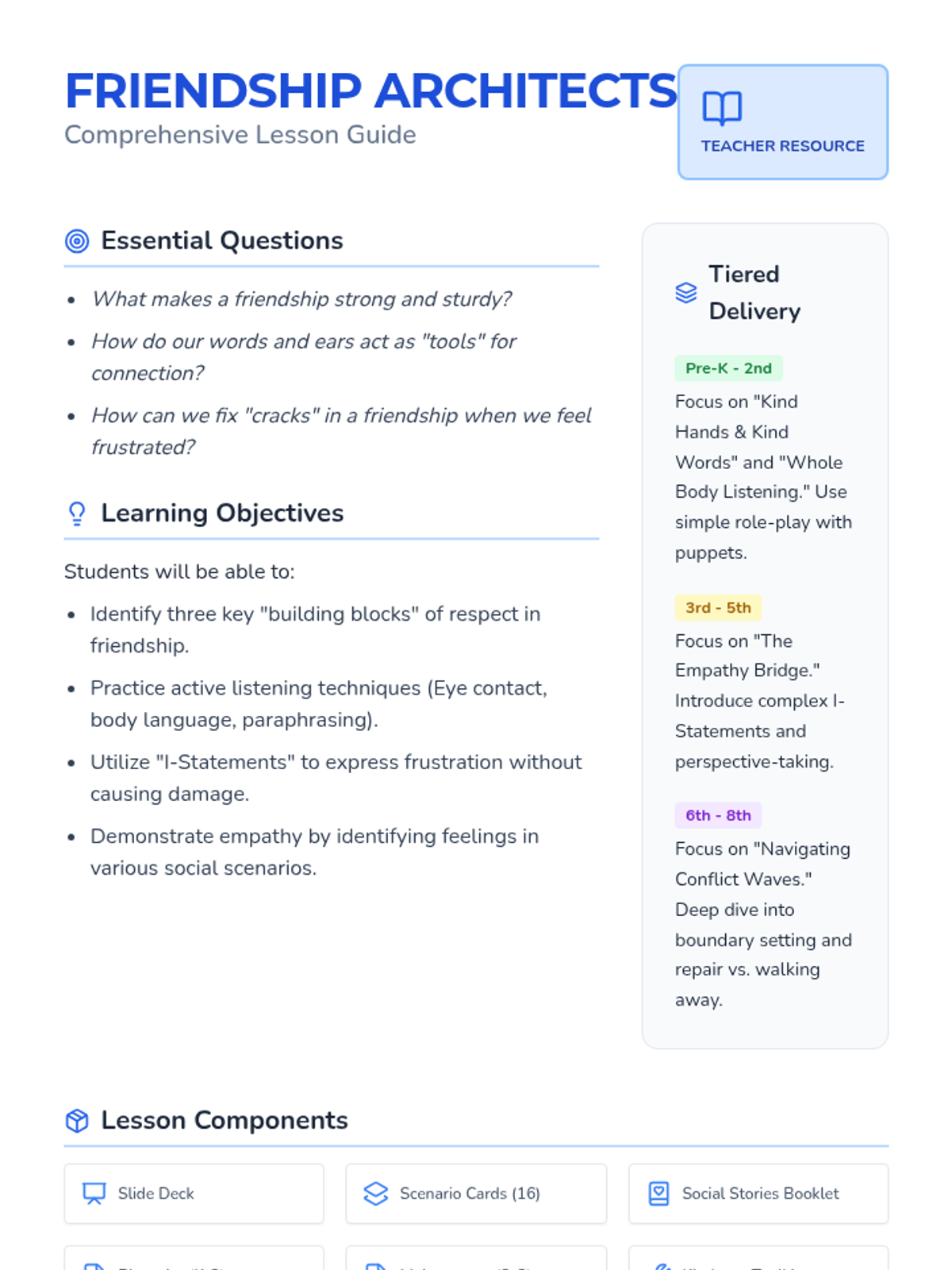
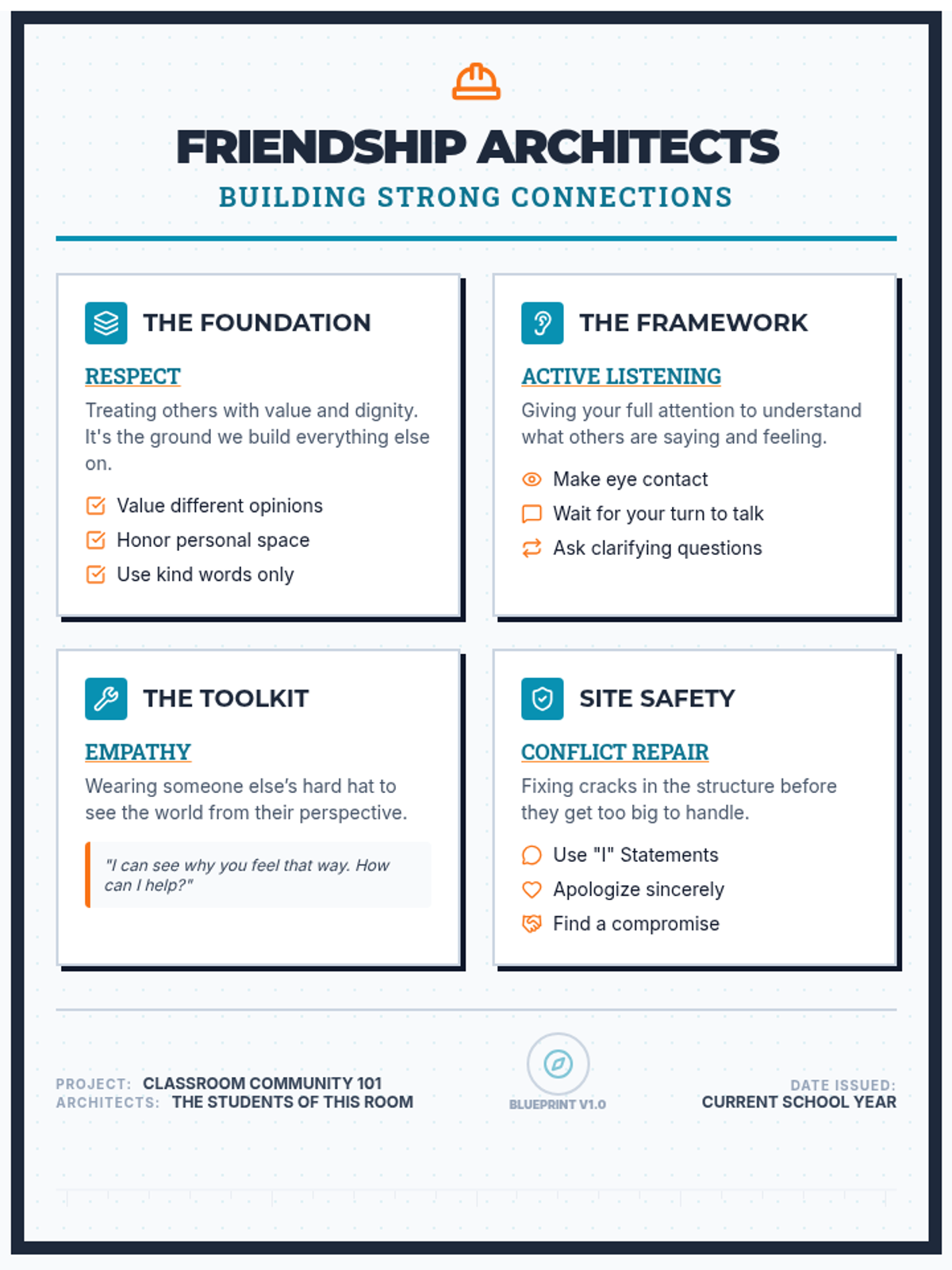
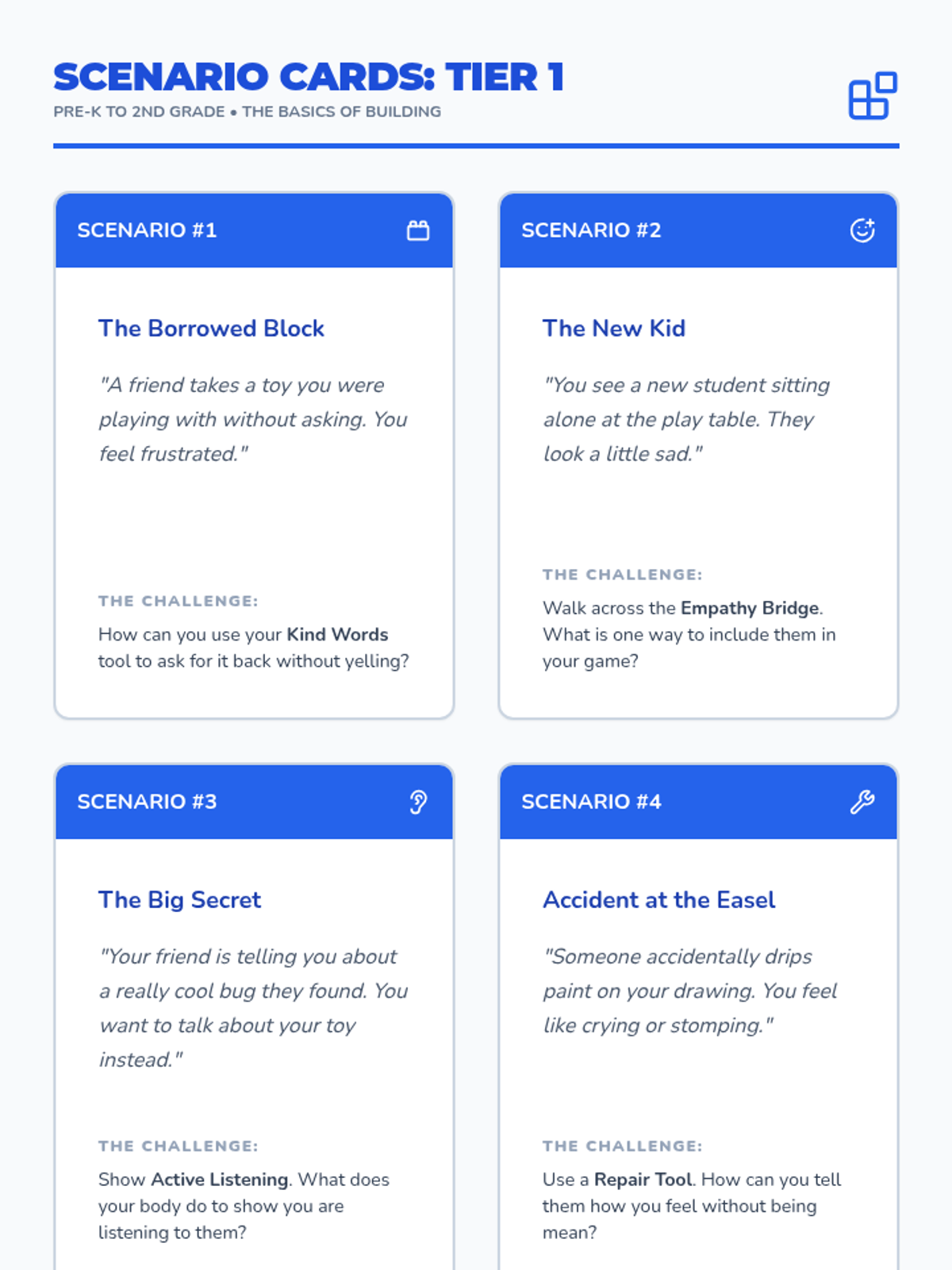
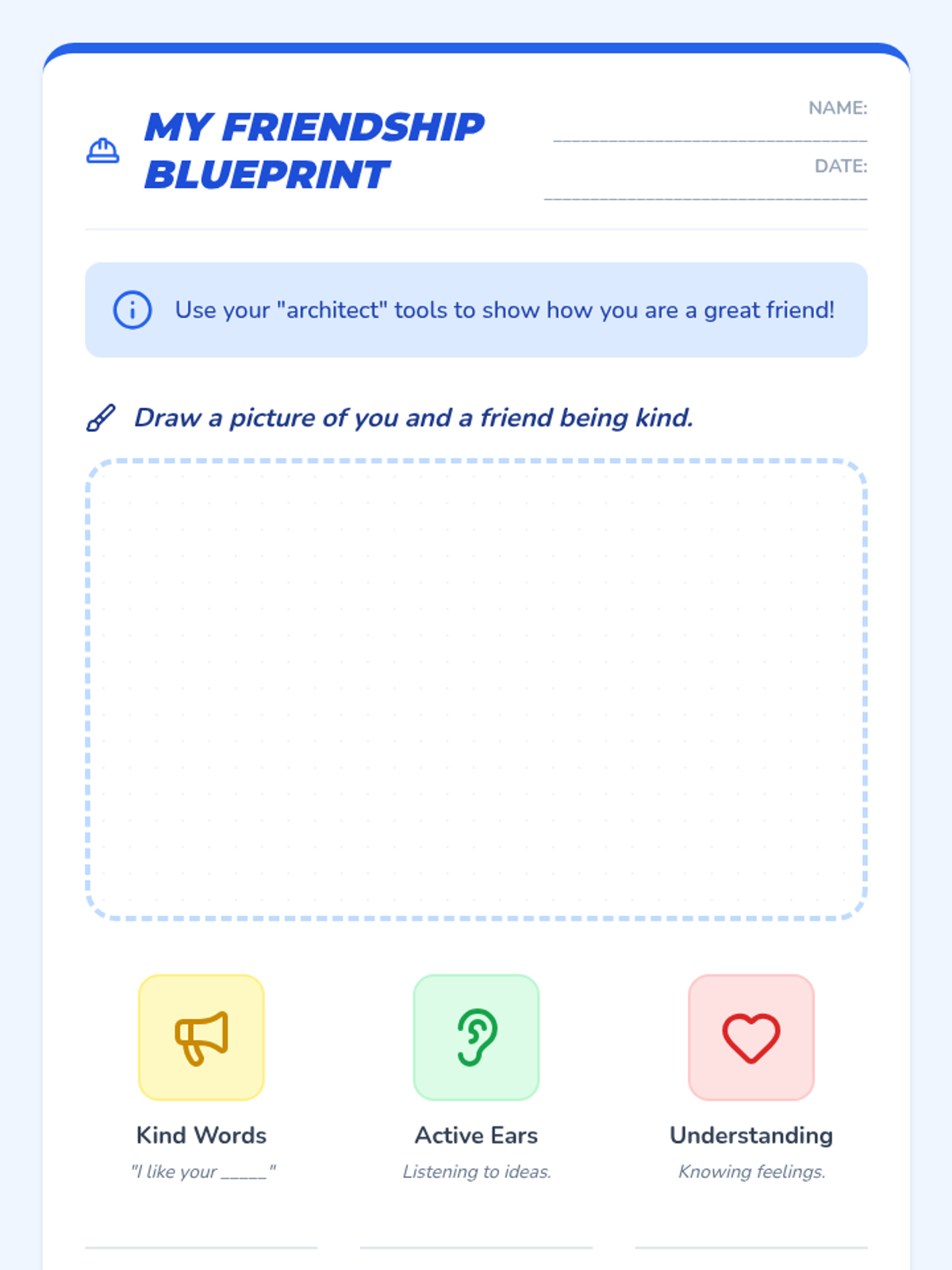
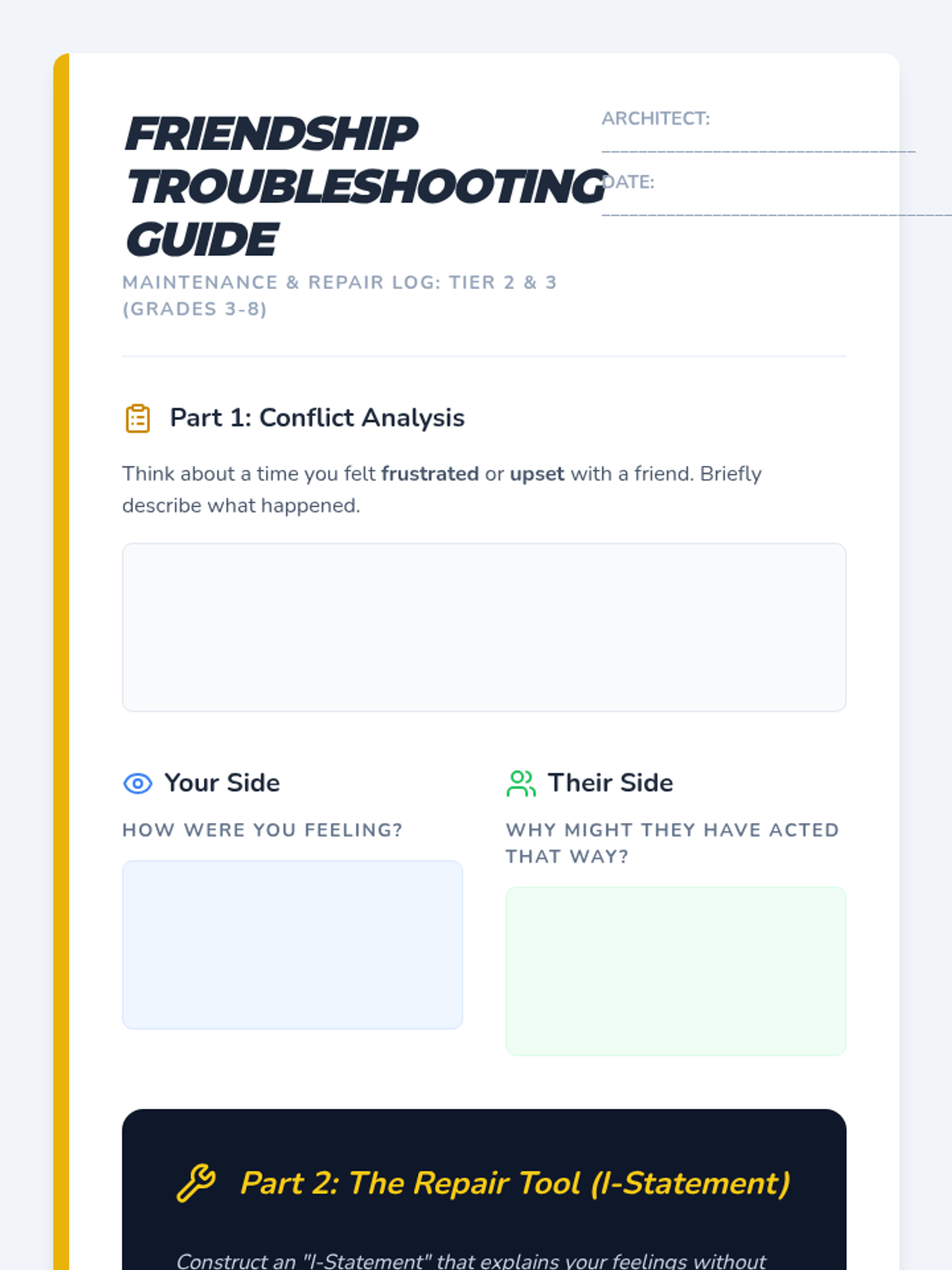
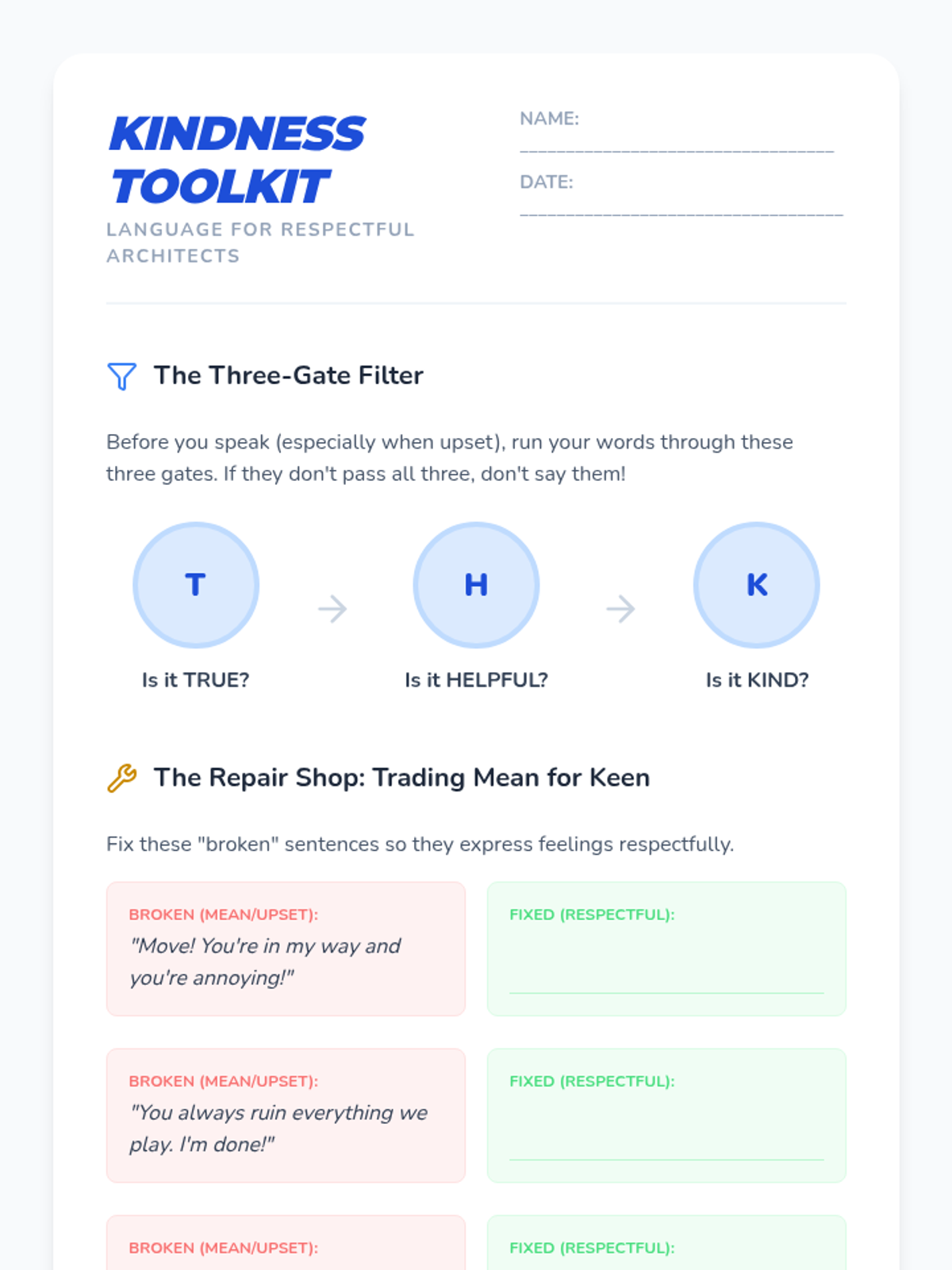
A multi-tiered lesson exploring the essential building blocks of friendship, focusing on respectful communication, active listening, and managing conflict with empathy. This lesson includes differentiated activities suitable for Pre-K through 8th grade.
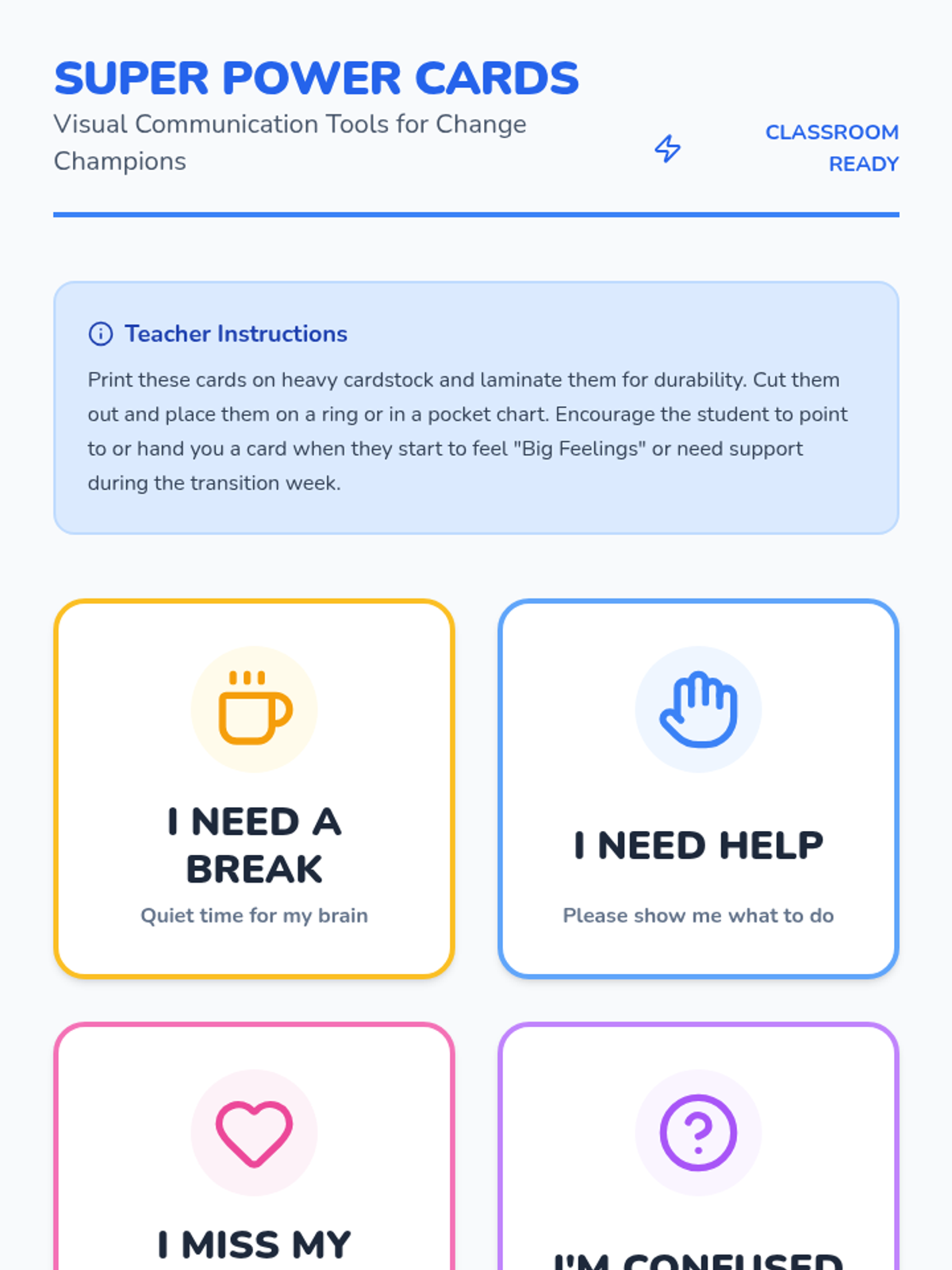
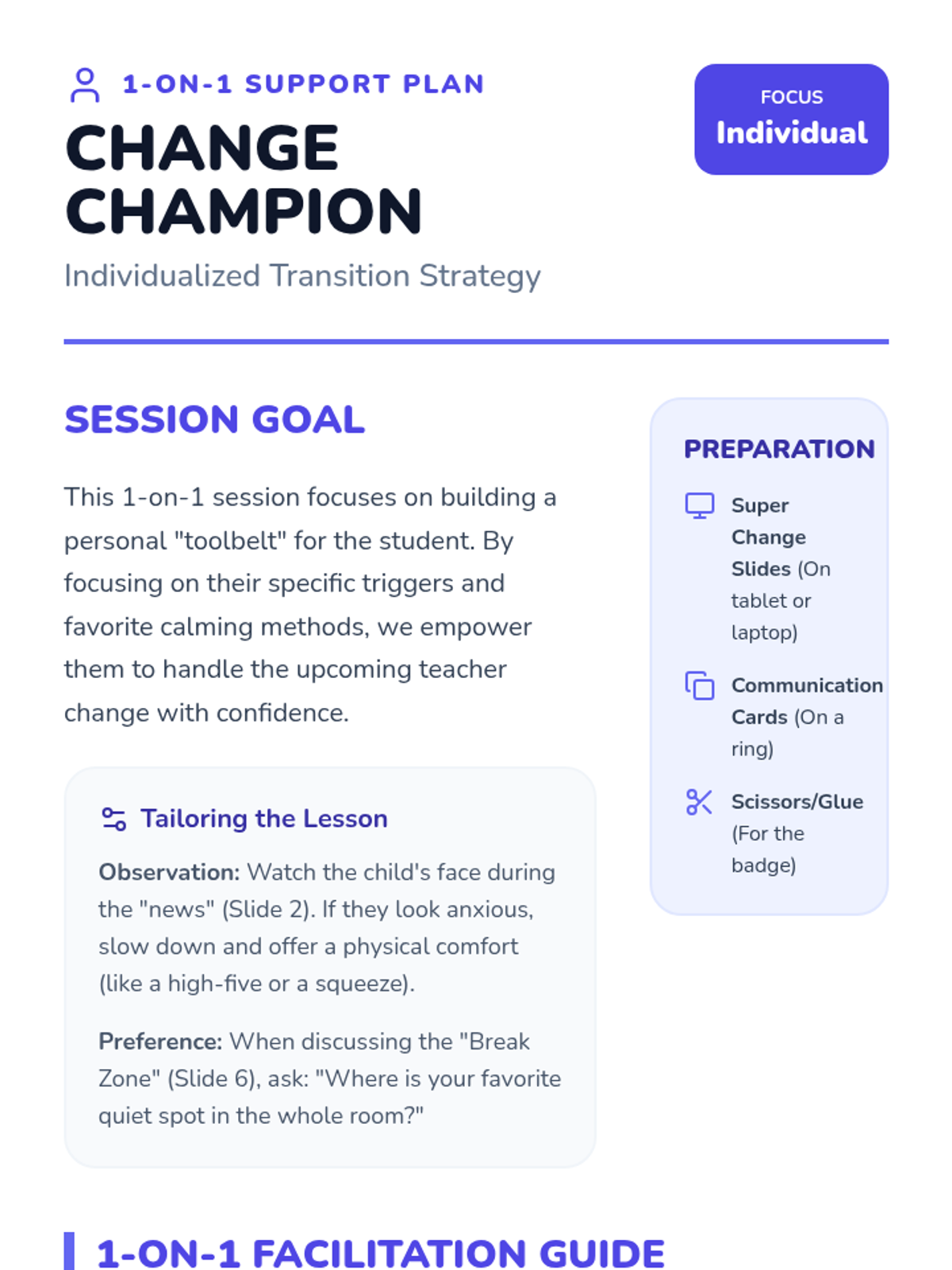
A lesson designed to help preschoolers navigate transitions when their regular teacher is away. It focuses on self-regulation, flexible thinking, and using visual tools to communicate needs.
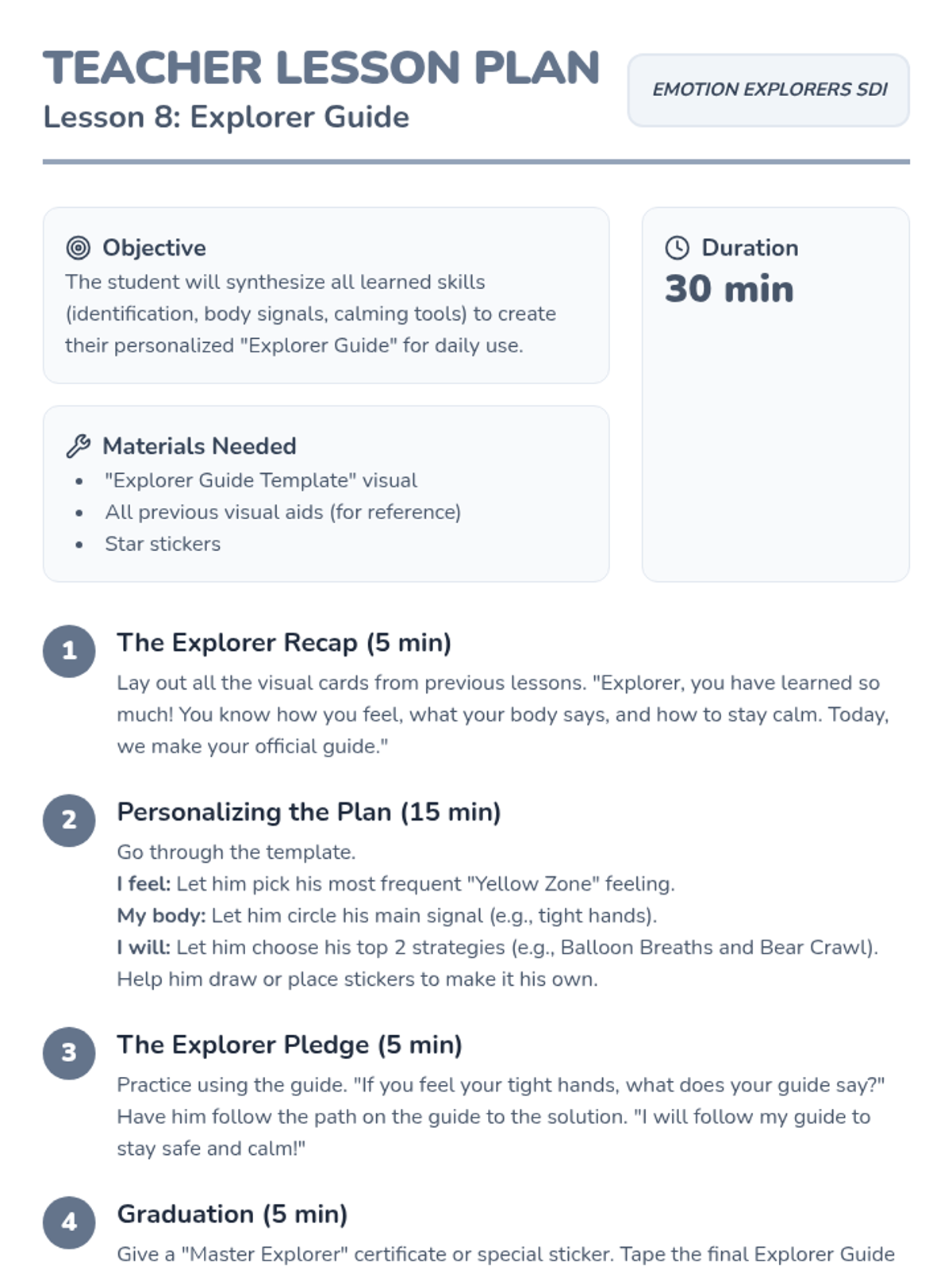
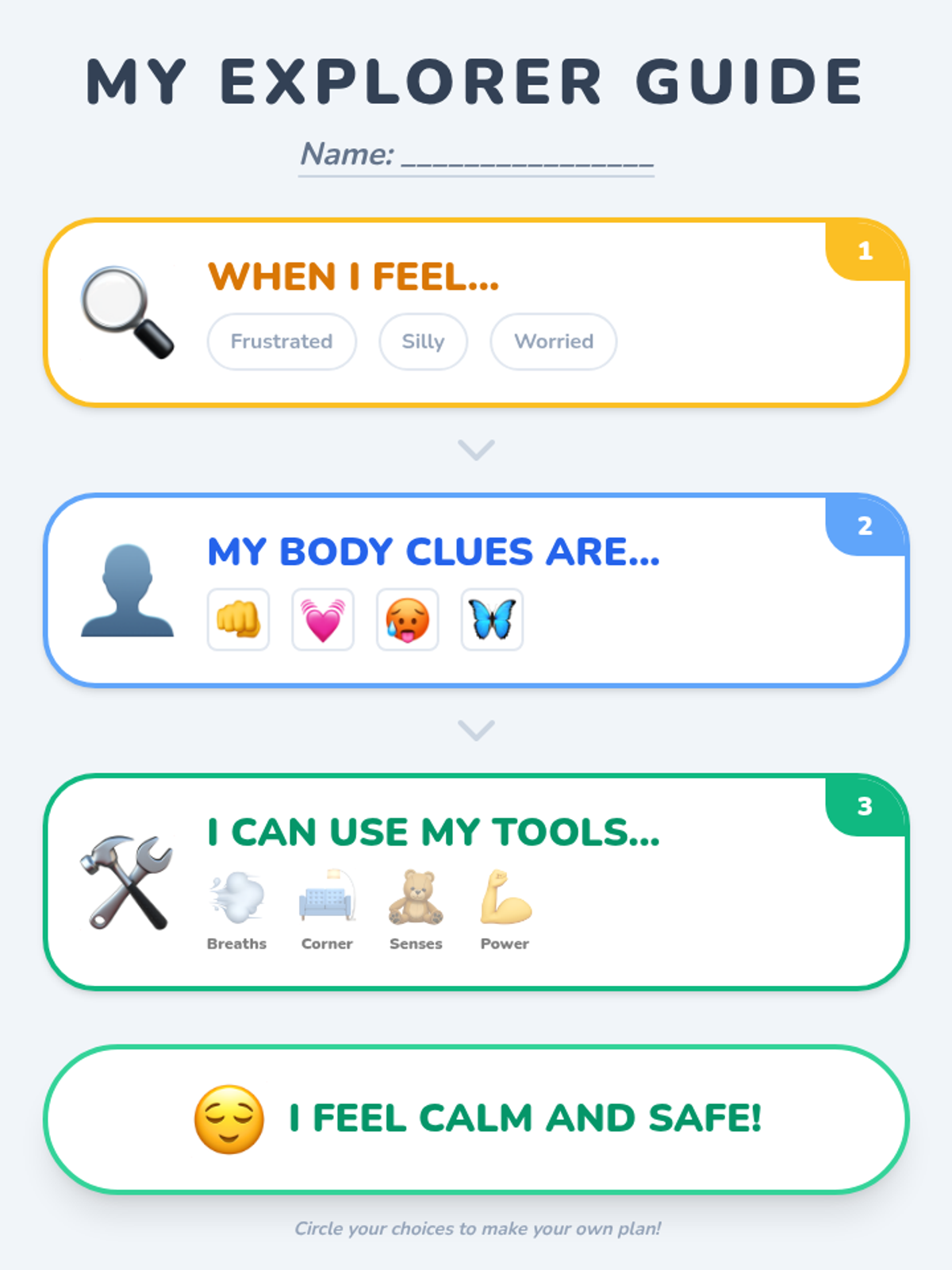
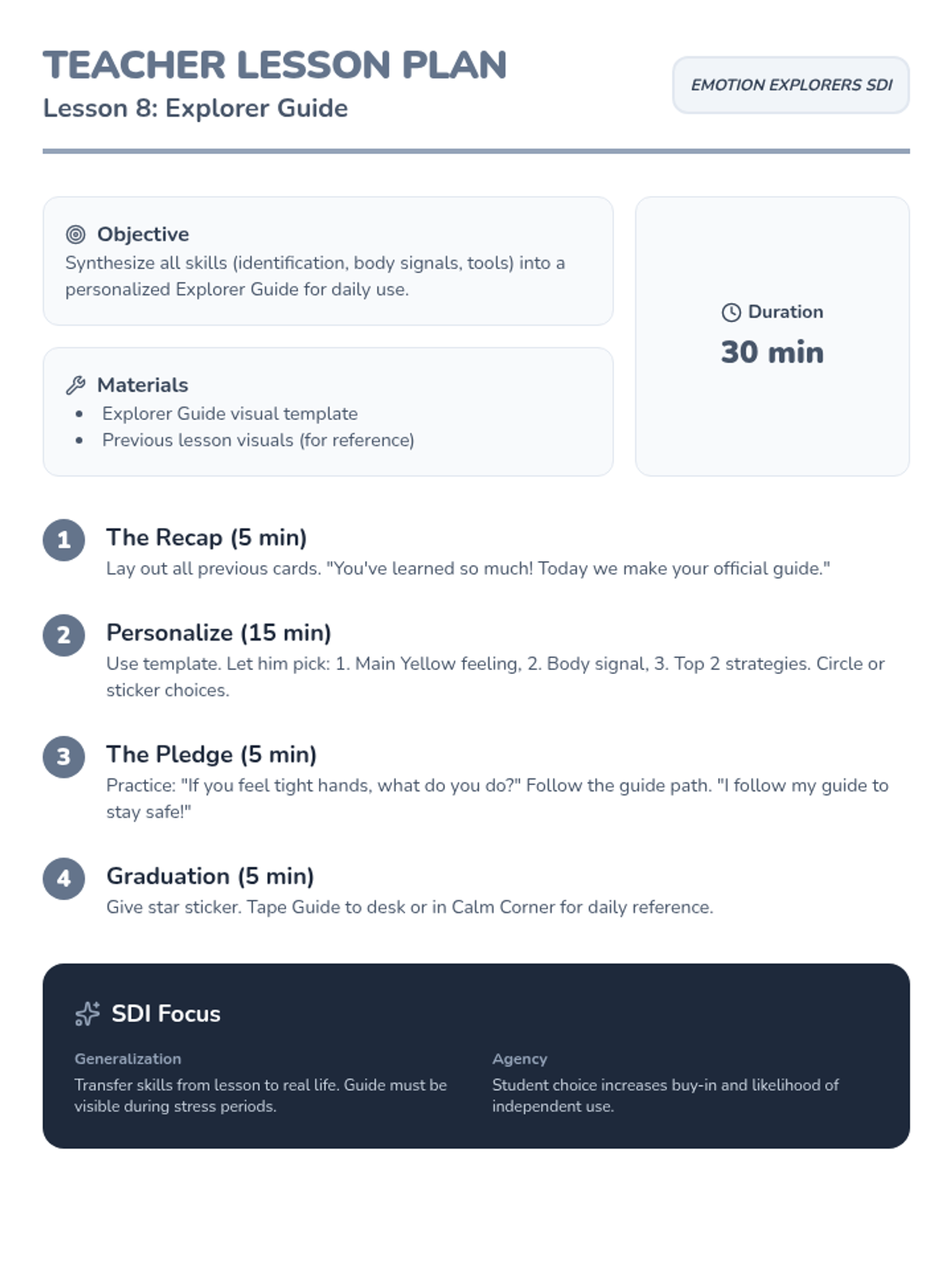
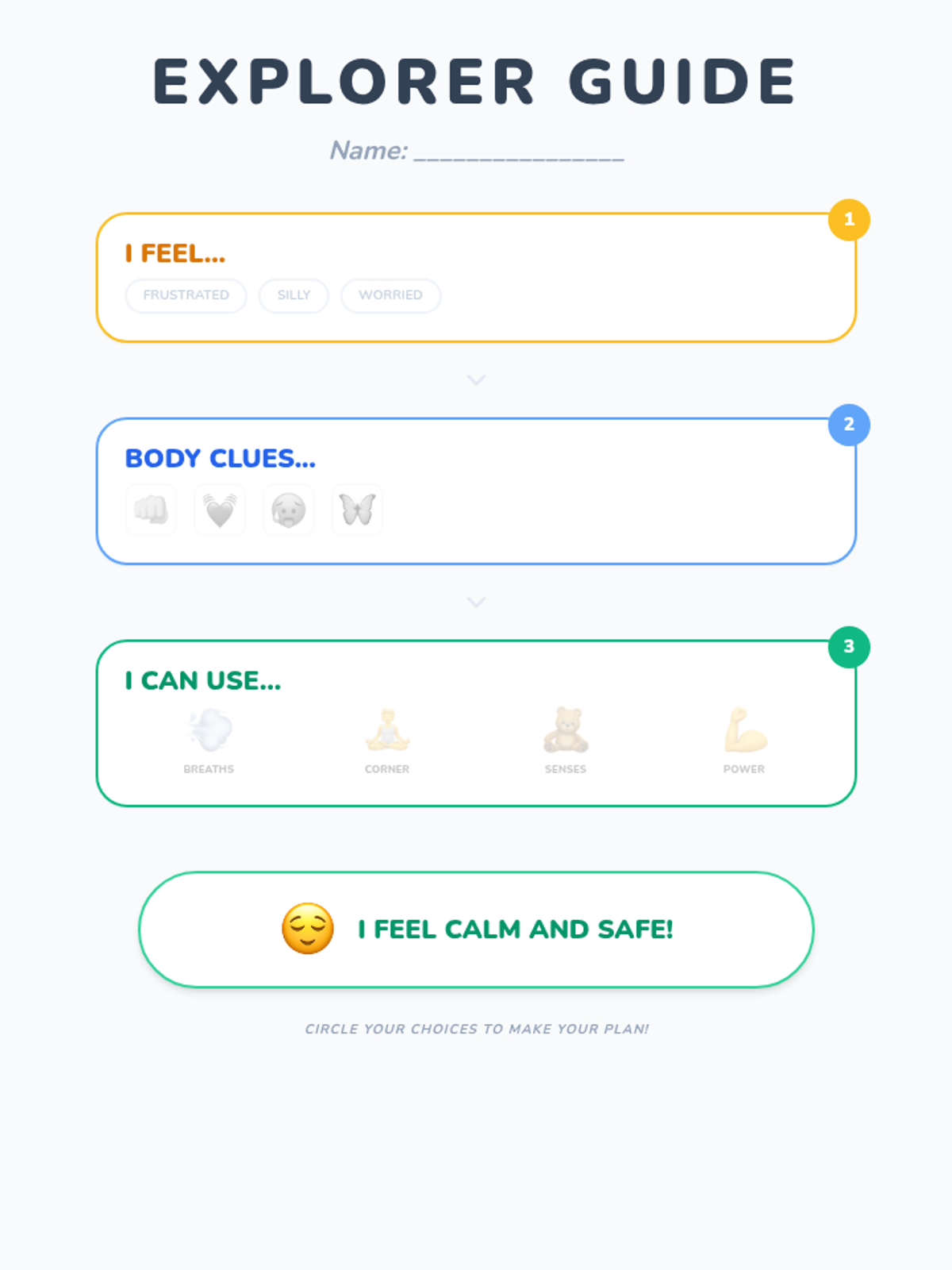
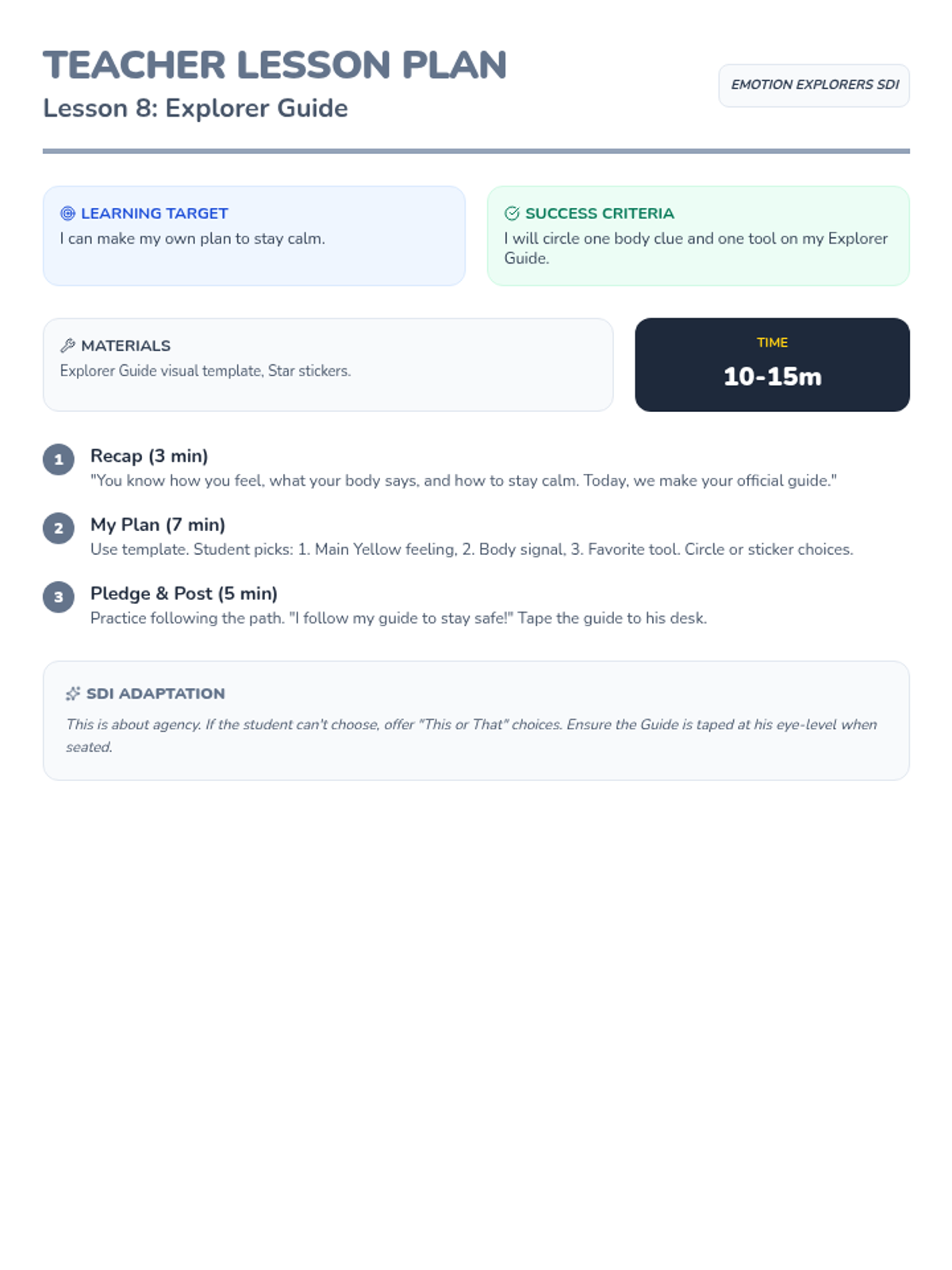
Synthesizes all skills into a personalized "Explorer Guide" that the student can use daily for self-regulation.
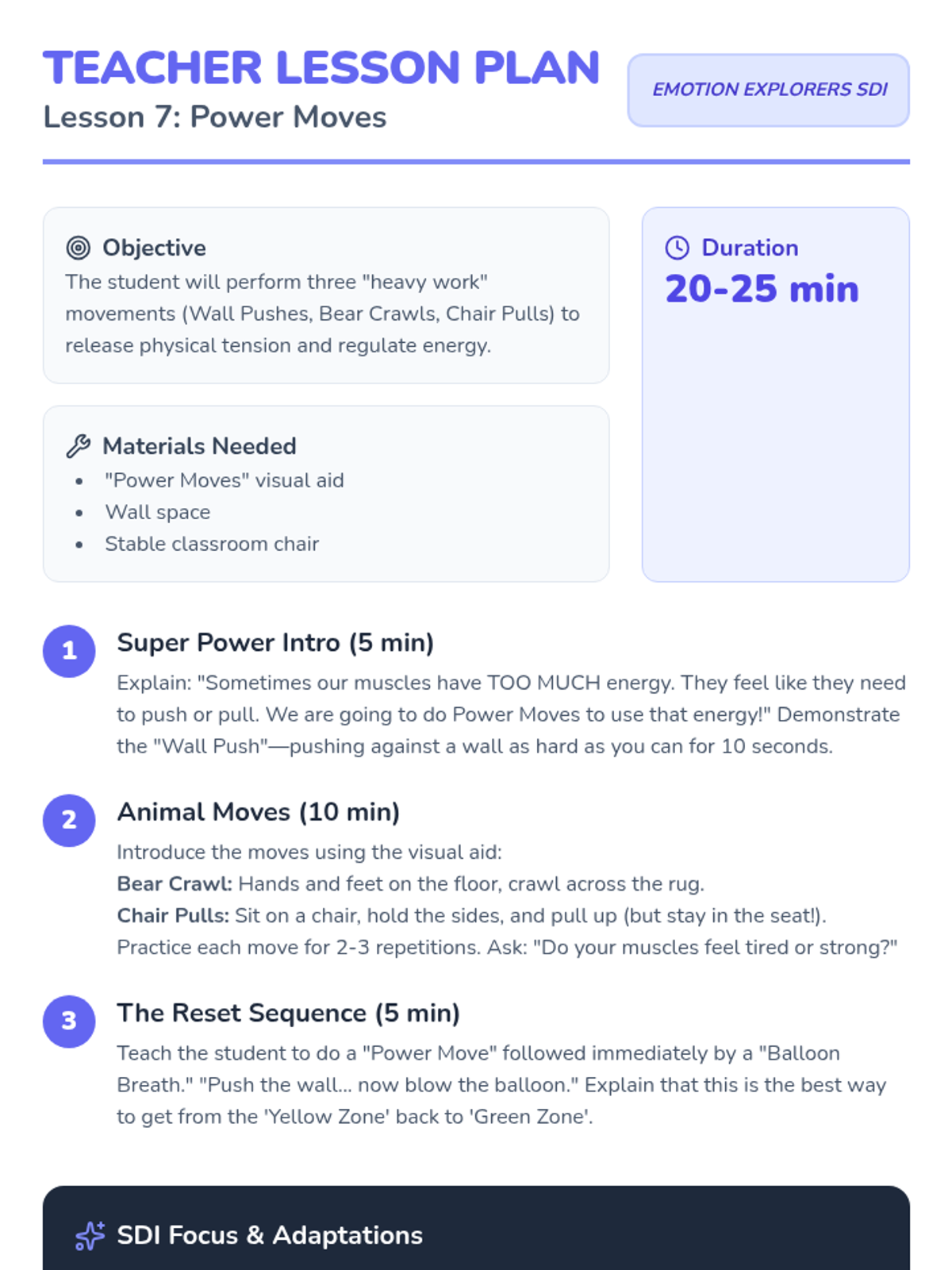
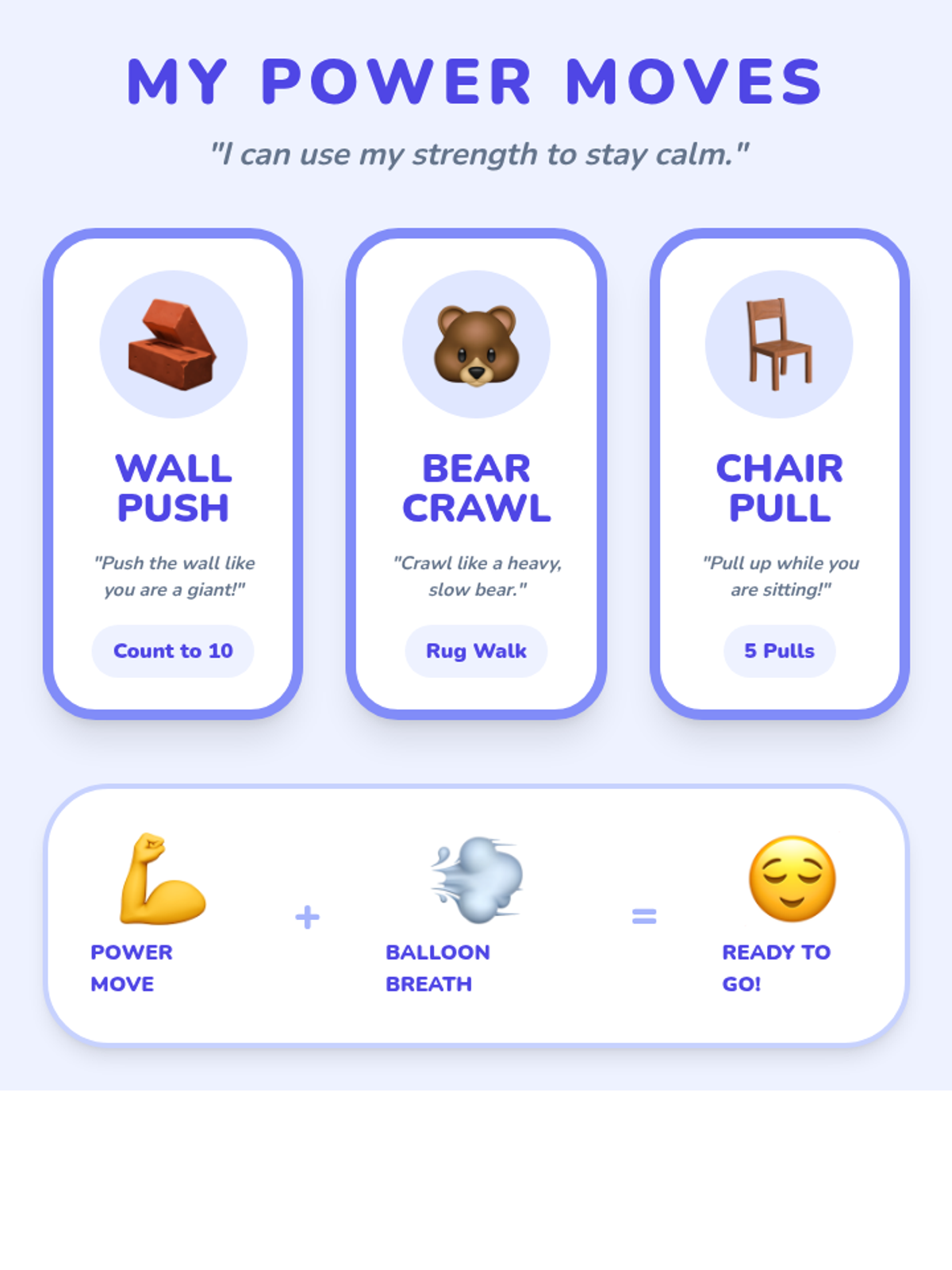
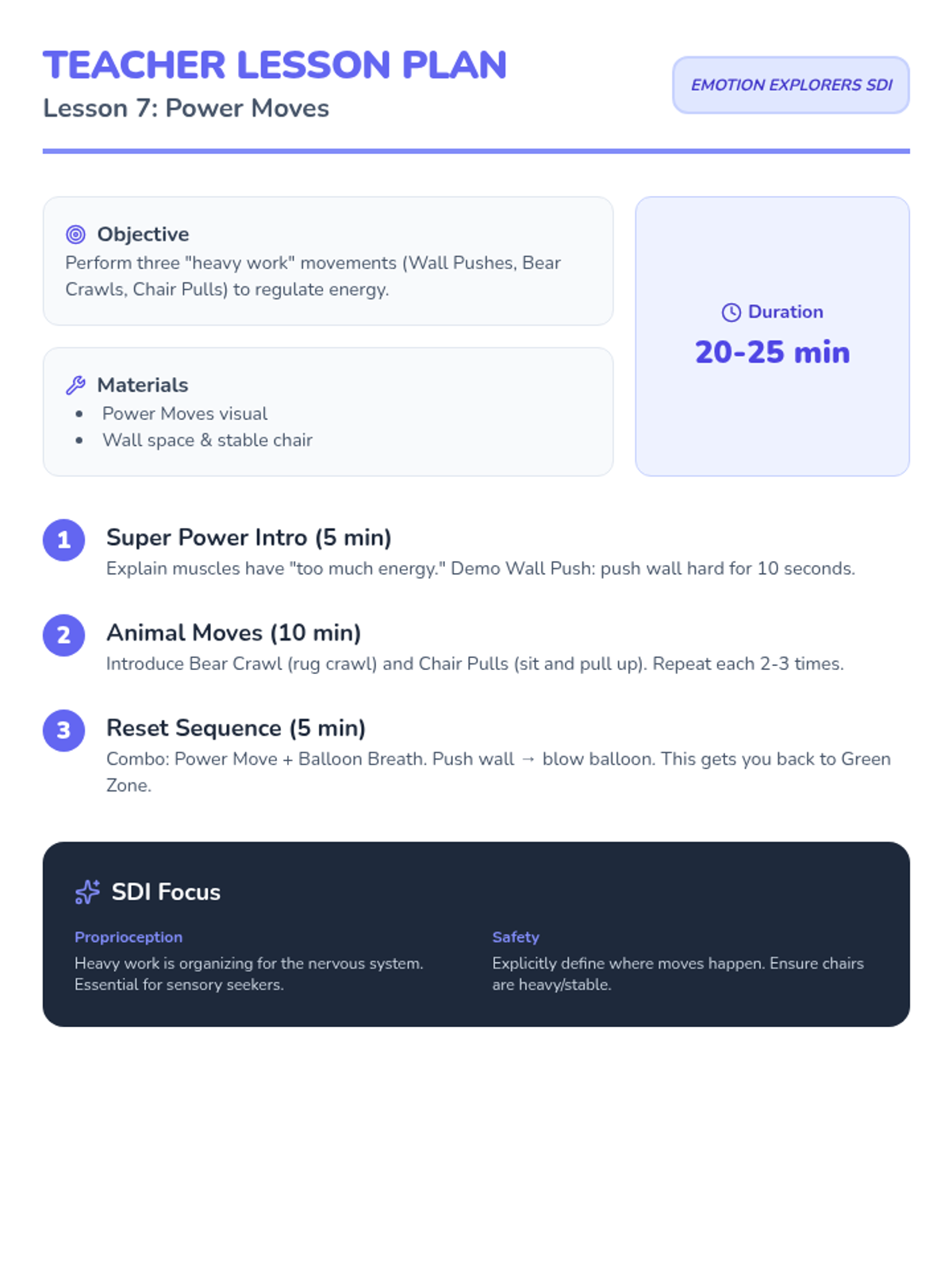
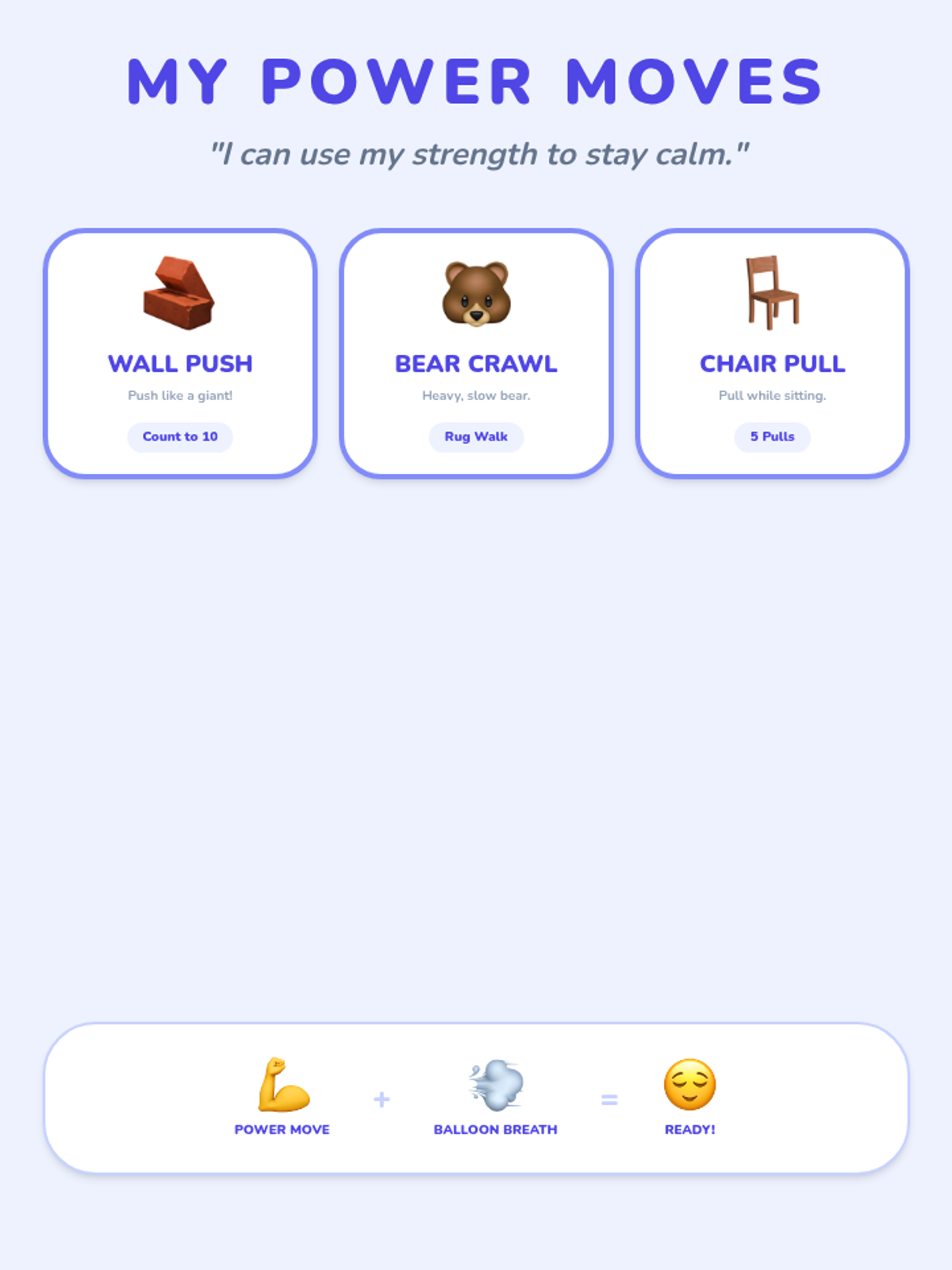
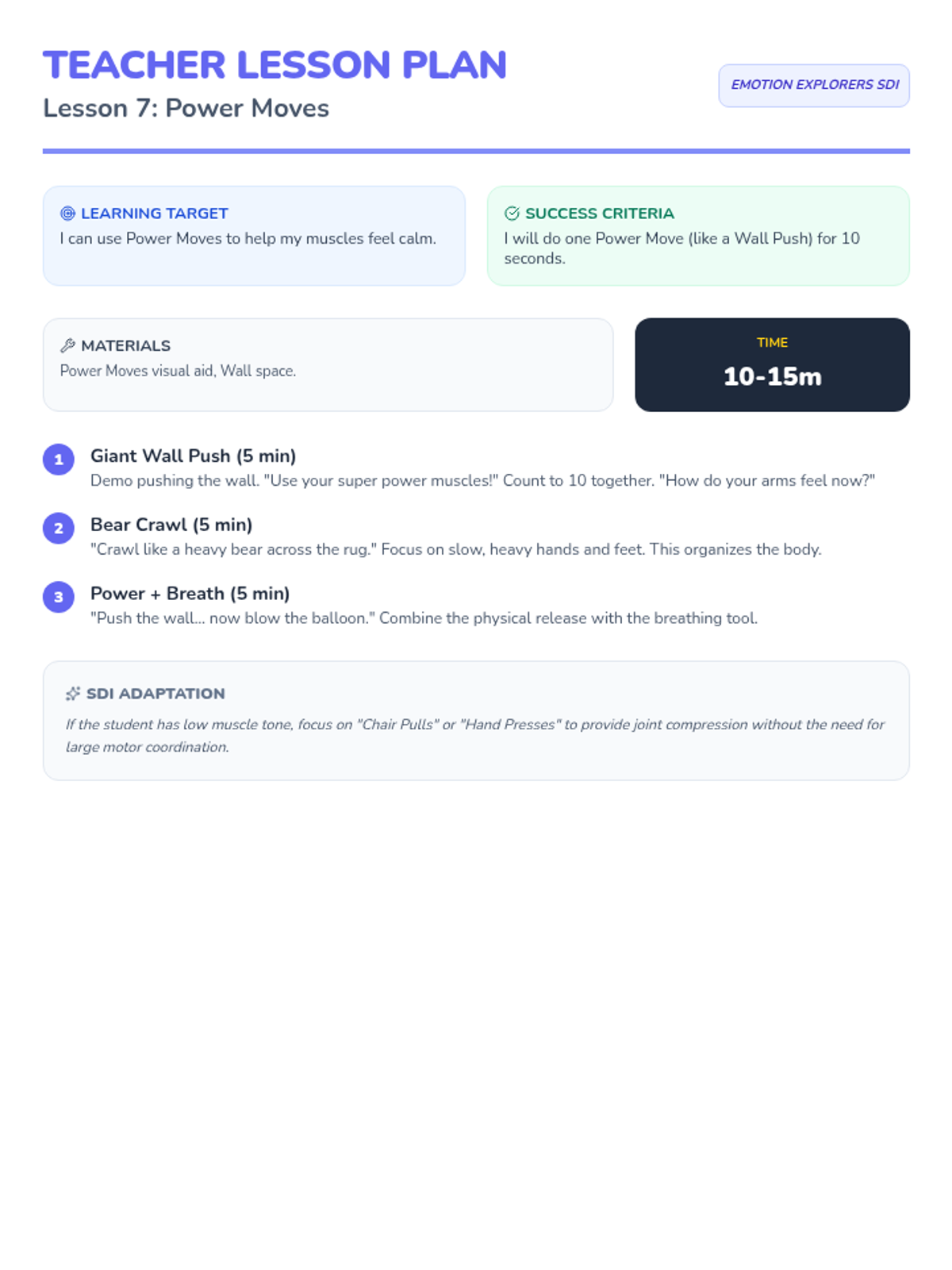
Teaches heavy work and physical movement strategies (wall pushes, animal crawls) to regulate high energy or intense emotions.
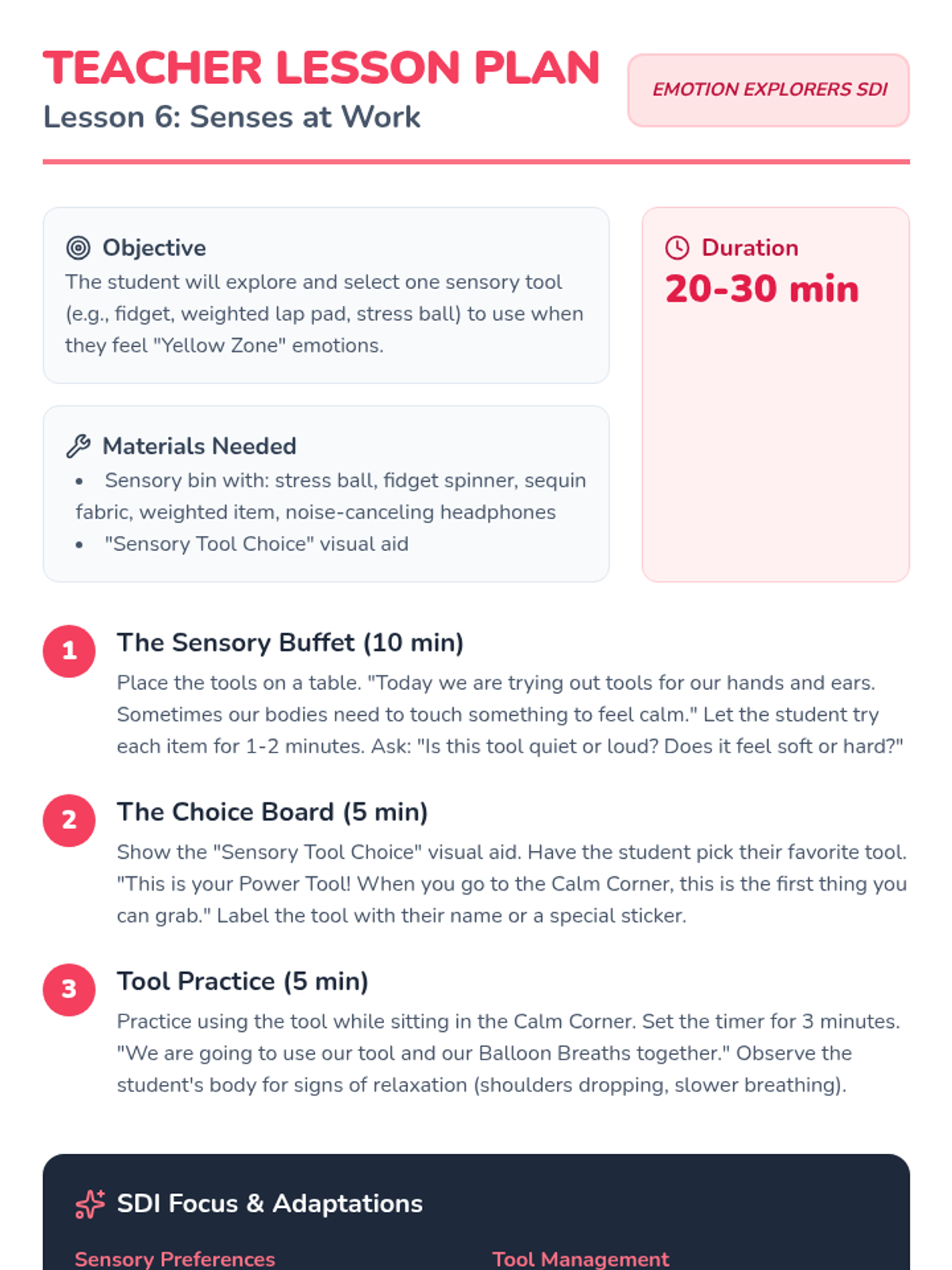
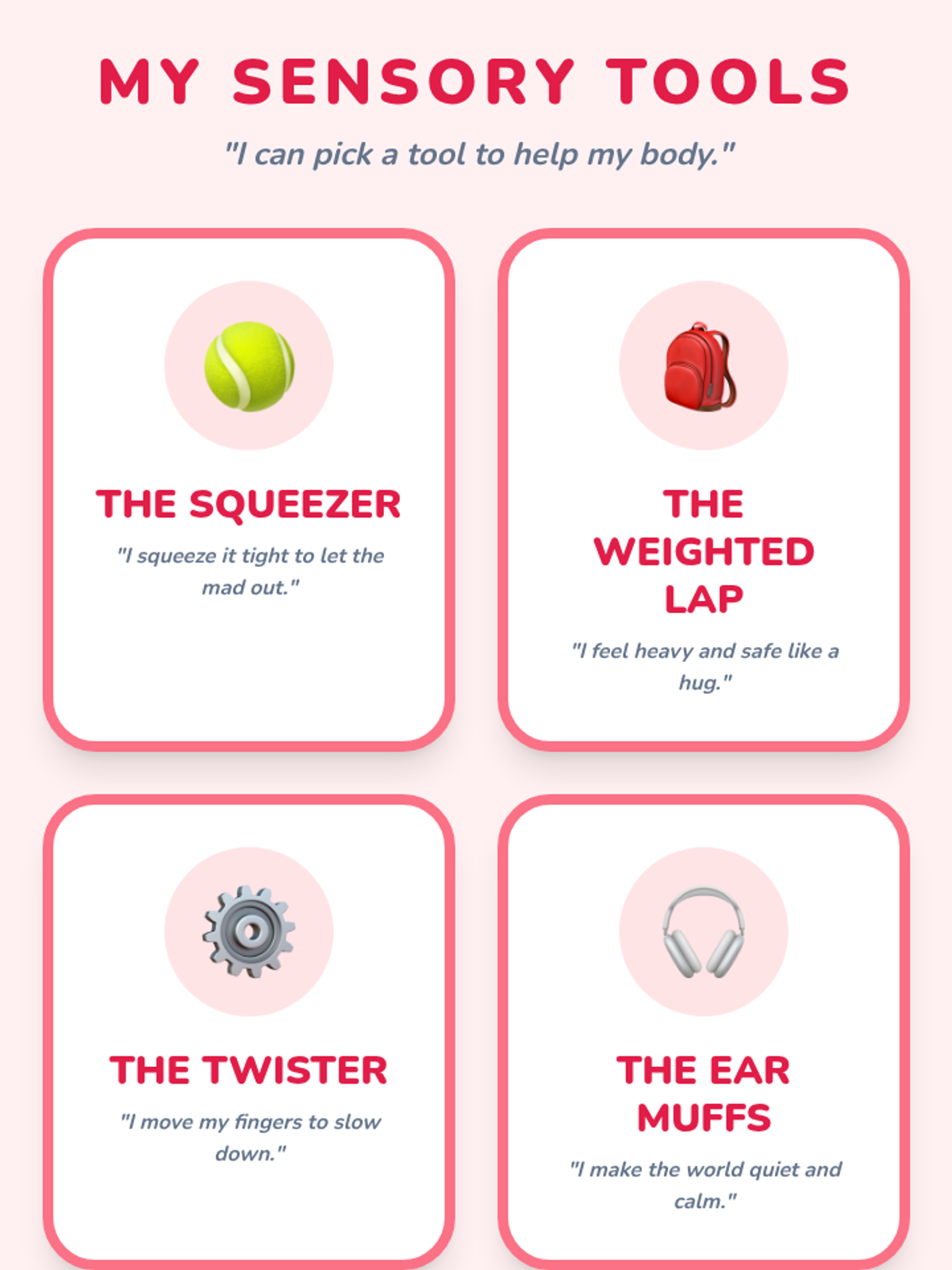
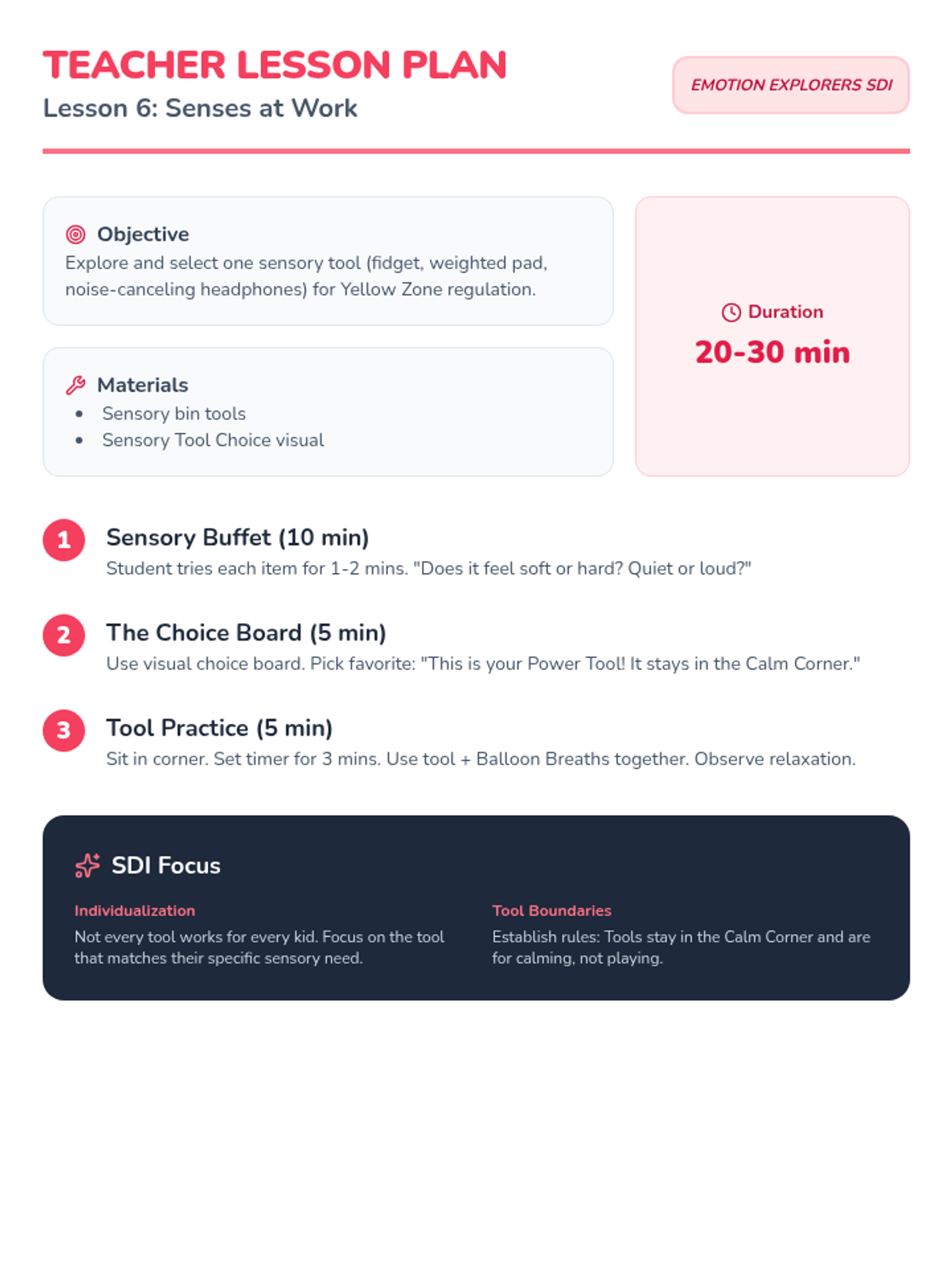
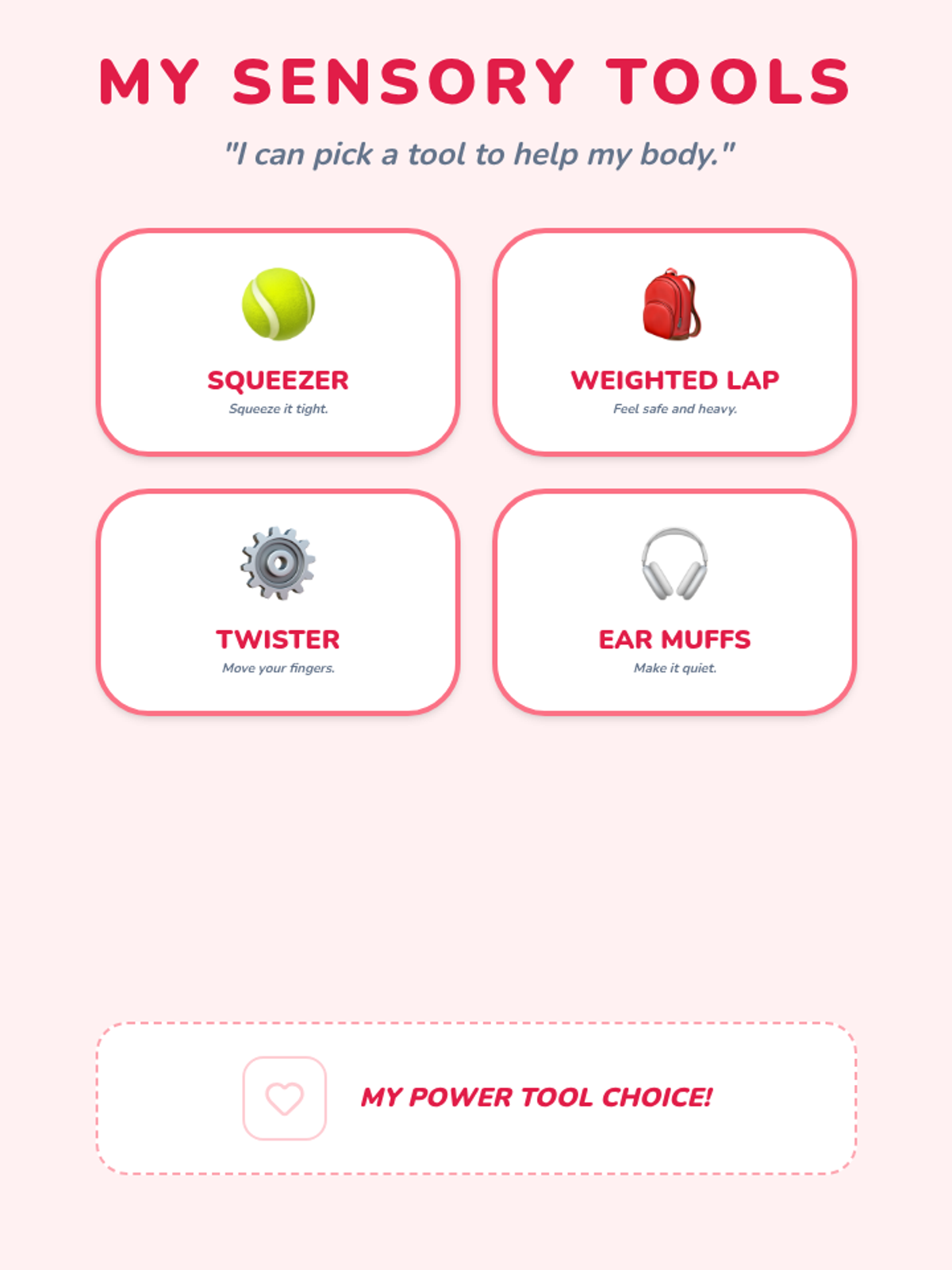
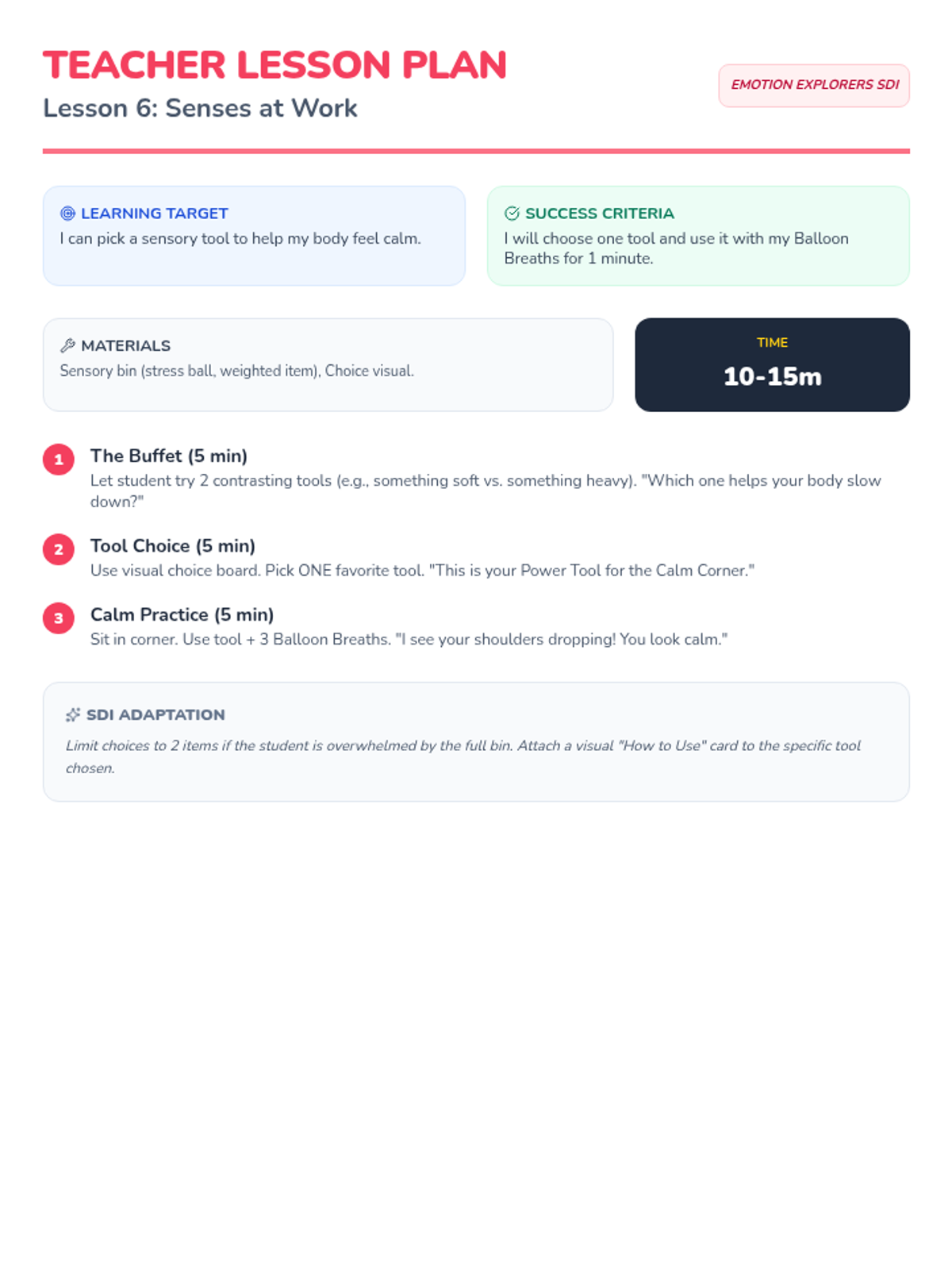
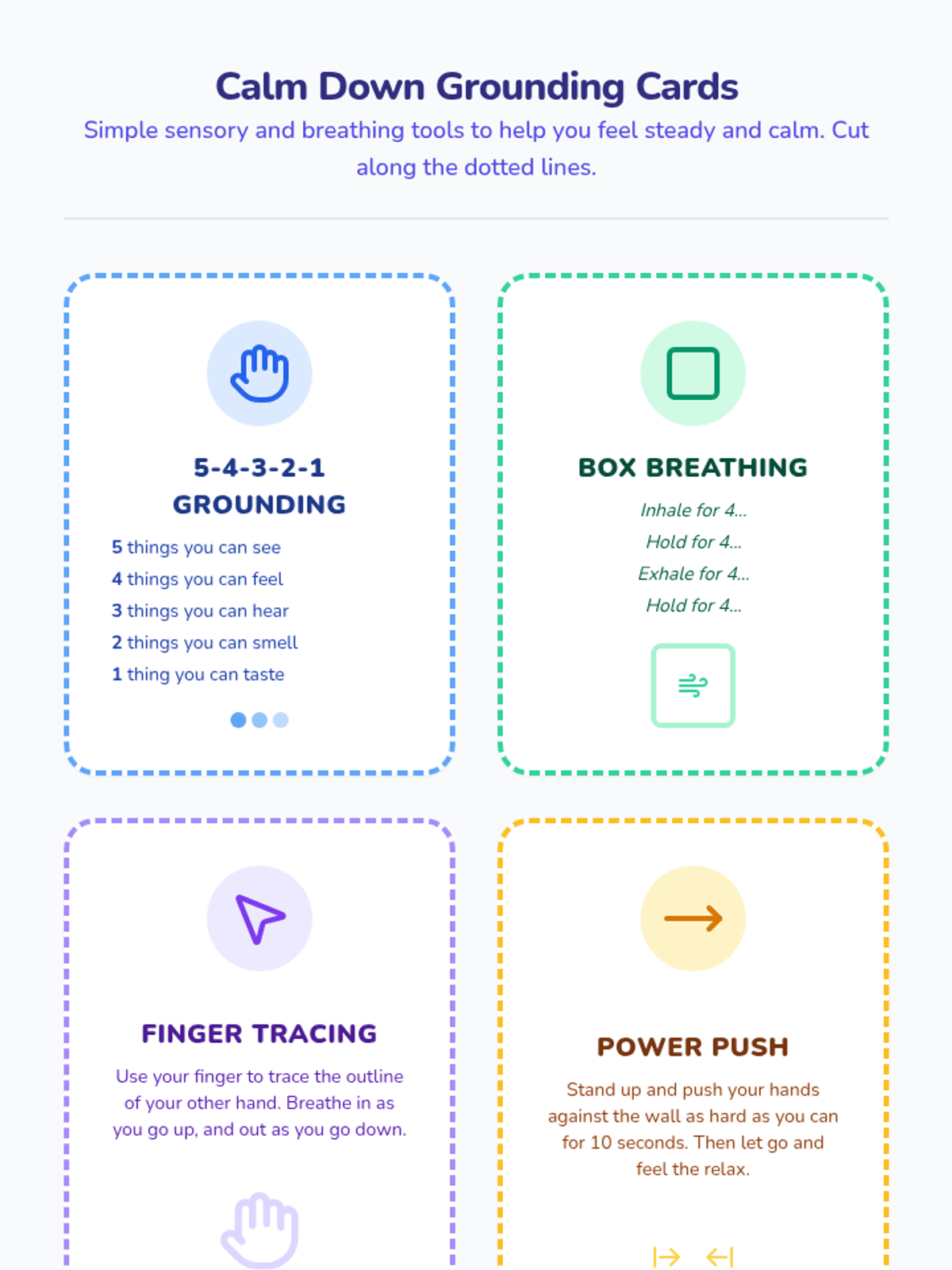
Explores the use of tactile and sensory tools (fidgets, weighted items) to help the body return to a calm state.
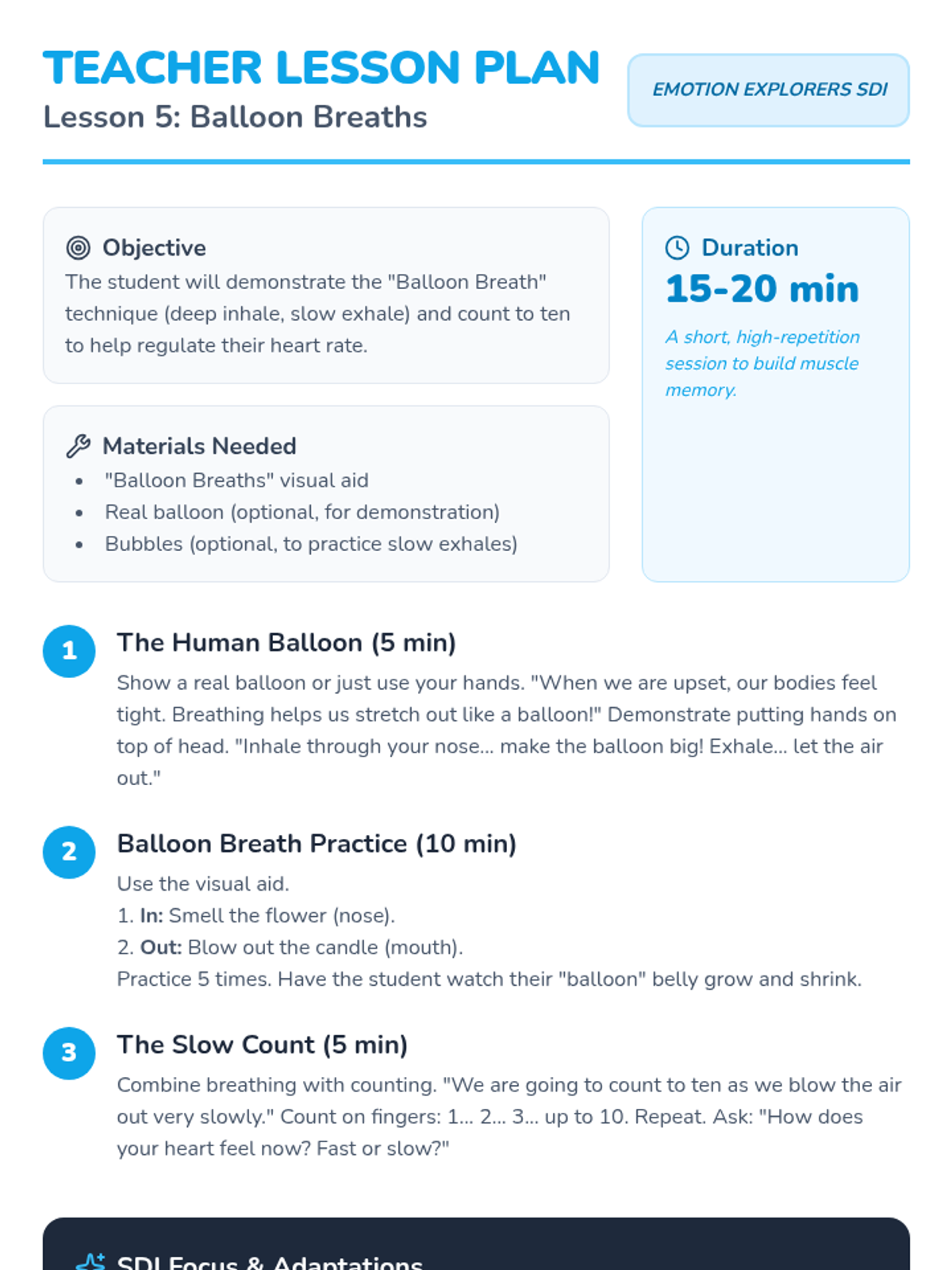
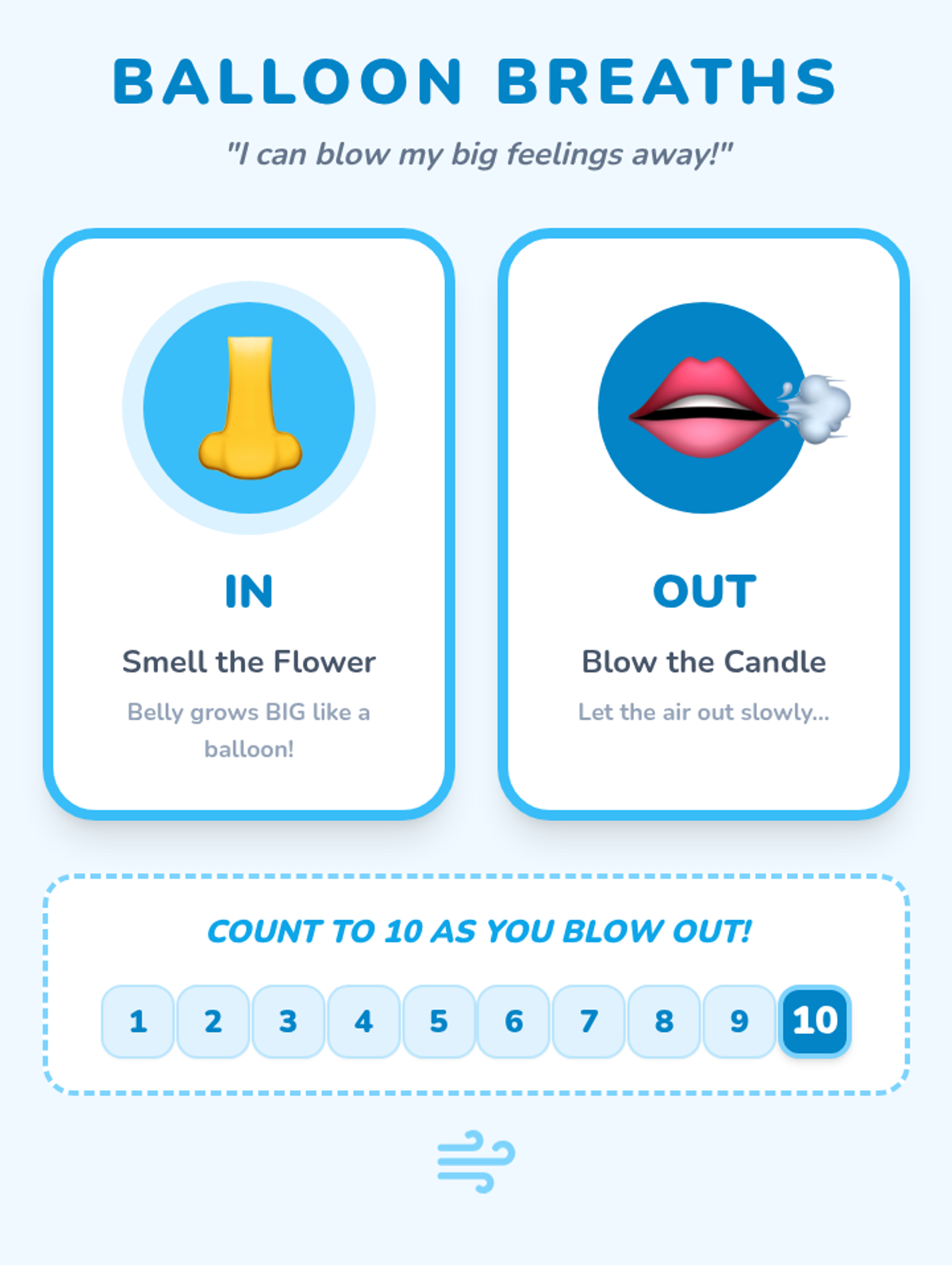
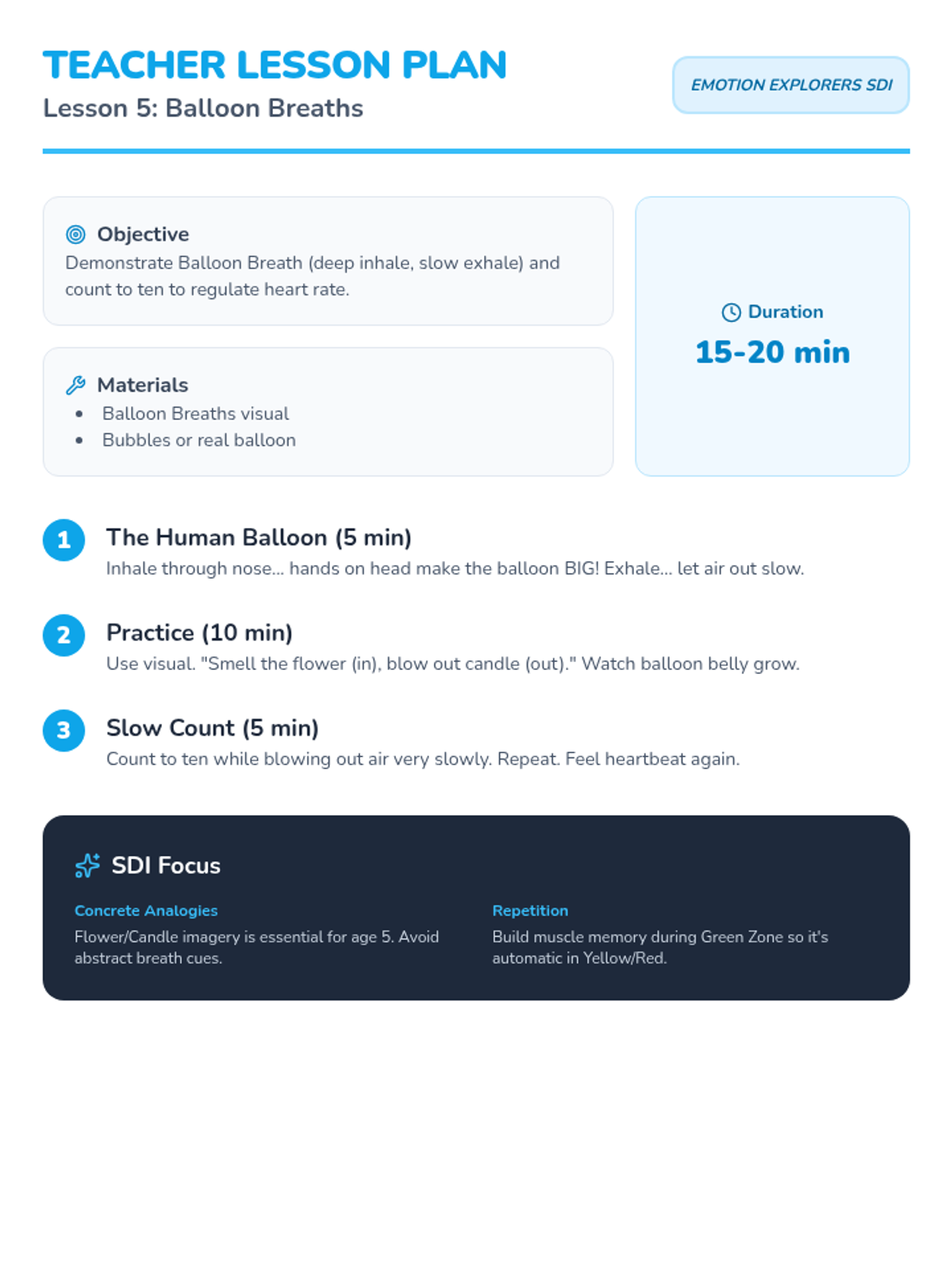
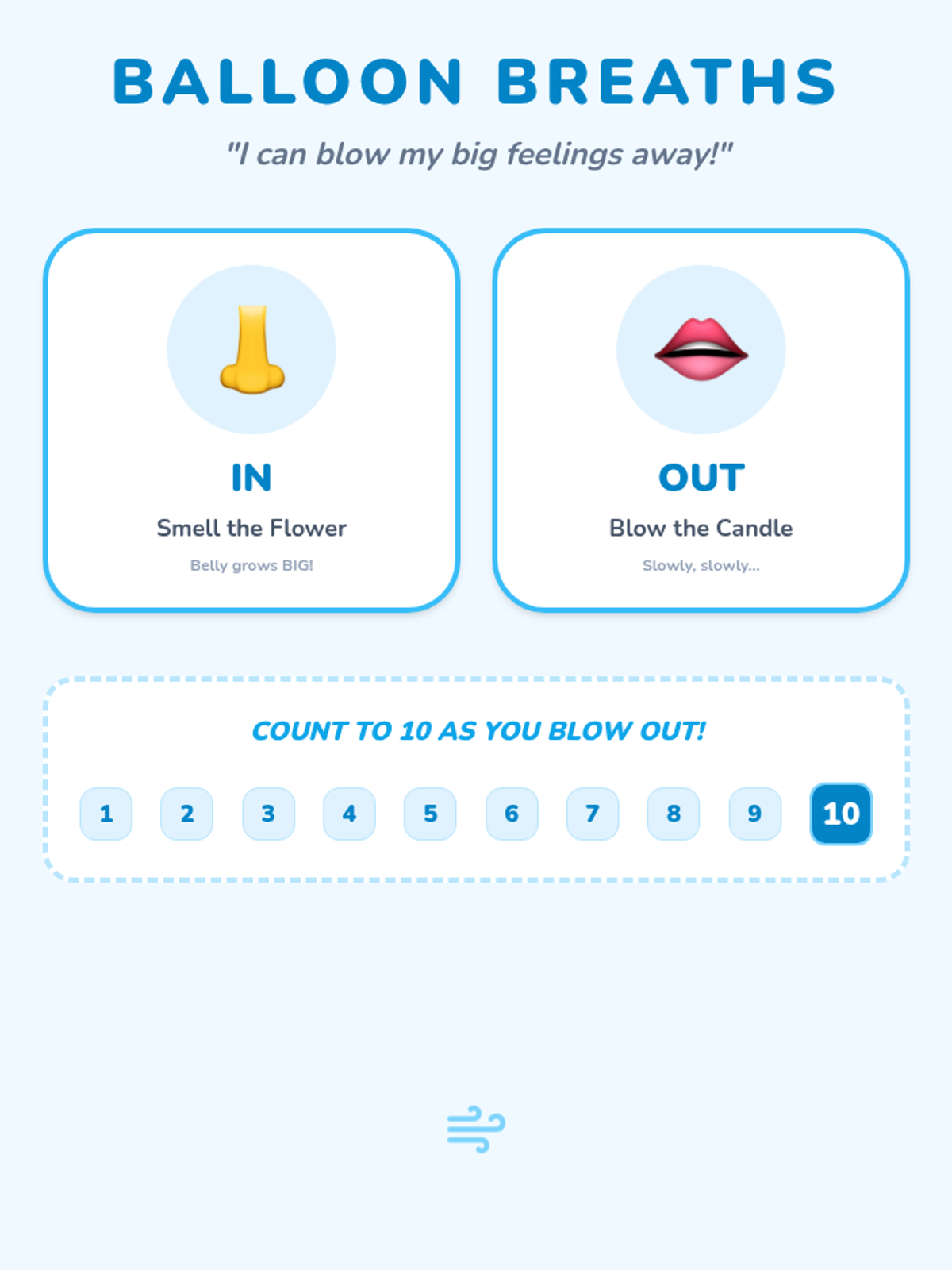
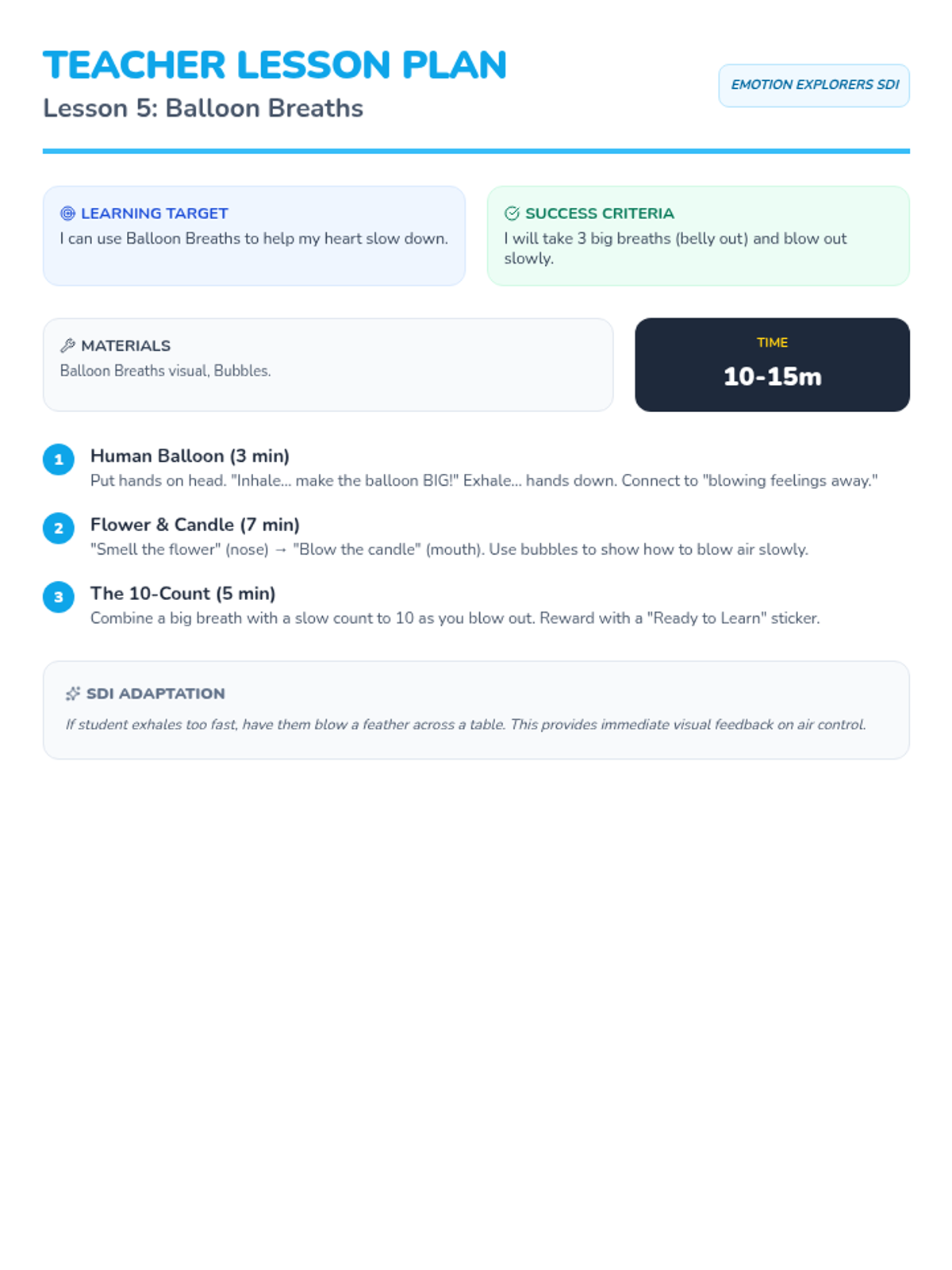
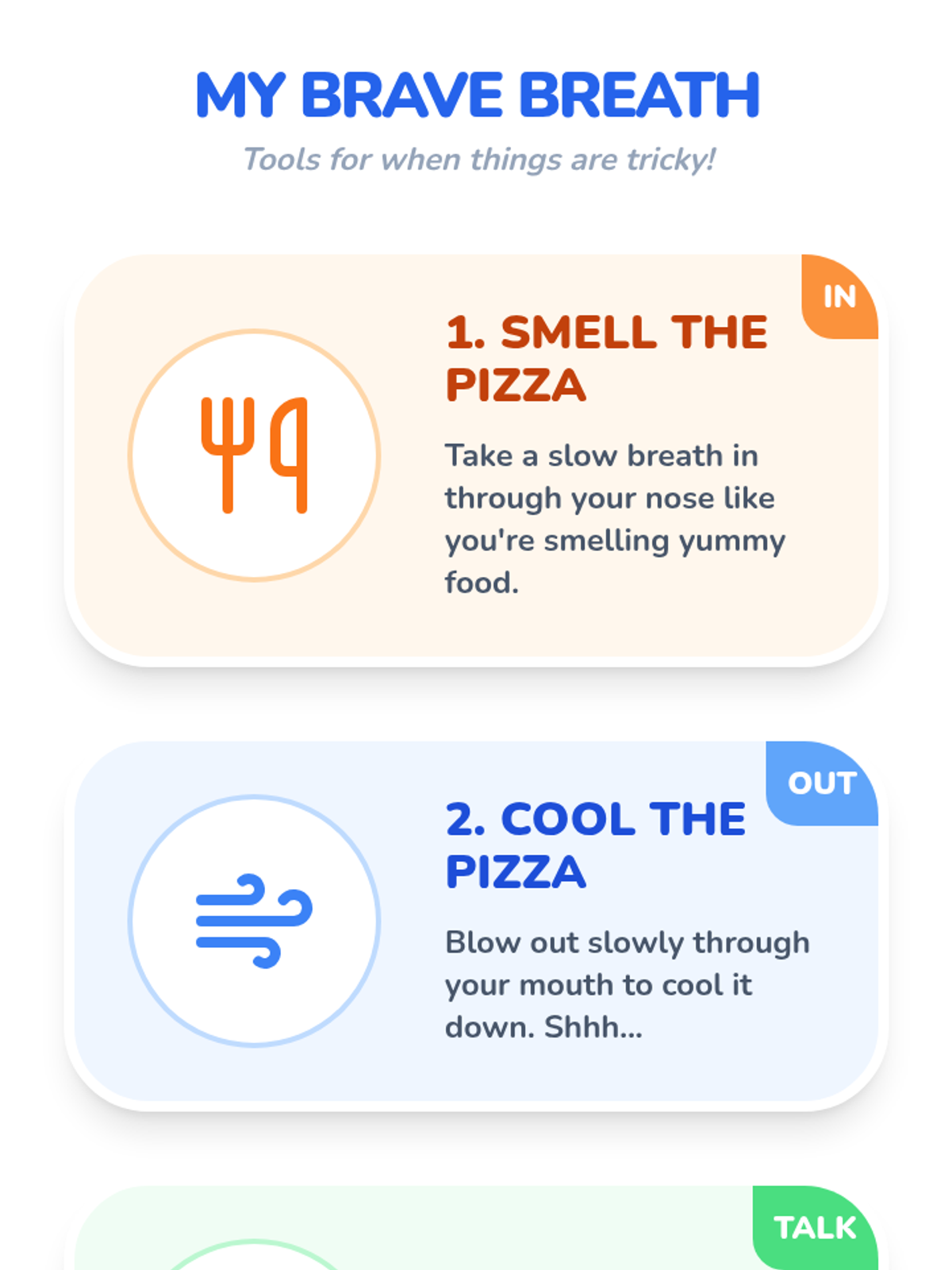
Explicitly teaches deep breathing techniques (Balloon Breaths) and counting to ten as internal tools for regulation.
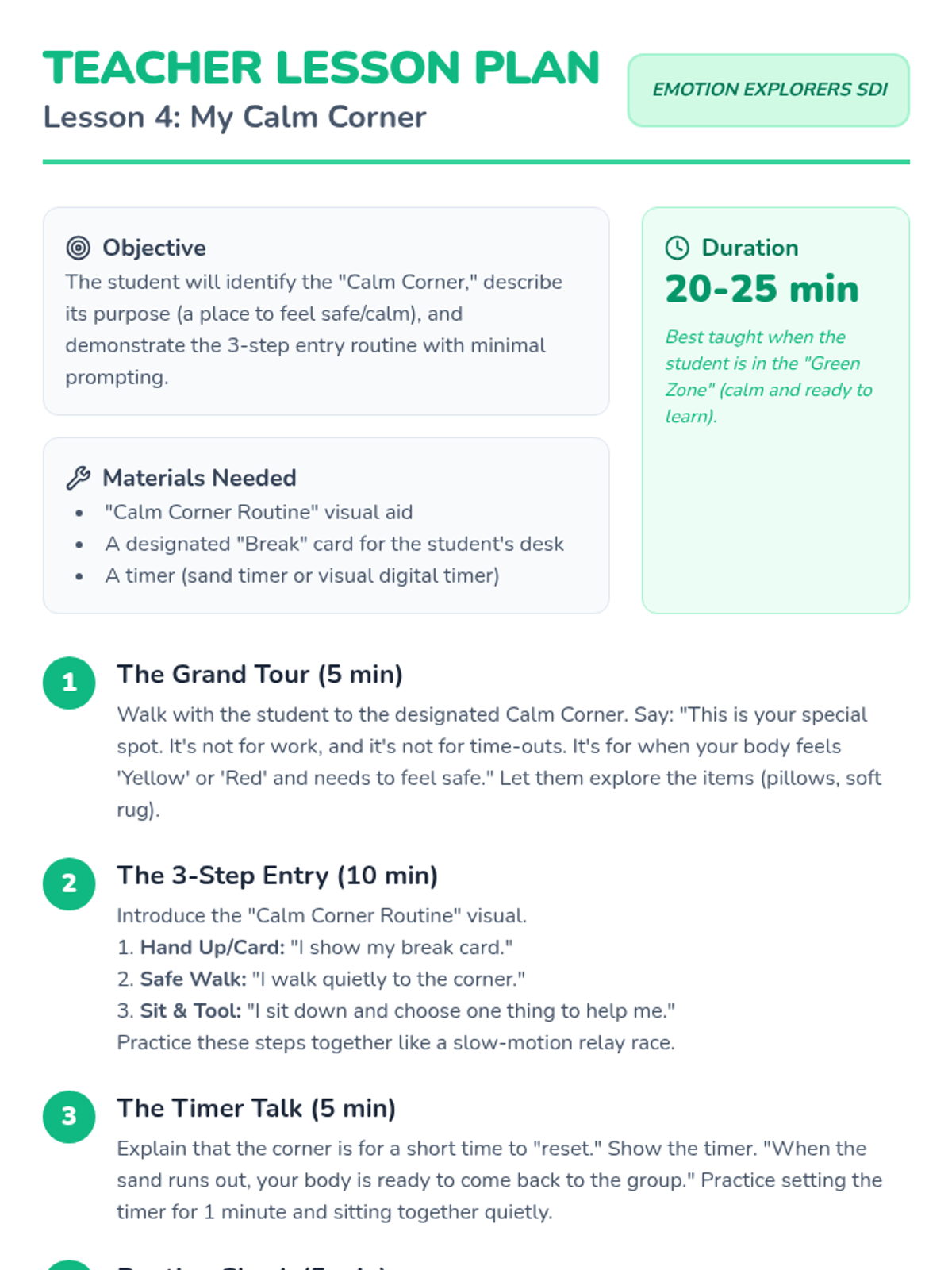
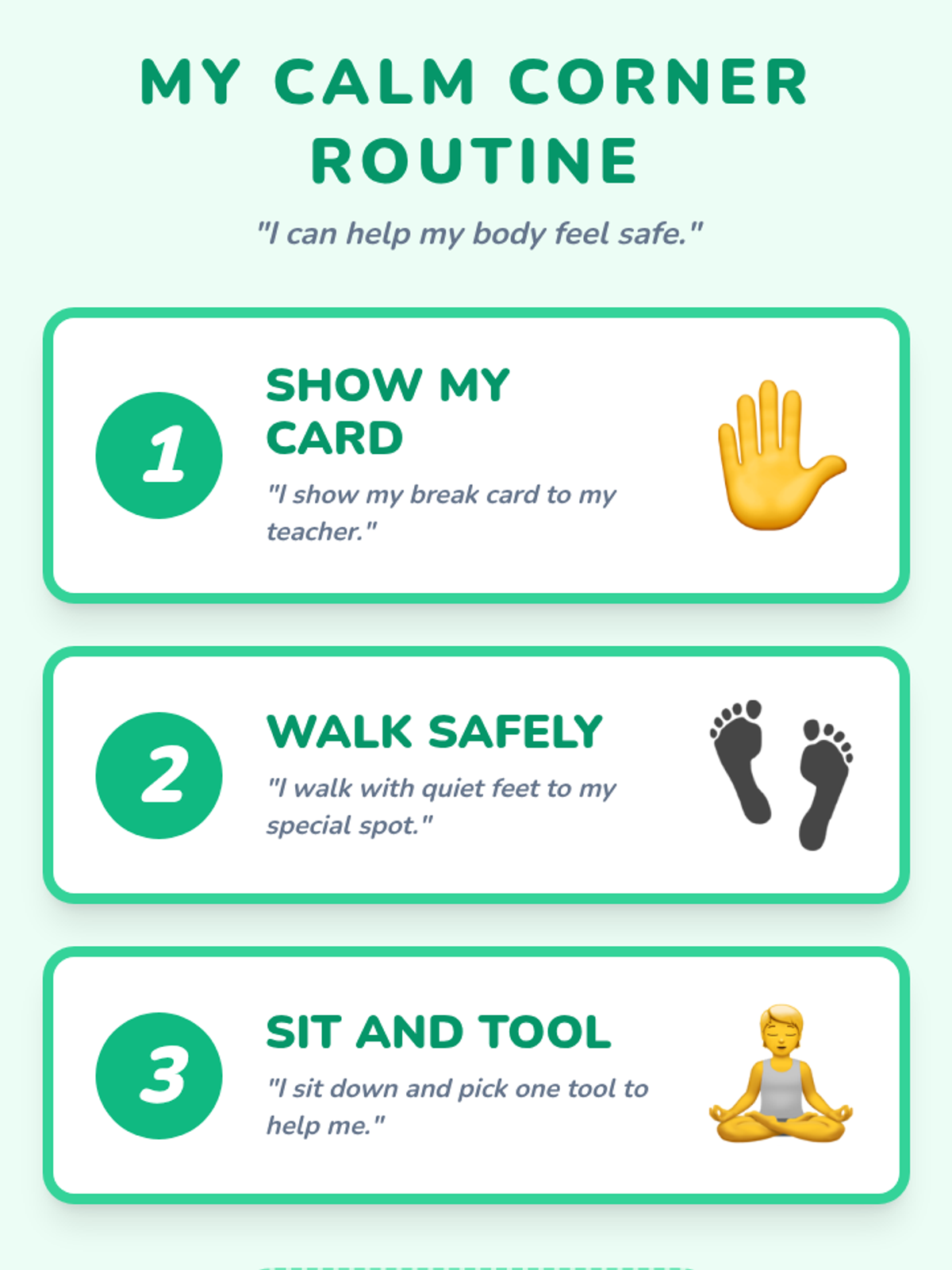
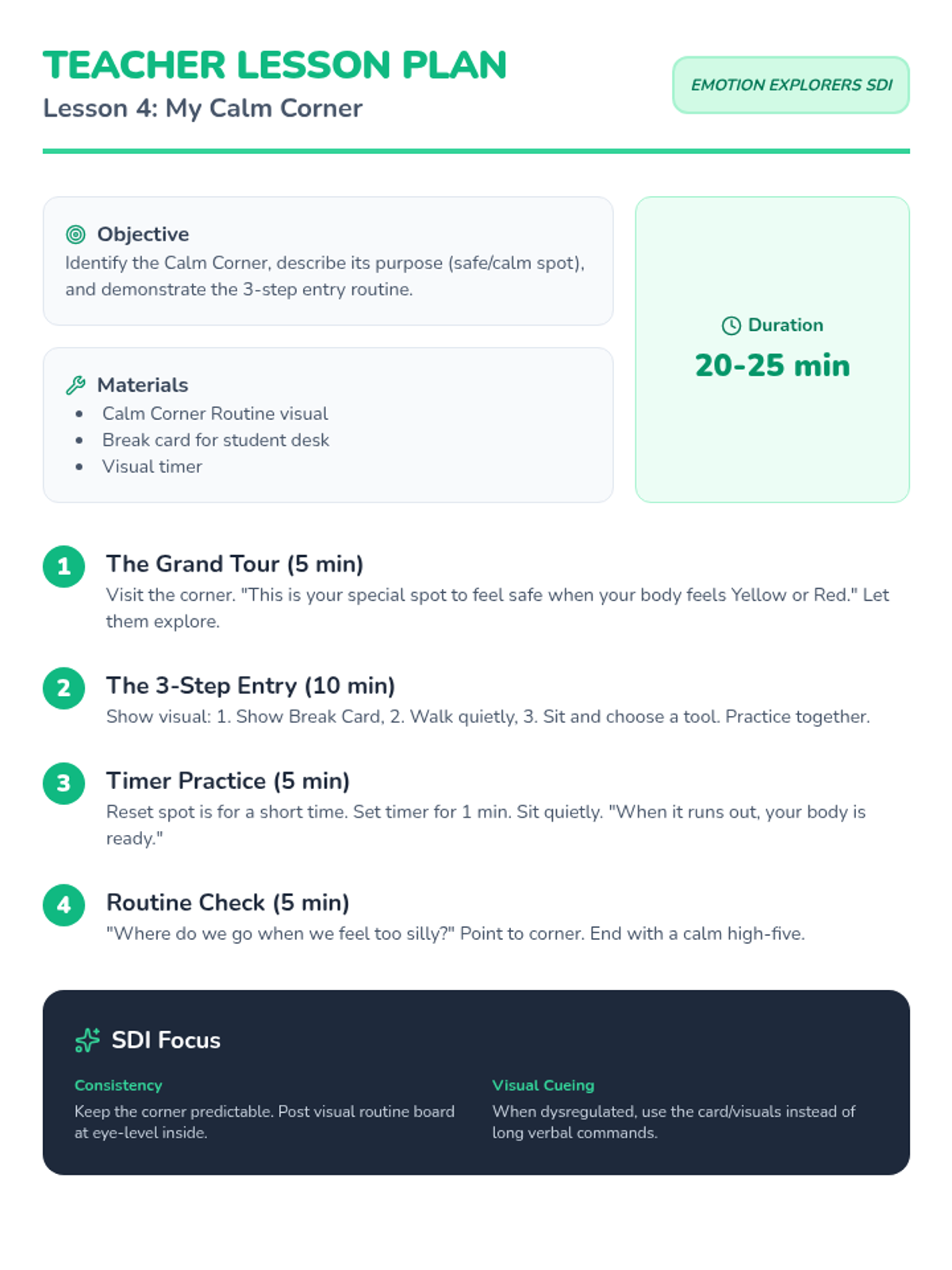
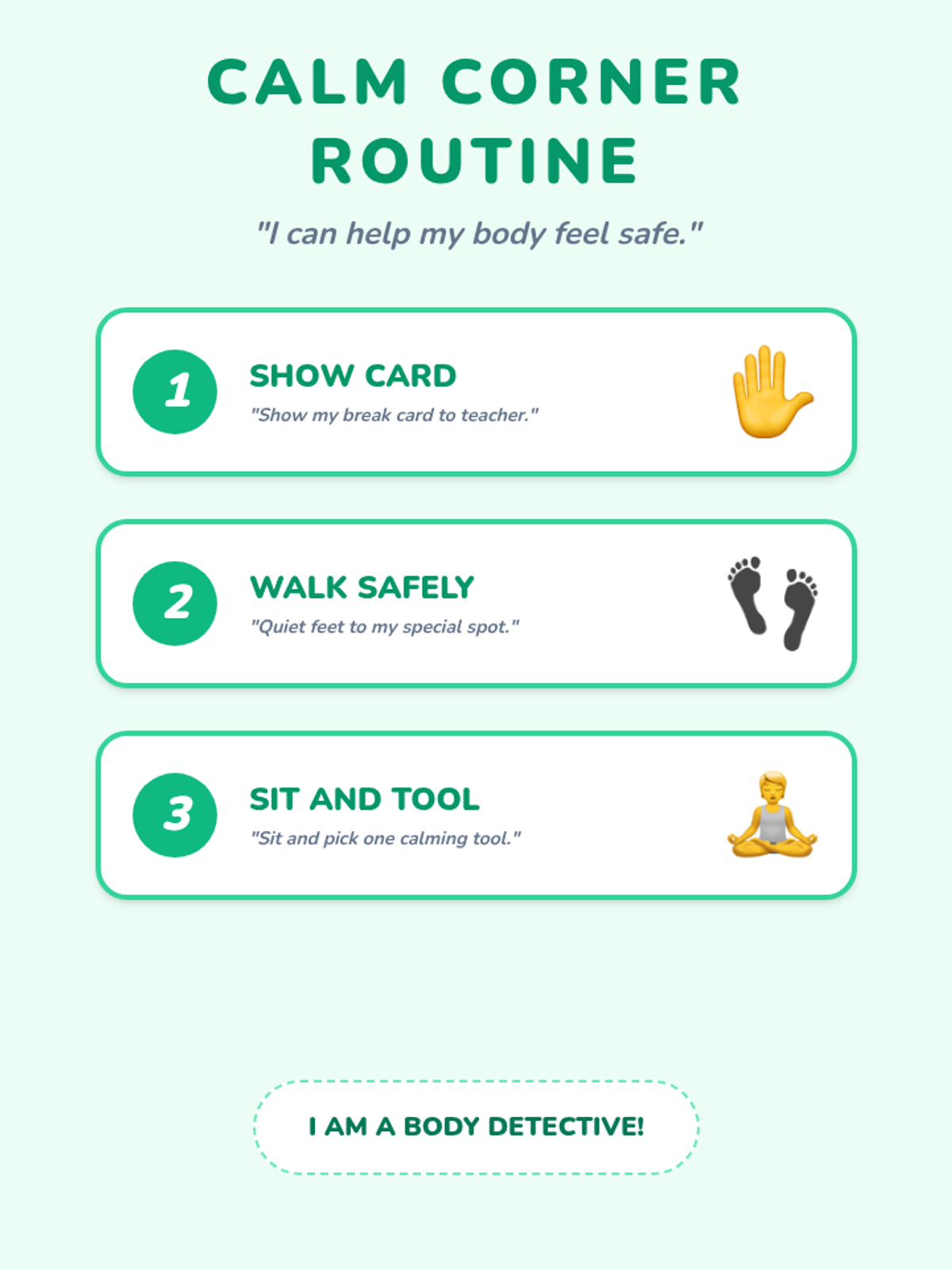
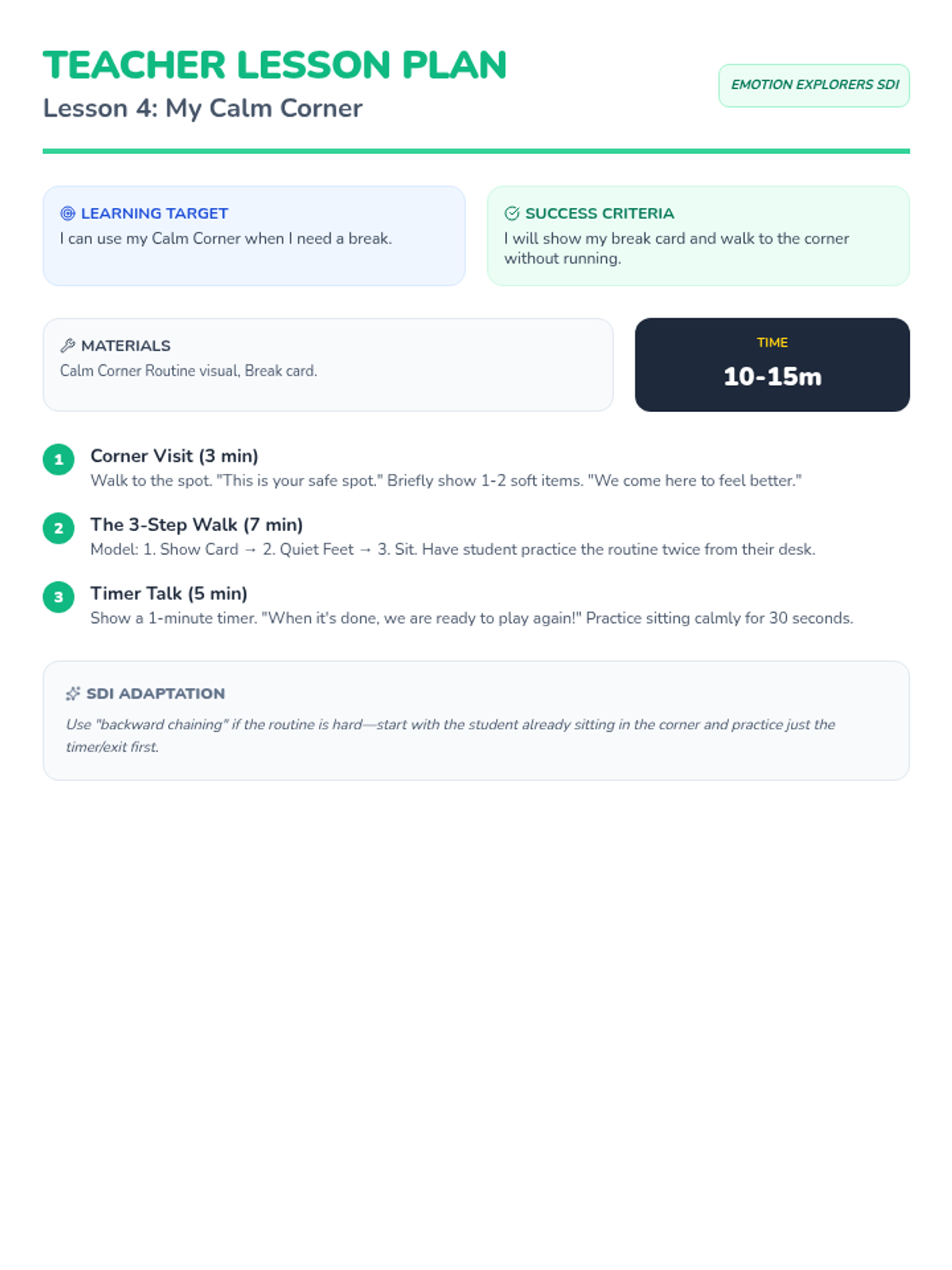
Introduces the designated break space, the routine for entering it, and the expectation of using it for calming down.
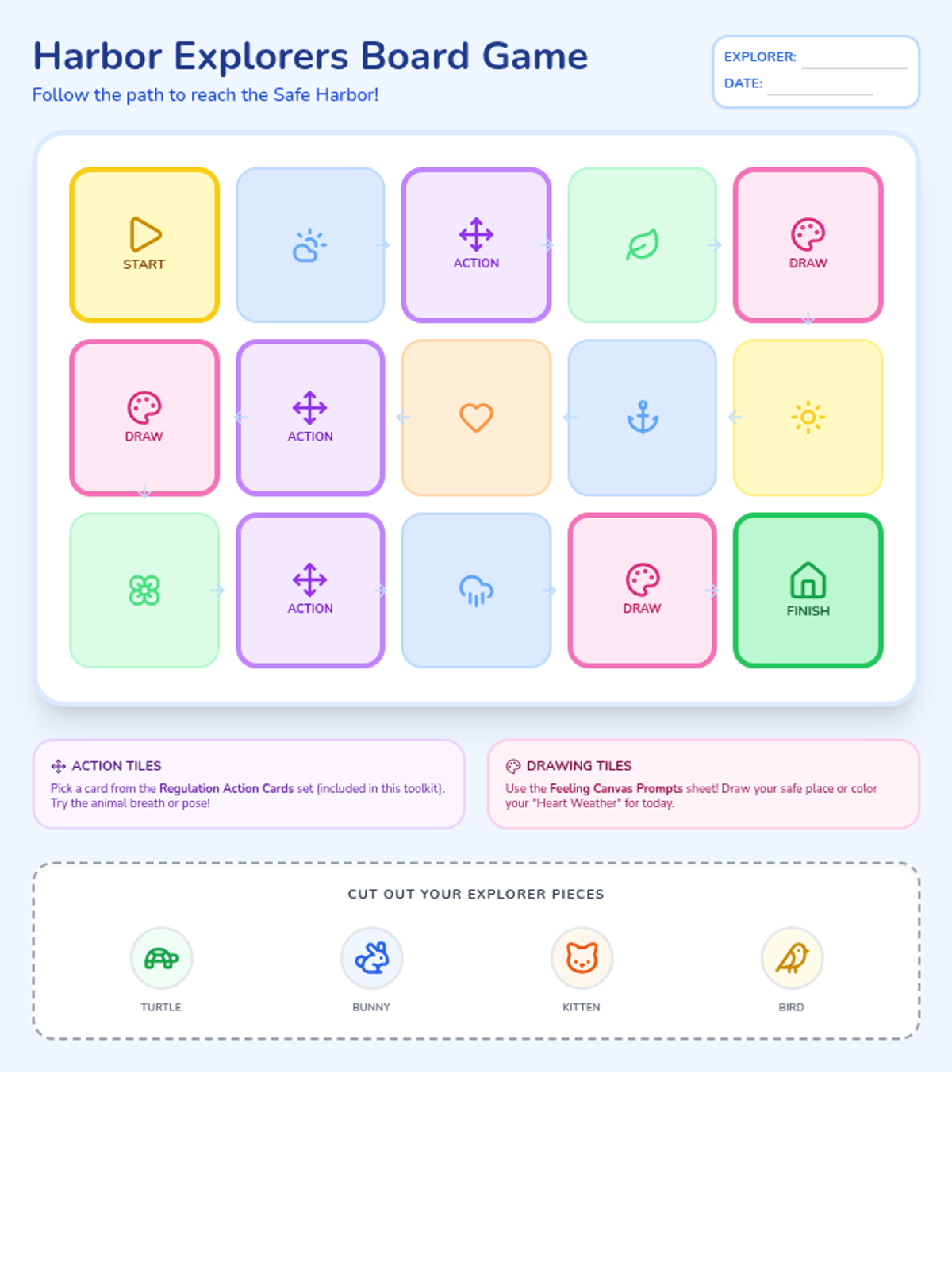
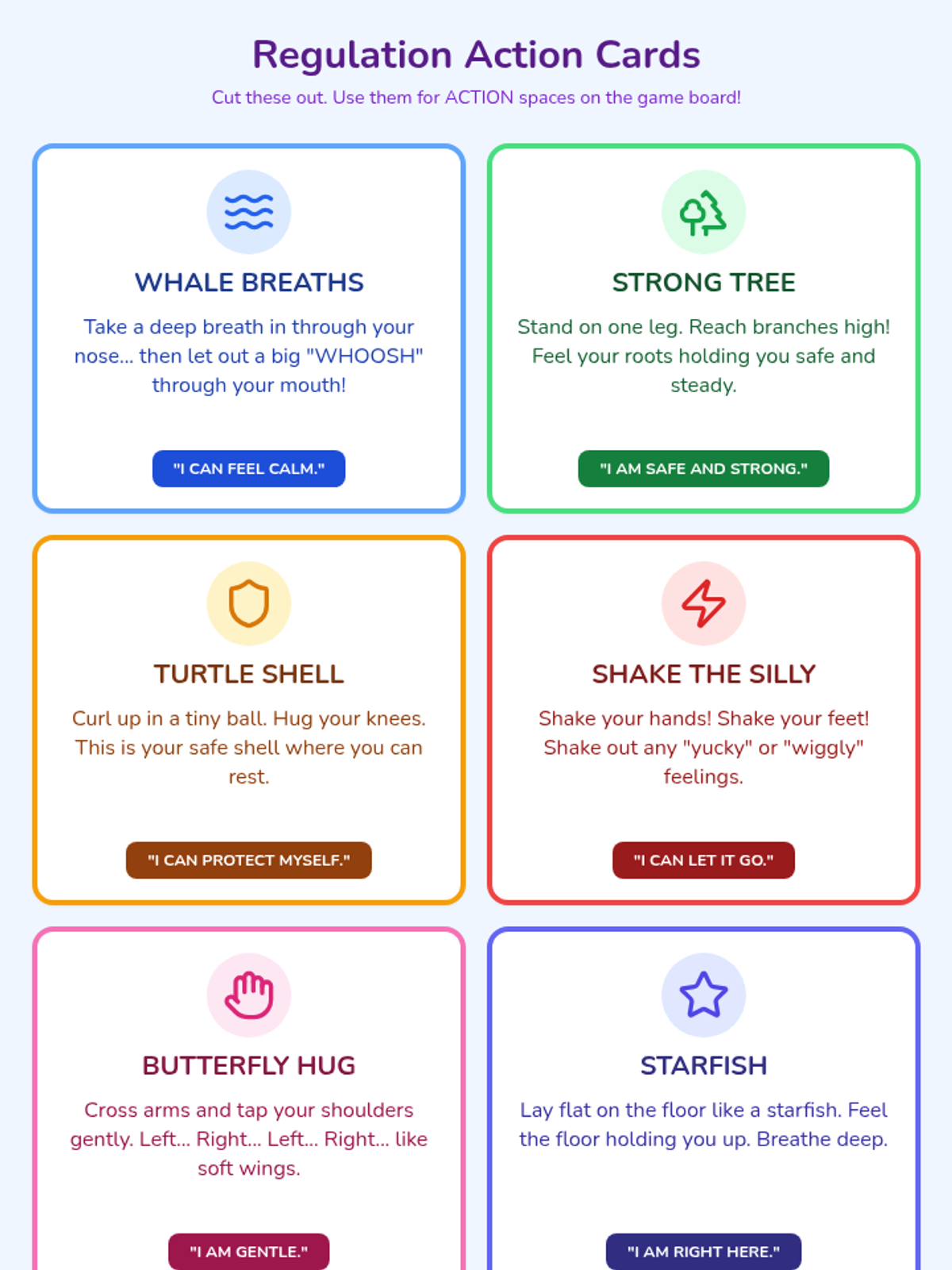
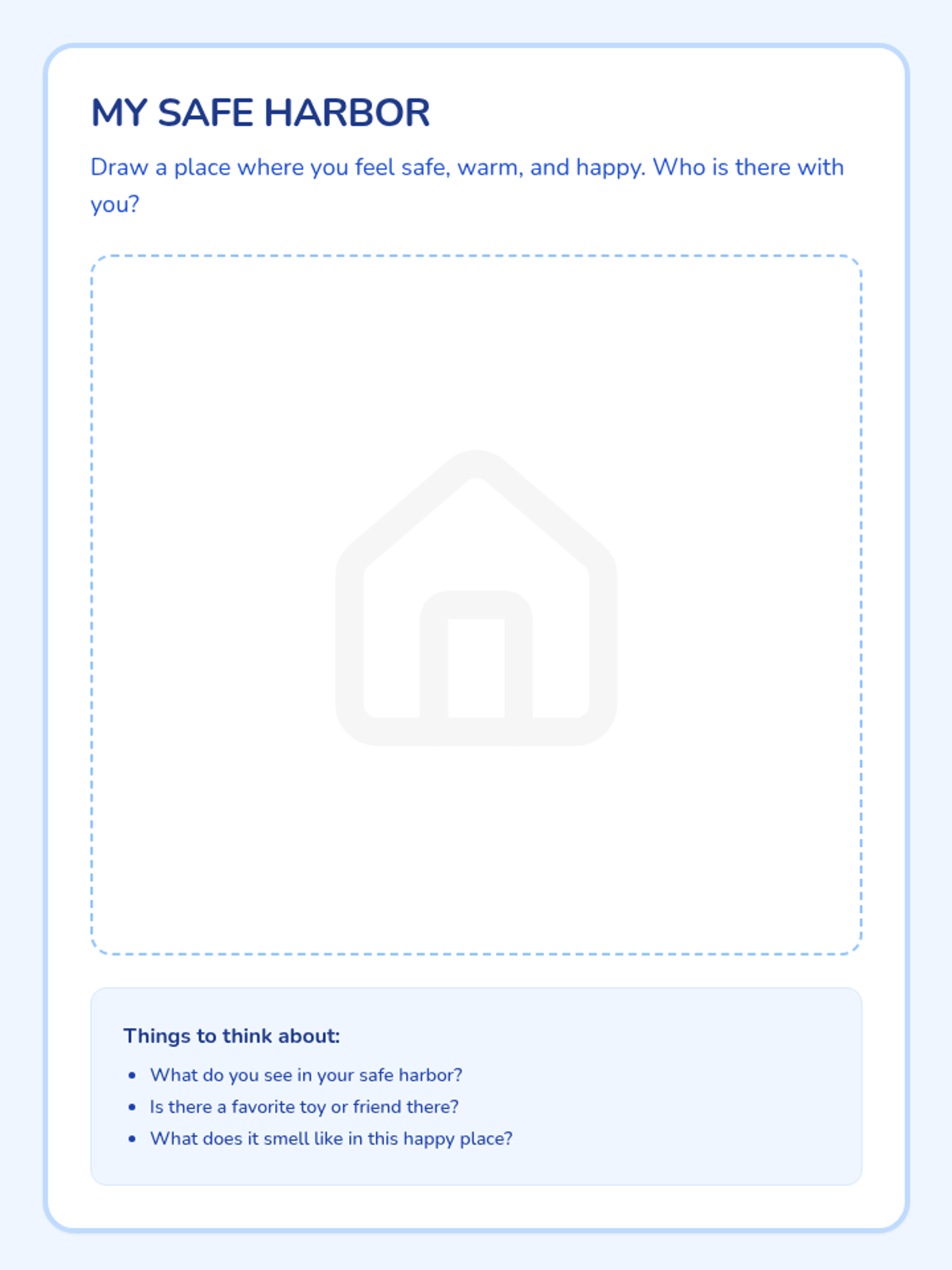
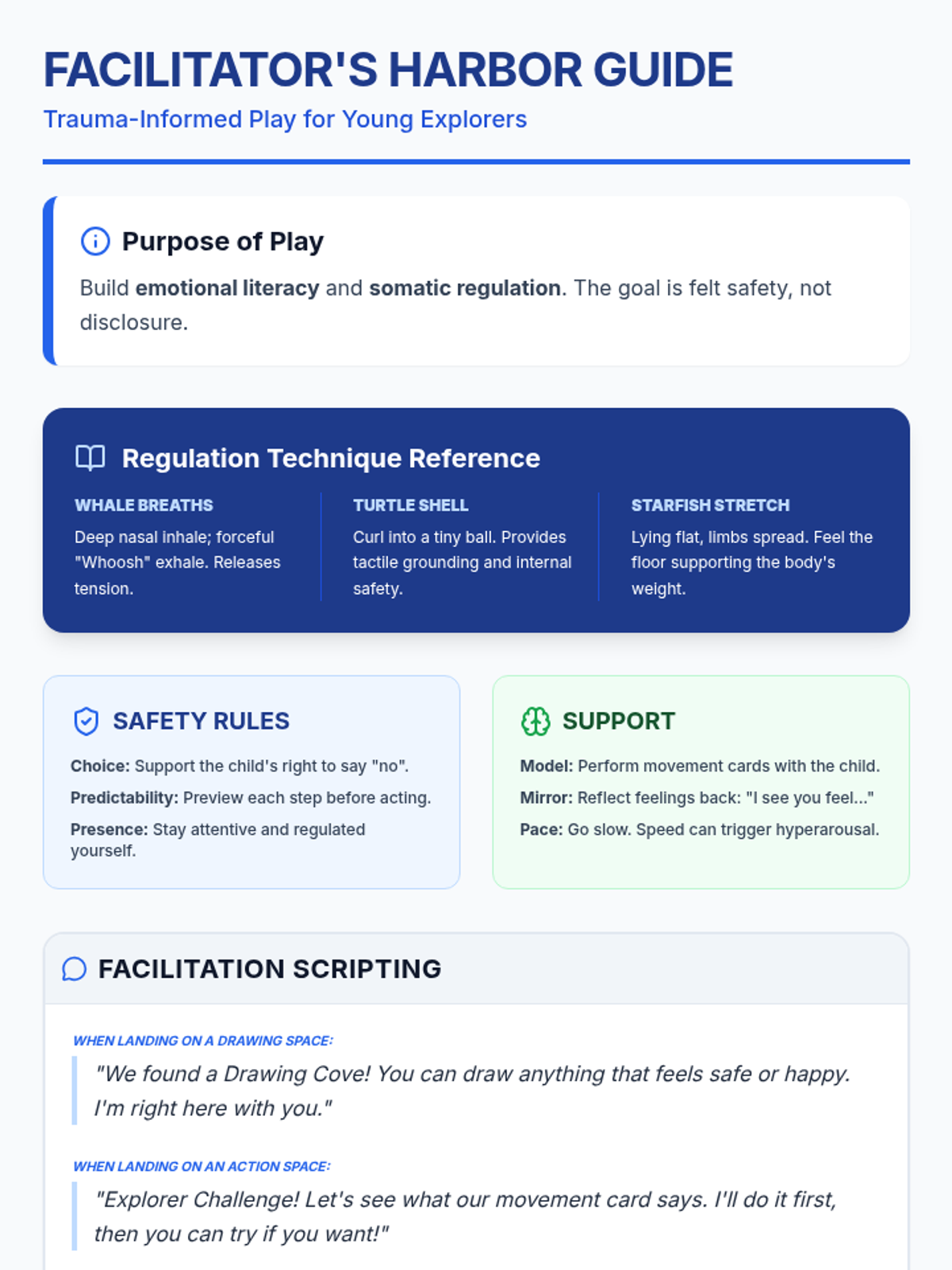
A trauma-informed play-based toolkit designed for young children (age 4) to explore emotions, learn self-regulation, and build a sense of safety through a board game, movement cards, and drawing prompts.
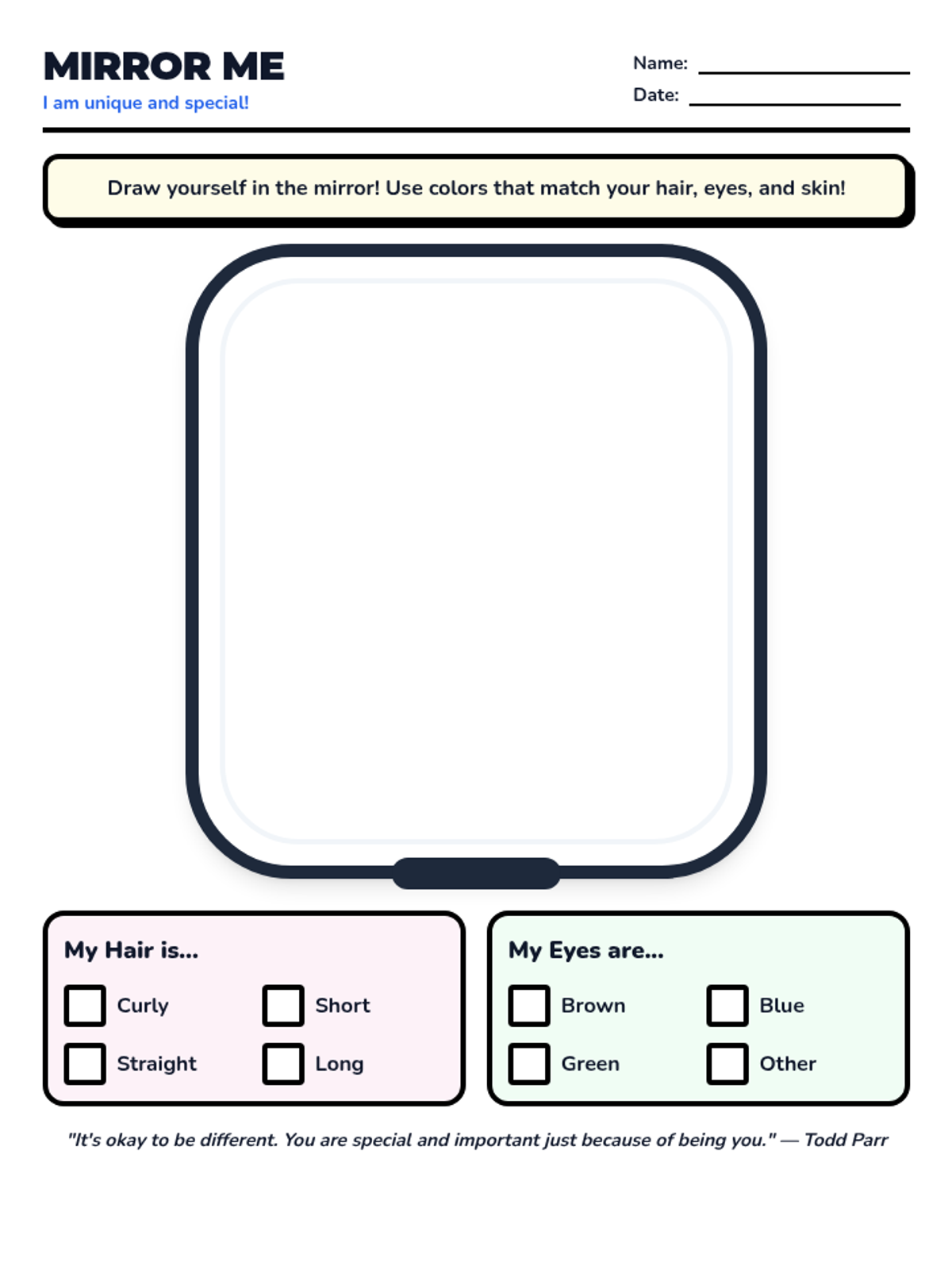
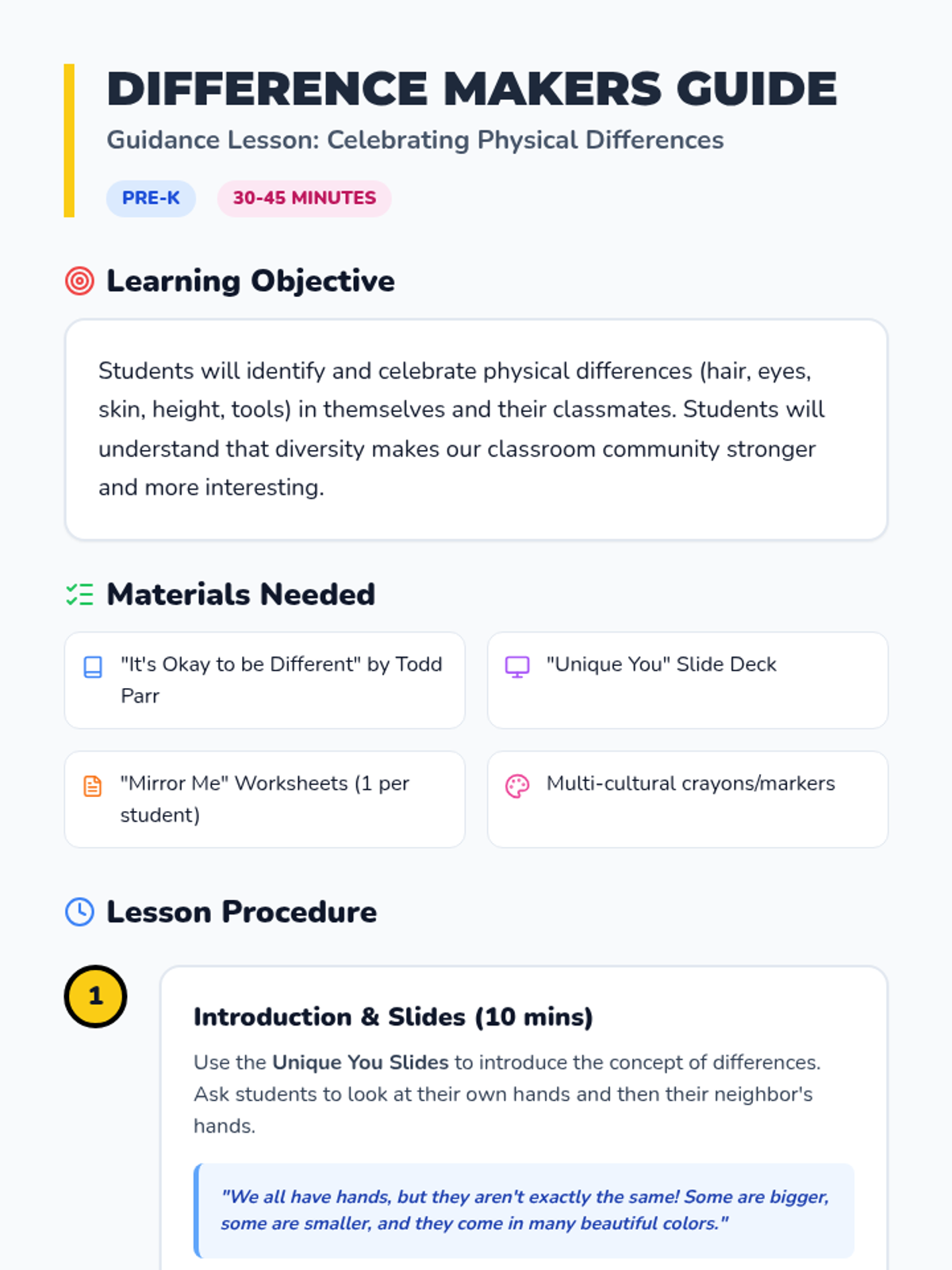
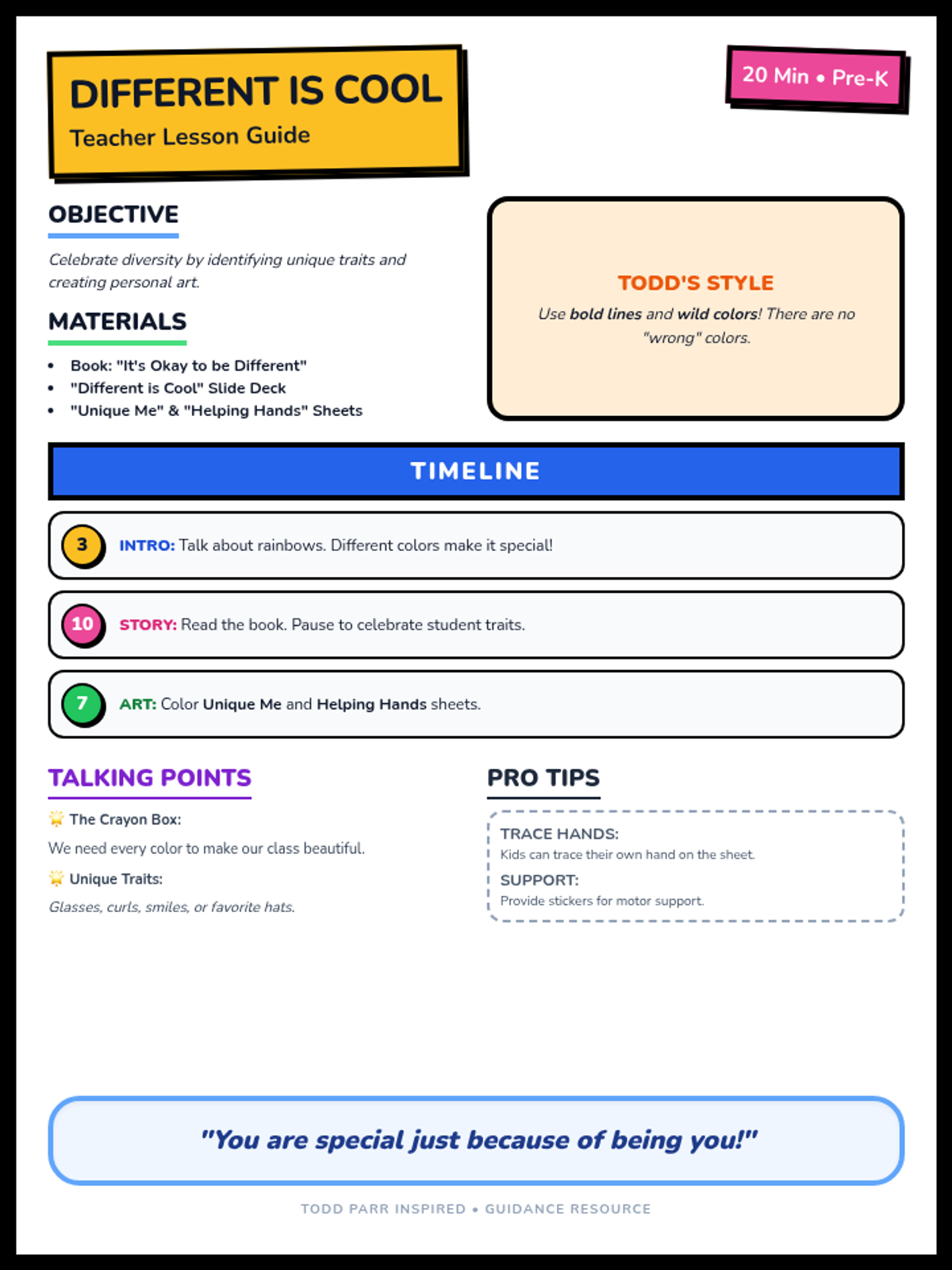
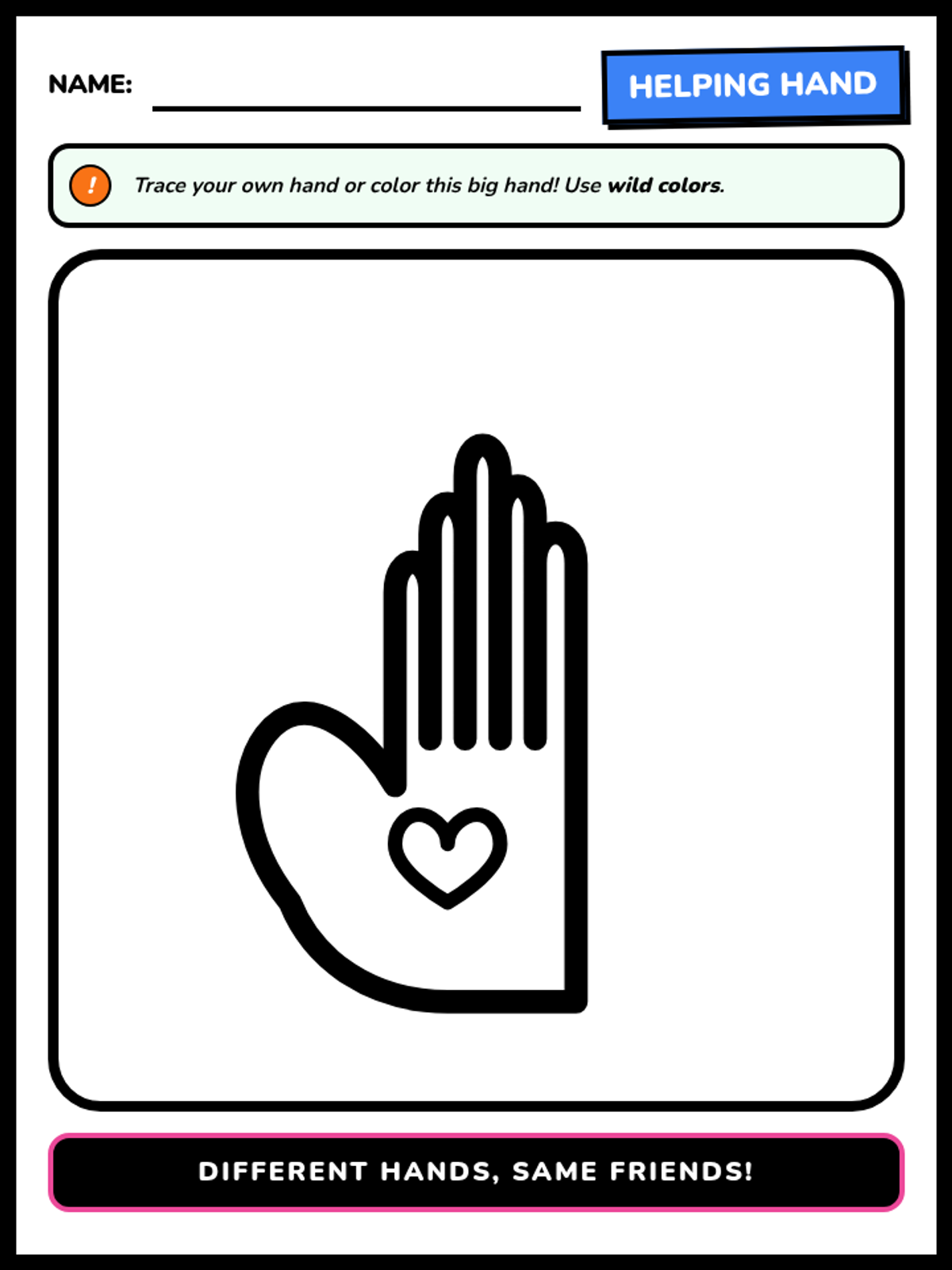
A Pre-K guidance lesson focused on celebrating physical differences, inspired by Todd Parr's book 'It's Okay to be Different'. Students explore what makes them unique and learn to appreciate the diversity in their classroom.
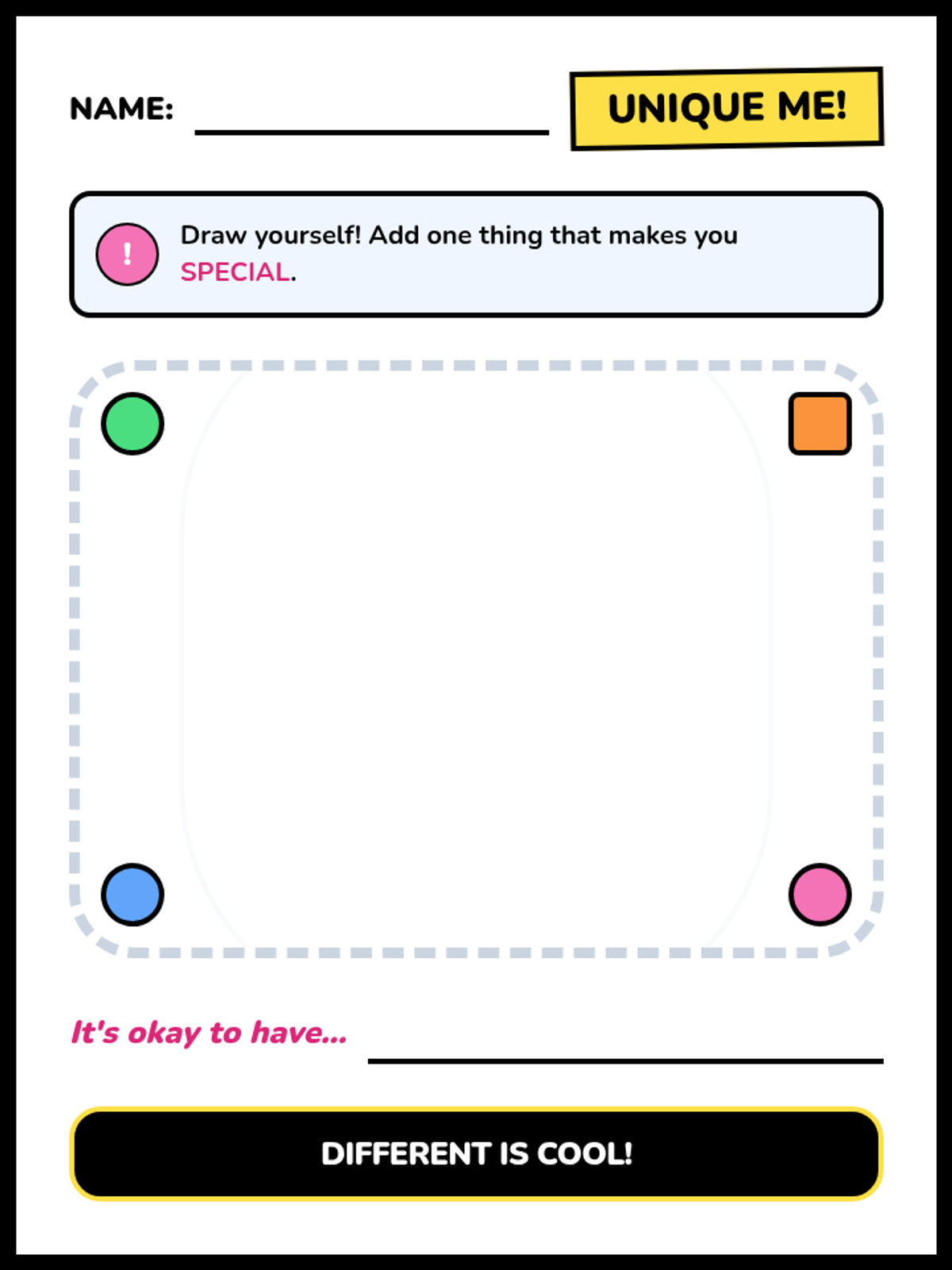
A 20-minute guidance lesson for Pre-K focusing on diversity and self-acceptance using Todd Parr's "It's Okay to be Different." Students will explore what makes them unique and create a self-portrait.
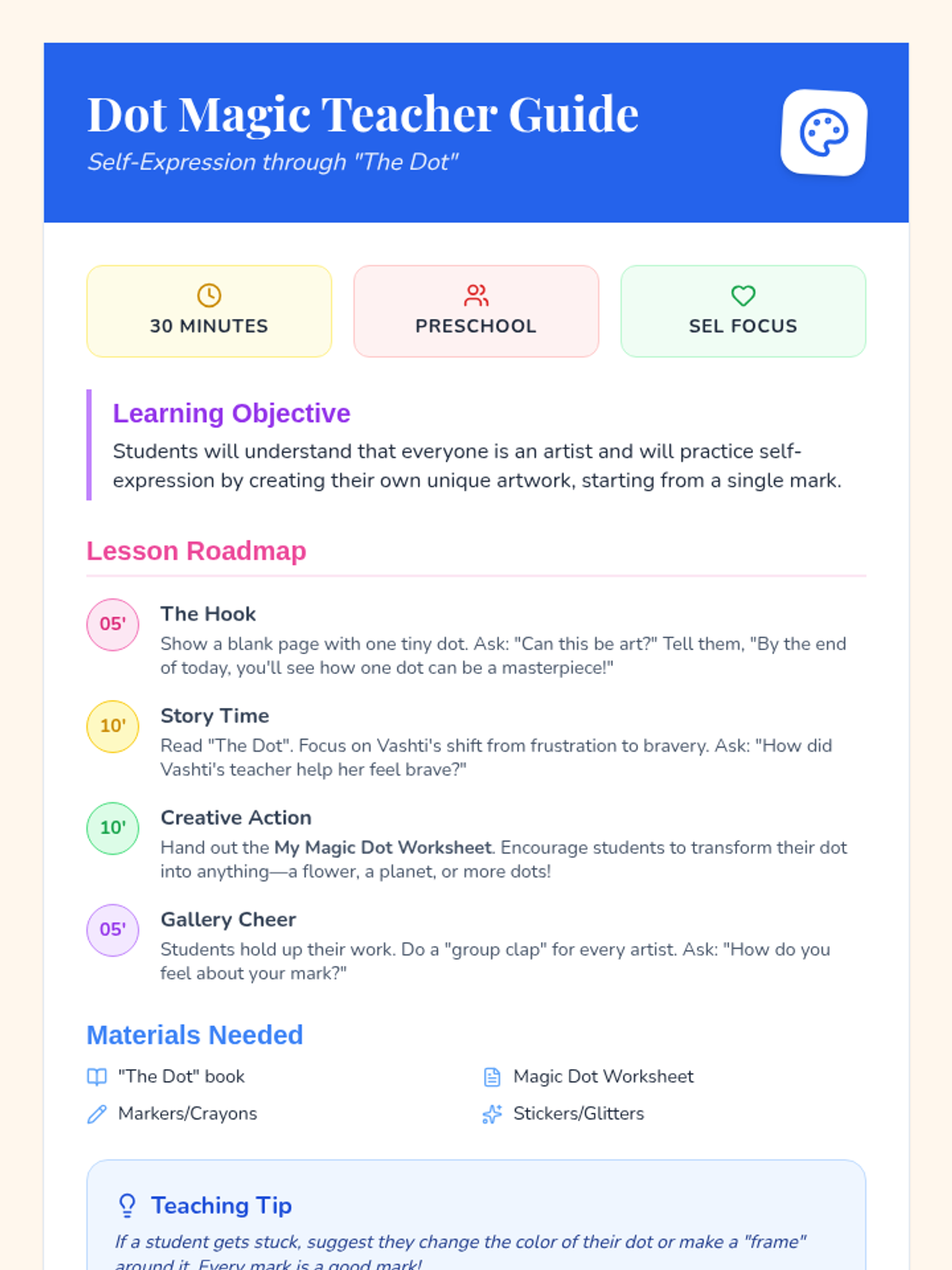
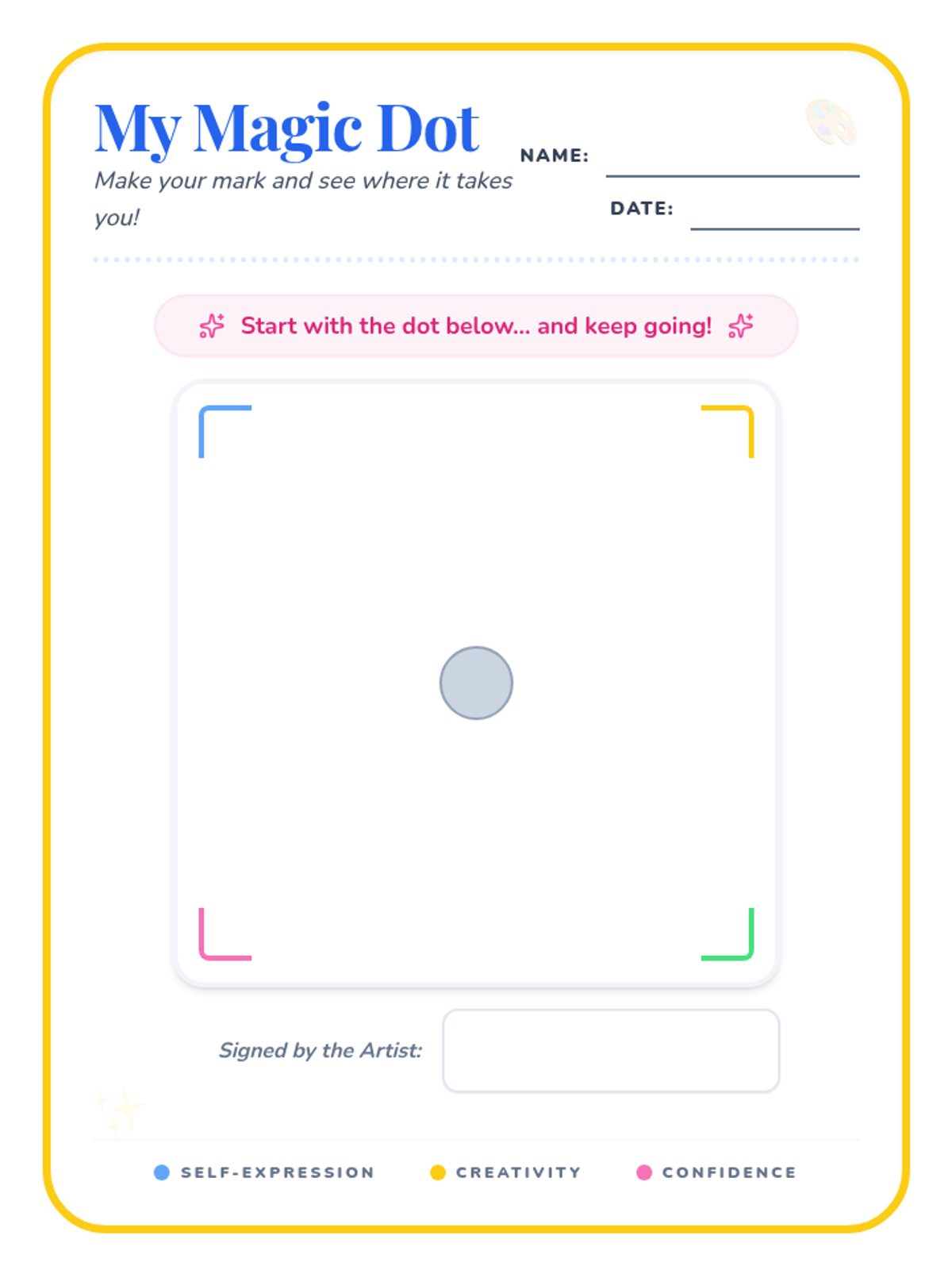
A 30-minute SEL lesson for preschoolers exploring self-expression and the power of starting small, inspired by the book 'The Dot' by Peter H. Reynolds. Students will learn that every artist starts somewhere and that their unique 'mark' is valuable.
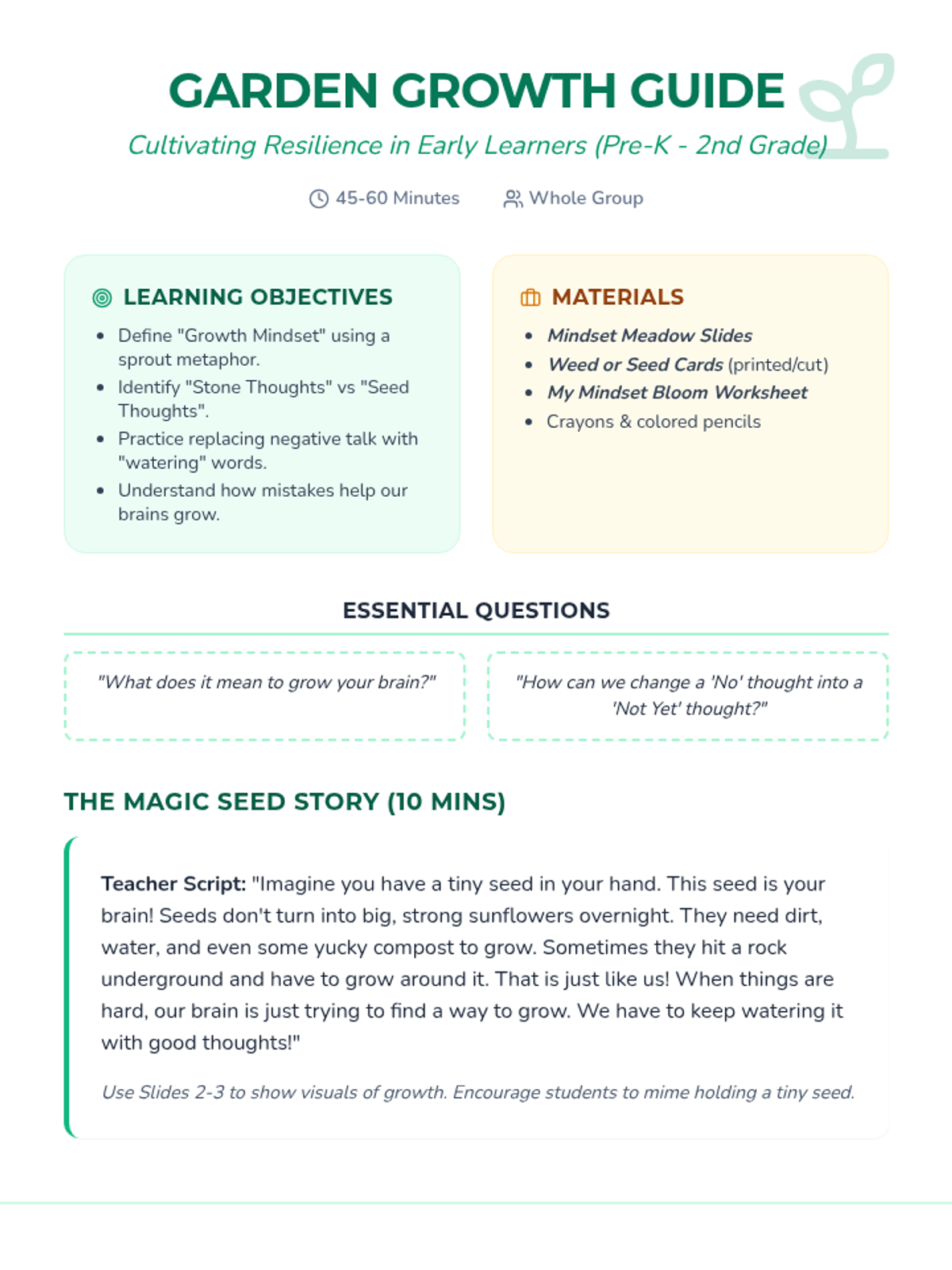
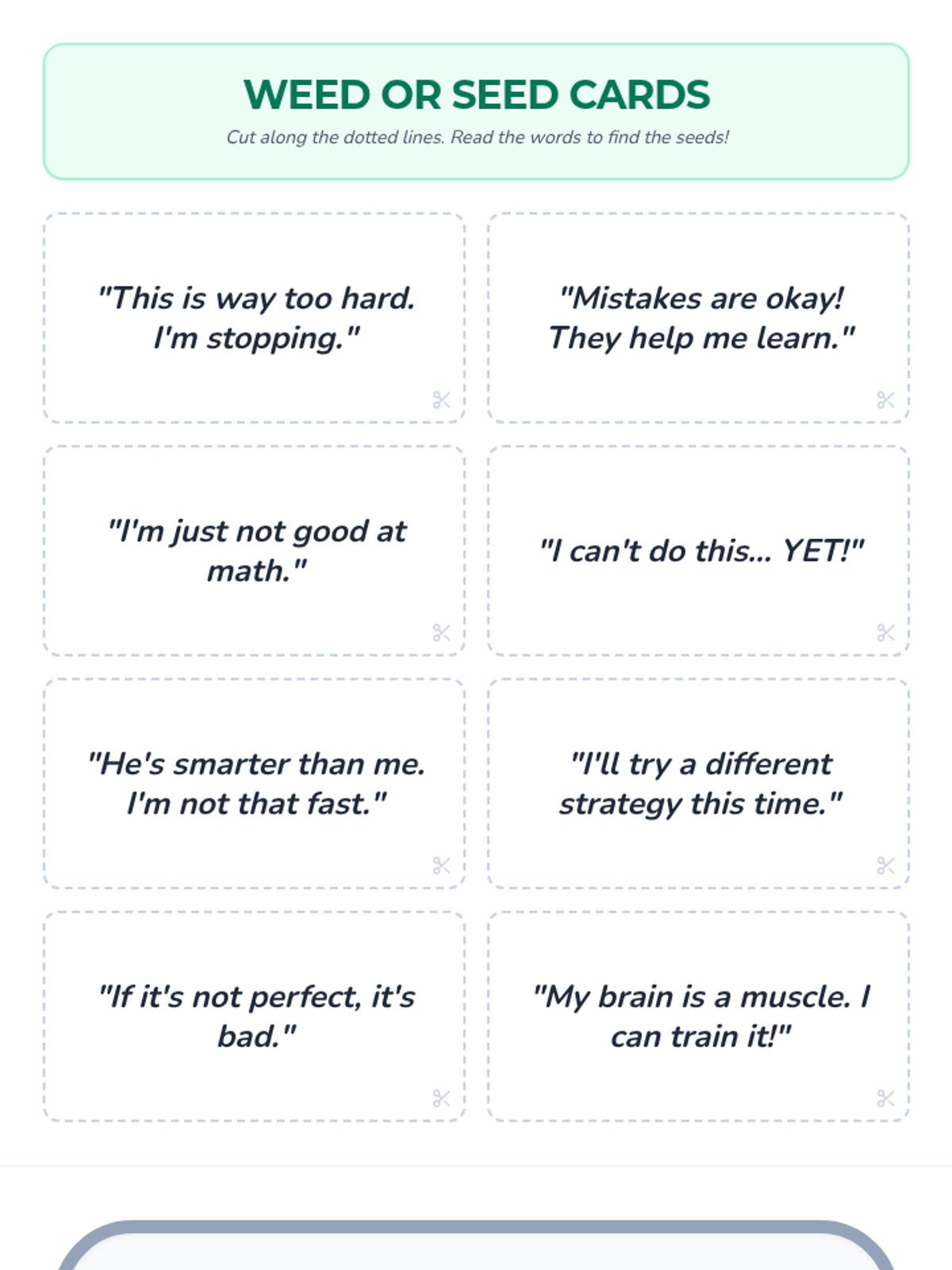
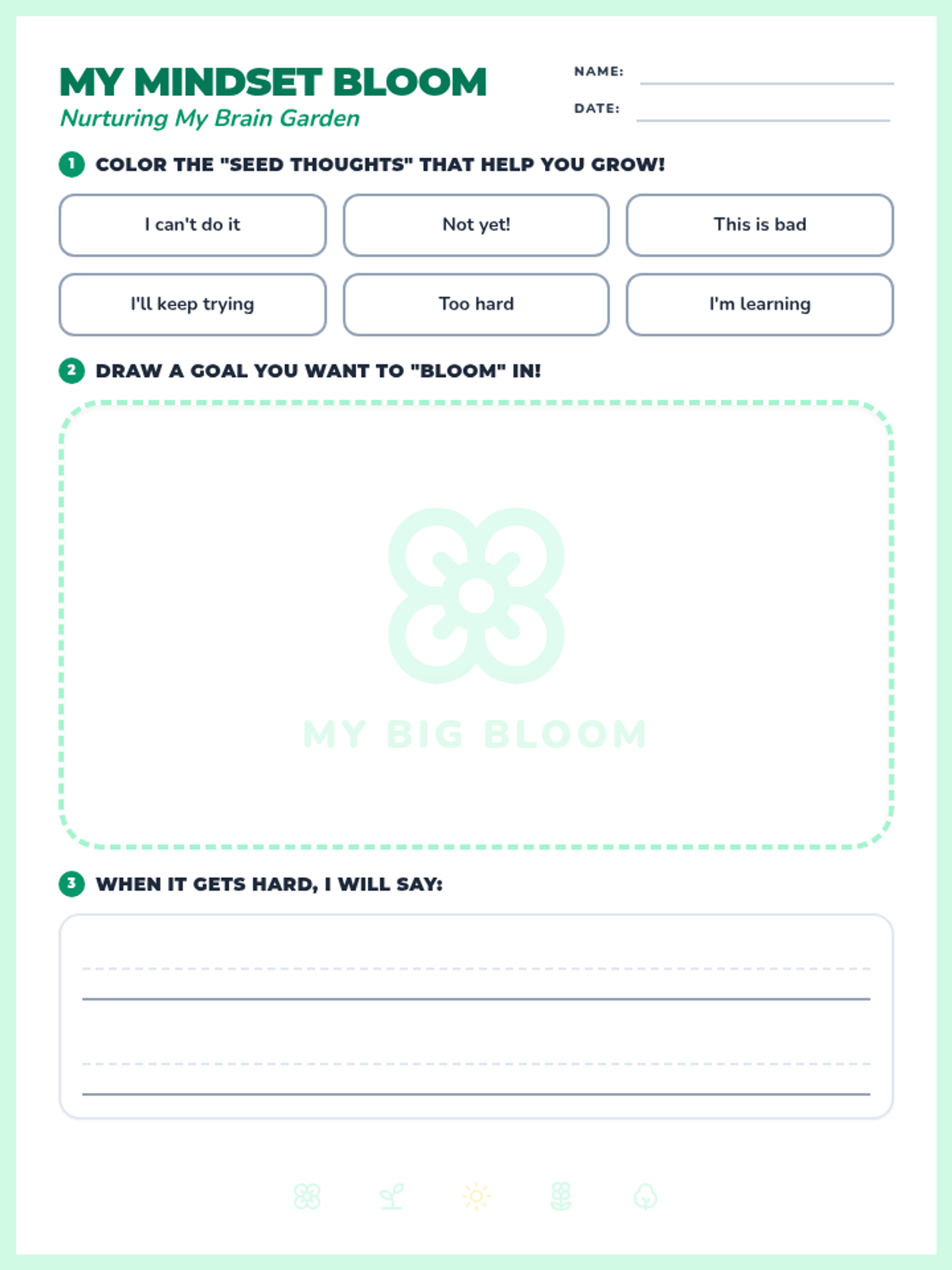
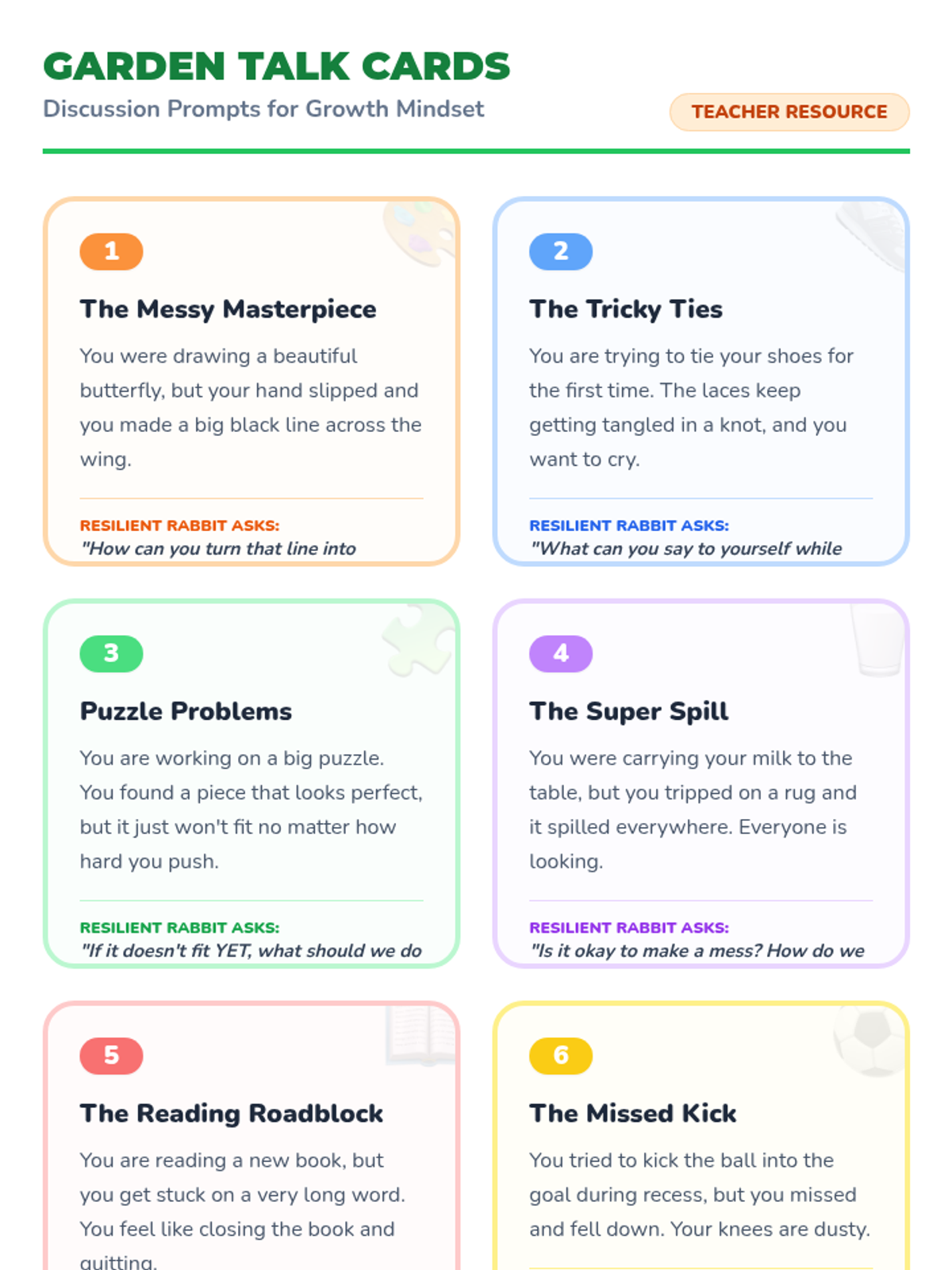
A social-emotional learning lesson for Pre-K to 2nd grade that uses gardening metaphors to teach growth mindset, resilience, and positive self-talk through sensory storytelling and creative activities.
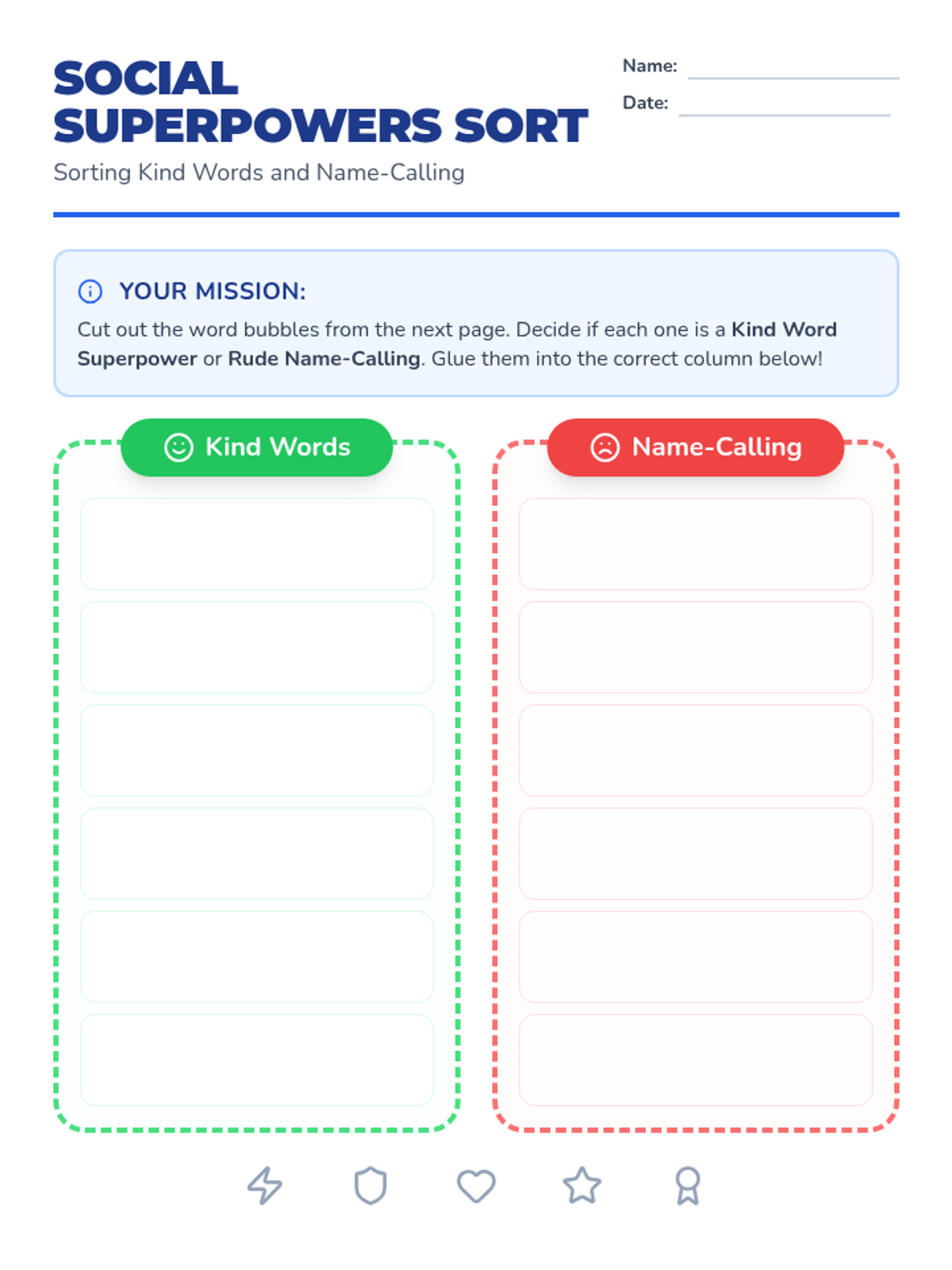
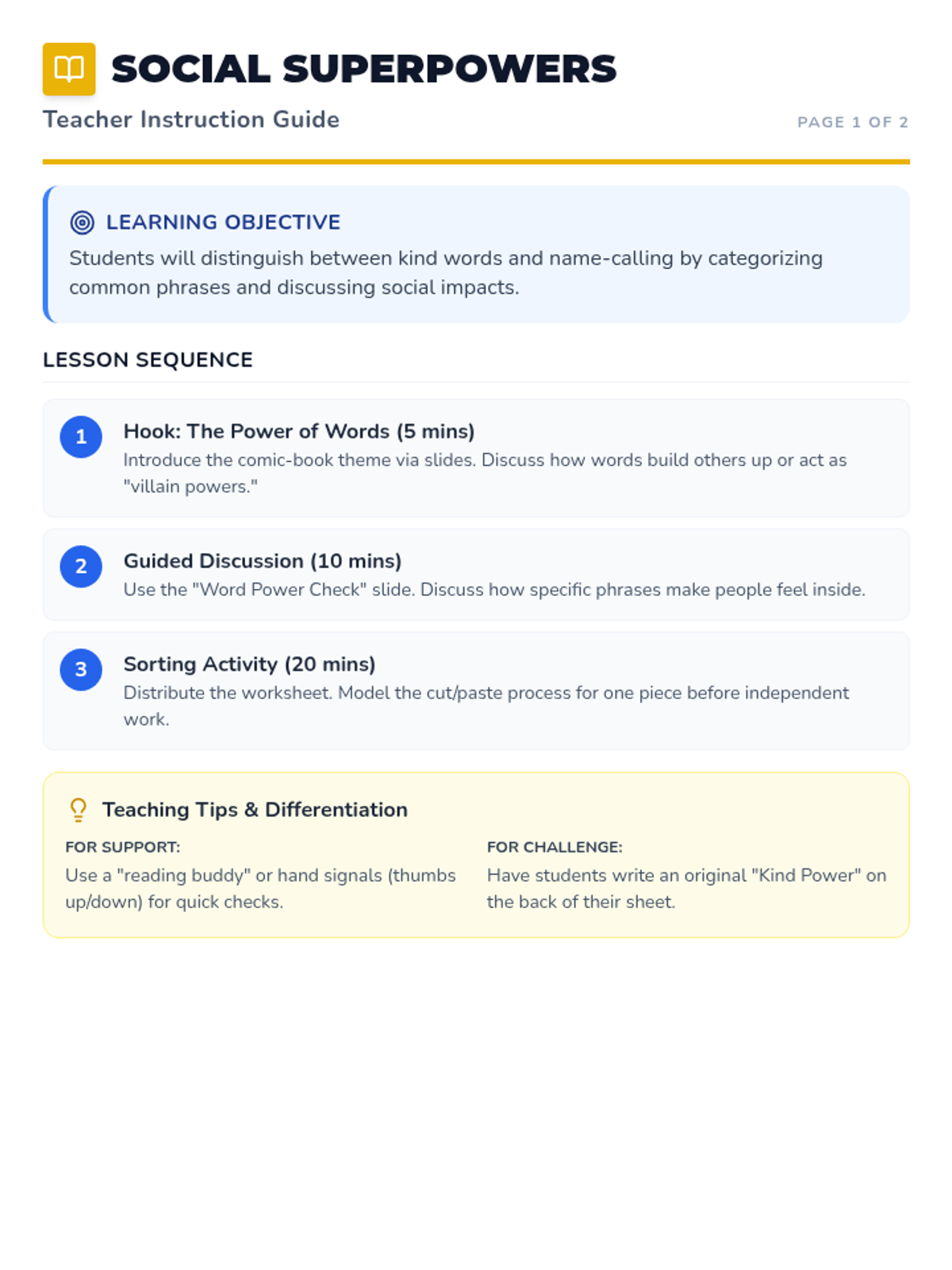
A lesson exploring the impact of kind words versus name-calling through interactive discussion and a hands-on sorting activity. Students learn to identify social "superpowers" that build others up.
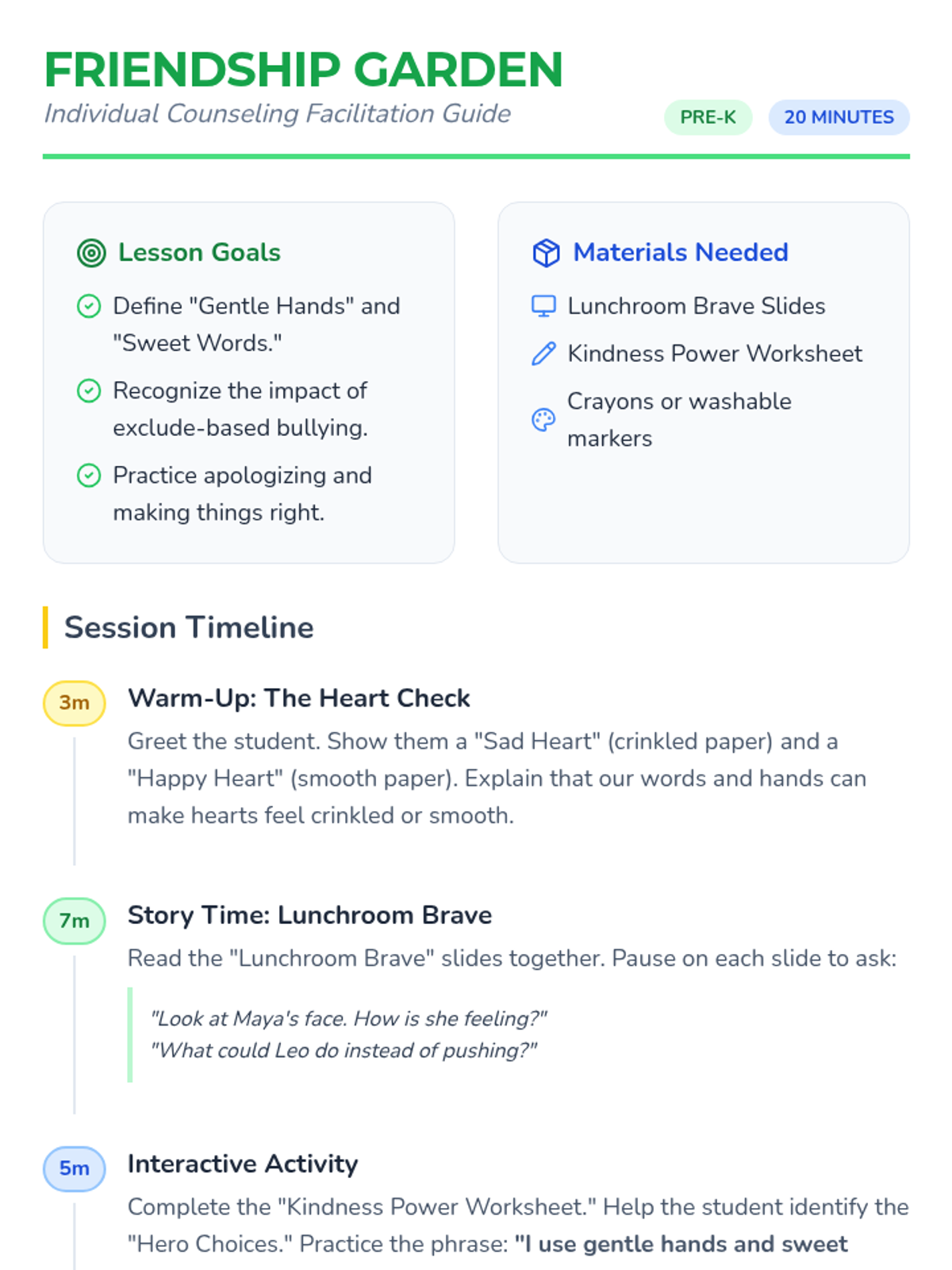
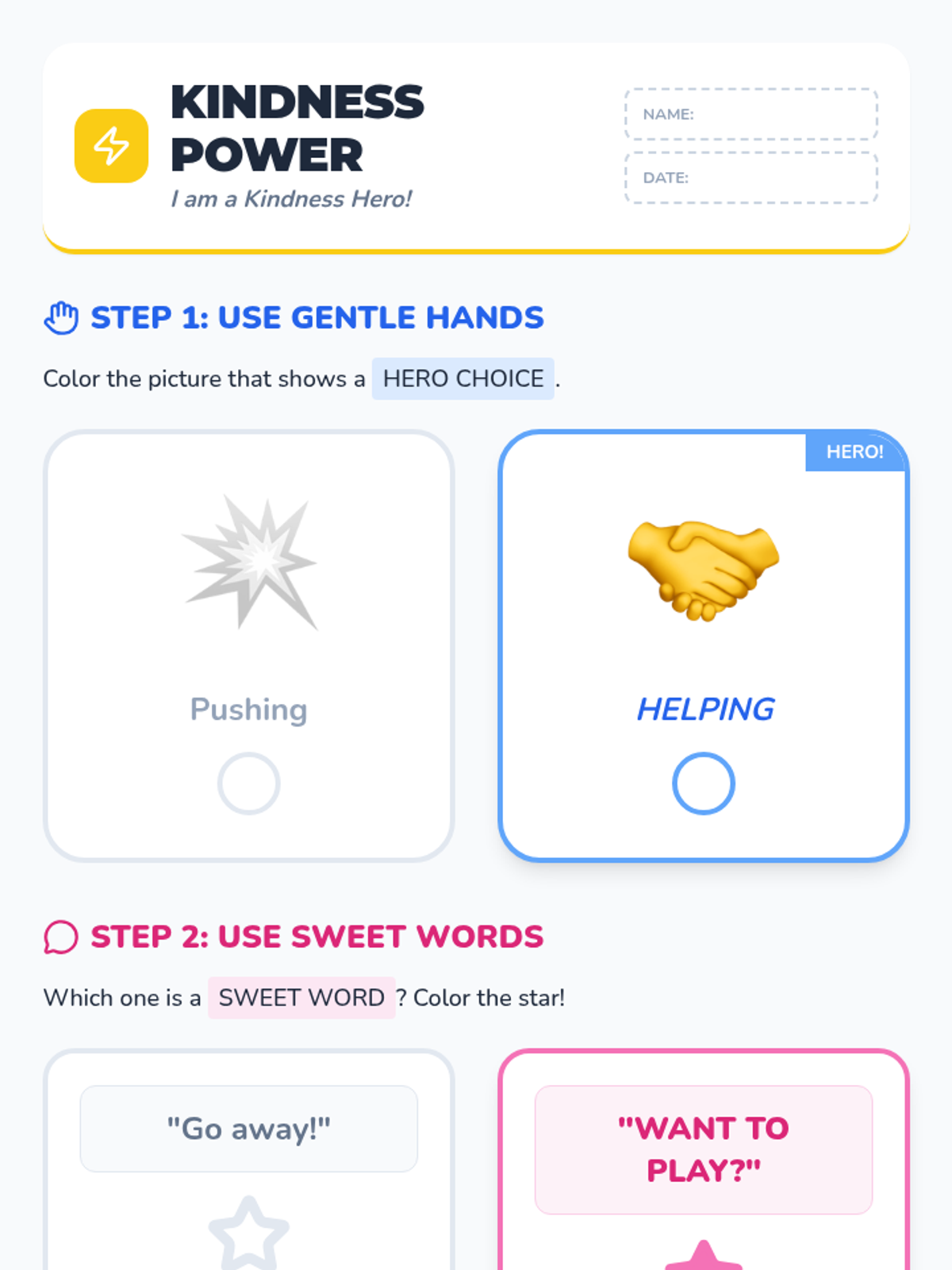
A 20-minute individual counseling session for Pre-K students focused on identifying and replacing bullying behaviors like unkind words and physical aggression with kindness and empathy.
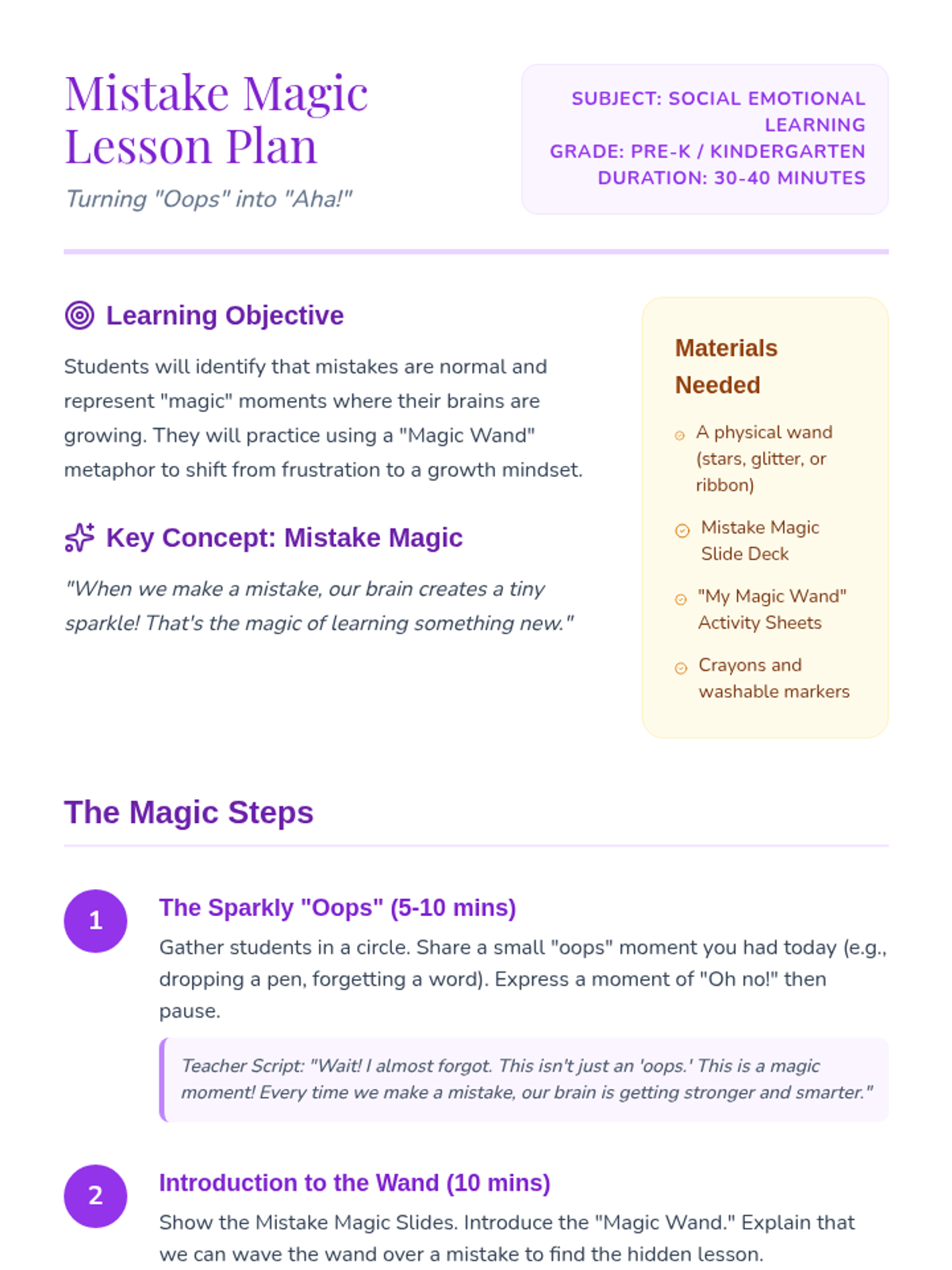
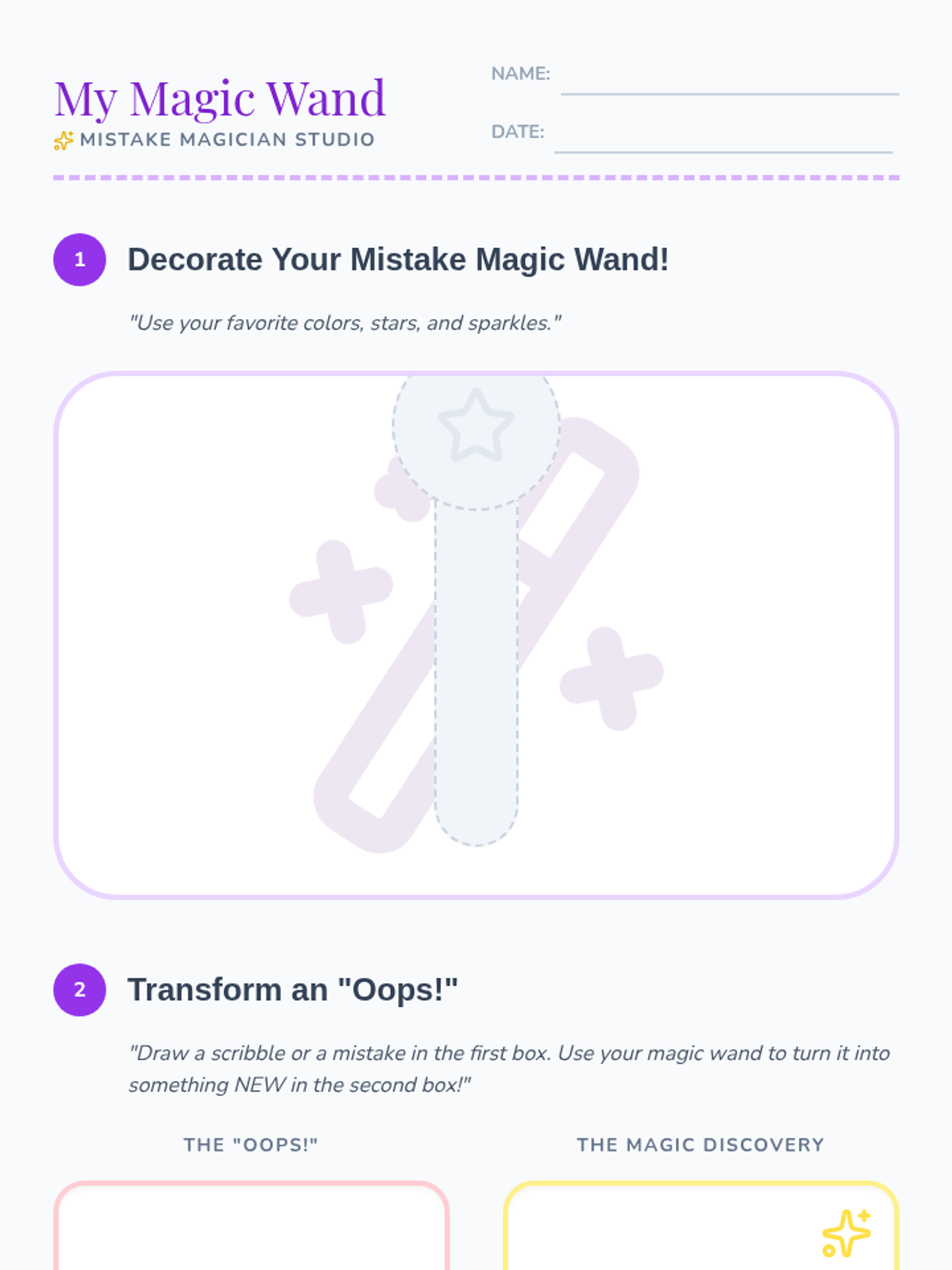
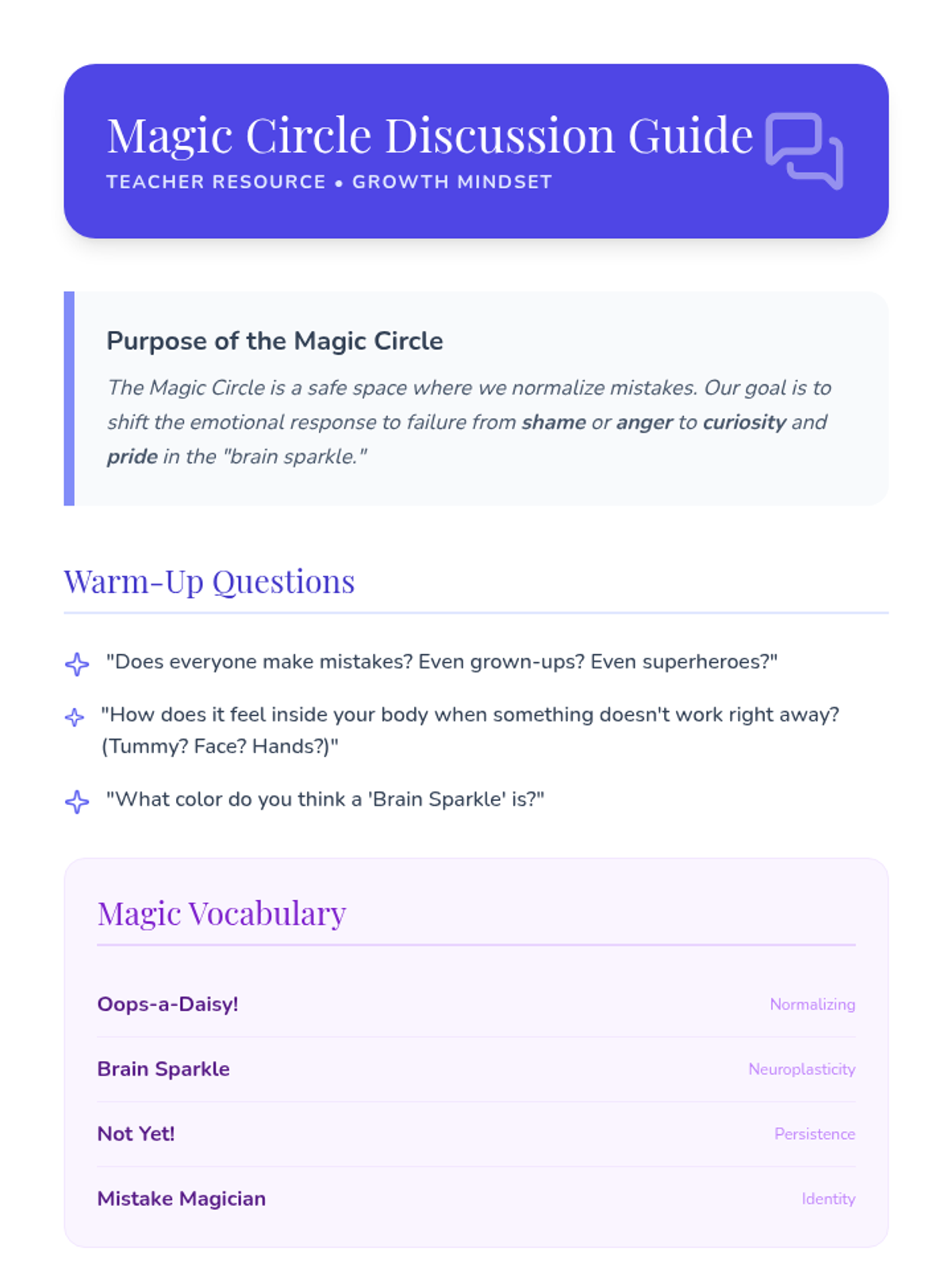
This lesson helps Pre-K students reframe mistakes as 'magic' learning moments using a physical wand metaphor to build a growth mindset and self-compassion. Students will learn that their brains grow when they try hard things and practice 'transforming' frustrations into discoveries.
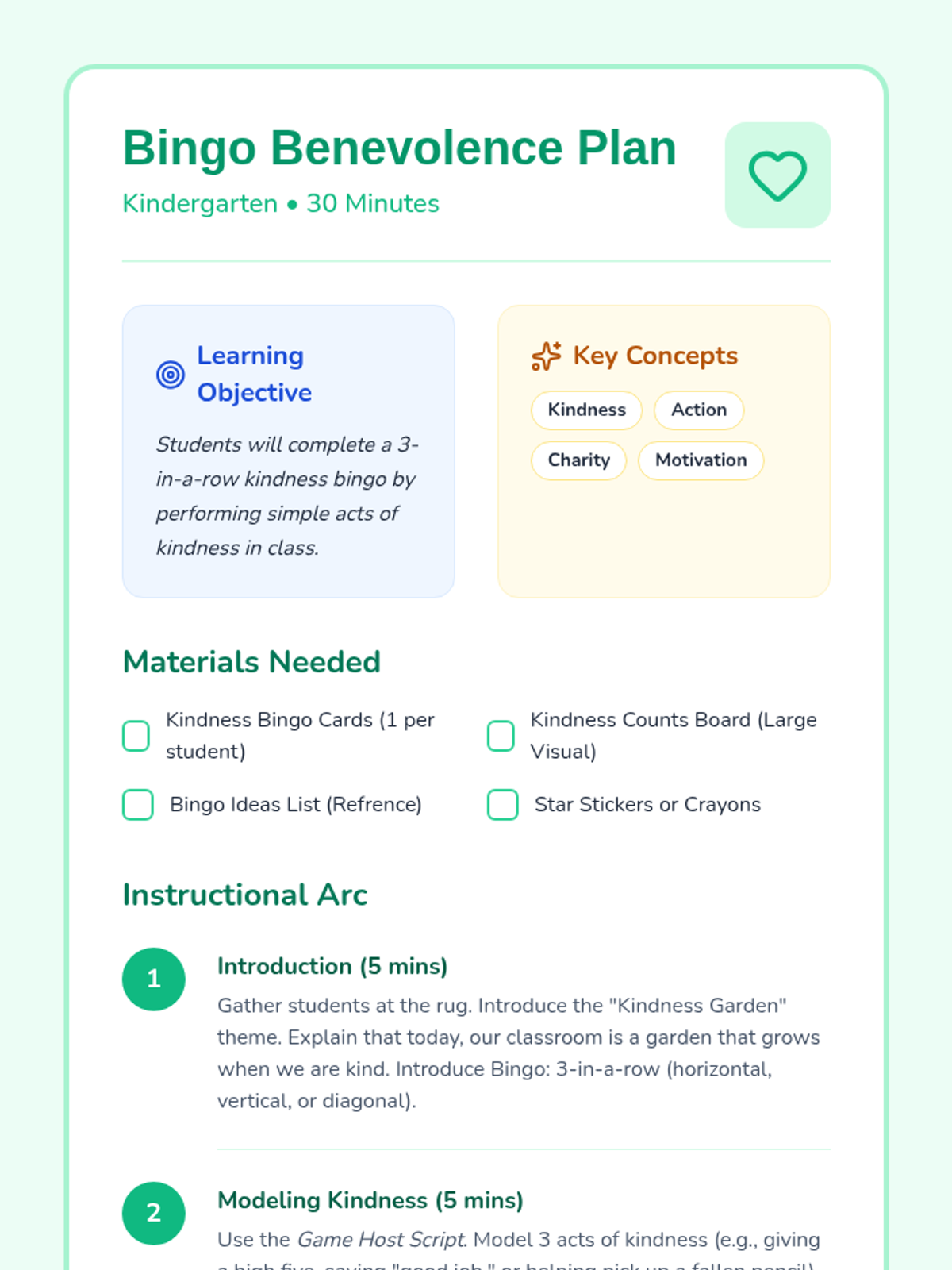
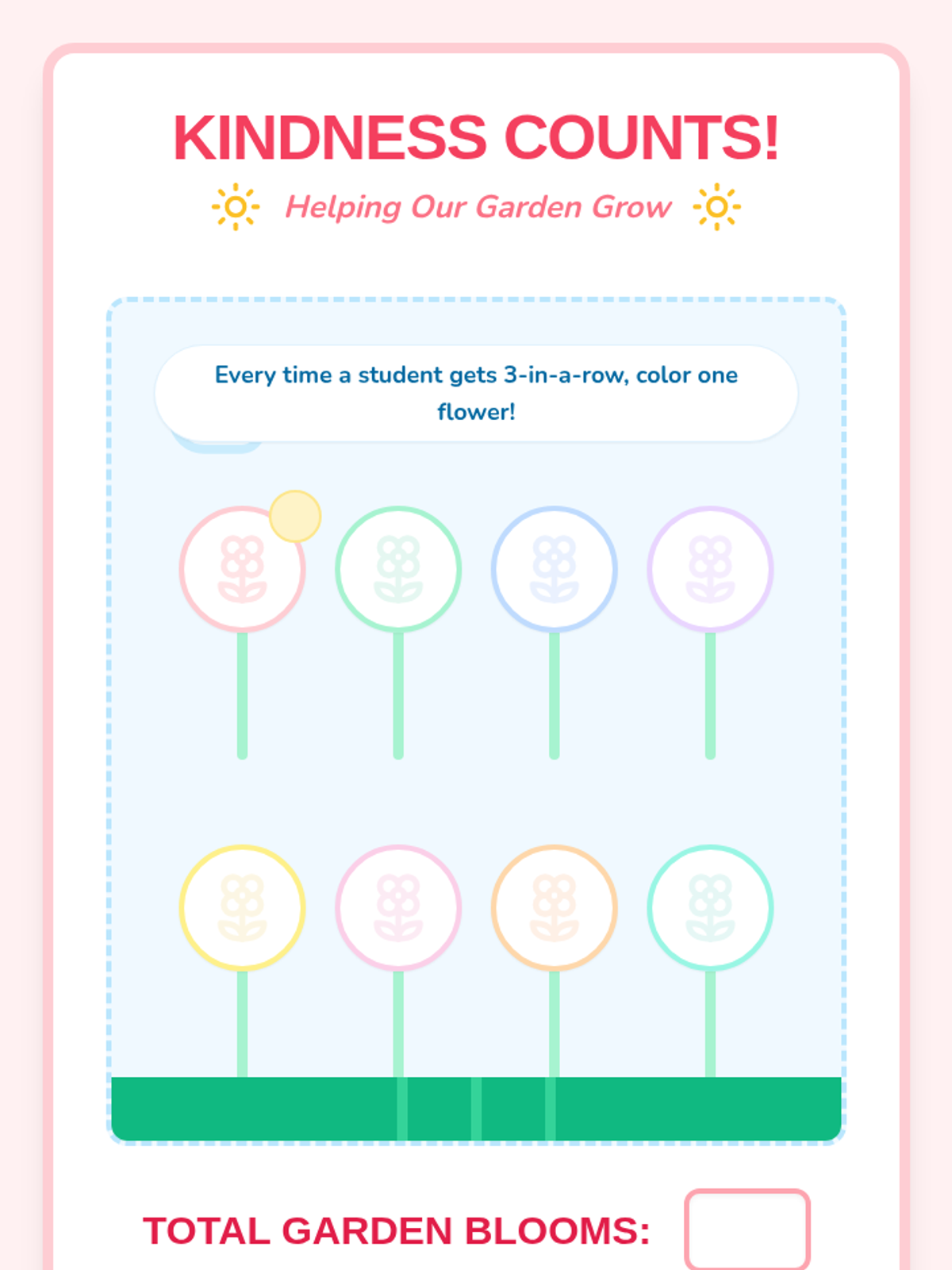
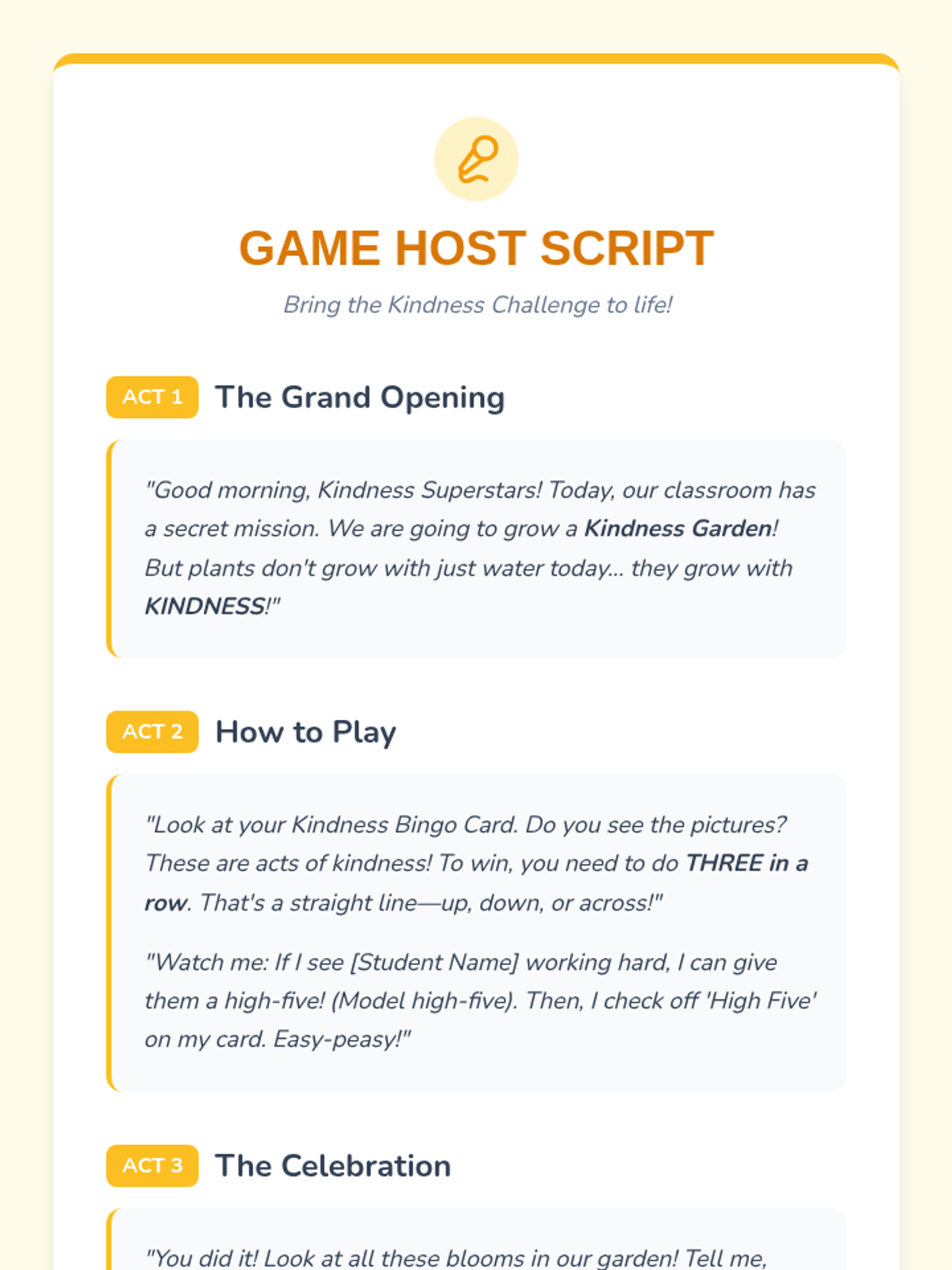
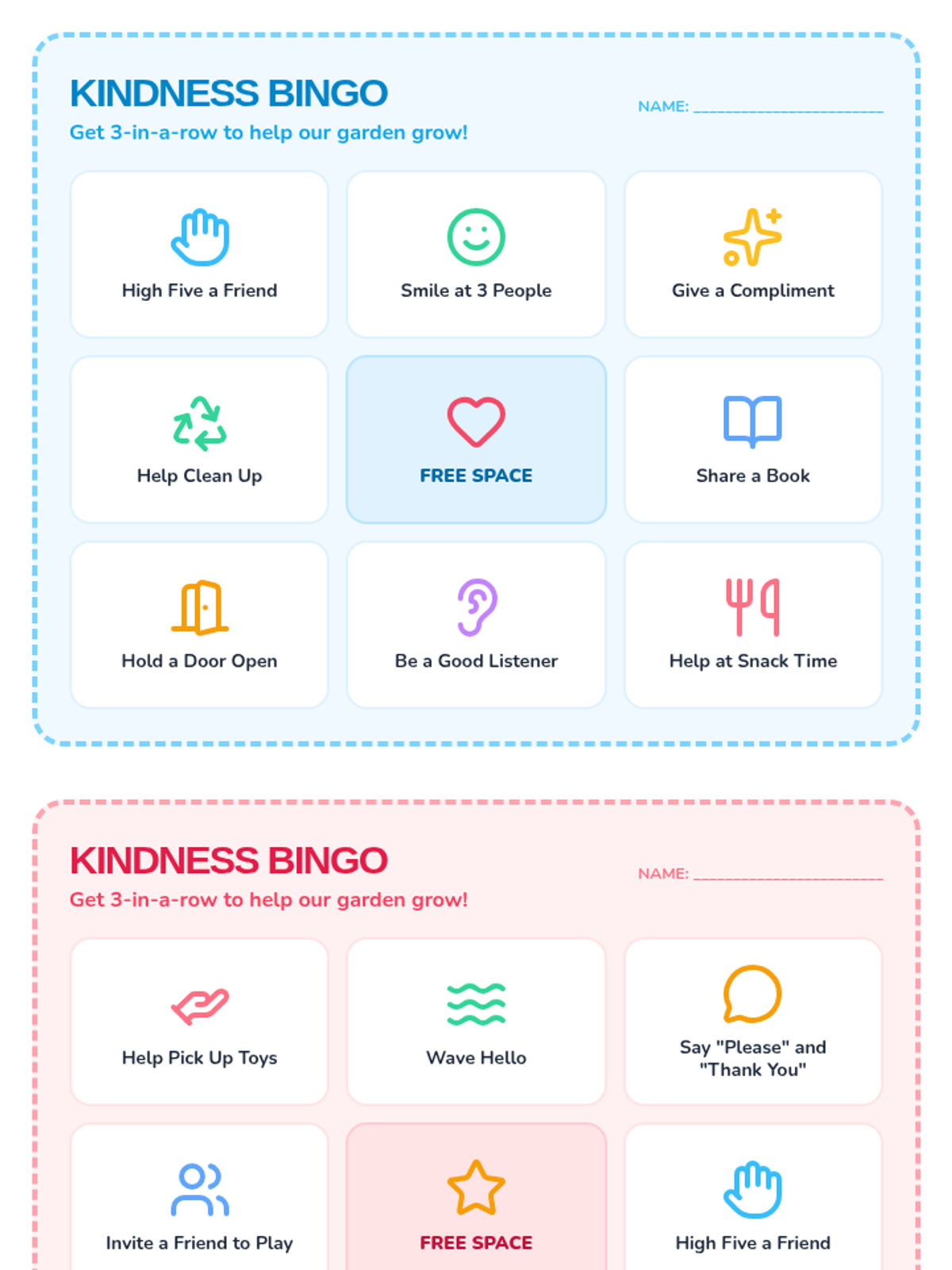
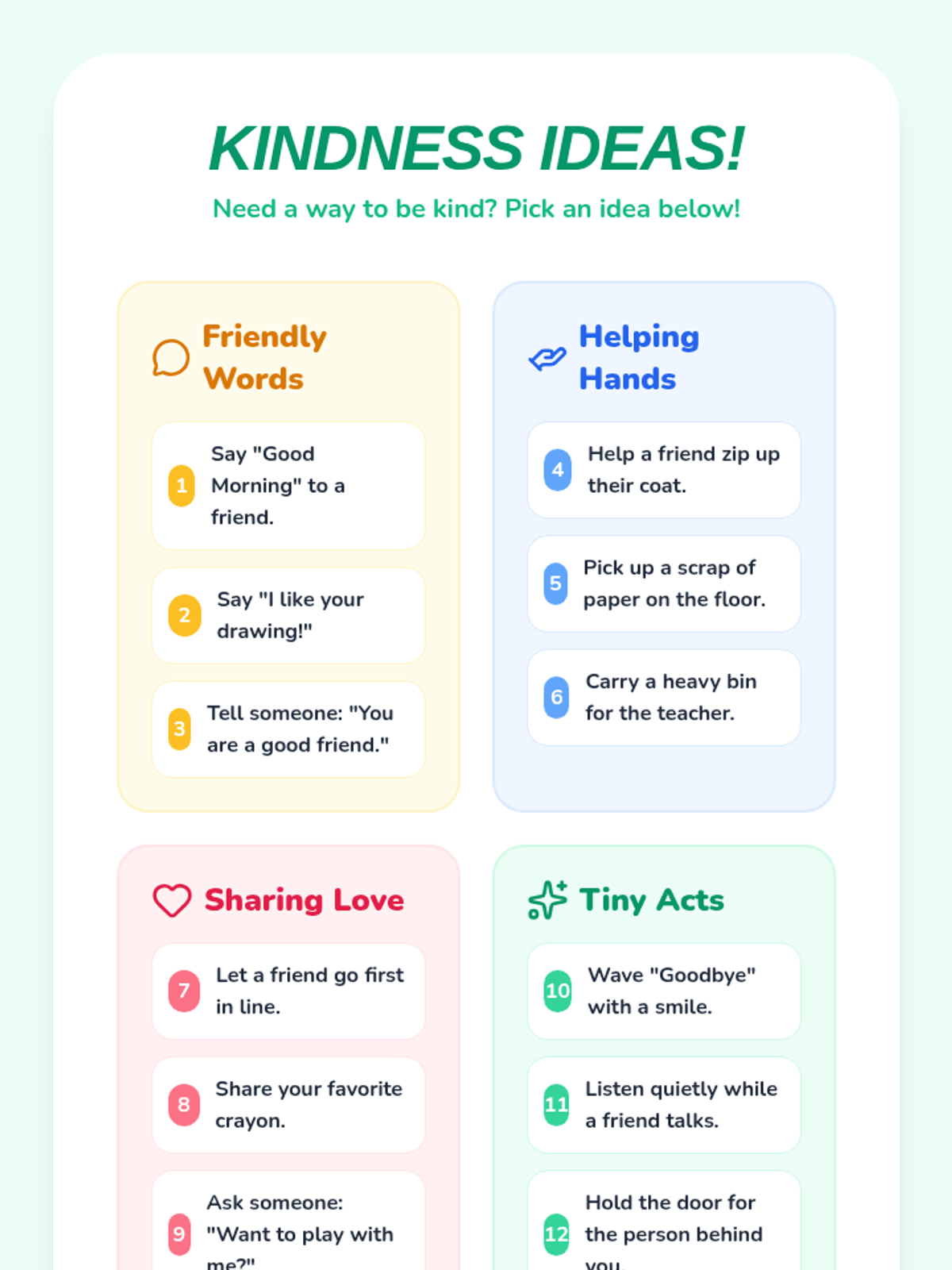
Students learn the power of kindness by participating in a 3-in-a-row bingo challenge, performing simple acts of care and charity for their classmates to grow a 'Kindness Garden'.
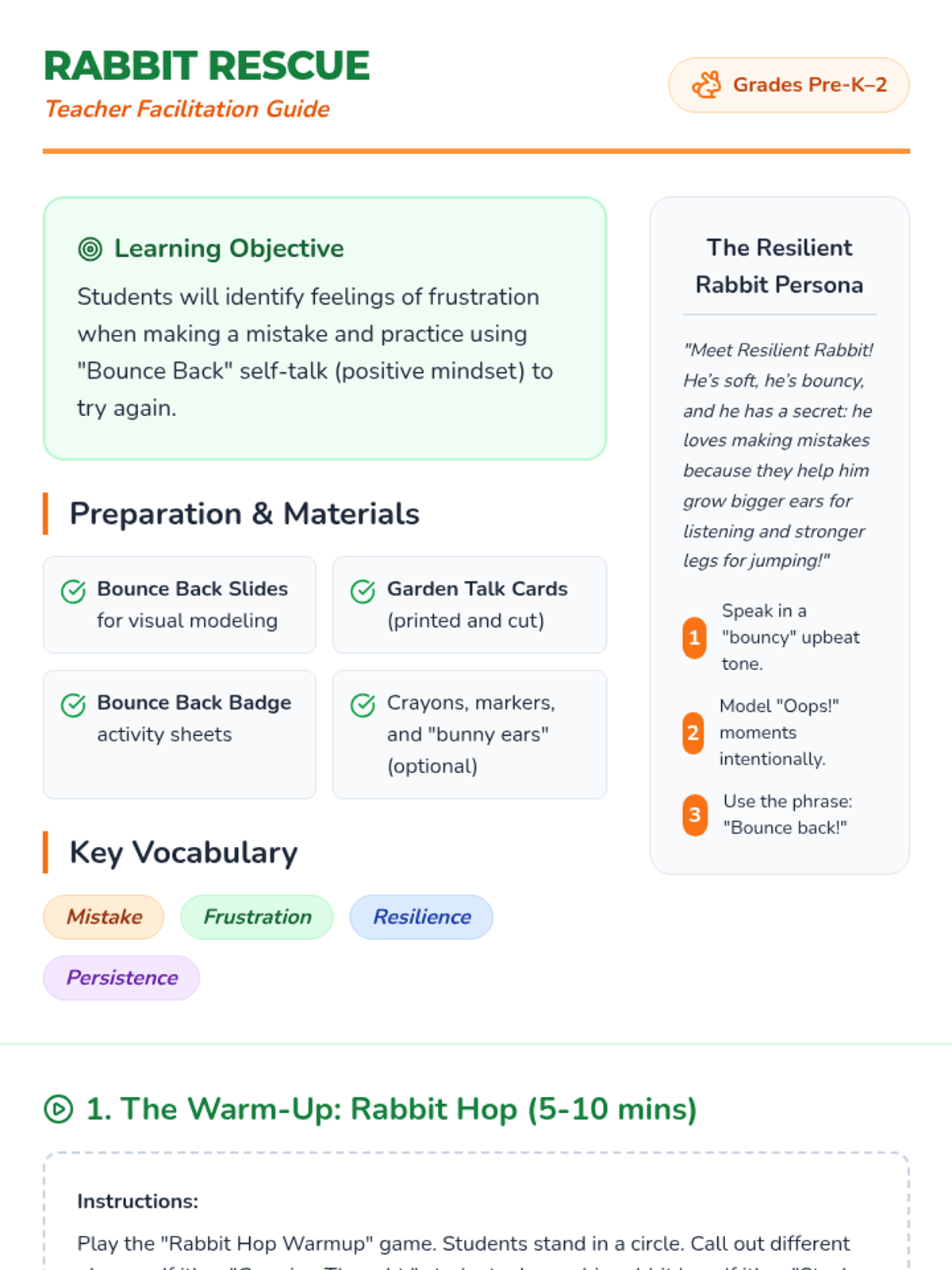
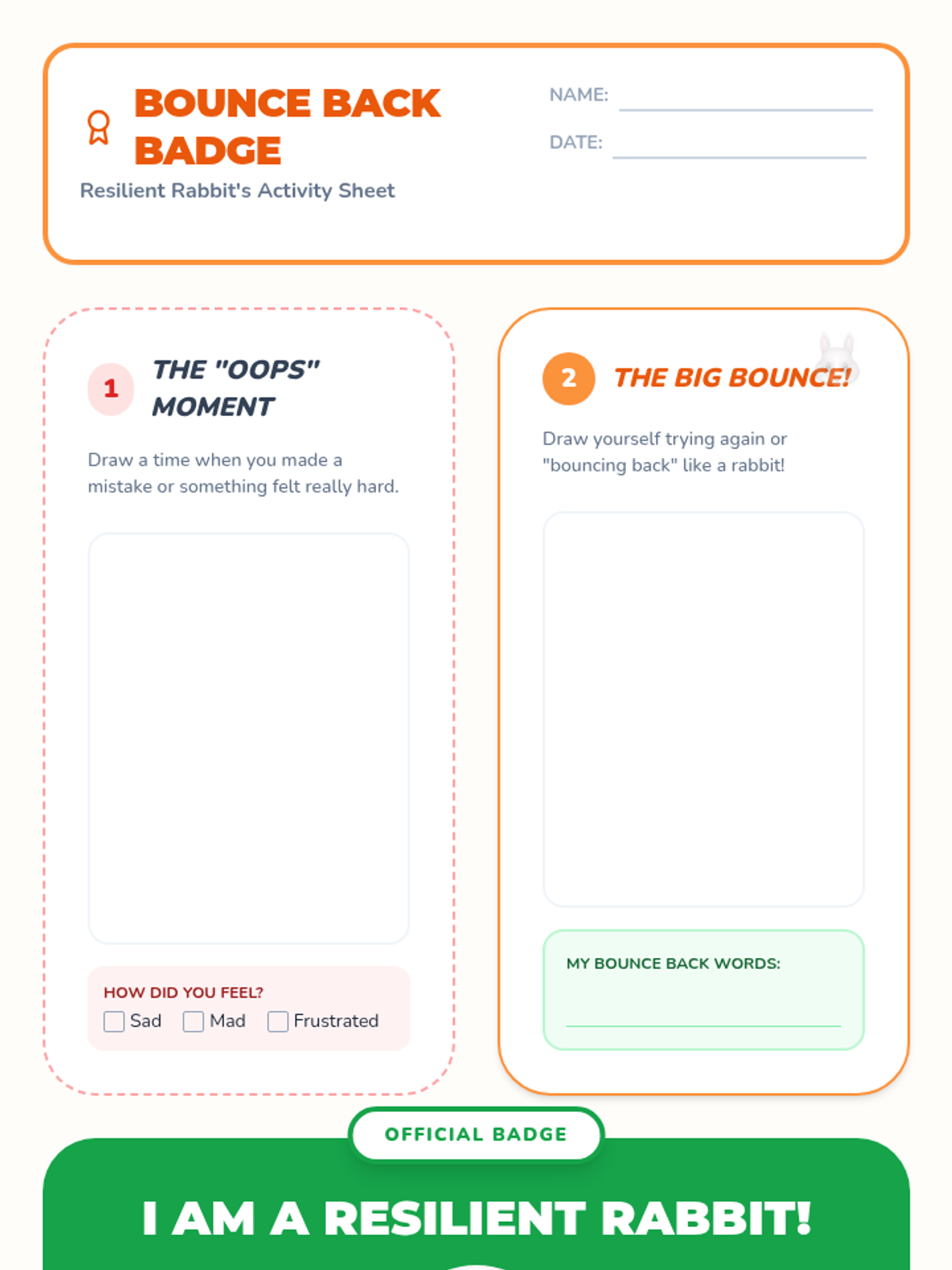
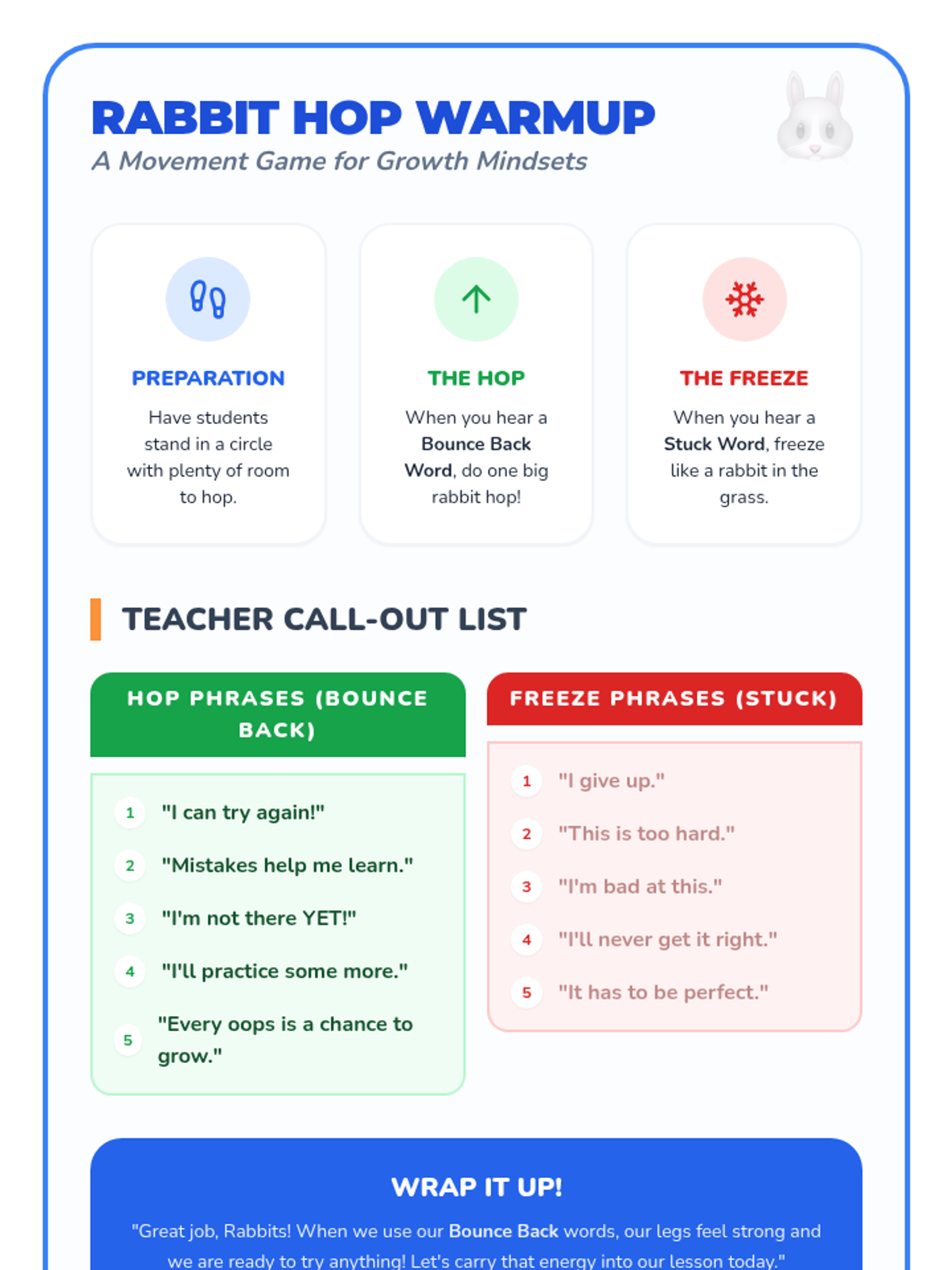
A social-emotional learning lesson for early elementary students focusing on resilience and growth mindset. Students learn through the character of 'Resilient Rabbit' how to handle mistakes and use positive self-talk to bounce back.
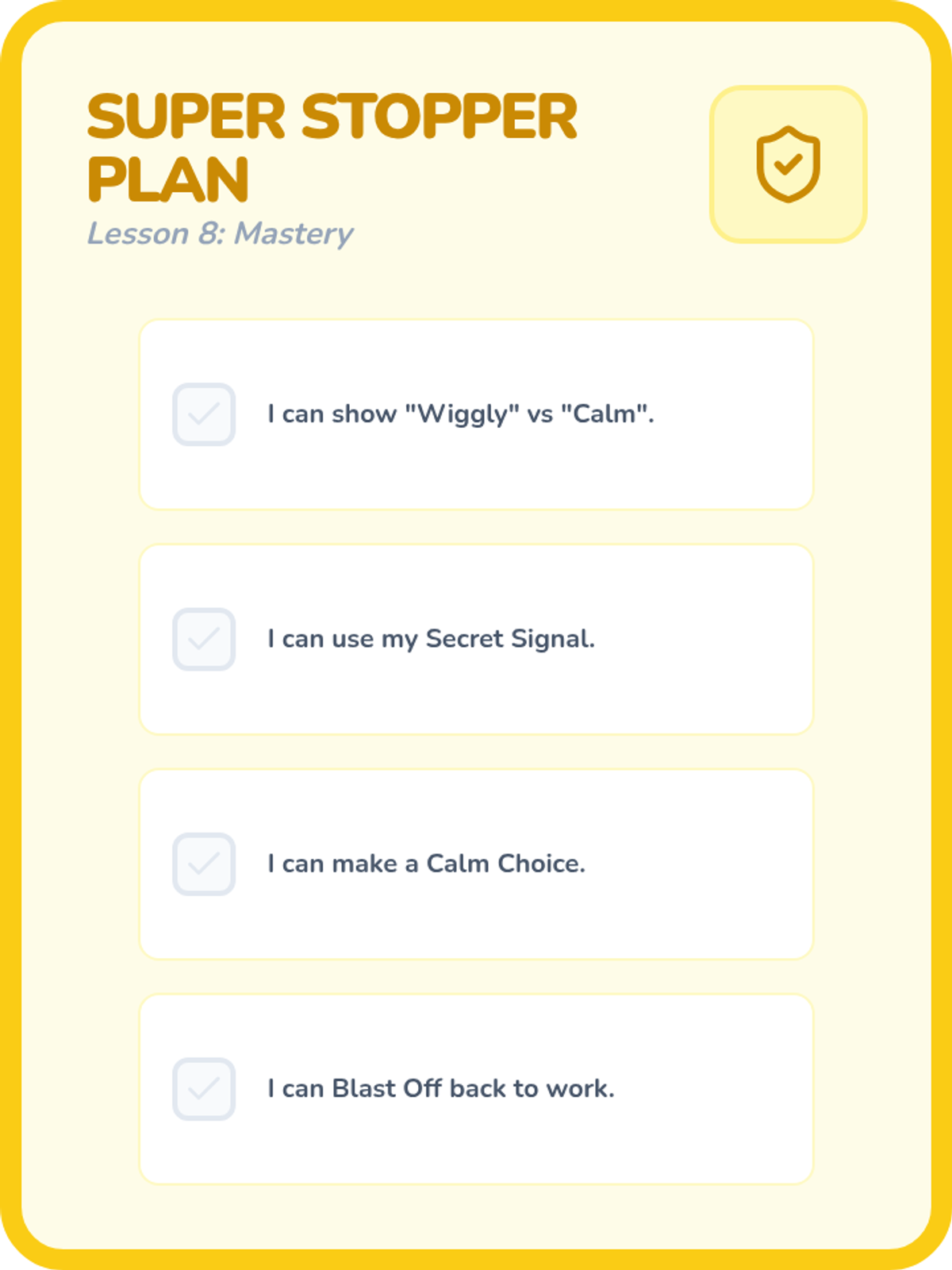
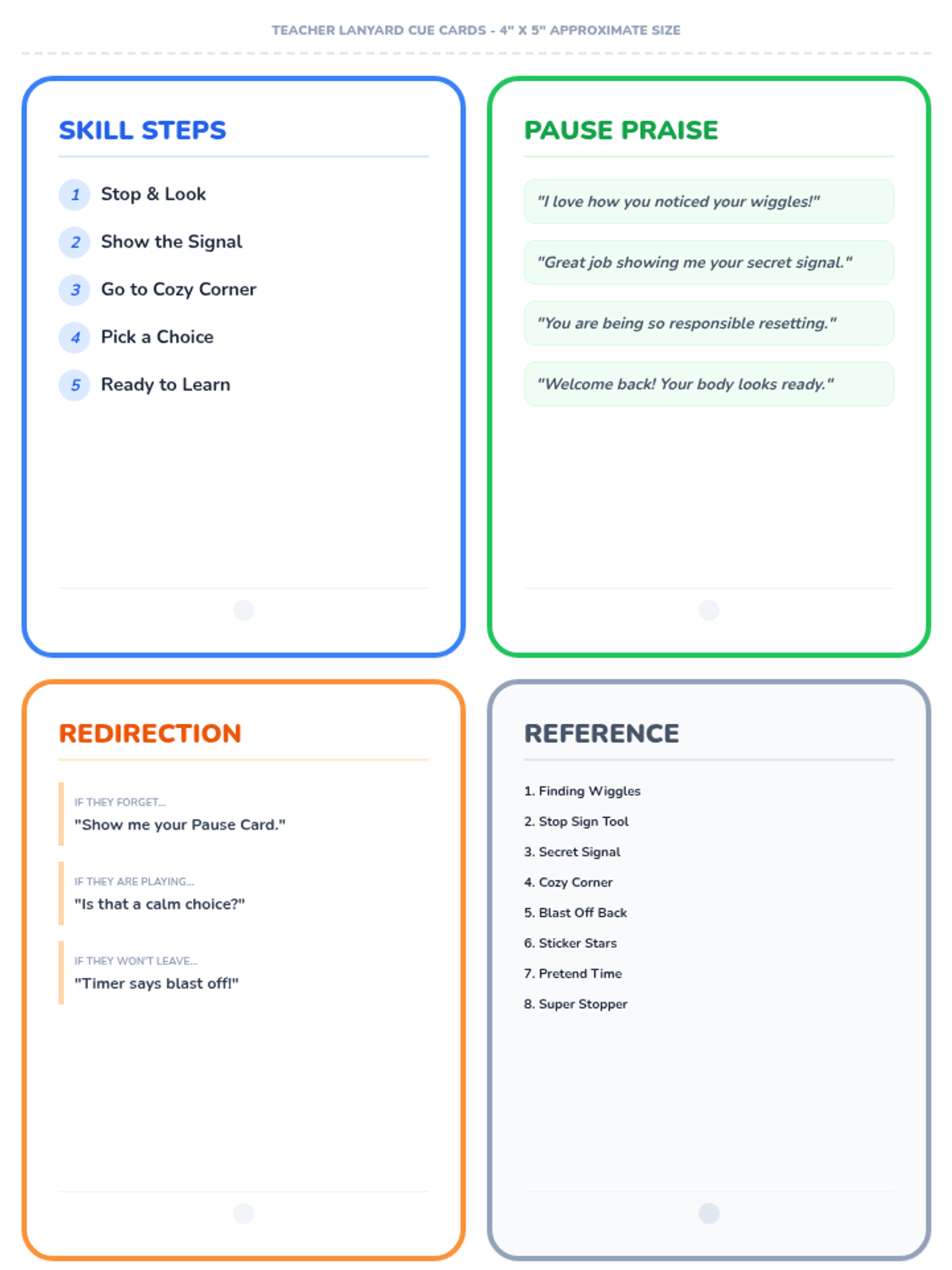
A final review and celebration of becoming a 'Super Stopper' who can use their pause independently.
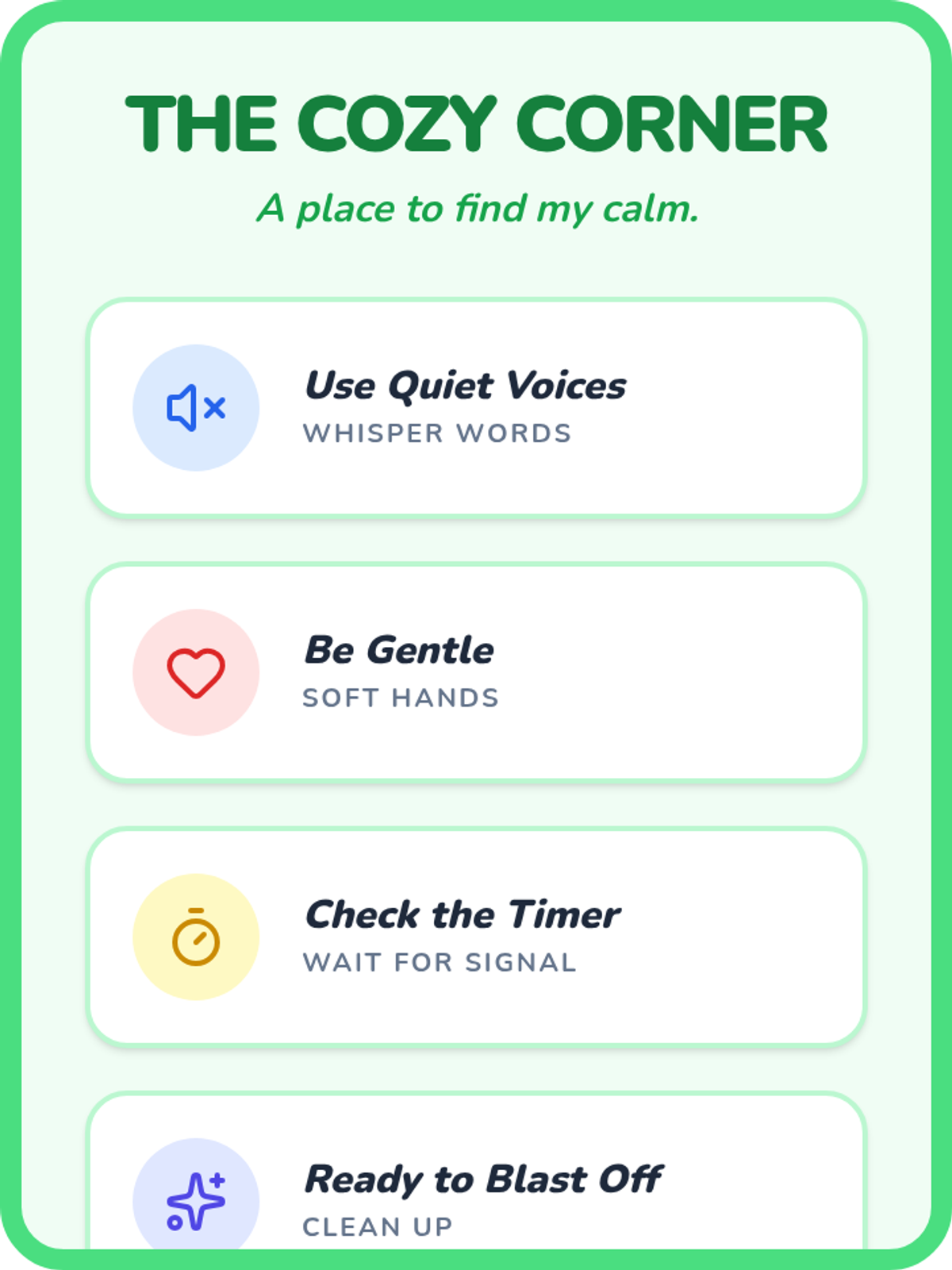
Exploring the classroom 'Cozy Corner' and choosing calming activities (books, breathing, sensory toys).
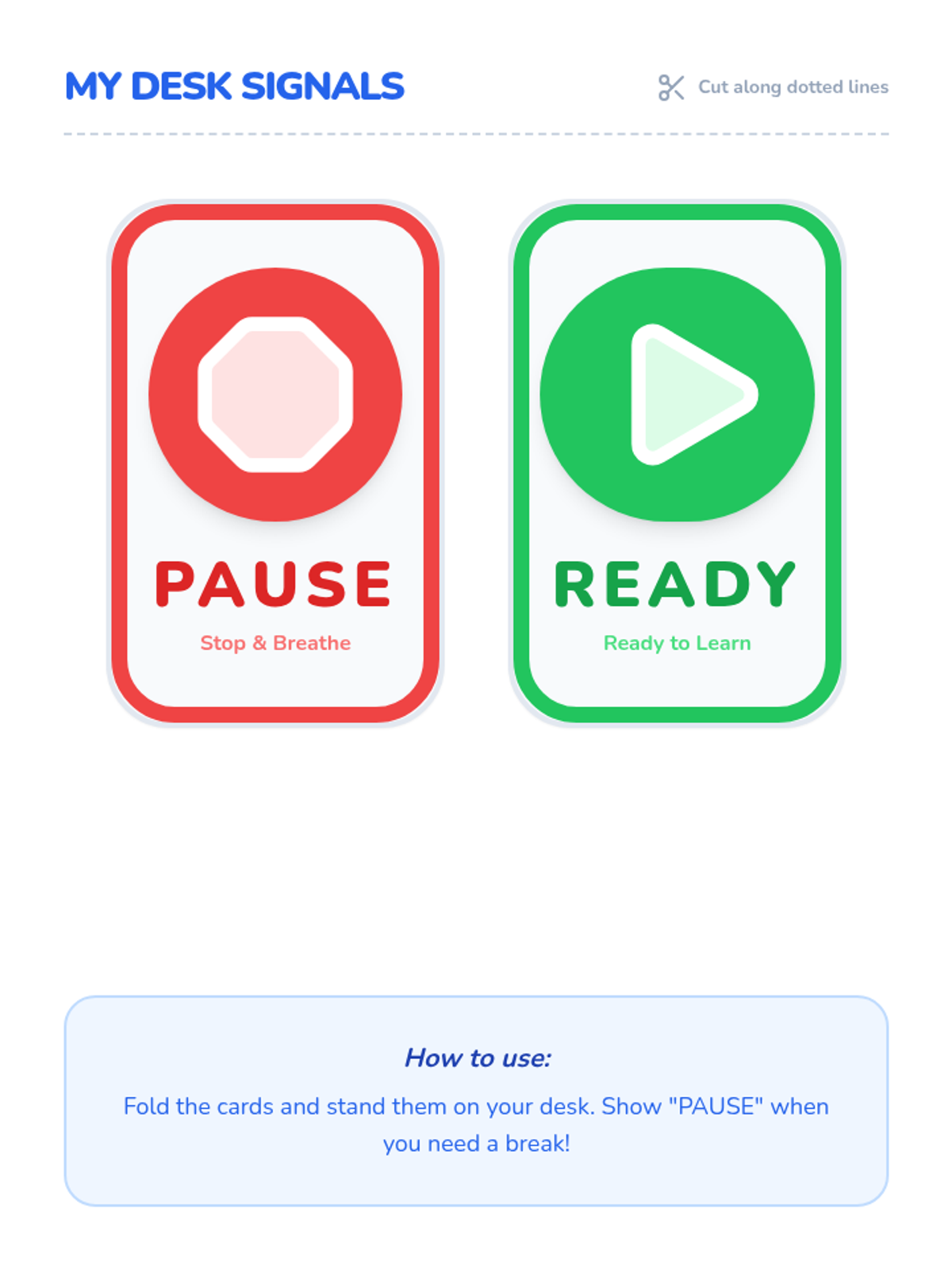
Introducing the physical 'Pause' card and explaining it as a tool for self-control, not a time-out.
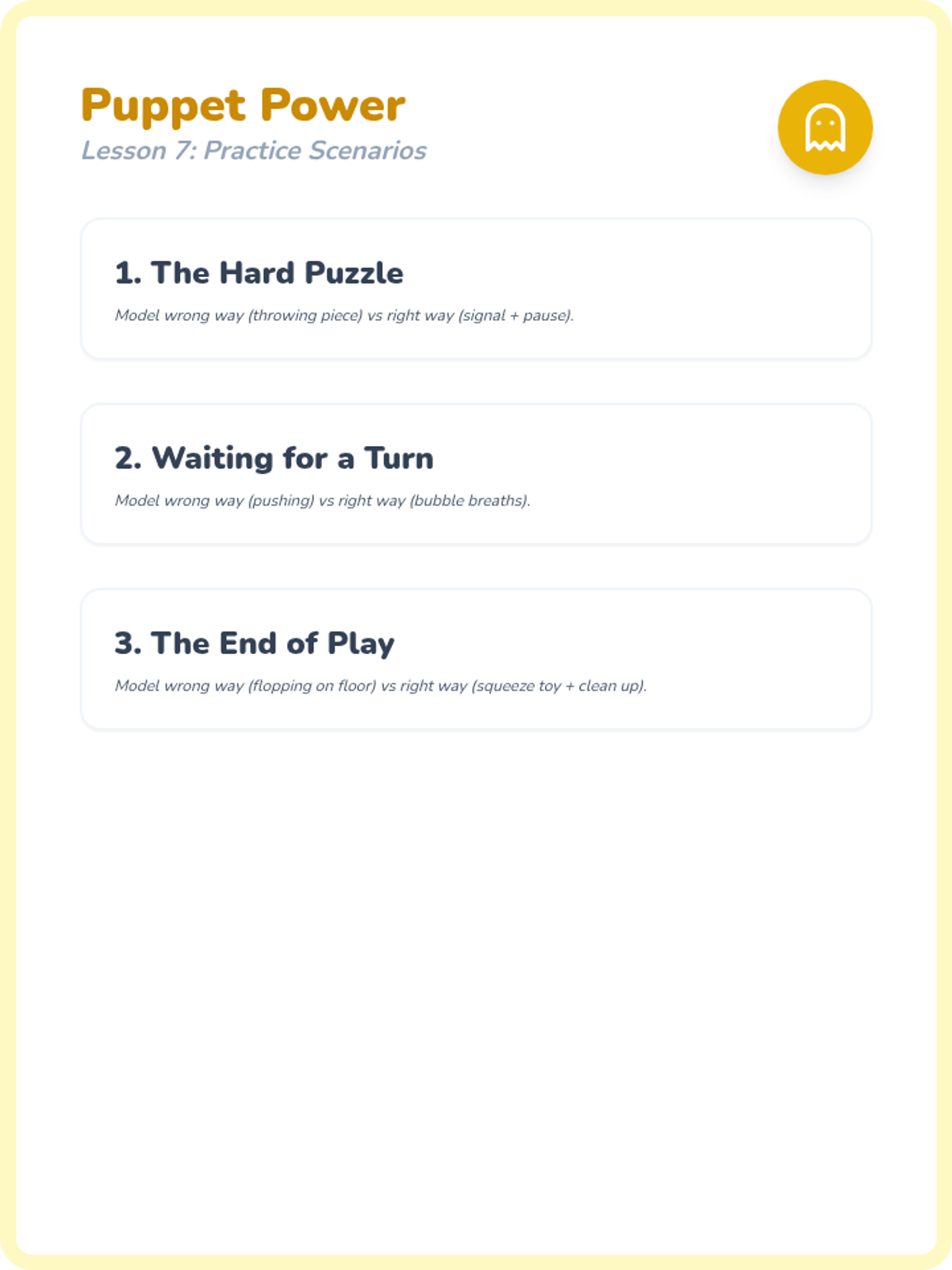
Guided role-play with puppets to practice the 'Pause' routine during normal classroom activities.
Using a visual sticker chart to track successful pauses and earn 'Power Breaks' (extra choice time).
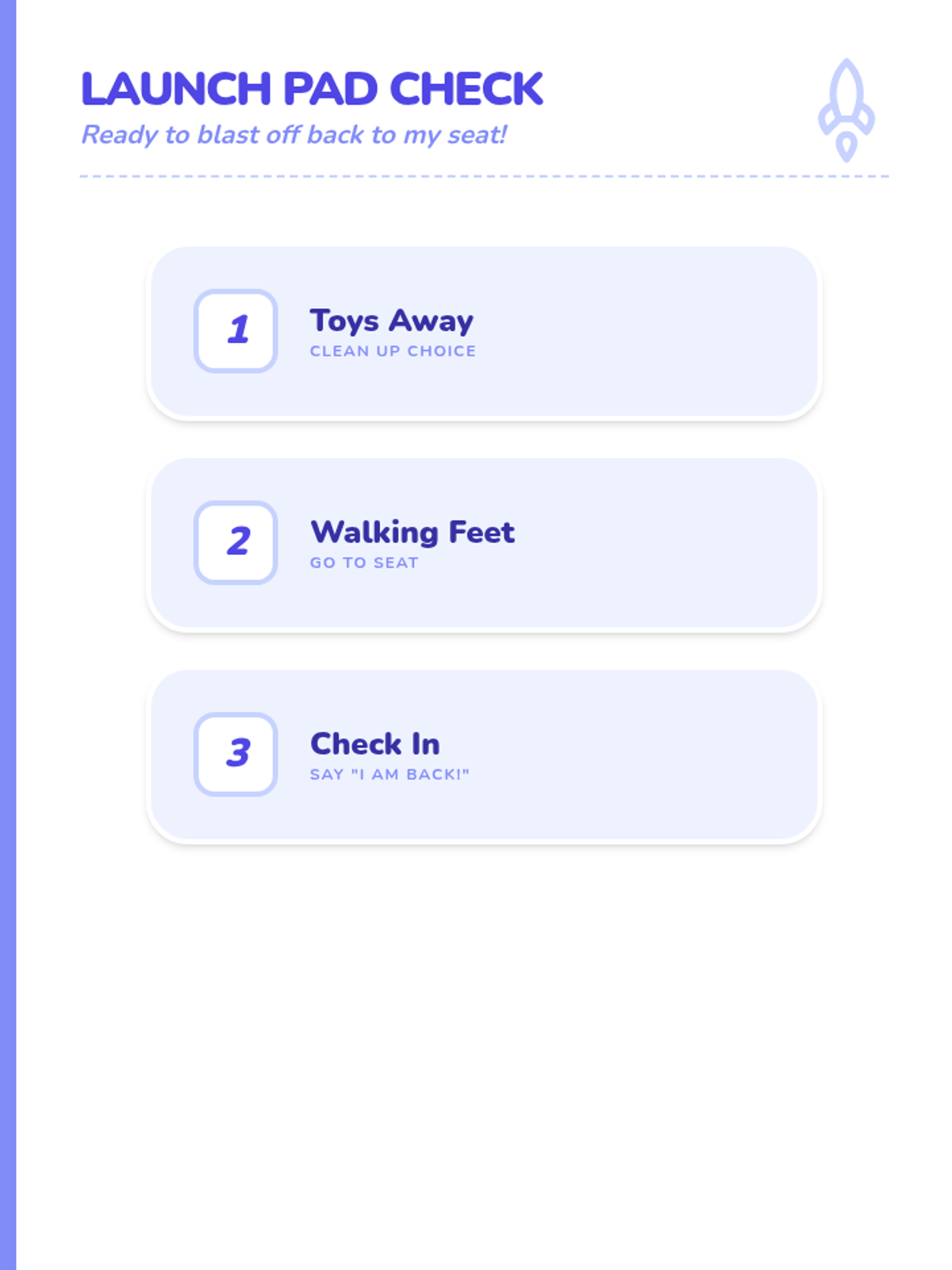
Simple steps for the student to transition from their 'Pause' area back to their seat with a 'Check-In'.
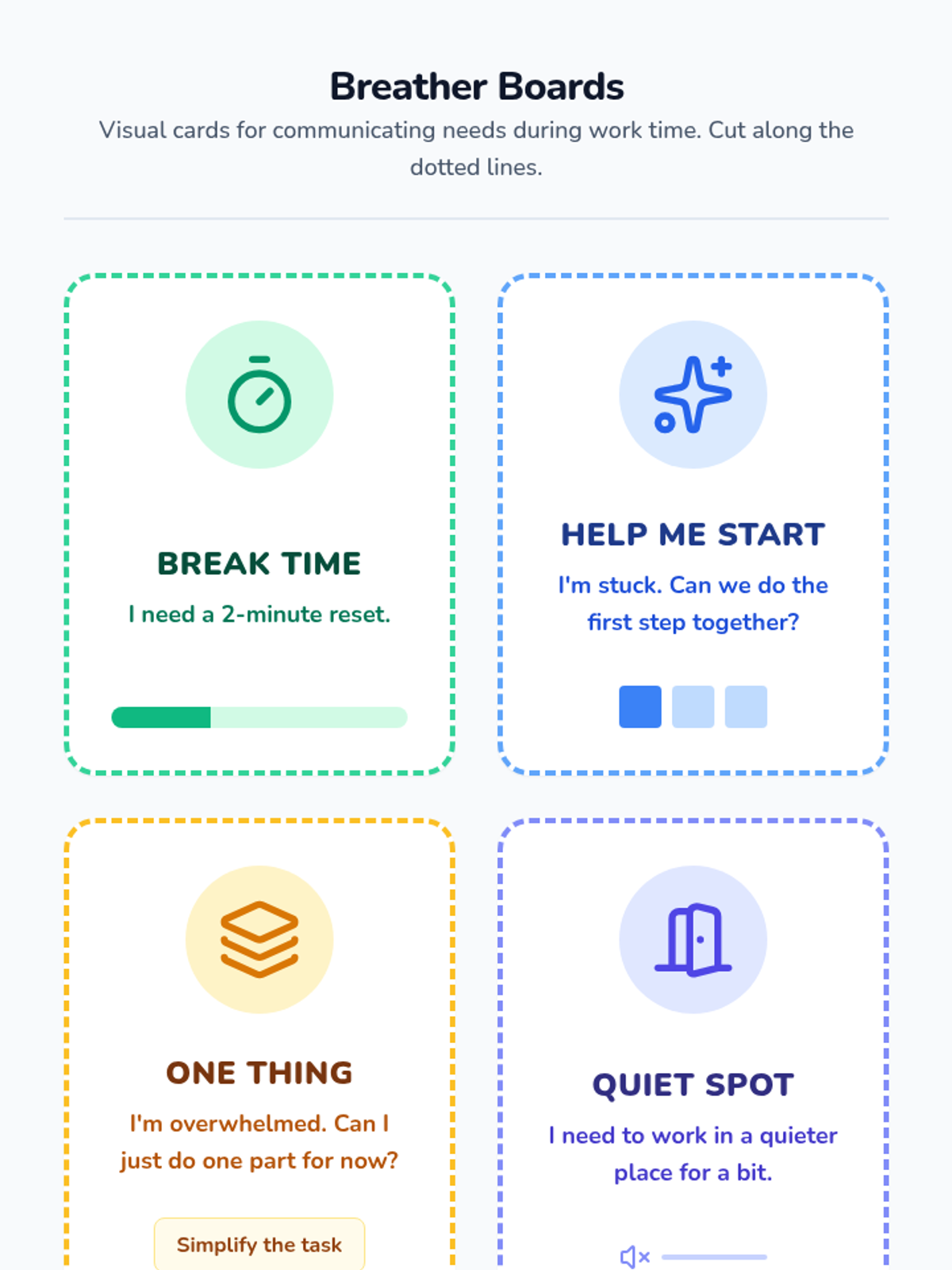
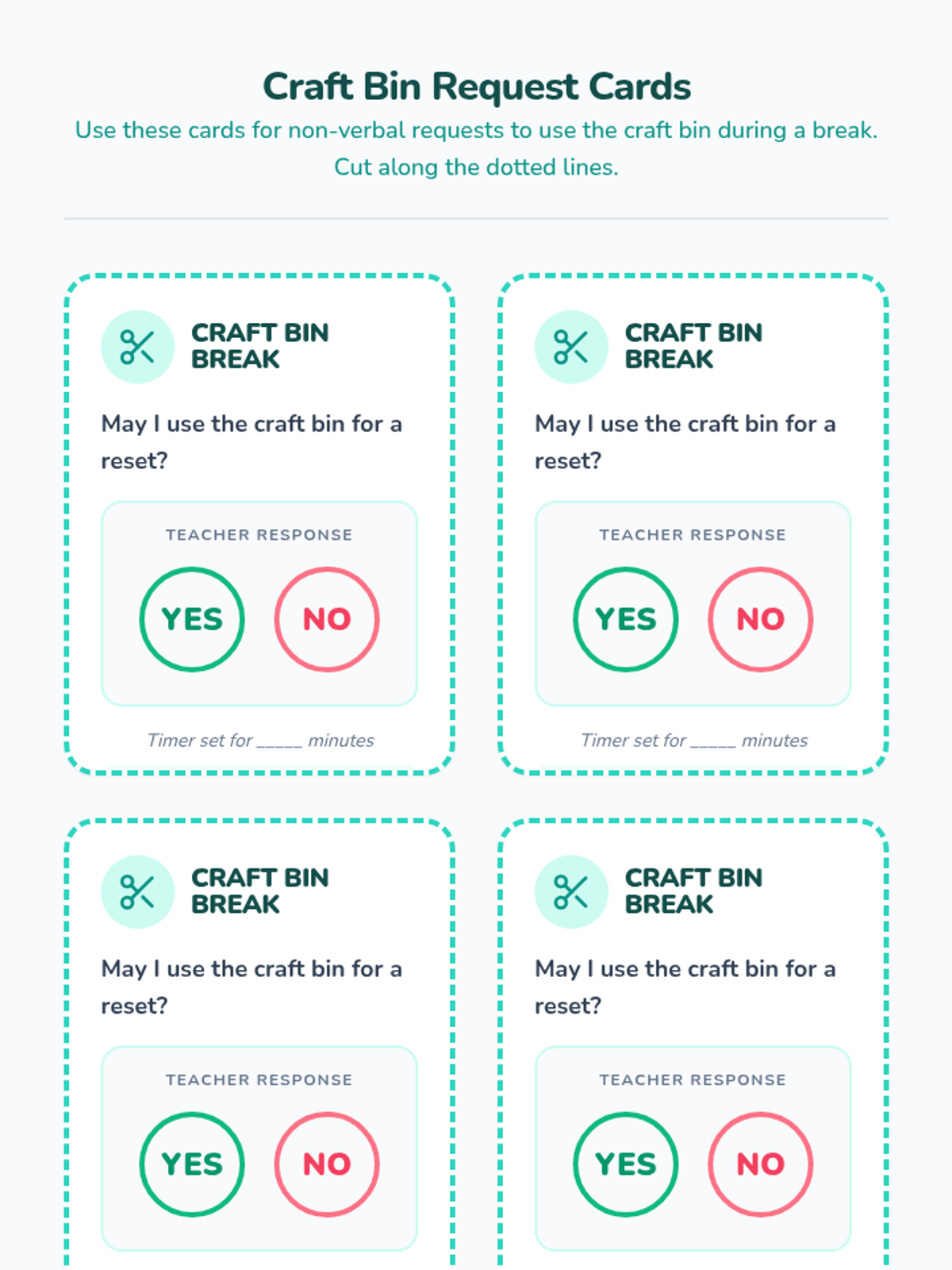
The mechanics of requesting a break through simple verbal and non-verbal signs suitable for preschoolers.
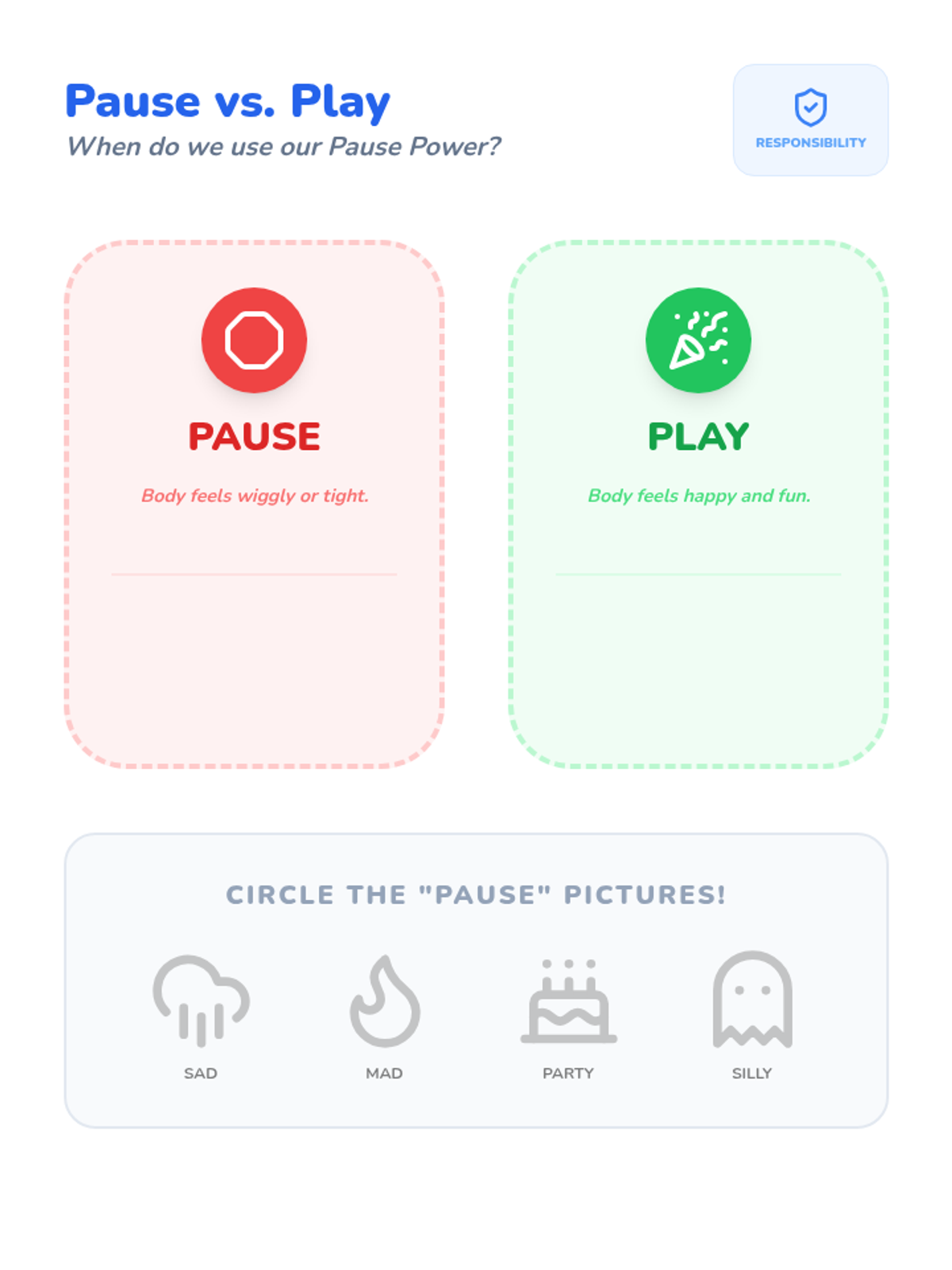
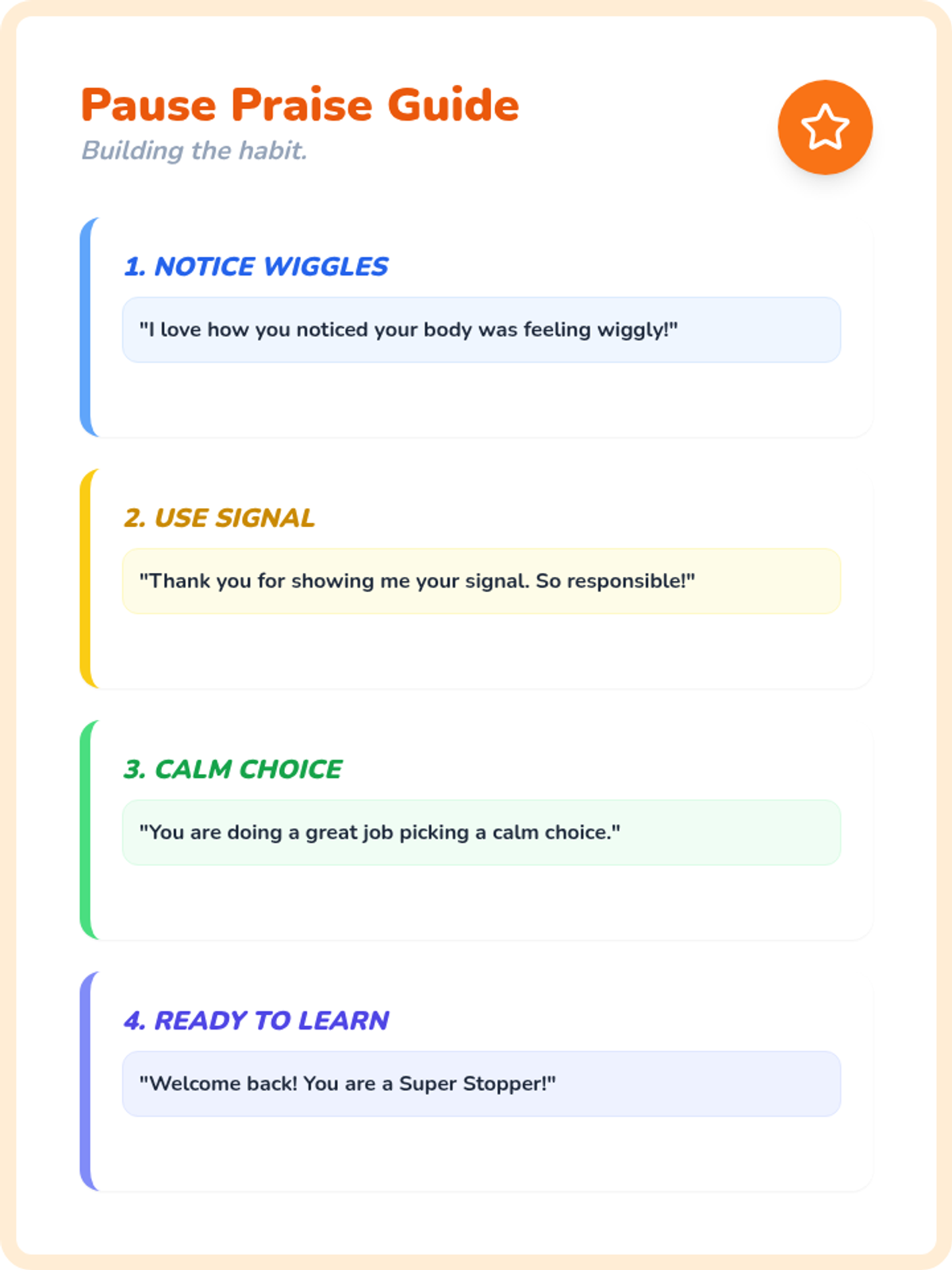
Helping students notice when their body feels 'wiggly,' 'tight,' or 'fast' as a signal that they need a pause.
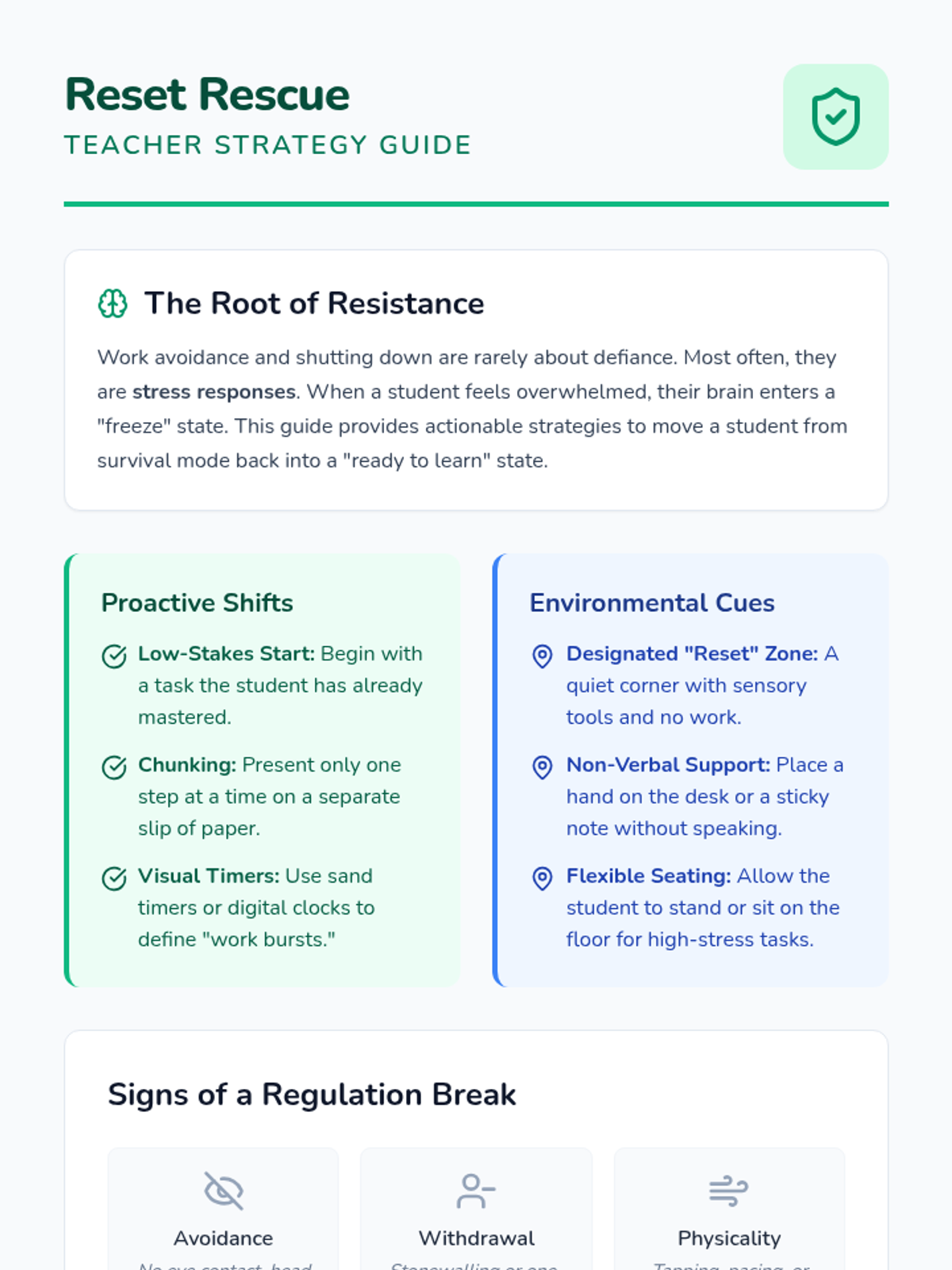
A comprehensive set of tools for teachers to support students experiencing work avoidance or shutting down, focusing on emotional regulation and proactive intervention.
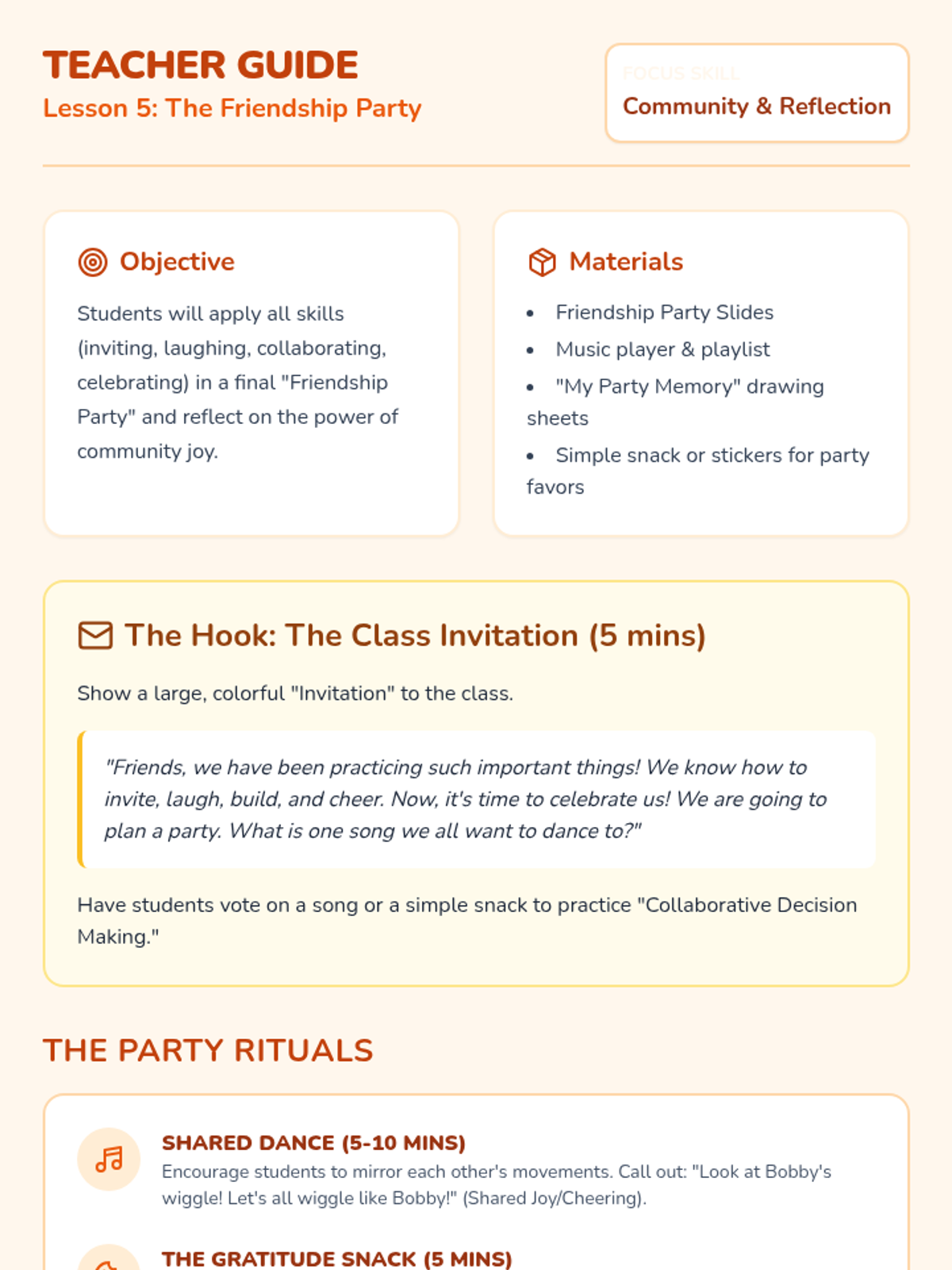
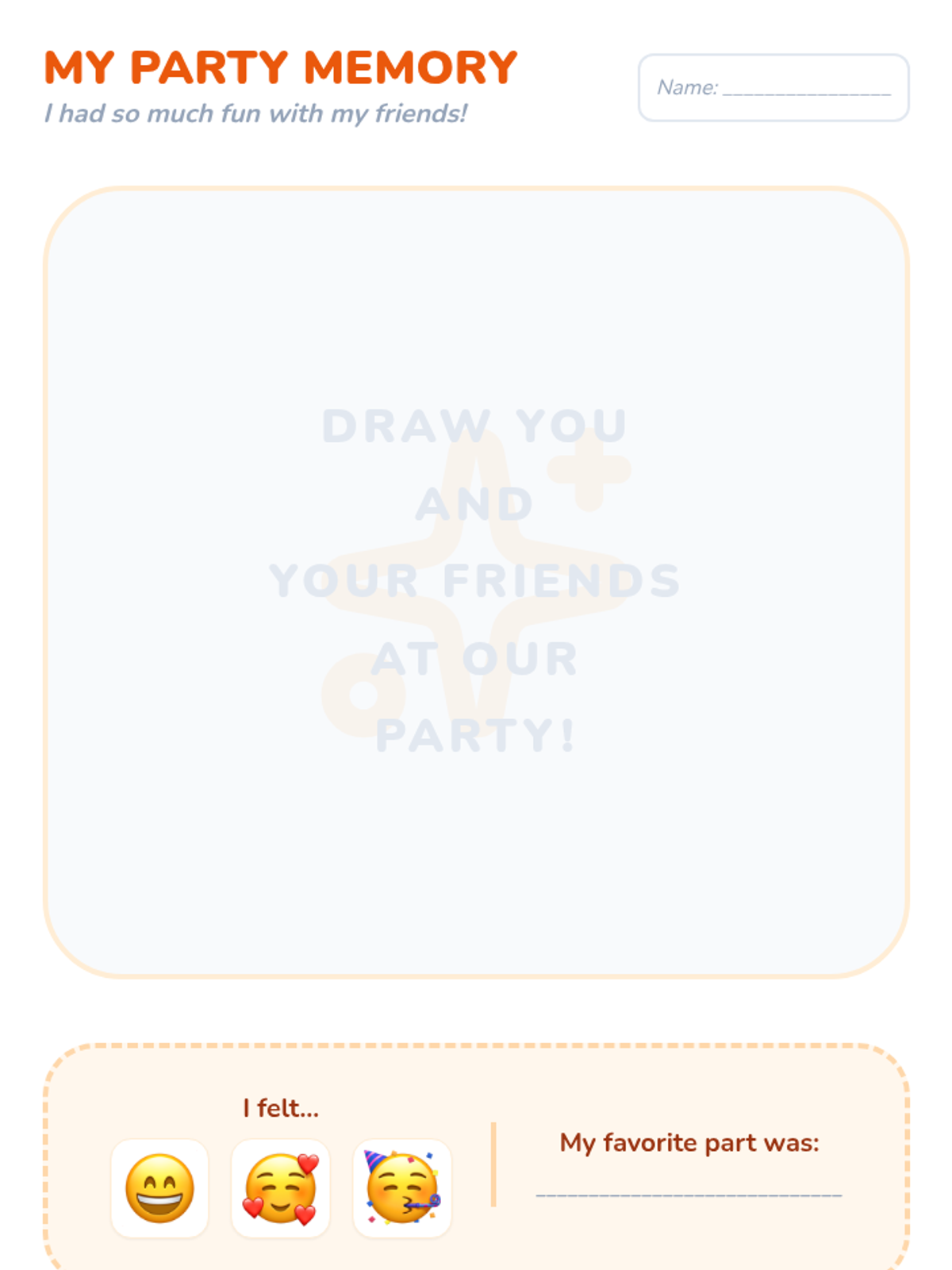
A culminating event where students plan and execute a simple shared activity (like a dance party or snack share). They reflect on how doing things together feels different than doing them alone.
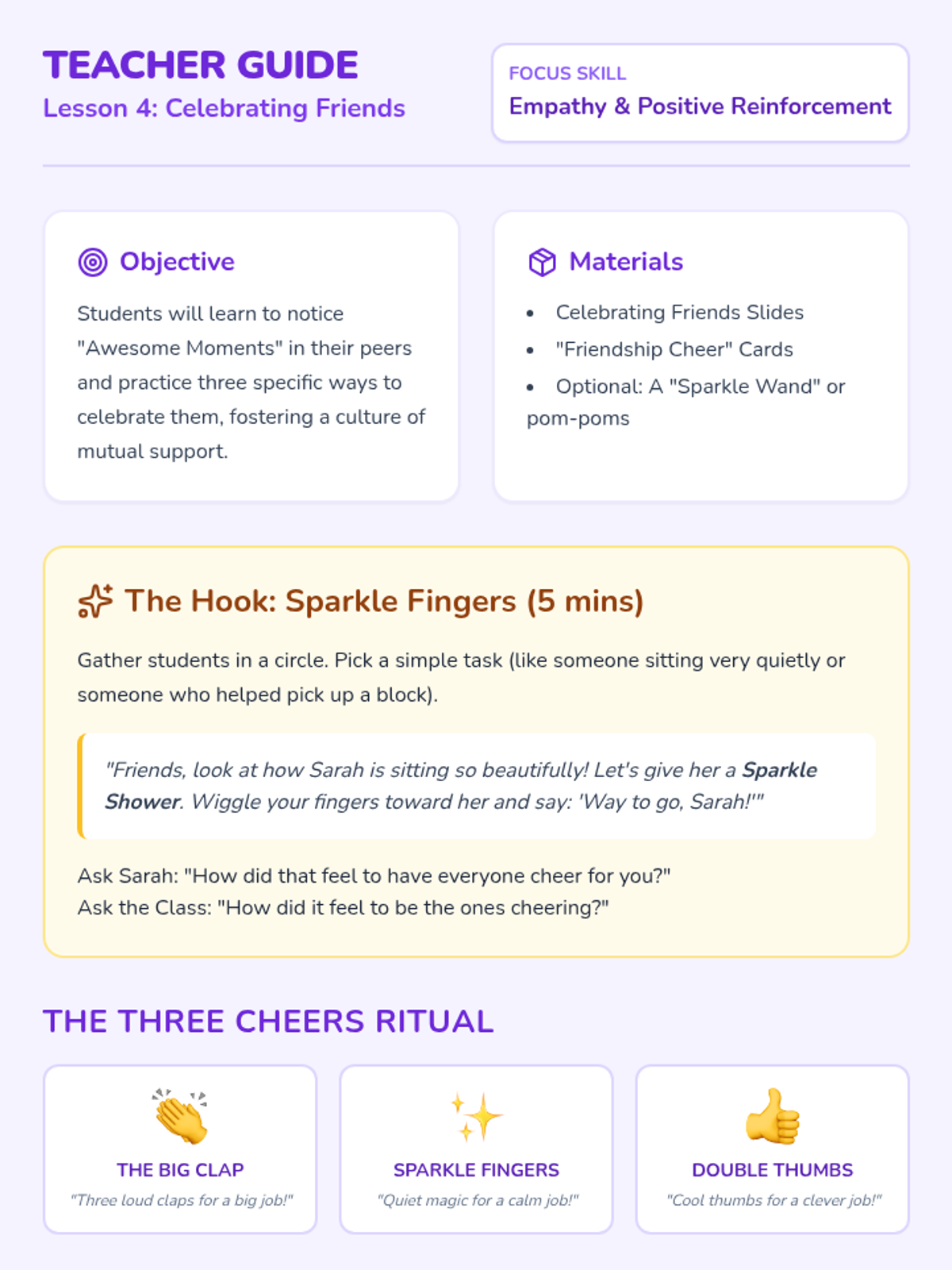
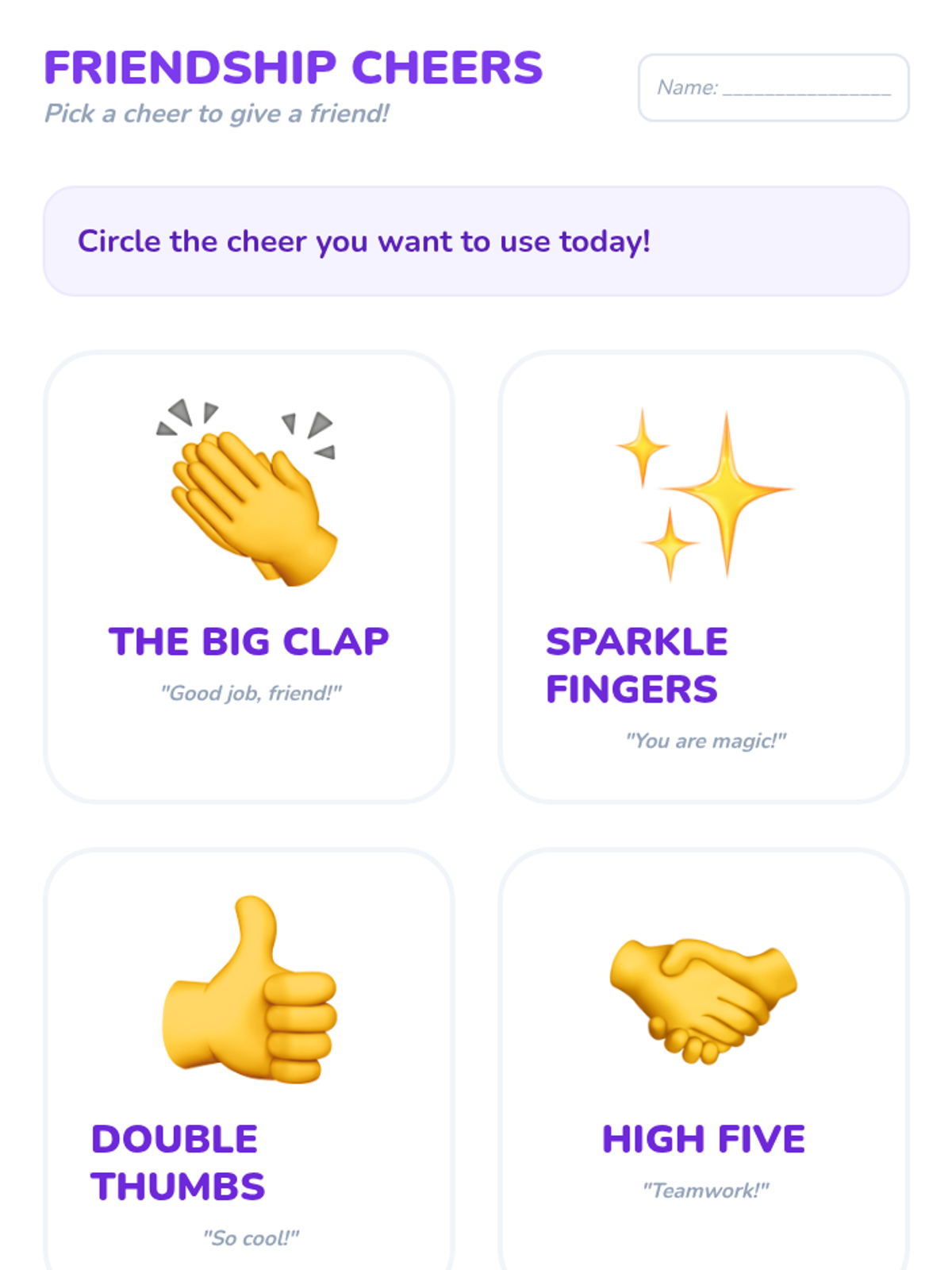
Students learn to identify when a friend does something good and how to celebrate them (clapping, cheering). This shifts focus from self-gratification to finding joy in others' success.
Small groups work together to build something (block tower, art piece). The focus is on the positive feeling of achieving a goal together rather than the final product.
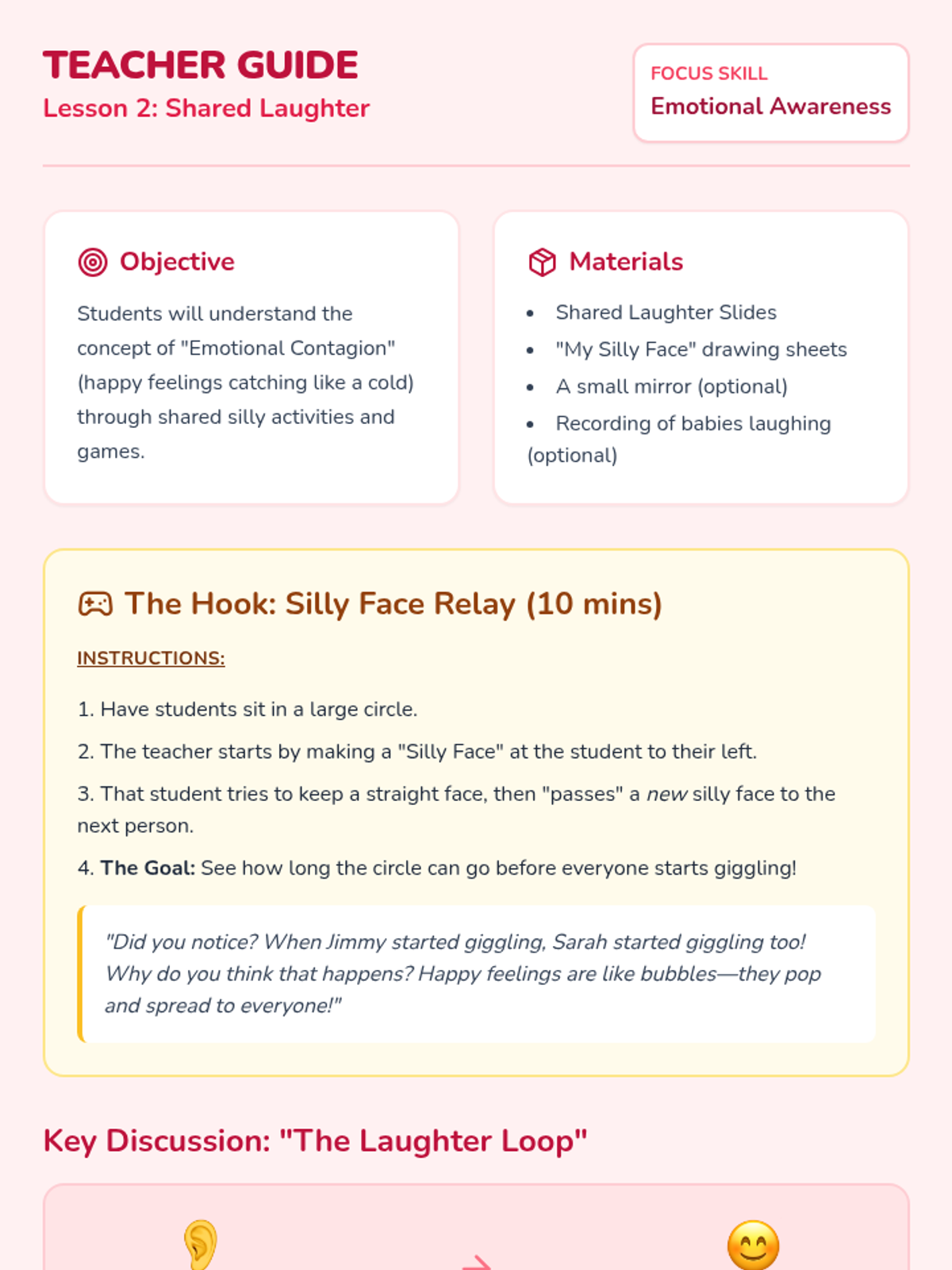
The class engages in silly activities designed solely to produce shared laughter. They discuss how hearing others laugh makes them want to laugh too, introducing the concept of emotional contagion.
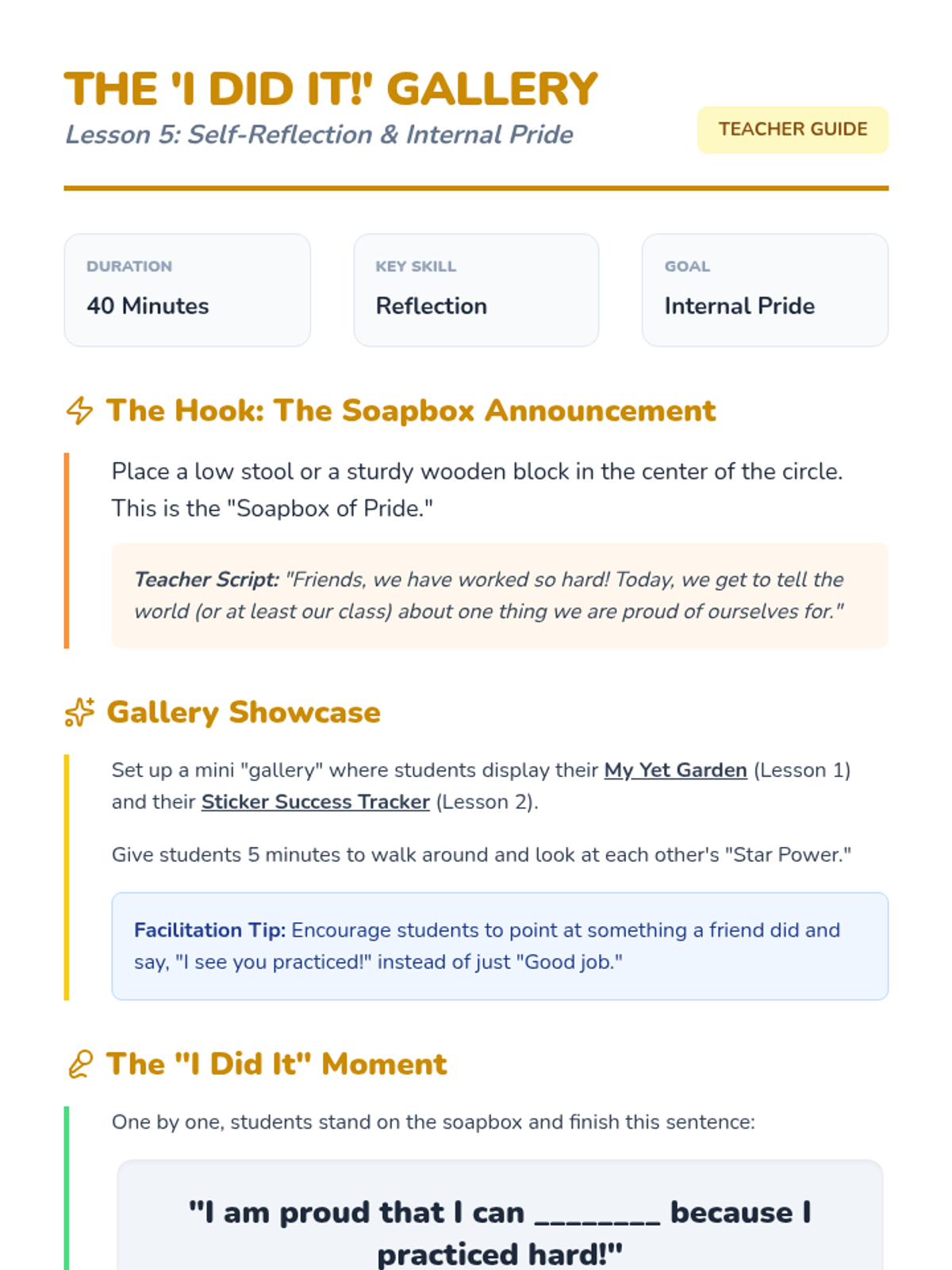
Reflecting on achievements and celebrating the internal feeling of pride through a classroom showcase.
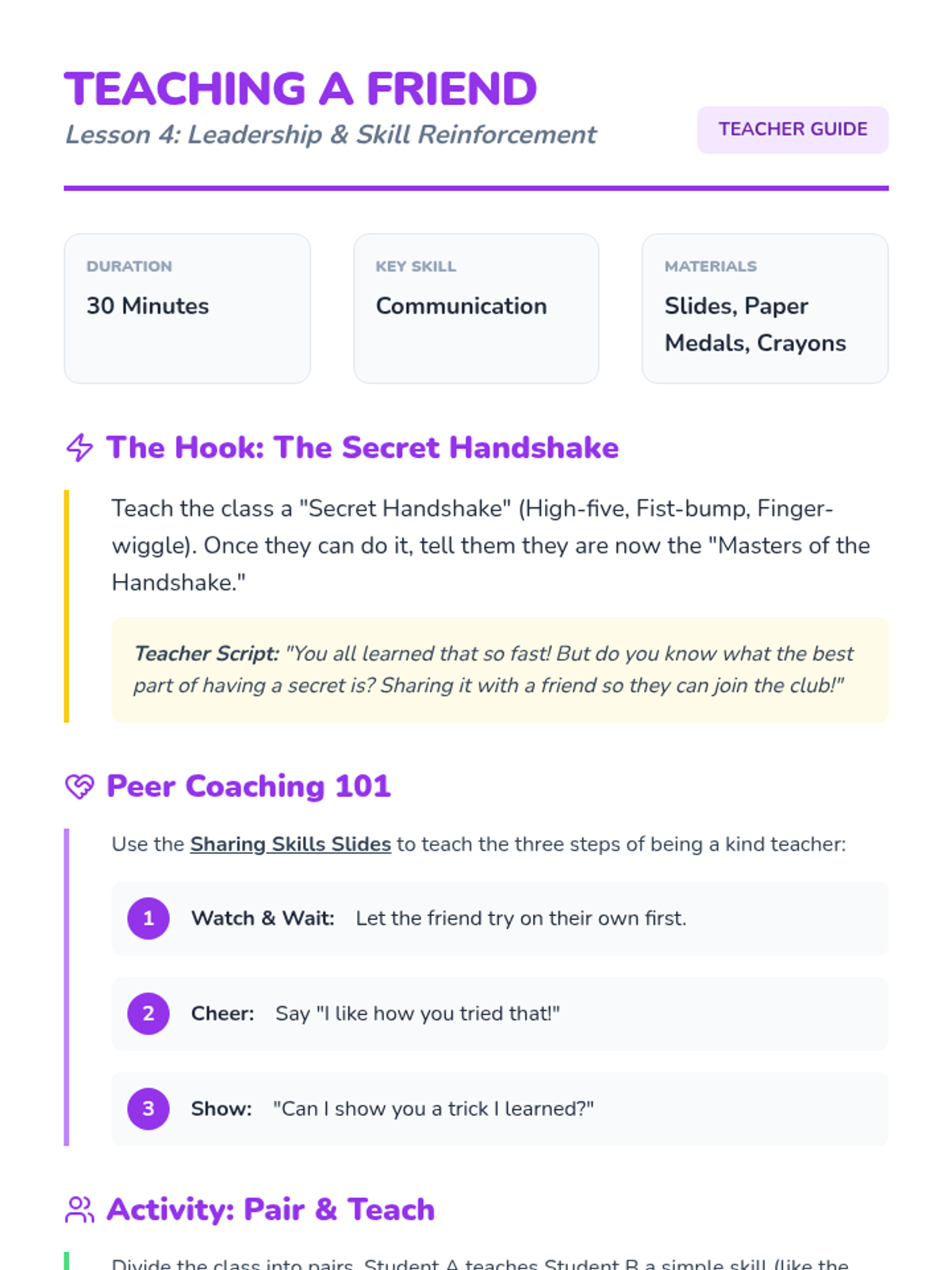
Empowering students to share their mastered skills with peers, building leadership and reinforcing their own learning.
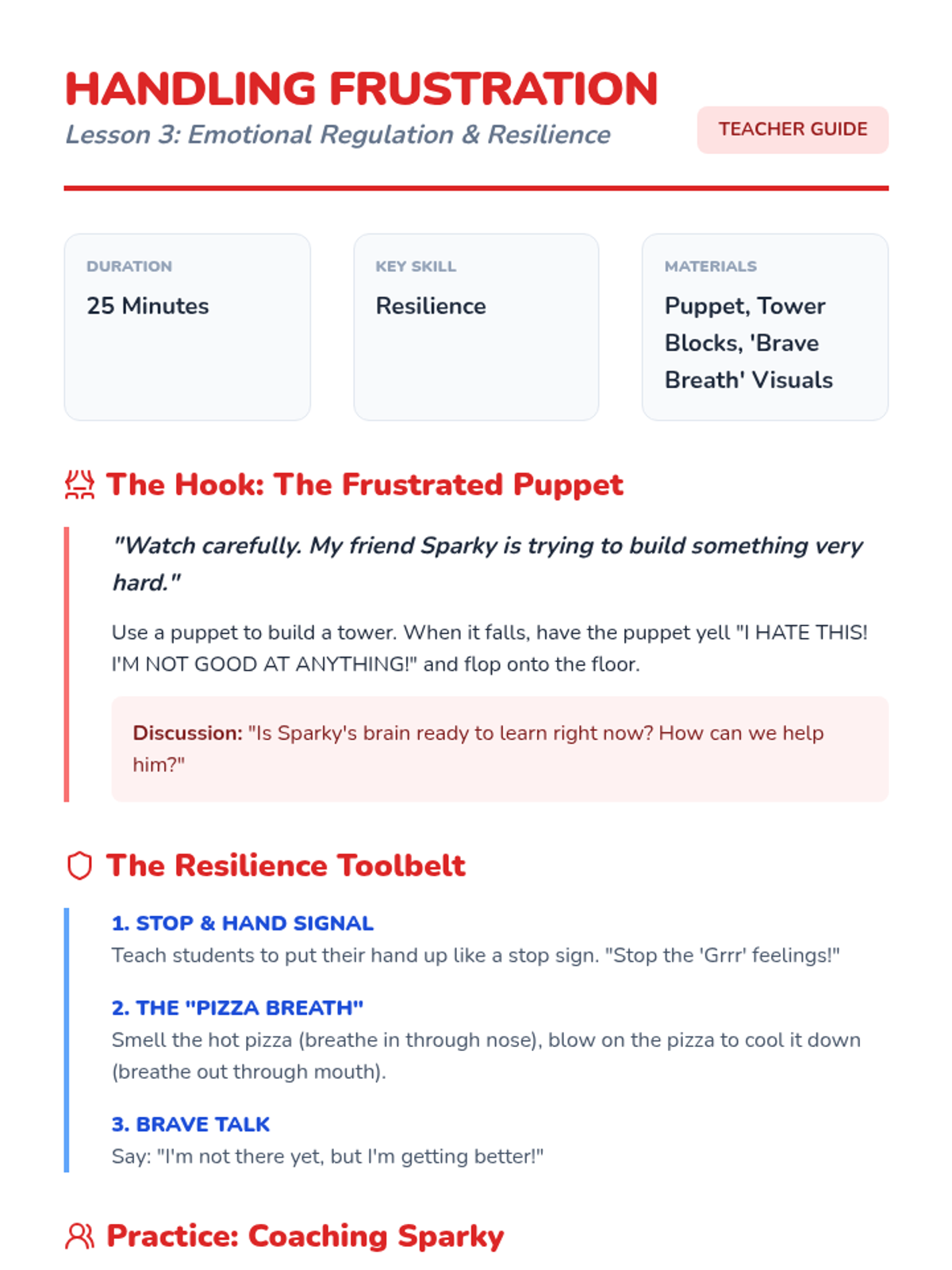
Learning emotional regulation tools and positive self-talk to manage frustration when learning something new.
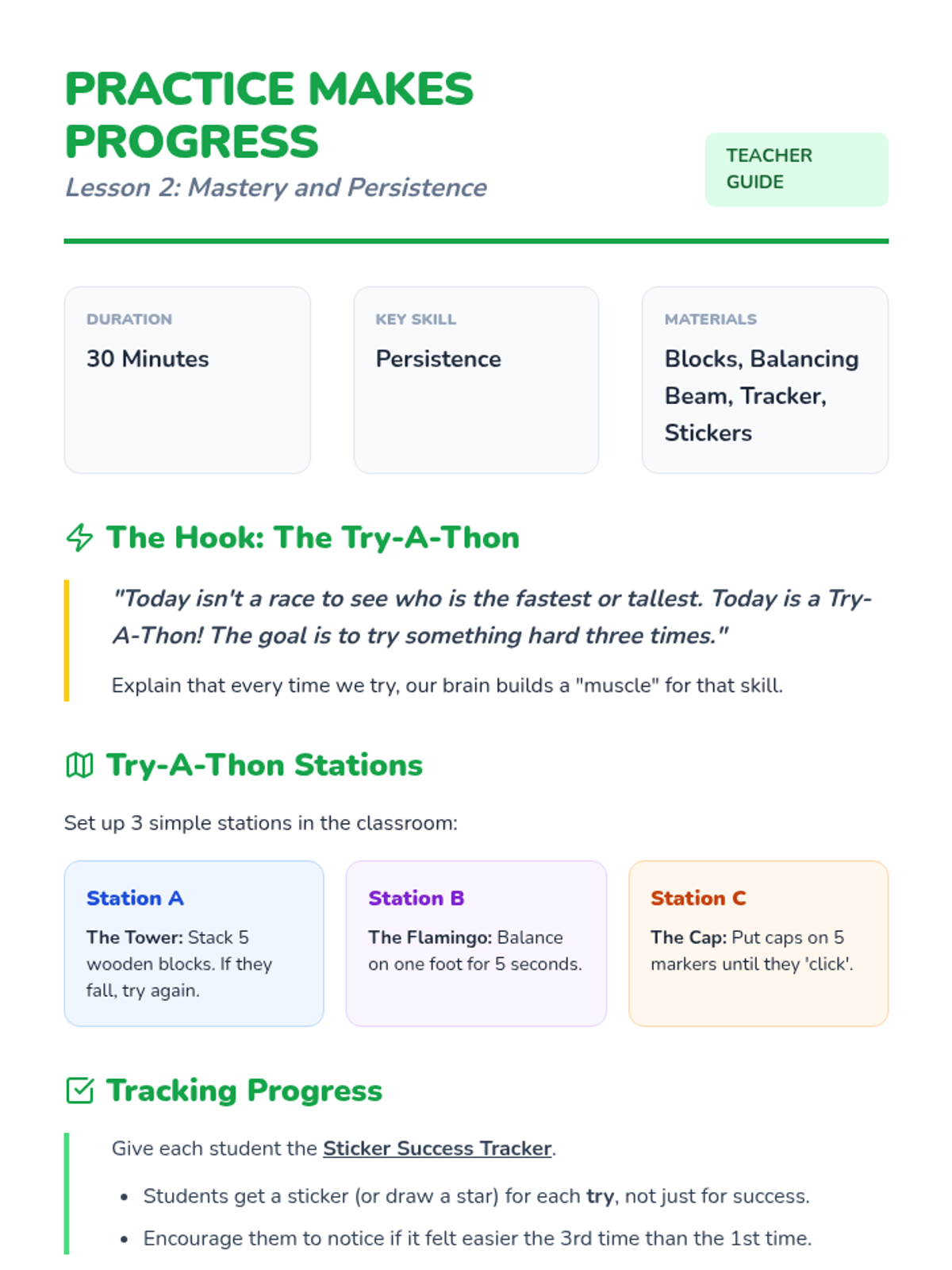
Focusing on persistence and tracking small improvements through repeated practice of simple skills.
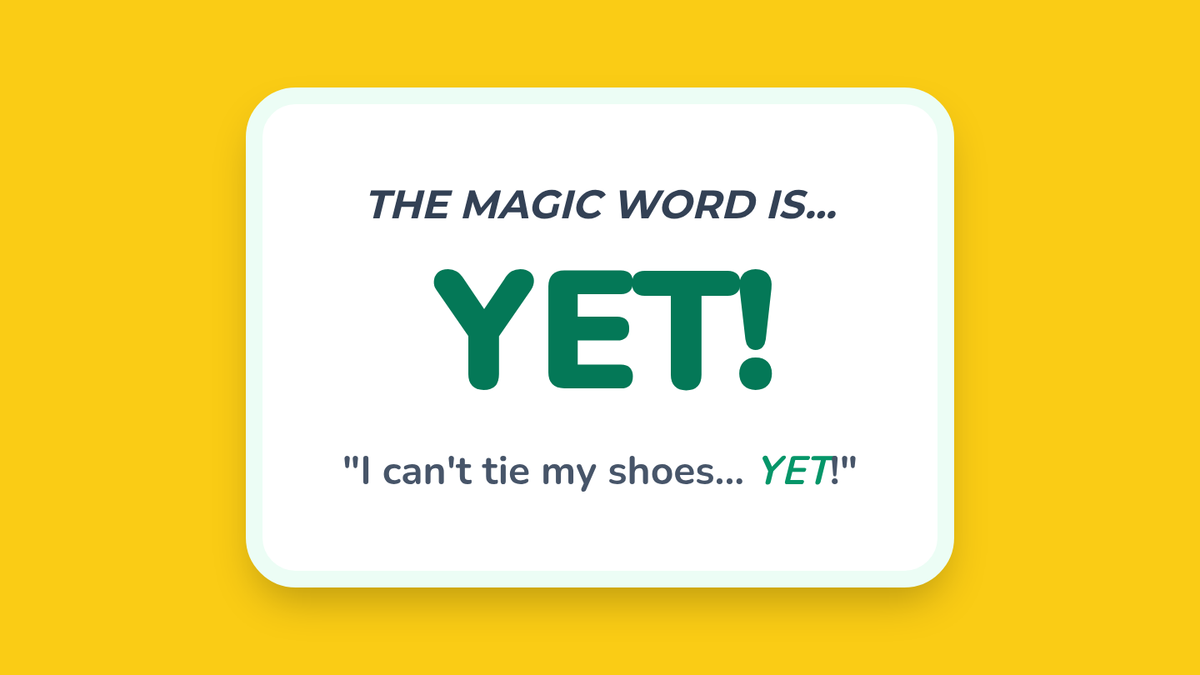
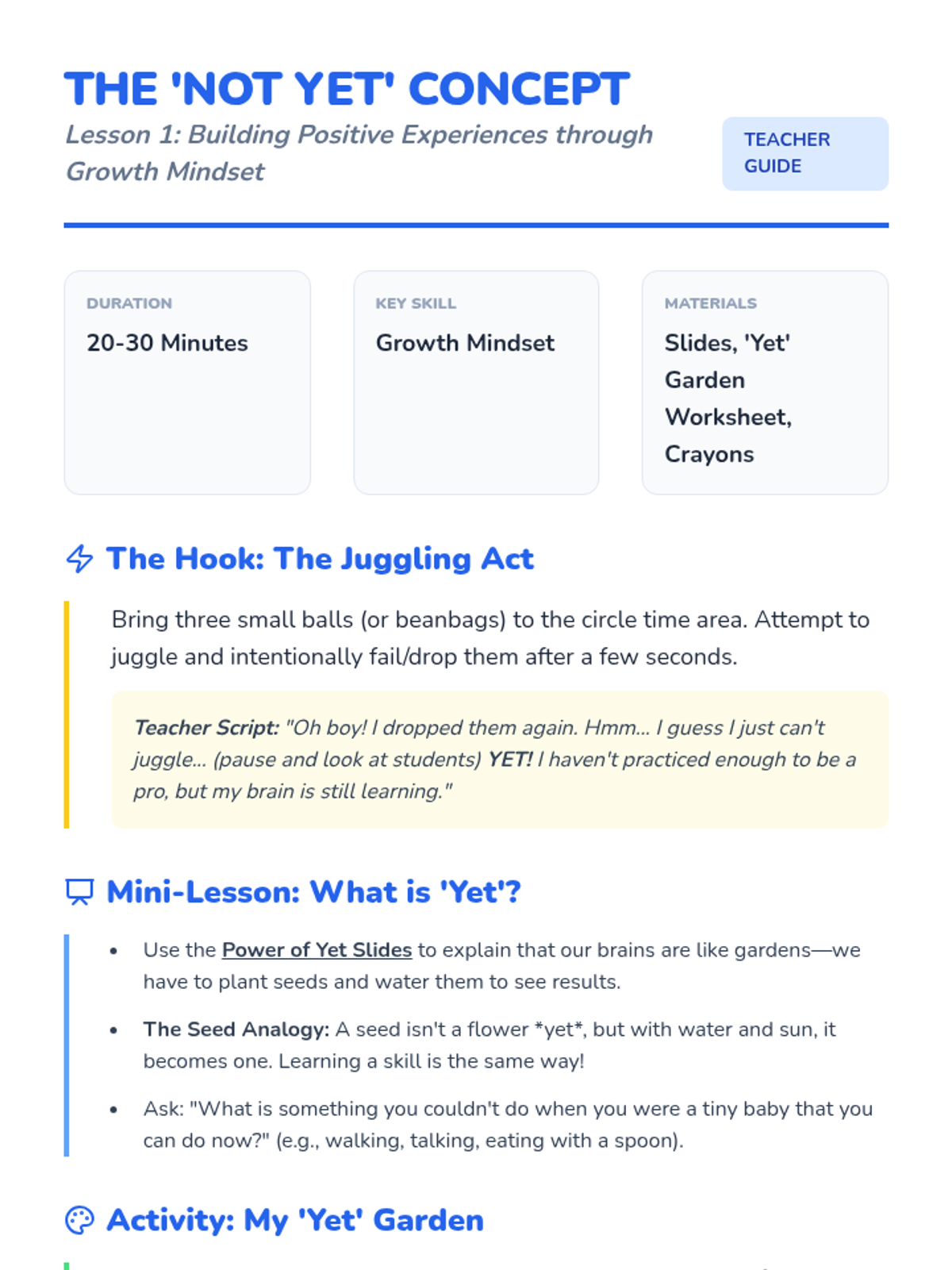
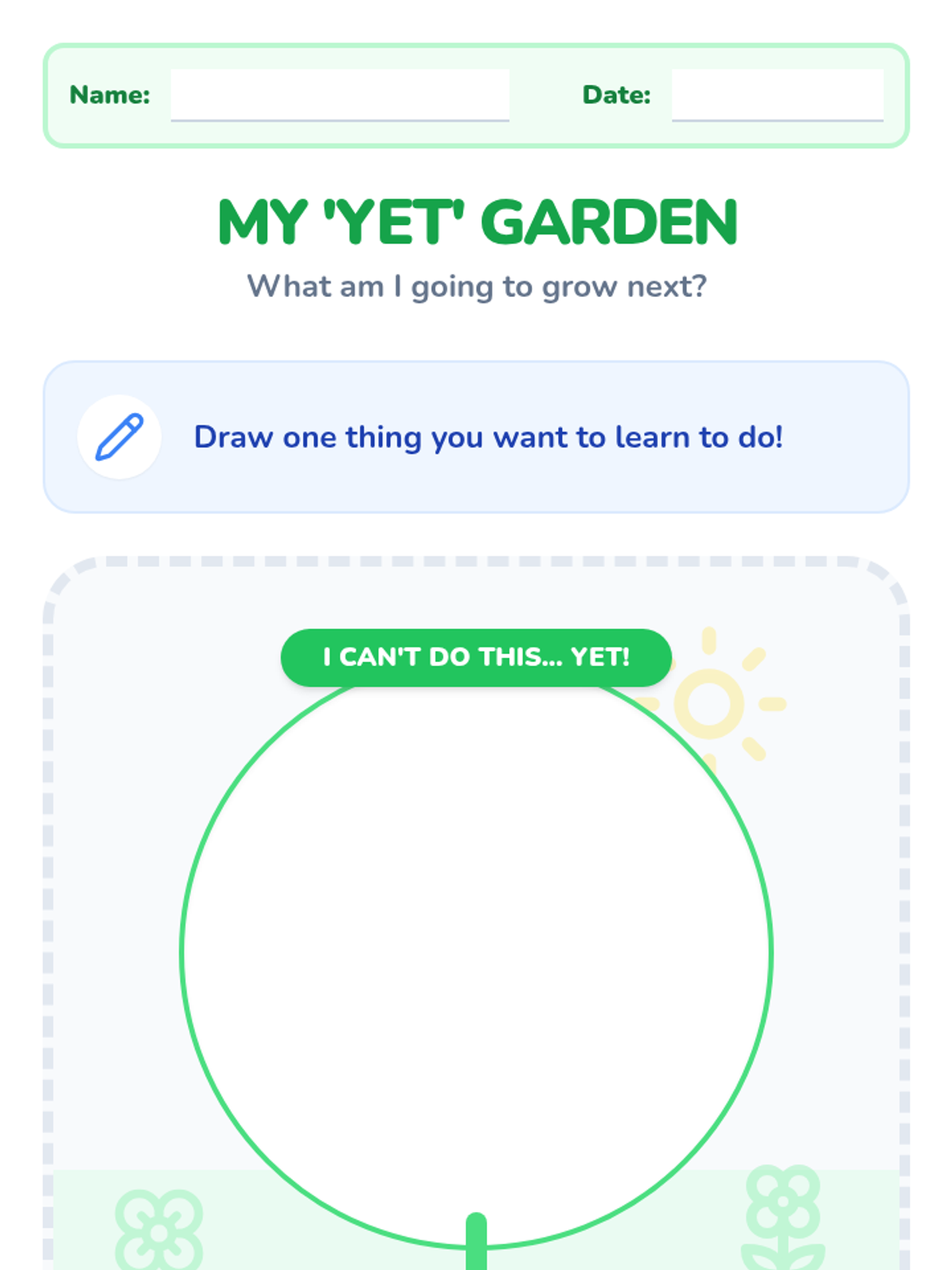
Introduction to the growth mindset using the word 'yet' to transform frustrations into future goals.
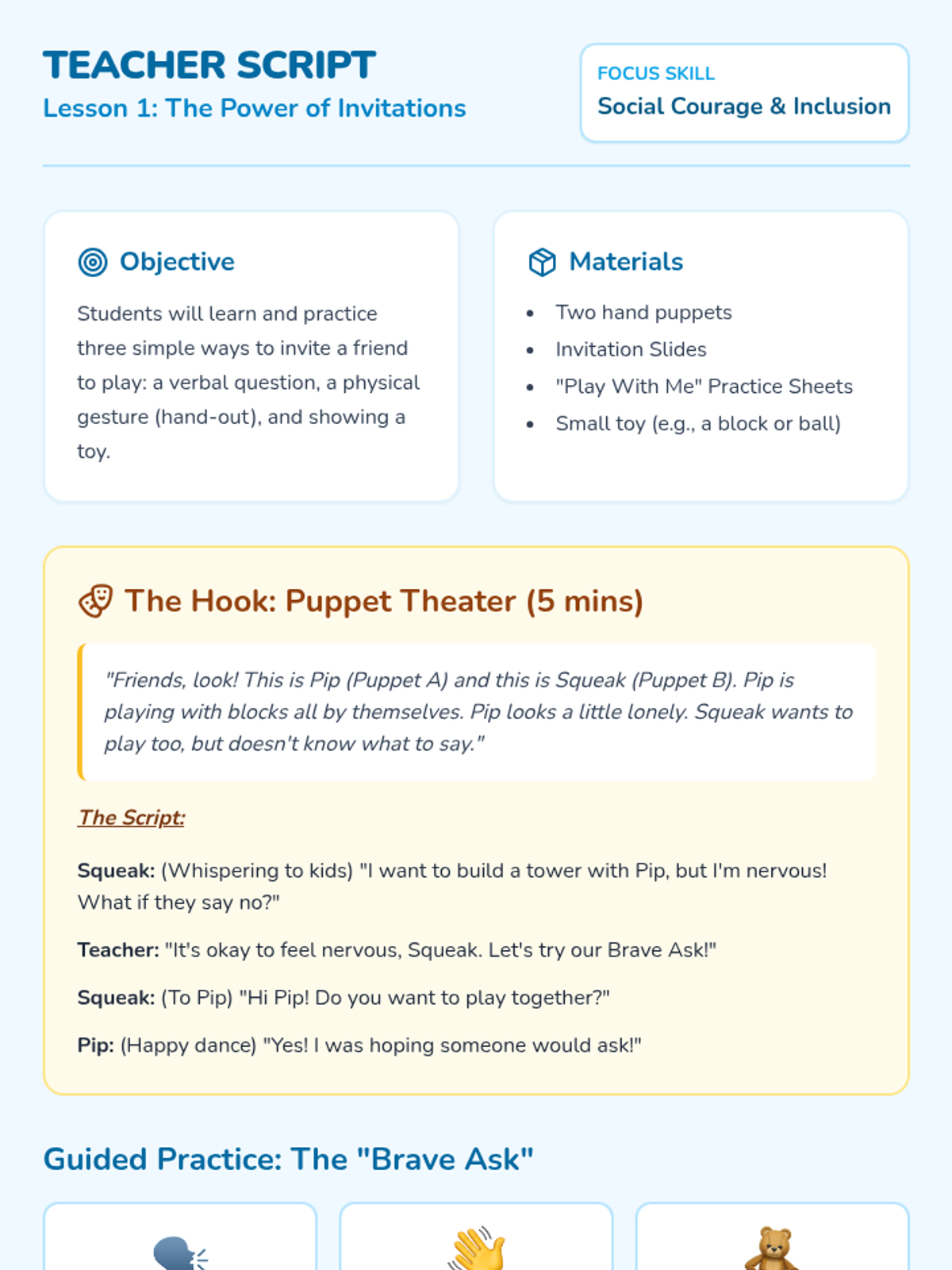
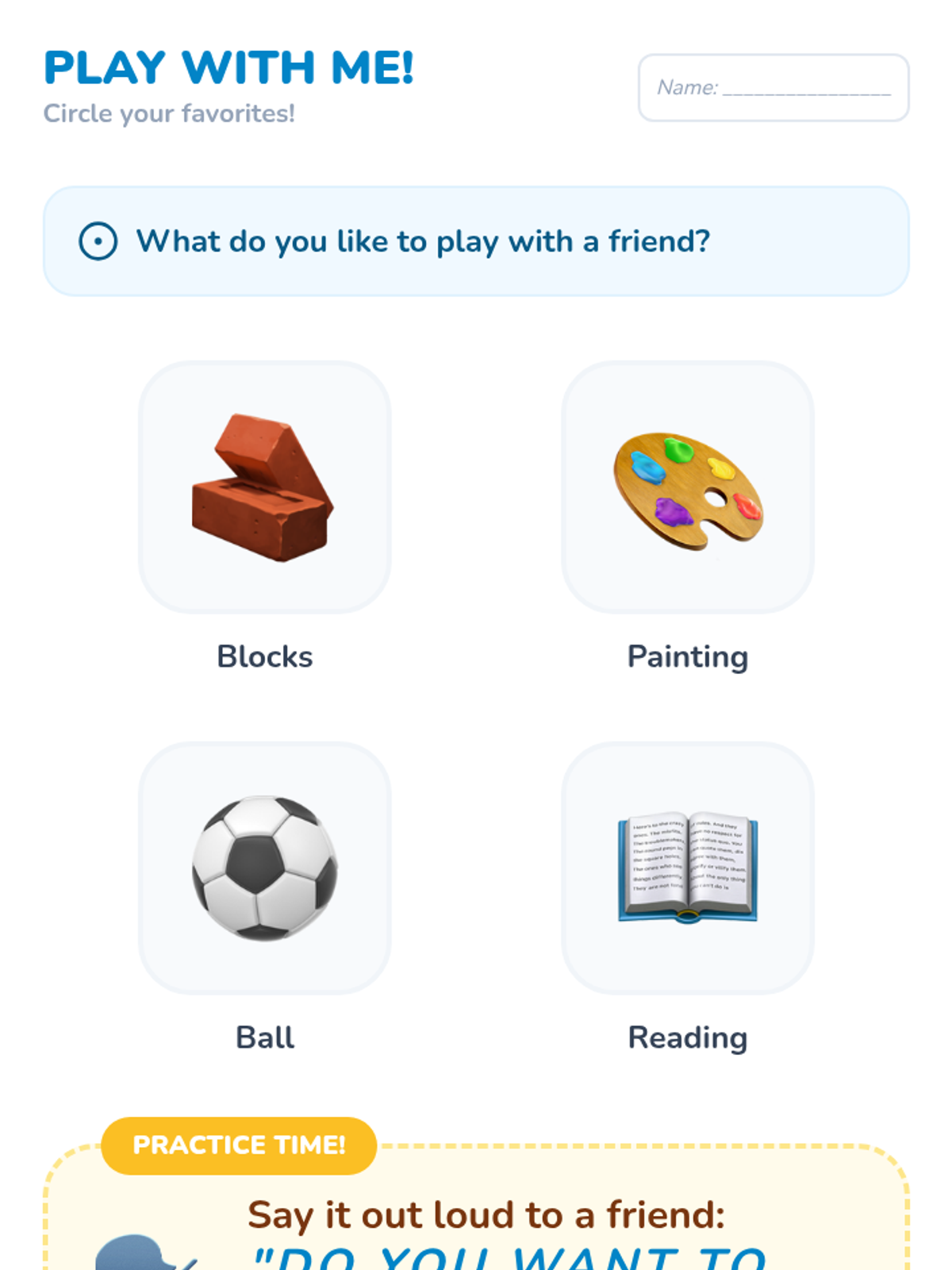
Students learn simple scripts and gestures to invite peers to join a positive activity, practicing inclusion and social courage.
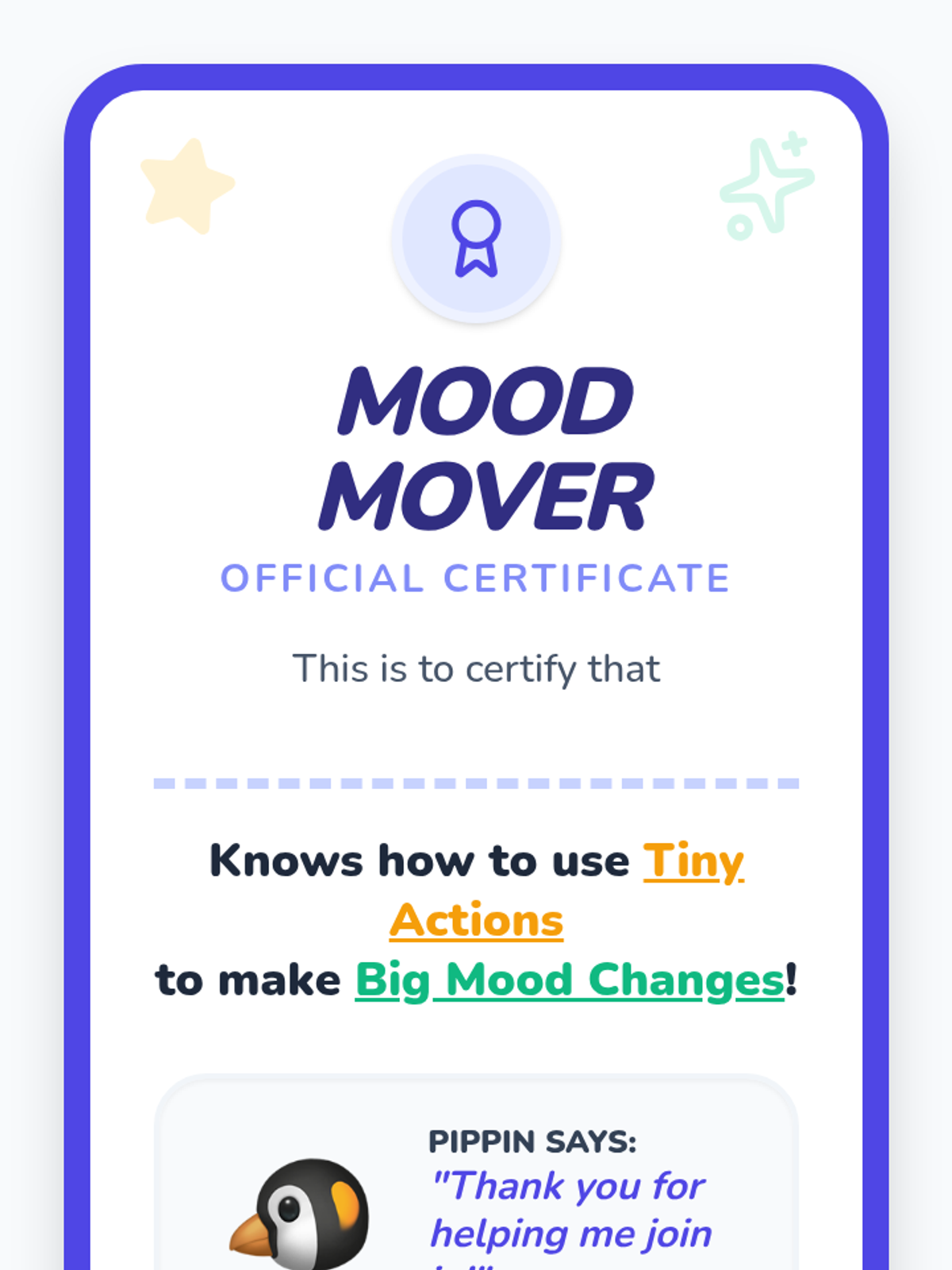
Students apply their learned strategies to help Pippin join the class, reflecting on their journey from feeling stuck to feeling active.
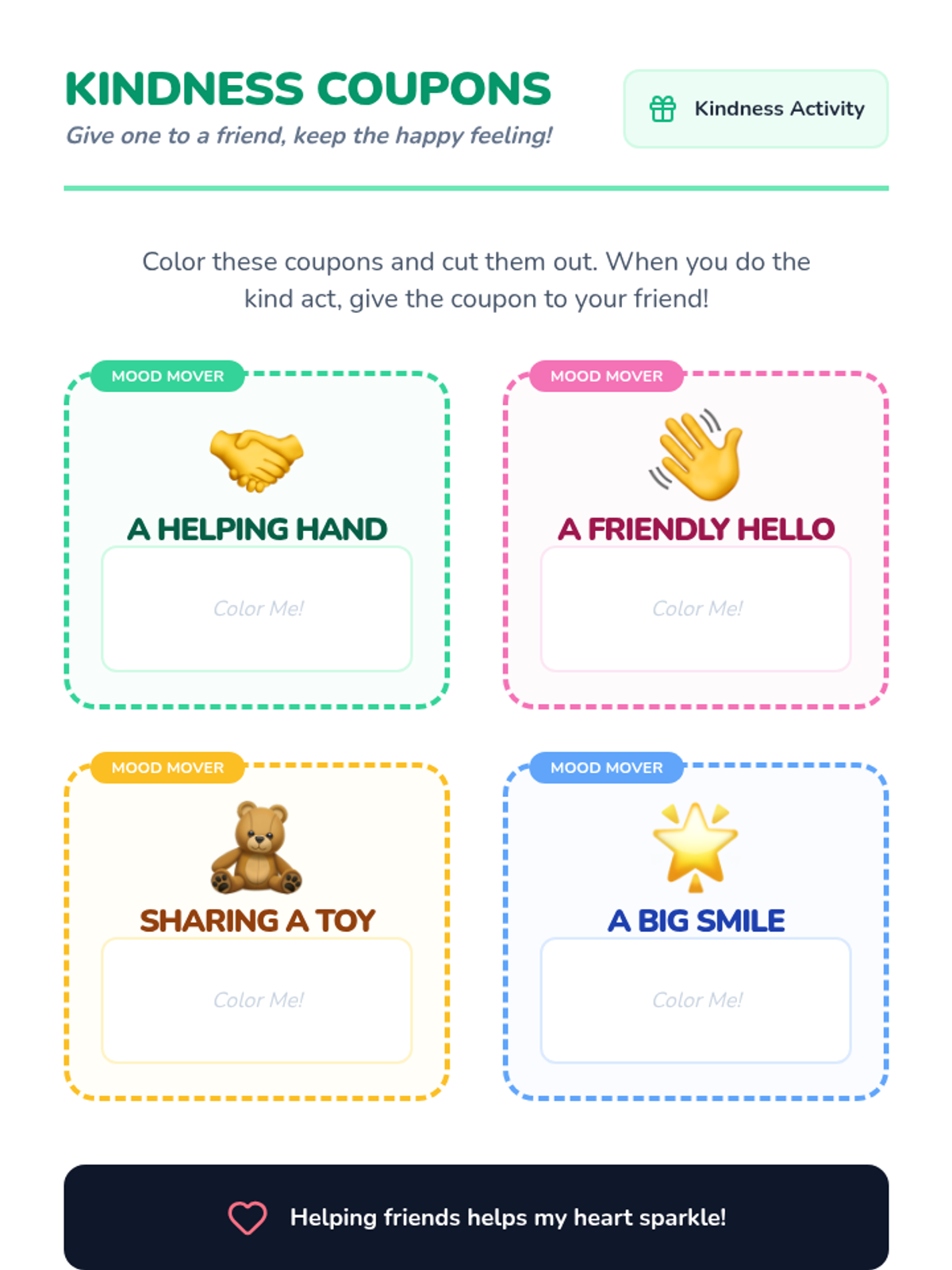
Students discover the mood-boosting power of kindness by practicing simple prosocial actions within the classroom community.
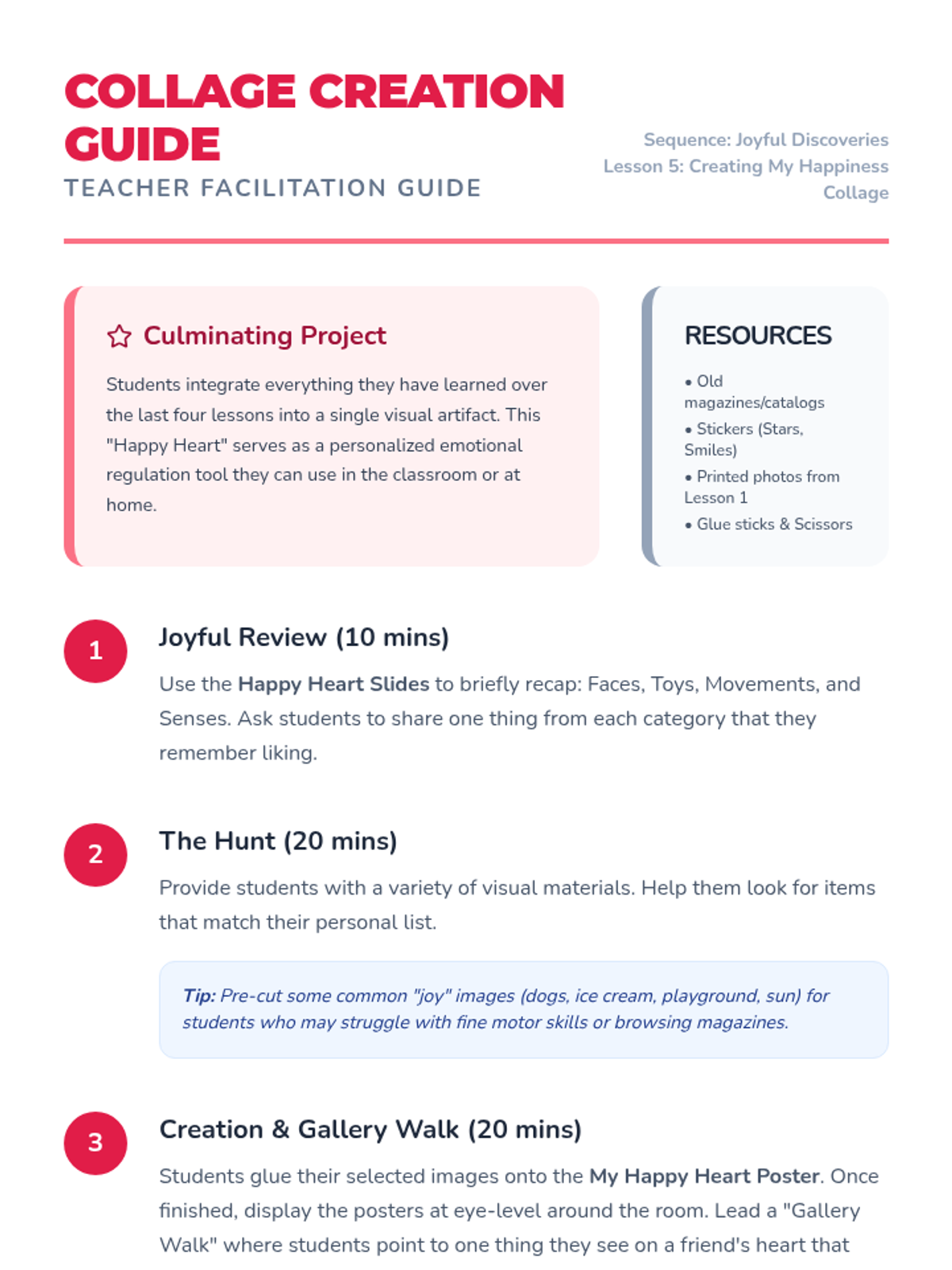
Students select pictures representing activities identified in previous lessons to create a personal visual 'Happy Heart' collage.
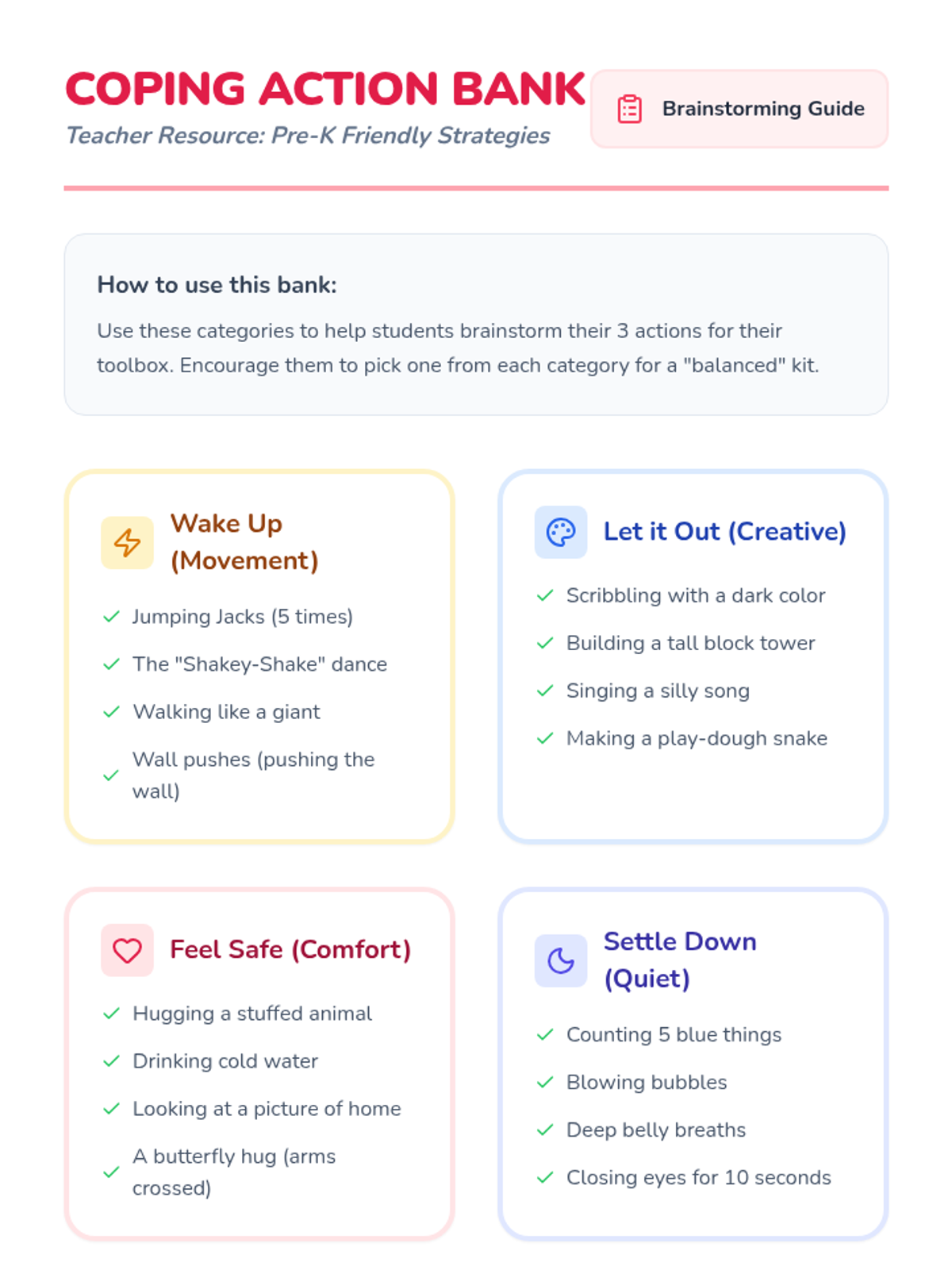
Students identify and select three specific, safe actions they can take to build their own mental 'Coping Kit' for difficult days.
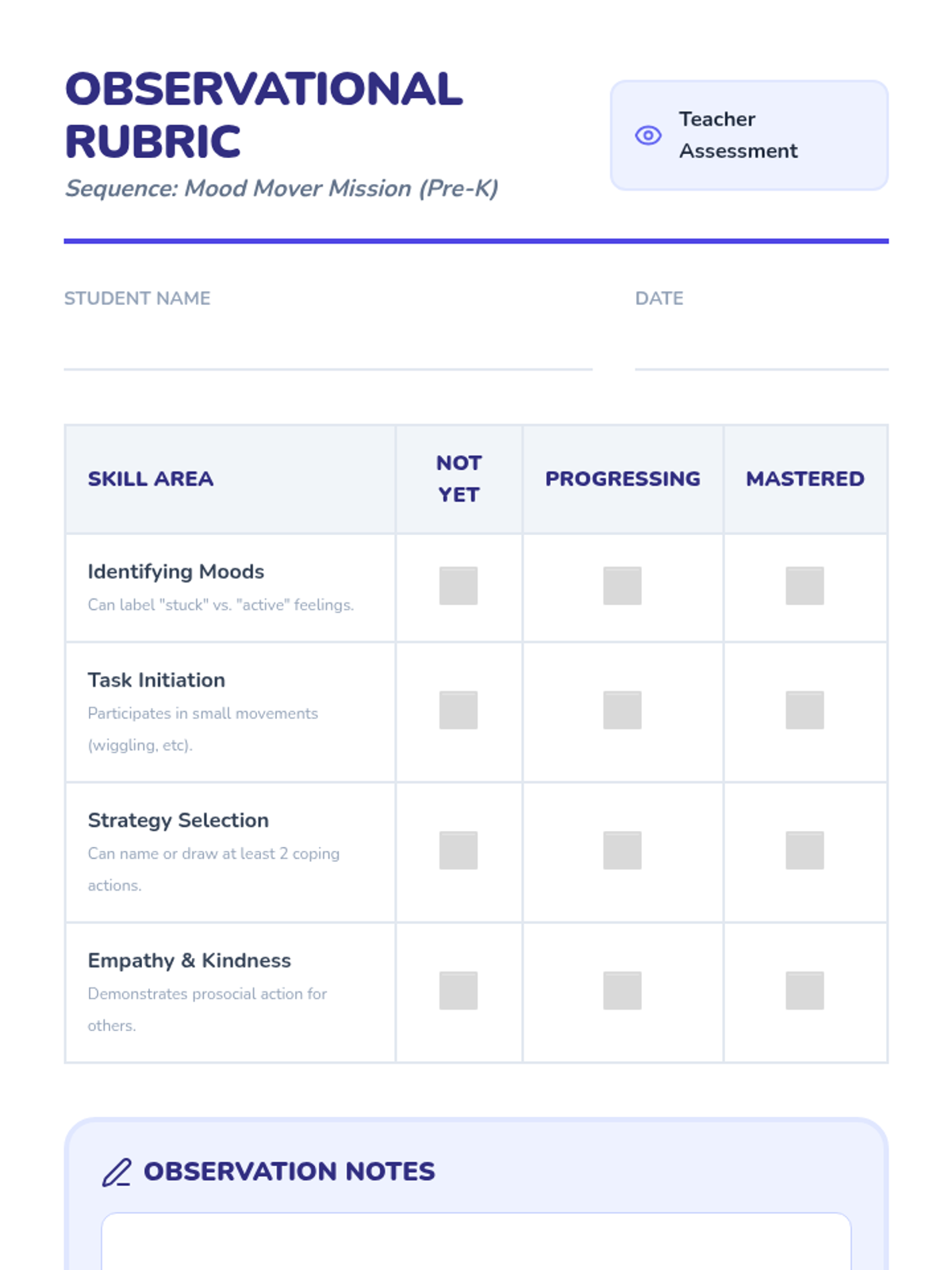
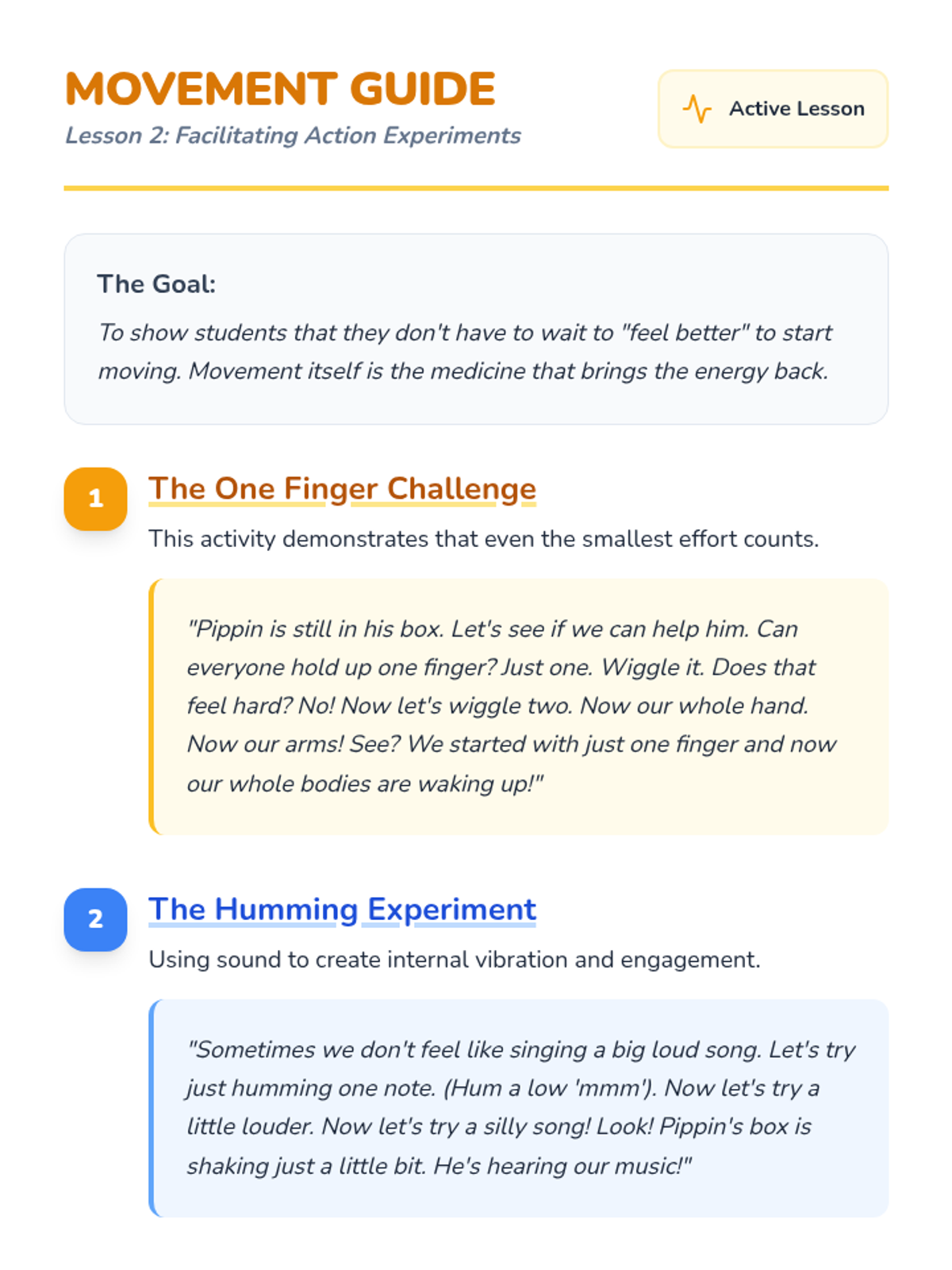
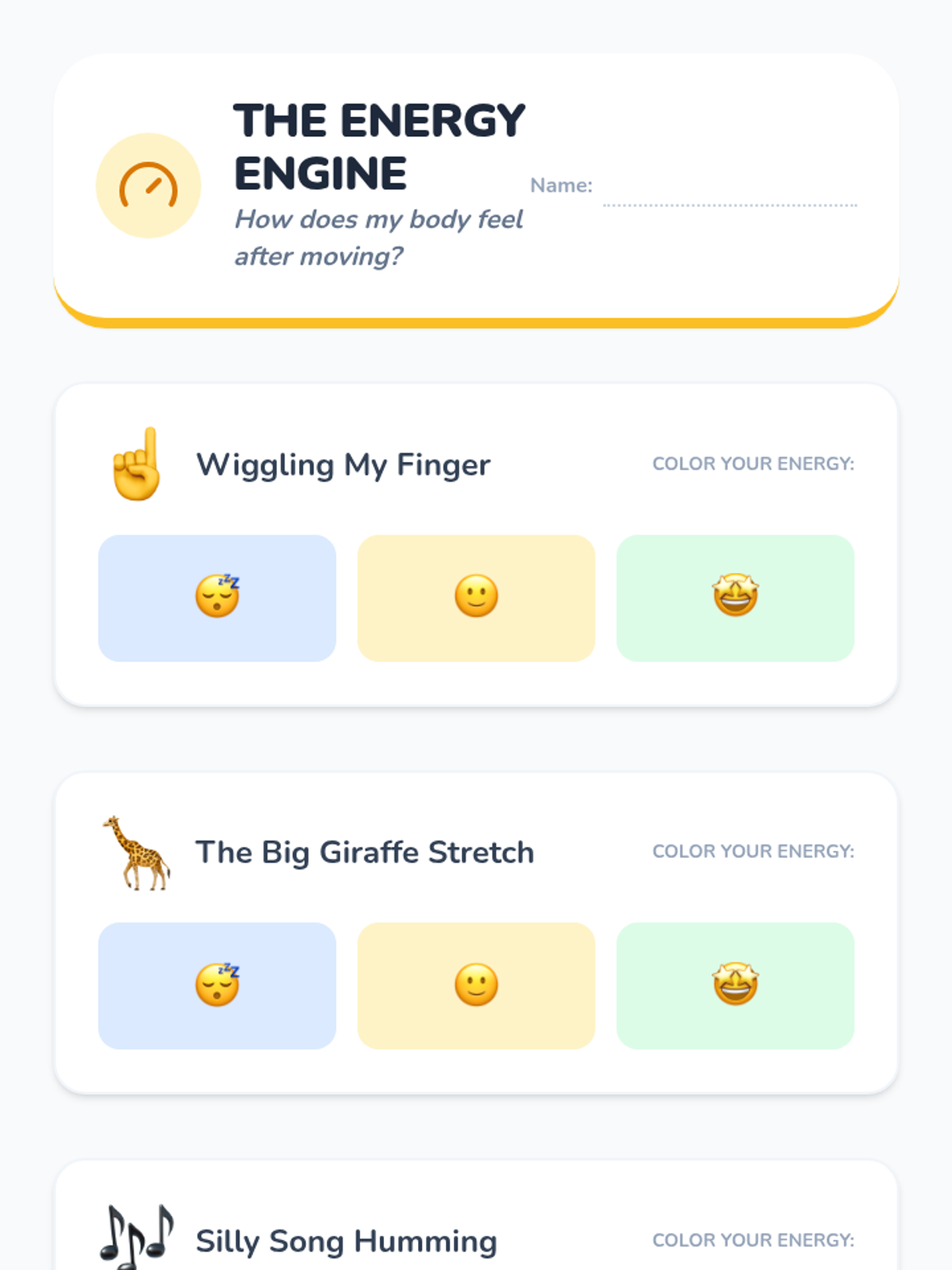
Students lead Pippin through 'Action Experiments' like stretching and singing to see how small movements can create big shifts in mood.
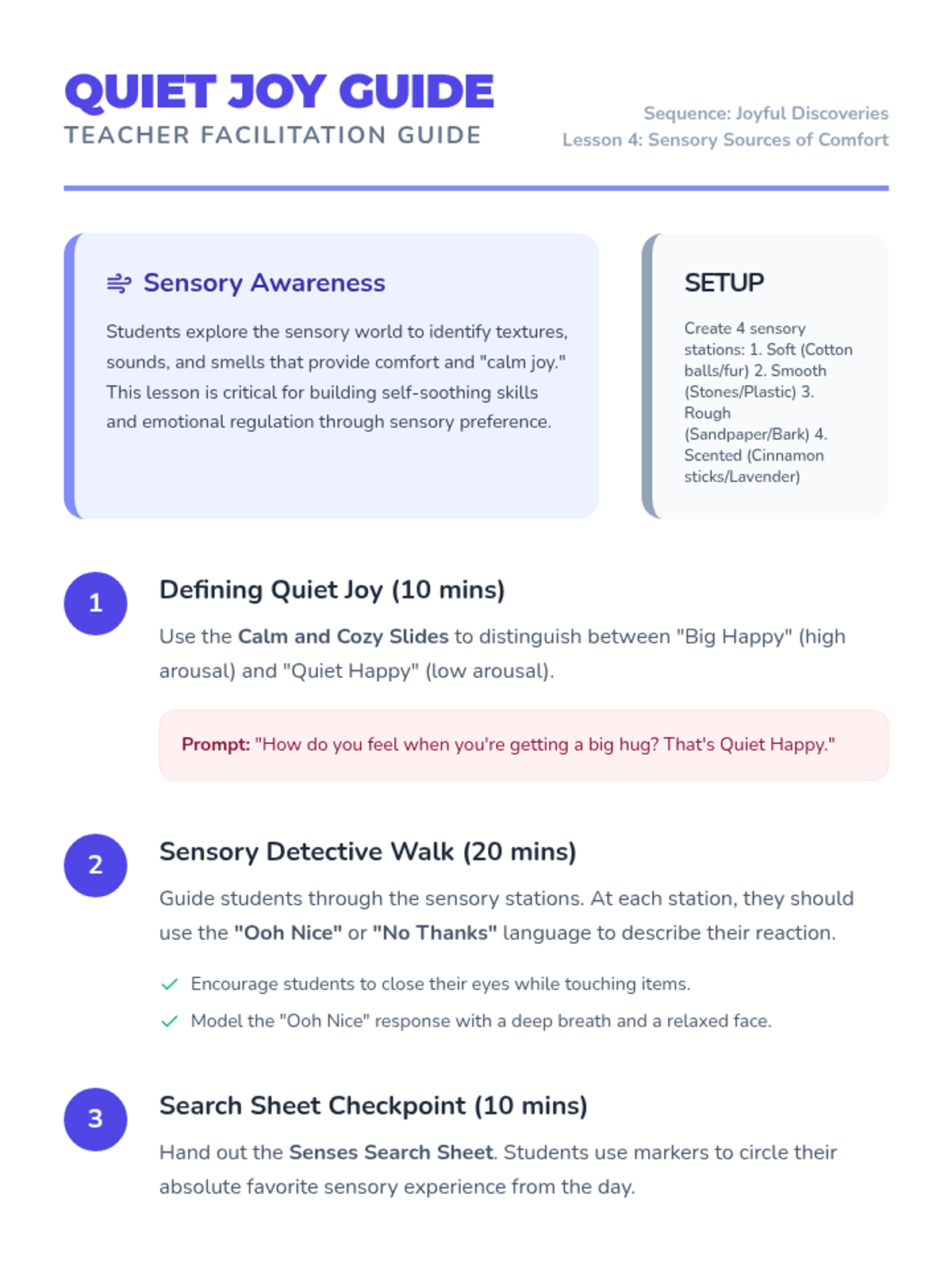
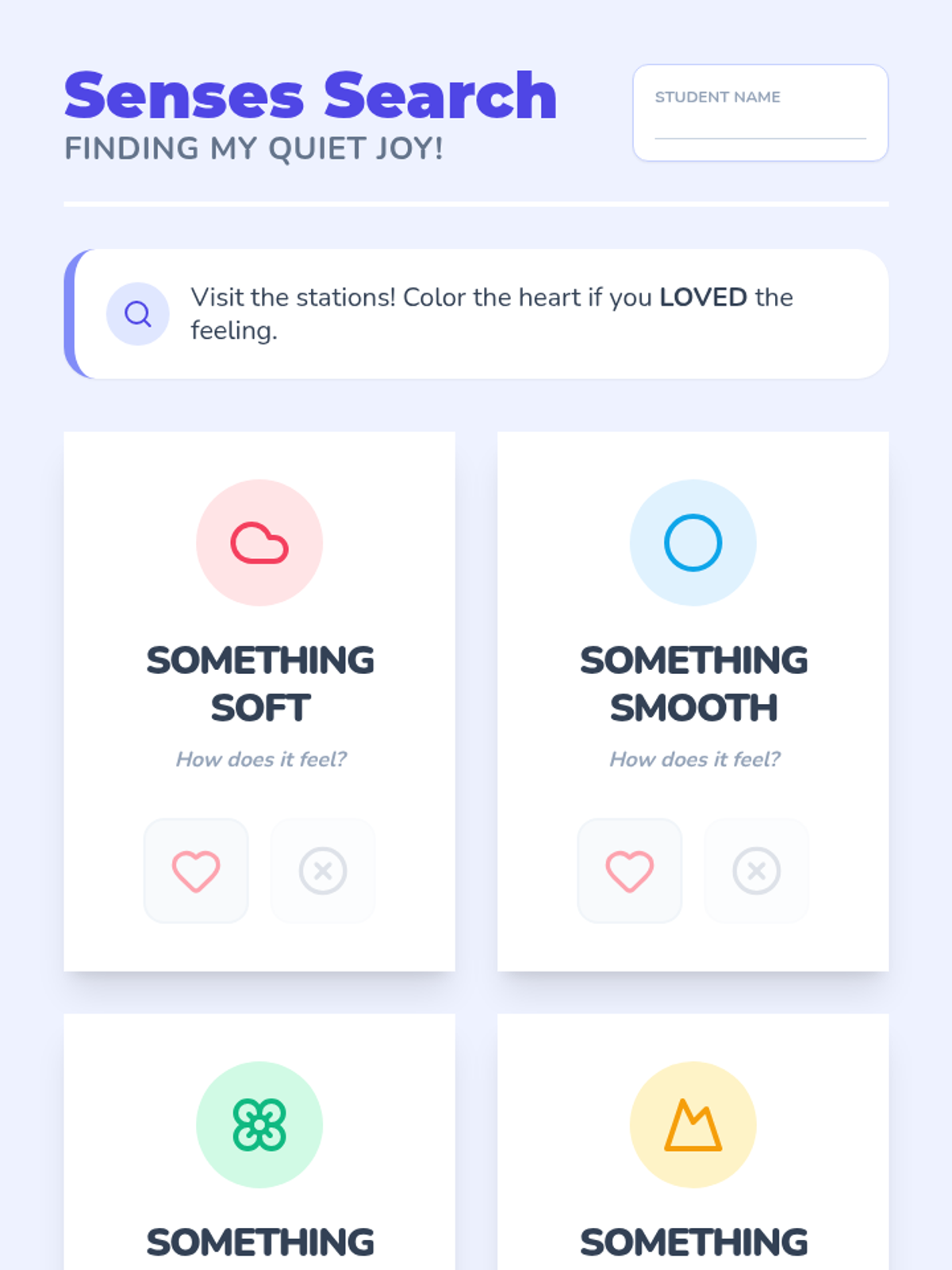
Focusing on calm happiness, students explore textures, smells, and sounds to identify sensory inputs that help them feel safe and content.
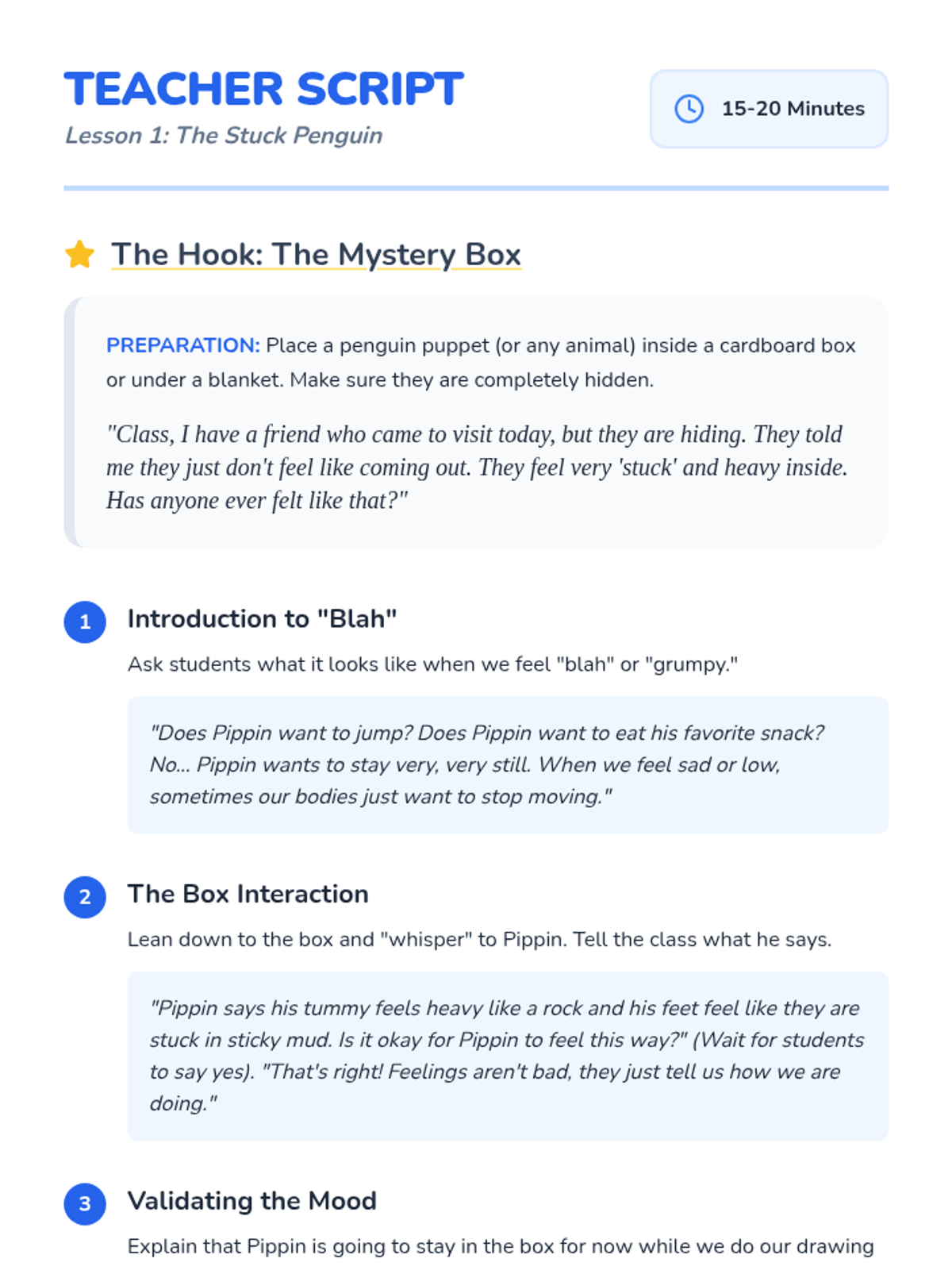
Students meet Pippin the Penguin, a puppet who feels 'stuck' and grumpy, to explore the connection between feelings and physical stillness.
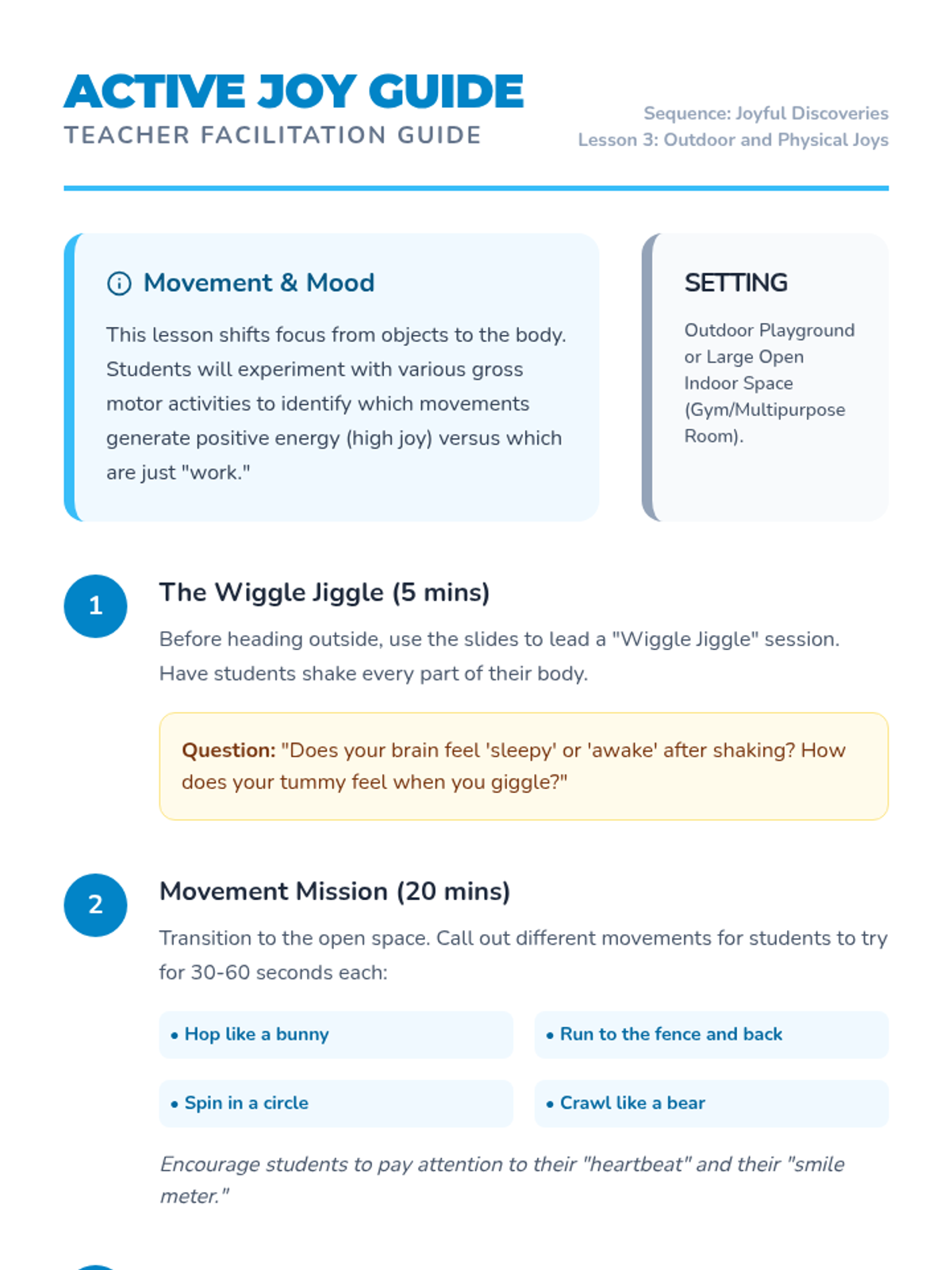
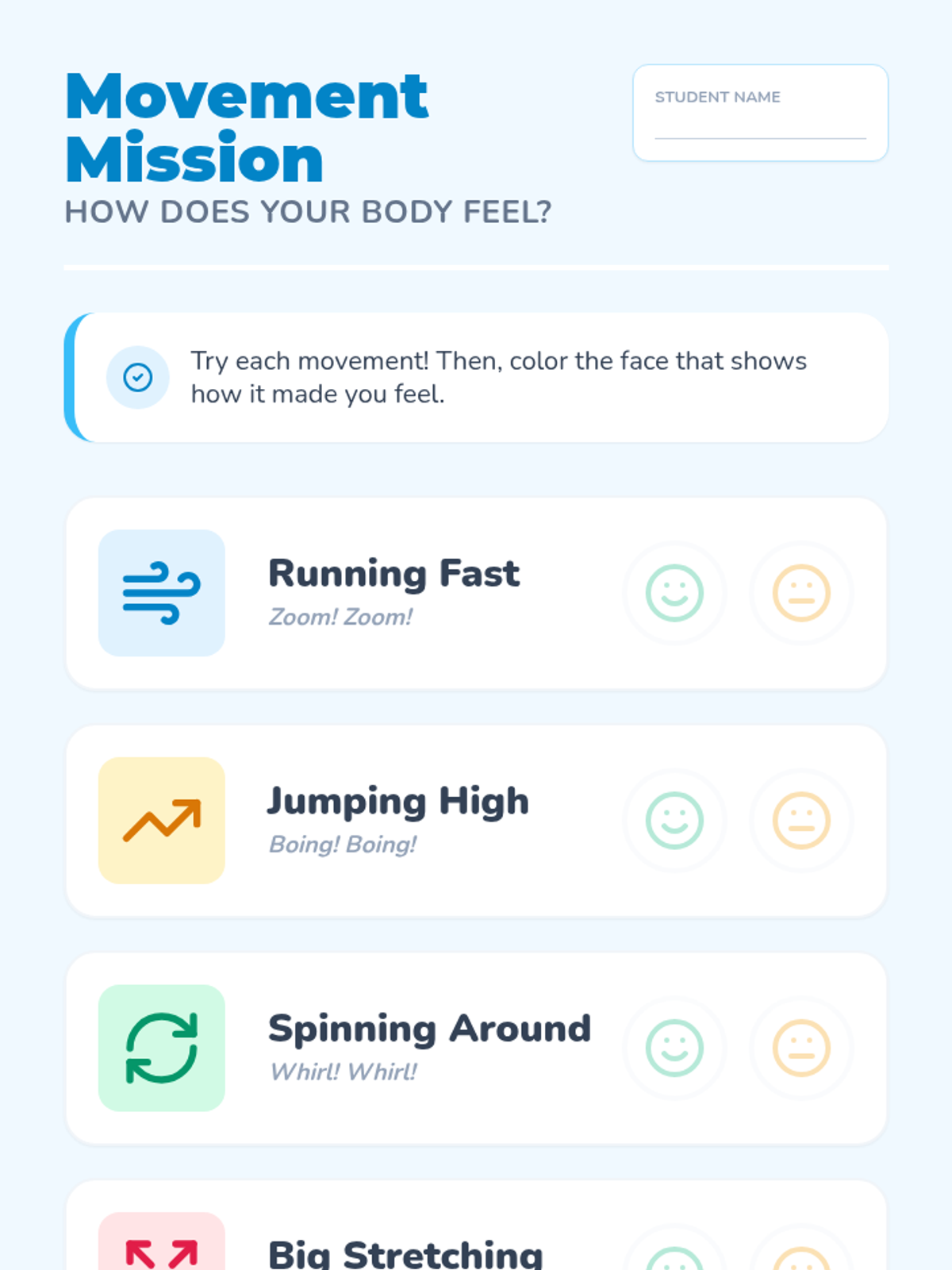
Students move outdoors or to an open space to test how physical movement affects their mood, identifying activities that generate positive energy.
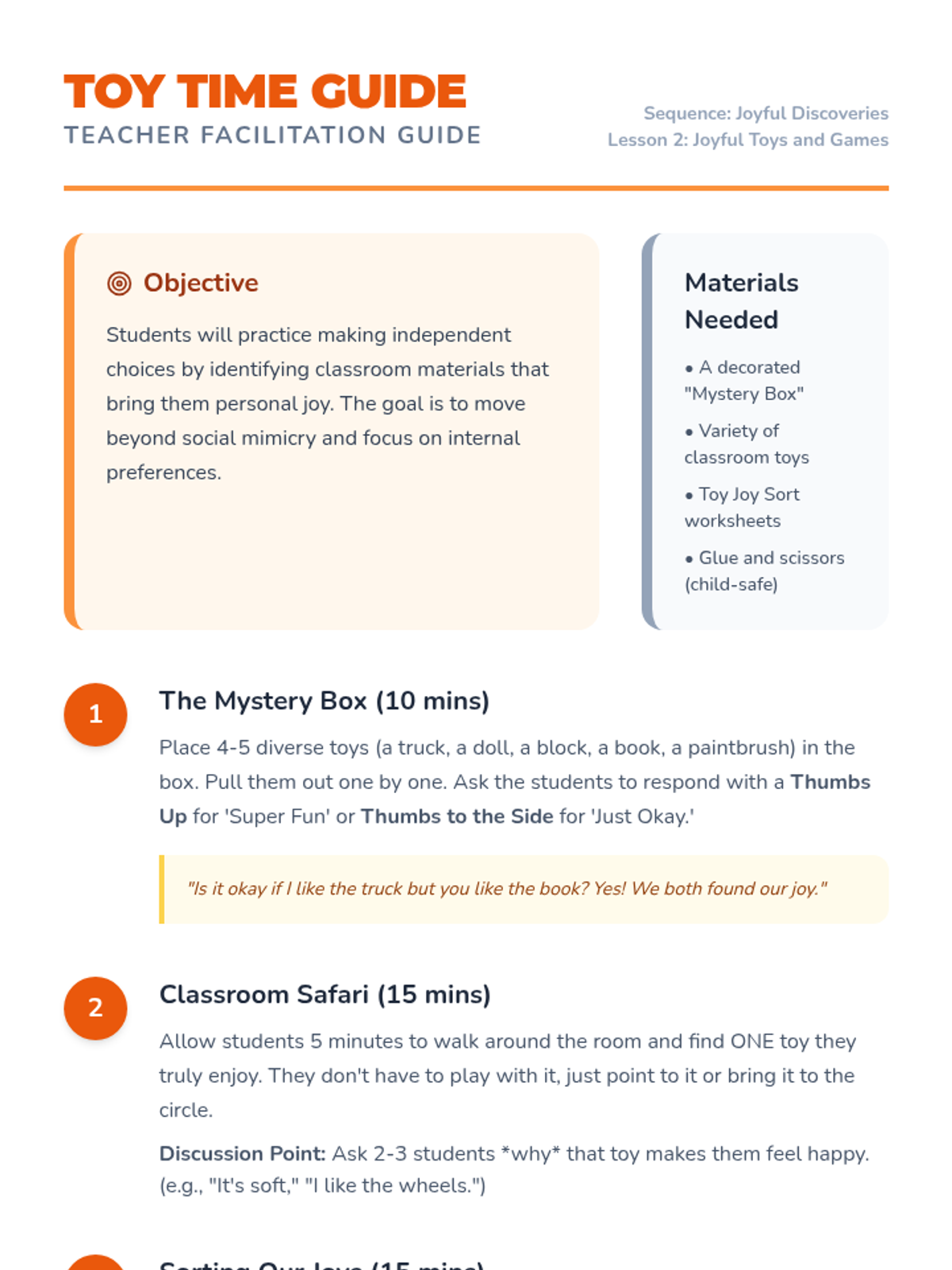
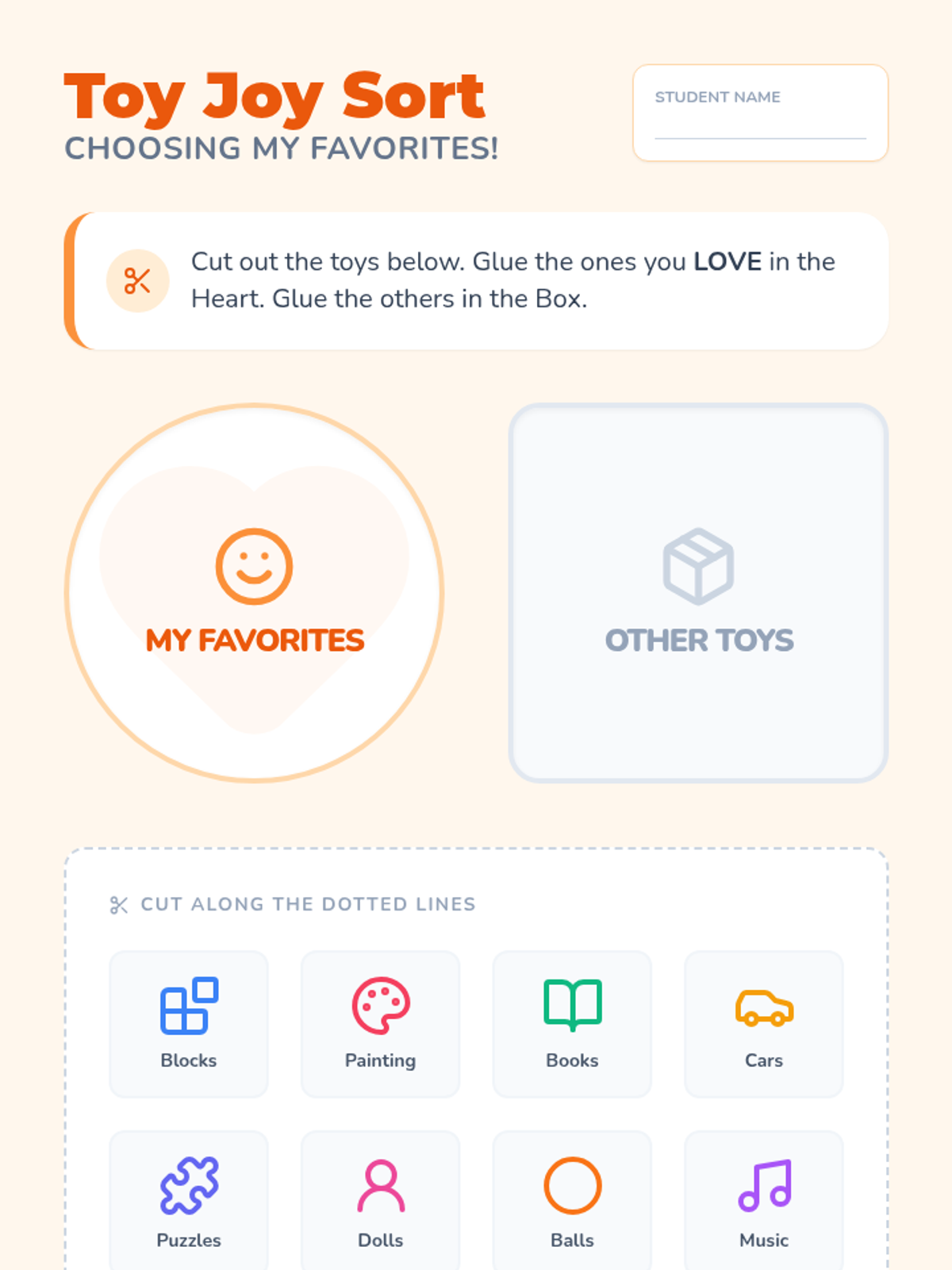
Children actively sort through classroom items to decide which ones bring them the most joy, focusing on making choices based on internal preference.
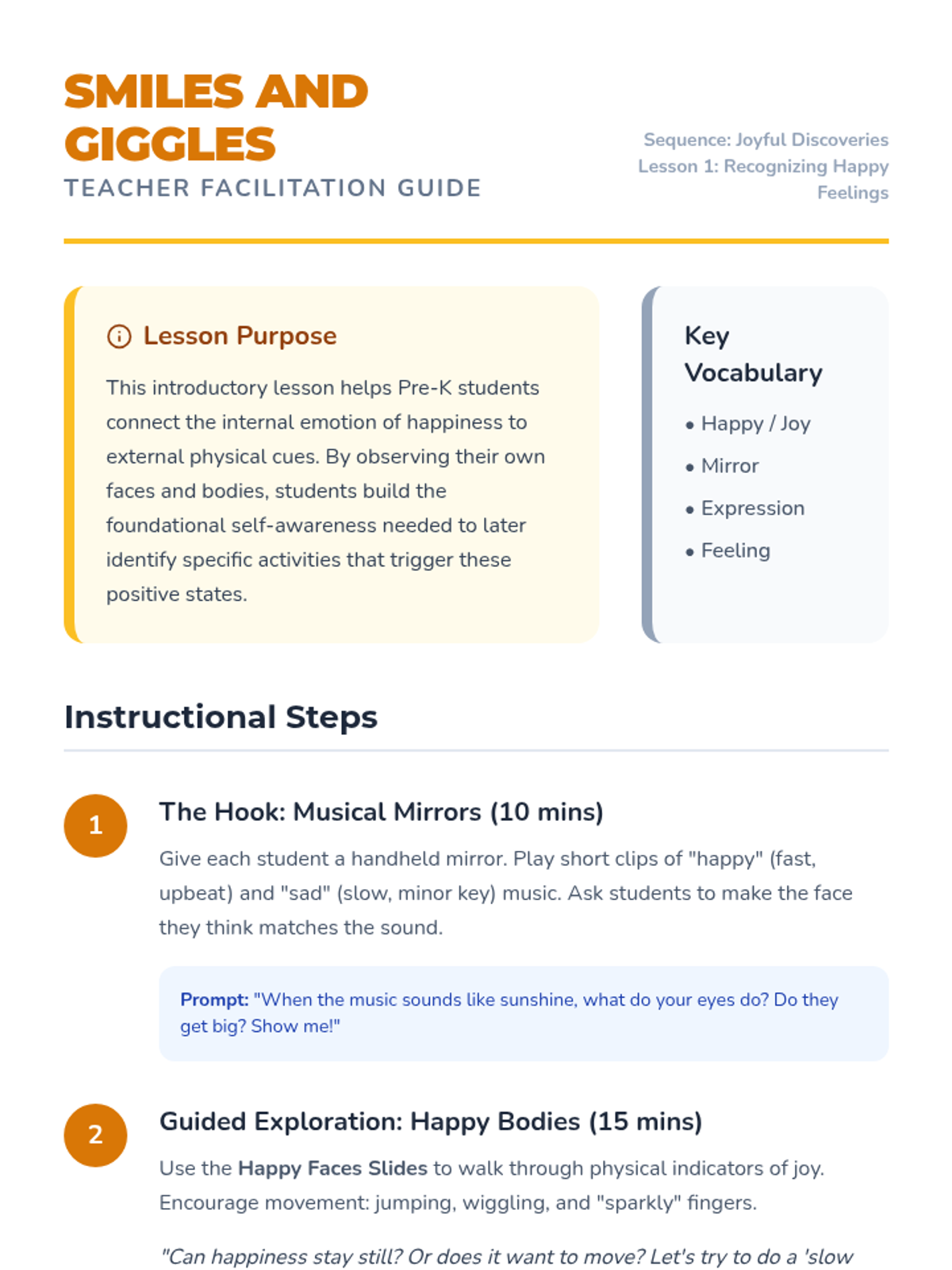
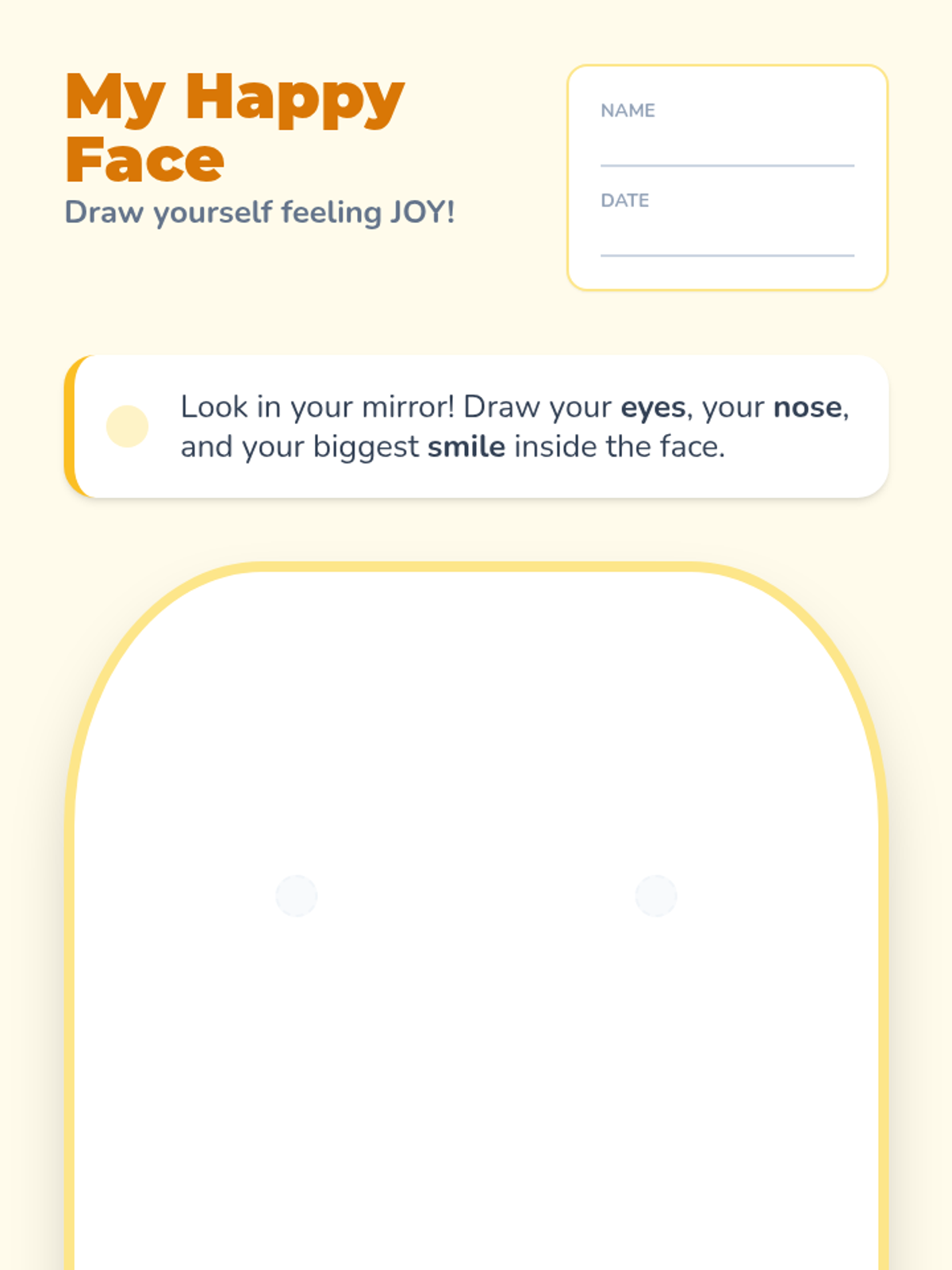
Students explore the physical sensations of happiness through mirror play and storytelling, learning to identify how their bodies and faces look when they feel joyful.
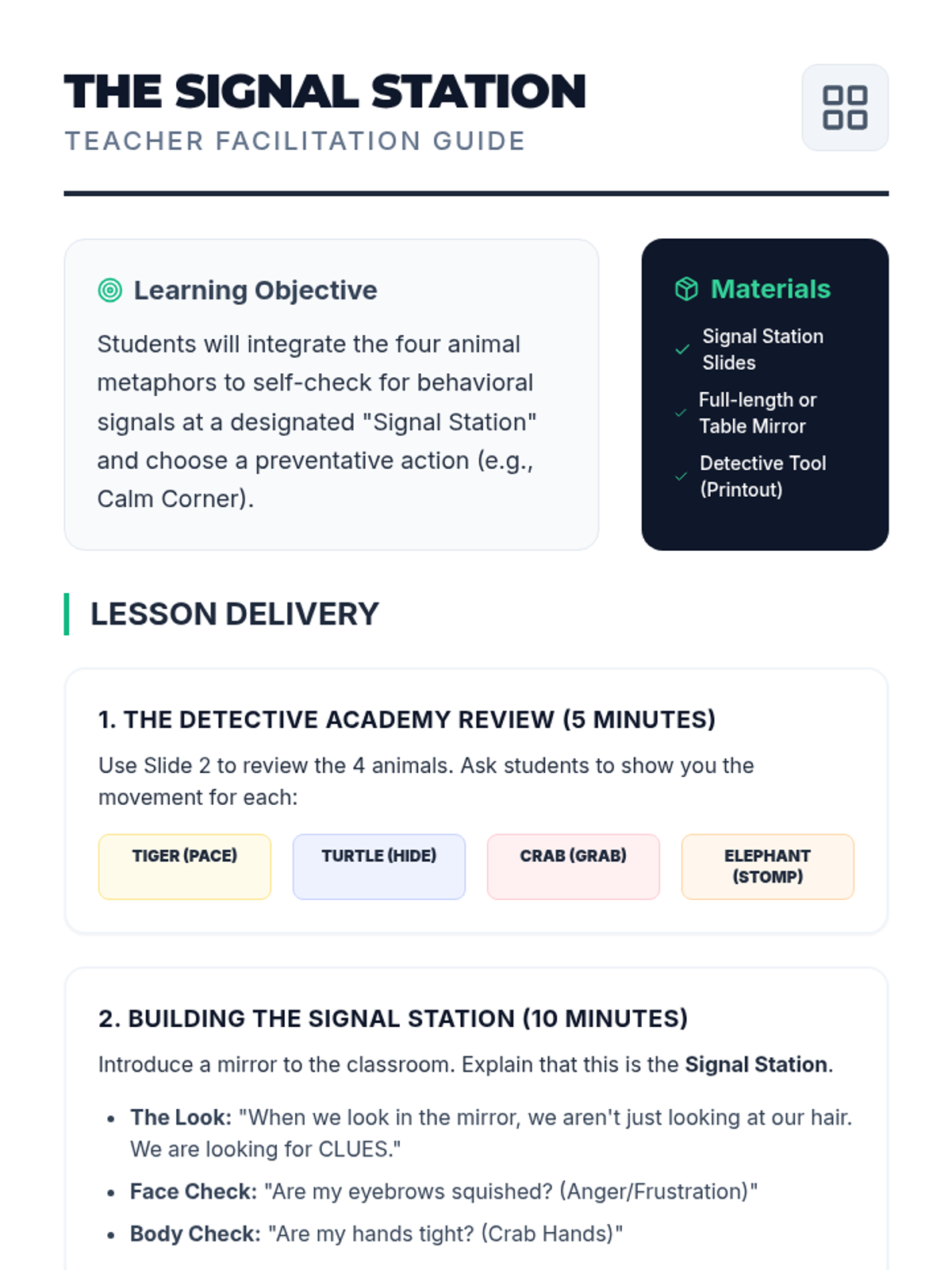
Students set up a classroom mirror station where they can check their own faces and bodies. They role-play noticing a warning sign (like pacing) and choosing to go to the 'calm corner' before a meltdown occurs.
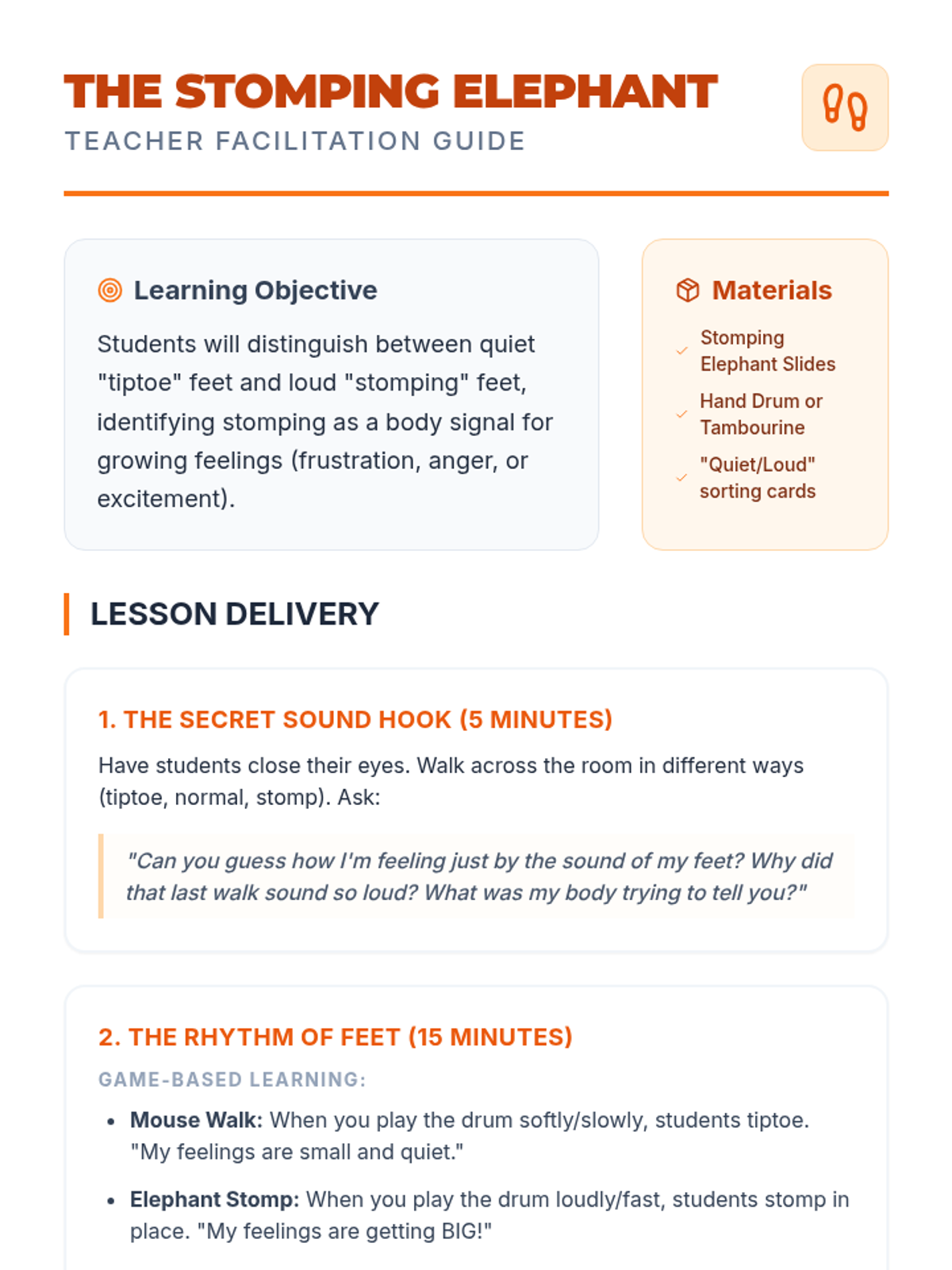
Children contrast 'tiptoe' and 'walking feet' with 'stomping feet.' They identify that heavy, loud footsteps often happen when feelings are growing from small to medium.
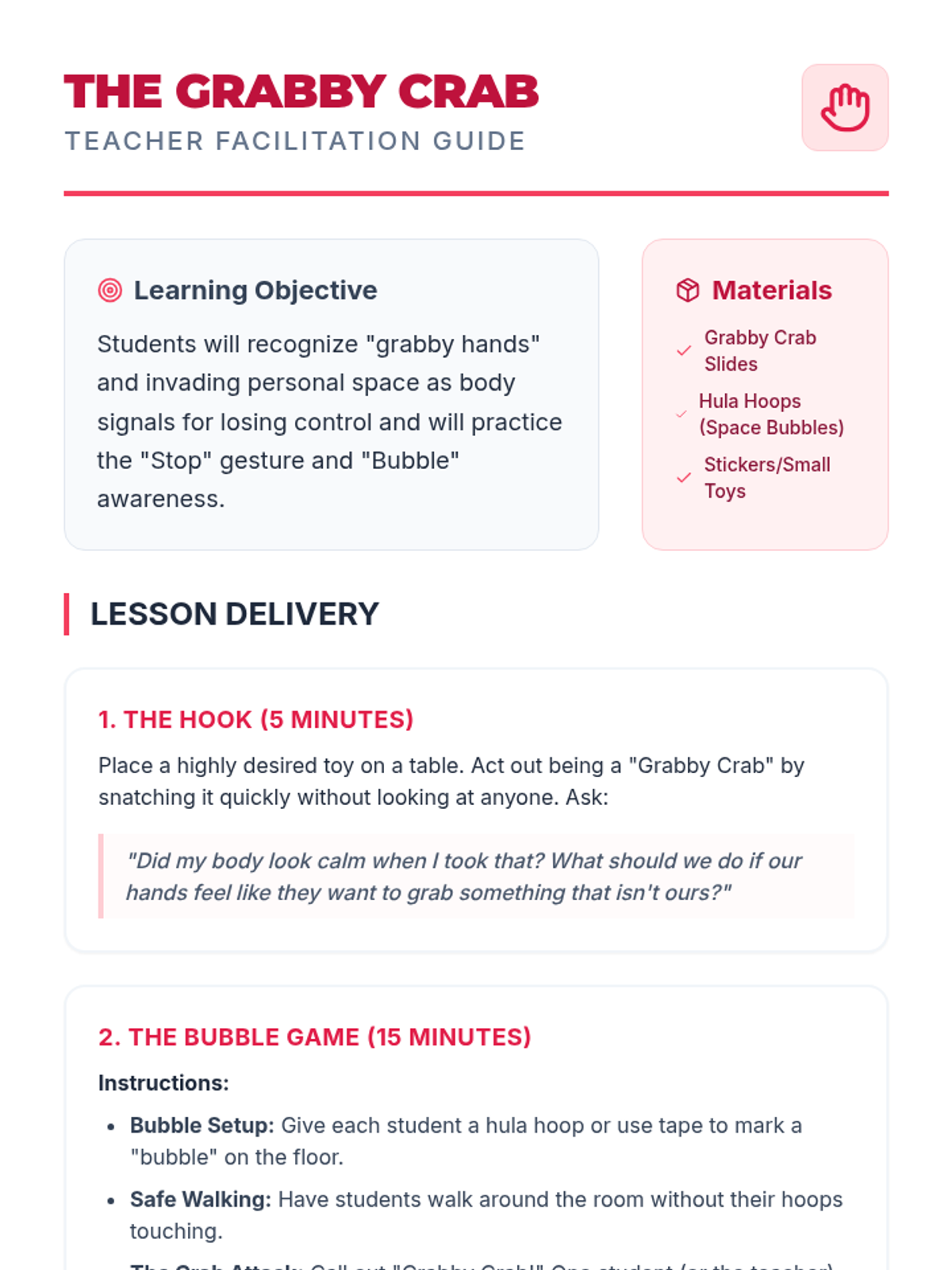
Students explore how 'grabby hands' or invading personal space can be a warning sign of losing control. They practice recognizing when their hands feel like they want to push or grab and using a 'stop' gesture instead.
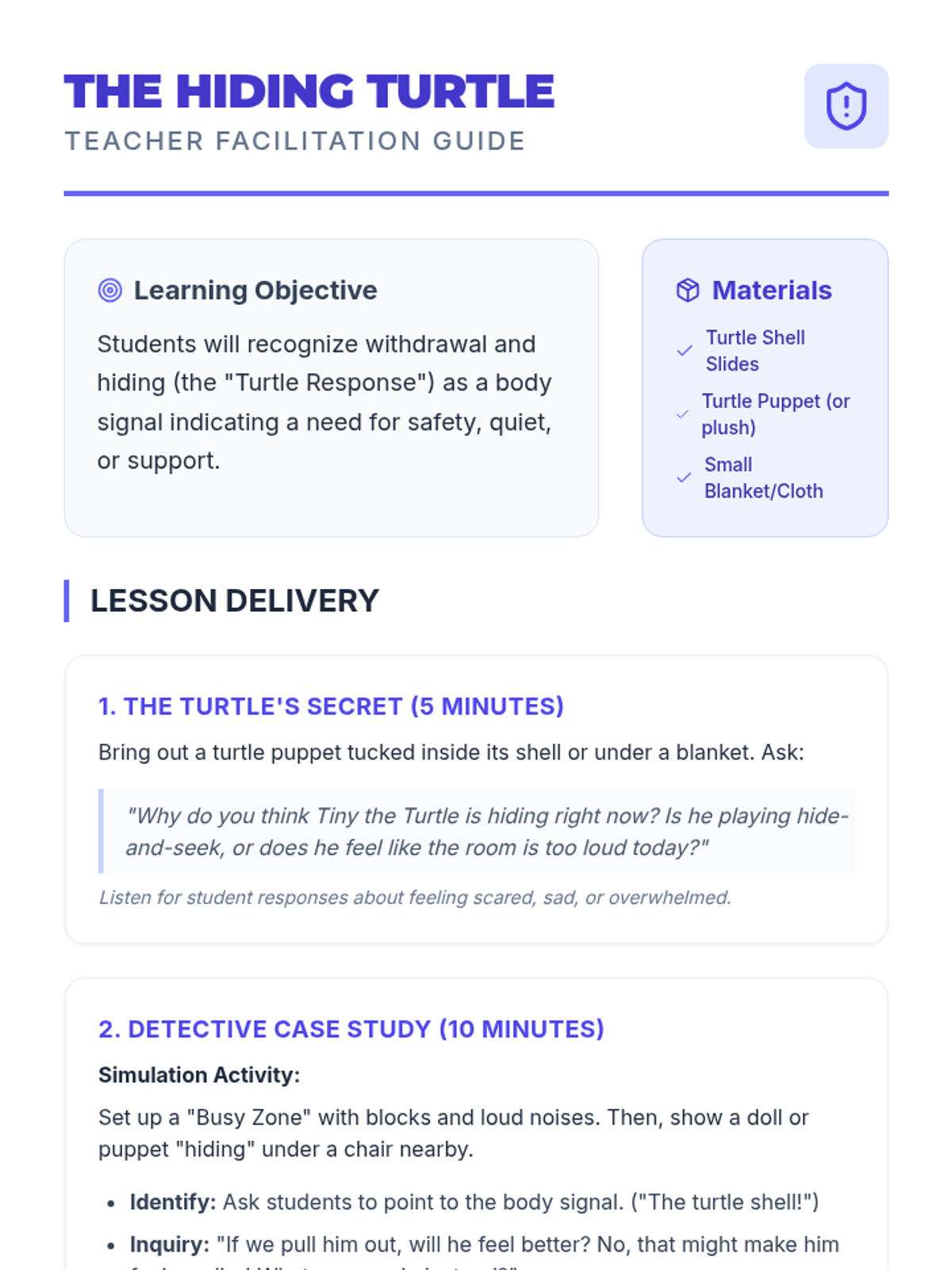
Focusing on the 'flight' response, this lesson uses the 'Turtle' metaphor to demonstrate how hiding or withdrawal can be a warning sign that someone feels unsafe or overwhelmed.
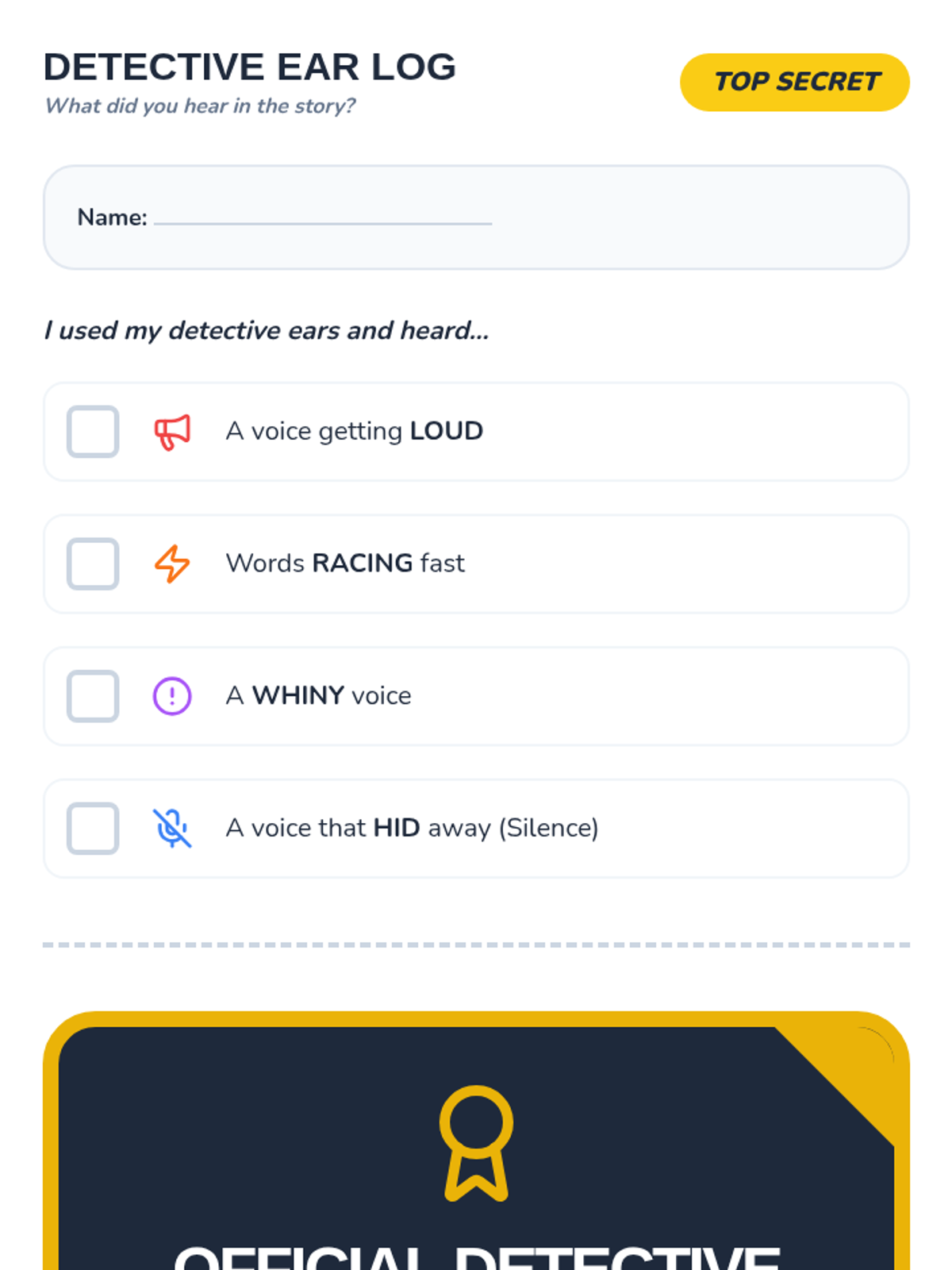
In a culminating activity, students use their 'detective ears' to identify vocal changes in stories and infer how characters are feeling.
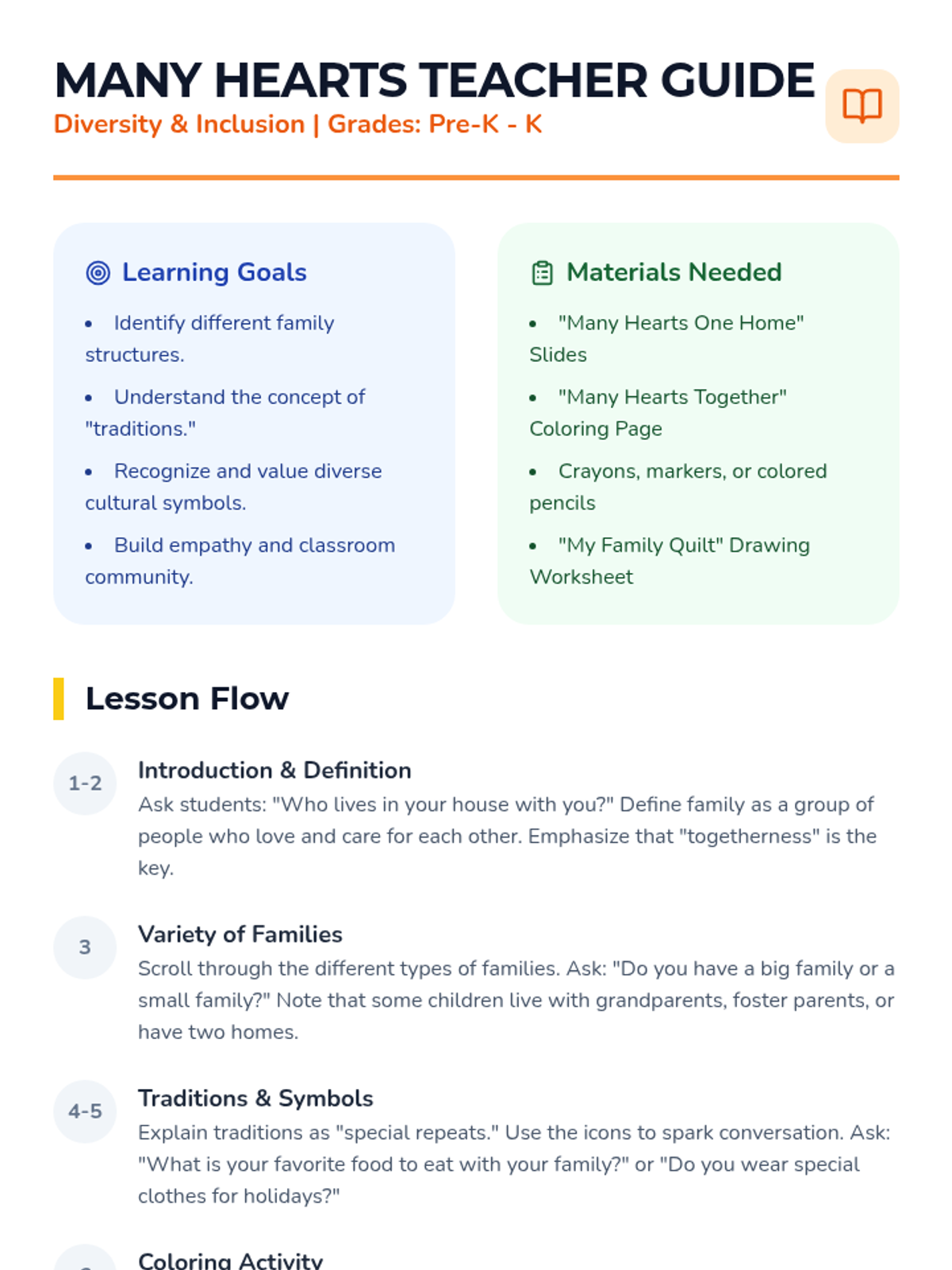
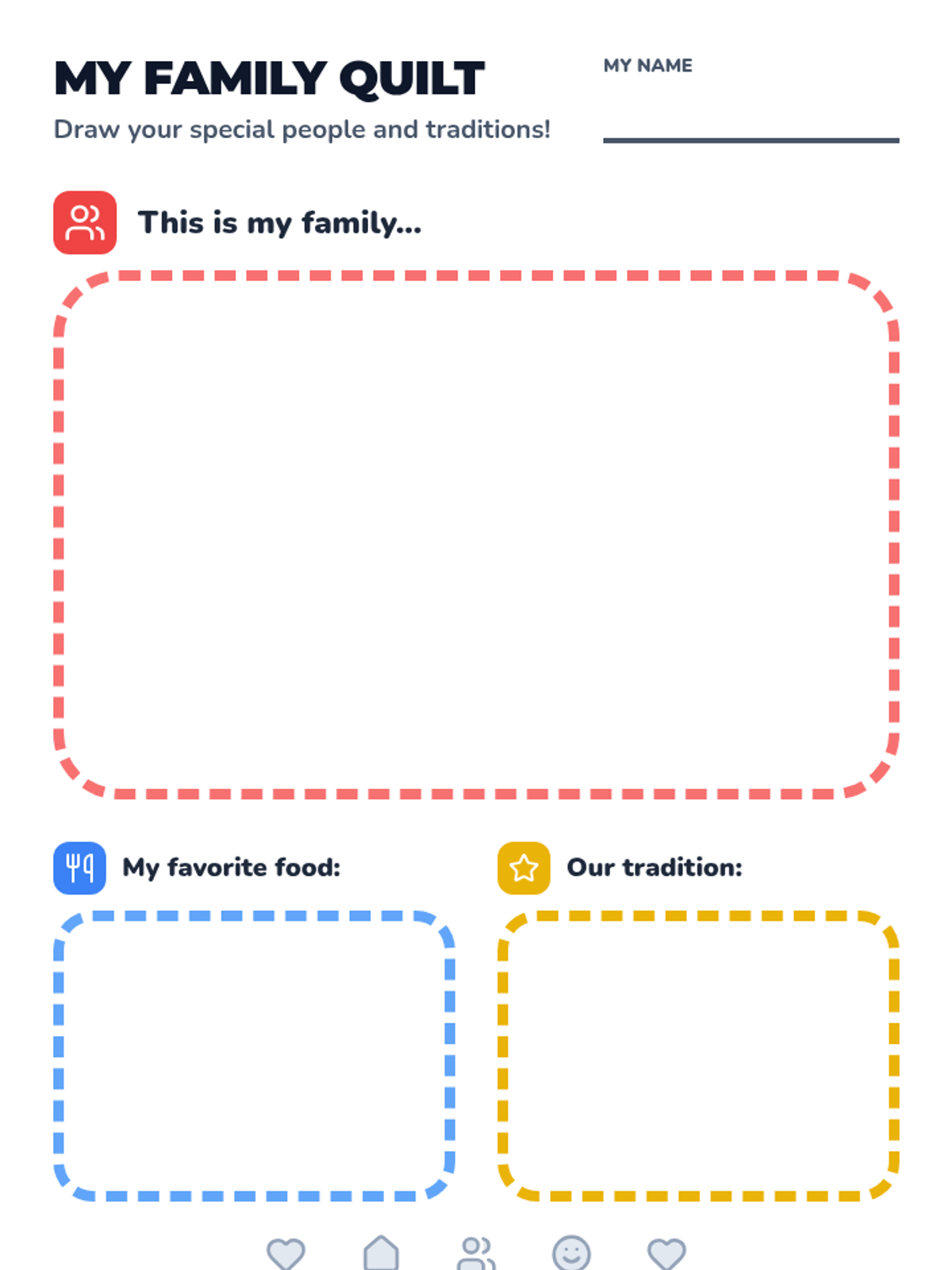
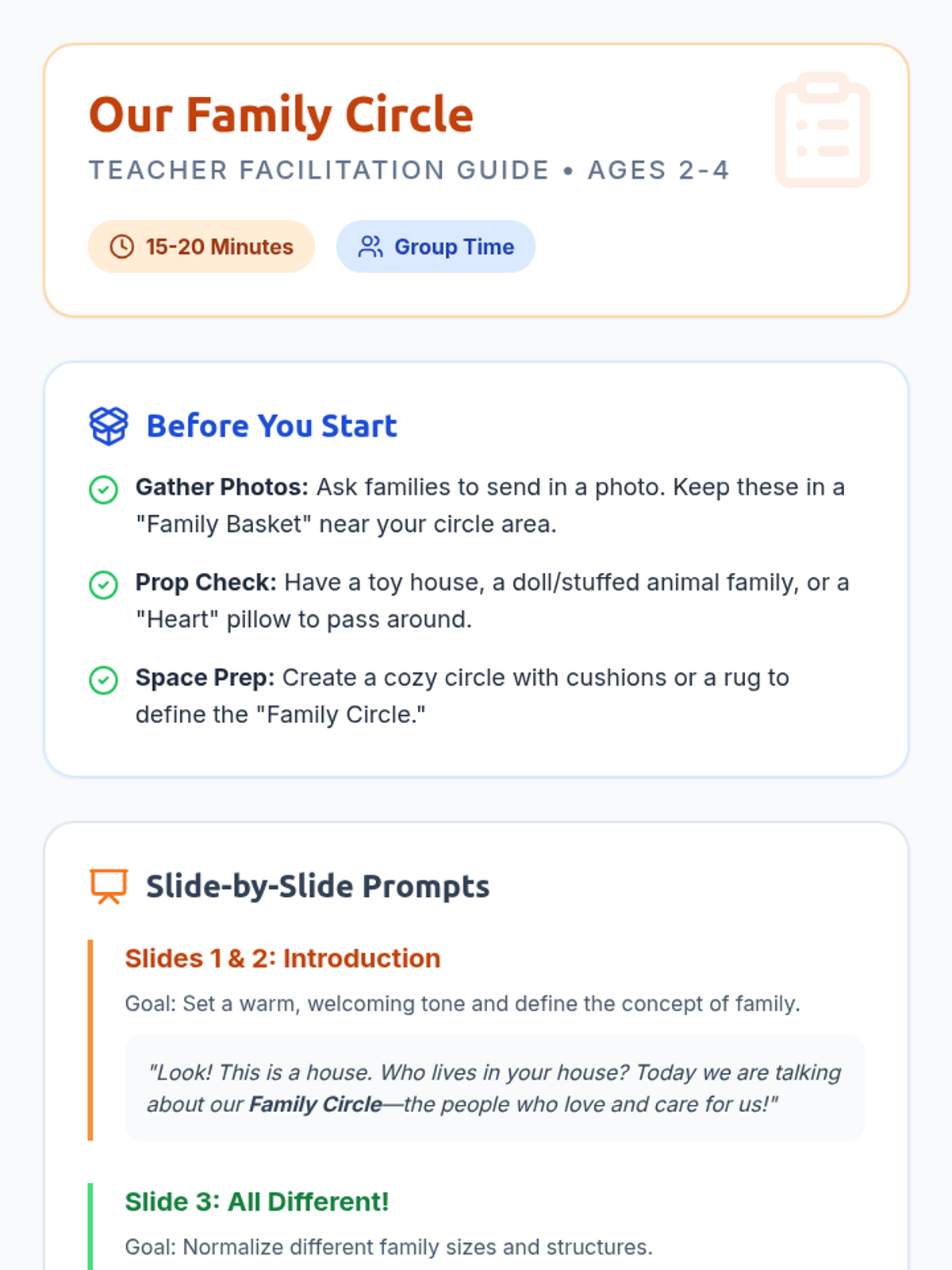
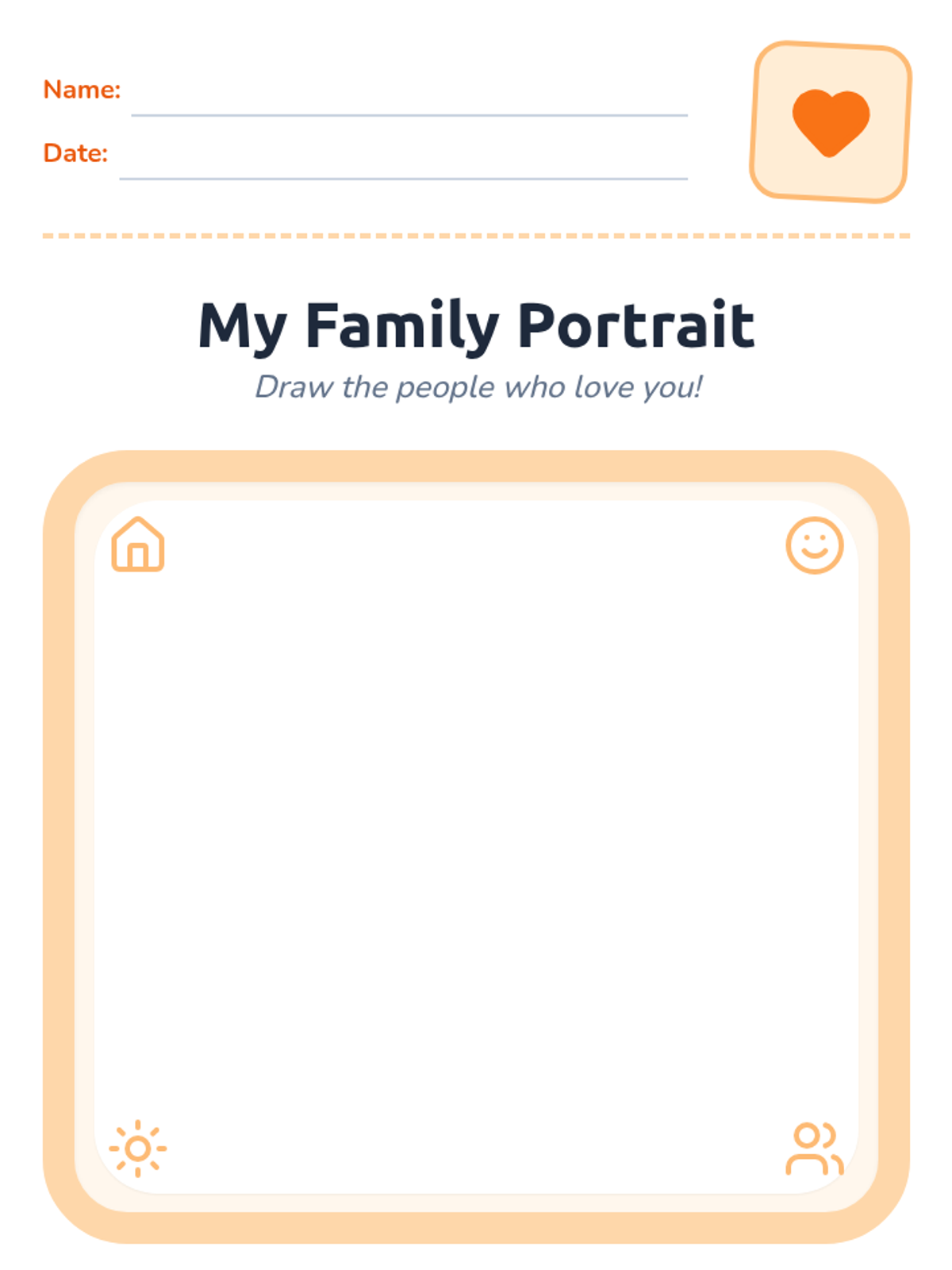
A friendly, interactive Pre-K guidance lesson exploring the beautiful variety of families and traditions through storytelling, discussion, and a fun Bingo game.
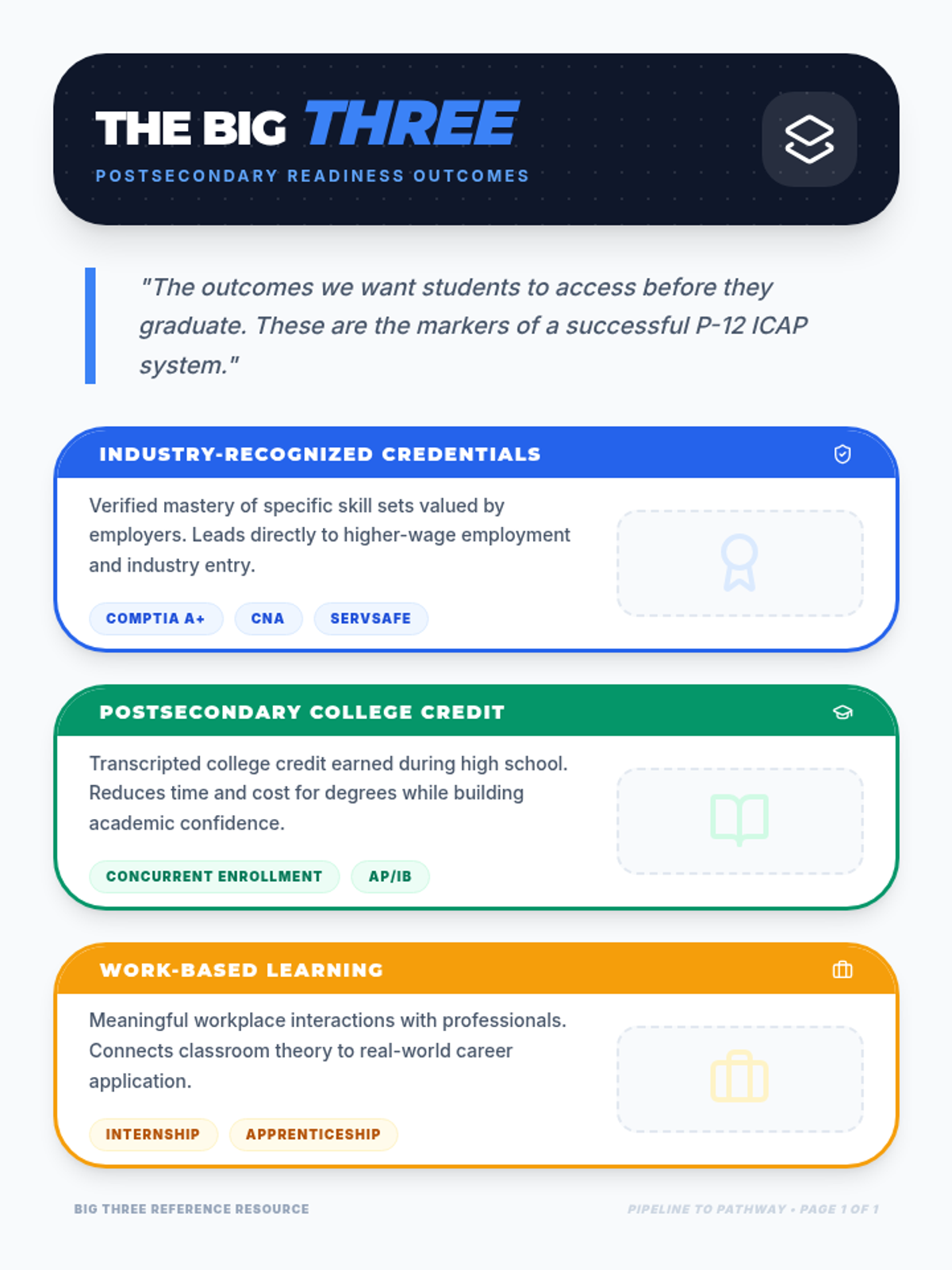
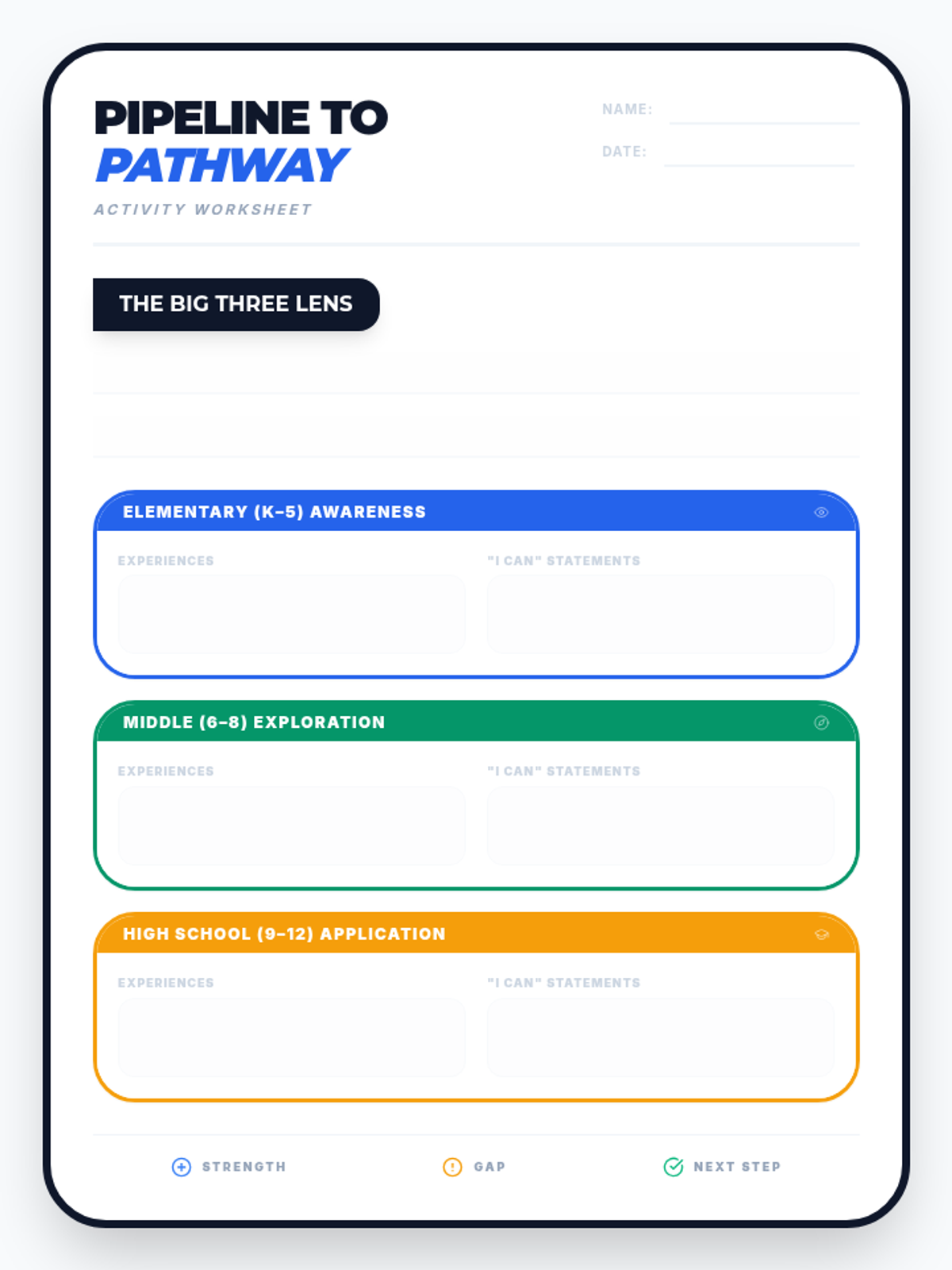
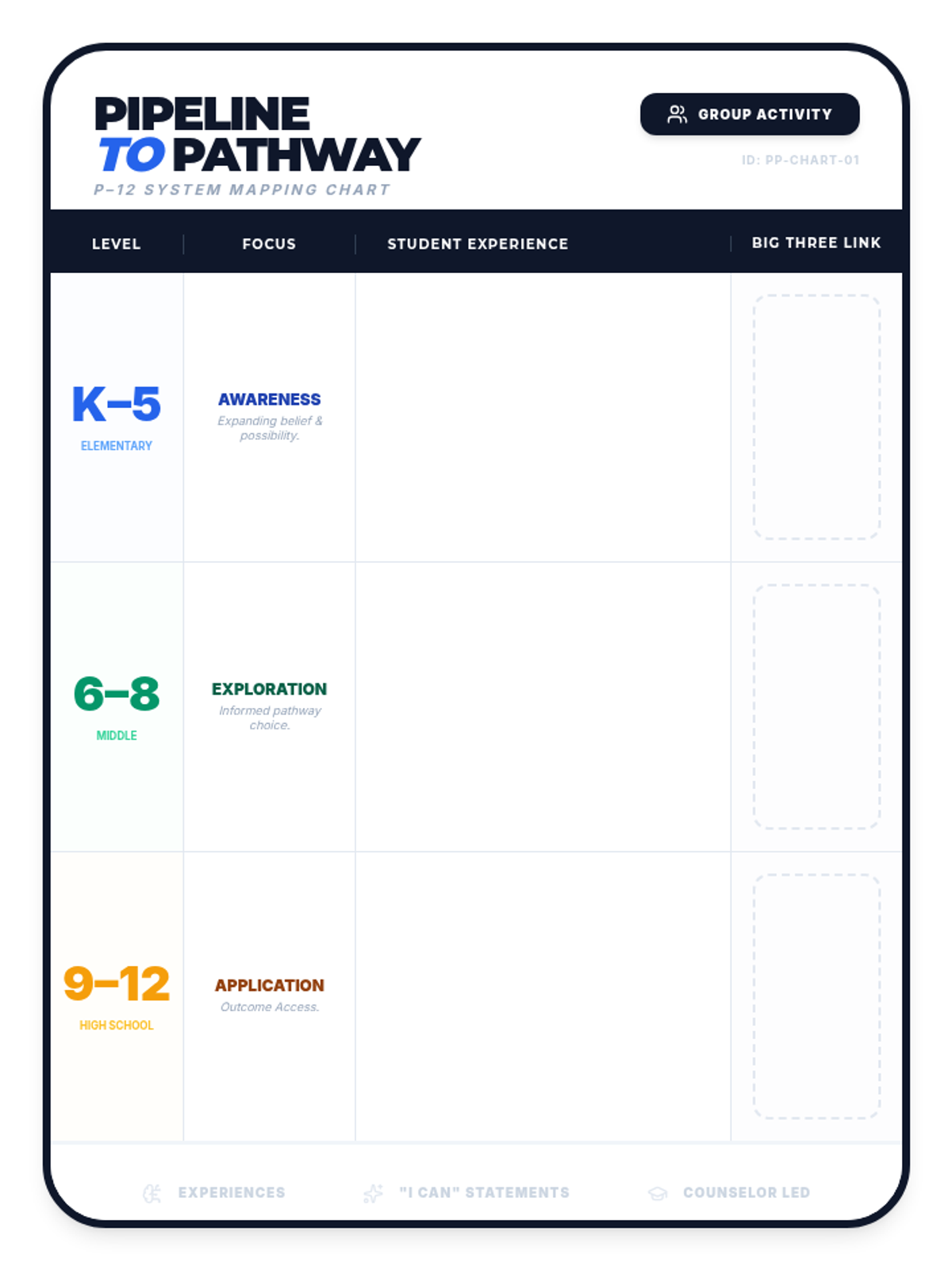
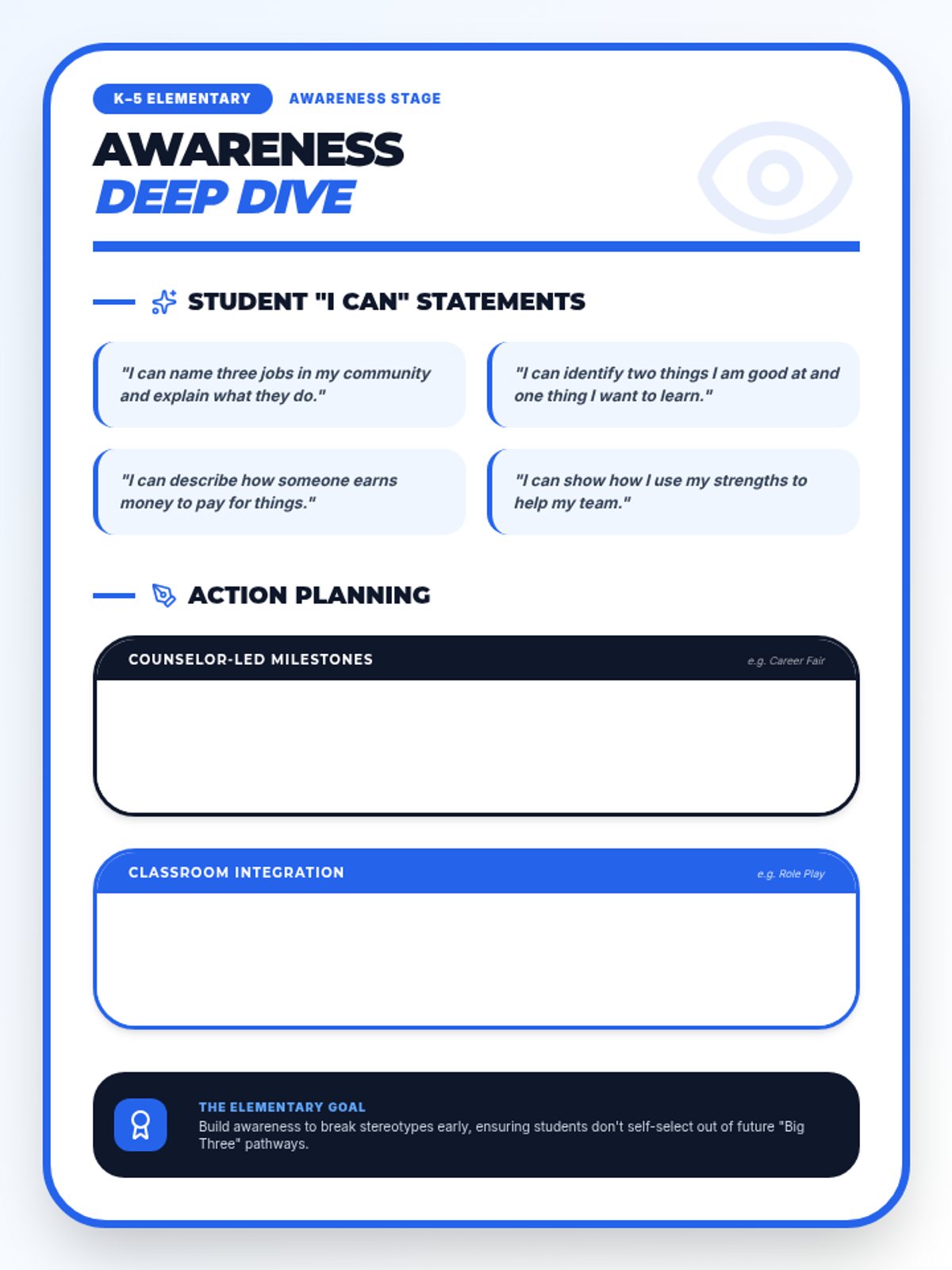
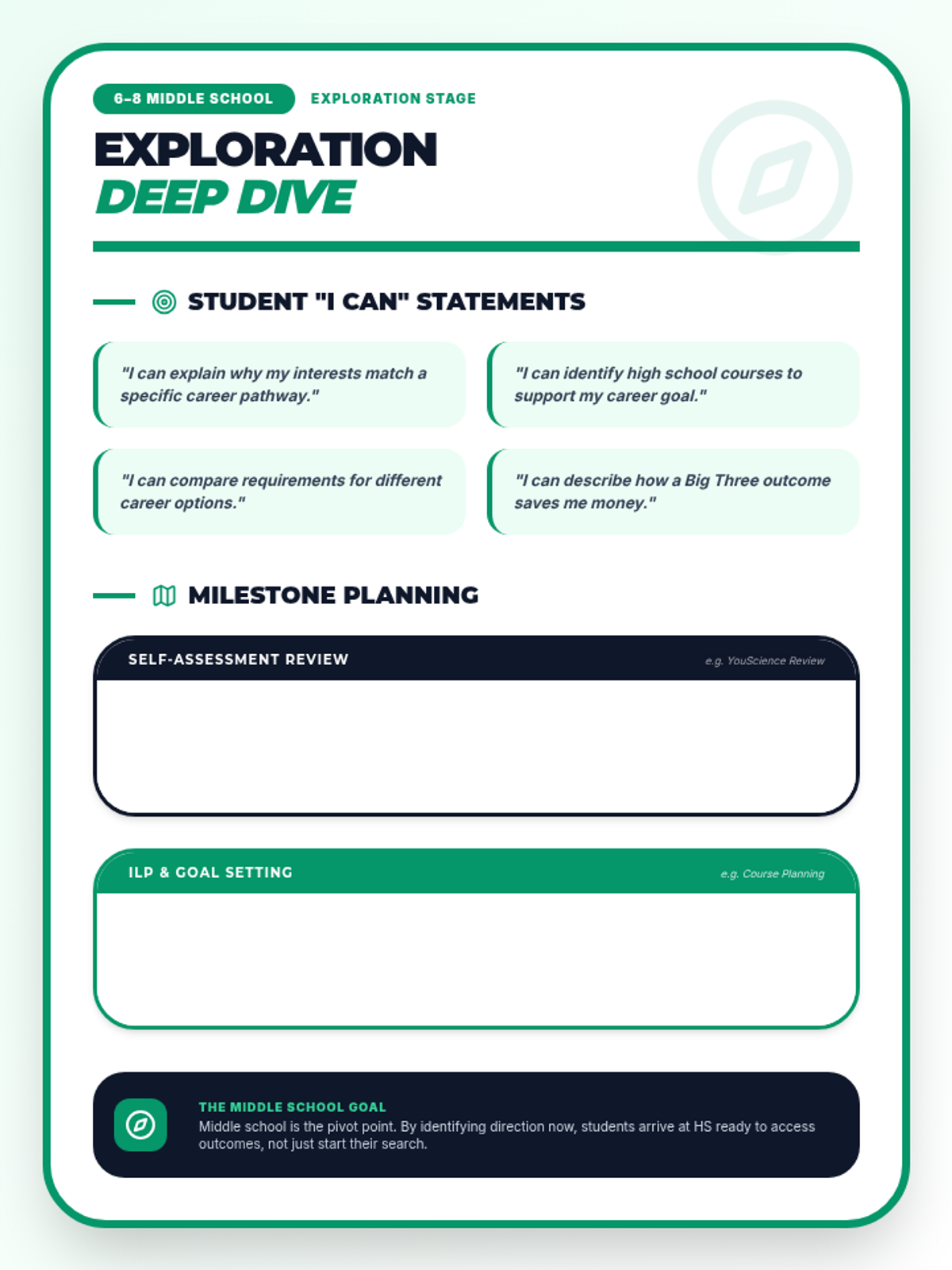
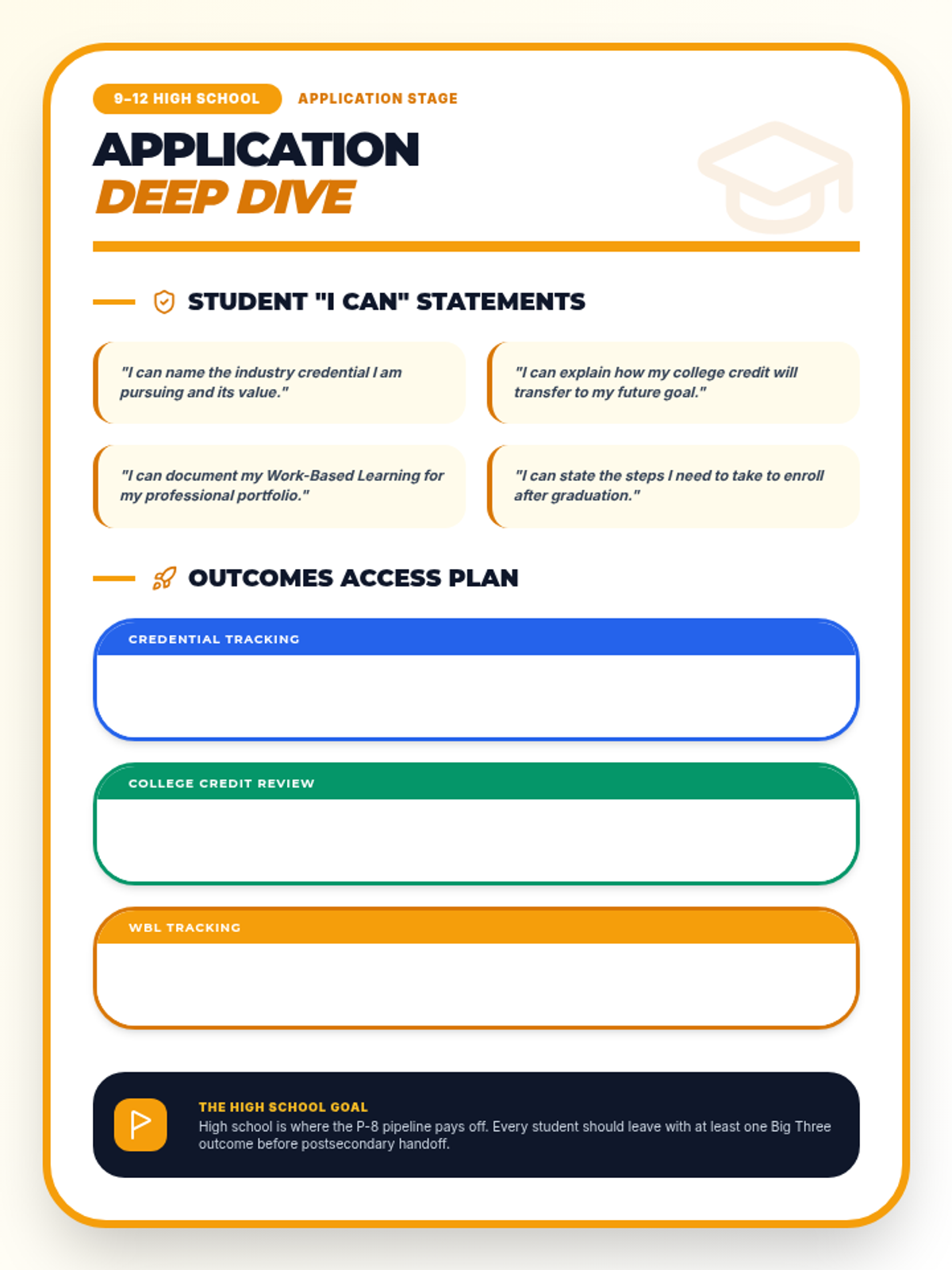
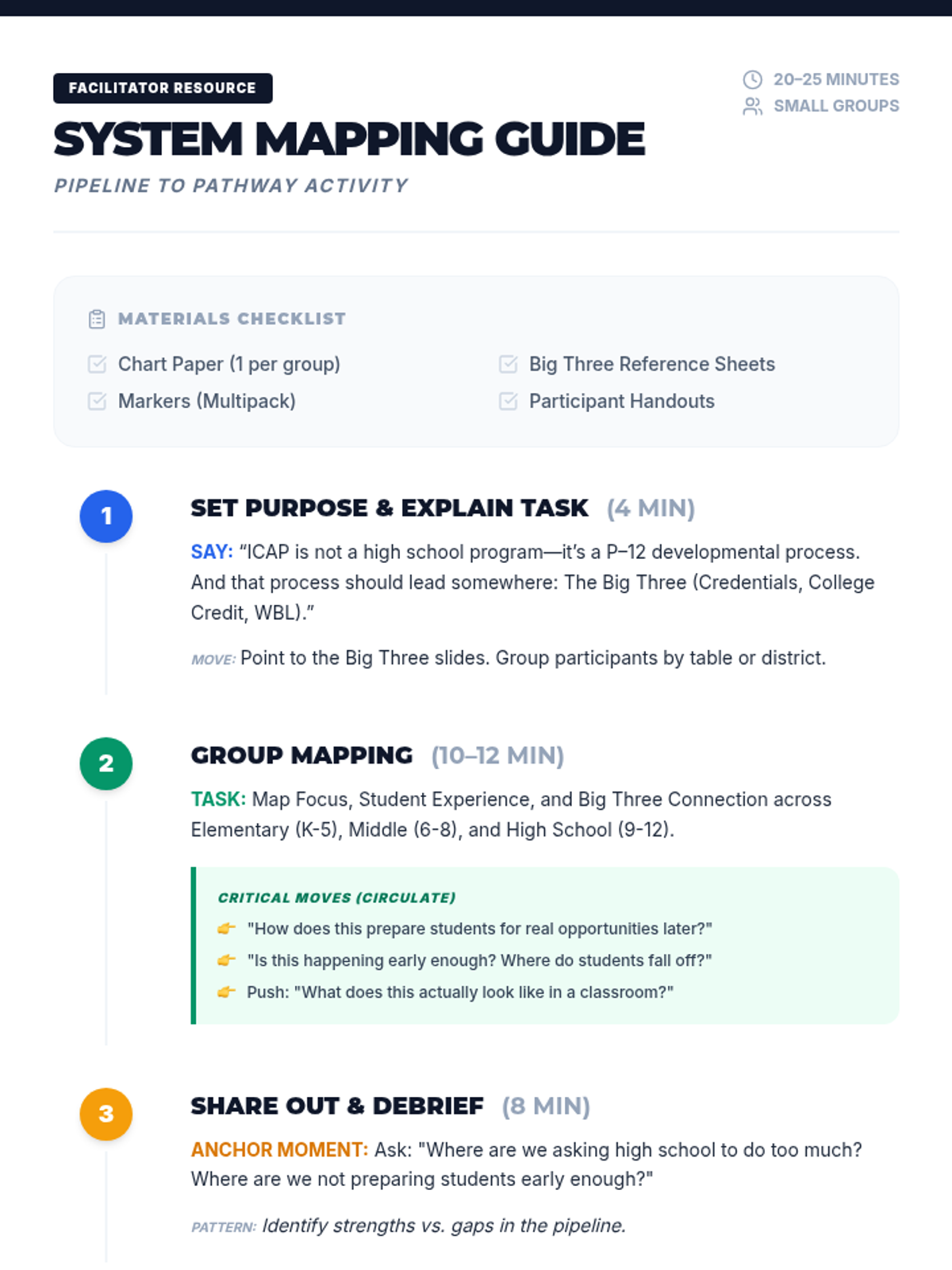
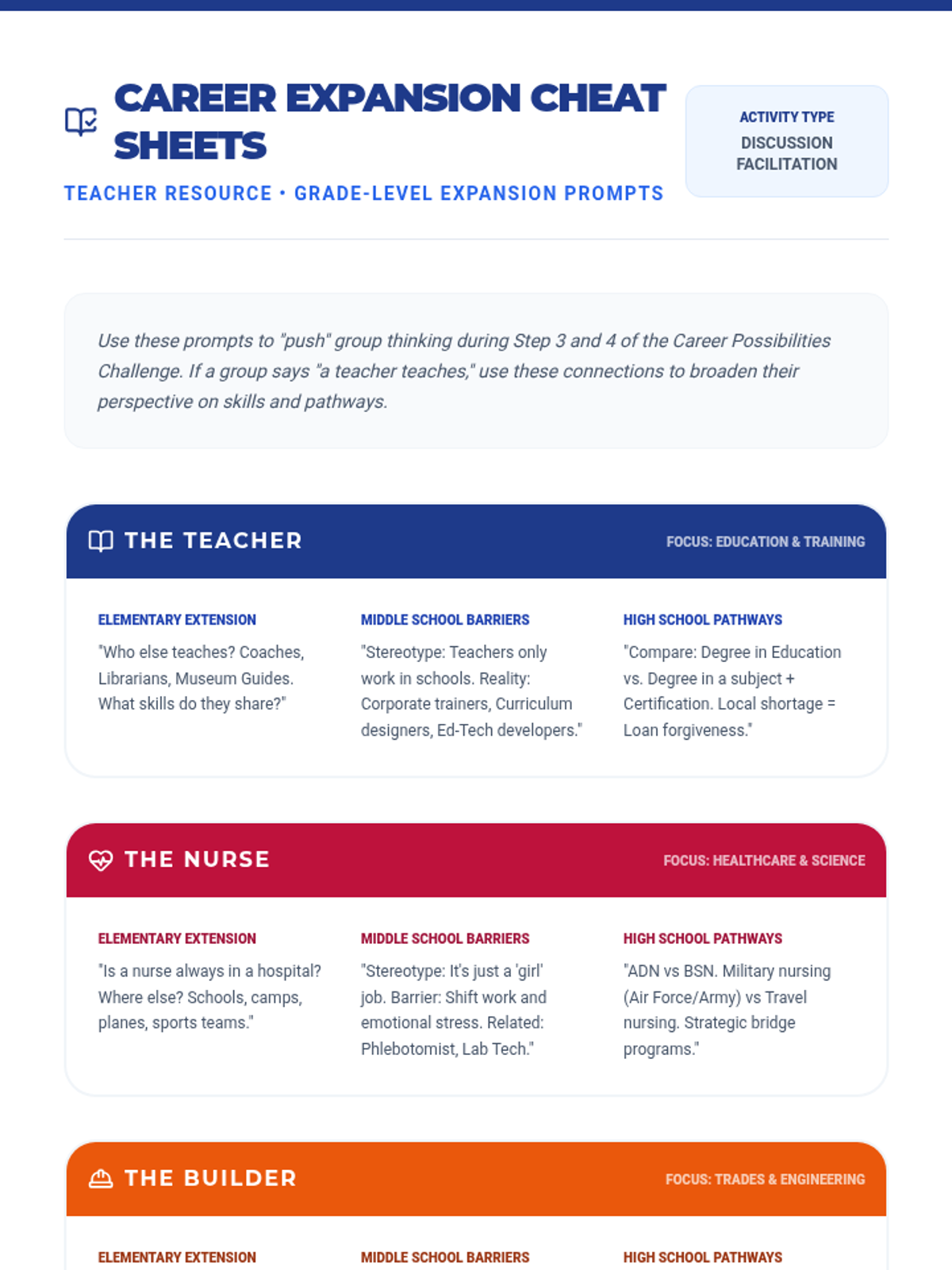
A collaborative workshop session where educators map out the developmental stages of a student's journey from elementary awareness to high school application and outcome access.
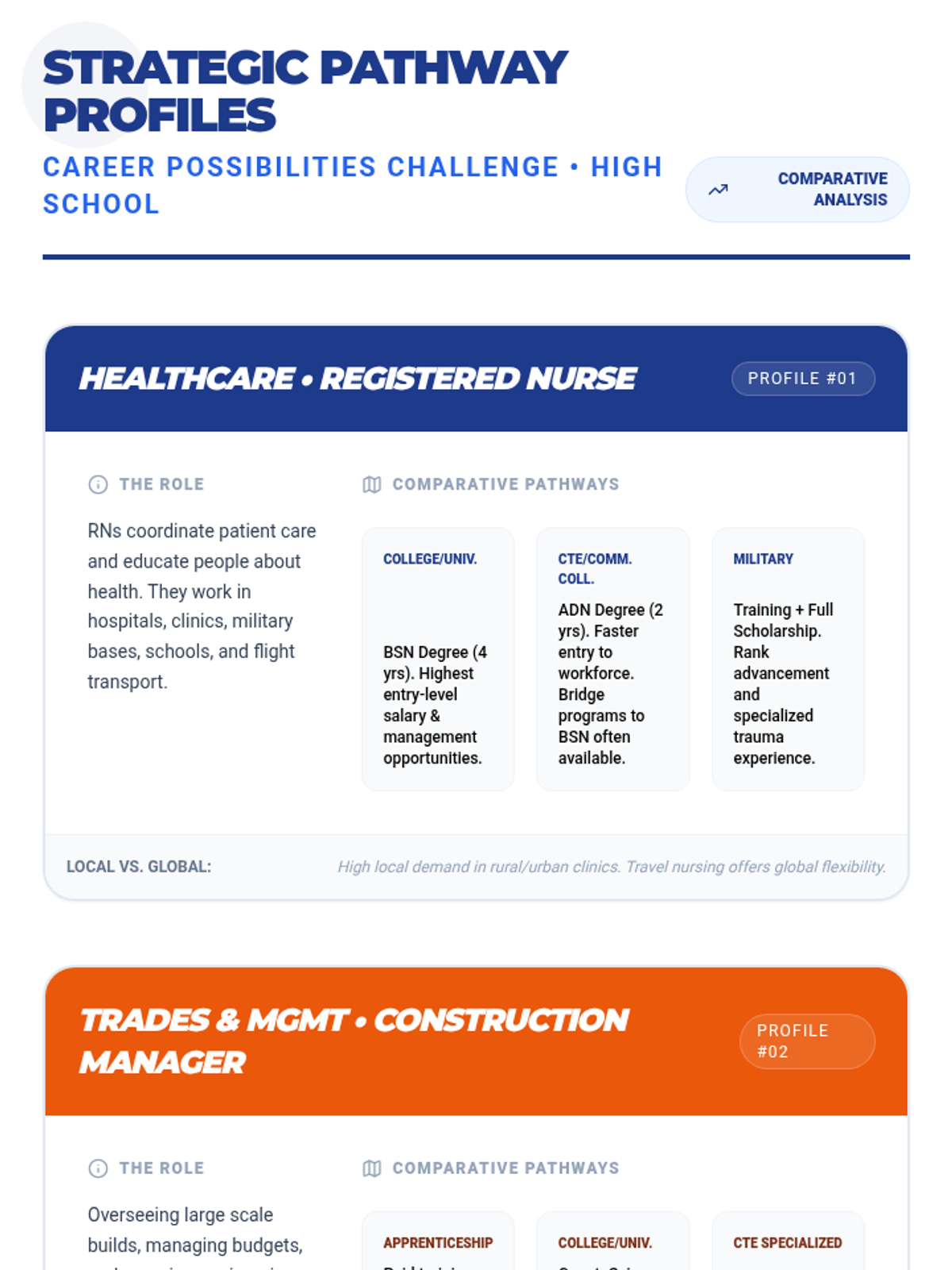
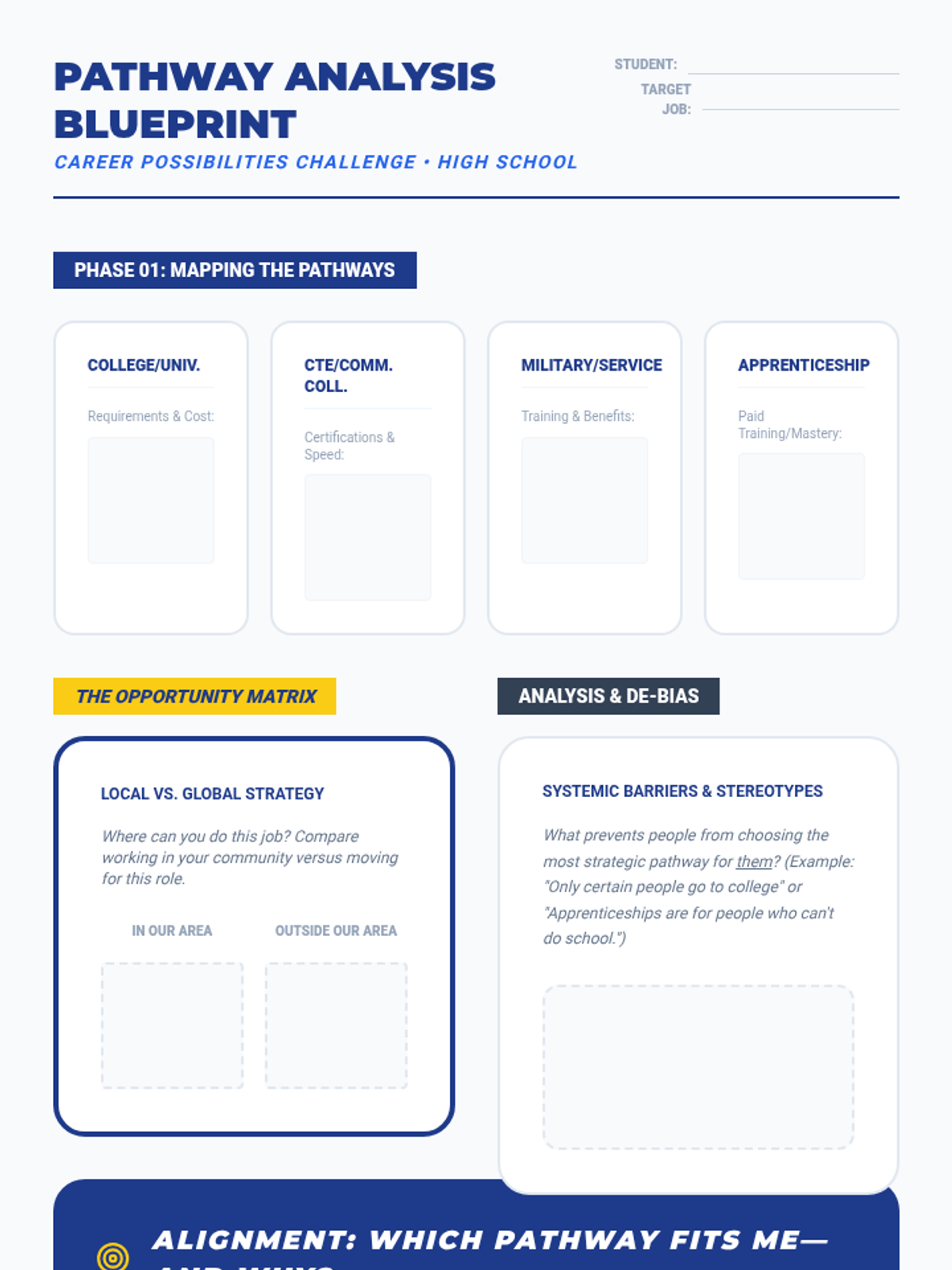
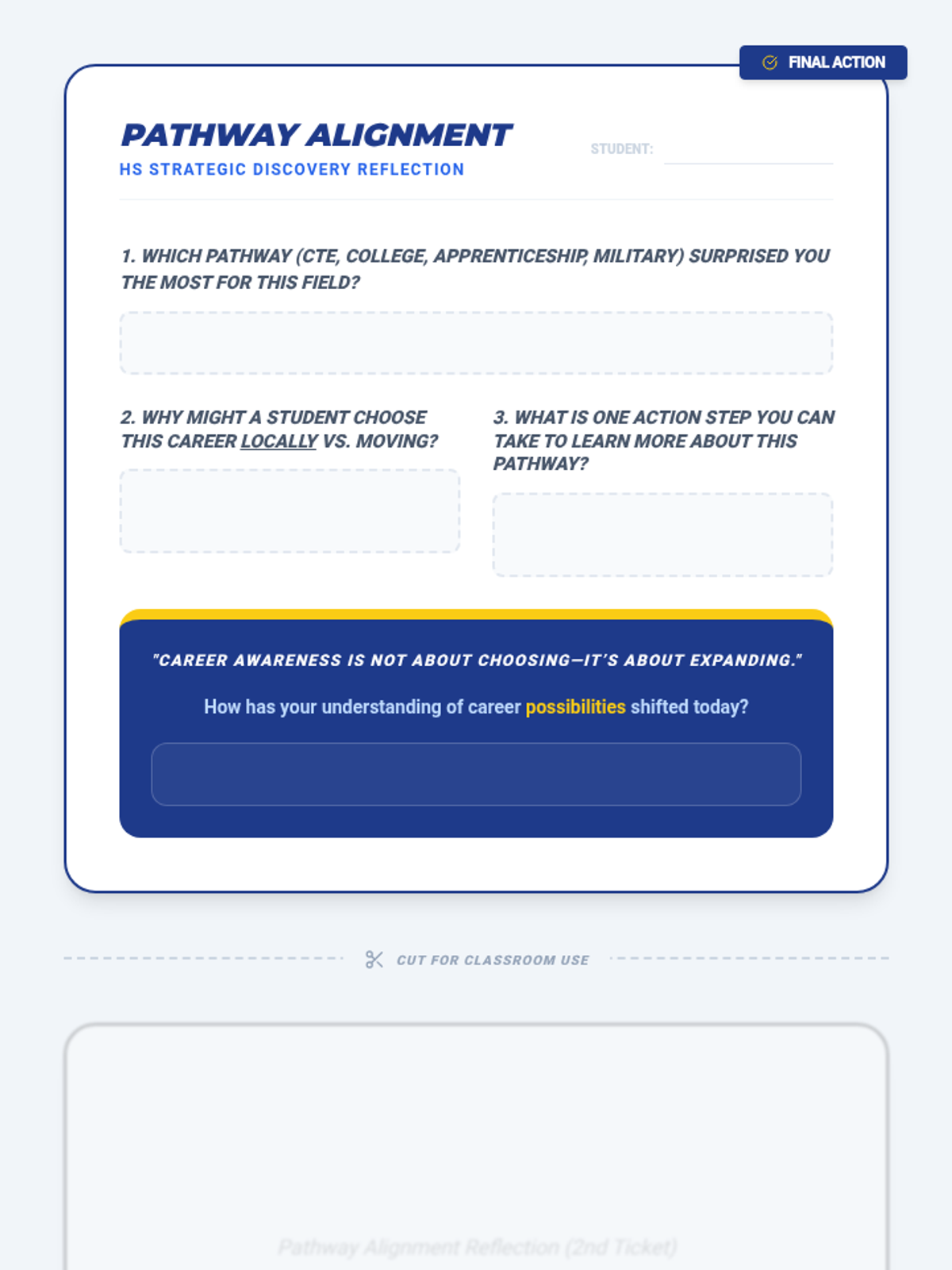
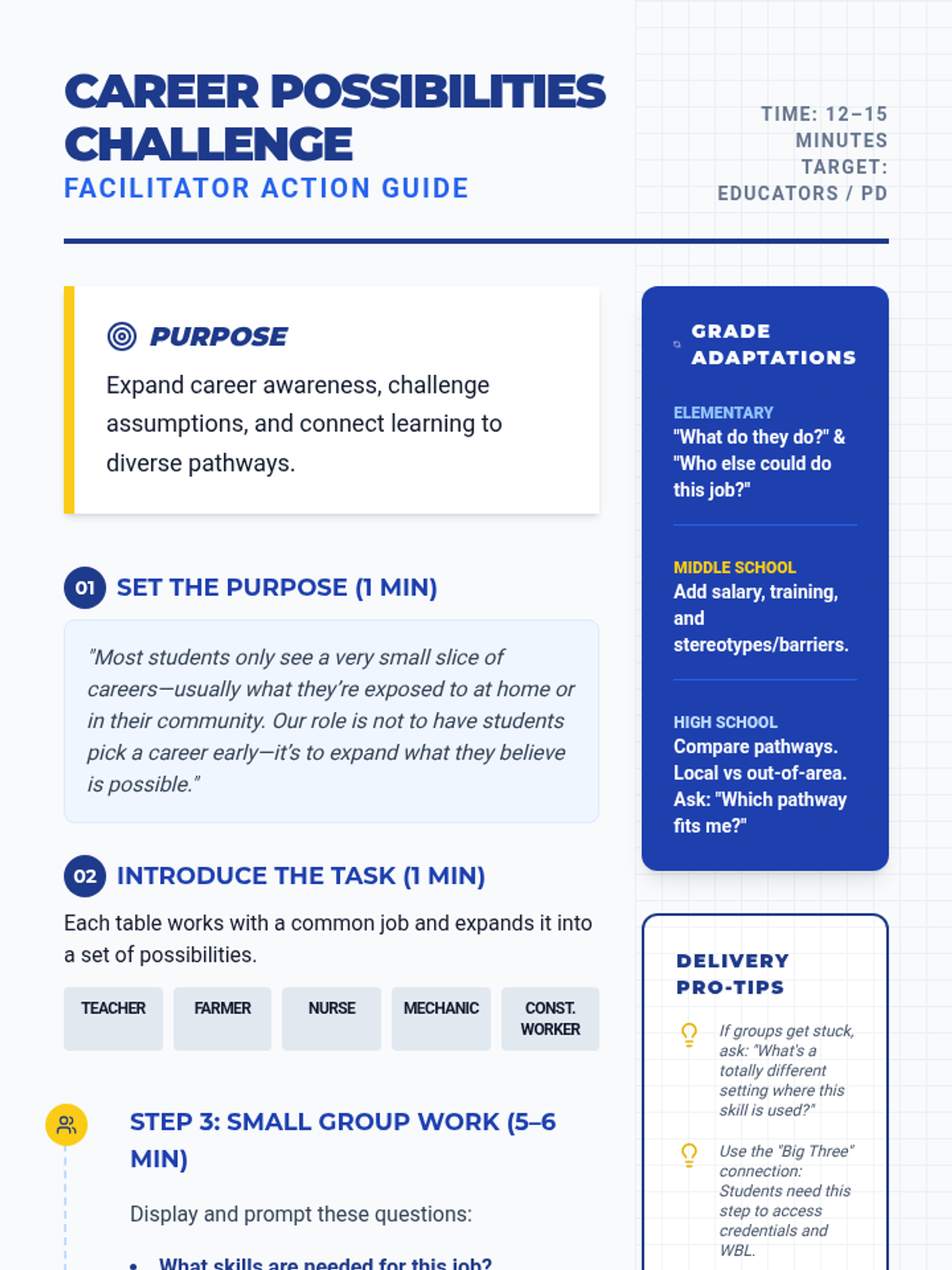
A strategic career planning lesson for high schoolers focusing on comparing specific pathways (CTE, college, military) and evaluating local versus out-of-area opportunities.
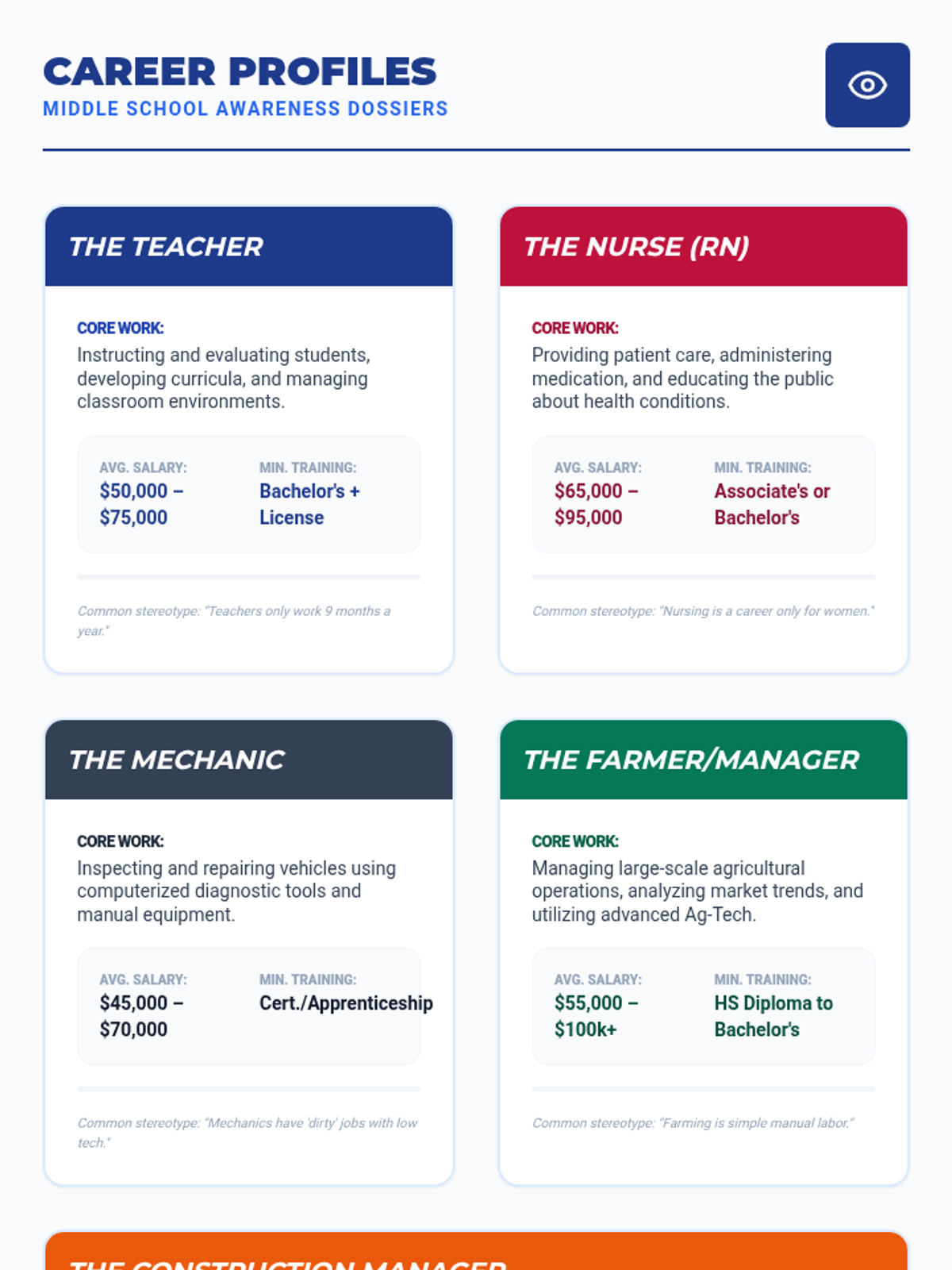
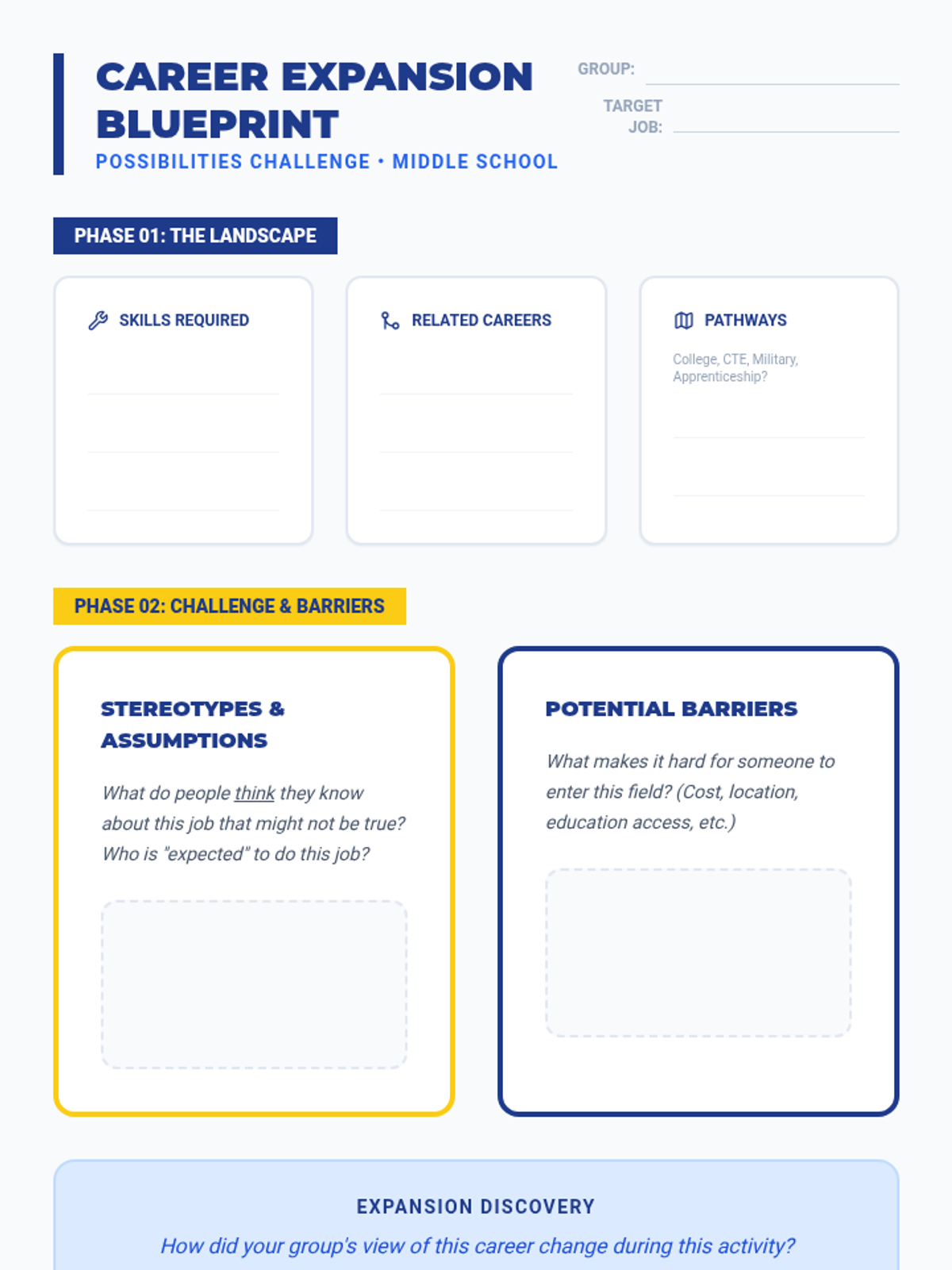
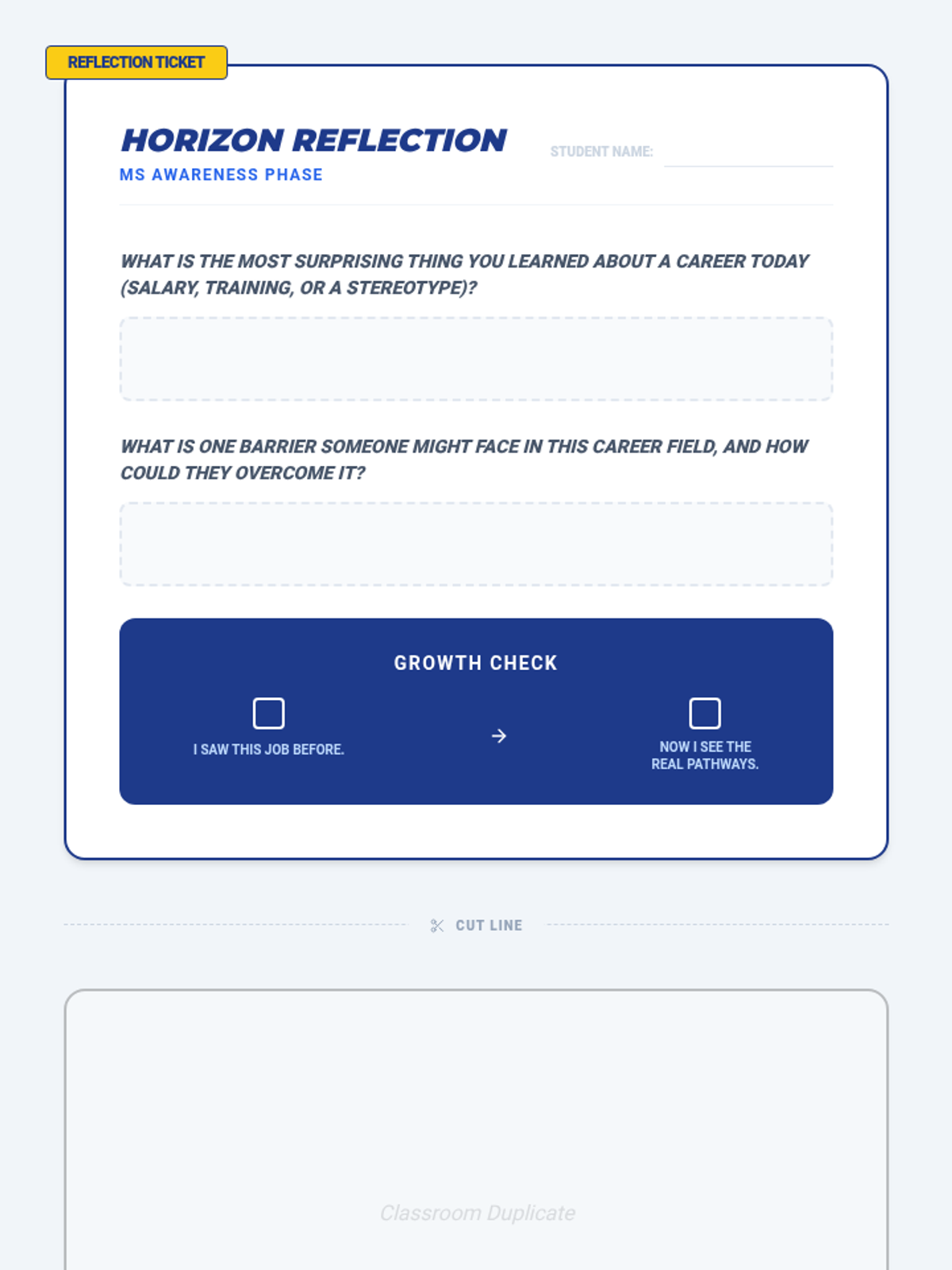
A career exploration lesson for middle schoolers that dives into salary, education requirements, and identifying stereotypes or barriers within specific career fields.
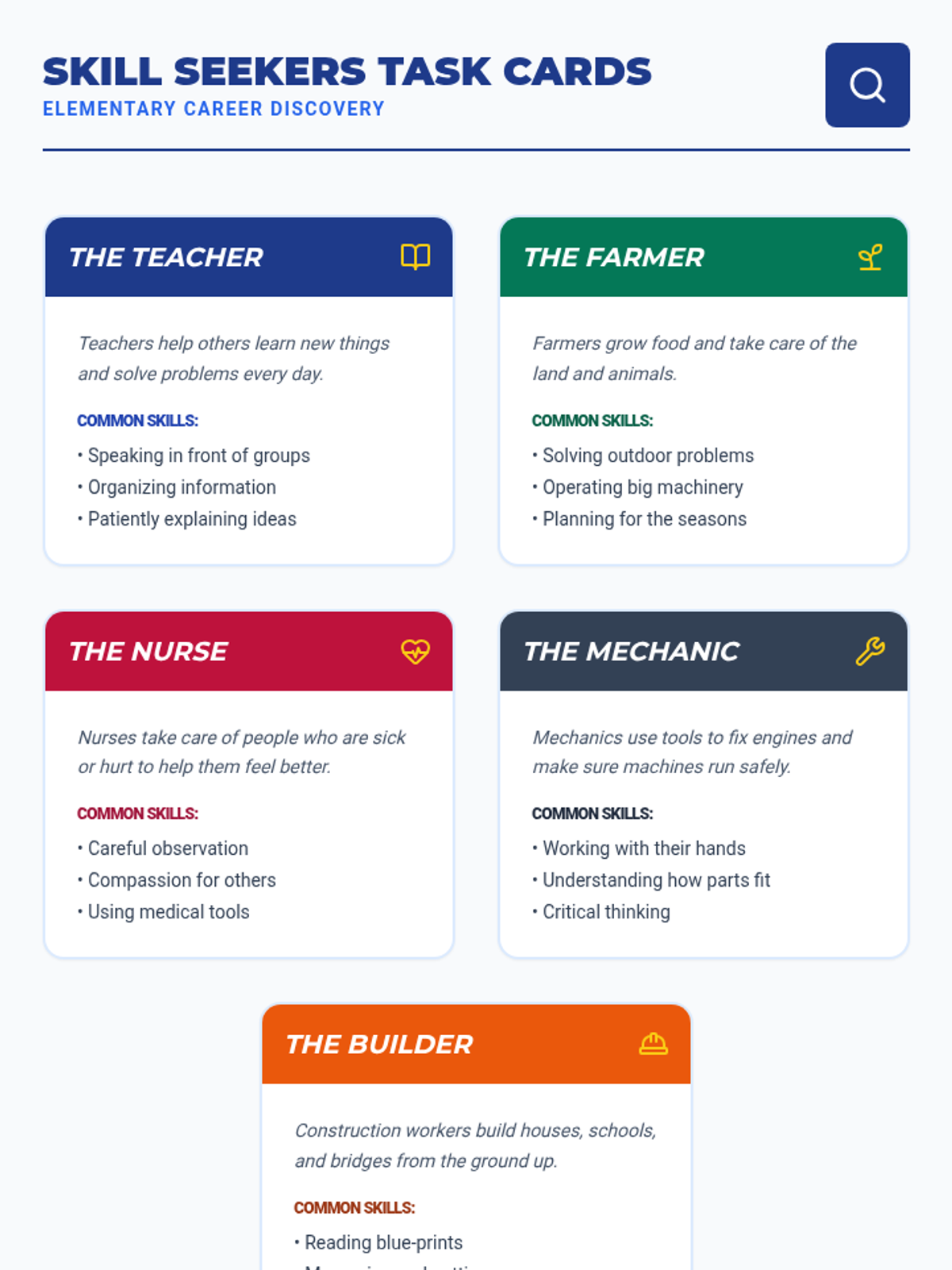
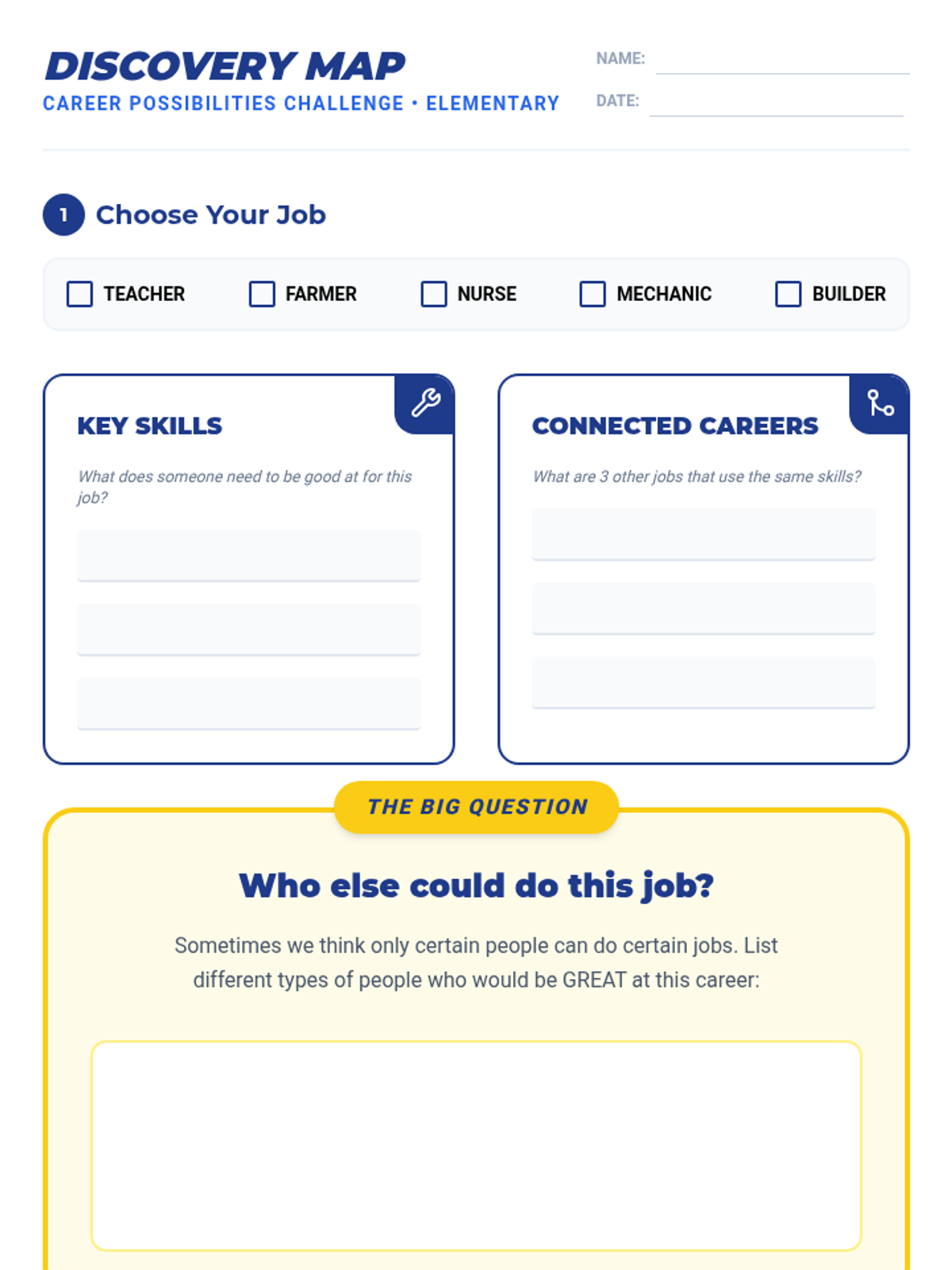
An introductory career awareness lesson for elementary students focusing on identifying job skills and exploring 'who else' can do a job. Students use a graphic organizer to expand their understanding of common professions.
A professional development session for educators to learn how to facilitate career expansion activities that challenge student assumptions and connect learning to diverse pathways.
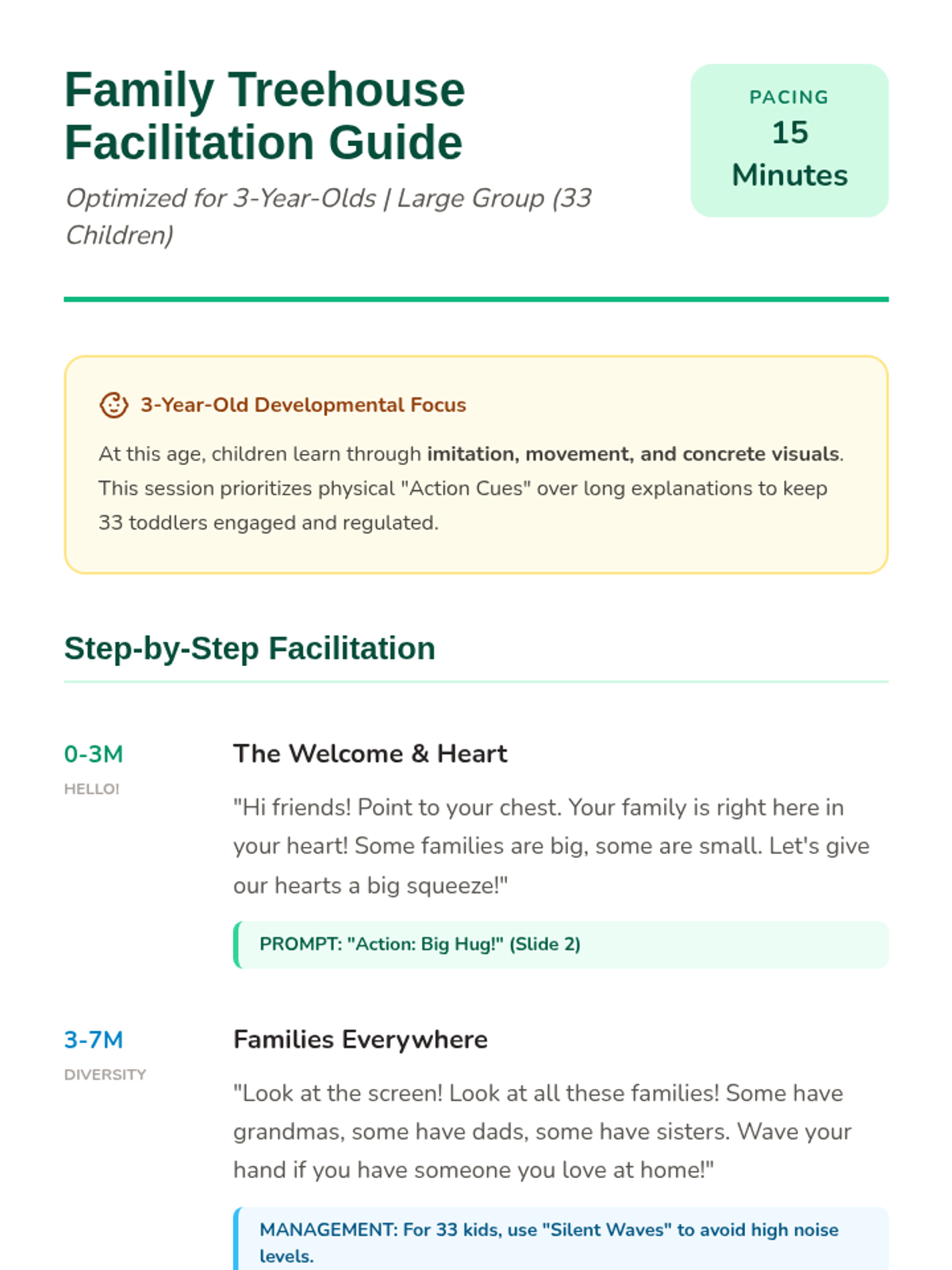
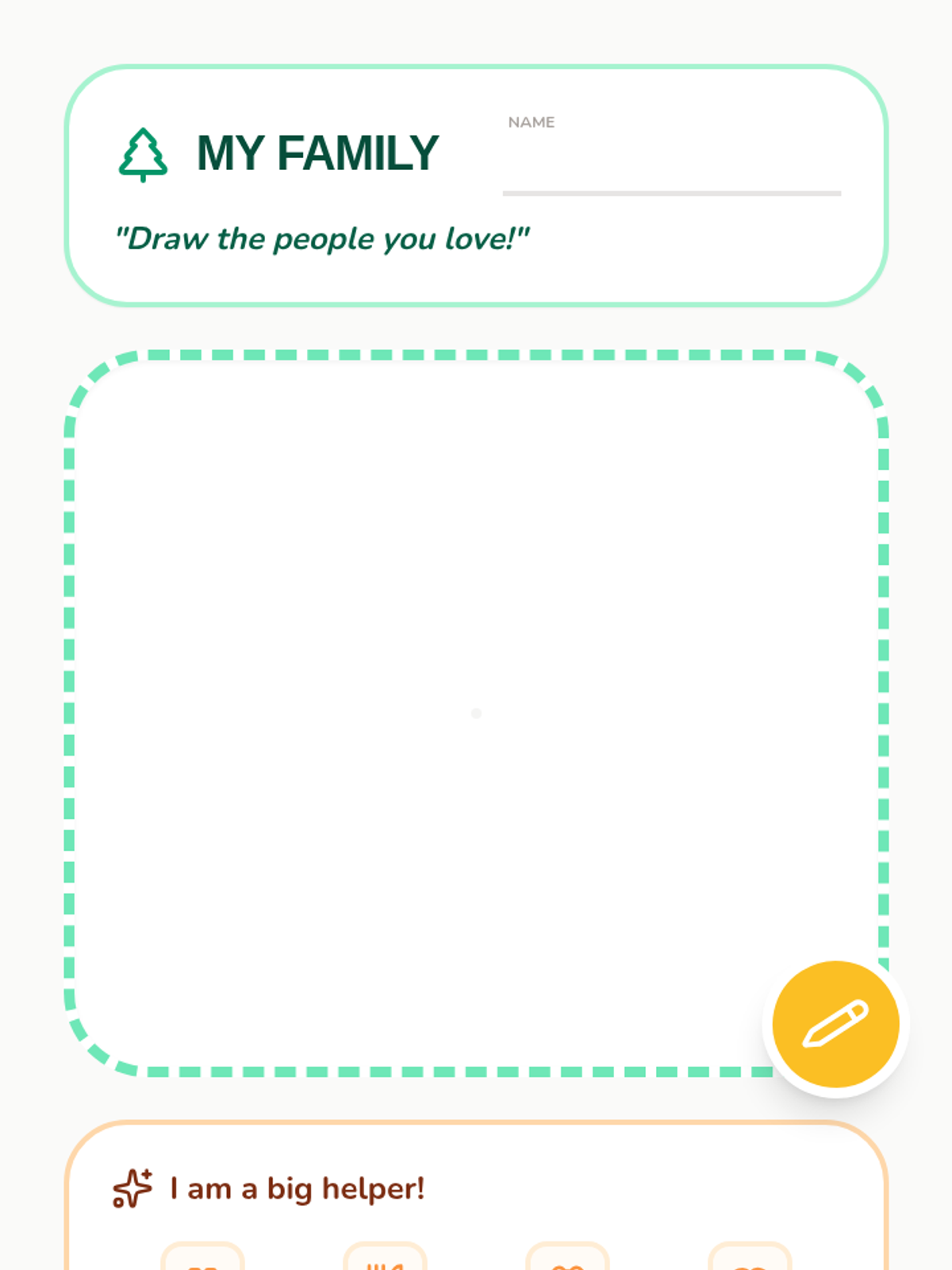
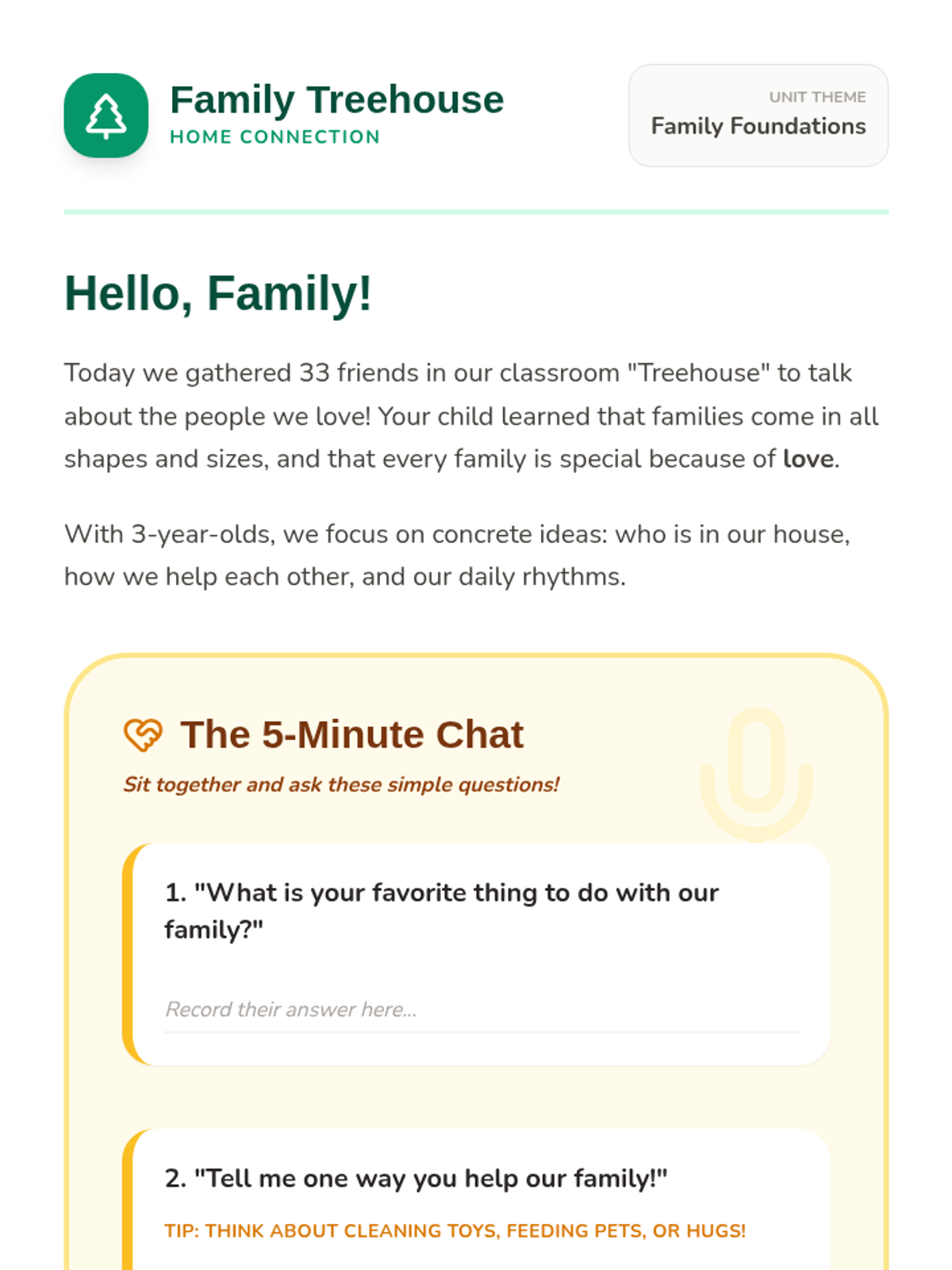
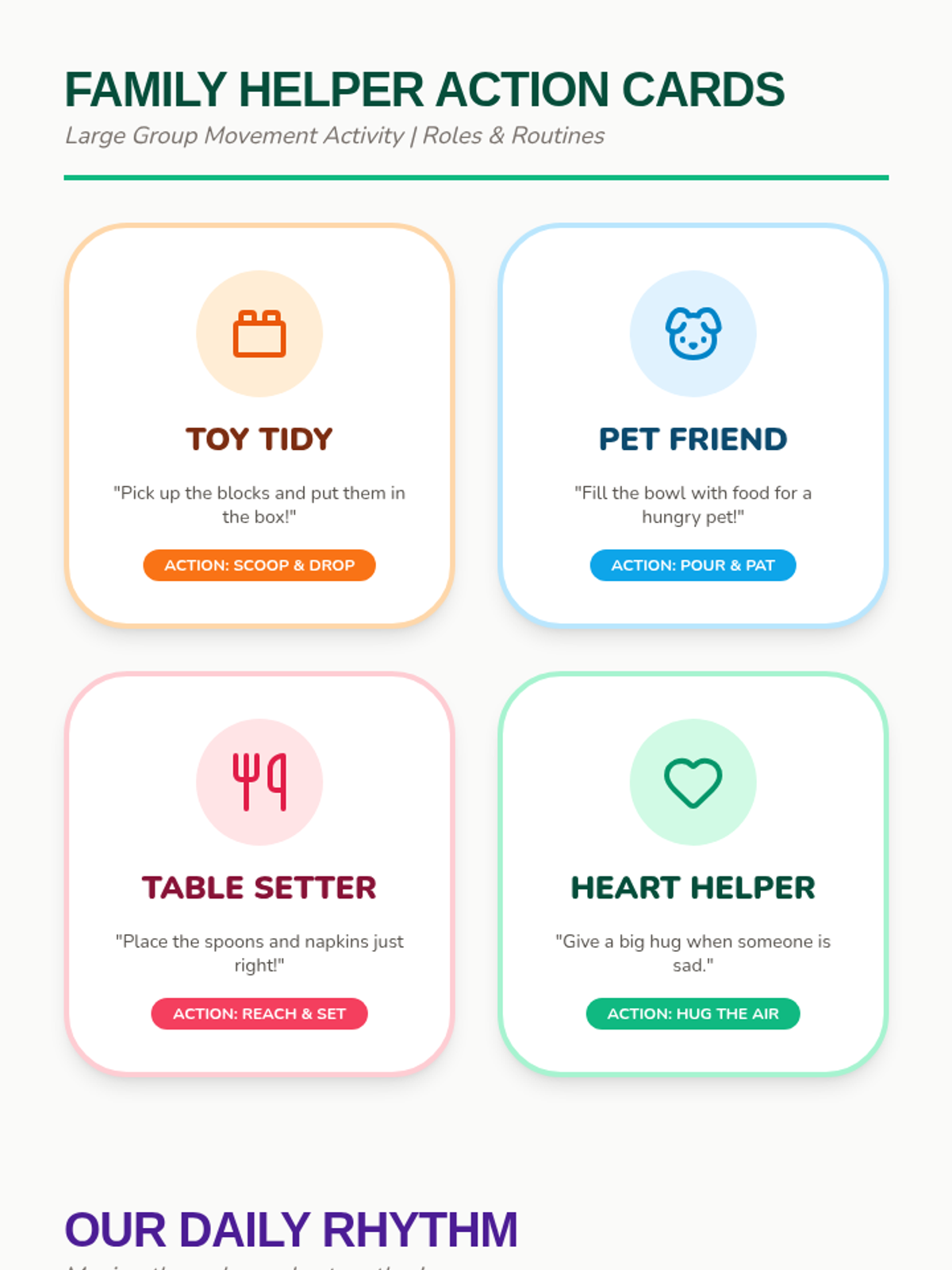
An interactive exploration of what makes a family, celebrating diversity, responsibilities, and daily routines through a high-energy group session.
An interactive group session exploring who is in a family, what they do, and how they care for each other through songs and simple visuals.
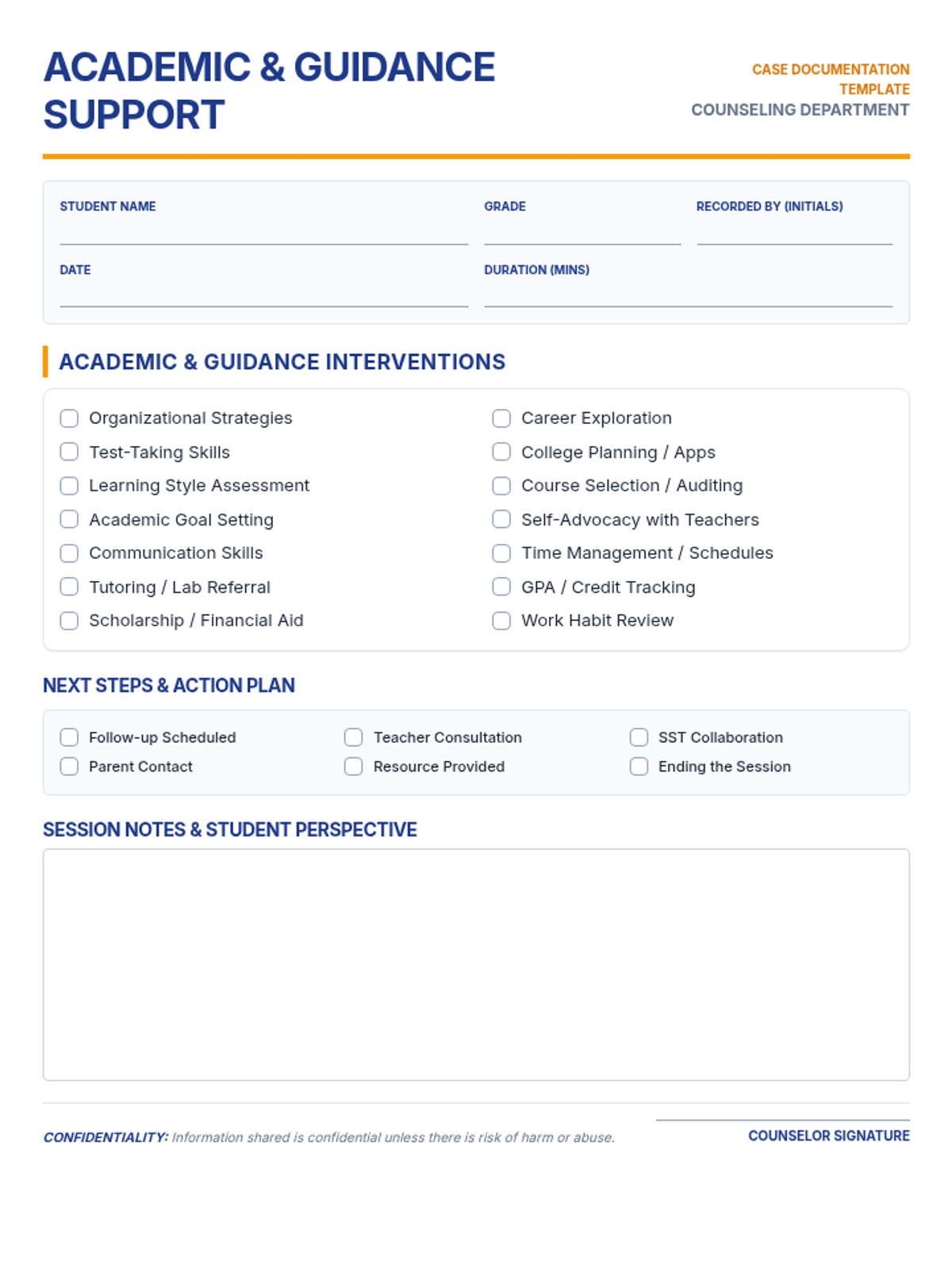
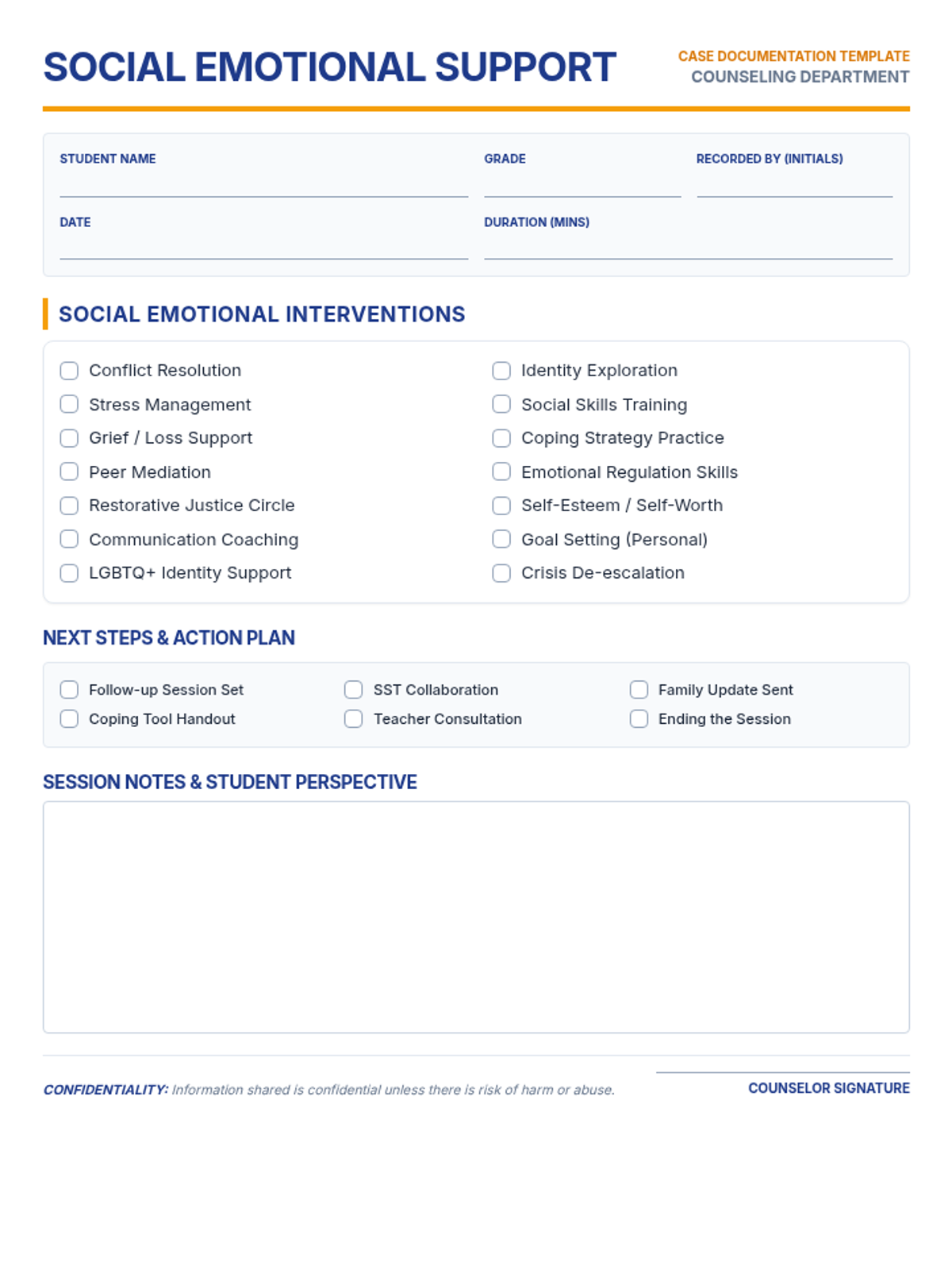
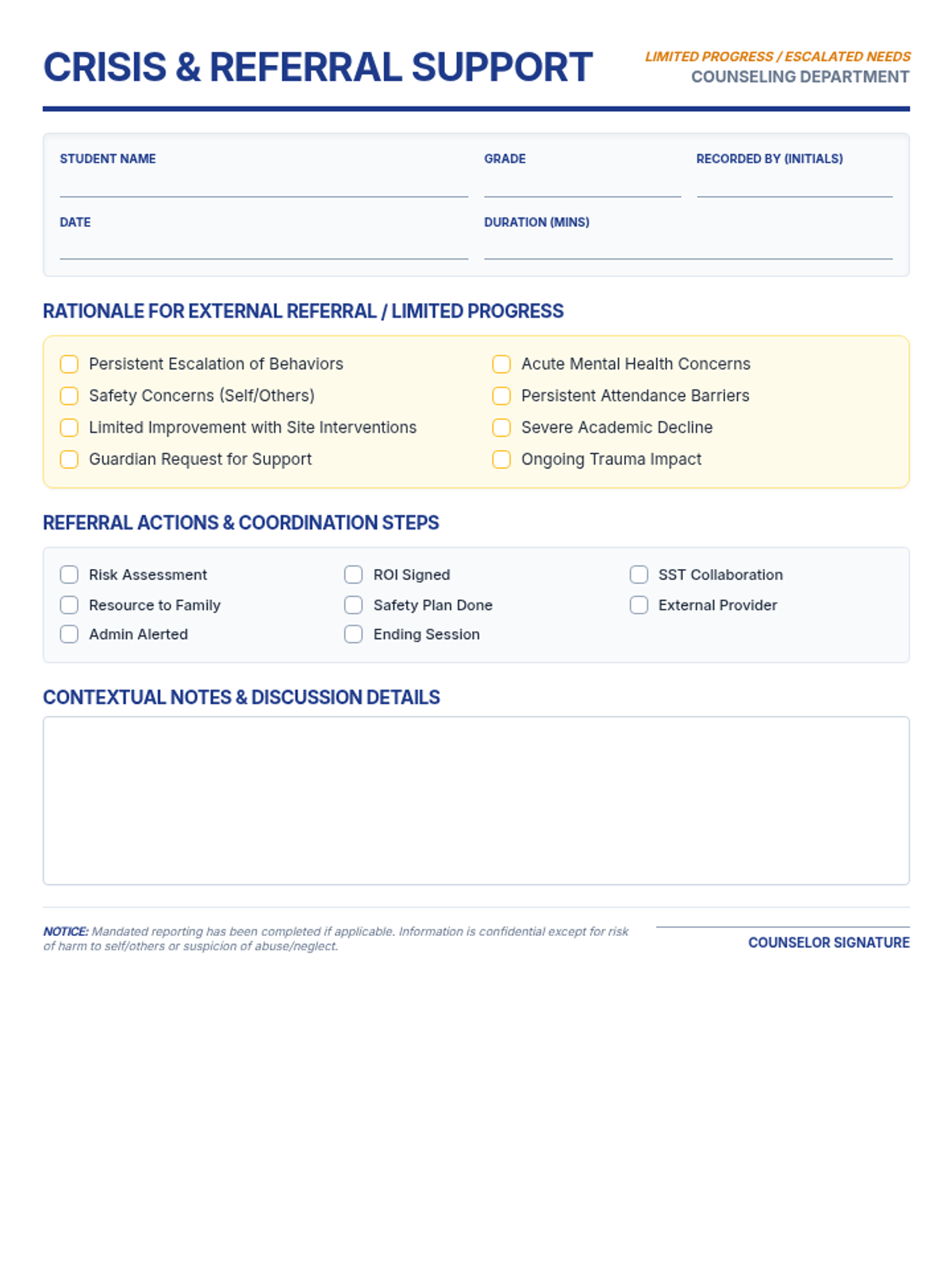
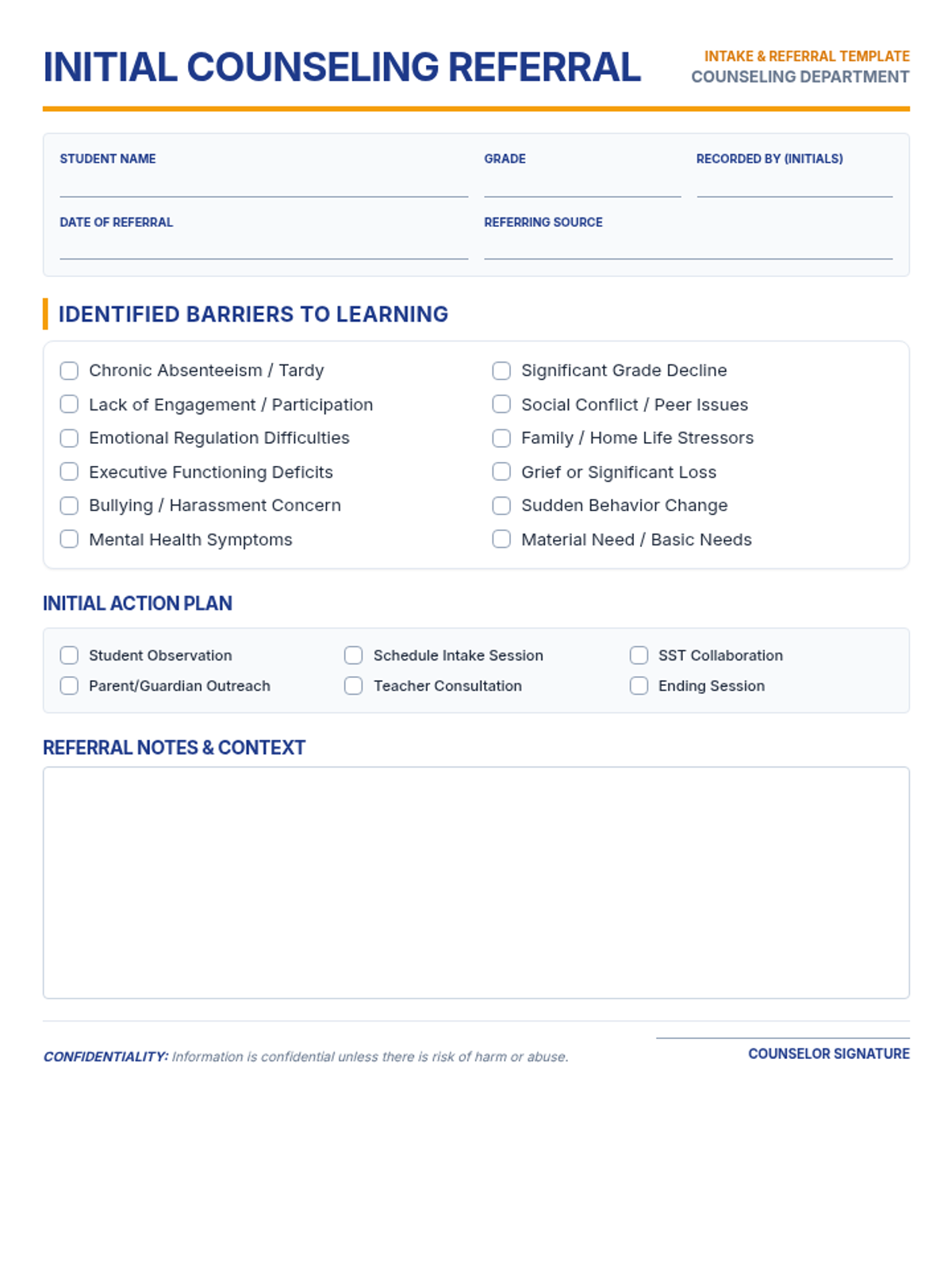
A suite of professional case note templates for school counselors, designed for efficiency and clarity in documenting student support sessions. These templates follow a blue and gold theme and utilize best-practice intervention checklists.
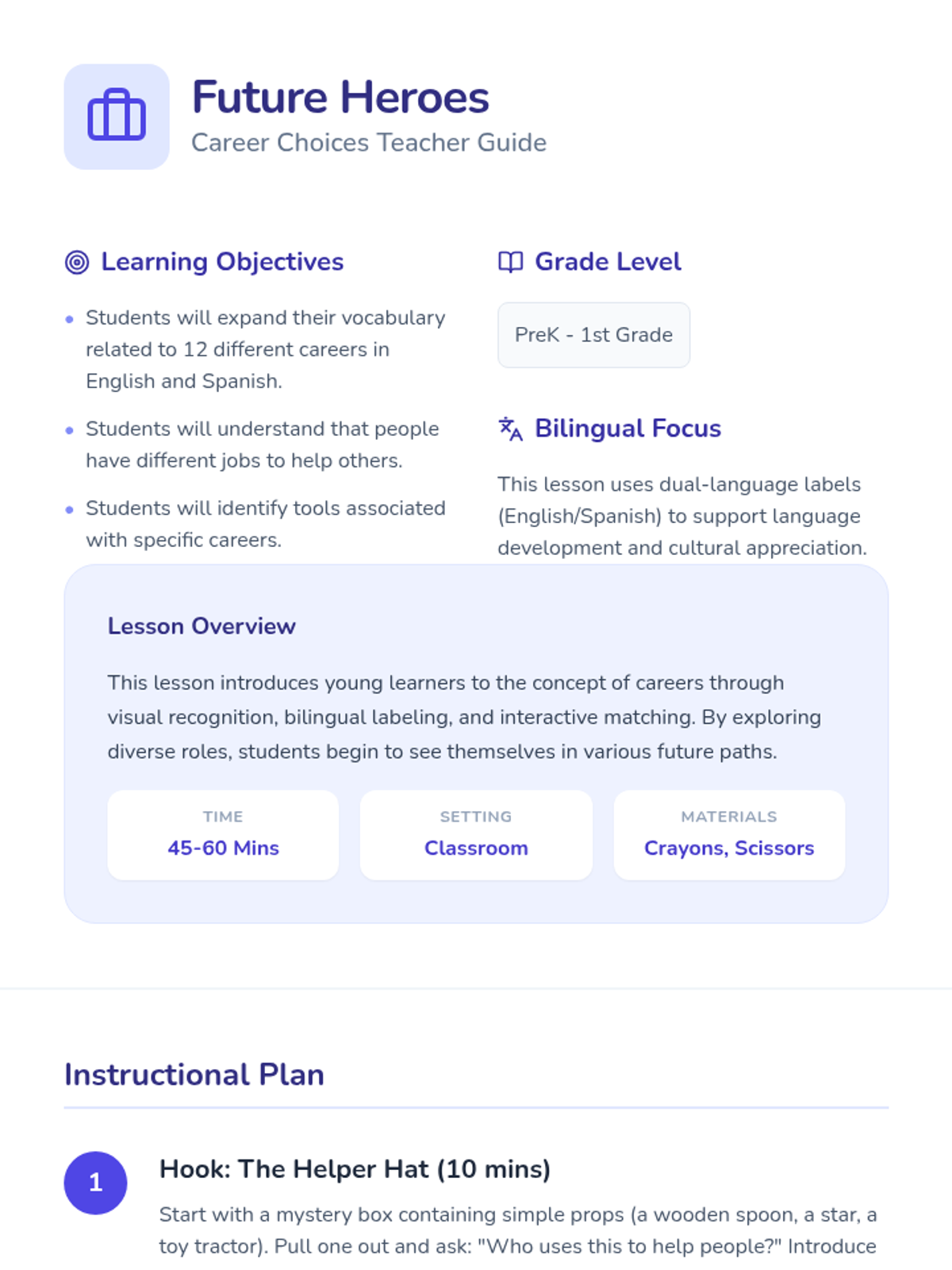
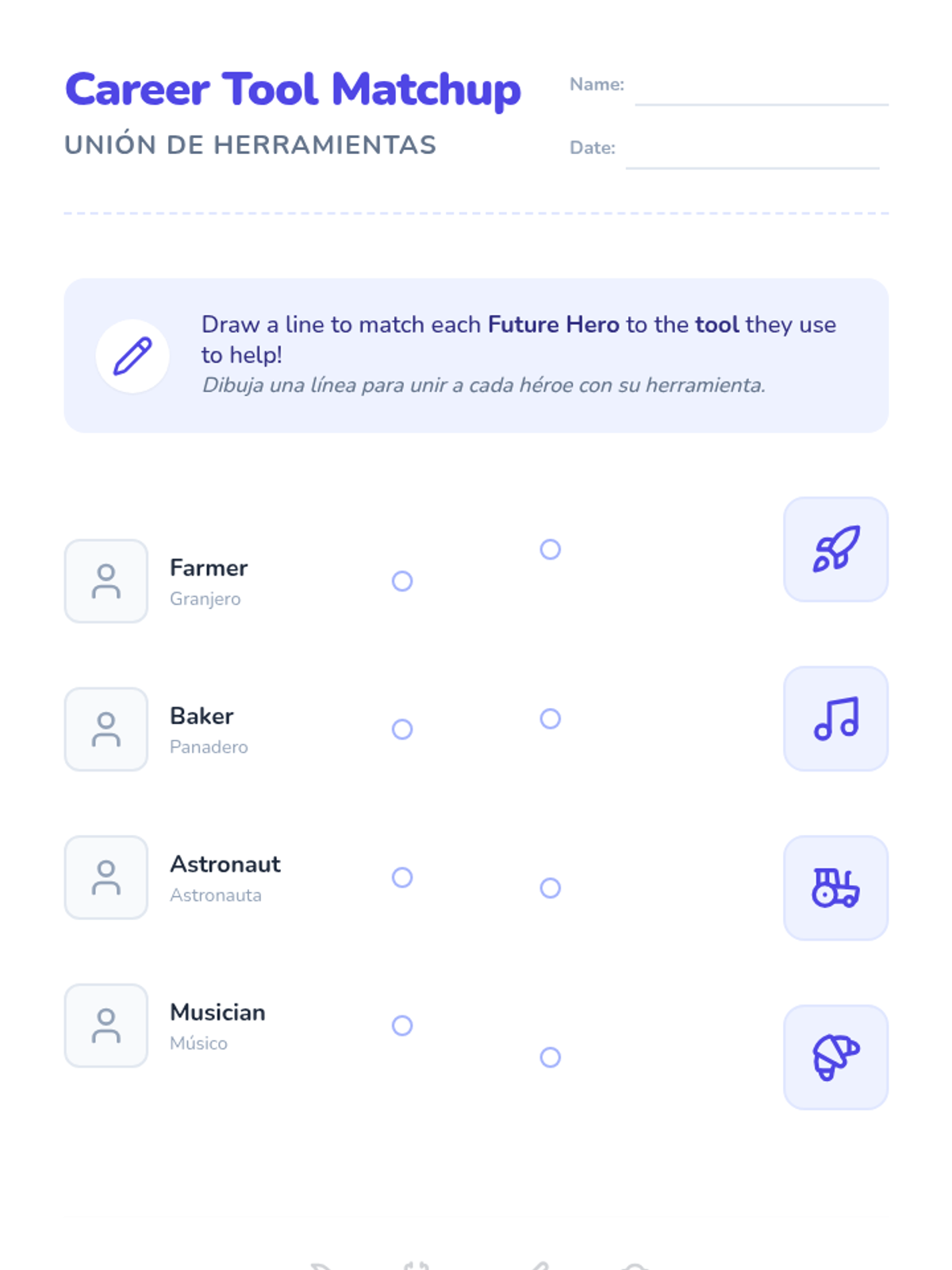
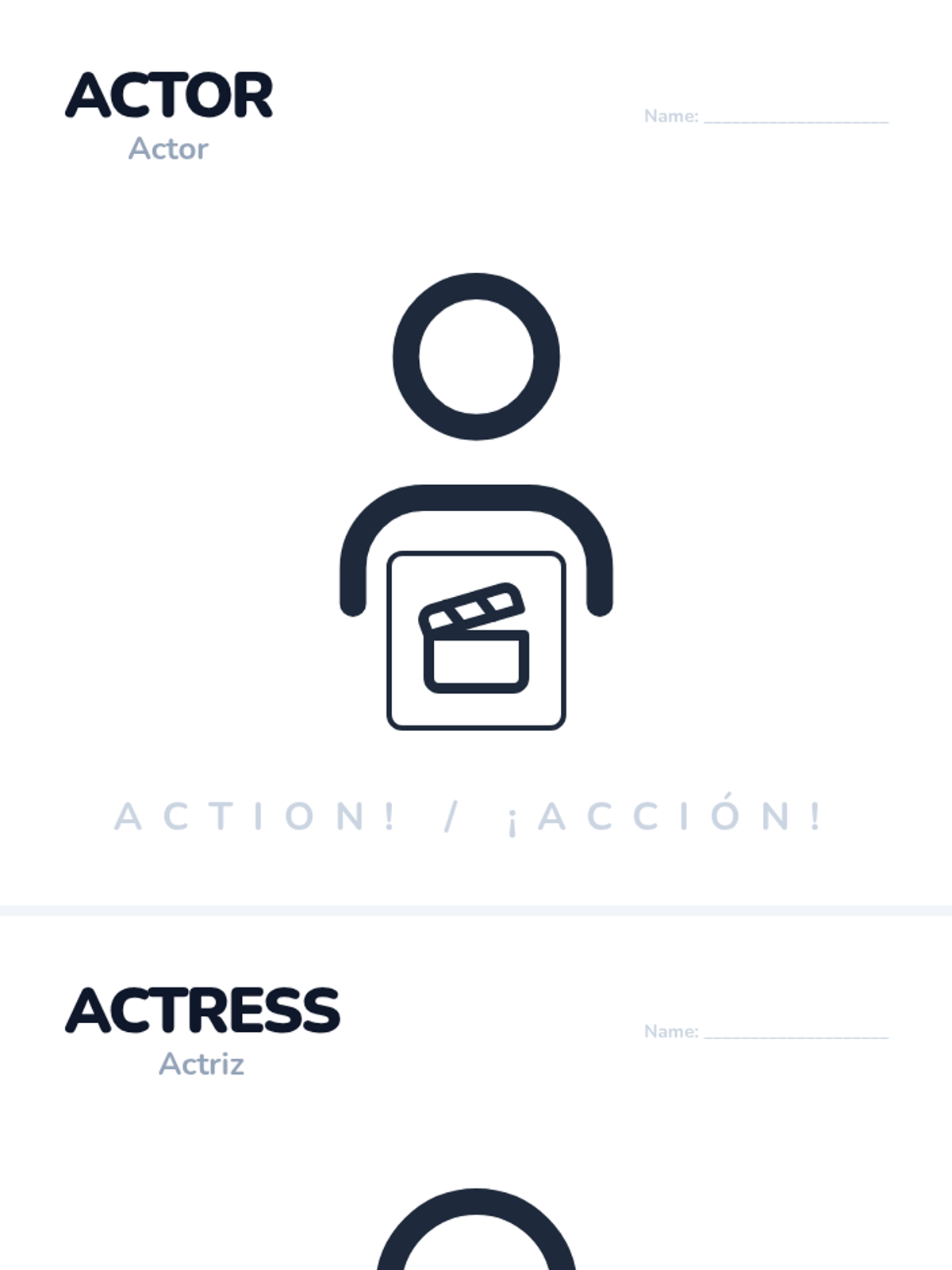
A foundational lesson for PreK-1 students to explore various career paths, learn bilingual vocabulary, and understand how different jobs help the community.
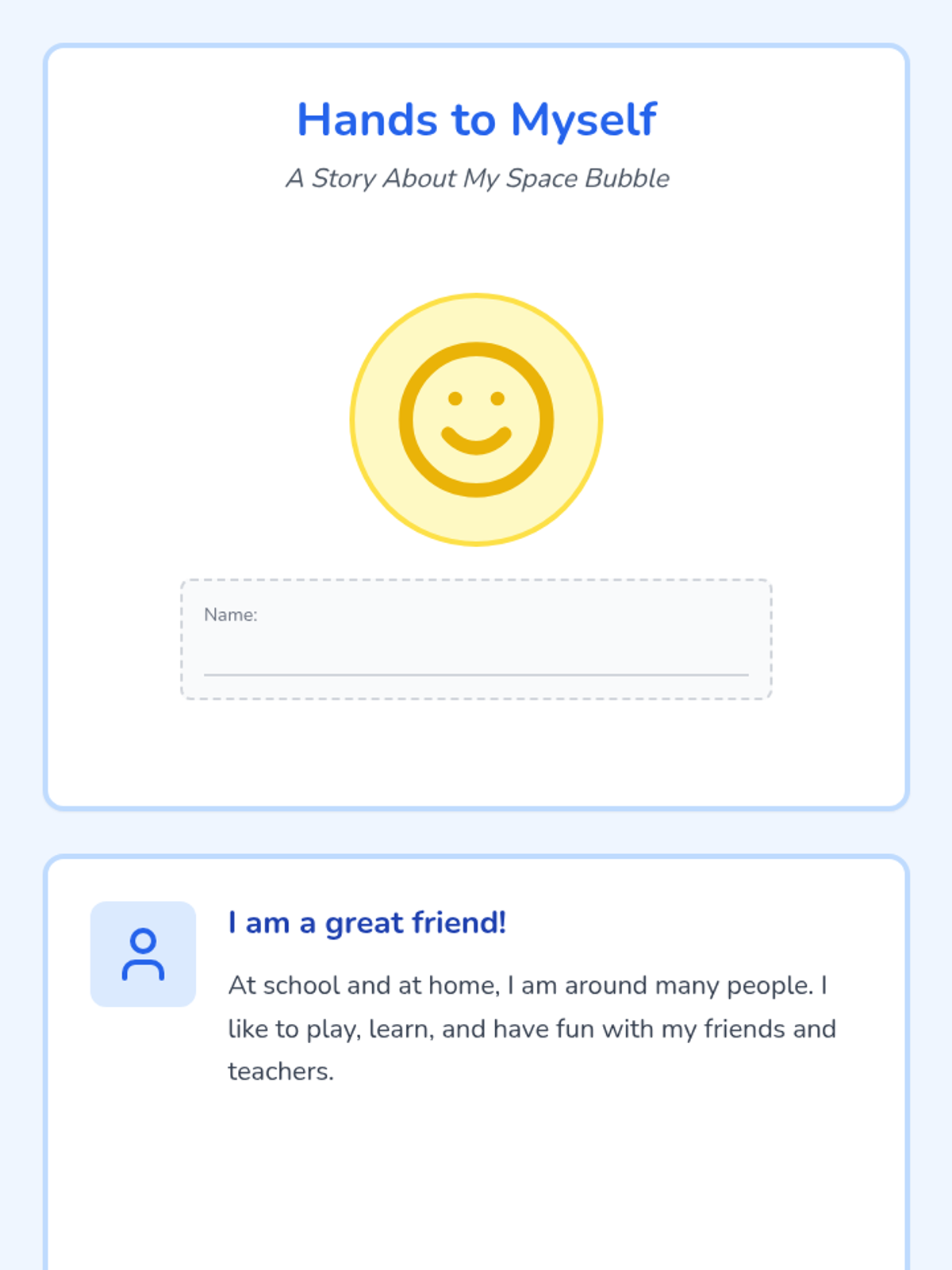
Teaching students about the concept of personal space bubbles and the importance of keeping hands to themselves, specifically regarding private body parts.
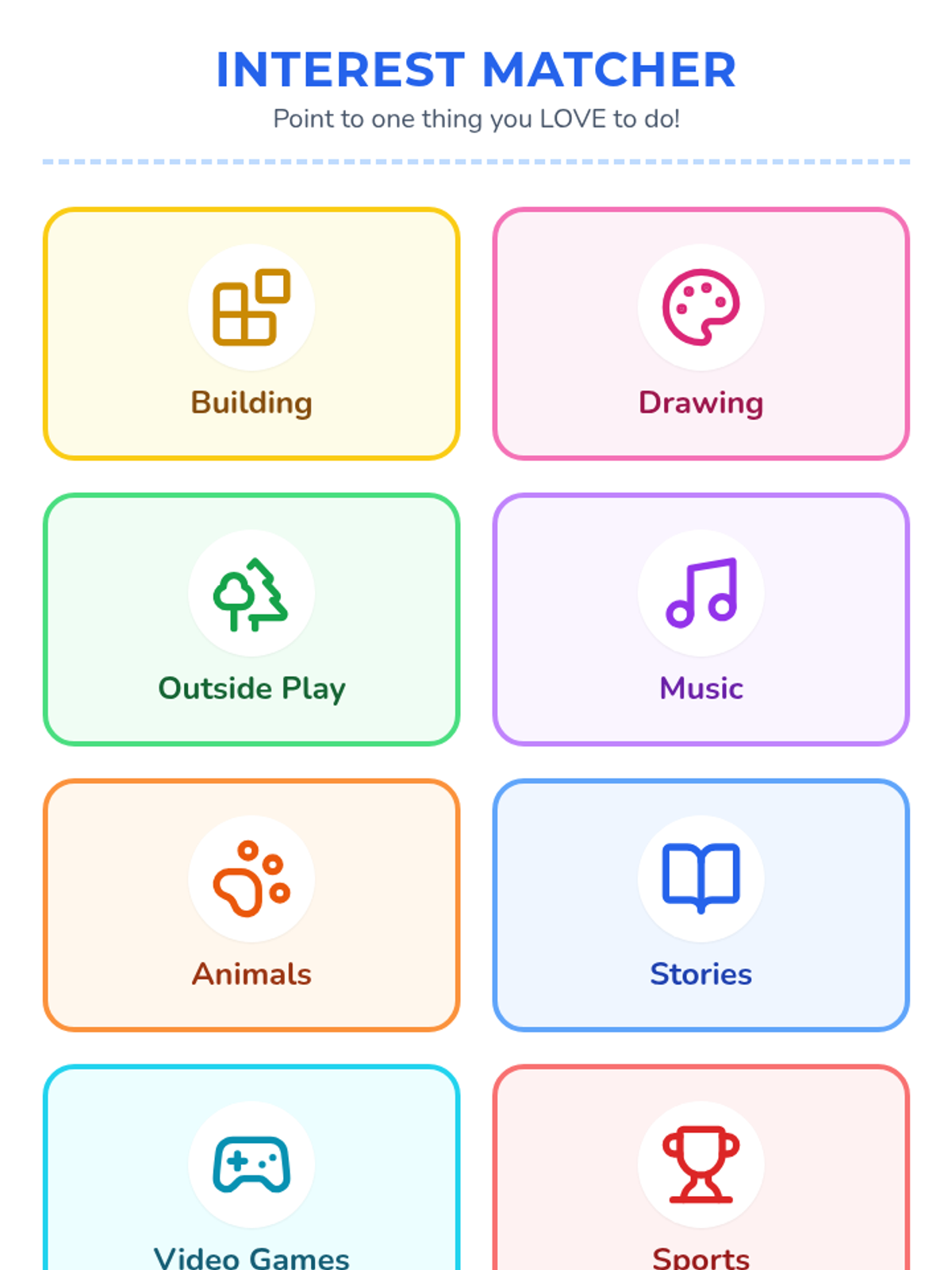
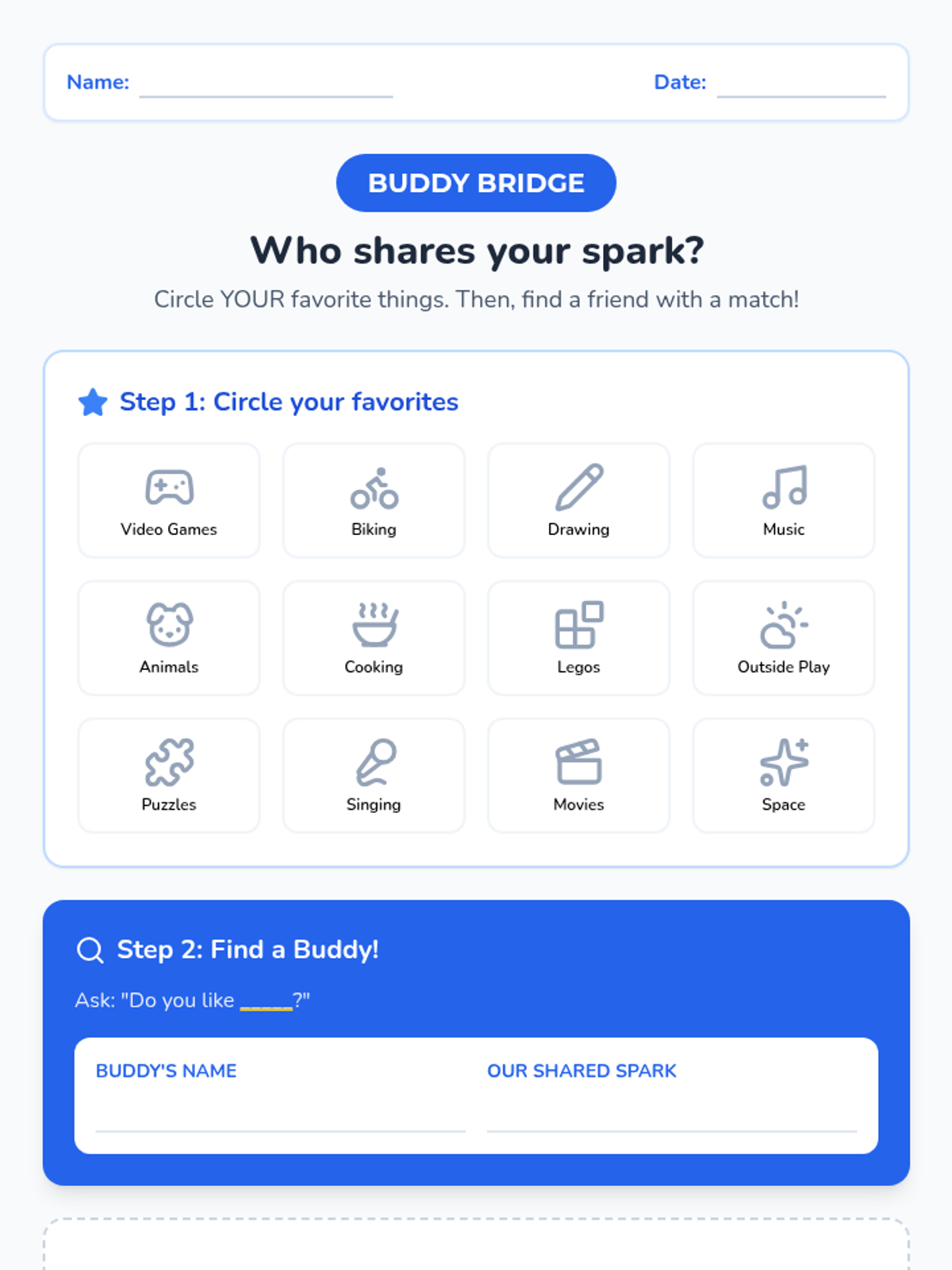
An introductory lesson focusing on how shared interests and hobbies serve as a starting point for building friendships. Students practice identifying their own favorites and finding peers who enjoy the same things.
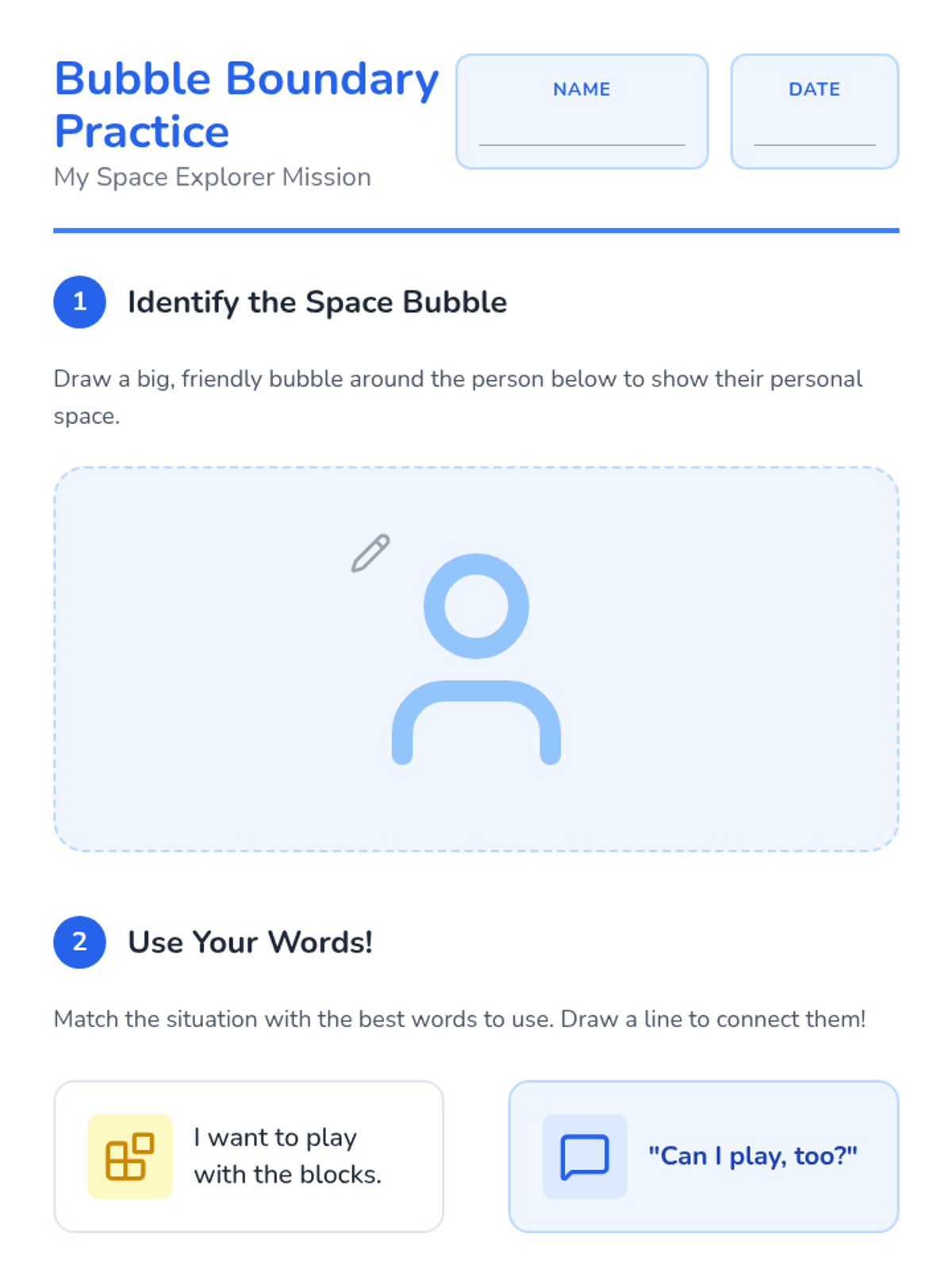
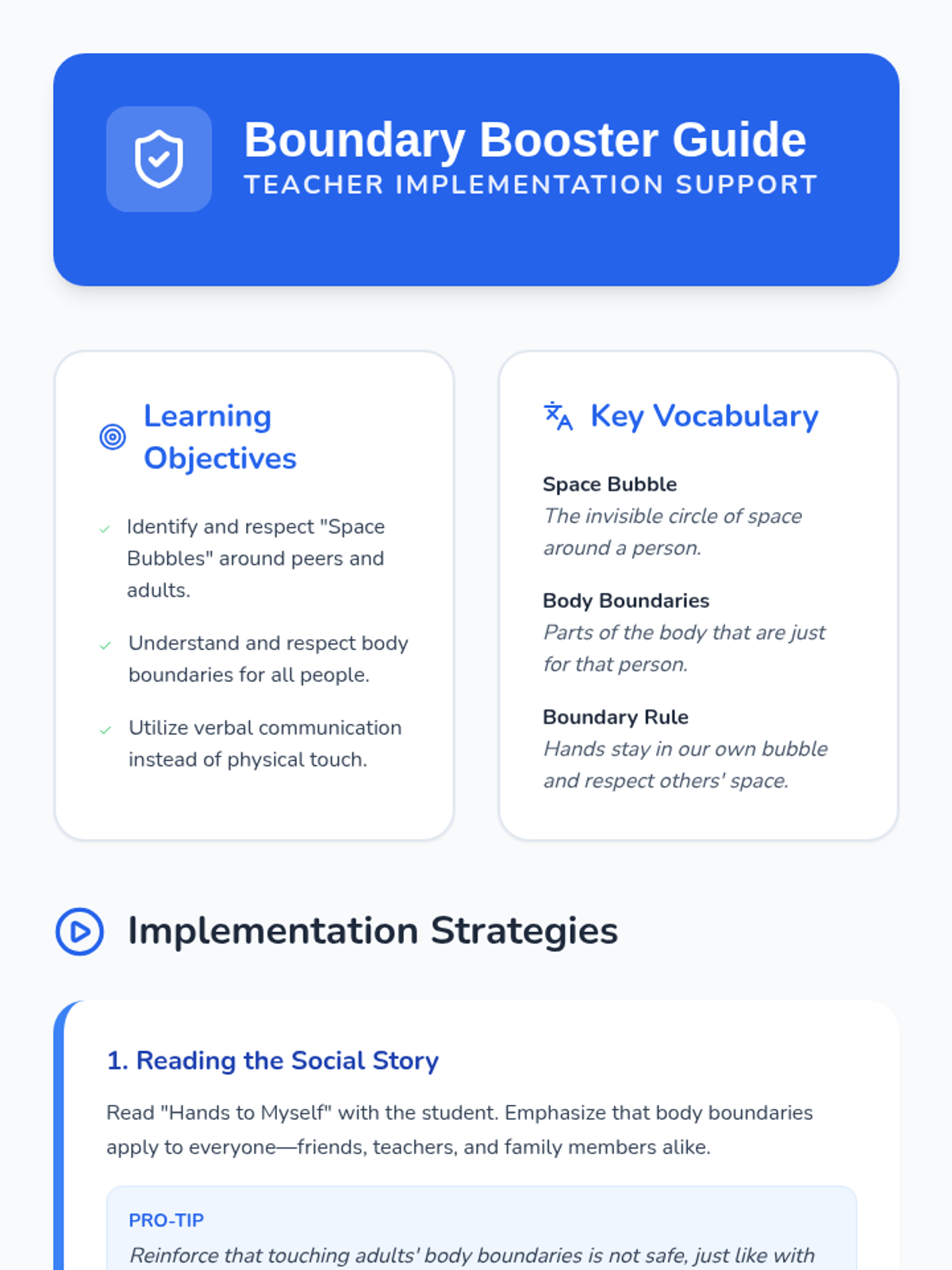
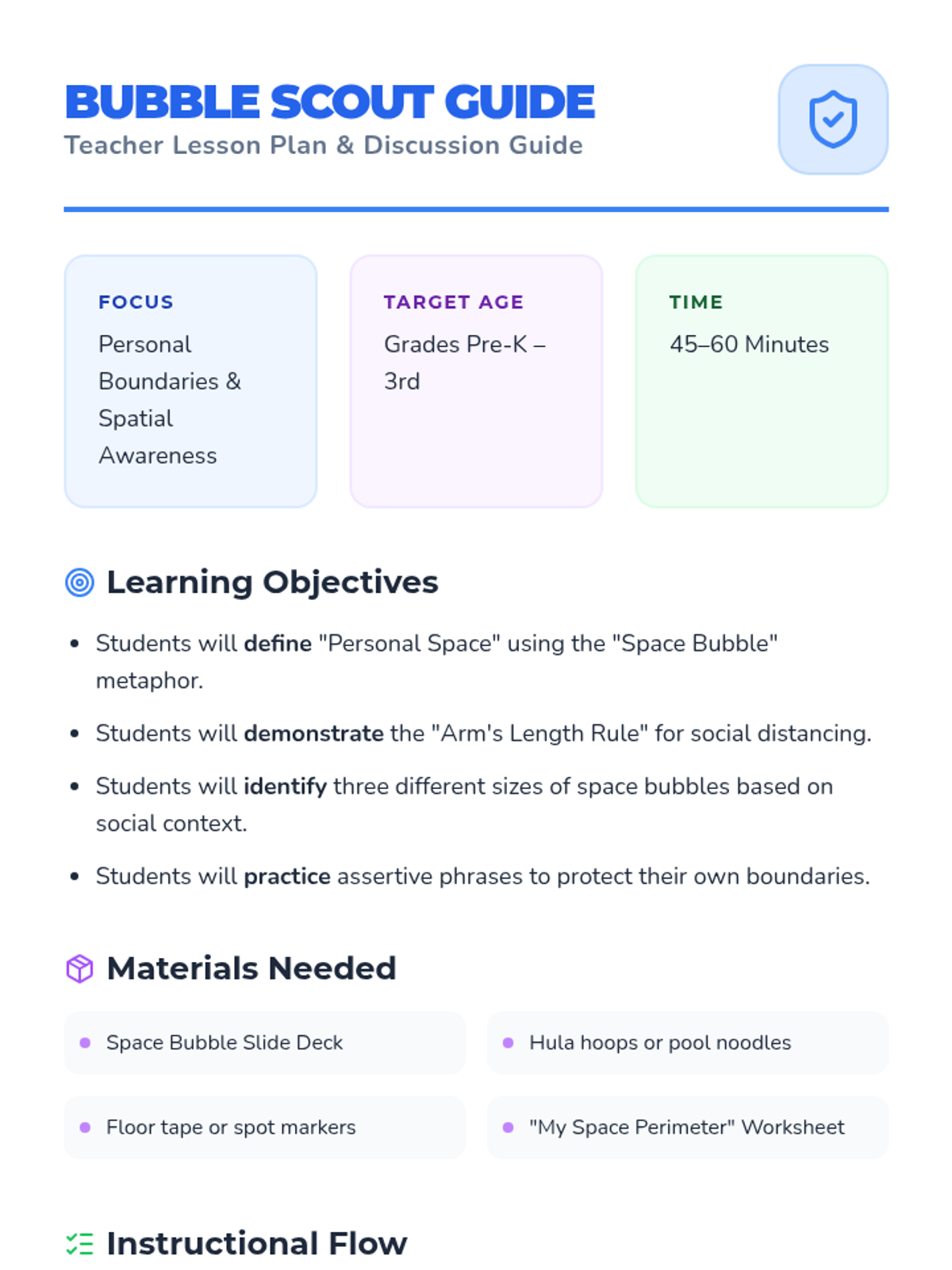
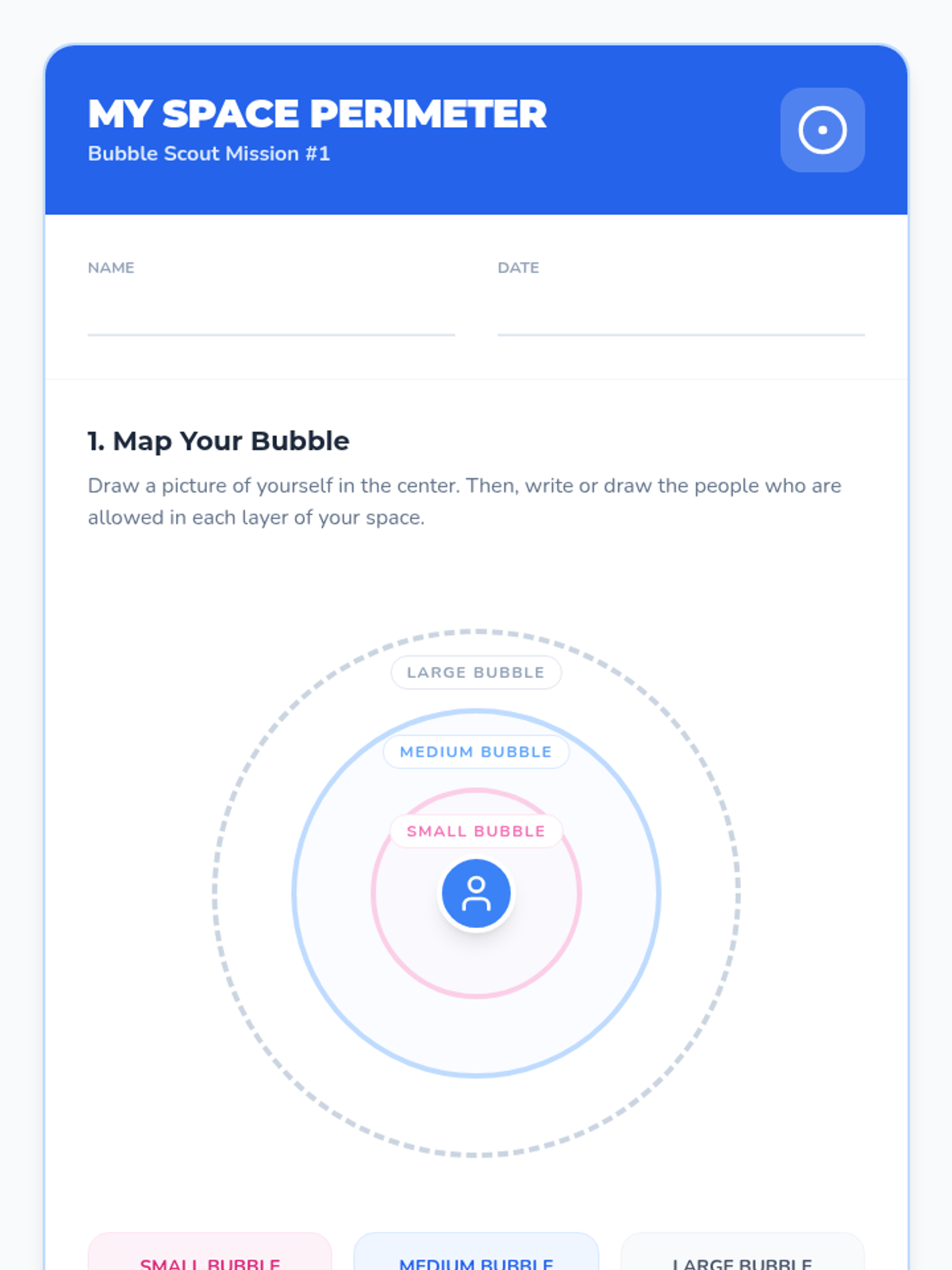
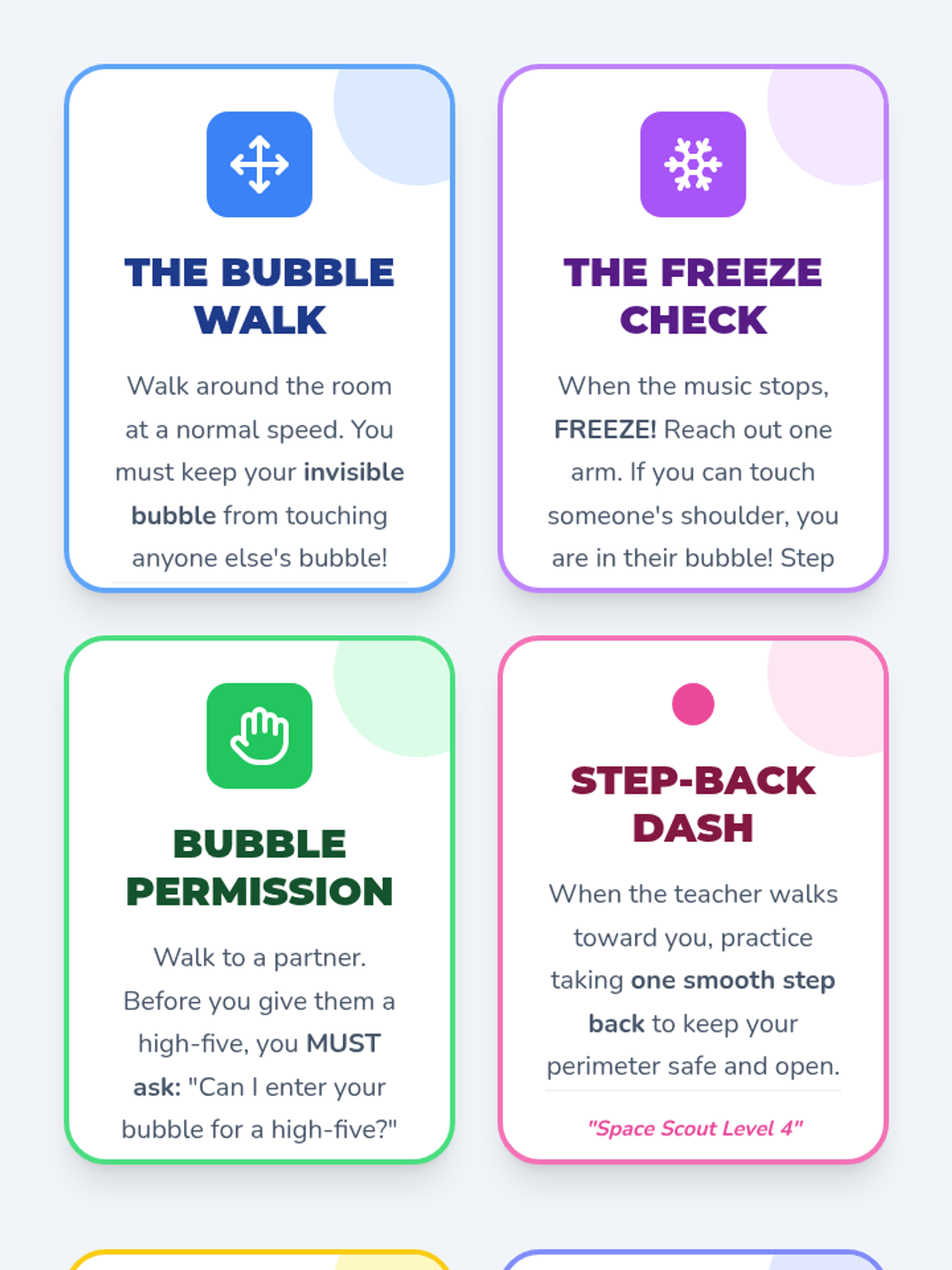
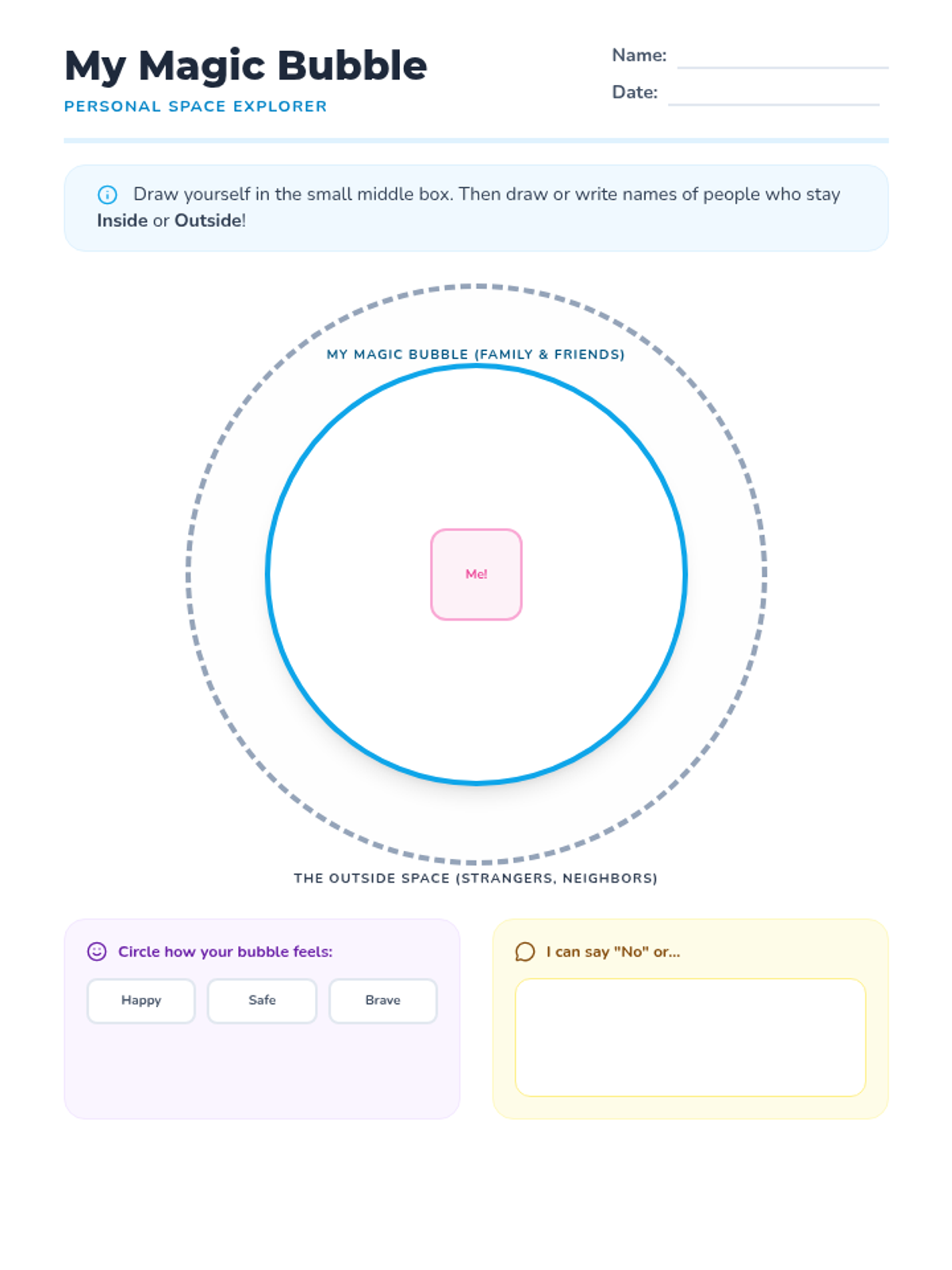
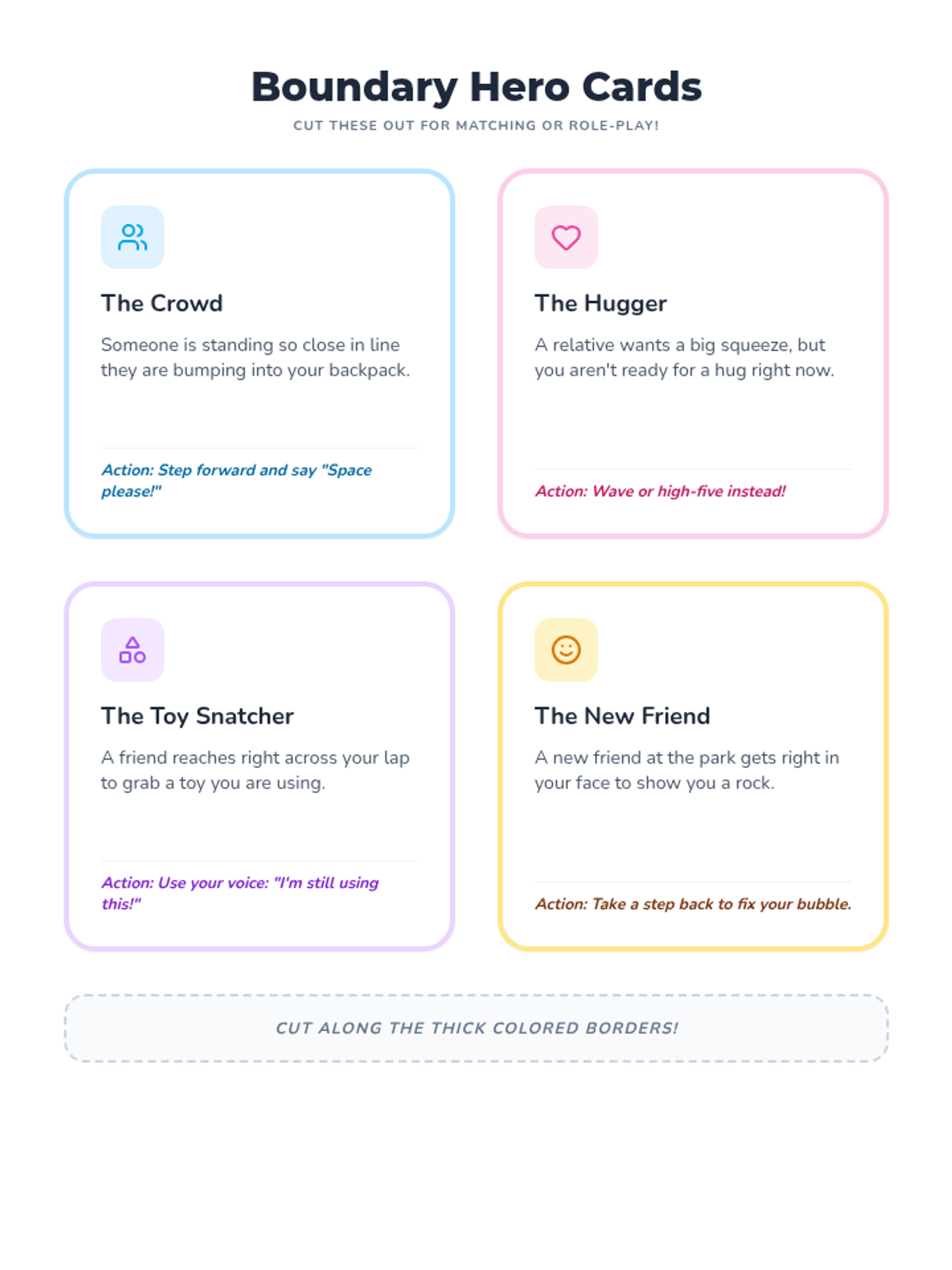
A comprehensive lesson teaching elementary students about personal boundaries and the 'space bubble' concept through visual aids, interactive floor activities, and reflective worksheets.
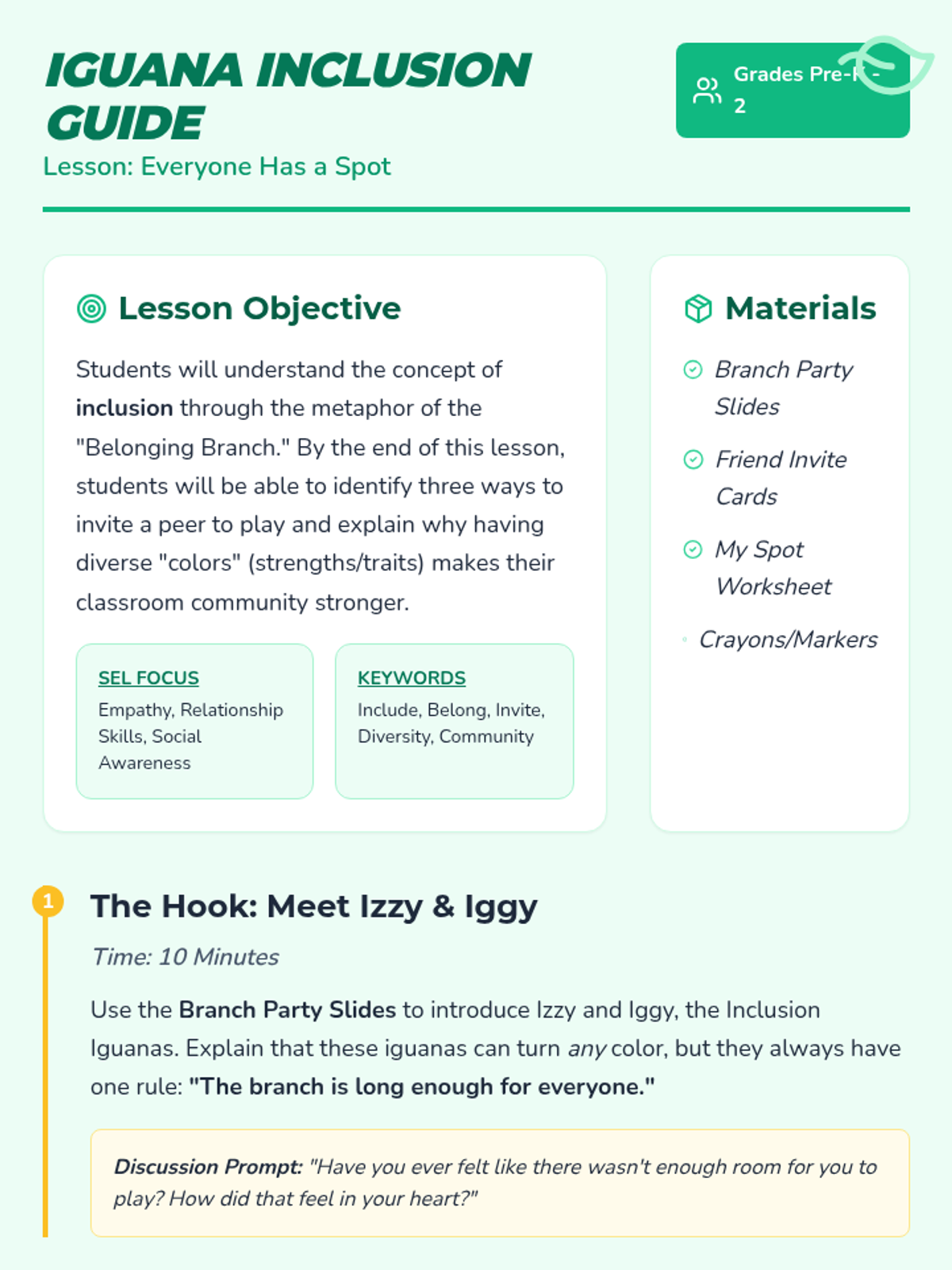
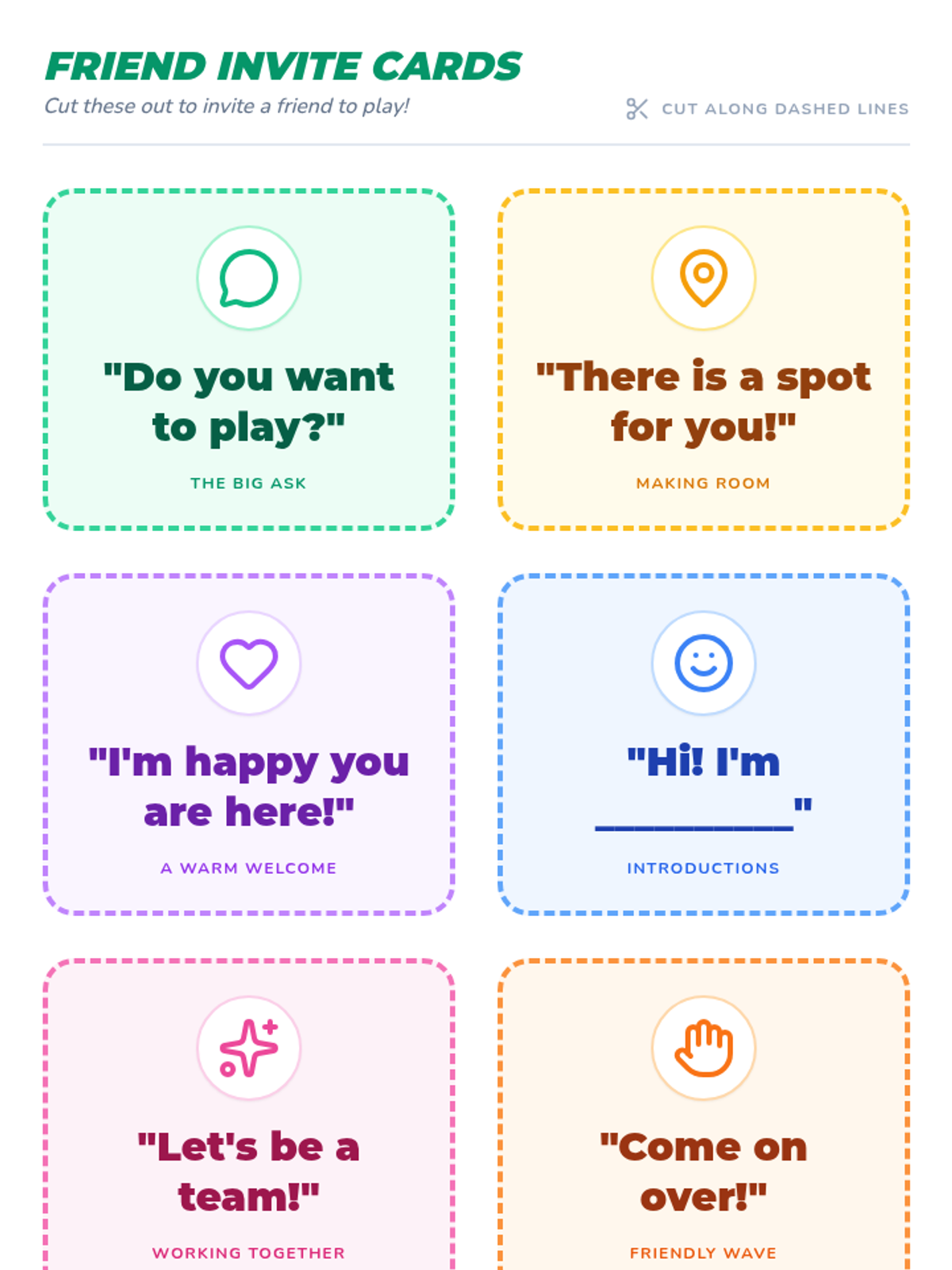
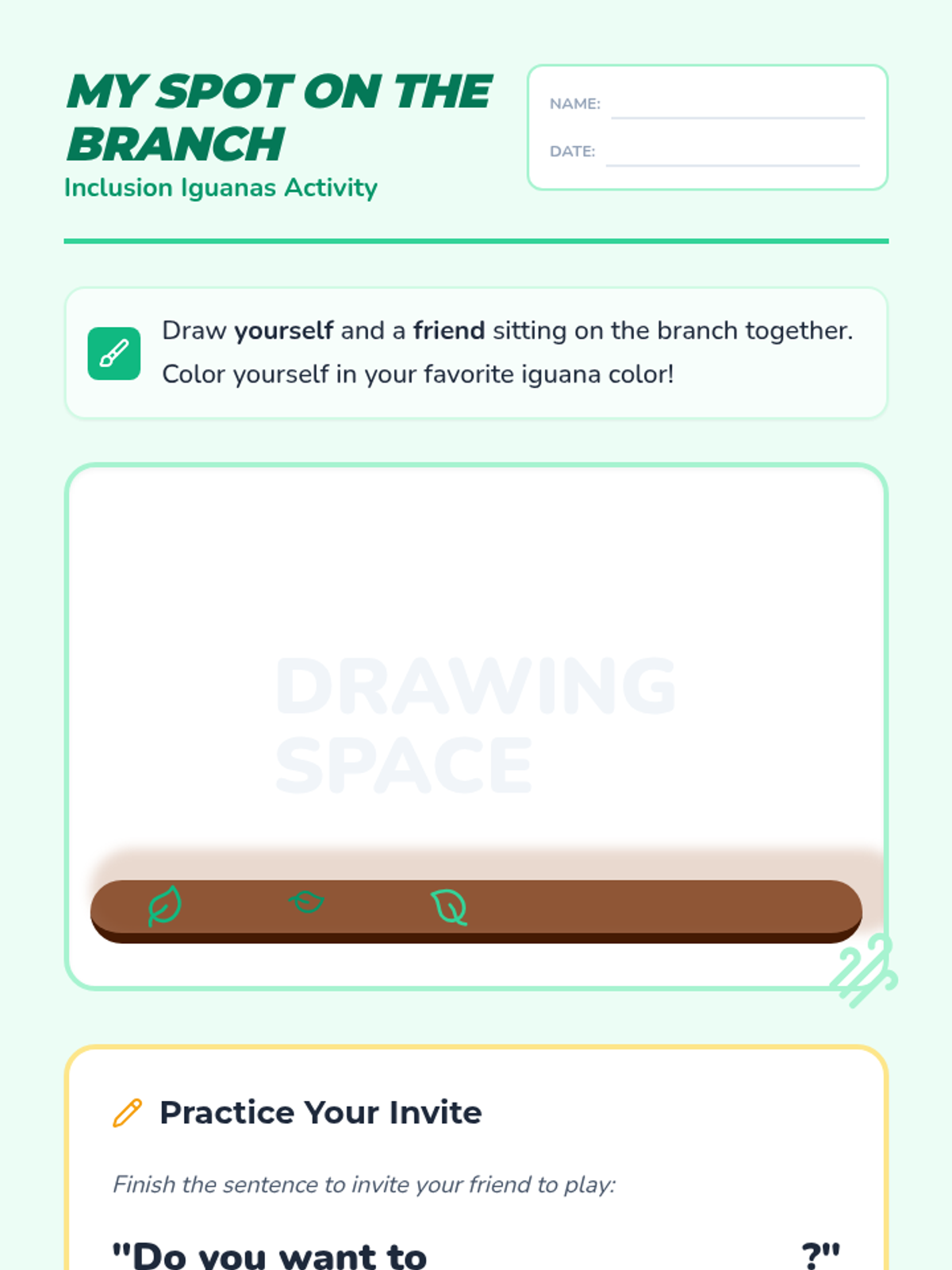
A heartwarming lesson for Pre-K to 2nd Grade focused on diversity and belonging through the story of 'Inclusion Iguanas'. Students learn to invite others to play and celebrate different strengths within their classroom community.
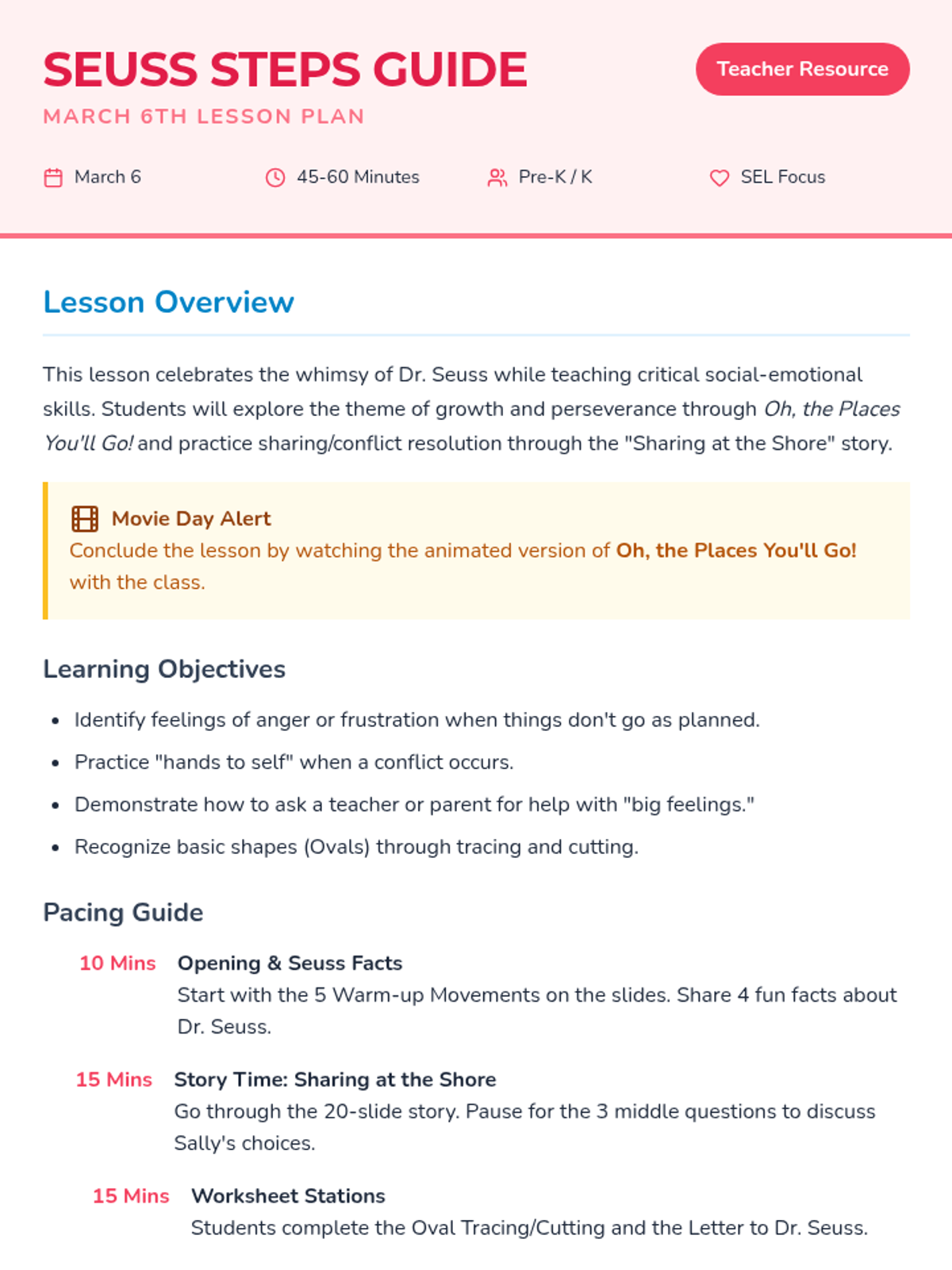
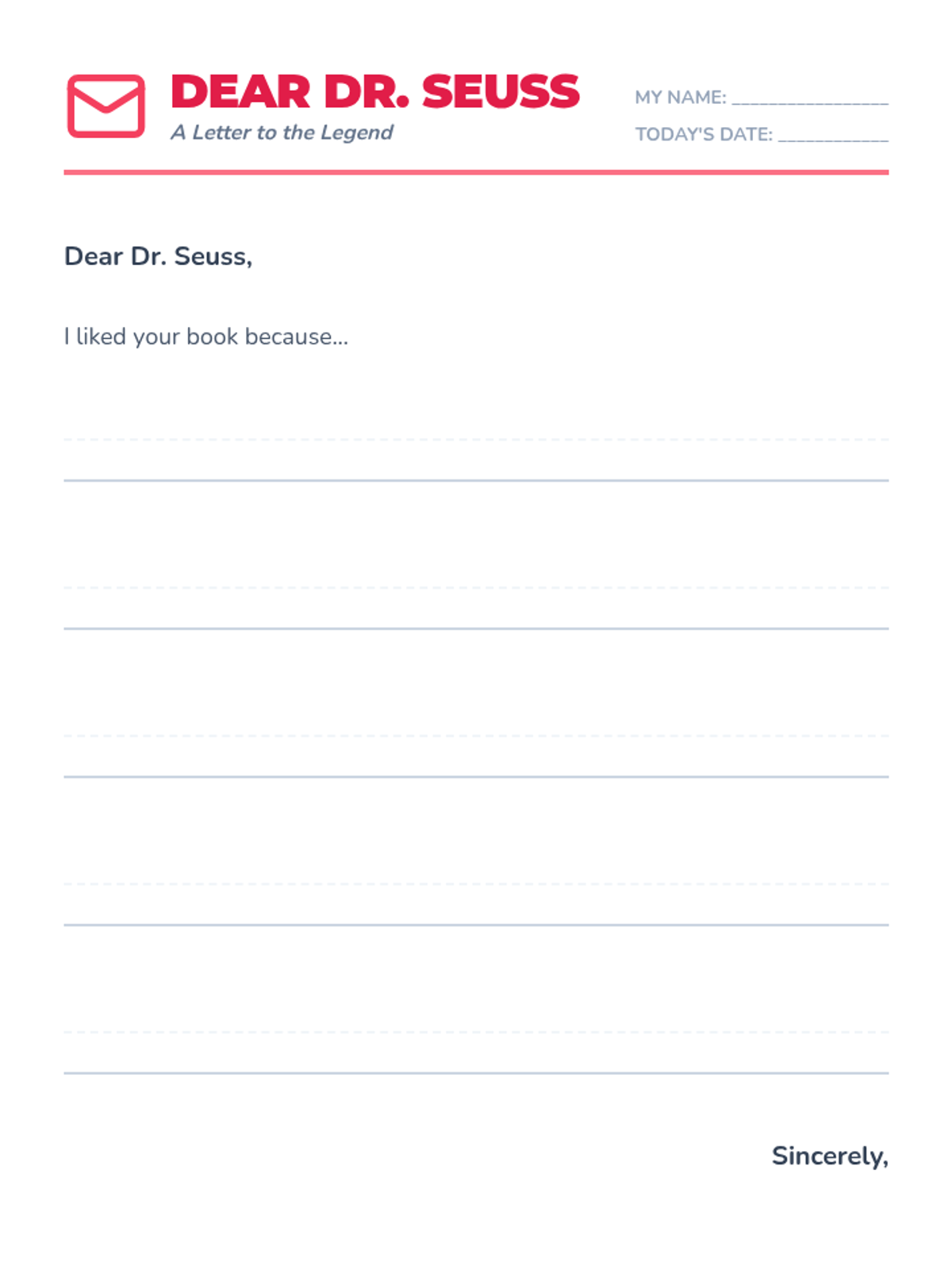
A high-energy, social-emotional learning lesson for Pre-K and Kindergarten focused on Dr. Seuss's 'Oh, the Places You'll Go!', sharing, and identifying feelings. Students practice 'hands to self' and asking adults for help through interactive slides and creative worksheets.
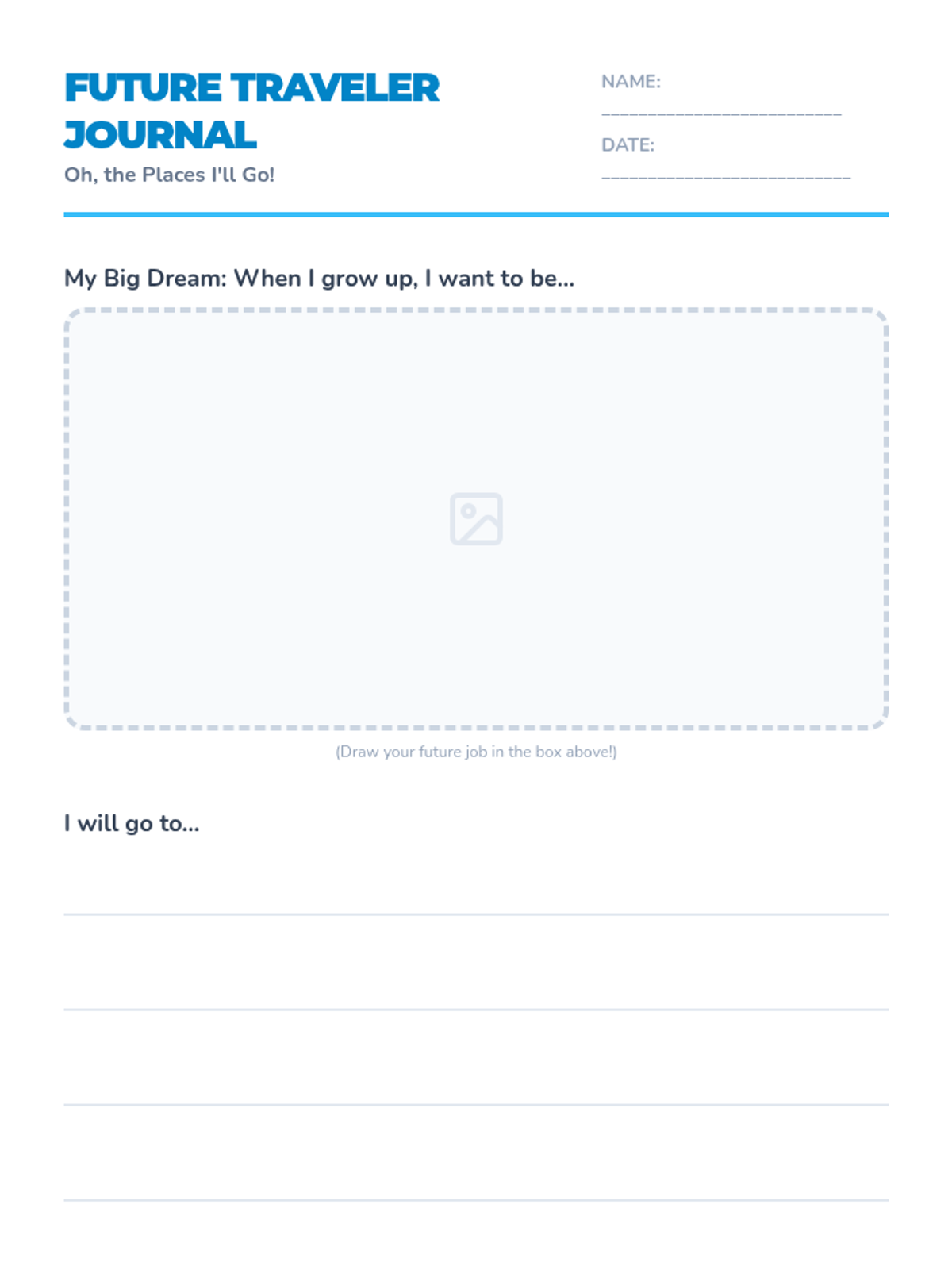
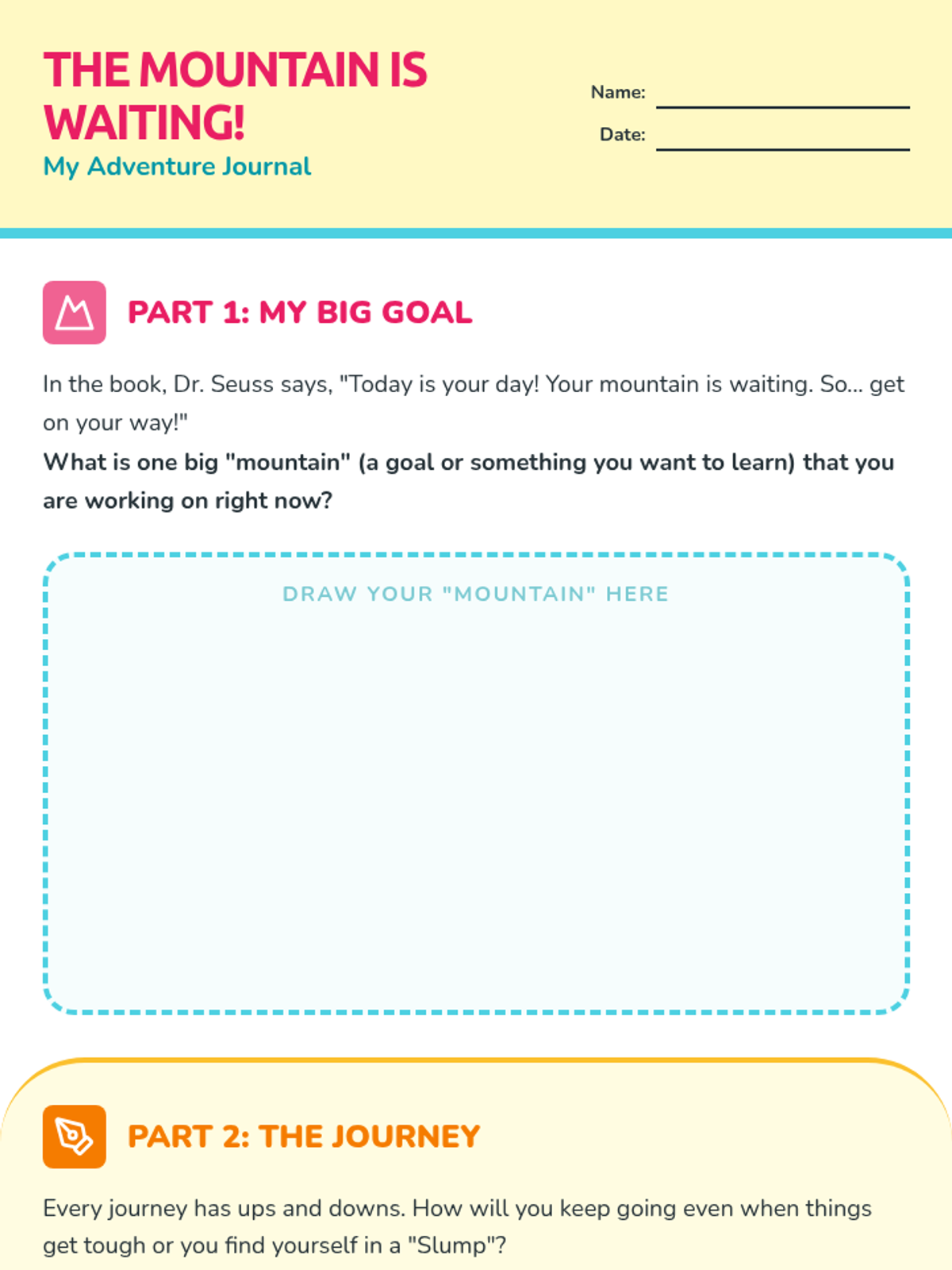
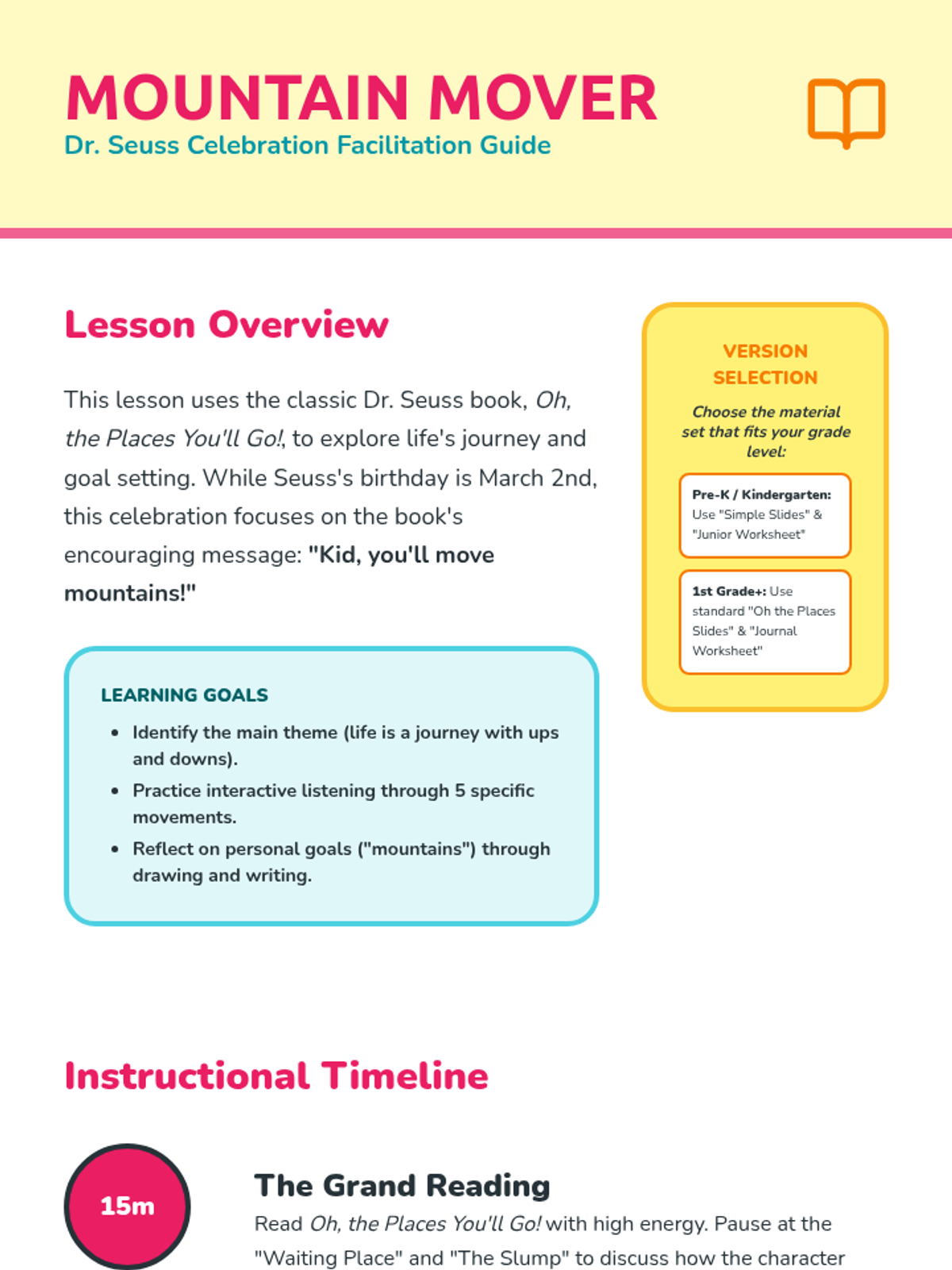
An exploration of Dr. Seuss's iconic 'Oh, the Places You'll Go!', focusing on perseverance, ambition, and the journey of life. Includes interactive movements and reflective journaling.
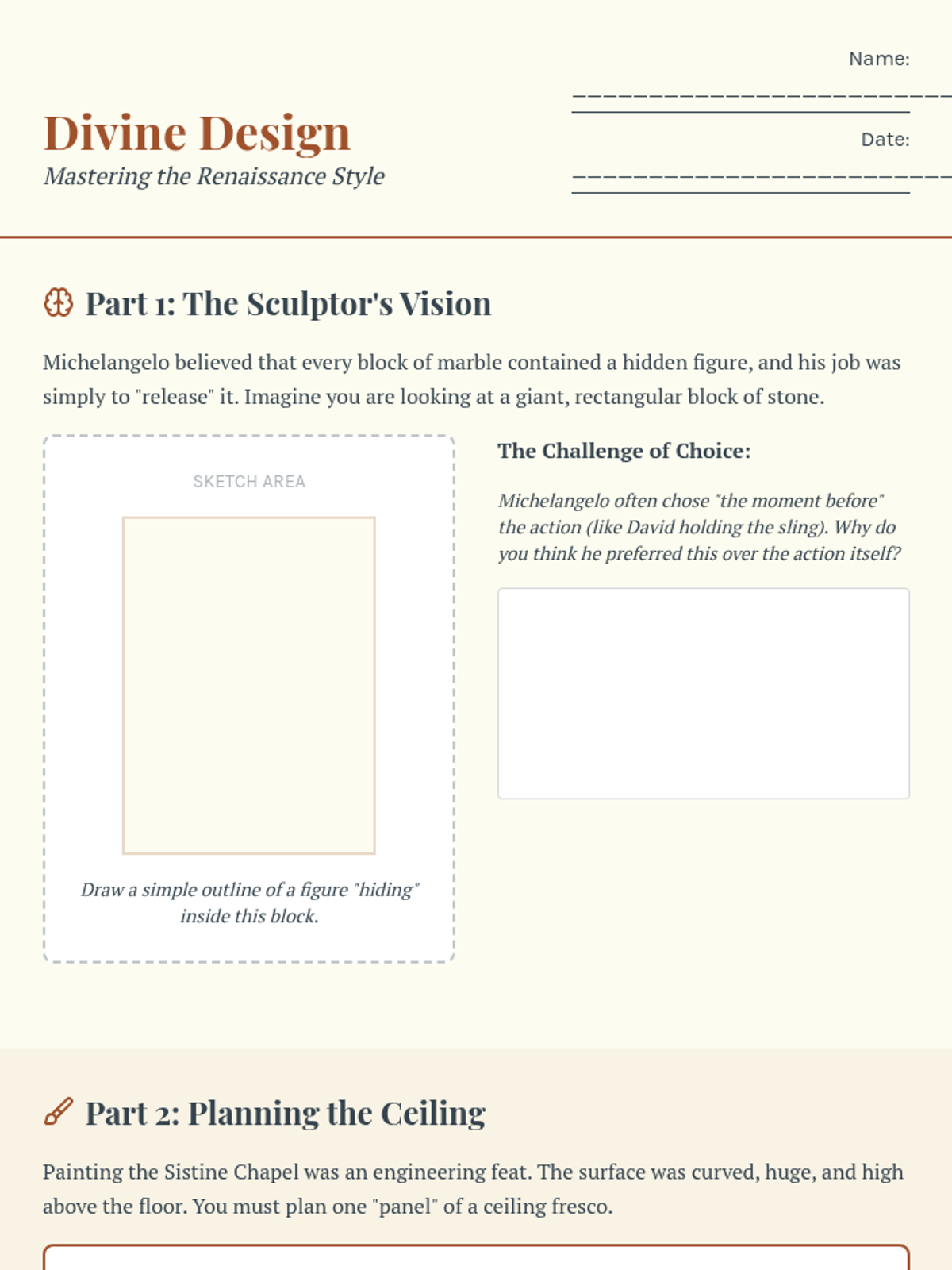
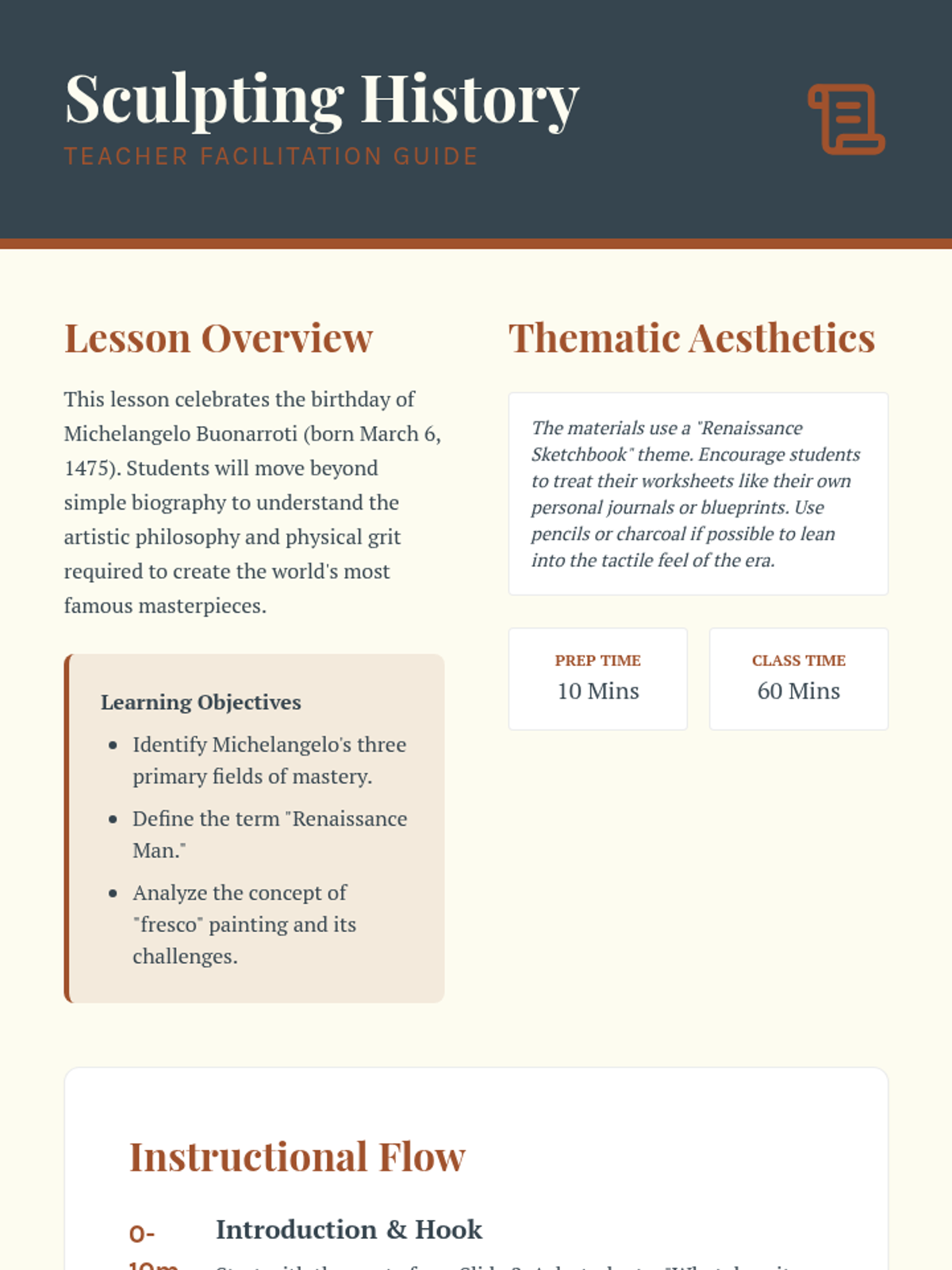
A deep dive into the life and works of Michelangelo Buonarroti, celebrating his birthday on March 6. Students explore the concept of a 'Renaissance Man' through his sculptures, paintings, and architecture.
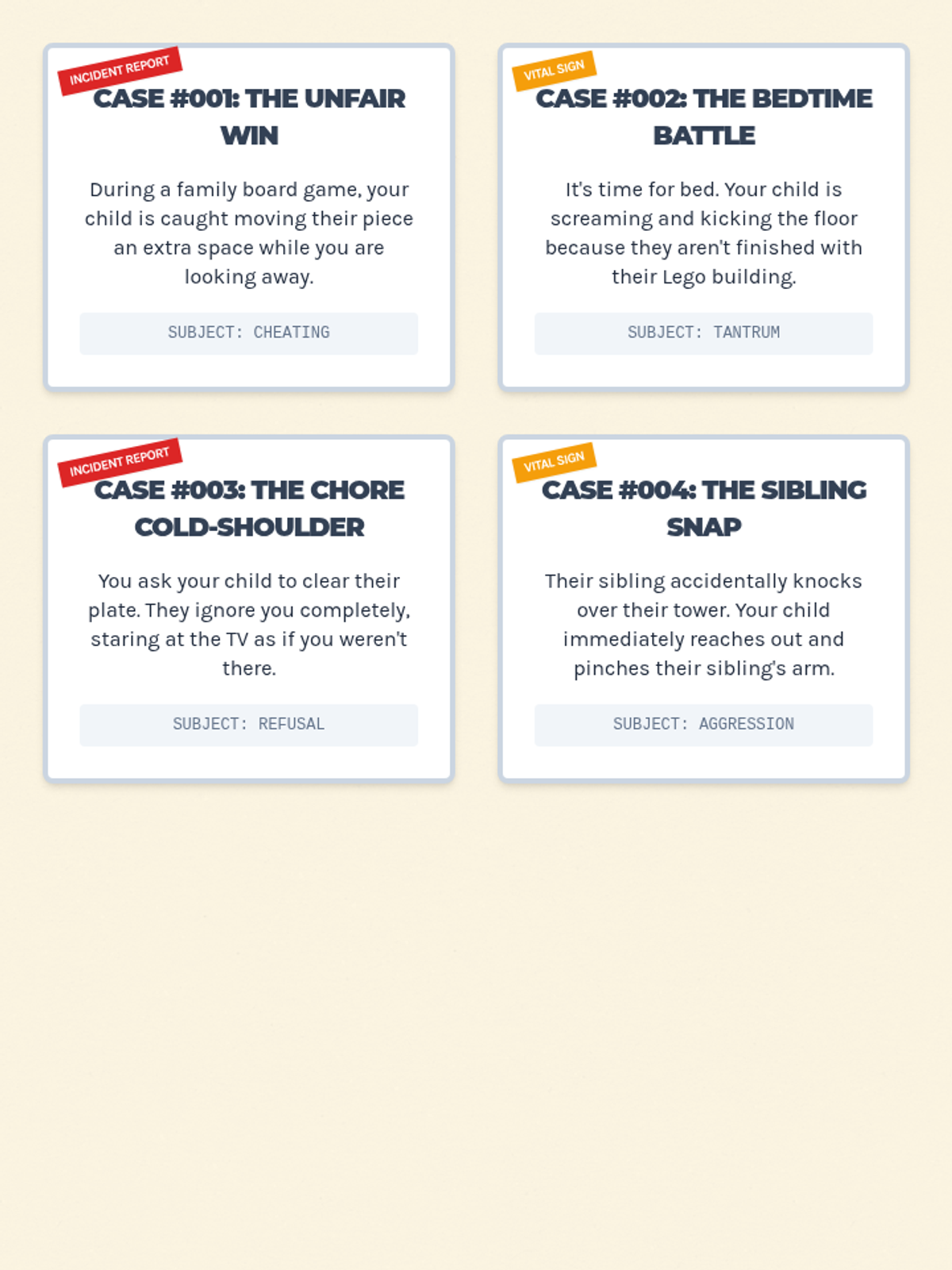
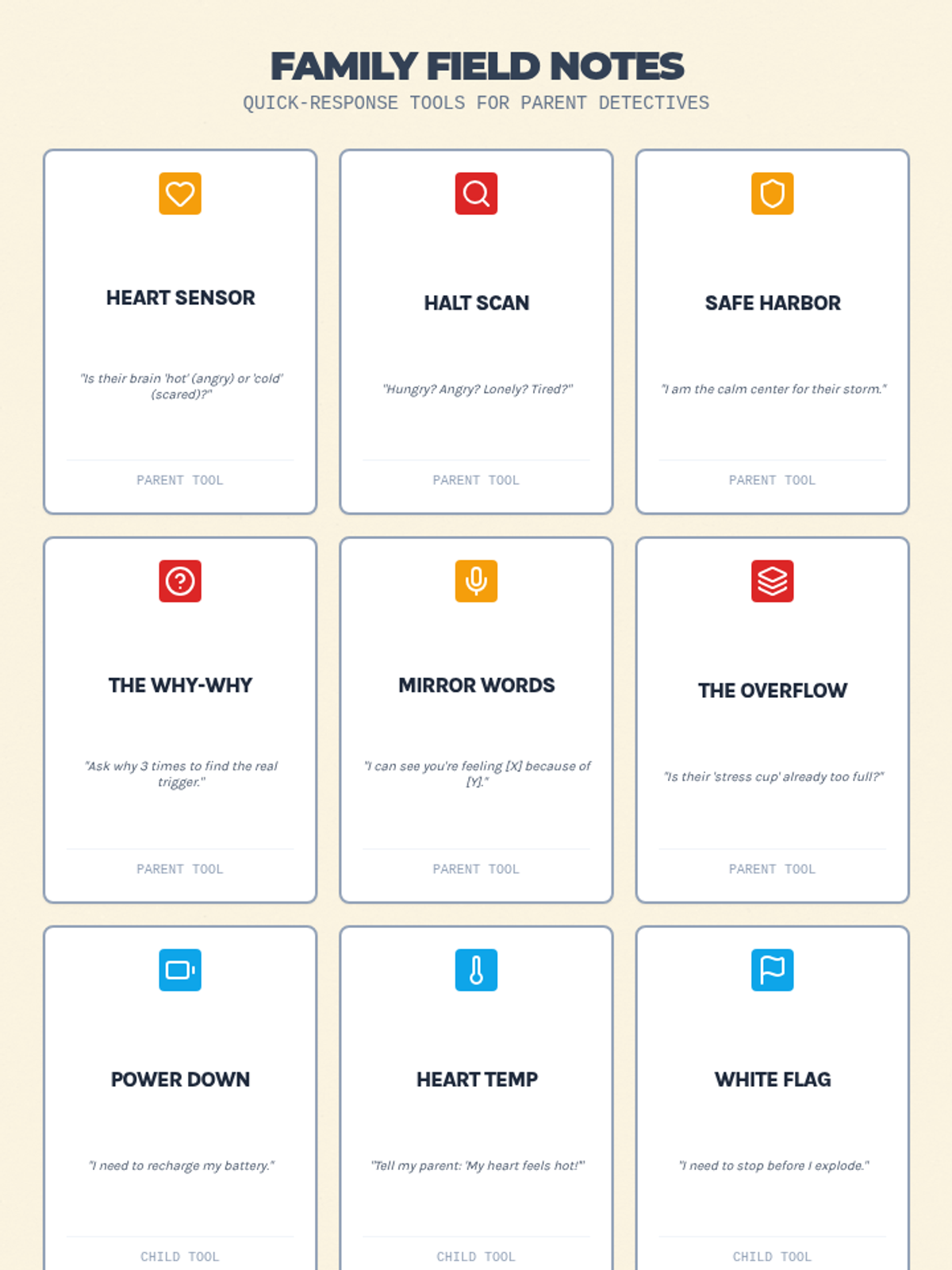
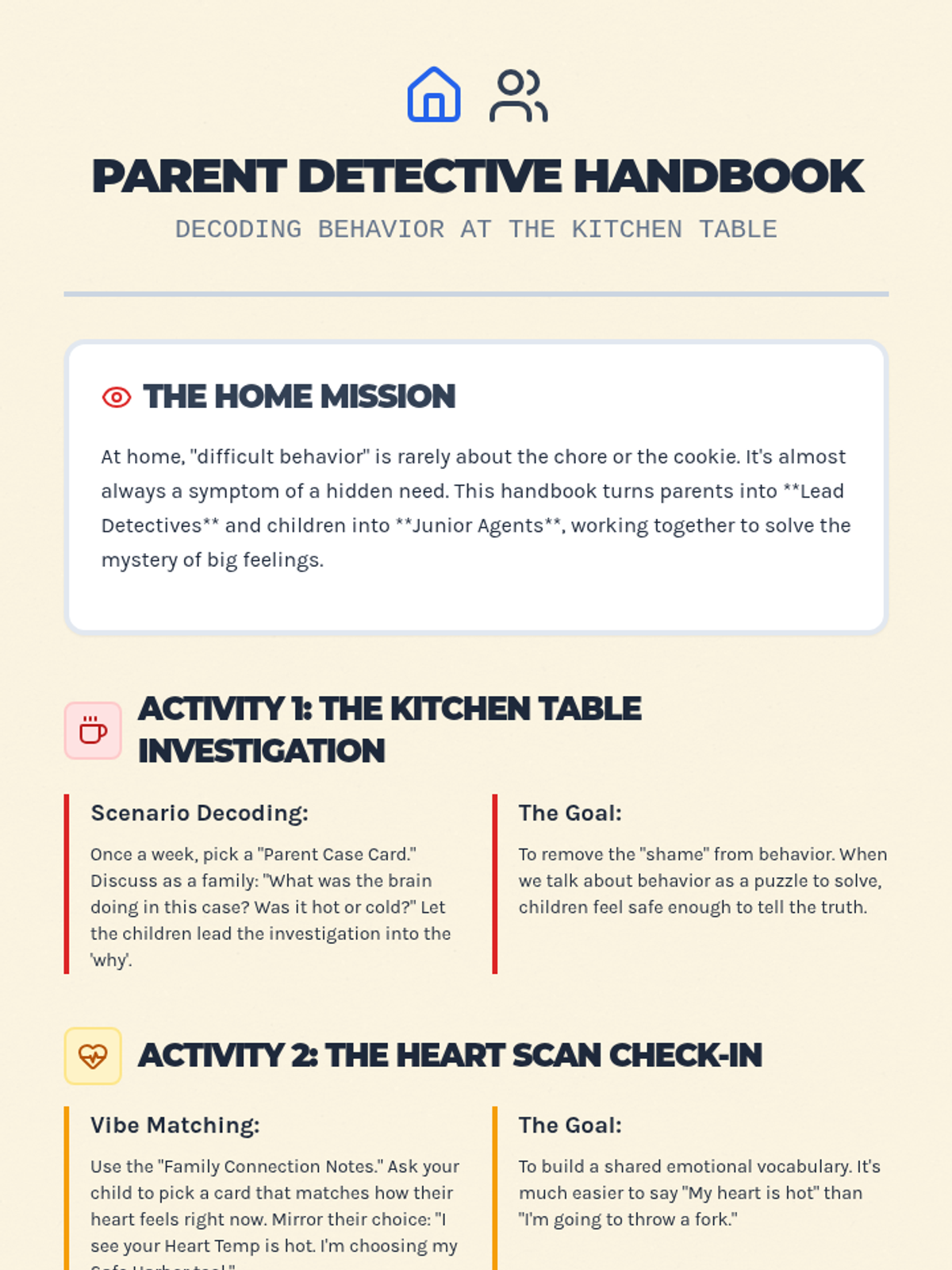
A detective-themed guide for parents and children to decode difficult behaviors at home. By using 'investigative curiosity' and 'heart reports,' families turn tantrums and cheating into opportunities for deeper connection and mutual understanding.
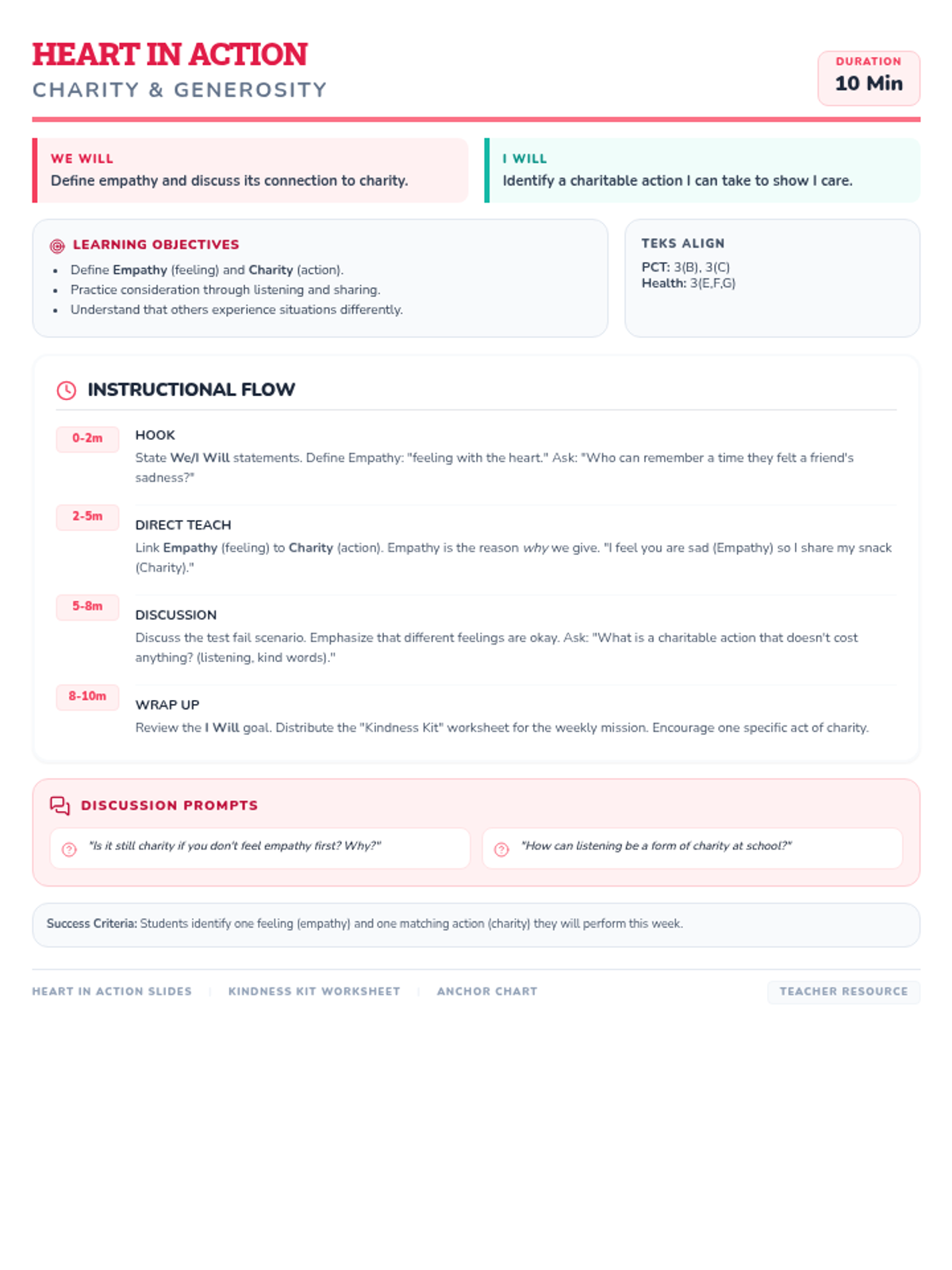
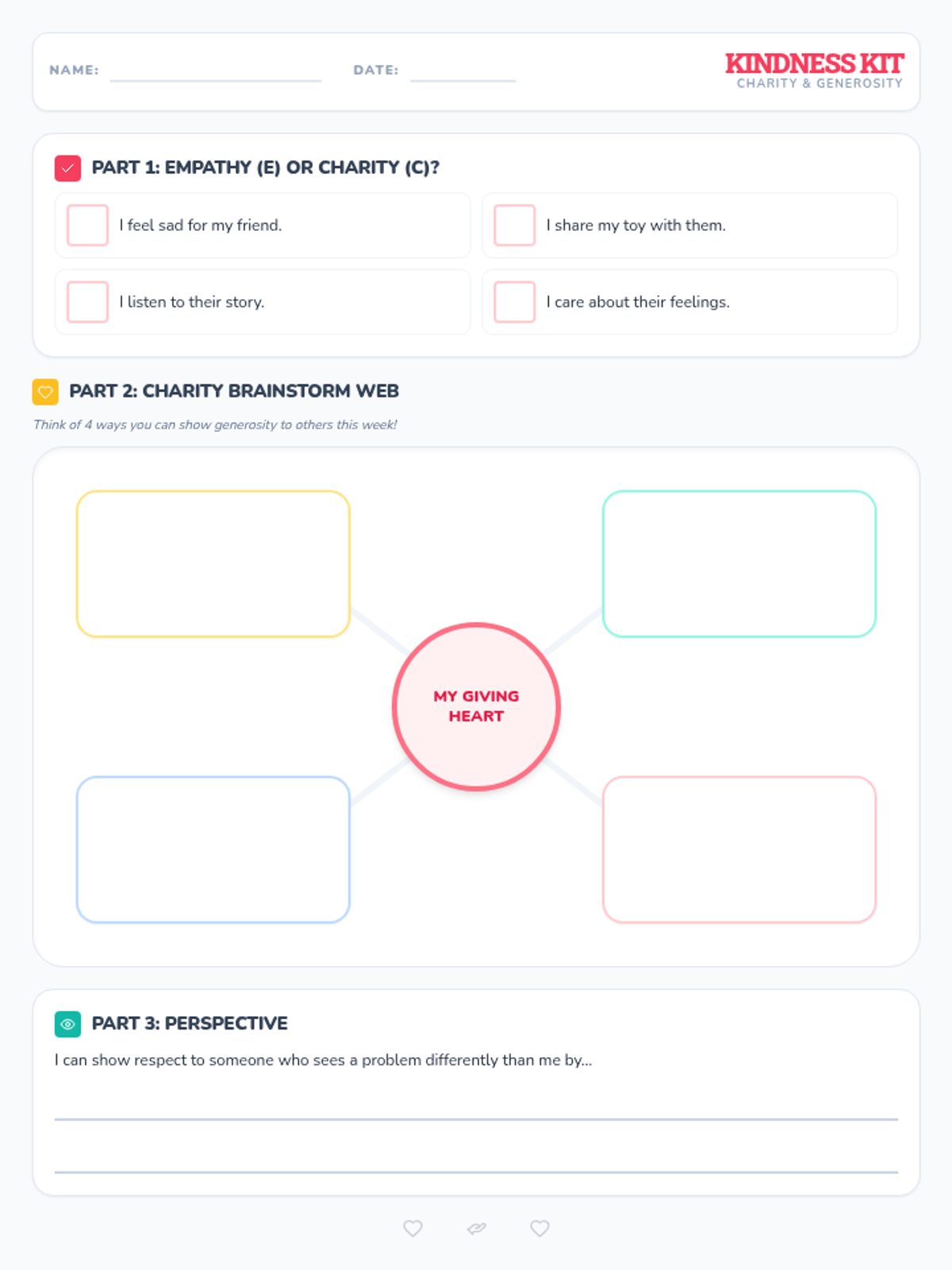
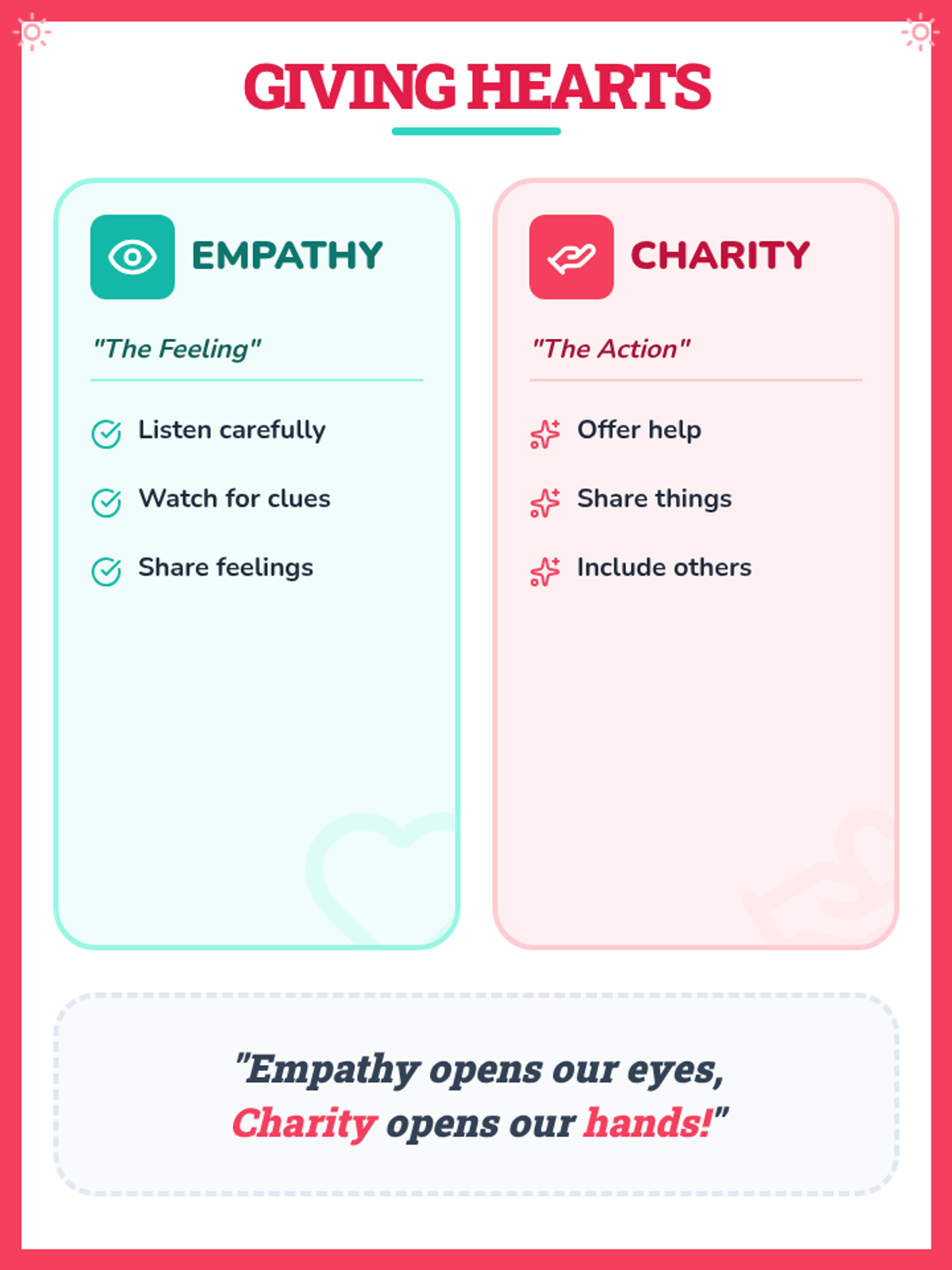
A 10-minute lesson focused on the connection between empathy and charity, teaching students how to identify needs and act with generosity. Includes a slide deck, worksheet, and anchor chart.
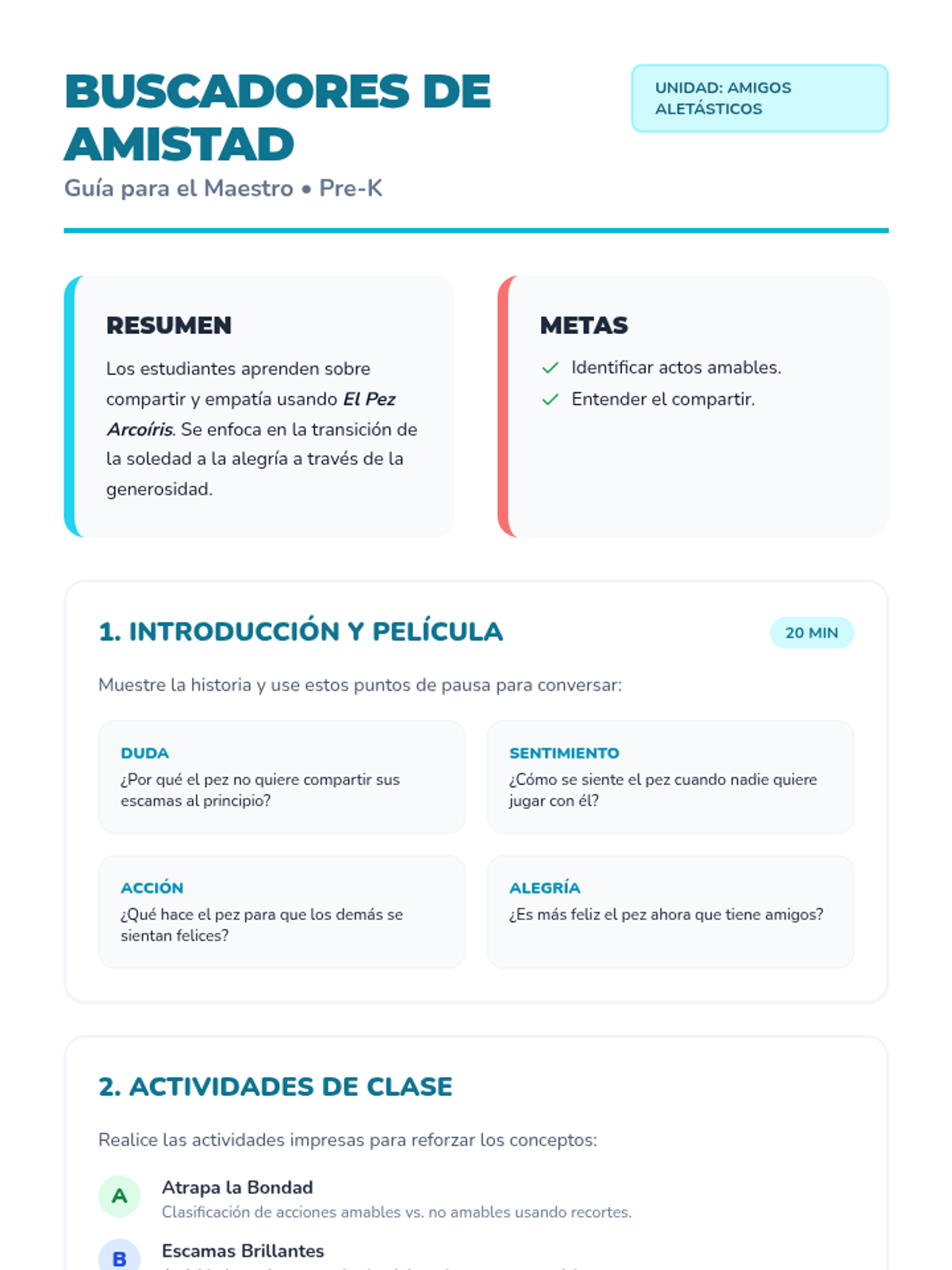
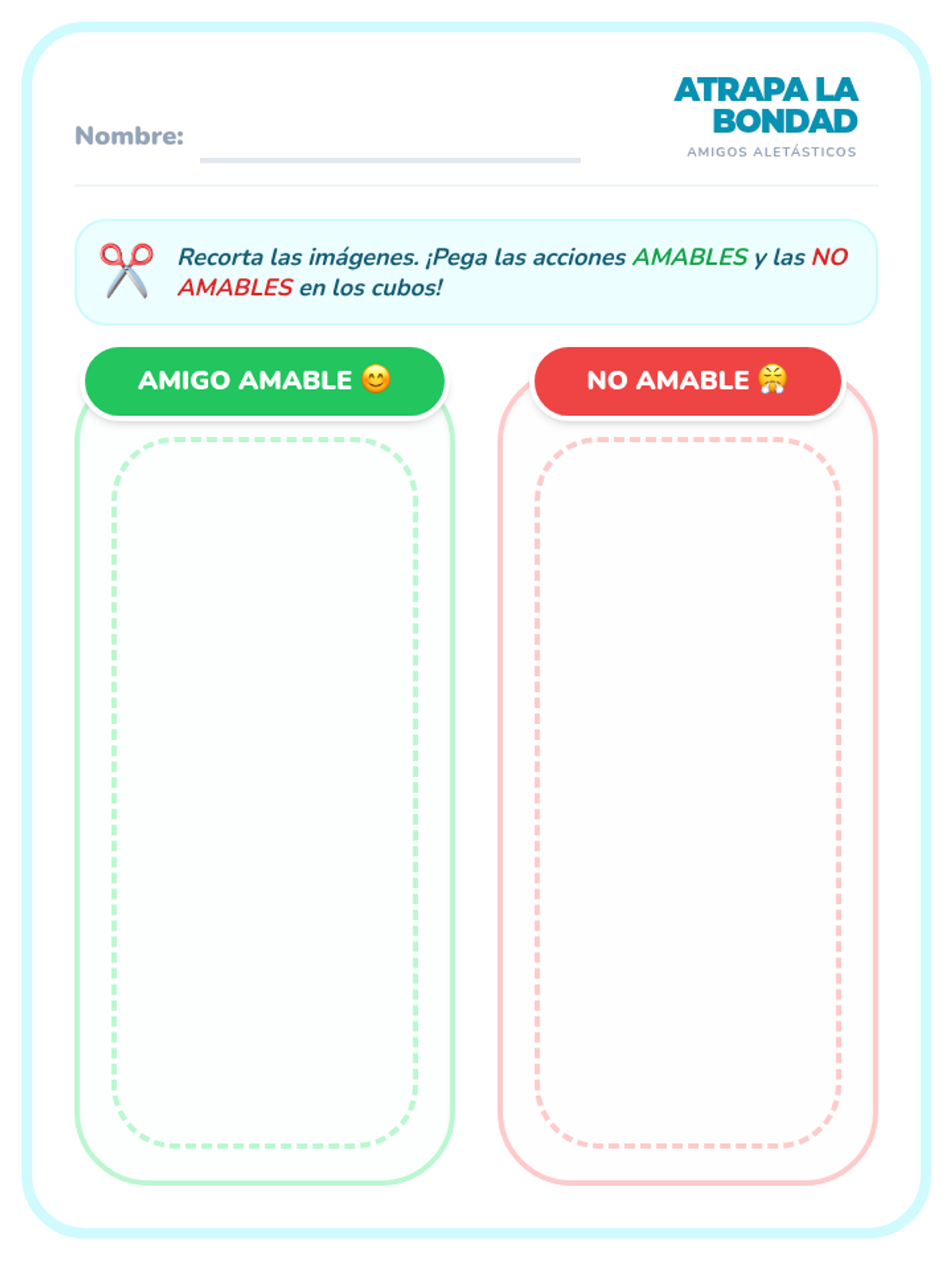
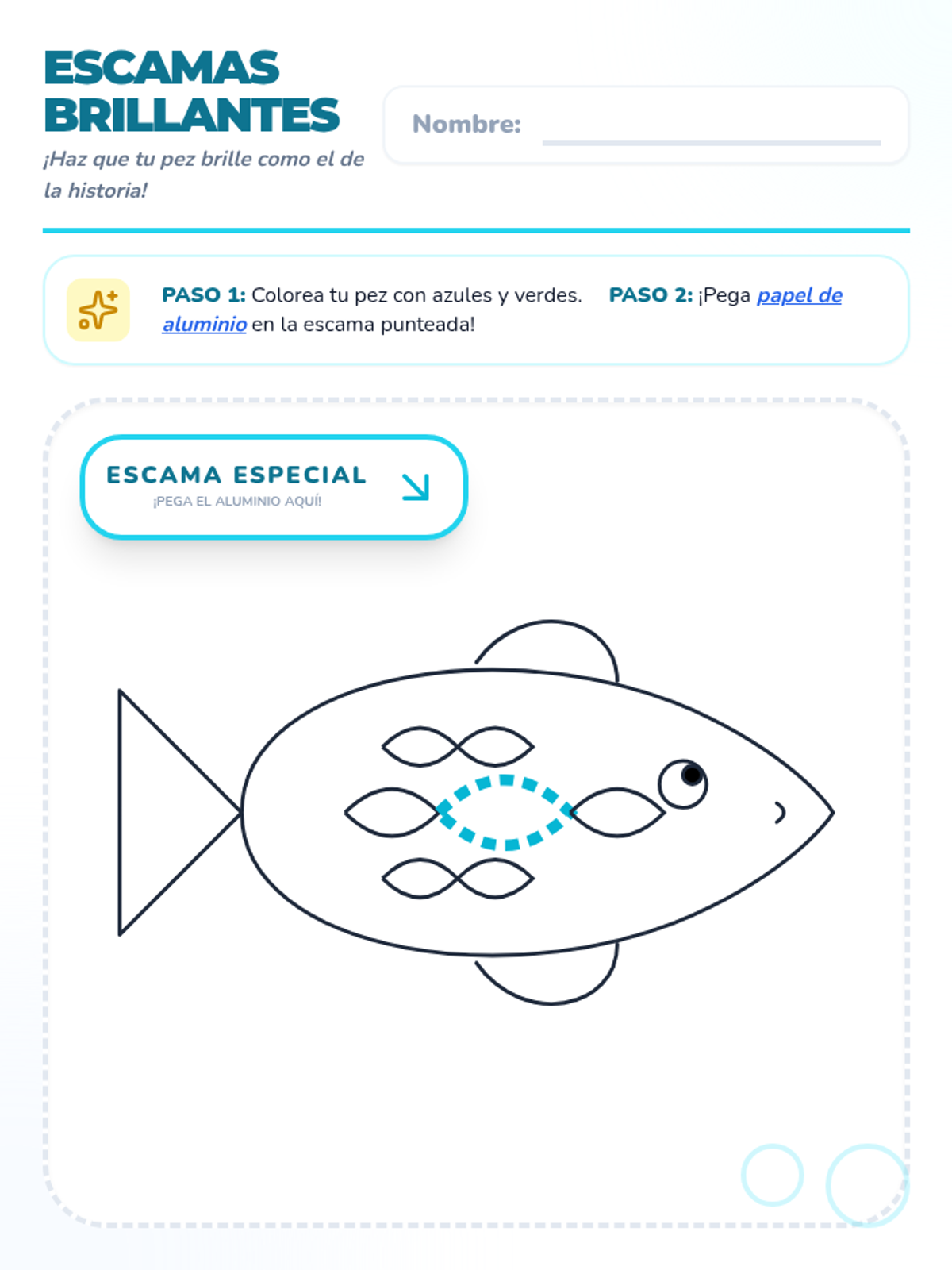
Una lección que explora la importancia de compartir y ser un amigo amable, centrada en ver El Pez Arcoíris y seguida de actividades creativas y de clasificación.
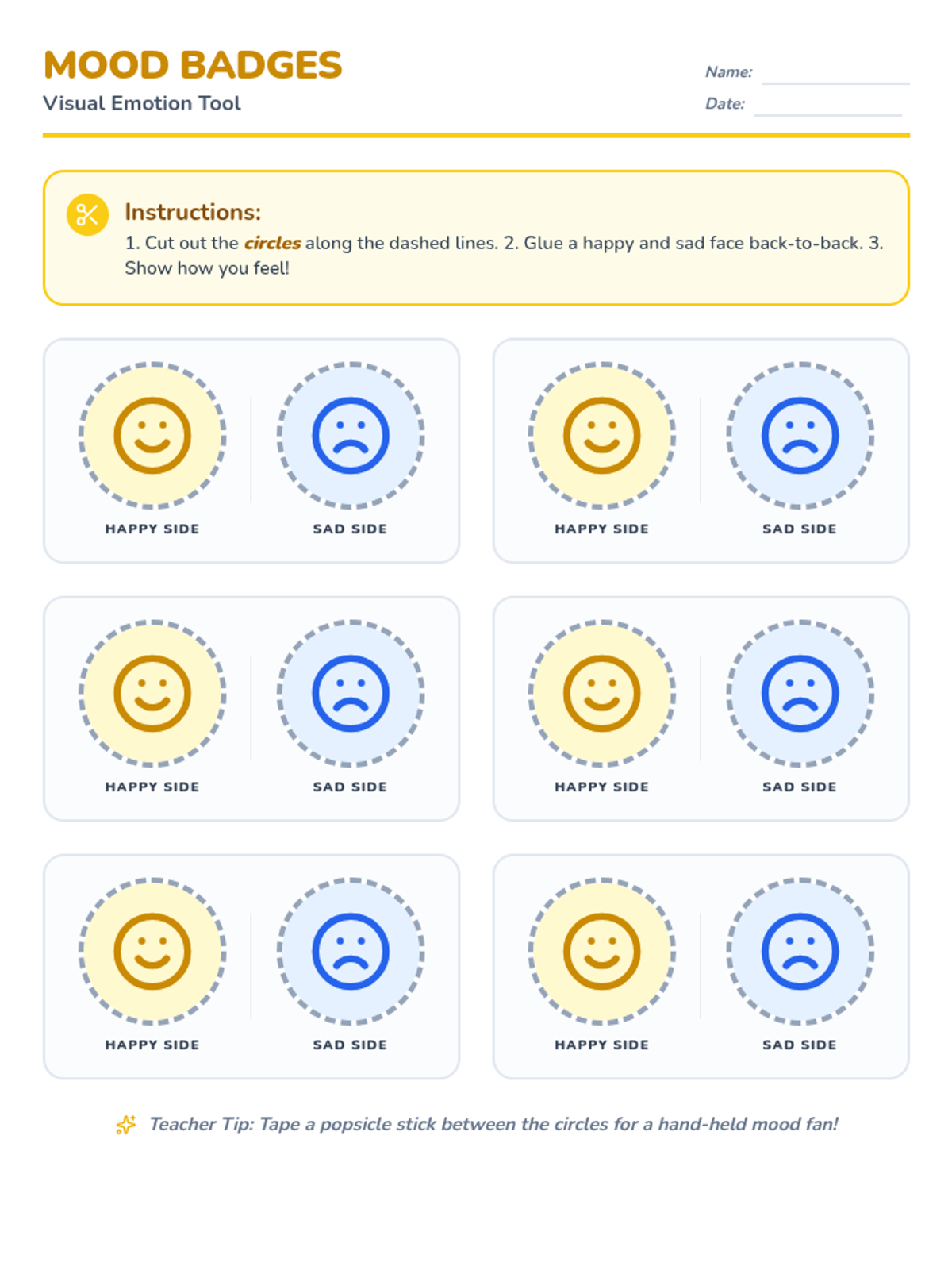
A collection of visual tools to help students identify and communicate their emotions using simple, tactile badges.
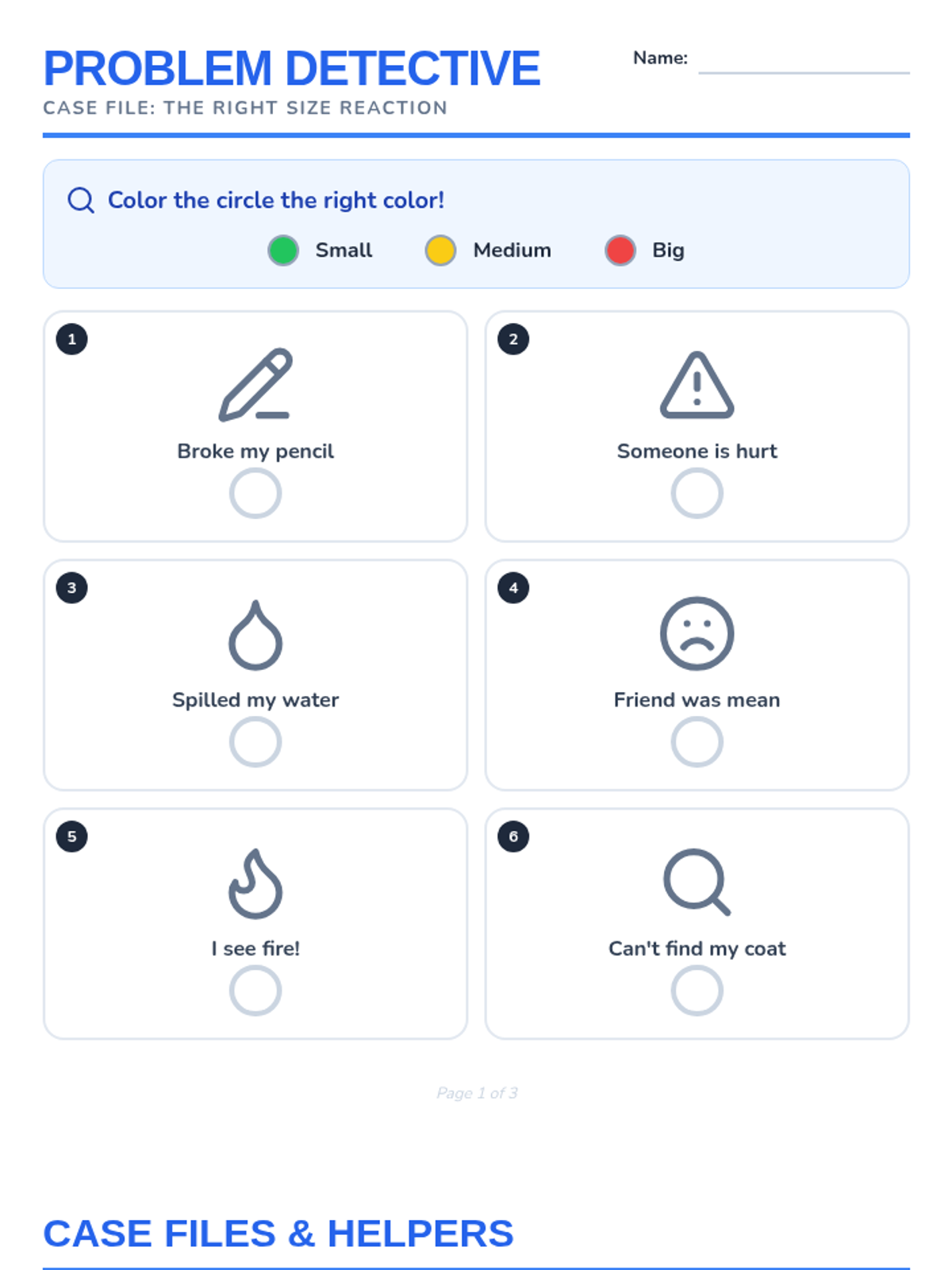
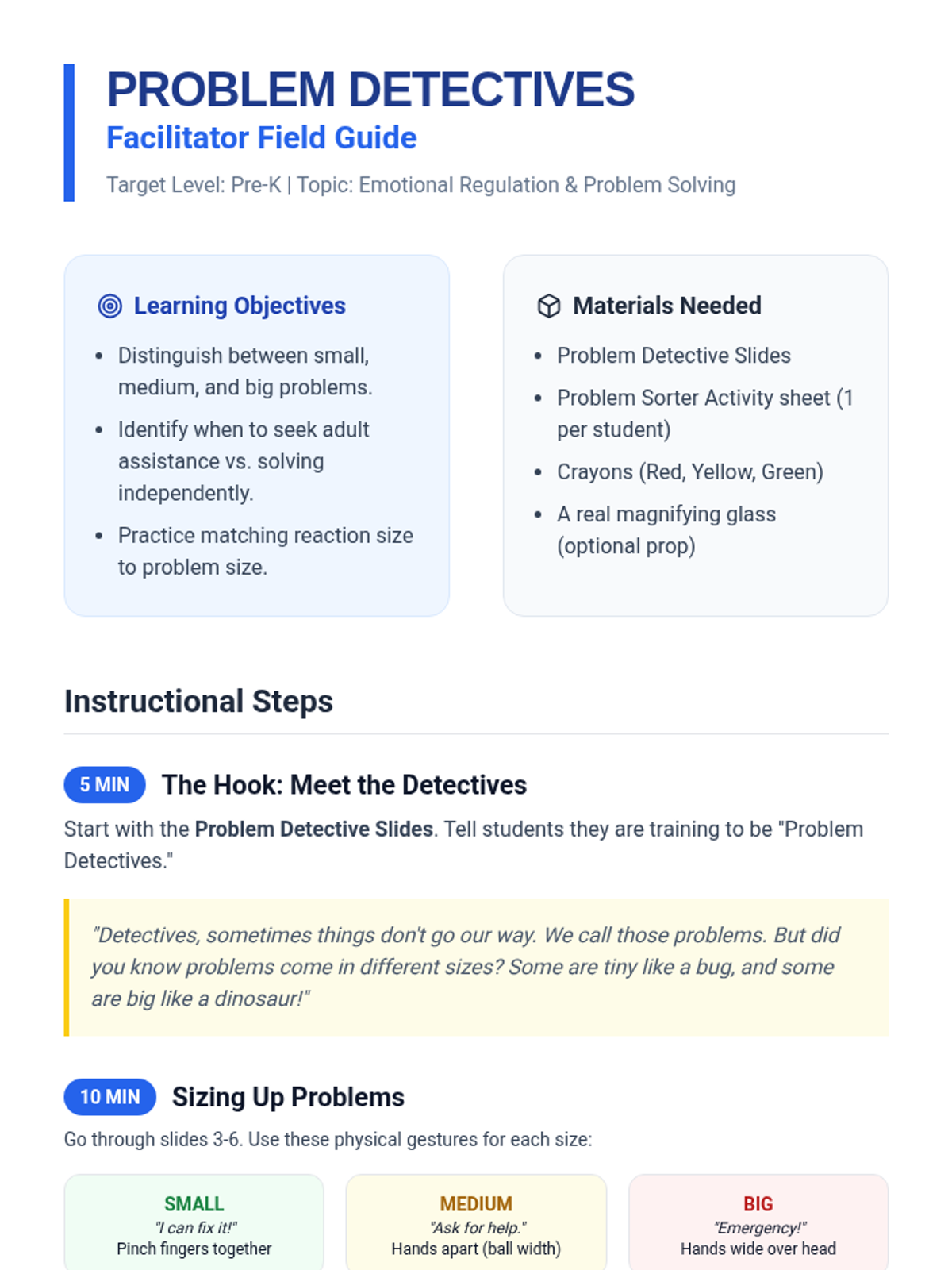
A Social-Emotional Learning lesson for Pre-K students to identify the size of problems (small, medium, big) and learn appropriate reactions and help-seeking strategies.
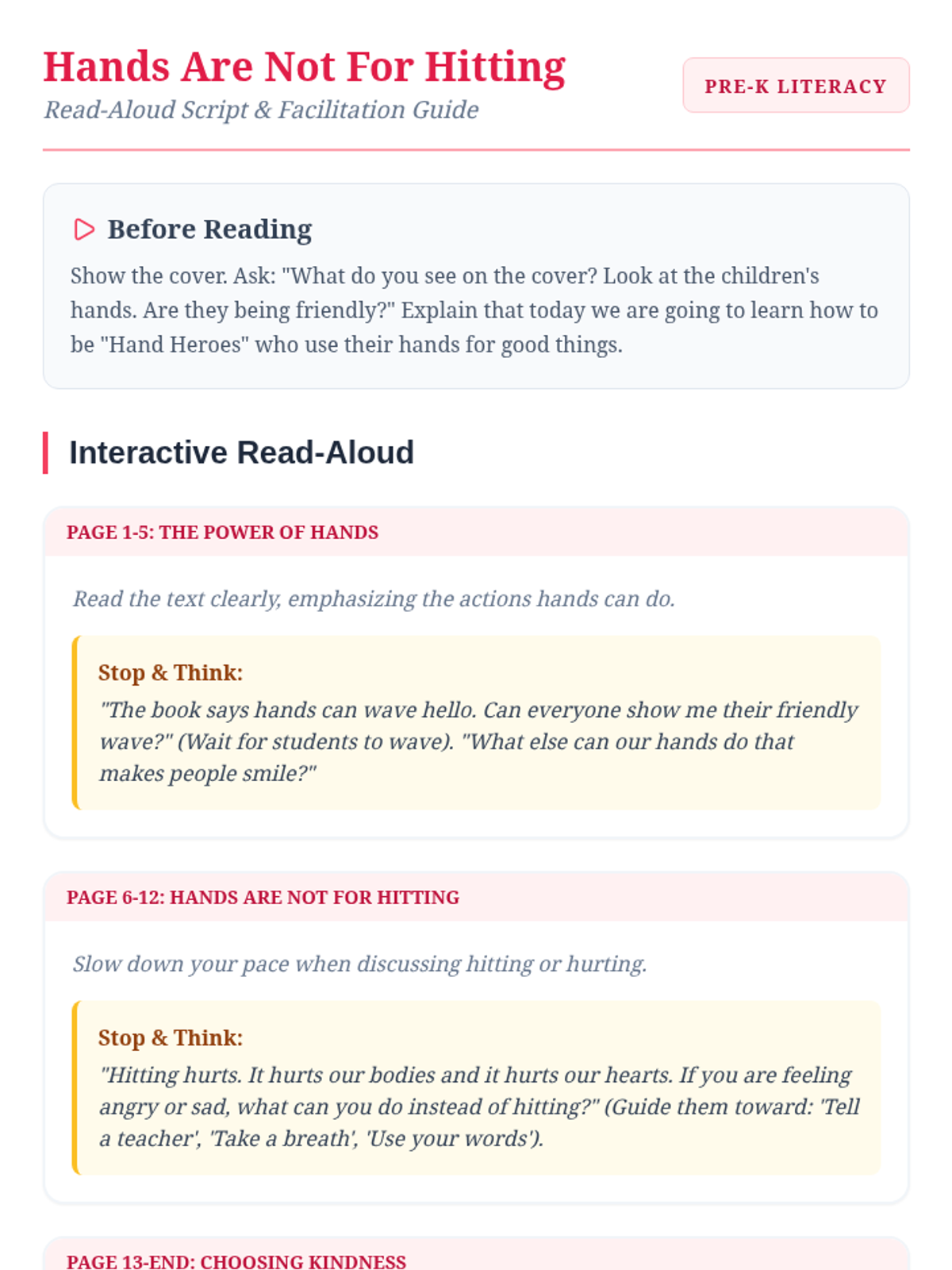
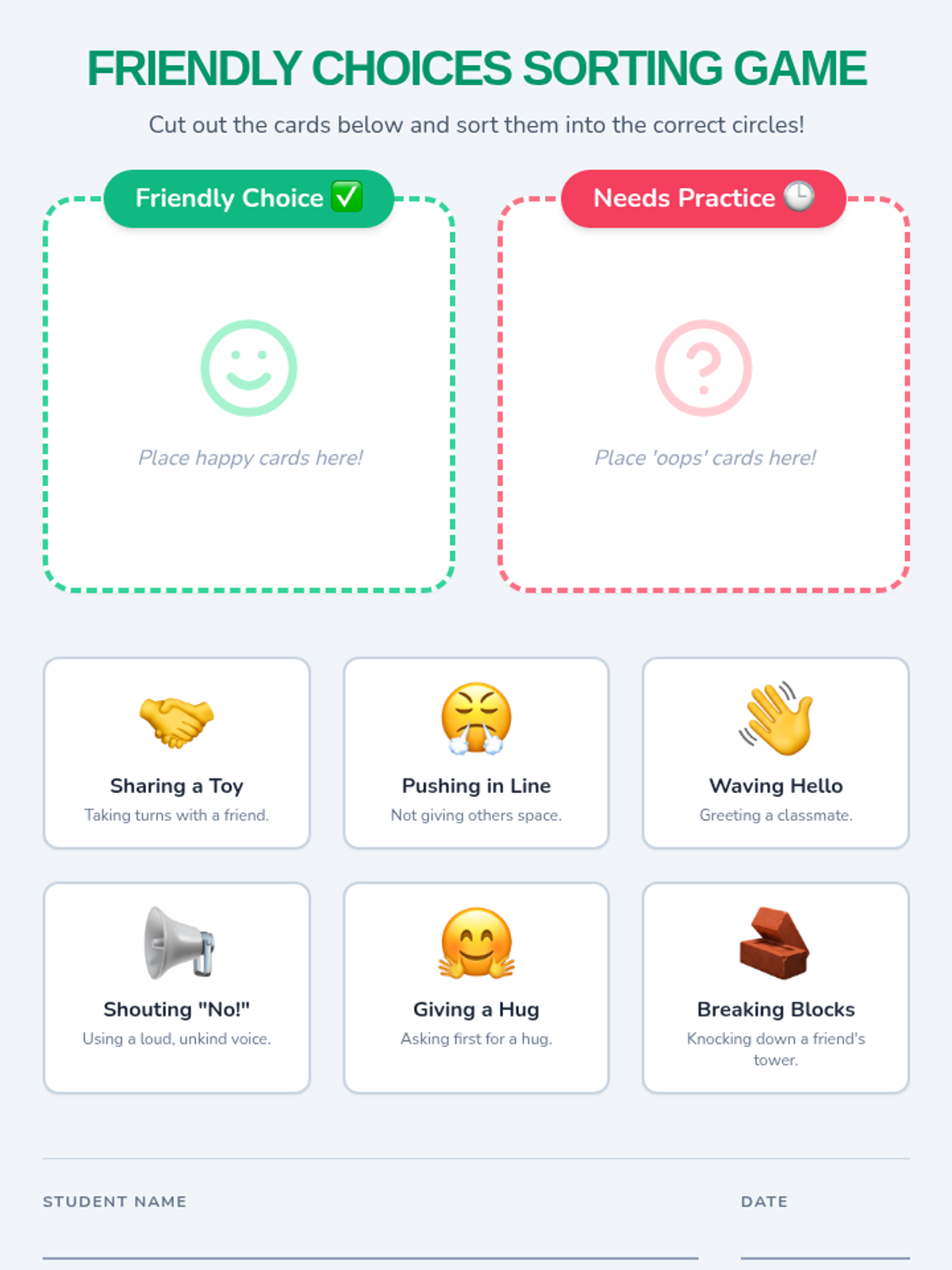
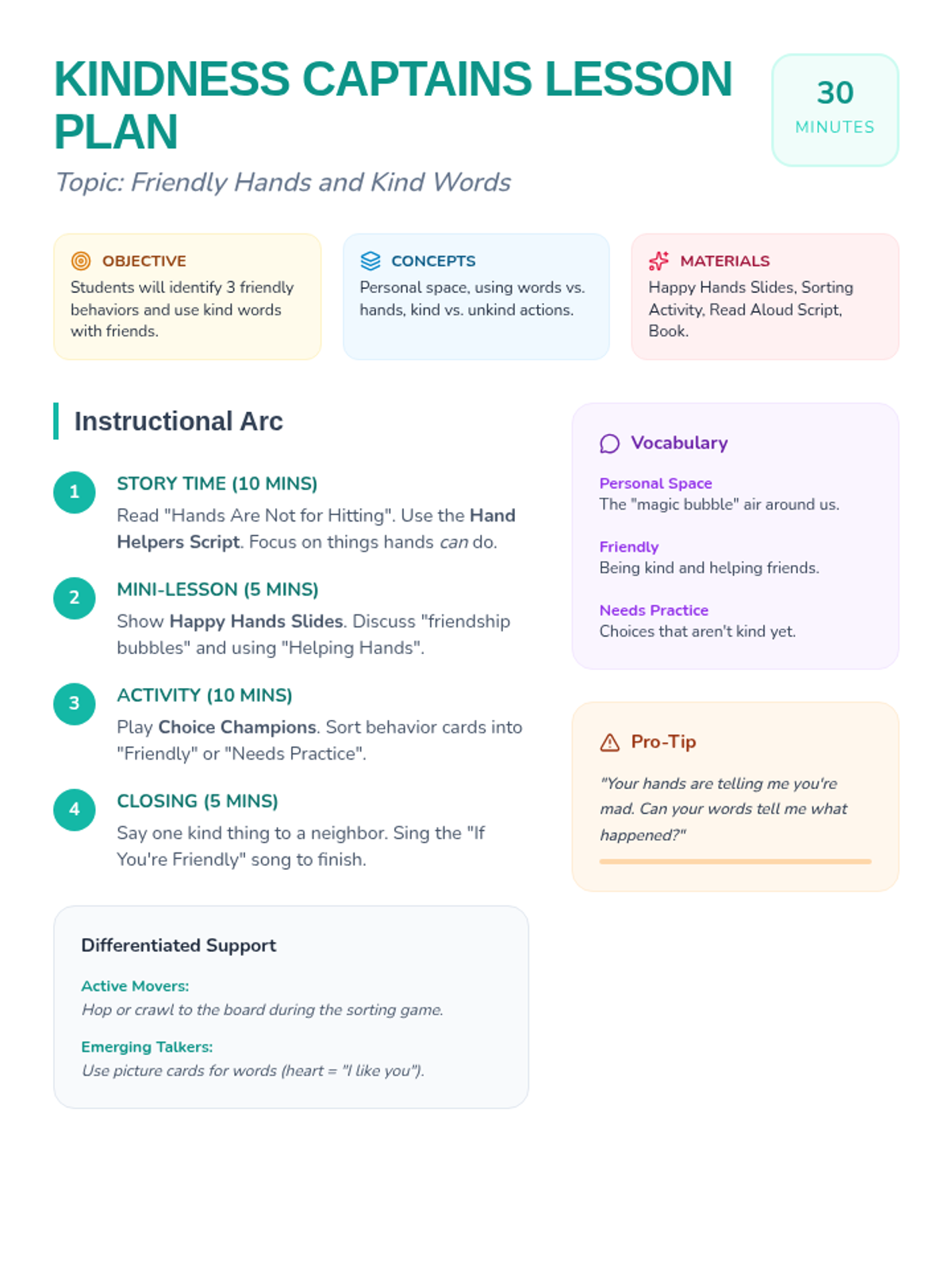
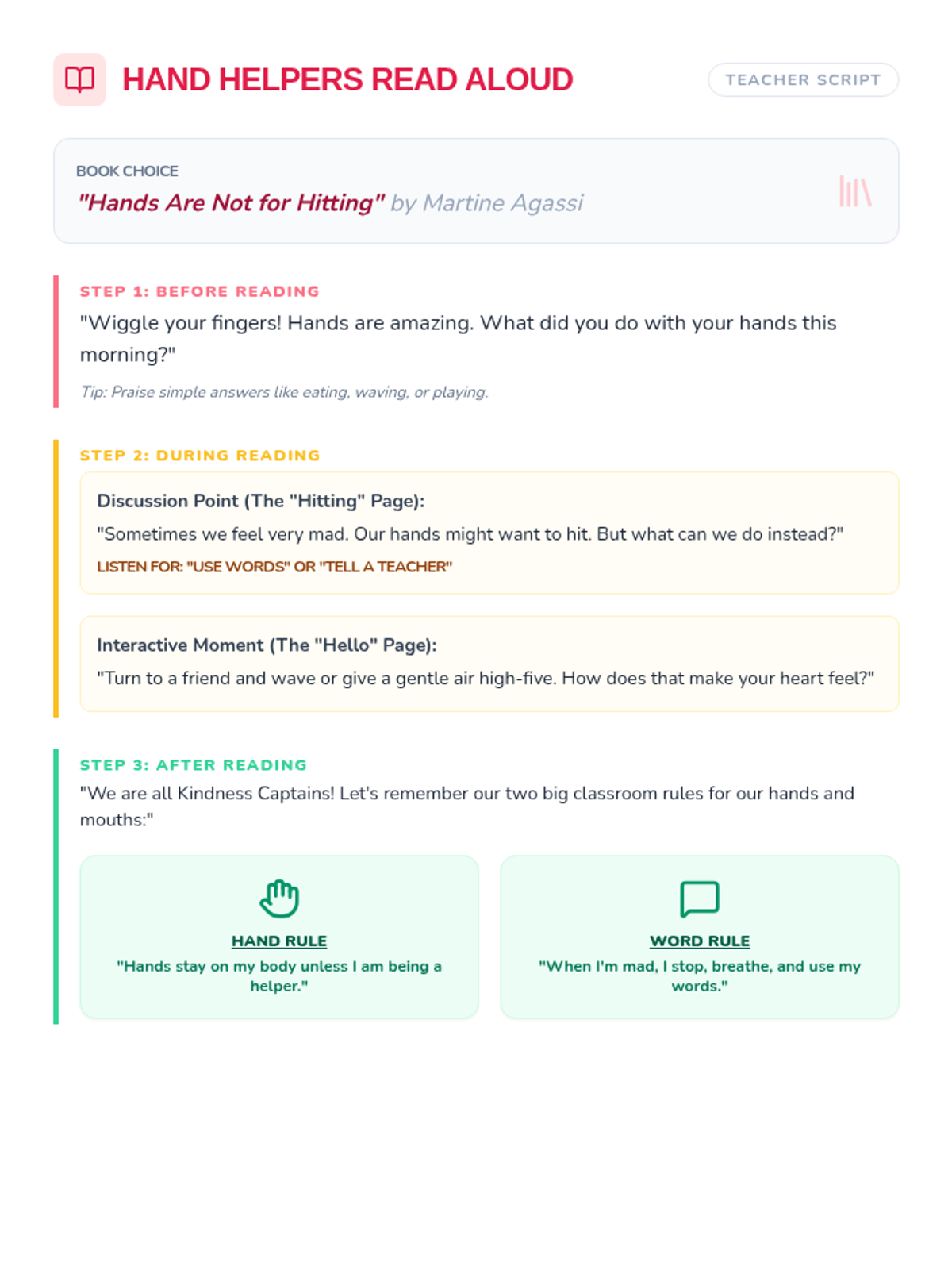
A Pre-K lesson focused on teaching students how to use their hands for kindness and their words for communication, featuring a read-aloud, a sorting game, and interactive practice.
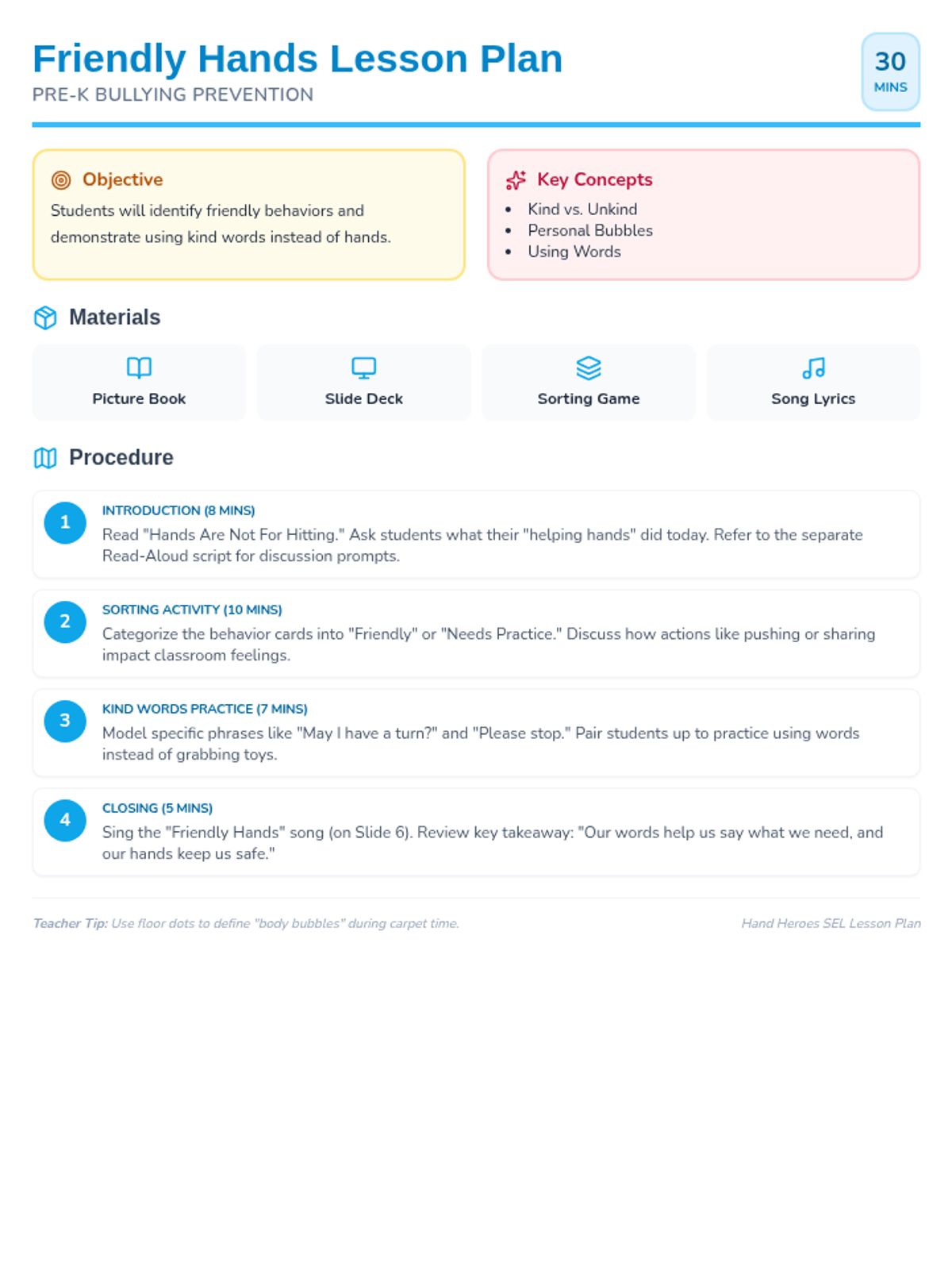
A 30-minute Pre-K lesson focused on identifying friendly behaviors, practicing personal space, and using kind words to build a positive classroom environment.
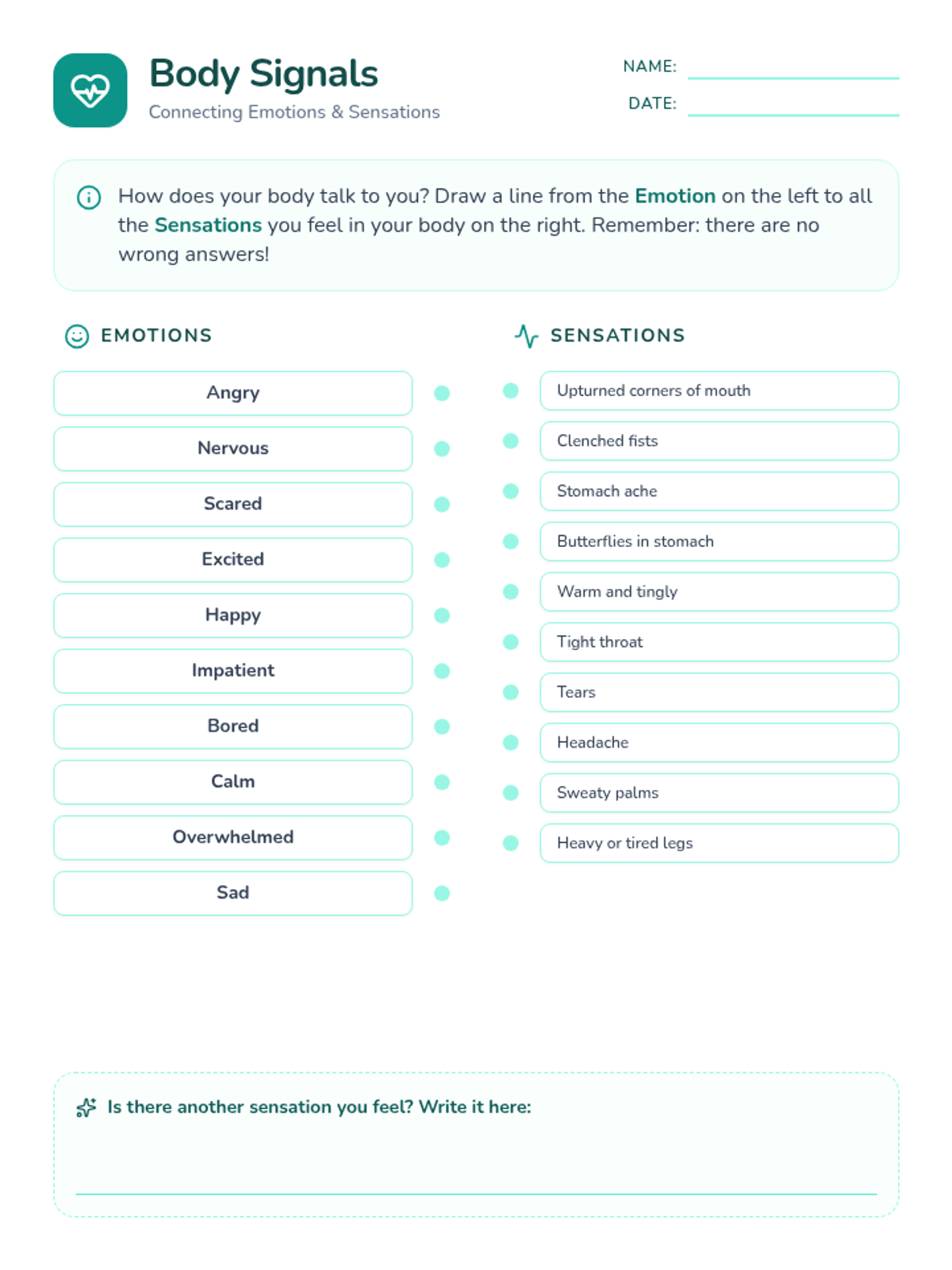
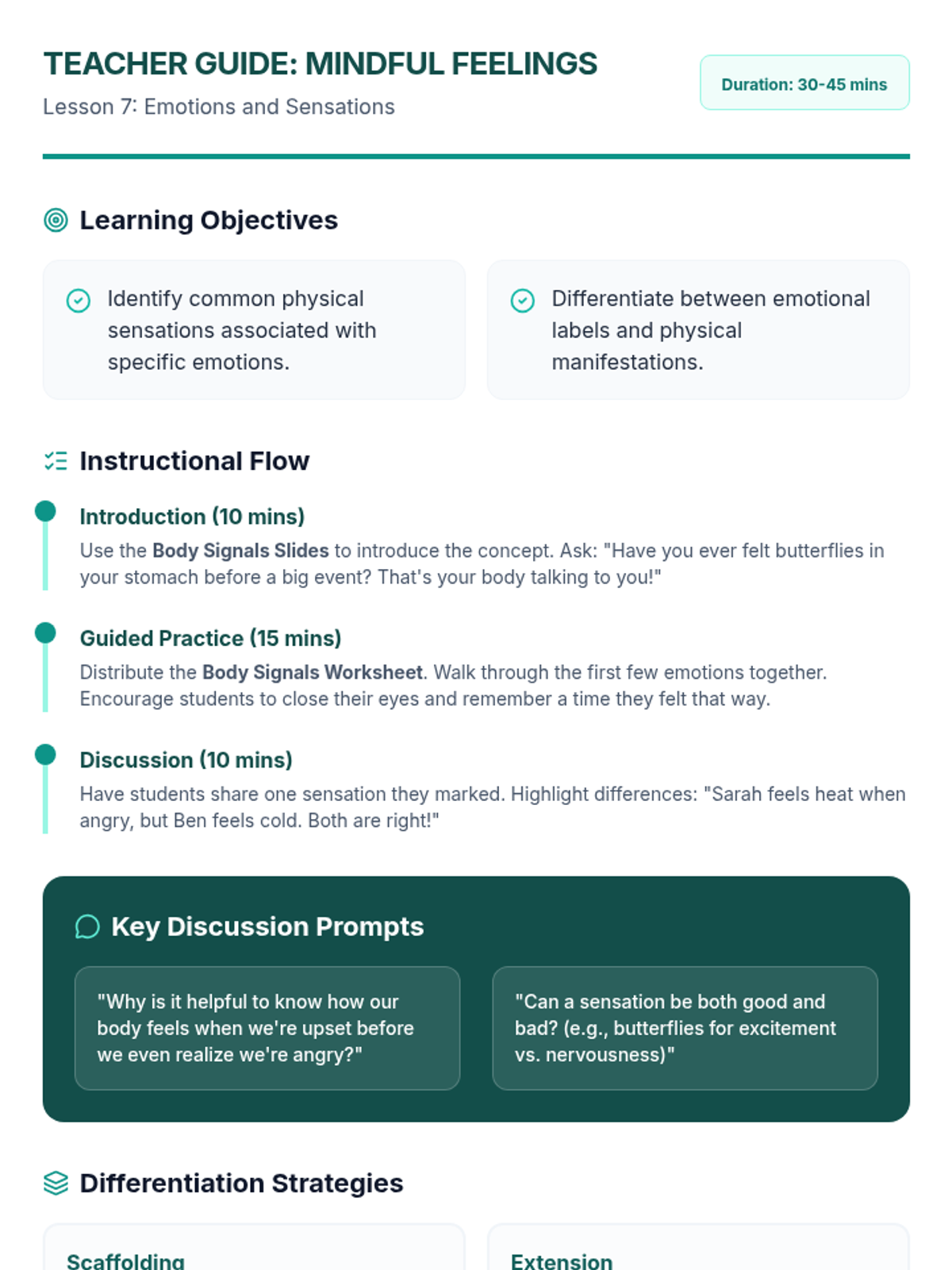
A lesson focused on helping students identify the physical sensations associated with different emotions to build self-awareness and mindfulness.
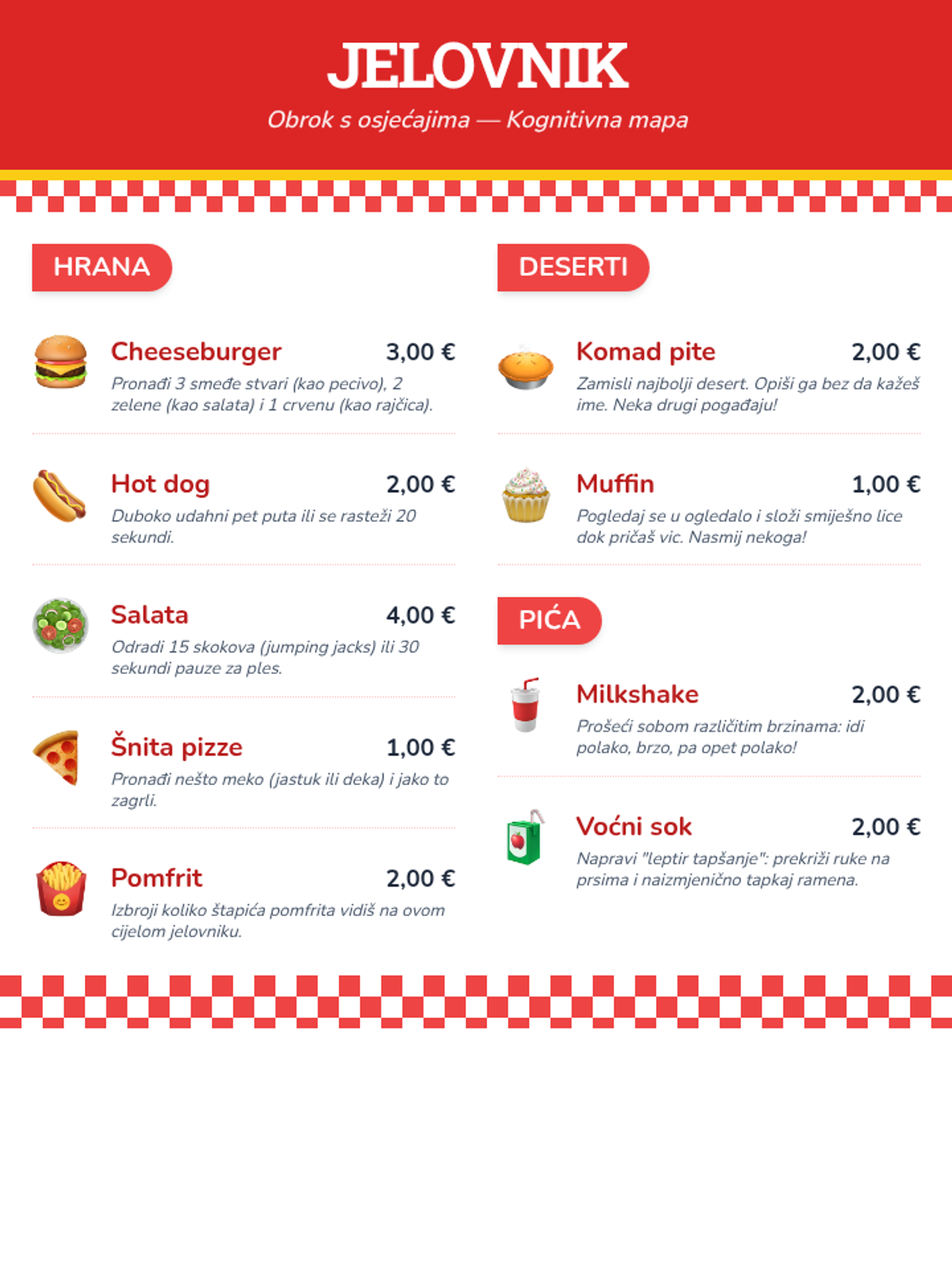
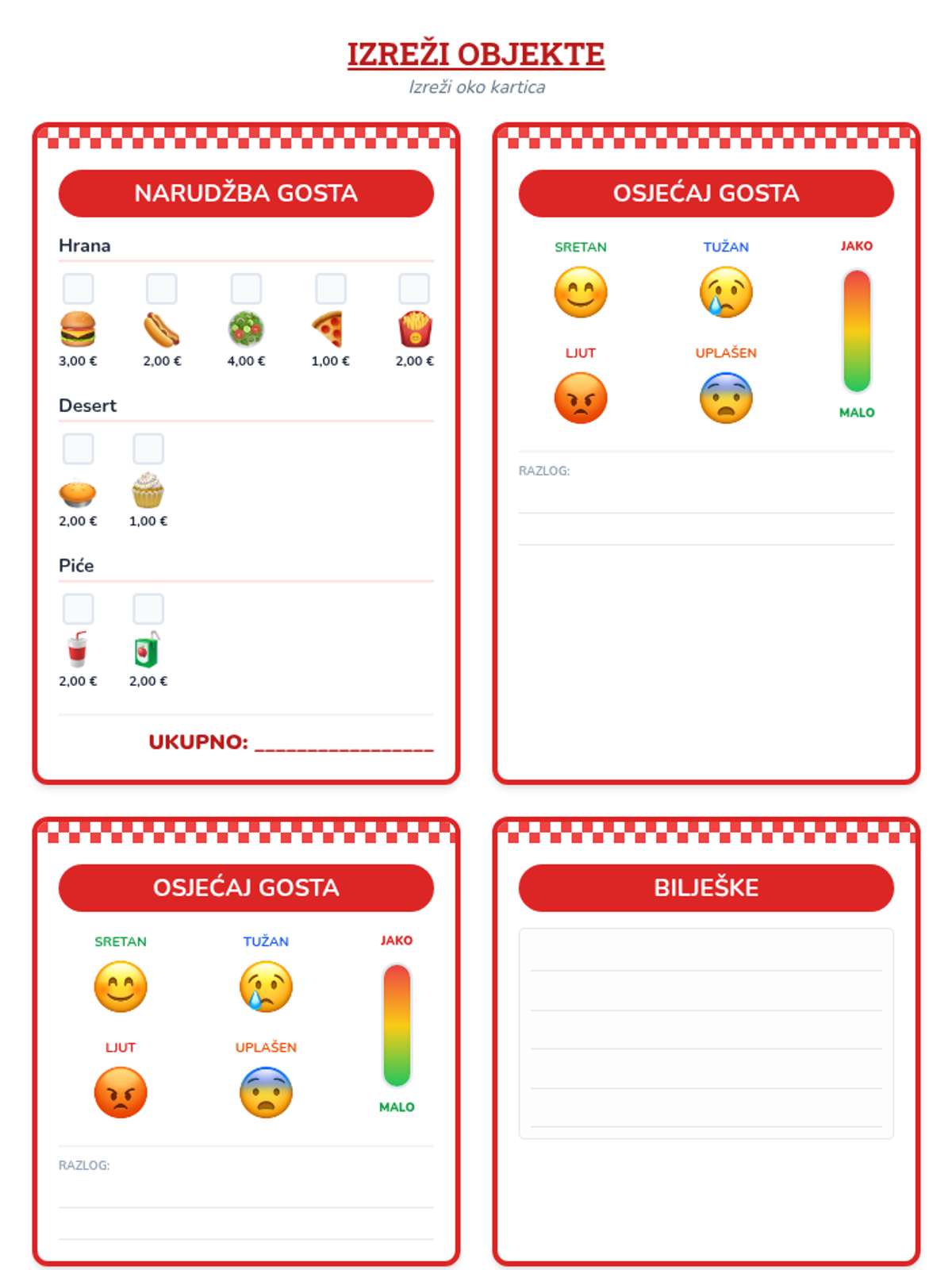
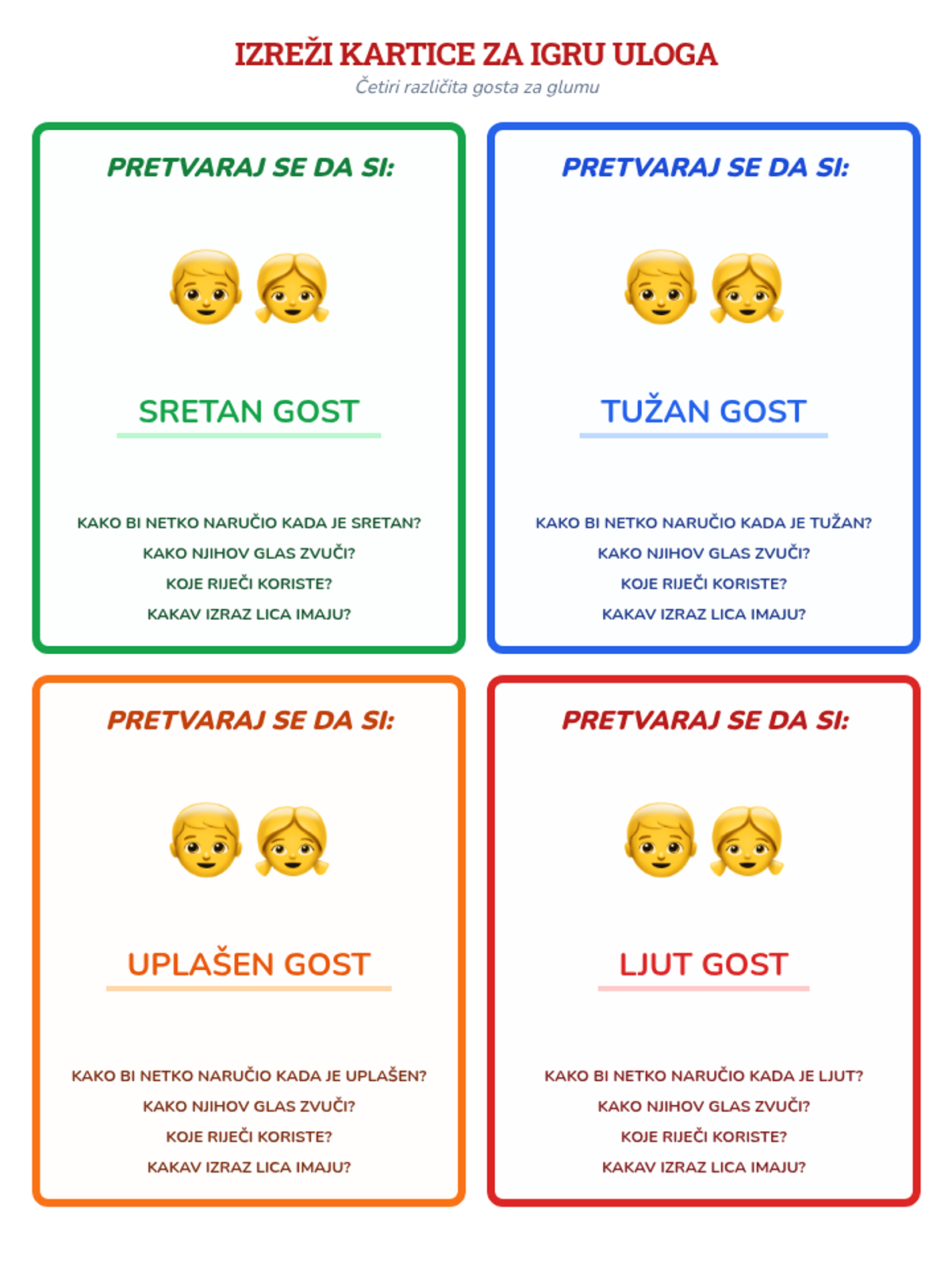
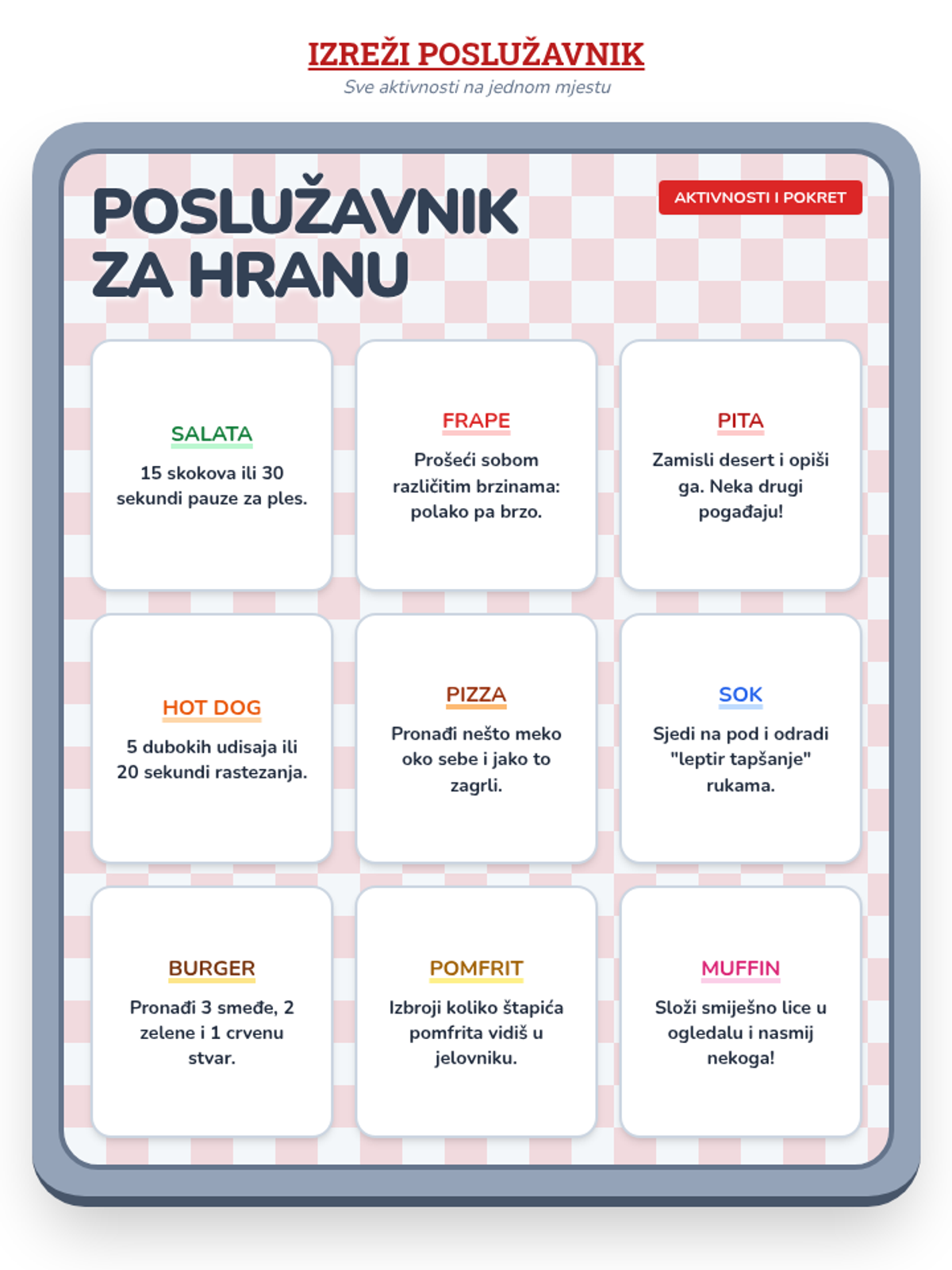
Set interaktivnih materijala za socijalno-emocionalno učenje kroz igru restorana, prilagođen za hrvatski jezik.
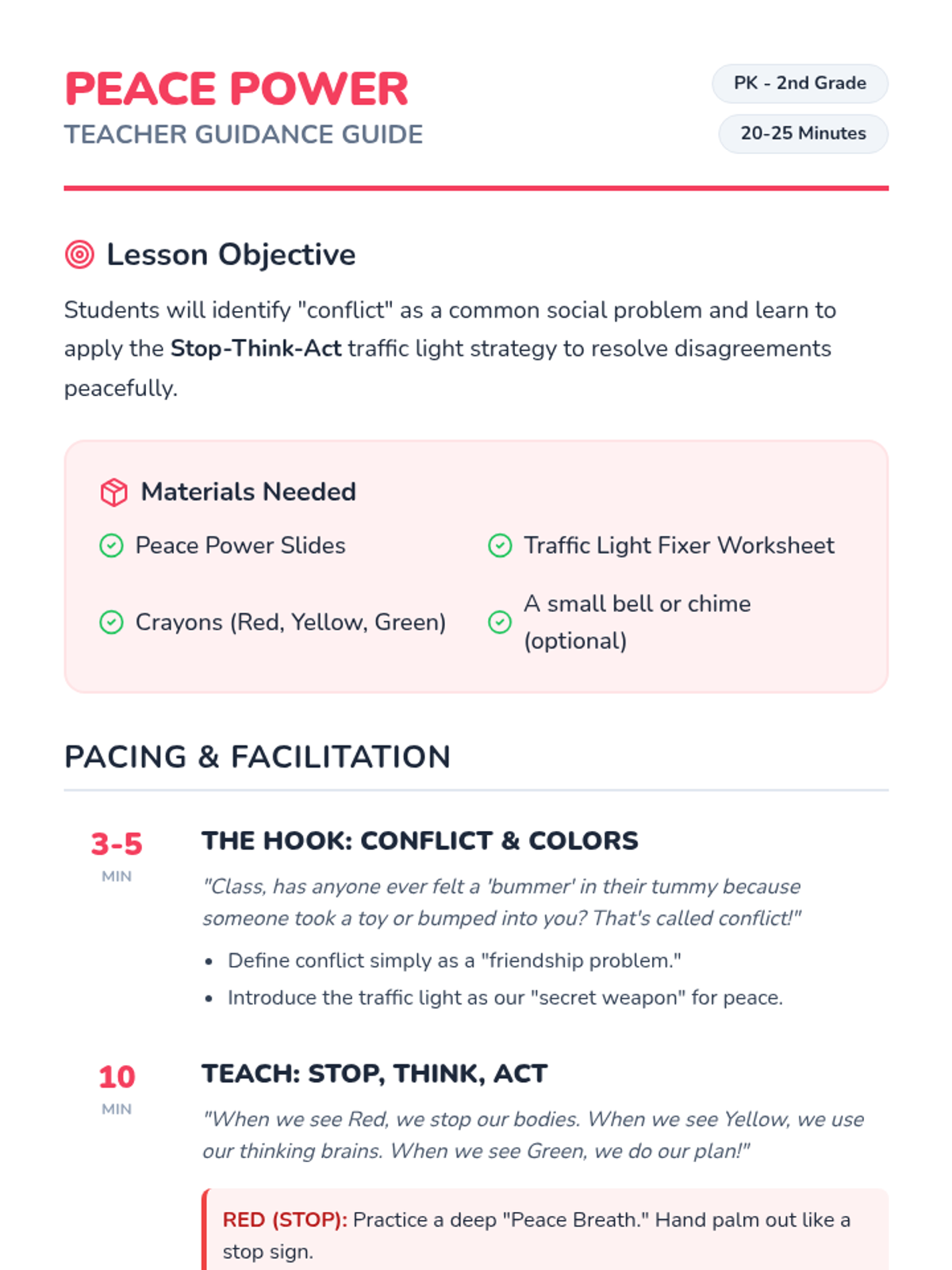
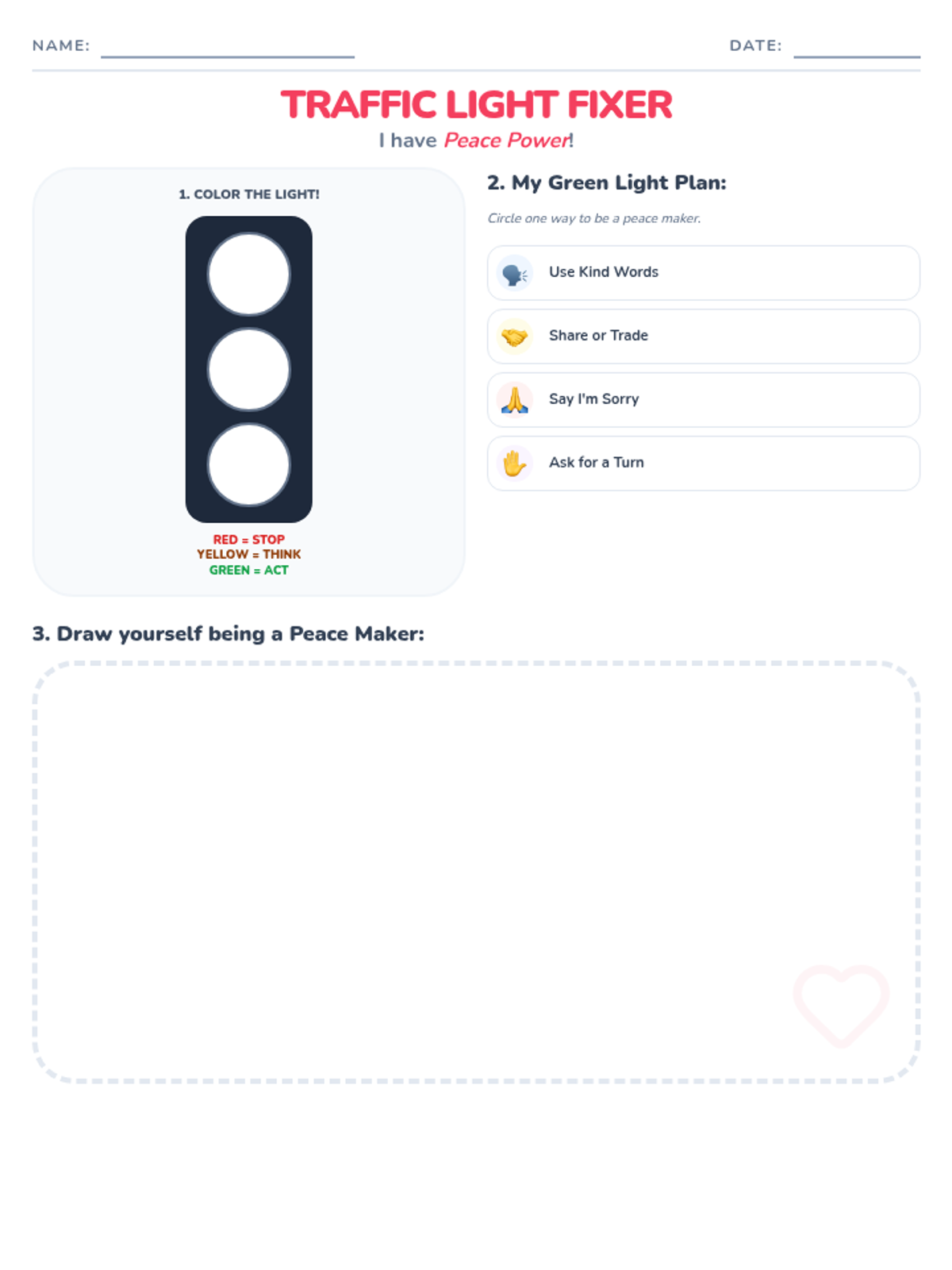
A vibrant, interactive guidance lesson for PK-2nd grade students focusing on the 'Stop-Think-Act' conflict resolution strategy using a traffic light metaphor. Emphasizes self-regulation and kind choices.
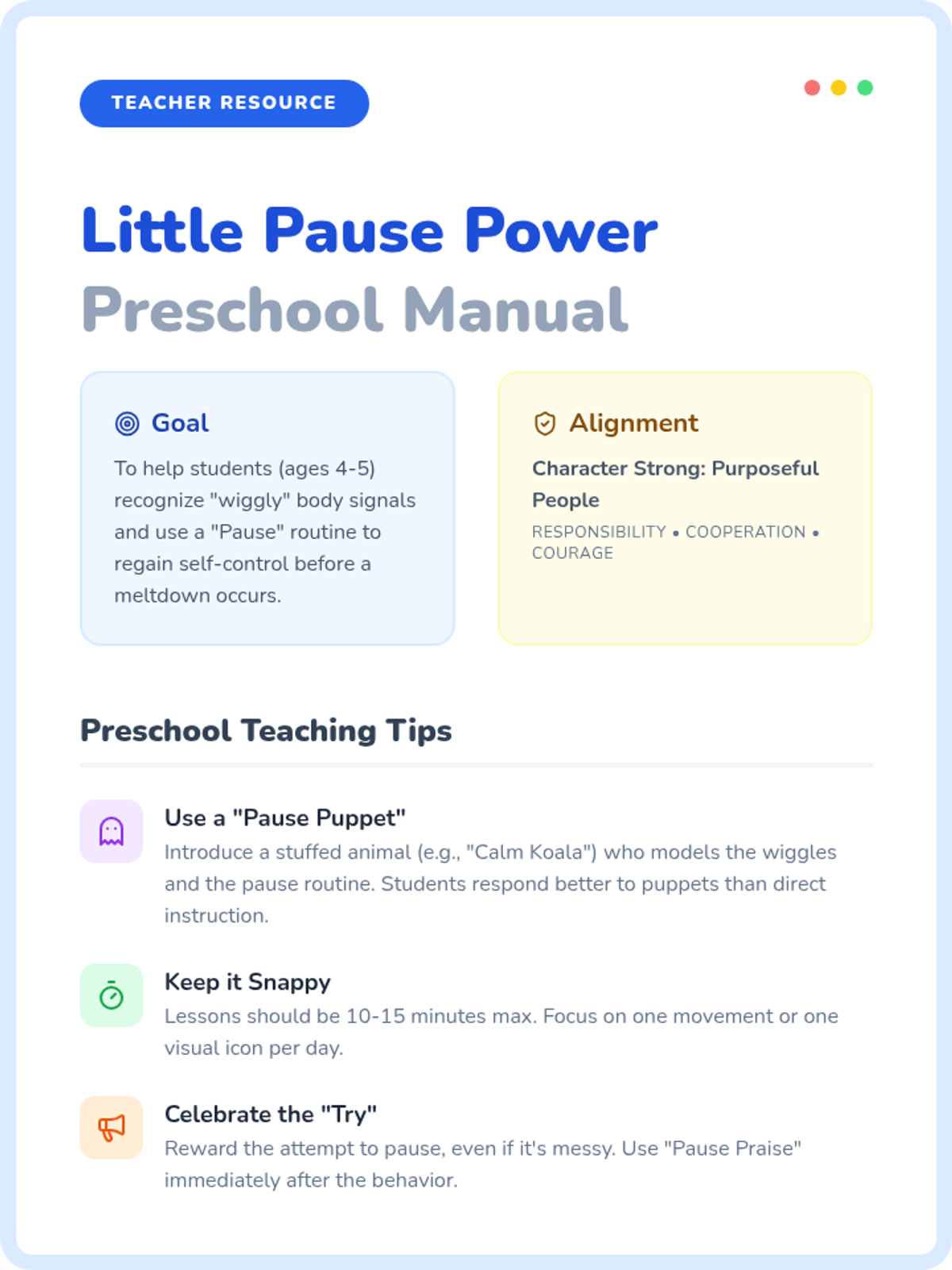
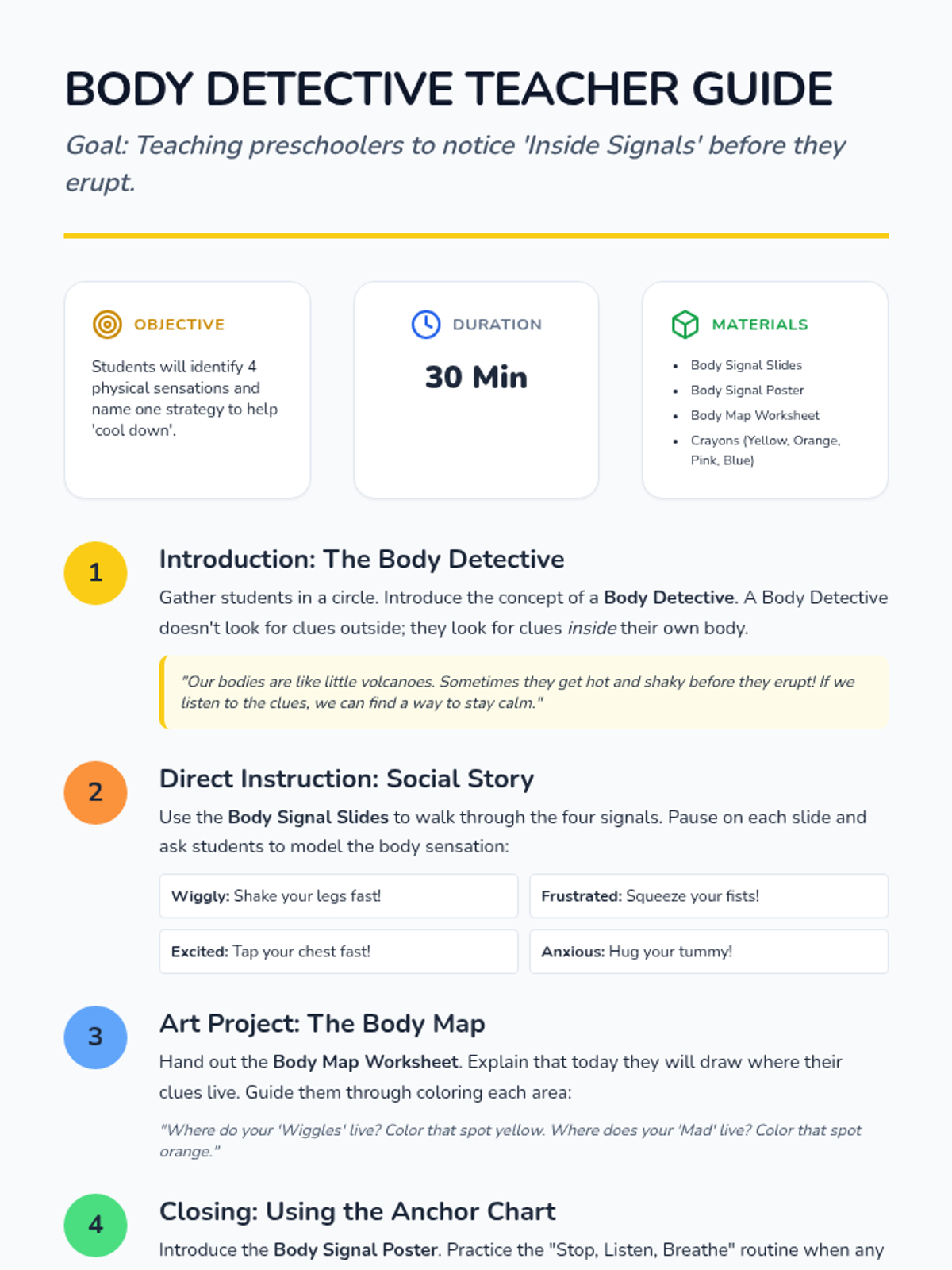
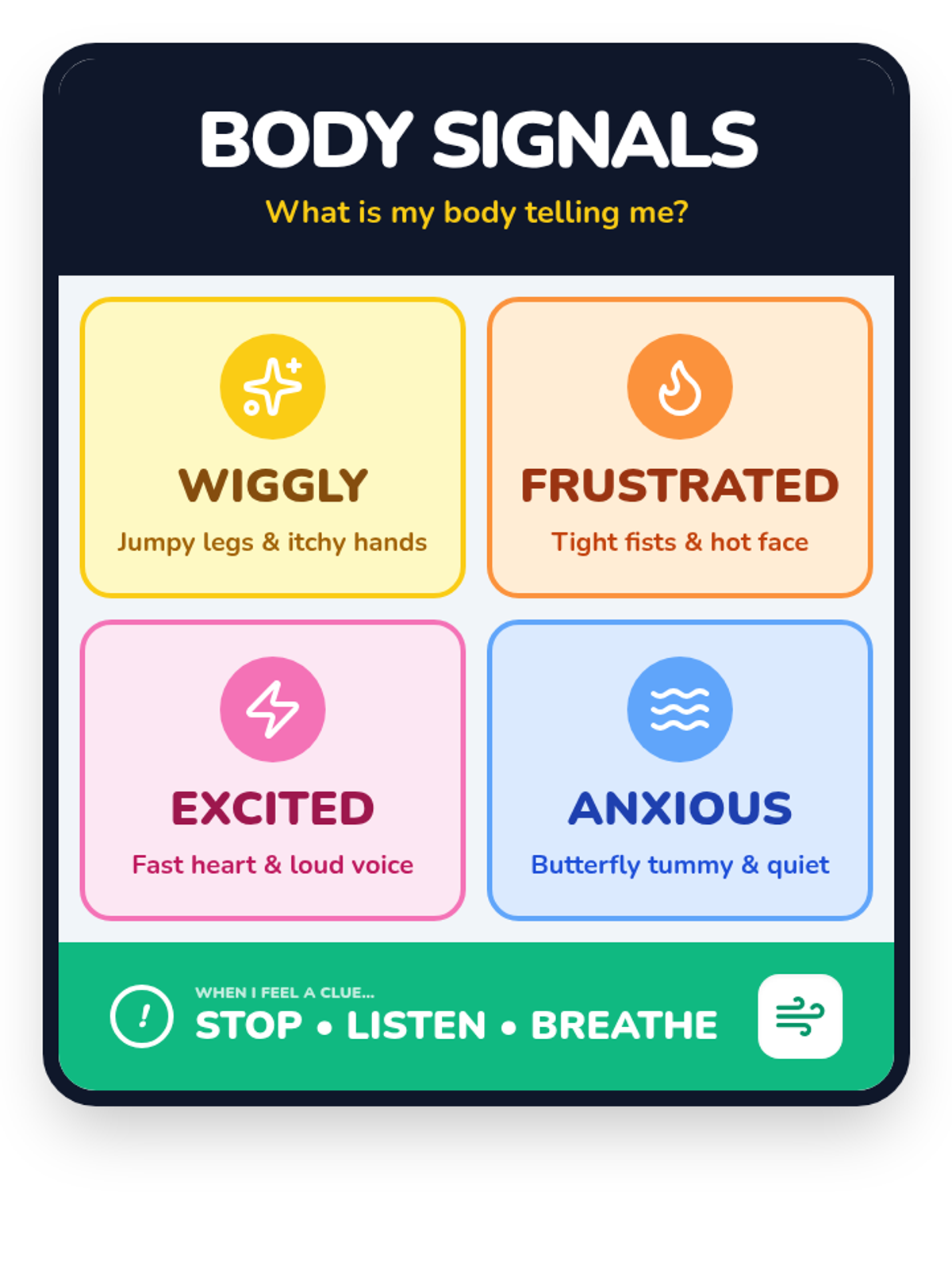
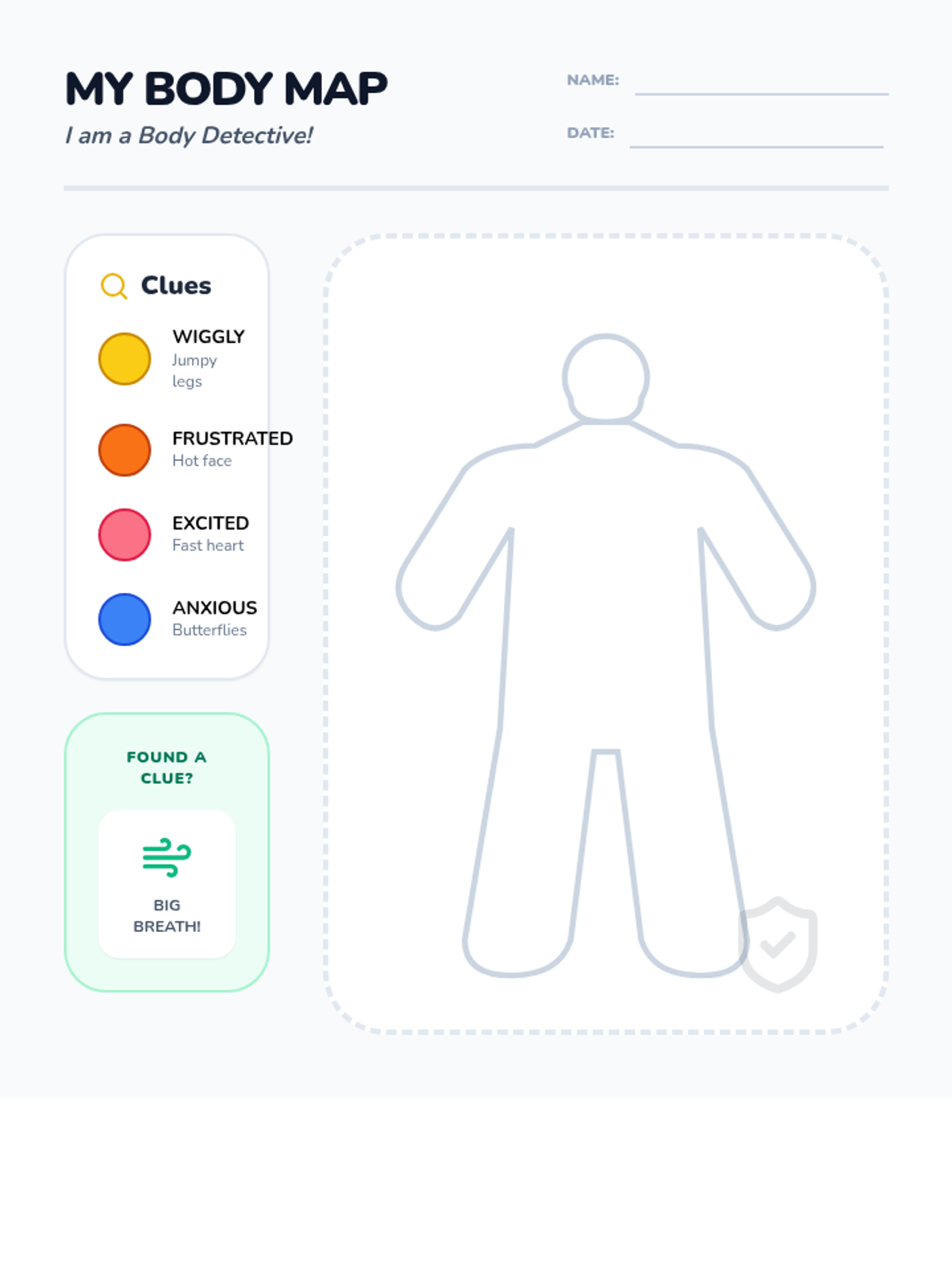
A preschool lesson focused on self-regulation by teaching children to recognize physical 'body signals' associated with wiggly, frustrated, excited, and anxious feelings before they lead to emotional eruptions.
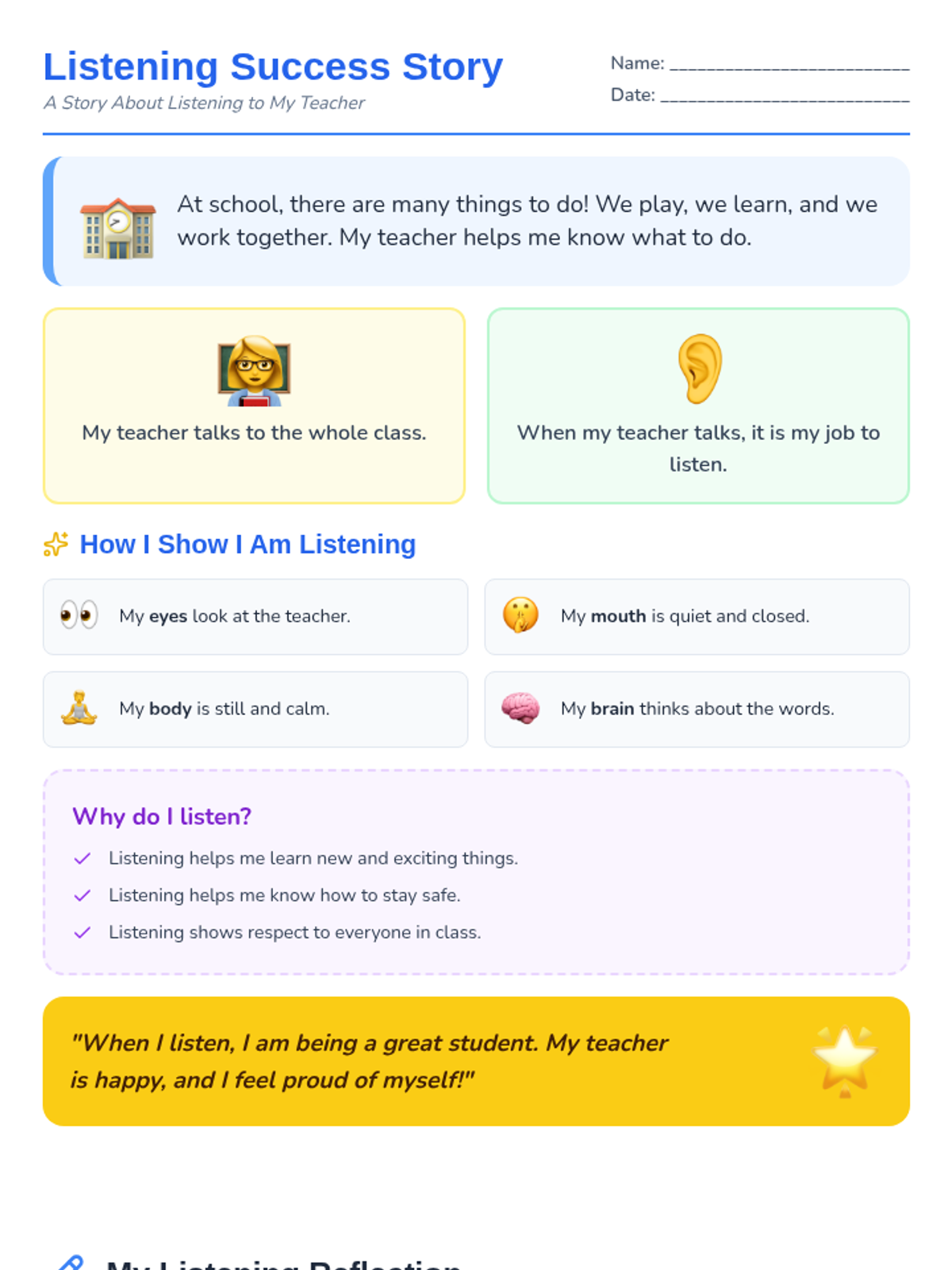
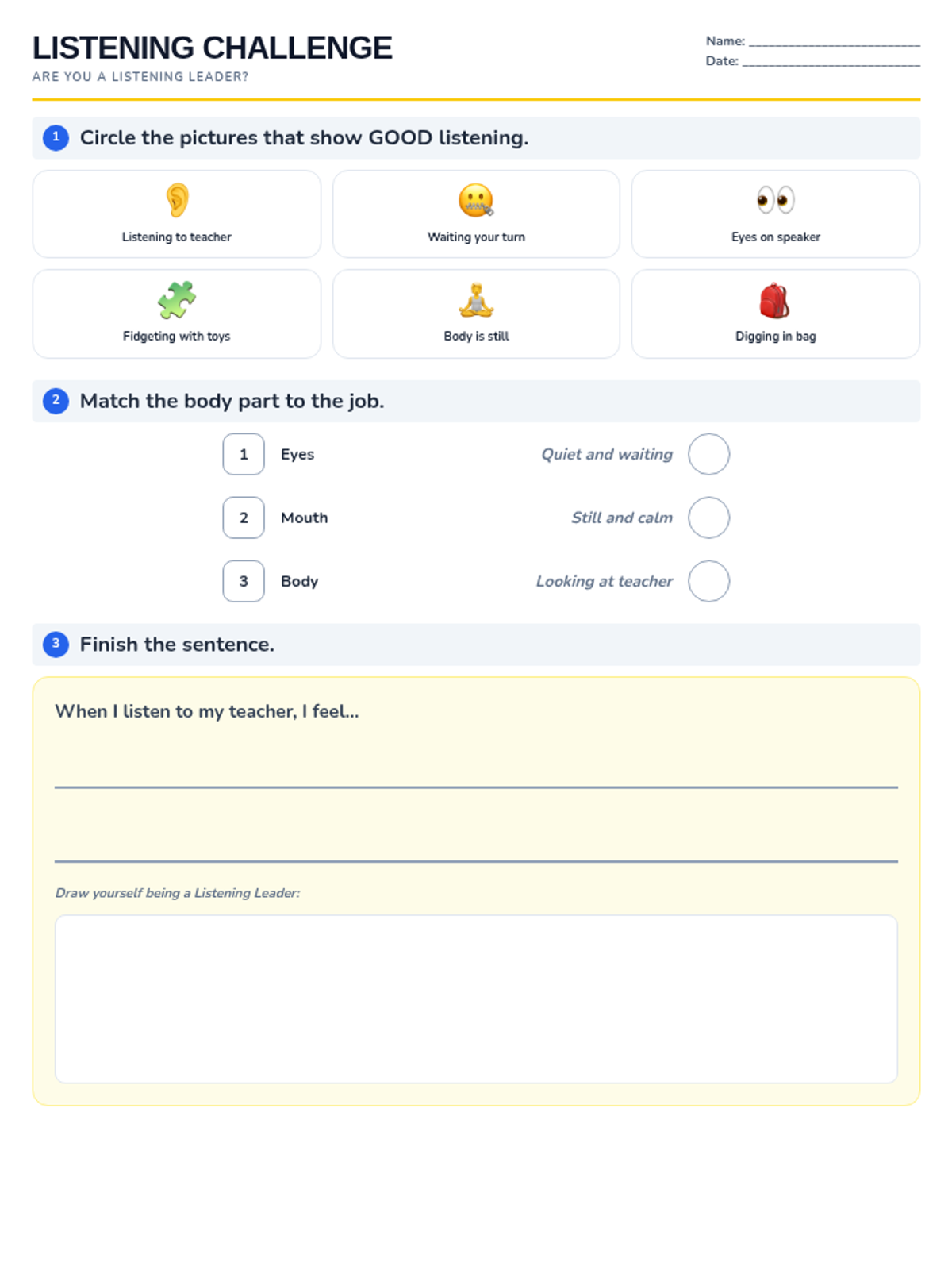
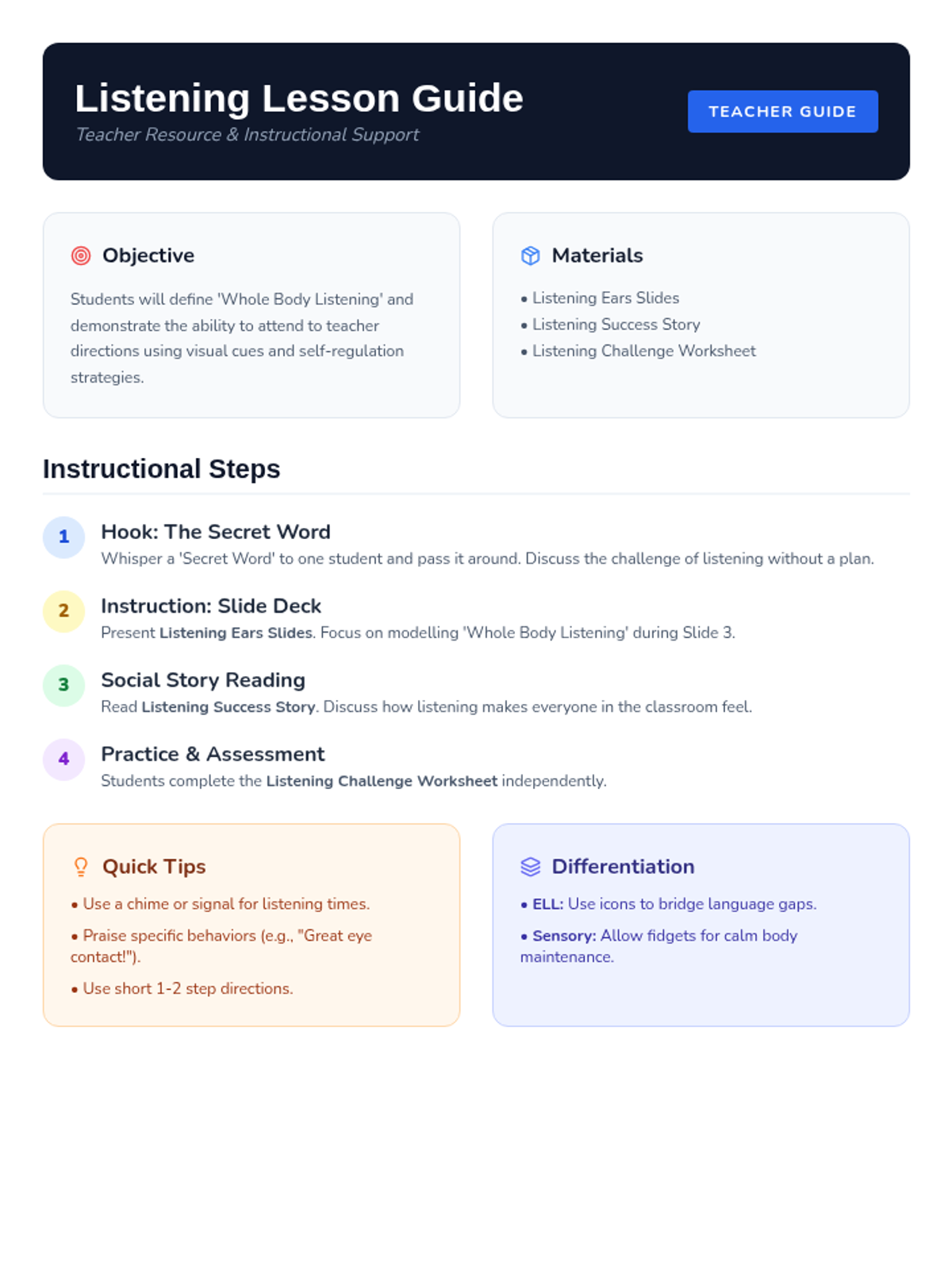
A lesson focused on teaching students the importance of listening to the teacher and the practical steps of 'Whole Body Listening'. This includes a social story, a presentation, and practice activities.
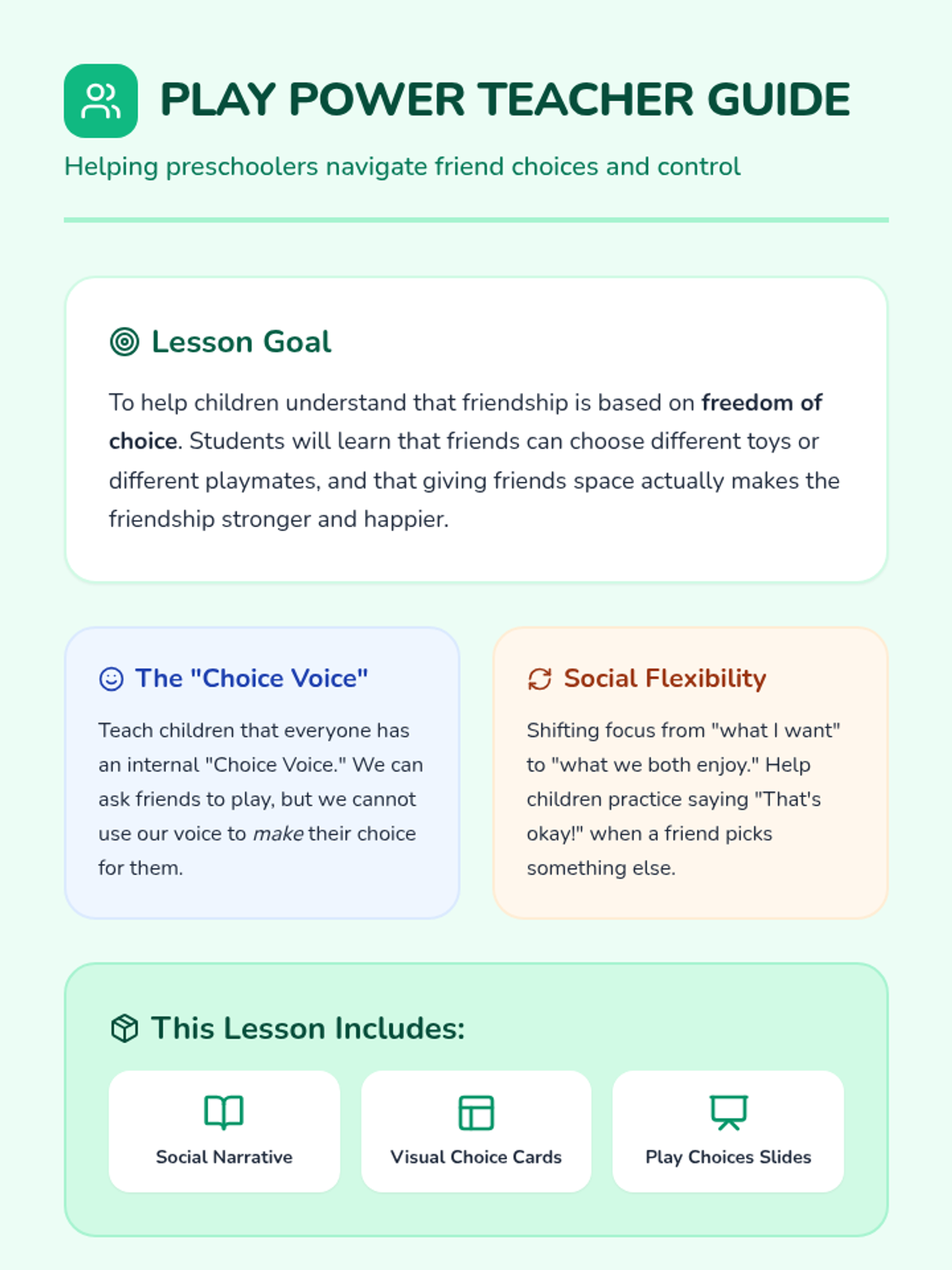
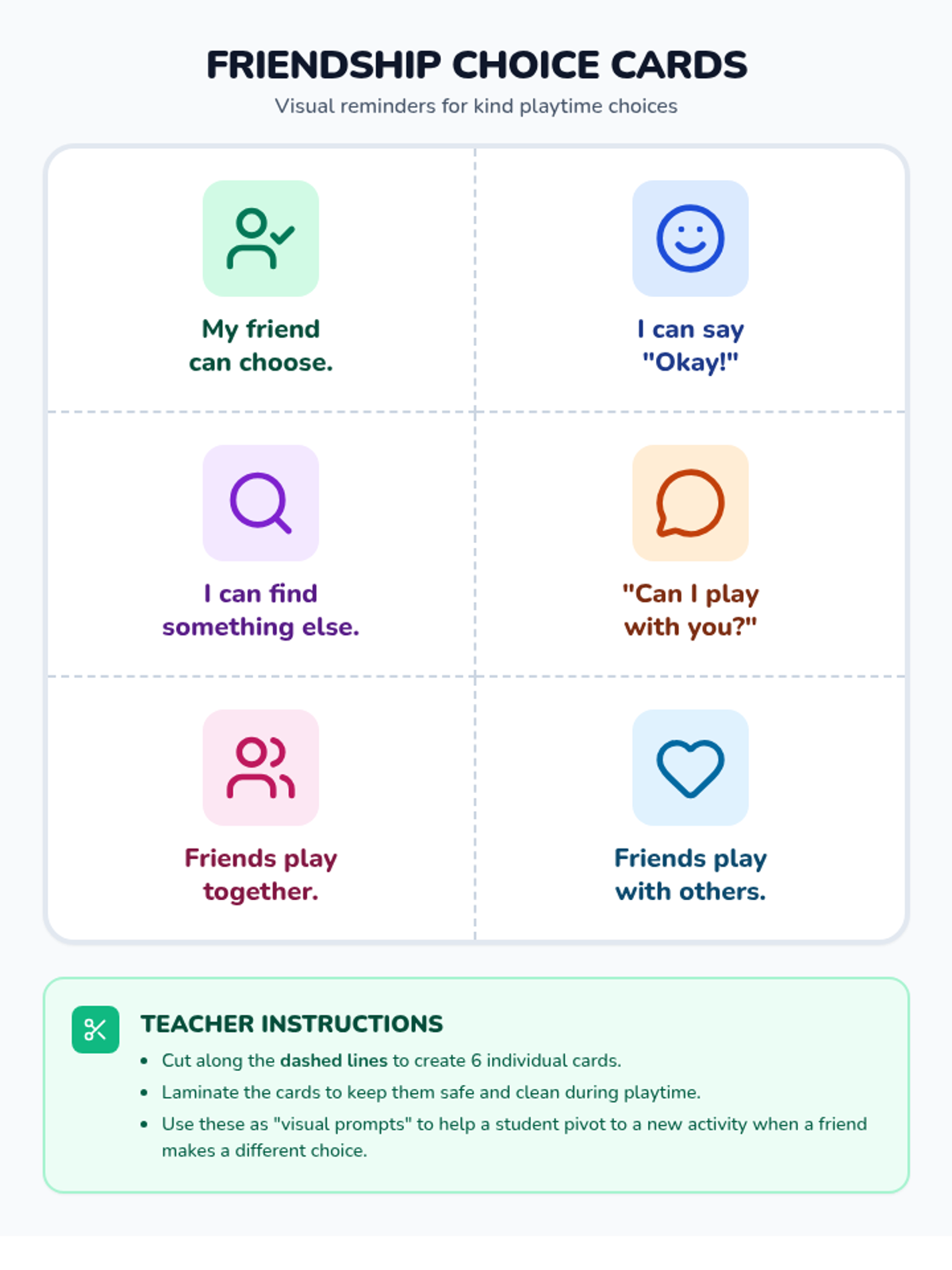
A lesson designed for preschoolers to understand that friends have the right to make their own choices about what to play with and who to play with. This lesson uses social narratives and visual supports to build empathy and social flexibility.
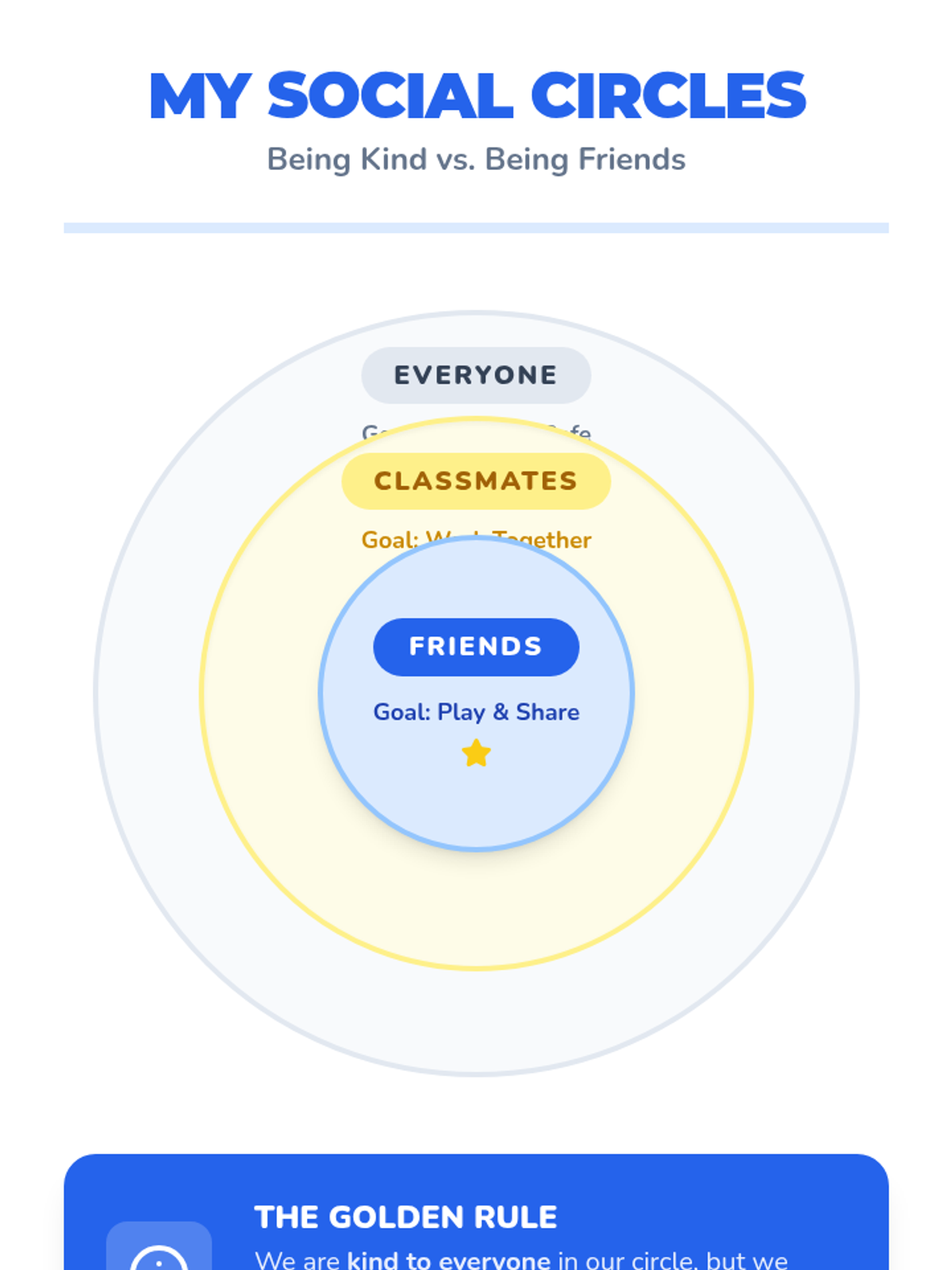
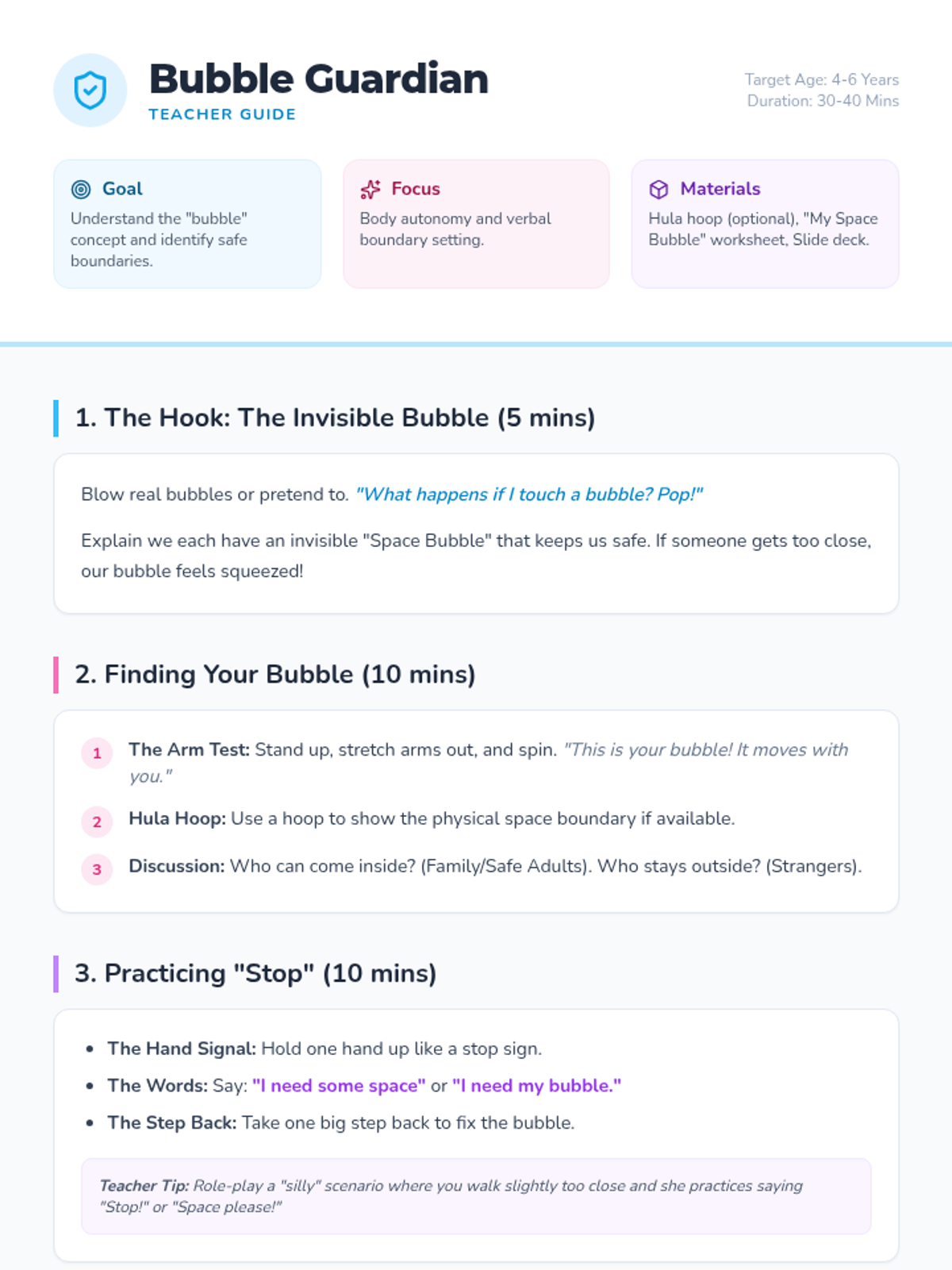
A gentle, interactive lesson for young learners to understand the concept of a 'personal space bubble' and how to set healthy boundaries with others.
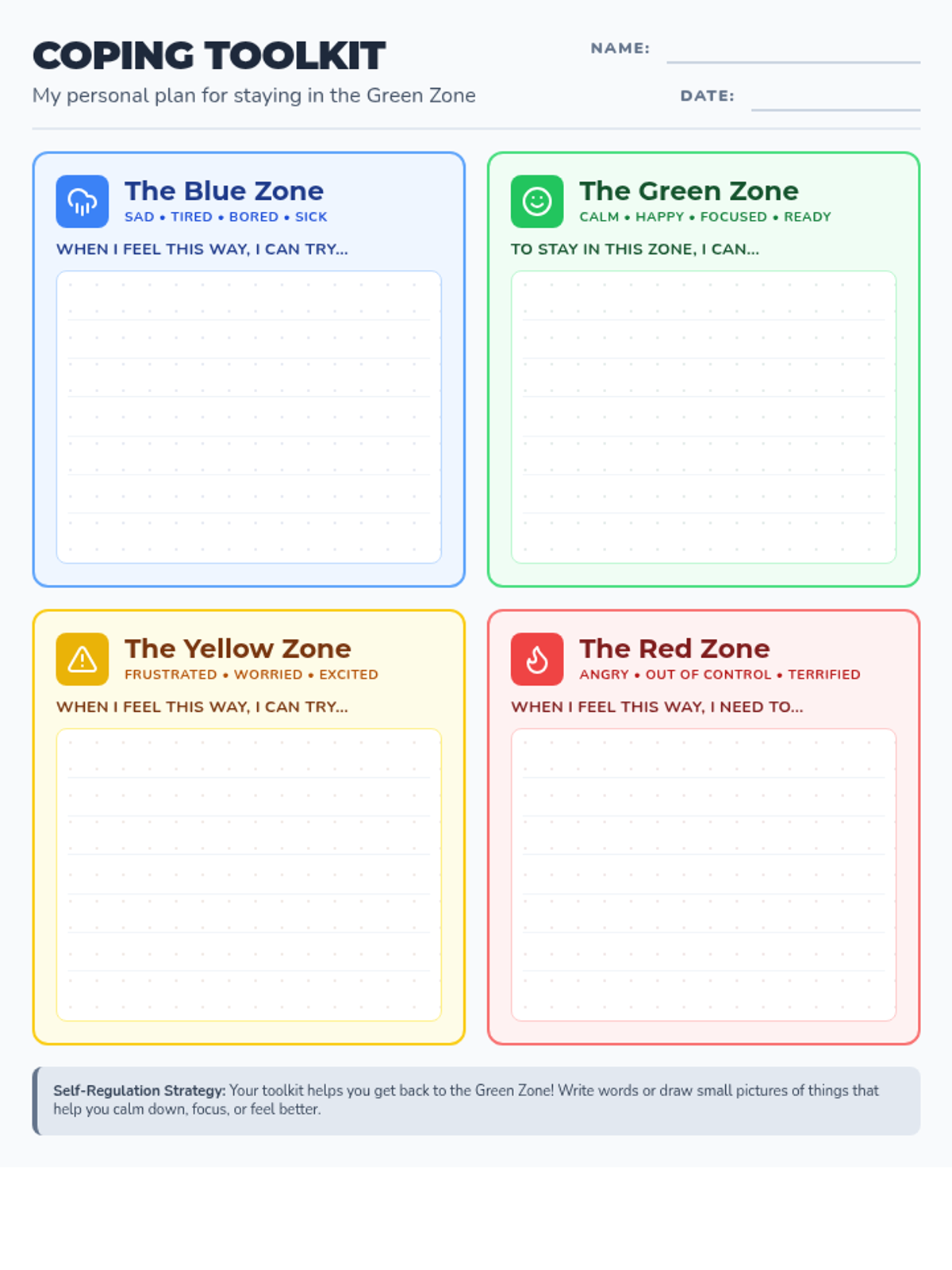
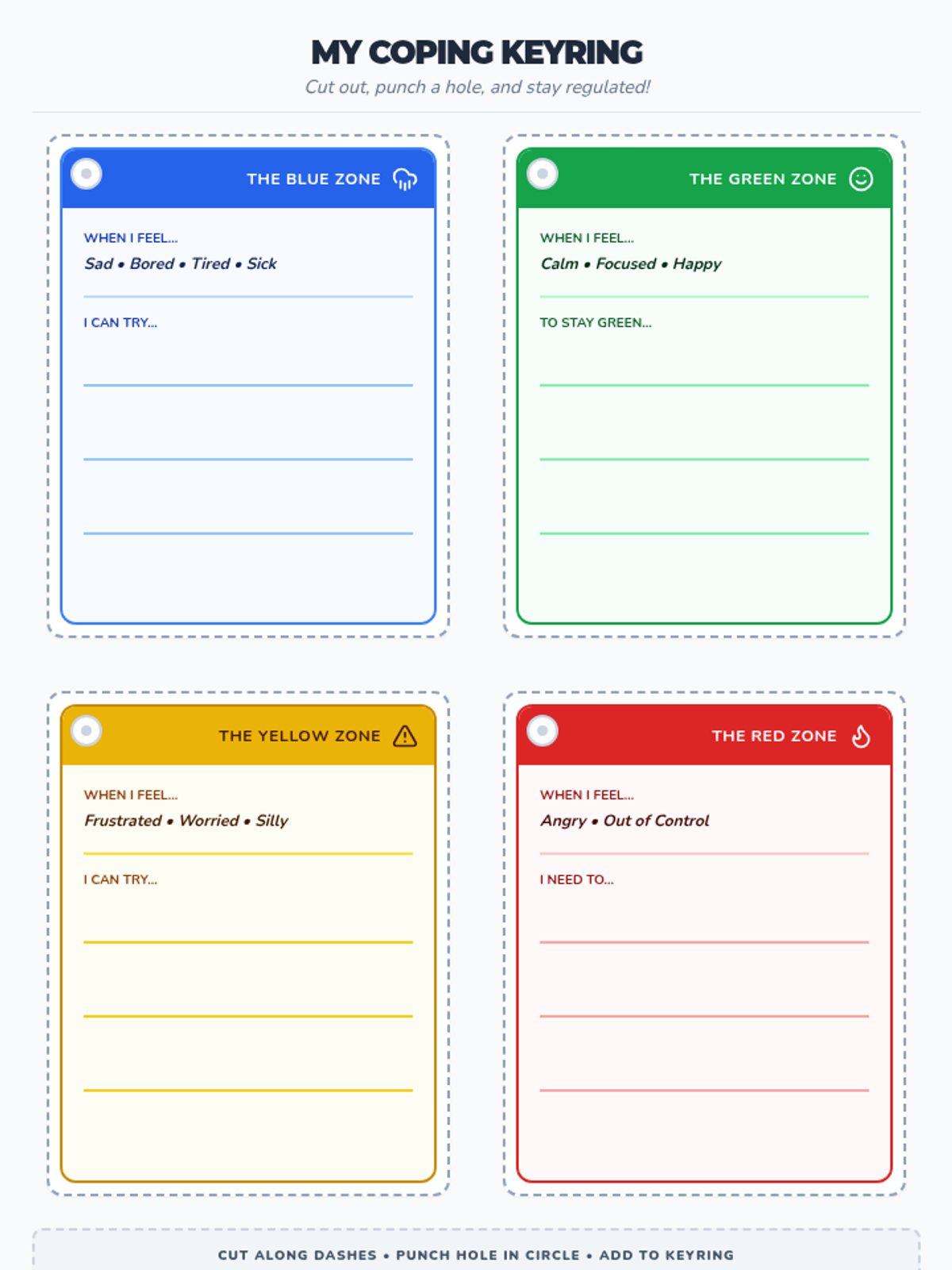
A collection of visual templates for students to identify emotional states and build personalized coping strategies based on the Zones of Regulation framework.